Tag Archives: buffing

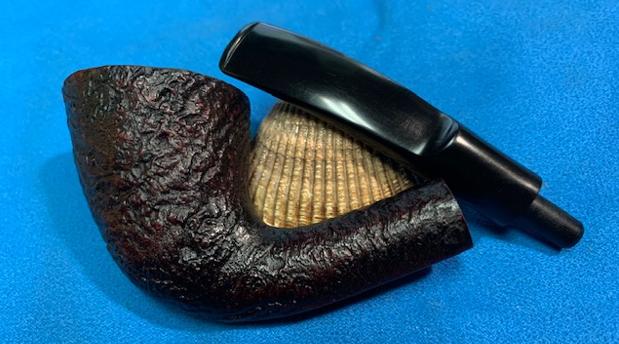
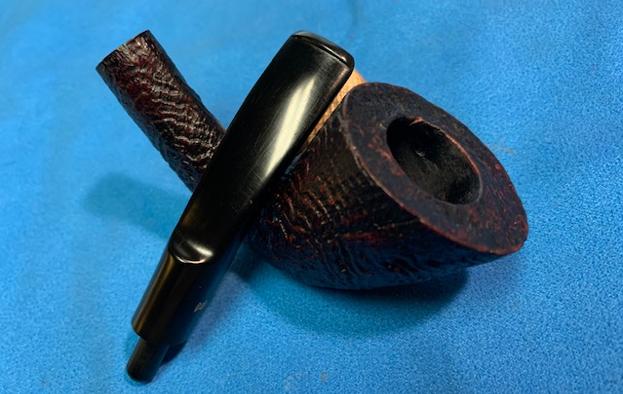
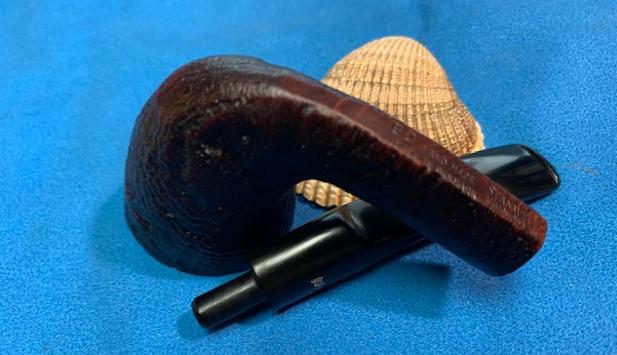
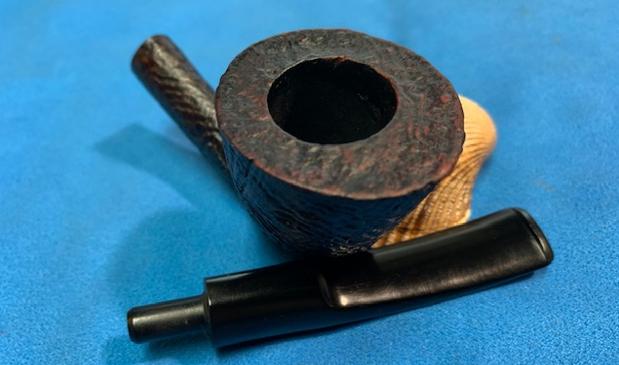
Restoring a Stunning Sandblast Stanwell Hand Made 50 Oval Dublin


Blog by Steve Laug

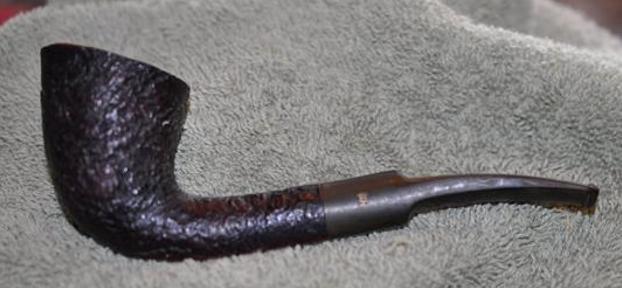
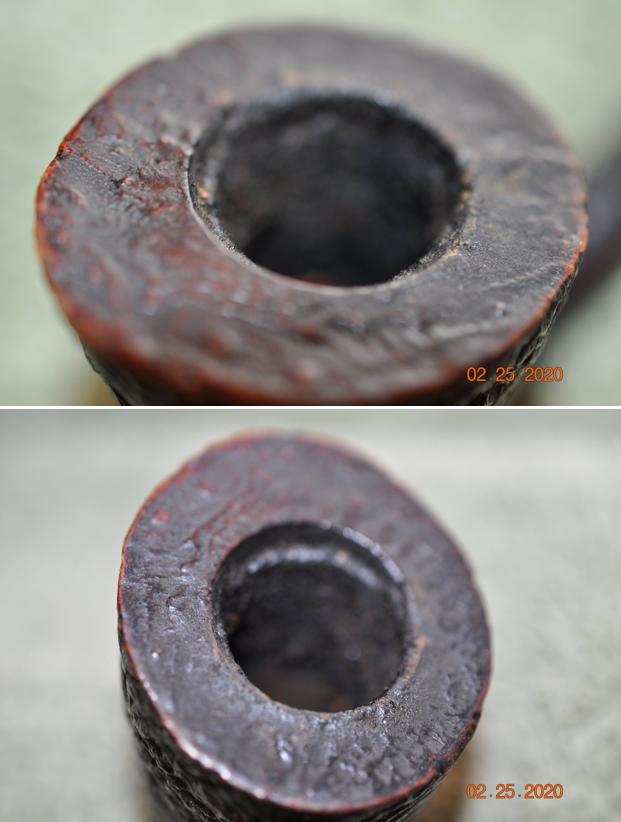
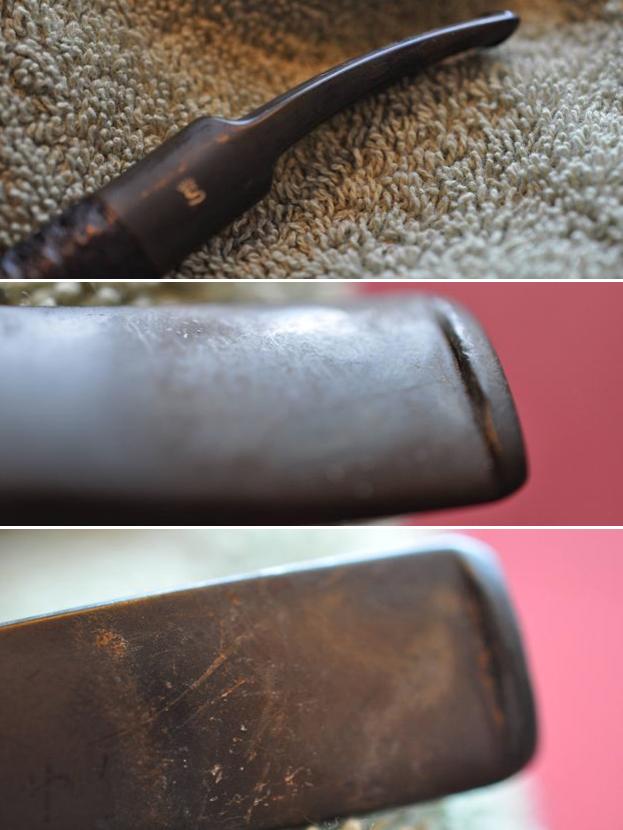
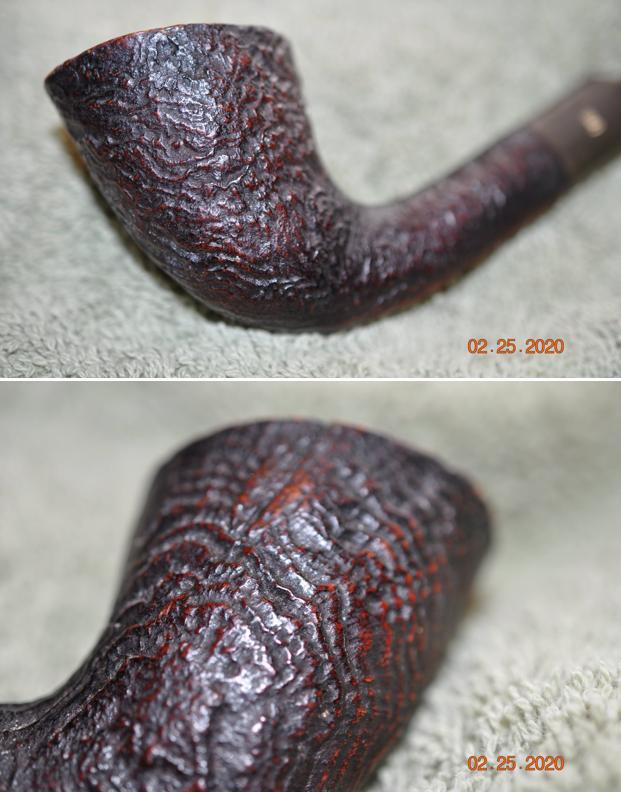
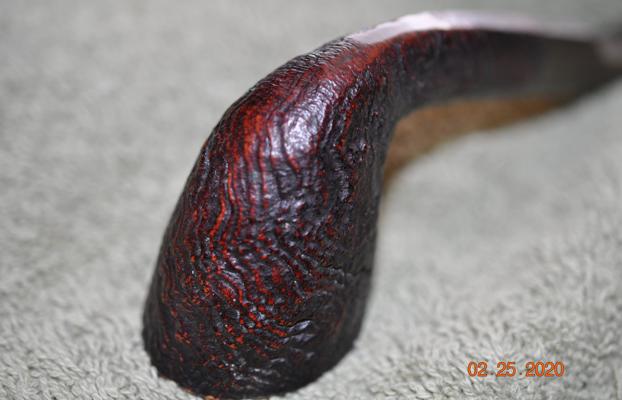
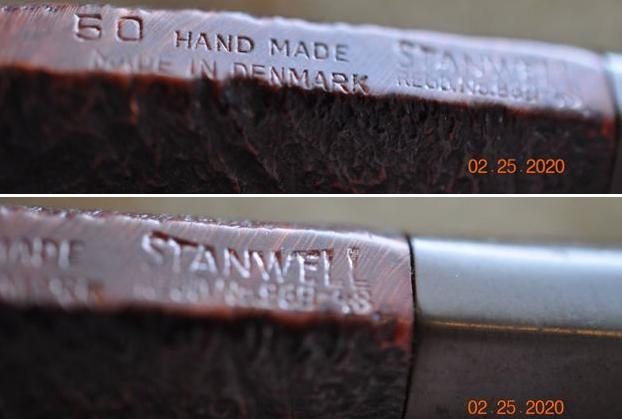
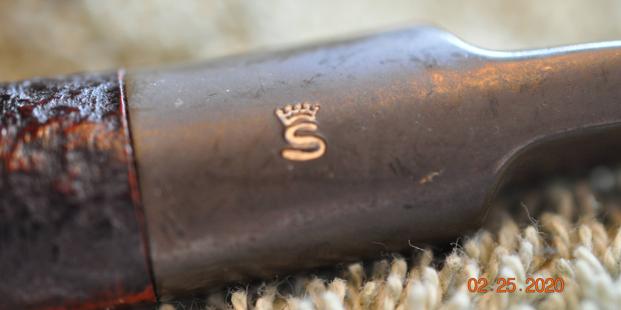
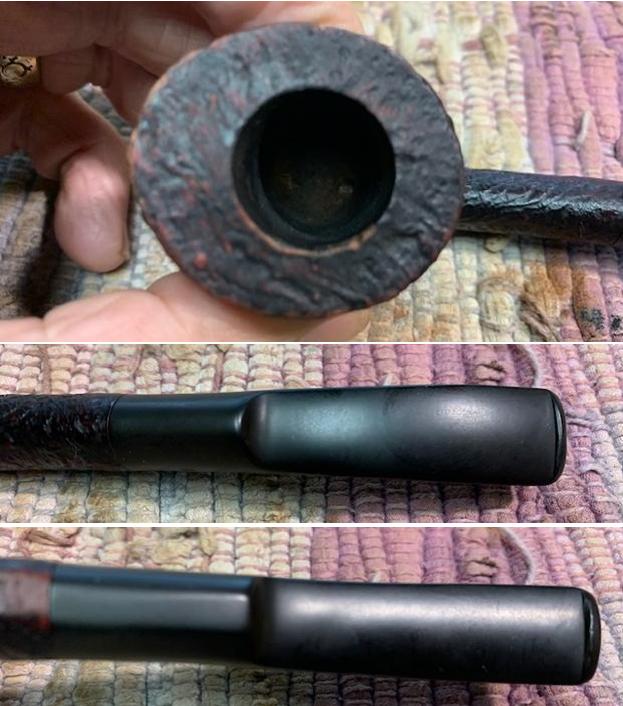
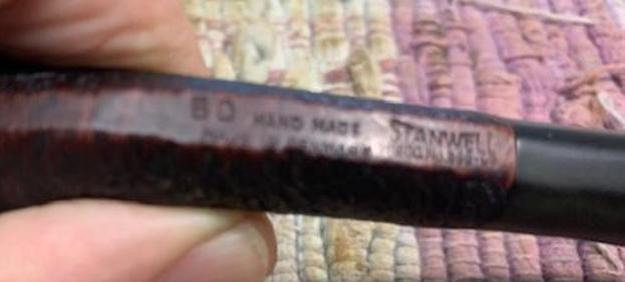
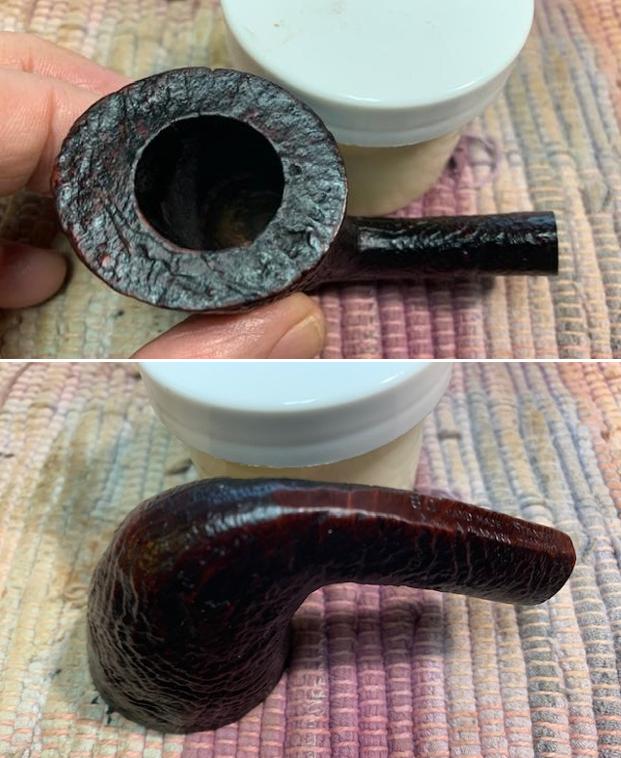
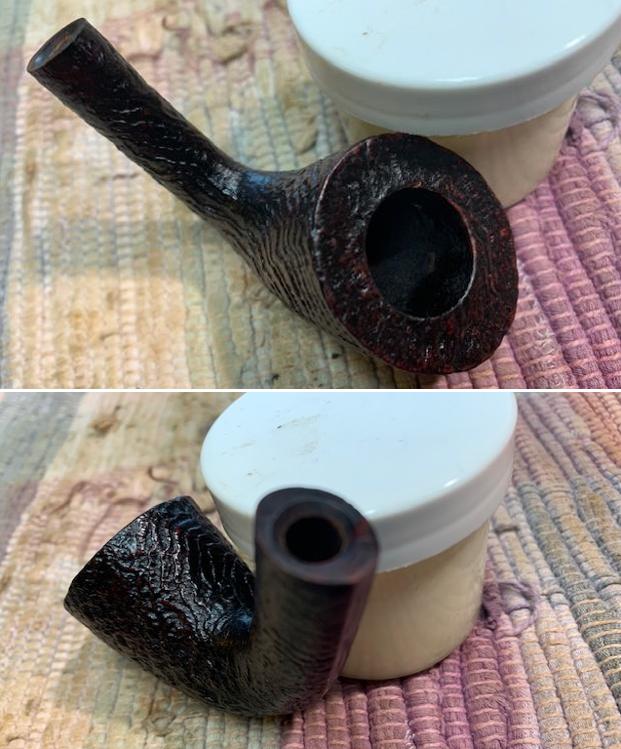
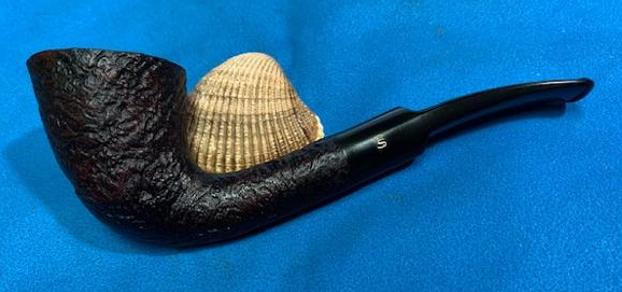
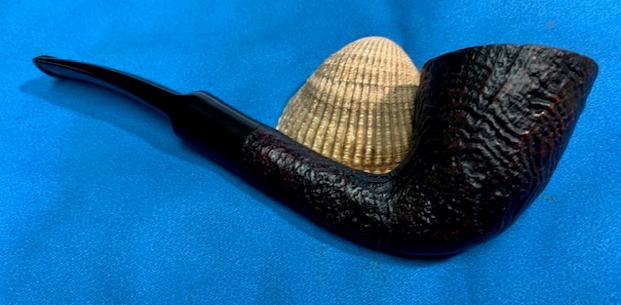
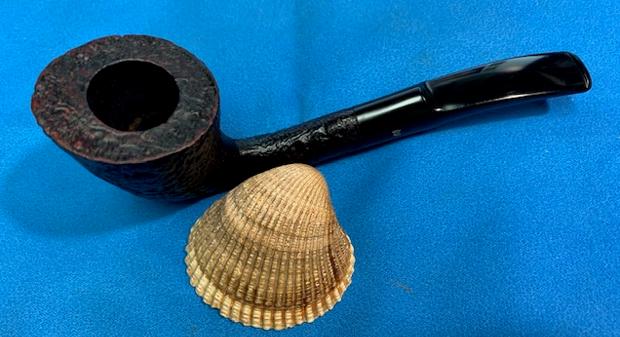
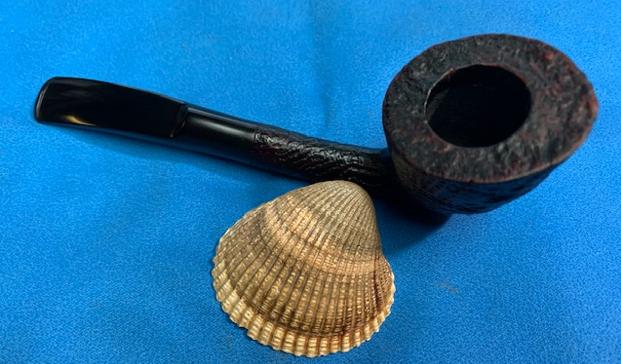
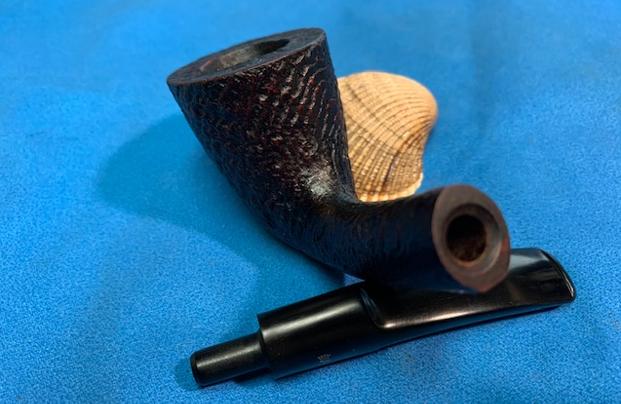
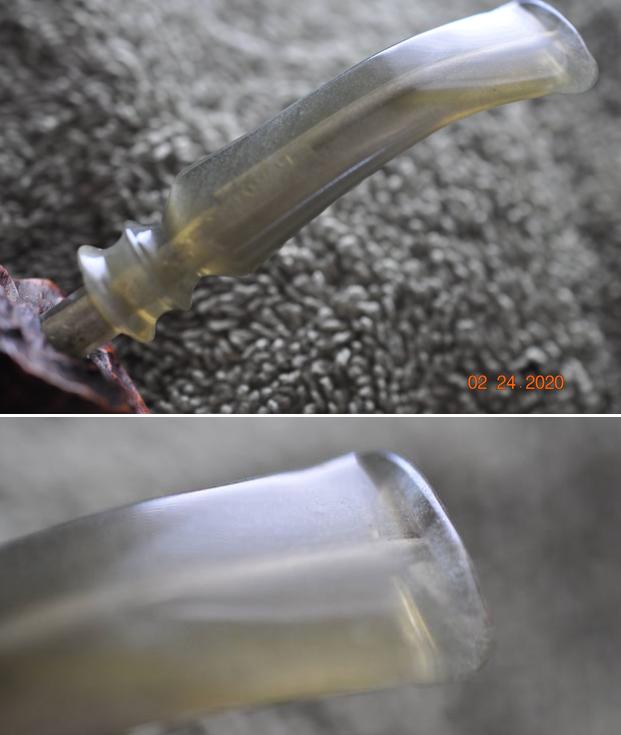
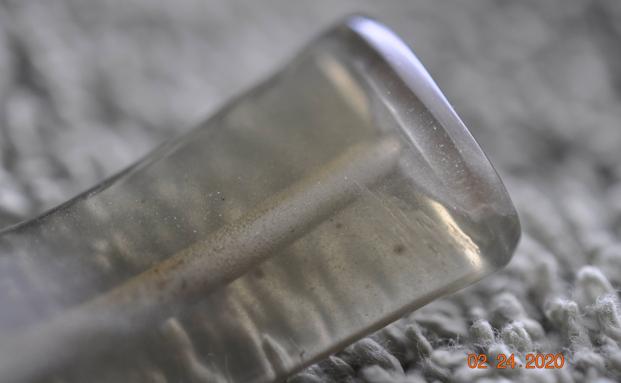
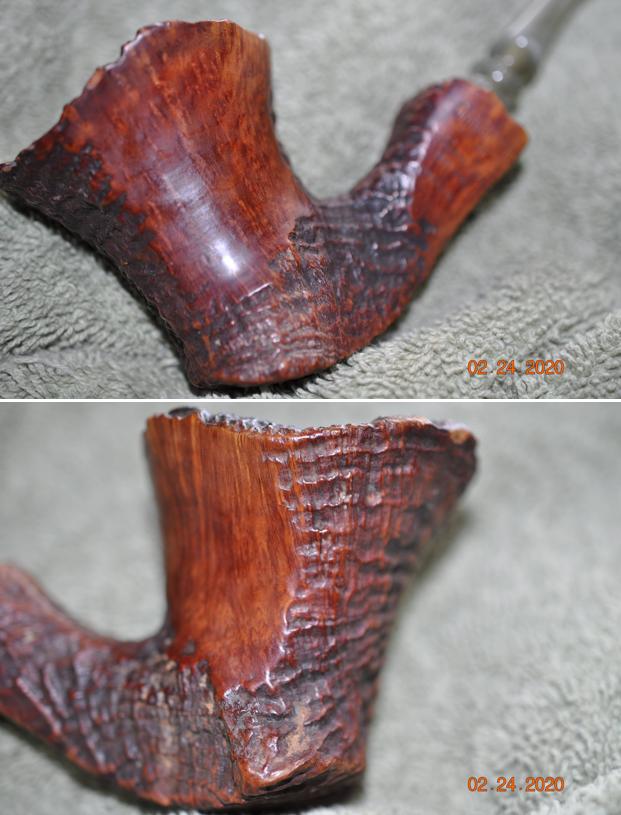
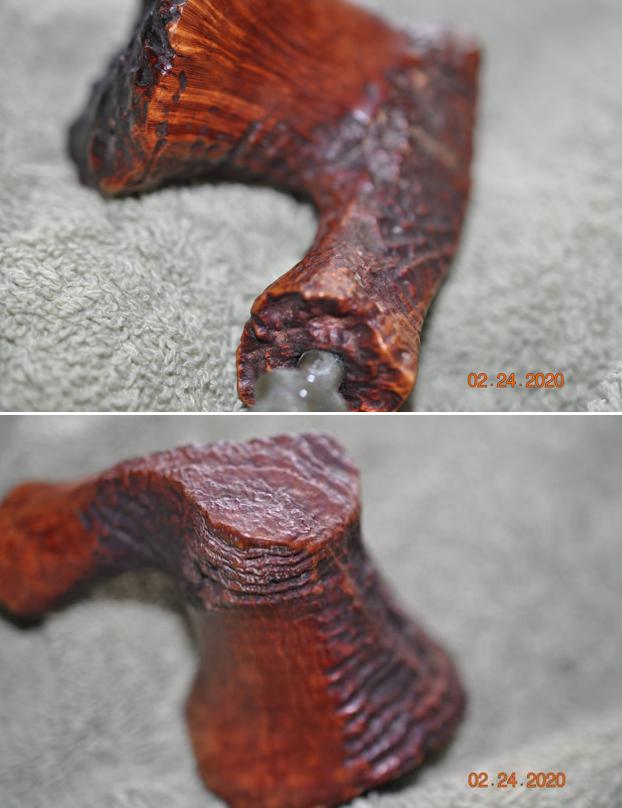
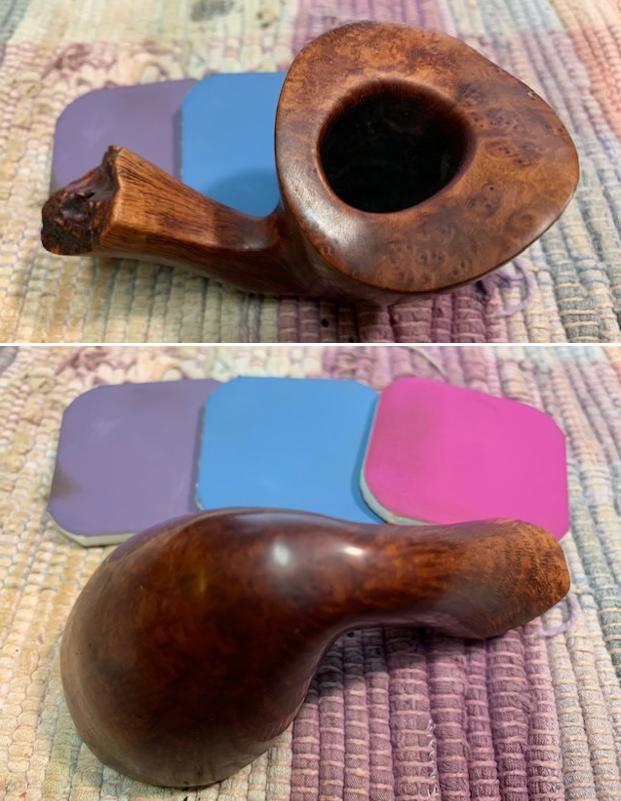
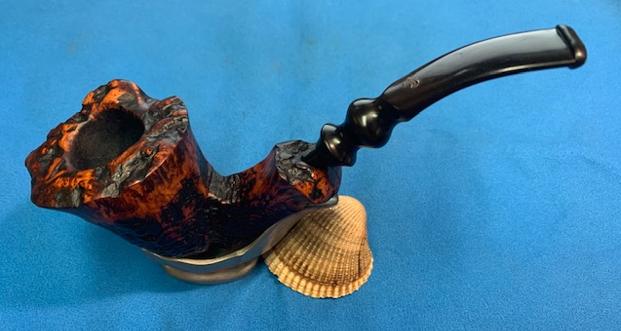
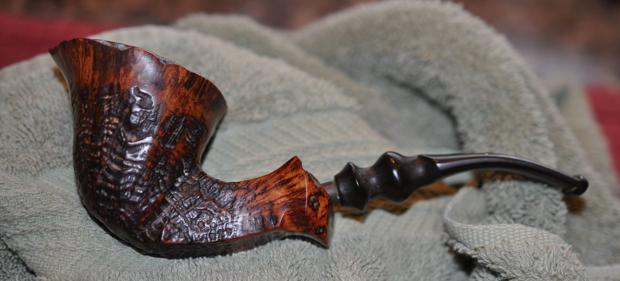
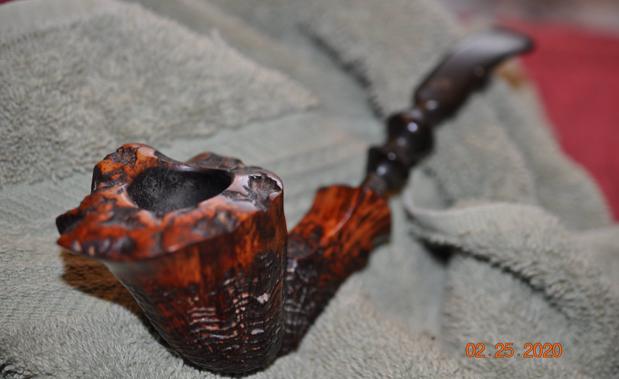
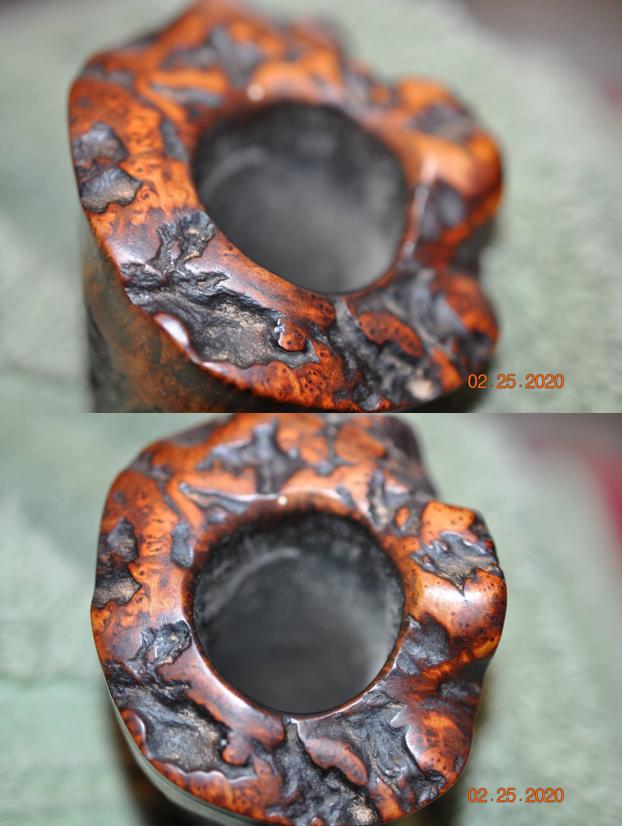
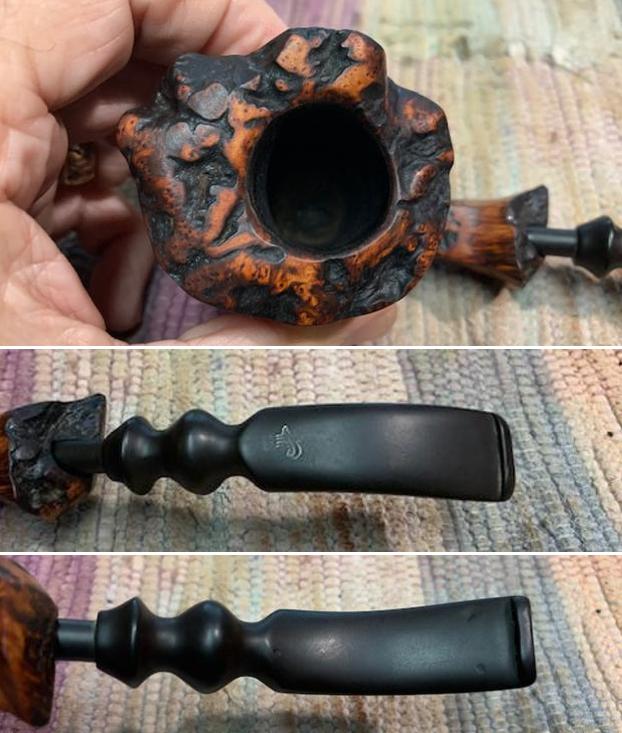
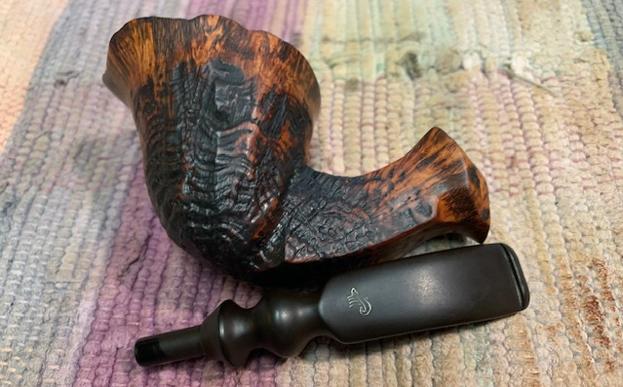
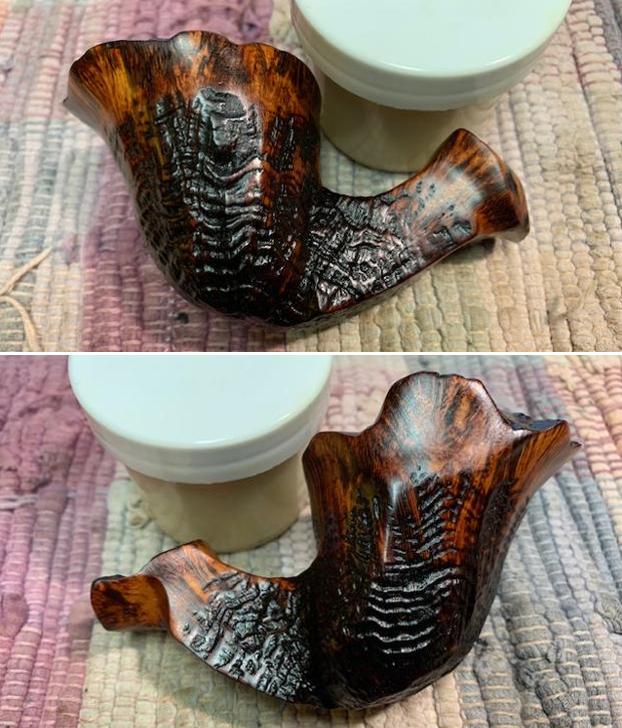
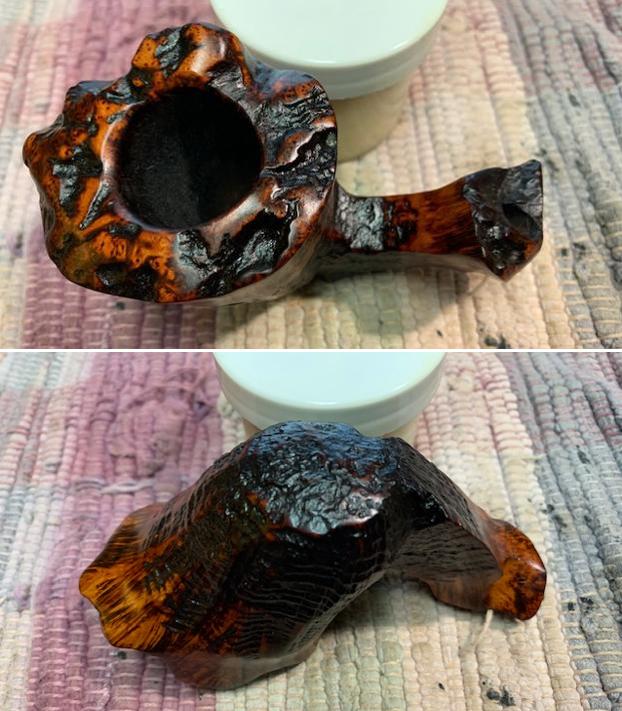
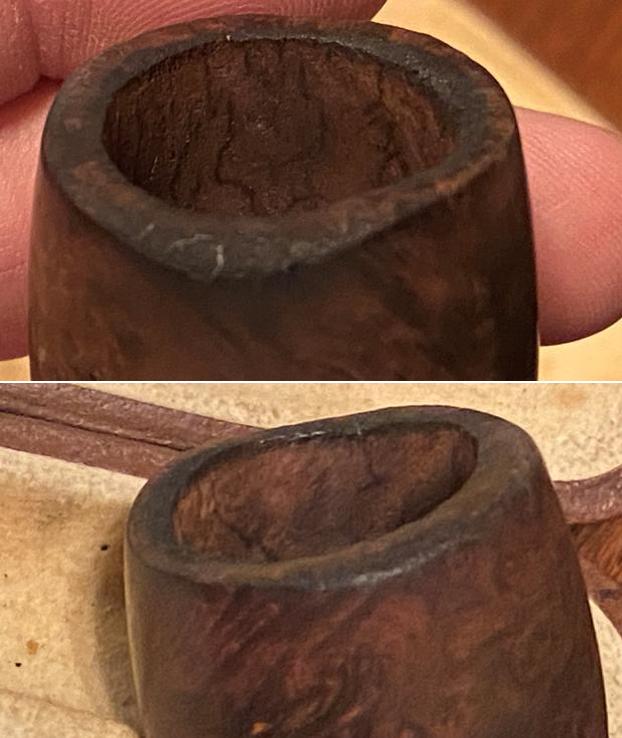
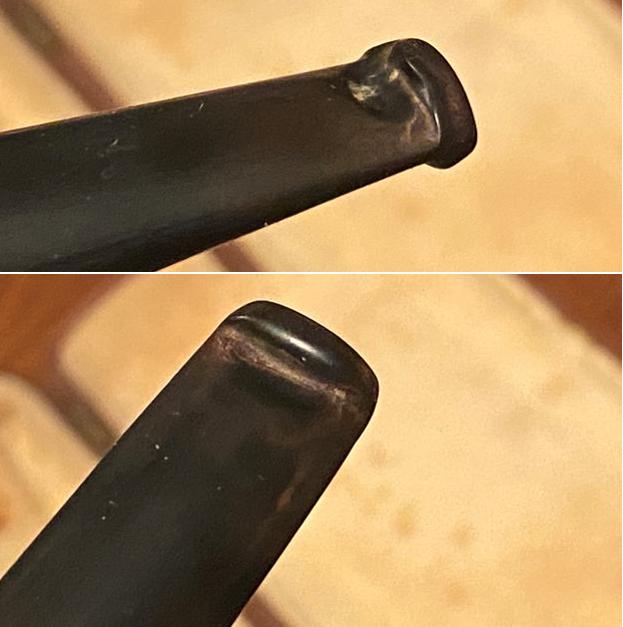
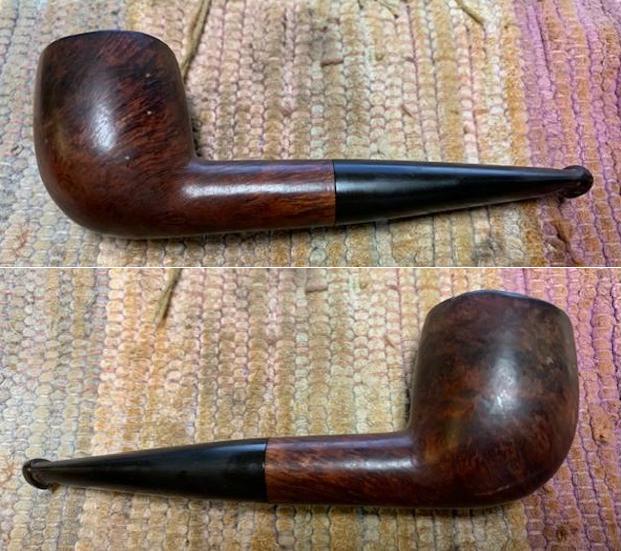
This particular sandblasted Stanwell pipe was purchased in 2020 from a fellow in Los Angeles, California, USA. It really is nice looking shape that I would call a bent Dublin. The shape of the bowl is a bit oval and that is picked up by the oval shank and stem. The finish is a deep sandblast that has been stained with an undercoat of cordovan and a top coat of black or dark brown. It is stamped on a smooth panel on underside of the shank and reads 50 followed by Hand Made [over] In Denmark. That is followed by Stanwell [over] Regd. No. 969-48. The pipe is very dirty and there is some wear on the sharp edges. There is a thick cake in the bowl and a thick lava overflow on the rim top and inner edge of the bowl filling in the sandblast. There was grime ground into the sandblast finish and dust and debris in the valleys of the blast. The vulcanite saddle stem had the Stanwell Crown S logo on the left side of the saddle. It had light tooth marks and chatter on both sides near the button. The stem was oxidized and had some calcification on the end neat the button. The pipe must have been a great smoker judging from the condition it came it. Jeff took photos of the pipe before he started his work on it. Jeff took photos of the rim top and the stem to show the condition of the pipe when we received it. You can see the thick cake in the bowl and the lava on the rim top and inner edge of the bowl. The bowl is oval (almost shaped like and eye) while the chamber is round. The oxidized vulcanite stem and has chatter and tooth marks on both sides near the button. He took photos of the sides of the bowl and the heel to give an idea of the shape and the condition of the briar around the bowl. It really is a nicely shaped pipe with great sandblast finish. The next photo Jeff took shows the stamping on the underside of the shank. It is clear and readable as noted above. The stem logo is also clear. I turned to Pipephil (http://pipephil.eu/logos/en/logo-stanwell.html) to see what I could find. I found a side bar note on the stamping on the pipe. I found there that the company had begun in 1942 and that the “Regd. No.” stamping was discontinued in late 1960s to very early 1970s. So now I knew that the pipe was made after 1942 and before the late 1960s or early 1970s. I wanted to see if I could pin down the date a bit more.

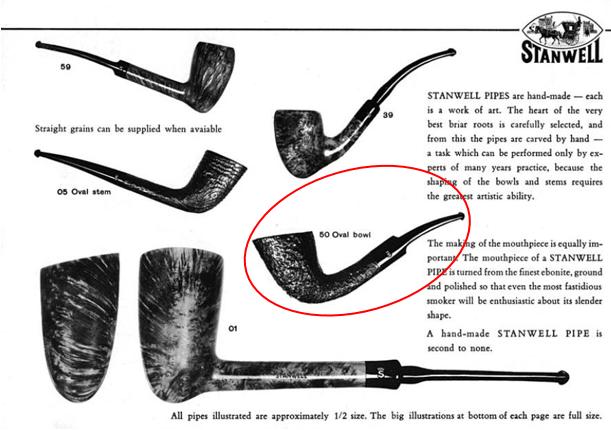
I turned to Pipedia to learn more about the pipe (https://pipedia.org/wiki/Stanwell). I read through the article by Smoking Pipes.com there and would recommend it as being a good read. In the material there I found no additional information. I scrolled through the photos and the included catalogue pages and there I found something helpful. There was a late 1950s catalogue shown there that had the description of the pipe I have and also the shape 50 shown in the pages. I have included a screen capture of the page below. I have circled the shape in the photo below.With that information I had learned that this pipe was available in the late 1950s in the shape that I had in hand. The Regd No. stamping ended in the late 1960s or early 1970s. My guess would place this pipe in the period between 1958-1965. It is a real beauty.

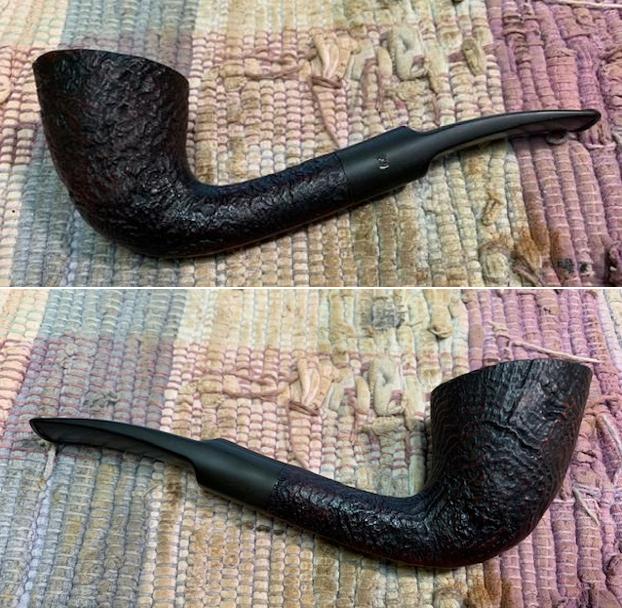
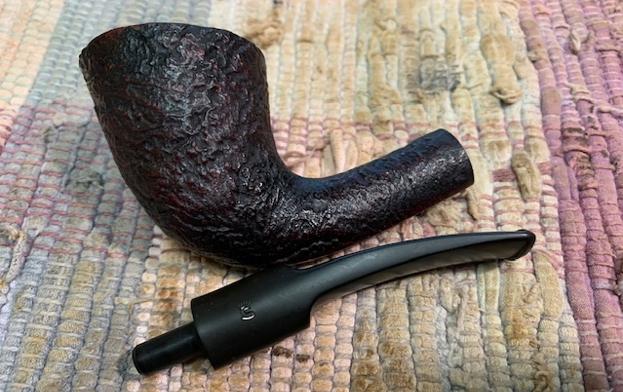
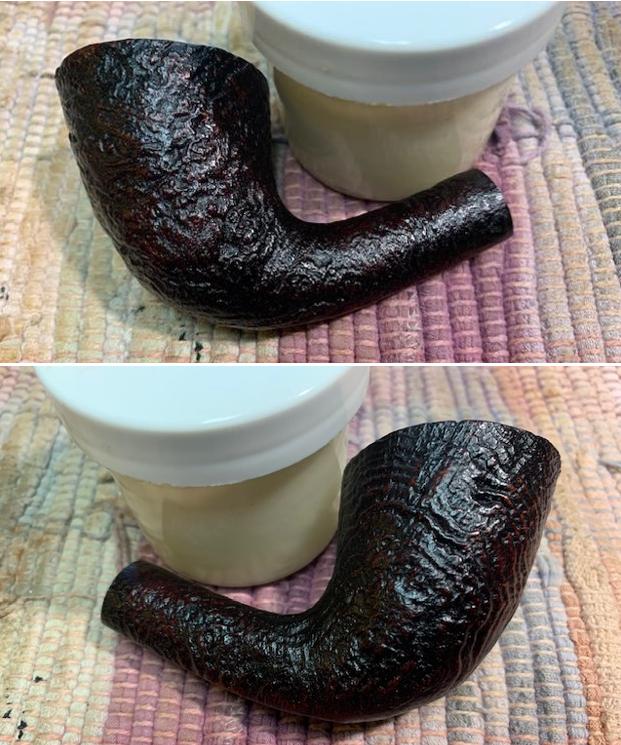
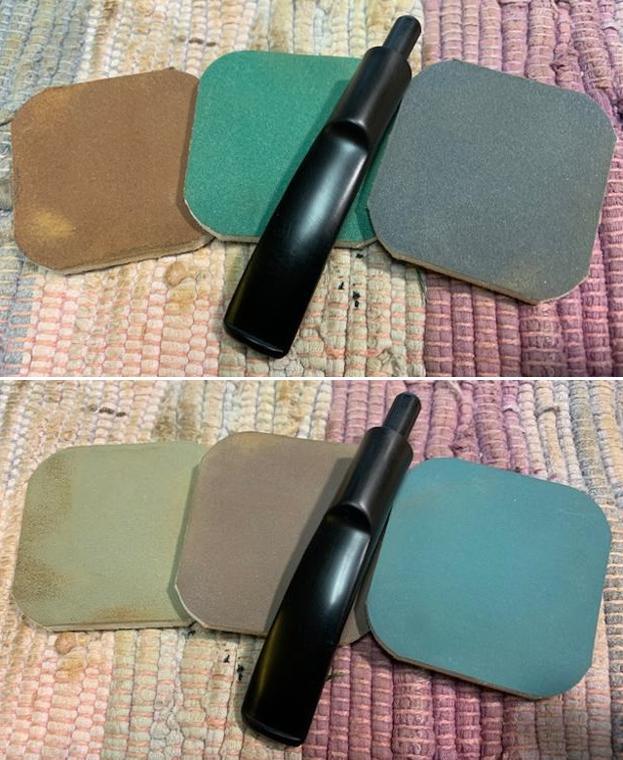
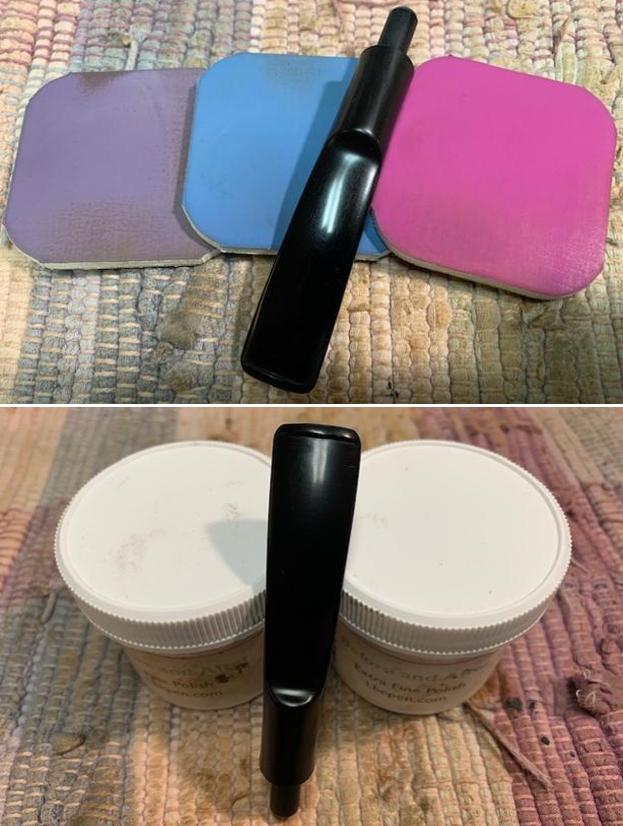
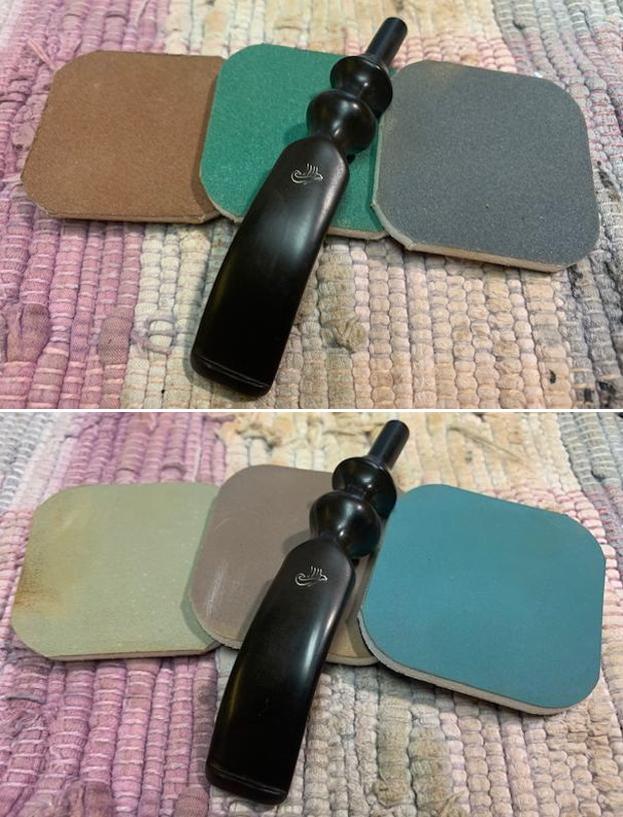
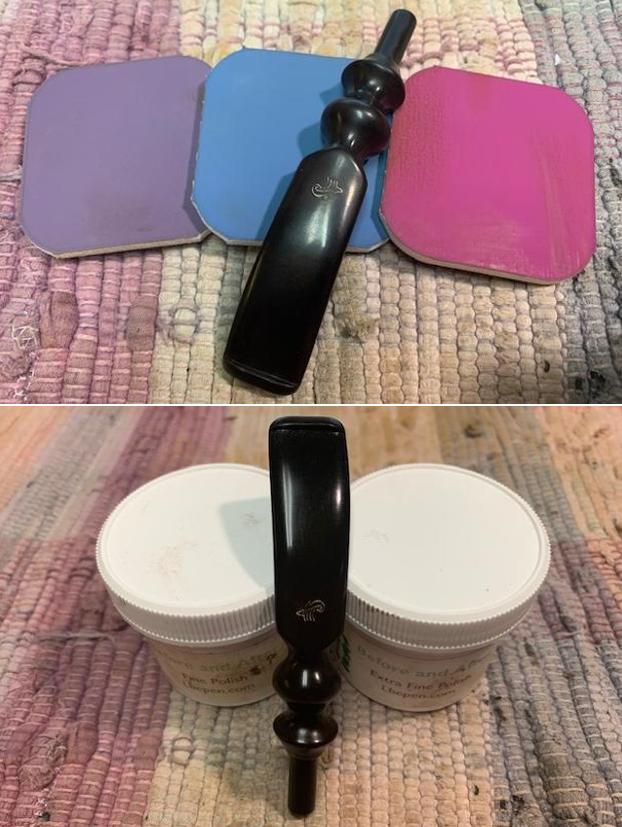
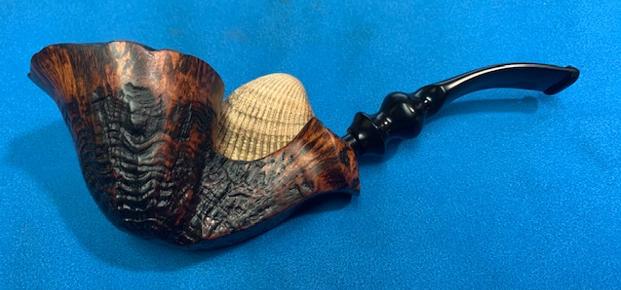
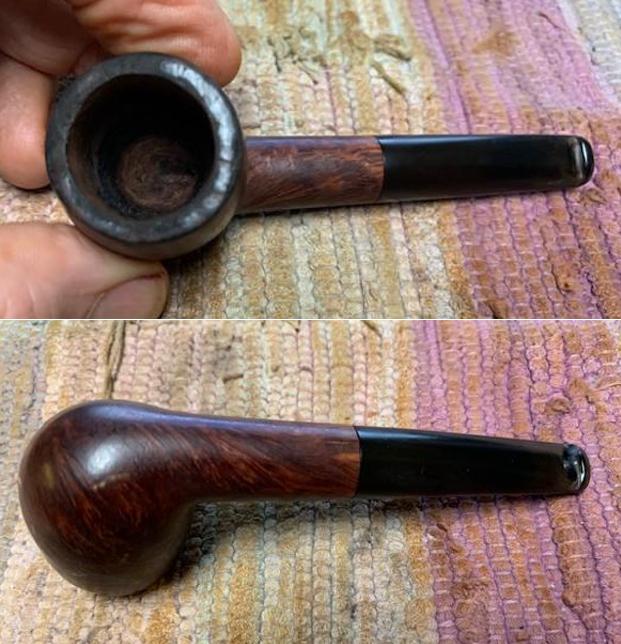
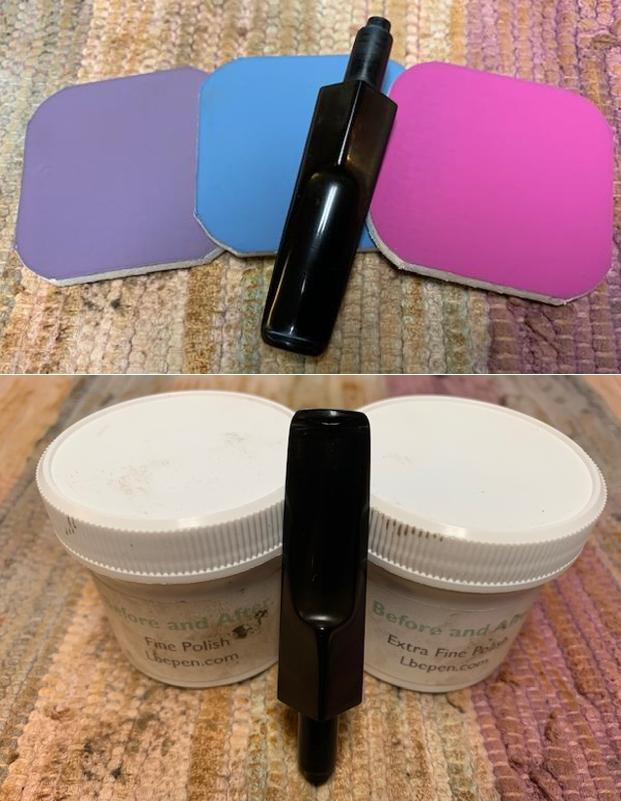
Jeff had cleaned up the pipe following his normal cleaning process. In short, he reamed the bowl with a PipNet pipe reamer and cleaned up the reaming with a Savinelli Fitsall Pipe Knife.  He scrubbed the sandblast bowl with undiluted Murphy’s Oil Soap with a tooth brush. He worked over the lava and debris on the rim top and was able to remove it. He rinsed it under running warm water to remove the soap and grime. He cleaned out the inside of the shank and the airway in the stem with alcohol, cotton swabs and pipe cleaners. He scrubbed the stem with Soft Scrub and cotton pads to remove the debris and oils on the stem. He soaked it in a bath of Briarville’s Pipe Stem Deoxidizer to remove the oxidation. He rinsed it with warm water and dried it off. I took photos of the pipe once I received it. It really looked good. I took close up photos of the stem and the rim top to show both how clean they were and what needed to be addresses with both. The rim top and bowl look good. The stem looked better and the tooth marks and chatter though much lighter were still present. I took a photo of the stamping on the underside of the shank. You can see from the photo that it is readable.I removed the stem from the bowl and took a photo of the parts to give a sense of the beauty of the pipe.The bowl was in such good condition after the clean up that I worked some Before & After Restoration Balm into the surface of the briar with my finger tips and a horse hair shoe brush to get into the crevices of the sandblast. The product is incredible and the way it brings the grain to the fore is unique. It works to clean, protect and invigorate the wood. I set the bowl aside and turned my attention to the stem. I touched up the stamping on the left side of the saddle stem with PaperMate Liquid Paper. I painted it on and worked it into the stamp with a toothpick. Once it dried I polished off the excess. The stamp came out looking good. I was able to polish out the tooth chatter and marks on the stem with micromesh sanding pads – wet sanding it 1500-12000 pads. I wiped it down with some Obsidian Oil each pad to remove the dust and polishing debris. I polished it with Before  After Pipe Polish – both Fine and Extra Fine. I gave it a final coat of Obsidian Oil and set it aside to dry. This is another pipe that I am really happy about the finished restoration. This Stanwell Oval Dublin turned out beautifully. It really is a great looking pipe with a great shape and rugged sandblast finish. The vulcanite saddle stem is really nice. The polished black of the stem works well with the briar. The briar really came alive with the buffing. The rich cordovan and black stains of the finish gave the pipe a sense of depth with the polishing and waxing. I put the stem back on the bowl and carefully buffed the pipe with Blue Diamond on the buffing wheel using a light touch on the briar. I gave the bowl multiple coats of Conservator’s Wax and the stem multiple coats of carnauba wax on the buffing wheel. I buffed the pipe with a clean buffing pad to raise the shine. I hand buffed the pipe with a microfiber cloth to deepen the shine. The finished Stanwell Dublin really is a beauty and feels great in the hand and looks very good. Give the finished pipe a look in the photos below. The dimensions of the pipe are Length: 6 inches, Height: 2 inches, Outside diameter of the bowl: 1 ¾ inches long x 1 ½ inches wide, Chamber diameter: ¾ of an inch. The weight of the pipe is 37 grams/1.31 oz. The pipe will be going on the rebornpipes store soon. It will be in the section on Danish Pipe Makers if you would like to add it to your collection. Thanks for reading this blog and my reflections on the pipe while I worked on it. It was a fun one to work on!

Breathing Life into a Tired Looking Bjarne Hand Carved Freehand


Blog by Steve Laug

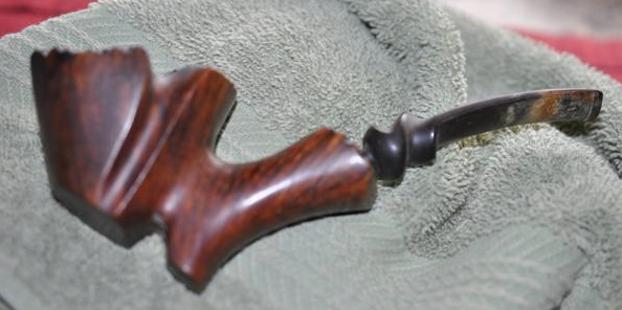
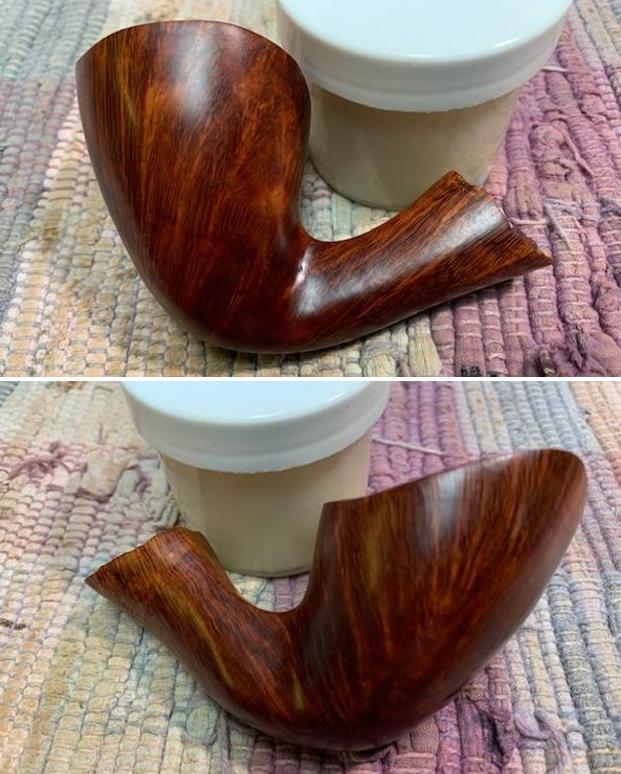
This particular Freehand pipe is another one that came in a lot that Jeff and I purchased on early in 2020 from a woman in Australia who had contacted us about selling her late husband’s collection. He had some beautiful pipes in his estate and this was another of them. It is stamped on the underside of the shank and reads Bjarne [over] Hand Carved [over] In Denmark. It is a smooth finish pipe with some interesting carved feathers (leaves) on the right side of the shank and the bowl. The rim top and shank end are finished in rugged plateau. The pipe had a thick cake in the bowl and there was a thick coat of lava on the smooth bevel of the rim and into the plateau. The rest of the plateau on the rim top and shank end was clogged with dust and debris in the valleys and crevices. The original orange variegated acrylic saddle stem had the Bjarne Bj logo on the top of the blade. It was dirty inside and out and had tooth marks and chatter on both sides near the button. The pipe was dirty but still had a unique beauty. Jeff took photos of the pipe before he started his work on it. Jeff took photos of the rim top and the stem to show the condition of the pipe when we received it. You can see the cake in the bowl and the build up of lava and debris in the plateau of the rim top and shank end. I really is a dirty pipe. The variegated orange acrylic stem and has chatter and a few deep tooth marks on both sides near the button. He took photos of the sides of the bowl and the heel to give an idea of the shape and the condition of the briar around the bowl. It really is a nicely shaped pipe that has a great finish under the grime on the briar. The next photos Jeff took show the stamping on the underside of the shank. It is clear and readable as noted above. He also took a photo to show the stem logo. In a previous blog I had researched the brand quite a bit. I have included it in full below for information on this pipe (https://rebornpipes.com/2020/03/07/another-pipe-from-the-eastern-canada-lot-a-hand-carved-bjarne-freehand/). I quote:

I turned my favourite go to sites on background of brands. The first is Pipephil’s site (http://www.pipephil.eu/logos/en/logo-b5.html). There I looked up the Bjarne brand. I have copied the pertinent information below.

Bjarne Nielsen (1941 – † 2008) distributed his own “Bjarne” brand and pipes carved by Danish pipemakers (Mogens Johansen, Tonni Nielsen or Ph. Vigen). High grade pipes were stamped “Bjarne Nielsen” without any logo on the mouthpiece and graded A, B, C and D. Bjarne second brand: Viking.

I have included a screen capture of the section on the brand below.I turned to Pipedia and looked up the brand for a bit more information on the pipes that were stamped like the one that I am working on (https://pipedia.org/wiki/Bjarne). Toward the end of the article I found what I was looking for. I quote:

Among the pipemakers that worked for Bjarne were Johs (for the lower priced high volume pieces), and makers like Ph. Vigen, Ole Bandholm and Tonni Nielsen for high grade pieces. The cheaper line was stamped “Bjarne” while the highest grades were stamped “Bjarne Nielsen” (never with the pipemakers’ name) and graded, from highest to lowest, by the letters: AX, A, B, C, D, E, F, G, H, I, and J.

Now I knew that I was dealing with the cheaper line of pipe made by the company. It was stamped Bjarne while the higher grade pipes were stamped Bjarne Nielsen with a grade stamp.

Jeff did a great job cleaning off the debris and grime on this old. He reamed it with a PipNet reamer and smoothed the walls of the bowl with a Savinelli Fitsall pipe knife. He scrubbed out the mortise and the airway in the shank and the stem with alcohol, cotton swabs and pipe cleaners. He scrubbed the exterior of the bowl, rim and shank with a tooth brush and Murphy’s Oil Soap to the oils and tars on the bowl, rim and shank. He rinsed it under running water. He dried it off with a soft cloth. Once the grime was removed the finish underneath was in stellar condition. The rich patina of the older briar was a variegated finish of smooth and sandblast looked great. He scrubbed the exterior of the stem with Soft Scrub then soaked it in a bath of Briarville’s Pipe Stem Deoxidizer. He rinsed off the deoxidizer with warm water and wiped the bowl and stem down with a light coat of olive oil to rehydrate both. The pipe really was quite stunning. I took photos of the pipe to show its condition before I started my work on it. I took close up photos of the stem and the rim top to show both how clean they were. The rim top and bowl were in good condition with some darkening on the inner bevel of the bowl edge and rim top. The stem looked better but the deep tooth marks and chatter were still present. I would need to remove those to bring the stem back.I took a photo of the stamping on the underside of the shank. You can see from the photo that it is readable. It is clearer on the top half of the stamp than the lower but it is still readable.I removed the stem from the bowl and took a photo of the parts to give a sense of the beauty of the pipe. I started my work on this pipe by addressing the darkening on the rim top and bowl edge. I sanded the edge bevel with a folded piece of 220 grit sandpaper to smooth out the edge and to reduce the darkening. It looked better when I  had finished.I polished the briar with micromesh sanding pads – dry sanding with 1500-12000 grit pads. I wiped the bowl down after each pad with a damp cotton cloth. The briar took on a shine by the last pads.I worked some Before & After Restoration Balm into the surface of the briar with my finger tips and a horse hair shoe brush to get into the crevices of the plateau rim top and shank end. The product is incredible and the way it brings the grain to the fore is unique. It works to clean, protect and invigorate the wood. I set the bowl aside and turned my attention to the stem. I filled in the deep tooth marks on the surface of both sides with clear CA glue. Once it cured, I sanded them smooth with 220 grit sandpaper to blend them into the surface of the briar. I started the polishing of the stem with 400 grit wet dry sandpaper. I polished the stem with micromesh sanding pads – wet sanding it 1500-12000 pads. I wiped it down with a damp cloth after each pad to protect it and preserve it. I polished it with Before After Pipe Polish – both Fine and Extra Fine. I am really happy with the way that this Bjarne Hand Carved Freehand turned out. It really is a beautiful looking pipe with a unique shape and smooth, plateau and carved finishes. The fancy original acrylic saddle stem is really nice. The briar really came alive with the buffing. The rich brown and black stains of the finish gave the pipe a sense of depth with the polishing and waxing. I put the stem back on the bowl and carefully buffed the pipe with Blue Diamond on the buffing wheel using a light touch on the briar. I gave the bowl and the stem multiple coats of carnauba wax on the buffing wheel. I buffed the pipe with a clean buffing pad to raise the shine. I hand buffed the pipe with a microfiber cloth to deepen the shine. The finished Bjarne Freehand really is a beauty and feels great in the hand and looks very good. Give the finished pipe a look in the photos below. The dimensions of the pipe are Length: 7 inches, Height: 2 ½ inches, Outside diameter of the bowl: 2 ½ inches long x 2 inches wide, Chamber diameter: 7/8 of an inch. The weight of the pipe is 88 grams/3.10 oz. The pipe will be going on the rebornpipes store soon. It will be in the section on Danish Pipe Makers if you would like to add it to your collection. Thanks for reading this blog and my reflections on the pipe while I worked on it. It was a fun one to work on!

Finally a Preben Holm Crown Hand Made Standing Freehand…and then I saw this!


Blog by Steve Laug

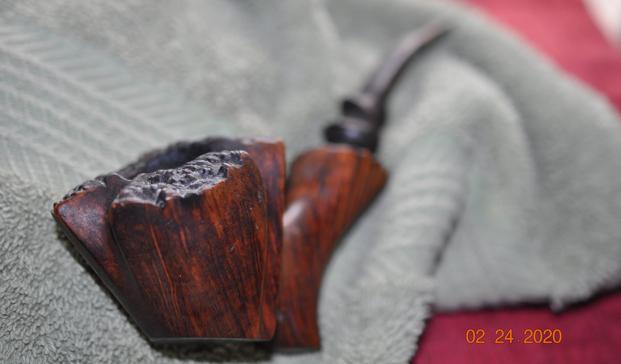
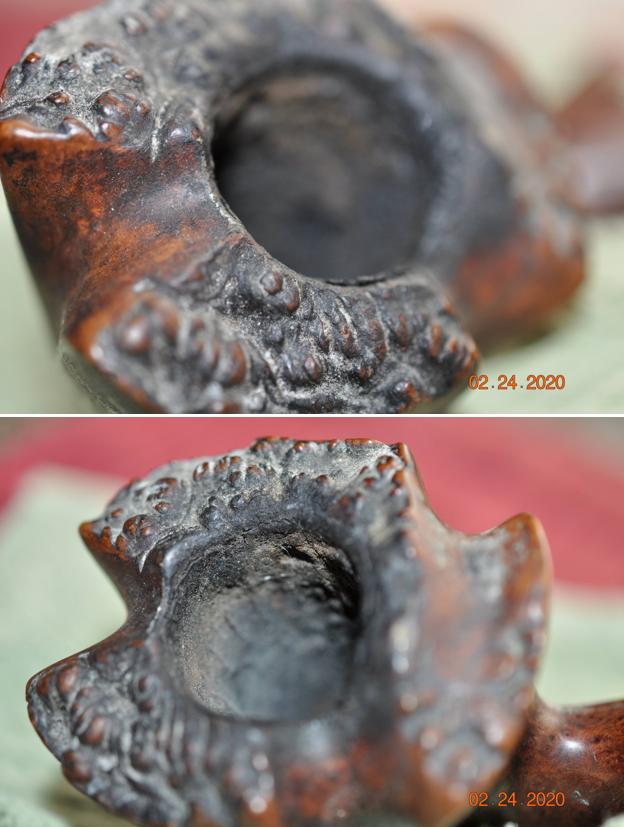
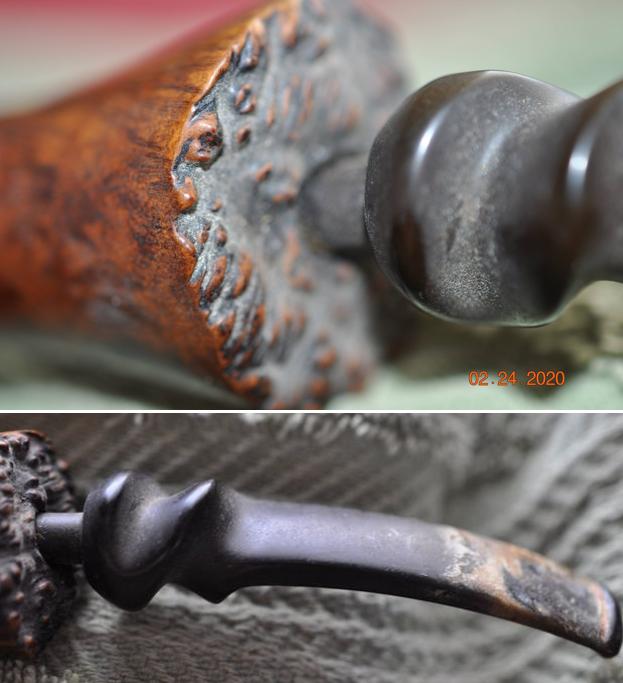
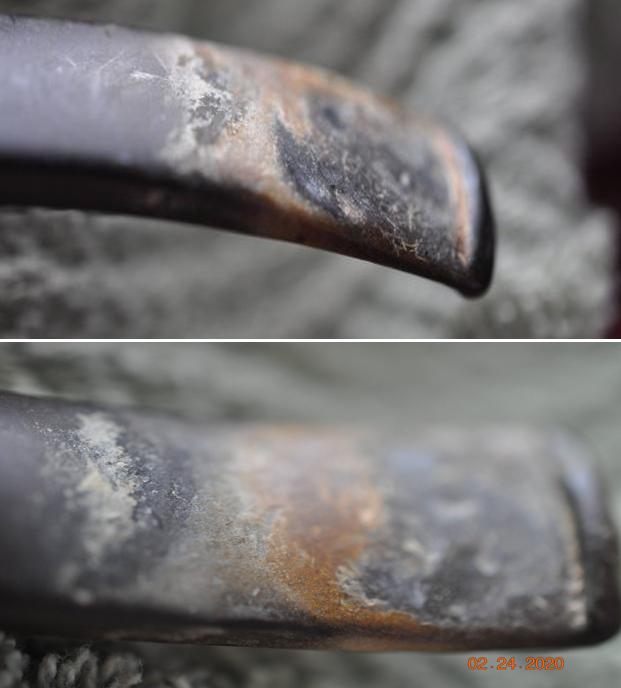
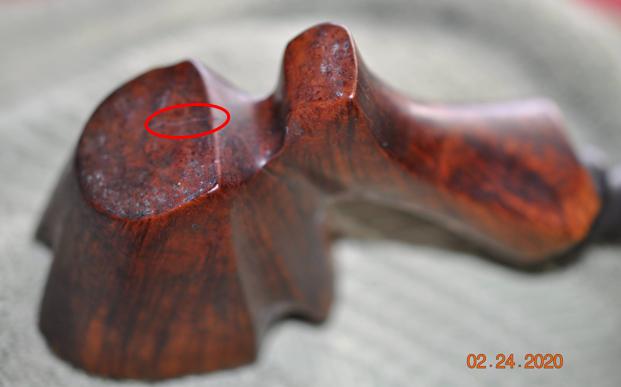
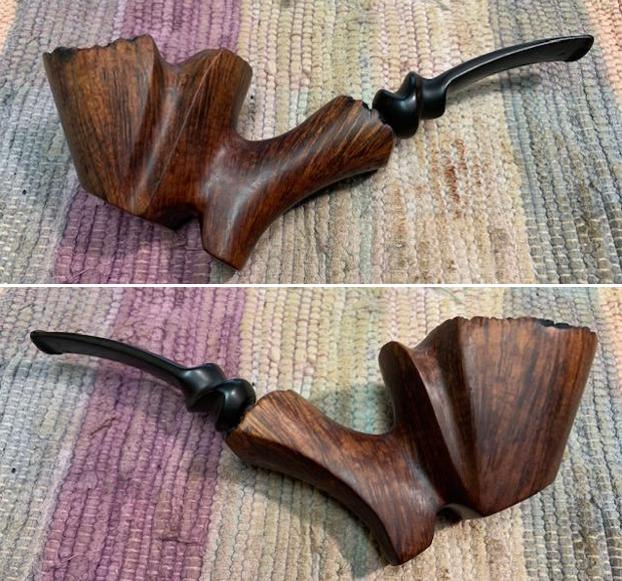
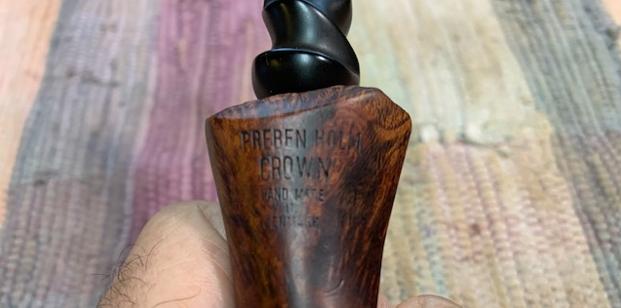
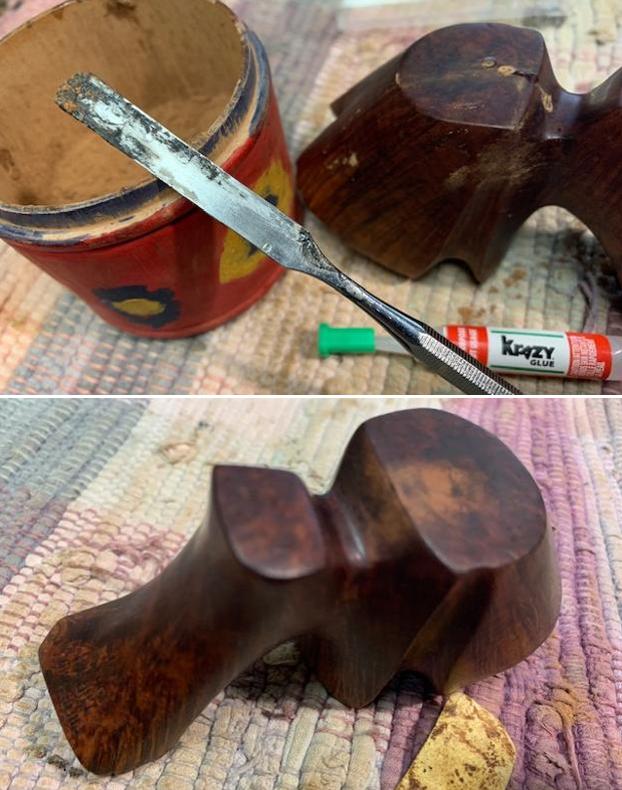
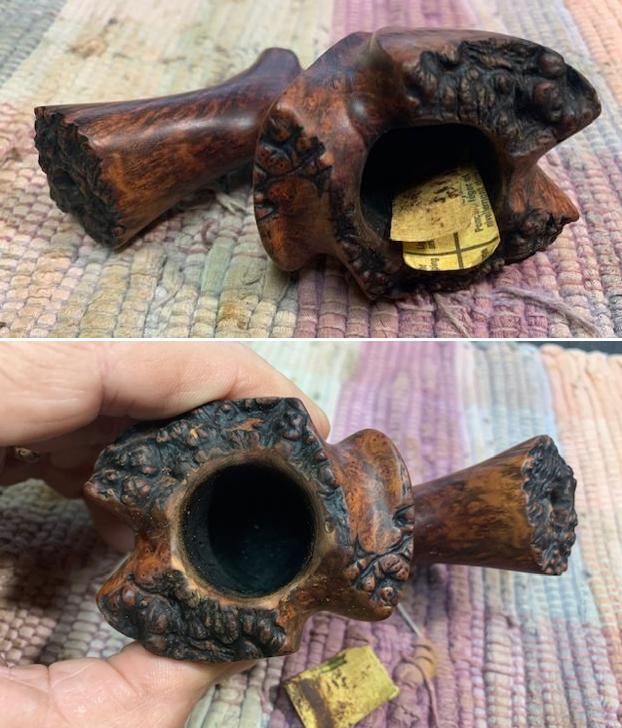
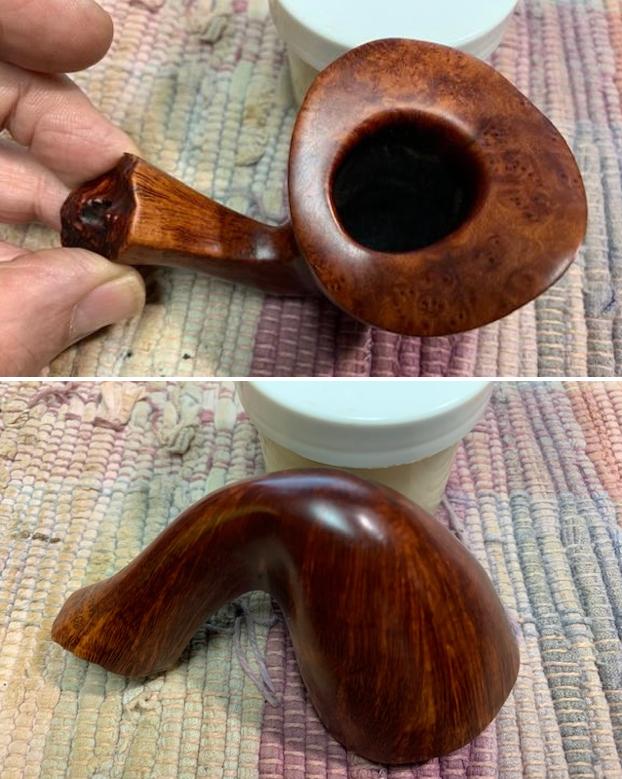
I have worked on many Preben Holm pipes over the years in many of his lines – Danish Pride, Monte Verde, Ben Wade and even his Walnut line which was a bit more classic in shape. I have always enjoyed his take on the flow of the pipe and how well he follows the way the grain takes him shaping his work. I have never worked on one that bore the Preben Holm Crown stamp on the shank. This particular smooth finished Freehand pipe was purchased from an auction in 2020 in Salina, Kansas, USA. It really is a filthy pipe though underneath all the grime it is a beautiful looking Freehand pipe that stands. It combines a plateau rim top and shank end with a smooth finish on the bowl and shank. It is stamped on the underside of the shank and reads Preben Holm [over] Crown [over] Hand Made [over] In [over] Denmark. The classic walnut finish is incredibly dirty but I was excited about it being a Crown – until Jeff mentioned to me that there was a hairline crack on the heel of the bowl! The bowl had a thick cake lining the walls and overflowing onto the plateau rim top in thick lava. It filled in the inner edge of the bowl and the rim top. It was a mess! There was grime ground into the smooth, grooved finish and dust and debris in the plateau valleys on the shank end.The turned vulcanite saddle had a twist in the saddle and had a faint Crown stamp on the topside. It had deep tooth marks and chatter on both sides near the button. The pipe must have been a great smoker judging from the condition it came it. Jeff took photos of the pipe before he started his work on it. Jeff took photos of the rim top and the stem to show the condition of the pipe when we received it. You can see the thick coat I the bowl and the heavy lava on the plateau rim top and inner edge of the bowl. The plateau on the shank end is also filthy. The turned vulcanite stem and has chatter and a few deep tooth marks on both sides near the button. He took photos of the sides of the bowl and the heel to give an idea of the shape and the condition of the briar around the bowl. The third photo below that shows the flat bottom of the heel shows a hairline crack from the back edge inward for about ½ inch and down into the groove about ¼ inch. I have circled it in red in the photo below. Certainly depressing but fixable! It has a shape that truly reflects the style and process of grain chasing that Preben Holm was famous for in his pipemaking. The next photo Jeff took shows the stamping on the underside of the  shank. It is clear and readable as noted above.I turned first to Pipephil to see what I could find about the Crown line of pipes and get some background (http://pipephil.eu/logos/en/logo-p5.html). I have included the photo capture below as it shows the look of the stamping and logo on the pipe I am working on.I turned then to Pipedia and read the listing on the brand to refresh my memory and flesh out the knowledge of the brand (https://pipedia.org/wiki/Holm,_Preben) and the article on Ben Wade (https://pipedia.org/wiki/Ben_Wade). I quote the portion of the Ben Wade article that summarizes the Danish period of the history of the brand:

Young Copenhagen master pipemaker Preben Holm had made a meteoric career heading a pipe manufacture employing 45 people at the age of 22! But around the turn of 1970/71 he was in major financial difficulties. His US distributor, Snug Harbour Ltd. in New York City, left him in the lurch. Holm had three unpaid invoices on his desk and another large shipment was ready for the USA, when Snug Harbour’s manager told him on the phone that there was no money at all on the account to pay him.

So the Dane went to New York for an almost desperate search for a new distribution partner. He made contacts with Lane Ltd. and met Herman G. Lane in February 1971. Lane Ltd. had no interest in Holm’s serial pipes produced at that time but so much the more in the hand-carved freehands because the hype for Danish freehands and fancies in the States was still on its way to the climax then. The meeting resulted in an agreement to start a cooperation. Lane insisted to improve the quality considerably and in return he assured to be able to sell essentially larger quantities.

Holm went back home to work on new samples with all-new designs and altered finishes for Lane. Both, Lane and Holm, agreed that it would be unwise to sell the pipes under Preben Holm’s name as long as Snug Harbour had a considerable stock of Preben Holm pipes and might sell them pipes at very low prices just to bring in some money.

So on Mr. Lane’s proposal it was determined to use the name Ben Wade belonging to Lane Ltd. Lane spent considerable amounts of money for advertising the new brand in the big magazines– the centerpiece being whole-page ads showing a very exclusive Seven Day’s Set.

The cooperation with Lane Ltd. proved to be an eminent business success for both partners. Within a very short time Ben Wade Handmade Denmark sold in much larger quantities and at higher prices than they had ever dreamed of. And the hype these freehands and fancy pipes caused went on unbroken long after Herman G. Lane deceased. Preben Holm – obviously much more brilliant in pipe making than in pipe business – was in major troubles again in 1986 and had to sack most of his staff. The Ben Wade production was significantly lowered but continued until his untimely death in June of 1989.

Up to now Preben Holm made Ben Wade pipes are cult and highly sought for on the estate markets.

With that information my initial thoughts were confirmed. This pipe was a Preben Holm made Freehand distributed in the US by Lane Ltd under his own name. The freehand rage occurred in the late 70s and the pipes were made until Preben’s death in 1989. My guess would be that this pipe was made sometime during that time period and potentially in the late 70s.

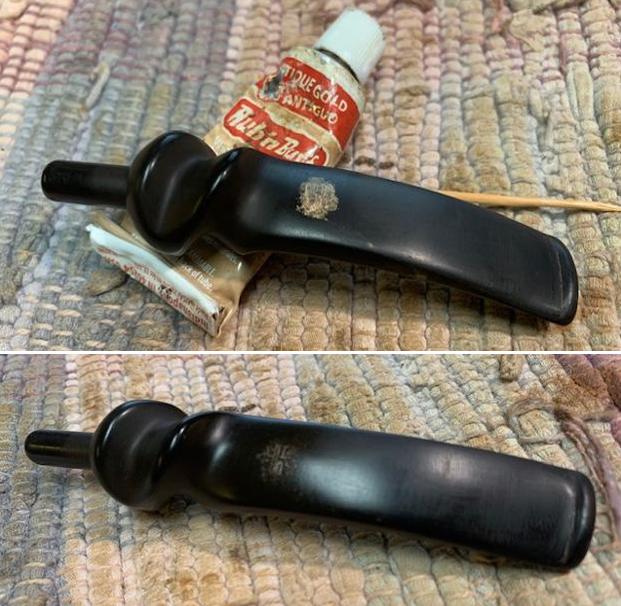
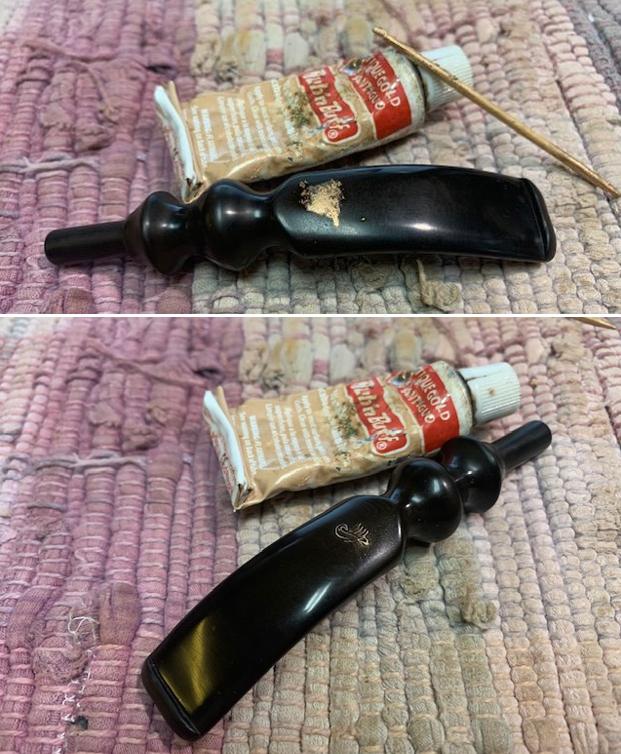
Jeff had cleaned up the pipe following his normal cleaning process. In short, he reamed it with a PipNet pipe reamer to strip out the cake in the bowl and then cleaned up the reaming with a Savinelli Fitsall Pipe Knife. He scrubbed the bowl with undiluted Murphy’s Oil Soap with a tooth brush. He worked over the lava and debris on the plateau rim top and shank end and was able to remove it. He rinsed it under running warm water to remove the soap and grime. He cleaned out the inside of the shank and the airway in the stem with alcohol, cotton swabs and pipe cleaners. He scrubbed the stem with Soft Scrub and cotton pads to remove the debris and oils on the stem. He soaked it in Briarville’s Pipe Stem Deoxidizer and then rinsed it with warm water and dried it off. I took photos of the pipe once I received it. It really looked good. I took close up photos of the stem and the rim top to show both how clean they were and what needed to be addresses with both. The rim top and bowl look good. The stem looked better and the tooth marks and chatter were still present. I would need to remove those to bring the stem back.I took a photo of the stamping on the left side of the shank. You can see from the photo that it is readable. It is clearer on the top half of the stamp than the lower but it is still readable.I removed the stem from the bowl and took a photo of the parts to give a sense of the beauty of the pipe.I decided to start my work on the pipe by addressing the hairline crack on the heel of the bowl. I  examined the inside of the bowl with a light to see if the crack had come through. I had not gone through at all. I looked at the heel of the bowl and saw that it truly was a hairline surface crack probably made by dropping the pipe. I drilled small pilot holes on each end of the crack to stop it from spreading. I cleaned out the crack with alcohol to remove any dust. I filled in the holes and the crack with clear super glue and briar dust. When the repair cured I sanded it smooth with 220 grit sandpaper to blend it into the surrounding briar. I used a folded piece 220 grit sandpaper to smooth out the inner bevel of the bowl and the grooves flowing out of the bowl toward the outer edges.I polished the smooth briar with micromesh sanding pads – wet sanding with 1500-12000 grit sanding pads. I wiped down the briar after each pad with a damp cloth to remove the dust and debris from the surface. The briar began to take on a shine. I worked some Before & After Restoration Balm into the surface of the briar with my finger tips and a horse hair shoe brush to get into the crevices of the plateau rim top and shank end. The product is incredible and the way it brings the grain to the fore is unique. It works to clean, protect and invigorate the wood. I set the bowl aside and turned my attention to the stem. I “painted” the surface of the stem with the flame of a Bic lighter to try and lift the tooth marks. I filled in the remaining marks with clear super glue. Once the repairs cured I sanded them smooth with 220 grit sandpaper to blend them into the surface of the briar. I started the polishing of the stem with 400 grit wet dry sandpaper. I touched up the faint stamp on the top of the stem with Rub’n Buff Antique Gold. I rubbed the product into the faint stamping and buffed it off with a soft cloth. While not perfect it was very visible and distinguishable.I polished the stem with micromesh sanding pads – wet sanding it 1500-12000 pads. I wiped it down with Obsidian Oil after each pad to enliven and protect the vulcanite. I polished it with Before After Pipe Polish – both Fine and Extra Fine. I gave the stem another rub down with Obsidian Oil and set it aside to dry. I am really happy with the way that this Preben Holm Crown Hand Made Danish Freehand turned out. It really is a beautiful looking pipe with a great shape and smooth finished bowl and rim and the remnant of plateau on the shank end. The hairline crack repair went very well and it is virtually invisible. The fancy original vulcanite saddle stem is really nice. The polished black of the stem works well with the briar. The briar really came alive with the buffing. The rich brown stains of the finish gave the pipe a sense of depth with the polishing and waxing. I put the stem back on the bowl and carefully buffed the pipe with Blue Diamond on the buffing wheel using a light touch on the briar. I gave the bowl and the stem multiple coats of carnauba wax on the buffing wheel. I buffed the pipe with a clean buffing pad to raise the shine. I hand buffed the pipe with a microfiber cloth to deepen the shine. The finished Preben Holm Crown Hand Made really is a beauty and feels great in the hand and looks very good. Give the finished pipe a look in the photos below. The dimensions of the pipe are Length: 7 inches, Height: 2 inches, Outside diameter of the bowl: 2 ½ inches long x 2 inches wide, Chamber diameter: 1 inch. The weight of the pipe is 86 grams/3.03 oz. The pipe will be going on the rebornpipes store soon. It will be in the section on Danish Pipe Makers if you would like to add it to your collection. Thanks for reading this blog and my reflections on the pipe while I worked on it. It was a fun one to work on!

Breathing Life into a Beautiful Ben Wade Danish Pride Freehand by Preben Holm


Blog by Steve Laug

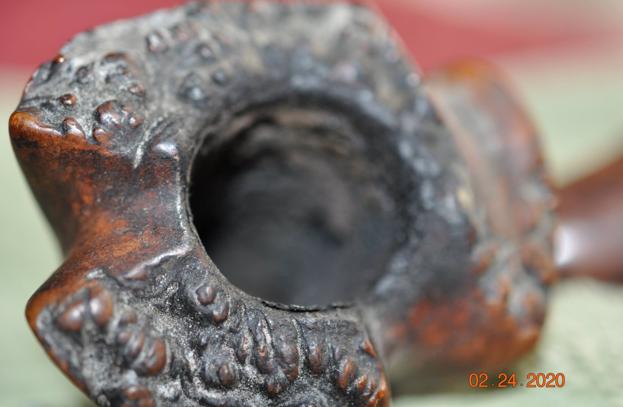
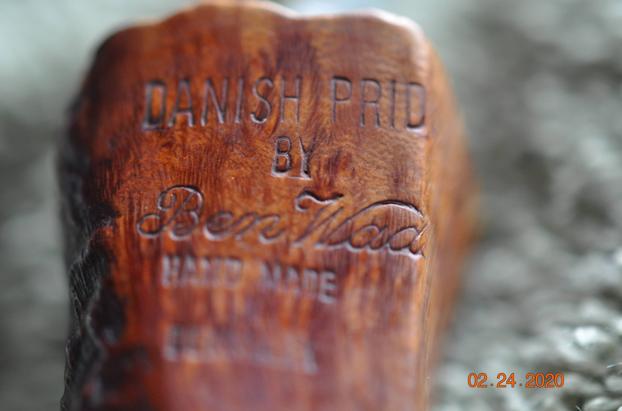
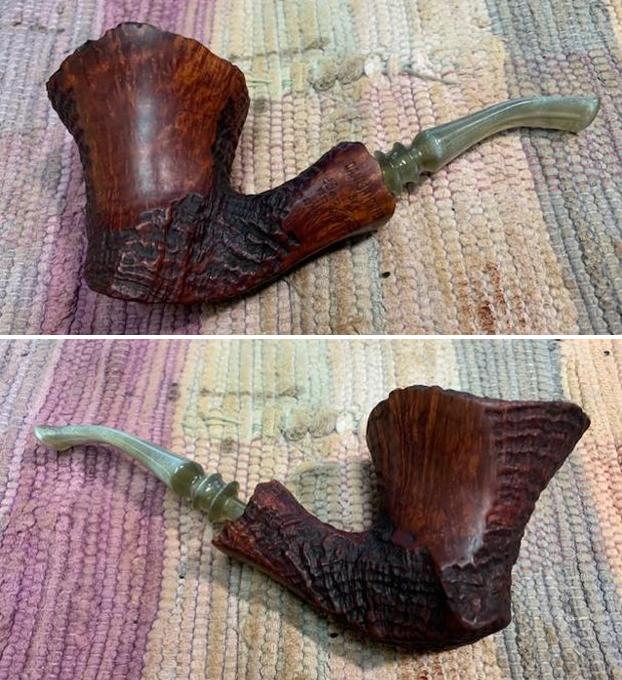
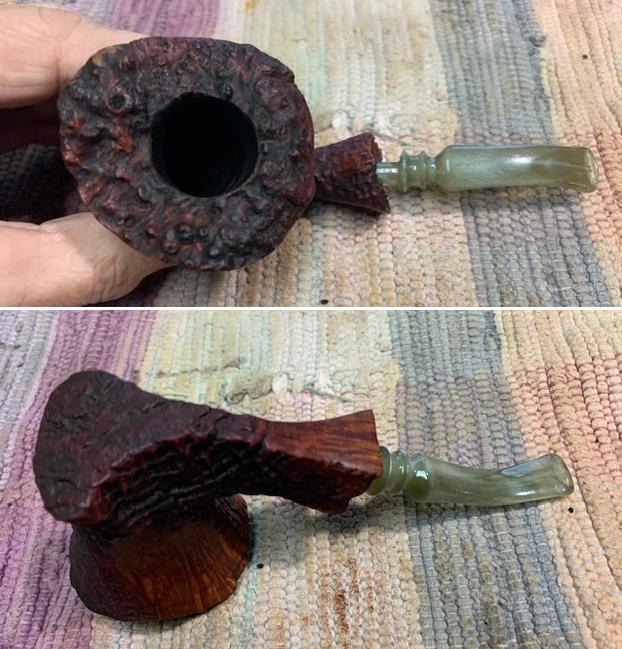
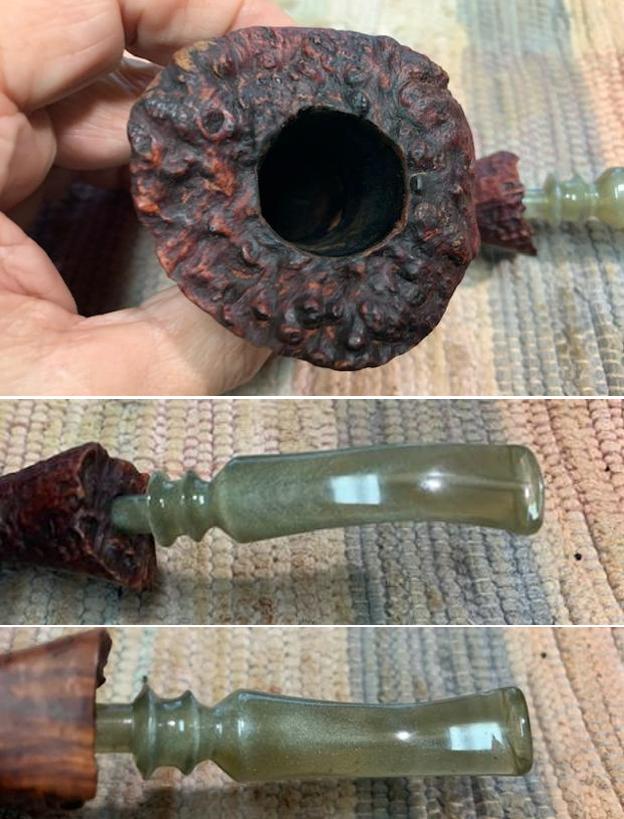
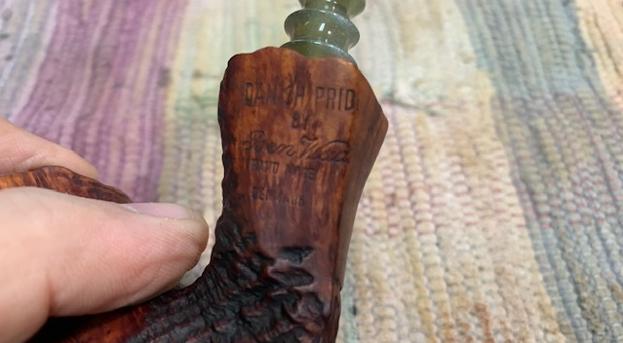
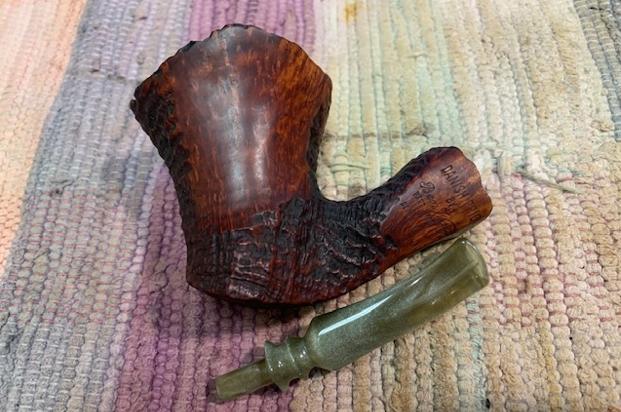
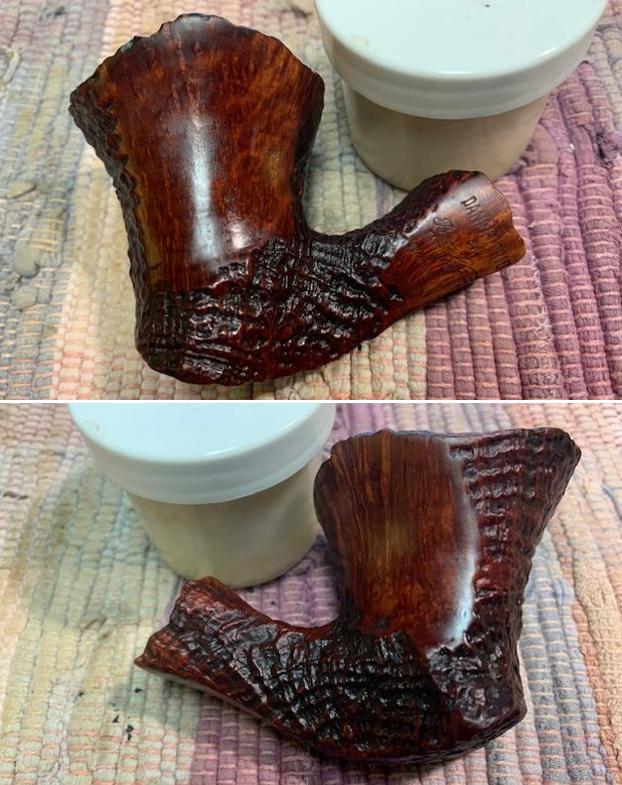
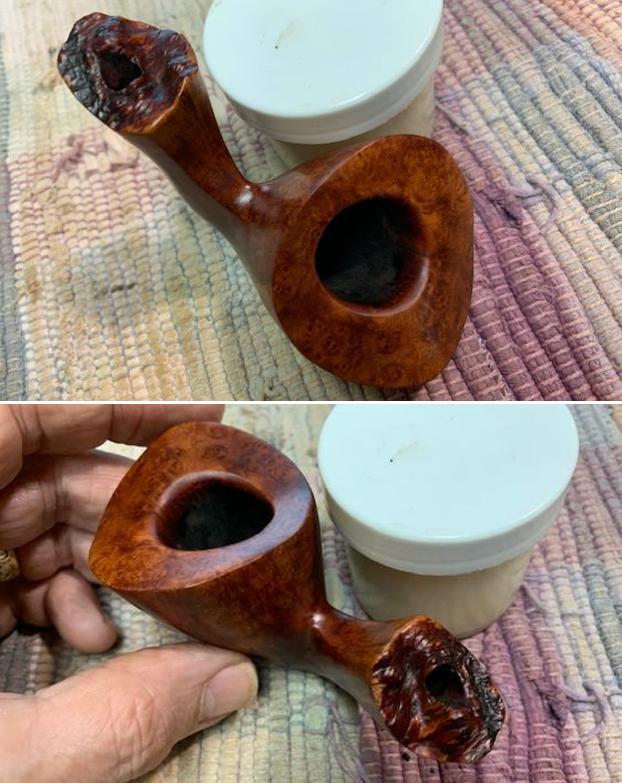
This particular smooth finished Freehand pipe was purchased from an auction early in 2020 in Moorhead, Minnesota, USA. It really is another nice looking Freehand pipe that combines a plateau rim top and shank end with smooth panels on a sandblast bowl and shank. It is stamped on a smooth panel on left side of the shank and reads Danish Pride [over] by Ben Wade [over] Hand Made [over]In [over] Denmark. The mixed finish is dirty but still a beautiful looking combination. The pipe had been reamed back to briar but there was a thick lava overflow on the rim top and inner edge of the bowl filling in the plateau. There was grime ground into the smooth and sandblast finish and dust and debris in the plateau valleys on the shank end. The opalescent grey green, fancy acrylic saddle did not have a logo but it looked a lot like other Ben Wade pipe stems that I have worked on. It had tooth marks and chatter on both sides near the button. The pipe must have been a great smoker judging from the condition it came it. Jeff took photos of the pipe before he started his work on it. Jeff took photos of the rim top and the stem to show the condition of the pipe when we received it. You can see the reamed bowl sides and the lava on the plateau rim top and inner edge of the bowl. The turned acrylic stem was dirty and had chatter and a few tooth marks on both sides near the button. He took photos of the sides of the bowl and the heel to give an idea of the shape and the condition of the briar around the bowl. It really is a nicely shaped pipe that has the classic look of a Freehand carved by Preben Holm. The next photo Jeff took shows the stamping on the left side of the shank. It is clear and readable as noted above.In a previous blog I had researched the brand quite a bit. I have included it below for information on this pipe (https://rebornpipes.com/2020/10/03/restoring-a-danish-pride-by-ben-wade-mixed-finish-handmade-freehand-sitter/). I quote:

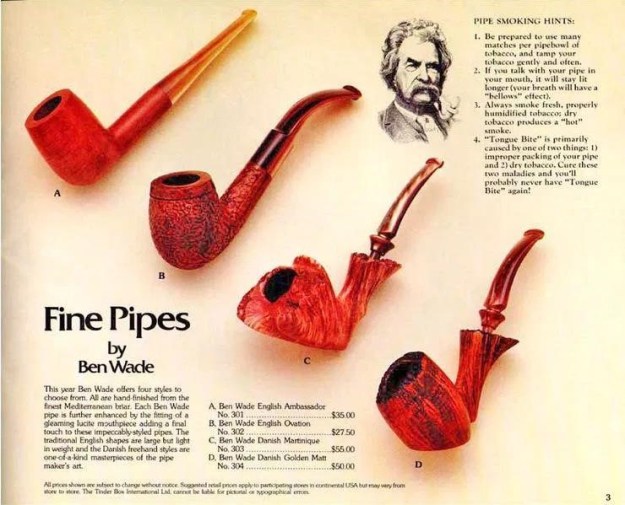
I remembered that the Preben Holm pipes were marketed under the Ben Wade label in the US and imported through Lane Ltd. I turned to Pipedia and read the listing on the brand to refresh my memory and flesh out the knowledge of the brand (https://pipedia.org/wiki/Ben_Wade). I have included a photo from that site that was taken from a Tinderbox advertisement. I quote the portion of the article that summarizes the Danish period of the history of the brand:

Young Copenhagen master pipemaker Preben Holm had made a meteoric career heading a pipe manufacture employing 45 people at the age of 22! But around the turn of 1970/71 he was in major financial difficulties. His US distributor, Snug Harbour Ltd. in New York City, left him in the lurch. Holm had three unpaid invoices on his desk and another large shipment was ready for the USA, when Snug Harbour’s manager told him on the phone that there was no money at all on the account to pay him.

So the Dane went to New York for an almost desperate search for a new distribution partner. He made contacts with Lane Ltd. and met Herman G. Lane in February 1971. Lane Ltd. had no interest in Holm’s serial pipes produced at that time but so much the more in the hand-carved freehands because the hype for Danish freehands and fancies in the States was still on its way to the climax then. The meeting resulted in an agreement to start a cooperation. Lane insisted to improve the quality considerably and in return he assured to be able to sell essentially larger quantities.

Holm went back home to work on new samples with all-new designs and altered finishes for Lane. Both, Lane and Holm, agreed that it would be unwise to sell the pipes under Preben Holm’s name as long as Snug Harbour had a considerable stock of Preben Holm pipes and might sell them pipes at very low prices just to bring in some money.

So on Mr. Lane’s proposal it was determined to use the name Ben Wade belonging to Lane Ltd. Lane spent considerable amounts of money for advertising the new brand in the big magazines– the centerpiece being whole-page ads showing a very exclusive Seven Day’s Set.

The cooperation with Lane Ltd. proved to be an eminent business success for both partners. Within a very short time Ben Wade Handmade Denmark sold in much larger quantities and at higher prices than they had ever dreamed of. And the hype these freehands and fancy pipes caused went on unbroken long after Herman G. Lane deceased. Preben Holm – obviously much more brilliant in pipe making than in pipe business – was in major troubles again in 1986 and had to sack most of his staff. The Ben Wade production was significantly lowered but continued until his untimely death in June of 1989.

Up to now Preben Holm made Ben Wade pipes are cult and highly sought for on the estate markets.

With that information my initial thoughts were confirmed. This pipe was a Preben Holm made Freehand distributed in the US by Lane Ltd under the name Ben Wade. The freehand rage occurred in the late 70s and the pipes were made until Preben’s death in 1989. My guess would be that this pipe was made sometime during that time period and potentially in the late 70s.

Jeff had cleaned up the pipe following his normal cleaning process. In short, he cleaned up the reaming with a Savinelli Fitsall Pipe Knife.  He scrubbed the bowl with undiluted Murphy’s Oil Soap with a tooth brush. He worked over the lava and debris on the plateau rim top and shank end and was able to remove it. He rinsed it under running warm water to remove the soap and grime. He cleaned out the inside of the shank and the airway in the stem with alcohol, cotton swabs and pipe cleaners. He scrubbed the stem with Soft Scrub and cotton pads to remove the debris and oils on the stem. He rinsed it with warm water and dried it off. I took photos of the pipe once I received it. It really looked good. I took close up photos of the stem and the rim top to show both how clean they were and what needed to be addressed with both. The rim top and bowl look good. The stem looked better and the tooth marks and chatter were still present. I would need to remove those to bring the stem back.I took a photo of the stamping on the left side of the shank. You can see from the photo that it is readable. It is clearer on the top half of the stamp than the lower but it is still readable.I removed the stem from the bowl and took a photo of the parts to give a sense of the beauty of the pipe.The bowl was in such good conditon after the clean up that I worked some Before & After Restoration Balm into the surface of the briar with my finger tips and a horse hair shoe brush to get into the crevices of the plateau and sandblast portions. The product is incredible and the way it brings the grain to the fore is unique. It works to clean, protect and invigorate the wood.I set the bowl aside and turned my attention to the stem. I sanded the tooth marks and chatter smooth with 220 grit sandpaper to blend them into the surface of the briar. I started the polishing of the stem with 400 grit wet dry sandpaper.I polished the stem with micromesh sanding pads – wet sanding it 1500-12000 pads. I wiped it down with a damp cloth after each pad to remove the dust and polishing debris. I polished it with Before  After Pipe Polish – both Fine and Extra Fine. I am really happy with the way that this Preben Holm Made Ben Wade Danish Pride Freehand turned out. It really is a beautiful looking pipe with a great shape and smooth finished bowl and rim and the remnant of plateau on the shank end. The fancy original acrylic saddle stem is really nice. The opalescent grey green colour of the stem works well with the briar. The briar really came alive with the buffing. The rich brown stains of the finish gave the pipe a sense of depth with the polishing and waxing. I put the stem back on the bowl and carefully buffed the pipe with Blue Diamond on the buffing wheel using a light touch on the briar. I gave the bowl multiple coats of Conservator’s Wax and the stem multiple coats of carnauba wax on the buffing wheel. I buffed the pipe with a clean buffing pad to raise the shine. I hand buffed the pipe with a microfiber cloth to deepen the shine. The finished Ben Wade Danish Pride really is a beauty and feels great in the hand and looks very good. Give the finished pipe a look in the photos below. The dimensions of the pipe are Length: 6 ¼ inches, Height: 2 ¾ inches, Outside diameter of the bowl: 2 ¼ inches long x 2 ¼ inches wide, Chamber diameter: 7/8 of an inch. The weight of the pipe is 62 grams/2.19 oz. The pipe will be going on the rebornpipes store soon. It will be in the section on Danish Pipe Makers if you would like to add it to your collection. Thanks for reading this blog and my reflections on the pipe while I worked on it. It was a fun one to work on!

Chasing the Grain – a Beautiful Ben Wade Martinique Freehand by Preben Holm


Blog by Steve Laug

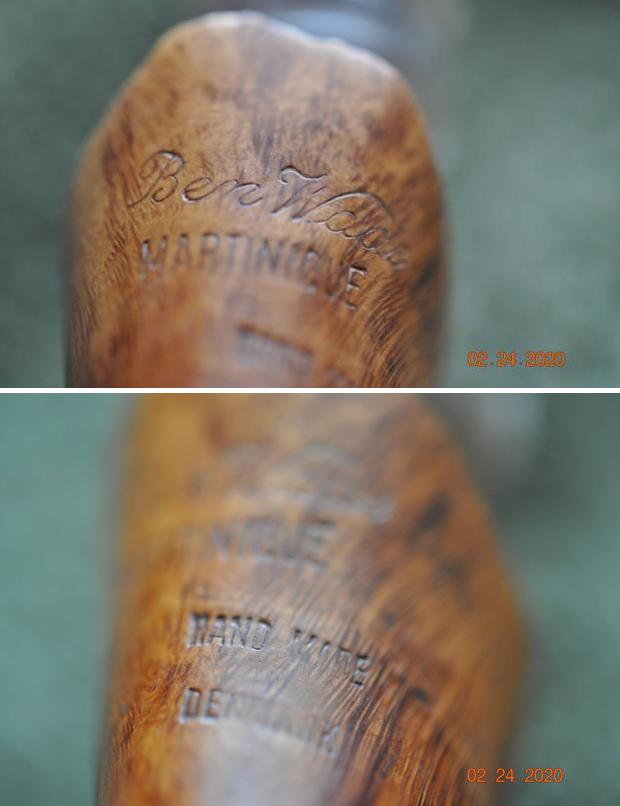
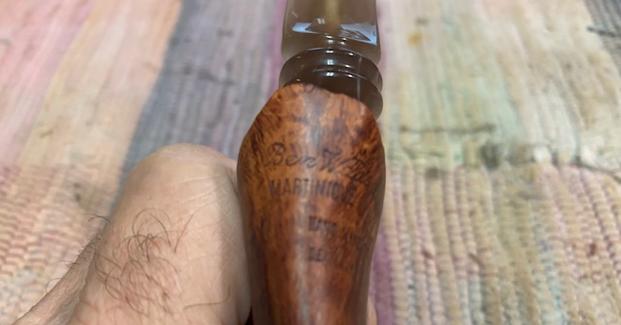
This particular smooth finished Freehand pipe was purchased from an auction in 2020 in Cedar Springs, Michigan, USA. It really is a nice looking pipe that is shaped chasing the grain around the bowl and shank. It is stamped on the underside of the shank and reads Ben Wade [over] Martinique [over] Hand Made [over] Denmark. It is a smooth finished pipe with a plateau finish on the shank end. The pipe had a moderate cake in the bowl and there was a lava overflow on the rim top and inner edge of the bowl. There was grime ground into the finish and dust and debris in the plateau valleys on the shank end. The original stem had the original Ben Wade Crown logo faintly stamped on the top of the blade of the fancy turned acrylic fancy saddle. It had tooth marks and chatter on both sides near the button. The pipe was dirty but still a beauty. Jeff took photos of the pipe before he started his work on it. Jeff took photos of the rim top and the stem to show the condition of the pipe when we received it. You can see the cake in the bowl and the lava on the rim top and inner edge of the bowl. It is hard to know what it looks like underneath the build up of lava but there may be a bit of rim damage. We will know after cleaning. The turned acrylic stem and has chatter and a few deep tooth marks on both sides near the button. The airway in the stem is stained with tobacco stains and there is a build up of debris there as well. He took photos of the sides of the bowl and the heel to give an idea of the shape and the condition of the briar around the bowl. It really is a nicely shaped pipe that has the classic look of a Freehand carved by Preben Holm. The next photos Jeff took show the stamping on the underside of the  shank. It is clear and readable as noted above.In a previous blog I had researched the brand quite a bit. I have included it below for information on this pipe (https://rebornpipes.com/2020/12/04/restoring-a-gorgeous-ben-wade-martinique-freehand-sitter/). I quote:

I remembered that the Preben Holm pipes were marketed under the Ben Wade label in the US and imported through Lane Ltd. I turned to Pipedia and read the listing on the brand to refresh my memory and flesh out the knowledge of the brand (https://pipedia.org/wiki/Ben_Wade). I have included a photo from that site that was taken from a Tinderbox advertisement. I quote the portion of the article that summarizes the Danish period of the history of the brand:

Young Copenhagen master pipemaker Preben Holm had made a meteoric career heading a pipe manufacture employing 45 people at the age of 22! But around the turn of 1970/71 he was in major financial difficulties. His US distributor, Snug Harbour Ltd. in New York City, left him in the lurch. Holm had three unpaid invoices on his desk and another large shipment was ready for the USA, when Snug Harbour’s manager told him on the phone that there was no money at all on the account to pay him.

So the Dane went to New York for an almost desperate search for a new distribution partner. He made contacts with Lane Ltd. and met Herman G. Lane in February 1971. Lane Ltd. had no interest in Holm’s serial pipes produced at that time but so much the more in the hand-carved freehands because the hype for Danish freehands and fancies in the States was still on its way to the climax then. The meeting resulted in an agreement to start a cooperation. Lane insisted to improve the quality considerably and in return he assured to be able to sell essentially larger quantities.

Holm went back home to work on new samples with all-new designs and altered finishes for Lane. Both, Lane and Holm, agreed that it would be unwise to sell the pipes under Preben Holm’s name as long as Snug Harbour had a considerable stock of Preben Holm pipes and might sell them pipes at very low prices just to bring in some money.

So on Mr. Lane’s proposal it was determined to use the name Ben Wade belonging to Lane Ltd. Lane spent considerable amounts of money for advertising the new brand in the big magazines– the centerpiece being whole-page ads showing a very exclusive Seven Day’s Set.

The cooperation with Lane Ltd. proved to be an eminent business success for both partners. Within a very short time Ben Wade Handmade Denmark sold in much larger quantities and at higher prices than they had ever dreamed of. And the hype these freehands and fancy pipes caused went on unbroken long after Herman G. Lane deceased. Preben Holm – obviously much more brilliant in pipe making than in pipe business – was in major troubles again in 1986 and had to sack most of his staff. The Ben Wade production was significantly lowered but continued until his untimely death in June of 1989.

Up to now Preben Holm made Ben Wade pipes are cult and highly sought for on the estate markets.

With that information my initial thoughts were confirmed. This pipe was a Preben Holm made Freehand distributed in the US by Lane Ltd under the name Ben Wade. The freehand rage occurred in the late 70s and the pipes were made until Preben’s death in 1989. My guess would be that this pipe was made sometime during that time period and potentially in the late 70s.

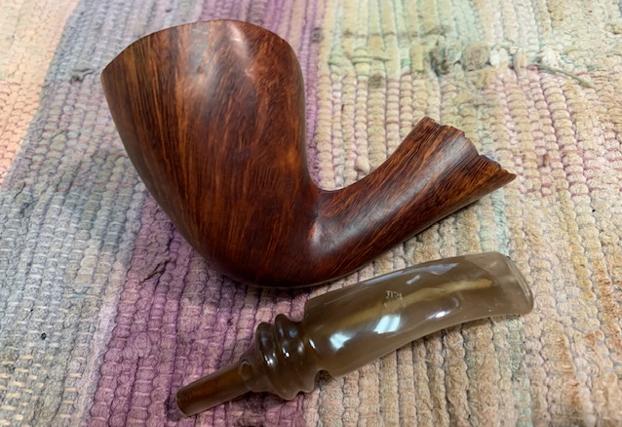
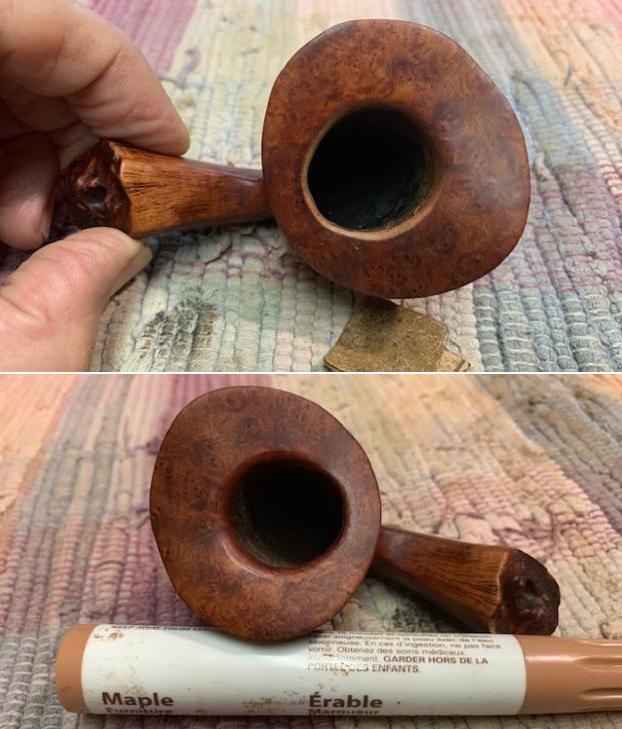
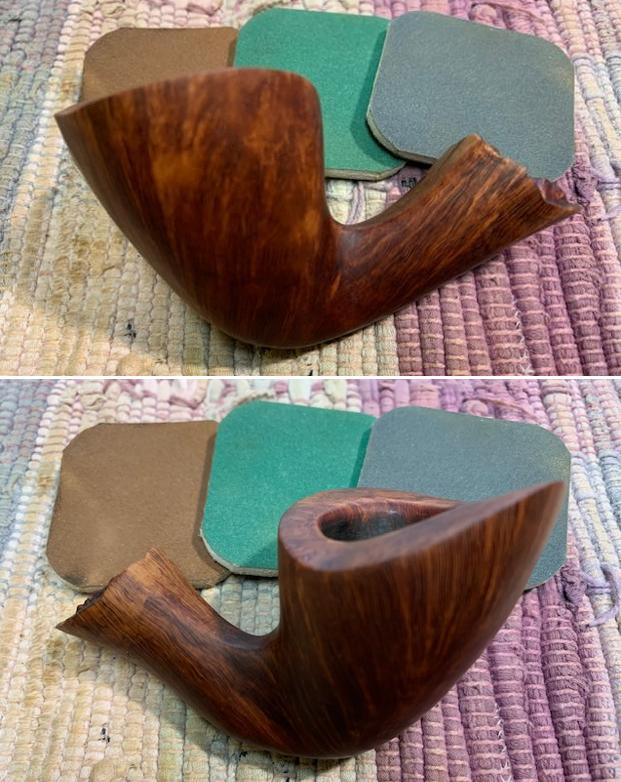
Jeff had cleaned up the pipe following his normal cleaning process. In short form he reamed the pipe with a PipNet Pipe Reamer and cleaned up the remnants with a Savinelli Fitsall Pipe Knife.  He scrubbed the bowl with undiluted Murphy’s Oil Soap with a tooth brush. He worked over the lava on the rim top and the debris in the plateau shank end and was able to remove it. He rinsed it under running warm water to remove the soap and grime. He cleaned out the inside of the shank and the airway in the stem with alcohol, cotton swabs and pipe cleaners. He scrubbed the stem with Soft Scrub and cotton pads to remove the debris and oils on the stem. He rinsed it with warm water and dried it off. I took photos of the pipe once I received it.  It really looked good. I took close up photos of the stem and the rim top to show both how clean they were and what needed to be addresses with both. The rim top and bowl look good. There was some darkening and damage on the back and right inner edge of the rim that would need attention. The stem looked better and the faint Ben Wade Crown logo was visible on the topside. The tooth marks and chatter were still present. I would need to remove those to bring the stem back.I took a photo of the stamping on the underside of the shank. You can see from the photo that it is readable. It is clearer on the top half of the stamp than the lower but it is still readable. I removed the stem from the bowl and took a photo of the parts to give a sense of the beauty of the pipe.I began my work on the damage on the inner edge of the bowl at the back. I used a folded piece of 220 grit sandpaper to shape and bevel the damaged area to match the rest of the bevel around the inner edge. I used a Maple Stain Pen to touch up the inner edge and blend it to the rim top.I polished the briar with micromesh sanding pads -1500-12000 grit pads. I wiped the bowl down after each sanding pad to remove the dust. The briar began to take on a deep shine. I worked some Before & After Restoration Balm into the surface of the briar with my finger tips and a horse hair shoe brush to get into the crevices of the plateau. The product is incredible and the way it brings the grain to the fore is unique. It works to clean, protect and invigorate the wood. I set the bowl aside and turned my attention to the stem. I sanded the tooth marks and chatter smooth with 220 grit sandpaper to blend them into the surface of the briar. I started the polishing of the stem with 400 grit wet dry sandpaper.I polished the stem with micromesh sanding pads – wet sanding it 1500-12000 pads. I wiped it down with a damp cloth after each pad to remove the dust and polishing debris. I polished it with Before After Pipe Polish – both Fine and Extra Fine. I touched up the stamp on the top of the stem with Rub’n Buff Antique Gold. I rubbed it into the stamp with a tooth pick and buffed it off with a cloth. It looked much better.I am really happy with the way that this Preben Holm made Ben Wade Martinique Danish Made Freehand turned out. It really is a beautiful looking pipe with a great shape and smooth finished bowl and rim and the remnant of plateau on the shank end. The fancy original acrylic saddle stem is really nice. The smokey Topaz colour of the stem works well with the briar. The briar really came alive with the buffing. The rich brown stains of the finish gave the pipe a sense of depth with the polishing and waxing. I put the stem back on the bowl and carefully buffed the pipe with Blue Diamond on the buffing wheel using a light touch on the briar. I gave the bowl and the stem multiple coats of carnauba wax on the buffing wheel. I buffed the pipe with a clean buffing pad to raise the shine. I hand buffed the pipe with a microfiber cloth to deepen the shine. The finished Ben Wade Martinique really is a beauty and feels great in the hand and looks very good. Give the finished pipe a look in the photos below. The dimensions of the pipe are Length: 6 ¼ inches, Height: 2 ¼ inches, Outside diameter of the bowl: 2 inches long x 2 ¼ inches wide, Chamber diameter: 1 inch. The weight of the pipe is 52 grams/1.83 oz. The pipe will be going on the rebornpipes store soon. It will be in the section on Danish Pipe Makers if you would like to add it to your collection. Thanks for reading this blog and my reflections on the pipe while I worked on it. It was a fun one to work on!

Restemming & Restoring a Peterson’s Product – a Made in Ireland  Shamrock X105 Billiard


Blog by Steve Laug

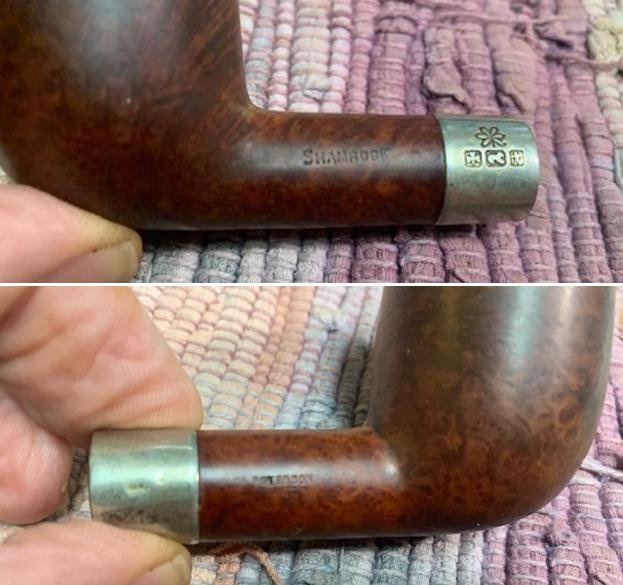
The next pipe I have chosen to work on came to me as a referral from a local pipe shop here in Vancouver. While I am not taking on work via mail I am still doing the repairs for this pipe shop. This one was a smooth finished Peterson’s Billiard bowl. It needed to have a stem fit to the shank so the fellow could smoke it again. It had not had a stem since the 70s. He decided it was time to get it back in order. He says he is a bit older than me and in our conversation it turns out that we are pretty close to the same age. He does not drive, no computer and no cell phone. We chatted a bit on his land line and decided a regular slotted stem would work for the pipe as I did not have any straight (or bent for that matter) Peterson’s stems. It had originally been offered with a choice of stems anyway. The finish is was dirty. I can see sand pits on the left side of the bowl but other than that it was in decent condition. It was stamped on the  left side of the shank and read SHAMROCK. It was stamped to the right of the shank and reads “A PETERSON’S [over] PRODUCT” over MADE IN IRELAND (3 lines) with the shape number X105 next to the bowl. The bowl had been reamed recently and the inner edge was nicked in several spots. The rim top was covered with a lava coat. I took a few photos of the pipe when I removed it from the shipping envelope.    I took a close up photo of the rim top and bowl to show the general condition of the pipe. The bowl looks to have been reamed recently but the rim top and edges have some lava overflow. I took photos of the sides of the shank to show the stamping. The stamping is readable in the photos below and is as noted above. I am including the link to the Pipedia’s article on Peterson pipes. It is a great read in terms of the history of the brand (https://pipedia.org/wiki/Peterson).

I turned to “The Peterson Pipe” by Mark Irwin and Gary Malmberg to get some background on the Peterson’s Shamrock Pipe. On page 312 it had the following information. 

Shamrock (c1941-2009) Originally stamped SHAMROCK with no brand name, an inexpensive line first described in George Yale (New York) mail order booklet in 1941, imported by Rogers Import. The line was actively promoted beginning in ’45, aggressively promoted in US by Rogers from early ‘50s when they registered the Shamrock logo with US Patent Office, claiming propriety since ’38. Over the years offered with P-lip or fishtail mouthpiece, with or without nickel band, with or without shamrock logo on the band, with or without S stamped in white or later in gold on mouthpiece. Appearing in 2008 as unstained smooth and rustic, fishtail mouthpiece with gold impressed P on the stem. COMS of MADE IN over IRELAND (C1945-1965), MADE IN IRELAND forming a circle (c1945-1965), “A PETERSON’S PRODUCT” over MADE IN IRELAND (c1945-1965), MADE IN THE over REPUBLIC over OF IRELAND9c1948-1998). Model is always difficult or impossible to date. 

Judging from the description above, the pipe I am working on is stamped with the stamp noted in red above. It reads “A Peterson’s Product” over Made in Ireland which narrows the date to between approximately 1945-1965. It is just stamped SHAMROCK with no brand name and no stem.  

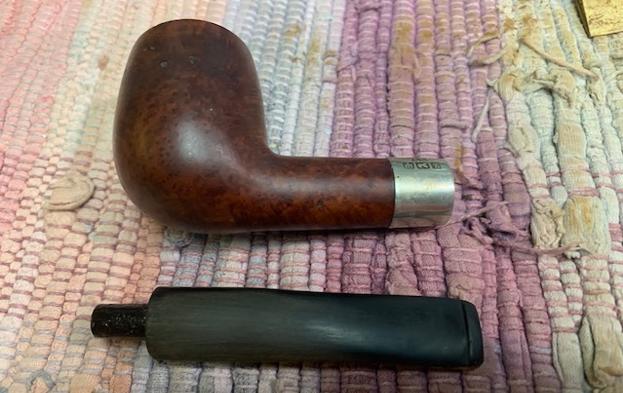
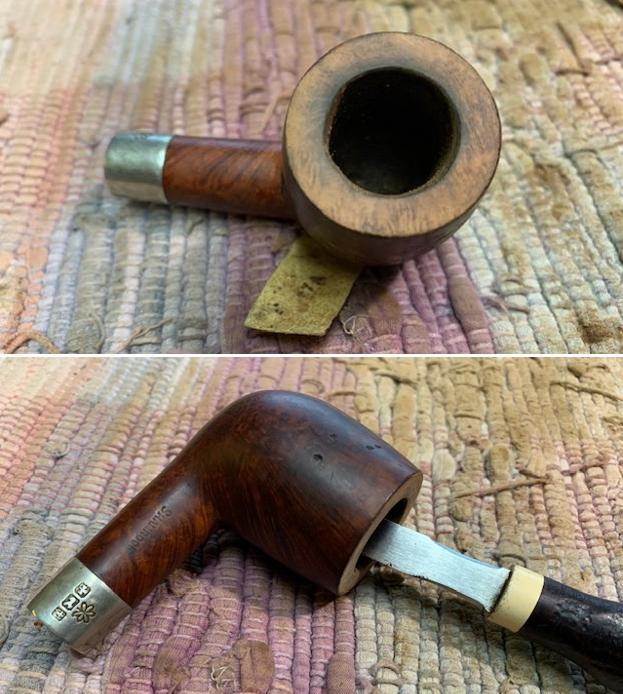
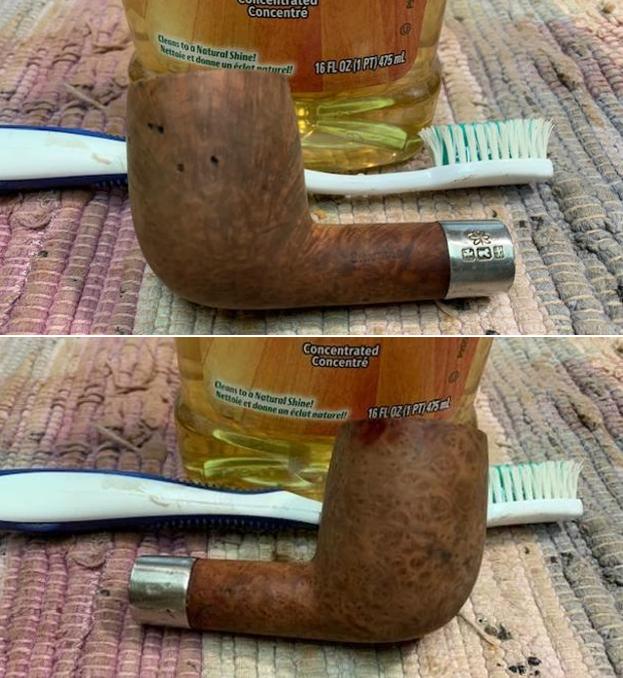
Now it was time to work on the pipe. I went through my can of stems and found a fishtail stem that would work with a little adjustment to the diameter at the band. The stem was in very good condition. I laid aside the stem and turned my attention to the bowl. I worked on the thickly lava coated rim top and edges with a folded piece of 220 grit sandpaper. I was able to remove the lava and I worked over the inner edge with the sandpaper. Once finished I reamed the bowl with a Savinelli Fitsall Pipe knife to remove the remnants of cake in the bowl. I scrubbed the externals of the bowl and rim with undiluted Murphy’s Oil Soap and a tooth brush. I rinsed the bowl with warm running water to remove the soap and the grime. The scrubbing left the surface very clean. I decided to leave the sandpits on the bowl side and filling them seemed unnecessary to me. I polished the briar with micromesh sanding pads – dry sanding with 1500-12000 grit sanding pads. I wiped the bowl down with a damp cloth after each sanding pad. I worked some Before & After Restoration Balm into the surface of the briar with my fingertips to clean, enliven and protect the briar. I let the balm sit for 15 minutes and then buffed with a cotton cloth to raise the shine. The photos show the bowl at this point in the restoration process. I sanded the diameter of the stem at the shank end with 220 grit sandpaper to take down the left side so that it matched the side of the band on the shank. I worked it over until the flow between the nickel band and the stem was smooth. I started the polishing with 400 grit wet dry sandpaper.I set the bowl aside and polished the stem with micromesh sanding pads – wet sanding with 1500-12000 grit sanding pads. I wiped it down after each sanding pad with Obsidian Oil. I polished it with Before & After Pipe Stem Polish – both Fine and Extra Fine.    I am excited to finish this Nickel Banded Older Peterson’s Shamrock X105 Straight Billiard. I put the pipe back together and buffed it with Blue Diamond on the buffing wheel. I gave the bowl and the stem multiple coats of carnauba wax. I hand buffed the pipe with a clean buffing pad to raise the shine. It is fun to see what the polished bowl looks like with beautiful flame grain all around it. Added to that the polished Sterling Silver band and the black vulcanite stem was beautiful. This smooth Classic Shamrock X105 Billiard is great looking and the pipe feels great in my hand. It is light and well balanced. Have a look at it with the photos below. The dimensions are Length: 5 ¾ inches, Height: 1 ¾ inches, Outside diameter of the bowl: 1 ¼ inches, Chamber diameter: ¾ of an inch. The weight of the pipe is 46 grams/1.62 oz. It turned out to be a beautiful pipe. I will be packing it up on the weekend and getting it ready to go back to the pipeman who sent it to me to be restemmed. Thanks for your time and as Paresh says each time – Stay Safe.

Reconditioning a Stunning Rungsted Mariner Freehand by Preben Holm


Blog by Steve Laug

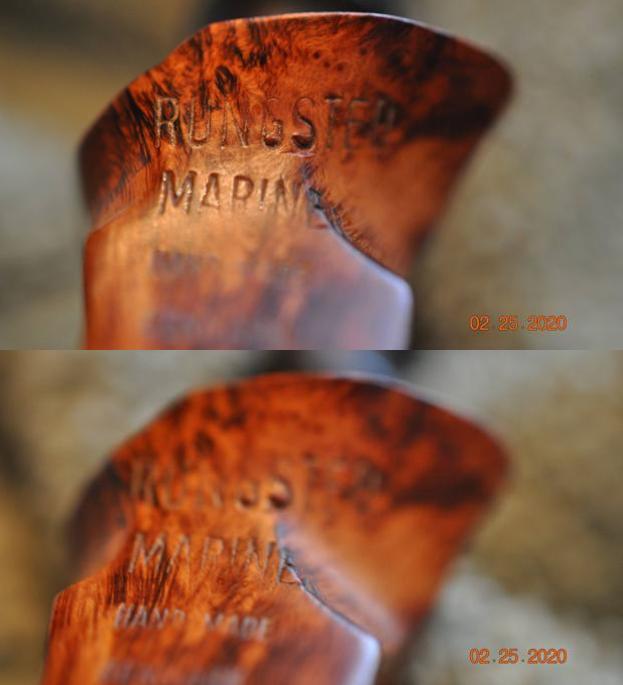
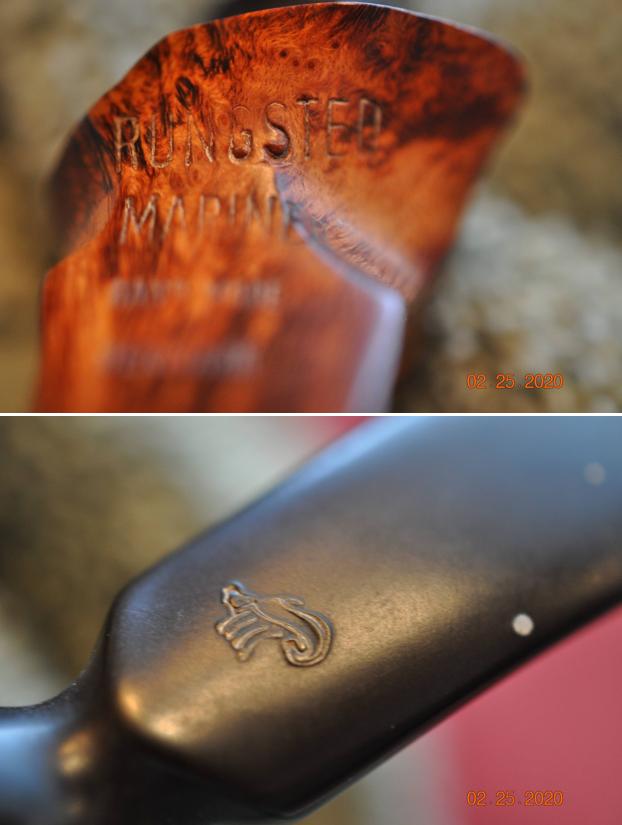
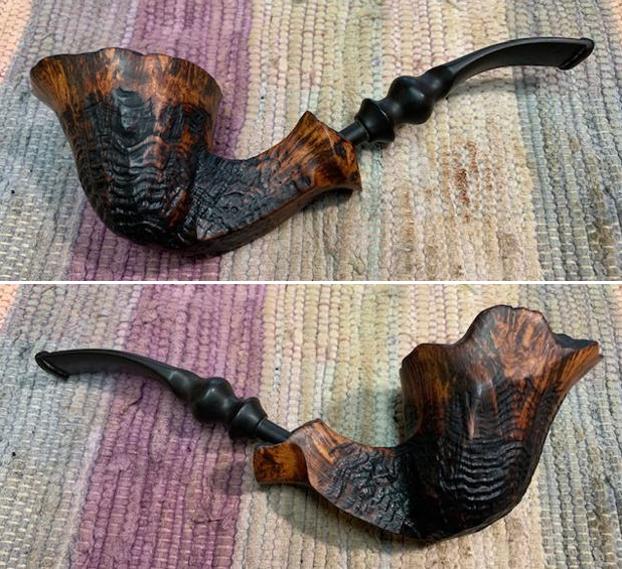
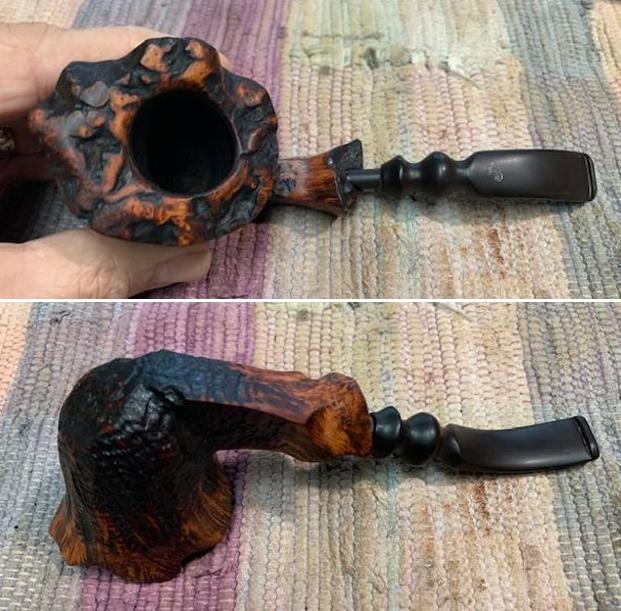
This particular Freehand pipe came in a lot that Jeff and I purchased on early in 2020 from a woman in Australia who had contacted us about selling her late husband’s collection. He had some beautiful pipes in his estate and this was one of them. It is stamped on the underside of the shank and reads Rungsted [over] Mariner [over] Hand Made [over] In [over] Denmark. It is a mixed finish pipe with the majority of the lower 2/3 of the bowl sandblasted with a deep and rugged blast. The top third of the bowl and shank are smooth finished while the rim top and shank end are plateau finished. The pipe had a moderate cake in the bowl and there was dust and debris in the plateau valleys and in the valleys of the sandblast. The original stem had the Rungsted logo on the top of the blade of the fancy turned vulcanite saddle. It was lightly oxidized and had tooth marks and chatter on both sides near the button. There was also some calcification around the sharp edge of the button that would need to be cleaned out. The pipe was dirty but still a beauty. Jeff took photos of the pipe before he started his work on it. Jeff took photos of the rim top and the stem to show the condition of the pipe when we received it. You can see the cake in the bowl and the sandblast of the bowl sides and the plateau of on the rim top and shank end. The rim edges appear to be very clean. The stem is vulcanite and is oxidized, calcified and has chatter and a few deep tooth marks on both sides near the button. He took photos of the sides of the bowl and the heel to give an idea of the shape and the condition of the briar around the bowl. It really is a nicely shaped pipe that has the classic look of a Freehand carved by Preben Holm. The next photos Jeff took show the stamping around the smooth briar on the underside of the shank. It is clear and readable as noted above. It took several photos to capture the stamping but it is clear. The last photo shows the stem logo. In a previous blog I had researched the brand quite a bit. I have included it in full below for information on this pipe (https://rebornpipes.com/2017/10/15/restemming-and-reconditioning-a-rungsted-mariner-by-preben-holm/). I quote:

I don’t know when I learned that the Rungsted line of pipes was another line that Preben Holm carved. But I learned that he made several lines outside the Ben Wade contract pipes he was producing for Snug Harbor/Lane. This was confirmed when I looked online and found a thread on PipesMagazine.com. The discussion covered a brand called Britta Bech and one of the members there happened to mention and confirm what I already knew about the Rungsted line. From my memory and the speaker’s the pipes were mostly carved in the mid to late 70’s or early 80’s during the height of the Danish Freehand pipe craze in the US. The speaker there said that though some refer to these as seconds he did not think that was accurate and that really it was a totally separate line from Preben Holm. I would agree with his assessment on this. I am pretty certain looking at the various Rungsted pipes that I have worked on that there are no flaws. They all combine both smooth and sandblast finishes and present a really interesting finished pipe. (mlaug on pipesmagazine.com http://pipesmagazine.com/forums/topic/preben-holm-info-needed).

Now it was time to move on to this particular Rungsted Mariner pipe. Jeff did a great job cleaning off the debris and grime on this old. He reamed it with a PipNet reamer and smoothed the walls of the bowl with a Savinelli Fitsall pipe knife. He scrubbed out the mortise and the airway in the shank and the stem with alcohol, cotton swabs and pipe cleaners. He scrubbed the exterior of the bowl, rim and shank with a tooth brush and Murphy’s Oil Soap to the oils and tars on the bowl, rim and shank. He rinsed it under running water. He dried it off with a soft cloth. Once the grime was removed the finish underneath was in stellar condition. The rich patina of the older briar was a variegated finish of smooth and sandblast looked great. He scrubbed the exterior of the stem with Soft Scrub then soaked it in a bath of Briarville’s Pipe Stem Deoxidizer. He rinsed off the deoxidizer with warm water and wiped the bowl and stem down with a light coat of olive oil to rehydrate both. The pipe really was quite stunning. I took photos of the pipe to show its condition before I started my work on it. I took close up photos of the stem and the rim top to show both how clean they were and what needed to be addresses with both. The rim top and bowl were in great condition with no major issues. The stem looked better but the deep tooth marks and chatter were still present. I would need to remove those to bring the stem back.I took a photo of the stamping on the underside of the shank. You can see from the photo that it is readable. It is clearer on the top half of the stamp than the lower but it is still readable.I removed the stem from the bowl and took a photo of the parts to give a sense of the beauty of the pipe. Because the bowl was in such good shape after Jeff’s clean up I moved directly to working some Before & After Restoration Balm into the surface of the briar with my finger tips and a horse hair shoe brush to get into the crevices of the sandblast and plateau. The product is incredible and the way it brings the grain to the fore is unique. It works to clean, protect and invigorate the wood. I set the bowl aside and turned my attention to the stem. I “painted” the surface of the stem with the flame of a Bic lighter to lift the tooth marks. I was able to lift them quite a bit. I filled in the remaining tooth marks on the surface of both sides with clear CA glue. Once it cured, I sanded them smooth with 220 grit sandpaper to blend them into the surface of the briar. I started the polishing of the stem with 400 grit wet dry sandpaper. I polished the stem with micromesh sanding pads – wet sanding it 1500-12000 pads. I wiped it down with Obsidian Oil after each pad to protect it and preserve it. I polished it with Before  After Pipe Polish – both Fine and Extra Fine. I finished the polishing with a final coat of Obsidian Oil. I touched up the stamp on the top of the stem with Rub’n Buff Antique Gold. I rubbed it into the stamp with a tooth pick and buffed it off with a cloth. It looked much better.I am really happy with the way that this Preben Holm made Rungsted Mariner Freehand turned out. It really is a beautiful looking pipe with a great shape and smooth, plateau and sandblast finishes. The fancy original vulcanite saddle stem is really nice. The briar really came alive with the buffing. The rich brown and black stains of the finish gave the pipe a sense of depth with the polishing and waxing. I put the stem back on the bowl and carefully buffed the pipe with Blue Diamond on the buffing wheel using a light touch on the briar. I gave the bowl multiple coats of Conservator’s Wax and the stem multiple coats of carnauba wax on the buffing wheel. I buffed the pipe with a clean buffing pad to raise the shine. I hand buffed the pipe with a microfiber cloth to deepen the shine. The finished Rungsted Mariner really is a beauty and feels great in the hand and looks very good. Give the finished pipe a look in the photos below. The dimensions of the pipe are Length: 7 inches, Height: 2 ¼ inches, Outside diameter of the bowl: 2 ½ inches long x 2 inches wide, Chamber diameter: 1 inch. The weight of the pipe is 83 grams/2.93 oz. The pipe will be going on the rebornpipes store soon. It will be in the section on Danish Pipe Makers if you would like to add it to your collection. Thanks for reading this blog and my reflections on the pipe while I worked on it. It was a fun one to work on!

What a Tired and Worn Pair of Cased 1919 Charles Mass Pipes – Part 2: An Exhausted Billiard


Blog by Steve Laug

This restoration is Part 2 of one that started with an email from a reader of the blog name Tim. He had written the following email to me with a request. I have included that email below.

Hello Steve, I have a cased set of 1919 Charles Maas pipes that have been smoked hard and put away wet. Can I send them to you to have them restored? I’m a huge fan of your work and use your site often as inspiration, but these are outside my ability. – Tim

I finished the restoration of the Bulldog first and have written about the work on the blog already. Here is the link (https://rebornpipes.com/2021/05/30/what-a-tired-and-worn-pair-of-cased-1919-charles-mass-pipes-part-1-a-weary-bulldog/).

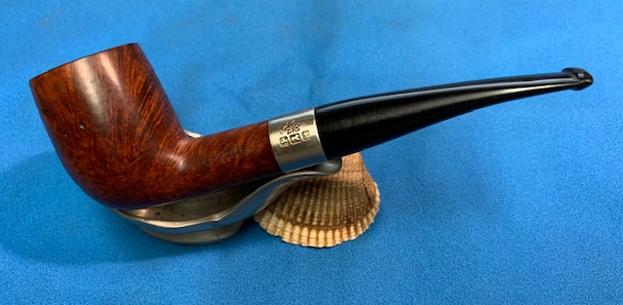
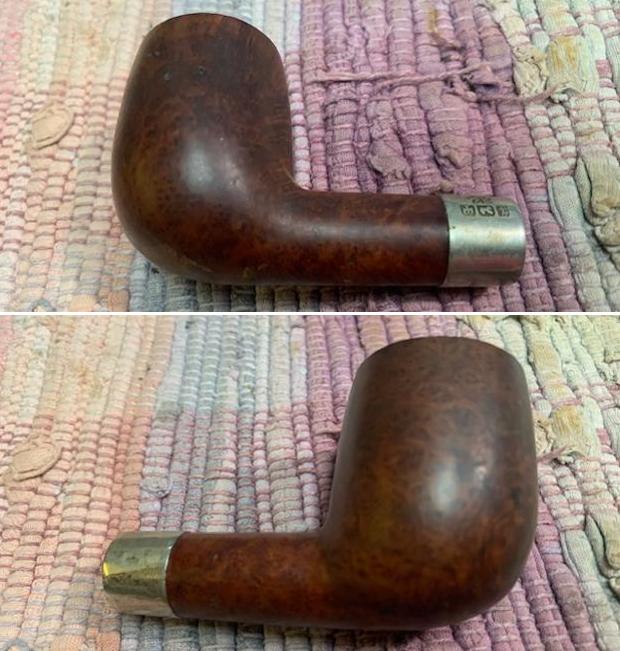
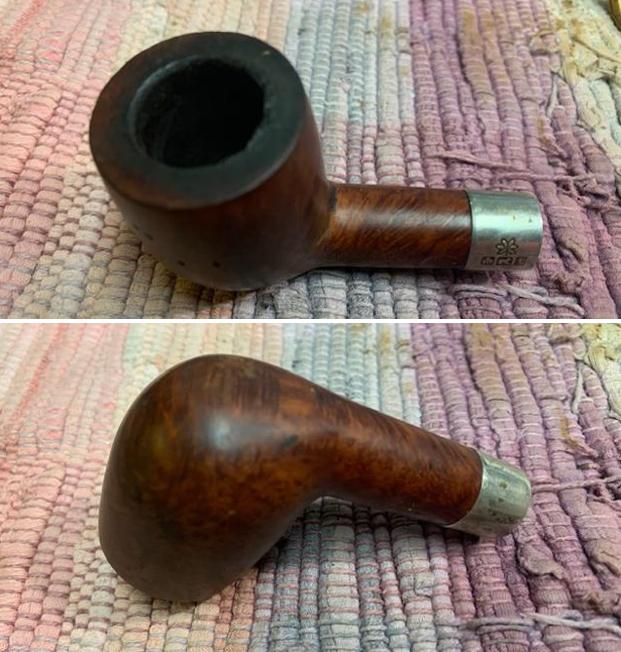
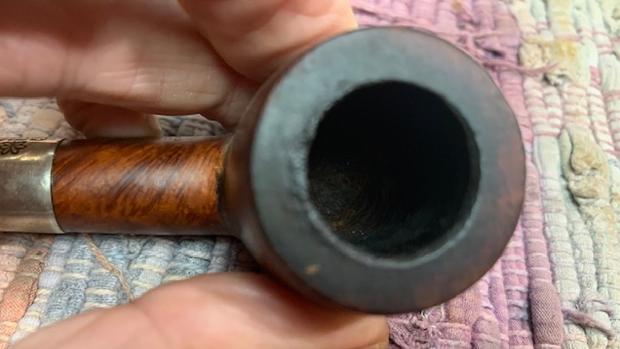
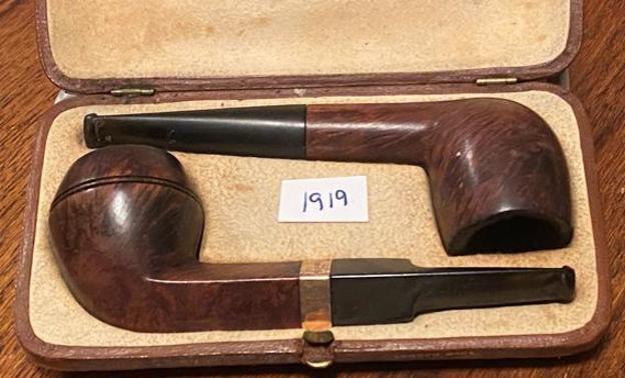
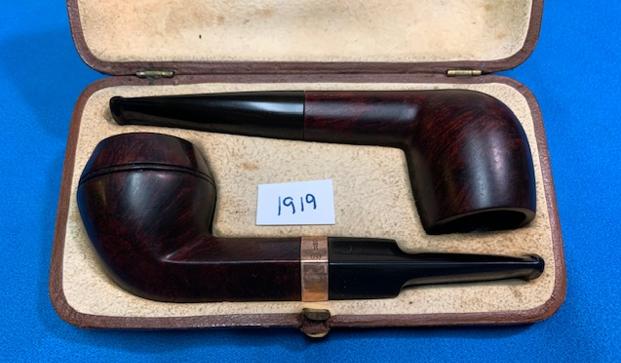
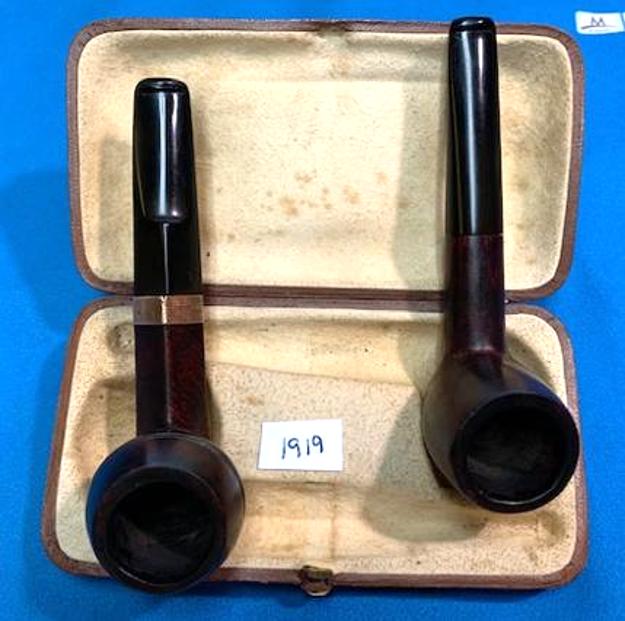
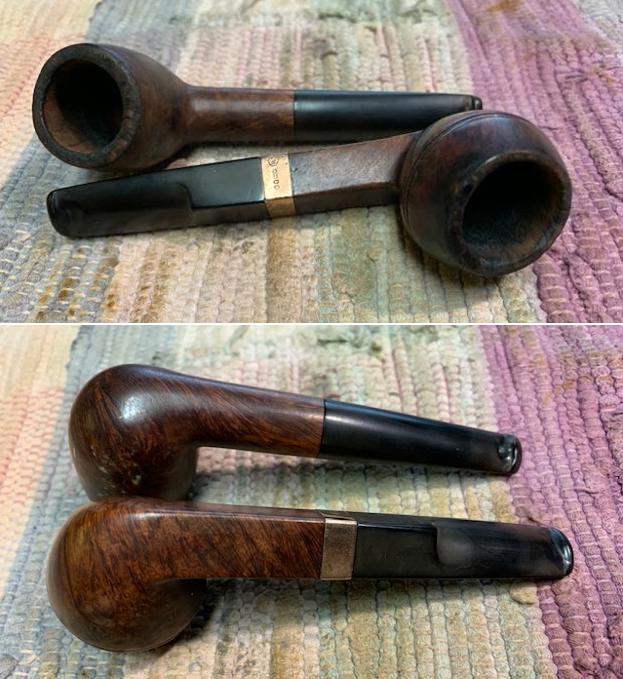
I am including the photos that Tim Sent me so you can see them if you have not read Part 1 of the blog on the Bulldog. Tim’s package arrived on Thursday and when I got home from work I opened it to have a look at the pipes first hand. I took the case out of the well packed box and this is what I saw. The case was suede with a fine leather edge around the sides. There was a thin gold line around the case edges. When I opened it I saw Tim’s 1919 label and the two pipes. There was a gold banded Bulldog and a nice stubby billiard. Both were nicely carved bowls and both had been heavily used and worn.

I sent Tim the following list summarizing the damages on the Billiard (a similar list is on the blog about the Bulldog). There is a lot of work to do to bring these back to life.

The billiard:
1. The rim top is badly damaged leaving the top uneven and thicker/taller toward the back of the bowl and more damaged than even the Bulldog.
2. The inner edge of the bowl is thicker than the bulldog but still thinner on the front side than the rest of the bowl. It is still thick enough.
3. The outer edge is chipped and uneven on the bowl front showing some burn marks.
4. The finish is worn and damaged with paint marks on the surface.
5. The bowl is slightly out of round with chips and marks on the inner edge
6. The stem has deep compressions from tooth marks on both sides at the button.                        7. The inside of the bowl is badly checked and will need to examined for integrity.

Both pipes had been reamed and they were quite clean inside. It appeared that previous earlier reaming somewhere along the way had left the inner edge chipped and damaged. That is the assessment of the Billiard and it is clear from the list that there is a lot of work to do on it.

For background on the Charles Maas brand read the previous blog to get a clear idea of the history of the company. I will not include it again at this point. Here is another copy of the link for ease of reference (https://rebornpipes.com/2021/05/30/what-a-tired-and-worn-pair-of-cased-1919-charles-mass-pipes-part-1-a-weary-bulldog/).

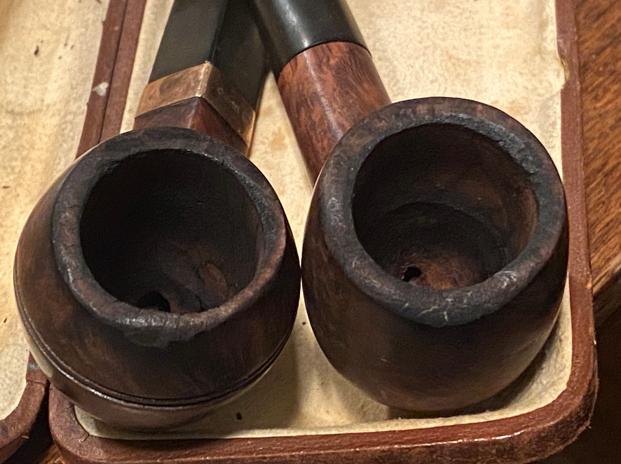
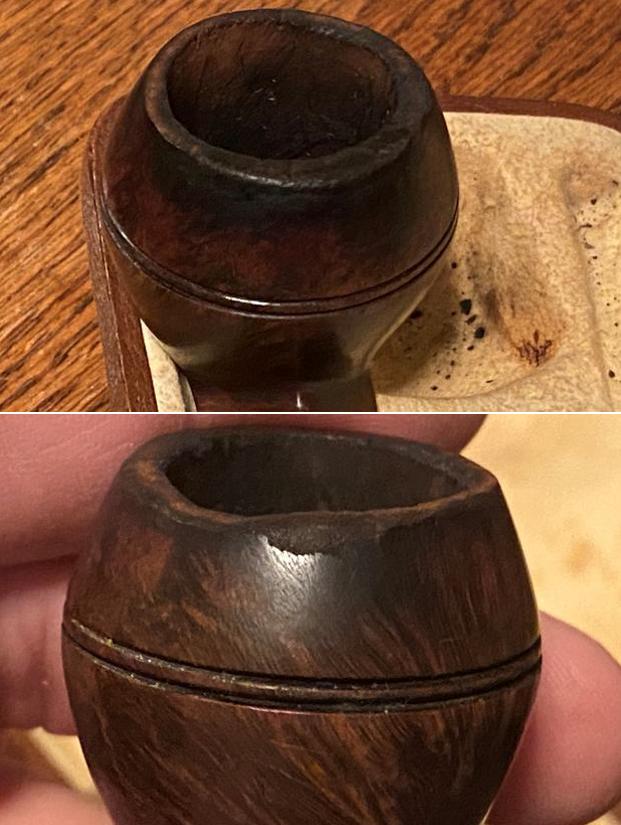
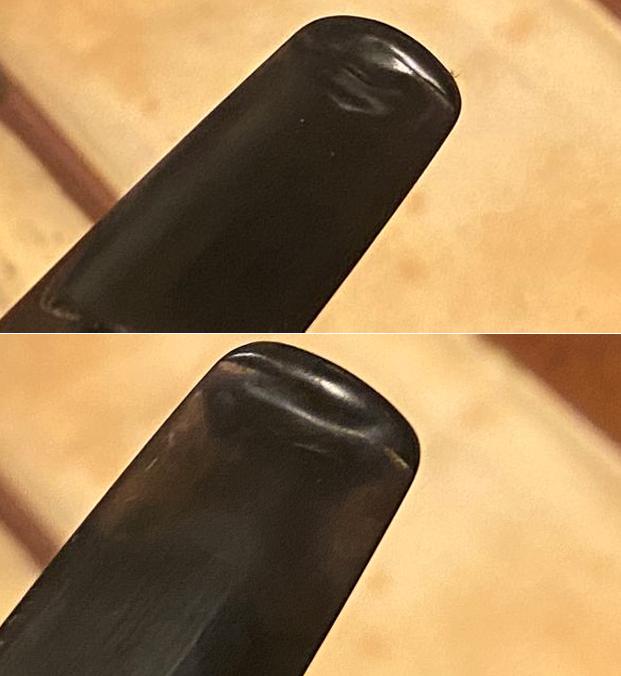
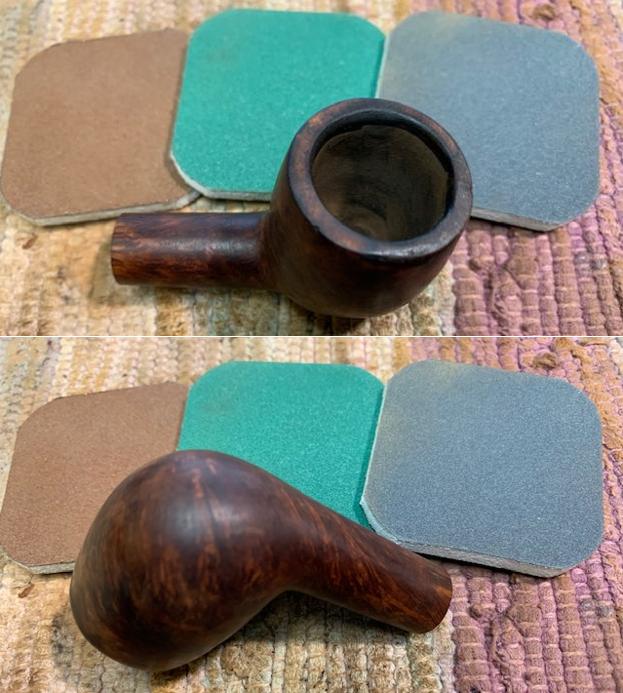
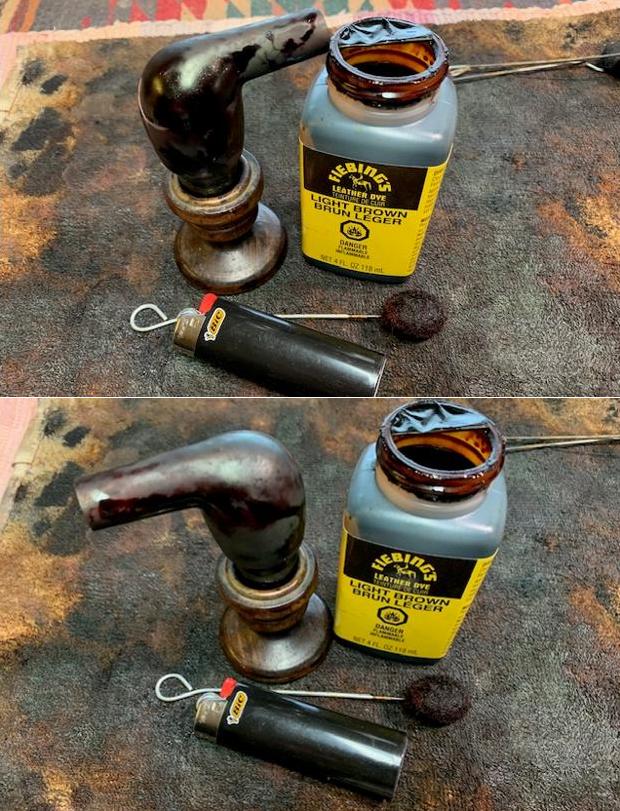
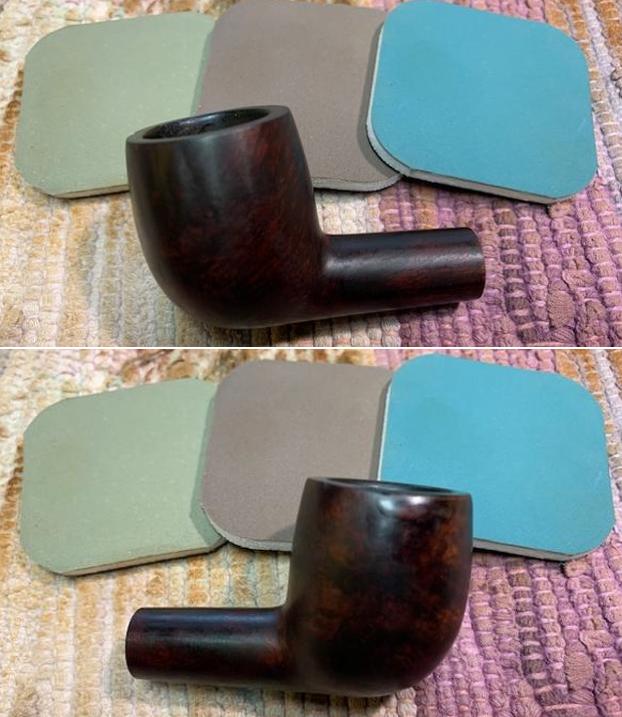
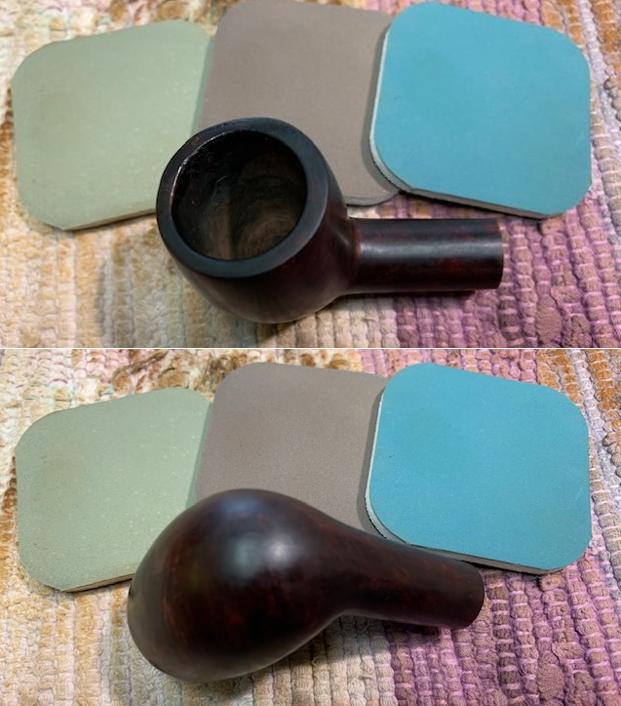
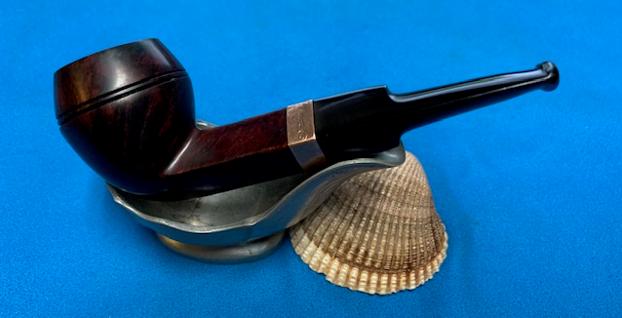
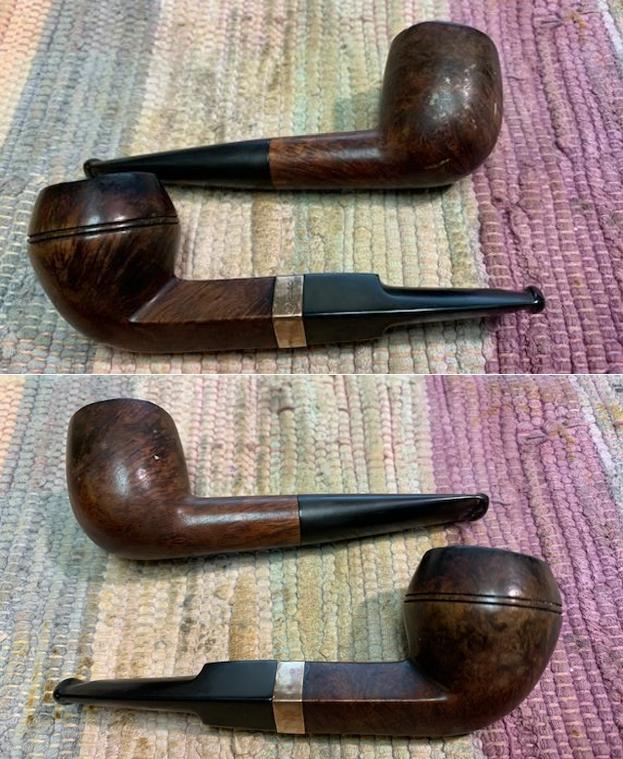
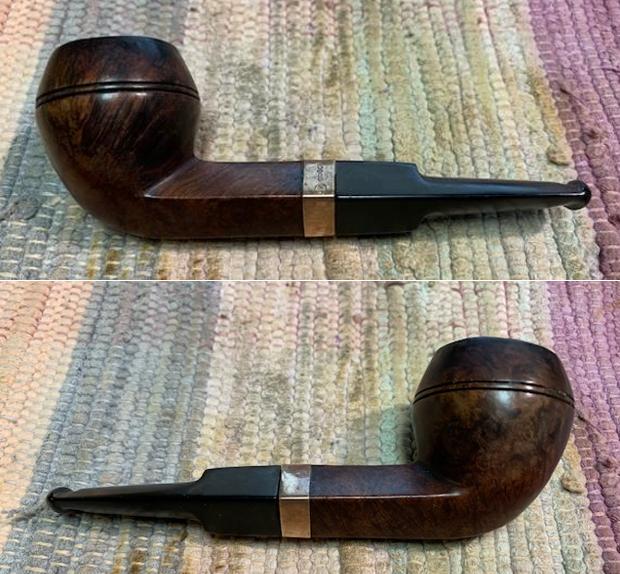
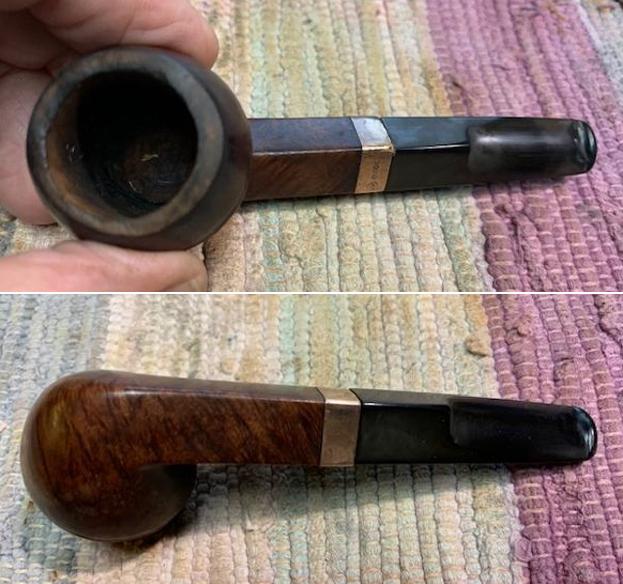
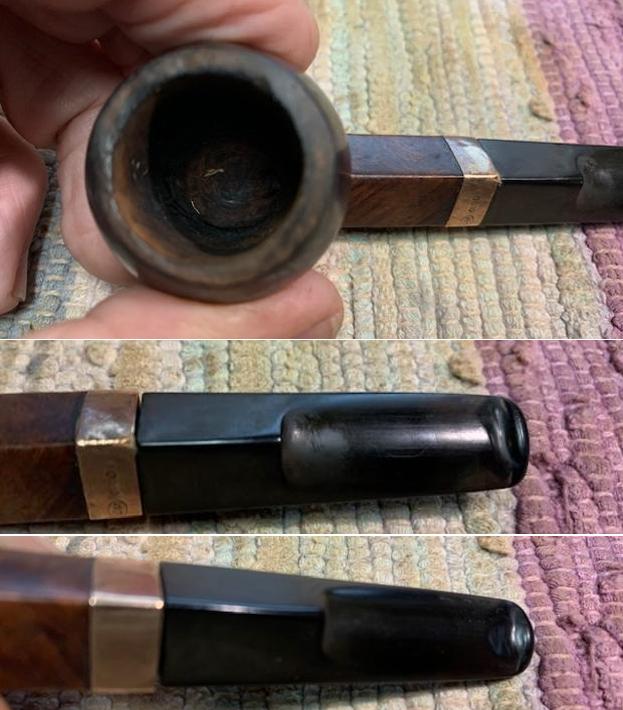
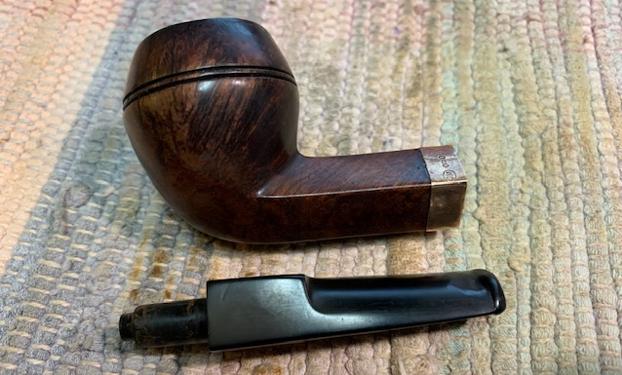
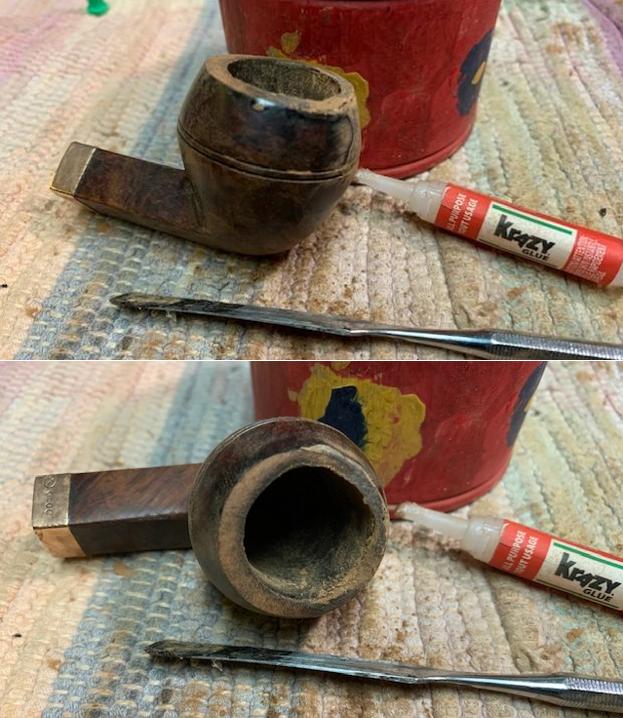
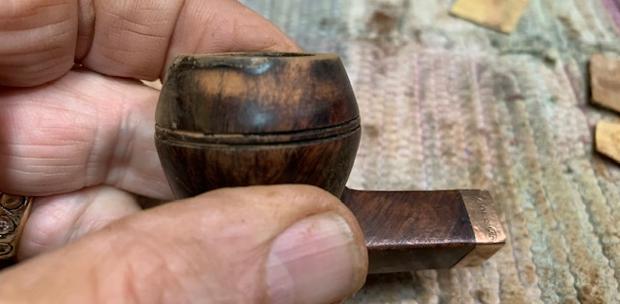
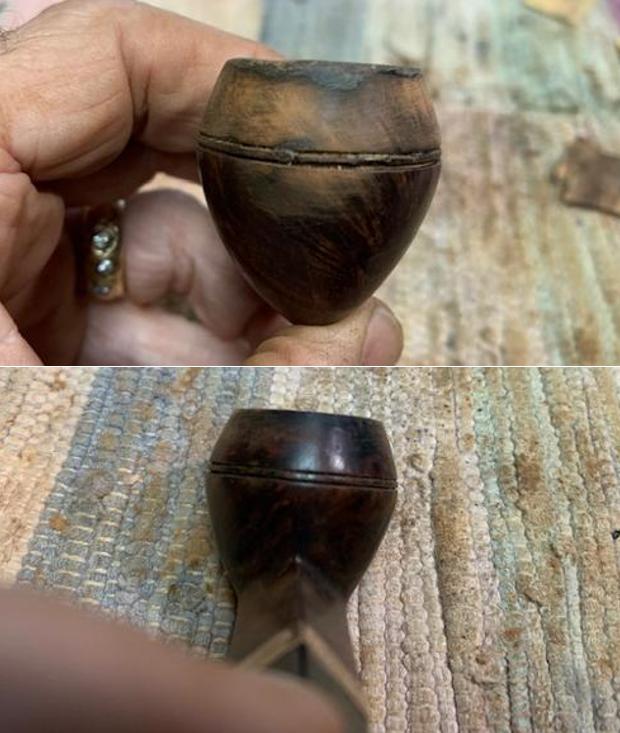
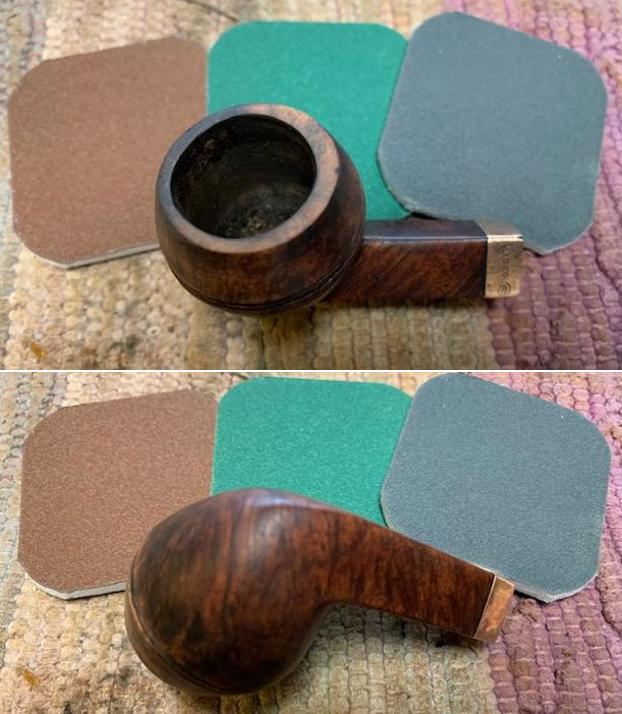
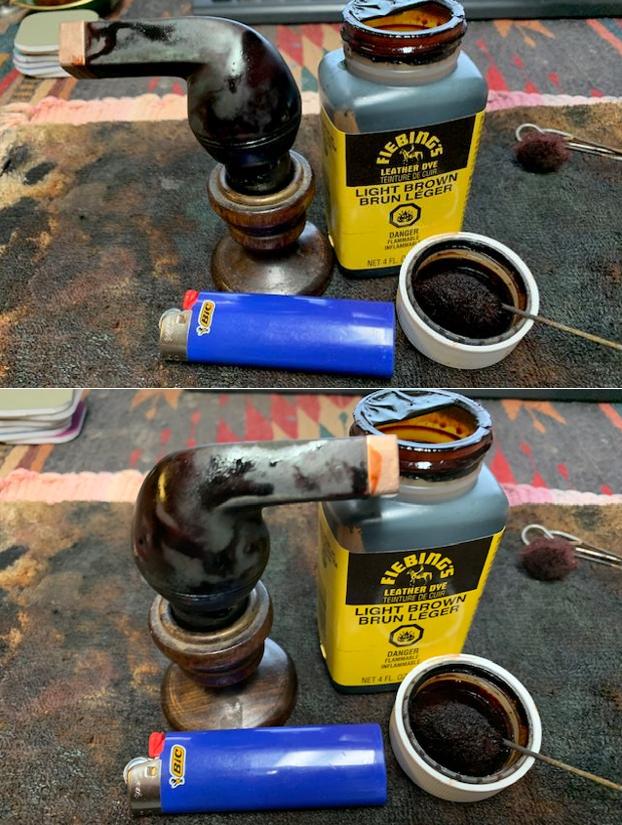
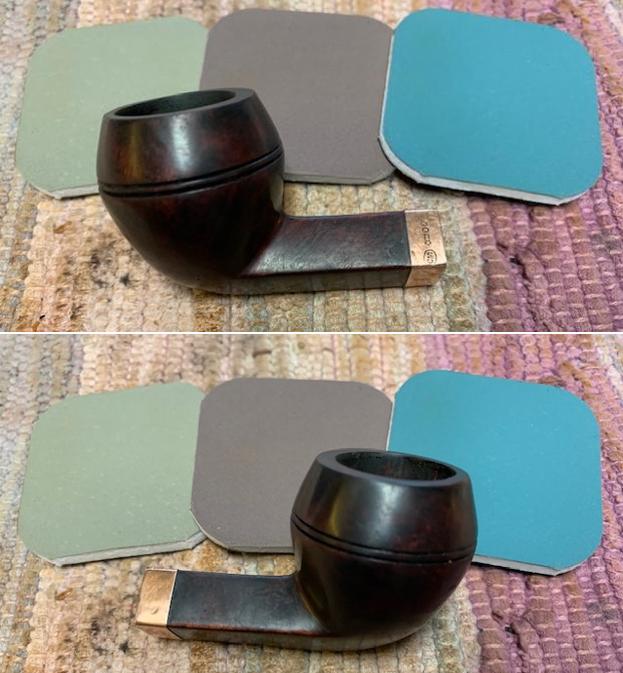
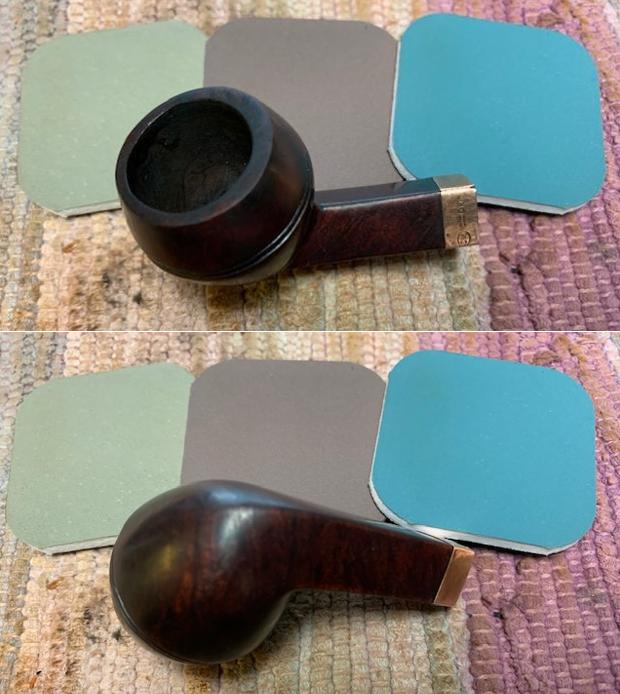
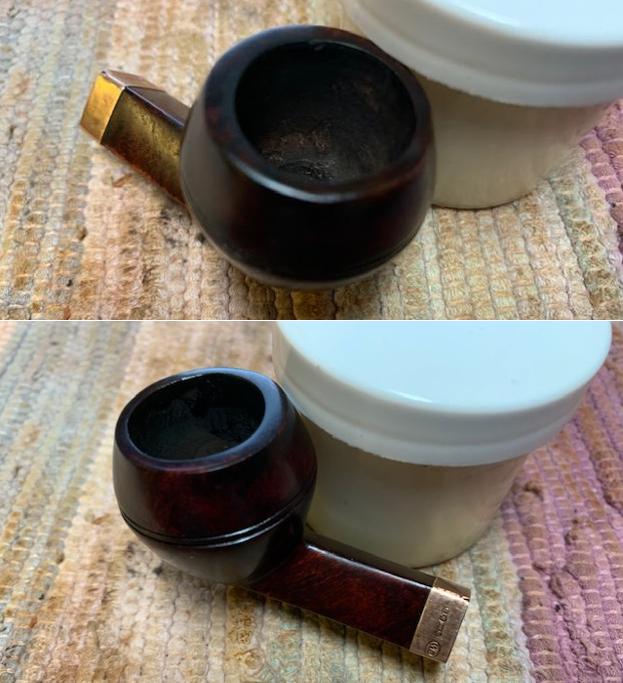
It was time to work on the second pipe – the Billiard. It was surprisingly clean. The bowl had been reamed and the airways cleaned. (I later found out that Tim had done the clean up for me. Thanks Tim!)There was no stamping on the shank of the pipe. There was no gold band to identify it as a Charles Maas pipe like the one on the Bulldog. However it was obvious that the case was custom fitted to this little Billiard so that is proof enough for me. I took some photos of the pipe before I began, to catalogue what I saw before I started. I took some close up photos of the rim top and the stem surfaces. You can see the chipping and damage to the top and inner edges of the bowl. The top is significantly lower on the front of the bowl with burn marks and charring to the top and front of the bowl. The stem shows some deep tooth marks on both sides ahead of the button.I took some photos of the rim from various angles to show the serious damage to the bowl top and edges. It really is a mess and will be an interesting challenge to rebuild.I removed the stem from the shank and took a photo of the left side of the pipe as it really gave a good picture of what the pipe must have looked like when new.I decided to start work on this pipe by addressing the damaged rim top and edges. I built up the front edge of the bowl with briar dust and clear CA glue. My goal was to bring it up as close as possible to the height of the bowl on the left side. It took a bit of layering to get there. I also filled in the damage on the front outer edge of the bowl at the same time. Once I had the height as even as possible I would top the bowl on a topping board with 180 grit sandpaper to smooth out the rim top.Once I had it close to even I topped it on a topping board with 180 grit sandpaper. I took a few photos of the front and sides of the bowl to show what the repair looked like at this point in the process. There is still work to do but it is definitely getting there. I sanded the repair on the front of the bowl a bit as well. Much work to do! I worked over the top and edges of the bowl – both inner and outer edges, with 220 grit sandpaper to capture the original shape as much as possible. You can see the repaired areas on the rim top and edges from the photos below. I am pretty pleased with the overall appearance of the cap and top at this point in the process. The repairs are very clear at this point. I still had work to do on the rim top and outer edges but I also wanted to work on the inner edge. I repaired the damage there with the super glue and briar dust as well. I was not looking to build it up too much but to take care of the deep cuts and gouges on the left front of the edge. I sanded the repair with 180 and 220 grit sandpaper and I was happy with what I was seeing at this point in the process. I worked some more on the inner edge of the bowl with a piece of 220 grit sandpaper wrapped around a piece of dowel. I wanted to smooth out the inside of the bowl and the inner edges of the rim.I decided to give the repaired edge and top a quick coat of Walnut stain to see what it looked like. I find that doing this often shows flaws that need to be addressed in the repair and makes it easier to see where I am with the top and edges. I started the polishing process with 1500-2400 grit micromesh sanding pads. I dry sanded with the pads in preparation for restaining the bowl. After each pad I wiped the bowl down with a damp cloth. My goal was to remove the scratching left behind by the repairs to the rim top and cap. I was able to remove them. Once it was smooth the briar was ready for staining. I stained it with a Feibing’s Light Brown aniline stain. I applied it and flamed it with a lighter to set it in the grain. I repeated the process until the coverage of the briar was good. I set it aside to let the stain cure.I buffed pipe with Blue Diamond on the buffing wheel to remove the crusty coat of stain. I then polished it with the remaining micromesh pads -3200-12000 grit pads. I wiped it down after each pad with a damp cloth. I worked some Before & After Restoration Balm into the surface of the briar of the bowl with my finger tips. The product is incredible and the way it brings the grain to the fore is unique. It works to clean, protect and invigorate the wood. I set the bowl aside and turned to work on the stem. I “painted” the stem with the flame of a Bic lighter to try to lift the tooth marks in the surface on both sides. I was able to lift it some but not completely. I filled in the remaining dents with clear CA glue and set it aside to cure. Once they cured I used a small file to recut the button edge and flatten the repairs to blend them into the surface. I sanded the stem with 220 grit sandpaper to remove the remaining oxidation on the saddle and also to further blend in the repairs. I started the polishing with 400 grit wet dry sandpaper. I polished the stem with micromesh sanding pads – wet sanding with 1500-12000 grit pads. I wiped the stem down after each sanding pad with Obsidian Oil. I finished polishing the surface with Before & After Pipe Stem Polish – both fine and extra fine. I gave the stem a final coat of Obsidian Oil and let it dry. I am really happy with the way that the rebuild of the rim and cap worked on on this Charles Maas Billiard (the second of two in a cased set). It really is a great looking pipe with lots of character. The old style hard rubber mouthpiece really look good with the brown of the briar. The grain really came alive with the buffing and a sense of depth came out with the polishing and waxing. I put the stem back on the bowl and carefully buffed the pipe with Blue Diamond on the buffing wheel using a light touch. I gave the bowl and the stem multiple coats of carnauba wax on the buffing wheel. I buffed the pipe with a clean buffing pad to raise the shine. I hand buffed the pipe with a microfiber cloth to deepen the shine. The finished Charles Maas Billiard really is a beauty and feels great in the hand and looks very good. Give the finished pipe a look in the photos below. The dimensions of the pipe are Length: 4 ¼ inches, Height: 1 ½ inches, Outside diameter of the bowl: 1 1/8 inches, Chamber diameter: ¾ of an inch. The weight of the pipe is 27 grams/.95 oz. The pipe will be going back to Tim with the Bulldog that I have finished. I think this little cased set is a real beauty.Thanks for reading this blog and my reflections on the pipe while I worked on it. It was a fun one to work on!

What a Tired and Worn Pair of Cased 1919 Charles Mass Pipes – Part 1: A Weary Bulldog


Blog by Steve Laug

This restoration started with an email from a reader of the blog name Tim. He had written the following email to me with a request. I have included that email below.

Hello Steve, I have a cased set of 1919 Charles Maas pipes that have been smoked hard and put away wet. Can I send them to you to have them restored? I’m a huge fan of your work and use your site often as inspiration, but these are outside my ability. – Tim

The first thing that caught me was the age of the pipes. I am a real sucker for old briar. The next thing that grabbed my attention was the brand – Charles Maas. That is a brand that I have not worked on and not heard of and it is English! The third thing that grabbed my attention was that they were a cased pair – which can often mean matching briar. All of those things conspired against my resolve to not add more work to the queue right now because of the demands of my day job and my own large number of restorations awaiting attention. I wrote him back and asked for pictures of the pipes to see if that would save me or draw me in further. Tim responded with photos and the magic words – I am not in a hurry!

Hi Steve, Here are the pictures.  I’m not in a hurry.  

I looked through the photos and assessed what needed to be done and took the plunge. I had Tim mail them to me. I was hooked and completely drawn into the project.Tim’s package arrived on Thursday and when I got home from work I opened it to have a look at the pipes first hand. I took the case out of the well packed box and this is what I saw. The case was suede with a fine leather edge around the sides. There was a thin gold line around the case edges. When I opened it I saw Tim’s 1919 label and the two pipes. There was a gold banded Bulldog and a nice stubby billiard. Both were nicely carved bowls and both had been heavily used and worn.I took the pipes out of the case and took pictures after I examined each of them to assess what needed to be done. They really are a classic set that should look great once finished. I made the following list summarizing the damages on the pipes and sent it to Tim. There is a lot of work to do to bring these back to life.

The Bulldog:
1. The rim top is badly damaged leaving the top uneven and thicker/taller toward the back of the bowl.
2. The inner edge of the bowl is quite thin on the front side from burning and over  reaming of the bowl.
3. The outer edge is chipped and uneven on the bowl front.
4. The finish is worn and damaged with signs of burn darkening all around the rim cap.
5. The band has a ragged edge on the top, rear corner of the diamond shaped band.
6. The stem has deep compressions from tooth marks on both sides at the button
7. The inside of the bowl has some checking but they are not as deep as those on the billiard.

The billiard:
1. The rim top is badly damaged leaving the top uneven and thicker/taller toward the back of the bowl and more damaged than even the Bulldog.
2. The inner edge of the bowl is thicker than the bulldog but still thinner on the front side than the rest of the bowl. It is still thick enough.
3. The outer edge is chipped and uneven on the bowl front showing some burn marks.
4. The finish is worn and damaged with paint marks on the surface.
5. The bowl is slightly out of round with chips and marks on the inner edge
6. The stem has deep compressions from tooth marks on both sides at the button.                        7. The inside of the bowl is badly checked and will need to examined for integrity.

Both pipes have been heavily reamed and they were quite clean inside. It appeared that previous earlier reaming somewhere along the way had left the inner edge chipped and damaged. That is the assessment of both bowls and it is clear from the list that there is a lot of work to do on both of them.

It was time to work on the pipes. I chose to deal with the Bulldog first (Part 1). If you were to ask me why I actually have no idea even though it is first above. I took some photos of the pipe before I began, to catalogue what I saw before I started. It was surprisingly clean. The bowl had been reamed and the airways cleaned. There was no stamping on the shank of the pipe. The gold band had hallmarks on it that Tim had said led him to the 1919 date for the pipes. The hallmarks are CM in an oval which is the mark for Charles Maas. To the right of that is a “6” in s diamond followed by 375 which is the mark for 37.5% or 9 carat gold. That is followed by a “d” and another mark that could be a lion’s head which indeed identifies the pipe as London Made and “d” identifies it as a 1919 pipe.

I turned to an English silver and gold hallmark guide to see if I could find information on the maker CM (http://www.silvercollection.it/ENGLAMAAS.html). Sure enough it was very clear that the CM in and oval linked to Charles Maas. I have included the information from the site on the brand.

Charles Leopold Maas was active in London from 1883 at 13 Jewin Crescent, EC as manufacturer and importer of smokers’ pipes of various types, including “recherché” and “meerschaum”.

The firm entered various silver hallmarks as pipes were often silver-mounted as were manufactured in precious metal many of its smokers’ accessories and walking sticks.

In 1890 (London) and 1910 (Chester) Charles Maas entered a conjoined hallmark with Marcus Maas (manager).

In 1910 the firm removed to 1A Aldermanbury Avenue. Interesting to note that from 1891 the firm used a hallmark “CM surmounted by a crown” to characterize its “Unsurpassed quality Corona Mounts”. The punches with the crown were cancelled on request of Charles Maas having the Sheffield Assay Office written on 28 February 1896 that the crown represents their hallmark and is objectionable. The firm was converted into a limited liability company in c. 1915. I took some close up photos of the rim top and the stem surfaces. You can see the chipping and damage to the top and inner edges of the bowl. The left side is thin toward the front of the bowl. The stem shows some deep tooth marks on both sides ahead of the button.I removed the stem from the shank and took a photo of the left side of the pipe as it really gave a good picture of what the pipe must have looked like when new.I decided to start work on this pipe by addressing the damaged rim top and edges. I built up the front edge of the bowl with briar dust and clear CA glue. My goal was to bring it up as close as possible to the height of the bowl on the left side. It took a bit of layering to get there. I also filled in the damage on the front outer edge of the bowl at the same time. Once I had the height as even as possible I topped the bowl on a topping board with 180 grit sandpaper.Once I had it topped I took a few photos to show what it looked like at this point in the process. There is still work to do but it is definitely getting there. I sanded the repair on the front of the bowl a bit as well. Much work to do!I worked over the shape of the rim cap and rim top with 220 grit sandpaper and small files to capture the original shape as much as possible. You can see the build up on the rim top and edges from the photos below. I am pretty pleased with the overall appearance of the cap and top at this point in the process. The repairs are very clear at this point.I still had work to do on the rim top and cap but I also wanted to work on the inner edge. I repaired the damage there with the super glue and briar dust as well. I was not looking to build it up too much but to take care of the deep cuts and gouges on the left front of the edge. I sanded the repair with 180 and 220 grit sandpaper and I was happy with what I was seeing at this point in the process.I decided to give the repaired edge and top a quick coat of Walnut stain to see what it looked like. I find that doing this often shows flaws that need to be addressed in the repair and makes it easier to see where I am with the top and edges. There was still a long way to go to get it the way I wanted but it was truly beginning to take shape. I used a knife blade small file to clean up the twin rings around the repair on the front of the bowl. I started the polishing process with 1500-2400 grit micromesh sanding pads. I dry sanded with the pads in preparation for restaining the bowl. After each pad I wiped the bowl down with a damp cloth. My goal was to remove the scratching left behind by the repairs to the rim top and cap. I was able to remove them.Once it was smooth the briar was ready for staining. I stained it with a Feibing’s Light Brown aniline stain. I applied it and flamed it with a lighter to set it in the grain. I repeated the process until the coverage of the briar was good.I buffed pipe with Blue Diamond on the buffing wheel to remove the crusty coat of stain. I then polished it with the remaining micromesh pads -3200-12000 grit pads. I wiped it down after each pad with a damp cloth.I worked some Before & After Restoration Balm into the surface of the briar of the bowl with my finger tips and a horse hair shoe brush to work it into the grooves around the bowl cap. The product is incredible and the way it brings the grain to the fore is unique. It works to clean, protect and invigorate the wood. I set the bowl aside and turned to work on the stem. I “painted” the stem with the flame of a Bic lighter to try to lift the tooth marks in the surface on both sides. I was able to lift it some but not completely. I filled in the remaining dents with clear CA glue and set it aside to cure. Once they cured I used a small file to recut the button edge and flatten the repairs to blend them into the surface. I sanded the stem with 220 grit sandpaper to remove the remaining oxidation on the saddle and also to further blend in the repairs. I started the polishing with 400 grit wet dry sandpaper. I polished the stem with micromesh sanding pads – wet sanding with 1500-12000 grit pads. I wiped the stem down after each sanding pad with Obsidian Oil. I finished polishing the surface with Before & After Pipe Stem Polish – both fine and extra fine. I gave the stem a final coat of Obsidian Oil and let it dry. I am really happy with the way that the rebuild of the rim and cap worked on on this Charles Maas Bulldog (the first of two in a cased set) turned out. It really is a great looking pipe with lots of character. The old style hard rubber mouthpiece and the gold band really look good with the brown of the briar. The grain really came alive with the buffing and a sense of depth came out with the polishing and waxing. I put the stem back on the bowl and carefully buffed the pipe with Blue Diamond on the buffing wheel using a light touch. I gave the bowl and the stem multiple coats of carnauba wax on the buffing wheel. I buffed the pipe with a clean buffing pad to raise the shine. I hand buffed the pipe with a microfiber cloth to deepen the shine. The finished Charles Maas Bulldog really is a beauty and feels great in the hand and looks very good. Give the finished pipe a look in the photos below. The dimensions of the pipe are Length: 4 ½ inches, Height: 1 ¾ inches, Outside diameter of the bowl: 1 inches, Chamber diameter: ¾ of an inch. The weight of the pipe is 23 grams/.81 oz. The pipe will be going back to Tim once I have finished the little billiard. I think this little cased set is a real beauty.Thanks for reading this blog and my reflections on the pipe while I worked on it. It was a fun one to work on!

Bringing Back To Life an “Orlik De Luxe # LD 33”


Blog by Paresh Deshpande

Re-Cap…
While surfing eBay for estate pipe lots, I came across a job lot that contained four estate pipes. The seller had not included any description for the item other than a simple statement that read “The lot is being sold as is. Pictures are part of description” or words to that effect. The worst part was that there were only two pictures that were posted by the seller!! Here are the pictures. I could make out one Orlik with dental stem, a Hardcastle Bulldog, one Comoy’s Lovat, and the last one was unidentifiable but appeared to be fitted with a horn stem. The pipes appeared to be in a decent condition and included some nice brand names. Soon the pipes reached Abha at my home town.
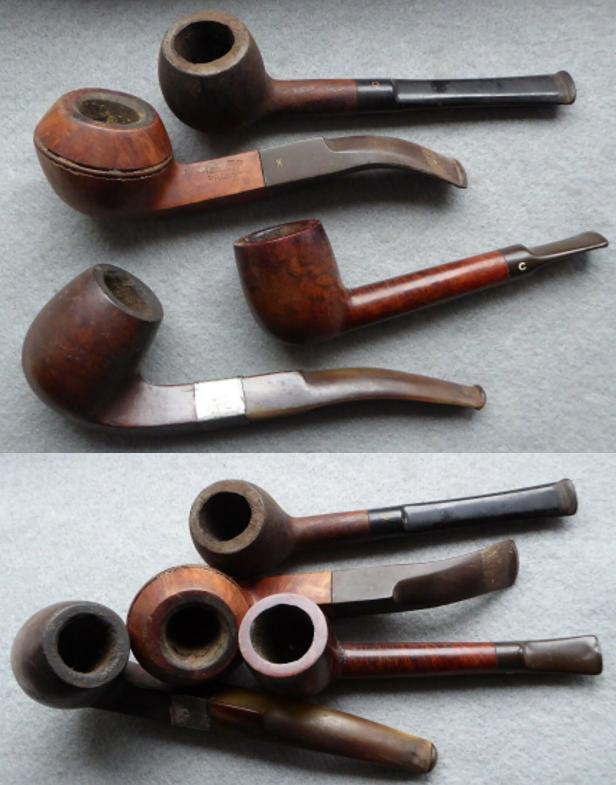
I have restored two pipes from this lot; the first one was the pipe with the horn stem and it turned out to be a gem from an old and reputable maker “Salmon (Barnett) & Gluckstein” from the period 1894 (guesstimated) and the other pipe I refurbished was the Hardcastle “DRAWEL”. Here are the links to both the write ups that were posted on rebornpipes.

Refurbishing an 1894 (?) Hallmarked “S & G” Square Shank Bent Billiard With a Horn Stem | rebornpipes

Refurbishing A Hardcastle’s “Drawal” # 27 | rebornpipes

Returning To The Present…
The 3rd pipe that I selected to work on from this lot is the Orlik Deluxe and is indicated with yellow arrow.The pipe is a classic straight Apple with a saddle vulcanite dental stem and a push-fit tenon. It is a medium sized pipe that oozes good quality and one that is light weight. The pipe has some fantastic mix of flame grains and bird’s eye to boast around the stummel surface and is without a single fill. The briar used to carve this pipe is of decent quality and the construction and finish of the stummel and mouthpiece feels top notch too. It is stamped on the left side of the shank as “ORLIK DE LUXE” in a straight line in capital letters over “LONDON MADE” also in capital letters. The right shank panel bears the shape code # LD 33 in the centre. The high quality saddle stem bears the trademark logo “O” atop the saddle as a brass inlay. The stampings are crisp and easily readable and shown below. I had repaired the broken meerschaum lining (my first) on an Orlik, Meerschaum lined bent billiards and had read about the marquee. I remembered the brand to be British that was taken over by Cadogan group in the 1980s. To refresh my memory, I visited pipedia.org. I have reproduced the snippets of relevant information for easy referencing of the esteemed readers.
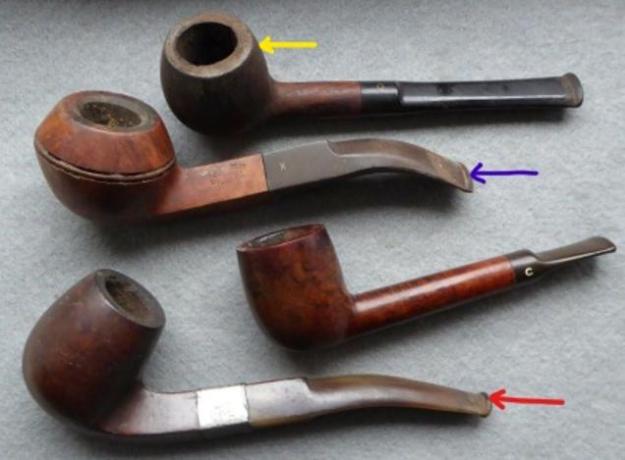
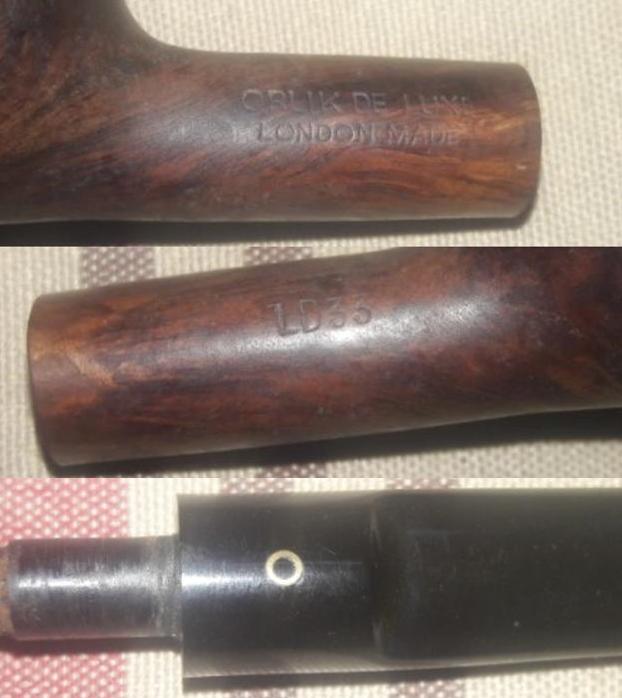
Orlik – Pipedia

In 1899, a pipe manufacturer was founded in London, Bond Street, by Louis Orlik. L. Orlik Ltd. started to produce high quality pipes for a relatively low price but high service and soon became quite popular. By 1907 they used the name L & A Orlik, which apparently added Louis’s brother, Alfred to the company name. In the first quarter of 1900 they also established in Birmingham. This can be verified by silver hallmarks. In 1980 the company was acquired by Cadogan. Like many of London’s other pipe manufacturers they moved to a new built factory in Southend-on-Sea. As all current brands in the Cadogan group, Orlik was being produced in those factories.

Orlik used the slogan “Smoked by all shrewd judges” “(who are also loved by his hard judge)” with a portrait of a judge wearing a wig. The picture is still used in Denmark for manufacturing of Orlik cigarettes.

An onsite link leads to a detailed and well researched article on Dating Orlik pipes by Michael Lankton and excerpts from the article Talk:Orlik – Pipedia. Give it a read for the details.

  • De Luxe(L)(LX) – molded stems inferior blocks brown finish, lesser grain, some have hand cut stems and some have molded stems, could perhaps depend on date of manufacture with earlier pipes having hand cut stems

The Orlik series proper will be stamped in all caps in a sans serif font on the port side of the shank one of two ways

ORLIK SERIES_NAME
MADE IN ENGLAND

or

ORLIK SERIES_NAME
LONDON MADE

The starboard side of the shank is stamped simply with the series letter and shape number, except on pipes stamped London Made on the port side, in which case in addition to the series letter and shape number Made in England is stamped in a straight line.

Orlik Pipes Shapes Catalog courtesy Yuriy Novikov (link provided below), is a neat catalog that describes the shape 33 as “MEDIUM APPLE”

Orlik_Pipe_Shapes.pdf (pipedia.org)

Thus from the above information and observing the pipe in my hand, it can be safely concluded that this Orlik De luxe # LD 33 is a lower placed series pipe with a molded stem. It is from the pre Cadogan period, that is 1950s to 1970s and that makes it a fairly collectible piece. It is my educated guess that the “D” in LD stands for Dental stem that is seen on this pipe.

Personally speaking, I am in complete agreement with Mr. Michael Lankton when he says that the early Orlik pipes were similar in quality to Dunhill, Loewe, Barling and Comoy’s based on the quality of the pipe that is currently on my work table. Even though this pipe is from the De Luxe series of Orlik, it is anything but of lesser quality!! The briar has some great straight grains on the sides of the stummel and is sans any fills. The pipe feels solid in the hand and the craftsmanship is perfect.

Armed with the information about the provenance of the pipe on my worktable, it was time for me to start the refurbishing of this pipe.

Initial Visual Inspection
This pipe has the classic straight Apple shape with a medium sized bowl. The stummel boasts of some beautiful flame grains on the left side and swirls on the right. The shank is adorned with beautiful straight grains traversing from the shank end towards the bowl. The stummel surface is covered in dirt and grime of the overflowed lava, hiding the fantastic grain patterns over the stummel surface. There is not a single fill in the briar which speaks of high quality selection of the briar. There is a thick layer of cake in the chamber. The saddle vulcanite dental stem is oxidized with tooth chatter and calcium depositions on either surface in the bite zone. The stem does not seat flush with the shank face. The set of pictures below show the condition of the pipe when it had reached us. Detailed Inspection Of The Pipe And Observations
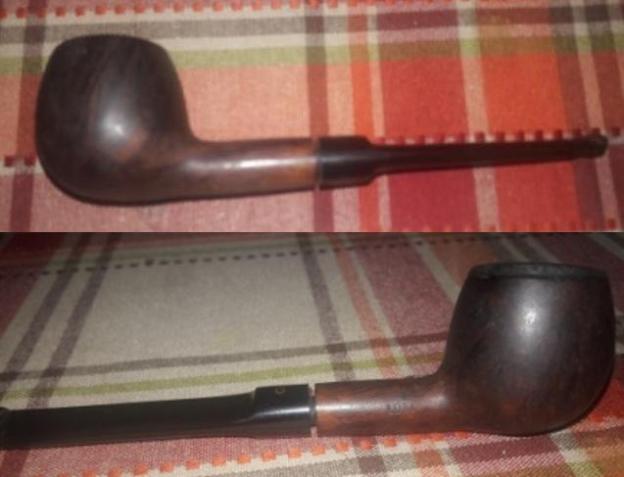
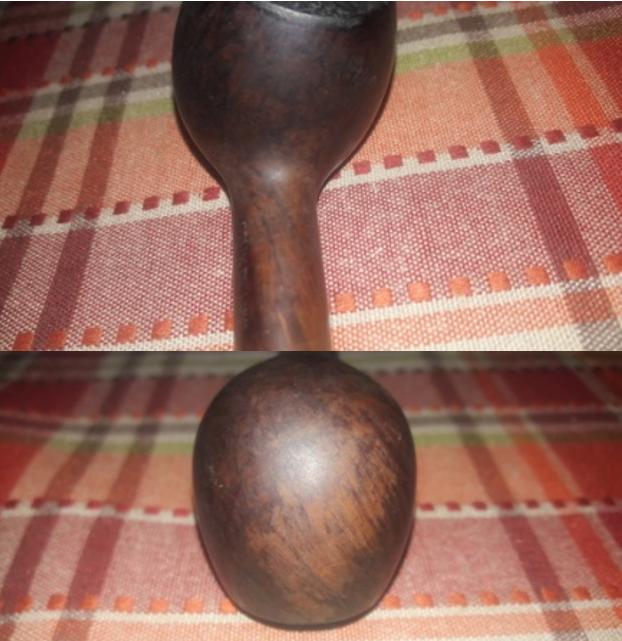
The chamber has an even layer of thick hard cake. The smooth rim top surface is covered in lava overflow, dirt and grime from previous usage. The outer rim edge has suffered a few blows on a hard surface resulting in a few chipped edged surfaces in 12 o’clock direction (encircled in green). The inner edge appears to be charred in 11 o’clock direction with a chipped surface in 5 o’ clock direction (both encircled in pastel blue). The inner rim also shows a few dings and dents (indicated with red arrows), the cumulative effect of which is an out of round appearance to the chamber. The condition of the inner walls of the chamber can be commented upon after the cake has been taken down to the bare briar. The chamber exudes a very strong odor of old tobacco. The draught hole is dead center at the bottom of the chamber and that makes me believe that it should be a great smoke and the thick cake in the chamber lends credence to this observation. The stummel appears solid to the touch all around and hence I do not foresee any serious damage to the walls in the form of a burnout/ deep heat fissures/ lines or pits. Topping the rim surface should address the dents and dings over the rim edges to a great extent, while the remaining damage will be addressed by creating a slight bevel over the rim edge. The reaming and subsequent cleaning of the chamber and mortise should reduce the ghost smells from the chamber. The smooth stummel surface is covered in lava overflow that has attracted a lot of dust and dirt. The dark brown hued briar has taken on a layer of aged patina through which one can make out the beautiful flame and swirl grains that adorn most of the stummel surface and the shank. There are a few very minute dents and dings over the bowl surface probably due to falls and or rough, uncared for handling of the pipe. The briar looks lifeless and bone dry and has taken on dull dark hues. The mortise shows a heavy accumulation of oils, tars and gunk due to which the air flow is not full and smooth. Thorough cleaning of the stummel surface and rinsing it under warm water should highlight the grain patterns. This cleaning will further reveal any other damage to the stummel surface. The dents and dings to the stummel will be addressed to an extent once it is sanded and polished using micromesh pads. The seating of the stem tenon into the mortise is not flush. The most probable reason for this could be the accumulated gunk in the mortise. Thorough cleaning of the mortise should address this issue.The vulcanite saddle dental stem is relatively less oxidized. The bite zone has filing marks on either surface, but more pronounced on the upper extended button. The tenon is smeared in oils and tars and grime and so is the horizontal slot. The molded saddle dental stem bears the trademark inlaid brass logo “O” on the top face of the saddle and would need to be polished. Overall, the stem is in a decent condition and the vulcanite should take on a nice shine readily.The Process
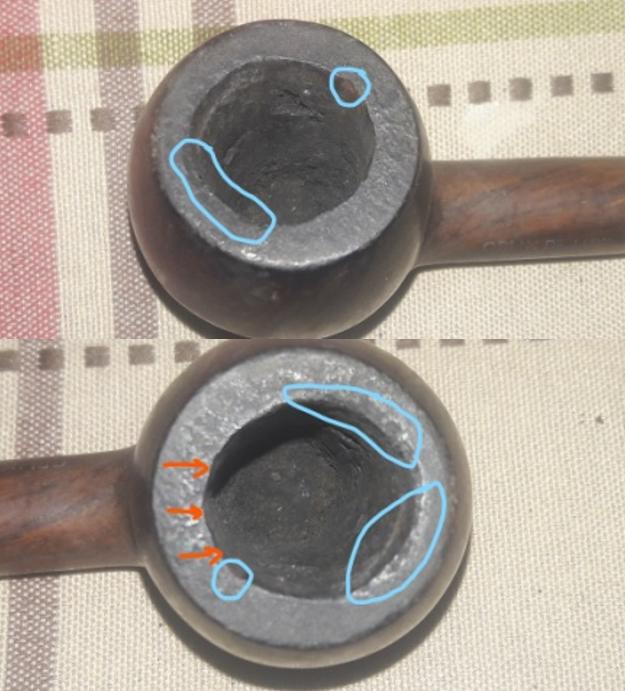
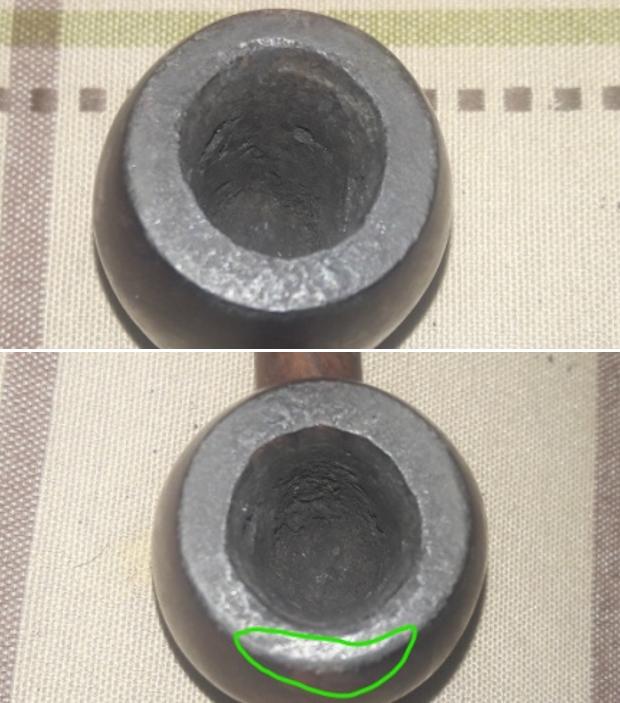
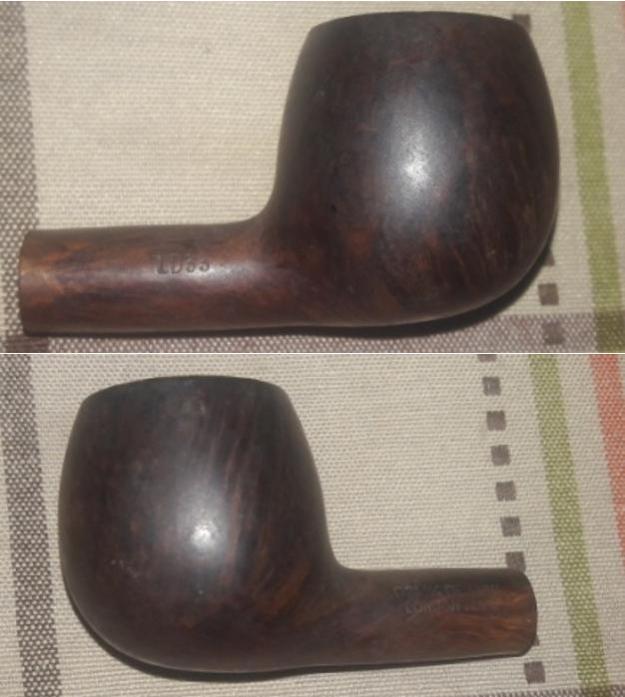
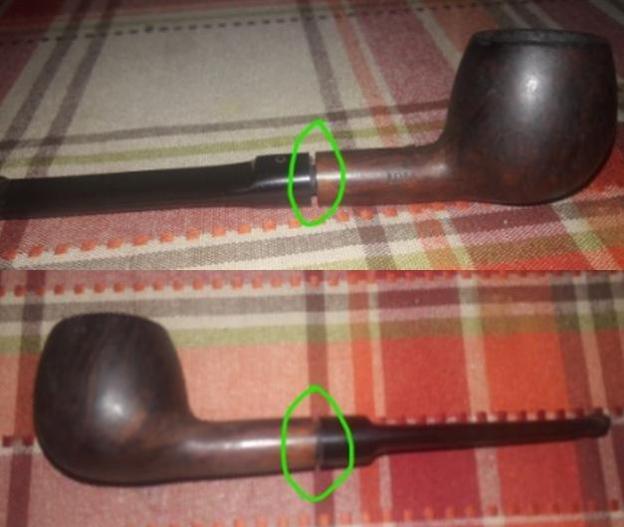
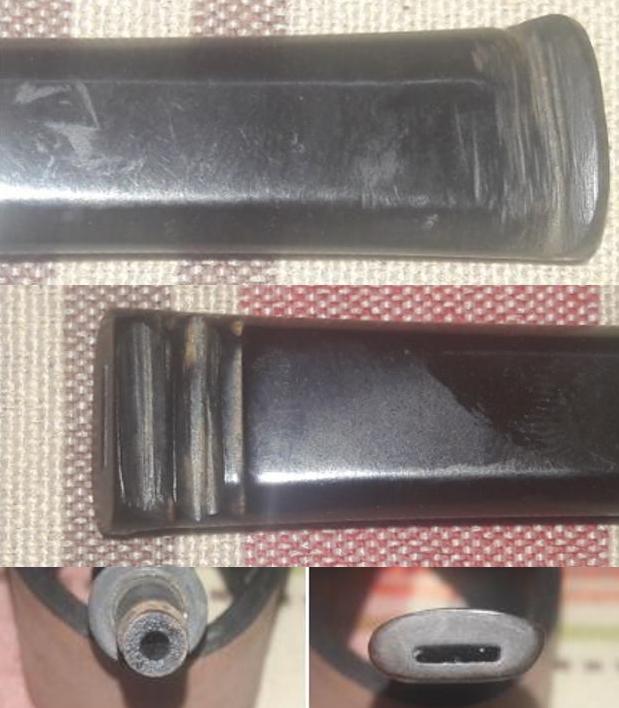
I started the restoration of this pipe by first cleaning the stem. I cleaned the internals of the stem with bristled pipe cleaners and 99.9% pure isopropyl alcohol. With my fabricated knife, I gently scraped out the dried gunk from the tenon end and the horizontal slot.  I further cleaned out the stem internals with a shank brush and dish washing liquid soap. Once the stem internals were cleaned, I sanded the entire stem surface with a 220 grit sand paper in preparation for dunking the stem into the Before and After Deoxidizer solution.I thereafter, dropped the stem into “Before and After Deoxidizer” solution developed by my friend Mark Hoover. The solution helps to draw out heavy oxidation to the surface, making it’s further removal a breeze, while the minor oxidation is eliminated to a very great extent. The initial sanding helps to draw out the complete oxidation as the sanding opens up the stem surface that has been initially covered with oxidation. I usually dunk stems of the pipes that are in-line for restoration and this pipe is indicated with a blue arrow. I generally allow the stems to soak overnight for the solution to do its work.While the stem was soaking in the deoxidizer solution, I reamed the chamber with size 2 head of the Castleford reamer. With my fabricated knife, I further scraped the chamber walls to remove the remaining carbon deposits and also scraped out the lava overflow from the rim top surface. Once the cake was reamed back to the bare briar, I used a 220 grit sand paper to remove all the traces of remaining cake and also to smoothen out the inner walls of the chamber surface. Finally, to remove the residual carbon dust, I wiped the chamber with a cotton pad wetted with 99.9% pure isopropyl alcohol. The chamber walls are in pristine condition with no signs of heat lines/ fissures. The inner rim edge resembles a visual nightmare after the cleaning. The inner edge has suffered extensive damage in 11 o’clock direction, the result of hitting against a hard surface to remove dottle (encircled in yellow). Similar damage is seen over the outer rim edge too and is encircled in blue. This damage to the outer rim edge as well as the inner edge will be addressed to an extent by topping the rim top. The rim top surface itself is peppered with dents/ dings and deep scratches (encircled in green) which will be smoothened by topping. The ghost smells are still very strong and may further reduce after the shank/ mortise are thoroughly cleaned.This was followed by cleaning the mortise with cue tips, pipe cleaners and a shank brush dipped in isopropyl alcohol. I scraped the walls of the mortise with my fabricated knife to remove the dried oils and tars. The mortise was a bear to clean and the cleaning will continue when I clean the external surface of the stummel. The old smells of the tobacco are still strong and would need more invasive methods to get rid of these odors.With the bowl internals clean, I moved to clean the exterior of the stummel. I used a hard bristled tooth brush and Briar Cleaner, a product that has been developed by Mark Hoover, to scrub the stummel and the rim top. I set the stummel aside for 10 minutes for the product to draw out all the grime from the briar surface. After 10 minutes, I washed the stummel under running warm water with anti oil dish washing detergent till the stummel surface was clean and dried it using paper towels and a soft cotton cloth. I simultaneously cleaned the shank internals with  detergent and a hard bristled shank brush and set the stummel aside to dry out naturally. I diligently cleaned the grooves between the bowl rings that separated the bowl cap from rest of the stummel surface. The stummel surface, including the rim top has cleaned up nicely with the beautiful grain patterns on full display. This cleaning also helped in gauging the extent of topping that would be required to address the damage to the rim edges and rim top surface. I shall subject the chamber to cotton and alcohol treatment to eliminate the ghost smells completely as the smell is still very strong. I continued the cleaning of the chamber and shank internals with a salt and alcohol bath. I used cotton balls which is an at par substitute as I have realized over the years. I drew out a wick from the cotton and along with a folded regular pipe cleaner; inserted it into the mortise and through the draught hole into the chamber. Thereafter, I packed the chamber with cotton balls to about quarter of an inch below the inner rim edge and soaked the cotton balls with isopropyl alcohol up to the brim. About half an hour later, the level of alcohol had gone down, having being absorbed by the cotton. I topped it up once again and set it aside overnight. By the next morning, the cotton and alcohol had drawn out all the remaining oils and tars from the chamber and mortise, fulfilling its intended task. I removed the cotton balls and ran pipe cleaners through the mortise to clean out all the loosened tars and gunk and further cleaned it with alcohol and q-tips. The chamber now smells clean and fresh. I set the stummel aside to dry out naturally. The next morning, after I had cleaned the chamber and shank, I removed the stem that had been soaking in the deoxidizer solution overnight. I cleaned the stem and the stem airway under running warm water and scrubbed the raised oxidation from the stem surface using a Magic Eraser pad followed by Scotch Brite pad and the airway with a thin shank brush. I further removed the oxidation by scrubbing the stem with 0000 grade steel wool and applied a little EVO to rehydrate the stem. The stem is in pristine condition. The filing marks appear more like denture marks and not file marks per se. These should be easily eliminated when I sand the stem with sand papers and polish with micromesh pads. I sanded the entire stem surface with a folded piece of 220 grit sand paper till the complete oxidation was eliminated from the stem and saddle portion in particular. I sanded out the scratches in the bite zone using the same grit sand paper. I rubbed a small quantity of EVO into the stem surface to hydrate it. To bring a deep shine to the stem, I went through the complete set of micromesh pads, wet sanding with 1500 to 2000 wet & dry sand paper and further with 3200 to 12000 grit micromesh pads. I wiped the stem with moist cloth after each pad and rubbed it down with Extra Virgin Olive oil to rejuvenate the vulcanite. The finished stem is shown below.I turned my attention to address the damage to the stummel. I next decided to smooth the rim top surface dents/ dings and the charred surface in 11 o’clock direction to the inner rim edge. I topped the rim top surface on a piece of 220 grit sand paper, checking frequently for the progress being made as I hate to loose briar estate any more than absolutely necessary. The darkened inner rim edge can still be seen, though much greatly reduced. With a folded piece of a 220 grit sand paper pinched between my thumb and forefinger, I cleaned the inner edge of the rim top surface to minimize the darkening. This helps to mask and address the minor dents and dings that had remained on the rim edges after topping. I am careful so as not to alter the profile of the stummel by excessive topping or creation of the bevels. I am pretty pleased with the appearance of the rim top and edges at this stage. The following pictures show the progress being made and improvements to the inner and outer rim edges. I followed it by wet sanding the stummel with 1500 to 2000 wet & dry sand paper and further with 3200 to 12000 grit micromesh pads, wiping frequently with a moist cloth to check the progress. The minor outer rim damage was repaired to a very large extent and so was the darkening during this process. I really like the look of the stummel at this point in the restoration. The grains and the clean classic lines of this pipe are worthy of appreciation. Next, I rubbed a small quantity of “Before and After Restoration Balm” deep in to the briar with my finger tips and let it rest for a few minutes. The balm almost immediately works it’s magic and the briar now has a nice vibrant appearance with the beautiful grain patterns displayed in their complete splendor. I further buffed it with a horse hair brush. The contrast of the dark browns of the Angle hair and swirl grains with the natural patina of the rest of the stummel adds an interesting dimension to the appearance of the stummel. To complete the restoration, I mounted a cotton cloth buffing wheel onto my hand held rotary tool and polished the stummel and stem with Blue Diamond compound. This compound helps to remove the minor scratch marks that remain from the sanding. I mounted another cotton buffing wheel that I have earmarked for carnauba wax and applied several coats of the wax. I finished the restoration by giving the entire pipe a rigorous hand buffing using a microfiber cloth to raise the shine further. The finished pipe looks amazingly beautiful in person and is ready to provide years of smoking pleasures to the piper who desires this beauty. If this pipe calls out your name, please feel free to contact me at deshpandeparesh@yahoo.co.in
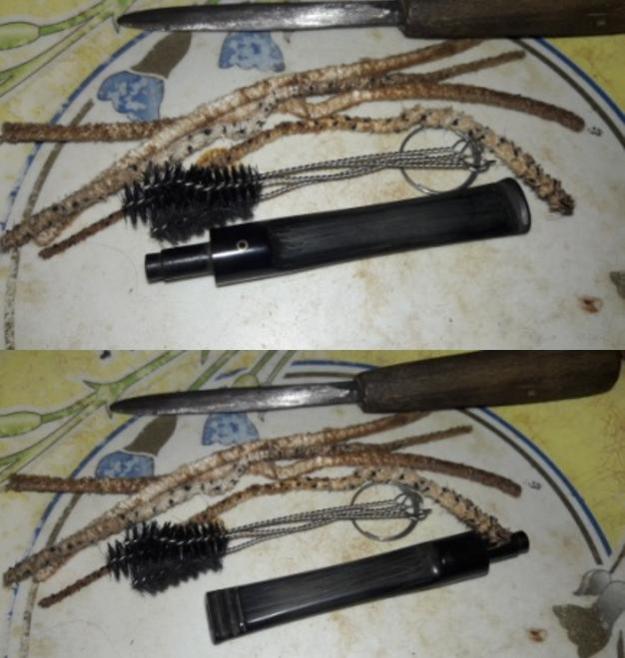
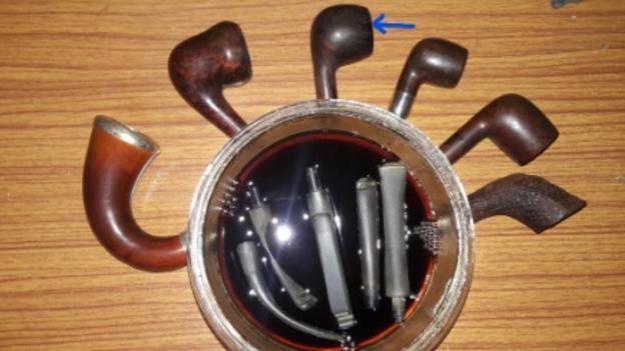
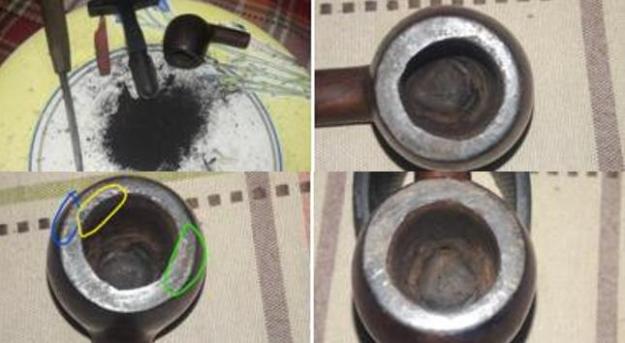
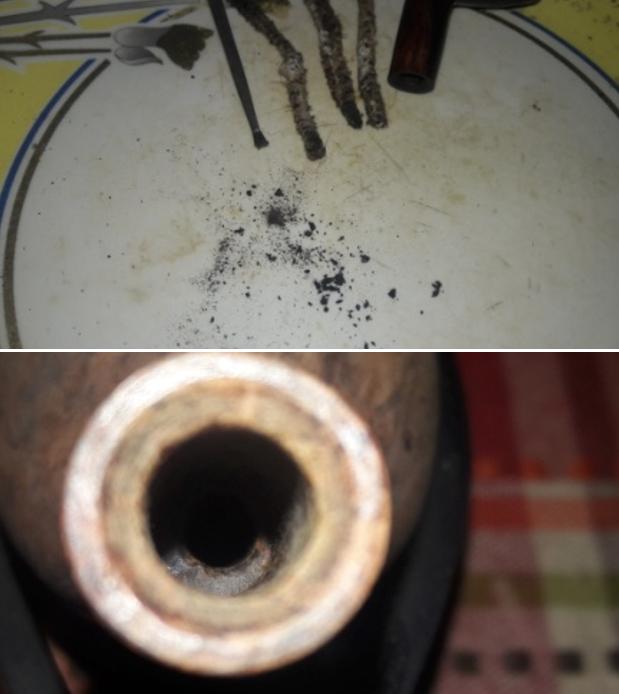
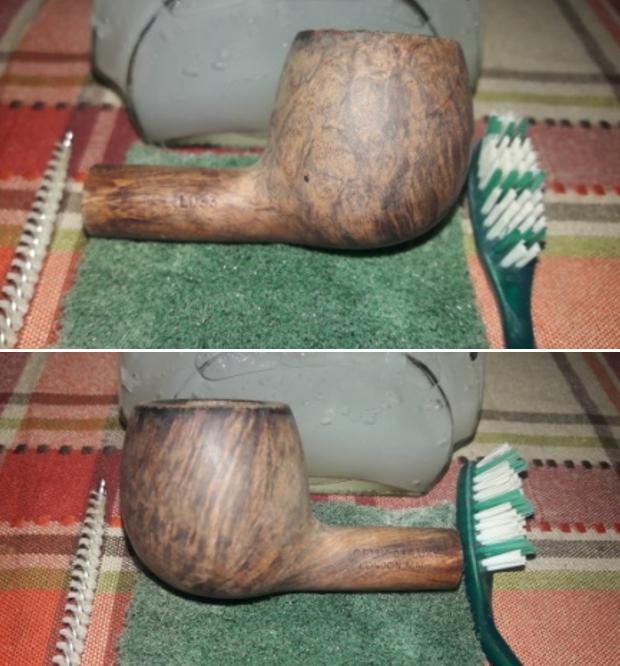
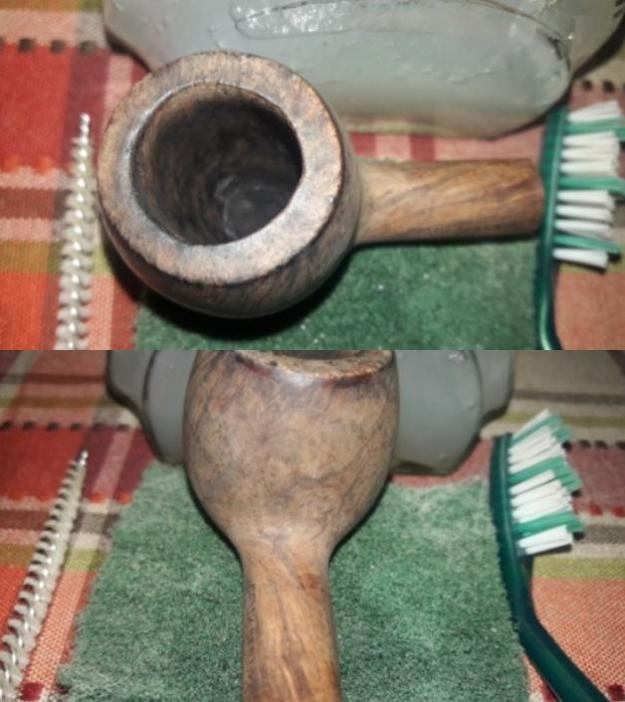
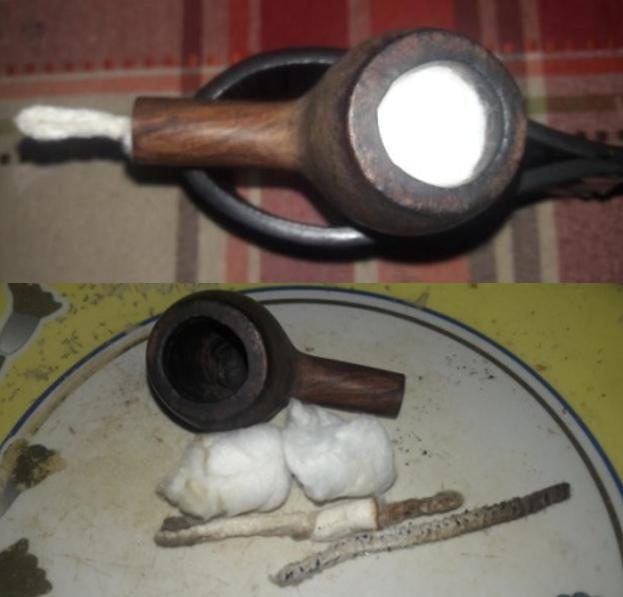
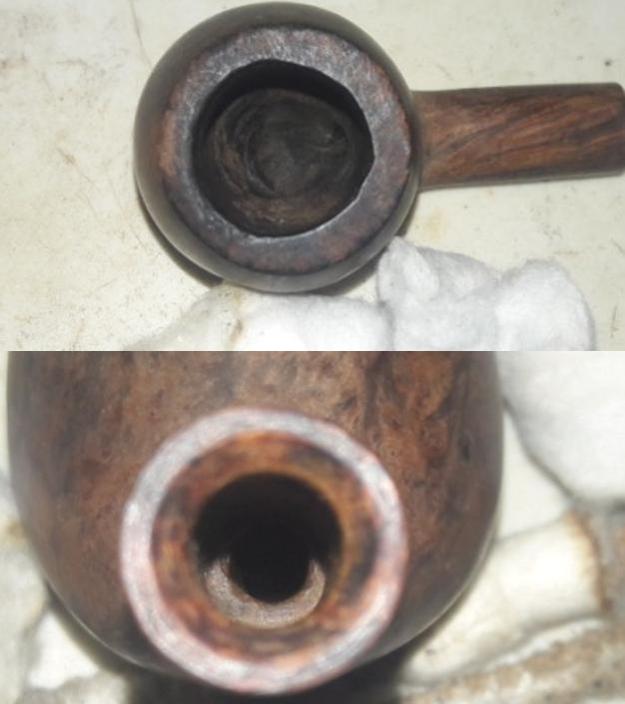
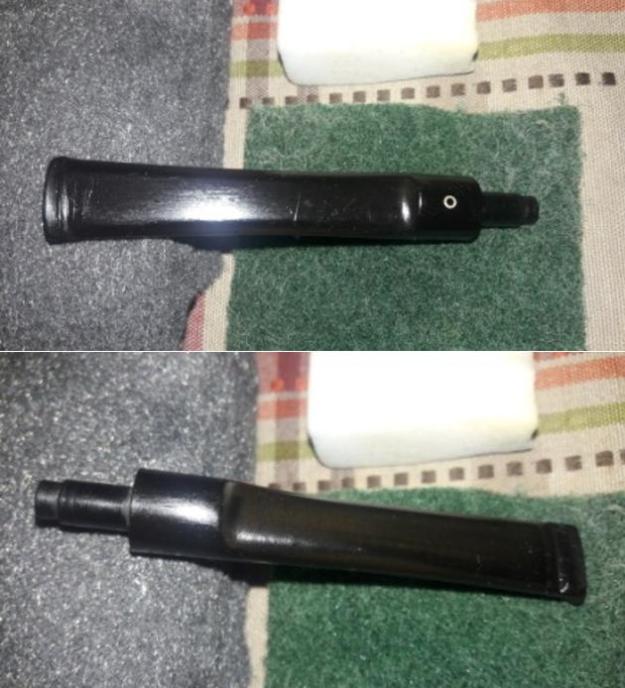
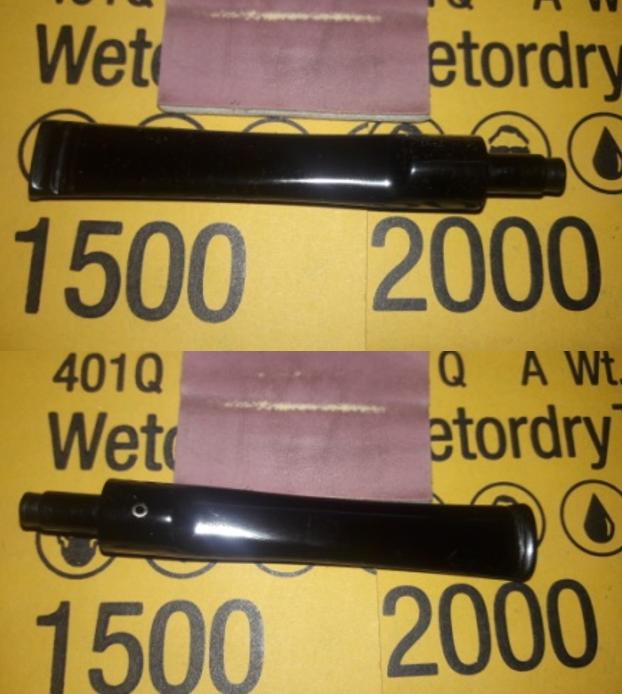
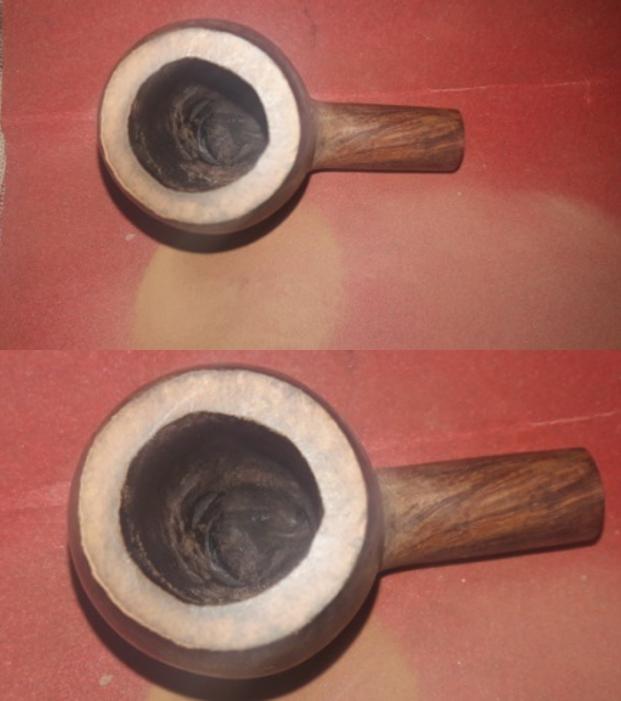
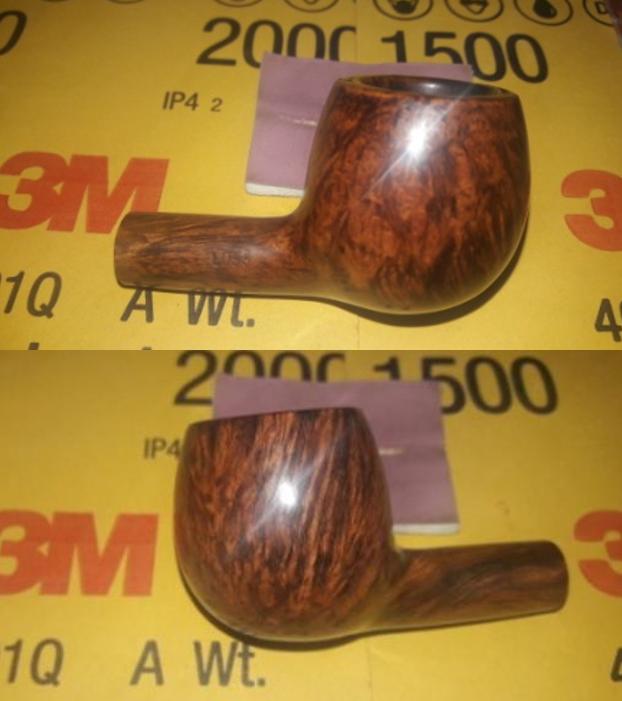
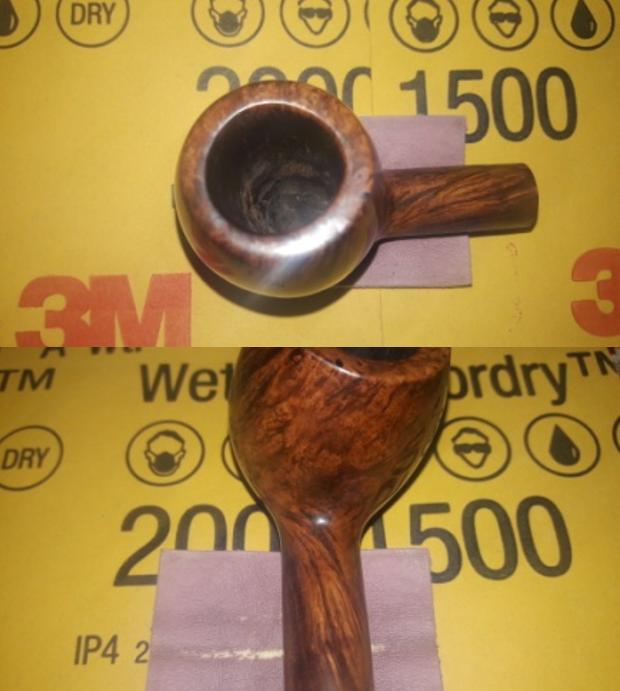
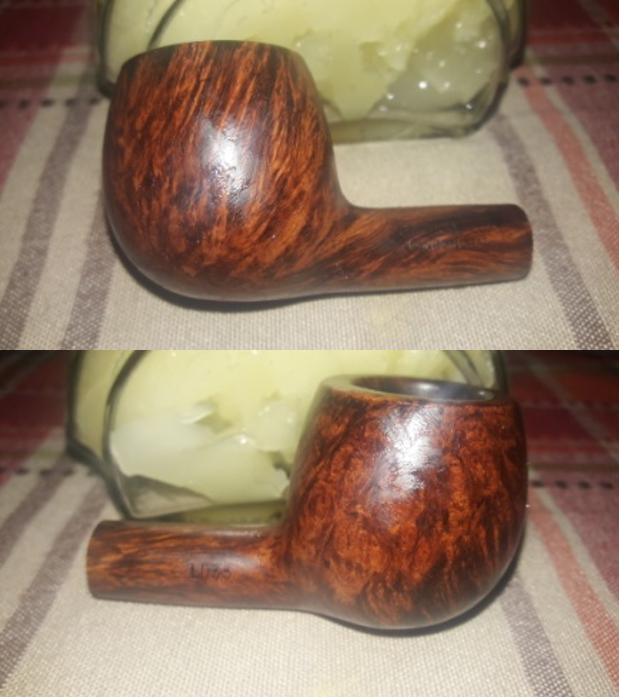
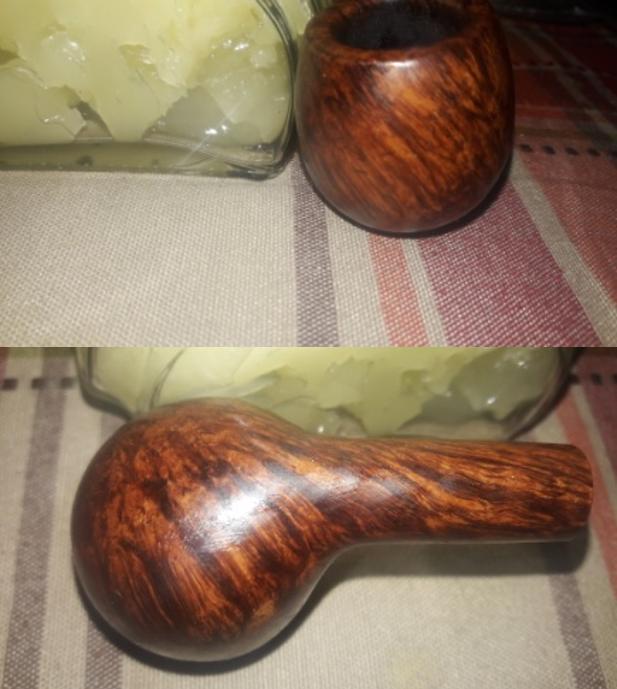
Big thank you to all the readers who have joined me on this path by reading this write up as I restored and completed this project.