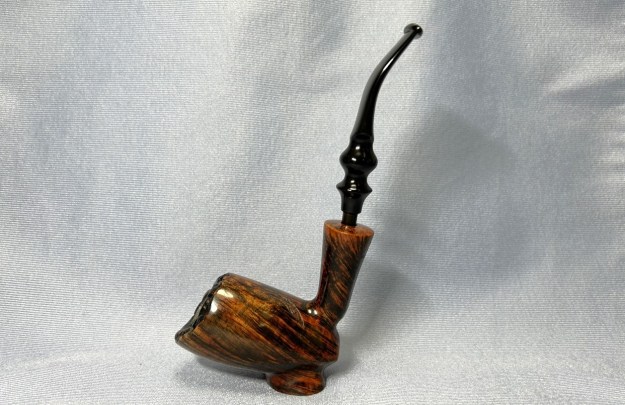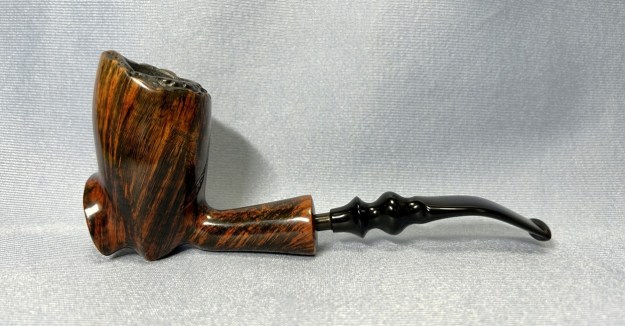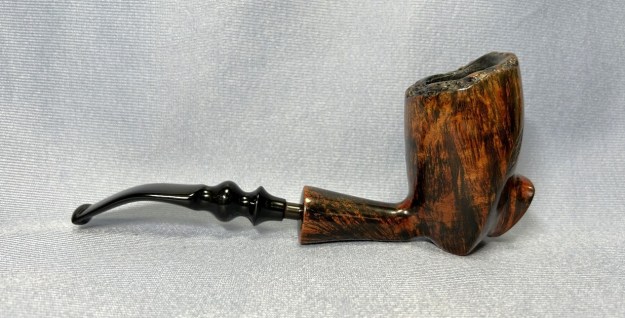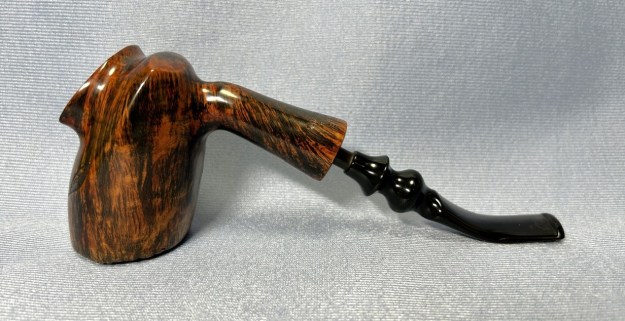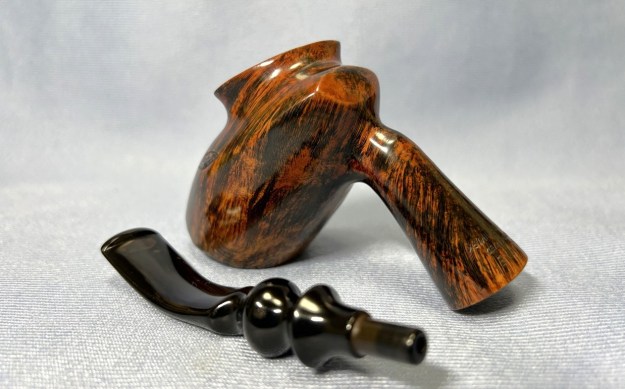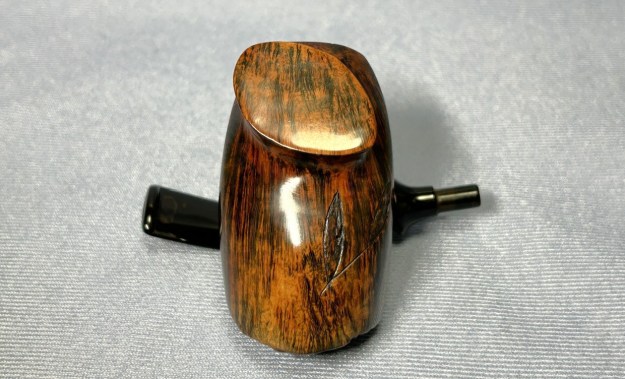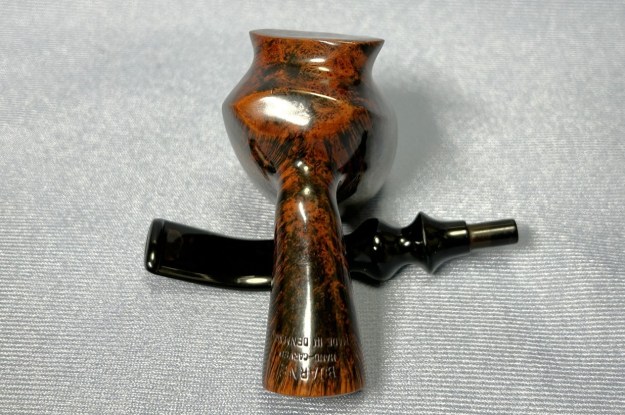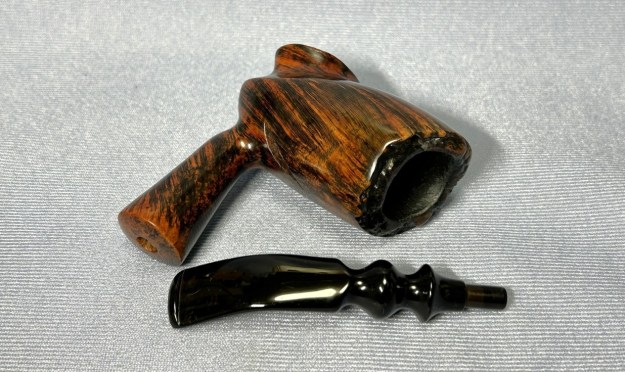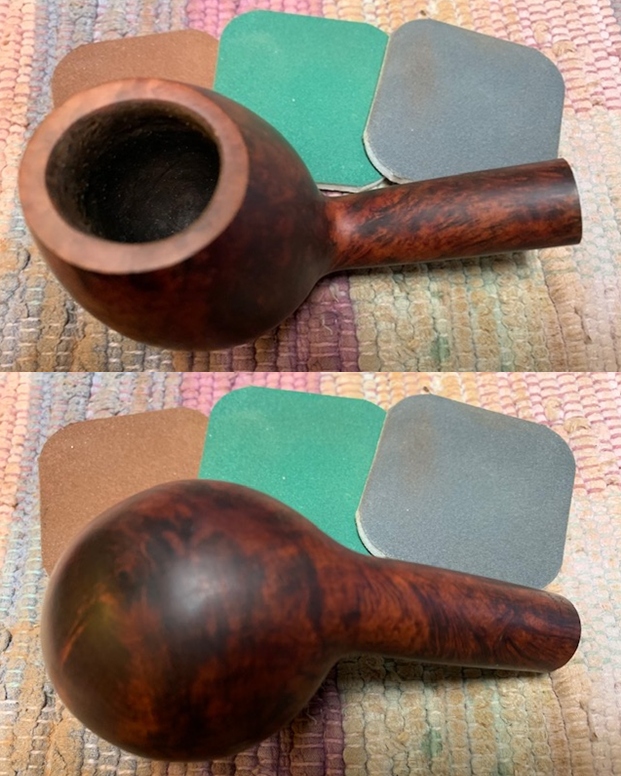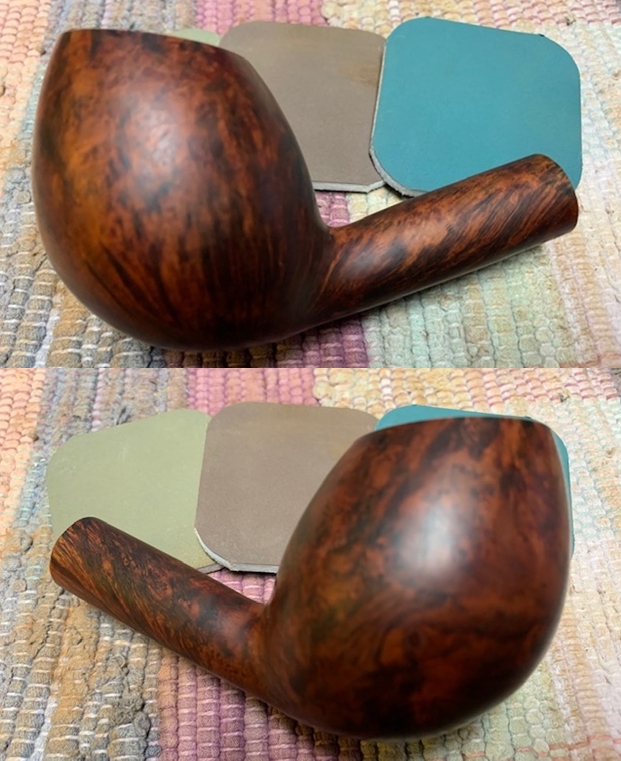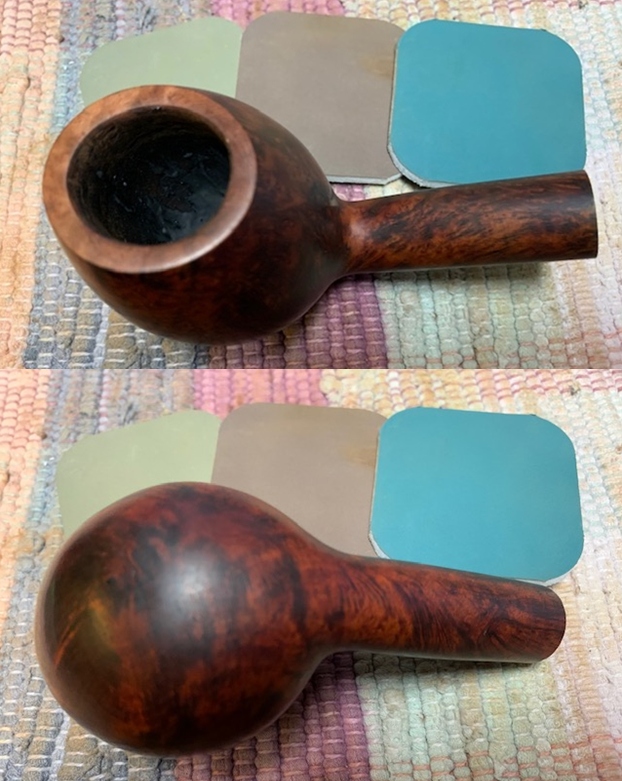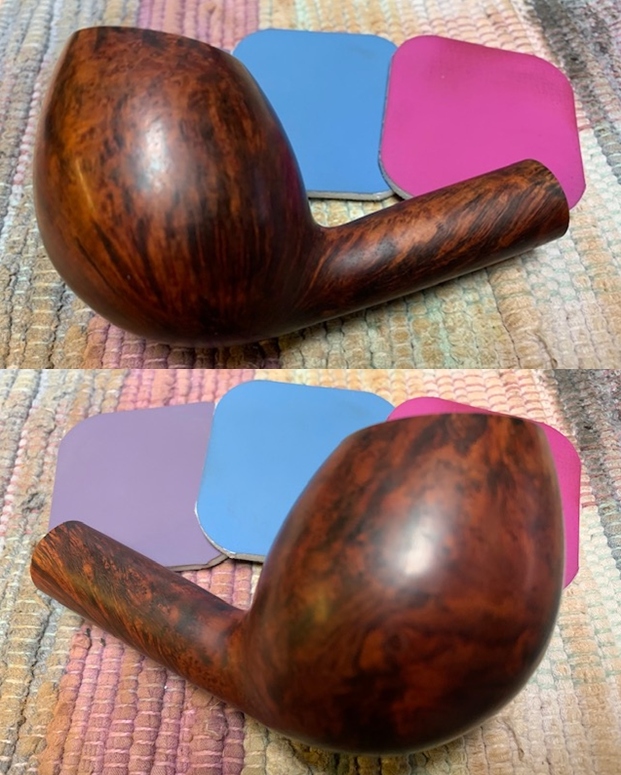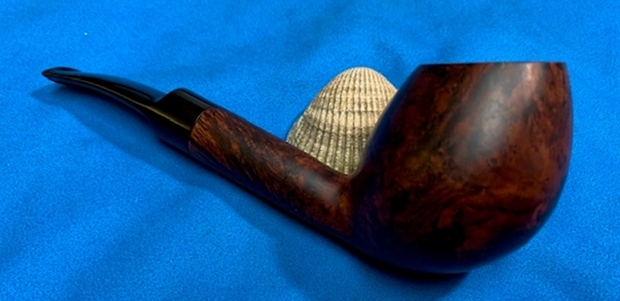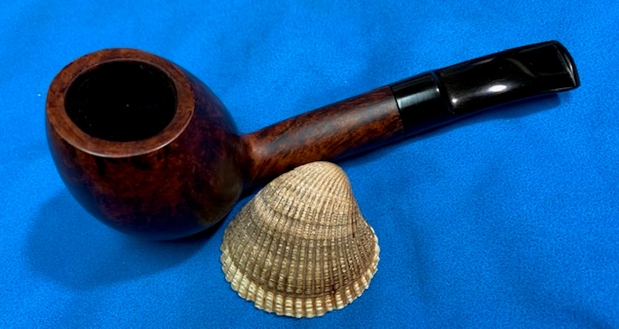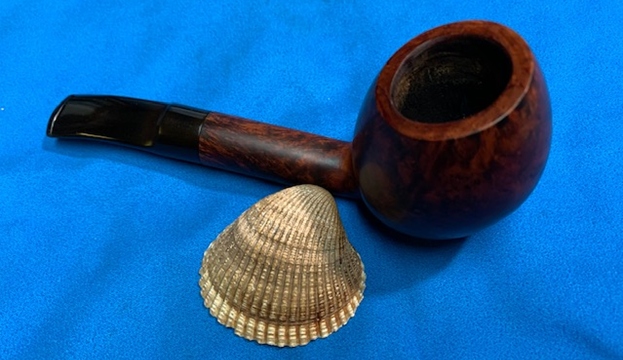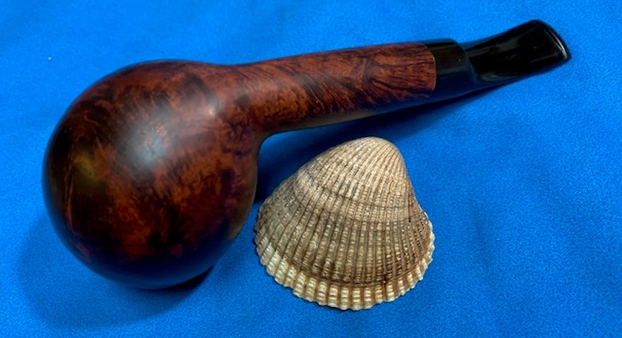
Tag Archives: Bjarne Hand Carved pipes

Restoring a Bjarne Hand – Crafted Made in Denmark Freehand


by Steve Laug

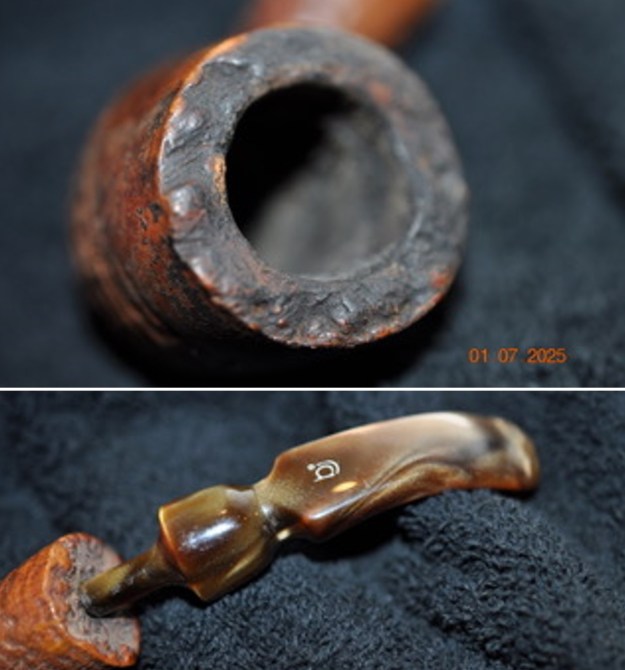
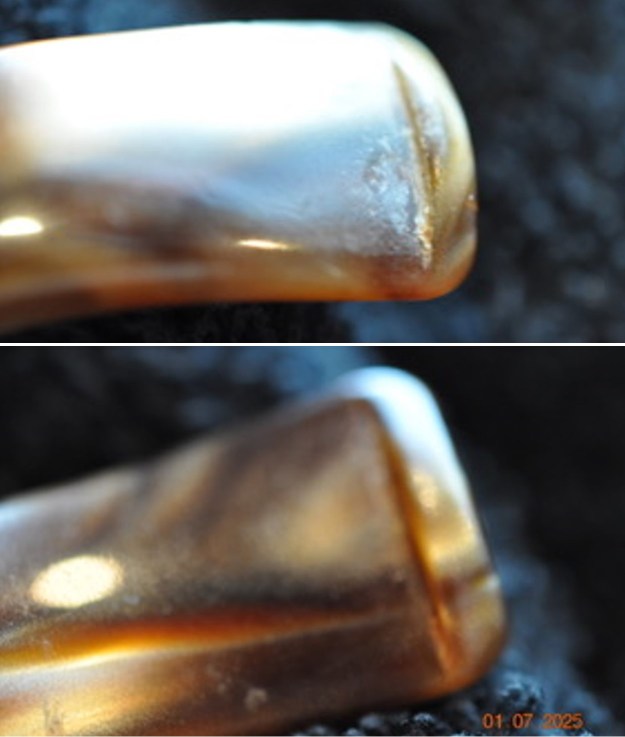
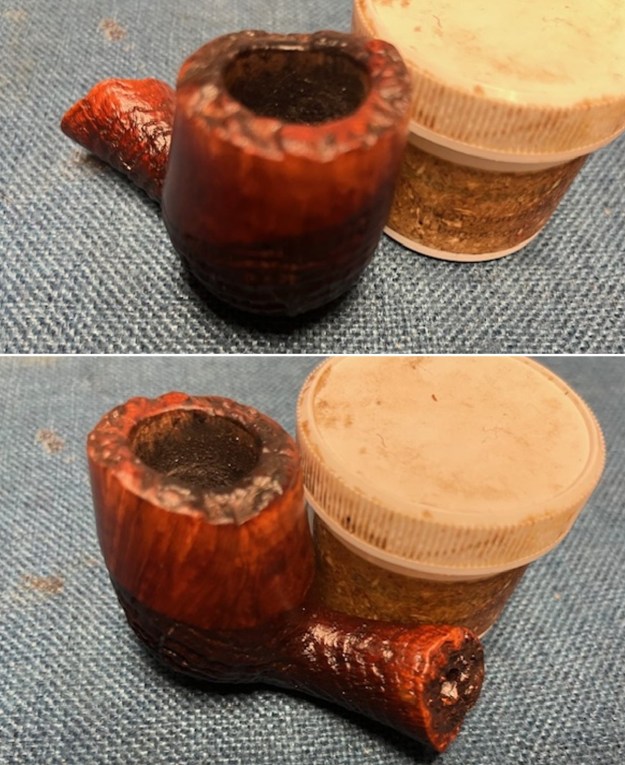
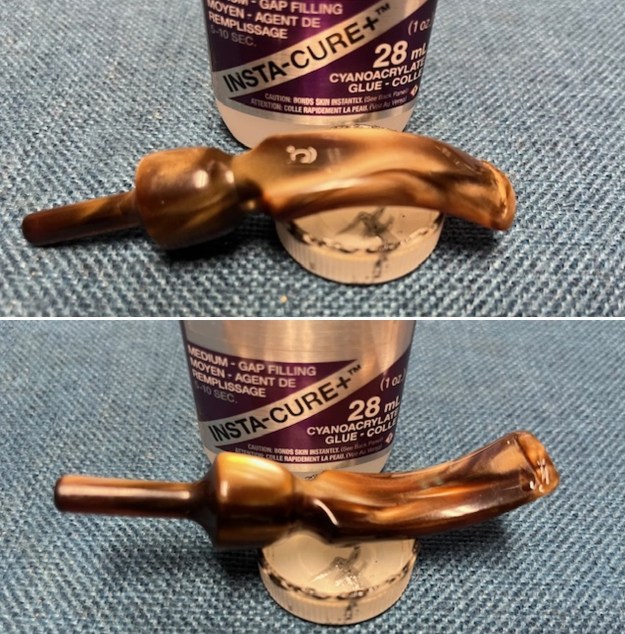
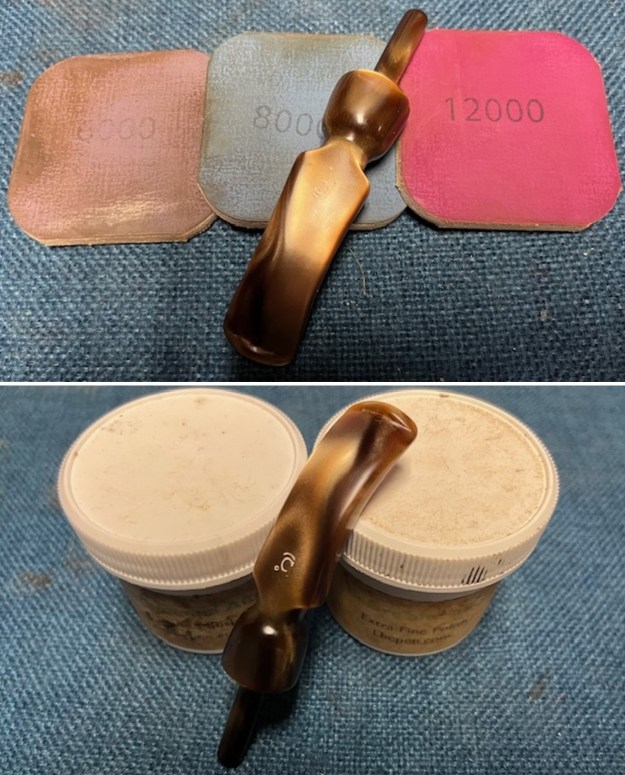
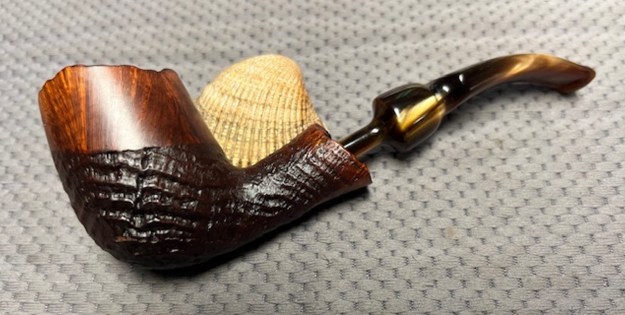
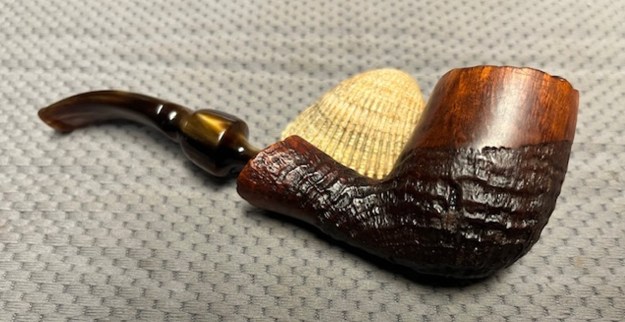
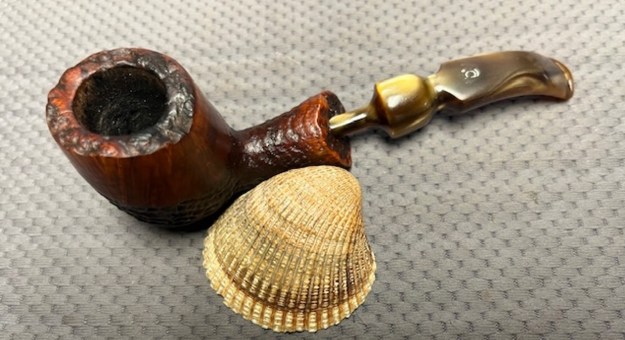
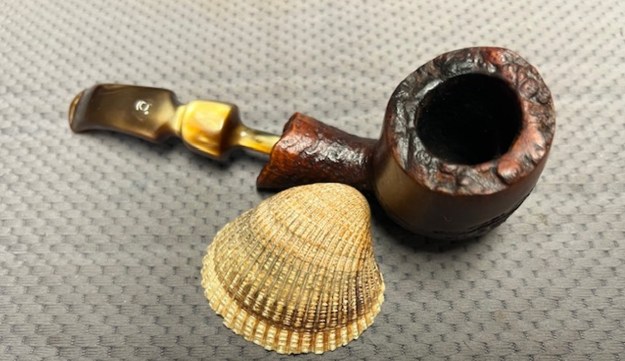
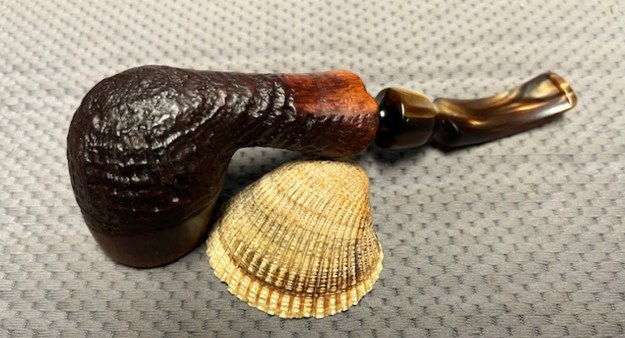
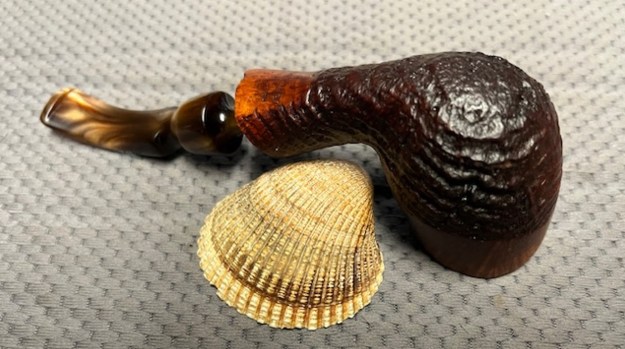
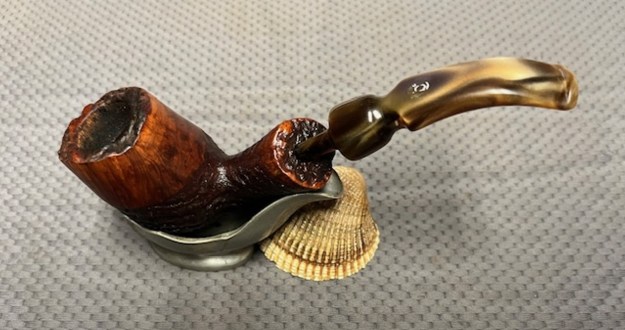
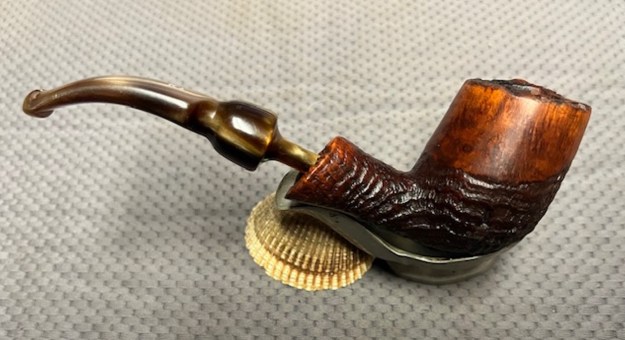
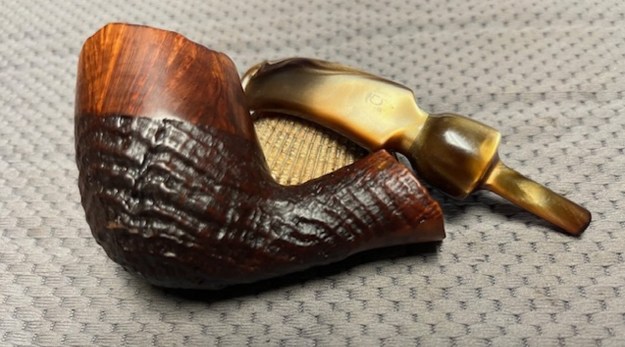
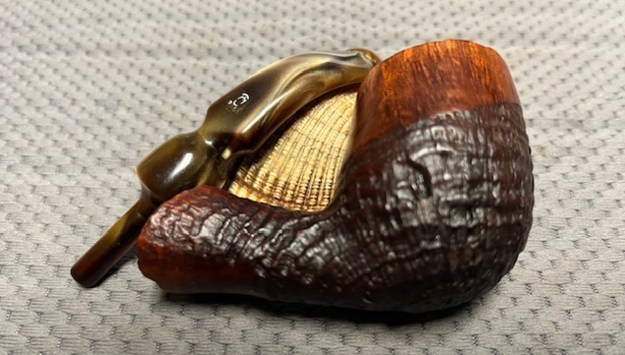
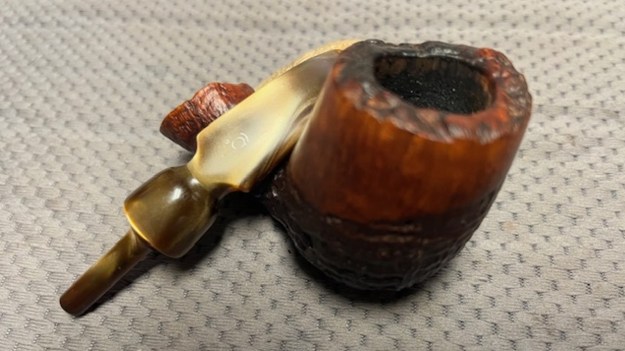
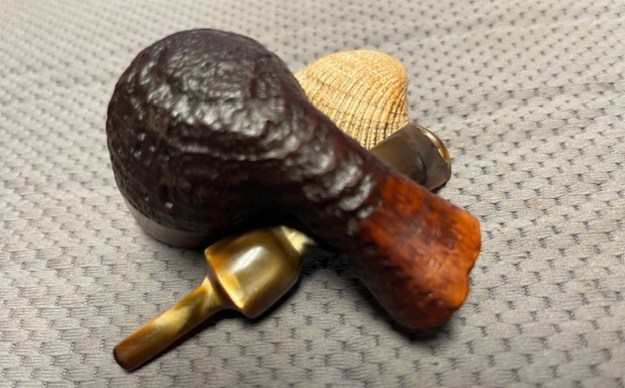
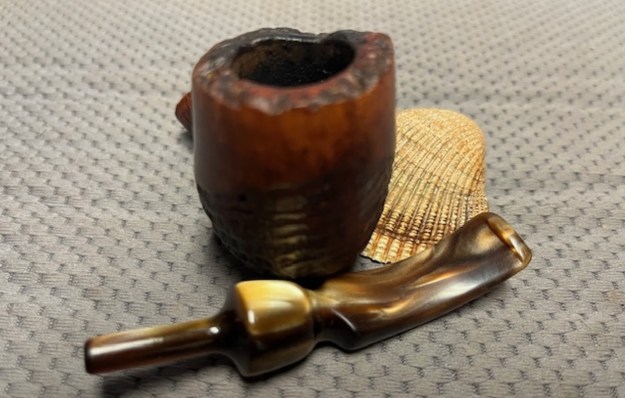
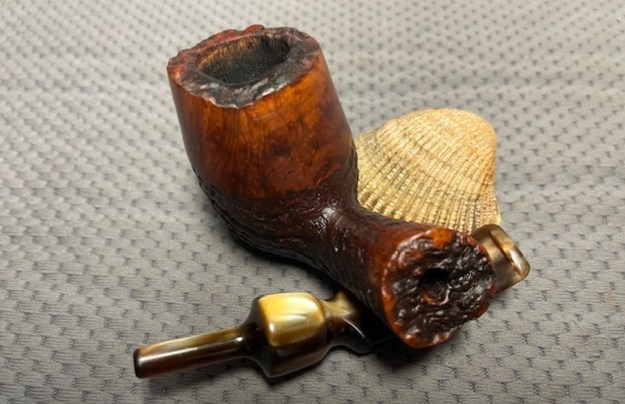
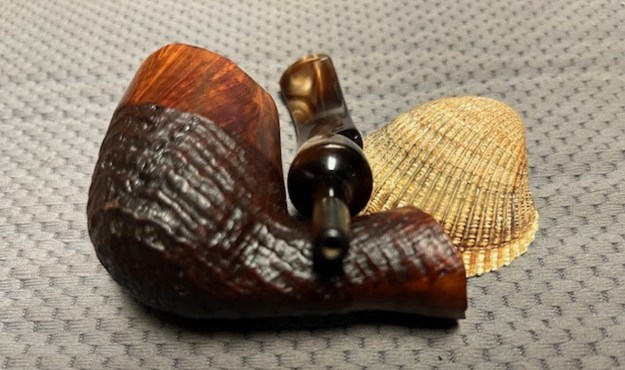
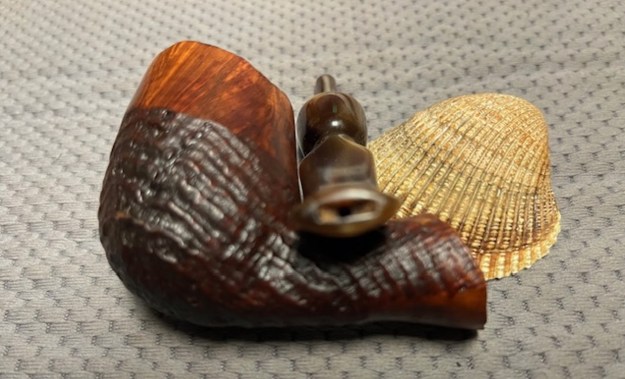
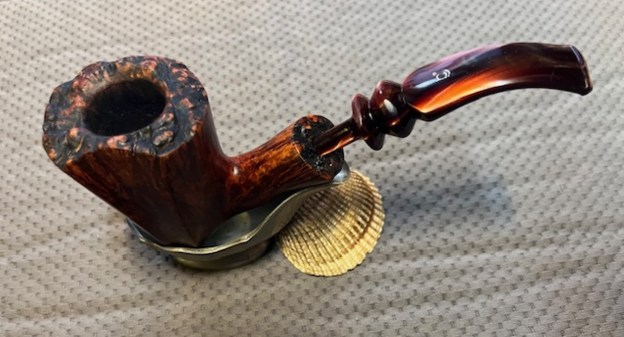
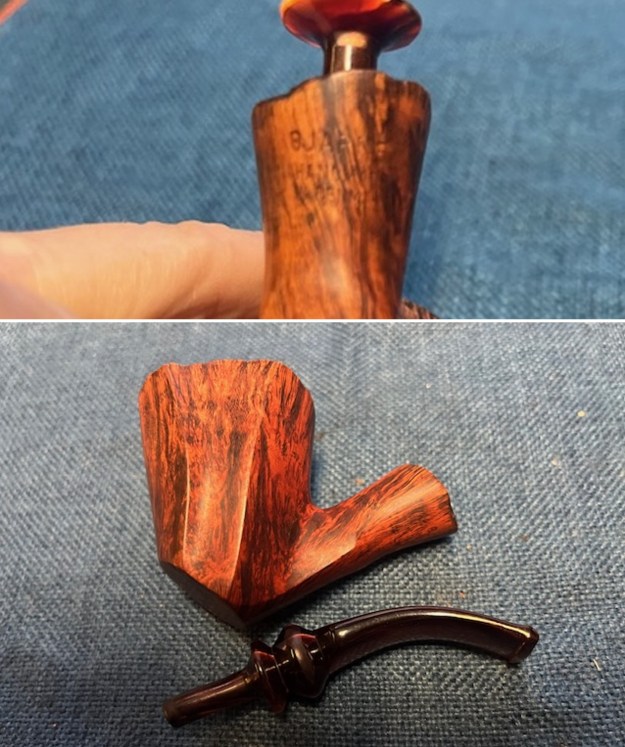
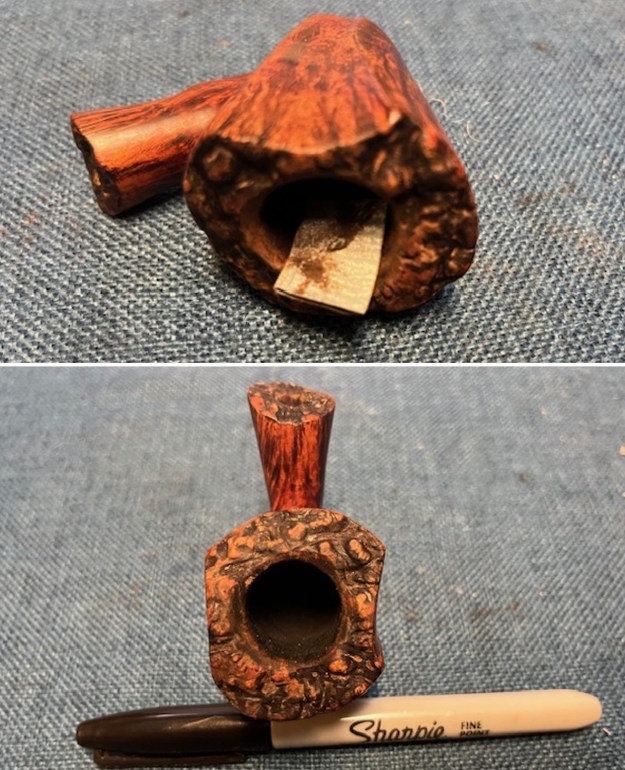
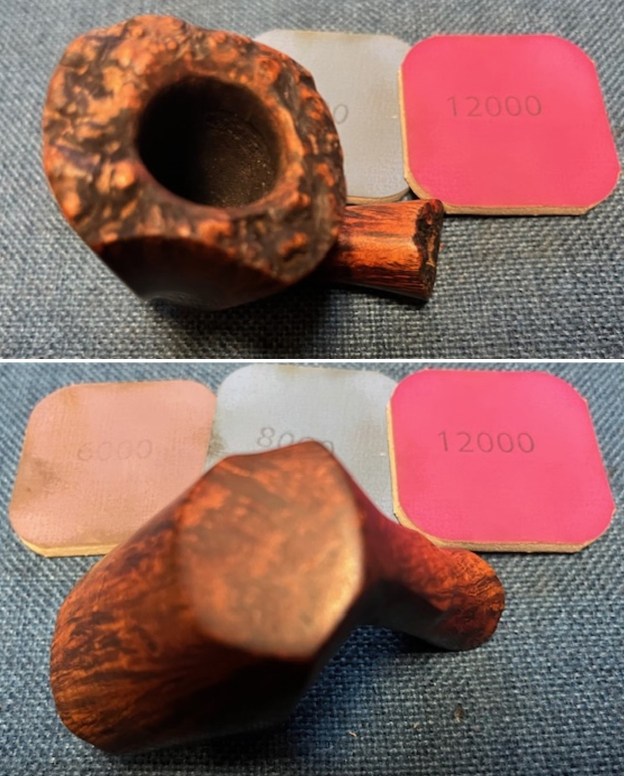
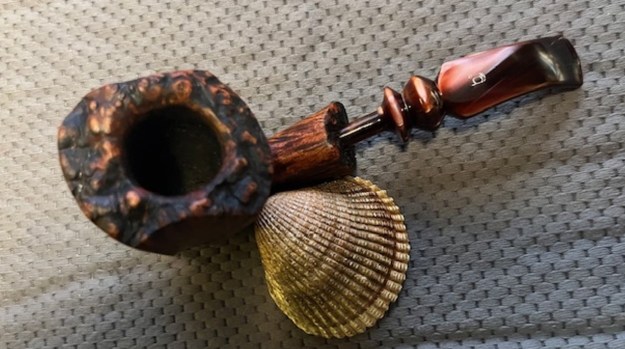
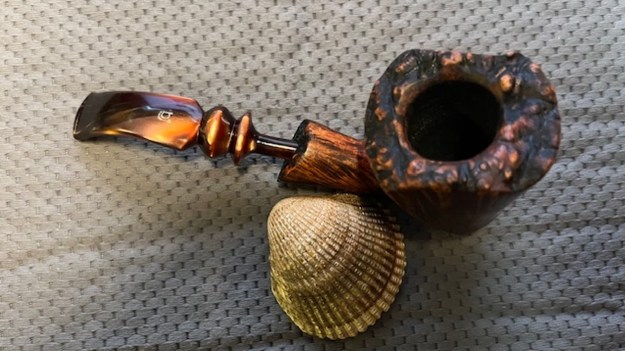
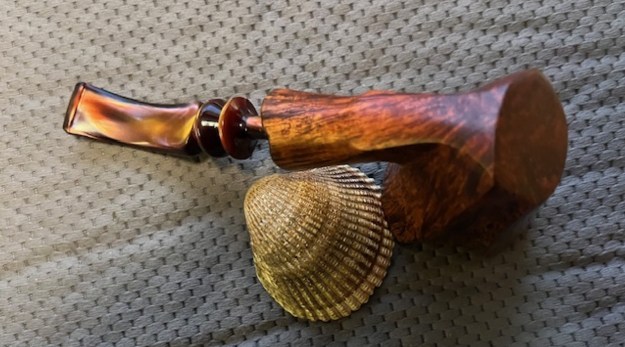
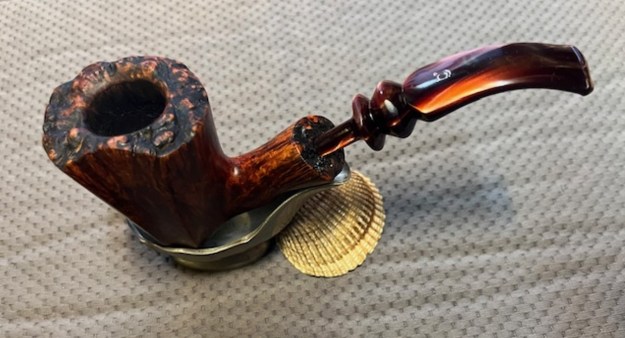
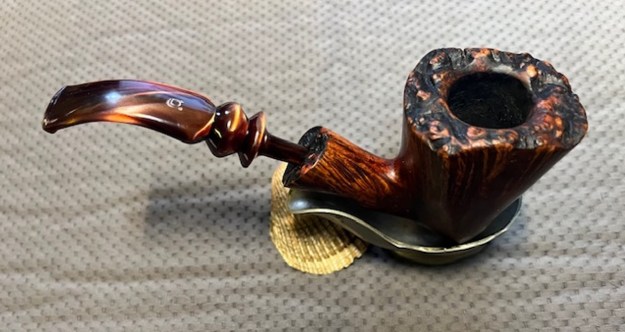
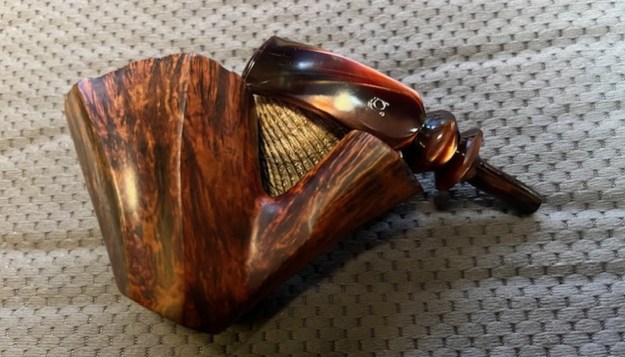
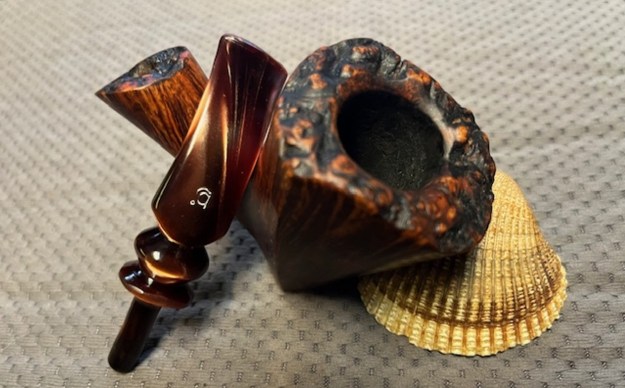
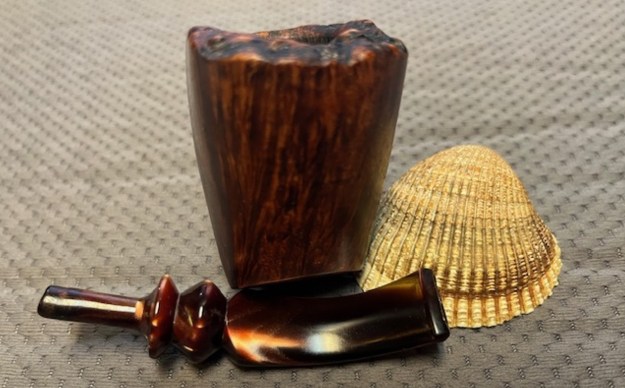
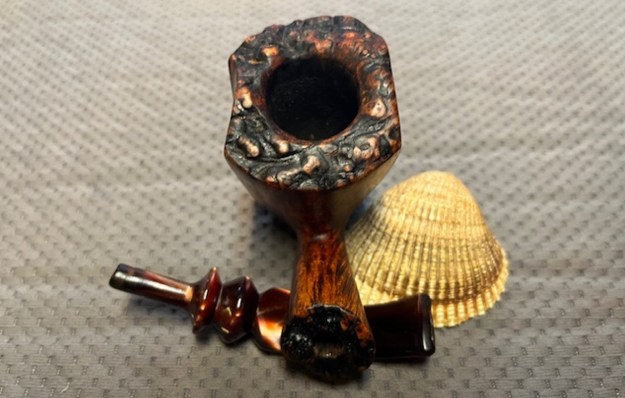
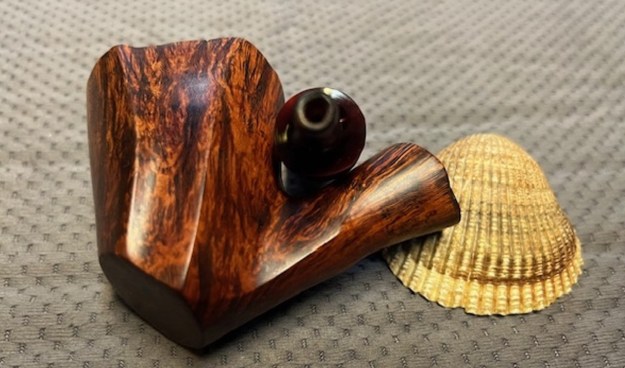
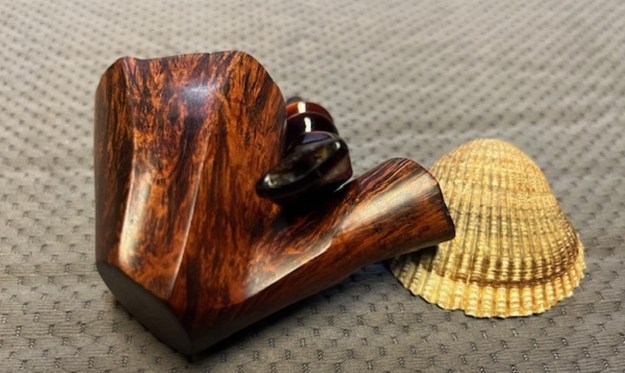
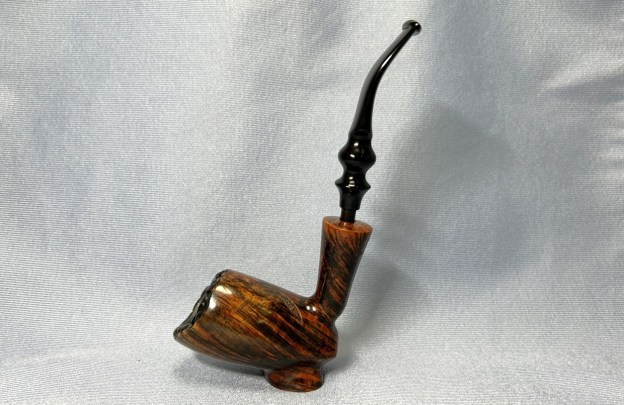
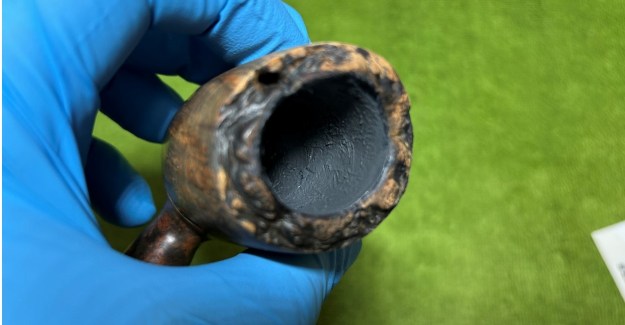
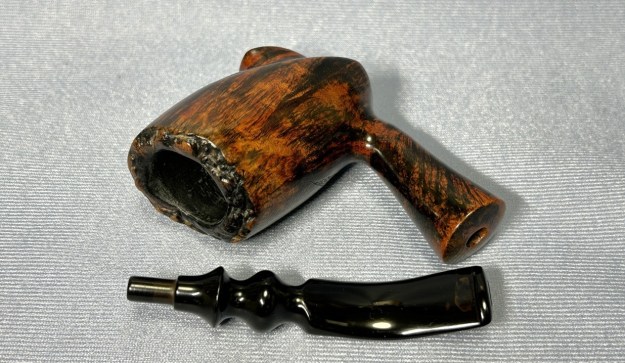
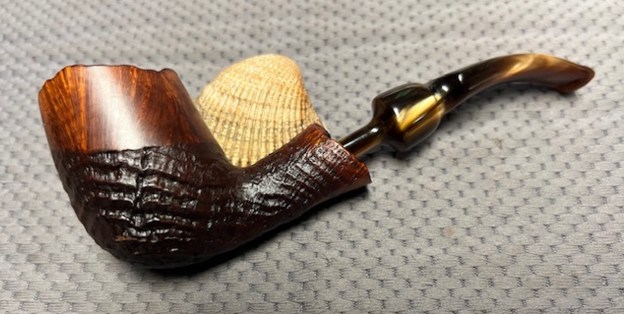
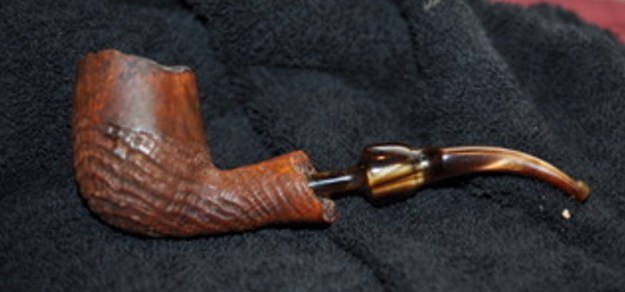
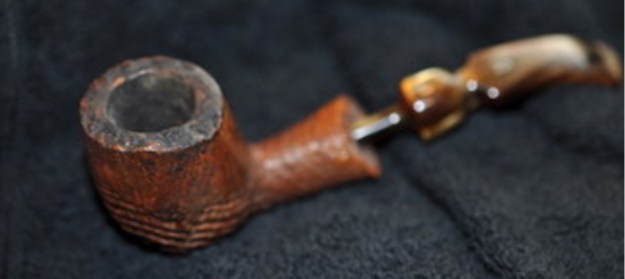
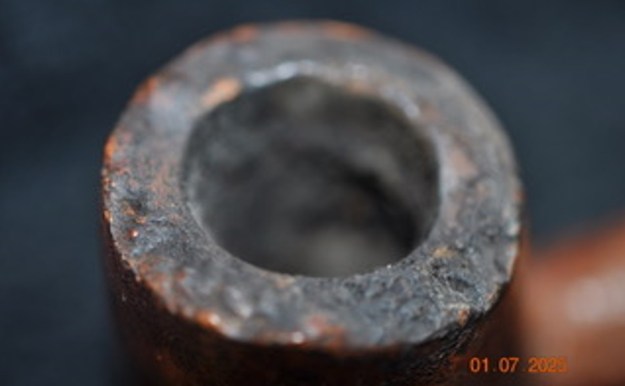
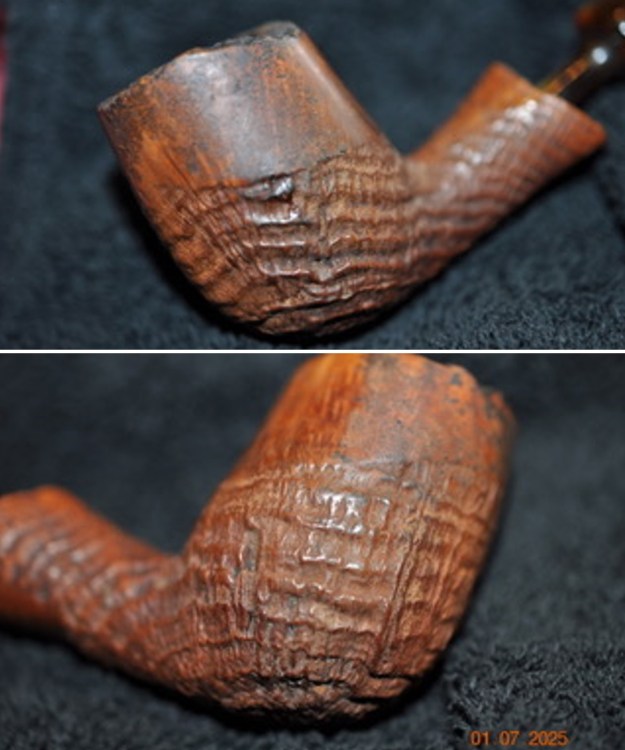
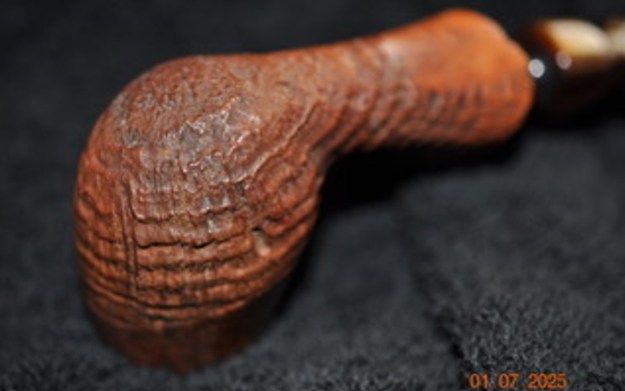
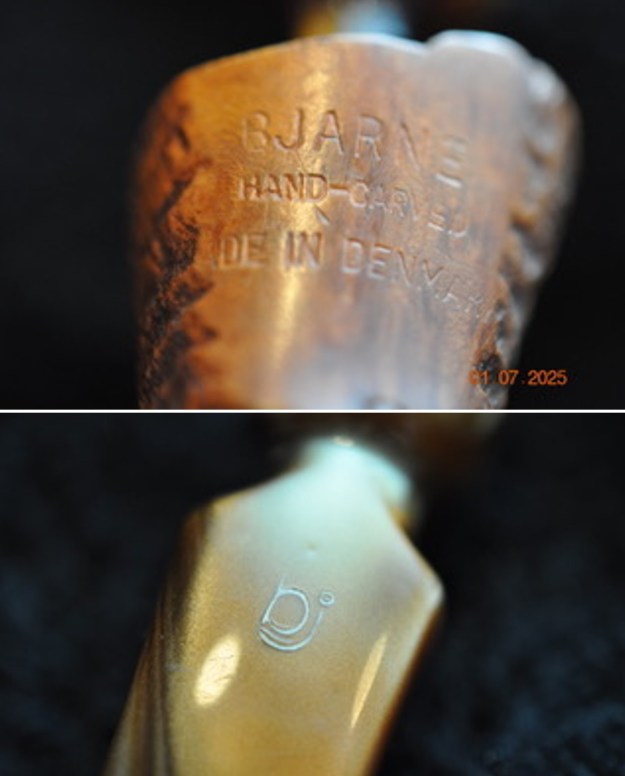
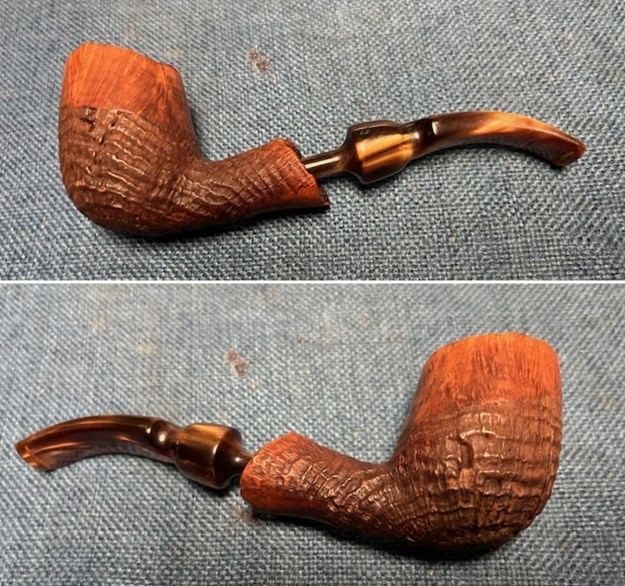
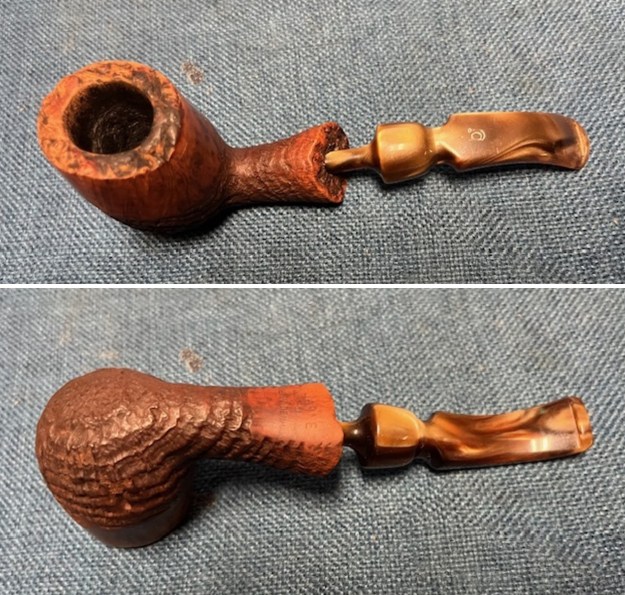
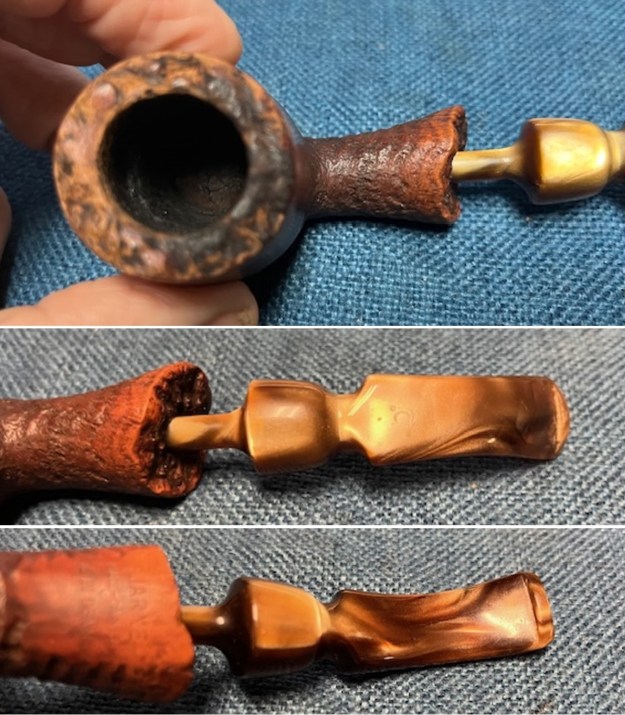
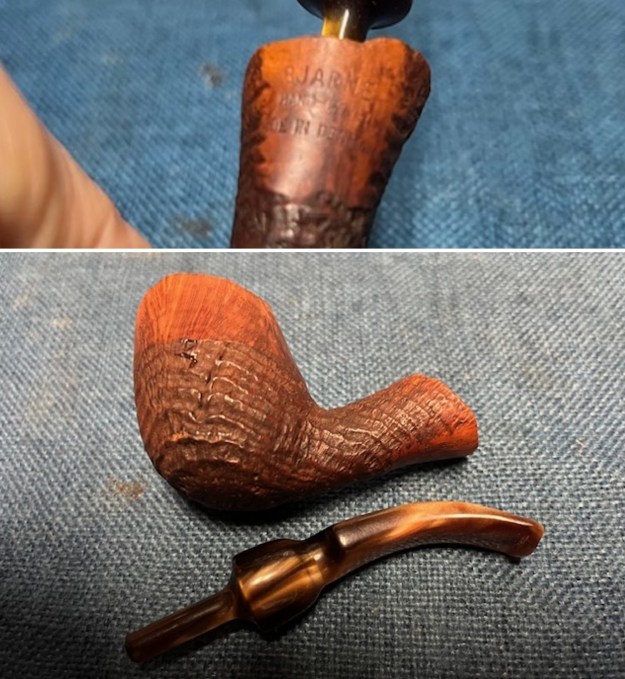
The next pipe came to us from an antique store in Vancouver, Washington, USA on 10/20/2022. It is mixed finish Freehand pipe that feels great in the hand. Even though it was dirty it had some charm showing through the grit and grime of the years. The grain on the smooth top half of the bowl and panel on the shank is quite nice. The sandblast is deep and revealing around the lower part of the bowl and shank. On the underside of the shank it was stamped Bjarne [over] Hand-Carved [over] Made in Denmark. The finish is filthy with dust and grit ground into the briar of the bowl and shank sides. The bowl had a thick cake and heavy overflow of lava on the plateau rim top and inner edge. The variegated brown acrylic stem dirty and had tooth marks and chatter on both sides ahead of the button. The interior of the stem and shank were quite dirty with tars and oils. Jeff took some photos of the pipe to show its overall condition before he started his cleanup work. He took photos of the rim top and bowl to give a clear picture of the good the pipe bowl looked inside. The rim and the inner edge were heavily coated with thick lava. It still appeared to be in good condition under the lava coat. The photos show the contrast of the bowl’s general condition with the overall condition of the fancy acrylic saddle stem surface. Jeff took photos of the sides and heel of the bowl and shank to give a picture of what the mixed finish of sandblast and smooth looked like on the bowl. The grit and grime on the finish is very obvious in the photos below. Jeff took photos of the sides and heel of the bowl and shank to give a picture of what the mixed finish of sandblast and smooth looked like on the bowl. The grit and grime on the finish is very obvious in the photos below.I turned to my favourite go to sites on the background of brands. The first is Pipephil’s site (http://www.pipephil.eu/logos/en/logo-b5.html). There I looked up the Bjarne brand. I have copied the pertinent information below.
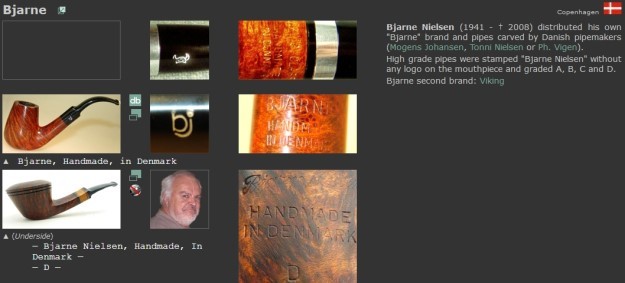
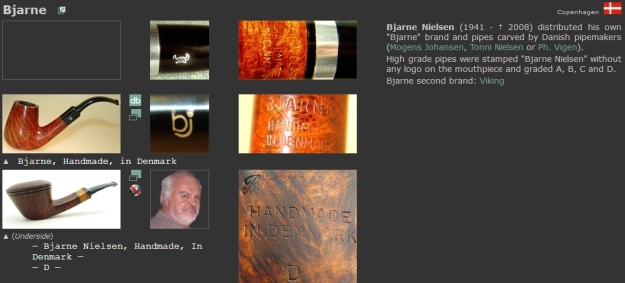
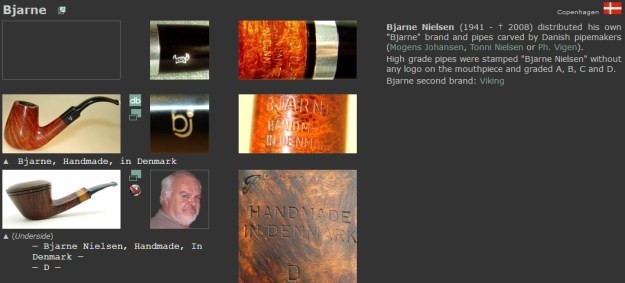
Bjarne Nielsen (1941 – † 2008) distributed his own “Bjarne” brand and pipes carved by Danish pipemakers (Mogens Johansen, Tonni Nielsen or Ph. Vigen). High grade pipes were stamped “Bjarne Nielsen” without any logo on the mouthpiece and graded A, B, C and D. Bjarne second brand: Viking.

I have included a screen capture of the section on the brand below. I turned to Pipedia and looked up the brand for a bit more information on the pipes that were stamped like the one that I am working on (https://pipedia.org/wiki/Bjarne). It is a great history of the brand and a good read. Toward the end of the article I found what I was looking for. I quote:
Among the pipemakers that worked for Bjarne were Johs (for the lower priced high volume pieces), and makers like Ph. Vigen, Ole Bandholm and Tonni Nielsen for high grade pieces. The cheaper line was stamped “Bjarne” while the highest grades were stamped “Bjarne Nielsen” (never with the pipemakers’ name) and graded, from highest to lowest, by the letters: AX, A, B, C, D, E, F, G, H, I, and J.

Now I knew that I was dealing with the cheaper line of pipe made by the company. It was stamped Bjarne while the higher grade pipes were stamped Bjarne Nielsen with a grade stamp. Now it was time to work on the pipe.

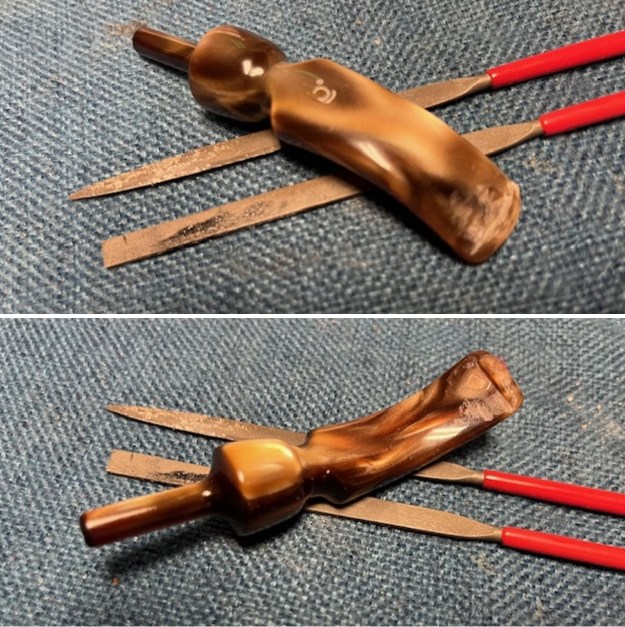
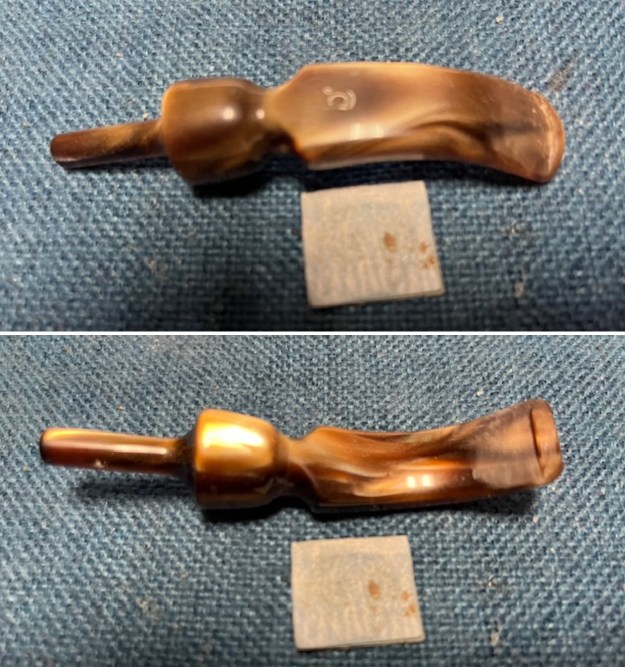
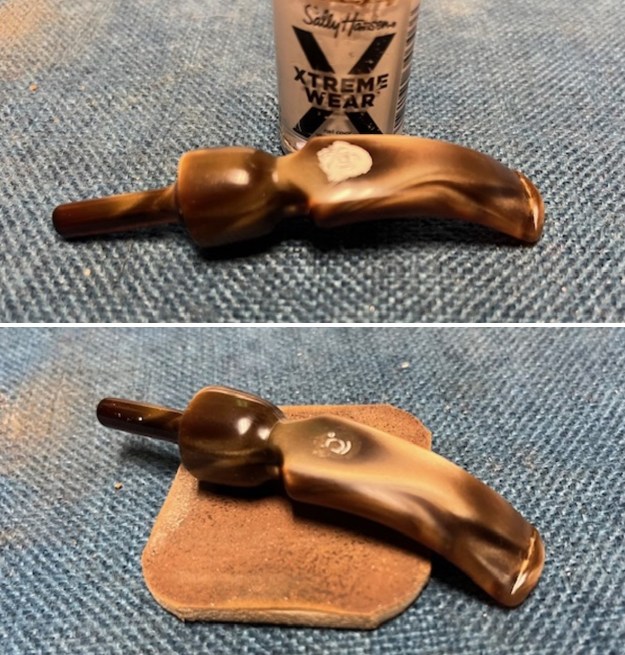
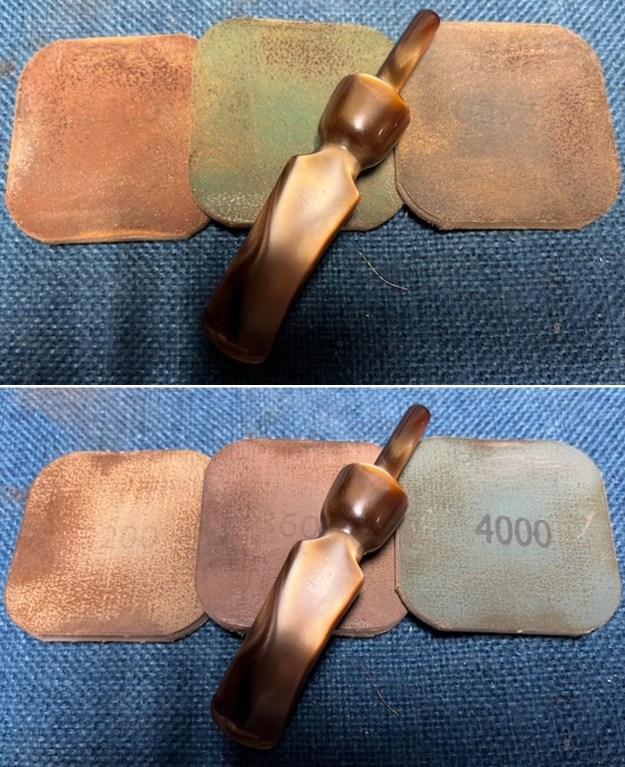
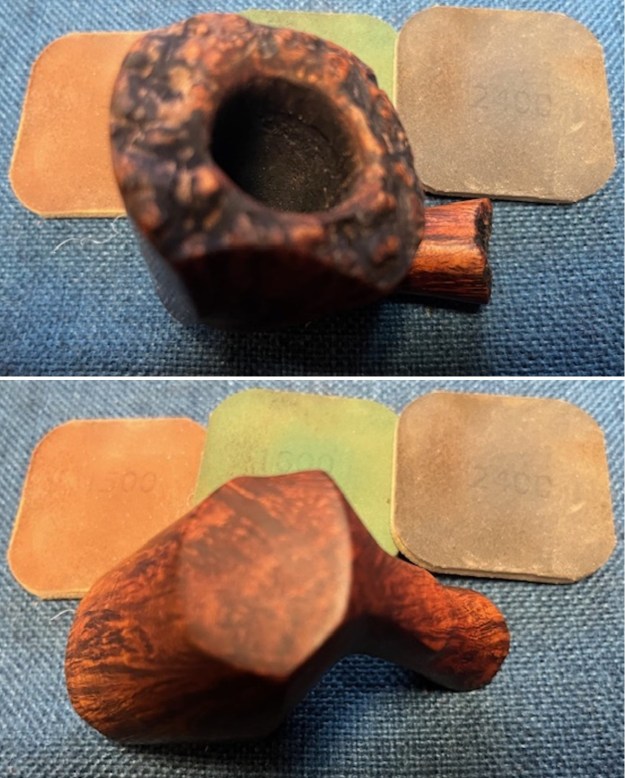
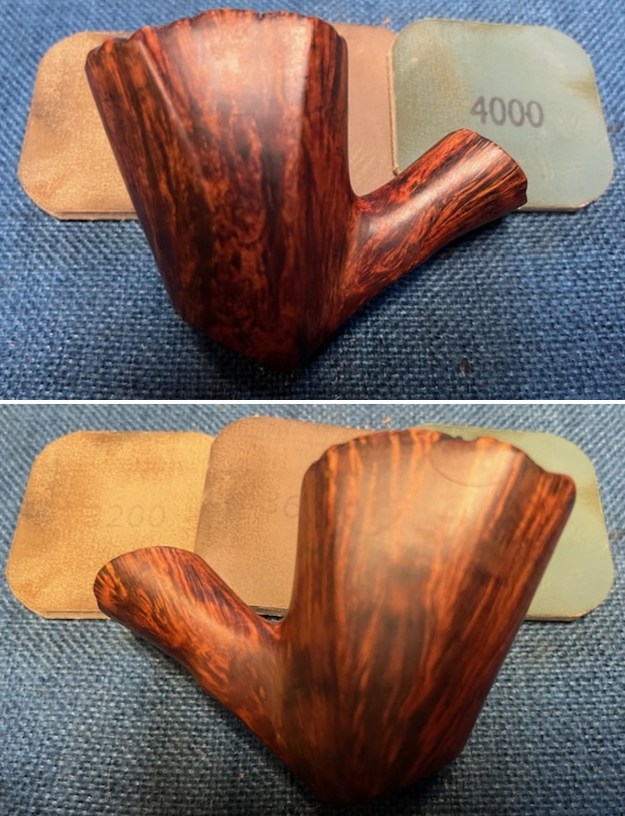
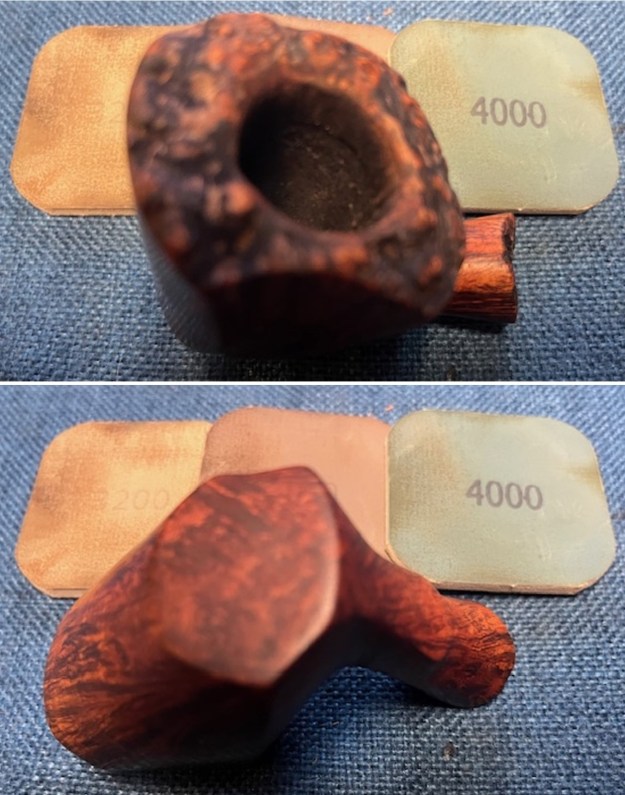
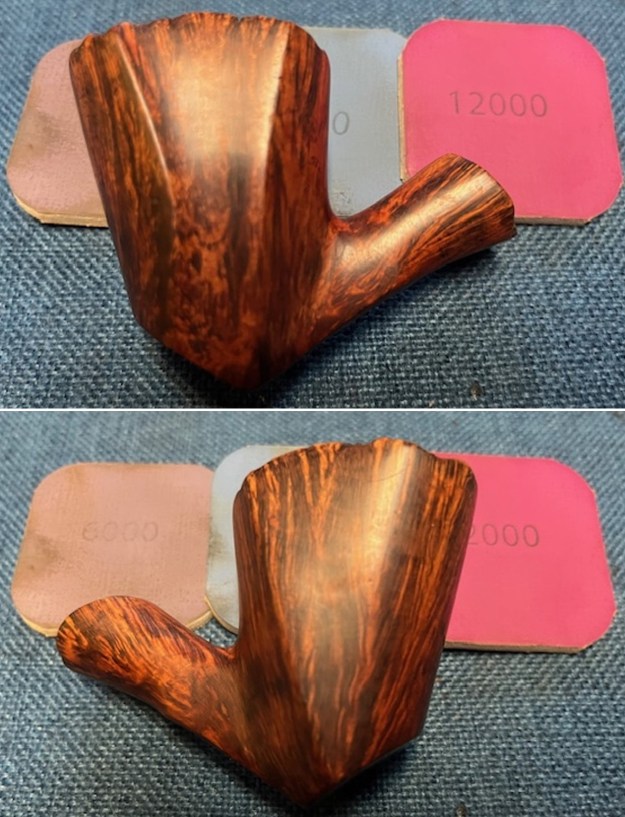
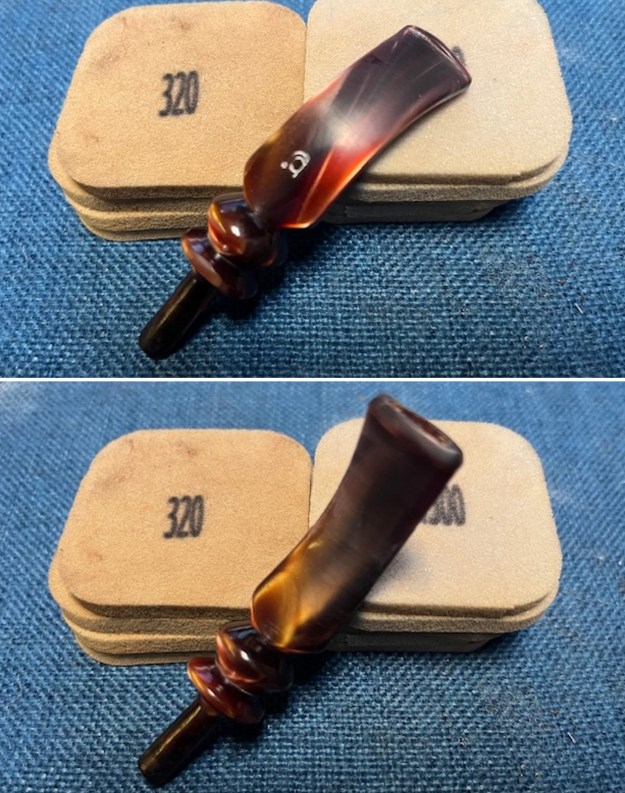
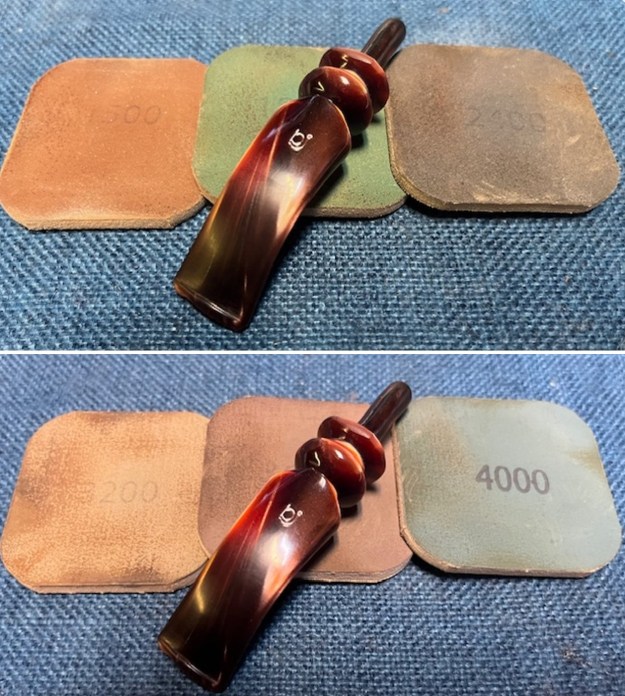
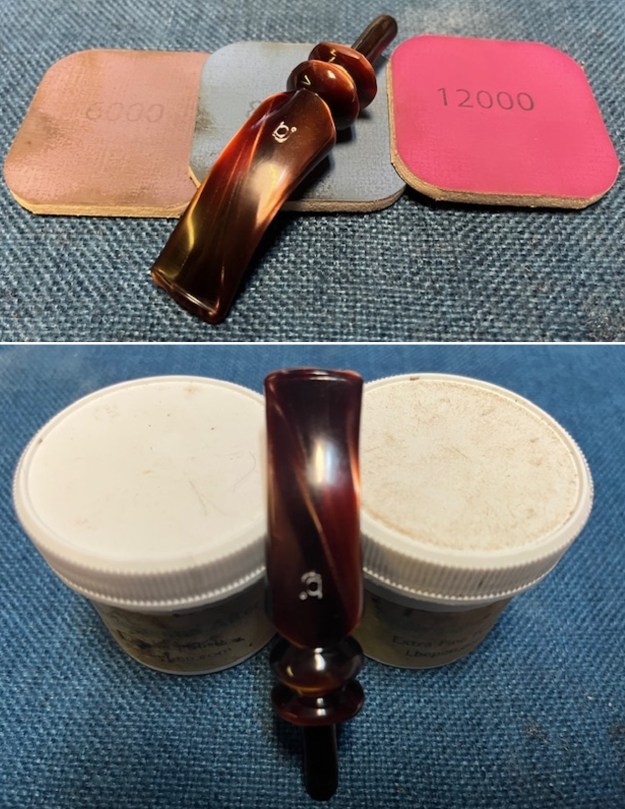
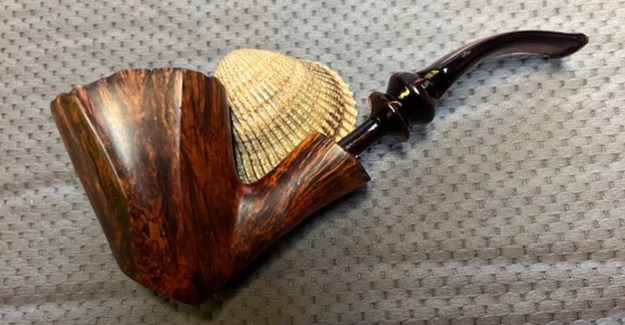
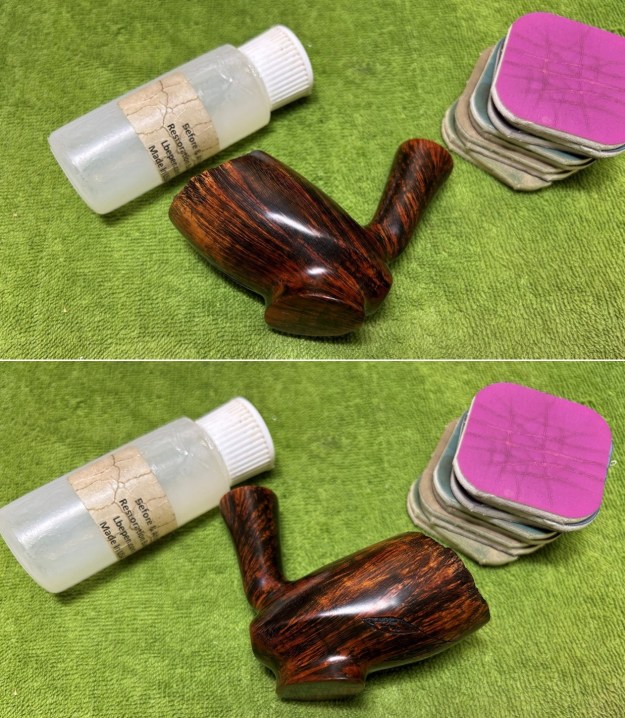
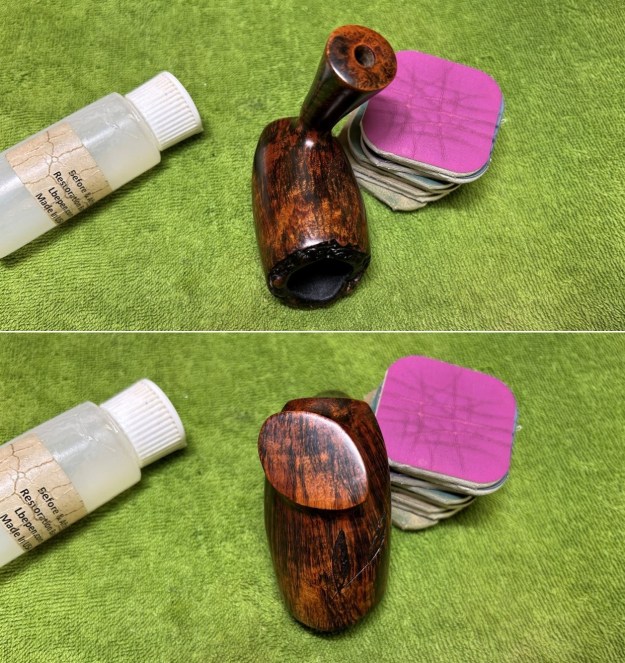
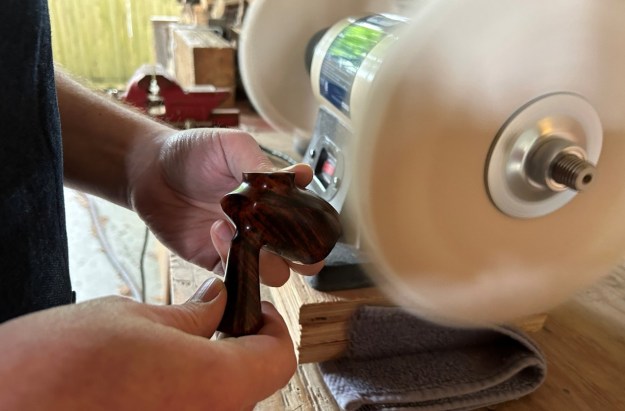
Jeff had cleaned up the pipe with his usual penchant for thoroughness. He reamed the pipe with a PipNet Pipe Reamer and cleaned up the remnants with a Savinelli Fitsall Pipe Knife.  He scrubbed the bowl with undiluted Murphy’s Oil Soap with a tooth brush. He worked over the debris on the plateau rim top and was able to remove it. He rinsed it under running warm water to remove the soap and grime. He cleaned out the inside of the shank and the airway with alcohol, cotton swabs and pipe cleaners. I took photos of the pipe bowl once I received it. It really looked good.   The bowl looked very good though there was some darkening and damage on the plateau rim top. The inner and outer edges of the rim looked to be in good condition. The stem looks really quite good. There were some tooth marks and chatter on both sides near the button.I took a photo of the stamping on the underside of the shank. It was clear and read as noted above. I took the stem off the shank and took a picture of the pipe to give a sense of its overall look. It is going to be a great looking pipe once the restoration is finished.I decided to begin my work on the pipe by dealing with the darkening and damage to the plateau rim top. I worked it over with a brass bristle wire brush to knock off the grit in the grooves of the plateau and the dark coat on the high spots. When I was finished it looked a lot better than when I started. I rubbed the bowl down with Before & After Restoration Balm. I worked it into the smooth surface of the bowl sides and shank with my fingertips and into the plateau rim top, shank end and the sandblast finish with a shoe brush. The product works to clean, enliven and protect the briar. I let the balm sit for 15 minutes and then buffed with a cotton cloth to raise the shine. I set the bowl aside and turned my attention to the issues with the stem. I filled in the deep tooth marks on the top and underside ahead of the button with clear CA glue. I set it aside to cure. Once it cured, I flattened the repairs with two small files\. I smoothed out the repairs with 220 grit sandpaper to further blend them into the surface of the stem. It was looking very good. I sanded the stem surface further with 320-3500 grit sanding pads to smooth out the repairs and blend them into the stem surface. I wiped it down after each sanding pad with a damp cloth to remove the sanding debris and dust. It began to look very good.The stamping on the left side of the saddle stem was faint but I touched up what remained with white acrylic fingernail polish. I used a tooth pick to work it into the stamp. I sanded it with a worn 1500 grit sanding pad and buffed it with a soft cloth.I polished the scratches out of the stem with micromesh sanding pads – 1500-12000 grit pads. I wiped it down with a damp cloth after each sanding pad. I used Before & After Pipe Polish – both Fine and Extra Fine to further polish the stem. This smooth finished Bjarne Hand-Carved Mixed Finish Freehand is a great looking pipe. It is a pipe made in Denmark. The fancy, saddle brown variegated acrylic stem works well and goes nicely with the browns of briar. I put the stem back on the bowl and buffed the pipe with Blue Diamond on the buffing wheel using a light touch on the briar. I gave the bowl and the stem multiple coats of carnauba wax on the buffing wheel and followed that by buffing the entire pipe with a clean buffing pad. I hand buffed the pipe with a microfiber cloth to deepen the shine. The finished Bjarne Plateau Rim top Freehand fits nicely in the hand and feels great. Give the finished pipe a look in the photos below. The dimensions of the pipe are Length: 6 inches, Height: 2 inches, Outside diameter of the bowl: 1 ¼ inches, Chamber diameter: ¾ of an inch. The weight of the pipe is 49 grams/1.73 ounces. I will be adding it to the rebornpipes store shortly in the Danish Pipe Makers Section. Thanks for reading this blog and my reflections on the pipe while I worked on it. There are many more to come!
Life for a Bjarne Hand Made in Denmark rose variegated acrylic stem Freehand


by Steve Laug

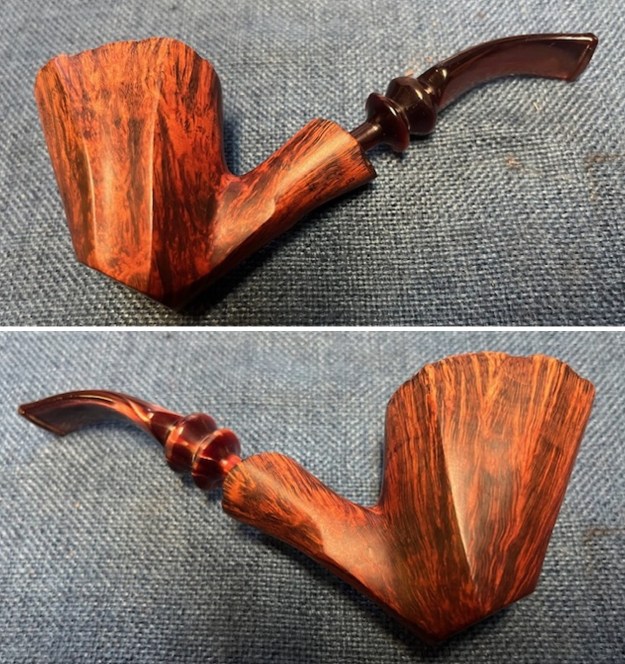
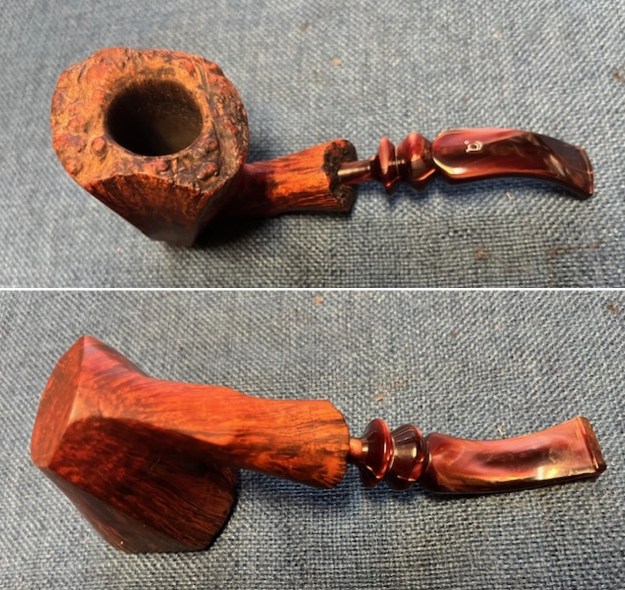
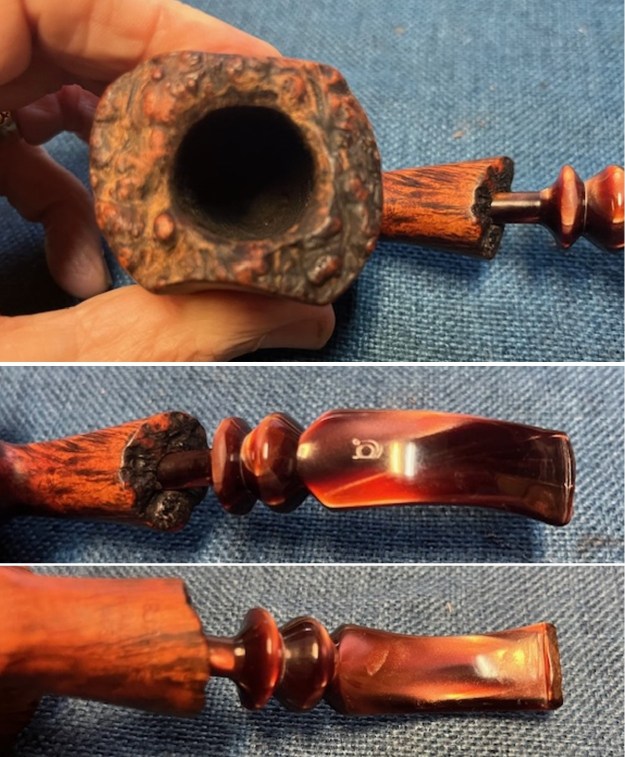
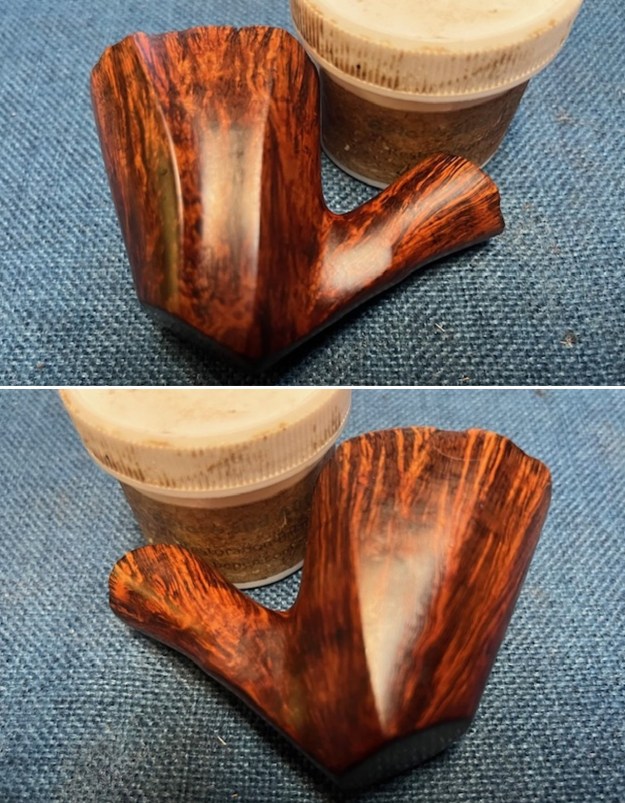
This afternoon I decided to work on the pipe that Jeff picked up from a seller in Nampa, Idaho, USA on 11/09/2023. It is a beautifully grained Freehand with a Plateau rim and shank end. The right and left side of the bowl are panels with the left side fluted. The bottom is flattened and the pipe stands well on the heel. It has a fancy variegated rose coloured acrylic saddle stem. It is a beautiful grained piece of briar that I can appreciate why he chose it. The pipe is stamped on the underside of the shank and reads Bjarne [over] Handmade [over] In Denmark. The briar is dirty from use with a moderate cake in the bowl and a light overflow of lava on the bevelled inner edge and rim top filling in some of the plateau around the edge. The plateau shank end was dusty and dirty. The stem fit well against the shank end. The variegated rose coloured acrylic saddle stem had some tooth chatter and scratches on the top and underside of the stem ahead of the button. There was a Bjarne bj logo on the stem. Jeff took photos of the pipe before he started his clean up work on it. I have included them below. Jeff took photos of the rim top and the stem to show the condition of the pipe when we received it. You can see the cake in the bowl and the build up of lava and debris in the plateau of the rim top and shank end. I really is a dirty pipe. The variegated rose acrylic stem and has chatter and a few deep tooth marks on both sides near the button. He took photos of the sides of the bowl and the heel to give an idea of the shape and the condition of the briar around the bowl. It really is a nicely shaped pipe that has a great finish under the grime on the briar. The next photos Jeff took show the stamping on the underside of the shank. It is faint in spots but still readable as noted above. He also took a photo to show the stem logo. In a previous blog I had researched the brand quite a bit. I have included it in full below for information on this pipe (https://rebornpipes.com/2020/03/07/another-pipe-from-the-eastern-canada-lot-a-hand-carved-bjarne-freehand/). I quote:

I turned my favourite go to sites on background of brands. The first is Pipephil’s site (http://www.pipephil.eu/logos/en/logo-b5.html). There I looked up the Bjarne brand. I have copied the pertinent information below.

Bjarne Nielsen (1941 – † 2008) distributed his own “Bjarne” brand and pipes carved by Danish pipemakers (Mogens Johansen, Tonni Nielsen or Ph. Vigen). High grade pipes were stamped “Bjarne Nielsen” without any logo on the mouthpiece and graded A, B, C and D. Bjarne second brand: Viking.

I have included a screen capture of the section on the brand below. I turned to Pipedia and looked up the brand for a bit more information on the pipes that were stamped like the one that I am working on (https://pipedia.org/wiki/Bjarne). Toward the end of the article I found what I was looking for. I quote:

Among the pipemakers that worked for Bjarne were Johs (for the lower priced high volume pieces), and makers like Ph. Vigen, Ole Bandholm and Tonni Nielsen for high grade pieces. The cheaper line was stamped “Bjarne” while the highest grades were stamped “Bjarne Nielsen” (never with the pipemakers’ name) and graded, from highest to lowest, by the letters: AX, A, B, C, D, E, F, G, H, I, and J.

Now I knew that I was dealing with the cheaper line of pipe made by the company. It was stamped Bjarne while the higher grade pipes were stamped Bjarne Nielsen with a grade stamp.

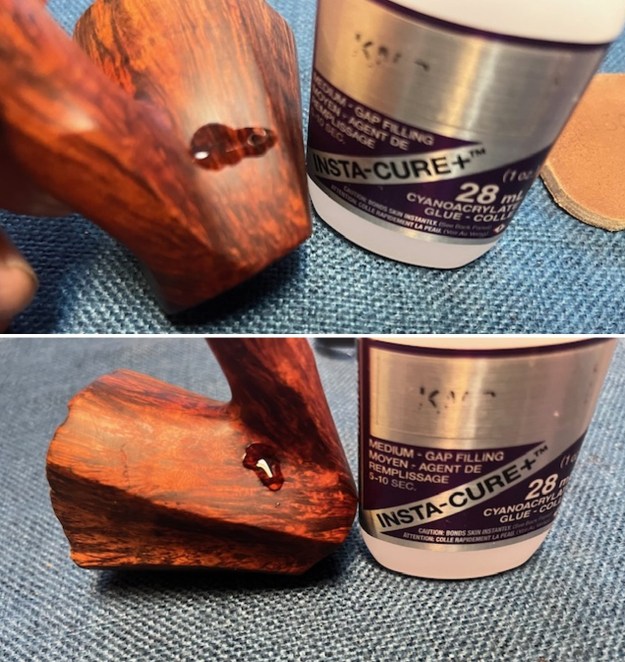
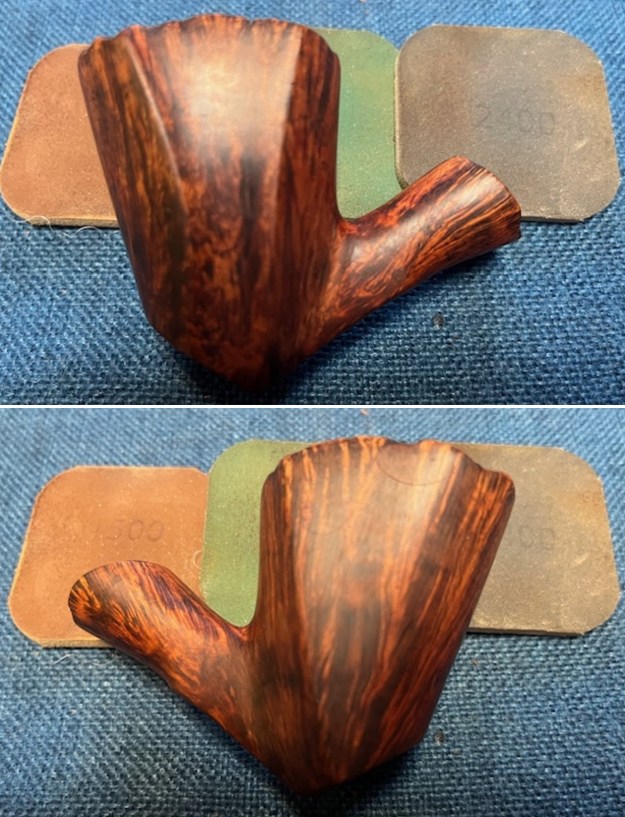
Jeff did a great job cleaning off the debris and grime on this old. He reamed it with a PipNet reamer and smoothed the walls of the bowl with a Savinelli Fitsall pipe knife. He scrubbed out the mortise and the airway in the shank and the stem with alcohol, cotton swabs and pipe cleaners. He scrubbed the exterior of the bowl, rim and shank with a tooth brush and Murphy’s Oil Soap to the oils and tars on the bowl, rim and shank. He rinsed it under running water. He dried it off with a soft cloth. Once the grime was removed the finish underneath was in stellar condition. There is a scratch on the right side toward the top that is visible. The rich patina of the older briar was a variegated finish of smooth and plateau looked great. He scrubbed the exterior of the stem with Soft Scrub then soaked it in a bath of Briarville’s Pipe Stem Deoxidizer. He rinsed off the deoxidizer with warm water and wiped the bowl and stem down with a light coat of olive oil to rehydrate both. The pipe really was quite stunning. I took photos of the pipe to show its condition before I started my work on it. I took close up photos of the stem and the rim top to show both how clean they were. The rim top and bowl were in good condition with some darkening on the inner bevel of the bowl edge and some lightening of the grooves of the plateau rim top. The stem looked better but the deep tooth marks and chatter were still present. I would need to remove those to bring the stem back.I took a photo of the stamping on the underside of the shank. You can see from the photo that it is readable. It is clearer on the top half of the stamp than the lower but it is still readable. I removed the stem from the bowl and took a photo of the parts to give a sense of the beauty of the pipe.I started my work on this pipe by addressing the darkening on the high spots on the rim top and the bevelled bowl edge. I sanded the edge bevel with a folded piece of 220 grit sandpaper to smooth out the edge and to smooth it and to reduce the darkening. I touched up the valleys in the plateau with a black Sharpie pen. It looked better when I had finished.As I examined the exterior of the bowl before polishing it I noticed some flaws or nicks (potential small cracks) in the briar on both side of the bowl where it joined the shank. I filled them in with clear CA glue. Once cured I sanded them smooth with 220 grit sandpaper to blend them into the surface. I touched up the sanded area with a Cherry stain pen. They came out looking very good. There was also a deep scratch on the right top edge that looked like a crack but on examination I affirmed it was a scratch. I polished the briar with micromesh sanding pads – dry sanding with 1500-12000 grit pads. I wiped the bowl down after each pad with a damp cotton cloth. The briar took on a shine by the last pads. I worked some Before & After Restoration Balm into the surface of the briar with my finger tips and a horse hair shoe brush to get into the crevices of the plateau rim top and shank end. The product is incredible and the way it brings the grain to the fore is unique. It works to clean, protect and invigorate the wood. I set the bowl aside and turned my attention to the stem. I sanded tooth chatter and marks smooth with 220 grit sandpaper to blend them into the surface of the acrylic. I continued sanding the stem surface with 320-3500 grit 2×2 inch sanding pads. I wiped the stem down after each pad with a damp pad to remove the debris. By the end it was quite shiny and ready for polishing.I polished the stem with micromesh sanding pads – wet sanding it 1500-12000 pads. I wiped it down with a damp cloth after each pad to protect it and preserve it. I polished it with Before After Pipe Polish – both Fine and Extra Fine. I am really happy with the way that this Bjarne Hand Carved Freehand turned out. It really is a beautiful looking pipe with a unique shape and smooth and plateau finishes. The fancy original acrylic saddle stem is really nice. The briar really came alive with the buffing. The rich brown and black stains of the finish gave the pipe a sense of depth with the polishing and waxing. I put the stem back on the bowl and carefully buffed the pipe with Blue Diamond on the buffing wheel using a light touch on the briar. I gave the bowl and the stem multiple coats of carnauba wax on the buffing wheel. I buffed the pipe with a clean buffing pad to raise the shine. I hand buffed the pipe with a microfiber cloth to deepen the shine. The finished Bjarne Freehand really is a beauty and feels great in the hand and looks very good. Give the finished pipe a look in the photos below. The dimensions of the pipe are Length: 6 inches, Height: 2 ½ inches, Outside diameter of the bowl: 1 ½ inches long x 1 ¾ inches wide, Chamber diameter: ¾ of an inch. The weight of the pipe is 57 grams/2.01 ounces. The pipe will be going on the rebornpipes store soon. It will be in the Danish Pipe Makers Section if you would like to add it to your collection. Thanks for reading this blog and my reflections on the pipe while I worked on it. It was a fun one to work on!

You’ve Come a Long Way, Baby!


by Kenneth Lieblich

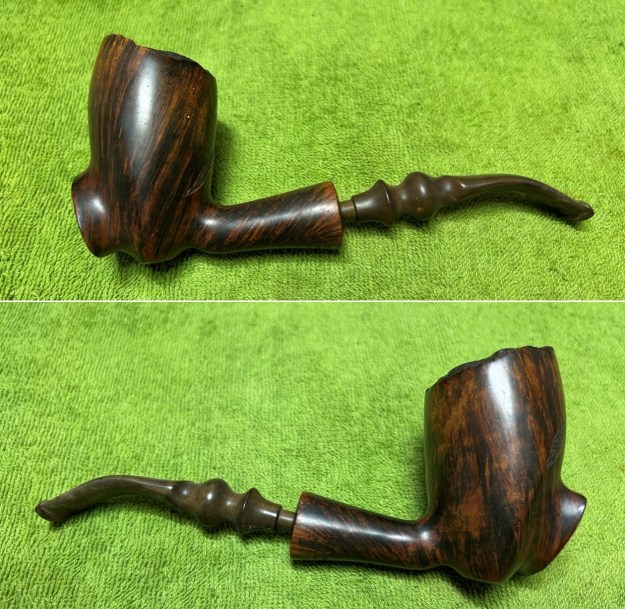
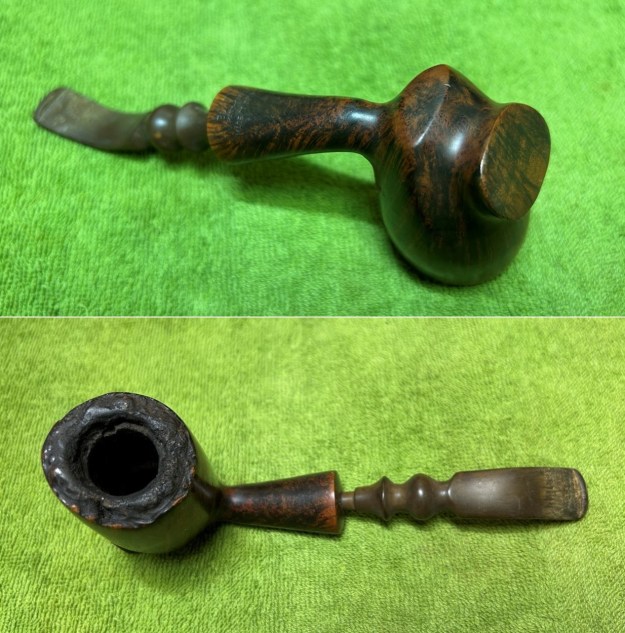
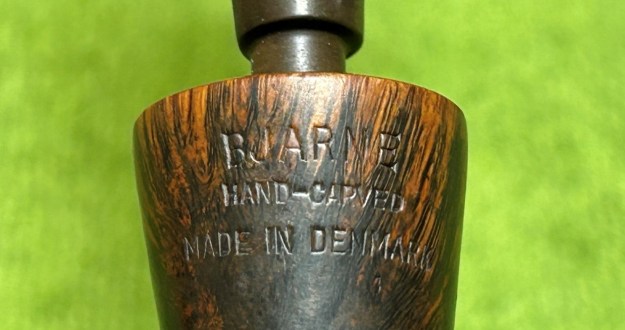
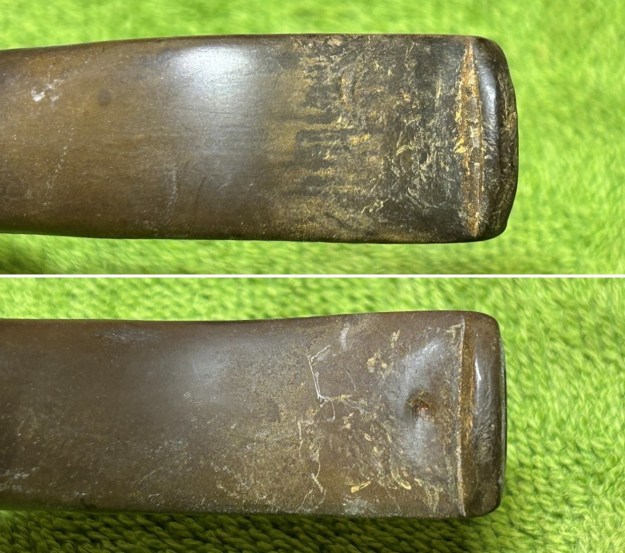
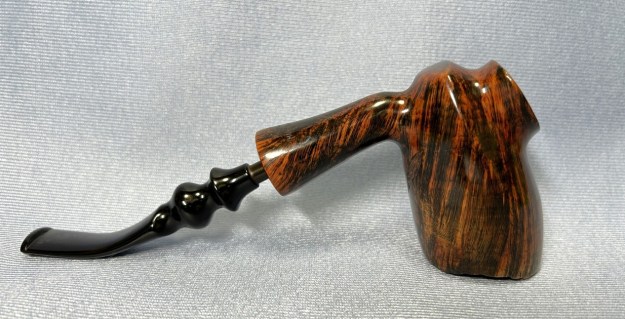
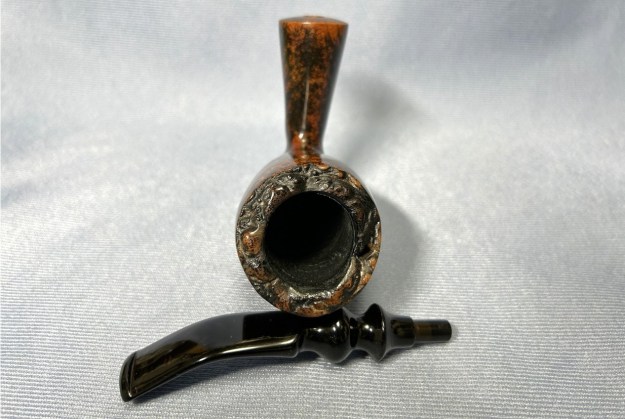
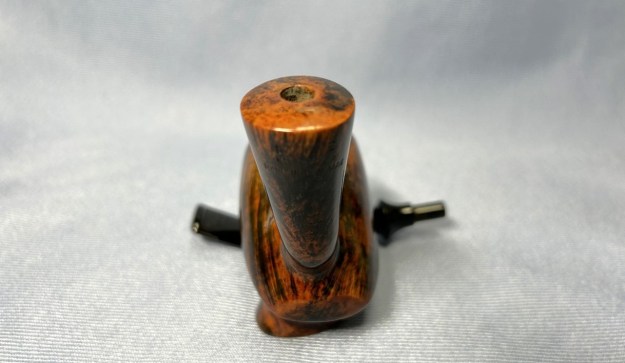
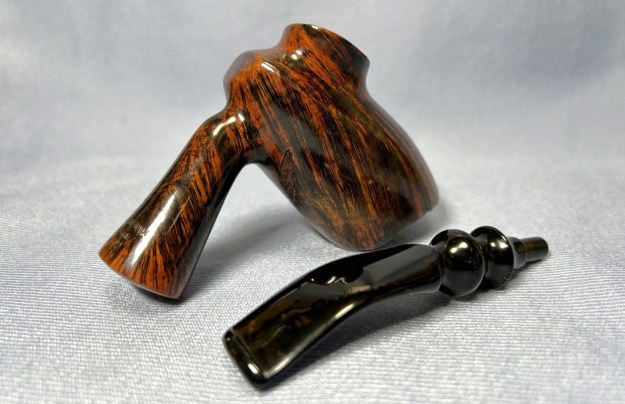
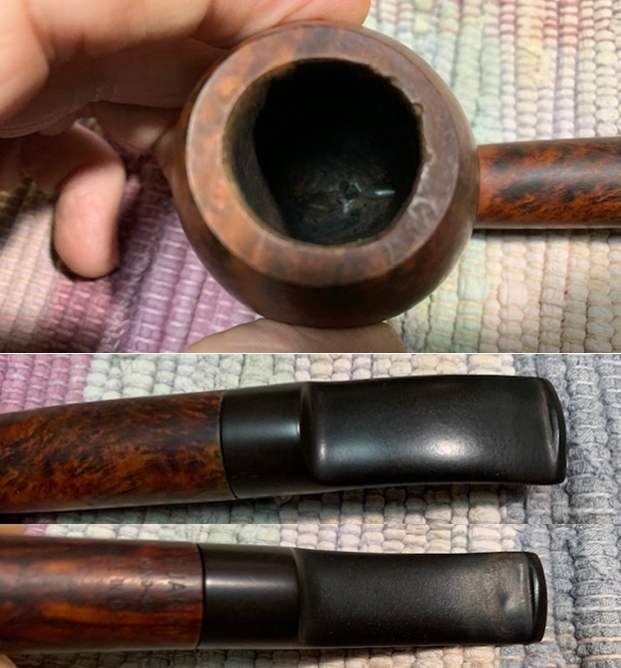
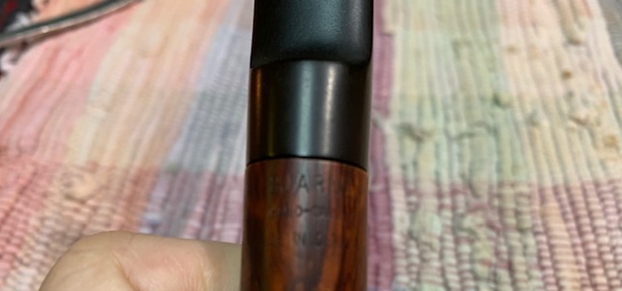
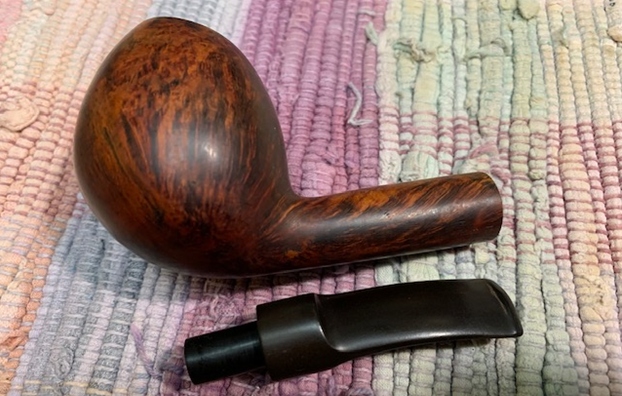
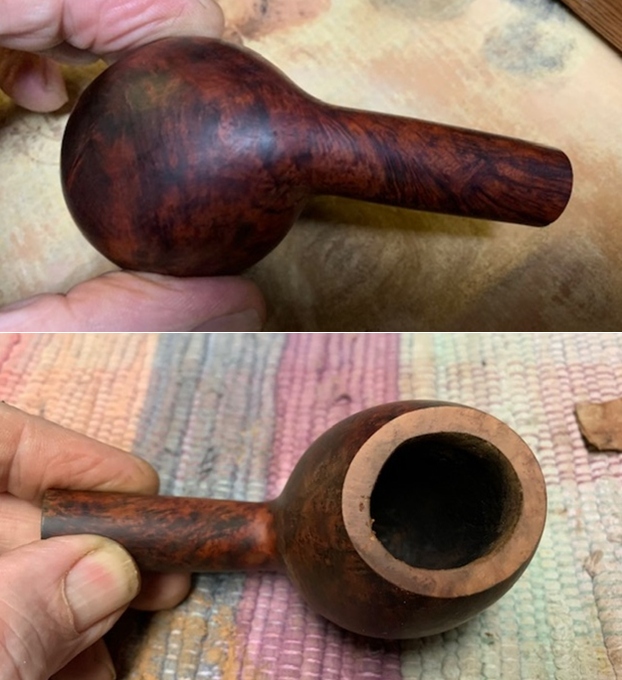
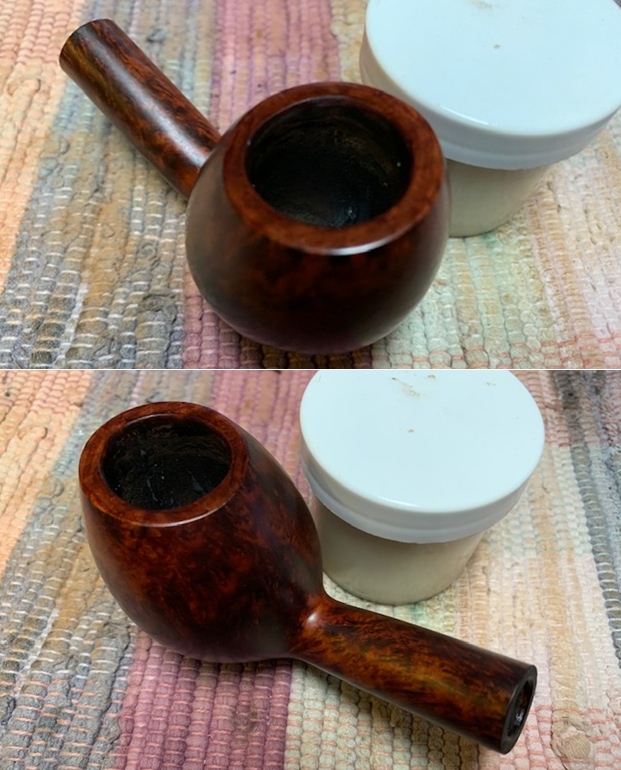
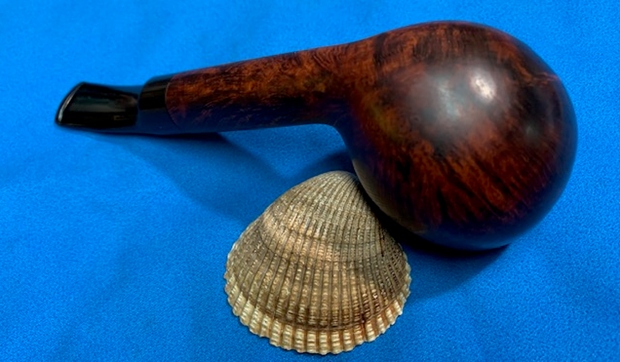
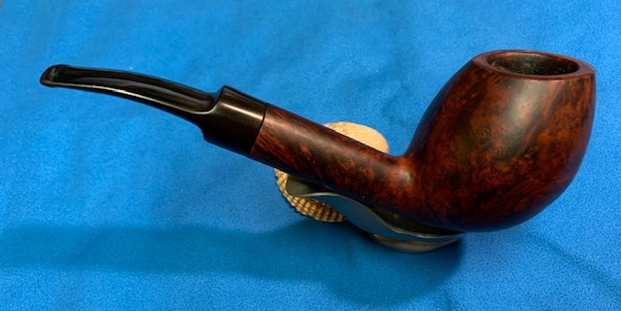
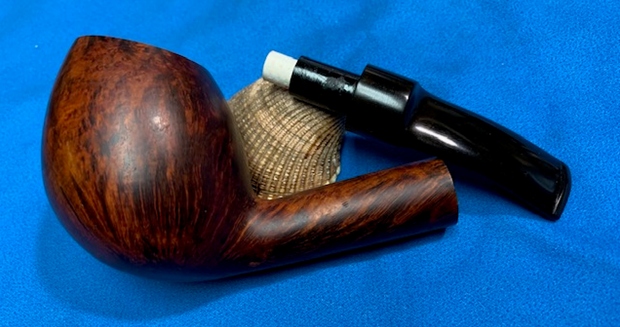
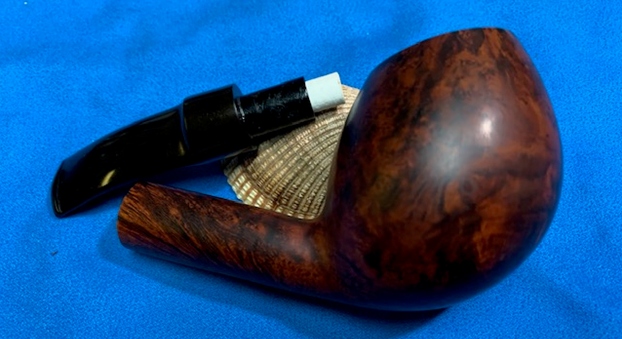
Hold on to your hats, folks – you’re in for a wild ride of pipe restoration. This amazing pipe has had quite a life, and its latest chapter includes coming into my possession. This is a Bjarne Hand-Carved freehand sitter from one of the great characters of the Danish pipe industry, Bjarne Nielsen. This pipe found its way to me through an auction and I was immediately besotted. It is a wonderful piece of briar, with a spacious bowl, and a charming, bent vulcanite stem. It’s a beauty and really makes an impression. Underneath the shank, the following words are engraved: Bjarne [over] Hand-Carved [over] Made in Denmark. There is no logo on the stem. Given the absence of a logo, I suspect that this is an older Bjarne pipe.Pipedia has a good article on Bjarne Nielsen and I recommend reading it here. For now, here is a part of that biography:

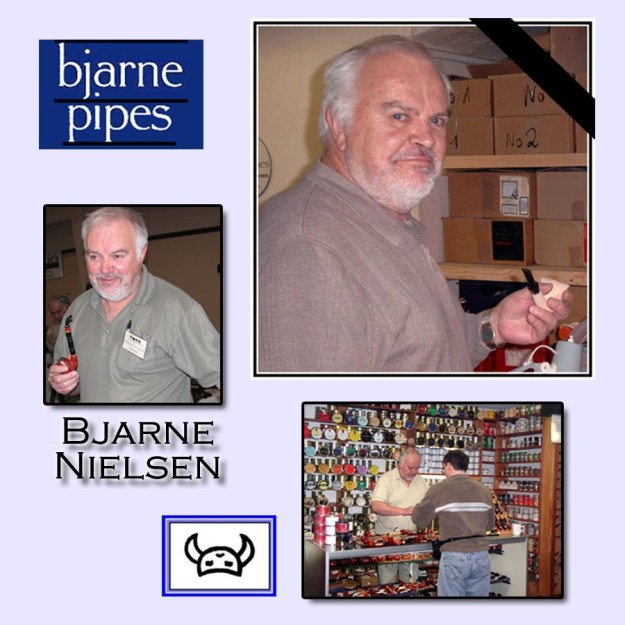
Bjarne Nielsen was born in 1941, and started smoking a pipe when he was 16 years old, and he also made some pipes for his own use at that time. He liked the pipes and made some more, giving some away as presents to friends. At the University of Copenhagen he obtained an MBA degree and found work at the Danish Ministry of Foreign Affairs where he helped Danish companies that were exporting their products establish contacts in foreign countries. That was in the 1960’s when the high demand for Danish freehand pipes started, so Bjarne was often asked if he knew of any companies that could sell those types of pipes. But all those companies had their order-books filled, so Bjarne always had to give a negative answer. One day he decided to send some pictures of his own pipes, and the response was overwhelming. He was asked how many pipes he could make and how quickly he could deliver them, and at once Bjarne had order for more pipes than he could make. What had been a relaxing hobby now became much more than that.

With a demanding job it was hard to find time to make pipes in that quantity, and Bjarne had to choose. His dream had always been to have a company of his own, and if he wanted fo fulfill that dream, now was the time to do it. But to leave a promising career, in which he probably would have become a Danish ambassador in some foreign country, was indeed a big step to take. “Many thought I was crazy”, Bjarne says, “and one of them was my wife. But she supported my decision anyway.”

He made that decision in 1973, and became a fulltime pipemaker. But he soon realized that it was impossible for one person to handle all of it–he could not make a lot of pipes, sell them and collect money for them all by himself. So he decided to find some pipemakers to help him. In those days Preben Holm was one of the biggest makers of fancy pipes, and he employed a great number of pipemakers. But not all of them were happy to work for Preben,m so Bjarne recruited a few of those.

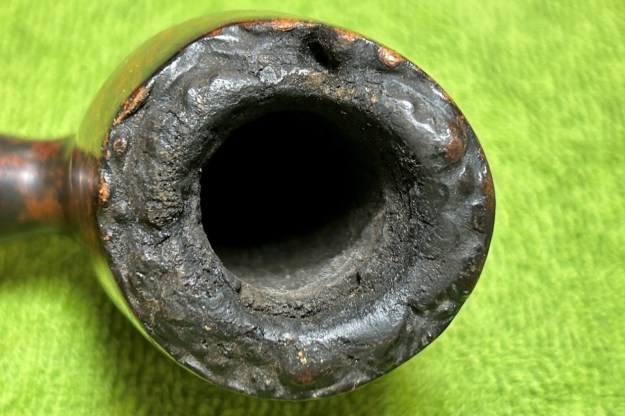
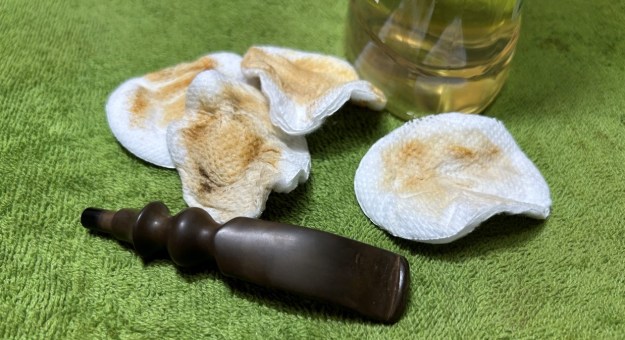
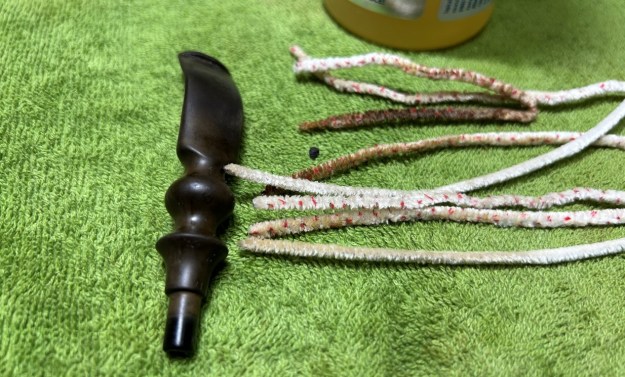
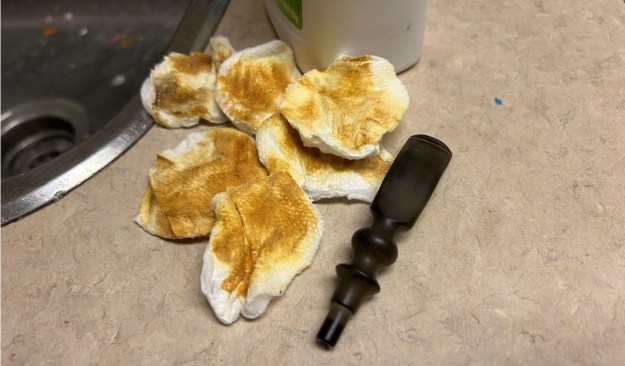
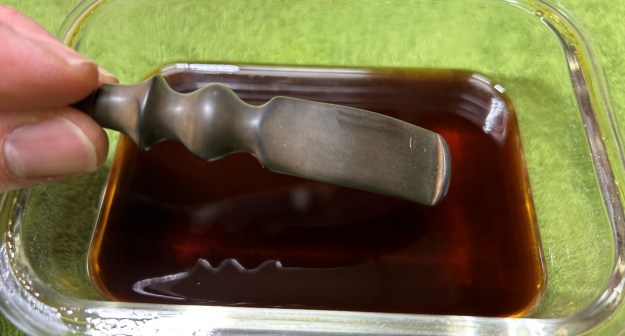
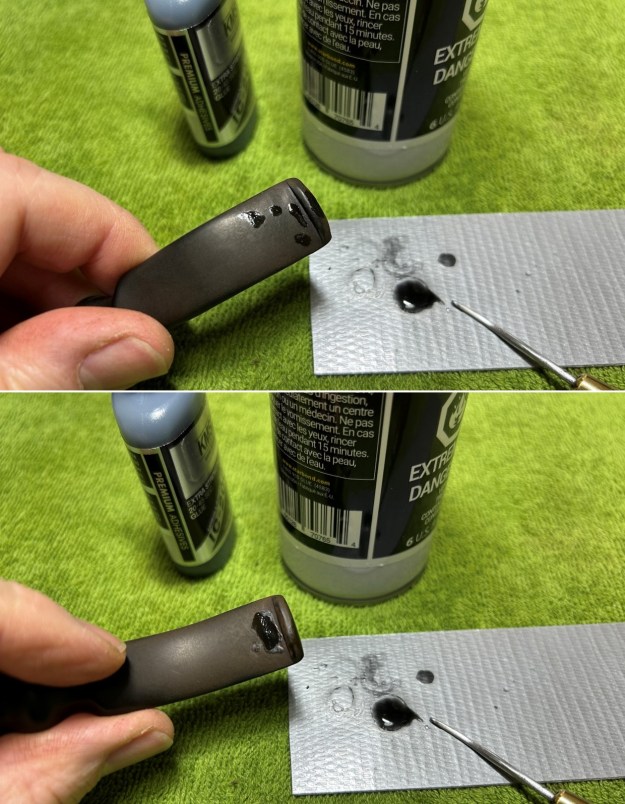
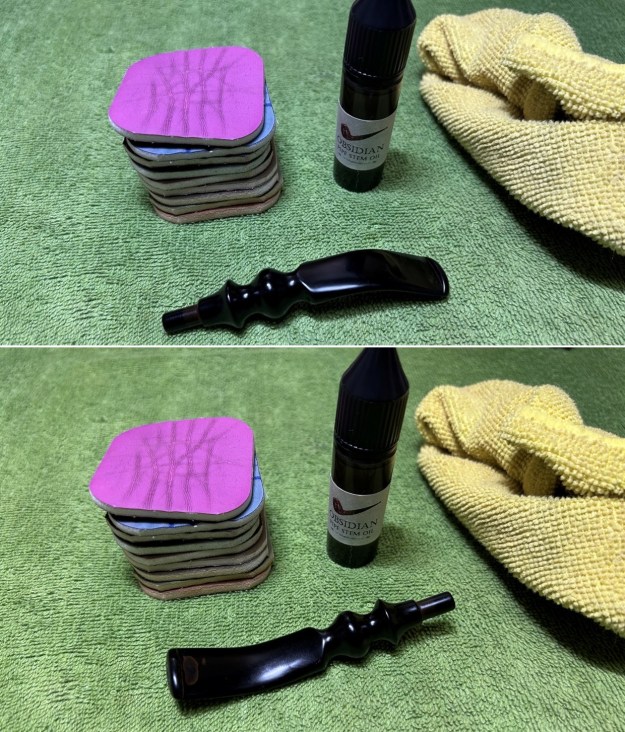
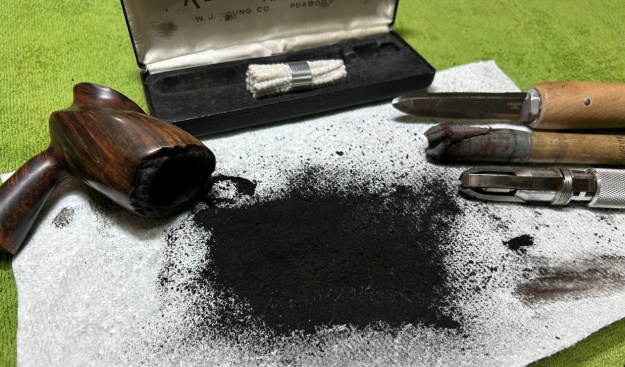
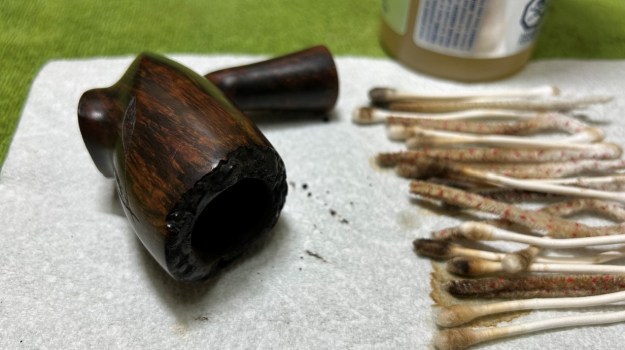
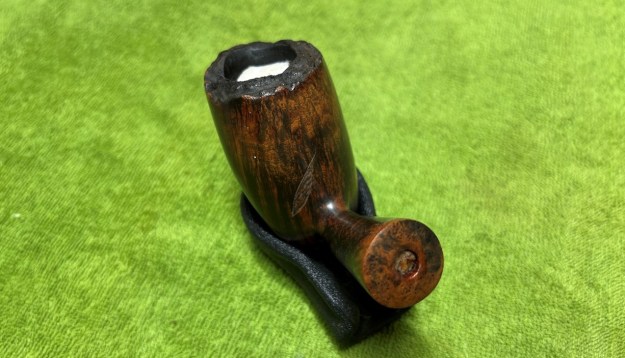
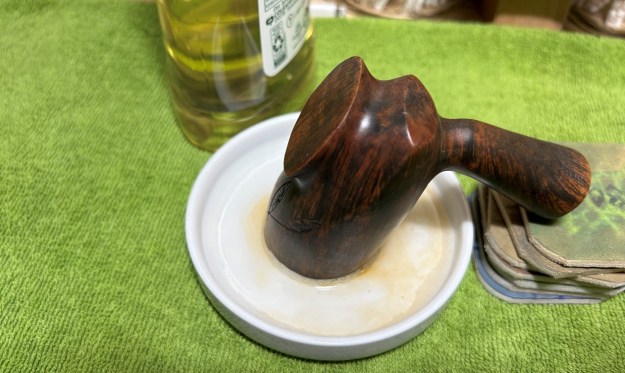
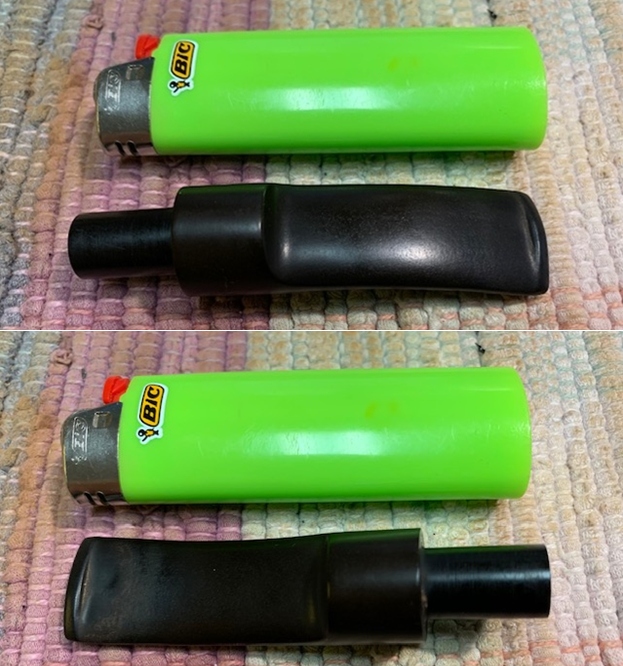
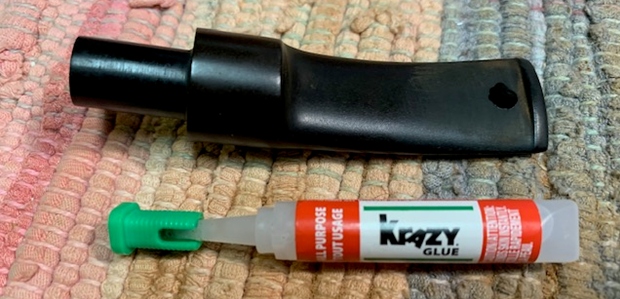
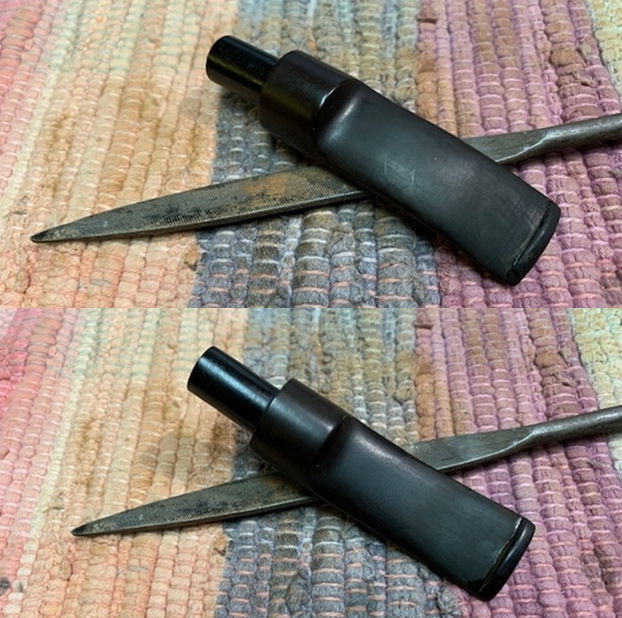
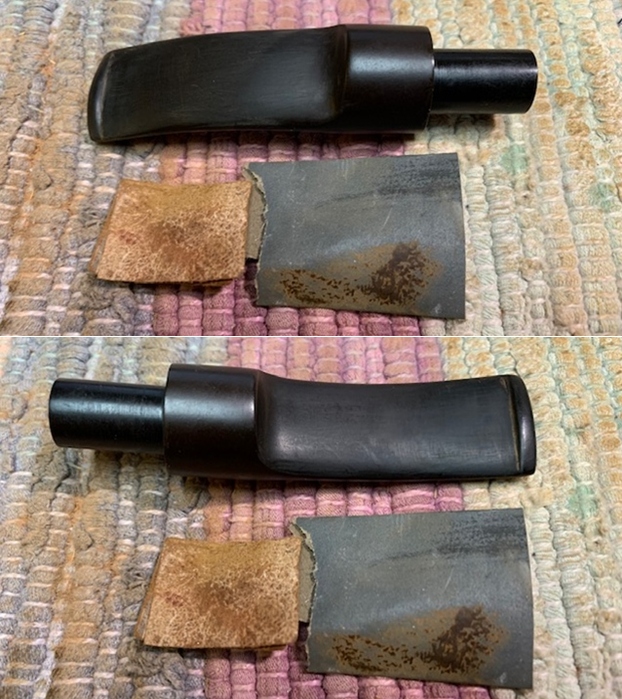
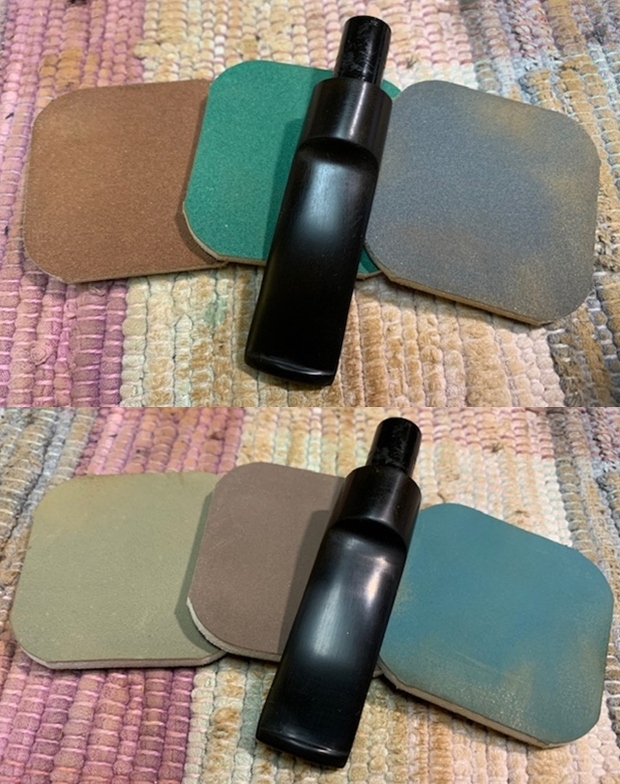
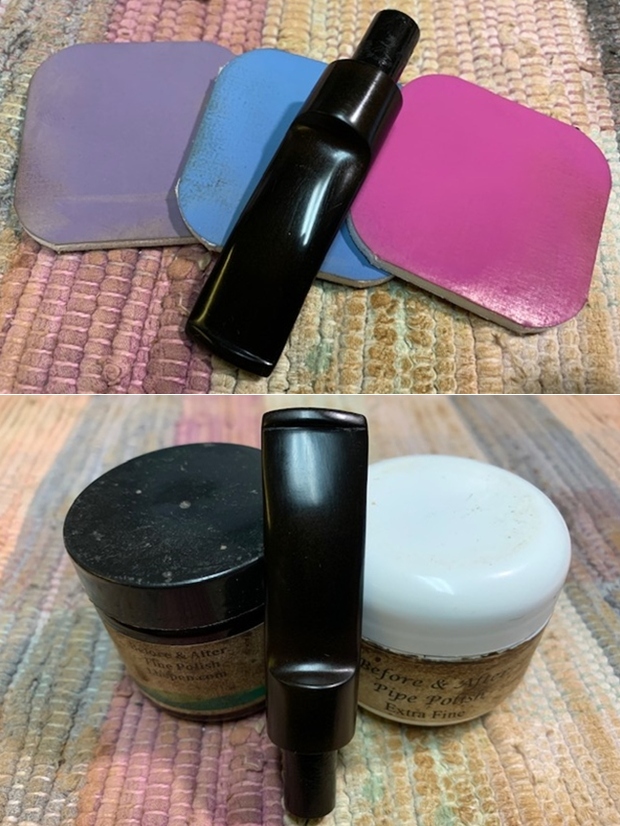
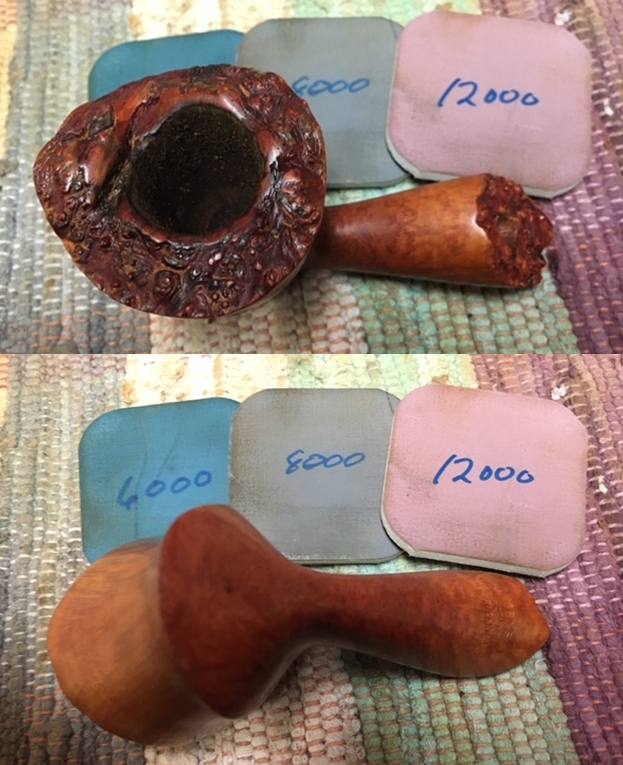
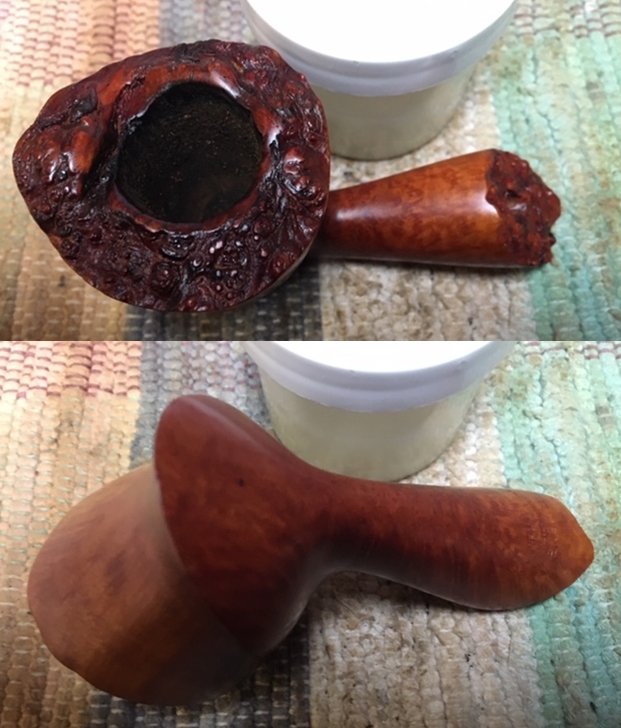
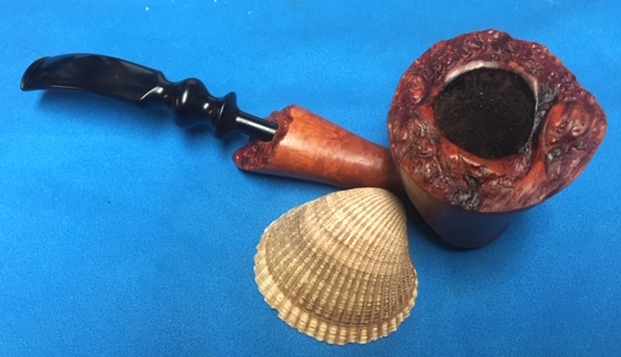
During the first years all of Bjarne’s pipes were sold in the USA, but at the end of the 1970s he visited the pipe show in Frankfurt and found that there was a market for his there as well. However, he found that the Germans wanted a completely different style of pipes–pipes in traditional shapes. So if he wanted to be successful there, he had to add a completely new line to his production. “It was not easy, we learned it the hard way,” Bjarne says. But they certainly succeeded, and for a number of years Germany became the top-selling market for Bjarne’s pipes.Let’s take a closer look at this pipe’s condition. It was obvious right away that this was a terrific pipe – but, boy, was it dirty. The stem was heavily chewed, with some significant dents in the vulcanite. There was a lot of calcification and oxidation. The stem will be fine in the end – it’ll just take some hard work. Similarly, the stummel needed help. The briar was dirty and tired. The rim was coated in lava, and the bowl was full of cake. I just needed to uncover the beauty of this baby. Let’s get on with it. To begin, I used a disposable lighter and ‘painted’ the stem with its flame. The gentle heat of the flame can cause the dents in the vulcanite of the stem to expand back into shape. In this case, it worked quite well and I got some lift in the dents. Not perfect, but definitely some improvement. The stem’s calcification was quite substantial. I used an old butter knife and gently scraped some of the thicker accretion off. Doing this now helps later in removing the oxidation. I used oil soap on a few cotton rounds and wiped down the stem to provide an initial cleaning of filth before moving on to the next steps.The primary cleaning came next. I disinfected the inside of the stem with pipe cleaners dipped in lemon-infused 99% isopropyl alcohol. I scrubbed thoroughly to make sure the interior was very clean. I used a good numbers of pipe cleaners.The goal of the next step is the removal (or minimization) of oxidation. Going to my sink, I used cream cleanser, cotton rounds, and a toothbrush, and scoured the stem to remove as much surface oxidation as possible. As the photos show, the result was a hideous, brownish mess – but better off the stem than on it.Once the stem was reasonably clean, I soaked it overnight in some Briarville Stem Oxidation Remover. This solution works to draw oxidation in the stem to the surface of the vulcanite. This is a major aid and an important step in ensuring a clean stem. The following day, I drew out the stem from its bath and scrubbed the lingering fluid with a toothbrush. Due to the severity of the oxidation, I then repeated the scrubbing with the cream cleanser for maximum effect. This really helped a lot.As the stem was now clean and dry, I set about fixing the marks and dents in the vulcanite. This was done by filling those divots with black cyanoacrylate adhesive, impregnated with carbon and rubber. I left this to cure and moved on.The penultimate step for the stem is sanding. First, with my set of needle files, I reduced the bulk of the cyanoacrylate repairs. I removed the excess adhesive as near to the surface as possible, without cutting into the vulcanite. Following that, I used all nine of the micromesh sanding pads (1,500 through 12,000 grit) to sand out flaws, even out the vulcanite, and provide gentle polishing of the finished surface. I also applied pipe-stem oil while using the last five micromesh pads. There was a wonderful, deep black shine to the stem when I was done.As the stem was (nearly) complete, I moved on to the stummel. The first step was to ream out the bowl – that is to say, remove all the cake inside the bowl. This accomplished a couple of things. First (and most obviously), it cleaned the bowl and provided a refurbished chamber for future smoking. Second, when the old cake was removed, I could inspect the interior walls of the bowl and determine if there was damage or not. I used a reamer, a pipe knife, and a piece of sandpaper taped to a wooden dowel. Collectively, these ensured that all the debris was removed. However, it was clear that there were a few heat fissures inside the bowl that would need to be repaired. It’s difficult to tell from the photo below, but the quantity of debris removed was enormous. It must have been a well-loved pipe!Similar to the stem, I then cleaned the stummel with both pipe cleaners and cotton swabs dipped in lemon-infused 99% isopropyl alcohol. With a pipe this dirty, it took quite a while and much cotton to get clean.I then decided to ‘de-ghost’ the pipe – that is to say, exorcize the remaining filth from the briar. I filled the bowl and the shank with cotton balls, then saturated them with 99% isopropyl alcohol. I let the stummel sit overnight. This caused the remaining oils, tars and smells to leach out into the cotton.My next step was to remove the lava on the rim. For this, I normally take a piece of machine steel and gently scrape the lava away. However, a jackhammer would have been more appropriate in this case! Instead, I soaked the rim in some oil soap and this softened things up enough for me to scrub the debris off with a nylon-bristle brush. To tidy up the briar, I also wiped down the outside with some oil soap on cotton rounds and used a toothbrush in the crevices. This did a good job of cleaning any latent dirt on the surface of the briar. The last step of the cleaning process was to scour the inside of the stummel with some soap and tube brushes. This was the culmination of a lot of hard work in getting the pipe clean. Additionally, there was a minuscule line on the bottom of the stummel. It was so small, in fact, that I couldn’t really determine if this was a craze line in the briar or just a little scratch. Just to be on the safe side, I applied a tiny bit of clear cyanoacrylate adhesive and sanded it down.To address the heat fissures inside the bowl, I used an epoxy adhesive that is extremely hard, resistant to high temperatures, and completely inert when cured. It worked superbly. I gently filled the affected area with the epoxy and let it cure for a full 24 hours. The next day, I roughened up the epoxy’s surface with 220-grit sandpaper for the next step. I thinly coated the inside of the bowl with a mixture of my wife’s homemade yogurt and activated charcoal. Once hardened, this provides a good, faintly rough surface for a new cake to build.I used all nine micromesh pads (1,500 through 12,000 grit) to sand the outside of the stummel and finish it off. This sanding minimizes flaws in the briar and provides a beautiful smoothness to the wood. I rubbed some LBE Before & After Restoration Balm into the briar and let it sit for 30 minutes or so. The balm moisturizes the wood and gives a beautiful depth to the briar. I then buffed the stummel with a microfibre cloth. For the final step, I took the pipe to my bench polisher and carefully buffed it – first with a blue diamond compound, then with three coats of carnauba wax. This procedure makes the pipe look its best – the stummel sings and the stem glows. You can now see why I called this article ‘You’ve Come a Long Way, Baby!’All done! This Bjarne Hand-Carved freehand sitter looks fantastic again and is ready to be enjoyed by its next owner. I am pleased to announce that this pipe is for sale! If you are interested in acquiring it for your collection, please have a look in the ‘Danish’ section of the store here on Steve’s website. You can also email me directly at kenneth@knightsofthepipe.com. The approximate dimensions of the pipe are as follows: length 6¾ in. (175 mm); height 3 in. (75 mm); bowl diameter 1¾ in. (44 mm); chamber diameter 1 in. (25 mm). The weight of the pipe is 2½ oz. (74 g). I hope you enjoyed reading the story of this pipe’s restoration as much as I enjoyed restoring it. If you are interested in more of my work, please follow me here on Steve’s website or send me an email. Thank you very much for reading and, as always, I welcome and encourage your comments.

Breathing Life into a Tired Looking Bjarne Hand Carved Freehand


Blog by Steve Laug

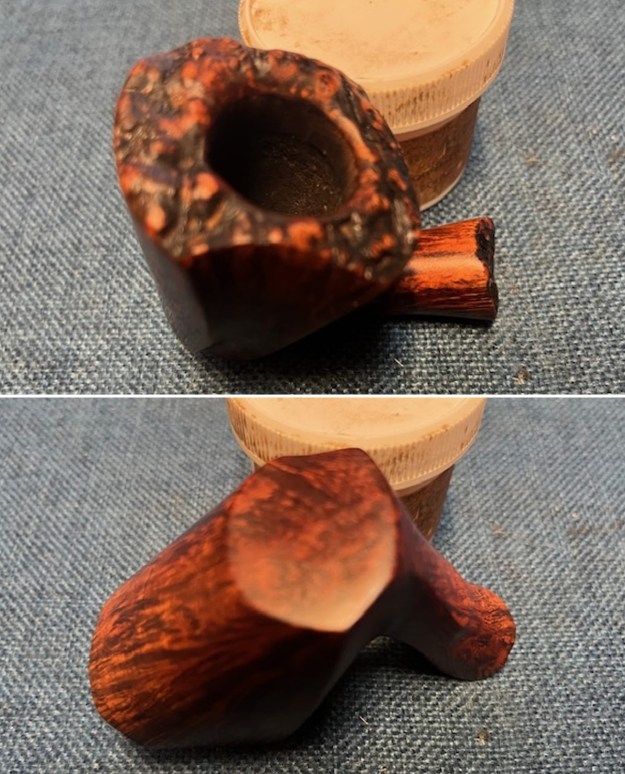
This particular Freehand pipe is another one that came in a lot that Jeff and I purchased on early in 2020 from a woman in Australia who had contacted us about selling her late husband’s collection. He had some beautiful pipes in his estate and this was another of them. It is stamped on the underside of the shank and reads Bjarne [over] Hand Carved [over] In Denmark. It is a smooth finish pipe with some interesting carved feathers (leaves) on the right side of the shank and the bowl. The rim top and shank end are finished in rugged plateau. The pipe had a thick cake in the bowl and there was a thick coat of lava on the smooth bevel of the rim and into the plateau. The rest of the plateau on the rim top and shank end was clogged with dust and debris in the valleys and crevices. The original orange variegated acrylic saddle stem had the Bjarne Bj logo on the top of the blade. It was dirty inside and out and had tooth marks and chatter on both sides near the button. The pipe was dirty but still had a unique beauty. Jeff took photos of the pipe before he started his work on it. Jeff took photos of the rim top and the stem to show the condition of the pipe when we received it. You can see the cake in the bowl and the build up of lava and debris in the plateau of the rim top and shank end. I really is a dirty pipe. The variegated orange acrylic stem and has chatter and a few deep tooth marks on both sides near the button. He took photos of the sides of the bowl and the heel to give an idea of the shape and the condition of the briar around the bowl. It really is a nicely shaped pipe that has a great finish under the grime on the briar. The next photos Jeff took show the stamping on the underside of the shank. It is clear and readable as noted above. He also took a photo to show the stem logo. In a previous blog I had researched the brand quite a bit. I have included it in full below for information on this pipe (https://rebornpipes.com/2020/03/07/another-pipe-from-the-eastern-canada-lot-a-hand-carved-bjarne-freehand/). I quote:

I turned my favourite go to sites on background of brands. The first is Pipephil’s site (http://www.pipephil.eu/logos/en/logo-b5.html). There I looked up the Bjarne brand. I have copied the pertinent information below.

Bjarne Nielsen (1941 – † 2008) distributed his own “Bjarne” brand and pipes carved by Danish pipemakers (Mogens Johansen, Tonni Nielsen or Ph. Vigen). High grade pipes were stamped “Bjarne Nielsen” without any logo on the mouthpiece and graded A, B, C and D. Bjarne second brand: Viking.

I have included a screen capture of the section on the brand below.I turned to Pipedia and looked up the brand for a bit more information on the pipes that were stamped like the one that I am working on (https://pipedia.org/wiki/Bjarne). Toward the end of the article I found what I was looking for. I quote:

Among the pipemakers that worked for Bjarne were Johs (for the lower priced high volume pieces), and makers like Ph. Vigen, Ole Bandholm and Tonni Nielsen for high grade pieces. The cheaper line was stamped “Bjarne” while the highest grades were stamped “Bjarne Nielsen” (never with the pipemakers’ name) and graded, from highest to lowest, by the letters: AX, A, B, C, D, E, F, G, H, I, and J.

Now I knew that I was dealing with the cheaper line of pipe made by the company. It was stamped Bjarne while the higher grade pipes were stamped Bjarne Nielsen with a grade stamp.

Jeff did a great job cleaning off the debris and grime on this old. He reamed it with a PipNet reamer and smoothed the walls of the bowl with a Savinelli Fitsall pipe knife. He scrubbed out the mortise and the airway in the shank and the stem with alcohol, cotton swabs and pipe cleaners. He scrubbed the exterior of the bowl, rim and shank with a tooth brush and Murphy’s Oil Soap to the oils and tars on the bowl, rim and shank. He rinsed it under running water. He dried it off with a soft cloth. Once the grime was removed the finish underneath was in stellar condition. The rich patina of the older briar was a variegated finish of smooth and sandblast looked great. He scrubbed the exterior of the stem with Soft Scrub then soaked it in a bath of Briarville’s Pipe Stem Deoxidizer. He rinsed off the deoxidizer with warm water and wiped the bowl and stem down with a light coat of olive oil to rehydrate both. The pipe really was quite stunning. I took photos of the pipe to show its condition before I started my work on it. I took close up photos of the stem and the rim top to show both how clean they were. The rim top and bowl were in good condition with some darkening on the inner bevel of the bowl edge and rim top. The stem looked better but the deep tooth marks and chatter were still present. I would need to remove those to bring the stem back.I took a photo of the stamping on the underside of the shank. You can see from the photo that it is readable. It is clearer on the top half of the stamp than the lower but it is still readable.I removed the stem from the bowl and took a photo of the parts to give a sense of the beauty of the pipe. I started my work on this pipe by addressing the darkening on the rim top and bowl edge. I sanded the edge bevel with a folded piece of 220 grit sandpaper to smooth out the edge and to reduce the darkening. It looked better when I  had finished.I polished the briar with micromesh sanding pads – dry sanding with 1500-12000 grit pads. I wiped the bowl down after each pad with a damp cotton cloth. The briar took on a shine by the last pads.I worked some Before & After Restoration Balm into the surface of the briar with my finger tips and a horse hair shoe brush to get into the crevices of the plateau rim top and shank end. The product is incredible and the way it brings the grain to the fore is unique. It works to clean, protect and invigorate the wood. I set the bowl aside and turned my attention to the stem. I filled in the deep tooth marks on the surface of both sides with clear CA glue. Once it cured, I sanded them smooth with 220 grit sandpaper to blend them into the surface of the briar. I started the polishing of the stem with 400 grit wet dry sandpaper. I polished the stem with micromesh sanding pads – wet sanding it 1500-12000 pads. I wiped it down with a damp cloth after each pad to protect it and preserve it. I polished it with Before After Pipe Polish – both Fine and Extra Fine. I am really happy with the way that this Bjarne Hand Carved Freehand turned out. It really is a beautiful looking pipe with a unique shape and smooth, plateau and carved finishes. The fancy original acrylic saddle stem is really nice. The briar really came alive with the buffing. The rich brown and black stains of the finish gave the pipe a sense of depth with the polishing and waxing. I put the stem back on the bowl and carefully buffed the pipe with Blue Diamond on the buffing wheel using a light touch on the briar. I gave the bowl and the stem multiple coats of carnauba wax on the buffing wheel. I buffed the pipe with a clean buffing pad to raise the shine. I hand buffed the pipe with a microfiber cloth to deepen the shine. The finished Bjarne Freehand really is a beauty and feels great in the hand and looks very good. Give the finished pipe a look in the photos below. The dimensions of the pipe are Length: 7 inches, Height: 2 ½ inches, Outside diameter of the bowl: 2 ½ inches long x 2 inches wide, Chamber diameter: 7/8 of an inch. The weight of the pipe is 88 grams/3.10 oz. The pipe will be going on the rebornpipes store soon. It will be in the section on Danish Pipe Makers if you would like to add it to your collection. Thanks for reading this blog and my reflections on the pipe while I worked on it. It was a fun one to work on!

Breathing New Life into a Bjarne Hand-Carved Canted Egg


Blog by Steve Laug

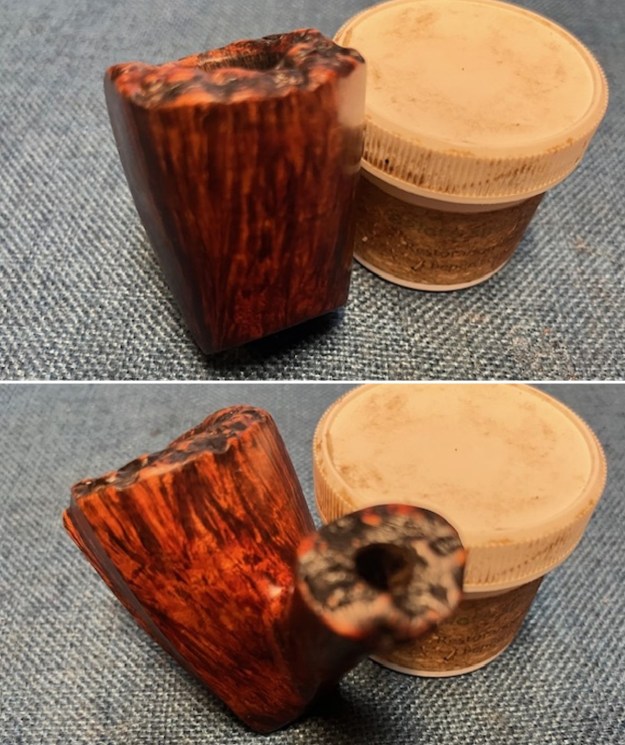
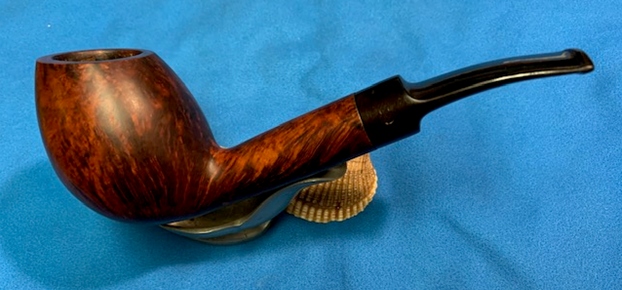
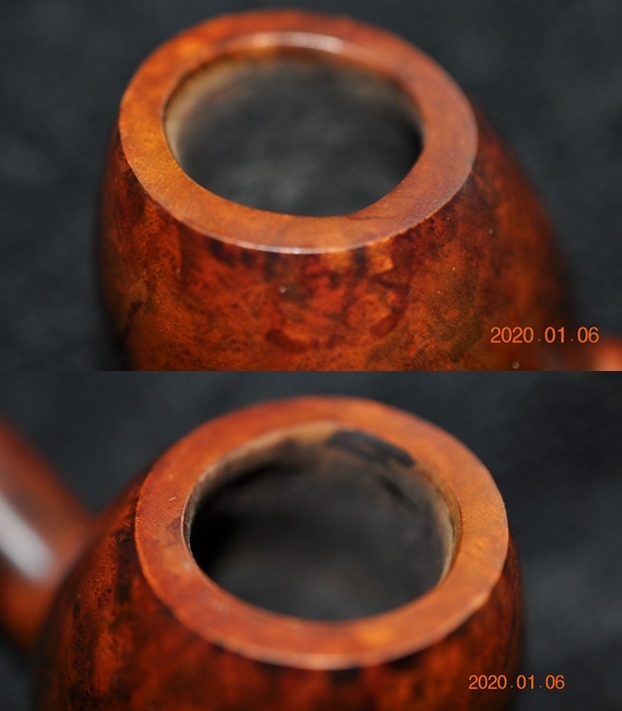
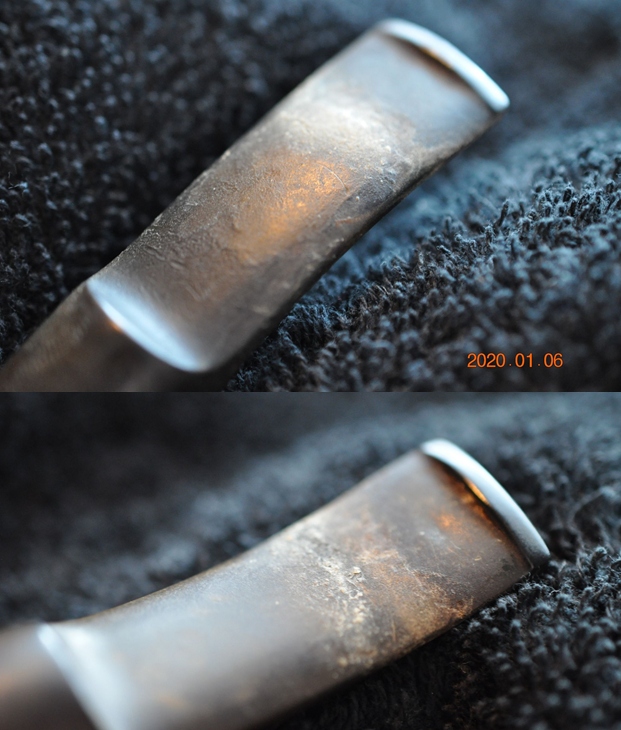
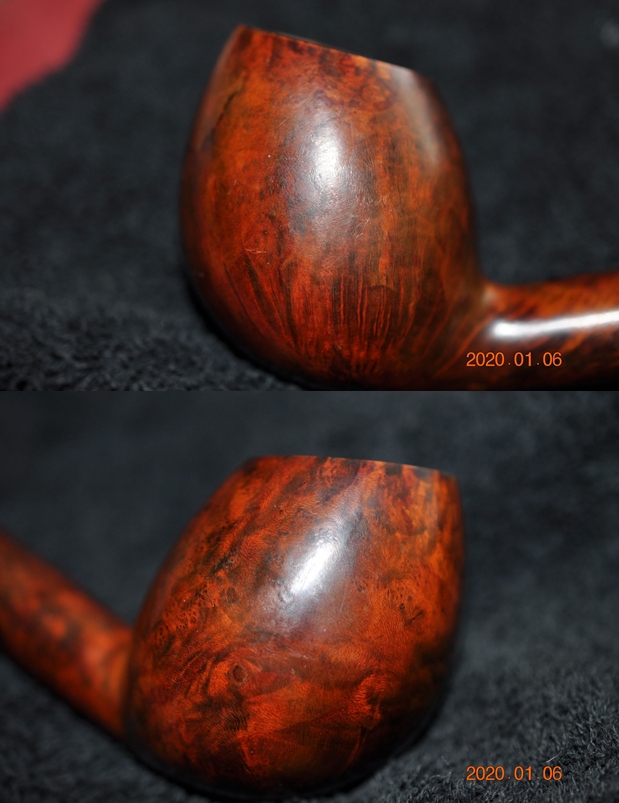
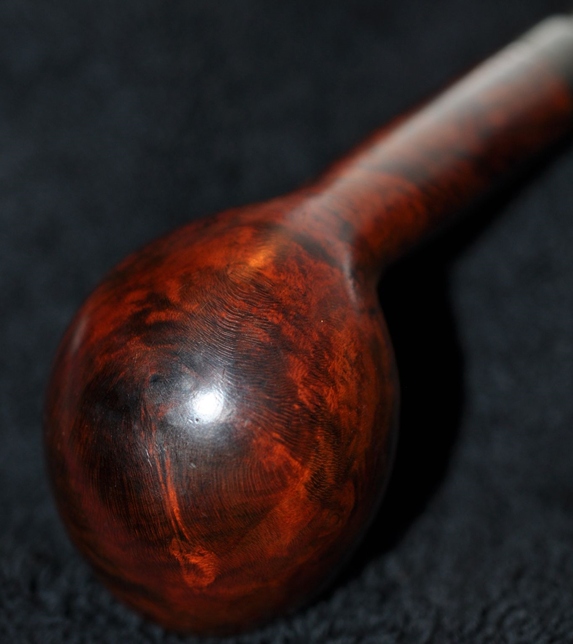
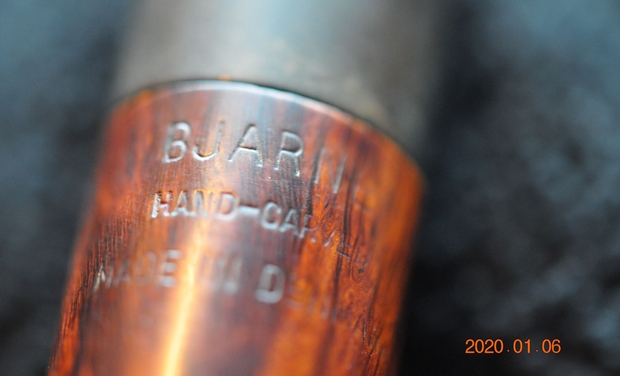
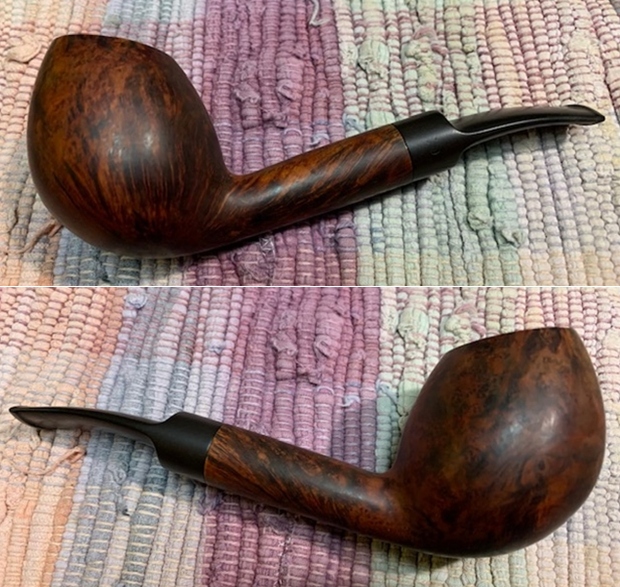
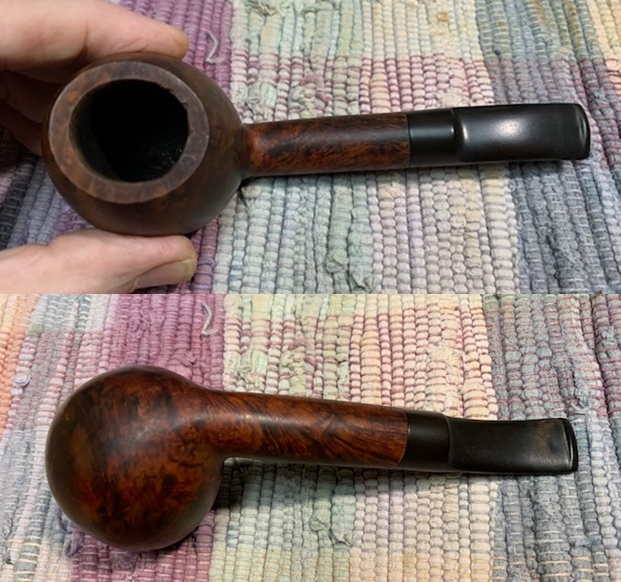
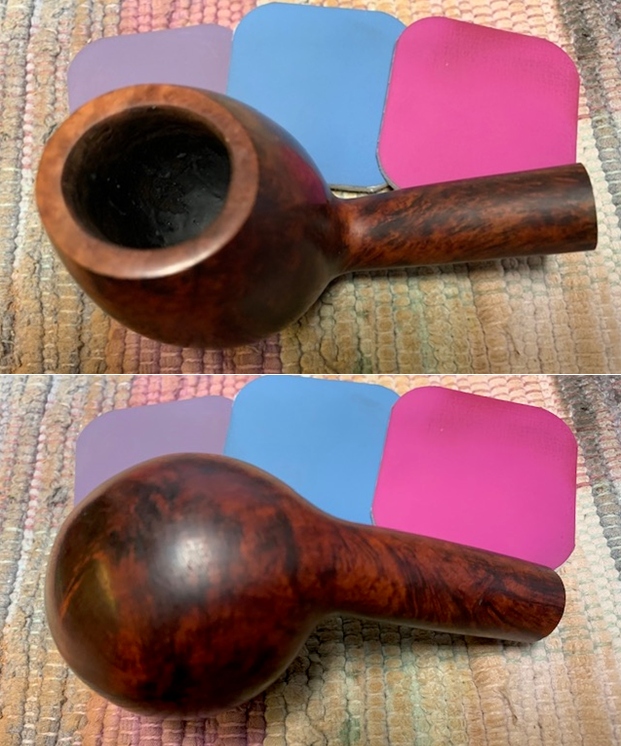
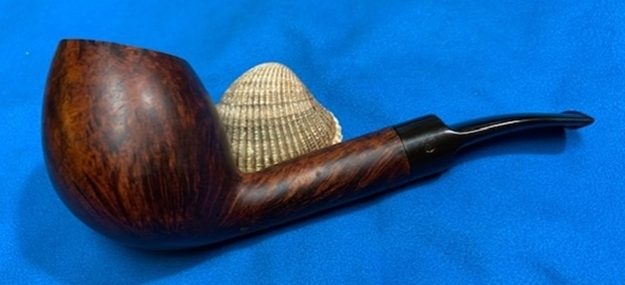
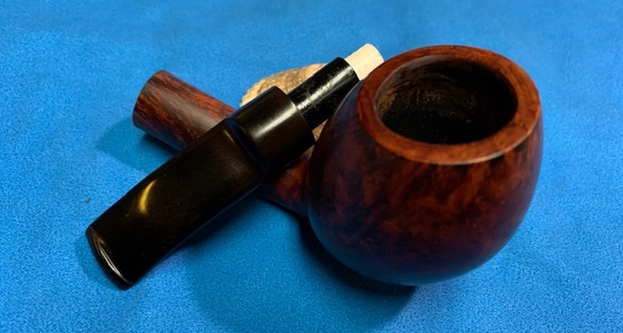
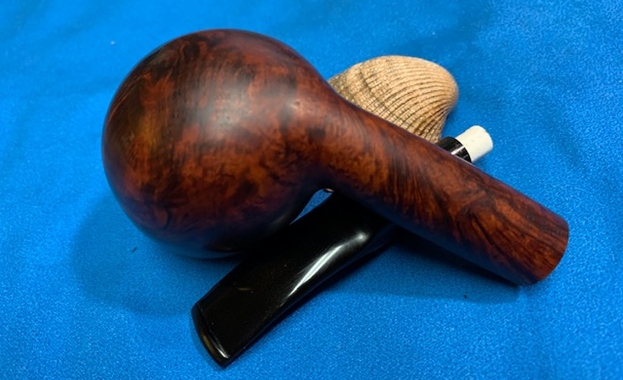
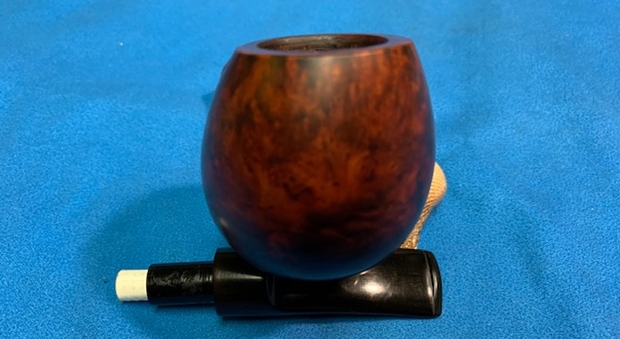
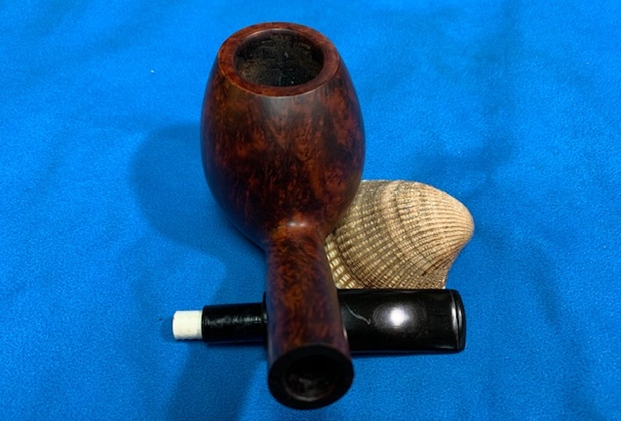
The next pipe came to us from a lot of pipes that Jeff and I purchased from a fellow in Los Angeles, California, USA. It is canted egg shape pipe that is quite large in the hand. Even though it was dirty it had some charm showing through the grit and grime of the years. The grain around the bowl and shank were quite stunning under the grime. On the underside of the shank it was stamped Bjarne [over] Hand-Carved [over] Made in Denmark. The finish is filthy with dust and grit ground into the briar of the bowl and shank sides. The bowl had a light cake and no overflow of lava on the top and inner edge of the rim. It was surprisingly clean inside the bowl other than being just dusty. The stem is calcified, oxidized and had tooth marks and chatter on both sides near the button. It was a filter pipe and came to us without a filter in the shank. The interior of the stem and shank were quite dirty with tars and oils. Jeff took some photos of the pipe to show its overall condition before he started his cleanup work. He took photos of the rim top and bowl to give a clear picture of the good the pipe bowl looked inside. The rim was quite clean but the inner edge was out of round on backside. It was not burned but appeared to have been caused when it was reamed sometime in its history. The photos show the contrast of the bowl’s general condition with the wear and tear on the saddle stem surface.   Jeff took photos of the sides and heel of the bowl and shank to give a picture of what the briar around the pipe looked like. He took a photo of the stamping on the shank. It reads as noted above and is clear and readable.    I turned to my favourite go to sites on the background of brands. The first is Pipephil’s site (http://www.pipephil.eu/logos/en/logo-b5.html). There I looked up the Bjarne brand. I have copied the pertinent information below.

Bjarne Nielsen (1941 – † 2008) distributed his own “Bjarne” brand and pipes carved by Danish pipemakers (Mogens Johansen, Tonni Nielsen or Ph. Vigen). High grade pipes were stamped “Bjarne Nielsen” without any logo on the mouthpiece and graded A, B, C and D. Bjarne second brand: Viking.

I have included a screen capture of the section on the brand below. I turned to Pipedia and looked up the brand for a bit more information on the pipes that were stamped like the one that I am working on (https://pipedia.org/wiki/Bjarne). It is a great history of the brand and a good read. Toward the end of the article I found what I was looking for. I quote:

Among the pipemakers that worked for Bjarne were Johs (for the lower priced high volume pieces), and makers like Ph. Vigen, Ole Bandholm and Tonni Nielsen for high grade pieces. The cheaper line was stamped “Bjarne” while the highest grades were stamped “Bjarne Nielsen” (never with the pipemakers’ name) and graded, from highest to lowest, by the letters: AX, A, B, C, D, E, F, G, H, I, and J.

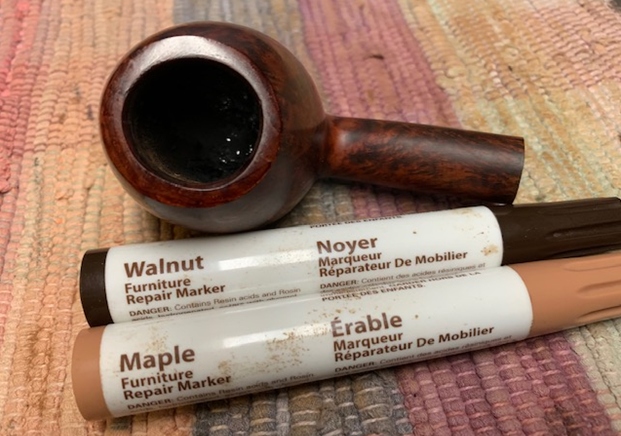
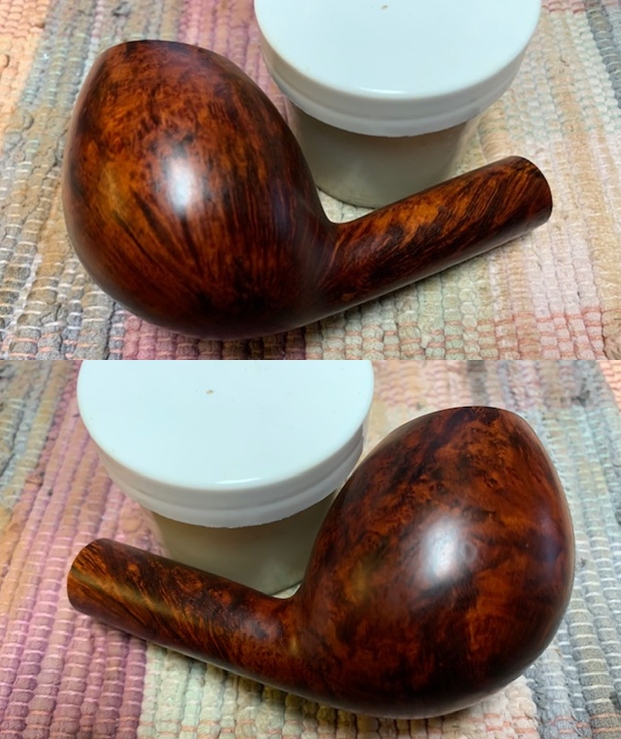
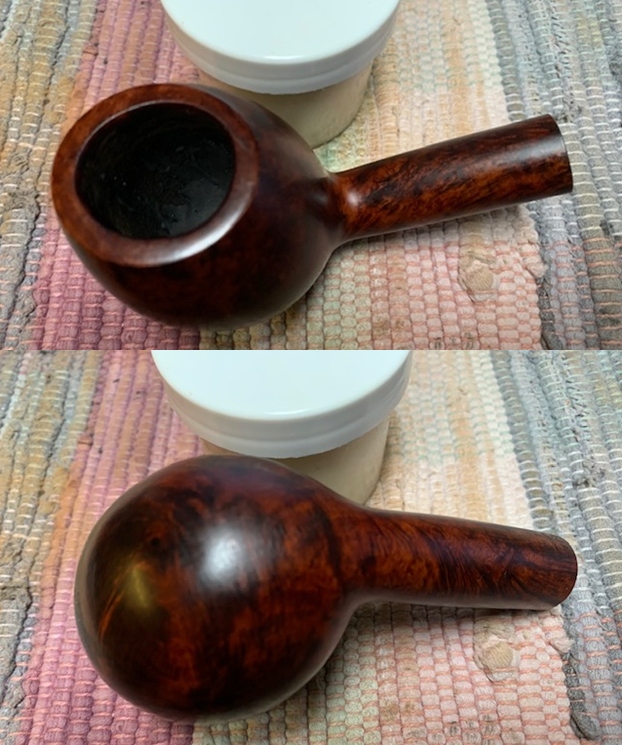
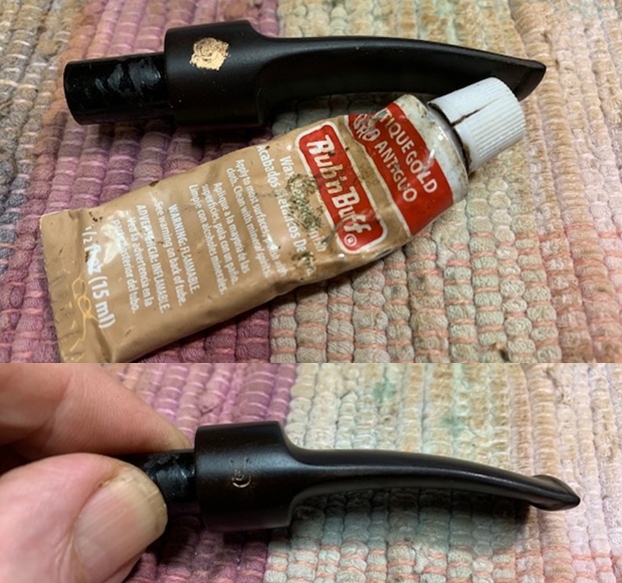
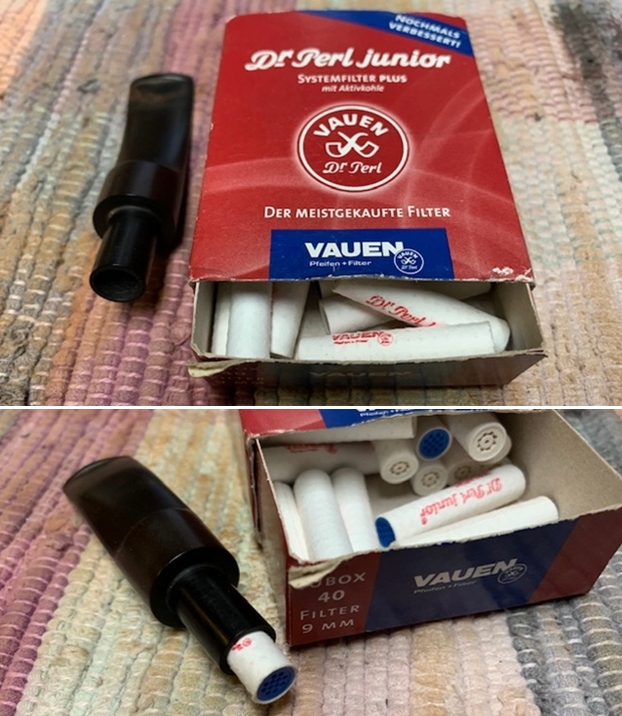
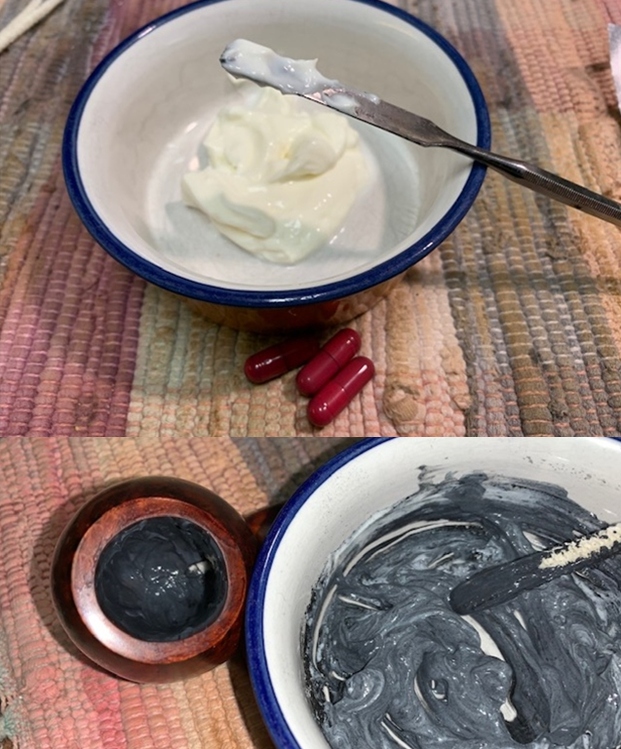
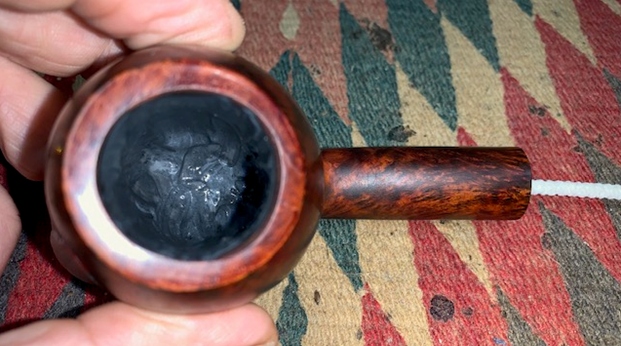
Now I knew that I was dealing with the cheaper line of pipe made by the company. It was stamped Bjarne while the higher grade pipes were stamped Bjarne Nielsen with a grade stamp. Now it was time to work on the pipe. Jeff had cleaned up the pipe with his usual penchant for thoroughness. He reamed the pipe with a PipNet Pipe Reamer and cleaned up the remnants with a Savinelli Fitsall Pipe Knife.  He scrubbed the bowl with undiluted Murphy’s Oil Soap with a tooth brush. He worked over the debris on the plateau rim top and was able to remove it. He rinsed it under running warm water to remove the soap and grime. He cleaned out the inside of the shank and the airway with alcohol, cotton swabs and pipe cleaners. I took photos of the pipe bowl once I received it. It really looked good.    The bowl had been over reamed to the point that there was a pit in the bottom of the bowl. There was a trough from the airway to the front of the bowl and large dip mid bowl. It makes the bottom of the bowl quite thin. There were chips out of the rim top and the bowl was out of round. The stem looks really quite good. There were some light tooth marks and chatter on both sides near the button.I took a photo of the stamping on the underside of the shank. It was clear and read as noted above. I took the stem off the shank and took a picture of the pipe to give a sense of its overall look. It is going to be a great looking pipe once the restoration is finished. I decided to begin my work on the pipe by dealing with the damage to the rim top and inner edge of the bowl. I topped the bowl on a topping board with 220 grit sandpaper. I took of the damage and removed the chips from the rim top. I used a folded piece of 220 grit sandpaper to reshape the inner edge of the bowl. I gave it a light bevel to deal with the damage to the edge of the bowl. When I was finished it looked a lot better than when I started.   The next item on the agenda was the surprise mess on the bottom of the bowl. The bowl had a trough from the entry of the airway to the front of the bowl and a pit mid bowl that made the bowl bottom dangerously thin. I mixed up a batch of JB Weld and filled in both the trough and the pit in the bowl bottom. I used a folded pipe cleaner to press it into the bottom and set it aside to cure.  I polished the briar with micromesh sanding pads – dry sanding with 1500-12000 grit pads. I wiped it down after each sanding pad to remove the sanding dust. I stained the top of the rim with a mix of Walnut and Maple Stain pens and was able to match the surrounding briar perfectly. Once it is buffed it will be very nice.I rubbed the bowl down with Before & After Restoration Balm. I worked it into the surface of the bowl sides and shank with my fingertips. The product works to clean, enliven and protect the briar. I let the balm sit for 15 minutes and then buffed with a cotton cloth to raise the shine.   I set the bowl aside and turned my attention to the stem that I had picked out. I “painted” the surface of the stem with the flame of a lighter to lift the tooth marks. I was able to lift all of them on the top side and all but one on the underside. I filled them in with super glue and set it aside to cure. I used a file to flatten the repair on the stem and reshape the button. Once I had it reshaped and the repair flattened I sanded the stem with 220 grit sandpaper to remove the scratching and blending them into the surface. I began the polishing with 400 grit wet dry sandpaper. The stamping on the left side of the saddle stem was faint but I touched up what remained with Rub’n Buff Antique Gold.  I rubbed it into the stamping and used a tooth pick to work it into the stamp. I buffed it off with a cotton pad.I polished the scratches out of the stem with micromesh sanding pads – 1500-12000 grit pads. I wiped it down with a damp cloth after each sanding pad. I used Before & After Pipe Polish – both Fine and Extra Fine to further polish the stem.    The stem and shank were made for a 9MM filter so I took out a box of Vauen Dr. Perl Filters and fit one into the end of the stem. It fit perfectly in both the stem and the shank. Once the repair in the bowl bottom cured I mixed a bowl of sour cream and charcoal powder to protect the bowl and facilitate breaking it in the first few smokes. I put a pipe cleaner in the airway into the bowl and used a folded pipe cleaner to paint the walls and bottom of the bowl with the mixture. I set the bowl aside to let the mixture harden and cure. Once the bowl coating dries it is neutral and leaves behind no taste that affects the flavour of the tobacco.   This smooth finished Bjarne Hand-Carved Canted Egg is a great looking pipe. It is a pipe made in Denmark. The fancy, saddle vulcanite stem that is drilled for a 9mm filter works well and goes nicely with the reds of briar. I put the stem back on the bowl and buffed the pipe with Blue Diamond on the buffing wheel using a light touch on the briar. I gave the bowl and the stem multiple coats of carnauba wax on the buffing wheel and followed that by buffing the entire pipe with a clean buffing pad. I hand buffed the pipe with a microfiber cloth to deepen the shine. The finished Bjarne Canted Egg fits nicely in the hand and feels great. Give the finished pipe a look in the photos below. The dimensions of the pipe are Length: 6 ½ inches, Height: 2 ¼ inches, Outside diameter of the bowl: 1 ½ inches, Chamber diameter: 7/8 of an inch. The weight of the pipe is 74grams/2.61oz. I will be adding it to the rebornpipes store shortly in the Danish Pipe Makers Section. Thanks for reading this blog and my reflections on the pipe while I worked on it. There are many more to come!
Rusticating a Bald Spot on the Briar on a Bjarne Bent Apple


Blog by Steve Laug

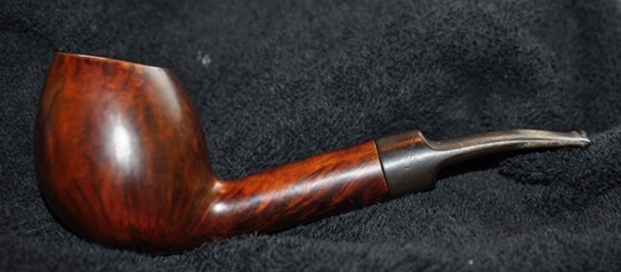
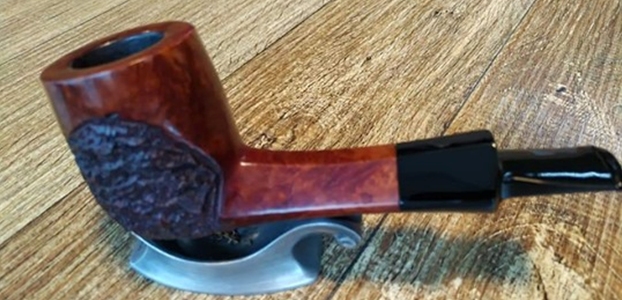
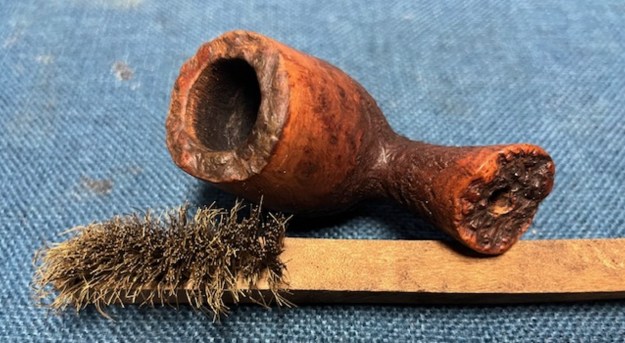
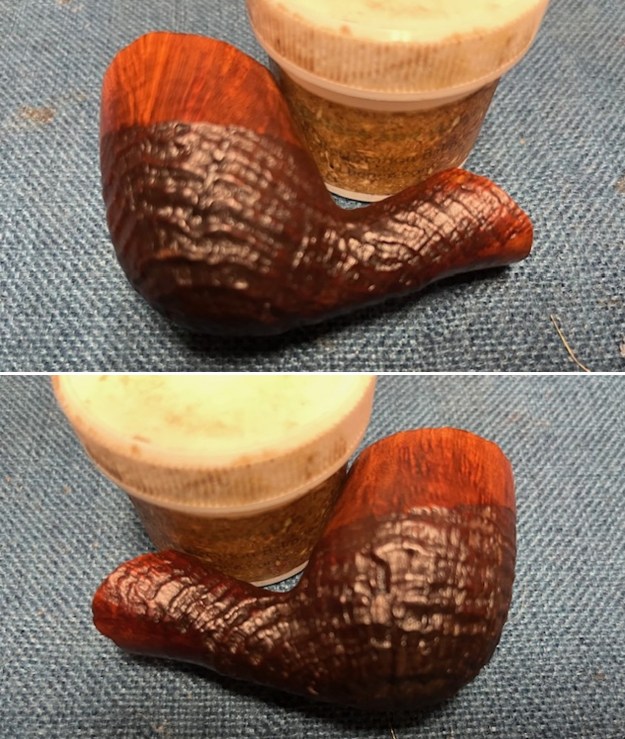
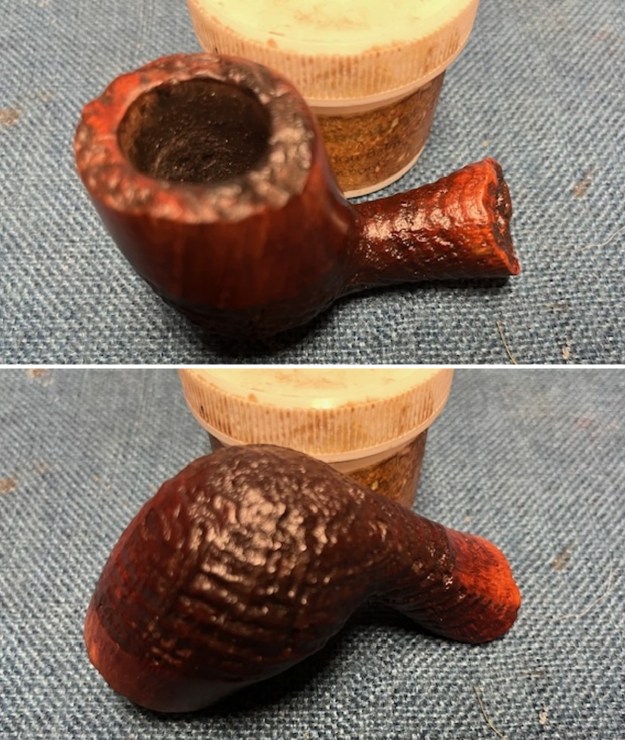
This is one of Alex’s pipes and one that I have admired for a while. Bjarne pipes are well made and a pleasure to smoke. This particular pipe has some amazing grain on the right side, shank and front and back. The left side has a large bald spot with no grain to speak of that pretty much covered the entirety of the left side. Alex wanted me to try to come up with some kind of rustication pattern that would highlight the character of the bowl and add to that rather than change it. I took photos of the pipe from around the sides and the top and bottom of the bowl. It is a short pipe with a full sized bowl. The shank looks long and the stem is short and stubby but very comfortable. Have a look. I did a bit of research on some of the other carvers and how they used spot rustication to give character to a bowl. I found a great looking pipe by Winslow that used the same idea as I was thinking and sent it to Alex. He was good with the concept so I was good to go. However, I am always very slow to change someone’s pipe as it is generally not possible to make it like it was before! I spent a few months really thinking about it and looking at the Winslow and looking at the Bjarne and then putting the pipe aside and doing other things. I have included the photo of the Winslow below for comparison sake so you can see where I was heading with the rustication.I finally decided to give it a go this afternoon before supper. Sometimes I mark the portion of the pipe with a line or tape to give definition to the area I want to rusticate. But today I decided just to go with the flow and chase the grain around the edges of the bald spot. I have a rustication tool that a friend of rebornpipes made for me. It has a great ball handle and a cluster of hardened nails set in the head and kept from flexing by a hose clamp. I worked over the area of the bowl with that to get the rustication started. I used a Dremel and some burrs to cut a groove around the rusticated portion of the bowl similar to the way that Winslow did. I also knocked off the high spots on the rustication with both burrs and reworked areas that were not even. I used a medium grit sanding sponge to smooth out the high spots a bit and then stained the rusticated portion with black aniline stain. I applied it and flamed it with a lighter to set is in the stain. I buffed the bowl with red Tripoli to smooth out the high spots on the surface. I took photos of the pipe at this point in the process. I still had some more sanding and polishing the surface of the rustication but the basic form is taking shape. I used a sanding sponge to smooth out the high spots a bit more. I worked some Before & After Restoration Balm into the surface of the briar with my fingertips to clean, enliven and protect it. I let the balm sit for a little while and then buffed with a cotton cloth to raise the shine. I buffed the bowl with Blue Diamond on the buffing wheel and rubbed some Conservator’s Wax into the rustication of the left side of the bowl. I buffed the rest of the pipe with carnauba wax and gave the pipe a clean buff. I hand buffed it with a clean cotton pad to raise the shine. The finished rustication on the pipe is shown in the photo below. It is a nice looking pipe. Thanks for your time.


Another Pipe from the Eastern Canada Lot – A Hand Carved Bjarne Freehand


Blog by Steve Laug

I decided to work on another pipe from the fellow in Kitchener, Ontario who sent me some pipes he needed cleaned up. He had been referred to me by my local pipe and cigar shop. While I am not currently adding more pipes to my queue of repairs I have made a commitment to the shop to work on pipes for their customers. Generally they have one or two pipes that need a bit of work. This fellow sent me the following email:

I just came across my smoking pipes that I’ve had in storage for about 40 years. I’m wondering what you’d charge to have them refurbished. There are 17 in total (11 are Brighams and 6 are various).

It turns out he said he had 17 pipes. That was certainly more than I expected but I communicated that there was a large queue ahead of him and I would have to fit them in as I could. He was fine with whatever time it took. He sent me the following photos of his collection that he wanted restored. The first photo shows his eleven Brigham pipes – all very interesting shapes. The second photo shows the six various pipes in the collection – A Republic Era Peterson’s System 1312 (Canadian Import), A Bjarne Hand Carved Freehand, a Comoy’s Everyman London smooth billiard, a GBD Popular Dublin 12, an English made Kaywoodie Rustica 72B, a Kriswill Bernadotte 60 with a broken tenon. When the box arrived there were two additional pipes included for a total of 19 – a Ropp 803 Deluxe Cherrywood Poker and a Comoy’s Sandblast Everyman Canadian 296. It was a lot of pipes! I have been randomly choosing the next pipe to work on and chose the Bjarne Hand Carved Freehand that is shown in the second photo below. I have drawn a red box around the Bjarne in the second photo. I have also put and X through all of the pipes that I have finished. The Bjarne came in a royal blue satin pipe bag with gold letters reading bjarne pipes, the exclusive ones handmade in denmark. The pipe it was a smooth finish freehand with plateau on the rim top and shank end. It was stamped on the underside of the shank and read Bjarne over Hand-Carved over Made in Denmark. The finish was dull and dirty looking but had some amazing grain under the grime. The plateau rim top had a thick coat of lava filling in the plateau around the bowl. There was also some darkening on the top and the inner edge. The bowl had a thick cake in it that was rock hard. The fancy turned stem was oxidized and had tooth marks and chatter near the button on both sides. There was also some calcification for about an inch up the stem.     I took close up photos of the bowl and rim top to show the condition of the bowl and thick lava on the top and the beveled rim edge as well. You can also see the cake in the bowl. It is hard and quite thick. I also took close up photos of the stem to show its condition as mentioned above.     I took a photo of the stamping on the underside of the shank to show what I was speaking about above. It is very readable. It reads BJARNE Hand-Carved Made in Denmark. There is some nice grain around the bowl and shank.   I turned my favourite go to sites on background of brands. The first is Pipephil’s site (http://www.pipephil.eu/logos/en/logo-b5.html). There I looked up the Bjarne brand. I have copied the pertinent information below.

Bjarne Nielsen (1941 – † 2008) distributed his own “Bjarne” brand and pipes carved by Danish pipemakers (Mogens Johansen, Tonni Nielsen or Ph. Vigen). High grade pipes were stamped “Bjarne Nielsen” without any logo on the mouthpiece and graded A, B, C and D. Bjarne second brand: Viking.

I have included a screen capture of the section on the brand below.I turned to Pipedia and looked up the brand for a bit more information on the pipes that were stamped like the one that I am working on (https://pipedia.org/wiki/Bjarne). Toward the end of the article I found what I was looking for. I quote:

Among the pipemakers that worked for Bjarne were Johs (for the lower priced high volume pieces), and makers like Ph. Vigen, Ole Bandholm and Tonni Nielsen for high grade pieces. The cheaper line was stamped “Bjarne” while the highest grades were stamped “Bjarne Nielsen” (never with the pipemakers’ name) and graded, from highest to lowest, by the letters: AX, A, B, C, D, E, F, G, H, I, and J.

Now I knew that I was dealing with the cheaper line of pipe made by the company. It was stamped Bjarne while the higher grade pipes were stamped Bjarne Nielsen with a grade stamp. Now that I had the background information on the brand I went to work on the pipe.I reamed the bowl with a PipNet pipe reamer using the second and third cutting head to take the cake back to bare briar so I could inspect the walls. I cleaned up the remnants with a Savinelli Fitsall Pipe Knife. I sanded the bowl walls with 220 grit sandpaper on a piece of dowel to smooth them out and further examine them. I was happy that the walls looked very good.  I also scraped off the lava on the rim top and edges with the Fitsall Knife and a brass bristle wire brush to begin to break down the hard coat in the plateau.    I scrubbed the surface of the bowl and the plateau areas on the shank end and rim top with undiluted Murphy’s Oil Soap and a tooth brush to remove the grime and grit from the briar.   I used a folded piece of 220 grit sandpaper to clean up the darkened areas on the rim top and inner edge of the rim. I was able to remove the darkening and the remaining lava. I also sanded the high spots on the plateau to clean those up. I finished by using the brass bristle brush on the rim top and shank end.   I polished rim top and sides of the bowl with micromesh sanding pads – wet sanding with 1500-12000 grit pads. I wiped the bowl down after each sanding pad to remove the dust and debris from the sanding. The bowl was looking very good after the final polishing pad.   I interrupted the polishing to stain the plateau on the rim top and the shank end with a Maple stain pen before I polished the bowl with the last set of three pads – 6000, 8000, 12000. The pipe is looking very good at this point in the process. I rubbed the bowl and shank down with Before & After Restoration Balm. I worked it into the surface of the briar with my fingertips and a horse hair shoe brush to clean, enliven and protect it. I let the balm sit for a little while and then buffed with a cotton cloth to raise the shine. I set the bowl aside and turned my attention to the stem. I rubbed the stem down with Soft Scrub on with a cotton pad and it removed the oxidation and the calcification build up. It looked a lot better. Once the surface was cleaned off I found the Bj stamp on the top of the flat blade. Up until that point I was wondering if the stem was a replacement.  It was at this point that I remembered that I had not cleaned out the mortise and airway in the shank and stem. I paused and cleaned them with alcohol, cotton swabs and pipe cleaners. I am glad I remembered now because it was very dirty – as I would have guessed by the condition of the rim top.  Now that I had cleaned the pipe internally I went back to working on the stem. I sanded out the remaining tooth chatter and oxidation with 220 grit sandpaper and started the polishing with 400 grit wet dry sandpaper.        I rubbed down the stem with Denicare Mouthpiece Polish, a red gritty paste and a cotton pad to remove the remnants of oxidation and to blend in the sanding. The stem is starting to show promise at this point in the process.I polished the stem with micromesh sanding pads – wet sanding it with 1500-12000 grit pads. I wiped the stem down after each sanding pad with a cotton pad to remove the sanding debris.  I finished polishing the stem with Before & After Pipe Stem Polish – both fine and extra fine. I finished by wiping it down with Briarville’s No Oxy Oil and buffing it to a shine.   I finally feel like I am making progress on this 19 pipe lot from Eastern Canada. With the completion of this one I have finished 13 of the pipes. I put Bjarne Hand-Carved Freehand back together and buffed it with Blue Diamond on the buffing wheel. I gave the bowl and the stem multiple coats of carnauba wax. I hand buffed the pipe with a clean buffing pad to raise the shine. It is fun to see what the polished bowl looks like with the grain on both sides and the plateau on the rim top and shank end looked amazing. Added to that the polished black vulcanite stem was beautiful. This nicely grained Bjarne Freehand is nice looking and feels great in my hand. Have a look at it with the photos below. The dimensions are Length: 6 ½ inches, Height: 2 ¼ inches, Outside diameter of the bowl: 2 inches, Chamber diameter: 7/8 of an inch. Once again I am looking forward to what the pipeman who sent it thinks of this restoration. Only 6 more of these pipes to do in this lot! Thanks to each of you who are reading this blog. Remember we are not pipe owners; we are pipemen and women who hold our pipes in trust until they pass on the trust to the next pipeman or woman.