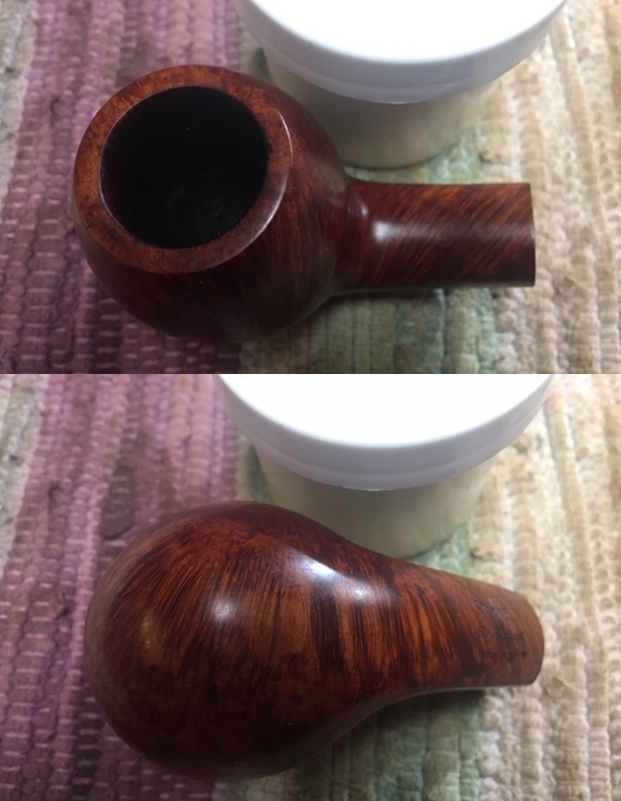
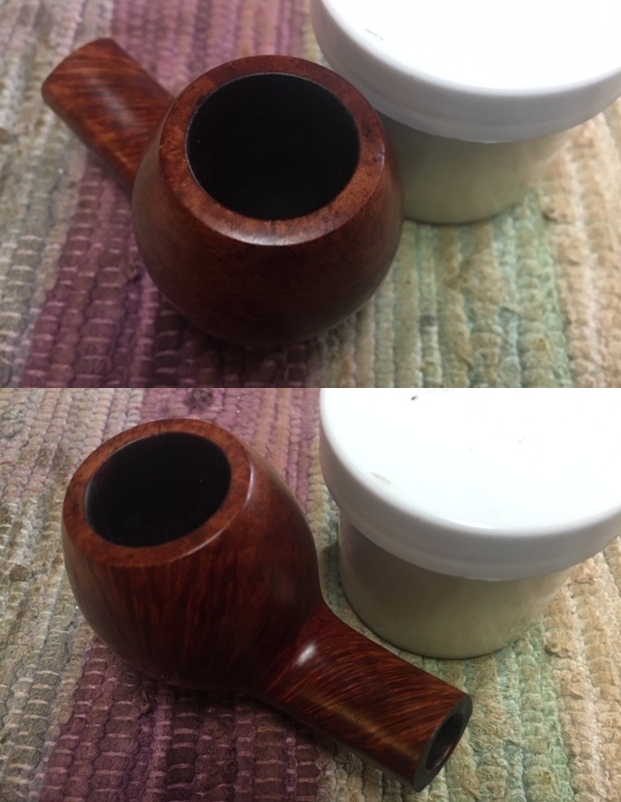
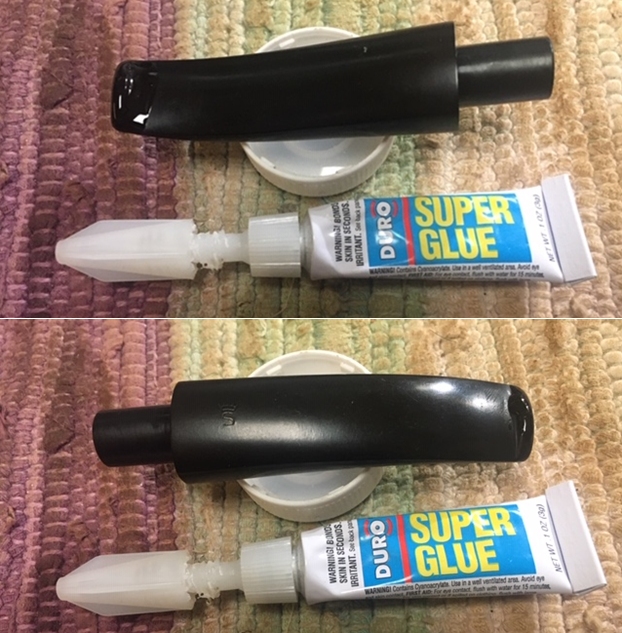
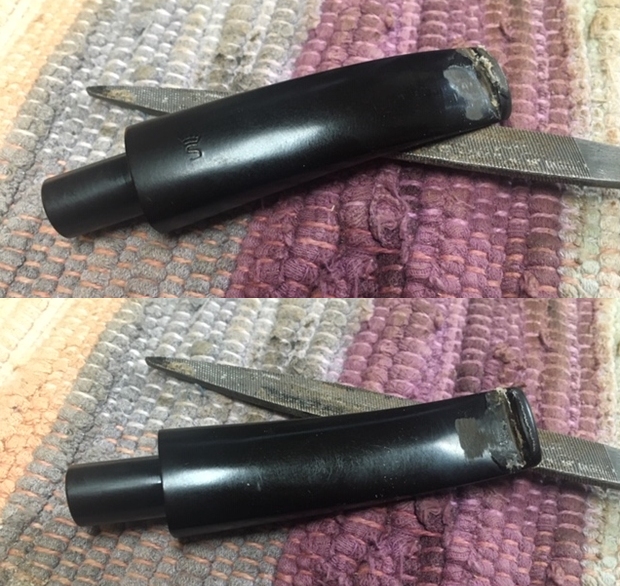
Tag Archives: bite marks

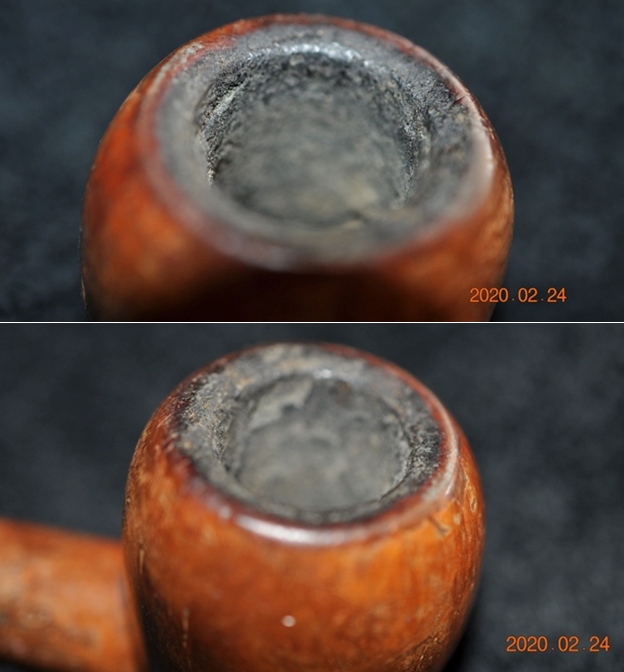
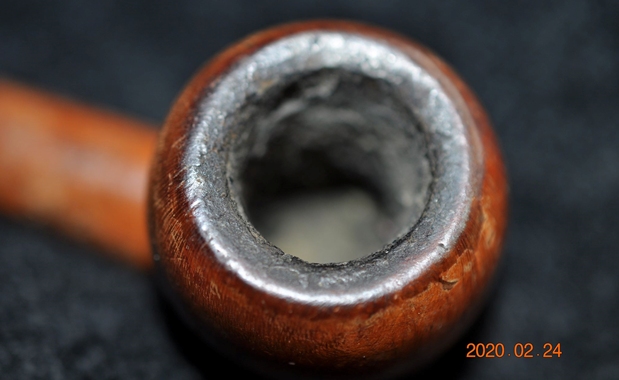
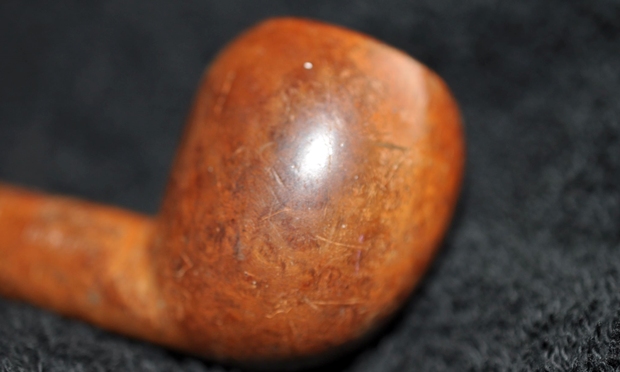
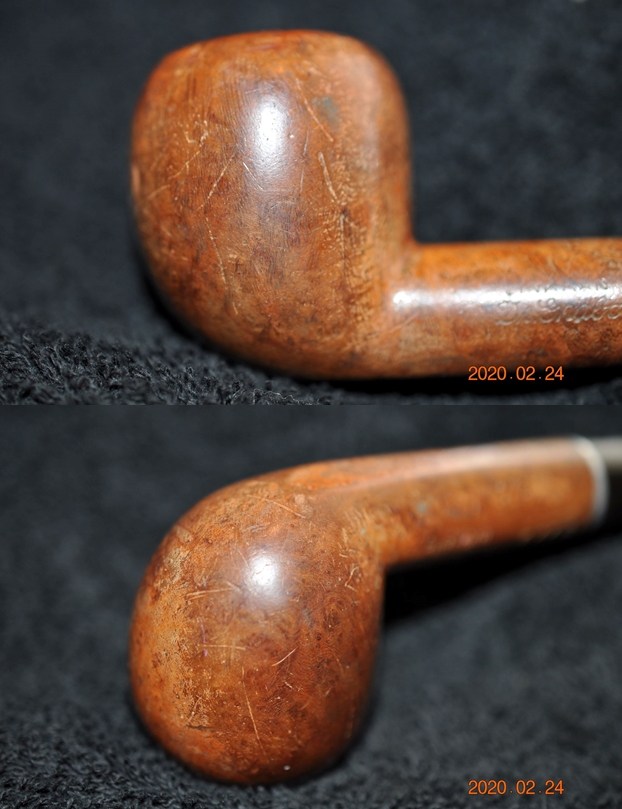
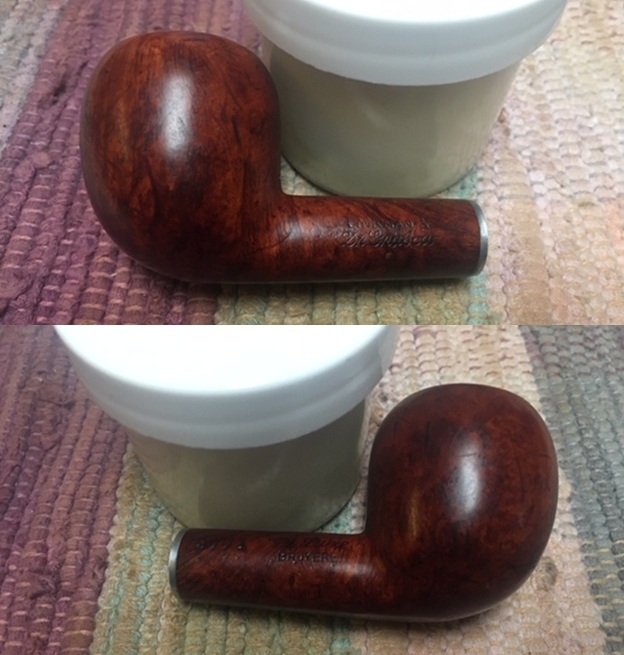
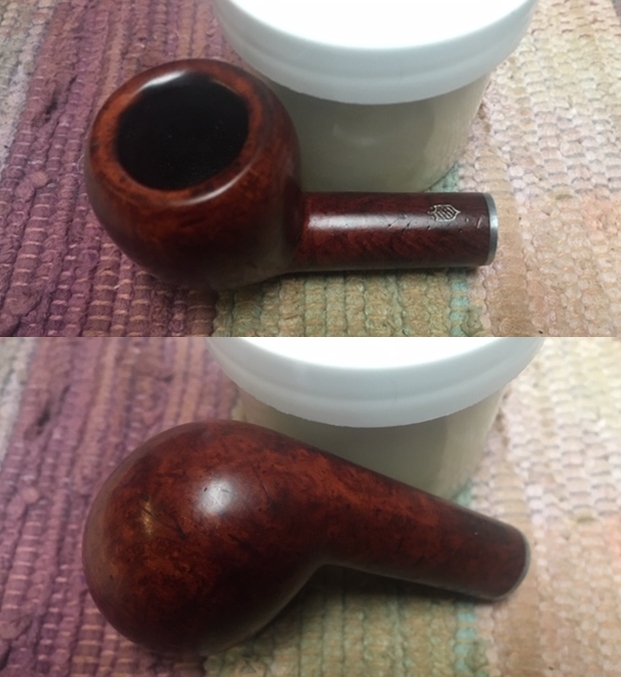
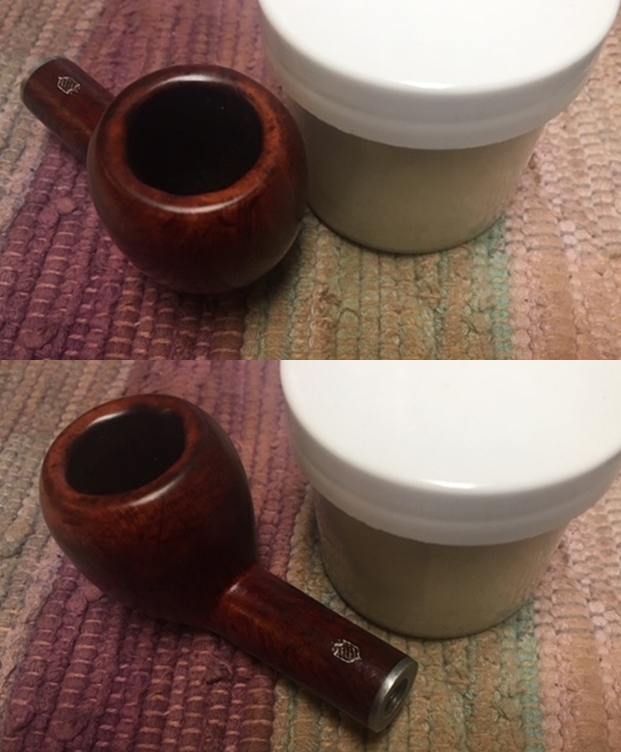
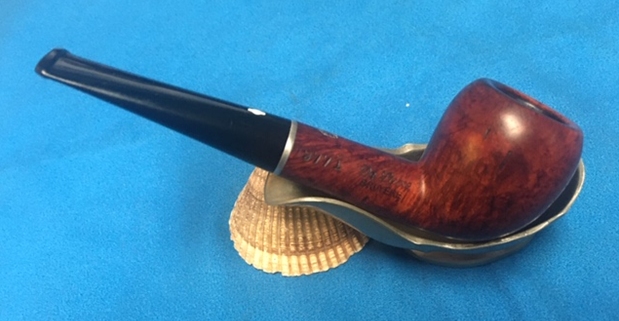
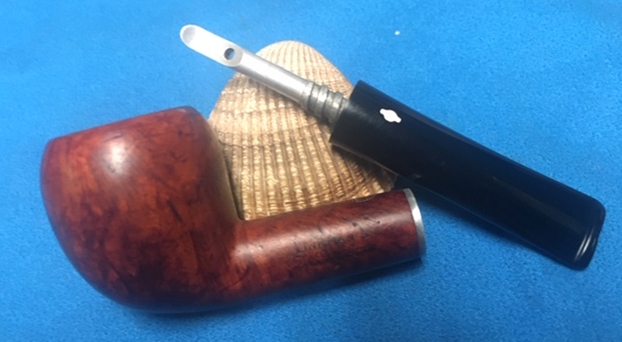
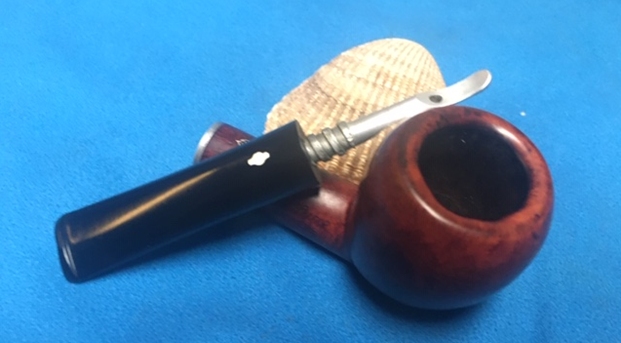
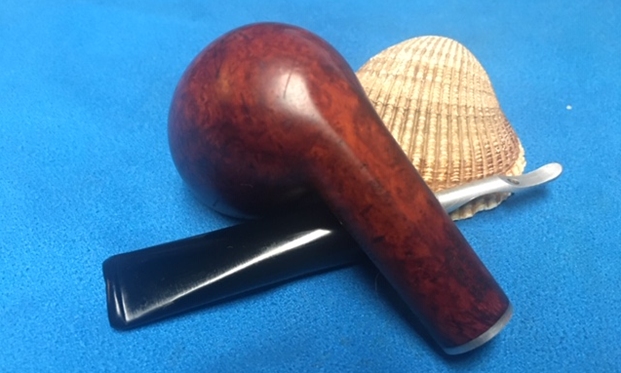
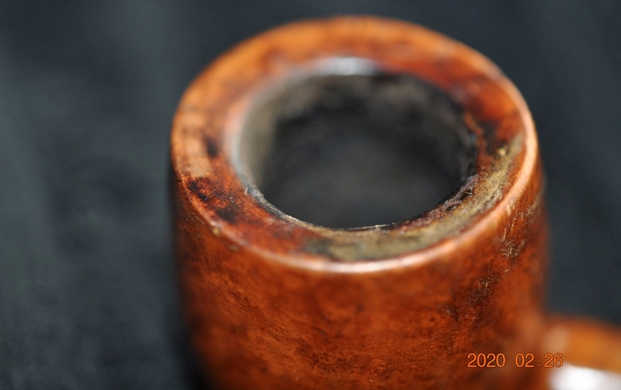
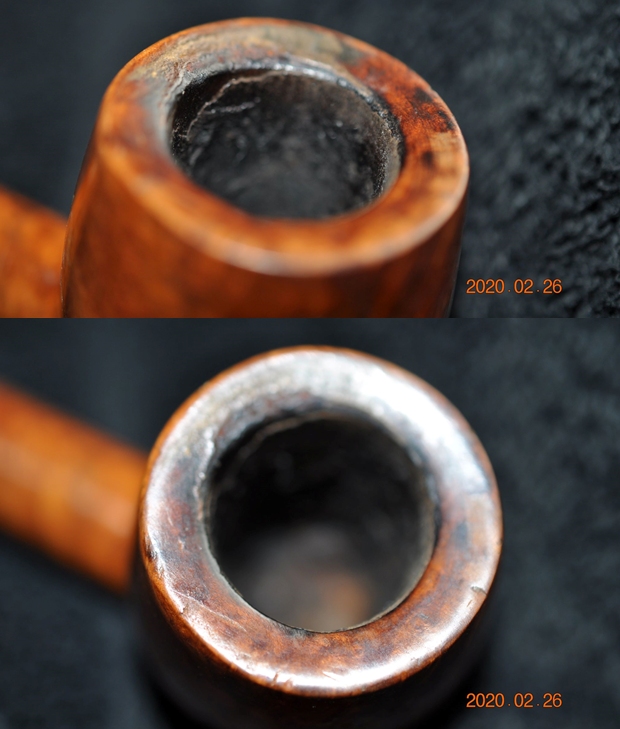
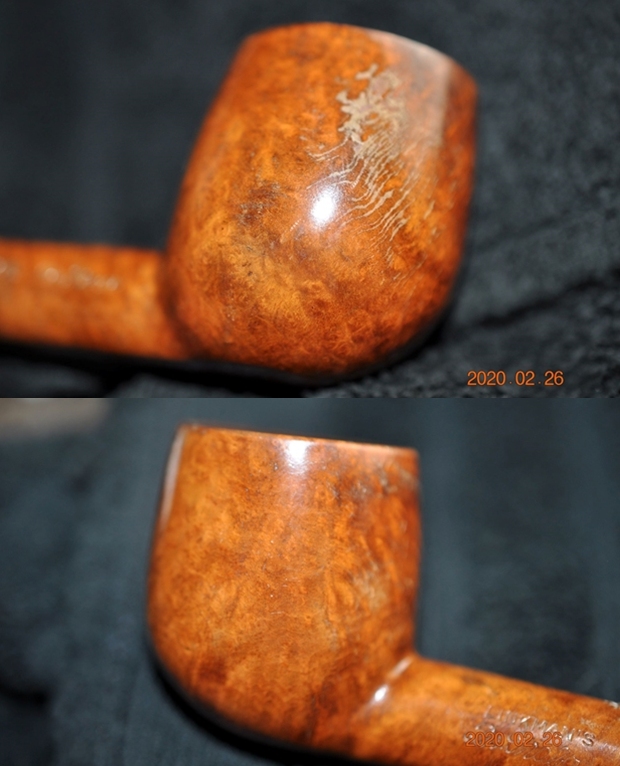
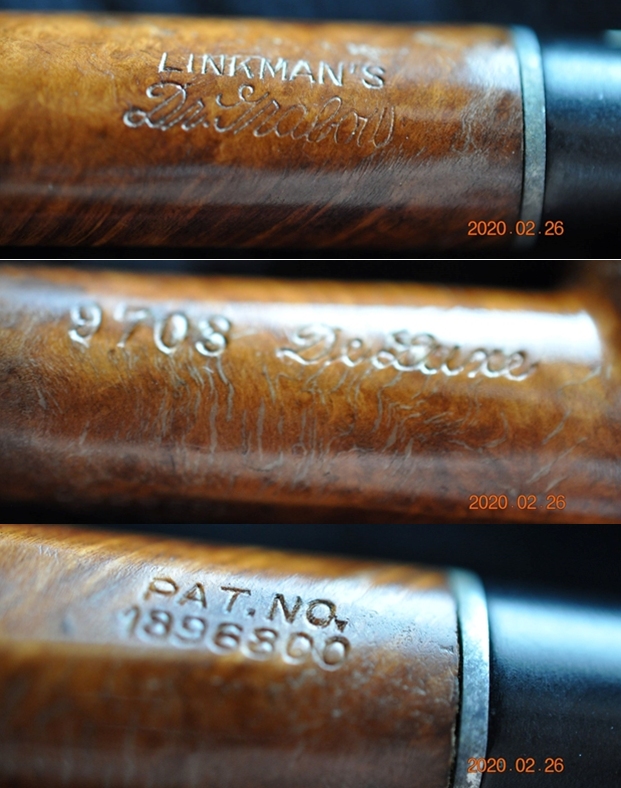
A straightforward restoration – a Kaywoodie All Briar Meerschaum Lined Rhodesian 50B


Blog by Steve Laug

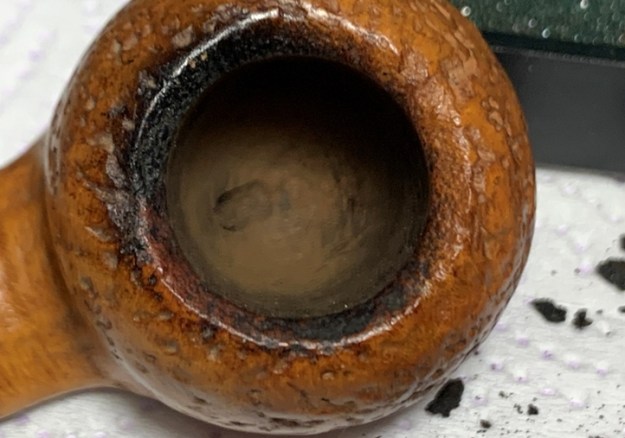
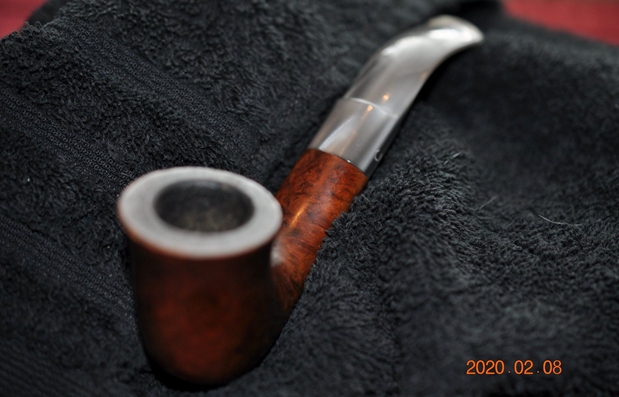
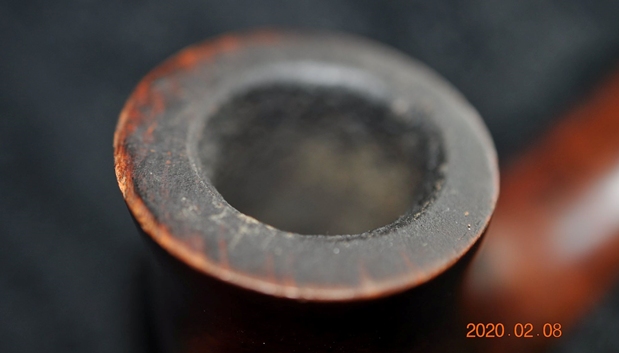
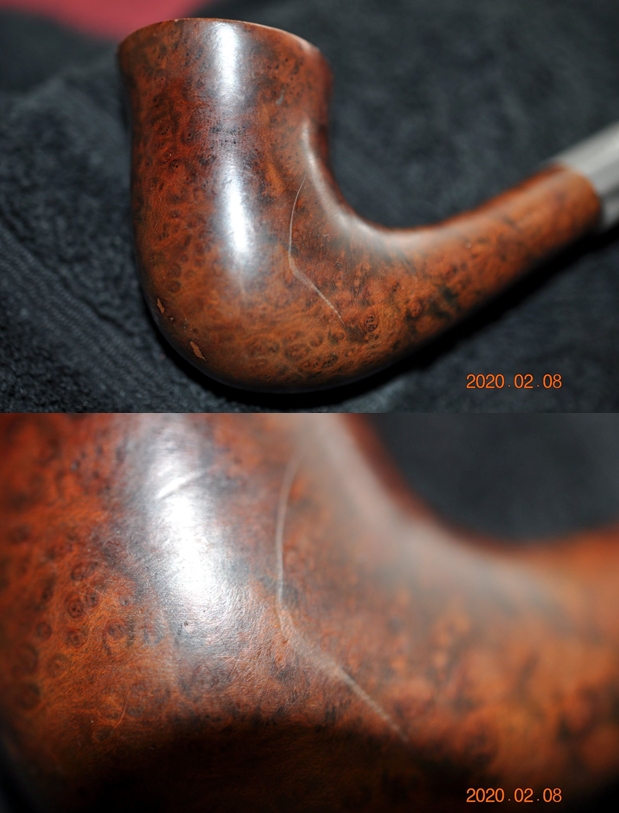
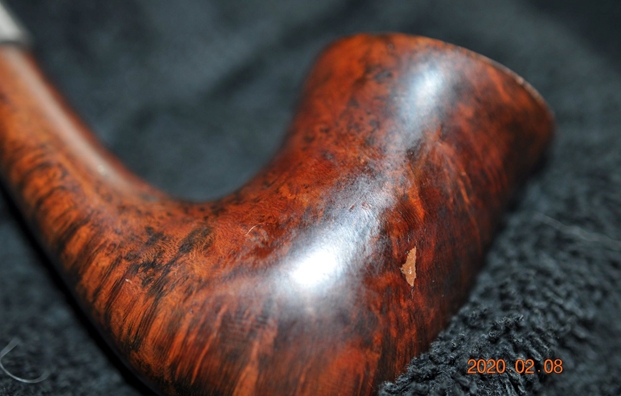
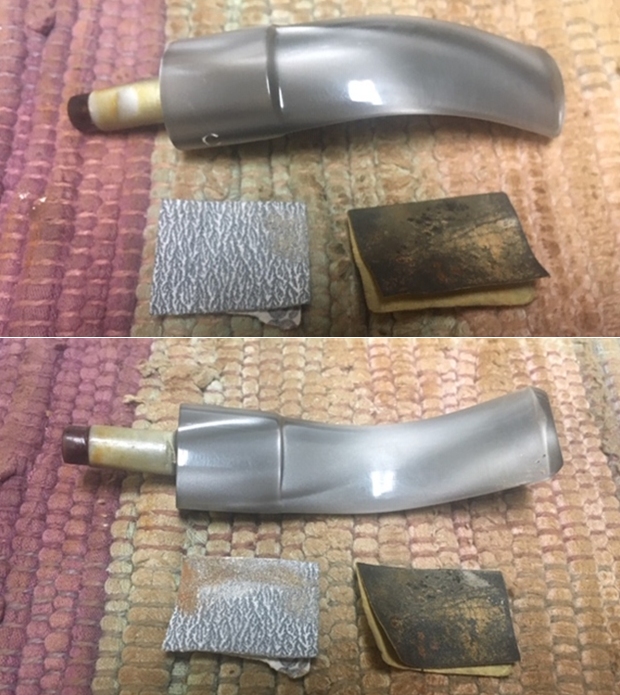
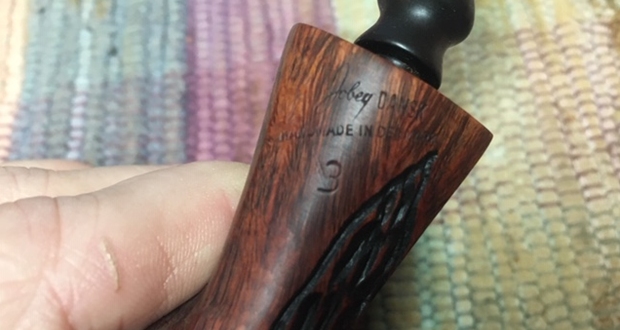
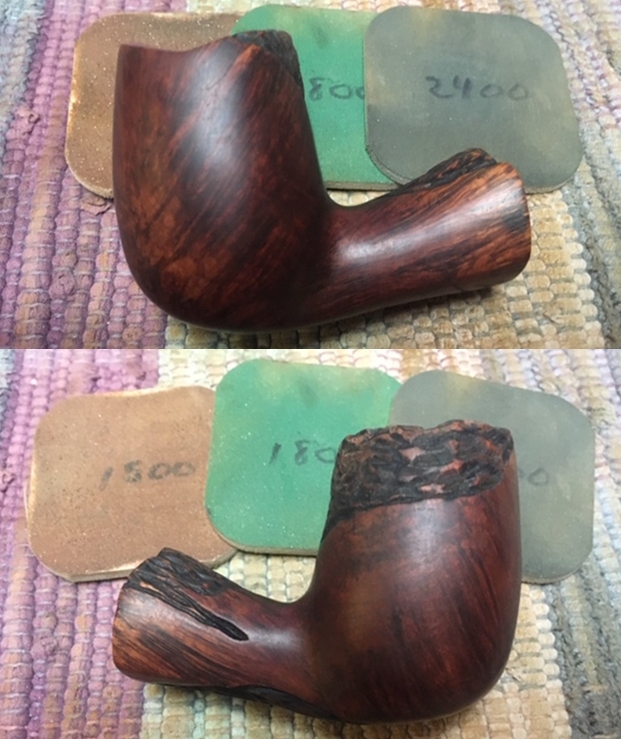
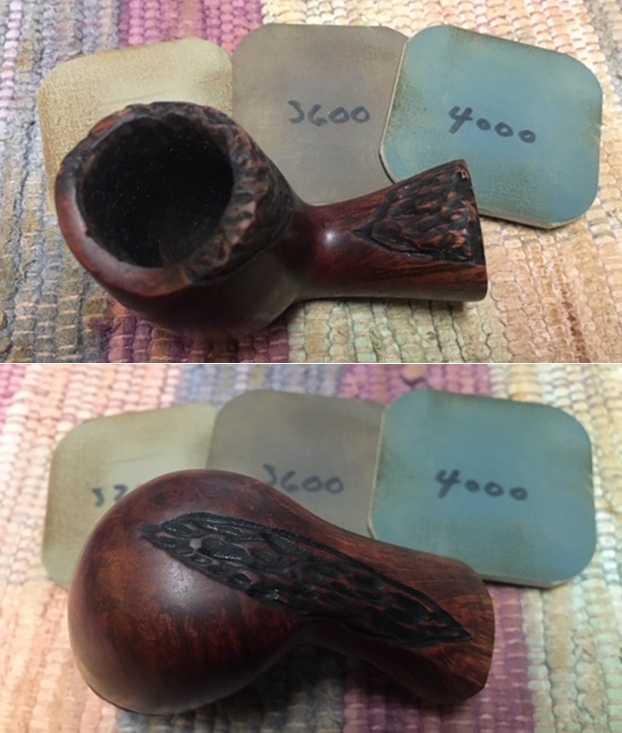
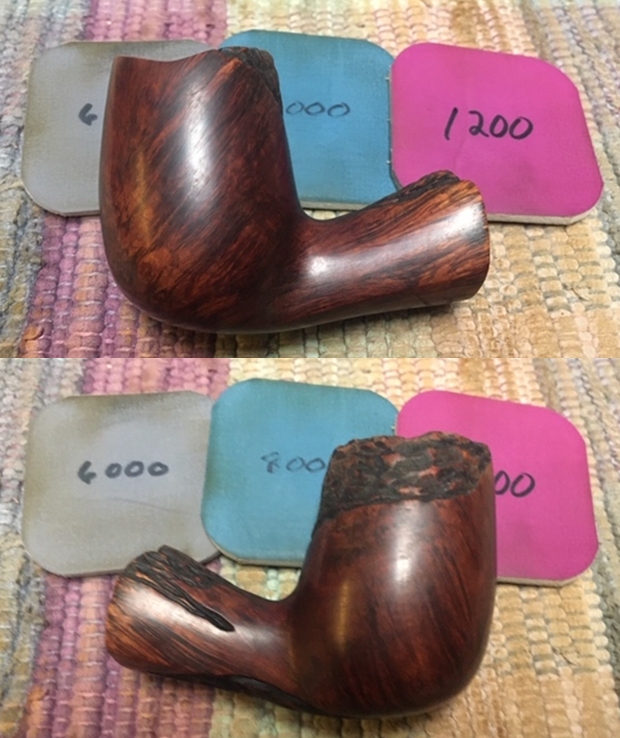
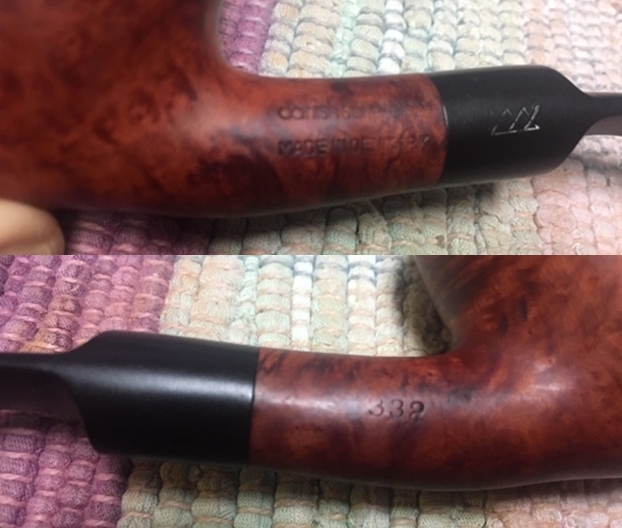
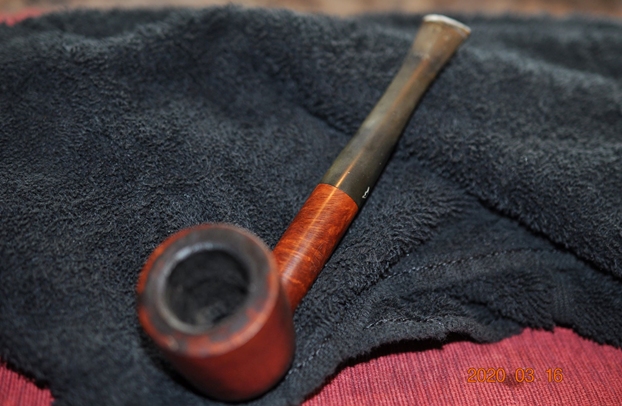
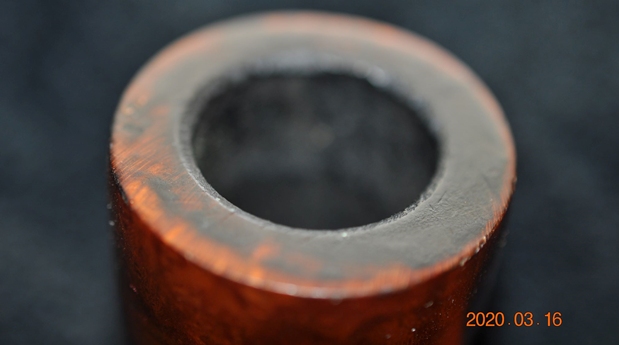
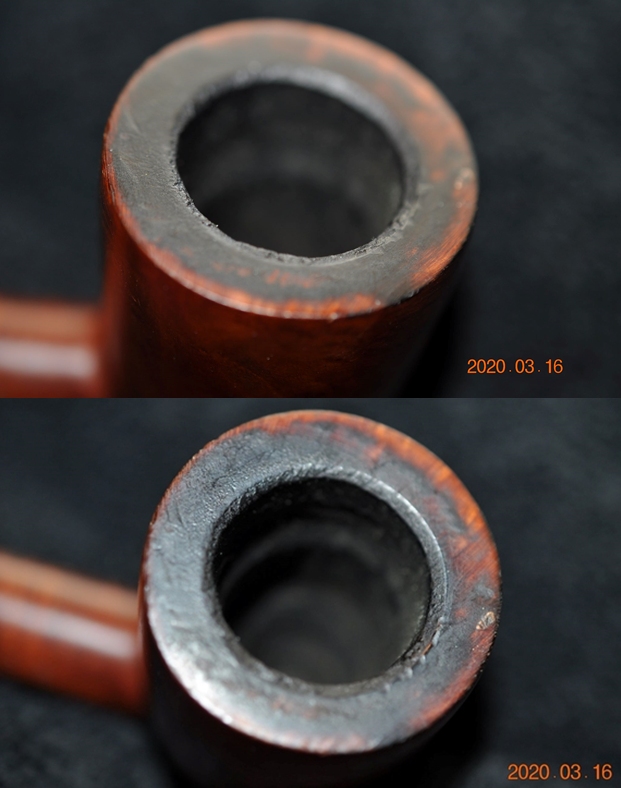
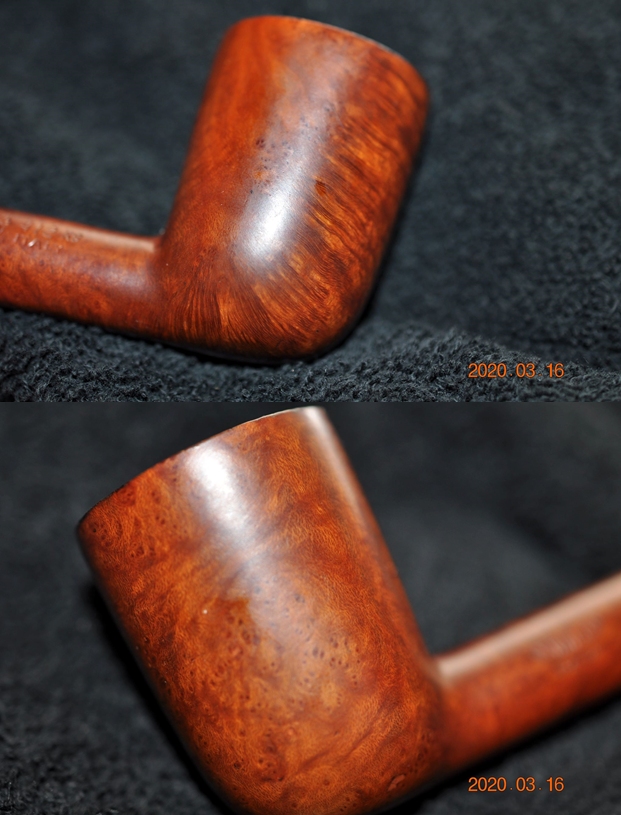
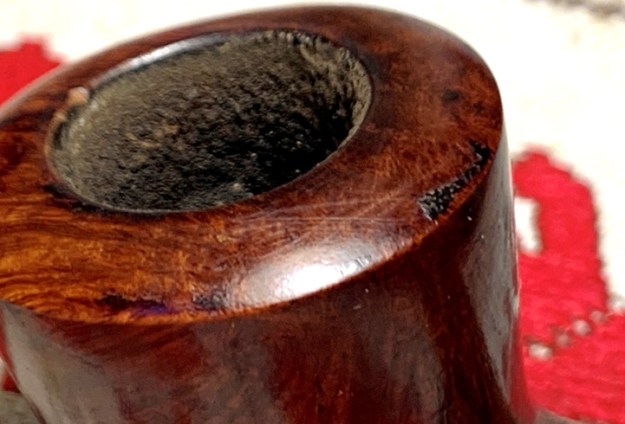
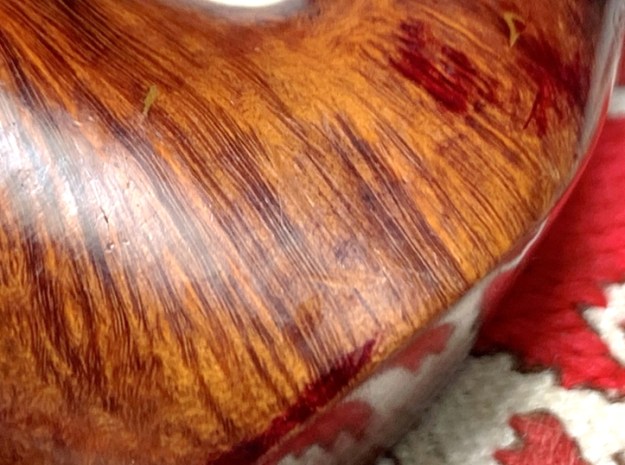
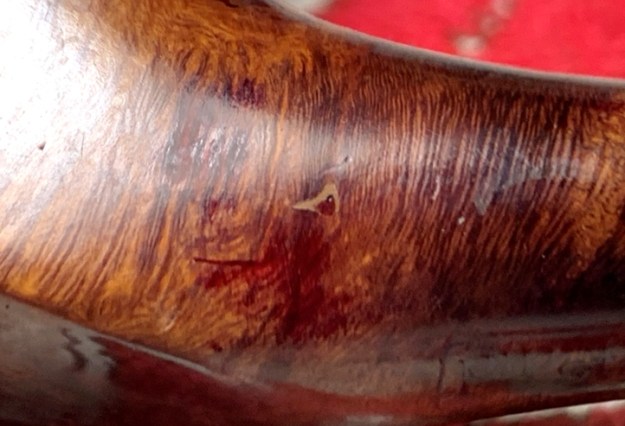
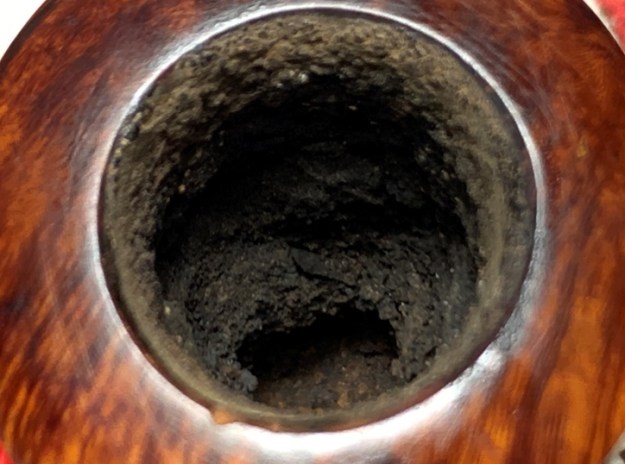
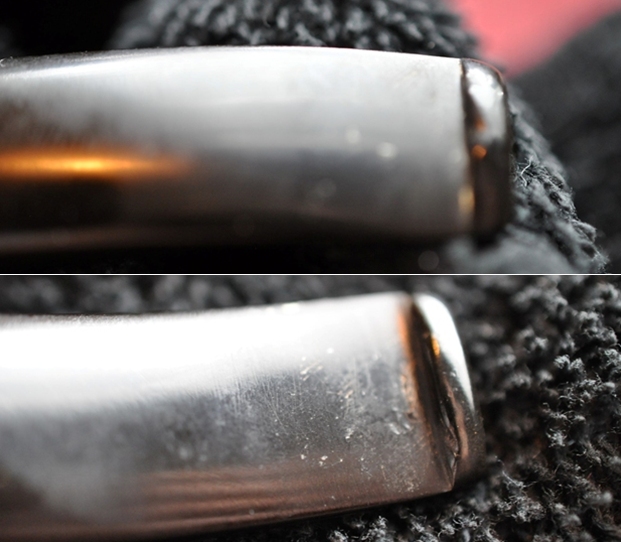
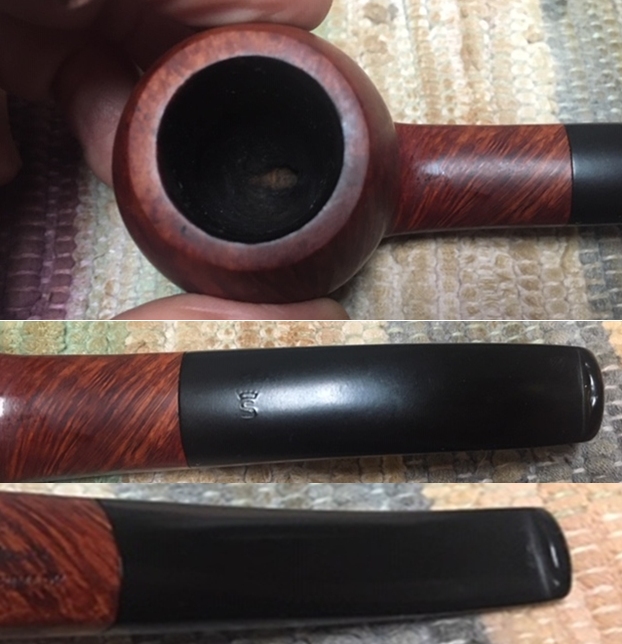
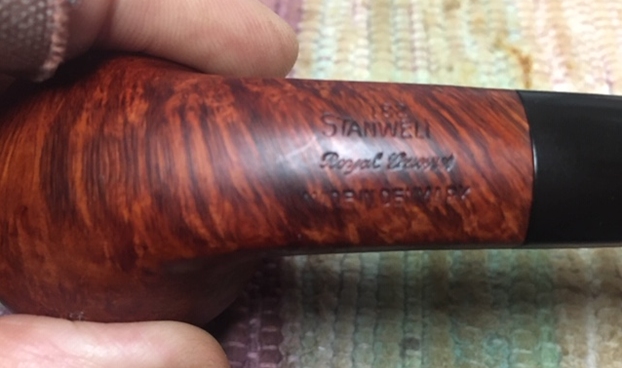
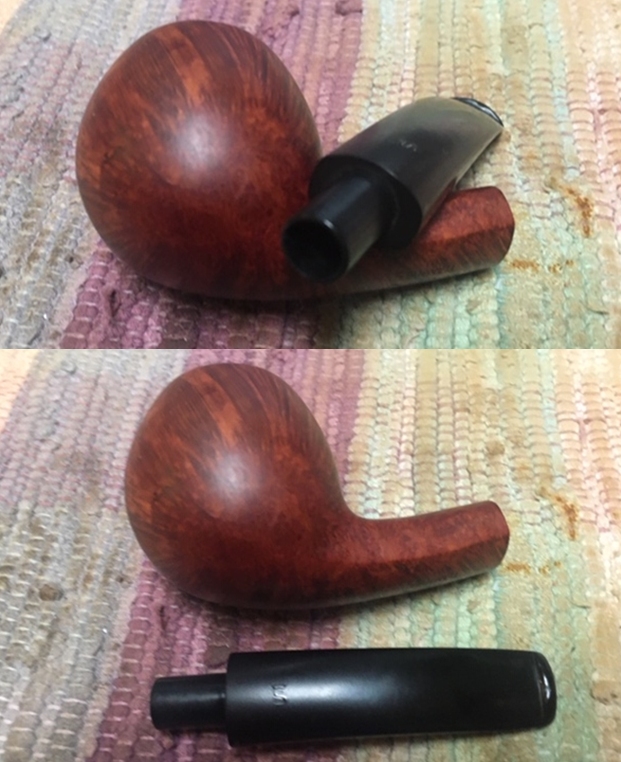
I have worked on a few Kaywoodie All Briar Pipes in the past and also worked on the same shaped 50B that had an All Briar Bite Proof Stem that I had to rebuild and restore. That was a real job starting with a chewed off briar stem. Here is the link to that blog if you are interested in reading about that restoration (https://rebornpipes.com/2017/08/02/salvaging-a-kaywoodie-all-briar-rhodesian-50b-with-a-serious-issue/). The pipe on my worktable now is another All Briar Rhodesian. This one does not have an All Briar taper Bite Proof stem but rather an All Briar Saddle Stem. This pipe was in excellent condition other than being dusty. The meerschaum bowl had been smoked maybe one time or two with a bit of staining but very clean. The rim top had a few wrinkles in the varnish finish but was otherwise clean. The exterior of the bowl and stem had the same varnish coat and it looked very good. The stem was the only part of the pipe with an issue. It had bite marks and tooth chatter on both sides of the stem ahead of the button. That truly was the only issue I had to deal with. I took photos of the pipe before I started my work on it. I took photos of the rim top and the stem to show the condition. You can see the damage noted above on the rim top and the tooth marks and chatter on the stem surface. I have drawn red circles around the damaged areas on both the stem and the rim top.I took some photos of the stamping on both sides of the shank. Because of the shiny surface they are a bit hard to read but are very readable nonetheless. The stamping on the left side of the shank reads All Briar and under that read Kaywoodie over Meerschaum. On the right side of the shank it is stamped All-Imported Briar over the shape number 50B. Underneath the shape number is a small capital E stamped backwards. I unscrewed the stem from the shank and took photos of the pipe. The Rhodesian is very well shaped and is a great looking piece of briar. The briar saddle stem is also very nice.The earlier All Briar Rhodesian 50B with the chewed off stem includes some great information that I had researched on the brand (https://rebornpipes.com/2017/08/02/salvaging-a-kaywoodie-all-briar-rhodesian-50b-with-a-serious-issue/). I am including that in this current blog.

“I have read a lot of information in the past on other Kaywoodie pipes I have worked on and spent time on the Kaywoodie Collectors Forum to help educate me on the various lines and historical periods of Kaywoodie production. On Pipedia.org there is a helpful summary of the history of the brand that has been condensed in one place. It is called the Collectors Guide to Kaywoodie Pipes (https://pipedia.org/wiki/Collector%27s_Guide_to_Kaywoodie_Pipes). I found the All Briar line of pipes included in the section of the Guide for 1955. I quote here the pertinent sections with the references to the All Briar pipe underlined and highlighted in bold.”

The line-up of pipes in the 1955 catalog (Table 3 below) was more extensive than in previous years. The catalog presented an expanded line of meerschaum pipes and introduced a 4-pipe set of Matched Grain Pipes, as well as several pipes with “special features”. The number of shapes available… was not substantially different from the number offered in the 1947 catalog…

The Twin-Bowl Kaywoodies were available in an all-meerschaum model (two removable inner bowls of meerschaum) and a meerschaum and Flame Grain model (outer bowl of flame grain briar and removable inner bowl of meerschaum). Other meerschaum pipes presented in the 1955 catalog included the Gourd Calabash; the Coral (“dimpled”) Meerschaum; the All Briar (briar bit) and Flame Grain pipes with inlaid meerschaum bowls; and the “Doctor’s” pipe…Included in the guide was a helpful list of pipe grades and prices. I have included the list below (Table 3) and noted the pipe I am working on by highlighting it in bold red print and underlining the reference. It is in this list that I found confirmation that Kaywoodie made an All Briar with a meerschaum bowl insert and an All Briar without the meerschaum insert. The All Briar I am working on now is meerschaum lined. It is fascinating for me to see that the addition of a meerschaum bowl was only $2.50 in 1955.

TABLE 3. 1955 KAYWOODIE PIPE GRADES AND PRICES

Meerschaum Character Pipes: $100.00
Block: 15.00-50 (According to size)
Meerschaum Twin Bowl: $35.00
Meerschaum/Flame Grain Twin Bowl: $25.00
Sandblasted “Doctor’s” Pipe: $25.00
Centennial: $25.00
Coral Meerschaum: $20.00-25 (According to size)
Gourd Calabash: $15.00-25 (According to size)
Ninety-Fiver: $20.00
Oversize: $10.00-25(According to style and finish)
Connoisseur: $15.00
All Briar w/Meerschaum Inlaid Bowl: $12.50
Flame Grain (Meerschaum Inlaid) $12.50
Export Pipes: $5.00-15 (According to grade)
All Briar (Briar Bit): $10.00
Flame Grain: $10.00
Fit Rite: $10.00
Silhouette: $10.00
Carburetor: $7.50
Relief Grain: $7.50
Chesterfield: $5.00-15 (According to grade)
Chinrester: $5.00-10 (According to grade)
Stembiter: $5.00-10 (According to grade)
Streamliner: $4.00-10 (According to grade)
Super Grain: $5.00
Carved Super Grain: $5.00
White Briar: $5.00
Standard: $4.00
Filter Plus: $4.00
Drinkless pup: $3.50
Drinkless Tuckaway: $3.50
Drinkless In-Between: $3.50
Two-Pipe Companion Setsb: $10.00-25 (According to grade)
Matched Grain Set (4-Pipes): $50.00
Matched Grain Set (7-Pipes): $125.00

I am also including some more information that I picked up when working on that blog.

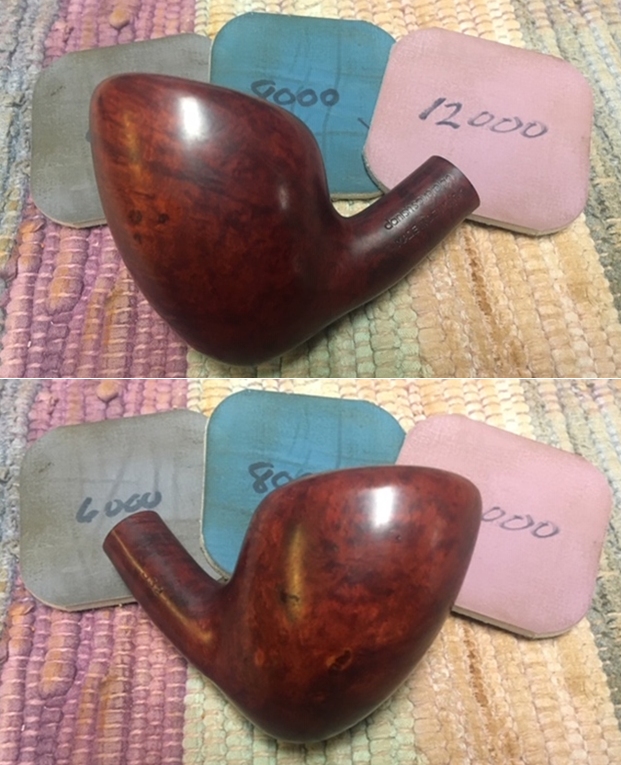
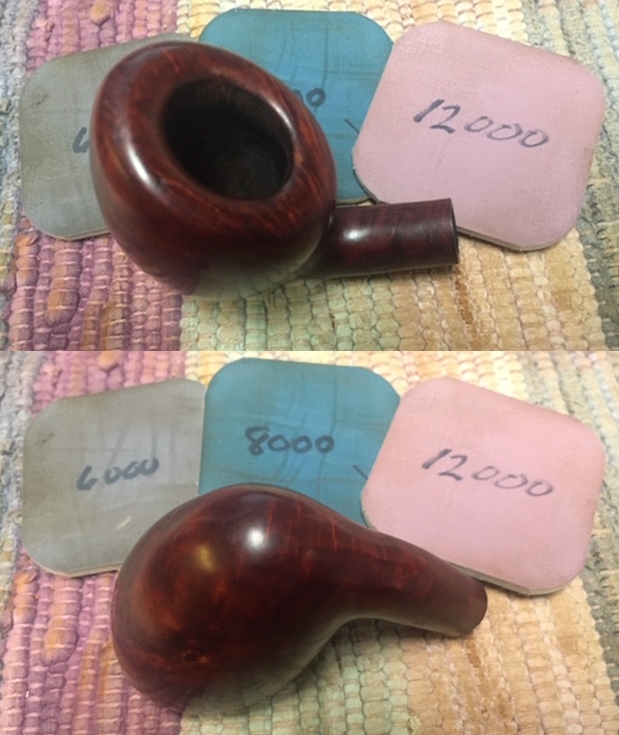
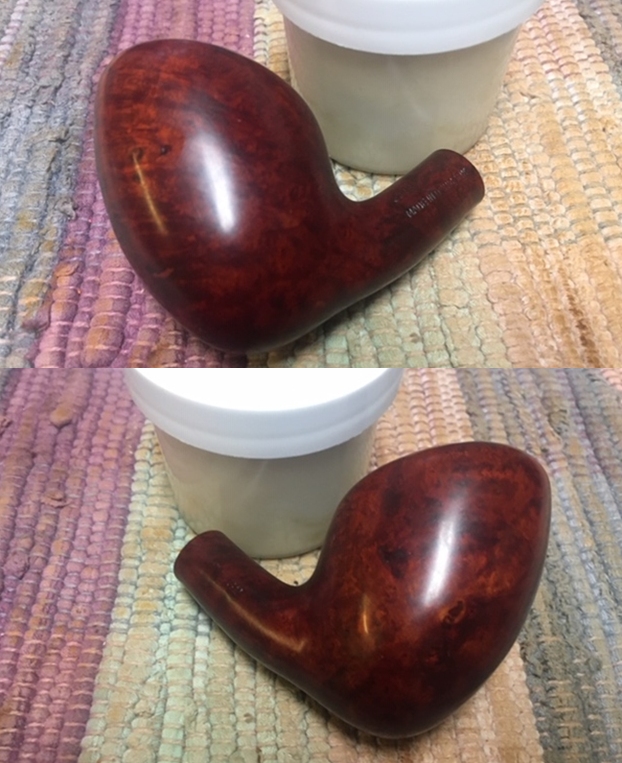
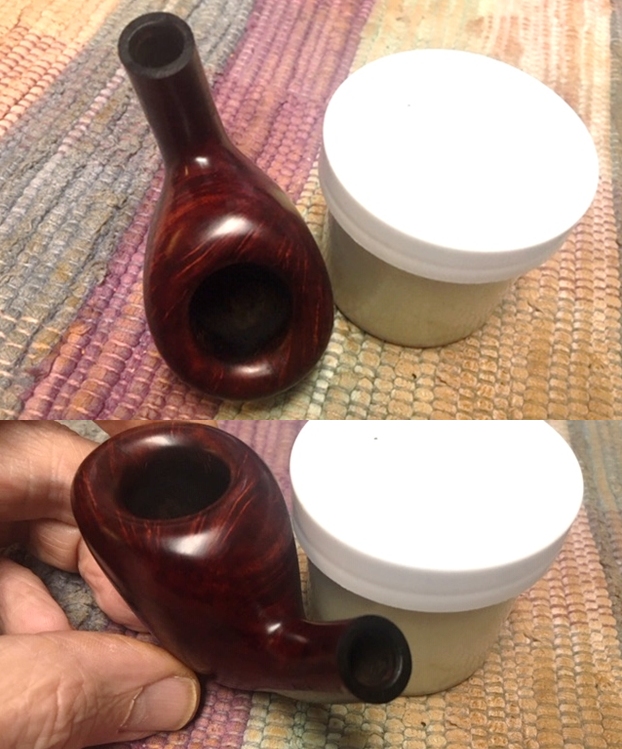
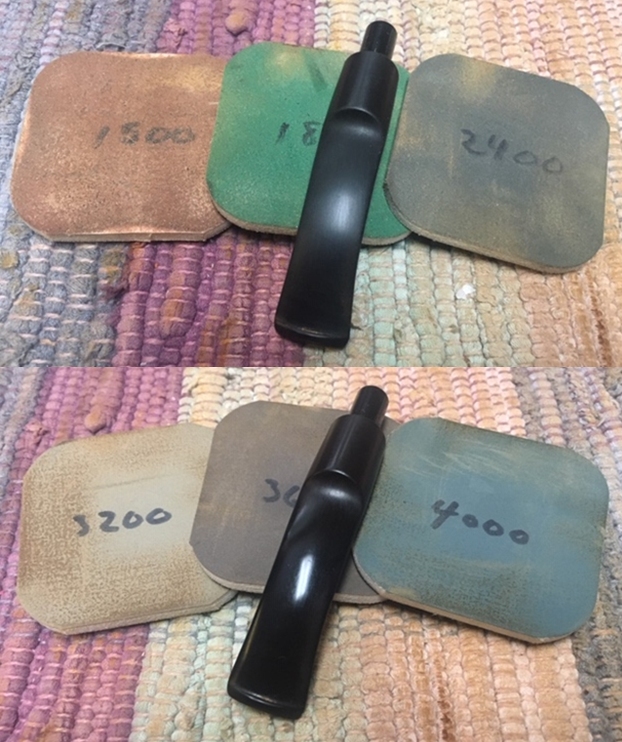
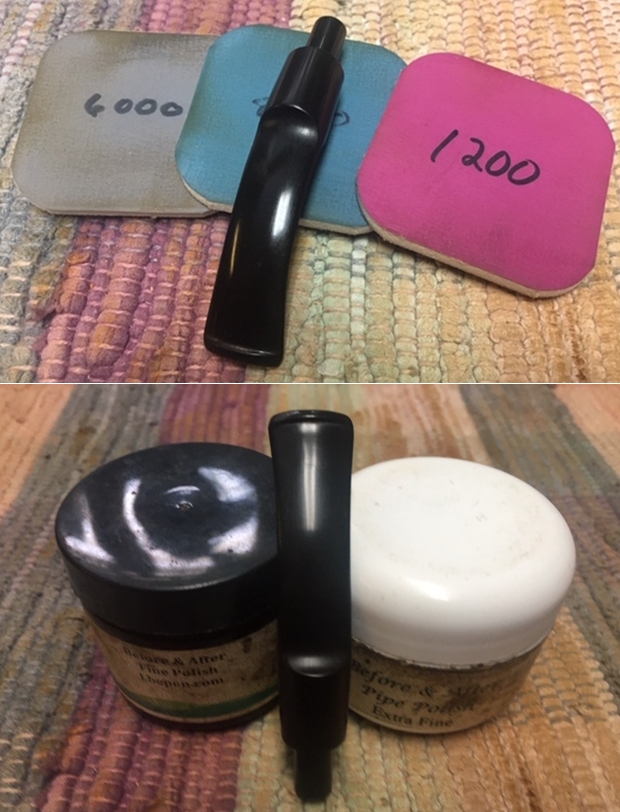
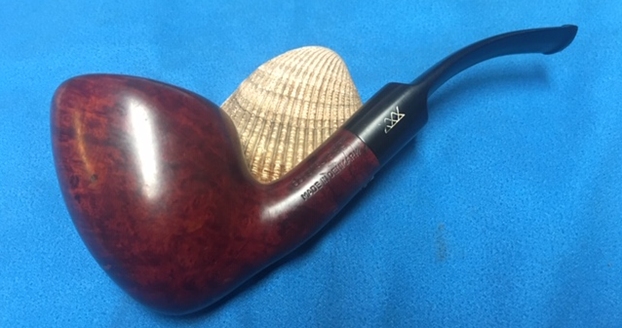
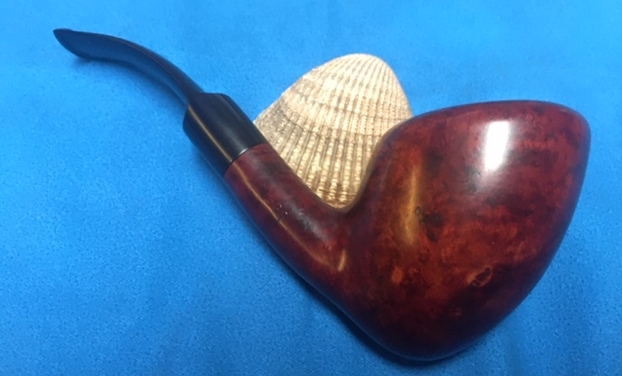
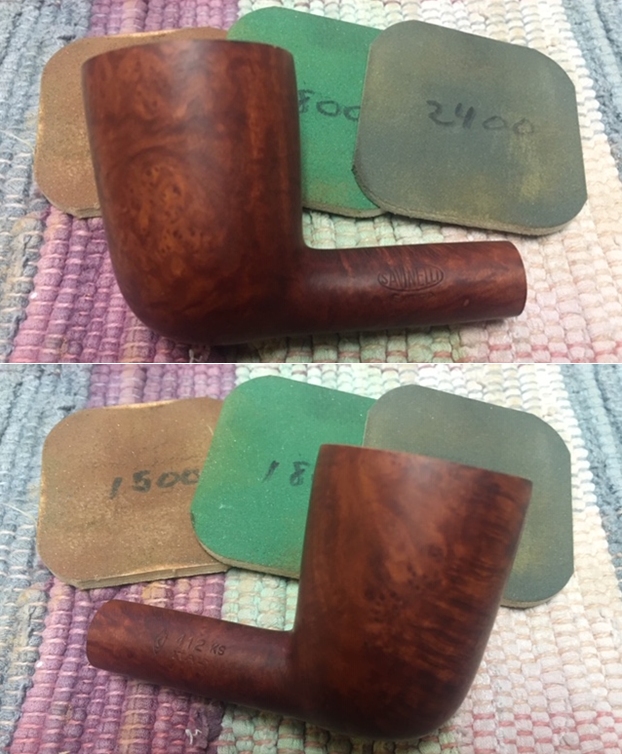
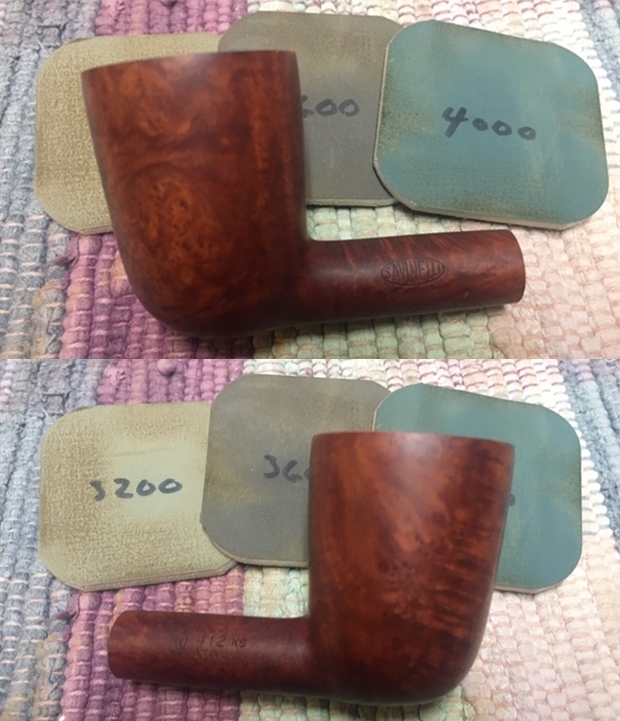
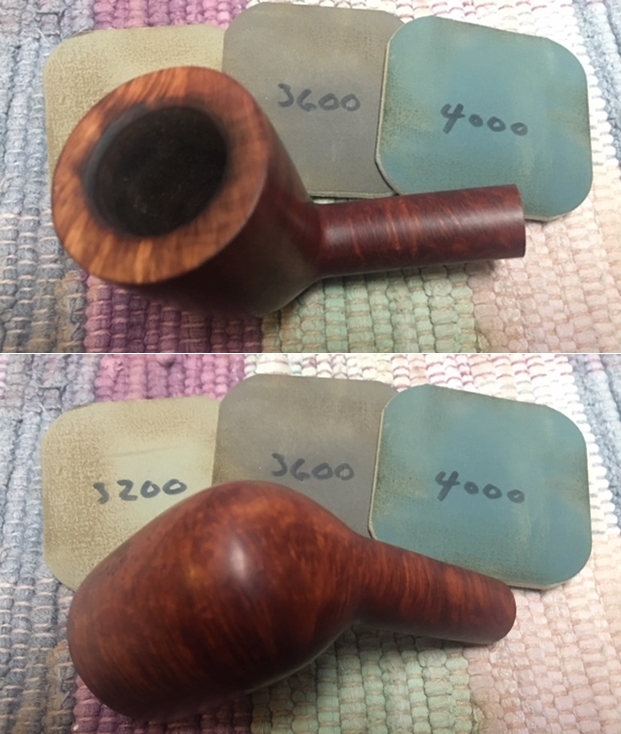
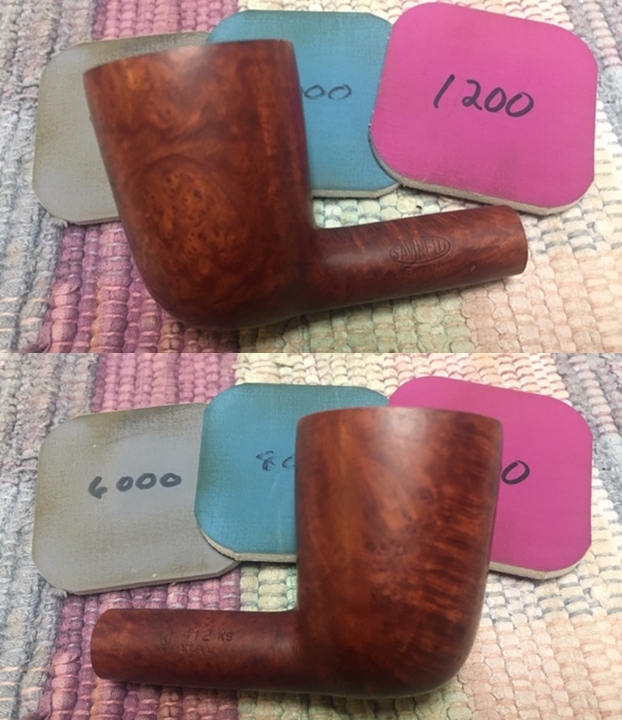
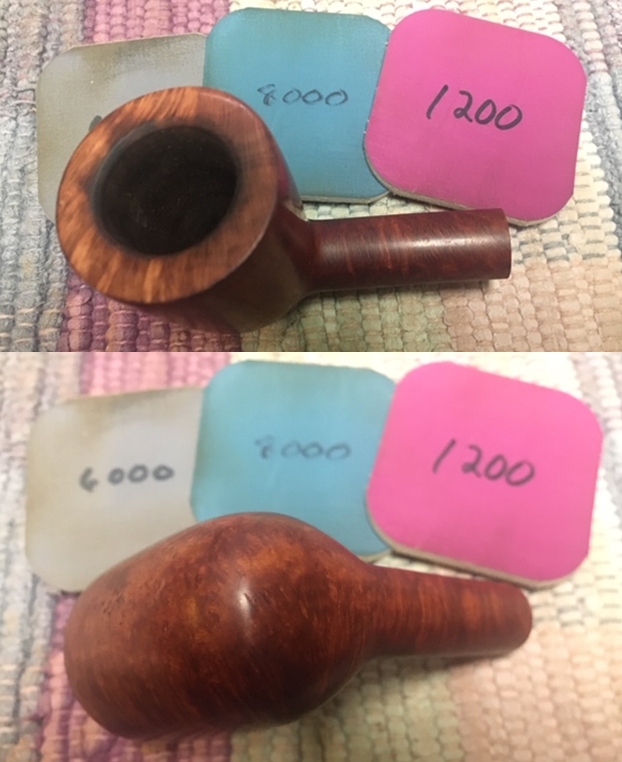
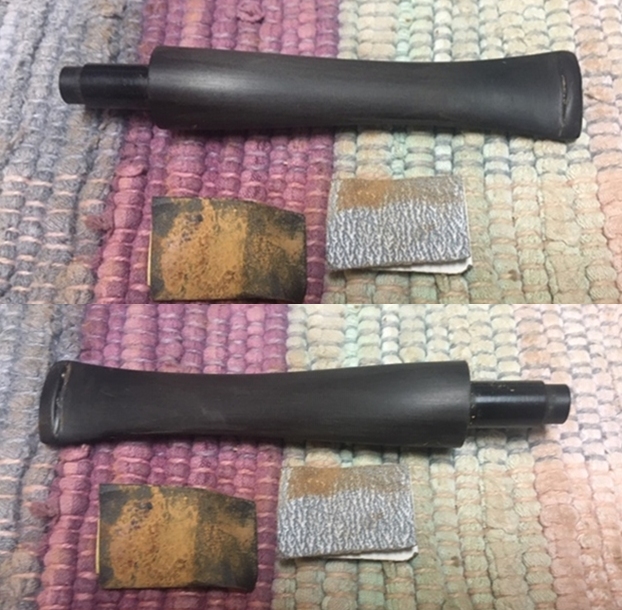
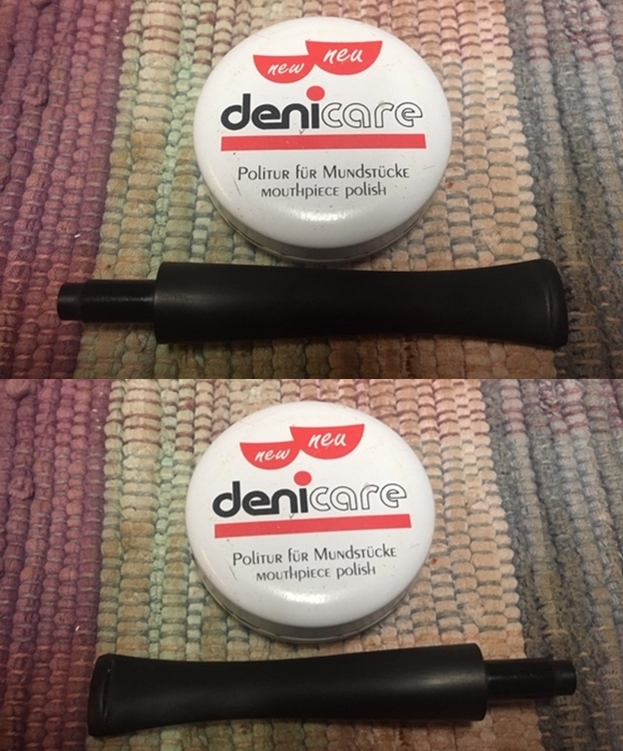
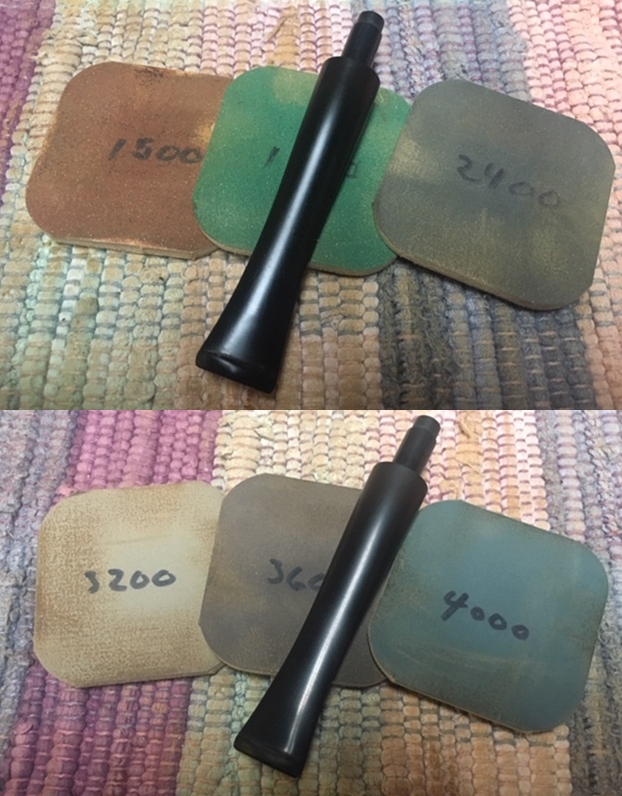
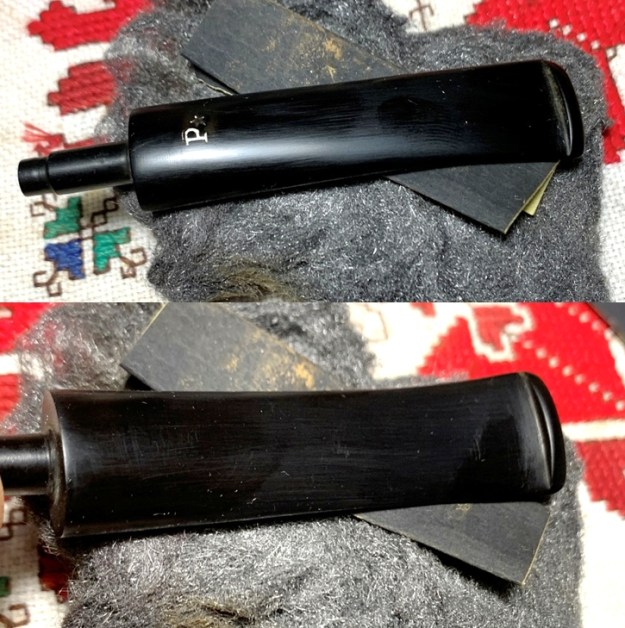
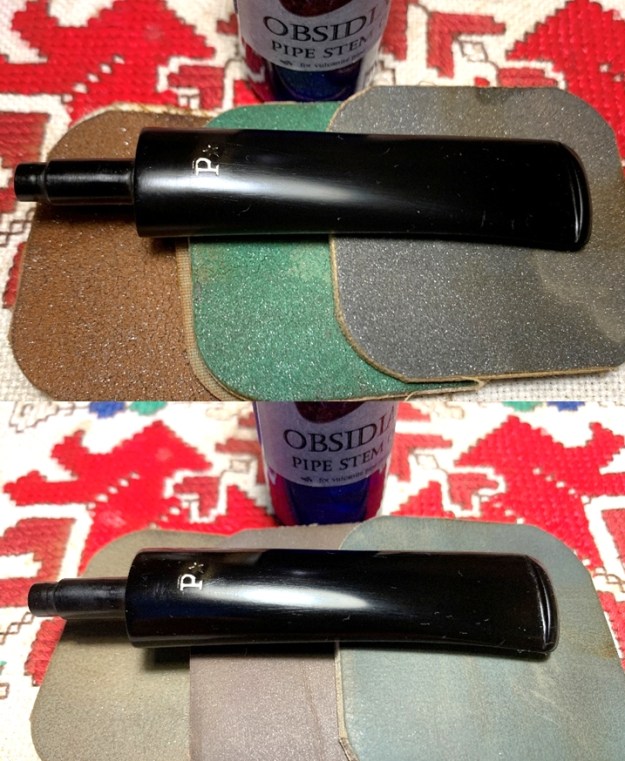
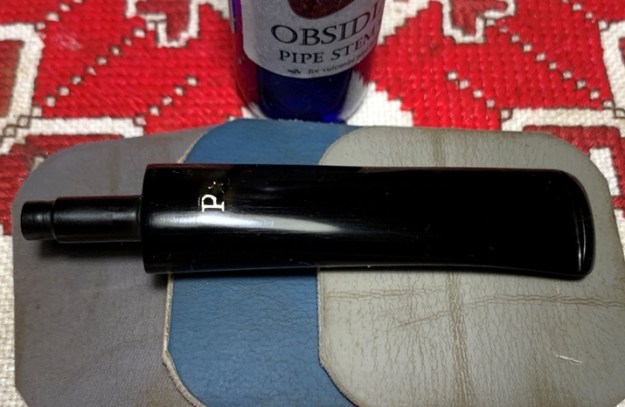
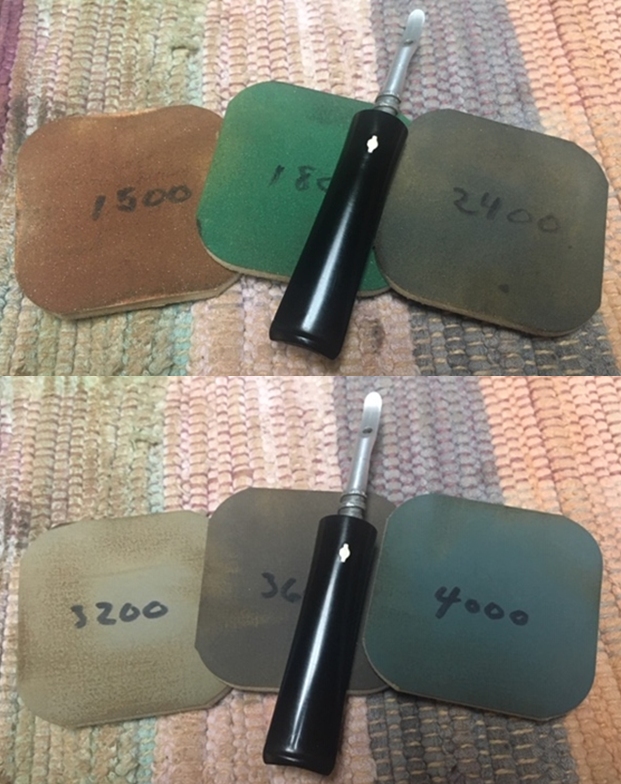
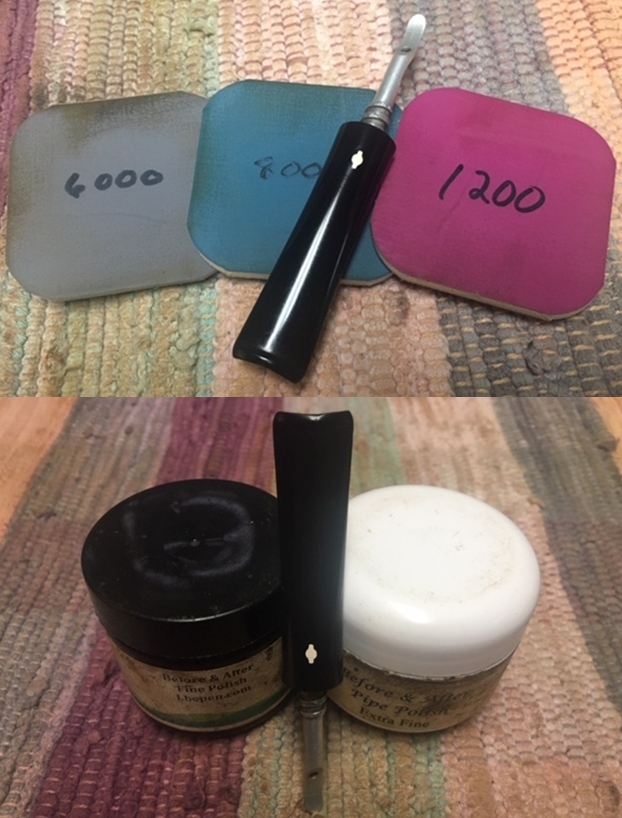
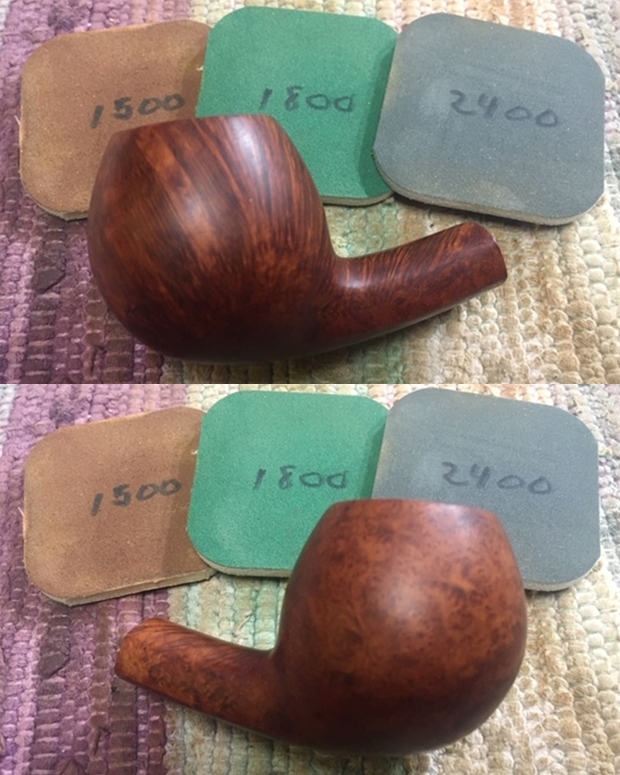
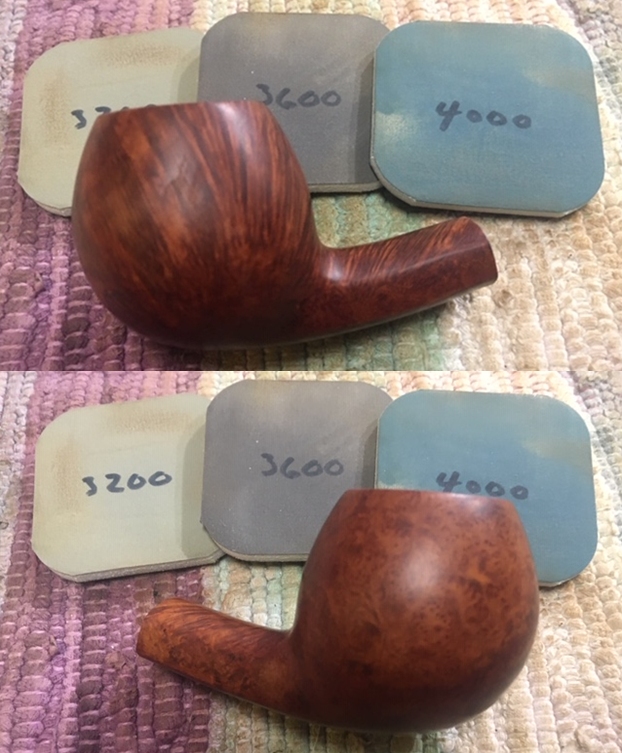
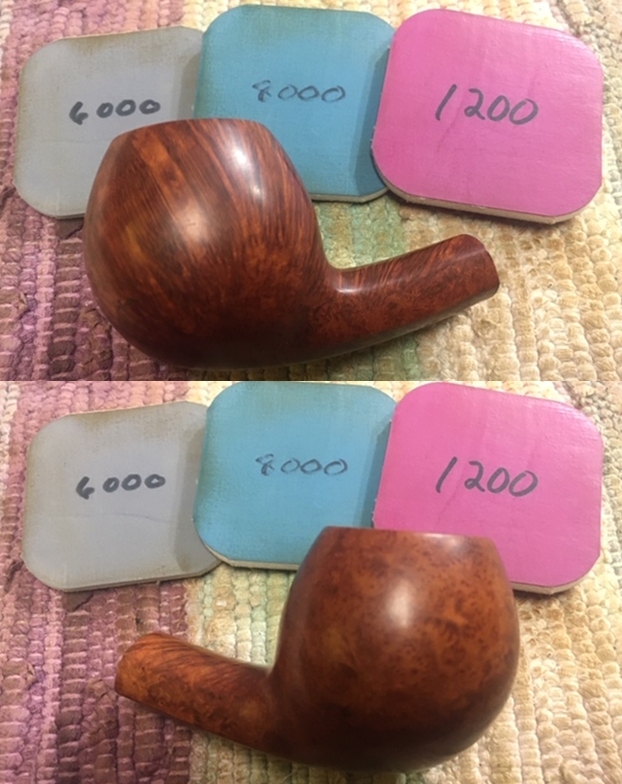
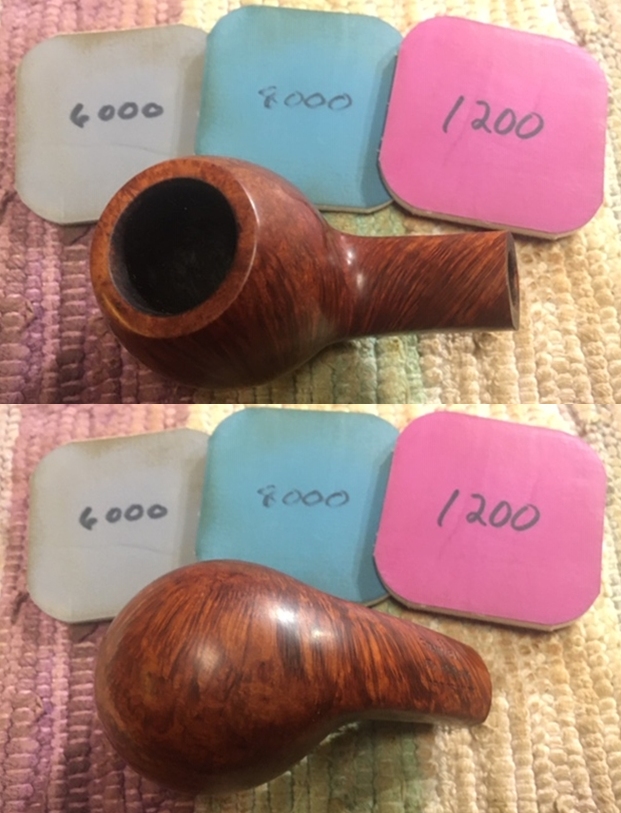
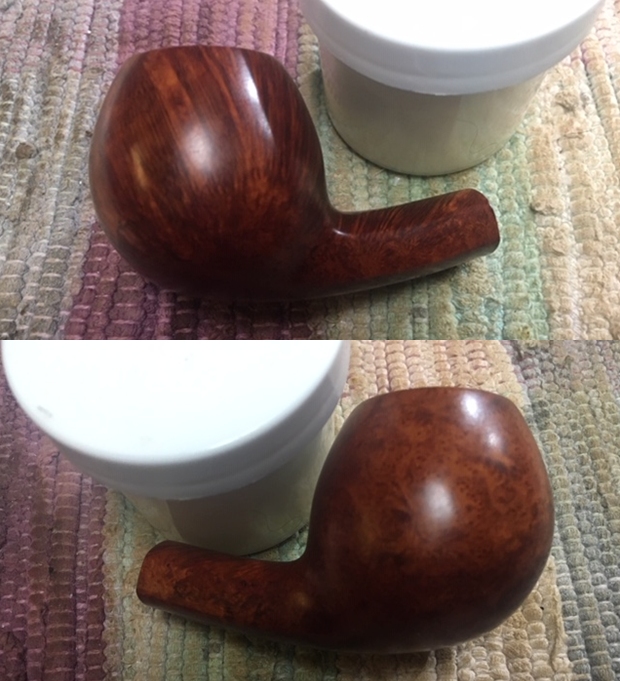
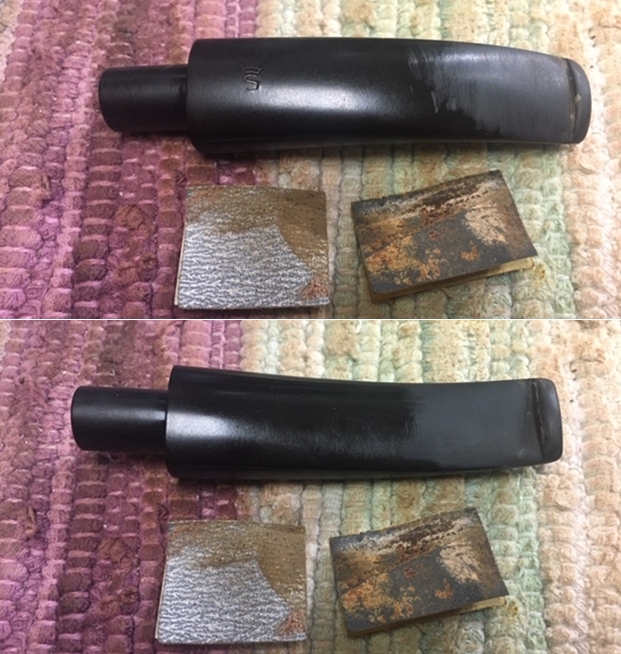
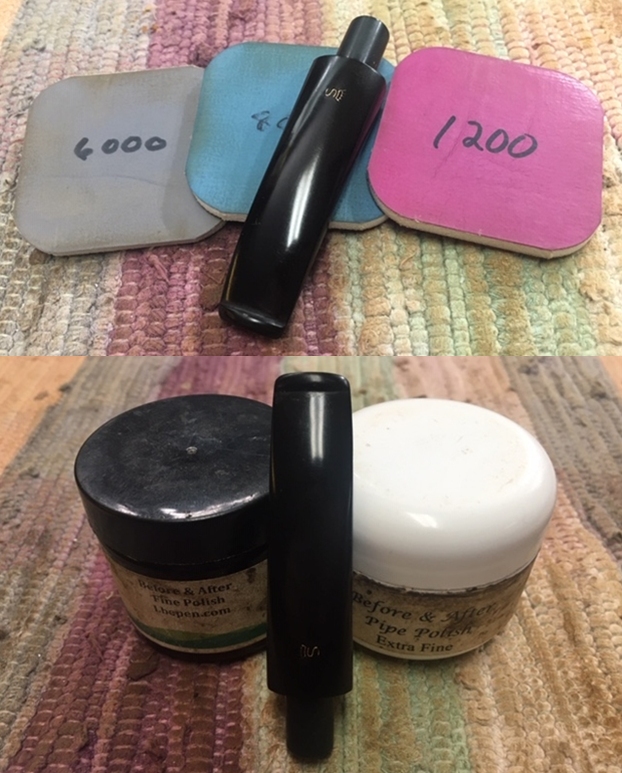
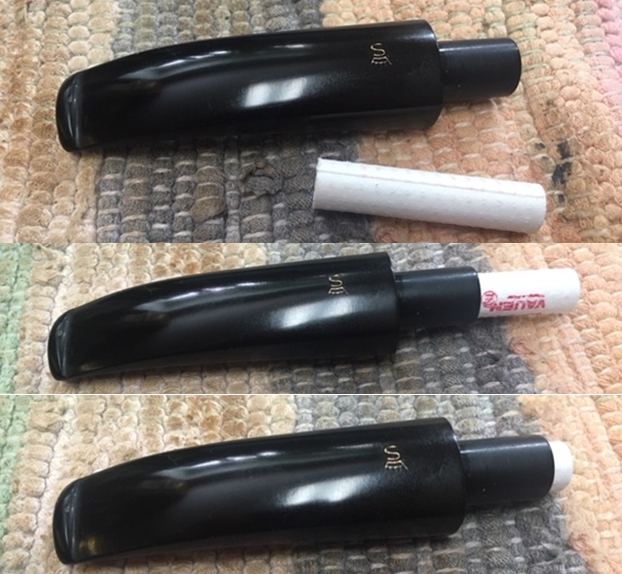
Further reading on Pipedia under the general listing for Kaywoodie Pipes provided me with a magazine advertisement that included the All Briar pipes. It is a great Father’s Day Ad and the bottom items in the ad show the All Briar line. I have included both the link and a copy of the ad for your reading pleasure (https://pipedia.org/wiki/Kaywoodie).I started my quick repairs on this pipe by addressing the damage to the rim top. I sanded out the bubbled and marked edges of the briar portion of the rim top. I dry sanded it with 1500-12000 grit micromesh and wiped it down after each pad. Each grit pad smoothed out the surface of the briar rim and when I was finished it looked very good. There is a great mix of flame and straight grain on the bowl and shank. It is a beauty. I decided to not to remove the varnish coat from the bowl as it looked very good. Even the repaired and smooth rim top looks really good. At this point the bowl was finished. I set it aside to deal with the stem issues. I sanded out the tooth marks and chatter on the surface of the stem with a folded piece of 220 grit sandpaper. I sanded until the surface was smooth and the tooth marks and chatter were gone.I started polishing out the sanding marks with Denicare Mouthpiece Polish. It is a red, gritty paste that has the texture of Red Tripoli. The gritty polish takes out all the minute scratches in the briar and leaves the surface smooth. I rubbed it on with my fingertips and polished it off with a soft cotton cloth. The stem is starting to look very good at this point.I continued to polish the briar stem with micromesh sanding pads. I wet sanded with 1500-12000 grit pads and wiped the stem down with a damp cloth after each sanding pad. The stem is starting to look like it should. More work to do for sure but it is going the right direction. I polished the briar stem further with Before & After Pipe Polish – both Fine and Extra Fine to further raise a shine on the wood.The original pipe has a coat of varnish on the stem and bowl. I don’t have any varnish to give repaired areas the shine that the rest of the stem and bowl has. I do have some Danish Oil which is a bit of stain and linseed oil. After the finish cures it buffs up into a very nice shine.I buffed the stem on the buffing wheel to raise the shine and gave it several coats of carnauba wax. I buffed it with a clean buffing pad. The repaired stem looks very good. The tooth marks and chatter are a thing of history. There is a little darkening on the underside of the stem but the surface is smooth.With the completion of the stem the pipe was finished. Because it had a shine coat on it I gently buffed it with Blue Diamond to take out the scratches on the bowl but not damage the varnish coat. I gave the entire pipe several coats of carnauba for good measure and buffed it with a clean buffing pad to raise the shine. I hand buffed it with a microfiber cloth to deepen the shine. The finished pipe is shown in the photos below. This Kaywoodie All Briar Meerschaum Lined Rhodesian 50B is quite a beautiful pipe. It is for all intents and purposes barely smoked so whoever adds it to their collection will get the privilege of enjoying this “new” pipe. The dimensions of the pipe are Length: 5 ¼ inches, Height: 1 ¾ inches, Outside diameter of the bowl: 1 ¼ inches, Chamber diameter: 5/8 of an inch. I really like the way that Kaywoodie makes these All Briar pipes. It seems to really have set the standard that is hard to beat. This is a great looking pipe in great condition.  Thanks for walking with me through this restoration. It was one with challenges but it was a fun one to work on.

Why Malaga would call this a Second is a Mystery to me


Blog by Steve Laug

The next pipe on my work table this morning is a Freehand with a crafted plateau rim top and shank end. It is a piece of briar with a mix of interesting grain flowing literally in every direction. It is stamped on the left side of the shank and reads Malaga Second. In my examination of the pipe there are no flaws or pits or anything other than the mixed grain that would possibly make this a second. The drilling in the shank and bowl is perfect with no twists or turns and the airway is right in the centre at the lower edge of the bowl. It is not too deep or shallow. It is a mystery to me why it is a second. The bowl, round shank and bent fancy taper vulcanite stem look very good. The bowl had a thin to moderate cake and no lava onto the rim and no damage on inner edges of the bowl. The sides of the bowl and shank are dull and dirty with grime and oils from prolonged use. The stem had tooth dents and chatter on the top and the underside near the button and was heavily oxidized and calcified at the end.  Jeff took these photos before he started the cleanup work on the pipe. Jeff took a close up photo of the bowl and rim to capture the condition of the pipe before he started his cleanup work. The carved plateau rim top looked really good. There was no darkening or burn marks on the edges. Other than being dusty and a bit dirty the rim top and bowl looked good. You can also see the moderated cake in the bowl in these photos. He also took a photo of the shank end to show the matching carved plateau finish there. The  photos of the sides and bottom of the bowl and shank show the variations of the grain around the bowl. The photos show the general condition of the bowl and wear on the finish. It is dull and dirty but this is another beautiful pipe. Jeff took a photo to capture the stamping on the shank. The stamping MALAGA SECOND on the left side of the shank is very readable. (Perhaps the tiny flaw in the briar behind the stamping is the cause of the stamp??)The next photos show the stem surface and the fancy turned ball saddle before the stem becomes square. There is oxidation and calcification on the stem. There are tooth marks and chatter on both sides near the button and wear on the button surface and edges. I am also including the link to a blog that I wrote that gives some of the history of the Malaga brand and the Malaga Pipe Shop in Royal Oak, Michigan in the USA. I have written an earlier blog to give a little history of the Malaga Brand and the pipemaker, George Khoubesser. Here is the link – https://rebornpipes.com/tag/malaga-pipes/.That blog also includes links to a catalogue and the history of the pipemaker George Khoubesser. Follow the link to get a feel for the brand and the pipemaker.

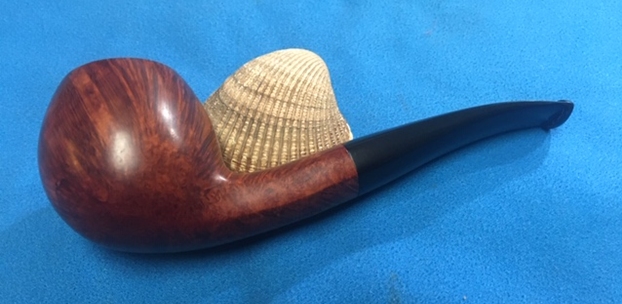
Jeff reamed the bowl with a PipNet pipe reamer and followed up with a Savinelli Fitsall pipe knife to remove the cake. He scrubbed out the mortise and the airway in the shank and the stem with alcohol, cotton swabs and pipe cleaners. He scrubbed the exterior of the bowl, rim, shank and stem with a tooth brush and Murphy’s Oil Soap to remove the oils and tars on the rim and the grime on the finish of the bowl. He rinsed it under running water. He dried it off with a soft cloth. The inner edge and the outer edge looked very good. He scrubbed the stem with Soft Scrub and then soaked it in Before & After Deoxidizer and rinsed it with hot water. I took photos of the pipe to show its condition before I started my work on it. I took close up photos of the bowl and rim top as well as the stem. You can see the condition of the rim top and bowl in the first photo. It really looks good and you can see why I would call it a carved plateau rim rather than the natural plateau. I may be wrong but I don’t think so! LOL! The fancy vulcanite stem had cleaned up amazingly well. I was dreading the turned barrel on lower part. There was tooth marks and chatter on both sides near the button surface.I took a photo of the stamping on the shank to show how good the condition is. It shows the MALAGA SECOND stamp on the left side and it is very legible. I removed the stem from the shank and took a photo of the parts. It is a nicely laid out pipe.Because the pipe was in such clean condition and there were no issues with the rim edges I could immediately begin by polishing the briar with micromesh pads. I dry sanded the bowl and shank with 1500-12000 grit pads and wiped it down after each pad with a damp cloth to remove the debris from sanding. I worked some Before & After Restoration Balm into the surface of the smooth briar with my fingertips and into the rusticated portions of the rim top and shank with a horse hair shoe brush. The product works to clean, enliven and protect the briar. I let the balm sit for about twenty minutes and then buffed with a cotton cloth to raise the shine. The photos show the bowl at this point in the restoration process. I turned to the stem to address the issues on the surface of both sides at the button. I decided to address the tooth marks and dents in the button and just ahead of the button. I “painted” the surface of the stem with the flame of a lighter to lift the tooth chatter and marks. The marks on the top and underside lifted until the remaining small marks could be dealt with by sanding the stem.I sanded both sides smooth with 220 grit sandpaper to remove the deep oxidation on the surfaces. I finished this initial polishing with 400 grit sandpaper to smooth out the scratches in the stem surface. As I sanded and reshaped the button and stem surface the stem began to look very good. I polished the stem with Denicare Mouthpiece Polish from a tin of it I have in the drawer here. It is a gritty red paste that I rub on with my finger tips and work into the surface of the stem and button and buff off with a cotton pad. It gives me a bit of a head start on the polishing work plus I have a tin to use up!I polished the stem with micromesh sanding pads – wet sanding with 1500-12000 grit sanding pads. I wiped it down after each sanding pad Obsidian Oil. I finished by polishing it with Before & After Pipe Stem Polish both fine and extra Fine and then wiped it down with a final coat of Obsidian Oil. This Malaga Second Freehand will always be a bit of a mystery to me. Even more so now that I have restored it and cannot find any issues with the briar or stem. Ah well it is still a beautiful pipe with a fancy turned vulcanite stem. It has a great mixed grain around the bowl and the carver really maximized that with the shape of the pipe. Everything about the pipe – the shape of the bowl, the rusticated, faux plateau rim top and shank end work well to highlight the grain around the bowl sides. I polished stem and the bowl with Blue Diamond polish on the buffing wheel and the grain just popped and came alive. I gave the bowl and the stem multiple coats of carnauba wax. I buffed the pipe with a clean buffing pad to raise the shine. I hand buffed it with a microfiber cloth to deepen the shine. The pipe polished up pretty nicely. The grain took on life with the buffing. The rich oil cured colour works well with the polished vulcanite stem. The finished pipe has a rich look that is quite catching. Have a look at it with the photos below. The shape, finish and flow of the pipe and stem are very well done. The dimensions are Length: 6 ½ inches, Height: 2 ¼ inches, Outside diameter of the bowl: 1 ¾ inches, Chamber diameter: 7/8 of an inch. I will be adding the pipe to the rebornpipes store shortly if you would like to add it to your collection. Thanks for walking through the restoration with me as I worked over this beautiful pipe.

Next on the Table – a Savinelli Deco 622KS Bent Pot


Blog by Steve Laug

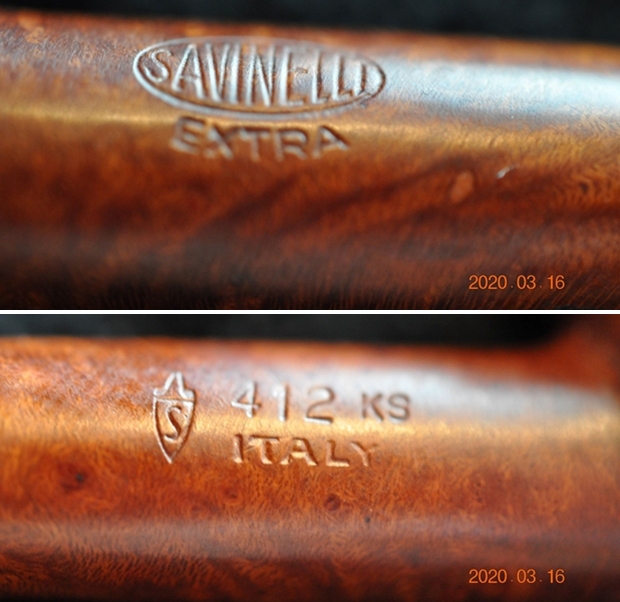
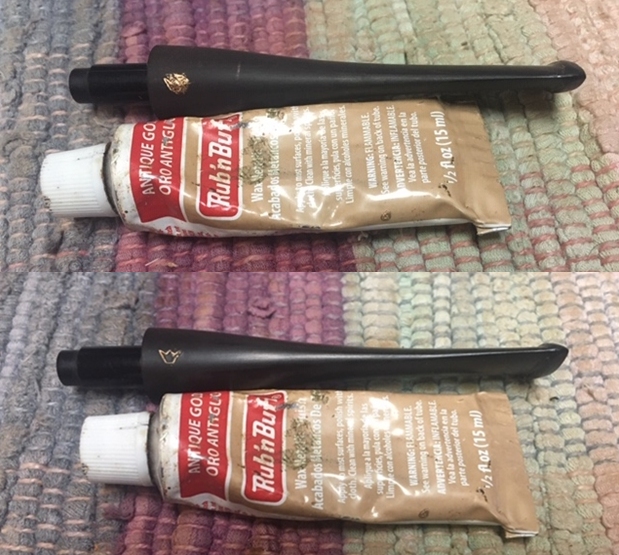
The next pipe on the work table is a Savinelli line pipe that was a new one to me. It is stamped on the left side of the shank Savinelli in an arch over DECO. On the right side it is stamped with the Savinelli “S” Shield and the shape number 622KS over Italy. The stem has the Savinelli Shield on stamped on the topside and 6mm stamped on the underside. The pipe was dirty and there was a thick cake in the bowl. There is some lava on the inward bevel and some darkening as well. There is also some lava on the rim top. The finish is in excellent condition other than being dirty. The stem is acrylic and there are tooth marks and chatter on both sides near the button with light damage on the button surface itself. The stem is free of the 6mm filter and looks like one has not been used in the stem. The internals of the pipe are very dirty. Jeff took photos of the pipe before he started his cleanup work on it.  The photos of the rim top and bowl show the thick cake, tobacco debris and thick lava overflow on the rim top. The pipe was a mess. You can also see some chipped areas on the outer edge of the bowl and nicks in the sides of the bowl. He captured the grain around sides of the bowl in the next photos. You can also see the nicks and chips out of the briar but it is still quite pretty beneath the wear and tear and grime! He took photos of the stamping on the shank sides. They are clear and readable and read as noted above. The acrylic stem was in good condition other than the tooth marks on the surface of both sides ahead of the button and some wear on the button as well.Jeff out did himself on the cleanup of this pipe and when I received it I was not disappointed as it showed what I saw on the briar in the photos above. The grain was quite nice and the colour was very good. Jeff had reamed the bowl with a PipNet pipe reamer and cleaned up the debris left behind with a Savinelli Fitsall Pipe Knife. He scrubbed the internals in the shank and the stem with alcohol, cotton swabs and pipe cleaners. He scrubbed the externals of the bowl with undiluted Murphy’s Oil Soap and a tooth brush and rinsed it off with running water. He scrubbed the stem with Soft Scrub to remove the debris on the stem. The pipe looked quite amazing. I took photos of it before I started my part of the restoration. I took a close up photo of the rim top to show the damaged areas and how clean it was. You can see damage on the right front inner edge and back left edge of the rim. There appeared to be some burn damage and darkening. The stem looked good other than the tooth marks and the light chatter on the surface ahead of the button.I took the stem off the shank and took a photo of the parts. It is a great looking pipe.I decided to start on the inner rim edges and the rim top. I sanded the beveled edge with a piece of folded 220 grit sandpaper to smooth out the damaged edges and removing the darkening. I stained the edge with a Maple Stain Pen. The rim top also looks much better and will improve with polishing.I polished the bowl and rim with micromesh sanding pads – dry sanding it with 1500-12000 grit sanding pads. I wiped it down with a damp cloth to remove the dust left behind from sanding. I buffed bowl on the wheel with Blue Diamond to polish the briar and bring the grain out. I rubbed it down with Before & After Refurbishing Balm. I worked it into the briar with my fingertips and let it sit for 20 minutes. The Balm works to preserve, protect and enliven the briar. The pipe is starting to look very good at this point. I set the bowl aside and turned my attention to the stem. I sanded out the tooth marks and chatter remaining on the stem with 220 grit sandpaper and followed that by starting the polishing with 400 grit wet dry sandpaper.I continued polishing the stem with Denicare Mouthpiece Polish – a red gritty paste that feels a lot like Tripoli. I find that it works well to polish out some of the more surface scratches in the vulcanite left behind by the 400 grit wet dry sandpaper. I rub it into the stem surface with my fingertips and buff it off with a cotton pad.I used Antique Gold Rub’n Buff to touch up the stamping on the stem. I applied a spot of the product on the surface and worked it into the stamping with a tooth pick. I rubbed it off and buffed it with a soft cloth. The finished look was very good.I polished the stem with micromesh sanding pads – dry sanding with 1500-12000 grit sanding pads. I wiped the stem down after each sanding pad with a cloth containing some Obsidian Oil. I finished polishing it with Before & After Pipe Stem Polish – both Fine and Extra Fine and buffed it off with a cotton cloth. This Savinelli Deco 622KS Bent Pot is a nice looking pipe. I put the bowl and stem back together again and buffed the bowl and the stem with Blue Diamond on the buffing wheel. I polished the metal band with a jeweler’s cloth. I gave the bowl and the stem several coats of carnauba wax. I carefully buffed the entire pipe with a clean buffing pad to raise the shine. I finished buffing with a microfiber cloth to deepen the shine. The finished pipe looks very good. The grain is quite beautiful a mix of cross grain and birdseye grain around the bowl sides and the rim top and heel. The pipe feels great in the hand. It has an interesting shape that fits well in either the right or left hand. The finished Bent Pot is shown in the photos below.  The 6mm filter stem is in great condition. What i like about the 6mm filter pipe is that it can be smoked without a filter and still has a great draw. The dimensions of the pipe are Length: 6 inches, Height: 2 inches, Outside diameter of the bowl: 1 5/8 inches, Chamber diameter: 7/8 of an inch. This great looking Savinelli pipe turned out very well. It should be a great pipe. It will be going on the rebornpipes store shortly if you are interested in adding it to your collection. Thanks for reading this blog and my reflections on the pipe while I worked on it.

Cleaning up a Willmer Straight Grain AAA Standard Cup and Saucer


Blog by Steve Laug

The next pipe on the table is a shape I would call a cup and saucer or at least Willmer’s take on this shape. The pipe is stamped on the left side of the shank Willmer in script over Straight Grain over AAA over Standard. On the right side of the shank it is stamped Made in England. It is a bent cup and saucer shaped smooth briar with vulcanite saddle stem. The pipe was dusty and dull looking but had great grain around the bowl and rim. The rim top is smooth and there was some darkening and damage to the inner edge of the bowl. There was a thick cake in the bowl. The finish was in great condition under grime ground into the sides and shank. The saddle vulcanite stem was oxidized and had light tooth marks and chatter on both sides near the button. Jeff took the following photos before he started his cleanup work on the pipe. He took close-up photos of the bowl and rim top from various angles to capture the condition of the rim top and edges of the bowl. There was a little darkening around the inner edge and heavier along the back edge of the bowl. There are some scratches on the top and outer edge of the bowl as well. You can also see the cake in the bowl.He took photos of the sides and heel of the bowl to show the condition of the finish and the grain around the bowl. The pipe has some stellar grain around the bowl and shank and the carver maximized the lay of the grain with the shape of the pipe. Jeff took photos of the stamping on the sides of the shank. It reads as noted above and is clear and readable.  He also took a photo of the Willmer “W” on the left side of the stem. The next photos show the top and underside of the stem. You can see the light tooth marks right next to the button edge.I turned to Pipephil to get a quick review of the Willmer Company as it had been a long time since I had worked on one (http://www.pipephil.eu/logos/en/logo-w3.html). I quote the side bar from the site bellow.

Willmer is a brand of H. Willmer & Son Ltd. The factory closed down about 2006-07 after more then 60 years activity and two generations of makers. Gradings until the 1980s (ascending): BA, A, AA, and AAA. After this date Willmer introduced the AAAA and AAAA PRESENTATION as top grades.

The pipe I was working on has a AAA stamping on it which if the pipe came from pre-1980s was the top of the line. If it was later pipe it close to the top of the line.I turned to Pipedia to get more information on the brand (https://pipedia.org/wiki/Willmer). The first paragraph dispelled of the belief that Willmer had been a carver for Charatan in his own words. I quote a portion of the article to give a sense of the history of the brand.

Willmer was founded in London. According to the website, which doesn’t exist anymore because the Willmer factory has been closed in 2006/07, the firm was in business “for more than 60 years” by 2003. Willmer was homed then in Southend-on-Sea, Essex, so not far from the Cadogan plant.

When Willmer first started, they definitely strived to compete with brands in the high-end market. Due to the excellent quality of the pipes Willmer was frequently asked to produce private label pipes for England’s best renowned pipe retailers. So many pipes are not easily recognized as Willmers for stamped under the name of the respective shop. Willmer’s own pipes were stamped “Willmer – Made in England” and showed a sweeping “W” in white or gold on top or left side of the stem. The earlier grading had AAA as top grade followed by AA, A, AB etc.

Sometime in the 1980’s, Willmer went through some major changes. The move to Essex was already mentioned above. They continued making highly respectable freehands – often copying some of the stunning Charatan shapes of days gone by. The grading was altered. What used to be an AAA now became the additional name “Presentation” and was stamped with AAAA. Funny enough, the forth A was often larger than the three before. The other grades were changed accordingly.

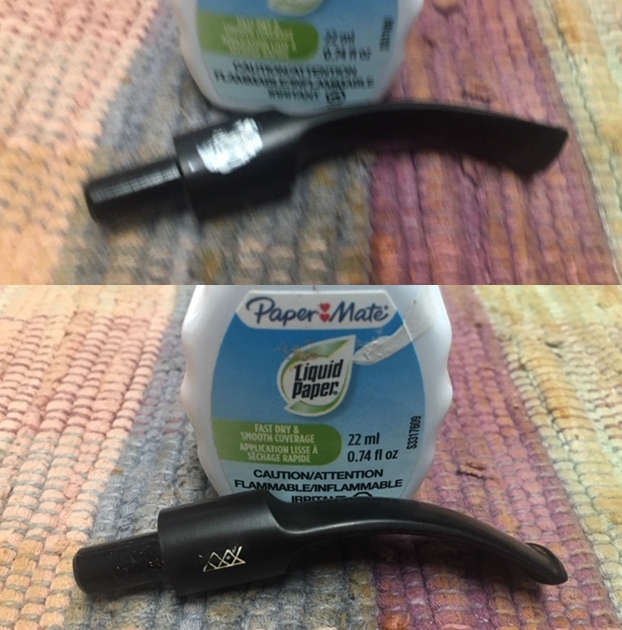
Now it was time to look at it up close and personal. Jeff had done his usual thorought job in removing all of the cake in the bowl and the lava on the rim top. He had reamed the bowl with a PipNet Pipe Reamer and cleaned up the remnants with a Savinelli Fitsall Pipe Knife. He took the cake back to bare briar so we could check the walls for damage. He scrubbed the exterior of the bowl with Murphy’s Oil Soap and a tooth brush to remove the grime on the bowl and rim and was able to remove the lava and dirt. He cleaned out the interior of the bowl and shank with pipe cleaners, cotton swabs and alcohol until they came out clean. He cleaned the stem with Soft Scrub to remove the grime on the exterior and cleaned out the airway with alcohol, cotton swabs and pipe cleaners. I took photos of the pipe before I started my part of the work. To show the damage to the inner edge of the rim and the rim top I took a close-up photo. You can see it on the right inner edge and the back edge of the bowl. The vulcanite stem had some tooth marks on both sides and there was some oxidation remaining.I took a photo of the stamping on both sides of the shank. It clearly read what was noted above. The “W” stem on the left side of the saddle stem is also readable.I removed the stem from the bowl and took photos of the parts. It really is a great looking pipe.I started my part of the restoration by addressing the damage to the rim top and inner edge of the bowl. I topped the bowl on a topping board with 220 grit sandpaper. I worked over the inside edge of the bowl with a folded piece of 220 grit sandpaper.I polished the newly topped rim and the rest of the bowl with 1500-12000 grit micromesh sanding pads. I wiped the bowl down with a damp cloth after each sanding pad to remove the dust and debris. I stained the rim with a Maple Stain Pen to blend the repaired and polished rim into the rest of the bowl.I rubbed the bowl and shank down with Before & After Restoration Balm to deep clean the finish on the bowl and shank. The product works to clean, enliven and protect the briar. I worked it in with my fingertips into finish on the bowl and shank. I let it sit for 10 minutes to let it do its magic. I buffed it with a soft cloth. The briar really began to have a rich shine. I took some photos of the bowl at this point to mark the progress in the restoration. The bowl was finished so I set it aside and turned my attention to the stem. To address the oxidation and the tooth marks on the stem surface I sanded it with 220 grit sandpaper to blend in the tooth marks and to break up the oxidation. I started the polishing with 400 grit wet dry sandpaper.I started polishing the stem with Denicare Mouthpiece Polish – a red gritty paste that feels a lot like Tripoli. I find that it works well to polish out some of the more surface scratches in the vulcanite left behind by the 400 grit wet dry sandpaper. I rub it into the stem surface with my fingertips and buff it off with a cotton pad.I touched up the “W” stamp on the stem with PaperMate Liquid Paper. I pressed it into the stamp in the vulcanite with a tooth pick. Once it dried I scraped off the excess fill with the tooth pick and with micromesh sanding pads.I polished the stem with micromesh sanding pads – dry sanding with 1500-12000 grit sanding pads. I wiped the stem down after each sanding pad with a cloth containing some Obsidian Oil. I finished polishing it with Before & After Pipe Stem Polish – both Fine and Extra Fine and buffed it off with a cotton cloth. I wiped it down with a final coat of Obsidian Oil and set it aside to dry. This is a unique pipe and it is the first one I have worked on like this. It is a beauty. I put the bowl and stem back together again and buffed the bowl and the stem with Blue Diamond on the buffing wheel. I gave the bowl and the stem several coats of carnauba wax. I carefully buffed the entire pipe with a clean buffing pad to raise the shine. I finished buffing with a microfiber cloth to deepen the shine. The finished pipe looks very good. The grain is quite beautiful a mix of straight and flame around the bowl sides and birdseye on the rim top and heel. The pipe feels great in the hand. It has an interesting shape that fits well in either the right or left hand. The finished Willmer Straight Grain AAA Standard is shown in the photos below. The dimensions of the pipe are Length: 6 ½ inches, Height: 2 inches, Outside diameter of the bowl: 2 inches, Chamber diameter: ¾ of an inch. This great looking Willmer Cup and Saucer pipe turned out very well. It should be a great pipe. It will be going on the rebornpipes store shortly if you are interested in adding it to your collection. Thanks for reading this blog and my reflections on the pipe while I worked on it.

An Easy Restoration of a JM Boswell 2013 Bent Poker Sitter


Blog by Steve Laug

I have been doing a fair bit of work on the last few restorations so I thought it was about time to work on an easy one next. I took another of the Boswell pipes out of box of pipes to be restored to be my next project. I cleaned up an unsmoked JM Boswell volcano recently and posted the blog on it here (https://rebornpipes.com/2020/04/08/life-for-a-j-m-boswell-2013-bent-volcano-with-a-twist/). I also restored a second estate Boswell – a bent billiard with a twist. Here is the link to that blog (https://rebornpipes.com/2020/04/08/life-for-another-j-m-boswell-2013-bent-billiard-with-a-twist/). In both of those blogs I gave quite a bit of background information on the brand and its maker. If you would like to know more about the brand you can click on either link and have a read.

The next Boswell is also a 2013 pipe and this one has more of a standard shape to it. It is a bent Poker or Cherrywood Sitter shaped smooth briar with an acrylic saddle stem. The pipe was dusty and dull looking but had great grain around the bowl and rim. The rim top is smooth and clean with no darkening or lava overflow. The finish was very dirty from sitting around. There was a moderate cake in the bowl. The inner edge of the rim appeared to be in excellent condition. The pipe was signed on the underside of the shank with JM Boswell’s signature and 2013 U.S.A. There are no other stampings on the pipe and no shape numbers. The saddle acrylic stem was in good condition with just a few light tooth marks and chatter on both sides near the button. Jeff took the following photos before he started his cleanup work on the pipe. He took close-up photos of the bowl and rim top from various angles to capture the condition of the rim top and edges of the bowl. There was a little darkening along the back edge of the bowl but otherwise it was clean.He took photos of the sides and heel of the bowl to show the condition of the finish and the grain around the bowl. You can see the small minor sandpits on the left side and on the heel of the bowl but otherwise it a clean piece of briar. Jeff took a photo of the signature and date on the underside of the shank. It reads as noted above and is clear and readable. The next photos show the top and underside of the stem. You can see the light tooth marks right next to the button edge.Now it was time to look at it up close and personal. Jeff had done his usual thorough job in removing all of the cake in the bowl and the lava on the rim top. He had reamed the bowl with a PipNet Pipe Reamer and cleaned up the remnants with a Savinelli Fitsall Pipe Knife. He took the cake back to bare briar so we could check the walls for damage. He scrubbed the exterior of the bowl with Murphy’s Oil Soap and a tooth brush to remove the grime on the bowl and rim and was able to remove the lava and dirt. He cleaned out the interior of the bowl and shank with pipe cleaners, cotton swabs and alcohol until they came out clean. He cleaned the stem with Soft Scrub to remove the grime on the exterior and cleaned out the airway with alcohol, cotton swabs and pipe cleaners. I took photos of the pipe before I started my part of the work. To show how clean the rim top and stem really were I took a close-up photo of the rim and stem. The bowl was clean and cake free. The inner edges of the bowl look good. The acrylic stem cleaned up nicely. The surface had some tooth marks but the button edge looked really good.I took a photo of the signature on the under side of the shank.I removed the stem from the bowl and took photos of the parts. It really is a great looking pipe.I polished the briar with 1500-12000 grit micromesh sanding pads. I wiped the bowl down with a damp cloth after each sanding pad to remove the dust and debris. I rubbed the bowl and shank down with Before & After Restoration Balm to deep clean the finish on the bowl and shank. The product works to clean, enliven and protect the briar. I worked it in with my fingertips into finish on the bowl and shank. I let it sit for 10 minutes to let it do its magic. I buffed it with a soft cloth. The briar really began to have a rich shine. I took some photos of the bowl at this point to mark the progress in the restoration. The bowl was finished so I set it aside and turned my attention to the stem. To address the tooth marks on the stem surface I sanded it with 220 grit sandpaper to blend in the tooth marks. I started the polishing with 400 grit wet dry sandpaper.I polished the stem with micromesh sanding pads – dry sanding with 1500-12000 grit sanding pads. I wiped the stem down after each sanding pad with a cloth containing some Obsidian Oil. I finished polishing it with Before & After Pipe Stem Polish – both Fine and Extra Fine and buffed it off with a cotton cloth. I put the bowl and stem back together again and buffed the bowl and the stem with Blue Diamond on the buffing wheel. I gave the bowl and the stem several coats of carnauba wax. I carefully buffed the entire pipe with a clean buffing pad to raise the shine. I finished buffing with a microfiber cloth to deepen the shine. The finished pipe looks very good. The grain is a mix of patterns around the sides, top and bottom of the bowl and is quite beautiful. The pipe feels great in the hand. It is comfortable and light weight. The finished JM Boswell 2013 Bent Poker/Sitter is shown in the photos below. The dimensions of the pipe are Length: 5 ¼ inches, Height: 2 ½ inches, Outside diameter of the bowl: 1 ¾ inches, Chamber diameter: 7/8 of an inch. This great looking Boswell Poker turned out very well. It should be a great pipe. It will be going on the rebornpipes store shortly if you are interested in adding it to your collection. Thanks for reading this blog and my reflections on the pipe while I worked on it.
New Start for an older BBB Best Ambroid Cased Billiard


Blog by Steve Laug

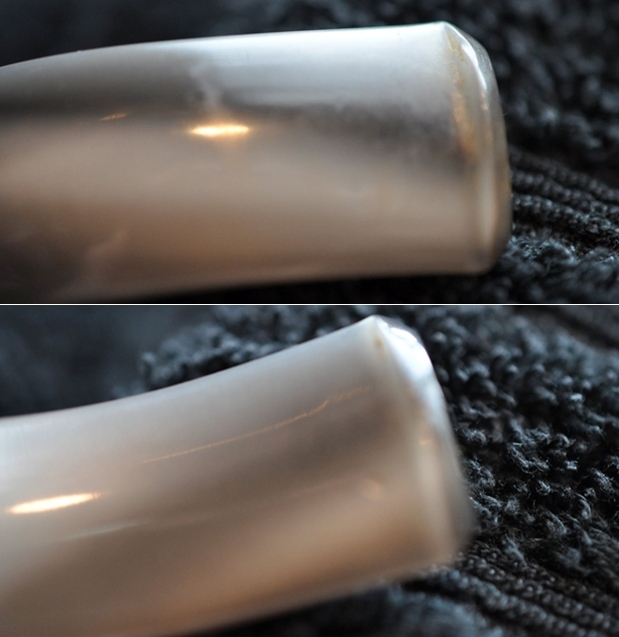
Jeff and I picked up this older BBB Cased Billiard in a group of pipes we purchased not too long ago. It is quite unique. I have worked on a lot of BBB pipes over the years as they are one of my favourite brands and I have quite a few in my collection. This one is a bit different in that it has very little that gives a clue to its age. It is a nice briar with a silver band that is stamped with BBB in the Diamond and Sterling Silver. There were no hallmarks on the band to pin down a date.  It is stamped on the inside of the case with the BBB Diamond logo. The left side of the shank itself is stamped with the BBB Diamond logo. The stem in golden Ambroid and has a bone tenon that screws into the briar shank. It came in a worn black leather covered case lined with black chamois. The case has a brass clasp on the front and brass hinges on the back. It was obviously custom made for this pipe.Jeff opened the case and this was what the pipe that was inside looked like. It was a nice looking classic billiard that is for sure but it was also very dirty. The bowl and shank were a rich medium brown that was very dirty. The stem was golden Ambroid material. The exterior of the bowl was very dirty and had tars and oils ground into the finish and sticky spots on the finish. There was a chip missing on the outer edge at the back of the bowl. The rim top was a mess with lava overflowing out of the thick cake in the bowl. I am sure once it was out of the case it would become clear how dirty it really was.Jeff took it out of the case to have a better look at the condition of the pipe. It was a very classic billiard with a silver band and golden stem. It looked like it would cleanup really well and look great when finished. The finish on the briar bowl looked like it would be great once it was clean. He took some close-up photos of the bowl and rim top. There was a thick cake in the bowl that was hard and uneven. The lava overflowed over the rim top but it looked like the inner edge of the bowl was in good condition. The outer edge had some large nicks and gouges – chunks of briar missing on the back edge. Jeff took photos of the sides of the bowl and heel to show the grain and condition of the finish around the bowl. The pipe has some great grain around the sides. In terms of stamping the only identifying marks on the pipe were the gold BBB Diamond logo on the inside of the case lid, the same stamped on the left side of the shank and again on the silver band. Jeff captured those marks in the next set of photos. The logo on the inside lid of the case was worn and but still readable. Jeff took photos of the stamping on the left side of the shank and the band. He took photos of the stem off the shank/base. The stem has a threaded bone tenon that was filthy with oils and tars. The internals of the pipe were very dirty.Jeff took photos of the stem to show the general condition of the stem shape. The Ambroid stem is well gnawed on both sides around the button. The first photo shows the profile of the straight narrow stem. He took photos of the top and underside of the stem to show the damage and bite marks on both sides up the stem from the button.In 2009 Briar Books Press published a reprint of the 1912 BBB Catalogue No.XX from Adolph Frankau & Co, Ltd.London, E.C. I purchased a copy of the book when it came out and enjoyed reading through it and dreaming about the various pipes that were pictured there. I remembered that there was a section of pipes in the catalogue –Section E called pipes in Cases and it had individually cased pipes with Ambroid stems. I turned to that section in the catalogue and read through the various descriptions and looked at the pictures and sure enough I found this pipe. The only variation was that the one in the drawing had hallmarks on the silver but the rest was identical including the case and stamping on the lid. The top pipe on the right side of the page photo below looks like the one that I am working on.It is described in the title of the page a Best Ambroid Briars Silver Mounted in Cases and available in a variety of sizes. Now I knew the pipe I was working on and that there was at least some variation of it available in the 1912 BBB Catalogue.

It was time to work on it now and do my part of the restoration. I took the leather case from the box that Jeff had shipped to me and brought it to the work table. I opened it up and took photos of the case and the pipe in the case before taking it out and examining it thoroughly to see what I needed to do. You can see the definite similarity between this pipe and the on in the drawing on the top right of the photo above.The pipe looked very clean. The bowl had been reamed back with a PipNet reamer and cleaned up with a Savinelli Fitsall Pipe Knife. The internals of the shank and stem had been cleaned with alcohol, cotton swabs and pipe cleaners. The exterior of the bowl had been scrubbed with a tooth brush and undiluted Murphy’s Oil Soap. The silver band had been cleaned and the tarnish removed. The stem was clean and the damage to the Ambroid was very visible and ready to repair. Jeff had done his usual great job on the clean up. I took photos of the pipe before I started my part of the work. I took some close up photos of the bowl and rim top as well as the stem to show the areas that I would need to address. You can see the that the bowl and rim are very clean. The inner edge of the rim has some damage as do the top and outer edge. There is general darkening to the rim top and scratches and nicks on the surface. The stem is also very clean and the gouges on the top and underside near the button are visible and ready for repair.I took a photo of the stamping on the left side of the shank. I also wanted to show that the band had turned on the shank so that the BBB Diamond was now on the topside so I took a second photo to capture that. I would need to realign the band and glue it in place.I unscrewed the stem from the shank and took photos of the parts. The bone tenon that connects the stem to the shank is visible.I decided to begin my part of the restoration by addressing the issues with the rim top and edges. I topped the bowl with 220 grit sandpaper on the topping board to smooth out the damage on the rim top and the immediate damage on the inner and outer edges. Once I had it smooth I used clear super glue and briar dust to repair the deep gouges in the back outer edge of the bowl. I took a photo of the rim top at this point to show how good the inner edge and top looked. You can also see the repair on the back outer edge of the bowl that still needs to be sanded. I sanded the repair with a folded piece of 220 grit sandpaper to blend it into the surrounding briar and then took a photo of the bowl looking down at the edges. I am happy with the state of the rim and edges at this point in the process. I removed the band from the shank before moving on to  polish the briar with micromesh sanding pads. I sanded the old glue off the shank to make it smooth for the refit. I polished the bowl, rim and shank with 1500-12000 grit micromesh pads wiping it down between pads with a damp cloth. The way in which the rim top colour was blending in with the rest of the briar was perfect and would not need to be stained. I worked some Before & After Restoration Balm into the briar with my fingertips to clean, enliven and preserve the briar. I find that it adds a depth to the polish that I really have come to appreciate. All that remains at this point is to wax and polish the bowl. The bowl looked very good at this point. I was able to preserve the old patina and through polishing blend the rim top into the rest of the finish. It was time to put the band back in place. I used a dental spatula to apply all-purpose white glue to the shank and aligned the band and pressed it in place. I wanted the BBB Diamonds on the shank and band to match as I had seen in photos on line. I wiped away the excess glue with a damp cotton pad.I set the bowl aside and turned to address the issues with the stem. I used a clear CA glue to fill in the deep tooth marks on both sides of the stem and to rebuild the button. I had to layer the glue and let it harden between applications to get a smooth fill on the stem.Once the repairs had cured I used a needle file to cut the sharp edge of the button and to smooth out the repairs.I smoothed out the repairs with a folded piece of 220 grit sandpaper. I started the polishing with a folded piece of 400 grit wet dry sandpaper.I polished the stem with micromesh sanding pads – dry sanding with 1500-12000 grit sanding pads. I wiped it down after each sanding pad with a cloth containing some Obsidian Oil. I finished polishing it with Before & After Pipe Stem Polish – both Fine and Extra Fine and buffed it off with a cotton cloth. I put the bowl and stem back together and carefully buffed the pipe with Blue Diamond polish on the buffing wheel. I gave the bowl and stem multiple coats of Carnauba wax on the buffing wheel and buffed it with a clean buffing pad. I hand buffed the entirety of the pipe with a microfiber cloth. The pipe was alive now and looked great to me. The patina of the older BBB shines through and the repaired Ambroid stem – though far from it pristine beginnings – looks very good.  This pipe is well balanced feels great in my hand. The finished pipe is shown in the photos below. The dimensions of the pipe are Length: 6 inches, Height: 1 ¾ inches, Outside diameter of the bowl: 1 ¼ inches, Chamber diameter: ¾ of an inch. This older BBB Best Ambroid Cased Briar pipe is a beauty and the Ambroid Stem, Sterling Silver Band and old patina briar look stunning together. It is an old BBB pipe so of course it is one that will be staying in my BBB collection. It will be a great addition to my collection of that classic English Brand. Thanks for reading this blog and my reflections on the pipe while I worked on it.

Beginning again – a KB&B Bakelite Blueline Cup and Ball Pipe


Blog by Steve Laug

Jeff picked up this interesting Cup and Ball or Claw and Ball pipe somewhere along his hunts or in an auction. It is quite unique. I have worked on a lot of KB&B pipes but never one like this. It is stamp on the inside of the case with the KB&B Cloverleaf and Bakelite in the centre. Underneath it appears to read Blueline. The gold band on the shank end is also stamped with the KB&B Cloverleaf as well as what looks like 12K Gold Plate. Both the base of the pipe and the stem are Bakelite. The stem has a bone tenon that screws into the Bakelite shank. It came in a black leather covered case lined with blue velvet fabric. The only marking on the case was what I mentioned above. The case has a brass clasp on the front and brass hinges on the back. It was obviously custom made for this pipe.Jeff opened the case and this was what the pipe that was inside looked like. It was a very unique looking pipe that is for sure but it was also very dirty. The base, shank and stem were rich red coloured Bakelite. The exterior of the bowl was very dirty and had tars and oils ground into the finish and sticky spots on the finish. Looking at the top of the bowl you can see the cake and how much lava had overflowed onto the rim top. I am sure once it was out of the case it would become clear how dirty it really was.Jeff took it out of the case to have a better look at the condition of the pipe. It was a very interesting looking rendition of a Ball and Cup pipe – at least that is what I would call it. It looked like it would cleanup really well and look great when finished. The hardwood bowl (cherry or maple) had some colour from either being filthy or from age. Cleaning would reveal the facts! He took some close-up photos of the bowl and rim top. There was a very thick cake in the bowl that was hard and uneven and had lots of flakes of tobacco debris stuck to the walls. The lava overflowed down the outside of the ball on several sides. The edges of the bowl looked to be in pretty good condition at this point. Jeff took photos of the sides of the bowl to show the grain and condition of the finish around the bowl. These photos also lead me to conclude that the bowl is not briar… perhaps Cherry or Maple.In terms of stamping the only identifying marks on the pipe were those on the case on the gold band on the shank. Jeff captured those marks in the next set of photos. The logo on the inside lid of the case was worn and dirty so he included two photos of that. I also found a similar lid logo online and have included it as well for comparison sake. Jeff took photos of the KB&B Cloverleaf and the 12K Gold Plate stamp on the band.He took photos of the ball and the stem off the shank/base. The ball and the stem both are threaded and are screwed into the base. It was filthy with oils and tars. The internals of the pipe were in as bad a condition as the inside of the bowl and airway.Jeff took photos of the stem to show the general condition of the stem shape. The curve is graceful and the curve great. The photo shows the profile of the stem. He took photos of the top and underside of the stem to show the damage and bite and scratch marks on both sides up the stem from the button.I remembered that one of the contributors to rebornpipes, Troy Wilburn had done a lot of work on older KB&B pipes so I turned to one of his blogs on rebornpipes on a Blueline Billiard that he restored (https://rebornpipes.com/tag/kbb-blue-line-pipes-with-bakelite-stems/). As expected Troy had done a great job digging into the Blueline brand and potential dates. I quote from his blog the following sections.

I was thinking after some initial research that these pipes were from around 1910 – early 1920s. Seems it’s a little older than I thought. I got this info from a Kaywoodie and early KBB collector who has had several Blue Lines.

Your pipe is made by Kaufman Brothers and Bondy, or KB&B, which later (1915) created the Kaywoodie line we all know. But this pipe is Pre-Kaywoodie, as they were making pipes under the KB&B branding from about 1900 to 1914. Bakelite was invented in 1907, so this pipe was likely made from 1908 to 1914, as the Bakelite was quite the technological wonder of the time, and was used in many products (still in use today). These “Blue Line Bakelite” pipes are rare pieces, seldom seen.”

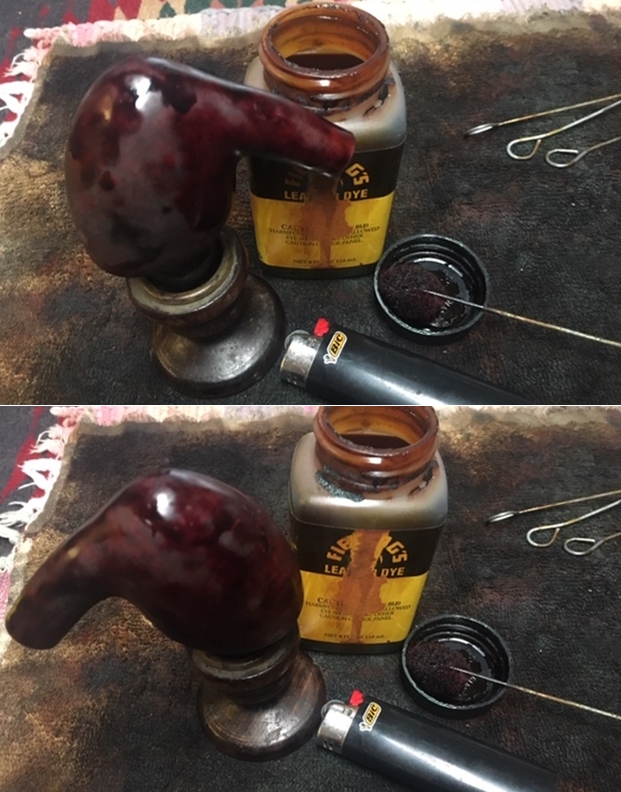
Having seen the before pictures on this pipe I was looking forward to what it would look like when I unpacked the most recent box Jeff sent to me. The pipe was present in the box and I took it out of the box to see what work awaited me when I removed it from the case. I put the case on my desk and opened it to see what was there. I opened the case and took a photo of the pipe inside.I was astonished to see how clean the pipe was. The bowl clean and the Bakelite base and stem looked very good. Even the gold band looked better. Now it was time to take it out of the case and have a look at it up close and personal. I took photos of the pipe as I saw it. Jeff had done an incredible job in cleaning up this pipe. He had reamed the bowl with a PipNet Pipe reamer and cleaned up the remaining debris with a Savinelli Fitsall Pipe Knife. He also scraped the thick lava on the rim top. He scrubbed the exterior of the bowl with Murphy’s Oil Soap and a tooth brush to remove the grime on the bowl and rim. He cleaned out the interior of the bowl base and stem with pipe cleaners, cotton swabs and alcohol until they came out clean. The rim top looked incredible when you compare it with where it started. There is some slight darkening on the inside edge of the bowl. He cleaned the base and stem with Soft Scrub to remove the grime on the exterior and cleaned out the airway with alcohol, cotton swabs and pipe cleaners. I included a photo of the KB&B Cloverleaf on the gold plated band.I unscrewed the bowl and the stem from the base and took photos of the parts. The bowl and stem both had threaded connectors. The bowl was metal and the stem was bone.I stripped the spotty finish off the bowl with acetone. I know for some this is a no-no for old pipes but honestly this finish was very rough. I would restain it as close to the original aniline as I could but there was damage that needed to remove the stain and finish to address. I followed that by sanding the bowl with a medium and a fine grit sanding sponge. The bowl was looking better and the dark spots turned out to be oils and not burn marks! Whew! I polished the bowl with micromesh sanding pads – dry sanding with 1500-12000 grit pads and wiping the bowl down after each pad with a damp cloth. Note the developing shine on the wood. I went through my various stains and chose a Tan aniline stain for the bowl. It is a nice coloured stain that is close to what was original and will give me some coverage over some of the dark spots on the sides of the bowl. I applied the stain and flamed it with a lighter. The flaming burns off the alcohol and sets the stain in the wood. I repeated the process until I was happy with the coverage.I set the bowl aside to let the stain cure and turned my attention to the base. The band was loose so I removed it for the first round of pads. I polished the Bakelite with micromesh sanding pads to remove the scratching and bring out a shine. I dry sanded with 1500-12000 grit pads and wiped it down with a cloth I use that has Obsidian Oil impregnated in the fibres. It works well to remove the dust. I paused the polishing to glue the gold band on the shank end. I put some white all-purpose glue on the Bakelite and pressed the band in place on the shank. I wiped the excess glue off with a damp cloth. I let the glue dry for a short time.When it had set I continued polishing with the micromesh pads. I set the base aside and went back to the bowl. I buffed out the newly stained bowl with Blue Diamond to bring out a shine. The colour is opaque enough to hide the dark spots and transparent enough to show some grain in the sunlight. I like it!I rubbed Before & After Restoration Balm into the wood with my fingertips to clean, enliven and preserve the newly stained bowl. I find that it adds a depth to the polish that I really have come to appreciate. All that remains at this point is to wax and polish the bowl. With the bowl and the base finished it was time to put them back together. I would still need to buff and wax both but the project was coming to an end. All that remained was to finish the stem work. I set the base and bowl aside and turned to address the issues with the stem. I used a clear CA glue to fill in the gouges across the stem from the button forward an inch on both sides. I also filled in the deep tooth marks on both at the same time.I smoothed out the repairs with a folded piece of 220 grit sandpaper. I started the polishing with a folded piece of 400 grit wet dry sandpaper.I rubbed the stem down with Denicare Mouthpiece Polish. It is a gritty, red paste with the consistency of red Tripoli. I find that it works well to polish out scratches and light marks in the surface of the stem. I polished it off with a cotton pad to raise the shine.I polished the stem with micromesh sanding pads – dry sanding with 1500-12000 grit sanding pads. I wiped it down after each sanding pad with a cloth containing some Obsidian Oil. I finished polishing it with Before & After Pipe Stem Polish – both Fine and Extra Fine and buffed it off with a cotton cloth. I gave it a coat of Briarville’s No Oxy Oil to preserve and protect it. I put the hardwood bowl and Bakelite Base stem back together again and carefully buffed it with Blue Diamond polish on the buffing wheel. I gave the bowl, base and stem multiple coats of Carnauba wax on the buffing wheel. I hand buffed the entirety of the pipe with a microfiber cloth. The pipe was alive now and looked great to me. It has a great feel in the hand that is very tactile and the colouring on the bowl should develop more deeply as the pipe is smoked. The finished pipe is shown in the photos below. The dimensions of the pipe are Length: 5 1/2 inches, Height: 2 1/4 inches, Outside diameter of the bowl: 1 1/4 inches, Chamber diameter: 7/8 of an inch. This older KB&B Blueline Cup and Ball pipe is a beauty and the Bakelite looks great with the newly stained bowl. It is one of those old timers that will be staying in my KB&B collection. It will be a great addition to my collection of old pipes. Thanks for reading this blog and my reflections on the pipe while I worked on it.

Operation Rescue – “My Dog Ate my Ser Jacopo L1 Billiard!”


Blog by Steve Laug

When Jeff showed me the next pipe on the table we went back and forth about buying it or just leaving it with the seller. It was a really nice Ser Jacopo L1 Billiard at some point in its life but that time had passed. It had literally become a chew toy for someone’s dog. The bowl was in very rough shape and had deep tooth gouges around the bowl with chunks of briar missing on the rim and top. The bowl was really damaged to the point of being questionable. The shank interestingly was free of bite marks and the stem had less bite marks than some of the stems I have worked on from pipemen who chew their stems. For me the question was whether or not I wanted to work on it. There was no doubt that the pipe would be a challenge but was it a challenge I wanted to take on. That was the question we weighed before moving ahead with the buy.

After spending time talking about it we decided to pick up the pipe and see what I could do with it. When Jeff got it the story became even sadder!  The bowl had amazing straight grain around the sides and it appeared to have been barely smoked. It looked as if maybe a bowl or two had been enjoyed before the dog got a hold of the pipe and did the massive damage that showed when we saw it. The bowl had some darkening but there was no cake in the bowl. It smelled smoky but otherwise was very clean. Jeff would still clean up the pipe before he sent it on to me that way I would be able to just pick it up and see what I could do with it. Jeff took the following photos before he started his cleanup work on the pipe. Just look at the damage! Oh my; the pipeman or woman must have just wept after the initial shock or anger when he or she saw the pipe dangling from the dog’s mouth. He took close-up photos of the bowl and rim top from various angles to capture the gnawing damage to the bowl and rim top edges. You can see the large bite marks and chunks of briar missing on both the inner and outer edges. The largest chunk is on the front of the bowl and the inner edges damage is on the right side. You can also see the damage to the sides of the bowl. Jeff took photos of the sides and heel of the bowl to show the both the extent of the damage to the bowl and the amazing grain around the bowl. It really is a shame that this poor pipe suffered this fate. Jeff took photos of the stamping on sides of the bowl. On the left side it reads Ser Jacopo over Fatta A Mano over In Italia. On the right side it reads L1 in a circle Per Aspera Ad Aspera. On De Divina Proportione. All the stampings are very readable and clear. He took a photo of the inlays on the tapered stem top. The silver J with an I and a circle. The next two photos show the top and underside of the stem. Notice the few tooth marks on both sides. It is not as bad as it could be. I wanted to know a bit more about the pipe in hand. I knew a little of the history of the brand but I wanted to understand the stamping on the shank sides and underside so I turned first to the Pipephil website (http://www.pipephil.eu/logos/en/logo-s5.html). Interestingly the first pipe they had a photo of was similar to the one that I had. It is stamped similarly on the left side of the shank with the Ser Jacopo over Fatta a Mano but the one I have also was stamped In Italia under that. The right side of mine is stamped with the L1 in a circle and the Per Aspera Ad Astra followed that. Mine also was stamped on the underside of the shank and read: De Divina Proportione. The one I am working on also had a band on the shank and the stem stamp was different as well. I also learned the L1 stamp stood for a pipe with acceptable grain. I have included a screen capture of the  pertinent information.Once I had that material digested a bit I turned to Pipedia to understand more about the stamping on the pipe (https://pipedia.org/wiki/Ser_Jacopo). I am including the information on that below. The standard nomenclature found on Ser Jacopo pipes is as follows: Ser Jacopo Fatta A Mano In Italia Per Aspera Ad Astra.

Fatta A Mano translates to “Made By Hand”. Per Aspera Ad Astra is a Latin phrase found on Ser Jacopo pipes and is the Ser Jacopo motto. It translates to “To the Stars Through Travails”, meaning that success comes through hard work. In the Summer 1997 Pipes and Tobaccos article Giancarlo Guidi translated this as “through a difficult way until the stars are reached”.

All that remained was to find out what the De Divina Proportione on the underside of the shank meant. I turned to wikipedia (https://en.wikipedia.org/wiki/Divina_proportione) for what I assumed referred to Divine Proportion or the Golden Ratio. I quote from there a good summary.

Divina proportione (15th century Italian for Divine proportion), later also called De divina proportione (converting the Italian title into a Latin one) is a book on mathematics written by Luca Pacioli and illustrated by Leonardo da Vinci, composed around 1498 in Milan and first printed in 1509.[1] Its subject was mathematical proportions (the title refers to the golden ratio) and their applications to geometry, to visual art through perspective, and to architecture. The clarity of the written material and Leonardo’s excellent diagrams helped the book to achieve an impact beyond mathematical circles, popularizing contemporary geometric concepts and images.

Now I had a clear idea of the meaning of the stamping. The Golden Ratio refers to the mathematical proportions of this particular pipe fitting that Ratio. It is seriously a beautiful pipe and now I am even sadder at the damage that was done. That motivates me to try to bring it back to some semblance of beauty.

Now it was time to look at it up close and personal. Jeff had done an amazing job in removing all debris and bits of broken briar from the finish. He had done a quick reaming of the bowl with a Savinelli Fitsall Pipe Knife. He scrubbed the exterior of the bowl with Murphy’s Oil Soap and a tooth brush to remove the grime the grime and dirt on the finish so the pipe was clean – damaged but clean. He cleaned out the interior of the bowl and shank with pipe cleaners, cotton swabs and alcohol until they came out clean. The rim top looked quite daunting with the missing chunks of briar but it too was clean. He cleaned the stem with Soft Scrub to remove the grime on the exterior and cleaned out the airway with alcohol, cotton swabs and pipe cleaners. I took some photos of the pipe as I saw it when I brought it to the work table. To show how the rim top and stem looked at this point I took a close-up photo of the rim and stem. The bowl was clean and the damage to the inner edge and the rim top was very visible. It was a mess! The black acrylic stem was saved from major dog chomping. There are just a few tooth marks on both sides of the stem that could be addressed fairly easily.I removed the stem from the bowl and took photos of the parts. I chose the left side of the bowl as really both sides were equally damaged. This is truly a sad sight to see as the great grain on the bowl shows up nicely under the damage.I had been thinking about what to do with the finish since first seeing the photos. I had decided I would rusticate it but was undecided as to what extent I would go in the process. I wanted to retain the original shape and intent of the pipe while working out the damages. I started by using three different burrs on the Dremel – a ball, a cone and cylinder. Each one gives a slightly different finish. I worked them one after another to seek to blend in the tooth marks as much as possible. I also decided to rusticate the worst areas – the base and part way up each side of the bowl and the entire bowl front. The photos show this first step. I decided to let that rustication pattern sit with me for awhile and not add more to it. I just wanted to think about it for a  while. I decided then to patch the bite marks in the upper part of each side and the entire back of the bowl. I also wanted to repair as much of the rim top and edge damage as I could. I used clear super glue and briar dust to patch the many tooth marks around the bowl. The photos show the freckled sides. I built up the damaged front outer edge and the deep marks on the top of the rim with super glue and briar dust. These took some layering to do the job. I looked over the rustication some more and was not completely satisfied with the coverage of the existing rustication or the distance I came around the sides of the bowl. I decided to use a tool that a reader of rebornpipes made for me for rusticating. You can see it in the photos. It is essential a group nails bound together in a handle and with a clamp to give me multiple points to rusticate with. The way it works is to press it into the briar and twist it. You move across the briar until it is “randomly” covered. Once I was happy with the coverage I knock off the debris left behind with a brass bristly brush. I like to knock it down and smooth it out to give it an old leather like look to the rustication. I left the rustication and turned to address the damage to the rim top. I topped the rim with 220 grit sandpaper on the topping board. Once it was smoother and flatter I filled in the divots and holes in the rim top and edges with briar dust and super glue once more. Once I finished I topped it once more to smooth out the repaired areas.With that finished for the moment I turned to sanding the smooth portions of the bowl. I used my Dremel and sanding drum to flatten out the repaired areas first. I followed up by sanding them with 220 grit sandpaper. The photos below show the bowl at this point in the process. Note that there was no damage to the shank so I left it as is and would match the stain to that once I stained the repaired area. I was pretty happy with the way it was looking. I was ready to stain the undercoat on the bowl. I decided to use a black aniline stain for the rusticated part of the bowl and for the undercoat on the smooth sides and rim top. Black does a great job hiding the kind of repairs that I had to do with this briar. I applied the stain and flamed with a lighter. I repeated the process to ensure the coverage was thorough. I flamed it again and set it aside to dry while I had some dinner.I took photos of the bowl at this point to show the coverage of the black stain on the rustication and the undercoat on the smooth areas. After dinner I wiped down the smooth areas with isopropyl alcohol on a cotton pad to make them more transparent and show the grain. I then gave the smooth areas a coat of Mahogany stain using my stain pens to get into the transition areas and control the flow better. The combination of the black undercoat and the Mahogany matched the original shank colour! When that coat of stain had cured I polished the smooth portions of the bowl with micromesh sanding pads. One of the pains of this process is all the flaws show up in the initial sanding. You can see my repairs in some spots but hopefully they bill disappear a bit in the polishing. I was really happy with the right side of the bowl. The repairs virtually disappeared in the staining and sanding. I worked on the left side a little more. I sanded the offending areas of the transition with 400 grit wet dry sandpaper and restained the area. I worked through all of the micromesh pads another time on that area. I was happy with the finished looked at this point. I rubbed the finish down with Before & After Restoration Balm. I worked it into the smooth areas on the bowl and rim top with my fingertips and the rusticated areas with a horsehair shoe brush. The product cleans, protects and enlivens the briar. I let it sit for about 30 minutes and buffed it off with a cotton cloth. The photos below show the bowl at this point… it is a far cry from the dog eaten bowl that I started with — at least I think it is ;). I set the bowl aside and turned to the stem to address the issues that were on the top and underside. I filled in the tooth marks on the stem with clear super glue. I generally overfill them a bit so that it takes into account the shrinkage that occurs as the repair cures.Once the repairs had cured I sanded them smooth to start to blend them in with the surround acrylic of the stem. I sanded the repairs on both sides with a folded piece of 220 sandpaper and started polishing with 400 grit wet dry sandpaper.I rubbed the stem down with Denicare Mouthpiece Polish – a red gritty paste a lot like Tripoli to polish it after the 400 grit sandpaper. I rub it on with my fingertips and work it into the vulcanite and buff it off with a cloth. It does a great job before I polish it further with the micromesh pads.I polished the stem with micromesh sanding pads – dry sanding with 1500-12000 grit sanding pads. I wiped the stem down after each sanding pad with a cloth containing some Obsidian Oil. I finished polishing it with Before & After Pipe Stem Polish – both Fine and Extra Fine and buffed it off with a cotton cloth. The next steps in this restoration were ones that I have been looking forward to. I was glad to reunite the bowl and stem and see what the finished pipe looked like. I polished the silver with a jeweler’s cloth and buffed the bowl and the stem with Blue Diamond on the buffing wheel. I used a light touch on the rusticated portion as I did not want to fill in the rustication with the product. I gave the bowl multiple coats of Conservator’s Wax and the stem multiple coats of carnauba wax. I carefully buffed the entire pipe with a clean buffing pad to raise the shine. I finished buffing with a microfiber cloth to deepen the shine. The finished pipe looks a lot better than dog chewed pipe that I started with. I am happy with the finished look at this point. While the repairs to the smooth areas show a bit they are smooth. The leather like rustication works well with the finish on the bowl in my opinion. The finished Ser Jacopo L1 Billiard is shown in the photos below. The dimensions of the pipe are Length: 6 ½ inches, Height: 2 ¼ inches, Outside diameter of the bowl: 1 ½ inches, Chamber diameter: ¾ of an inch. This should be a great pipe once it is broken in. The rustication on the base and front give it a very tactile feel that should only be better as it heats up during a smoke. This one will go on the rebornpipes store shortly. If you are interested in it let me know. Thanks for reading this blog and my reflections on the pipe while I worked on it.


A surprise for me – a very rugged Oom Paul that looked like a Micoli and was!


Blog by Steve Laug

The next pipe on my worktable is very recognizable if you have been around for a while. There is only one original for this style and that is Micoli. The artisan behind the Micoli pipes is an American carver named Robert Eugene (Mic) Burns. I have worked on several Micoli pipes in the past but I have also worked on knockoffs or imitations of his work. When Jeff showed me the photos of this one I was not certain if it was an original Micoli or a knockoff. I would not be able to know until I had thoroughly examined it for his signature. The pipe was in overall good condition with dust and debris in the deep rustication craters. The shank extension is a stacked acrylic with lines of colour between the layers. It is rectangular and joins a rectangular shank that is tweaked to one side and set at an angle. The finish was dull and lifeless and a little dirty from sitting around. There was a medium cake in the bowl and some darkening around the inner edge of the rim. There also appears to be some tars and debris in the rustication of the rim top surface. The stamping on the shank was not visible though Jeff thought there may be some on the acrylic extension. The fancy stem was oxidized and there was light tooth chatter on both sides near the button. Jeff took the following photos before he started his cleanup work on the pipe. Jeff took a close-up photo of the bowl and rim top to capture the condition of the bowl and rim top edges. You can see the dust and debris in the rugged surface. There is some darkening around the inner edge of the rim but the edges look very good. You can also see the moderate cake in the bowl.He took photos of the sides and heel of the bowl to show the unique rustication that is on the bowl. There are deep worm trails randomly around the bowl and the high spots are also rusticated with lines and texture. It is an interesting and unique looking finish. Jeff took photos of the acrylic shank extension to show me in two of the  photos there appeared to be scratching that looked like a signature to me. I would need to confirm it once I had the pipe  in hand it looked suspiciously like a  Micoli signature. It was certainly unique enough to fit in the stable of his pipe that was for sure. The next two photos show the top and underside of the stem. The oxidation and the light tooth chatter on both sides near the button are visible in the photos. When the pipe arrived I turned to Pipephil (http://www.pipephil.eu/logos/en/logo-m5.html) to see if he included not only information on the brand  but also a picture of the Micoli signature on the pipes. Sure enough he had a photo of the signature and it matched the signature on the acrylic in the pipe I was working on. So I knew it was indeed a Micoli made pipe. I have included a screen capture of the pertinent section below.I turned to Pipedia for more information on Robert Eugene (Mic) Burns and the Micoli line of pipe that he carved (https://pipedia.org/wiki/Micoli). I quote it below.

Micoli or “Mic” as he is called by family and friends, has acquired the reputation of being one of the best American pipe makers. He is appreciated by the most prominent of collectors. Educated in the arts, He started this adventure in 1968. His craftsmanship and artistry were dedicated to over twenty years of full time pipe making, with no two alike. In the last twenty years plus he has been partially retired and limits carving to a few pipes a month. ​He has continued sculpting animals and other subjects from brair and other rare woods. Micoli is now 72 years old.​

The signature of Burns’ work is the specific way of rustication he worked out using a Dremel power tool. (The Dremel had been introduced to pipemaking by Teddy Knudsen.)

Burns/Micoli also made the E. Oslo pipes. These can be considered his entry-level pipes as he did not carve these from scratch but rather purchased run-of-the-mill standard shapes from Italian and English pipe makers, such as Savinelli and Comoy’s, and dremeled his signature magic on them.

Interestingly Pipedia also had two photos of a similar pipe to the one that I am working on that would have confirmed that the one I had was a Micoli had I taken time to have a look before. I am including the photos below.Now it was time to look at it up close and personal. Jeff had great job in cleaning up this Micoli and that in itself was a trick given the deep rustication around the bowl. He had reamed the bowl with a PipNet Pipe Reamer and cleaned up the remnants with a Savinelli Fitsall Pipe Knife. He took the cake back to bare briar so we could check the walls for damage. He scrubbed the exterior of the bowl with Murphy’s Oil Soap and a tooth brush to remove the grime on the bowl and rim and was able to remove much of the grime and dirt. He cleaned out the interior of the bowl and shank with pipe cleaners, cotton swabs and alcohol until they came out clean. The rim top looked much better when you compare it with where it started. He cleaned the stem with Soft Scrub to remove the grime on the exterior and cleaned out the airway with alcohol, cotton swabs and pipe cleaners. I took some photos of the pipe as I saw it. To show how clean the rim top and stem really was I took a close-up photo of the rim and stem. The bowl was clean and cake free. The rim top is quite clean and the inner edges of the bowl good. The acrylic shank extension also looks good. The black vulcanite fancy stem looks very good. The surface had some light tooth marks but the button edge looked really good.I took a photo of the signature on the acrylic shank. It indeed reads Micoli. The signature is scratched into the acrylic surface and is clear like the material so capturing it with the photo was a trick!I removed the stem from the bowl and took photos of the parts. The stem was very tight in the shank and would need to be worked on to get a snug but better fit. I decided to see if I could remove any more of the darkening on the rusticated rim top. I used a brass bristle brush to work over the top and clean out the deep grooves. I was able to remove a little bit more of the darkening.The bowl looked very good so I did not need to do any further work on it. I rubbed the bowl and shank down with Before & After Restoration Balm to deep clean the finish on the bowl and shank. The product works to clean, enliven and protect the briar. I worked it in with my fingers and with a horse hair shoe brush to get it into the deep rusticated areas on the rim and bowl sides. I let it sit for 10 minutes to let it do its magic. I buffed it with a soft cloth. The briar really began to have a rich shine. I took some photos of the bowl at this point to mark the progress in the restoration. It is a very unique finish. The bowl was finished so I set it aside and turned my attention to the stem. I sanded the tenon down slightly and cleaned out the shank a little more to get a good fit. Once that was done I sanded out the tooth marks on both sides of the stem with a folded piece of 220 sandpaper and started polishing with 400 grit wet dry sandpaper.I rubbed the stem down with Denicare Mouthpiece Polish – a red gritty paste a lot like Tripoli to polish it after the 400 grit sandpaper. I rub it on with my fingertips and work it into the vulcanite and buff it off with a cloth. It does a great job before I polish it further with the micromesh pads.I polished the stem with micromesh sanding pads – dry sanding with 1500-12000 grit sanding pads. I wiped the stem down after each sanding pad with a cloth containing some Obsidian Oil. I finished polishing it with Before & After Pipe Stem Polish – both Fine and Extra Fine and buffed it off with a cotton cloth. I gave it a final rub down with Briarville’s No Oxy Oil to preserve and protect the vulcanite stem. I put the bowl and stem back together again and buffed the stem with Blue Diamond on the buffing wheel. I used a soft touch on the extension so as not to damage the signature. The bowl was just too deeply rusticated to buff with Blue Diamond. I gave the bowl several coats of Conservator’s Wax and worked it into the deep rustication with the shoe brush. I buffed the stem with carnauba wax. I carefully buffed the entire pipe with a clean buffing pad to raise the shine. I finished buffing with a microfiber cloth to deepen the shine. The finished pipe looks very good. It has a very tactile feel in the hand from the deep rustication. It is comfortable and light enough to be a clencher should you choose to use it that way. The finished Micoli is shown in the photos below. The dimensions of the pipe are Length: 5 ½ inches, Height: 2 ¼ inches, Outside diameter of the bowl: 1 ¼ inches, Chamber diameter: 5/8 of an inch. This highly collectible Micoli Rustic turned out very well. It should be a great pipe. It is one that I will be putting on the rebornpipes once I figure out a price for it. Contact me if you are interested. Thanks for reading this blog and my reflections on the pipe while I worked on it.

Far from my normal style – a McIkl Wedgebull


Blog by Steve Laug

Jeff picked up this odd or unique or (ugly?) geometric bulldog in a group of pipes that we purchased recently. It came in the pipe bag pictured below and to the left. It is soft suede leather that is a mix of greys. It has the logo of the brand and the name of the pipe maker on the fount of it. It is a very different looking pipe with lots of edges to the shank and bowl and very geometric look to it. The finish is a very shallow sandblast and the stain on the briar is a mixture of tans, browns, blacks and even a bit of green. It has a black ebonite stem that has a very different style of saddle. The tenon is well made and the end is funneled to draw the smoke into the mouth of the pipe man or woman. The pipe is stamped on the left panel of the shank and read McIKL near the shank end.

The pipe was dirty with grime and dust in the finish of the sides and rim top. There is a medium cake in the bowl but no lava overflow onto the beveled rim top. The inner edge and the outer edge both looked to be in excellent condition. The ebonite stem had light tooth marks and chatter on the surface of the stem on both sides ahead of the button. Otherwise it is a clean looking stem. Jeff took photos of the pipe before he started his cleanup work. Jeff took photos of the rim top from various angles to show the condition of the bowl and rim as I described above. The finish is in good condition under the grime. The inner and outer edges of the rim look very good under the thick cake and light lava overflow. There do not appear to be any nicks of dents in the top of the rim. He took photos of the sides of the bowl showing the finish on the briar. It is sandblasted but has a very unique texture to it. You can also see the grime in the surface of the finish.Jeff took a photo of the stamping on the lower left side of the shank. It is very readable. It reads McIKL.  It appears that each letter is stamped individually judging from the spacing and alignment of the stamp.He took photos of the stem to show the oxidation and the tooth marks and chatter on both sides.The McIKL brand was not one that I had heard of before. I have worked on a lot of pipes but I have never seen a pipe like this one and I am unfamiliar with the brand. I turned to Pipephil’s site to see if I could find out information on the brand. There was nothing on the site on that brand. I turned to Pipedia and again found no information on the site.
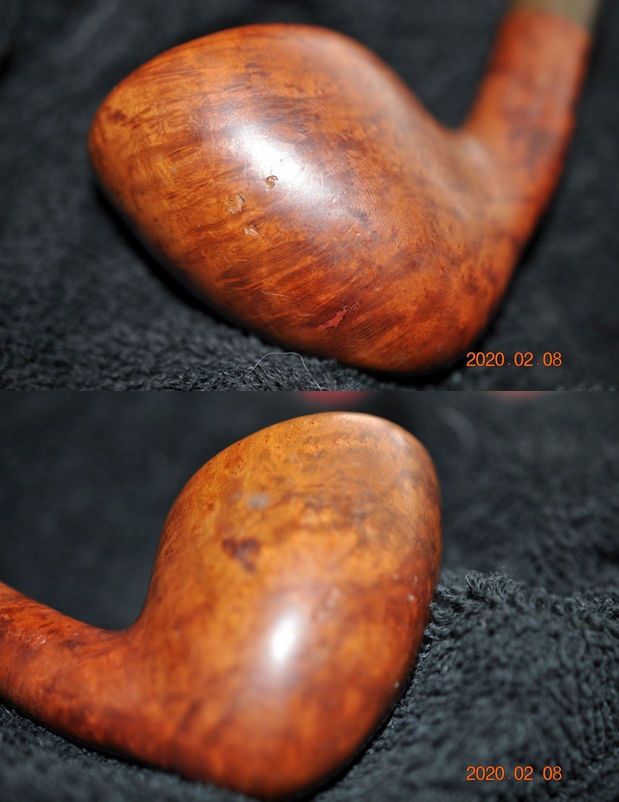
I then did what I should have in the first place I suppose. I did a Google search of the brand and I found the pipe maker’s website (https://mcikl5.wixsite.com/pipes). There I found the very pipe that I am working on. It was on one of the pull down tabs called on artisan pipes. The carver called the pipe “Wedgebull”. The name is a perfect description of the pipe I am working on. It really is a series of wedges and triangles. I decided to include the information from the site on the briar and stem as well as the details size, weight and original cost of the pipe. I actually had no idea what a pipe like this would have cost originally so I figured that might be helpful information to include.

Wedgebull

Stummel: briar – David Bruken (Spain)

Stem: ebonite – SEM (Germany)

Total Length : 120 mm / 4.72 in

Bowl Height : 52 mm / 2.04 in

Bowl Width : 58 mm / 2.28 in

Bowl Chamber Depth : 23 mm / 0.9 in

Bowl Chamber Width : 20 mm / 0.79 in

Weight : 57 g / 2.01 oz

Price: USD 310

He also included a great series of photos if you want to see that pipe along with other pipes he has made and is making. I am including some photos of the pipe to show what it originally looked like. With a clearer picture of the pipe maker in mind I turned to work on this pipe. Jeff had done a great job in cleaning up this pipe. He had reamed the bowl with a PipNet reamer and cleaned up the remnants with a Savinelli Fitsall Pipe Knife. He took back the cake to the walls of the bowl. He also cleaned off the lava and grime on inner edge of the rim. He scrubbed the exterior of the bowl with Murphy’s Oil Soap and a tooth brush to remove the grime on the bowl and rim and rinsed it off with warm running water. He cleaned out the interior of the bowl and shank with pipe cleaners, cotton swabs and alcohol until they came out clean. He cleaned the stem with Soft Scrub to remove the grime on the exterior and cleaned out the airway with alcohol, cotton swabs and pipe cleaners. He soaked it in Before & After deoxidizer and rinsed it clean afterwards. The stem was a very tight fit and actually with the angles was hard to put in place on the shank. I took some photos of the pipe as I saw it. It was a very different pipe from all the others I usually work on. To show how clean the rim top and stem really was I took a close-up photo of the rim and stem. The bowl was clean and cake free. The rim top looked really good and the beveled inner edge of the bowl has all of the lava removed. The ebonite stem looks very good. The surface and the button edge appear to be in good condition. There were some small tooth marks and chatter on both sides but it looked good.I took the stem off the pipe and took a photo to show the shape of the Wedgebull – it is a pipe of many angles and triangles. It is very unique and the ebonite stem is uniquely shaped to work well with the shape.My part of this restoration was quite simple as the bowl was in great condition after Jeff’s cleanup work. I moved straight to working some Before & After Restoration Balm into the finish of the bowl and the rim top. I worked it into the surface with my fingertips and a horsehair shoe brush to clean, enliven and protect the wood. I let the balm sit for 10 minutes and buffed it off with a soft cotton cloth. I repeated the process a second time and the pipe began to show its colours. Next on my list was to work on the fit of the tenon in the shank. Jeff had mentioned that it was very tight from the time he received it. I used a piece of 220 grit sandpaper to carefully and slowly reduce the diameter of the tenon to give it a snug but not tight fit. It did not take too much work and the fit was perfect.With the fit of the stem in the shank cleaned up I could stem the bowl aside and turn my attention to the stem. I also sanded out the light tooth marks and chatter on the surface of the ebonite stem with a folded piece of 220 grit sandpaper. I followed the 220 grit sandpaper by sanding it with 400 grit wet dry sandpaper to begin the polishing of the surface of the stem.    I polished the stem with Denicare Mouthpiece Polish to take out the sanding marks around the button area. I buffed the stem with a microfiber cloth.I polished out the scratches with micromesh sanding pads – wet sanding with 1500-12000 grit pads. I wiped the stem down after each sanding pad with Obsidian Oil. I polished it with Before & After Pipe Stem Polish – both Fine and Extra Fine. Once I had finished the polishing I wiped it down with Briarville’s No Oxy Oil and set it aside to dry. I have to tell you the angles on this pipe make the work of restoring hard on the hands! So I am very happy to be on the homestretch with this pipe and I really look forward to the final look when it is put back together and polished and waxed. I put the bowl and stem back together. I polished the bowl and stem with Blue Diamond on the buffing wheel. I gave the bowl and the stem multiple coats of carnauba wax. I buffed the pipe with a clean buffing pad to raise the shine. I hand buffed it with a microfiber cloth to deepen the shine. The pipe polished up pretty nicely. The Wedgebull bowl really looked good with the polished ebonite saddle stem. The combination colours in the stain coat on the bowl really work well with the black of the polished ebonite stem. For all the pain the angles caused me in working on it I have to tell you that it is a very comfortable pipe to hold in the hand. The finished pipe is shown in the photos below. The dimensions of the pipe are Length: 4.72 inches, Height: 2.04 inches, Outside diameter of the bowl: 2.28 inches, Chamber diameter: .75 of an inch. This pipe will be going on the rebornpipes store shortly if you are interested in adding it. Let me know if you want me to put it aside for you. Thanks for reading this blog and my reflections on the pipe while I worked on it. This is an interesting estate to bring back to life.