Tag Archives: bite marks

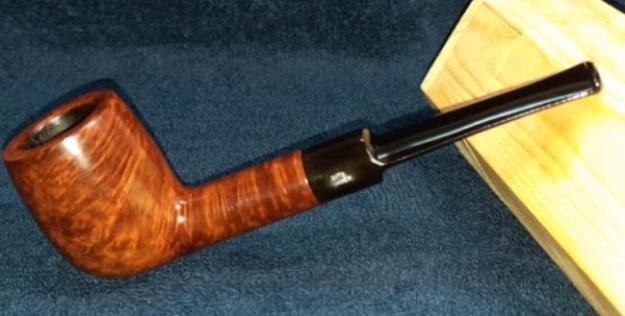
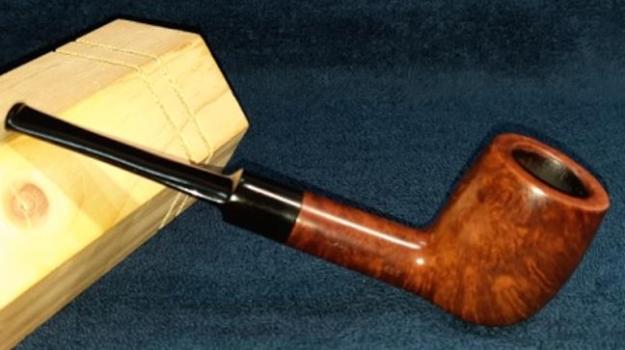
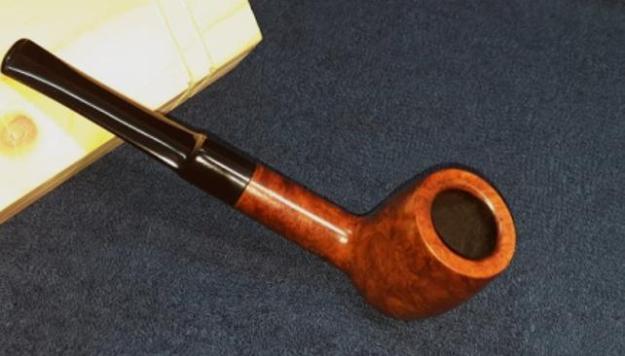
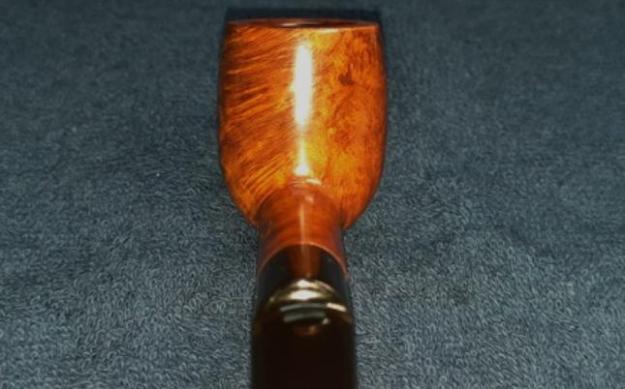
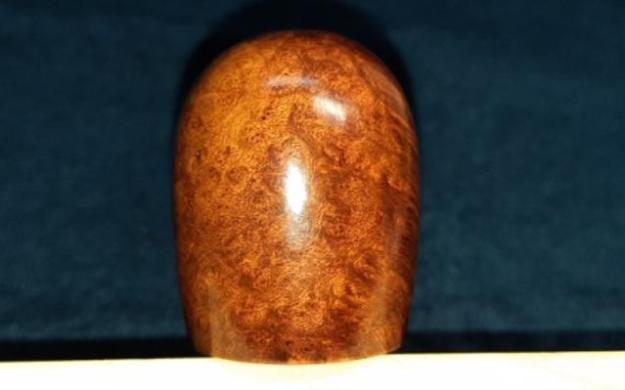
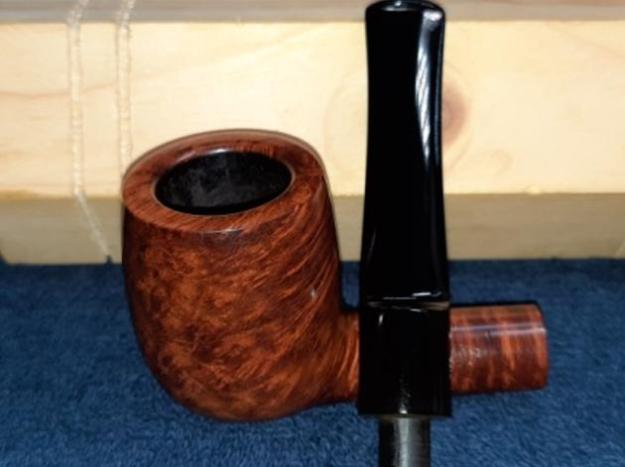
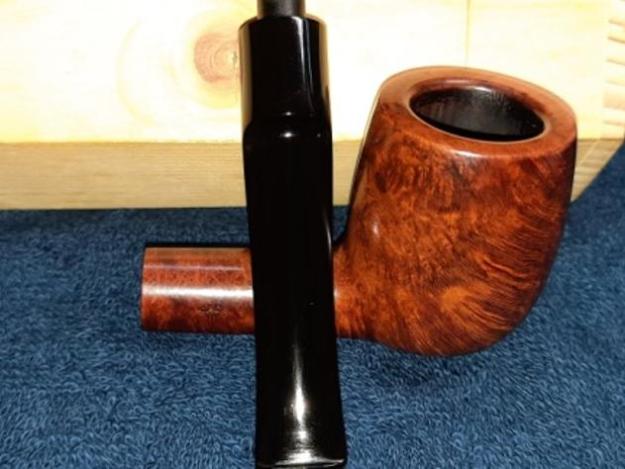
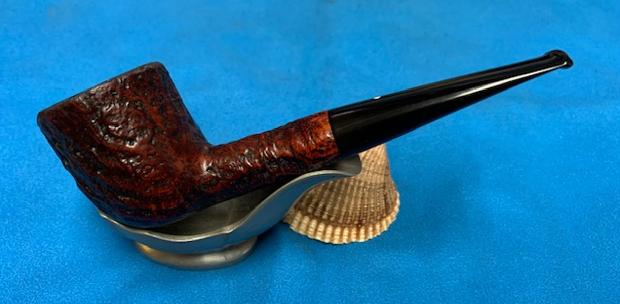
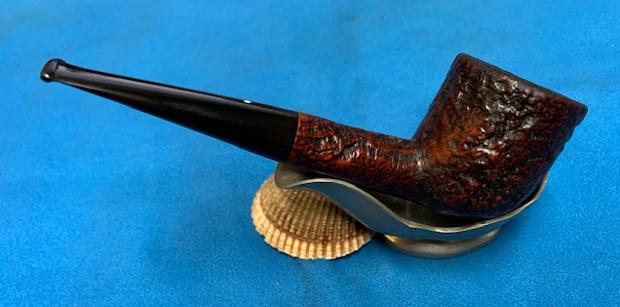
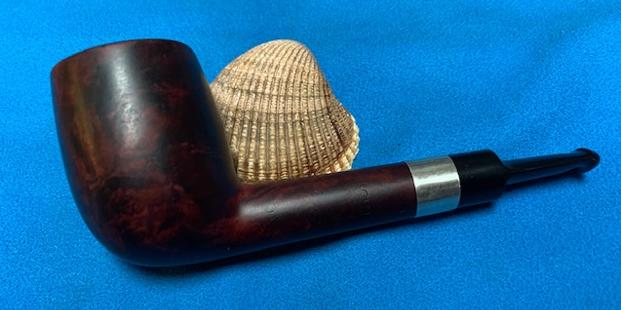
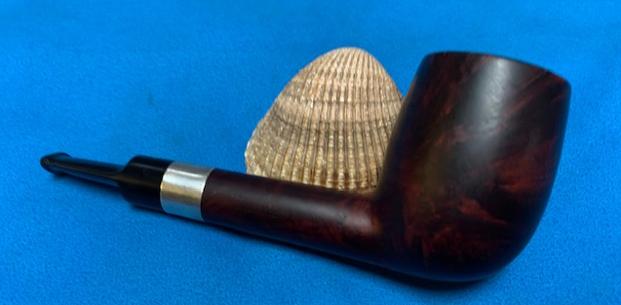
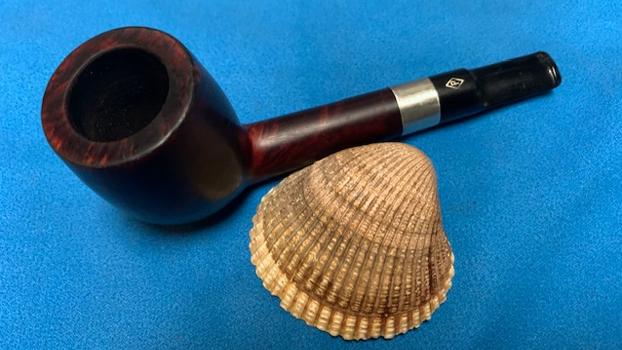
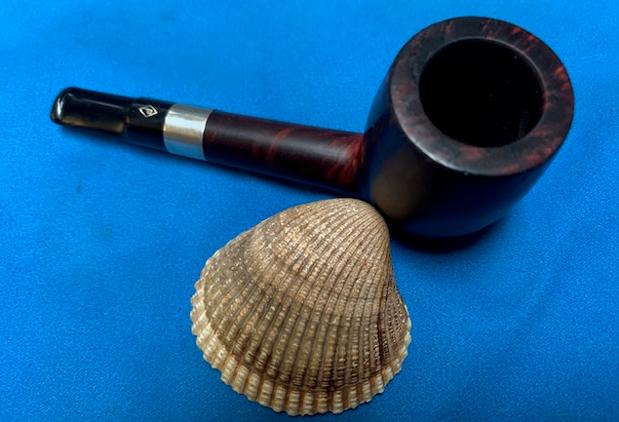
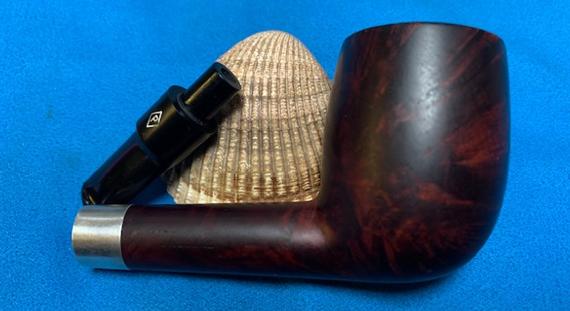
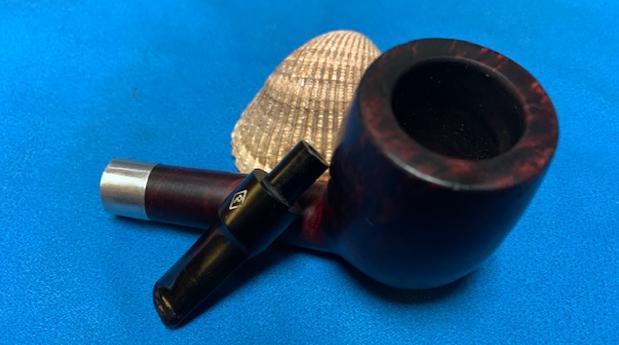
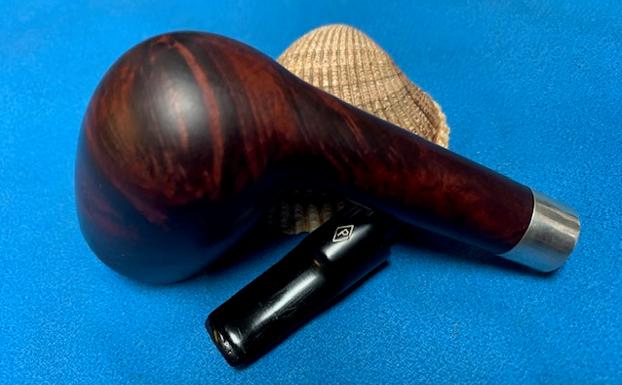
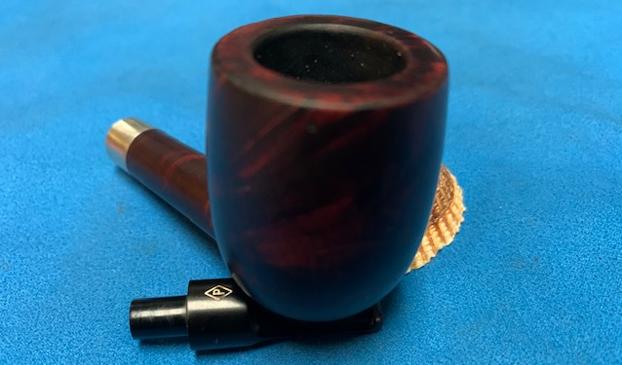
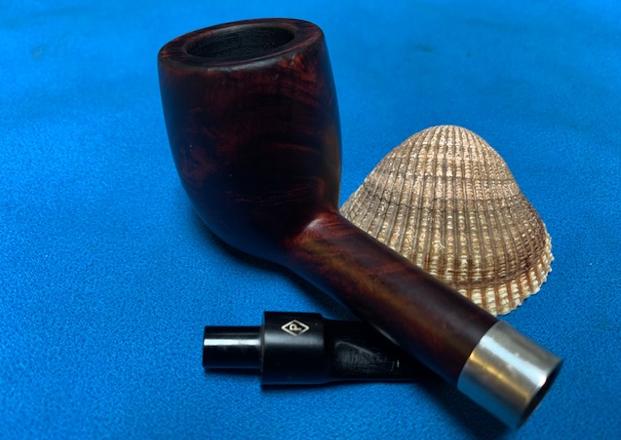
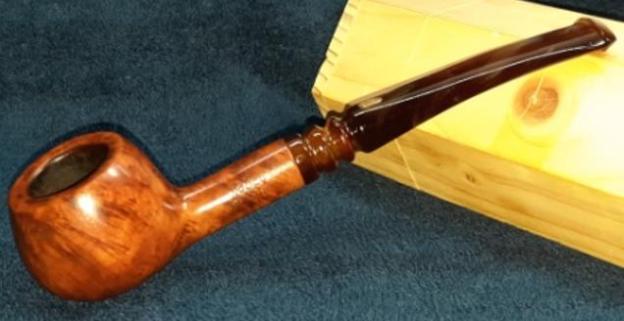
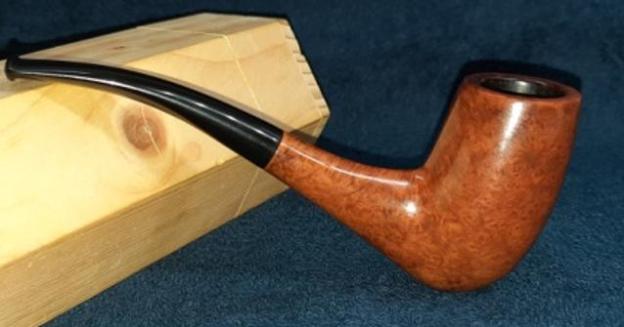
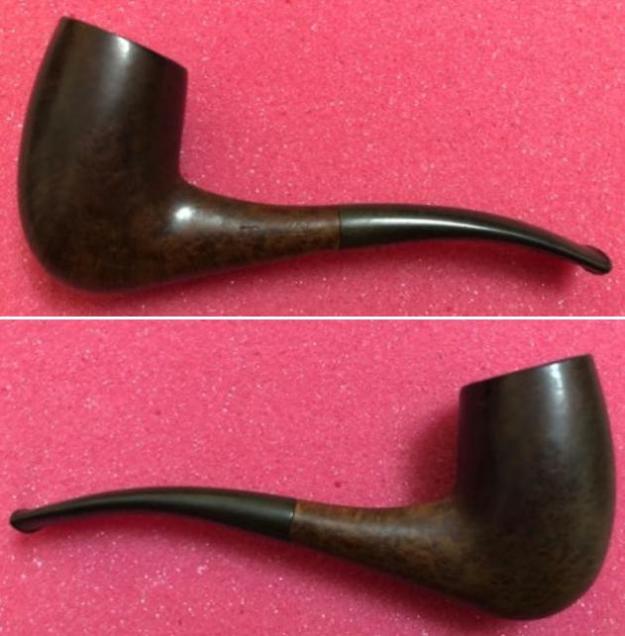
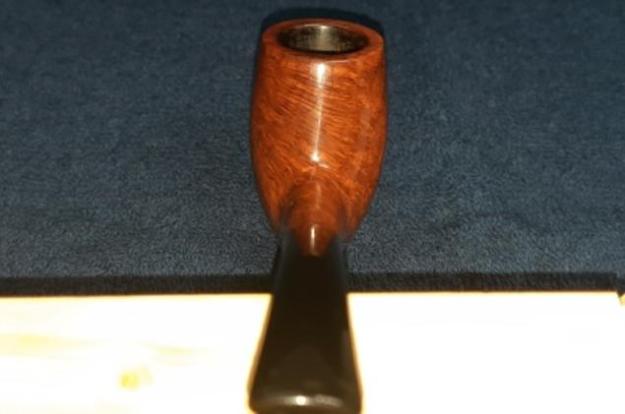
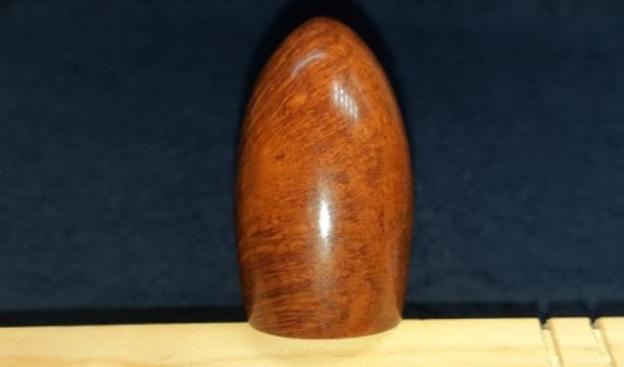
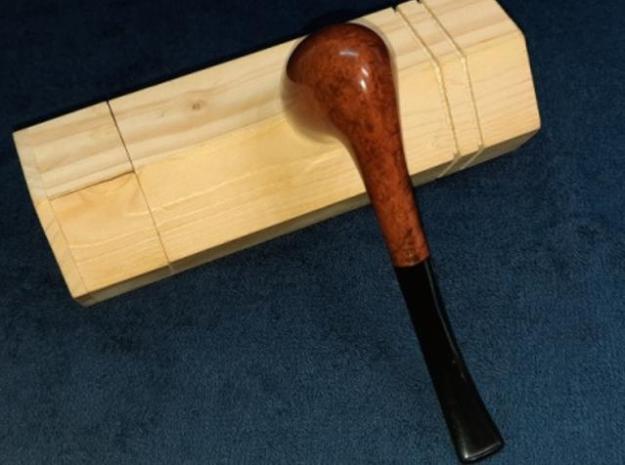
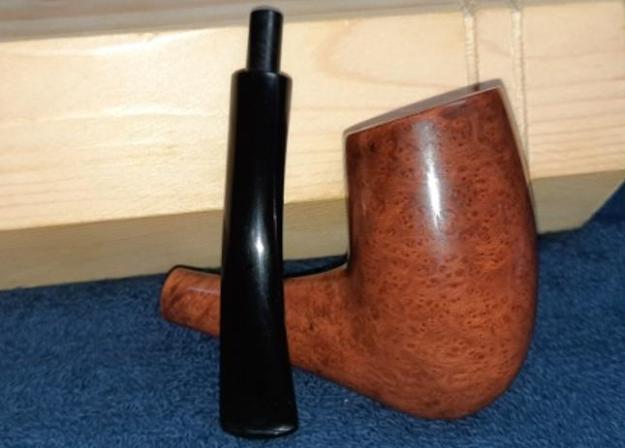
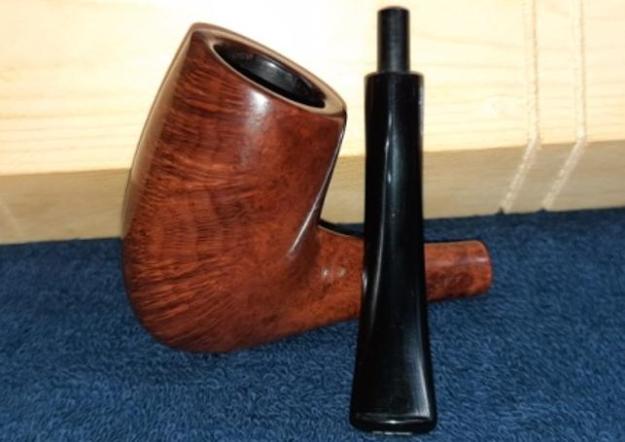
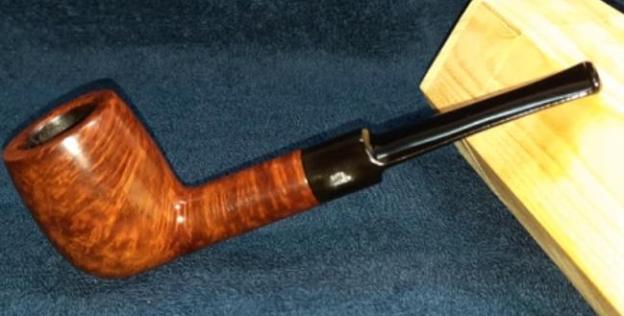
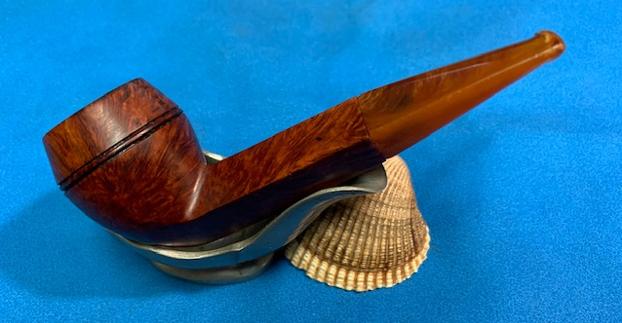
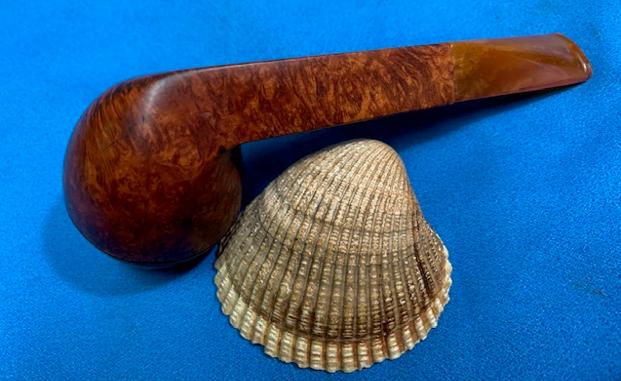
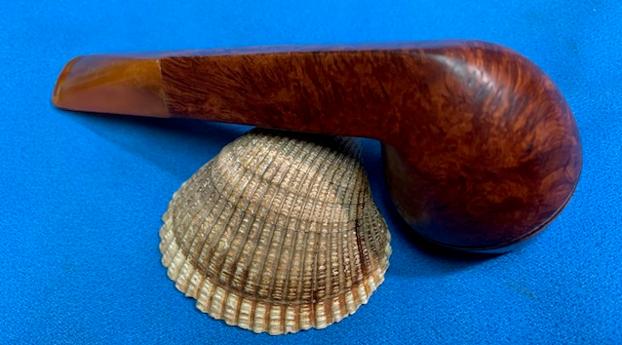
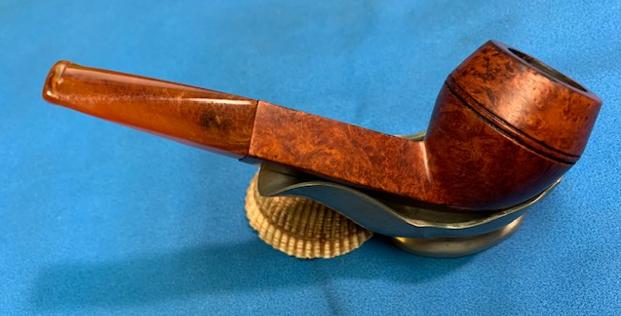
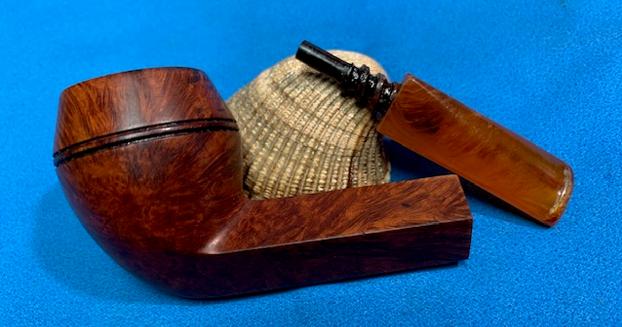
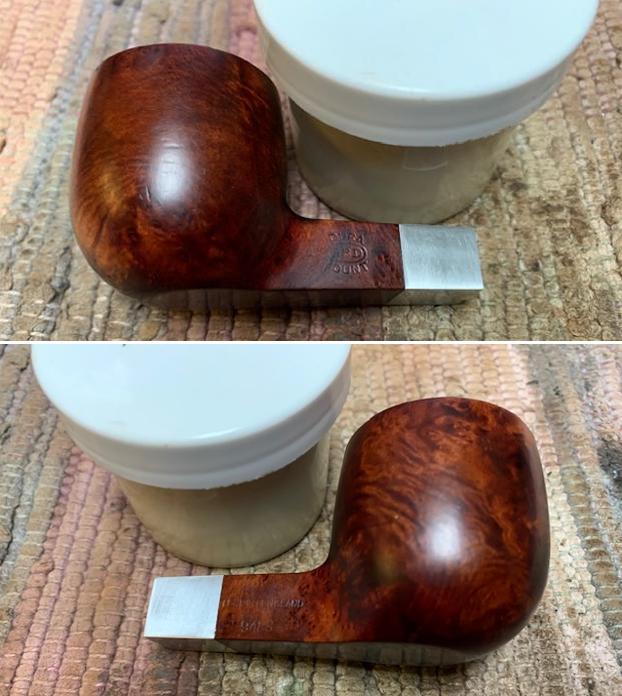
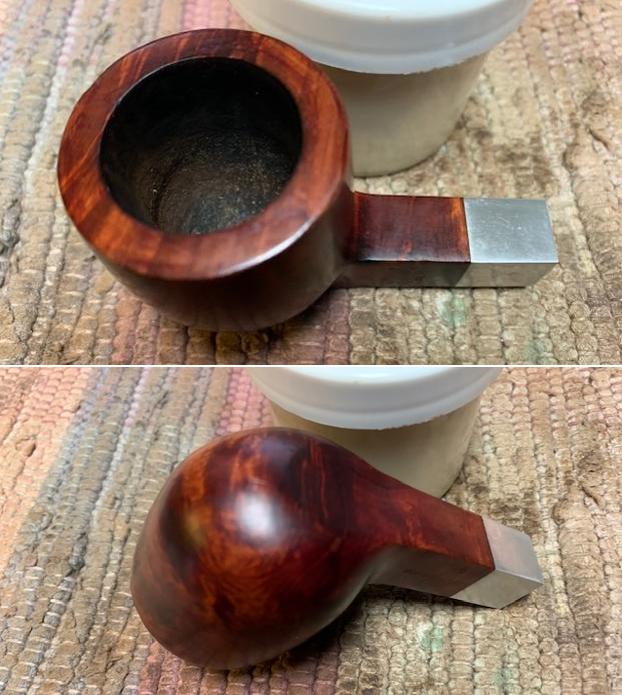
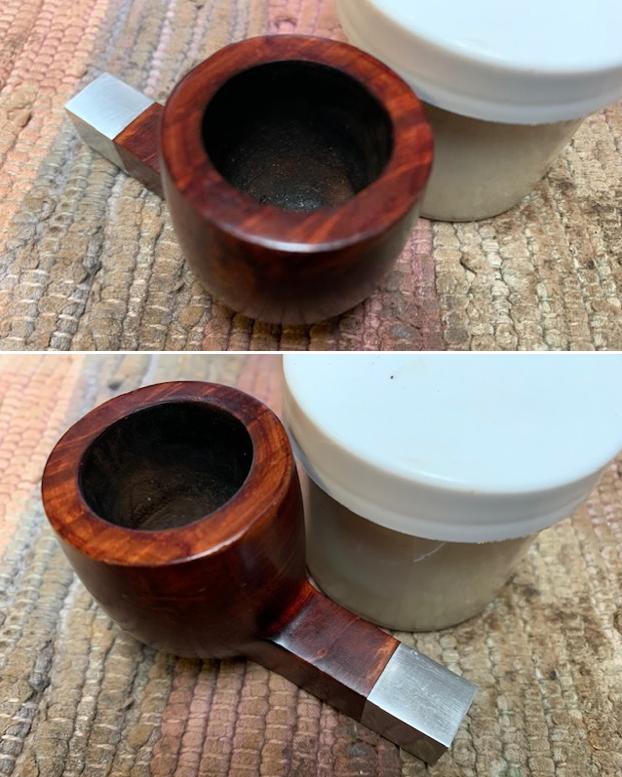
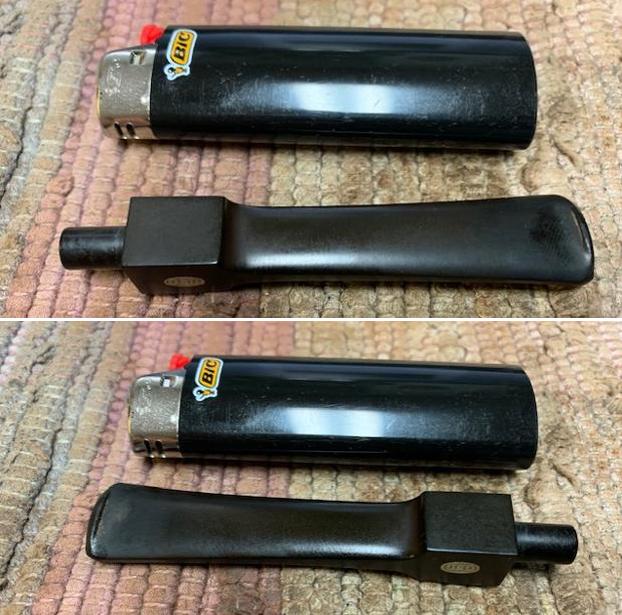
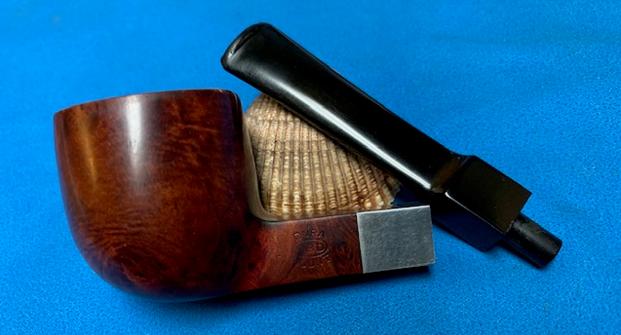
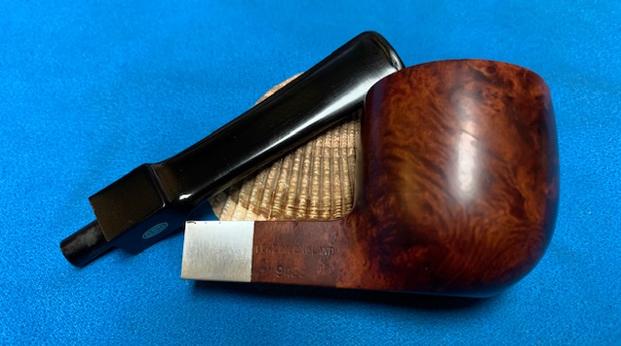
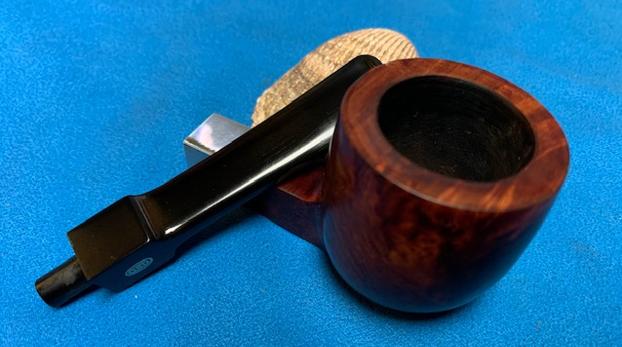
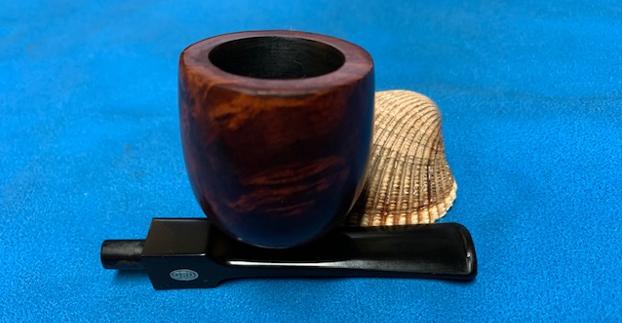
Working on the Fourth of Seven Barclay-Rex Pipes – A Bent Dublin


Blog by Steve Laug

It seems like just a few weeks ago I was contacted by an older gentleman about purchasing his pipe collection. He sent me the photos and I was amazed at what I saw. He had Dunhill pipes, BBB pipes, Orlik pipes, Barclay Rex Pipes, a couple of Meerschaums and a whole lot of other pipes. All I could say as I looked at the pipes was what a collection it was. We negotiated a deal and I think we both walked away quite happy with the exchange.

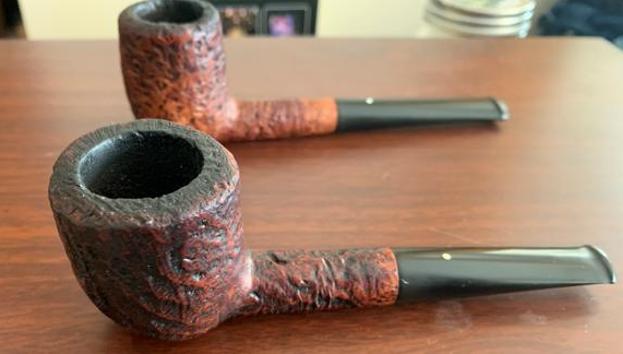
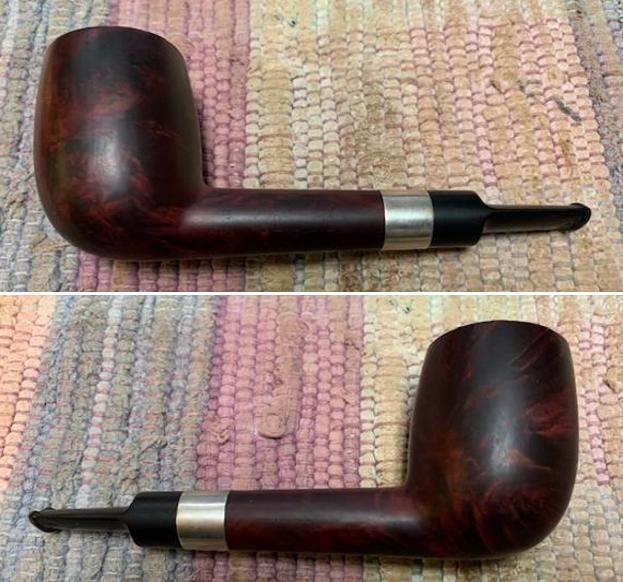
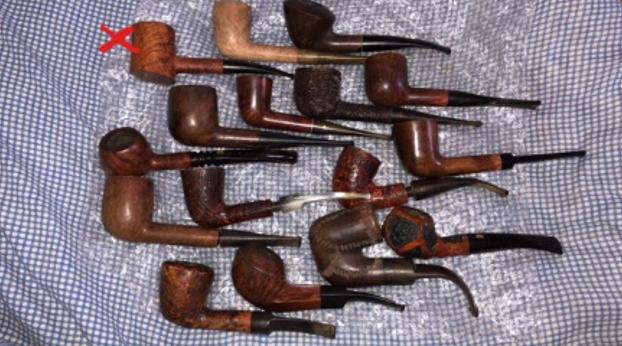
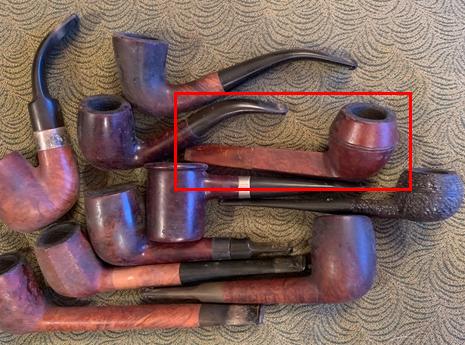
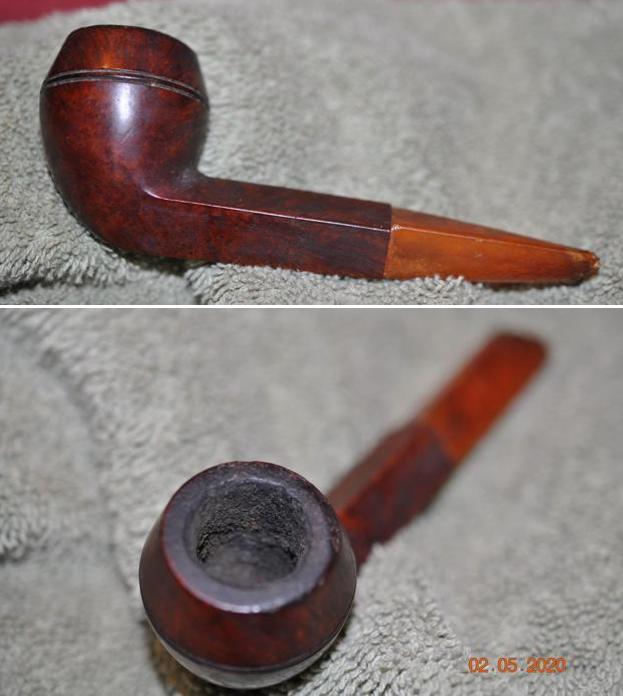
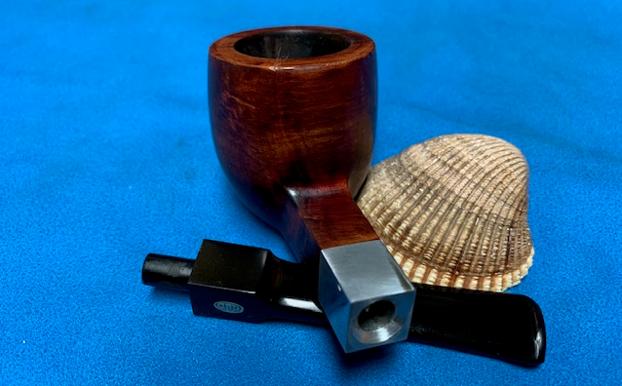
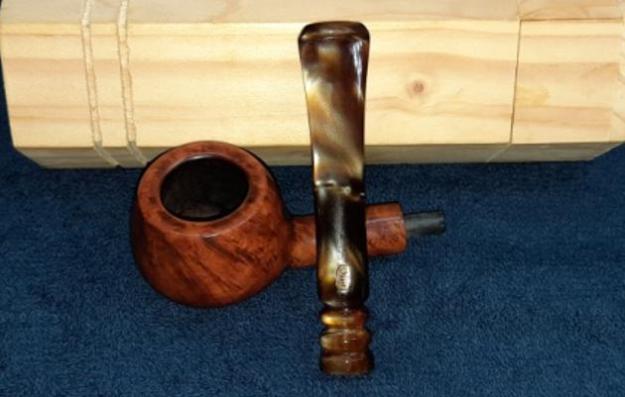
You have seen the work we have done on the Dunhills, Hardcastles, H. Simmons all briar billiard and BBB pipes from the lot but there are still more. The above photo shows all of the Barclay-Rex pipes that were purchased from the New York City shop by the fellow we bought the collection from. The pipe I am working on is one that was not included above. It takes the place of the Barlings in the top left. It is a nice little bent Dublin.

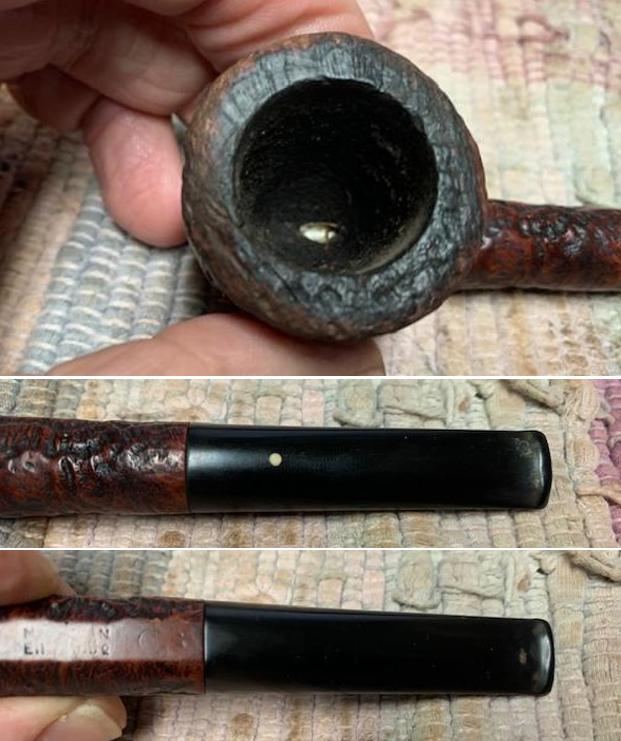
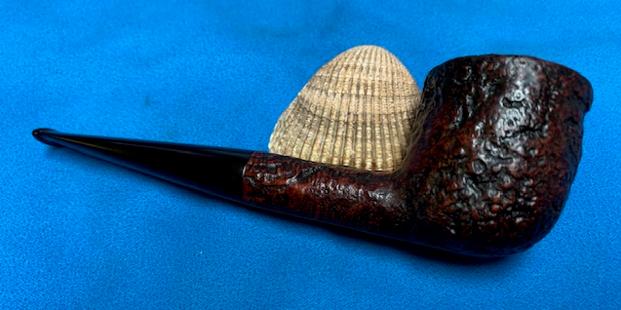
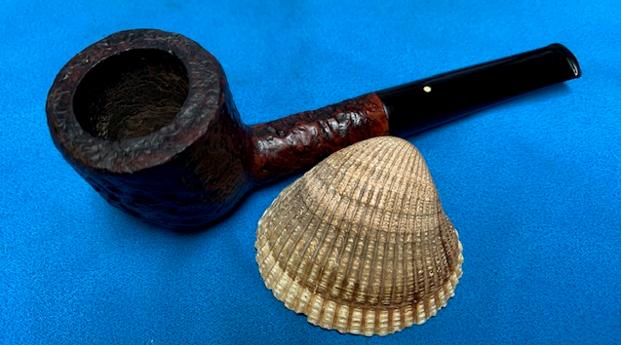
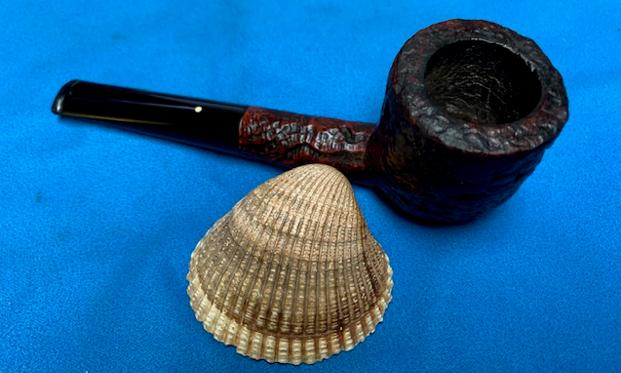
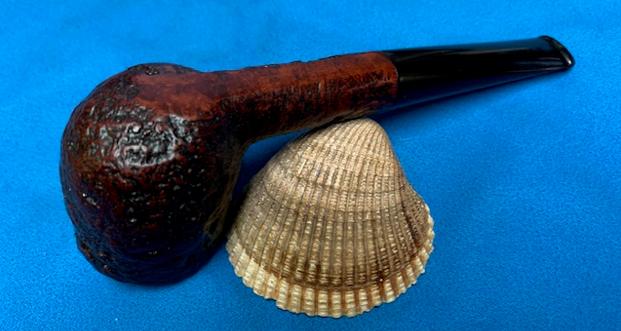
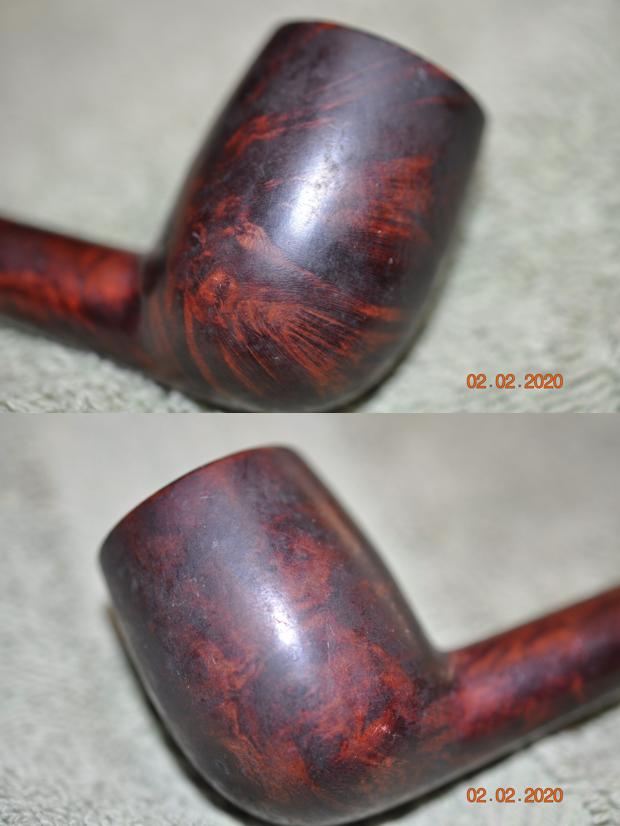
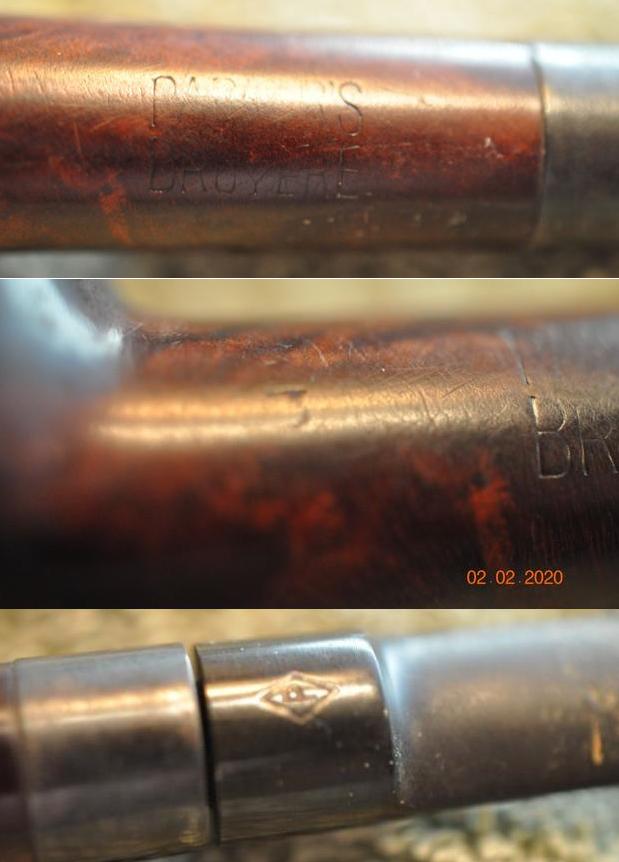
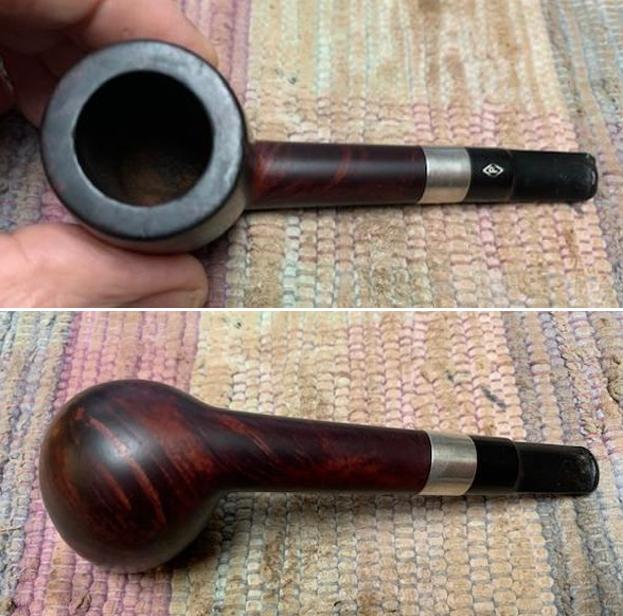
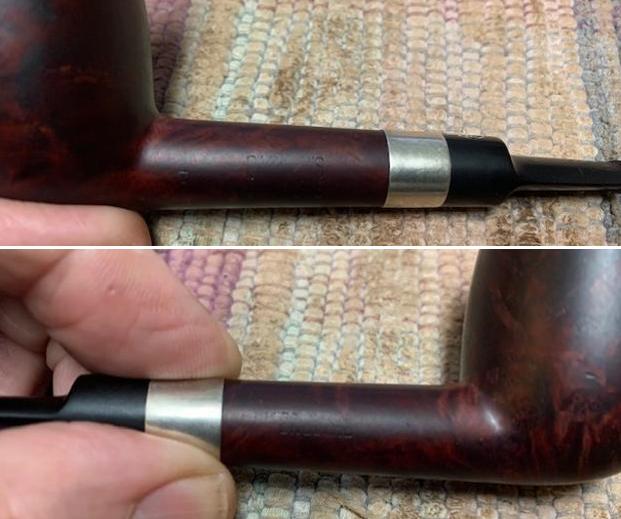
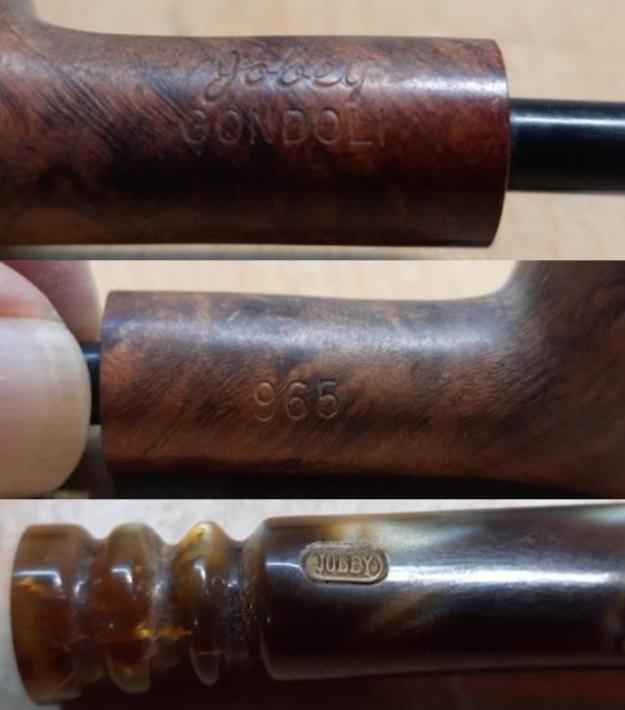
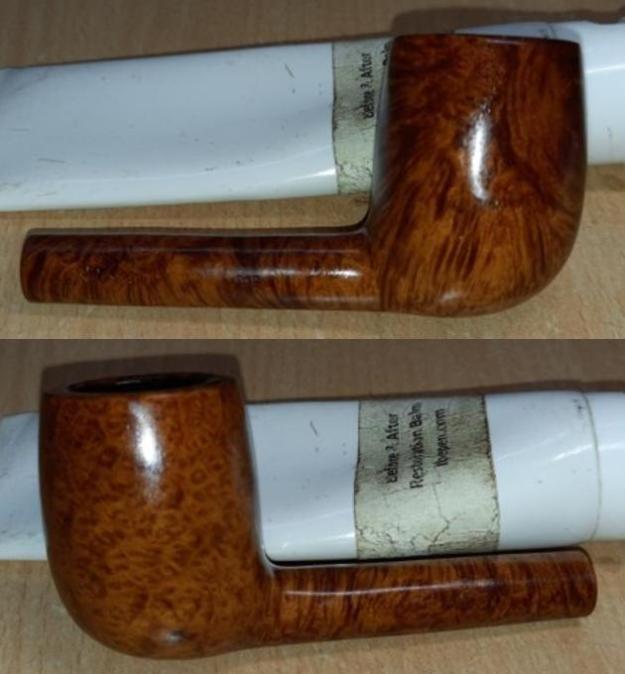
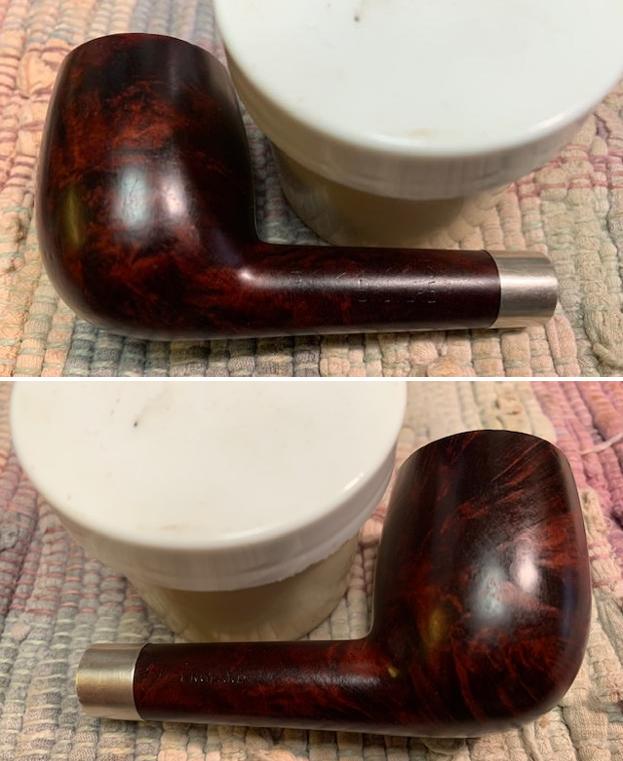
I have worked on several Barclay-Rex pipes in the past and this Dublin is a beauty in terms of shape and grain. This pipe is stamped on the left side of the shank and reads BARCLAY-REX [over] New York. The stamping is faint but readable and there is no shape number evident.

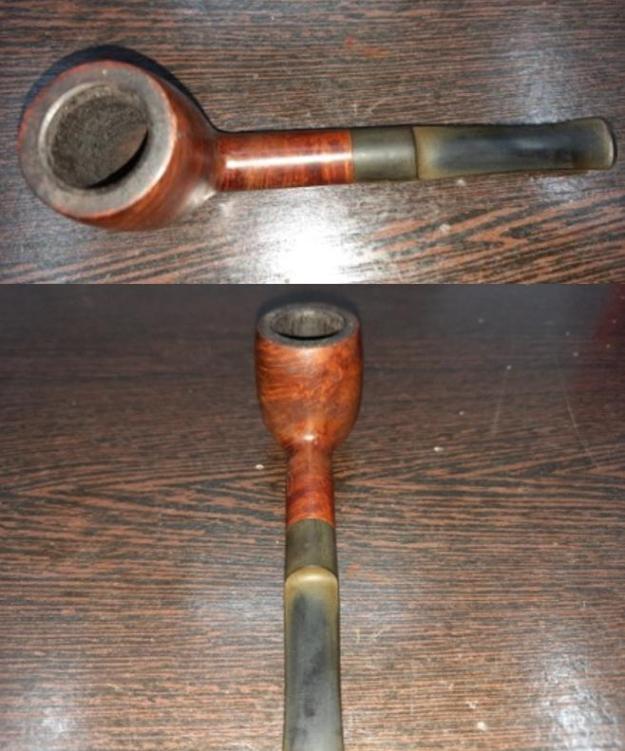
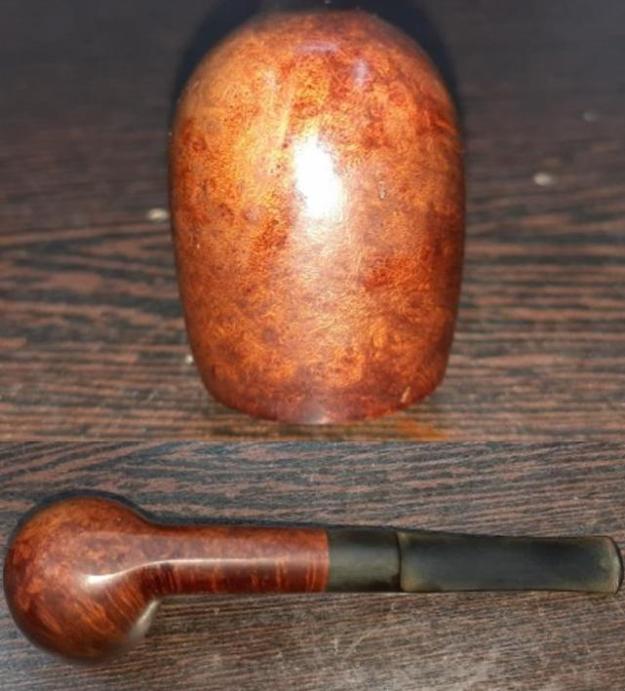
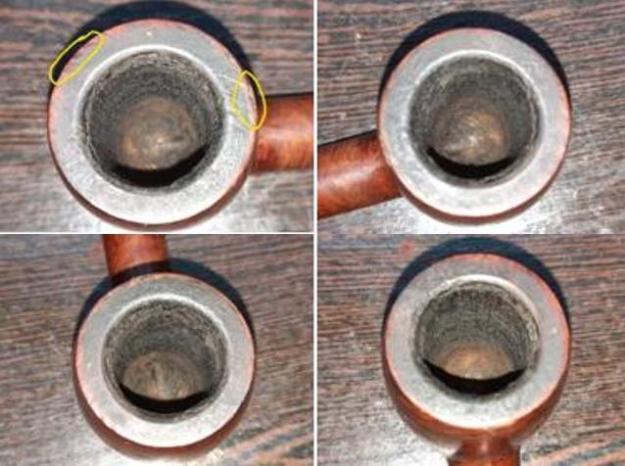
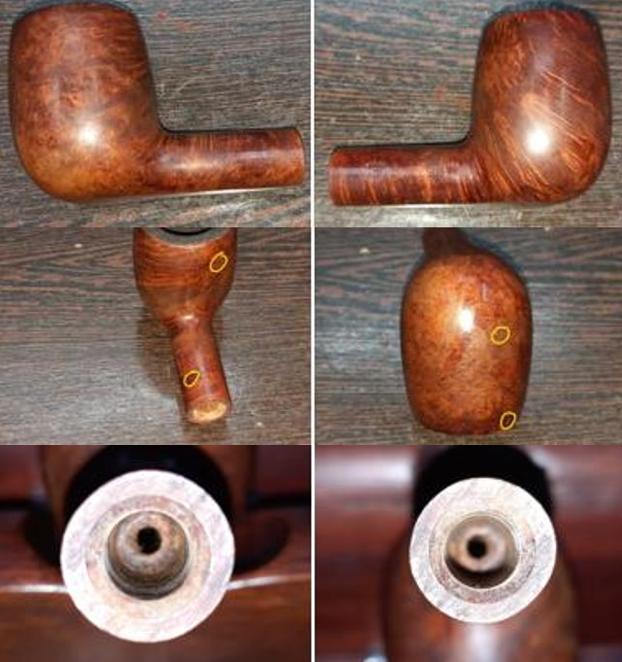
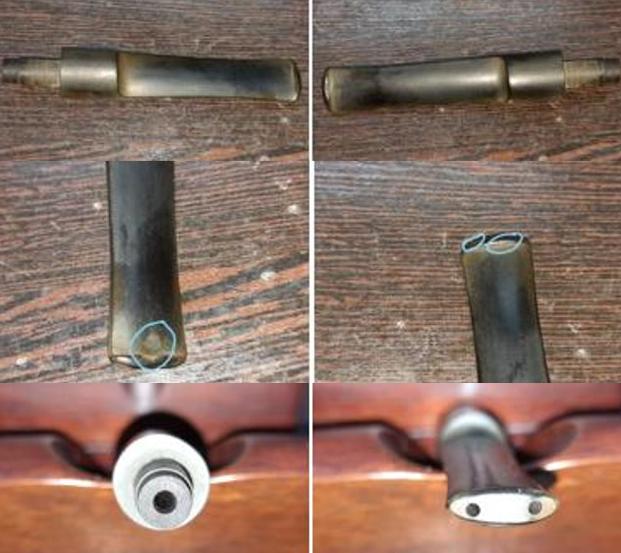
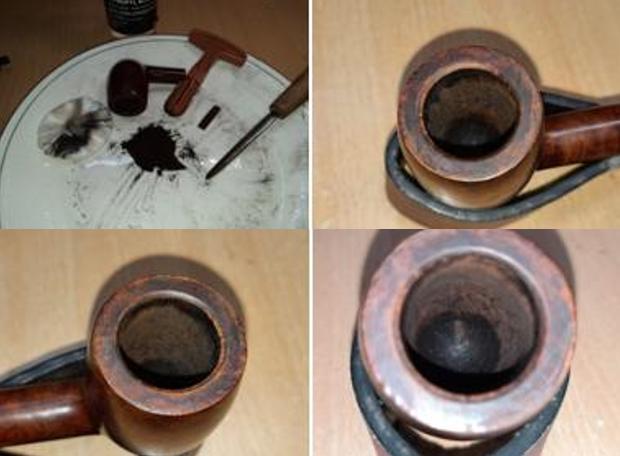
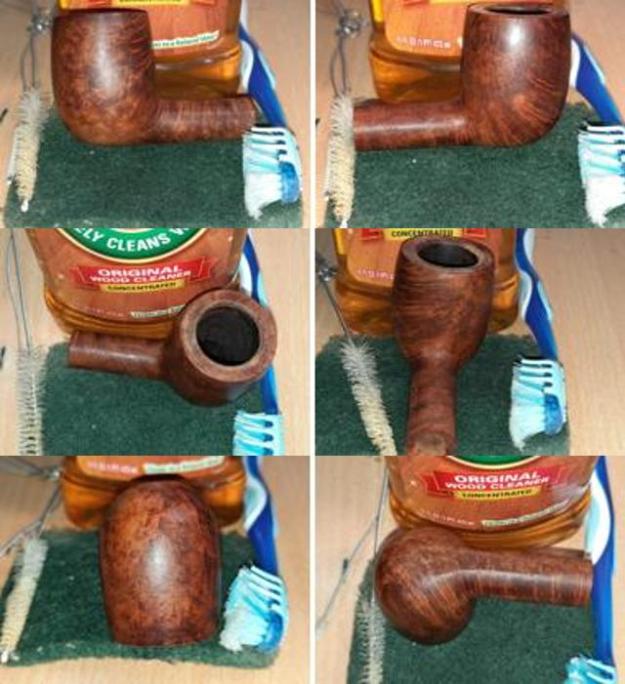
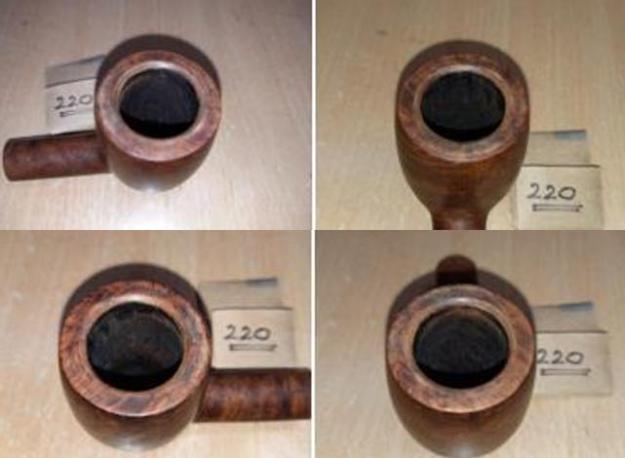
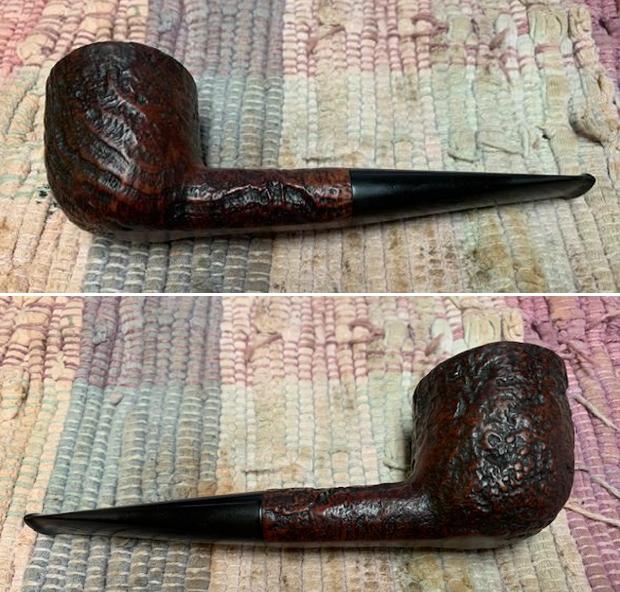
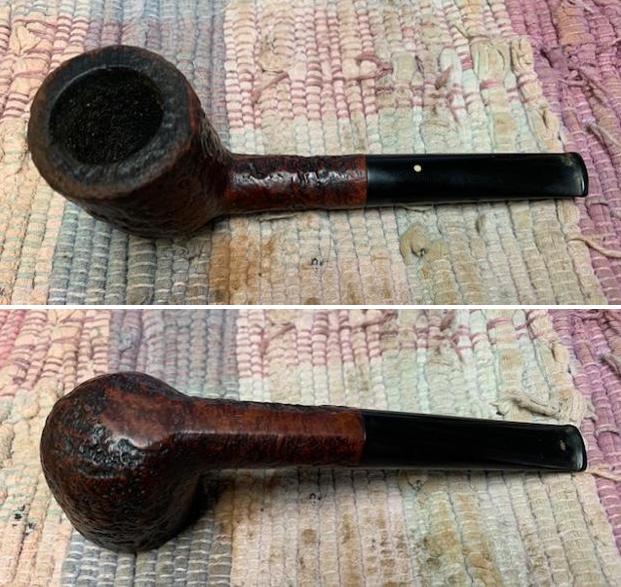
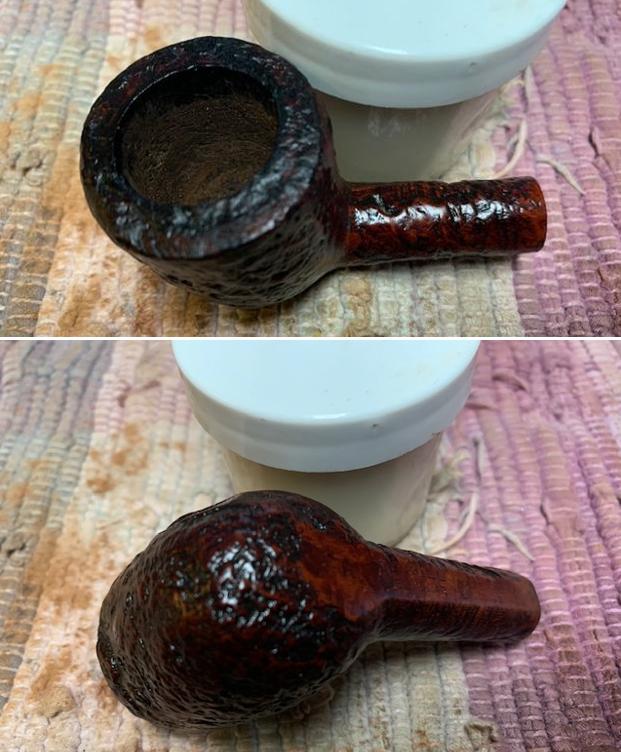
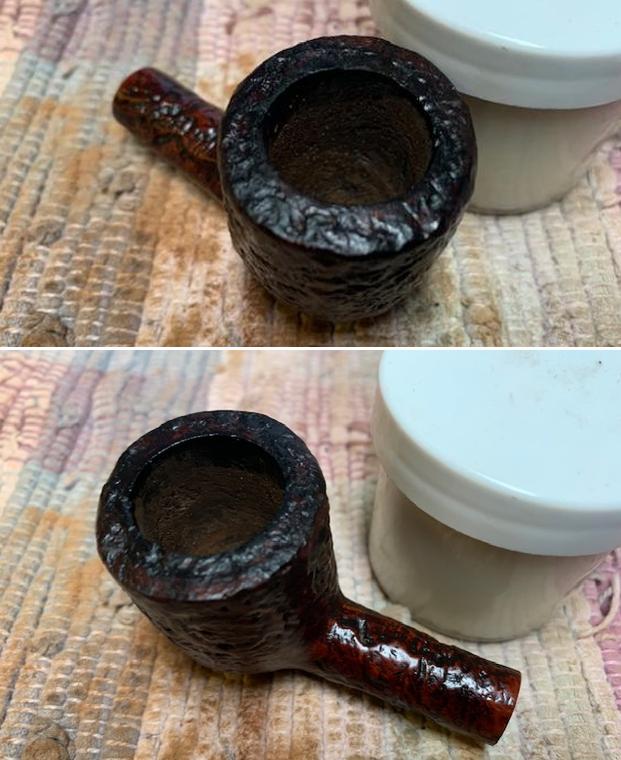
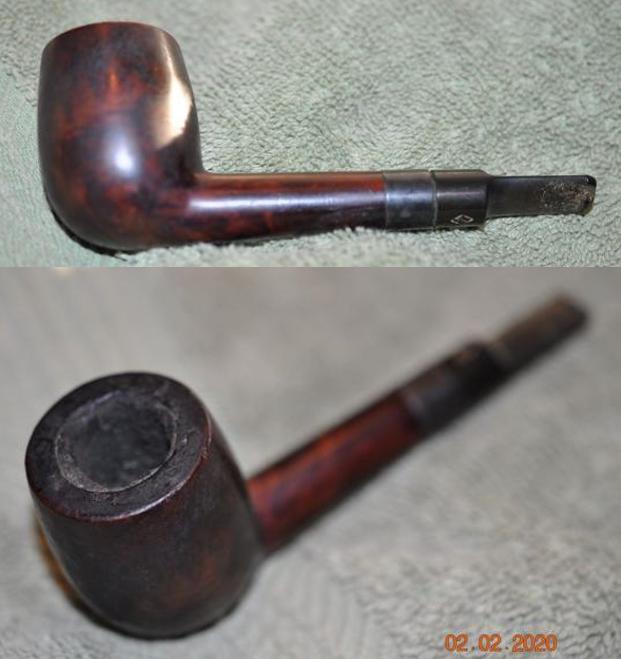
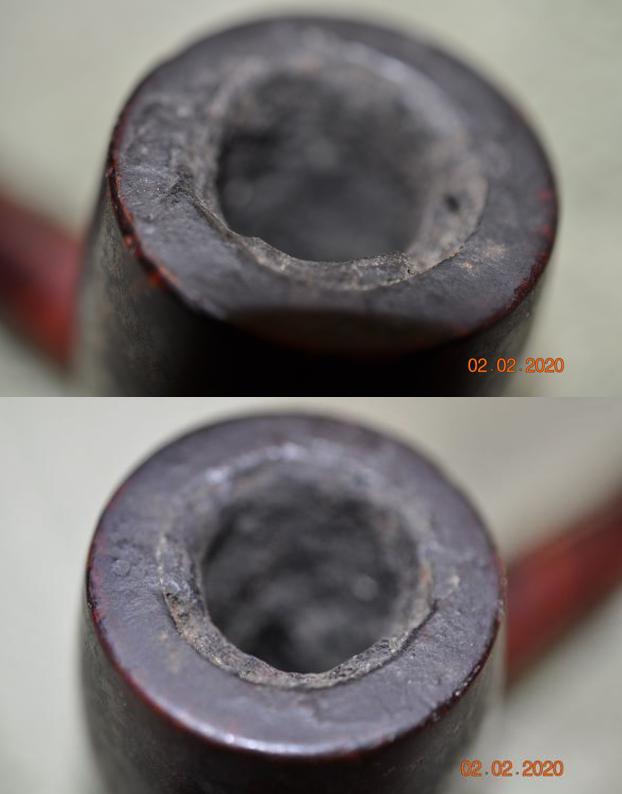
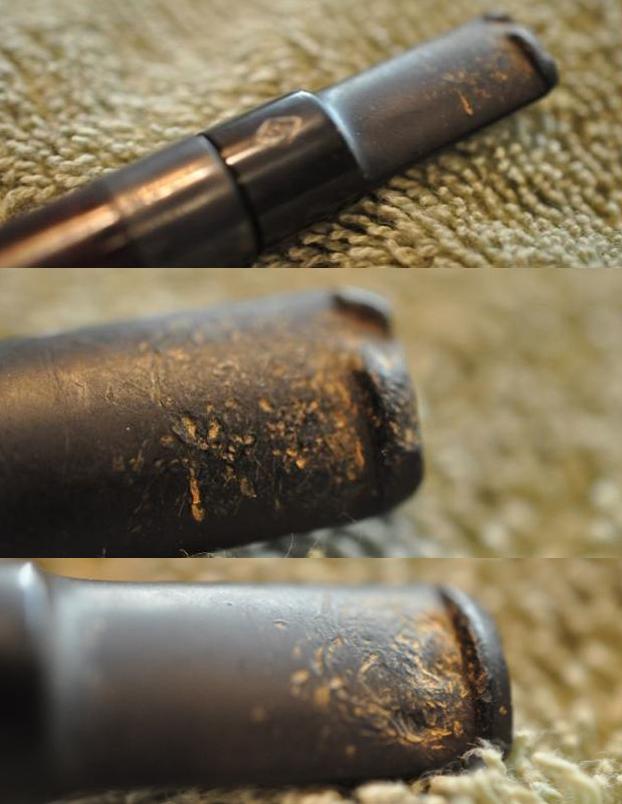
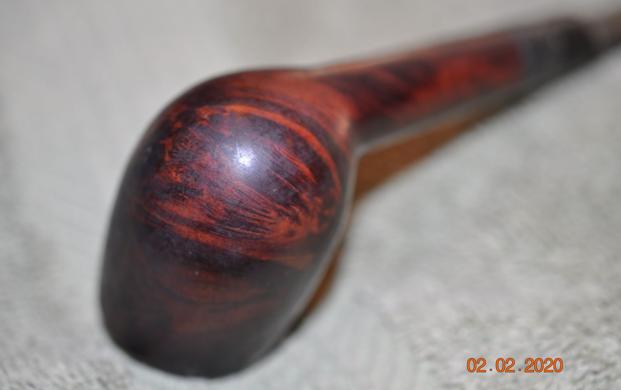
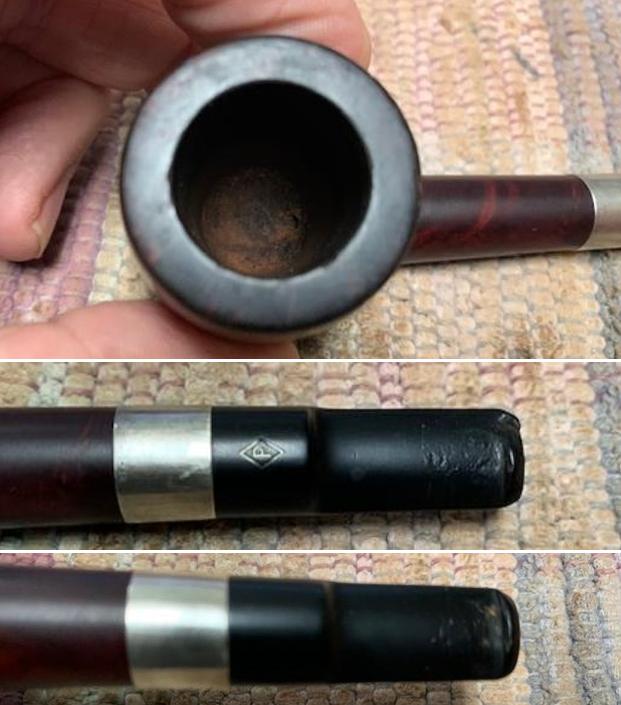
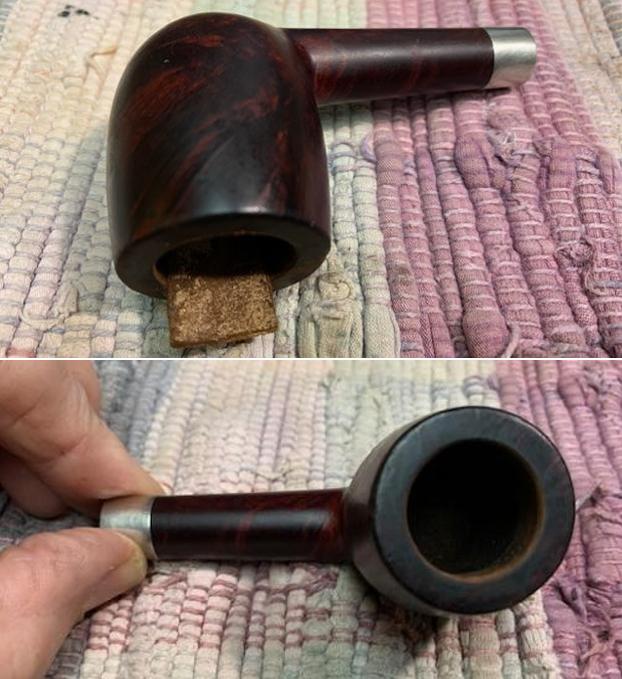
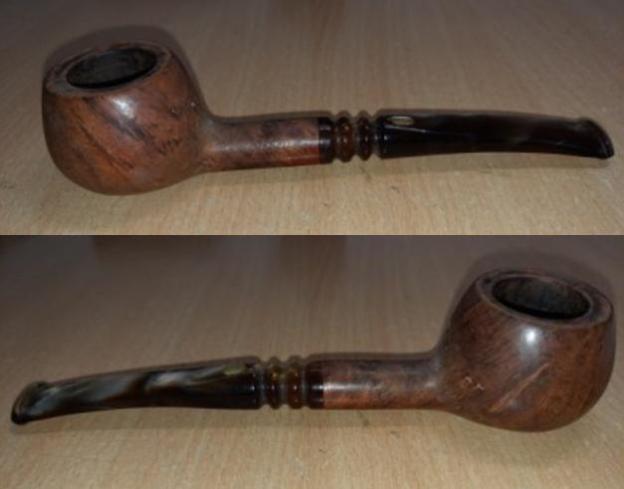
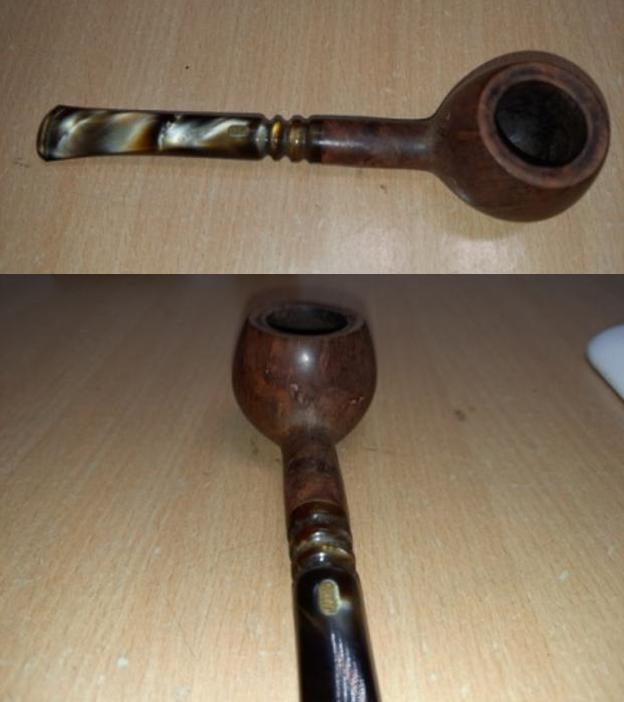
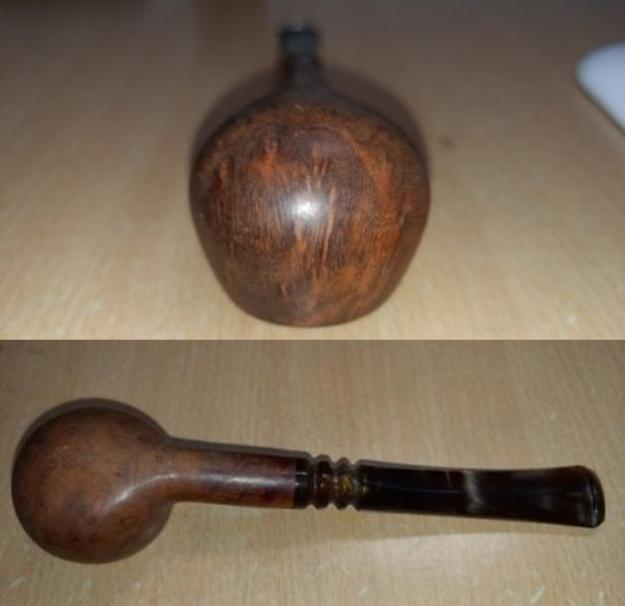
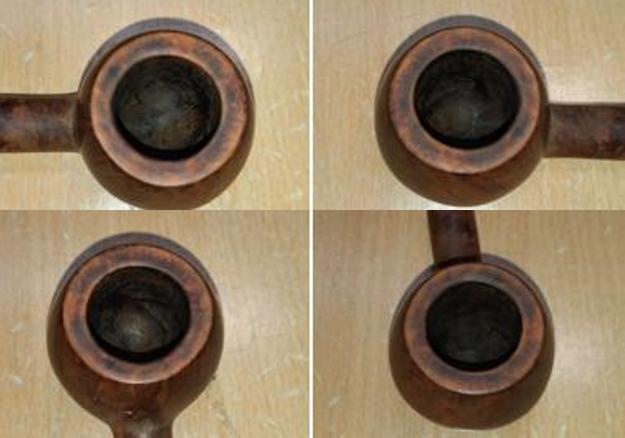
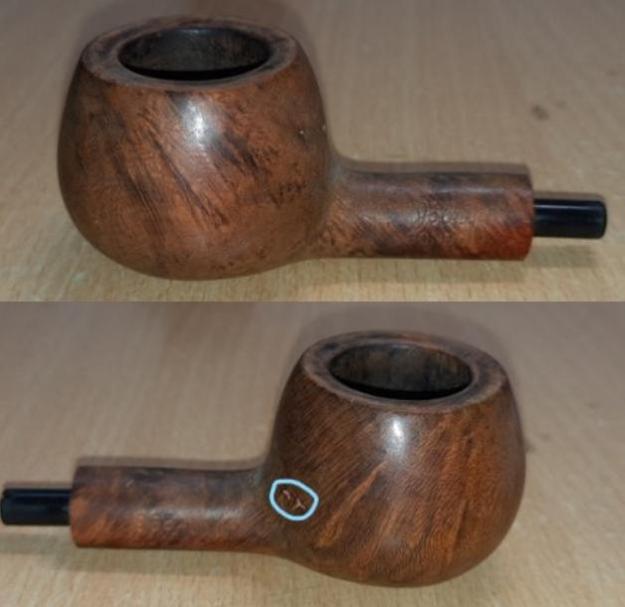
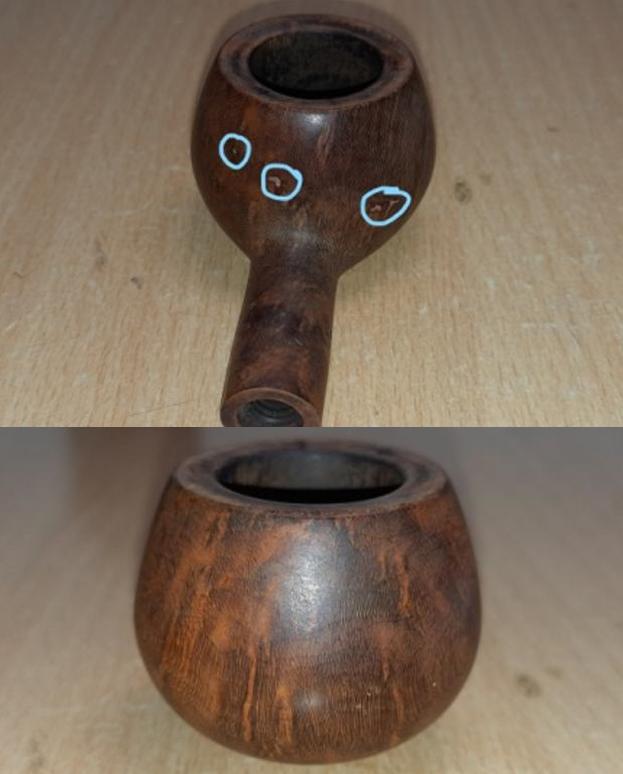
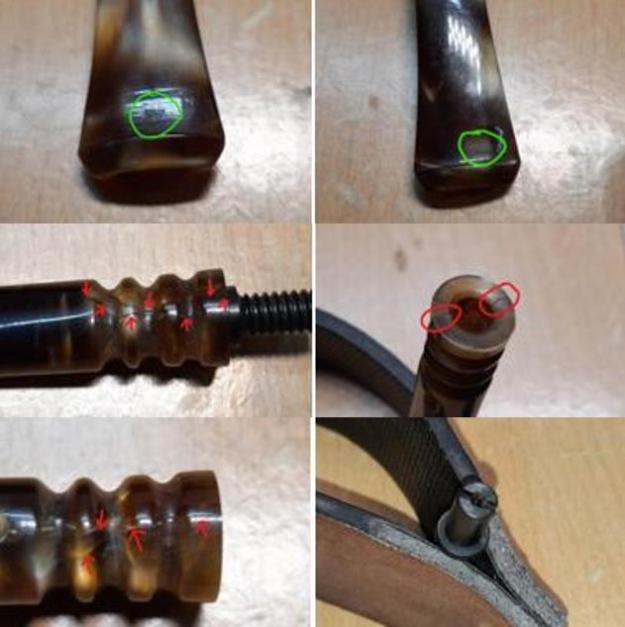
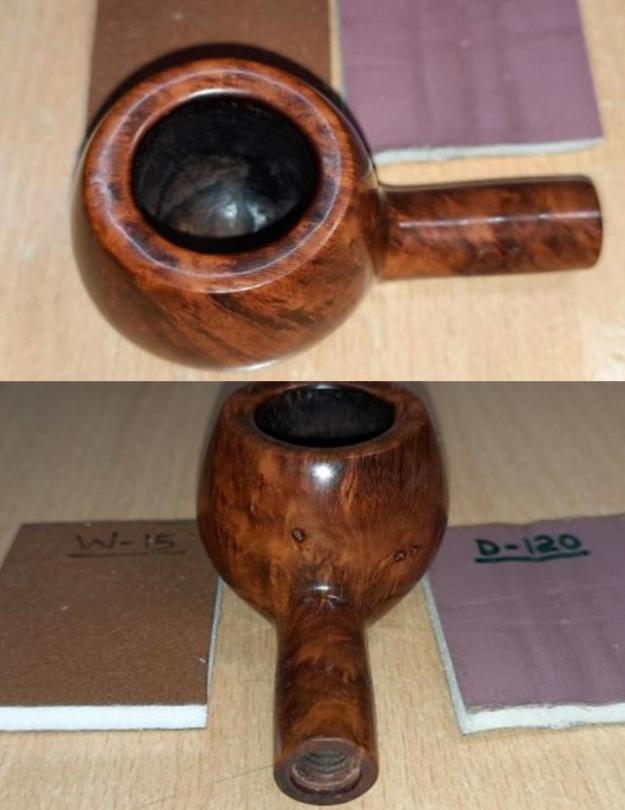
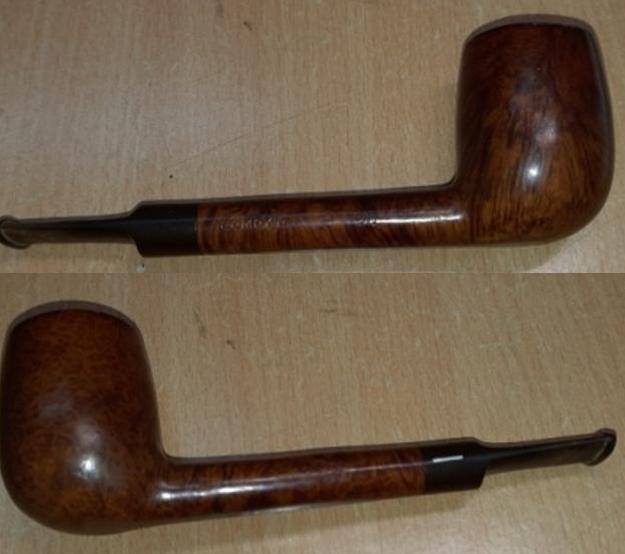
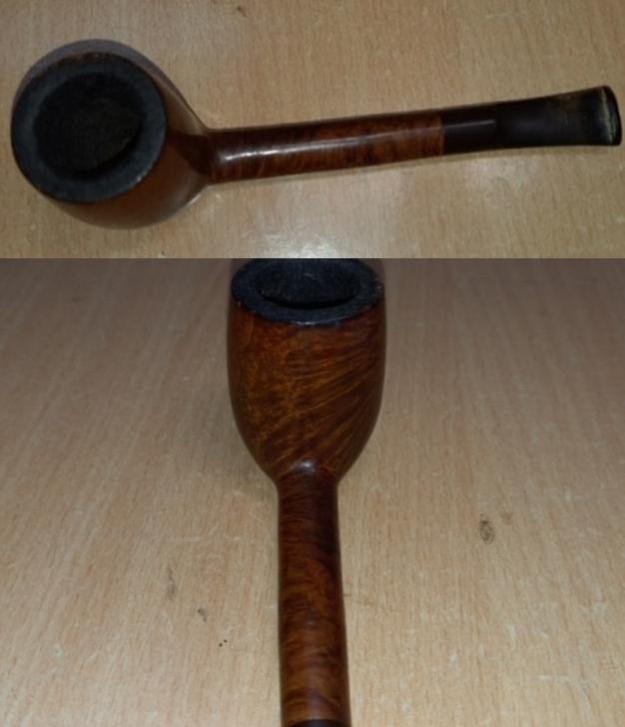
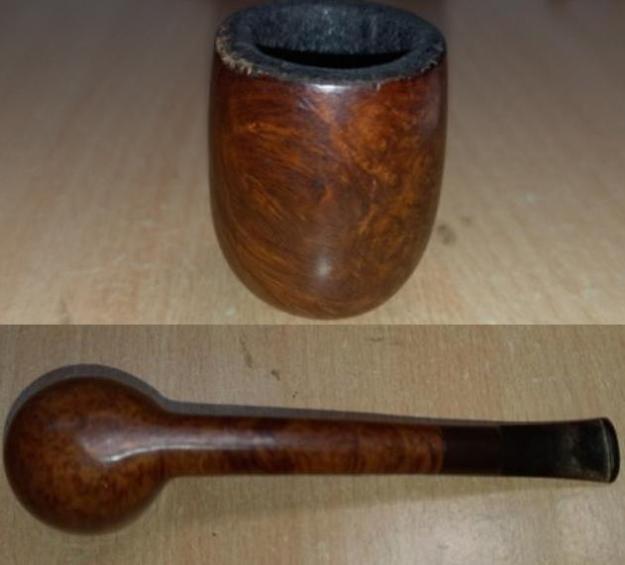
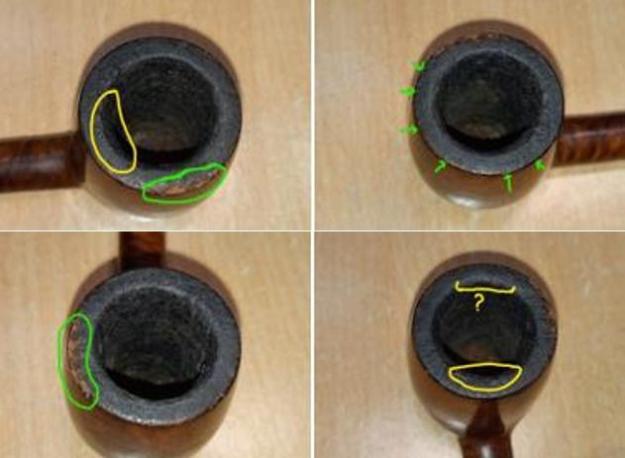
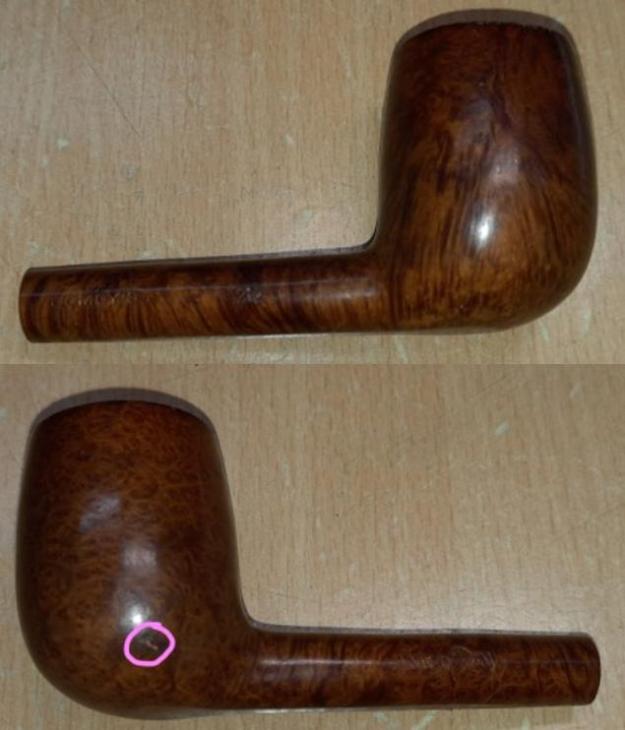
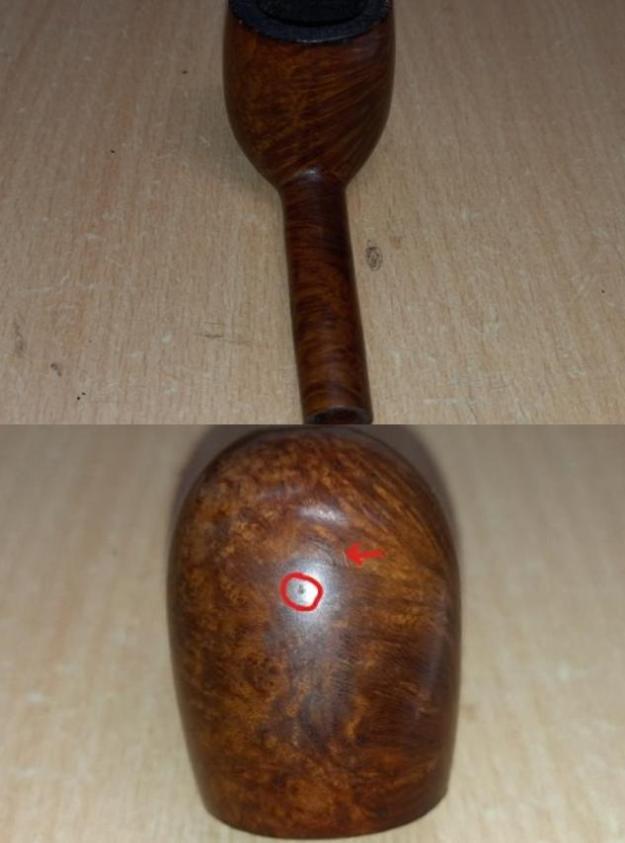
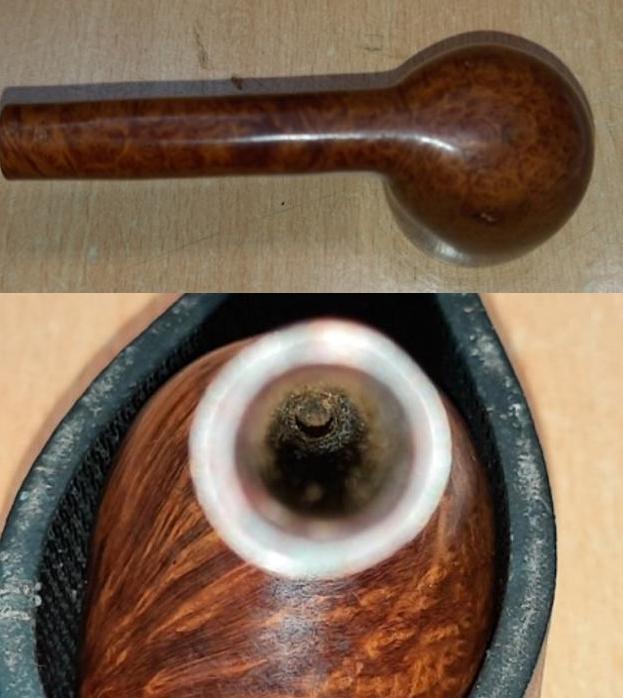
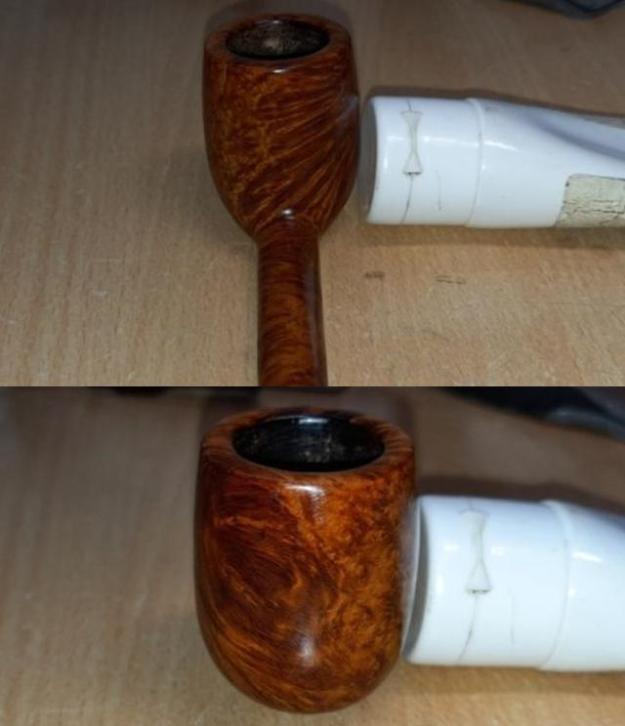
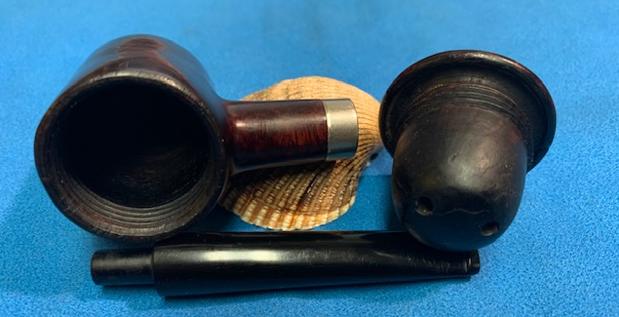
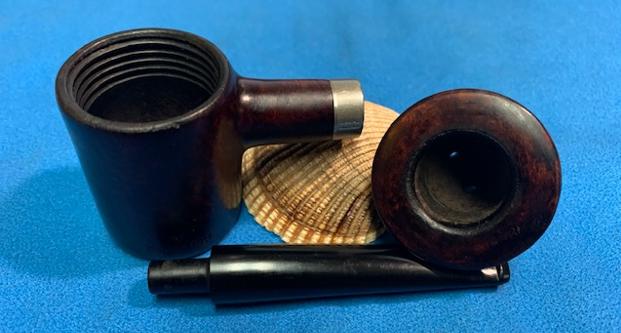
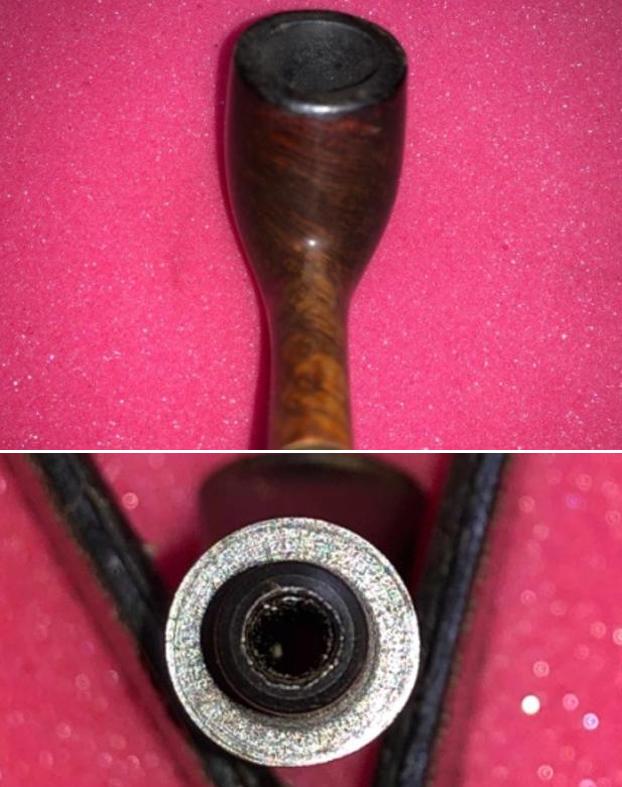
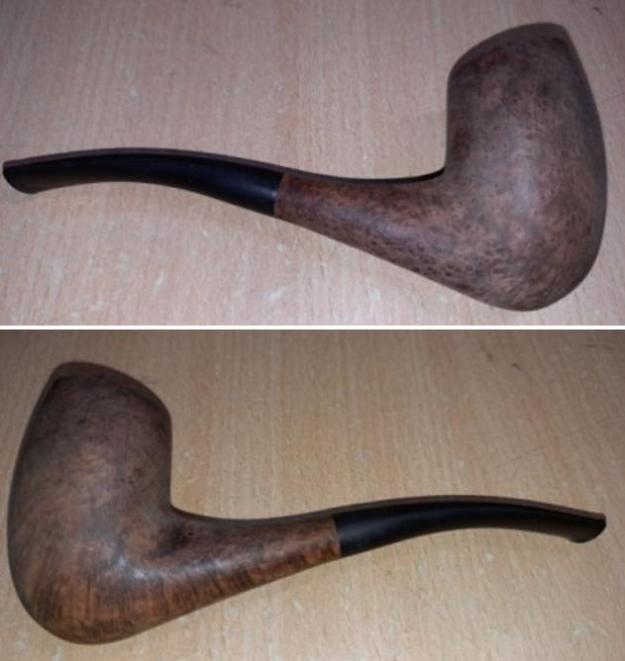
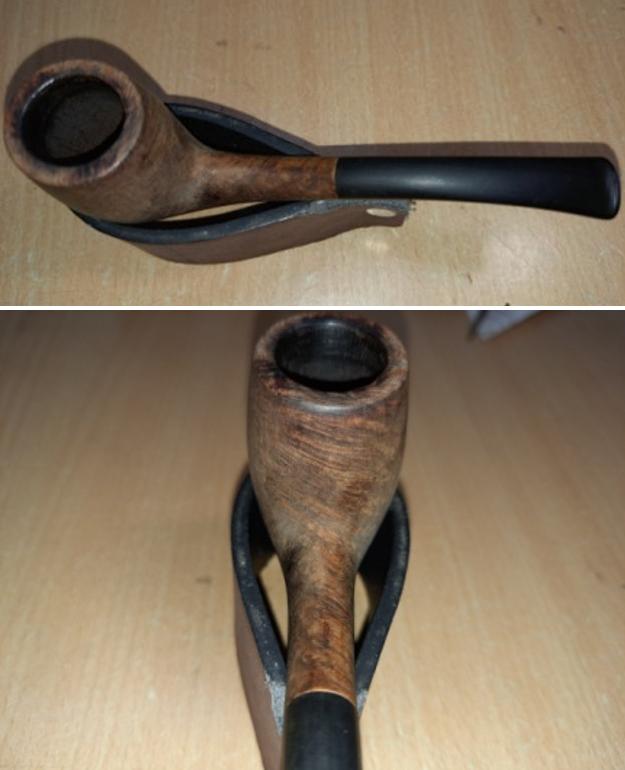
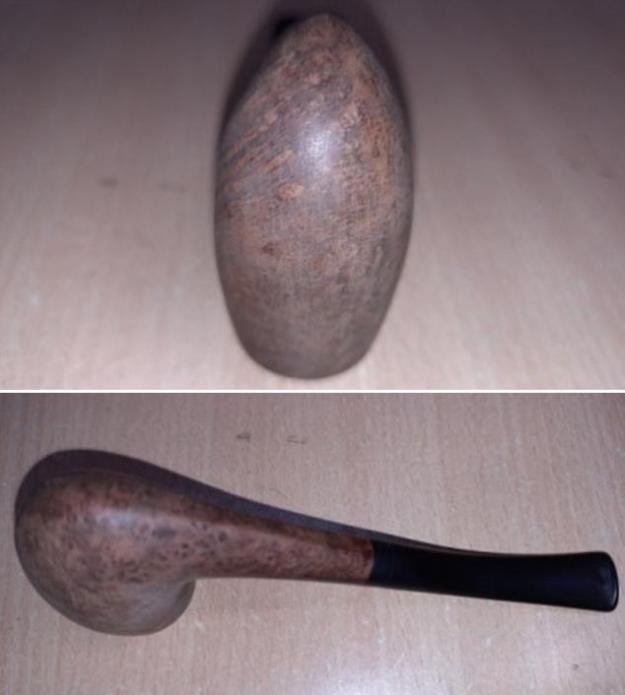
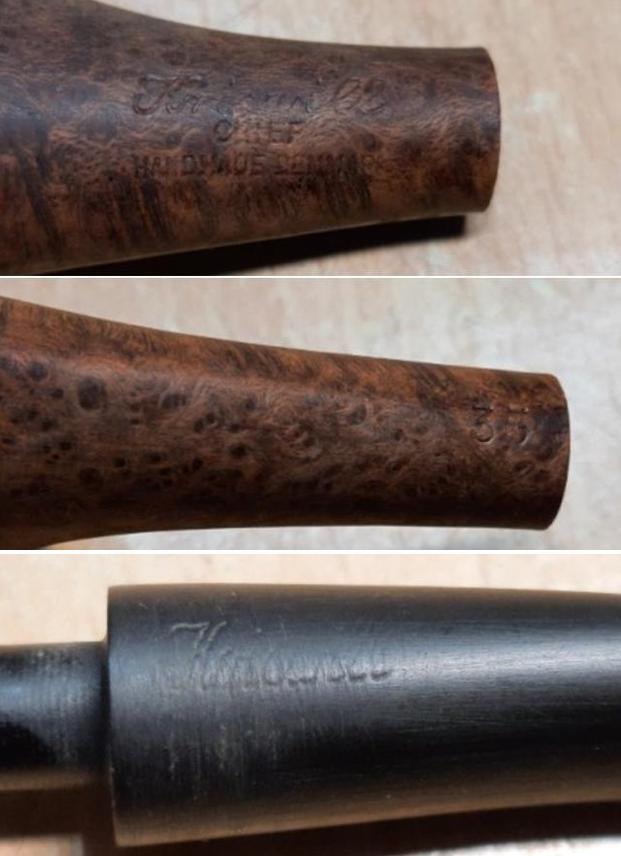
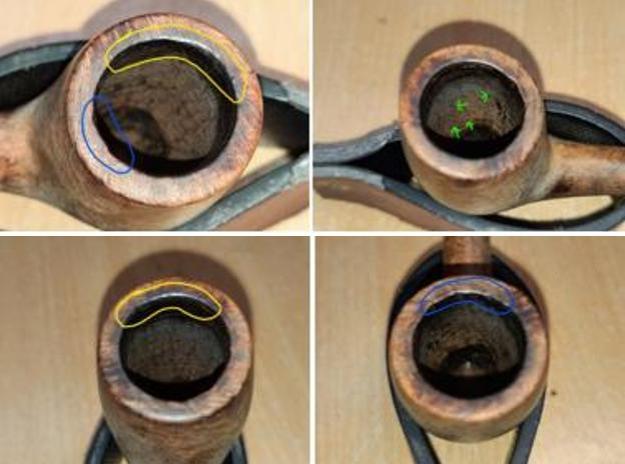
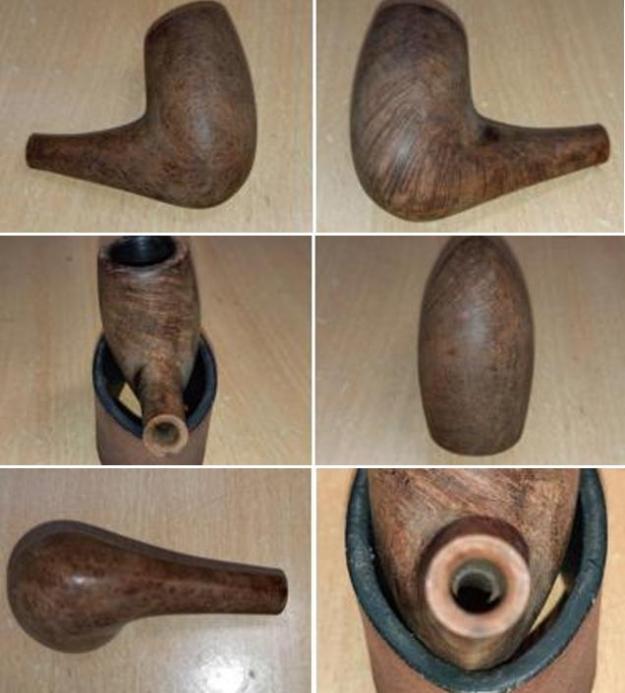
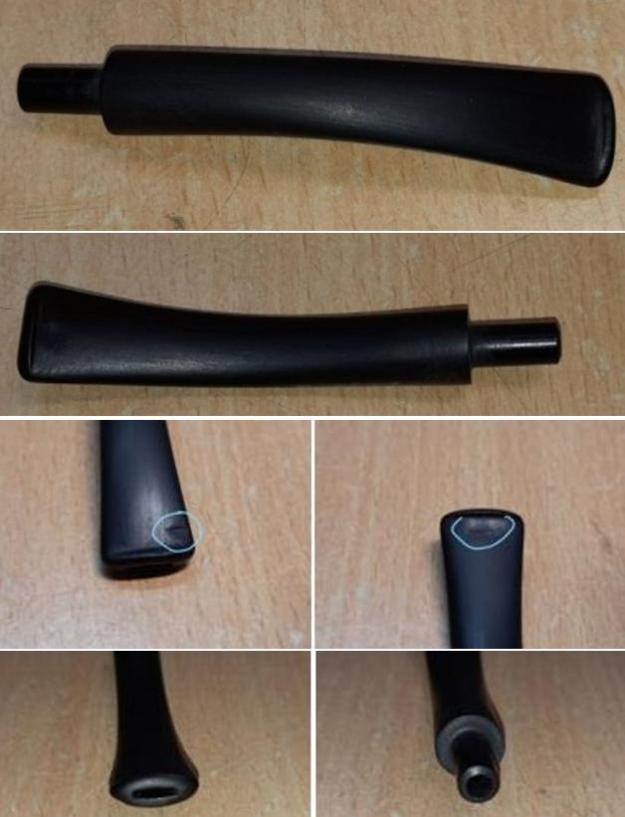
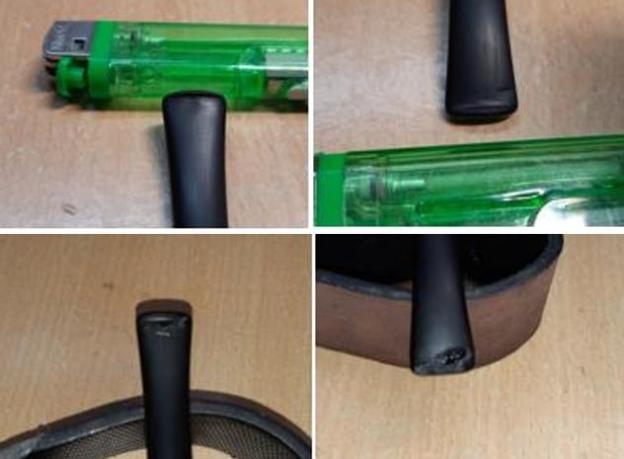
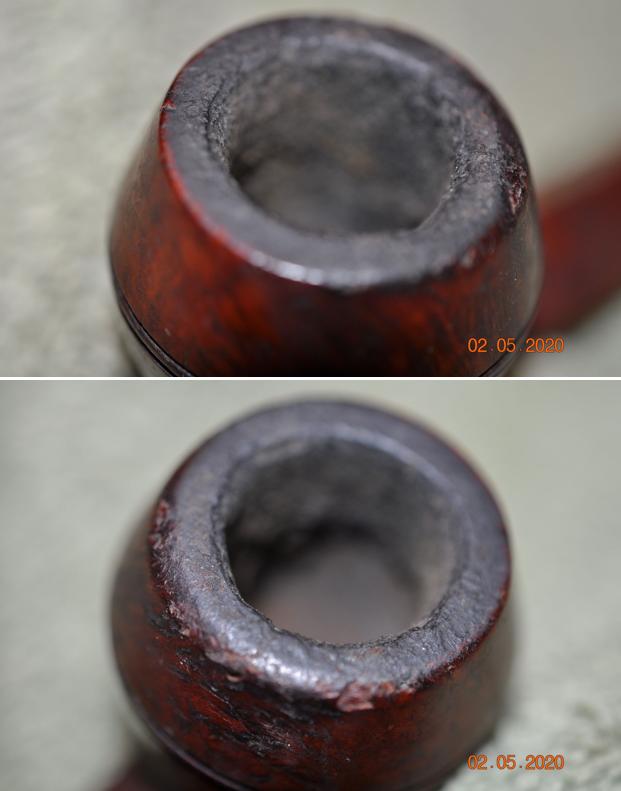
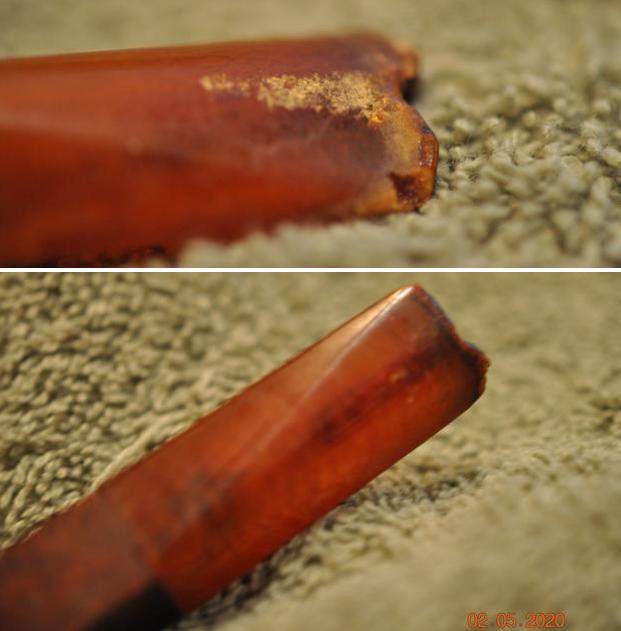
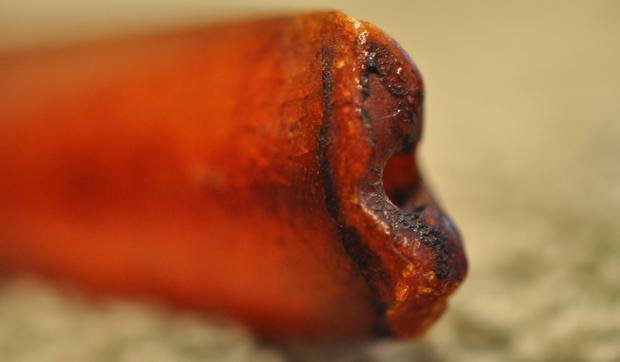
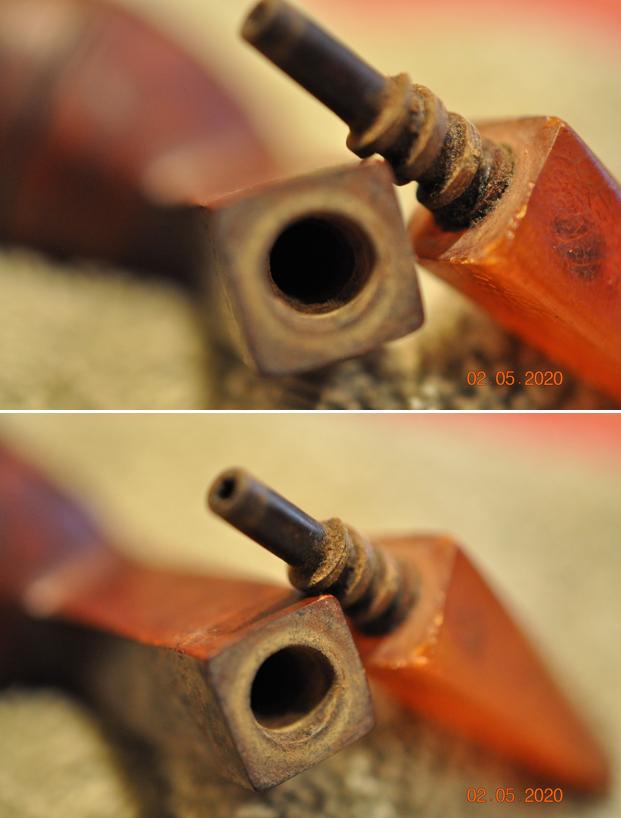
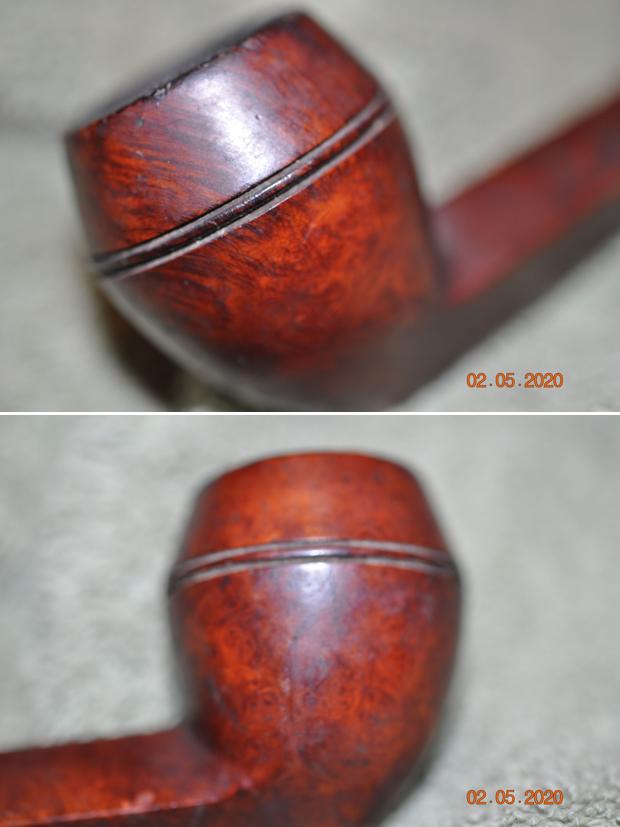
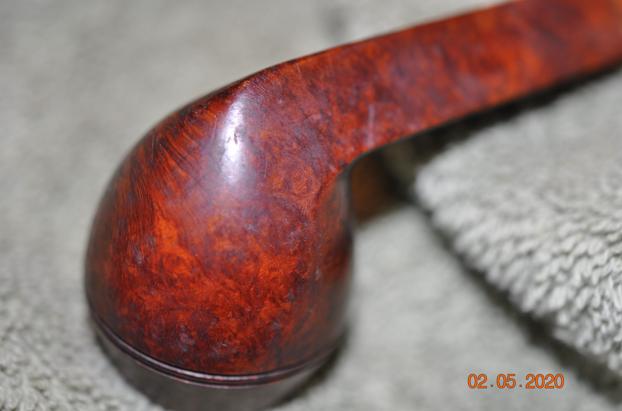
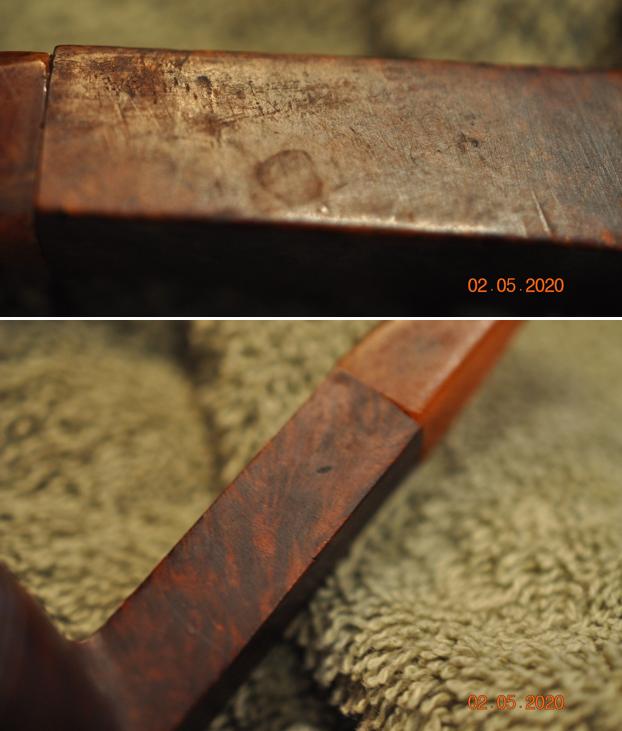
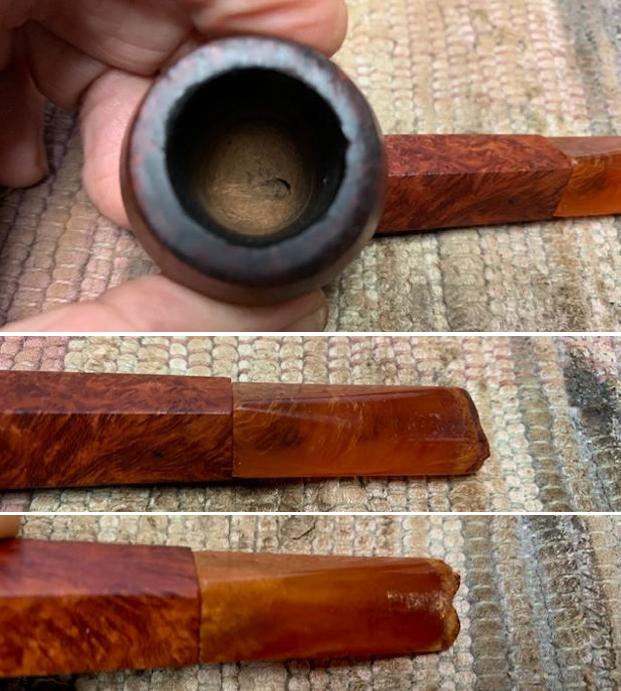
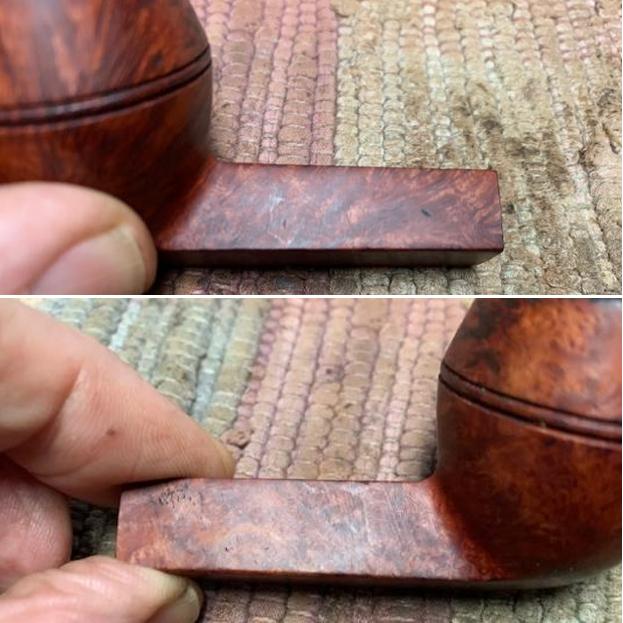
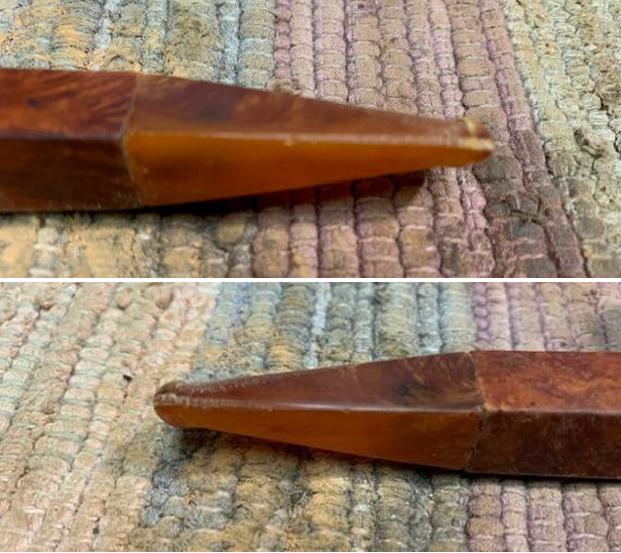
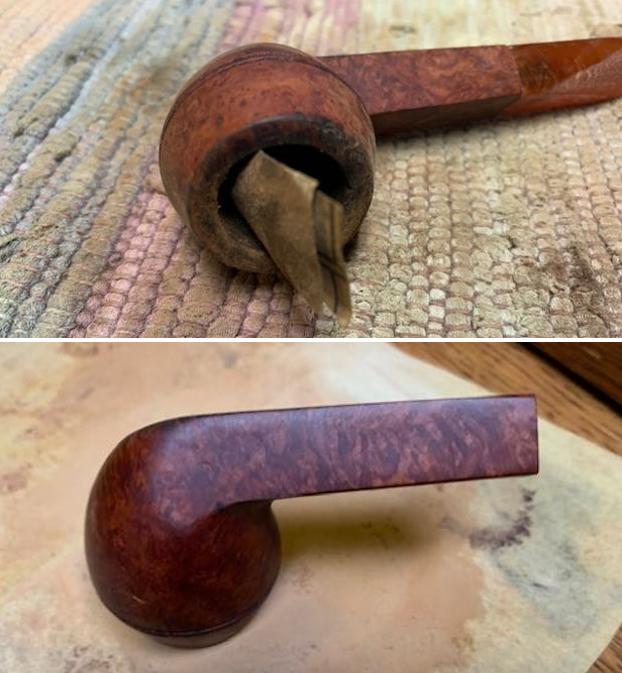
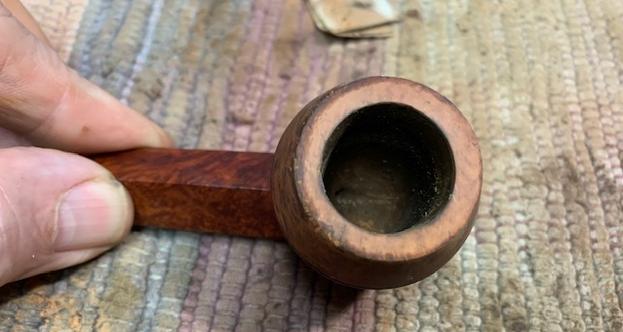
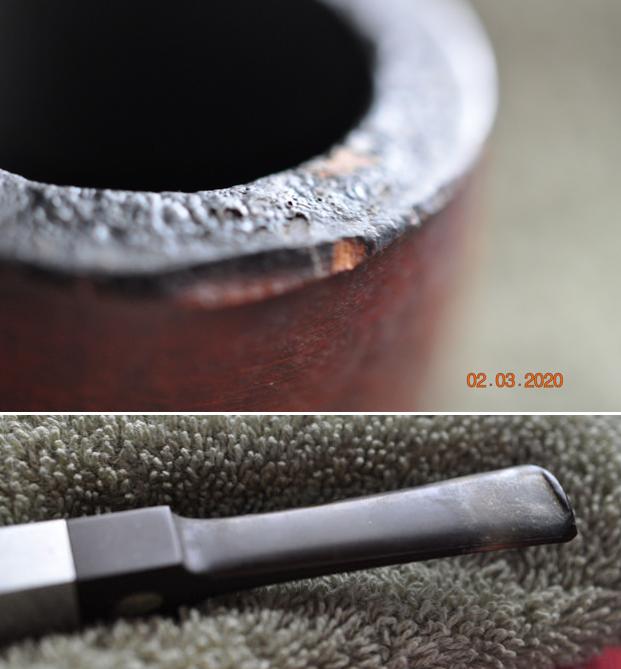
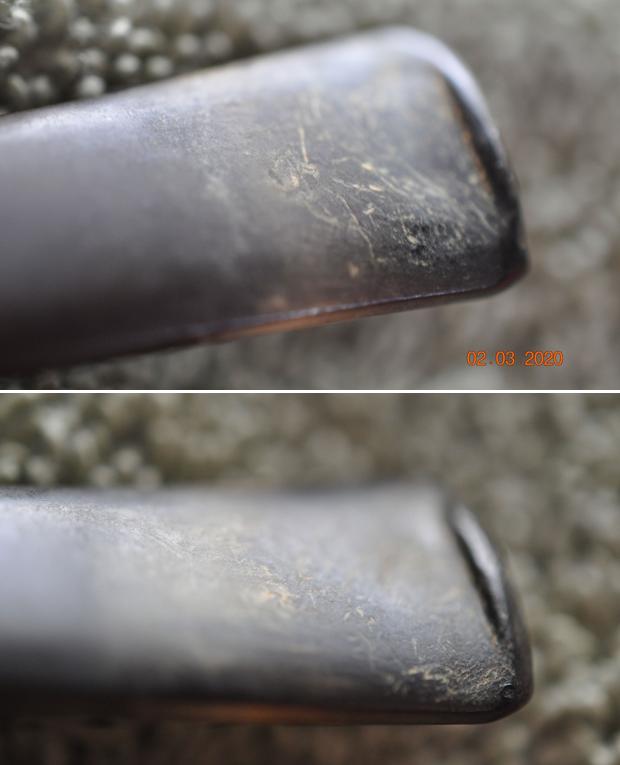
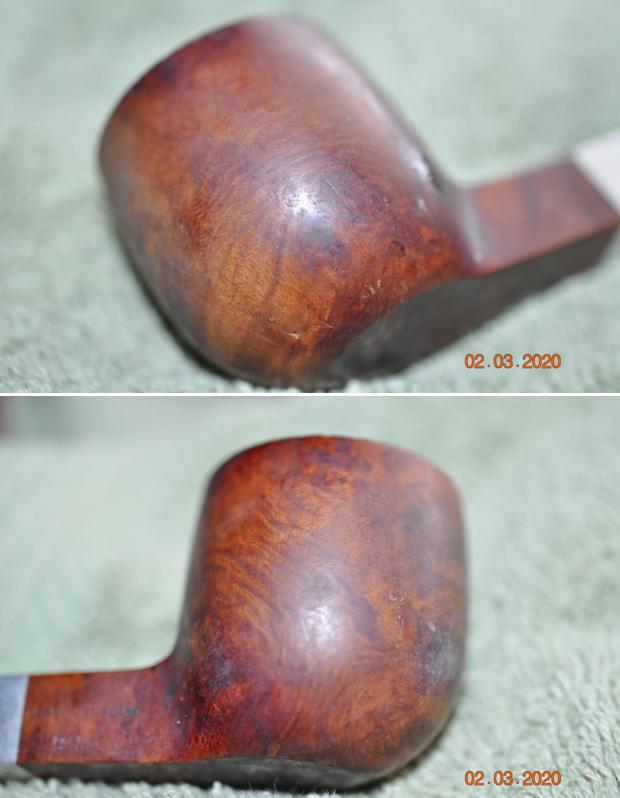
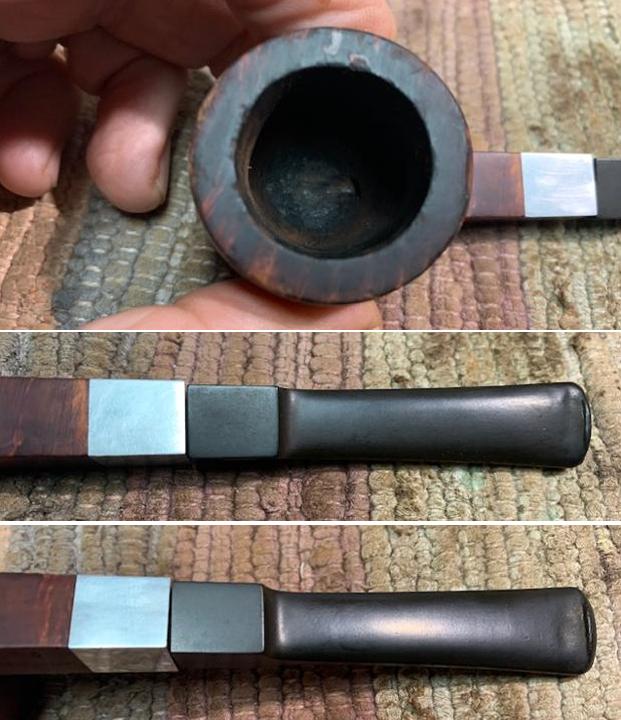
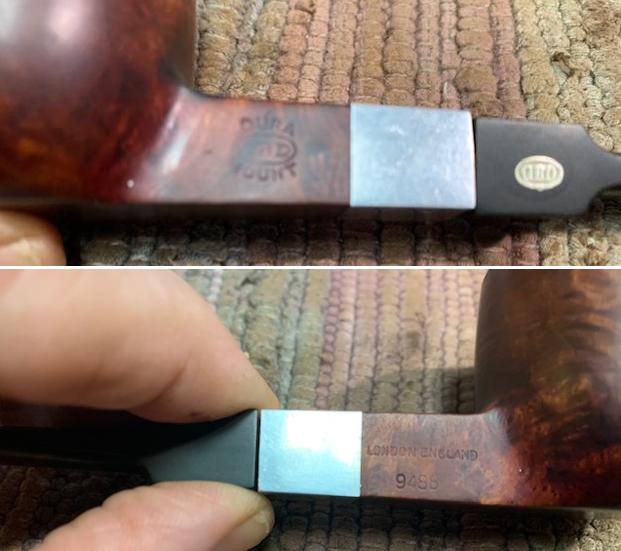
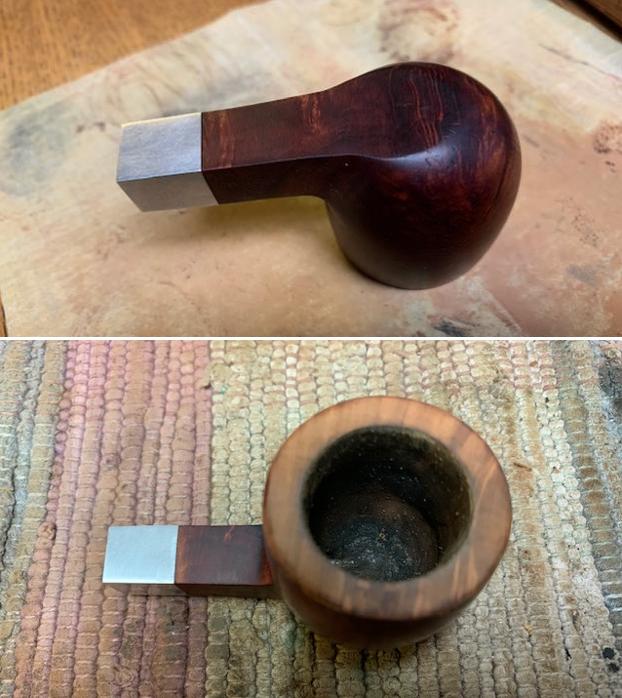
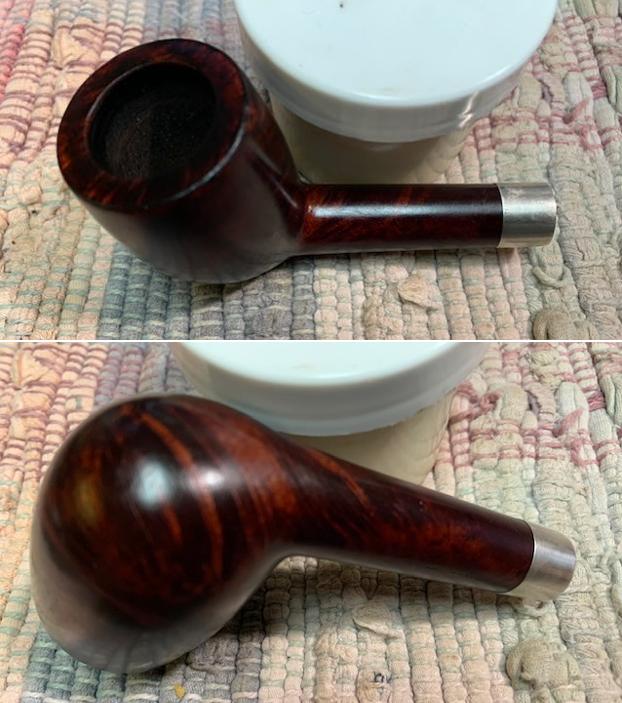
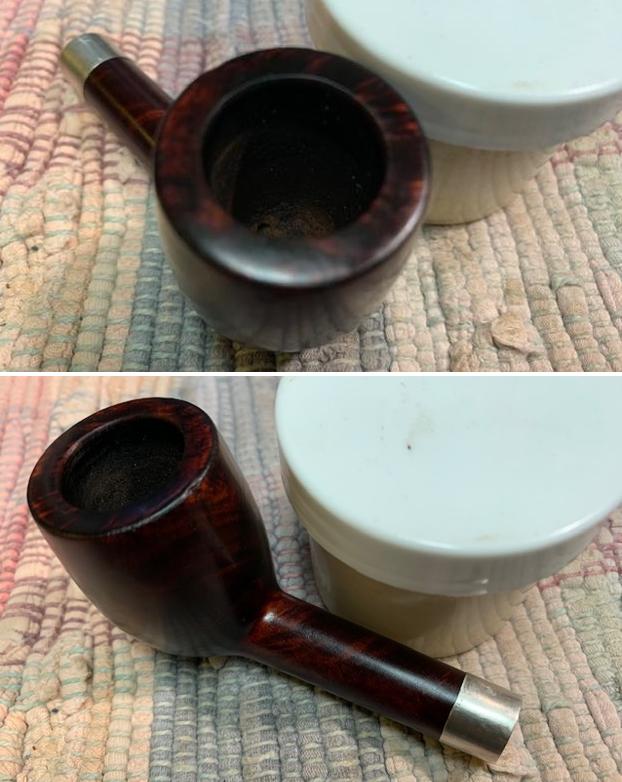
Jeff took some photos of the BARCLAY-REX Petite Bent Dublin before he worked his magic in cleaning up the pipe. It is a an interesting pipe with a lot of potential and what appears to be some great grain under the grime and debris of the years. Jeff took photos of the bowl, rim top to show the thickness of the cake in the bowl and the thick lava on the rim top. There is significant damage to the outer edge of the rim that is visible in the photos. He took photos of the top and underside of the vulcanite stem showing the oxidation, calcification, tooth marks, chatter and wear on the stem and button. There is also damage to the edges of the stem. Jeff took photos of the sides and heel of the bowl to show the condition of the briar. You can see the beautiful shape and the grain on the bowl even through the dirt and debris of many years. The chips around the outer edge are also very visible. He took a pictures of the damage to the outer edges of the rim. It really is a mess. The work will have to include topping and rebuilding the edge.Jeff took a photo of the stamping on the left side of the shank. You can see that it is faint but readable as noted above.I turned to Pipephil’s site to see what I could learn about the Barclay-Rex brand and particularly the sandblast one I was working on (http://pipephil.eu/logos/en/logo-b1.html). I have included a screen capture of the information that is shown there. I quote from the sidebar on the site below as it gives a good summary of information.
Brand created in 1910. The shop was situated on Maiden Lane. Three addresses now (2010): 75 Broad Street, 70 East 42nd Street, 570 Lexington Avenue. See also: André

I turned to Pipedia to try and place this pipe in the timeline of the brand and was able find some helpful information which I have included below (https://pipedia.org/wiki/Barclay_Rex). I quote the information below.

Barclay-Rex, a downtown Manhattan tobacconist, was founded in 1910 by Vincent Nastri, a pipemaker from Salerno, Italy. The store was originally located at Barclay and Church Street, and the name was taken from that location and Nastri’s beloved Great Dane, Rex. The business is still run by Vincent Nastri, III and owned by Vincent Nastri, Jr.. They have several locations in New York City. The store has carried pipes from all fine makers, and the Barclay-Rex line of pipes is also much sought after, in that pipes were made in a range from the very inexpensive into the several hundreds of dollars. The pipes were, at least into the 1960’s, made of Algerian briar.

In addition to pipes made by Mr. Nastri over the years, Mr. Nastri, III, has been quoted as stating that a pipemaker just leaving Dunhill made pipes with a small off-white dot on the stem for a time for the shop. As was discovered by Steve Laug of Reborn Pipes, they were evidently made by a pipemaker whose initials were HGP, and stamped on the pipe as such. These pipes were made for a single run only, and then never made again.

In addition, Sasieni at least for a time made private label pipes stamped with the Barclay-Rex name, but with their own shapes and shape numbers.

Locations: (Flagship Store) 75 Broad Street, New York, New York 10004 Telephone: (212) 962-3355

70 East 42nd Street, New York, New York 10165 Telephone: (212) 692-9680

570 Lexington Avenue, New York, New York 10022 Telephone: (212) 888-1015

Email: info@barclayrex.com Website: http://www.barclayrex.com Toll Free: (888) 278-6222 Fax: (212) 962-3372

With the information from Pipedia I knew that I was working on a pipe from the Barclay-Rex Tobacconist in New York City. The fellow we bought them from intimated that he purchased them at the Manhattan store. I was unable to pin down any information regarding the date this pipe was made. Now it was time to work on the pipe.

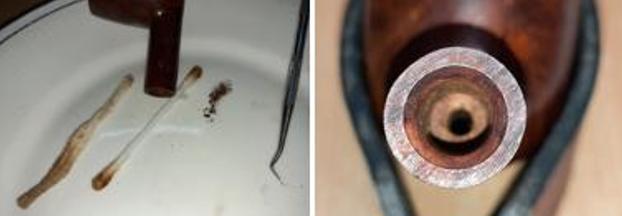
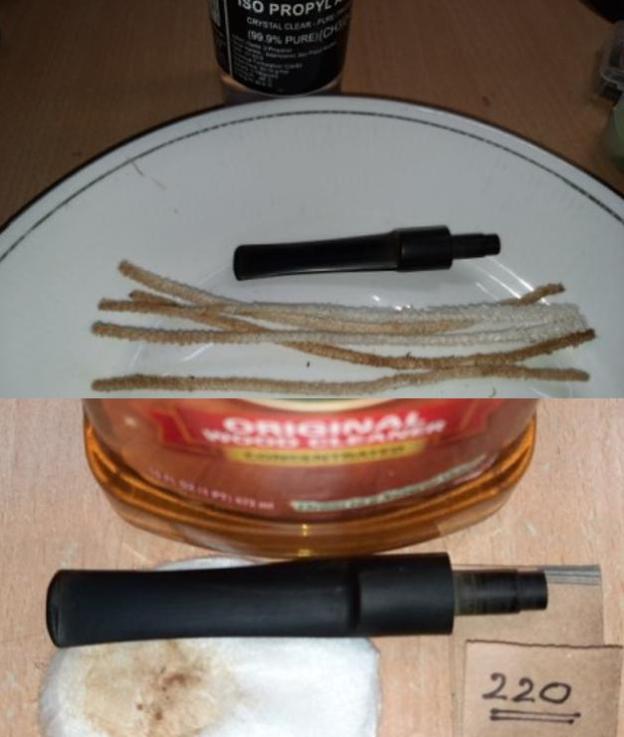
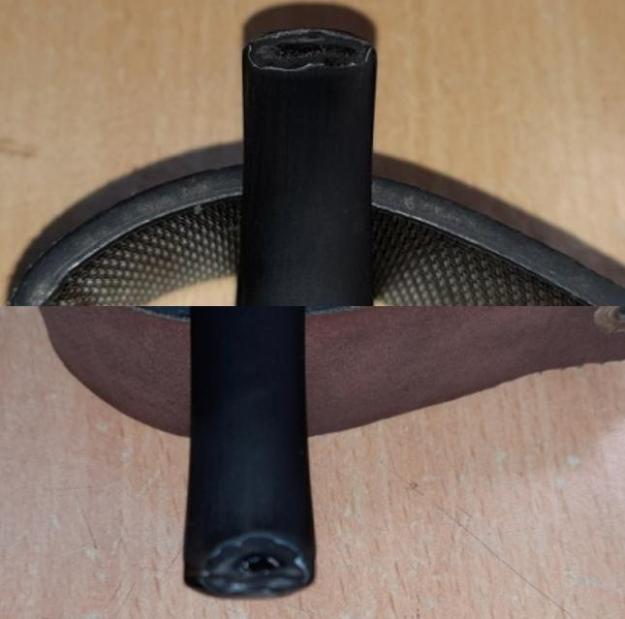
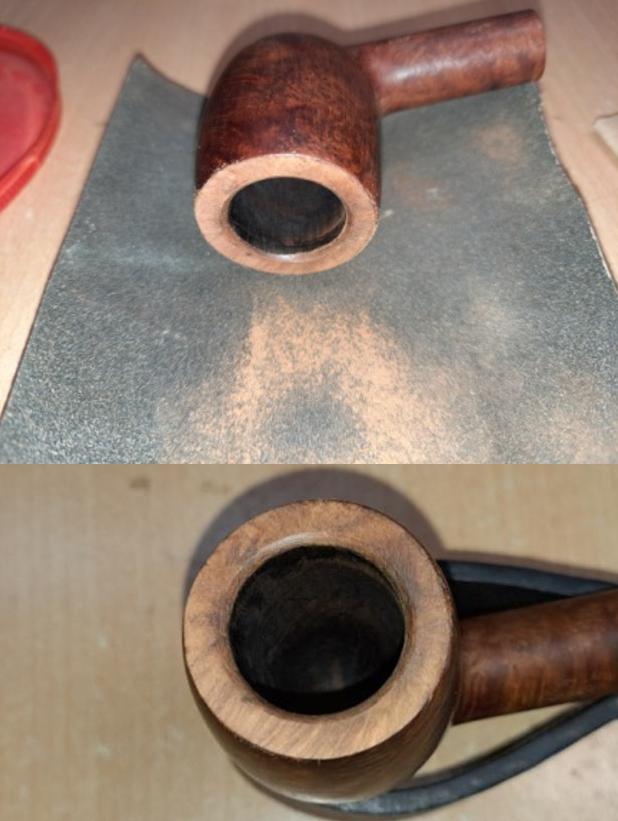
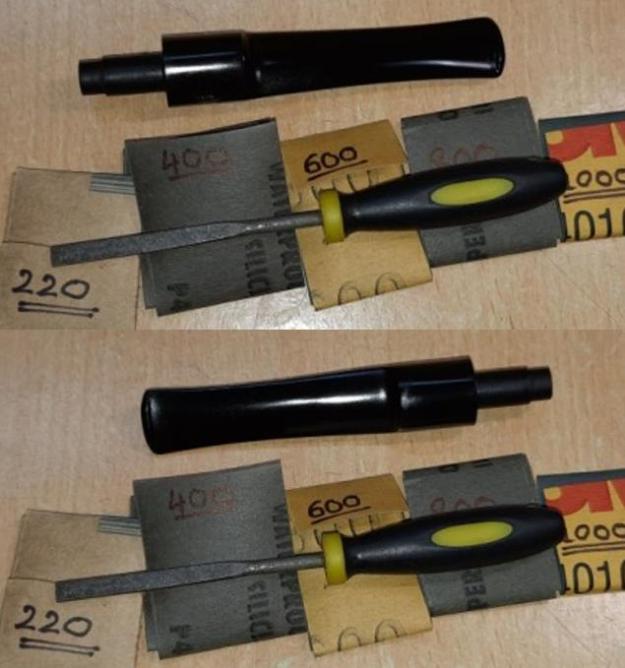
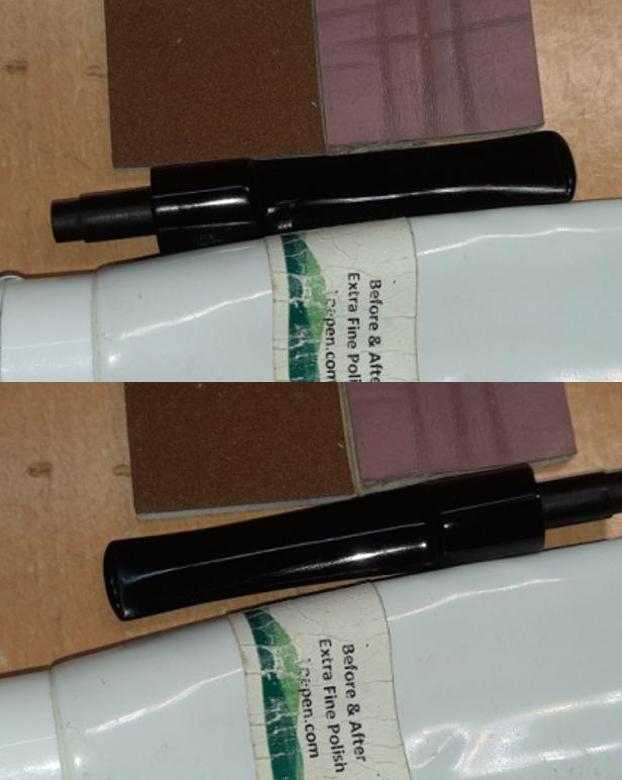
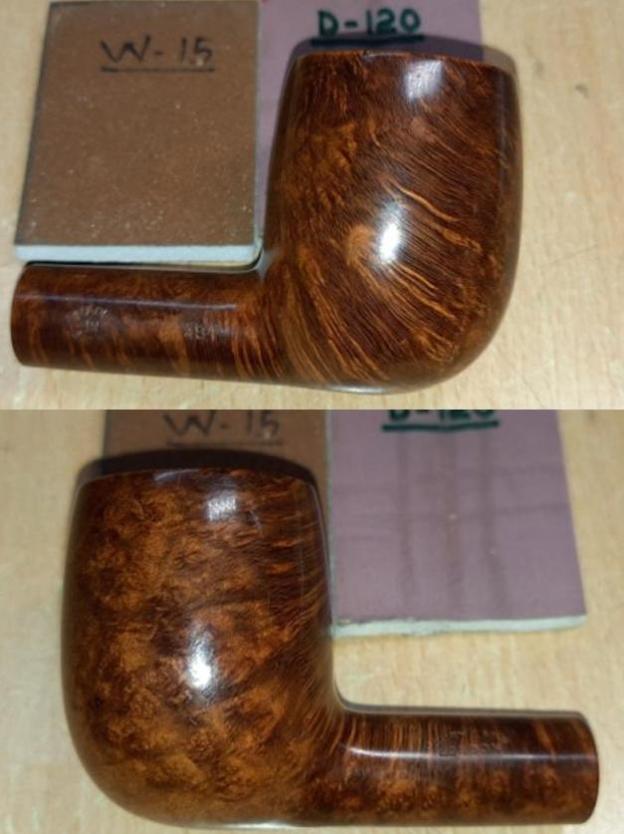
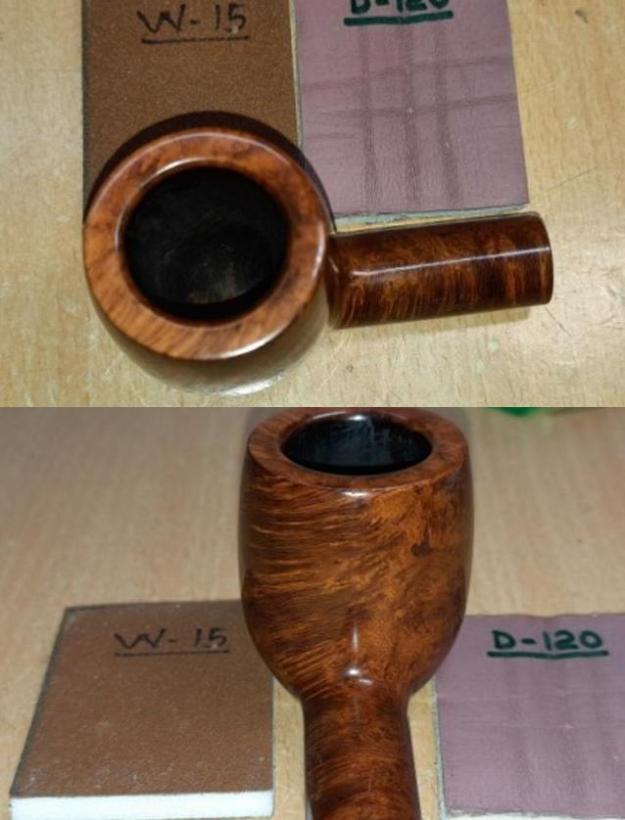
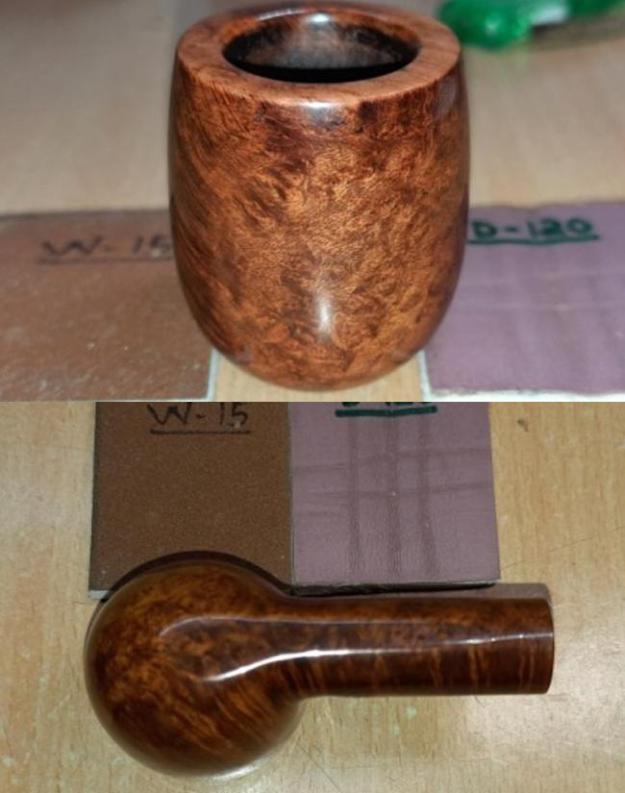
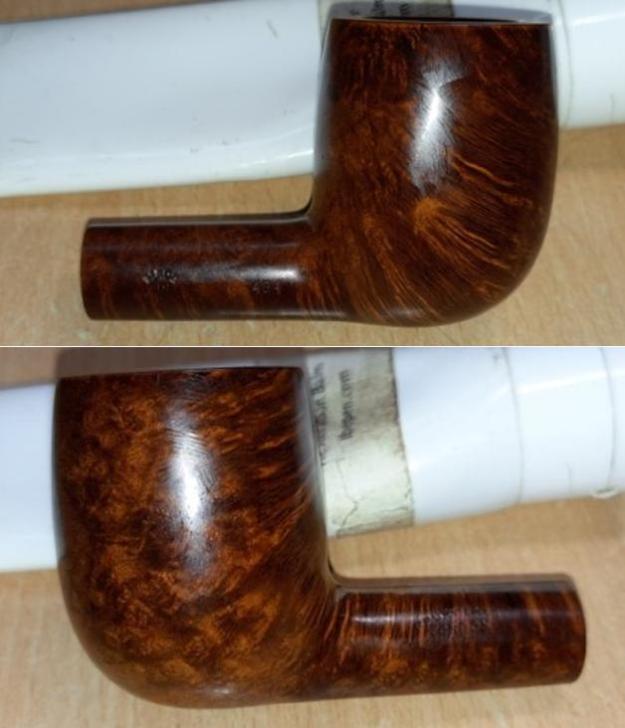
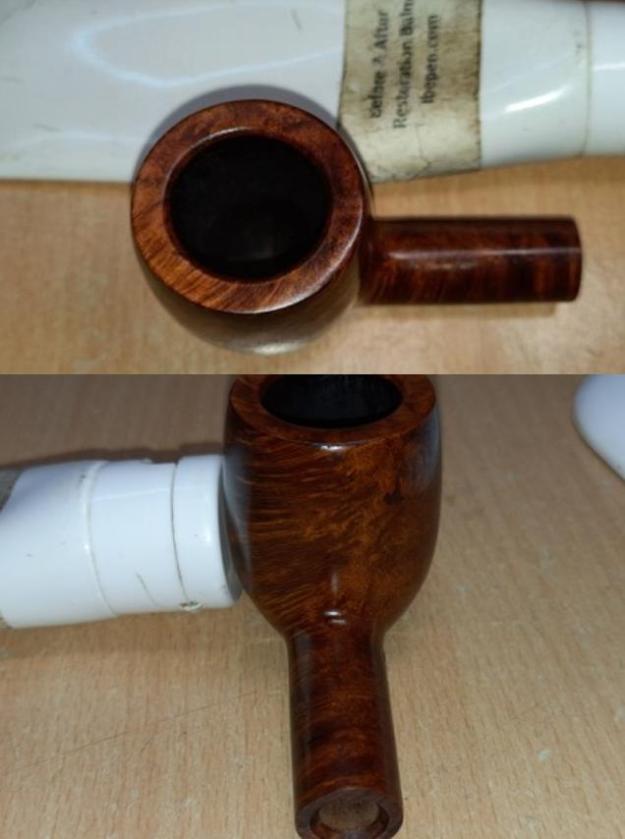
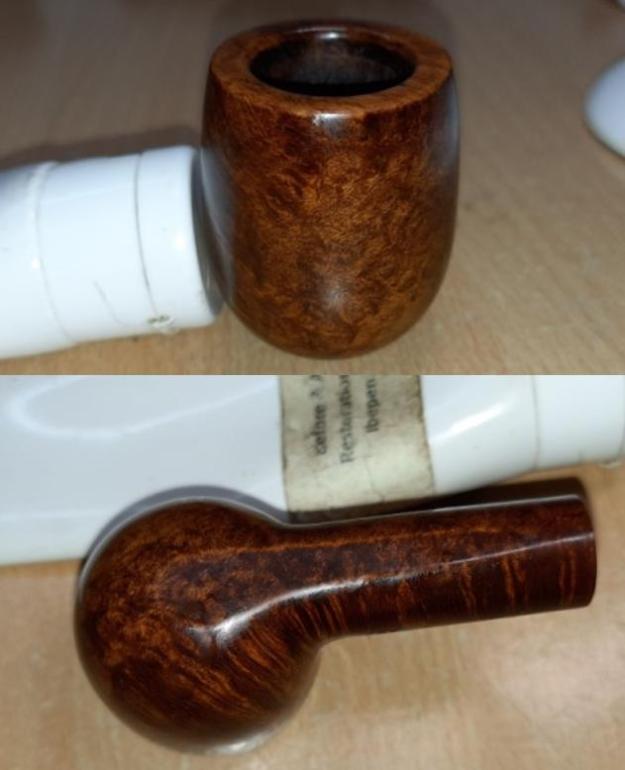
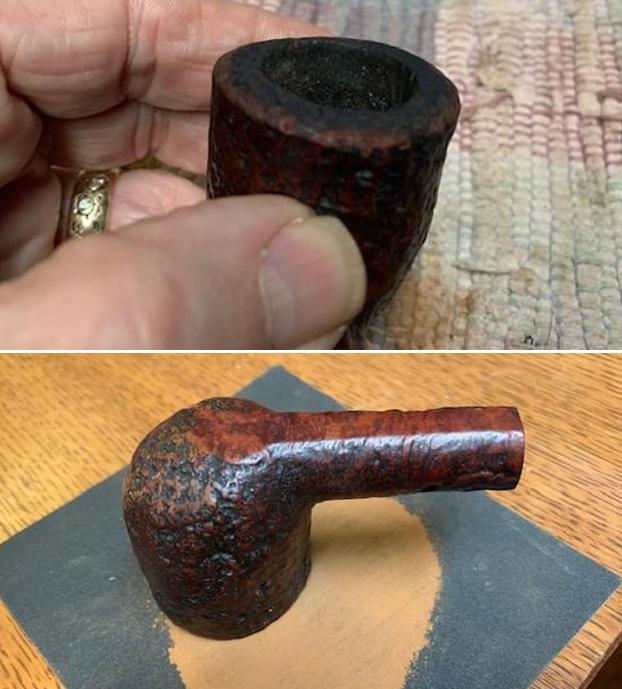
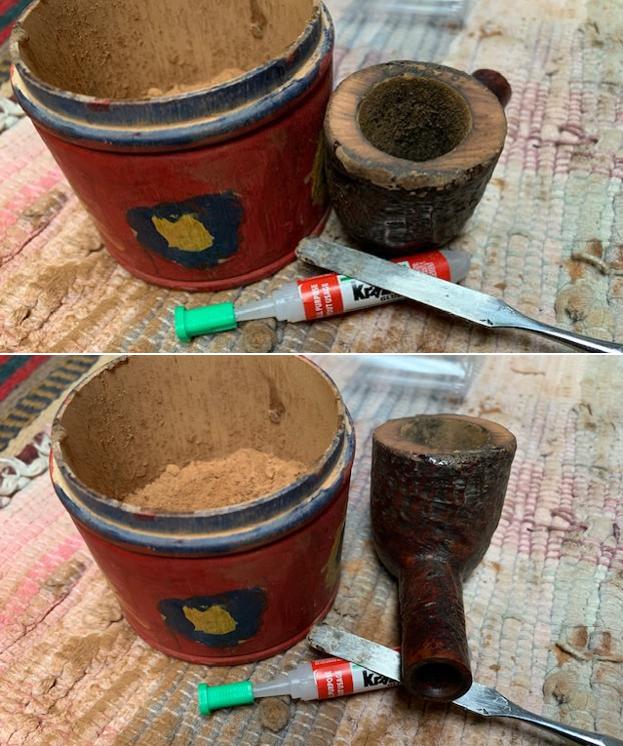
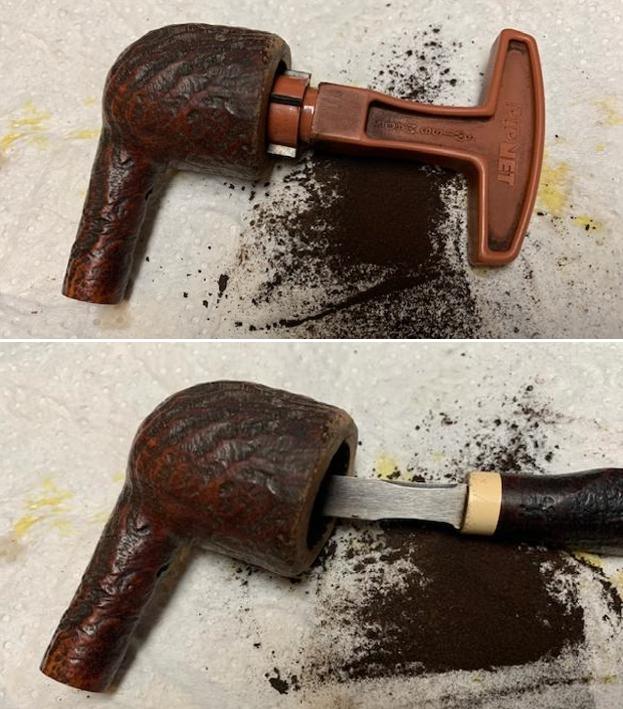
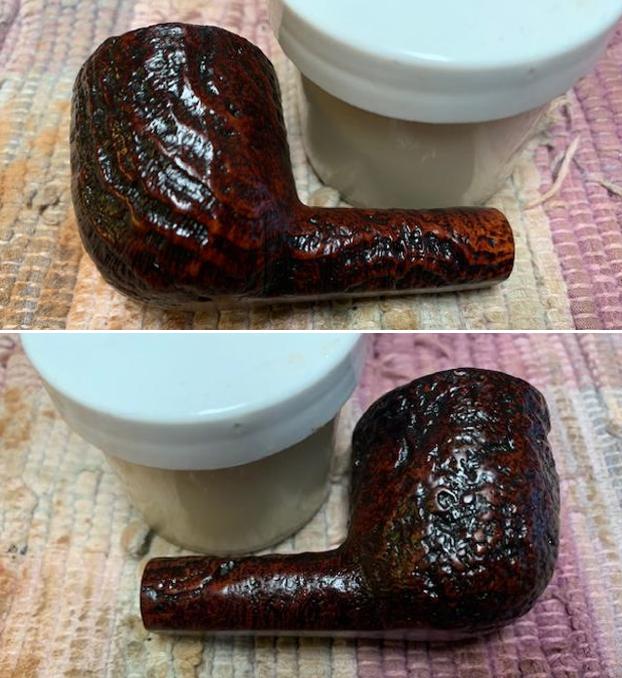
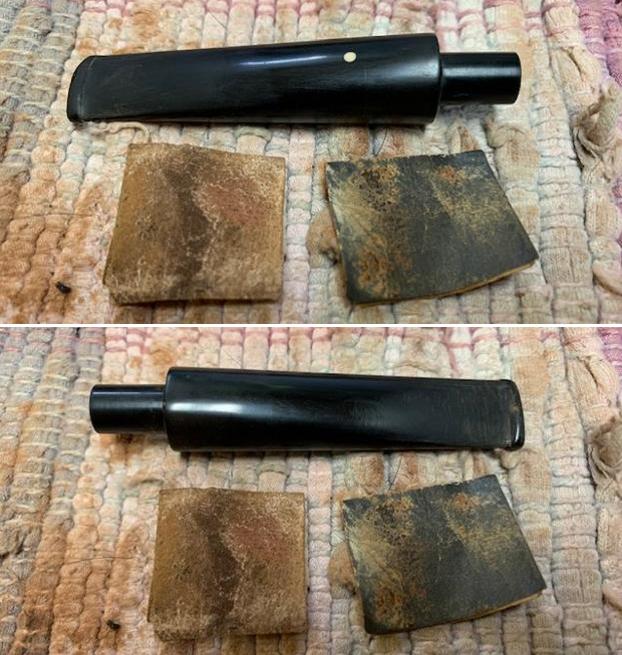
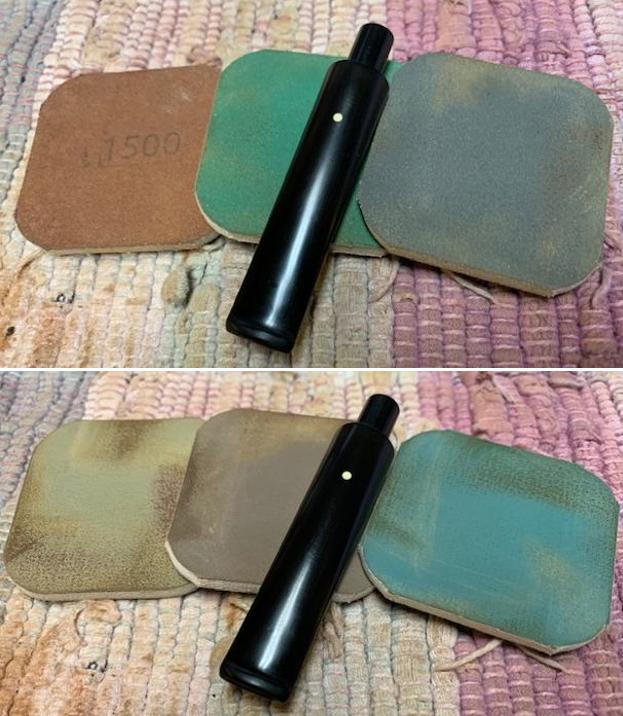
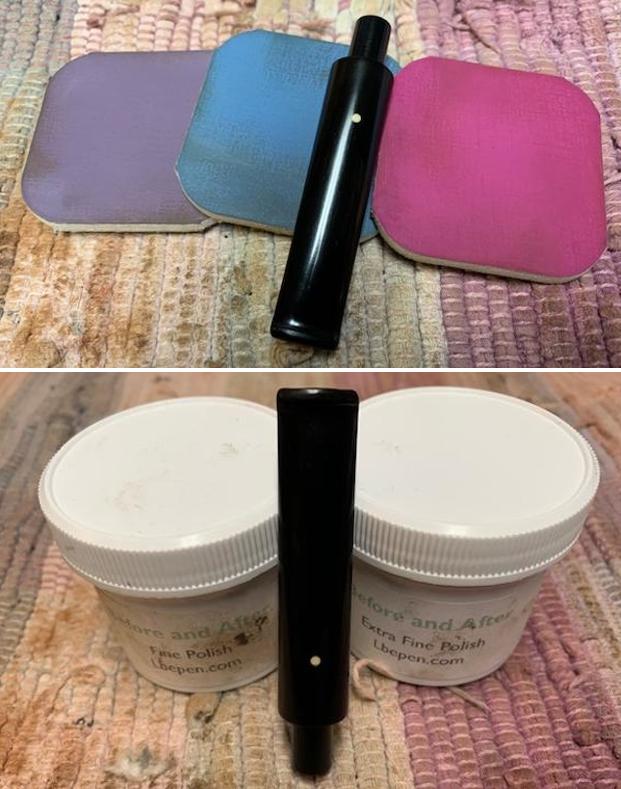
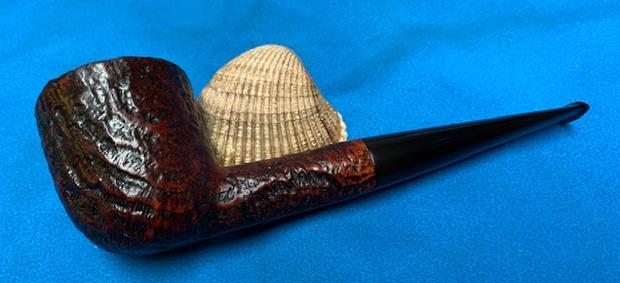
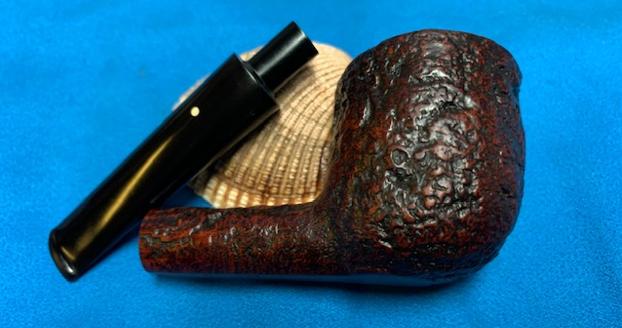
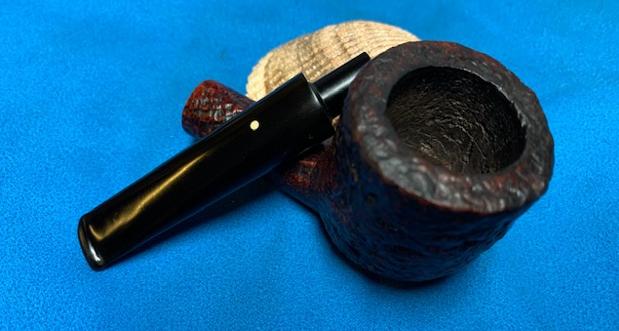
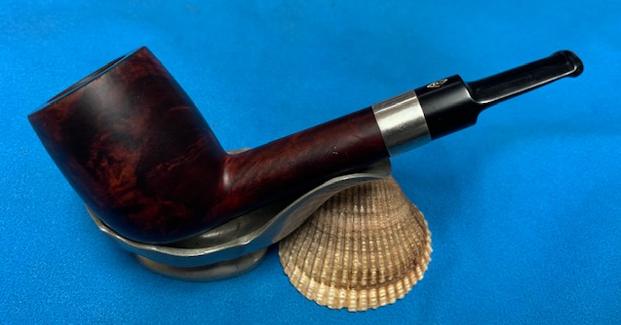
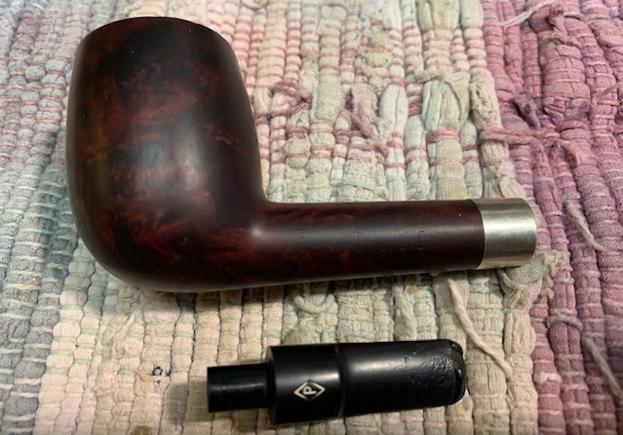
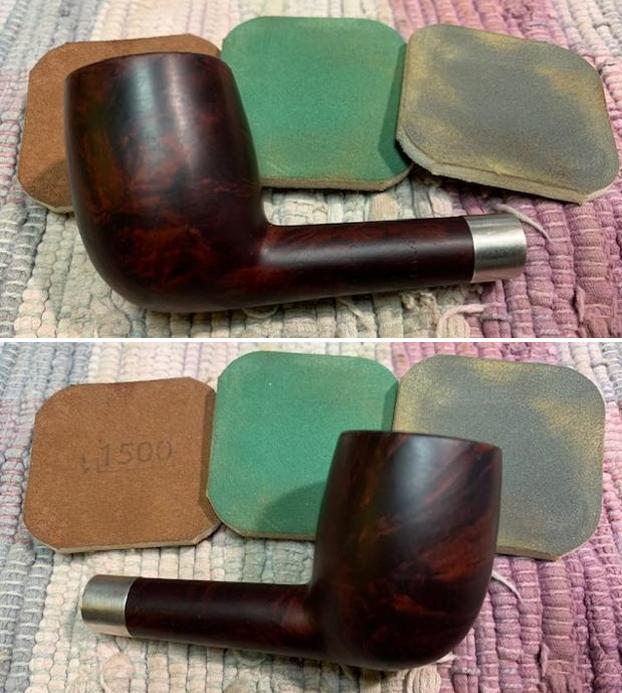
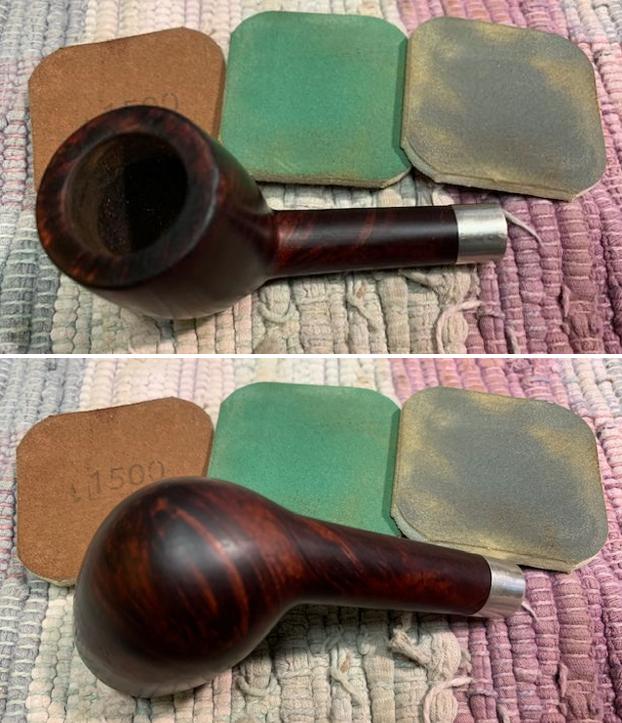
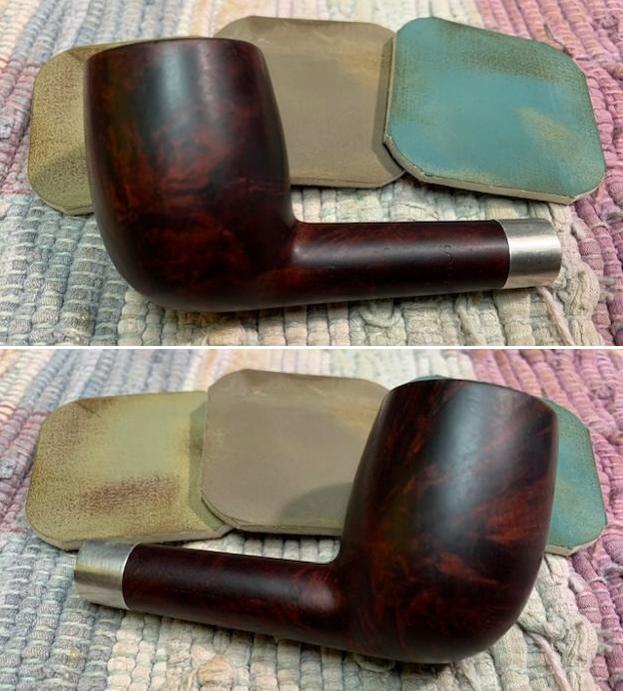
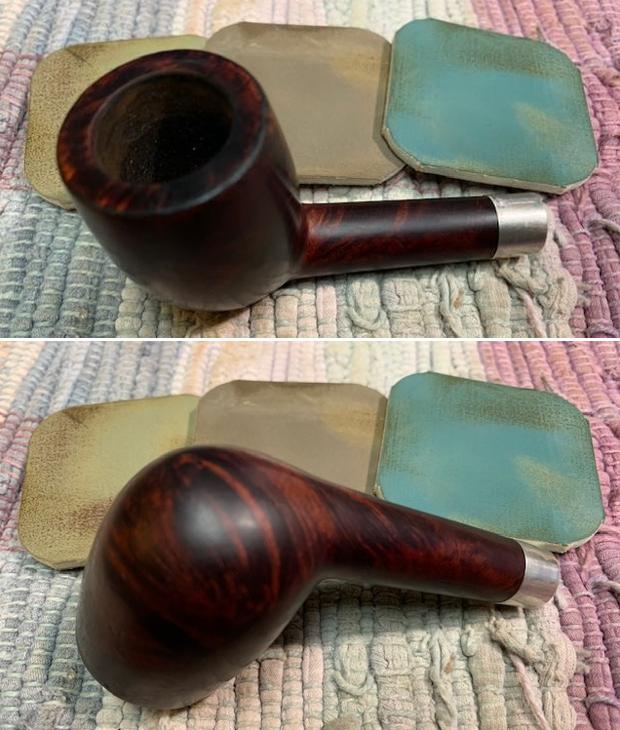
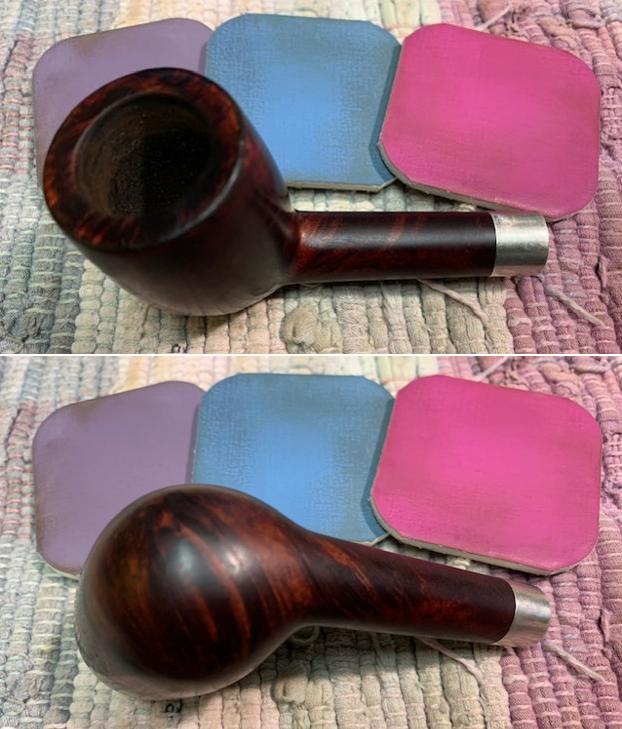
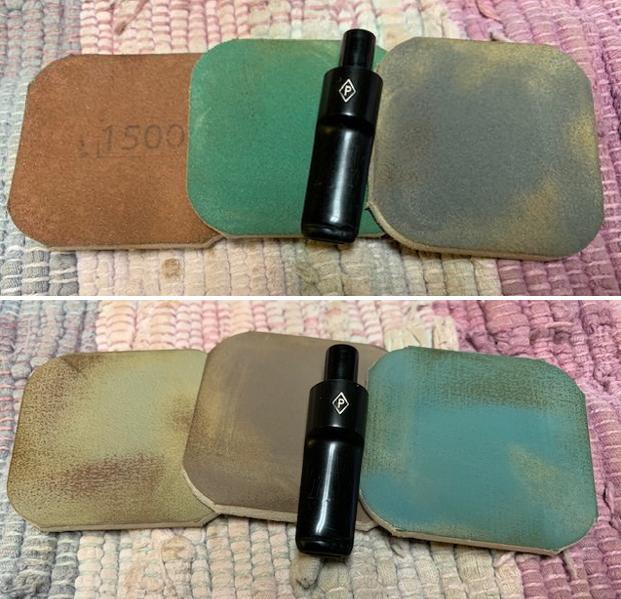
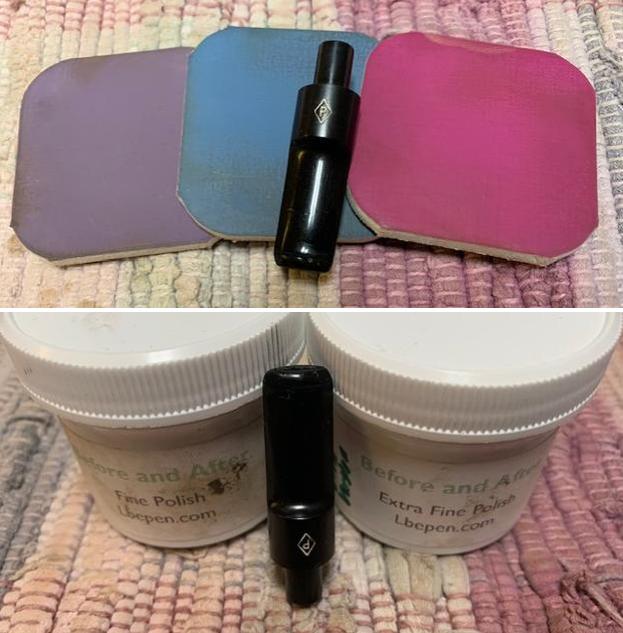
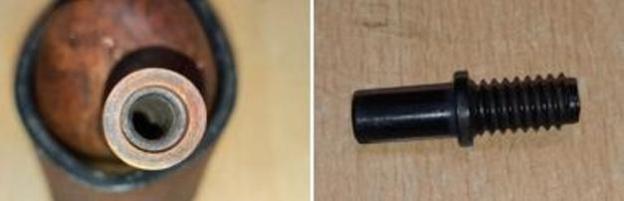
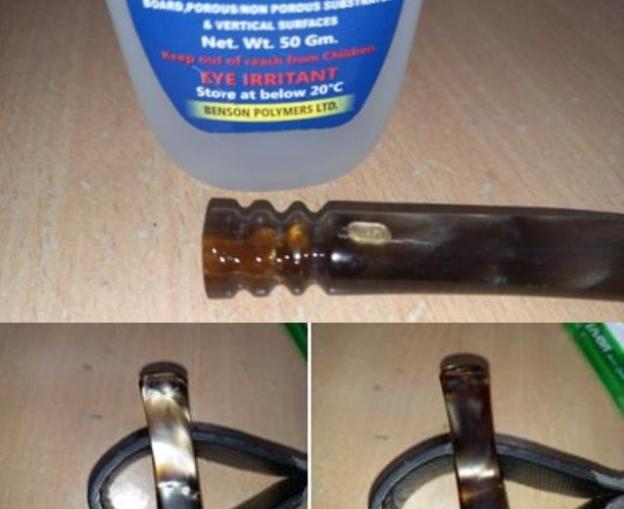
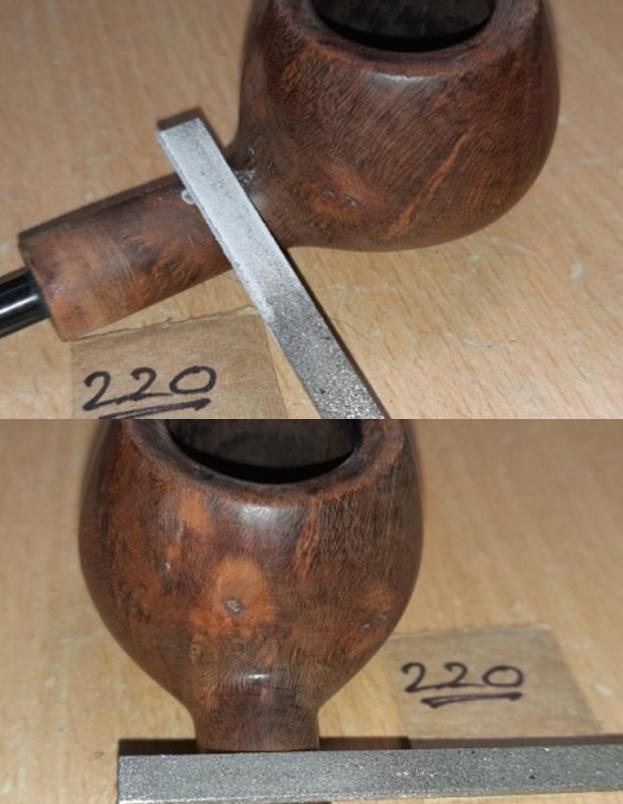
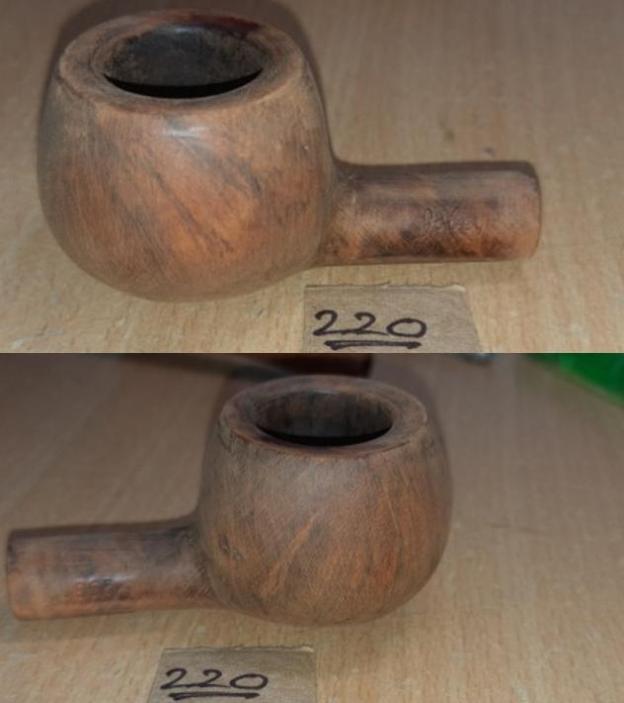
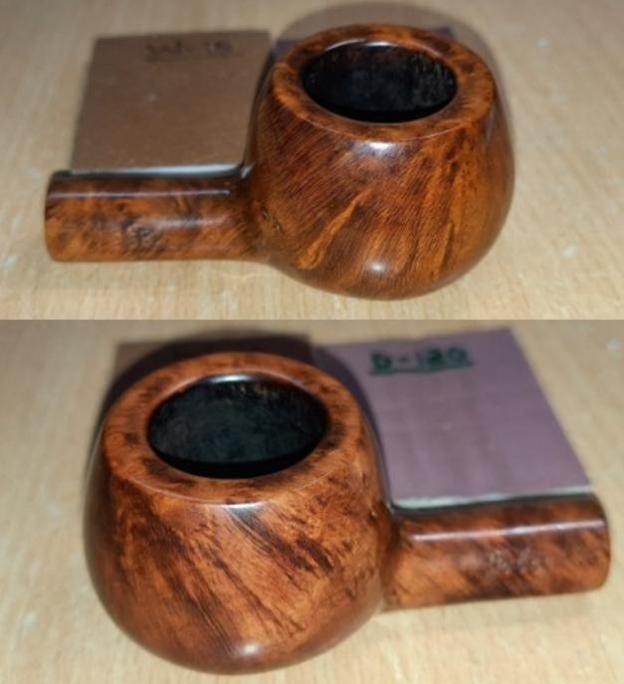
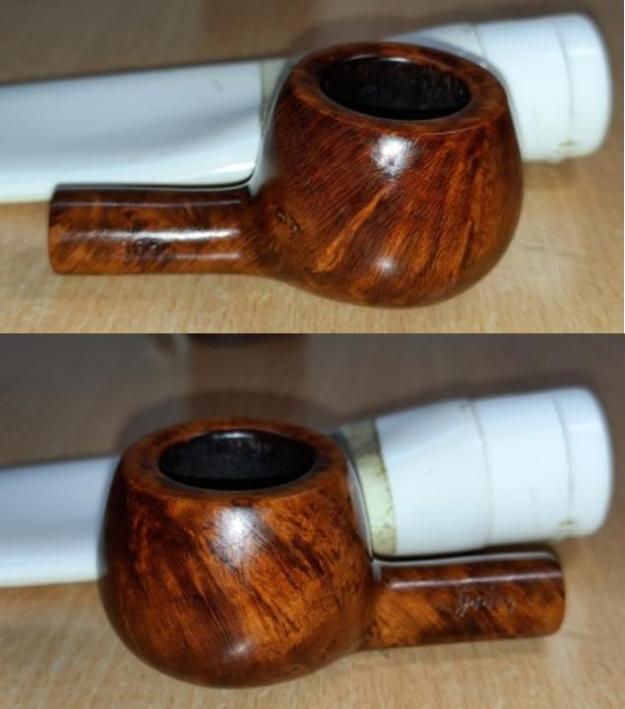
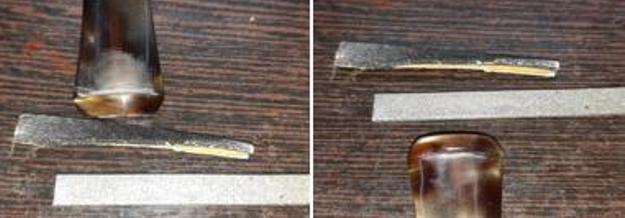
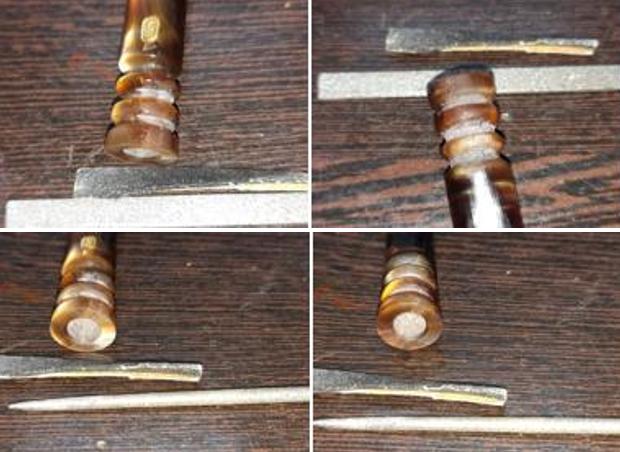
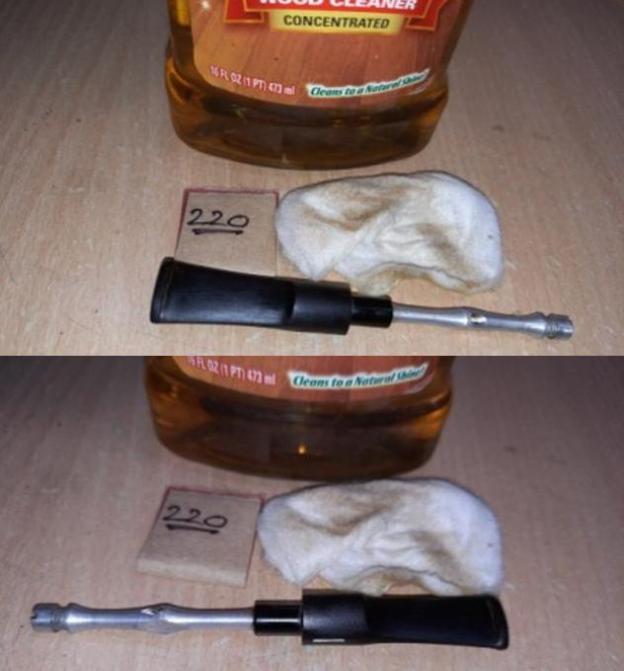
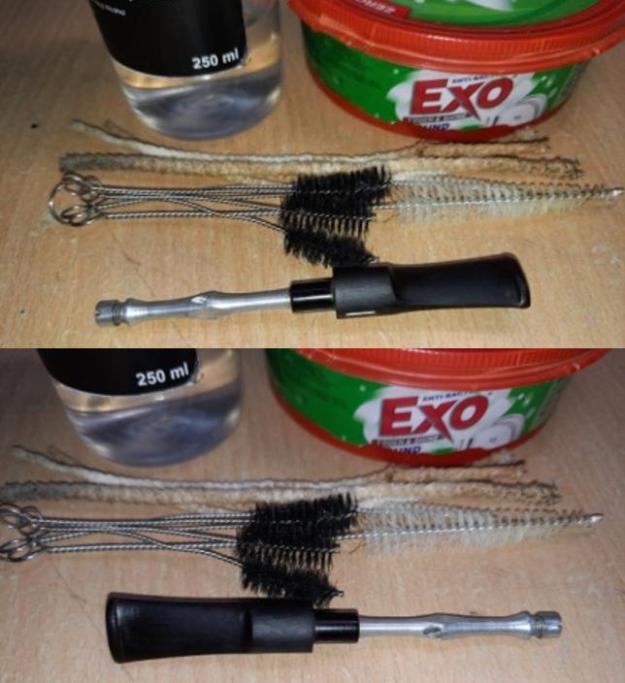
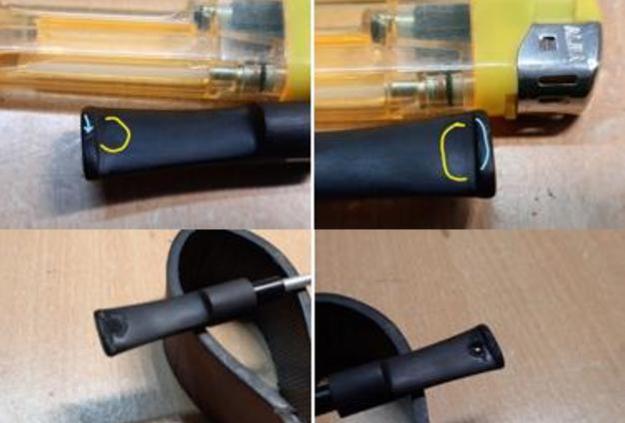
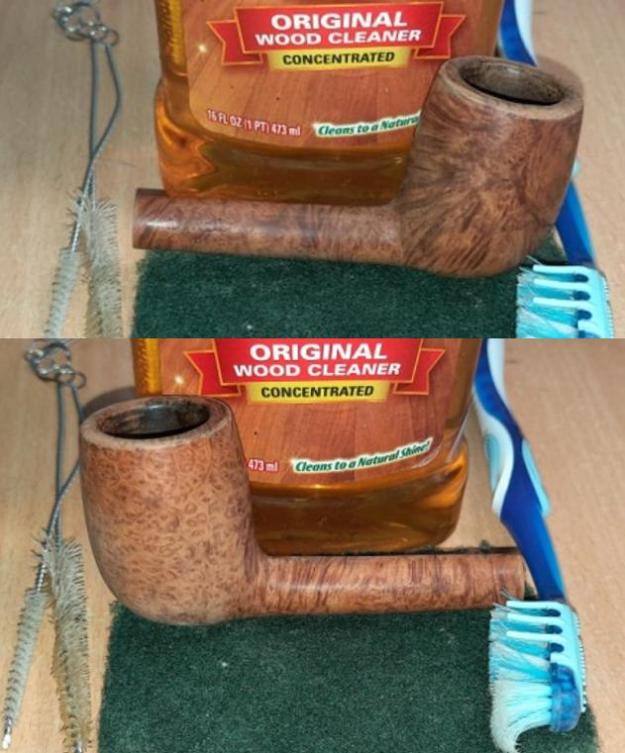
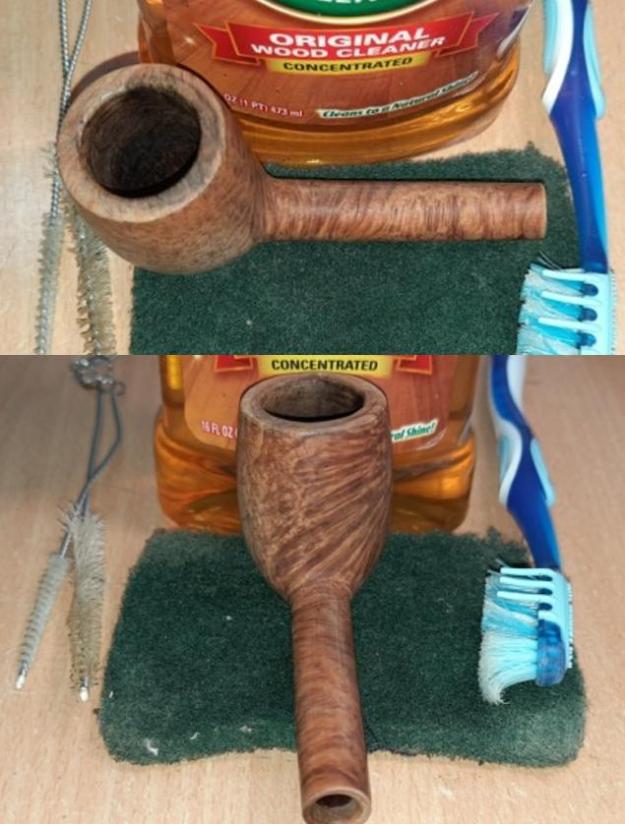
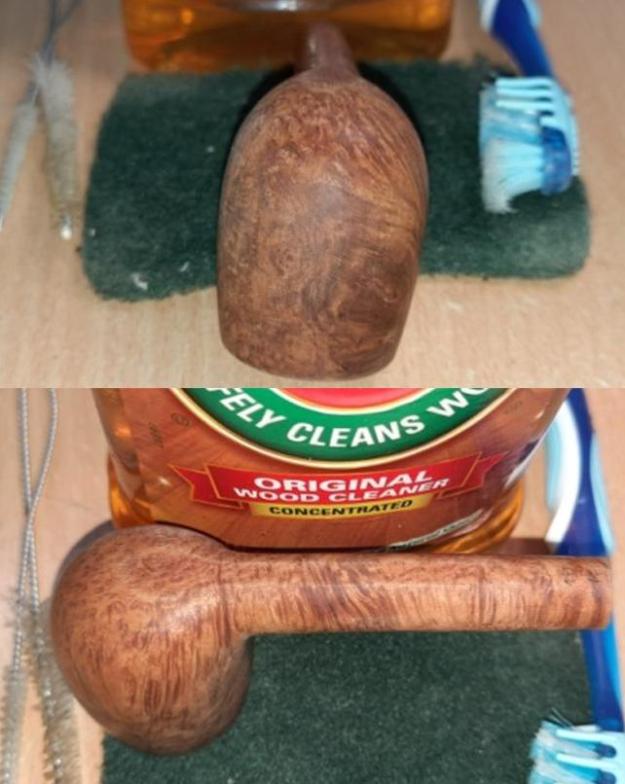
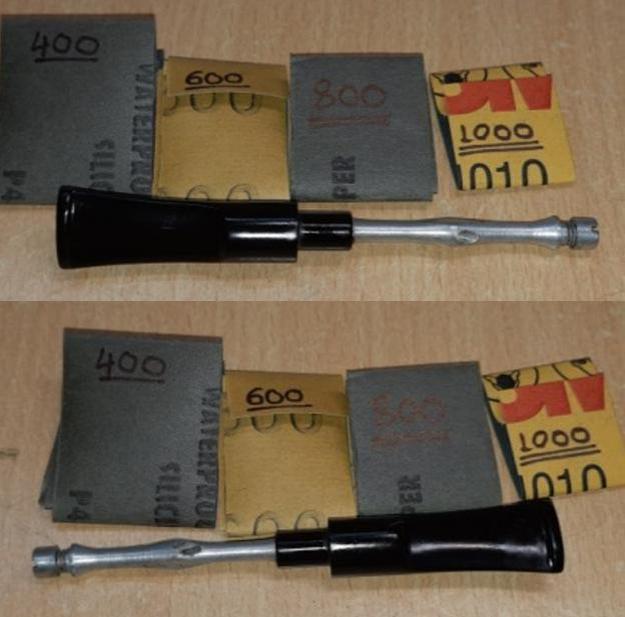
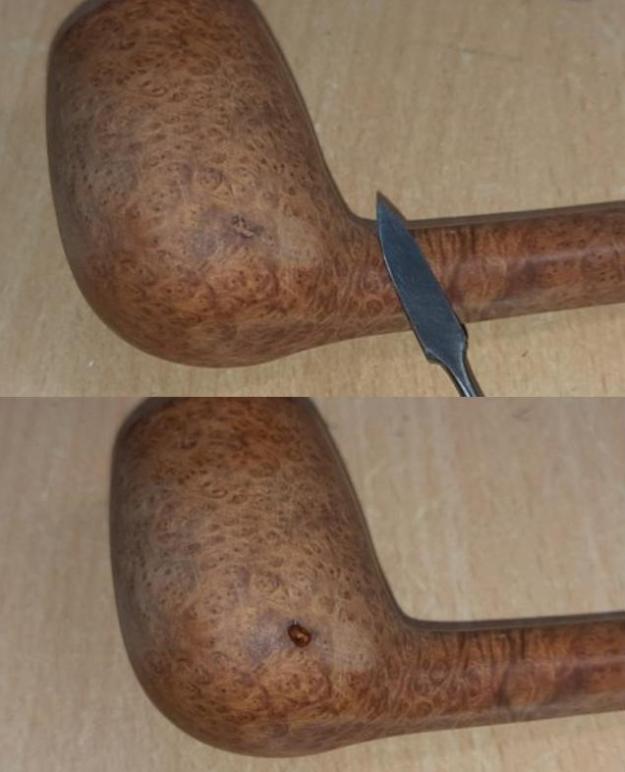
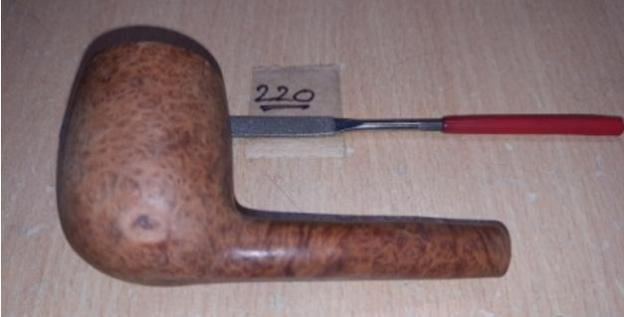
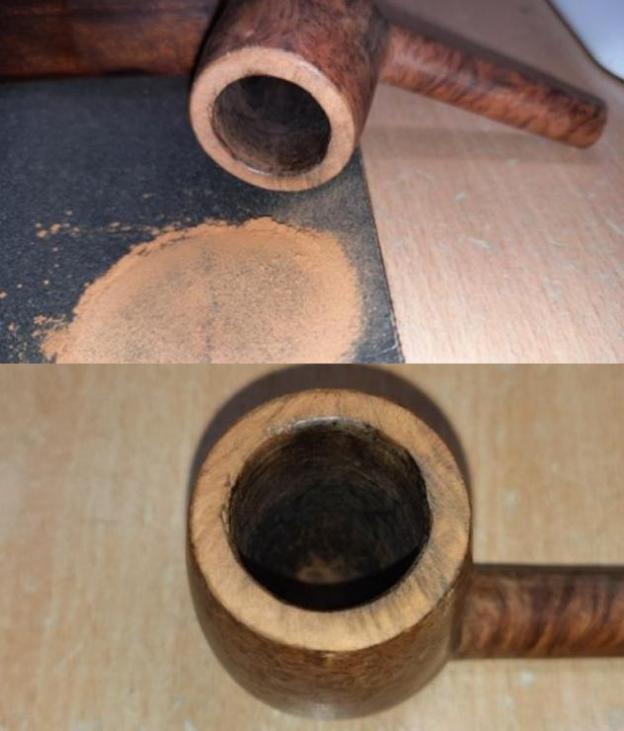
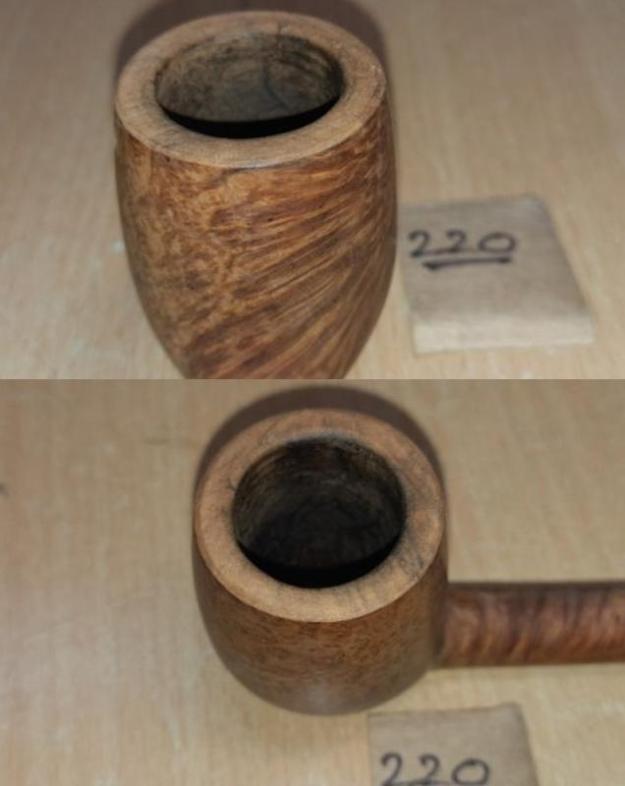
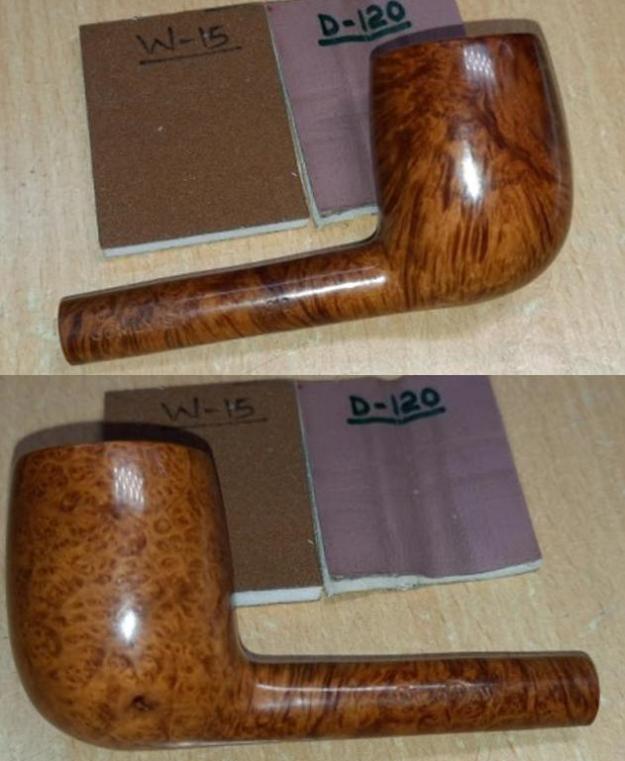
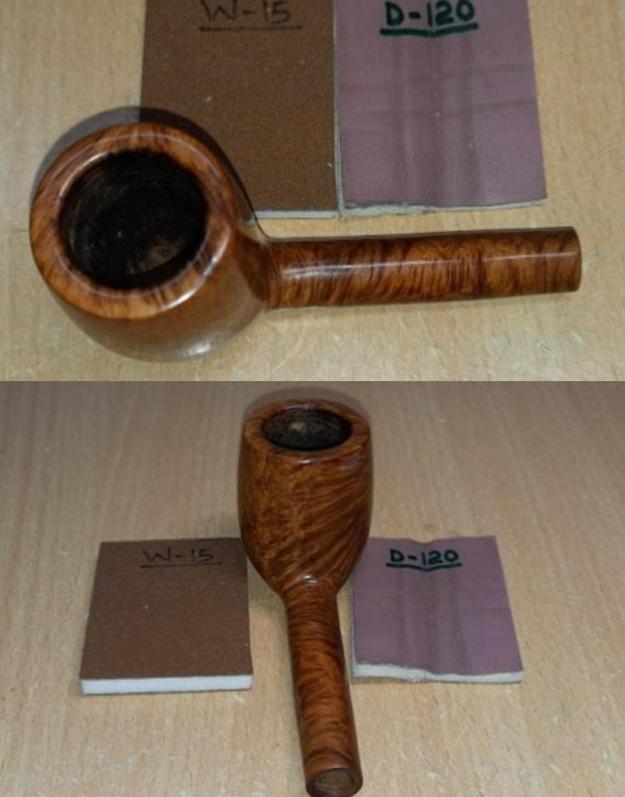
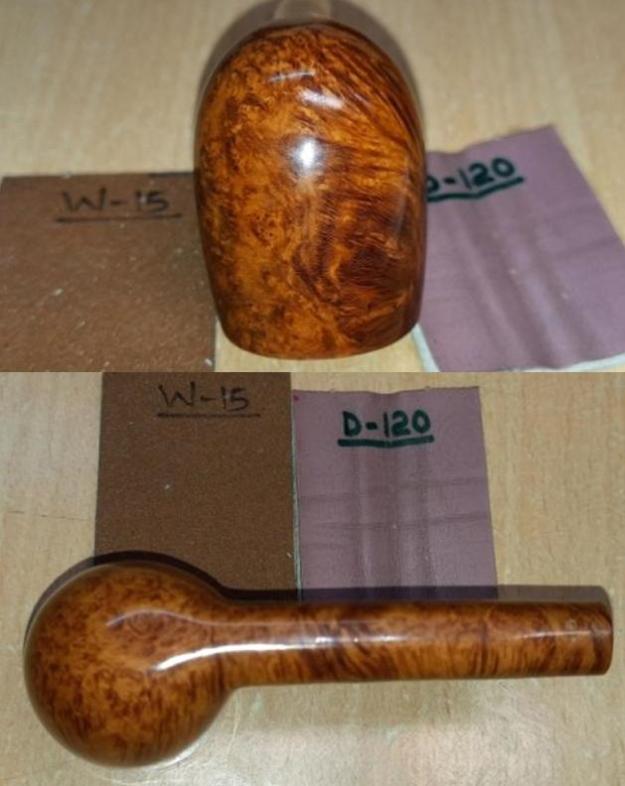
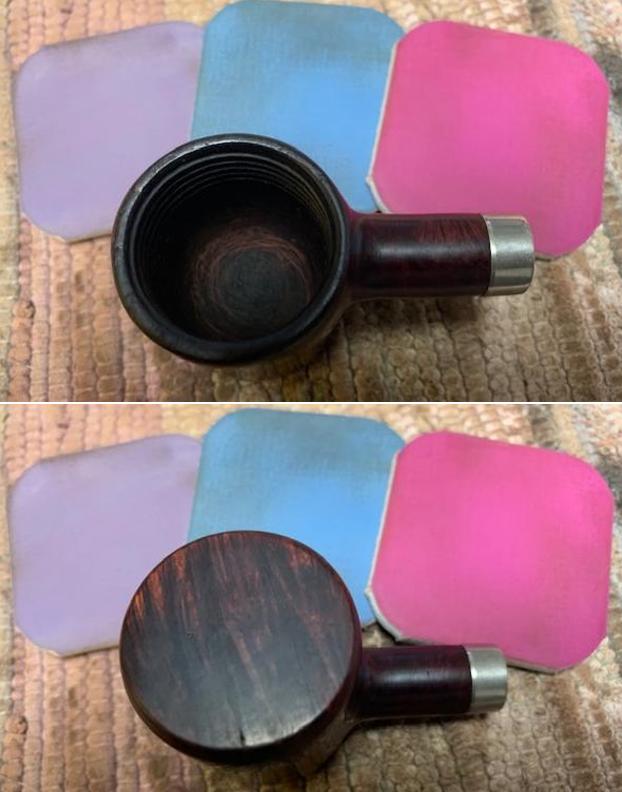
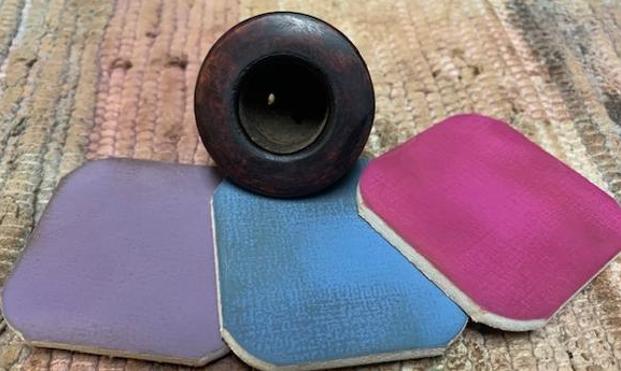
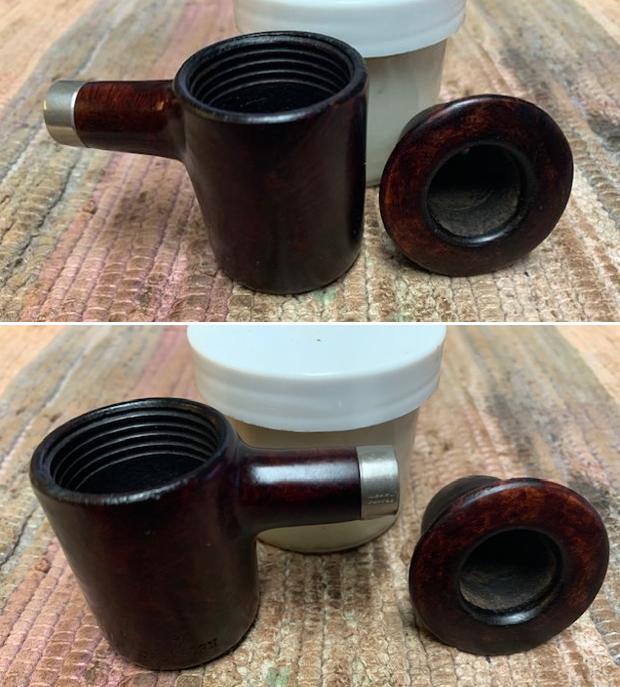
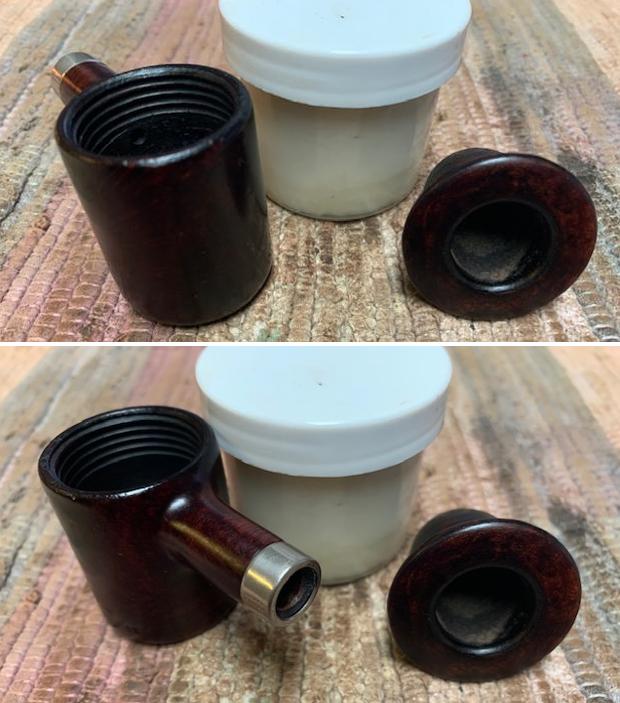
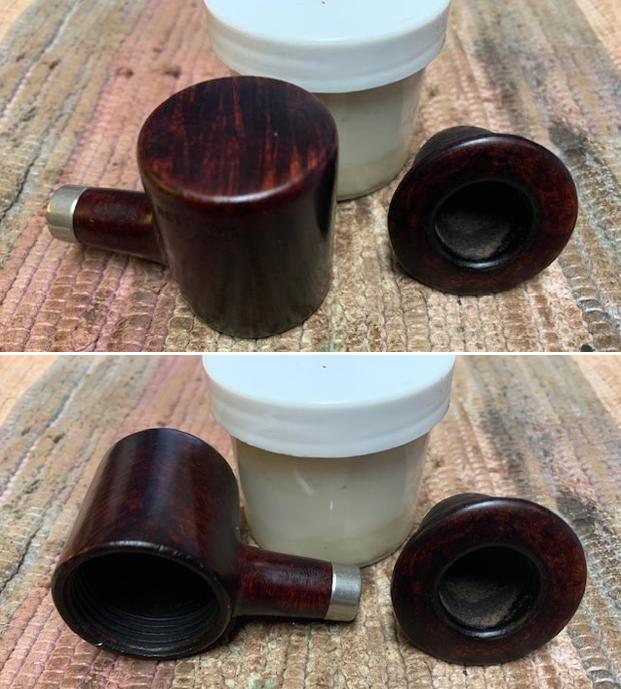
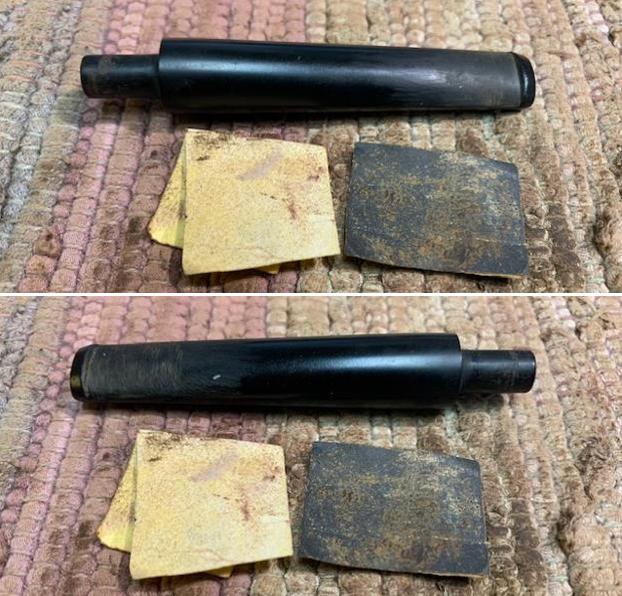
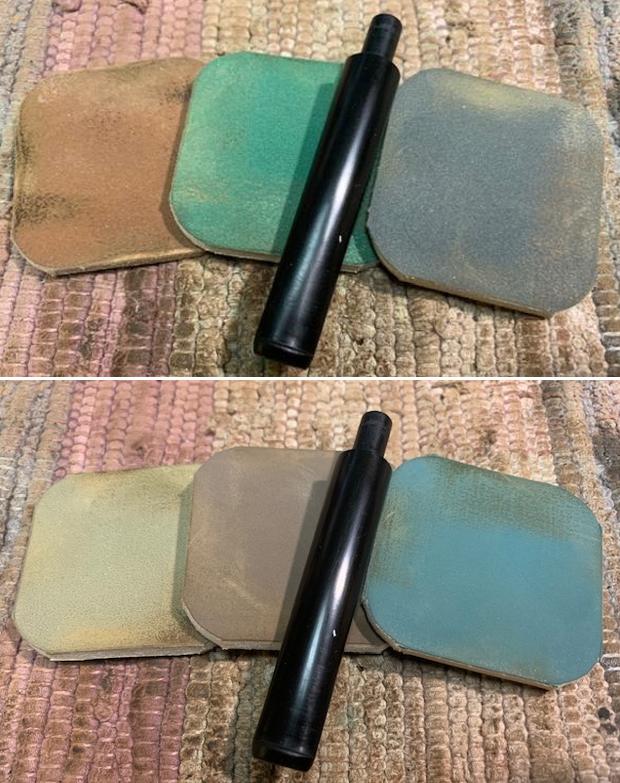
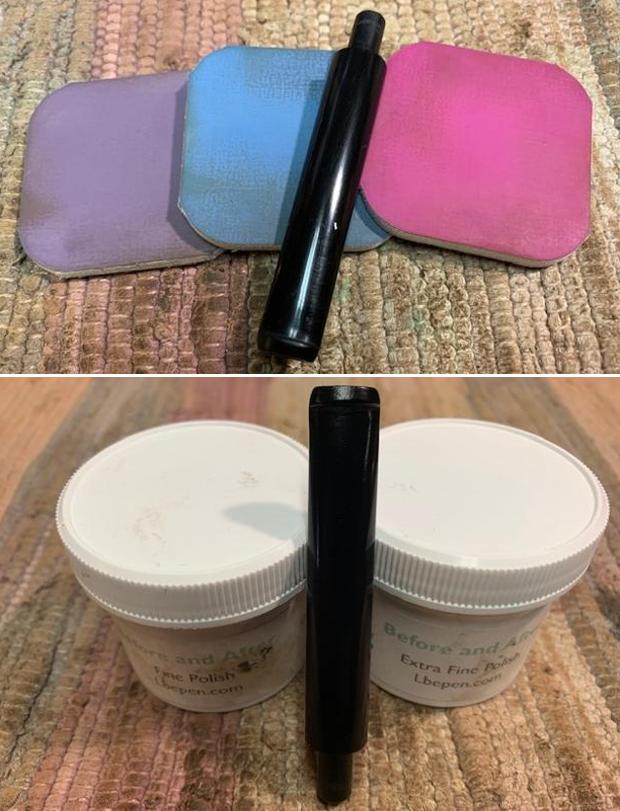
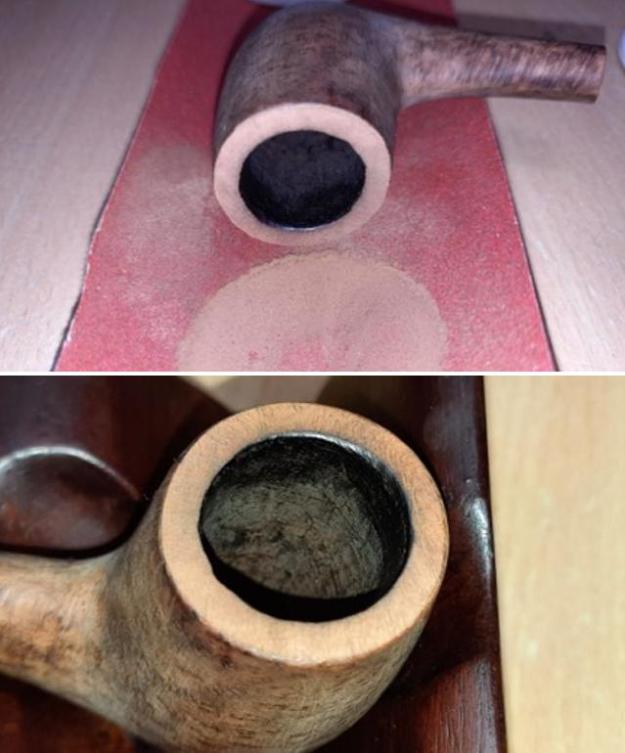
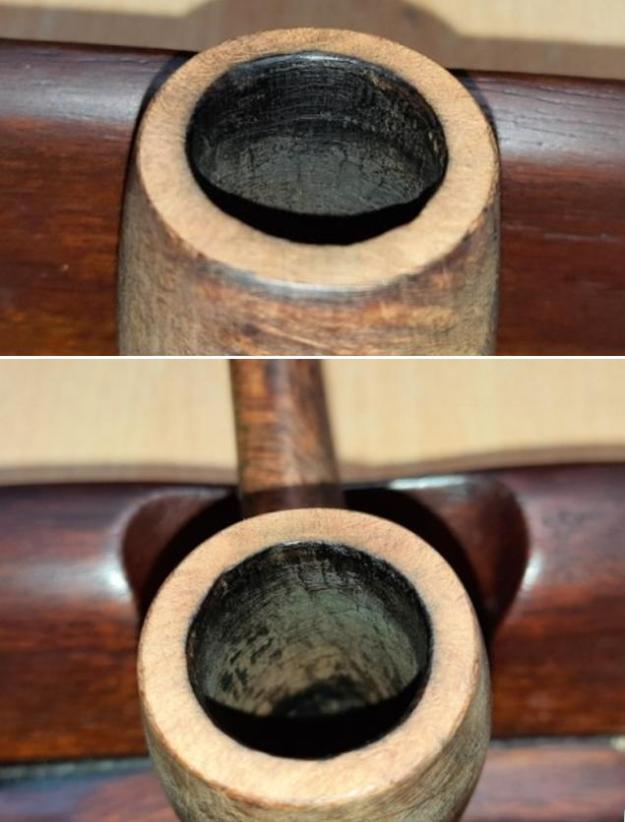
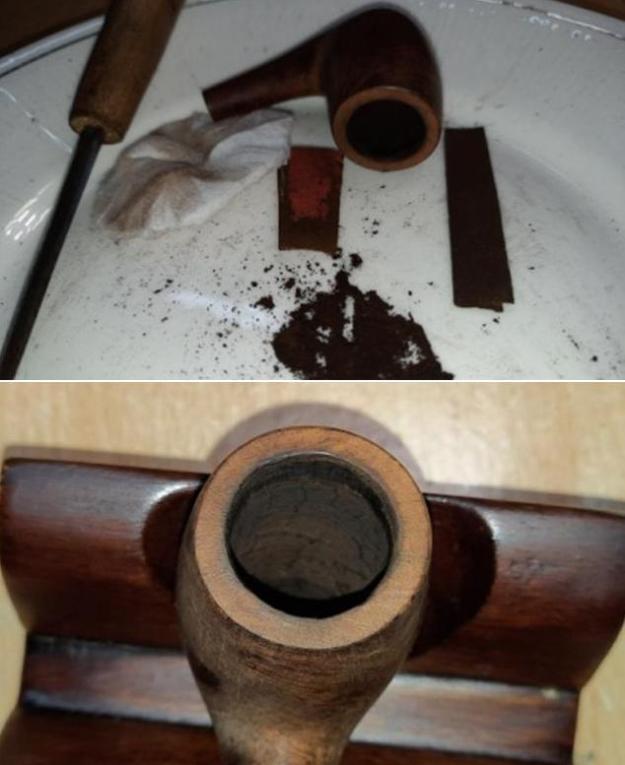
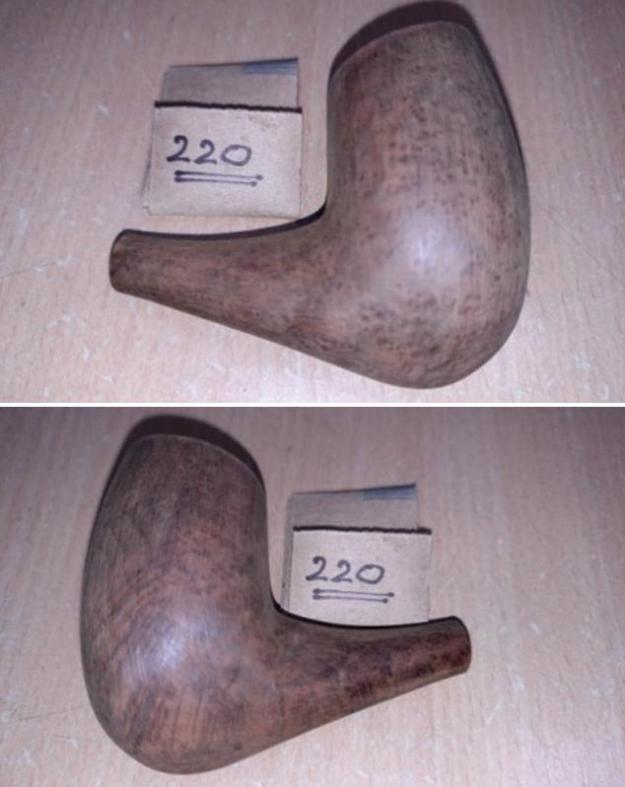
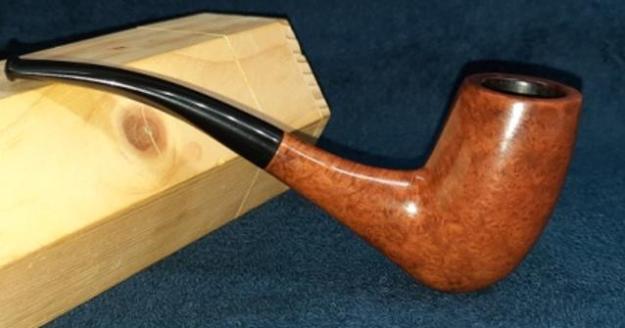
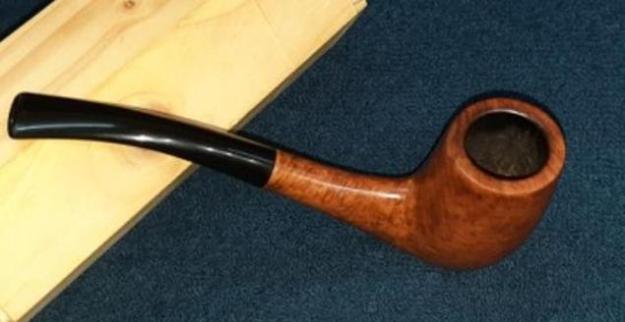
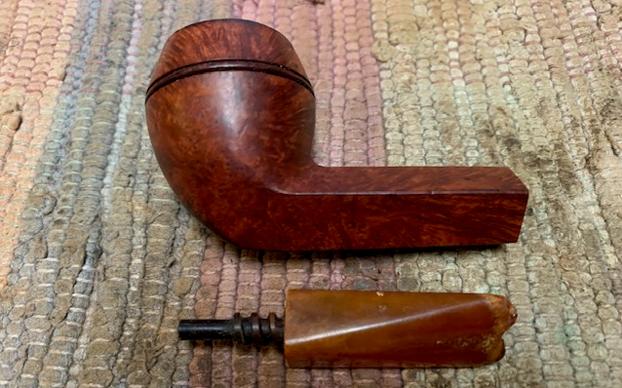
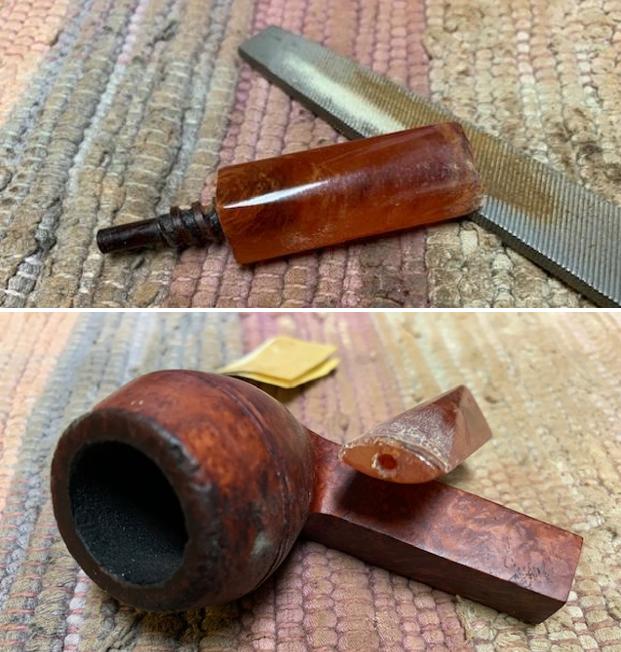
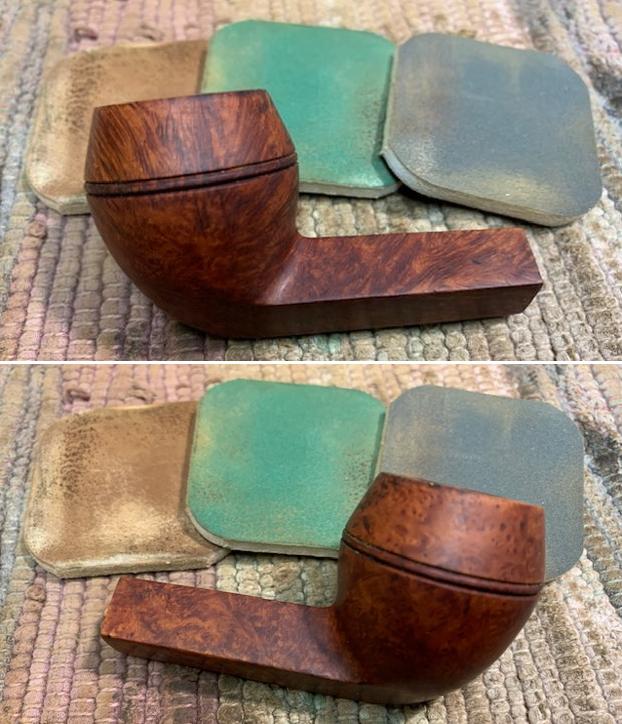
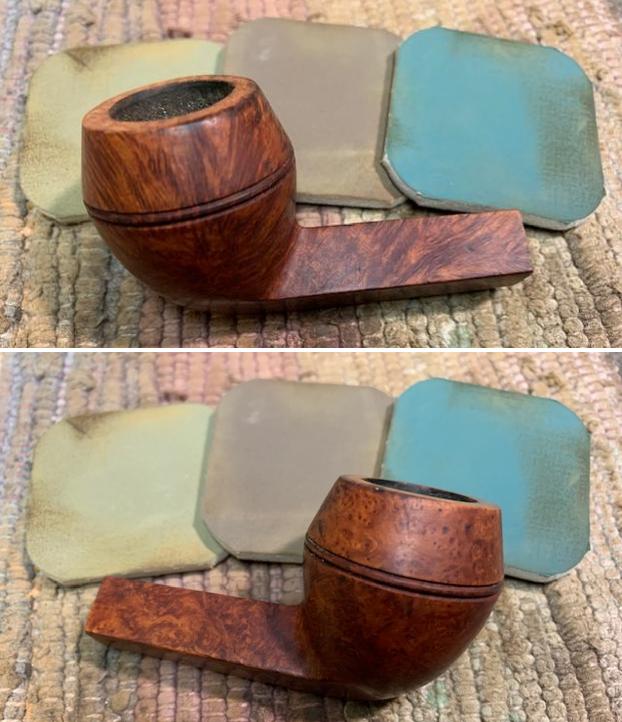
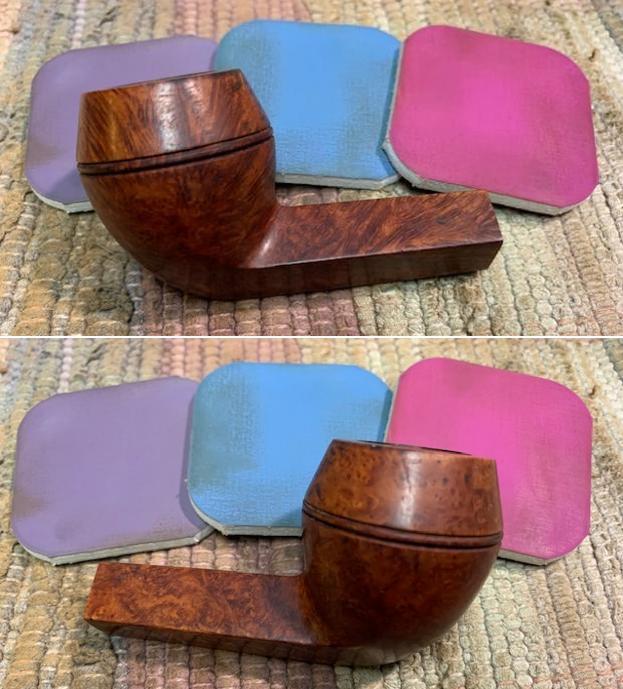
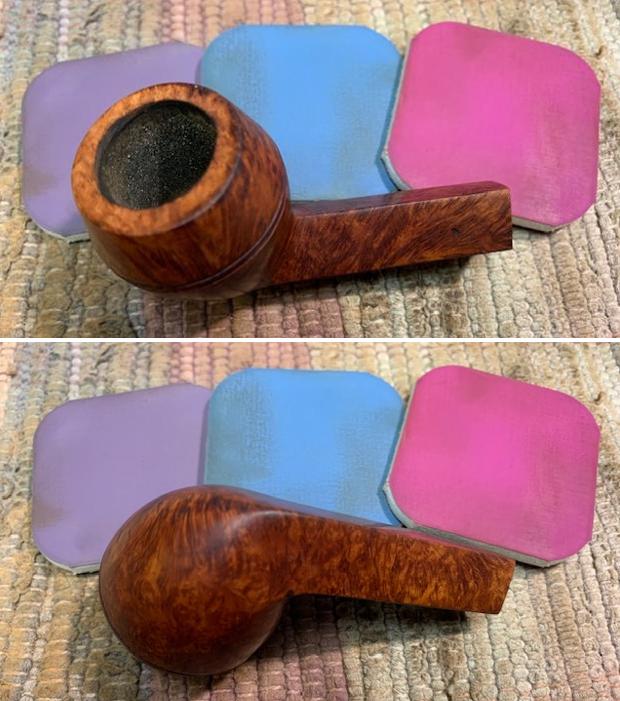
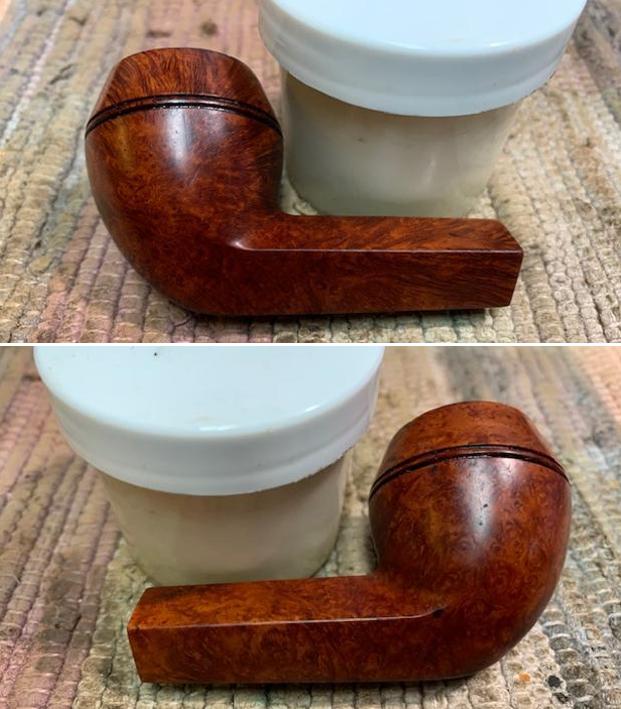
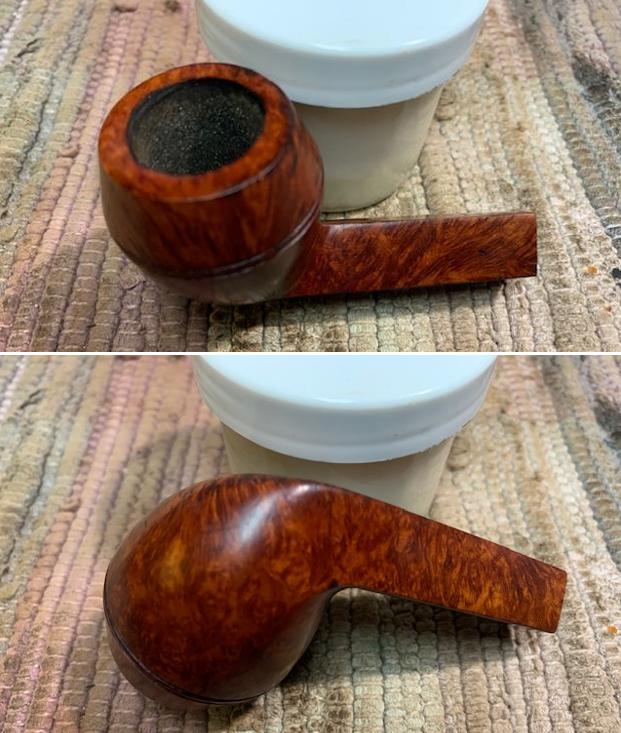
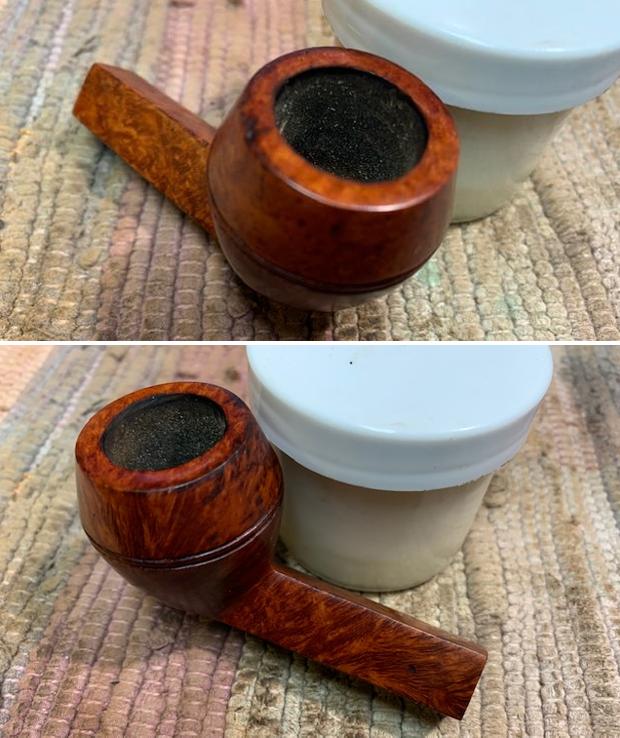
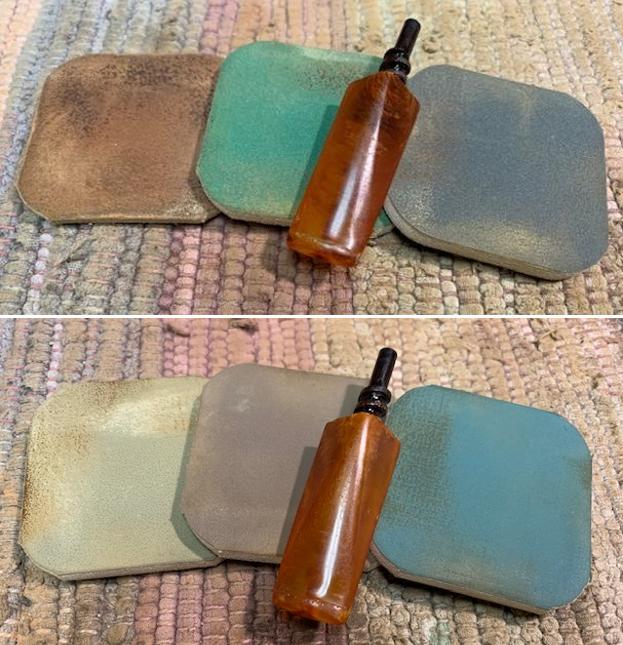
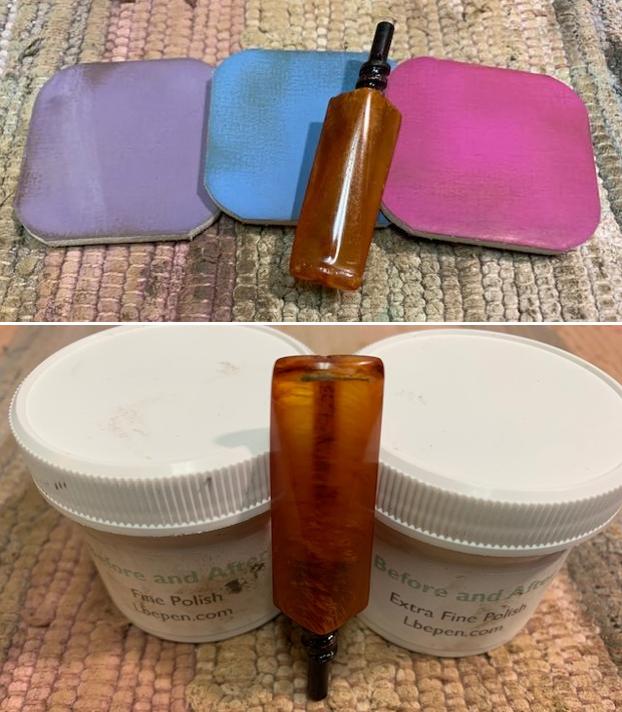
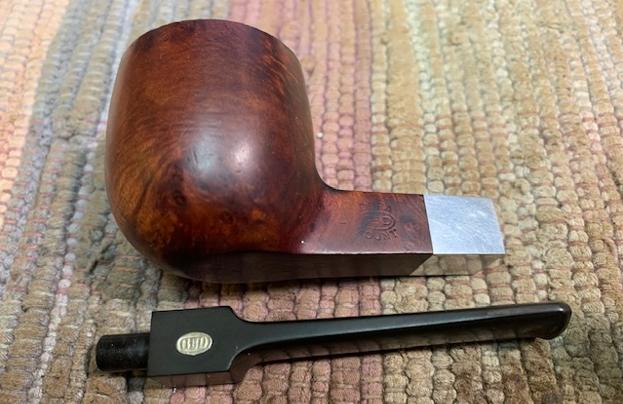
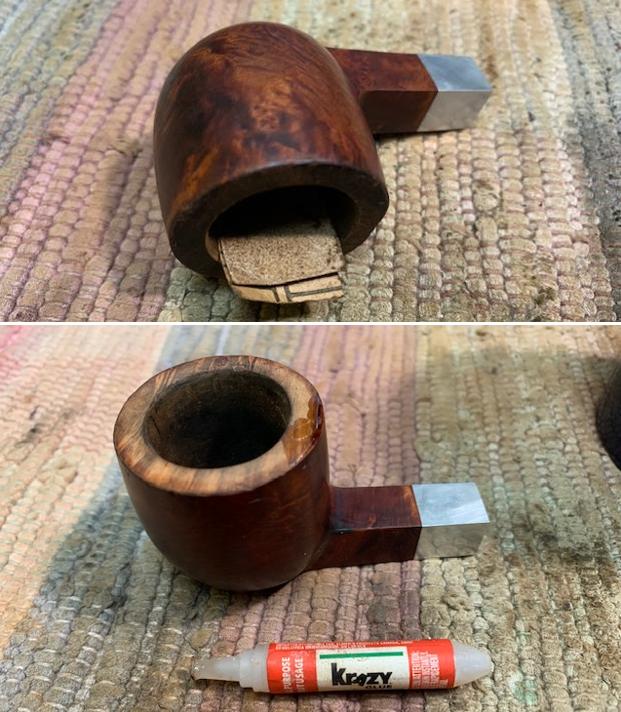
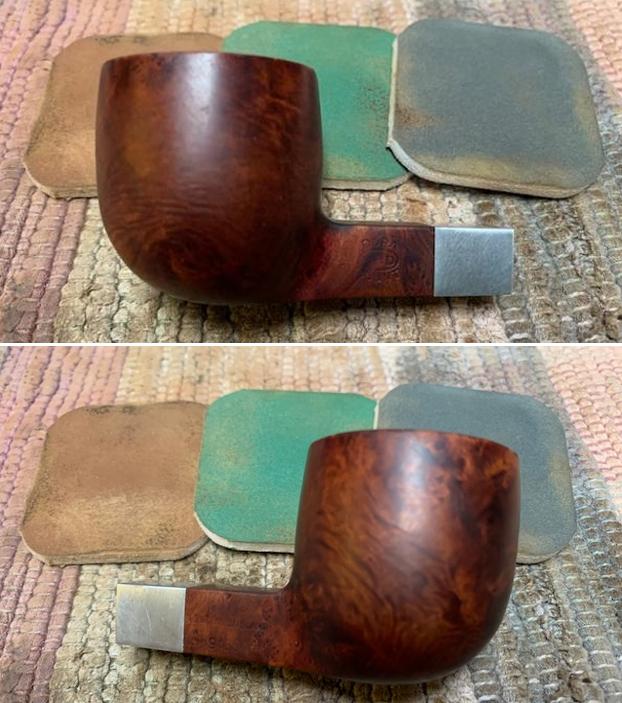
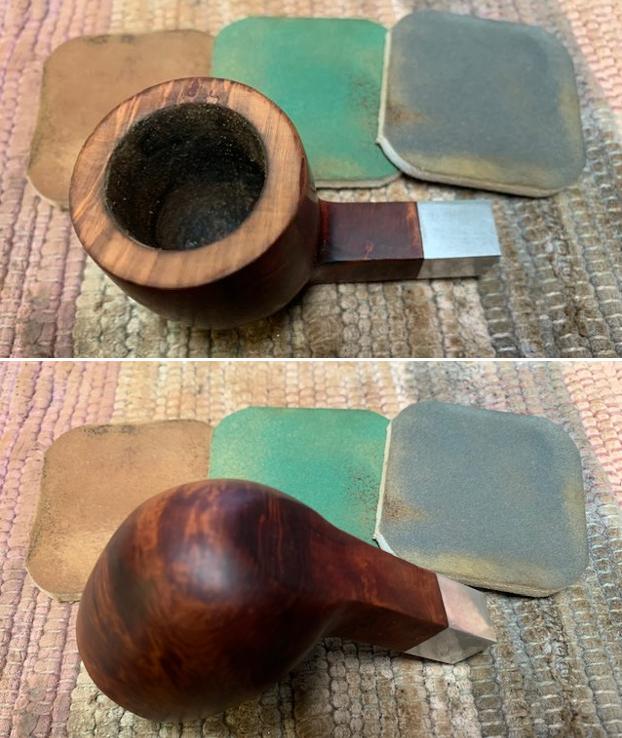
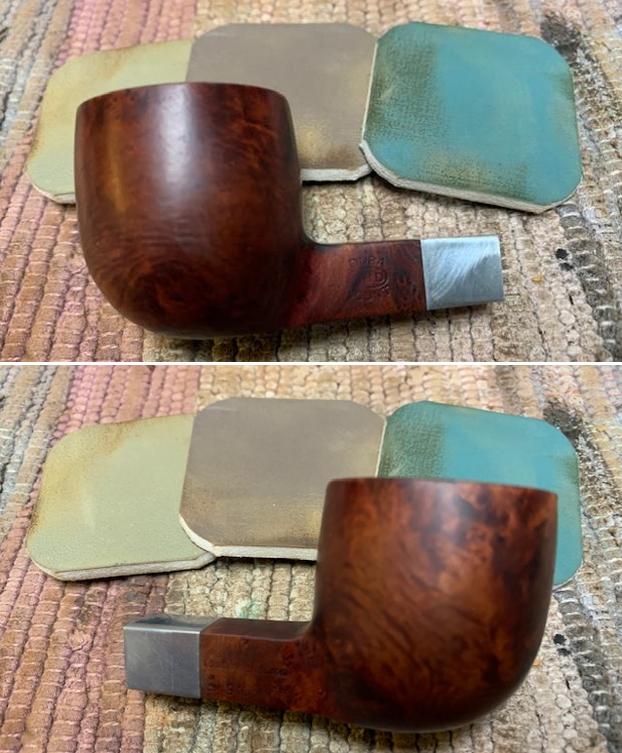
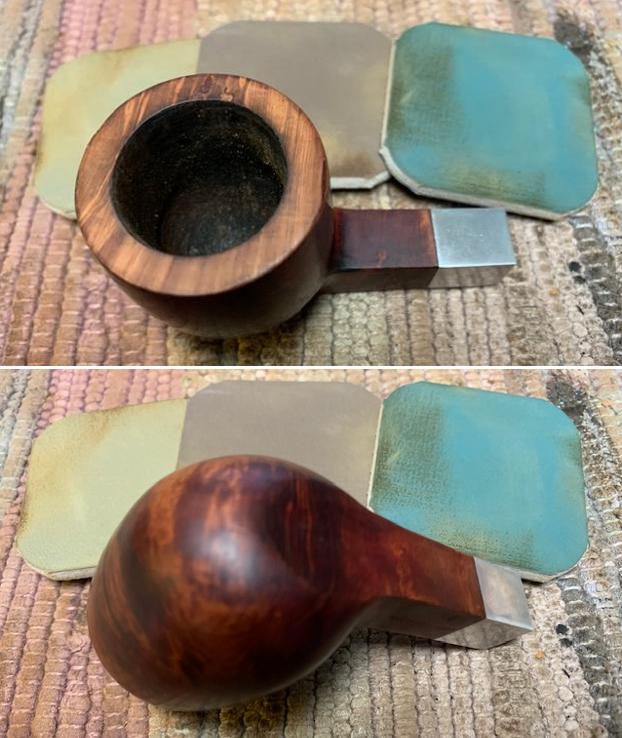
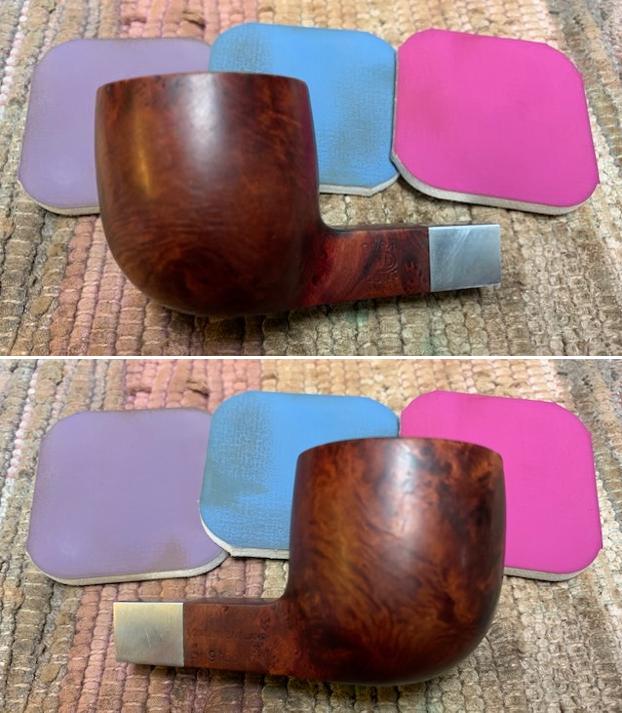
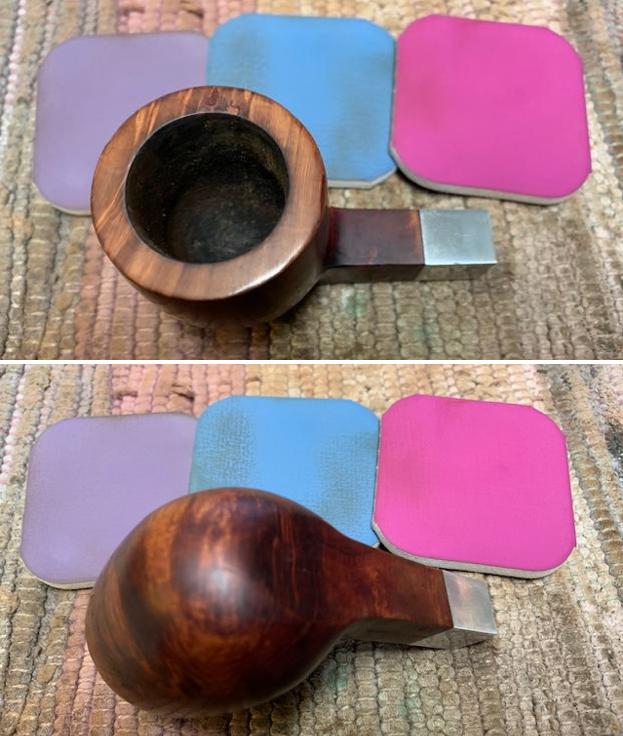
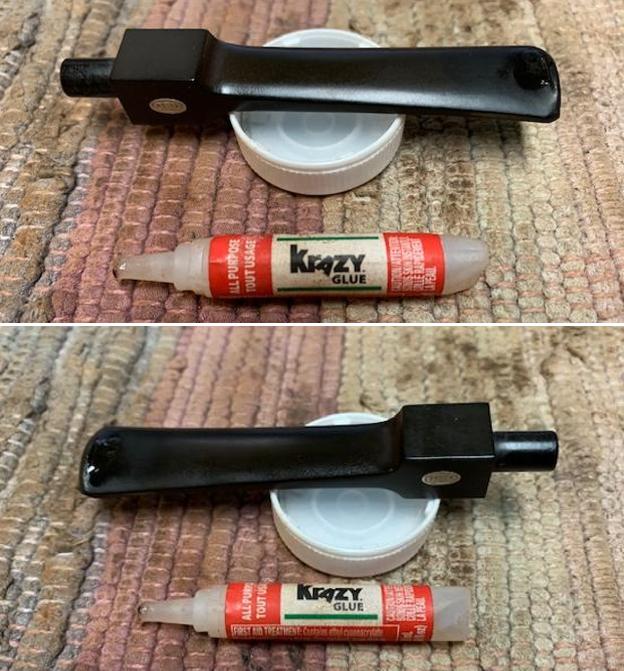
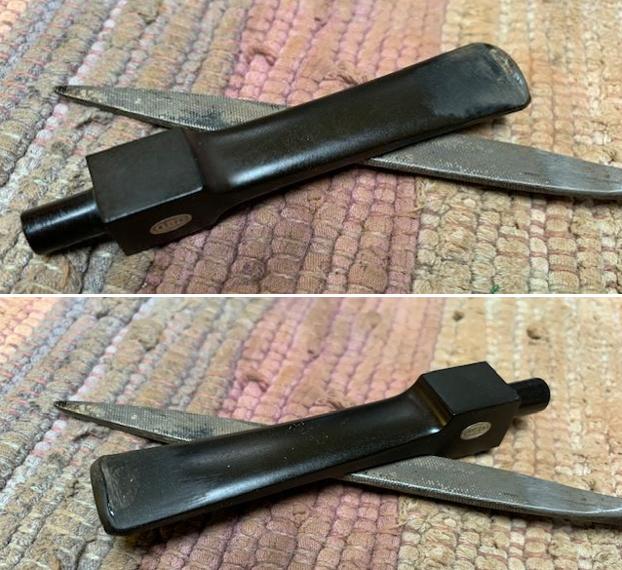
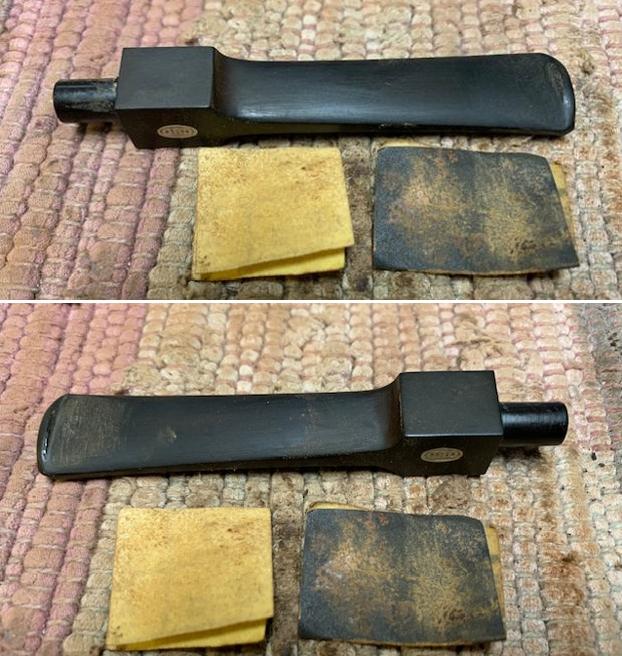
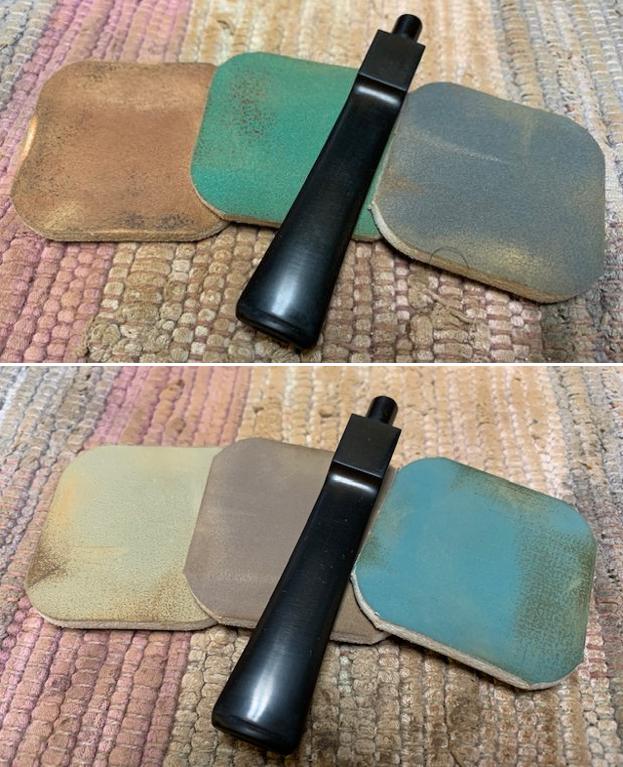
Jeff carefully cleaned the pipe. He reamed it with a PipNet pipe reamer and then cleaned up the reaming with a Savinelli Fitsall Pipe Knife. He scrubbed out the internals of the shank, stem and shank extension with alcohol, pipe cleaners and cotton swabs until the pipe was clean. He scrubbed the exterior of the bowl with Murphy’s Oil Soap and a tooth brush to remove the grime and grit on the briar and lava on the rim top. The finish looks much better and has a deep richness in the colour that highlights grain of the briar. The rim top was severely damaged on the entire outer edge and the inner edge was chipped and nicked. When the pipe arrived here in Vancouver I was amazed that it looked as good as it did. Here are some photos of what I saw. I took some close up photos of the rim top and the stem surface. The inner edge of the rim had some nicks and burn damage on the bevel. The outer edge had a nicks and chips missing all the way around the bowl. There was some darkening on the rim top that would need to be cleaned up. I took close up photos of the stem to show the condition of the surface and button.I took a picture of the stamping on the left side of the shank and it was faint but readable as noted above.I removed the stem from the shank and took a photo of the parts of the pipe. I started my work on the pipe by addressing the damage to the rim top and edges of the bowl. It was a mess so it was going to take the majority of work on this pipe to get it back to some semblance of round once more. I topped it on a topping board with 220 grit sandpaper to smooth out the top and give me a sense of the outer edge around the bowl.   Once I had it smooth I could clearly see the damage around the top and outer edge of the bowl. I repaired the deep chips around the edge and rim with clear CA glue and briar dust. I layered on the dust and glue to rebuild the edges. I flattened out the repairs with a small flat file. I worked to being them down to the surface of the surrounding briar. From there I would need to sand but it was looking better.   I sanded the bowl down with folded 220 grit sandpaper to smooth out the transition and remove the darkening opaque stain around the bowl sides and shank. I wiped it down with alcohol to remove the finish and the sanding dust. I polished the briar with micromesh sanding pads – dry sanding with 1500-1800 grit pads to prepare for staining the bowl. It started to bring out the grain. I would do more polishing with micromesh after the staining of the bowl. I stained the bowl with a light brown aniline stain. I applied it to the bowl with the dauber and then flamed it to set it in the grain. I repeated the process until I was happy with the coverage of the colour on the briar. I wiped down the bowl with alcohol and cotton pads to remove the excess stain and make it more transparent. I polished the stained briar with micromesh sanding pads. I used 1500-12000 grit sanding pads and wiped the bowl down with a damp cloth between each pad. The grain began to stand out with the polishing. I worked some Before & After Restoration Balm into the surface of the bowl and shank with my fingertips to clean, enliven and protect the briar. I let the balm sit for 15 minutes and then buffed with a cotton cloth to raise the shine. The photos show the bowl at this point in the restoration process. I set the bowl aside and turned my attention to the stem. I “painted” it with the flame of a Bic lighter to lift the tooth dents in the surface of the vulcanite. I was able to lift the majority of them. I sanded those that remained smooth with a folded piece of 220 grit sandpaper to blend them in the rest of the stem surface. I started polishing the stem with 400 grit wet dry sandpaper. I polished the stem with micromesh sanding pads – dry sanding with 1500-12000 grit sanding pads. I wiped it down after each sanding pad with Obsidian Oil. I polished it with Before & After Pipe Stem Polish – both Fine and Extra Fine. I gave it a final coat of Obsidian Oil. With the bowl and the stem finished I put the beautiful Barclay-Rex New York Petite Bent Dublin back together and buffed it on the wheel using Blue Diamond to give it a shine. I gave the bowl and the stem multiple coats of carnauba wax on the wheel. I buffed it with a clean buffing pad to raise the shine. I hand buffed it with a microfiber cloth to deepen the shine. It really is a great looking pipe. The dimensions of the pipe are – Length: 5 ¾ inches, Height: 1 ¾ inches, Outside diameter of the bowl: 1 ¼ inches, Chamber diameter: ¾ inch. The weight of this large pipe is .99 ounces /28 grams. This Barclay-Rex Petite Bent Dublin is another great find in this collection. It is much more beautiful in person than these photos can capture. I will be putting it on the rebornpipes store soon. If you would like to add it to your collection let me know. This is another pipe that has the possibility of transporting the pipe man or woman back to a slower paced time in history where you can enjoy a respite. Thanks for walking through the restoration with me.


Working on the Third of Seven Barclay-Rex Pipes – A Large Pot


Blog by Steve Laug

It seems like just a few weeks ago I was contacted by an older gentleman about purchasing his pipe collection. He sent me the photos and I was amazed at what I saw. He had Dunhill pipes, BBB pipes, Orlik pipes, Barclay Rex Pipes, a couple of Meerschaums and a whole lot of other pipes. All I could say as I looked at the pipes was what a collection it was. We negotiated a deal and I think we both walked away quite happy with the exchange.
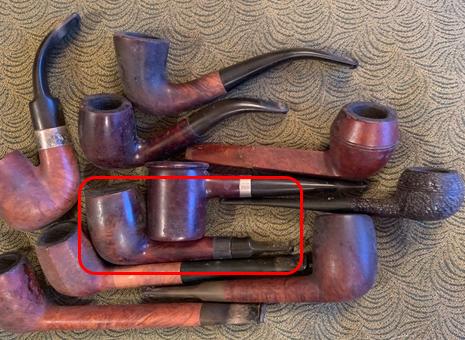
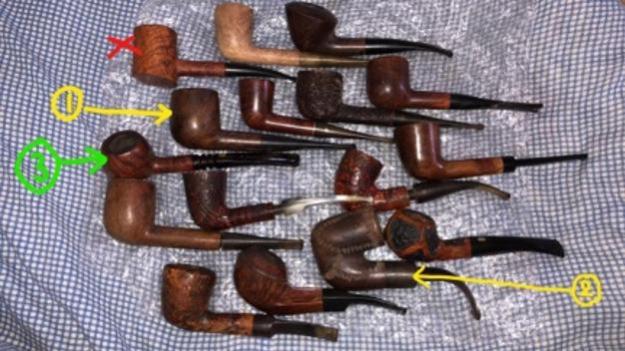
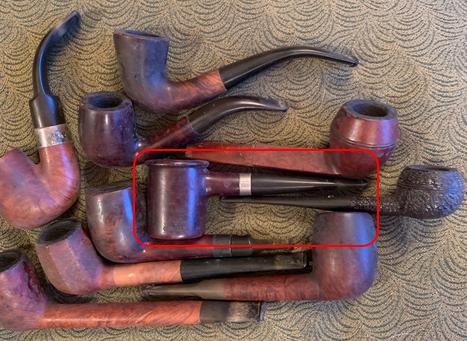
You have seen the work we have done on the Dunhills, Hardcastles, H. Simmons all briar billiard and BBB pipes from the lot but there are still more. The above photo shows all of the Barclay-Rex pipes that were purchased from the New York City shop by the fellow we bought the collection from. The pipe I am working on is the third pipe down from the top of the picture and is a pot with a crowned rim top. I have circled it in red in the photo above.

I have worked on several Barclay-Rex pipes in the past and this large bowled Pot is a beauty in terms of shape and grain. This pipe is stamped on the left side of the shank and reads BARCLAY-REX [over] New York. The stamping is clear and readable and there is no shape number evident.

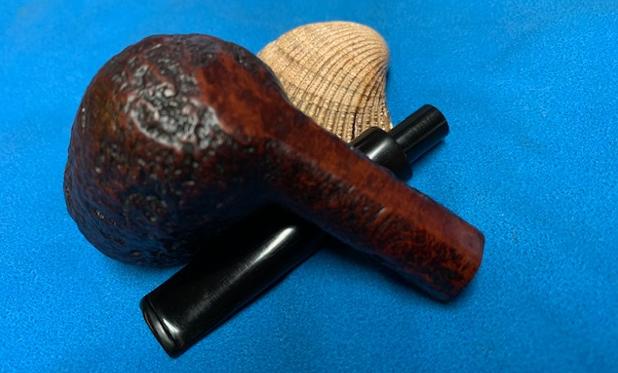
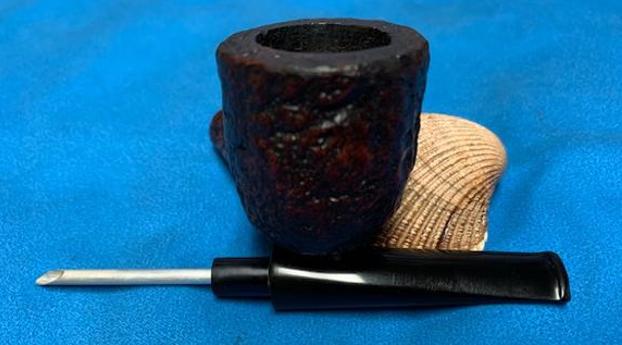
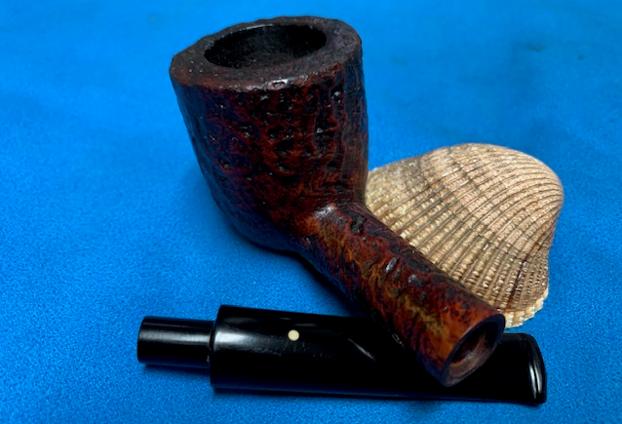
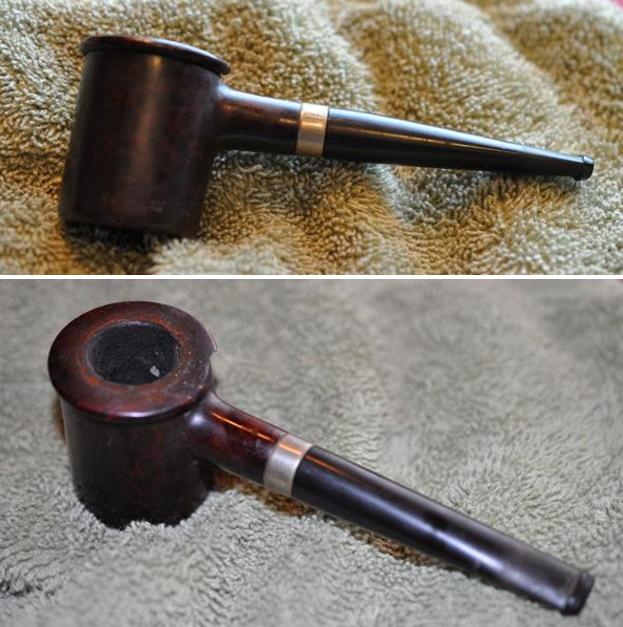
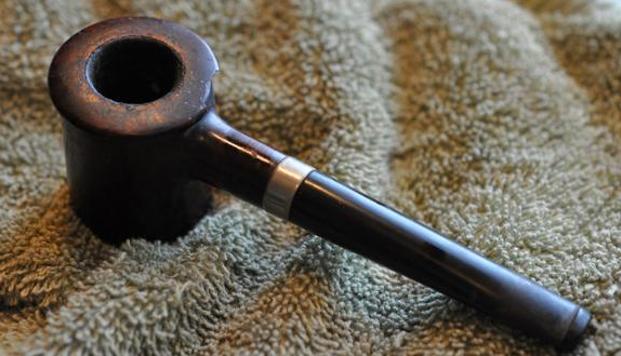
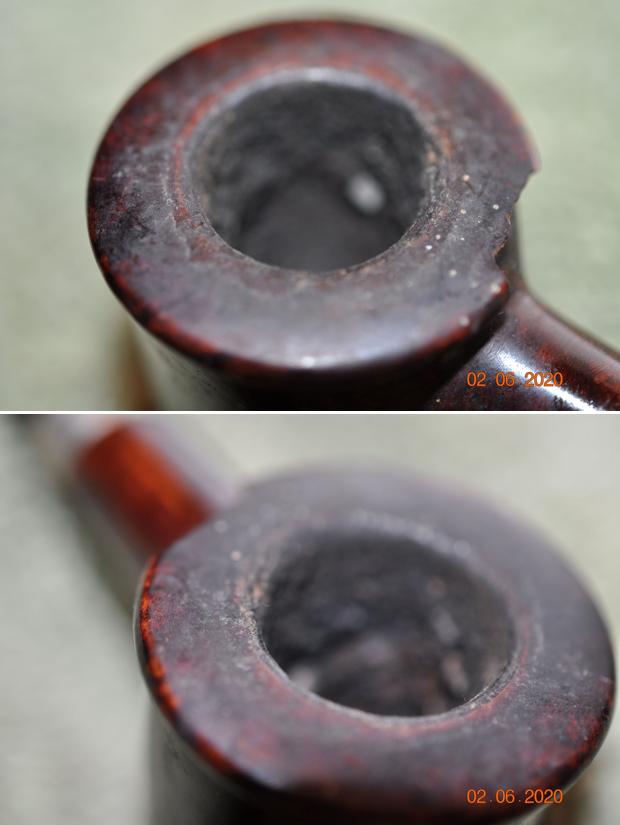
Jeff took some photos of the BARCLAY-REX Large Bowl Pot with slightly bent stem before he worked his magic in cleaning up the pipe. It is a an interesting pipe with a lot of potential and what appears to be some great grain under the grime and debris of the years.     Jeff took photos of the bowl, rim top to show the thickness of the cake in the bowl and the thick lava on the rim top. There is some damage to the outer edge of the rim that is visible in the photos. He took photos of the top and underside of the vulcanite stem showing the oxidation, calcification, tooth marks, chatter and wear on the stem and button. Jeff took photos of the sides and heel of the bowl to show the condition of the briar. You can see the beautiful shape and the grain on the bowl even through the dirt and debris of many years. He took a picture of a large flaw on the back right side of the bowl. This would need to be dealt with.Jeff took a photo of the stamping on the left side of the shank. You can see that it is faint but readable as noted above.I turned to Pipephil’s site to see what I could learn about the Barclay-Rex brand and particularly the sandblast one I was working on (http://pipephil.eu/logos/en/logo-b1.html). I have included a screen capture of the information that is shown there.I quote from the sidebar on the site below as it gives a good summary of information.
Brand created in 1910. The shop was situated on Maiden Lane. Three addresses now (2010): 75 Broad Street, 70 East 42nd Street, 570 Lexington Avenue. See also: André
I turned to Pipedia to try and place this pipe in the timeline of the brand and was able find some helpful information which I have included below (https://pipedia.org/wiki/Barclay_Rex). I quote the information below.

Barclay-Rex, a downtown Manhattan tobacconist, was founded in 1910 by Vincent Nastri, a pipemaker from Salerno, Italy. The store was originally located at Barclay and Church Street, and the name was taken from that location and Nastri’s beloved Great Dane, Rex. The business is still run by Vincent Nastri, III and owned by Vincent Nastri, Jr.. They have several locations in New York City. The store has carried pipes from all fine makers, and the Barclay-Rex line of pipes is also much sought after, in that pipes were made in a range from the very inexpensive into the several hundreds of dollars. The pipes were, at least into the 1960’s, made of Algerian briar.

In addition to pipes made by Mr. Nastri over the years, Mr. Nastri, III, has been quoted as stating that a pipemaker just leaving Dunhill made pipes with a small off-white dot on the stem for a time for the shop. As was discovered by Steve Laug of Reborn Pipes, they were evidently made by a pipemaker whose initials were HGP, and stamped on the pipe as such. These pipes were made for a single run only, and then never made again.

In addition, Sasieni at least for a time made private label pipes stamped with the Barclay-Rex name, but with their own shapes and shape numbers.

Locations: (Flagship Store) 75 Broad Street, New York, New York 10004 Telephone: (212) 962-3355

70 East 42nd Street, New York, New York 10165 Telephone: (212) 692-9680

570 Lexington Avenue, New York, New York 10022 Telephone: (212) 888-1015

Email: info@barclayrex.com Website: http://www.barclayrex.com Toll Free: (888) 278-6222 Fax: (212) 962-3372

With the information from Pipedia I knew that I was working on a pipe from the Barclay-Rex Tobacconist in New York City. The fellow we bought them from intimated that he purchased them at the Manhattan store. I was unable to pin down any information regarding the date this pipe was made. Now it was time to work on the pipe.

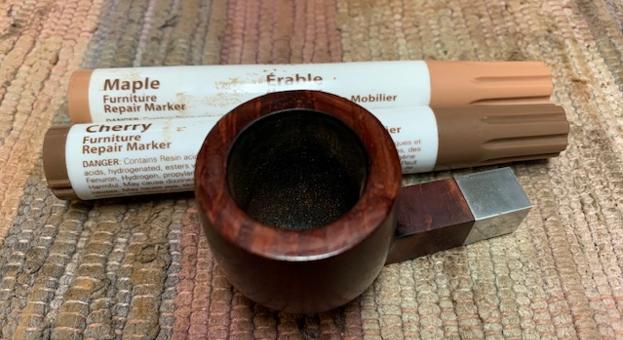
Jeff carefully cleaned the pipe. He reamed it with a PipNet pipe reamer and then cleaned up the reaming with a Savinelli Fitsall Pipe Knife. He scrubbed out the internals of the shank, stem and shank extension with alcohol, pipe cleaners and cotton swabs until the pipe was clean. He scrubbed the exterior of the bowl with Murphy’s Oil Soap and a tooth brush to remove the grime and grit on the briar and lava on the rim top. The finish looks much better and has a deep richness in the colour that highlights grain of the briar. The rim top looked good with some darkening on the top and light damage to the inner edge of the bowl. When the pipe arrived here in Vancouver I was amazed it looked so good. Here are some photos of what I saw.   I took some close up photos of the rim top and the stem surface. The inner edge of the rim had some nicks and burn damage on the bevel. The outer edge had a nick on the front of the bowl. There was some darkening on the rim top that would need to be cleaned up. I took close up photos of the stem to show the condition of the surface and button.I took a picture of the stamping on the left side of the shank and it was faint but readable as noted above.I removed the stem from the shank and took a photo of the parts of the pipe. I started my work on the pipe by addressing the darkening on the rim top and the damage on the edges of the bowl. I used a folded piece of 220 grit sandpaper to work over the inner and outer edge to smooth out the damage and to remove the darkening on the rim top as well.   I used a Cherry stain pen to touch up the repair on the right side of the bowl and the rim top.I polished the briar with micromesh sanding pads – dry sanding with 1500-12000 grit pads. I wiped the briar down with a damp cloth after each pad. I worked some Before & After Restoration Balm into the surface of the bowl and shank with my fingertips to clean, enliven and protect the briar. I let the balm sit for 15 minutes and then buffed with a cotton cloth to raise the shine. The photos show the bowl at this point in the restoration process. I set the bowl aside and turned my attention to the stem. I “painted” it with the flame of a Bic lighter to lift the tooth dents in the surface of the vulcanite. I was able to lift the majority of them. I filled in the remaining marks with clear CA glue. Once the repairs cured I flattened them with a small file. I sanded them smooth with a folded piece of 220 grit sandpaper to blend them in the rest of the stem surface. I started polishing the stem with 400 grit wet dry sandpaper.  I polished the stem with micromesh sanding pads – dry sanding with 1500-12000 grit sanding pads. I wiped it down after each sanding pad with Obsidian Oil. I polished it with Before & After Pipe Stem Polish – both Fine and Extra Fine. I gave it a final coat of Obsidian Oil. With the bowl and the stem finished I put the beautiful Barclay-Rex New York Large Bowl Pot back together and buffed it on the wheel using Blue Diamond to give it a shine. I gave the bowl and the stem multiple coats of carnauba wax on the wheel. I buffed it with a clean buffing pad to raise the shine. I hand buffed it with a microfiber cloth to deepen the shine. It really is a great looking pipe. The dimensions of the pipe are – Length: 6 ½ inches, Height: 1 ½ inches, Outside diameter of the bowl: 1 ¾ inches, Chamber diameter: 1 inch. The weight of this large pipe is 1.66 ounces /47 grams. This Barclay-Rex Large Bowl Pot is another great find in this collection. It is much more beautiful in person than these photos can capture. I will be putting it on the rebornpipes store soon. If you would like to add it to your collection let me know. This is another pipe that has the possibility of transporting the pipe man or woman back to a slower paced time in history where you can enjoy a respite. Thanks for walking through the restoration with me.

Working on the Second of Seven Barclay-Rex Pipes – A Crowned Rim Pot Blog


Blog by Steve Laug

It seems like just a few weeks ago I was contacted by an older gentleman about purchasing his pipe collection. He sent me the photos and I was amazed at what I saw. He had Dunhill pipes, BBB pipes, Orlik pipes, Barclay Rex Pipes, a couple of Meerschaums and a whole lot of other pipes. All I could say as I looked at the pipes was what a collection it was. We negotiated a deal and I think we both walked away quite happy with the exchange.

You have seen the work we have done on the Dunhills, Hardcastles, H. Simmons all briar billiard and BBB pipes from the lot but there are still more. The above photo shows all of the Barclay-Rex pipes that were purchased from the New York City shop by the fellow we bought the collection from. The pipe I am working on is in the center of the picture and is a pot with a crowned rim top. I have circled it in red in the photo above.

I have worked on several Barclay-Rex pipes in the past and this one is a beauty in terms of shape and grain. This pipe is stamped on the left side of the shank and reads BARCLAY-REX [over] New York. The stamping is faint but readable and there is no shape number evident.

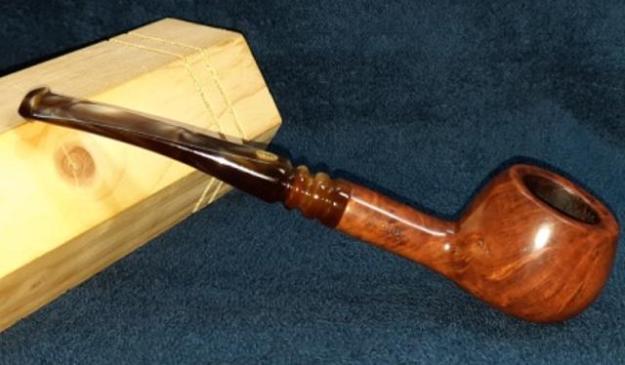
Jeff took some photos of the BARCLAY-REX Pot with a crowned rim and slight bend to the stem before he worked his magic in cleaning up the pipe. It is a an interesting pipe with a lot of potential and what appears to be some great grain under the grime and debris of the years.    Jeff took photos of the bowl, rim top to show the thickness of the cake in the bowl and the thick lava on the rim top. There is some damage to the outer edge of the rim that is visible in the photos. He took photos of the top and underside of the vulcanite stem showing the oxidation, calcification, tooth marks, chatter and wear on the stem and button. Jeff took photos of the sides and heel of the bowl to show the condition of the briar. You can see the beautiful shape and the grain on the bowl even through the dirt and debris of many years. Jeff took a photo of the stamping on the underside of the shank. You can see that it is faint but readable as noted above. I turned to Pipephil’s site to see what I could learn about the Barclay-Rex brand and particularly the sandblast one I was working on (http://pipephil.eu/logos/en/logo-b1.html). I have included a screen capture of the information that is shown there.I quote from the sidebar on the site below as it gives a good summary of information.
Brand created in 1910. The shop was situated on Maiden Lane. Three addresses now (2010): 75 Broad Street, 70 East 42nd Street, 570 Lexington Avenue. See also: André

I turned to Pipedia to try and place this pipe in the timeline of the brand and was able find some helpful information which I have included below (https://pipedia.org/wiki/Barclay_Rex). I quote the information below.

Barclay-Rex, a downtown Manhattan tobacconist, was founded in 1910 by Vincent Nastri, a pipemaker from Salerno, Italy. The store was originally located at Barclay and Church Street, and the name was taken from that location and Nastri’s beloved Great Dane, Rex. The business is still run by Vincent Nastri, III and owned by Vincent Nastri, Jr.. They have several locations in New York City. The store has carried pipes from all fine makers, and the Barclay-Rex line of pipes is also much sought after, in that pipes were made in a range from the very inexpensive into the several hundreds of dollars. The pipes were, at least into the 1960’s, made of Algerian briar.

In addition to pipes made by Mr. Nastri over the years, Mr. Nastri, III, has been quoted as stating that a pipemaker just leaving Dunhill made pipes with a small off-white dot on the stem for a time for the shop. As was discovered by Steve Laug of Reborn Pipes, they were evidently made by a pipemaker whose initials were HGP, and stamped on the pipe as such. These pipes were made for a single run only, and then never made again.

In addition, Sasieni at least for a time made private label pipes stamped with the Barclay-Rex name, but with their own shapes and shape numbers.

Locations: (Flagship Store) 75 Broad Street, New York, New York 10004 Telephone: (212) 962-3355

70 East 42nd Street, New York, New York 10165 Telephone: (212) 692-9680

570 Lexington Avenue, New York, New York 10022 Telephone: (212) 888-1015

Email: info@barclayrex.com Website: http://www.barclayrex.com Toll Free: (888) 278-6222 Fax: (212) 962-3372

With the information from Pipedia I knew that I was working on a pipe from the Barclay-Rex Tobacconist in New York City. The fellow we bought them from intimated that he purchased them at the Manhattan store. I was unable to pin down any information regarding the date this pipe was made. Now it was time to work on the pipe.

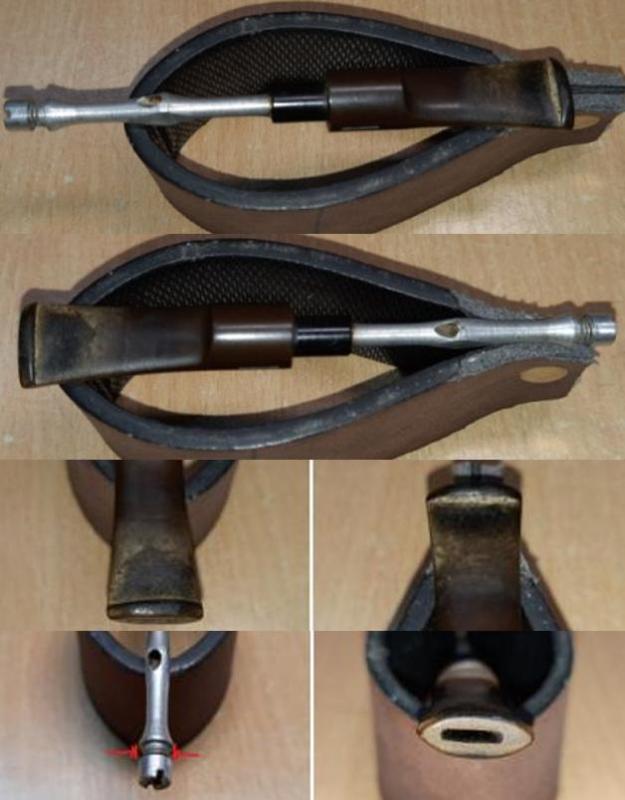
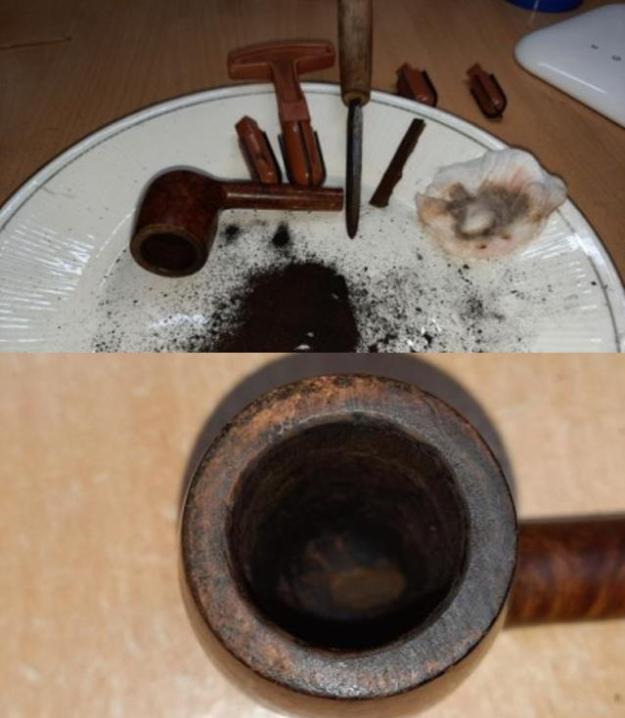
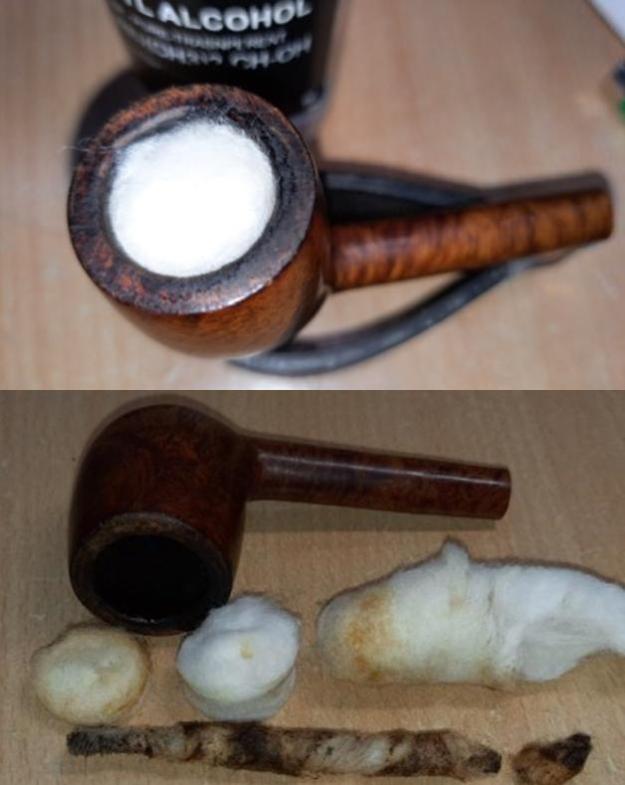
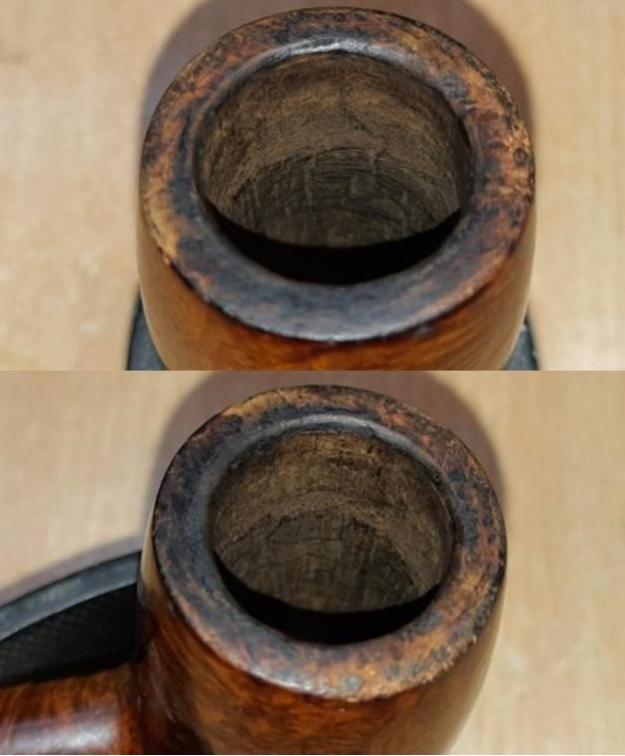
Jeff carefully cleaned the pipe. He reamed it with a PipNet pipe reamer and then cleaned up the reaming with a Savinelli Fitsall Pipe Knife. He scrubbed out the internals of the shank, stem and shank extension with alcohol, pipe cleaners and cotton swabs until the pipe was clean. He scrubbed the exterior of the bowl with Murphy’s Oil Soap and a tooth brush to remove the grime and grit on the briar and lava on the rim top. The finish looks much better and has a deep richness in the colour that highlights grain of the briar. The rim top looked good with some darkening on the top and light damage to the inner edge of the bowl. When the pipe arrived here in Vancouver I was amazed it looked so good. Here are some photos of what I saw.   I took some close up photos of the rim top and the stem surface. The inner edge of the rim had some nicks and burn damage on the bevel. The outer edge had some chips and nicks. There was some darkening on the rim top that would need to be cleaned up. I took close up photos of the stem to show the condition of the surface and button. I took a picture of the stamping on the underside of the shank and it was faint but readable as noted above.I removed the stem from the shank and took a photo of the parts of the pipe. The metal tenon is in excellent condition and the threaded shank also looks very good.I started my work on the pipe by addressing the darkening on the rim top and the damage on the edges of the bowl. I used a folded piece of 220 grit sandpaper to work over the inner and outer edge to smooth out the damage and to remove the darkening on the rim top as well.I polished the briar with micromesh sanding pads – dry sanding with 1500-12000 grit pads. I wiped the briar down with a damp cloth after each pad. I worked some Before & After Restoration Balm into the surface of the bowl and shank with my fingertips to clean, enliven and protect the briar. I let the balm sit for 15 minutes and then buffed with a cotton cloth to raise the shine. The photos show the bowl at this point in the restoration process. I set the bowl aside and turned my attention to the stem. I “painted” it with the flame of a Bic lighter to lift the tooth dents in the surface of the vulcanite. I was able to lift the majority of them and interestingly the small pin hole on the topside sealed off. I filled in the remaining marks with clear CA glue. Once the repairs cured I sanded them smooth with a folded piece of 220 grit sandpaper to blend them in the rest of the stem surface. I started polishing the stem with 400 grit wet dry sandpaper. I polished the stem with micromesh sanding pads – dry sanding with 1500-12000 grit sanding pads. I wiped it down after each sanding pad with Obsidian Oil. I polished it with Before & After Pipe Stem Polish – both Fine and Extra Fine. I gave it a final coat of Obsidian Oil. With the bowl and the stem finished I put the beautiful Barclay-Rex New York Crowned Rim Pot back together and buffed it on the wheel using Blue Diamond to give it a shine. I gave the bowl and the stem multiple coats of carnauba wax on the wheel. I buffed it with a clean buffing pad to raise the shine. I hand buffed it with a microfiber cloth to deepen the shine. It really is a great looking pipe. The dimensions of the pipe are – Length: 6 inches, Height: 1 ½ inches, Outside diameter of the bowl: 1 ½ inches, Chamber diameter: 1 inch. The weight of this large pipe is 1.34 ounces /38 grams. This Barclay-Rex Pot is another great find in this collection. It is much more beautiful in person than these photos can capture. I will be putting it on the rebornpipes store soon. If you would like to add it to your collection let me know. This is another pipe that has the possibility of transporting the pipe man or woman back to a slower paced time in history where you can enjoy a respite. Thanks for walking through the restoration with me.
A Mystery Pipe for Luxury – Discovering a Comoy’s St. Regis De Luxe Made in London England Apple


Blog by Dal Stanton

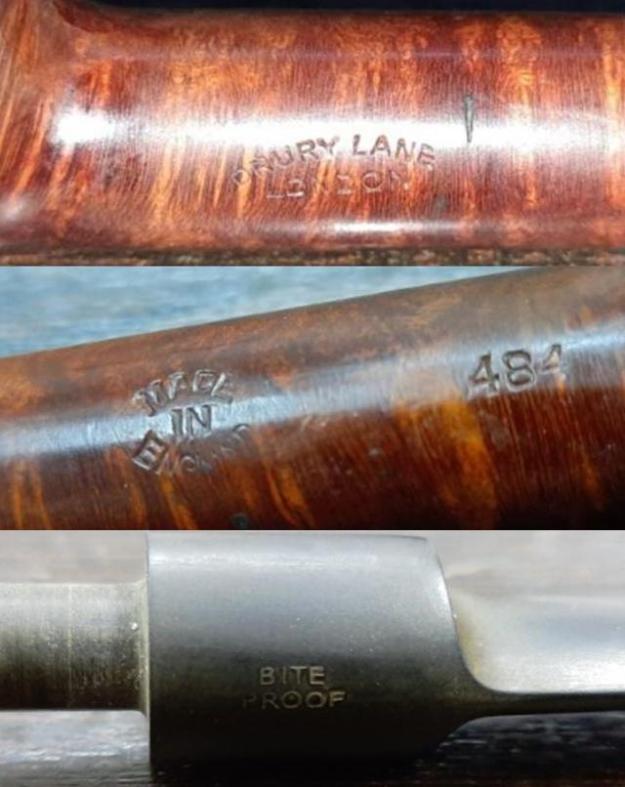
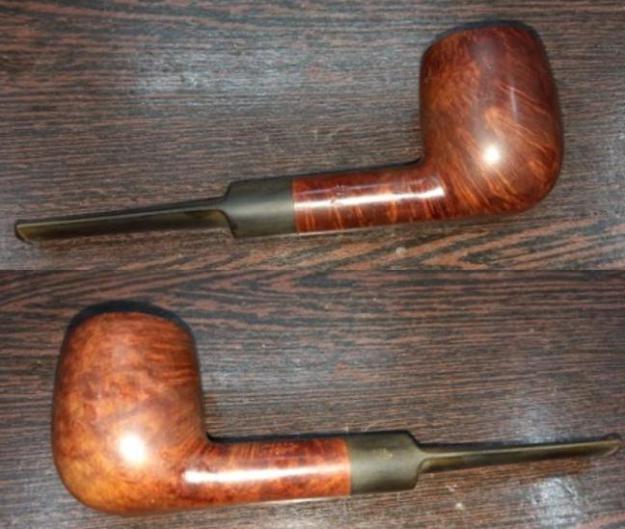
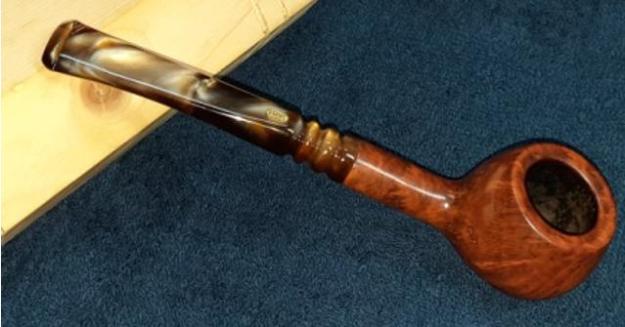
The large Apple now on the worktable came to me in September of 2017 in a Lot of 66 pipes from a seller in Georgetown, Texas.  The lot had belonged to a pipe man which had been donated by his family after his passing to a charitable organization to auction.  I was privileged to add these pipes to the For “Pipe Dreamers” Only! collection for other pipe men and women to commission benefitting another good cause close to my heart, the Daughters of Bulgaria – helping women and girls who have been trafficked and sexually exploited.  Many of these ‘66’ have made it to the collections of new stewards all over the world.  One pipe man, Nat, who is from South Florida, saw the St. Regis De Luxe and reached out to me about it.  Some years ago, I had met Nat briefly in my mother’s church in Stuart, Florida, and Nat had mentioned that he was the brother-in-law to one of my fellow work colleagues in Europe and my colleague (from Europe) had mentioned to Nat (in Florida) about The Pipe Steward and that Nat should have a look.  I love the fellowship of pipe men around the world!  Here are pictures of the St. Regis Nat commissioned. The nomenclature stamped on the left flank of the shank is, ST. REGIS [over] DE LUXE.  The right side of the shank is stamped the COM and shape number: MADE IN LONDON [over] ENGLAND and to the right is, 483.The saddle stem has a stamp with an ‘S’ encircled which I assume is referencing the ‘S’ of Saint.I have never worked on a St. Regis before this, and my research begins at all the normal places which offers nothing regarding a St. Regis line of pipes.  My normal beginning places, Pipedia and Pipephil.eu rendered nothing.  I looked at a variation of simply, ‘Regis’ without the ‘St.’ and still no traction.  Next, my ‘go to’ pipe bible, ‘Who Made That Pipe?’ by Herb Wilczak & Tom Colwell gave a listing for St. Regis, but it was attributed to a now-defunct Waldorf Pipe Company in the USA.  I discovered that it was a pipe factory in 1939 located in Chicago that was referenced as selling metal pipes at the same Chicago address attributed to another pipe company – Challenger Pipe Company located at 549 North Randolph Street.  An interesting trail, but for the St. Regis on my worktable with a Made in London England county of origin – Chicago was a rabbit trail.  Next, I did some ‘Hail Mary’ searches on the internet looking for a St. Regis pipe line – nothing.
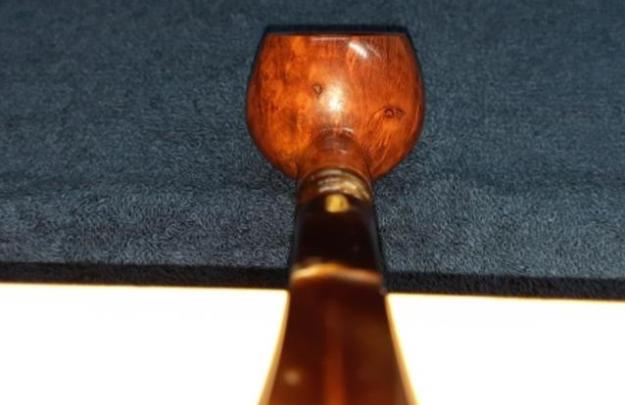
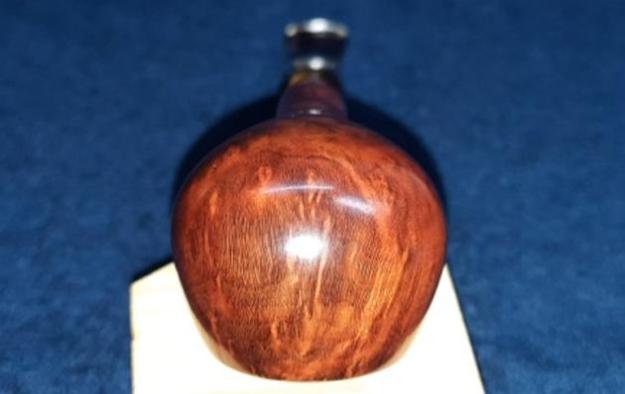
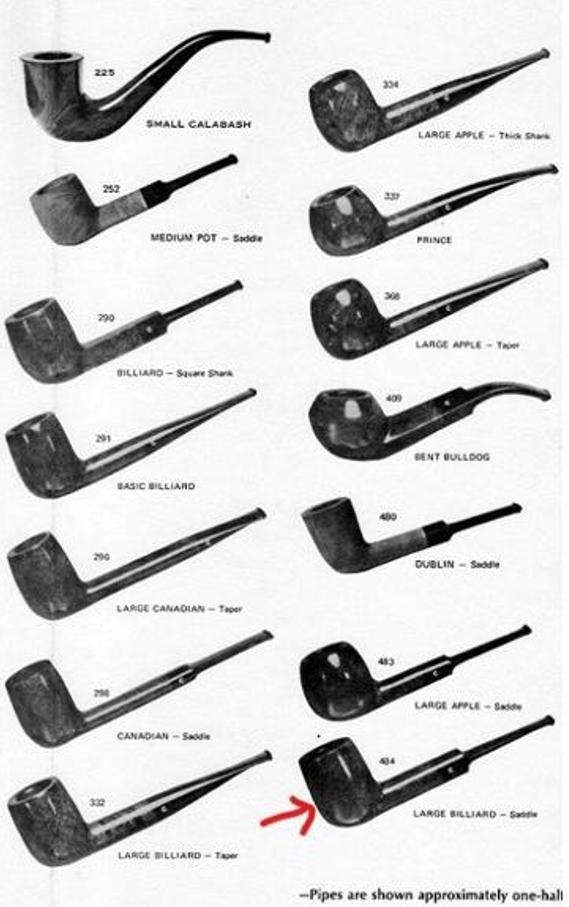
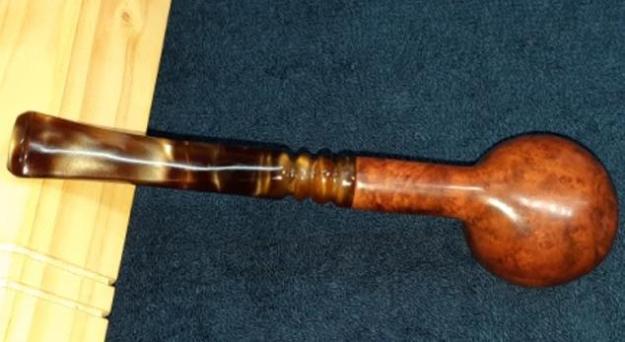
In forensic research one must stay with the information at hand.  The next step in the research trail looking for some traction on the origins of the St. Regis De Luxe was the shape number.  The look and feel of the English pipe on my table takes my guessing back to at least the 1960s – just a guess.  I decided to look at the pipe shapes of English pipe makers to see if I could find a hit where the shape number 483 lined up with an Apple shape.  I looked at BBB, GBD and Ben Wade during this general period.  No hits – no ‘483s’ could be found in any of those shape lists.  I finally hit something that showed some promise – Comoy’s.  I have all these shape lists in virtual files on my computer for easy access.  The Comoy’s Shape List comes from Pipedia’s article (see: LINK).  This is a clipping of the 483-shape described as a ‘Globe’.The ‘S’ following the ‘globe’ designation points to a saddle stem which is straight (‘str.).  ‘L’ is Comoy’s ‘large’ designation.  When I first saw the ‘globe’ listing my question was, is this how the Apple shape was described when this list was compiled?  I went back to Pipedia’s page and found the picture of the basic Comoy’s shapes and hit confirmation pay dirt.Comparing the St. Regis De Luxe to the Comoy’s 483 Large Apple – Saddle looked like a positive match.  At this point, I’m thinking that St. Regis is most likely a second of Comoy’s.  The listing of Comoy’s seconds is found on Pipedia’s main Comoy’s article (see: LINK) which I’ve listed here:
Seconds made by Comoy’s

Academy Award, Ace of spades, Ancestor, Astor, Ayres, Britannia, Carlyle, Charles Cross, Claridge, Coronet?, Cromwell, Damman?, Dorchester, Dunbar, Drury Lane, Emerson, Everyman, Festival of Britain, Golden Arrow, Grand Master, Gresham, Guildhall, Hamilton (according to Who Made That Pipe), Kingsway, Lion’s Head, Lord Clive, Lumberman, Hyde Park, Lloyds, Mc Gahey, Moorgate, Newcastle, Oxford, O’Gorman, Rosebery Extra, Royal Falcon, Royal Guard, Royal Lane, Scotland Yard, St JamesSunrise, Super Sports, Sussex, The Academy Award, The Golden Arrow, The Mansion House, The Exmoor Pipe, Throgmorton, Tinder Box Royal Coachman, Townhall, Trident, Trocadero, Westminster, Wilshire

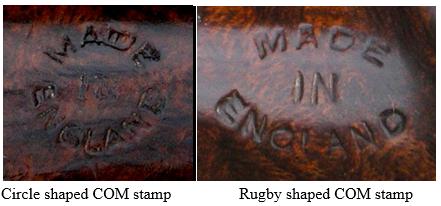
The closest listing is ‘St. James’ – no St. Regis.  These ‘seconds’ lists often give a disclaimer that the list is not exhaustive, so my thoughts are that this is a Comoy’s second that didn’t make this list.  To add further confirmation that the St. Regis was made by Comoy’s was to look at the COM stamping.  All line Comoy’s COMs are stamped with either an arched (very early), circular or rugby shape – ‘Made in England’ or ‘Made in London England’ – depending on period.  The COM on the St. Regis is a straight – ‘Made in London’ over ‘England’.  Not a rounded Comoy’s COM.  Yet, looking through the myriad of examples of pictures of seconds of Comoy’s in the same Pipedia article, the COM designs run the gamut.  All I wanted to do is find a second of Comoy’s COM to match the St. Regis’ COM design to be able to have confidence that Comoy’s did produce seconds with this COM design.  Two Comoy’s seconds,  ‘Gresham’ and ‘Astor’, provided that confidence.

At this point, I am sure I have found the ‘Lost Second of Comoy’s of London’ and I’m thinking about writing to Pipedia to add this information to the archives.  Instead, I send Steve a note describing the process of research I used, the evidence I found and my question whether the St. Regis could be a Comoy’s second?  Steve’s response came quickly and hit a home run!

Hey Dal

There are St. Regis Hotels in many locations. I am wondering if the pipe was not made by Comoy’s for a smoke shop in one of these Hotels. In days past most of the quality hotels had smoke shops in their facilities

Steve

Of course!  I could almost feel the nostalgia in Steve’s words!  I wrote back to Steve and described how when I did my earlier ‘Hail Mary’ online searches for ‘St. Regis’, the only thing that came up was information about hotels and destinations….  The most likely missing piece of the puzzle was already trying to get my attention and Steve’s email brought the puzzle into focus.  Oh, for the days when hotels had ‘smoke shops’ and one wasn’t concerned about political correctness and getting canceled for blowing smoke rings in public as is the case in today’s world!  It makes sense that the St. Regis De Luxe was a pipe made by Comoy’s of London for these luxury hotels to make available to their patrons.

This is the current St. Regis Hotel in London and a picture of a lounge area – perhaps back in the day can one imagine pipe smoke wafting….

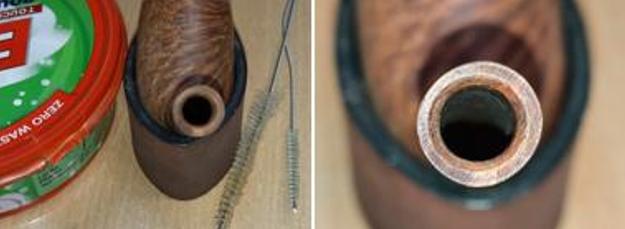
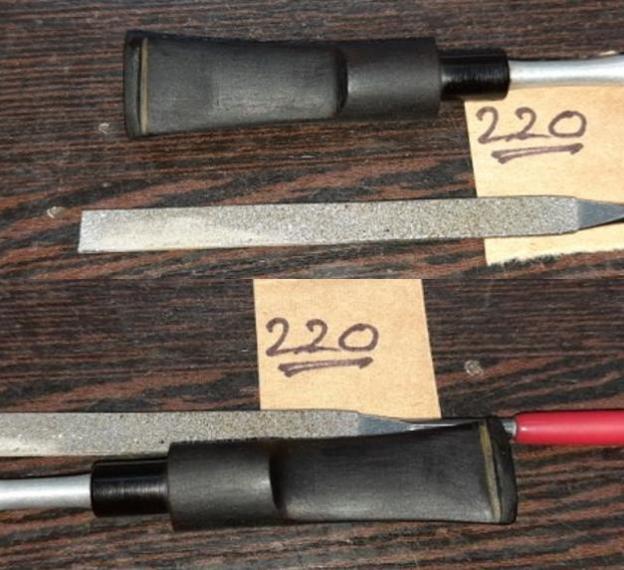
With a better understanding of the Comoy’s origins of the St. Regis De Luxe Large Apple, I take a closer look at the condition of the pipe now on the worktable.  The pipe was well loved but apparently, not too well treated.  He’s in pretty rough shape.  The cake is very thick in the chamber with a good bit of damage to the rim and crusting.  Most of the damage is on the back side of the rim where the briar is scraped and worn down – most likely the flame lighting side.   The dip in the rear rim quadrant can be discerned from this angle.  What is also evident is that the upper quadrant of the bowl is significantly darkened around its circumference.  This possibly points to heating problems and the need of a close inspection of the chamber underneath the thick carbon buildup.The bowl is darkened from heating as well as grime on the surface that needs cleaning.  There are also several small fills which will need a closer look after cleaning the surface. The shank also shows several small fills. One fill is in the center of the COM.  This should be fun.The stem has heavy oxidation as well as calcium build up on the bit.  The bit looks like it’s been chewed pretty well.  The upper and lower bit has clinch marks, and the button has been worn down.To begin the restoration of the St. Regis De Luxe, I start with the stem.  The first step is to deal with the deep oxidation which is seen in the pictures above.  Before working on the oxidation, the stem’s airway is cleaned using several pipe cleaners dipped in isopropyl 99%.In my last write up of the Dr. Grabow Blasted Sculptura Bulldog, I tried for the first time a new product from www.Briarville.com called, ‘Pipe Stem Oxidation Remover’.  The St. Regis stem joined the Dr. Grabow stem to test the new product. The stems were put in the solution, which the smell reminded me of mouthwash, for the maximum period described in the directions on the label – 2 to 24 hours.  I wanted the stems to get the full impact of the Oxidation Remover, whatever it was.After the 24 hours, the St. Regis stem was removed and was first scrubbed with a dry cotton pad to wipe the residue that resulted through the deoxidation process.  The dry cotton pad was followed by a cotton pad wetted with alcohol to remove more raised oxidation. The stem was then conditioned using paraffin oil and set aside to dry.  Overall, I’m pleased with the result of the Briarville product and will continue to use it to see how it performs in the long term.With a bit of fear and trepidation, I turn now to the stummel.  The first step is to clear the thick carbon cake build up in the chamber.  I take a fresh picture of the thick cake to mark the starting point.The chamber is reamed with the Pipnet Reaming Kit using 3 of the 4 blade heads available.  Following this, the chamber walls are scraped with the Savinelli Fitsall Tool and finally sanded with 240 paper.  I’m wondering if this chamber has ever been reamed before this?I would be dishonest to say that I wasn’t surprised to find what was found after inspecting the chamber.  I expected to find heating veins and possibly fissures in the chamber wall.  Instead, I happily find what looks like healthy briar underneath the cake.  I’m thankful for this surprise!Next, turning to the cleaning of the rim and the briar surface, undiluted Murphy’s Oil Soap is used on a cotton pad to begin the scrubbing.  A starting picture is taken as a reminder of the dark, grimy surface.The grime on the surface was thick and a brass wired brush was used additionally to work on the rim.The stummel was then taken to the sink along with shank brushes and the internal mortise walls were scrubbed with the brushes and anti-oil liquid dishwashing soap and warm to hot water.  After a thorough rinsing, the stummel returned to the worktable.  The next picture reveals that the finish was nonexistent after the cleaning.  The darker upper part of the bowl that I thought indicated heating problems was removed during the cleaning.To continue the internal cleaning, cotton buds and pipe cleaners wetted with isopropyl 99% waged a fierce war against the thick gunk that had built up no telling how long!  A small dental spoon also excavated oils and tars off the mortise walls.  After a lot of effort, a truce was declared after the buds began to emerge lighter. I will continue the internal cleaning later at the end of the day with a kosher salt and alcohol soak through the night.Turning now to look more closely at the briar surface after the cleaning, it is no surprise that there is little if any of the old finish remaining.  The damage to the aft side of the bowl is evident and will need to be addressed.The dark shadow which I feared was darkening of the briar because of overheating turned out not to be the case.  The scrubbing generally removed the darkened area, but blotches remain on the surface.There are several small pit fills on the briar surface.  They seem to be solid after testing and probing them.  I’ll keep my eye on these as I clean the surface. One other thing that the cleaning reveals is that the chamber does have fine heating veins which are not problematic.  With the development and maintenance of a proper cake of a dime’s width, this should not develop into something worse.Next, to begin the restoration of the stummel, I begin with the rim and work downward. The following angle shows the area worn down as the rim dips on the back section of the rim.  To relevel the rim, topping will be necessary to sand down the high part of the rim to gain alignment with the dipped area. Using a chopping board and my portable topping board, a sheet of 240 sanding paper is placed on it.  With the stummel inverted, I start the process of rotating the stummel over the paper to sand down the rim to become even.  The tricky part is to keep the rim level and not to tip into the ‘soft’ dip as the stummel is rotated.After only a few rotations I stop to check the progress.  I can tell that I’m staying true to the plane of the rim because the paper is making contact only with the high briar and low dip remains out of reach of the sanding in the initial stages.The process continues slowly with a few rotations and checking to see the progress shown in the following pictures. I come to the point where the removal of more briar has diminishing returns.  The dip has been removed through the topping and the chamber is close to a good round.  The remaining dark area on the back right of the rim should be removed with the introduction of a bevel.To smooth the 240 sanding on the topping board, the paper is changed to a 600 grade paper and the stummel is rotated a few more times.  The finer sanding reveals the residual damage to the back of the rim.  There is a small fault briar running laterally in the rim. There is also a chip on the inner rim edge that is too deep for the topping to remove without taking off too much briar.Next, 240 paper is used to sand a bevel on the inner rim edge. The bevel helps to remove the charred briar on the edge as well as defining more crisply the chip on the inner lip which helps in the patching process.To address this chip, I apply briar dust putty.  Using a small amount of briar dust, it is mixed with regular CA glue on a piece of paper I have topped with scotch tape, so the glue is not absorbed.  I add a small amount of CA next to the briar dust and mix the briar dust in until it gets to the consistency of molasses. I then use the toothpick to trowel a small amount of putty onto the chip to fill it.  A small amount is applied on the rim top to fill the small crevasse running on the rim.I put the stummel aside for a few hours to have dinner – my wife just called – and to allow the patches to cure.After dinner and a few episodes on TV of our favorite, I return to the worktable and the rim patches are cured.  Using a half circle needle file, the patches are filed down flush with the briar – using the curve in the file to round the chamber side of the chip patch. Following the filing, 240 paper followed by 600 paper smooths and blends the chip patch as well as the rim top patch. It looks good.With the day ending, the internal cleaning is continued with a kosher salt and alcohol soak.  I use kosher salt because it doesn’t leave an aftertaste as does the regular iodized salt. Using a cotton ball, after stretching and twisting it to form a wick, it is then guided down the mortise to the draft hole with the help of a stiff wire.  The cotton wick helps to draw out the tars and oils from the internal briar.After the bowl is filled with salt, the stummel is placed in the egg crate to keep it stable and at the right angle – top of the bowl and the end of the shank are close to level.  Isopropyl 99% is then placed in the bowl with a large eye dropper until it surfaces over the salt.  After about 10 minutes, the alcohol is topped off after it is absorbed into the salt and cotton wick.  I put the stummel aside and turn out the lights.The next morning the soiling of the cotton wick and salt are indications that the soak process was at work.  After removing the expended salt and tossing it in the waste, the bowl is wiped with a paper towel and I blow through the mortise to make sure all the salt crystals are removed.To make sure that the internals are clean, and no residue is left behind, a pipe cleaner and 2 cotton buds dipped in isopropyl 99% are good indicators that all is clean and fresh for the new steward.  I move on.Looking now to the stummel briar surface, I will use sanding sponges to clean the myriad of nicks and stains.  To guard the very thin stampings, especially on the COM side, both shank stampings are covered with painter’s tape.   I then use 4 sanding sponges starting with a coarser grade moving to a medium and then finer sponges.  The results are good.  The grain begins to emerge through the sanding process and the surface is clearing of the nicks and dents.After the sanding sponges, I take another close look at the various small fills that are on the briar surface to make sure they are still looking good. They are solid and I move on to using micromesh pads to continue the sanding process. Starting with pads 1500 to 2400, the stummel is wet sanded.  Following this is dry sanding with pads 3200 to 4000 and 6000 to 12000.  After using 5 pads in the process, the tape over the nomenclature is removed to help blend the resulting spot. At this stage of sanding, I’m not concerned that it will cause additional deterioration to the nomenclature.  The grain is coming through very nicely.   The next step in the process of the restoration of this Comoy’s St. Regis is to apply a dye to the stummel.  With all the fills and rim repair and with the shank spots left from the taping over the nomenclature, the decision to darken the stummel was not difficult.  I will use Fiebing’s Mahogany Leather Dye to do the job.  I decide to try Mahogany which has a slight lighter and more reddish tone than my usual approach in using Dark Brown.  I picked up the Mahogany to add to the dyes I have on hand and would like to see how it behaves.  After assembling the components needed to stain the stummel, the stummel is heated using a hot air gun.  This expands the briar grain and encourages the grain to be more receptive to the hue of the dye.With the stummel heated, the dye is applied in patches with a folded pipe cleaner.  A cork makes a good handle.  The aniline dye is then ‘flamed’ with a lit candle which immediately combusts the alcohol in the dye.  This combustion then sets the dye pigment into the grain.  After methodically painting and flaming the entire stummel, the stummel is put aside for several hours allowing the new dye to settle in.With the stummel on the side resting, I turn now to the stem and take a close look.  The Briarville Oxidation Remover seems to have done a good job with no oxidation that I can see now.  The upper and lower bits have bite compressions and the vulcanite over the stem is rough.  The vestiges of the circled ‘S’ stamp are remaining, and care is needed in protecting this.  The first step to repairing the stem is to use the heating method to expand the vulcanite allowing it to regain its original condition – or closer to it.  A Bic lighter is used to paint the vulcanite surface with flame.  The comparison pictures of before and after show the results.  The bite marks on the upper and lower bit are remarkably similar.  The heating did not erase the compressions, but I believe that sanding alone will do the job – without having to patch the indentations with CA glue. A flat needle file is used first to redefine and refresh the button lips – upper and lower.Next, 240 grade paper sands out the remaining compressions in the upper and lower bit.To smooth the vulcanite, the sanding is expanded to include the entire stem.  I sand around the logo stamping and use a plastic disk to guard from shouldering the stem facing.Next, the sanding transitions to wet sanding with 600 grade paper and then applying 0000 grade steel wool.Next, the full application of micromesh pads is utilized starting with wet sanding with pads 1500 to 2400.  Following this, with pads 3200 to 4000 and 6000 to 12000, the stem is dry sanded.  Between each set of 3 pads, Obsidian Oil is applied to the stem to condition it and to guard against future oxidation.  I like the glassy pop resulting from the process. With the stem now waiting in the wings, I turn back to the stummel which has been resting for several hours after the application of Fiebing’s Mahogany Leather Dye.  This is the first time I have used Mahogany and I’m curious to see how it will render grain definition after ‘unwrapping’ the flamed crust.  Using Red Tripoli compound with a felt buffing wheel mounted to the rotary tool, the process of removing the crust of flamed dye is done with a slower speed – about 30% full power rather than my usual 40%.  I do this to reduce the heat buildup happening with the more abrasive compound and felt wheel combined together ‘bulldoze’ the surface.I enjoy the unwrapping process to watch the newly dyed grain appear.  I expected the Mahogany to have a slightly redder hue than straight dark brown and what I see looks good.   A few pictures show the process.  The veins of the grain have absorbed the dye giving a luminescent quality to the briar as the Mahogany-darkened grain contrasts with the lighter soft briar. As the felt buffing makes progress very slowly, it is purged often on a hard edge to clean it of the crusted dye collected and to soften it.Again, using Tripoli compound, a cotton cloth buffing wheel is mounted, and the speed is increased to about 50% full power and I give another round of buffing to remove more excess dye which sharpens the grain definition.  The cotton wheel is also able to reach into the crook of the shank/bowl junction to remove excess dye crust better not as accessible as well with the less flexible felt wheel.Following the Tripoli compound the bowl is wiped with a cotton pad wetted with alcohol.  This is done not so much to lighten the dye but to remove more excess and to blend the new dye. After rejoining the stem with the stummel, another cotton cloth wheel is mounted on the rotary maintaining 40% full power speed.  Blue Diamond compound is then applied to the pipe to achieve an even more brilliant shine with the lesser abrasive compound.After the Blue Diamond is applied, the entire pipe is buffed with a felt cloth.  This is done to remove the compound dust from the surfaces before application of the wax.  Before applying the wax, the stem logo needs refreshing.  By the looks of the logo, I can already tell that the left side of the logo has worn away too much and will most likely not hold the acrylic paint. Using white acrylic paint, a drop of paint is placed over the circled S.The paint is then daubed with a cotton pad to absorb the excess and dry the paint.The side of the pointed cotton bud is used to lightly scrape over the logo removing the excess surface paint from the stem surface.  What is left is what I expected – a logo not fully intact but showing some of its former condition.The home stretch!  Another cotton cloth buffing wheel is mounted on the rotary tool at 40% speed.  Carnauba wax is applied to the pipe.  After application of the wax, the pipe is given a hearty hand buffing with a microfiber cloth to raise the shine further and to disperse and excess waxy residue.This Comoy’s St. Regis De Luxe Apple certainly made a surprising reappearance!  If he could only talk!  Steve and I believe he was made by Comoy’s for the luxury hotel chain, St. Regis, back in the day when quality hotels had their own tobacconist shops catering to the customers’ needs – pipe men and cigar aficionados situated in leather chairs with drinks of choice adding to the pampered moment.  A day gone by 😊.  Nat commissioned the Comoy’s St. Regis Made in London, England, and will have the first opportunity to claim him from The Pipe Steward Store benefitting the Daughters of Bulgaria – helping women and girls that were trafficked and sexually exploited.  To recall just how far this Comoy’s St. Regis has come, a ‘before’ picture starts us off!  Thanks for joining me!


Working on the Second of Two Ropp Pipes – A Ropp Au Sommet Mini Churchwarden


Blog by Steve Laug

It seems like just a few weeks ago I was contacted by an older gentleman about purchasing his pipe collection. He sent me the photos and I was amazed at what I saw. He had Dunhill pipes, BBB pipes, a Barling’s Make “Ye Olde Wood” Fossil, Orlik pipes, Barclay Rex Pipes, a couple of Meerschaums and a whole lot of other pipes. All I could say as I looked at the pipes was what a collection it was. We negotiated a deal and I think we both walked away quite happy with the exchange.

You have seen the work we have done on the Dunhills, Hardcastles, H. Simmons all briar billiard and BBB pipes from the lot but there are still more. The above photo shows the two Ropp pipes.

I have worked on several Ropp pipes in the past but this one was unique in many ways that will become evident in the photos below. This second Ropp pipe is stamped on the left side of the shank and reads ROPP in an oval [over] AU SOMMET, which translates as AT THE TOP. The stamping is clear and readable and there is no shape number evident. The shank end is rounded and countersunk to give the stem a tight fit against it. The long, taper stem has a gold ROPP oval stamp on the left side.

Jeff took some photos of the Ropp Au Sommet Mini Churchwarden before he worked his magic in cleaning up the pipe. It is a an interesting pipe with a lot of potential and what appears to be some great grain under the grime and debris of the years.Jeff took photos of the bowl, rim top to show the thickness of the cake in the bowl and the thick lava on the rim top. I was hoping that the thick cake and lava had protected the edge from the kind of damage that I had to work on with the other Ropp pipe. He took photos of the top and underside of the vulcanite stem showing the oxidation, tooth marks,chatter and wear on the stem and button. Jeff took photos of the sides and heel of the bowl to show the condition of the briar. You can see the beautiful shape and the grain on the bowl even through the dirt and debris of many years. Jeff took a photo of the stamping on the left side of the shank. The ROPP Oval on the stem is also visible. You can see that the stamping  on the shank and stem is clear and readable as noted above.Jeff removed the stem from the shank to give an idea of the way the rounded shank end had been beveled to accommodate the stem.I turned to Pipephil’s site to see what I could learn about the Ropp brand and particularly the Ropp Au Sommet Line that I was working on (http://pipephil.eu/logos/en/logo-ropp.html). I quote from the introduction to the brand on the site and include a screen capture of a poster that was on the site.

Brand created by Eugène-Léon Ropp (1830 – 1907) and continued throughout 3 generations. “GBA Synergie” run by Bernard Amiel (†2008) bought back Ropp in 1988 and owned it until 1991. The company was taken over by Cuty-Fort Entreprises (Chacom, Vuillard, Jean Lacroix…) in 1994.

I quote from the sidebar on the site below as it gives a good summary of information.

Brand created in 1910. The shop was situated on Maiden Lane. Three addresses now (2010): 75 Broad Street, 70 East 42nd Street, 570 Lexington Avenue. See also: André

I turned to Pipedia to try and place this pipe in the timeline of the brand and was able find some helpful information which I have included below (https://pipedia.org/wiki/Ropp). I quote the information below. Ropp is well known for its Cherrywood pipes which were patented in1869. Besides that Eugene Ropp also made beautiful briar pipes.

Eugène-Léon Ropp (1830 – 1907) had acquired a patent for a cherrywood pipe (wild cherry, lat.: Prunus avium) in 1869. In 1870 he established a workshop to manufacture such pipes in Büssingen (Bussang, Vosges mountains). Around 1893 the business moved into the former mill of Sicard (part of the community of Baume-les-Dames – Département Doubs, Upper Burgundy – from 1895 on).

The pipes were a big success in the export as well. Shortly before 1914 Ropp designated A. Frankau & Co. (BBB) in to be the exclusive distributor in the UK and it’s colonies.

Probably in 1917 a workshop in Saint-Claude in the Rue du Plan du Moulin 8 was acquired to start the fabrication of briar pipes. In 1923 a small building in the environment of Saint-Claude, serving as a workshop for polishing, was added.

Even though cherrywood pipes were the mainstay of Ropp until the company finally closed down in September 1991. The company was taken over by Cuty-Fort Entreprises (Chacom, Jeantet, Vuillard, Jean Lacroix…) in 1994.

With the information from Pipedia (thought there was nothing specific on this line) I knew that I was working on an older pipe from the Eugene Ropp Workshop. It is a great piece of briar with chunky nicely made shape. The fellow we bought them from said that he had had this pipe for a very long time. I could not set a date for certain but my guess was early 30s or 40s like some of the earlier pipes. Now it was time to work on the pipe.

Jeff carefully cleaned the pipe. He reamed it with a PipNet pipe reamer and then cleaned up the reaming with a Savinelli Fitsall Pipe Knife. He scrubbed out the internals of the shank, stem and shank extension with alcohol, pipe cleaners and cotton swabs until the pipe was clean. He scrubbed the exterior of the bowl with Murphy’s Oil Soap and a tooth brush to remove the grime and grit on the briar and lava on the rim top. The finish looks much better and has a deep richness in the colour that highlights grain of the briar. The rim top looked good with some darkening on the top and light damage to the inner edge of the bowl. When the pipe arrived here in Vancouver I was amazed it looked so good. Here are some photos of what I saw.   I took some close up photos of the rim top and the stem surface. The inner edge of the rim was rough and nicked and the rim top had some damage. It appears that there are grooves on the top on the right side. I took close up photos of the stem to show the condition of the surface and button. I took a picture of the stamping on the side of the shank and it was clear and readable as noted above.I removed the stem from the shank and took a photo of the parts of the pipe. It is a unique looking pipe.I started my work on the pipe by addressing the darkening on the rim top and the damage on the inner edge of the bowl. I used a folded piece of 220 grit sandpaper to work over the inner edge to smooth out the damage and to remove the darkening on the rim top as well.I polished the briar with micromesh sanding pads – dry sanding with 1500-12000 grit pads. I wiped the bowl down with a damp cloth after each pad. It really began to take on a shine. I worked some Before & After Restoration Balm into the surface of the bowl and shank with my fingertips to clean, enliven and protect the briar. I let the balm sit for 15 minutes and then buffed with a cotton cloth to raise the shine. The photos show the bowl at this point in the restoration process. I set the bowl aside and turned my attention to the stem. I polished the stem with micromesh sanding pads – dry sanding with 1500-12000 grit sanding pads. I wiped it down after each sanding pad with Obsidian Oil. I polished it with Before & After Pipe Stem Polish – both Fine and Extra Fine. I gave it a final coat of Obsidian Oil. I used some Rub’n Buff Antique Gold to touch up the Ropp logo on the left side of the stem. The stamp was worn so though it is better it is not perfect.With the bowl and the stem finished I put the beautiful Eugene Ropp Au Sommet Mini Churchwarden back together and buffed it on the wheel using Blue Diamond to give it a shine. I gave the bowl and the stem multiple coats of carnauba wax on the wheel. I buffed it with a clean buffing pad to raise the shine. I hand buffed it with a microfiber cloth to deepen the shine. It really is a great looking mini churchwarden. The dimensions of the pipe are – Length: 7 ½ inches, Height: 1 ¾ inches, Outside diameter of the bowl: 1 ¼ inches, Chamber diameter: ¾ of an inch. The weight of this large pipe is 1.52 ounces /43 grams. This older Ropp Mini Churchwarden is another great find in this collection. I will be putting it on the rebornpipes store soon. If you would like to add it to your collection let me know. This is another pipe that has the possibility of transporting the pipe man or woman back to a slower paced time in history where you can enjoy a respite. Thanks for walking through the restoration with me.

Working on the First of Two Ropp Pipes – A Ropp Make S Bent Billiard


Blog by Steve Laug

It seems like just a few weeks ago I was contacted by an older gentleman about purchasing his pipe collection. He sent me the photos and I was amazed at what I saw. He had Dunhill pipes, BBB pipes, a Barling’s Make “Ye Olde Wood” Fossil, Orlik pipes, Barclay Rex Pipes, a couple of Meerschaums and a whole lot of other pipes. All I could say as I looked at the pipes was what a collection it was. We negotiated a deal and I think we both walked away quite happy with the exchange.

You have seen the work we have done on the Dunhills, Hardcastles, H. Simmons all briar billiard and BBB pipes from the lot but there are still more. The above photo shows the two Ropp pipes. I am working the smaller one first – the bent billiard.

I have worked on several Ropp pipes in the past but this one was unique in many ways that will become evident in the photos below. This pipe is stamped on the left side of the shank and reads ROPP in an oval [over] MAKE and above the oval is an upper case ‘S. The stamping is clear and readable and there is no shape number evident. There is a silver plated band on the shank that is stamped the same was as the shank. It also has an EP in a Diamond (electroplated) and an E and an R each in a circle over three hallmarks. I spent time looking up hallmarks on French sites and was not able to clearly identify them as they were blurry.

Jeff took some photos of the Ropp Make S Bent Billiard before he worked his magic in cleaning up the pipe. It is a an interesting pipe with a lot of potential and what appears to be some great grain under the grime and debris of the years. Jeff took photos of the bowl, rim top to show the thickness of the cake in the bowl and the thick lava on the rim top. There were also large chips or nicks on the front of the bowl on the outer edge. He took photos of the top and underside of the vulcanite stem showing the oxidation, tooth marks,chatter and wear on the stem and button. Jeff took photos of the sides and heel of the bowl to show the condition of the briar. You can see the beautiful shape and the grain on the bowl even through the dirt and debris of many years. Jeff took a photo of the stamping on the left side of the shank. You can see that it is clear and readable as noted above.I turned to Pipephil’s site to see what I could learn about the Ropp brand and particularly the Ropp Make S line that I was working on (http://pipephil.eu/logos/en/logo-ropp.html). I quote from the introduction to the brand on the site and include a screen capture of a poster that was on the site.

Brand created by Eugène-Léon Ropp (1830 – 1907) and continued throughout 3 generations. “GBA Synergie” run by Bernard Amiel (†2008) bought back Ropp in 1988 and owned it until 1991. The company was taken over by Cuty-Fort Entreprises (Chacom, Vuillard, Jean Lacroix…) in 1994.

I quote from the sidebar on the site below as it gives a good summary of information.

Brand created in 1910. The shop was situated on Maiden Lane. Three addresses now (2010): 75 Broad Street, 70 East 42nd Street, 570 Lexington Avenue. See also: André
I turned to Pipedia to try and place this pipe in the timeline of the brand and was able find some helpful information which I have included below (https://pipedia.org/wiki/Ropp). I quote the information below. Ropp is well known for its Cherrywood pipes which were patented in1869. Besides that Eugene Ropp also made beautiful briar pipes.

Eugène-Léon Ropp (1830 – 1907) had acquired a patent for a cherrywood pipe (wild cherry, lat.: Prunus avium) in 1869. In 1870 he established a workshop to manufacture such pipes in Büssingen (Bussang, Vosges mountains). Around 1893 the business moved into the former mill of Sicard (part of the community of Baume-les-Dames – Département Doubs, Upper Burgundy – from 1895 on).

The pipes were a big success in the export as well. Shortly before 1914 Ropp designated A. Frankau & Co. (BBB) in to be the exclusive distributor in the UK and it’s colonies.

Probably in 1917 a workshop in Saint-Claude in the Rue du Plan du Moulin 8 was acquired to start the fabrication of briar pipes. In 1923 a small building in the environment of Saint-Claude, serving as a workshop for polishing, was added.

Even though cherrywood pipes were the mainstay of Ropp until the company finally closed down in September 1991. The company was taken over by Cuty-Fort Entreprises (Chacom, Jeantet, Vuillard, Jean Lacroix…) in 1994.

I have included three photos from the site of a pipe that was stamped exactly like the one that I am working on. It is stamped with Ropp in an oval with Make stamped below that. Like the one that I am working it also has an S above and to the right of the oval logo. The silver band is stamped the same way. The stepped down tenon on the stem is the same. With the information from Pipedia I knew that I was working on an older pipe from the Eugene Ropp Workshop. It is a great piece of briar with chunky nicely made shape. The fellow we bought them from said that he had had this pipe for a very long time. I could not set a date for certain but my guess was early 30s or 40s like some of the earlier pipes. Now it was time to work on the pipe.

Jeff carefully cleaned the pipe. He reamed it with a PipNet pipe reamer and then cleaned up the reaming with a Savinelli Fitsall Pipe Knife. He scrubbed out the internals of the shank, stem and shank extension with alcohol, pipe cleaners and cotton swabs until the pipe was clean. He scrubbed the exterior of the bowl with Murphy’s Oil Soap and a tooth brush to remove the grime and grit on the briar and lava on the rim top. The finish looks much better and has a deep richness in the colour that highlights grain of the briar. The rim top looked good with some darkening on the top and light damage to the inner edge of the bowl. When the pipe arrived here in Vancouver I was amazed it looked so good. Here are some photos of what I saw.   I took some close up photos of the rim top and the stem surface. The inner edge of the rim was in rough condition, the outer edge was damaged on the front and the right side and the rim top had a lot of damage all around. I took close up photos of the stem to show the condition of the surface and button. I took a picture of the stamping on the side of the shank and it was clear and readable as noted above.I removed the stem from the shank and took a photo of the parts of the pipe. I started my work on the pipe by addressing the darkening on the rim top and the damage on the inner and outer edges of the bowl. I used a folded piece of 220 grit sandpaper to work over the inner and outer edge to smooth out the damage and to remove the darkening on the rim top as well.Jeff sent a photo of a crack in the shank on the underside under the band. After he had cleaned it up it was hard to see clearly but it was still present. I decided to drill a small pin hole at the end of the crack. This was one of those cases where I was certain I had it pinned down and drilled a hole with a microdrill bit. Once would have been horrible but it took 4 tries to finally hit the hidden hairline crack! The two to the right of the photo hit the crack. The first was too low and the second nailed the end of it. The two on the left totally missed. Arggh…I finally got it. I filled in the small holes with CA glue and briar dust. Once the repairs cured I sanded the repair smooth with 220 grit sandpaper and wiped it off with a damp cloth. Other than the new freckles the shank is fixed! Sheesh I feel like a real amateur! I polished the briar with micromesh sanding pads – dry sanding with 1500-12000 grit pads. I wiped the bowl down with a damp cloth after each pad. It really began to take on a shine. I stained the repairs on the bottom of the shank with an oak stain pen to blend them into the finish.I worked some Before & After Restoration Balm into the surface of the bowl and shank with my fingertips to clean, enliven and protect the briar. I let the balm sit for 15 minutes and then buffed with a cotton cloth to raise the shine. The photos show the bowl at this point in the restoration process. I set the bowl aside and turned my attention to the stem. I “painted” it with the flame of a Bic lighter to lift the tooth dents in the surface of the vulcanite. I was able to lift the majority of them. I filled in the remaining marks with clear CA glue. Once the repairs cured I used a file to flatten out the repairs and recut the sharp edge of the button. I sanded them smooth with a folded piece of 220 grit sandpaper to blend them in the rest of the stem surface. I started polishing the stem with 400 grit wet dry sandpaper. I used some Rub’n Buff Antique Gold to touch up the Ropp logo on the left side of the stem. The stamp was worn so though it is better it is not perfect.I polished the stem with micromesh sanding pads – dry sanding with 1500-12000 grit sanding pads. I wiped it down after each sanding pad with Obsidian Oil. I polished it with Before & After Pipe Stem Polish – both Fine and Extra Fine. I gave it a final coat of Obsidian Oil. With the bowl and the stem finished I put the beautiful Eugene Ropp Make Bent Billiard back together and buffed it on the wheel using Blue Diamond to give it a shine. I gave the bowl and the stem multiple coats of carnauba wax on the wheel. I buffed it with a clean buffing pad to raise the shine. I hand buffed it with a microfiber cloth to deepen the shine. It really is a great looking pipe. The dimensions of the pipe are – Length: 5 inches, Height: 1 ¾ inches, Outside diameter of the bowl: 1 ¼ inches, Chamber diameter: ¾ of an inch. The weight of this large pipe is 1.66 ounces /47 grams. This older Ropp Bent Billiard is another great find in this collection. I will be putting it on the rebornpipes store soon. If you would like to add it to your collection let me know. This is another pipe that has the possibility of transporting the pipe man or woman back to a slower paced time in history where you can enjoy a respite. Thanks for walking through the restoration with me.


Finding a Surprise Among the 7 Barclay-Rex Pipes – A Barling’s Make “Ye Olde Wood” Fossil EXEL 406 Bent Apple


Blog by Steve Laug

It seems like just a few weeks ago I was contacted by an older gentleman about purchasing his pipe collection. He sent me the photos and I was amazed at what I saw. He had Dunhill pipes, BBB pipes, Orlik pipes, Barclay Rex Pipes, a couple of Meerschaums and a whole lot of other pipes. All I could say as I looked at the pipes was what a collection it was. We negotiated a deal and I think we both walked away quite happy with the exchange.

You have seen the work we have done on the Dunhills, Hardcastles, H. Simmons all briar billiard and BBB pipes from the lot but there are still more. The above photo shows all of the Barclay-Rex pipes that were purchased from the New York City shop by the fellow we bought the collection from. It is one of two sandblast pipes that he had and it is a Canadian shaped pipe.

I have worked on several Barclay-Rex pipes in the past but this one was unique in many ways that will become evident in the photos below. When I looked at the various Barclay-Rex Pipes I decided to work on this apple. You can imagine the surprise that I had when I took it out of the box and look at the stamping expecting to see BARCLAY-REX New York and saw something totally different. This pipe is stamped on a smooth panel on the underside of the shank and reads Barling’s [arched over] Make [over] “Ye Olde Wood” [over]406 on the heel of the bowl. To the right of that it is stamped EXEL [over] Fossil. That is followed by Made in England (two lines) followed by T.V.F. (The Very Finest). The stamping is clear and readable and I was utterly surprised. The stem is stamped with remnants of the Barling Cross on the top of the taper stem.

Jeff took some photos of the Barling’s Make Ye Olde Wood Fossil EXEL 406 before he worked his magic in cleaning up the pipe. It is a an interesting pipe with a lot of potential and what appears to be a great sandblast under the grime and debris of the years. Jeff took photos of the bowl and rim top to show the thickness of the cake in the bowl and the thick lava on the rim top. The rim looks to be heavily damaged under the lava on the top and the inner and outer edges. It really is a mess. He took photos of the top and underside of the vulcanite stem showing the tooth marks, chatter and wear on the stem and button. Jeff took photos of the sides and heel of the bowl to show the condition of the briar. You can see the beautiful shape and the sandblast grain on the bowl even through the dirt and debris of many years. Jeff took a photo of the stamping on the underside of the shank. You can see that it is clear and readable as noted above. I turned to Pipedia to try and place this pipe in the timeline of the brand and was able find some helpful information which I have included below (https://pipedia.org/wiki/Barling). I believe that the pipe is a Family Era pipe so I read the article with interest and gleaned some information on the stamping on the pipe.

The first section I quote below is with regard to the nomenclature on the pipe. The one I am working on bears the stamping “Ye Olde Wood” and T.V.F. and the style name Fossil. I have highlighted the pertinent section in red.

Family Era Nomenclature:

Before discussing the nomenclature of the Family Era pipes it is important to note that there are no absolutes. Barling pipes from this period show a remarkable degree of variation when it comes to nomenclature. The following information can be applied in a general fashion.

According to Tad Gage, Pre-1946 stampings are minimal. Pre WW2 pipes rarely have size, shape or grading. But pipes have surfaced, hallmarked as early as 1925 with size marks, and as early as 1926 with model numbers. There may be earlier examples, and when we see them we will revise the dates.

Examples with silver hallmarks illustrate that a distinct change in nomenclature occurred around 1938-40, although clearly the war and London bombings impacted production of silver-mounted and of all English pipes. A George Yale catalog from 1941 features the familiar stampings such as “YE OLDE WOOD”, “TVF”, and style names like “Fossil”, and these were not generally found on pre-1940 pipes, although “YE OLDE WOOD” did inconsistently appear on some earlier examples. (Gage)…

The next section I am quoting is with regard to the Logo nomenclature. The Barling’s Make stamp is explained below. Following that I have included some information ont eh “Ye Olde Wood” stamp and the Barling Cross stem logo.

Logo Nomenclature:

…The “BARLING’S MAKE” has the word “BARLING’S” arched over the word “MAKE” in capital block letters. Barling used this block letter logo until late 1962…

During the 1930’s and early 1940’s the BARLING’S MAKE logo appeared in a small version with a simpler letter style. Following the War, the small “BARLING’S MAKE” logo was discontinued and a larger logo was used. The larger logo would continue to be in use until 1962, when the 1930’s style logo was reintroduced along with the new numbering system…

Ye Olde Wood Stamp:

Sometime around 1913, the “Ye Olde Wood” stamp made its appearance on selected pipes. An example exists stamped on a 1913 date hallmarked pipe.

This logo will continue to be used in the decades to come. Initially it was used to designate a higher grade than the average, much as the “Special” grade would after the Second World War. Price lists show the “Ye Olde Wood” pipes as a separate grade from the basic BARLING’S MAKE pipe. Eventually, “Ye Olde Wood” came to represent the company to the world. The use of “YE OLD WOOD” as a stamp prior to 1940 was haphazard, at best, although the company used the slogan in advertising materials from the early teens onward. (Gage)

Crossed Barling Stem Logo:

It is not known when the crossed Barling stem logo first appeared, but an example exists on a pipe with a 1923 date hallmark. And several of the mid 1920’s pipes added in this update also feature the crossed Barling stem logo.

Lastly, I have included information on the shape number and the size stamping on this pipe all of which help to date it.

Model Numbers:

Model numbers were occasionally stamped below the logo as early as the late 1920’s.

Nichols Numbers:

Pipes intended for the US Market have a 3 digit model number. However, Family Era Barlings may have two numbers, not just three, and they may also have a letter following the model numbers. For example, the letter “M” following a model number would indicate that the bowl is meerschaum lined.

Stamping model numbers on the pipes became much more common after WW2, though like all Barling nomenclature their appearance is a bit haphazard…

Other Nomenclature:

The “MADE IN ENGLAND.” stamp was in use in the 1930’s thru 1962. As with all things related to Barling nomenclature there are variations. Sometimes there is no “MADE IN ENGLAND.” stamp. Examples exist with a “MADE IN LONDON” over “ENGLAND” stamp. And, there are examples with “MADE IN ENGLAND” with no period after the word “ENGLAND”.

Size Stampings:

Up to 1926 and possibly beyond, Barling used specific, completely unrelated, model numbers to designate the various sizes of a specific shape. They produced pipes in three sizes, small, medium, and large.

Barling’s published price lists show that they continued to offer pipes in only three sizes, small, medium, and large until 1941. That’s it, small, medium, and large. So when someone claims that they have a 1930’s EL, EXEL, or other size, they are mistaken.

In 1941 the published range of sizes expanded. Going from the smallest to the largest, they are SS, S, S-M, L, EL, EXEL, and EXEXEL. There is no “G” for giant. Giant pipes, or magnums, which are oversized standard billiards, were not stamped “G” but are commonly identified by collectors as such because they are obviously large relative to even EXEXEL pipes, and carried no size stampings (Gage)…

With the information from Pipedia I knew that I was working a Barling’s Make “Ye Olde Wood” Fossil from the time period between 1941 and 1962. It is a beautifully sandblasted pipe that has some great grain. Now it was time to work on the pipe.

Jeff carefully cleaned the pipe. He reamed it with a PipNet pipe reamer and then cleaned up the reaming with a Savinelli Fitsall Pipe Knife. He scrubbed out the internals of the shank, stem and shank extension with alcohol, pipe cleaners and cotton swabs until the pipe was clean. He scrubbed the exterior of the bowl with Murphy’s Oil Soap and a tooth brush to remove the grime and grit on the briar and lava on the rim top. The finish looks much better and has a deep sandblast that is quite beautiful. The rim top is in rough condition with chips out of the top and inner edge of the bowl making it out of round.. When the pipe arrived here in Vancouver I was amazed it looked so good. Here are some photos of what I saw.   I took some close up photos of the rim top and the stem surface. The inner edge of the rim was in rough condition with chips and nicks in the sandblast of the rim top and the inner edge of the bowl out of round. I would take some work to straighten out the issues. I took close up photos of the stem end of the pipe to show the condition of the surface and button.  I took a picture of the stamping on the underside of the shank and it was faint but readable as noted above.I started my work on the pipe by addressing the damage on the rim top and the inner edges of the bowl. The first photo shows the condition of the rim after I had lightly topped it and what the edge looked like before I started. I decided to rebuild the chipped areas on the rim top and edges with briar dust and CA glue. I layered the CA glue on the edge and top and used a dental spatula to press briar dust on top of it. It took multiple layers on the rear and back edge and rim top before I was happy with it.When I finished the repairs I used a Dremel and burrs to reproduce the sandblast finish on the rim top to match the bowl sides. I stained the rim top and edges with a combination of Black, Walnut and Cherry stain pens to match the colour of the rest of the bowl. I took pictures of the finished rim top to give an idea of the completed look of the repair.

With the rim repair completed I worked some Before & After Restoration Balm into the surface of the bowl and shank with my fingertips and a horse hair shoe brush to clean, enliven and protect the briar. I let the balm sit for 15 minutes and then buffed with a cotton cloth to raise the shine. The photos show the bowl at this point in the restoration process. I set the bowl aside and turned my attention to the stem. I “painted” it with the flame of a Bic lighter to lift the tooth dents in the surface of the vulcanite. I was able to lift the majority of them and interestingly the small pin hole on the topside sealed off. I filled in the remaining marks with clear CA glue. Once the repairs cured I used two files to flatten out the repairs and recut the sharp edge of the button. I sanded them smooth with a folded piece of 220 grit sandpaper to blend them in the rest of the stem surface. I started polishing the stem with 400 grit wet dry sandpaper.  I touched up the faint stamping on the top of the stem with PaperMate Liquid Paper White. I worked it into the surface of the stamping with a tooth pick. When it cured I scraped off the excess with a tooth pick and a sanding pad. The stamping was faint on in the middle but more readable on the edges.I polished the stem with micromesh sanding pads – dry sanding with 1500-12000 grit sanding pads. I wiped it down after each sanding pad with Obsidian Oil. I polished it with Before & After Pipe Stem Polish – both Fine and Extra Fine. I gave it a final coat of Obsidian Oil. With the bowl and the stem finished I put the beautiful Sandblast Barling’s Make Fossil 406 EXEL Bent Apple back together and buffed it on the wheel using Blue Diamond to give it a shine. I gave the bowl multiple coats of Conservator’s Wax and the stem multiple coats of carnauba wax on the wheel. I buffed it with a clean buffing pad to raise the shine. I hand buffed it with a microfiber cloth to deepen the shine. It really is a great looking sandblast. The dimensions of the pipe are – Length: 5 ½ inches, Height: 1 ½ inches, Outside diameter of the bowl: 1 ¼ inches, Chamber diameter: ¾ of an inch. The weight of this large pipe is 1.55ounces /44grams. This Barling’s Make Fossil Bent Apple is another great find in this collection. It is a shape that touches all of my buttons. It is one that I am still trying to figure out what to do with. This is another pipe that has the possibility of transporting the pipe man or woman back to a slower paced time in history where you can enjoy a respite. Thanks for walking through the restoration with me.


Working on the First of Seven Barclay-Rex Pipes – A Sandblast Canadian


Blog by Steve Laug

It seems like just a few weeks ago I was contacted by an older gentleman about purchasing his pipe collection. He sent me the photos and I was amazed at what I saw. He had Dunhill pipes, BBB pipes, Orlik pipes, Barclay Rex Pipes, a couple of Meerschaums and a whole lot of other pipes. All I could say as I looked at the pipes was what a collection it was. We negotiated a deal and I think we both walked away quite happy with the exchange.

You have seen the work we have done on the Dunhills, Hardcastles, H. Simmons all briar billiard and BBB pipes from the lot but there are still more. The above photo shows all of the Barclay-Rex pipes that were purchased from the New York City shop by the fellow we bought the collection from. It is one of two sandblast pipes that he had and it is a Canadian shaped pipe.

I have worked on several Barclay-Rex pipes in the past but this one was unique in many ways that will become evident in the photos below. This pipe is stamped on a smooth panel on the underside of the shank and reads BARCLAY-REX [over] New York. The stamping is clear and readable and there is no shape number evident.

Jeff took some photos of the BARCLAY-REX sandblast Canadian before he worked his magic in cleaning up the pipe. It is a an interesting pipe with a lot of potential and what appears to be some great grain under the grime and debris of the years.Jeff took photos of the bowl, rim top to show the thickness of the cake in the bowl and the thick lava on the rim top. He took photos of the top and underside of the vulcanite stem showing the tooth marks, chatter and wear on the stem and button. Jeff removed the stem from the shank and it turned out to be a threaded metal tenon that appears to have been original. Jeff took photos of the sides and heel of the bowl to show the condition of the briar. You can see the beautiful shape and the grain on the bowl even through the dirt and debris of many years. Jeff took a photo of the stamping on the underside of the shank. You can see that it is clear and readable as noted above. I turned to Pipephil’s site to see what I could learn about the Barclay-Rex brand and particularly the sandblast one I was working on (http://pipephil.eu/logos/en/logo-b1.html). I have included a screen capture of the information that is shown there.I quote from the sidebar on the site below as it gives a good summary of information.

Brand created in 1910. The shop was situated on Maiden Lane. Three addresses now (2010): 75 Broad Street, 70 East 42nd Street, 570 Lexington Avenue. See also: André

I turned to Pipedia to try and place this pipe in the timeline of the brand and was able find some helpful information which I have included below (https://pipedia.org/wiki/Barclay_Rex). I quote the information below.

Barclay-Rex, a downtown Manhattan tobacconist, was founded in 1910 by Vincent Nastri, a pipemaker from Salerno, Italy. The store was originally located at Barclay and Church Street, and the name was taken from that location and Nastri’s beloved Great Dane, Rex. The business is still run by Vincent Nastri, III and owned by Vincent Nastri, Jr.. They have several locations in New York City. The store has carried pipes from all fine makers, and the Barclay-Rex line of pipes is also much sought after, in that pipes were made in a range from the very inexpensive into the several hundreds of dollars. The pipes were, at least into the 1960’s, made of Algerian briar.

In addition to pipes made by Mr. Nastri over the years, Mr. Nastri, III, has been quoted as stating that a pipemaker just leaving Dunhill made pipes with a small off-white dot on the stem for a time for the shop. As was discovered by Steve Laug of Reborn Pipes, they were evidently made by a pipemaker whose initials were HGP, and stamped on the pipe as such. These pipes were made for a single run only, and then never made again.

In addition, Sasieni at least for a time made private label pipes stamped with the Barclay-Rex name, but with their own shapes and shape numbers.

Locations: (Flagship Store) 75 Broad Street, New York, New York 10004 Telephone: (212) 962-3355

70 East 42nd Street, New York, New York 10165 Telephone: (212) 692-9680

570 Lexington Avenue, New York, New York 10022 Telephone: (212) 888-1015

Email: info@barclayrex.com Website: http://www.barclayrex.com Toll Free: (888) 278-6222 Fax: (212) 962-3372

With the information from Pipedia I knew that I was working on a pipe from the Barclay-Rex Tobacconist in New York City. The fellow we bought them from intimated that he purchased them at the Manhattan store. I was unable to pin down any information regarding the date this pipe was made. Now it was time to work on the pipe.

Jeff carefully cleaned the pipe. He reamed it with a PipNet pipe reamer and then cleaned up the reaming with a Savinelli Fitsall Pipe Knife. He scrubbed out the internals of the shank, stem and shank extension with alcohol, pipe cleaners and cotton swabs until the pipe was clean. He scrubbed the exterior of the bowl with Murphy’s Oil Soap and a tooth brush to remove the grime and grit on the briar and lava on the rim top. The finish looks much better and has a deep richness in the colour that highlights grain of the briar. The rim top looked good with some darkening on the top and light damage to the inner edge of the bowl. When the pipe arrived here in Vancouver I was amazed it looked so good. Here are some photos of what I saw.   I took some close up photos of the rim top and the stem surface. The inner edge of the rim was in decent condition and there was some darkening in the sandblast of the rim top that would need to be cleaned up. I took close up photos of the stem end of the pipe to show the condition of the surface and button. I took a picture of the stamping on the underside of the shank and it was clear and readable as noted above. I removed the stem from the shank and took a photo of the parts of the pipe. The metal tenon is in excellent condition and the threaded shank also looks very good.I started my work on the pipe by addressing the darkening on the rim top and the damage on the inner edges of the bowl. I used a brass bristle brush to scrub the surface of the rim and the edges. I worked some Before & After Restoration Balm into the surface of the bowl and shank with my fingertips and a horse hair shoe brush to clean, enliven and protect the briar. I let the balm sit for 15 minutes and then buffed with a cotton cloth to raise the shine. The photos show the bowl at this point in the restoration process. I set the bowl aside and turned my attention to the stem. I “painted” it with the flame of a Bic lighter to lift the tooth dents in the surface of the vulcanite. I was able to lift the majority of them and interestingly the small pin hole on the topside sealed off. I filled in the remaining marks with clear CA glue. Once the repairs cured I used two files to flatten out the repairs and recut the sharp edge of the button. I sanded them smooth with a folded piece of 220 grit sandpaper to blend them in the rest of the stem surface. I started polishing the stem with 400 grit wet dry sandpaper.  I polished the stem with micromesh sanding pads – dry sanding with 1500-12000 grit sanding pads. I wiped it down after each sanding pad with Obsidian Oil. I polished it with Before & After Pipe Stem Polish – both Fine and Extra Fine. I gave it a final coat of Obsidian Oil. With the bowl and the stem finished I put the beautiful Sandblast Barclay-Rex Canadian back together and buffed it on the wheel using Blue Diamond to give it a shine. I gave the bowl multiple coats of Conservator’s Wax and the stem multiple coats of carnauba wax on the wheel. I buffed it with a clean buffing pad to raise the shine. I hand buffed it with a microfiber cloth to deepen the shine. It really is a great looking sandblast. The dimensions of the pipe are – Length: 5 ½ inches, Height: 1 ½ inches, Outside diameter of the bowl: 1 1/8 inches, Chamber diameter: ¾ of an inch. The weight of this large pipe is .95ounces /27 grams. This Barclay-Rex Sandblast is another great find in this collection. I will be putting it on the rebornpipes store soon. If you would like to add it to your collection let me know. This is another pipe that has the possibility of transporting the pipe man or woman back to a slower paced time in history where you can enjoy a respite. Thanks for walking through the restoration with me.

Working on an All Briar H. Simmons “The Guilford” Short Billiard


Blog by Steve Laug

It seems like just a few weeks ago I was contacted by an older gentleman about purchasing his pipe collection. He sent me the photos and I was amazed at what I saw. He had Dunhill pipes, BBB pipes, Orlik pipes, Barclay Rex Pipes, a couple of Meerschaums and a whole lot of other pipes. All I could say as I looked at the pipes was what a collection it was. We negotiated a deal and I think we both walked away quite happy with the exchange.

You have seen the work we have done on the Dunhills, Hardcastles and BBB pipes from the lot but there are still more. The above photo shows an interesting All Briar Pipe that combines the bowl and stem into a single unit. The bowl is shaped like an eye with a point at the front and rear of the bowl. The chamber is round and the draught is wide open. I have chosen to work on the pipe pictured above next.

I have worked on several All Briar pipe is the past but not one that bore stamping like this one. Most of the others were either nameless or had been made by Kaywoodie. This pipe is stamped on the left side of the shank and reads “The Guilford”. On the right side it reads H. Simmons [over] Burlington Arcade. The stamping is clear and readable and there is no shape number evident.

Jeff took some photos of the H. Simmons All Briar “The Guilford” billiard before he worked his magic in cleaning up the pipe. It is a an interesting pipe with a lot of potential and what appears to be some great grain under the grime and debris of the years. Jeff took photos of the bowl, rim top to show the thickness of the cake in the bowl and the lava on the rim top. The shape of the bowl is also evident in the photo below. The bowl had a moderate cake that overflowed in light He took photos of the top and underside of the shank/stem showing the tooth chatter, scratching, and wear on the briar stem/button. The opening on the end of the button is orific (round) rather than a slot adding to my thinking that this was an older pipe. Jeff took photos of the sides and heel of the bowl to show the condition of the briar. You can see the beautiful shape and the grain on the bowl even through the dirt and debris of many years. Jeff took photos of the stamping on the sides of the shank. You can see that it is clear and readable.I turned to Pipephil’s site to see what I could learn about the H. Simmons brand and see if there was any information on the All Briar Guilford (http://pipephil.eu/logos/en/logo-s7.html). I have included a screen capture of the information that is shown there.I turned to Pipedia to try and place this pipe in the timeline of the brand and was able find some helpful information which I have included below (https://pipedia.org/wiki/Simmons).  The information was quoted from “Pipes, Artisans and Trademarks”, by José Manuel Lopes. I quote the information below.

Simmons was the brand of tobacconist, H. Simmons, of the Burlington Arcade, London. It was bought by Dunhill in the late 1980s.

There were also two photos included with the article. The pipe was an H. Simmons all briar pipe, that came courtesy Doug Valitchka. It is very similar to the one that I am working on. I have included those photos below.With the information from Pipedia I knew that I was working on a pipe from H. Simmons tobacconist shop at the Burlington Arcade in London, England. Now it was time to work on the pipe.

Jeff carefully cleaned the pipe. He reamed it with a PipNet pipe reamer and then cleaned up the reaming with a Savinelli Fitsall Pipe Knife. He scrubbed out the internals of the shank, stem and shank extension with alcohol, pipe cleaners and cotton swabs until the pipe was clean. He scrubbed the exterior of the bowl with Murphy’s Oil Soap and a tooth brush to remove the grime and grit on the briar and lava on the rim top. The finish looks much better and has a deep richness in the colour that highlights grain of the briar. The rim top looked good with some darkening on the top and light damage to the inner edge of the bowl. When the pipe arrived here in Vancouver I was amazed it looked so good. Here are some photos of what I saw. I took some close up photos of the rim top and the stem surface. The inner edge of the rim was lightly damaged and would need to be cleaned up. I took close up photos of the stem end of the pipe to show the condition of the surface and button. I took a picture of the stamping on the shank sides and it was all clear and readable as noted above.I started my work on the pipe by addressing the darkening on the rim top and the damage on the inner edges of the bowl. I used a folded piece of 220 grit sandpaper to work over the inner and outer edge to smooth out the damage and to remove the darkening on the rim top as well.I polished the briar bowl, shank and stem with micromesh sanding pads – dry sanding it with 1500-12000 grit pads. After each pad I wiped the briar down with a damp cloth.  I was able to give a shine to the bowl and remove some of the surface scratches in the process. I worked some Before & After Restoration Balm into the surface of the bowl and shank with my fingertips to clean, enliven and protect the briar. I let the balm sit for 15 minutes and then buffed with a cotton cloth to raise the shine. The photos show the bowl at this point in the restoration process. I buffed the All Briar H. Simmons “The Guilford” Burlington Arcade Billiard on the wheel using Blue Diamond to give it a shine. I gave the bowl and stem multiple coats of carnauba wax on the wheel and then buffed it with a clean buffing pad to raise the shine. I hand buffed it with a microfiber cloth to deepen the shine. It really is an amazing piece of briar with stunning grain. The dimensions of the pipe are – Length: 3 ½ inches, Height: 1 ½ inches, Outside diameter of the bowl: 1 inch , Chamber diameter: 5/8 of an inch. The weight of this large pipe is .42ounces /12grams. This H. Simmons “The Guilford” All Briar is another great find in this collection. I will be holding onto it for awhile until I decide what I am going to do with it. I may well keep it and have a smoke. This is another pipe that has the possibility of transporting the pipe man or woman back to a slower paced time in history where you can enjoy a respite. Thanks for walking through the restoration with me.

Working on the second of two Hardcastle’s  Straight Grain Selection No. 1 Pipes


Blog by Steve Laug

It seems like just a few weeks ago I was contacted by an older gentleman about purchasing his pipe collection. He sent me the photos and I was amazed at what I saw. He had Dunhill pipes, BBB pipes, Orlik pipes, Barclay Rex Pipes, a couple of Meerschaums and a whole lot of other pipes. All I could say as I looked at the pipes was what a collection it was. We negotiated a deal and I think we both walked away quite happy with the exchange.

You have seen the work we have done on the Dunhills and BBB pipes from the lot but there are still more. The above photo shows a pair of Hardcastle’s pipes – the top one a Liverpool and the bottom one an oval shank billiard. Both are stamped Hardcastle’s Straight Grain Selection No. 1 and both are beautiful. I have chosen to work on the first pipe pictured above – the round shank, short stemmed Liverpool.

I have worked on a lot of Hardcastle’s over the years but most of them have been Jack’O London and other lower end ones. These are the first two of this quality I have worked on – both of them are Hardcastle’s Straight Grain pipes. This pipe is stamped on the left side of the shank and reads HARDCASTLE’S (arched over) STRAIGHT GRAIN. On the underside of the shank it is stamped SELECTION No. 1 and on the right side it reads Made in London [over] England. The stamping is clear and readable and there is no shape number evident. The taper stem also bears the Hardcastle’s “H” logo on the left side.

Jeff took some photos of the Hardcastle’s Straight Grain Liverpool before he worked his magic in cleaning up the pipe. It is a an interesting pipe with a lot of potential and what appears to be some great grain under the grime and debris of the years.Jeff took photos of the bowl, rim top to show the thickness of the cake in the bowl and the lava on the rim top. The bowl had a thick cake that overflowed in lava on the inner edge and rim top of the bowl. I am hoping that the thick lava coat protected things underneath it from damage to the edges and top. The outer edge appeared to have some significant damage that would need to be dealt with. Cleaning the pipe would make the extent of the damage clear! He took photos of the top and underside of the stem showing the tooth chatter, scratching, calcification and oxidation on the stem surface and wear on the edges of the button.    Jeff took photos of the sides and heel of the bowl to show the condition of the briar. You can see the beautiful shape and the grain on the bowl even through the dirt and debris of many years. Jeff took photos of the stamping on the sides of the shank. You can see that it is clear and readable.I turned to Pipedia to try and place this pipe in the timeline of the brand and was able find some helpful information which I have included below (https://pipedia.org/wiki/Hardcastle).

Hardcastle was founded in 1908 by Edmund Hardcastle and built itself a good reputation among the numerous British mid-graders. In 1935 Dunhill started to build a factory next door to Hardcastle in Forest Road, Walthamstow, London E17. The family owned Hardcastle Pipes Limited sold 49% of its equity to Dunhill In 1936.

Along with closing down its pipe factory in Notting Hill in 1946 Dunhill bought the remaining shares, turning Hardcastle into a 100% Dunhill subsidiary. As members of the Hardcastle family continued as executives in the company’s management Hardcastle retained a certain independence.

This ended in 1967. Dunhill merged Hardcastle with Parker (100% Dunhill as well). The new Parker Hardcastle Limited also absorbed the former Masta Patent Pipe Company. Hardcastle’s Forest Road plant was immediately given up and the production of Hardcastle pipes was shifted to Parker’s nearby St. Andrews Road factory – now consequently called Parker-Hardcastle factory.

In fact this put a definite end to Hardcastle as an own-standing pipe brand, and none other than Edwin Hardcastle, the last of the family executives, spoke frankly and loudly of Hardcastle pipes being degenerated to an inferior Dunhill second.

Today Hardcastle pipes use funneled down bowls that are not deemed suitable to bear the Dunhill or even the Parker name (as well as obtaining briar from other sources).

Timeline

Jack O London (Forrest Rd. factory era) sheet, courtesy Doug Valitchka

  • 1903: Edmund Hardcastle establishes the brand
  • 1936: Family sells 49% of the Hardcastle Pipes Limited shares to Dunhill
  • 1946: Dunhill buys the remaining shares, but the family continues to manage the company
  • 1967: Dunhill merges Hardcastle with Parker. The new Parker-Hardcastle Limited company absorbs the Masta Patent Pipe Company also.
  • After 1967 it is speculated that Hardcastle became the brand for “Parker Seconds”

John Loring states in “The Dunhill Briar Pipe – ‘the patent years and after'” that in the absence of sales receipts, or other items of provenance, Hardcastles cannot be accurately dated. Loring further states that he knows of no way to distinguish the briar source when looking at Hardcastle, Parker, or Parker-Hardcastle pipes. We should not expect to find any actual Dunhill production in these lines, and while one might be there, it is doubtful we will ever be able to determine it [1].

Models & Grades – Family Period

Straight Grain, Supergrain, Leweard, Nut Bruyere, De Luxe, Royal Windsor Sandhewn, Royal Crown, The Crown, Phito Dental, Old Bruyere, Jack O’London, Dental Briar, Phito, Dental, Dryconomy, Drawel, Phithu, Telebirar, Camden, Lightweight, The Table, Dovetail, Dental, Crescent Extra, Lonsdale, Welard De Luxe

With the information from Pipedia I knew that I was working on a Family Period Pipe and it was the top grade. It appears that it can be dated between 1903-1946 when the company was sold in full to Dunhill. Now it was time to work on the pipe.

Jeff carefully cleaned the pipe. He reamed it with a PipNet pipe reamer and then cleaned up the reaming with a Savinelli Fitsall Pipe Knife. He scrubbed out the internals of the shank, stem and shank extension with alcohol, pipe cleaners and cotton swabs until the pipe was clean. He scrubbed the exterior of the bowl with Murphy’s Oil Soap and a tooth brush to remove the grime and grit on the briar and lava on the rim top. The finish looks much better and has a deep richness in the colour that highlights grain of the briar. The rim top looked good with some darkening on the top and damage to the inner edge of the bowl. The briar on the outer edge seems to have swollen and repaired some of the damage during the scrubbing and cleaning procedure. It looked much better than it did in the previous photos.  Jeff soaked the stem in bath of Briarville’s Pipe Stem Deoxidizer to remove the oxidation on the rubber. He worked it over with Soft Scrub All Purpose Cleaner to remove any remnants of oxidation. When the pipe arrived here in Vancouver I was amazed it looked so good. Here are some photos of what I saw.  I took some close up photos of the rim top and the stem surface. The inner edge of the rim was darkened and damaged. The outer rim showed some nicks and chipping. I took close up photos of the stem to show the condition of the surface and button. I took a picture of the stamping on the shank sides and it was all clear and readable as noted above.I took the pipe apart and took a photo of the pipe with the stem. It is a good looking pipe and very unique.I started my work on the pipe by addressing the darkening on the rim top and the damage on the inner and outer edges of the bowl. I used a folded piece of 220 grit sandpaper to work over the inner and outer edge to smooth out the damage and to remove the darkening on the rim top as well.I polished the briar with micromesh sanding pads – dry sanding it with 1500-12000 grit pads. After each pad I wiped the briar down with a damp cloth.  I was able to give a shine to the bowl and remove some of the surface scratches in the process. I worked some Before & After Restoration Balm into the surface of the bowl and shank with my fingertips to clean, enliven and protect the briar. I let the balm sit for 15 minutes and then buffed with a cotton cloth to raise the shine. The photos show the bowl at this point in the restoration process. I set the bowl aside and turned my attention to the stem. I “painted” it with the flame of a Bic lighter to lift the tooth dents in the surface of the vulcanite. I was able to lift the majority of them. I filled in the remaining marks with clear CA glue. Once the repairs cured I sanded them smooth with a folded piece of 220 grit sandpaper to blend them in the rest of the stem surface. I started polishing the stem with 400 grit wet dry sandpaper. I used Liquid Paper White to touch up the white stamped “H” on the top of the stem. I rubbed it into the stamp with a tooth pick and buffed it off with a cotton pad and a 1500 grit micromesh pad.  I polished the stem with micromesh sanding pads – dry sanding with 1500-12000 grit sanding pads. I wiped it down after each sanding pad with Obsidian Oil. I polished it with Before & After Pipe Stem Polish – both Fine and Extra Fine. I gave it a final coat of Obsidian Oil. With the bowl and the stem finished I put the beautiful Hardcastle’s Straight Grain back together and buffed it on the wheel using Blue Diamond to give it a shine. I gave the bowl and stem multiple coats of carnauba wax on the wheel and then buffed it with a clean buffing pad to raise the shine. I hand buffed it with a microfiber cloth to deepen the shine. It really is an amazing piece of briar with stunning grain. The dimensions of the pipe are – Length: 5 ¼ inches, Height: 1 ¾ inches, Outside diameter of the bowl: 1 ¼ inches, Chamber diameter: ¾ of an inch. The weight of this large pipe is .99ounces /28 grams. This Hardcastle’s Straight Grain Selection No. 1 is another great find in this collection. I will be putting it on the rebornpipes store soon. If you would like to add it to your collection let me know. This is another pipe that has the possibility of transporting the pipe man or woman back to a slower paced time in history where you can enjoy a respite. Thanks for walking through the restoration with me.