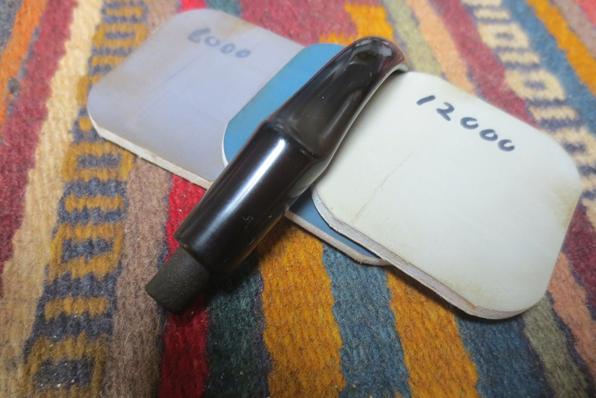
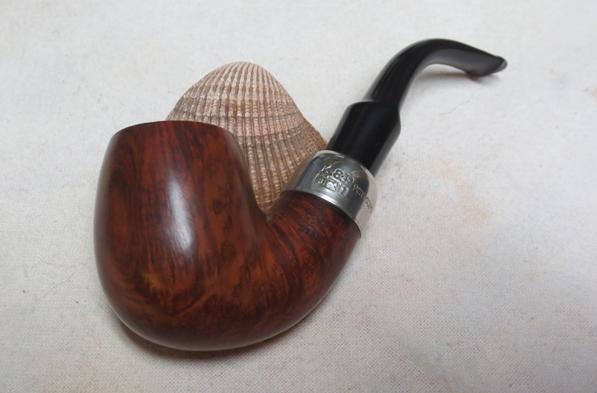
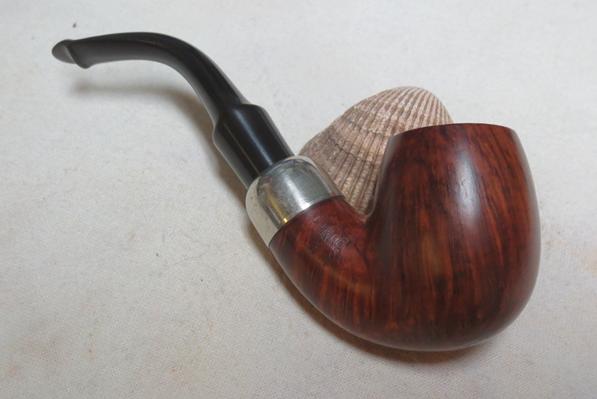
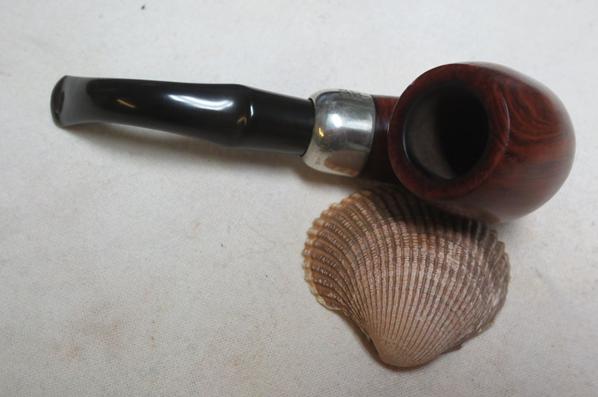
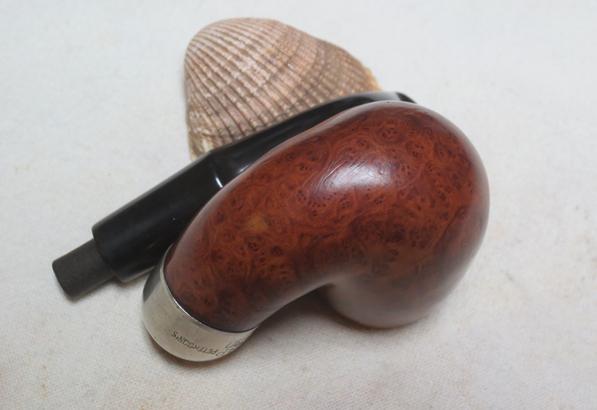
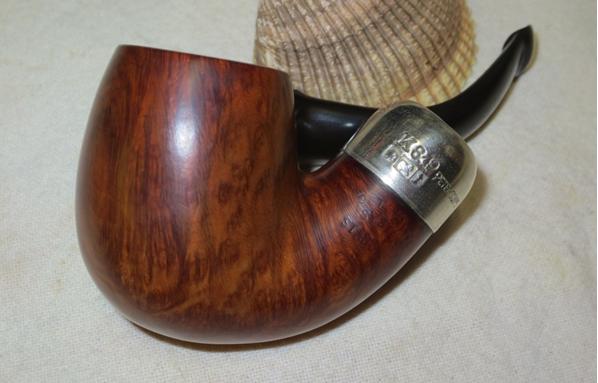
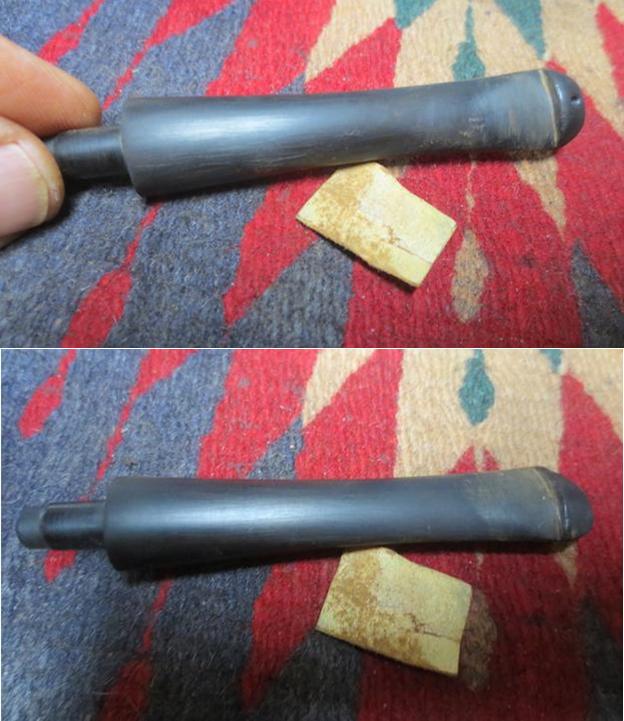
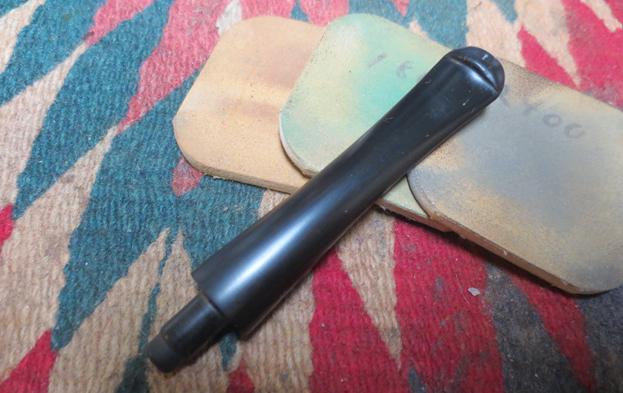
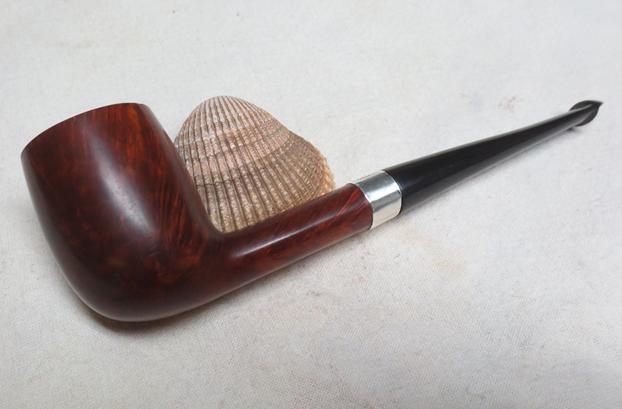
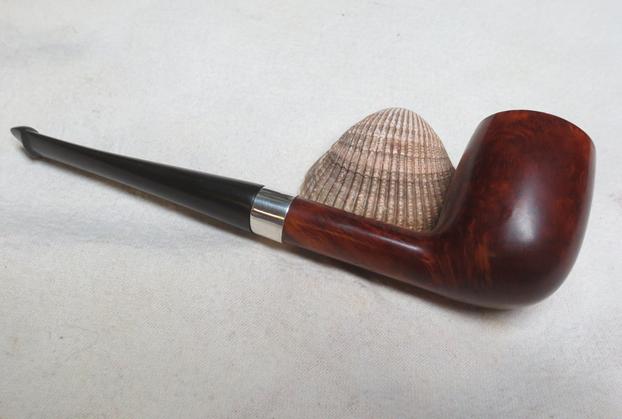
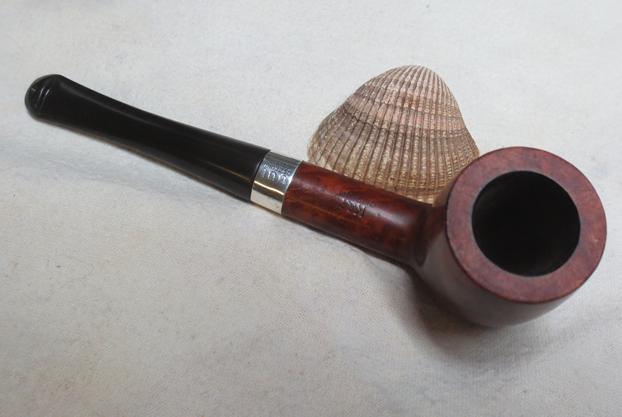
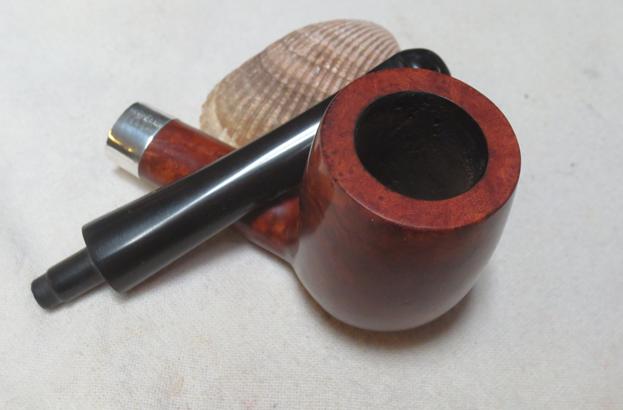
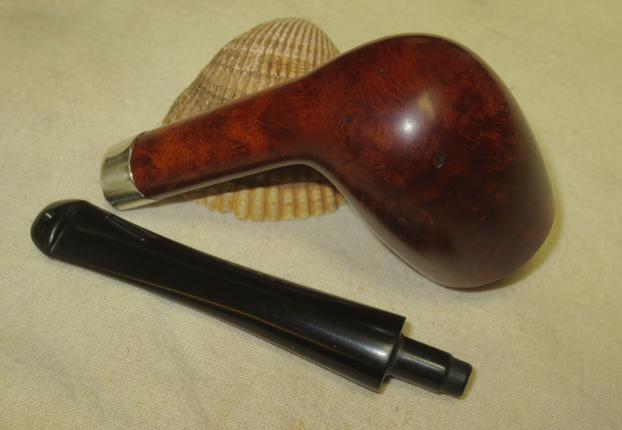
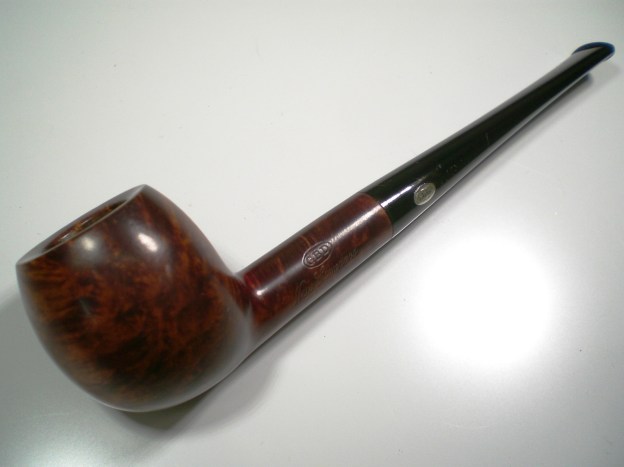
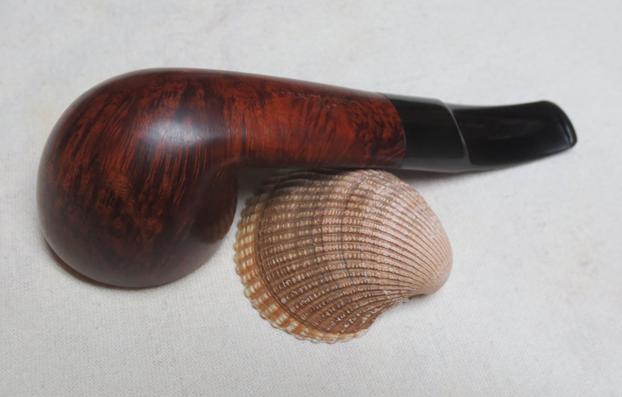
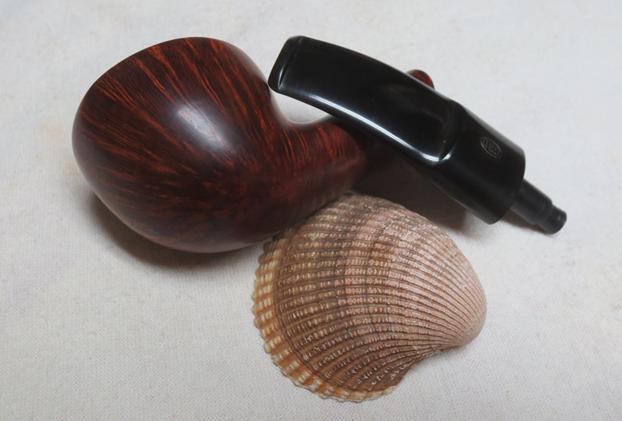
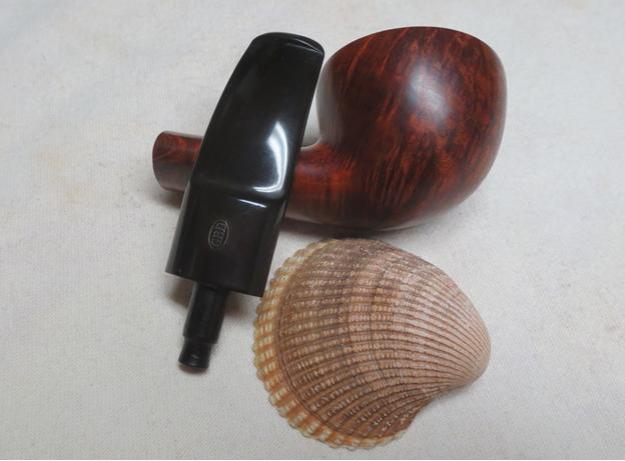
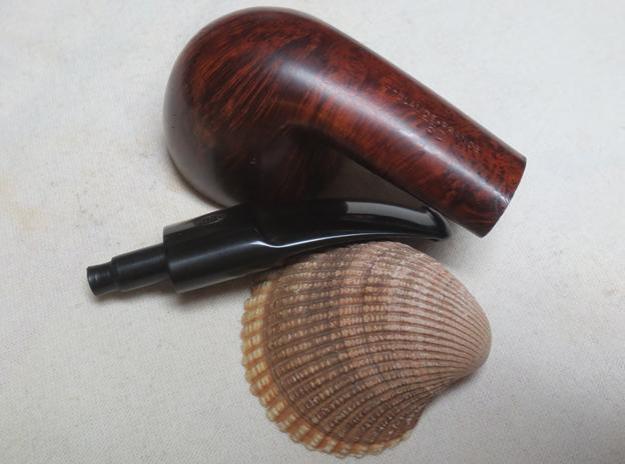
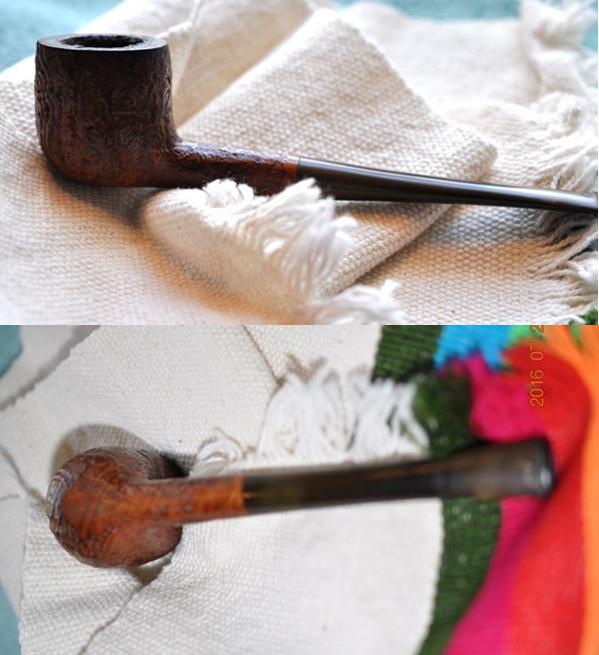
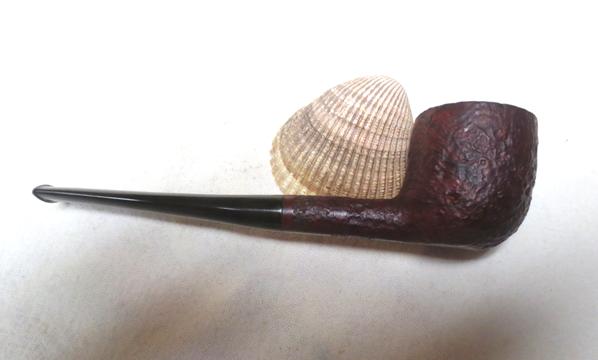
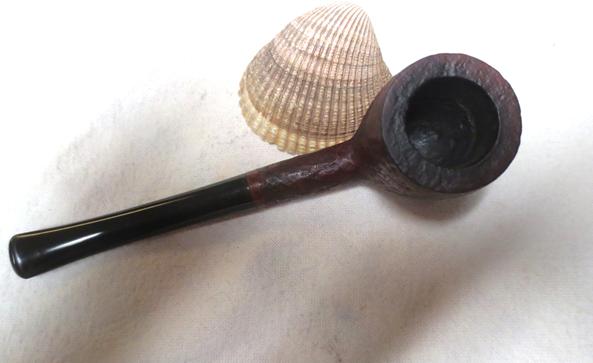
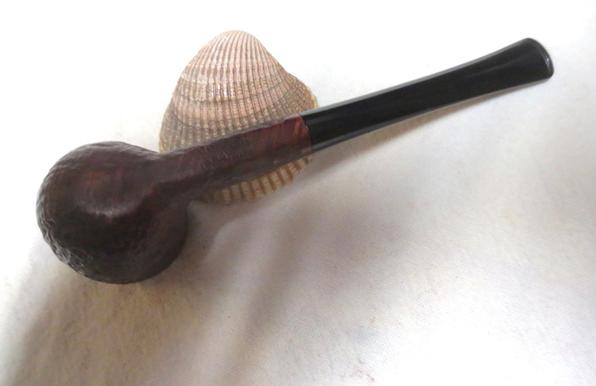
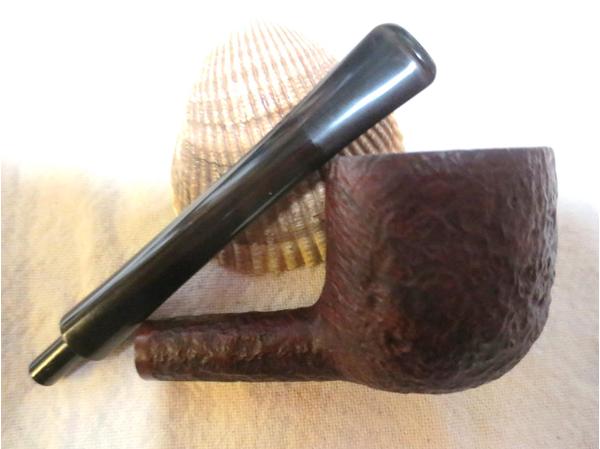
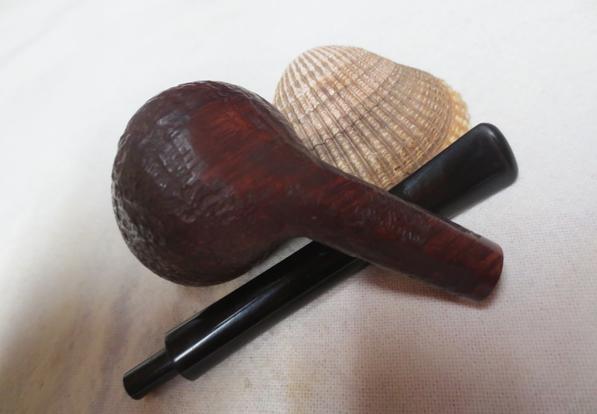
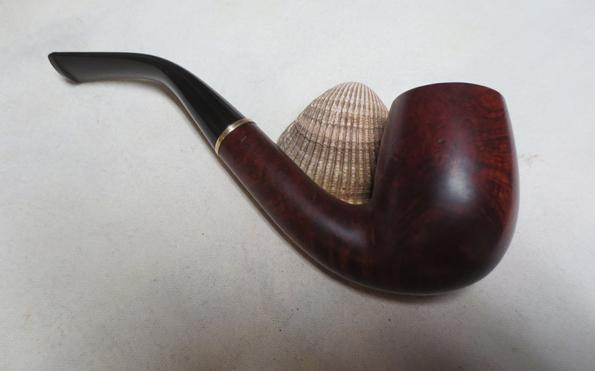
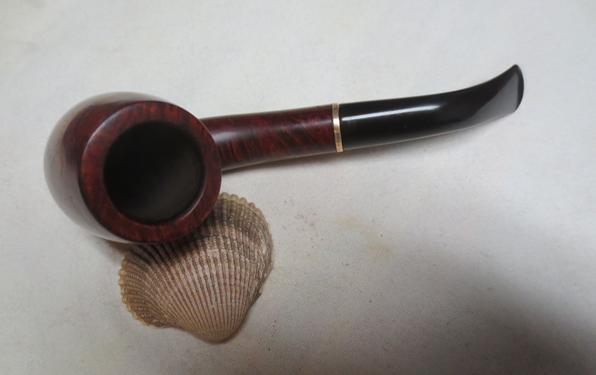
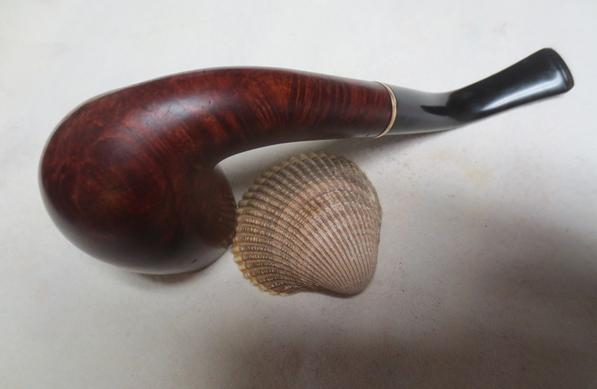
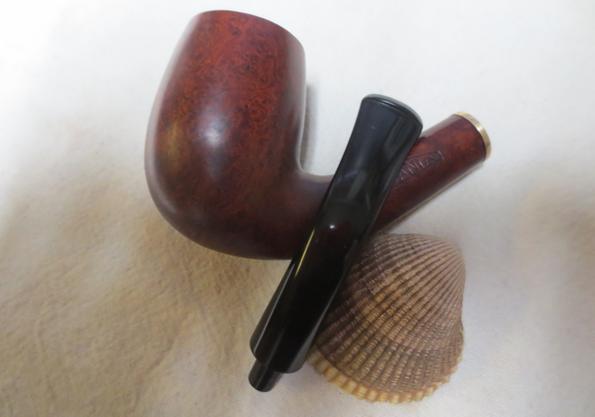
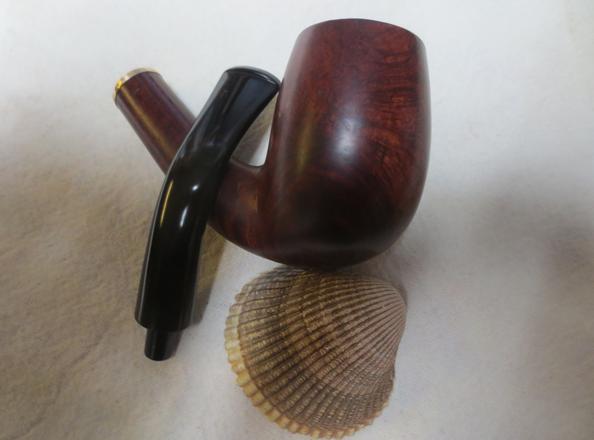
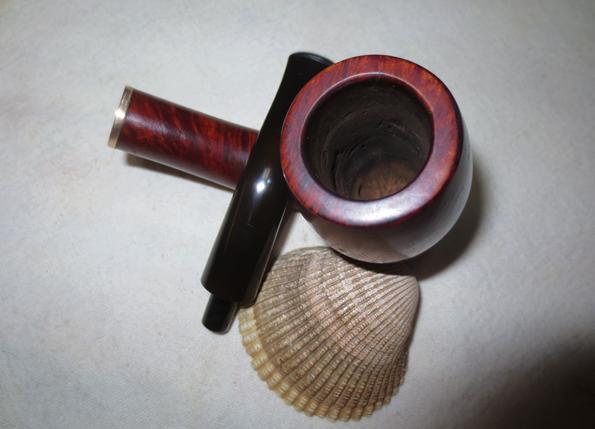
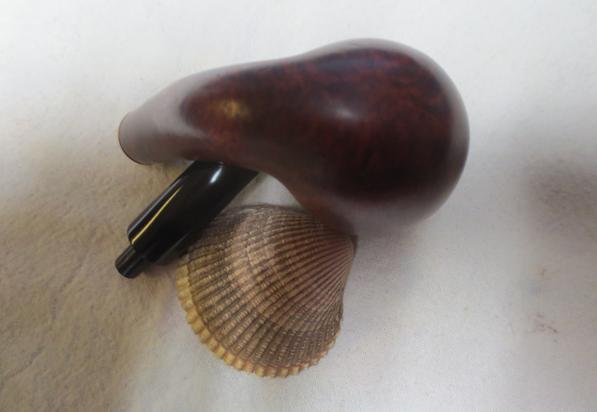
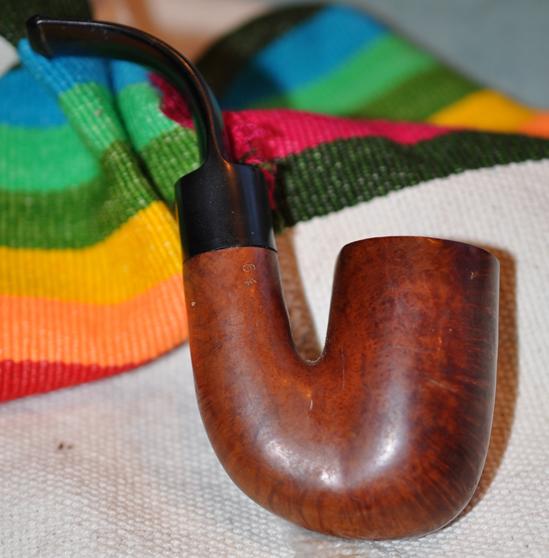
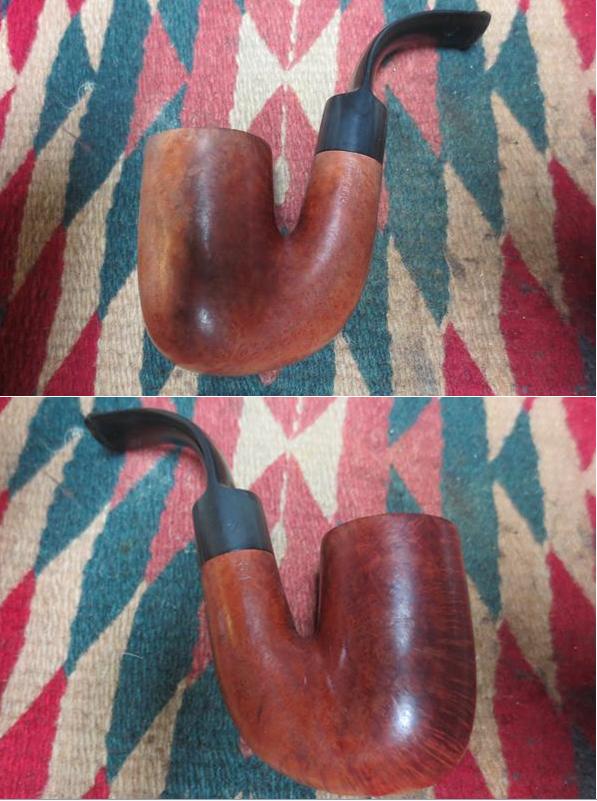
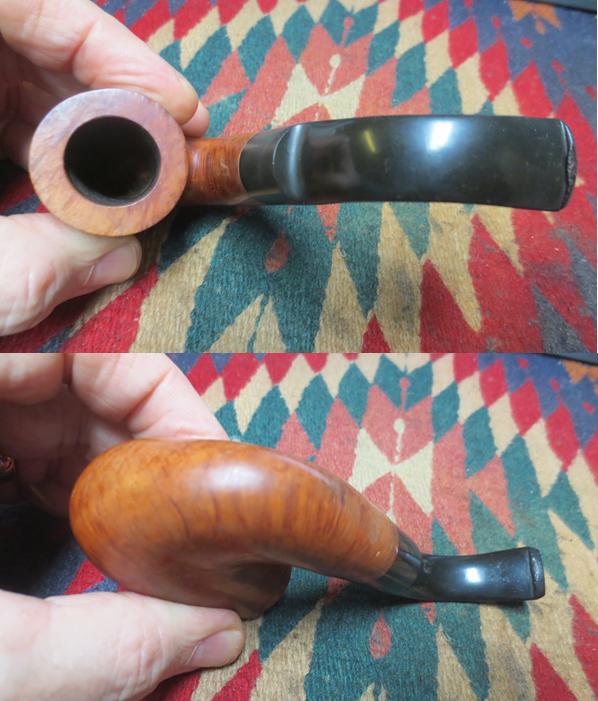
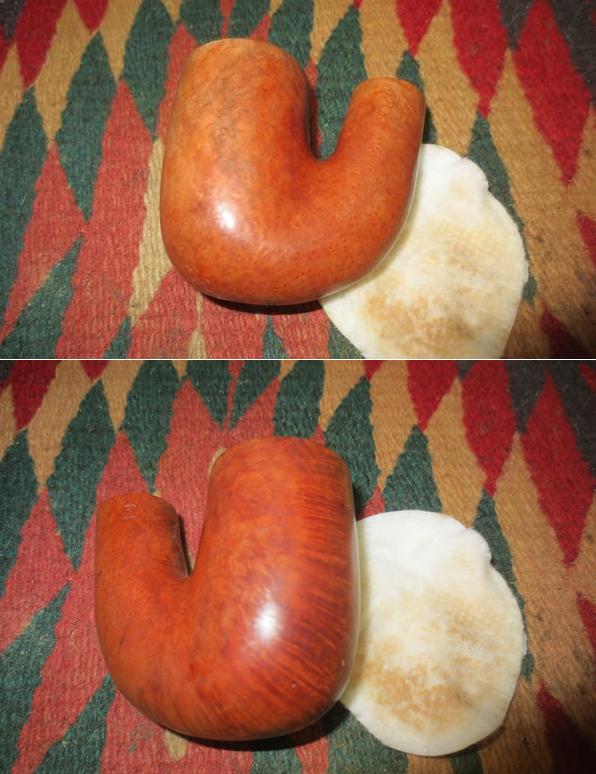
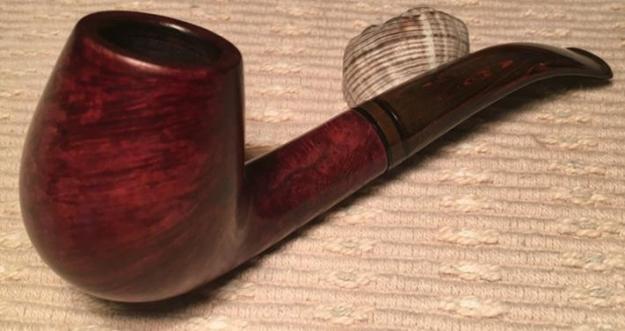
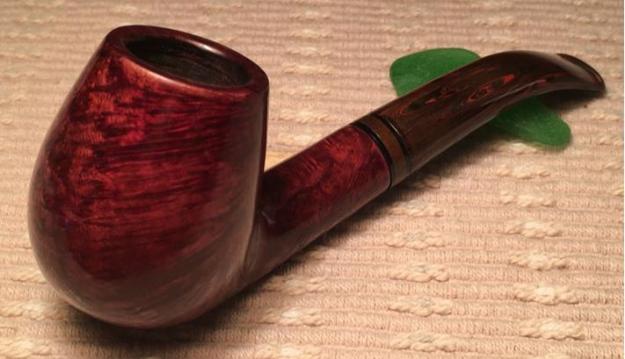
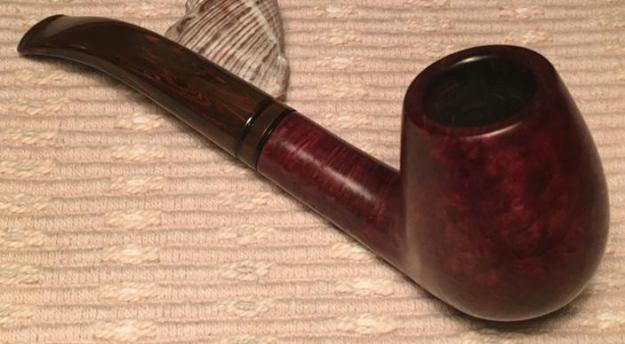
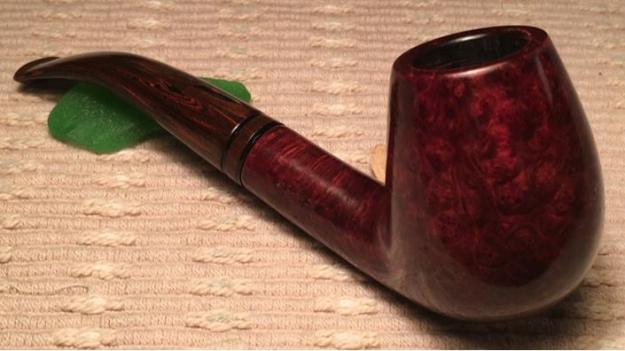
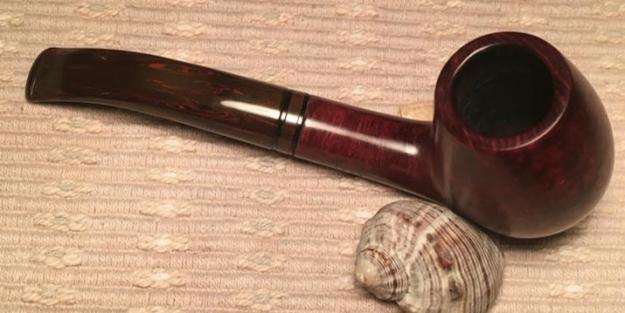
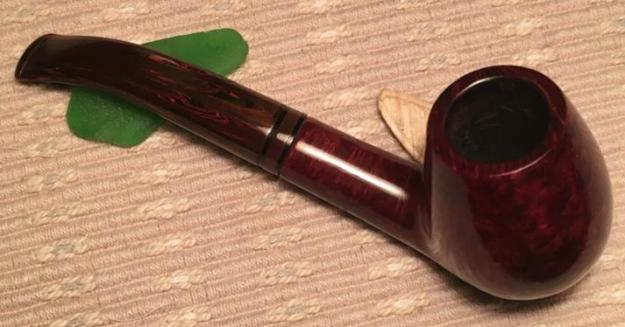
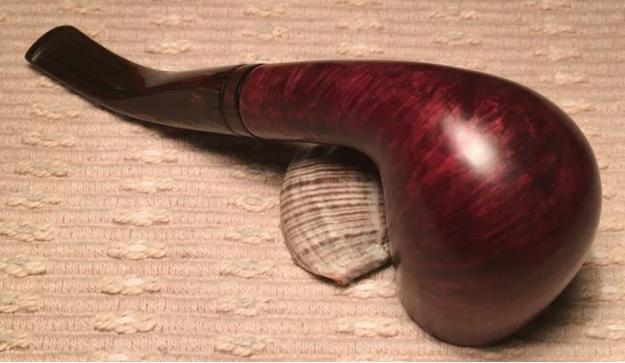
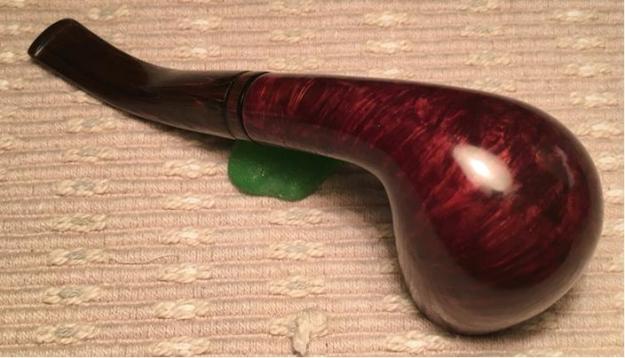
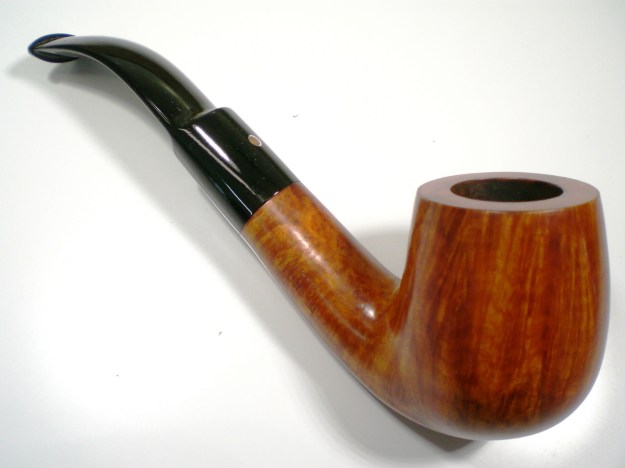
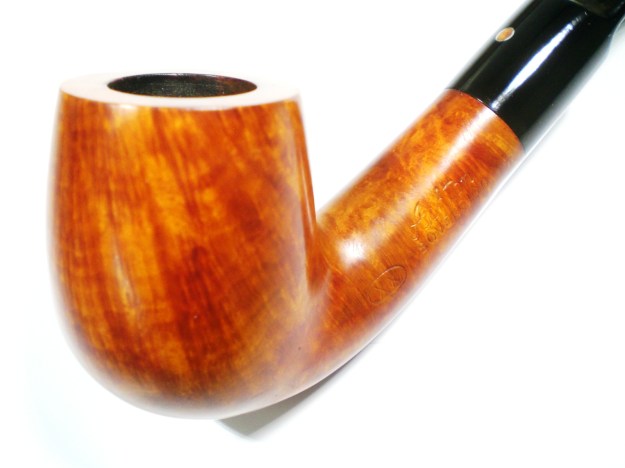
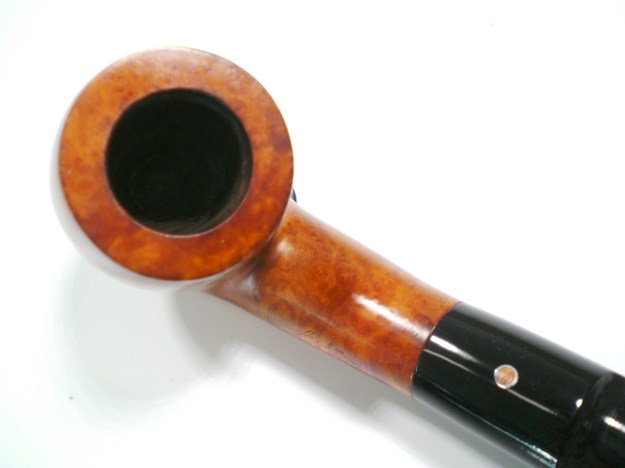
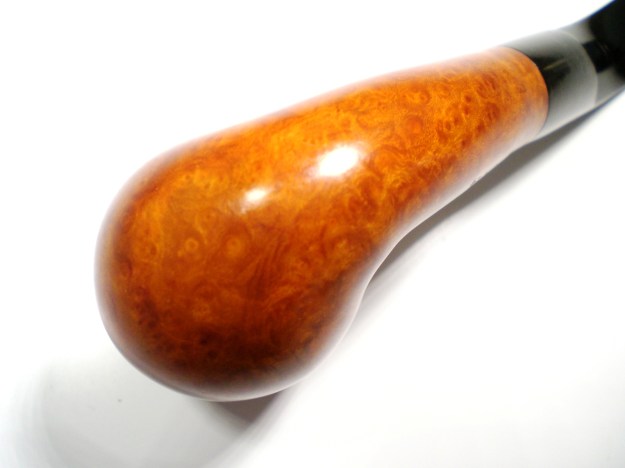
Rejuvenating the first of two Peterson’s System Pipe 1312


Blog by Steve Laug

I have written about the first three pipes from an estate lot that I was tasked to clean up and sell in three previous blogs at https://rebornpipes.com/2016/10/25/this-favourite-gbd-marquis-752-was-a-mess-not-any-more/; https://rebornpipes.com/2016/10/26/rescuing-a-petersons-english-made-203-billiard/;  https://rebornpipes.com/2016/10/27/rejuvenating-a-petersons-system-pipe-1314/. These included a GBD Marquis Author, a Peterson’s English Made 203 billiard and a Peterson’s 312 System Pipe. I am including a short version of the acquisition for those who have not read it. My friend has a pipe shop that is closing and he had some pipes that had belonged to an elderly gentleman who had died. His wife had given him the fellow’s pipes. She wanted to get them cleaned up and sold to folks who would appreciate them. Richard thought I would be interested in the story and have fun cleaning these up and selling them. There some really nice pipes in the lot – GBD’s, Comoy’s, Stanwells, Petersons, two ceramic Goudewaagen pipes, and others. There are just over 50 pipes that I will be cleaning and listing on rebornpipes.

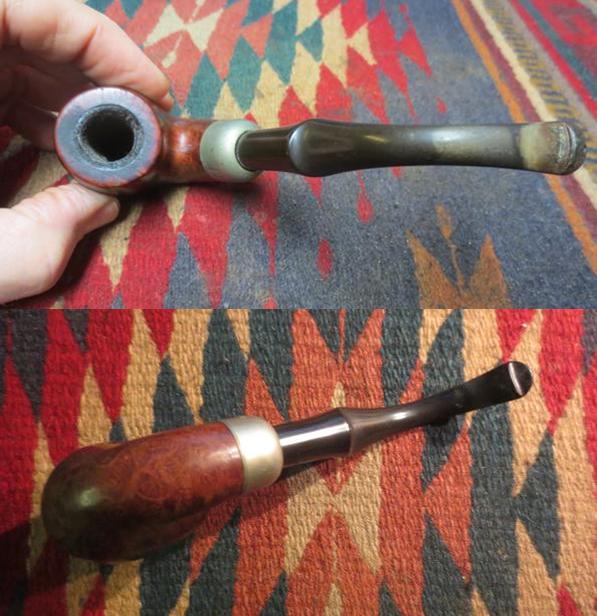
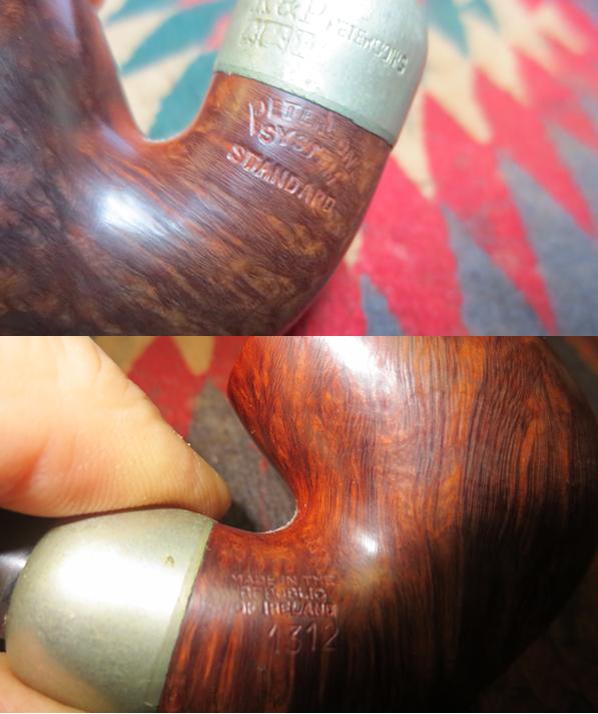
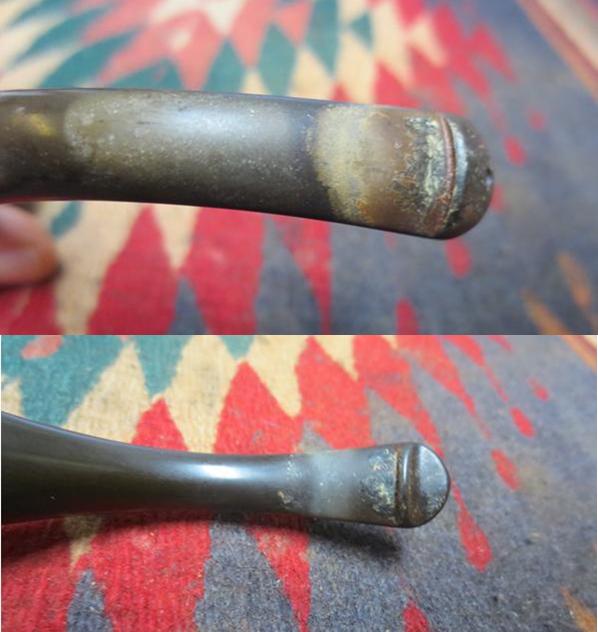
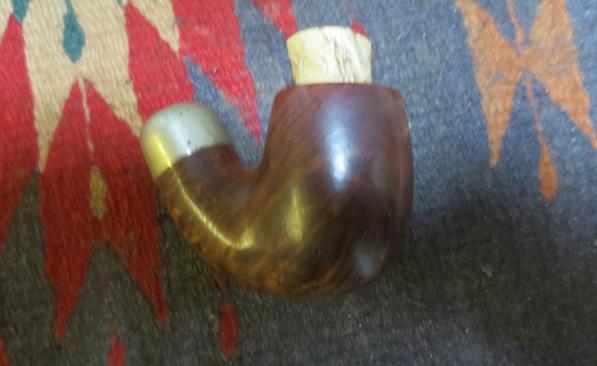
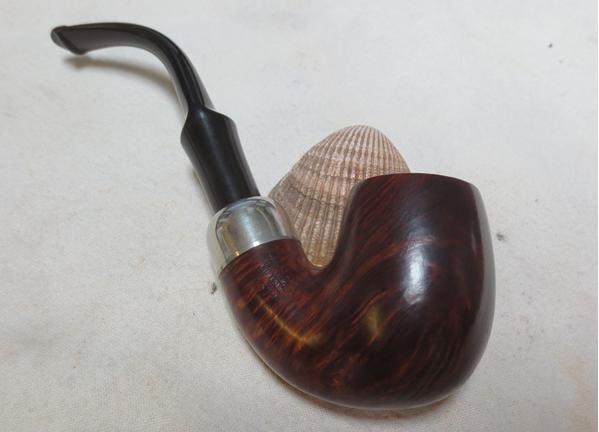
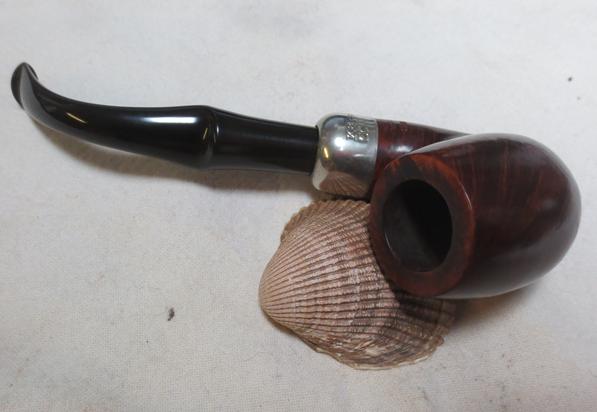
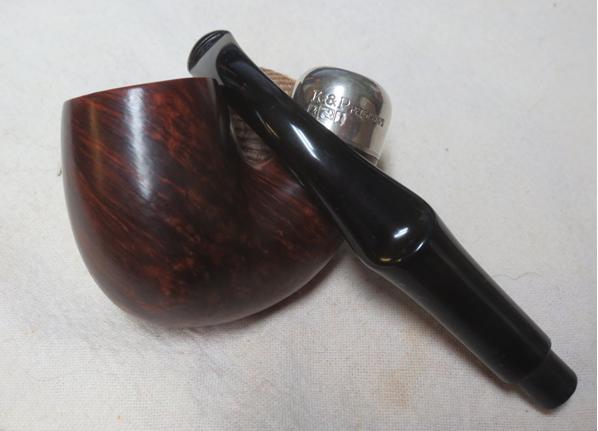
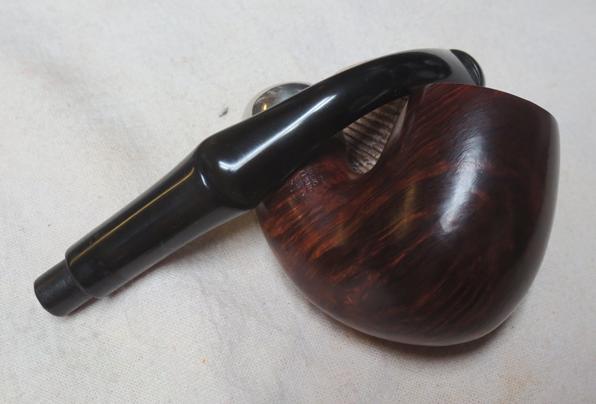
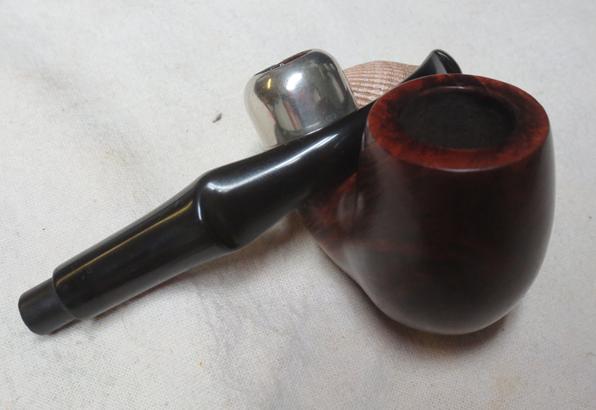
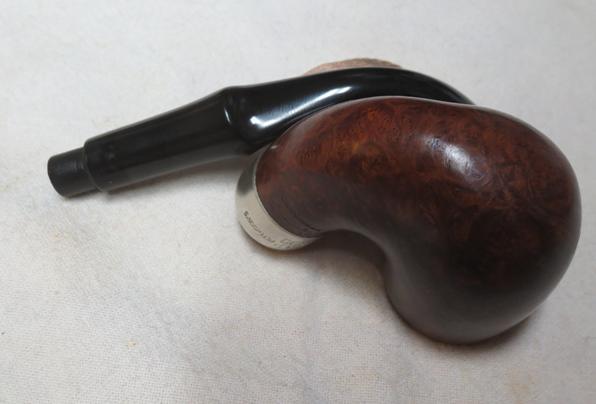
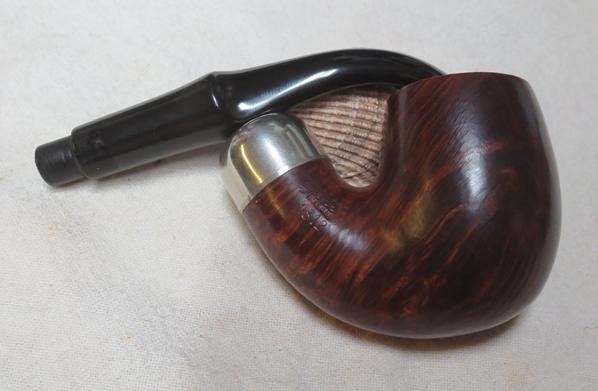
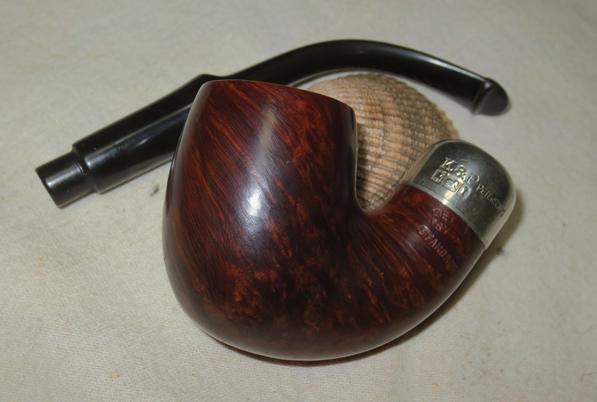
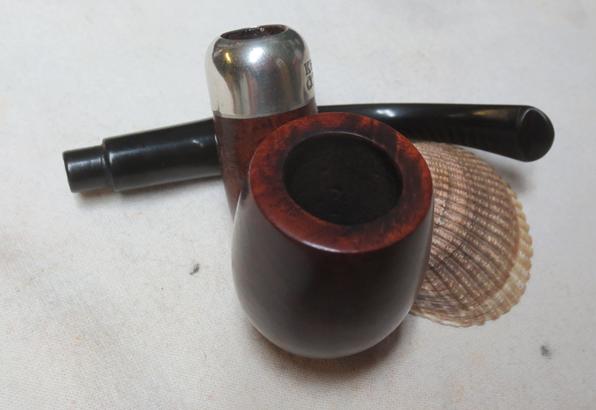
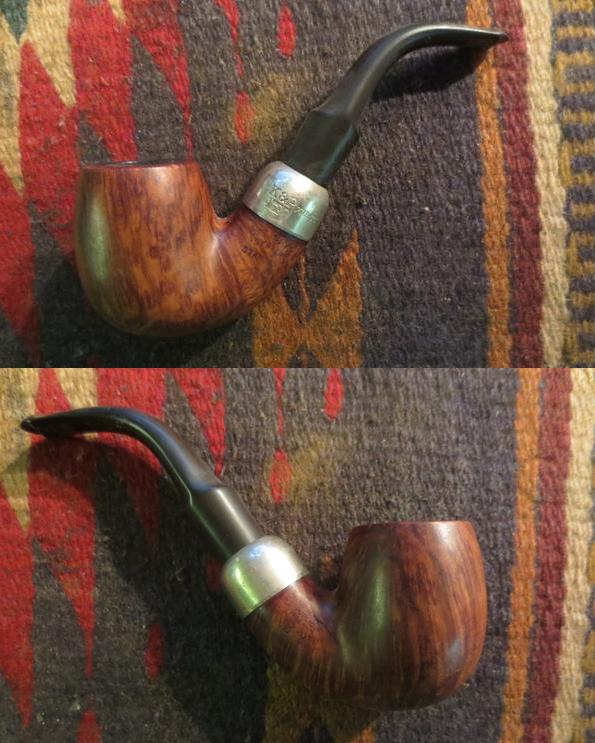
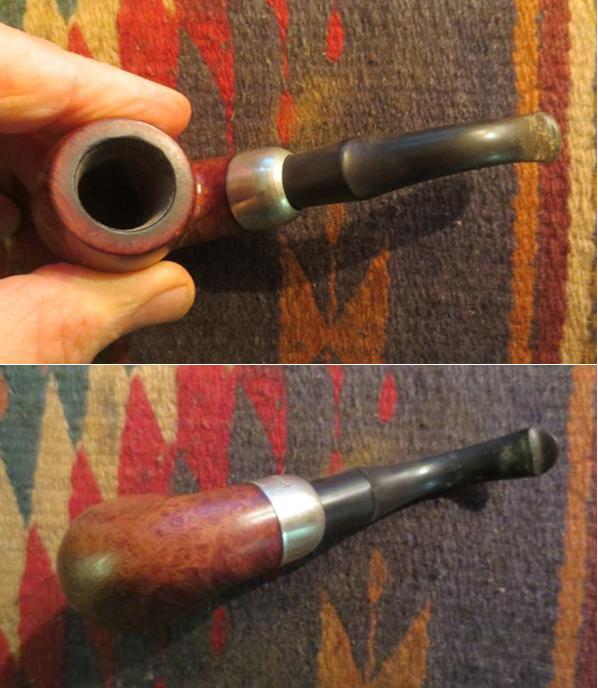
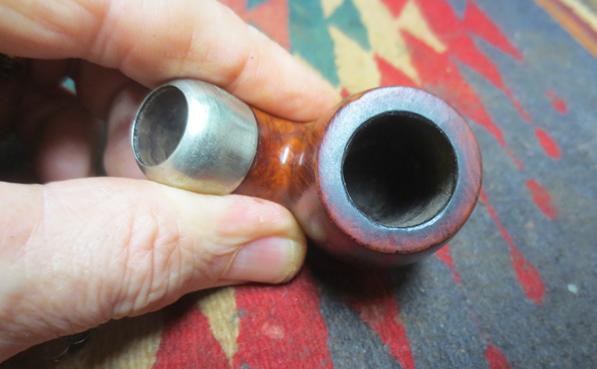
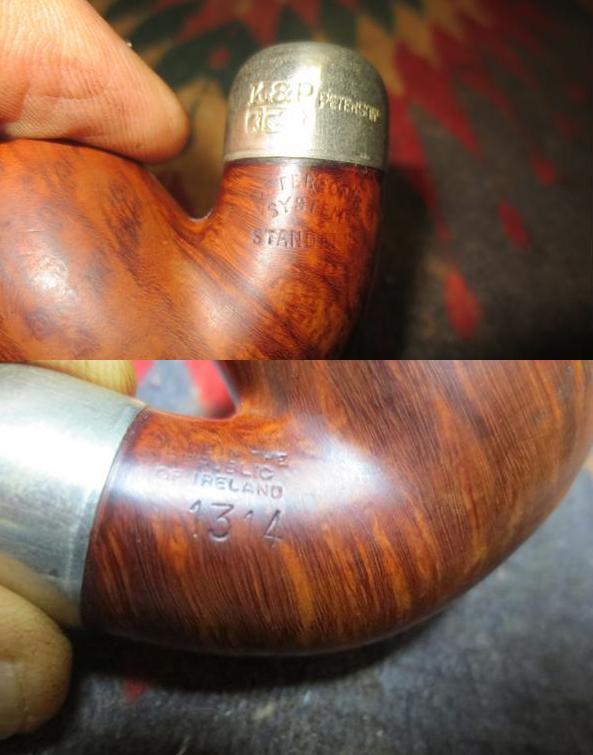
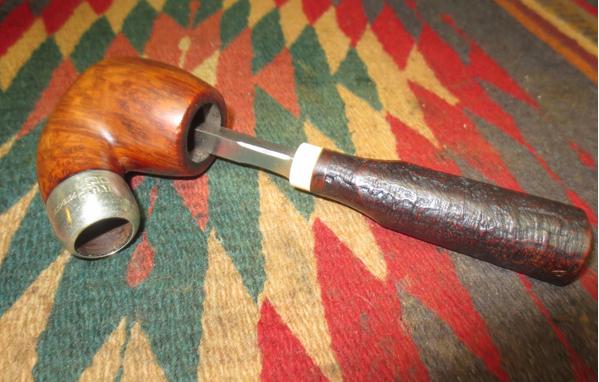
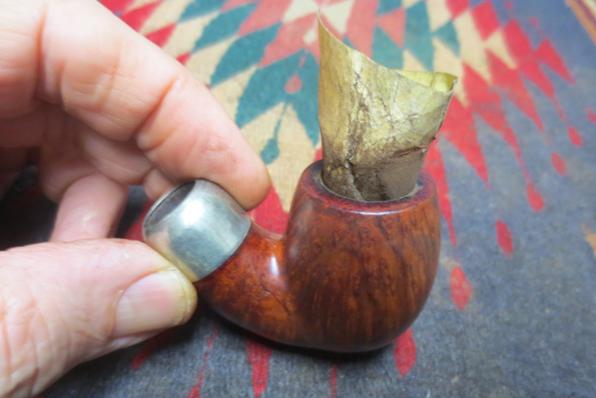
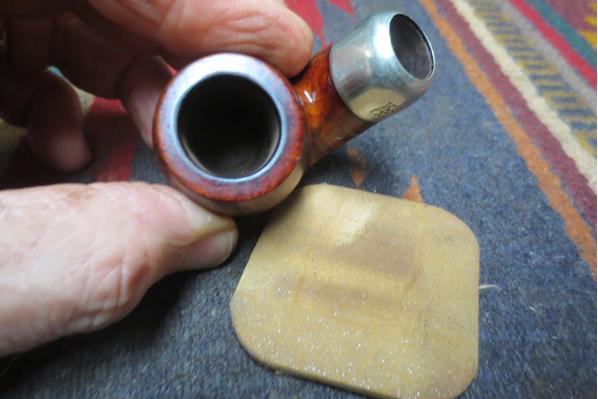
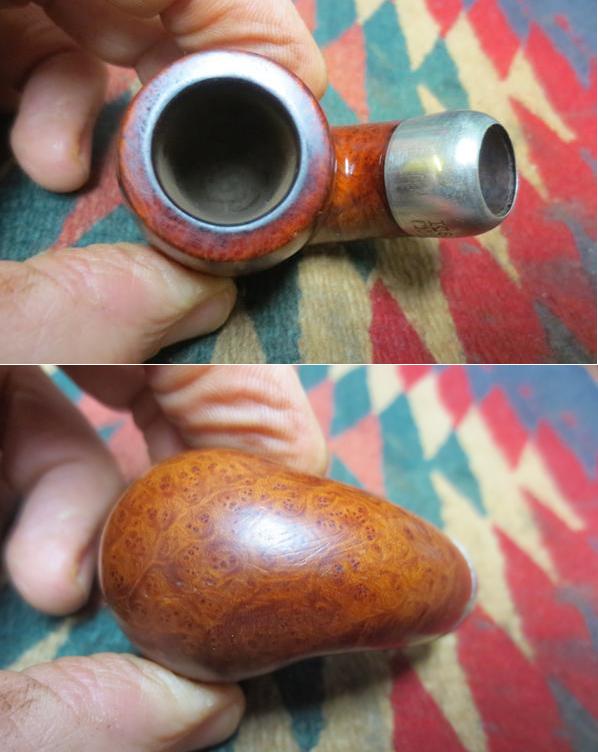
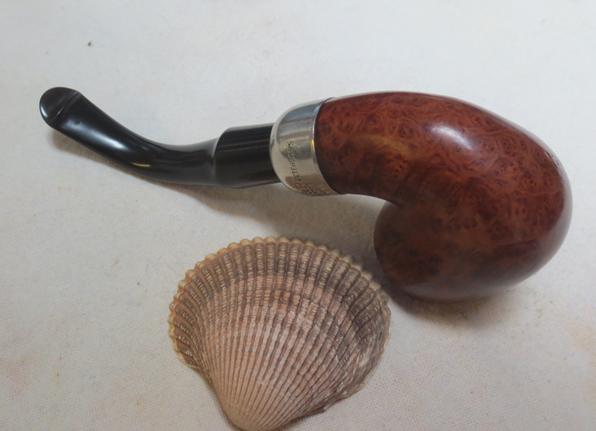
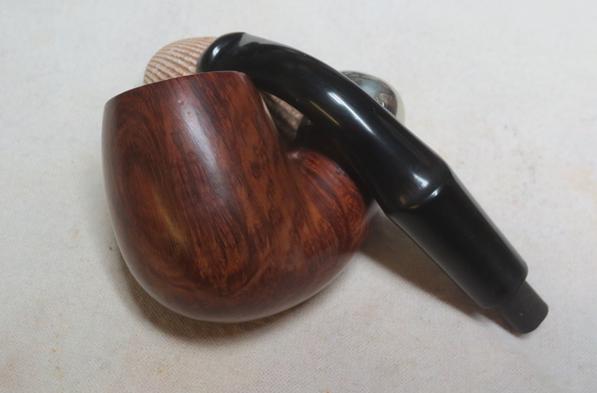
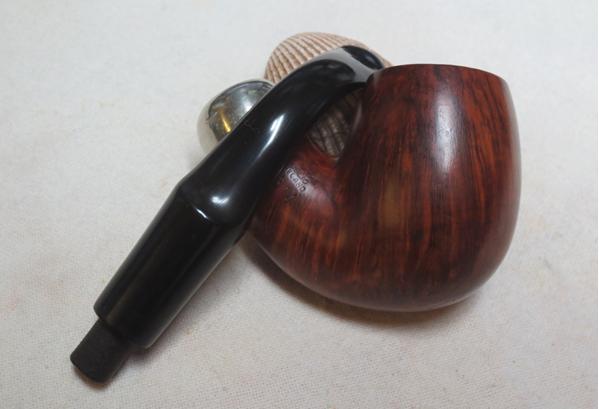
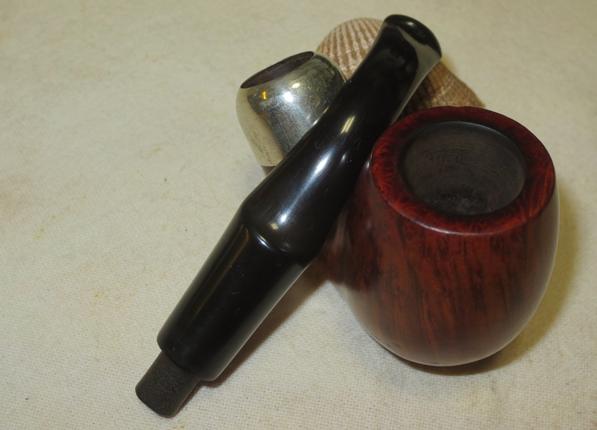
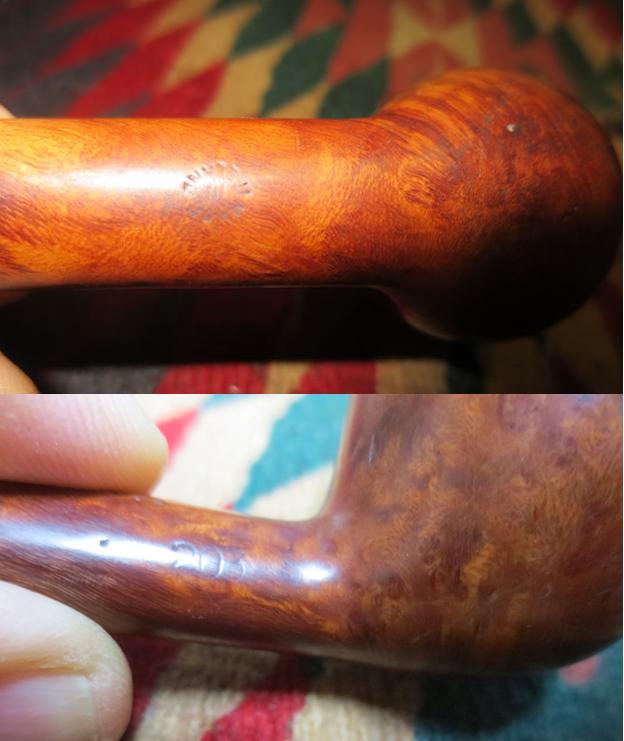
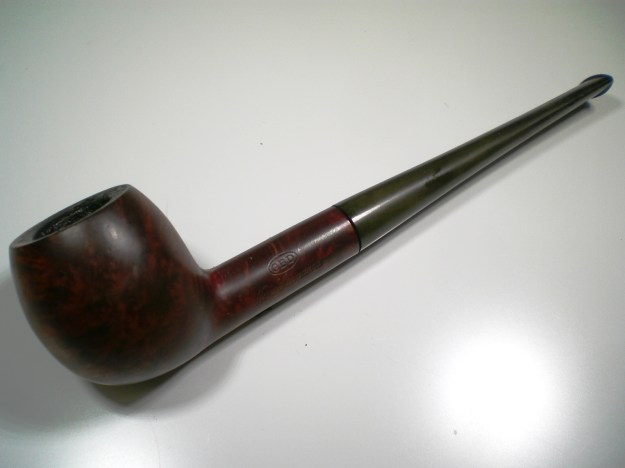
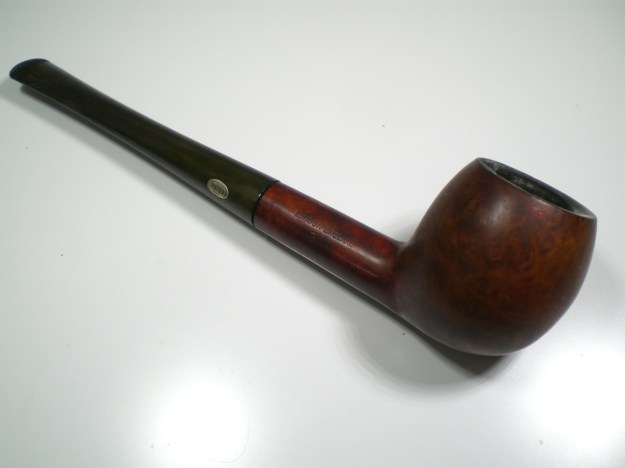
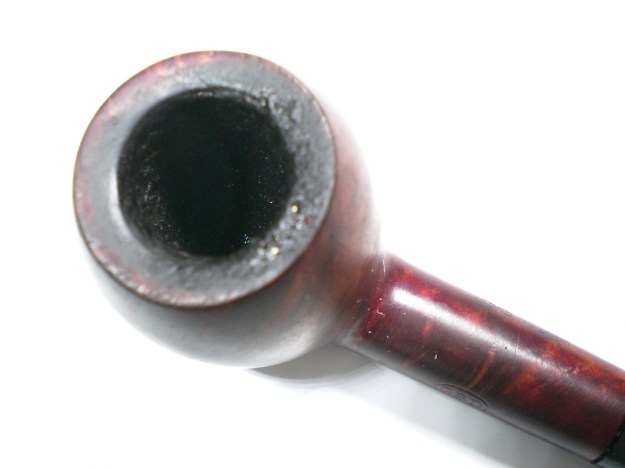
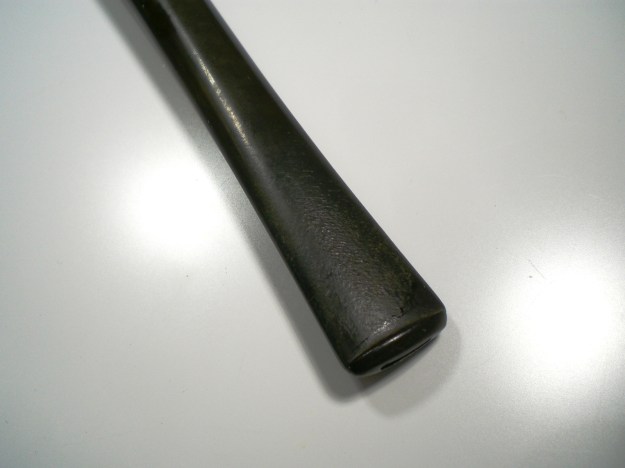
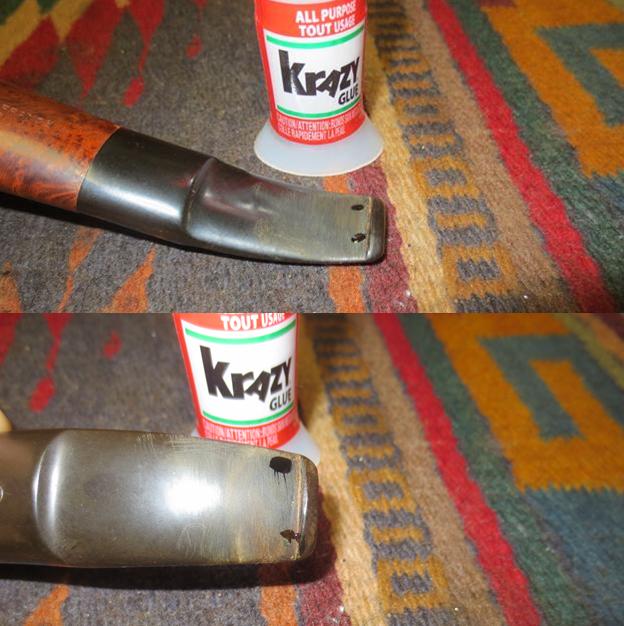
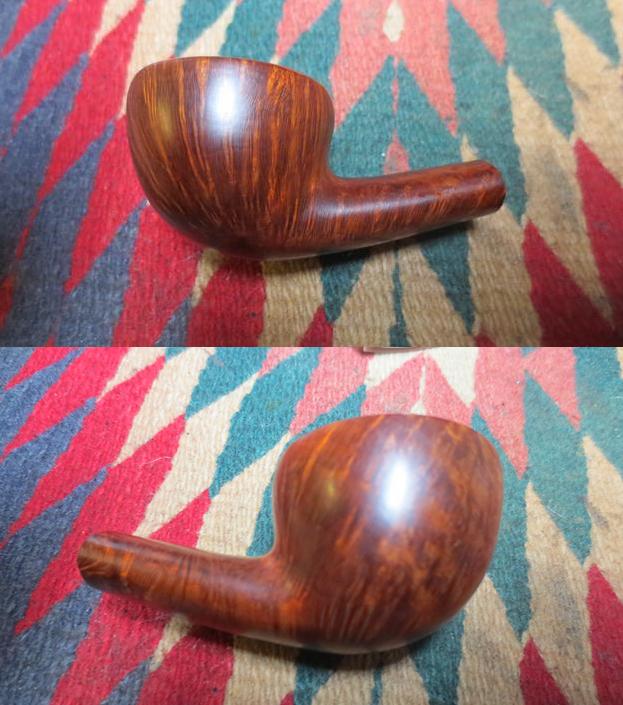
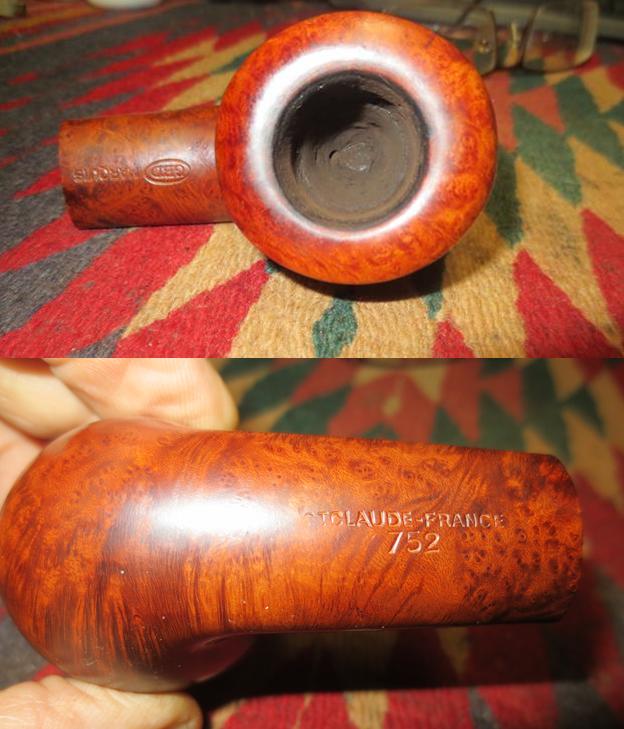
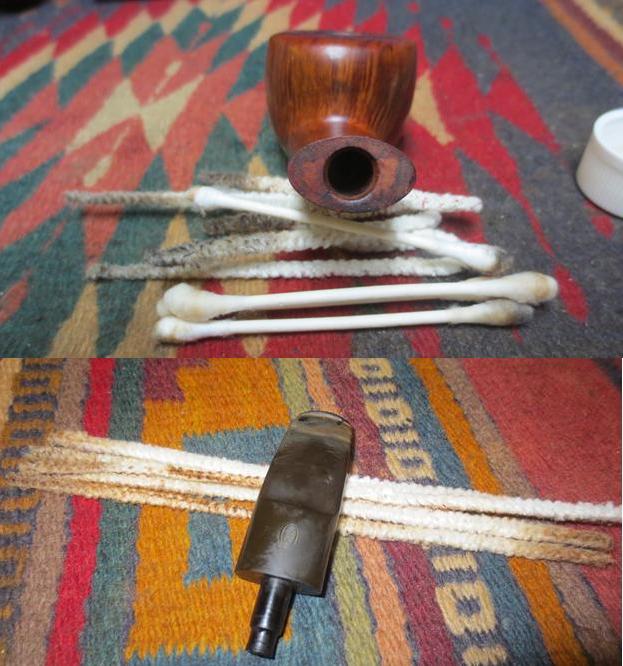
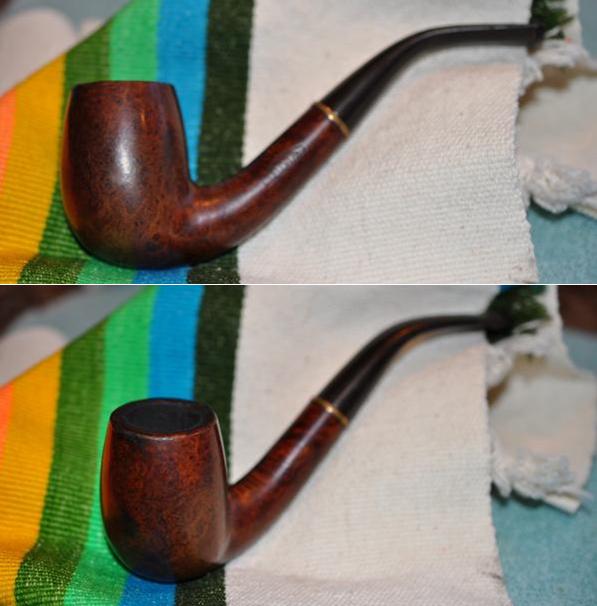
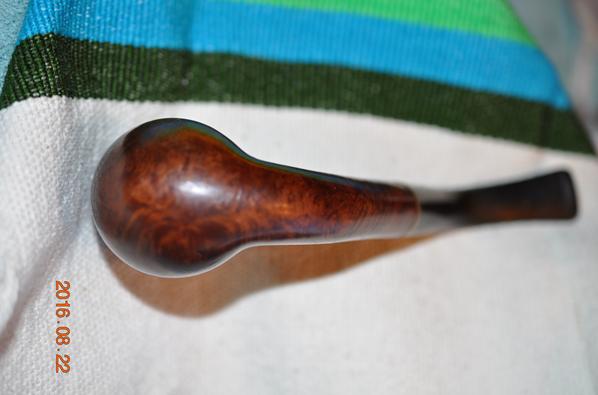
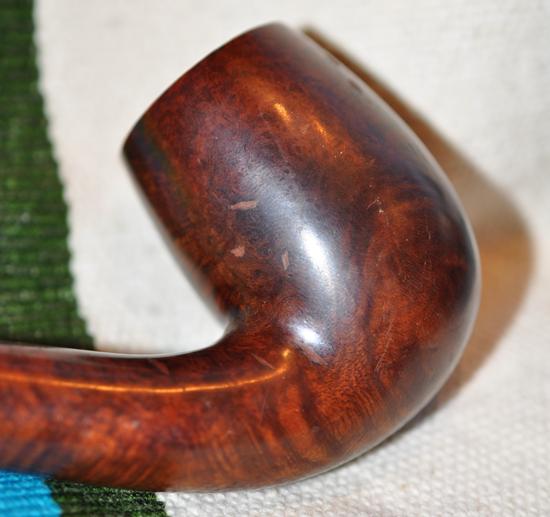
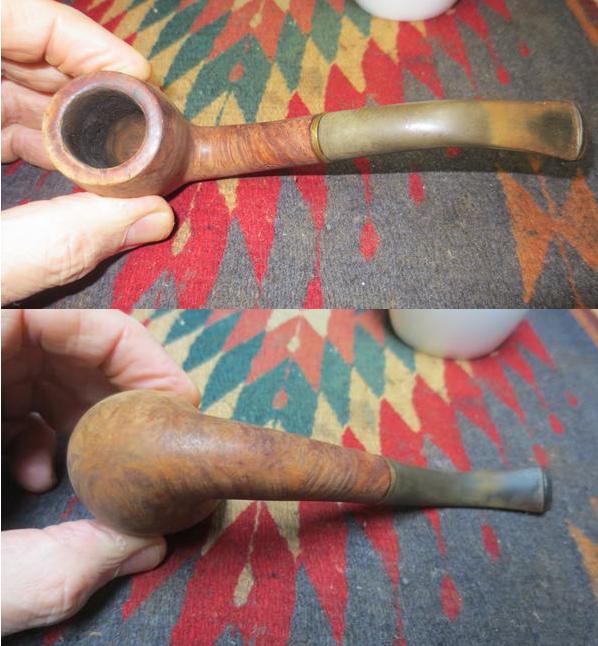
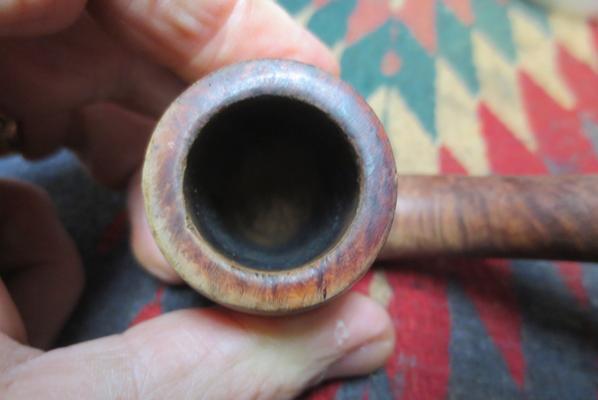
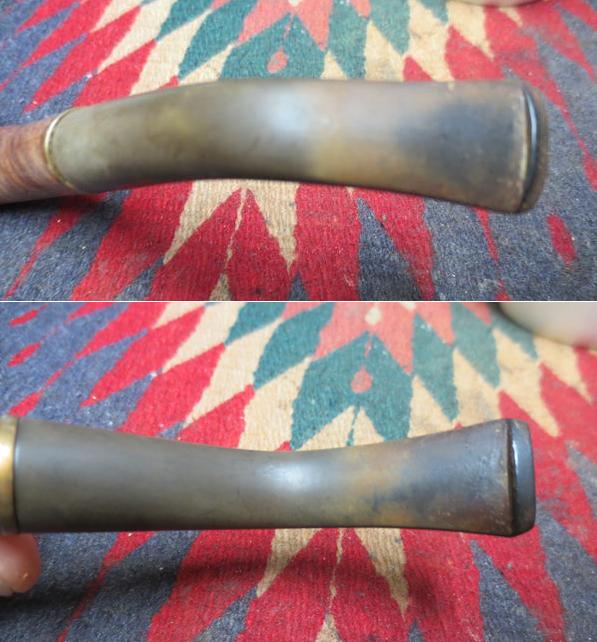
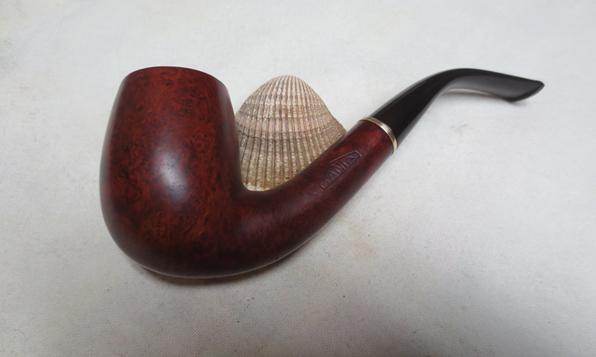
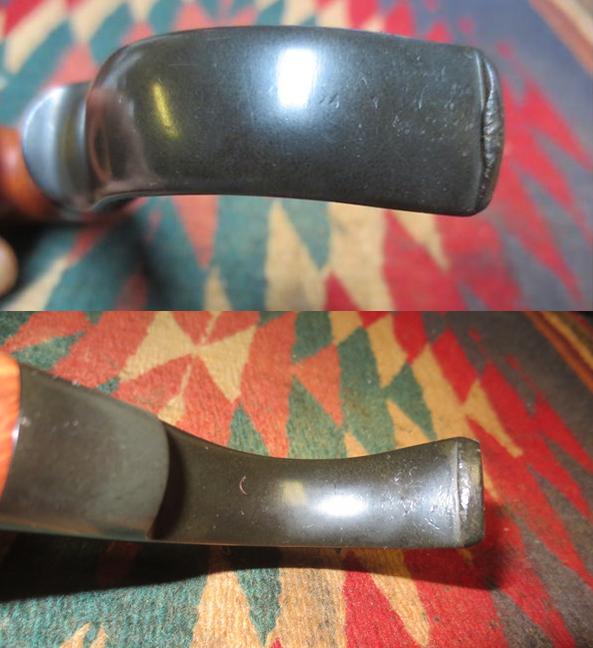
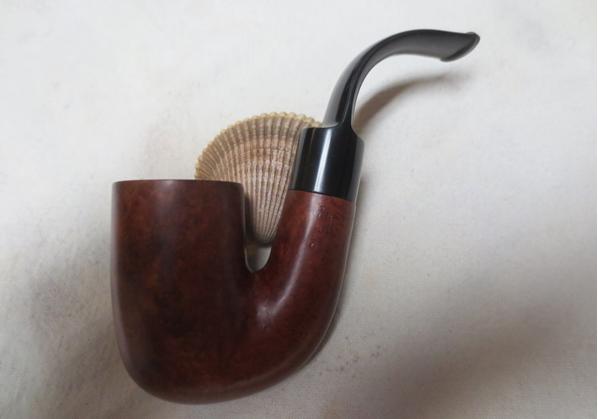
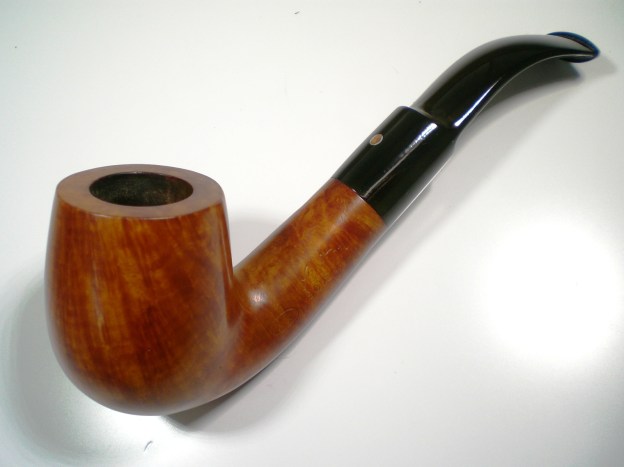
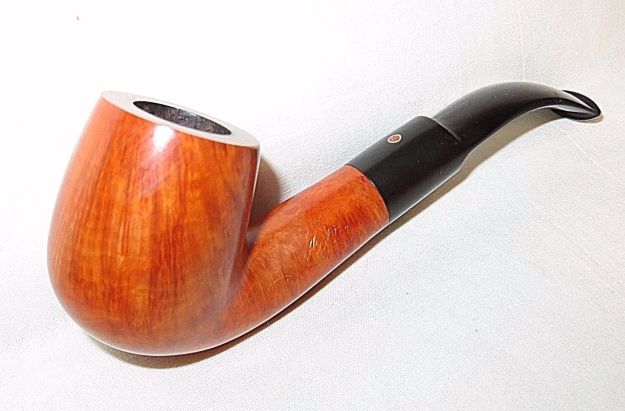
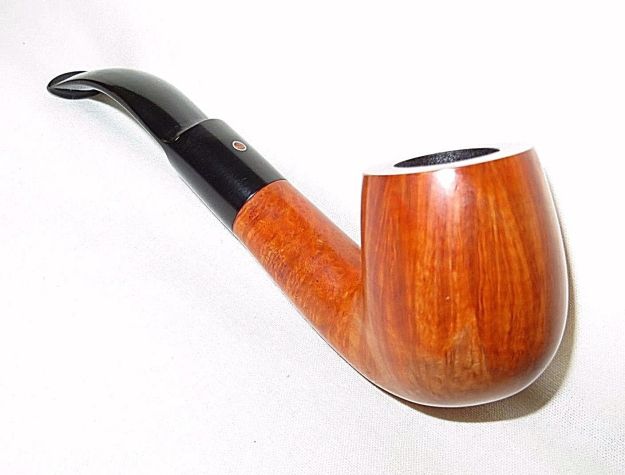
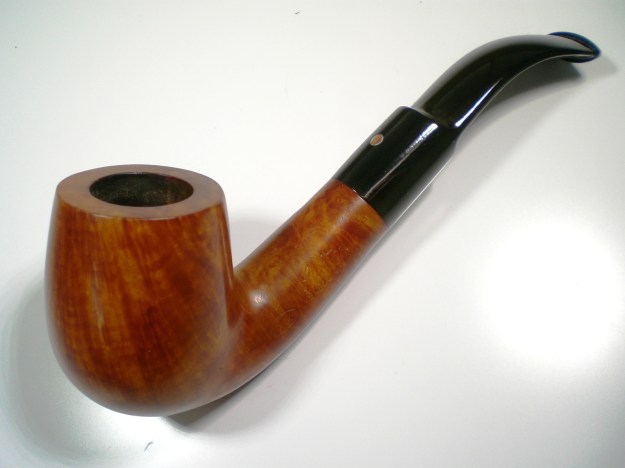
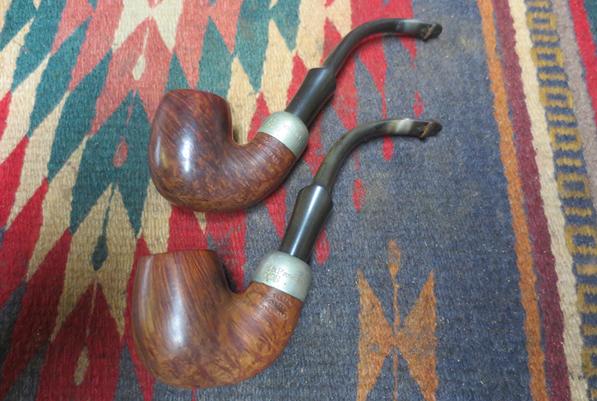
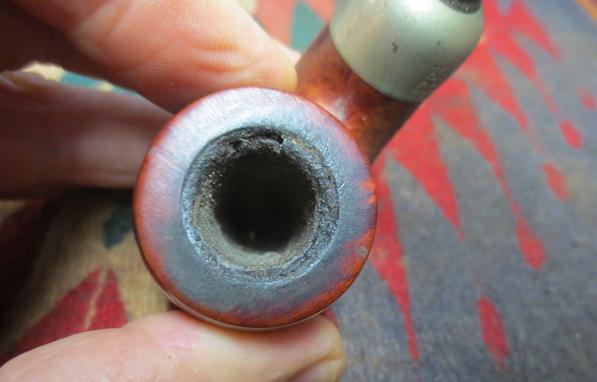
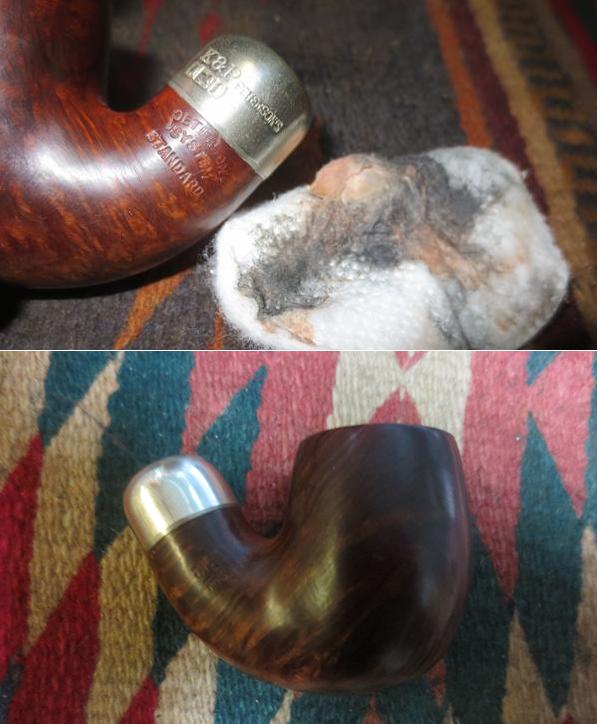
The fourth pipe I chose to work on was another Peterson’s System Pipe. It is stamped Peterson’s System Standard pipe on the left side of the shank. On the right is stamped Made in the Republic of Ireland 1312. The stamping is clear and sharp. The nickel ferrule is stamped K&P Peterson’s and has the three faux hallmarks that are for looks.  The bowl is thickly caked and the rim is dirty. The finish is in decent shape with a medium brown stain over flame and straight vertical grain. The stem is oxidized with some calcification around the P-lip button. Light tooth chatter covers both the top and underside of the stem. There is no P stamping on the P-lip stem but it appears to be an original not a replacement.

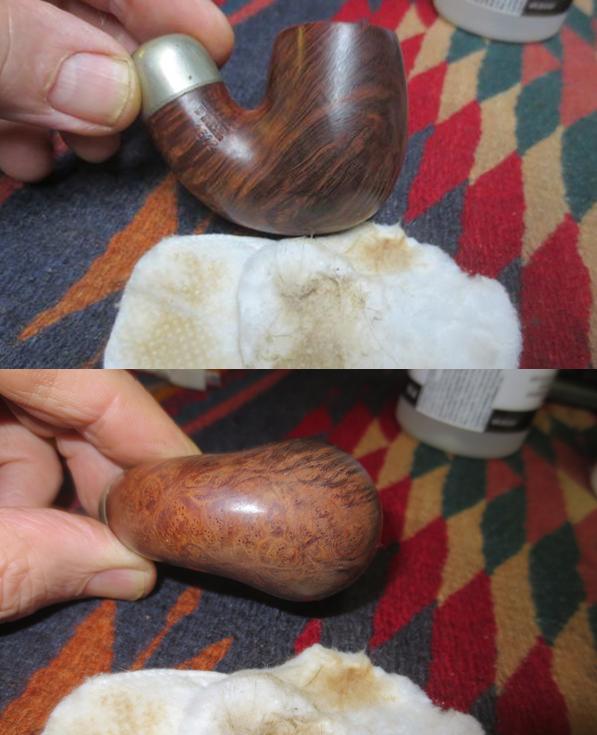
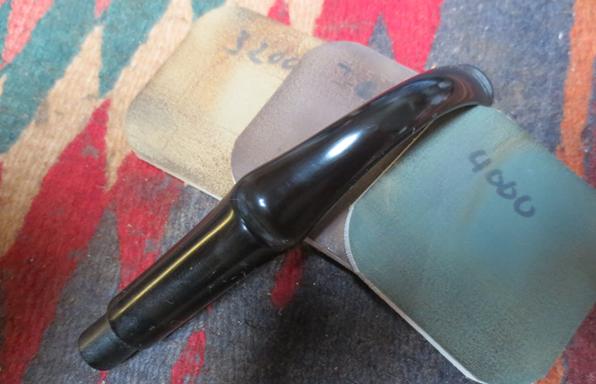
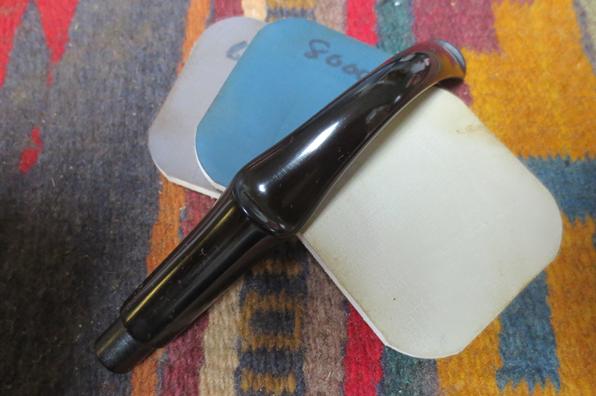
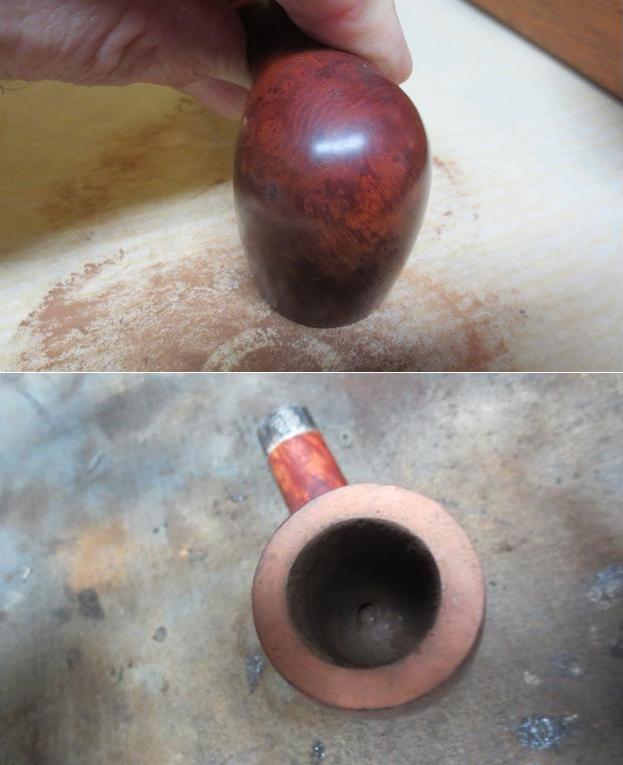
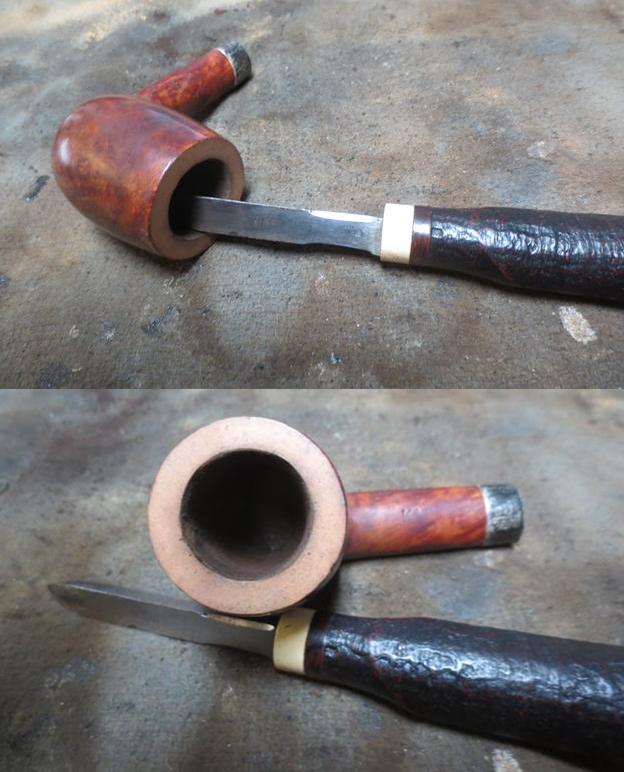
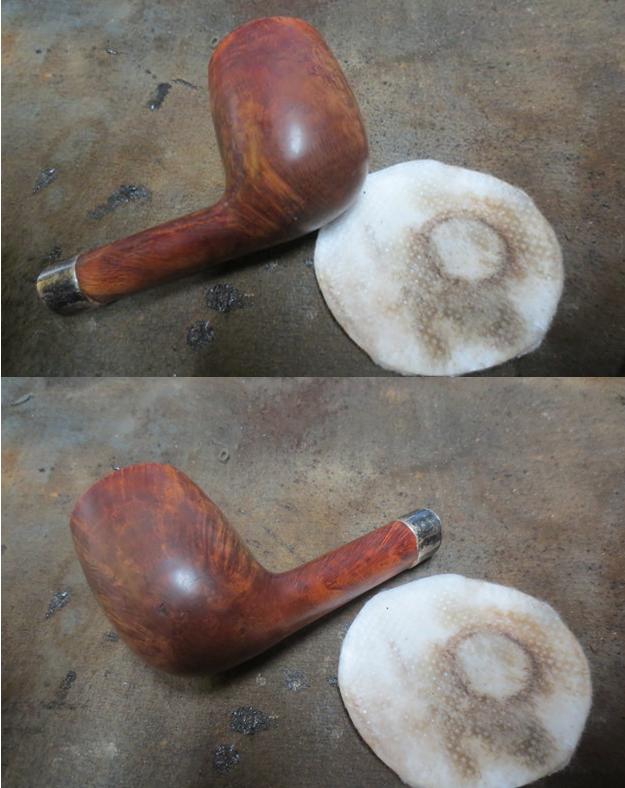
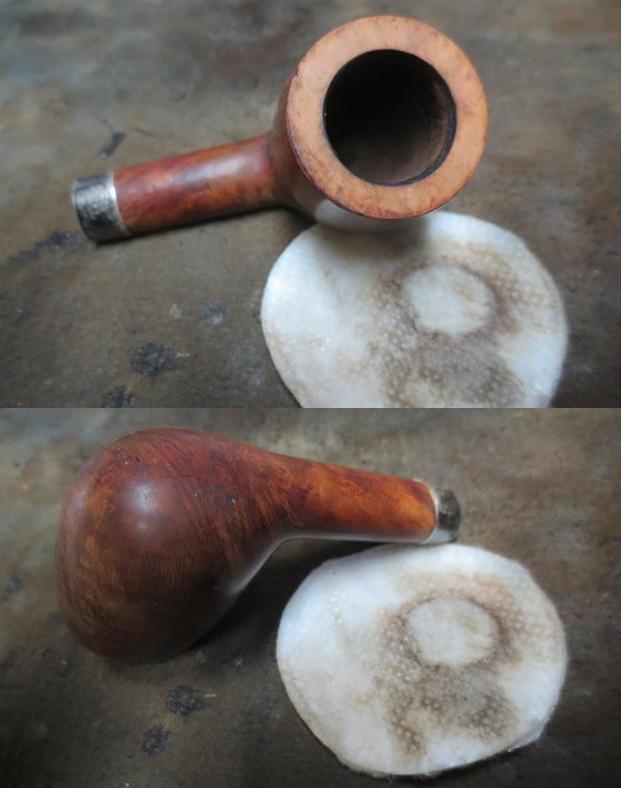
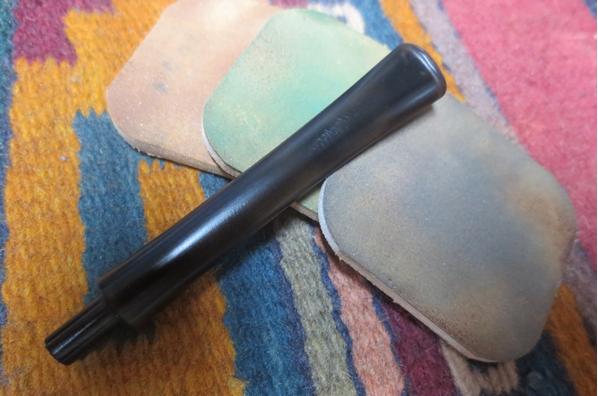
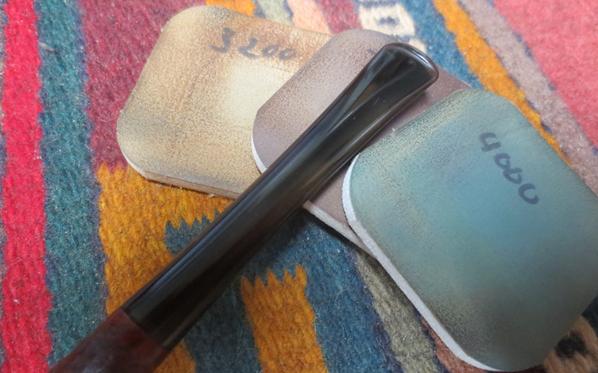
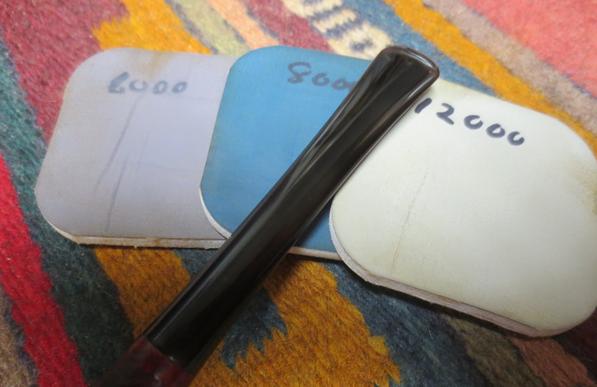
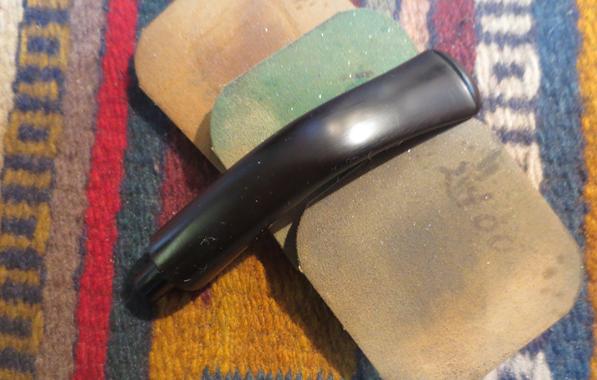
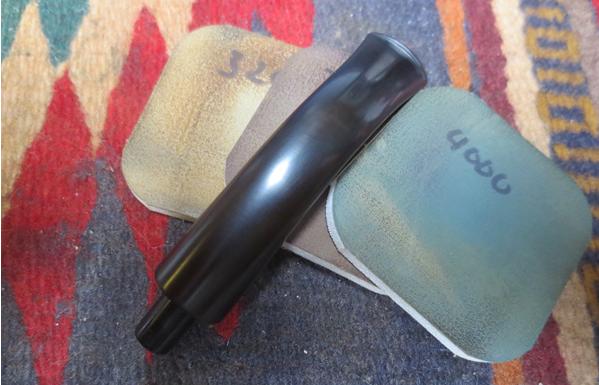
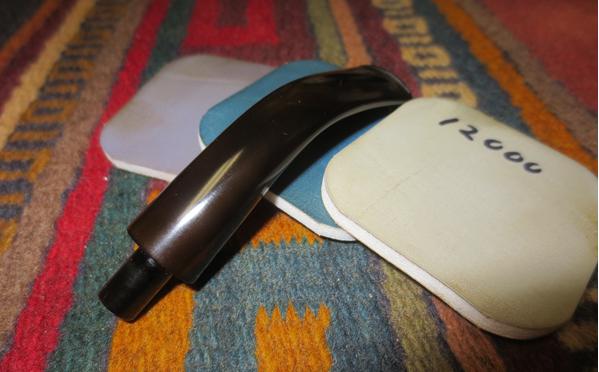
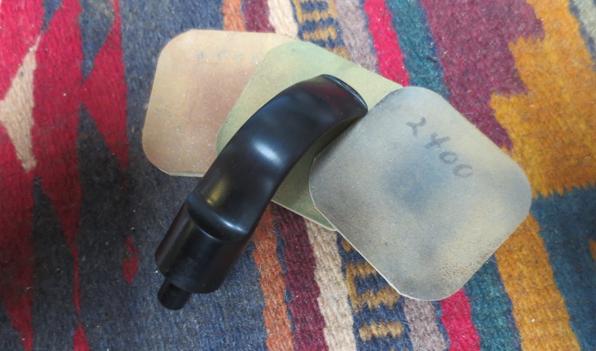
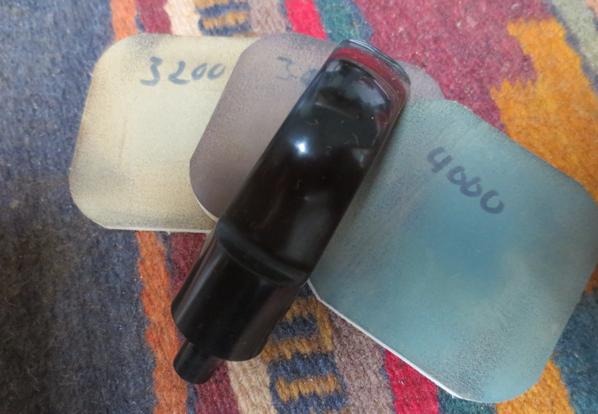
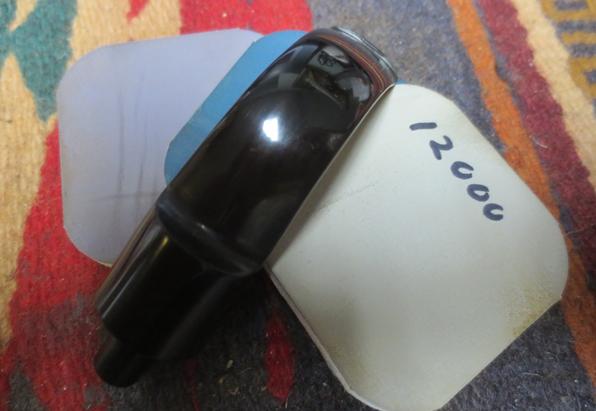
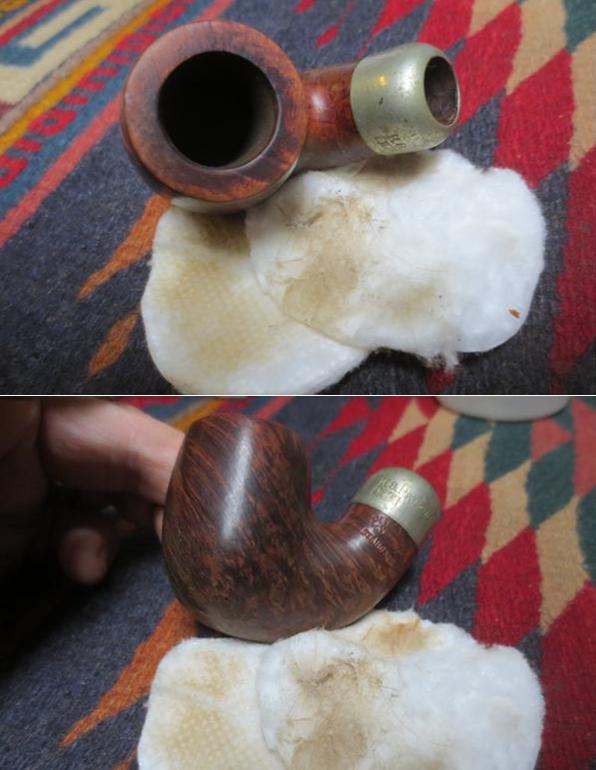
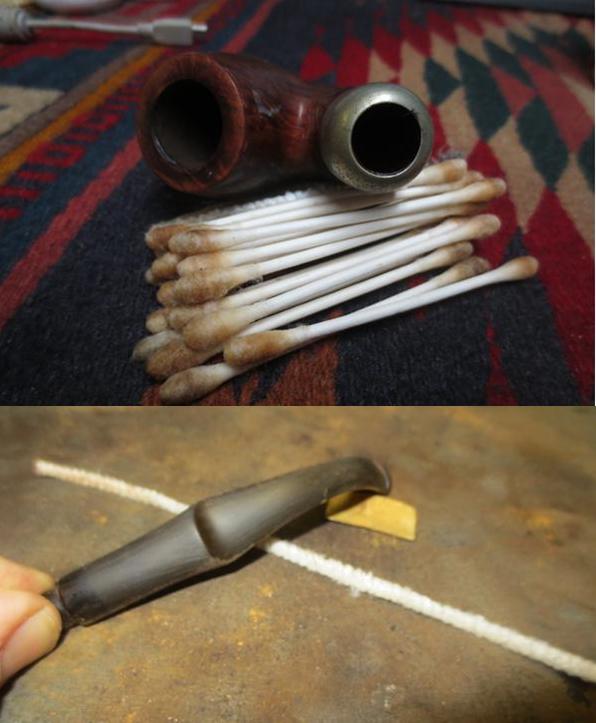
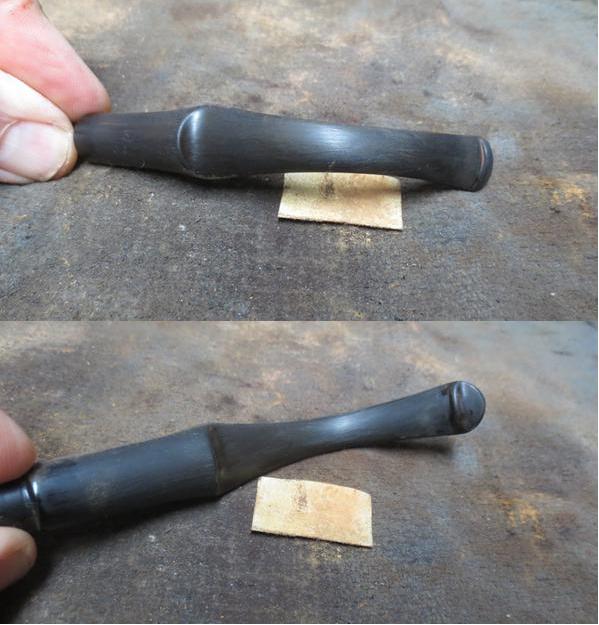
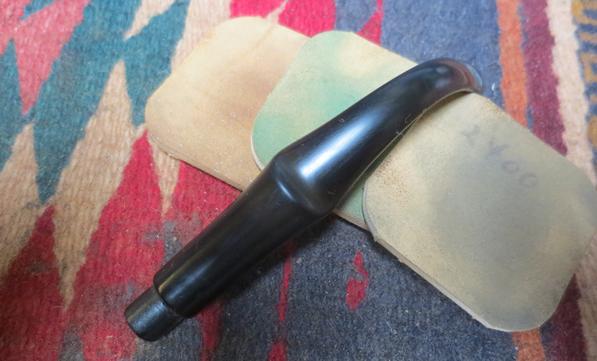
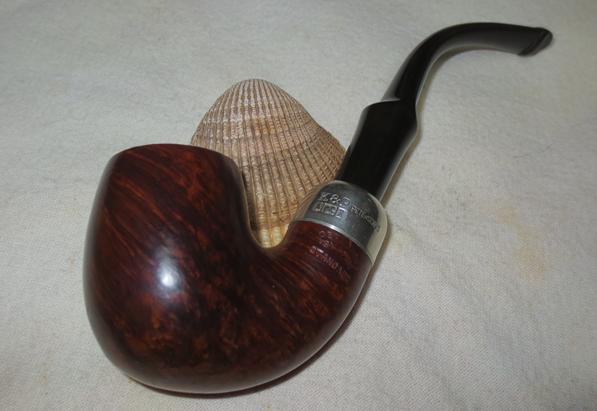
Here are some photos of the pipe when I started cleaning it. The pipe has good lines and some interesting grain underneath the grime.pete1 pete2 pete3I took some close up photos of the bowl, rim, stamping and the stem to give and idea of the issues I had noted above. The first photo shows the thick cake in the bowl and the overflow onto the rim top. The next photos show the oxidized nickel ferrule on the end of the shank and the clear stamping on both sides. The last two photos in this set show the chatter and detail of the stem.pete4 pete5 pete6I reamed the bowl with a PipNet reamer starting with the smallest cutting head and working up to the third cutting head. I took the cake back to bare briar. I cleaned up the inside of the bowl with the Savinelli Pipe Knife. I rolled a piece of 220 grit sandpaper around my finger and sanded out the inside of the bowl and smooth out the inner rim edge.pete7 pete8I scrubbed the exterior of the bowl with alcohol on cotton pads to remove the grime, waxes and oils. It has some beautiful grain shining through on the cleaned briar.pete9 pete10I cleaned the interior of the mortise and the airway in the shank and stem with pipe cleaners, cotton swabs and alcohol until they were clean. I spent extra time in the trap in the bottom of the shank.pete11I polished the ferrule with tarnish remover and silver polish on cotton pads to remove the oxidation. The nickel really shone once the tarnish was removed.pete12I worked on the tooth chatter, oxidation and calcification on the stem with 220 grit sandpaper until I had removed the damage and build up.pete13I polished the stem with micromesh sanding pads – wet sanding with 1500-1200 grit pads and dry sanding with 3200-12000 grit pads. I rubbed the stem down with Obsidian Oil after each set of three pads. After sanding with the final set I rubbed it down once again and set it aside to dry.pete14 pete15 pete16I buffed the pipe and stem with Blue Diamond on the buffing wheel to raise the shine and polish it further. I gave the pipe multiple coats of carnauba wax and buffed it with a clean buffing pad to shine it. I finished by hand buffing the pipe with a microfibre cloth. This adds some depth to the shine. The finished pipe is shown in the photos below. This pipe is for sale along with the others that I have cleaned up from the estate. If you are interested in adding it to your collection send me an email to slaug@uniserve.com or a message on Facebook. Thanks for walking through the process with me.pete17 pete18 pete19 pete20 pete21 pete22 pete23 pete24 pete25 pete26 pete27
 

Rejuvenating a Peterson’s System Pipe 1314


Blog by Steve Laug

I wrote about the first two pipes from an estate lot that I was tasked to clean up and sell on two previous blogs at https://rebornpipes.com/2016/10/25/this-favourite-gbd-marquis-752-was-a-mess-not-any-more/ and https://rebornpipes.com/2016/10/26/rescuing-a-petersons-english-made-203-billiard/  For those who have not read it yet here is the story. About a month ago a friend of mine, Richard who has a tobacco shop here in Vancouver gave me a call and asked me to stop by for a visit. I went on a Sunday afternoon and we visited for a while. At the end of the visit he took me to another counter in his shop and brought out some display cases of pipes – four of them and a small bag. He told the story to me. An elderly gentleman who was a customer of his had died and his wife had stopped by and gave him the fellow’s pipes. She wanted nothing for them she just wanted him to get them cleaned up and sold to folks who would appreciate them. Richard is a reader of the blog and he thought that I would have fun cleaning these up and selling them. As we went through the display cases and bag I was pretty pumped about the collection. There were some really nice GBD pipes, Comoy’s, Stanwells, Peterson’s as well as some brands I was not familiar with.

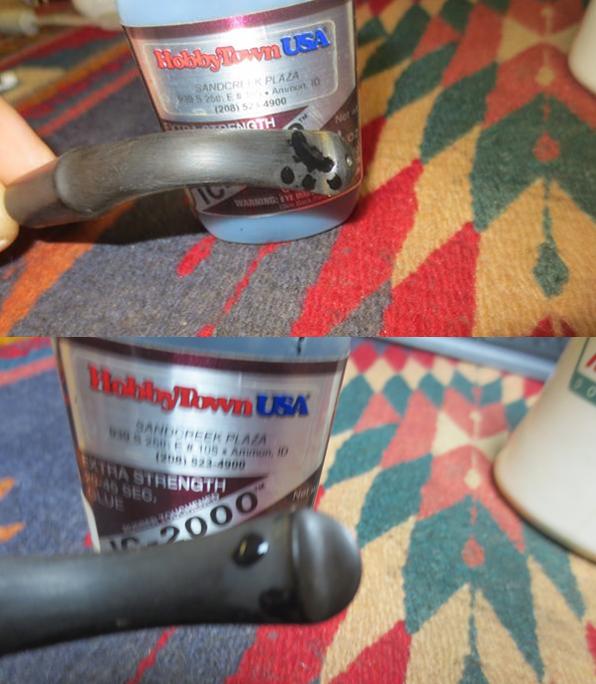
The third pipe I chose to work on was a Peterson’s System Pipe. It was stamped on the left side of the shank Peterson’s System Standard. On the right side of the shank it is stamped Made in the Republic of Ireland and the shape number 1314. The stamping is clear and sharp. The finish is in decent shape with a medium brown stain over flame and straight vertical grain. There is a light, uneven cake in the bowl that had spilled over the rim. There is thin cake in the bowl and some darkening on the rim. There are tooth marks on the top and bottom side of the stem near the button. There is no P stamping on the P-lip stem but it appears to be an original not a replacement. There is calcification from a softee bit on the stem and button. There are several deeper tooth marks and chatter on the top and bottom side of the stem ahead of the P-lip. The button itself was in good shape with a small tooth mark on the top at the sharp edge.

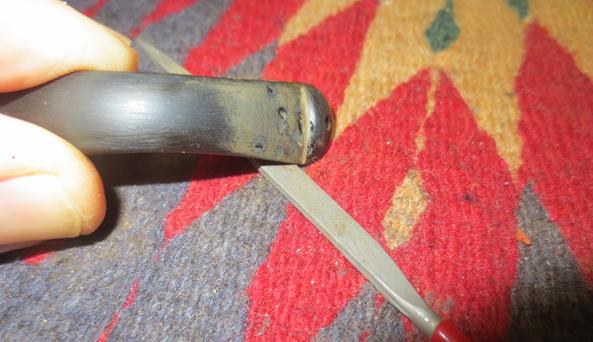
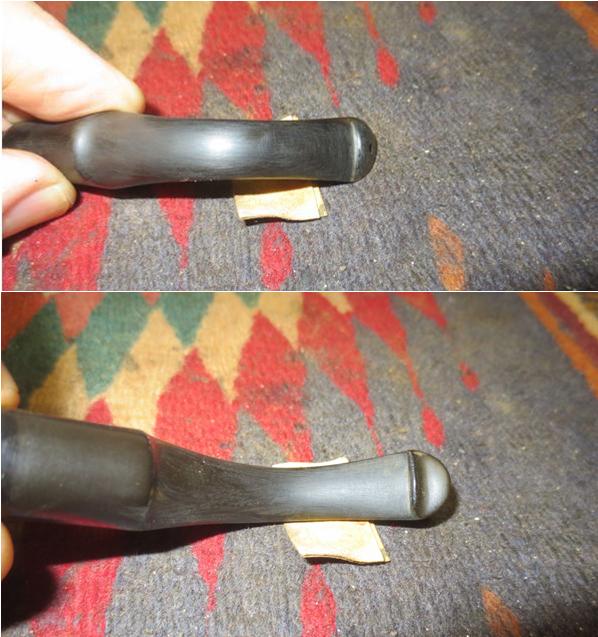
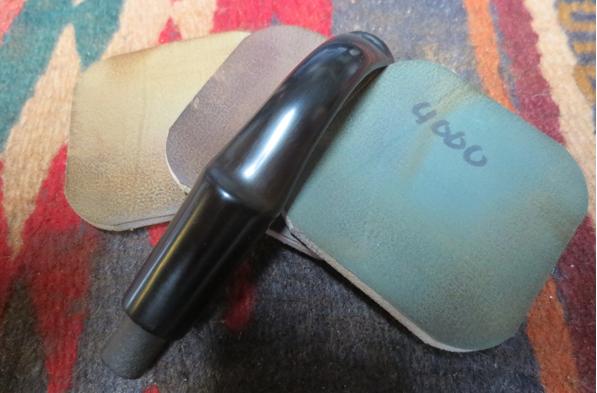
Here are some photos of the pipe when I started cleaning it. The pipe has good lines and some interesting grain underneath the grime.sys1 sys2I took some close up photos of the rim and the stamping to show the condition of the bowl. The rim had some darkening and it was slightly out of round. It looked as if it had been reamed with a knife and the inner edge of the bowl had nicks along the back edge. There was a light cake in the bowl and some shreds of tobacco at the bottom of the bowl. The stamping was readable though light in some places.sys3 sys4The stem was lightly oxidized but there were some deep tooth marks on the top and the underside underneath the calcification and the oxidation on the button end. The sharp edge of the p-lip was worn and would need to be sharpened.sys5I reamed the bowl with a Savinelli Pipe Knife to clean out the light cake and the debris. I took the cake back to bare briar. I sanded the bowl with a rolled piece of 220 grit sandpaper on my finger to clean up any remaining cake.sys6 sys7I scrubbed the top of the rim with cotton pads and saliva and then lightly sanded it with 3200 grit micromesh to polish off the remaining tars.sys8I wiped the bowl down with a light coat of alcohol on a cotton pad to remove the grime in the finish and any sanding dust. I buffed it lightly by hand and took the photos below. There is some nice grain on this old timer the mix of flame and straight grain really stands out and the birdseye on the rim and the bottom of the bowl is quite stunning.sys9 sys10I sanded the stem with 220 grit sandpaper to remove the calcification, oxidation and clean up the tooth chatter. I wiped out the deep tooth marks with a cotton swab and alcohol to get out the dust in them and then filled the divots with black super glue. I set the stem aside to dry while I went to work for the day.sys11When I got home from work I sanded the repairs smooth with 220 grit sandpaper and used a needle file to redefine the sharp edge of the button and underside lip on the stem.sys12I continued to sand the stem with the 220 grit sandpaper until the repairs blended into the surface of the vulcanite and I had removed the oxidation on the remainder of the stem.sys13I worked over the stem with micromesh sanding pads – wet sanding with 1500-2400 grit pads and dry sanding with 3200-12000 grit pads. I rubbed the stem down with Obsidian Oil after each set of three pads. After sanding with the 12000 grit pad I gave it a final rubdown with the oil and set it aside to dry.sys14 sys15 sys16I lightly sanded the bowl and rim with 6000-12000 grit micromesh sanding pads while the stem dried. I put the pipe back together and buffed it with Blue Diamond polish on the buffer. I gave the entire pipe multiple coats of carnauba wax and buffed it with a clean buffing pad. I finished by hand buffing it with a microfibre cloth. The finished pipe is shown below. It is the third of the old gentleman’s estate that I have finished restoring. It is available for sale to anyone who wishes to add it to their collection. The photos below show the finished pipe from a variety of angles. Contact me if you are interested by email at slaug@uniserve.com or send me a message on Facebook. Thanks for walking through this with me.sys17 sys18 sys19 sys20 sys21 sys22 sys23 sys24 sys25 sys26

Rescuing a Peterson’s English Made 203 Billiard


Blog by Steve Laug

I wrote about the estate lot that I was tasked to clean up and sell on a previous blog at https://rebornpipes.com/2016/10/25/this-favourite-gbd-marquis-752-was-a-mess-not-any-more/. About a month ago a friend of mine, Richard who has a tobacco shop here in Vancouver gave me a call and asked me to stop by for a visit. I went on a Sunday afternoon and we visited for a while. At the end of the visit he took me to another counter in his shop and brought out some display cases of pipes – four of them and a small bag. He told the story to me. An elderly gentleman who was a customer of his had died and his wife had stopped by and gave him the fellow’s pipes. She wanted nothing for them she just wanted him to get them cleaned up and sold to folks who would appreciate them. Richard is a reader of the blog and he thought that I would have fun cleaning these up and selling them. As we went through the display cases and bag I was pretty pumped about the collection. There were some really nice GBD pipes, Comoy’s, Stanwells, Peterson’s as well as some brands I was not familiar with.
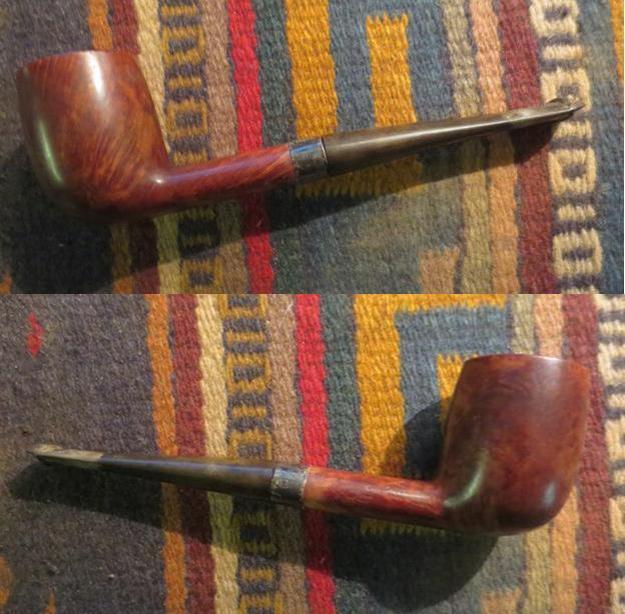
The second pipe I chose to work on was a Peterson’s Dublin oval shank billiard shaped pipe.The old gentleman seemed to favour Peterson’s as there were quite a few in the estate lot. It was very dirty. It was stamped on the topside of the shank with K&P over DUBLIN. There is also a silver band on the shank that bears three hallmarks over Sterling Silver. On the right side of the shank is the shape number 203. On the underside of the shank it is stamped with a COM (Country of Manufacture) circle that reads Made in England with the “in” stamped in the centre of the circle. The stamping is clear and sharp. The finish is in decent shape with a medium brown stain over mixed grain. There is an uneven cake in the bowl that spilled thickly over the beveled rim. It is hard to tell if there is rim damage as it is so dirty. There were sandpits on the left side of the bowl and on the back side above the shank. There is no P stamping on the P-lip stem but it appears to be an original not a replacement. There is calcification from a softee bit on the stem and button. There are light tooth marks and chatter on the top and bottom side of the stem ahead of the P-lip. The button itself was in good shape.
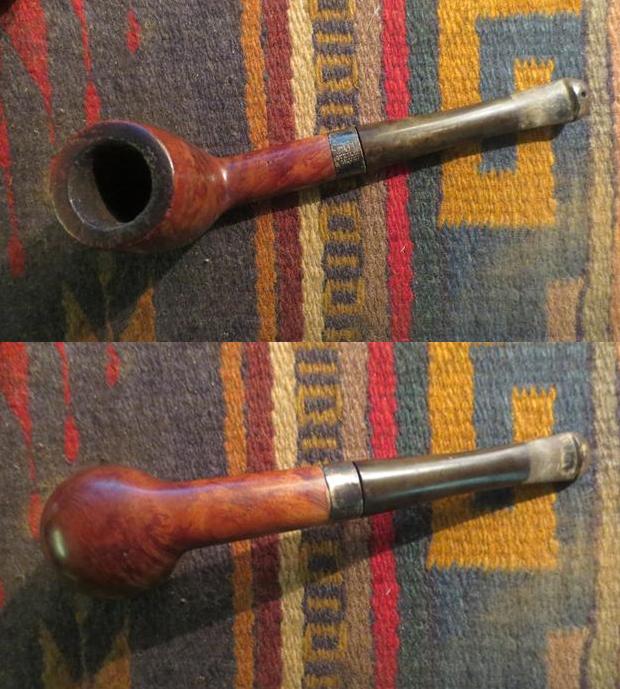
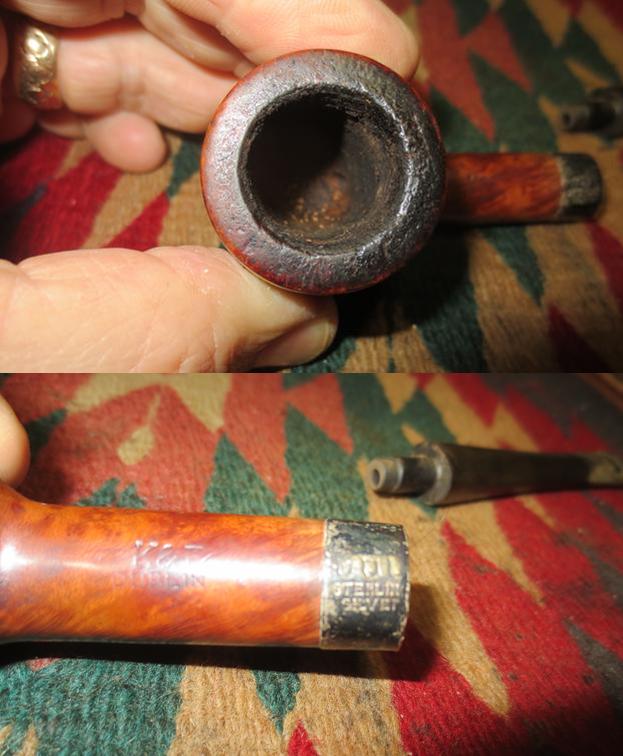
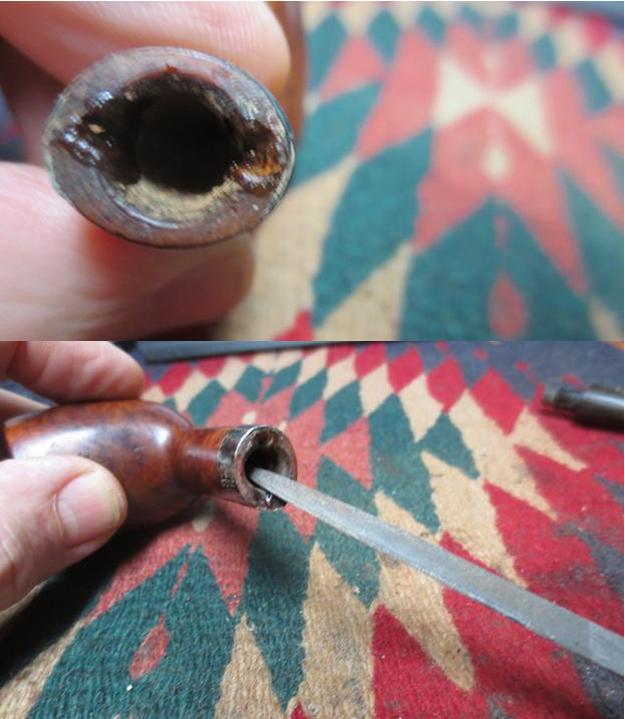
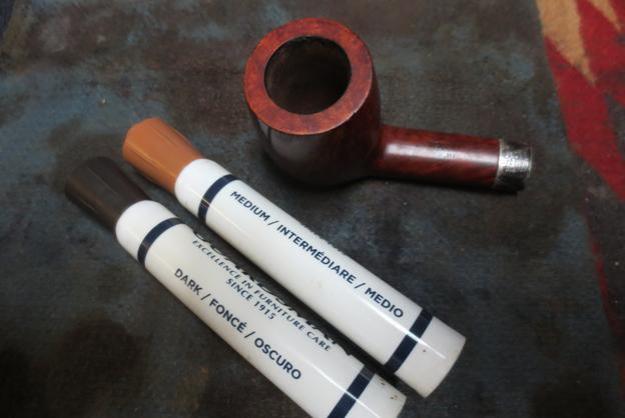
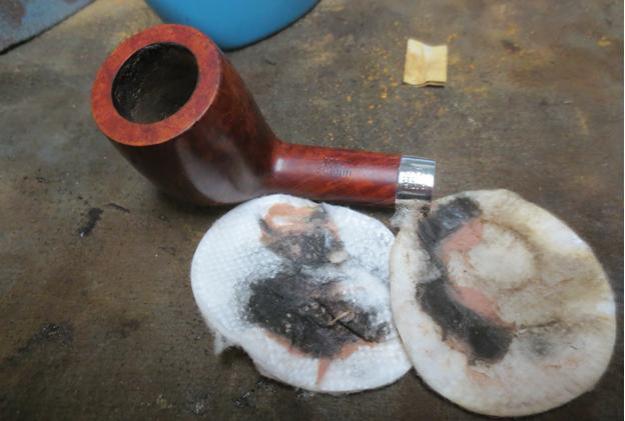
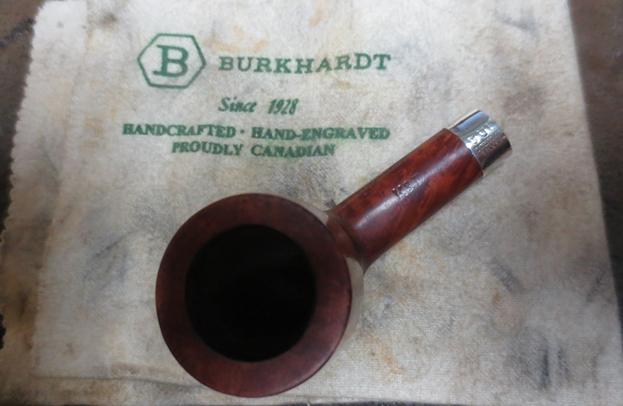
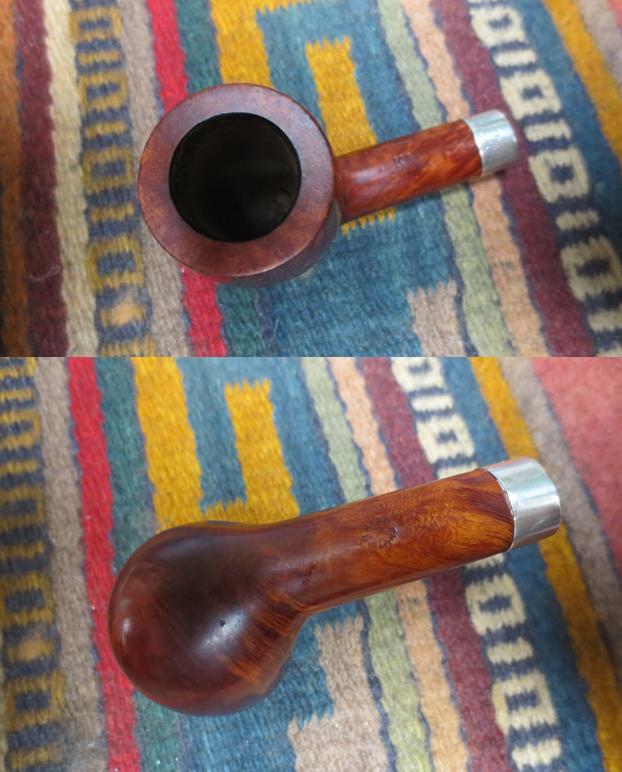
Here are some photos of the pipe when I started cleaning it. The pipe has good lines and some interesting grain underneath the grime.pete1 pete2I took some close up photos of the bowl, stamping, band and stem to give a good picture of what I needed to work on. The first photo shows the cake in the bowl and the overflow of hard carbon buildup on the rim. The photo of the silver band shows the Sterling Silver stamp and three hallmark symbols. It is hard to read them but with a magnifying lens they read K&P. I was hoping to be able to date the pipe by the hallmarks but no such luck. The photos of the stamping show that they are faint but still readable. The stem photos show the tooth chatter and wear on the button itself.pete3 pete4 pete5When I removed the stem I could see some divots in the end of the shank. There were cutouts that as far as I could see served no purpose. Someone had tried to repair them but left a bit of a mess so the stem did not fit snugly. I cleaned out the divots and smoothed them out with needle files until they matched the inside of the mortise. I filled in the end with some super glue and briar dust to even out the shank end.pete6The lava buildup on the rim top was rock hard. I scrubbed at it but it would not come off. The outer edges of the rim were also damaged from knocking out the pipe on hard surfaces. I lightly topped the bowl to remove the hard tars and clean up the outer edges.pete7I reamed the bowl with the Savinelli Pipe Knife and took the cake back to bare briar.pete8There were some drops of a clear hard substance on the back of the bowl and on the right side that I could not take off without damaging the bowl. I scrubbed them down with some alcohol on a cotton pad and was able to soften them enough to remove them.pete9 pete10I restained the rim to match the bowl using a combination of a medium and a dark stain pen. I also touched up the light areas around the silver band on the shank end.pete11I polished the silver with some tarnish remover applied with cotton pads. I finished polishing it with a jeweler’s cloth. Once I had finished I could see the hallmarks more clearly and they read K&P – each letter in its own cartouche.pete12 pete13 pete16I gave the bowl a quick coat of Conservators Wax and hand buffed it to see where I stood. I chose to leave the sandpits on the left side and back of the bowl as they add character.pete14 pete15I sanded the tooth chatter, reshaped the button and removed the calcification and oxidation on the stem with 220 grit sandpaper.pete17I wet sanded the stem with 1500-2400 grit micromesh sanding pads and dry sanded it with 3200-12000 grit pads. I rubbed it down with a coat of Obsidian Oil after each set of three pads. I gave it a final coat of oil and set it aside to dry.pete18 pete19 pete20With all the parts finished individually I put the pipe back together and buffed it with Blue Diamond on the buffing wheel. The Blue Diamond is a plastic polish and gives the finish a glass like polish. I really like the way it works. I gave the bowl and stem multiple coats of carnauba wax and buffed it with a clean buffing pad. I hand buffed the pipe with a microfiber cloth to finish the polishing process. The finished pipe is shown in the photos below. This second pipe from the older gentleman’s estate is a beauty. The fit and finish give it a look of elegance. This pipe is also available for sale. If you are interested in the pipe let me know via email at slaug@uniserve.com or through a message on Facebook. Thanks for walking through the process of restoration with me.pete21 pete22 pete23 pete24 pete25 pete26 pete27 pete28

GBD 311 Billiard Restoration


By Al Jones

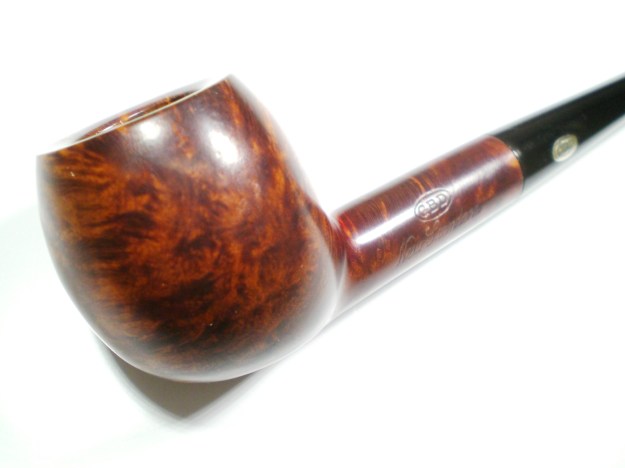
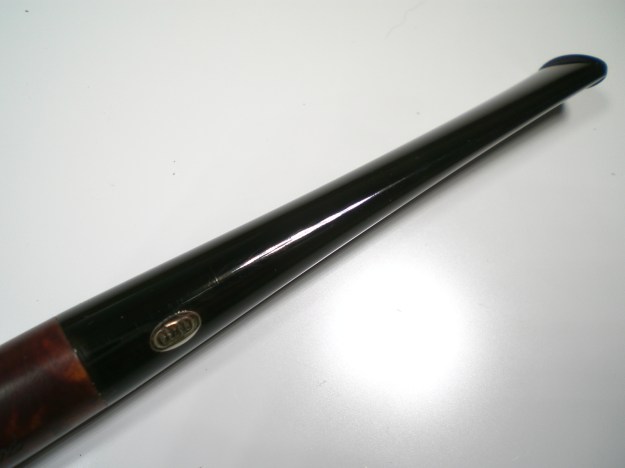
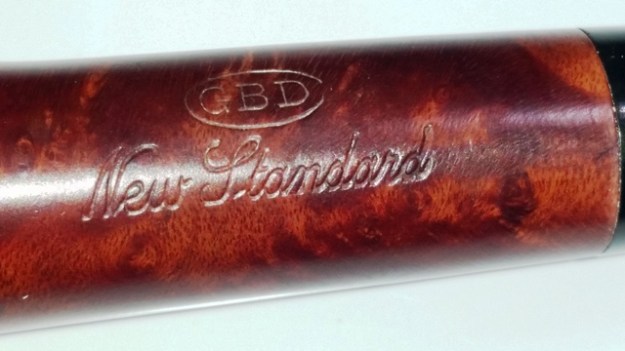
This New Standard shape 311 came via Canada and was delivered in a plain paper envelope, with no packing and with the stem inserted – and survived! The pipe was in decent shape, the most challenging aspect was that the stem was very much stuck into the shank (and upside down). The New Standard finish is probably the most common GBD grade. This one had a very handsome two-stage stain that is unusual for that grade.

Here’s the pipe as it was received.

gbd_311_ns_before-1

gbd_311_ns_before-2

gbd_311_ns_before-4

gbd_311_ns_before-3

To remove the stem, I put the pipe in the freezer for several hours. That did the trick and it came out with a bit of effort (and care to not break the tenon). The stem was a bit too snug, so I rubbed some pencil lead on the tenon, which worked well.

The stem was then soaked in a mild Oxy-Clean solution for several hours with a dab of grease on the stem.

I used a rag and cloth to rub off most of the build-up on the bowl top. Then a piece of worn 8000 grit micromesh was used to remove the rim darkening. The bowl was reamed and then soaked with alcohol and sea salt.

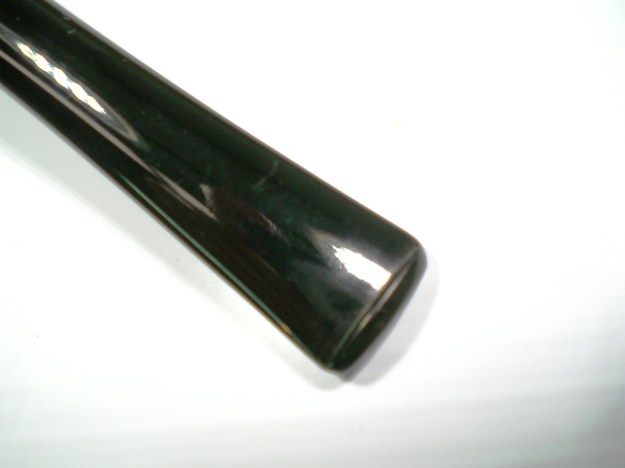
With the stem mounted,I removed the mild oxidation and slight teeth abrasions with 800, 1000 and 2000 grade wet sandpaper. Next up was the 8000 and 12000 micromesh sheets. The stem was polished with White Diamond and then Meguiars Plastic Polish.

The bowl was buffed with White Diamond and several coats of Carnuba wax.

Below is the completed pipe which was purchased by a member of the Brothers of Briar pipe forum.

gbd_311_ns_finish-1

gbd_311_ns_finish-4

gbd_311_ns_finish-2

gbd_311_ns_finish-6

gbd_311_ns_finish-9

gbd_311_ns_finish-7

gbd_311_ns_finish-3

gbd_311_ns_finish-8

?

?

?

?

This favourite GBD Marquis 752 was a mess – not any more


Blog by Steve Laug

About a month ago a friend of mine, Richard who has a tobacco shop here in Vancouver gave me a call and asked me to stop by for a visit. I went on a Sunday afternoon and we visited for a while. At the end of the visit he took me to another counter in his shop and brought out some display cases of pipes – four of them and a small bag. He told the story to me. An elderly gentleman who was a customer of his had died and his wife had stopped by and gave him the fellow’s pipes. She wanted nothing for them she just wanted him to get them cleaned up and sold to folks who would appreciate them. Richard is a reader of the blog and he thought that I would have fun cleaning these up and selling them. As we went through the display cases and bag I was pretty pumped about the collection. There were some really nice GBD pipes, Comoy’s, Stanwell as well as some brands I was not familiar with.
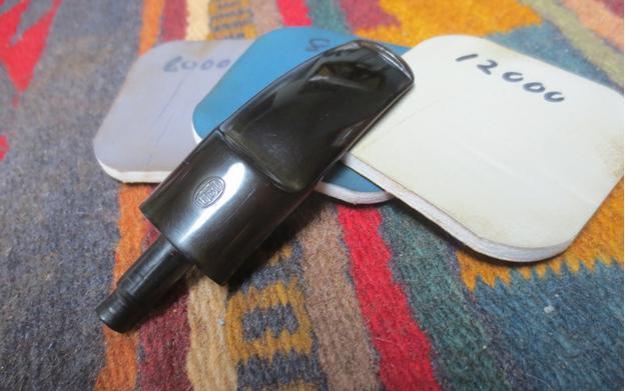
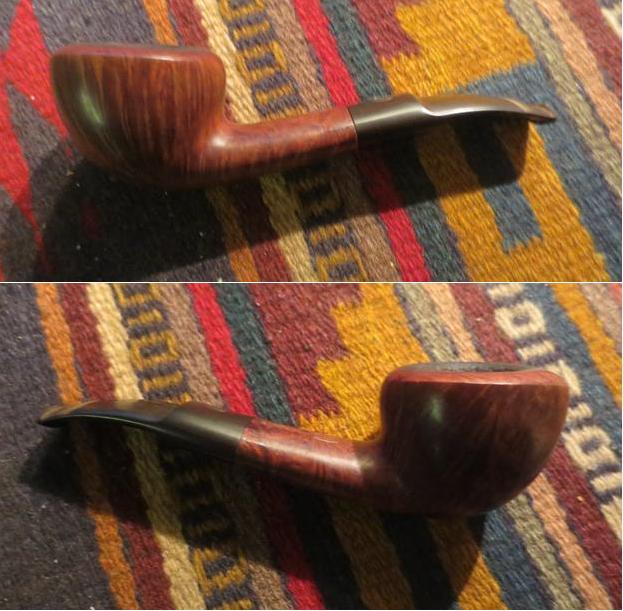
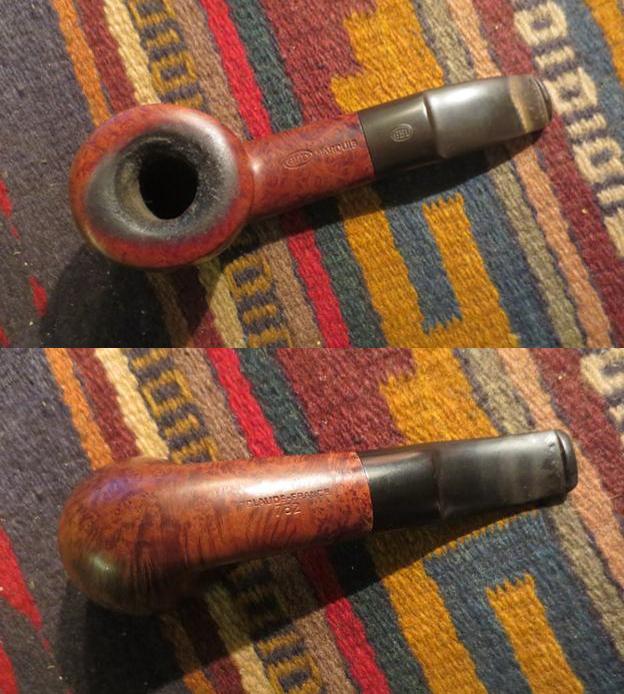
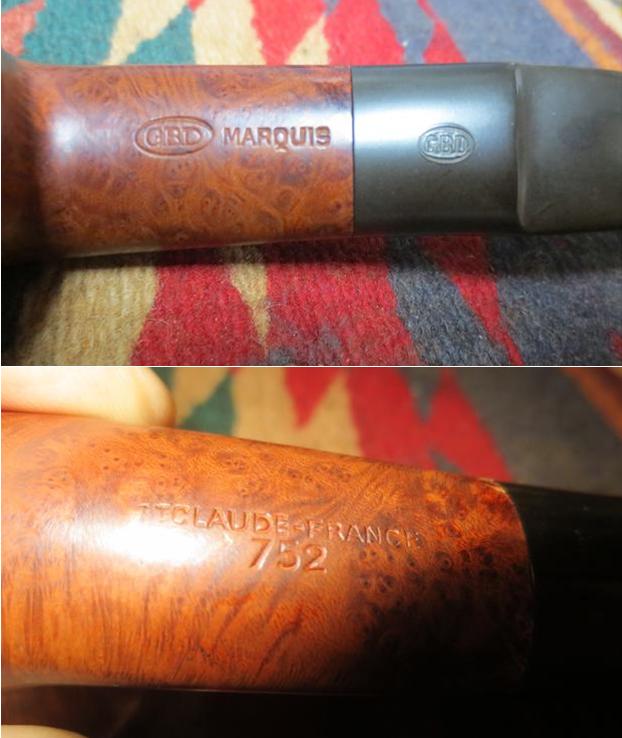
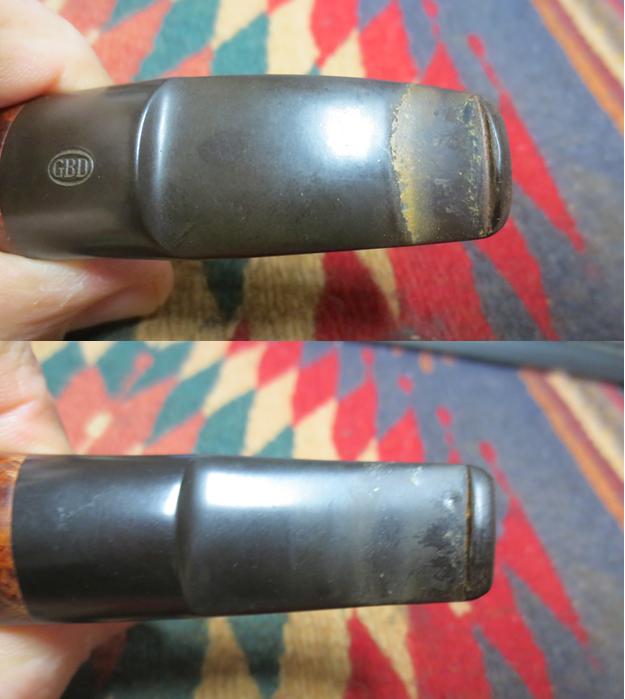
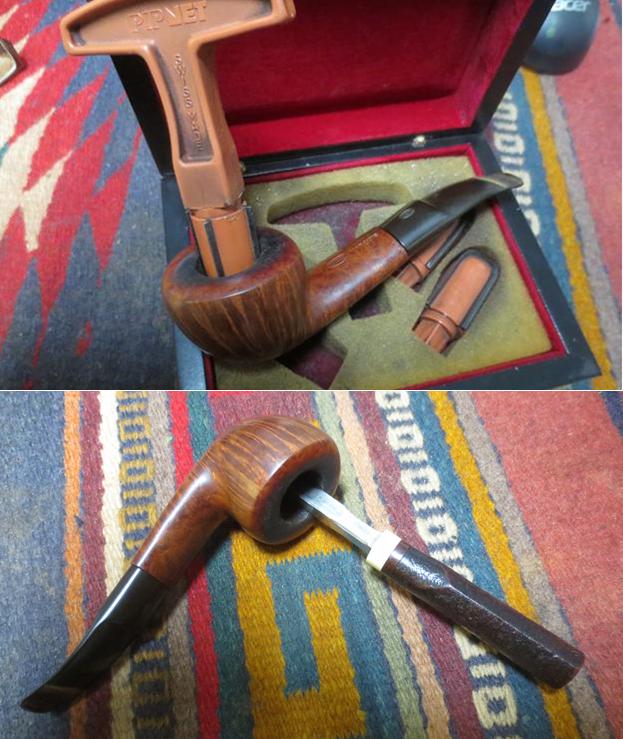
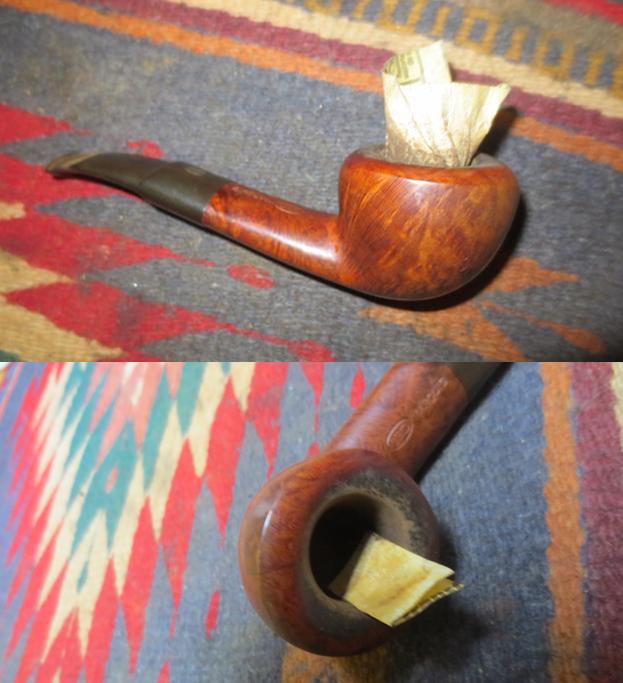
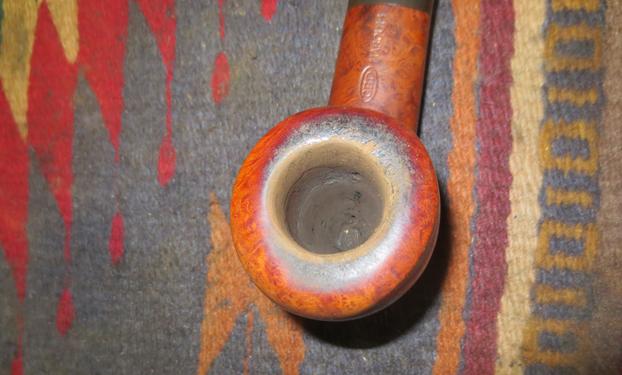
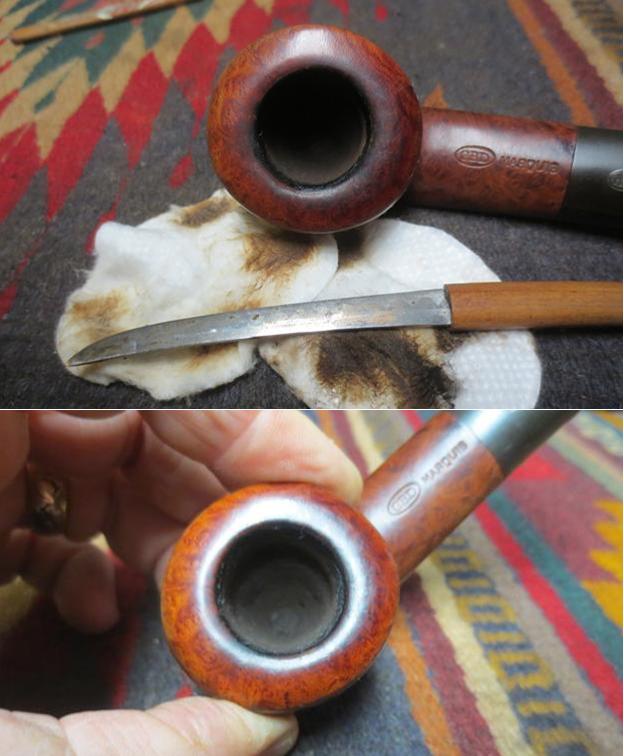
The first pipe I chose to work on was a GBD author shaped pipe. It was obviously one of the old gentleman’s favourites. It was very dirty. It was stamped on the topside of the shank with GBD in an oval and next to it MARQUIS. There is also the GBD Oval stamped on the topside of the stem. It is not the brass rondel but is stamped into the vulcanite on the top of the saddle. On the underside of the shank the pipe is stamped St Claude France and the shape number 752. The stamping is clear and sharp. The St Claude France stamp is light on the front part of the name. The finish is in decent shape with a medium brown stain over great straight grain. There is a thick cake in the bowl and over the beveled rim. It is hard to tell if there is rim damage as it is so dirty. There were two large fills on the front of the bowl that follow the grain. They were shrunken and not even with the surface. There is calcification from a softee bit on the stem and button. There are some deep tooth marks on the top and bottom side of the stem near the button.
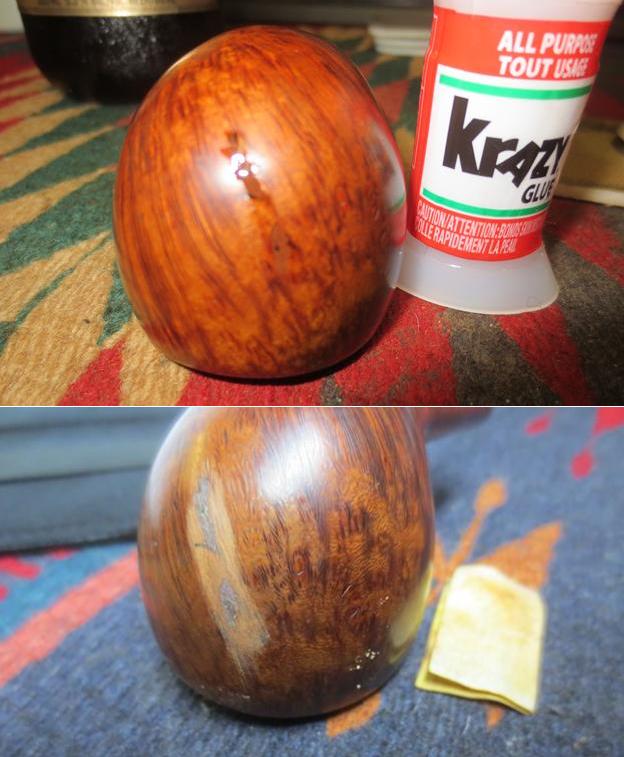
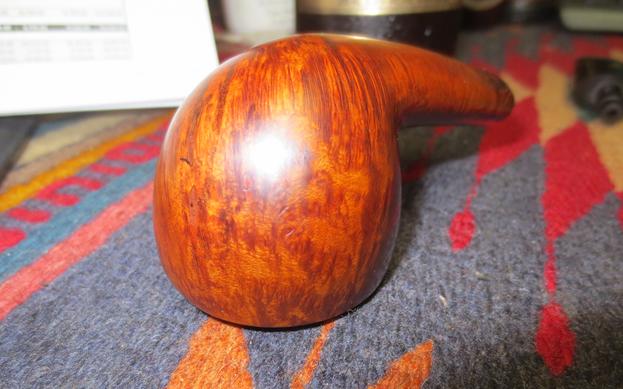
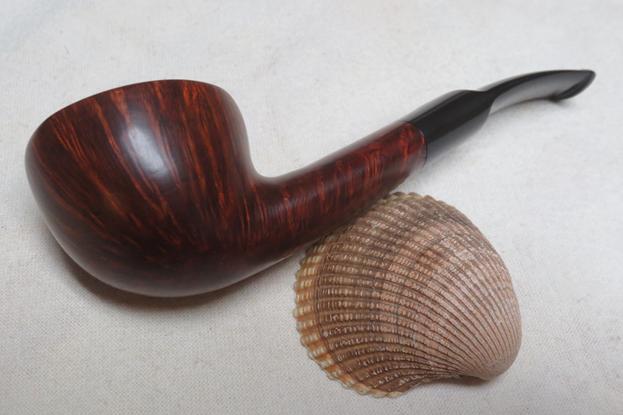
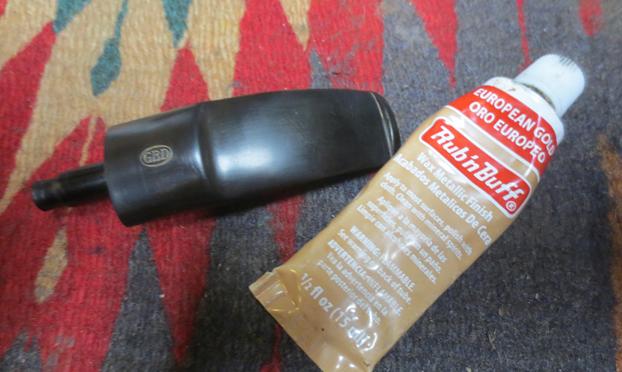
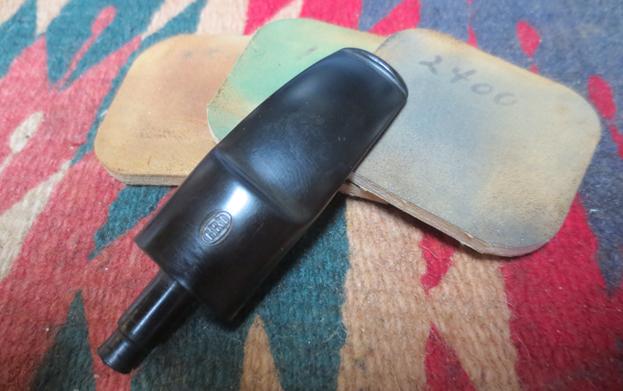
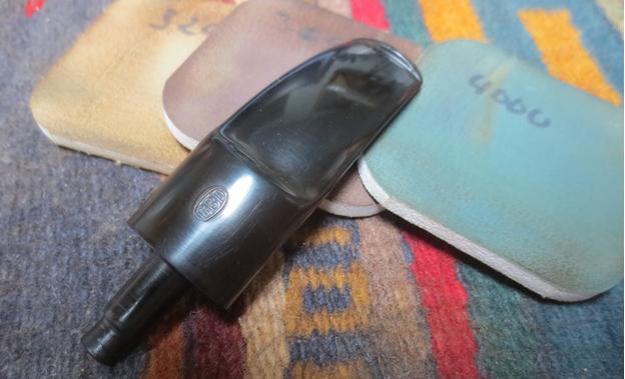
The following photos show the condition of the pipe when I brought it to the work table.gbd1 gbd2I took following close up photos of the pipe. The first shows the rim with all of its tars and oils. The cake is very thick and hard. The second photo shows the fills on the front of the bowl. The third and fourth photos show the stamping on the top and underside of the shank. The last two photos show the stem and the dents and calcification on the stem near the button.gbd3 gbd4 gbd5I reamed the bowl with the PipNet pipe reamer starting with the smallest cutting head and worked my way up to the third cutting head which took the cake back to bare briar. I cleaned up the walls of the bowl with the Savinelli Pipe Knife. gbd6I sanded the bowl and rim edge with 220 grit sandpaper to smooth out the interior of the bowl and the inner edge of the rim. I cleaned the slight bevel on the inner edge as well.gbd7 gbd8To clean the tars and lava on the rim I used a sharp pen knife to scrape the debris free of the rim without damaging the rim surface. I scrubbed it with saliva and a cotton pad to remove the oils and tars that remained on the surface.gbd9I heated the dents in the stem with a lighter and sanded what remained along with the calcification and tooth chatter with 220 grit sandpaper. I cleaned out the tooth marks with alcohol and a cotton swab and filled in the dents with clear super glue. I set the stem aside to let the glue cure. Once it had cured I sanded the repairs smooth with 220 grit sandpaper and wet sanded it with 1500-2400 grit micromesh sanding pads.gbd10I wiped down the bowl with Murphy’s Oil Soap to remove the grime on the surface and give some clarity to the grain. The photos below show the bowl at this point in the process.gbd11 gbd12I scrubbed out the mortise and the airway in the shank and the stem with pipe cleaners, cotton swabs and alcohol until they were clean.gbd13I used European Gold Rub’n Buff to touch up the GBD logo on the stem. I sanded the stem with 1500-12000 grit micromesh sanding pads. After each set of three pads I rubbed the stem down with Obsidian Oil. After sanding with the 12000 grit pad I gave the stem a final coat of oil and set it aside to dry.gbd14 gbd15 gbd16 gbd17While the stem dried I worked on repairing the fills on the front of the bowl. I decided to just top up the fills rather than dig them out and refill them. I used clear super glue to top up the fills. I over filled them slightly so that when they dried they would not shrink and need a second application of glue. I sanded the repair with 220 grit sandpaper to smooth it out. I wet sanded the area with 1500-2400 grit micromesh sanding pads and dry sanded the entire bowl with 3200-4000 grit pads.gbd18I restained the repaired area with a medium and a dark brown stain pen. I streaked the area to look like grain with a black Sharpie pen. I buffed the bowl with Blue Diamond to smooth out the stain and blend it into the rest of the bowl.gbd19I lightly buffed the pipe and stem with Blue Diamond once again to polish it. I gave it multiple coats of carnauba wax and buffed it with a clean buffing pad. I hand buffed it with a microfibre cloth and it was finished. The restored pipe is shown in the photos below. This is the first of about 50 pipes that I received from my friend at the pipe shop. They are all from the same gentleman’s estate and there are some beauties. If you would like to add this one to your rack contact me via email at slaug@uniserve.com or send me a message on Facebook. We will discuss the cost and the shipping. Thanks for looking. gbd20 gbd21 gbd22 gbd23 gbd24 gbd25 gbd26 gbd27

New Life for a Hardcastle’s London Made Reject Pot


Blog by Steve Laug

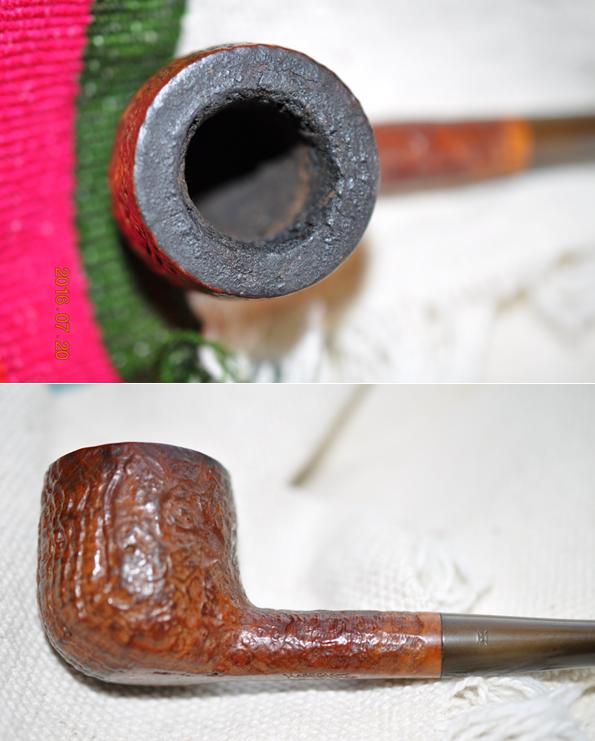
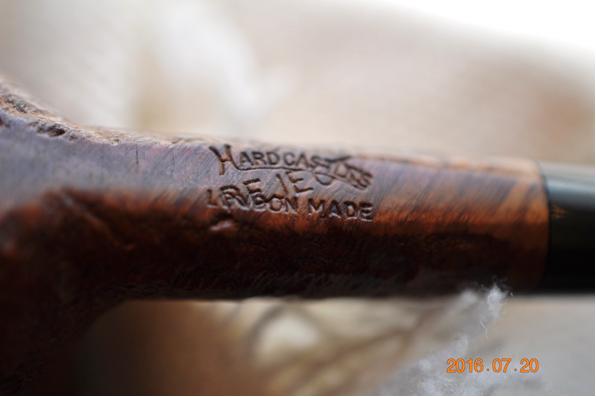
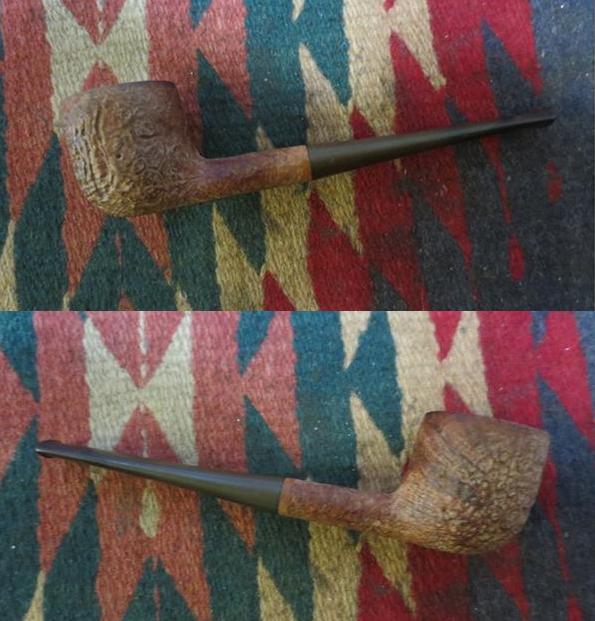
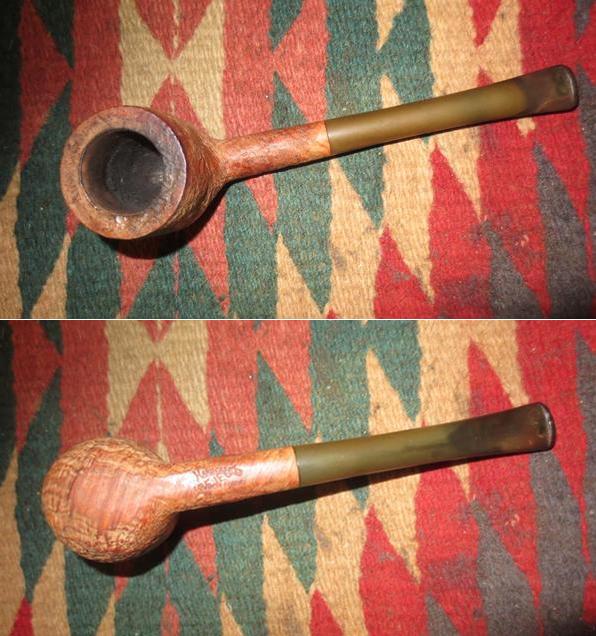
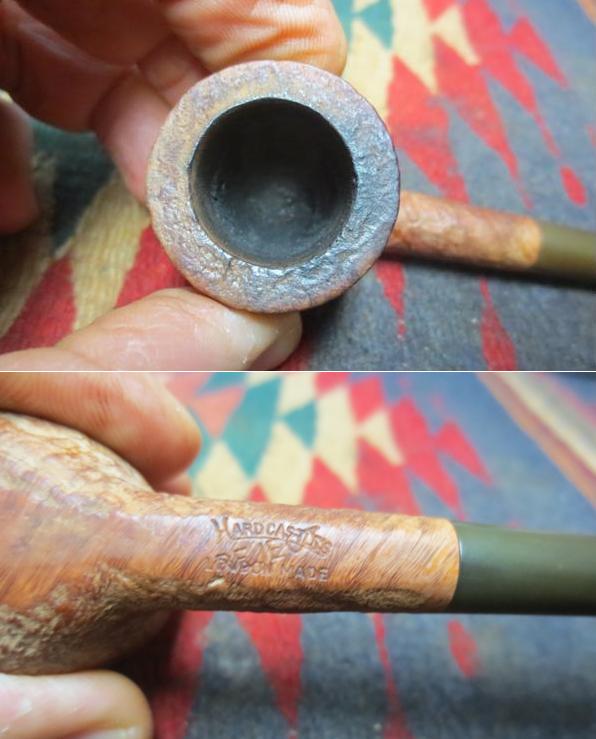
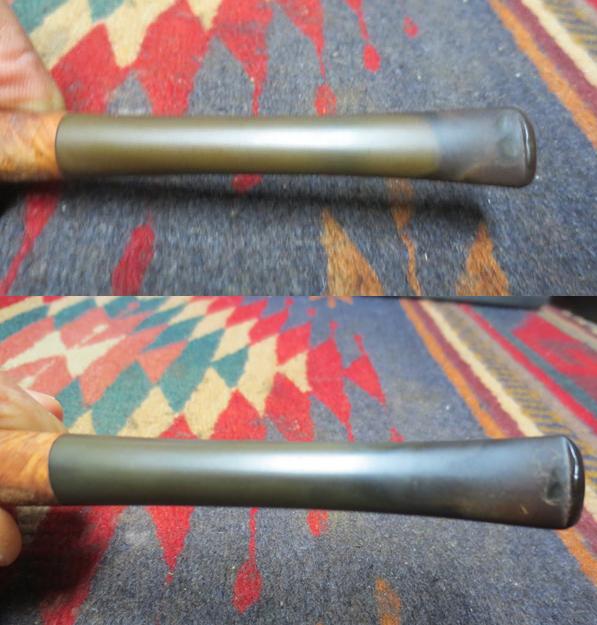
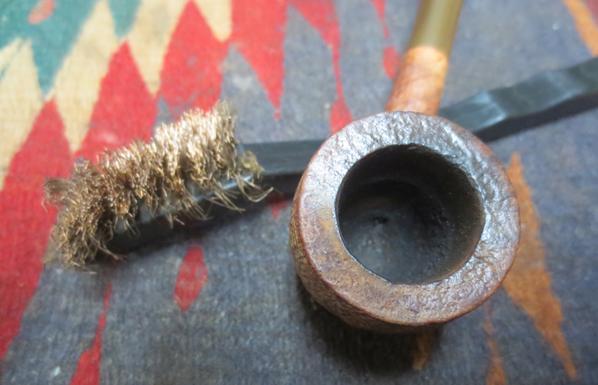
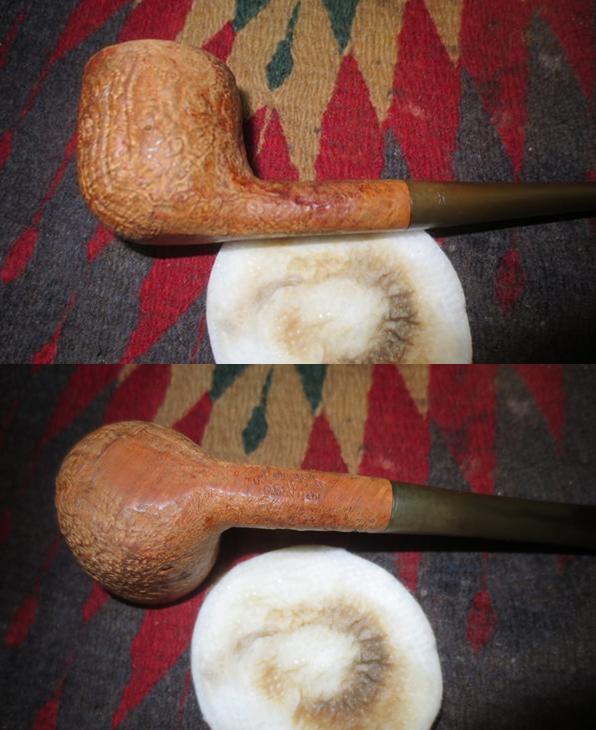
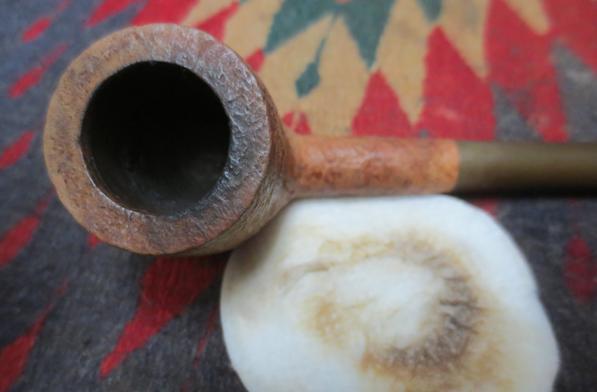
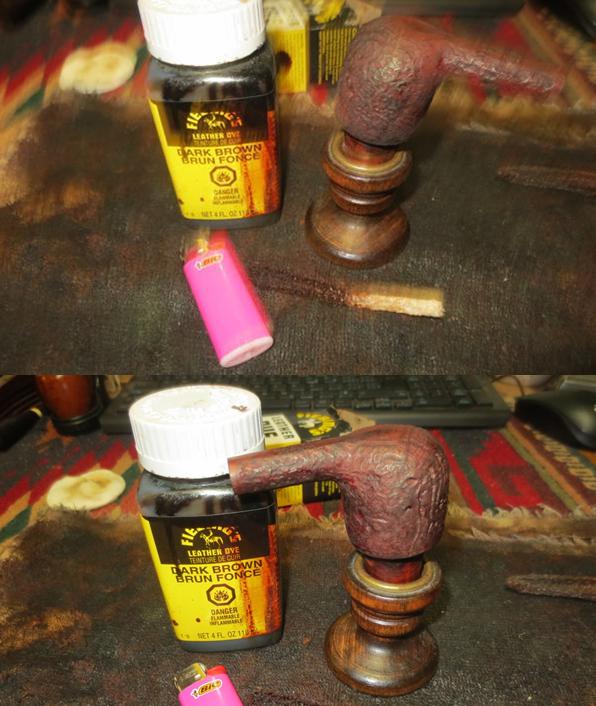
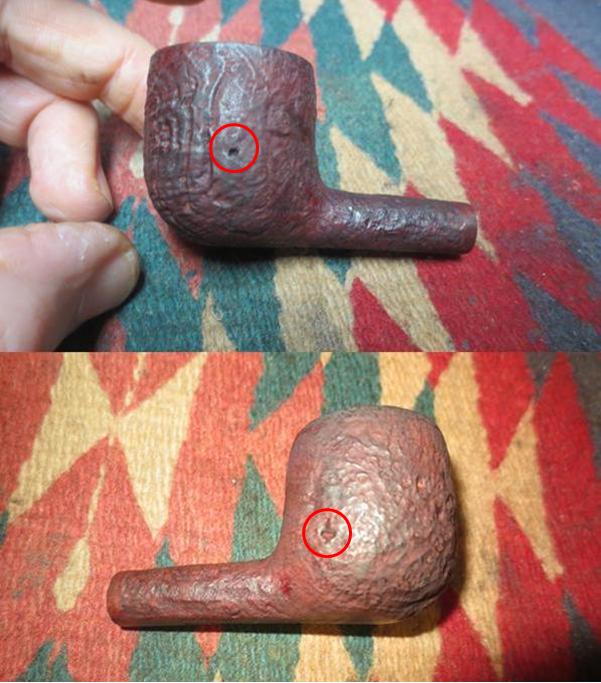
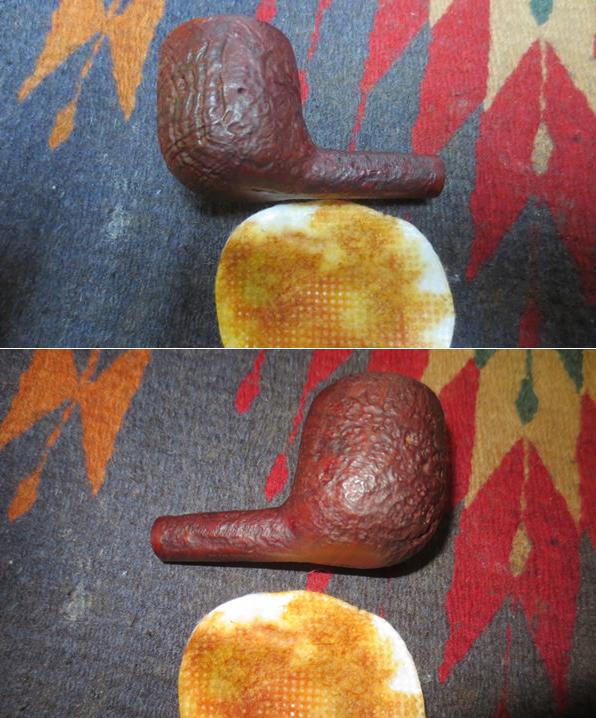
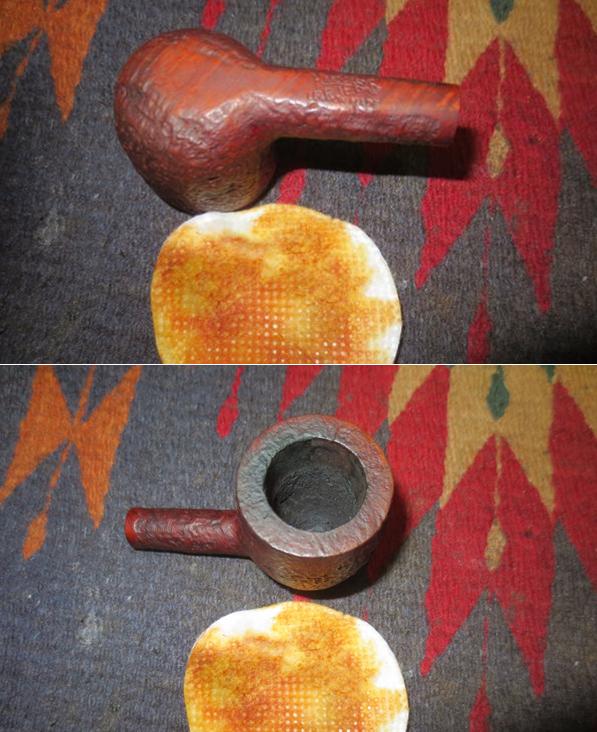
This perfectly shaped little Hardcastle’s sandblast pot was the next pipe to my worktable. It is a small almost pencil shank pot. It is stamped Hardcastle’s London Made and across that it is stamped Reject. It has a rich blast on the sides of the bowl and shank. There is a smooth portion on the bottom of the bowl and shank for the stamping and allowing it to be a sitter. My brother took the next photos to show the condition of the pipe before he cleaned it up.hard1He took some close up photos of the bowl and stamping. The bowl had a thick cake and a large overflow of lava on the rim. The lava covered the light blast finish on the rim completely and it was hard to tell the condition of the bowl at this point. The finish was worn and dirty but there were no chips or dents marring the finish. The stem is oxidized and you can see the Hardcastle’s H stamp on the left side near the shank. You can see the stamping on the shank and clearly see the REJECT stamp across the initial stamping. I am not sure why this pipe was rejected. It appears to be a decent piece of briar. There were two small sandpits on the sides of the bowl that I suppose may have caused it to be a reject but that is not clear to me.hard2 hard3My brother did his usual great clean up on the exterior of the pipe. He scrubbed it with Murphy’s Oil Soap and a tooth brush and was able to remove the finish. He reamed the bowl and removed the lava build up on the rim and left a slightly darkened rim with no burns or damage to the edges. I took the next set of photos to show what the pipe looked like when it arrived in Vancouver.hard4 hard5I took a close up photo of the rim to show the darkening on the back side of the top. It was clean but darkened. There were no burn marks or damaged briar on the edges of the bowl. The stamping is also shown and it remains sharp and distinct.hard6The stem was lightly oxidized and there were tooth dents and chatter on the top and underside near the button. The button had some flattening and wear as well.hard7I used a brass bristle tire brush to scrub the top of the rim and try to clean out some of the darkening on the rim. I was able to remove some of it and make it less pronounced.hard8I wiped the bowl down with acetone on cotton pads to clean of any remnants of the old finish and to remove the debris from the brass brush work on the rim.hard9 hard10 hard11With the bowl cleaned I stained it with a dark brown aniline stain mixed 50/50 with isopropyl alcohol. I flamed the stain and repeated the process until the coverage was even on the bowl and in the deep pits of the sandblast finish.hard12I took some photos of the pipe at this point in the process. The stain had covered well. The colour was a little dark for my liking and would need to be lightened a bit before I was finished. You can see the sand pits on both sides of the bowl that may have made this pipe a reject. I have circled them in red.hard13 hard14I cleaned the mortise with a dental spatula and then cotton swabs, pipe cleaners and alcohol. I also cleaned out the airway into the bowl and in the stem.hard15To lighten the colour of the stain I washed it down with some alcohol on cotton pads until the colour was more to my liking. The finished colour is shown in the photos below.hard17 hard18I painted the dents in the stem with the flame of a Bic lighter and was able to raise them almost smooth. I sanded the stem with 220 grit sandpaper to smooth out the slight dimples that remained in the surface. I wet sanded the stem with 1500-2400 grit micromesh sanding pads and rubbed it down with Obsidian Oil. I dry sanded it with 3200-12000 grit pads and rubbed it down with the oil after each set of three pads. After the final 12000 grit sanding I gave it a final coat of Obsidian Oil and set it aside to dry.hard19 hard20 hard21I buffed the pipe with Blue Diamond on the buffer and gave the stem multiple coats of carnauba wax. I hand waxed the bowl with Conservator’s Wax. I buffed the bowl and stem with a clean buffing pad and again by hand with a microfibre cloth to raise and deepen the shine on the briar. The finished pipe is shown in the photos below. I am pretty happy with the finished pipe. Thanks for looking.hard22 hard23 hard24 hard25 hard26 hard27 hard28 hard29

A Graceful Swan-Necked Tania Billiard


Blog by Steve Laug

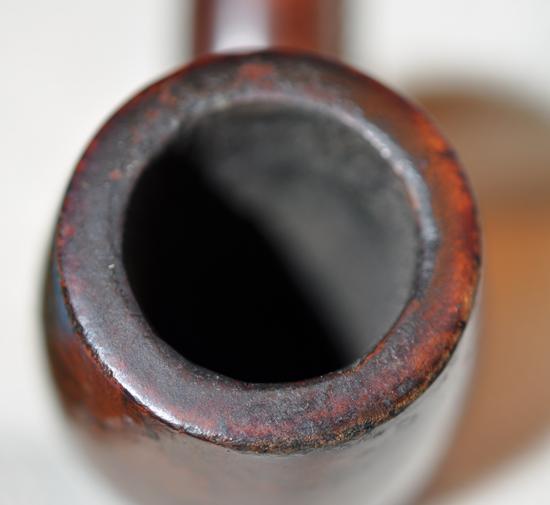
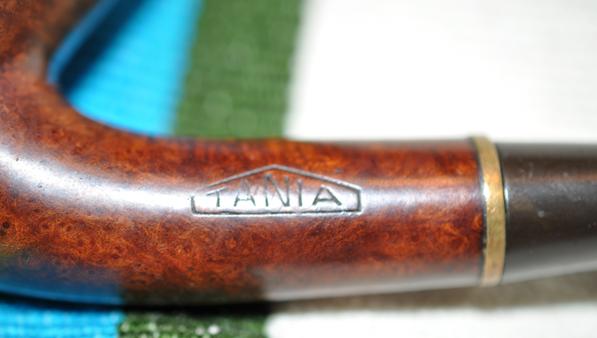
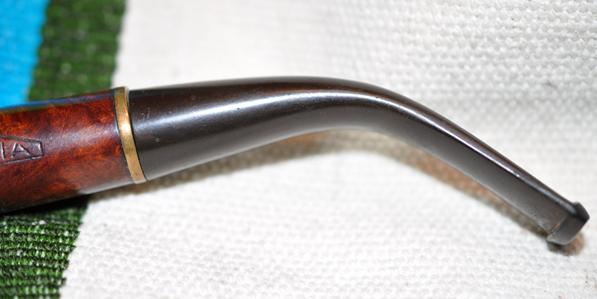
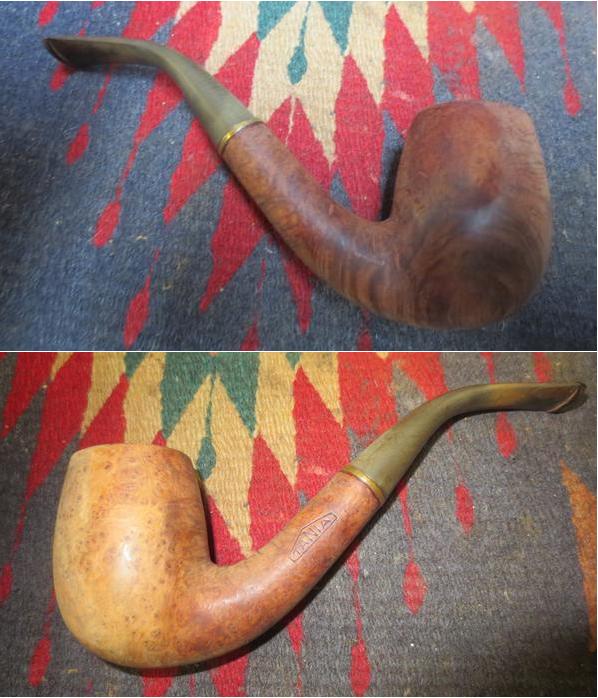
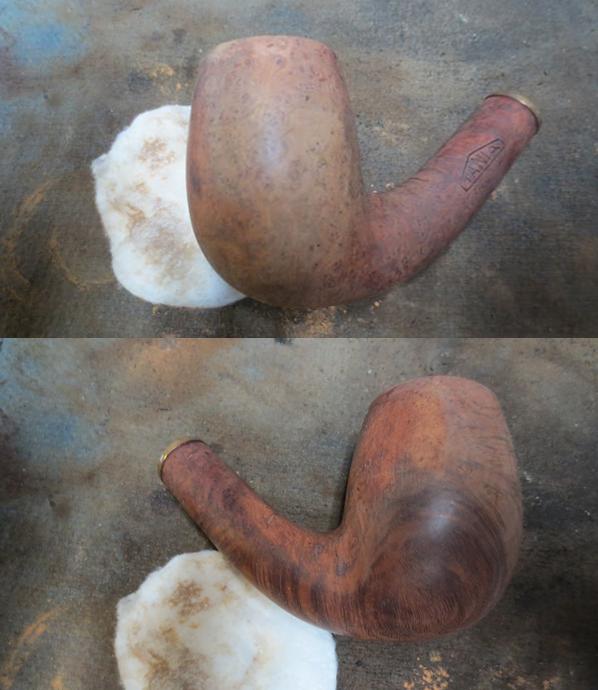
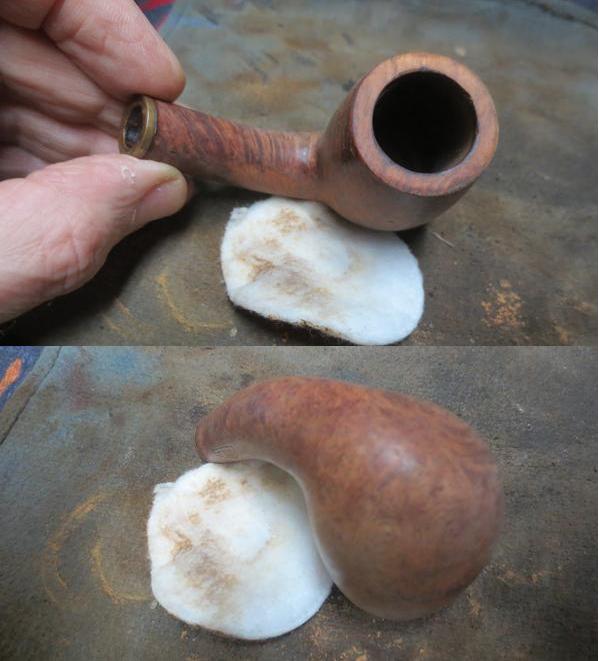
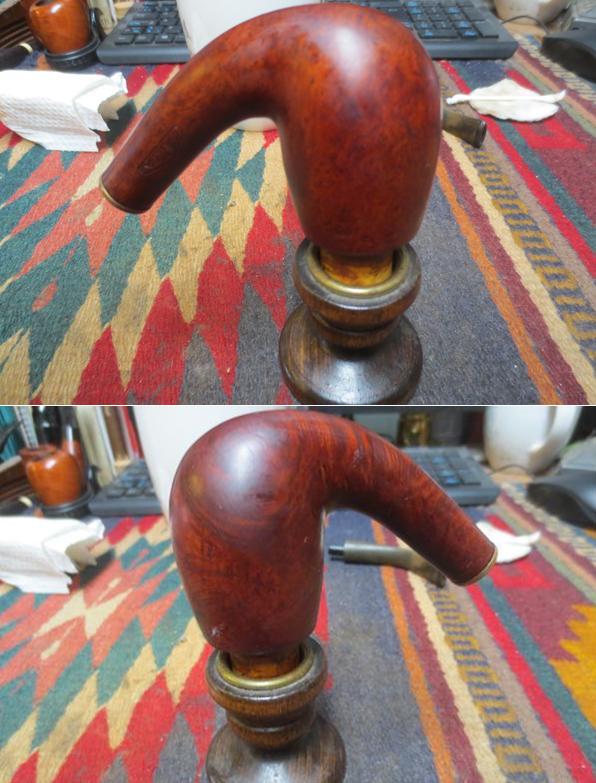
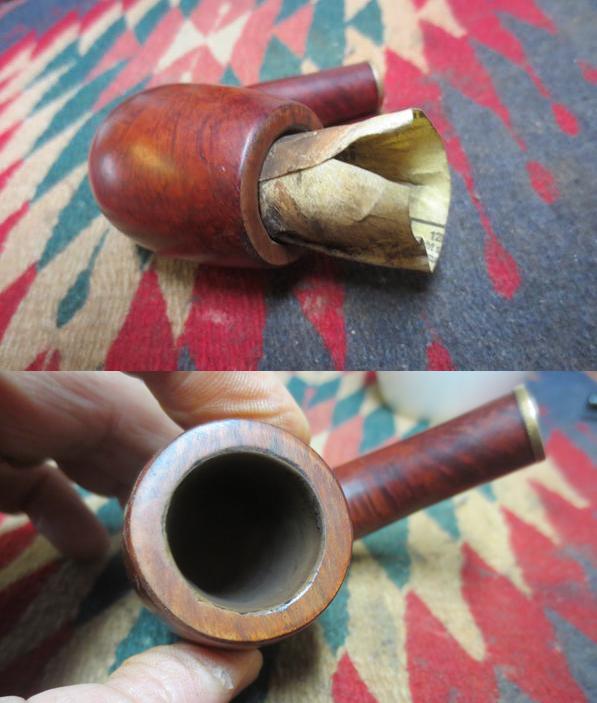
The graceful swan neck like bends and curves of this pipe are one of its attractions for me. It is what drew me to work on it as my next restoration project. It is quite a large pipe – 7 inches long, 2 ¼ inches tall, 1 ¼ inches outer diameter of the bowl and 7/8 inch chamber diameter. The briar is quite nice – lots of birdseye around the bowl. The finish was dirty and worn but other than a few dents and dings it was in decent shape. The brand – Tania – is one that I cannot find any information about online. It is a mystery pipe to me.tania1 tania2My brother took some close up photos of the bowl. The first photo shows the large of fills on the right side of the bowl. There are at least 6 or 7 fills on that side and none on the other sides of the bowl. The outer edge of the rim was chipped and worn. There was some wear from knocking it out on something hard. The inner edge of the bowl also was also out of round. The rim top was dented and worn and there were some flecks of tars and oils on it as well.tania3 tania4The next two photos show the stamping on the side of the shank. You can see the name TANIA wrapped with a house shaped frame which peaks at the N. The brass band separating the stem and the shank is actually a ferrule that is bent over the end of the shank. It is dented and tarnished. The final photo shows the oxidation and wear on the stem. Both sides of the stem show the wear and tear on the surface just ahead of the button.tania5 tania6 tania7My brother scrubbed the exterior of the pipe with Murphy’s Oil Soap and removed the finished and left behind some clean briar. He scrubbed the inside of the shank and stem with pipe cleaners, cotton swabs and alcohol. The stem oxidized in the cleanup process. He was able to get much of the tars and oils off the rim of the bowl. I took the next photos when I brought it to the work table.tania8 tania9The rim looked better but it was worn. The outer edge of the rim was in rough shape from knocking it out. The inner edge was damaged with a knife or a sharp object used to scrape the bowl. There were some dents and nicks in the rim top. I took some photos of the stem. It was in very good shape other than oxidation. There were no tooth marks or tooth chatter on the stem.tania10 tania11The fills on the right side of the bowl were not smooth. They were pitted and dented. I sanded the surface of the bowl around the fills and wiped it down with some acetone. I refilled them with clear super glue.tania12I sanded the bowl repairs with 220 grit sandpaper and then with 1500-4000 grit micromesh sanding pads. I sanded it with a medium and a fine grit sanding sponge. I wiped the bowl down with alcohol on cotton pads. I checked the inside of the mortise and airway with pipe cleaners, cotton swabs and alcohol. It was very clean.tania13 tania14I stained the bowl with a dark brown aniline stain cut 50/50 with isopropyl alcohol. I applied it, flamed it and repeated the process until the coverage on the briar was even.tania15The inner edge of the bowl still showed some damage so I sanded it with a tube of 220 grit sandpaper wrapped around my finger. I sanded until the inside was clean and the edge was more round. I sanded the inner edge to bevel it slightly and take care of the knife damage. I sanded it with 1500-2400 grit micromesh sanding pads. I stained the inside edge with stain on a pipe cleaner.tania18 tania19I buffed the bowl with Blue Diamond on the buffing wheel and gave it a light coat of carnauba wax. I buffed it with a clean buffing pad to raise the shine.tania16tania17I sanded the stem with 220 grit sandpaper to remove the oxidation on the stem. I cleaned up the sharp edge of the button with the sand paper and sharpened and reshaped the button.tania22I wet sanded the stem with 1500-2400 grit sanding pads and rubbed it down with Obsidian Oil. I dry sanded it with 3200-12000 grit sanding pads. I rubbed it down with Obsidian Oil after each set of three sanding pads. After the final pad I rubbed it down a final time with oil and set it aside to dry.tania23 tania24 tania25I buffed the pipe with Blue Diamond on the buffing wheel to polish out the scratches. I gave the pipe multiple coats of carnauba wax and buffed it with a clean buffing pad. I took it back to the work table and hand buffed it with a microfibre cloth. The finished pipe is shown in the photos below. If anyone can tell me about the brand – Tania, please leave a response below. I can find nothing regarding the brand online or in my normal reference tools. If you would like to add the pipe to your rack let me know via email at slaug@uniserve.com or in the response area below. Thanks for looking.tania26 tania27 tania28 tania29 tania30 tania31 tania32 tania33

Refurbishing a Dulwich Quaint Oom Paul 64


Blog by Steve Laug

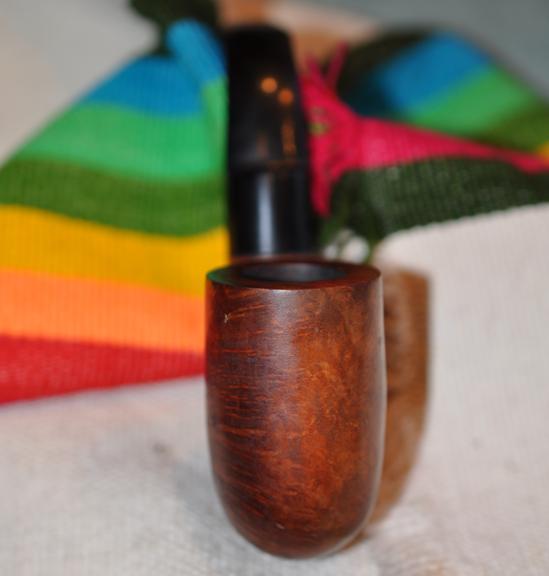
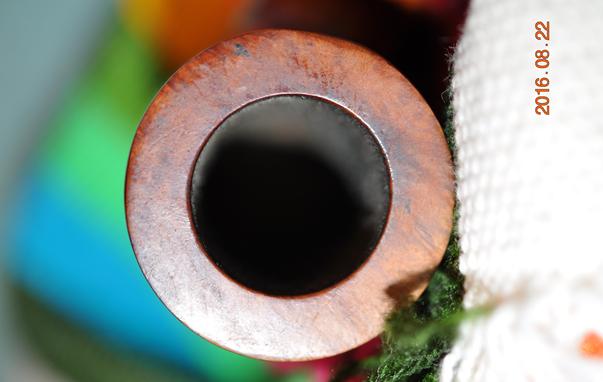
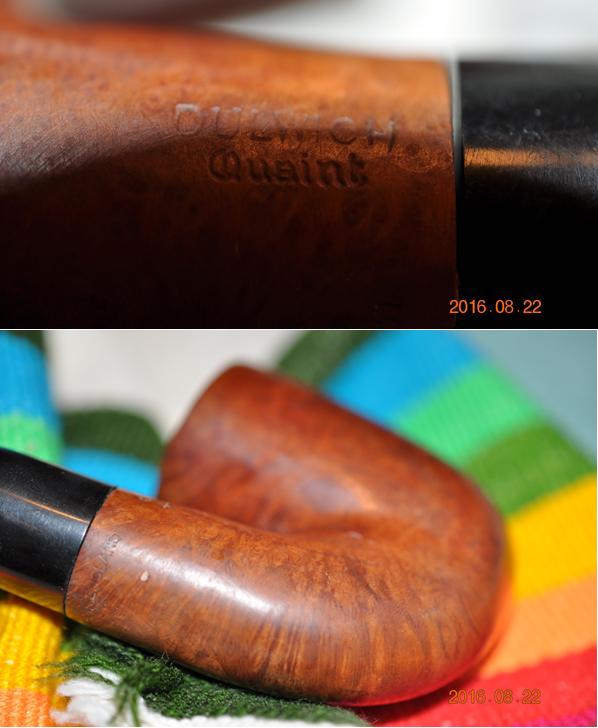
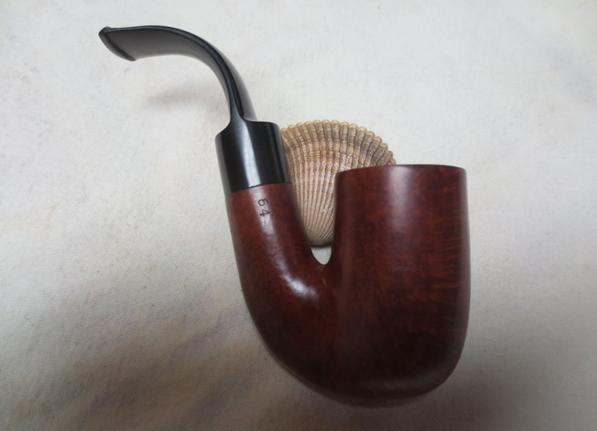
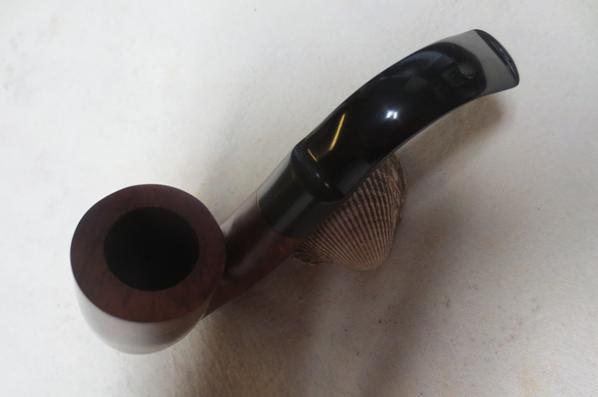
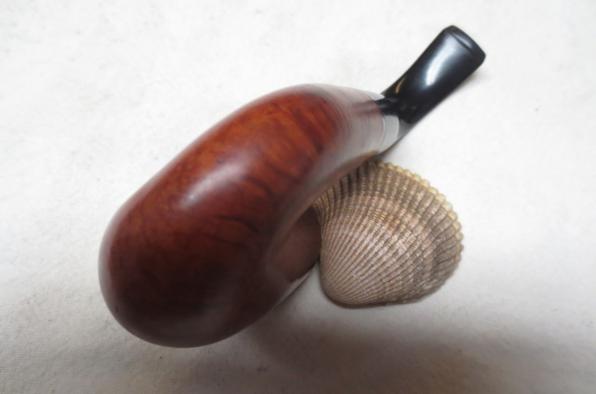
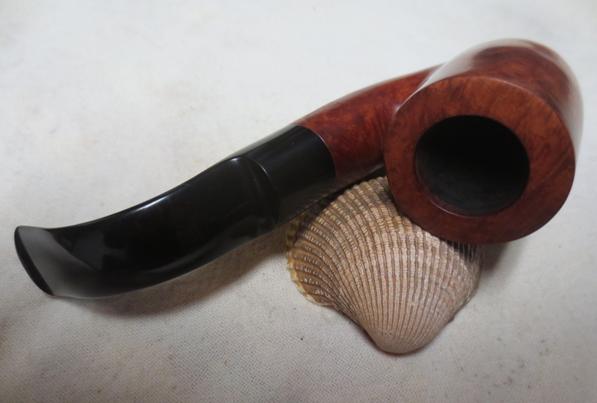
The next pipe I took out of the refurbishing box was an Oom Paul that had a lot of character and some nice grain. It was stamped on the left side with the name Dulwich over Quaint. On the right side it was stamped with the number 64. It was also stamped on the underside, horizontally at the stem shank union with the words Made in England. I have searched for information on the internet for the brand in the past and not been able to find anything helpful. In a previous blog I wrote on a pair of Dulwich Quaint pipes the only link I could find was that the shape number was an Orlik shape number. Here is the link to the other blog: https://rebornpipes.com/2016/03/13/a-rare-find-a-pair-of-fieldcraft-dulwich-quaints/

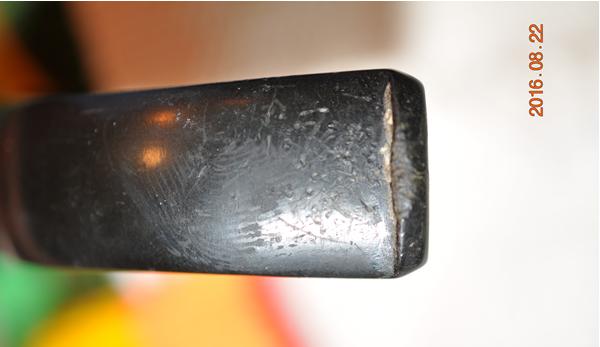
My brother took some photos of the pipe when he received it and before he had done any cleanup work on it.dul1 dul2He took some close up photos of the pipe. The first photo shows the top of the rim was in good shape. There was some light tars and some scratching on the surface of the rim. The second and third photos show the stamping – first the Dulwich over Quaint and then the Made in England.dul3 dul4Both sides of the stem looked like the photo below. There was a lot of tooth chatter and marks on the stem surface on the top and bottom. The button was worn down by teeth mid button.dul5My brother scrubbed the pipe with his usual mixture of Murphy’s Oil Soap and water. He rinsed the bowl with running water. He scrubbed out the internals of the pipe with pipe cleaners, cotton swabs and alcohol. When it arrived I took the following pictures to show its condition. The finish was worn and uneven all around the bowl. The shank was also unevenly finished. The finish on the rim was also worn.dul6 dul7I took some close up photos of the rim top to show what it looked like before I started. I took some photos of the stem surface to show the condition of the stem. It shows the tooth chatter and some mild oxidation on the stem.dul8 dul9I scrubbed the bowl down with acetone on cotton pads to remove the finish. I also sanded the bowl lightly with a medium grit sanding block to break up the finish that remained on the bowl. I wiped it again to remove all the finish that remained. The clean bowl is shown in the photos below.dul10 dul11I sanded out the tooth chatter and marks on the stem from the button forward. I reshaped the surface of the button with sandpaper to smooth out the tooth marks and redefine the sharp edge of the button on the top and the bottom sides.dul13I removed the stinger from the end of the stem and sanded the saddle portion of the stem to smooth out the scratches.dul14I wiped down the bowl with a light coat of olive oil and hand buffed the bowl to give it a shine. The next photos show the bowl at this point.dul15 dul16I sanded the stem with micromesh sanding pads – wet sanding it with 1500-1400 grit pads and dry sanding it with 3200-12000 grit pads. I rubbed the stem down with Obsidian Oil between each set of three pads. I set it aside to dry once the final pad was used.dul17 dul18 dul19I buffed the bowl and stem with Blue Diamond on the buffing wheel to smooth out the finish and the stem. I gave both multiple coats of carnauba wax and buffed it with a clean buffing pad. It raised a shine on the bowl and stem. I used a microfibre cloth to deepen the shine. I hand buffed it until it shone. The finished pipe is shown in the photos below. It has a wide open draw and should be a delightful smoking instrument. Thanks for looking.dul20 dul21 dul22 dul23 dul24 dul25 dul26 dul27 dul28


Using the Dremel for Polishing – An Addendum


Blog by Dal Stanton

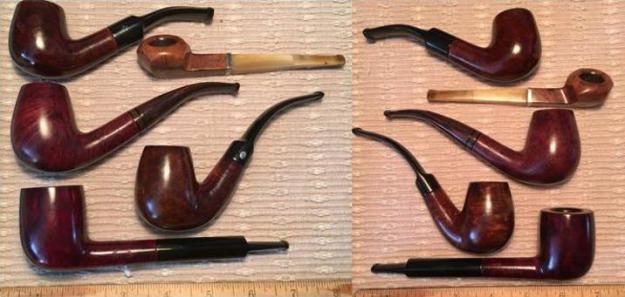
I leave Bulgaria Monday, to join my family as we celebrate the wedding of my youngest daughter, who will be married to my future son-in-law in Nashville, November 6th!  I decided to give my future son-in-law a wedding gift – not just my beautiful daughter!, but also his choice from among the pipes that I’ve restored.  I sent him a picture of pipes that all have been published on rebornpipes.com and encouraged him to look at the write-ups by searching my name and to choose the pipe he favored.  His choices were (from top to bottom), the No-name from Sozopol that was just published as my Dremel Polishing Techniques essay; Horn stem throw-away Pipe; a Butz-Choquin Rocamar with a Cumberland stem, a Jeantet Fleuron and, at the bottom, a Denicotea Deluxe Curling.dremel1He chose well.  He was drawn to the Butz-Choquin Rocamar (center, above) with its eye-catching Cumberland stem.  After I received the text message with his choice solidified, I picked up the BC Rocamar and took a closer look at it.  The thought that ran through my mind was that somehow the finish had dulled and I wanted to spruce it up a bit before wrapping it and packing it to the US.  Then on a hunch, I decided to look back at the write up that was published on rebornpipes in July and see if the finish had indeed dulled or was it the way I had finished it?  After a quick look at the BC’s restoration, I realize that I’m looking at the same finish that I gave the pipe then.  In that restoration, I did the full micromesh phase (9 pads) and followed with staining the stummel.  Then I by-passed Tripoli and Blue Diamond compounds and went directly to carnauba wax with a cotton cloth wheel, then a buff with a clean cotton cloth wheel, concluding with a microfiber cloth rub down.  Since I had just completed the Dremel Polishing Technique essay for Steve, I find myself comparing the finishes of the later pipes with the BC and there was a distinct difference.  The luster and depth of the briar grain was much more distinct in the more recent pipes that I’ve restored.  A wonderful thought came to mind – the Dremel technique and process that I’ve been honing in on really DOES work!  I’m not just blowing pipe smoke up to people reading these blogs and who use a Dremel! J  The next thought was to write an addendum to the Dremel Technique essay and run the BC through the polish process again – as I’m doing it now, and see if I can detect and record a substantive advance in the finish of the BC Rocamar (by the way, the BC Rocamar is a pipe of Saint Claude, France).  My approach is to reverse time with the BC by applying both Tripoli and Blue Diamond with felt wheels, at the lowest RPMs available, and work it to the end of the process as fully described in detail in the Dremel Technique essay (Link).  After completing the process again with the BC, I retook pictures as closely as I could to mimic the pictures of the BC’s restoration in July.  I did this to compare the effectiveness of the Dremel approach I’m using now to what I did before.  Here’s what I found:

July:
dremel2Today:
dremel3July:
dremel4Today:
dremel5July:
dremel6Today:
dremel7July:
dremel8Today:
dremel9 Disclaimer: This definitely was not a scientific test, but I will let you judge stem and stummel! I’m pleased with the results that I see before me today compared to July. I’m not sure the pictures do full justice to the view the naked eye enjoys of the rich briar grain, but I will be very happy and pleased indeed to wrap this reborn pipe and bring it to my future son-in-law as a gift from his future father-in-law. This special gift from my hands and prayers from my heart entrust this soon-coming marriage into God’s able hands. Thanks for joining me!

Ashton Sovereign XX Addition/Clean-up


By Al Jones

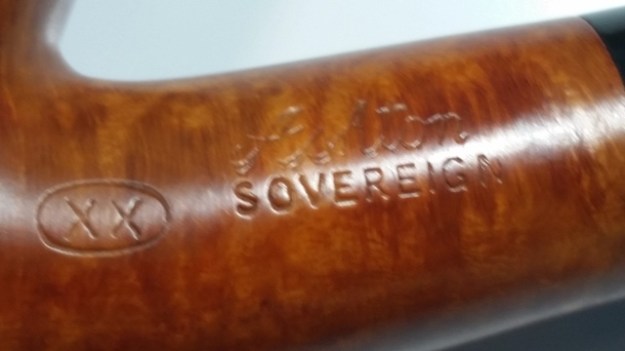
I’ve slowly been adding the occasional Bill Taylor Ashton to my collection and this one completes a seven-day set. I’m a big fan of the XX size and all but one have that designation. The XX size runs around 50 grams, which is right in my wheel-house.

This is my second Sovereign grade Ashton. This RD Field webpage describes the various Ashton grades.

RD Field Ashton Finishes Page

The Sovereign is described as:

The ASHTON Sovereign pipe is rare indeed, for out of every 100 flawless bowls that undergo the ASHTON oil curing process very few come out unscathed. For as the hot oil exudes from the bowl, bringing with it all manner of impurities. Sandspots are brought to the surface as well.

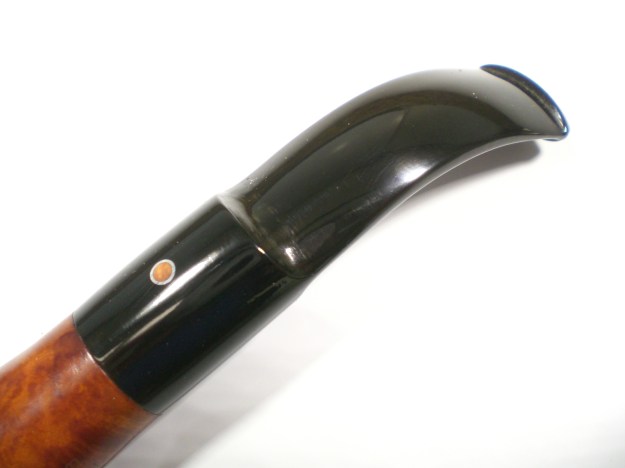
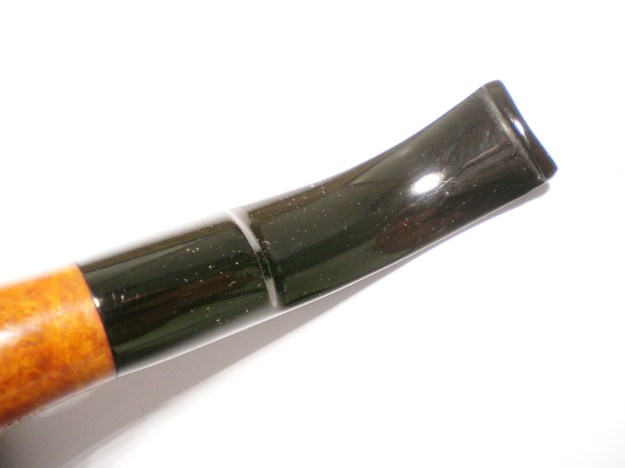
This one came via Steven Fallon’s ebay site, aka The Pipestud. Steve sells unrestored pipes, which works for me. This one was in great shape, needing only a mild clean-up. The Ashtonite stem was only slightly oxidized and the material polishes up brilliantly.

ashton_sovereign_xx_2006_ebay

ashton_sovereign_xx_2006_2ebay

There was a very slight cake in the bowl and a little rim darkening. I used 8000 grade wet micromesh to polish the bowl top. The stain was slightly faded in spots, perhaps from display and the sun? I wiped on a greatly diluted Medium Brown Fieblings stain to brighten it up. The bowl was polished with White Diamond and several coats of Carnuba wax.

I polished the mild oxidation with 1000 grade paper, then 2000. That was followed by 8,000 and 12,000 grade micromesh. The stem was then buffed with White Diamond and Meguiars Carnuba wax.

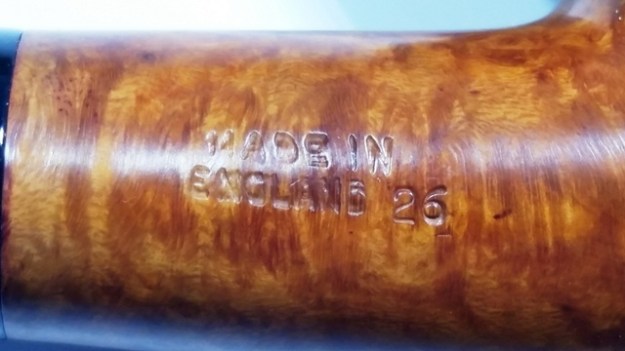
Below is the finished pipe. The “26” stamp marks it as being made in 2006 (For Bill Taylor Ashtons – 1980 + the two-digit date stamp).
Not all Bill Taylor pipes are drilled properly, but this one was and it passes a cleaner nicely. It also smoked wonderfully, which was not surprising, since it was so clean.

ashton_sovereign_xx_26_gallery

ashton_sovereign_xx_26-4

ashton_sovereign_xx_26-2

ashton_sovereign_xx_26-5

ashton_sovereign_xx_26-6

ashton_sovereign_xx_26-7

ashton_sovereign_xx_26-3

ashton_sovereign_xx_26-8

?

?

?

?