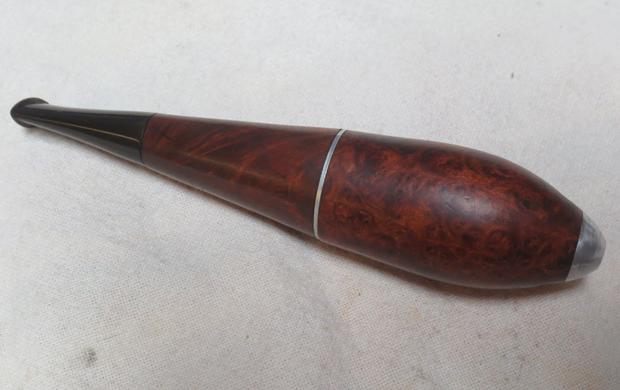
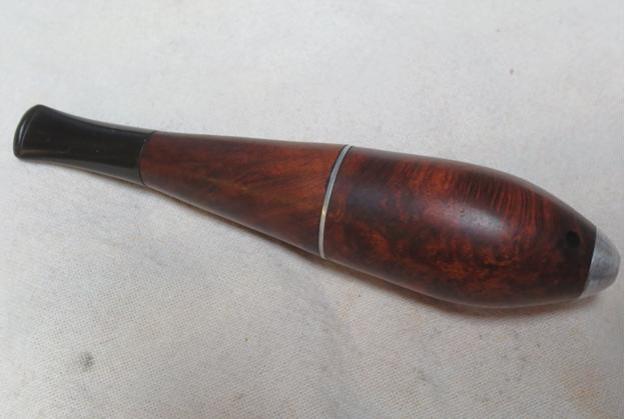
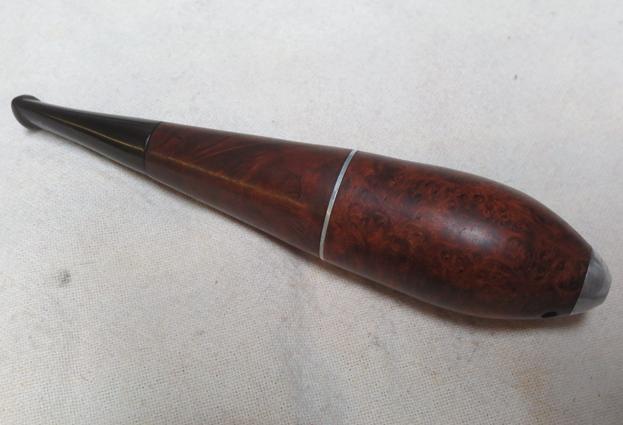
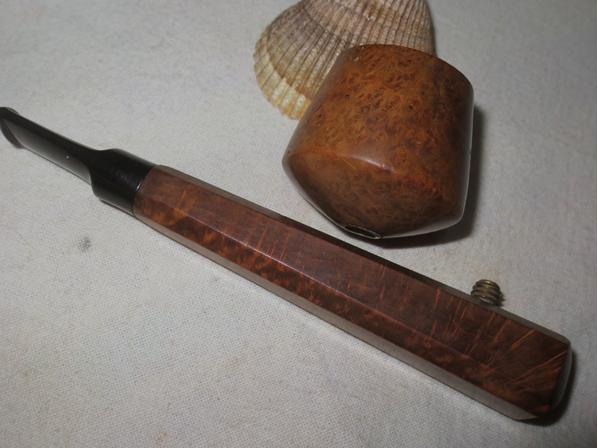
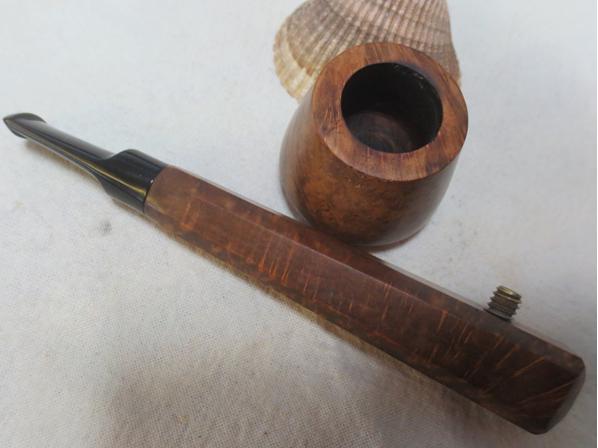
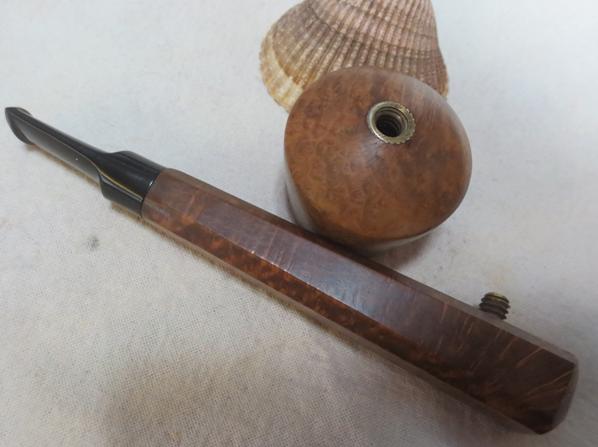
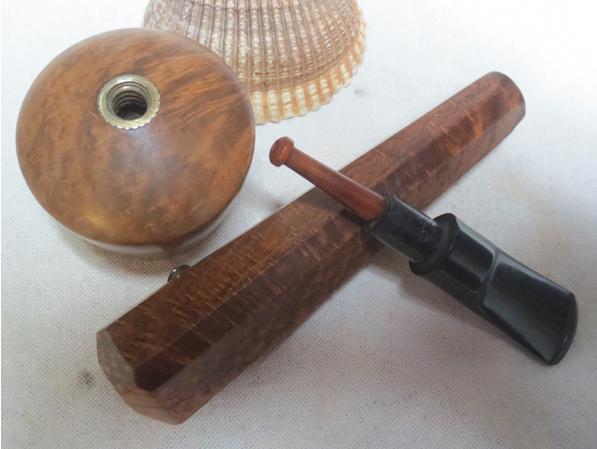
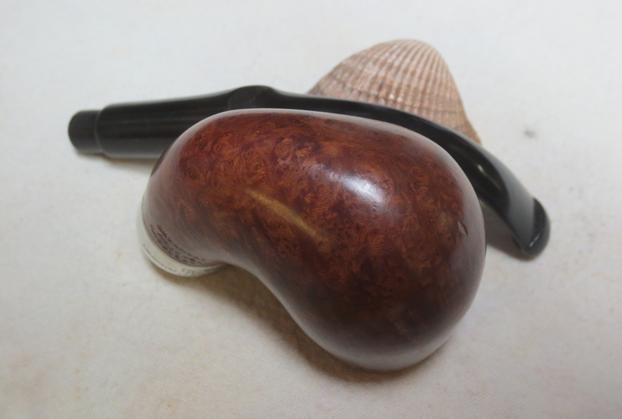
Amazing Grain came alive on a Zeppelin Style Safe-Tee Patent Pipe


Blog by Steve Laug

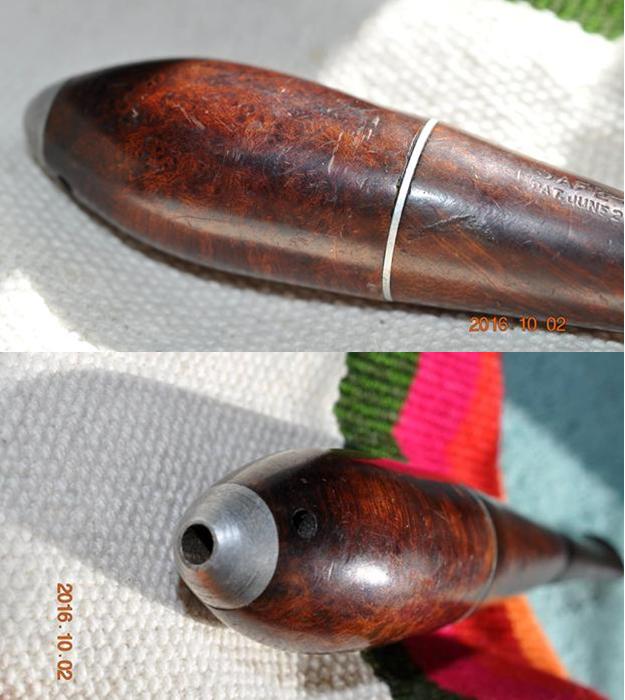
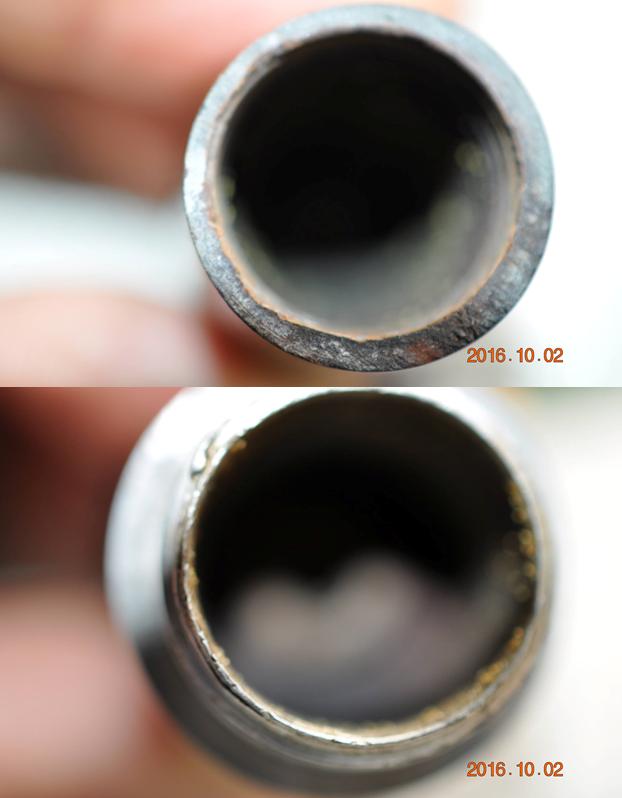
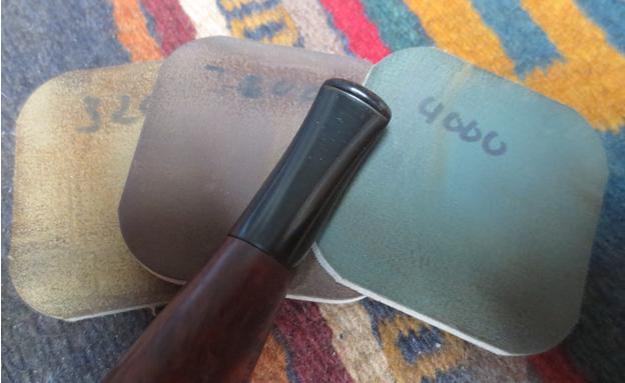
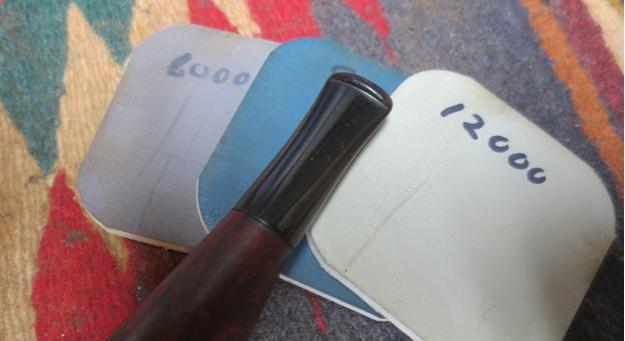
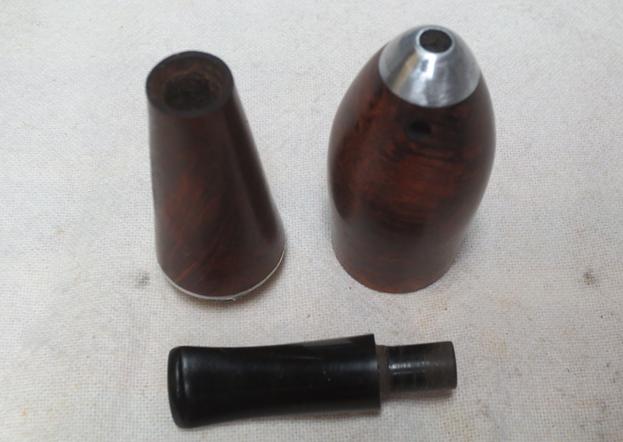
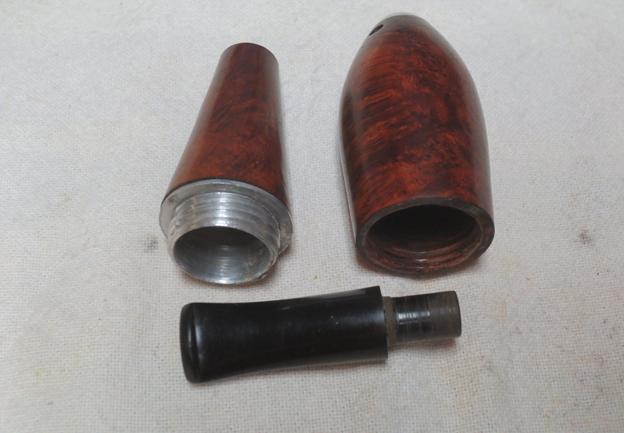
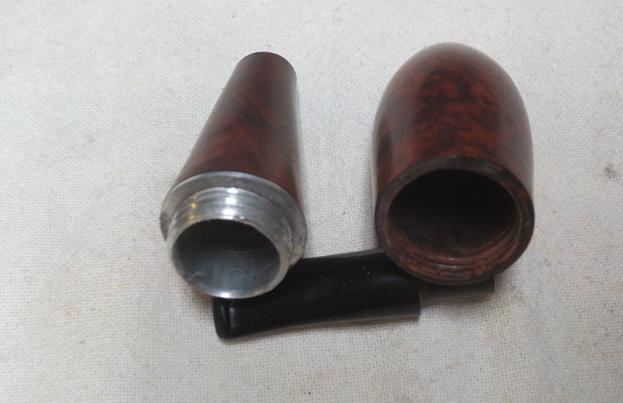
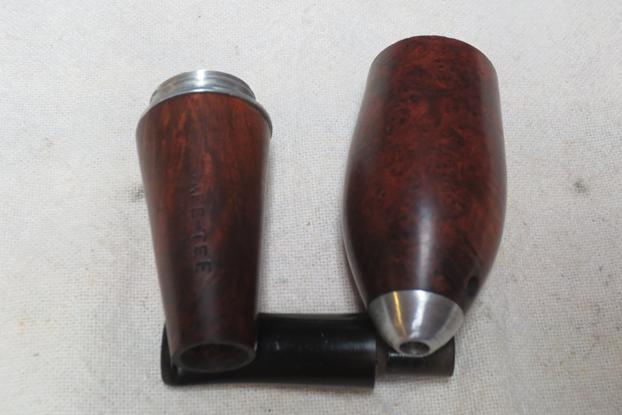
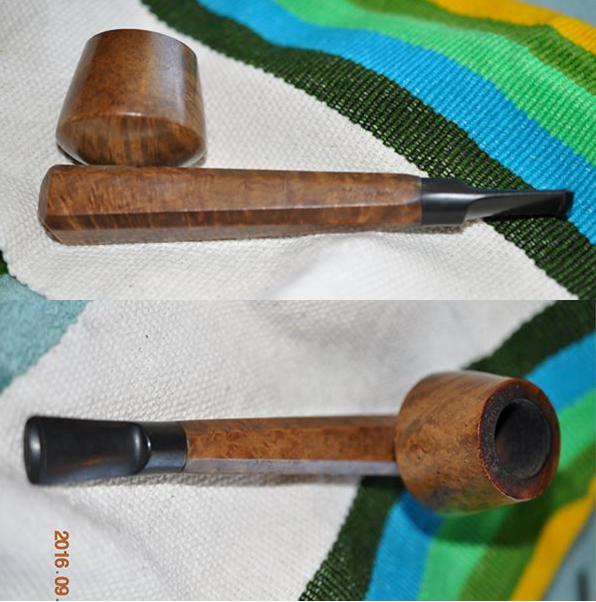
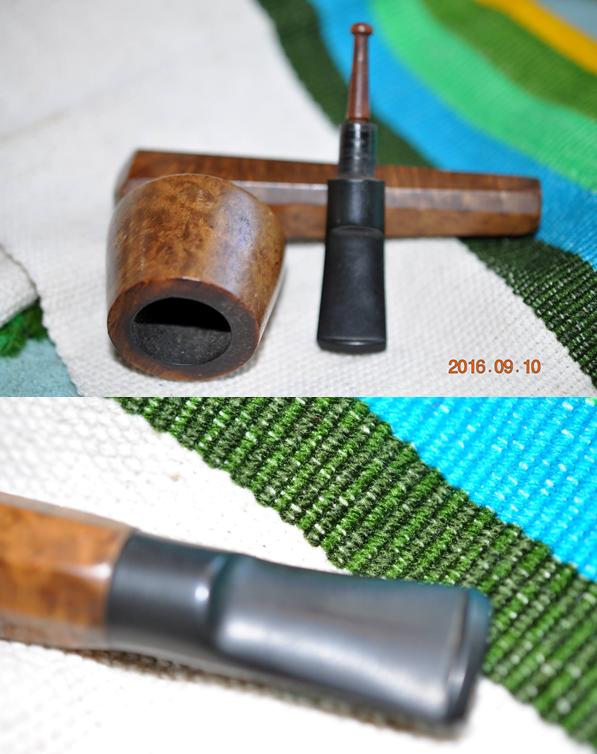
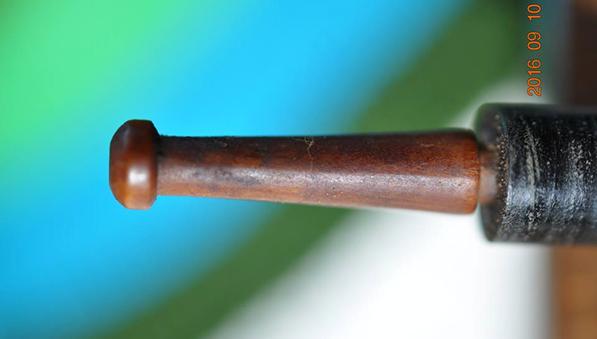
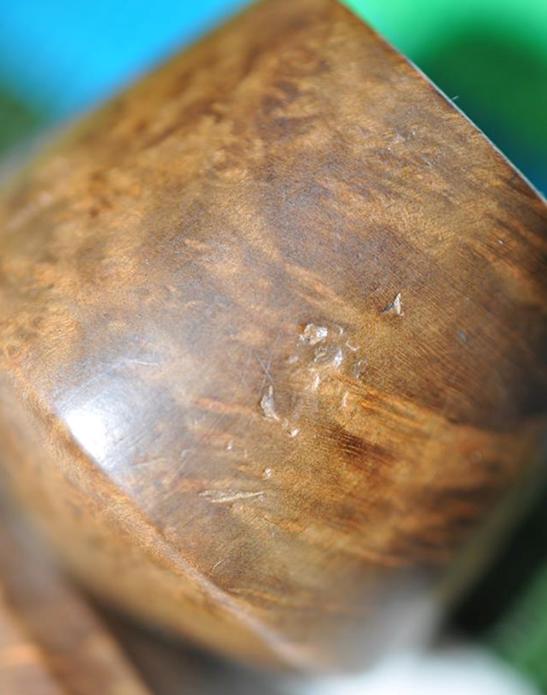
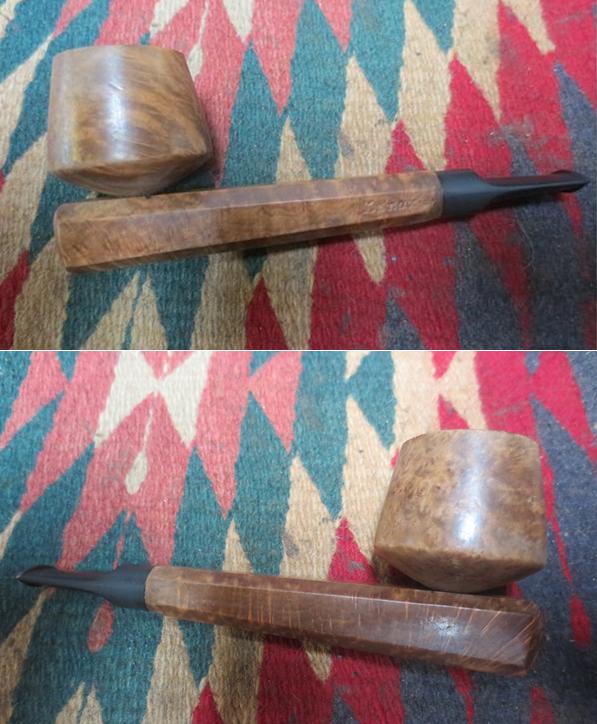
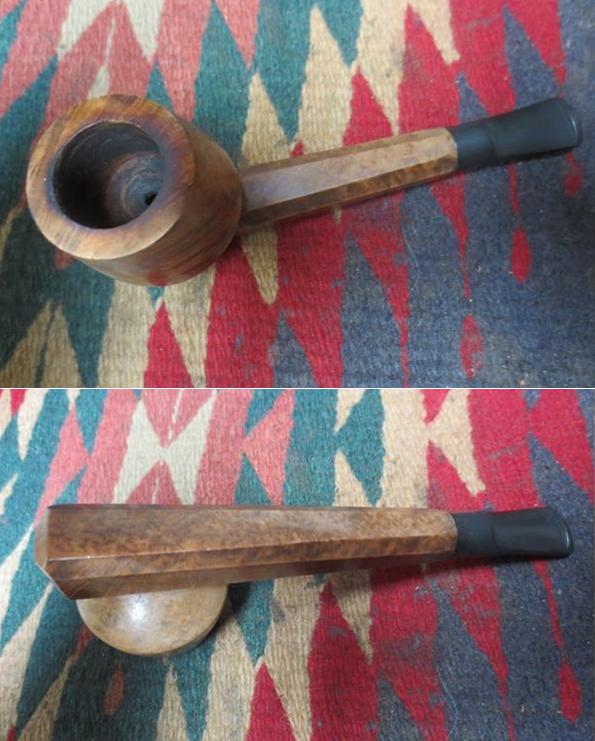
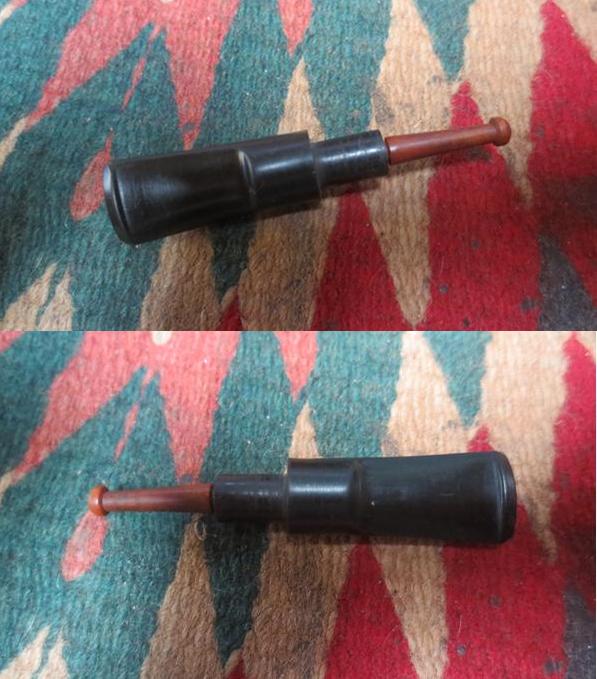
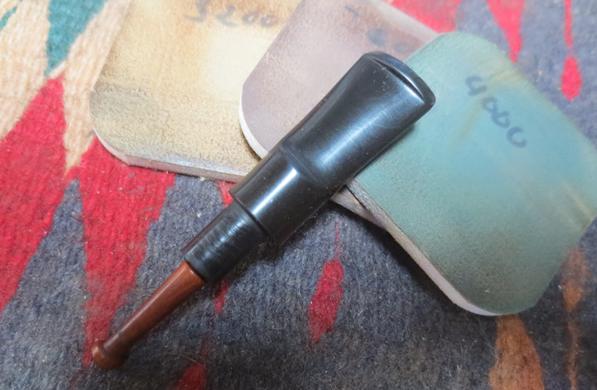
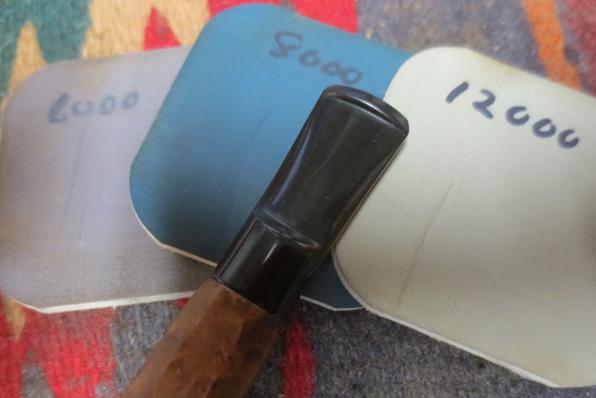
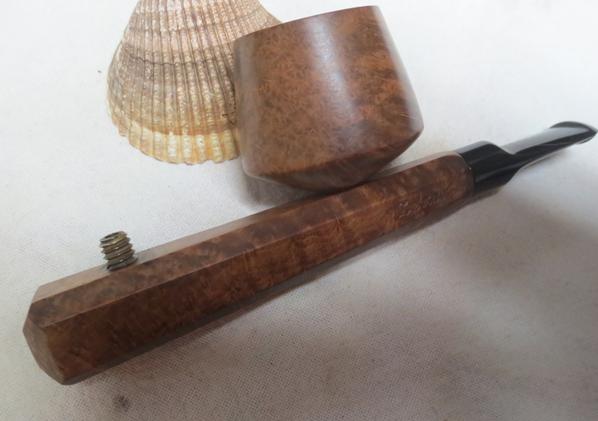
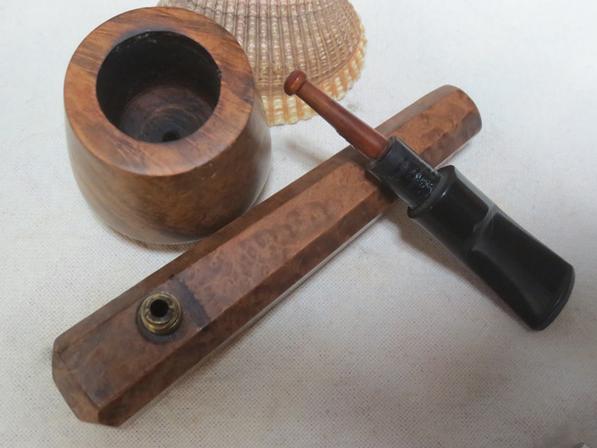
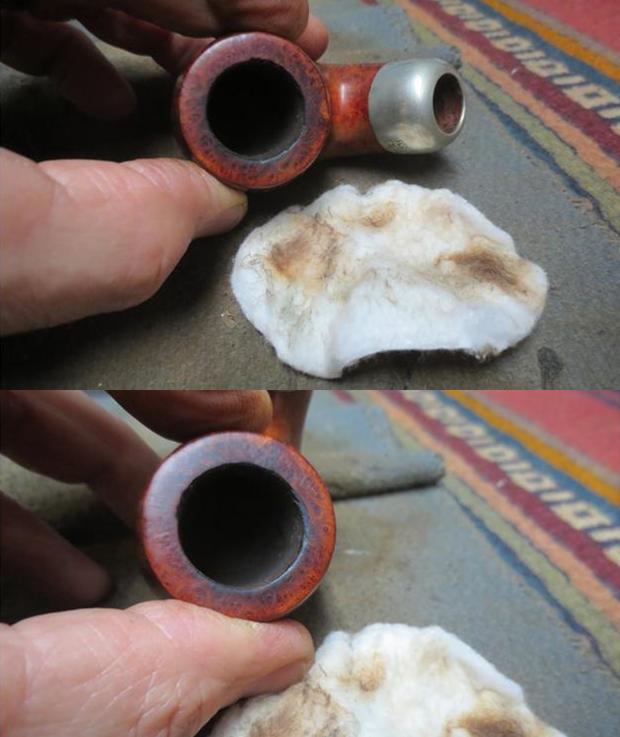
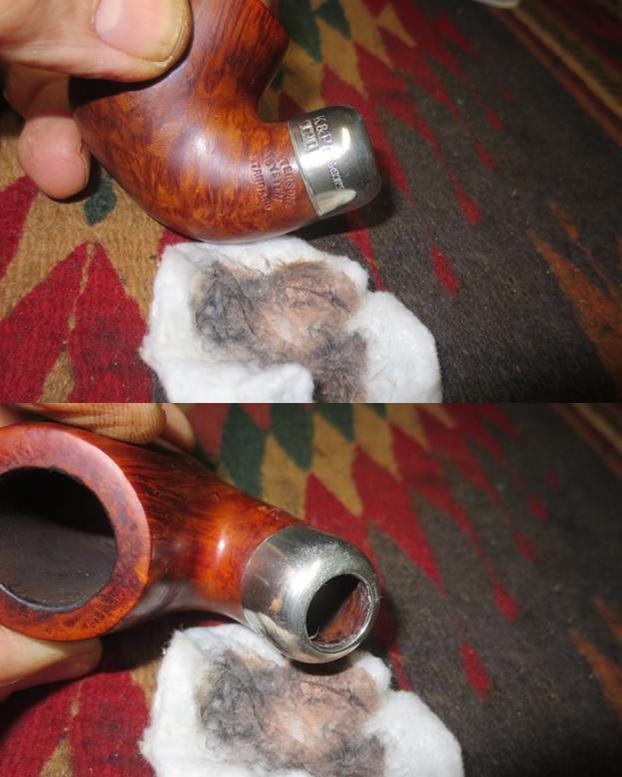
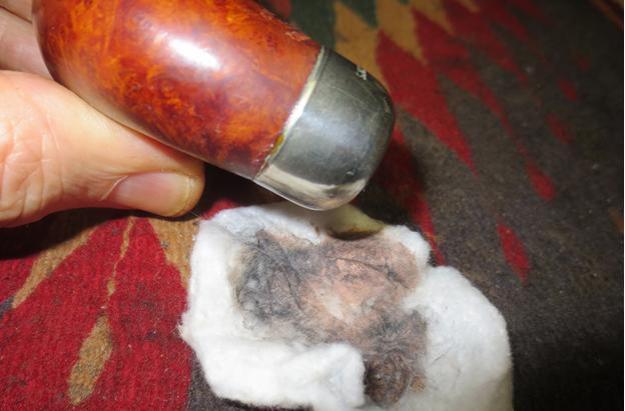
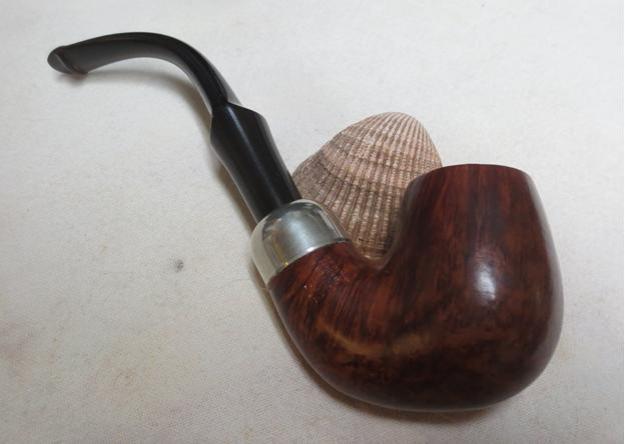
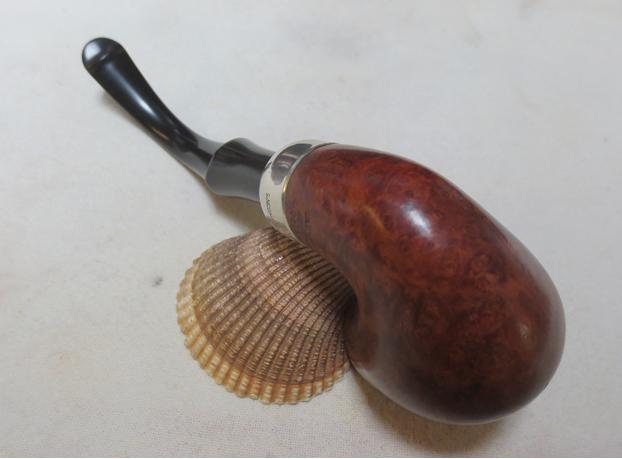
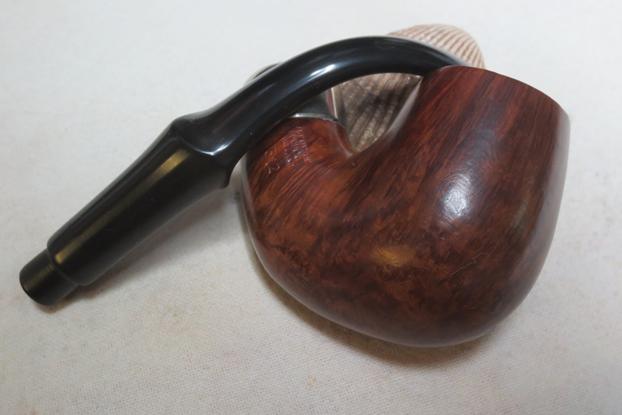
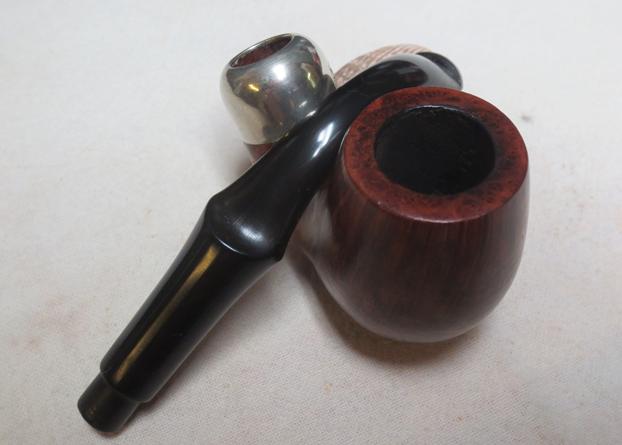
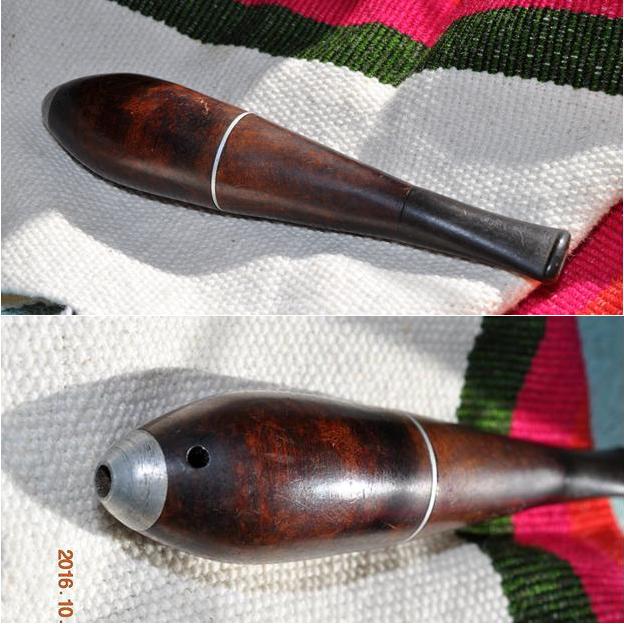
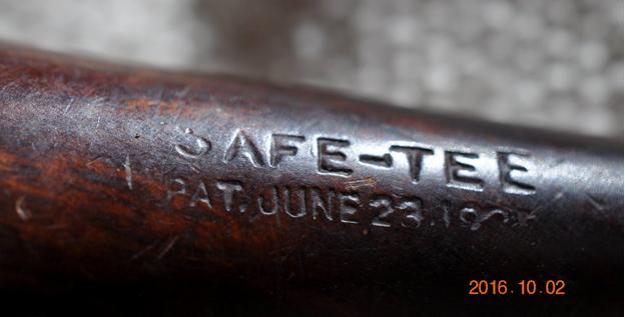
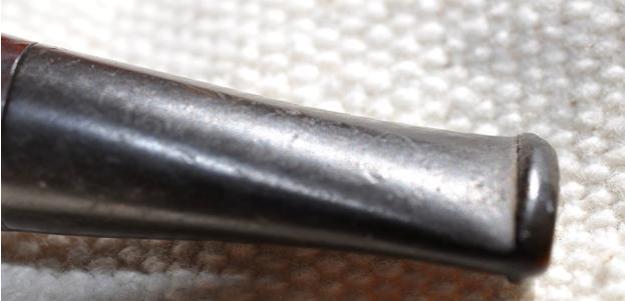
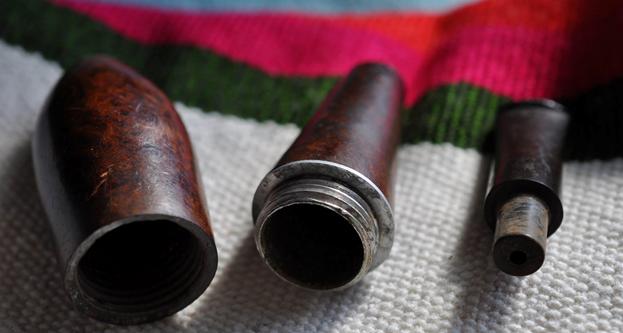
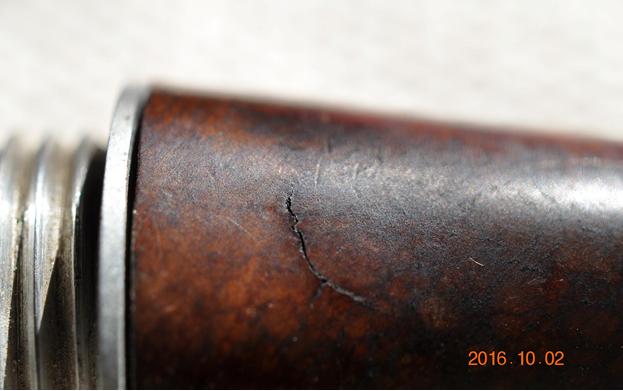
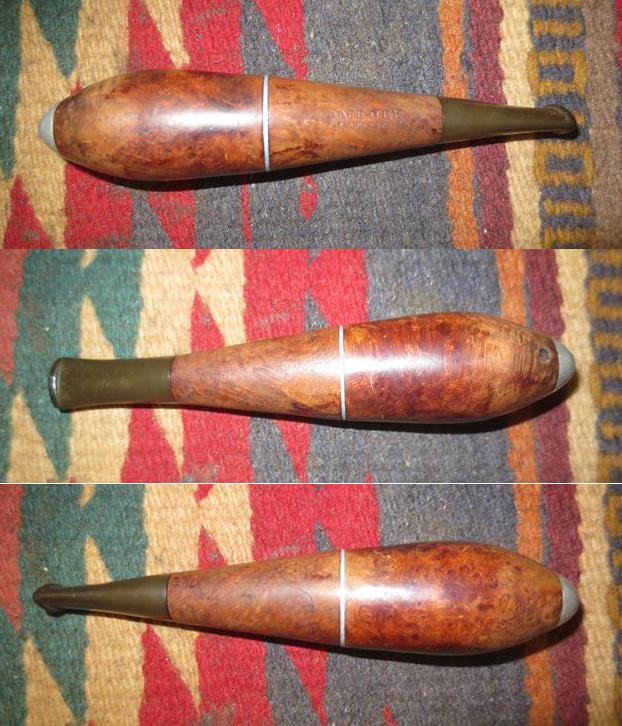
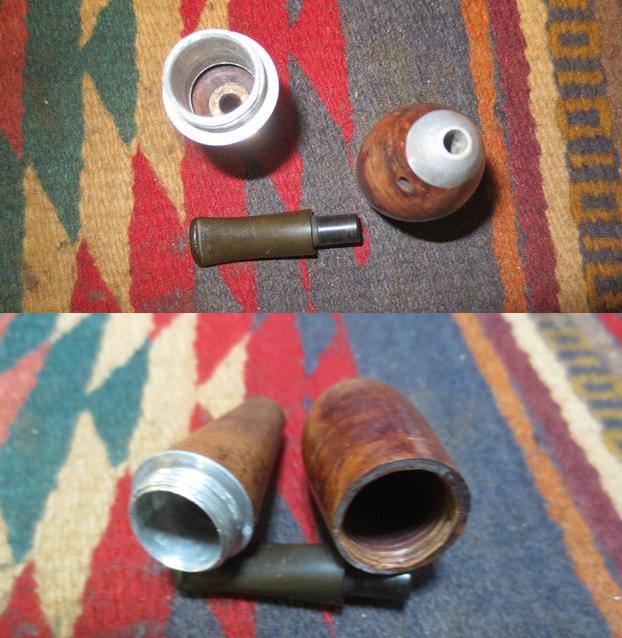
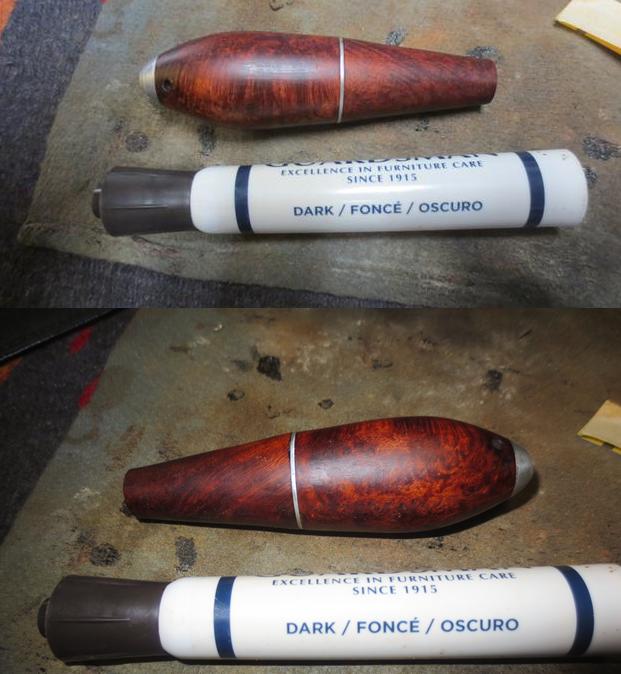
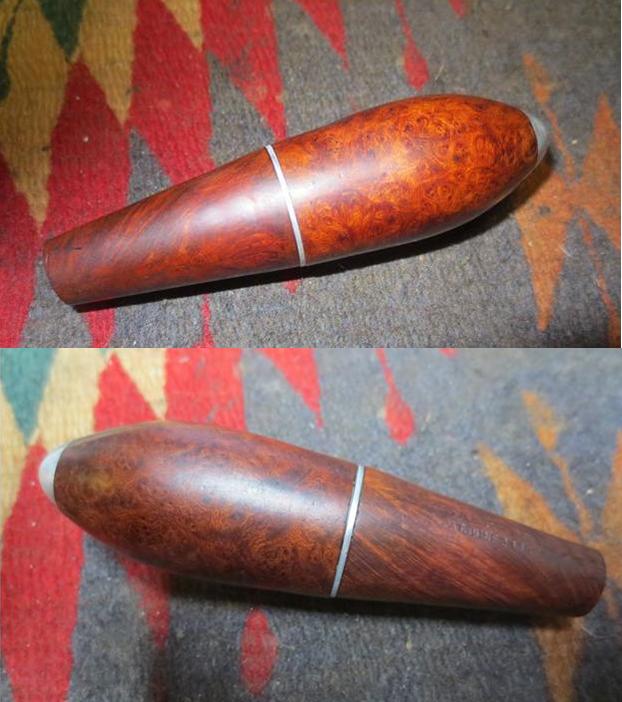
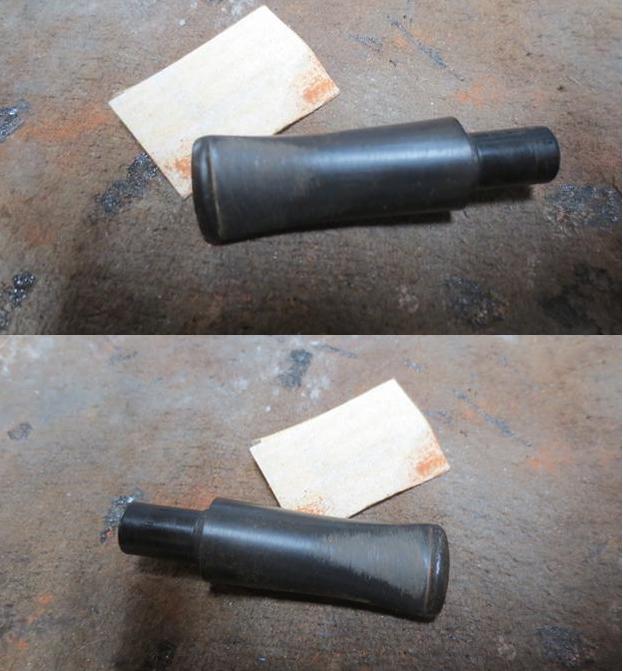
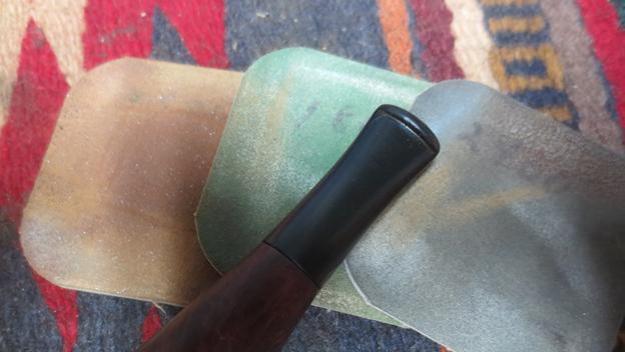
When my brother sent me a photo of another cigar pipe he was bidding on I wondered about it. I have cleaned up two of them made by Mastercraft (https://rebornpipes.com/2016/09/12/back-in-flight-a-pair-of-mastercraft-sparkless-cigar-pipe-zeppelins/). They were an interesting pair of pipes. This one was different he said. The design was quite a bit more streamlined and smooth in terms of look. The aluminum nose cone was smooth and there were two air holes drilled in the briar itself rather than just in the nose cone. I am assuming this was to aid airflow in the pipe. It still had an aluminum to briar connector for the two parts. The vulcanite stem was well fitted.cigar1 cigar2What would be the left shank side was stamped SAFE-TEE over Pat. June 23, 1925. I did a lot of searching online and could only find one other picture of a rusticated version of the pipe. It is not listed on Pipedia or on pipephil’s Logos and Stampings site. I looked in my reference books here and found it listed in Who Made That Pipe. In classic form, giving an almost dictionary style definition the book says that the pipe was made by the Safe-Tee Pipe Company in the US. Now to me that is classic – the SAFE-TEE pipe made by the SAFE-TEE Pipe Company. The only additional piece of information was that it was made in the USA and it was patented originally in 1924. The photo below shows the stamping. cigar3The stem was in great shape with minor pitting and some tooth chatter but no heavy damage. There was light oxidation as well.cigar4My brother took the photos above and the ones below to show the condition of the pipe before he cleaned it. The next one shows the pipe taken apart. The nose cone portion of the pipe is all briar with threads cut into the briar. The shank portion has an aluminum connector that turns into the briar cone. There is a washer that serves as a spacer/band between the portions. The stem is straightforward with no stinger apparatus. He also took photos of each side looking down the barrel.cigar5 cigar6The washer is free and spins on the aluminum connector. It needs to be aligned for the two sides to meet properly. There was a small crack/flaw in the briar of the shank portion of the pipe.cigar7Once again I am thankful for my brother Jeff’s cleaning skills. The inside of the pipe and stem were spotless when it arrived in Vancouver. The exterior had also been scrubbed clean of dirt, debris and the mottle finish. The pipe was ready to restore. I took some photos of it when I brought it to my work table.cigar8I took some photos of the pipe taken apart to show some of the structure on the pipe. You can see the internals of the connector and the metal tube in the bottom of that portion (the one on the left of the photo) you can also see the end of the cone. It is an interesting design that is different from the Mastercraft version.cigar10The next photos show the condition of the stem – you can see both the tooth chatter and the oxidation in the photos. There was also some pitting in the vulcanite.cigar11My first order of business was to repair the crack and several of the deeper pits in the briar. I cleaned the entire pipe with a cotton pad and acetone. I examined the crack to see how deep it went in the briar and was pleased to see that it was really surface flaw. The tube inside the shank portion stabilized it from causing further damage. I used a dental pick to clean it out and filled it in with clear super glue. It was small enough that I did not mix any briar dust with the super glue repair.cigar12When the glue dried I sanded the repairs with 220 grit sandpaper to blend them into the surrounding briar and make them smooth.cigar13I sanded the repaired areas with micromesh sanding pads – wet sanding with 1500-2400 grit pads and dry sanding with 3200-4000 grit pads. I used the higher grit pads on the entire area around the repairs.cigar14I used a dark brown stain pen to touch up the repaired areas and blend them into the colour of the briar on the rest of the pipe. I gave the pipe a coat of Conservator’s Wax and buffed it. I set it aside and turned my attention to the stem.cigar15I did not stain the rest of the pipe but decided to leave it as it was. The repaired areas were stained to match the rest of the pipe but other than that it is unstained by me. I took the next two photos of the repaired areas after waxing and hand buffing them. The repairs blend in very well.cigar17I sanded out the tooth chatter and pitting on the stem with 220 grit sandpaper. It also removed the majority of the oxidation.cigar16I polished the stem with micromesh sanding pads – wet sanding with 1500-1800 grit pads and dry sanding with 2400-12000 grit pads. I rubbed the stem down with Obsidian Oil after each set of three pads. After the final set of pads I gave it a final coat of oil and set it aside to dry.cigar18 cigar19 cigar20I buffed the pipe with Blue Diamond on the buffing wheel being particularly careful around the stamping on the side. The stamping was already light on the left and right side so I did not want to damage it more. I gave it multiple coats of carnauba wax and buffed it with a clean buffing pad to give it a shine. I finished by hand buffing it with a microfiber cloth. The finished pipe is shown in the photos below. It turned out to be a beautiful piece of briar with a mix of flame, cross and birdseye grain surrounding the two halves. The aluminum polished up nicely and the black vulcanite, the natural finish and the aluminum combine to give the pipe a classic appeal. This was a fun one to work on. Thanks for walking with me through the process.cigar21 cigar22 cigar23 cigar24 cigar25 cigar26 cigar27 cigar28 cigar29
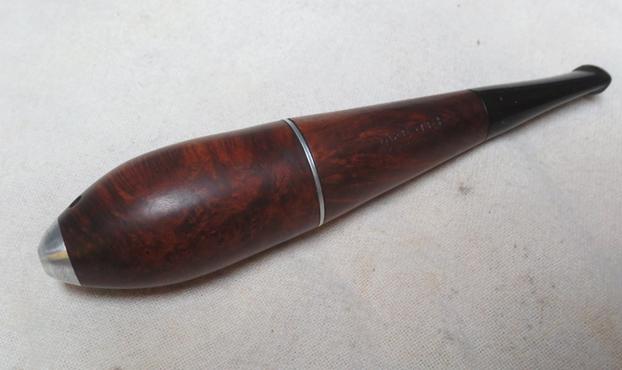
Breathing new life into a Unique PHM System Pipe with a Horn Stem


Blog by Steve Laug

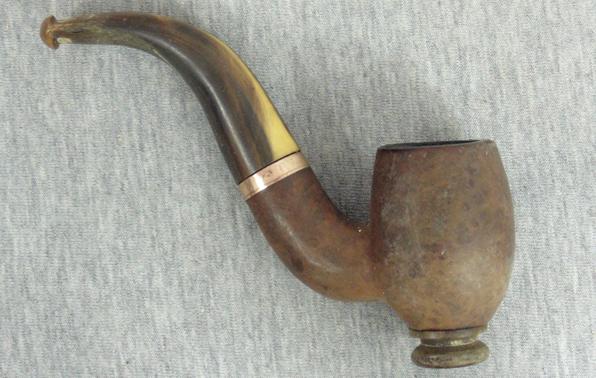
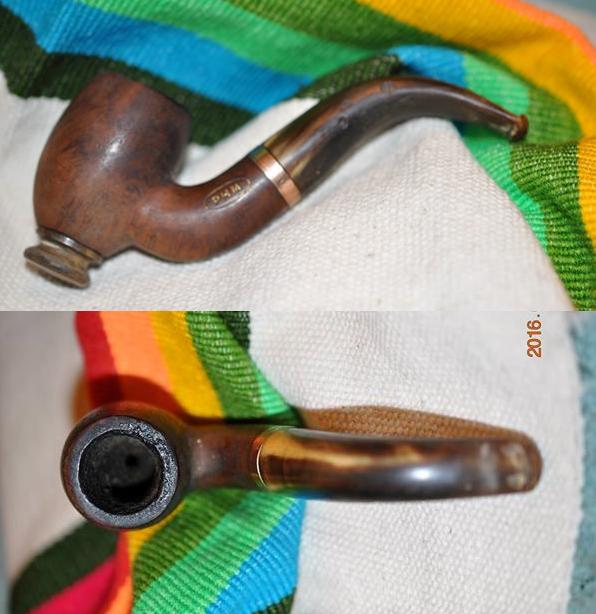
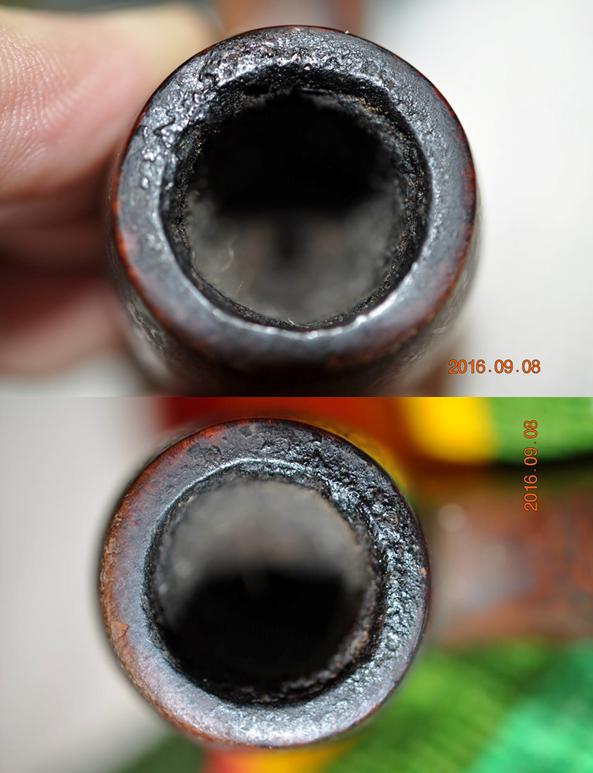
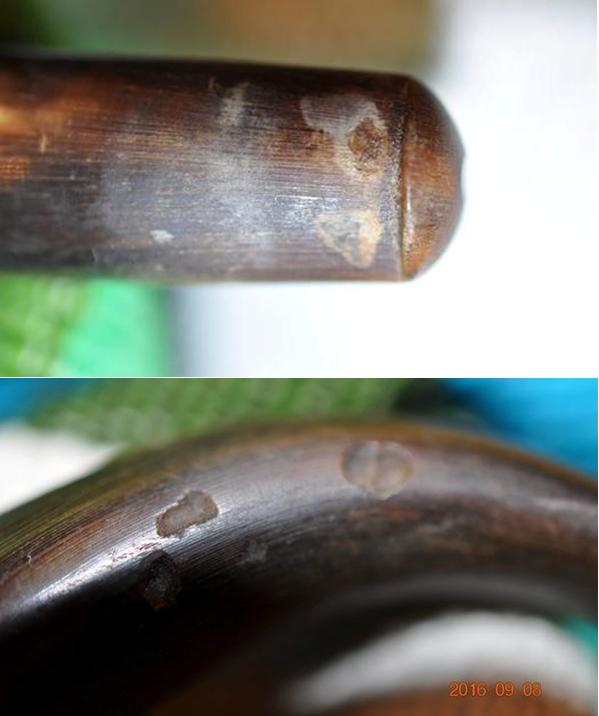
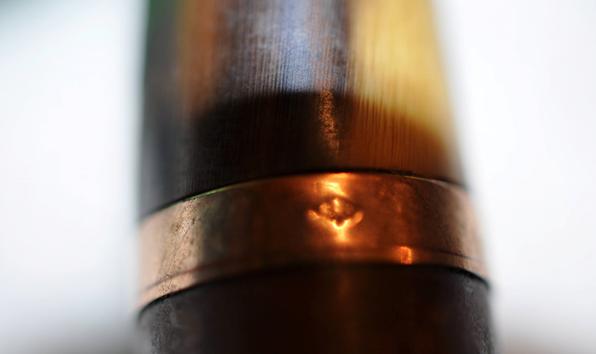
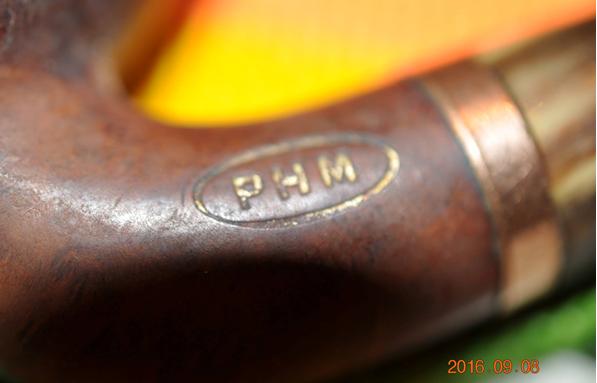
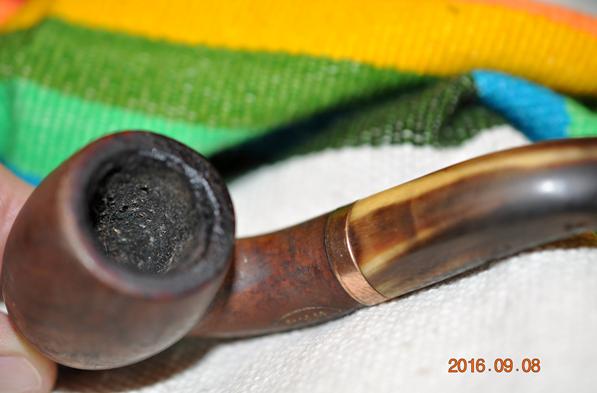
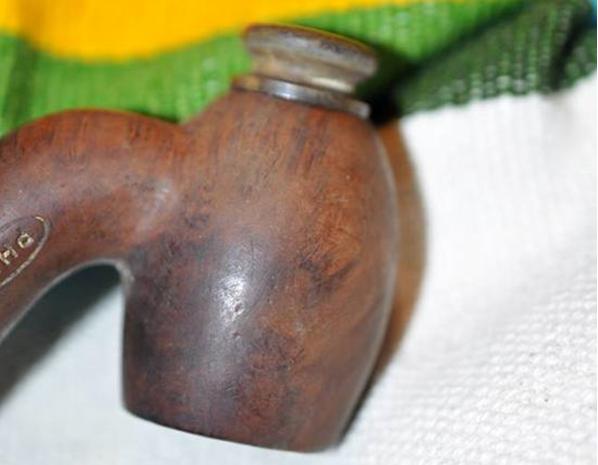
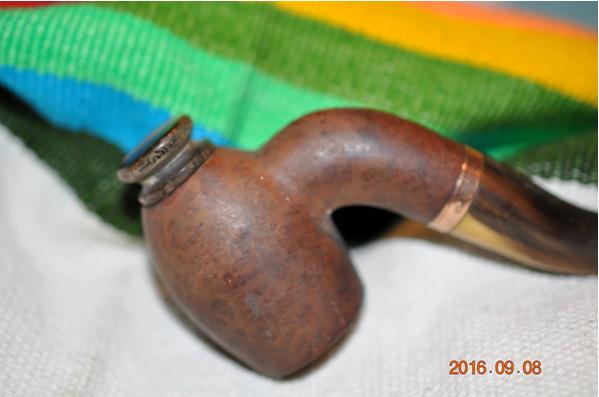
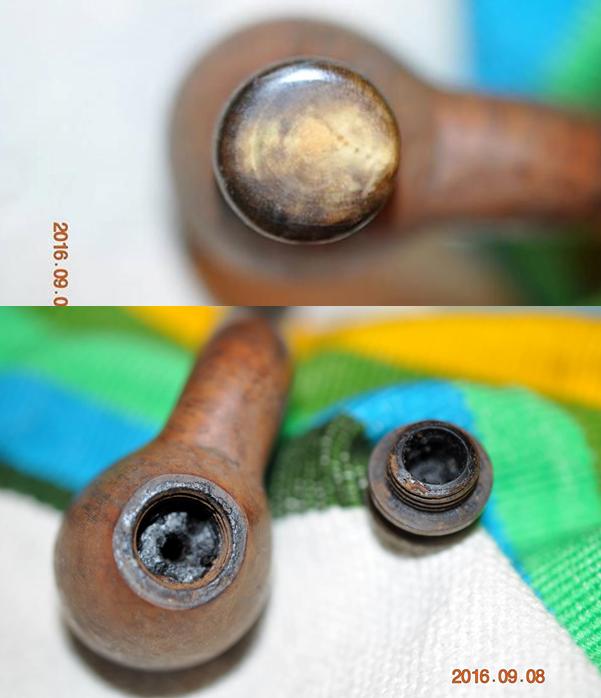
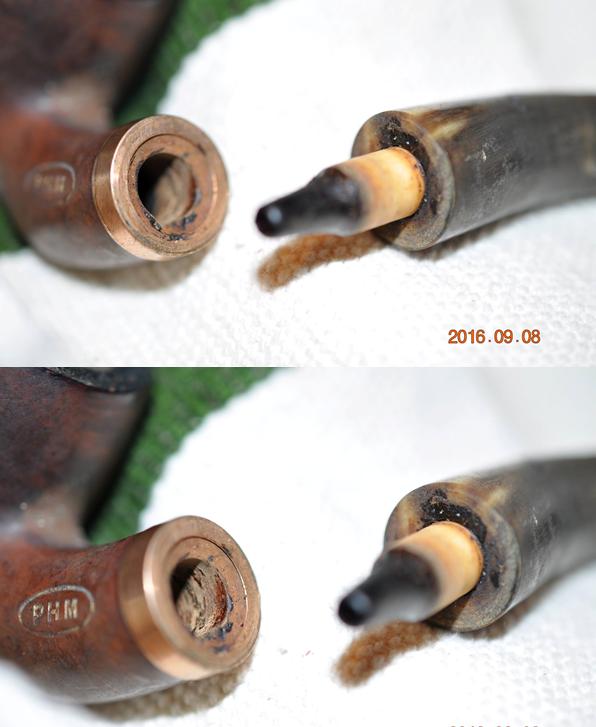
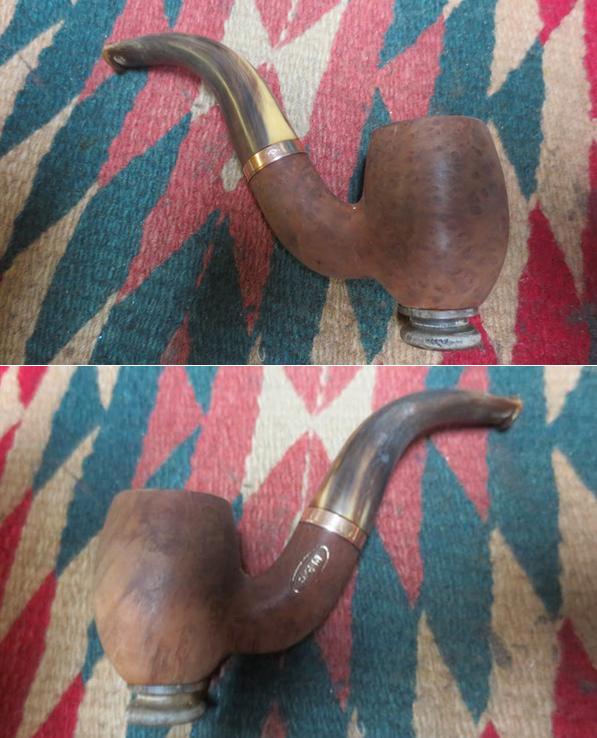
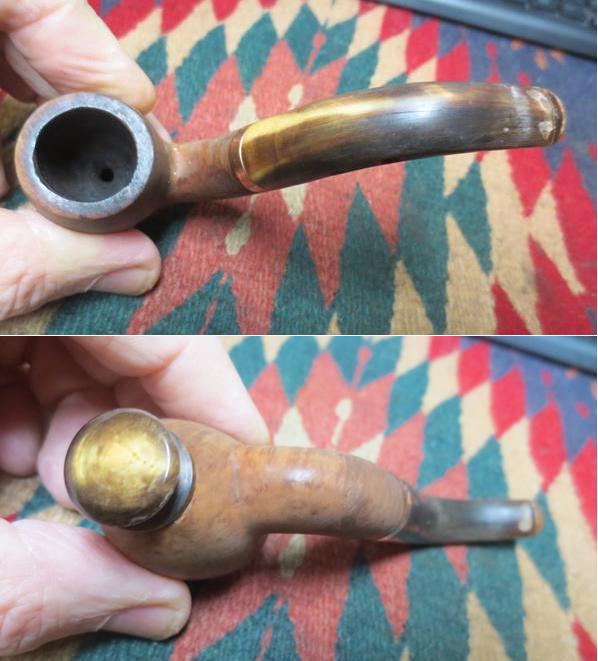
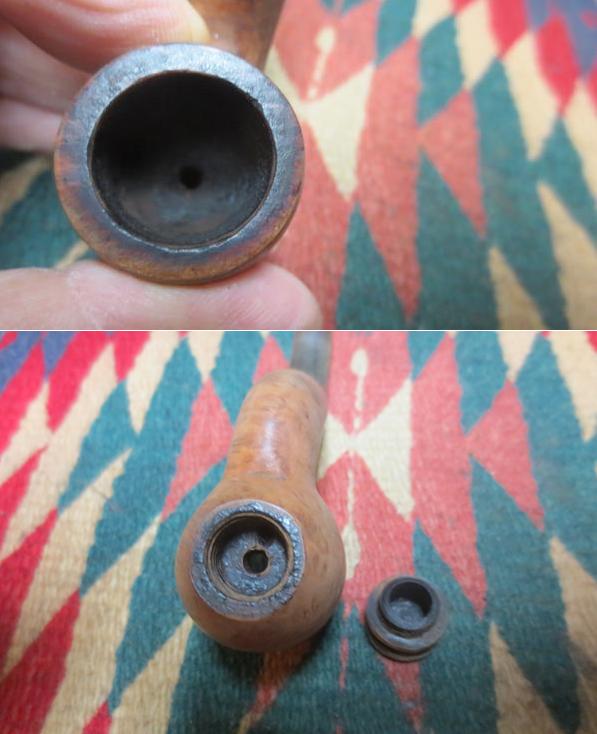
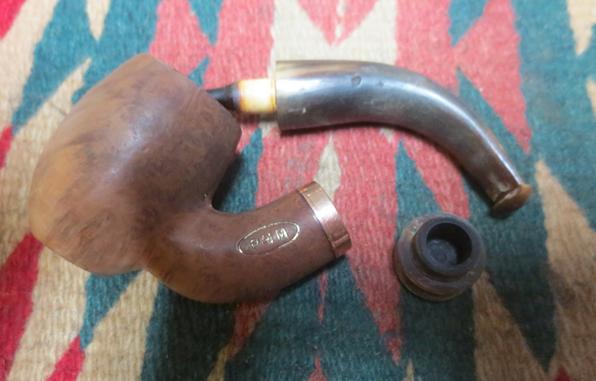
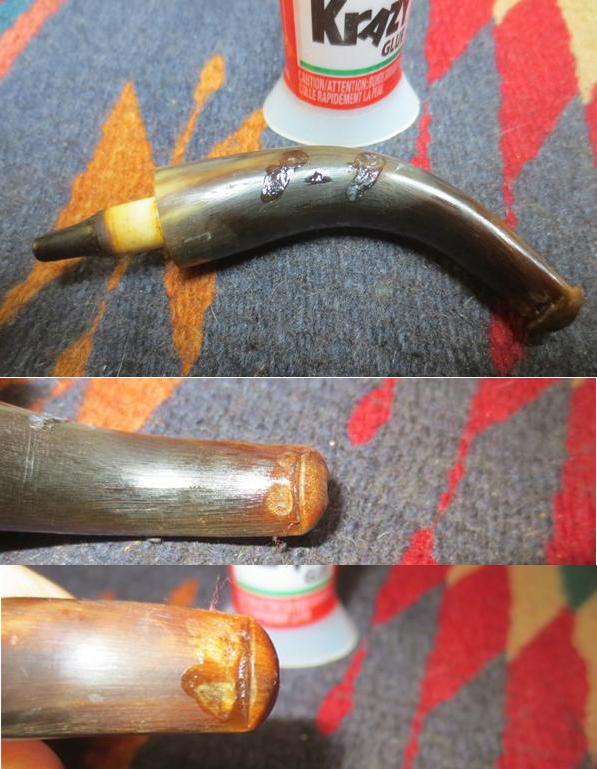
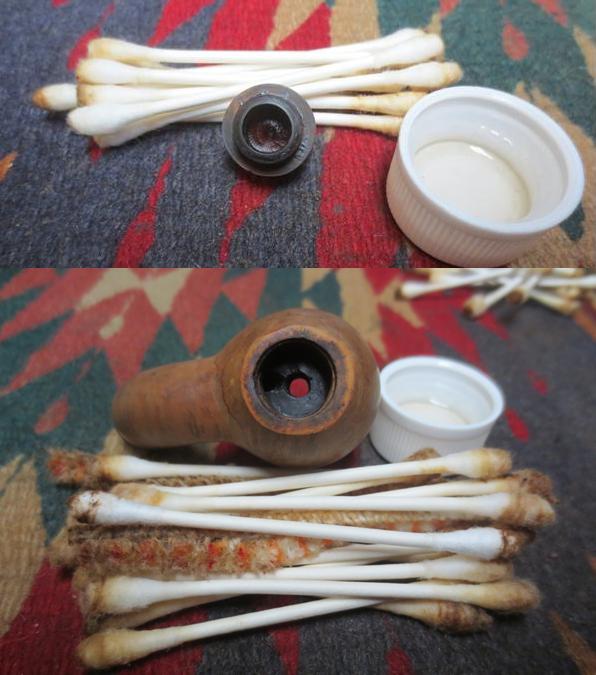
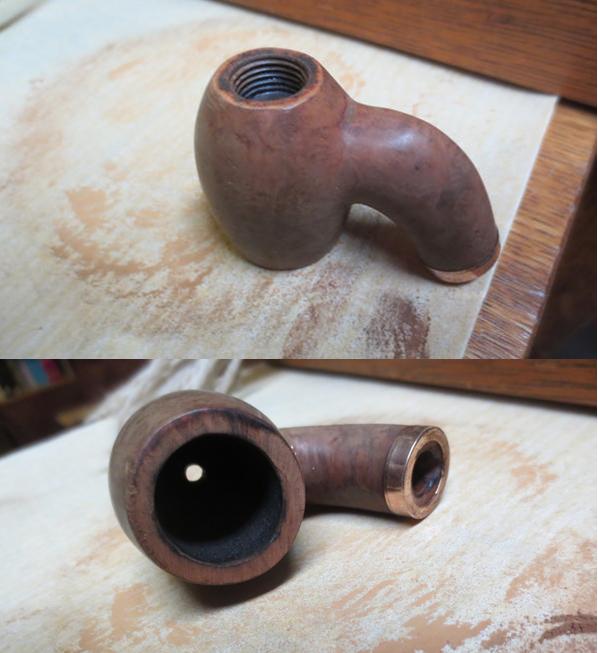
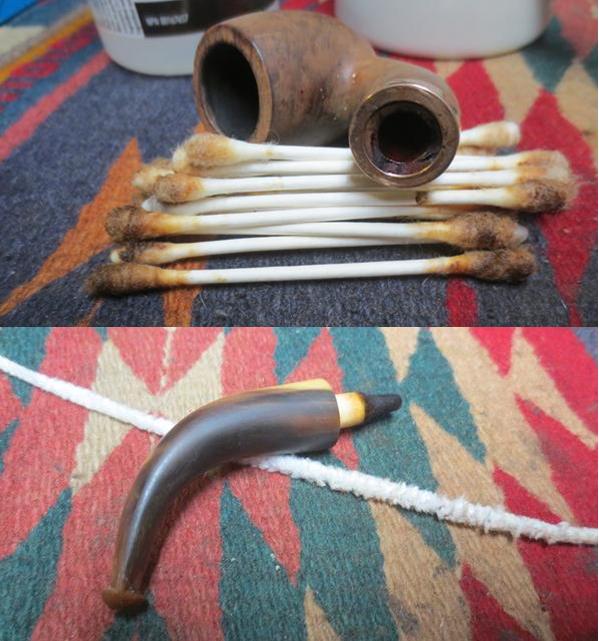
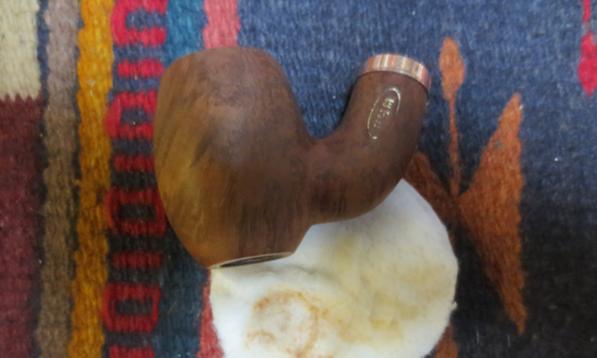
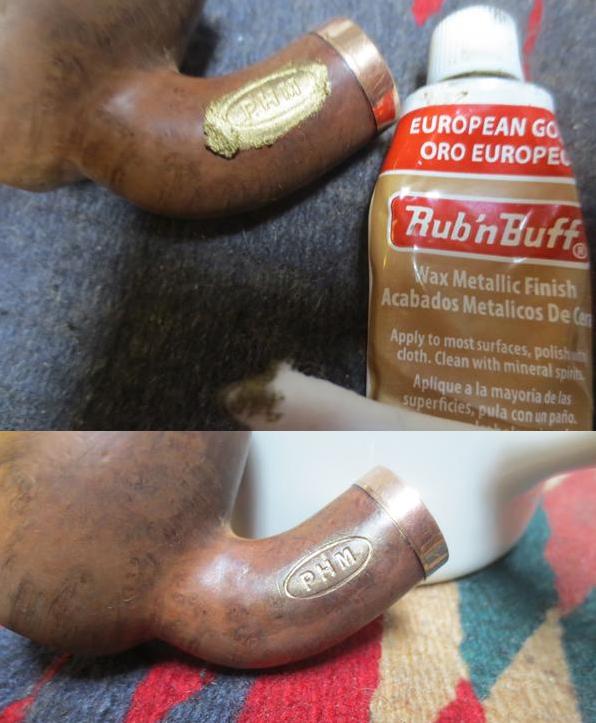
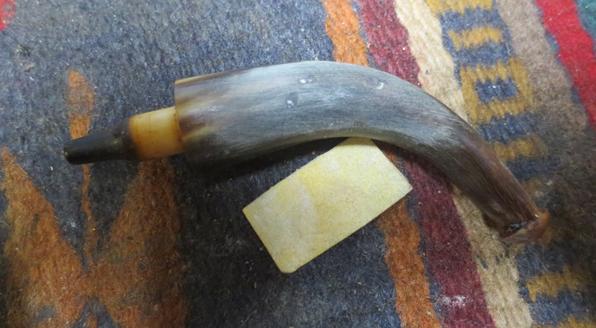
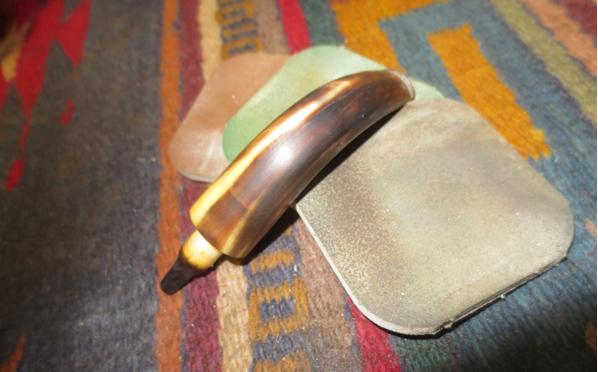
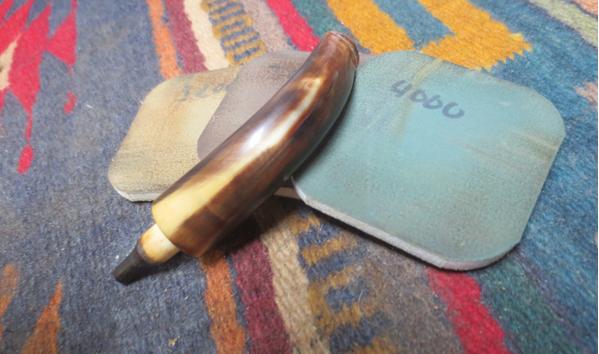
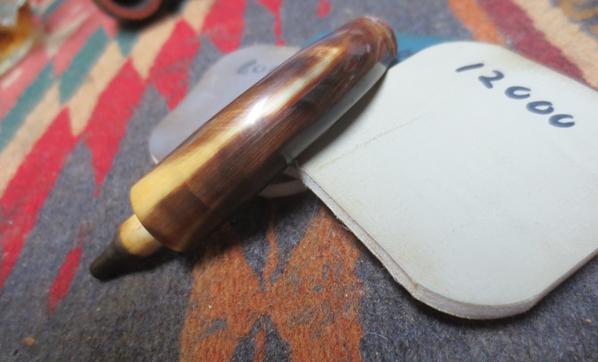
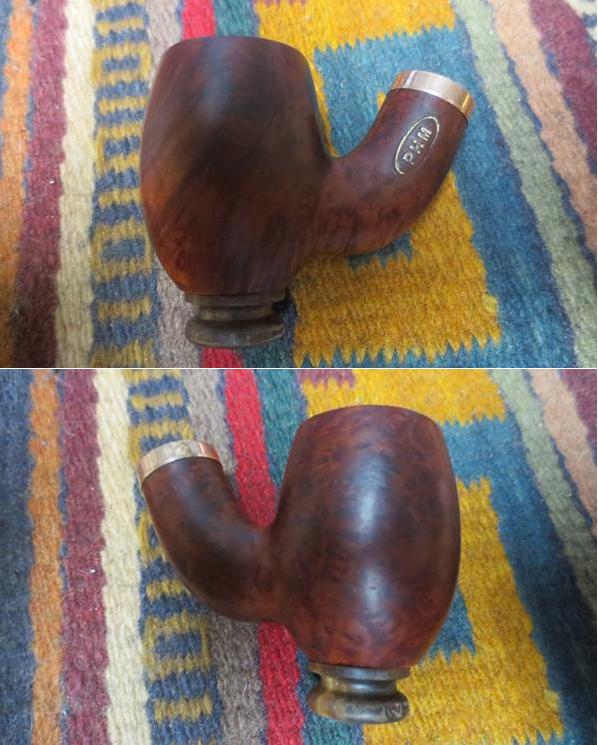
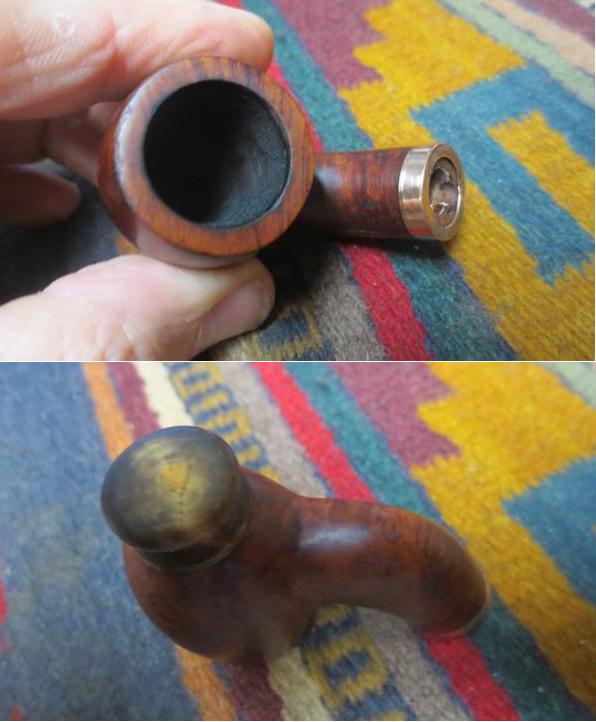
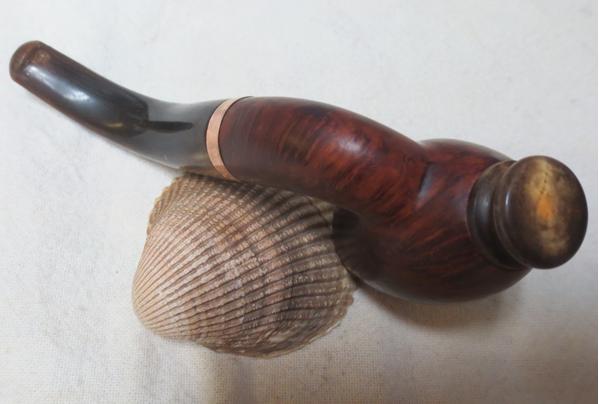
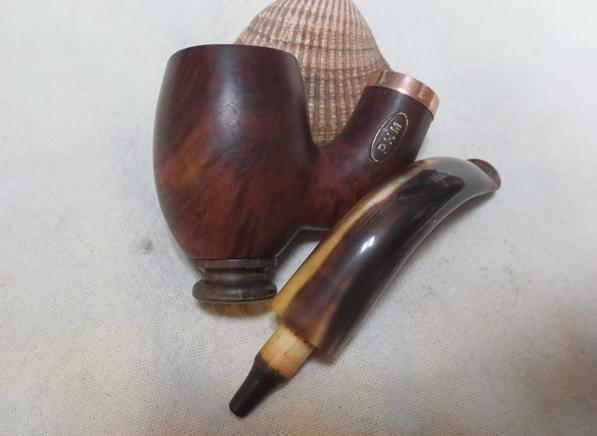
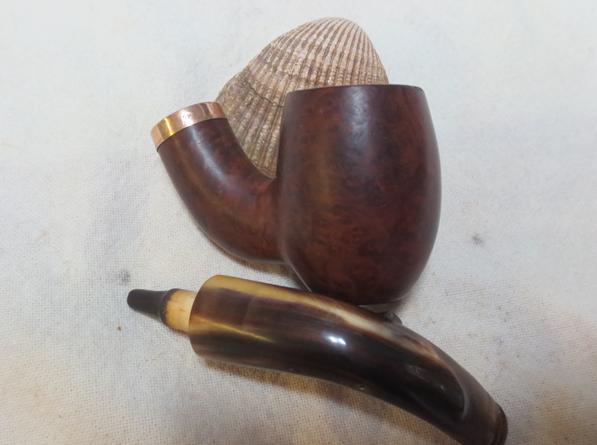
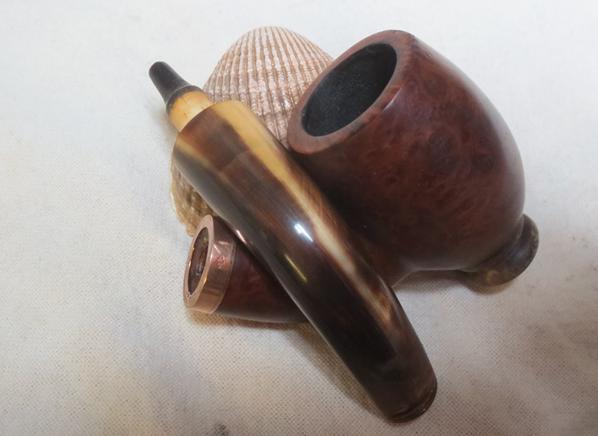
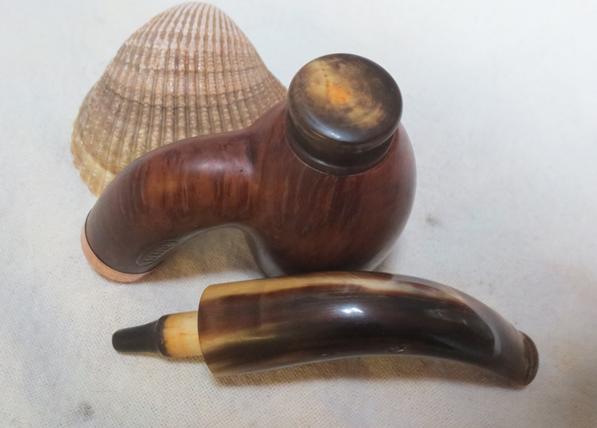
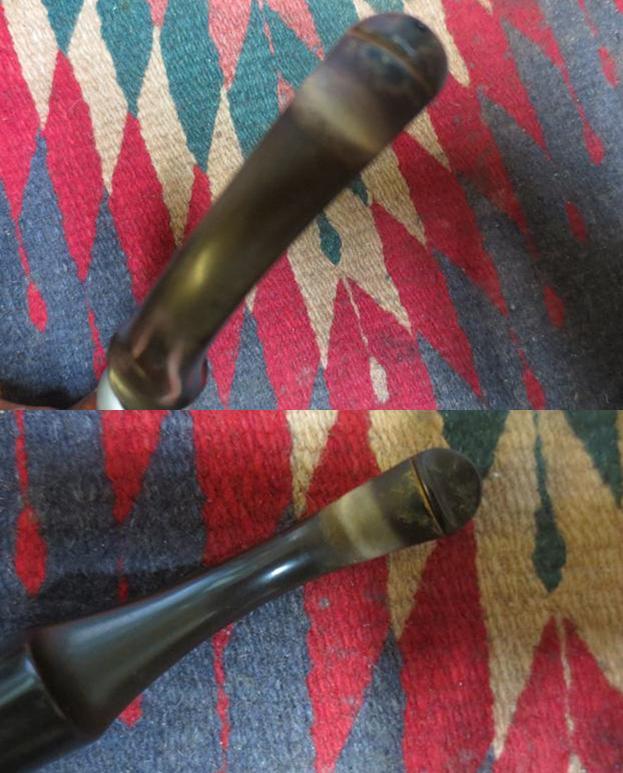
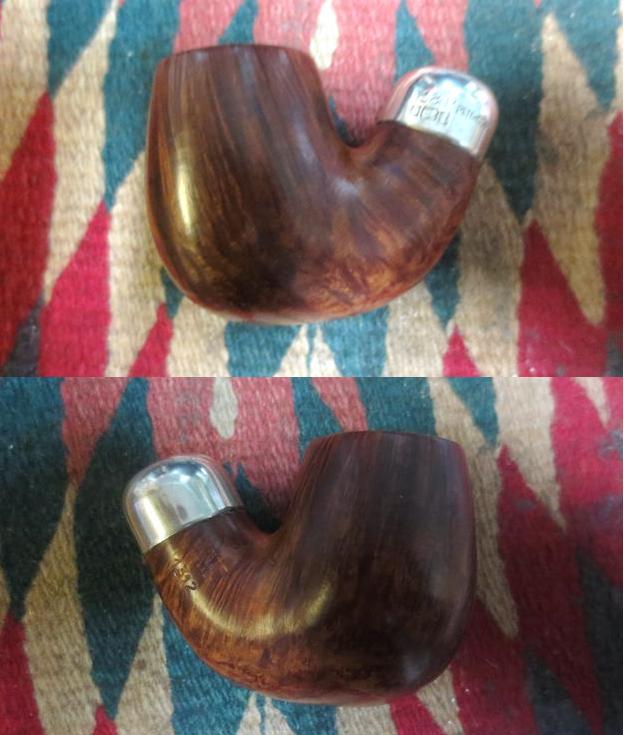
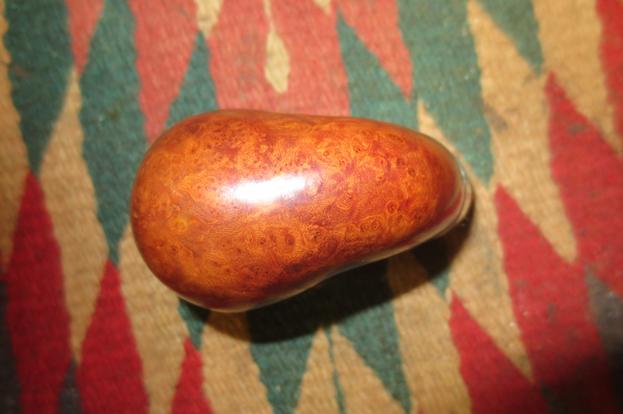
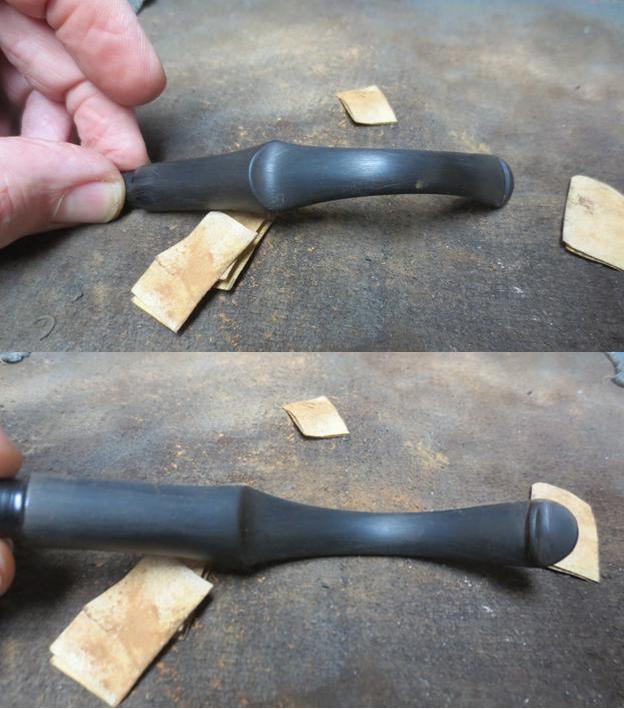
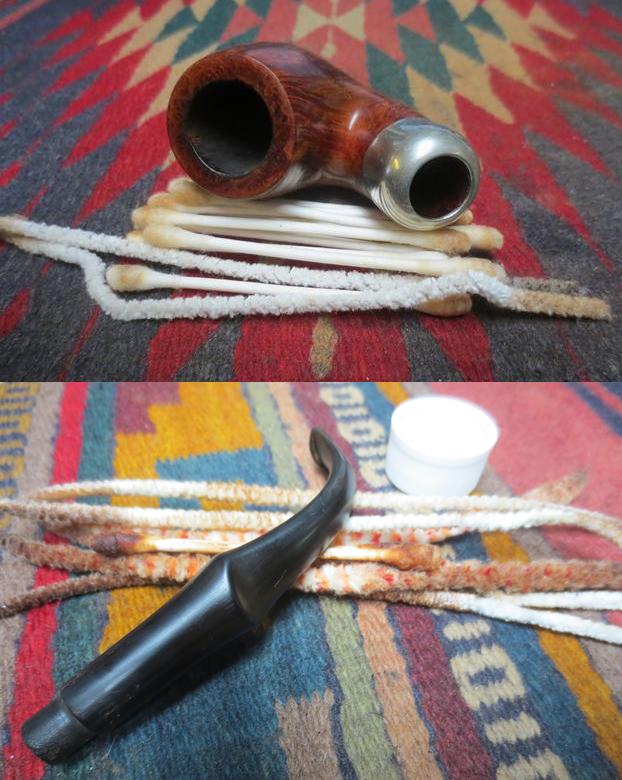
My brother first sent me the picture below of this old pipe to see what I thought of it. There was something intriguing about it from my first look. I looked at the eBay ad and all of the pictures included and told him we should go for it. I don’t recall ever seeing a pip this shape with the horn stem and the matching horn button on the bottom of the bowl. It certainly looked like it was a nice piece of briar underneath the grime of age. The horn stem looked to be in good shape overall with no splits or cracks. The horn button on the bottom of the bowl also appeared to be in good shape. The briar had no burns or serious damage to the rim or the edges of the bowl. The band was in decent shape with no dents of dings. The chunky look of the stem and the shank attracted me to the pipe. The striations of colour on the stem showed promise of looking great once buffed and polished. He bid on it and won.hornaWhen Jeff received the pipe he took the following photos before he started cleaning it up. You can see some of the issues that I will need to address in the cleanup and restoration. The overall condition of the pipe is fine. The briar was very dirty and the rim and bowl had a thick, dark and oily cake that overflowed onto the top of the bowl. If you look closely at the photos of the entire pipe you will also see some damage to the horn stem. There are tooth marks on the top and underside near the button and there are some divots out of the left side of the stem.horn1He took some close up photos of the rim and bowl. You can see the cake in the bowl and the overflow of lava on the rim top. It is hard to tell if there is damage to the inner edge of the rim at this point due to the buildup but there could be. There is some wear on the outer edges at the front of the bowl.horn2The close up photos of the stem shows the tooth marks and the divots out of the left side. Both of these will need to be addressed in the restoration.horn3The brass coloured band has a small diamond shaped stamp on it that is aligned on the right side. It has some kind of stamping inside the diamond but even with a light and a magnifier I am unable to read it.horn4The PHM stamp in the oval on the left side of the shank is the only stamping on the pipe. I have hunted high and low for information on the brand and can find nothing. The shape and design of the pipe and stem make me think it is quite old and probably British made but I cannot be certain. Can any of you help identify the maker for me?horn5It is hard to see in the photos but the airway in the bowl is at the bottom of the bowl. The horn cap on the bottom of the bowl is removable and it was hollowed into a bowl to catch the moisture from the burning tobacco. The airway into the shank is in the area where the cap screws into the bowl. The area acts as a bit of a cooling chamber for the smoke that is drawn into the airway allowing the moisture to collect in the horn bowl before wending its way into the airway in the shank of the pipe.horn6 horn8 horn9When my brother unscrewed the cap the chamber inside was extremely dirty with tars and oils. The buildup was quite thick on both the inside of the hollowed out cap and the inside of the chamber/trap it screwed into.horn7He removed the stem from the shank and took photos of the shank end. The brass band turned out to be more of a ferrule that wrapped the shank end. The drilling on the airway in the mortise was at a steep angle into the shank so you can see a small divot at the bottom edge of the shank. The tenon/stinger was bone and was shaped like a nipple that sat against the entrance of the airway in the bottom of the mortise.horn10My brother scrubbed the externals of the bowl, reamed and cleaned out the internals. He said that the insides would take more work once I got it as they were very dirty. I took photos of the pipe when it arrived in Vancouver and I brought it to the work table.horn11 horn12He had cleaned up the stem inside and out and the tooth marks and divots were ready to repair.horn13He had been able to remove all of the cake in the bowl and it revealed the airway at the bottom of the bowl. He also cleaned the rim of the entire lava overflow. It would need to be lightly topped to remove the damage to the inner edge of the rim. He had scrubbed the reservoir under the horn plug on the bottom of the bowl but it would need a lot more work to rid it of all of the thick oils and tars accumulated there.horn14I took a photo of the dismantled pipe to give an idea of the components and the size of the pipe. It is not a big pipe but the bowl is large for the overall size.horn15I wiped down the tooth marks and divots on the side of the stem with a cotton pad dampened with alcohol to remove any remaining debris. I filled them in with clear super glue – slightly overfilling them to ensure that once the glue cured there would be enough for a smooth finish once sanded.horn16While the stem glue cured I worked on cleaning out the reservoir/trap at the bottom of the bowl and inside of the cap. I used cotton swabs and alcohol to clean the area out and it took a lot of finicky cleaning to get all of the nooks and crannies clean. I also cleaned out the airway from the trap into the shank with bristle and regular pipe cleaners.horn17I lightly topped the bowl on the topping board with 220 grit sandpaper to remove the damaged rim surface but not to change the overall shape or flow of the bowl. I sanded it with micromesh sanding pads -1500-4000 grit to remove the scratches left behind by the sandpaper on the topping board.horn18 horn19I cleaned out the mortise and airway in the shank and the stem with pipe cleaners, cotton swabs and alcohol until they came out clean and the pipe smelled fresh.horn20I wiped down the exterior of the bowl with acetone to remove any grit and dirt that I had transferred during the interior cleanup.horn21I used European Gold Rub’n Buff to restore the stamping on the shank. I applied it with a cotton swab and let it sit for a moment before rubbing off the excess with a clean swab. The restored stamping can be seen in the second photo below. The bottom edge of the stamp was not as deep as the rest of the stamp so I was not sure if that area would retain the gold.horn22By this time the glue repairs on the stem had cured. I sanded them smooth with the surface of the stem using 220 grit sandpaper. For some reason the clear glue brings out a white spot in each repaired area – it may be a reaction of the horn to the glue. I will minimize those as I polish the stem but they will remain.horn23I polished the stem with micromesh sanding pads – wet sanding with 1500-2400 grit pads and dry sanding with 3200-12000 grit pads. I rub horn stems down with Obsidian Oil after each set of three pads to give life to the horn. I gave it a final coat of oil after sanding with the 12000 grit pad. I set the stem aside to dry.horn24 horn25 horn26I gave the bowl several coats of Conservator’s Wax and hand buffed it with a shoe brush. I would also buff it on the buffer but I wanted to see where things were at this point. Were there any areas on the bowl sides or top that I needed to do more work on to ensure that it would have a smooth finish.horn27 horn28I worked a little more on the horn cap on the bottom of the bowl and on a few of the nicks on the sides of the bowl using 1500-4000 grit micromesh sanding pads. Once I was satisfied with the look and feel of the pipe I buffed it with Blue Diamond on the wheel being careful around the stamping. I buffed the stem with the polish as well to raise a shine and further blend in the repairs. I gave the bowl and the stem several coats of carnauba wax and buffed them with a clean buffing pad. I finished by hand buffing the pipe with a microfibre cloth to deepen the shine. You will note that I did not stain the bowl at all. The rich patina is merely the wax working with the natural colour of the briar. This pipe is an oddity and a beauty. It was well worth the effort in my opinion. Thanks for walking with me through this process.horn29 horn30 horn31 horn32 horn33 horn34 horn35 horn36
 

1985 Ashton Pebble Grain Restored


By Al Jones

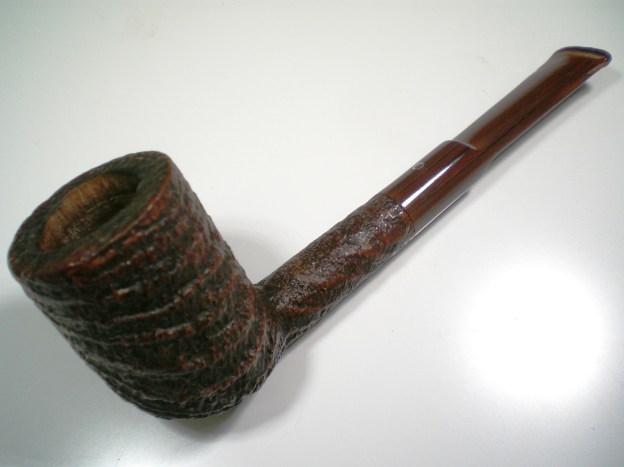
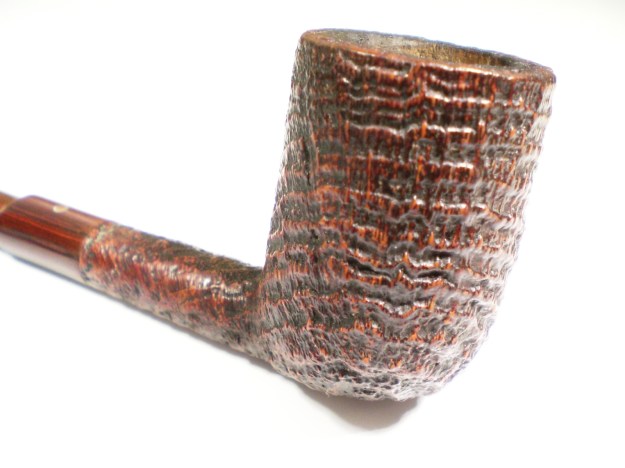
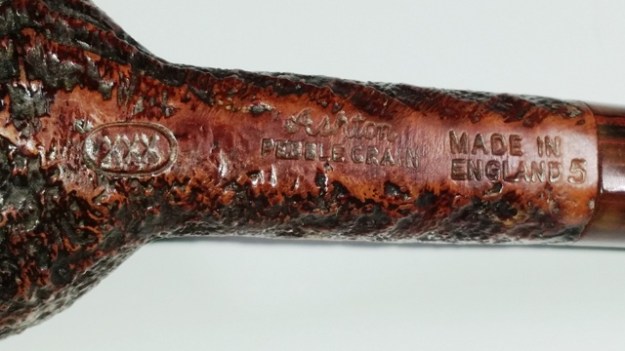
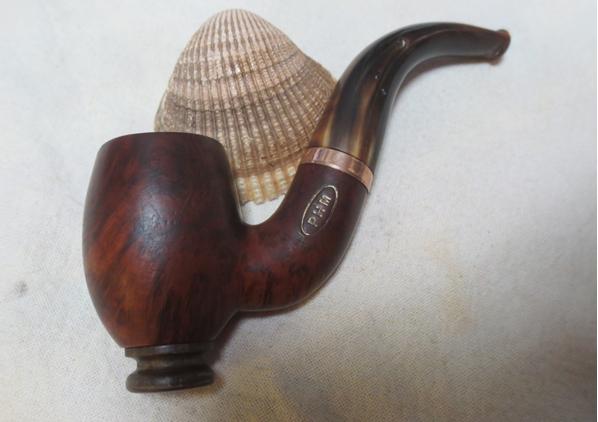
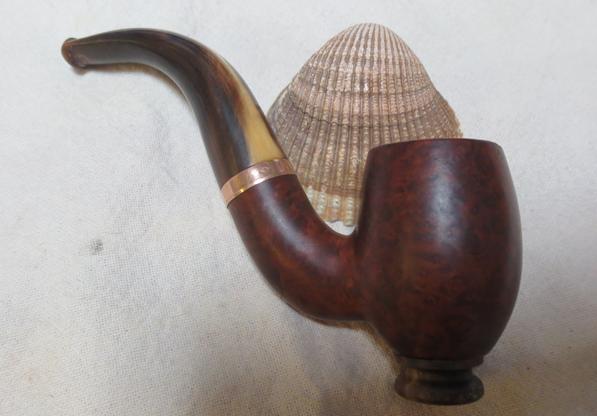
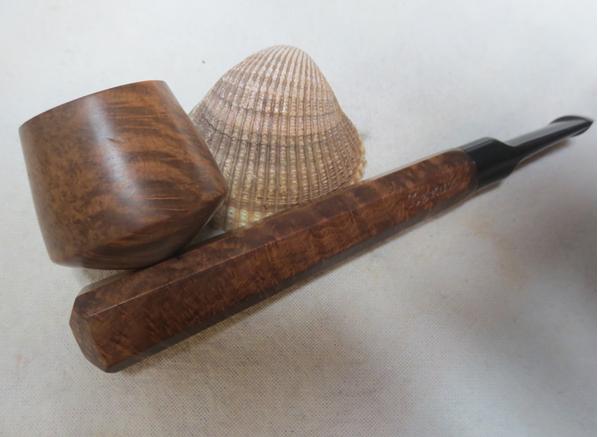
This pipe was purchased by a buddy from the PipesMagazine forum. It caught my eye and he was looking to build an English collection. I have a small collection of Bill Taylor era Ashton pipes, but none are from the early 1980’s. This one, a Pebble Grain, is marked “5” which is the date for 1985. Early sandblasted Ashtons are prized for the craggy blast work and this one doesn’t disappoint. The briar was in great shape, but the Cumberland stem had some heavy teeth marks.

ashton_pg_xxx-1985_before-1ashton_pg_xxx-1985_before-4ashton_pg_xxx-1985_before-2

The pipe had a heavy cake and some build-up on the bowl top.  I reamed the cake and found the bowl interior to be in decent shape.  I used a cloth and water to rub off the build-up.  The bowl was then soaked with alcohol and sea salt.

I tried removing some of the dents with heat from flame but I was only marginally successful.  I don’t like super-glue patches on Cumberland stems and the owner is considering having a new stem made by artisan repairman, George Dibos.  So, I shined and polished the stem with wet paper and Micromesh paper.  The stem was then buffed with White Diamond and Meguiars Plastic polish.

I  polished the bowl by hand with Halycon wax.  Below is the finished pipe.

ashton_pg_xxx_1985_finish-1
ashton_pg_xxx_1985_finish-4
ashton_pg_xxx_1985_finish-2
ashton_pg_xxx_1985_finish-5
ashton_pg_xxx_1985_finish-6
ashton_pg_xxx_1985_finish-3

?

?

Sometimes you just get lucky – an amazing pipe hunt


Blog by Steve Laug

Saturday evening, I had a call from my brother Jeff. He had driven to Boise the night before to go to an estate sale and visit a few antique shops afterwards. Now you need to understand that my brother has been bitten by the bug. He loves looking for old pipes even more than I do and that is saying something. He is not able to drive by an antique shop without checking it out. Each holiday he takes always has time for a few pipe hunts as a part of the journey. But this time even for him this pipe hunt was extraordinary. The crazy part of the trip was a find in a thrift shop.

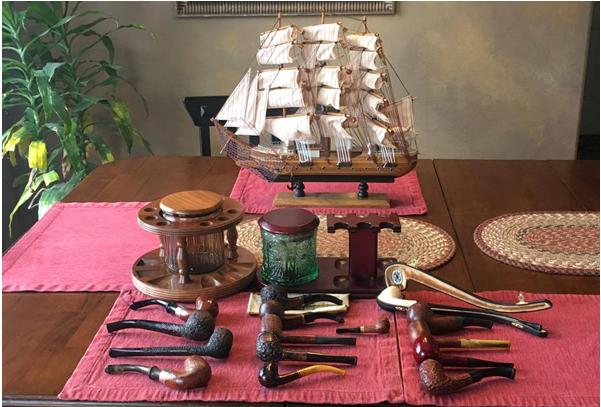
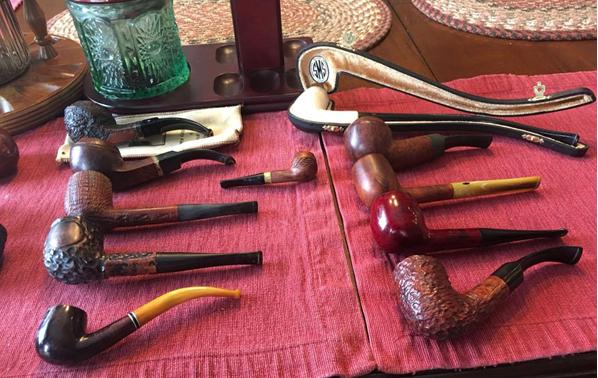
The first photo below shows the bounty of the trip in one photo. The later pictures show various views of the lot. Across the back of the three columns of pipes were two pipe racks and humidor jars that he found – the first on the left is a nine pipe rack and jar and the other a six pipe rack. Both are in excellent condition. A great ship model forms the backdrop to these amazing finds.hunt1What about the pipes? Why do I call it a really good day hunting? Well, have a look at the list of pipes that he came home with – and for me a few of these were quite a surprise. Using the photo above as a template for the pipes found, I will list the pipes starting with the left column from top to bottom and working my way across and down each column. I think you will agree about the calibre of the hunting day he had. The only thing that bugs me is that I was not present when he found these beauties. Here is the list:

Column 1:

  • A new unsmoked WDC Wellington bent that is just gorgeous
  • A 1985 Dunhill 5113 Bent Apple Shell
  • A Sasieni Canadian London Made – a long rusticated pipe that is in excellent condition
  • A shallow sandblast that is stamped Wellpipe.

Column 2:

  • A beautiful Castello 54P Sea Rock Bulldog
  • A Peterson’s Emerald 80S Bulldog
  • A rusticated Italian pipe
  • A rusticated Calabresi
  • An older pipe with Black & Silver band, Yellow Curved Stem.
  • In between the second and third column there is a small pipe with a gold band – just 3 inches long.

Column 3:

  • An SMS Handcarved Block Meerschaum Church Warden
  • A Perkins LTD Rhodesian looking a lot like a GBD 9438
  • A KBB Yello-Bole Premier with a black propeller style logo on a yellow stem
  • A red Calabresi apple
  • A Savinelli Made Roma.

Not shown in the photos:

  • A Bryson Metal Pipe
  • An Ansell’s WASH. D.C.
  • A Garden pipe Italian Made
  • An L.L. Bean billiard
  • A red Italian Made Rusticated pipe.

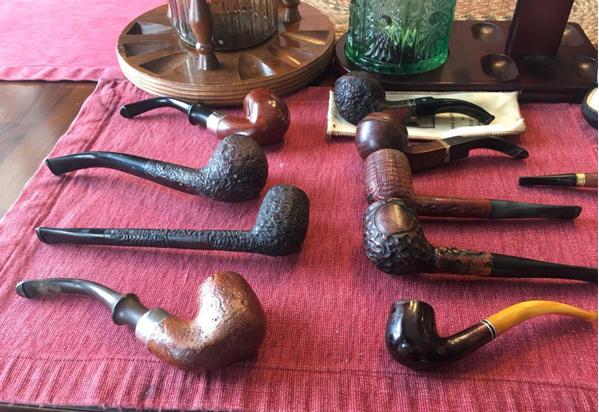
The next photo is basically the same as the one above just a bit closer look at the lot. The list is the same as the photo above. You can see the pipes a little more clearly. Each photo that follows gives you a closer and closer look at the pipes.hunt2The first photo below focuses on the first and second column in the above pictures. You can see the condition of the pipes in those columns. There are some classic finishes that are dead giveaways for the brand of the pipe in my opinion. The first one is obviously a Wellington no doubt about it the Dunhill is a classic Shell Briar and the third pipe has a typical Sasieni finish on it. In the second column you can see the classic Castello Shape of the bulldog and the Peterson’s directly below it.hunt4

The next photo shows the second and third columns of pipes. The SMS Meerschaum at the top of the third column is a classic looking Churchwarden. The pipe just below that has the appearance of GBD 9438 but is stamped Perkins. I am pretty sure that GBD made the pipe for the pipe shop. The third one, a Yello-Bole is classic looking and has the propeller logo on the stem making it an old one. The others have the look of Italian Basket pipes.hunt3The next photos highlight some of the premium finds of the day. The first one shows the SMS cased block meerschaum church warden and the Perkins LTD Rhodesian – a GBD look alike.hunt5The next shows photo shows the unsmoked WDC Wellington, the Dunhill 5113, the Sasieni Canadian London Made and the Wellpipe. The Castello and the Peterson Dogs are peeking out on the right side of the photo.hunt6The next photo shows the beautiful Castello 54P Bulldog sitting on its pipe sock and the Peterson’s Emerald 80S Bulldog.hunt7The final photo gives a classic view of the of the Castello bulldog with it “diamond” stem logo.hunt8Trips like this always leave me excited but wanting to go again and find some more pipes. They keep me looking for that illusive pipe that is sitting there, dusty and unnoticed on some thrift shop shelf or in a display case behind odds and ends or in a thrift shop with some unbelievably low sale price. Or even at some estate sale where the treasures of someone’s life are being sold off to curious seekers. Wherever they may show up I want to be there and find them and feel the thrill of the hunt and capture of the prize.

In this case I was not present – only vicariously through my brother’s tale. I could see each pipe as he described finding it and then showed me the pipe. He parceled them out to keep me guessing what he had in hand. That was good, but to me one of the more amazing parts of the trip came about through a series of fortuitous events and being in the right place at the right time. In the last antique shop he stopped in on the way home in Pocatello, Idaho he asked the shop person if there were any pipes in the shop. The shop had a few and he bought the LL Bean, the Garden Italy, and an Italian billiard. A fellow who had a booth in the shop overheard the conversation and said that he had some pipes at home that might interest my brother. He went and got a box with some pipes in it and Jeff bought the Peterson Emerald 80S Bulldog from him. After that interchange a young guy said he could not help overhearing the conversation and said that he had seen some pipes at a St. Vincent de Paul thrift shop not far away. He gave my brother directions and Jeff went to check it out. At the thrift shop he found that great model sailing ship and four pipes – the Dunhill, the Sasieni, the Perkins LTD, and the Bryson.

Let me summarize his finds once again and tell you where he found them. From the estate sale he picked up the two pipe racks and 7 pipes at the estate sale – the SMS Meerschaum churchwarden, the Castello 54P, the Garden made in Italy, the Savinelli Roma, 2 Calabresi pipes from Italy and a reddish pipe marked Italy with a worm trail rustication.

From antique shops in Boise he picked up 5 pipes – an older KBB Yello-Bole Premier, a Wellpipe, a small pipe with gold band ~3 inches long, an older bent pipe with black & silver band and a yellow stem and an unsmoked WDC Wellington.

And from the stop in Pocatello he picked up 8 pipes – the LL Bean, the Garden Italian, a no name Italian billiard, a Peterson’s Emerald 80S bulldog, the Dunhill, the Sasieni, the Perkins LTD, and the Bryson.

Not a bad day hunting in my opinion – 20 pipes, two pipe racks and humidors in good condition and a model sailing ship. It is days like this one that keep me looking where ever I travel. Cheers and good hunting to all who read this.

Pinch Me – Another Stanwell Collectors Piece Pickaxe!


I had to reblog this post too! Two Stanwell matched collectors designed by Ivaarson are too good to not post. Great work by Charles on cleaning up the pair. Hope you enjoy them.

Charles Lemon's avatar

I purchased the estate pipe collection I’ve dubbed The Danish Lot last Spring, and have featured many of the fine pipes from that group here on DadsPipes. The vendors have stayed in touch, commenting now and again on several restorations and offering little details about the pipes and their late Uncle, the former owner. I recently received an email from them. They had come across a few more pipes; would I be interested?

Of course I said yes, we worked out an agreement and before too long a parcel arrived at my door. Inside the box was a leather pipe case containing five pipes. The case is shown in the picture below. I have already posted the cleanup of the large Harcourt freehand (bottom left on the left side of the case). The other pipes on the left side of the case are three more Stanwells – a Bamboo Hand…

View original post 923 more words

Comoy’s 334 Sandblast Restoration


By Al Jones

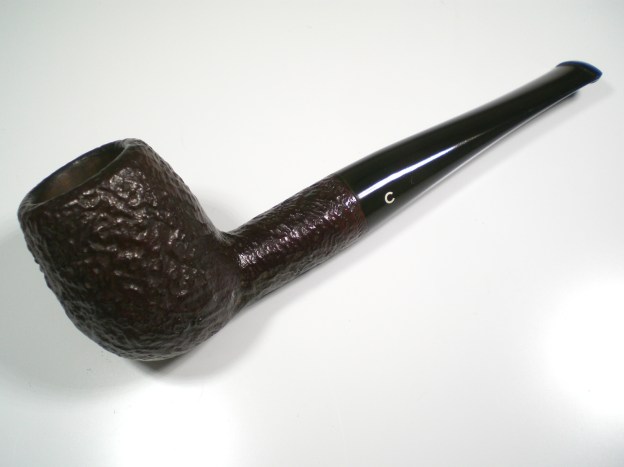
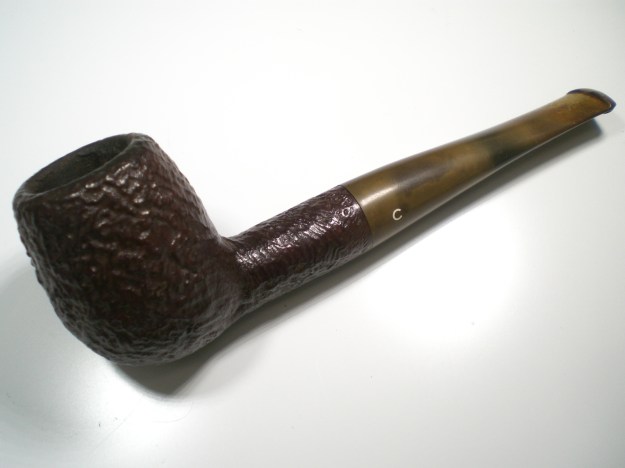
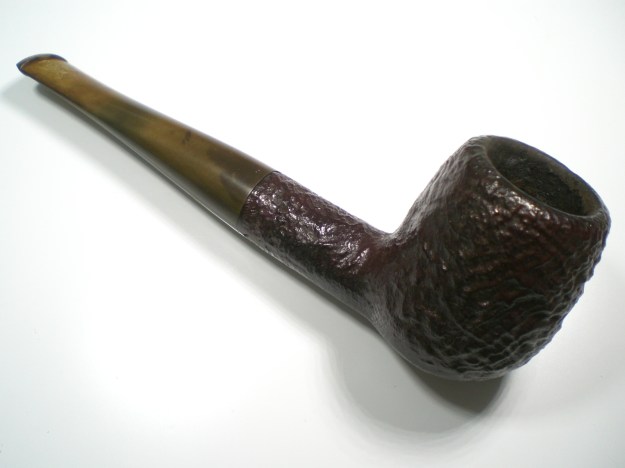
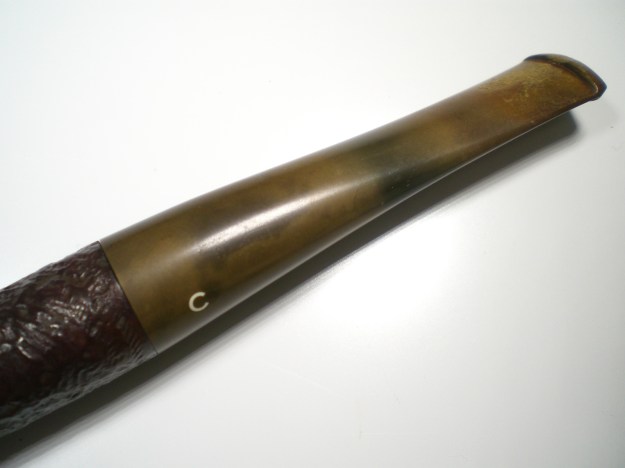
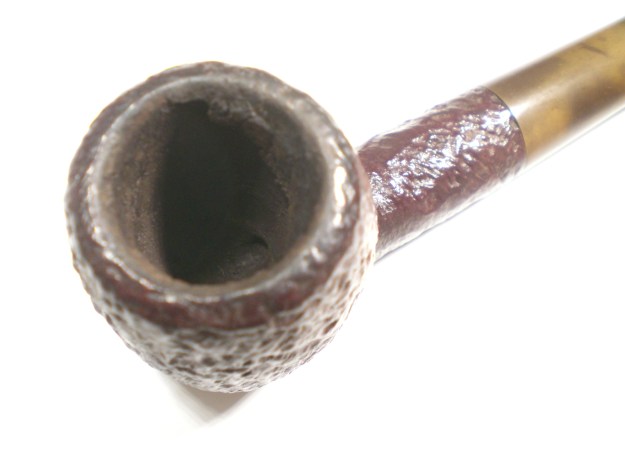
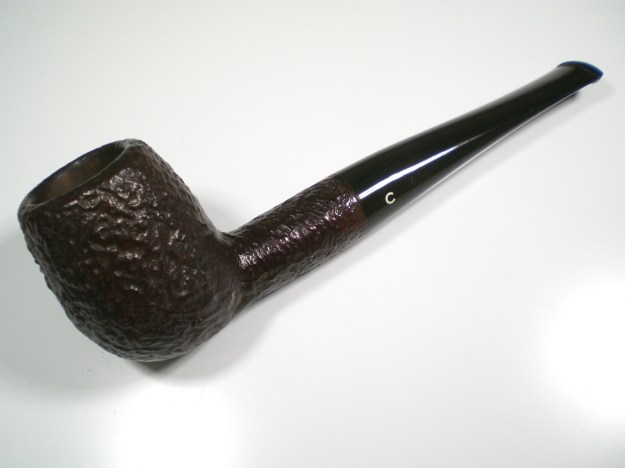
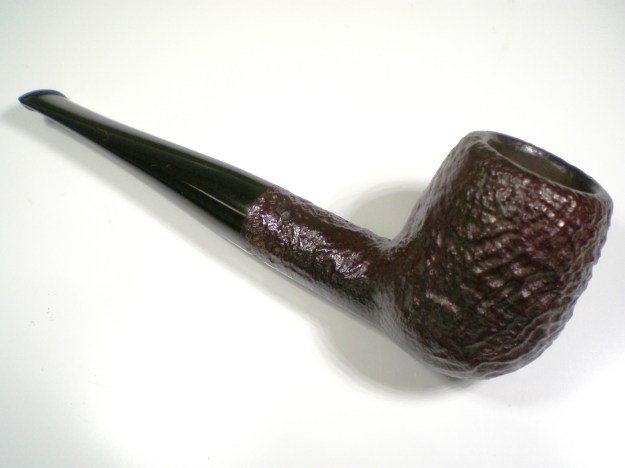
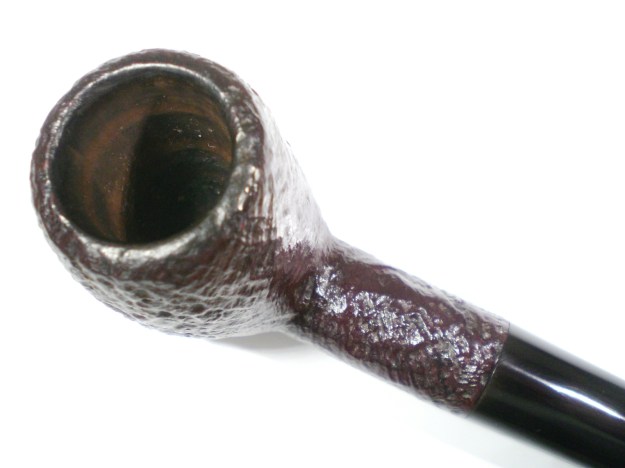
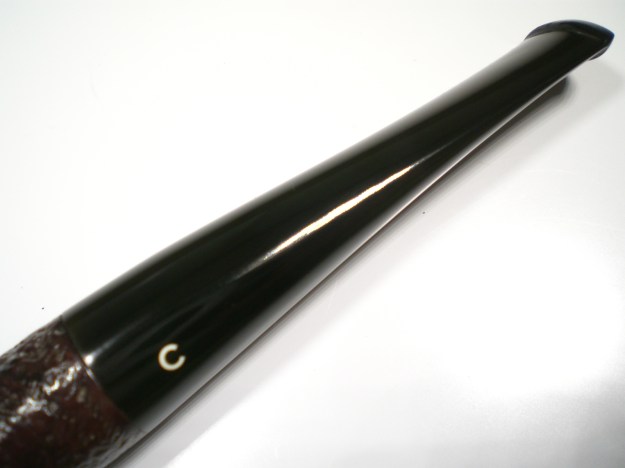
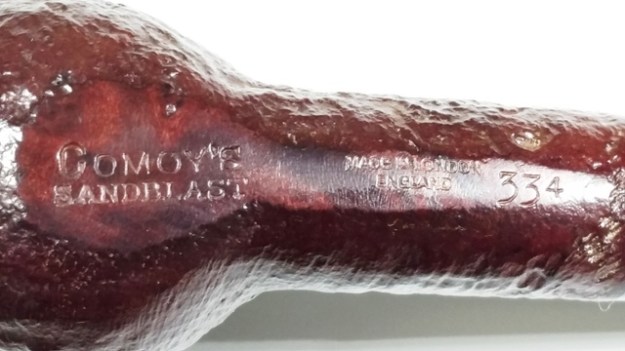
This Comoy’s 334 Sandblast caught my eye on Ebay and it looked like a pretty simple restoration and then re-sale. But when the pipe was delivered, the shape and size really captivated me. The tapered stem was magnificent and it was a fairly large pipe, by Comoy’s standards. The Comoy’s shape chart on Pipepedia calls this a “Globe” but I’ve seen it listed as an Apple as well. The stem was heavily oxidized, with a little chatter and no dents. The bowl had some mild cake. Below is the pipe as received.

comoys_334_sandblast_before-1

comoys_334_sandblast_before-4

comoys_334_sandblast_before-2

comoys_334_sandblast_before-3

I reamed the bowl and worked off some of the build-up on the bowl top with a cloth and warm water. The bowl was then soaked with alcohol and sea salt. I put a dab of grease on the “C” stem logo and soaked it in a mild Oxy-clean solution. The bowl and shank were fairly clean and after the soak, the bowl didn’t require much more clean-up.

I mounted the stem and removed the heavy layer of oxidation first with 800 grit paper. Then 1000 and 2000 grades, followed by 8000 and 12000 micromesh sheets. The stem was buffed with White Diamond and Meguiars Plastic Polish.

I hand buffed the sandblast with Halycon wax.

Below is the finished pipe.

comoys_334_sandblast_finish-1

comoys_334_sandblast_finish-5comoys_334_sandblast_finish-2comoys_334_sandblast_finish-4comoys_334_sandblast_finish-10

comoys_334_sandblast_finish-8web

?

A Bit of Bizarre & Interesting – Restoring a Lenox Pipe


Blog by Steve Laug

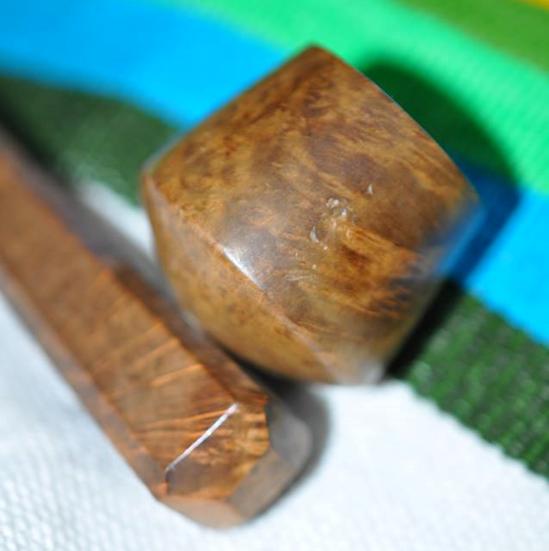
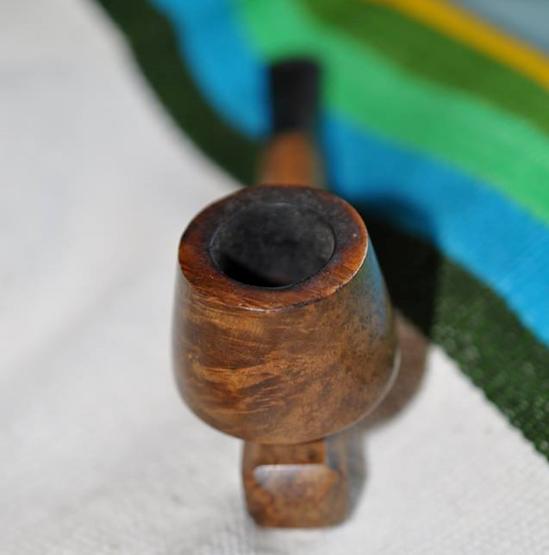
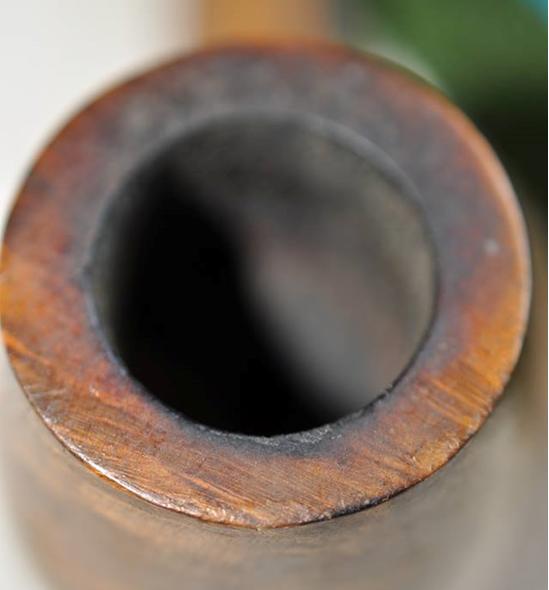
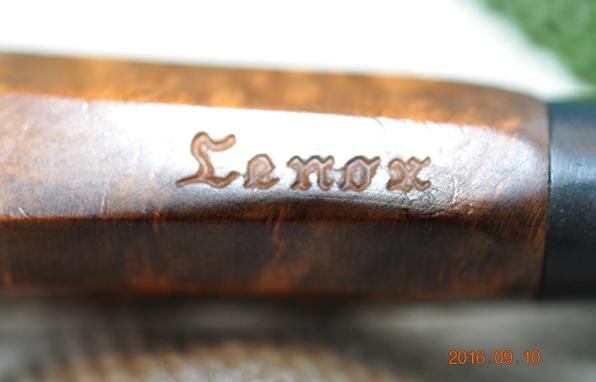
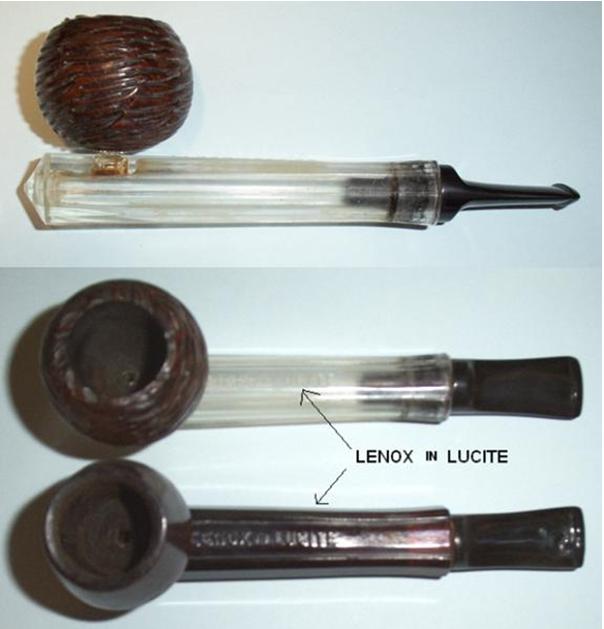
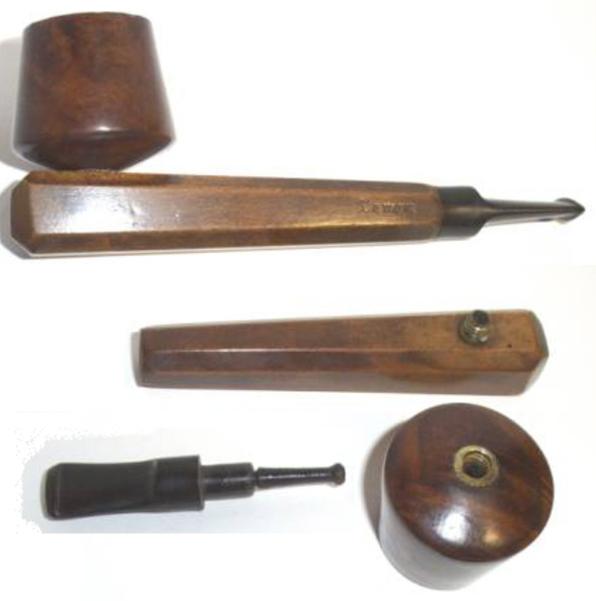
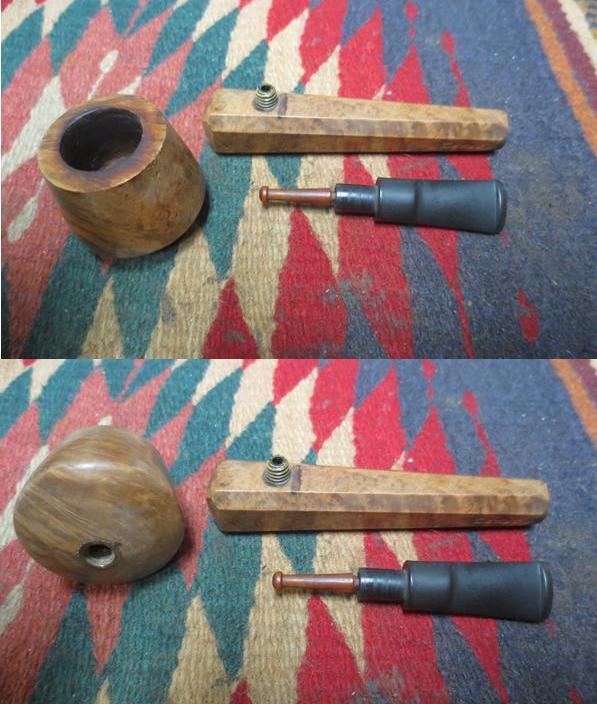
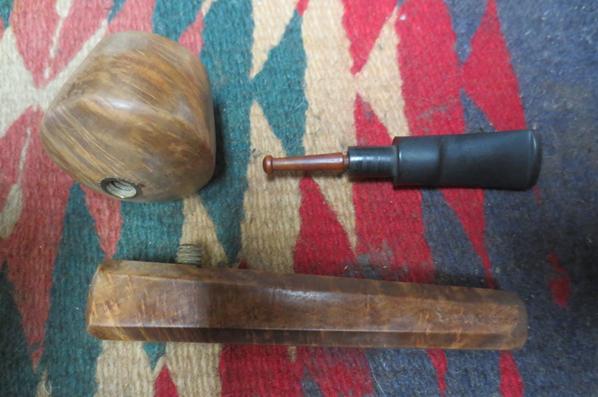
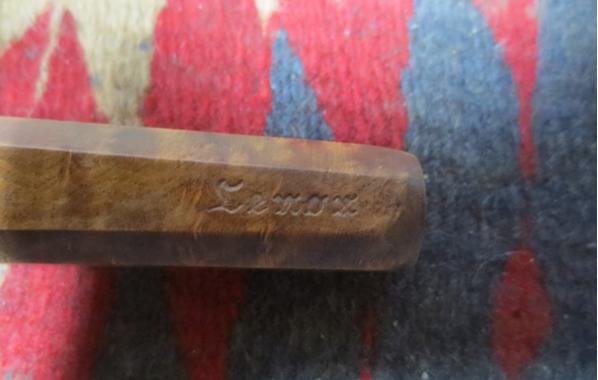
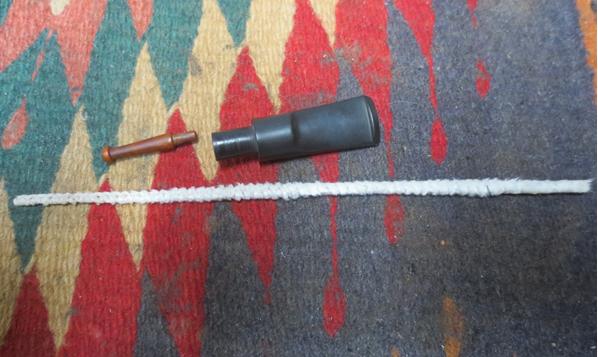
My brother found this extremely unusual looking pipe and sent it on to me. It is stamped Lenox on the top of the barrel. It appeared to be made of briar – the bowl and the barrel matched each other in terms of stain colour and possibly materials. He took the following photos of the pipe before he sent it to me. It looks a lot like a Kirsten at least externally.lenox1The stinger apparatus was made out of Bakelite and was hollow. The smoke was drawn through the bowl into the barrel and then through the stinger up the mouth piece. The stem was in excellent shape and the stinger sat in the end of the tenon.lenox2He took a close up photo of the stinger. It is an interesting looking piece of “plumbing” and I looked forward to seeing close up.lenox3He also took close up photos of the bowl. The first two photos show the damage to the side of the bowl – some dents in the briar. The third and fourth photos show the darkening of the rim top and the nicks in the outer edge of the bowl. The final photo shows the stamping on the left side of the barrel. It reads LENOX.lenox4 lenox5 lenox6 lenox7 lenox8I was not familiar with the Lenox brand so I did some research to see what I could find out. There was not much information on the brand online until I turned to one of my favourite sites for information on odd and unusual metal pipes – smokingmetal.com

I found the brand listed in three variations. The first of them was a Lenox made of Lucite (ed. By Lucite I assume that barrel is actually made of Perspex so in the information below I have edited it to read that). The link for the brand is: http://smokingmetal.co.uk/pipe.php?page=82. The site has this to say about the Perspex version of the pipe. I quote: “Hard to see the purpose of this one. There would be no significant extra cooling and there is no end plug to remove for ease of cleaning. It is stamped LENOX in the perspex top of barrel. (ed. I have included two photos from the site on the Lucite version of the pipe.) Centre image shows two colour versions. The dark version does not appear to be the result of discolouration by tar etc. These pipes were certainly on sale in 1951. The overall length 5 5/8 inch (143 m/m).lenox9The site also had photos of the Lenox with a metal barrel and wooden bowl. The metal barrel is stamped LENOX on the top of the barrel and a threaded bowl was screwed onto the top. The bowl had a brass insert in the bottom and it threads onto the nipple on the barrel. The following link has photos of the pipe: http://smokingmetal.co.uk/pipe.php?page=150.lenox11My brother did his usual excellent job of cleaning the barrel, bowl and stem of the old pipe. When it came to me it was very clean. He also let me know that surprisingly the wooden looking barrel was actually not wood but was Bakelite.lenox12 lenox13I unscrewed the bowl from the barrel and took the stem out of the end. The next three photos below show the “exploded” view of the pipe. The rim darkening in the first photo needed to be cleaned up.lenox14 lenox15I took another close up photo of the stamping. It is a clean and sharp stamp with no damage.lenox16I pulled the pressure fit stinger out of the tenon and ran a pipe cleaner through the stem. It came out very clean – yet another testimony to the great job my brother does in his clean up.lenox17I put the stinger in the tenon and took two close-up photos of the stem to show the really clean condition the stem was in. All that needed to happen was to polish it.lenox18I polished the stem with micromesh sanding pads – wet sanding it with 1500-2400 grit pads and dry sanding it with 3200-12000 grit pads. I rubbed the stem down with Obsidian Oil between each set of three pads. I set the stem aside to dry after the final rub down.lenox20 lenox21 lenox22I sanded the top and the sides of the bowl with micromesh sanding pads – wet sanding with 1500-2400 and then dry sanding with 3200-12000 grit pads. I buffed the bowl and stem on the buffer with Blue Diamond polish to bring a shine to the surface. I gave them several coats of carnauba wax. I gave the Bakelite barrel multiple coats of Conservator’s Wax by hand. I buffed the bowl, barrel and stem with a clean buffing pad to polish the wax coats. I hand buffed it with a microfibre cloth to deepen the shine. The finish unique pipe is shown in the photos below. The Bakelite barrel and the bowl really do match and look like they have come from the same piece of briar. The pipe is a beauty. It is a brand that I have never seen and one that is a collector’s piece. Thanks for looking.lenox23 lenox24 lenox25 lenox26 lenox27 lenox28 lenox29 lenox30 lenox31 lenox32

Restemming and Restoring a GBD Speciale Billiard


Blog by Steve Laug

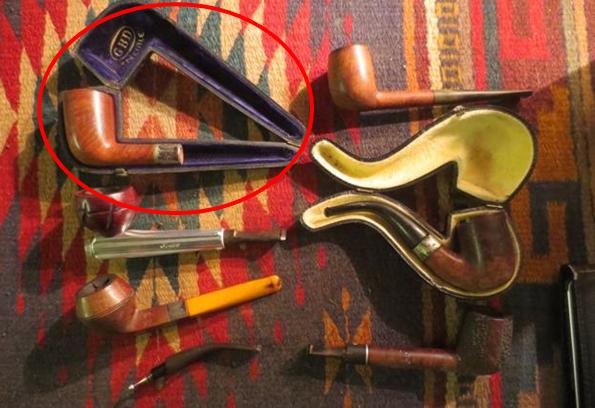
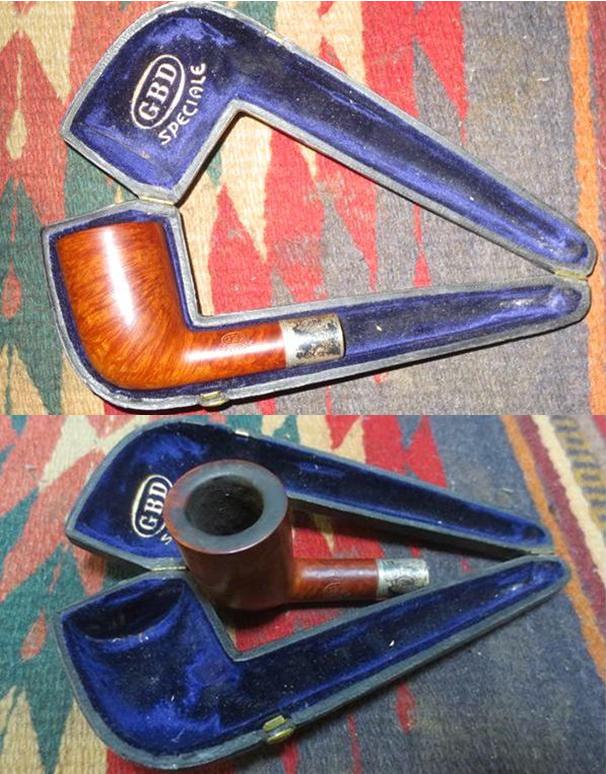
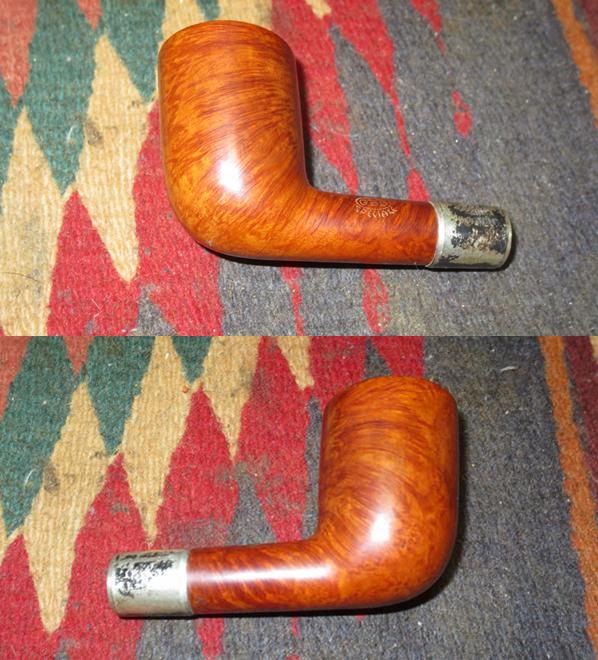
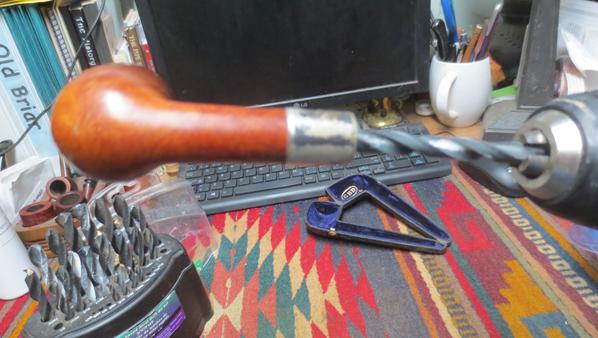
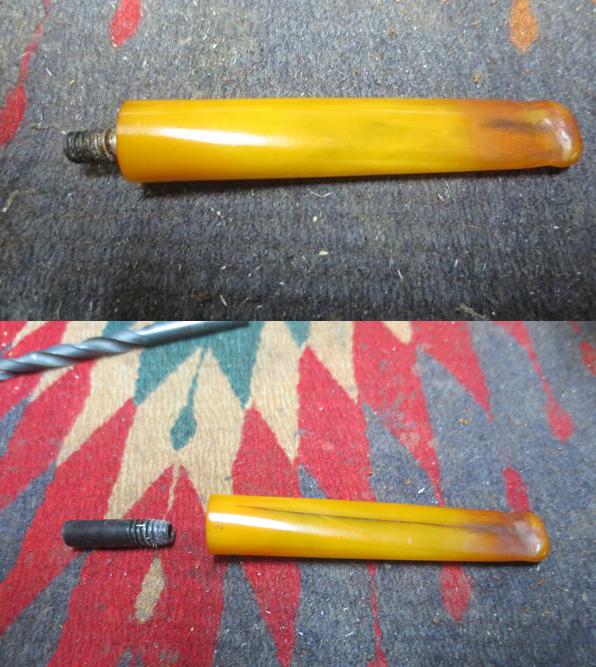
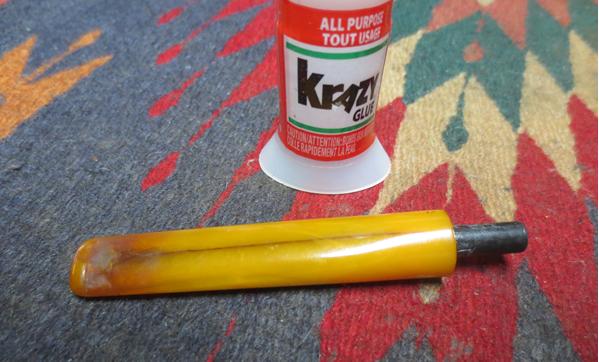
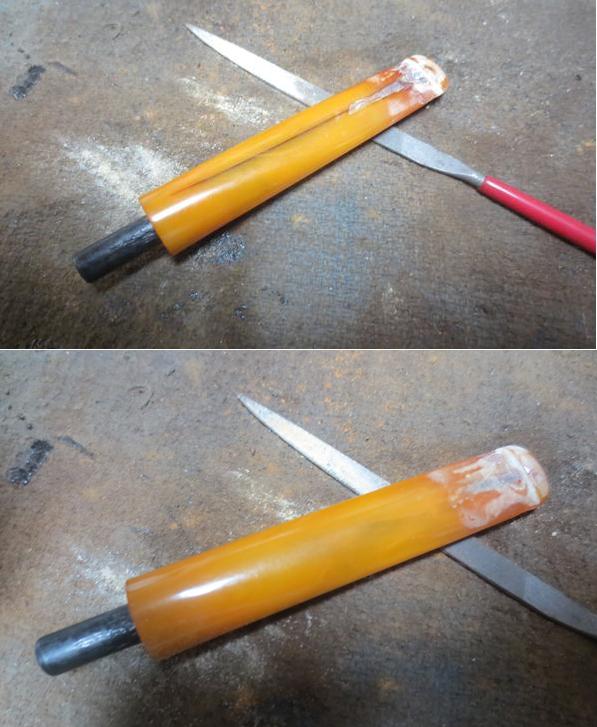
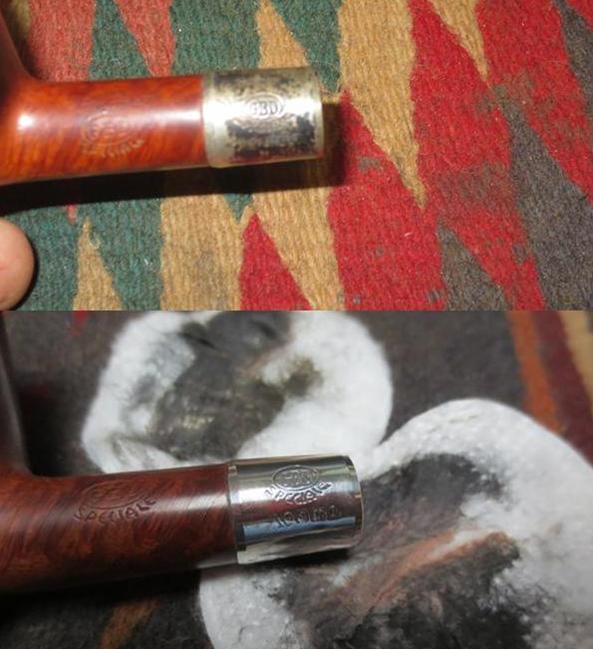
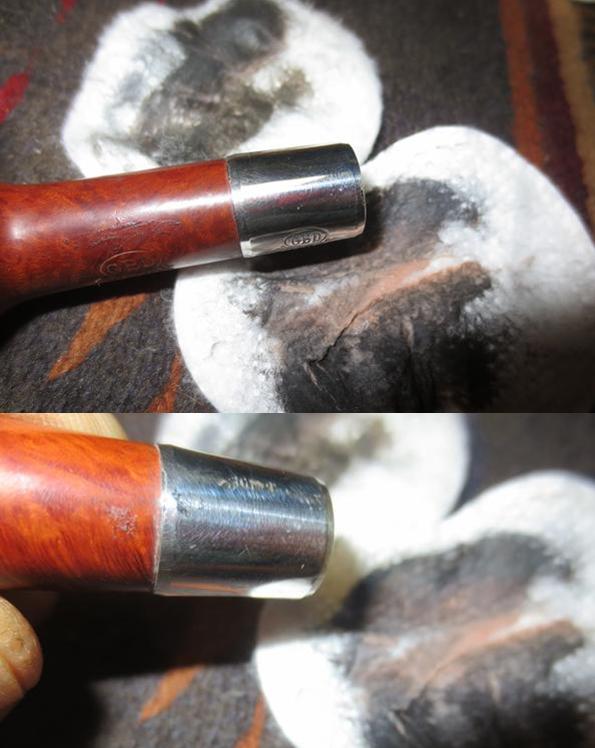
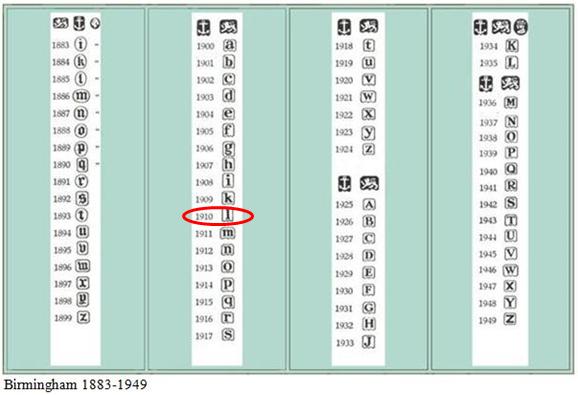
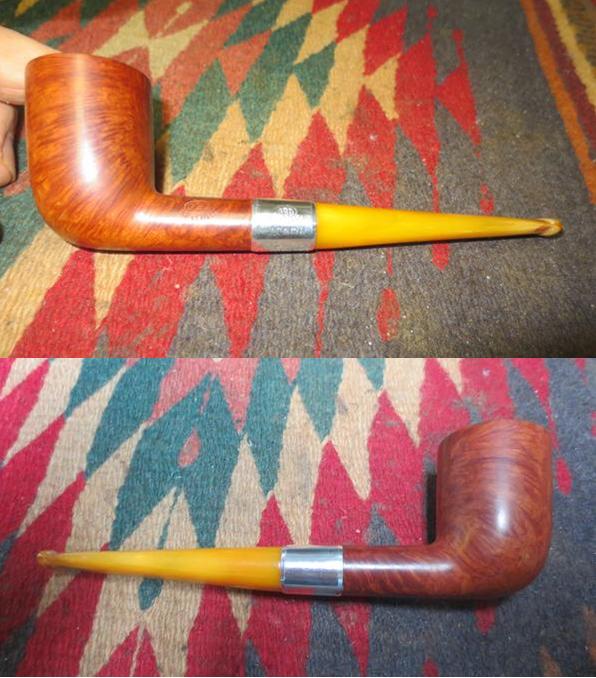
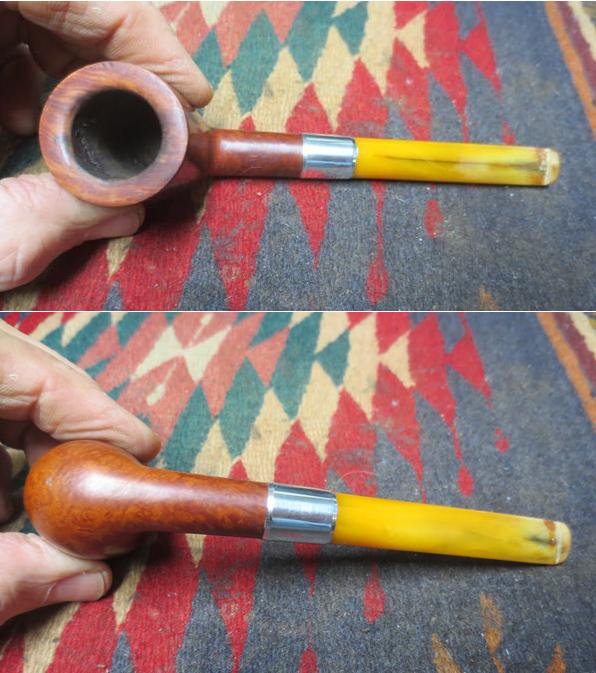
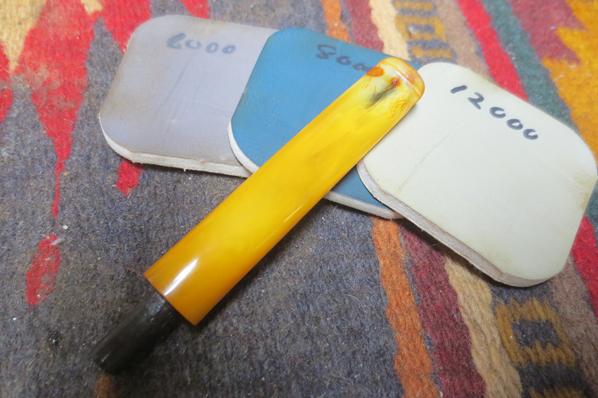
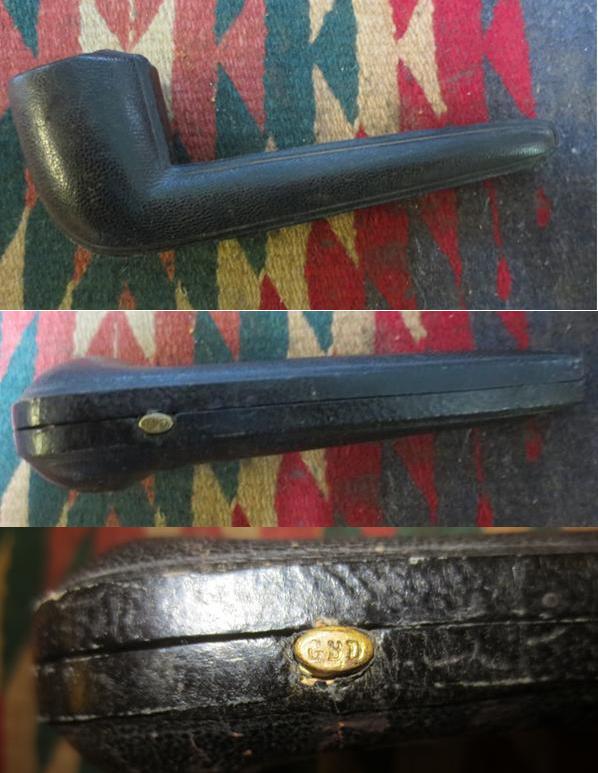
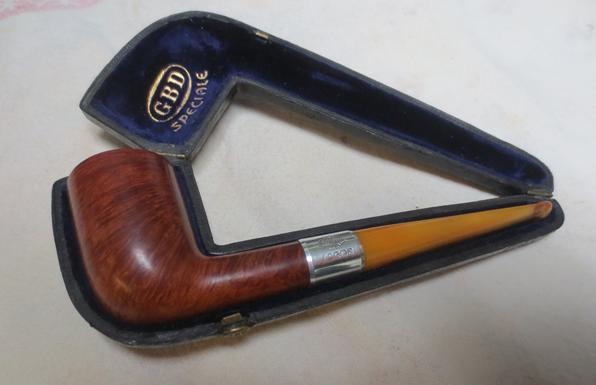
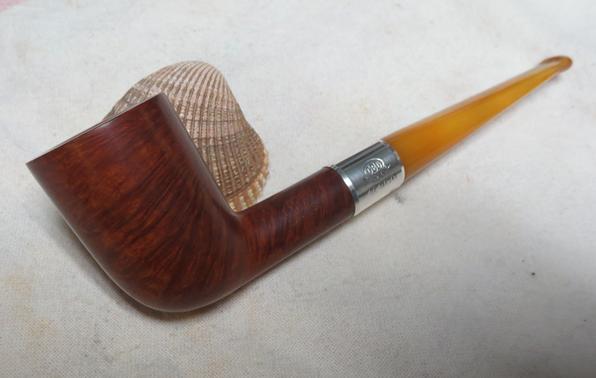
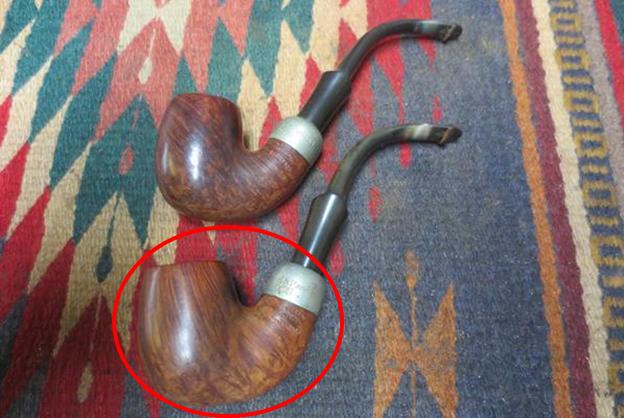
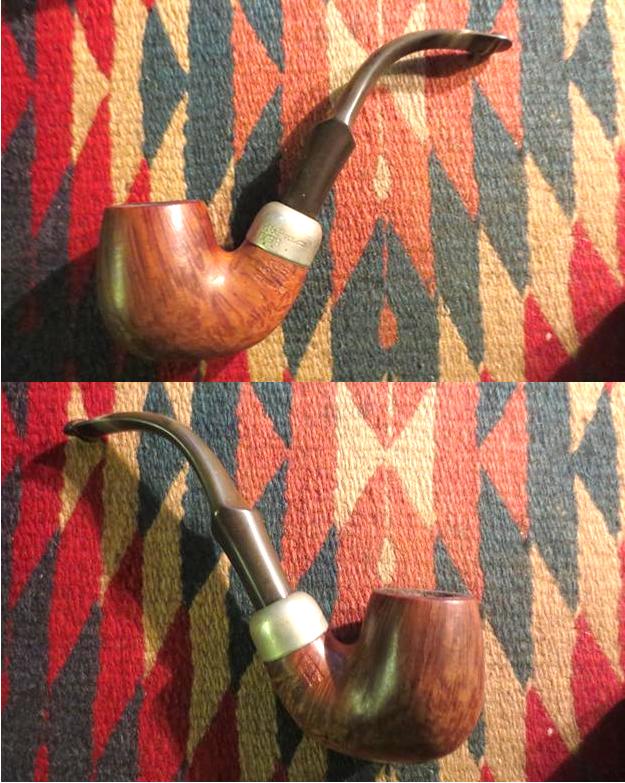
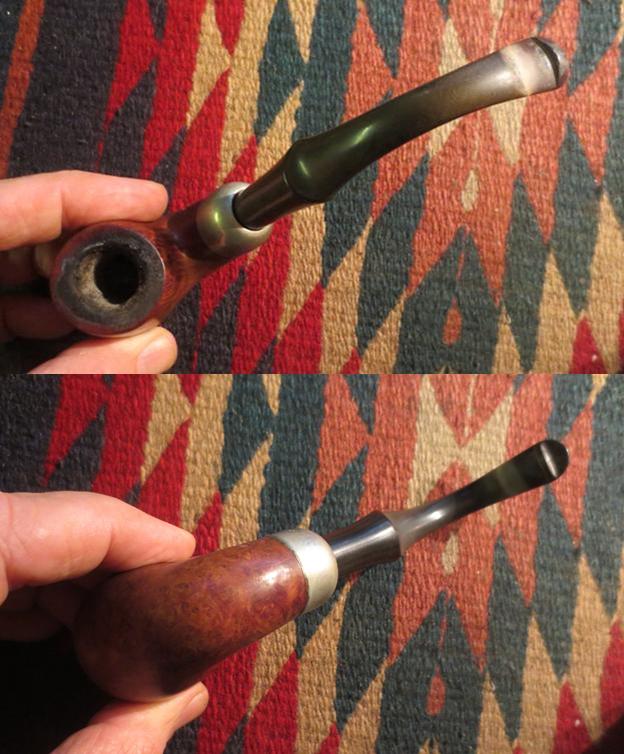
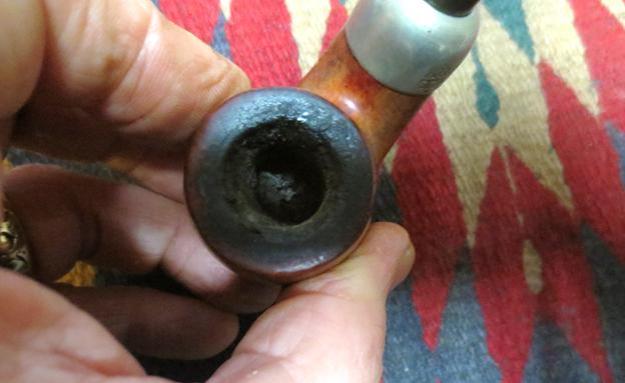
I decided to take a break from working on restoring the estate lot that I was given and turned my attention to one of the pipes I found on my recent trip to Southern Alberta. I have written about that pipe hunt previously. You can read about it at this link: https://rebornpipes.com/2016/10/07/a-great-day-pipe-hunting-in-southern-alberta/. The pipe was an older GBD billiard with a sterling silver band bearing hallmarks. They were hard to read through the oxidation. I found this pipe in a small antique shop in Nanton, Alberta. The clerk/owner lifted a cased pipe from a shelf – a nice black leather case with a dark blue lining. She opened the case and on the inside of the case top there was a GBD in an oval logo over Speciale stamped in gold. The bowl in the case also bore the same stamping. The stem was missing and the clerk told us the sad story of how someone had stolen the stem and left the pipe behind. The pipe was marked at $35 but since the stem was missing I asked her what her best price was for the pipe. She let it go for $25 and said to have fun fitting a new stem on the bowl. I added my second pipe to my hunt kit. It is shown circled in red in the photo below – the first pipe on the left side of the photo.gbdspeciale1When I started working on it I took some photos of the pipe when I started the cleanup. The finish was actually very good. The rim had a thick coat of tars and oil built up flowing out of the bowl and onto the top. The bowl had a thin cake in it. The left side of the shank was stamped GBD in an oval with Speciale below. It matched the stamping on the inside lid of the case. The silver band was oxidized but I could see the GBD logo in and oval over Speciale. The band was original. There were also some hallmarks that would have to be read once I removed the oxidation. There was no other stamping on the pipe or band. The inside of the case was undamaged but had a lot of dust and specks of debris in it.gbdspeciale2I took the bowl from the case and took photos of it before I cleaned it up.gbdspeciale3 gbdspeciale4I had a yellow Bakelite stem that would work with the pipe both in terms of age and also in terms diameter matching the shank. I would need to replace the tenon in the stem as it was too small in diameter to fit in the shank. I had a Delrin tenon that would work once I had removed the metal tenon from the stem. I used a drill bit to clean up the inside of the shank. I twisted the shank onto the drill bit by hand and cleaned it out.gbdspeciale5I heated the metal threaded tenon with a lighter and was able to unscrew it from the stem. I drilled out the mortise in the stem to fit the threaded end of the Delrin tenon. Once I had it drilled out I used a tap to thread the inside of the mortise in the stem. I painted the stem with slow drying super glue and twisted it into the stem. The stem was in decent shape other than tooth marks in the surface at the button and the edge of the button was worn.gbdspeciale6 gbdspeciale7I filled in the tooth dents with some amber super glue that I recently purchased from Stewart MacDonald. Once it had dried I used a needle file to redefine the sharp edge of the button and sanded the surface of the stem with 220 grit sandpaper.gbdspeciale8 gbdspeciale9I sanded the stem until the surface matched the surrounding stem area. The repairs show in the photos as slightly darker than the yellow of the stem.gbdspeciale10I scrubbed the rim with cotton pads and saliva to soften the tars and oils. I scraped it with a pen knife to remove the buildup and scrubbed it again. I was able to remove all of the rim build up without damaging the finish on the rim top.gbdspeciale11To clean off the band I scrubbed it with a tarnish remover and polish on cotton pads. I was able to clean off all of the tarnish and bring the hallmarks to light on the band. Using a small penlight and a lens I was able to clearly read them. They read as follows GBD in an oval over Speciale over the following hallmarks in shields: [anchor] [lion] [l], AO (assay office Birmingham). The AO on the front of the stamp was the Assay Office; the Anchor identifies the city as Birmingham, England; the lion passant is the symbol for 925 Sterling Silver and the “l” giving the date of the pipe. The silver shone brightly and distinctively on the shank end.gbdspeciale12 gbdspeciale13I looked on-line for the hallmarks and found a great chart. It showed the hallmarks for silver work made from 1883-1949. The date hallmark “l” on the pipe I had matched the one in the chart below for 1910. I have circled it in red. I now knew that the pipe I had was made in 1910.gbdspeciale14After the glue dried on the new tenon on the stem I pushed it in place in the shank and took the following photos. I liked the look of the pipe. The only thing that would have made it better would be to have an amber stem to use. This will do while I keep an eye out for an amber one that fits well.gbdspeciale15 gbdspeciale16I cleaned out the mortise and the airway in the shank and stem with cotton swabs, pipe cleaners and alcohol until it was clean. The pipe cleaners and alcohol cleaned out a lot of the black darkening in the airway in the stem.gbdspeciale17I sanded the stem repairs with 220 grit sandpaper to further define the button and try to blend the repairs. I wet sanded it with 1500-2400 grit micromesh sanding pads and dry sanded it with 3200-12000 grit sanding pads. I rubbed it down with Obsidian Oil and set it aside to dry.gbdspeciale18 gbdspeciale19 gbdspeciale20 gbdspeciale21I used a black Sharpie pen to touch up the scuff marks on the surface of the case. The clasp on the side of the case is a brass GBD logo that when pressed allows access to the inside of the case.gbdspeciale22I cleaned out the inside of the case with a damp cloth and was able to remove all of the debris from the inside of the case. I buffed the bowl and stem with Blue Diamond polish on the buffing wheel taking care to not overheat the Bakelite stem as that would cause it to melt and be disfigured. I gave the bowl and stem multiple coats of carnauba wax and buffed the pipe with a clean buffing pad to raise the shine. I hand buffed it with a microfibre cloth to deepen the shine. The finished pipe is shown in the photos below. It is one that will stay with me while I look for an amber stem that fits the pipe. Thanks for looking.gbdspeciale23 gbdspeciale24 gbdspeciale25 gbdspeciale26 gbdspeciale27 gbdspeciale28 gbdspeciale29 gbdspeciale30 gbdspeciale31 gbdspeciale32 gbdspeciale33 gbdspeciale34


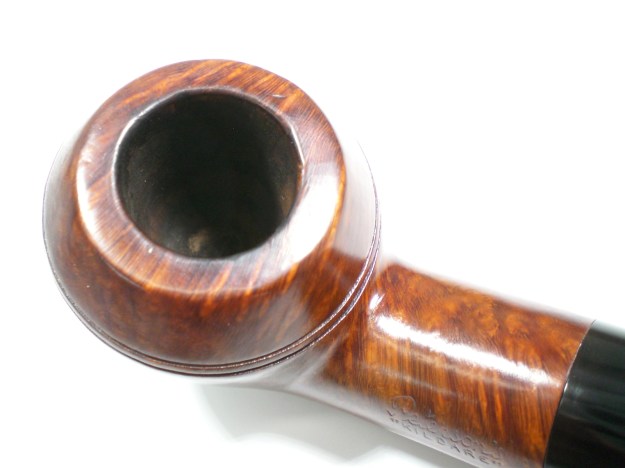
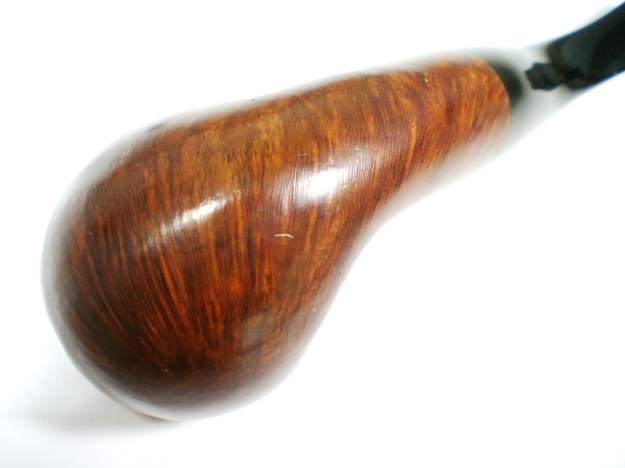
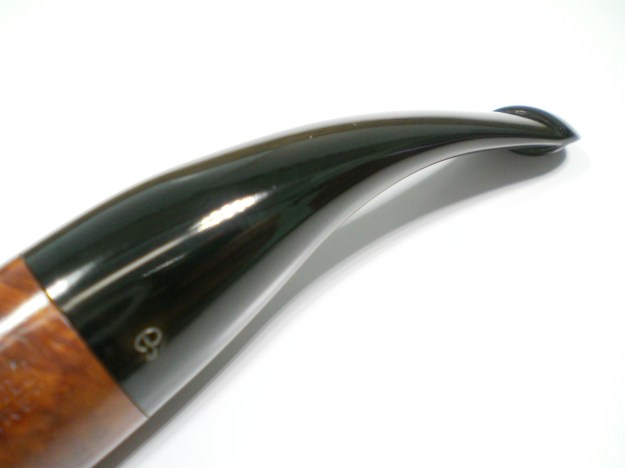
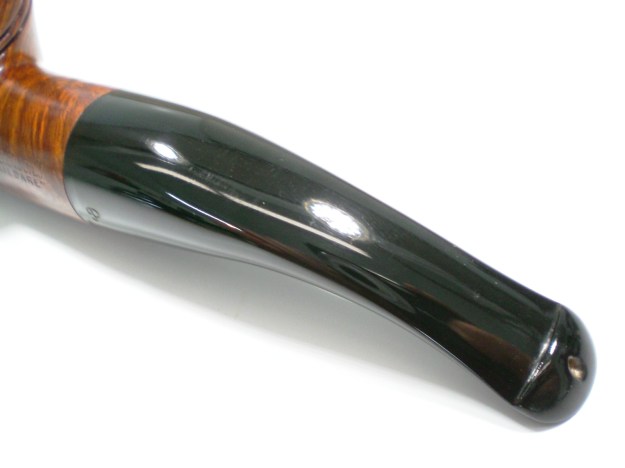
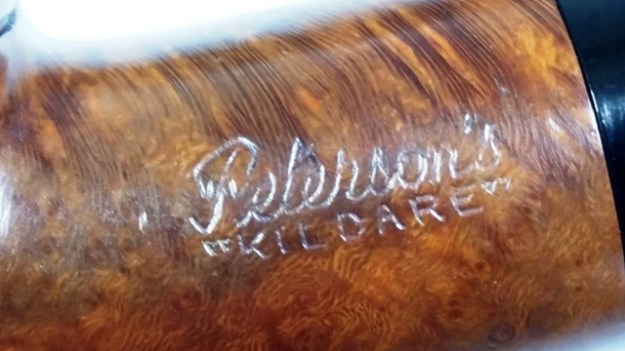
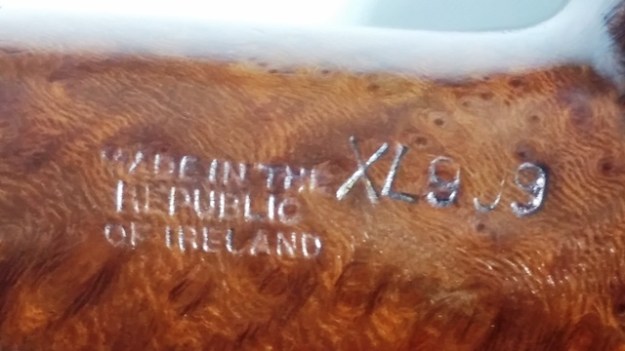
Peterson XL999 Kildare Restoration


By Al Jones

As a fan of the wonderfully chubby Peterson 999 shape, the XL999 has always intrigued me. To this point, I’ve only seen them on the web and never handled one in person. This one showed up on Ebay, with an attractive “Buy It Now” price and offer. I struck a deal and it was delivered a few days ago.

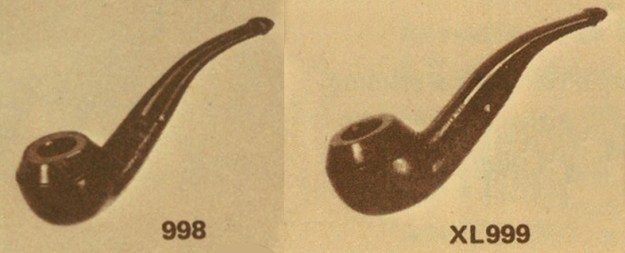
We’ve already learned from Mark Irwins blog, the Peterson Pipe Notes that the XL999 model straddled the change from the chunkier pre-Republic 999 to the slimmer model offered from the late 1990’s until the present. Mark tells us that the XL999 was introduced to the Peterson catalog in 1977 and morphed into the 998 shape by 1992. You can read Mark’s blog entry here below and I include a catalog photo from Mark.

Peterson Chubbies, Part 1 “The 999 John Bull”

998-and-999-from-1977-assoc-imports

The Kildare finish is a lower grade and the grain on this one is unremarkable. The pipe was delivered in very good condition, with some heavy oxidation on the stem. There was some tar build-up on the bowl top but the stem was bite free, with only some light chatter. Most importantly, this one had the P-lip stem that completes the look.

peterson_xl999_before-1

peterson_xl999_before-4

peterson_xl999_before-3

peterson_xl999_before-2

peterson_xl999_before-5

The bowl was reamed and then I removed the bowl-top build up with a cloth and water. I finished the bowl top with 2000 grade wet paper and 8000 grade micromesh. The bowl was then soaked with alcohol and sea salt. Following the soak, there was a lot build-up in the shank, which I removed with screwed-in paper towels and then a series of brushes.

The bowl was buffed with White Diamond but still seemed a little dull. I wiped on a nearly clear (heavily diluted) Medium brown stain and then buffed it again, which woke up the finish a bit. The bowl was finished with several coats of Carnuba wax.

While the bowl was soaking, I also soaked the stem in a mild Oxy-clean solution, with a dab of grease on the P logo. The stem was then mounted and oxidation removed with 800, 1000 and 2000 grade wet paper. This was followed by 8000 and 12000 grade micromesh. The stem was then buffed with White Diamond, followed by Meguiars Plastic Polish.

I mulled over re-painting the white of the P-stem logo, but I often don’t care for that result. So for now, it remains as received.

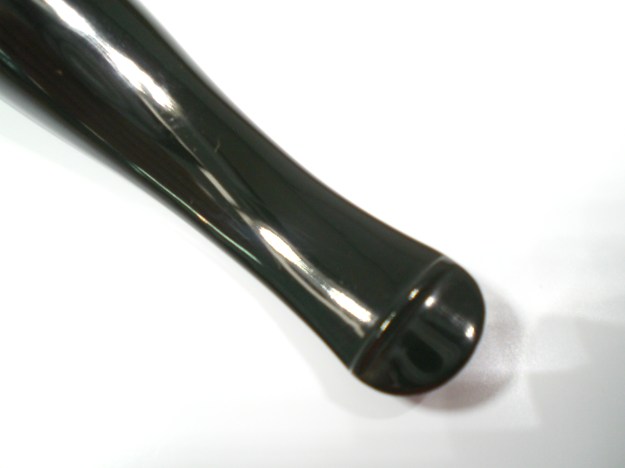
Below is the finished pipe.

peterson_xl999_finish-1

peterson_xl999_finish-6

peterson_xl999_finish-2

peterson_xl999_finish-7

peterson_xl999_finish-5

peterson_xl999_finish-8

peterson_xl999_finish-3

peterson_xl999_finish-4

peterson_xl999_finish-9

?

?

?

?

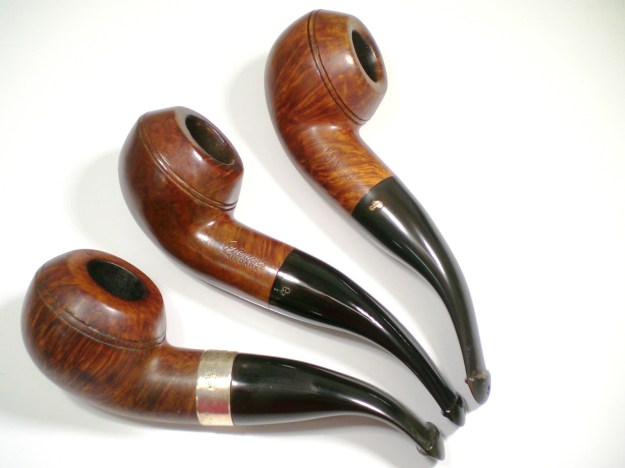
Below is a group shot of the pipe with my other 999’s, both of which are pre-Republic era pipes. It’s interesting to see the slight shape variations and size. This one is very near in shape and weight to my Deluxe 999 (with Gold P logo), and it weighs 51 grams.

peterson_xl999_finish-12

Rejuvenating the second Peterson’s 1312 System Pipe


Blog by Steve Laug

I have written about four pipes that I have restored from an estate lot that I was tasked to clean up and sell in previous blogs at https://rebornpipes.com/2016/10/25/this-favourite-gbd-marquis-752-was-a-mess-not-any-more/; https://rebornpipes.com/2016/10/26/rescuing-a-petersons-english-made-203-billiard/; https://rebornpipes.com/2016/10/27/rejuvenating-a-petersons-system-pipe-1314/; https://rebornpipes.com/2016/10/28/rejuvenating-the-first-of-two-petersons-system-pipe-1312/. These included a GBD Marquis Author, a Peterson’s English Made 203 billiard, a Peterson’s 1314 System Pipe and the larger Peterson’s 1312 System pipe. I received these from my friend Richard who owns a pipe shop that is closing. He had some pipes that had belonged to an elderly gentleman who had died. His wife had given him the fellow’s pipes. She wanted to get them cleaned up and sold to folks who would appreciate them. Richard thought I would be interested in the story and have fun cleaning these up and selling them. There some really nice pipes in the lot – GBD’s, Comoy’s, Stanwells, Petersons, two ceramic Goudewaagen pipes, and others. There are just over 50 pipes that I will be cleaning and listing on rebornpipes.

The fifth pipe I chose to work on was another Peterson’s System Pipe. It is the second 1312 pipe and is stamped Peterson’s System Standard pipe on the left side of the shank. On the right is stamped Made in the Republic of Ireland 1312. The stamping is clear and sharp. The nickel ferrule is stamped K&P Peterson’s and has the three faux hallmarks that are for looks. It is larger and chunkier than the first one. The bowl is thickly caked and the rim has an overflow of the cake in the bowl. It is a very dirty pipe. The finish is in decent shape but has a lighter brown stain over flame and straight vertical grain. The stem is oxidized with some calcification around the P-lip button. Light tooth chatter covers both the top and underside of the stem. There is no P stamping on the P-lip stem but it appears to be an original not a replacement.

Here are some photos of the pipe when I started cleaning it. The pipe has good lines and some interesting grain underneath the grime. The first photo shows the pair of 1312 System pipes. The one circled in red is this pipe. I took the next four photos to show the condition of the pipe before I started cleaning it.pete1pete2pete3 I took some close up photos of the pipe. The first photo below shows the thick cake in the bowl, the remnant of tobacco in the bottom of the bowl and the overflow of lava on the rim of the bowl. The next two photos show the condition of the stem.pete4pete5 I reamed the bowl with a PipNet reamer to remove the cake. I started with the smallest cutting head and worked up to the third cutting head. I cleaned up the bowl with a Savinelli Pipe Knife to cut back the remaining cake to bare briar.pete6 I used a sharp pen knife to carefully scrape off the cake on the rim. I scrubbed the rim with saliva and cotton pads to remove the tars and oils on the surface. I was able to remove all of the tars and build up on the rim top.pete7 I scrubbed nickel ferrule with tarnish polishing scrub and cotton pads. The polish removed all of the tarnish and left the ferrule shining.pete8pete9 I gave the bowl a light coat of Conservator’s Wax and polished the bowl with a microfibre cloth.pete10pete11 I sanded the stem with 220 grit sandpaper to remove the calcification, oxidation and tooth chatter and marks.pete12 I cleaned out the internals of the mortise, sump, shank airway and stem airway with alcohol, cotton swabs and pipe cleaners.pete13 I polished the stem with micromesh sanding pads – wet sanding the stem with 1500-2400 grit sanding pads and dry sanding with 3200-12000 grit pads. I rubbed the stem down with Obsidian Oil after each set of three pads. After sanding with the last three grits I gave the stem a final coat of Obsidian Oil. I set the stem aside to dry.pete14pete15pete16 I buffed the bowl and stem with Blue Diamond on the buffing wheel. It is a plastic polish that removes the minute scratches left behind after sanding the stem with micromesh sanding pads. It worked the same way on the briar. I gave the bowl and stem multiple coats of carnauba wax and buffed it with a clean buffing pad to raise the shine. I finished by hand buffing it with a microfibre cloth. I have found that deepens the shine. The finished pipe is shown in the photos below. It is a beautiful pipe that has some stellar grain. Thanks for looking.pete17pete18pete19pete20pete21pete22pete23pete24