by Steve Laug
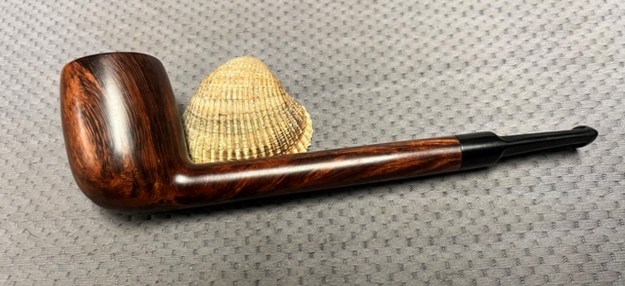
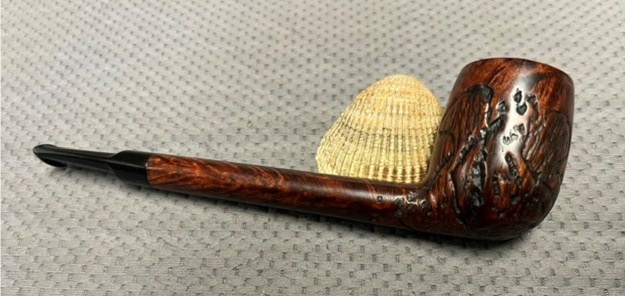
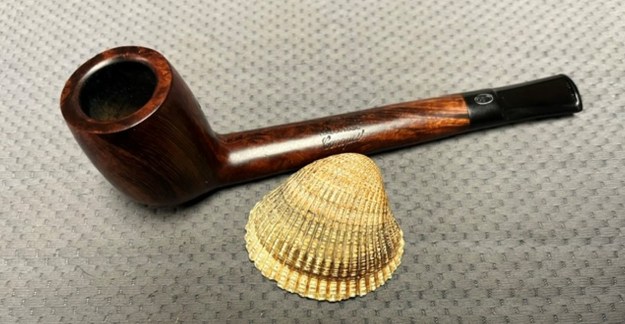
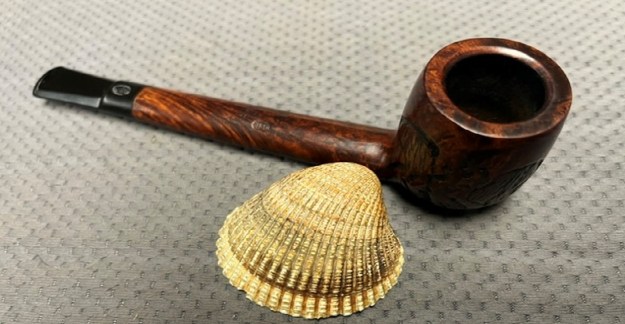
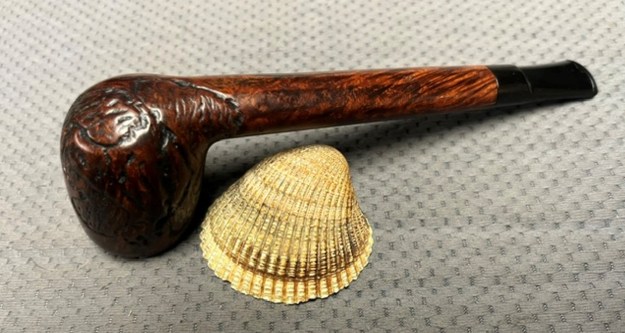
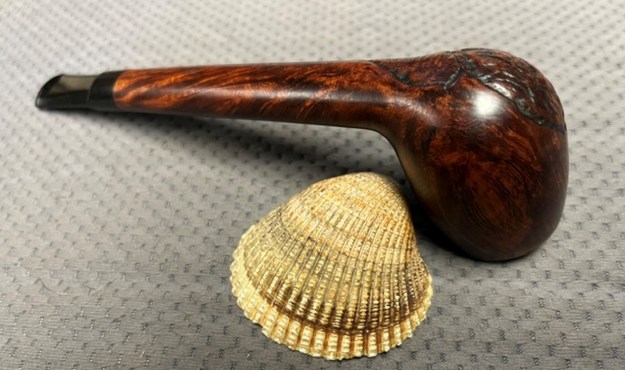
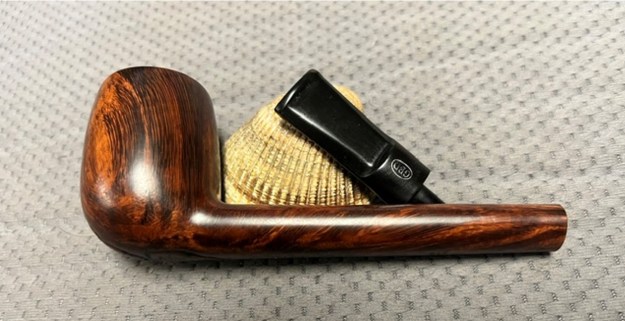
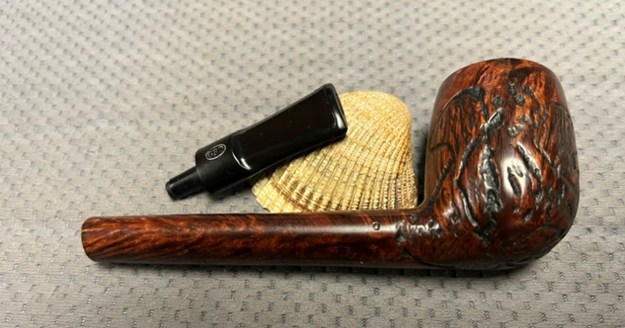
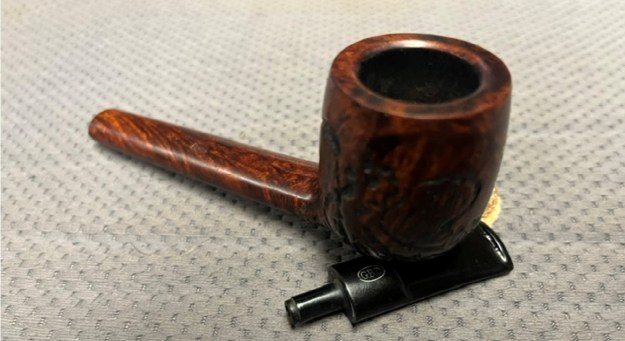
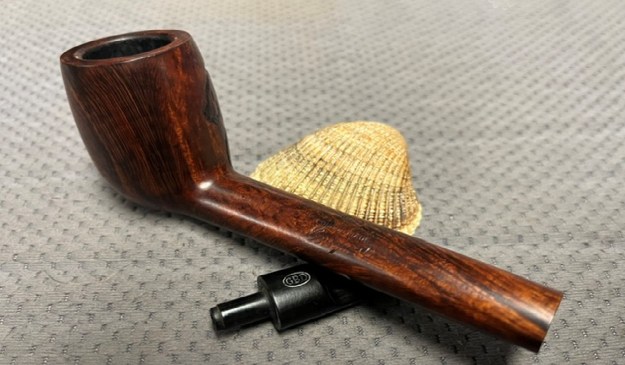
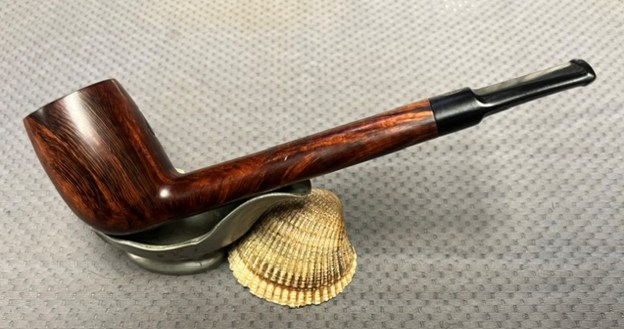
This darker mixed finish, beautifully grained oval shank, saddle stem was purchased on 01/20/2026 from a Facebook seller in Quaker Town, Pennsylvania, USA. It is a great looking Liverpool with a dark, smooth finish on most of the bowl and shank and a bit of rustication on the right side and bottom of the bowl. The stem is a vulcanite saddle stem. The bowl is stained with a contrast of blacks and browns that highlight the grain around the bowl and shank. It is stamped on the top side of the shank and reads GBD in an oval [over] International [over] London Made [over] Conquest. On the underside of the shank it is stamped London, England with an upper-case P near the shank end. The bowl had a thick cake and some tobacco debris on the walls. There was an overflow of lava on the rim top that was heavier toward the back of the bowl. There was grime ground into the finish which left the finish looking quite dull. The oval, vulcanite saddle stem has a GBD oval logo on the topside. There was some light oxidation on the surface and some light tooth marks and chatter on both sides of the stem ahead of the button. Jeff took photos of the pipe before he started his work on it. 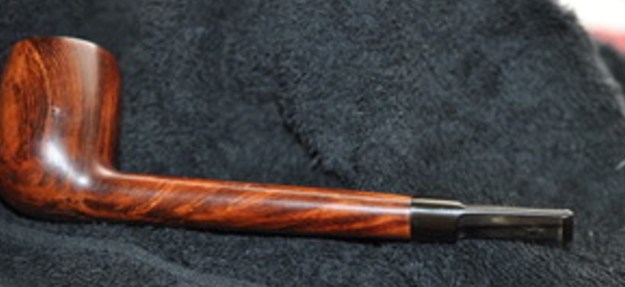
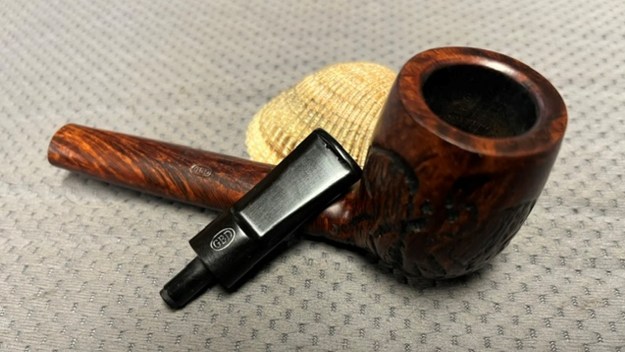
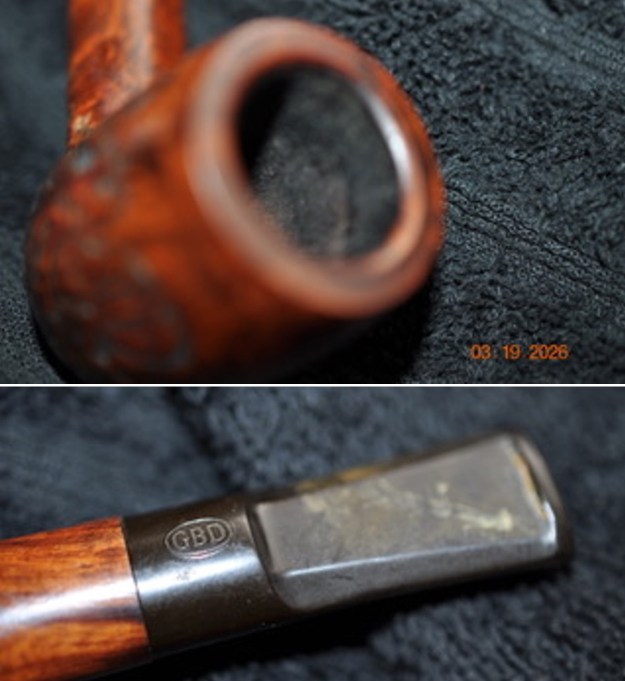
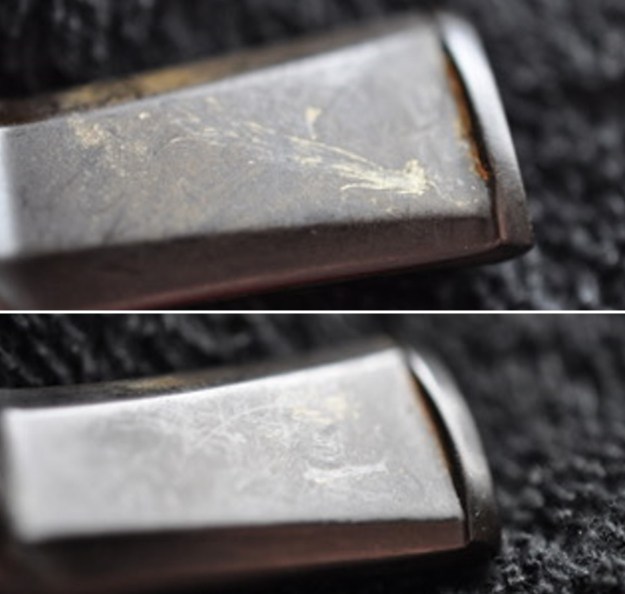
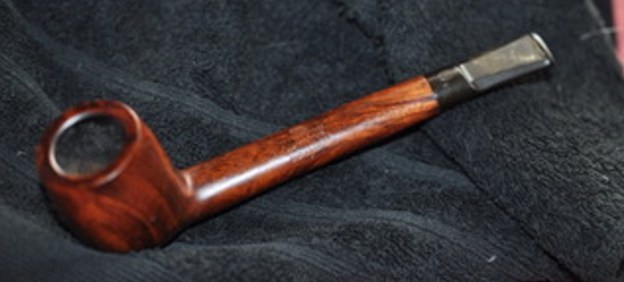 He took photos of the pipe’s bowl and rim top to show the cake in the bowl and the spotty lava overflowing onto the top and over the edges. The short saddle stem is oxidized, calcified and has some light tooth marks and chatter on both sides ahead of the button. It is another dirty pipe.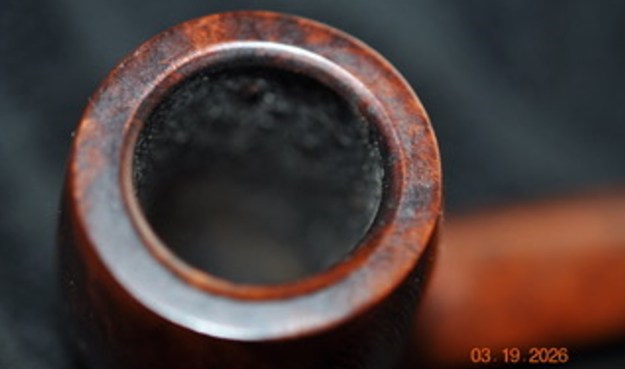
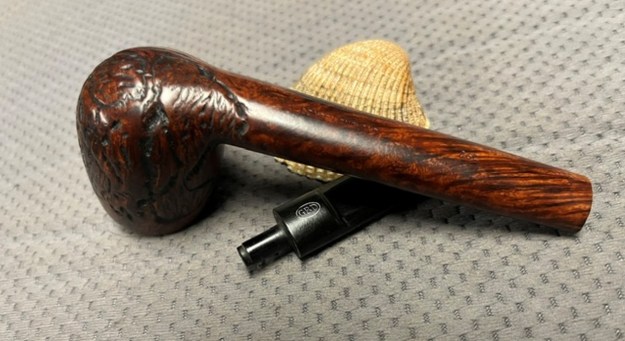
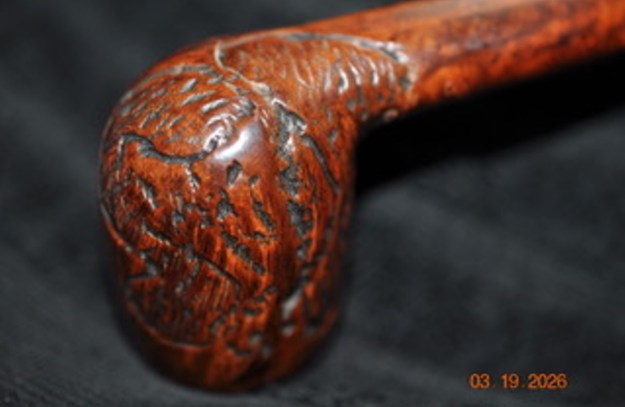
 He took photos of the sides and the heel of the bowl to give a sense of the condition of the pipe and the interesting grain around the sides and heel. The photos of the right side and heel of the bowl show the unique rustication present on those areas. It really is a beautiful pipe bowl.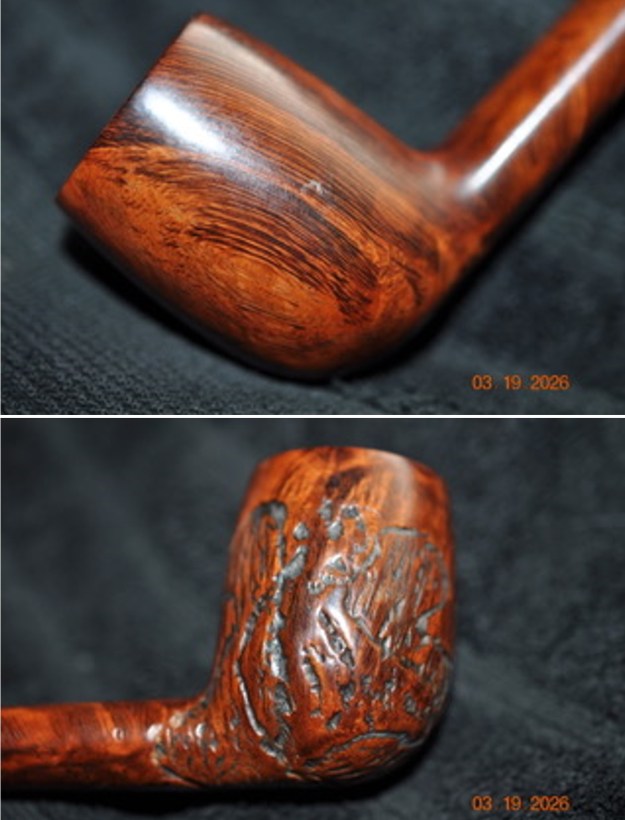
 Jeff took photos of the stamping on the top and underside of the shank and it is clear and readable as noted above. He also captured the GBD oval logo on the saddle stem top.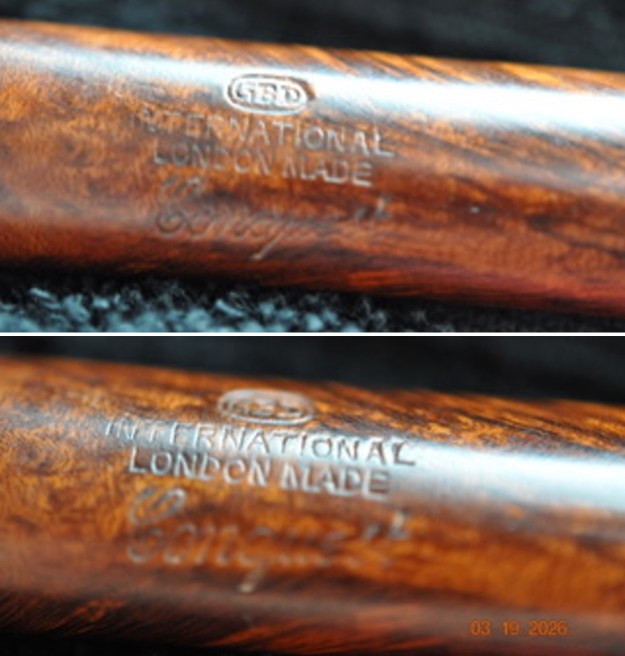
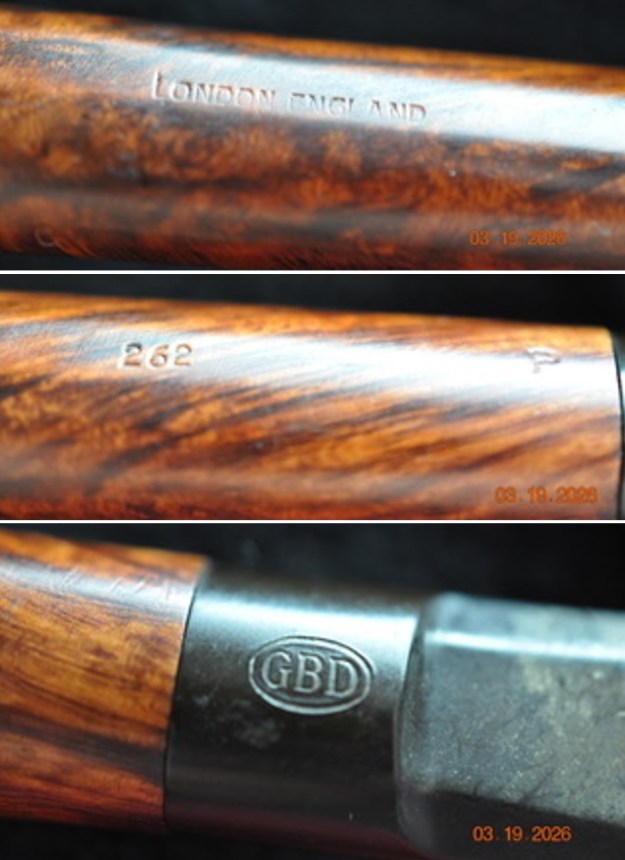 I like to unpack the stamping if I can before I work on a pipe. I knew that the GBD International was a Line of GBD pipes that generally have a rusticated or carved plateau style rim top. They are made in either France or England. The London Made stamp says it is made in England. The International is a unique line that combines black and brown stains. Instead of a carved rim top this one had a carved heel of the bowl and right side of the bowl. The Conquest stamp identifies it as a large pipe. The 262 is the shape number. Now I wanted to see if I could find some more information.
As is my usual practice I turned to the Pipephil’s site to see what I could find out a bit more information on the International line (http://www.pipephil.eu/logos/en/logo-gbd.html). The site had some photos of various examples of this line. This one is stamped on the topside and is like the first one below and has a GBD in a rounded rectangle on the shank top.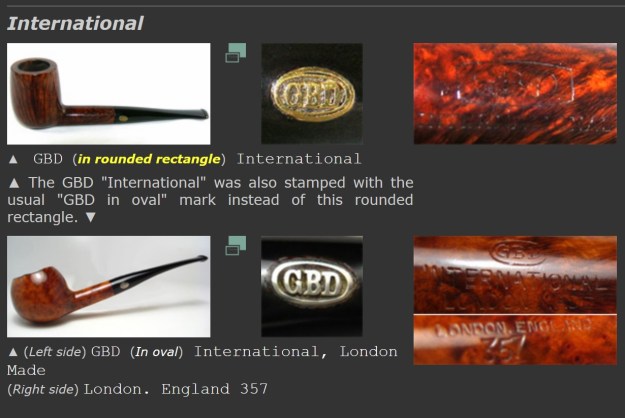 From there I turned to Pipedia to see what I could learn. I followed the link to the section on the Model information (https://pipedia.org/wiki/GBD_Model_Information). I quote from the site below:
International — France and England made: medium brown smooth, carved top rim, rim stained black. -TH: Matt take off finish “with just a hint of surface waxing” -catalog (1976)’.
There was a section there labelled Plus Sized Pipes. I am including the information there below.
In addition to the pipe line and shape information stamped on the pipe GBD also had codes for plus sized pipes. These codes in ascending order of size were…
- Conquest
- Collector
- Colossus
International – France and England made: medium brown smooth, carved top rim, rim stained black. In addition to the pipe line and shape information stamped on the pipe, GBD also had codes for plus sized pipes. These codes in ascending order of size were Conquest, Collector, Colossus.
From there I followed another link on the Pipedia GBD article on specific shape number and Model Information (https://pipedia.org/wiki/GBD_Model_Information).
It provides a lot of information on their interesting history. The shape number 262 corresponds to GBD’s identification of this pipe as Liverpool. The problem for me is that the pipe does not have a round shank or taper stem that are characteristic of the Liverpool shape. It has an oval shank and a saddle stem. To me this configuration makes it a Lumberman rather than a Liverpool.
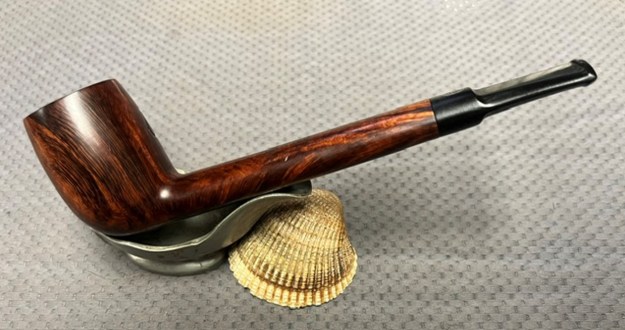
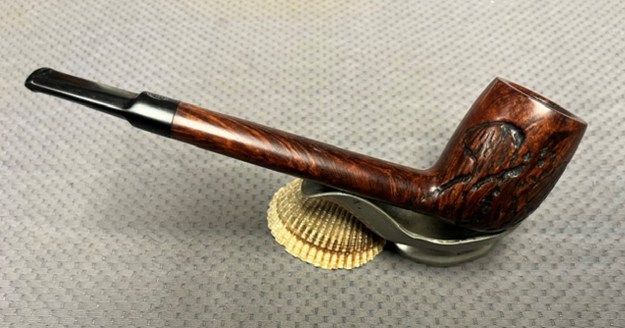
I followed another link on Pipedia to help me understand the various shapes of the Canadians (https://pipedia.org/wiki/File:Lpool.gif). I have included the information below. It is a shape chart with descriptions of the various Canadian off takes. It fits my description of the Lumberman shape above.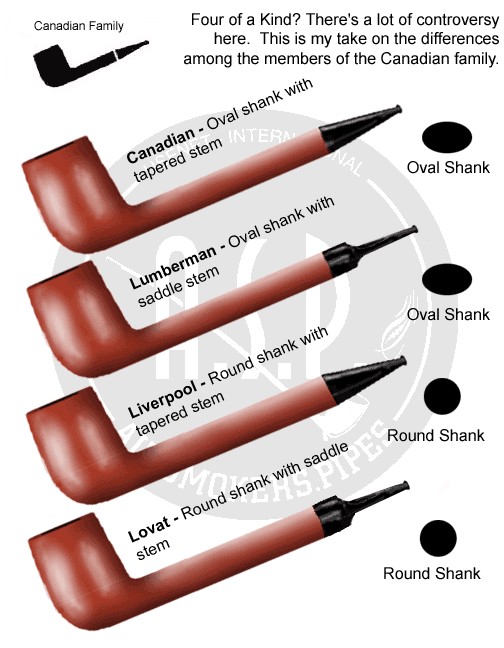 With all that information it was time to work on the pipe itself. Jeff had done an amazing cleanup of the pipe. He reamed the cake with a PipNet reamer and cleaned up that with a Savinelli Fitsall Pipe Knife. He scrubbed the internals of the bowl and stem with alcohol, cotton swabs, pipe cleaners and shank brushes. He scrubbed the externals with undiluted Murphy’s Oil Soap and rinsed the bowl off with running water. He was able to remove the lava on the rim top and edges and the grime from the bowl. He scrubbed the stem with Soft Scrub to remove the calcification and then soaked it in Briarville’s Pipe Stem Deoxidizer. He rinsed it off with warm water to remove the debris and the product that remained. The pipe looked better when I received it. I took photos of the pipe before I started my work on it.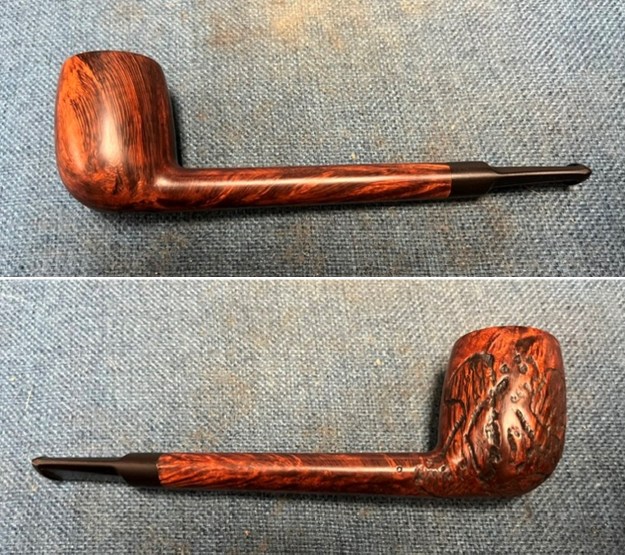
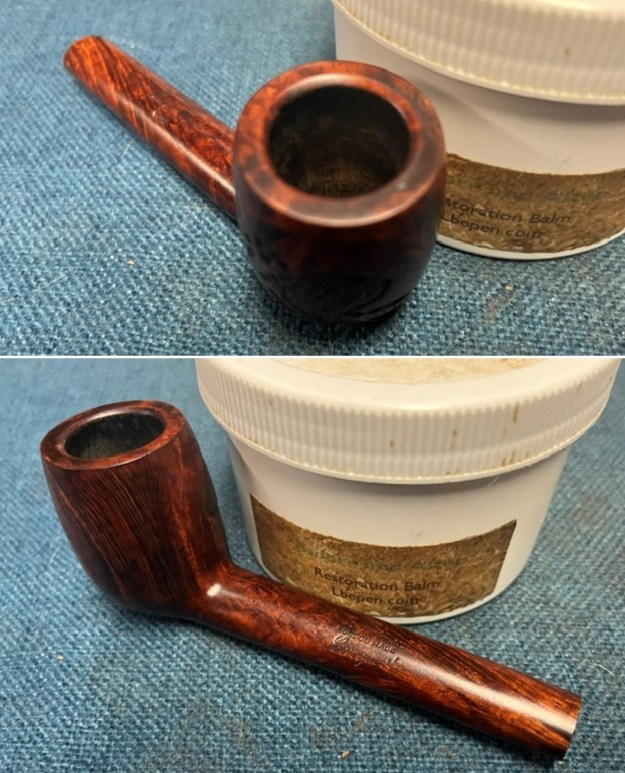
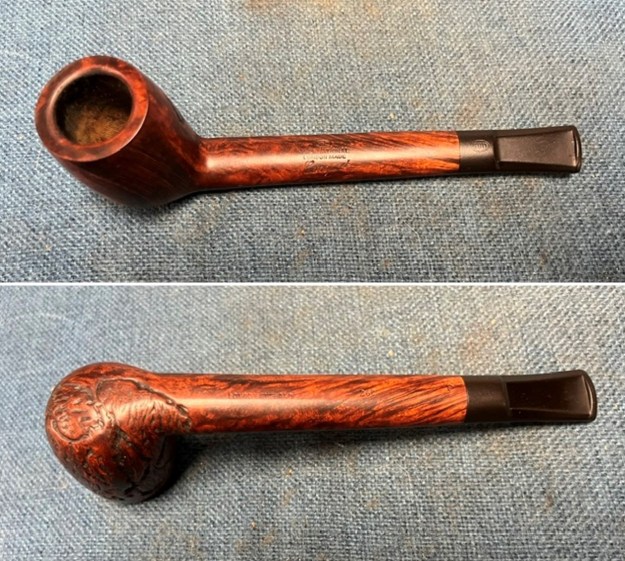 I took a photo of the rim top to show the condition. It looks good with the tars and oils removed from the rim top. The condition of the bowl and rim top were very good. The vulcanite stem looked much better with some light chatter on the top and underside ahead of the button.
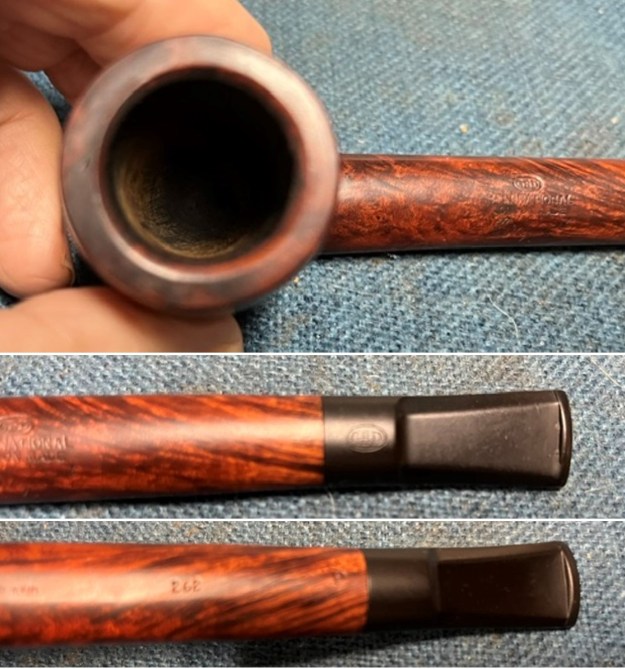 I took photos of the top and underside of the shank to show the stamping. The stamping is clear and reads as noted above. It was hard to capture in the photos. I removed the stem from the shank and took photo to show the overall look of the pipe.
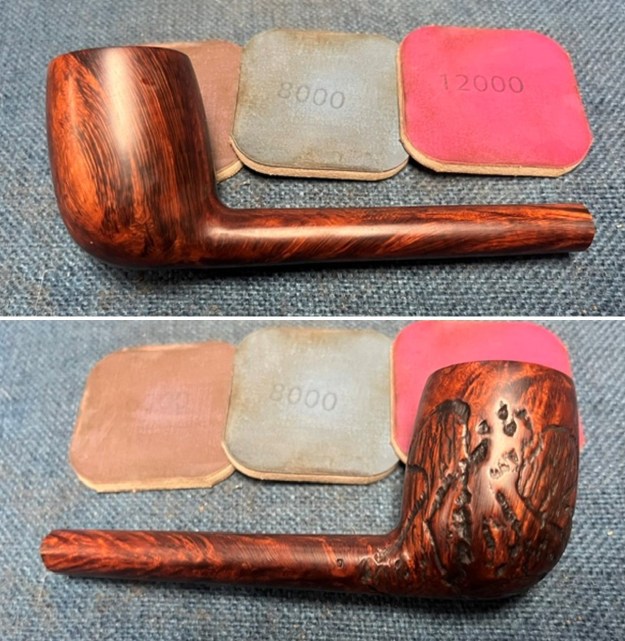
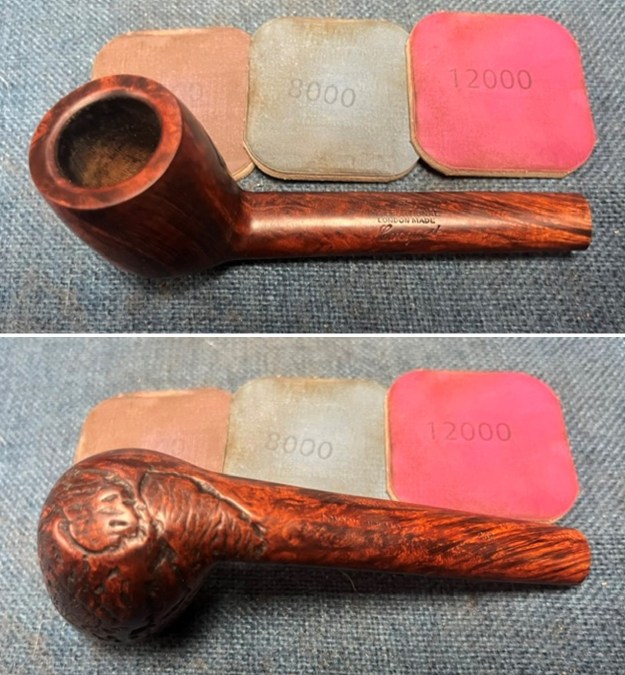
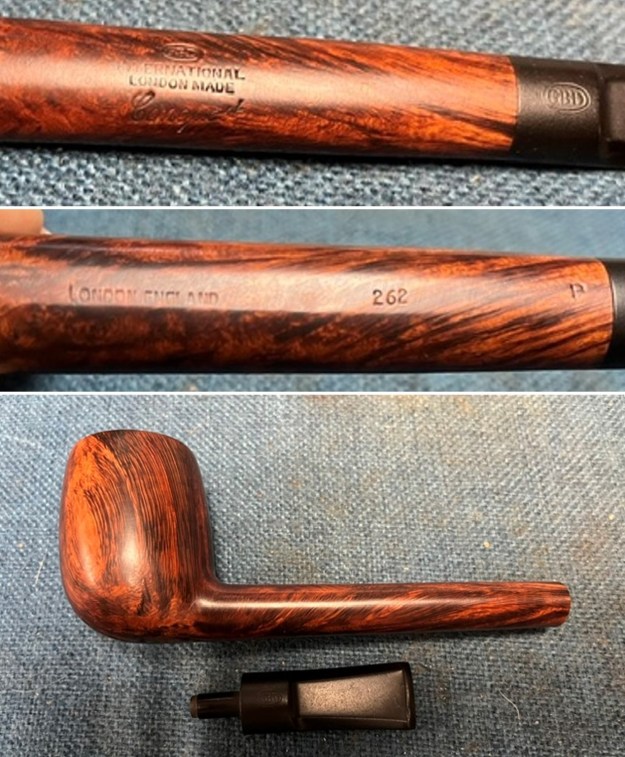 I polished the briar on the bowl and shank with micromesh sanding pads – dry sanding it with 1500-12000 grit sanding pads. I wiped the briar down after each pad with a damp cloth to remove the sanding dust.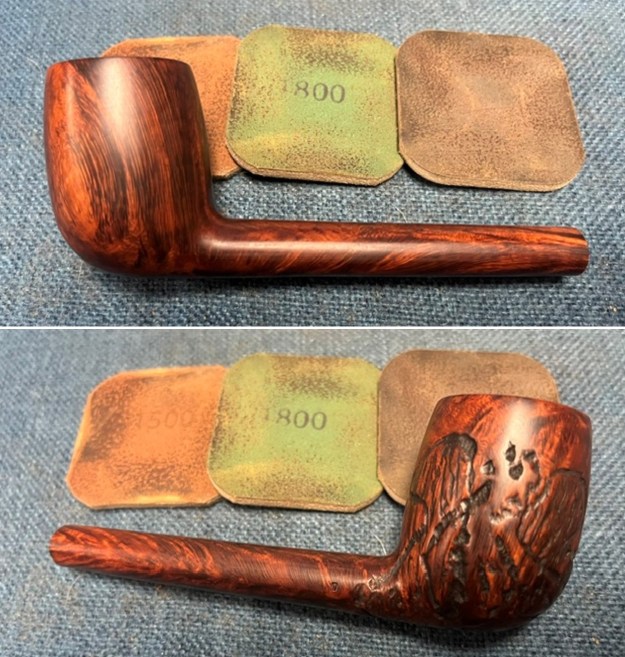
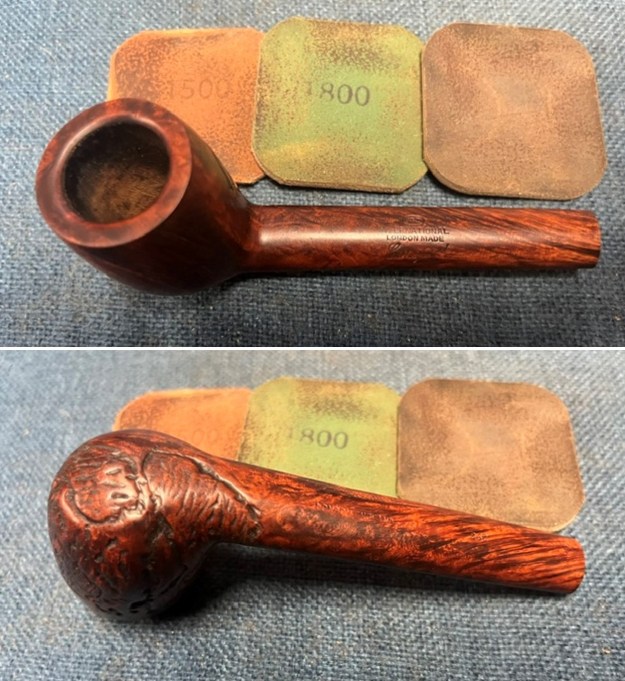
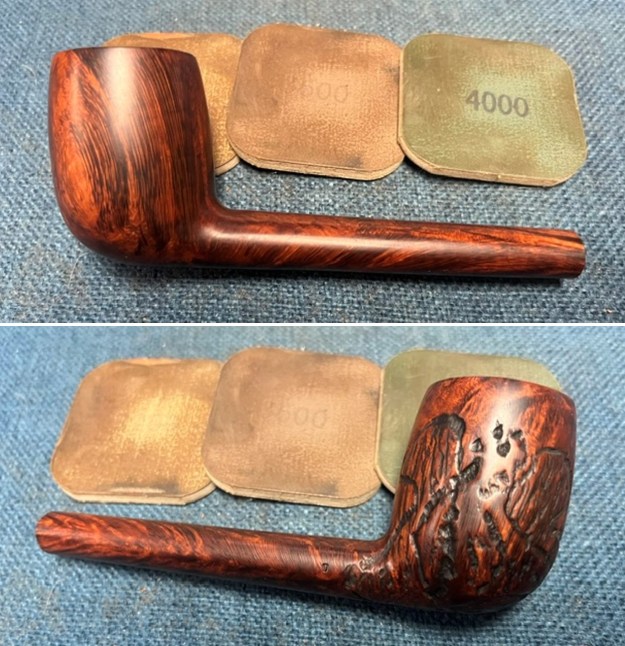
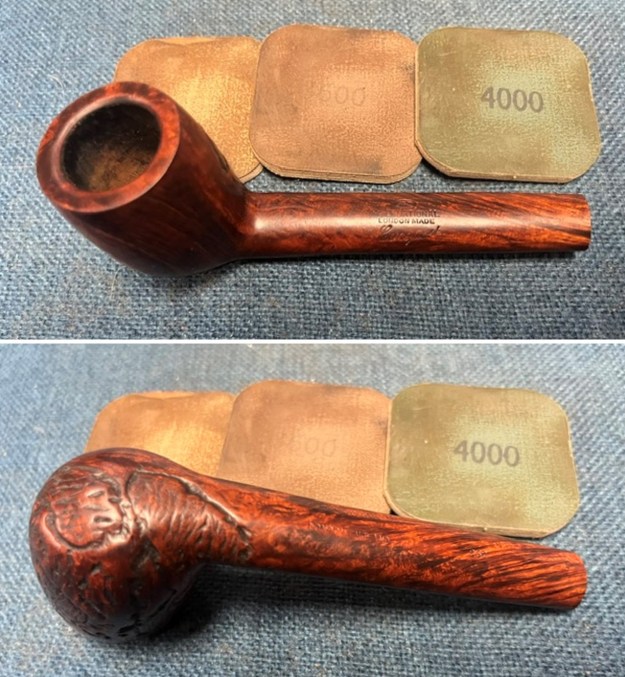
 I rubbed the bowl and shank down with Before & After Restoration Balm. I worked it into the surface of the briar with my fingertips to clean, enliven and protect it. I let the balm sit for a little while and then buffed with a cotton cloth to raise the shine. Mark Hoover’s Balm is a product that I have come to appreciate and one I use on every pipe I have been working on.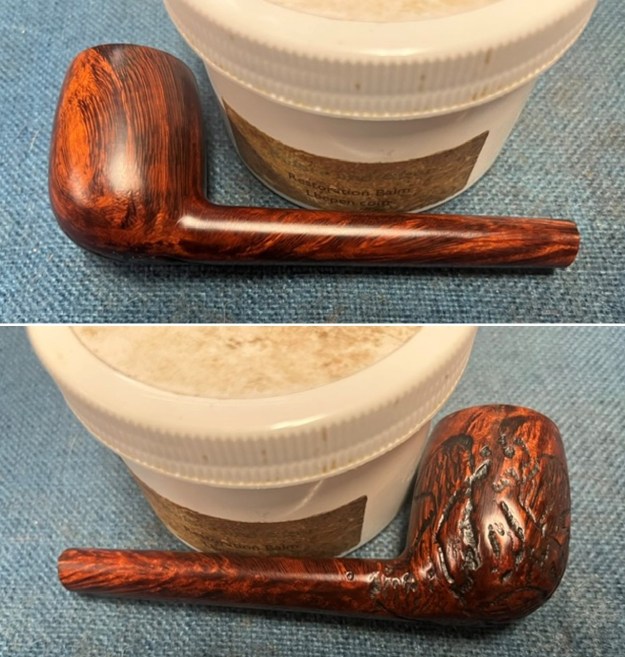
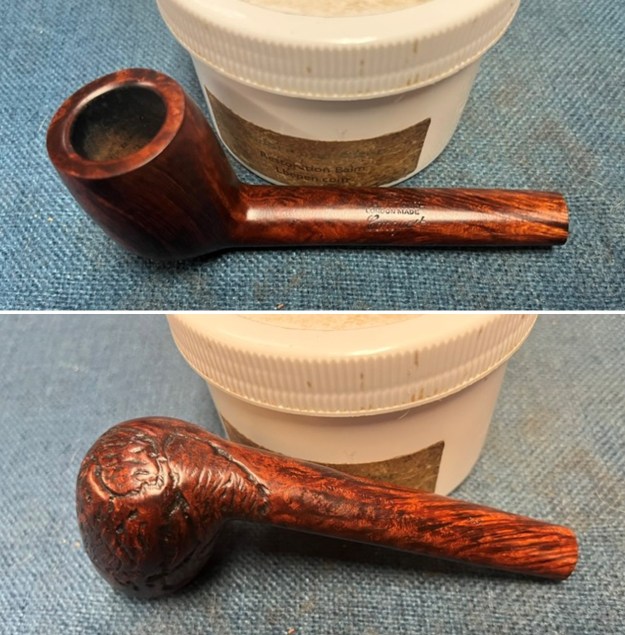
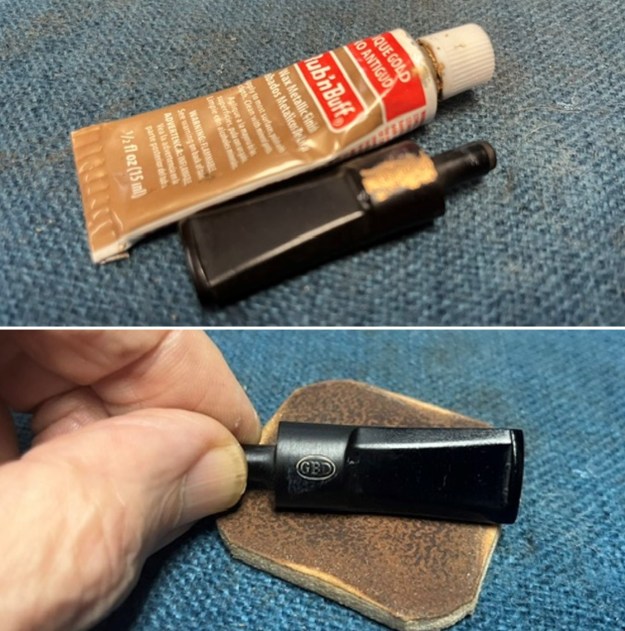
 I set the bowl aside and worked on the stem. I touched up the GBD oval logo stamp on the topside of the saddle stem with Antique Gold, Rub’n Buff. I worked it into the light stamp with a tooth pick. I buffed it off with a soft cloth to remove the excess material. I polished it with a soft cloth. It looked good.
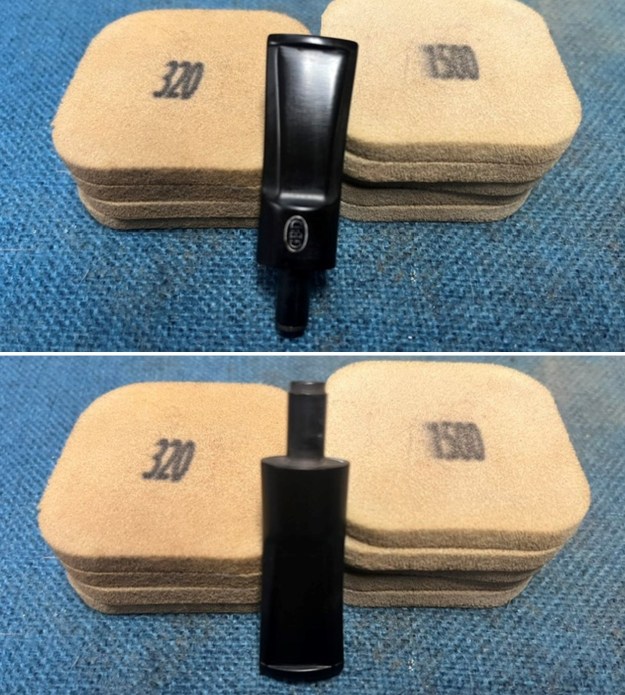
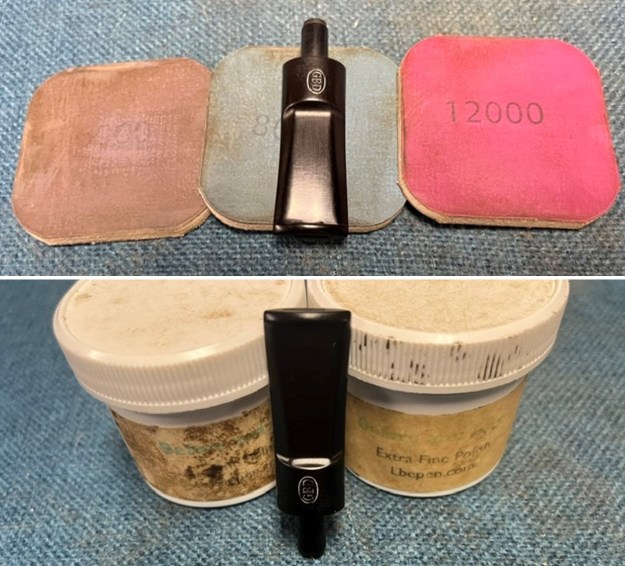
  I sanded it with 320-1500 grit 2×2 inch sanding pads. I dry sanded and after each pad wiped the stem down with a cloth impregnated with Obsidian Oil. By the final pad the stem looked very good.
 I polished the stem with micromesh sanding pads – wet sanding it with 1500-12000 grit pads. I polished it further with Before & After Pipe Stem Polish – both fine and extra fine. I finished by wiping it down with Obsidian Oil and buffing it to a shine.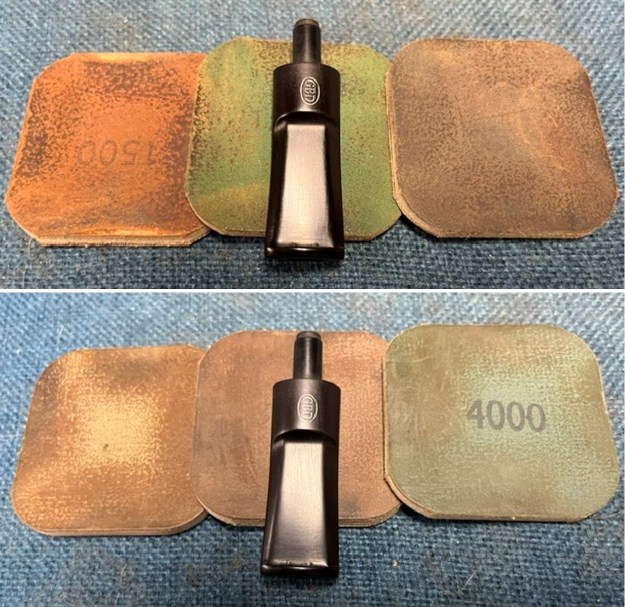
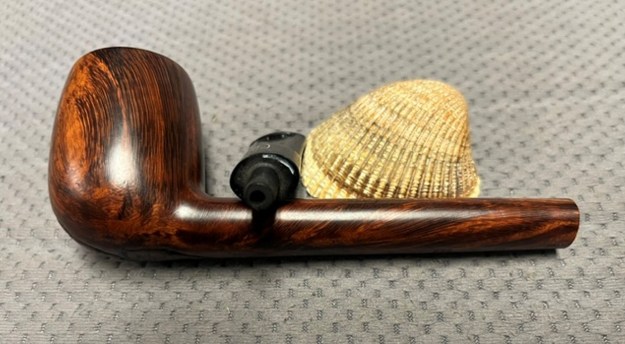
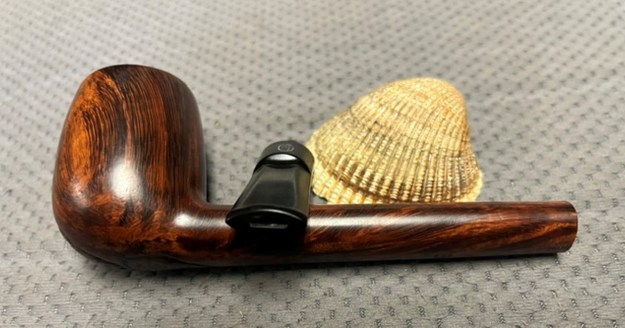
 I always look forward to this part of the restoration when all the pieces are put back together. I put the GBD International London Made Conquest 262 Lumberman back together and carefully buffed the bowl and stem with Blue Diamond on the buffing wheel. I gave the bowl and the stem multiple coats of carnauba wax. I hand buffed the pipe with a soft cloth to raise the shine. It is fun to see what the polished bowl looks like with the new black vulcanite saddle stem almost glowing. This GBD International London Made Conquest Lumberman is nice looking and feels great in my hand. It is one that could be clenched and smoked while doing other things as it is very light weight and well balanced. It must have been a fine smoking pipe judging from the condition it was when I received it. Have a look at it in the photos below. The dimensions are Length: 6 ½ inches, Height: 1 ¾ inches, Outside diameter of the bowl: 1 ¼ inches, Chamber diameter: ¾ of an inch. The weight of the pipe is 1.45 ounces/41 grams. I will be putting it in the English Pipemakers Section of the rebornpipes store soon. This will make a great addition to someone’s pipe collection. Thanks to each of you who are reading this blog. Remember we are not pipe owners; we are pipemen and women who hold our pipes in trust until they pass on into the trust of the next pipeman or woman.