Author Archives: rebornpipes

Notes and Visual References on Barling Pipes – Compiled by Les Sechler


I came across this brief article by Les online a few years ago and have found it very helpful in narrowing down the dates for the Barling pipes that come across in my ongoing hunt for estate pipes. I wrote to Les through EBay and asked his permission to reprint the article here on rebornpipes. He graciously replied as noted below. Thank you, Les.

… if you get a comment by collector Tad Gage, his judgment is better than mine since I learned much of what I know from him as well as others. Most of this info I deduced over time by close observation of the nomenclature I found on my own pipes but also from pics I saw on ebay pieces that were listed for sale… Note – Barling nomenclature has never been an exact science and this info should be considered as a guideline rather than a mandate. Even the book done by the late John Loring about Dunhill nomenclature is not perfect since exceptions have been found in those pipes as well.

Good luck and let me know how things turn out. I have it in mind to print a small paper on the subject at some point in the future and give it away at shows. – Les Sechler

The following is a visual reference guide that allows the reader to identify the various eras of Barling nomenclature. Please note that some exceptions will occur since not every pipe had stampings that are completely in conformation to the norm.

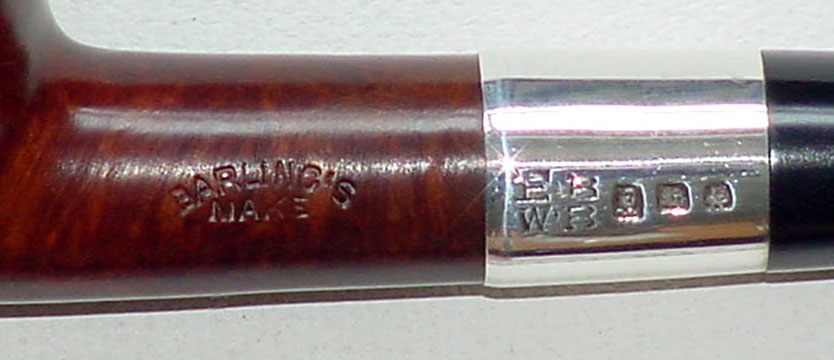
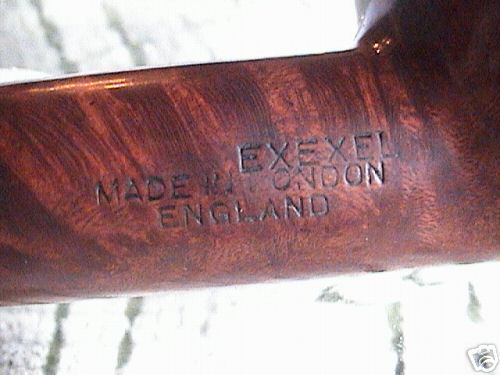
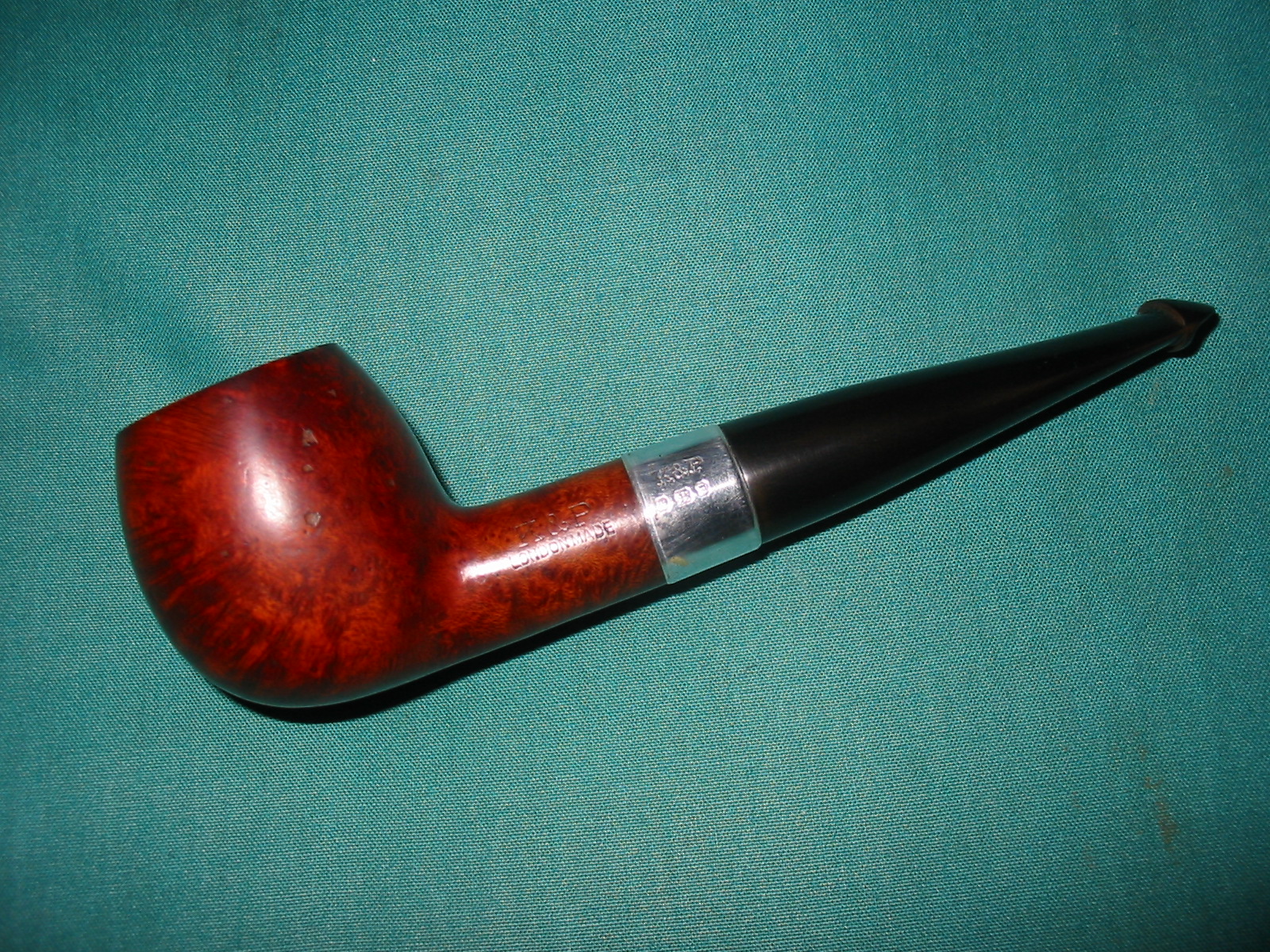
Barling1 Older Pre-transition nomenclature, probably 1900 or after. Date can be determined by silver hallmarks.

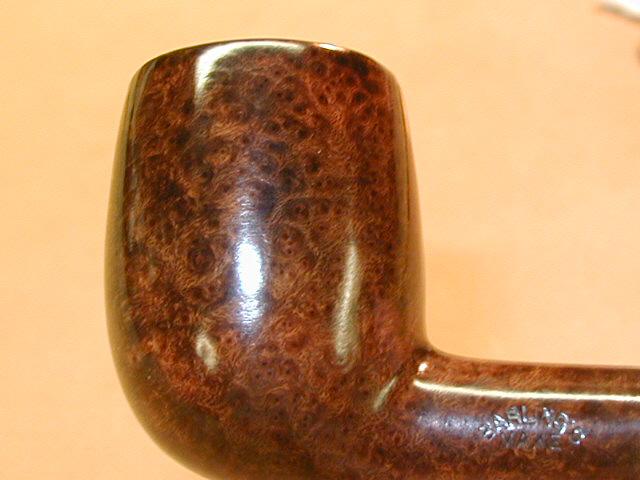
Barling2 Late 40’s – 1962 Typical Pre-Transition nomenclature

Barling3 Used only for the Guinea Grain US distributed pipes

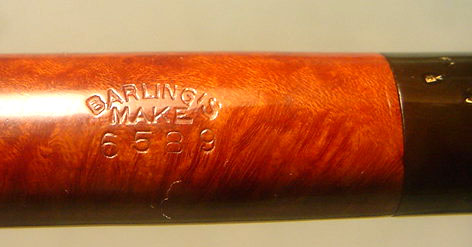
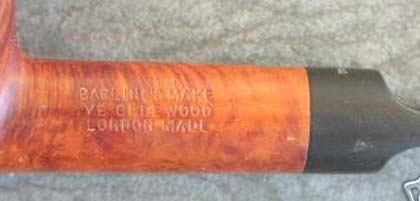
Barling4 Typical Pre Transition nomenclature, M in Make is under the R. Shape number is three digits or four digits beginning with a 1 (for UK distributed pipes).
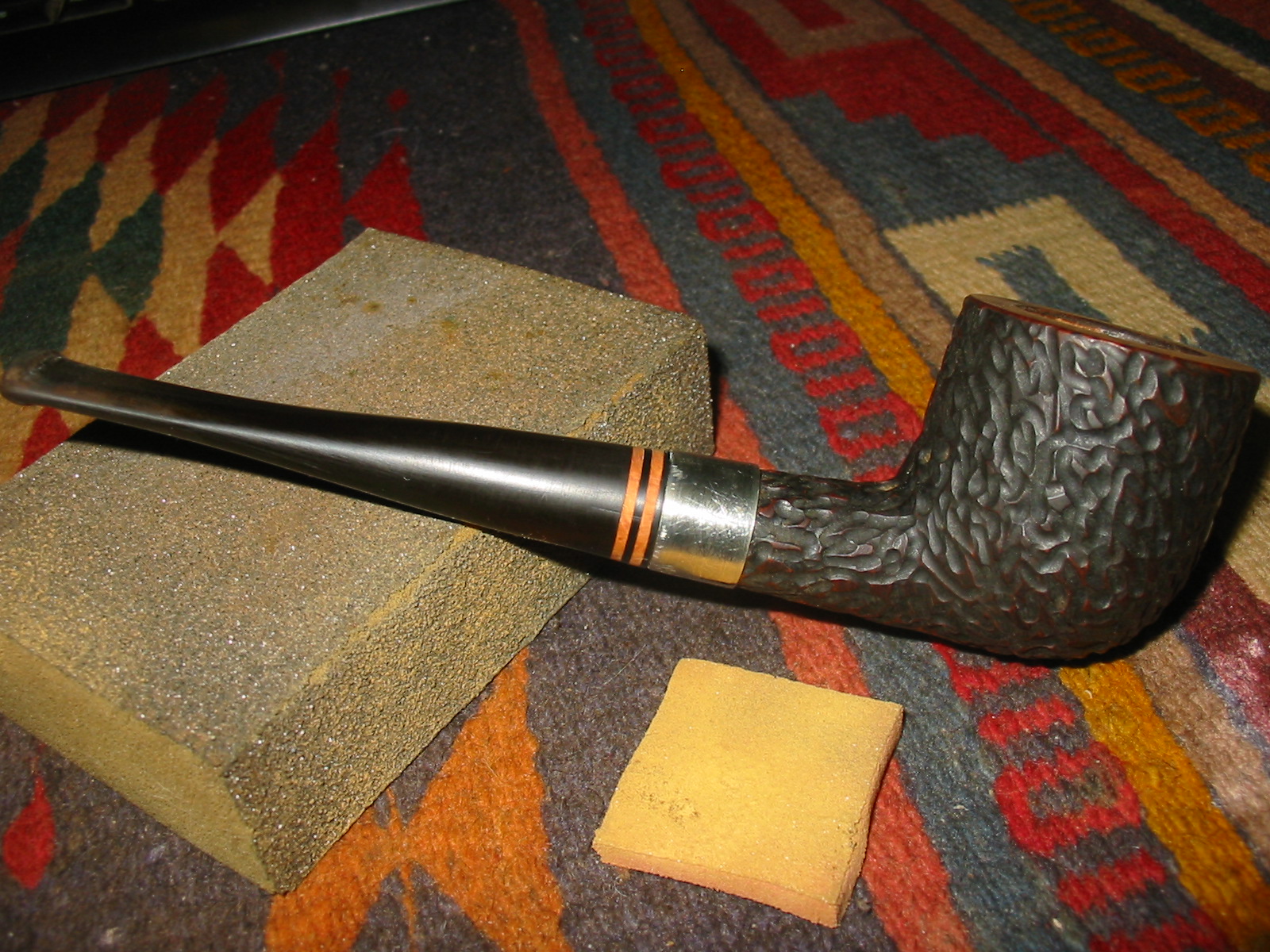
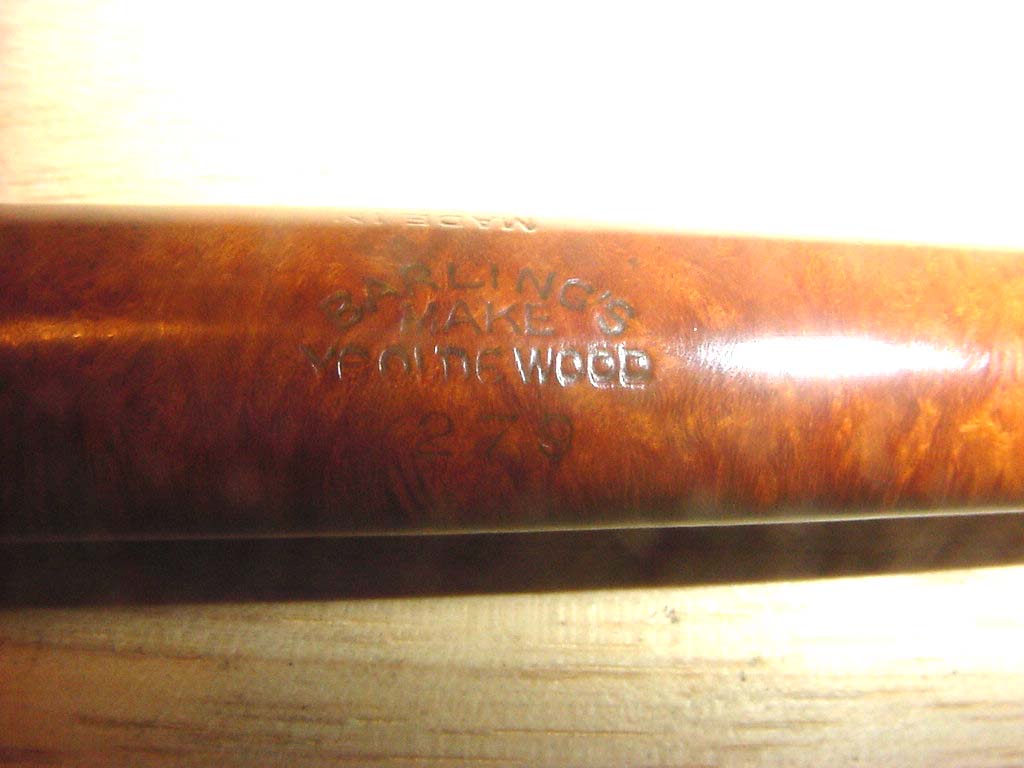
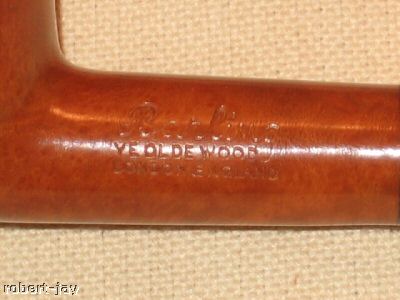
Barling5 Barling Early Transition Example: Ye Olde Wood remains but shape number is now four digits not beginning with a 1. First digit indicates size of pipe with 6 being “very large” and 7 being the largest. Pipes marked this way are thought to be late 1962 or 63’.
Barling6 Next version of early Transition Nomenclature: Ye Olde Wood is gone and shape number is four digits not beginning with a 1. First number of shape indicates size. Notice that the M in Make is now under the A.

Barling7 Typical Transition Barling Nomenclature, Barling is now in script.

Non Conforming Examples of Barling Nomenclature
Barling8 Probably a fake stamp

Barling9 Note Ye Olde Wood is present, with spaces between the words, but Barling is in script and London England. This is an error stamp probably done by factory worker not paying enough attention, or a stamp that was not used for very long. This is the only example of this stamp I have ever seen.

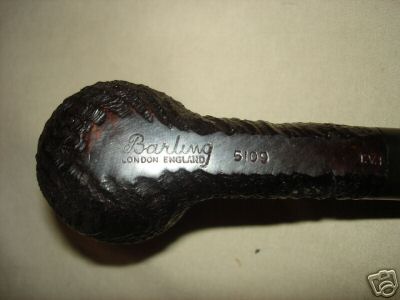
Barling10 The word London exists on a few examples only. This is a rare stamp that was used for a brief period, probably just before the company sold in 1962 or just after.

My Tobacco Classification / Touchstone Blends – by Eric Boehm


I remember when Eric originally posted this piece on Smokers Forums and I appreciated the work he did on it. I find it a helpful way of explaining tobaccos to newcomers and to refresh my own understanding of the tobaccos that I enjoy. I wrote and asked him if I could reproduce the article for the rebornpipes blog and he graciously consented. Here is Eric’s article on Tobacco Classification.

There are as many ways to classify pipe tobacco blends as there are pipe smokers, and then some. However, I have found the following list suits me. I see tobacco blends for the pipe smoker divided into 16 categories. An alternative, earlier, classification was provided by the Pipe Club of Norfolk UK, from which some of the categories originated. However, since this early list, a number of new categories have arisen, such as the Cigar Leaf Blends. Also, a number of pipe smokers have advocated against the terms “English Blends” and “Balkan Blends”, as many tobacco blends actually span the two and there really exists a continuum of sorts. So the terms “English Blends” and “Balkan Blends” have been dropped by many, in favor of the more descriptive terms “Latakia Mixtures”, which in turn is divided into “Light / Medium” and “Medium / Full”.

I am aware that this is a highly subjective exercise. And it is to be expected that everyone will have a different take on what constitutes a Touchstone Blend. Also, there will be “lumpers” and “splitters” – that is, those who feel there are too many categories and those who feel the need to split even more. What I hoped to do here, for myself really, was to set up a series of benchmark blends that I could later use as “standards” by which to judge future blends within a category. It is hoped that these lists will provide a jumping off point to begin exploring the wonderful world of pipe tobaccos for others as well.

1. Straight Virginias (non-flake, -rope etc.).
2. Virginia Flakes (Light).
3. Virginia Flakes (Full).
4. Virginia Plugs.
5. Virginia Ropes and Twists.
6. Lakeland Style.
7. Virginia / Kentucky Blends.
8. Virginia / Burley Blends.
9. Burley Blends.
10. Virginia / Perique Blends.
11. Virginia / Perique / Burley Blends.
12. Virginia / Oriental Blends.
13. Light / Medium Latakia Mixtures.
14. Medium / Full Latakia Mixtures.
15. Cigar Leaf Blends.
16. Aromatics.

1. Straight Virginias – non-flake, non-plug, non-ropes & twists.
Bulk No. 5100 Red Cake. McClelland Tobacco Company, USA. “This blend is a style of English Virginia that has seldom been seen in the United States. A sweet, exceptionally soft, fully rubbed matured cake”. Fire Cured Virginia. Cut: Ready Rubbed. Bulk.

Old Belt Ready Rubbed. W.O. Larsen, DK. “A blend of mature Orange Virginia tobaccos from the Old Belt in Virginia and North Carolina. The blend is lighted pressed into tobacco cakes, which are stored for aging. After cutting, the tobacco is rubbed out to facilitate easy filling of the pipe and an even burn. The tobacco burns exceptionally well with a cool smoke and a well-balanced and supreme natural taste”. Air Cured Virginia. Cut: Ready Rubbed. 100g Tin.

Red Ribbon. McCranie’s, USA. “A beautifully aged Red Virginia like no other. Brimming with rich, mellow flavor as only nature can provide. A special allotment of prime 2000 crop North Carolina leaf has been secured for our discriminating pipe smokers. The softest, most enjoyable straight Virginia we’ve ever smoked. With a light vacuum seal, the tobacco will continue to mellow with age”. Air cured Virginia. 50g tin.

Virginia No. 1. Mac Baren, DK. “A ready rubbed tobacco, manufactured from a selection of choice, ripe Virginia tobaccos, which gives Virginia No.1 a mild, sweet smoke”. Air cured Virginia. Flavoring: Sweet / sugar. Cut: Ready rubbed. 50g pouch, 100g tin, bulk.

Old Gowrie. Charles Rattray, DE. “This blend is a Virginia (with a hint of Perique) tobacco, rubbed-out for a finer cut”. Blender: Kohlhase, Kopp und Co. KG. Air cured Virginia, Perique. Cut: Ready Rubbed. 50g tin, 4oz tin, bulk. Note: Placed here rather than as a Virginia /Perique Blend because of the minor component of Perique.

2. Virginia Flakes (Light) –
Bulk No. 2010 Classic Virginia. McClelland Tobacco Company, USA. “This is a blend of Eastern and Middle Belt lemon, orange, and orange-red Virginias. A sweet, smooth, and zesty smoke”. Curing Group: Flue Cured. Contents: Virginia. Cut: Broken Flake. Packaging: Bulk.

Capstan Medium Navy Cut. Capstan, UK. “A medium to mild blend of carefully selected Virginia tobaccos with a natural aroma enhanced by a subtle flavour”. Curing Group: Air Cured. Contents: Virginia. Cut: Flake. Packaging: 50g Tin.

Hamborger Veermaster. Dan Tobacco, DE. “Classic sailor`s flake tobacco made from rich Golden Virginias, sweet and mild.. Curing Group: Air Cured. Contents: Virginia. Cut: Flake. Packaging: 50g tin.
Matured Virginias, No. 24. McClelland Tobacco Company, USA. “An unusual form of Flake tobacco, its deep chestnut color results from the extended aging of full flavored Old and Middle Belt leaf very lightly seasoned with Drama. A smooth, robust tobacco good anytime for those who prefer the darker Virginia flavor. Is is especially well suited for outdoor smoking”. Curing Group: Air Cured. Contents: Virginia, Oriental (Drama leaf). Cut: Broken Flake. Packaging: 50g & 100g tin.

Hal O’ the Wynd. Charles Rattray, DE. Blender: Kohlhase, Kopp und Co. KG. “A pure Virginian tobacco of a most unusual share of strength. This is a strong, sharp aged red Virginia blend that will perk you up quickly”. Curing Group: Air Cured. Contents: Virginia. Cut: Broken Flake. Packaging: 50g & 100g tin. (Note: The homepage Kohlhase & Kopp says “Kentucky-Virginia-Perique”. Flake rubbed by hand). Note: Many consider this at the top end of the light Virginia Flake Blend, rather than as a full.
Fog City Selection: Union Square. G. L. Pease, USA. “A blended, sliced cake of high-grade flue cured leaf, from beautiful, sweet brights to deep, earthy reds, without the added sugars and flavorings common to many Virginia flakes. It’s rich on the palate, evolving in layers with the clean, natural sweetness of pure tobaccos. It offers a pleasant room note, and a delightful finish. For those seeking the pure Virginia experience, try Union Square”. Curing Group: Flue Cured. Contents: Virginia. Cut: Flake. Packaging: 2oz & 8oz tins. Released in May, 2009. Note: Many consider this at the top end of the light Virginia Flake Blend, rather than as a full.

3. Virginia Flakes (Full) –
Full Virginia Flake. Samuel Gawith, UK. “Samuel Gawith Full Virginia Flake is for lovers of pure pressed Virginias. Created in the heart of Lakeland, the hot-pressed blended Virginias take on a delicious and distinctive dark colour that creates a pipe smokers dream, a feeling of calm, serenity and anticipation of the next pipeful. A “must have” for all Virginia lovers. Medium strength”. Curing Group: Air Cured. Contents: Virginia. Cut: Flake. Packaging: 50g tin.

Best Brown Flake. Samuel Gawith, UK. “A firm favourite for the pipe smoker looking for a medium strength, gentle and slow burning tobacco. Manufactured using hand-stripped flue cured Virginias with no flavours added, Best Brown will reward with a cool, sweet smoke with a delectable aroma and good sidestream. Mild to medium”. Curing Group: Flue Cured. Contents: Virginia. Cut: Flake. Packaging: 50g tin.

Personal Reserve: Blackwoods Flake. McClelland Tobacco Company, USA. “The characteristic, natural sweetness of mellow, Red Virginias mingles inextricably with the richness and inherently spicy aroma of Black Stoved Virginias in this doubly aged red and black all-Virginia cake mixture. An artistic achievement in tobaccos for the pipe, this beautiful mottled flake is incomparable in smoothness, balance and refinement”. Curing Group: Air Cured. Contents: Virginia. Cut: Broken Flake. Packaging: 50g & 100g tin.

Personal Reserve: Dark Star. McClelland Tobacco Company, USA. “Years before tinning, this tobacco begins as bright yellow, sugary top grade Virginia and Carolina leaf. Through careful triple aging, pressing and stoving, it becomes rich, cool and dark. A seductively spicy aroma develops during the extended maturing process to complement the complex flavor of this concentrated, smooth broken flake, which is easily rubbed out to suit any occasion”. Curing Group: Air Cured. Contents: Virginia. Cut: Broken Flake. Packaging: 50g & 100g tin.

Marlin Flake. Charles Rattray, DE. Blender: Kohlhase, Kopp und Co. KG. A companion to Old Gowrie. A shade darker, greater strength, different aroma, but otherwise a tobacco in the same tradition”. Curing Group: Flue Cured. Contents: Virginia. Cut: Flake. Packaging: 50g & 100g tin, Bulk.

4. Virginia Plugs –
Cut Virginia Plug. Fribourg & Treyer, DE. “ A full bodied, medium to full strength pressed flake. Very complex from start to finish with a well balanced taste that both boldly spicy and subtlety sweet”. Curing Group: Air Cured. Contents: Virginia. Cut: Flake. Packaging: 50g tin.

New World Collection: JackKnife Plug. G. L. Pease, USA. “JackKnife Plug – dark-fired Kentucky leaf and ripe red Virginia tobaccos, with their deep, earthy flavors, are layered on a central core of golden flue-cured for a hint of bright sweetness, then pressed and matured in cakes, and finally cut into 2oz blocks. Slice it thick and rub it out for a ribbon cut, thin for a shag, or chop it into cubes. The choice is yours”. Curing Group: Flue Cured. Kentucky, Virginia. Cut: Plug. Packaging: 2oz tin. Introduced in January, 2011.

New World Collection: Triple Play. G. L. Pease, USA. “Ripe red and bright flue-cured tobaccos are joined by piquant Acadian Perique and a balanced measure of smoky dark-fired Kentucky. The leaf is pressed and matured in cakes before being cut into 2oz bars, resulting in a bold blend for Virginia and Perique fans”. Curing Group: Flue Cured. Contents: Kentucky, Virginia, Perique. Cut: Plug. Packaging: 2oz bar. Introduced in May, 2011.

Peterson’s Perfect Plug. Peterson, IE. Blender: Kohlhase, Kopp & Co. “This excellent plug tobacco comprises selected Virginia leaf from Africa and Brazil blended with Burley leaf from Malawi. The tobaccos are lightly cased before drying and pressing and then are heated and stored for 2 weeks before cutting. The result is a full bodied yet fruity blend, sure to appeal to the experienced pipesmoker”. Curing Group: Air Cured. Contents: Burley, Virginia. Cut: Plug. Packaging: 50g tin.

Kendal Plug. Samuel Gawith, UK. “Whoever knows Samuel Gawith knows their famous Kendal Plug. The tobacco has a naturally sweet smell, and when burning it produces a very pleasant aroma. The taste tends to be sweetish, particularly at the beginning, and then slowly the sweetness gives some way to a whole range of taste variations, all very pleasant. It burns so slowly and evenly. A very satisfying smoke”. Curing Group: Flue Cured. Cut: Plug. Note: This may be better placed in the Lakeland category.

5. Virginia Ropes and Twists –
Black Irish Twist. Gawith, Hoggarth, & Co., UK. “All our twist tobacco varieties are manufactured by the same spinning process using dark fired wrapper leaves. The filler is again, predominantly dark fired leaf with the addition of a small percentage of dark air cured Indian leaf. They are therefore strong tobaccos. Black Twist, because the cooking process removes some of the stronger tar and nicotine elements, provides a milder smoke than the brown twist”. Curing Group: Flue Cured. Contents: Virginia. Cut: Rope. Packaging: Bulk.

Black XXX Rope. Samuel Gawith, UK. “This tobacco is not for the faint of heart. Strong and robust smoke”. Curing Group: Air Cured. Contents: Virginia. Cut: Rope. Packaging: Bulk

Brown Rope No. 4. Samuel Gawith, UK. “Twisted forms of aged dark brown leaf. Enormous flavor aroma and strength tamed with slow puffing”. Curing Group: Air Cured. Cut: Rope. Packaging: 50 g tin or Bulk.

Sweet Rum Twist. Gawith, Hoggarth, & Co., UK. “This is a twist made from the same ingredients as the Black and Brown Irish X. It has additional Rum flavoring added during manufacture. Again, this is a very strong tobacco as it does not undergo the pressure cooking process”. Curing Group: Air Cured. Contents: Virginia. Flavoring: Rum. Cut: Rope. Packaging: Bulk. Note: This could well be placed as a Lakeland.

6. Lakeland Style –
Best Brown Flake. Samuel Gawith, UK. “A firm favourite for the pipe smoker looking for a medium strength, gentle and slow burning tobacco. Manufactured using hand-stripped flue cured Virginias with no flavours added. Best Brown will reward with a cool, sweet smoke with a delectable aroma and good sidestream. Mild to medium”. Curing Group: Flue Cured. Contents: Virginia. Cut: Flake. Packaging: 50g Tin.

Broken Scotch Cake. Gawith, Hoggarth, & Co., UK. ”A very mild blend, using predominantly flue-cured Virginia, but with the addition of some sun-cured both to cool and sweeten the smoke. A rough-cut into very coarse pieces also contributes to cooling the smoke”. Curing Group: Flue Cured. Contents: Virginia. Cut: Coarse Cut. Packaging: 50g tin & Bulk.

Dark Birdseye. Gawith, Hoggarth, & Co., UK. “Manufactured from Dark tobacco ‘whole leaf’ rather than strips, the mid-rib (or stem) gives the ‘birds eye’ effect when cut. A strong smoke which was particularly favored by the fishermen as the finer cut meant the tobacco was easier to light and to keep-in on board ship when the weather was bad”. Curing Group: Flue Cured. Contents: Virginia. Cut: Ribbon. Packaging: Bulk.

Ennerdale Flake. Gawith, Hoggarth & Co., UK. “Our best selling flake by a wide margin. Predominately virginia leaf from Brazil, Zimbabwe and Malawi (86%) but with the addition of sun cured Malawi (10%) to add sweetness, strength and to cool the smoke and Malawi Burley (4%) to “carry the flavour” in addition to its cooling and strength qualities. (Burley is very good at absorbing casings and flavours) A background flavour of Almond is enhanced with the addition of fruit flavours, vanilla, and the special ‘English type’ flavours which give this tobacco its distinctive, yet typical ‘English’ Aroma associated with the UK best selling brands such as Condor, St Bruno and mellow Virginia”. Curing Group: Air Cured. Contents: Burley, Virginia. Flavoring: Fruit / Citrus, Almond, Vanilla. Cut: Flake. Packaging: 50g tin, Bulk.

Bob’s Chocolate Flake. Gawith, Hoggarth, & Co., UK. “The main characteristics of this flake come from the 8% Latakia included in the blend and the smooth chocolate aroma. Brazilian, Zimbabwe, Malawi virginia leaf make up 82% of the blend providing a mild/Medium smoke cooled with the addition of 8% Malawi sun cured and 2% Malawi Burley. The latakia cools but does also add strength and aroma. The cocoa casings and chocolate top flavours are rounded off with vanillas and other flavours providing sweet notes”. Curing Group: Air Cured. Contents: Burley, Virginia, Latakia. Flavoring: Alcohol /Liquor, Cocoa / Chocolate, Vanilla. Cut: Flake. Packaging: 50 tin & bulk.

Rum Flake. Gawith, Hoggarth, & Co., UK. “The ‘Christmas cake’ of all our tobaccos. A very rich, sweet fully flavoured blend. The main feature is the high proportion of naturally sweet sun-cured tobaccos in the blend – over 40% Only 30% Virginia leaf, with the rest of the blend coming from burleys and Dark-air cured contribute to a strong, but rewarding smoke. The whole blend is cased in maple sugars to further enhance the natural sweetness of the sun cured leaf and then rounded off with a dash of rum”. Curing Group: Air Cured. Contents: Burley, Virginia. Flavoring: Rum, Maple. Cut: Broken Flake. Packaging: 50g tis & bulk.

7. Virginia / Kentucky Blends –

660: Silver Flake. Solani, DE. Blender: R.L. Will. “An incredible blend of premium dark red and sweet Virginias from the “border belt”, light yellow Virginia from South Carolina and dark-fired, spicy Kentucky. Slow burning and because no flavoring has been added, this blend has a real tobacco taste”. Curing Group: Air Cured. Contents: Kentucky, Virginia. Cut: Flake. Packaging: 50g & 100g tin.

Three Nuns Original. Bell’s. Blender: Orlik Tobacco Company A/S, DK. “A blend of dark fired and sun cured tobaccos mixed with the finest Brazilian Lights to produce the unique flavour and mellow smoking characteristics for which Three Nuns is famous”. Curing Group: Flue Cured. Contents: Kentucky, Virginia. Cut: Curly Cut. Packaging: 50 or 100g tins. Note: In the original formula, from Imperial Tobacco, Three Nuns was a VA-PER mixture.

Original Mixtures: Cumberland. G. L. Pease, USA. “Robust and possessing a subdued sweetness, Cumberland is a delightfully orchestrated suite of American tobaccos, featuring a rare and exquisite mahogany Kentucky, aged in bales for twenty years. Red and matured Virginias establish a theme; the Kentucky and a pianissimo of Perique create the variations. Pure, natural tobacco flavors are harmonized by delicate arpeggios and underscored by deep, resonant tones. The coda is lovely and lingering – a perfect finish to a rich performance. Best savored slowly”. Curing Group: Flue Cured. Contents: Kentucky, Virginia, Perique. Cut: Coarse Cut. Packaging: 2oz & 8oz tin. Introduced in April, 2002. Note: An unusual blend that is not really a touchstone for this category.

8. Virginia / Burley Blends –
Golden Sliced (Red). Orlik Tobacco Company A/S, DK. “A delightful blend of golden and full body Virginibesta tobaccos with a touch of Burley. A fine natural sweetness in taste and aroma characterizes Orlik Golden Sliced. The cut is the traditional Navy Cut Flake i.e. pressed tobacco and cut into slices. Rub the tobacco slices gently before filling your pipe”. Curing Group: Flue Cured. Contents: Burley, Virginia. Cut: Flake. Packaging: 50g Pouch, 50g & 100g tins.

Long Golden Flake (No. 71). Reiner, DE. Blender: R.L. Will. “A very special blend of golden Virginias, a little “white” Burley, and a touch of Perique to make things interesting. Pressed into long flakes, sliced, then rolled in the tin in long strips”. Curing Group: Flue Cured. Contents: Burley, Virginia, Perique. Cut: Flake. Packaging: 100g tin.

University Flake. Peterson, IE. Blender: Kohlhase, Kopp & Co. “Originally manufactured in Ireland by Murray, and now manufactured in Germany by Kohlhase & Kopp. The new tin description reads “An easy smoking blend of fine Virginias and Burley tobaccos, made the traditional way.” Curing Group: Air Cured. Contents: Burley, Virginia. Flavoring: Plum. A light, berry-like top dressing applied that is evident in the smoke. The K&H website describes it as “pflaume” which is the German word for plum. Cut: Flake. Packaging: 50g Tin.

Original Mixtures: Barbary Coast. G. L. Pease, USA. “The finest cube-cut Burley, chosen for its deep, nutty flavors, forms a robust foundation for this sophisticated blend. Rich, red Virginia tobaccos are added for their subtle sweetness and complexity, while the unique spice of Perique provides added dimension. A delicate kiss of Brandy polishes the blend to a perfect finish. Barbary Coast is delightfully satisfying, with hints of black walnut, dark chocolate, and dried fruits. The perfect “all-day” smoke”! Curing Group: Sun Cured. Contents: Burley, Virginia, Perique. Flavoring: Brandy. Cut: Cube cut. Packaging: 2oz & 8oz tin. Introduced in March, 2001. Note: The addition of a brandy casing and a component of Perique make this an unusual blend – a type of aromatic burley.

Stonehaven. Esoterica Tobacciana, J.F. Germain & Son, UK. “A marriage of air-cured leaf and Burley with selected dark Virginia. Hard pressed and aged to produce brown flakes with dark undertones. A traditional English flake favored by experienced pipe smokers”. Curing Group: Air Cured. Contents: Burley, Virginia. Cut: Flake. Packaging: 8oz bag. Note: A highly atypical blend -definitely not a touchstone blend for the category. Included here to illustrate the absolute limits of the style. An oddball and an “envelope pusher” – but worth trying when available.

9. Burley Blends –

Carter Hall. John Middleton, Inc., USA. “Burley blended smoking mixture”. Curing Group:Air Cured. Contents: Burley, Virginia. Cut: Ribbon. Packaging: 1.5oz Pouch.

Prince Albert. John Middleton Inc., USA. “Crimp-cut, mild smoking mixture. Made in the USA”. Curing Group: Air Cured. Contents: Burley, Virginia (minor). Cut: Ribbon.

Half & Half. Pinkerton Tobacco, USA. “Burley based pipe tobacco. Made in the USA”. Heavy casing of Anise. Curing Group: Air Cured. Contents: Burley, Virginia. Flavoring: Anise. Cut: Ribbon. Packaging: 50g Pouch, 100g Tin. Note: Originally from an American Tobacco 19th century formula. Originally, it was a local Virginia favorite for both cigarettes and pipe tobacco.

Burley London Blend. Mac Baren, DK. “Introduced in 1965 and consists mainly of carefully selected Burley tobaccos. Just a little Virginia has been added to give the blend a natural sweetness. You will notice the slight natural chocolate note, which is found in all good Burley tobacco. The very special top flavor in combination with the tobaccos gives you a very distinct smoking pleasure”. Curing Group: Sun Cured. Contents: Burley, Virginia (minor). Flavoring: Cocoa /Chocolate. Cut: Ribbon. Packaging: 100g Tin.

Navy Flake. Mac Baren, DK. “A mild flake blended from the finest Burley tobaccos with added ripe Virginias and Cavendish. Navy Flake is light burning, making the lighting of the pipe very easy”. Curing Group: Air Cured. Contents: Burley, Cavendish, Virginia, Flavoring: Rum. Cut: Flake. Packaging: 50g Pouch, 100g tin. Introduced in 1965.

Wilke Nut Brown Burley. Pipeworks & Wilke, USA. Blender: Carole Burns. “A distinctive blend of aged cube cut Burley. An old fashioned slow burning tobacco with a naturally pleasant aroma, and no added sweeteners”. Curing Group: Air Cured. Contents: Burley, Virginia, Turkish. Cut: Cube. Packaging: Bulk.

10. Virginia / Perique Blends –
Escudo Navy Deluxe. Peter Stokkebye, DK. “A combination of full bodied Virginia from North Carolina and Virginia blended with Perique from Louisiana are the cornerstones in Escudo. The blend is pressed and matured before it is spun and cut into coins. This process ensures the unique character of Escudo. Produced by the Cope brothers from 1870 to 1936, at which point they were bought by Gallaher. Gallaher produced Escudo until 1994. A&C Petersen began production in 1997, with the original presses. Now blended by Peter Stokkebye, imported and distributed by Villager Stokkebye International”. Curing Group: Air Cured. Contents: Virginia, Perique. Cut: Curly Cut / Coins. Packaging: 50g tin.

St. James Flake. Samuel Gawith, UK. “A sumptuous blend of Virginias and Perique, this big, bold British style flake incorporates a generous proportion of St. James Parish, LA perique”. Curing Group: Flue Cured. Contents: Virginia, Perique. Cut: Flake. Packaging: 50g Tin.

Luxury Bullseye Flake. Peter Stokkebye, DK. “A blend of ripe Virginia tobacco spiced with pure Louisiana Perique. The distinctive aroma of Perique combined with the natural sweetness of Virginia tobaccos provides a wonderful characteristic taste. The center of mellow, fermented Black Cavendish serves to smoother the general impression and rounding the taste. It is all a handcrafted process from selecting the best tobacco, blending, rolling, cutting, and packing. The result is an unparalleled smoking experience”. Curing Group: Air Cured. Contents: Black Cavendish, Virginia, Perique. Cut: Curly Cut. Packaging: Bulk.

633 Virginia Flake with Perique. Solani, DE. Blender: R.L. Will. “A matured virginia, pressed flake, with premium perique”. Curing Group: Air Cured. Contents: Virginia, Perique. Cut: Flake. Packaging: 50g tin.

Bayou Morning Flake. Cornell & Diehl, USA. Blender: Bob Runowski. “Bayou Morning Flake is a much different tobacco from original bayou Morning. This is a very dark brown crumbly flake. To my taste it is very mellow and smooth with just the right amount of Perique”. Curing Group: Flue Cured. Contents: Virginia, Perique. Cut: Broken Flake. Packaging:50g tin.

Fog City Selection: Fillmore. G. L. Pease, USA. “A thick-sliced, broken flake in the Scottish tradition. Ripe red Virginia tobaccos are combined with a generous measure of fine Louisiana Perique, and then pressed to marry the components and deepen the flavors. The cakes are sliced and gently broken before tinning. Fillmore presents an elegant sweetness and delightful piquancy, enhanced by a creamy richness that develops throughout the bowl. Sit back, and enjoy a lovely,leisurely smoke”! Curing Group: Air Cured. Contents: Virginia, Perique. Cut: Broken Flake. Packaging: 2oz tin. Released in June, 2006.

Bulk No.2015 Virginia Flake. McClelland Tobacco Company, USA. “This tobacco is made from rich, orange and Red Virginias to which enough St. James Perique has been added to create a refreshing smoke”. Curing Group: Flue Cured. Contents: Virginia, Perique. Cut: Broken Flake. Packaging: Bulk.

Luxury Navy Flake. Peter Stokkebye, DK. “Very mature Old Belt flue-cured Virginia’s spiced with Louisiana Perique”. Curing Group: Flue Cured. Contents: Virginia, Perique. Cut: Flake. Packaging: Bulk.
Personal Reserve: St. James Woods. McClelland Tobacco Company, USA. “A highly sophisticated broken Flake of matured Red and Black stoved Virginias pressed with the finest Louisiana Perique. This beautiful, mottled tobacco has an especially deep, rich character with that mysterious and compelling aroma that is Perique’s alone. A truly satisfying delight for natural Virginia pipe tobacco”. Curing Group: Fire Cured. Contents: Virginia, Perique. Cut: Broken Flake. Packaging: 50g & 100g tin.

11. Virginia / Perique / Burley Blends –
Original Mixtures: Haddo’s Delight. G. L. Pease, USA. “Haddo’s Delight is a stout blend of several Virginia tobaccos with a generous measure of long-cut Perique. Unflavored Green River black Cavendish and a little air-cured white Burley ribbon provide fullness, body, and a bit of extra strength. Finally, an exclusive process darkens and marries the mixture, and gives the blend a subtle tin aroma of cocoa and dried fruit. The flavor is full on the palate, earthy, slightly sweet and intriguingly piquant, with overtones of figs and raisins. A wonderful blend for the Perique lover”! Curing Group: Air Cured. Contents: Burley, Black Cavendish, Virginia, Perique. Cut: Ribbon. Packaging: 2oz, 8oz & 16 oz tins. Introduced in August, 2000.

126: Old Joe Krantz. Cornell & Diehl, USA. Blender: Bob Runowski. “Ribbon and coarse cut burleys, perique and red virginia. Shades of brown with the characteristic mustiness of perique”. Curing Group: Air Cured. Contents: Burley, Virginia, Perique, Cut: Coarse Cut. Packaging: Bulk.

Exhausted Rooster. Cornell & Diehl, USA. Blender: Toney / Tarler. “C&D’s annual blend for the 2008 Chicago Show. A tasty flake of Virginias, Dark Fired Burley and a dash of Perique”. Curing Group: Air Cured. Contents: Burley, Virginia, Perique. Cut: Broken Flake. Packaging: 2 & 8 oz tins.

107: Haunted Bookshop. Cornell & Diehl, USA. Blender: Bob Runowski. “A predominantly Burley mixture with a touch of red Virginia and Perique”. Curing Group: Air Cured. Contents: Burley, Virginia, Perique. Cut: Ribbon. Packaging: Bulk. Note: some may place this blend in the Virginia / Burley Blend category on account of the heavy influence of the burley, but the inclusion of Perique brings it here.

12. Virginia / Oriental Blends –
Original Mixtures: Cairo. G. L. Pease, USA. “Cairo is a wonderfully complex mixture of red, orange and bright Virginia tobaccos, exotic oriental leaf, and just a whisper of Perique. The flavor is naturally sweet, slightly nutty, delicately spicy and rich. Subtle citrus-like notes harmoniously support the more robust flavors of the darker Virginias. A medium-bodied tobacco with a delicate aroma, Cairo will satisfy Virginia lovers and the connoisseur of oriental mixtures alike”. Curing Group: Air Cured. Contents: Virginia, Perique, Oriental. Cut: Ribbon. Packaging: 2 & 8 oz tins. Introduced March, 2000. Note: Due to the presence of Perique, some may wish to acknowledge this as a Virginia / Perique Blend, however to my palate the Perique is a very insignificant component to this blend.

Fog City Selection: Embarcadero. G. L. Pease, USA. “Rich, ripe red virginias are combined with top-grade Izmir leaf, pressed and aged in cakes, then sliced into flakes and tinned. The result is a wonderfully fragrant, natural blend with subdued sweetness, more “brut” than “demi-sec”, delightful toasty flavors, and hints of nuttiness and roasted coffee. Satisfying and refreshing; a comforting smoke, with enough complexity to keep it interesting”. Curing Group: Air Cured. Contents: Virginia, Turkish (Izmir Leaf). Cut: Coarse Cut. Packaging: 2 & 8 oz tins. Introduced July, 2007.

Dunhill Early Morning Pipe. Orlik Tobacco Company A/S, DK. “Sweet Oriental carefully blended with Bright and Red Virginias, pressed and lightly stoved. Great as the `first pipe` arousing the palate for the further pleasures of the day”. Curing Group: Air Cured. Contents: Virginia, Oriental. Cut: Ribbon. Packaging: 50g. Tin, 100g Tin. Previously released by Murray’s and Sons, UK.

Bulk No. 2045 Oriental Mixture. McClelland Tobacco Company, USA. “This is a soft and sweet, rich in light Orientals and Carolina tobaccos with less Latakia than No.2040. Curing Group: Flue Cured. Contents: Virginia, Latakia (slight), Orientals. Cut: Broken Flake. Packaging: Bulk.

Oriental No. 14. McClelland Tobacco Company, USA. ”Dark with Latakia and Black Virginias, deeply seasoned with Orientals, this is the classic full Scottish smoke”. Curing Group: Air Cured. Contents: Virginia, Latakia, Oriental. Cut: Ribbon. Packaging: 50g Tin, 100g Tin.

Grand Orientals: Drama Reserve. McClelland Tobacco Company, USA. “The famed Drama leaf is sweet and subtle with a natural olive oil fragrance. It is grown on the Southern slopes and foothills of the Rhodope Mountains, the Classic Drama Basma District in Greek Eastern Macedonia, and includes the renowned Mahalia. It is refreshing, delicate, intriguing. This blend is designed to demonstrate just why the classic top-grade Drama leaf is so celebrated”. Curing Group: Air Cured. Contents: Virginia, Oriental. Cut: Ribbon. Packaging: 50g & 100g tin.

Campanile. James Fox, DE. Blender: Planta. “A blend of Virginian and flavoured with pure Turkish leaf. It embodies absolutely no black tobaccos and is a blend which is delightfully smooth and sweet down to the last shred”. Curing Group: Air Cured. Contents: Virginia, Turkish. Cut: Ribbon. Packaging: 50g Tin.
Oriental. Robert McConnell, DE. Blender: Kohlhase, Kopp und Co. KG.”A century old formula, traditional mixture of Oriental and Virginia tobaccos. The formula contains a big fatty amount of Macedonia, Virginia Bright, Red Virginia and Cavendish added for even more sweetness”. Curing Group: Air Cured. Contents: Cavendish, Virginia, Oriental. Cut: Ribbon. Packaging: 50g Tin.

Oriental No. 40. Peretti, USA. “A blend entirely made of tobaccos from the Near East. It has richness and full flavor”. Curing Group: Air Cured. Contents: Virginia, Oriental, Turkish. Cut: Ribbon. Packaging: Bulk.

13. Light / Medium Latakia Mixtures –
Original Mixtures: Caravan. G. L. Pease, USA. “Rich, smoky Cyprian Latakia and a variety of wonderful Oriental tobaccos set the stage for the blend. Lemon and Red Virginias provide support, while adding a hint of sweetness. Finally, just a touch of air cured leaf is added for body. Caravan is full and exotic; rich and spicy. A classic Balkan style blend with our own special touch”. Curing Group: Fire Cured. Contents: Burley, Virginia, Latakia, Oriental. Cut: Ribbon. Packaging: 2 & 8oz tins. Note: Because of the presence of Latakia, GL Pease’s Caravan is placed here in the “Light / Medium Latakia” category, however, to my palate, the Latakia presence is subservient to the Virginias and Orientals which predominate, which could lead some to place this as an “Virginia / Oriental Blend”.

Fog City Selection: Ashbury. G. L. Pease, USA. “An alluring assortment of exotic oriental tobaccos is generously blended with bright and red Virginia leaf. Finally, just enough Cyprus Latakia is added to provide an alluring smokiness, resulting in a tobacco that can best be described as a light-medium Balkan mixture. This is the blend for gentlemen with a Bohemian spirit and a sense of adventure”. Curing Group: Air Cured. Contents: Virginia, Latakia, Oriental. Cut: Coarse Cut. Packaging: 2oz Tin. Released in October, 2005.

Old London Series: Chelsea Morning. G. L. Pease, USA. “Sweet red and bright Virginias, fragrant orientals, a bit of rich Cyprus Latakia, and just a pinch of Perique. The leaf is blended in layers, briefly pressed, then sliced and tumbled into ribbons. Lively and engaging, with a subtle fruitiness, and an elegant, creamy texture, it’s a great bowl to accompany the morning cup”. Curing Group: Flue Cured. Contents: Virginia, Latakia, Perique, Oriental. Cut: Ready Rubbed. Packaging: 2oz & 8oz tins. Introduced in October, 2009.

Classic Collection: Blackpoint. G. L. Pease, USA. “Blackpoint is a luxurious blend of red and lemon Virginias, Cyprian Latakia, exotic oriental tobaccos, and a perfect measure of Louisiana perique for a lively, piquant finish. The smoke is creamy and lingering, engaging the palate with a mouth-filling array of wonderful flavours. Reminiscent of raisins and stewed figs, fireplaces in the fall, walks in the forest… Perhaps the most complex in the collection. Perfect for evenings”. Curing Group: Flue Cured. Contents: Virginia, Latakia, Perique, Orienta. Cut: Ribbon. Packaging: 2oz & 8oz tins. Released in March, 2003.

Classic Collection: Kensington. G. L. Pease, USA. “Kensington is a Balkan style blend with restraint. Bright and red Virginias are combined with richly flavoured leaf from the orient and Cyprian Latakia in perfect measure for a wonderfully balanced smoke. Slightly sweeter than Charing Cross, and not quite as full due to a more delicate hand with the Latakia. Spicy, with an occasional suggestion of orange blossom. Complex, but never ponderous. A slightly lighter variant of the classic style”. Curing Group: Flue Cured. Contents: Virginia, Latakia, Oriental. Cut: Ribbon. Packaging: 2oz &, 8oz tins. Released in March, 2003.

Dunhill London Mixture. Orlik Tobacco Company A/S, DK. “Skillfully blended Latakia with Virgina and Turkish. Pleasant aroma and a flavor never tiring”. Curing Group: Air Cured. Contents: Virginia, Latakia, Turkish. Cut: Ribbon. Packaging: 50g Tin. Previously released by Murray’s and Sons, UK.
Dunhill Standard Mixture Medium. Orlik Tobacco Company A/S, DK. “Latakia, Orientals, East Carolina and Georgian, all lightly toasted. A slightly heavier companion to DUNHILL’s Standard Mixture Mild. Traditional English”. Curing Group: Flue Cured. Contents: Virginia, Latakia, Oriental. Cut: Ribbon. Packaging: 50g Tin. Previously released by Murray’s and Sons, UK.

And So To Bed. Esoterica Tobacciana, J.F. Germain & Son, UK. “Finest grade Virginia and Maryland type tobaccos are carefully aged and blended with Greek Oriental” leaf and top-grade Cyprian Latakia. The blend is then specially processed and additionally matured to produce a mellow full strength smoke with rich flavor and unique aroma”. Curing Group: Air Cured. Contents: Burley, Virginia, Latakia, Oriental, Maryland. Cut: Ribbon. Packaging: 50g Tin.

Margate. Esoterica Tobacciana, J.F. Germain & Son, UK. “A classical English mixture done in the “old style” of many of the fine tobaccos that have now disappeared from the market place. Choice Orientals and generous quantities of premium Cyprian Latakia keynote this rich, full bodied blend. A well balanced, robust and eminently satisfying smoke”. Curing Group: Air Cured. Contents: Latakia, Oriental. Cut: Ribbon. Packaging: 50g Tin, 8oz. Note: This blend could just as easily be placed in the “Medium / Full Latakia Mixture”, however, to my palate, the Orientals ride over the Latakia here.
Squadron Leader. Samuel Gawith, UK. “Bright and Dark Virginias blended together with Latakia and Turkish leaf to make this a cool medium bodied smoke”. Curing Group: Air Cured. Contents: Virginia, Latakia, Turkish. Cut: Ribbon. Packaging: 50g Tin. Note: I have placed this blend here, rather than under Virginia / Oriental Blends, because of the presence of the Latakia component.
Bald Headed Teacher. 4noggins, USA. Blender: Rich Gottlieb. “The old-fashioned burley taste comes through in full form, nutty and brisk, hitting on tangy notes along the way as the Virginia components catch on. There’s just enough Latakia to provide no more than perhaps a seasoning effect”. Curing Group: Air Cured. Contents: Burley, Virginia, Latakia. Cut: Ribbon. Packaging: Bulk. Note: Some may place this blend in the Virginia / Burley Blend category, however, the presence of Latakia suggests a Light / Medium Latakia Mixture placement.

101: Morley’s Best. Cornell & Diehl, USA. Blender: Bob Runowski. “This is a combination of three Burleys (rough cut, white & cubed), Virginia flake and Cyprian Latakia”. Blend Notes: Reminiscent of old original Blue Boar blend. Curing Group: Air Cured. Contents: Burley, Virginia, Latakia. Cut: Coarse cube cut. Packaging: Bulk. Note: Some may place this blend in the Virginia /Burley Blend category, however, the presence of Latakia suggests a Light /Medium Latakia Mixture placement.
Frog Morton. McClelland Tobacco Company. “An exceptionally dark, rich and full Latakia Mixture designed for those who desire really satisfying Latakia flavor but want a pipe tobacco soft enough to smoke anytime. It took Frog Morton four years designed for smoking in quiet serenity. It is his proudest achievement”. Curing Group: Air Cured. Contents: Virginia, Latakia. Cut: Ribbon. Packaging: 50g Tin, 100g Tin.

Frog Morton across the Pond. McClelland Tobacco Company, USA. “Remarkably cool-smoking, delightfully fragrant. Frog Morton journeyed far across the pond to find the exotic components for this rich, smooth pipe tobacco blend enhanced with rare Syrian Latakia. He says it was worth the trip”. Curing Group: Air Cured. Contents: Virginia, Latakia, Oriental. Cut: Ribbon. Packaging: 50g Tin, 100g Tin.

Frog Morton on the Town. McClelland Tobacco Company, USA. “Frog Morton formulated this exceptionally mellow blend, fragrant with Basma, smooth and rich with Latakia, for his evening at the opera. This is an elegant companion to the original, soft, full Latakia blend. Curing Group: Air Cured. Contents: Latakia, Oriental, Turkish. Cut: Ribbon. Packaging: 50g Tin, 100g Tin.

Esoterica: Penzance. “A wonderful complex secret recipe of the finest Virginias, choice Turkish and Orientals and Cyprian Latakia, all hand blended together, hard pressed and broad cut into thick flakes. Long matured and easily crumbled to facilitate pipe filling. This is one of the finest traditional English Flakes available anywhere”.

14. Medium / Full Latakia Mixtures –
066. Star of the East. Cornell & Diell, USA. “One half Latakia with a generous portion of Turkish and sweetened with stoved red Virginia”. Curing Group: Air Cured. Contents: Virginia, Latakia, Turkish. Cut: Ribbon. Packaging: Bulk.

Captain Earles: Ten Russians. “Ten Russians is a true delight for lovers of Latakia. Rich and full bodied, it is pressed to deliver a perfectly balanced blend to the true aficionado of full English tobaccos”.

Heirloom Collection: Westminster. G.L. Pease, USA. “The very essence of the traditional English mixture; rich, elegant, refined, and exquisitely balanced. New World red Virginias are enhanced with a gentle caress of bright leaf, then lavishly seasoned with rich oriental tobaccos and generous measures of noble Cyprus mountain Latakia. Westminster is a satisfying blend, presenting layers of flavor to delight the senses and develop in the bowl. A perfect everyday English mixture. Full-bodied”. Curing Group: Fire Cured. Contents: Virginia, Latakia, Orientas. Cut: Ribbon. Packaging: 2oz & 8oz tins. Introduced in January, 2007. Note: A detailed review of the blend has been posted at Luxury Tobacco Reviews.

Original Mixtures: Odyssey. G.L. Pease, USA. “Odyssey is huge – the biggest of the Pease blends. It’s loaded with Latakia and harmonized by exotic Orientals. Wonderful red and jet-black stoved Virginias provide a perfect counterpoint”. Curing Group: Fire Cured. Contents: Virginia, Latakia, Oriental. Cut: Ribbon. Packaging: 2oz & 8oz tins. Released in January, 2002.

Classic Collection: Abingdon. GL Pease, USA. “Abingdon is the fullest Balkan style blend in the range. It is rich and robust, powerful and forthright, yet still possessing subtlety and finesse. Dark flavors of wood and leather mingle with delicate undercurrents of sweetness, and deep earthy notes, while the oriental tobaccos provide hints of their verdant, sometimes herbaceous character. A big Balkan blend, reminding us once more of what these blends used to be. Because of the high percentage of dark and oriental tobaccos, it’s recommended to pack Abingdon a little less firmly than you might a lighter blend”. Curing Group: Fire Cured. Contents: Virginia, Latakia, Oriental, Turkish. Cut: Ribbon. Packaging: 2oz & 8oz tins. Released in July, 2003.

Classic Collection: Charing Cross. G.L. Pease, USA. “Charing Cross is a traditional Balkan style blend of fine Virginia leaf, richly seasoned with smoky Cyprian Latakia, and spiced with the exquisite and exotic tobaccos of the orient. This is the one for Latakia lovers. Hints of roasted cocoa beans, orange zest, green pepper and campfires. This is the big one – fuller than Blackpoint, and a little less sweet”. Curing Group: Flue Cured. Contents: Virginia, Latakia, Orienta. Cut: Ribbon. Packaging: 2oz & 8oz tins. Released in March, 2003.

Commonwealth Mixture. Samuel Gawith, UK. “Tin Description: 50% heavily steamed Virginia & 50% Cyprus Latakia.

Cornell & Diehl: Pirate Kake. “A smooth, robust blend with LOTS of exceptional Latakia accompanied by Turkish and cavendish cut Burley. This is the blend for the Latakia lover. No Virginias. Latakia at 70%”.

15. Cigar Leaf Blends –
GL Pease. Key Largo. “Deep, Earthy and Creamy. A distinguished broken flake of Red Virginia tobaccos, small leaf orientals, and a measure of Cyprus Latakia, spiced with velvety cigar wrapper leaf. Key Largo develops throughout the bowl, offering a satisfying and sturdy smoking experience, with beautifully balanced, richly textured layers of cocoa, dark roasted coffee, leather, and a lively, lingering finish”.

Cornell & Diehl: Habana Daydreams. “A flavorful blend of Virginias with Perique and unsweetened Black Cavendish. The mixture also features a dash of Latakia and a spoonful of cigar leaf”.

Cornell & Diehl: Billy Budd. “A heavy Latakia blend with rough-cut burley, bright Virginia flake and a good amount of rough-cut cigar leaf”.

16. Aromatics –
Lane’s 1Q Pipe Tobacco. “Lane’s 1Q Pipe Tobacco is amazingly popular. Void of any factory packaging and very unremarkably named, it’s surprising that Lane 1Q pipe tobacco easily ranks among the best-selling pipe tobacco in the world. But just a few puffs in, you’ll realize why. The tobacco selection consists of a perfectly proportioned blend of Golden Cavendish complimented by a touch of fire-cured Cavendish. Mellow in body, but big on flavor, this smooth, aromatic tobacco delivers a rich, sweet, and smooth experience that’s layered with notes of vanilla, oak, and fruit”.

Mac Baren: 7 Seas Regular. “Black Cavendish and Golden Burleys. A soft and exceptionally mellow smoke combined to create a delightful, aromatic taste”.

Captain Black: Regular (White). “The Captain Black blends are a line of aromatic Cavendish concoctions that enjoy an immensely widespread popularity the world over. This, the original mixture, combines rich black Cavendish with mellow Burleys”.

Cornell & Diehl: Autumn Evening. “A Red Virginia cavendish cased with a delicate maple flavor. An exceptionally smooth aromatic”.

Boswell’s Aromatic Blends. Berry Cobbler. “Hints of spice in the aroma that reminds me of a berry cobbler just out of the oven. Intense fruit aromas with a taste that is smooth the whole time. A light smoke and definitely a crowd pleaser”.

Boswell’s Aromatic Blends. Christmas Cookie. “Very mild blend which Dan has created by hand to maintain each tobacco’s individual characteristics. Christmas Cookie, tempts the most discriminating palate. Creates a delightful aroma. The name says it all. Created Nov. 2002. Here is an ideal tobacco for a Christmas gift, a tobacco that every pipe smoker will enjoy as a real Holiday Treat”!

Stanwell Shapes – Compiled by Bas Stevens


Blog by Bas Stevens

In my experience Bas Stevens is one of the foremost authorities on Stanwell pipes. Whenever I find a shape I need information on or a pipe that I need help identifying the shape or the carver I email Bas and he has the information readily at hand. I picked up this shape listing from him some time ago and it identifies the shape by number and by designer. I found it extremely helpful so I wrote Bas and asked if I could post it here. Bas granted gracious permission and below is what Bas has provided.

1. Stack, straight shank; canted or angled rim, l-r;
a) Freehand, straight, angled rim, named Nefertite, by Sixten Ivarsson – late 1950s.
b) Freehand, Pick Ax, push mouthpiece, by Sixten Ivarsson. (1975)
2. Two versions of this shape number
a) Freehand, oval bowl and stem, by Sixten Ivarsson.
b) Bent, egg-shaped bowl, sloping top, full mouthpiece.
3. Billiard medium size, full mouthpiece.
4. Two versions of this shape number
a) Lovat with long stem.
b) Freehand, push mouthpiece, by Sixten Ivarsson. (Golden King)
5. Bulldog, oval shank
6. Two versions of this shape number
a) Dublin style by Sixten Ivarsson – 1951.
b) Freehand, large bent sitter, saddle mouthpiece.
7. Panel Free Hand, Free Hand w/panel or rectangular shank.
a) Slight bent, oval stem, full mouthpiece, by Sixten Ivarsson.
b) Bent, triangular stem, saddle mouthpiece.
8. Bent with push mouthpiece by Sixten Ivarsson.
9. Freehand, slightly bent, triangular bowl, special design mouthpiece, by Sixten Ivarsson.
10. Two versions of this shape number
a) Tulip bowl, oval stem, special design mouthpiece, by Sixten Ivarsson.
b) Bent with push mouthpiece by Sixten Ivarsson.
11. Two versions of this shape number
a) Billiard bowl, slightly bent, oval stem, by Sixten Ivarsson.
b) Large pot, slightly bent, saddle mouthpiece, by Sixten Ivarsson.
11R. Bulldog, bent, with long shank and long full mouthpiece by Anne Julie. Billiard w/saddle stem, Canted Pear by Sixten Ivarsson.
12. Large billiard, full mouthpiece
13. Two versions of this shape number
a) Pear-shaped bowl, oval stem, saddle mouthpiece, by Sixten Ivarsson.
b) Large billiard, saddle mouthpiece.
14. Large billiard, saddle mouthpiece.
15. Bent, triangular stem, saddle mouthpiece. (large 07-2)
16. Billiard, long stem, full mouthpiece.
17. Small billiard, rounded rim, saddle mouthpiece, by Sixten Ivarsson.
18. Pear-shaped bowl, slightly bent, oval stem, saddle mouthpiece, by Sixten Ivarsson.
19. Bent, triangular bowl, saddle mouthpiece.
20. Two versions of this shape
a) Freehand, boat-shaped, special design mouthpiece, by Sixten Ivarsson.
b) Freehand, large bent, saddle mouthpiece, by Sixten Ivarsson.
21. Bent, triangular bowl, saddle mouthpiece.
22. Two versions of this shape number
a) Billiard, oval stem, full mouthpiece.
b) Bent, flat bottom, saddle mouthpiece.
23. Freehand bent, rounded rim, saddle mouthpiece, by Sixten Ivarsson.
24. Two versions of this shape number
a) Freehand, slightly bent, oval stem and mouthpiece, by Sixten Ivarsson.
b) Freehand, push mouthpiece, by Sixten Ivarsson.
25. Two versions of this shape number
a) Same as 24a but larger, by Sixten Ivarsson.
b) Freehand, slightly bent, oval bowl, rounded top, saddle mouthpiece.
26. Freehand, slightly bent, oval, by Anne Julie.
27. Billiard, slightly bent, stem with metal ring, push mouthpiece.
28. Apple, full mouthpiece.
29. Billiard, medium size, full mouthpiece.
30. Freehand, bent, “Strawberry”, saddle mouthpiece, by Sixten Ivarsson.
31. Two versions of this shape number
a) Bulldog, saddle mouthpiece.
b) Freehand, large shape 30, by Sixten Ivarsson.
32. Two versions of this shaper number
a) Bulldog, saddle mouthpiece, Stanwell’s first pipe shape from 1942.
b) Freehand, bent, saddle mouthpiece, by Sixten Ivarsson. Redesigned by Tom Eltang in the early 1990s.
33. Two versions of this shaper number
a) Bulldog, full mouthpiece.
b) Bulldog, bent, push mouthpiece.
34. Two versions of this shaper number
a) Bulldog, slightly bent, sloping bowl, full mouthpiece, by Sixten Ivarsson.
b) Bulldog, slightly bent, push mouthpiece, by Sixten Ivarsson.
35. Two versions of this shaper number
a) Freehand, bent, saddle mouthpiece, by Sixten Ivarsson.
b) Freehand, bent, oval stem and mouthpiece, by Anne Julie.
36. Two versions of this shaper number
a) Freehand, slightly bent, oval stem and mouthpiece, saddle mouthpiece, by Sixten Ivarsson.
b) Freehand, bent, oval stem and mouthpiece, by Anne Julie – 1975.
37. Freehand, bent, sitter, oval stem and mouthpiece, by Sixten Ivarsson.
38. Two versions of this shaper number
a) Lovat, short saddle mouthpiece.
b) Small bent, short saddle mouthpiece.
39. Freehand, egg-shaped bowl, long saddle mouthpiece, by Sixten Ivarsson.
40. Small billiard, oval stem, saddle mouthpiece..
41. Medium billiard (bowl29), metal ring, push mouthpiece, by Sixten Ivarsson. Last produced in 1980.
42. Two versions of this shaper number
a) Billiard, slightly bent, long saddle mouthpiece, by Sixten Ivarsson.
b) Freehand, full bent, rectangular stem and mouthpiece.
43. Freehand, full bent, large ball-shaped bowl, saddle mouthpiece.
44. Two versions of this shaper number
a) Small billiard, full mouthpiece.
b) Freehand, slightly bent, oval stem, short saddle mouthpiece. (1975)
45. Pot, medium size, full mouthpiece.
46. Prince, medium size, full mouthpiece.
47. Small freehand, slightly bent, oval stem and mouthpiece, by Anne Julie – 1950s.
48. Freehand, egg-shaped bowl with rounded rim, long saddle mouthpiece, by Sixten Ivarsson.
49. Two versions of this shaper number
a) Dublin, slightly bent, oval stem and mouthpiece.
b) Freehand, bent saddle mouthpiece.
50. Billiard, large size, oval stem and mouthpiece.
51. Small billiard, full mouthpiece.
52. Small billiard, full mouthpiece.
53. Medium size billiard, saddle mouthpiece.
54. Two versions of this shaper number
a) Freehand, large bent, saddle mouthpiece, by Sixten Ivarsson.
b) Medium size billiard, saddle mouthpiece.
55. Two versions of this shaper number
a) Oval bent Dublin, oval stem, saddle mouthpiece, by Sixten Ivarsson. Designed and introduced in the late 1950’s to early 1960s.
b) Freehand, slightly bent, saddle mouthpiece.
56. Canadian, full mouthpiece.
57. Small billiard, full mouthpiece.
58. Small billiard, full mouthpiece.
59. Freehand, slightly bent, saddle mouthpiece, by Sixten Ivarsson.
60. “Chimney, saddle mouthpiece.
61. Small billiard, long 75mm full mouthpiece.
62. Two versions of this shaper number
a) Liverpool, medium size.
b) Freehand, Plateau top, saddle mouthpiece, by Sixten Ivarsson.
63. Freehand, Plateau top, saddle mouthpiece, by Sixten Ivarsson.
64. Two versions of this shaper number
a) Freehand, Plateau top, saddle mouthpiece, by Sixten Ivarsson.
b) Bent billiard, medium size, full mouthpiece.
65. Dublin, full mouthpiece.
66. “Chimney”, saddle mouthpiece.
67. Small oval bowl, slightly bent, full mouthpiece.
68. Poker, saddle mouthpiece.
69. Two versions of this shaper number
a) Dublin.
b) Same as shape 67 but larger.
70. Two versions of this shaper number
a) Freehand, slightly bent, sitter, oval stem and mouthpiece, by Sixten Ivarsson – 1967.
b) Canted Billiard with pencil shank.
71. Freehand, rounded rim, oval stem, saddle mouthpiece, by Sixten Ivarsson.
72. Billiard, medium size, full mouthpiece.
73. No shape
74. Canadian, medium size.
75. Freehand, slightly bent, oval stem & mouthpiece, by Sixten Ivarsson.
76. Liverpool, medium size.
77. Two versions of this shaper number
a) Freehand, slightly bent, saddle mouthpiece, by Sixten Ivarsson.
b) Freehand, oval bowl, saddle mouthpiece, by Sixten Ivarsson.
78. Freehand, oval bowl and stem, saddle mouthpiece, by Sixten Ivarsson – 1950s.
79. Dublin, slightly bent, saddle mouthpiece, by Sixten Ivarsson.
80. Two versions of this shaper number
a) Small billiard, saddle mouthpiece.
b) Large bent billiard.
81. Two versions of this shaper number
a) “Chimney”, saddle mouthpiece.
b) Large billiard, saddle mouthpiece.
82. Pickaxe
83. Two versions of this shaper number
a) Large Pot, full mouthpiece.
b) Bent Billiard, medium size, full mouthpiece.
84. Two versions of this shaper number
a) Dublin, slightly bent with oval stem.
b) Large bent, saddle mouthpiece by Tom Eltang.
85. Two versions of this shaper number
a) Freehand, bent, saddle mouthpiece by Sixten Ivarsson – late ‘50’s to ‘60’s (info rec’d from Tom Eltang).
b) Bent Billiard saddle mouthpiece. (discontinued – 2006 and replaced with shape 246).
86. Two versions of this shaper number
a) Freehand, slightly bent, full mouthpiece by Sixten Ivarsson.
b) Large billiard, full mouthpiece.
87. Four versions of this shape number
a) Large billiard, full mouthpiece.
b) Large “Chimney”, full mouthpiece.
c) Freehand, conical bowl, long saddle mouthpiece by Sixten Ivarsson.
d) Large ball, full mouthpiece.
88. Three versions of this shape number
a) Large “Chimney”, full mouthpiece.
b) Billiard, medium size, very short, full mouthpiece.
c) Billiard, full mouthpiece.
89. Two versions of this shaper number
a) Freehand, oval stem, short oval saddle mouthpiece, by Sixten Ivarsson.
b) Large pot, thin, long saddle mouthpiece.
90. Freehand, ball shaped, saddle mouthpiece by Sixten Ivarsson – 1951.
91. Freehand, large flat bowl, saddle mouthpiece, “Ukulele” by Sixten Ivarsson.
92. same as shape 91 but smaller by Sixten Ivarsson.
93. Two versions of this shaper number
a) Small Dublin, saddle mouthpiece.
b) Large Canadian.
94. Two versions of this shaper number
a) Egg-shaped bowl with oval stem.
b) Freehand, straight, oval bowl and stem – 1950s.
95. Two versions of this shaper number
a) “Chimney”, full mouthpiece.
b) same as shape 86 but larger by Sixten Ivarsson.
96. Freehand, oval bowl, long saddle mouthpiece by Sixten Ivarsson.
97. Two versions of this shaper number
a) “Chimney”, saddle mouthpiece.
b) Liverpool.
98. Two versions of this shaper number
a) Pot, saddle mouthpiece.
b) Lovat.
99. Liverpool
100.
101. “Elegence”. Push mouthpiece with a plastic connector. Small No. 48.
102. “Elegence”. Push mouthpiece with a plastic connector, bent oval bowl.
103. “Elegence”. Push mouthpiece with a plastic connector, small billiard.
104. “Elegence”, Push mouthpiece with a plastic connector. Small No. 86 by Sixten Ivarsson.
105. “Elegence”. Push mouthpiece with a plastic connector. Small No. 08 by Sixten Ivarsson.
106. “Elegence”. Push mouthpiece with a plastic connector. Small No. 79 by Sixten Ivarsson.
107. Small Billiard, full mouthpiece.
108. Freehand, sloping bowl, sadle mouthpiece by Tom Eltang.
109. Flat, ball-shaped bowl, slightly bent, full mouthpiece.
110. Freehand, oval bowl, slightly bent, saddle mouthpiece by Sixten Ivarsson.
111. Freehand, bent, saddle mouthpiece.
112. Freehand, slightly bent, short saddle mouthpiece.
113. Canadian with conical bowl.
114.
115. Same as shape 111 with push mouthpiece..
116. Pot with oval stem.
117.
118. Freehand, slightly bent, saddle mouthpiece by Sixten Ivarsson.
119. Freehand, oval bowl, slightly bent, saddle mouthpiece.
120. Large bent, conical bowl, full mouthpiece.
121. Large ball-shaped bowl, full mouthpiece.
122. Small Billiard, oval stem.
123. Small bent Billiard.
124. Freehand, long conical stem, short saddle mouthpiece by Sixten Ivarsson.
125. Freehand, slightly bent, saddle mouthpiece by Tom Eltang.
126. Same as shape 125 but with plateau top by Tom Eltang.
127. Freehand strongly bent, saddle mouthpiece, similar to shape 39, by Sixten Ivarsson.
128. Freehand, slightly bent, ball-shaped, long saddle mouthpiece by Tom Eltang.
129. Large, ball-shaped, strongly bent, long saddle mouthpiece by Tom Eltang.
130. Freehand, bent with push/long saddle mouthpiece.
131. Ball shaped with long stem, short saddle mouthpiece by Tom Eltang.
132. Large Billiard.
133. Bent, ball-shaped with saddle mouthpiece.
134. Freehand, slightly bent, with push mouthpiece by Tom Eltang.
135. Freehand, slightly bent, saddle mouthpiece by Tom Eltang. .
136. Bent, sloping bowl, saddle mouthpiece by Tom Eltang.
137. Small Dublin, sloping bowl by Tom Eltang.
138.
139.
140. Small freehand, slightly bent, full mouthpiece by Jess Chonowitsch.
141. Billiard, medium size, conical bowl, full mouthpiece by Jess Chonowitsch.
142. Freehand, bent, saddle mouthpiece by Jess Chonowitsch.
143.
144. Freehand, large bent, plateau top, long saddle mouthpiece by Jess Chonowitsch.
145. Freehand, sloping bowl, long stem, short saddle mouthpiece by Jess Chonowitsch.
146. Freehand, oval stem saddle mouthpiece by Jess Chonowitsch.
147. Small pot, oval stem, short saddle mouthpiece by Jess Chonowitsch.
148. Canadian, short saddle mouthpiece by Jess Chonowitsch.
149.
150. Special series, “Junior”, small shapes, filter only.
151. Same
152. Same
153. Same
154. Same
155. Same
156. Rhodesian by Jess Chonowitsch.
157. Freehand, slightly bent, full mouthpiece by Jess Chonowitsch.
158. Freehand, oval bowl, slightly bent, saddle mouthpiece by Jess Chonowitsch.
159. Large Billiard, conical bowl by Jess Chonowitsch.
160. Large bent, conical bowl by Jess Chonowitsch.
161. Large bent Bulldog, saddle mouthpiece by Jess Chonowitsch.
162. Calabash, with brass ring by Jess Chonowitsch.
163. Freehand, “Facet”, hexagonal, with brass ring by Jess Chonowitsch.
164. Freehand, “Trio”, with brass ring by Tom Eltang.
165. Large bent, full mouthpiece.
166. Large bent, “sitter”, saddle mouthpiece by Jess Chonowitsch.
167. Freehand, “Omega”, with brass ring by Jess Chonowitsch.
168. Freehand, “Golf”, with brass ring by Jess Chonowitsch.
169. Large Billiard, conical bowl, full mouthpiece by Bang – 1986.
170. Large “Rhodesian”, with brass ring, saddle mouthpiece by Bang.
171. Freehand “Hexagon”, large bent, with brass ring by Bang.
172. Freehand “Viking”, with brass ring by Jess Chonowitsch.
173. “Rhodesian”, with brass ring, full mouthpiece by Bang.
174. Liverpool.
175. Medium “Chimney”, full mouthpiece.
176. Small ball-shaped bowl, oval stem, short full mouthpiece.
177. Billiard, oval stem, short saddle mouthpiece by Tom Eltang.
178. Billiard, conical bowl, oval stem with panels, full mouthpiece by Bang.
179. Same as shape 178 but slightly bent.
180. Freehand, conical bowl, oval stem, short saddle mouthpiece by Tom Eltang.
181. Same as shape 180 but with Plateau top by Tom Eltang.
182. Same as shape 179 but larger and with filter only by Bang.
183. Large bent, oval stem with panels, saddle mouthpiece.
184. Large conical bowl, oval stem with panels, slightly bent, saddle mouthpiece.
185. Large bent, full mouthpiece.
186. Freehand, large bent, egg-shaped bowl, saddle mouthpiece.
187. Freehand, conical bowl, square stem, saddle mouthpiece.
188. Large bent Bulldog, saddle mouthpiece by Bang.
189. Freehand, “Rhodesian bowl”, oval stem with panels, saddle mouthpiece by Bang.
190. Billiard with hexagon stem, brass ring, full mouthpiece by Tom Eltang – 1992.
191. Small Rhodesian by Tom Eltang.
192. Large Pot with short saddle mouthpiece.
193. Apple, slightly bent, short saddle mouthpiece.
194. Freehand, “Facet” with panels, brass ring, full mouthpiece.
195. Large but short Billiard, full mouthpiece.
196. Large but short Apple, full mouthpiece.
197.
198. Freehand “Boa” with brass ring
199. Featherweight, Billiard with hexagon stem and brass ring by Tom Eltang.
200. Featherweight, Freehand, small shape 86.
201. Featherweight, Canadian.
202. Featherweight, Lovat.
203. Freehand “Diamond.
204. Freehand, slightly bent, square bowl and stem, saddle mouthpiece.
205. Freehand “Lotus” with brass ring.
206. Freehand “Lilje” with brass ring.
207. Poker.
208. Sixtus, with hexagon stem and mouthpiece, brass ring, Billiard by Tom Eltang.
209. Sixtus, with hexagon stem and mouthpiece, brass ring, Apple by Tom Eltang.
210. Sixtus, with hexagon stem and mouthpiece, brass ring, Pot by Tom Eltang.
211. Sixtus, with hexagon stem and mouthpiece, brass ring, Freehand by Tom Eltang.
212. Sixtus, with hexagon stem and mouthpiece, brass ring, Freehand by Tom Eltang.
213. Sixtus, with hexagon stem and mouthpiece, brass ring, Freehand by Tom Eltang.
214. Freehand, slightly bent, square stem and mouthpiece.
215. Freehand, slightly bent, triangular stem, saddle mouthpiece by Poul Ilsted.
216. Cutty.
217. Freehand oval Horn by Jess Chonowitsch.
218.
219.
220. Liverpool.
221.
222.
223.
224.
225. Freehand with oval shank.
226. Tulip.
227. Trim bent Dublin with saddle mouthpiece by Tom Eltang.
228. Dublin by Tom Eltang.
229.
230.
231.
232. Bent Billiard, sits on flat shank by Tom Eltang.
233.
234. Billiard with oval shank by Poul Winslow.
235. Island Pipe, FANO.
236. Island Pipe, BORNHOLM.
237. Island Pipe, SJAELLAND.
238. Island Pipe, FYN.
239.
240.
241. Featherweight by Tom Eltang – 2005.
242. Featherweight by Tom Eltang – 2005.
243. Featherweight by Tom Eltang – 2005.
244. Featherweight by Tom Eltang – 2005.
245. Featherweight by Tom Eltang – 2005.
246. Slimmed-down shape 86 – 2005.
247. Spring, by Poul Winslow – 2005.
248. Summer, by Poul Winslow – 2005.
249. Fall, by Poul Winslow – 2005.
250. Winter, by Poul Winslow – 2005.
251.
252.
253.
254.
255.
256. Statement Series by Tom Eltang.
257. Statement Series by Tom Eltang.
258. Statement Series by Tom Eltang.
259. Statement Series by Tom Eltang.
260. Statement Series by Tom Eltang.
291. 1/8 bent Apple
482. Pickaxe
1240 Pot, slightly bent, saddle mouthpiece by Sixteen Ivarsson.
2606. Sitter by Sixten Ivarsson.
POY 1985 by Jess Chonowitsch.
POY 1986 Straight Apple by Tom Eltang.
POY 1987 by Tom Eltang.
POY 1988 by Tom Eltang.
POY 1989 by Bang. (info from J.G.)
POY 1990 by Tom Eltang.
POY 1991 by Jess Chonowitsch.
POY 1992 by Tom Eltang.
POY 1993 by Sixten Ivarsson.
POY 1995 Modified Dublin/Horn by Tom Eltang.
POY 1996 Billiard w/ Saddle Stem by Tom Eltang.
POY 1997 by Tom Eltang.
POY 1998 by Tom Eltang.
POY 1999 by Tom Eltang.
POY 2000 by Tom Eltang.
POY 2001 by Tom Eltang.
POY 2002 Pot/Billiard by Tom Eltang.
POY 2003 Billiard w/oval shank by Tom Eltang.
POY 2004 Bent Apple w/oval shank by Tom Eltang.
POY 2005 Straight Apple/Brandy by Tom Eltang.
POY 2006 Bent elongated Peewit by Tom Eltang.

© Basil D. Stevens

Tobacciana – Gifted a PIPE Lighter


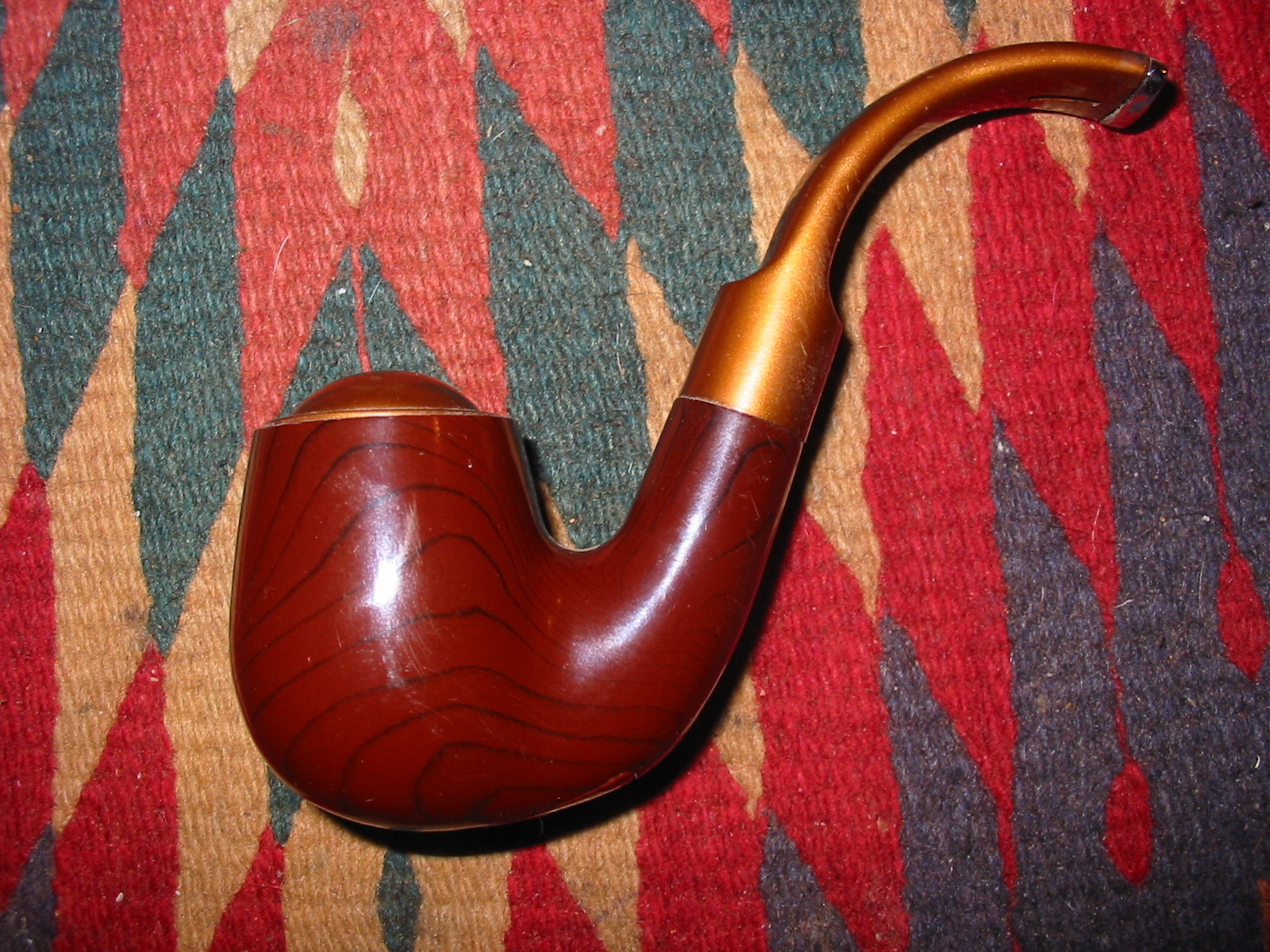
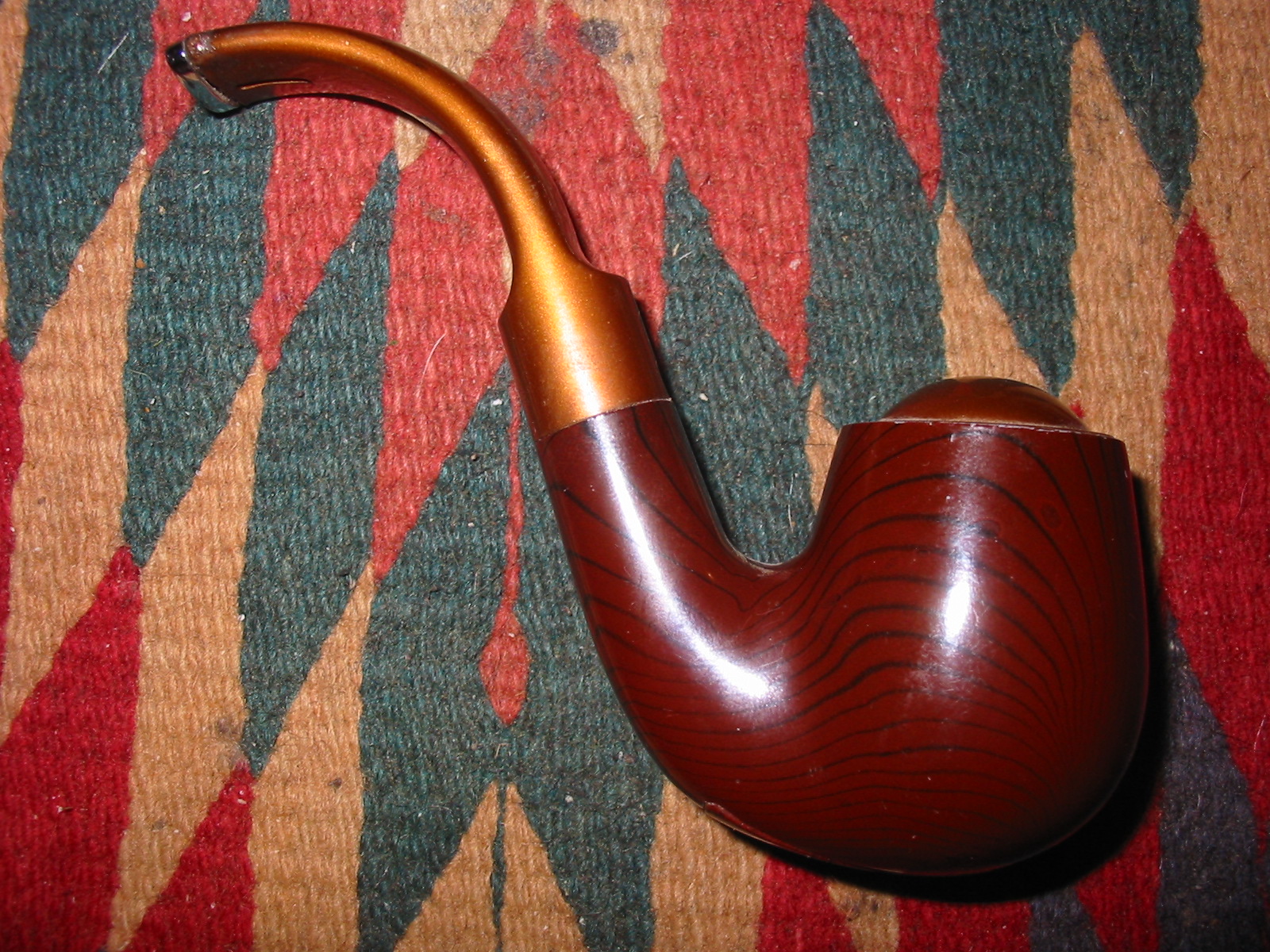
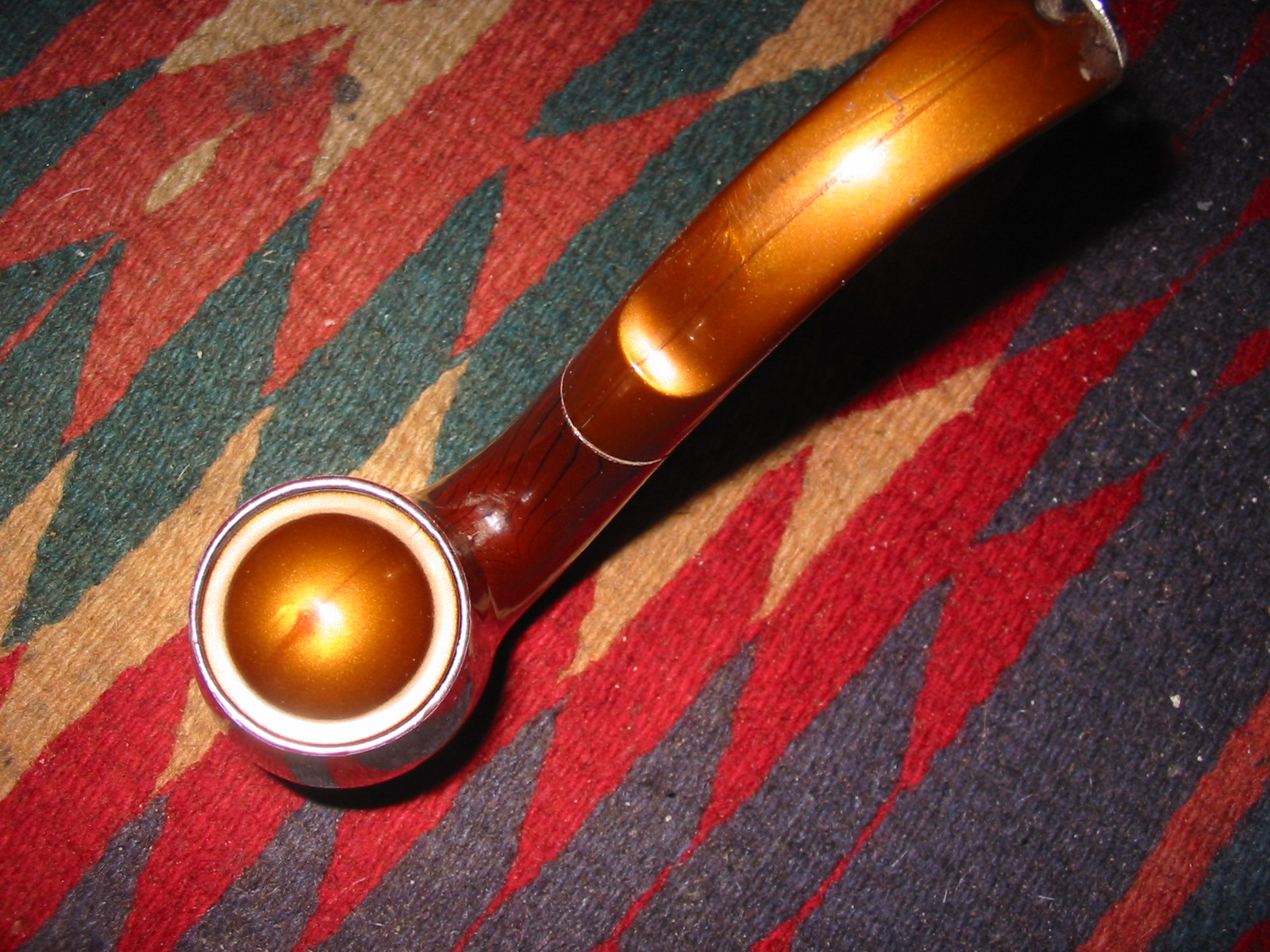
I was gifted a pipe lighter – no I mean really a Pipe lighter. A friend gave me this Pipe shaped lighter because he knows that I appreciate the quirky pipe ephemera that are a part of our hobby. I collect the oddities along with the pipes, so this fit right into my collection. There is a part of me that supposes it was a hoax but it is never the less actually very unique. It is a heavy lighter as the bowl is made of metal and painted to look like wood. The stem is cast plastic and the end; the button is metal as well. The oval slot in the button is where the flame comes out. The bowl cap is a plastic button, spring loaded so that when it is depressed the butane is released and the igniter in the button sparks and the flame is sent out the button. The lighter is butane and is refillable on the bowl bottom.

IMG_1728

IMG_1729

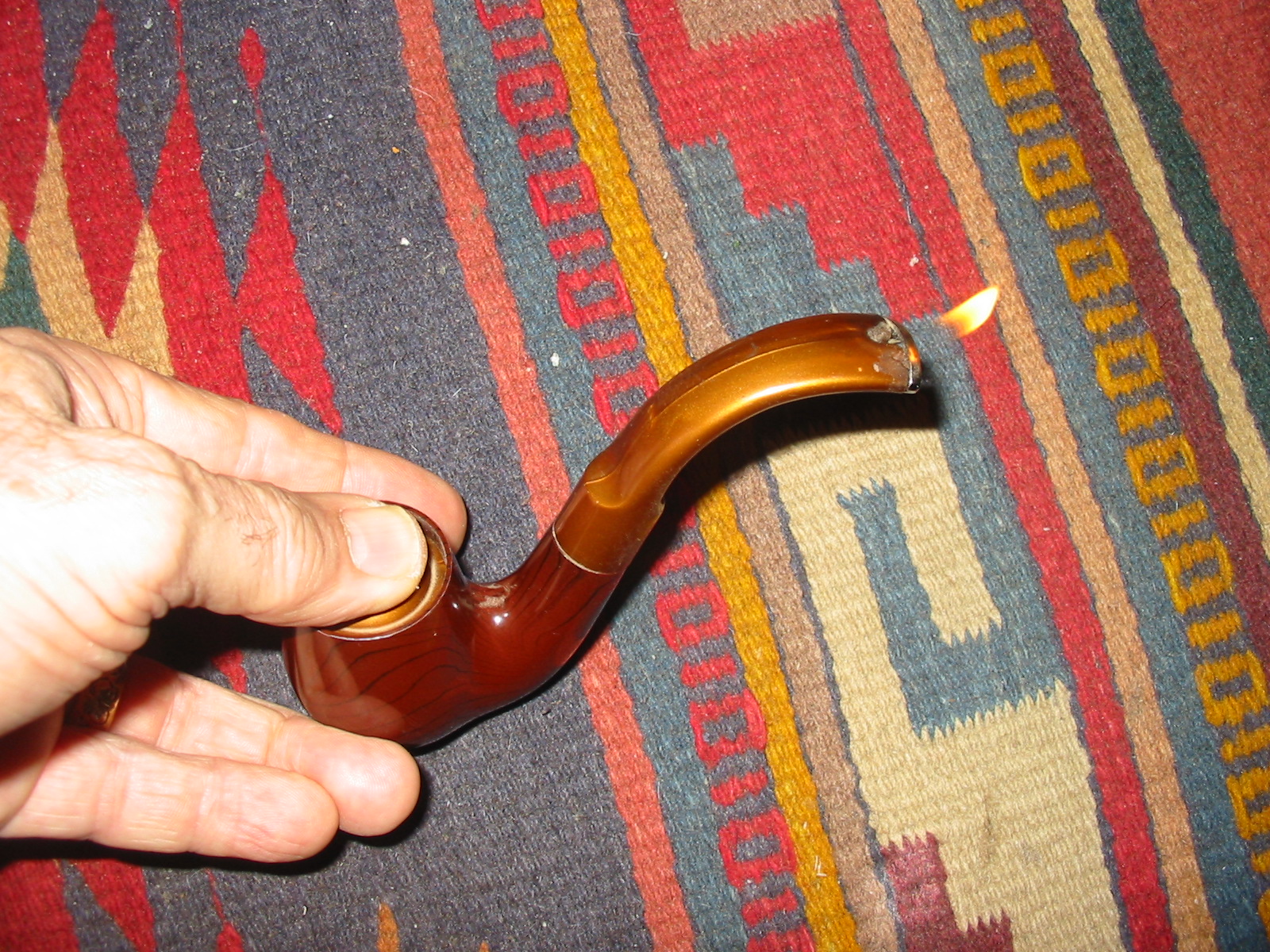
The lighter works quite well. The first time I used the lighter the heat of the flame melted the stem in front of the button and there is a “bite through” now. I may have to do a repair with the superglue and build it up so that the hole no longer is present. On the other hand it looks kind of well used the way it is. In the slot there is an igniter that sparks when the cap is depressed. The lead of the igniter is slanted toward the tube that carries the butane and when the spark hits the butane the flame leaps out as can be seen in the last photo below.

IMG_1730

IMG_1731

That is it for the quirky PIPE lighter – truly an interesting addition to my collection of tobacciana ephemera. I usually have it on the desk or in the pipe cabinet. It is quite heavy and makes a great decorative piece. Anybody else have one of these?

Courtesy of Choice – an Unheard of Option Today


My wife and I flew into Budapest and caught a ride to our hotel – the Hotel Budapest. It was a great cylindrical building on the Buda side of the Danube. We checked into our room and after unpacking set out to explore the hotel a bit. We needed some dinner and were interested in checking out the pub at the back of the hotel.

We looked through the gift shop, enjoyed the amazing embroidery and jewelry that were on display. Picked up a few postcards for the kids and then made our way back to the pub. Being from Canada we had no expectations about firing up my pipe but I had it in my coat pocket anyway. We went into the pub that first night and were quite astonished at what we saw and smelled! There were folks smoking pipes and cigars in half the room and the other half was non-smokers. The laughter and conversation was lively and loud. The two groups seemed to be quite oblivious to each other and were enjoying their evening.

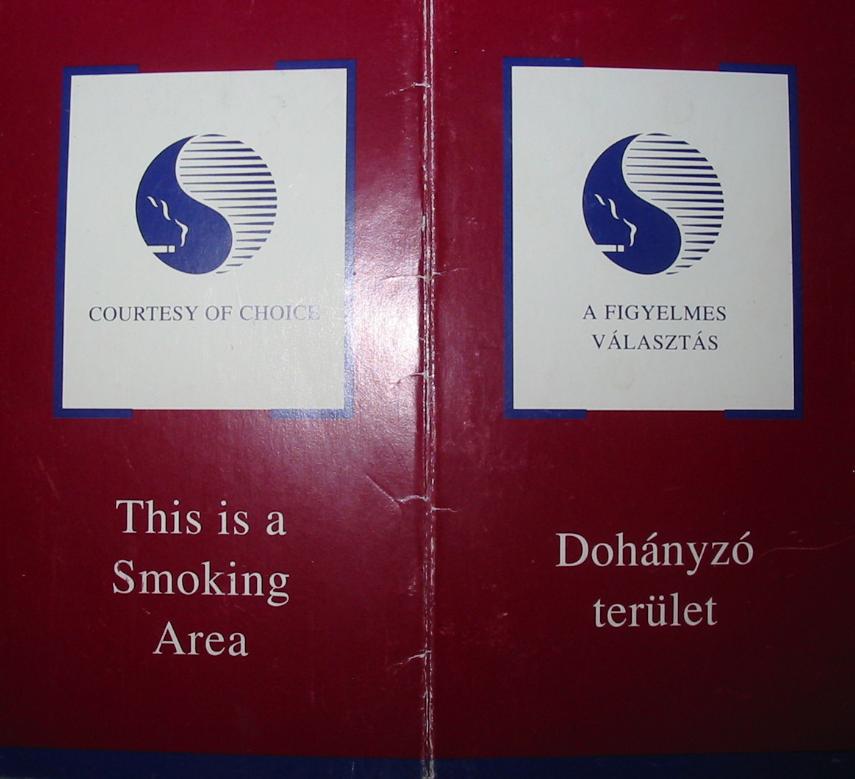
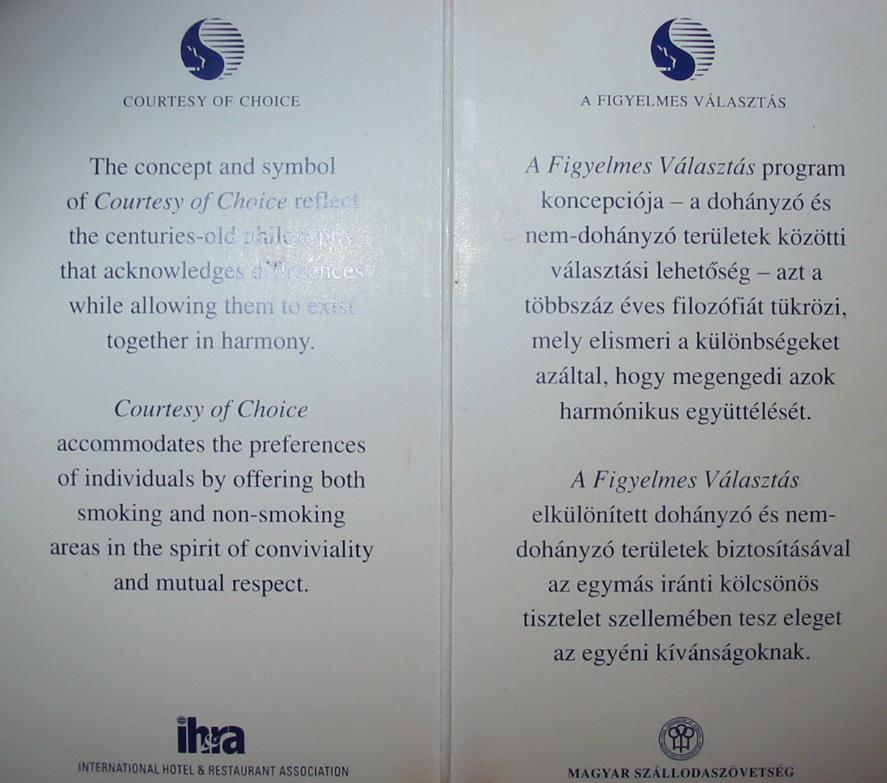
The bar was in the middle of the room. So we picked our drinks and made our way to the smoking area – literally over half of the room. We put our drinks on the table and our coats on the chair backs and sat down. Sitting in the middle of the table there was a great card – I liberated one as I expect it will be a thing of the past – if it isn’t already! I read over the words below and enjoyed the sensibility of them. They were printed in Hungarian and English. Certainly very Canadian sounding to me – but certainly very foreign to the Canada I knew.

Choice2

Choice1

Here is what the card said on the inside in English:

Courtesy of Choice
The concept and symbol of Courtesy of Choice
reflect the centuries-old philosophy that
acknowledges differences while allowing
them to exist together in harmony.

Courtesy of Choice accommodates the
preferences of individuals by offering both
smoking and non-smoking areas in the
spirit of conviviality and mutual respect.

International Hotel & Restaurant Association

I packed my pipe and lit it while I settled back with my wife for a quiet evening before we headed up to our room for the night. Needless to say we spent nearly every evening in the pub during our 17 day stay in Budapest. The spirit of conviviality was alive and well in the pub with a courtesy of choice.

Another Rustication Tool


Blog by Steve Laug

Last week I was chatting with Dan Chlebove of Gabrieli Pipes about how he accomplishes the rustication pattern he uses on the rusticated pipe that he makes. I have liked Dan’s rustication style since I first started following his work. One of the Gabrieli pipes that I have in my collection displays his rustication. It has a tactile, pebbly feel to it and is comfortable in the hand.

OLYMPUS DIGITAL CAMERA

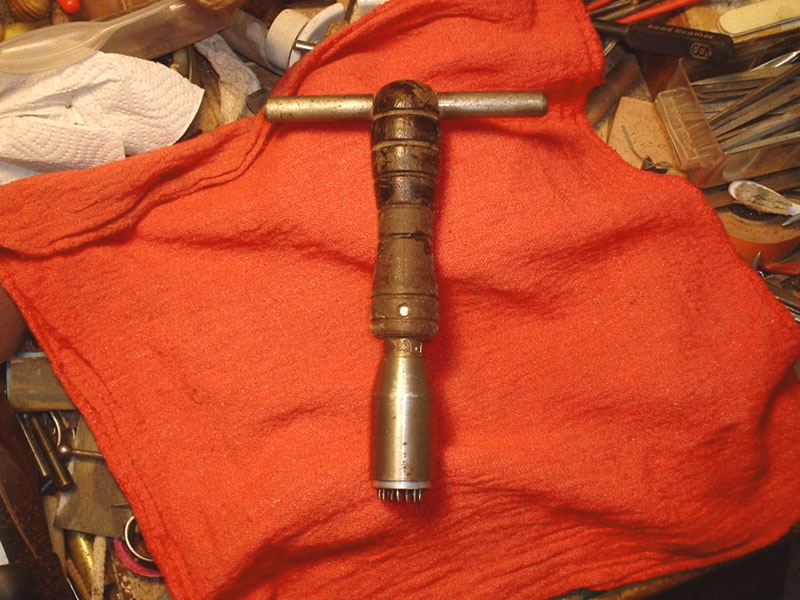
We talked about it for a while as he described the tool he uses. He sent me some photos of the tool. He says that the tool was a gift from Alberto Bonfignoli, maybe 12 yrs ago. Dan had met him in Richmond and talked with him, As Alberto looked at Dan’s early work and he asked if he had a tool to rusticate. When Dan told him no Alberto insisted on having Dan’s mailing address and promised he would send him one. Dan says, “VERY kind of him to a new
pipemaker I thought. It looks very Medieval eh?”

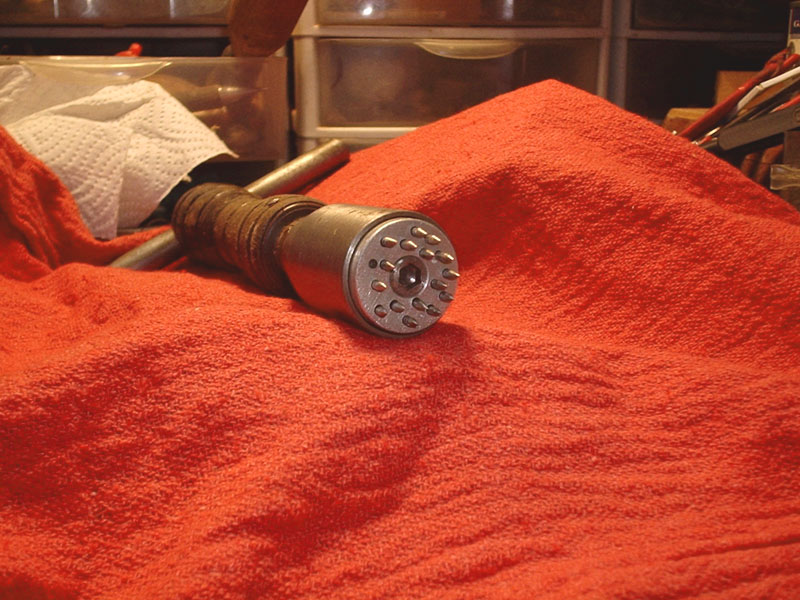
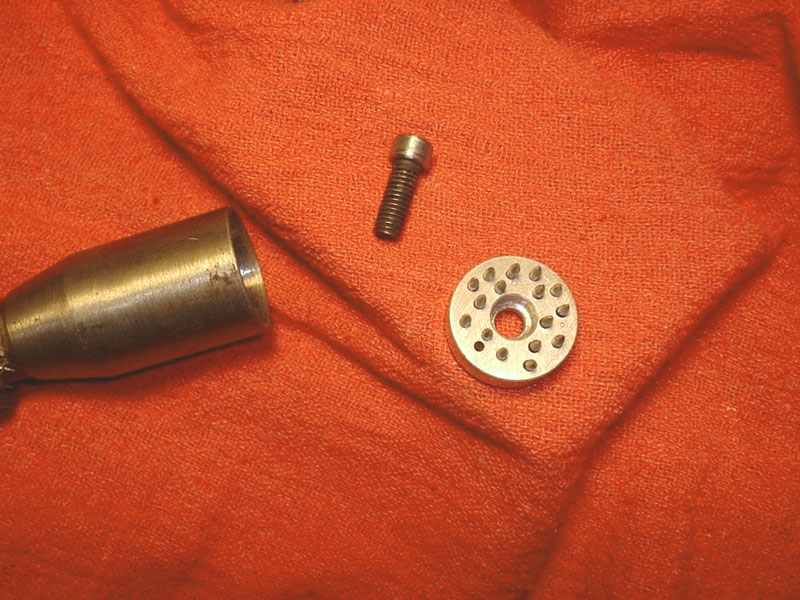
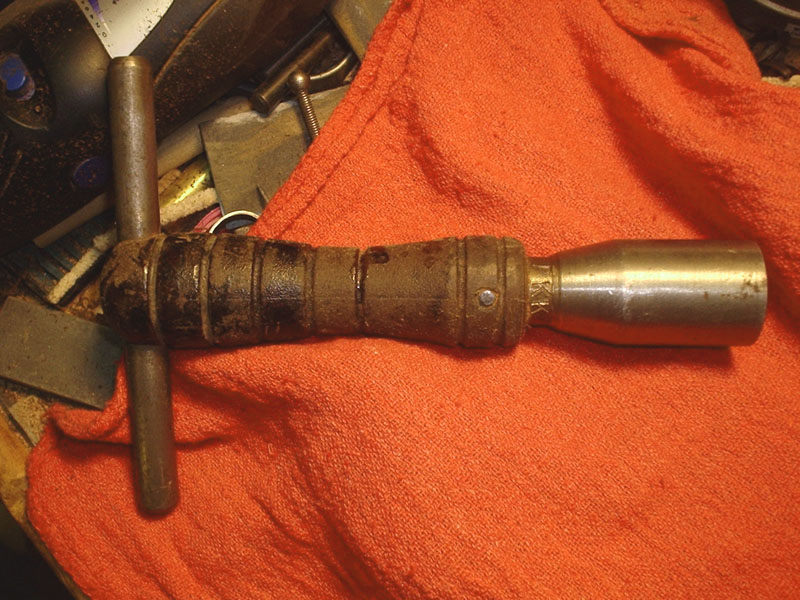
The tool is made up of small nails held in place by a perforated piece of aluminum and held in place with a hex screw.
OLYMPUS DIGITAL CAMERA

OLYMPUS DIGITAL CAMERA

OLYMPUS DIGITAL CAMERA

OLYMPUS DIGITAL CAMERA

OLYMPUS DIGITAL CAMERA

Thanks Dan for the photos. Now I have to figure out how to craft one for myself. That looks far more kind to the palm as it is twisted into the briar than the tools that I use.

Tightening a Loose Stem


Blog by Steve Laug

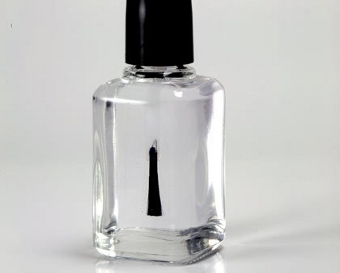
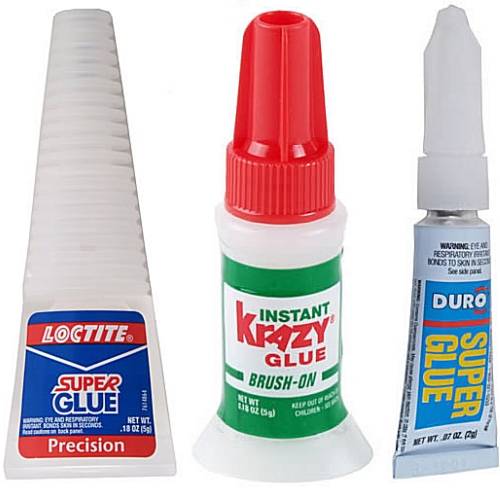
Over the years I have read quite a few posts on various forums about tightening loose stems on pipes. I have read everything from “smoke ‘em ‘til they are tight again” to heat and pressure to expand them. Others have said to use beeswax to coat the tenon on the stem and as it smokes it will tighten. Yet others have suggested coating the tenon with various things such as clear nail polish or clear super glue. Over the years I have experimented with all of the various methods suggested and a few others and have written this article to talk about each of them and look at the positives and negatives of each. I will start with the least invasive methods and move to some of the repairs that can be done to expand the tenon permanently or build it up for a tight fit in the shank. The choice is ultimately yours as you address this issue in your own pipes. Personally I start with the first method – smoking them to see if they tighten and if it does not work then move on to the methods that build up the tenon. I rarely, if ever, use the tenon expander any longer. The “smoke ‘em til they are tight again” method is obvious so I begin below with Beeswax.

BEESWAX
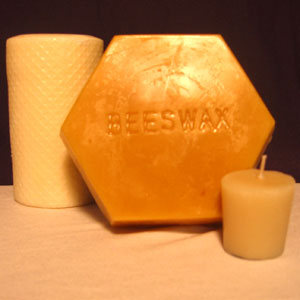
The first method that I will address is one I commonly read on various pipe forums and publications. It is a simple one – the application of beeswax to the tenon of the pipe to tighten it up. Beeswax is readily available online or at most stores and is reasonable in cost so it is a very good first step in addressing a loose stem issue. Application is a simple process of rubbing the block/cake of wax or candle on the tenon to build up the diameter of the tenon. Once it is built up with wax the stem is reinserted into the pipe. After that load a bowl of tobacco and smoke it. The idea is that the wax will hold the stem tightly in place while you are smoking your pipe and that as you smoke the pipe, the shank and tenon will warm/heat up and things will expand and the fit will return to normal. It sounds good and it does work – some of the time!

beeswax1lbblock

The positives –
1. The beeswax is non-toxic and will not harm you or the pipe in the process.
2. It is easy to apply on the tenon and is also easy to remove.
3. It is a good short-term fix.

The negatives –
1. The method works some of the time but not all of the time. If it is the only tool in the kit there will be some significant disappointments.
2. It does not take into consideration that the problem may well be a matter of humidity in the place the pipe is stored. I have found that often a pipe shipped with the stem will arrive with a very tight stem. I have also found that one with the stem removed will be loose when it arrives. As the pipe adjusts to the humidity and is smoked the balance that was there when it was made returns.
3. The beeswax as heated during the smoking of the pipe melts and can gum up the inside of the mortise. I have cleaned out a lot of pipes that had this method applied repeatedly and had to remove much waxy build up in the shank/mortise.

HEAT AND PRESSURE ON THE TENON
Heat and pressure on the tenon was the second method that heard much ado about. On several of the online forums when I asked about tightening the tenon this is the method that was suggested immediately after the beeswax suggestion. The concept is simple. The tenon is heated on a flame or with a heat gun. When it is warm and soft the tenon is stood flat against a hard surface and pressure is applied downward to compress the tenon and thicken the tenon it for a tighter fit in the shank. The key is that the stem is held absolutely straight up and down and the pressure applied evenly so that the tenon does not tip one side or the other. If it tips it is virtually impossible to adjust back to straight. Once it is pressed down it is cooled by dipping the end in water to set the vulcanite.

The positives –
1. The method is very simple and the logic behind it is quite accurate. Heat the vulcanite tenon and it softens. Press against a hard surface and it compresses. When it is compressed it thickens and the fit is tighter.
2. There is nothing being added to the tenon to make the adjustment. No materials used that may have an unknown toxicity or danger. It is just heat.
3. It is a fix that when done can be forgotten and that will not need to be repeated.

The negatives –
1. The heating of the tenon and pressure can end up tilting bending the tenon to one side or the other. When that is done, even to a minute degree, the stem/shank union will no longer align and there will be a gap in the shank. It is almost impossible to see if the tenon has been tilted unless the tilt is drastic.
2. Too much heat can burn and weaken the vulcanite and it can become brittle and break. When that happens the stem is broken and the tenon needs to be replaced.
3. Too much pressure can cause the tenon to be too compressed and the fit is now too tight. The only repair is either to reheat and expand or to sand the tenon until it fits.

TENON EXPANDER AND HEAT
I wrote about the tenon expander almost a year ago now and posted it on the blog – https://rebornpipes.wordpress.com/2012/12/07/positives-and-negatives-of-the-pme-tenon-expander/
Below is a summary of the article that I posted:

After reading about it online, I picked up a tenon expander from the Pipe Makers Emporium several years ago. It can be ordered online at http://www.pipemakers.org/tools02.htmlThe website describes it as follows: Tenon Expander: (Three sizes-in-one: 1/25, 1/50, 1/60) “An absolute must for pipe repair! One tool that will do 99 percent of all loose tenons. Throw away that ice pick because this will do a much better job. Heat the Tenon with an alcohol lamp until it is soft. Insert the Expander to the next size. Place Tenon and Expander into cold water to set the Tenon to its new size. Remove the Expander and your Tenon will maintain its new size.” They sell for $29.00 each.

The concept of the tool is actually quite simple – heat the tenon with a heat gun/ hot water or heat the tenon expander tool with a flame or heat source. Once it is heated, push the expander into the tenon and twist it until the tenon expands. Cool the tenon under clean or cool water to set the expansion and then remove the tool. You will notice in the picture below that the tip is tapered and gets larger in diameter the farther you move up the tip toward the handle. By pushing the tool into the tenon you can expand it for a tighter fit in the shank. In my use of the tool I would heat and expand, then cool the tenon in water, remove the tool and try the stem on the pipe for a fit. If it needed more expansion I repeated the process until the fit was snug. The graduated slope on the tenon expander gives you a broad range of possibilities in accomplishing that task. After I had used it for a while I decided to evaluate the tool in terms of its positives and negatives. What about the tool did I like and what were its deficiencies?

ten_expan

The positives –
In thinking through the positives the obvious ones were those advertised on the PME website.
1. The ease of use is the first thing that stood out with the tenon expander. It is very simple to use even though it came with no instructions. It was not hard to figure out how to use it correctly.
2. The tapered end is also billed as a positive feature of at first glance as it works to open the tenon to varying degrees and you can repeat the fit until the stem is snug. I will explain in the negatives why I have come to believe that the tapered end is not as great a feature as it initially appears to be when you begin.
3. The grooves on the handle of the tool are cut to make it easy to hold on to as you work with it.

The negatives –
Over time and experience working with the tool I have found some of the features that I first thought were helpful have grown to irritate me and work as limitations of the tool.
1. The first thing I have learned is that the taper on the end of the expander, while being helpful, is also a negative feature. The expander does not expand the entire tenon but rather the end of the tenon. With use the tenon thus is no longer cylindrical but can flare at the end. The snug fit is thus only for the first 1/8 inch of the tenon. The rest of the tenon is not touching the walls of the mortise.
2. Heating the tenon to insert the expander makes the tenon very pliable and if you are not careful the tenon can be bent at an angle thus ruining the fit at the shank. I have found that if I heat the expander instead then the tenon does not soften as much and I avoid the potential of tilting the tenon.
3. A final negative for me is the handle of the expander. I use a pair of heat mitts to hold it as I heat it but if I were going to continue to use it regularly I would make a wooden handle and epoxy the expander into it. In my opinion it would make it more usable.

As I pushed the limitations of the tenon expander that I purchased I decided to look and see if I could find other tools that would address the negatives that I have spelled out above.

ICE PICK OR AWL AND HEAT
In that article I wrote “I have been experimenting with various sizes of ice picks and awls to use for tenon expansion as they have a longer shank and less taper. This allows me to expand the tenon the entire length of the tenon rather than just the tip. So far they have worked very well. I can easily heat the shaft of the awl or ice pick while holding the wooden handle. They slide into the tenon and are easily twisted slowly to expand the tenon. The final verdict is still out on them as I continue to look for picks and awls with a variety of diameter shafts.”

A year has gone by since then and I have used an awl with some success. I looked for one that had a sharp point and a quick taper. I wanted to improve upon the taper of the tenon expanding tool pictured above. To my mind an awl that kept the same diameter its entire length was what I was looking for. I found an old-timer in an antique shop and added it to my collection of tools that I use for refurbishing. It is picture below and you can see the long straight length of the blade on it. It works quite well. Again the method is a matter of heating the awl blade not the tenon. With the blade heated it is inserted into the tenon and twisted until the tenon opens. It is quickly cooled to set the enlarged tenon by cool water. Then the awl is removed.

Awl

The positives –
1. The handle on the awl makes the tool very easy to use when it is hot. It can be manipulated easily over the heat and in the tenon.
2. The straight blade makes it easier to open the tenon the entire length and not just on the end – it thus keeps the tenon equal diameter the entire length.
3. The blade diameter is perfect for most tenons, but there are various sizes of awls available that can be purchased.

The negatives –
The minuses with the awl/ice pick are less than those with the tenon expanding tool but in many regards there are similarities.
1. The awl needs to be turned into the stem and if left can become stuck in the airway. Care must be exercised to keep the tool moving and not let it stand in the shank too long.
2. Again heating the tenon and inserting the awl can cause the tenon to move and again ruin the fit against the shank. I have found that heating the blade works far better and minimizes this problem.

NAIL POLISH
Clear nail polish works very well on the outside of the tenon to add diameter. It comes with a brush applicator and can be painted on. It must thoroughly dry before putting the stem back in place or the nail polish makes a mess of the inside of the tenon. However once it is dry it is a solid repair. If too much polish has been applied it can be sanded with sandpaper to a correct fit very easily. I used this method on pipes that the beeswax did not provide a permanent fix. I have had it on pipes for years now and there is no foul after taste from the tenon, once dry. I also am very careful in applying it to avoid the end of the tenon or airway on the tenon. I just coat the outer diameter of the tenon. Because it sits against the inside of the mortise with a pressure fit I do not find any of the polish taste leaching into the smoke itself.

clear_nail_polish

The positives –
1. The clear nail polish is virtually invisible on the tenon and can be applied and adjusted as necessary with very little effort.
2. It is a more permanent fix than the beeswax on the tenon and it is also easy to remove should you choose to do so. If the tenon becomes too snug you can sand a little of the polish off and the fit is restored to a proper fit.
3. It is a fix that when done can be forgotten and will not need to be repeated.

The negatives –
1. The polish is toxic and should not be breathed or put in the mouth. Because of this extreme care should be exercised when applying it to be in a well-ventilated room and to also let it dry before reassembling the pipe. Once it is place and dry there is no smell or taste. I am careful to avoid the end of the tenon and airway in the application.
2. The stem can become too tight if the humidity varies greatly in the house or office where the pipe is used. If it becomes too tight it is not hard to loosen the fit with a small piece of sandpaper.

SUPER GLUE
Super glue or Cyanoacrylate glue can be used to build up the tenon in much the same way as clear nail polish. It dries harder than nail polish and is more permanent. Cyanoacrylate glue is used by medics on battle fields and trainers in sports to bind together wounds on the human body so it seems to me that the toxicity is a non issue. It dries very hard and is impermeable so I have found that it does not leach or bleed flavours into the smoke. I drip it on the tenon and turn the tenon as it drips. The glue encircles the tenon and dries very quickly. Once hardened it can be sanded or built up as case may be to provide a snug fit on the tenon. I have been using it on tenons for about a year and have found no ill effects from its use. Once dry it is odourless and tasteless. I find that it does not deteriorate over the year and pipes that I smoke often that I have used it on are like the day I put the glue on the tenon. The lack of breaking down speaks well of the glue.

ct2-16_superglue

The positives –
1. The glue is easy to apply to the tenon and flows easily around the diameter of the tenon. It is a clean fix to the stem.
2. It dries very quickly so that it can be adjusted with multiple layers or by sanding to make the fit snug. If during use the tenon becomes too snug, it is easily sanded down to accommodate change in fit.
3. It appears to be a good long term fix. I have been using it on some of my loose stems throughout the past year and a bit with no break down to the product and no need to reapply or adjust.
4. It is easily adjusted with sandpaper and then polishes to a clean shine.

The negatives –
1. Some will find the toxicity of the glue an apparent problem. I say apparent as it is used to repair cuts and surgeries of the human body so I think that is a non-issue
2. The long term effects of use on the human body have not been studied. This becomes less significant when you realize that the repairs tenon is not something that is touched by the mouth or tongue.
3. The glue dries very quickly and it is easy to overdue the repair. It dries very hard so it takes some work to remove the excess.
4. The glue can bond skin together so care must be exercised when applying it to the tenon to not get it on the hands. It is hard to remove from the skin. It is water proof and also is not removed by alcohol or acetone.

That is the list of the various methods that I have read of and tried in the work of tightening a loose stem. I always start with the least invasive method and work towards the last methods listed. I rarely use the tenon expander or the awl any longer due to the negatives of using both of them. I invite any of you who have used these methods or have other creative suggestions for tightening a stem to reply. Just post your replies in the comment box below. Thank you.

A New Look for a Duncan Hill Aerosphere


Blog by Steve Laug

Over the years I have owned and sold several Duncan Hill Aerosphere pipes. The system on the pipes and the thinness of the bit always made the airway too tight for me and the draught sluggish at best. I have repaired several of them over the years as well and never found one that really worked well for me. Then in one of the lots I picked up on Ebay that needed new stems there was a Duncan Hill Aerosphere bowl without a stem. It had a wide open airway and was in decent shape. The bowl had a light cake and the rim was tarred but not damage. The bowl was still round and obviously the pipe had not been smoked very much. I figured it was an opportunity to restem it with a standard stem and see what I could get from it.

I tried two different stems on the pipe. The first was a flat blade saddle stem blank. I turned the tenon with a PIMO tenon turning tool and fit it to the pipe. I decided to put a nickel band on the shank for cosmetic purposes as I thought it would look good with the saddle stem. There were two problems with this fitting. The rustication pattern on the Duncan Hill made a smooth fit of the band virtually impossible and the gap around the shank did not work for me. The second issue was that the stem itself was just a few millimeters’ smaller in diameter than the shank. It was not noticeable except with the band it was accentuated. I removed the band and tried the stem without the band and it did not work well. I abandoned that option and went back to my can of stems to see what else I could find that might work in terms of both diameter and length.

IMG_0730

IMG_0731

IMG_0732

For the second stem I found an older “pre-used” stem that worked in terms of length and diameter. I cleaned up the tenon and shortened it slightly and the fit was quite good. I left the band in place and tried to rusticate the band to match the bowl rustication. I heated it and used a scribing tool to carve it up to get the bowl finish look. I stopped that rustication process and worked on the stem fit. For some reason the stem taper on top and bottom did not match. With the fitting on the Duncan Hill bowl the angles at the top did not match the bottom. Reversing the stem made the stem fit even worse. The diameter needed slight adjustments to repair the taper and fit it well against the band.

IMG_1690

IMG_1691

IMG_1692

I used a Dremel to take off material on the stem to adjust the taper to match on both the top and the bottom. I also used the Dremel to clean up the fit at the shank/band. I tried to mark the band with the Dremel in the process as well. I used a scribing tip and still did not get much more of finish than I had with the hand scribing tip. I did not like the look so I took the stem back to the worktable and sanded it to remove the scratches left behind by the sanding drum.

IMG_1693

IMG_1694

IMG_1695

I sanded the stem with 220 grit sandpaper, a medium grit sanding sponge and a fine grit sanding block to clean up the fit and also remove the scratches. The more I looked at it the less I liked the band. The area around the stem shank union looked terrible and the scribing merely looked like scratches. It was awful looking. I decided at this point to remove the band from the shank. I heated the band and slipped it off the shank. I cleaned up the light marks left by the band on the shank with micromesh sanding pads.

IMG_1696

IMG_1697

IMG_1698

With the band off the pipe the tenon was too long for the stem to seat properly. This was not visible to me with the band in place. It felt tight but without the band there was a gap at the junction. I measured the tenon and found that I needed to remove some of the length on the tenon and also needed to countersink the mortise slightly. The countersink on the mortise is a slight bevel inward. I used a knife to bevel the inner edge of the mortise. Once the mortise was prepared and the tenon shortened to measure the stem fit tightly against the shank. I used 220 grit sandpaper and a medium grit sanding sponge to remove a little more of the diameter of the stem to clean up the junction. The two bands on the stem appear to be briar but are actually Cumberland/brindle inserts. I sanded the top of the bowl/rim and the colour matched the twin bands on the stem.

IMG_1699

IMG_1700

I sanded the stem with micromesh sanding pads from 1500-12,000 grit to remove the scratches on the vulcanite and polish the stem. I wet sanded with 1500-2400 grit micromesh pads and dry sanded with the remaining grits. Between 3600 and 4000 grit pads I polished the stem with Maguiars Scratch X2.0. It polished the stem considerably. I then finished sanding with the micromesh pads. While I sanded the stem with the micromesh I also sanded the rim to polish it. With each successive change of grit the rim and the twin bands on the stem began to truly match. The combination looked like it was factory designed to be a combination. I wiped the stem down with Obsidian Oil and set it aside for the evening. In the morning I rubbed the stem down and then waxed it with carnauba.

IMG_1701

IMG_1702

IMG_1703

I gave the bowl a several coats of Halcyon II wax and buffed it with a shoe brush to raise the shine. I buffed the stem with carnauba several time to raise the shine as well. I then buffed the pipe with a soft flannel buffing pad. The finished pipe is pictured below. The look of the Duncan Hill with the banded stem that matches the rim is a great combination. The improved draught of the pipe is exactly what I was aiming for. The Duncan Hill Aerosphere pipe re-enters life with a new level of service to the pipeman who ends up with it in their collection.

IMG_1708

IMG_1709

IMG_1710

IMG_1711

K&P London Made Found in a Bargain Shop


Blog by Steve Laug

Yesterday afternoon I went with my eldest daughter to Walmart here in Vancouver. Across the street is a bargain shop that sells lot of movie set items and other things that are collectible and antique. I have found quite a few good pipes there over the years. I went to the shop while she was in Walmart and looked over the lot they had this time. There were quite a few pipes in the case and most of them while interesting just did not capture my attention. Then I moved a few of them out of the way and underneath was this little P-lip apple. I could tell it was a Pete and an older one because of the thick shank and stem. I held it up to the light and my guess was confirmed. It was a Peterson. It was marked $28 and I offered $25 for it. They accepted the offer and I paid the bill and put the pipe in my pocket. I picked up my daughter and headed home to check it out.

I wiped off the shank with a cotton pad dampened with saliva and found that it was stamped K&P LONDONMADE on the right side of the shank. On the left side it was stamped 215 and A “PETERSON’S PRODUCT” Made In London. So I had found an English made Peterson’s shape 215 pipe. The band was silver and was badly tarnished but I could see from the hallmarks that it was also stamped with English hallmarks. The first was an anchor which told me that the band was made in Birmingham. The second was a reclining lion which is the stamping for Sterling silver. The third mark was hard to see with the grime and tarnish but looked like an animal face in the cartouche. Closer examination would have to wait until I had cleaned up the tarnish.

The pipe was in fair shape. The bowl had nicks in the sides in several places as well as a very rough rim. It looked as if it had been hammered about and was damaged. It would require topping to remedy that problem. The bowl had been reamed and was slightly out of round and then smoked again for some time – long enough to build up an uneven cake with most of the cake at the top of the bowl and the bottom of the bowl was bare wood. The silver band was loose and had turned about a quarter turn clockwise. The stem was very tight in the shank – which thankfully had kept the band in place on the pipe. The stem had many bite marks and tooth dents up the shaft from the button for about an inch. It looked as if the individual who had smoked it held it far back in his teeth. Both the underside and topside of the stem were damaged with tooth marks and a series of grooves from a tool. The button itself and the ledge on the underside were in very good shape. The round opening in the button was elongated from years of pipe cleaners.

I was able to carefully remove the stem and the inside of the shank was darkened with tars but not terribly dirty. The end of the tenon is stepped down and the fit in the shank was very snug. After cleaning the stem would fit well. There was no stamping on the oxidized stem and appeared to be no remnant of stamping. The oxidation on the stem was heavy at the shank stem union and also around the button on the top and bottom.

IMG_1664

IMG_1665

IMG_1666

IMG_1667

I wrote about the stamping to Mark Irwin who is my Peterson’s go to contact for information on Peterson pipes. He is a wealth of information that I have been unable to find in other places. He was on the road but sent me the following information. “…The “Peterson Product” indicates the pipe is a lower line. They began using this stamp in the 1930 catalog for their “K” pipes, but if it was this, you should’ve seen a “K” on it. There were several “200” series shapes, but the “215” is not in a catalog I have here. The London factory was much smaller than the Dublin, but I’ll have to ask Gary about the hallmarks, as I’m unfamiliar with the Brit system. Best my guess tonight is that the pipe dates anywhere from 1920-1940. I have photos of a thick-shanked and thick-stemmed straight apple hallmarked Dublin 1920–I can send you a .gif when I get home if this sounds like the pipe. If so, the shape itself goes back to at least that year.”

That was helpful information on the dating of the pipe. I sent Mark the photos last evening and then this morning received this reply concerning the pipe. “… Gorgeous! Yup, it’s the same shape as the photo I have, which means the shape itself goes back to at least 1920.” In the mean time I had cleaned up the band with silver polish and scrubbed it with a soft cotton pad. I reset it with white glue on the shank and examined the hallmarks under a bright light with a jewelers loop. It became clear that the last of the hallmarks was not an animal but rather a letter in the cartouche. It was well worn but from the outlines on the mark it appeared to be the letter “T” which dates the pipe to 1943.

IMG_1669

I reamed the bowl with a PipNet reamer using the smallest cutting head and the next size as well. I removed the cake back to the wood to even out the broken cake. I cleaned out the shank with cotton swabs to remove all the tars and oils in the shank. Once I had cleaned out the shank I also cleaned the stem with pipe cleaners. I used Everclear with cotton swabs on both. When it was finished I put the stem back in the shank and the fit was snug.

IMG_1670

I topped the bowl with my usual method – 220 grit sandpaper on a flat board and turned the bowl clockwise as I pressed the rim into the sandpaper. I sanded the top until the damaged portion of the rim was removed. One side benefit of the process was that it also removed some of the damaged inner rim as well bringing the bowl back into round.

IMG_1671

IMG_1672

IMG_1673

To prepare the bowl for restaining I wiped it down with acetone on a cotton pad. I wanted to remove as much of the finish as possible so that I could more easily blend the new stain on the rim with the stain on the bowl. I have found that if I thin down the original stain on the bowl I can generally make a good match with the rim when I stain the entire pipe. The rim always takes several more coats of stain than the bowl but the match comes out very well. I wanted to end up with a stain colour that matched the original stain colour as much as possible. Between each coat of stain I flamed the stain to set it in the grain of the briar. The stain I used was an aniline stain in a dark brown that I thinned 2:1 with isopropyl alcohol. Once it was dry I hand buffed it with a shoe brush to blend the colours of the stain and give me a clear look at the stain to make sure it was evenly applied.

IMG_1674

IMG_1675

IMG_1676

IMG_1680

IMG_1681

IMG_1682

I set the bowl aside and worked on the stem. I sanded the stem with medium grit emery paper to remove the oxidation and also clean up the vulcanite around the tooth dents. Once clean, I heated the dents by passing the flame of a lighter across the tooth marks. The heat of the flame lifts the dents to the surface. The key is to keep the flame moving quickly and not allow it to sit in one place too long or the stem will burn. The first photo below shows the tooth marks on the top side of the stem. There were matching tooth marks on the underside. The second photo shows the stem after the heating with the flame. I sanded the stem with 220 grit sandpaper and also a fine grit sanding sponge to remove the scratches and remnants of the dents. I filled the two remaining dents with super glue, sanded the glue down to match the surface of the stem and then finished the sanding with micromesh sanding pads from 1500-12,000 grit (Photos 3 – 5).

IMG_1677

IMG_1678

IMG_1679

IMG_1683

IMG_1684

Once the stem was sanded with the 12,000 grit micromesh pad I wiped it down with Obsidian Oil and when dry rubbed it into the stem. I gave the stem several coats of wax and returned it to the bowl. I polished the silver band a final time and also waxed that. I buffed the pipe lightly with White Diamond and gave it multiple coats of carnauba wax and buffed it with a clean flannel buffing pad. The finished pipe is pictured below. It has some beautiful grain on it. There are also some flaws in the briar that I chose to leave as I find they add character to the pipe.

IMG_1685

IMG_1686

IMG_1688

IMG_1689

Refurbed No name Dublin


I am once again down to the remnants of the box of pipes to refurbished. This one is a no name Dublin with a large bowl and a long stem. The only stamping on the pipe is the words Imported over Briar on the left side of the shank. It is a screw mount metal tenon but the condenser attachment is missing. The stem was oxidized and had tooth dents on the top and bottom near the button. The inside of the stem was sticky black tar and smelled of sweet aromatics with goopy topping. The bowl was caked but not too badly so. There were flakes of tobacco stuck to the walls of the bowl. There was some darkening to the briar on the outside that made me wonder what I would find underneath the uneven cake. The exterior of the bowl was very dirty. There was a lot of oil ground into the finish on the smooth parts of the bowl and the carved feathers/leaves had dirt built up in the grooves. There was also a large drop of green paint on the lower left side of the bowl. The rim was caked and dirty and was slightly out of round.

IMG_1640

IMG_1641

IMG_1642

IMG_1643

I reamed the uneven cake from the bowl with the PipNet reamer set. Underneath the surface of the cake there were some fissures in the surface of thin cake I left on the wood of the inside of the bowl. The pipe may be a candidate for quick bowl coating or pipe mud to protect it from any damage or burn out. I scrubbed the exterior of the bowl with acetone wetted cotton pads. It took many pads before I was down to the clean surface of the briar. I topped the bowl with a medium grit sanding block to remove the buildup on the surface. I followed up on this with a fine grit sanding block to remove the scratches and then with a fine grit sanding sponge. I used a tooth brush and acetone to clean out the grooves of the carvings.

IMG_1644

IMG_1645

I sanded the entire bowl and shank with a fine grit sanding sponge to remove the remaining finish. I also sanded the stem with 220 grit sandpaper and then followed up with the same sanding sponge. I heated the bite marks with a Bic lighter to lift them and then sanded the surface smooth with 220 grit sandpaper. I sanded that area of the stem with fine grit sandpaper and a sanding sponge. Once the bowl was sanded and ready to be stained I wiped it down a final time with an acetone wetted cotton pad to remove the sanding dust from the grooves and carvings.

IMG_1646

IMG_1647

IMG_1648

I sanded the stem with micromesh sanding pads from 1500-12,000 grit to bring back the shine. I rubbed down the stem with Obsidian Oil and buffed it with White Diamond. I coated the stem with carnauba wax and hand polished it with a shoe brush.

IMG_1649

IMG_1650

IMG_1651

I stained the bowl with a dark brown aniline stain that I mixed with isopropyl alcohol in a 2:1 ratio to get it to be the colour I wanted for this pipe. I applied the stain with a cotton swab and flamed it to set it in the grain. I repeated the staining until the colour was on target and even around the bowl. Each time I flamed it to set it in the briar. Once it was dry I buffed the pipe and stem on the buffer with White Diamond and then gave it repeated coats of carnauba wax and buffed in between with a soft flannel buffing pad. The finished pipe is pictured below.

IMG_1652

IMG_1653

IMG_1654

IMG_1655