Monthly Archives: April 2023

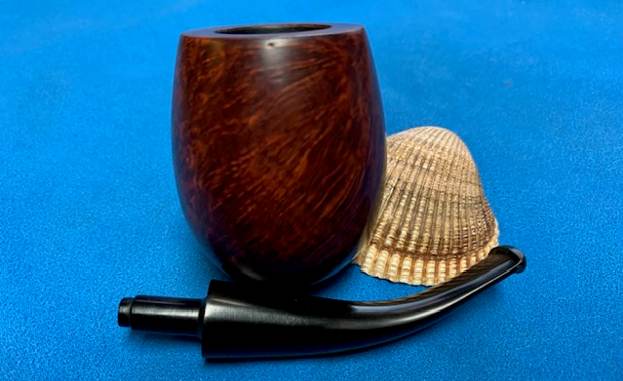
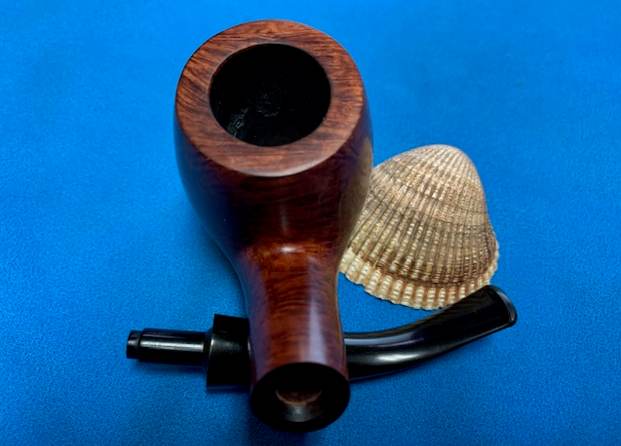
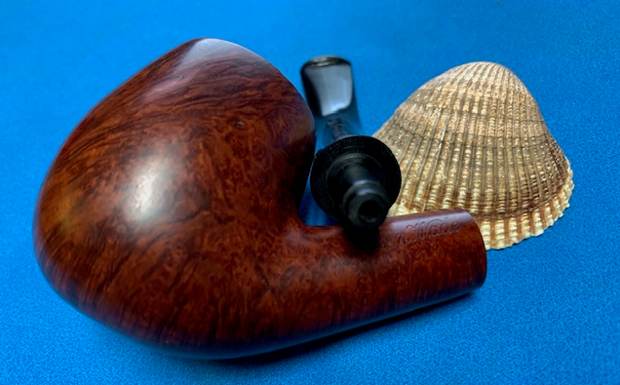
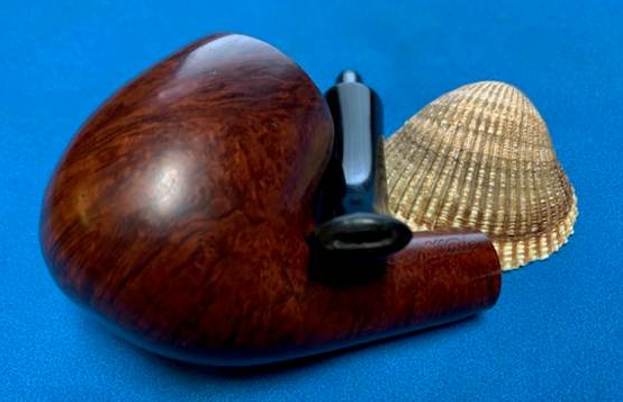
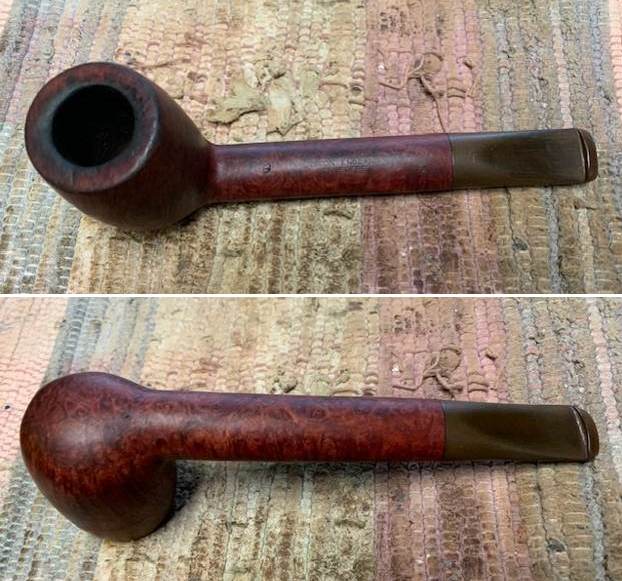
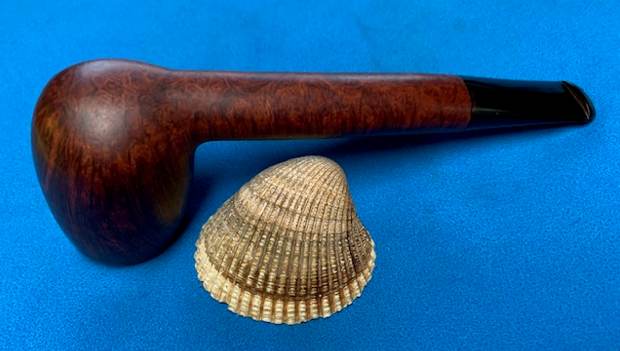
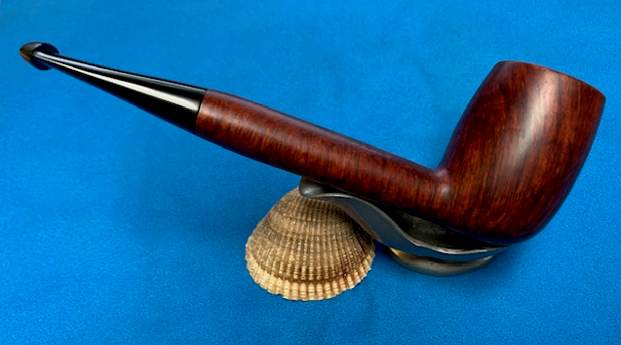
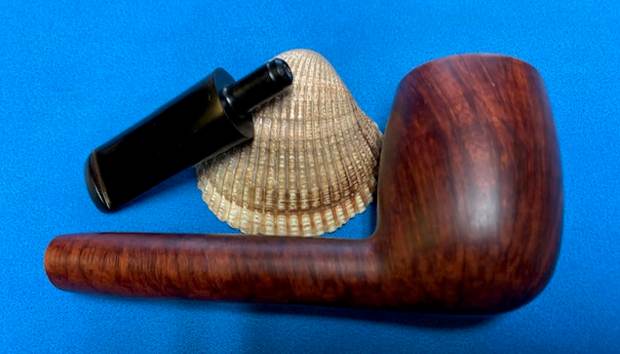
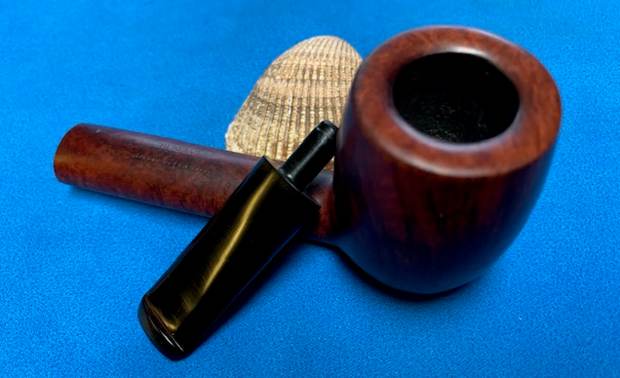
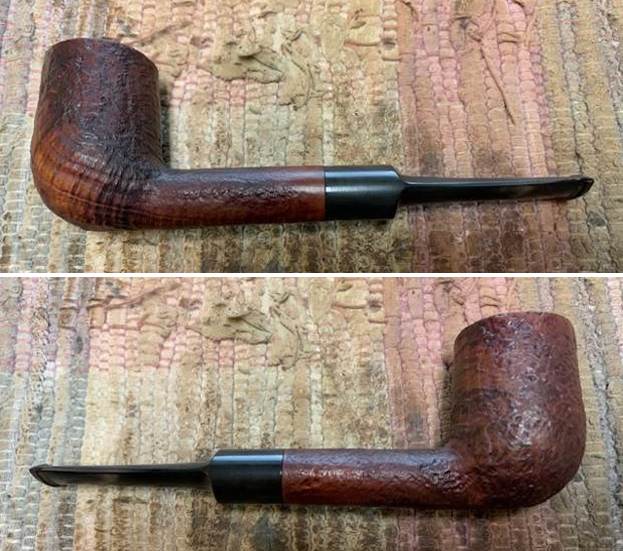
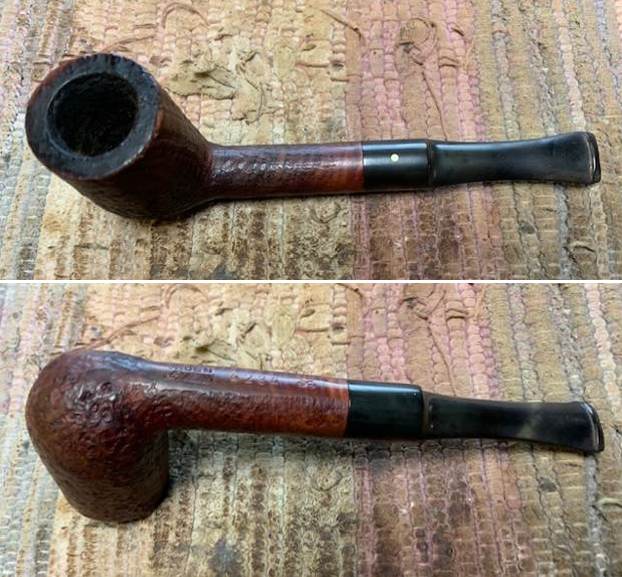
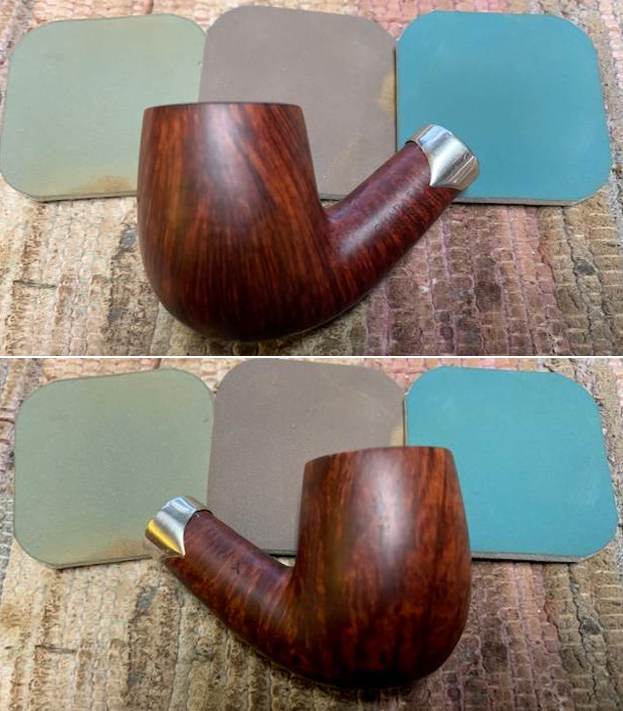
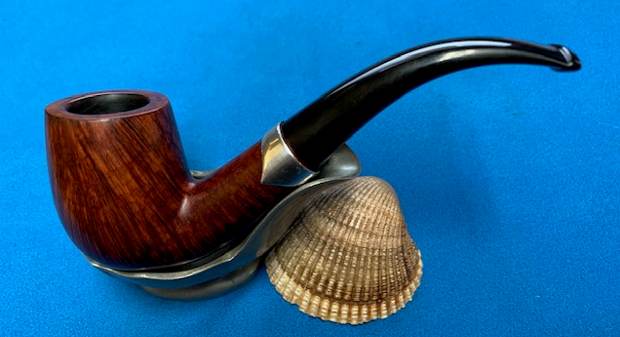
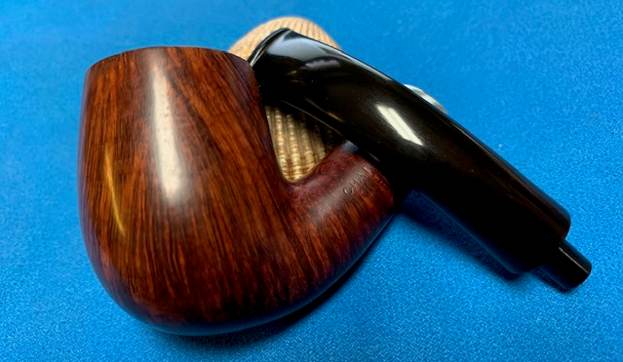
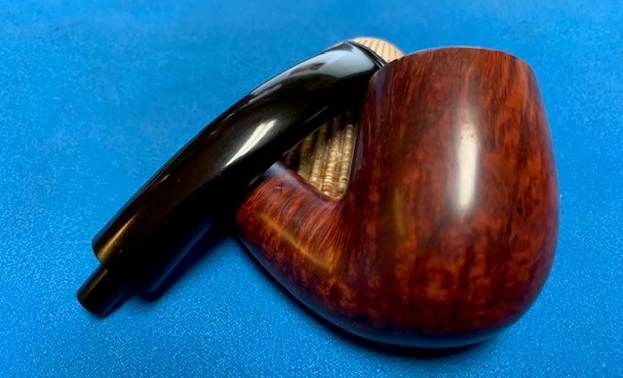
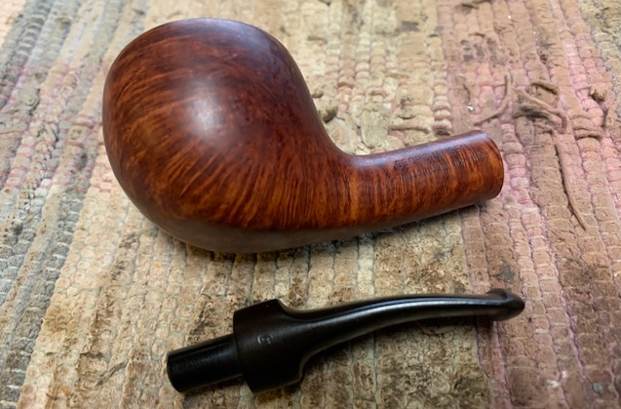
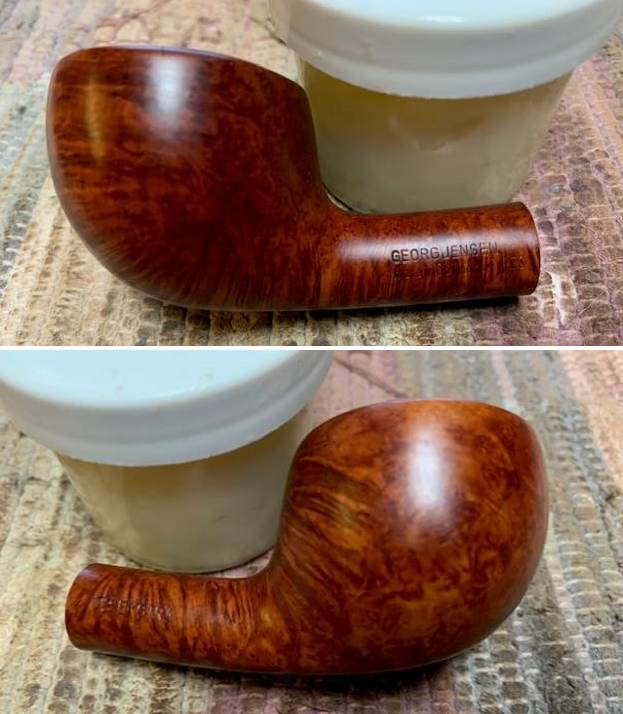
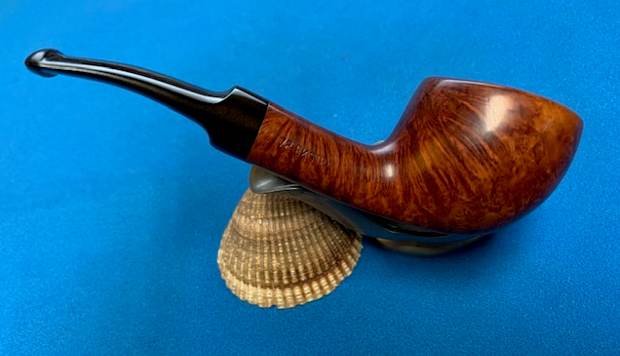
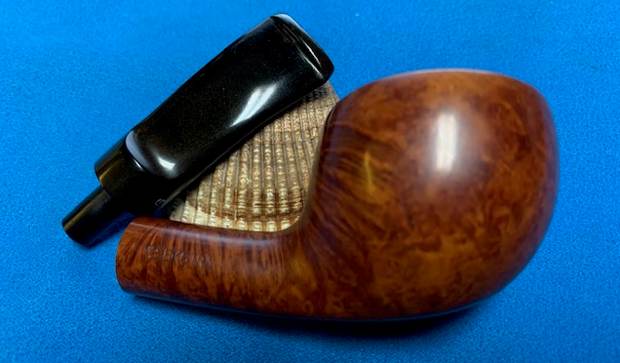
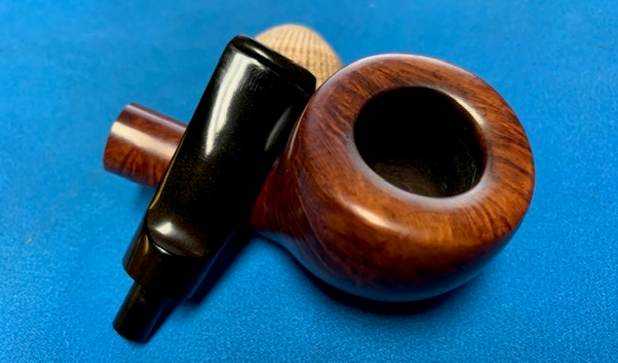
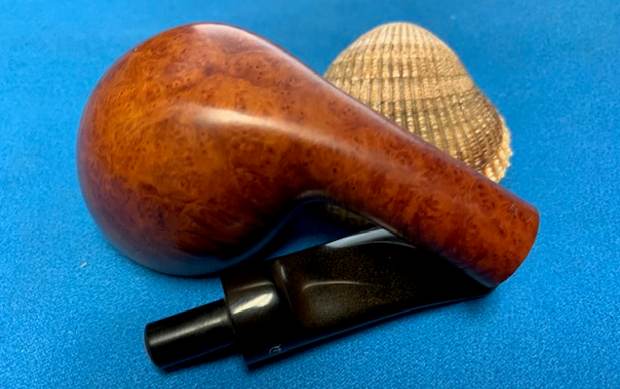
New Life for a Ben Wade Made in London England 79 Big Bent Billiard


Blog by Steve Laug

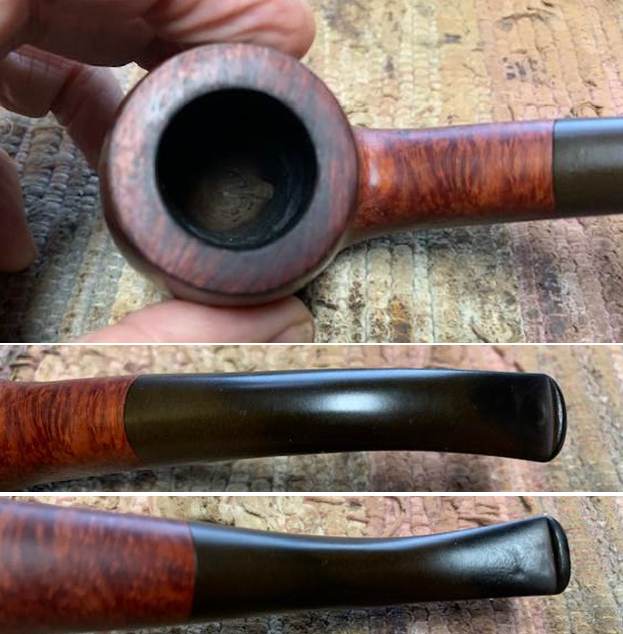
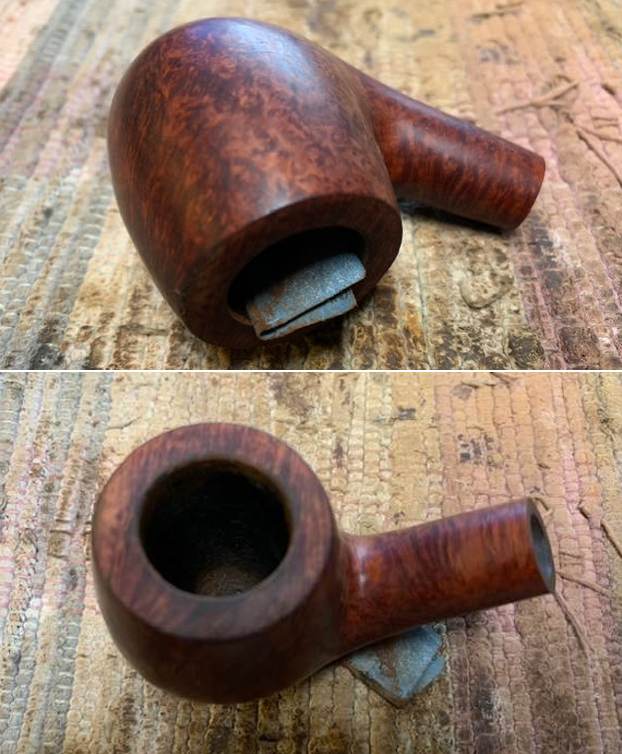
Once again in this write up and I will take you through my process of working on each pipe that we purchase. Jeff has set up a spread sheet to track where the pipe came from, the date of purchase and what we paid for it so that we know what we have invested in the pipe before we even work on it. This takes a lot of the guess work out of the process. This particular pipe was purchased on 11/11/2021 from a Facebook Auction seller in Salmon Creek, Washington, USA. I also want you to understand why we take the photos we do. If you have followed for a while then you will see the familiar pattern of the photos we include both in the before and midstream process of working on a pipe. It is not accidental or chance as the photos have been taken to help me make an assessment of the pipe Jeff sees before he starts his clean up work. We do this to record the condition that the pipe was in when received it and to assess what kind of work will need to be done on. When I look at these photos this is what I see.

  1. The first thing I see is the chunky shank and large size of the bowl. It is well proportioned and well made with a classic English shape.
  2. The finish is dirty and there are oils from the smoker’s hands on both side of the bowl. There is grime ground into the finish as well but even so there is also some great grain peeking through.
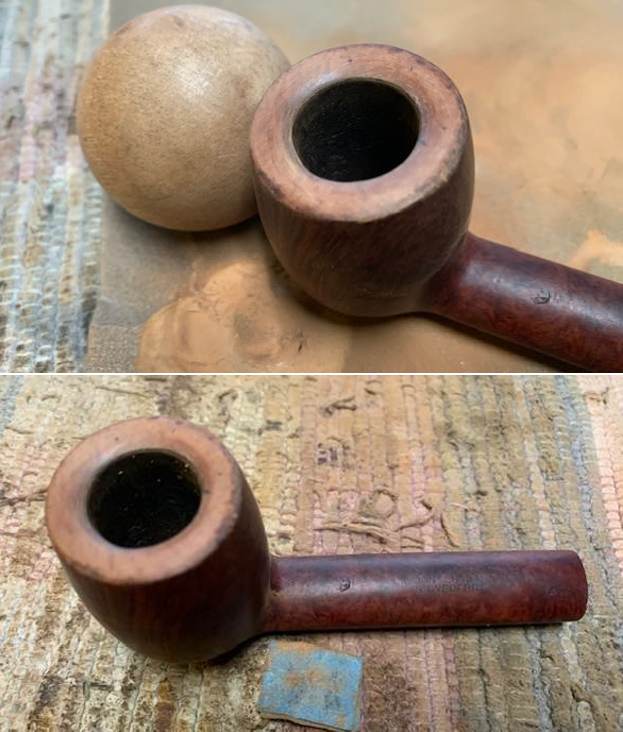
  3. The rim top had a thick lava overflow from the cake in the bowl. It is hard to know if there is darkening or damage under the lava. Sometimes the lava protects the rim top and edges and sometime it hides issues. Its is very dirty looking.
  4. The bowl has a thick cake in it that hides the walls and the inner edge of the bowl but once it is clean we will know what the edges look like. It appears that there are a some nicks in the inner edge of the bowl that will become clearer when the pipe is cleaned. The outer edges look good and there does not appear to be any obvious burn damage to the top or bowl edges.
  5. The vulcanite taper stem is in good condition – dirty, oxidized, calcified and has tooth chatter and marks on both sides.

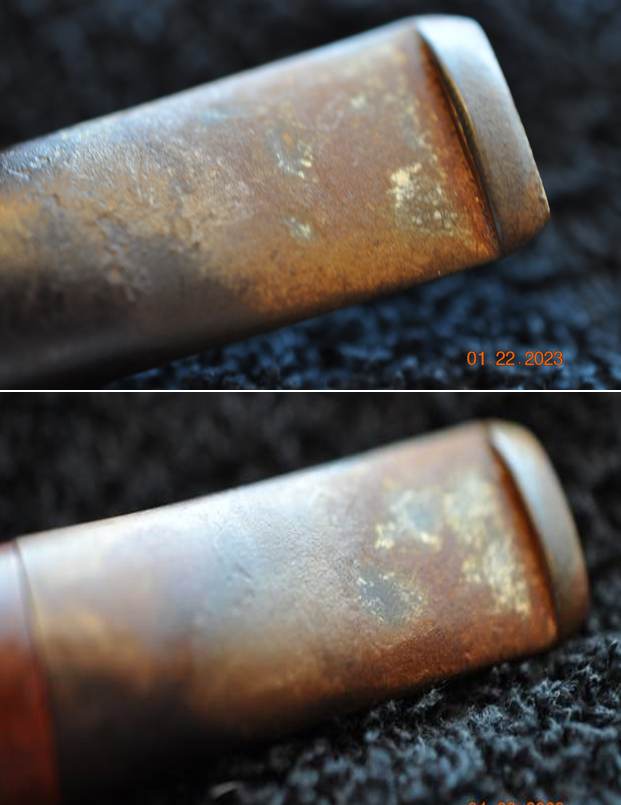
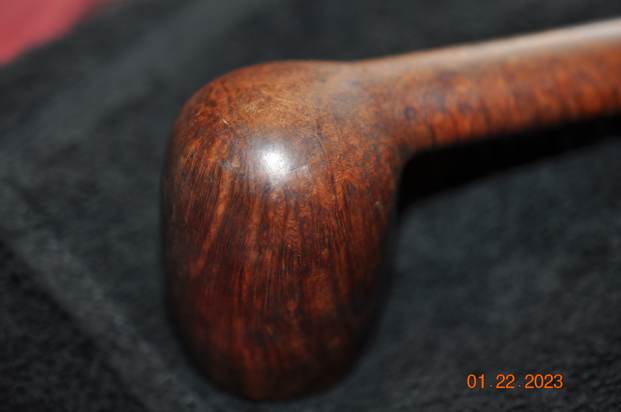
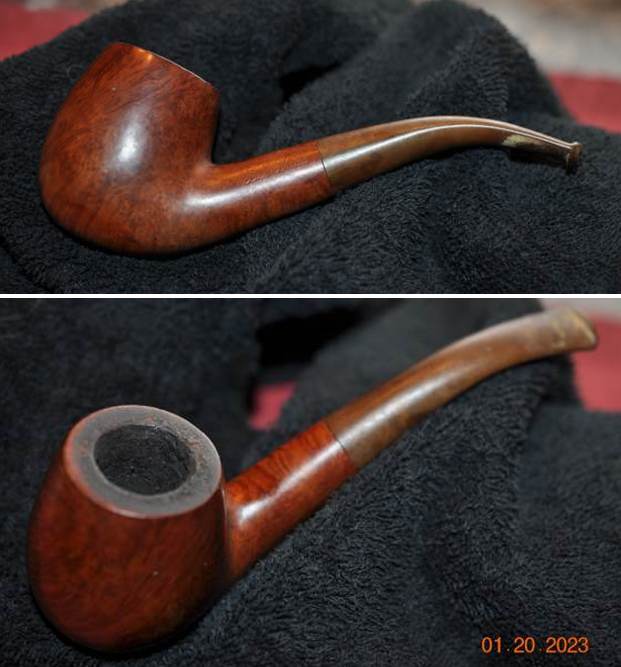
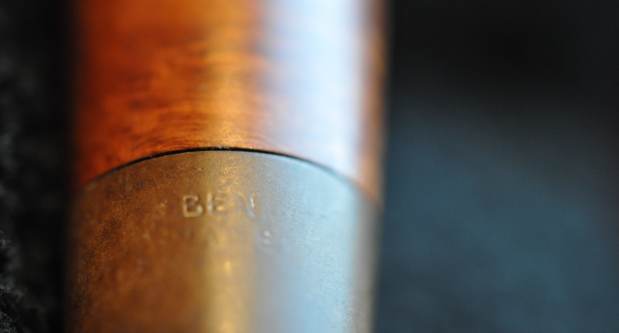
Overall my impressions of this pipe is that it is a beauty that once cleaned up will look pretty amazing. The exterior of the bowl does not show any hot spots or darkening. The pipe is very English looking and is a classic large bowled Bent Billiard that has the distinctive cut of other Ben Wade pipes that I have worked on. The photos below confirm the assessment above.Jeff took close up photos so that I could have a clearer picture of the condition of the bowl, rim edges and top. The rim top photos confirm my assessment above. The cake in the bowl is quite thick and the rim top has lava and debris on it. You can also see the condition of the outer edge but the inner edge is a bit of a mystery at this point. This is what I look for when assessing a pipe. While there is lava and darkening there is no visible burn damage at this point. The bowl is still fairly round.The photos of the stem surface from various angles confirmed my assessment of its condition. The stem surface though dirty, oxidized, calcified and had tooth marks and chatter.The next photos show the amazing grain around the heel and the sides of the bowl. Tell me what you see? Are there any visible problems that stand out to you? Are the cracks or scratches? Are there visible flaws or fissures in the briar? What kind of grain stands out around the bowl and heel? Any visible issues on the heel of the bowl? Even the questions should help you to see what I am looking for when I see these photos. You have read it a few times now in the previous blogs. What am I looking for when I look at the shank stamp? In this case it is stamped on the left side and reads Ben Wade in script and on the right side it reads Made in [over] London England in 2 lines. That is followed by the shape number 79 next to the bowl/shank union. How does the stamping look to you? Is it clear and readable? Is it faint in spots or is it uniform? I know you are looking at photos but so do I at this point in the process. The topside of the stem is also stamped though it is worn. It reads BEN [over] WADE. The same questions apply here as well. An added part of pipe restoration for me is to try to gather as much background on a brand and maker as I can find. With Ben Wade it is an enjoyable web to untangle. There is a lot of information and it can lead to understanding what era a pipe was made in. To try to figure out the era of the Ben Wade pipe I was working on I turned to the Pipephil website, Logos and Stampings (http://pipephil.eu/logos/en/logo-benwade.html). There is some really helpful information on the brand. There is an alphabetical listing of the lines but there was none listed that matched the one on the table. The site did give a short history of the brand. I quote the portion that is most pertinent. Brand founded in the 1860’s at Leeds (GB). Lane Ltd. (NYC) bought the brand in 1962 and closed the factory in Leeds in 1965. The pipes were then manufactured in London at Charatan’s. During the period 1972 (about) – 1989 Ben Wade pipes were mass produced for Lane Ltd. by Preben Holm‘s workshop in his very personal style. Peter Wilson owner of Duncan Pipes bought the rights of the brand in 1998.
Next I turned to Pipedia to see if I could find more information on the Ben Wade brand there (https://pipedia.org/wiki/Ben_Wade). The article gives a great sense of the history of the brand from its inception until the time Preben Holm made pipes for them. I quote a few sections from the article below.

In the second World War the factory was destroyed by German air raids on Leeds. But the Ben Wade family decided to re-build it immediately after the war and pipe production was re-started soon and successfully linked to the fame from the pre-war years.

Before the second war Ben Wade clustered their offerings into three price points: “Ben Wade” included the higher end pipes (eg the Larnix, Super Grain, Selected Grain, etc), “BW” included the mid-level pipes (eg Statesman, Natural Grain, County, etc), and “BWL” were the least expensive (eg Hurlingham, Adelphi, Tense Grain). Champion was in the last group, and in the 1930s at least retailed for 2/6.

The Champion disappeared during the War when the Ben Wade line was materially slimmed down, presumably to reflect difficulties of supply. The name continued to appear in brand directories at least through the early sixties, however it’s unclear whether production was actually resumed.

Even though the owner family decided to leave pipe business and sell off the firm. The family went into negotiations with Herman G. Lane, president of Lane Ltd. in New York at about the same time as the Charatan family. Lane Ltd. bought both firms in 1962.

Herman G. Lane had been Charatan’s US sole distributor since 1955 and Charatan always remained his pet child. But Ben Wade was treated in another way by it’s new owner. The fabrication of pipes was reduced and the factory in Leeds was closed in 1965 finally.

So this was the end of Ben Wade pipes stamped “Made in Leeds, England”.

Lane had the pipe making machines brought from Leeds to London and used the well esteemed name Ben Wade to start the fabrication of entirely machine-made pipes at Charatan’s Prescott Street factory. (Some sources say “not earlier than 1973” but proven by catalogues this isn’t true.) Alas the “new” Ben Wades were quite usual series pipes, copies of well known standard shapes. The pipes often showed hardly masqued fillings and were processed quite coarsely with hardly polished pre-moulded Ebonite stems. Therewith Ben Wade degenerated definitively to a second brand. The stamping now read “Made in London England” or just “London”. Nothing was left from the quality of the pipes once made in Leeds!

Quotation of an American pipe dabster: “It’s a shame to see how a famous old family name can be dragged into the mud by people who want to capitalize on a good reputation earned by men who are long dead. This sad little story was not one of Charatan’s or Lane’s proudest moments!”

Herman G. Lane’s heirs had no special interest in either Charatan or in Ben Wade and sold it to Dunhill Pipes Limited in 1978. Now, Dunhill had no need of machine-made series pipes like the Ben Wade as performed by Charatan / Lane since their own ParkerHardcastle factory in Walthamstow had abounding capacities to turn out secondary pipes. Thus this was Ben Wade’s second end. Charatan’s Prescott Street factory was closed by no later than March of 1982 and Charatan was allowed to languish and discontinued in 1988.

Now I had some parameters regarding the time frame of the pipe. It was made after the closing of the Leeds factory in 1965 and made in London as early as 1973. It was definitely made before Land sold the factory to Dunhill in 1978. That is helpful to know the time frame as well as the connection to Charatan during that time period. Now it was time to work on the pipe.

I am sure many of you will shake your head and ask maybe even out loud, “Why is he including this again?” However, please remember that the point of these blogs is not to wow your with the work or make you shake your heads but I want you to know the details of the work we do so you can do your own. Back in 2020 Jeff wrote a blog about his cleaning process. I am including a link to that now so you can see what I mean about his process. Do not skip it! Give it a read (https://rebornpipes.com/2020/01/20/got-a-filthy-estate-pipe-that-you-need-to-clean/). Here is the introduction to that blog and it is very true even to this day.

Several have asked about Jeff’s cleaning regimen as I generally summarize it in the blogs that I post rather than give a detailed procedure. I have had the question asked enough that I asked Jeff to put together this blog so that you can get a clear picture of the process he uses. Like everything else in our hobby, people have different methods they swear by. Some may question the method and that is fine. But it works very well for us and has for many years. Some of his steps may surprise you but I know that when I get the pipes from him for my part of the restoration they are impeccably clean and sanitized. I have come to appreciate the thoroughness of the process he has developed because I really like working on clean pipe!

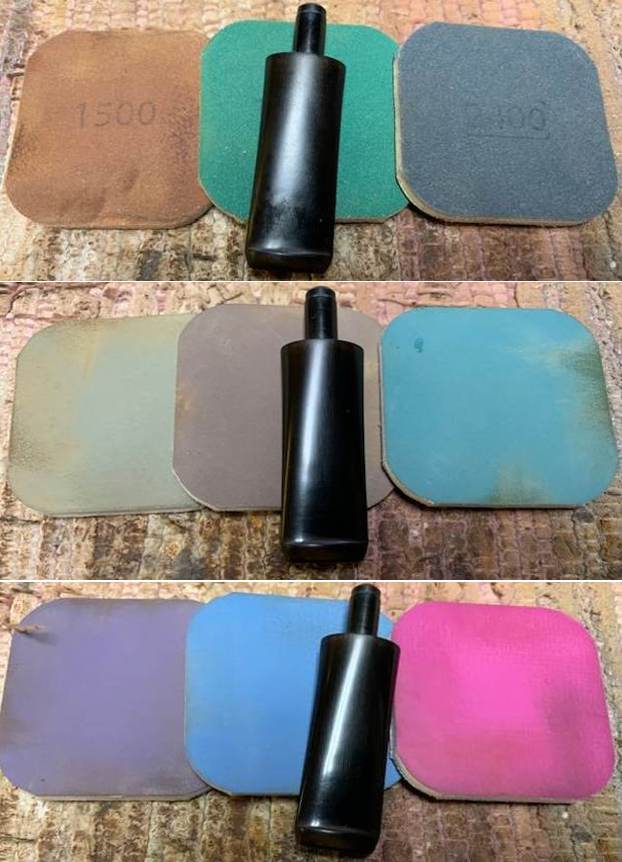
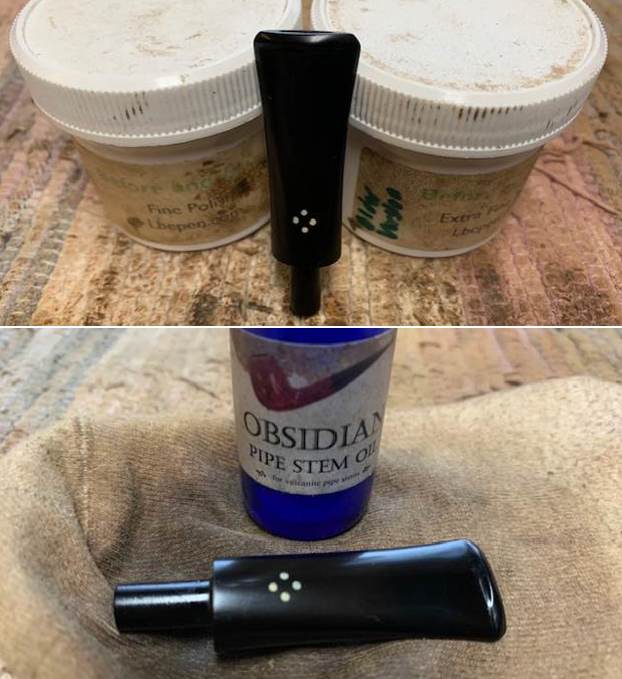
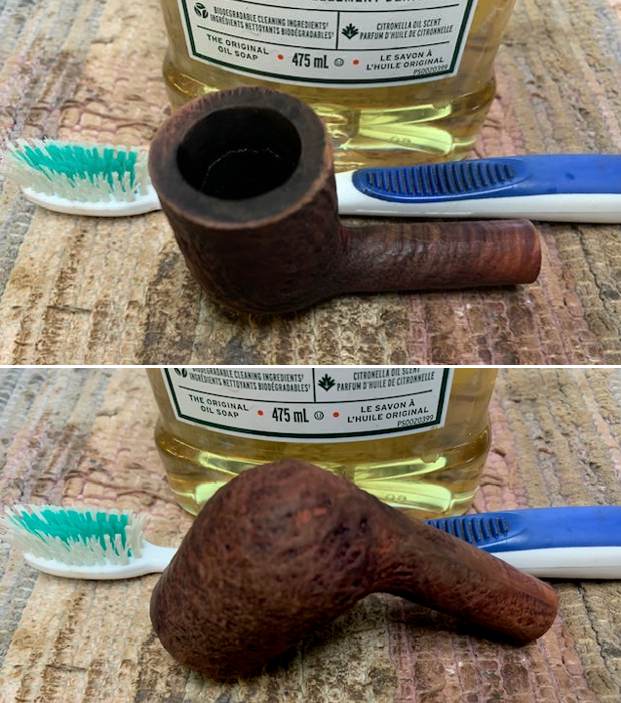
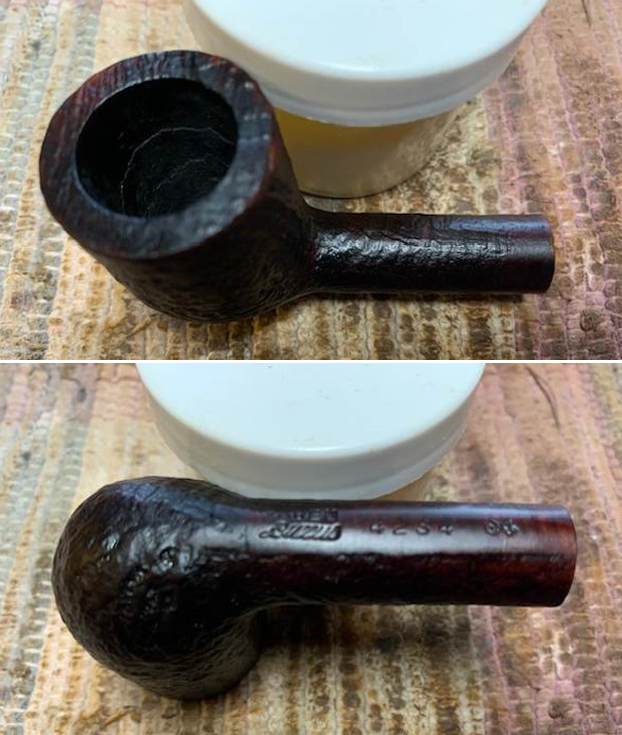
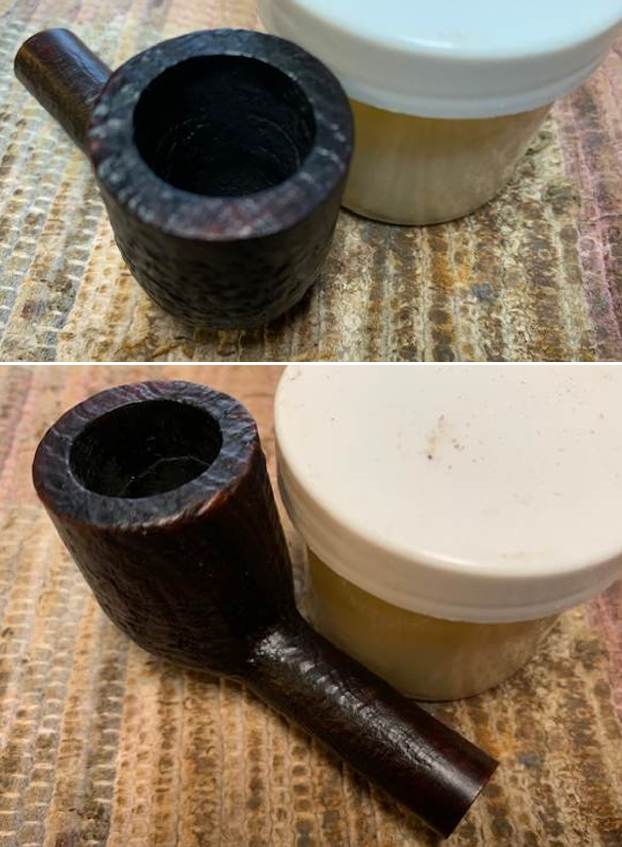
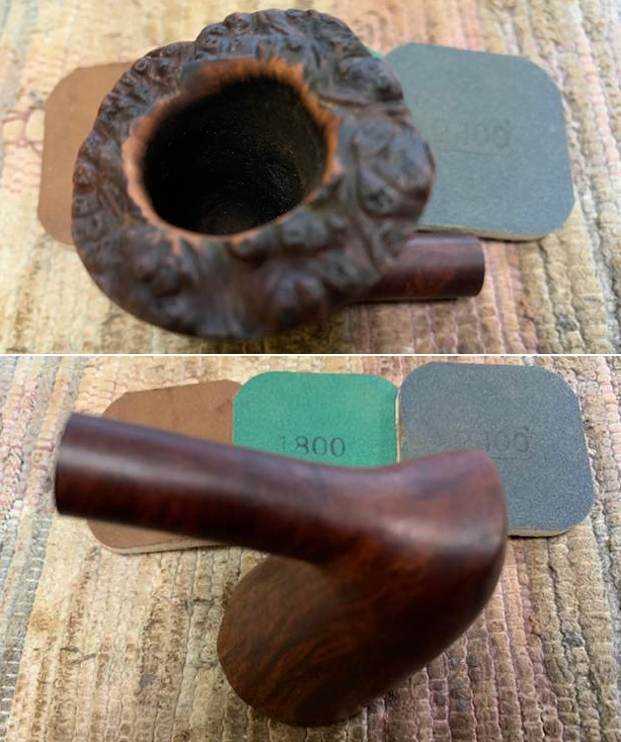
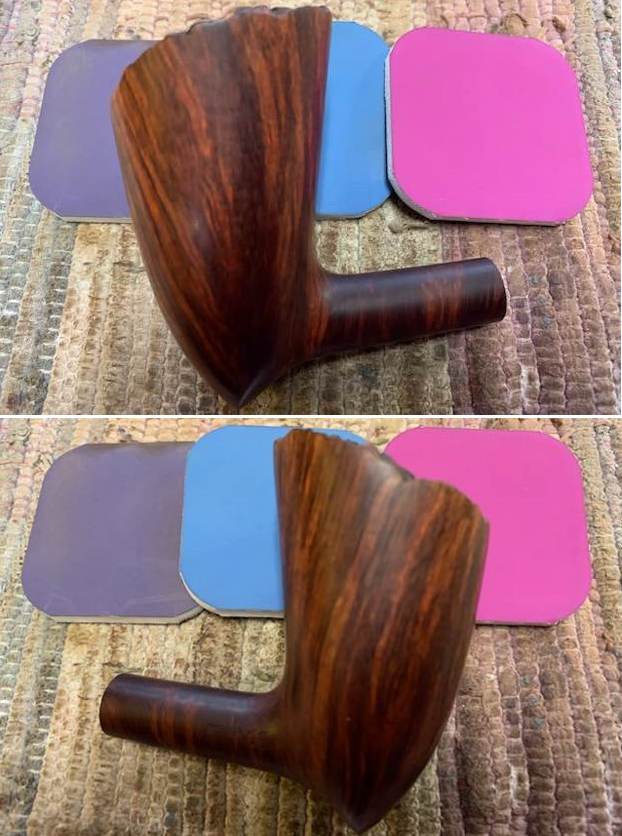
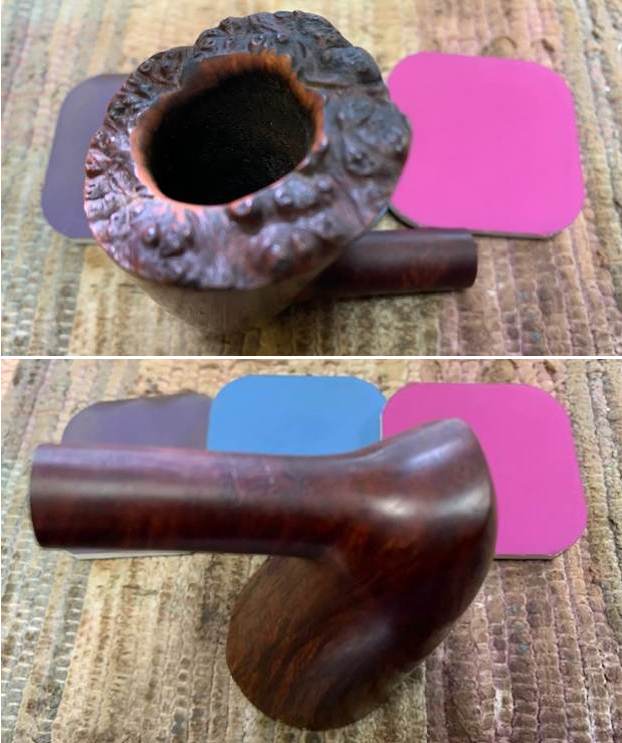
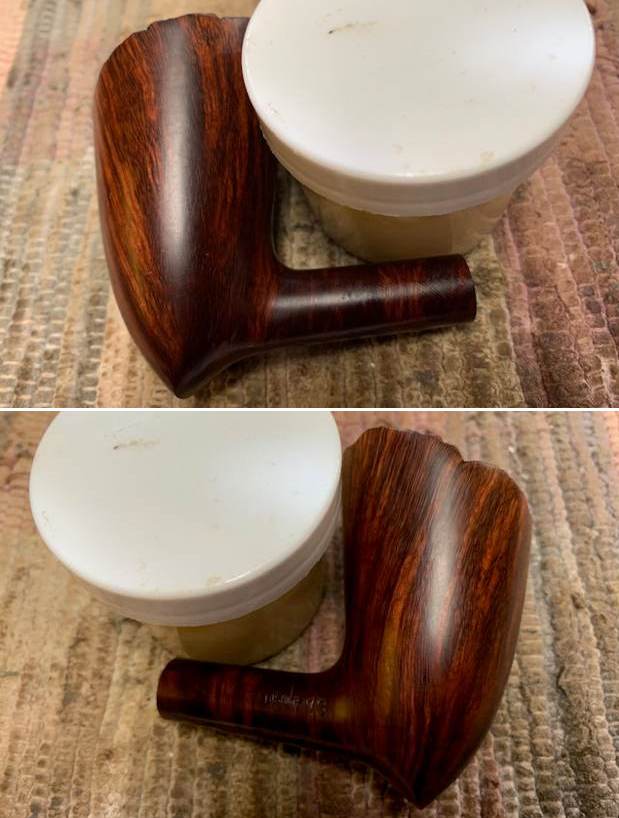
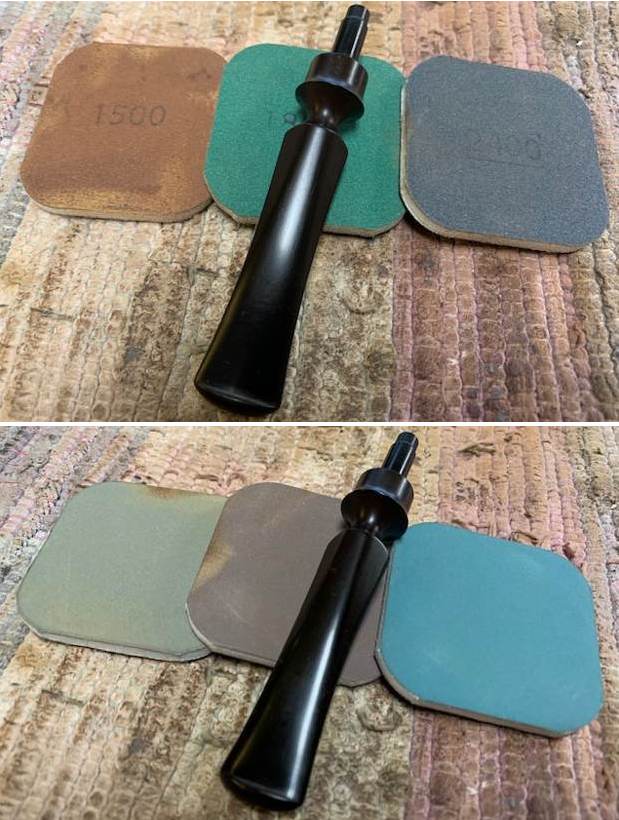
For the benefit of some of you who may be unfamiliar with some of the products he uses I have included photos of three of the items that Jeff mentions in his list. This will make it easier for recognition. These three are definitely North American Products so you will need to find suitable replacements or order these directly on Amazon. The makeup pads are fairly universal as we were able to pick some up in India when we were with Paresh and his family.

In the blog itself he breaks his process down into two parts – cleaning the stem and cleaning the bowl. Each one has a large number of steps that he methodically does every time. I know because I have watched him do the work and I have seen the pipes after his work on them. He followed this process step by step and when the pipe got to me it was spotlessly clean and ready for my work. The inside of the stem, shank and bowl were clean and to me that is an amazing gift as it means that my work on this end is with a clean pipe! I cannot tell you how much difference that makes for my work.

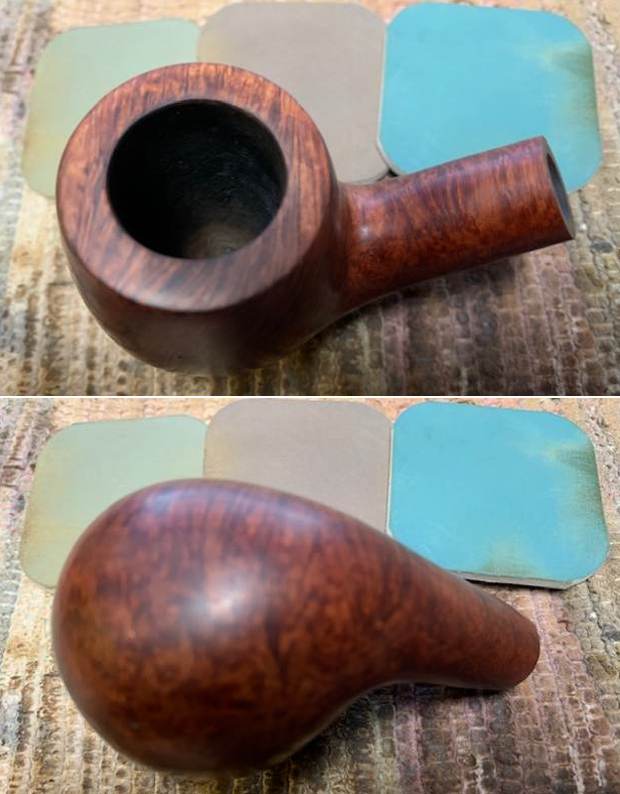
  1. The chunky shank and large size of the bowl look very good and are well proportioned and have a classic English Bent Billiard shape.
  2. The finish is clean and the oils have been removed from both sides of the bowl. The grime ground into the finish is gone and there is some great grain around the bowl sides.
  3. The thick lava coat on the rim top has been removed and there are some nicks and damage on the top and inner edges of the bowl.
  4. The walls of the bowl are clean and I do not see any checking or burn damage. The inner edge of the bowl had some nicks and burn damage on the edges. The outer edges look good and there does not appear to be any obvious burn damage there.
  5. The vulcanite taper stem is clean and has tooth chatter and marks on both sides. Ben Wade stamped logo on the top of the stem – it is barely visible.

Hopefully the steps above show you both what I look for when I go over the pipe when I bring it to the work table and also what I see when I look at the pipe in my hands. They also clearly spell out a restoration plan in short form. My work is clear and addressing it will be the next steps. I took photos of the whole pipe to give you a picture of what I see when I have it on the table. This is important to me in that it also shows that there was no damage done during the clean up work or the transit of the pipe from Idaho to here in Vancouver.   I carefully went over the bowl and rim top to get a sense of what is happening there. In this case once the lava was removed light damage and darkening to the edge and top was revealed. I think there is some light burn damage to the edge that extends around the inner edge and some darkening on the rim top. It is clean but will need to be worked on to bring it back to normal. I also go over the stem carefully. There were no tooth marks or dents in the stem. I could see faint marks on the top of the stem that I could see with a lens – BEN WADE. The trouble was it was so light that it was not redeemable. I took photos of the rim top and stem sides to show as best as I can what I see when I look at them. I always check to make sure that the clean up work did not damage the stamping on the shank in any way. It looks good and is very readable. I love just looking at the beauty of the lay of the pipe with the grain and the proportion of the pipe. I like to remove the stem from the shank to get a sense of what was in the mind of the pipe maker when he crafted the pipe. It is a beauty in flow and shape. By this time you should know that I almost always start with the bowl in my restoration because I truly do not like the tedious work of stem repairs and polishing. I always leave that until last even though I know that it needs to be done. For me the encouragement of seeing a rejuvenated bowl is the impetus I need to attack the stem work.

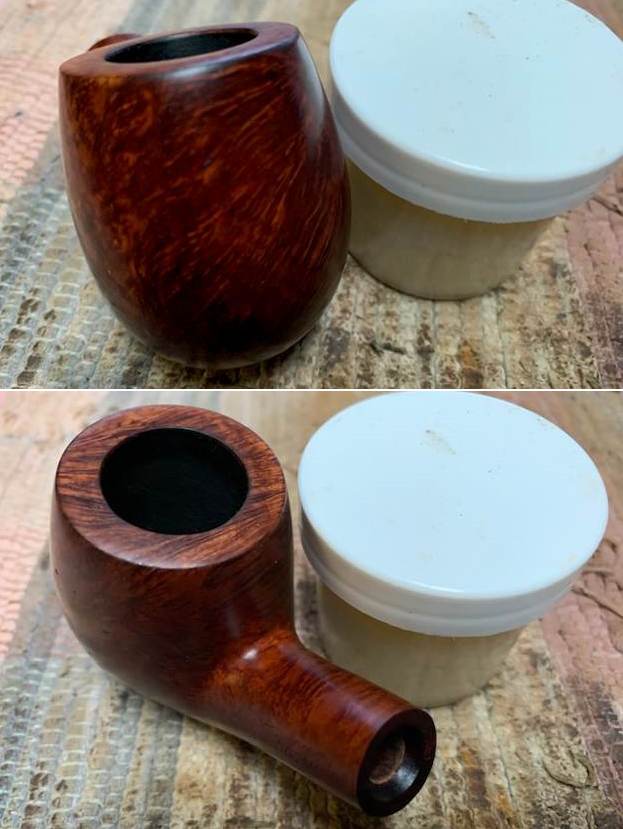
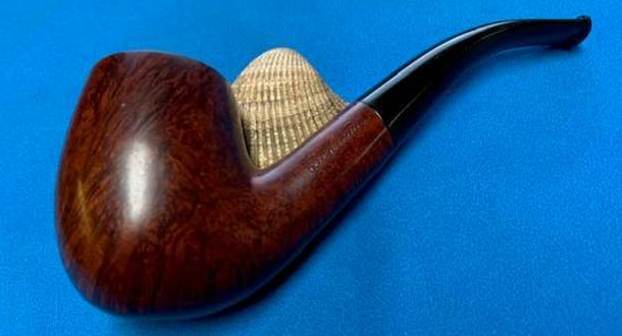
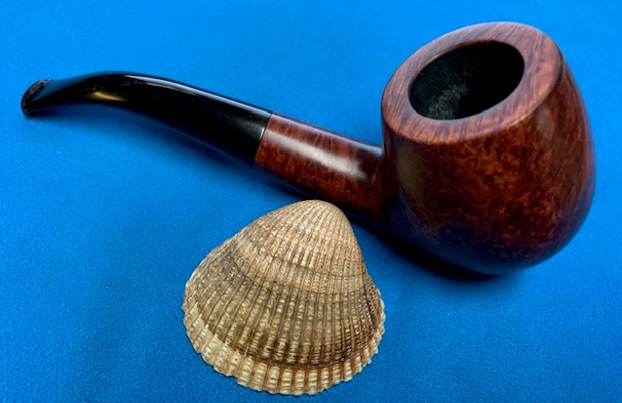
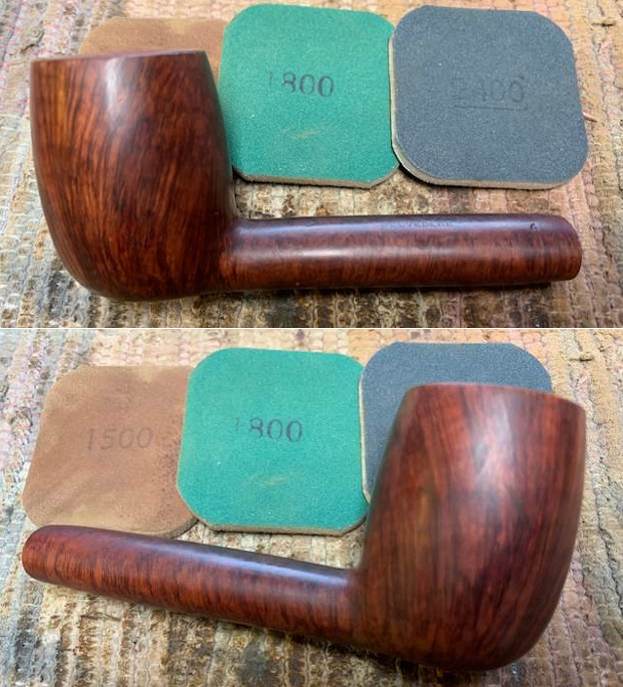
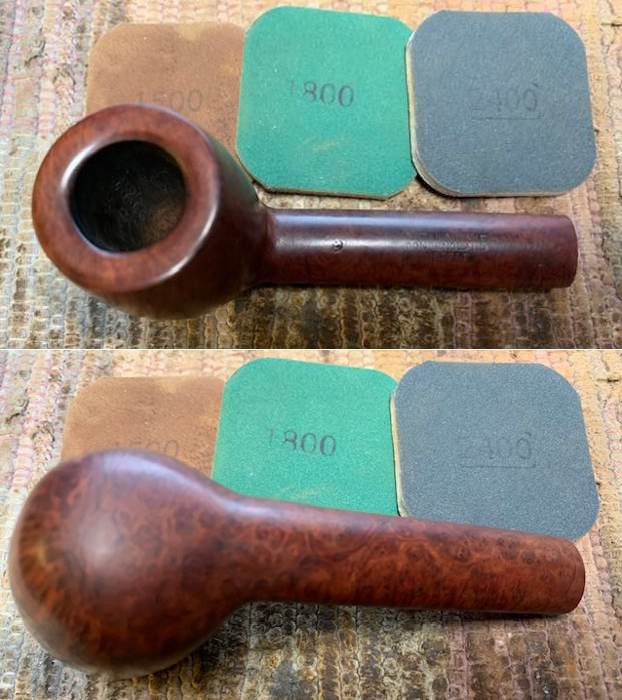
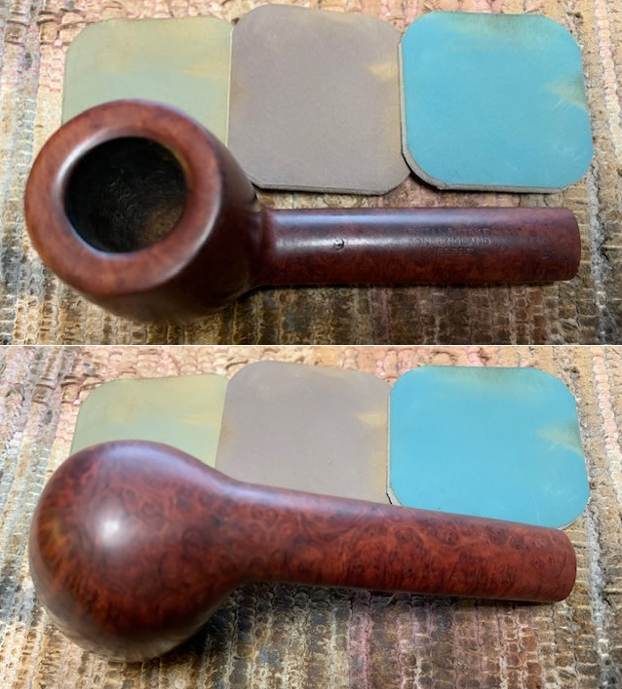
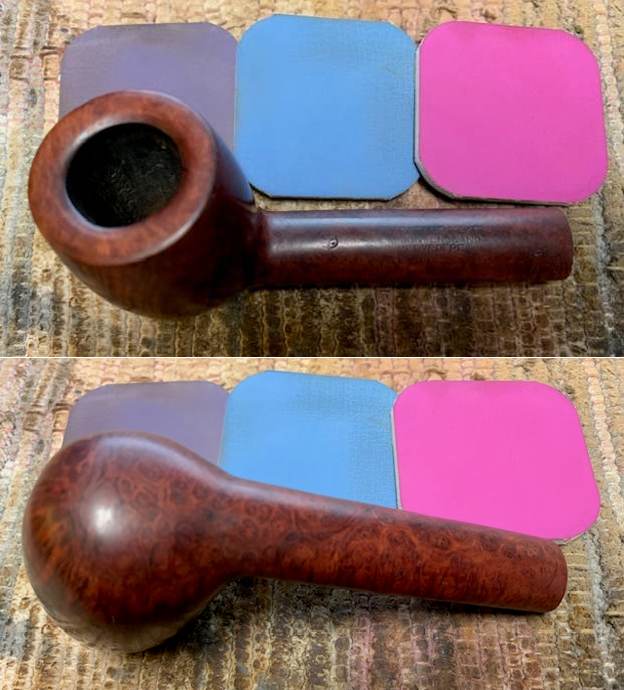
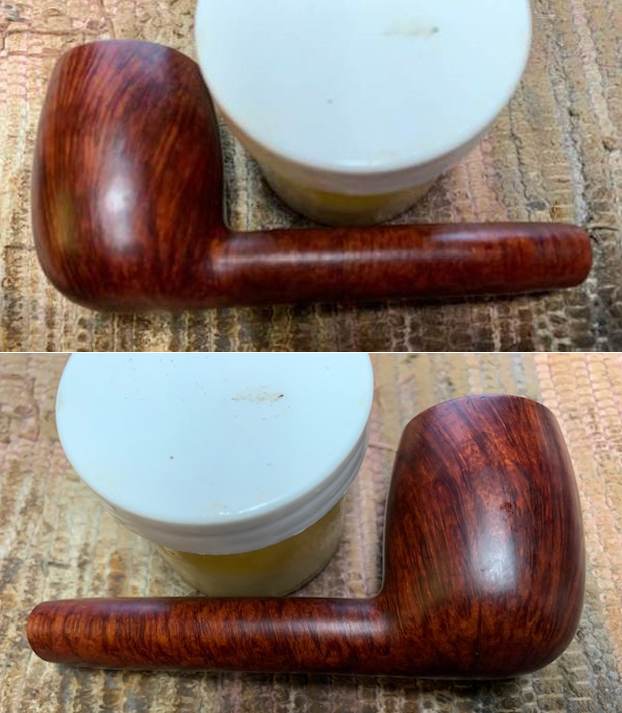
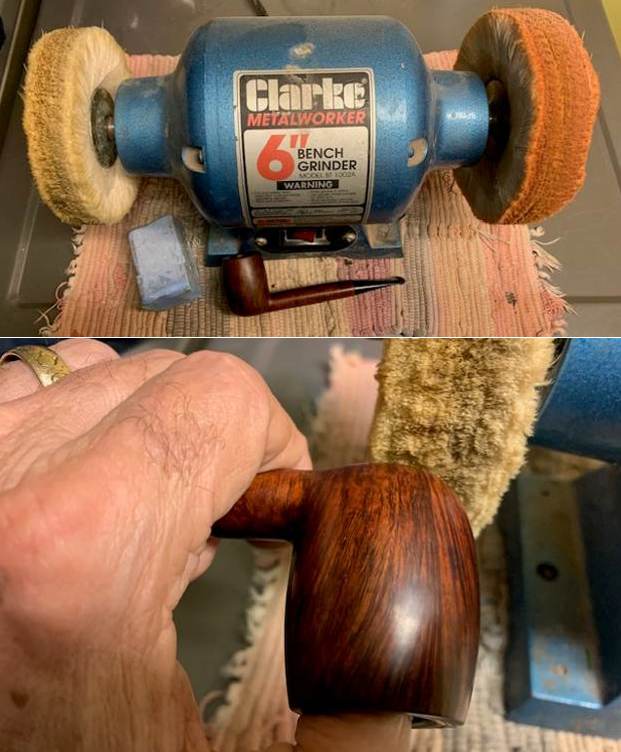
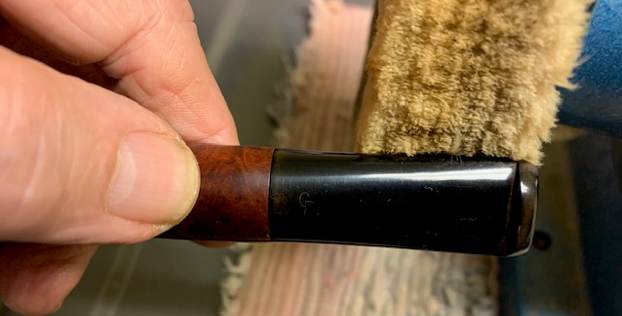
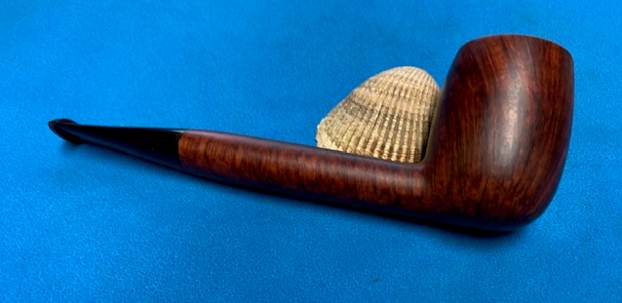
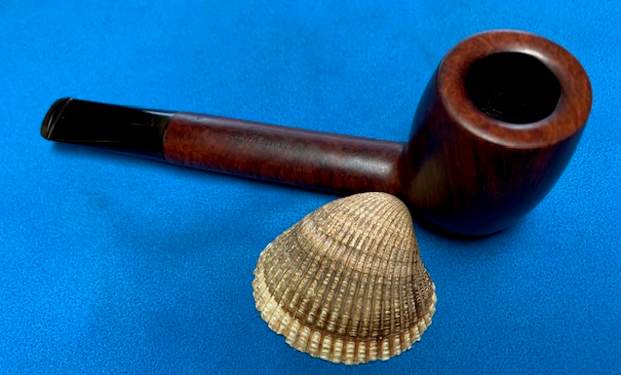
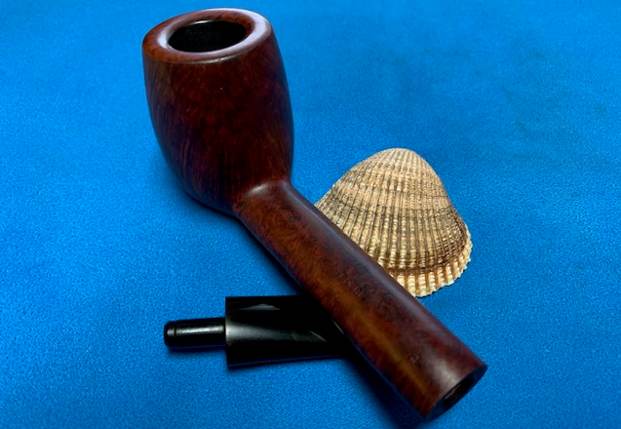
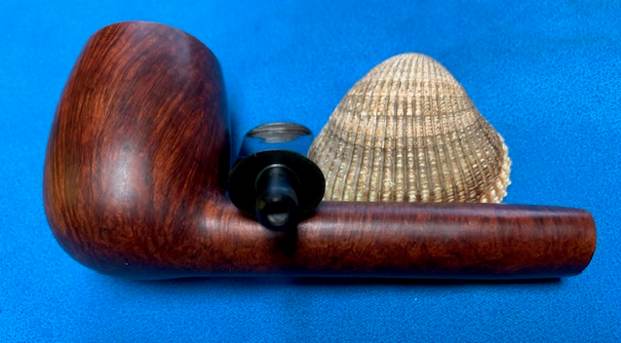
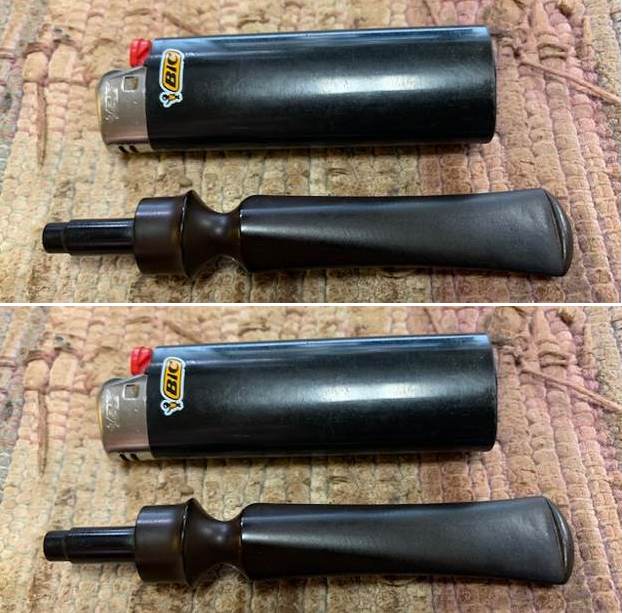
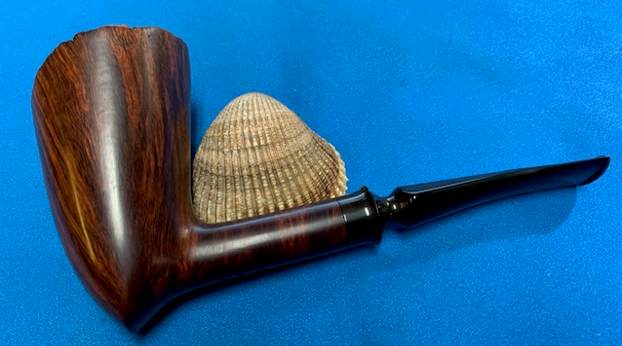
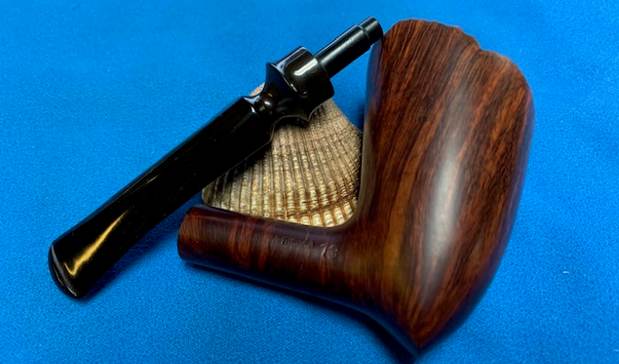
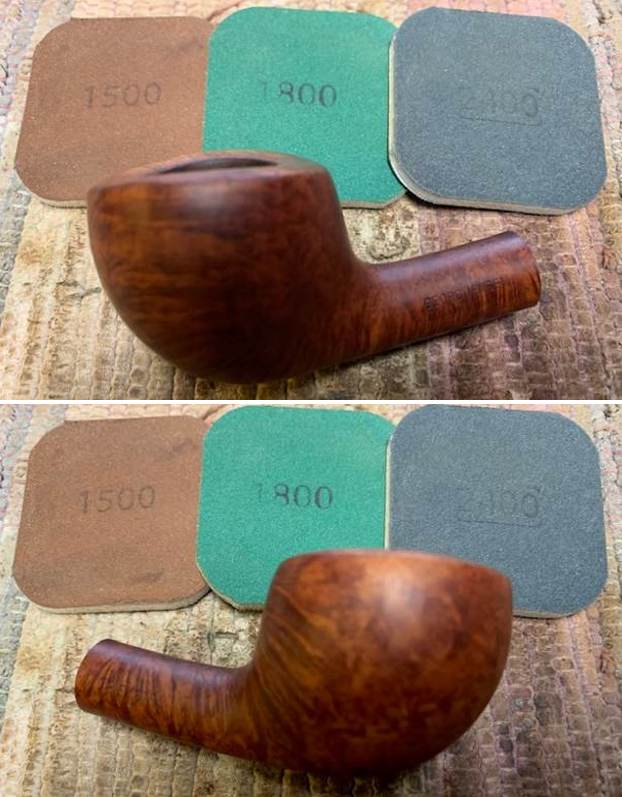
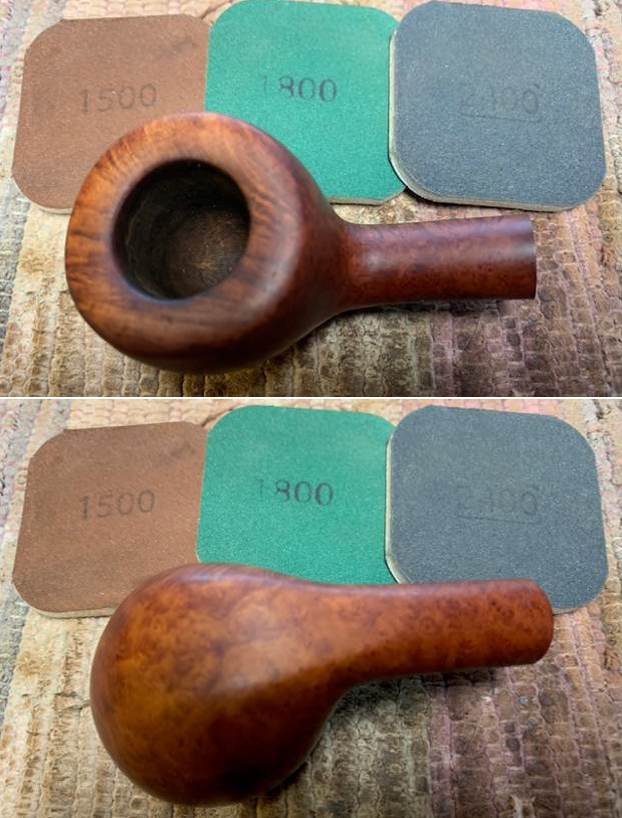
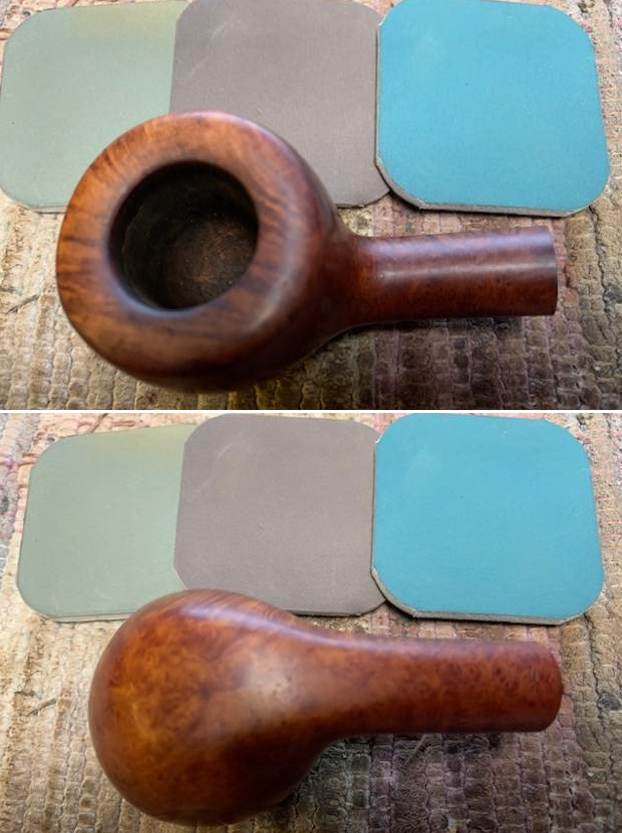
Today I started working on this pipe by turning to the bowl. I chose to deal with the nicks, darkening and burn damage on the rim edges and top. I used a folded piece of 220 grit sandpaper to smooth out the damage on the edges and the rim top. It took a little work but I was able to remove all of the darkening. It is a beautiful piece of briar with some great grain. I polished the briar with micromesh sanding pads. I choose to dry sand the briar rather than wet sand it. Again it is a matter of personal preference. I prefer to use the pads dry and find they work very well on the briar. I sand with each pad (9 in total) and group them by threes for ease of reference. I also work over the plateau areas at the same time. I wipe the bowl down after each pad with a damp cloth to remove the sanding debris and check the briar. I love seeing the developing shine on the briar as I move through the pads which is why I include so many photos of this step. For the past few years now I have been using Before & After Restoration Balm. It is a paste/balm that is rubbed into the surface of the briar. The product works to deep clean the nooks and crannies of finish, enliven and protect the briar. I worked it into the briar with my finger tips and let it sit for 10 minutes to do its work. I wiped it off with a soft cloth then buffed it with a cotton cloth. The briar really began to have a deep shine in the briar and the grain shone through. The photos I took of the bowl at this point mark the progress in the restoration. It is a gorgeous pipe. Now it was time to address the part of the restoration I leave until last. I set the bowl aside and turned my attention to the stem. I started with the tooth marks. I “painted” the surface dents with a Bic light flame and was able to lift them significantly. I filled in the deep marks that remained with clear CA glue. Once it cured I used a small file to flatten the repairs and start the process of blending them into the stem surface. I sanded the stem with 220 grit sandpaper to further blend them into the vulcanite. I started the polishing of the stem with 600 grit wet dry sandpaper. I use micromesh sanding pads and water to wet sand the stem with 1500-12000 grit sanding pads. I wiped it down after each sanding pad with Obsidian Oil on a cotton rag after each sanding pad as I find it does two things – first it protects the vulcanite and second it give the sanding pads bite in the polishing process. After finishing with the micromesh pads I rub the stem down with Before & After Fine and Extra Fine stem polish as it seems to really remove the fine scratches in the vulcanite. I rub the Fine Polish on the stem and wipe it off with a paper towel and then repeat the process with the extra fine polish. I finish the polishing of the stem down with a final coat of Obsidian Oil and set the stem aside to let the oil absorb. This process gives the stem a shine and also a bit of protection from oxidizing quickly.The final steps in my process involve using the buffer. I first buff the stem and the briar with Blue Diamond on the buffing wheel. Blue Diamond is a plastic polish but I find that it works very well to polish out the light scratches in the vulcanite and the briar. I work the pipe over on the wheel with my finger or thumb in the bowl to keep it from becoming airborne. It works well and I am able to carefully move forward with the buffing. The briar and stem just shone! I finished with the Blue Diamond and moved on to buffing with carnauba wax. Once I have a good shine in the briar and vulcanite I always give the bowl and the stem multiple coats of carnauba wax. I have found that I can get a deeper shine if I following up the wax buff with a clean buffing pad. It works to raise the shine and then I follow that up with a hand buff with a microfiber cloth to deepen the shine. It is always fun for me to see what the polished bowl looks like with the polished vulcanite stem. It really is a beautiful pipe. The smooth finish around the bowl sides and shank show the grain shining through the rich brown stains of this Lane Era Ben Wade, Made in London England 79 Bent Billiard. The finished pipe feels great in my hand. It is light and well balanced. Have a look at it with the photos below. The dimensions are Length: 6 inches, Height: 2 inches, Outside diameter of the bowl: 1 ½ inches, Chamber diameter: 7/8 of an inch. The weight of the pipe is 2.68 ounces/76 grams. It is a beautiful pipe and one that I will be putting on the rebornpipes store in the British Pipe Makers section.

Hopefully the shape the writing of this blog is helpful to you in some way. In it I wanted to show both what I am looking for and how I move forward in addressing what I see when work on a pipe. Let me know if it is helpful to you. It is probably the most straightforward detailed description of my work process that I have done. As always I encourage your questions and comments as you read the blog. Thanks to each of you who are reading this blog. Remember we are not pipe owners; we are pipemen and women who hold our pipes in trust until they pass on into the trust of those who follow us.

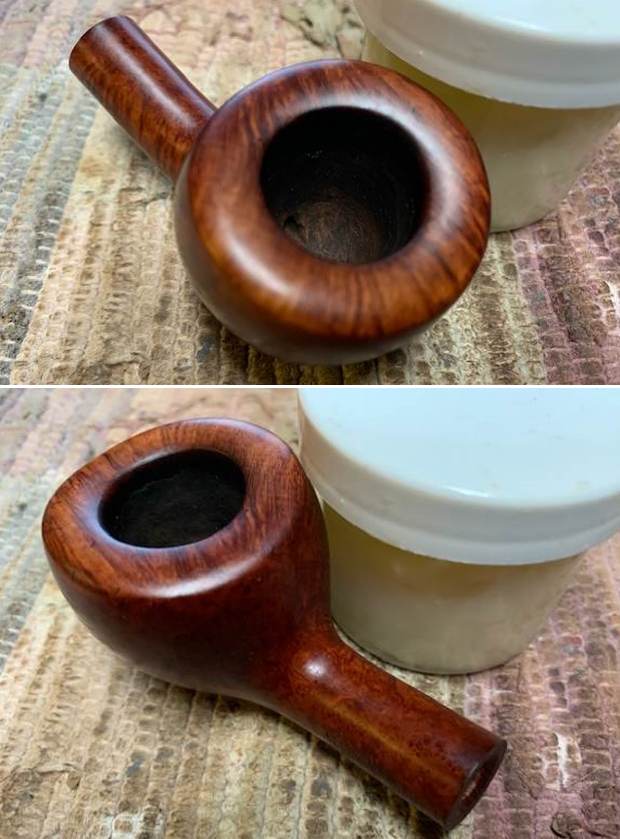
Life for a Chunky, Lane Era Charatan’s Make Belvedere 402 Canadian


Blog by Steve Laug

Once again in this write up and I will take you through my process of working on each pipe that we purchase. Jeff has set up a spread sheet to track where the pipe came from, the date of purchase and what we paid for it so that we know what we have invested in the pipe before we even work on it. This takes a lot of the guess work out of the process. This particular pipe was purchased on 07/22/2021 from an Antique Shop in Vancouver, Washington, USA. I also want you to understand why we take the photos we do. If you have followed for a while then you will see the familiar pattern of the photos we include both in the before and midstream process of working on a pipe. It is not accidental or chance as the photos have been taken to help me make an assessment of the pipe Jeff sees before he starts his clean up work. We do this to record the condition that the pipe was in when received it and to assess what kind of work will need to be done on. When I look at these photos this is what I see.

  1. The first thing I see is the chunky shank and large size of the bowl. It is well proportioned and well made with a classic English shape.
  2. The finish is dirty and there are oils from the smoker’s hands on both side of the bowl. There is grime ground into the finish as well but even so there is also some great grain peeking through.
  3. The rim top had a thick lava overflow from the cake in the bowl. There is some damage on the front inner edge and top but it is hard to know if there is darkening or damage under the lava. Sometimes the lava protects the rim top and edges and sometime it hides issues. Its is very dirty looking.
  4. The bowl has a thick cake in it that hides the walls and the inner edge of the bowl but once it is clean we will know what the edges look like. There are a some nicks in the inner edge of the bowl that will become clearer when the pipe is cleaned. The outer edges look good and there does not appear to be any obvious burn damage to the top or bowl edges.
  5. The vulcanite taper stem is in good condition – dirty, oxidized, calcified and has tooth chatter and marks on both sides. There appears to be a CP logo on the top of the stem – it is faint but still present.

Overall my impressions of this pipe is that it is a beauty that once cleaned up will look pretty amazing. The exterior of the bowl does not show any hot spots or darkening. The pipe is very English looking and is a classic oval shank Canadian that has the distinctive cut of a Charatan. The photos below confirm the assessment above. Jeff took close up photos so that I could have a clearer picture of the condition of the bowl, rim edges and top. The rim top photos confirm my assessment above. The cake in the bowl is quite thick and the rim top has lava and debris on it. You can also see the condition of the outer edge but the inner edge is a bit of a mystery at this point. This is what I look for when assessing a pipe. While there is lava and darkening there is no visible burn damage at this point. The bowl is still fairly round. The photos of the stem surface from various angles confirmed my assessment of its condition. You can see the oxidation and the fit against the tarnished silver band on the shank end. The stem surface though dirty does not appear to have tooth marks – chatter yes, but no deep marks. The stem is quite dirty but otherwise undamaged. The next photos show the amazing grain around the heel and the sides of the bowl. Tell me what you see? Are there any visible problems that stand out to you? Are the cracks or scratches? Are there visible flaws or fissures in the briar? What kind of grain stands out around the bowl and heel? Any visible issues on the heel of the bowl? Even the questions should help you to see what I am looking for when I see these photos. You have read it a few times now in the previous blogs. What am I looking for when I look at the shank stamp? In this case it is stamped on the left side and reads Charatan’s Make[over] London England [over] Belvedere in three lines. How does the stamping look to you? Is it clear and readable? Is it faint in spots or is it uniform? I know you are looking at photos but so do I at this point in the process. The topside is also stamped near the shank/stem junction and reads 402 which is the shape number for a Canadian. The same questions apply here as well. An added part of pipe restoration for me is to try to gather as much background on a brand and maker as I can find. With Charatan that is an enjoyable web to untangle. There is a lot of information and it can lead to understanding what era a pipe was made in. To try to figure out the era of the Charatan’s pipe I was working on I turned to the Pipephil website, Logos and Stampings (http://www.pipephil.eu/logos/en/logo-charatan.html). There is some really helpful information on each of the lines of Charatan’s Make pipes that entered the market. There is an alphabetical listing of the lines but the Belvedere they showed had a stem made for a 9mm filter while the one I have is a nonfiltered pipe. The site did give a short history of the brand. I quote the portion that is most pertinent.
The brand was founded in 1863 by Frederik Charatan. When his father retired in 1910, Reuben Charatan took over the family business. All the pipes were handmade until 1973. The brand name has been overtaken by Dunhill in 1978 and sold in 1988 to James B. Russell Inc.(NJ, USA). During the period 1988-2002 Charatans were crafted by Butz Choquin in St Claude (France). Dunhill re-purchased Charatan brand name in 2002 and Colin Fromm (Invicta Briars, Castleford) followed up on freehand production.

Next I turned to Pipedia to see if I could find more information on the brand and possibly a link to the Belvedere line (https://pipedia.org/wiki/Charatan) but once again in the general article it was not listed. It did give a little more historical information. I quote the pertinent parts that give information on this particular pipe.

In 1950 Herman G. Lane, striving to expand his business in Great Britain, made contacts with the Charatan family. Apparently Lane got a certain influence soon, but it was not until 1955 that Lane Ltd. became the sole distributor for Charatan’s in the United States superseding Wally Frank. This can be documented in a “biography” written for Herman G. Lane titled “Leaves from a Tobaccoman’s Log”.

Thanks to Herman G. Lane’s dedicated labor Charatan became hugely popular in the States. As reported by Ken Barnes in an interview with Rick Newcombe, Reuben Charatan passed away in 1962, and his widow sold the firm to Herman Lane 1 or 2 years after his death.[1] In the early 1960s Charatan pipes were the first to overstep the $100 Dollar line in US pipe sales. In 1978 Lane’s heirs sold the Charatan company to Dunhill. The Prescot Street factory was closed in March 1982. Thereafter the fame and quality of the make declined.

The pre-Lane period (prior to 1955) and the Lane era pipes (1955 to until sometime between 1979 – 1984) are of primary interest the collector. The Lane era is often quoted as beginning about 1950.

Charatan records are almost non-existent before Lane due to a factory fire, making it difficult to date pre-Lane pipes. Charatan used 4 basic grades prior to 1950: Supreme, Selected, Executive, and Belvedere. After 1950 Herman Lane’s influence began, and the grades started to expand. In 1955 Lane took over sole distributorship of Charatan in the US. In 1957 he introduced the Supreme S. Most of his other introductions were from the 1960s and early 1970s.

From this I am fairly certain I am dealing with a Lane pipe made after 1955 and because of the Belvedere stamp it could potentially go back as far as before 1950. There is also a circle L script mark that is a Lane stampings on the pipe which also supports this.

I continued digging further into the dating of the pipe, but what I had found above was a good start for me. If some of you would like to try your hand at dating it more accurately as to the time period it came out you might want to check out the article on Pipedia on Dating Charatans (https://pipedia.org/wiki/Dating_of_Charatans).

I also reread the article on Pipedia by the Italian fellow who contributed some really helpful information on the brand (https://pipedia.org/wiki/Charatan_-_Milan_2014). I quote the section on the Second period: Reuben Charatan 1910 – c. 1962. I have highlighted a portion of the section on the shank in red to point out some more helpful dating information.

– In 1962 Herman Lane took over the business from the Charatan family, although he had already influenced production from the 1950s.

– The pipes were mostly larger than the previous ones and corresponded in size to Dunhill group 5. These are slightly less rare, but still difficult to find.

– Stem: Usually in ebonite, saddle shaped or tapered, bearing a fine “CP” stamp, underbore system (see below) used when necessary.

– Shank: The shape code is stamped on it together with the nomenclature “CHARATAN’S MAKE LONDON ENGLAND” arranged in two lines. From 1955 onwards on the models marketed for the USA there is also a serif and circled capital “L” (but not all models bear this) which resembles the pound sterling symbol. The “L” is for Lane, the importer.

From 1958, Lane changed the nomenclature for models marketed for the US to clarify the message: “MADE BY HAND”.  In this period the underbore was introduced. Its manufacturing period ranged between 1920 and c.1930. This model was equipped with a duralumin plunger trap fitted in the stem, which served to clean the residue more easily. This particular model bore a special stamp on the stem, and also had its own catalogue…

QUALITY GRADES…The stem did not only display the stamps mentioned above. Another stamp that can help dating is the one referring to the quality of the pipe. Until Herman Lane arrived on the scene there were four quality grades. Starting with the lowest: Belvedere, Executive, Selected, and Supreme. Lane went on to add higher grades from time to time: Supreme S, Supreme S100, S150, S200, S250, S300, Coronation, Royal Achievement, Crown Achievement, and Summa Cum Laude; these last three are extremely rare and almost impossible to find. He also invented other, different grades, even changing the previous pipe classification standards. We will not go into detail here, but it means that if we find an S100 or Coronation the pipe was manufactured following Herman Lane’s acquisition. In particular, the FH mark, or Freehand pipe was commissioned to the famous Danish craftsman, Preben Holm.

Nomenclature

The Lane Trademark serif and circled L indicates the pipe is from the “Lane Era” (approx. 1955 to 1979 -1984?), however it appears that both the English factory or Lane themselves sometimes, or perhaps even often forget to stamp the L on a pipe. The Charatan factory was known for inconsistencies, especially in stampings. Therefore, although an L on the pipe definitely defines it as a Lane Era pipe, the lack of it could simply mean the pipe missed receiving the stamp from the factory. The lack of the trademark could also mean the pipe was destined for the European market.

Charatan pipes were not well distributed prior to the Lane Era, so very few pre-Lane pipes exist today. Herman Lane greatly grew the brand in the U.S., which caused corresponding growth in Europe.

Generally, when the pipe is stamped with the BLOCK letters “MADE BY HAND” it means the pipe was probably made between 1958 and 1965”

Generally, block letters “MADE BY HAND” and some of the other nomenclature in script (i.e. City of London or Extra Large next to the MADE BY HAND) means the pipe was made sometime between 1965 and the mid 1970s. The total script nomenclature “Made by Hand in City of London” evolved over this period of time, so many pipes had variants, such as Made By Hand in block letters and City of London in script, or some other variation of the terms or stampings.

It is believed the FH was used on Charatan pipes between 1957 and 1967-68. Three different sizes were used. The Charatan Logo (CP) on the pipe bit was changed over the year

Now I knew I was working on a pre-Lane pipe which actually means it was between 1950- 1955 as shown by the stamping.

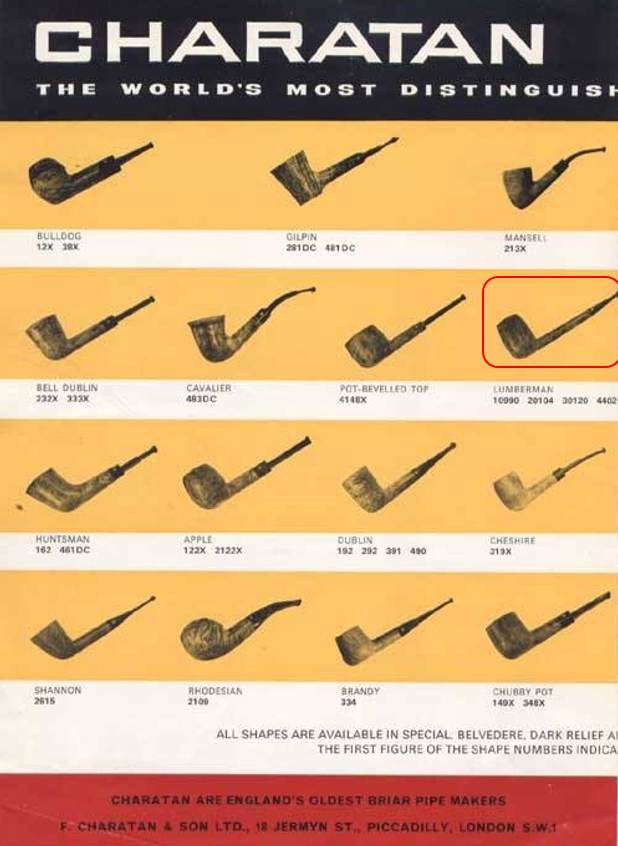
I followed a link to a catalogue listing for the shape 402 which is the shape number for an Outsize Lumberman/Canadian. Here is the link (https://pipedia.org/wiki/Charatan_Models_%26_Shape_Information_for_the_Collector) I am sure many of you will shake your head and ask maybe even out loud, “Why is he including this again?” However, please remember that the point of these blogs is not to wow your with the work or make you shake your heads but I want you to know the details of the work we do so you can do your own. Back in 2020 Jeff wrote a blog about his cleaning process. I am including a link to that now so you can see what I mean about his process. Do not skip it! Give it a read (https://rebornpipes.com/2020/01/20/got-a-filthy-estate-pipe-that-you-need-to-clean/). Here is the introduction to that blog and it is very true even to this day.

Several have asked about Jeff’s cleaning regimen as I generally summarize it in the blogs that I post rather than give a detailed procedure. I have had the question asked enough that I asked Jeff to put together this blog so that you can get a clear picture of the process he uses. Like everything else in our hobby, people have different methods they swear by. Some may question the method and that is fine. But it works very well for us and has for many years. Some of his steps may surprise you but I know that when I get the pipes from him for my part of the restoration they are impeccably clean and sanitized. I have come to appreciate the thoroughness of the process he has developed because I really like working on clean pipe!

For the benefit of some of you who may be unfamiliar with some of the products he uses I have included photos of three of the items that Jeff mentions in his list. This will make it easier for recognition. These three are definitely North American Products so you will need to find suitable replacements or order these directly on Amazon. The makeup pads are fairly universal as we were able to pick some up in India when we were with Paresh and his family.

In the blog itself he breaks his process down into two parts – cleaning the stem and cleaning the bowl. Each one has a large number of steps that he methodically does every time. I know because I have watched him do the work and I have seen the pipes after his work on them. He followed this process step by step and when the pipe got to me it was spotlessly clean and ready for my work. The inside of the stem, shank and bowl were clean and to me that is an amazing gift as it means that my work on this end is with a clean pipe! I cannot tell you how much difference that makes for my work.

When the pipe arrives here in Vancouver I have a clean pipe and I go over it keeping in mind my assessment shared in the opening paragraph above. Now that I have it in hand I am looking for confirmation of what I saw in the photos as well as any significant structural changes in the bowl and finish as I go over it.

  1. The chunky shank and large size of the bowl look very good and are well proportioned and have a classic English Charatan shape.
  2. The finish is clean and the oils have been removed from both sides of the bowl. The grime ground into the finish is gone and there is some great grain around the bowl sides.
  3. The thick lava coat on the rim top has been removed and there is some nicks and damage on the top and inner edges of the bowl.
  4. The walls of the bowl are clean and I do not see any checking or burn damage. The inner edge of the bowl had some nicks and burn damage on the edges. There was damage on the front inner edge and some on the back edge as well. The outer edges look good and there does not appear to be any obvious burn damage there.
  5. The vulcanite taper stem is clean and has light tooth chatter and marks on both sides. There is a CP logo on the top of the stem – it is faint but still present.

Hopefully the steps above show you both what I look for when I go over the pipe when I bring it to the work table and also what I see when I look at the pipe in my hands. They also clearly spell out a restoration plan in short form. My work is clear and addressing it will be the next steps. I took photos of the whole pipe to give you a picture of what I see when I have it on the table. This is important to me in that it also shows that there was no damage done during the clean up work or the transit of the pipe from Idaho to here in Vancouver.  I carefully went over the bowl and rim top to get a sense of what is happening there. In this case once the lava was removed damage to the edge and top was revealed. Originally I thought it looked like reaming damage but I don’t think so as I examine it closely. I think it is actually burn damage to the edge that extends around the inner edge though it is heavier at the front and back of the bowl. The rim top also shows some damage. It is clean but will need to be worked on to bring it back to normal. I also go over the stem carefully. There were no tooth marks or dents in the stem. I could not see any sign of remaining CP stamping on the stem so no real clue as to whether it is original or a replacement. I took photos of the rim top and stem sides to show as best as I can what I see when I look at them. I always check to make sure that the clean up work did not damage the stamping on the shank in any way. It looks good but is faint in some parts – particularly the edges of the stamp. I always appreciate the handiwork of the carvers at Charatan who turn a piece raw briar into a beautiful pipe. I love just looking at the beauty of the lay of the pipe with the grain and the proportion of the hand made pipes. I like to remove the stem from the shank to get a sense of what was in the mind of the pipe maker when he crafted the pipe. It is a beauty in flow and shape. By this time you should know that I almost always start with the bowl in my restoration because I truly do not like the tedious work of stem repairs and polishing. I always leave that until last even though I know that it needs to be done. For me the encouragement of seeing a rejuvenated bowl is the impetus I need to attack the stem work.

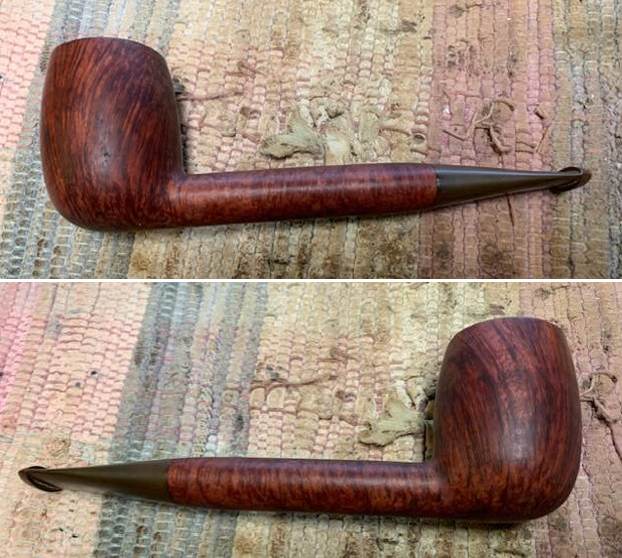
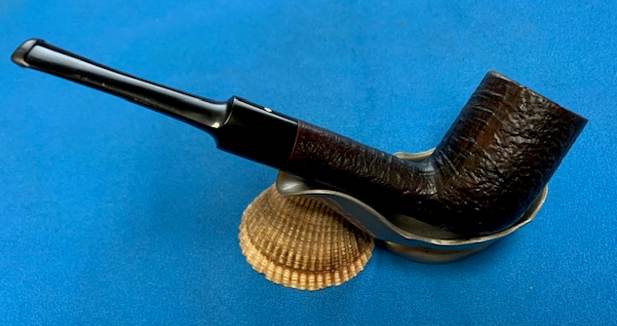
Today I started working on this pipe by turning to the bowl. I chose to deal with the nicks, darkening and burn damage on the rim edges and top. I used a piece of 220 grit sandpaper and a wooden sphere to reshape and remove the damage on the top and the inner edge. It took a little work but I was able to remove all of the darkening. It is a beautiful piece of briar with some great grain.     Once rim top was reshaped and reworked I needed to blend them into the rest of the briar. I stained it with an Oak stain pen to match the surrounding briar.I polished the briar with micromesh sanding pads. I choose to dry sand the briar rather than wet sand it. Again it is a matter of personal preference. I prefer to use the pads dry and find they work very well on the briar. I sand with each pad (9 in total) and group them by threes for ease of reference. I also work over the plateau areas at the same time. I wipe the bowl down after each pad with a damp cloth to remove the sanding debris and check the briar. I love seeing the developing shine on the briar as I move through the pads which is why I include so many photos of this step. For the past few years now I have been using a product developed by Mark Hoover called Before & After Restoration Balm. It is a paste/balm that is rubbed into the surface of the briar and the plateau. The product works to deep clean the nooks and crannies of finish, enliven and protect the briar. I worked it into the briar with my finger tips and let it sit for 10 minutes to do its work. I wiped it off with a soft cloth then buffed it with a cotton cloth. The briar really began to have a deep shine in the briar and the grain shone through. The photos I took of the bowl at this point mark the progress in the restoration. It is a gorgeous pipe. Now it was time to address the part of the restoration I leave until last. I set the bowl aside and turned my attention to the stem. I wiped the stem down with Soft Scrub cleanser to remove the light oxidation on the surface. The CP stamp was very faint and would not hold any paint or colour. It was pretty clear that it was more or less gone. I stated with the tooth marks. I “painted” the surface dents with a Bic light flame and was able to lift them significantly. I sanded the stem with 220 grit sandpaper to further blend them into the vulcanite. I started the polishing of the stem with 600 grit wet dry sandpaper. I use micromesh sanding pads and water to wet sand the stem with 1500-12000 grit sanding pads. I wiped it down after each sanding pad with Obsidian Oil on a cotton rag after each sanding pad as I find it does two things – first it protects the vulcanite and second it give the sanding pads bite in the polishing process.After finishing with the micromesh pads I rub the stem down with Before & After Fine and Extra Fine stem polish as it seems to really remove the fine scratches in the vulcanite. I rub the Fine Polish on the stem and wipe it off with a paper towel and then repeat the process with the extra fine polish. I finish the polishing of the stem down with a final coat of Obsidian Oil and set the stem aside to let the oil absorb. This process gives the stem a shine and also a bit of protection from oxidizing quickly.The final steps in my process involve using the buffer. I first buff the stem and the briar with Blue Diamond on the buffing wheel. Blue Diamond is a plastic polish but I find that it works very well to polish out the light scratches in the vulcanite and the briar. I work the pipe over on the wheel with my finger or thumb in the bowl to keep it from becoming airborne. It works well and I am able to carefully move forward with the buffing. The briar and stem just shone! I finished with the Blue Diamond and moved on to buffing with carnauba wax. Once I have a good shine in the briar and vulcanite I always give the bowl and the stem multiple coats of carnauba wax. I have found that I can get a deeper shine if I following up the wax buff with a clean buffing pad. It works to raise the shine and then I follow that up with a hand buff with a microfiber cloth to deepen the shine. It is always fun for me to see what the polished bowl looks like with the polished vulcanite and acrylic combination stem. It really is a beautiful pipe. The smooth finish around the bowl sides and shank show the grain shining through the rich brown stains of this Lane Era Charatan’s Make London England Belvedere 402 Canadian. The finished pipe feels great in my hand. It is light and well balanced. Have a look at it with the photos below. The dimensions are Length: 6 inches, Height: 2 inches, Outside diameter of the bowl: 1 ¼ inches, Chamber diameter: ¾ of an inch. The weight of the pipe is 1.98 ounces/55 grams. It is a beautiful pipe and one that I will be putting on the rebornpipes store in the British Pipe Maker section.

Hopefully the shape writing this blog is helpful to you in some way. In it I wanted to show both what I am looking for and how I move forward in addressing what I see when work on a pipe. Let me know if it is helpful to you. It is probably the most straightforward detailed description of my work process that I have done. As always I encourage your questions and comments as you read the blog. Thanks to each of you who are reading this blog. Remember we are not pipe owners; we are pipemen and women who hold our pipes in trust until they pass on into the trust of those who follow us.

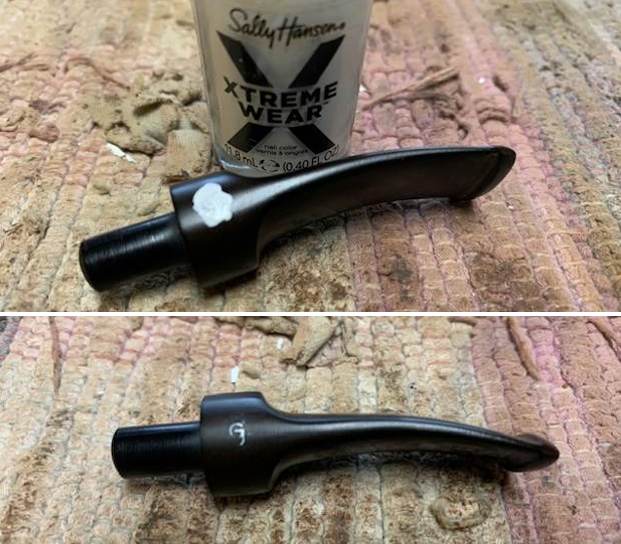
Sasieni Four Dot Patent No. Amesbury Rusticated Canadian


Blog by Steve Laug

The next pipe I have chosen to work on was purchased on 11/11/2021 from an Antique Store in Aurora, Oregon, USA. It is a nice looking rusticated Canadian with 4 light blue dots on the top side of the taper stem. It was stamped on the underside of the shank and read Sasieni in script with the tail of the “i” short and tight. Underneath that it was stamped FOUR DOT in block letters [over] London Made [over] Pat. No. 50221/20 [over] “Amesbury”. Next to the bowl shank junction it was stamped Made in England shaped like a football vertically. The rusticated finish was very dirty with dust and debris in the grooves of the rustication. The bowl had a thick cake in it with lava overflow into the rustication on the rim top. It was an incredibly dirty pipe. The stem was oxidized and had calcification along the first inch ahead of the button. There were tooth marks and chatter on both sides of the stem ahead of the button and on the button surface itself. The 4 light blue dots on the left side of the taper stem were in good condition and very light in colour.

Jeff took these photos of the pipe before he started the clean up work on it. I want you to understand why we take the photos we do. It is not accidental or chance as the photos have been taken to help me make an assessment of the pipe Jeff sees before he starts his clean up work. We do this to record the condition that the pipe was in when received it and to assess what kind of work will need to be done on. When I look at these photos this is what I see.

  1. The rusticated finish is very messy and dirty. There was dust and grime ground into the deep grooves of the finish around the bowl. There are also nicks in the finish were there is wear and tear from being knocked around on ash trays and perhaps a heel of a boot. There are no burn marks or dark spots on the bowl sides and heel of the bowl.
  2. The rim top is filthy. The lava overflow from the cake in the bowl on the rim top though is thick and fills in the grooves. The front outer edge of the bowl has been damaged from being knocked against something hard.
  3. The bowl has a very thick cake in it that covers the inner edge of the bowl. That lava can either act as protection or could hide damage. We will not know until the bowl is cleaned. There does not appear to be any burning or reaming damage to the edges of the bowl.
  4. The stem is vulcanite and has the Sasieni Four Dot light blue dots logo inlaid in the top of the vulcanite taper stem.
  5. The stem was oxidized, calcified and very dirty. There was tooth marks and chatter ahead of the button visible in the photos below. The ones on the underside of the stem were quite deep in the surface of the stem.

Overall my impressions of this pretty rusticated Canadian was that it was in solid shape with no significant damage to the briar other than the knock about damage on rim top and edges. The cake is very thick so I have no way of knowing what is under it. The good news is that it does not seem to have any cracks in the bowl from the overloaded cake. The photos below confirm the assessment above.Jeff took close up photos so that I could have a clearer picture of the condition of the bowl and rim edges and top. The rim top photos confirm my assessment above. The cake in the bowl is quite thick and the rim top has a coat of lava and debris on it that will need to come off. You can also see the lava on the inner edge of the rim. You can also see the condition of the inner and outer edges of the rim and down the outside of the bowl. This is what I look for when assessing a pipe. The bowl appears to be still round. His photos of the stem surface confirmed and heightened my assessment of the condition. You can see the oxidation, calcification and tooth chatter and marks on both sides ahead of the button. From the photos you can see the light blue four dot diamond the top of the taper stem they are in good condition.  He took photos of the sides and heel of the bowl to show the rustication patterns in the briar. It is a unique finish that shows the grain through the finish. He took photos of the stamping on the smooth panel on the underside of the shank to capture what was stamped there. It is faint but readable as noted above. I decided to do some work on the stamping of this pipe to get an idea of the time period it was carved. I turned first to Pipephil’s site to see what I could learn (http://pipephil.eu/logos/en/logo-sasieni.html). I found a pipe that was stamped the same way as the one I am working on. I is stamped on the underside of the shank like the one in the screen capture photo below. Mine is stamped the same way Sasieni in script without the fish tail. Underneath it is stamped FOUR DOT [over] London Made [over] Pat. No. (1)50221/20 (the 1 is faint and almost illegible). Mine does not have the “Retford” stamp but rather the “Amesbury” stamp in the same place. To the left it is stamped with a football shaped Made in England stamp. I included the side bar notes below the picture. From that I knew that the pipe was made during Pre-transition Period 1946-1979.Pre-transition, 1946 – 1979. Four dot. Notice the change of “Sasieni” script without the fish-tail initiated by Alfred Sasieni after second world war.

I then turned to Pipedia for more detailed information (https://pipedia.org/wiki/Sasieni). I quote a section of that article below. It refers to the Patent Number that is on the pipe I have on the table. The underlined  portion below is particular pertinent to this pipe.

To begin with, there are three main elements to dating the Sasieni pipe, the patent number, the style of the name “Sasieni” as it appears on the shank, and the Dots themselves. Naturally, there are exceptions to these rules (this hobby would be boring without them), but for the most part these guidelines apply better than 95% of the time. All Sasieni One, Four, and Eight Dot pipes made before W.W.II and destined for the U. S. market carried a patent number on the shank which usually started with the numbers “15″, with 150221/20 and 1513428 being representative of the group. Also, the name “Sasieni” was stamped on the shank in a very florid manner, with the tail of the last “i” sweeping underneath the name forming a shape which has been compared to a fish by more than one collector. This script was discontinued by Alfred almost immediately after he took over the company, so this alone tells you your pipe is pre W.W.II. Underneath in block lettering are the words “London Made”, with the patent number making the third line.

The dots will help you narrow this down further. As we mentioned, the short lived U. S. market One Dot was introduced around 1920, and was replaced by the early to mid 1920’s by the Four Dot. The 1920’s Four Dot is distinguishable by the florid Sasieni script, a patent number, and four blue dots, which are quite small compared to the pipes of post war years. Furthermore, by 1935 Sasieni began stamping pipes, based on the shape, with their own names, which were usually, but not always, English towns. For example, apples were stamped “Hurlingham”, bulldogs were “Grosvenor” or “Danzey”, and panels were “Lincoln”. One rare and interesting variation of this was the large bent, dubbed “Viscount Lascelles”. Even in this soft Sasieni market, these pipes regularly sell for $150 in their rare appearances in mailers.

The pipe I have is one that was made for the US market as established by the Patent Number on the shank. The flourished “i” was discontinued by Alfred so that confirms that the pipe was made Pre-transition, 1946 – 1979. The third line stamped is London Made in block lettering. The single dot stamp was changed to a four dot in the early to mid 1920s. The 1920s Four Dot is distinguished on this pipe by the florid script, the patent number and four faint blue dots that are quite small. With all that information I knew that my pipe was from the period before the transition so it was an old timer.

In reading the history of the brand on the page I also read through the various photos and brochures that were included in the article. I found a photo of a page from a catalogue describing the rustic briar that I have included below. The rustication pattern is very similar to that on the pipe one that I have here. It is interesting to read the descriptions on the page both of the rustication and the patent.Now that I knew the early dating of the pipe that I had in hand it was time to work on it.

I am sure many of you skip my paragraph on the work Jeff has done before the pipe gets here in my many blogs but it is quite detailed in its brevity. I know some laugh at my opening line Jeff did a thorough cleaning of this pipe. However, I want you to know the details of the work. Back in 2020 Jeff wrote a blog about his cleaning process. I am including a link to that now so you can see what I mean about his process. Do not skip it! Give it a read (https://rebornpipes.com/2020/01/20/got-a-filthy-estate-pipe-that-you-need-to-clean/). Here is the introduction to that blog and it is very true even to this day.

Several have asked about Jeff’s cleaning regimen as I generally summarize it in the blogs that I post rather than give a detailed procedure. I have had the question asked enough that I asked Jeff to put together this blog so that you can get a clear picture of the process he uses. Like everything else in our hobby, people have different methods they swear by. Some may question the method and that is fine. But it works very well for us and has for many years. Some of his steps may surprise you but I know that when I get the pipes from him for my part of the restoration they are impeccably clean and sanitized. I have come to appreciate the thoroughness of the process he has developed because I really like working on clean pipe!

For the benefit of some of you who may be unfamiliar with some of the products he uses I have included photos of three of the items that Jeff mentions in his list. This will make it easier for recognition. These three are definitely North American Products so you will need to find suitable replacements or order these directly on Amazon. The makeup pads are fairly universal as we were able to pick some up in India when we were with Paresh and his family.

In the blog itself he breaks his process down into two parts – cleaning the stem and cleaning the bowl. Each one has a large number of steps that he methodically does every time. I know because I have watched him do the work and I have seen the pipes after his work on them. He followed this process step by step and when the pipe got to me it was spotlessly clean and ready for my work. The inside of the stem, shank and bowl were clean and to me that is an amazing gift as it means that my work on this end is with a clean pipe! I cannot tell you how much difference that makes for my work.

  1. The rusticated finish cleaned up very well. There was dust and grime were gone and the pipe looked clean. The nicks in the around the rim top and edges were visible. There are no burn marks or dark spots on the bowl sides and heel of the bowl.
  2. The rim top is was clean but showed damage. The rustication on the top and outer edge were clean but damaged slightly. The front outer edge of the bowl has been damaged from being knocked against something hard.
  3. The bowl was clean and the inside was smooth without checking or damage. There is not any burning or reaming damage to the edges of the bowl. The beveled inner edge of the bowl looks good.
  4. The stem is vulcanite and has the Sasieni Four Dot light blue dots logo inlaid in the top of the vulcanite taper stem.
  5. The stem looks much better and was clean. There were tooth marks and chatter ahead of the button visible in the photos below. The ones on the underside of the stem were deeper than the ones on the top side of the stem.

Hopefully the steps above show you both what I look for when I go over the pipe when I bring it to the work table and also what I see when I look at the pipe in my hands. They also clearly spell out a restoration plan in short form. My work is clear and addressing it will be the next steps. I took photos of the whole pipe to give you a picture of what I see when I have it on the table. This is important to me in that it also shows that there was no damage done during the clean up work or the transit of the pipe from Idaho to here in Vancouver. I took photos of the rim top and the top and underside of the stem. You can see the clean bowl and rim top. The stem has light tooth chatter and marks on both sides ahead of the button. It is dirty but otherwise great. It is a nice looking pipe. The next photo shows the stamping on a smooth panel on the underside of the shank. It is clear and readable as noted above. I removed the stem from the shank and took a photo of the parts to give a sense of the overall look of the pipe. It is really a nicely looking pipe that will look great once it is cleaned up.I used a brass bristle wire brush to clean up the rim top. The rustication patterns on the surface came back to life with the brushing. The beveled inner edge looked surprisingly good. I touched up the nicks and light spots on the top and the edges of the bowl with a walnut stain pen. The match was perfect and looked great with the other parts of the rusticated finish.I rubbed the bowl down with Before & After Restoration Balm to deep clean the nooks and crannies of the rusticated finish, enliven and protect the briar. I hand rubbed it with my fingers and worked it into the deep rustication with a horsehair shoe brush. I let it sit for 15 minutes to let it do its work. I wiped it off with a soft cloth. I buffed the bowl with a cotton cloth. It really began to have a deep shine in the briar. I took some photos of the bowl at this point to mark the progress in the restoration. I set the bowl aside and turned my attention to the stem. I “painted” the surface dents with a Bic light flame and was able to lift them significantly. I filled in the deep marks that remained with clear CA glue. I set it aside to cure. When it cured I reshaped the button edge and flattened the repairs with a small file. I sanded the stem with 220 grit sandpaper to further blend them into the vulcanite. I started the polishing of the stem with 600 grit wet dry sandpaper. To polish the stem and repairs I use micromesh sanding pads and water to wet sand the stem with 1500-12000 grit sanding pads. I wiped it down after each sanding pad with Obsidian Oil on a cotton rag after each sanding pad as I find it does two things – first it protects the vulcanite and second it give the sanding pads bite in the polishing process.After finishing with the micromesh pads I rub the stem down with Before & After Fine and Extra Fine stem polish as it seems to really remove the fine scratches in the vulcanite. I rub the Fine Polish on the stem and wipe it off with a paper towel and then repeat the process with the extra fine polish. I finish the polishing of the stem down with a final coat of Obsidian Oil and set the stem aside to let the oil absorb. This process gives the stem a shine and also a bit of protection from oxidizing quickly.The final steps in my process involve using the buffer. I first buff the stem and the briar with Blue Diamond on the buffing wheel. Blue Diamond is a plastic polish but I find that it works very well to polish out the light scratches in the vulcanite and the briar. I work the pipe over on the wheel with my finger or thumb in the bowl to keep it from becoming airborne. It works well and I am able to carefully move forward with the buffing. The briar and stem just shone! This is another pipe I am excited to finish. It is a Patent Number Sasieni London Made Four Dot Rusticated Canadian. I put the pipe back together and buffed it lightly with Blue Diamond on the buffing wheel. I gave the bowl multiple coats of Conservator’s Wax and the stem multiple coats of carnauba wax. I buffed the pipe with a clean buffing pad to raise the shine and hand buffed it with microfiber cloth to deepen the shine. It is fun to see what the polished bowl looks like with the polished vulcanite stem. It really was a beautiful pipe. The rusticated surface is quite unique and there is grain shining through the rich browns/black stain on the finish of this Sasieni London Made Four Dot Rusticated Canadian. It is nice looking and the pipe feels great in my hand. It is light and well balanced. Have a look at it with the photos below. The dimensions are Length: 6 inches, Height: 1 ¾ inches, Outside diameter of the bowl: 1 ¼ inches, Chamber diameter: ¾ of an inch. The weight of the pipe is 1.20 ounces/34 grams. It is a beautiful pipe and one that will be going on the rebornpipes store in the British Pipe Makers Section. Thanks for walking through the cleanup with me as I worked over this pipe. Thanks to each of you who are reading this blog. Remember we are not pipe owners; we are pipemen and women who hold our pipes in trust until they pass on into the trust of those who follow us.
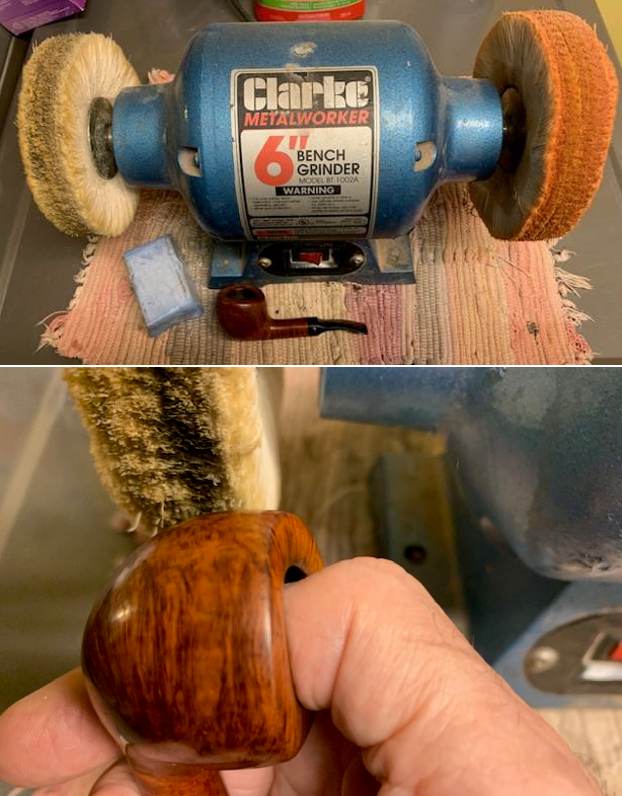
Restoring a Vauen Luxus 4234 Filter Billiard


Blog by Steve Laug

I thought I would take you through my process of working on each pipe that we purchase. This is one that I am working on for a friend so it is not a purchase. When I am working on a pipe from the start I take the same photos. By now you should now why I included these photos. Even when I am starting from scratch myself I take the photos because they tend to show things clearly in a way that I might miss when I am looking at it in person. Combing the two gives a good view of what is going on with the pipe. I also take the photos to record the condition that the pipe was in when I received it and to assess what kind of work will need to be done on. When I look at the pipe along with these photos this is what I see.

  1. The finish is dull and very dirty with dust ground into the grooves of the sandblast finish around the bowl. There oils from holding the pipe on the sides of the bowl. The blast is rugged and shows some interesting grain patterns.
  2. The rim top is dirty with grime and lava all around the bowl and filling in much of the sandblast on the rim top. There was also darkening on the top and on the edge of the rim.
  3. The bowl has a thick cake in it and it had overflowed onto the inner edge of the bowl. It actually looks to be undamaged from what I can see at this point. There is a trough carved in the bottom of the bowl from either overdrilling or more likely from zealous use of pipe cleaners. There does not appear to be any burning or reaming damage to the inner edges of the bowl. There were some nicks in the briar on the outer edge.
  4. The stem is vulcanite and has the Vauen white dot logo inlaid into the vulcanite on the saddle stem. It fits the shank very well. It is made for a filter but significantly smaller than a 9mm. Could well be the Vauen 6mm filters would fit.
  5. The vulcanite stem had oxidation, calcification and tooth chatter and some deeper marks ahead of the button that are visible in the photos below. Nothing to deep but nonetheless present.

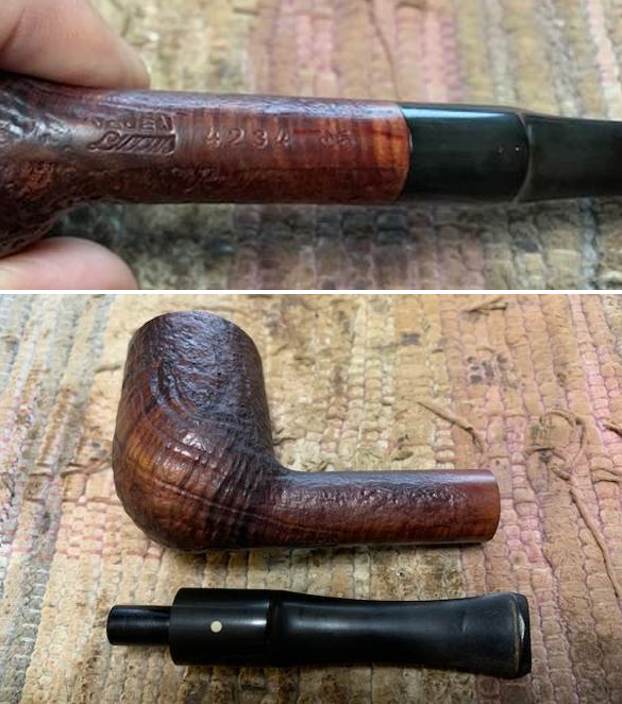
Overall my impressions of this German made Billiard was that it was in solid shape with no significant damage to the briar on the bowl sides and rim. The cake does not seem to hide any burns or checking and the exterior of the bowl does not show any hot spots or darkening. My examination of the bowl and what I see in the photos below confirm the assessment above. I took close up photos so that I could have a clearer picture of the condition of the bowl and rim edges and top. The rim top photos confirm my assessment above. The cake in the bowl is quite thick and the rim top is filled in with lava and is dirty. You can also see the darkening on the inner edge and the rim top. You can also see the condition of the outer edge of the rim and see that nicks toward the back of the bowl. This is what I look for when assessing a pipe. The photos of the stem surface confirmed my assessment of the condition. You can see that the stem is dirty – oxidized and calcified. You can also see the tooth chatter and marks on the surface. The white dot logo on the top of the saddle stem is in great condition. I took photos of the sides and heel of the bowl. While this definitely shows the grain patterns around a bowl it also allows me have a different look at the of the condition of the briar and the finish. I look at the finish to make sure there are no nicks and damage. The stain on the bowl is spotty but highlights the grain.There were no cracks or splits following the grain or coming down from the rim edges. There were no cracks in the shank. I also look for flaws in the grain as those can also hide cracks or damage. In this case the bowl exterior is darkened on the sides by hand oil but is still sound and should clean up very well. The grain patterns are nice. I took photos of the stamping so I can see if it is faint in any spots or double stamped or unclear. It often takes several photos to capture what I am looking for. The stamping on the underside of the shank are clear and readable in the pictures below. It reads Vauen [over] Luxus. It is followed by the shape number 4234 followed by the stamp of crossed pipes. As usual I do some background reading to remind myself of the background on the Vauen brand before I started my work on the pipe. It is an important part of the restoration to me as it adds colour to the pipe I am working on. I turned to Pipephil’s site (http://pipephil.eu/logos/en/logo-v1.html). I did a screen capture of the information on the site. There was a great sidebar that gave some history of the brand. I include both of them below. In 1848, Karl Ellenberger and his partner Carl August Ziener establish a pipe factory in Nuremberg. In 1901 they merge with Gebhard Ott an other factory in town and they create a firm named Vereinigten Pfeifenfabriken Nürnberg (abbreviated : VPFN*). Shortly after Ernst Eckert, a member of the Ott family became manager of the society. During the 20th century Adolf, Ernst (jr) and Alexander Eckert (CEO in 2012) followed one another at Vauen’s head.* VPFN : “V” is said VAU in German (pronounce faou) and “N” becomes EN. Hence VAUEN.

Dal Stanton (Pipesteward.com) wrote a great piece on the history of the brand on a Vauen pipe that he worked on. I reread that and quote a section from the blog below that gives a great sense of the history of the German brand and some photos from the website (https://rebornpipes.com/2021/04/27/breathing-new-life-into-a-german-vauen-6294-p-lip-saddle-billiard-for-a-special-young-lady/).

… I turn to the question of the history of the VAUEN name? I look to the History section of the VAUEN website and again, I am impressed with the presentation. Whenever I work on a pipe, and especially when a pipe name is new to me, I enjoy looking at its history to appreciate the pipe more fully now on my worktable. From VAUEN’s website:Quality and a wealth of ideas have a long tradition at VAUEN. 160 years of VAUEN: that means 160 years of skilled workmanship and modern technology and 160 years of experience in fulfilling the individual wishes of today’s pipe lovers, and those of tomorrow.

In Nuremberg in 1848, Karl Ellenberger and his partner Carl August Ziener turned an idea into reality: Germany’s first pipe manufacturer produced tobacco pipes for connoisseurs around the world using a selection of the best wood. In an amalgamation with the Gebhard Ott pipe factory, which was founded in 1866 in Nuremberg, the Vereinigten Pfeifenfabriken Nuremberg (United Pipe Factories Nuremberg, or VPFN) was born in 1901.  Under the management of Ernst Eckert, a descendent of the founding Ott family, a company was born whose products and services would shape the tobacco and smoking culture in Europe and overseas for the next 160 years and counting.

The question about the name, VAUEN, not being a name of a person and why it is capitalized throughout is explained:

In his search for a name that would be easily remembered by all pipe lovers, Ernst Eckert’s son, Adolf Eckert, coined a new name for the company in 1909: VAUEN – a composition of the first letters V (pronounced vow) of Vereinigte Pfeifenfabriken and N (pronounced en) of Nuremberg. A brand for the future was born.

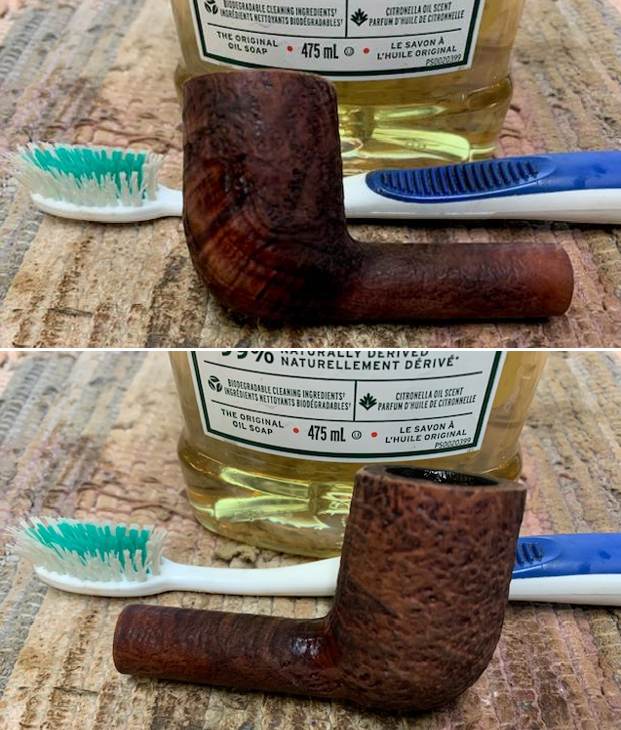
Knowing that about me you can guess that I started working on this pipe by turning to the bowl. I turned to the bowl and started working on the cake to remove it. I reamed back the cake on the bowl walls with a PipNet Pipe reamer and  cleaned it up with a Savinelli Fitsall Pipe Knife. I sanded the walls smooth with 220 grit sandpaper wrapped around a piece of dowel. I used a brass bristle wire brush to remove the debris in the sandblast of the rim top. I scrubbed the sandblast exterior of the bowl with undiluted Murphy’s Oil Soap and a tooth brush. I rinsed it off with warm water to remove the grime and the soap. It looked much better once it was clean. Once the bowl had dried the finish was very spotty. There were dark places on the bowl and the rim top was dark. The spottiness really had to go. I generally start with this kind of thing by wiping the bowl down with acetone on cotton pads. I was able to get a lot of the spots off but there were still dark spots on the sides and rim top. It would need to be restained. It dried out and it was much better even though the spots were bothersome to me. There were also some putty fills that were visible in the finish. I mixed up a wash of light brown stain and isopropyl alcohol. I stained the bowl and shank with the stain was using a dauber. I lit the stain on fire with a lighter and flamed the stain to set it in the grain. I repeat the process until I am happy with the look of the finish.I set the bowl aside to let the stain cure. It was a bit dark to my liking but it was no longer spotty looking. Usually the stain will dry to the point of being able to work on it in about 40 minutes. I wanted to get a bit more opacity to the stain coat and show the various layers in the grooves and high points of the finish. I wiped it down with some isopropyl alcohol to remove the  heaviness of the stain coat. I really like the way it is looking at this point. Then I remembered I had not cleaned out the shank and stem. I went back and cleaned out the mortise and airway into the bowl and the stem with cotton swabs, pipe cleaners and isopropyl alcohol until they came out clean. It looked much better.I rubbed the bowl and shank down with Before & After Restoration Balm. I worked it into the finish with my fingers and used a shoe brush to press it deep into the crevices of the sandblast. The product works to deep clean the finish on the bowl and shank and enliven and protect the briar. After it sat for 15 minutes I wiped it off with a soft cloth. The briar really came alive with a rich shine. I took some photos of the bowl at this point to mark the progress in the restoration. It is a beautiful bowl. I will need to buff the bowl to finish the shine. I decided to address the “overdrill” or overzealous pipe cleaner damage to the inside front bottom and wall of the bowl by mixing a batch of cigar mud – a mixture of fine cigar ash and water to form a paste (I added a bit too much water so it needed to sit for a while to evaporate). Once it was the right consistency I put a pipe cleaner in the airway entry to the bowl and pressed the mud into the trough. I used a dental spatula to lay the mud in place and pressed it against the wall and bottom of the bowl. I layered it into the groove and set it aside to harden. I set it aside in the evening and in the morning when I checked on the bowl to make sure the bowl had cured. I was happy to see that the repair had cured very well.I set the bowl aside to let the repair to the bowl bottom cure. It is wet and dark but will dry hard and a light grey. I turned my attention to the stem. I “painted” the stem surface with the flame of a Bic lighter to lift the tooth marks. I was able to lift them all to the point that I would be able to sand the remnants of them out. I sanded the stem surface with 220 grit sandpaper and started the polishing the stem with 600 grit wet dry sand paper. I wiped it down with some Obsidian Oil and moved on to polishing the stem. I polish the stem to remove the light chatter and scratches. Over the years I have developed my own process for this. It is all preparation for the buffing that will come last. I use micromesh sanding pads and water to wet sand the stem with 1500-12000 grit sanding pads. I wiped it down after each sanding pad with Obsidian Oil on a cotton rag after each sanding pad as I find it does two things – first it protects the stem and second it give the sanding pads bite in the polishing process. After finishing with the micromesh pads I always rub the stem down with Before & After Fine and Extra Fine stem polish as it seems to really remove the fine scratches in the acrylic. I rub the Fine Polish on the stem and wipe it off with a paper towel and then repeat the process with the Extra Fine polish. I finish the polishing of the stem by wiping it down with a final coat of Obsidian Oil and set the stem aside to let the oil dissipate. This process gives the stem a shine and also a bit of protection for the stem surface.Once I finish a filter stem I like to fit it with a clean filter. In this case I do not have the filters to fit it. My thinking is that it is a Dr. Perl Junior 6mm filter. The pipeman I am restoring it for will have to pick some up. I have included a photo of what I think the filters will be.The final steps in my process involve using the buffer. I first buff the stem and the briar with Blue Diamond on the buffing wheel. Blue Diamond is a plastic polish but I find that it works very well to polish out the light scratches in the acrylic and the briar. I work the pipe over on the wheel with my finger or thumb in the bowl to keep it from becoming airborne. It works well and I am able to carefully move forward with the buffing. I finished with the Blue Diamond and moved on to buffing with carnauba wax. Once I have a good shine in the briar and vulcanite I always give the bowl multiple coats of Conservator’s Wax and the stem multiple coats of carnauba wax. I have found that I can get a deeper shine if I following up the wax buff with a clean buffing pad. It works to raise the shine and then I follow that up with a hand buff with a microfiber cloth to deepen the shine. It is always fun for me to see what the polished bowl looks like with the polished stem. It really is a beautiful pipe. The bowl coating and build up of cigar mud should harden and provide a base for the build up of new cake. The sand blast finish around the bowl sides and shank show the grain patterns underneath the rich brown stains of this Vauen Luxus 4234 Filter Billiard and the polished vulcanite stem is a great addition. The finished pipe feels great in my hand. It is light and well balanced. Have a look at it with the photos below. The dimensions are Length: 5 ¾ inches, Height: 1 ¾ inches, Outside diameter of the bowl: 1 ¼ inches, Chamber diameter: ¾ of an inch. The weight of the pipe is 1.10 ounces/31 grams. It is a beautiful pipe that I will be sending to a friend of mine who is collecting older Vauen pipes. I look forward to hearing what he thinks of it.

Hopefully this tack of writing this blog is helpful to you in some way. In it I show both what I am looking for and how I move forward in addressing what I see when work on a pipe has been helpful to you. It is probably the most straightforward detailed description of my work process. As always I encourage your questions and comments as you read the blog. Thanks to each of you who are reading this blog. Remember we are not pipe owners; we are pipemen and women who hold our pipes in trust until they pass on into the trust of those who follow us.

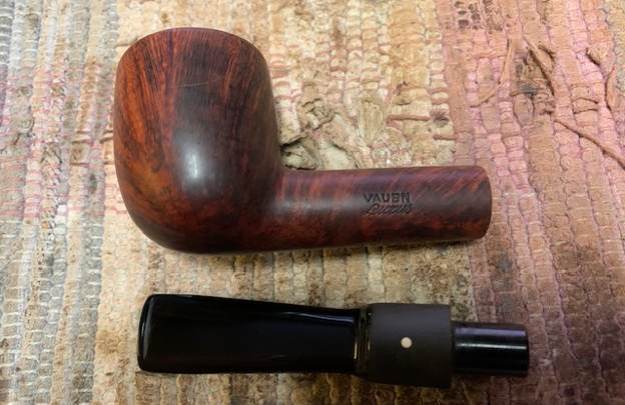
Restoring a Vauen Luxus 3284 Filter Billiard


Blog by Steve Laug

I thought I would take you through my process of working on each pipe that we purchase. Jeff has set up a spread sheet to track where the pipe came from, the date of purchase and what we paid for it so that we know what we have invested in the pipe before we even work on it. This takes a lot of the guess work out of the process. This particular pipe was purchased on 01/12/2023 in a group of pipes picked up in a trade from a fellow. I want you to know why we take the photos we do. It is not accidental or chance as the photos have been chosen to help me make an assessment of the pipe as Jeff sees it. I want to see it before he starts his clean up work. We do this to record the condition that the pipe was in when received it and to assess what kind of work will need to be done on. When I look at these photos this is what I see.

  1. The finish is dull and very dirty with dust ground into the finish around the bowl. There oils from holding the pipe on the sides of the bowl. Underneath there appears to be some nice grain.
  2. The rim top is dirty but otherwise clean. There is no lava on the rim top but there is some darkening on the inner edge of the rim.
  3. The bowl has a thin cake in it but the inner edge of the bowl actually looks to be undamaged from what I can see at this point. There does not appear to be any burning or reaming damage to the edges of the bowl.
  4. The stem is acrylic and has the Vauen white dot logo inlaid into the acrylic on the saddle stem. The fit of the stem to the shank is very poorly done. It is smooth on the right side but it is significantly larger than the shank on the top, bottom and left side. It will need to be re-fitted to make a smooth transition.
  5. The acrylic stem had light tooth chatter and marks ahead of the button that may not be visible in the photos below. Nothing to deep but nonetheless present.

Overall my impressions of this German made Billiard was that it was in solid shape with no significant damage to the briar on the bowl sides and rim. The cake does not seem to hide any burns or checking and the exterior of the bowl does not show any hot spots or darkening. The photos below confirm the assessment above.Jeff took close up photos so that I could have a clearer picture of the condition of the bowl and rim edges and top. The rim top photos confirm my assessment above. The cake in the bowl is quite thin and the rim top is clear of lava. You can also see the slight darkening on the inner edge and the damage to the edge on the right front of the bowl. You can also see the condition of the outer edge of the rim and see that it is in good condition. This is what I look for when assessing a pipe. While there is some damage and darkening there is no visible burn damage at this point and the previous reaming has left minimal damage. The bowl is slightly out of round but is definitely workable. His photos of the stem surface confirmed my assessment of the condition. You can see that the stem is good condition and that other than light scratches and tooth chatter on the surface. From the photos of the logo on the top of the saddle stem is in great condition. It is hard to see in the first photo but the fit on the top, left and underside of the stem to the shank is very poorly done. I always ask Jeff to take photos of the sides and heel of the bowl. While this definitely shows the grain patterns around a bowl it also allows me to do a more thorough assessment of the condition of the briar and the finish. I look at the finish to make sure there are no nicks and damage. The stain on the bowl highlights the grain.There were no cracks or splits following the grain or coming down from the rim edges. There were no cracks in the shank. I also look for flaws in the grain as those can also hide cracks or damage. In this case the bowl exterior is darkened on the sides by hand oil but is still sound and should clean up very well. The grain patterns are nice. I also ask him to take photos of the stamping so I can see if it is faint in any spots or double stamped or unclear. It often takes several photos to capture what I am looking for. The stamping on the left and underside of the shank are clear and readable in the pictures below. On the left it reads Vauen [over] Luxus. The stamping on the underside reads 3284 (shape number) followed by the stamp of crossed pipes. As usual I do some background reading to remind myself of the background on the Vauen brand before I started my work on the pipe. It is an important part of the restoration to me as it adds colour to the pipe I am working on. I turned to Pipephil’s site (http://pipephil.eu/logos/en/logo-v1.html). I did a screen capture of the information on the site. There was a great sidebar that gave some history of the brand. I include both of them below.In 1848, Karl Ellenberger and his partner Carl August Ziener establish a pipe factory in Nuremberg. In 1901 they merge with Gebhard Ott an other factory in town and they create a firm named Vereinigten Pfeifenfabriken Nürnberg (abbreviated : VPFN*). Shortly after Ernst Eckert, a member of the Ott family became manager of the society. During the 20th century Adolf, Ernst (jr) and Alexander Eckert (CEO in 2012) followed one another at Vauen’s head.* VPFN : “V” is said VAU in German (pronounce faou) and “N” becomes EN. Hence VAUEN.

Dal Stanton (Pipesteward.com) wrote a great piece on the history of the brand on a Vauen pipe that he worked on. I reread that and quote a section from the blog below that gives a great sense of the history of the German brand and some photos from the website (https://rebornpipes.com/2021/04/27/breathing-new-life-into-a-german-vauen-6294-p-lip-saddle-billiard-for-a-special-young-lady/).

… I turn to the question of the history of the VAUEN name? I look to the History section of the VAUEN website and again, I am impressed with the presentation. Whenever I work on a pipe, and especially when a pipe name is new to me, I enjoy looking at its history to appreciate the pipe more fully now on my worktable. From VAUEN’s website:Quality and a wealth of ideas have a long tradition at VAUEN. 160 years of VAUEN: that means 160 years of skilled workmanship and modern technology and 160 years of experience in fulfilling the individual wishes of today’s pipe lovers, and those of tomorrow.

In Nuremberg in 1848, Karl Ellenberger and his partner Carl August Ziener turned an idea into reality: Germany’s first pipe manufacturer produced tobacco pipes for connoisseurs around the world using a selection of the best wood. In an amalgamation with the Gebhard Ott pipe factory, which was founded in 1866 in Nuremberg, the Vereinigten Pfeifenfabriken Nuremberg (United Pipe Factories Nuremberg, or VPFN) was born in 1901.  Under the management of Ernst Eckert, a descendent of the founding Ott family, a company was born whose products and services would shape the tobacco and smoking culture in Europe and overseas for the next 160 years and counting.

The question about the name, VAUEN, not being a name of a person and why it is capitalized throughout is explained:

In his search for a name that would be easily remembered by all pipe lovers, Ernst Eckert’s son, Adolf Eckert, coined a new name for the company in 1909: VAUEN – a composition of the first letters V (pronounced vow) of Vereinigte Pfeifenfabriken and N (pronounced en) of Nuremberg. A brand for the future was born.

I am sure many of you skip my paragraph on the work Jeff has done before the pipe gets here in my many blogs but it is quite detailed in its brevity. I know some laugh at my opening line Jeff did a thorough cleaning of this pipe. However, I want you to know the details of the work. Back in 2020 Jeff wrote a blog about his cleaning process. I am including a link to that now so you can see what I mean about his process. Do not skip it! Give it a read (https://rebornpipes.com/2020/01/20/got-a-filthy-estate-pipe-that-you-need-to-clean/). Here is the introduction to that blog and it is very true even to this day.

Several have asked about Jeff’s cleaning regimen as I generally summarize it in the blogs that I post rather than give a detailed procedure. I have had the question asked enough that I asked Jeff to put together this blog so that you can get a clear picture of the process he uses. Like everything else in our hobby, people have different methods they swear by. Some may question the method and that is fine. But it works very well for us and has for many years. Some of his steps may surprise you but I know that when I get the pipes from him for my part of the restoration they are impeccably clean and sanitized. I have come to appreciate the thoroughness of the process he has developed because I really like working on clean pipe!

For the benefit of some of you who may be unfamiliar with some of the products he uses I have included photos of three of the items that Jeff mentions in his list. This will make it easier for recognition. These three are definitely North American Products so you will need to find suitable replacements or order these directly on Amazon. The makeup pads are fairly universal as we were able to pick some up in India when we were with Paresh and his family.

In the blog itself he breaks his process down into two parts – cleaning the stem and cleaning the bowl. Each one has a large number of steps that he methodically does every time. I know because I have watched him do the work and I have seen the pipes after his work on them. He followed this process step by step and when the pipe got to me it was spotlessly clean and ready for my work. The inside of the stem, shank and bowl were clean and to me that is an amazing gift as it means that my work on this end is with a clean pipe! I cannot tell you how much difference that makes for my work.

When the pipe arrives here in Vancouver I have a clean pipe and I go over it keeping in mind my assessment shared in the opening paragraph above. I am looking for any significant structural changes in the bowl and finish as I go over it.

  1. The finish cleaned up really well and the oils, dust and grime in the finish were gone. It was very clean and was undamaged. With all the grime removed there was some nice grain.
  2. The rim top is very clean and there was damage on the right front of the top and edge and some slight darkening on the edge.
  3. The bowl was very clean and the inner edge of the bowl shows some damage as noted above. The bowl walls are also very clean and smooth with no checking or burn marks on the inside or out of the bowl. The walls were undamaged.
  4. The acrylic stem with the Vauen white dot logo in the acrylic on the top side of the saddle looks much better. The fit is very bad as I noted above and will need some refitting and shaping to mark it right.
  5. The acrylic stem had a rich shine. There was light tooth chatter ahead of the button that is visible in the photos below. Nothing to deep but nonetheless present.

Hopefully the steps above show you both what I look for when I go over the pipe when I bring it to the work table and also what I see when I look at the pipe in my hands. They also clearly spell out a restoration plan in short form. My work is clear and addressing it will be the next steps. I took photos of the whole pipe to give you a picture of what I see when I have it on the table. This is important to me in that it also shows that there was no damage done during the clean up work or the transit of the pipe from Idaho to here in Vancouver. I then spent some time going over the bowl and rim top to get a sense of what is happening there. The bowl looked very good and the walls were smooth. There was no damage internally. The rim top was clean. The inner edge had some damage on the right front side and the bowl was slightly out of round in that direction. It would need to be smoothed out but otherwise looked good as did the outer edge. I also went over the stem carefully. The stem was in excellent condition with light chatter and tooth marks. The biggest issue was the fit of the stem and contrary to my usual practice of working on the bowl first I had already started working on it as soon as I picked it up! You will note in the photos that it has been sanded but there is a lot more to do. I took photos of the rim top and stem sides to show as best as I can what I see when I look at them.I always check to make sure that the clean up work did not damage the stamping on the shank in any way. I take a photos to show what I see when I examine it. In this case it has not changed at all from the pictures I included above. You can also see the way the stem fits in these photos and see how poorly it fit the shank. I also remove the stem from the shank and check the tenon and lay the parts of the pipe out to get a sense of the proportion that was in the mind of the pipe maker when he crafted the pipe. It is a beauty in flow and shape. The question of where to begin the restoration work is always a matter of personal preference. I start with the bowl because it gives me hope that this pipe is really a beauty. So if you are restoring your pipes choose where you want to start and go from there. Just know that it all will need to be done by the end. The encouragement of seeing a rejuvenated bowl is the impetus I need to attack the stem work.
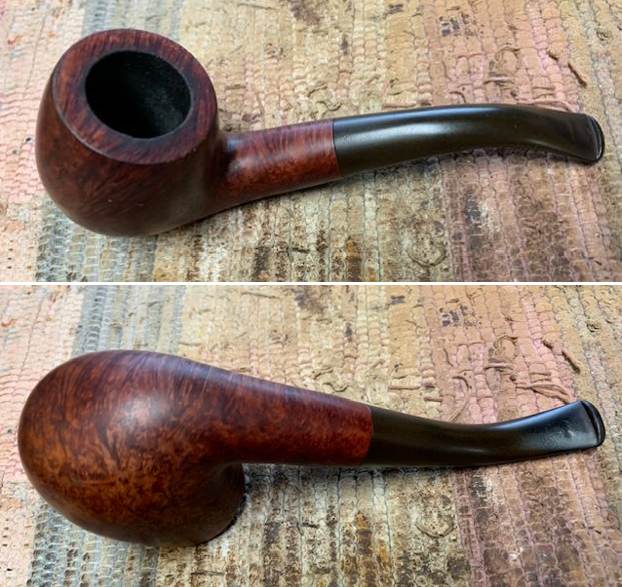
Knowing that about me you can guess that I started working on this pipe by turning to the bowl. But as I have already hinted the fit of the stem bugged me enough to start with the stem this time. I know it is very unusual for me to start there but I did. There are many ways to address the fit of the diameter of the saddle and the fit to the shank but I tend to choose the least intrusive and sand it by hand to ensure that I get the adjustment correct. I work on it off the shank with constant reinserting to check progress and make sure that I have not gone to far. I used 220 grit sandpaper to work on the fit. I sand the stem surface lengthwise as I find the scratching is easier to deal with than going cross ways. Once I get the fit close I put it on the shank to finish it. That helps me from rounding the edges of the stem or shank. I polished the sanded portion of the stem with 600 grit wet dry sandpaper to smooth out the scratches from my refit of the saddle portion and also the tooth chatter and marks. It is starting to look like it should have when it left Germany many years ago! Over the years I have developed my own process for the final polishing of a stem. It is all done in preparation for the buffing that will come last. I use micromesh sanding pads and water to wet sand the stem with 1500-12000 grit sanding pads. I wiped it down after each sanding pad with Obsidian Oil on a cotton rag after each sanding pad as I find it does two things – first it protects the stem and second it give the sanding pads bite in the polishing process. After finishing with the micromesh pads I always rub the stem down with Before & After Fine and Extra Fine stem polish as it seems to really remove the fine scratches in the acrylic. I rub the Fine Polish on the stem and wipe it off with a paper towel and then repeat the process with the Extra Fine polish. I finish the polishing of the stem by wiping it down with a final coat of Obsidian Oil and set the stem aside to let the oil dissipate. This process gives the stem a shine and also a bit of protection for the stem surface.Once I finish a 9mm filter stem I like to fit it with a clean filter. I have a small bag of charcoal filters that I believe were made by Vauen so it is fitting that this stem receive a filter made for it. Now I set the stem aside and turned to work on the bowl. What a strange feeling is for me to do this backwards – the stem first then the bowl! I rework the damaged inner edge of a bowl using a folded piece of 220 grit sandpaper to clean up the inner edge and smooth out the damage to the edges and rim top. I give it a light bevel to help hide the damage.From there I moved to polishing the briar with micromesh sanding pads. I dry sand the briar rather than wet sand it. Again it is a matter of personal preference. I prefer to use the pads dry and find they work very well on the briar. I sand with each pad (9 in total) and group them by threes for ease of reference. I wipe the bowl down with a damp cloth after each pad to remove the sanding debris and check the briar. I love seeing the developing shine on the briar as I move through the pads. I include the many photos of various angles of the bowl so you can see the change. Pay attention to the changes in the briar in these photos as you work through them. When I get the bowl to this point in the process I use Before & After Restoration Balm. It is a paste/balm that works to deep clean the finish, enliven and protect the briar. I work it into the briar with my finger tips to make sure that it covers every square inch of the pipe. I set it aside for 10 minutes to let it do its work. Once the time has passed I wiped it off with a soft cloth then buff it with a cotton cloth. The briar really began to have a deep shine. The photos I took of the bowl at this point mark the progress in the restoration. You see the shine that the briar has taken on and the way the grain just pops. It is a gorgeous pipe. The final steps in my process involve using the buffer. I first buff the stem and the briar with Blue Diamond on the buffing wheel. Blue Diamond is a plastic polish but I find that it works very well to polish out the light scratches in the acrylic and the briar. I work the pipe over on the wheel with my finger or thumb in the bowl to keep it from becoming airborne. It works well and I am able to carefully move forward with the buffing. I finished with the Blue Diamond and moved on to buffing with carnauba wax. Once I have a good shine in the briar and acrylic I always give the bowl and the stem multiple coats of carnauba wax. I have found that I can get a deeper shine if I following up the wax buff with a clean buffing pad. It works to raise the shine and then I follow that up with a hand buff with a microfiber cloth to deepen the shine. It is always fun for me to see what the polished bowl looks like with the polished stem. It really is a beautiful pipe. The smooth finish around the bowl sides and shank show the grain shining through the rich brown stains of this Vauen Luxus 3284 Filter Billiard and the polished acrylic stem is a great addition. The finished pipe feels great in my hand. It is light and well balanced. Have a look at it with the photos below. The dimensions are Length: 5 ¾ inches, Height: 1 ¾ inches, Outside diameter of the bowl: 1 ¼ inches, Chamber diameter: 7/8 of an inch. The weight of the pipe is 1.20 ounces/34 grams. It is a beautiful pipe that I will be sending to a friend of mine who is collecting older Vauen pipes. I look forward to hearing what he thinks of it.

Hopefully this tack of writing this blog is helpful to you in some way. In it I show both what I am looking for and how I move forward in addressing what I see when work on a pipe has been helpful to you. It is probably the most straightforward detailed description of my work process. As always I encourage your questions and comments as you read the blog. Thanks to each of you who are reading this blog. Remember we are not pipe owners; we are pipemen and women who hold our pipes in trust until they pass on into the trust of those who follow us.

Is this BBB a Football Pipe? Cleaning a BBB Arsenal 746 Billiard with an acrylic stem


Blog by Steve Laug

I thought I would take you through my process of working on each pipe that we purchase. Jeff has set up a spread sheet to track where the pipe came from, the date of purchase and what we paid for it so that we know what we have invested in the pipe before we even work on it. This takes a lot of the guess work out of the process. This particular pipe was purchased on 01/26/2023 in a group of pipes from a fellow in Copenhagen, Denmark. I also want you to understand why we take the photos we do. It is not accidental or chance as the photos have been taken to help me make an assessment of the pipe Jeff sees before he starts his clean up work. We do this to record the condition that the pipe was in when received it and to assess what kind of work will need to be done on. When I look at these photos this is what I see.

  1. The finish is shiny but dirty with dust ground into the finish around the bowl. There are some tars and lava on the inner edge. Underneath there appears to be some excellent grain.
  2. The rim top is dirty. There is some lava overflow from the cake in the bowl on the rim top though it is light. There is also some darkening on the inward rim top.
  3. The bowl has a thick cake in it but the inner edge of the bowl actually looks to be undamaged from what I can see at this point. There does not appear to be any burning or reaming damage to the edges of the bowl.
  4. The stem is acrylic and has a BBB in a Diamond logo stamped into the acrylic on the taper stem. It has been painted with a white coloured paint that fills in the stamp.
  5. The acrylic stem had no oxidation but was dirty. There was tooth chatter ahead of the button visible in the photos below. Nothing to deep but nonetheless present.

Overall my impressions of this pretty little Billiard was that it was in solid shape with no significant damage to the briar on the bowl sides and rim. The cake does not seem to hide any burns or checking and the exterior of the bowl does not show any hot spots or darkening. The photos below confirm the assessment above. Jeff took close up photos so that I could have a clearer picture of the condition of the bowl and rim edges and top. The rim top photos confirm my assessment above. The cake in the bowl is quite thick and the rim top has a light coat of lava and debris on it that will need to come off. You can also see the lava on the inner edge of the rim. You can also see the condition of the inner and outer edges of the rim and down the outside of the bowl. This is what I look for when assessing a pipe. While there is lava and darkening there is no visible burn damage at this point and the previous reamings has not left damage either. The bowl is still round. His photos of the stem surface confirmed and heightened my assessment of the condition. You can see that the stem is good condition and that other than light scratches and tooth chatter on the surface. From the photos of the stamp on the top of the saddle stem have the appearance of a decal but I know that it is a stamp like the Chelsea Bulldog that I did earlier.  I always ask Jeff to take photos of the sides and heel of the bowl. While this definitely shows the grain patterns around a bowl it also allows me to do a more thorough assessment of the condition of the briar and the finish. I look at the finish around the twin rings to make sure there are no nicks and damage. The stain on the bowl highlights the grain.There were no cracks or splits following the grain or coming down from the rim edges. There were no cracks in the shank. I also look for flaws in the grain as those can also hide cracks or damage. In this case the bowl exterior is sound and should clean up very well. I love the flame and straight grain patterns. I also ask him to take photos of the stamping so I can see if it is faint in any spots or double stamped or unclear. It often takes several photos to capture what I am looking for. The stamping on the left and underside of the shank are clear and readable in the pictures below. On the left it reads BBB [over] Arsenal. The stamping on the underside reads 746 which is the shape number for a Billiard. Jeff also included a photo of the stamped stem logo – BBB in a Diamond. Not too long ago I finished restoring a newer BBB Chelsea 403S Bulldog and wrote about it on the blog. It is a great looking pipe (https://rebornpipes.com/2023/04/08/refreshing-a-newer-bbb-chelsea-403s-bulldog/). When I picked up this one a thought crossed my mind. I can’t find any proof of the thought but it appears that both of these newer BBB pipes are name for Football (soccer) Clubs in the UK. The first one was Chelsea and this one is Arsenal. Is it a coincidence? I have a hard time believing that is the case here when I have two pipes stamped with Football Club names. I did a bit of searching on the Football Clubs on Google and found this link the Club names.(https://en.wikipedia.org/wiki/2022%E2%80%9323_Premier_League). I have included the following chart below.I also looked up the Arsenal Football Club and read about them. Here is the link to that site for you to have a read (https://en.wikipedia.org/wiki/Arsenal_F.C.).

I did not take time to do work on the brand as it is a well known brand. If you would like to do some reading on it you can check both Pipephil’s site and Pipedia for a great write up on the history of the brand. I decided instead to just get to work on the pipe.

I am sure many of you skip my paragraph on the work Jeff has done before the pipe gets here in my many blogs but it is quite detailed in its brevity. I know some laugh at my opening line Jeff did a thorough cleaning of this pipe. However, I want you to know the details of the work. Back in 2020 Jeff wrote a blog about his cleaning process. I am including a link to that now so you can see what I mean about his process. Do not skip it! Give it a read (https://rebornpipes.com/2020/01/20/got-a-filthy-estate-pipe-that-you-need-to-clean/). Here is the introduction to that blog and it is very true even to this day.

Several have asked about Jeff’s cleaning regimen as I generally summarize it in the blogs that I post rather than give a detailed procedure. I have had the question asked enough that I asked Jeff to put together this blog so that you can get a clear picture of the process he uses. Like everything else in our hobby, people have different methods they swear by. Some may question the method and that is fine. But it works very well for us and has for many years. Some of his steps may surprise you but I know that when I get the pipes from him for my part of the restoration they are impeccably clean and sanitized. I have come to appreciate the thoroughness of the process he has developed because I really like working on clean pipe!

For the benefit of some of you who may be unfamiliar with some of the products he uses I have included photos of three of the items that Jeff mentions in his list. This will make it easier for recognition. These three are definitely North American Products so you will need to find suitable replacements or order these directly on Amazon. The makeup pads are fairly universal as we were able to pick some up in India when we were with Paresh and his family.

In the blog itself he breaks his process down into two parts – cleaning the stem and cleaning the bowl. Each one has a large number of steps that he methodically does every time. I know because I have watched him do the work and I have seen the pipes after his work on them. He followed this process step by step and when the pipe got to me it was spotlessly clean and ready for my work. The inside of the stem, shank and bowl were clean and to me that is an amazing gift as it means that my work on this end is with a clean pipe! I cannot tell you how much difference that makes for my work.

When the pipe arrives here in Vancouver I have a clean pipe and I go over it keeping in mind my assessment shared in the opening paragraph above. I am looking for any significant structural changes in the bowl and finish as I go over it.

  1. The finish cleaned up really well and the dust and grime in the finish were gone. It was very clean and was undamaged. With all the grime removed there was some excellent grain.
  2. The rim top is very clean and there was no damage or darkening on the top.
  3. The bowl was very clean and the top and inner edge of the bowl show no damage. The bowl walls are also very clean and smooth with no checking or burn marks on the inside or out of the bowl. The walls were undamaged.
  4. The acrylic stem with the BBB in a Diamond logo stamped into the acrylic on the top side of the taper looks much better. I wonder if it is gold instead of white. It is definitely stamped and is clean and undamaged.
  5. The acrylic stem had a rich shine. There was light tooth chatter ahead of the button that is visible in the photos below. Nothing to deep but nonetheless present.

Hopefully the steps above show you both what I look for when I go over the pipe when I bring it to the work table and also what I see when I look at the pipe in my hands. They also clearly spell out a restoration plan in short form. My work is clear and addressing it will be the next steps. I took photos of the whole pipe to give you a picture of what I see when I have it on the table. This is important to me in that it also shows that there was no damage done during the clean up work or the transit of the pipe from Idaho to here in Vancouver. I then spent some time going over the bowl and rim top to get a sense of what is happening there. The bowl looked very good and the walls were smooth. There was no damage internally. The rim top was clean. There is some scratching that I noted earlier that is present but hard to see on rim top. The inner edge had some damage on the right side that would need to be smoothed out but otherwise looked good as did the outer edge. I also went over the stem carefully. The stem was in excellent condition with no tooth marks and very light chatter. I took photos of the rim top and stem sides to show as best as I can what I see when I look at them.I always check to make sure that the clean up work did not damage the stamping on the shank in any way. I take a photos to show what I see when I examine it. In this case it has not changed at all from the pictures I included above. I also remove the stem from the shank and check the tenon and lay the parts of the pipe out to get a sense of the proportion that was in the mind of the pipe maker when he crafted the pipe. It is a beauty in flow and shape. The question of where to begin the restoration work is always a matter of personal preference. I start with the bowl because it gives me hope that this pipe is really a beauty. So if you are restoring your pipes choose where you want to start and go from there. Just know that it all will need to be done by the end. The encouragement of seeing a rejuvenated bowl is the impetus I need to attack the stem work.

Knowing that about me you can guess that I started working on this pipe by turning to the bowl. I used a folded piece of 220 grit sandpaper to clean up the inner edge and smooth out the damage to the edges and rim top.From there I moved to polishing the briar with micromesh sanding pads. I dry sand the briar rather than wet sand it. Again it is a matter of personal preference. I prefer to use the pads dry and find they work very well on the briar. I sand with each pad (9 in total) and group them by threes for ease of reference. I wipe the bowl down with a damp cloth after each pad to remove the sanding debris and check the briar. I love seeing the developing shine on the briar as I move through the pads. I include the many photos of various angles of the bowl so you can see the change. Pay attention to the changes in the briar in these photos as you work through them. When I get the bowl to this point in the process I use Before & After Restoration Balm. It is a paste/balm that works to deep clean the finish, enliven and protect the briar. I work it into the briar with my finger tips to make sure that it covers every square inch of the pipe. I set it aside for 10 minutes to let it do its work. Once the time has passed I wiped it off with a soft cloth then buff it with a cotton cloth. The briar really began to have a deep shine. The photos I took of the bowl at this point mark the progress in the restoration. You see the shine that the briar has taken on and the way the grain just pops. It is a gorgeous pipe. Now it was time to address the part of the restoration I leave until last. I set the bowl aside and turned my attention to the stem. The stem was in quite good shape. I polish the stem to remove the light chatter and scratches. Over the years I have developed my own process for this. It is all preparation for the buffing that will come last. I use micromesh sanding pads and water to wet sand the stem with 1500-12000 grit sanding pads. I wiped it down after each sanding pad with Obsidian Oil on a cotton rag after each sanding pad as I find it does two things – first it protects the stem and second it give the sanding pads bite in the polishing process. After finishing with the micromesh pads I always rub the stem down with Before & After Fine and Extra Fine stem polish as it seems to really remove the fine scratches in the acrylic. I rub the Fine Polish on the stem and wipe it off with a paper towel and then repeat the process with the Extra Fine polish. I finish the polishing of the stem by wiping it down with a final coat of Obsidian Oil and set the stem aside to let the oil dissipate. This process gives the stem a shine and also a bit of protection for the stem surface.The final steps in my process involve using the buffer. I first buff the stem and the briar with Blue Diamond on the buffing wheel. Blue Diamond is a plastic polish but I find that it works very well to polish out the light scratches in the acrylic and the briar. I work the pipe over on the wheel with my finger or thumb in the bowl to keep it from becoming airborne. It works well and I am able to carefully move forward with the buffing. I finished with the Blue Diamond and moved on to buffing with carnauba wax. Once I have a good shine in the briar and acrylic I always give the bowl and the stem multiple coats of carnauba wax. I have found that I can get a deeper shine if I following up the wax buff with a clean buffing pad. It works to raise the shine and then I follow that up with a hand buff with a microfiber cloth to deepen the shine. It is always fun for me to see what the polished bowl looks like with the polished stem. It really is a beautiful pipe. The smooth finish around the bowl sides and shank show the grain shining through the rich brown stains of this BBB Arsenal 746 Billiard and the polished acrylic stem is a great addition. The finished pipe feels great in my hand. It is light and well balanced. Have a look at it with the photos below. The dimensions are Length: 5 ½ inches, Height: 1 ¾ inches, Outside diameter of the bowl: 1 ¼ inches, Chamber diameter: ¾ of an inch. The weight of the pipe is 1.13 ounces/32 grams. It is a beautiful pipe and one that I will be putting on the rebornpipes store in the British Pipe Maker section.

Hopefully this tack of writing this blog is helpful to you in some way. In it I show both what I am looking for and how I move forward in addressing what I see when work on a pipe has been helpful to you. It is probably the most straightforward detailed description of my work process. As always I encourage your questions and comments as you read the blog. Thanks to each of you who are reading this blog. Remember we are not pipe owners; we are pipemen and women who hold our pipes in trust until they pass on into the trust of those who follow us.

London meets Copenhagen – Charatan’s Make Belvedere 110X Bent Billiard with a S.Bang Band


Blog by Steve Laug

Once again in this write up and I will take you through my process of working on each pipe that we purchase. Jeff has set up a spread sheet to track where the pipe came from, the date of purchase and what we paid for it so that we know what we have invested in the pipe before we even work on it. This takes a lot of the guess work out of the process. This particular pipe was purchased on 11/10/2022 from Copenhagen, Denmark from a seller we buy a lot of pipes from. I also want you to understand why we take the photos we do. If you have followed for a while then you will see the familiar pattern of the photos we include both in the before and midstream process of working on a pipe. It is not accidental or chance as the photos have been taken to help me make an assessment of the pipe Jeff sees before he starts his clean up work. We do this to record the condition that the pipe was in when received it and to assess what kind of work will need to be done on. When I look at these photos this is what I see.

  1. The first thing I see is a unique Sterling Silver band on the shank that has become familiar from the pipes we have purchased from Copenhagen. Each one is much the same and all were made by S. Bang. I am pretty certain this is one as well. The question is if it is cosmetic like the others have been or does it take care of a crack in the shank. We shall see.
  2. The finish is dirty and there is oils from the smoker’s hands on both side of the bowl. There is grimed ground into the finish as well but even so there is also some great grain peeking through. From the exterior it does not appear that there is a crack in the shank but when Jeff examines it he will confirm either the presence or absence of a crack.
  3. The rim top had a moderate lava overflow from the cake in the bowl. It was thicker on the back half of the rim top but present all the way around. It is hard to know if there is darkening or damage under the lava. Sometimes the lava protects the rim top and edges and sometime it hides issues. Its is very dirty looking.
  4. The bowl has a thick cake in it that hides the inner edge of the bowl but once it is clean we will know what the edges look like. The outer edges look good and there does not appear to be any obvious burn damage to the top or bowl edges.
  5. The vulcanite taper stem is in good condition – dirty, lightly oxidized and has light tooth chatter on both sides. There does not appear to be a CP logo on the stem but the fit to the shank end is well done. It is hard to know with certainty if it is an original stem or a replacement.

Overall my impressions of this pipe is that it is a beauty that once cleaned up will look pretty amazing. The oxidized S. Bang fancy Sterling Silver Band adds a touch bling even though tarnished that does not detract from the beauty of the pipe. The exterior of the bowl does not show any hot spots or darkening. The pipe is very English looking and is a classic Bent Billiard that has the distinctive cut of a Charatan. The photos below confirm the assessment above.Jeff took close up photos so that I could have a clearer picture of the condition of the bowl, rim edges and top. The rim top photos confirm my assessment above. The cake in the bowl is quite thick and the rim top has lava and debris on it. You can also see the condition of the outer edge but the inner edge is a bit of a mystery at this point. This is what I look for when assessing a pipe. While there is lava and darkening there is no visible burn damage at this point. The bowl is still fairly round.The photos of the stem surface from various angles confirmed my assessment of its condition. You can see the oxidation and the fit against the tarnished silver band on the shank end. The stem surface though dirty does not appear to have tooth marks – chatter yes, but no deep marks. The stem is quite dirty but otherwise undamaged. The next photos show the amazing grain around the heel and the sides of the bowl. Tell me what you see? Are there any visible problems that stand out to you? Are the cracks or scratches? Are there visible flaws or fissures in the briar? What kind of grain stands out around the bowl and heel? Any visible issues on the heel of the bowl? Even the questions should help you to see what I am looking for when I see these photos. You have read it a few times now in the previous blogs. What am I looking for when I look at the shank stamp? In this case it is stamped on the left side and reads Charatan’s Make[over] London England [over] Belvedere in three lines. How does the stamping look to you? Is it clear and readable? Is it faint in spots or is it uniform? I know you are looking at photos but so do I at this point in the process. The right side is also stamped and reads 110X which is the shape number. The same questions apply here as well.The next photos show where London Meets Copenhagen. The stamping on the stylized silver band are simply BANG in one box and 325S in the second box. I love this kind of backstory on a pipe. How did an English made pipe from London connect with an S.Bang Sterling Silver Band? I know it happened in Copenhagen as that is where we bought the pipe. We asked the seller the story on it and he said that the older gentleman who owned this pipe took it along with several others from his collection to the S. Bang workshop and had them add bands to his pipes. They were not necessary as the shank was not cracked but the old pipeman just wanted some decorative bands on his pipes (he may well have been my age so old is such a relative term). However that happened it is a great story of the meeting of this London pipe with a Danish silvermaker. I have to say that I really like the result! The only issue with this band is that it covers some of the stamping on the left side of the shank. An added part of pipe restoration for me is to try to gather as much background on a brand and maker as I can find. With Charatan that is an enjoyable web to untangle. There is a lot of information and it can lead to understanding what era a pipe was made in. To try to figure out the era of the Charatan’s pipe I was working on I turned to the Pipephil website, Logos and Stampings (http://www.pipephil.eu/logos/en/logo-charatan.html). There is some really helpful information on each of the lines of Charatan’s Make pipes that entered the market. There is an alphabetical listing of the lines but the Belvedere they showed had a stem made for a 9mm filter while the one I have is a nonfiltered pipe. The site did give a short history of the brand. I quote the portion that is most pertinent.

The brand was founded in 1863 by Frederik Charatan. When his father retired in 1910, Reuben Charatan took over the family business. All the pipes were handmade until 1973. The brand name has been overtaken by Dunhill in 1978 and sold in 1988 to James B. Russell Inc.(NJ, USA). During the period 1988-2002 Charatans were crafted by Butz Choquin in St Claude (France). Dunhill re-purchased Charatan brand name in 2002 and Colin Fromm (Invicta Briars, Castleford) followed up on freehand production.

Next I turned to Pipedia to see if I could find more information on the brand and possibly a link to the Belvedere line (https://pipedia.org/wiki/Charatan) but once again in the general article it was not listed. It did give a little more historical information. I quote the pertinent parts and have highlighted in red the sections that give information on this particular pipe.

In 1863 Frederick Charatan, a Russian/Jewish immigrant, opened a shop in Mansell Street, located in the borough of Tower Hamlets, London E1, where he began to carve Meerschaum pipes. These pipes got very popular soon, and thus Charatan moved to a bigger workshop in Prescot Street, just around the corner. Here he began to make briar pipes which should make the name famous the world over. Charatan was the first brand to make entirely hand-made briars from the rough block to the finished pipe including the stems. The nomenclature “Charatan’s Make” refers to this method of production and was meant to differentiate Charatan from other brands who “assembled” pipes from pre-drilled bowls and delivered mouthpieces.

Being the undisputed No. 1 in English pipemaking, Charatan was approached by Alfred Dunhill who was unsatisfied with the quality of the pipes he imported from France. During 1908 – 1910 Dunhill bought pipes from Charatan paying exorbitant prices to ensure he had some of the very best pipes for sale in England. In 1910 he lured away Joel Sasieni, one of Charatan’s best carvers, and opened his own small pipe workshop on 28 Duke Street. On the retirement of his father in 1910 Reuben Charatan took over the family business…

…The pre-Lane period (prior to 1955) and the Lane era pipes (1955 to until sometime between 1979 – 1984) are of primary interest the collector. The Lane era is often quoted as beginning about 1950… Charatan records are almost non-existent before Lane due to a factory fire, making it difficult to date pre-Lane pipes. Charatan used 4 basic grades prior to 1950: Supreme, Selected, Executive, and Belvedere. After 1950 Herman Lane’s influence began, and the grades started to expand. In 1955 Lane took over sole distributorship of Charatan in the US. In 1957 he introduced the Supreme S. Most of his other introductions were from the 60’s and early 70’s…

From this I am fairly certain I am dealing with a pre-Lane pipe made prior to 1955 and because of the Belvedere stamp it could potentially go back as far as before 1950. There are none of the expected Lane stampings on the pipe which also supports this.

I continued digging further into the dating of the pipe, but what I had found above was a good start for me. If some of you would like to try your hand at dating it more accurately as to the time period it came out you might want to check out the article on Pipedia on Dating Charatans (https://pipedia.org/wiki/Dating_of_Charatans).

I also reread the article on Pipedia by the Italian fellow who contributed some really helpful information on the brand (https://pipedia.org/wiki/Charatan_-_Milan_2014). I quote the section on the Second period: Reuben Charatan 1910 – c. 1962. I have highlighted a portion of the section on the shank in red to point out some more helpful dating information.

– In 1962 Herman Lane took over the business from the Charatan family, although he had already influenced production from the 1950s.

– The pipes were mostly larger than the previous ones and corresponded in size to Dunhill group 5. These are slightly less rare, but still difficult to find.

– Stem: Usually in ebonite, saddle shaped or tapered, bearing a fine “CP” stamp, underbore system (see below) used when necessary.

– Shank: The shape code is stamped on it together with the nomenclature “CHARATAN’S MAKE LONDON ENGLAND” arranged in two lines. From 1955 onwards on the models marketed for the USA there is also a serif and circled capital “L” (but not all models bear this) which resembles the pound sterling symbol. The “L” is for Lane, the importer.

From 1958, Lane changed the nomenclature for models marketed for the US to clarify the message: “MADE BY HAND”.  In this period the underbore was introduced. Its manufacturing period ranged between 1920 and c.1930. This model was equipped with a duralumin plunger trap fitted in the stem, which served to clean the residue more easily. This particular model bore a special stamp on the stem, and also had its own catalogue…

QUALITY GRADES…The stem did not only display the stamps mentioned above. Another stamp that can help dating is the one referring to the quality of the pipe. Until Herman Lane arrived on the scene there were four quality grades. Starting with the lowest: Belvedere, Executive, Selected, and Supreme. Lane went on to add higher grades from time to time: Supreme S, Supreme S100, S150, S200, S250, S300, Coronation, Royal Achievement, Crown Achievement, and Summa Cum Laude; these last three are extremely rare and almost impossible to find. He also invented other, different grades, even changing the previous pipe classification standards. We will not go into detail here, but it means that if we find an S100 or Coronation the pipe was manufactured following Herman Lane’s acquisition. In particular, the FH mark, or Freehand pipe was commissioned to the famous Danish craftsman, Preben Holm.

Now I knew I was working on a pre-Lane pipe which actually means it was made before 1955 as shown by the stamping. I wanted to now see if I could find any information the shape 110X number as it was not listed in any shape charts I could find.

I did a Google search of the Charatan’s Make London England Belvedere 110X and was taken to on rebornpipes to a booklet I have there. It is a list shape numbers with images. Sure enough on the second row was the pipe I am working on a 110. I am not clear what the X means on the shank of this one though so that remains a mystery (https://rebornpipes.com/2018/08/03/a-charatan-pipe-booklet/).There was also a picture from the booklet with the various lines described. The Belvedere is listed and described as “Richly finished an discretely elegant.” It captures the look of the pipe very well.I am sure many of you will shake your head and ask maybe even out loud, “Why is he including this again?” However, please remember that the point of these blogs is not to wow your with the work or make you shake your heads but I want you to know the details of the work we do so you can do your own. Back in 2020 Jeff wrote a blog about his cleaning process. I am including a link to that now so you can see what I mean about his process. Do not skip it! Give it a read (https://rebornpipes.com/2020/01/20/got-a-filthy-estate-pipe-that-you-need-to-clean/). Here is the introduction to that blog and it is very true even to this day.

Several have asked about Jeff’s cleaning regimen as I generally summarize it in the blogs that I post rather than give a detailed procedure. I have had the question asked enough that I asked Jeff to put together this blog so that you can get a clear picture of the process he uses. Like everything else in our hobby, people have different methods they swear by. Some may question the method and that is fine. But it works very well for us and has for many years. Some of his steps may surprise you but I know that when I get the pipes from him for my part of the restoration they are impeccably clean and sanitized. I have come to appreciate the thoroughness of the process he has developed because I really like working on clean pipe!

For the benefit of some of you who may be unfamiliar with some of the products he uses I have included photos of three of the items that Jeff mentions in his list. This will make it easier for recognition. These three are definitely North American Products so you will need to find suitable replacements or order these directly on Amazon. The makeup pads are fairly universal as we were able to pick some up in India when we were with Paresh and his family.

In the blog itself he breaks his process down into two parts – cleaning the stem and cleaning the bowl. Each one has a large number of steps that he methodically does every time. I know because I have watched him do the work and I have seen the pipes after his work on them. He followed this process step by step and when the pipe got to me it was spotlessly clean and ready for my work. The inside of the stem, shank and bowl were clean and to me that is an amazing gift as it means that my work on this end is with a clean pipe! I cannot tell you how much difference that makes for my work.

When the pipe arrives here in Vancouver I have a clean pipe and I go over it keeping in mind my assessment shared in the opening paragraph above. Now that I have it in hand I am looking for confirmation of what I saw in the photos as well as any significant structural changes in the bowl and finish as I go over it.

  1. I was correct in my thoughts that the band was a Bang. It is clearly stamped Bang along with the 325S silver quality designation. It is for cosmetic purpose only as there are no visible cracks in the shank as I go over the exterior and the internal end of the shank. It is clear and it is a beauty. The oxidation is gone and the band looks very good.
  2. The finish is very clean and darkening from oils on the bowl sides is gone. The grain stands out on the surface of the clean briar. There are no cracks showing up in the grain lines or in the flaws under the grime. It is sound on the outside. I will need to polish the briar and buff it to bring back the shine.
  3. The rim top is clean of the lava but there is still some darkening on the top and edges of the bowl. The inner edge is ragged and shows both burn damage and also some previous reaming damage. It is still fairly round but not smooth. The good news for me is that there are no cracks showing up in the rim top. The rim top and edges were sound.
  4. The bowl was very clean and smelled clean. The clean walls did not show evidence of checking or cracking. There were no hot spots or damage on the walls or around the entrance of the airway into the bowl. It was clean and smooth which is great news for me. Both the shank and the bowl were very clean showing no debris on a clean pipe clean run through them. I would need to give it a final cleaning with pipe cleaners and alcohol once I had finished with the external work to remove the debris that may have collected there in the process.
  5. The vulcanite taper stem is in good condition – it cleaned up very well. All oxidation is gone. It is a little rough to the touch and the light chatter is not deep at all. There is not a CP logo on the stem but the fit to the shank end is well done. It is hard to know with certainty if it is an original stem or a replacement. (I lean toward it being a replacement stem added when the pipe was banded in Copenhagen.)

Hopefully the steps above show you both what I look for when I go over the pipe when I bring it to the work table and also what I see when I look at the pipe in my hands. They also clearly spell out a restoration plan in short form. My work on the pipe is spelled out clearly and addressing it will be the next steps. I took photos of the whole pipe to give you a picture of what I see when I have it on the table. This is important to me in that it also shows that there was no damage done during the clean up work or the transit of the pipe from Idaho to here in Vancouver. I carefully went over the bowl and rim top to get a sense of what is happening there. In this case once the lava was removed, damage to the edge and top was revealed. I think there is actually burn damage to the edge that extends around the inner edge though it is heavier at the front and back of the bowl. The rim top also shows some damage. It is clean but will need to be worked on to bring it back to normal. I also go over the stem carefully. There were no tooth marks or dents in the stem. I could not see any sign of remaining CP stamping on the stem so no real clue as to whether it is original or a replacement. I took photos of the rim top and stem sides to show as best as I can what I see when I look at them.I always check to make sure that the clean up work did not damage the stamping on the shank in any way. It looks very good still. I also took a photo of the silver. I always appreciate the handiwork of the carvers at Charatan who turn a piece raw briar into a beautiful pipe. I love just looking at the beauty of the lay of the pipe with the grain and the proportion of the hand made pipes. I like to remove the stem from the shank to get a sense of what was in the mind of the pipe maker when he crafted the pipe. It is a beauty in flow and shape.By this time you should know that I almost always start with the bowl in my restoration because I truly do not like the tedious work of stem repairs and polishing. I always leave that until last even though I know that it needs to be done. For me the encouragement of seeing a rejuvenated bowl is the impetus I need to attack the stem work.
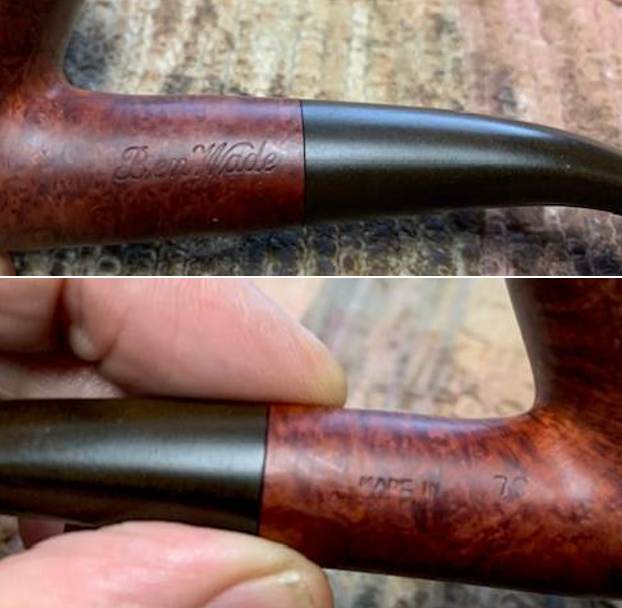
Today I started working on this pipe by turning to the bowl. I chose to deal with the darkening and burn damage on the rim edges and top. I used a folded piece of 220 grit sandpaper to reshape and remove the rim top and damage. It took a little work but I was able to remove all of the darkening. It is a beautiful piece of briar with some great grain.Once rim top was reshaped and reworked I needed to blend them into the rest of the briar. I polished the briar with micromesh sanding pads. I choose to dry sand the briar rather than wet sand it. Again it is a matter of personal preference. I prefer to use the pads dry and find they work very well on the briar. I sand with each pad (9 in total) and group them by threes for ease of reference. I also work over the plateau areas at the same time. I wipe the bowl down after each pad with a damp cloth to remove the sanding debris and check the briar. I love seeing the developing shine on the briar as I move through the pads which is why I include so many photos of this step. For the past few years now I have been using Before & After Restoration Balm. It is a “waxy” paste/balm that is rubbed into the surface of the briar and the plateau. The product works to deep clean the nooks and crannies of finish, enliven and protect the briar. I worked it into the briar with my finger tips and let it sit for 10 minutes to do its work. I wiped it off with a soft cloth and buffed it with a cloth. The briar really took on a deep shine and the grain shone through. The photos I took of the bowl at this point mark the progress in the restoration. It is a gorgeous pipe. Now it was time to address the part of the restoration I leave until last. I set the bowl aside and turned my attention to the stem. The stem was in good nick other than the light oxidation on the top side. There were no tooth marks or chatter so it was simply a matter of polishing the stem and bring back a shine. I use micromesh sanding pads and water to wet sand the stem with 1500-12000 grit sanding pads. I wiped it down after each sanding pad with Obsidian Oil on a cotton rag after each sanding pad as I find it does two things – first it protects the vulcanite and second it give the sanding pads bite in the polishing process. After finishing with the micromesh pads I rub the stem down with Before & After Fine and Extra Fine stem polish as it seems to really remove the fine scratches in the vulcanite. I rub the Fine Polish on the stem and wipe it off with a paper towel and then repeat the process with the extra fine polish. I finish the polishing of the stem down with a final coat of Obsidian Oil and set the stem aside to let the oil absorb. This process gives the stem a shine and also a bit of protection from oxidizing quickly.The final steps in my process involve using the buffer. I first buff the stem and the briar with Blue Diamond on the buffing wheel. Blue Diamond is a plastic polish but I find that it works very well to polish out the light scratches in the vulcanite and the briar. I work the pipe over on the wheel with my finger or thumb in the bowl to keep it from becoming airborne. It works well and I am able to carefully move forward with the buffing. The briar and stem just shone! I finished with the Blue Diamond and moved on to buffing with carnauba wax. Once I have a good shine in the briar and vulcanite I always give the bowl and the stem multiple coats of carnauba wax. I have found that I can get a deeper shine if I following up the wax buff with a clean buffing pad. It works to raise the shine and then I follow that up with a hand buff with a microfiber cloth to deepen the shine. It is always fun for me to see what the polished bowl looks like with the polished vulcanite and acrylic combination stem. It really is a beautiful pipe. The smooth finish around the bowl sides and shank show the grain shining through the rich brown stains of this Charatan’s Make London England Belvedere 110X Bent Billiard with an S. Bang Silver Band. The finished pipe feels great in my hand. It is light and well balanced. Have a look at it with the photos below. The dimensions are Length: 5 ½ inches, Height: 1 ¾ inches, Outside diameter of the bowl: 1 ¼ inches, Chamber diameter: ¾ of an inch. The weight of the pipe is 1.31 ounces/37 grams. It is a beautiful pipe and one that I will be putting on the rebornpipes store in the British Pipe Maker section.

Hopefully the shape writing this blog is helpful to you in some way. In it I wanted to show both what I am looking for and how I move forward in addressing what I see when work on a pipe. Let me know if it is helpful to you. It is probably the most straightforward detailed description of my work process that I have done. As always I encourage your questions and comments as you read the blog. Thanks to each of you who are reading this blog. Remember we are not pipe owners; we are pipemen and women who hold our pipes in trust until they pass on into the trust of those who follow us.

This Stunning Celius Root Denmark Freehand Bishop 13 Came Alive


Blog by Steve Laug

I actually really like the flow and look of Celius pipes but often they are quite large. This one is more moderate. I am looking forward to working on it. I will take you through my process of working on each pipe that we purchase. Jeff has set up a spread sheet to track where the pipe came from, the date of purchase and what we paid for it so that we know what we have invested in the pipe before we even work on it. This takes a lot of the guess work out of the process. This pipe was purchased from an auction on 06/07/2020 from a seller in Cape Coral, Florida, USA so it has been here for a while. I think it is also hepful for you to understand why we take the photos we do. If you have followed for a while then you will see the familiar pattern of the photos we include both in the before and midstream process of working on a pipe. You may even flip through them quickly after the first couple. But it is not accidental or chance that we include these photos. They have been taken to help me make an assessment of the pipe Jeff sees before he starts his clean up work. Over the past 10-12 years (or more) we have honed down what photos I need to look at. The photos also record the condition that the pipe was in when received it and help me assess what kind of work will need to be done on. This is what I see.

  1. The first thing I see is a classic Danish freehand whose shape “chases the grain”. The angles and shape are servant to the grain and this one has great straight and flame grain around the bowl and shank sides.
  2. The smooth finish is dirty with a lot of dust and debris ground into the finish. There is some darkening from hand oils on the sides of the bowl. From the exterior it does not appear that there are any cracks in the grain or in the flaws of the briar.
  3. The angled plateau rim top had a thick lava overflow from the cake in the bowl. The inner edge is darkened and dirty with lava. It is hard to know if there is darkening or damage under the lava. Sometimes the lava protects the rim top and edges and sometime it hides issues. Its is very dirty looking and the lava is certainly heavier on the back side of the top and edges of the bowl..
  4. The bowl has a thick cake that hides the bowl walls but once it is clean we will know what is going on. The outer edges look good and there does not appear to be any obvious burn damage to the bowl walls that is visible through the cake.
  5. The fancy vulcanite saddle stem is in good condition – dirty, heavily oxidized and has light tooth marks and chatter on both sides. There are no logos on the stem sides or top.

Overall my impressions of this pipe is that it is classic Celius as recognizable by the shape of the stem and the cut of the bowl. It will look very good once it is cleaned up. The grain, even in its dirty condition is very stunning. The pipe is a classic Danish Freehand with a shape that follows the grain really well. The photos below confirm the assessment above. The close up photos give a clearer picture of the condition of the bowl, rim edges and plateau top. The rim top photos confirm my assessment above. The rim top and the inner edge of the rim are lava coated. The cake in the bowl is quite thick and the rim top has lava and debris on it. While there is thick lava and darkening there is no visible burn damage at this point. The bowl is still fairly round. The photos of the stem surface from various angles confirmed my assessment of its condition. You can see the dirty condition, the oxidation and the fit against the shank end. The surface has scattered scratching, tooth marks and chatter on both sides. The next photos show the grain around the heel and the sides of the bowl. Tell me what you see? Are there any visible problems that stand out to you? Are the cracks or scratches? Are there visible flaws or fissures in the briar? Do you see a pattern that stands out around the bowl and heel? Any visible issues on the heel of the bowl? Even the questions should help you to see what I am looking for when I see these photos. You have read it a few times now in the previous blogs. What am I looking for when I look at the shank stamp? In this case it is stamped on the underside and reads CELIUS [over] ROOT [over] Denmark in three lines. On the right side near the shank bowl union it reads BISHOP 13. How does the stamping look to you? Is it clear and readable? Is it faint in spots or is it uniform? I know you are looking at photos but so do I at this point in the process. What is your assessment? The only thing I see that makes me wonder is the fill/flaw that goes vertically through the “O” in Bishop. That will need to be explored.An added part of pipe restoration for me is the opportunity to gather background information on a brand and maker to add depth to the restoration. I almost always turn to Pipephil’s site first for a summary. In this case it did not let me down (http://pipephil.eu/logos/en/logo-c3.html). I have included a screen capture of the section below. I have also included a copy of the side bar information that gives a brief glimpse of the brand.Other markings on Celius pipes:

“Root” corresponds to plateau rim pipes. The numerical code on “Chess” pieces designates the shape. Some pipes are stamped “Zenia”. They occurred after his daughter’s birth and are named for her. “Randsborg” or “Randsborg crafted” is a crazy stamping having no special meaning.

Artisan: Svend Axel Celius († 1999) started learning his craft about 1960 at Suhr’s Pibemageri. He opened his own pipe manufacture in 1963 but closed down for unknown reasons in the middle of the 1970’s. Celius continued to realize pipes alone until the late 1980’s.

Two important pipe lines:

  • The “Fantasy” (sometimes stamped “Fancy”) which are eccentric freehand shapes.
    “Fantasy” line grading (ascending): from 1 to 6
  • The “Chess” line is the most important and their gading follow chess pieces.
    “Chess” line grading (ascending): Pawn (sand-blasted), Rook, Knight, Bishop, Queen and King

I turned then to the listing on Pipedia (https://pipedia.org/wiki/Celius). The article there gave much more information on the brand and carver. I have included the information from there below.

Svend Axel Celius started around 1959/60 at Suhr’s Pibemageri in Copenhagen, where he learned the craft of pipemaking from Poul Rasmussen (†), but presumeably even more from Sven Knudsen, Rasmussen’s foreman. Young Celius was obviously a bright boy being one of the very first Danes who sensed the beginning boom for Danish fancy pipes looming first of all in the huge US market. And so he went off for self-employment founding a pipe manufacture in the former dairy building of Bogø By on the small island Bogø in 1963.

So he definitely improved the shining hour, because he was one of the first, who was able to supply these innovative Danish freehands in considerable large numbers to the States. Smaller quantities went to Germany. Here however he didn’t become as famous as in the USA, where especially his better pieces gained cult status. In other respects Celius’ business developed well, too. For instance he was contracted by W.Ø. Larsen of Copenhagen to supply pipes as Hans Jonny Nielsen (→ Former), at that time master of Larsen’s workshop, confirmed. Anyhow, in it’s best times Celius’ manufacture employed close to 20 co-workers.

But all the same, Celius wasn’t able to make this periodically big success an enduring success. If this depended on mercantilistic deficiencies or if the often claimed minor quality of the bulk of his pipes caused the decline, will presumeably remain an unanswered question. As well it mustn’t be disregarded that there were mighty – if not superior – concurrents in the field of mainly machine-made semi-freehands like the manufactures of Erik Nørding, Karl Erik (†), Preben Holm (†), Søren and others more. Celius moved away from Bogø around 1970 and sold his shop and the Celius name to a man named Jens Peter Ransborg, who continued with the business until 1975-76, when he closed the shop. During this period some of the Celius pipes were also stamped “Ransborg”.

Shortly after Ransborg closed the shop, Celius returned to see if he could make another go of it. One of Celius’s original employees was a pipemaker by the name of Henning Andersen who worked part time with Celius during his second run in the business. Andersen’s son, Stig related an account that his father helped with the Celius pipes as well as a small production of handmade pipes for Stanwell. Andersen also worked along side Celius from the beginning on Bogø and later for Ransborg, making many of the fantasy pipes and other handmades. Many thanks to Stig for his help with this information.

The second period was characterized by many ups and downs, and his success remained inconstant and changeable. He never managed to match the top quality of his teacher Rasmussen or the students of Rasmussen’s workshop like Sven Knudsen, Former Nielsen or Tom Eltang. Svend Axel Celius moved to Fyn in the late 1980’s and lived there until his death around 1999/2000

Essentially three lines of Celius pipes can be described:

  • Fantasy line: these are those well-known “wild to slightly crazy” shaped fancy freehands. Predominantly stamped “Fantasy”, there are however also pipes Celius stamped “Fancy”. Today it is sheerly impossible to decide whether “Fantasy” and “Fancy” were temporarily made in coexistence, or whether the “Fancy” functioned more or less as a successor of the “Fantasy” in one of Celius’ new starts. “Fantasy” and “Fancy” both have a grading by number from 1 – 6 (although 5 is unconfirmed). Chip Fadeley, who has owned a grade 2 and 6 has recently acquired a grade 1. Chip reports the following: ” I own a Celius Fantasy stamped #6. I also own another which is a rusticated sitter, and it’s stamped #2. I’ve not met anyone who has heard of or seen a Celius rusticated pipe. The #6 is a smooth pipe with nothing fancy about the straight grain, and plateau briar top and partial on the shank’s end. The shape is somewhat unusual because it has a long pointed front; and it has two separate flat spots on one side to perfectly accommodate the pairs of fingers made next to the index finger and pinky finger of a right-handed person. The stamping Celius Fantasy Denmark appear exactly the same in slant and font style and height on both pipes… The #6 appears to have a rounded bottom when viewing it from the front and back; however, it appears pointed on either side. The index and ring finger can also be used singly with the thumb overtop the shank depending on how you want to hold this pipe…
  • Zenia line: pipes in classical forms. They are named for his daughter Zenia, Celius delivered this line for a limited time only.
  • Chess line: the most important group of Celius pipes. The grading of these typical Danish freehands is borrowed from the chess pieces: Pawn (sand-blasted), Rook, Knight, Bishop, Queen to King. Pipes, where the natural bark of the briar was left at the rim of the bowl, were called and additionally stamped “Root”. Furthermore these pipes had numbers from 1 to 31 (as far as known today). The numbers, we can take that for certain, denominate the shape. But please note that they surely have not the same binding character as the shape numbers of other manufacturers– they rather stand for a basic form, that was modified often.

Remaining a mystery is why some Queen pipes are stamped with additional capital letters and why other (= few) pipes of the Chess line are stamped with “by hand”.

Result: The quality of Celius’ pipes is widely disputed. Lovers of the typical Danish Fancy pipes will however enjoy Celius’ shapes – many of them later appeared again elsewhere. In the Chess line, that is also credited with very independent forms, one may find pipes of partly excellent wood quality from the Knight grade upwards. What tempers delight is the fact that many nice Celius pipe is only good but surely far away from excellent concerning the overall craftsmanship.

That information gave me what I wanted to know on the Celius in hand. It is part of the Chess Line and is a Bishop. The natural bark on the rim top is what designated it as a Root. The pipes were also number from 1-31 and this one is a 13 so either way you count it is middle of the range.

I am sure many of you will shake your head and ask maybe even out loud, “Why is he including this again?” However, please remember that the point of these blogs is not to wow your with the work or make you shake your heads but I want you to know the details of the work we do so you can do your own. Back in 2020 Jeff wrote a blog about his cleaning process. I am including a link to that now so you can see what I mean about his process. Do not skip it! Give it a read (https://rebornpipes.com/2020/01/20/got-a-filthy-estate-pipe-that-you-need-to-clean/). Here is the introduction to that blog and it is very true even to this day.

Several have asked about Jeff’s cleaning regimen as I generally summarize it in the blogs that I post rather than give a detailed procedure. I have had the question asked enough that I asked Jeff to put together this blog so that you can get a clear picture of the process he uses. Like everything else in our hobby, people have different methods they swear by. Some may question the method and that is fine. But it works very well for us and has for many years. Some of his steps may surprise you but I know that when I get the pipes from him for my part of the restoration they are impeccably clean and sanitized. I have come to appreciate the thoroughness of the process he has developed because I really like working on clean pipe!

For the benefit of some of you who may be unfamiliar with some of the products he uses I have included photos of three of the items that Jeff mentions in his list. This will make it easier for recognition. These three are definitely North American Products so you will need to find suitable replacements or order these directly on Amazon. The makeup pads are fairly universal as we were able to pick some up in India when we were with Paresh and his family.

In the blog itself he breaks his process down into two parts – cleaning the stem and cleaning the bowl. Each one has a large number of steps that he methodically does every time. I know because I have watched him do the work and I have seen the pipes after his work on them. He followed this process step by step and when the pipe got to me it was spotlessly clean and ready for my work. The inside of the stem, shank and bowl were clean and to me that is an amazing gift as it means that my work on this end is with a clean pipe! I cannot tell you how much difference that makes for my work.

When the pipe arrives here in Vancouver I have a clean pipe and I go over it keeping in mind my assessment shared in the opening paragraph above. Now that I have it in hand I am looking for confirmation of what I saw in the photos as well as any significant structural changes in the bowl and finish as I go over it.

  1. It really is a nice looking freehand who shape does “chase the grain” like I expected from the photos above. The grain is even better in person than in the photos.
  2. The smooth finish is very clean dust and debris is gone. The oils came out of the sides of the bowl leaving behind the rich grain. The pipe was very smooth finish in the hand and looks great. There are no cracks showing up around the bowl and shank. It is sound on the outside. I will need to polish the briar and buff it to bring back the shine.
  3. The angled plateau rim top is clean from lava and the cake is clear of the bowl. The inner edge is darkened and shows some damage once the lava is gone.
  4. The bowl was very clean and smelled clean. The clean walls did not show evidence of checking or cracking. There were no hot spots or damage on the walls or around the entrance of the airway into the bowl. It was clean and smooth which is great news for me. Both the shank and the bowl were very clean showing no debris on a clean pipe clean run through them. I would need to give it a final cleaning with pipe cleaners and alcohol once I had finished with the external work to remove the debris that may have collected there in the process.
  5. The fancy vulcanite saddle stem is in good condition – it cleaned up very well. All oxidation is gone. It is a little rough to the touch and the light chatter and tooth marks are clearly not deep at all. The fit of the stem to the shank end is well done.

Hopefully the steps above show you both what I look for when I go over the pipe when I bring it to the work table and also what I see when I look at the pipe in my hands. They also clearly spell out a restoration plan in short form. My work is clear and addressing it will be the next steps. I took photos of the whole pipe to give you a picture of what I see when I have it on the table. This is important to me in that it also shows that there was no damage done during the clean up work or the transit of the pipe from Idaho to here in Vancouver. I carefully went over the bowl and rim top to get a sense of what is happening there. In this case once the lava was removed, darkening to the edge and top was revealed as well as some roughness on the inner edge. The rim top and edges otherwise look very good. I also go over the stem carefully. There were light tooth marks or dents in the stem surface or button. I took photos of the rim top and stem sides to show what I see when I look at them. I always check to make sure that the clean up work did not damage the stamping on the shank in any way. It looks very good still. I like to remove the stem from the shank to get a sense of what was in the mind of the pipe maker when he crafted the pipe. It is a beauty in flow and shape. By this time you should know that I almost always start with the bowl in my restoration because I truly do not like the tedious work of stem repairs and polishing. I always leave that until last even though I know that it needs to be done. For me the encouragement of seeing a rejuvenated bowl is the impetus I need to attack the stem work.
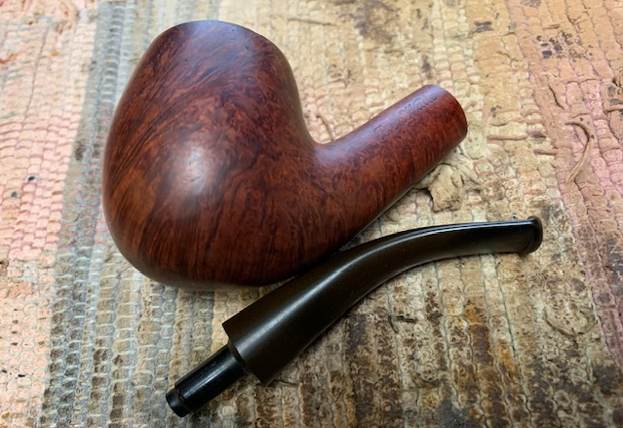
Today I started working on this pipe by turning to the bowl. I chose to deal with the darkening and burn damage on the rim edges and top. I used a folded piece of 220 grit sandpaper to reshape and remove the rim top and damage. It took a little work but I was able to remove all of the darkening. It is a beautiful piece of briar with some great grain.Once rim top was reshaped and reworked I needed to blend it into the rest of the briar. I polished the briar with micromesh sanding pads. I choose to dry sand the briar rather than wet sand it. Again it is a matter of personal preference. I prefer to use the pads dry and find they work very well on the briar. I sand with each pad (9 in total) and group them by threes for ease of reference. I also work over the plateau areas at the same time. I wipe the bowl down after each pad with a damp cloth to remove the sanding debris and check the briar. I love seeing the developing shine on the briar as I move through the pads which is why I include so many photos of this step. For the past few years now I have been using a product called Before & After Restoration Balm. It is a paste/balm that is rubbed into the surface of the briar. The product works to deep clean the finish, enliven and protect the briar. I worked it into the briar with my finger tips and into the plateau with a horse hair shoe brush. I let it sit for 10 minutes to do its work. I wiped it off with a soft cloth then buffed it with a cotton cloth. The briar really began to have a deep shine in the briar and the grain shone through. The photos I took of the bowl at this point mark the progress in the restoration. It is a gorgeous pipe. Now it was time to address the part of the restoration I leave until last. I set the bowl aside and turned my attention to the stem. The stem was in good nick other than the light tooth chatter on both sides. I like to try to lift the tooth marks as much as possible before doing further repairs on the surface. I “painted” the stem with the flame of a Bic lighter to lift the marks in the stem. It worked really well and sanding would take care of the rest. I sanded the remaining marks out with a folded piece of 220 grit sandpaper and polished it with 600 grit sandpaper. I was happy with the results. Once finished removing the tooth chatter it is time to polish the stem. I use micromesh sanding pads and water to wet sand the stem with 1500-12000 grit sanding pads. After the first three pads I touched up the stamping on the stem with White Acrylic Fingernail Polish. I scraped it off with my fingernail and repeated the 2400 grit sanding pad. It looked much better. I picked up where I left off with 3200-12000 grit pads. I wiped it down after each sanding pad with Obsidian Oil on a cotton rag after each sanding pad as I find it does two things – first it protects the vulcanite and second it give the sanding pads bite in the polishing process. After finishing with the micromesh pads I rub the stem down with Before & After Fine and Extra Fine stem polish as it seems to really remove the fine scratches in the vulcanite. I rub the Fine Polish on the stem and wipe it off with a paper towel and then repeat the process with the extra fine polish. I finish the polishing of the stem down with a final coat of Obsidian Oil and set the stem aside to let the oil absorb. This process gives the stem a shine and also a bit of protection from oxidizing quickly.The final steps in my process involve using the buffer. I first buff the stem and the briar with Blue Diamond on the buffing wheel. Blue Diamond is a plastic polish but I find that it works very well to polish out the light scratches in the vulcanite and the briar. I work the pipe over on the wheel with my finger or thumb in the bowl to keep it from becoming airborne. It works well and I am able to carefully move forward with the buffing. The briar and stem just shone! I finished with the Blue Diamond and moved on to buffing with carnauba wax. Once I have a good shine in the briar and vulcanite I always give the bowl and the stem multiple coats of carnauba wax. I have found that I can get a deeper shine if I following up the wax buff with a clean buffing pad. It works to raise the shine and then I follow that up with a hand buff with a microfiber cloth to deepen the shine. It is always fun for me to see what the polished bowl looks like with the polished vulcanite stem. It really is a beautiful pipe. The smooth finish around the bowl sides and shank show the grain shining through the rich brown stains and the dark brown stain of the plateau rim top looks perfect on this Celius Root Denmark Bishop 13 Freehand. The finished pipe feels great in my hand. It is light and well balanced. Have a look at it with the photos below. The dimensions are Length: 6 inches, Height: 3 inches, Outside diameter of the bowl: 1 ¾ inches, Chamber diameter: 7/8 of an inch. The weight of the pipe is 1.90 ounces/54 grams. It is a beautiful pipe and one that I will be putting on the rebornpipes store in the Danish Pipe Maker section.

Hopefully the shape writing this blog is helpful to you in some way. In it I wanted to show both what I am looking for and how I move forward in addressing what I see when work on a pipe. Let me know if it is helpful to you. It is probably the most straightforward detailed description of my work process that I have done. As always I encourage your questions and comments as you read the blog. Thanks to each of you who are reading this blog. Remember we are not pipe owners; we are pipemen and women who hold our pipes in trust until they pass on into the trust of those who follow us.

Reviving a Rather Unsettling Folk Art Carved Meerschaum


One of the joys of meerschaum is that it is fairly easy to carve and thus meerschaum pipes come in just about every shape imaginable, from basic …

Reviving a Rather Unsettling Folk Art Carved Meerschaum

Restoring a Beautiful Georg Jensen Made in Denmark Pipes 72 EKSTRA Scoop


Blog by Steve Laug

Once again in this write up and I will take you through my process of working on each pipe that we purchase. Jeff has set up a spread sheet to track where the pipe came from, the date of purchase and what we paid for it so that we know what we have invested in the pipe before we even work on it. This takes a lot of the guess work out of the process. This particular pipe was purchased in a group of pipes we purchased on 01/26/2023 from the a fellow Copenhagen, Denmark. I also want you to understand why we take the photos we do. If you have followed for a while then you will see the familiar pattern of the photos we include both in the before and midstream process of working on a pipe. It is not accidental or chance as the photos have been taken to help me make an assessment of the pipe Jeff sees before he starts his clean up work. We do this to record the condition that the pipe was in when received it and to assess what kind of work will need to be done on. When I look at these photos this is what I see.

  1. The first thing I see is a classic Danish looking scoop with some great cross grain and birdseye around the bowl and shank sides
  2. The smooth finish is dirty with a lot of dust and debris ground into the finish. From the exterior it does not appear that there are any cracks in the grain or in the flaws of the briar.
  3. The crowned rim top had a thick lava overflow from the cake in the bowl. The inner edge is darkened and dirty with lava. It is hard to know if there is darkening or damage under the lava. Sometimes the lava protects the rim top and edges and sometime it hides issues. Its is very dirty looking and the lava is certainly heavier on the right side of the top and edges of the bowl..
  4. The bowl has a thick cake in it with tobacco debris stuck to the sides. The cake hides the bowl walls but once it is clean we will know what is going on. The outer edges look good and there does not appear to be any obvious burn damage to the bowl walls that is visible through the cake.
  5. The vulcanite saddle stem is in good condition – dirty, lightly oxidized and has light tooth chatter on both sides. There a GJ (Georg Jensen) logo on the left side of the saddle stem.

Overall my impressions of this pipe is that it is another unique beauty that once cleaned up will look very good. The exterior of the bowl does not show any hot spots or darkening. The pipe is a classic Danish Scoop with a shape that follows the grain really well. The photos below confirm the assessment above.        Jeff took close up photos so that I could have a clearer picture of the condition of the bowl, rim edges and crowned top. The rim top photos confirm my assessment above. The rim top and the inner edge of the rim are lava coated. The cake in the bowl is quite thick and the rim top has lava and debris on it. While there is thick lava and darkening there is no visible burn damage at this point. The bowl is still fairly round. The photos of the stem surface from various angles confirmed my assessment of its condition. You can see the dirty condition, the oxidation and the fit against the shank end. The surface was free of tooth marks but has scattered scratching and chatter on both sides. The next photos show the grain around the heel and the sides of the bowl. Tell me what you see? Are there any visible problems that stand out to you? Are the cracks or scratches? Are there visible flaws or fissures in the briar? Do you see a pattern that stands out around the bowl and heel? Any visible issues on the heel of the bowl? Even the questions should help you to see what I am looking for when I see these photos. You have read it a few times now in the previous blogs. What am I looking for when I look at the shank stamp? In this case it is stamped on the left side and reads GEORG JENSEN [over] made in Denmark PIPES in two lines. On the right side is reads 72 EKSTRA. On the underside of the shank it is stamped 47. How does the stamping look to you? Is it clear and readable? Is it faint in spots or is it uniform? I know you are looking at photos but so do I at this point in the process. How does the logo look on the side of the saddle stem? It is an interlocked GJ logo. What is its condition? An added part of pipe restoration for me is the opportunity to gather background information on a brand and maker to add depth to the restoration. I almost always turn to Pipephil’s site first for a summary. In this case it did not let me down (http://www.pipephil.eu/logos/en/logo-g2.html#georgjensen). It has a longer listing for the Georg Jensen Brand. I have included a screen capture of the section below. I have also included a copy of the side bar information that gives a brief glimpse of the brand.Per Georg Jensen managed the Georg Jensen Pipe brand during 23 years and is currently (2011) active as “Tobacco Professor” at Mac Baren Tobacco Company. See also: Danets, North Dane Pipes, White Star, Goodwill

I turned then to Pipedia (https://pipedia.org/wiki/Georg_Jensen) and found a short listing on Georg Jensen. I have included it below.

The Georg Jensen pipe factory was founded by Per Georg Jensen and his wife in 1954, in Kopenhagen, Denmark. Since the 80s the company is under the management of his daughter Lis, and his son with the same name, Per Georg Jensen. The company manufactured around 2,000 factory pipes per year. Among the top of the line pipes are hand carved special editions and free hands.

Top of the Line models of Georg Jensen have vulcanite or ebonite stems, factory pipes usually have acrylic stems.

Factory pipes (in increasing quality) were marked:

Danish Sand Achat / Amber Red Flame / Red Skin Sunrise / Orange extra / Starline Contrast / Bicolour / Harmon Excellent / Masterpiece

Pipes were commonly marked (in increasing quality) with: MODEL + MODEL NUMBER + “Made in Denmark”, GJ stamp in red on the stem. MODEL NUMBER + “Georg Jensen” in italic or fancy font.

Extremely rare and collectible freehands were marked with: “Straight Grain” and a number that discerns the grading from 1 (lowest) to 13 (highest).

Special edition pipes were marked with: MODEL + MODEL NUMBER + “Handmade in Denmark” + GJ stamp in white on the stem.

The factory closed down in 2001 when Per Georg Jensen (Jr) became “Tobacco Professor” for MacBaren Tobacco house.

I am sure many of you will shake your head and ask maybe even out loud, “Why is he including this again?” However, please remember that the point of these blogs is not to wow your with the work or make you shake your heads but I want you to know the details of the work we do so you can do your own. Back in 2020 Jeff wrote a blog about his cleaning process. I am including a link to that now so you can see what I mean about his process. Do not skip it! Give it a read (https://rebornpipes.com/2020/01/20/got-a-filthy-estate-pipe-that-you-need-to-clean/). Here is the introduction to that blog and it is very true even to this day.

Several have asked about Jeff’s cleaning regimen as I generally summarize it in the blogs that I post rather than give a detailed procedure. I have had the question asked enough that I asked Jeff to put together this blog so that you can get a clear picture of the process he uses. Like everything else in our hobby, people have different methods they swear by. Some may question the method and that is fine. But it works very well for us and has for many years. Some of his steps may surprise you but I know that when I get the pipes from him for my part of the restoration they are impeccably clean and sanitized. I have come to appreciate the thoroughness of the process he has developed because I really like working on clean pipe!

For the benefit of some of you who may be unfamiliar with some of the products he uses I have included photos of three of the items that Jeff mentions in his list. This will make it easier for recognition. These three are definitely North American Products so you will need to find suitable replacements or order these directly on Amazon. The makeup pads are fairly universal as we were able to pick some up in India when we were with Paresh and his family.

In the blog itself he breaks his process down into two parts – cleaning the stem and cleaning the bowl. Each one has a large number of steps that he methodically does every time. I know because I have watched him do the work and I have seen the pipes after his work on them. He followed this process step by step and when the pipe got to me it was spotlessly clean and ready for my work. The inside of the stem, shank and bowl were clean and to me that is an amazing gift as it means that my work on this end is with a clean pipe! I cannot tell you how much difference that makes for my work.

When the pipe arrives here in Vancouver I have a clean pipe and I go over it keeping in mind my assessment shared in the opening paragraph above. Now that I have it in hand I am looking for confirmation of what I saw in the photos as well as any significant structural changes in the bowl and finish as I go over it.

  1. It really is a nice looking Scoop with flat bottom that helps it act as a sitter. The grain is even better in person than in the photos.
  2. The smooth finish is very clean dust and debris is gone. It is a very smooth finish in the hand and looks great. There are no cracks showing up around the bowl and shank. It is sound on the outside. I will need to polish the briar and buff it to bring back the shine.
  3. The rim top is clean of the lava looked very good and also looked very clean. There is some darkening on the top and around the inner edge of the bowl. Interestingly not only is the rim crowned but it also higher on the front and back than the sides – a swoop. The good news for me is that there are no cracks showing up in the rim top. The rim top and edges were sound.
  4. The bowl was very clean and smelled clean. The clean walls did not show evidence of checking or cracking. There were no hot spots or damage on the walls or around the entrance of the airway into the bowl. It was clean and smooth which is great news for me. Both the shank and the bowl were very clean showing no debris on a clean pipe clean run through them. I would need to give it a final cleaning with pipe cleaners and alcohol once I had finished with the external work to remove the debris that may have collected there in the process.
  5. The vulcanite saddle stem is in good condition – it cleaned up very well. All oxidation is gone. It is a little rough to the touch and the light chatter is not deep at all. The GJ logo on the stem needs to be touched but looks good. The fit of the stem to the shank end is well done.

Hopefully the steps above show you both what I look for when I go over the pipe when I bring it to the work table and also what I see when I look at the pipe in my hands. They also clearly spell out a restoration plan in short form. My work is clear and addressing it will be the next steps. I took photos of the whole pipe to give you a picture of what I see when I have it on the table. This is important to me in that it also shows that there was no damage done during the clean up work or the transit of the pipe from Idaho to here in Vancouver. I carefully went over the bowl and rim top to get a sense of what is happening there. In this case once the lava was removed darkening to the edge and top was revealed as well as some roughness on the inner edge. The rim top and edges otherwise look very good. I also go over the stem carefully. There were no tooth marks or dents in the stem surface or button. I could see the GJ stamping on the stem and it looked good. I would need to refresh the white paint on the logo. I took photos of the rim top and stem sides to show what I see when I look at them.I always check to make sure that the clean up work did not damage the stamping on the shank in any way. It looks very good still. We had missed the stamp on the right side of the shank that read 72 EKSTRA in the photos above. From the information on the brand it appears that it is the shape number and the line of Jensen Pipes that this one belonged to. I like to remove the stem from the shank to get a sense of what was in the mind of the pipe maker when he crafted the pipe. It is a beauty in flow and shape.By this time you should know that I almost always start with the bowl in my restoration because I truly do not like the tedious work of stem repairs and polishing. I always leave that until last even though I know that it needs to be done. For me the encouragement of seeing a rejuvenated bowl is the impetus I need to attack the stem work.

Today I started working on this pipe by turning to the bowl. I chose to deal with the darkening and burn damage on the rim edges and top. I used a folded piece of 220 grit sandpaper to reshape and remove the rim top and damage. It took a little work but I was able to remove all of the darkening. It is a beautiful piece of briar with some great grain.Once rim top was reshaped and reworked I needed to blend it into the rest of the briar. I polished the briar with micromesh sanding pads. I choose to dry sand the briar rather than wet sand it. Again it is a matter of personal preference. I prefer to use the pads dry and find they work very well on the briar. I sand with each pad (9 in total) and group them by threes for ease of reference. I also work over the plateau areas at the same time. I wipe the bowl down after each pad with a damp cloth to remove the sanding debris and check the briar. I love seeing the developing shine on the briar as I move through the pads which is why I include so many photos of this step. For the past few years now I have been using a product developed by Mark Hoover called Before & After Restoration Balm. It is a paste/balm that is rubbed into the surface of the briar. The product works to deep clean the finish, enliven and protect the briar. I worked it into the briar with my finger tips and let it sit for 10 minutes to do its work. I wiped it off with a soft cloth then buffed it with a cotton cloth. The briar really began to have a deep shine in the briar and the grain shone through. The photos I took of the bowl at this point mark the progress in the restoration. It is a gorgeous pipe. Now it was time to address the part of the restoration I leave until last. I set the bowl aside and turned my attention to the stem. The stem was in good nick other than the light tooth chatter on both sides. I decided to smooth them out with a folded piece of 220 grit sandpaper and polished it with 600 grit sandpaper. I was happy with the results.Once finished removing the tooth chatter it is time to polish the stem. I use micromesh sanding pads and water to wet sand the stem with 1500-12000 grit sanding pads. After the first three pads I touched up the stamping on the stem with White Acrylic Fingernail Polish. I scraped it off with my fingernail and repeated the 2400 grit sanding pad. It looked much better. I picked up where I left off with 3200-12000 grit pads. I wiped it down after each sanding pad with Obsidian Oil on a cotton rag after each sanding pad as I find it does two things – first it protects the vulcanite and second it give the sanding pads bite in the polishing process. After finishing with the micromesh pads I rub the stem down with Before & After Fine and Extra Fine stem polish as it seems to really remove the fine scratches in the vulcanite. I rub the Fine Polish on the stem and wipe it off with a paper towel and then repeat the process with the extra fine polish. I finish the polishing of the stem down with a final coat of Obsidian Oil and set the stem aside to let the oil absorb. This process gives the stem a shine and also a bit of protection from oxidizing quickly.The final steps in my process involve using the buffer. I first buff the stem and the briar with Blue Diamond on the buffing wheel. Blue Diamond is a plastic polish but I find that it works very well to polish out the light scratches in the vulcanite and the briar. I work the pipe over on the wheel with my finger or thumb in the bowl to keep it from becoming airborne. It works well and I am able to carefully move forward with the buffing. The briar and stem just shone! I finished with the Blue Diamond and moved on to buffing with carnauba wax. Once I have a good shine in the briar and vulcanite I always give the bowl and the stem multiple coats of carnauba wax. I have found that I can get a deeper shine if I following up the wax buff with a clean buffing pad. It works to raise the shine and then I follow that up with a hand buff with a microfiber cloth to deepen the shine. It is always fun for me to see what the polished bowl looks like with the polished vulcanite stem. It really is a beautiful pipe. The smooth finish around the bowl sides and shank show the grain shining through the rich brown stains of this Georg Jensen Made in Denmark Pipes 72 EKSTRA Scoop. The finished pipe feels great in my hand. It is light and well balanced. Have a look at it with the photos below. The dimensions are Length: 5 inches, Height: 1 ½ inches, Outside diameter of the bowl: 1 ½ inches, Chamber diameter: ¾ of an inch. The weight of the pipe is 1.41 ounces/40 grams. It is a beautiful pipe and one that I will be putting on the rebornpipes store in the Danish Pipe Maker section.
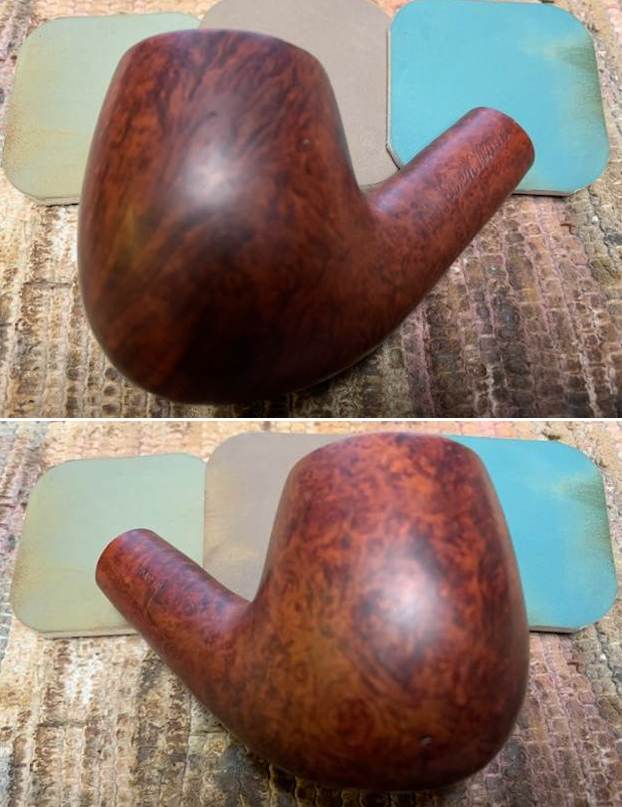
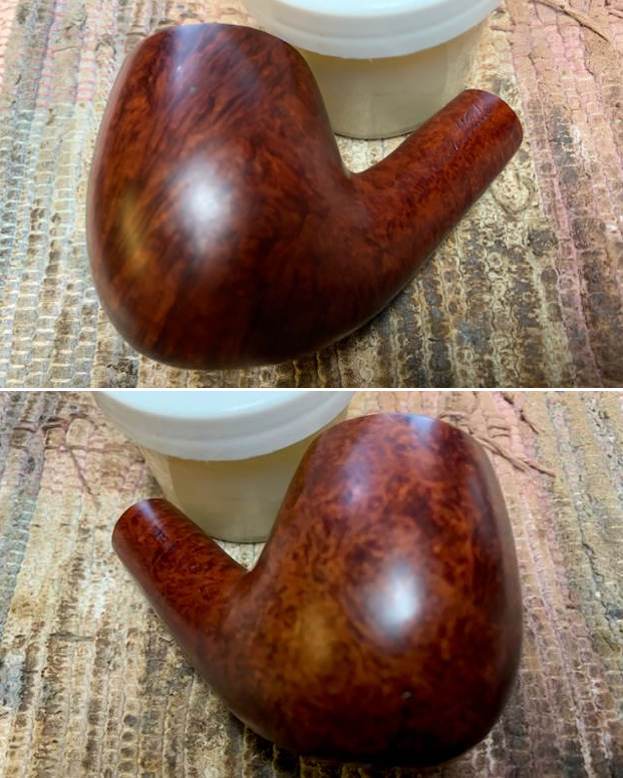
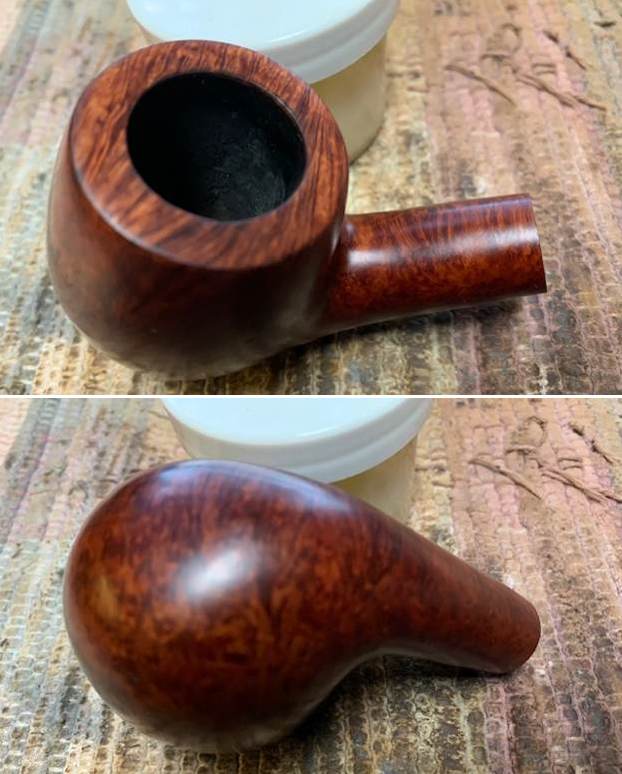
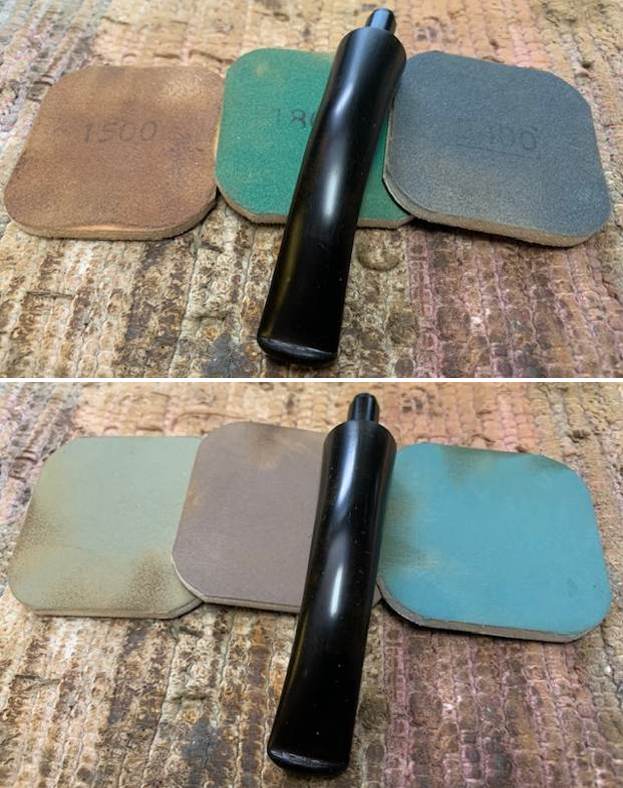
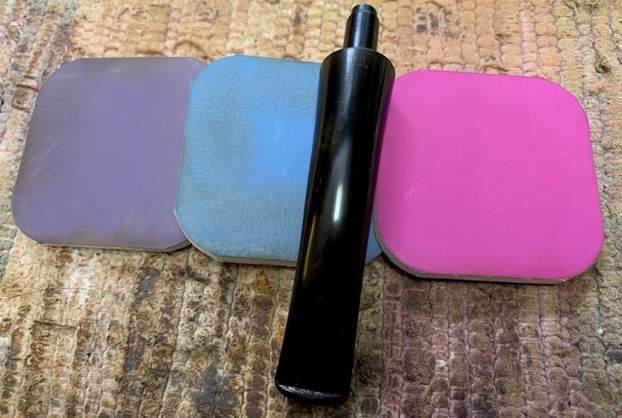
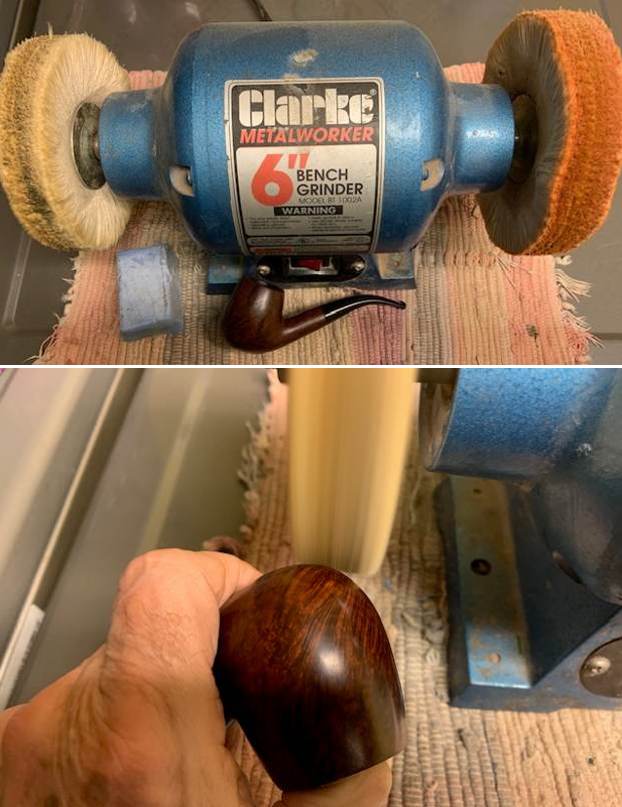
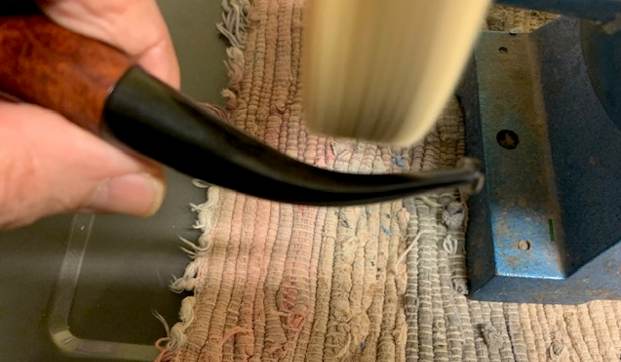
Hopefully the shape writing this blog is helpful to you in some way. In it I wanted to show both what I am looking for and how I move forward in addressing what I see when work on a pipe. Let me know if it is helpful to you. It is probably the most straightforward detailed description of my work process that I have done. As always I encourage your questions and comments as you read the blog. Thanks to each of you who are reading this blog. Remember we are not pipe owners; we are pipemen and women who hold our pipes in trust until they pass on into the trust of those who follow us.