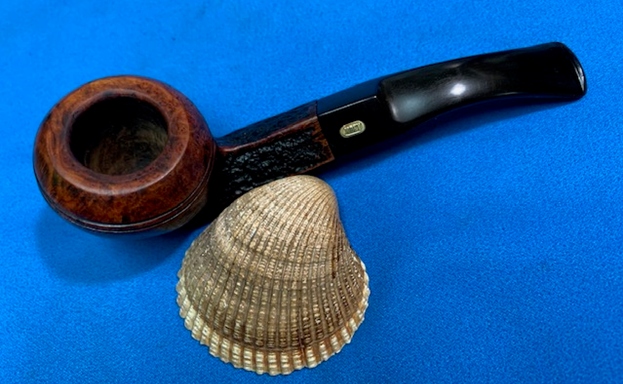
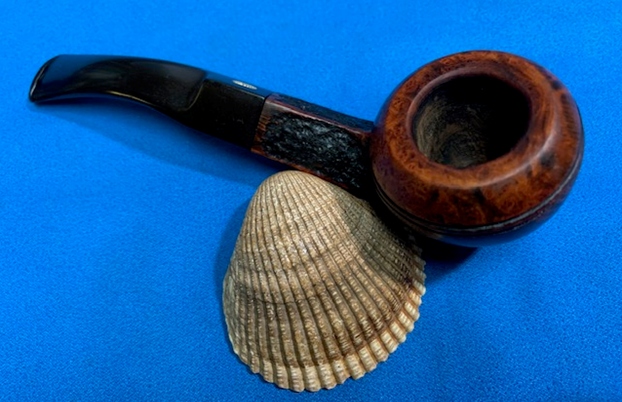
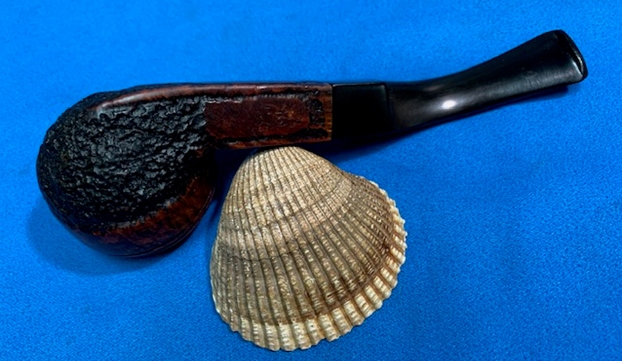
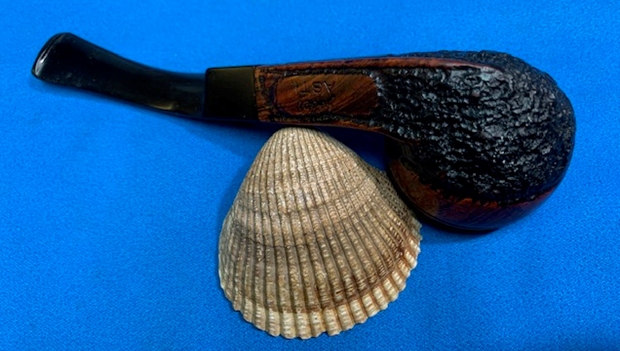
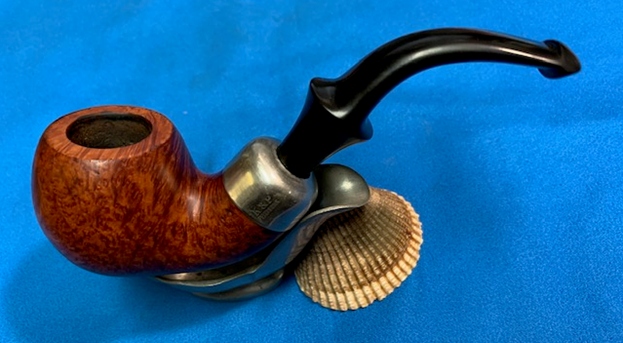
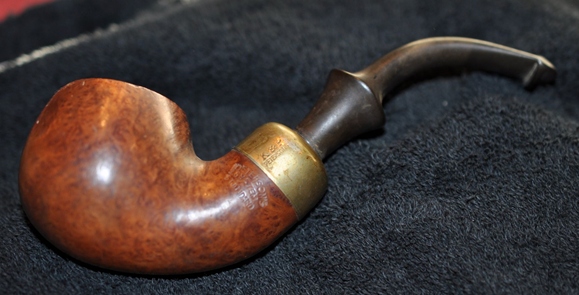
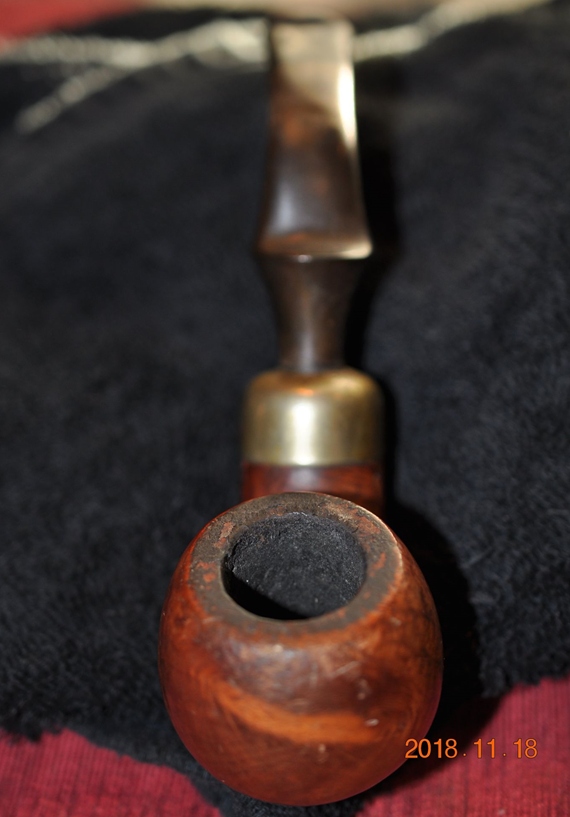
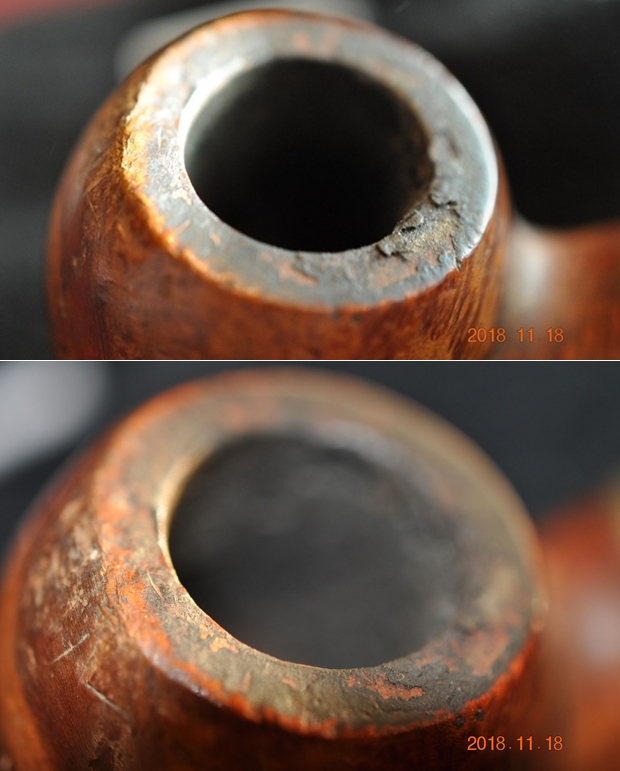
Monthly Archives: December 2020

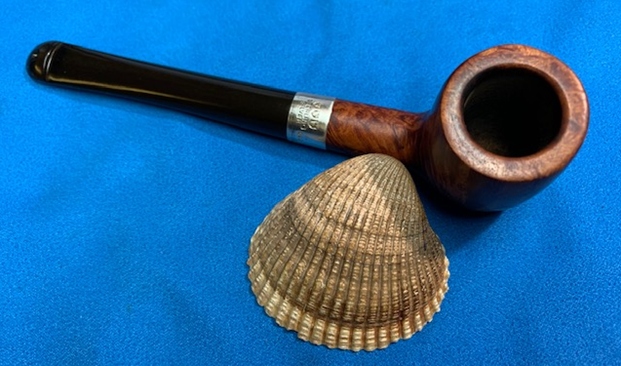
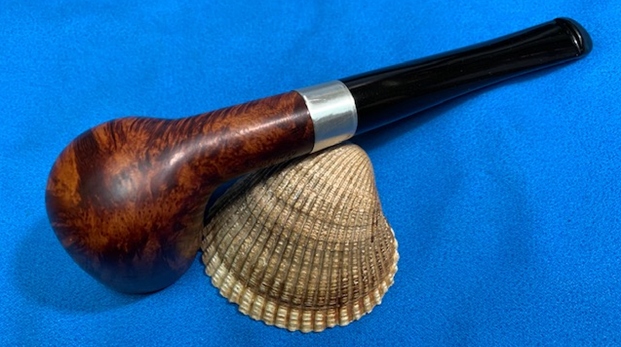
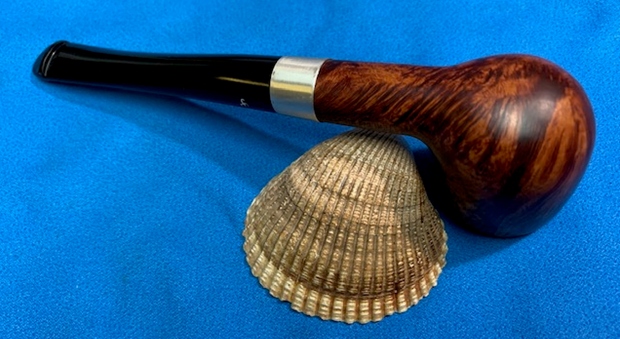
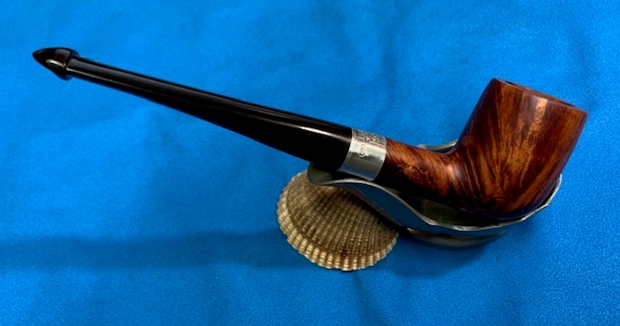
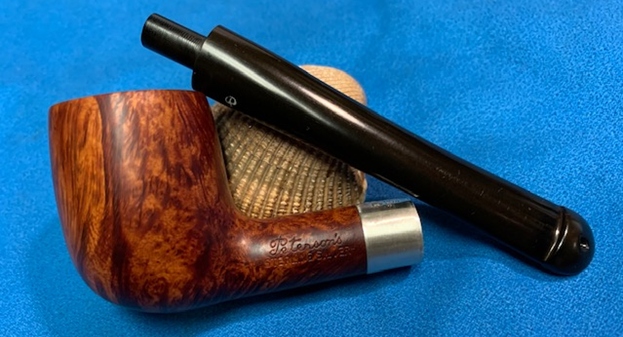
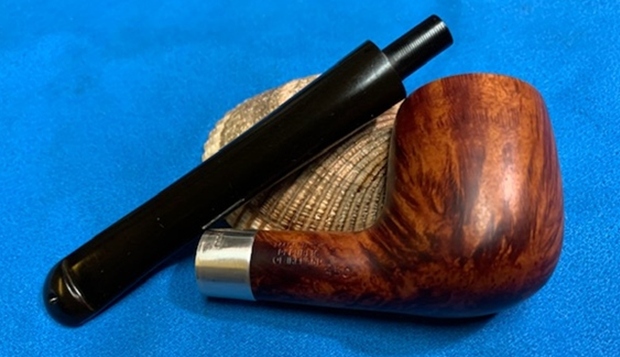
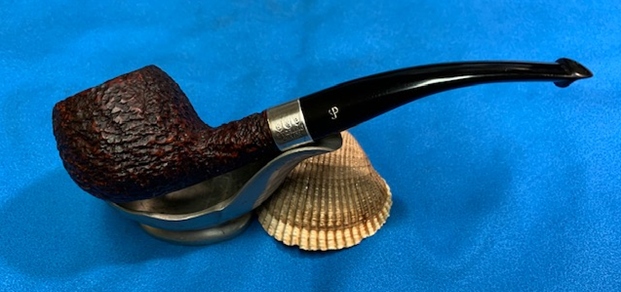
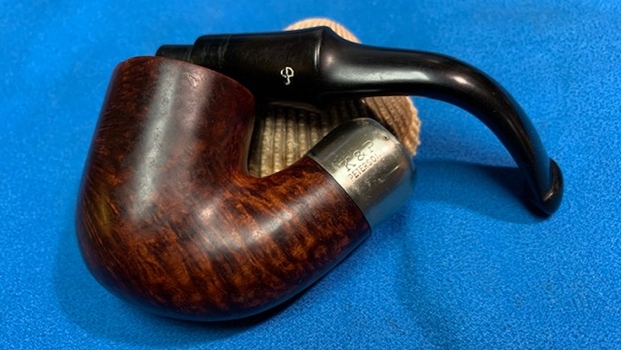
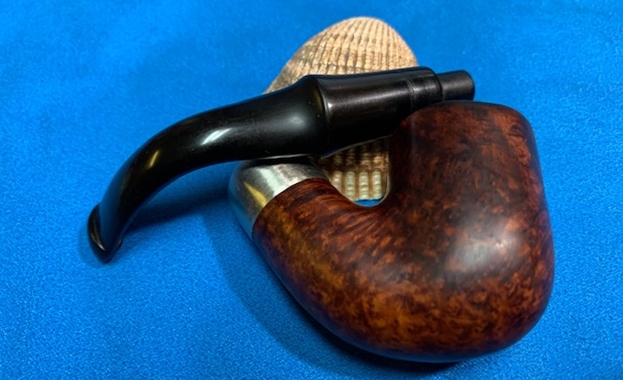
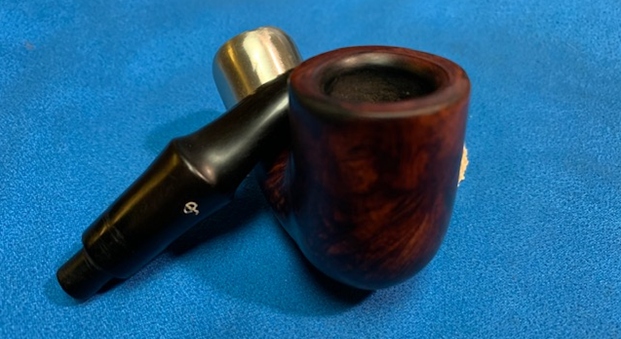
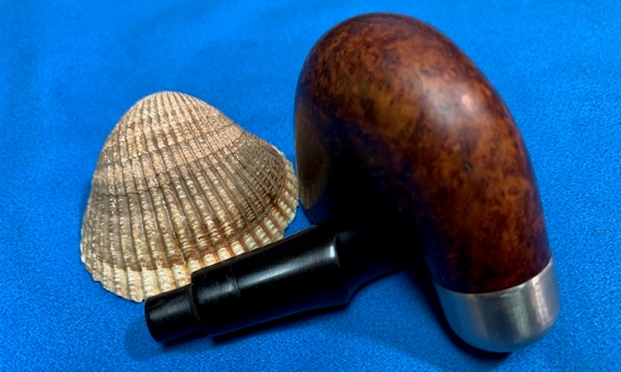
Breathing Life a Peterson’s Republic Era 1999 “Sterling Silver” 450 Billiard


Blog by Steve Laug

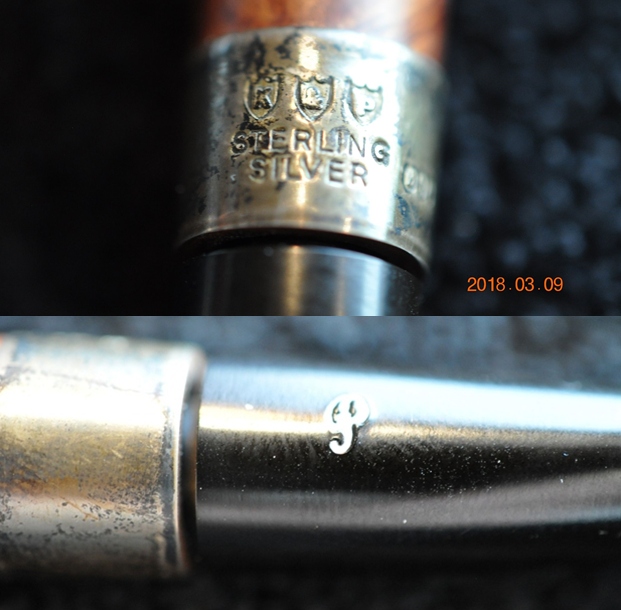
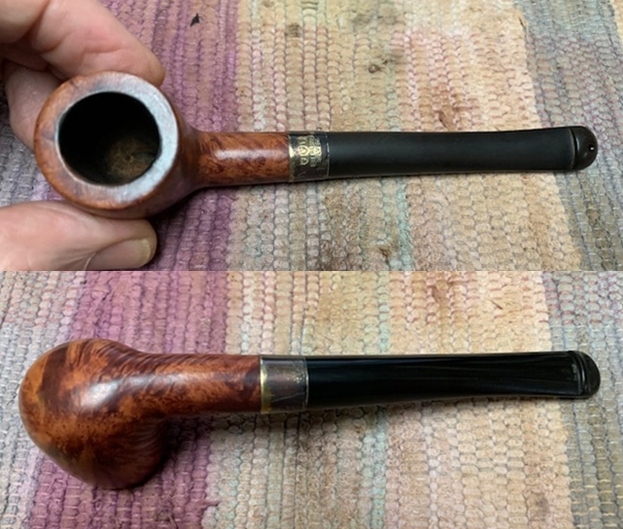
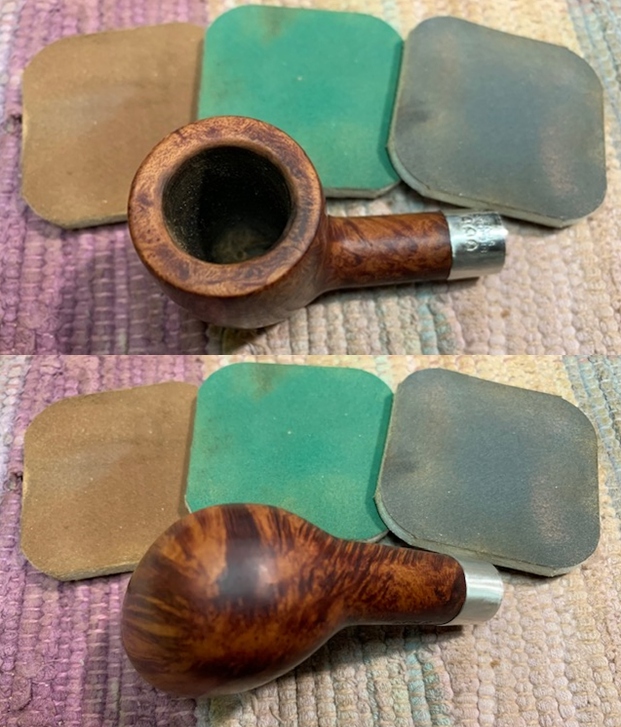
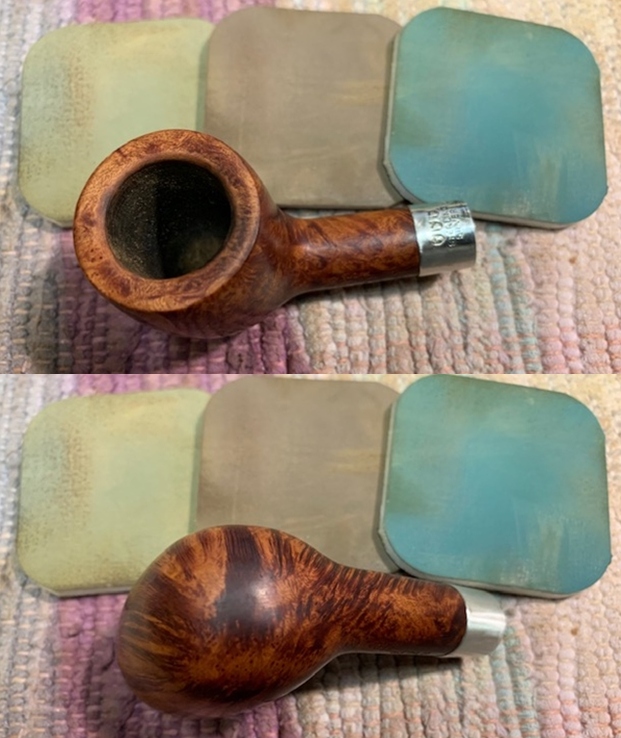
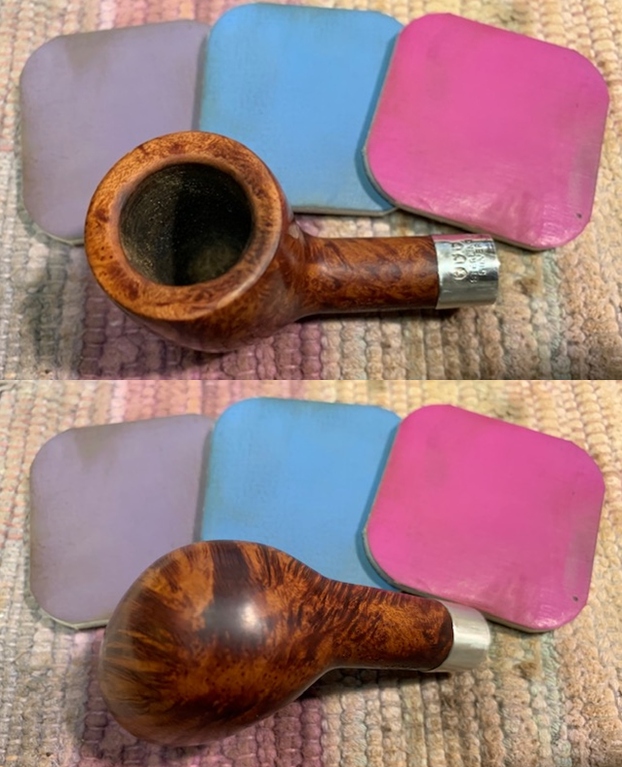
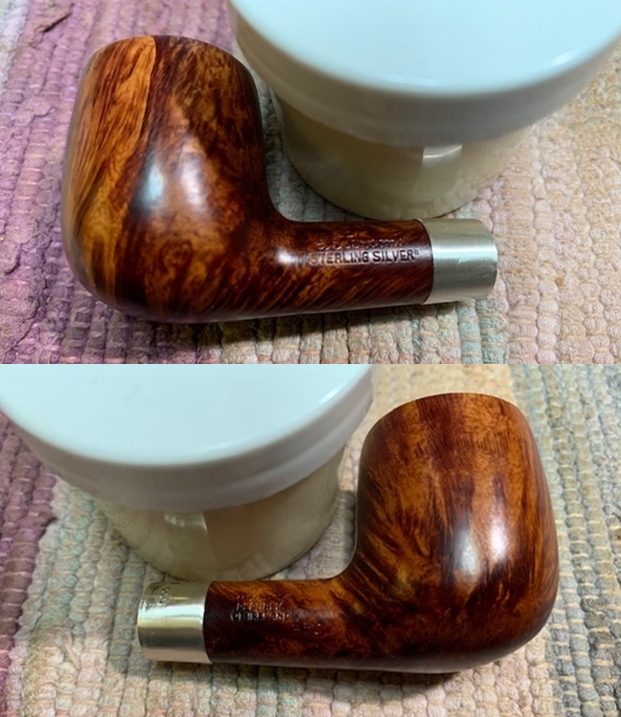
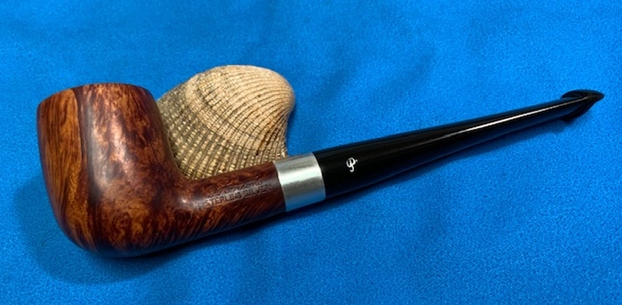
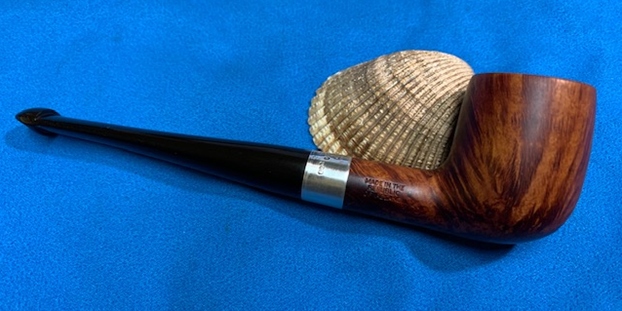
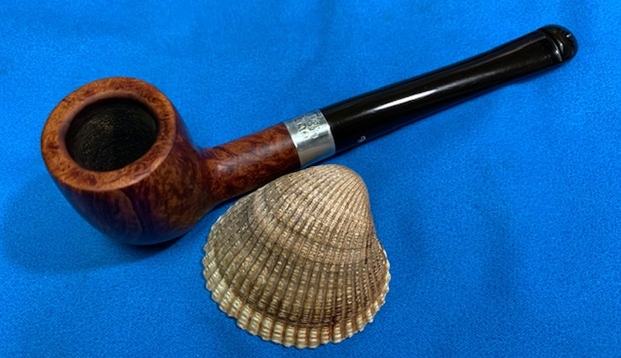
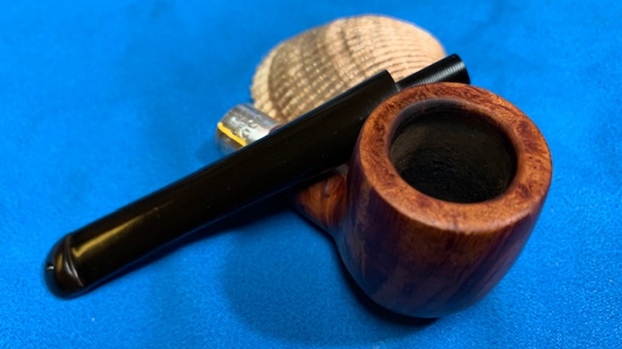
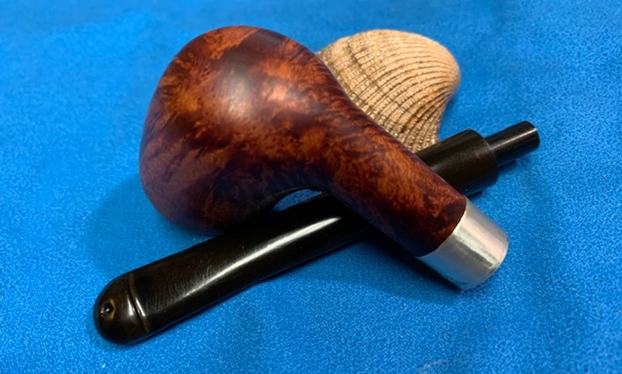
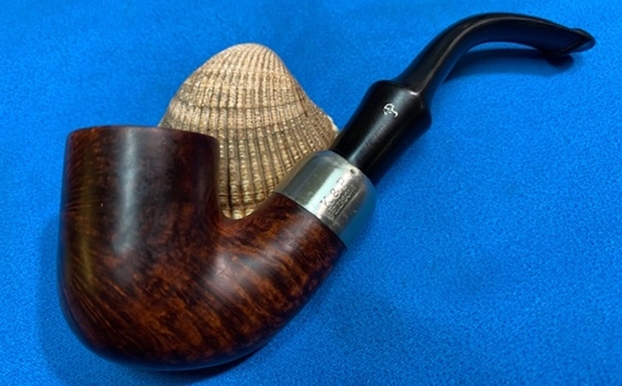
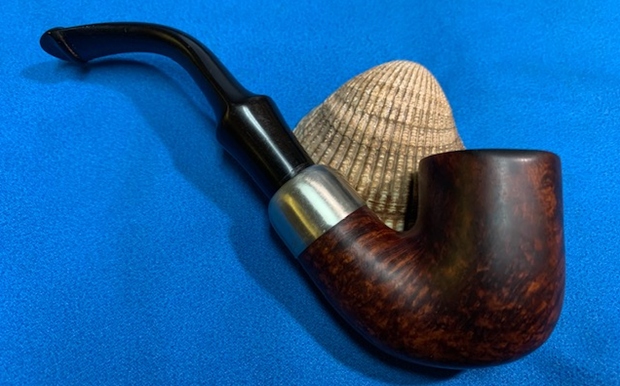
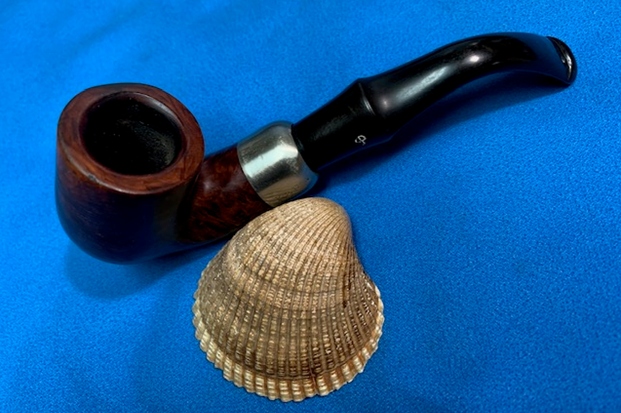
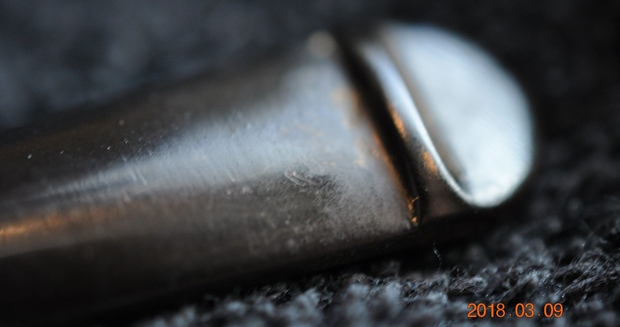
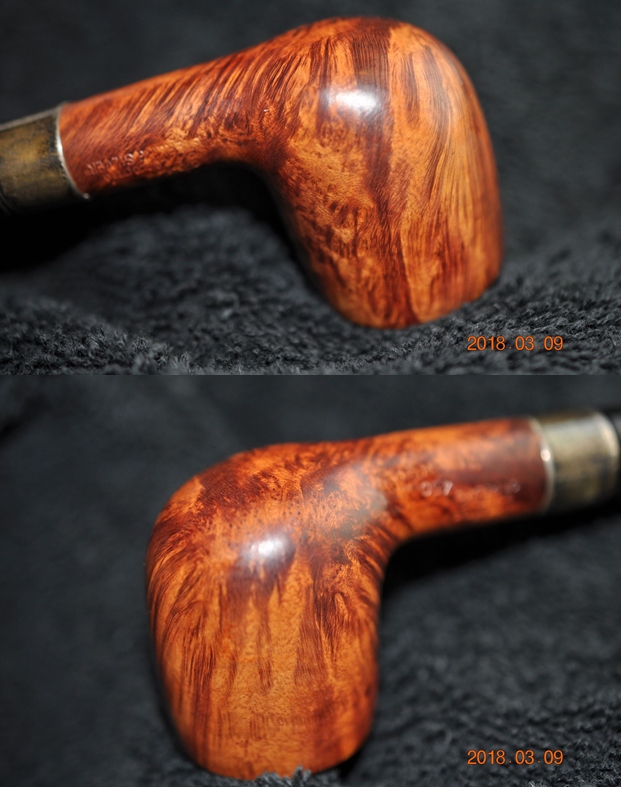
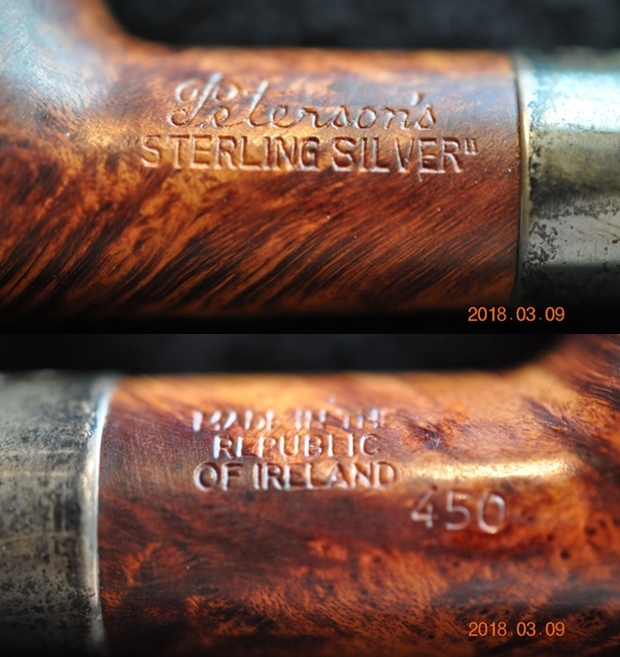
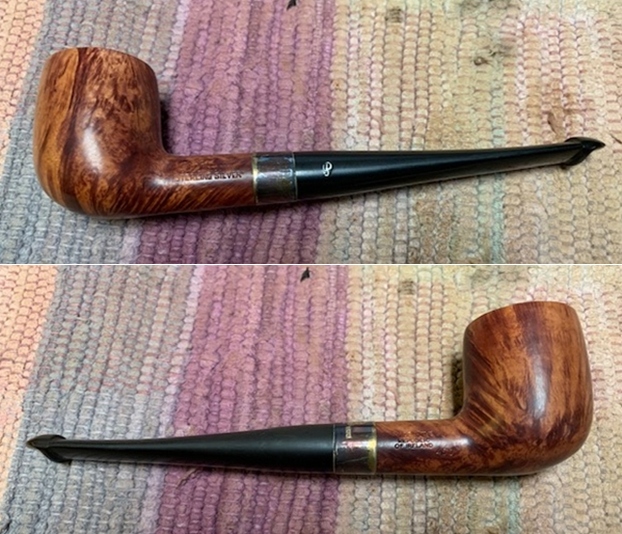
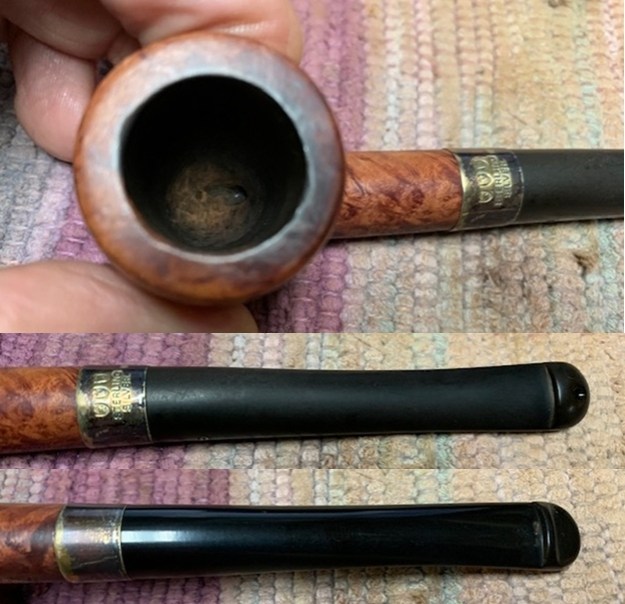
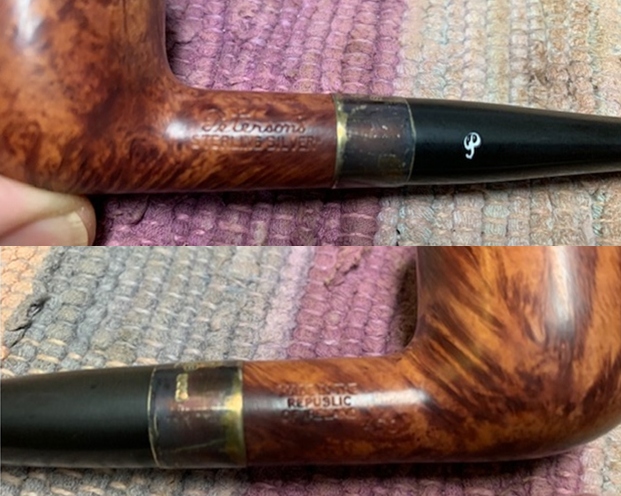
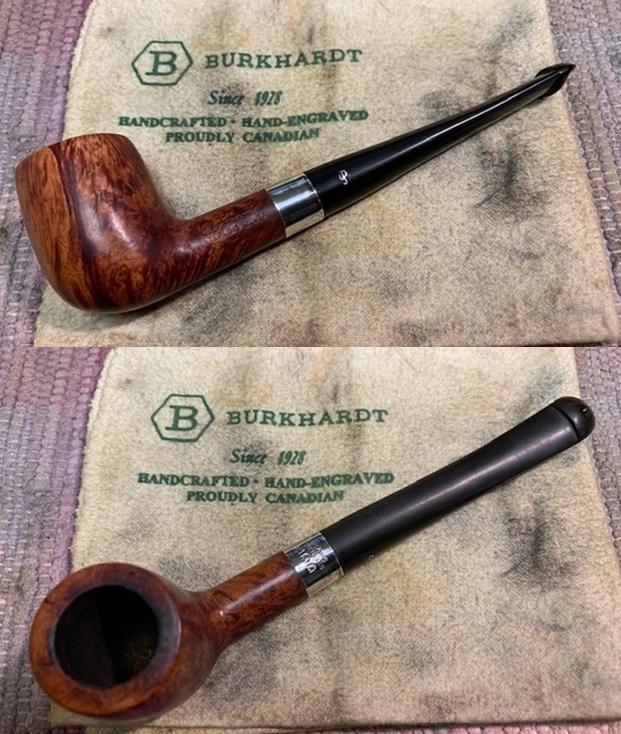
The next pipe I have chosen is smooth finished Peterson’s “Sterling Silver” pipe. This one is a 450 Billiard that has a light coloured finish with amazing grain around the bowl sides and shank. It is also incredibly dirty. It also came to us from the estate of Anglican minister that was a great friend of mine here in Canada. I was in the airport in Hong Kong when his daughter contacted me to tell me of his death and asked if I wanted to take on his pipes. I told her that I was sad to hear of his death but would gladly take on his pipes to restore and sell. This Billiard had a silver band on the shank that was badly oxidized. The grime on the finish was ground into the finish on the bowl sides. The contrast of the brown stains the grain really pop. It was stamped on the left side of the shank and read Peterson’s [over] “Sterling Silver”. It was stamped on the right side and read Made in the Republic of Ireland in three lines. That is over the shape number 450. The tarnished band is stamped with K&P in shields [over] Sterling Silver. That was followed by three hallmarks – the seated woman, the harp and the italic letter N. It was in filthy when he brought it to the table. The finish was dirty with grime ground into the briar sides and rim. There was a thin cake in the bowl and light spattering of lava on the rim top and the inner edge of the bowl. The stem was lightly oxidized and had light tooth marks and chatter on the top and underside on and near the button. Jeff took photos of the pipe before his cleanup work. They tell the story and give a glimpse of the promise that we see in this pipe. Jeff took photos of the rim top and stem to show the general condition of the pipe. The bowl is lightly caked and the rim top and edges have some light lava overflow. The stem is lightly oxidized and has light tooth marks on the top and underside near the button.   Jeff took some photos of the bowl sides and heel to show the amazing grain that was around this bowl. It is a nice looking pipe.He took photos of the underside of the shank to show the stamping. The stamping is readable in the photos below and is as noted above. He also took a photo of the band. I am including the information from Pipedia’s article on Peterson pipes. It is a great read in terms of the history of the brand (https://pipedia.org/wiki/Peterson). I have included a bit of the pertinent history here.

1950 – 1989 The Republic Era – From 1950 to the present time, the stamp for this era is “Made in the Republic of Ireland” in a block format generally in three lines but two lines have been used with or without Republic being abbreviated.

During the 1950’s and 60’s the Kapp & Peterson Company was still in the ownership of the Kapp family. However 1964 saw the retiral of the company Managing Director Frederick Henry(Harry) Kapp.

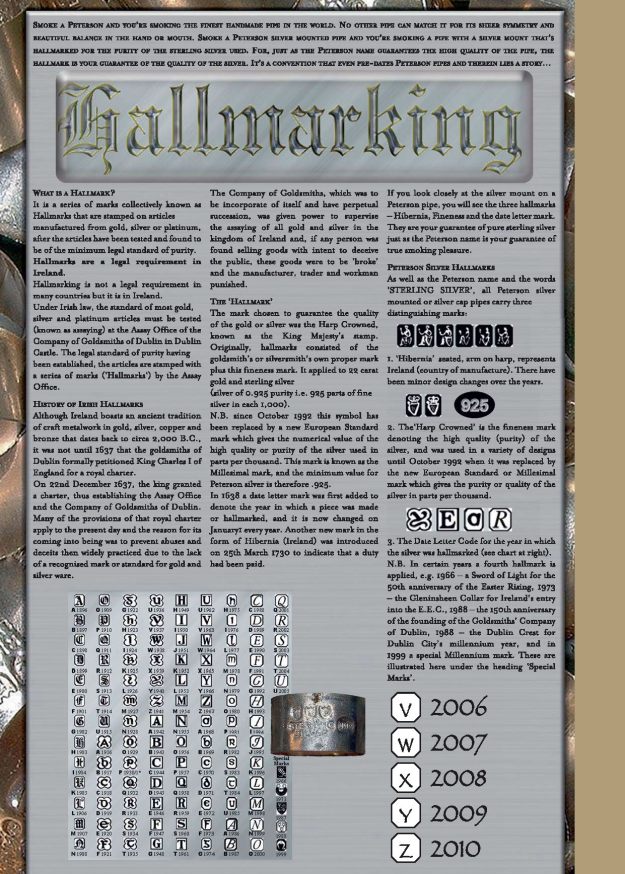
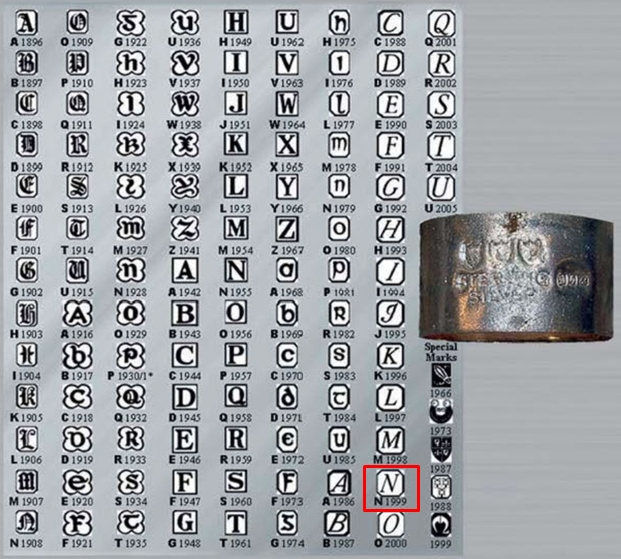
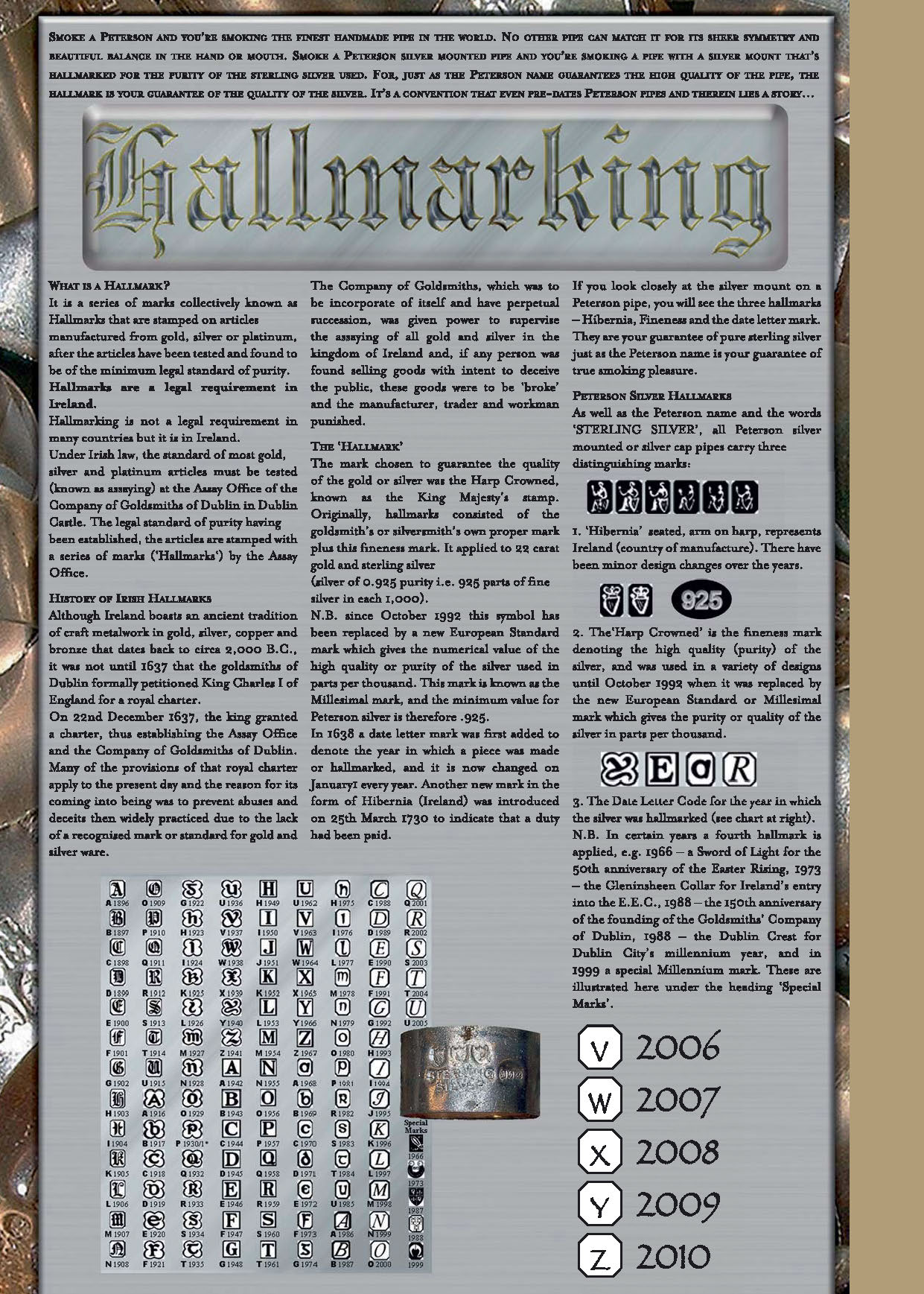
I turned to the hallmarking chart on one of the blogs on rebornpipes to lock down the date for the pipe (https://rebornpipes.com/wp-content/uploads/2015/05/peterson-cataloguecomp_page_27.jpg). The chart defines the meaning of each hallmark. The first one of the seated woman with a harp is known as the Hibernia stamp and identifies the pipe as made in Ireland. The second stamp is a crowned harp which is a fineness mark denoting the high quality of silver that was used. The third stamp is the italic letter N. I have included a larger screen capture of the chart in the lower left of the photo below.I have drawn a square around the date letter below. It identifies the date of this Peterson’s pipe to 1999.I knew that I was dealing with a Republic Era pipe made between 1950 and the present. The hallmarks date the pipe to 1999. Now it was time to work on the pipe.

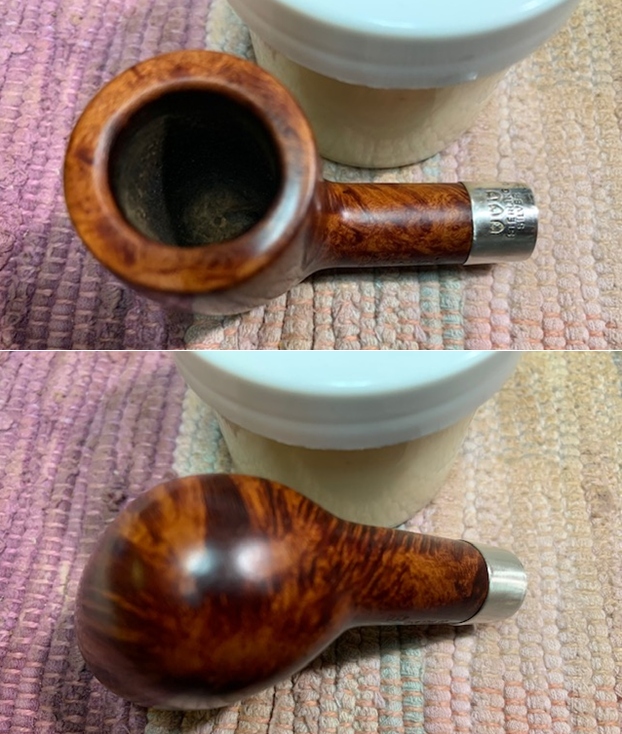
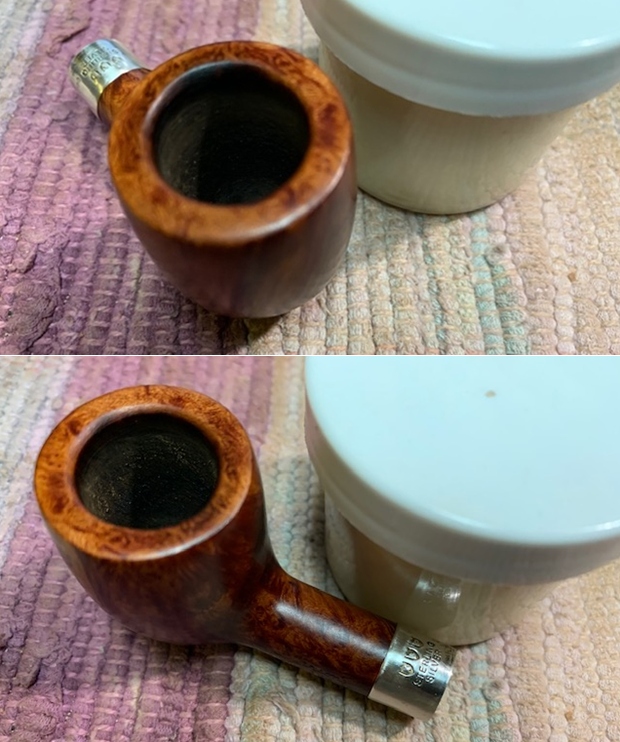
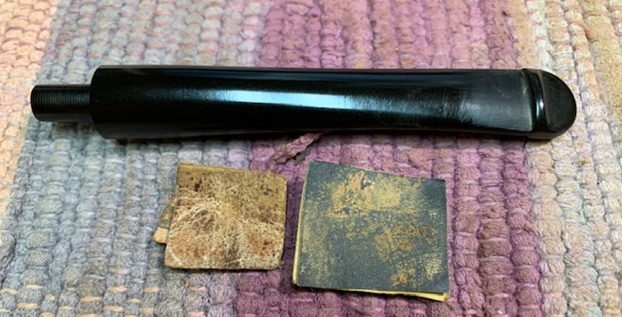
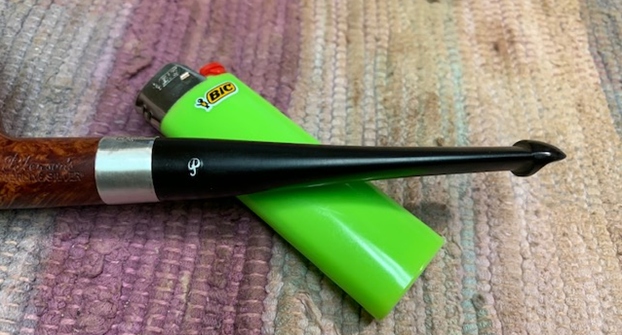
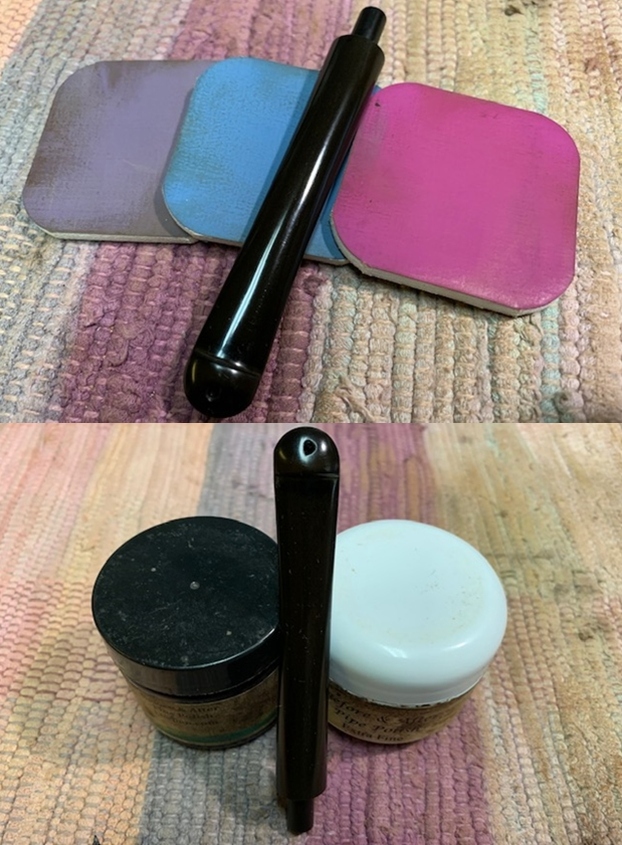
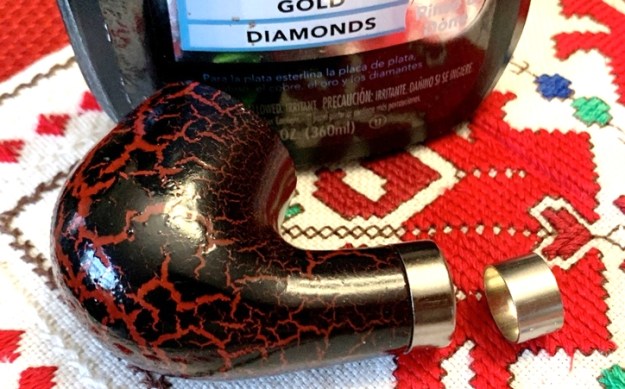
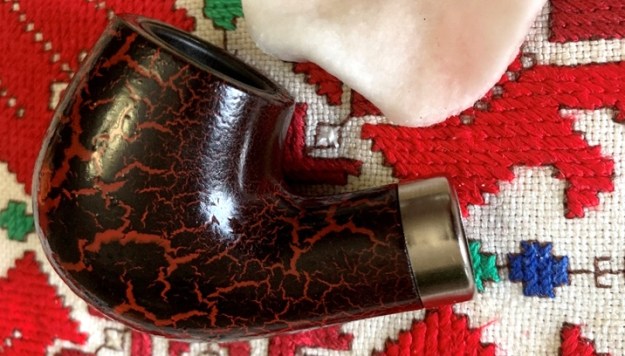
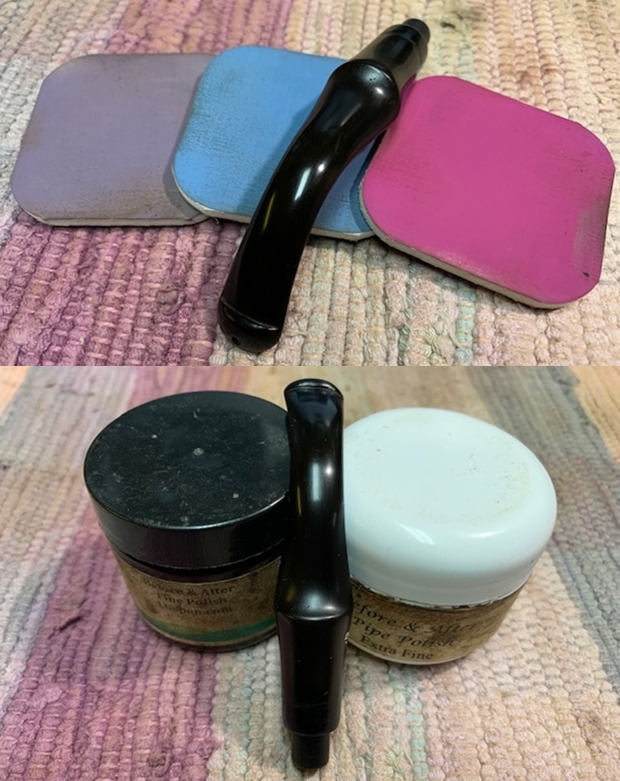
Jeff had done a great job cleaning up the pipe as usual. He reamed the pipe with a PipNet reamer and cut back the cake back to the bare briar. He cleaned up the walls with a Savinelli Fitsall Pipe Knife. He scrubbed the interior of the bowl and shank with pipe cleaners, cotton swabs and alcohol to remove the tars and oils. He scrubbed the exterior of the pipe with Murphy’s Oil Soap and a tooth brush to remove the grime from the finish. He worked on the rim top lava and darkening with the soap and tooth brush. He scrubbed the inside of the stem with alcohol and pipe cleaners. He scrubbed the exterior with Soft Scrub and then soaked it in Before & After Deoxidizer. He washed it off with warm water to remove the Deoxidizer. The pipe looked far better when it arrived. It has been sitting here for 2 years so the silver tarnished once again and would need to be polished. I took some close up photos of the rim top and also of the stem surface. I wanted to show how well it had cleaned up. The rim top had some darkening on the back top and the inner edge had burn damage on the front right and back. It should clean up really well. I also took close up photos of the stem to show the light tooth marks on the surface near the button.   I took photos of the stamping on the sides of the shank. You can see that it is stamped as noted above. It is clear and readable.  I took the pipe apart and took a photo of the pipe. It is a good looking pipe and has a rugged rustication around the bowl. I polished the Sterling Silver band on the shank with a jeweler’s cloth to remove the tarnish and polish it.     I decided to address the out of round bowl first. I used a folded piece of 220 grit sandpaper to give the inner edge of the bowl a slight bevel to accommodate the burned areas and blend them into the surrounding briar.  I polished the briar with micromesh sanding pads – dry sanding with 1500-12000 grit sanding pads. I wiped the bowl down with a damp cloth after each sanding pad.  I worked some Before & After Restoration Balm into the surface of the briar with my fingertips and a horsehair shoe brush to clean, enliven and protect the briar. I let the balm sit for 15 minutes and then buffed with a cotton cloth to raise the shine. The photos show the bowl at this point in the restoration process.    I sanded out the deep tooth marks on the underside of the stem next to the button with 220 grit sandpaper until they were smooth. I started   polishing the stem with 400 grit wet dry sandpaper. The stem was bent slightly upward so I heated it with a lighter flame until it was flexible enough to straighten out. I straightened it and held it in  place until it cooled.I polished the stem with micromesh sanding pads – wet sanding with 1500-12000 grit sanding pads. I wiped it down after each sanding pad with Obsidian Oil. I polished it with Before & After Pipe Stem Polish – both Fine and Extra Fine.   I am excited to finish this Republic Era Peterson’s “Sterling Silver” 450 Billiard. I put the pipe back together and buffed it with Blue Diamond on the buffing wheel. I gave the bowl and the stem multiple coats of carnauba wax. I hand buffed the pipe with a clean buffing pad to raise the shine. It is fun to see what the polished bowl looks like with the grain popping all around it. Added to that the polished Sterling Silver band and the black vulcanite stem was beautiful. This smooth Classic Peterson’s Billiard is nice looking and the pipe feels great in my hand. It is light and well balanced. Have a look at it with the photos below. The dimensions are Length: 6 inches, Height: 1 ¾ inches, Outside diameter of the bowl: 1 ¼ inches, Chamber diameter: ¾ of an inch. The weight of the pipe is 34grams/1.20oz. It is a beautiful pipe and one that will be on the Irish Pipe Makers section of the rebornpipes store soon. If you are interested in adding it to your collection let me know. Thanks for walking through the restoration with me as I worked over this pipe. Thanks to each of you who are reading this blog.

Breathing Life a Peterson’s Republic Era “Donegal” Rocky 406 Prince


Blog by Steve Laug

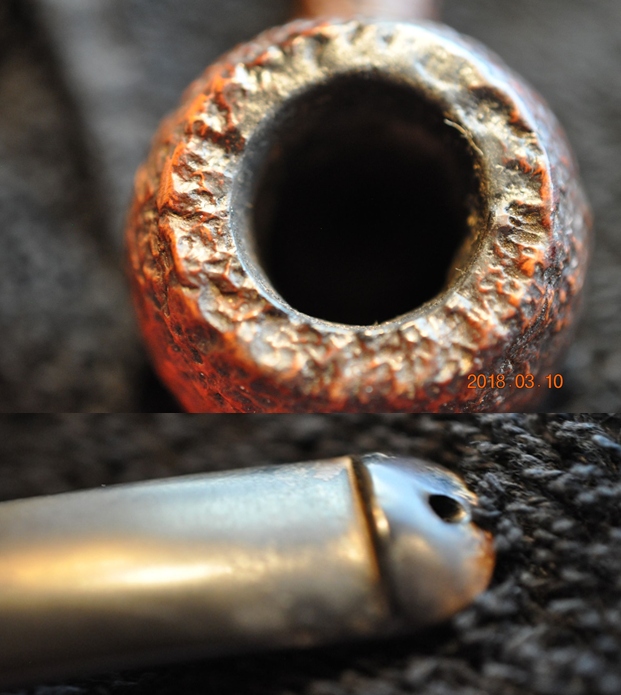
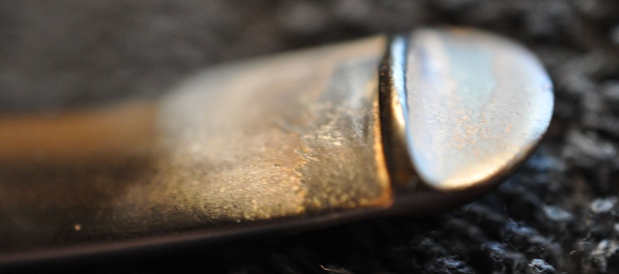
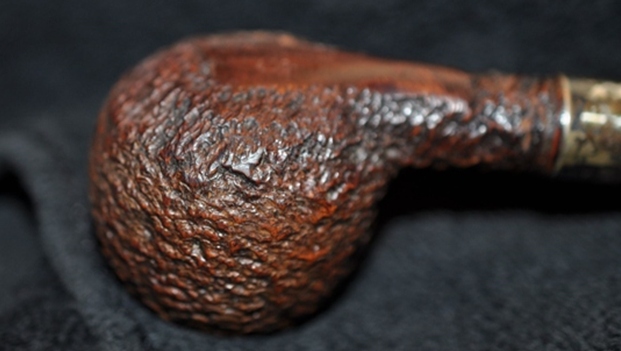
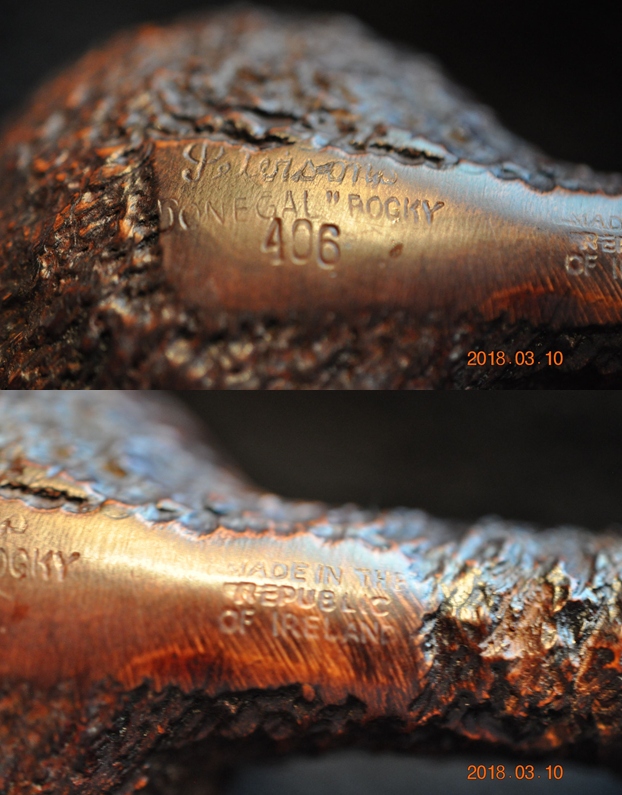
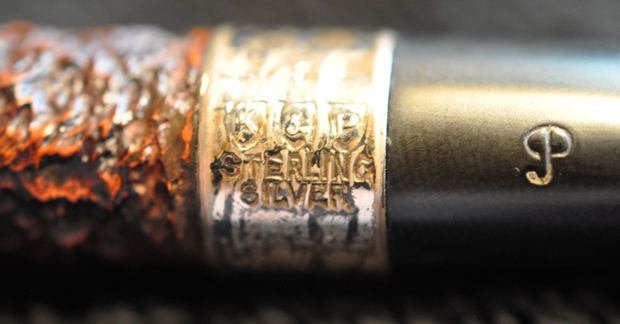
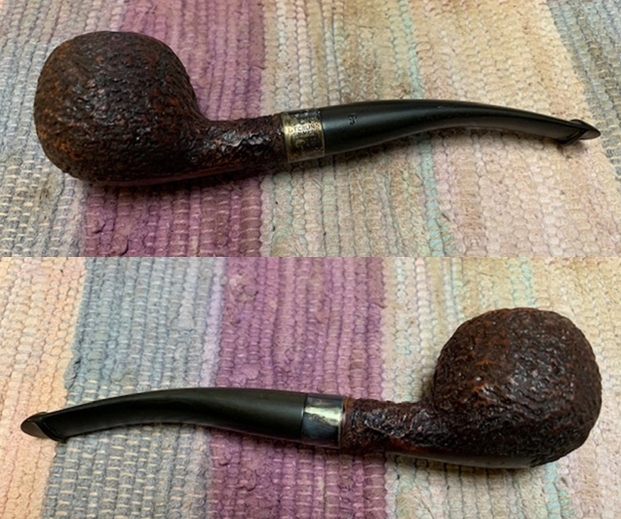
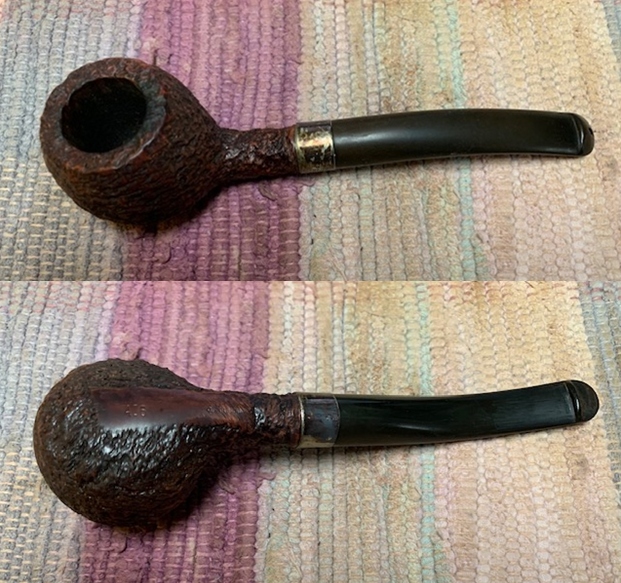
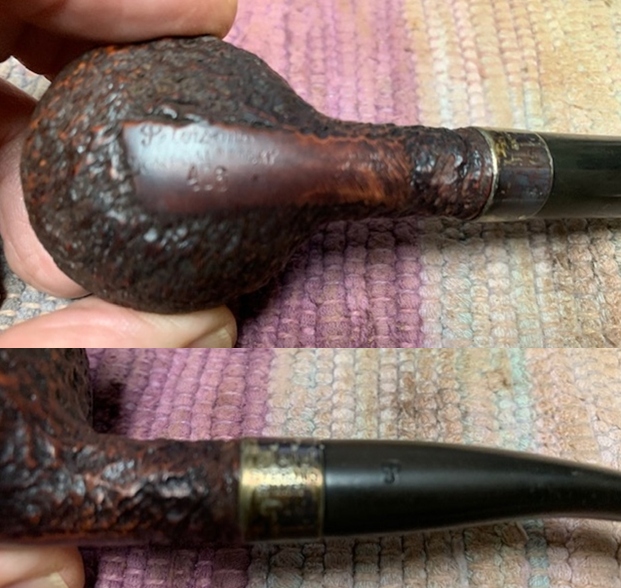
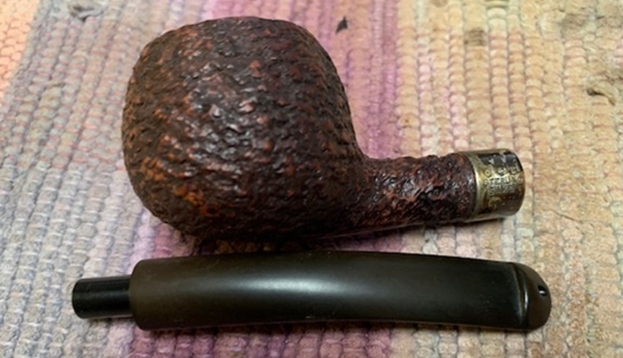
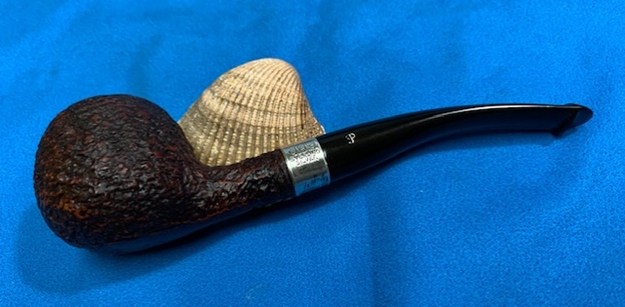
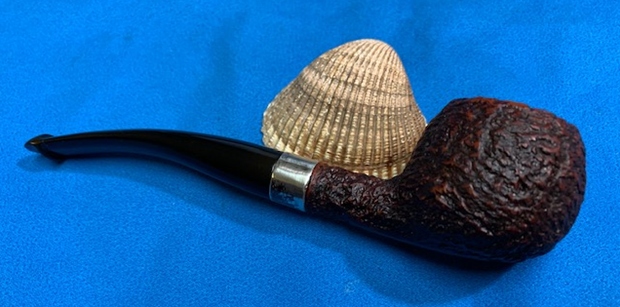
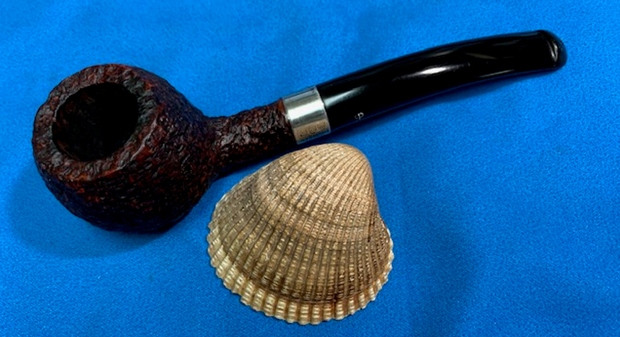
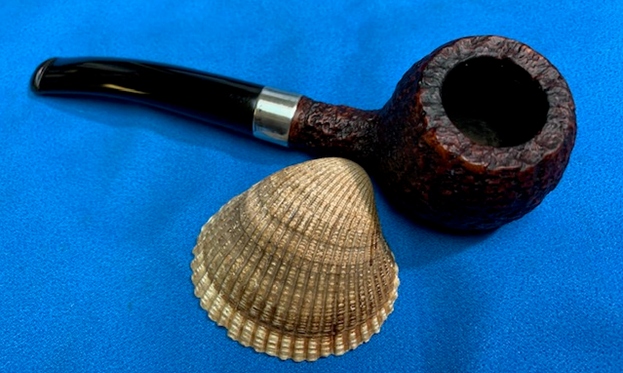
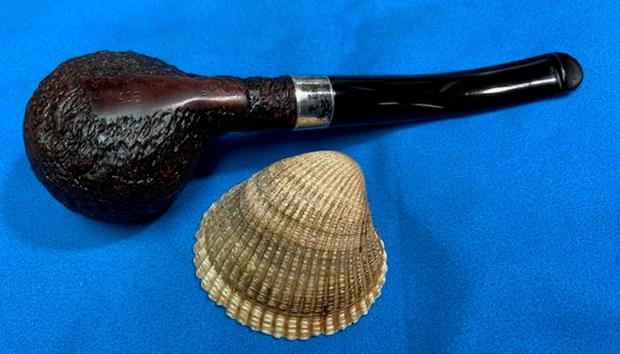
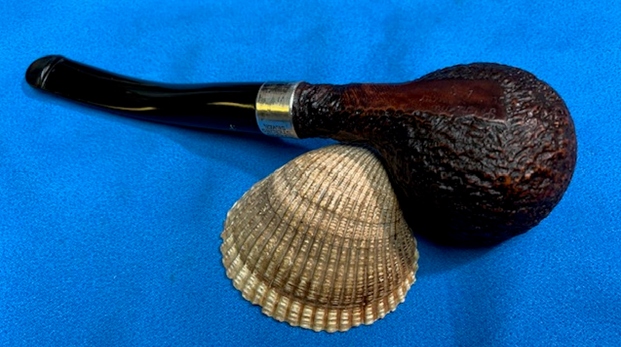
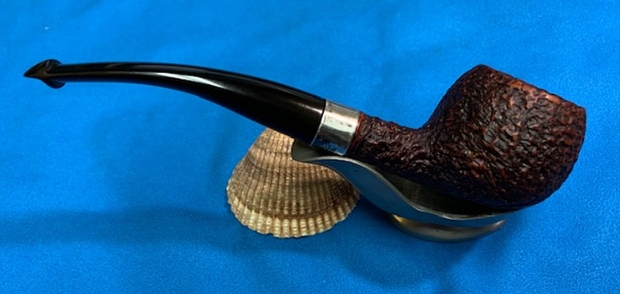
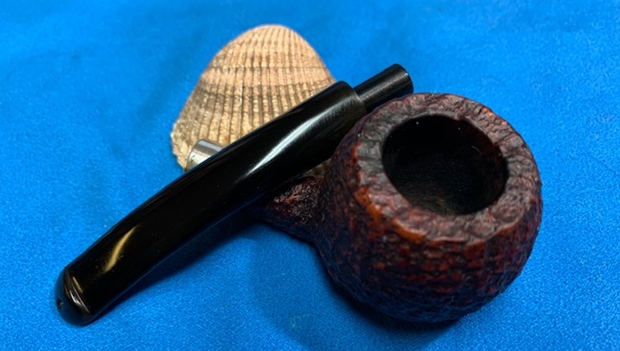
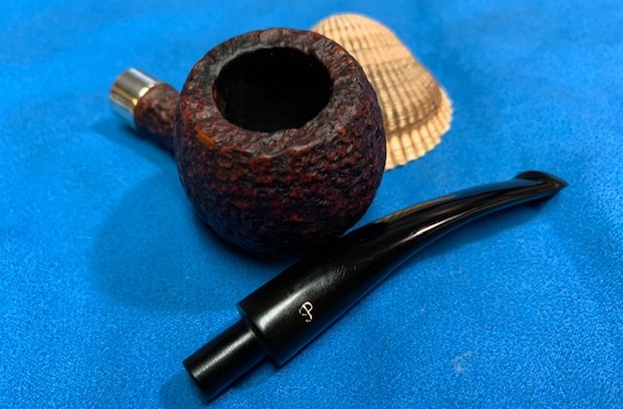
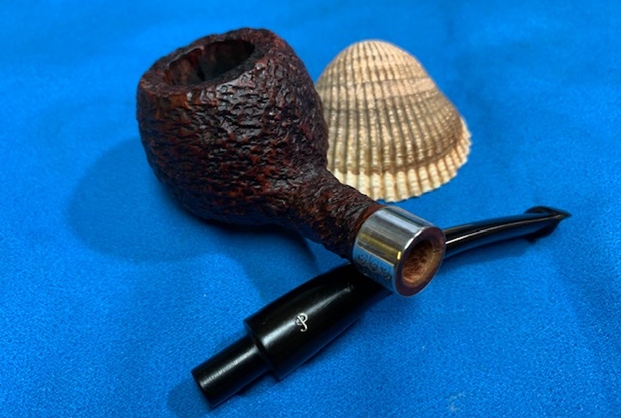
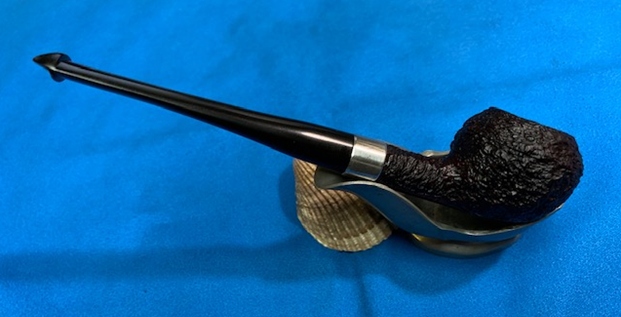
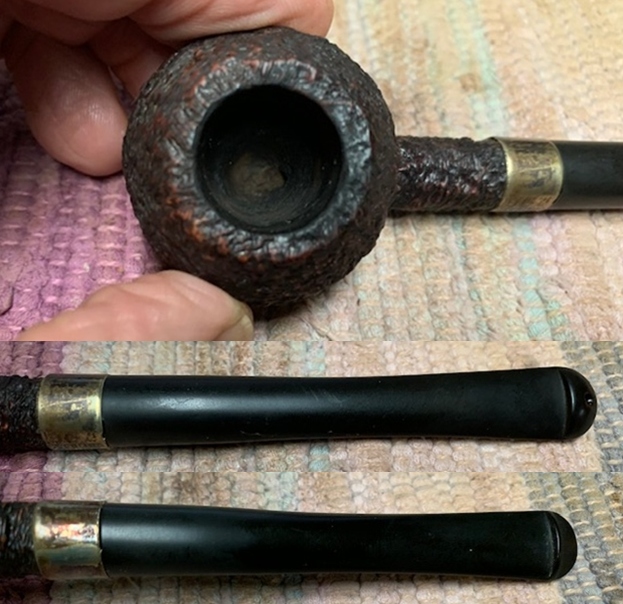
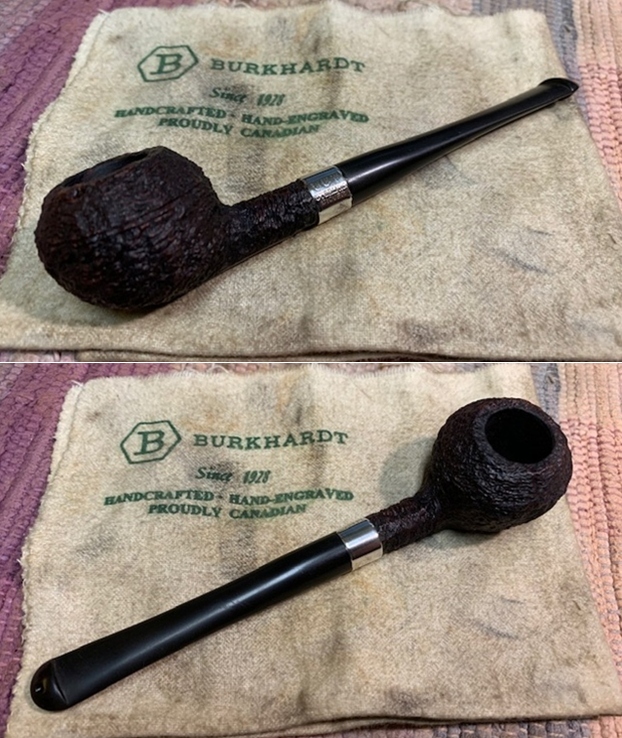
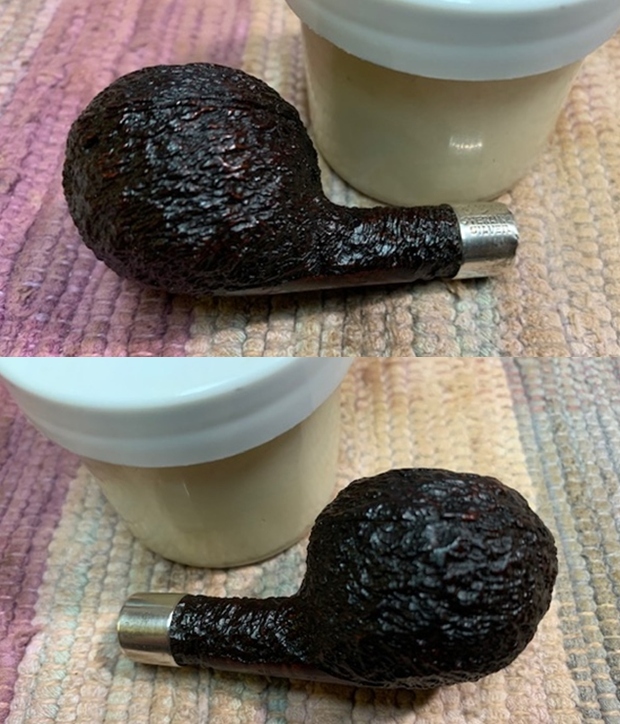
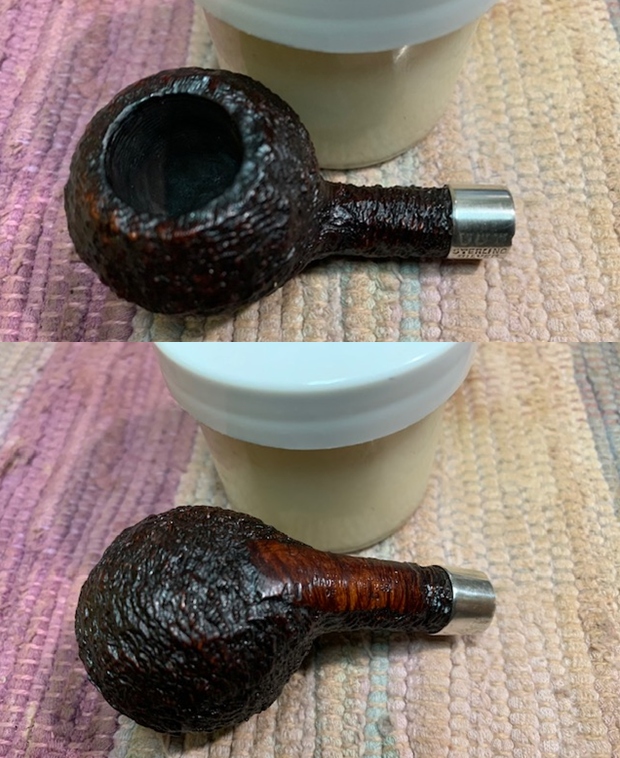
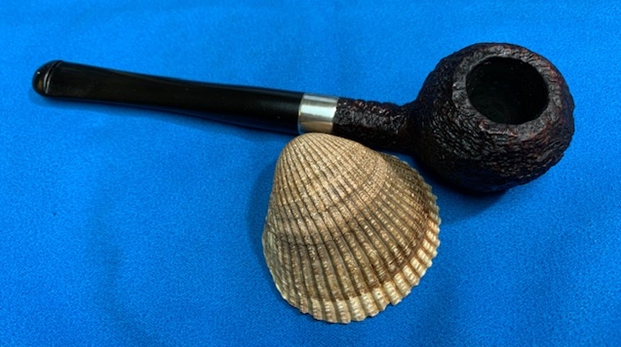
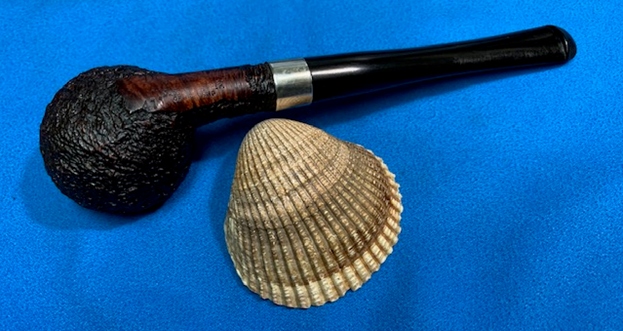
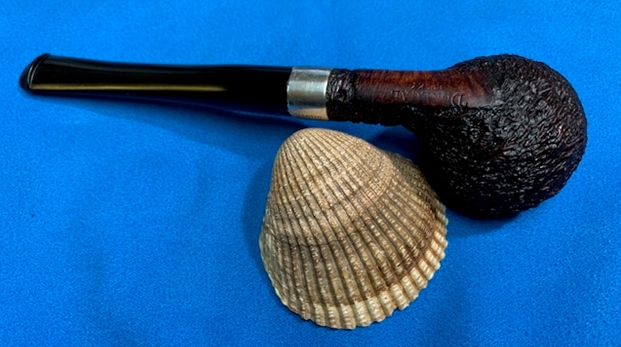
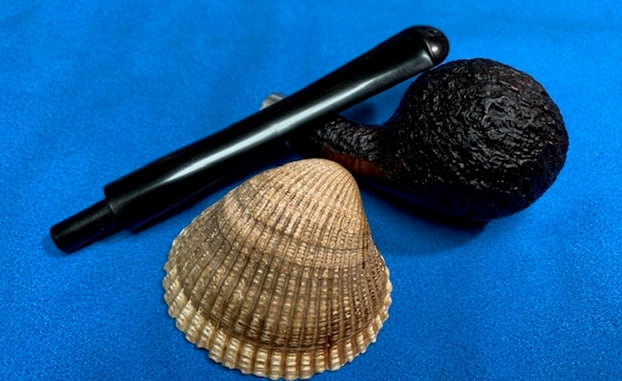
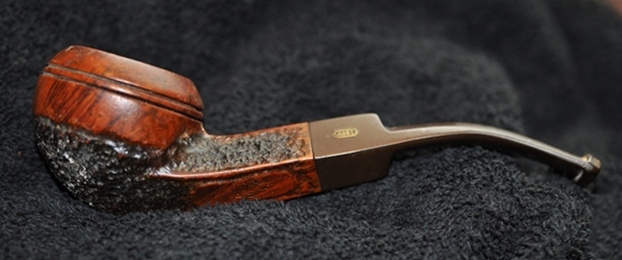
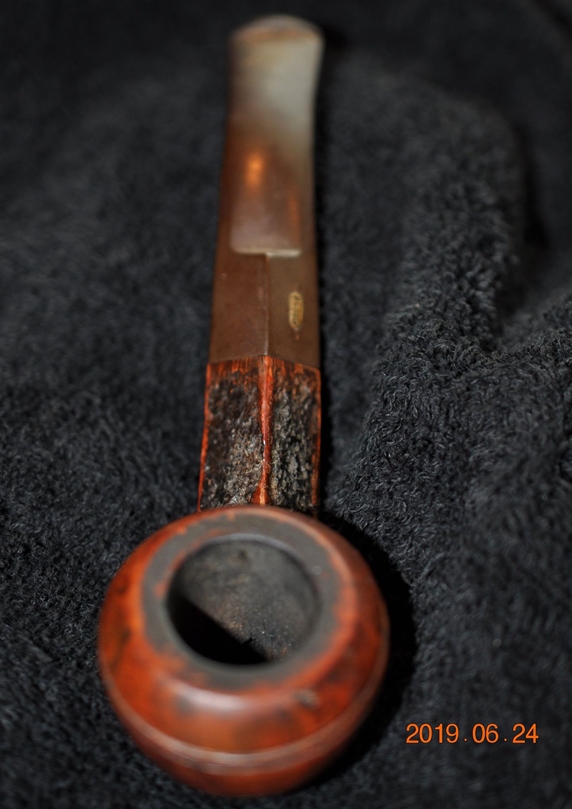
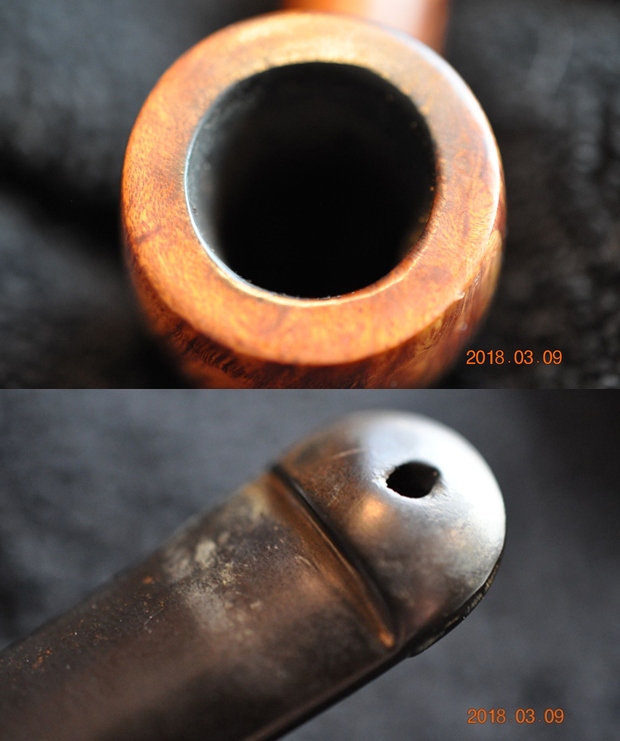
The next pipe I have chosen is another rusticated Peterson’s “Donegal” Rocky pipe. This one is a 406 Prince that has a lighter coloured finish than the previous Rhodesian. Nonetheless it also was incredibly dirty. It also came to us from the estate of Anglican minister that was a great friend of mine here in Canada. I was in the airport in Hong Kong when his daughter contacted me to tell me of his death and asked if I wanted to take on his pipes. I told her that I was sad to hear of his death but would gladly take on his pipes to restore and sell. This Prince had a silver band on the shank that was badly oxidized. The grime on the finish was ground into the rustication on the bowl sides. The contrast of the brown stains gave the bowl a sense of depth. It was stamped on the underside of the shank. The stamping was readable. It read Peterson’s [over] “Donegal” [over] Rocky [over] the shape number 406. That was followed on the right with the stamping Made in the Republic of Ireland in three lines. The tarnished band is stamped with K&P in shields [over] Sterling Silver. Unfortunately there were no silver hallmarks on the band that I could see. It was in filthy when he brought it to the table. The finish was dirty with grime ground into the briar sides and rim. There was a thin cake in the bowl and an overflow of lava on the rim top and the inner edge of the bowl. The stem was oxidized, calcified and had light tooth marks and chatter on the top and underside on and near the button. Jeff took photos of the pipe before his cleanup work. They tell the story and give a glimpse of the promise that we see in this pipe.   Jeff took photos of the rim top and stem to show the general condition of the pipe. The bowl is lightly caked and the rim top and edges have some lava overflow. The stem is oxidized, calcified and has light tooth marks on the top and underside near the button.      Jeff took some photos of the bowl sides and heel to show the rugged rustication that was around this bowl. It is a nice looking pipe.    He took photos of the underside of the shank to show the stamping. The stamping is readable in the photos below and is as noted above. He also took a photo of the band.     I am including the information from Pipedia’s article on Peterson pipes. It is a great read in terms of the history of the brand (https://pipedia.org/wiki/Peterson). I have included a bit of the pertinent history here.
1950 – 1989 The Republic Era – From 1950 to the present time, the stamp for this era is “Made in the Republic of Ireland” in a block format generally in three lines but two lines have been used with or without Republic being abbreviated.

During the 1950’s and 60’s the Kapp & Peterson Company was still in the ownership of the Kapp family. However 1964 saw the retiral of the company Managing Director Frederick Henry(Harry) Kapp.

I knew that I was dealing with a Republic Era pipe made between 1950-1989. The K&P mark on the silver band ties to Kapp & Peterson brings the date to the time between 1950-1964. Now it was time to work on the pipe.

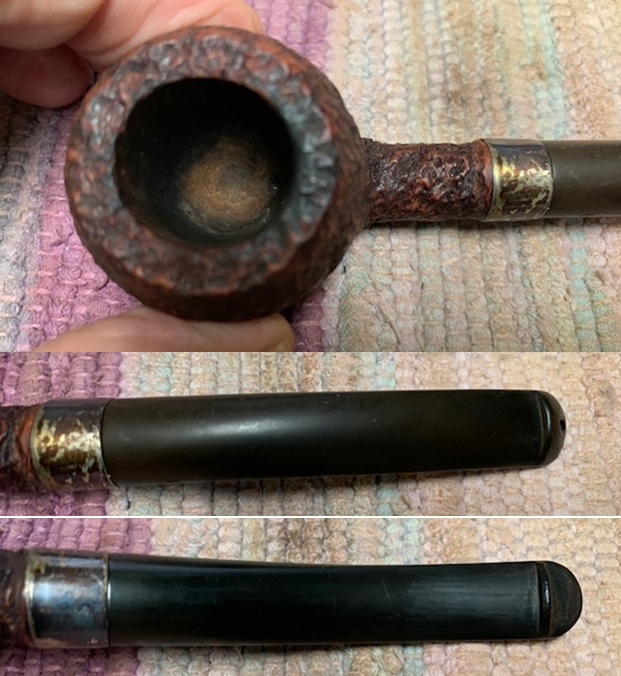
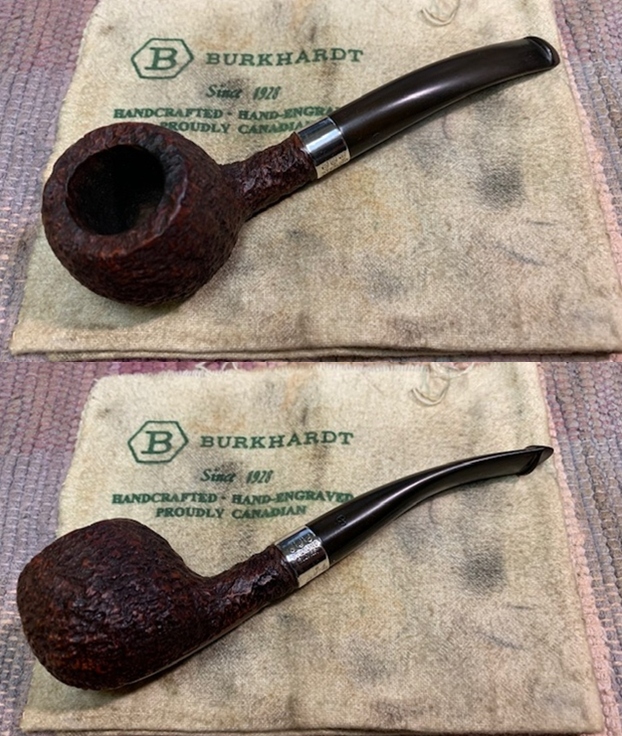
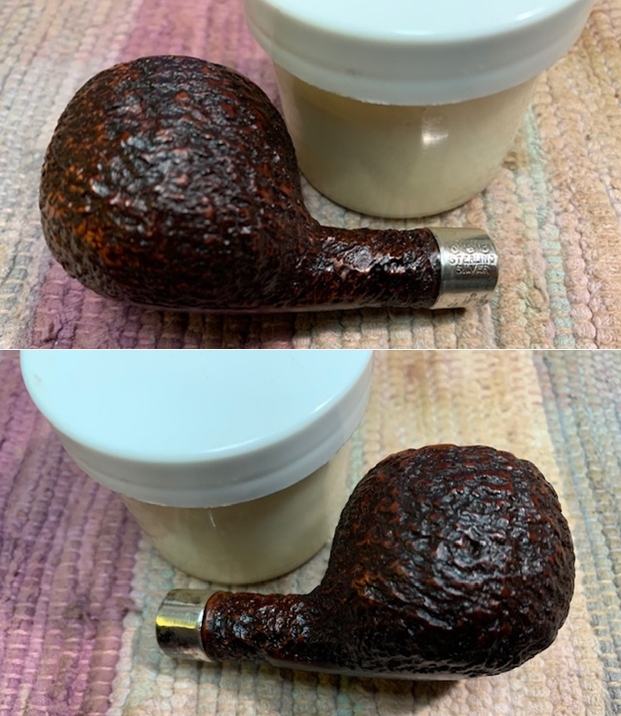
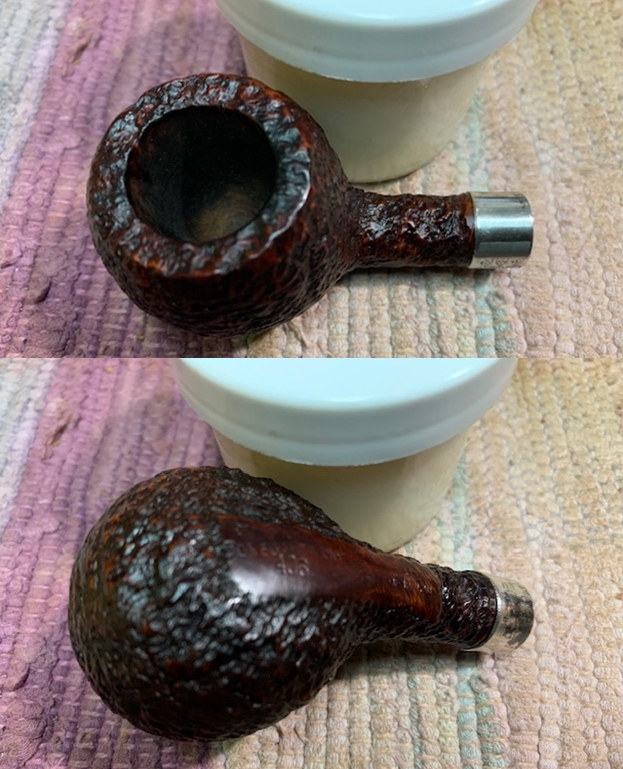
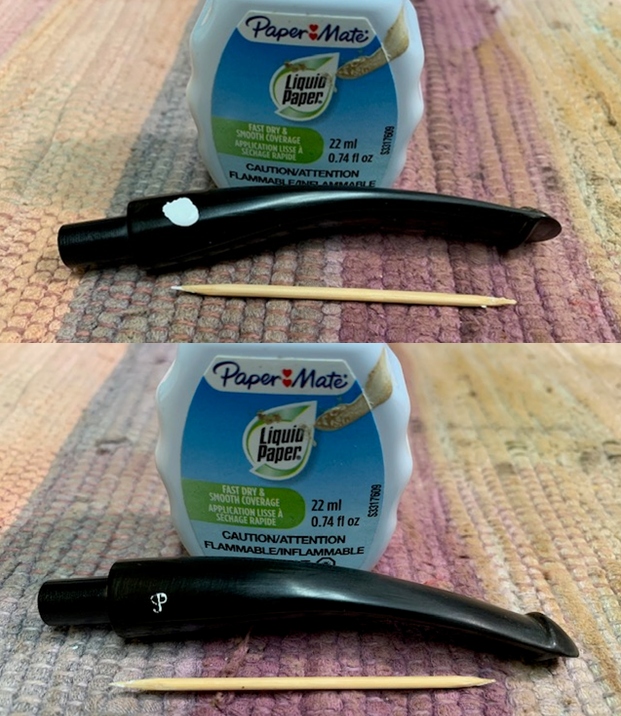
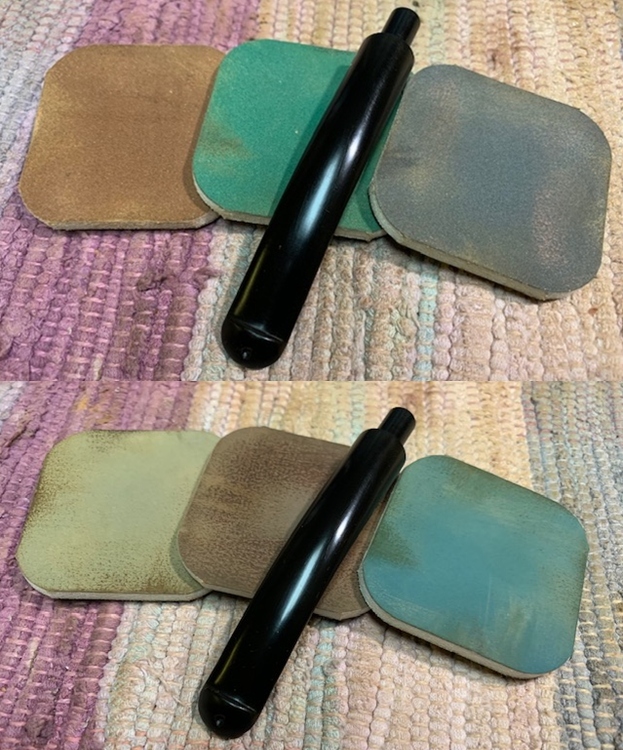
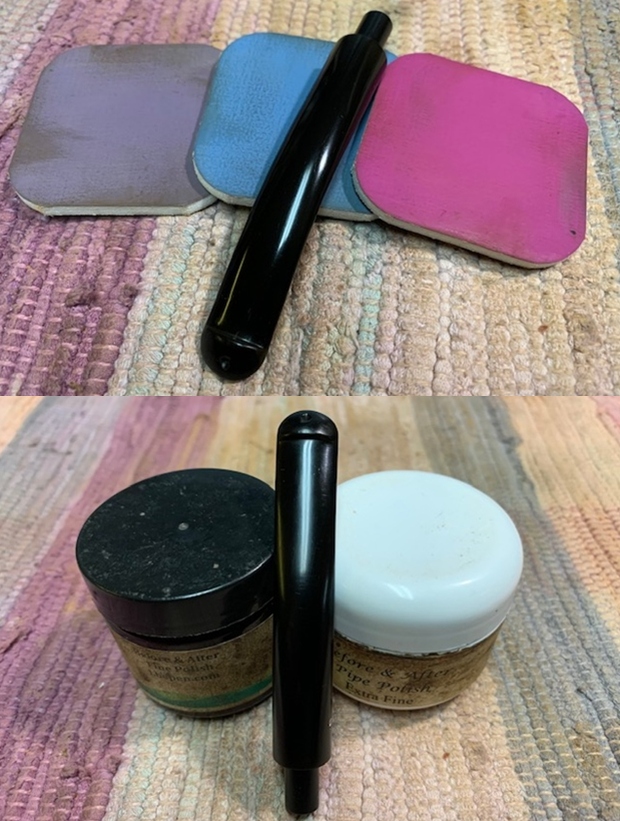
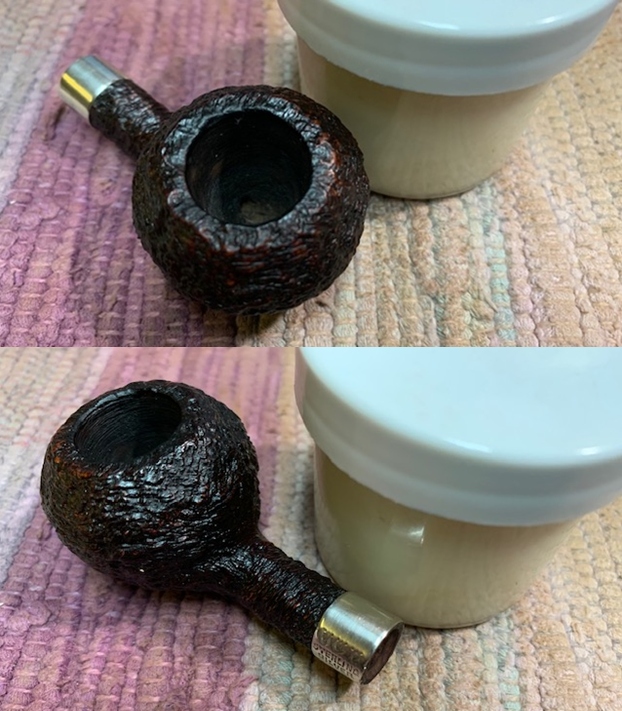
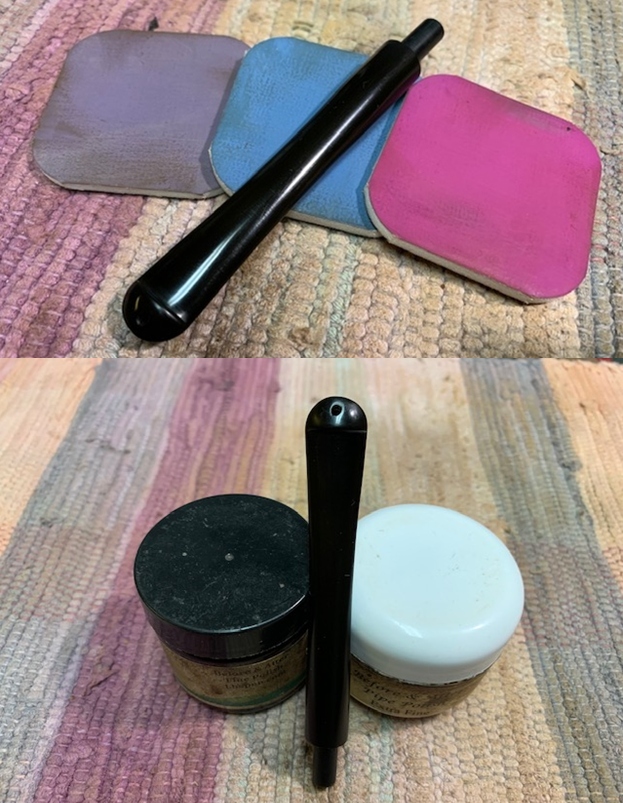
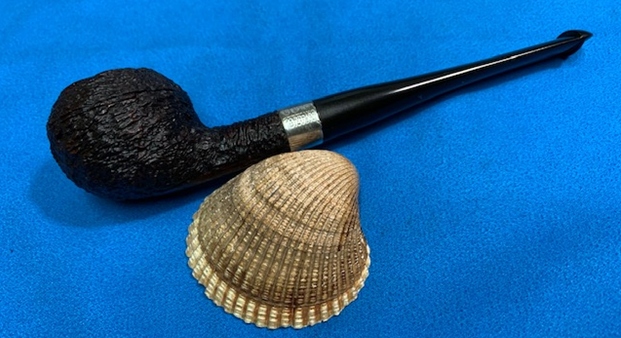
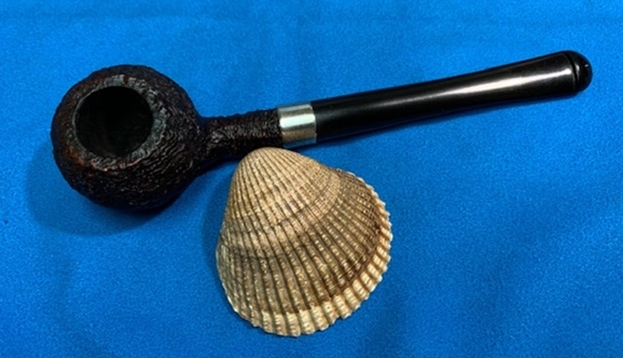
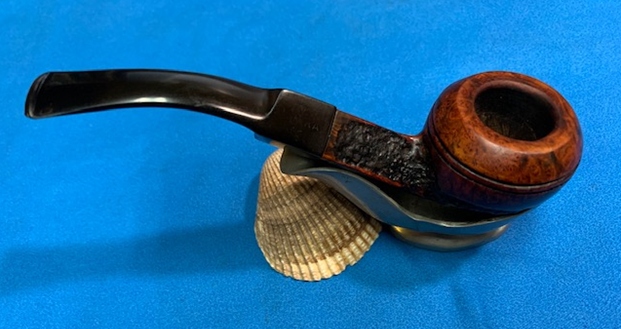
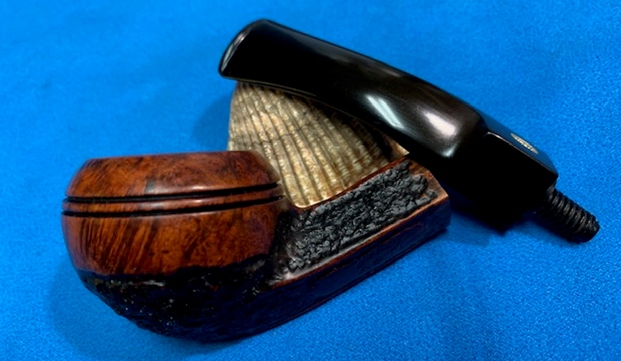
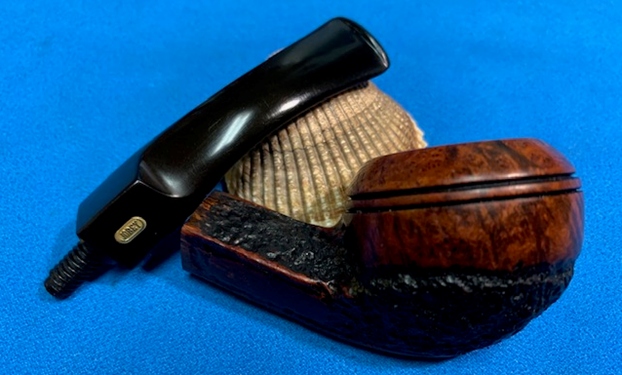
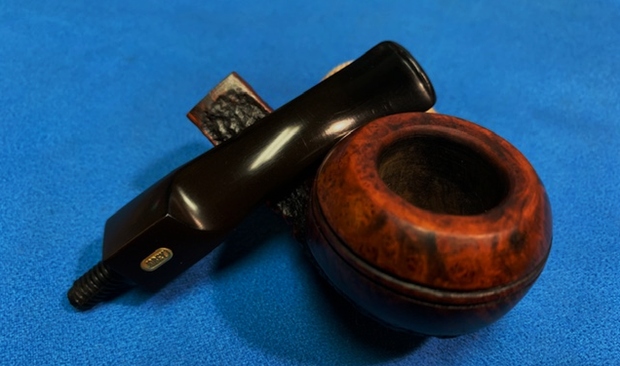
Jeff had done a great job cleaning up the pipe as usual. He reamed the pipe with a PipNet reamer and cut back the cake back to the bare briar. He cleaned up the walls with a Savinelli Fitsall Pipe Knife. He scrubbed the interior of the bowl and shank with pipe cleaners, cotton swabs and alcohol to remove the tars and oils. He scrubbed the exterior of the pipe with Murphy’s Oil Soap and a tooth brush to remove the grime from the finish. He worked on the rim top lava and darkening with the soap and tooth brush. He scrubbed the inside of the stem with alcohol and pipe cleaners. He scrubbed the exterior with Soft Scrub and then soaked it in Before & After Deoxidizer. He washed it off with warm water to remove the deoxidizer. The pipe looked far better when it arrived. It has been sitting here for 2 years so the silver tarnished once again and would need to be polished.   I took some close up photos of the rim top and also of the stem surface. I wanted to show how well it had cleaned up. The rim top and edges look quite good. It should clean up really well. I also took close up photos of the stem to show the light tooth marks on the surface near the button.    I took a photo of the stamping on the underside of the shank. You can see that it is stamped as noted above. It is clear and readable.   I took the pipe apart and took a photo of the pipe. It is a good looking pipe and has a rugged rustication around the bowl. I polished the Sterling Silver band on the shank with a jeweler’s cloth to remove the tarnish and polish it.   I worked some Before & After Restoration Balm into the surface of the briar with my fingertips and a horsehair shoe brush to clean, enliven and protect the briar. I let the balm sit for 15 minutes and then buffed with a cotton cloth to raise the shine. The photos show the bowl at this point in the restoration process.    I scrubbed the stem with Soft Scrub to remove the oxidation on the stem surface. I worked it over the surface of the stem with cotton pads and removed the deep oxidation on the top side of the stem.  I used Paper Mate Liquid Paper to touch up the “P” stamp on the left side of the stem. It came out looking very good.   I polished the stem with micromesh sanding pads – wet sanding with 1500-12000 grit sanding pads. I wiped it down after each sanding pad with Obsidian Oil. I polished it with Before & After Pipe Stem Polish – both Fine and Extra Fine.   I am excited to finish this Republic Era Peterson’s “Donegal” Rocky 406 Prince. I put the pipe back together and buffed it with Blue Diamond on the buffing wheel. I gave the bowl multiple coats of Conservator’s Wax and the stem multiple coats of carnauba wax. I hand buffed the pipe with a clean buffing pad to raise the shine. It is fun to see what the polished bowl looks like with the rugged rustication all around it. Added to that the polished Sterling Silver band and the black vulcanite stem was beautiful. This rusticated Classic Peterson’s Prince is nice looking and the pipe feels great in my hand. It is light and well balanced. Have a look at it with the photos below. The dimensions are Length: 6 inches, Height: 1 ½ inches, Outside diameter of the bowl: 1 ½ inches, Chamber diameter: ¾ of an inch. The weight of the pipe is 40grams/1.41oz. It is a beautiful pipe and one that will be on the Irish Pipe Makers section of the rebornpipes store soon. If you are interested in adding it to your collection let me know. Thanks for walking through the restoration with me as I worked over this pipe. Thanks to each of you who are reading this blog.

New Life for a Peterson’s Republic Era “Donegal” Rocky 411 Rhodesian


Blog by Steve Laug

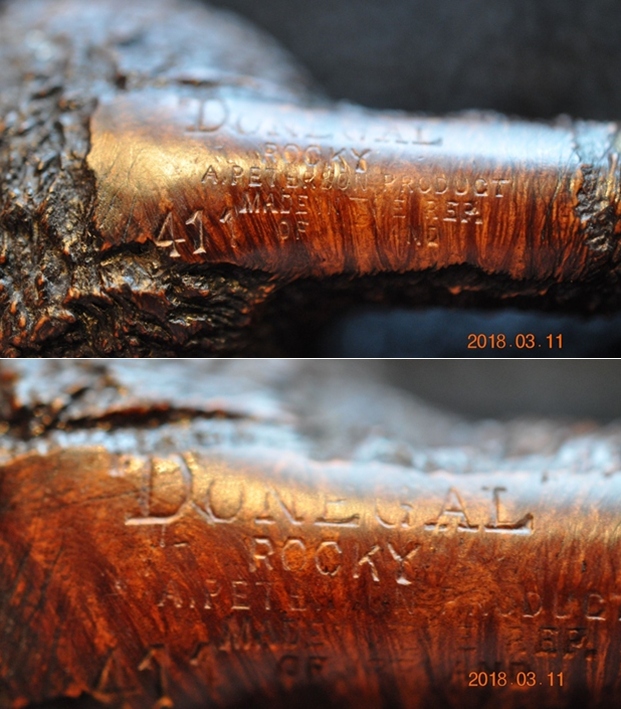
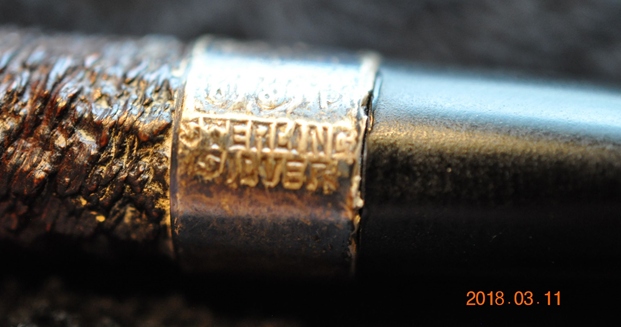
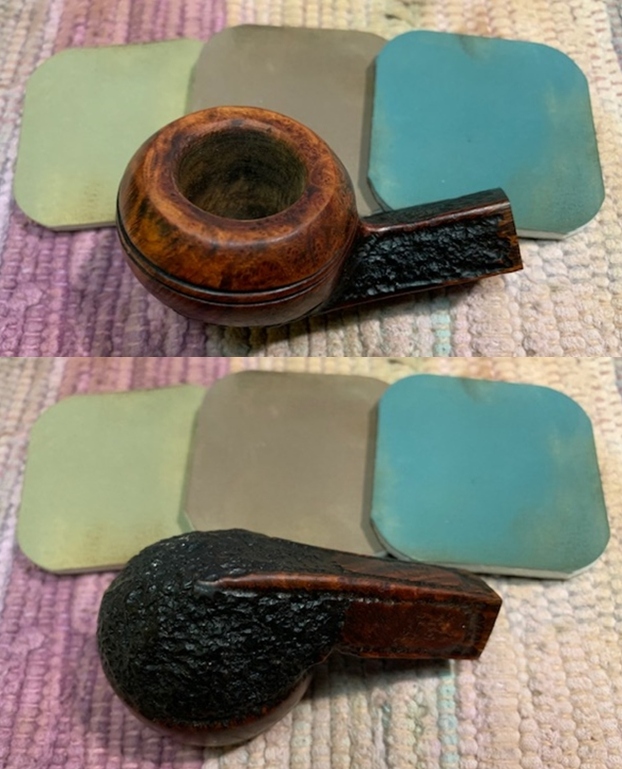
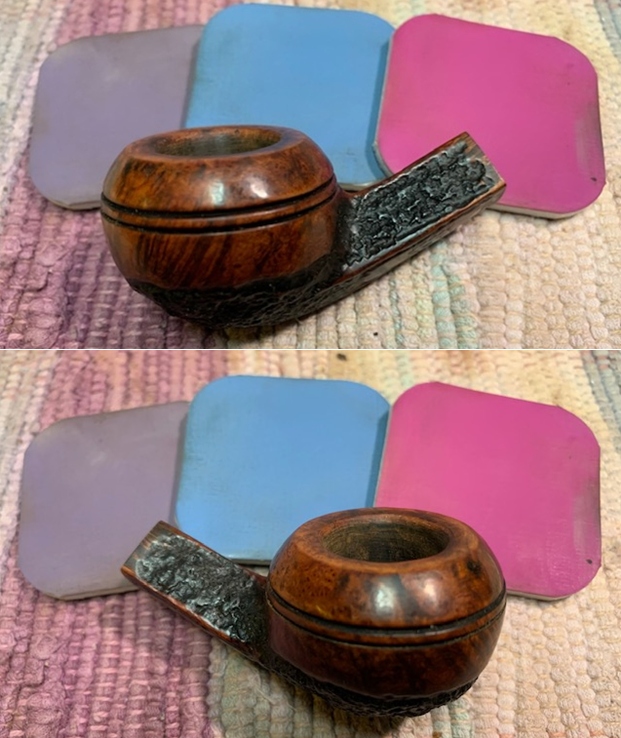
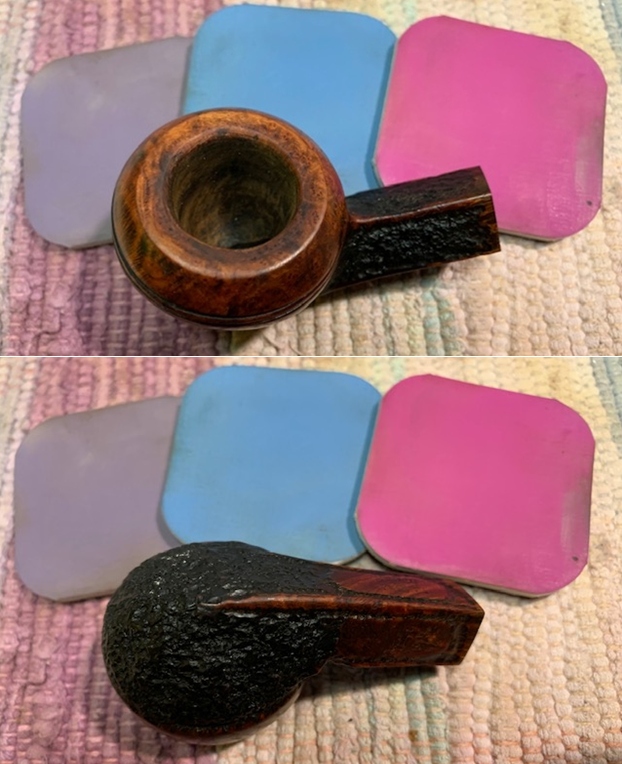
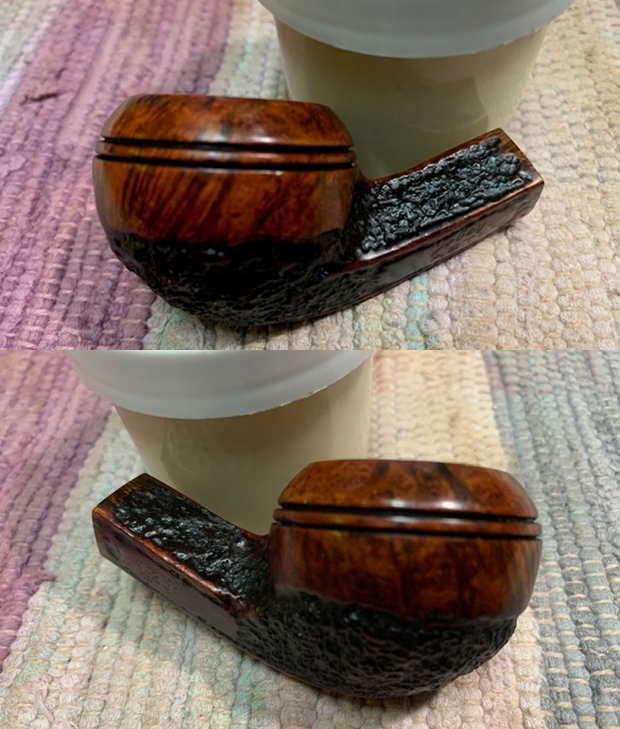
The next pipe I have chosen is a rusticated Peterson’s “Donegal” Rocky 411 Petite Rhodesian that was incredibly dirty. It came to us from an estate of Anglican minister that was a great friend of mine here in Canada. I was in the airport in Hong Kong when his daughter contacted me to tell me of his death and asked if I wanted to take on his pipes. I told her that I was sad to hear of his death but would gladly take on his pipes to restore and sell. This little Rhodesian had a silver band on the shank that was badly oxidized. The grime on the finish was ground into the rustication on the bowl sides. The contrast of the dark stains gave the bowl a sense of depth. It was stamped on the underside of the shank. The stamping was readable. It read “Donegal” [over] Rocky [over] A Peterson Product [over] Made in the Rep. of Ireland. To the left of that last line the shape number 411 was stamped. The band is stamped with K&P in shields [over] Sterling Silver. Unfortunately there were no silver hallmarks on the band that I could see. It was in filthy when he brought it to the table. The finish was dirty with grime ground into the briar sides and rim. There were two thin bands around the cap on the bowl which led me to call it a Rhodesian. There was a thin cake in the bowl but no overflow of lava on the rim top and the inner edge of the bowl. The stem was lightly oxidized and had light tooth marks and chatter on the top and underside on and near the button. Jeff took photos of the pipe before his cleanup work. They tell the story and give a glimpse of the promise that we see in this pipe.   Jeff took photos of the rim top and stem to show the general condition of the pipe. The bowl is lightly caked and the rim top and edges were clean. The stem is oxidized and has light tooth marks on the top and underside near the button.   Jeff took some photos of the bowl sides and heel to show the rugged rustication that was around this bowl. It is a nice looking pipe.    He took photos of the underside of the shank to show the stamping. The stamping is readable in the photos below and is as noted above. He also took a photo of the band. (There is some slight damage to the outer edge of the band on the left side at the stem joint.)    I am including the information from Pipedia’s article on Peterson pipes. It is a great read in terms of the history of the brand (https://pipedia.org/wiki/Peterson). I have included a bit of the pertinent history here.
1950 – 1989 The Republic Era  – From 1950 to the present time, the stamp for this era is “Made in the Republic of Ireland” in a block format generally in three lines but two lines have been used with or without Republic being abbreviated.

During the 1950’s and 60’s the Kapp & Peterson Company was still in the ownership of the Kapp family. However 1964 saw the retiral of the company Managing Director Frederick Henry(Harry) Kapp.

I knew that I was dealing with a Republic Era pipe made between 1950-1989. The K&P mark on the silver band ties to Kapp & Peterson brings the date to the time between 1950-1964. Now it was time to work on the pipe.

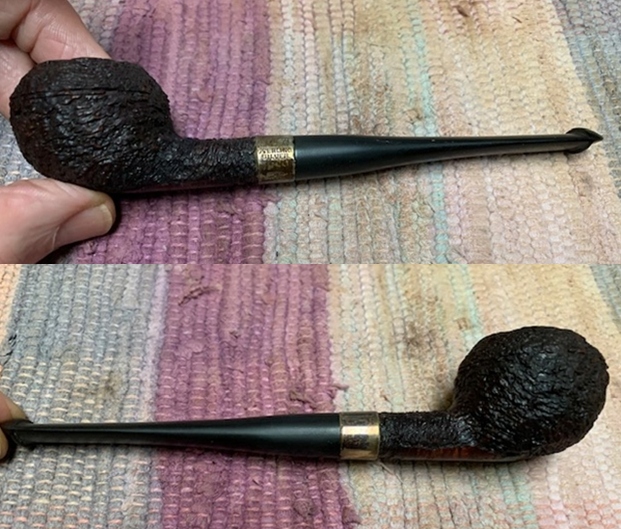
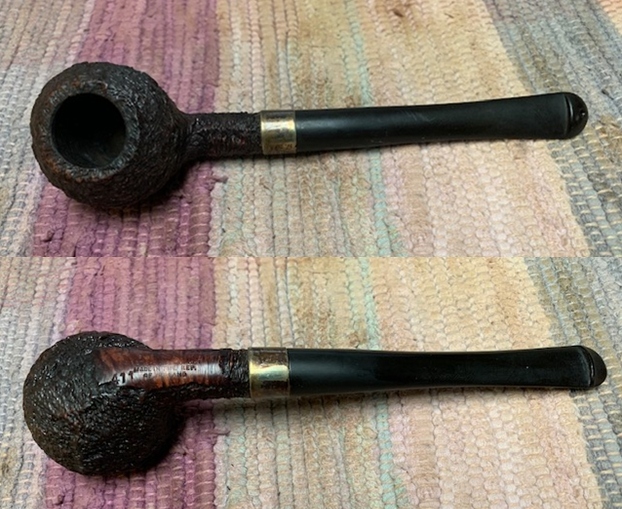
Jeff had done a great job cleaning up the pipe as usual. He reamed the pipe with a PipNet reamer and cut back the cake back to the bare briar. He cleaned up the walls with a Savinelli Fitsall Pipe Knife. He scrubbed the interior of the bowl and shank with pipe cleaners, cotton swabs and alcohol to remove the tars and oils. He scrubbed the exterior of the pipe with Murphy’s Oil Soap and a tooth brush to remove the grime from the finish. He worked on the rim top lava and darkening with the soap and tooth brush. He scrubbed the inside of the stem with alcohol and pipe cleaners. He scrubbed the exterior with Soft Scrub and then soaked it in Before & After Deoxidizer. He washed it off with warm water to remove the deoxidizer. The pipe looked far better when it arrived. It has been sitting here for 2 years so the silver tarnished once again and would need to be polished.   I took some close up photos of the rim top and also of the stem surface. I wanted to show how well it had cleaned up. The rim top and edges look quite good.  It should clean up really well. I also took close up photos of the stem to show the light tooth marks on the surface near the button.     I took a photo of the stamping on the underside of the shank. You can see that it is stamped as noted above. It is clear and readable. I took the pipe apart and took a photo of the pipe. It is a good looking pipe and has a rugged rustication around the bowl. You can also see the twin rings at the cap on the bowl.I polished the Sterling Silver band on the shank with a jeweler’s cloth to remove the tarnish and polish it. I worked some Before & After Restoration Balm into the surface of the briar with my fingertips and a horsehair shoe brush to clean, enliven and protect the briar. I let the balm sit for a little while and then buffed with a cotton cloth to raise the shine. The photos show the bowl at this point in the restoration process. I polished the stem with micromesh sanding pads – wet sanding with 1500-12000 grit sanding pads. I wiped it down after each sanding pad with Obsidian Oil. I polished it with Before & After Pipe Stem Polish – both Fine and Extra Fine.     I am excited to finish this Republic Era Peterson’s “Donegal” Rocky 411 Straight Rhodesian. I put the pipe back together and buffed it with Blue Diamond on the buffing wheel. I gave the bowl multiple coats of Conservator’s Wax and the stem multiple coats of carnauba wax. I hand buffed the pipe with a clean buffing pad to raise the shine. It is fun to see what the polished bowl looks like with the rugged rustication all around it. Added to that the polished Sterling Silver band and the black vulcanite stem was beautiful. This rusticated Peterson’s Petite Rhodesian is nice looking and the pipe feels great in my hand. It is light and well balanced. Have a look at it with the photos below. The dimensions are Length: 6 inches, Height: 1 ¼ inches, Outside diameter of the bowl: 1 ½ inches, Chamber diameter: 5/8 of an inch. The weight of the pipe is 28grams/.99oz. It is a beautiful pipe and one that will be on the Irish Pipe Makers section of the rebornpipes store soon. If you are interested in adding it to your collection let me know. Thanks for walking through the restoration with me as I worked over this pipe. Thanks to each of you who are reading this blog.
A ‘Mobile’ Colorado to Florida Quick Clean Up of a ‘Dragon Skin’ Fabric/Resin Applique Bent Billiard


Blog by Dal Stanton

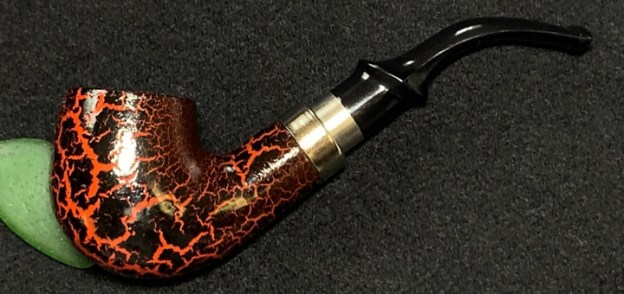
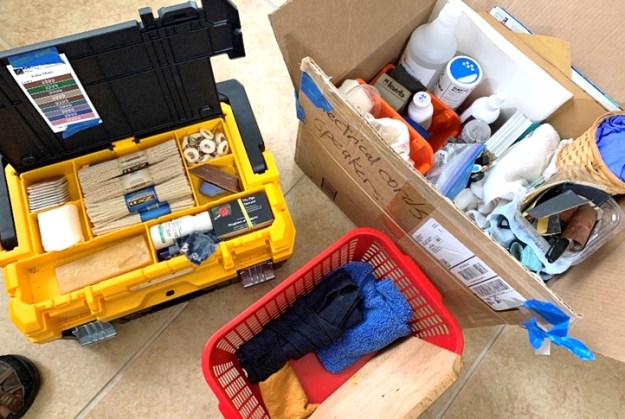
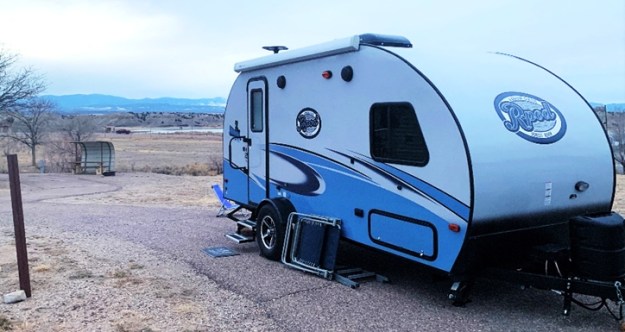
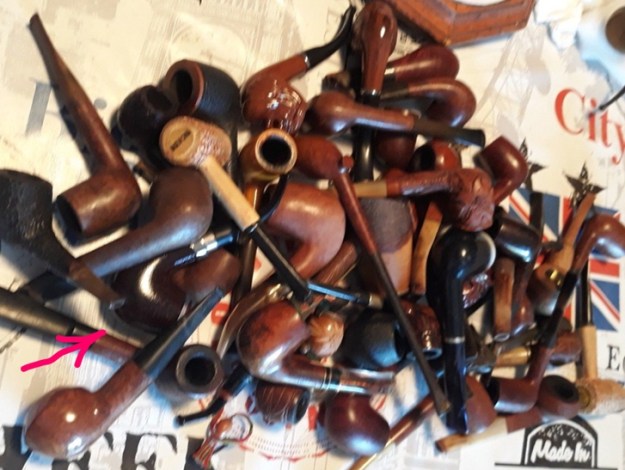
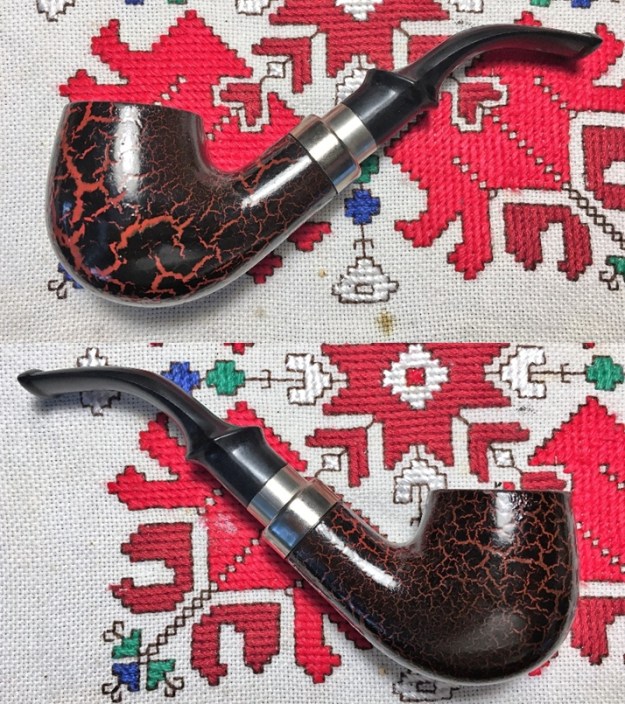
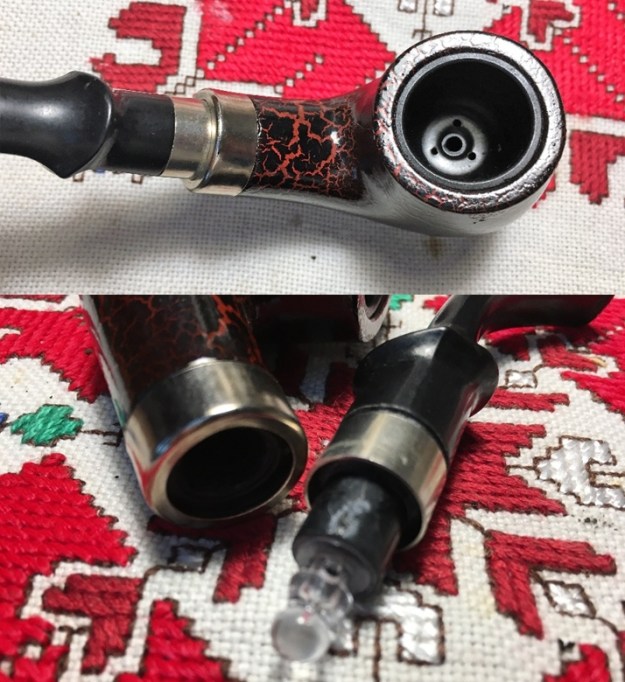
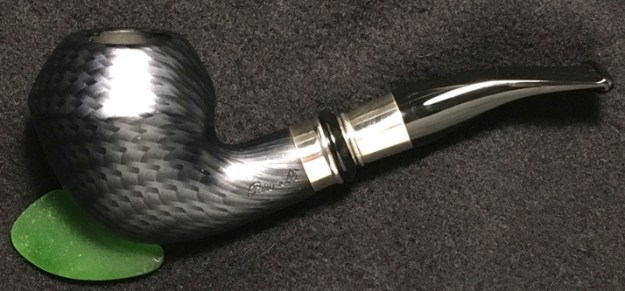
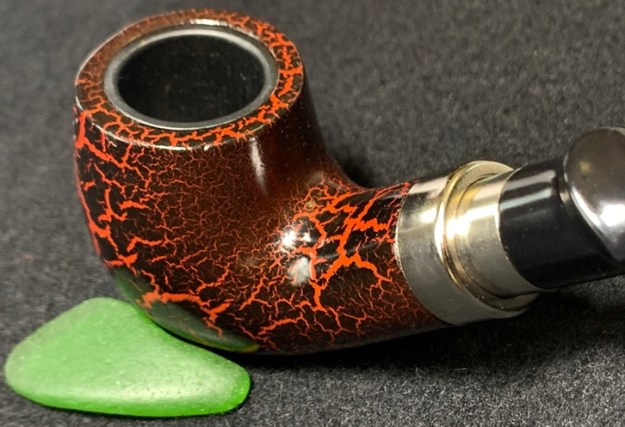
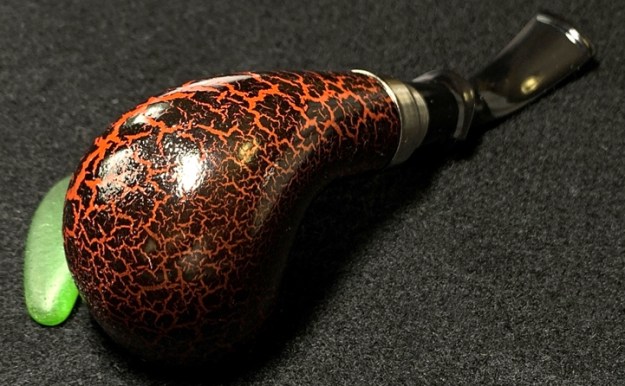
With Christmas vacation before me I decide to take The Pipe Steward work desk on the road!  I’ve never done this before, but the holidays give the opportunity to think through what packing up would look like.  In the end, with the rotary tool as the workhorse of my pipe restoration operation, I was able to consolidate the essentials.To see this great country and more safely visit loved ones amid COVID concerns, we acquired a small travel trailer called an R-pod to pull with the car.  We make a 5-day trek camping from Golden, Colorado, to Port St. Lucie, Florida, to spend a WARMER Christmas with my mother on the ‘Gold Coast’ of Florida.  The Pod is pictured below at our wintry first night’s stop near Pueblo, Colorado, with snow-covered mountains in the background! An interesting pipe occupies the mobile worktable now.  It is the final pipe that Daniel chose from the For “Pipe Dreamers” Only! Collection to form his trove of 7 pipes all benefiting the Daughters of Bulgaria.  I shared with Daniel that I was going mobile and that all the pipes he commissioned would be coming with me.  Hopefully, I’ll finish this last pipe and get them in the mail to him by Christmas!  I acquired this final pipe in 2018 from the French eBay auction block in a lot of 50 pipes.  It is difficult to make out without the help of the arrow in the picture below.  This French Lot of 50 has provided some great treasures and unique pipes.  There were a few pipes in the Lot of the genre of the pipe on the worktable now.  What makes these pipes unique is that the surface texture isn’t briar, but a fabric wrap-around the briar stummel.  It is a technique that emulates carbon fiber – a fabric/resin that is wrapped around the briar.  This technique started as a fad, but these pipes have increased in value and are more of a niche collectible.  This pipe is on the ‘bling’ side of things with a ‘spigot’ or military mount and the carbon fiber wrap adheres nicely to the contouring of the Bent Billiard stummel now on the worktable.  Here are the pictures of the Dragon Skin Applique Bent Billiard.   There are no markings on the pipe.  The spotted fabric design reminds me of ‘Dragon Skin’ and adding the metal of the nickel shank band and stem extender/spacer of the spigot or military mount fancy stem – well, I call this bling. I believe this could also be described as a spigot mount.  The tenon is also different – it’s made of clear acrylic.  The chamber also is interesting.  It appears to be a metal lining or cup with the draft hole at the center of the chamber floor.  I have never smoked a pipe of this genre and I’ve only worked on one before this – a Paronelli Cobalt Rhodesian of Italy which also came to me with the French Lot of 50.  The Paronelli only needed a cleaning so I didn’t do a write-up but did take some pictures of the process to show them to Michael from Pennsylvania, who commissioned this beautiful and unique pipe.The fabric wrapping the stummel is fascinating.  When I worked on the Paronelli, it was my first exposure to this wrapped genre.  I wrote to Steve with the question of what this material was and how to work with it?  His response was helpful which included a link discussing this genre.  Steve wrote:

To me it looks similar to one that Chacom made that was a fabric/resin applique put over briar. Seemed to be a fad for a while..

Steve also provided a link on Reddit where there was a discussion about this pipe genre titled, Can Someone Give Me An Info About This Pipe? Brand Paronelli, Model 62. It Feels So Weird In My Hands That I Don’t Even Know If It’s Made Of Wood.  The discussion centered around the makeup of the carbon fiber pipes and whether or not one has a carbon fiber pipe:

Nastyboots: Mostly the way it stretches around the bottom. Real cf typically comes in a roll and feels almost like canvas – it’s a tough fabric that has a little stretch or give, but not a lot. If that were real carbon fiber that checkered pattern would remain more consistent around the curves and not look so warped. Look at the front wing on a formula 1 car to see carbon fiber over some really crazy geometries and notice how consistent the pattern is.

The kicker is that real carbon fiber is impregnated with a resin. that’s what makes it a composite – a fabric and a resin come together to make a product that is greater than the sum of its parts. This resin is usually polished to a high gloss, giving it a deep, sexy, shine that, with the carbon fiber weave underneath, has an almost holographic look in the light. Vinyl wraps and hydro paint dips (which I’m sure yours is) look great but never really gets that wet glossy shimmery look.

Lorezo_InsigneWow, thanks for the info. I heard that Chacom was also making carbon fiber pipes, but by your answer I assume isn’t actually made with carbon fiber. Guess mine it’s just finished with a material that resembles cf then. Once again, many thanks!

Whether the Dragon Skin Bent Billiard on the worktable is a carbon fiber pipe, I cannot say for certain.  Yet, there is no doubt that the more general words of Steve, that it’s a ‘fabric/resin applique’ pipe, are spot on.

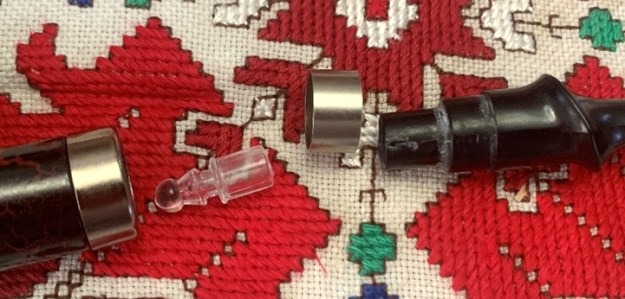
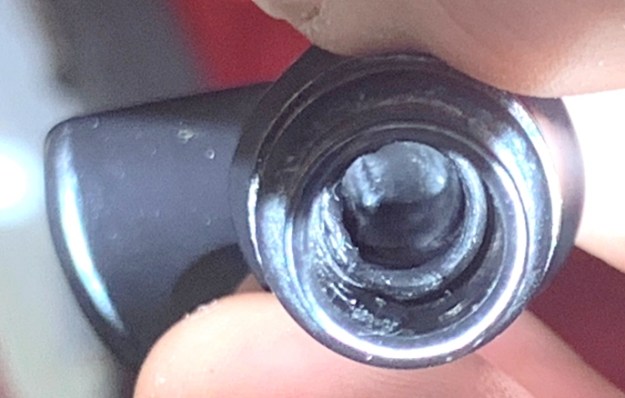
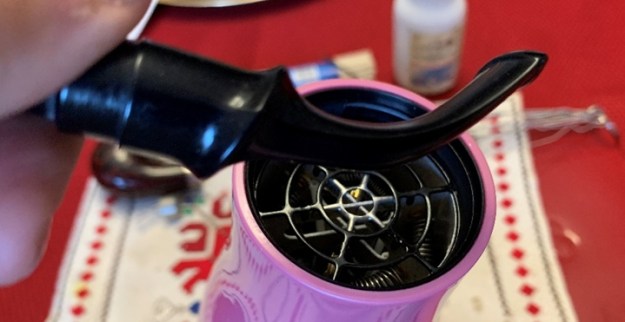
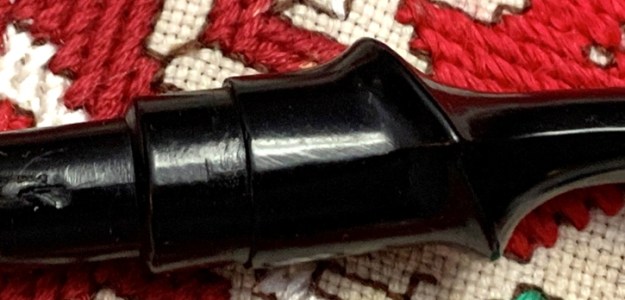
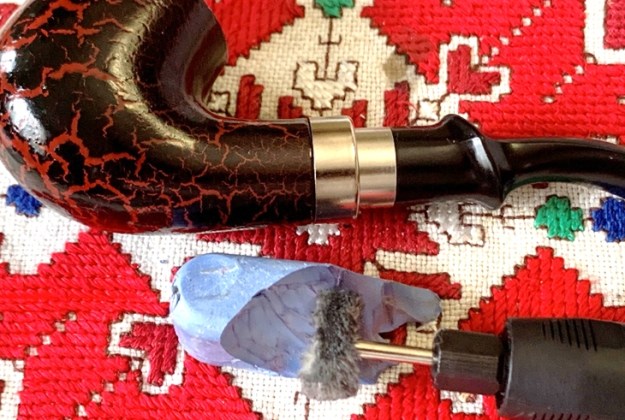
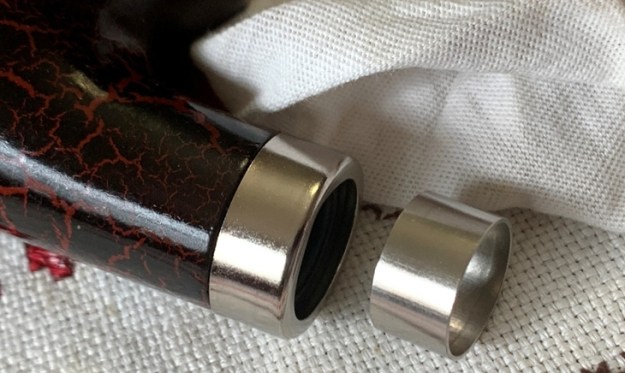
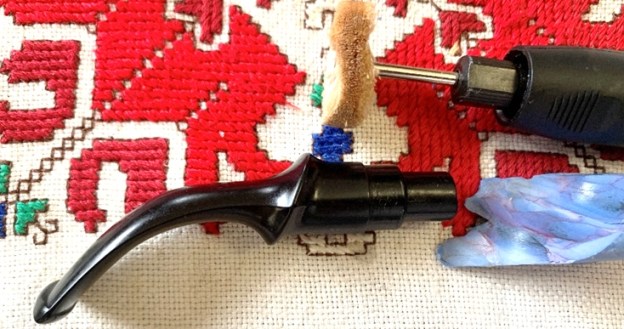
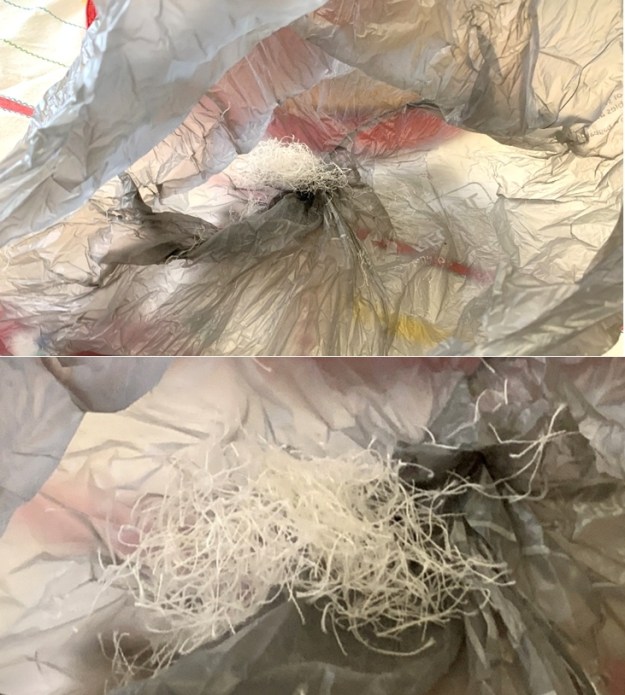
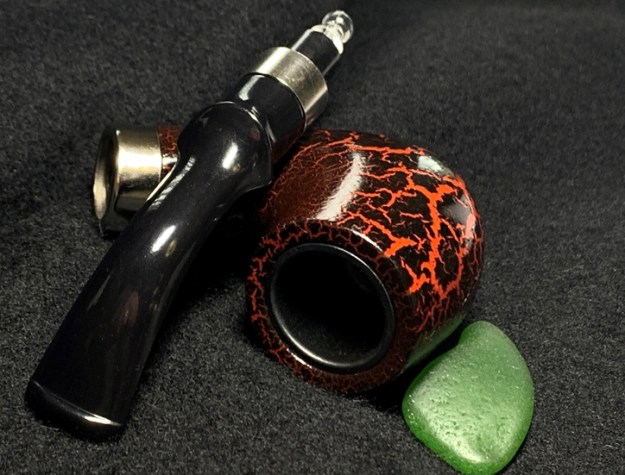
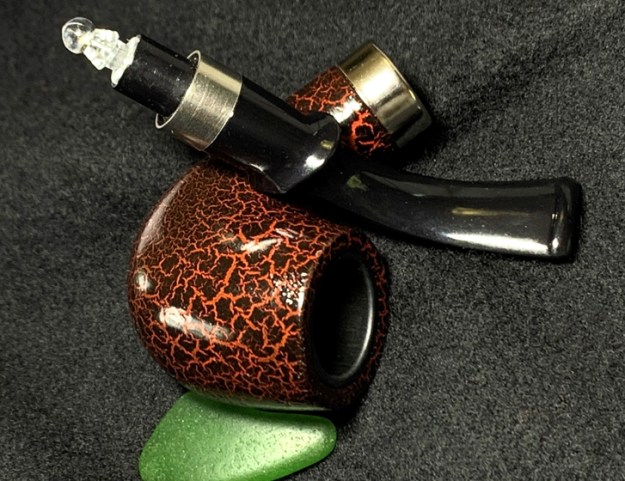
After disassembling the pipe, I take a picture to show the parts.  The acrylic tenon seems to function as an air restrictor.  With the removal of the tenon, a 9mm filter will fit the stem if one chooses. I’m calling this a simple ‘Clean Up’ because there is little to do to enhance the bling factor of the pipe. Cleaning the external surface of the pipe and shining the nickel shank cover and band will spruce things up.  The stem appears to have lost its shine as well, even though the pipe appears never to have been smoked.  I begin by cleaning the stem airway.  Using pipe cleaners dipped in isopropyl 99% I go to work.  It doesn’t take long into what I thought would be a simple clean-up, to discover that I cannot run a pipe cleaner through the airway.  After several failed attempts from both ends of the stem, I switch from pipe cleaners to a small diameter shank brush which has a wire stem.  This also was unsuccessful. I take some pictures to see if I can locate the airway.  I can blow through the stem, so I know there’s some opening somewhere.  Nothing jumps out looking at the picture of the inverted stem.  The bend of the stem appears to have crimped down on the airway.  It is not an option, I like to certify a pipe as restored and not be able to do the basic functions of cleaning the pipe.  To try to remedy the problem – to open the airway so that a pipe cleaner can navigate it, I heat the stem with a hairdryer to unbend the stem.  I’m hopeful this will do the trick.With permission to use my wife’s travel hair dryer as the ‘hot gun’, I heat the stem to soften the vulcanite so that it will unbend.I heat the stem for some time and apply pressure to encourage the vulcanite stem to unbend as the material becomes supple.  To my surprise, the material did not become supple in the time and with the temperature that should start seeing results.  In the end, I discover that the stem is not vulcanite but some sort of a plastic composite.  I confirm my suspicions of this by finding a seam on the side.  Warming the stem did not bend as a vulcanite stem.  I’m not sure, but it would probably melt if the stem got hot enough instead of becoming pliable.  Unfortunately, the cleaning of the stem will be more of a challenge having to come in from both ends as best as one can.I turn now to polishing the nickel shank cover and the stem band or extender.  Using Tarn-X Tarnish Remover on a cotton pad, I wipe on the Tarn-X and after rubbing it in, it is rinsed off with a cotton pad and water.  The Remover does a great job.To clean the fabric/resin applique Dragon Skin, I simply wipe it with a cotton pad wetted with water.  Next, after using the Tarn-X Tarnish Remover on the nickel shank cap and band, I apply Blue Diamond compound as well to increase the shine on the nickel.  A cotton cloth buffing wheel dedicated to Blue Diamond and nickel metal is mounted onto the rotary tool.  The rule of thumb is that each different kind of application has its own dedicated buffing wheel.  When the nickel is buffed with Blue Diamond, it produces a black residue that will stain the surrounding material.  I’ve learned the hard way that the black stuff will stain briar.  With the rotary tool set at about 40% full power, I’m careful to apply the Blue Diamond onto the metal with no runoff on the fabric/resin applique Dragon Skin.  After applying Blue Diamond, the metal is cleaned/buffed with a cotton cloth.  Wow!  This truly shined up the cap and band very nicely.  Next, after loading another cotton cloth buffing wheel to the rotary tool, with the speed set at about 40% full power, I apply Blue Diamond compound to the composite plastic stem.  I begin gingerly on the hidden, inserted part of the stem to make sure that the high-speed buffing/abrasion of the compound wasn’t going to melt or ripple the material.  It received the buffing nicely, so I continue with the rest of the stem.  Without doubt, this stem looks better now than new with the TLC provided. After applying the compound, the stem is wiped with a felt cloth to remove the residual compound dust before application of the wax.After attaching another cotton cloth buffing wheel, since it was new, I purge the wheel before using to remove the loose cotton strands.  I do this by inserting the rotary tool extension arm end into a plastic bag and turn on the rotary tool.  As the tool does its RPMs, I press a metal adjustment wrench into the cotton cloth of the wheel.  Much of the loose cotton fibers spin off and are captured in the bag.  After turning the power off, I then manually pluck the remaining lose fibers from the wheel.  I do this each time I put a new wheel into service.  It doesn’t remove all the ‘fly off’ but it reduces it by 90+ percent!    After the new wheel is purged, the speed maintained at about 40% full power, and carnauba wax is applied to the stem and the fabric/resin applique Dragon Skin stummel.  At first, I proceed very slowly to observe how the Dragon Skin applique receives the wax.  After seeing that it receives it quite nicely, I continue by applying a light coat of wax to the stummel.  When the carnauba wax is applied, the entire pipe is given a rigorous hand buffing to remove excess wax and to raise the shine.For an easy clean-up, this pipe threw in a few curve balls with the stem.  Even so, the results are good.  The unique Dragon Skin fabric/resin applique looks great and the nickel shank cap and stem extender add a nice touch of bling.  This system pipe is different with the metal bowl and draft hole in the center. The acrylic tenon or air restrictor fits well with this genre of pipe.  This is the last of the pipes that Daniel commissioned, and he will have the first opportunity to acquire it from The Pipe Steward Store benefiting the Daughters of Bulgaria – women and girls who have been trafficked and sexually exploited.  We made it safely to Port St. Lucy and I complete my first ‘mobile restoration’ with more to come.  I commemorate this by enjoying a bowl at the beach!  Thanks for joining me!

Breathing New Life into a Brandt Panel 32 Freehand Sitter


Blog by Steve Laug

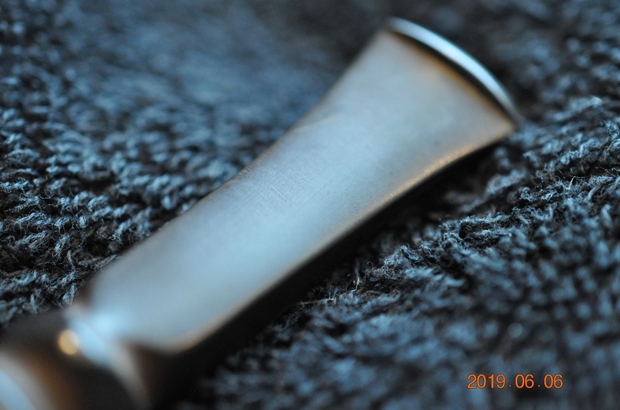
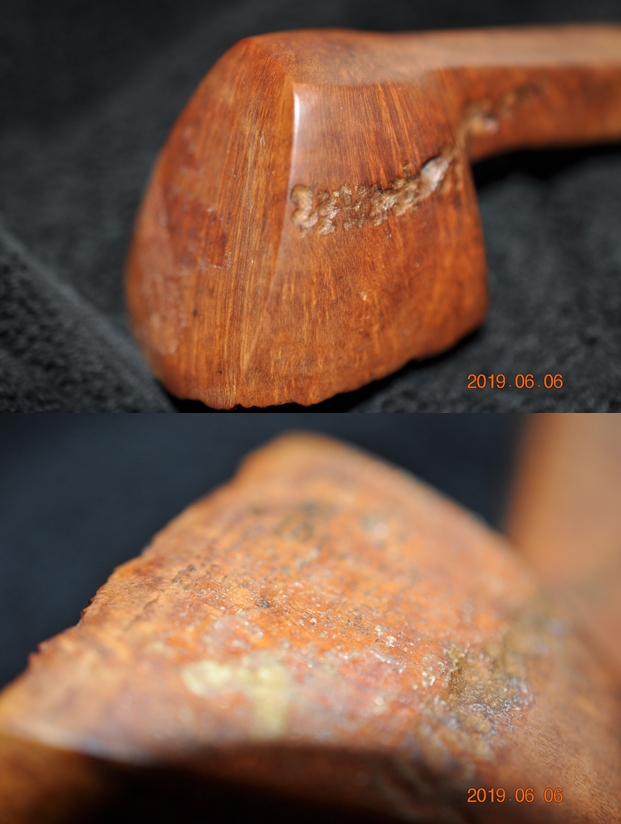
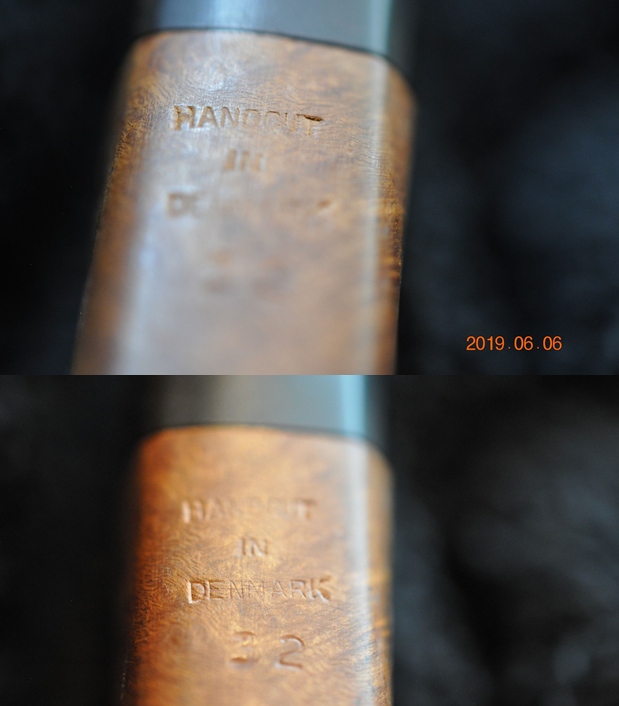
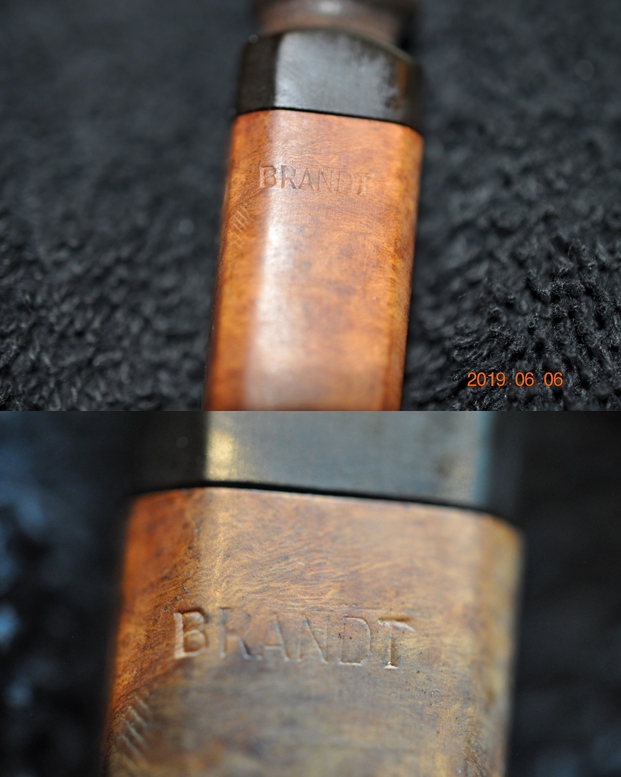
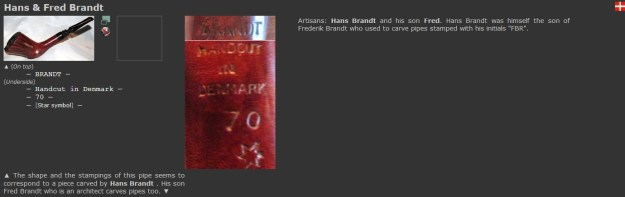
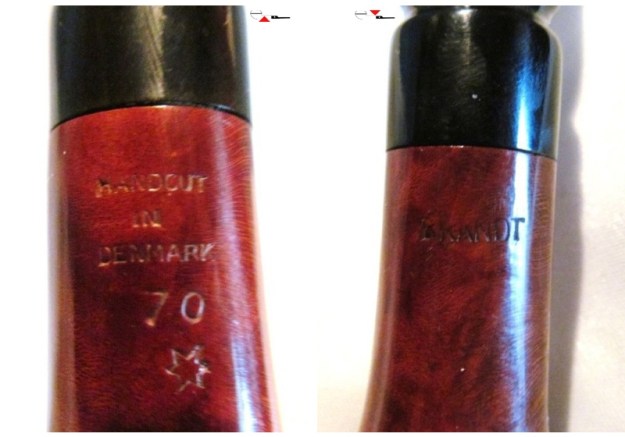
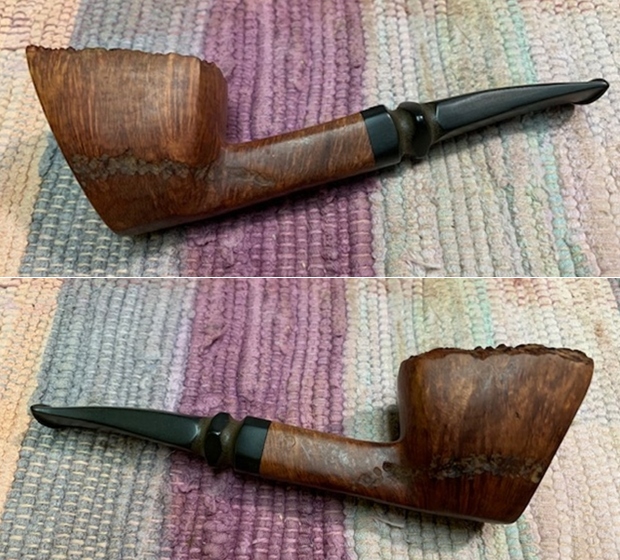
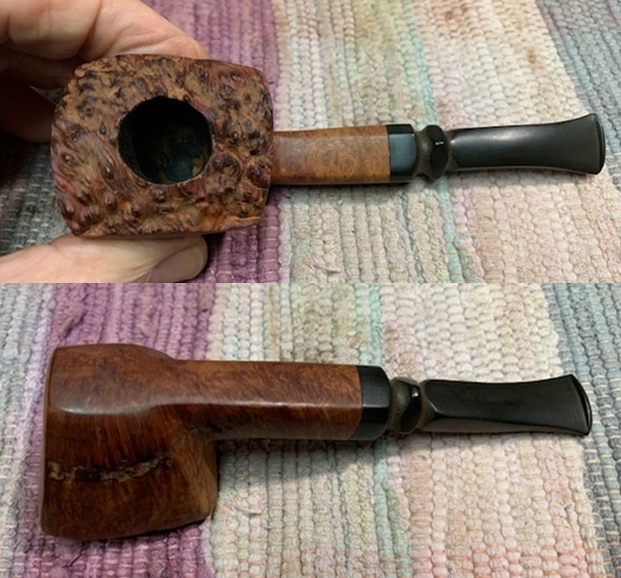
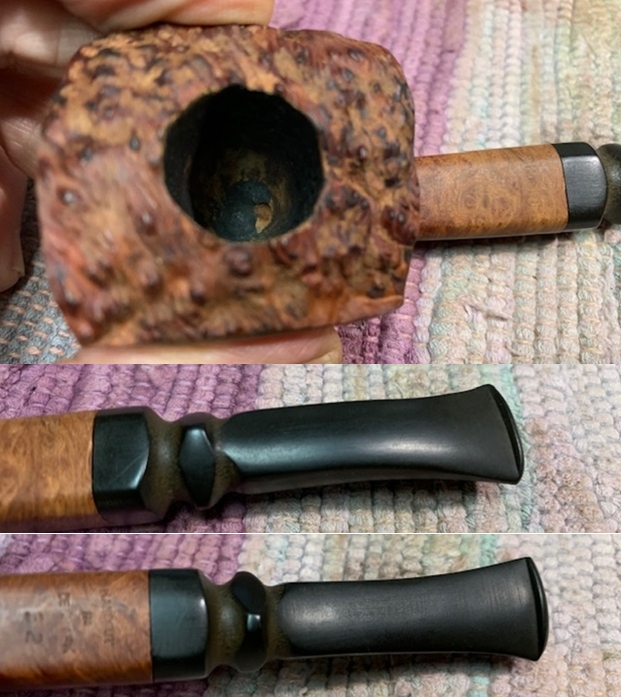
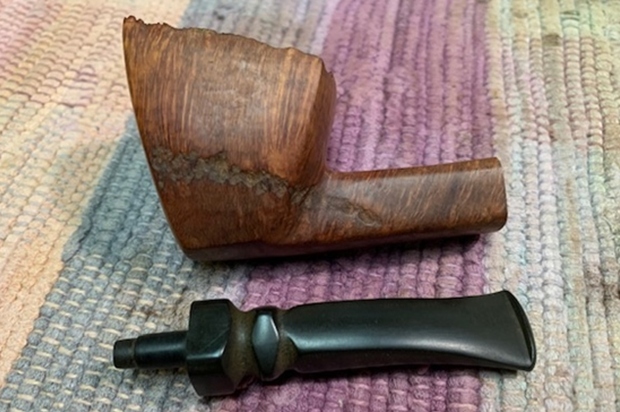
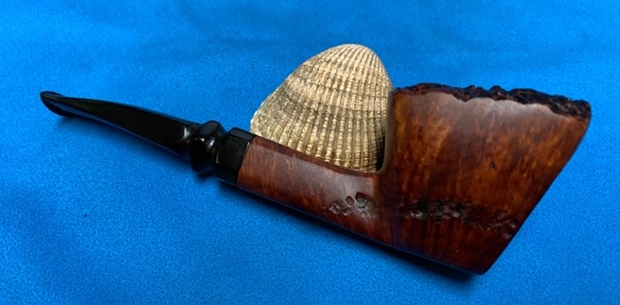
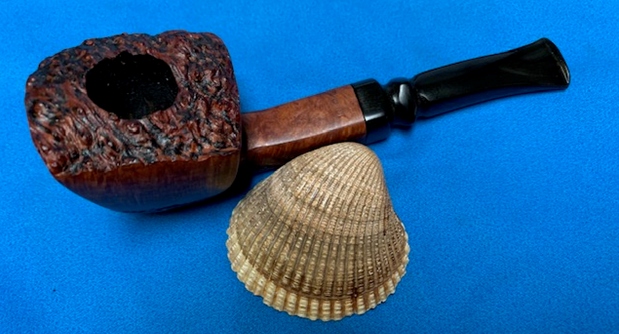
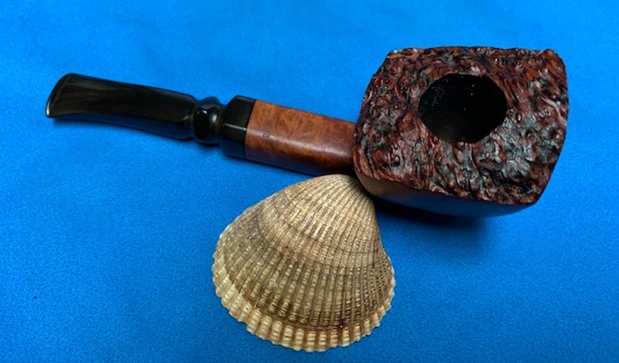
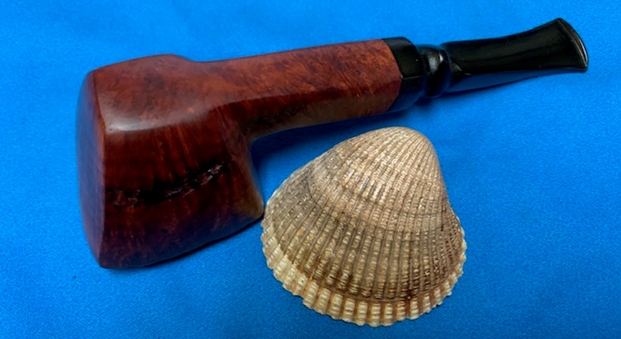
The next pipe on the work table came to us from an auction in Wilkes Barre, Pennsylvania, USA. It is a Panel shaped Freehand pipe with a plateau top and a smooth finish. The pipe has a fancy saddle vulcanite stem. The pipe is stamped on the topside of the shank and reads Brandt. On the underside next to the shank/stem junction it is stamped Hand Cut [over] in [over] Denmark [over] the shape number 32. The finish had a lot of grime on the surface and ground into both the briar and it was very dirty. The bowl was heavily caked and the inner edge of the rim had some darkening. The plateau top was dirty but undamaged. It was hard to tell what condition of the inner edge was because of the lava coat. Only cleaning would make that clear. The fancy square stem was oxidized, calcified and had tooth chatter and marks on the top and underside near the button. The pipe showed promise but it was very dirty. Jeff took photos of the pipe before he started his cleanup work.  He took photos of the rim top and bowl to give a clear picture of the thickness of the cake and the condition of the plateau rim top and edges. He also took photos of the top and underside of the stem to show the oxidation, calcification and light chatter and tooth marks. Jeff took photos of the sides and heel of the bowl to give a picture of what the briar around the pipe looked like.    He took photos of the stamping on the top and underside of the shank. It reads as noted above and is clear and readable. I turned first to Pipephil’s site (http://www.pipephil.eu/logos/en/logo-h1.html#hansfredbrandt). I found a pipe with the same stamping that was made by Hans Brandt.I turned to Pipedia to see what more I could find out on the brand. I looked in the Danish Pipemakers section of Pipedia (https://pipedia.org/wiki/Brandt). There was a great, short article on the brand. I quote it in full below

Hans Brandt is a quite forgotten pipemaker, who worked in the periphery of the legendary Copenhagen pipe shop Pibe-Dan. Very beautifully made, usually rather delicate freehands. Father of pipemaker Fred Brandt and son of pipemaker Frederik Brandt, who made pipes stamped “FBR”. Iwan Ries & Company imported Brandt pipes in the 1970s.

The 1976 Iwan Ries catalog includes this description accompanying a photo of 5 Hans Brandt pipes: “shape conformed.. meet old-fashioned quality in new fashioned shapes – luxury that’s unexpectedly practical! Original..perfectly proportioned! A-B Quality, natural finish..proficiently hand-made in Denmark, only for us. IRC originals..by Hans Brandt..highly talented Danish craftsman. Proud examples of the finest in pipemaking expertise – always ahead of tomorrow, with more devotees every year! Shapes G11 thru G15 – no 2 exactly alike. 24T68-2 $55.00”

That price is roughly $250 in 2020 dollars. They appear on the same page with 2 other “A-B quality” lines of pipes; Savinelli Autographs retailing for $110, and a new line of Danish fancies by Andersen going for $90.

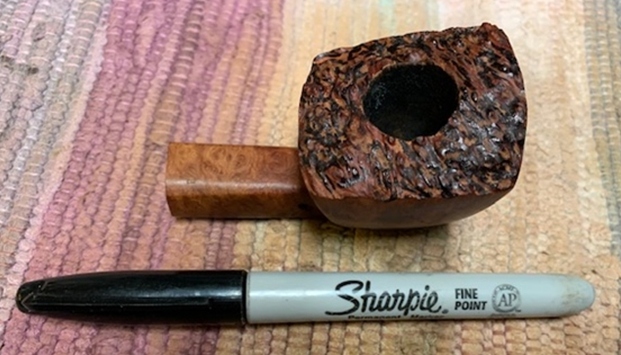
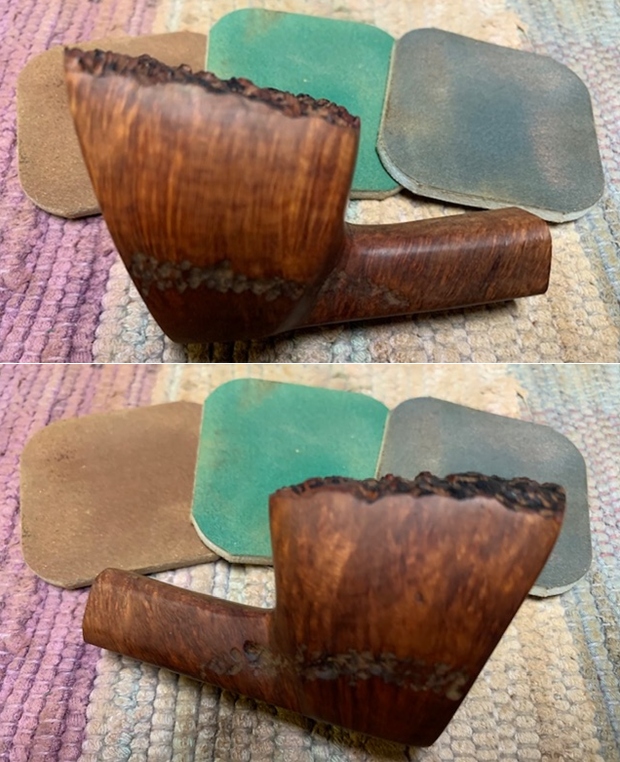
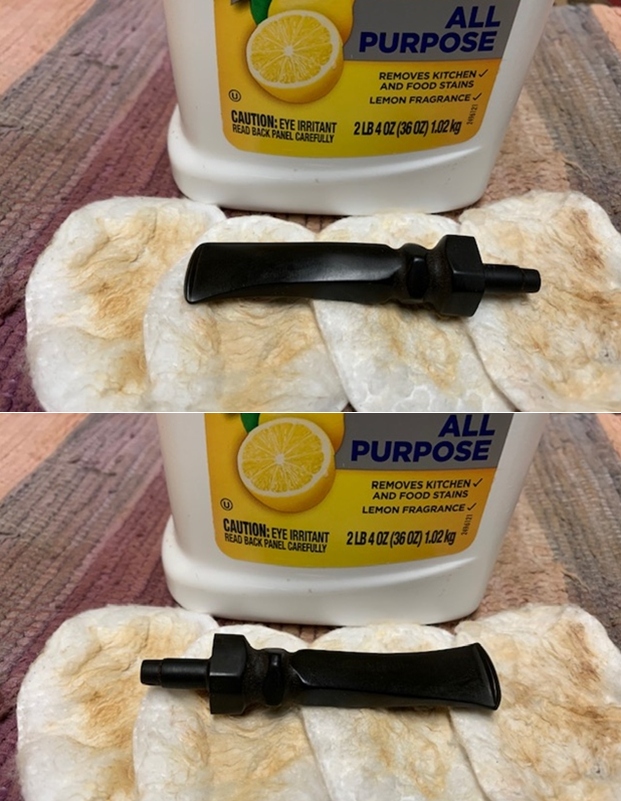
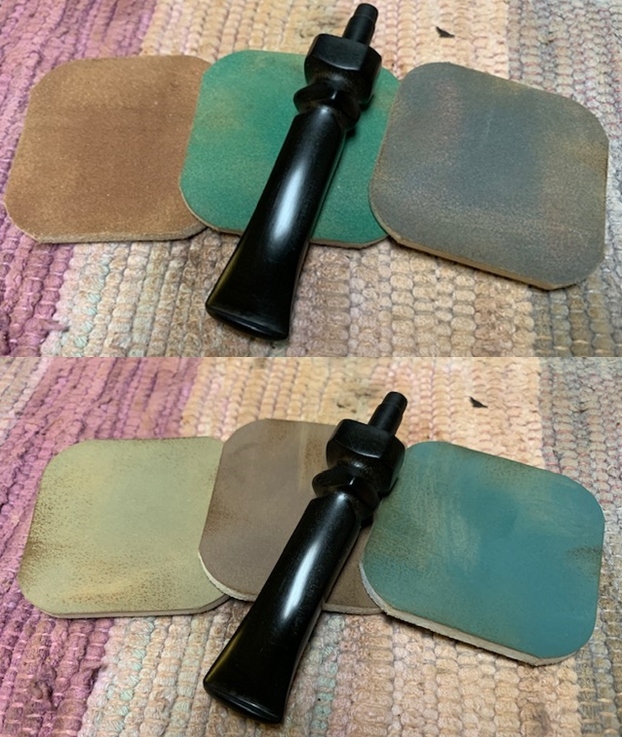
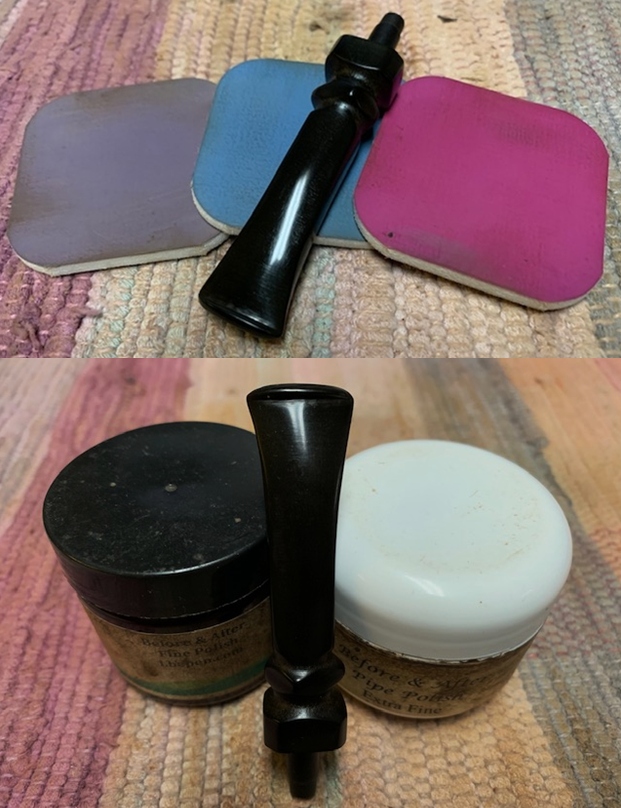
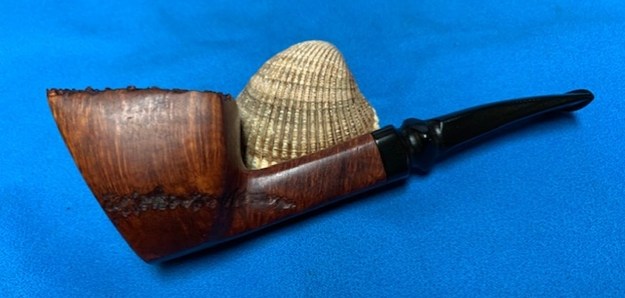
Now it was time to work on the pipe. Jeff had cleaned up the pipe with his usual penchant for thoroughness. He reamed the pipe with a PipNet Pipe Reamer and cleaned up the remnants with a Savinelli Fitsall Pipe Knife.  He scrubbed the bowl with undiluted Murphy’s Oil Soap with a tooth brush. He rinsed it under running warm water to remove the soap and grime. He cleaned out the inside of the shank and the airway in the stem with alcohol, cotton swabs and pipe cleaners. He soaked the stem in Before & After Deoxidizer and rinsed it off with warm water. I took photos of the pipe once I received it.    The plateau rim top and inner edge of the rim looked good. The stem surface looked very good with some light tooth marks and chatter on both sides near the button. It also had some residual oxidation.  I removed the stem and took a photo of the pipe to give a sense of the whole from the parts. I started my work on the pipe by working over the rim top with a Black Sharpie pen to differentiate the valleys and the high spots on the plateau top.I polished the smooth briar on the rim top and cap of the bowl with micromesh sanding pads – wet sanding with 1500-12000 grit pads. I wiped the bowl down after each pad with a damp cloth. I rubbed the bowl down with Before & After Restoration Balm. I worked it into the surface of the bowl sides and shank with my fingertips and a horse hair shoe brush. The product works to clean, enliven and protect the briar. I let the balm sit for a 15 minutes and then buffed with a cotton cloth to raise the shine.   I set the bowl aside and turned my attention to the stem. I scrubbed the stem with Soft Scrub All Purpose cleaner to remove the residual oxidation. It works very well to remove deep oxidation. I polished the vulcanite stem with micromesh sanding pads – 1500-12000 grit pads. I wiped it down with Obsidian Oil after each sanding pad. I used Before & After Pipe Polish – both Fine and Extra Fine to further polish the stem.      This Hans Brandt 32 Panel Freehand Sitter with a fancy vulcanite saddle stem is a great looking pipe now that it has been restored. The beautiful grain that shines through the polished smooth finish is stunning. The lines of rustication on the lower portion of the bowl on each side is quite distinctive. I put the stem back on the bowl and carefully buffed the pipe with Blue Diamond on the buffing wheel. I gave the bowl and the stem multiple coats of carnauba wax on the buffing wheel and followed that by buffing the entire pipe with a clean buffing pad. I hand buffed the pipe with a microfiber cloth to deepen the shine. The grain just popped with the wax and the buffing. It is a beauty! The finished Brandt Panel Freehand Sitter fits nicely in the hand and feels great. It is also a sitter that can stand on its own. Give the finished pipe a look in the photos below. The dimensions of the pipe are Length: 5 ½ inches, Height: 1 ¾ inches, Outside diameter of the bowl: 1 ¾ inches, Chamber diameter: ¾ of an inch. The weight of the pipe is 48gr/1.69oz. I will be putting it on the rebornpipes store in the DANISH PIPE MAKERS section soon. If you are interested in adding this pipe to your collection send me a message or an email. Thanks for reading this blog and my reflections on the pipe while I worked on it. There are many more to come!


Breathing New Life into a Volcano Sitter stamped The Bentley Pipe


Blog by Steve Laug

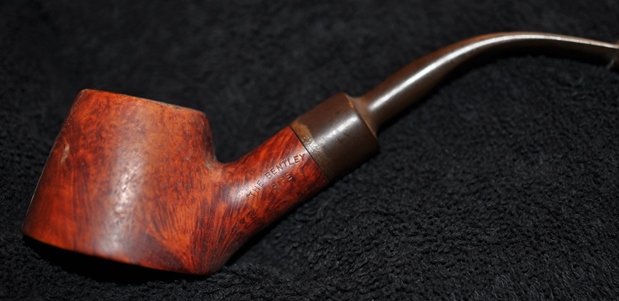
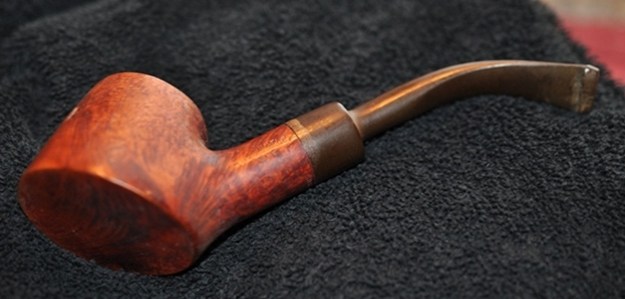
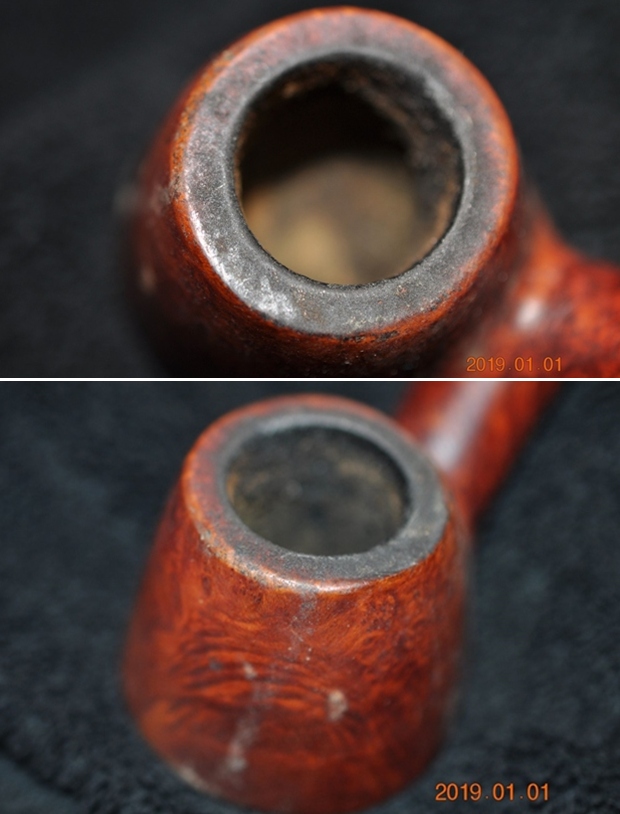
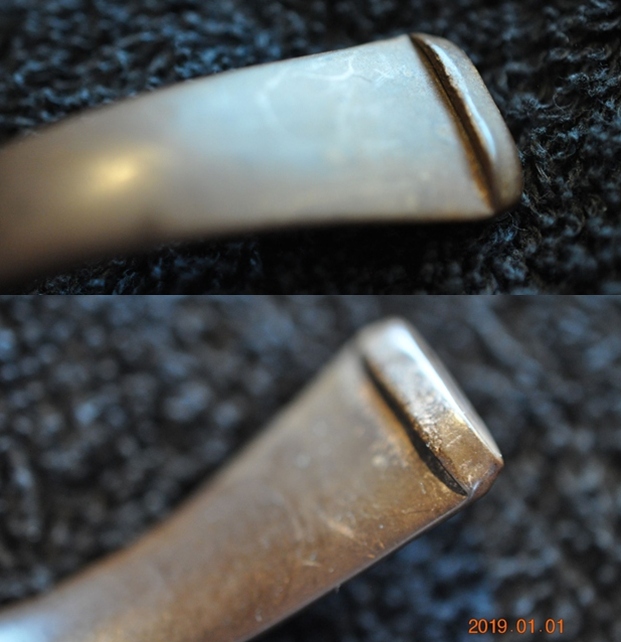
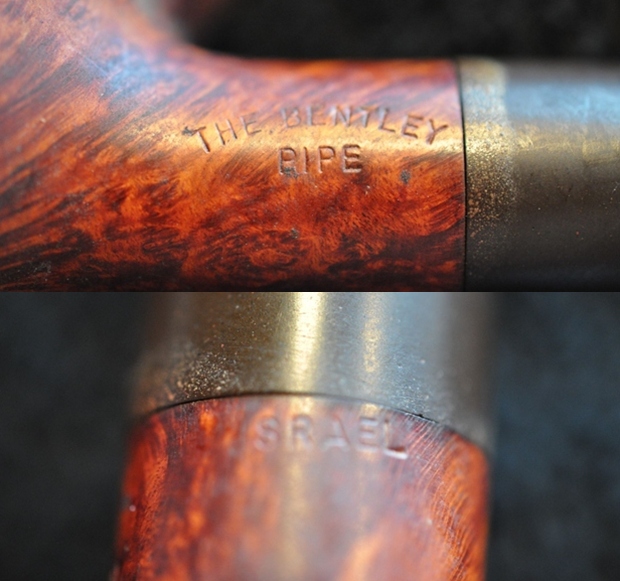
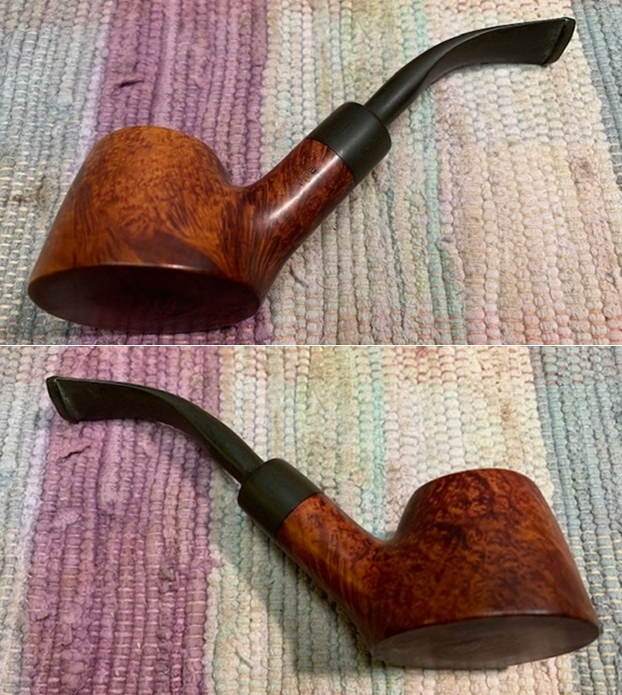
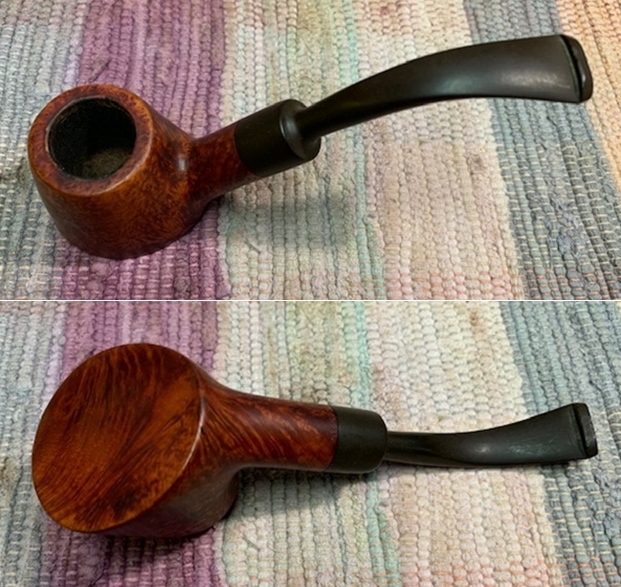
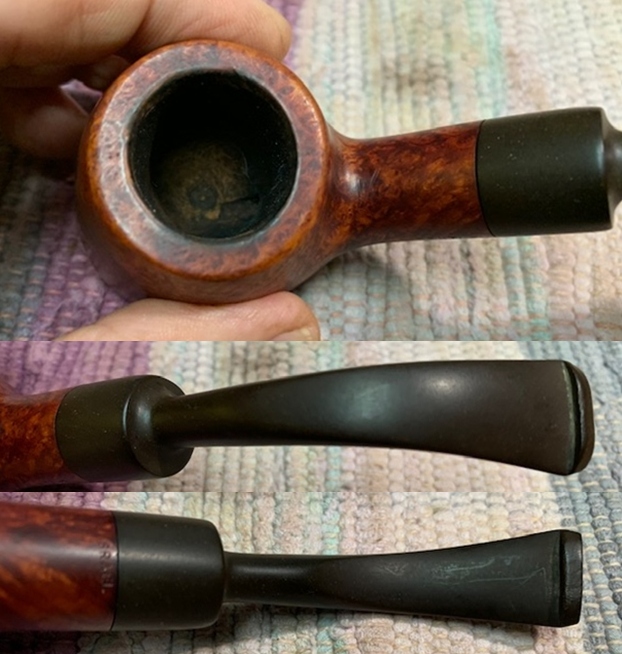
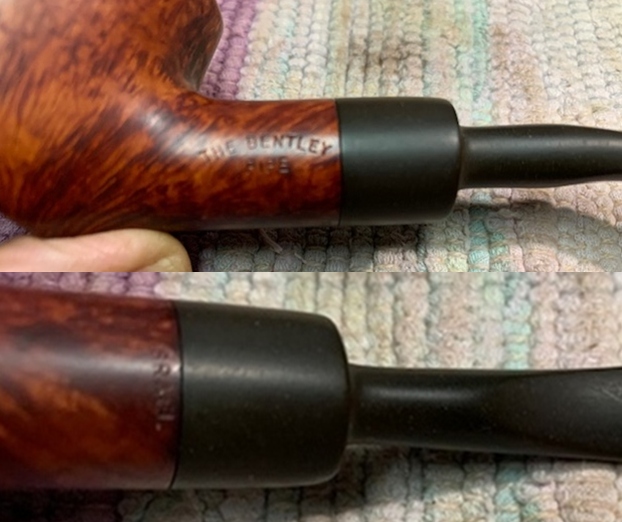
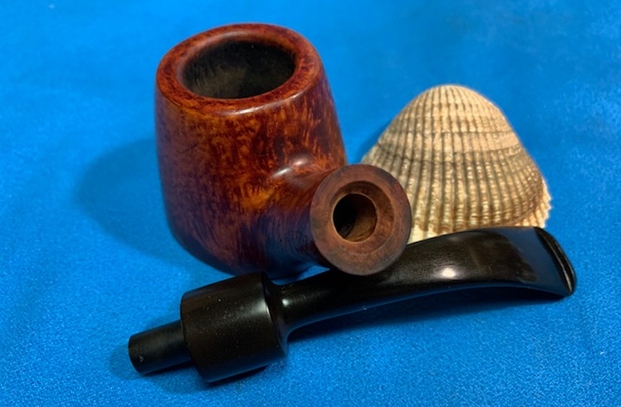
The next pipe on the work table came to us from an antique dealer back in 2018 in Sherwood, Arizona, USA. It is a Volcano Sitter shaped pipe with the mixed smooth finish. The pipe has a saddle vulcanite stem. The pipe is stamped on the left side of the shank and reads The Bentley [arched over] Pipe. On the underside next to the shank/stem junction it is stamped Israel. The finish had a lot of grime on the surface and ground into both the briar and it was very dirty. The bowl was heavily caked and there was a thick lava coat on the flat rim top and the inner edge of the rim. It was hard to tell what condition of the inner edge was because of the lava coat. Only cleaning would make that clear. The stem was oxidized, calcified and had tooth chatter and marks on the top and underside near the button. The pipe showed promise but it was very dirty. Jeff took photos of the pipe before he started his cleanup work.  He took photos of the rim top and bowl to give a clear picture of the thickness of the cake and the condition of the rim top and edges. He also took photos of the top and underside of the stem to show the oxidation, calcification and chatter and tooth marks. Jeff took photos of the sides and heel of the bowl to give a picture of what the briar around the pipe looked like.     He took photos of the stamping on the left side and on the underside of the shank. It reads as noted above and is clear and readable.     I knew that Bentley pipes were the production line of Former but this one was very different. It was stamped “The Bentley Pipe” and Israel. I looked Pipephil and Pipedia to see if I could find any information. Unfortunately there was nothing to be found. I also looked under the Shalom Pipe Factory information to see if I could find anything and there was nothing there either. I am pretty certain that it was made by Shalom as they made most if not all of the Israeli made pipe. I was left with a bit of a mystery pipe but it was truly a good looking pipe.

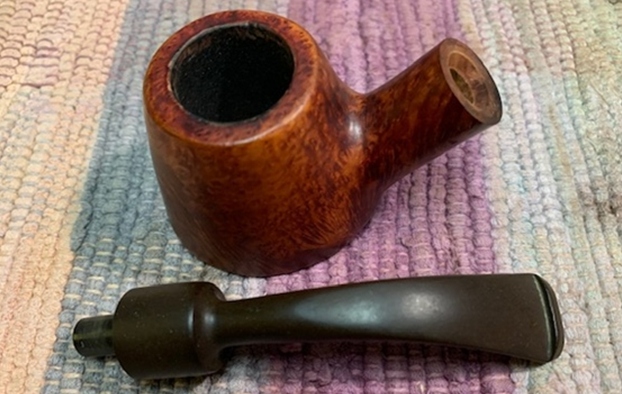
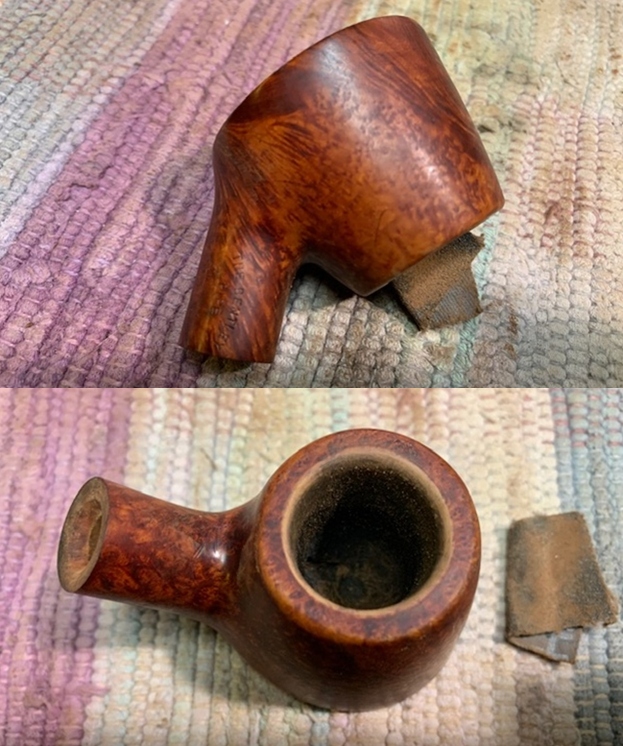
Jeff had cleaned up the pipe with his usual penchant for thoroughness. He reamed the pipe with a PipNet Pipe Reamer and cleaned up the remnants with a Savinelli Fitsall Pipe Knife.  He scrubbed the bowl with undiluted Murphy’s Oil Soap with a tooth brush. He rinsed it under running warm water to remove the soap and grime. He cleaned out the inside of the shank and the airway in the stem with alcohol, cotton swabs and pipe cleaners. He soaked the stem in Before & After Deoxidizer and rinsed it off with warm water. I took photos of the pipe once I received it.     The rim top and inner edge of the rim looked good with a bit of damage on the inner edge on the middle right. The damage on the right side inner edge made the bowl slightly out of round. The stem surface looked very good with some light tooth marks and chatter on both sides near the button. It also had some residual oxidation.  I took photos of the stamping on the shank. It is clear and readable as noted above. I removed the stem and took a photo of the pipe to give a sense of the whole.   I started my work on the pipe by working over the rim top and the inner edge of the bowl to clean up the damage. Once finished the rim top and edge looked much better.  I polished the smooth briar on the rim top and cap of the bowl with micromesh sanding pads – wet sanding with 1500-12000 grit pads. I wiped the bowl down after each pad with a damp cloth. I used a Maple Stain pen to touch up the rim top and inner edge of the rim. The colour blended in very well with the surrounding briar.I rubbed the bowl down with Before & After Restoration Balm. I worked it into the surface of the bowl sides and shank with my fingertips. The product works to clean, enliven and protect the briar. I let the balm sit for a 15 minutes and then buffed with a cotton cloth to raise the shine.   I set the bowl aside and turned my attention to the stem. I scrubbed the stem with Soft Scrub All Purpose cleaner to remove the residual oxidation. It works very well to remove deep oxidation.   I polished the vulcanite stem with micromesh sanding pads – 1500-12000 grit pads. I wiped it down with Obsidian Oil after each sanding pad. I used Before & After Pipe Polish – both Fine and Extra Fine to further polish the stem.    The Bentley Pipe Volcano Sitter Made in Israel with a vulcanite saddle stem is a great looking pipe now that it has been restored. The beautiful grain that shines through the polished smooth finish is stunning. I put the stem back on the bowl and carefully buffed the pipe with Blue Diamond on the buffing wheel. I gave the bowl and the stem multiple coats of carnauba wax on the buffing wheel and followed that by buffing the entire pipe with a clean buffing pad. I hand buffed the pipe with a microfiber cloth to deepen the shine. The grain just popped with the wax and the buffing. It is a beauty! The finished The Bentley Pipe Volcano fits nicely in the hand and feels great. It is also a sitter that can stand on its own. Give the finished pipe a look in the photos below. The dimensions of the pipe are Length: 5 ½ inches, Height: 1 ½ inches, Outside diameter of the bowl: 1 ¼ inches, Chamber diameter: 7/8 of an inch. The weight of the pipe is 54gr/1.90oz. I will be putting it on the rebornpipes store in the METAL AND OTHER TYPES OF PIPES FROM VARIOUS PIPE MAKERS section. If you are interested in adding this pipe to your collection send me a message or an email. Thanks for reading this blog and my reflections on the pipe while I worked on it. There are many more to come!

Breathing New Life into a Jobey Asti 200 Bulldog


Blog by Steve Laug

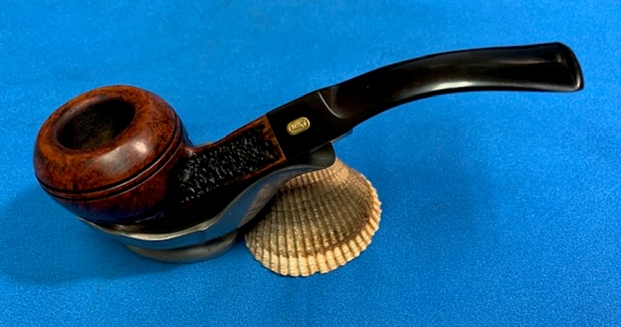
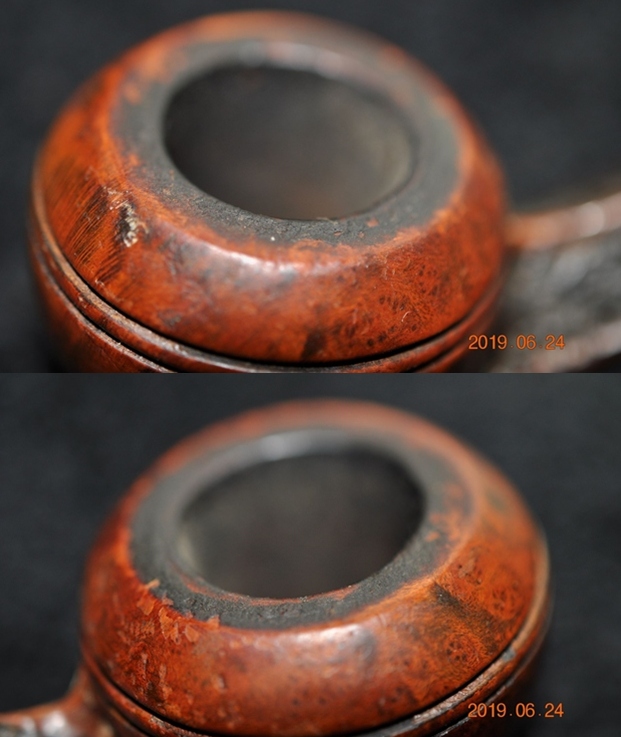
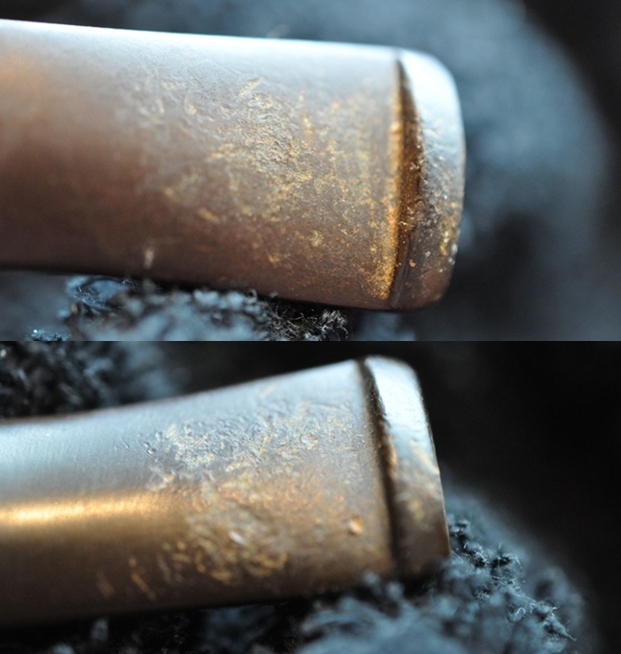
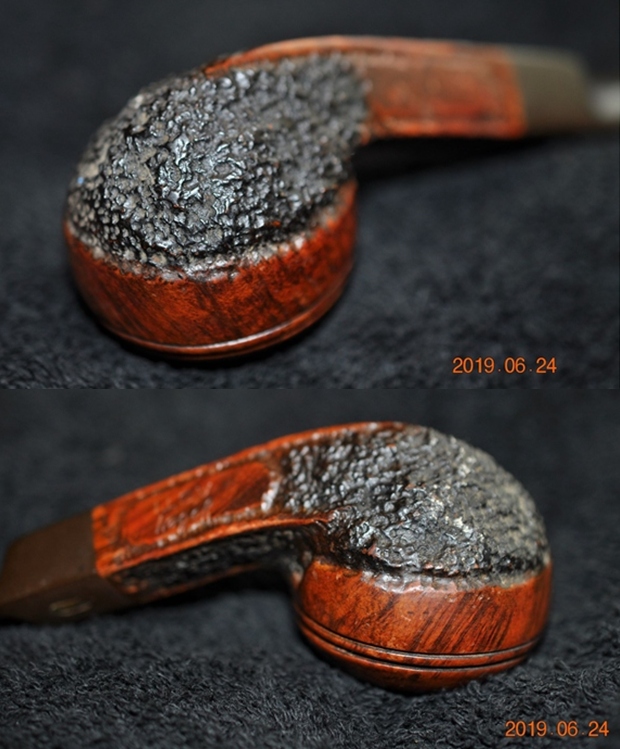
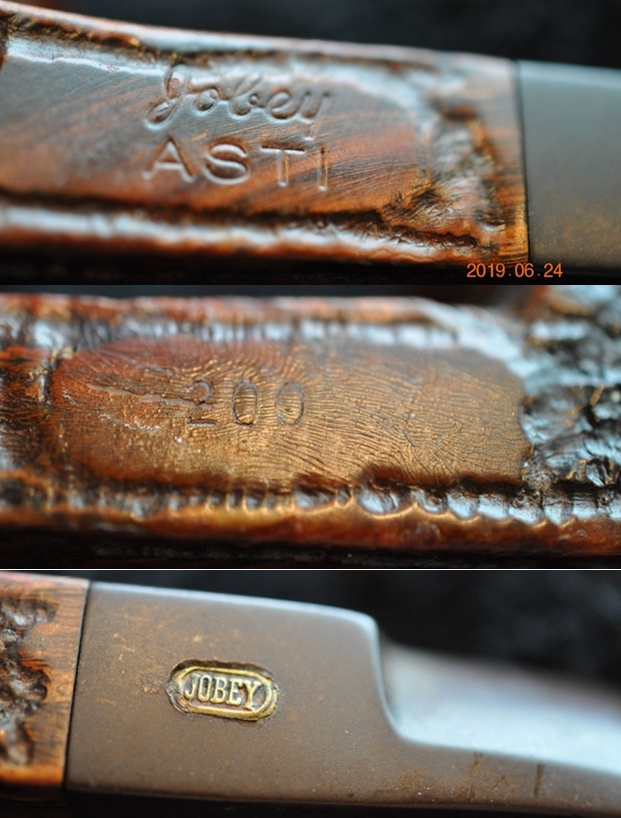
The next pipe on the work table came to us from an antique auction mid-2019 from Huntington Station, New York, USA. It is a Bulldog shaped pipe with the mixed smooth and rusticated finish that I have come to associate with Jobey Asti pipes. The pipe has a saddle vulcanite stem. The pipe is stamped on the left underside of the shank and reads Jobey [over] Asti. On the right side it is stamped with the shape number 200. On the left side of the saddle stem was the inset Jobey brass oval logo. The finish had a lot of grime ground into both the smooth and rusticated portions and it was very dirty. The bowl was heavily caked and there was a thick lava coat on the flat rim top and the inner edge of the rim. It was hard to tell what condition of the inner edge was because of the lava coat. Only cleaning would make that clear. The stem was oxidized, calcified and had tooth chatter and marks on the top and underside near the button. The pipe showed promise but it was very dirty. Jeff took photos of the pipe before he started his cleanup work. He took photos of the rim top and bowl to give a clear picture of the thickness of the cake and the condition of the rim top and edges. He also took photos of the top and underside of the stem to show the oxidation, calcification and chatter and tooth marks. Jeff took photos of the sides and heel of the bowl to give a picture of what the briar around the pipe looked like.   He took photos of the stamping on the shank and the logo on the left side of the saddle stem. It reads as noted above and is clear and readable.     I turned to Pipephil’s site for a quick review of the brand (http://www.pipephil.eu/logos/en/logo-j3.html). I quote a section of the post on the Jobey brand: These pipes are made in St Claude (France) by Butz-Choquin (Berrod-Regad group) since 1987. Before this date some were manufactured in England and Denmark (Jobey Dansk).

I turned then to Pipedia to gather further information regarding the brand and quote the first part of the article (https://pipedia.org/wiki/Jobey).

English – American – Danish – French… Sadly, solid information about Jobey is scant… Probably established in England around 1920(?) the brand hiked into the USA later. In the course of time owner, distributor and manufacturer changed repeatedly. As far as is known the following companies have been involved with the brand:

George Yale Pipes & Tobacco, New York (1942)

Norwalk Pipe Co., New York (1949)

Arlington Briar Pipes Corp., Brooklyn (when?)

Hollco International, New York (1969).

Weber Pipe Co., Jersey City, NJ (1970’s)

The Tinder Box, (1970’s – 80’s).

Throughout decades Jobey pipes were mainly sold in the USA, Canada and England but remained almost unknown in continental Europe. The bulk of Jobeys was predominantly made according to classical patterns and mainly in the lower to middle price range. The predominant judgment of the pipe smokers reads: “A well-made pipe for the price.” So there is hardly anything very special or exciting about Jobey pipes although a flyer from ca. 1970 assures: “The briar root Jobey insists upon for its peer of pipes is left untouched to grow, harden and sweeten for 100 years. […] Jobey uses only the heart of this century old briar and only one out of 500 bowls turned measures up to the rigid Jobey specifications.” 99.80% of cull… that makes the layman marveling!

Jeff had cleaned up the pipe with his usual penchant for thoroughness. He reamed the pipe with a PipNet Pipe Reamer and cleaned up the remnants with a Savinelli Fitsall Pipe Knife.  He scrubbed the bowl with undiluted Murphy’s Oil Soap with a tooth brush. He rinsed it under running warm water to remove the soap and grime. He cleaned out the inside of the shank and the airway in the stem with alcohol, cotton swabs and pipe cleaners. He soaked the stem in Before & After Deoxidizer and rinsed it off with warm water. I took photos of the pipe once I received it.    The rim top and inner edge of the rim looked good with a bit of damage on the inner edge and on the rim surface on the front right. There was some burn damage on the front and right that made the bowl slightly out of round. The stem surface looked very good with some light tooth marks and chatter on both sides near the button. It also had some residual oxidation.  I took photos of the stamping on the shank. It is clear and readable as noted above.    I removed the stem and took a photo of the pipe to give a sense of the whole. The stem has a patented Jobey Link Tenon. I started my work on the pipe by working over the rim top and the inner edge of the bowl to clean up the damage. Once finished the rim top and edge looked much better.  I polished the smooth briar on the rim top and cap of the bowl with micromesh sanding pads – wet sanding with 1500-12000 grit pads. I wiped the bowl down after each pad with a damp cloth. I rubbed the bowl down with Before & After Restoration Balm. I worked it into the surface of the bowl sides and shank with my fingertips and a horse hair shoe brush. The product works to clean, enliven and protect the briar. I let the balm sit for a 15 minutes and then buffed with a cotton cloth to raise the shine.   I set the bowl aside and turned my attention to the stem. I scrubbed the stem with Soft Scrubb All Purpose cleaner to remove the residual oxidation. It works very well to remove deep oxidation.   I “painted” the surface of the stem with the flame of lighter to lift the bite marks on the vulcanite. Heat lift the marks to the surface of stem. I was able to lift the majority of them but there were a few left on each side. I filled them in with clear super glue and set it aside to let them cure.  When the repairs cured I sanded them smooth with 220 grit sandpaper and started polishing the stem with 400 grit wet dry sandpaper. I polished the vulcanite stem with micromesh sanding pads – 1500-12000 grit pads. I wiped it down with Obsidian Oil after each sanding pad. I used Before & After Pipe Polish – both Fine and Extra Fine to further polish the stem.    This Jobey Asti 200 Bulldog with a vulcanite saddle stem is a great looking pipe now that it has been restored. The beautiful grain that shines through the polished smooth part of the finish and the dark rustication on the lower part of the bowl is stunning. I put the stem back on the bowl and carefully buffed the pipe with Blue Diamond on the buffing wheel. I gave the bowl and the stem multiple coats of carnauba wax on the buffing wheel and followed that by buffing the entire pipe with a clean buffing pad. I hand buffed the pipe with a microfiber cloth to deepen the shine. The grain just popped with the wax and the buffing. It is a beauty! The finished Jobey Asti Bulldog fits nicely in the hand and feels great. Give the finished pipe a look in the photos below. The dimensions of the pipe are Length: 5 ½ inches, Height: 1 ½ inches, Outside diameter of the bowl: 1 ½ inches, Chamber diameter: ¾ of an inch. The weight of the pipe is 35gr/1.23oz. If you are interested in adding this pipe to your collection send me a message or an email. Thanks for reading this blog and my reflections on the pipe while I worked on it. There are many more to come!

Restoring & Restemming a Peterson’s Republic Era System Standard 313 Bent Billiard


Blog by Steve Laug

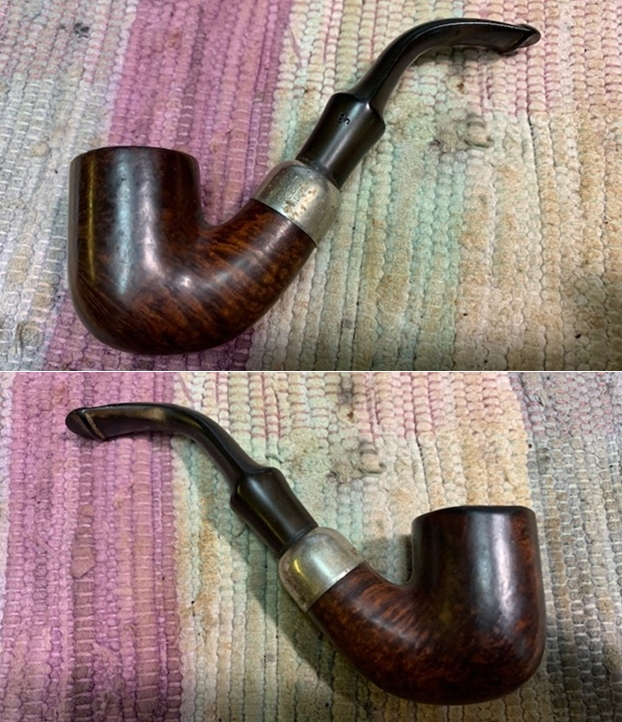
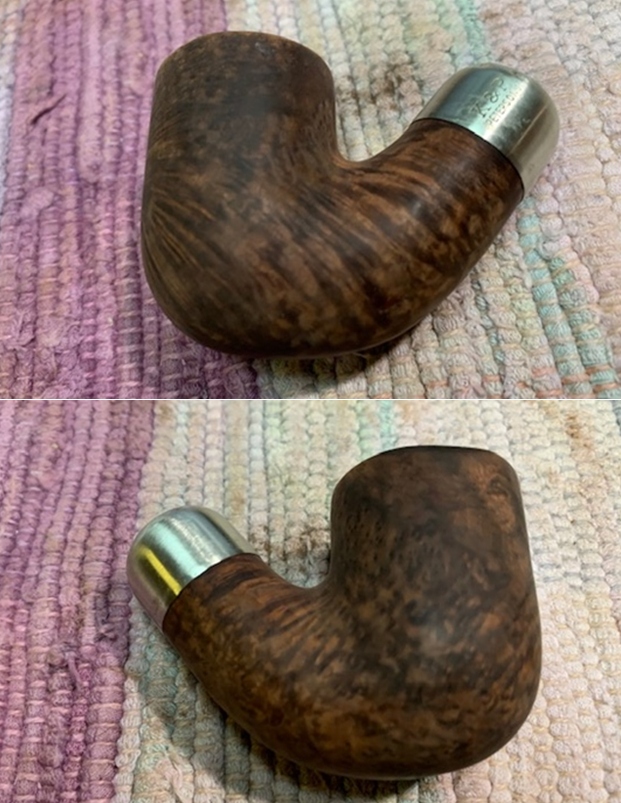
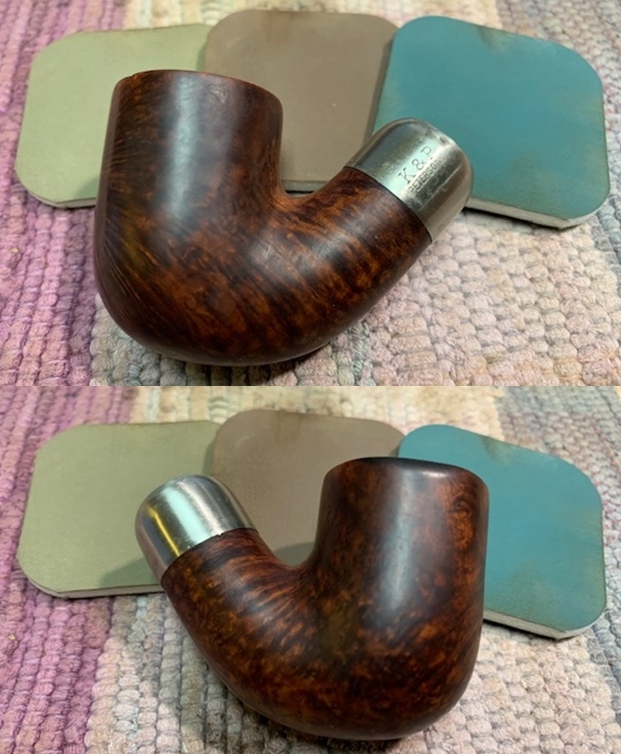
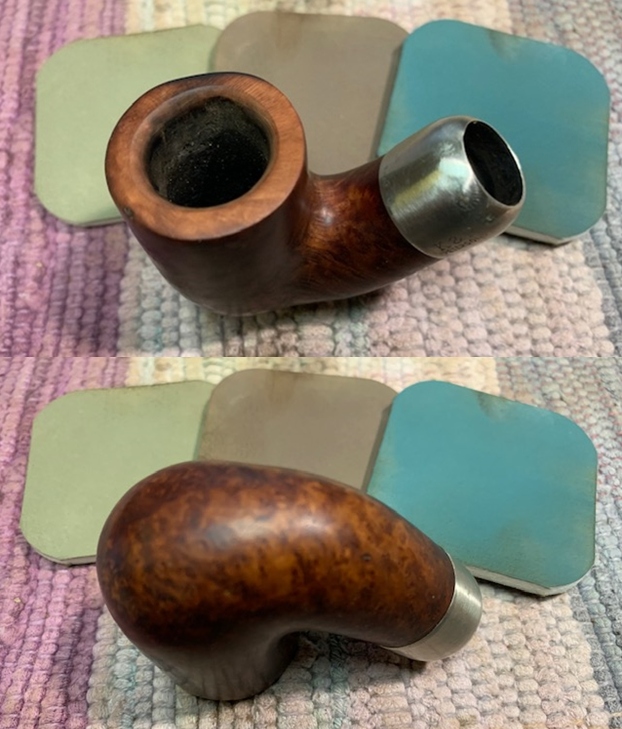
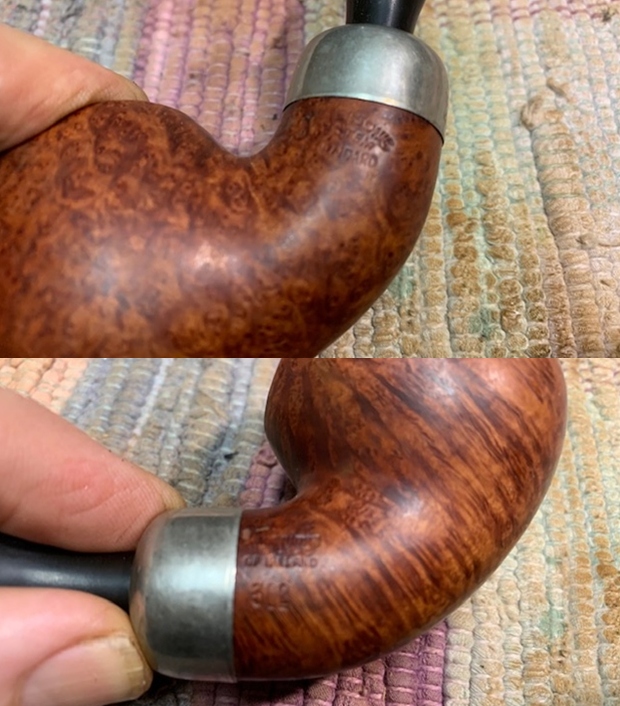
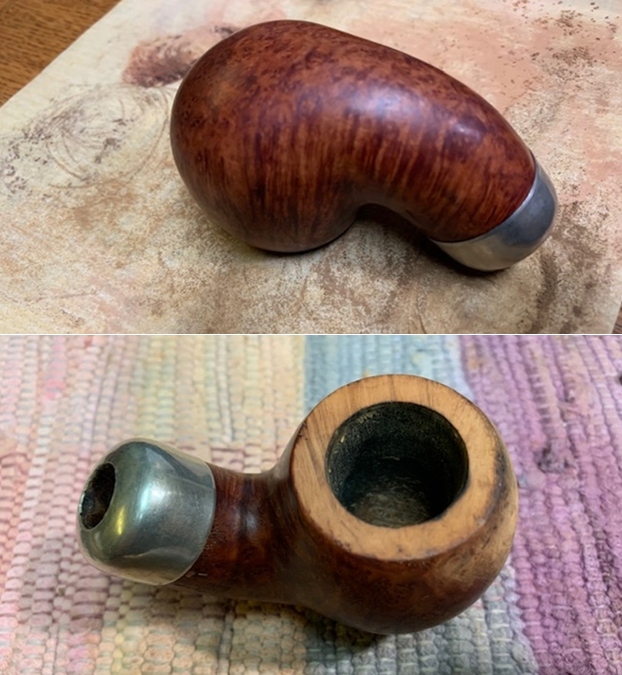
The next pipe on the work table was a bit of a surprise. I was sorting through the bowls that had accumulated over the past 20+ years with Jeff and pitching the worthless ones. You have to understand the drive that made me keep them around this long was still strong but I need to clean up things here so I asked Jeff to walk through the box of around 50-60 bowls and thin them down. As we went through them we came across a smooth Peterson’s System Standard 313 bowl. It had some interesting grain around the bowl but it also had a lot of damage. The right outer edge of the bowl was burned and damaged and the bowl was completely out of round. It had a thick cake and it was a mess. But there was something about it that caught our eye. The pipe is faintly stamped on the left side of the shank and reads Peterson’s [over] System [over] Standard. On the right side it is faintly stamped Made in the Republic of Ireland and underneath that is the shape number 313. The nickel ferrule is stamped K & P [over] Peterson. The nickel ferrule was also heavily discoloured by oils and tars and the glue holding it in place had long since dried and it was loose. The finish had a lot of grime ground into it and it was very dirty.

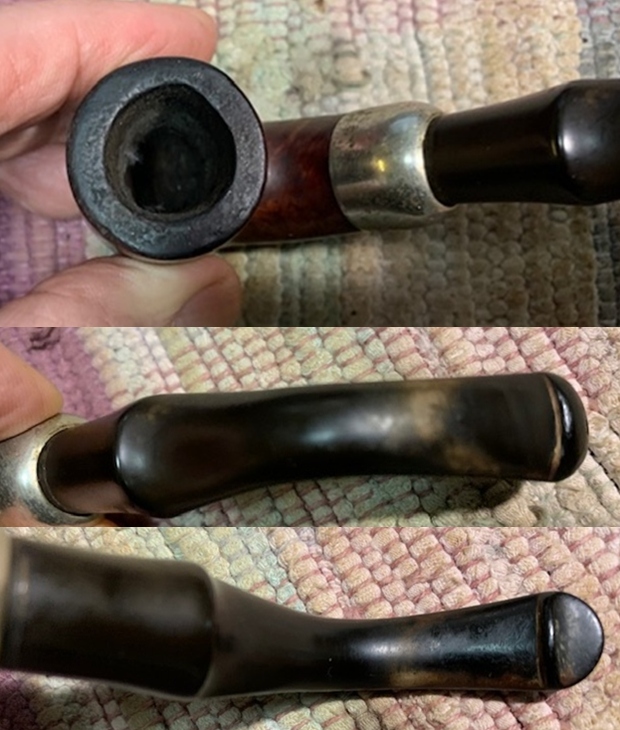
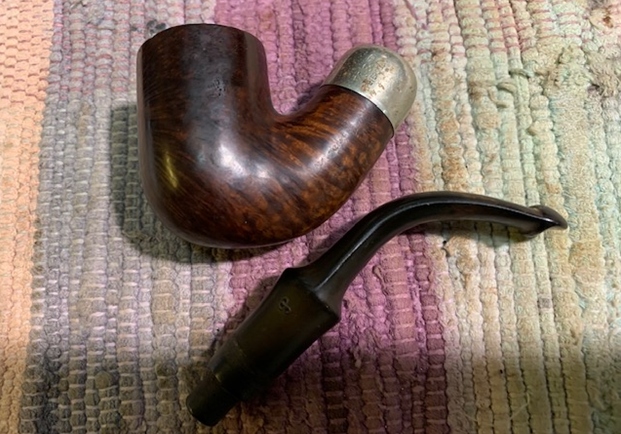
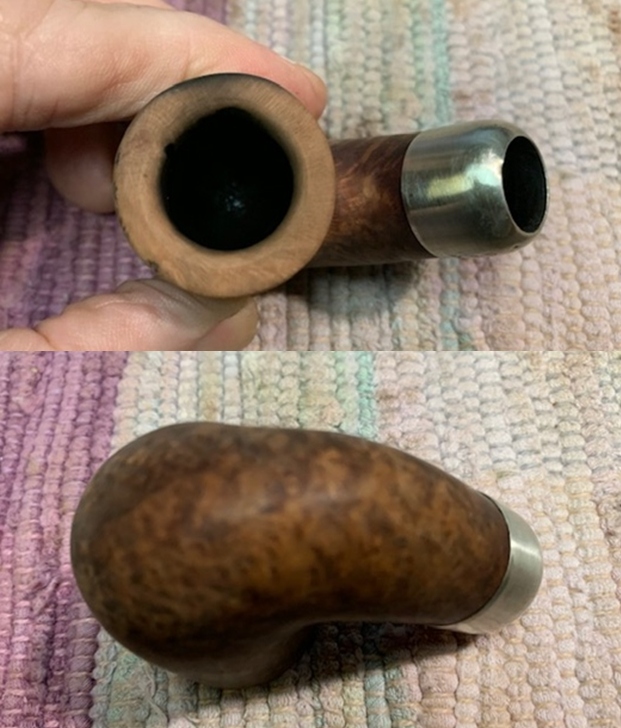
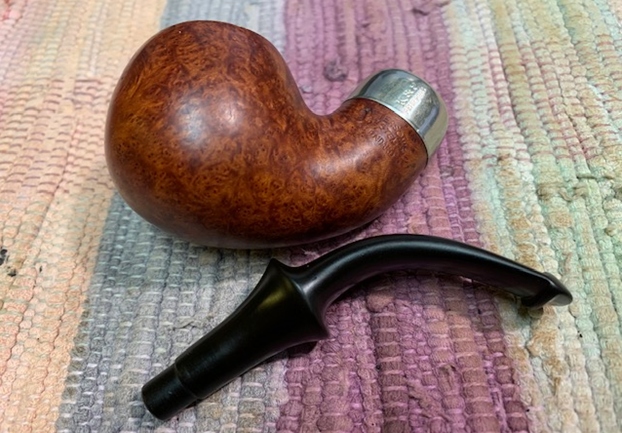
I remembered that I had a stem that would fit it perfectly that I had found recently. I found it and fit it on the shank and it was perfect. The stem was oxidized, calcified and had tooth chatter and marks on the top and underside near the P-lip style button. The “P” stamp on the left side of the saddle was undamaged. After putting it all together, the pipe showed promise but it was very dirty. I took these photos before I started my work on it.  I took a photo of the rim top and bowl to give a clear picture of the thickness of the cake and the condition of the rim top and edges. I also took photos of the top and underside of the stem to show the oxidation, calcification and chatter and tooth marks. He took photos of the stamping on the shank and the nickel ferrule. It reads as noted above and is faint but readable.    I removed the stem from the shank and took a photo of the pipe as a whole. It showed a lot of promise.I am including the information from Pipedia’s article on Peterson pipes. It is a great read in terms of the history of the brand (https://pipedia.org/wiki/Peterson). I have included a bit of the pertinent history here.

1950 – 1989 The Republic Era – From 1950 to the present time, the stamp for this era is “Made in the Republic of Ireland” in a block format generally in three lines but two lines have been used with or without Republic being abbreviated.

I knew that I was dealing with a Republic Era pipe made between 1950-1989. It was a smooth Peterson’s System Standard 313 Bent Billiard with nice grain. The finish was stained with a combination of brown stains. Now it was time to work on the pipe.

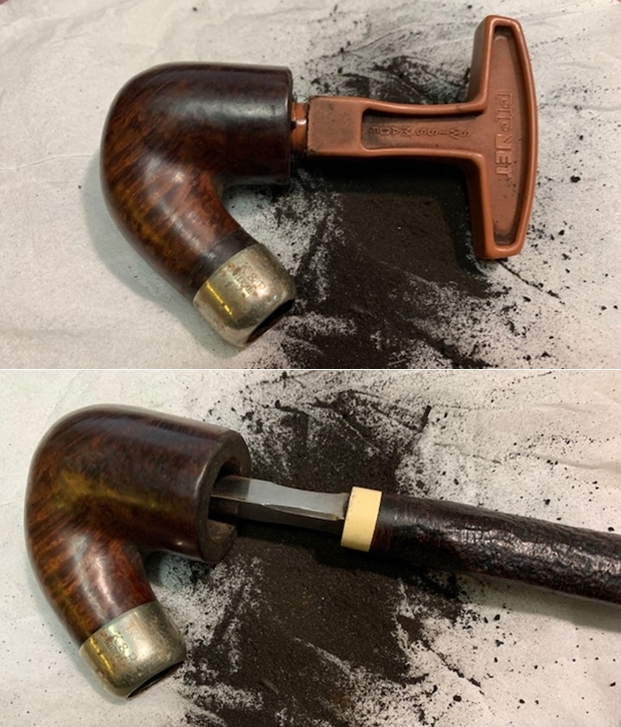
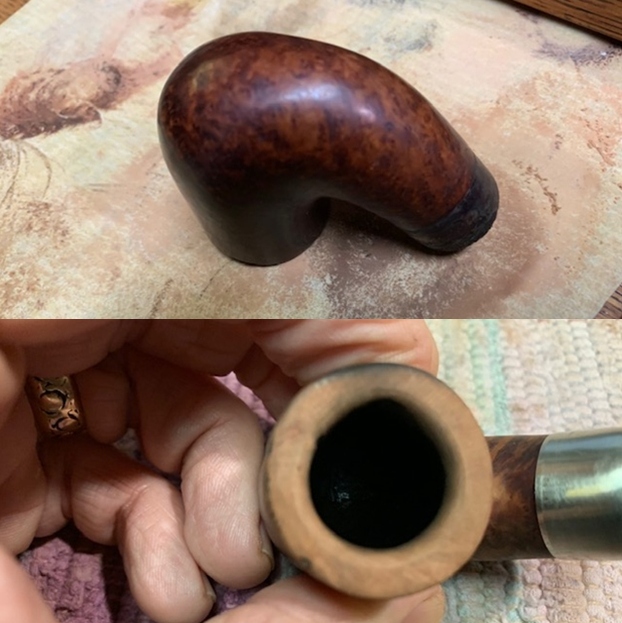
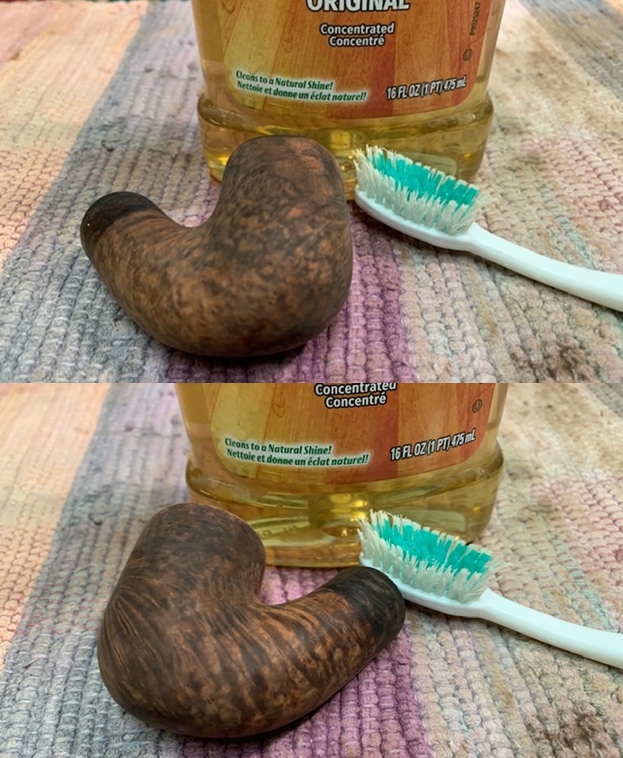
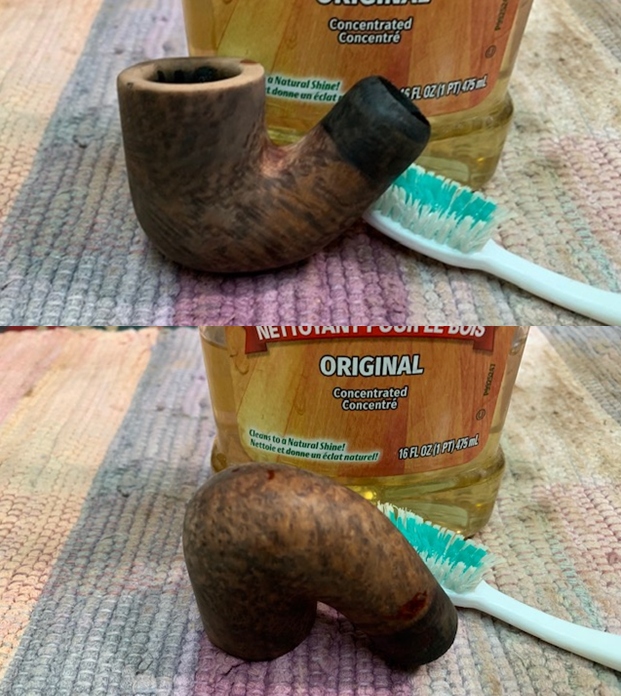
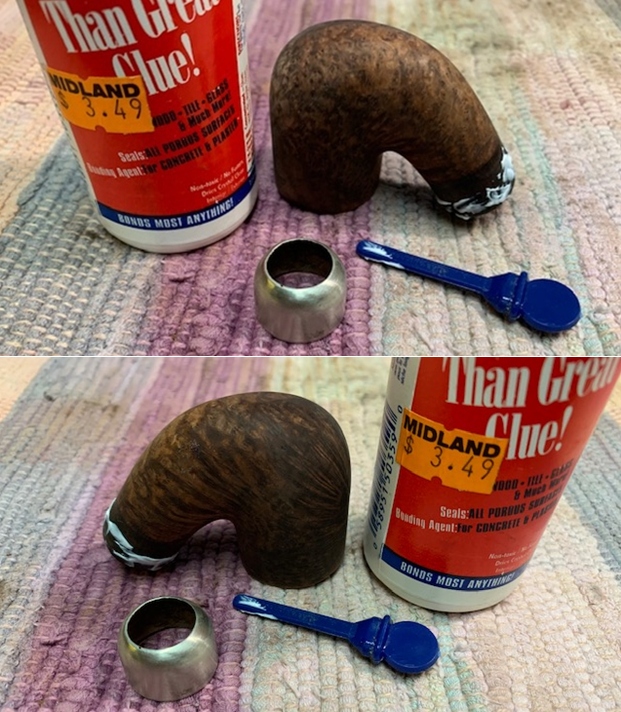
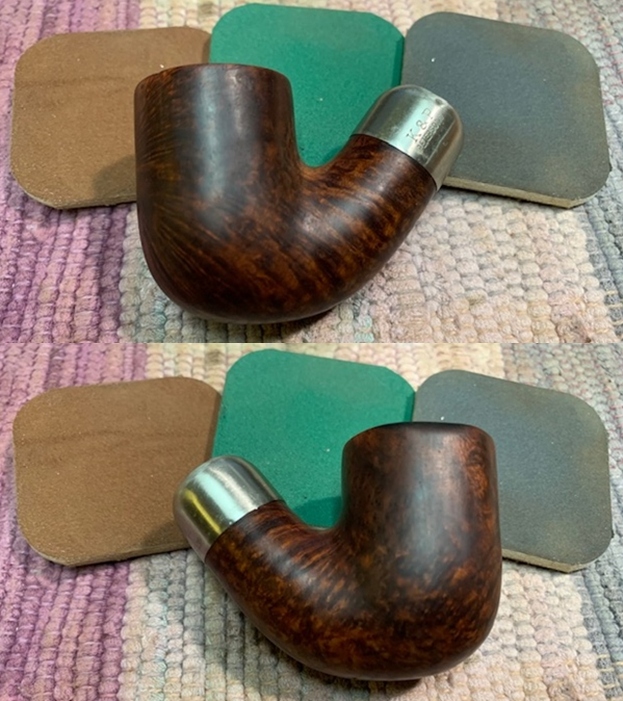
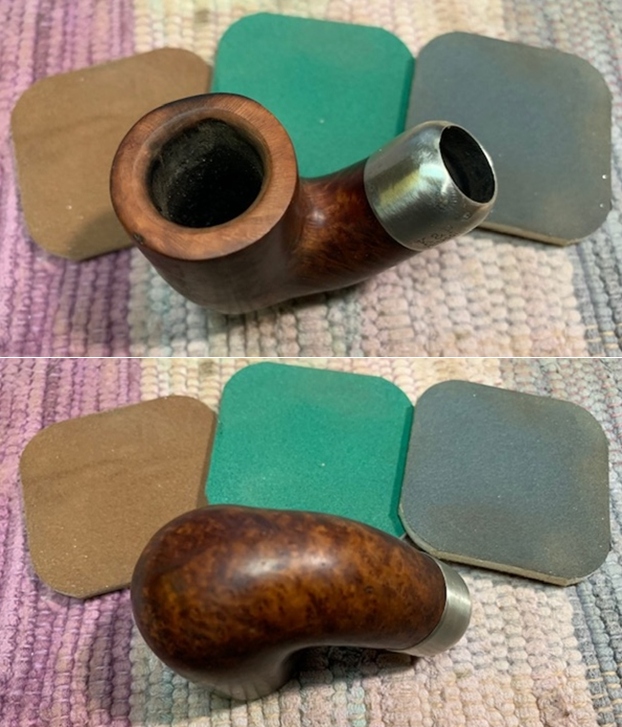
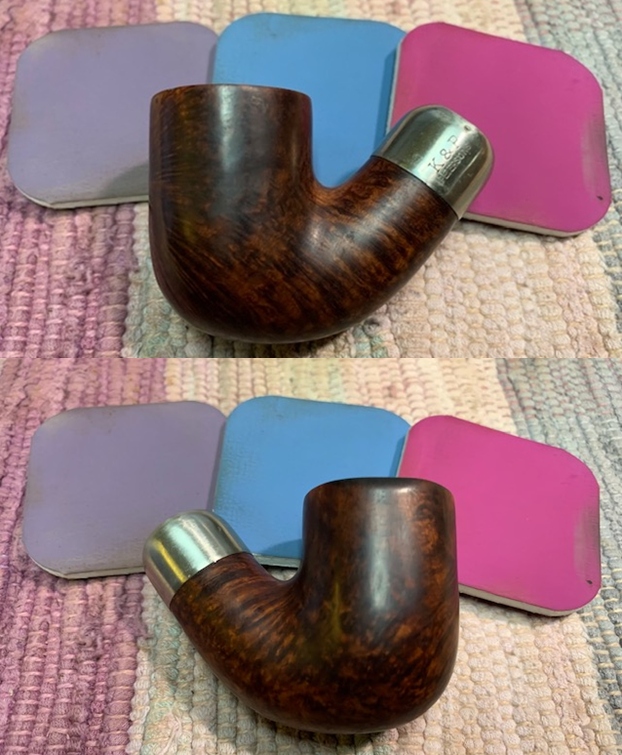
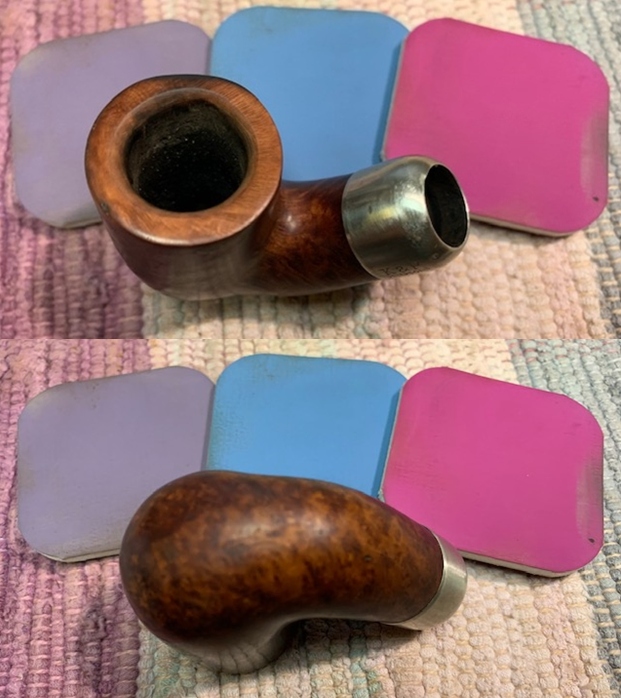
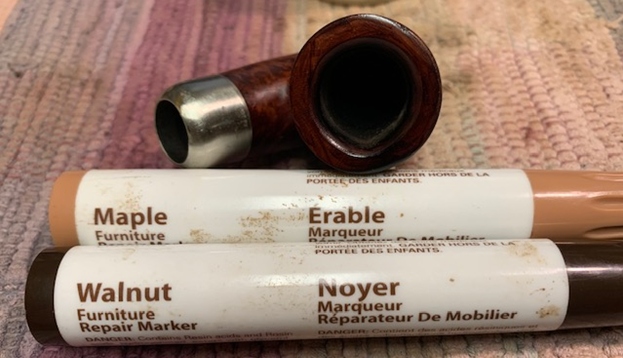
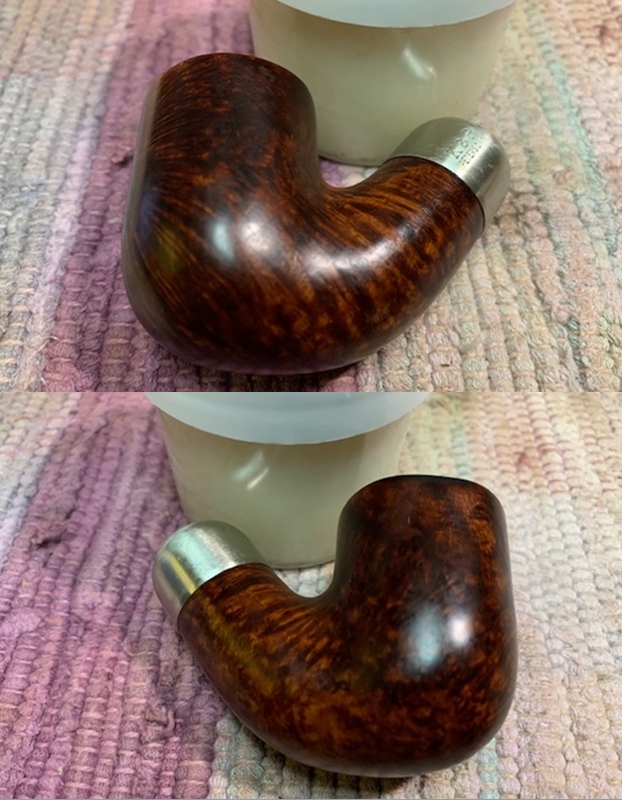
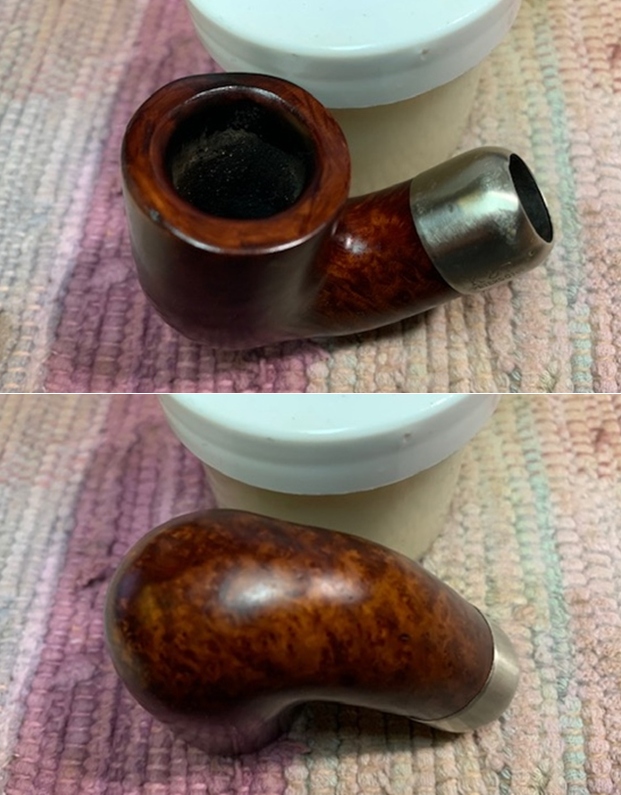
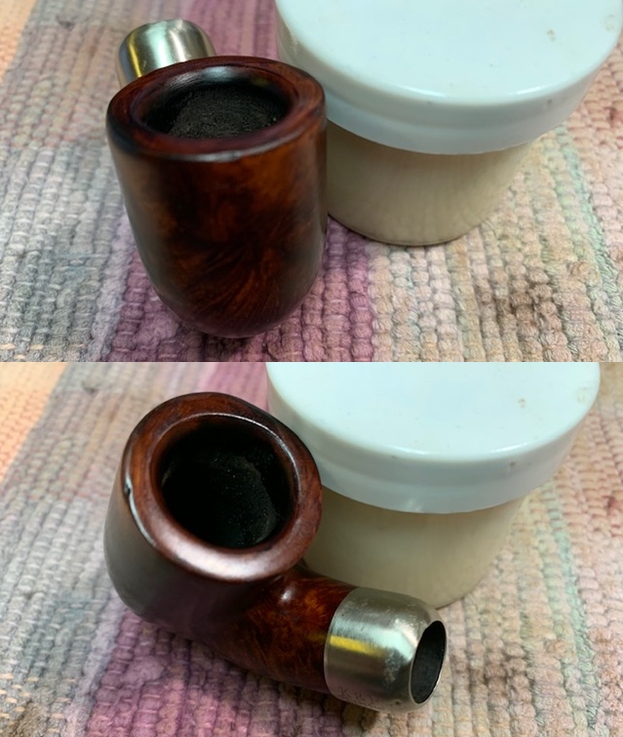
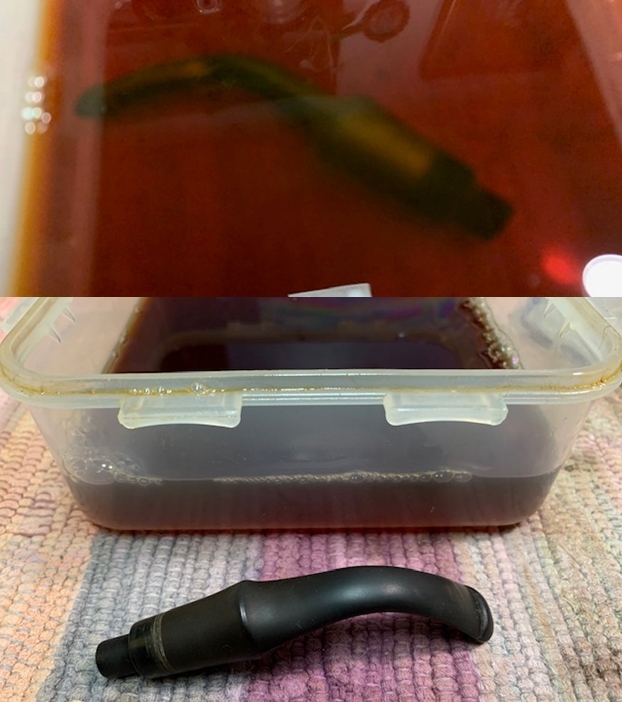
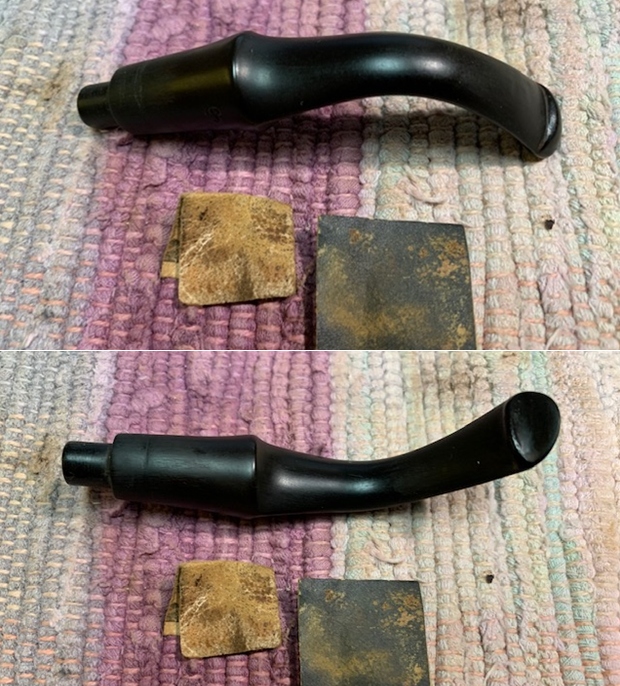
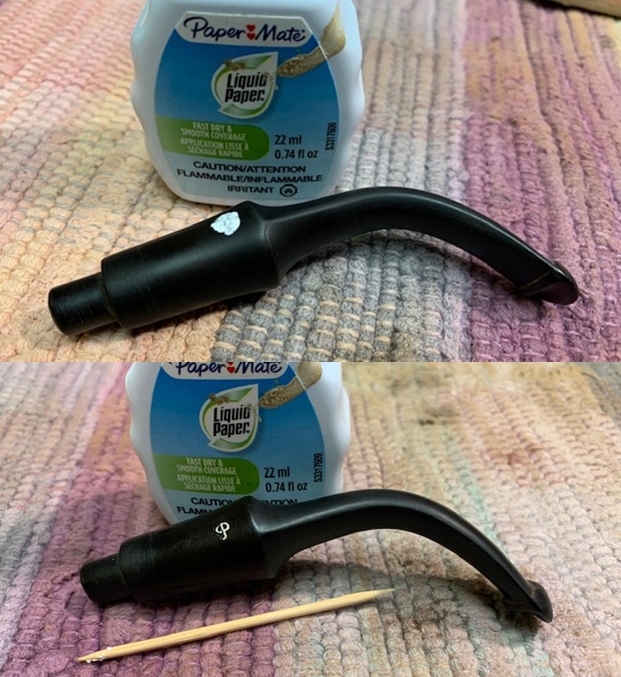
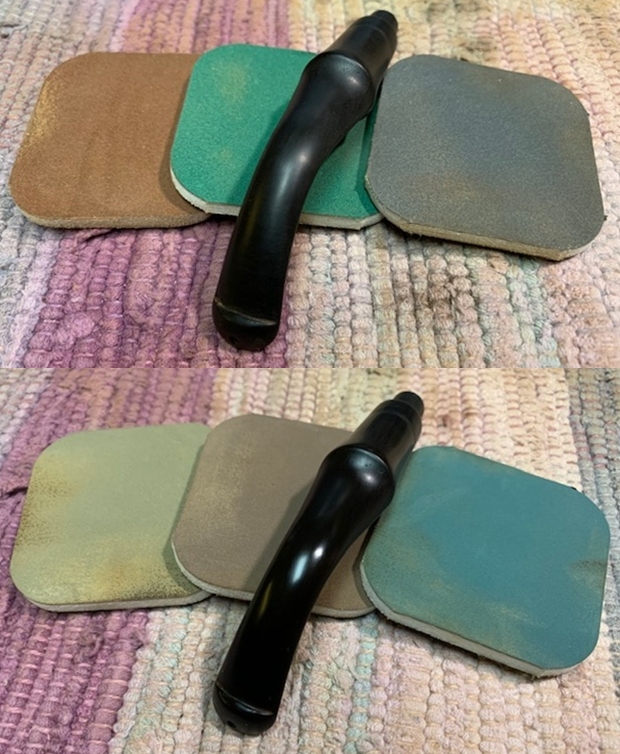
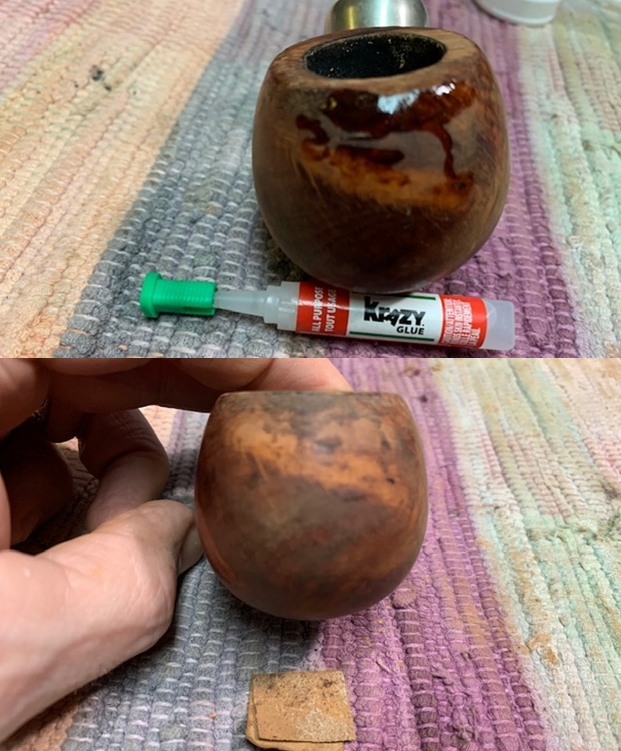
To start my work on the pipe I reamed the bowl with a PipNet pipe reamer and took the cake back to bare briar. I followed that by scraping the wall clear of remaining debris with a Savinelli Fitsall pipe knife. I finished the bowl by sanding the walls with 220 grit sandpaper wrapped around a piece of dowel.  The ferrule was loose so I removed it while I worked on cleaning the internals and externals of the pipe.I cleaned out the shank and the sump in the mortise as well as the airway into the bowl and in the stem with alcohol, pipe cleaners and cotton swabs. It came out quite clean and smelled significantly better.I set the stem aside and decided to address the damage on the rim top and edges before I scrubbed the exterior of the pipe. I topped the bowl on a topping board with 220 grit sandpaper and started reshaping the inner edge of the bowl with a folded piece of 220 grit sandpaper.  I scrubbed the pipe with undiluted Murphy’s Oil Soap and a tooth brush to remove the grime on the bowl and shank. I rinsed it off with warm running water and dried it off with a soft towel. The pictures show the grain around the sides of the pipe. With the briar clean I smeared the shank end with all-purpose glue. I aligned the stamping on the ferrule with the left side of the shank and pressed it on to the shank end.    With the ferrule in place and the briar clean it was time to take photos of the pipe. While the rim top still shows damage on the right outer edge and inner edge it is significantly better than it was when I started.     I polished the briar with micromesh sanding pads – wet sanding with 1500-12000 grit pads. I wiped the bowl down after each pad with a damp cloth.  I restained the front of the bowl and the rim top with a combination of Walnut and Maple stain pens to blend in the colour of those areas to the rest of the bowl.I rubbed the bowl down with Before & After Restoration Balm. I worked it into the surface of the bowl sides and shank with my fingertips. The product works to clean, enliven and protect the briar. I let the balm sit for a little while and then buffed with a cotton cloth to raise the shine. I set the bowl aside and turned my attention to the stem. Earlier in the day I had dropped the stem in a Deoxidizer Bath from Briarville and let it sit most of the day. Once I removed it from the bath it had soaked for about 5-6 hours. I removed it and wiped it down with a paper towel. I worked it over pretty roughly to remove the calcification and oxidation that sat on top of the vulcanite. It came out looking very good.  I sanded out the damage on the shank end of the stem where the previous pipe bowl and ferrule had cut a groove. I also sanded it with 220 grit sandpaper to remove the tooth marks and chatter on both sides ahead of the button. I started polishing the stem with 400 grit wet dry sandpaper.I touched up the “P” stamp on the left side of the stem with Paper Mate Liquid Paper. I applied it with the sponge in the bottle and worked it into the stamp with a tooth pick. Once it dried I scraped off the excess with the tooth pick. The stamp looks very good.   I polished the vulcanite stem with micromesh sanding pads – 1500-12000 grit pads. I wiped it down with a damp cloth after each sanding pad. I used Before & After Pipe Polish – both Fine and Extra Fine to further polish the stem.    This Peterson’s System Standard 313 Bent Billiard with a vulcanite stem is a great looking pipe now that it has been restored. The beautiful grain that shines through the polished finish is stunning. I put the stem back on the bowl and carefully buffed the pipe with Blue Diamond on the buffing wheel. I gave the bowl and the stem multiple coats of carnauba wax on the buffing wheel and followed that by buffing the entire pipe with a clean buffing pad. I hand buffed the pipe with a microfiber cloth to deepen the shine. The grain just popped with the wax and the buffing. It is a beauty! The finished Peterson’s System Standard Billiard 313 fits nicely in the hand and feels great. Give the finished pipe a look in the photos below. The dimensions of the pipe are Length: 5 inches, Height: 1 ¾ inches, Outside diameter of the bowl: 1 ¼ inches, Chamber diameter: ¾ of an inch. The weight of the pipe is 45gr/1.55oz. If you are interested in adding this pipe to your collection send me a message or an email. Thanks for reading this blog and my reflections on the pipe while I worked on it. There are many more to come!

Repairing a Cracked Shank in a Corso Silver Hook Freehand


Blog by Steve Laug

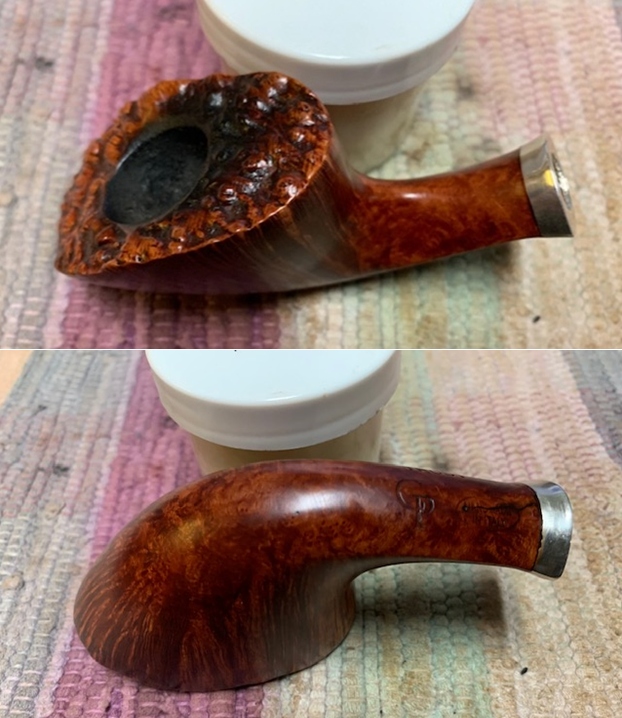
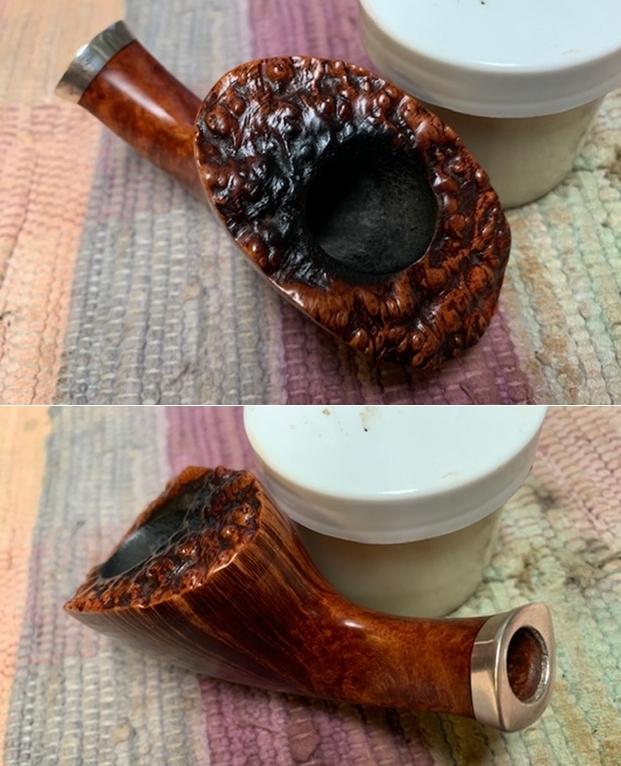
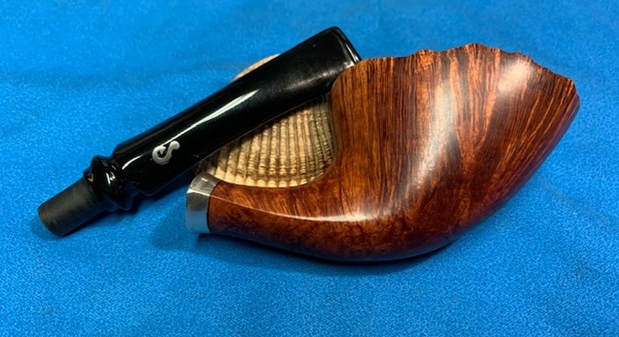
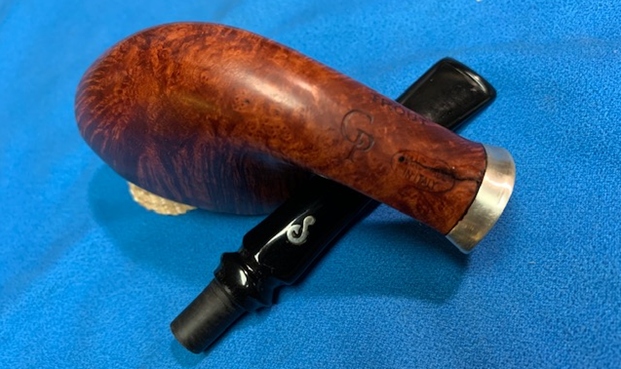
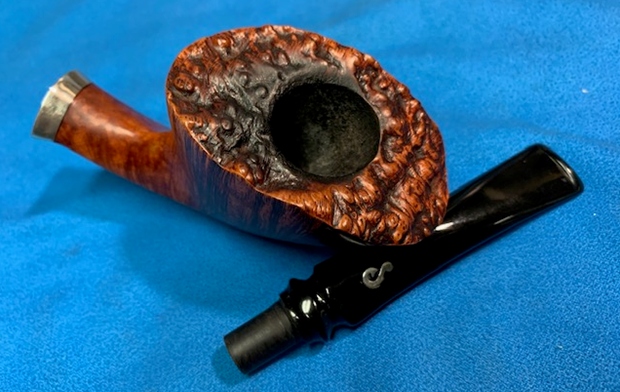
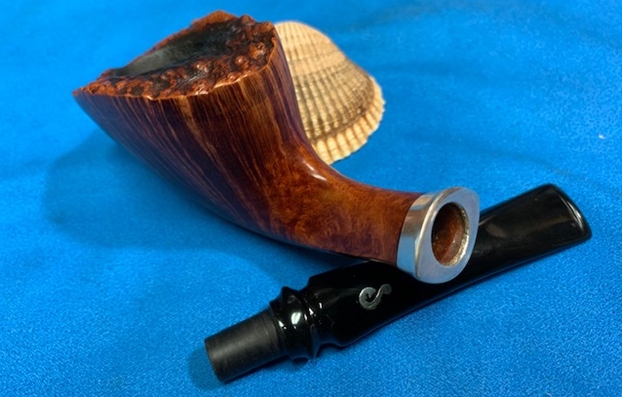
Not long ago I sold a pipe to a fellow in Quebec, Canada named Peter which led to several phone conversations. One of those conversations involved a pipe that was one of his favourites. It was a Corso Freehand and it had developed a crack in the underside of the shank that wept tobacco juices as he smoked it. The long and short of the conversation was that he would send the pipe to me to see what I thought could be done with it.

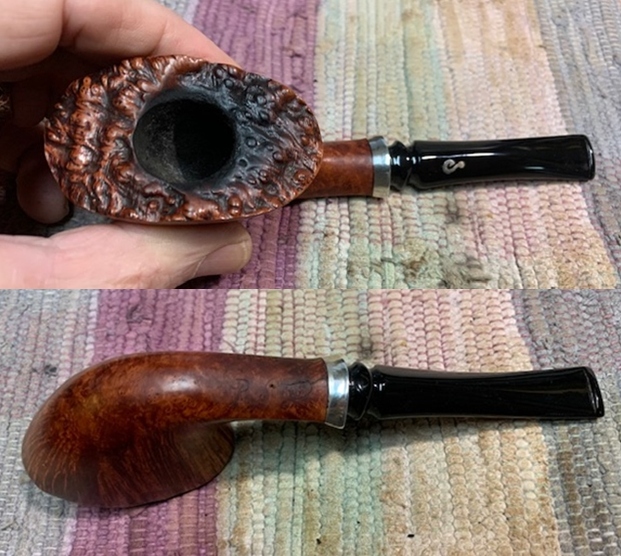
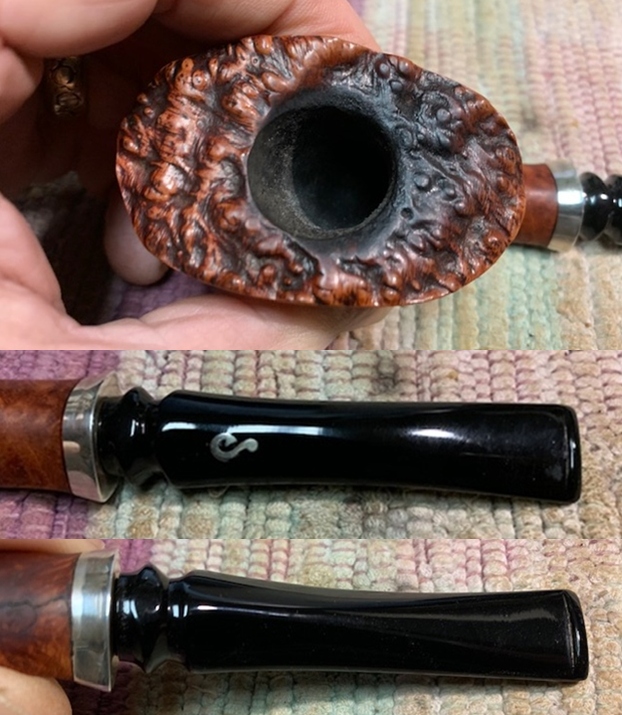
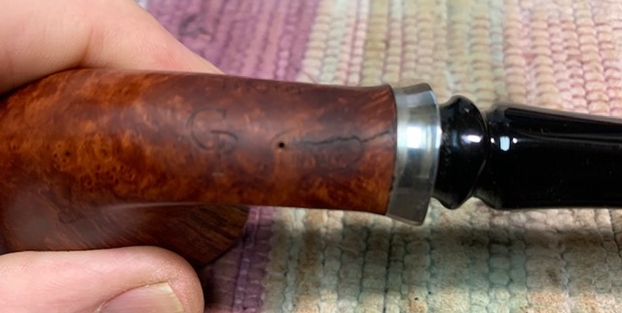
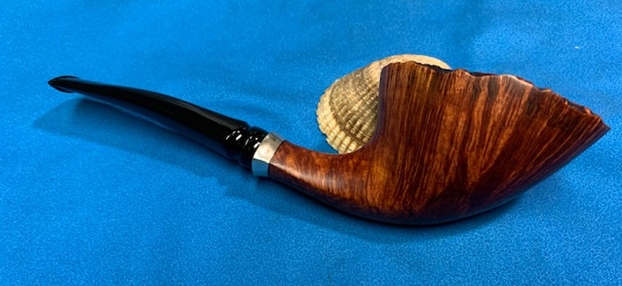
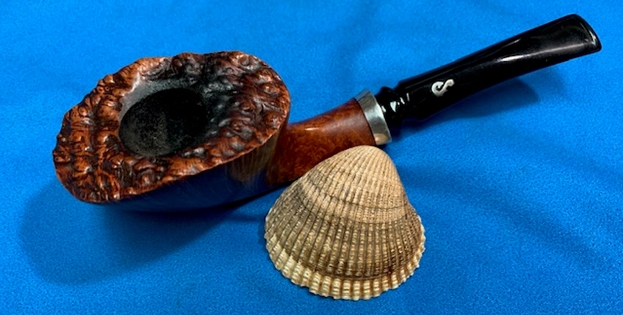
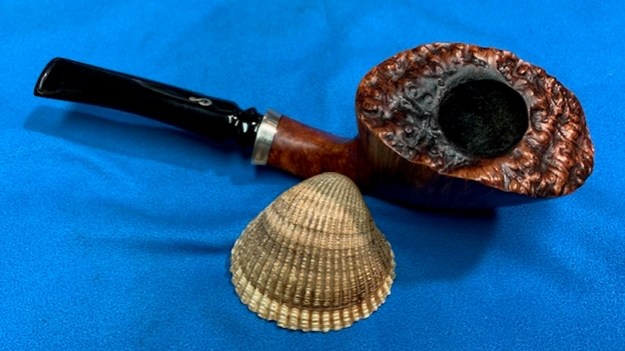
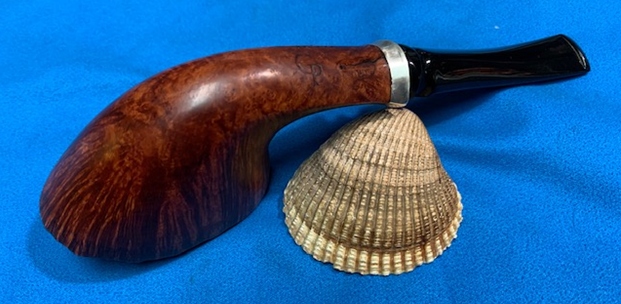
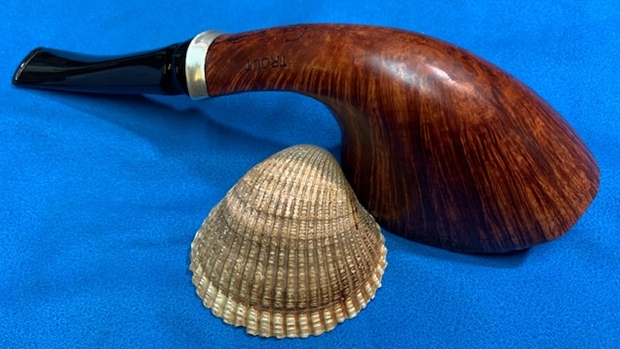
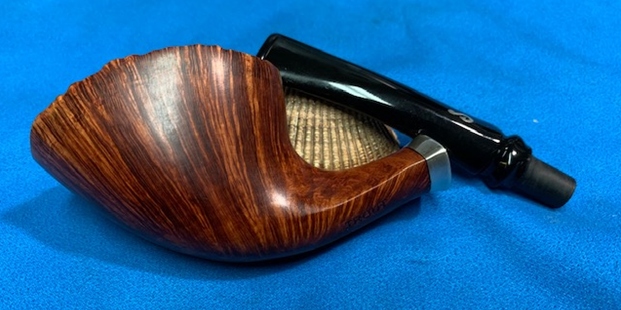
The pipe arrived in Vancouver yesterday. It is definitely an interesting pipe made by a maker that I had not heard of before. It is stamped on the underside of the shank CP Trout and has an oval that is stamped Handmade in Italy. The pipe had some amazing grain and an oval stummel with a normal round bowl in the center of the plateau top. The shank end was banded with an oval silver ferrule like cap that matched the shape of the stummel. The angle of the drilling followed the angle of the front of the bowl. The pipe was obviously a favourite as it was well smoked. The stem was black acrylic with a silver fish hook on the top side near the saddle. The tenon was drilled for a 9mm filter as was the shank of the pipe. Here is what the pipe looked like when it arrived. If you like beautifully grained freehand pipes you will understand how this one had captured its owner.  Out of habit I took photos of the rim top and stem to show the condition but in this case to show the design of the pipe.Getting past the external aesthetics of the pipe I removed the stem and examined it thoroughly to see the extent of the crack on both the inside and outside of the shank. Externally, the crack in the shank runs from the shank end coming out under the edge of the ferrule and extending almost ¾ of an inch straight up the shank toward the bowl. I ran through the “Handmade” part of the stamp and literally ended at the H. It was a messy crack in that it had spread open and had darkened from the tobacco juice that had seeped out of the crack and filled in along the silver band on the shank end. I put a dot on the underside of the shank to identify the end of crack. At that point on the shank it stopped and under a bright light, with a lens I could see that it ended. You can also see the faint oval stamp that the crack crosses in the photo below.The silver band/ferrule had been inset on the shank end and from what I could see had been glued with an epoxy. It had seeped out a bit along the edge of the band. Removing the silver band and leaving it useable would be next to impossible.

I then turned to the internals of the shank/mortise area. I expected to see the crack clearly on the bottom of the mortise but surprisingly it was not visible. I used a flashlight and probe to explore the mortise looking for the crack. The mortise had been drilled for a 9mm filter as I noted above. Because of that it was very dirty. I cleaned it out with a cotton swab and still did not find the crack. However, the light revealed something even more strange! It appeared that the pipe maker or a possible repair person had filled in the damaged area of the mortise with wood putty. The putty extended into the shank about a ½ of an inch. It ended abruptly with a sharp edge. Using the probe I found the crack under that edge. It matched the largest portion of the crack in the photo above. What was obviously happening was that the liquids from smoking the pipe were pooling at that point (the lowest point in the mortise) and seeping out the crack.

I had figured out what was going on with the crack in the shank, both internally and externally. Now I needed to communicate the issues with Peter and letter him know what I had found in my examination of his pipe. I wrote him the following assessment.

Examining your pipe this is what I see

  1. The pipe maker/ repair person filled in the inside of the shank with what appears to be some wood putty. It was used to build up the lower inside of the shank. The good news is that the crack is bound together on the inside by that.
  2. The pipe maker also permanently set the band in place as well to bind things together so that it cannot be removed. The good news also is that it will keep the crack from opening wider.

Now what I need to do

  1. I need to drill a pilot hole at the end of the crack which actually goes through the oval Hand Made in Italy stamp. It extends all the way to the “H” in Hand Made.
  2. I will fill in the crack with super glue and briar dust which should harden and keep it from weeping out as you smoke it.
  3. I will sand that repair smooth and then stain the repair to match the rest of the pipe.

After I sent that I continued to examine the inside of the shank with the light and the probe to make sure I was seeing the issues there correctly. Once I was convinced I was correct I sent an addendum about the putty and the issue on the inside of the shank.

  1. I will smooth out the transition from the putty to the briar and use some food grade super glue to fill in the area of the pit that is collecting the moisture. I will sand that area smooth. It should not be an issue for your smoking of the pipe as it cures completely inert.

I ended my email to him with a quick question about the pipe maker and the pipe. I wanted to know if he had purchased it directly from the pipe maker or if he purchased it as a used pipe. Peter’s response was helpful. It gave me the information I wanted on the brand and muddied the waters in terms of who had made the putty fill in the shank. It could well have been a repair made long after it had left the pipe maker’s shop.

It’s an estate pipe .The pipe maker is Paolo Corso and this model is called Trout. I didn’t notice the crack at first and when I did I guess it was too late. It’s a gorgeous pipe and smokes well. Paolo Corso is a fisherman and he uses Tuscany briar he has a Bass and Trout line under his brand “Silver Hook”.

Before I started my work on the pipe I wanted to learn about the maker and see some of his other pipes. I checked on Pipedia and Pipephil and the Corso Brand as well as the Silver Hook Brand did not show up in either place. Usually I follow that search up with a quick Google search for the name of the maker and the brand. Once I got past all of the extraneous bits of information I came across a link to the website of the brand (https://handmadepipes.it/silverhook.html).

The website gave a great idea of the philosophy of the pipe maker and a sense of his craftsmanship. After reading the site I am more certain than ever that the putty in the shank and the “cemented” ferrule were the work of an aftermarket repair person rather than the pipe maker cutting corners. I have included some information from the website below for your reading pleasure and introduction.

ABOUT SILVERHOOK PIPES

The Silver Hook pipes are exclusively hand made, produced in limited numbers, using first choice Tuscany briar, selected one by one, with a minimum aging of 5/6 years.

Customers who already smoke my pipes say they are as sweet as biscuits and have a particularly dry smoke.

The holes in the wood are made so that the brush passes easily through the stem, the shank, up to the chamber, so as to be able to clean the pipe perfectly.

The stems are made of Vulcanite, the hook is in silver and is inserted on the hot stem.

Mine are pipes for fishermen, but not only. I have personally designed the shapes for my pipes to be comfortable in the mouth, whether you are on the river for a day of trout fishing, or sitting comfortably in your favourite chair.

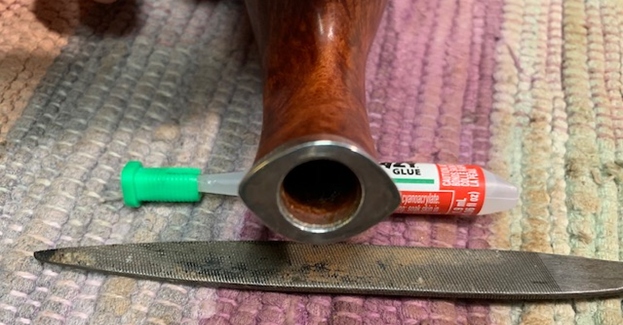
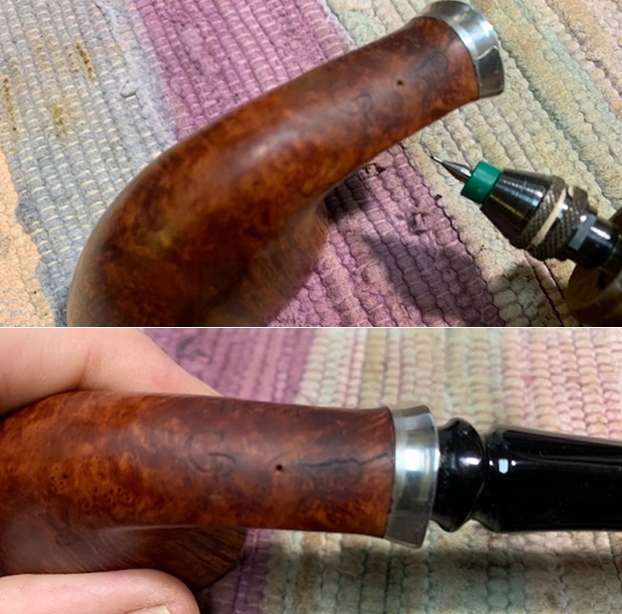
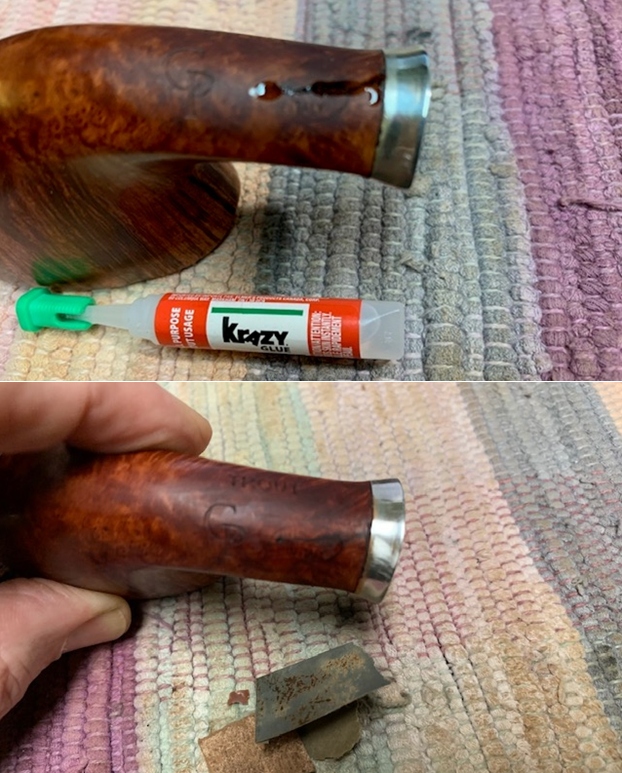
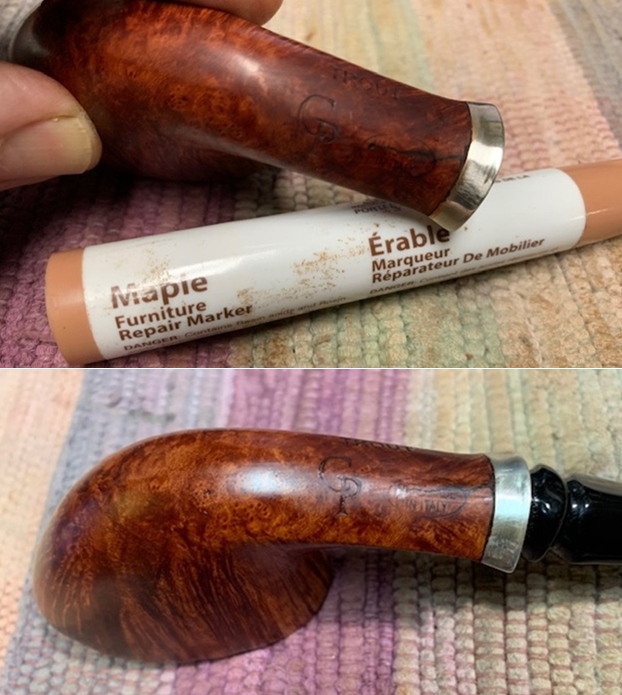
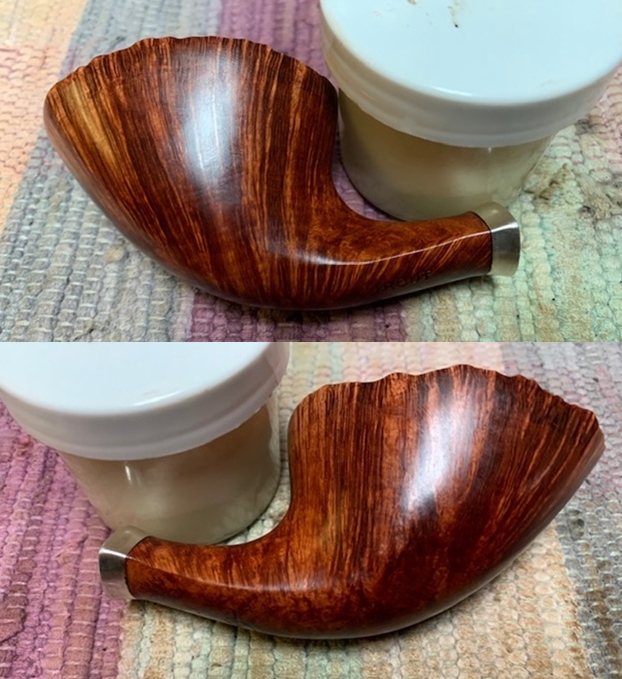
Now it was time to work on the pipe. I started by cleaning out the shank ahead of the large putty fill on the bottom of the shank on the inside. There were a lot of tars and oils built up there so I cleaned it with alcohol, cotton swab and pipe cleaners. Once it was clean I used a tooth pick to fill in the large gap just ahead of the putty with super glue. I gave the patch a smooth angle and filled in the large pit that was there. I squeezed the crack together while it cured and saw that the glue came out on the outside of the crack. Once it had cured the crack was tighter and had sealed.  I used a small file to smooth out the repair and the putty fill. With the internal repair finished I turned my attention to the exterior crack. Using a lens I located the end of the crack and marked it with a Sharpie pen. I used a micro drill bit in the Dremel to drill a pilot hole at the end of the crack forming an end to the crack.I filled in the pilot hole and the crack with clear super glue. I followed the crack to the band and spread the glue across the surface. I carefully sanded the repair smooth and blended it into the surrounding briar.  I stained the repaired area with a Maple stain pen to match the surrounding briar. I buffed it out with Blue Diamond to further blend it. I rubbed the bowl down with Before & After Restoration Balm. I worked it into the surface of the bowl sides and shank with my fingertips. The product works to clean, enliven and protect the briar. I let the balm sit for a little while and then buffed with a cotton cloth to raise the shine.  This interesting Corso Silver Hook Trout Freehand with an acrylic stem is a great looking pipe. The beautiful grain that shines through the polished finish is stunning. I put the stem back on the bowl and carefully buffed the pipe with Blue Diamond on the buffing wheel. I gave the bowl and the stem multiple coats of carnauba wax on the buffing wheel and followed that by buffing the entire pipe with a clean buffing pad. I hand buffed the pipe with a microfiber cloth to deepen the shine. The grain just popped with the wax and the buffing. It is a beauty! The finished Corso Silver Hook Trout fits nicely in the hand and feels great. The cracked shank is repaired and less visible and certainly less problematic. Give the pipe a look in the photos below. The dimensions of the pipe are Length: 7 inches, Height: 2 inches, Outside diameter of the bowl: 2 ½ inches long x 1 ¾ inches wide, Chamber diameter: ¾ of an inch. The weight of the pipe is 59gr/2.08oz. This one will head back to Quebec by the weekend. I am hoping Peter gets many more years of pleasure from it. Thanks for reading this blog and my reflections on the pipe while I worked on it.

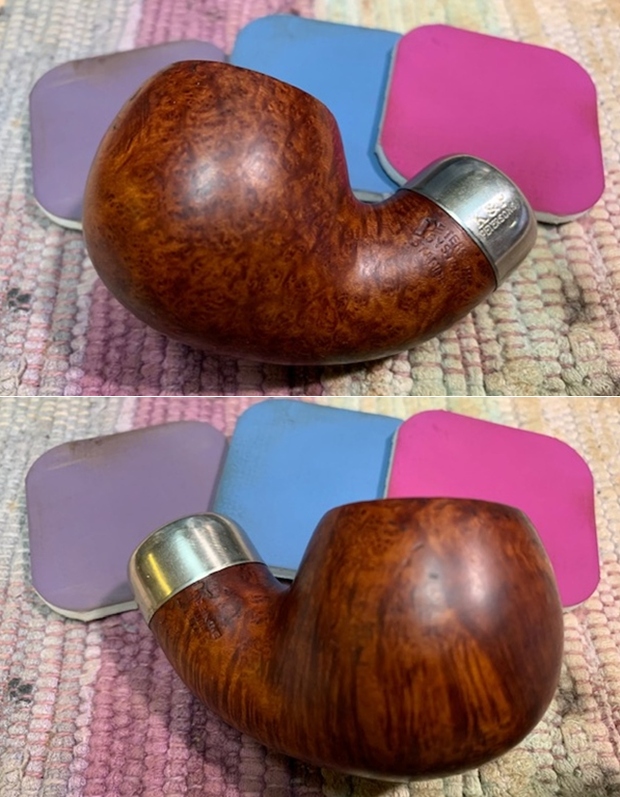
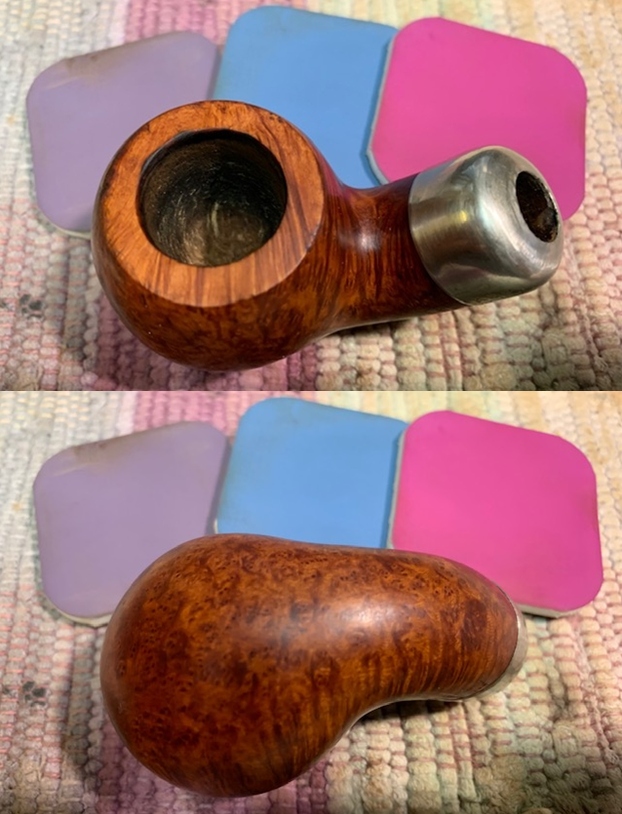
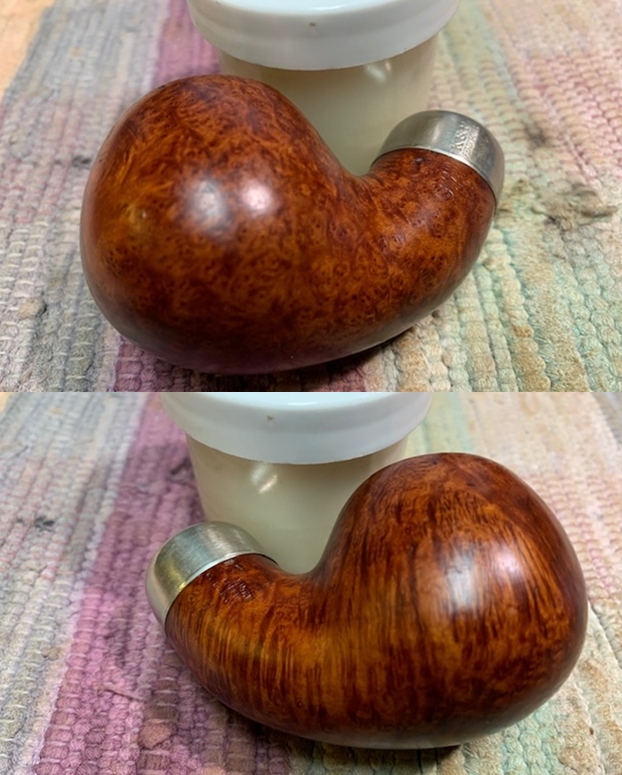
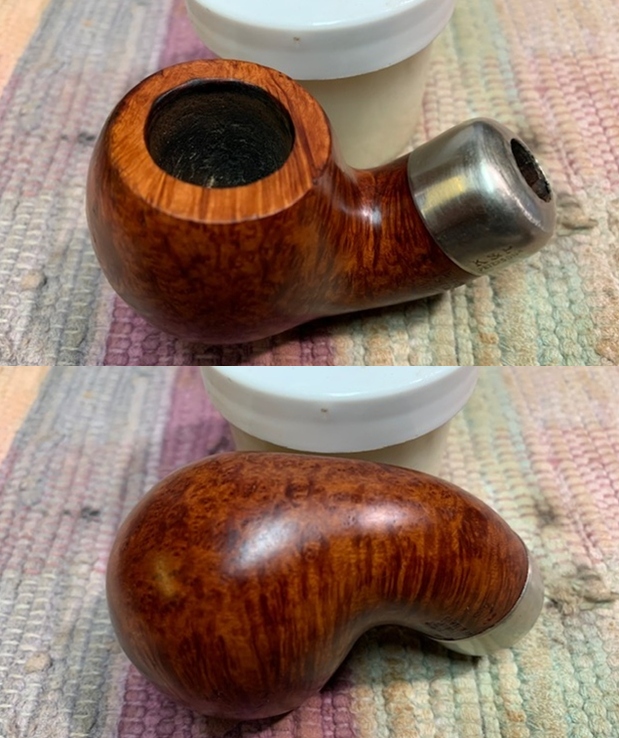
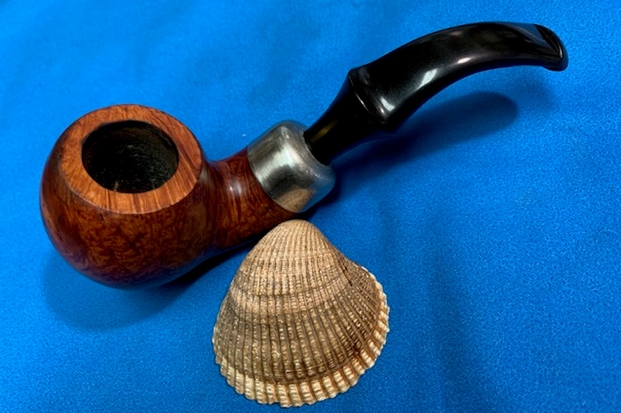
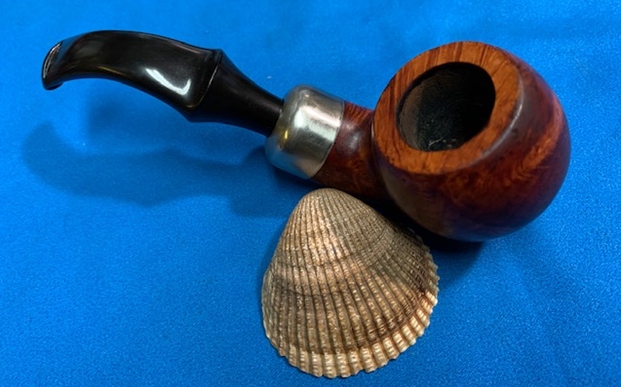
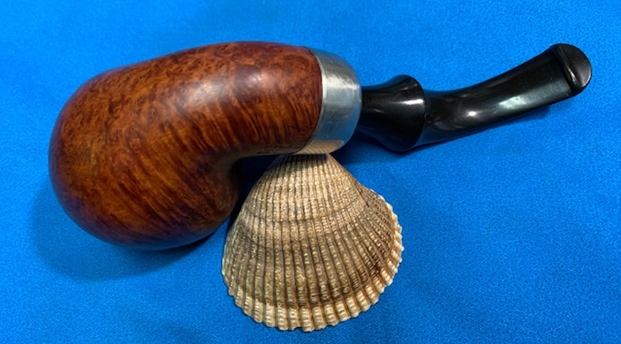
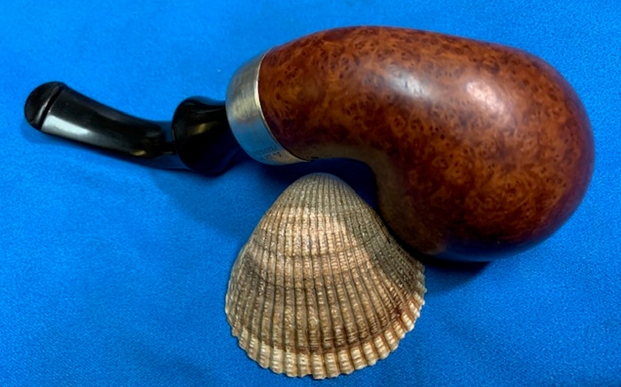
Restoring a Peterson’s Republic Era System Standard 302 Bent Apple


Blog by Steve Laug

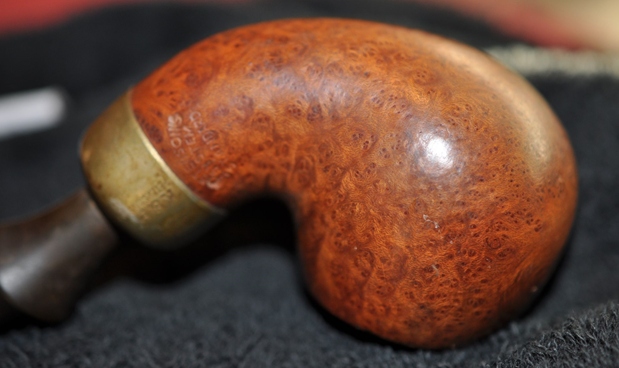
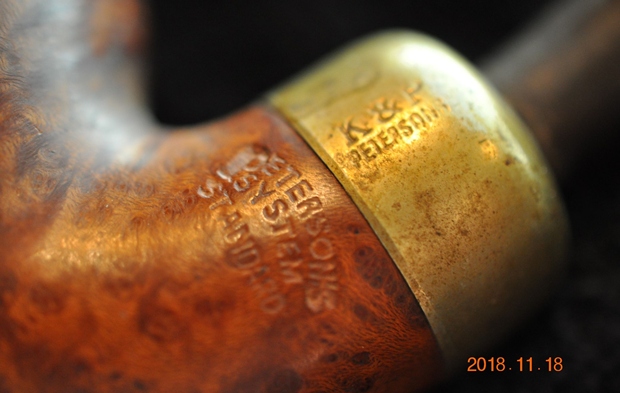
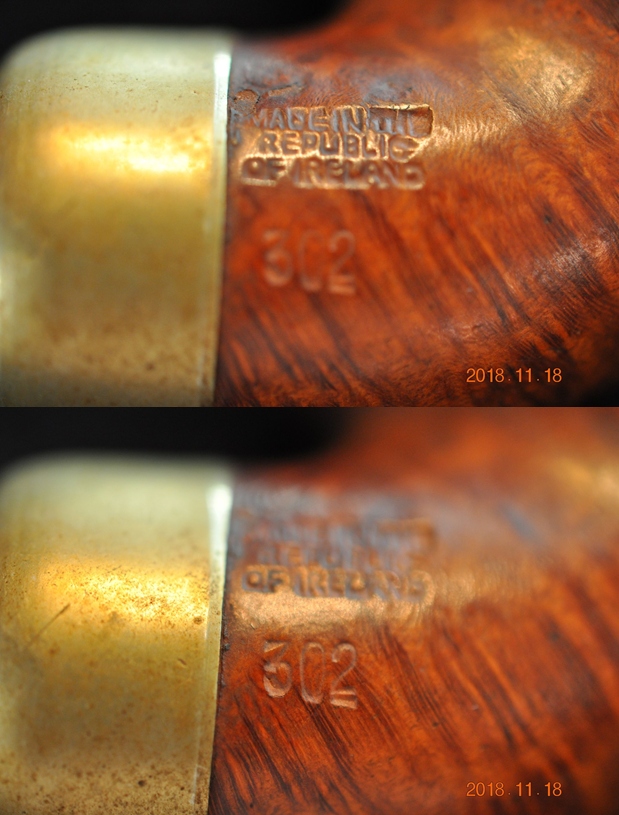
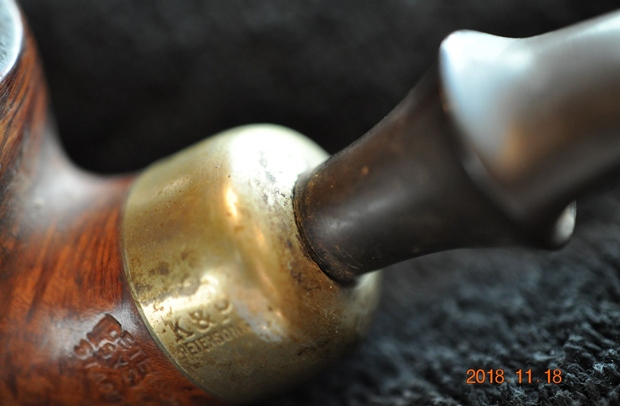
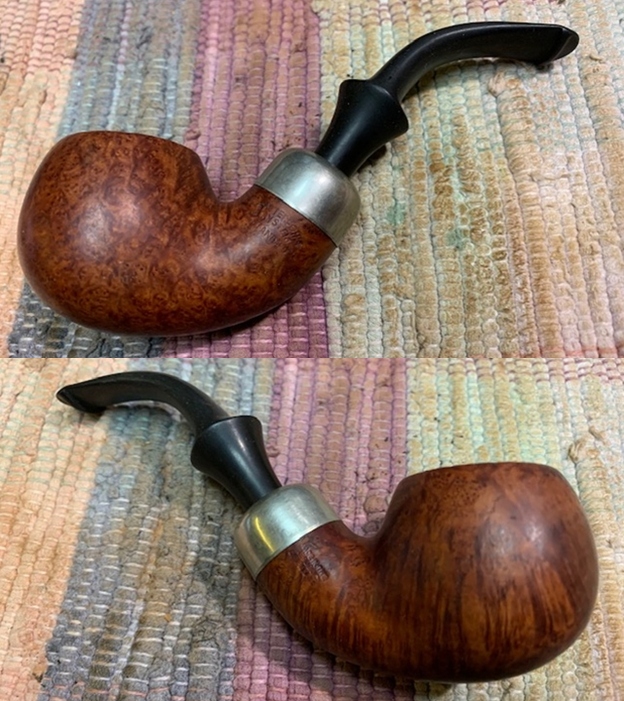
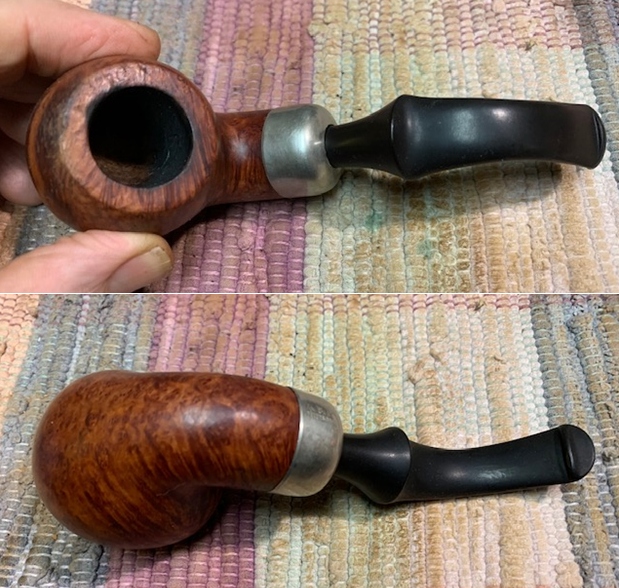
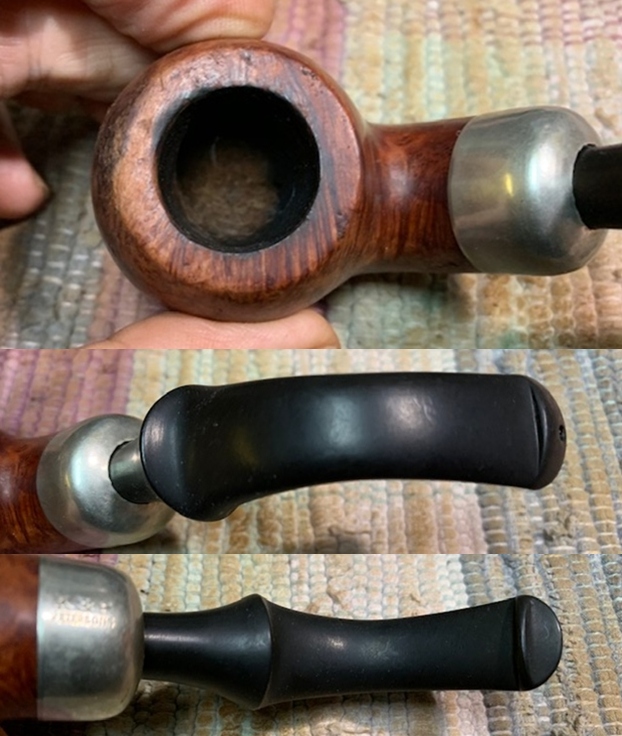
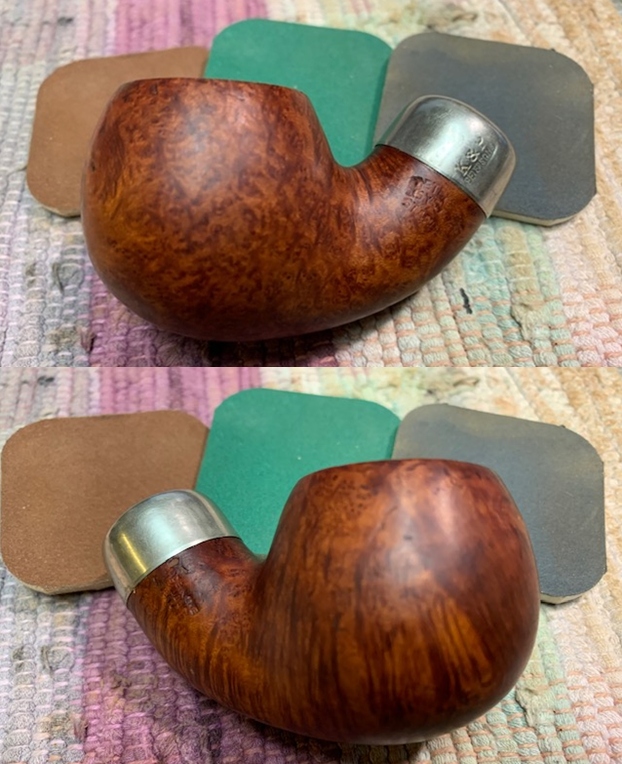
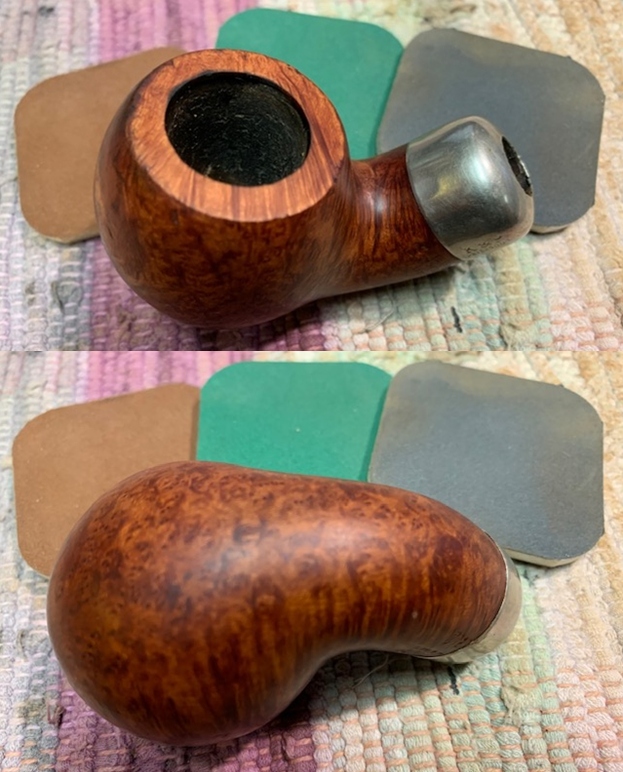
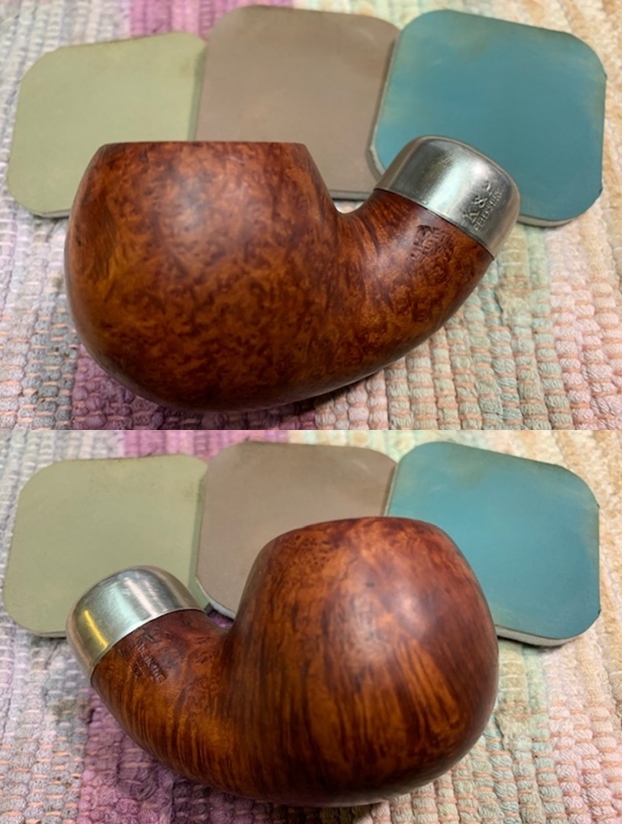
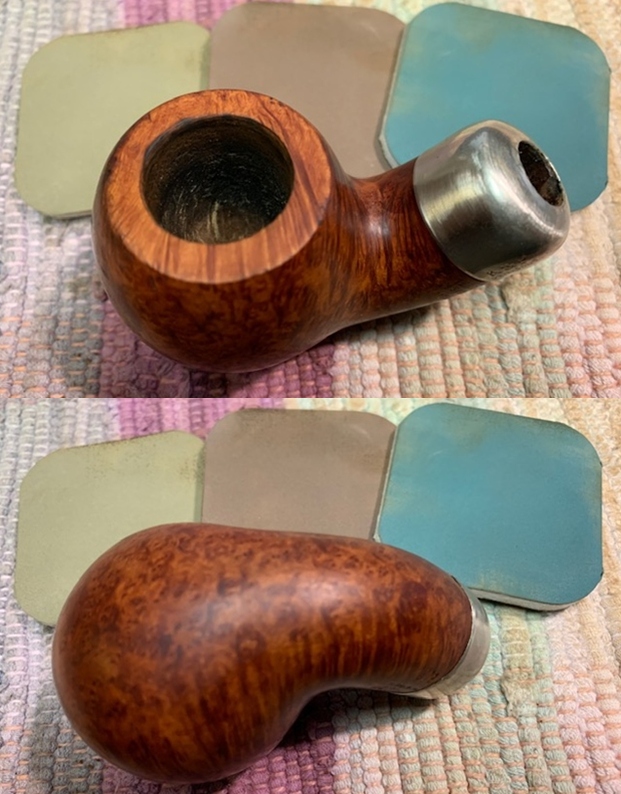
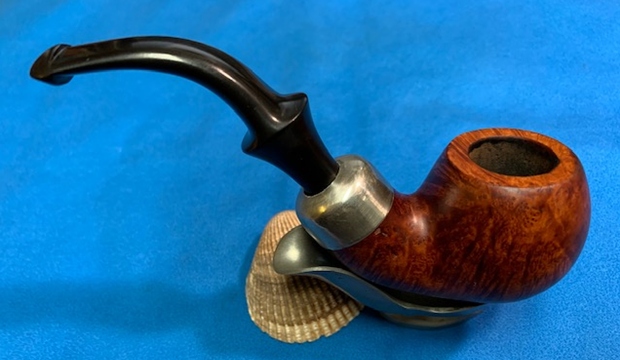
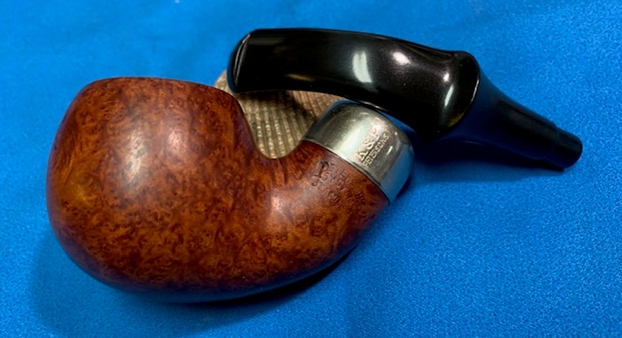
The next pipe on the work table came to us from an online auction from Romney, West Virginia, USA. It is a smooth Peterson’s System Apple shaped pipe with a saddle vulcanite stem. The pipe is stamped on the left side of the shank and reads Peterson’s [over] System [over] Standard. On the right side it is stamped Made in the Republic of Ireland and underneath that is the shape number 302. The nickel ferrule is stamped K & P [over] Peterson. The nickel ferrule was also heavily discoloured by oils and tars. The finish had a lot of grime ground into it and it was very dirty. There was also some serious road rash on the front of the bowl and rim. The bowl was heavily caked and there was a thick lava coat on the flat rim top and the inner edge of the rim. It was hard to tell what condition of the inner edge was because of the lava coat. Only cleaning would make that clear. The stem was oxidized, calcified and had tooth chatter and marks on the top and underside near the P-lip style button. The pipe showed promise but it was very dirty. Jeff took photos of the pipe before he started his cleanup work.  He took photos of the rim top and bowl to give a clear picture of the thickness of the cake and the condition of the rim top and edges. He also took photos of the top and underside of the stem to show the oxidation, calcification and chatter and tooth marks. Jeff took a photo of the side and heel of the bowl to give a picture of what the briar around the pipe looked like.     He took photos of the stamping on the shank and the nickel ferrule. It reads as noted above and is clear and readable.   I am including the information from Pipedia’s article on Peterson pipes. It is a great read in terms of the history of the brand (https://pipedia.org/wiki/Peterson). I have included a bit of the pertinent history here.

1950 – 1989 The Republic Era – From 1950 to the present time, the stamp for this era is “Made in the Republic of Ireland” in a block format generally in three lines but two lines have been used with or without Republic being abbreviated.

I knew that I was dealing with a Republic Era pipe made between 1950-1989. It was a smooth Peterson’s System Standard 302 Bent Apple with nice grain. The finish was stained with a combination of brown stains. Now it was time to work on the pipe.

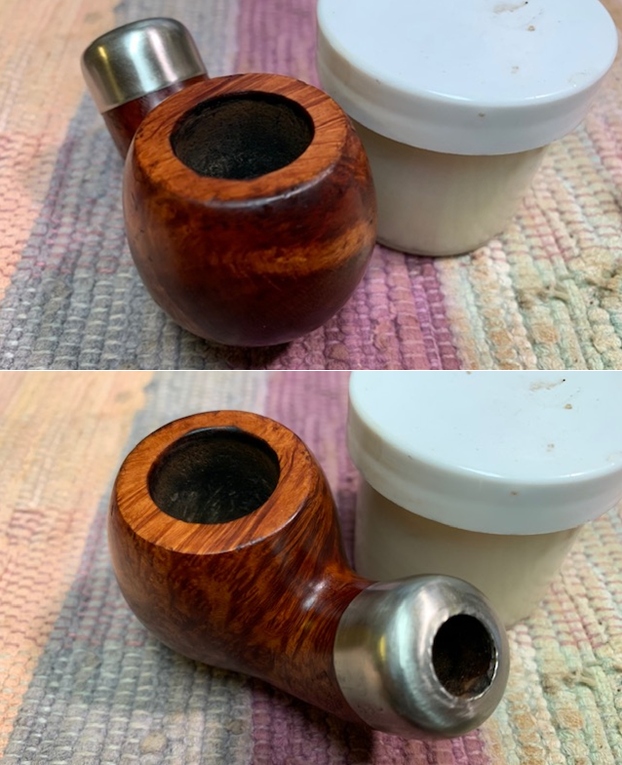
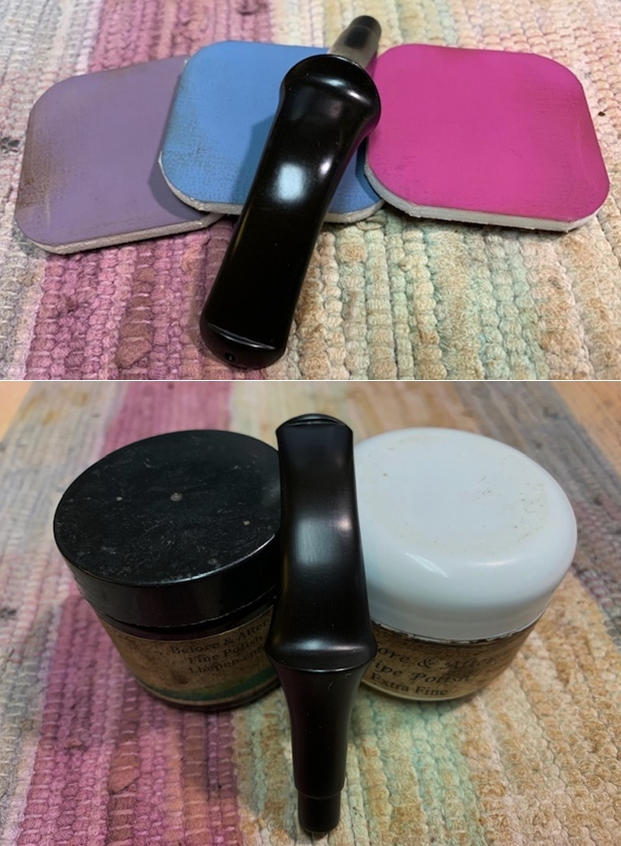
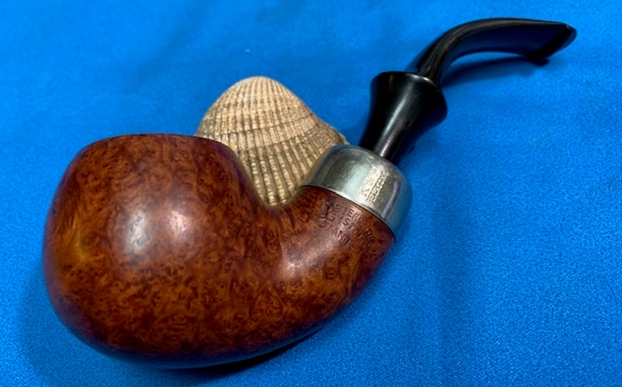
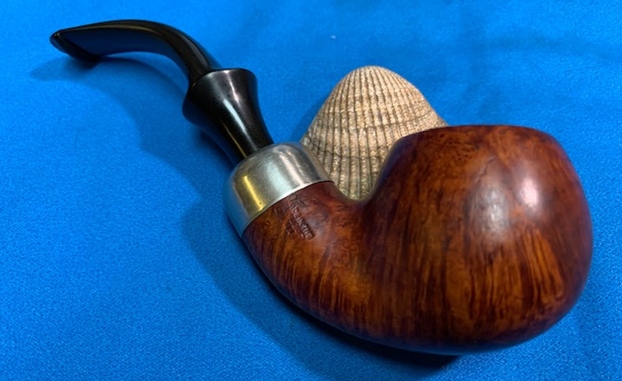
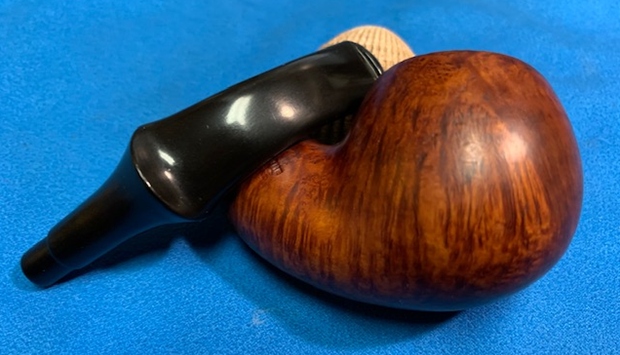
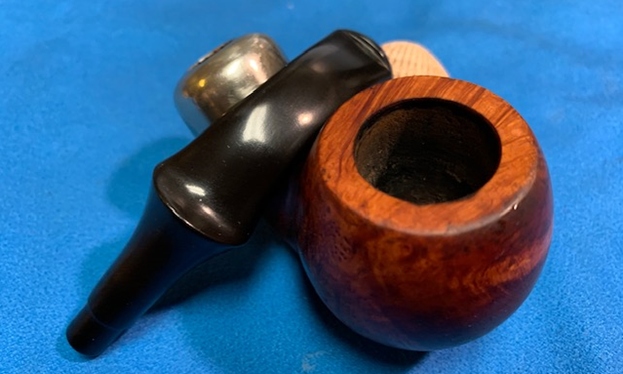
Jeff had cleaned up the pipe with his usual penchant for thoroughness. He reamed the pipe with a PipNet Pipe Reamer and cleaned up the remnants with a Savinelli Fitsall Pipe Knife.  He scrubbed the bowl with undiluted Murphy’s Oil Soap with a tooth brush. He rinsed it under running warm water to remove the soap and grime. He cleaned out the inside of the shank and the airway in the stem with alcohol, cotton swabs and pipe cleaners. He soaked the stem in Before & After Deoxidizer and rinsed it off with warm water. I took photos of the pipe once I received it.    The rim top and inner edge of the rim looked very good with a bit of damage on the inner edge and on the rim surface. There were some scratches and nicks on the front outer edge of the bowl. The stem surface looked very good with some light tooth marks and chatter on both sides near the button. I took photos of the stamping on the shank. It is clear and readable as noted above. I removed the stem and took a photo of the pipe to give a sense of the whole. The stem is a typical Peterson’s System stem.I started my work on the pipe by working over the rim top and the inner edge of the bowl to clean up the damage. Once finished the rim top and edge looked much better.  I repaired the deep gouges on the front side of the bowl by filling them in with clear super glue. Once it cured I sanded it smooth to blend it into the surrounding briar. I restained the front of the bowl and the rim top with a combination of Cherry and Maple stain pens to blend in the colour of those areas to the rest of the bowl.I polished the briar with micomesh sanding pads – wet sanding with 1500-12000 grit pads. I wiped the bowl down after each pad with a damp cloth. I rubbed the bowl down with Before & After Restoration Balm. I worked it into the surface of the bowl sides and shank with my fingertips. The product works to clean, enliven and protect the briar. I let the balm sit for a little while and then buffed with a cotton cloth to raise the shine. I polished the vulcanite stem with micromesh sanding pads – 1500-12000 grit pads. I wiped it down with a damp cloth after each sanding pad. I used Before & After Pipe Polish – both Fine and Extra Fine to further polish the stem.     This Peterson’s System Standard 302 Bent Apple with a vulcanite stem is a great looking pipe now that it has been restored. The beautiful grain that shines through the polished finish is stunning. I put the stem back on the bowl and carefully buffed the pipe with Blue Diamond on the buffing wheel. I gave the bowl and the stem multiple coats of carnauba wax on the buffing wheel and followed that by buffing the entire pipe with a clean buffing pad. I hand buffed the pipe with a microfiber cloth to deepen the shine. The grain just popped with the wax and the buffing. It is a beauty! The finished Peterson’s System Standard Apple 302 fits nicely in the hand and feels great. Give the finished pipe a look in the photos below. The dimensions of the pipe are Length: 5 ½ inches, Height: 1 ¾ inches, Outside diameter of the bowl: 1 ½ inches, Chamber diameter: ¾ of an inch. The weight of the pipe is 67gr/2.36oz. If you are interested in adding this pipe to your collection send me a message or an email. Thanks for reading this blog and my reflections on the pipe while I worked on it. There are many more to come!