Monthly Archives: July 2015

A Book Review – Back From the Ashes: Uncovering the Lost History of G.L. Hunt and the Falcon Pipe by K.A. Worth


Blog by Steve Laug
51Ja9LXHtyL I first picked this book up at a Chicago Pipe Show at a table where G.L. Hunt’s daughter, K.A. Worth was selling her new book on her father and the Falcon Pipe. I remember sitting and talking with her about the book and the pipe and being fascinated with both the history of the pipe and the man. It is a memory that runs through my mind each time I pick up this book or one of the Falcons that I have in my pipe cupboard. She autographed my copy which only enhances the memory of that day in Chicago.

Her book is divided into two parts. The first section she calls The Pipe People and it covers a little over 100 pages. The second section she calls The Pipes and it covers about 60 pages. I have included a screen shot of the Table of Contents to show how the book is laid out. Prior to the first part she has an Introduction and following the second part is an Epilogue.

The Introduction sets the stage for the book. It starts with the following quote: “It all began in the imagination of an American engineer. Prolific inventor Kenly Bugg of Ft. Wayne, Indiana, put pencil to paper and soon a revolutionary new smoker’s pipe emerged… Bugg patented his Falcon design on August 21, 1945… Enter the genius of G.L. Hunt and his company, Diversey Machine Works – an oft quoted statistic has George Hunt selling some six million Falcons by 1954 in the United States alone.”

The author goes on with a brief survey and concludes the Intro with this quote: “In this volume we will chronicle the development of the Falcon pipe and the Falcon companies, along the way paying tribute to those who ushered the pipe to worldwide renown. Here we will provide what will surely prove the most comprehensive Falcon history to date… Come now… let’s step inside…”

The quote gives the reader the author’s purpose for the book and invites them into the pages of her book. Let’s look at the parts and evaluate whether she fulfilled her purpose.

PART ONE: The Pipe People

“…The Falcon Pipe is the most unique in all the pipe world. I know you are familiar with the tremendous success of the Falcon Pipe here in the States and the success it has enjoyed throughout the Sterling Countries – those people and companies that are associated with Falcon Pipe do become known as “The Pipe People”… George L. Hunt – May 1963.”

This quote is on the header page of the first part of the book. With it the author introduces the man and the process of development of the Falcon. She tells it through her interactions with her grandfather and the archives of material that she read through in preparation for this book. It is a fascinating way to tell the story and is immensely readable and it the method that she uses throughout the book. It is the largest part of the book, Chapters 1-10, and really gives the most clear, readable and concise history of the brand that is available.

In this review, rather than go chapter by chapter and summarize the contents, I will summarize each part of the book and give a more global picture of the book. I am not as concerned to give a view per page as to give the potential purchaser a feel for what is included in the book itself. They can read the details themselves.

PART ONE is the overall history of the brand from when author’s grandfather bought the patents to when the pipe came to be one of the most well-known brands of throughout history. She looks at the pipe from its inception and the connection between the inventor and her grandfather through to its expansion into the British market with a view of the struggles and strains that went with that expansion. Thus she takes the reader on the journey from patent of the Falcon to its manufacture and marketing. She does not skip over all of the glitches and struggles along the way but describes them in a humorous style that makes the reader a part of the discovery process she is on in writing the book. There is also background information given on each of the key individuals in the mix – Kenly Bugg, G.L. Hunt, David E. Morris, Howard Hodgkins and Michael Jim Dixon. Many others are listed and covered as well but these seem to be key players who interact with and cause change in the life and direction of the Falcon brand. The first part ends with a picture of an advertisement for a Falcon Universal Pipe Companion and a brief paragraph bringing the history of the brand to an end.

PART TWO: The Pipe

This part of the book gives the reader an in-depth look at the pipe itself. The author includes quite a few photos of different bowls and stems as well as a variety of advertizing brochures and pamphlets issued by Falcon. Even flipping through the photos gives the reader a good idea of the variety and scope of the Falcon pipe and its enthusiasts. It is an amazing collection of photos and pamphlets/brochures.
The Part begins with a brief description of the harvesting and curing of briar for the Falcon bowls. There are also production drawings and outcomes of the number of bowls that were turned in a given year. There is even a photo of a meerschaum lined briar bowl (that is one that I have never seen anywhere). The next section covers the manufacture of the base and stem for the pipe. It is a fascinating read and the pictures of the bases and the stamping is helpful in making sense of the various bases that I have. There are many different examples of Falcon bowls and bases throughout the section.

There is a section on the variations on the British scene in terms of Falcon shapes and sizes. Again the author includes many advertisements and photos. Also there is information on the Alco line and the Brentford line. I had heard about Falcon making the Alco pipes but I was unfamiliar with the Brentfords. There is information on the development of the coloured bowls and bases and the Shillelagh line coming out of Ireland. Several other Falcon lines that I was unfamiliar with end Part Two. Falcon produced a pipe with a pyrolitic graphite lined bowl, a filter version of the pipe and finally a line of pipe related products for the pipe smoker. These included finger pipe tampers (look like thimbles), dry rings for wet smokers, Falcon pipe spray pipe cleaner, matches, mix and match bowls, tobacco blends and much more.

Part Two is by far my favourite part of the book because it takes a lot of the various Falcon pipes that I have had in the shop and gives the background and rationale of the variations. The pictures and drawings as well as flyers etc. give a clear picture of the brand at its height.

The book ends with an Epilogue that pulls together all of the final pieces of the history of the company and the pipe.

It is a well written easy to read book. I would unhesitatingly recommend it to anyone wanting to know about the history and the variety of Falcon pipes and also those who may want a quick introduction before purchasing and enjoying a pipe. Well worth a read and many rereads. I refer to my copy whenever I am working on a Falcon to get a better idea of where it fits into the chronology of the brand. Buy it! You will not regret this great addition to pipe history.
Rejuvenating an English Made Sandblast Jobey Nut Bruyere Push Stem Billiard 050


Blog by Steve Laug

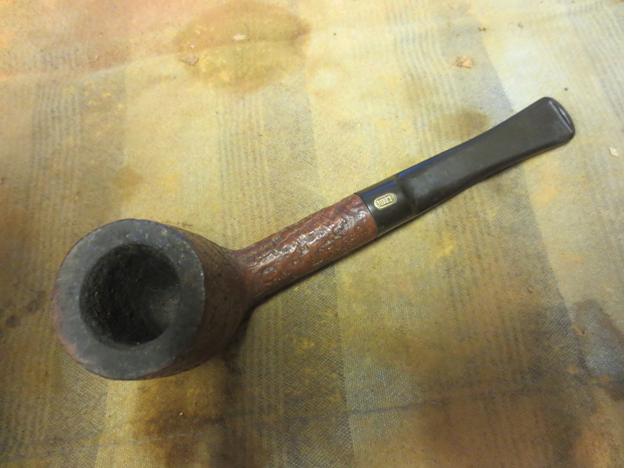
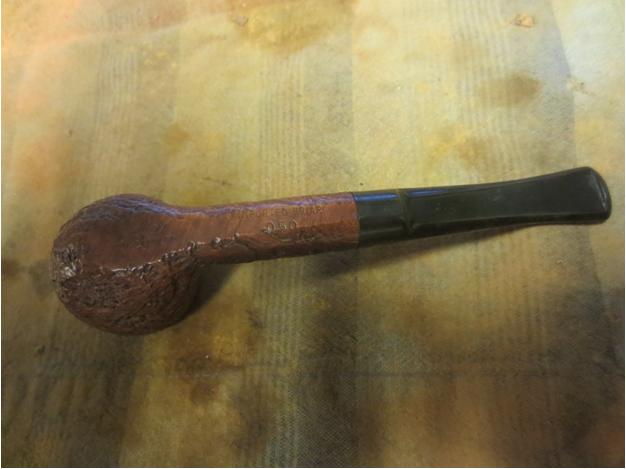
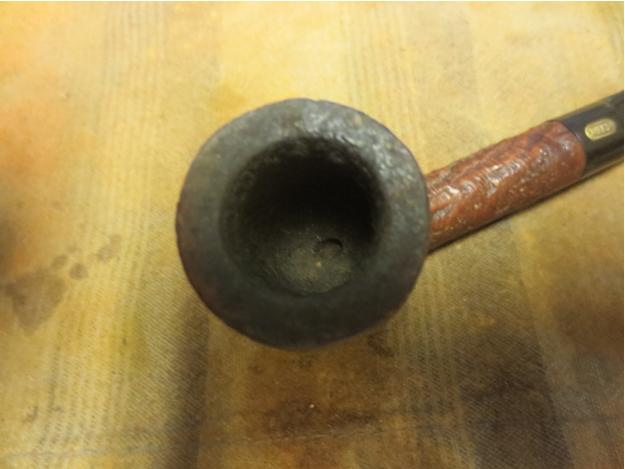
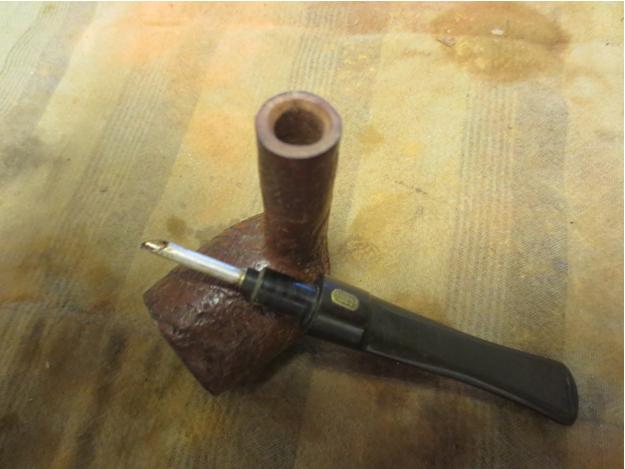
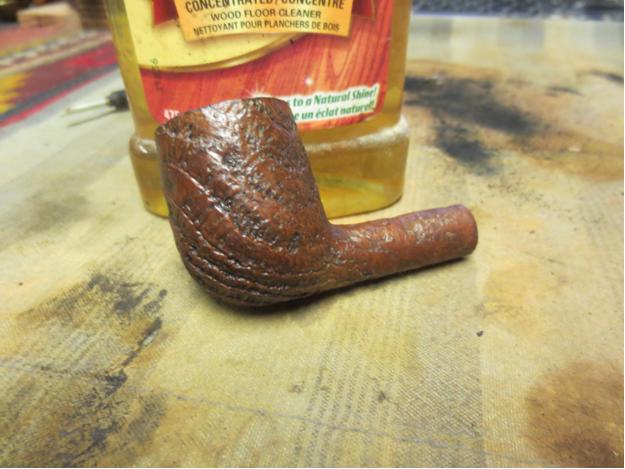
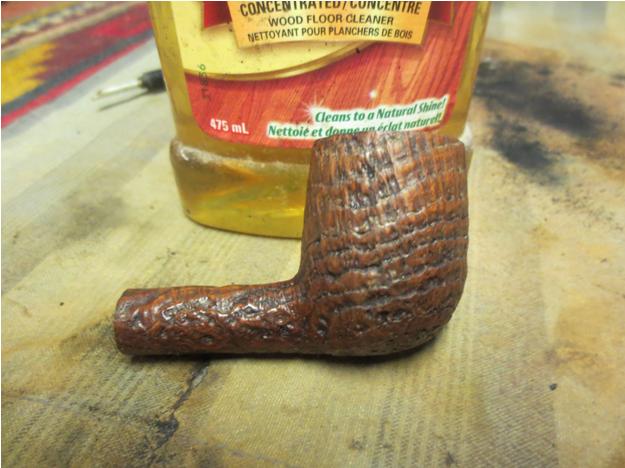
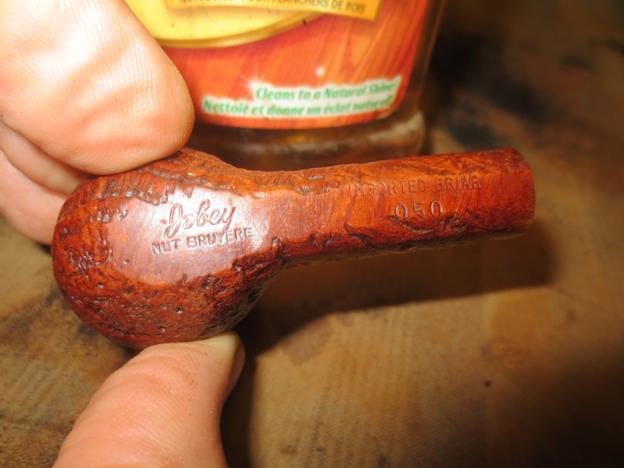
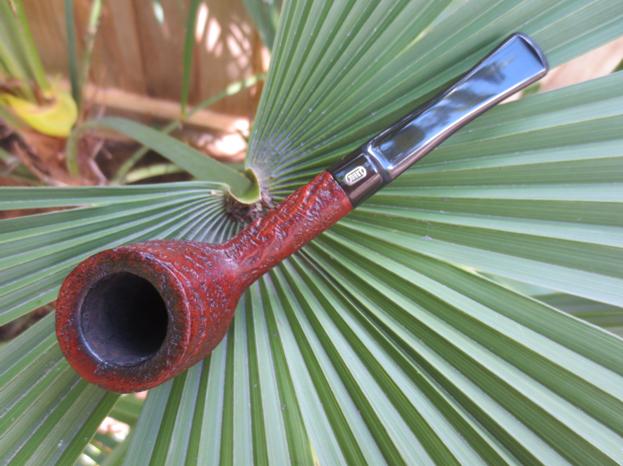
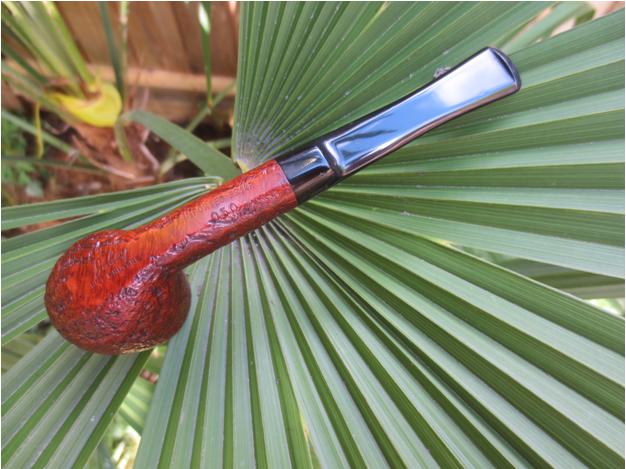
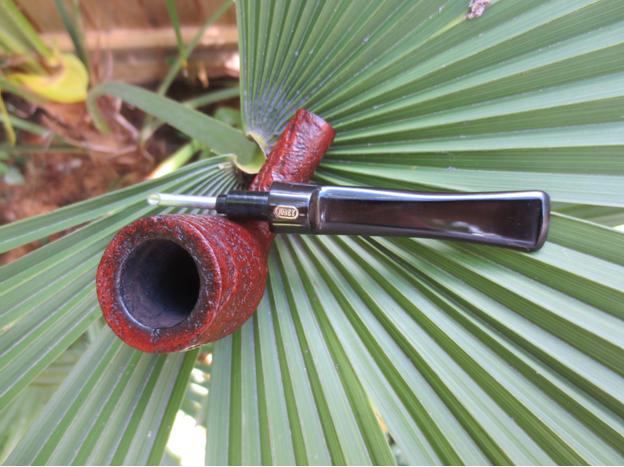
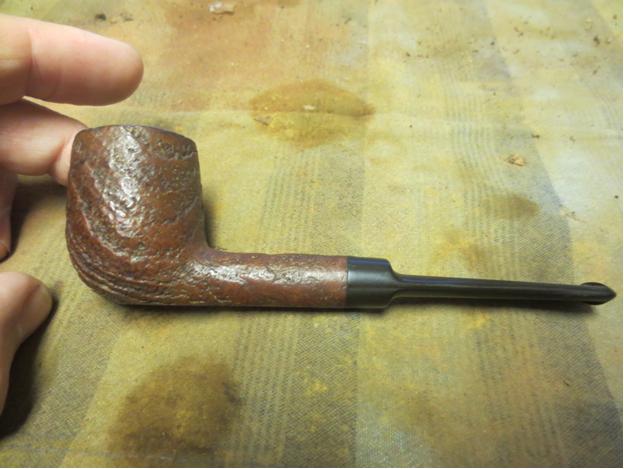
This is another pipe find from the Idaho Falls antique mall. I am pretty certain it comes from the era that Jobey made pipes in Britain. It is a very proper British looking sandblast saddle stem billiard. The blast is quite nice revealing some great swirls and crags. It is not a deep blast but it is a medium one that stands out well. The pipe is stamped on the underside of the flat shank with Jobey over Nut Bruyere toward the front of the pipe. Moving back toward the stem it is stamped Imported Bruyere over 050. The stem has the Jobey insert on the top of the saddle and it is stamped on the right side – English Para.Jobey1 The pipe is solid but dirty. The stem is not badly oxidized at all bearing testimony to the quality of the vulcanite. The stem also has an inner tube insert in the tenon. This pipe was in the same lot as the White Flame billiard that I just finished and posted early. The stem is dirty but not oxidized. The sandblast finish is also dirty with dust and grime in the valleys of the blast. The rim is almost flat with the build-up of tars. The bowl is still round with no damage to the inner or out edge of the rim. There is slight cake build-up in the bowl. Internally the shank and mortise area are very clean – pristine is the proper word. The inner tube inserts into the airway in the shank so the mortise is fresh briar. The fit of the stem in the shank is tight and inserts with a click. This pipe is in pretty decent shape other than the cosmetics I have noted above.Jobey2

Jobey3

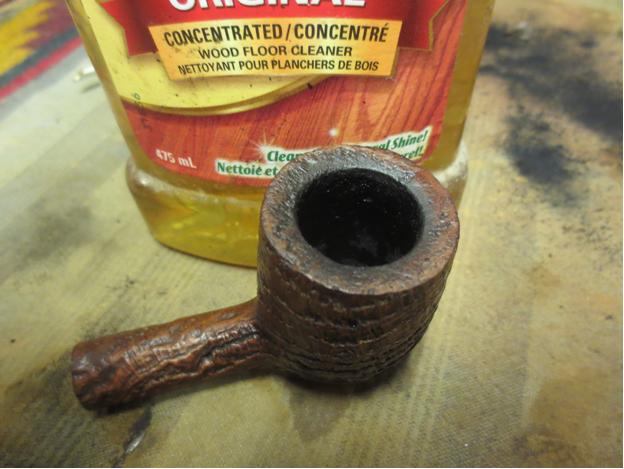
Jobey4 I took a close-up photo of the bowl rim and the cake to show the state of both when I started the cleanup.Jobey5 The shank and mortise appeared to be pristine and clean as I mentioned above. I took a photo of the mortise and the inner tube on the stem.Jobey6 I started the cleanup with a gentle reaming of the bowl. I took the cake back to bare briar. I like to start with a clean bowl on the pipes I refurbish. I know others leave a thin cake but I have chosen the “cakeless” route.Jobey7

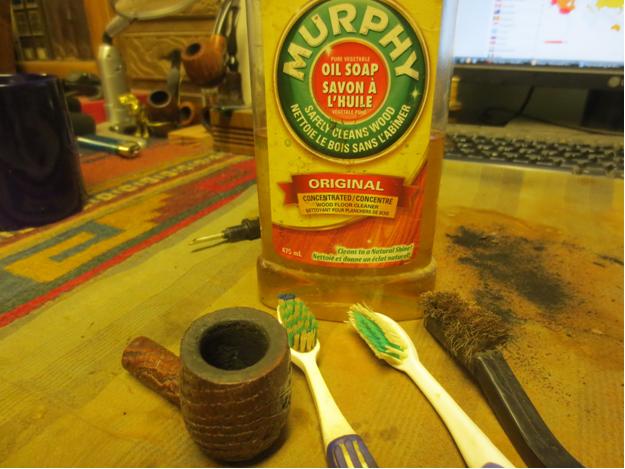
JObey8 I scrubbed the blast and rim with Murphy’s Oil Soap. I used a short bristle tooth brush and a brass bristle tooth brush to scrub the briar. When I had finished and rinsed the bowl I used the long bristle tooth brush to polish it a bit.Jobey9

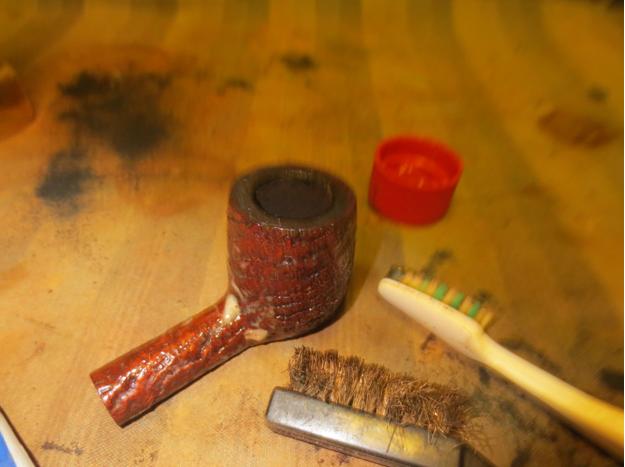
Jobey10 The next series of pictures show the bowl after the scrub and rinse with running water. The briar looks really good. The blast is clean and the rim looks like new – just a wee bit of darkening.Jobey11

Jobey12

Jobey13

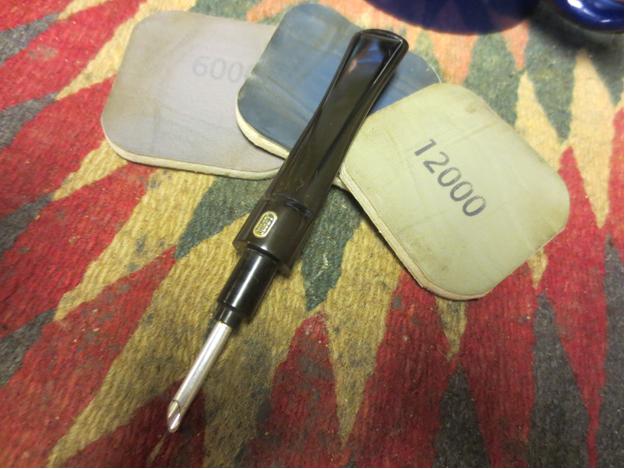
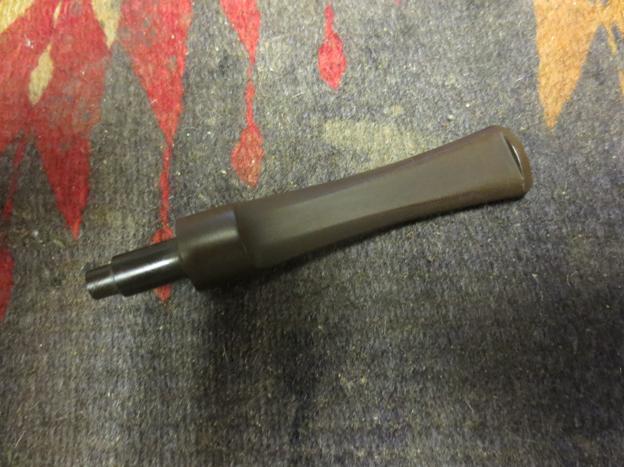
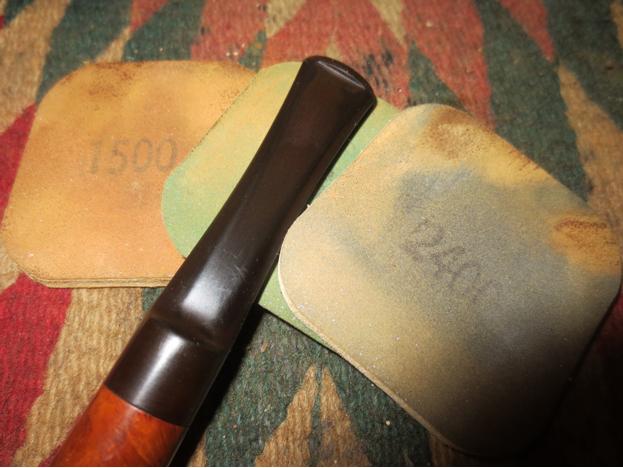
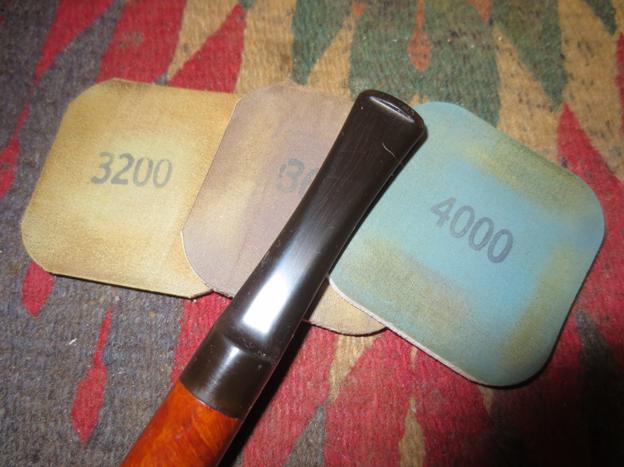
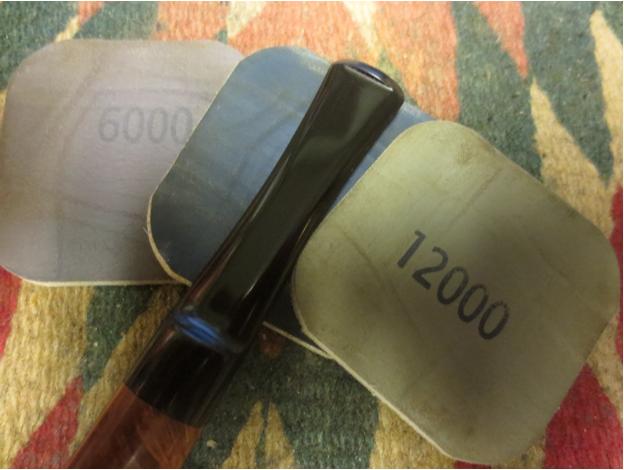
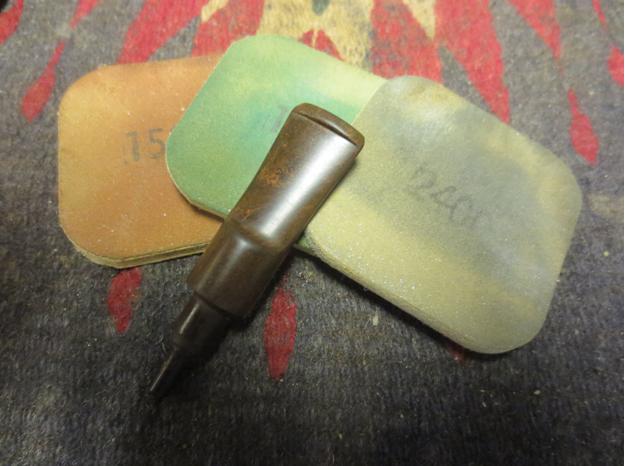
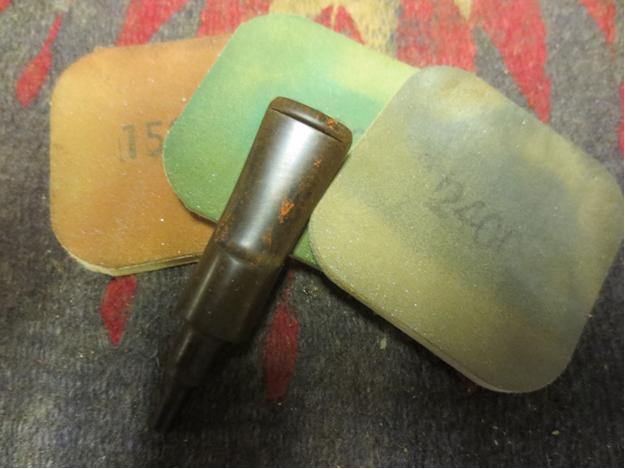
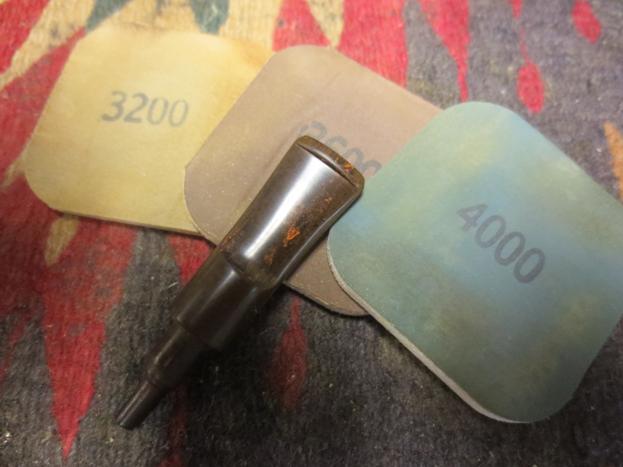
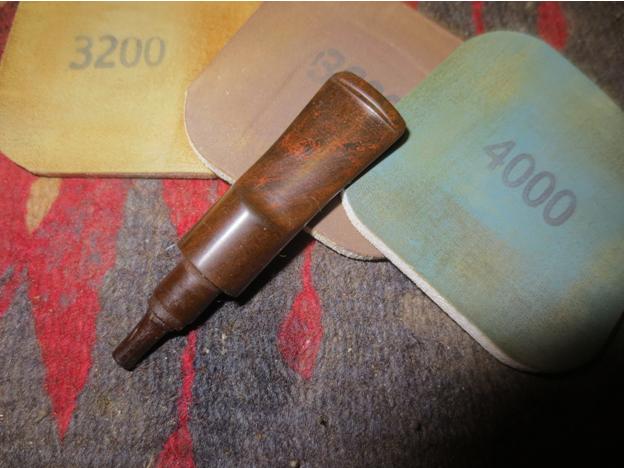
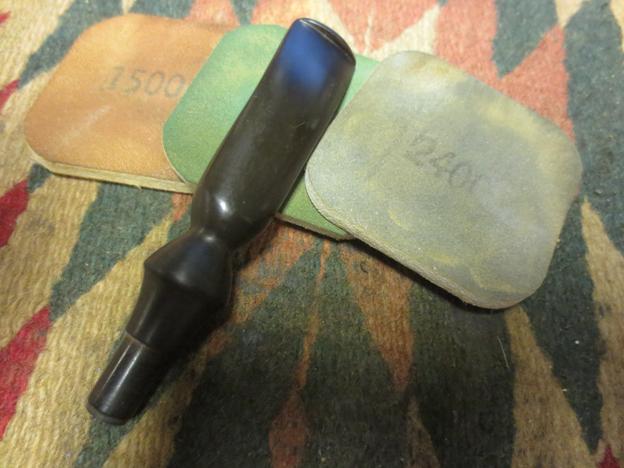
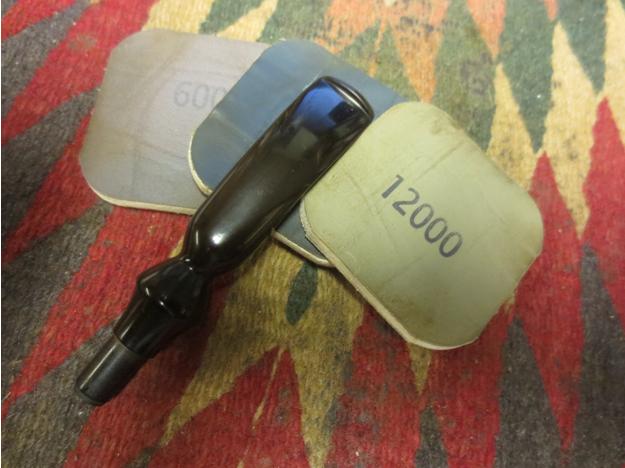
Jobey14 With the outside clean it was time to swab out the shank airway, mortise and bowl. I used alcohol, pipe cleaners and cotton swabs. The seemingly pristine mortise actually was quite clean. Just a few cotton swabs and a pipe cleaner took care of the little bit of tars that were there.Jobey15 I used a dental pick to clean out the slot in the button. I scrubbed the internals of the inner tube and the externals with alcohol, cotton swabs and pipe cleaners. The stem was not too dirty and it did not take too much to clean it out.Jobey16 I sanded the stem with a medium and a fine grit sanding sponge and then moved on to working over it with the micromesh sanding pads. I wet sanded with 1500-2400 grit pads and then rubbed the stem down with Obsidian Oil. I continued by dry sanding, before the oil dried, with 3200-4000 grit pads. I lightly buffed the stem with red Tripoli and White Diamond and then finished dry sanding with 6000-12000 grit micromesh pads. I gave it a final coat of Obsidian Oil and set it aside to dry.JObey17

JObey18

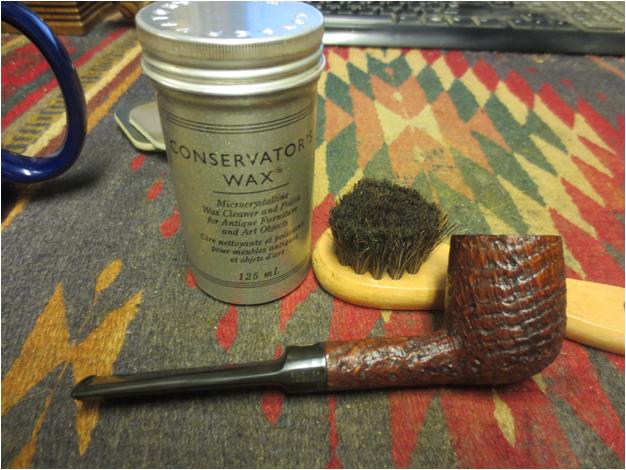
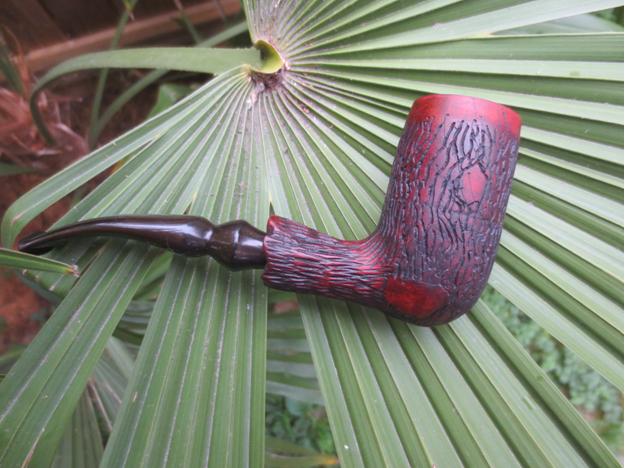
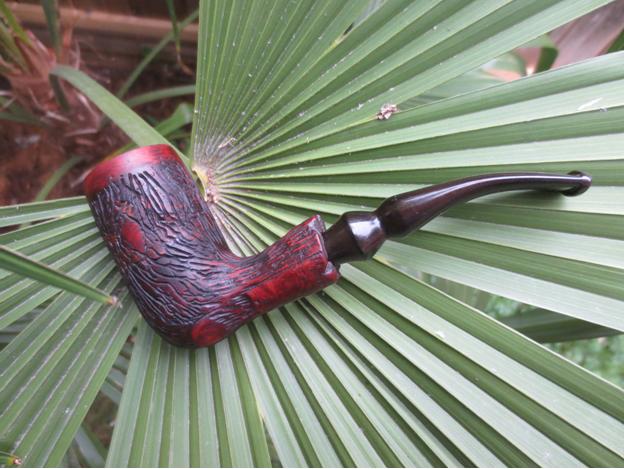
JObey19 I tried a new wax on the sandblast. I have used it before on other pipes but never on a blast. It is called Conservator’s Wax which is a microcrystalline cleaner and wax product. I applied it to the blast by hand rubbing it in lightly, making sure it did not clump up in the grooves. Once it dried I buffed the bowl with a shoe brush. The picture below shows the buffed briar.Jobey20 I lightly buffed the stem with Blue Diamond on the buffer and gave the stem multiple coats of carnauba wax. I buffed the bowl and stem with a clean flannel buff and then hand buffed the pipe with a microfibre cloth to give the polish depth and a deeper sheen. The finished pipe is shown below. It is clean and ready to fire up!Jobey21

Jobey22

Jobey23

Jobey24

Jobey25

Breathing new life into a White Flame Saddle Billiard 353


Blog by Steve Laug

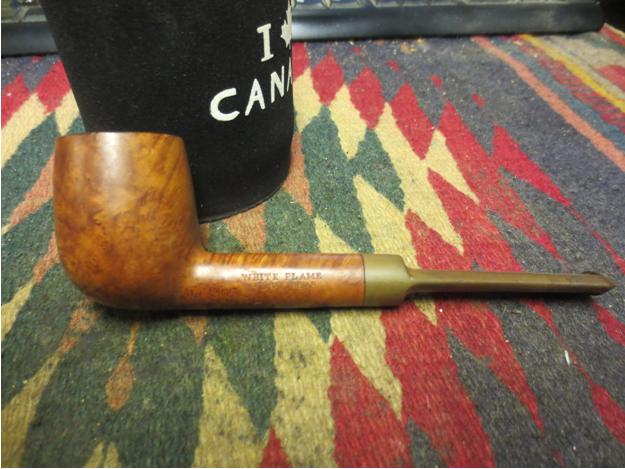
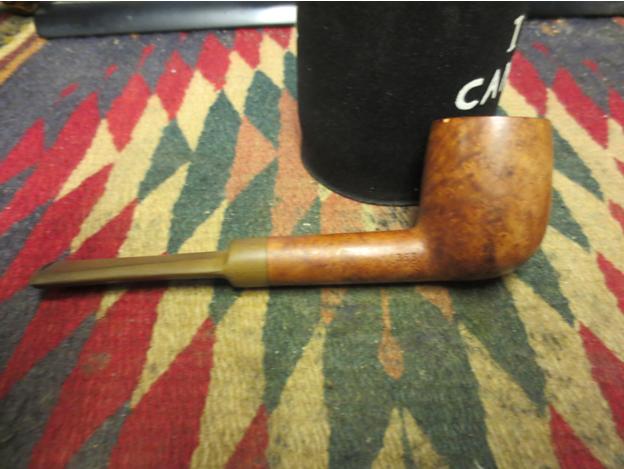
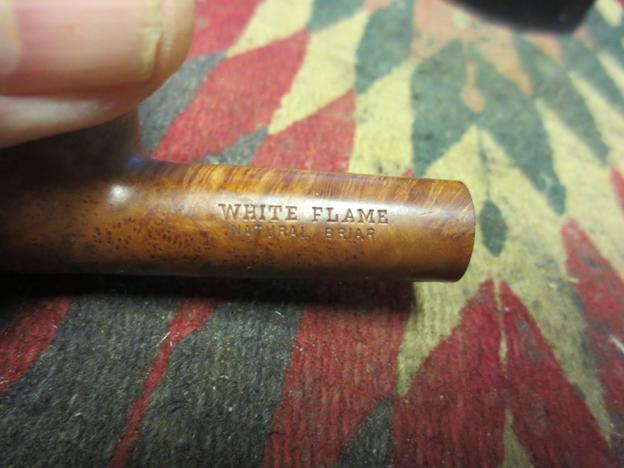
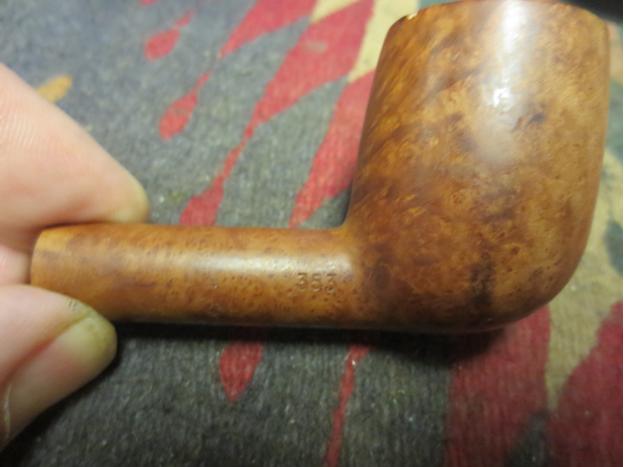
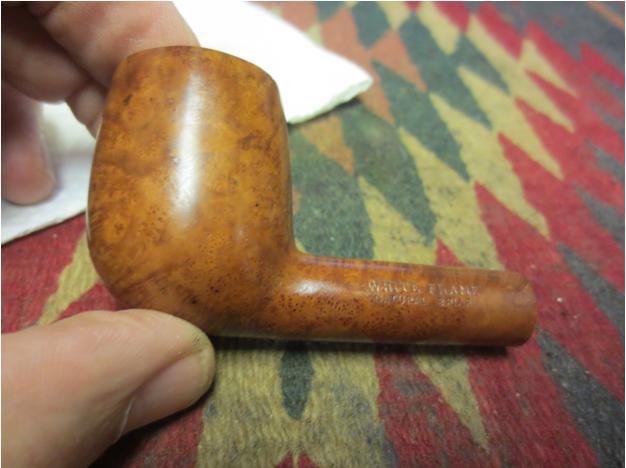
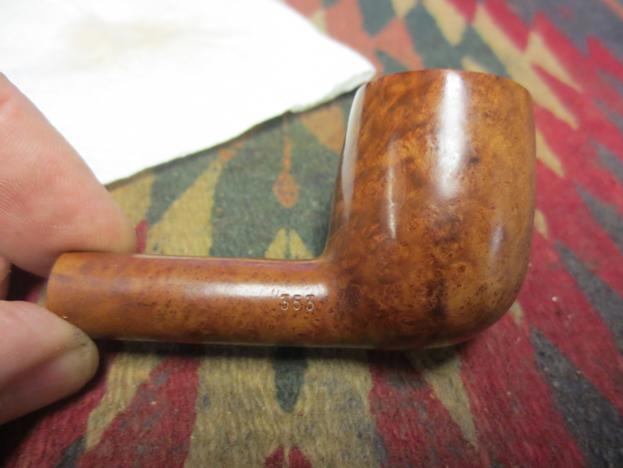
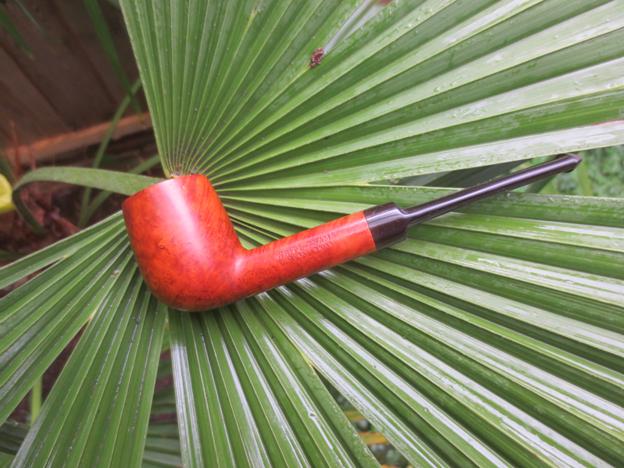
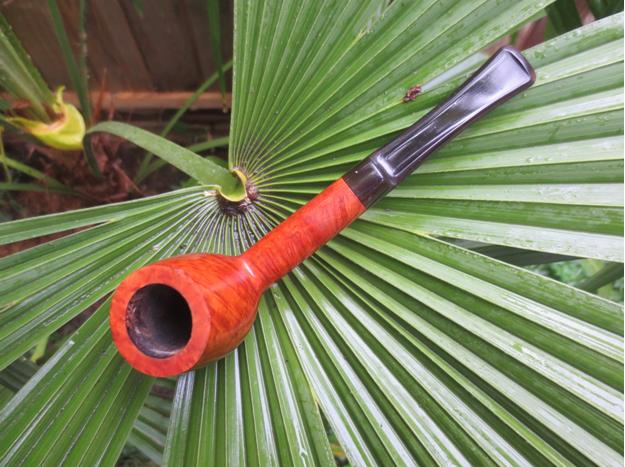
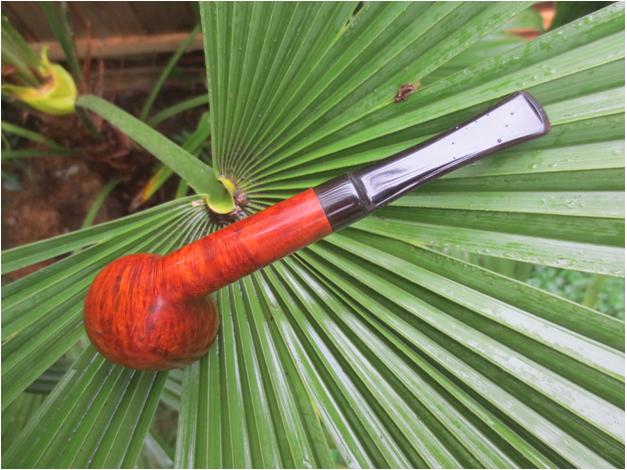
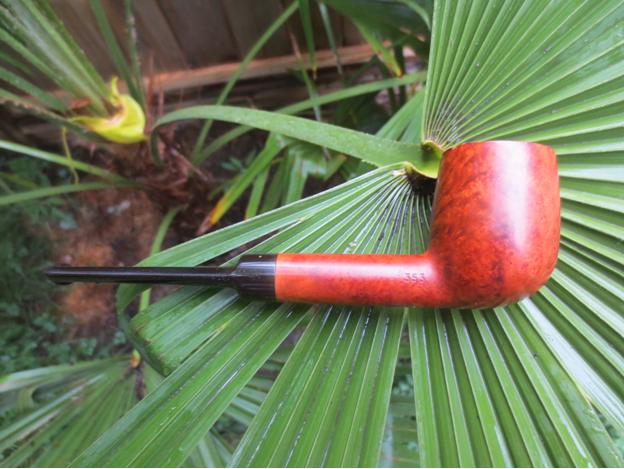
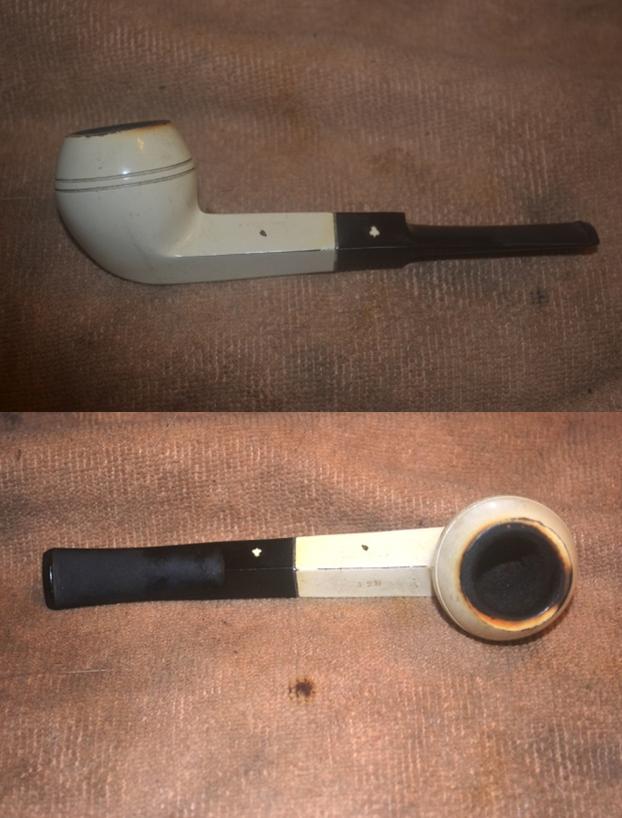
This was another of the pipes I picked up on a recent trip to Idaho Falls. I found it and several nice older pipes in a local antique mall. This one is stamped White Flame over Natural Briar on the left side of the shank and 353 on the right side. On the underside of the stem there was a lightly stamped FRANCE on the saddle. I had never seen a pipe with the White Flame stamping. I looked on the pipephil site and there was nothing there either. I did find a reference to the brand in Who Made That Pipe. There it was listed as a brand made by both Imperial and Civic. The book said the make was English and American. From my experience though, both the Imperial brand and the Civic brand were English made pipes. I know that Yello Bole made an Imperial and I am wondering if that is not what WMTP is referring to. This one however, just says British Briar in the shape, the stamping and everything else. I searched on the web to find a shape chart for either Imperial or Civic and so far have found nothing that lists the shapes of the two brands.Flame1

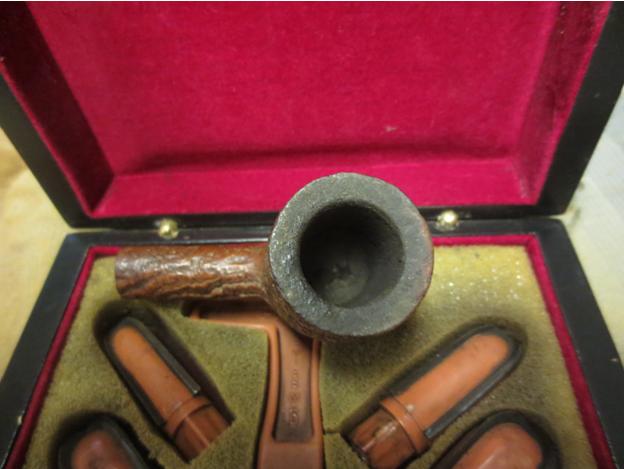
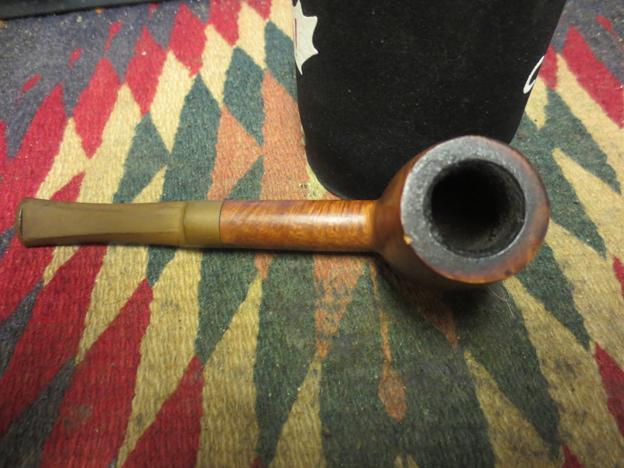
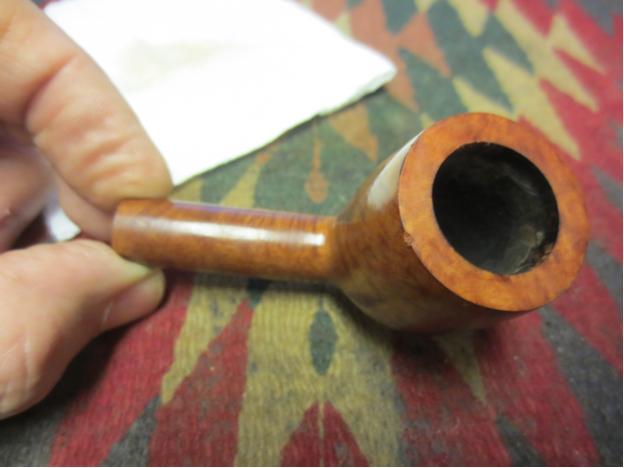
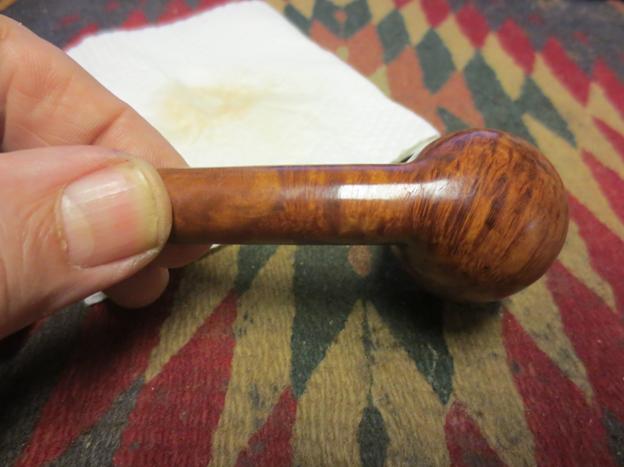
Flame2 The pipe had a natural, virgin finish that had picked up a slight patina over the years. There was a hint of red in the briar under the grime. The stem was badly oxidized. The bowl had a thick cake and the rim was nicked on the back right side outer edge and the top was blackened with a coat of tars and carbon that had run over from the bowl. Other than that the pipe was in decent shape. The bowl was still round. There were a few slight nicks and dings in the sides but it still was decent enough that a restoration would not be too difficult.Flame3 I have included a close-up of the rim to show the thickness of the cake in the bowl and the damage to the outer edge of the rim. The tarry lava overflow on the top of the rim is also very visible.Flame4

Flame5 I have also included some photos of the stamping to see if any of you reading this have any ideas of the maker.Flame6

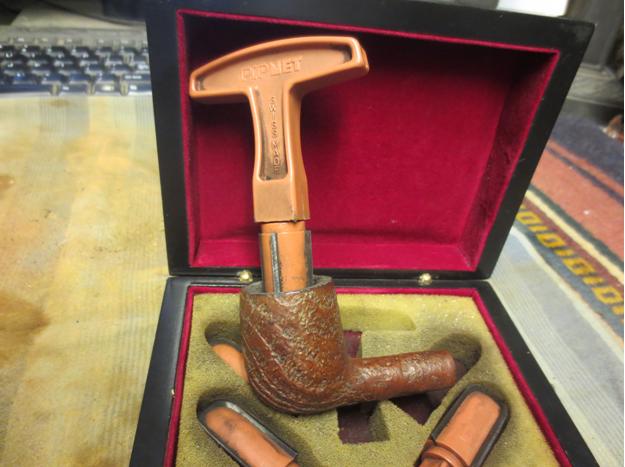
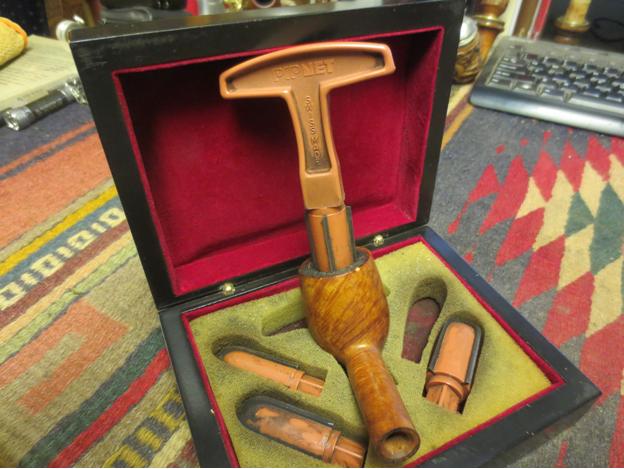
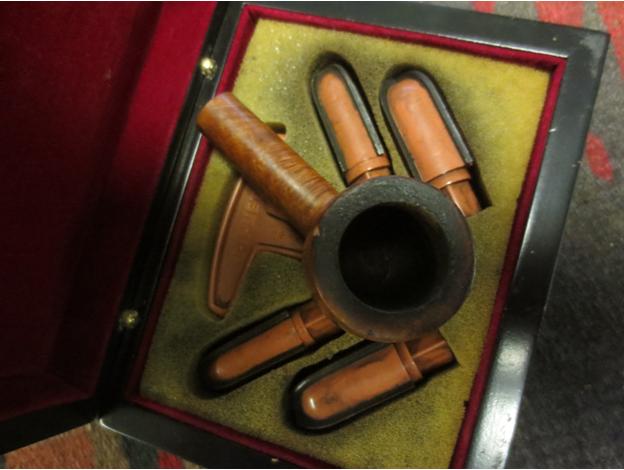
Flame7 I reamed the bowl with a PipNet reamer starting with the smallest head on the T handle and working up to the third head. I took the cake back to the briar walls of the pipe.Flame8

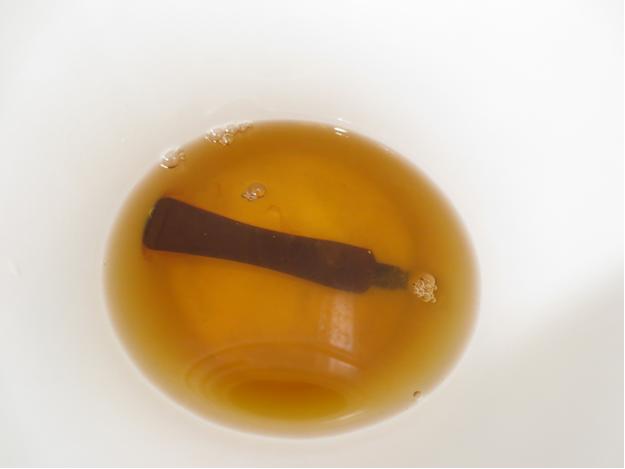
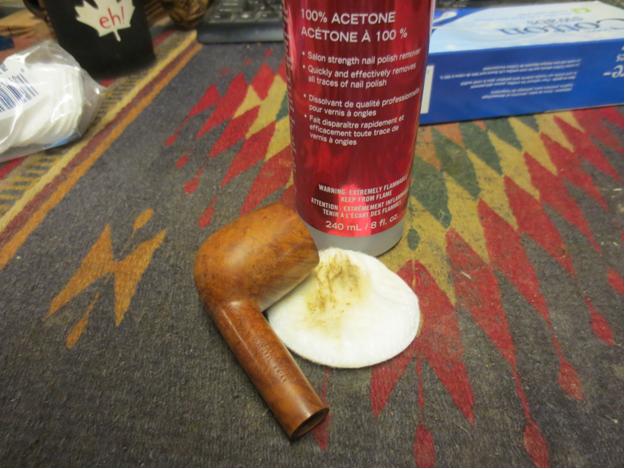
Flame9 Because of the rim damage and the thick build-up I decided to top the bowl and remove the damage. I would not be able to remove all of it without changing the profile of the bowl but I could minimize its visibility. I topped it on the topping board with 220 grit sandpaper.Flame10 I finished topping it by sanding it with a medium and a fine grit sanding block to smooth out the scratches left from the sandpaper. The topped bowl is shown below.Flame11 The oxidation was bad enough that I decided to drop it in a mixture of Oxyclean and let it soak for an hour to let the Oxy do its magic. As soon as it hit the warm mixture the water turned amber as the oxidation bubbled away.Flame12 While it soaked I scrubbed the bowl with acetone on cotton pads to remove the grime and the wax from the briar.Flame13

Flame14 I cleaned out the shank and mortise with alcohol, cotton swabs and pipe cleaners.Flame15 The patina of the bowl was darker than the newly topped rim so I used a light coloured stain pen to match the colour of the briar. It would need some more work to blend it but the colour was very close.Flame16 I gave the bowl and rim a light coat of olive oil to give back some life to the grain and work to match the bowl and rim even more. After oiling it I hand buffed it with a microfibre cloth to remove the excess and to get a clear picture of the match of the rim to the bowl. The match was perfect as can be seen from the photos below.Flame17

Flame18

Flame19

Flame20 After the stem had soaked for an hour I took it out of the bath and dried it off with a coarse cotton cloth. I was able to rub off the majority of the remaining oxidation. The stem is shown in the photo below after the rub down.Flame21 I sanded the stem with a medium and a fine grit sanding sponge to remove the remaining oxidation. I then worked on the stem with micromesh sanding pads. I wet sanded the stem with 1500-2400 grit pads and then rubbed it down with Obsidian Oil. I dry sanded with 3200-4000 grit pads, rubbed it down with oil again and then finished by dry sanding with 6000-12000 grit pads. I gave it a final coat of Obsidian Oil and then buffed it with Blue Diamond on the wheel.Flame22

Flame23

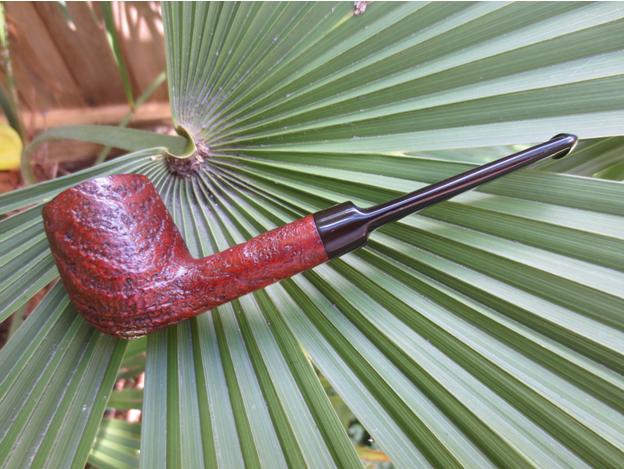
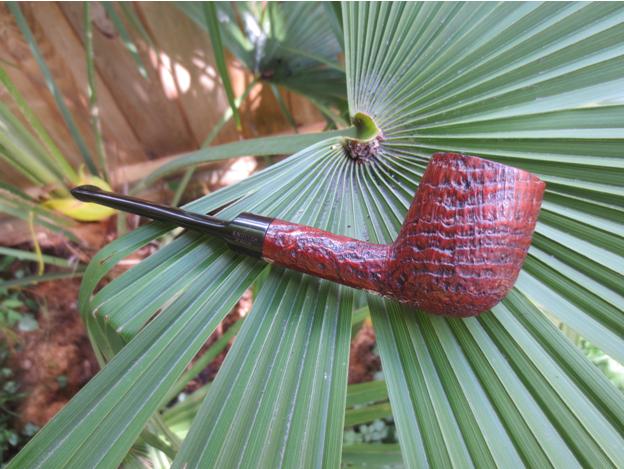
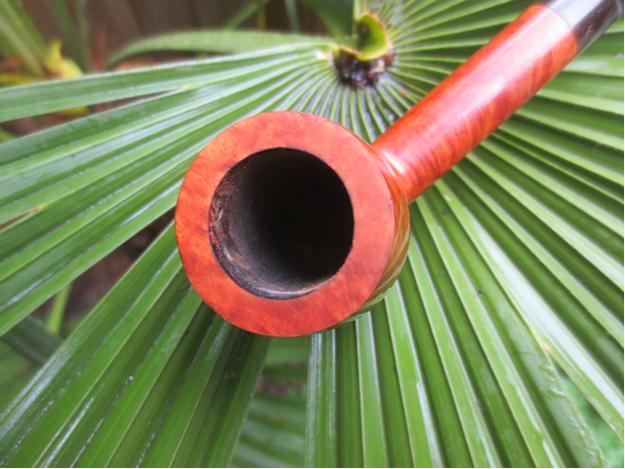
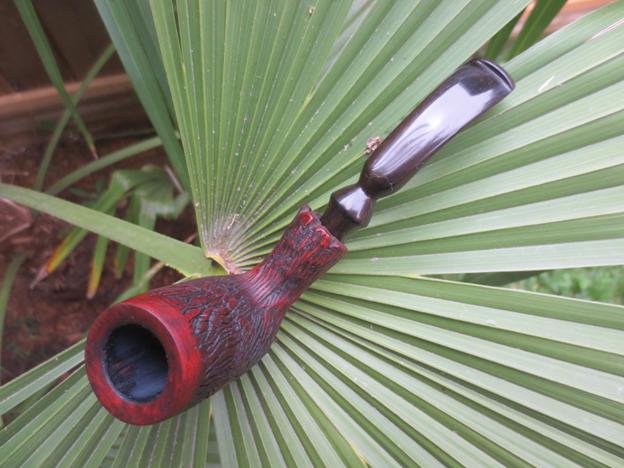
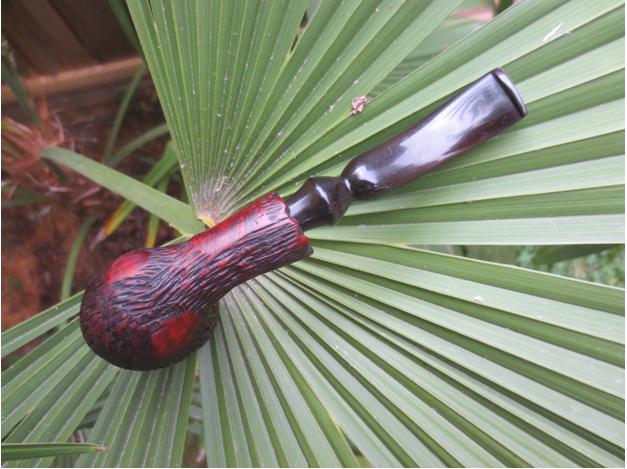
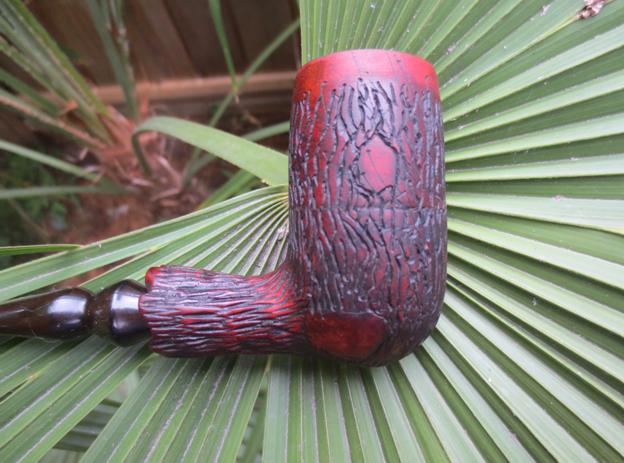
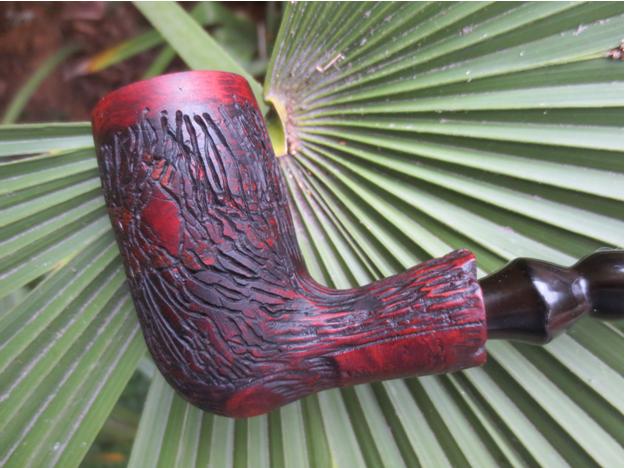
Flame24 I finished the restoration by buffing the pipe with Blue Diamond and then I gave the stem and bowl multiple coats of carnauba wax. I buffed it with a clean flannel buff and then took it back to the work table and hand buffed it with the microfibre cloth. The finished pipe is shown in the photos below. We are in the midst of a much needed rain storm but I love the look of the pipes in the fronds of the palm tree in my back yard. On these photos you will see some raindrops on the stem and bowl in several of the photos. I am pleased with the finished look of the pipe. The natural light brings out the reds in the briar. It is a beautiful pipe. Thanks for looking.Flame25

Flame26

Flame27

Flame28

Flame29

Rejuvenating an American Bentley Apple


Guest Blog by Robert M. Boughton
Member, North American Society of Pipe Collectors
http://www.naspc.org
http://www.roadrunnerpipes.com
http://about.me/boughtonrobert
Photos © the Author

“I don’t want to be pretty. I want to be better. I want to be perfect.”
― Kimber Henry (Kelly Carlson), in “Nip/Tuck,” Season 1, Ep. 1

INTRODUCTION
A nip and tuck is a minor plastic surgery procedure. “Nip/Tuck” (FX channel, 2003-2010) is a racy drama/dark comedy about the realities and sometimes horrors of the cosmetic surgery profession, with some truly grisly moments. Although this restoration involved only normal and accepted methods of pipe fixing, some of them resulted in drastic improvements of the U.S. Bentley apple that needed a full makeover. And so I flashed back on the bawdy TV series.

I bought the pipe on eBay for $6 when I tracked down its nomenclature that identified it as a Kaywoodie second. The seller, who is more into oddball collectibles than tobacco pipes and therefore knows nothing about the latter, had sold me a genuine white briar Kaywoodie 12B bulldog for $10.00, but then had the unfortunate duty to inform me he lost it somewhere in the clutter of his home. He promptly refunded my payment and assured me that both he and his wife would continue searching for the misplaced bulldog and forward it to me free of charge when it was located.

Why I chose to give this fellow a second chance is anyone’s guess, but it paid off. Both the Bentley and the full Kaywoodie white bulldog arrived soon after in the same package. Grateful for my business and true to his word, the seller charged me only for the Bentley. It just goes to show there are good folks everywhere, even some in Ohio who don’t enjoy or collect smoking pipes. Appreciating the excellent fortune I had in acquiring these two pipes for the normal shipping fee of one, I nevertheless suggested that the good gentleman in the Midwest begin checking the pipes he stumbled upon now and then at http://www.pipephil.eu/logos/en/index-en.html, or at least a browser search, before choosing such low prices. However, his response indicated he hadn’t a clue what I meant. Sadly, I had to let the urge to be helpful go, and look forward to taking advantage of his generosity more and more in the future.
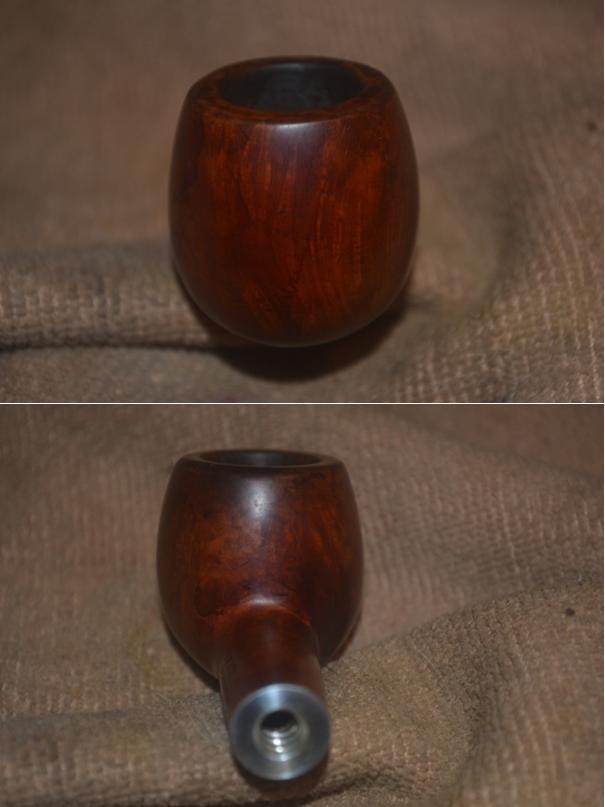
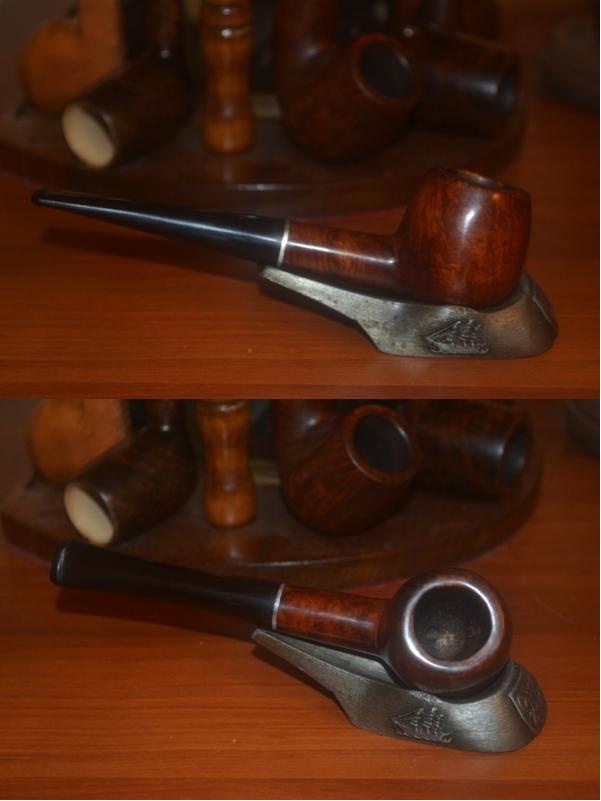
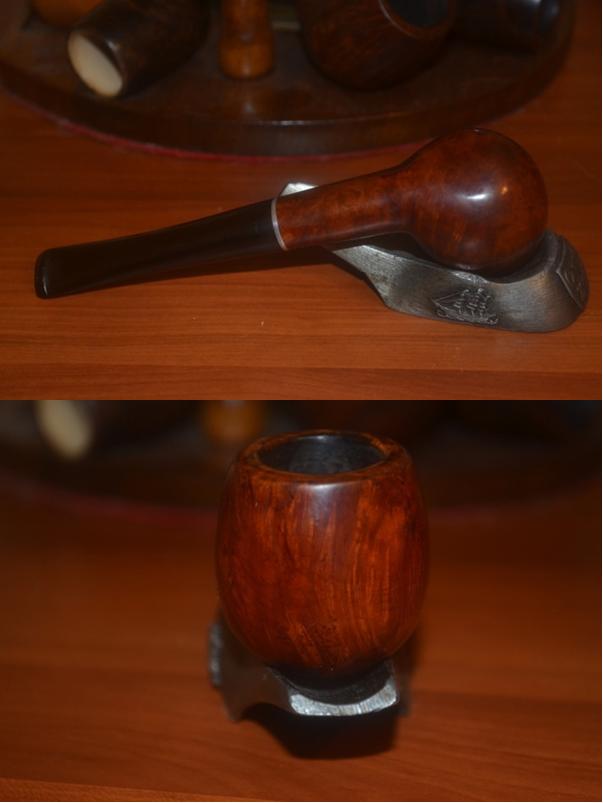
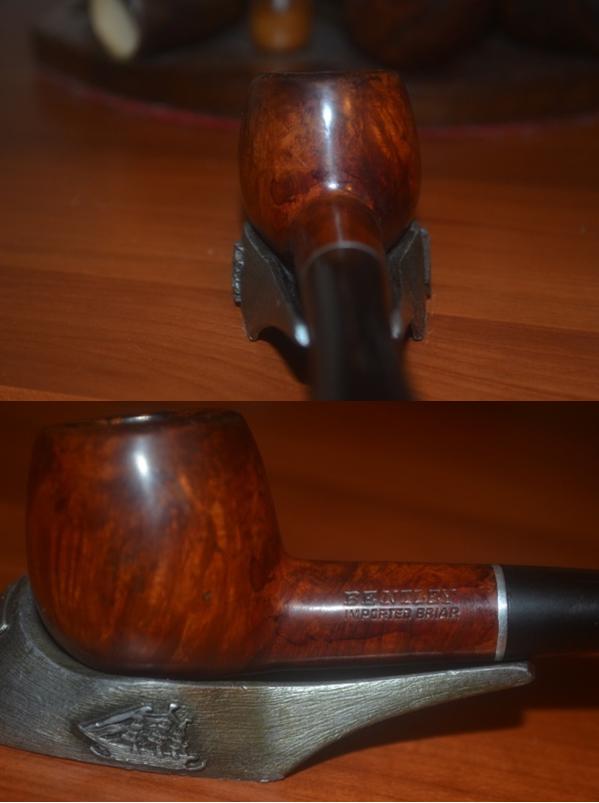
When I opened the box in my car outside of my Post Office and saw the white briar bulldog first, I smiled as I turned it in my hands and concluded a little work would make it whole and vital once more.Bentley1 Then my attention turned to the Bentley, and I laughed hard enough to draw attention from the occupants of the car next to mine. The chamber was so full of built-up cake, in such a uniform circle leaving only a virtual pinpoint of space to load tobacco, that I ignored the other Postal customers and continued guffawing. So amused and excited was I by the challenge of restoring the Bentley, I had to resist the impulse to get out of my car and show it to the complete strangers next to me.

RESTORATIONBentley2

Bentley3

Bentley4

Bentley5 This one was going to take some work, to be sure. The chamber – well, I needed to think about how even to start that. The rim, I knew, would be no problem. The bit was slightly off its mark when tightened. The old polish and stain was worn away in areas, in particular the sides. And of course, there were scratches everywhere. All in all, I was exhilarated.

Having decided to bore my way through the huge blockade of years of determined and, I must admit, evenly-executed accretion of chamber char in increments, I chose a 17mm fixed reamer and went at it. With just enough room at the top to insert the reamer – I was even grateful the single user of the pipe had somewhat obsessively filled it to the same exact point about an eighth of an inch below the rim – I slowly cranked away, emptying the carbon dust and checking the progress as I moved deeper. I used to document the height of the pile of carbon with each restoration, but I gave up on that long ago. Suffice it to say there would have been a small hill of it in this case. Just getting to the bottom took about a half-hour. Here are pictures of the halfway point and the first strike of gold at the bottom.Bentley6 I gave the bit, which was in pretty good shape, an OxiClean wash, for the most part to help clean out what had to be an ugly mess of ignored old saliva and tobacco juice.Bentley7 While the bath was doing its magic, I sanded off all of the old wax and stain using 500-grit paper and took off the rim char with super fine steel wool.Bentley8

Bentley9

Bentley10 Removing the bit from the wash, I rinsed it and tried micromesh from 1500-4000, but there was still a small area on both sides of the lip end that needed more attention with 320-grit paper, then another progression of the micromesh.Bentley11

Bentley12 I worked on the briar with a micromesh progression from 1500-4000, as usual, and it did the trick for most of the outer area. I also used 200-grit paper followed by 320 and 500 on the chamber to smooth it out.Bentley13

Bentley14

Bentley15 Clearly, the sides and rim still had small scratches, and so I used 800 micromesh to remove those blemishes before working my way up the scale again.

The stem was off just a tad. I heated the tenon with my Bic, threw a small rag over it and used clamped the pliers down. I had to use all of my might to make it budge, but it was straight. Below are the before and after shots, which are barely different.Bentley16 After a pre-scrub of the shank with wire cleaners dipped in Everclear, which removed quite a bit of nasty old gunk, I retorted the pipe. Then I chose, after careful consideration of whether or not to let it go with the natural finish, to darken the wood just a little using Lincoln Medium Brown stain, which is lighter than the regular brown, and flamed it.Bentley17 A gentle rub with 4000 micromesh took off the char, and I rubbed it with a soft cotton cloth.Bentley18

Bentley19

Bentley20 Time for the buffer wheels, I applied red and white Tripoli to the stem, using the clean wheel after each. I did the same to the wood, adding White Diamond and carnauba.Bentley21

Bentley22

Bentley23 And this time I remembered not to over-do the sanding on the nomenclature.

CONCLUSION
Some say pride is a sin, but I am happy with the results. After all of that work, I’d love to keep this beautiful, elegant Bentley apple. But I’m going to have to sell her. Oh, well. My P.A.D. is so bad, I’m sure I’ll find something else to keep – like the Kaywoodie 12B bulldog.

Restoring a Dr. Grabow Viscount 39 Continental


Blog by Steve Laug

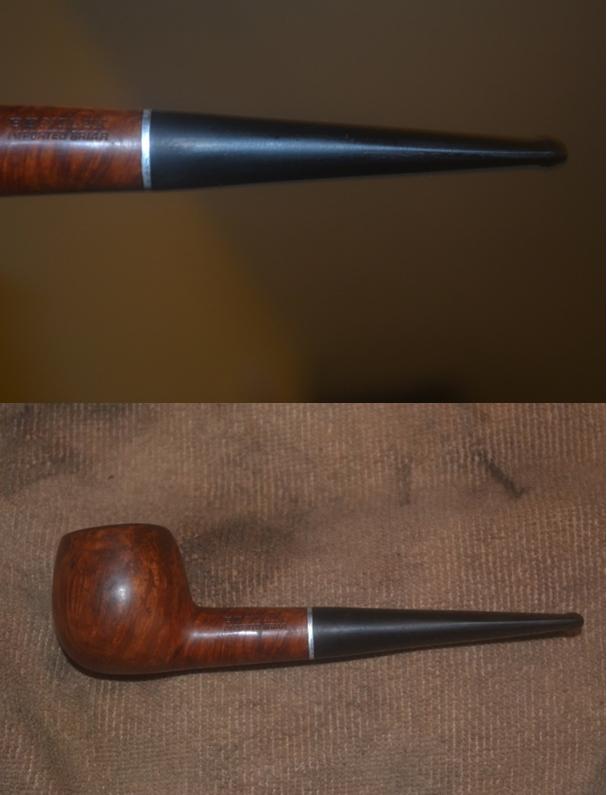
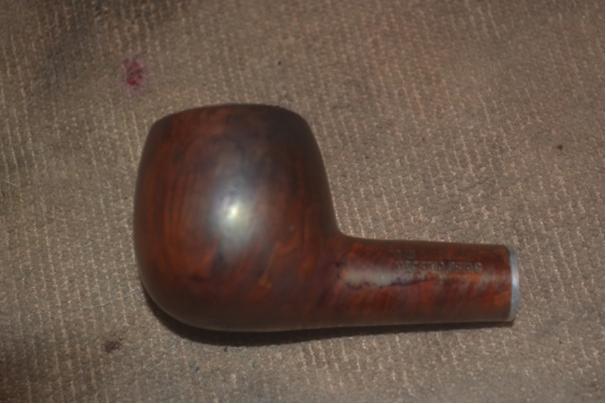
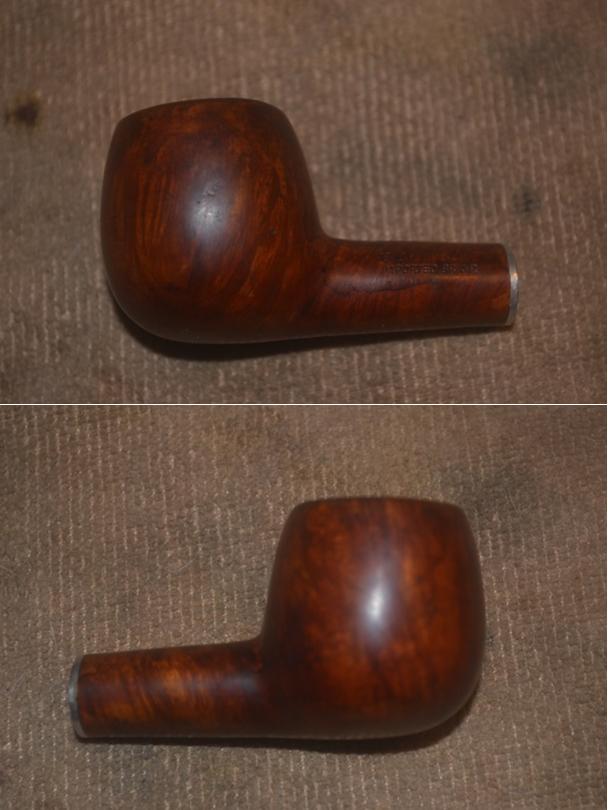
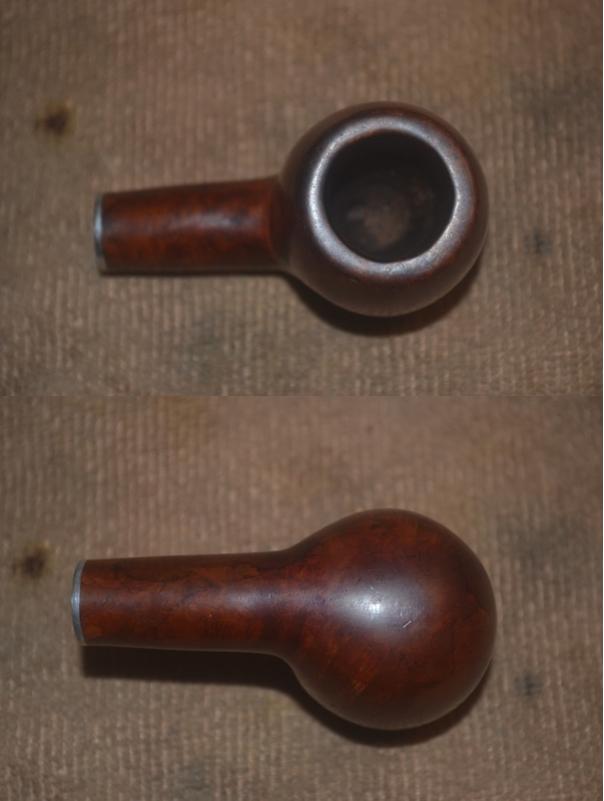
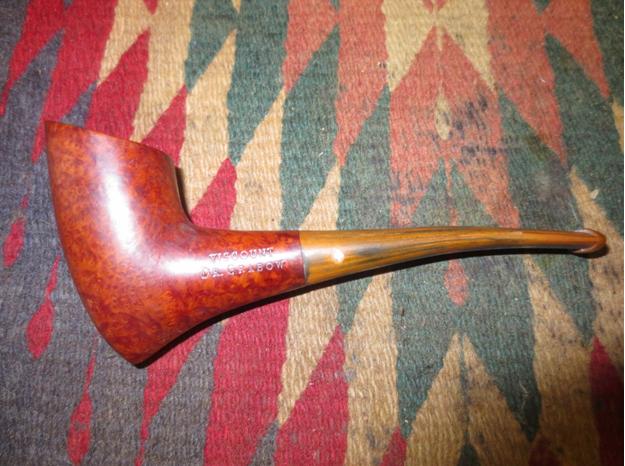
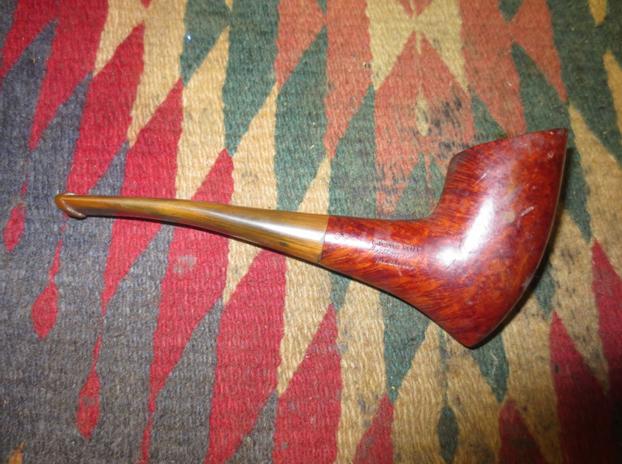
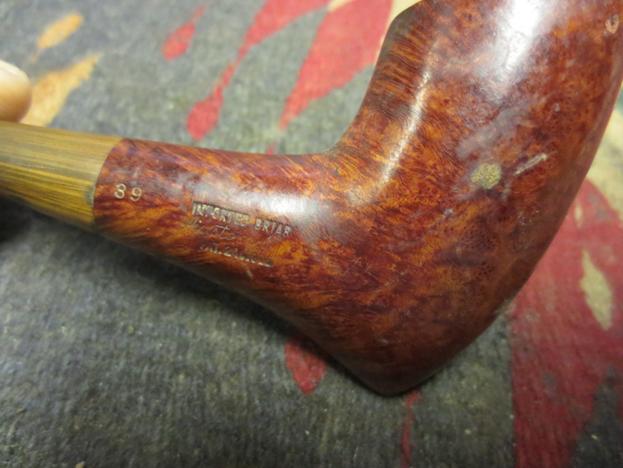
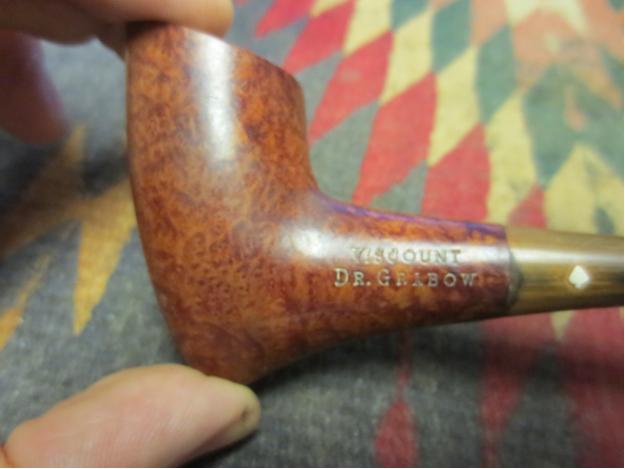
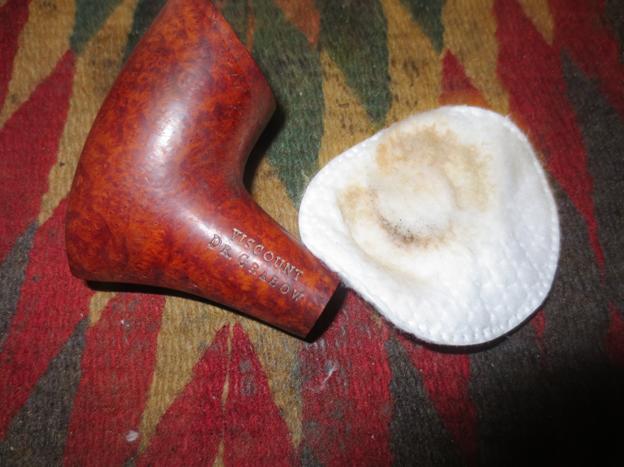
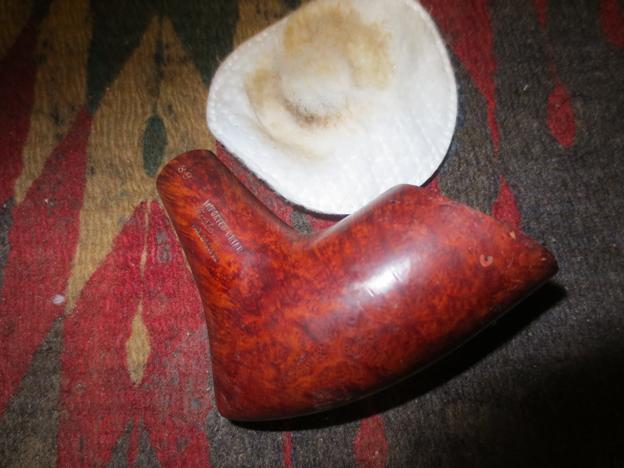
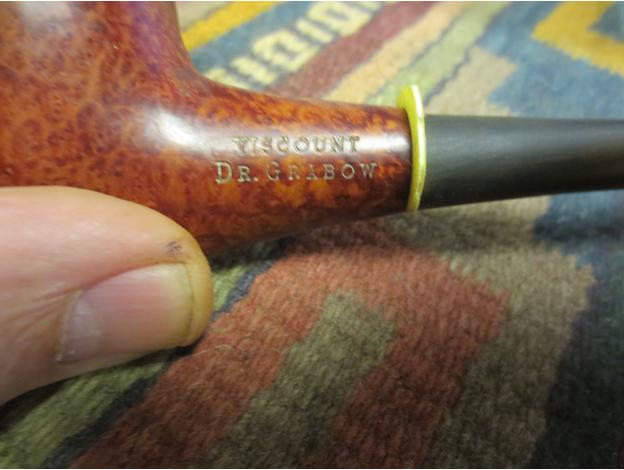
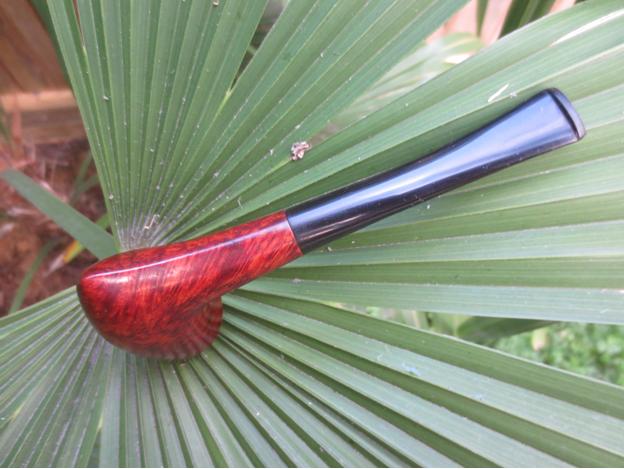
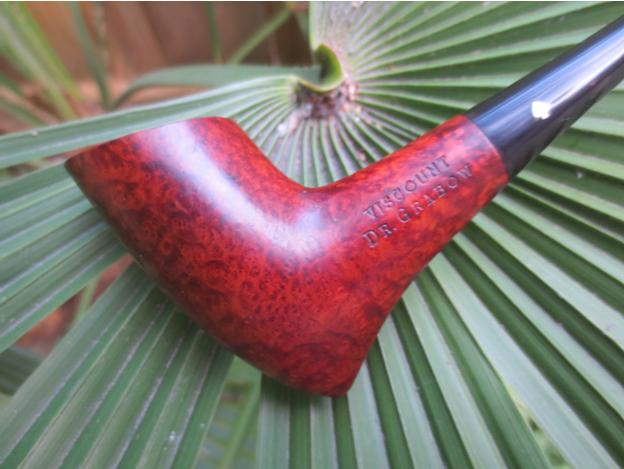
I was gifted this beautifully grained Grabow Viscount Shape 39 in a box of pipes that needed to be reconditioned and repaired. It was a shape that I had seen pictures of but I had never seen one in person. Holding it in hand led me to have a few questions regarding it. It is stamped on the left side of the shank Viscount over Dr. Grabow and on the right side 39 near the shank and then Imported Briar over Adjustomatic over Pat.2461905. I posted the questions and some photos of the pipe on the Dr. Grabow Collectors Forum as I have found the folks there to be extremely helpful and knowledgeable about all things Grabow.

Here are the questions:
1. Any idea on the dates of this one.
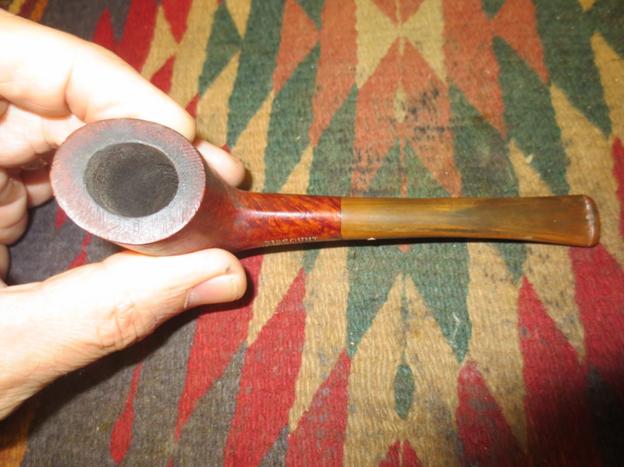
2. The rim top has ridges but I am not sure if they are scratches or original. They are in no particular pattern and the rest of the bowl is smooth. Did this shape have a rusticated rim?
3. Did it have the Grabow scoop stinger as it is missing in this one?
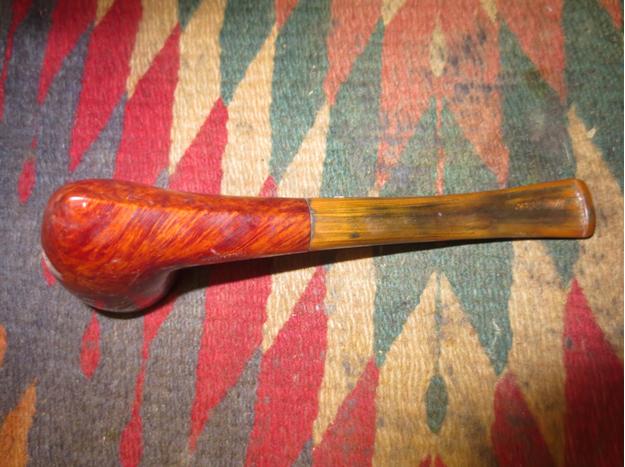
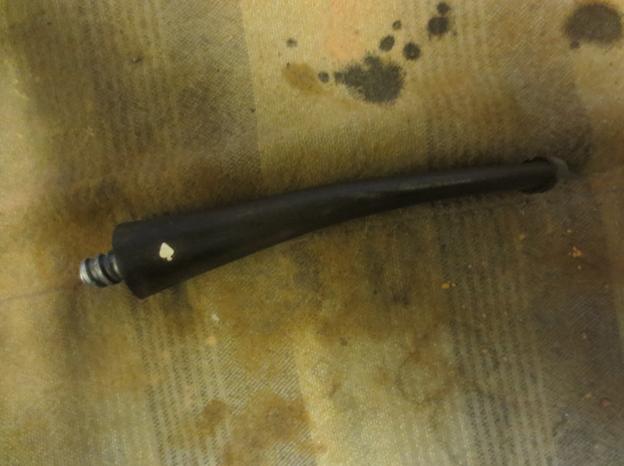
4. The Grabow spade on the stem is raised above the surface. Was this normal? I have not seen it before.

I concluded my questions with a short comment on the pipe. The briar is amazing – birdseye on the sides and cross grain on the front and back of the bowl.

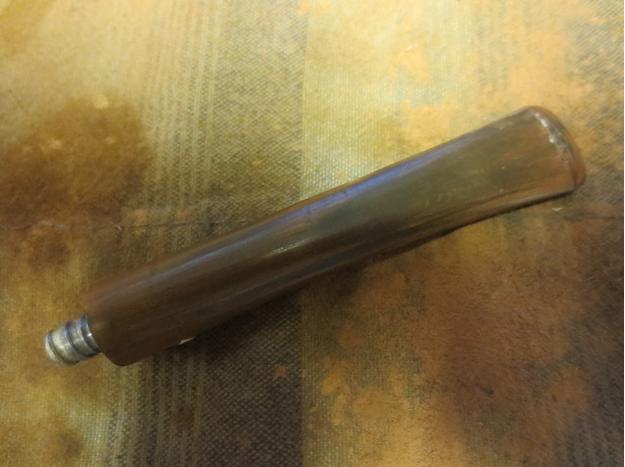
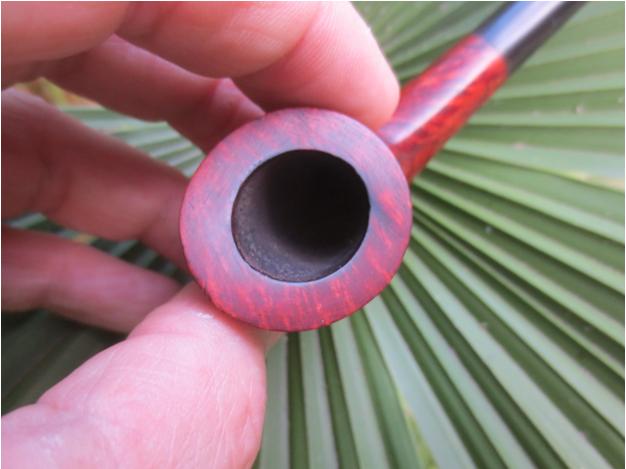
The pipe needed some work as can be seen from the above questions. The stem was rough. It was oxidized and had been scraped clean with a knife or other tool and left ridges and scratches all over the stem. It gave it a striped look. The rim had a hatched rustic pattern on it and had probably fallen prey to the same knife wielding owner. The finish was actually quite good underneath the dirt and sticky spots that may have come from price tags on the bowl or labels. I was surprised that it did not have any lacquer or varnish coat over the briar. It was just stained briar and would be quite easy to clean up.Cont1

Cont2

Cont3

Cont4 It was not long before I got a reply from Ted over on the Dr. Grabow Collectors Forum. He answered all of the questions that I had regarding this particular pipe and did them in reverse order. Here is his reply.

Yes, The grain is great. A fine example.

4) Spade on the stem has raised over time. It was flush when it left the factory. Even if it comes out (unlikely) it is a relatively easy fix. Joe and Ed have bunches of spades that they picked up off the factory floor.
3) It had the scoop (72B) cleaner. Unfortunately I don’t have any left. Someone will get you one.

2) Rim scratches weren’t there when it left the factory. Someone cleaned the top a little too vigorously.

1) This is fun…… The Continentals started in 1959/60 and their heyday was 1964-1966. Almost none were produced after 1967 because the sales just weren’t there. Shape stamped with a vulcanite stem makes me believe it was made in 66/67. I can’t speculate as to when it was sold… just made.

Here are some close up photos of the rim and the grain on this beautiful little pipe.Cont5

Cont6

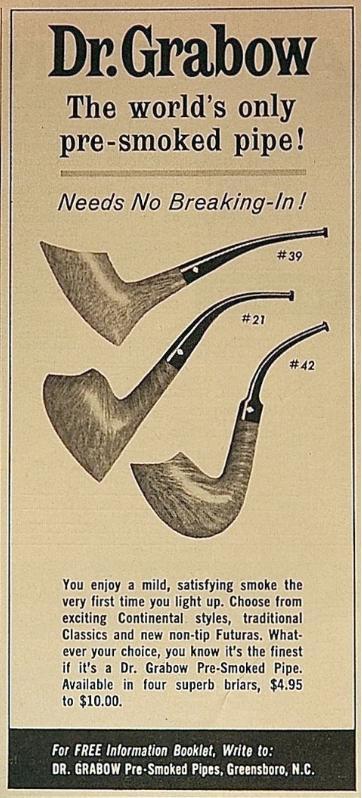
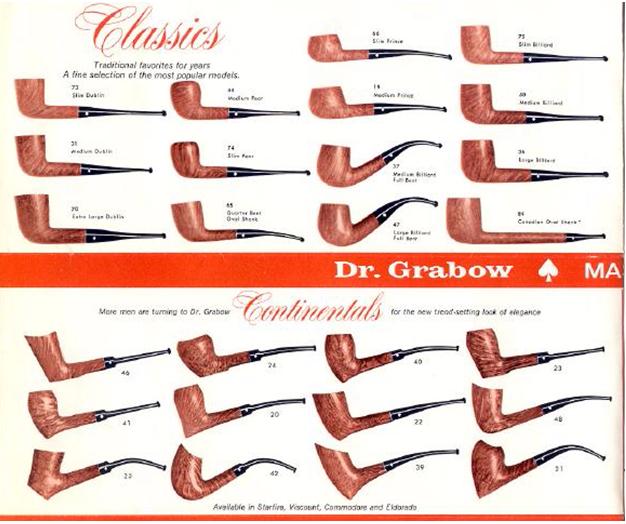
Cont7 Troy Wilburn sent me some catalogue photos of the Continental Line. There are some unique and interesting shapes. I thought you might enjoy seeing the photos.Cont8

Cont9

Cont10

Cont11 I did a light reaming of the bowl with a sharp pen knife being careful to keep it vertical and not damage the inner edge of the rim.Cont12 I scrubbed the bowl, shank and stem airway with pipe cleaners, cotton swabs and alcohol. These metal mortise inserts collect a lot of “gunk” behind them and it takes some work to remove all of the debris and oils from the shank.Cont13 I scrubbed down the exterior of the briar with isopropyl alcohol to remove the sticky areas and also the general grime that was built up on the bowl and shank.Cont14

Cont15

Cont16 I lightly sanded the stem with 220 grit sandpaper and also a medium and fine grit sanding sponge to loosen the oxidation. Then I dropped it in a bath of warm Oxy Clean to soften and bring the oxidation to the surface.Cont17

Cont18

Cont19 While the stem soaked I worked on the scratches and hatch work on the rim surface. It was not only dirty but it looked like someone had scraped off the tars with a knife and left a rough hatch pattern all over the surface of the rim. I sanded it with 220 grit sandpaper to remove the scratches and smooth it out once again. I then sanded it with a medium and a fine grit sanding sponge to reduce the scratches left behind by the sandpaper.Cont20

Cont21 I sanded the rim down with micromesh pads, wet sanding with 1500-2400 grit pads and then dry sanding with 3200-4000 grit pads. I wiped the bowl down with alcohol once more to remove the dust and sanding grit.Cont22

Cont23

Cont24

Cont25 Troy mentioned that these older Continentals were not stained but general just had a light oil coat on the natural briar. It appeared that this was true on this old pipe but the patina that had developed over the years since 1966-67 had darkened the briar. I used a medium brown stain pen to touch up the rim as it matched the patina exactly.Cont26 I took the stem out of the bath and dried it off with a coarse cotton cloth. The oxidation was greatly reduced and the stem was ready to work on.Cont27

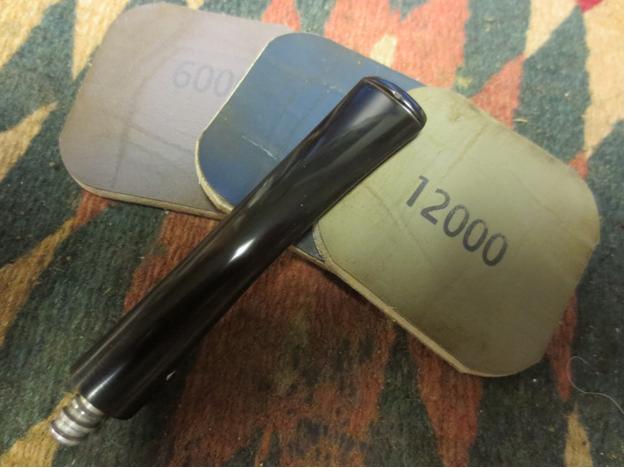
Cont28 I put a plastic washer between the stem and the shank and sanded the stem with 220 grit sandpaper and the sanding sponges to remove the hard to get oxidation at that point.Cont29 I took the stem off again and finished sanding with the sandpaper and sanding sponges.Cont30 Then it was time to work on the polish of the stem. I wet sanded with 1500-2400 grit micromesh sanding pads and then rubbed the stem down with Obsidian Oil. I dry sanded with 3200-4000 grit pads and repeated the oil. I finished with 6000-12000 grit pads, gave the stem a final coat of oil and when it dried buffed the stem with Blue Diamond on the wheel.Cont31

Cont32

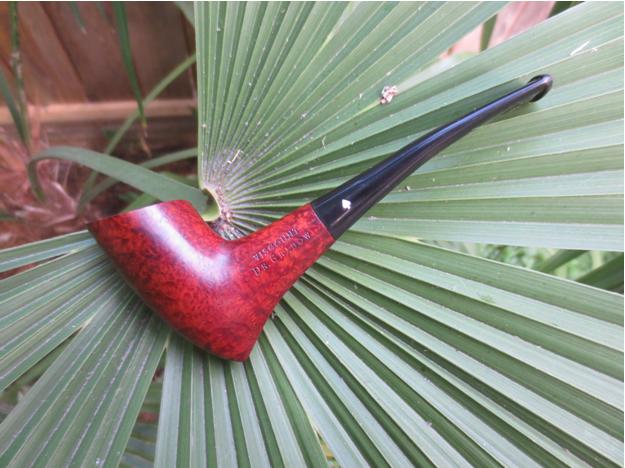
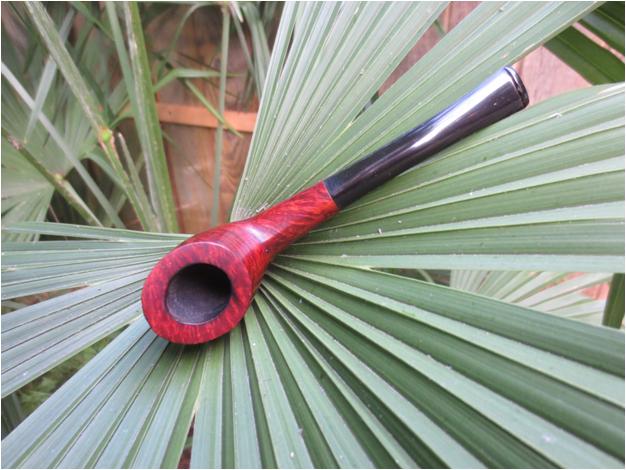
Cont33 I gave the entire pipe a light buff with Blue Diamond and then gave it multiple coats of carnauba wax. I buffed it with a clean flannel buff to raise the shine. I took it back to the work table and hand buffed it with a microfibre cloth to bring out a deeper shine. The finished pipe is shown in the photos below. It turned out to be a beautiful piece of briar and a unique looking pipe. The old briar is rich with colour and warmth.

I want to thank the Dr. Grabow Collectors Forum and Ted of that Forum for their help on this pipe. I also want to thank Troy for the catalogue pages and for sending me the spoon stinger to insert to completely finish the restoration of the Continental. Thanks for looking.Cont34

Cont35

Cont36

Cont37

Cont38

Cont39

Cont40

Cleaning up an LHS Sterncrest Lovat with a Bakelite Stem


Blog by Steve Laug

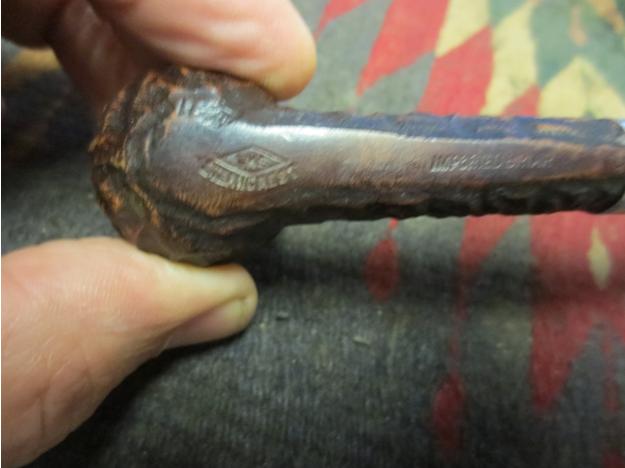
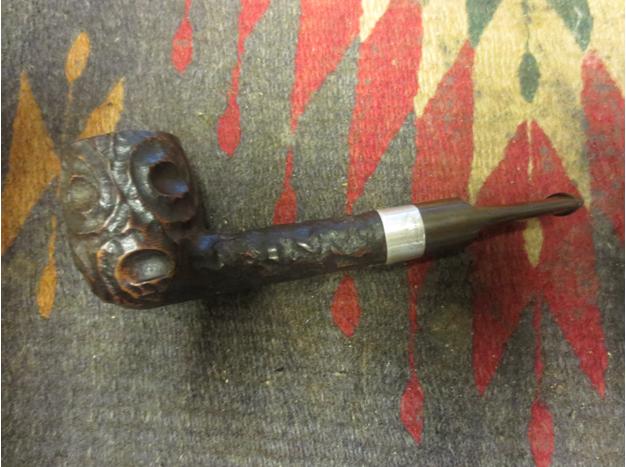
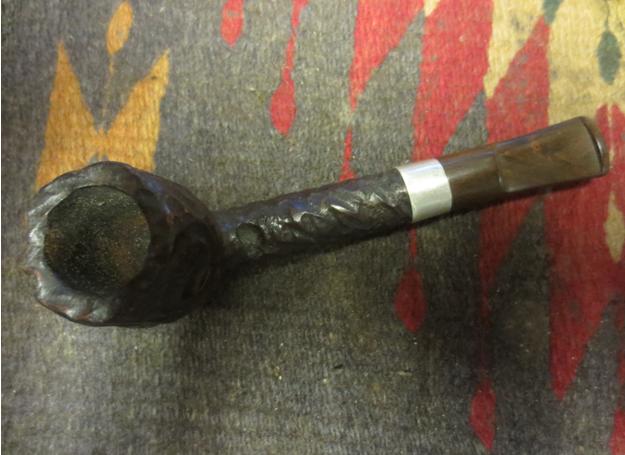
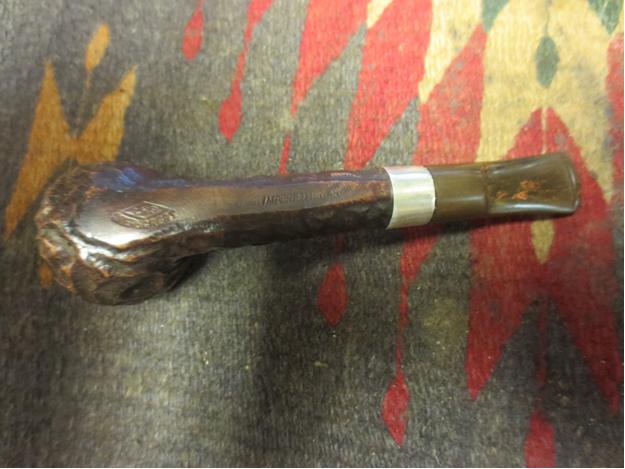
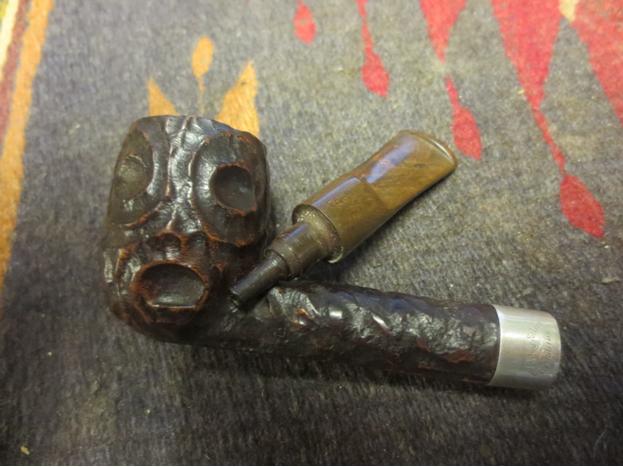
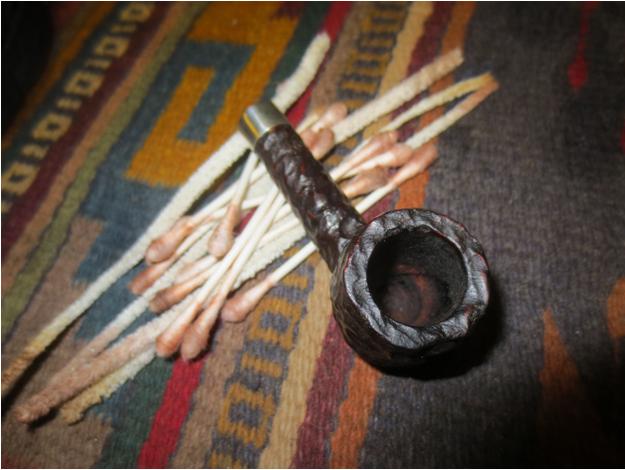
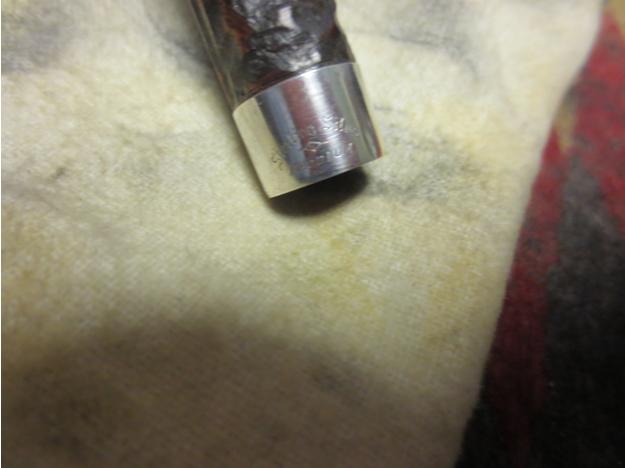
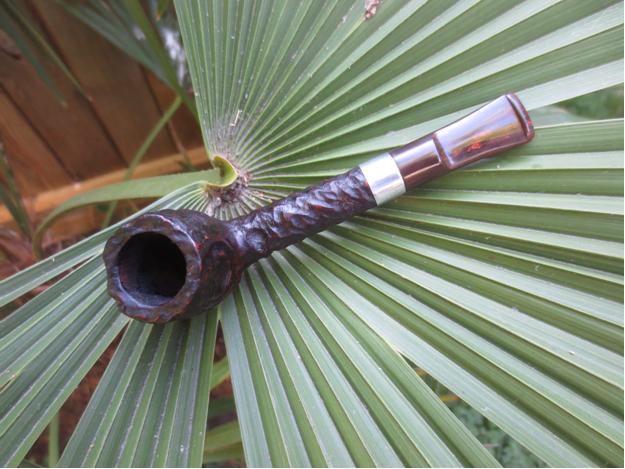
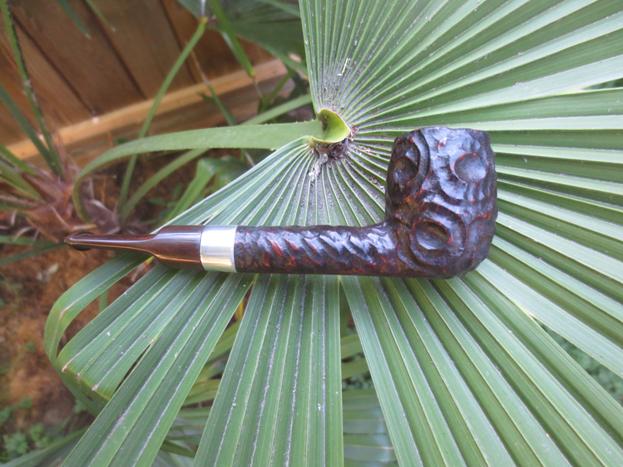
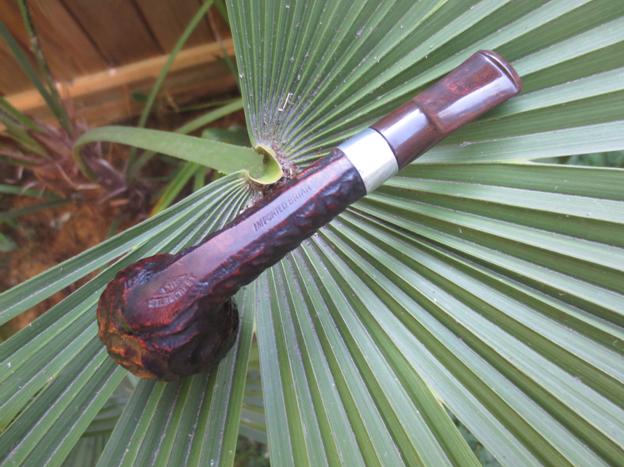
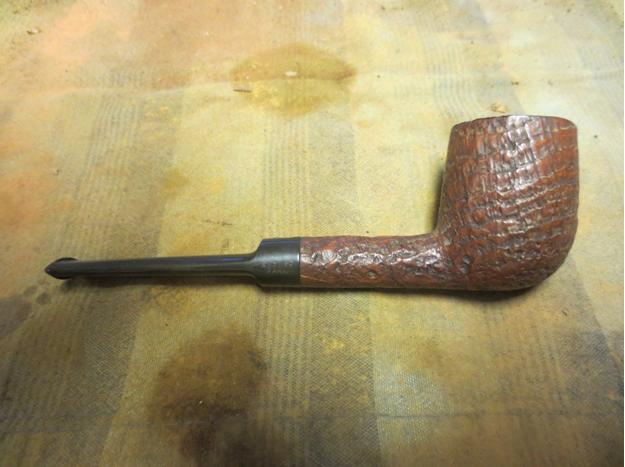
The next pipe on my work table is a little 4 ¾ inch Lovat with a rusticated finish and a two tone stain. The rustication looks like craters and swirls. Even the top of the bowl is rusticated.LHS14 The stem looked to be oxidized but once I worked on it I was in for a surprise. The band was stamped Sterling Silver arched over the LHS in a Diamond logo and under that was stamped Rhodium. The underside of the shank was flat and smooth and was stamped with the LHS in a Diamond logo with the word Sterncrest arched under the diamond. Toward the stem end of the shank it was stamped Imported Briar.LHS13

LHS9

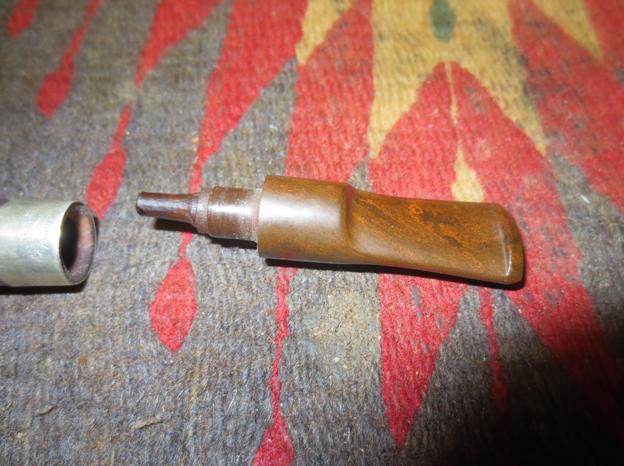
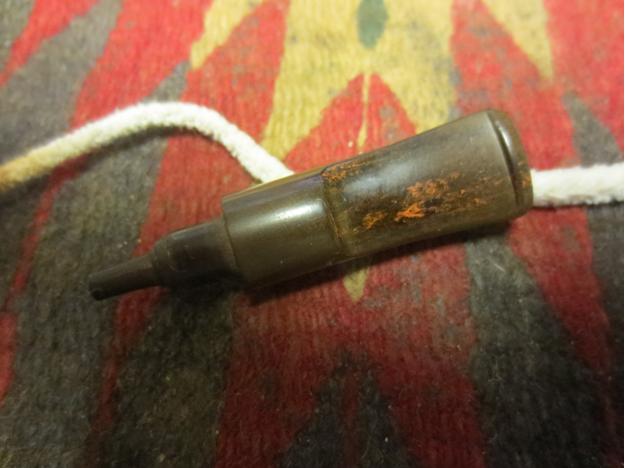
LHS10 As I looked at the stem more closely I could see swirls of red running through it and the material was a reddish brown colour. It had a similar appearance to Cumberland but was harder and heavier. The patterns in the swirls was not uniform at all and made me think of other things that I have around made of a similar looking material. This would become more clear when I cleaned up the stem.LHS11

LHS12 I took two close-up photos of the stem and the extension that was in the end of the tenon and extended into the bowl. It was an integral part of the stem and I was not able to remove it.LHS15

LHS16 Once I got this far in the process I wanted to know a bit more of the history of the brand. I was trying to find out when the pipe potentially was made. The stem had me fascinated. The extension tube in the tenon was different from any other LHS Sterncrest pipe that I had seen. All of the patent information I could find from the early 1900s through 1936 showed a more typical ball and point stinger apparatus. There was nothing to date this in the patent information. That combined with the unique stem material seen clearly in the photo above made me very curious about the pipe.

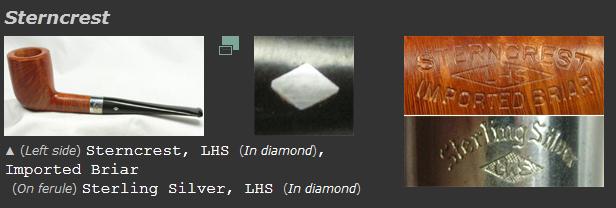
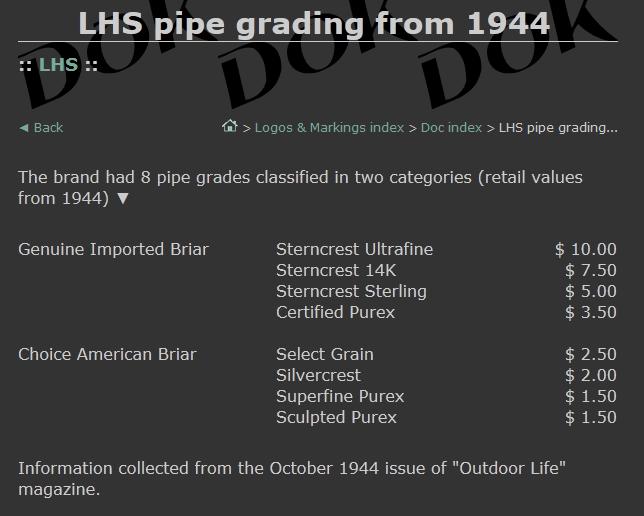
I looked on the PipePhil site which is a go to site for me when digging out information and I found some helpful material. Here is the link – http://www.pipephil.eu/logos/en/logo-lhs.html. The first item below is a copy of the photo from his site which gives some simple information. The Strencrest stem that I had did not have the inset silver diamond in the side on the top of the saddle. The stamping on the pipe was different as well. Mine was stamped LHS in a Diamond (like the one on the briar inset below) but STERNCREST was underneath the Diamond. Imported Briar was on the opposite end of the shank. The inset of the band is identical in terms of what is shown. The band on mine has one additional feature below the LHS diamond and that is the word RHODIUM.LHS1 I followed the links on the site and found the following grading guide from 1944 there as well. It lists the Sterncrest Sterling as the third highest grade of pipe. The issue for me is whether the pipe I have is a Sterling. It only bears the Sterncrest stamp and that does not appear on the chart below.LHS2 I read some more on the site and found that the L&H Stern Inc. was established by Ludwig Stern (1877-1942) in 1911. His brother Hugo (1872-?) acted as vice-president & secretary. The firm moved to 56 Pearl St. Brooklyn in 1920. It closed down in the 1960s. LHS was one of the main pipe suppliers for US soldiers during WWII. That was the short version of the information. With that I knew that my pipe was made between 1911 when the company opened and before the 1960’s when it closed.
I googled for more information to see if I could find company advertising that showed the pipe I was working on and gave more definitive information on the brand. I found the following quote that helped to fit the Sterncrest into the scheme of things. “LHS is L & H Stern Pipe Making Co. that was based out of Brooklyn N.Y. Their most common lines seem to have been their Sterncrest pipe models. The company made pipes from 1900-the 1950’s.”

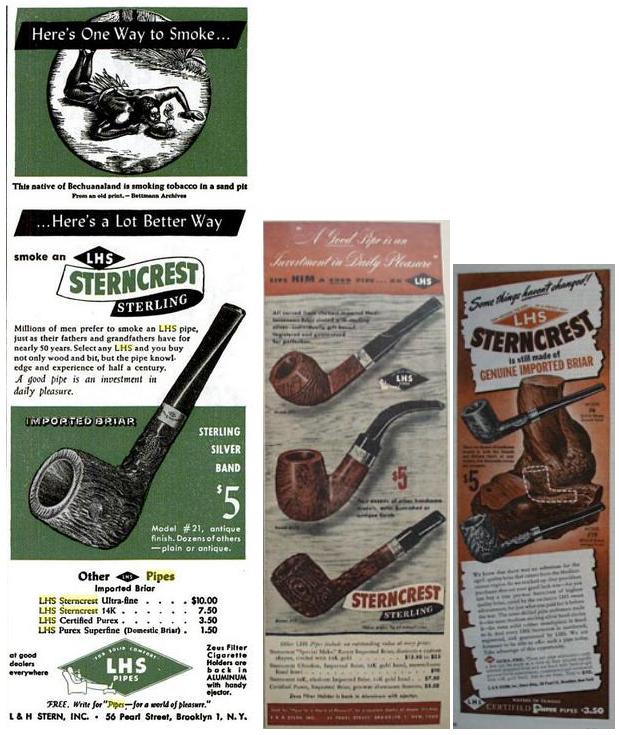
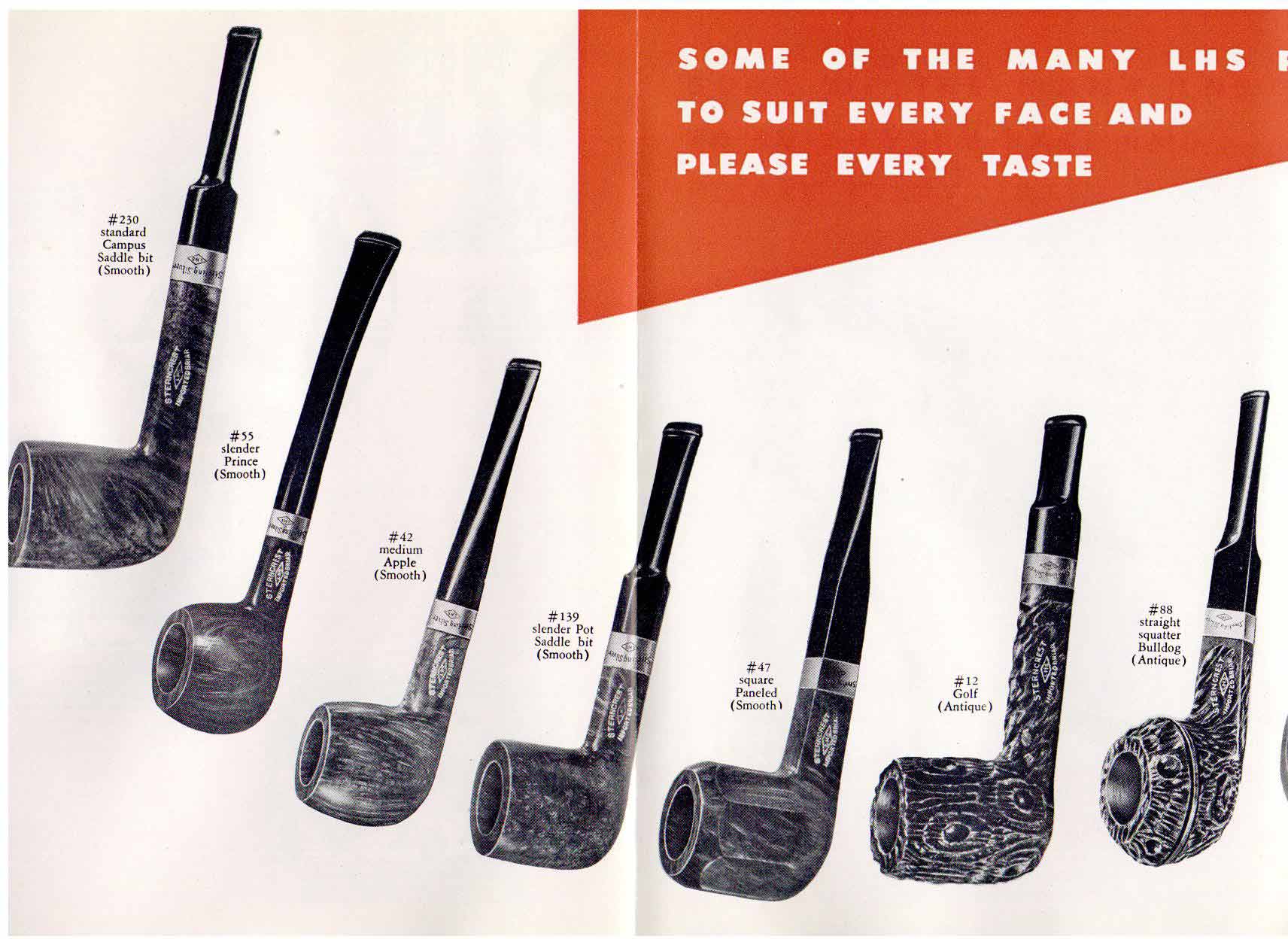
I also found some advertising which I have posted copies of here. Three of the magazine advertisements are shown below. All three show a similar pipe to the one that I have in hand. The rustication on mine is more crater like than tree bark like but the patterns are similar.LHS7 I have also included a page from a Sterncrest Catalogue from 1946 that shows the line and the second pipe from the right, the lovat is identical in shape to the one that I have. The rustication pattern in the picture is similar but also more tree bark like and the stamping is on the side of the shank rather than the underside.LHS8 Now I knew that the pipe I was working on came from a more narrow time period – 1910 to sometime in the 1940s. That was all the information I could readily find on the pipe. I was still left with a bit of a mystery that would become somewhat clearer as I cleaned up the pipe and stem.

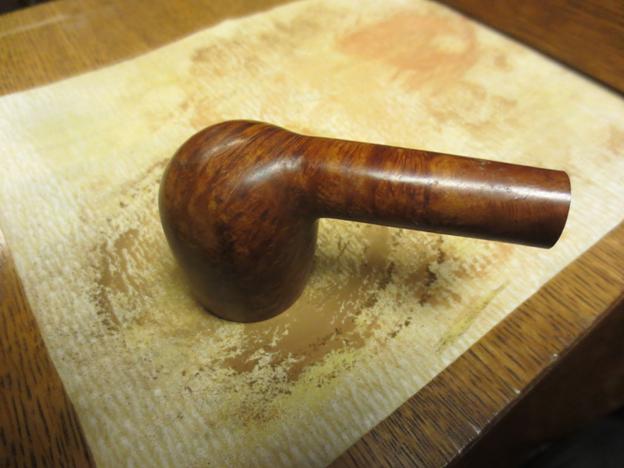
The pipe was lightly smoked and I was able to wipe out the dust and debris from the bowl quickly. The shank was dirty but what came out of the shank was not tobacco debris or tars but rather a red stain. The inside of the shank had some stain left in it. The bowl must have been dip stained when in the factory and the pipe had not been smoked enough to burn off the stain that was there. Obviously the previous owner never ran a pipe cleaner into the shank to find what I found in my clean up with alcohol, cotton swabs and pipe cleaners.LHS16a I also cleaned out the airway in the stem and tenon extension. I was careful as I did not want to chip or damage the extension. The more I worked with the stem the more I was beginning to get an idea of what the stem material was.LHS17 I worked on the stem with micromesh sanding pads. I wet sanded it with 1500-2400 grit pads and then rubbed it down with Obsidian Oil. I was uncertain whether the oil would be absorbed or not but either way it would give some teeth to the micromesh pads as I worked with them. I took photos of both sides of the stem to show the pattern that started to show up as I polished it.LHS19
LHS20 I dry sanded with 3200-4000 grit micromesh sanding pads to further polish the stem. I rubbed it down with Obsidian Oil once again.LHS22

LHS23 The more I polished the stem the more clear it became what the material I was working with was. I dry sanded with the final three grits of micromesh and then buffed the stem with Blue Diamond polish before giving it a final coat of oil. Once the oil dried I buffed it with some carnauba wax and then with a clean flannel buff before giving it a final hand buff with a microfibre cloth.LHS24 Once I finished polishing the stem I knew without a shadow of a doubt that the stem was made of Bakelite. It was exactly like several of the Bakelite tobacciana items that I have collected. The mottled brown and red look of the polished stem proved it to me.

I decided to do a bit of research on Bakelite to both make certain I was working with that and to see if I could narrow the date for this pipe down even further. I am including some of the information that I found in my search.

From the New World Encyclopedia online I got some basic information on the material. Here is the link if you want to see the original source. http://www.newworldencyclopedia.org/entry/Bakelite

I found that Bakelite is a material based on a thermosetting phenol formaldehyde resin developed in 1907–1909, by the Belgian-American chemist Leo Baekeland. It was the first plastic made from synthetic components. It was used for its electrically nonconductive and heat-resistant properties in radio and telephone casings and electrical insulators, and was also used in such diverse products as kitchenware, jewelry, pipe stems, and children’s toys…

Bakelite is a phenol formaldehyde resin with the chemical name polyoxybenzyl methylene glycol anhydride. It was formed by the reaction under heat and pressure of phenol, a toxic, colorless crystalline solid, and formaldehyde, a simple organic compound, generally with wood flour filler. The combination of the mixture with the wood flour makes the material hard and dense.

The company, The Bakelite Corporations was formed, in 1922, from the consolidation of three companies: the General Bakelite Co., the Condensite Corp. and the Redmanol Chemical Products Company, an early plastics manufacturer formed in 1913, by chemist L.H. Baekeland. The American Catalin Corporation acquired the Bakelite formulas, in 1927, and currently manufactures Bakelite cast resins.

Bakelite Limited was formed, in 1926, from the amalgamation of three suppliers of phenol formaldehyde materials: The Damard Lacquer Company Limited of Birmingham, Mouldensite Limited of Darley Dale, and Redmanol Chemical Products Company of London. Around 1928, a new factory opened in Tyseley, Birmingham, England. (The building was demolished in 1998.) The company was acquired by the Union Carbide and Carbon Corporation in 1939.

From the Wikipedia I found out more information. Here is the link for the source should you want to read more. I have included a few clips from that source. https://en.wikipedia.org/wiki/Bakelite

Bakelite is not extensively used for general consumer products any more, due to the cost and complexity of production and its brittle nature. However, it was used in the past in myriad applications, such as saxophone mouthpieces, cameras, solid-body electric guitars, rotary-dial telephones, early machine guns, and appliance casings. It was at one point considered for the manufacture of coins, due to a shortage of traditional manufacturing material.

An exception to the overall decline is the use in small, precision-shaped components where their specific properties are required, such as molded disc brake cylinders, saucepan handles, electrical plugs and switches, and electrical iron parts. Today, Bakelite-type materials are manufactured and produced in the form of sheets, rods and tubes for many industrial applications in the electronics, power generation, and aerospace industries, and under a variety of commercial brand names.

Many companies stopped using Bakelite in the early 1940s as the need for World War II related products took hold. By the end of the War, new technologies in the world of plastics had made Bakelite obsolete.

A final source of information I found was on jewelry specifically but the dates coincide with the information above and help narrow the dates for my pipe stem.

The source is as follows: http://www.teeda.com/history-of-bakelite-jewelry.html

The height of Bakelite jewelry was the late 1930s, up until the end of the Art Deco period. The designs were quite popular in mass merchandise stores such as Sears and Roebuck. However there were also some famous names working with the material and creating Bakelite jewelry including Chanel and Van Cleef and Arpel. Oddly enough Bakeland allowed the patent to expire and the Catalin Corporation bought it. They began creating their own Bakelite jewelry marketed as Bakelite-Catalin. The pieces were sold in both expensive stores like Saks Fifth Avenue and smaller stores such as Woolworth’s.

Bakelite jewelry was available in a variety of colors, but brown, green, red, and white were the most popular color choices. Over time though, exposure to the light and particles in the air have caused many of these colors to change. A good example is a bracelet that was once white, but now looks pale brown in color.

Given the information on Bakelite I think I can safely narrow down the date on the stem to between 1930-1949 when the war ended. That may be as close as I can get to pinning down a date on the pipe unless someone who knows a bit more of the history of LH Stern can be more specific regarding the apparatus at the end of the tenon.

I returned to finishing up my work on the pipe. With the stem completed, I polished the stem with a silver polishing cloth and was able to remove all of the oxidation and give the silver band a sheen that looked like new.LHS18 I rubbed down the bowl and shank with Halcyon II wax and then buffed it with a shoe brush and then with the microfibre cloth to raise the shine. The finished pipe is shown in the photos below. It is ready to load up and smoke a bowl. It will probably be the first bowl that has been run through the pipe since the end of the war. I am looking forward to reintroducing the pipe to a nice bowl of Virginia or Virginia Perique. It is so light weight that it should be a great smoking pipe.LHS25

LHS26

LHS27

LHS28

LHS29

LHS30 Thanks for looking.

The Pipe of the Baskerville


Guest Blog by Robert M. Boughton
Member, North American Society of Pipe Collectors
http://www.naspc.org
http://www.roadrunnerpipes.com
http://about.me/boughtonrobert
Photos © the Author

“There is nothing more stimulating than a case where everything goes against you.”
― Sir Arthur Ignatius Conan Doyle (1859-1930), Scottish author, in “The Hound of the Baskervilles,” 1902

INTRODUCTION
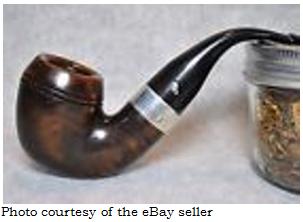
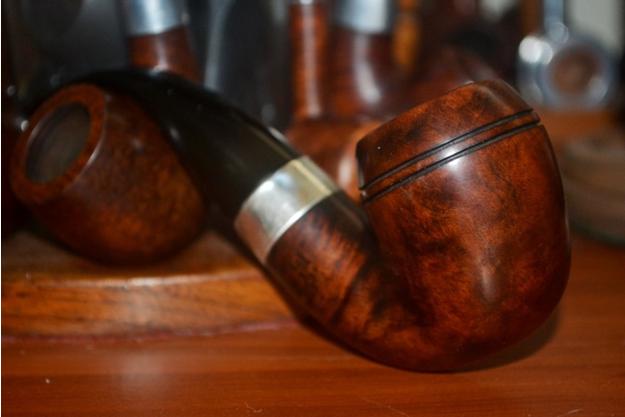
The first time I had occasion to suspect some force was working against me on the subject of this essay, restoring a Peterson’s Sherlock Holmes Baskerville smooth, was my belief that the pipe offered for sale was, in fact, not authentic. The discovery that my fear was misplaced was, of course, a happy relief and led me to purchase the distinctive Hungarian shaped model from an eBay seller. The desired confirmation was the result of an email I sent to Peterson’s of Dublin doubting the legitimacy of the pipe shown due to the absence of the Baskerville name on the nomenclature. In every other respect – its overall appearance, apparent beauty and shape – the pipe seemed right, but these days any online buyer cannot be too careful. I included in my query a link to the eBay listing and soon received the following reply from a gentleman named Glen:

“I can tell you this is a genuine item. It has discoloured due to smoking over the years and there are variations on stampings throughout the years of the lines.”

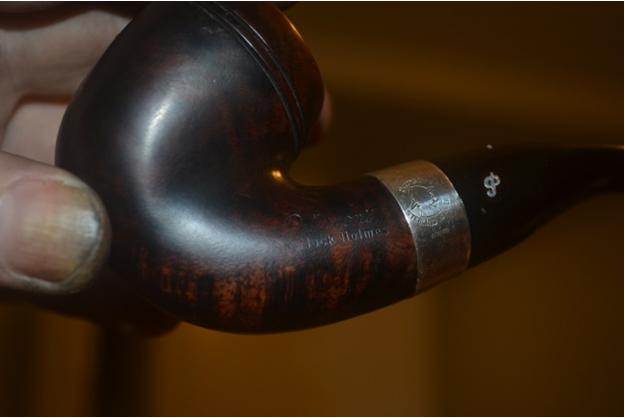
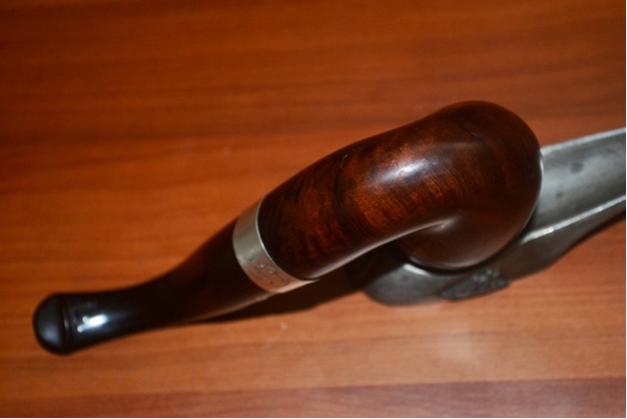
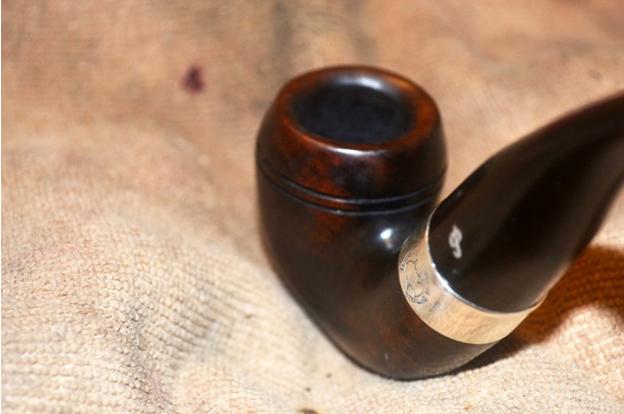
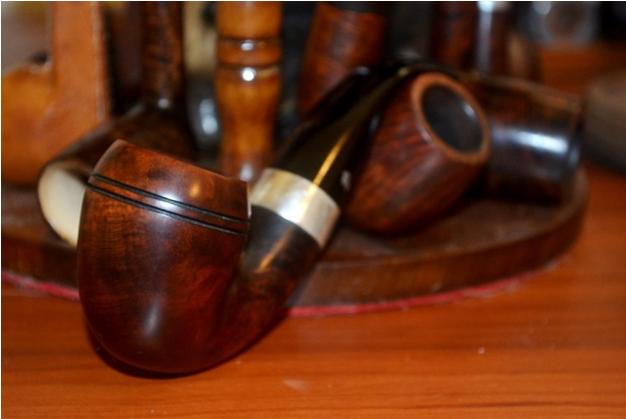
This brings me to my conclusion that the pipe I bought is from the original Sherlock Holmes Collection in 1987. Later issues tend to include the more common stamping of Peterson’s of Dublin/Sherlock Holmes/Baskerville, while mine is abbreviated to Peterson’s/Sherlock Holmes. The newer designs also have the inset sterling band, while the shape of my older Baskerville is smooth and uniform up the shank leading to the bit.

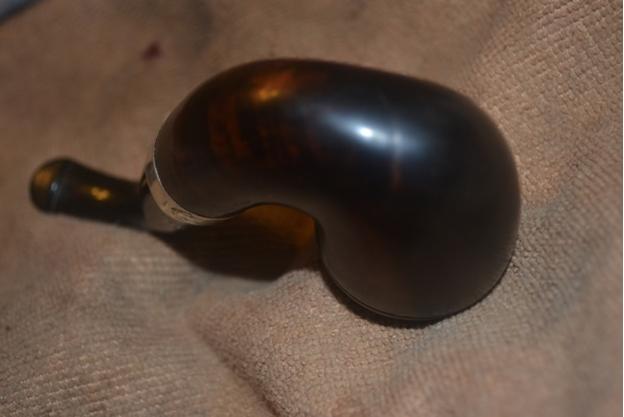
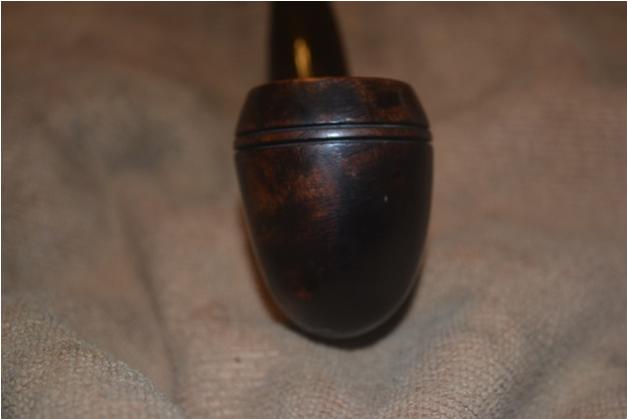
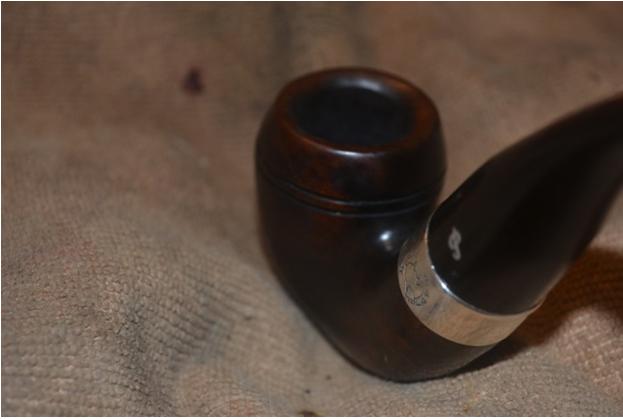
Pete1The other problems I faced with the restoration will be discussed in the order of their occurrences.

The Baskerville makes the second pipe from the several Peterson’s Sherlock Holmes series I have so far acquired. I expect someday to own the entire collection, in all of the other finishes that include the same number of rustics/sandblasts and eight ebony versions, not to mention one variety that really revs my engine. But that can wait. Here is my other SH pipe.Pete2 A great fan of the riveting published adventures of the brilliant if fictional mystery sleuth, I never tire of re-reading them or watching the various movie and TV adaptations, in particular the BBCs recent modern-day “Sherlock” with Benedict Cumberbatch in the title role. And as I noted in a previous blog, Holmes, despite the myth born of generations of portrayals by many talented if misled actors, did not smoke a gourd calabash or churchwarden. The most common type or shape of pipe mentioned by his loyal chronicler, in fact, is cherry wood (with six references). See https://www.gutenberg.org/files/1661/1661-h/1661-h.htm – or better yet, re-visit the stories themselves – for details.

I came across some curious similarities in the life of the celebrated creator of Mr. Sherlock Holmes of 221B Baker Street in London and the crime solver himself. Despite early stabs at writing, one of which was published, Doyle surprised his family by deciding to pursue a degree in medicine, which he received from the University of Edinburgh in 1881. [http://www.biography.com/people/arthur-conan-doyle-9278600#synopsis]

At least two real persons, both medical doctors contributed to Doyle’s ultimate creation of Sherlock Holmes: one of his professors and mentor, Dr. Joseph Bell, a renowned forensic scientist, had keen powers of observation, and Dr. Henry Littlejohn, a surgeon of police who for almost half a century consulted with Edinburgh police on medical issues related to crimes, both later contributed to Doyle’s unique detective character. [http://www.todayifoundout.com/index.php/2014/04/real-life-sherlock-holmes/]

After Doyle completed his third year of medical school, he signed on a ship’s surgeon for a vessel bound for the arctic circle. This experience gave him a zest for adventure.

And then there is the Watson connection. Not only was Watson a physician, but take a look at this photo of the author himself and compare the likeness.Pete3 RESTORATION
These photos of the Baskerville as I received it show how the picture in the eBay listing was a bit forgiving of the effects of age and smoking on the pipe, as noted by Glen from Peterson’s.Pete4

Pete5

Pete6

Pete7

Pete8

Pete9

Pete10

Pete11 Here, in brief, is where everything truly began to go against me, although I might state the process that unfolded with greater accuracy and brevity as being my own fault, pure and simple. I actually reached the end of a full “restoration” and took what I thought would be the photos of the finished pipe when, upon closer scrutiny, I noted with a sick feeling in my heart and gut that the Baskerville was not up to my standards, even though I knew I was not about to offer this potential beauty for sale. One-dimensional pictures tend to reveal the flaws with unforgiving accuracy. Check out these two angles alone, which are representative of the whole as it was.Pete12

Pete13 For the most part, I’ll leave the criticism to the readers, but I will point out the most noticeable flaws, including unfixed scratches and other blemishes, not to mention the awful look of the chamber in the first photo above. Most disturbing to me was my failure to remove certain black areas caused, as noted before, by age and use, as well as the general lack of discernible graining I had intended to enhance.

And so, as the traditional children’s song goes, “Finnegan, begin again.”

Removing the newly-applied waxes and stain, this time with 500-grit paper for a slow, gentle approach, proved much easier and faster than the far more laborious work I did the first time around. I only had to focus on the unresolved scratches and black areas. The paper alone was perfect for the small but pervasive scratches and a good deal of the blackened briar.Pete14

Pete15

Pete16

Pete17

Pete18

Pete19 The dark patches were the most difficult to remove, and when I reached the point where the sandpaper wasn’t up to the task, I finished with the finest grade steel wool. This part required considerable effort around the bottom, front and back of the bowl as well as the shank, but it worked. At last, the wood was the right shade and with no more serious dark spots.

Having enjoyed a few bowls of tobacco in the Baskerville (well, more than a few), I sanded out the small amount of carbon with 320 paper and retorted the pipe once more. Then I stained the outer wood with Fiebing’s Brown and flamed it.Pete20 I took off the char with 4000 micromesh and buffed from 1500-4000.Pete21

Pete22

Pete23

Pete24

Pete25

Pete26 The stem, almost perfect, only wanted gentle micro-meshing in a few spots, with 3200 and 4000. I buffed it with red Tripoli and then again on the clean wheel. I buffed the bowl and shank with white Tripoli, White Diamond and carnauba.Pete27

Pete28

Pete29

Pete30

Pete31

Pete32

Pete33

Pete34 But remember how I was describing how everything turned against me, only it was really my own fault? Well, then, that brings me to the final error: one I have learned to avoid so often in the past but this time spaced until it was a single stroke too late. In my enthusiastic sanding with the 500-grit paper, I took off a little of the Peterson’s/Sherlock Holmes stamps – not all, but part.Pete35

Pete36 CONCLUSION
For this blog, I attempted considerable research into the various Peterson’s Sherlock Holmes pipe series. I use the word various because of the three main groups that are commonly known to connoisseurs of the great Irish pipe company established in Dublin in 1865: the Sherlock Holmes Original Collection (with the word Original added only after the decision to add another and then a so-called final series was made), the Return of Sherlock Holmes Collection and the Adventures of Sherlock Holmes Collection. My goal was not only to identify the differences in the several lines’ designs and names but to determine the date(s) of manufacture. Despite my previous knowledge of the incredible difficulty of dating pipes in general and Peterson’s in particular, I thought these tasks would be easier than usual. I have almost never been more mistaken.

Starting at the source, so to speak – in this case, http://www.peterson.ie/CatalogueCOMP.pdf – I found, on pages 10-13 of the catalogue, listings for the first two collections, but nothing concerning the Adventures pipes. And although this catalogue did give the date of the SH Original Collection as “First produced in 1987 to honour the most famous character in fiction, Sherlock Holmes,” the term “first produced in” was vague. Well, for this small amount of help I was grateful, although almost every other website on the subject repeated the same general year. Also, I am sure that no matter how popular Sir Arthur’s brilliant mystery sleuth may be, the notion that Mr. Holmes deserves the high place in all of literature that Peterson’s bestows upon him would be readily accepted by Holmes himself were he real and alive but hotly debated in scholarly circles.

Furthermore, the official Peterson’s catalogue showed only the smooth versions of that series with a note that the series was of seven pipes, one for each day of the wee, with shapes “most favoured by Holmes.” [Again, see my proof of the erroneous nature of this claim above.] Almost as an afterthought, the catalogue reveals that all of the smooth designs shown are also available in rustic, sandblast and ebony versions, and a gold band can be substituted for the sterling silver.

As for the Return of Sherlock Holmes Collection, no date(s) of manufacture is given, and Peterson’s again shows only the smooth versions and notes the availability of gold bands but makes no reference to the same alternative rustic, sandblast and ebony versions. But it does mention and show these a couple of pages down.

The greatest surprises are the absence of the Adventures of Sherlock Holmes Collection altogether but the inclusion of beautiful pure white, sterling banded Sherlock Holmes Meerschaums in the same designs as the Original Collection, but again undated.

Therefore, searching far and wide for a list of the Adventures of SH Collection, I came across another Peterson’s of Dublin site showing the seven newest designs, mixed among smooth, rustic and sandblast. [http://www.peterson.ie/c/164/adventures-of-sherlock-holmes] Again, no date(s).

Finally, as a last measure before finishing this blog, I thought of the obvious and Googled “dating peterson sherlock holmes pipes.” I was rewarded with a site [http://thepetersoncollector.blogspot.com/2010/07/welcome-to-my-new-blog.html] providing almost all of the hard-sought data:

Sherlock Holmes Original Collection 1987-c. 1989
Return of Sherlock Holmes Collection c. 1991
Sherlock Holmes Meerschaums 2006

And so, would anyone out there who knows when the Adventures of Sherlock Holmes Collection came to be please reply to this blog with the coveted information…and if possible, a URL to verify it?

Sure as there be five-leaf clovers, I will sleep better having read the end of the mystery.

Crafting another Frankenpipe – one plus one equals three


Blog by Steve Laug

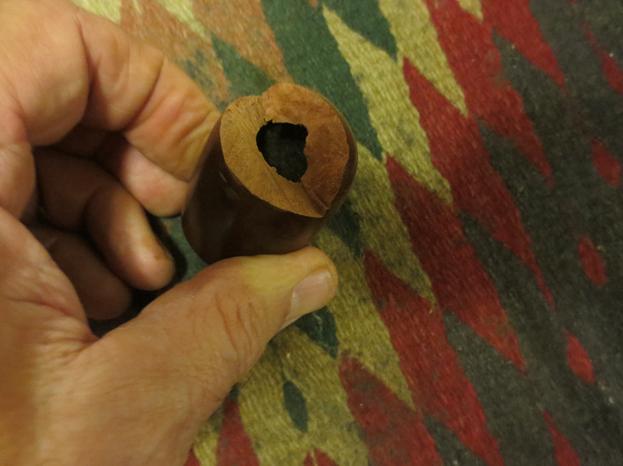
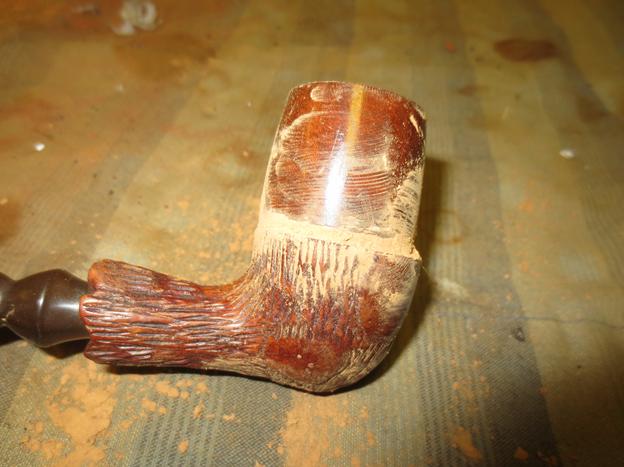
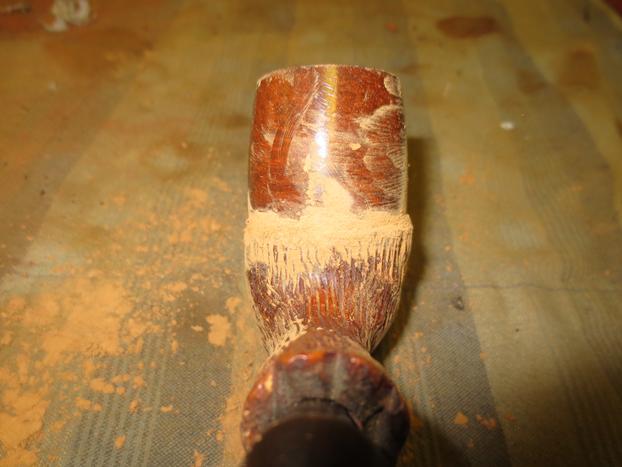
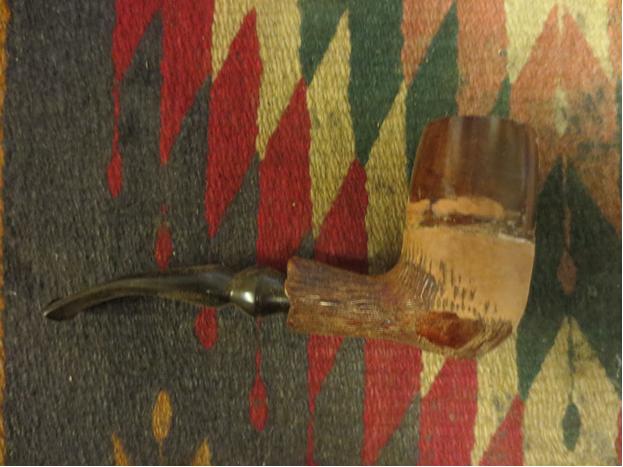
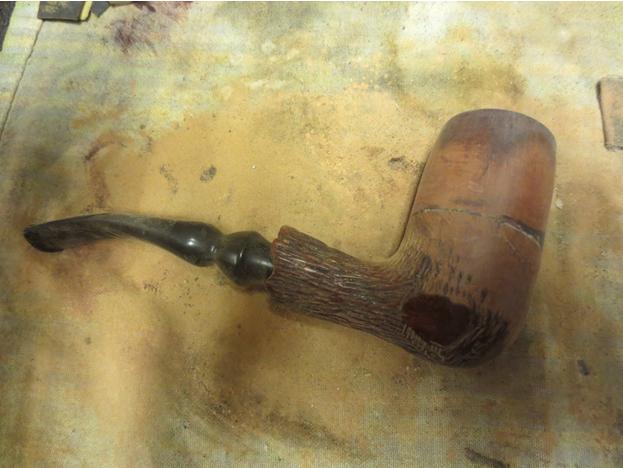
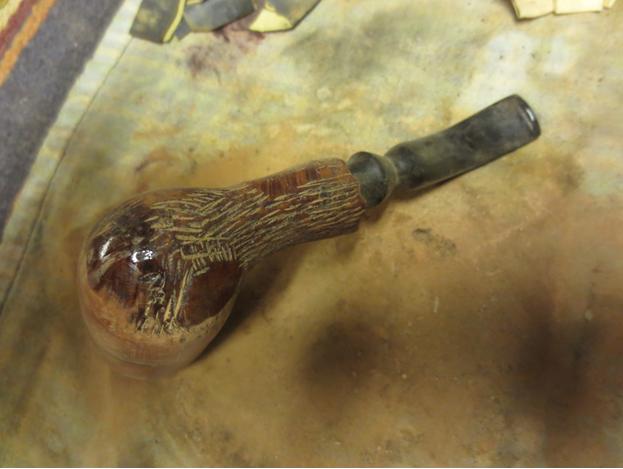
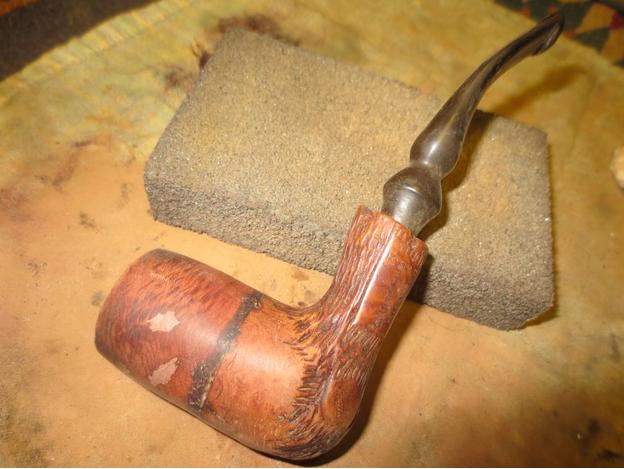
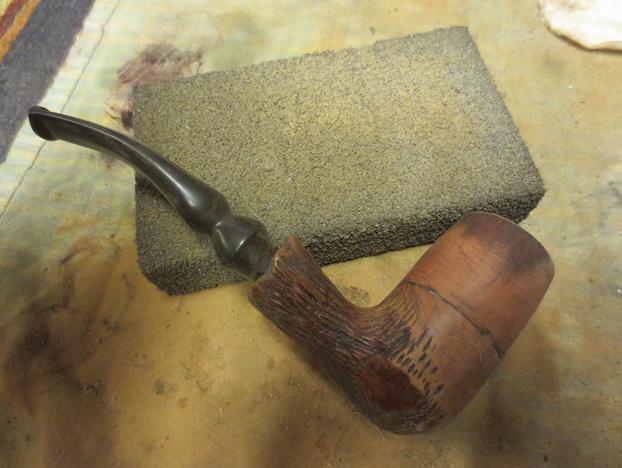
I have wanted to do some more experimenting and learning new ways of doing things for a while now. That is why I love refurbishing, there is always something new to learn. I was sent some pipes as a gift to either scrap out or clean up. In this lot was an Israeli Anderson freehand pipe. The bowl had been cut off and what was left was not much different from a Falcon base. There was no way it would hold any tobacco that would even make it worth smoking and it was in pretty rough shape. The stem was great the base was solid but the finish was done. I also had a pipe that I had cut the shank off of and repurpose on another project so the bowl was left. It had a lot of large fills on the side that were full of pink putty. I thought maybe with a little imagination I could join the two parts together and get a workable pipe. Let’s see what I can do with the parts.Franken1
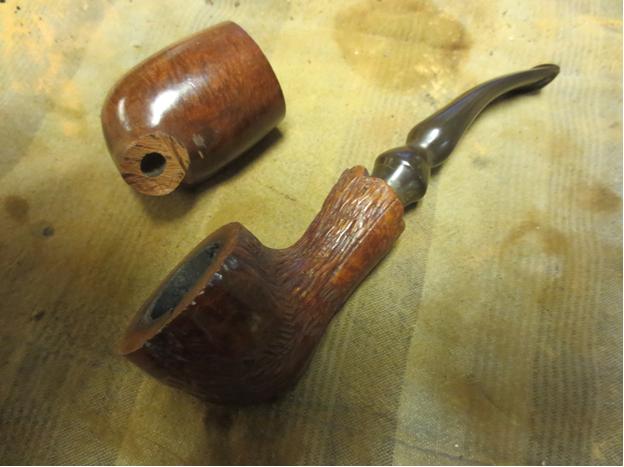
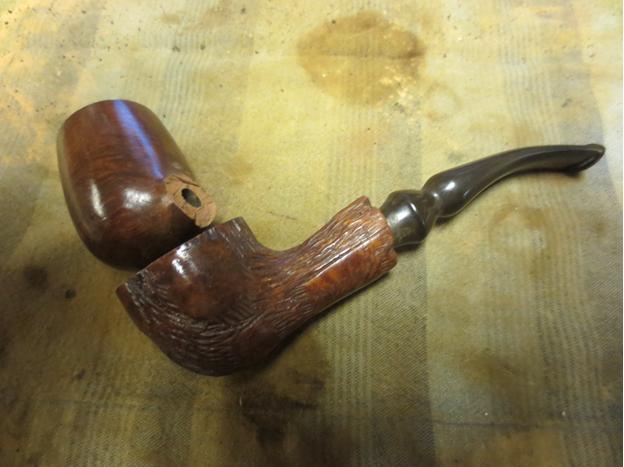
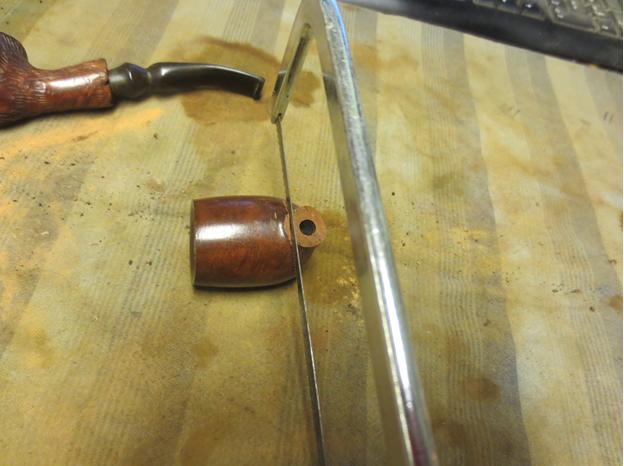
Franken2 I don’t have a table saw or a band saw so any kind of cutting briar needs to be done by hand. In this case I used a hacksaw to cut the bottom of the bowl off so that I could splice the bowl and the base together. I figured it would work and I might get a half way decent pipe out of the blend.Franken3

Franken4

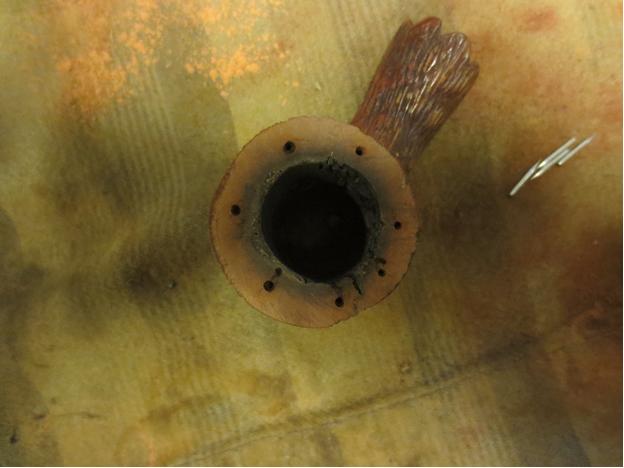
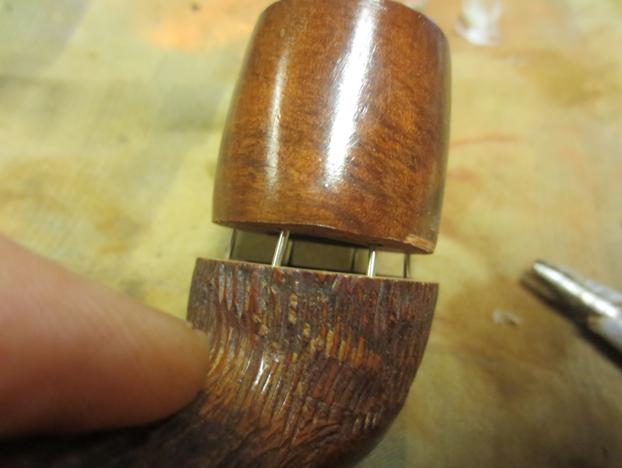
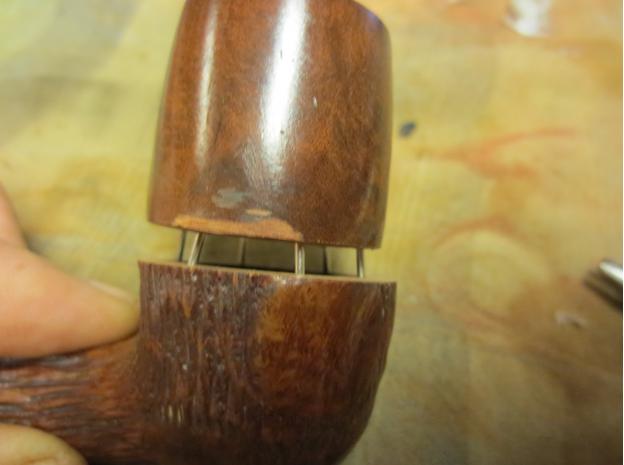
Franken5 I used a small drill bit to place six small holes around the base and the bowl. I stabilized the small cracks with wood glue and briar dust. I planned on putting a bowl coating on the interior so I was not too concerned with the walls of the base. I had some small stainless steel pins that I had found that would work well to join the two parts together.Franken6 I inserted the pins in the holes in the base and glued them in place. When the glue had set I put glue on the top of the base and the bottom of the bowl portion and set it on the pins as well.Franken7

Franken8 I pressed the bowl onto the pins in the base until the two surfaces connected. I clamped it in place until the glue dried. Once it was dry I put a ring of super glue around the joint on the two and pressed briar dust into the remaining crevices in the joint.Franken9

Franken10

Franken11

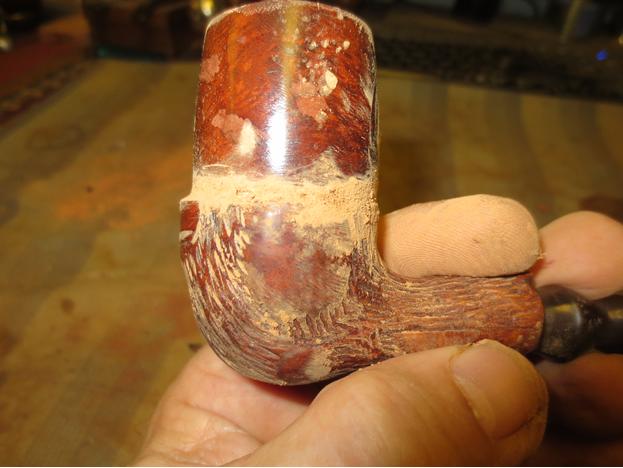
Franken12 I used a Dremel and sanding drum to remove the excess briar on the front of the base and bring it into alignment with the bowl. I did the same on the sides and back of the bowl.Franken13

Franken14

Franken15

Franken16 I sanded the bowl and base union with a medium grit emery paper and then with 180 grit sandpaper to smooth out the surface of the two parts and to work on making the junction smooth between the two. I followed that by sanding it with 220 grit sandpaper to further smooth out the walls of the new pipe. The photos below show the new “Stack” that had been fashioned from the two parts – one plus one did in this case render a third.Franken17

Franken18

Franken19

Franken20 I sanded the exterior of the bowl and base with a coarse grit sanding block and then with a medium grit block. The photos below show the state of the bowl after much sanding with the blocks. The surface of the bowl and base junction is smooth to touch. The large fills on the side of the bowl and the dark ring of the glue and briar dust patch around the middle were going to take some work to make them “disappear”.Franken21

Franken22

Franken23

Franken24 I sanded the bowl with a fine grit sanding sponge to further smooth things out while I decide on how to proceed next with the finish on the bowl.Franken25

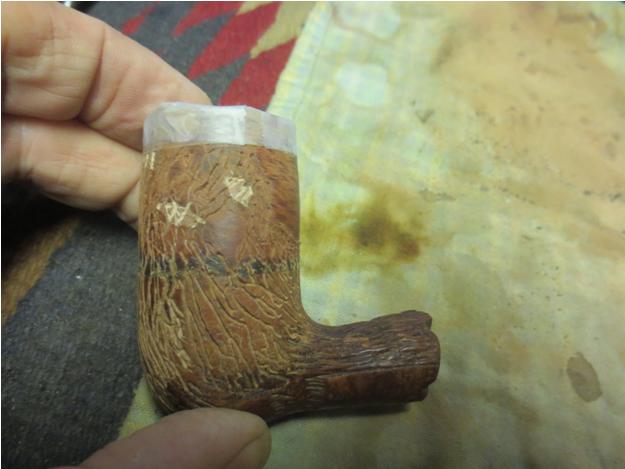
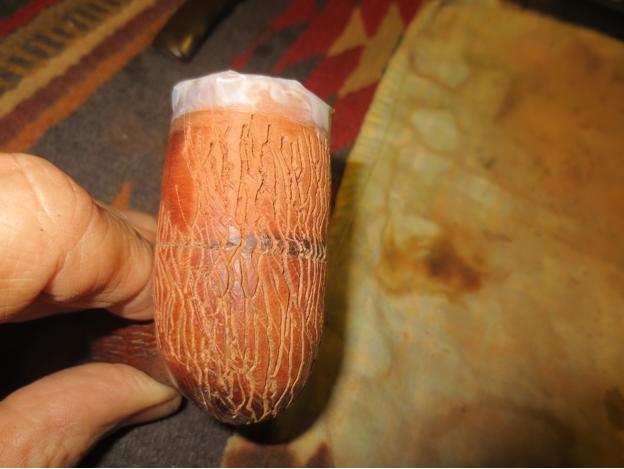
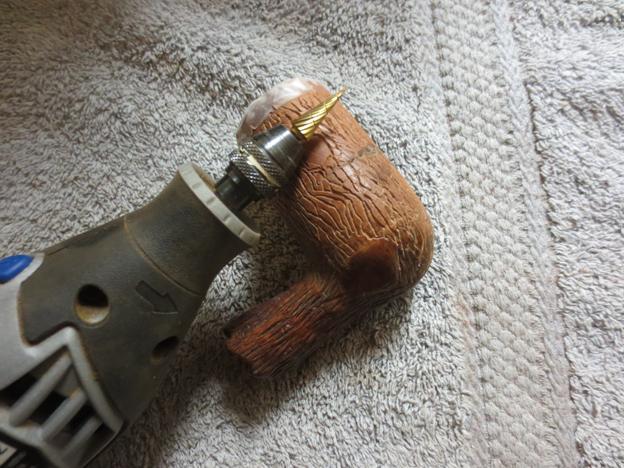
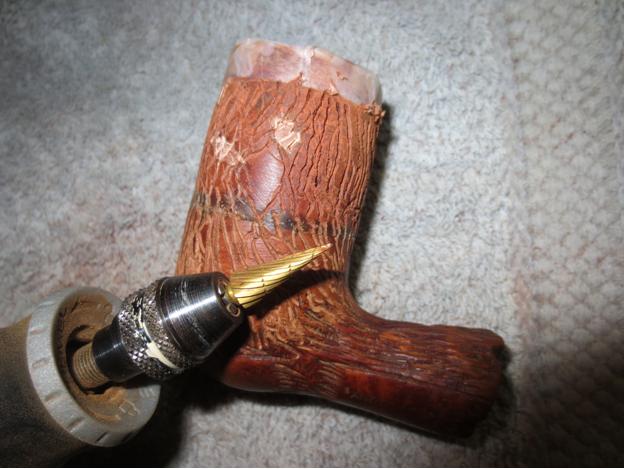
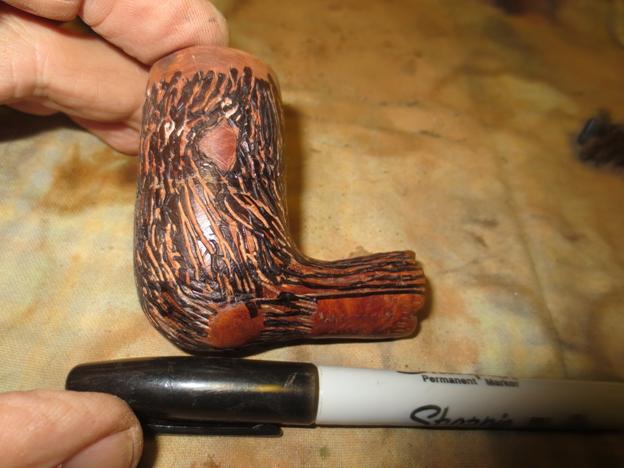
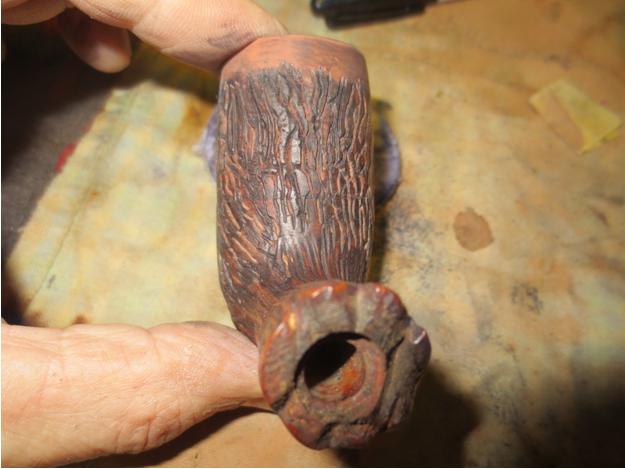
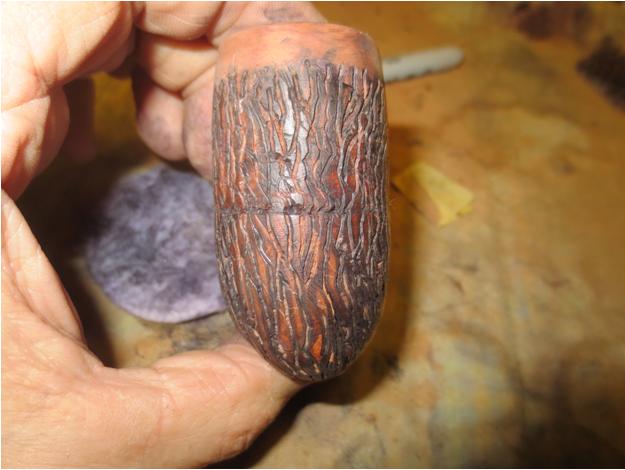
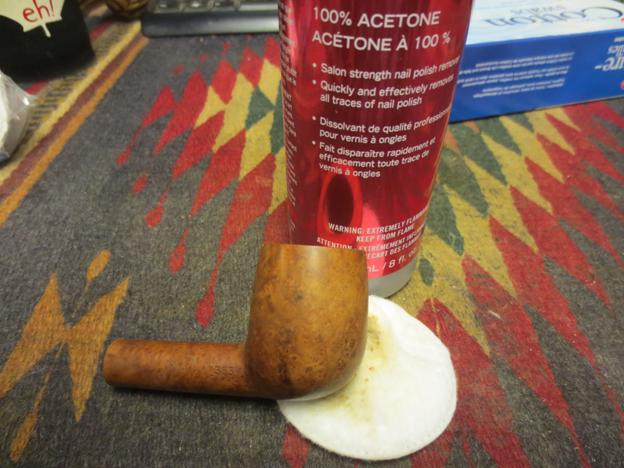
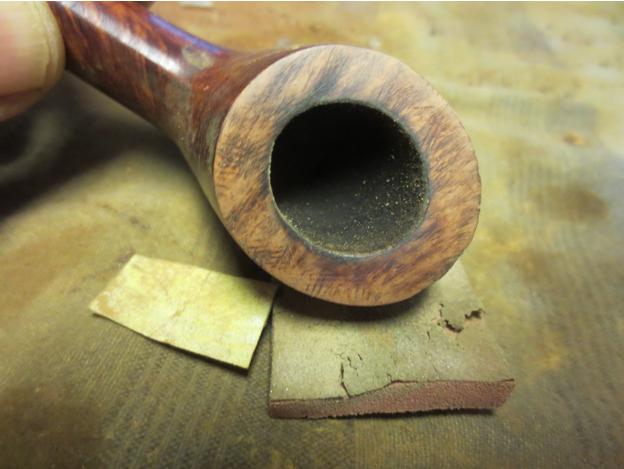
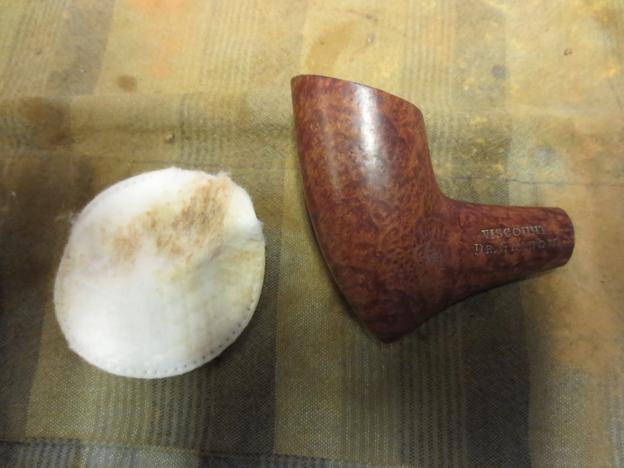
Franken26 The internal junction of the bowl and base needed some work as well. The bowl I had used was slightly conical on the base so the internal walls came in at an angle. The base walls were straight. I needed to sand the joint from the inside to smooth out the junction. I used the Dremel and the sanding drum to smooth out the junction. I proceeded slowly and carefully and was able to smooth out the walls. The photo below shows the inside of the bowl after the first work over with the Dremel and sanding drum. More needs to be done but you can see the progress.Franken27 When I got back from the office I decided to rusticate the new bowl with the same tree bark rustication pattern that the Anderson Freehand had. I used a pointed dental burr with striations through the shape of the cone. I held it like a pencil and worked on the surface of the briar. I followed the pattern on the lower portion of the pipe and worked to match it and continue it to the top of the rim.Franken28

Franken29

Franken30 As I got closer to the top of the bowl I wrapped the edge with several layers of cellophane tape and folded it over the rim as well. I continued to use the burr until I had carried the pattern all the way to the edge of the tape. The original bowl also had some smooth spots in the midst of the rustication. These looked like the ends of cut off branches. I put several of them on the sides of the new bowl as well to match the lower portion.Franken31

Franken32 The next two photos show the conical burr that I used for the rustication pattern.Franken33

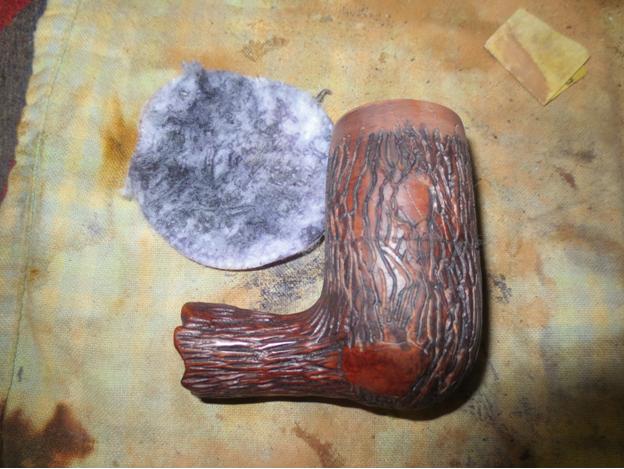
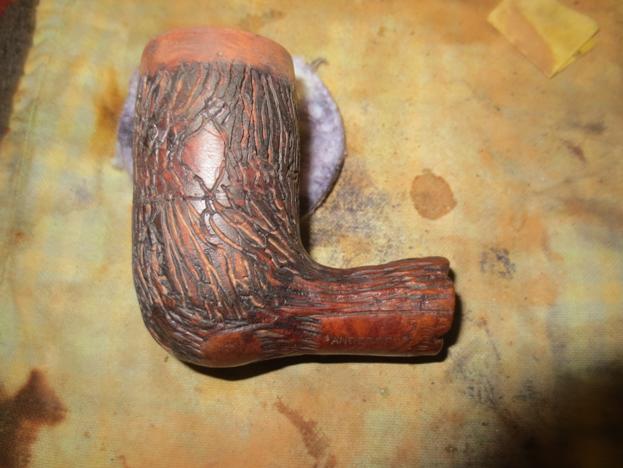
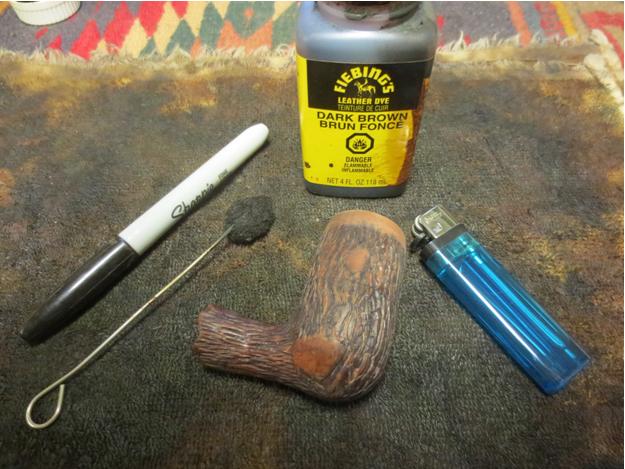
Franken34 To highlight the barklike nature of the rustication I used a black Sharpie permanent marker to colour in the trails in the briar.Franken35

Franken36 I wiped the bowl down with alcohol on a cotton pad to even out the black and to set it in the bottoms of the lines.Franken37

Franken38

Franken39

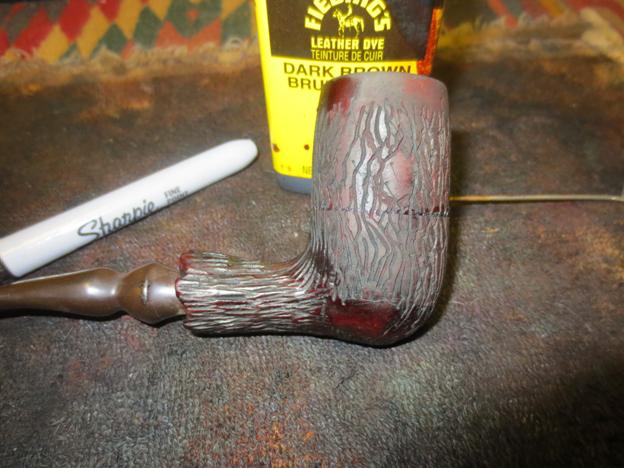
Franken40 I stained over the black marker with a dark brown thinned 50% with alcohol. I applied the stain and then flamed it. I repeated the process until the coverage was even.Franken41

Franken42

Franken43 I then gave the bowl a coat of oxblood stain thinned 50/50 with alcohol and set it on the cork stand to dry.Franken44

Franken45

Franken46

Franken47 To protect the newly sanded bowl and the joint between the bowl and the base until a cake had a chance to form I mixed a batch of organic bowl coating that I have used for years. It sounds like it would smell and make things a mess but it does not. I use sour cream and activated charcoal powder. I put a dollop of sour cream in a bowl and empty the contents of three or more charcoal capsules into the sour cream. I mix it until it is a grey pasted. At this point there is very little smell to the mixture.Franken48

Franken49 I painted the inside of the bowl walls and bottom with a folded pipe cleaner. I want to give the bowl a coating on all sides. I insert a pipe cleaner in the airway so I do not get the mixture in the airway. I put on the coating in several layers letting the one underneath get a little set. I paid special attention to the area around the junction of the two parts.Franken50 I set the bowl aside to dry. When it dries the coating will be a charcoal black colour and provide a base for the formation of the cake. While it dried I worked on the stem. I sanded it with a medium and a fine grit sanding sponge and then moved on to sanding with micromesh pads. I wet sanded with 1500-2400 grit pads and rubbed the stem down with Obsidian Oil. I dry sanded with 3200-4000 grit pads, rubbed it down with oil again and then dry sanded with 6000-12000 grit pads. I gave it a final coat of Obsidian Oil and when it dried I buffed the stem with Blue Diamond.Franken51

Franken52

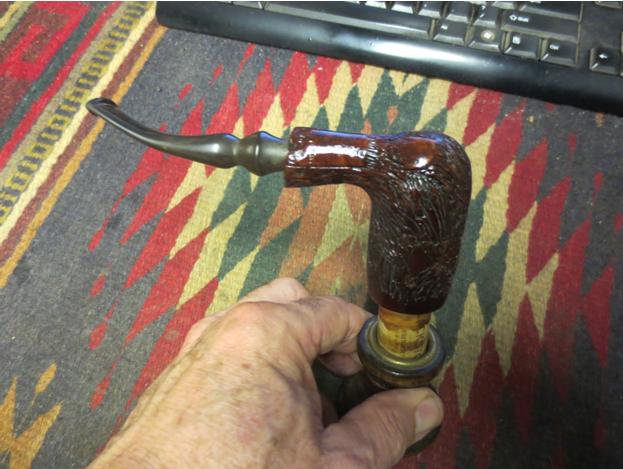
Franken53 I lightly buffed the stem and the bowl with carnauba – spending more time on the stem than on the bowl. I then took it back to the work table and hand buffed it with a microfiber cloth to raise the shine. I did not want too much of a shine as I think the matte finish looks good on the tree bark rustication. The finished pipe is shown below. Once the bowl coating has dried for several days it will be ready to smoke. I am still mulling over what I will pack it with for the inaugural smoke. Thanks for looking.Franken54

Franken55

Franken56

Franken57

Franken58

Franken59

Franken60

Preserving Two LHS Advertising Pokers


Blog by Troy Wilburn
Troy originally posted this to the Dr. Grabow Collectors Forums. You can read the original post and the responses to his work at the following link: http://drgrabows.myfreeforum.org/sutra129300.php#129300

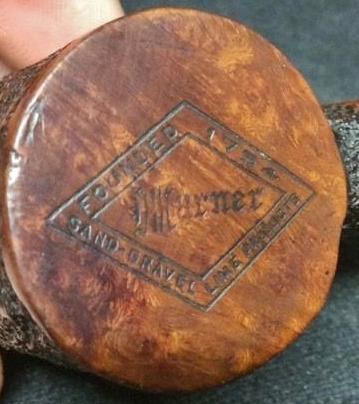
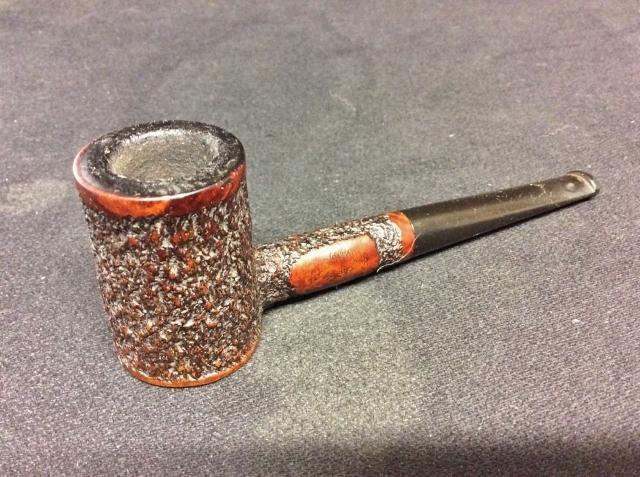
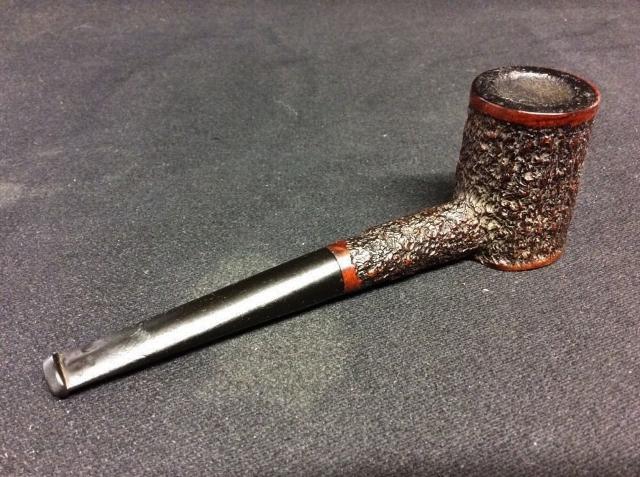
I picked up both of these rare early 20th Century (I would guess just after WW1 to mid-20’s) LHS pokers made for companies to advertise their services and goods. I imagine few of these survived as they were given away to the public and most likely company employees. They were smoked until they were worn out or broken and then thrown away.

The first poker model is one that I have seen before on an old post from 2010 on Tamp and Puff (http://tampandpuff.com/viewtopic.php?f=9&t=1119). I have drooled over that for a couple of years now hoping to find one and I did . Mine is not as nice as that one but happy to have it just the same. I have not found any more pictures of or posting of another before or since. When this one came on EBay I knew I had to have it. Luckily there wasn’t much interest because of the way the seller posted it.

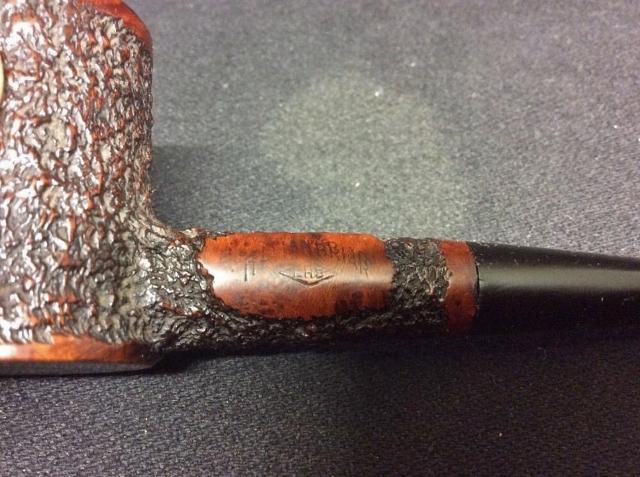
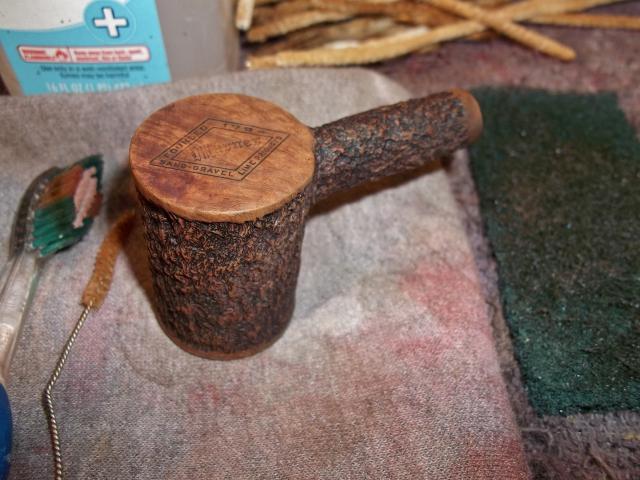
The first poker is marked Warner Sand Gravel Lime Products Est 1794. The shank is stamped Italian Briar (mine is double stamped) with LHS logo.LHS1

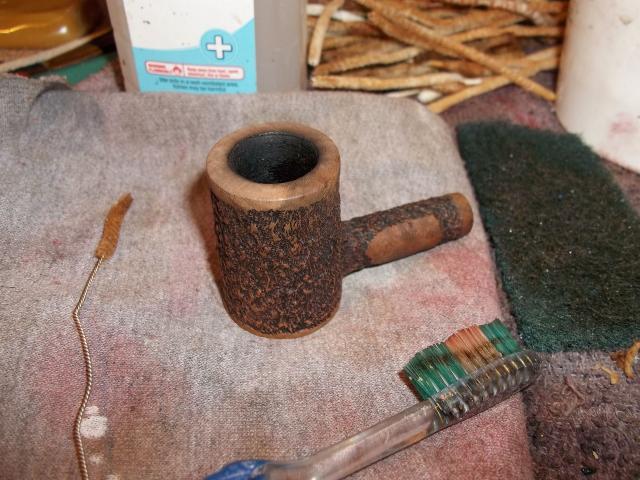
LHS2 More pics of the pipe as it arrived to me. Worst condition problems of pipe were bad tooth marks on the stem and shank’s stampings are worn. It was also really greasy and dirty but not caked up and in otherwise good shape with no major damage.LHS3

LHS4 It’s missing its unique stinger that luckily was still in the other poker I acquired. With the rarity of the pipe I decided to preserve what I had and do little more than just a good cleaning. The pipe really had a lot of grime and greasy feel. I gave it a good cleaning inside and out and removed most of the rim scorching with Oxy Clean and Scotch Brite pad. It could have used a slight topping but I decided not to as I’m preserving the pipe not restoring it. Plus I was afraid it would mess up the symmetry of the pipe rim design. I also gave the rest of the bowl several scrubbings with mild detergent and a soft bristle tooth brush. Wiping it down after with paper towels till the paper towels wiped clean afterwards.LHS5

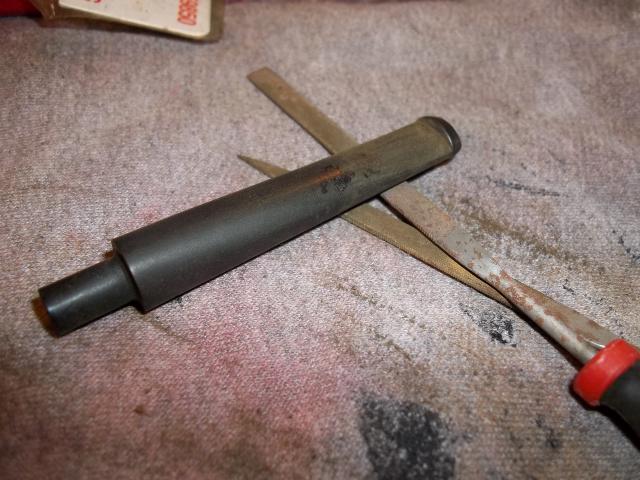
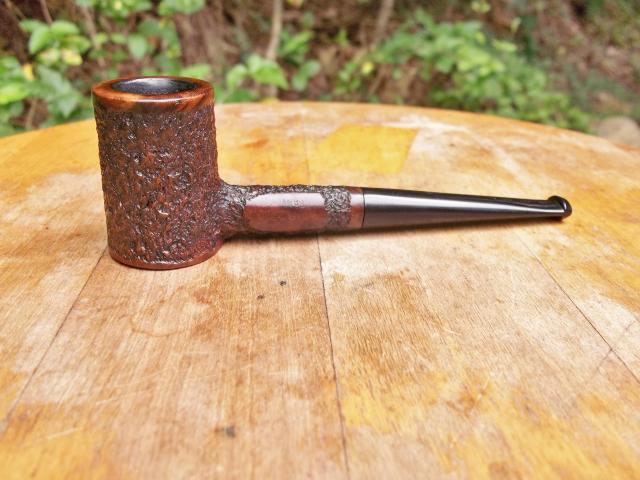
LHS6 I gave the stem a good scrubbing as well Oxy Clean and water as I dipped the end of the tenon in alcohol to test it and it acted like it would melt the rubber. After cleaning I dipped the button end of stem in very hot water to raise the tooth marks best I could. I then filed the stem to get rid of almost all the tooth marks without compromising the structure of it.LHS7 After wet sanding stem to sand out file marks I sanded rim and stem with 2500 grit and mineral oil and wiped rest of pipe down with mineral oil as well.LHS8 After some light buffing and wax.LHS9

LHS10

LHS11

LHS12

LHS13

LHS14

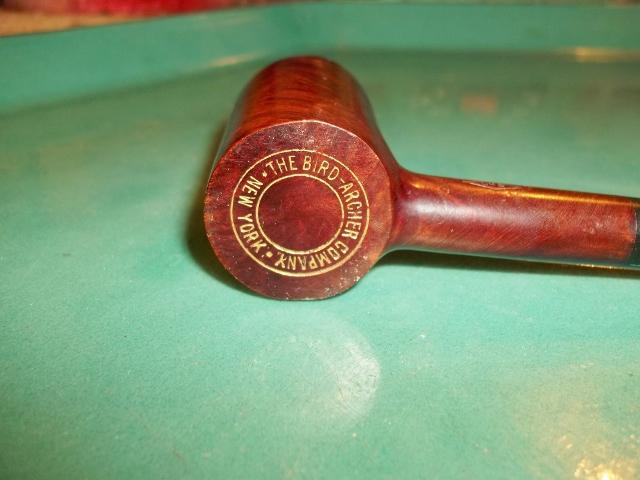
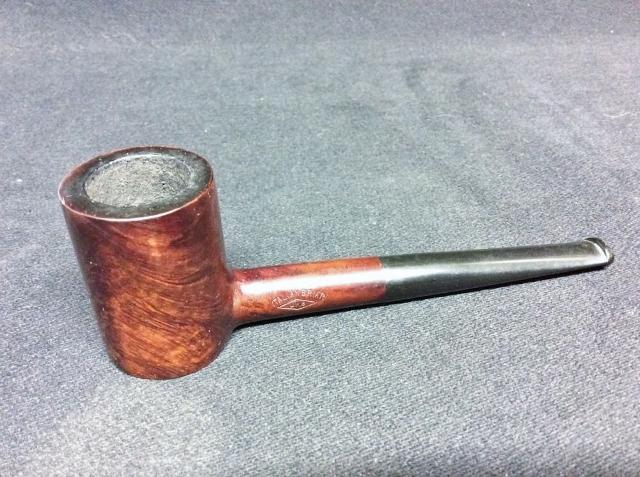
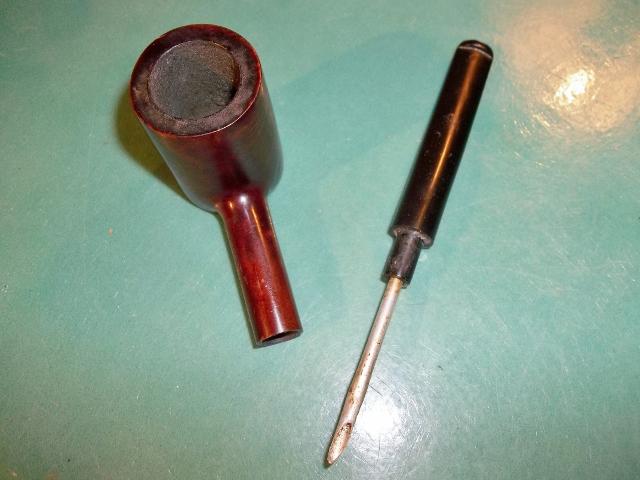
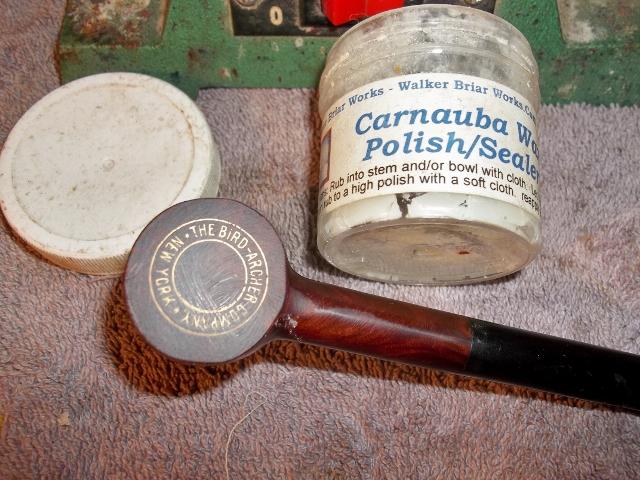
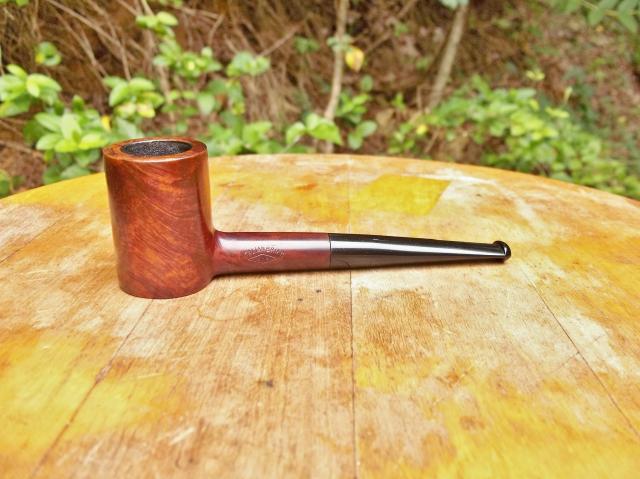
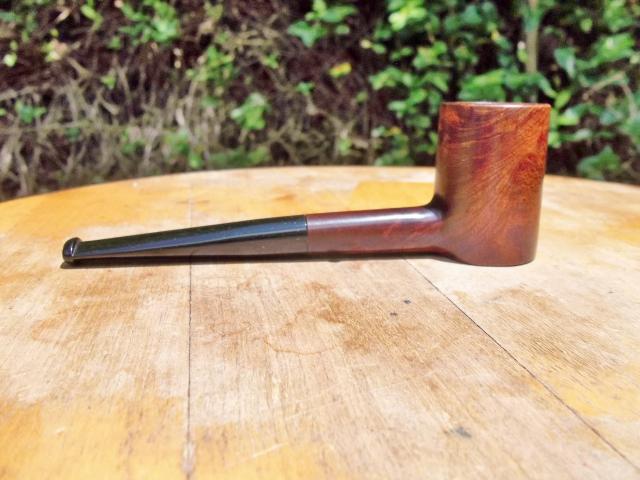
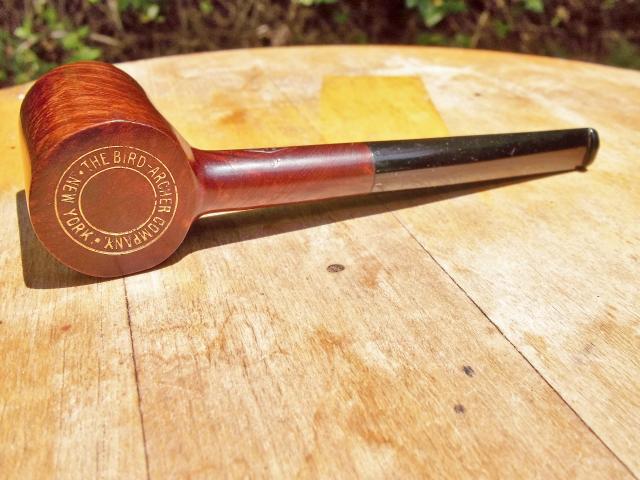
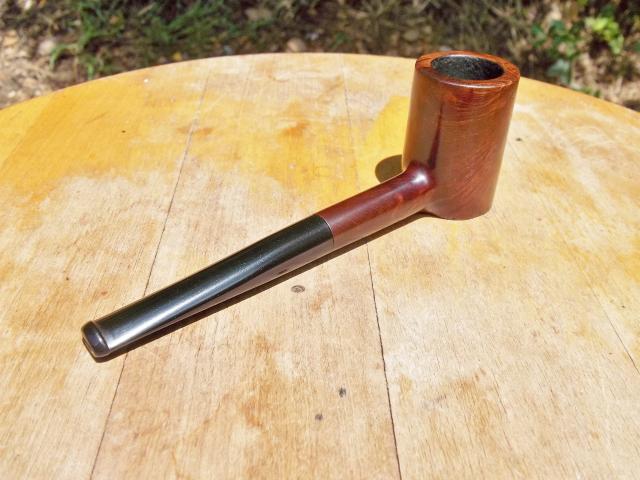
LHS15 The second Poker is marked Bird Archer Co. NY. It’s a company that sold chemicals that was used in water for steam locomotives. They were in business from around start of 20th century till end of WW2. Shank stamped same as other – Italian Briar over LHS logo.LHS16

LHS17

LHS18 This one has the unique stinger. I can tell you it made cleaning the shank and stem a breeze as most all the tar was in the stinger. It runs from the bottom of the bowl to about center of the stem.LHS19 The pipe pretty much got the same cleaning treatment as the above pipe with less work on the stem as there were not bad tooth marks. When I buffed the pipe I did not use the buffer on the embossed stampings but instead hand buffed to avoid causing any damage to them.LHS20 Finished Bird Archer pipe.LHS21

LHS22

LHS23

LHS24

LHS25

LHS26

LHS27

LHS28 I had been looking for an all original LHS poker for a long time and to find both of these original ones at once was very lucky.