Monthly Archives: December 2014

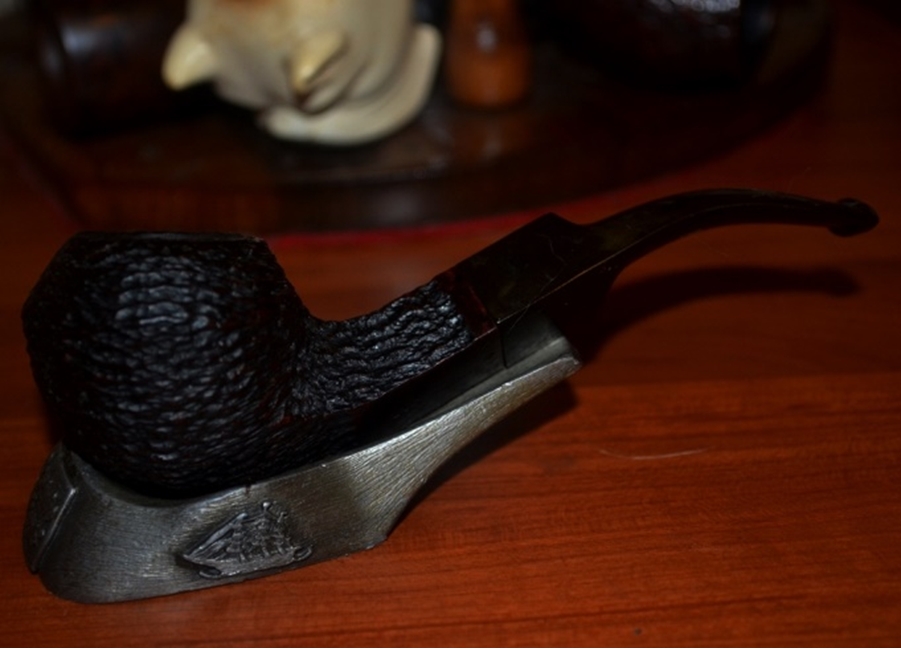
A Wally Frank Sandblast Unique Sitter Reborn


Blog by Steve Laug

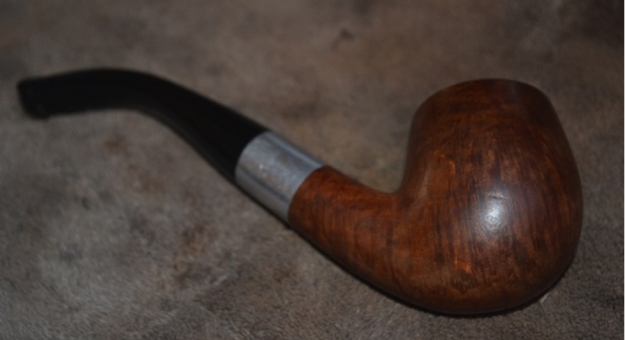
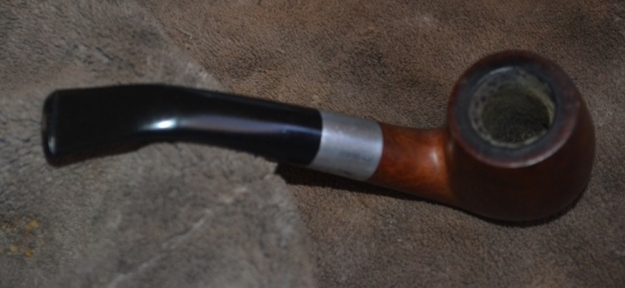
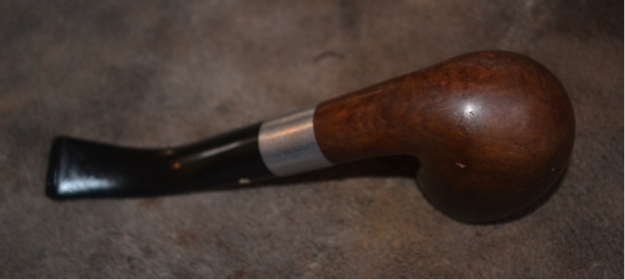
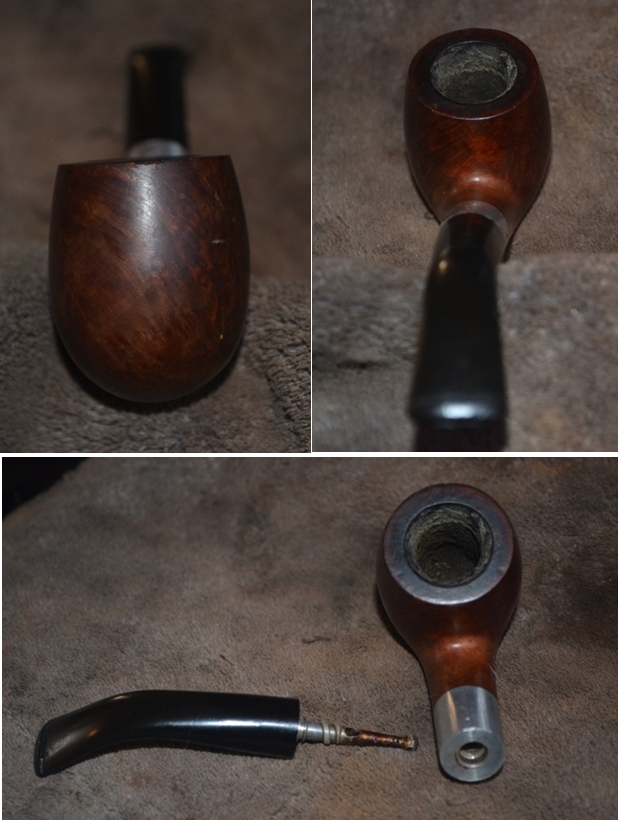
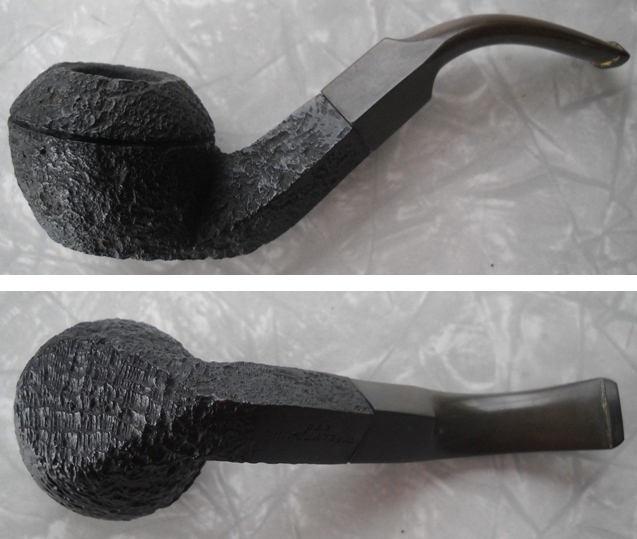
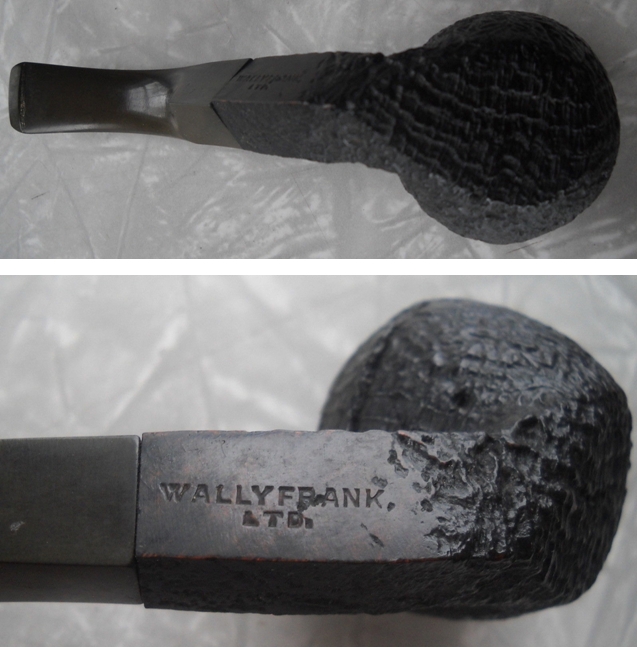
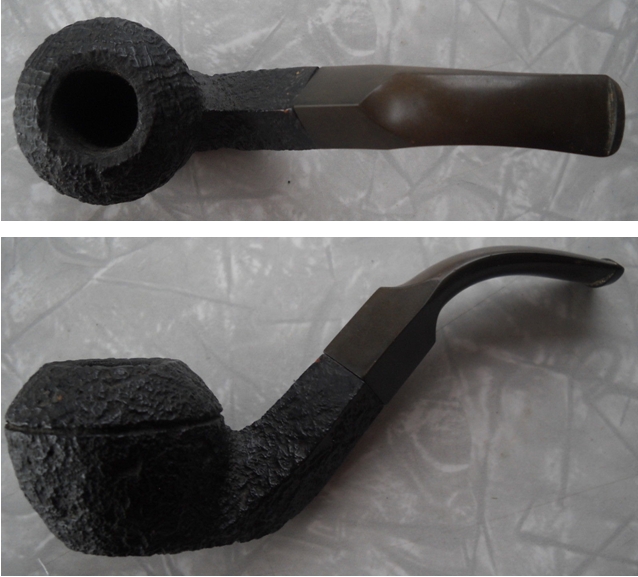
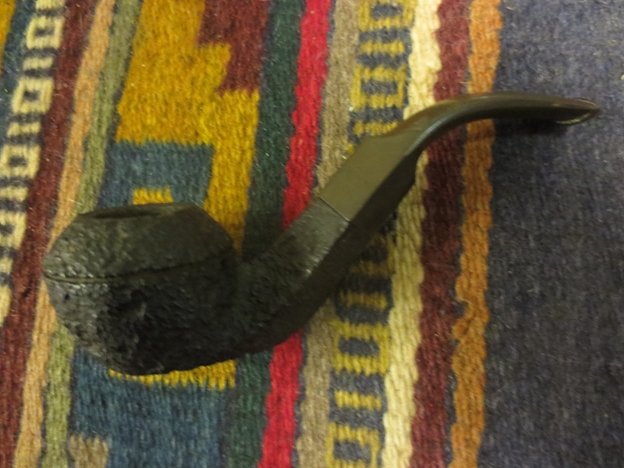
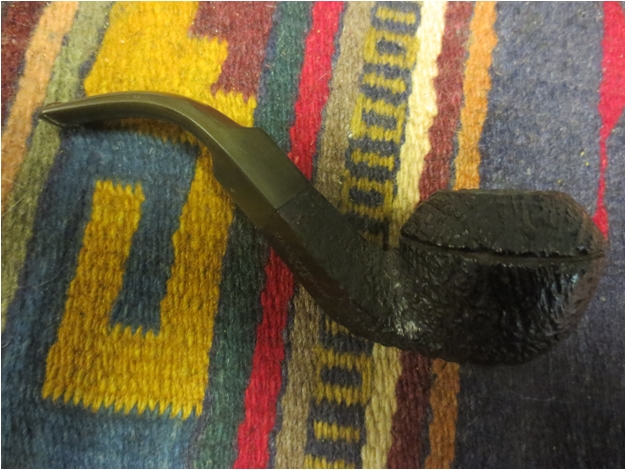
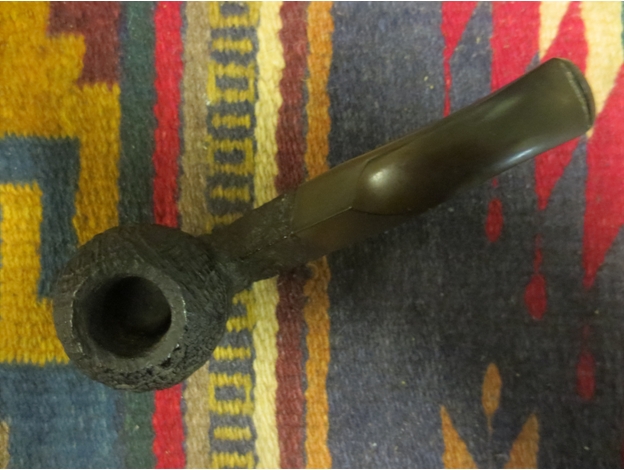
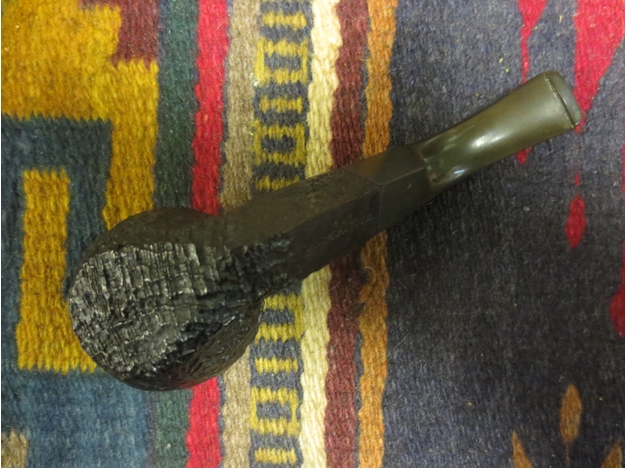
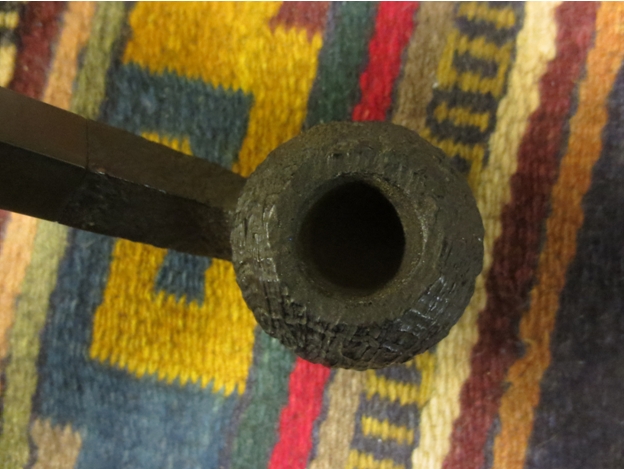
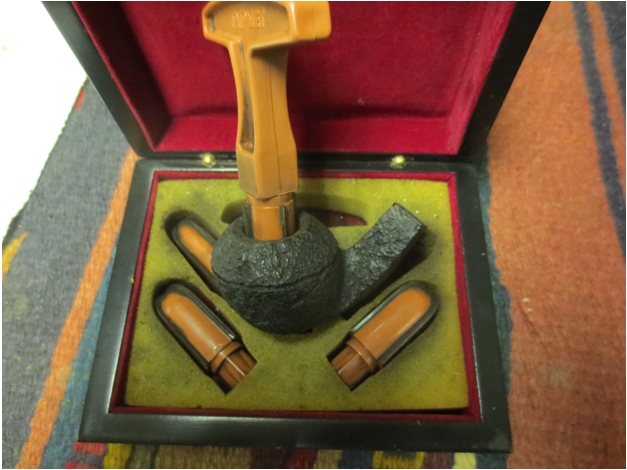
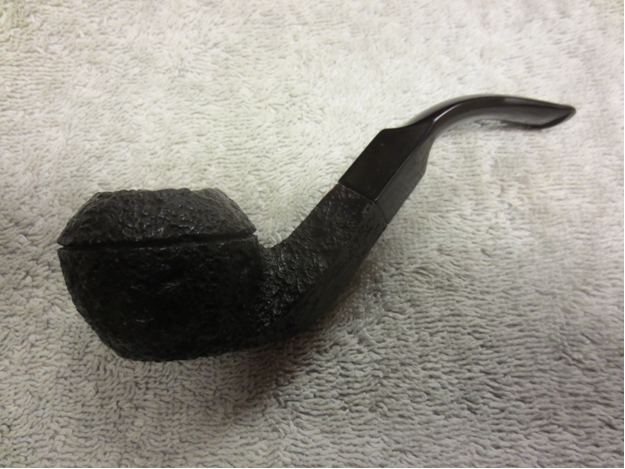
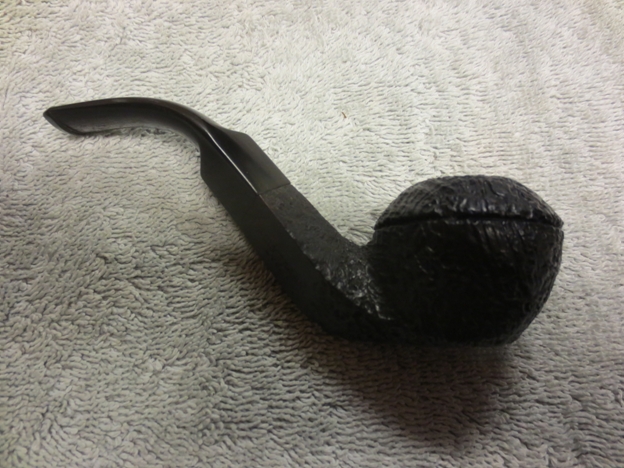
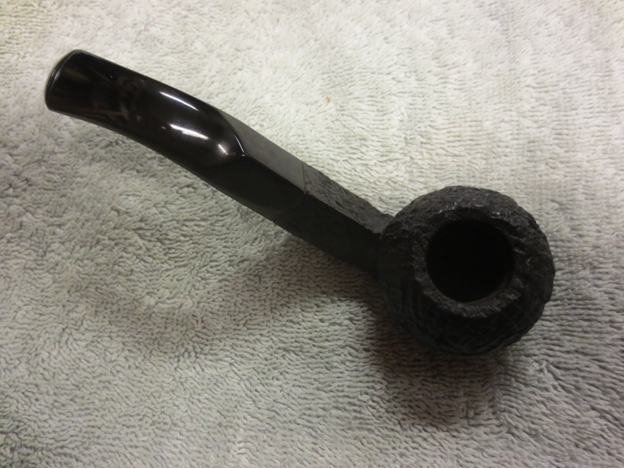
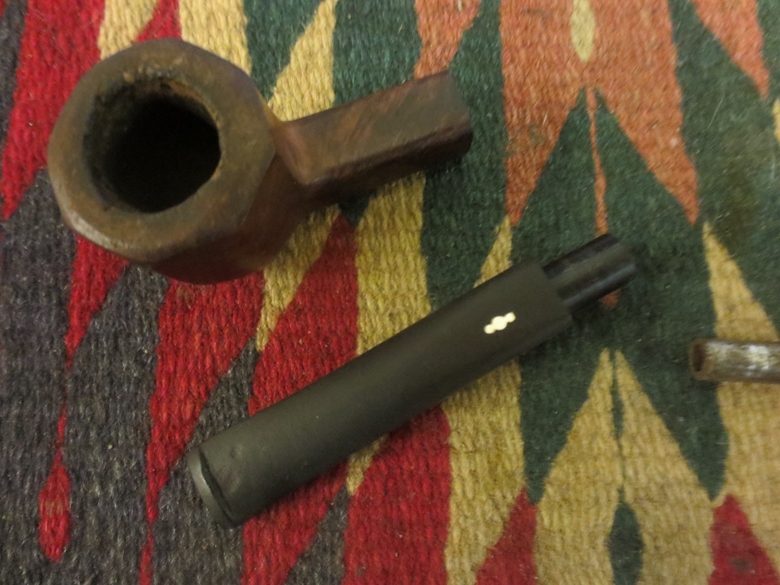
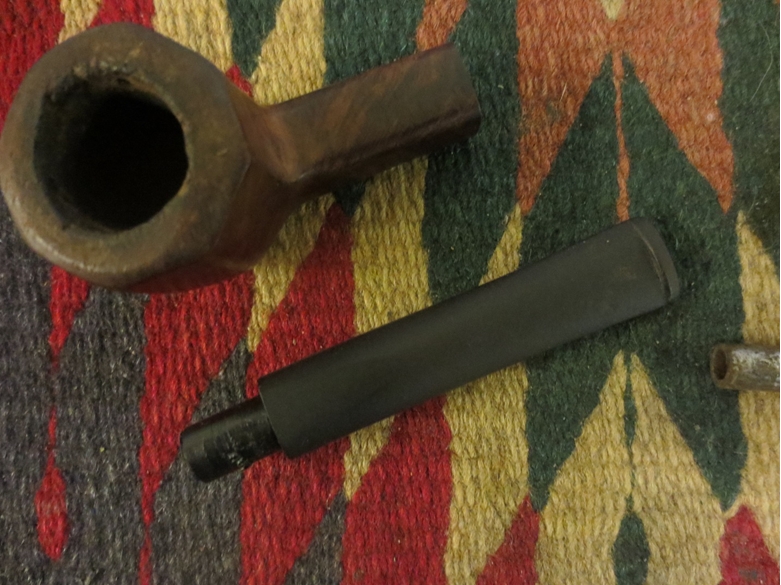
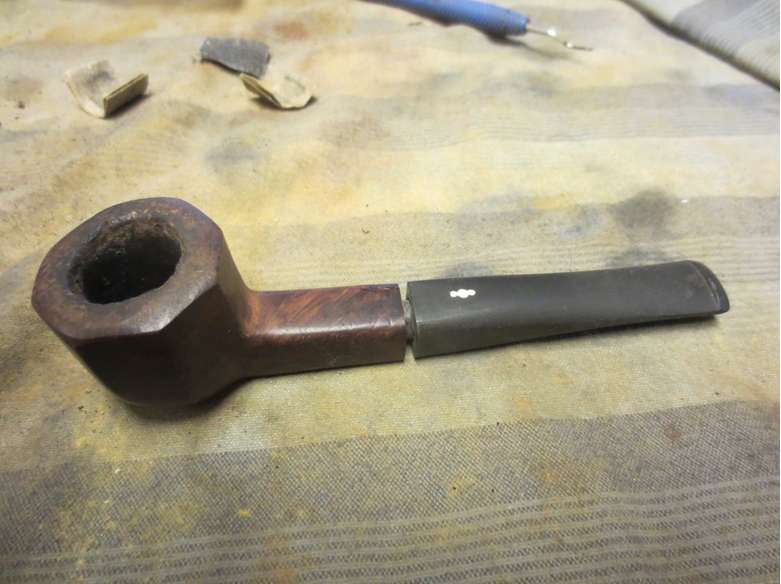
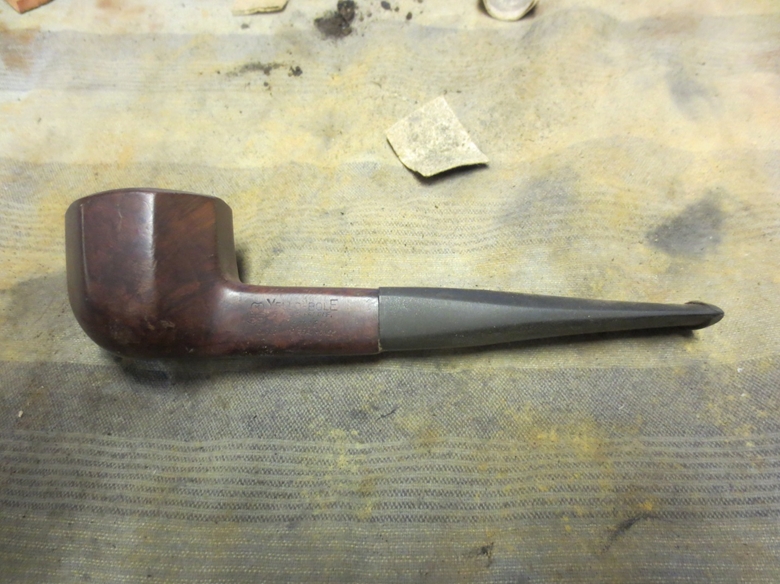
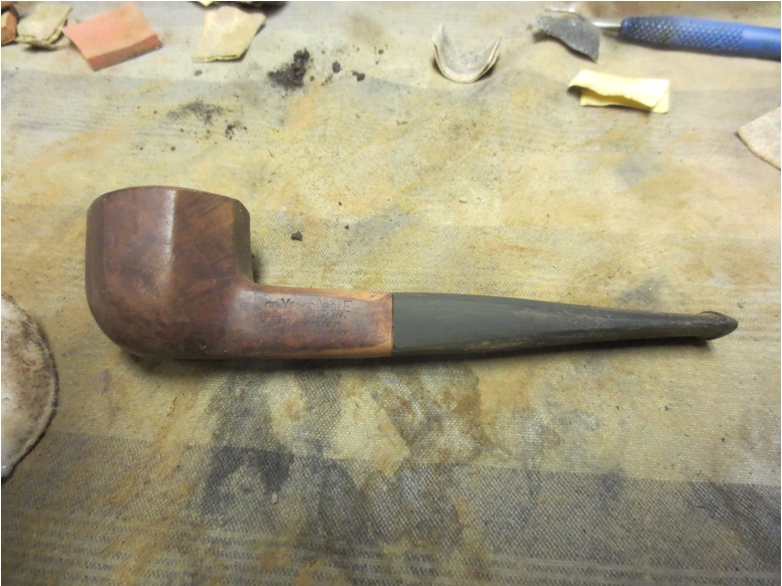
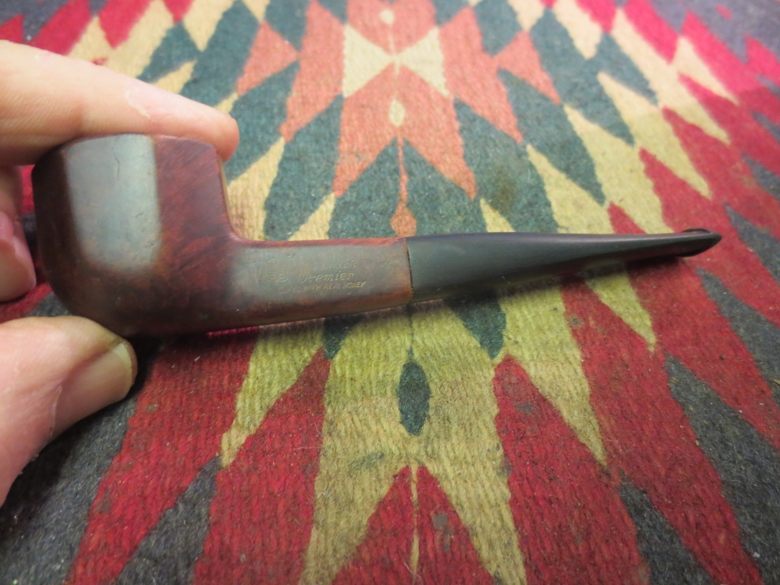
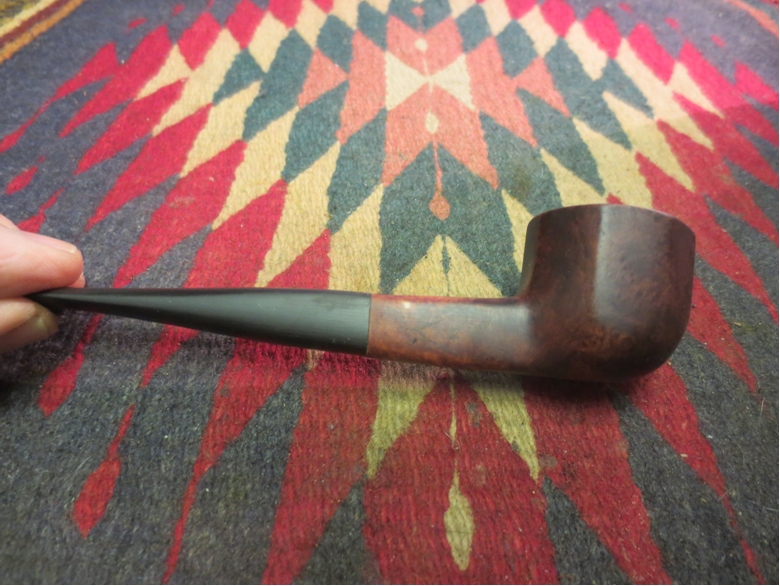
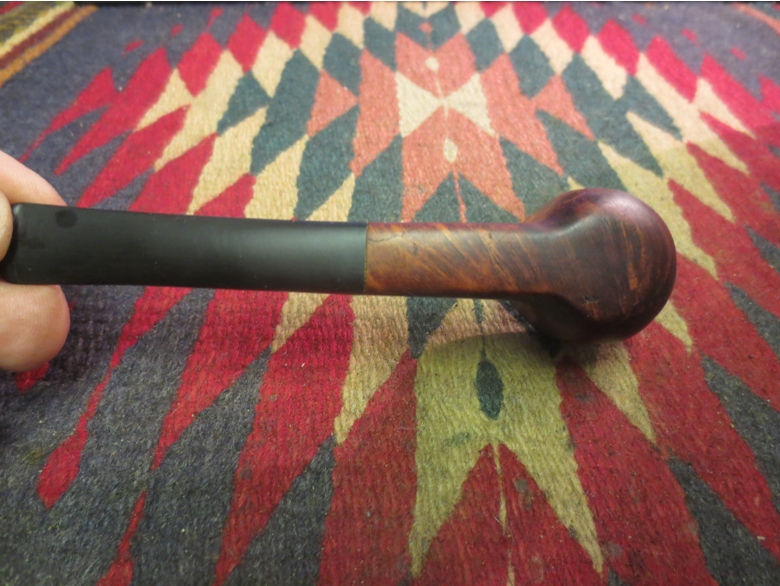
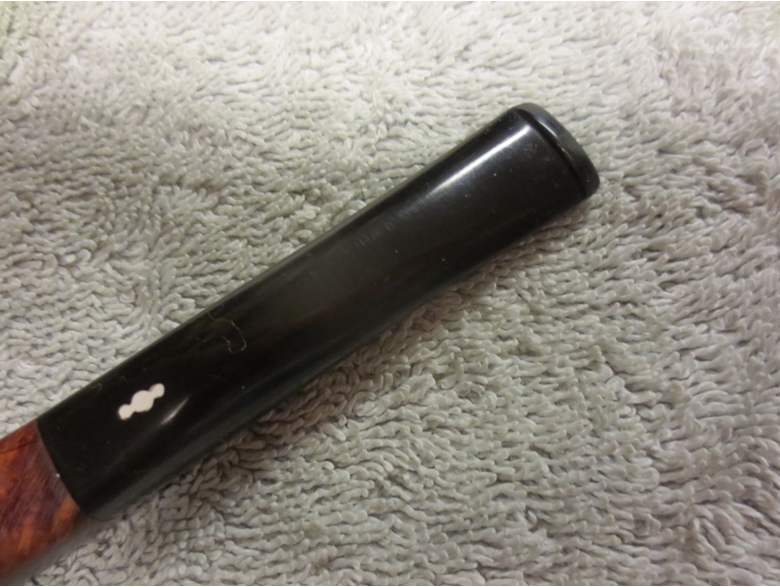
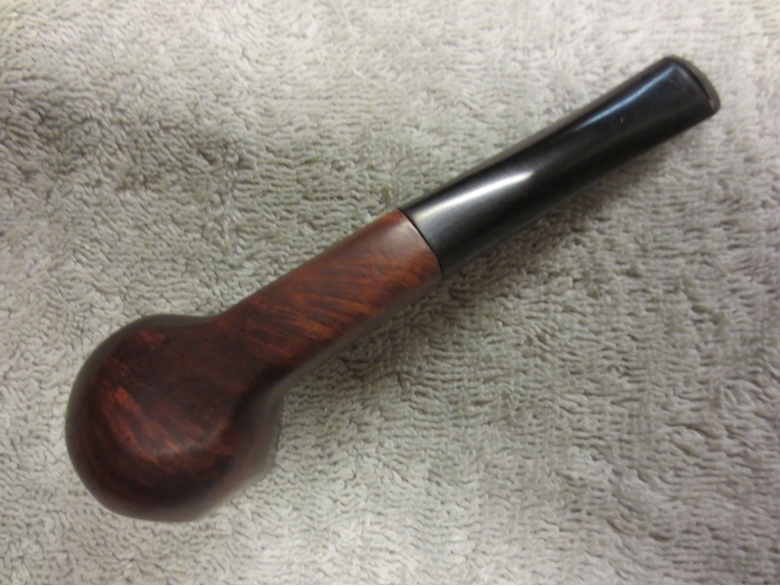
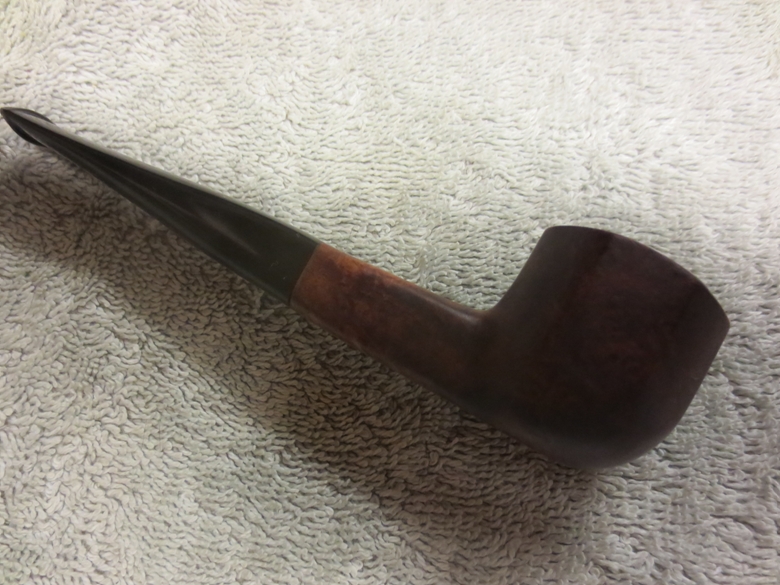
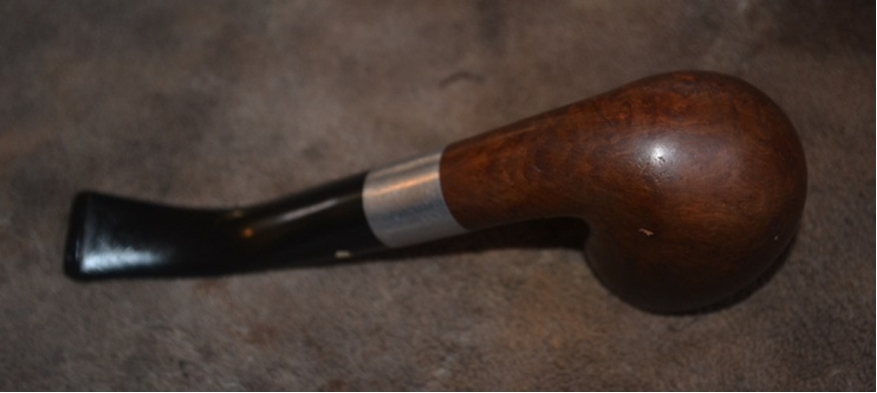
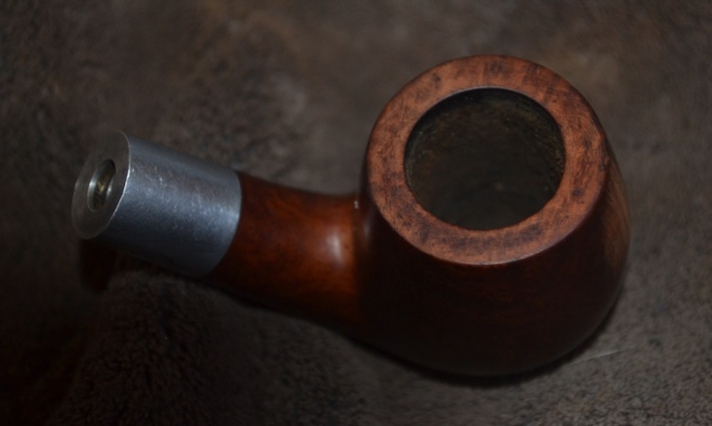
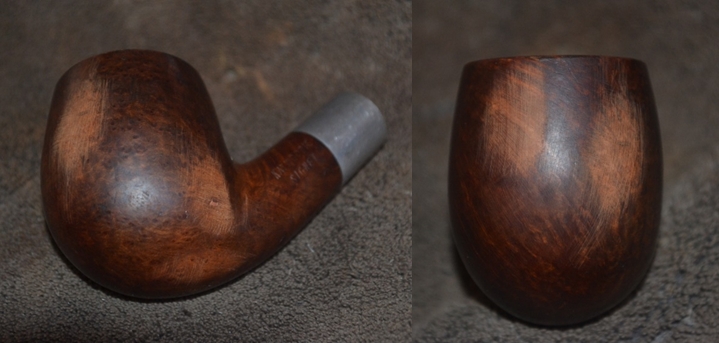
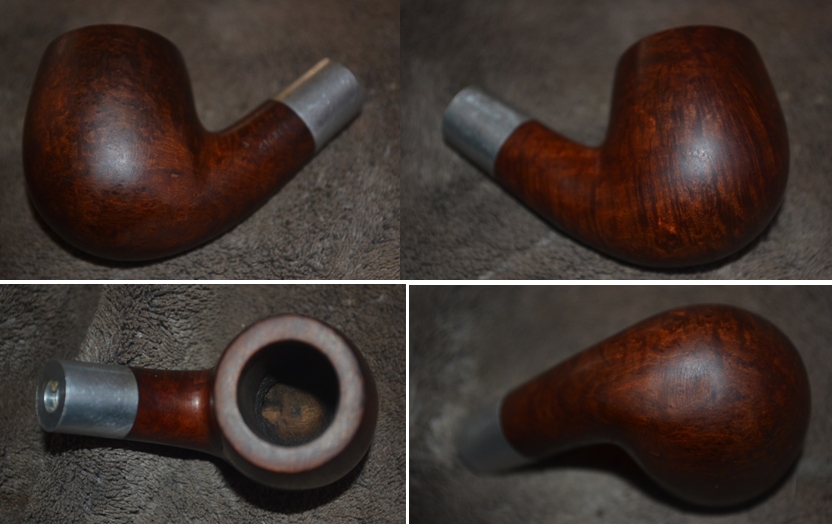
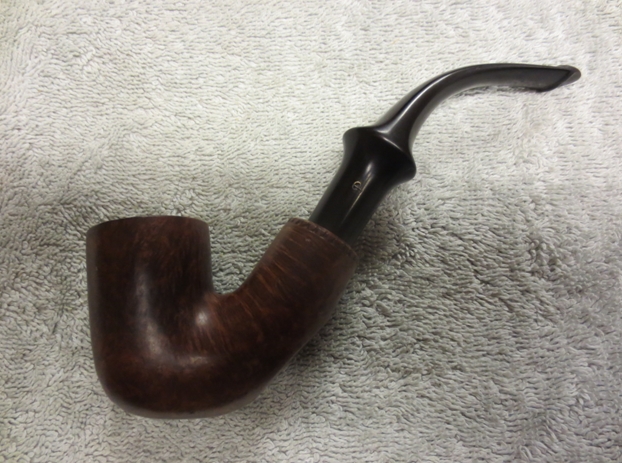
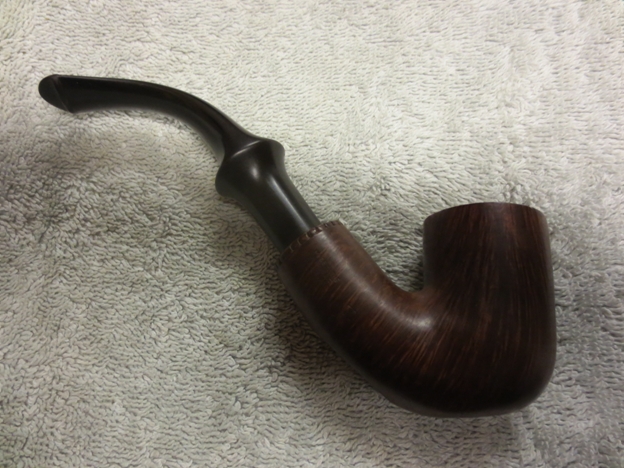
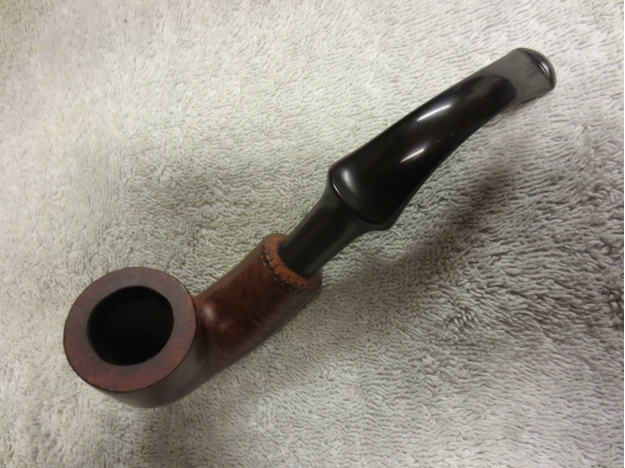
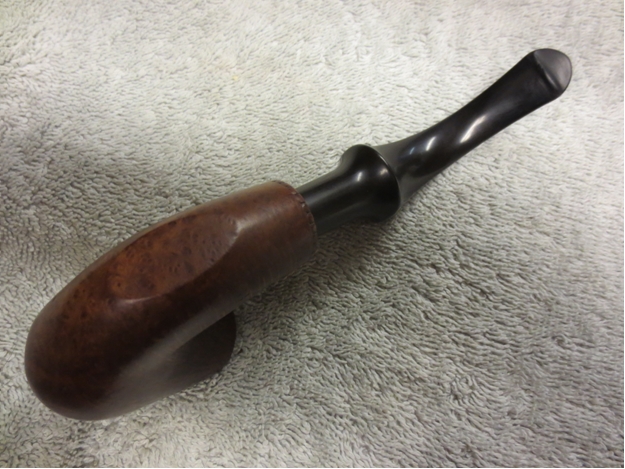
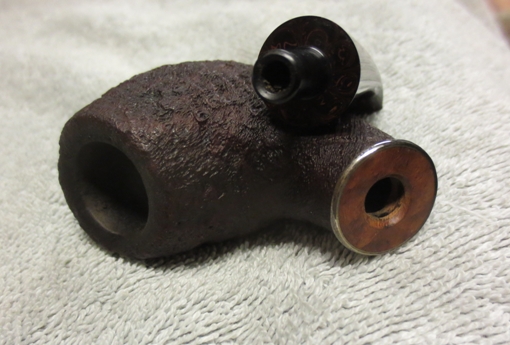
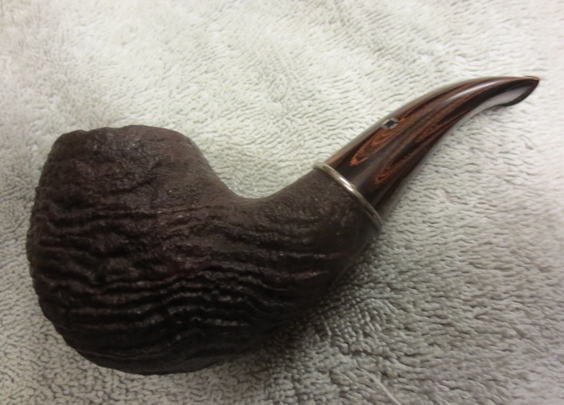
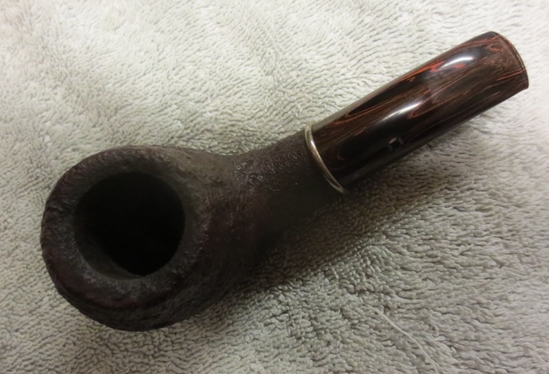
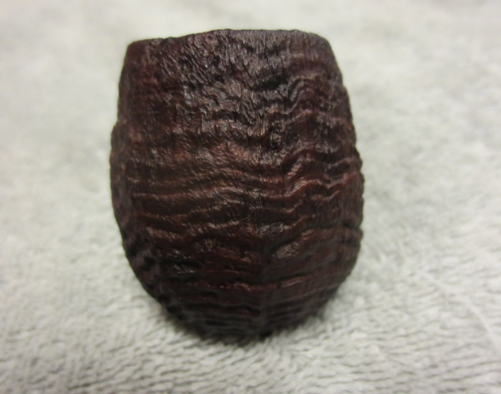
Every once in a while I get the urge to just sit and work my way through the estate pipes on the various Ebay sites. I rarely if ever pick anything up anymore unless it is something that is unique and just grabs me. The last time I did the scan of the various sales I came across this old Wally Frank sitter. It combined the look of a Rhodesian with a diamond shank like a Bulldog and a sitter base. It had a very English made pipe look in my opinion. The sandblast on the bowl and front portion of the shank appeared to be deep and craggy. The rustication of the last third of the shank, a feature that I find often on sandblasted Wally Frank pipes, looked good and the stamping was clear and readable. The bowl appeared to be in decent shape and finish looked good in the photos. The stem was oxidized and the seller noted that it sat off centre slightly or did not line up with the shank. I figured if it had a metal tenon that was fixable and if it was a push tenon it was a non-issue. I was hooked. I bid on it and won, only to find out that the shipper never shipped out of the US. We corresponded and he decided to send it on to me. For that I thank him. The next series of six photos were included by the seller in the Ebay write-up.Frank1

Frank2

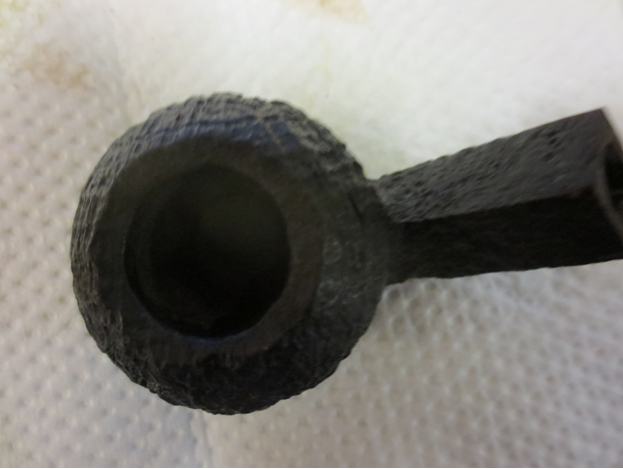
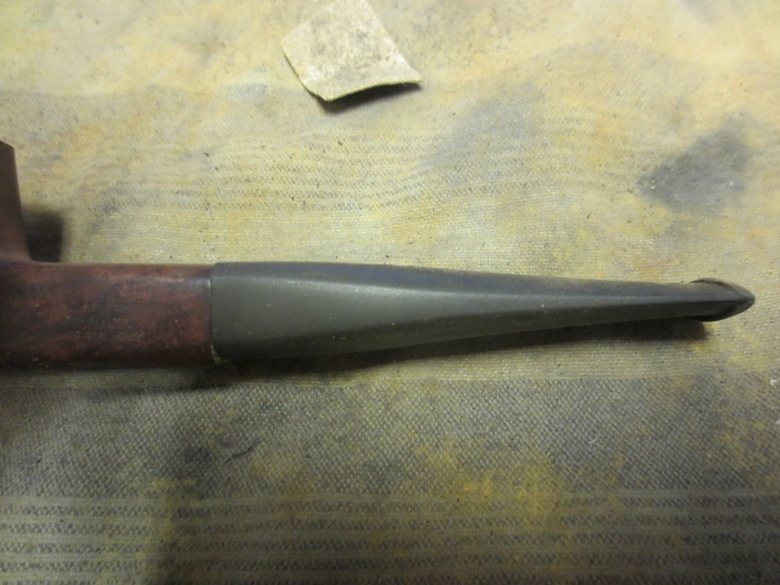
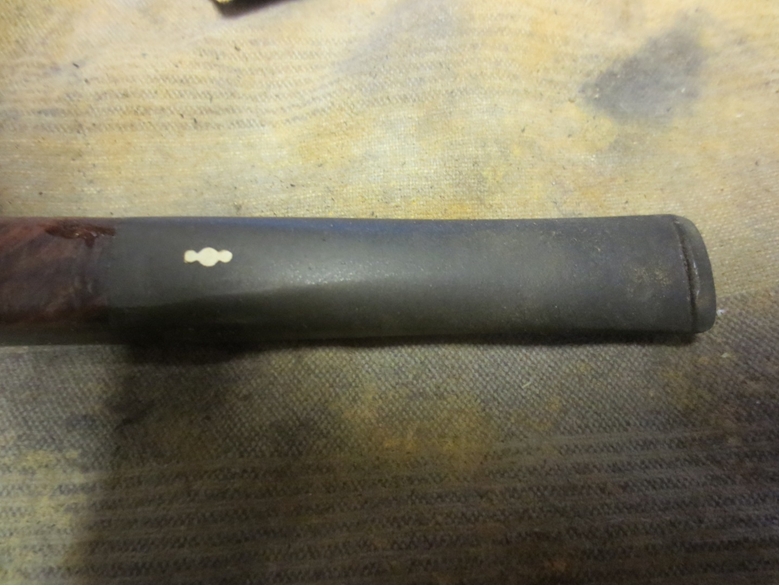
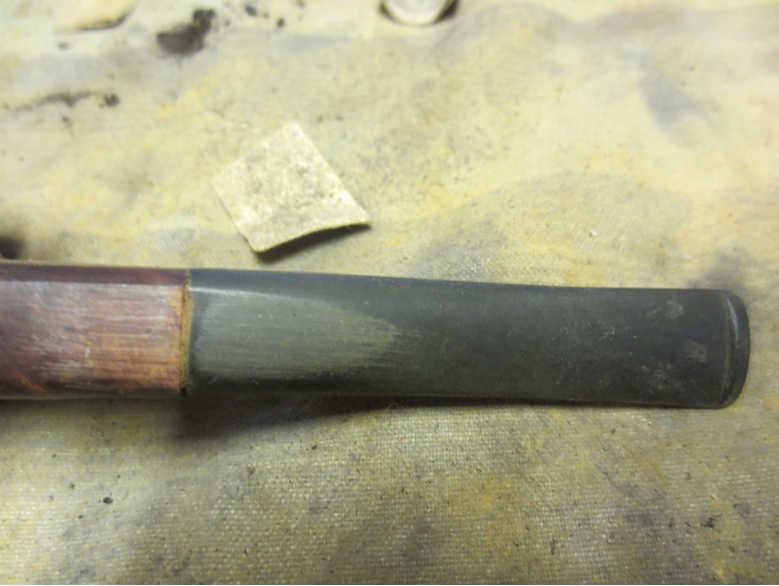
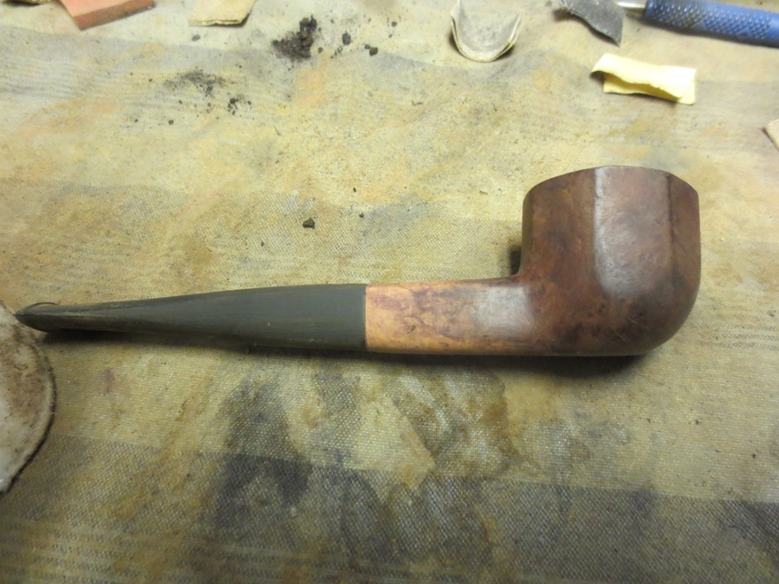
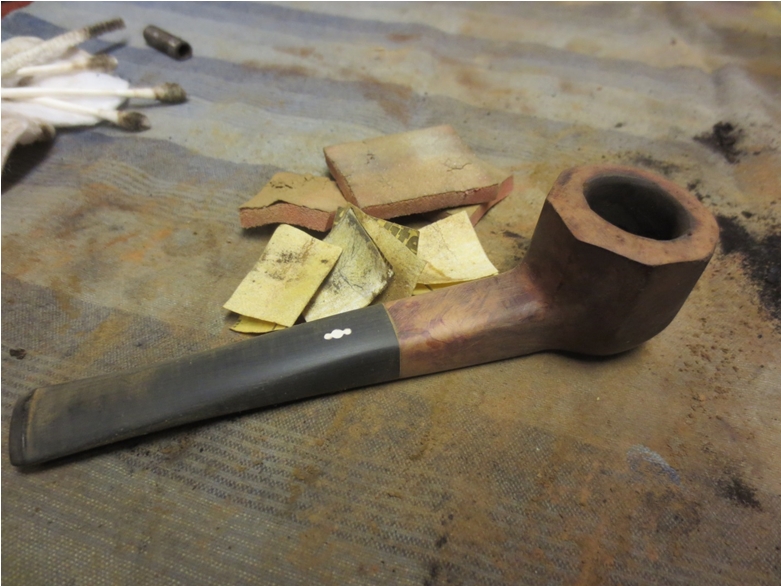
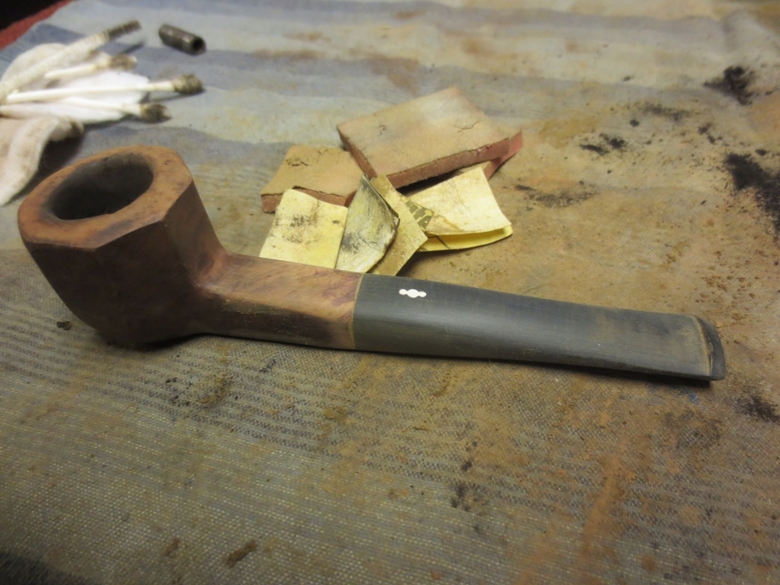
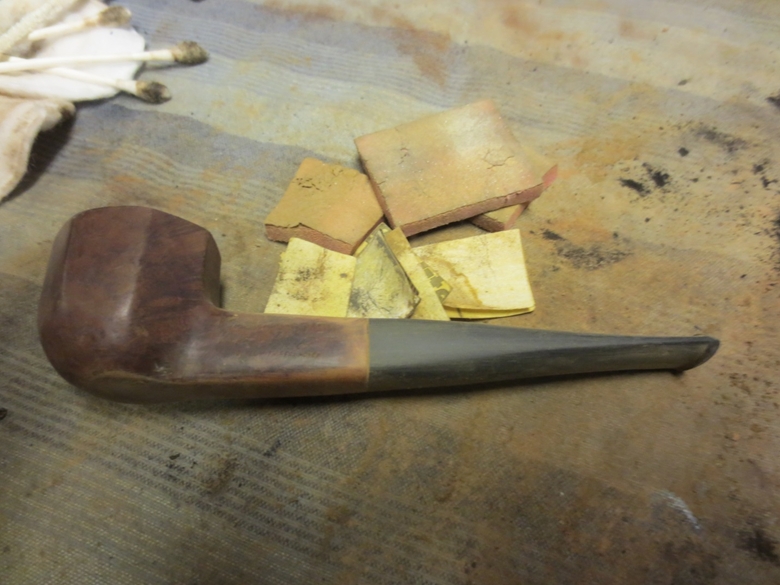
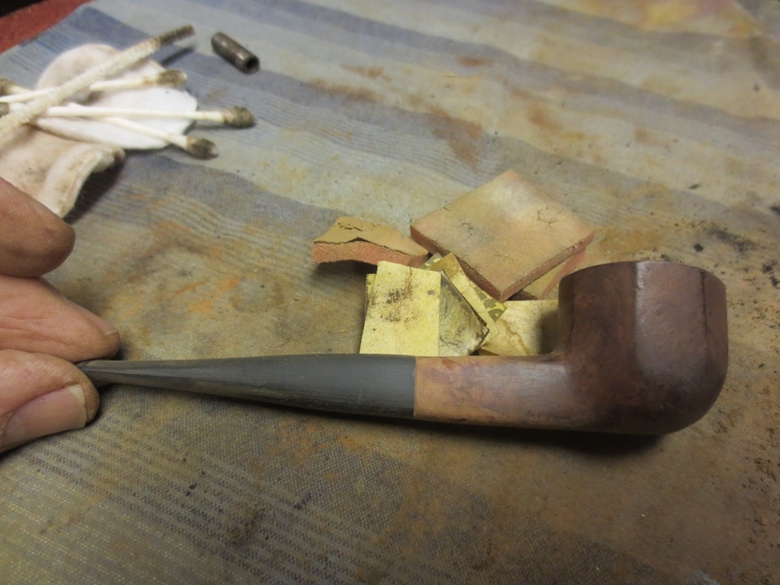
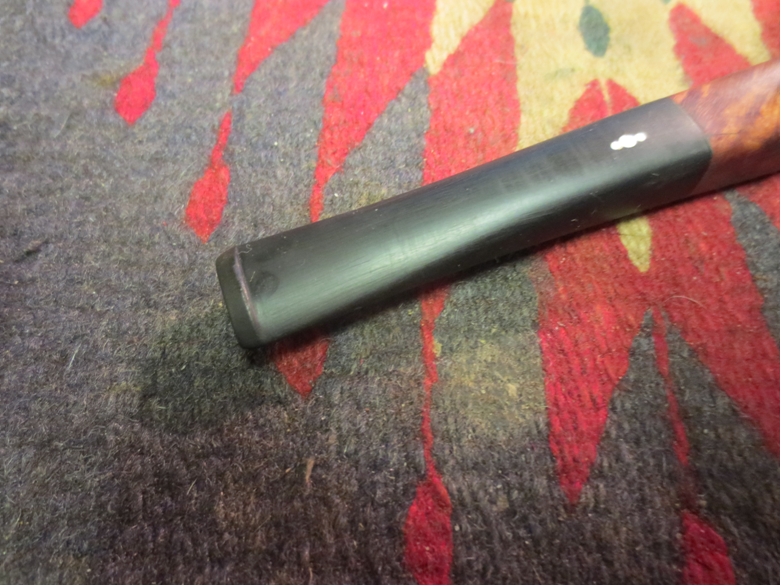
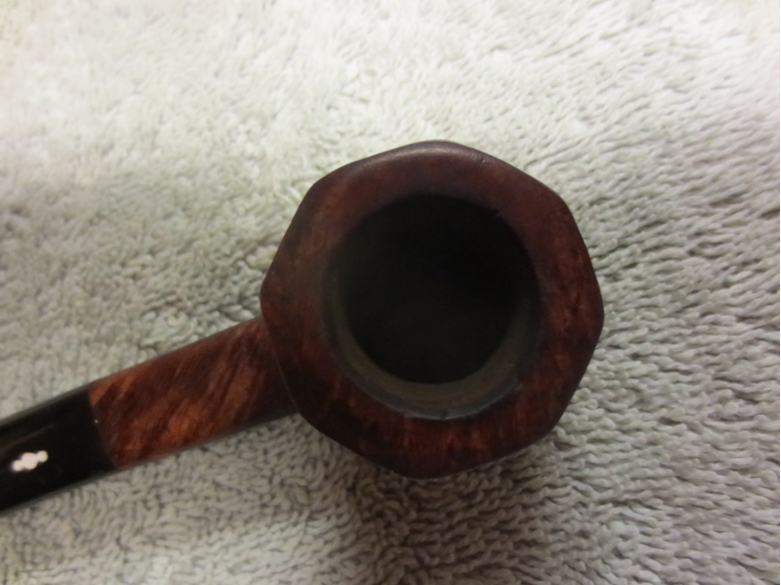
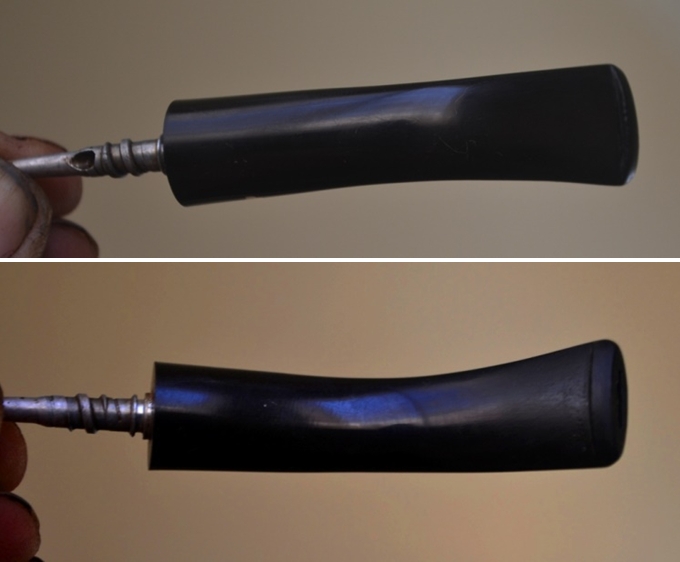
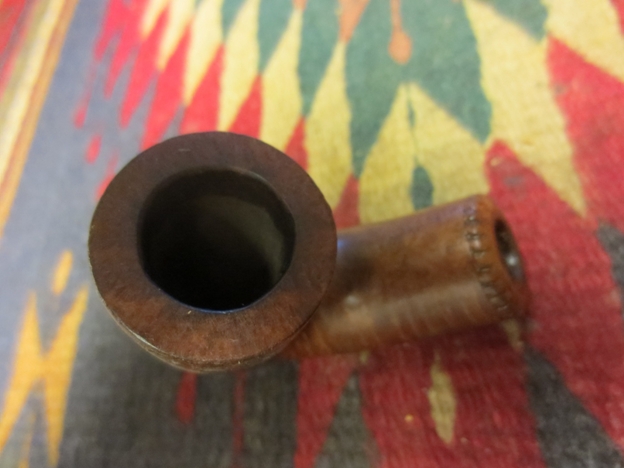
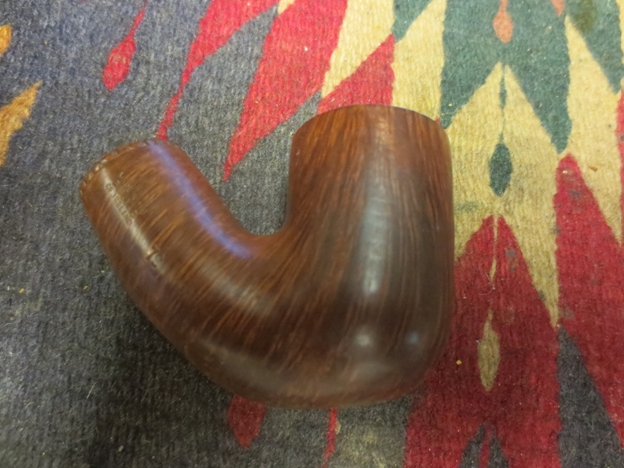
Frank3 When the pipe arrived, I opened the box and removed the pipe. The blast was even better than the photos had shown. The stem oxidation was pretty much as shown above. The misaligned stem was no issue as the stem had a push tenon and was only a matter of turning the stem slightly. The airway was open but dirty with tars and grime. The bowl had a light cake that thickened toward the bottom of the bowl. The edges of the shank and the stem were sharp and clean showing that it had not been buffed much in its history. There were a couple of spots on the edge of the rim and shank at the union next to the stem where the stain was worn or missing. The rim itself was dirty with tars. The stem was clean though oxidized with no tooth marks or chatter. The button was crisp and sharp and the slot was an open oval that flared into the stem opening up into the airway like a funnel. I took a few photos of the pipe when I took it out of the box.Frank4

Frank5

Frank6

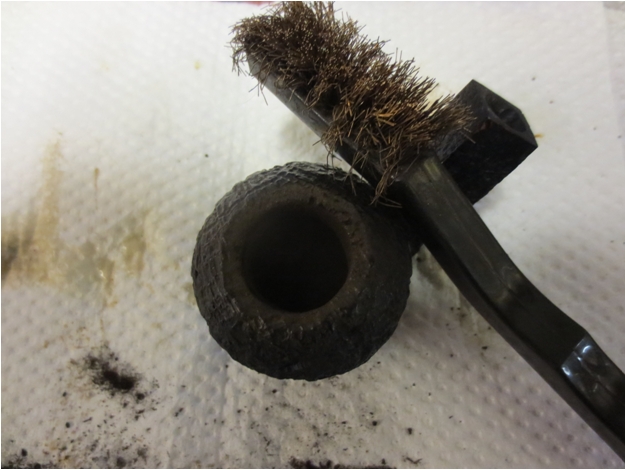
Frank7 The photo below shows the situation with the cake in the bowl. It was not centered or evenly built up around the bowl so it would need to be cleaned up and adjusted.Frank8 I reamed the bowl with a PipNet reamer and took the uneven cake back to bare wood. I used the smallest cutting head to begin with and worked my way up to the second cutting head. With these two I was able to clean out the cake. The bowl shape is kind of combination of a V and U shape. The sides are U-shaped to about a half-inch from the bottom of the bowl where it shifts to a V shape. I scrubbed the rim surface with a soft bristle brass tire brush to clean off the tars and oils built up there.Frank9

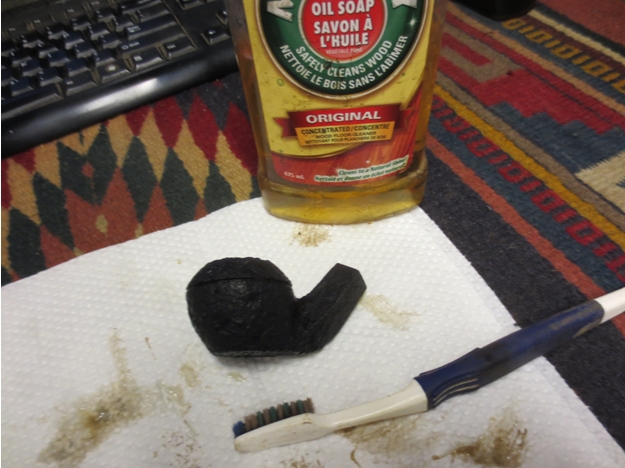
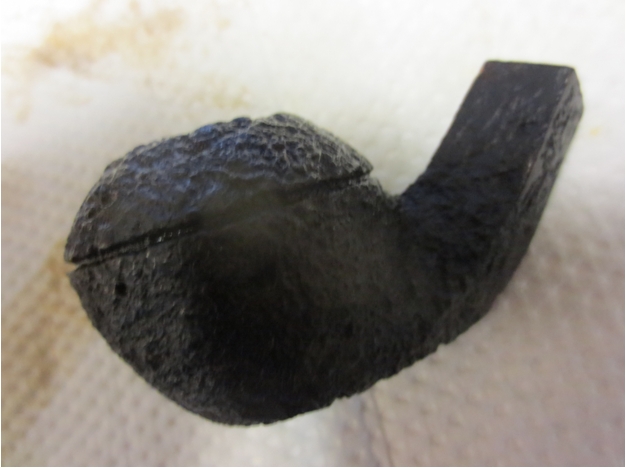
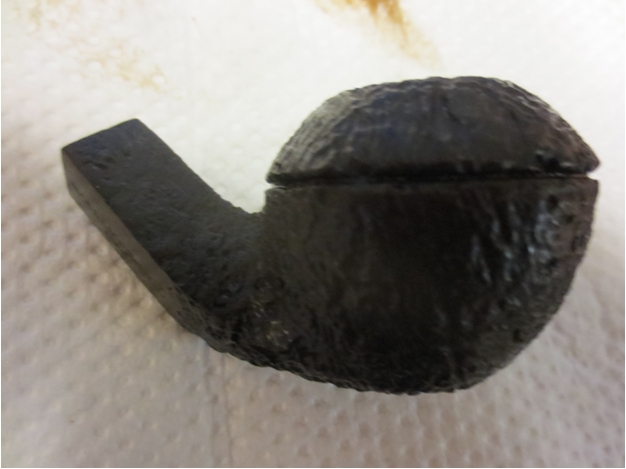
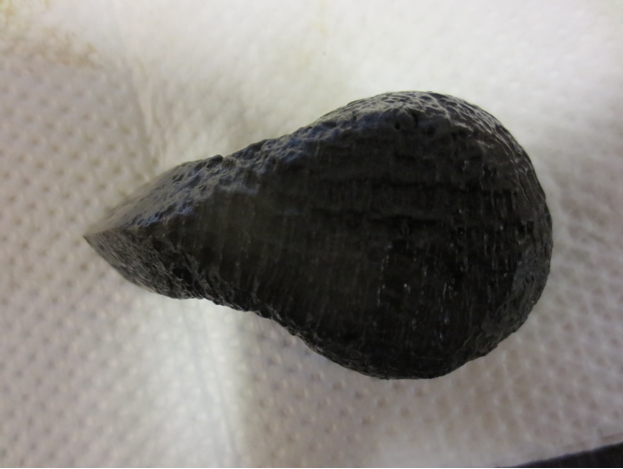
Frank10 I scrubbed the bowl and rim with Murphy’s Oil Soap and a tooth brush. Once I had scoured it with the soap I put a thumb over the bowl and rinsed off the soap with running water. The photos below show the pipe after I had scrubbed, rinsed it and dried it off with a soft cloth.Frank11

Frank12

Frank13

Frank14

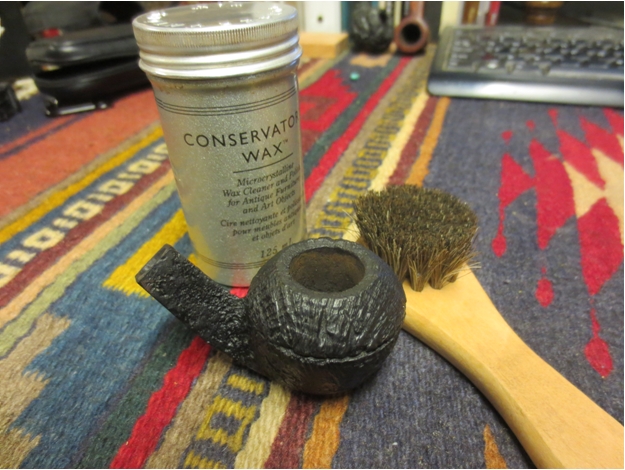
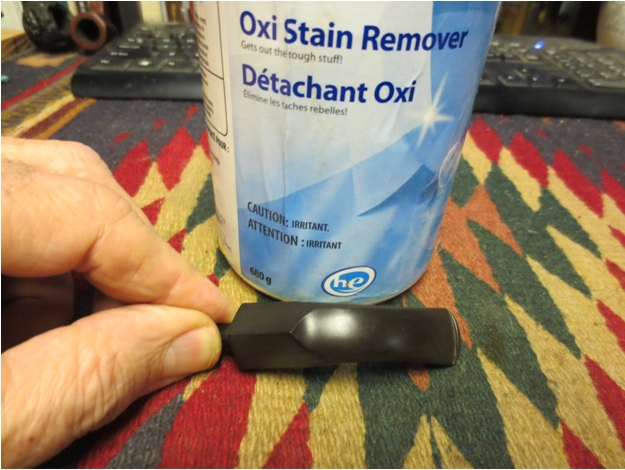
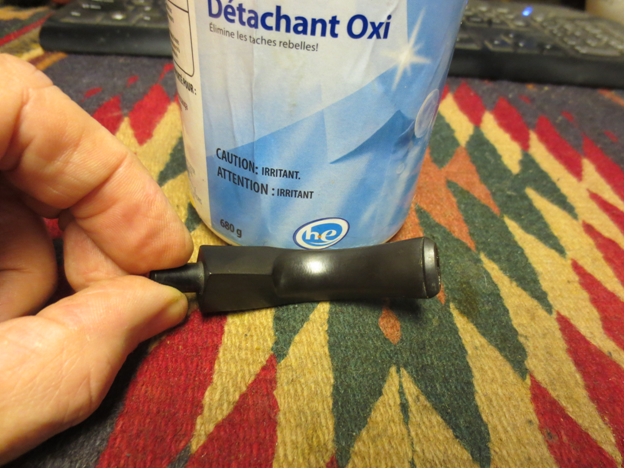
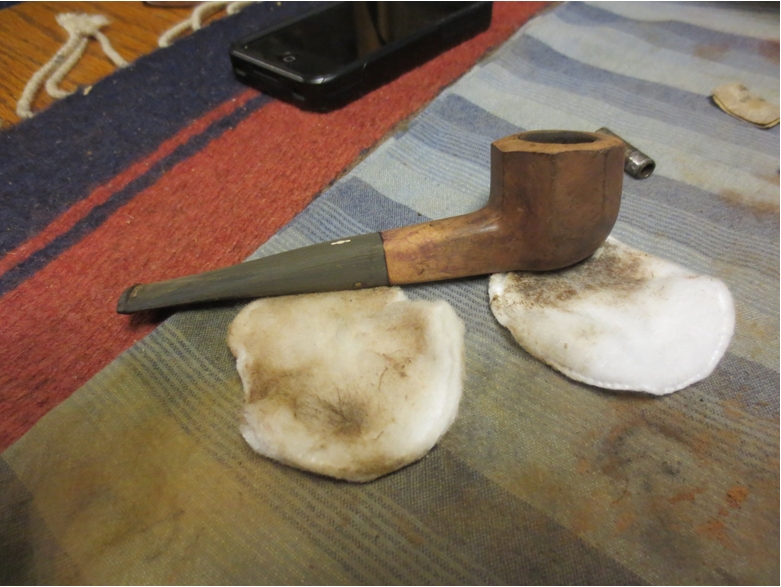
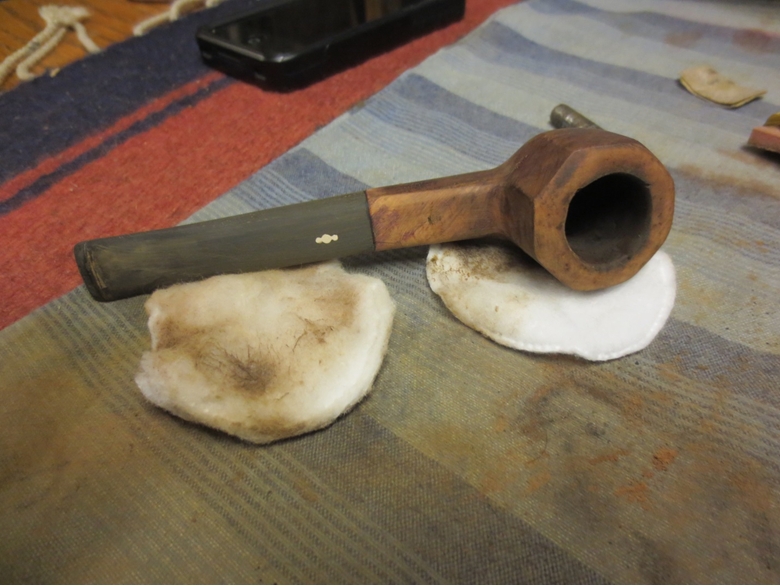
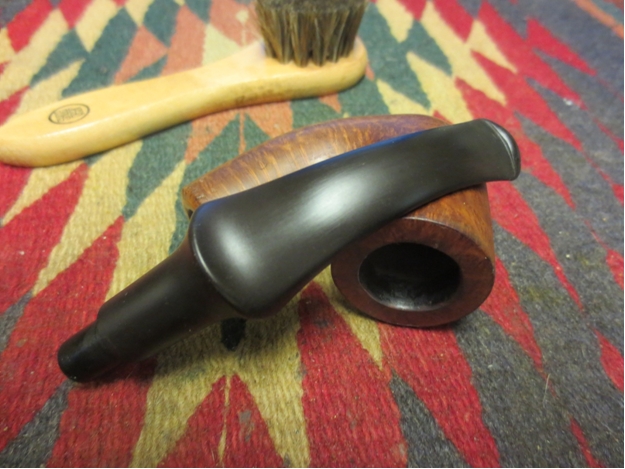
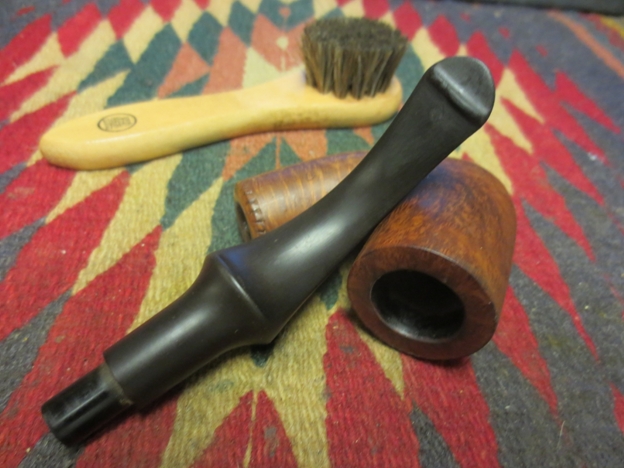
Frank15 After cleaning the briar I gave it a coat of Conservators Wax which is a microcrystalline wax cleaner. I buffed it with a shoe brush to bring a shine to the bowl.Frank16 I put the stem in a jar of Oxyclean to soak and raise the oxidation to the surface. I let it sit overnight to soak. I then returned to the inside of the bowl. (NOTE: The reason I give the bowl a coat of wax before cleaning the inside of the shank and bowl is because I want to protect the finish when I am cleaning out the inside).Frank17

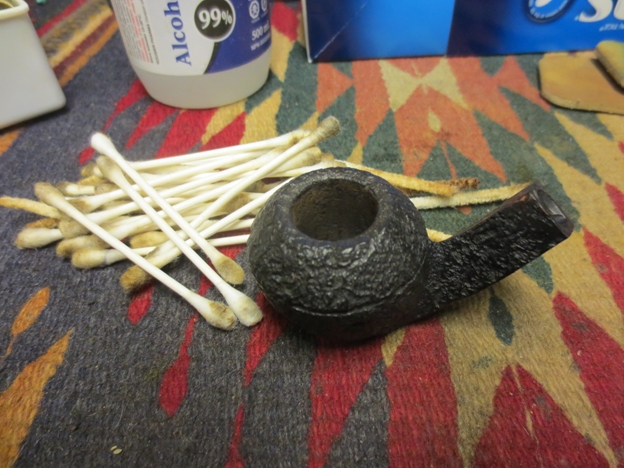
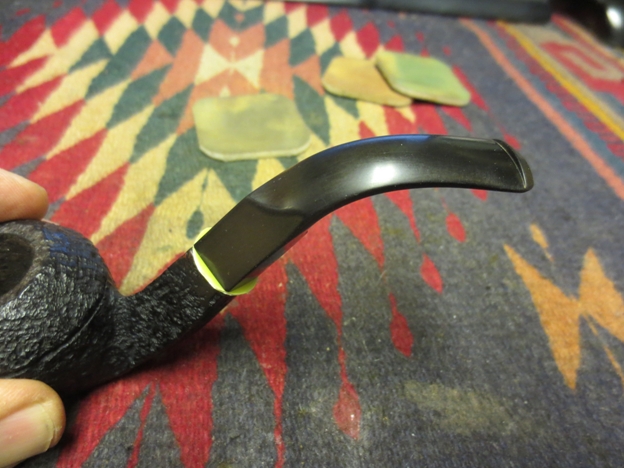
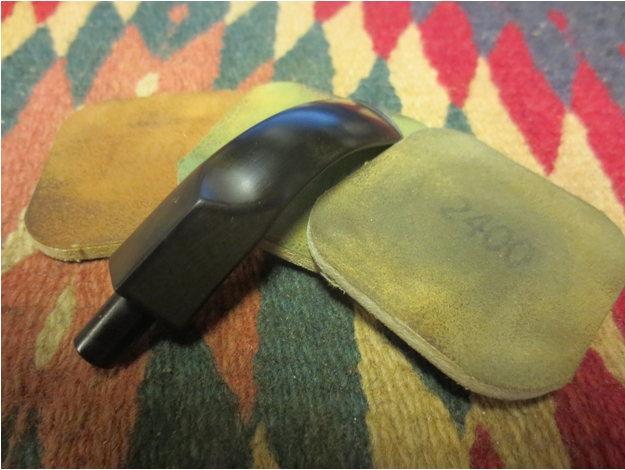
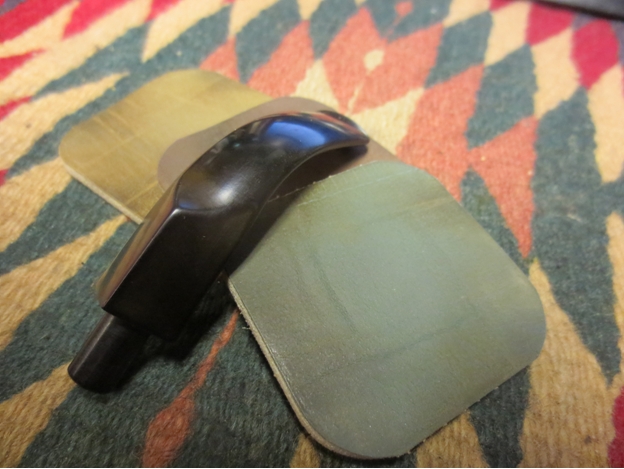
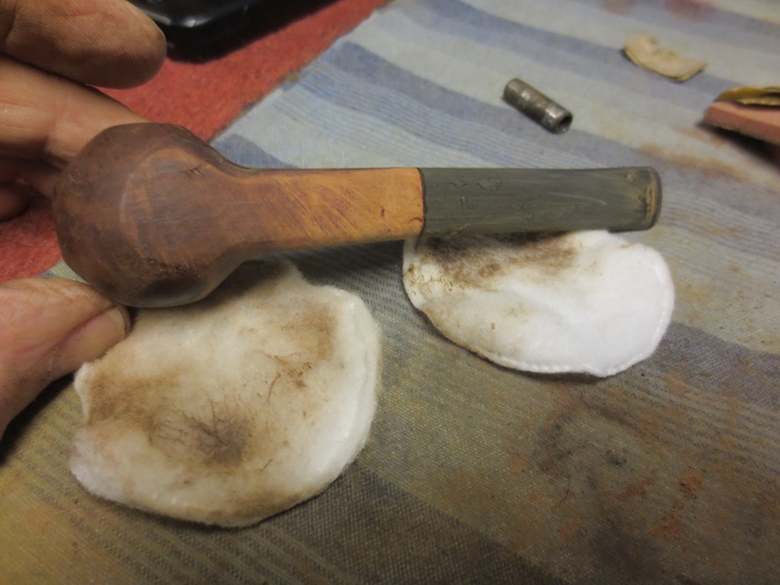
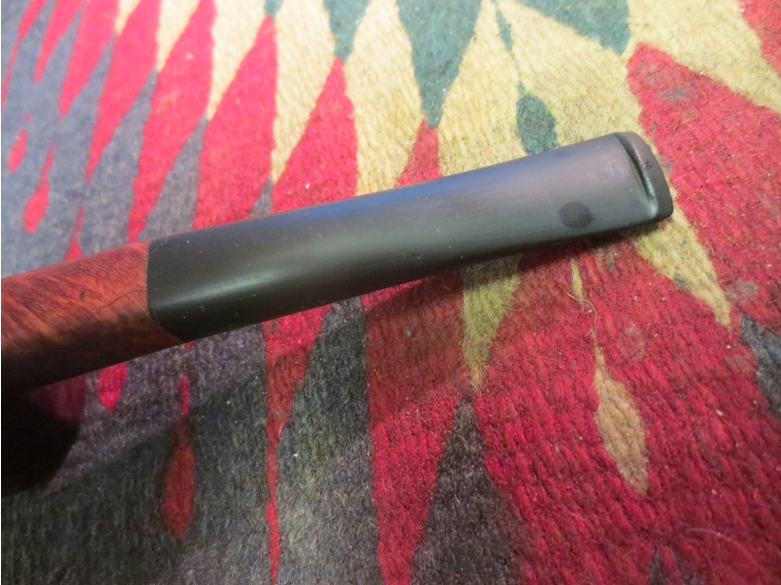
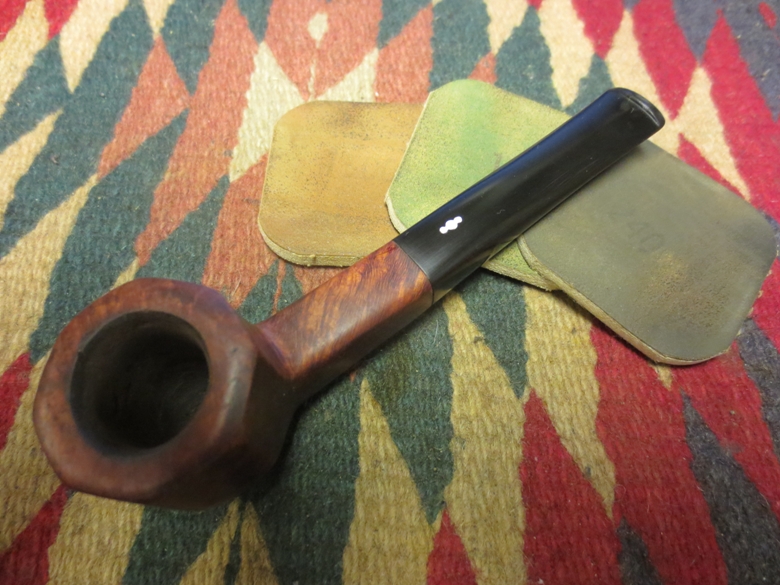
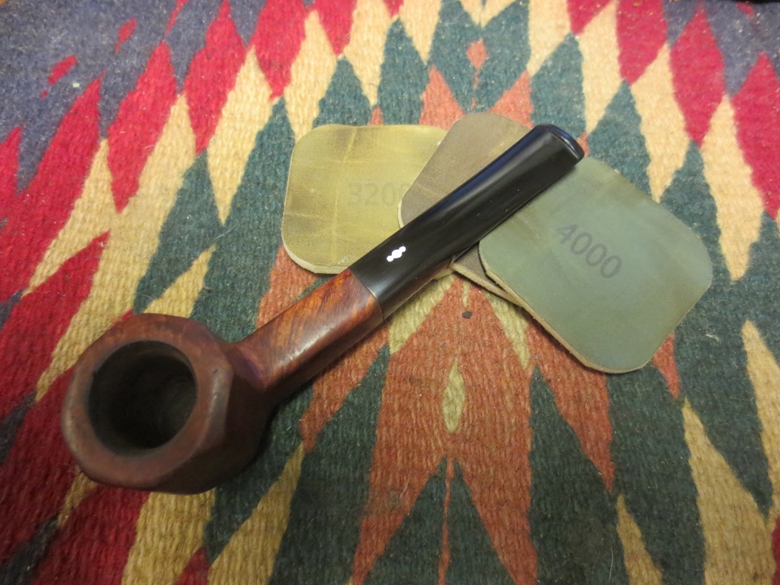
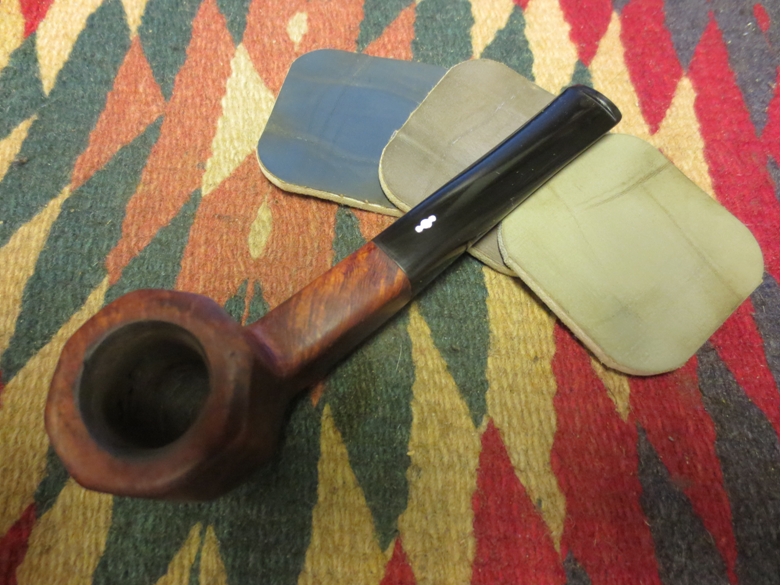
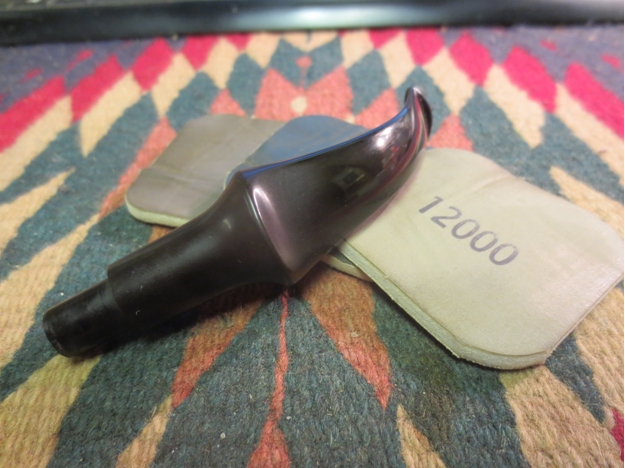
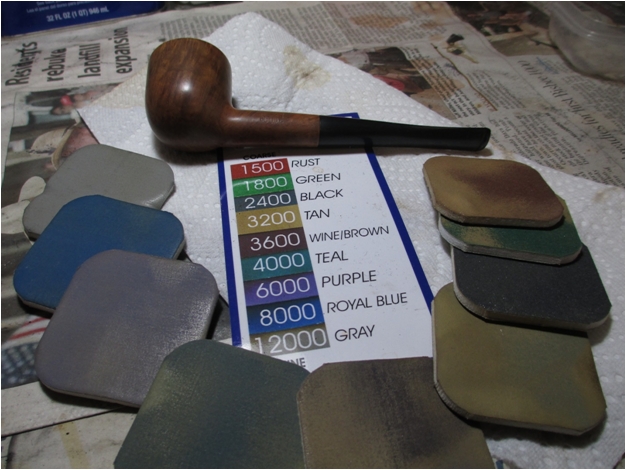
Frank18 I cleaned out the shank with isopropyl alcohol and cotton swabs and the airway with pipe cleaners. I cleaned it until the cleaners came out with no grime on them.Frank19 In the morning I took the stem out of the oxyclean and dried it off with a paper towel. The roughness of the paper towel removes the oxidation that has been raised to the surface of the stem. Once it was dry I slipped a plastic washer on the tenon and reinserted it into the shank of the pipe. The washer allows me to sand all the way to the edges of the stem without rounding the edges at the shank junction. I started with a medium grit sanding sponge and worked through a fine grit sponge and fine grit sanding block. I then wet sanded with 1500-2400 grit micromesh pads and dry sanded with 3200-12,000 grit pads. I rubbed down the stem between each group of three pads with Obsidian Oil and then moved onto the next set of three. When I finished I buffed the stem with White Diamond and gave it a final coat of Obsidian Oil and let it sit until it had dried.Frank20

Frank21

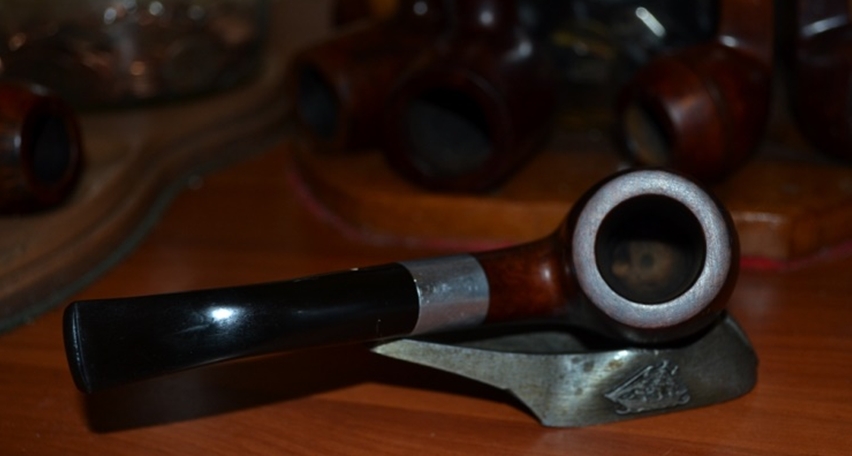
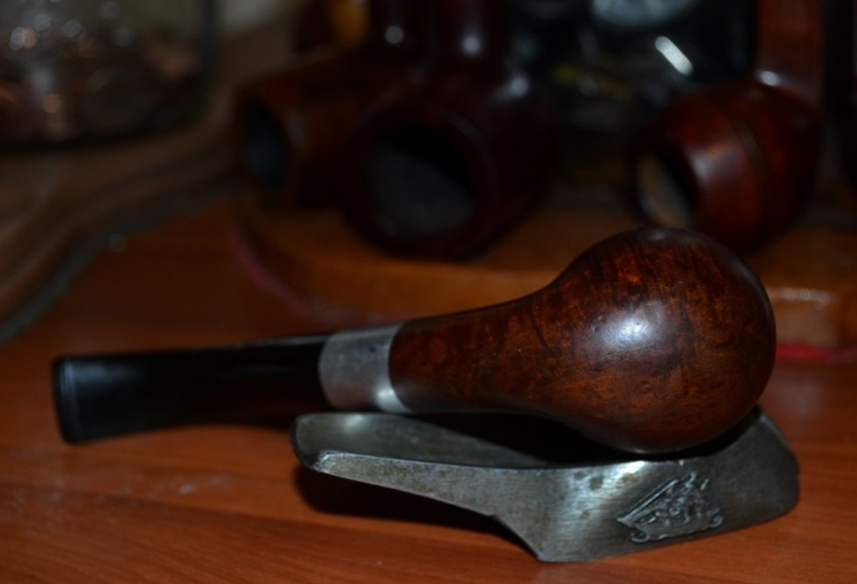
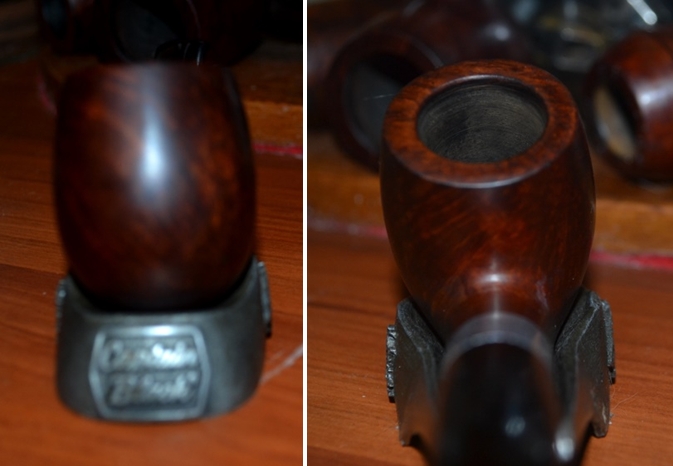
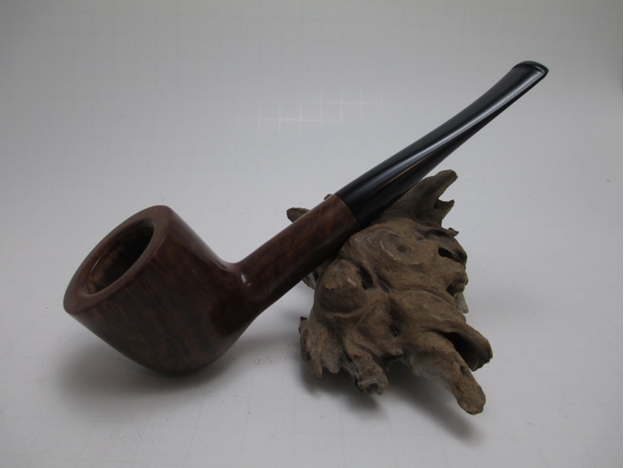
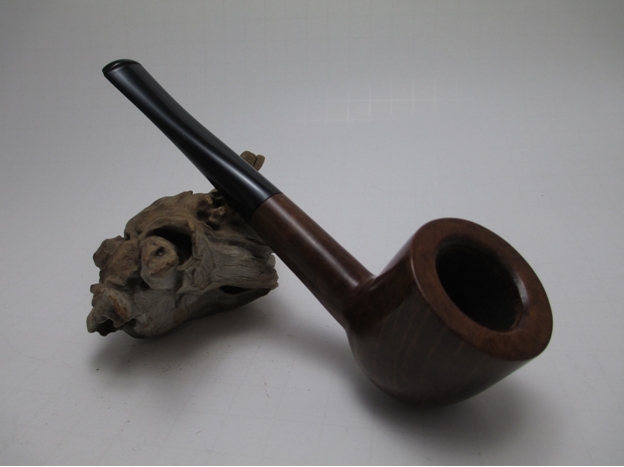
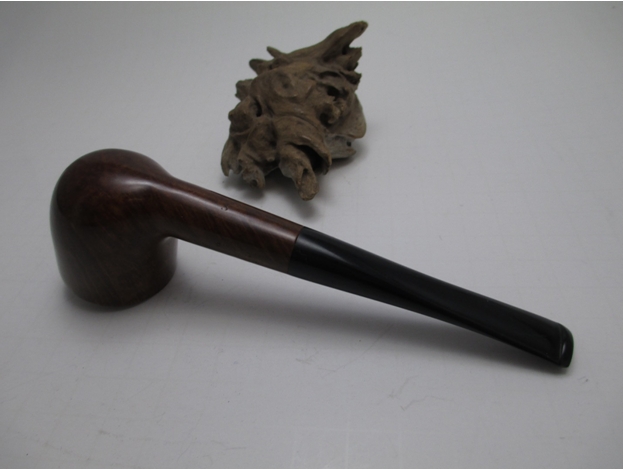
Frank22 (NB In the photo below I left the plastic washer in place on the stem while in the two above I removed it for the photo)Frank23 I put the stem back on the bowl and gave it a final buff with a blue polishing bar on the buffer. This polishing compound is a plastic polishing compound (Blue Diamond maybe, can’t remember the name). I finished by giving the bowl a buff of carnauba wax (light touch so as not to gum up the blast finish) and then multiple coats of the wax on the stem. I buffed the whole pipe with a soft flannel buff for the finished shine on the stem and the bowl shown in the photos below. The pipe is ready to be christened with its inaugural smoke this afternoon while I go for a walk in the neighbourhood. I have chosen a Virginia Perique blend called Pilgrim’s Muse that I purchased from the Country Squire Tobacconist. It is a great smoking tobacco with a good flavour.Frank24

Frank25

Frank26

Frank27

Frank28

A Collection of Brigham Documents


Blog by Bill Tonge & Steve Laug

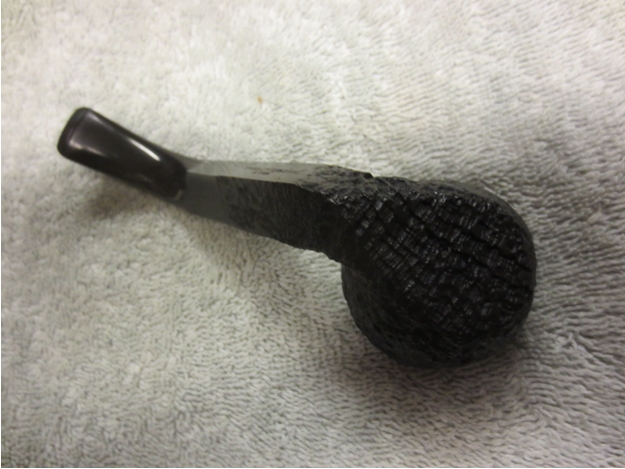
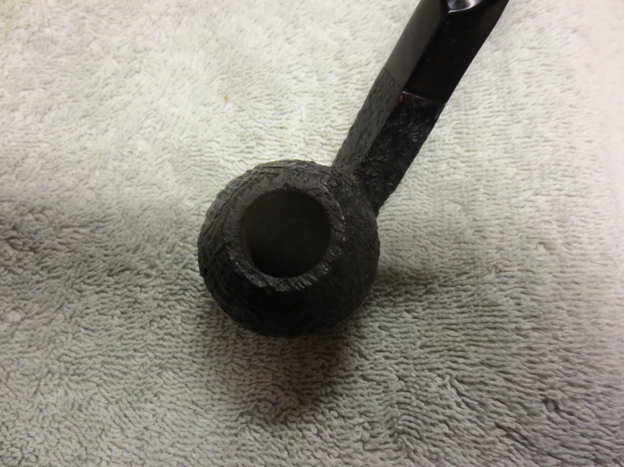
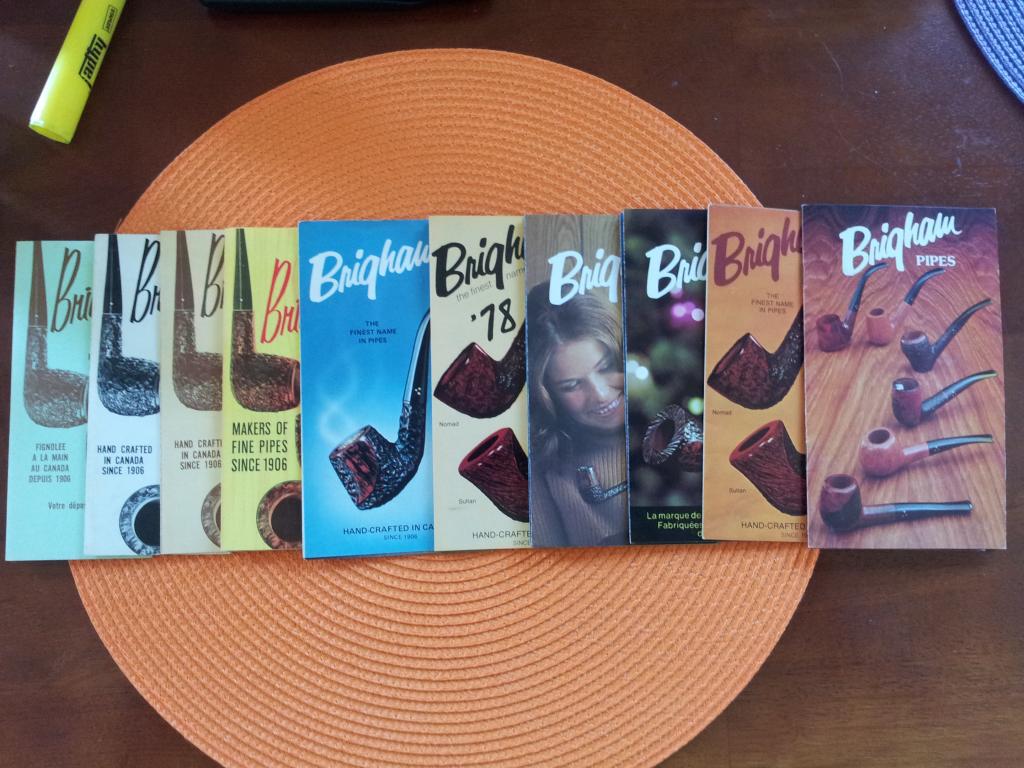
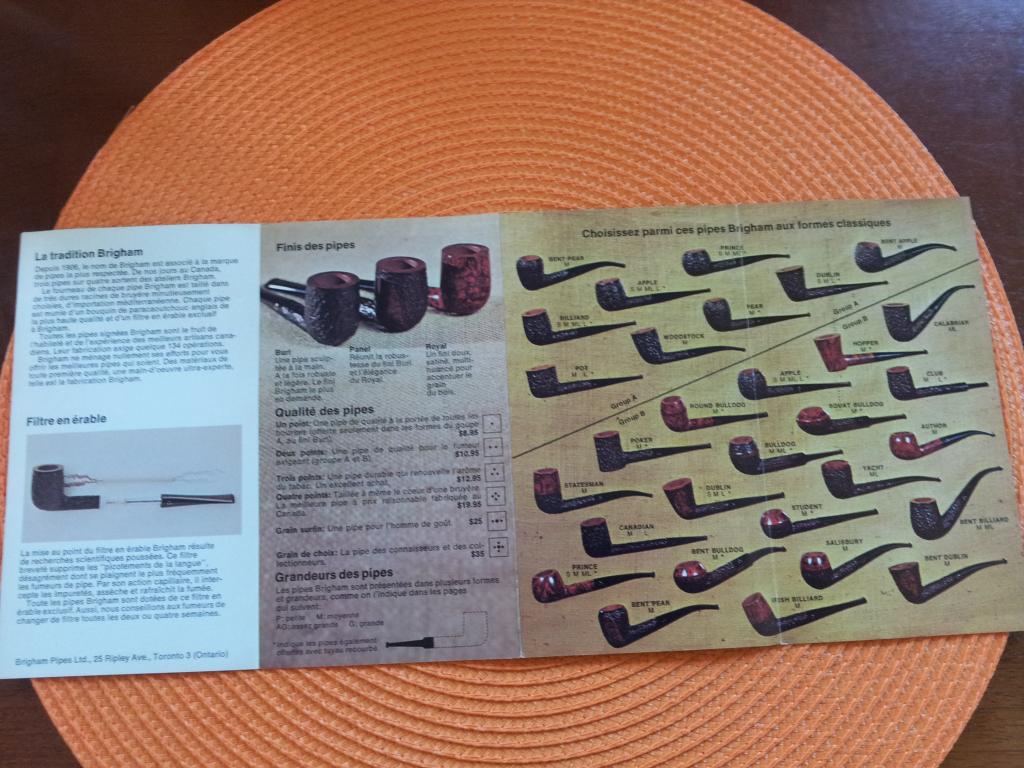
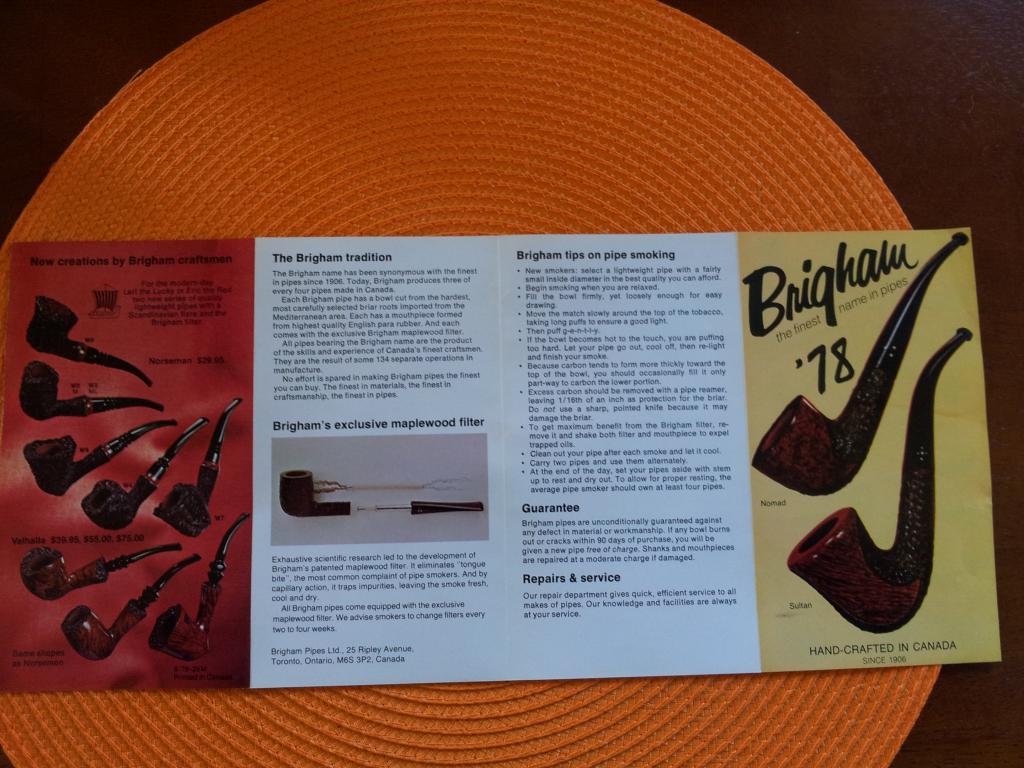
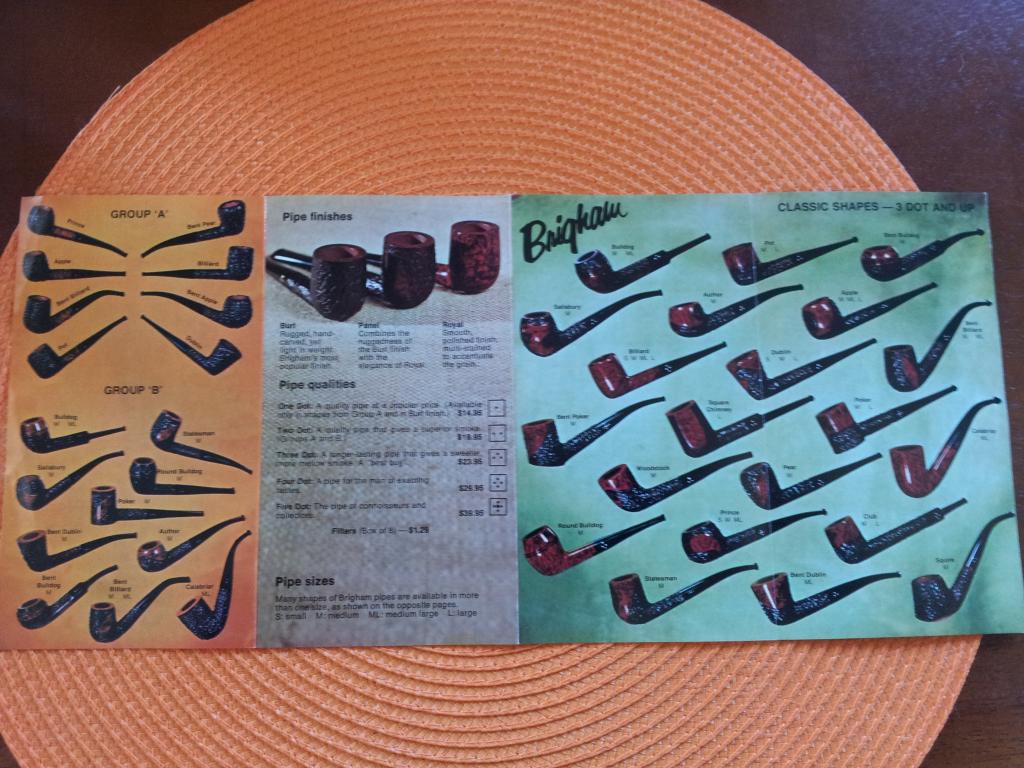
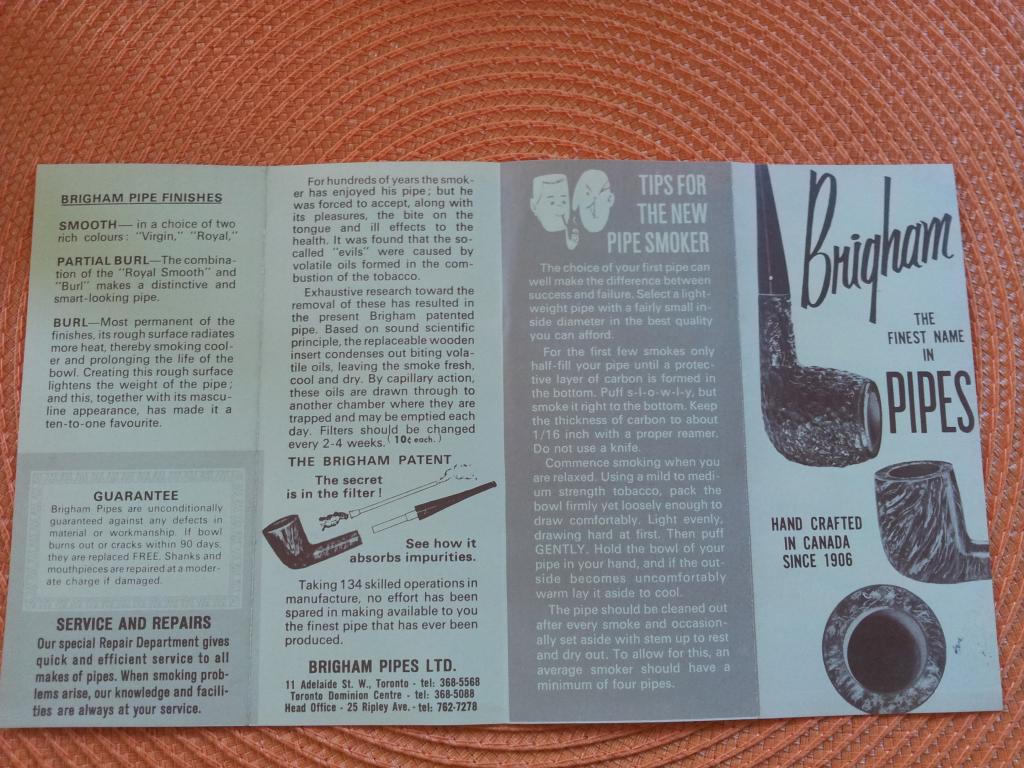
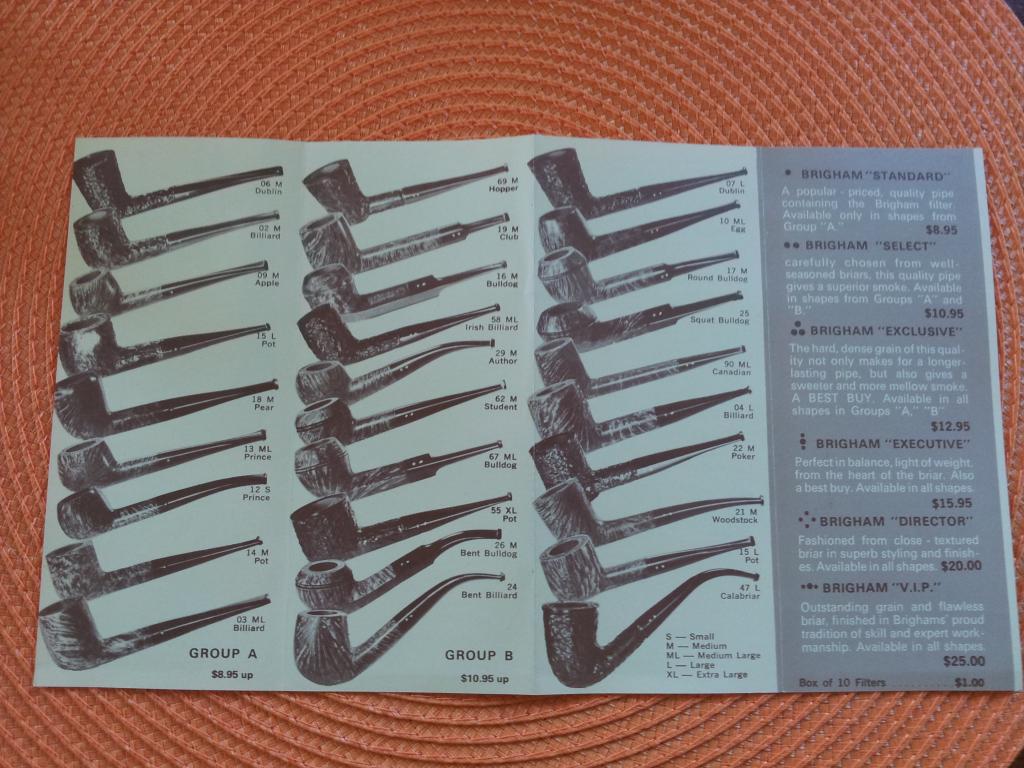
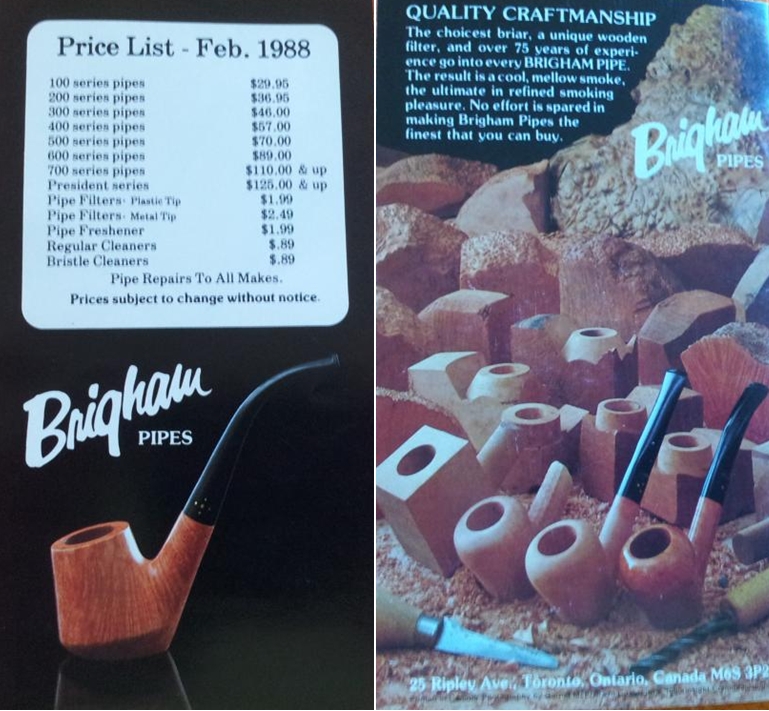
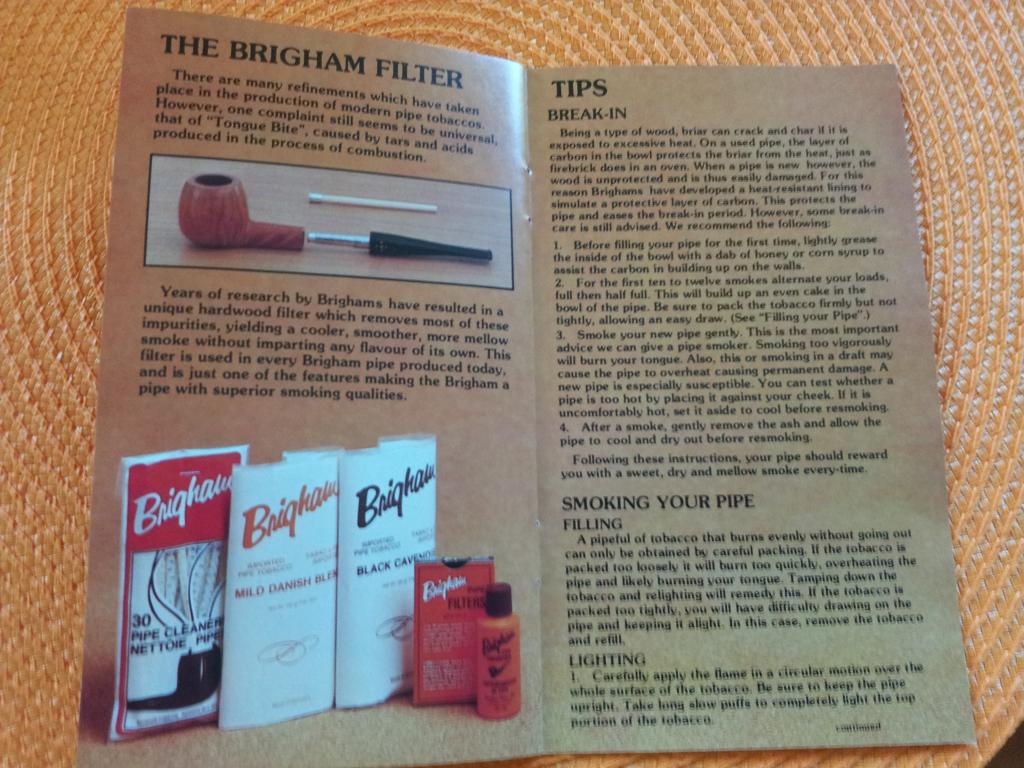
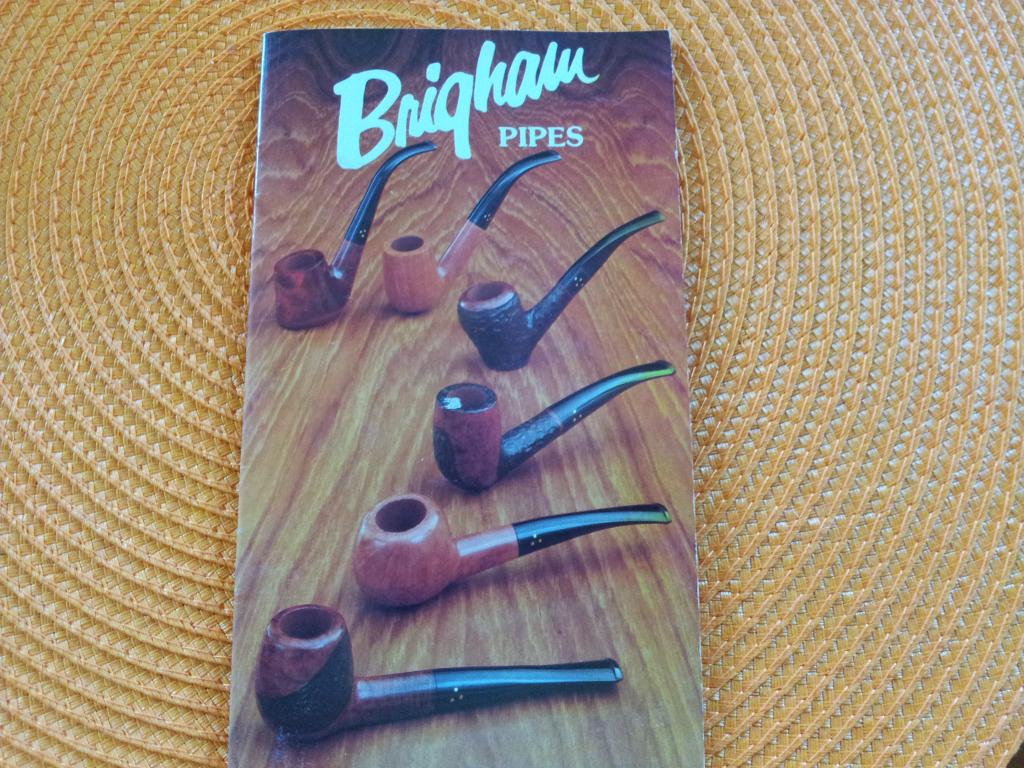
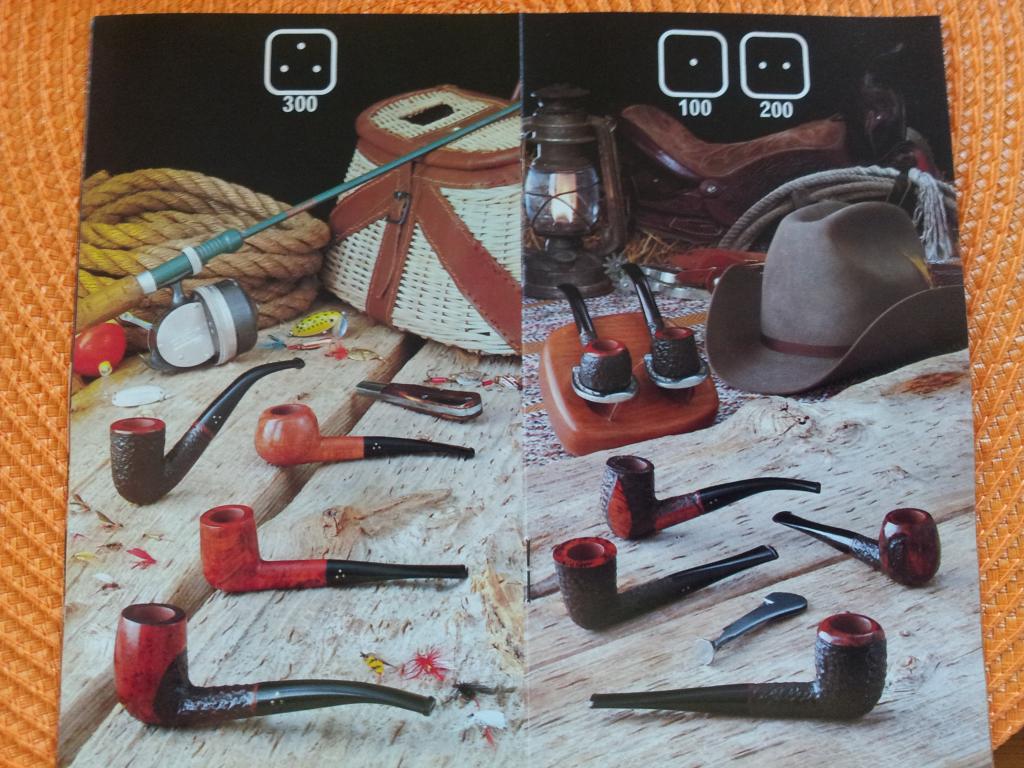
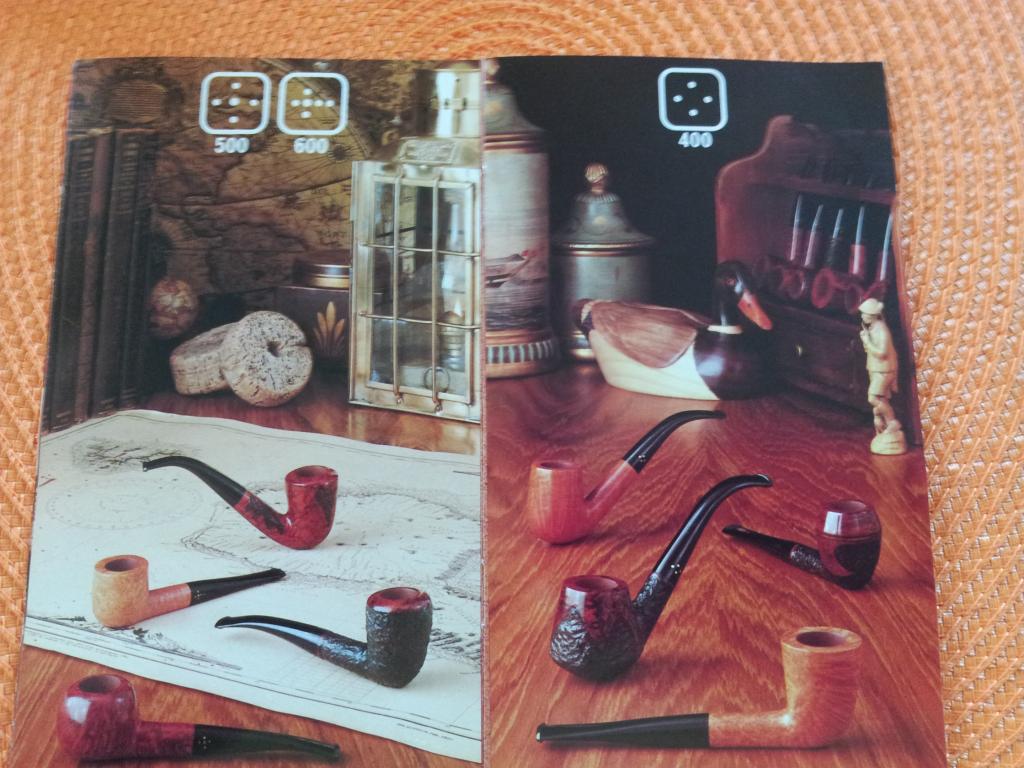
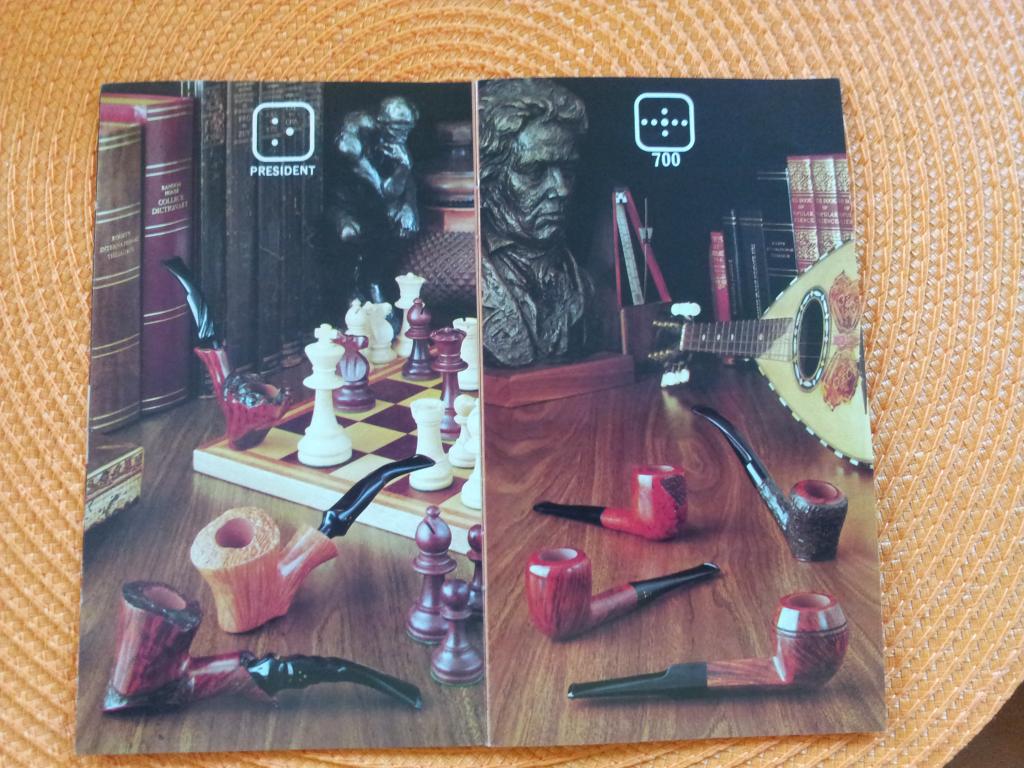
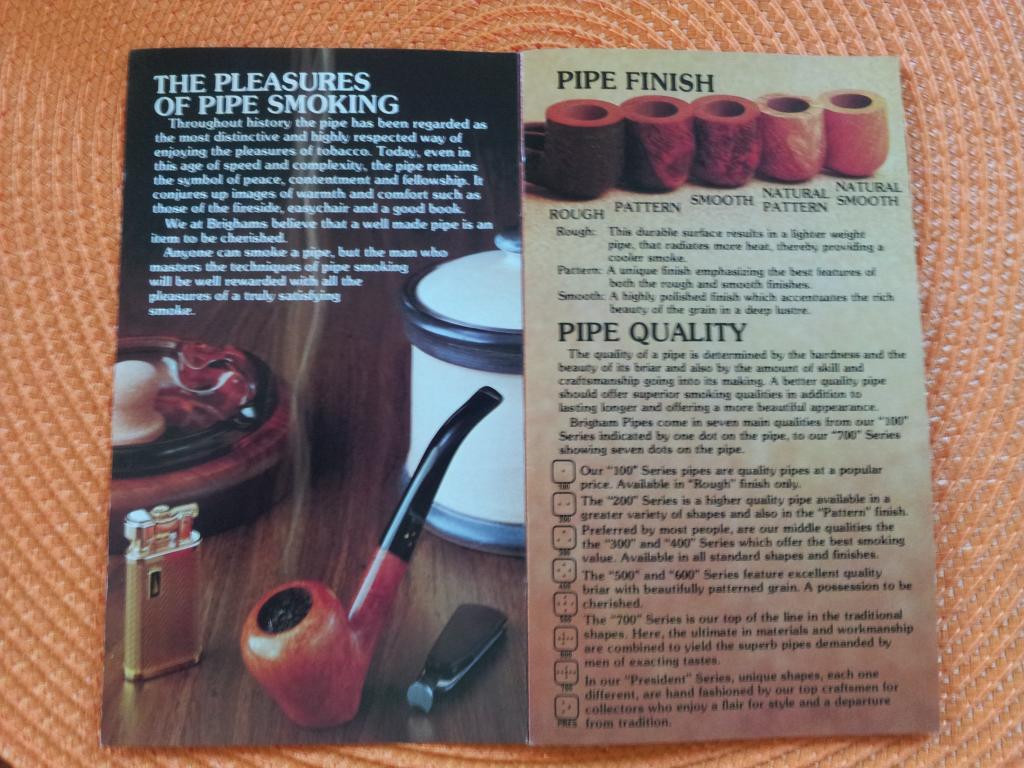
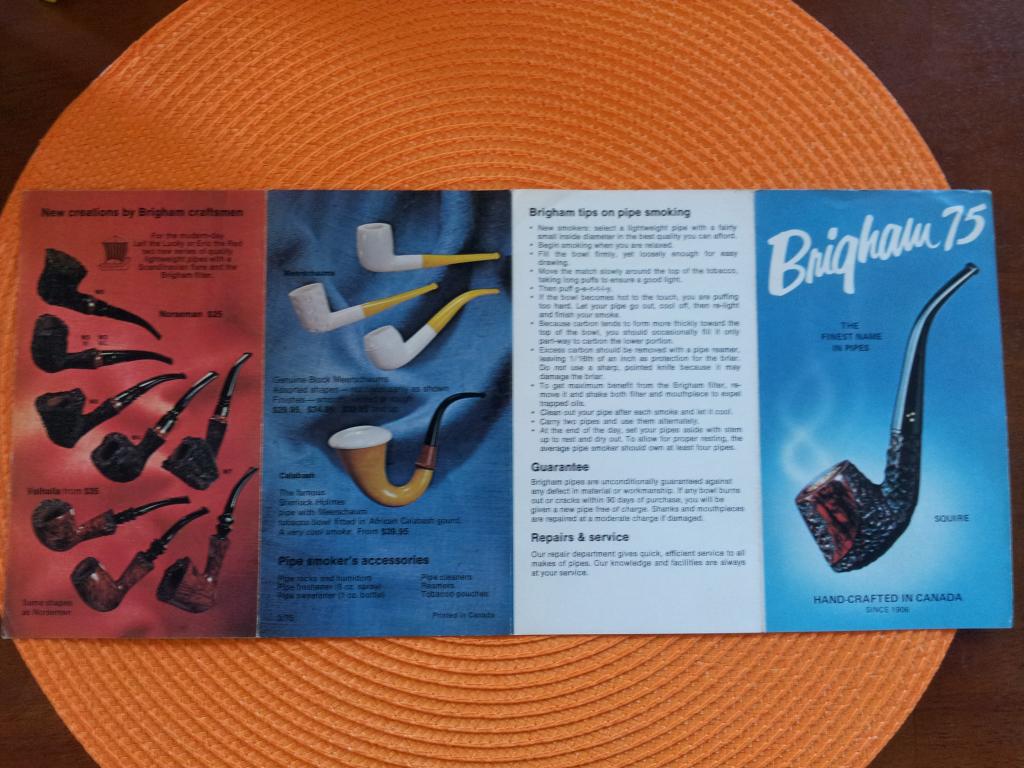
Bill Tonge, who has written several blogs for rebornpipes has become a big collector and fan of Brigham pipes. He refurbishes them and enjoys their workmanship. Several months ago he talked with Brian Levine, the US Brigham representative and received these brochures and sales flyers for Brigham pipes. When he told me about the collection I asked him to photograph them for me so that I could post them on the blog. What follows is that collection. The text is hard to read in some of the brochures but the photos of the shapes and designs are amazing. There are shapes in there that I have never seen and I have had a lot of Brigham pipes over the years. Enjoy the photos. Thanks Bill for photographing these for us to read. Much appreciated.Brigham 1

Brigham 3

Brigham 2

Brigham 5

Brigham 4

Brigham 6

Brigham 7

Brigham 9

Brigham 8

Brigham 10

Brigham 12

Brigham 13

Brigham 14

Brigham 19

Brigham 15

Brigham 16

Brigham 17

Brigham 18

Brigham 21

Brigham 20

A Review – A Brad Pohlmann Dublin with a Bakelite Stem


Blog by Steve Laug

I met Brad Pohlmann at the Chicago Pipe Show many years ago now. Being a resident of Oregon for many years I was intrigued that he was a Oregonian and a pipemaker. I looked forward to meeting him as I saw in the adverts for the show that he would have a table there. I looked at his pipes at the time but could not afford one and none of them really grabbed me so I passed on from there to thinking that one day I would find a Pohlmann that caught my eye.

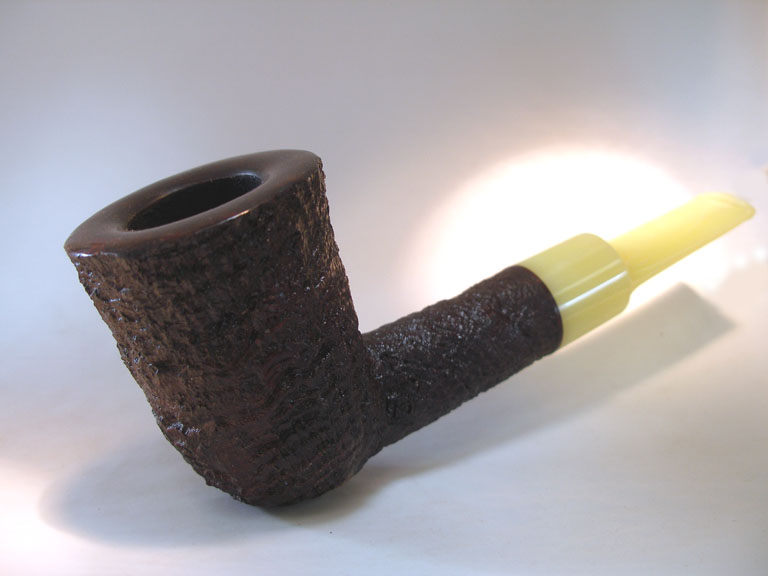
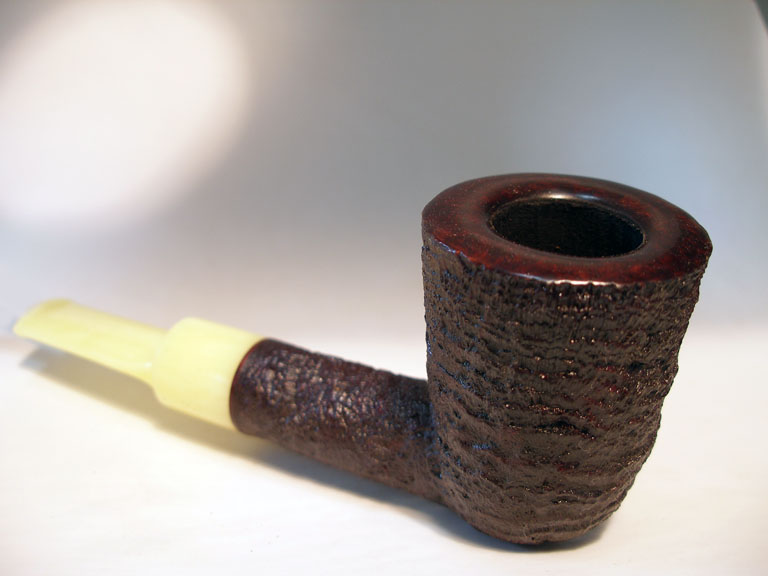
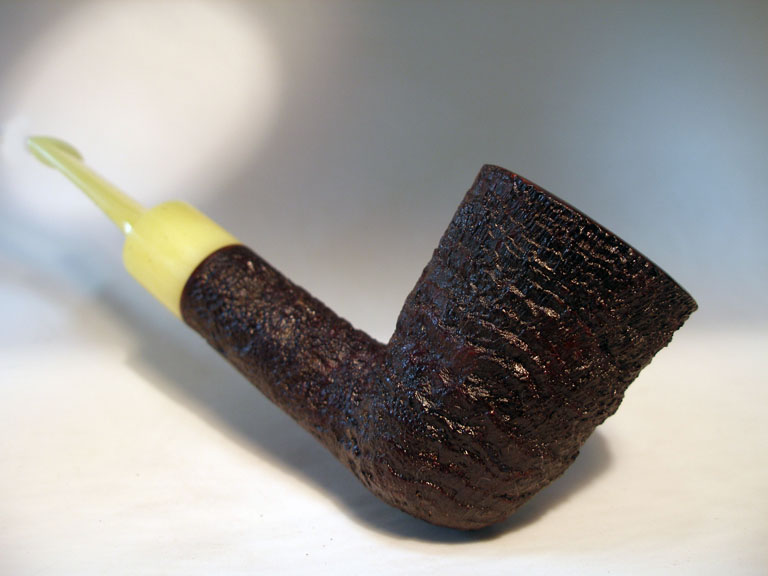
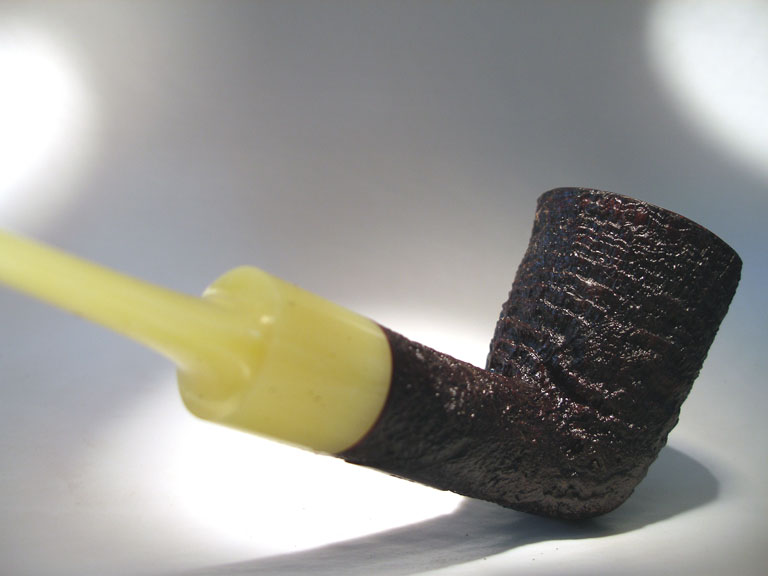
Then low and behold, one day at work while I was on a break I checked in on Smokers Forums and a seller had just posted a Pohlmann in the classifieds. The photo and price hit the front page of the site while I was reading over the latest posts. I actually don’t remember the date when I picked up this pipe but I remember buying it from a fellow on Smokers Forum. The pipe had a oxblood stain on the deep sandblast bowl that highlighted the craggy grain of the pipe. The rim was slightly crowned and smooth and fit well with the shape of the pipe and contrasted well with the sandblast finish on the rest of the pipe. The yellow retro Bakelite stem added a touch of class and distinction to the craggy blast of the pipe. The seller had listed it with a very reasonable and I fell in love with it the moment I saw it. I clicked on the buy it now button, emailed the seller regarding shipping costs to Canada then quickly paid the price and waited for it to arrive.OLYMPUS DIGITAL CAMERA I have always enjoyed learning about the carver when I buy a handmade pipe. I like to read about his philosophy of pipe making and some of the history of the brand. I find that learning this background information gives me a feel for the pipe that adds another dimension to the smoking experience. In terms of information on Pohlmann pipes, I googled his to his website and found the link http://www.pohlmannpipes.com/contact.php. On the site under the ABOUT tab I found the information I was looking for. Brad had posted a well written article regarding the history of his pipemaker and a bit about his pipes. I have included the following from his site as it set the stage for me in terms of enjoying this pipe. I quote in full from Brad’s own words:selfportrait_lg “This story begins in June of 1975; the place was New York City. I had just returned from a “pipe pilgrimage” to England, where I had visited all the great old shops of London, as well as a trip north to Perth in Scotland to visit the venerable firm of Rattray’s.”

“While on my rounds to the pipe shops of NYC, I chanced upon a Dane making pipes in a store window. The gentleman’s name was Finn Meyan Anderson, and he claimed to have worked in the Larsen workshop in Copenhagen. We had a friendly chat about pipes and I remember being favorably impressed with his pipes, and the fact that these freshly minted specimens were being sold in the same store as their manufacture.”
“A year later, at home in San Diego, California I decided my real desire was to operate my own Tobacconist store, stocked with pipes of my own design – not amateurish creations but pipes of quality and design. But how to make them?”

“I poured over several copies of The Pipe Smoker’s Ephemeris and made notes of the locations of all pipemakers between the West Coast and New York. Armed with this information, I mapped out my route, loaded my backpack, walked to the onramp of Interstate 5, and extended my thumb. One of the memorable moments along the way was a visit to Travers LaRue on Whidbey Island in the Puget Sound, off the coast of Washington state. I might have apprenticed with him, but his new son-in-law had just acquired that position – Geezzz, what some people will do to become a pipemaker!”

“With far too many stories in between, I eventually made it to Manhattan but Finn had left and was reported to be working in Vermont. I had the names of two makers there – Andrew Marks in Middlebury and the The Briar Workship in Stowe. Finn had indeed been working in Stowe, but was gone by the time I arrived. However, Elliot and Jorg were making some very attractive pipes and after some fancy confabulation on my part, I joined in their work. A year or two later we had Jim Cooke join our team. It was a great five years altogether, working in Stowe & Hyde Park in Vermont, and Coral Springs in Florida. In 1980 I moved back to California, where I completed a 4 year Tool and Die apprenticeship to round out my machining skills in the pipe shop. Fate had other plans for the future, which led to a 16-year career in the computer industry and only a little time to make pipe for friends and the odd pipe repair.”

“Finally, in 2003 it was time to begin making Pohlmann Pipes, combining the skills learned at the Briar Workshop with the tool and die training, and now incorporating the newest trends in the internal construction of the pipe.”—Brad Pohlmann

My initial impressions of the pipe really include what drew me to this piece of pipe art enough to want to add it to my collection and make it a part of my pipe journey. It is a medium or group 4 sized pipe. Its dimensions are a well-balanced 5 inches long and 2 inches tall. The tobacco chamber is 1 1/2inches deep and 3/4 inches in diameter. There is a narrow band of briar that separates the shank from the stem and provides a smooth transition from the sandblast to the smooth finish of the Bakelite. The dark oxblood stain of the sandblast finish and the same colour smooth band and rim work well with the shape of the pipe. The stem is a handmade saddle shape from a yellow coloured Bakelite. The stem shape and colour work well with the oxblood stain of the sandblast and smooth portions of the bowl. The button on the stem is thin and comfortable.OLYMPUS DIGITAL CAMERA When the pipe arrived it was an impressive piece. The workmanship of the pipe, the deep and craggy sandblast ring grain around the entire bowl and radiating across the shank gave it very tactile feel that captured me. Some pipes like this one and the Roush leave a lasting impression in my mind. I still remember sliding the pipe out of the sleeve and enjoying the look and the way it sat in my hand. Brad had made a very beautiful pipe that was now mine. It had the faint aromas of the Virginias that its previous owner had smoked and the bowl had no cake at all. In fact it did not even look to have been smoked to the bottom of the bowl. The smooth rim has some swirling grain on it and the arched appearance gives it a touch of class. Examining it up close it is obvious that it is blasted with a master hand.

There is a smooth, oval medallion of briar on the bottom of the shank that provides a spot for the stamping. On the underside of the stem it is stamped with an arced Pohlmann over USA. The symmetry of the pipe is easy on the eyes. The balance between the height of the bowl and the length of the shank is perfect. The stain has variation and almost a sparkle when moved in the light. The yellow Bakelite stem stands in stark contrast to the oxblood stain on the bowl and together give the pipe a dressy and classic look.OLYMPUS DIGITAL CAMERA The inner mechanics of the pipe are perfect. The drilling is perfectly executed from the shank and into the bowl – coming out exactly centre in the bottom of the bowl. The airway from the bowl into the mortise is centered. It is smooth in its entrance to the mortise and the mortise itself is also smooth with no rough spot left by drill bit. The end of the shank is sanded smooth and is finished. There is a bevel in the shank end to accommodate the tenon and provide a snug fit against the shank. The bowl itself is U shaped and smooth from sides to bottom. The air way enters the bowl and is smooth and clean.The draught on the bowl is wide open and effortless.

Looking at the Bakelite stem one is struck by the retro look of the old stem material. The saddle shape works well with the material and the Dublin shape of the pipe giving it a classic style that works with just a little flair of modern. It is hand cut out of a piece of Bakelite. From the saddle back it is well tapered with good even angles top and bottom progressing to the button. There is a slight wavy pattern to the Bakelite that makes it have an amberlike look in the light. The blade of the stem that is put in the mouth is thin and comfortable. Brad did a great job shaping the stem and capturing a shape that really works with this pipe.

The tenon is white Delrin that has been inserted into the stem for durability and ease of use. The airway is funneled slightly for a smooth transition from the mortise when it is in place. There is a very minimal gap between the end of the tenon and the base of the mortise. The transition where the Delrin meets the Bakelite of the stem is seamless. There is no lip or rough spot at that junction. The draught of the stem is unrestricted and open. When the pipe is put together the draught is effortless. The fit of the stem to the shank is very well done. The button is cut to my liking with a good sharp inner edge and tapered to the tip. It is a thin button with material enough to provide an edge that fits behind the teeth. The slot is rectangular with rounded edges and deeply funneled to deliver a uniform airway from bowl to button. The inside of the slot is sanded smooth and polished. The airway is absolutely smooth from slot to tenon.OLYMPUS DIGITAL CAMERA The overall construction of this pipe is very well done. It is light in the hand and in the mouth. The shaping of the stem is exactly what I like in terms of the feel in my mouth. The blade from the button to the saddle is deep enough to give room for how it sits in my mouth. It is well balanced and tactile feel of the deep blast as it warms up during the smoking of a bowl is very pleasant. Like others in my American carver collection, I smoked the pipe at specific times in my life. It is a pipe I enjoy smoking when sitting on my porch or in my recliner. It is not one that I carry with me as an everyday pipe. That being said since I got it I have smoked it enough to have a good thin cake developed in the bowl. It is one that I have dedicated to Virginia and Virginia Perique tobaccos. It delivered a good smoke from the first smoke I had in the bowl and continues to do so to this day. It draws well; the lighting has never been a problem and continues to be an effortless smoke. Now that I am writing this review up, I have moved the pipe out of the cupboard and set it aside to enjoy Sunday afternoon. Thanks Brad for delivering a beautiful, well-made pipe that remains a very good smoking pipe to this day.

If you can acquire a pipe made by Brad Pohlmann I can assure you that it will not disappoint you and you will find that it will become a favourite in your rack. One of the things I love about pipes is that they live far longer than the original owner. I hold it in trust while it is in my care. The craftsmanship of this pipe gives the certainty that it will continue its journey well beyond the years that it is my companion.

Undressing a Stanwell Black Diamond


Blog by Greg Wolford

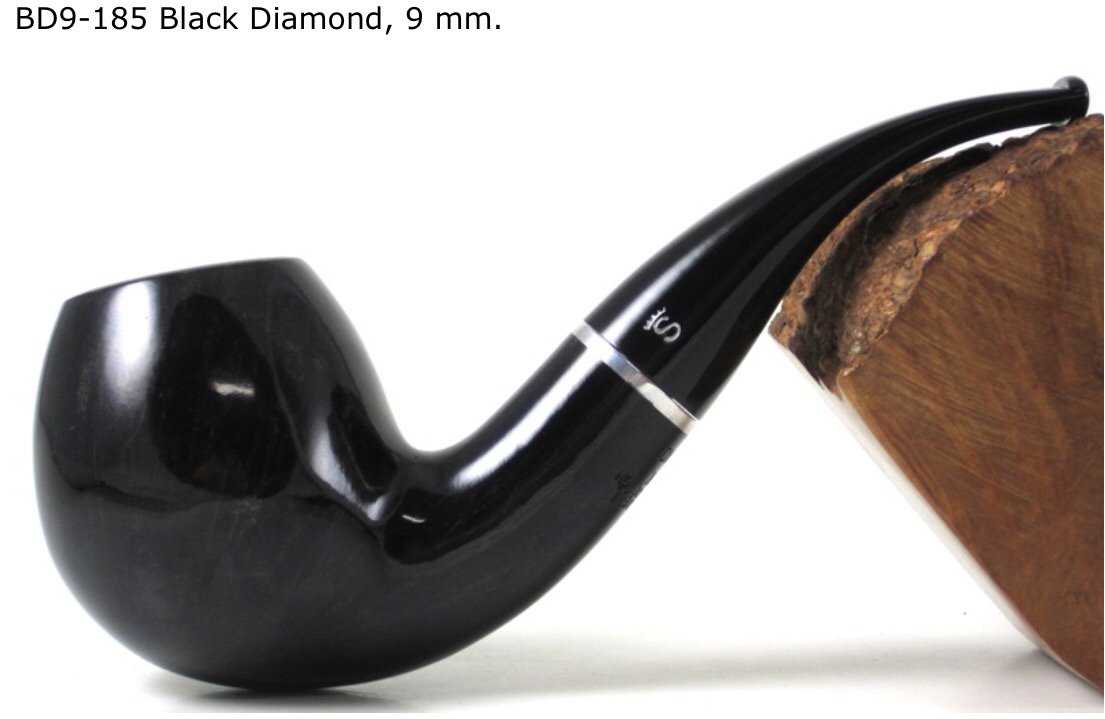
A few days ago I received a Stanwell Black Diamond shape 185 in the mail, gifted to me from an Instagram friend. It was a pipe he’d bought as an estate and hadn’t touched. When it arrived it was a “dress black” pipe, covered with a matte black opaque finish that needed some TLC: the rim was a bit uneven from being bumped or tapped out, the finish was “thin” in a few spots, with the briar peeking through, and needed to be cleaned internally. I thought I was going to do a quick clean up and smoke it but the story developed into something more soon. So I didn’t plan on all that I ended up doing and didn’t take photos. I even forgot to take a before picture so I’m using a “stock” picture of this model.

I cleaned the bowl, stem and shank first. This pipe had almost no cake and was not very dirty at all; it took only half dozen or so pipe cleaners to get it done. As I said before, I thought this was be a really fast job when I saw how little use the pipe had had. But it, of course, didn’t turn out quite so simple.

I wiped the stummel down with alcohol to clean off the surface and prepare it for a treatment with a new idea I had: colored wax. Some time back, Steve had mentioned to me about a product that Hobby Lobby carried that was a rub on/rub off wax that comes in different colors and might be good to highlight stem or shank nomenclature. I picked up a tube of black and have tried it once or twice with less than great results. But I thought it might be just the thing to touch up the black finish on this pipe and shine it up, too. The alcohol removed a little of the black coat but not too much as I cleaned it so I knew the finish was removable at this pint, in case the idea didn’t work. After the briar dried I rubbed the ebony wax onto the pipe, let it haze and buffed it off by hand. I did about three coats of the wax and wasn’t really thrilled with the pipe, even though the color “took”.

The bumpy rim was irritating to me and I knew it would continue to be a distraction. Although I was worried about what lay under the opaque finish, I decided to top the bowl and go from there. The newly smooth rim pleased me and I couldn’t help but wonder what was under that black coat. So I began to sand the black away to see.

The coating was fairly thick and took some time to remove. I sanded with 220 grit paper until the black was mostly gone. It was a pleasant surprise that no fills were under that coat. In fact, the grain was pretty nice. So I moved on to 400 grit paper and then buffed the briar with tripoli to see how it looked; it was nice and the black would make a great contrast stain. I wiped the pipe down with alcohol again to remove the wax and dust and started sanding with 600 grit paper. After I was happy with the smooth surface of the pipe I removed the tape I’d applied earlier to the stamping to protect it and began to work gently around the black patches under the tape to make as little damage as possible to the nomenclature but break up the black.

I mixed up some Fiebing’s dark brown leather dye with isopropyl alcohol in a 1:3 ratio. I applied and flamed the stain several times to get a nice, even coat. Then I wiped the bowl down with alcohol wetted pads until I removed enough due to see the grain well. I moved to the buffer where I buffed with tripoli and white diamond before laying the stummel aside to deal with the stem.

The stem on this pipe is acrylic and was in good shape; there were no major scratches or tooth dents so I polished it with plastic polish and then reassembled the pipe. Then the entire pipe got several coats of carnauba wax and buffed to a shine on a clean flannel buff and then a bit more by hand with a microfiber cloth.

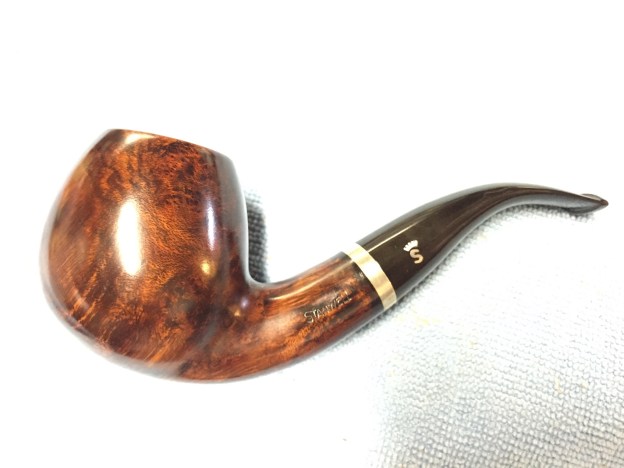
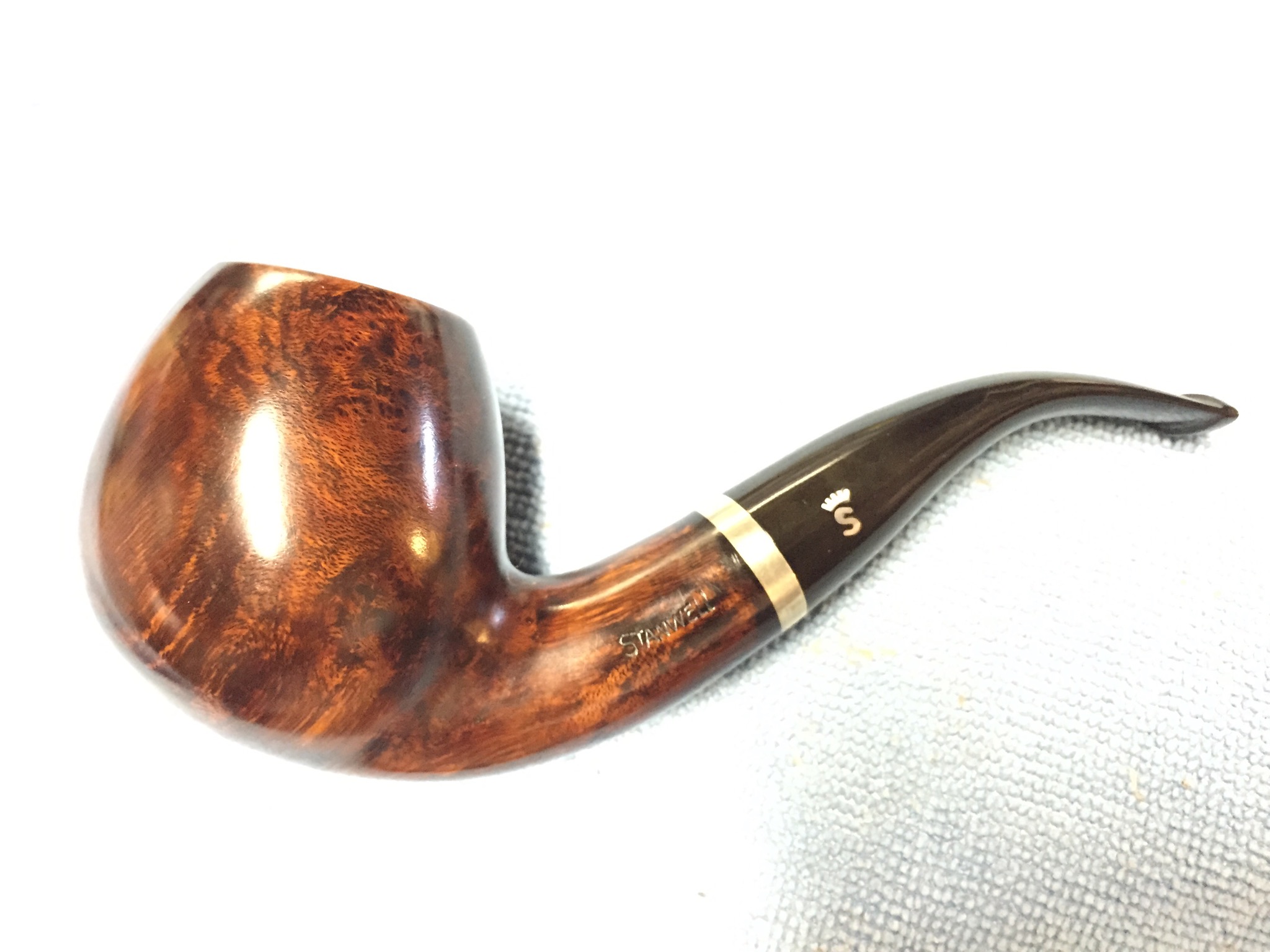
I’m really pleased with the “undress” pipe. And I’m relieved that the briar under the “coat” was as nice as it is. This large, heavy pipe will now have a spot on my rack, to be used and enjoyed, something that it hasn’t had much of in its life. IMG_0986.PNG

IMG_0982.JPG

Carving Your Own- Getting Started with a Pre-Drilled Pipe Kit


Blog by Greg Wolford

One of the forums I belong to has started a group project: carve our own pipe from a kit/pre-drilled block. It’s just getting started but one thing has become apparent to me: lots of folks want to try but are at s loss as to where to start.

The whole idea here is to have fun and get started with a minimal amount of tools and money invested for the real beginners. It seems lots of folks think that a lot of large, expensive machinery is needed to make any pipe. While the professional pipe maker may have and need these, the DIY-guy/gal doesn’t need a lot to start from a kit.

My son has carved three pipes and I have carved one, all using hand tools, not counting the buffer. I thought that a short list and video might be helpful to any want-to-try pipe carver.

All of the tools except one can be found at Home Depot; I use them as the example because I bought it looked up most of them there/on their website. The exception is the vulcrylic file which I got from Amazon.com.

3-Piece Steel WoodChuck Set
http://thd.co/1mDsSfB
6-1/2 in. Pro Coping Wood Handle Saw
http://thd.co/1iXdvMA
8 in. 4-in-Hand Rasp and File
http://thd.co/SXnKpr
2-3/4 in. Swiveling Vacuum Base Vise
http://thd.co/1kWm4pf
2 Vul-Crylic Wax File Jewelers Carving Filing Hand Tool https://www.amazon.com/dp/B000RAYCES/ref=cm_sw_r_awd_Kj1Iub1ARRHYX

There are other sources for tools and sandpaper etcetera but this will get you started. The blocks/kits are available from a variety of suppliers, too, including but not limited to PIMO, Pipe Makers Emporium, and Vermont Freehand. These sources, with many others, also sell various finishing products such as dyes and waxes. But again, this ought to get one off on the right foot.

Happy carving!

The Resurrection of an old KBB Yello-Bole Premier Panel


Blog by Steve Laug

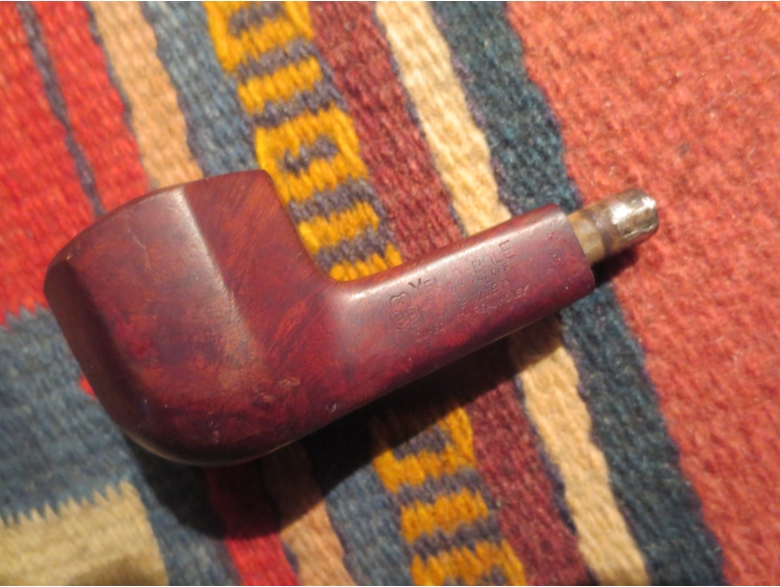
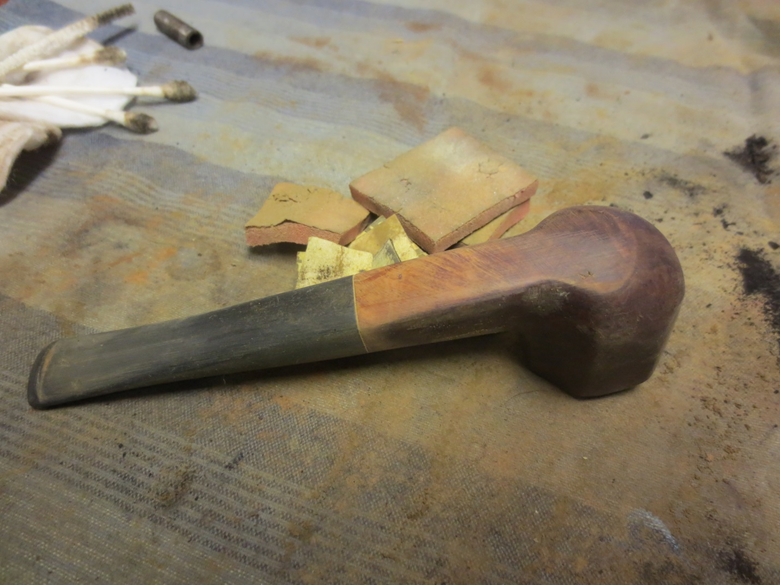
In a recent trade with Andrew Selking I received an older KBB Yello Bole Paneled billiard. When I removed it from the box there was something about the older KBB Panel that grabbed my attention. It was stamped on the left side of the shank with the familiar KBB logo and the Yello-Bole next to it. Underneath that it bore the stamp Reg. US Pat. Off. Directly below that was stamped Premier over Cured with Real Honey. The pipe had been repaired at some time in its ragged existence with what appeared to be a homemade repair job. The tenon had broken somewhere along the line and a previous owner had drilled out the stem and used a piece of stainless steel tubing to make a new tenon. The metal tenon was stuck in the shank of the pipe and the stem just sat loosely on it. The fit of the stem to the shank was off with the stem sitting high and to the right. The previous owner had tried to compensate for the off centered stem by sanding flat spots on the stem sides and bottom that broke the smooth lines of the square shank and stem. There were two small hairline cracks on the shank – top right and bottom left that would need to be repaired once the tenon was removed. The bowl was out of round with damage to the inner edge of the rim and a tarry build-up on the surface. The outer edge rim crown of the bowl was also compromised and would need some work. The stem was not too badly oxidized but it had tooth marks on the top and bottom near the button.YB1

YB2

YB3 Background Information
I wrote about the history of the KBB stamped Yello-Bole Pipes. The following link will give you the details: https://rebornpipes.com/2014/07/21/renewing-an-old-kbb-yello-bole-honey-cured-briar-billiard/
Yello-Bole pipes are one of my favorite older US brands doing the research would be enjoyable. As with other early brands made in the states I have found that older is better. A KBB in a cloverleaf stamp will date them back to the ’30’s. I have found through my reading that the 4 digit shape numbers are older than 2 digit ones. The pipes with the logo on top of the stem are older than ones that have them on the side. That is just some of the information that I found with a cursory read through the forums and a variety of websites.

The SM Frank website http://www.smfrankcoinc.com/home/?page_id=2 gives a wealth of historical information on Kaywoodies, Yello-Boles and the merger between KBB and SM Frank and later Demuth. It was a great read and I would encourage others to give the website a read. I also wanted to find some help in dating my old Yello-Bole Pipes and I came across this link to the Kaywoodie Forum: http://kaywoodie.myfreeforum.org/archive/dating-yello-bole-pipes__o_t__t_86.html . I am including some of the information I found there as it gives the only information that I found in my hunt to this point.
“…there isn’t a lot of dating information for Yello-Bole pipes but here is what I have learned so far.

– If it has the KBB stamped in the clover leaf it was made 1955 or earlier as they stopped the stamping after being acquired by S.M. Frank.
– From 1933-1936 they were stamped Honey Cured Briar.
– Pipes stems stamped with the propeller logo they were made in the 30s or 40s no propellers were used after the 40s.
– Yello-Bole also used a 4 digit code stamped on the pipe in the 30s.
– If the pipe had the Yello-Bole circle stamped on the shank it was made in the 30s this stopped after 1939.
– If the pipe was stamped BRUYERE rather than briar it was made in the 30s.”
Given the above information I discovered that the pipe I was working on was made sometime between 1930 and 1940. Thus it was an early Yello-Bole from the 1930s or 40s.

Restoration Process

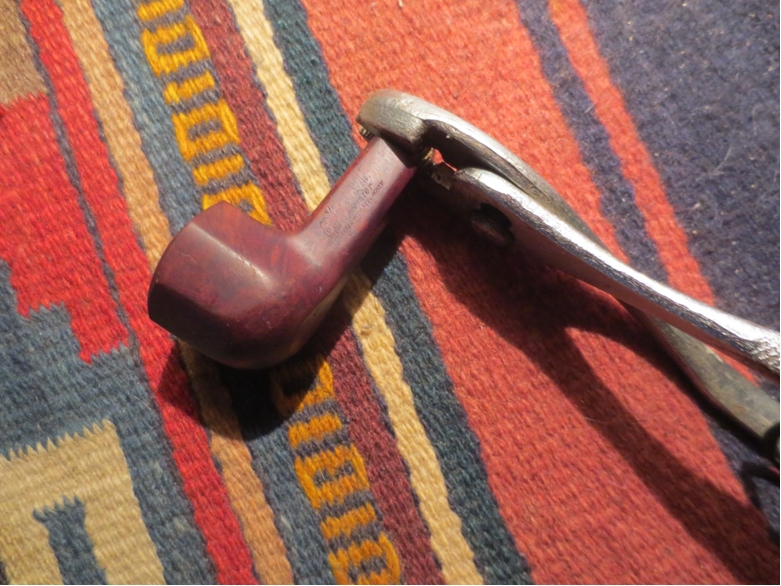
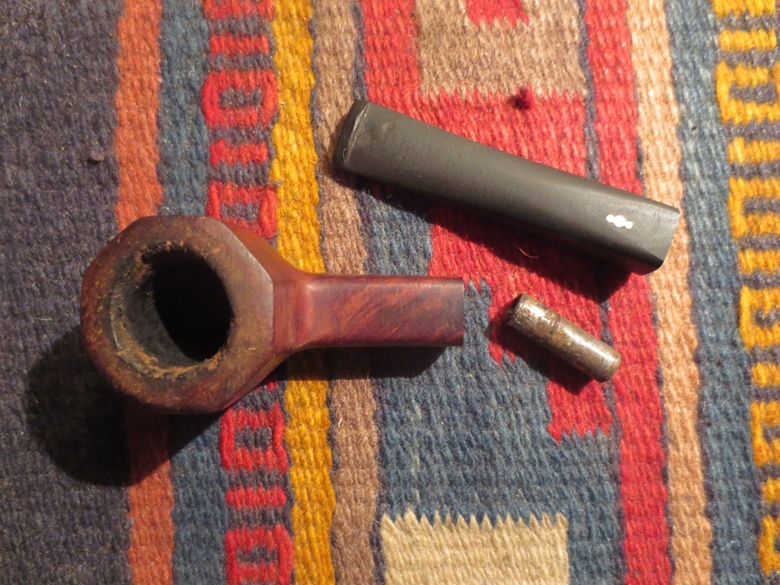
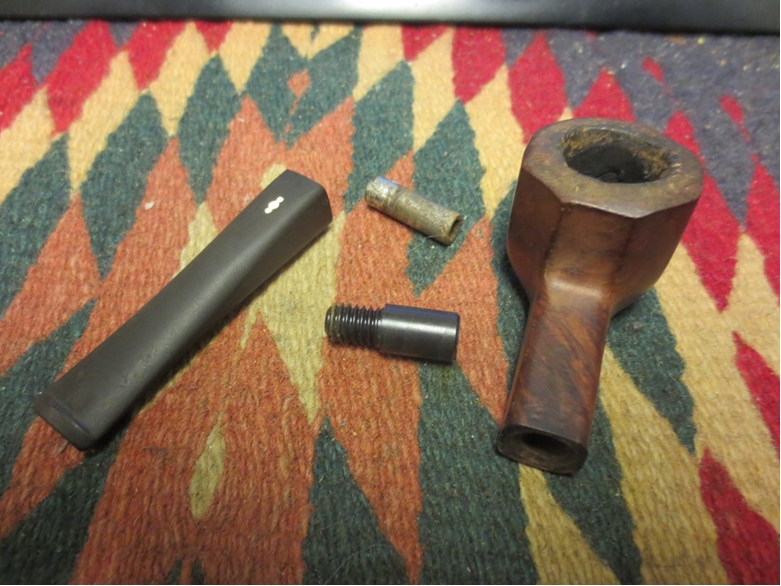
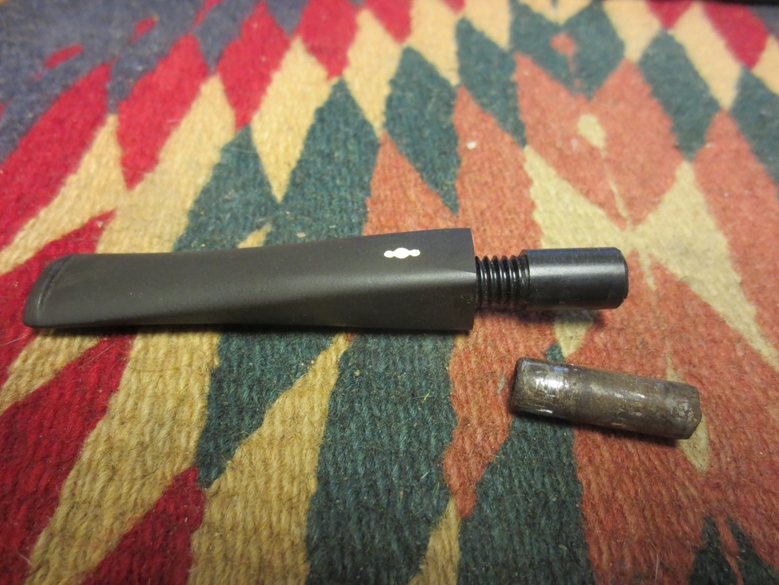
I took the stem off the bowl and tried to remove the inserted metal tenon. It was firmly stuck in place and I could not move it even with pliers. I put the bowl in the freezer overnight hoping that the cold would contract the metal and briar differently (as is the case with the varied material and density). In the morning I took it out of the freezer and was able to turn the tenon out of the shank with pliers. Once it was removed it was clear to see that it had not been glued in the shank but merely stuck with the tars and oils of the tobacco in the shank.YB4 I found a threaded Delrin tenon in my box of tenon parts and it was a workable replacement for the metal tenon. I tapped the drilled out hole in the stem and screwed the threaded tenon into the hole. It was a perfect fit. I removed it once again and put some glue on the threads and screwed it into place and let the glue set. The diameter of the tenon would need to be adjusted as it was too big for the mortise. This was actually ideal in that I would be able to adjust the fit against the shank on the sides and the top. The bottom of the shank would take work to make a smooth transition.YB5

YB6

YB7

YB8

YB9

YB10 I sanded the tenon with a Dremel and sanding drum to remove the excess Delrin. I hand sanded it with 180 grit and 220 grit sandpaper to smooth out and fine tune the fit. I spread the hairline cracks with a dental pick and dripped superglue along the cracks and pressed them together until the glue set.YB11 The stem fit in the shank nicely. The photos below show the damage that had been done to the stem in the previous repair. It is especially visible in the photos of the pipe from the side and the bottom. The stem had been modified to the misfit of the previous tenon so work would need to be done to realign the fit against the end of the shank.YB12

YB13

YB14

YB15

YB16

YB17 I sanded the bottom, top and right side of the shank until the transition between the briar and the vulcanite was smooth. The left side was touchier in that I did not want to damage the stamping. I sanded this area while covering the stamping. The trick was to smooth out the transition without making a drastic dip in the briar – it just needed to be re-tapered until it flowed naturally into the stem. Sanding the top of the stem also took care as it had the insert of the white propeller. Too much sanding on the top would damage and compromise the insert. The photos below show the newly sanded and tapered shank/stem. I sanded with 220 grit sandpaper, medium and fine grit sanding sponges and a fine grit sanding block. I sanded the rim and curves of the rim with the same sandpapers. I folded a piece of 220 grit sandpaper and worked on the out of round bowl to clean it up as much as possible.YB18

YB19

YB20

YB21 I wiped the bowl and shank down with acetone on a cotton pad to remove the finish from the bowl.YB22

YB23

YB24

YB25 I cleaned out the bowl and shank with isopropyl alcohol, cotton swabs and pipe cleaners. I cleaned out the stem as well at the same time. I sanded the bite marks on the top and bottom of the stem with 220 grit sandpaper to minimize the damage and remove the tooth chatter. There were still some tooth marks that needed to be repaired.YB26

YB27

YB28

YB29

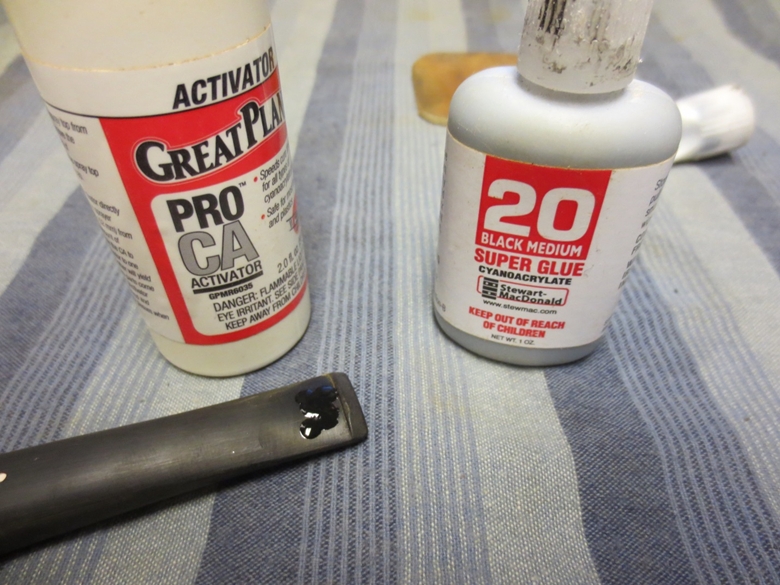
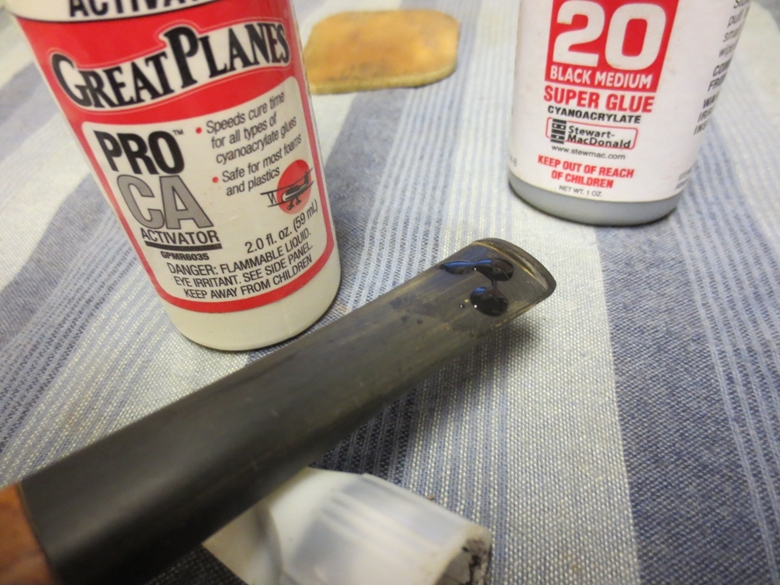
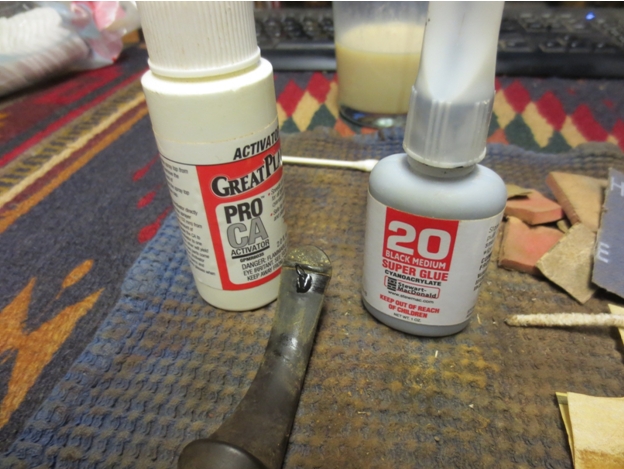
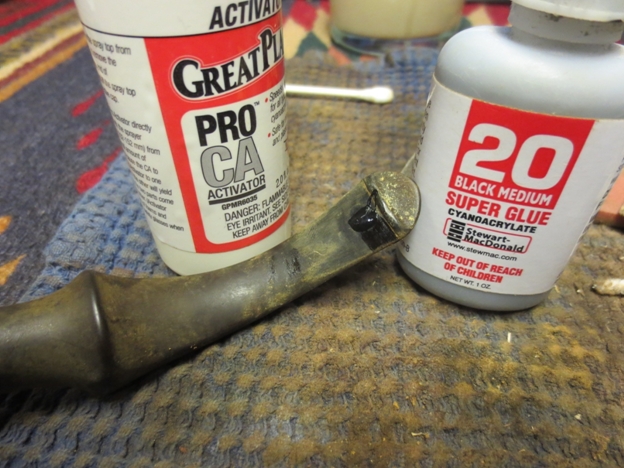
YB30 I scrubbed the areas around the bite marks with alcohol to clean the sanding dust and grit from around them. I then used black superglue to fill the bite marks and sprayed it with and activator/accelerator to harden it.YB31

YB32

YB33

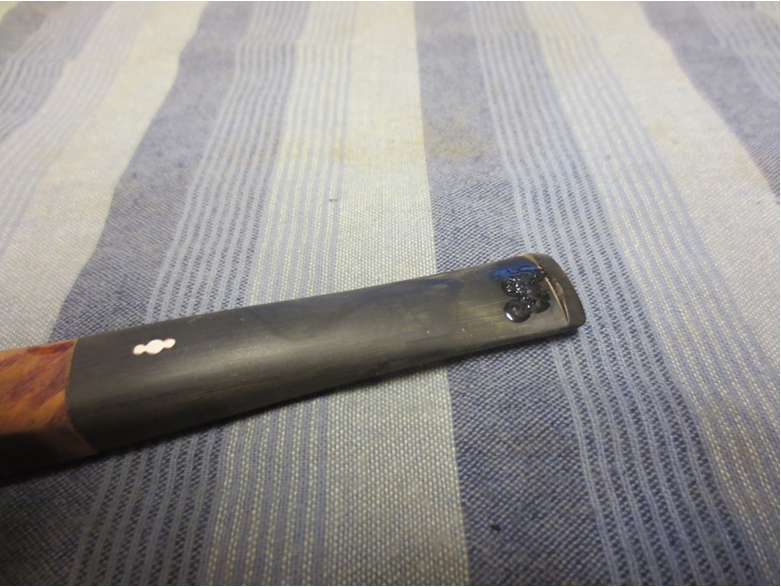
YB34 When it dried I sanded the filled areas with 220 grit sandpaper to level them out with the surface of the stem. I sanded the stem with a medium and fine grit sanding sponge and a fine grit sanding block to further blend the patches into the stem surface. In the next two photos the patches are blended into the stem but the blackness of the super glue and the blackness of the unpolished stem do not match so they show up as spots on the stem.YB35

YB36 I stained the bowl and shank with a medium brown aniline stain thinned 50/50 with isopropyl alcohol. I wanted a medium brown wash to highlight the grain and show contrast in the finish. The wash provided just what I was looking for.YB37

YB38

YB39

YB40

YB41 I sanded the stem further with fine grit sanding blocks and also sanded the flat areas on the transition between the shank and stem to work towards a more seamless look. The next photos show the smooth transition and the smooth stem. The patches are fading more into the vulcanite of the stem as well at this point in the process.YB42

YB43 I moved on to sand the stem with micromesh sanding pads – wet sanding with 1500-2400 grit pads and dry sanding with 3200-12,000 grit pads. I rubbed down the stem between each set of three pads with Obsidian Oil and then continued sanding. I have found that sanding the stem while the oil is freshly applied allows the grit on the pads to cut into the finish and raise a shine.YB44

YB45

YB46The next two photos show the finished stem. After the final sanding I rubbed it down with Obsidian Oil and let it soak in before polishing it with the buffer. I gave it several coats of carnauba wax. The patches on the stem by this point are fully blended into the vulcanite and cannot be identified.YB47

YB48 The next photo shows the reworked inner edge of the rim to show my repairs on the out of round bowl. I sanded until it was as close to round as I could get it by hand. I bevelled the inner edge of the bowl with the sandpaper to make the transition smooth.YB49 The finished pipe is shown below. Thanks to Andrew for sending me this challenge. I really enjoyed bringing this old timer back to life. It will occupy a special spot in my older American pipe maker collection and join my other KBB Yello-Boles as favourites that I enjoy smoking. I buffed it with White Diamond and gave it multiple coats of carnauba wax and finished by buffing it with a soft flannel buffing pad to raise the shine. All that remains is to sit back and enjoy a bowl of an aged Virginia tobacco and read a good story!YB50

YB51

YB52

YB53

In Retort to Claims of Unclean Restored Pipes – Robert M. Boughton


Guest Blog by Robert M. Boughton
Member, North American Society of Pipe Collectors
http://www.naspc.org
http://www.roadrunnerpipes.com
http://about.me/boughtonrobert
Photos © the Author

“A thick skin is a gift from God.” —Konrad Adenauer (1876-1967), first Chancellor of West Germany

INTRODUCTION
During the course of my serious restorations, and by that I mean the short period of time since I created an online store with the primary goal of selling estate pipes I repair, direct feedback from my local customers has been 100% positive. That, of course, is always gratifying, and I did appreciate it.But those who have read my previous blogs know I am not in the business to be gratified by elliptical, kind words of others. The real motivation is my love of all things tobacco-related and in particular returning a well-used or even battered pipe to its original beauty, or as close as I can come.But being somewhat more thick-skinned than most folks (if everyone grew up in my dysfunctional household, the whole world would have my hide), I always prefer the truth, the whole truth and nothing but the truth. So help me God. That last phrase might better be read, God help me.

In the last couple of months, you see, word has reached me of an alleged problem with the cleanliness of pipes I sold. Now, don’t get me wrong. I only use the word alleged because, having as thick of a head as my dermis and consequent confidence in my work with pipes or on any other subject for that matter, until proven wrong, my impulse was to resist the claim. The problem was that I was not hearing any complaints from customers. Such forthright criticisms might have been disappointing, but being constructive would have been treated as any direct reports: with the professionalism I apply to the daily conduct of my business.

The most unpleasant part of this experience, which as I mentioned went on (and on and on) for a couple of months, was that the feedback I kept getting was not from any friends or fellow pipe club members to whom I sold pipes, but instead from my good friend and mentor, Chuck Richards, who, to my great surprise and initial sadness, was the only person my customers, without exception, seemed to trust with such vital information.

Thus I received the first “word” that I needed to be more careful cleaning my pipes. I can tell you, my pipes almost cleaned themselves when that was all Chuck could say before he was distracted and had to tend to something, giving me just enough time to become more than a tad miffed. Being familiar with Chuck’s occasional terseness, I knew he was only passing on the information and had my interests at heart. Still, my breath grew short, and the heat rose under my collar. Soon enough, I got more details, including the first name of the customer, which I didn’t recognize, and then a description of the pipe – a Londoner black rusticated bent bulldog – that I connected right away to a different first name because I had bent a rule by accepting his check. I realized he went by his second name.Robert1 Yes, I recalled the pipe and its delighted new owner, when he bought it, with clarity. The nice, rough little black bulldog was one of the few I took from my private collection, having enjoyed it for a while and then allowed it to fall back into a corner, unused and not of particular interest to my personal tastes. Could I have forgotten to clean it? The possibility existed, and although I wanted to remember following my usual routine of cleaning and sanitizing the pipe, I had no blog on which to fall back and check since it was in good condition when I decided to sell it for my growing business and dwindling selection.
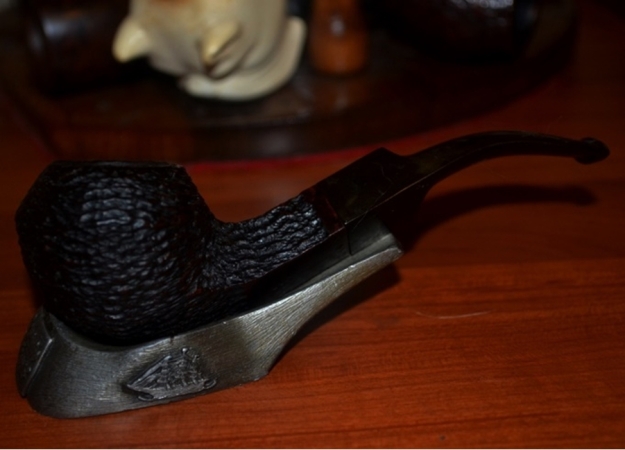
Therefore, I explained this scenario to Chuck, and, having the address of the nice older gentleman who had purchased it, went to my bank for a cashier’s cheque in full refund and put it in the mail with a letter of sincere apology. I wrote that I also wished for him to keep the pipe and offered a 20% discount on his next purchase should he choose to give me a second chance. I even asked Chuck, who lived in the same neighborhood and was friends with the man, to tell him not to return the refund, as I knew where he banked and would only deposit it myself.

And so I thought the issue settled – but no. Word of my well-restored pipes with unclean shanks kept coming in, via Chuck. I think it is understandable that my mood simmered until, in time, the situation boiled over. When at last, one afternoon at the tobacconist’s, I grew so heated that I broke out in a sweat, I regret to admit I snapped at Chuck, the only person with the nerve to tell me to my face that a problem indeed appeared to exist. Of course, Chuck was only going by the words of others, but enough instances of the same complaint from a sufficient number of witnesses would convince almost anyone.

“I’m just telling you what I’ve been hearing, and not from one or two people but a good number now,” he said, and the grin, which had never left his face during my account of how many bristly cleaners soaked in Everclear I average per pipe until they come out clean, broke into his full gale force smile. I have always been, was then and suspect I ever will be defenseless against that wonderful expression of delighted amusement. It was, indeed, the best retort to my argument he could have made.
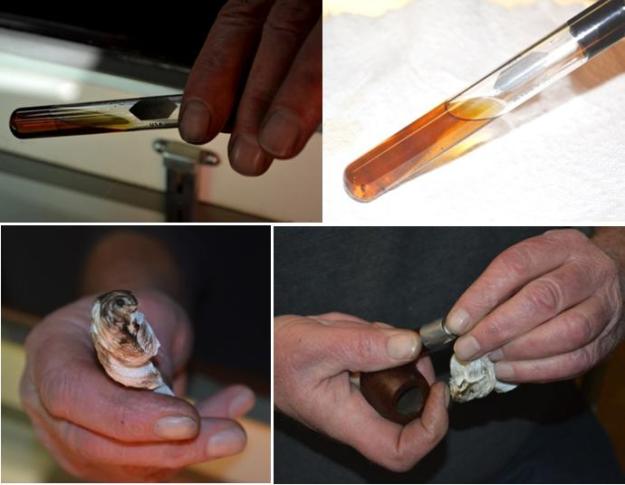
Robert2And that is how Chuck came to explain to me the relative inefficacy of bristles versus the boiled alcohol retort method that he had demonstrated to our pipe group a couple of years ago before I would have even thought of taking notes.

But enough of all that. This blog also concerns the restoration of a Kaywoodie Signet Bent Billiard, including a validation of the retort method by Chuck on the pipe I had thought was finished. I will describe and illustrate that process when the time arrives.

RESTORATION
I started this restoration under the impression that it would be just a typical exercise on a better than average estate pipe I bought, with the rim and chamber seeming to be the greatest challenges, except that the other problems (some minor scratches that disappeared with 1500-grade micromesh and deeper blemishes I fixed with high-grit sandpaper) were far fewer than usual.Robert3
Robert4

Robert5

Robert6

Robert7 I bought a new Castleford five-piece reamer set (with a T-handle and four attachable reamers ranging from 17-23mm) to see if it might be up to filling the boots of my old Senior Reamer, which fell in action during a restoration I blogged not long ago. Choosing the 17mm reamer, I went to work at a slower than usual pace to test the tool that was new to me, and seeing it worked quite well, I finished its part on the chamber.

Then I switched to 220-grit paper and sanded the inner wood to a smoothness relative to the mess it was in when I began, tamped out most of the remaining carbon, blew through the shank to clear some of the rest and rubbed a couple of small cotton squares soaked in Everclear around the chamber to pick up all but particles of the remainder. To the touch of a finger that I ran around the walls, the surface was still rough but could be finished later.

The rim burn came off with super fine steel wool, and scratches and pits uncovered from beneath the blackness were easy to deal with using 400-grit paper followed by 600, then micro-meshing using new 1500, 2400 and 3200 pads.Robert8 After finishing the chamber with 500-grit paper, dumping most of the carbon as I went, I blew through the shank to clear more and soaked a couple of thin squares of cotton cloth in Everclear to scrub the chamber. Only a small amount of residue remained, and to the touch of my finger the sides of the chamber felt silky and polished.
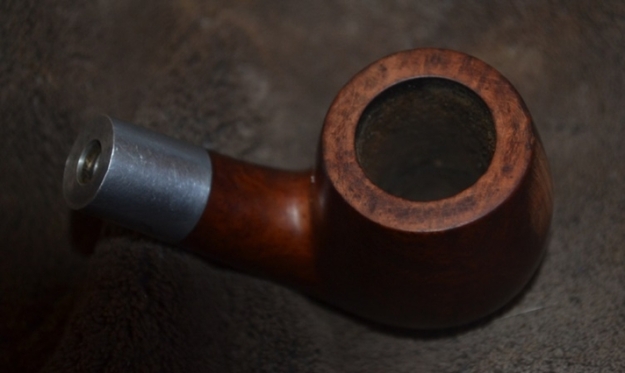
That was when I commenced what was my old way of cleaning the pipe. One after another, I dipped first one end of a bristly cleaner in Everclear and ran it through the shank, then the other end. After more than a dozen cleaners lay filthy in a pile and two more came out white, I repeated the process with the stem, except that it only seemed to require two or three cleaners.

To mix things up, compared to my usual routine, I followed my impulse to finish the stem and be done with it. I started with 600-grade micromesh on both sides just below the bit, and switched to 800, 1000, 1800, 2400 and 3200 micromesh. I buffed it on the wheel with red Tripoli and White Diamond.Robert9 I sanded small areas of the bowl with 400-grit paper to remove the deeper scratches, dings and pits.Robert10
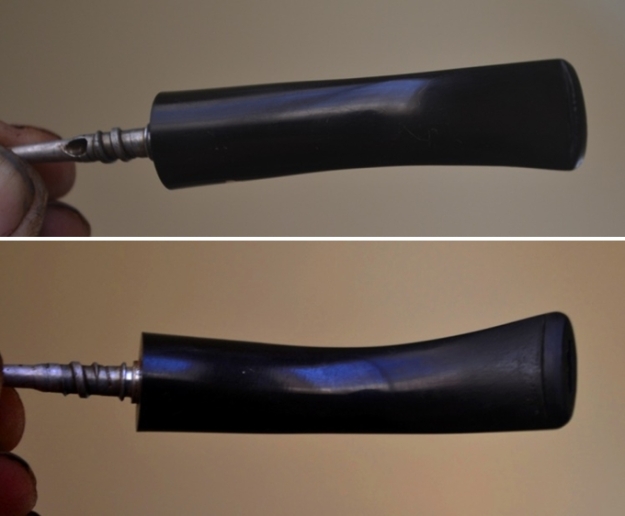
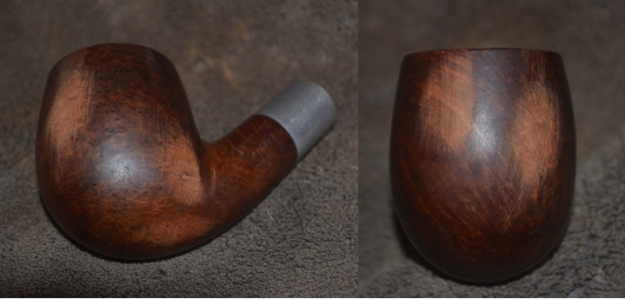
Robert11 To remove the marks of sanding from the wood, I used super fine steel wool followed by my normal progression from 1500-3200 micromesh. I followed the same micromesh procedure on the entire bowl and shank.Robert12
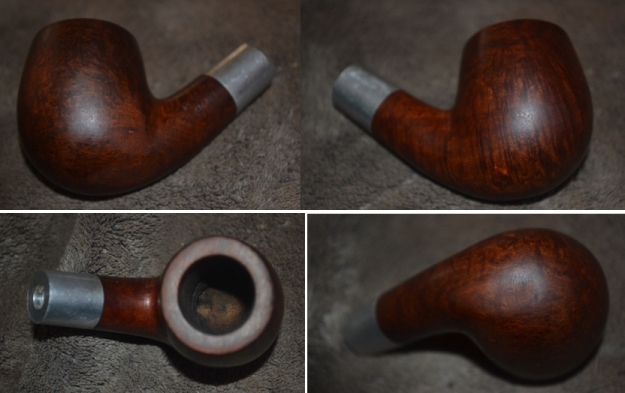
Robert13 Finishing the wood with a buff of white and red Tripoli, White Diamond and carnauba, here is what I handed over to Chuck.Robert14
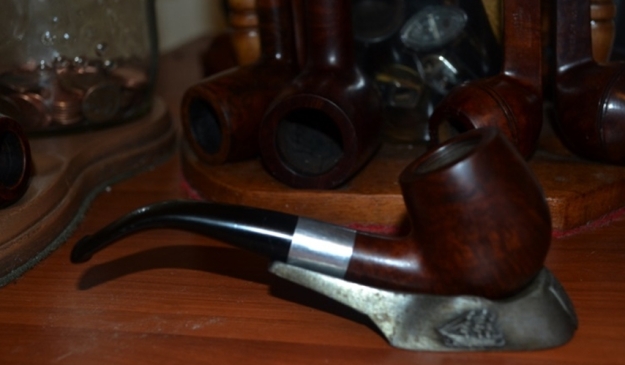
Robert15

Robert16

Robert17

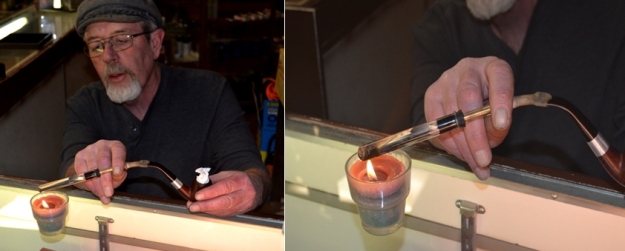
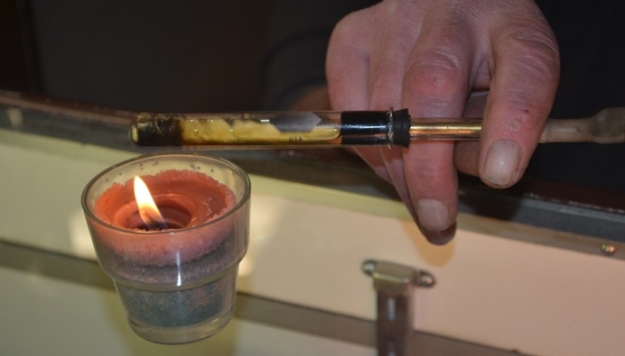
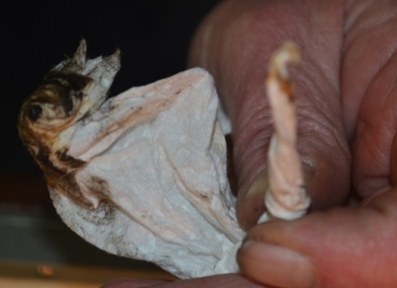
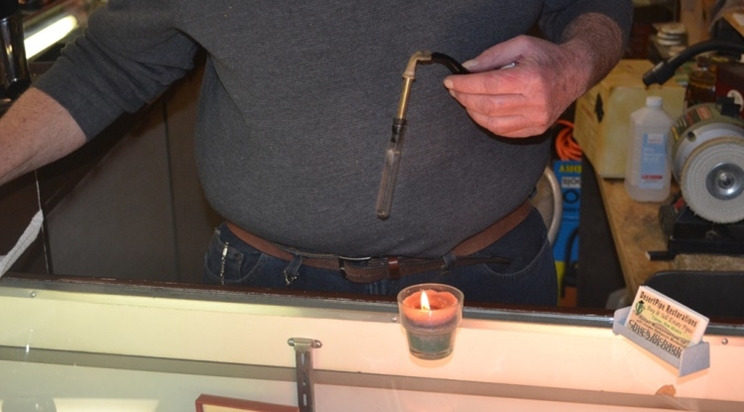
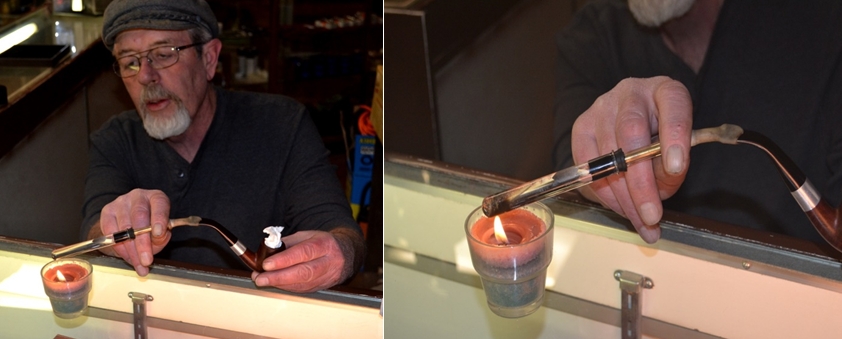
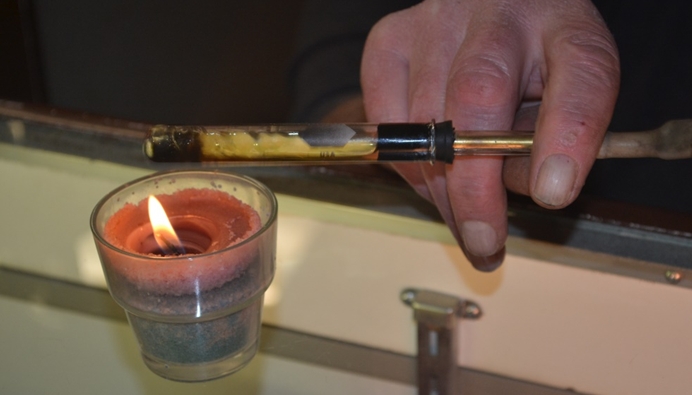
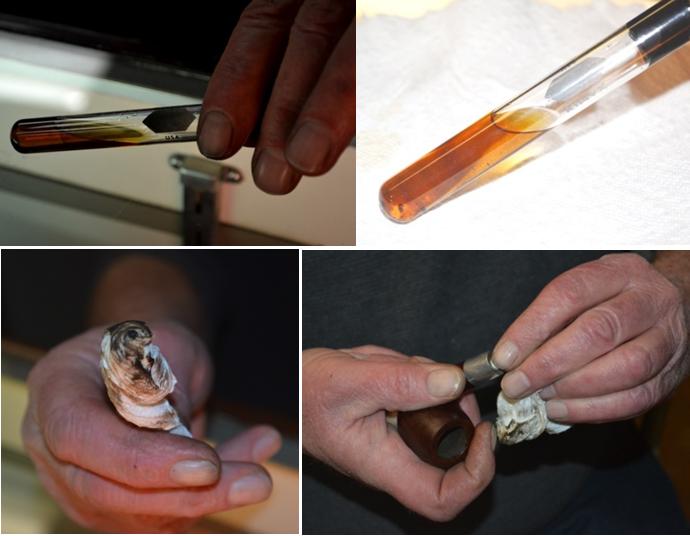
Robert18 The time, at last, has arrived for Chuck’s brilliant demonstration and invaluable contribution to the restoration of this Kaywoodie Signet Bent Billiard, and my further education in pipe restoring, shown step-by-step in the following nine photos: 1) Chuck has prepared the pipe by filling the chamber with a piece of a paper towel, having no cotton available. He has also connected the retort’s Pyrex test tube, almost filled with 190-proof Everclear, and plugged with a stopper. The stopper leads to a copper tube which in turn attaches to a rubber passage that is connected to the pipe’s stem. 2)Chuck begins to heat the alcohol in the test tube at the base. 3) The alcohol begins to boil. 4) As the alcohol soon reaches full boil, Chuck tilts the test tube slightly to allow the hot liquid to bubble through the retort apparatus and into the pipe stem, and from there all the way to the chamber. The paper towel begins its rapid transformation from white to nasty brown. 5) When the test tube is empty, Chuck tilts the pipe back enough for the remaining, filthy alcohol to drain back into the test tube. 6) The lighter product of a second run with fresh Everclear. 7) After wiping dry the chamber, this is the residue. 8) Chuck snakes the other end of the piece of paper towel into the shank and twists it.
9) The residue from that.Robert19
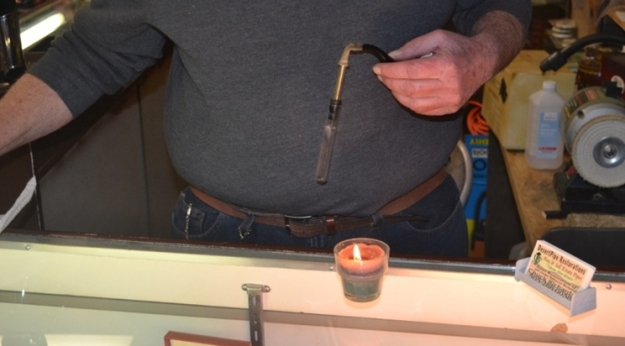
Robert20

Robert21

Robert1

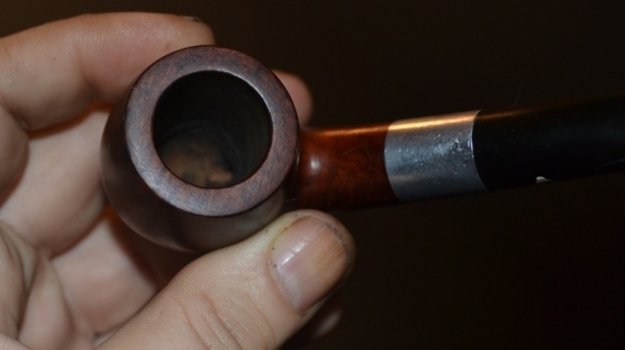
Robert22 And I take a close look inside the chamber of the Kaywoodie that is clean all the way to the bottom.Robert23 CONCLUSION
Although my skin is tough, like a fault on the mail of a dragon of legend, my weak spot was pierced. The wound was neither superficial nor deep but still stings a bit, being inflicted as it was by so many of my friends’ and associates’ lack of trust to confide in me. Had my experiences selling restored estate pipes until now been a scientific experiment, an analysis of the data would support the conclusion that friends are unwilling to express their findings of any serious flaws to the one person who could prevent the same mistakes from being repeated.

This reluctance, of course, is created by the risk of hurting the feelings of the friend whose sensibilities the paying customers would rather spare. Such a reaction by the person on the receiving end of the message is indeed real but necessary for a demonstration of true friendship. An unfortunate fact is that too few people understand how criticism is a two-sided razor, one cutting for the positive and the other for the negative. My mind has always been open to constructive, helpful criticism while it shuts like a steel trap against anything senseless and cruel.

Now, thanks to the good but misguided intentions of some of my friends, I am compelled by dual senses of honor and good business to contact everyone who has purchased a pipe from me, in person or online, with a carefully written explanation of the error and an offer of a free correction, postage included. But also thanks to these friends, and in particular my good friend and mentor, Chuck, I now have a backlog of “completed” restores on which I can practice retorting.

So far, they’re coming along well, with some new restores thrown in.

Reviving a Peterson Dunmore 79 with my Son in Law


Blog by Steve Laug

This past weekend my son in law came over with the Peterson Dunmore pipe that he had purchased on a recent pipe hunt in the US. He picked it up for $15USD so it was a good purchase. We finally got around to working on it. In a previous post on the Dunmore line I had found that the line from Peterson really is a stripped down pipe. The one that we worked on this weekend was in essence a system pipe. The lack of a ferrule is made up for by a stylized carving around the shank end. The stem sits snugly against the end of the shank but is not flush with the diameter of the shank. The saddle on the stem has a slightly different flair than a regular Peterson pipe. It had a Plip stem. It bore the stamping Peterson’s over “Dunmore” on the left side of the shank and Made in the Republic of Ireland and the number 79 on the right side of the shank.Dun1

Dun2

Dun3

Dun4 The pipe was in pretty decent shape under the grime and tars on the bowl and rim. It had some beautiful birdseye grain under the grime that would really stand out with a bit of work. The rim was damaged along the back outer edge with small nicks. The build up on the rim was hard and uneven. The bowl itself was out of round and would need to be adjusted. The stem was oxidized but under the oxidation on the saddle it bore the stylized P stamp. The top of the stem near the button had a few small bite marks and some tooth chatter. The underside of the stem near the button had a pin hole in it that would need to be patched.Dun5
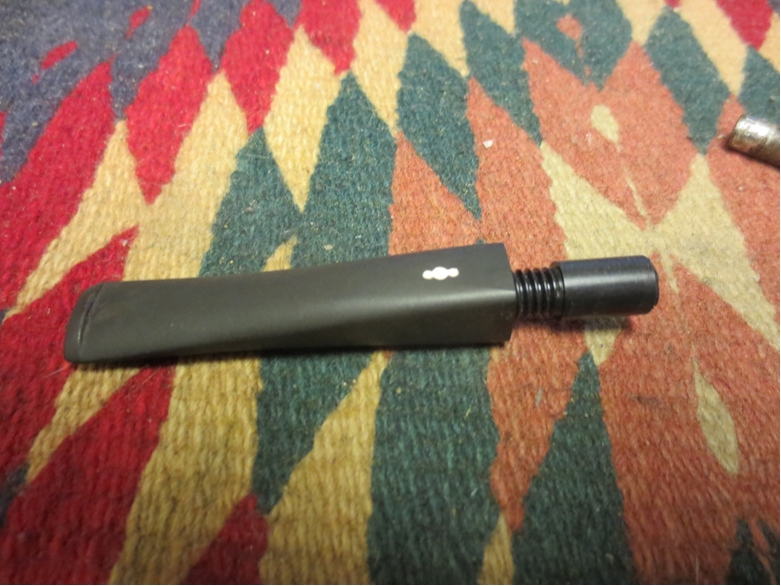
Dun6 While my son in law, Lance worked on the bowl scrubbing and cleaning it I worked on the stem. I sanded it with 220 grit sandpaper to clean up the tooth marks. I wiped it down with alcohol to clean the areas around the hole. I daubed Vaseline on a pipe cleaner and inserted it from the tenon end of the stem and then used black superglue to repair the hole. I gave it several coats of glue to build up the repair, sprayed it with accelerator and let it dry between applications. Once I had the patch solidly in place I set it aside and let it cure. After curing for about 30 minutes I sanded the patch with 220 grit sandpaper to blend it into the surface of the stem. I sanded it with a medium and a fine grit sanding sponge to remove the scratches and further blend it. Dun7
Dun8

Dun9 Lance worked on the bowl while this was going on. He washed down the bowl with acetone on cotton pads to remove the grime and the remaining finish on the pipe. He softened the buildup on the rim surface and then lightly topped the bowl to remove the damage and the buildup. Once it was smooth, he sanded it with a fine grit sanding sponge and then wiped the bowl down with another wash of acetone.Dun10 We gave the bowl a coat of medium walnut stain mixed with Danish Oil and rubbed it onto the bowl and off again with a soft cotton pad. The bowl looked good when I had finished wiping it down and buffing it with a shoe brush. The grain is quite stunning.Dun11

Dun12

Dun13 I buffed the stem with red Tripoli and White Diamond to remove more of the oxidation. I rubbed it down with some Obsidian Oil and set it aside for the pictures below. At this point in the refurbishing the stem is looking quite good. I still need to sand with micromesh pads and then reapply the gold in the P stamp on the left side of the stem.Dun14

Dun15 I wet sanded the stem with 1500-2400 grit micromesh pads and then dry sanded with 3200-12,000 grit pads. In between each set of three pads I wiped the stem down with Obsidian Oil. I finished by buffing the stem with White Diamond and then gave it multiple coats of carnauba wax and buffed it with a soft flannel buffing pad.Dun16

Dun17

Dun18 After sanding it with 3200-4000 grit pads I used a gold paint and applied it to the P logo on the stem and then sanded it again with the same three grits of pad.Dun19

Dun20 I put the stem back in the shank and buffed the entire pipe with carnauba wax and with a soft flannel buffing pad. The finished pipe is shown below. The first four photos give a close up look at the bowl so that you can appreciate the beautiful grain on the pipe. The last four photos show the pipe in its entirety. It is truly a stunning piece of briar with no fills or pits. It is ready for its inaugural smoke by my son in law. It looks as good as new and the stunning birdseye grain gives the pipe a rich look. I look forward to hearing what he thinks of his restored pipe and even more what he thinks once he has smoked it.Dun21

Dun22

Dun23

Dun24

Dun25

Dun26

Dun27

Dun28

A Review – A Larry Roush Bent Apple


Blog by Steve Laug

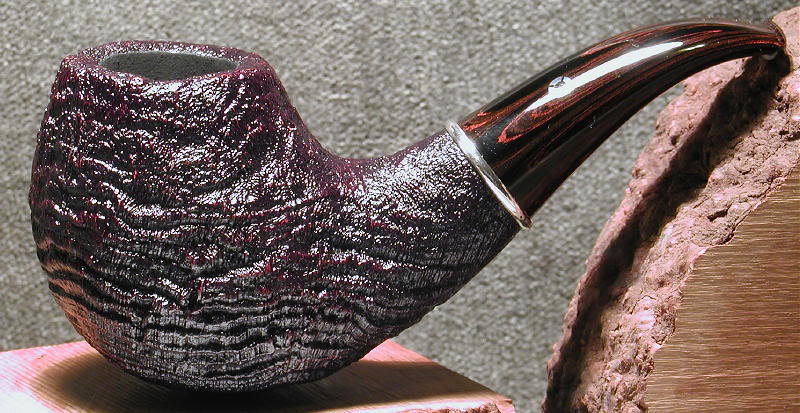
roushlogo For a lot of years I wanted a Roush pipe. The chunky style and look of Larry’s pipes is instantly recognizable. There is no one who makes a pipe like his. His take on classic shapes always goes a different direction and to me there was always something about them that made me want to own one. Quite a few years ago now, I was in Chicago for the Chicago Pipe Show and was talking with a fellow pipe who had a Roush that he was selling. It was lightly smoked and was in great shape. We struck a deal and the pipe was mine. The previous owner had smoke Virginias in the pipe – good aged Virginias that he collected as a hobby. He gave me a bowl of Balkan Sobranie Virginia No. 10 for my inaugural smoke in the pipe. I sat and enjoyed that bowl for a good long time while sipping some dark roast Costa Rican coffee. From that moment I fell in love with that pipe. It delivered an amazing smoke. The first two photos of the pipe come from Larry’s site.OLYMPUS DIGITAL CAMERA I enjoy learning a bit about the carver and his philosophy of pipe making of my handmade pipes. I find that learning this background information gives me a feel for the pipe that adds another dimension to the smoking experience. In terms of information on Larry’s pipes, I turned to his website and was pleased to find a well written article regarding his pipes. I have included the following from Larry’s site that set the stage for me in terms of enjoying this pipe. The link to the page itself is: http://roushpipes.com/About.aspx
larryroush Larry writes the following:

“The following words are those of a pipe maker of course, but in essence they are those of an artist – myself. I think most pipe makers view themselves as artists akin to those who sculpt in stone or wood, but confining their work to a single subject: pipes.”

“For myself, what I’m interested in, and what I think other skilled pipe maker are interested in, is quality wood. The reason is quite simple – I am searching for the two primary qualities in a pipe: beauty and smokability. My primary source for Briar at the present time is Italy, and I am very pleased with its esthetic value and smoking qualities. Of course different wood from different growing areas appear different insomuch as grain is concerned. Regardless of the source, when briar is aged and air cured properly the smoking qualities will be the same.”

“Every pipe maker sets his own standards and I have to look at the piece of briar to determine whether it will be a smooth pipe or not. Just because it is clean (without pits) doesn’t mean it will become a smooth ROUSH. For a carved pipe, I select a block that will support the size pipe I want to make, position the template and draw the outline. In contrast, the crafting of a smooth pipe is unique in character and requires a substantial amount of time. Grain is a primary consideration, and the point beyond shape is where the eye of the artist is critical. I don’t tell the briar block what I want, the block tells me. It’s the grain that determines the shape not the template. I have always done all my own Gold and Silver work and use only solid Silver and 14k Gold. I really like the combination of wood with silver and gold. I think it gives a very unique touch. Sometimes I use fossilized Walrus tusk or Mammoth tusk for inlays. This comes predominantly from Alaska and is found as a by-product of mining operations there.”

“I have always been demanding when it came to the pipes I smoked personally. As a result it took many years to perfect my finishing, curing, and carving techniques. I keep that in mind when I make a piece. If the finished pipe is not one I would keep for myself then it is just not good enough for sale. Being my own worst critic, not wanting to settle for less, has always been the most difficult part of pipe making.”

“As a pipe maker I make every effort to turn out a quality pipe, regardless of shape or finish. This often involves painstaking and meticulous work, unknown to the buyer, but incorporates features (see link below on expectations from a Roush pipe) that make the ROUSH pipes what they are today. Mike Butera and I once had a discussion on this very topic and determined that these many things we do relating to fit and finish, and attention to detail are simply the standards we set to make quality pipes. To short cut or deviate from these standard would not only be cheating the smoker and collector, but cheating ourselves. On a personal note, I feel fortunate to have this gift, this ability to see deeper than the surface of a fine piece of briar and respond by creating pipes that are shared and appreciated by others. I’m eternally grateful for three things: the insight to recognize in myself a talent and the courage to develop it; secondly, for the assistance and direction of Mike Butera, and third for the opportunity to take an idea, a simple thought, and turn it into something beautiful and useful. It is my hope and wish that you enjoy smoking and owning my pipes every bit as much as I enjoy making them. –Larry Roush” OLYMPUS DIGITAL CAMERA

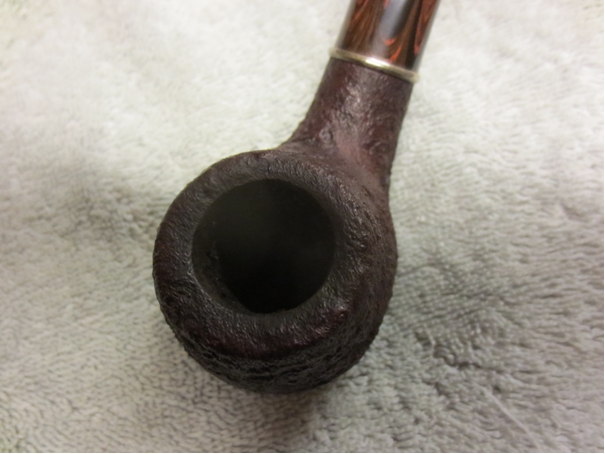
larryroush1aMy initial impressions of the pipe really include what drew me to this piece of pipe art enough to want to add it to my collection and make it a part of my pipe journey. It is a short, squat 5 inches long and 2 inches tall. The tobacco chamber is 1 1/2 inches deep and 3/4 inches in diameter. The silver band is smooth, narrow, handmade ring that adds a simple contrast to the dark oxblood sandblast. It is integrated into the shank. The stem is handmade from Cumberland and its short taper has a typical Roush look. On the left side of the top of the stem there is a silver Roush logo inlay.
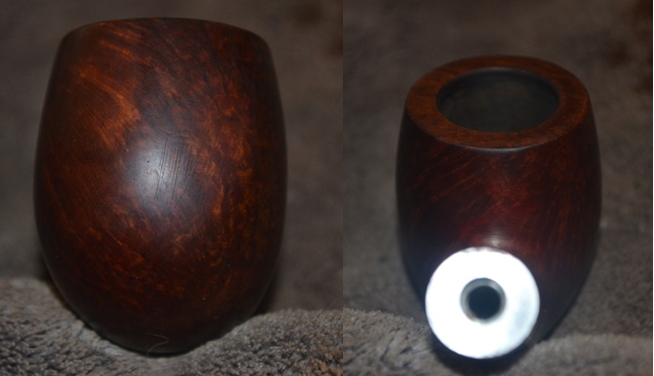
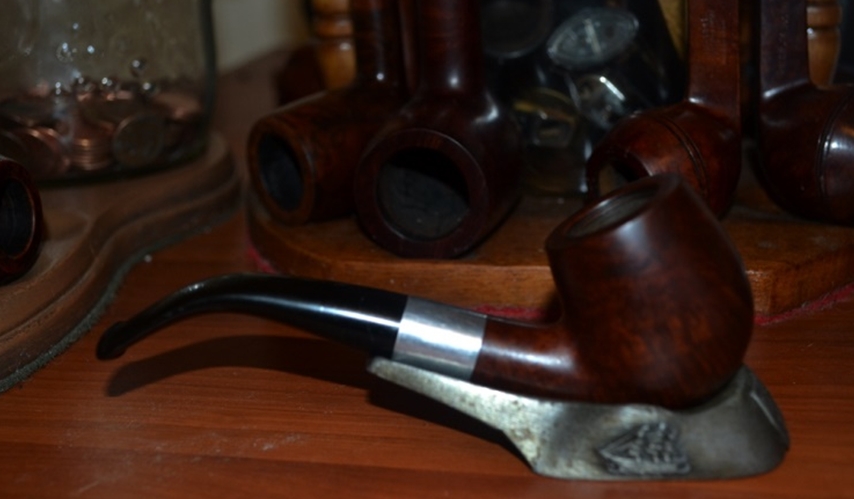
When I picked up the pipe it was an impressive piece. The workmanship of the pipe and colour and feel of it in my hand captured me. I remember sliding the pipe out of the sleeve and enjoying the look and feel of this pipe. It was and is beautiful. It had the faint aromas of the Virginias that its previous owner had smoked, yet it was clean and ready for me. The sandblast is deep and rugged giving the bowl a tactile feel in the hand. It is a tight ring pattern that travels horizontally around the bowl with sandblasted birdseye on the top of the rim and the shank. Examining it up close it is obvious that it is blasted with a master-hand.

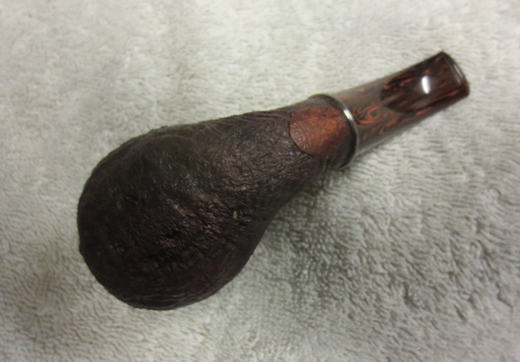
There is a smooth, oval medallion of briar on the bottom of the shank next to the silver band that provides a spot for the stamping. It is stamped S2 over an arched Roush. Under that is the stamp 1154 over Hand Made over U.S.A. The final stamp in the oval is 2006. The overall flow of the bowl and shank is brilliant and the colours are beautifully matched from rim to the end of the shank. There appears to be a black stain under the oxblood that adds contrast in the rings of the blast. Combined with the swirls of black and red in the Cumberland matches the colour of the stain on the bowl and gives the pipe a dressy look. The silver band on the shank not only separates the texture of the bowl and stem but gives focal point that draws the eye to take in the taper of the stem and the texture of the bowl.Rousha The inner mechanics of the pipe are perfect. The drilling is perfectly executed from the shank and into the bowl – coming out exactly centre in the bottom of the bowl. The airway from the bowl into the mortise is centered. It is smooth in its entrance to the mortise and the mortise itself is also smooth with no rough spot left by drill bit. The end of the shank is sanded smooth and is finished. There is a bevel in the shank end to accommodate the tenon and provide a smooth fit against the shank. The bowl itself is U shaped and smooth from sides to bottom. The air way enters the bowl and is smooth and clean. The draught on the bowl is wide open and effortless.Roushb

Roushc Looking at the stem one is struck by the very typical Roush look. Larry’s stem are easily recognized from a distance. The shaping and flow are typical. It is hand cut out of a Cumberland. It is well tapered with good even angles top and bottom progressing from the shank to the button. The portion of the stem that is put in the mouth is thicker than I normally like but it is still very comfortable. Larry did a great job shaping the stem and capturing a shape that really works with this pipe. The tenon is Delrin that has been inserted into the stem for durability and ease of use. The airway is funneled slightly for a smooth transition from the mortise when it is in place. There is a very minimal gap between the end of the tenon and the base of the mortise. Roushd

Roushe

Roushf The transition where the Delrin meets the Cumberland of the stem is seamless. There is no lip or rough spot at that junction. The draught of the stem is unrestricted and open. When the pipe is put together the draught is effortless. The fit of the stem to the shank is very well done. The button is cut to my liking with a good sharp inner edge and tapered to the tip. It is a thin button compared to most of my pipes but is enough to provide and edge that fits behind the teeth. The slot is oval and funneled to deliver a uniform airway from bowl to button. The inside of the slot is sanded smooth and polished. The airway is absolutely smooth from slot to tenon.Roushg The overall construction of this pipe is very well done. It is light in the hand and in the mouth. It is well balanced and has a great tactile feel when it is cool and as it warms up during the smoking of a bowl. I have smoked the pipe a lot since I got it and enjoyed the fact that it had previously been a Virginia pipe and had been well broken in. That fact made it a very simple pipe to make my own. The shape of the bowl has kept this a good Virginia smoking pipe in my rotation. It delivered a good smoke from the first smoke and continues to do so. It draws well; the lighting has never been a problem and continues to be an effortless smoke. Thanks Larry for delivering a beautiful, well-made pipe that remains a very good smoking pipe to this day. If you can acquire a pipe made by Roush it will not disappoint you and you will find that it will become a favourite in your rack. The craftsmanship of his pipes will make this pipe continue its journey well beyond the years that it is my companion.

Re-stemming a Hardcastle Pot – Andrew Selking


Blog by Andrew Selking

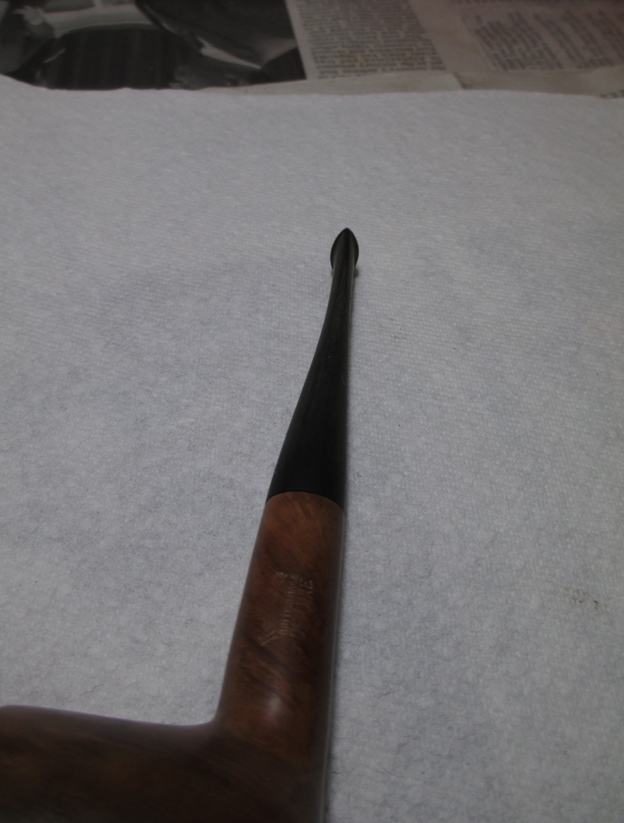
I picked up this nice looking Hardcastle pot, but when it arrived I realized that it did not have the proper stem.Hardcastle1

Hardcastle2 Fortunately Steve bailed me out and sent a couple of likely replacements. The stem that I settled on had a slightly smaller tenon diameter and the outside diameter was noticeably bigger. This was going to be a fun challenge. I covered the shank with painter’s tape and started reshaping the stem with 100 grit sand-paper.Hardcastle3 Here is a shot after getting to about 80% completion.Hardcastle4 Next, I took the painter’s tape off and replaced it with Scotch tape (since it is thinner) at the end of the shank. At this point I was using 400 grit wet/dry without water.Hardcastle5 Once I completed that step, I took a rubber washer and placed it on the tenon to protect the end of the stem and shank. I used 400 grit to finish the last little bit, frequently taking the washer out to check the fit.Hardcastle This is what the pipe looked like once I had the stem sanded to fit.Hardcastle6

Hardcastle7

Hardcastle8

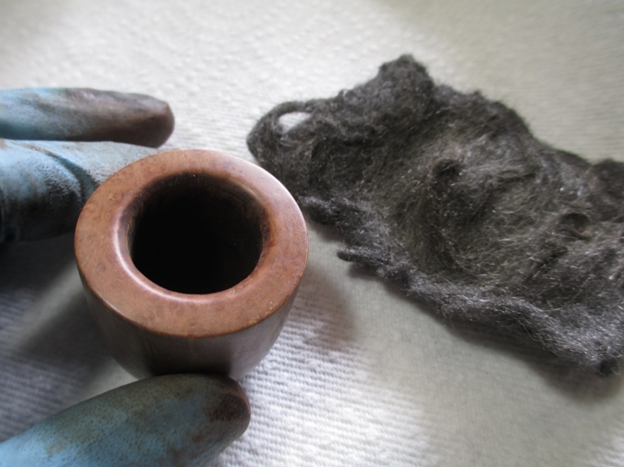
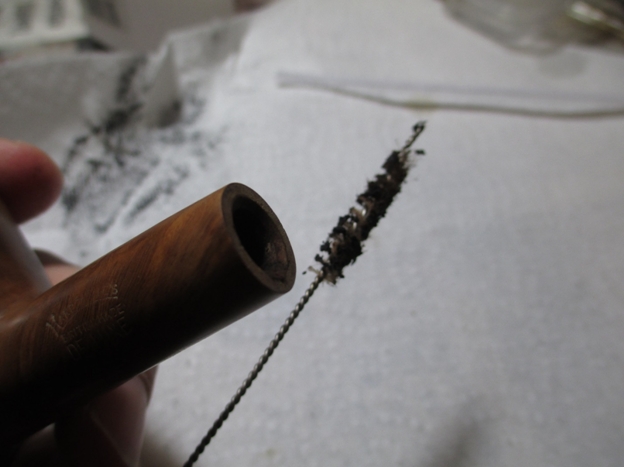
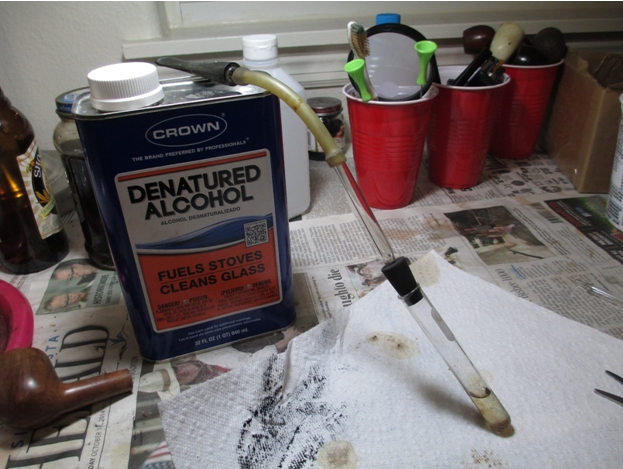
Hardcastle9Next I turned my attention to the bowl. I used the largest reamer to get almost to the bottom and finished it with the next smaller one.Hardcastle10 I used OOOO grade steel wool to remove the tar from the rim.Hardcastle11 Once the bowl was clean, I used my retort to clean the shank.Hardcastle12 This is why I am a firm believer in the retort, pipe cleaners dipped in alcohol came clean, but all this gunk was still inside.Hardcastle13 I used the retort on the stem. Although this picture does not show it, always plug the end of the stem to prevent the retort from boiling over and spitting nasty tobacco juice everywhere (ask me how I know this).Hardcastle14 After the stem was cleaned, I worked on polishing it. I started with 400 grit, then moved to 1500 through 2400 grit micro mesh with water.Hardcastle15 I used the 1500 grit through 2400 grit without water on the bowl, then finished both with a progression through 12,000 grit.Hardcastle16 Now the pipe was ready for stain. This time I used an aniline dye (light walnut) from Pimo Pipe Supply. I diluted the dye by 50% with denatured alcohol, applied it with a cotton ball, flamed it with a lighter, and repeated until I had the coverage I wanted.

After an uneventful trip to the buffer, where I used white diamond and carnauba wax on both the stem and bowl, this is the result. I am really happy how this turned out. Thanks again to Steve for his generosity in providing the donor stem.Hardcastle17

Hardcastle18

Hardcastle19

Hardcastle20

Hardcastle21