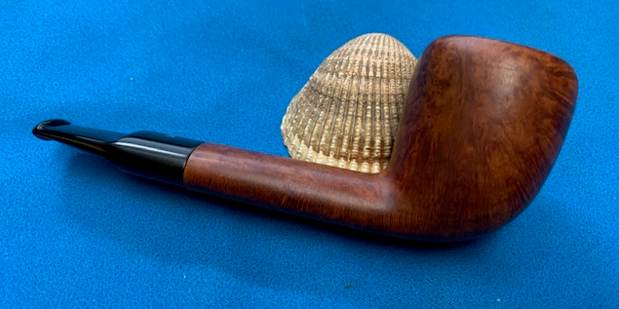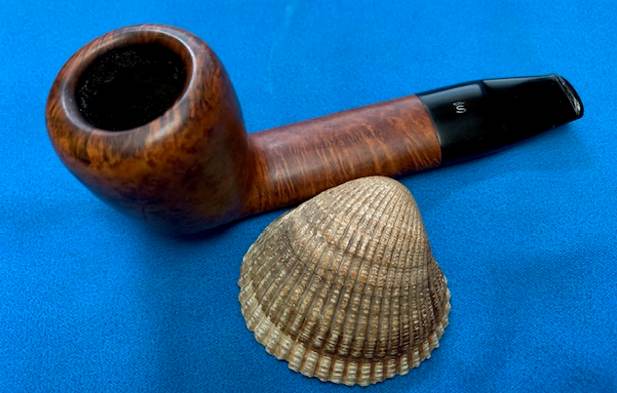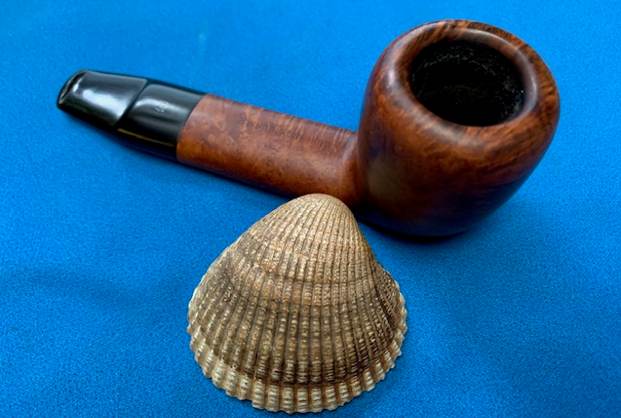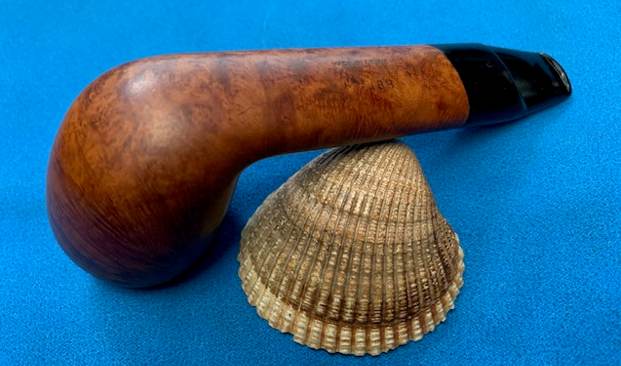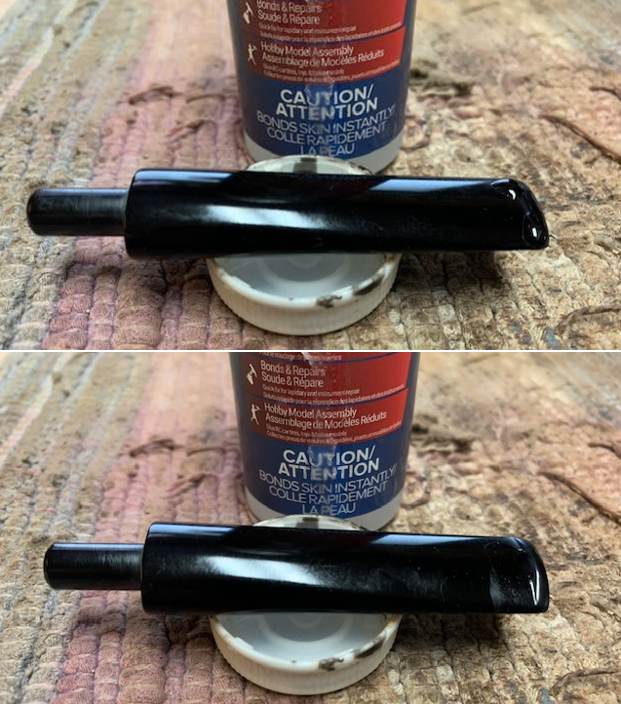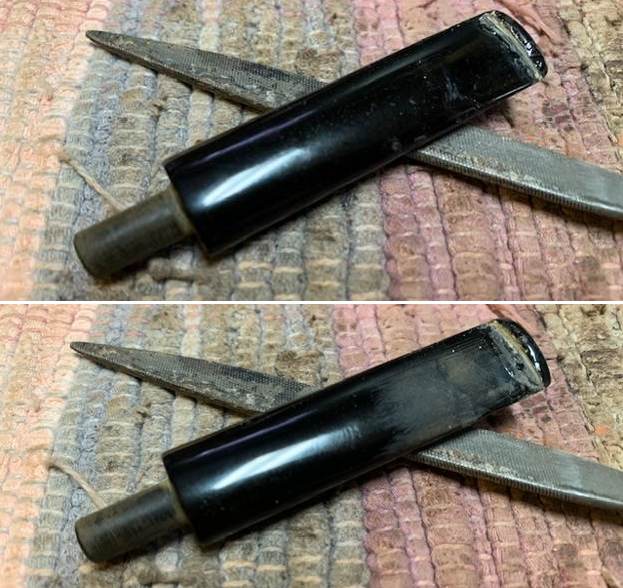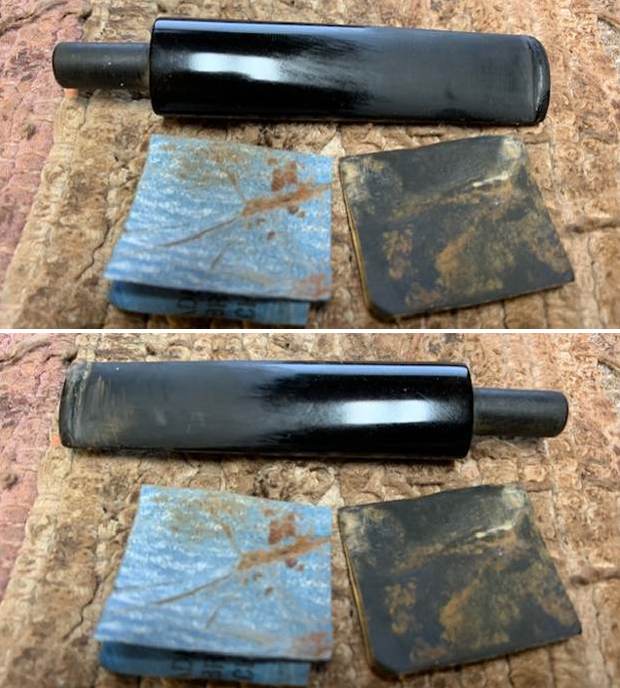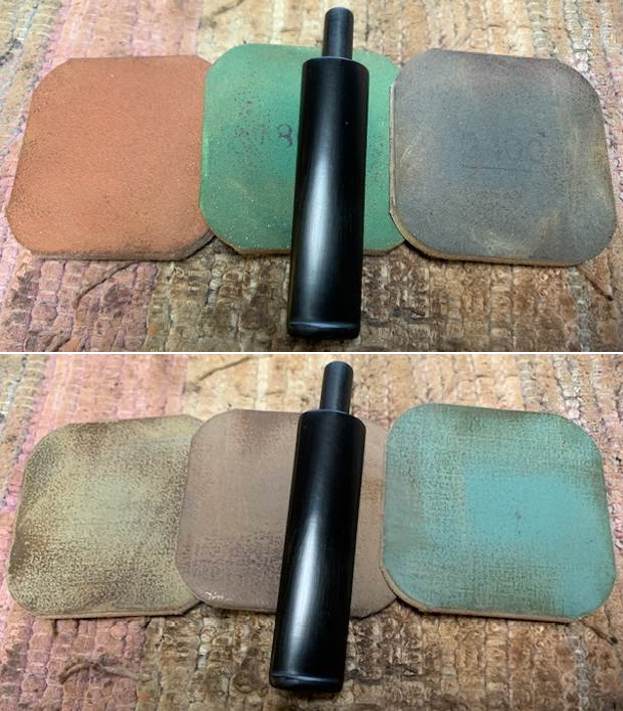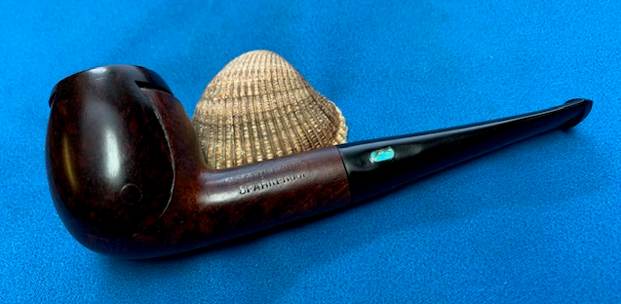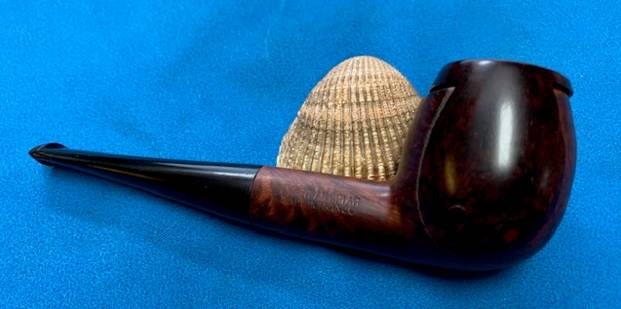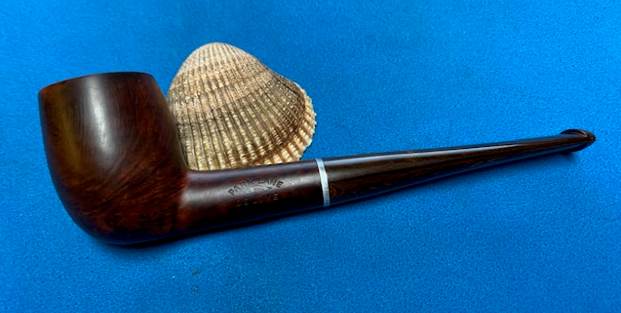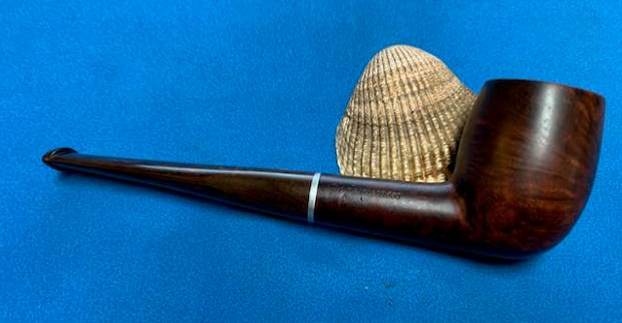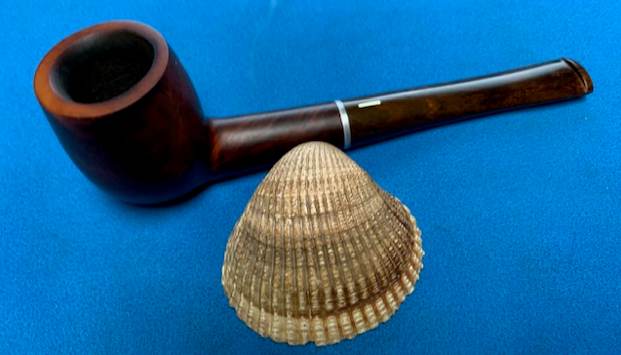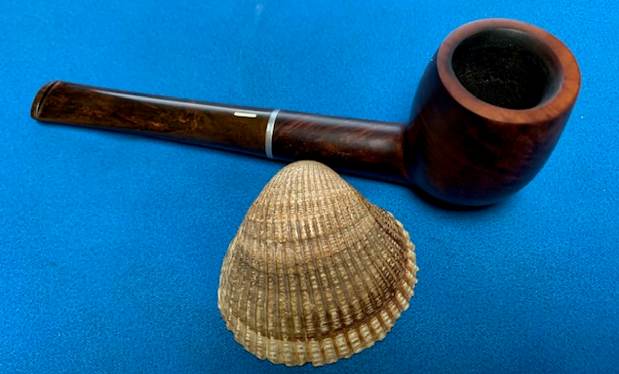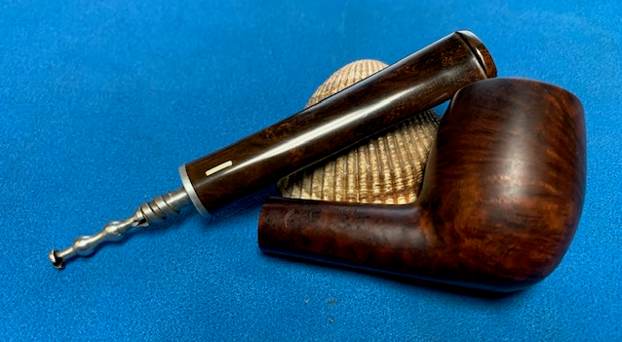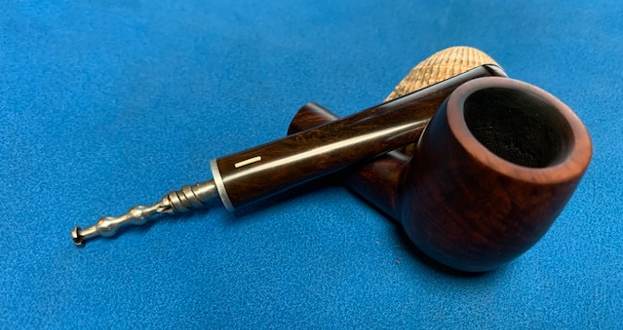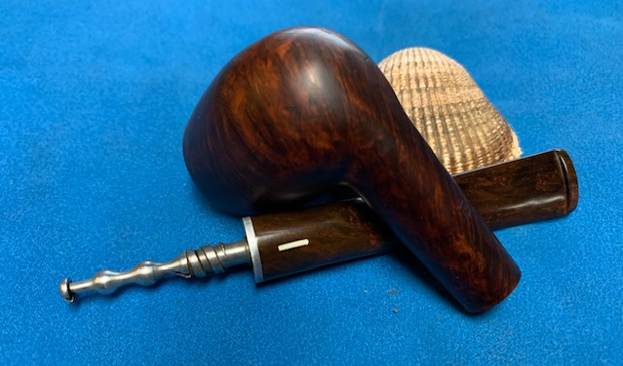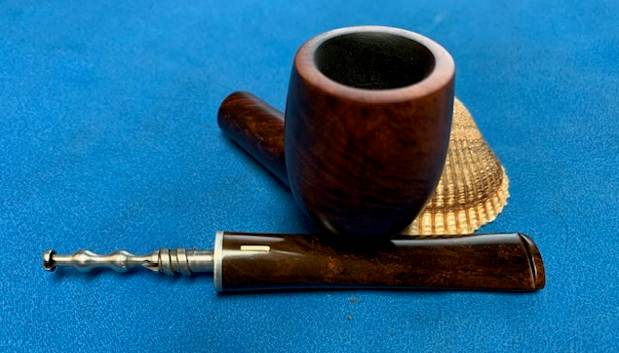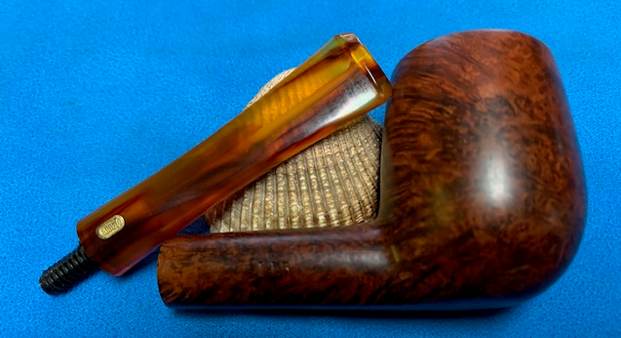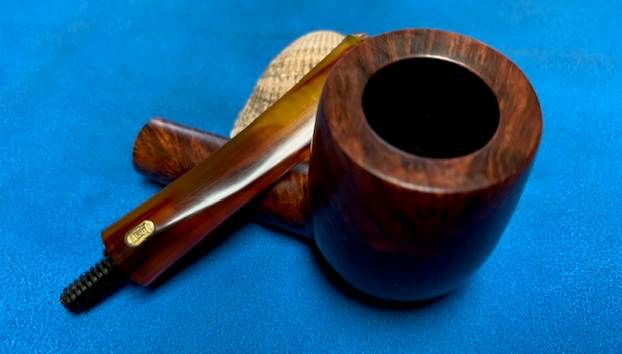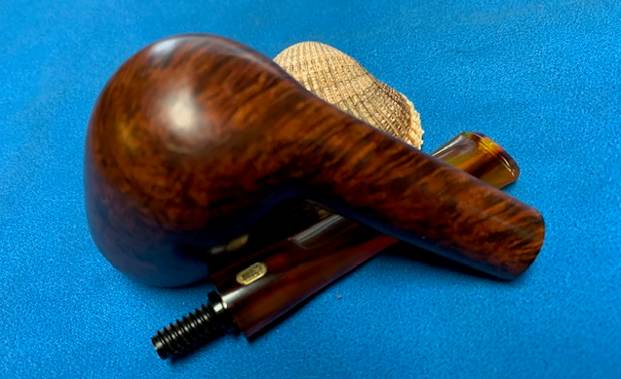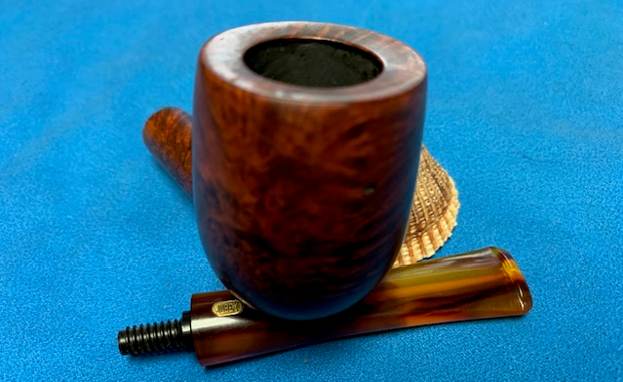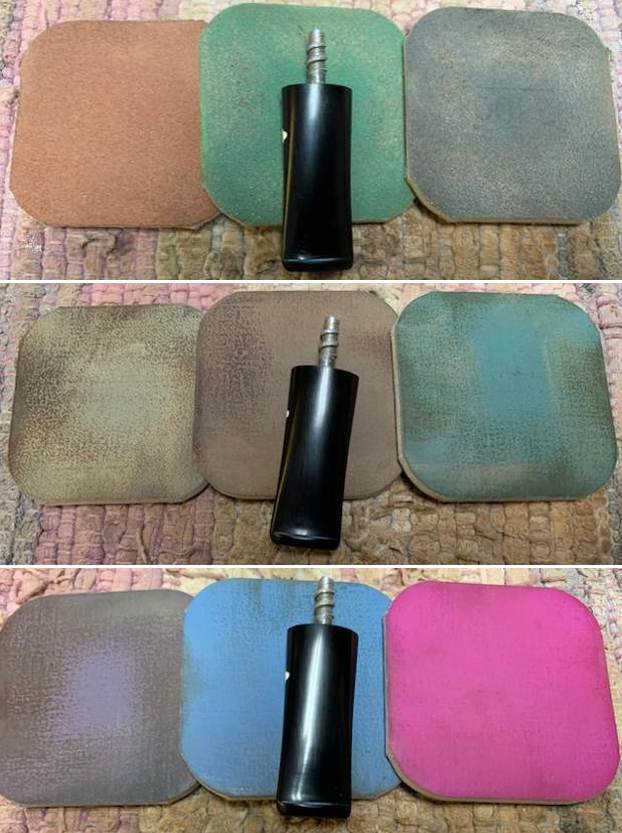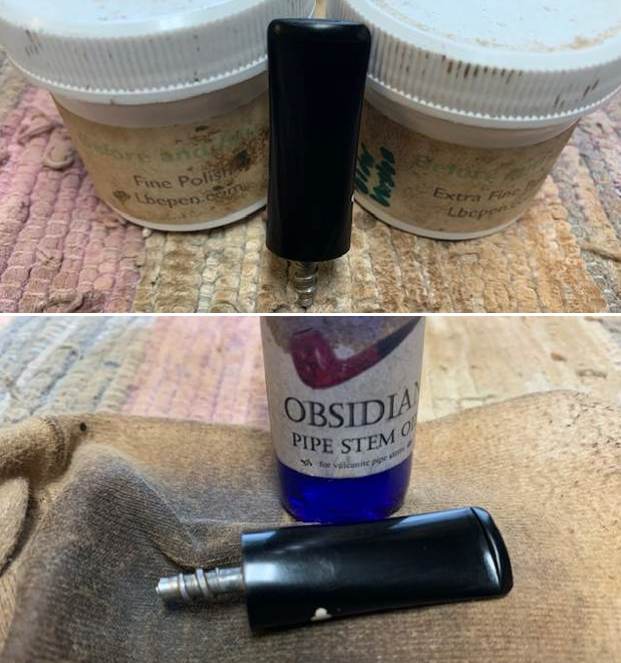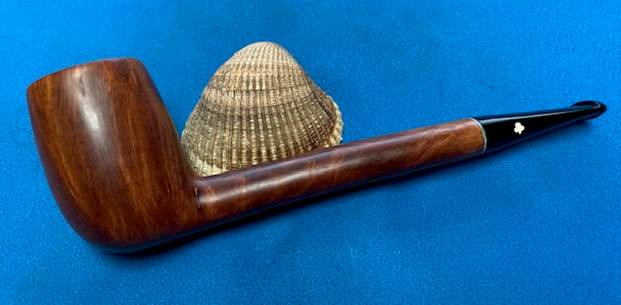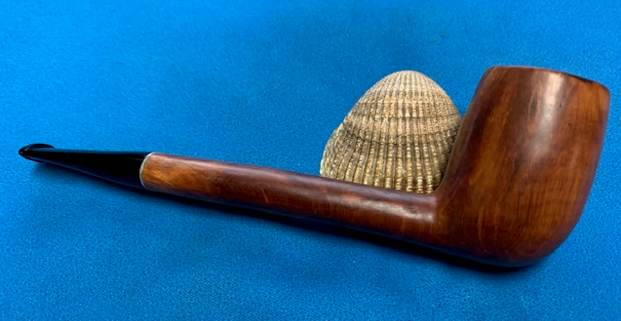

Tag Archives: stem work

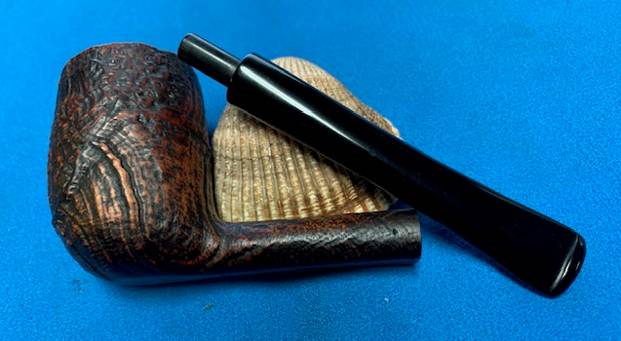
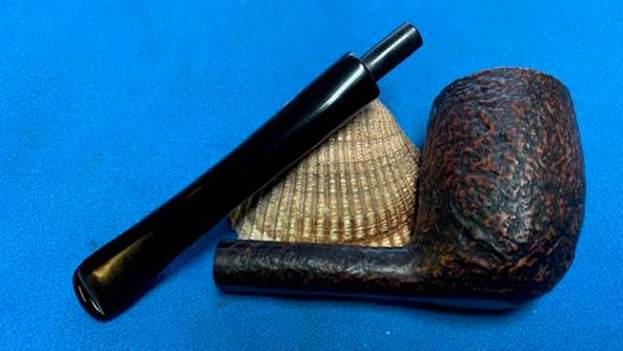
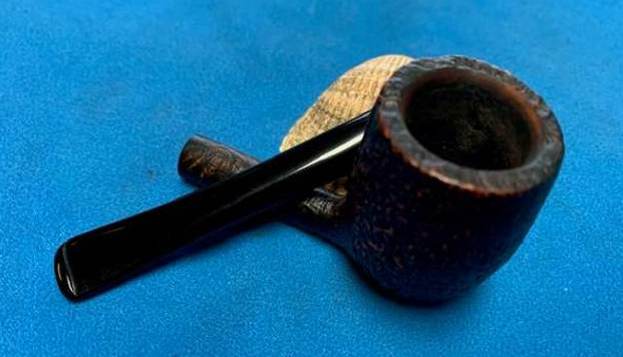
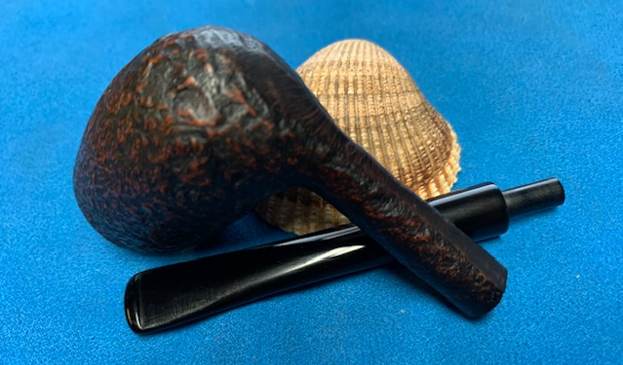
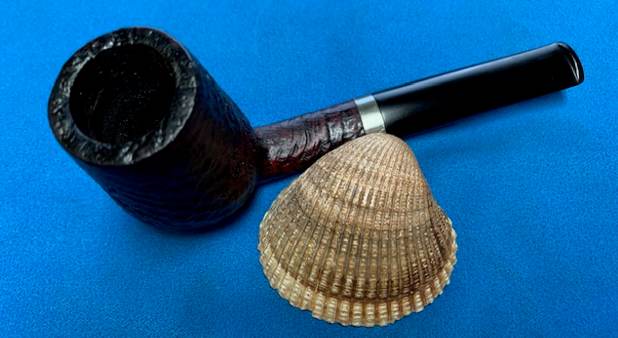
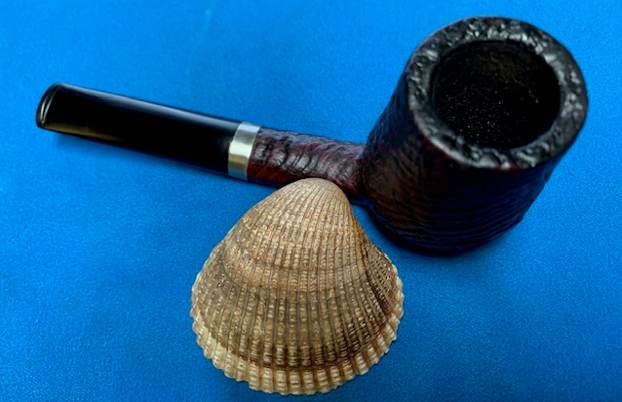
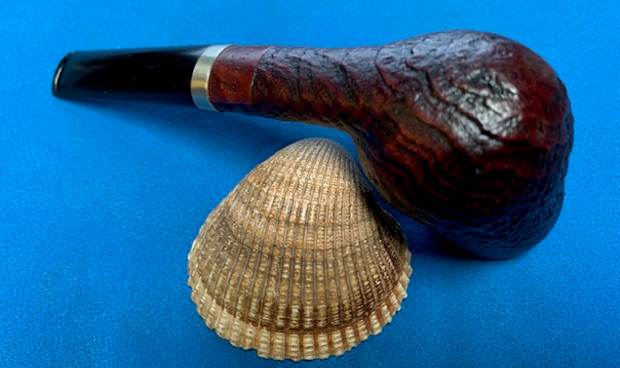
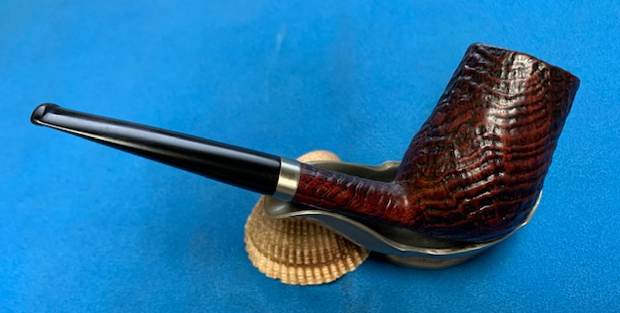
Restoring a Benni Jorgensen Handmade Viby Pencil Shank Billiard


Blog by Steve Laug

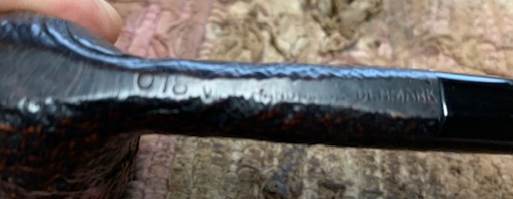
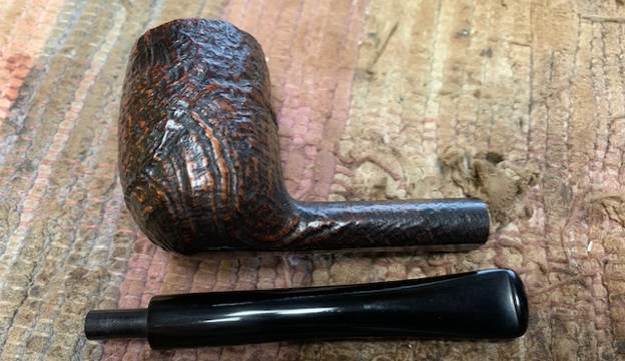
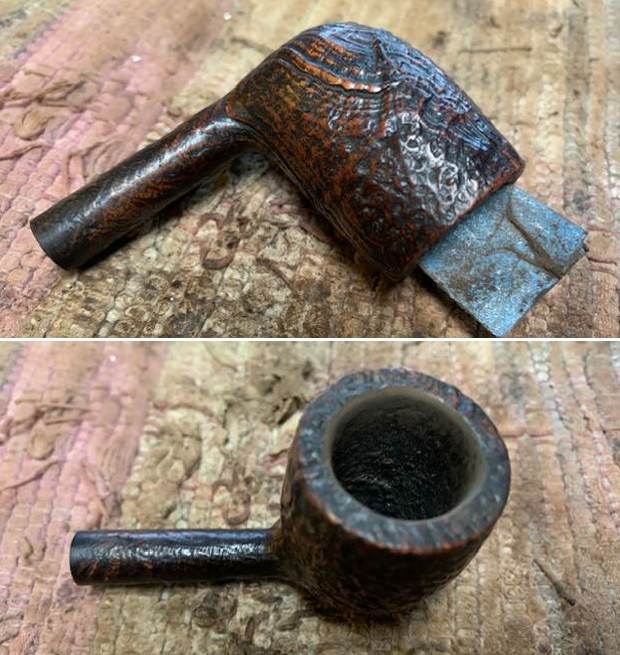
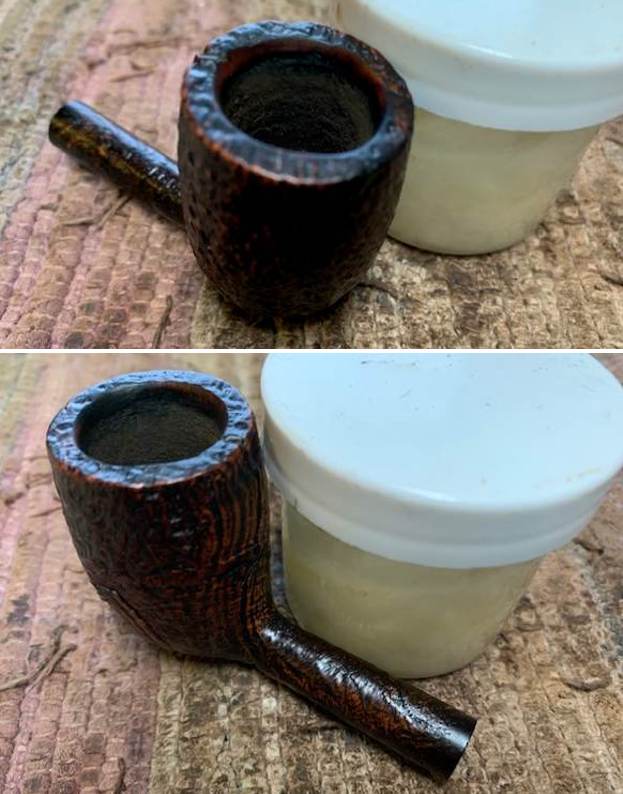
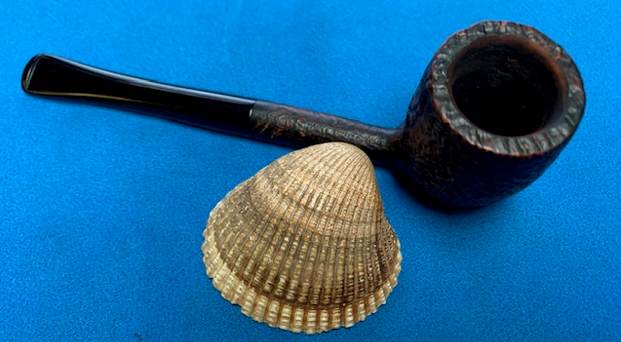
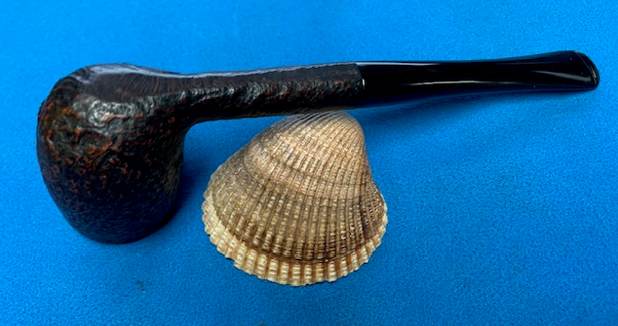
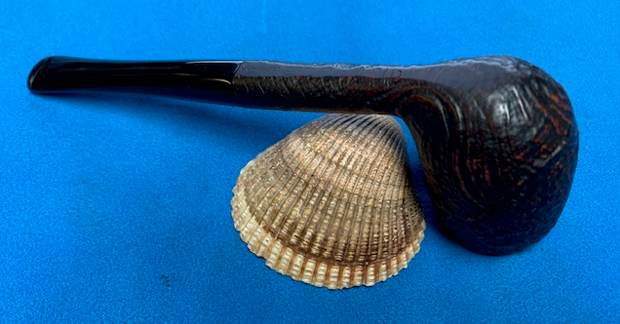
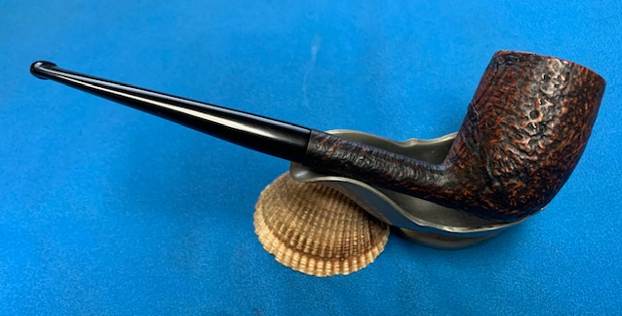
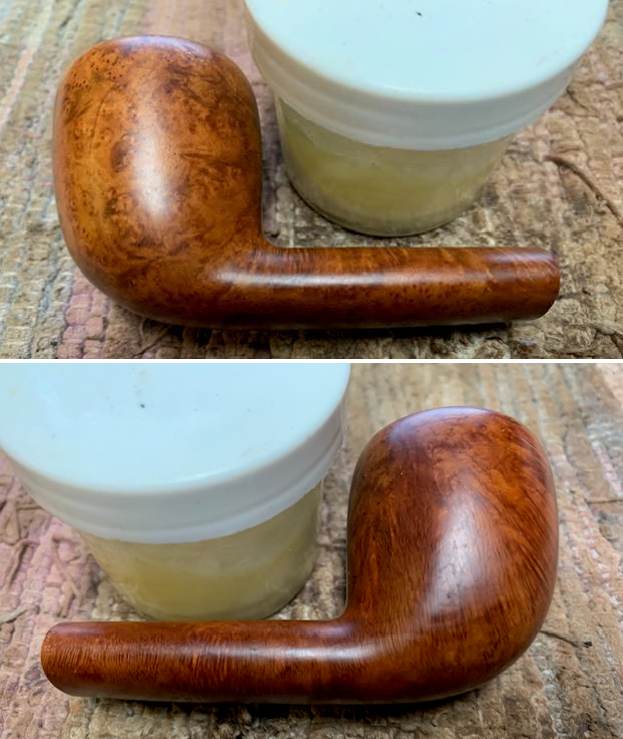
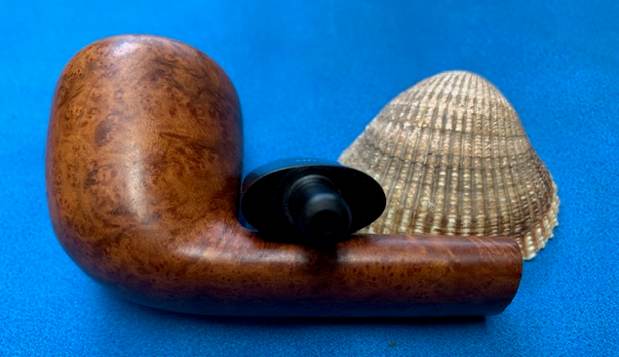
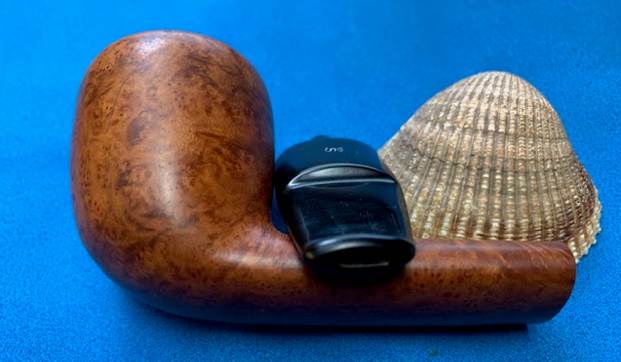
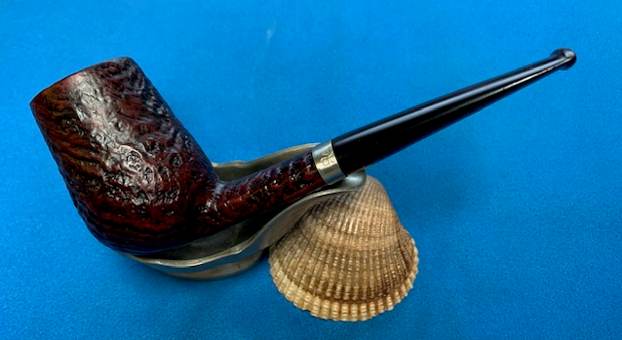
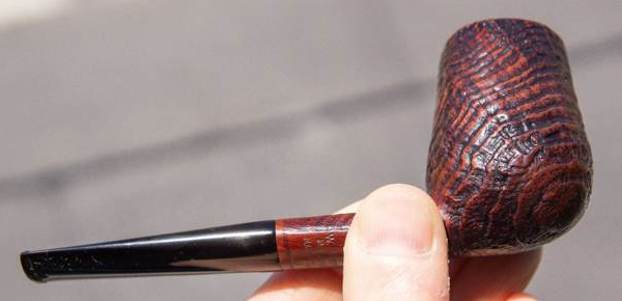
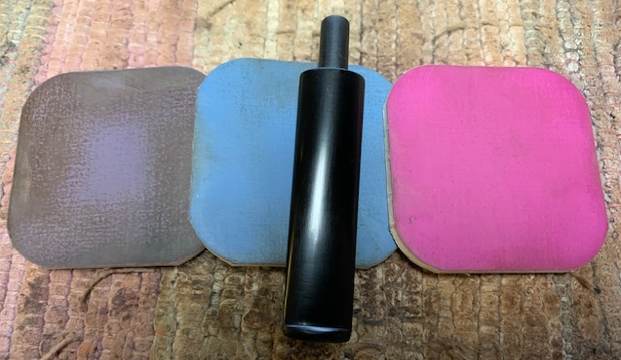
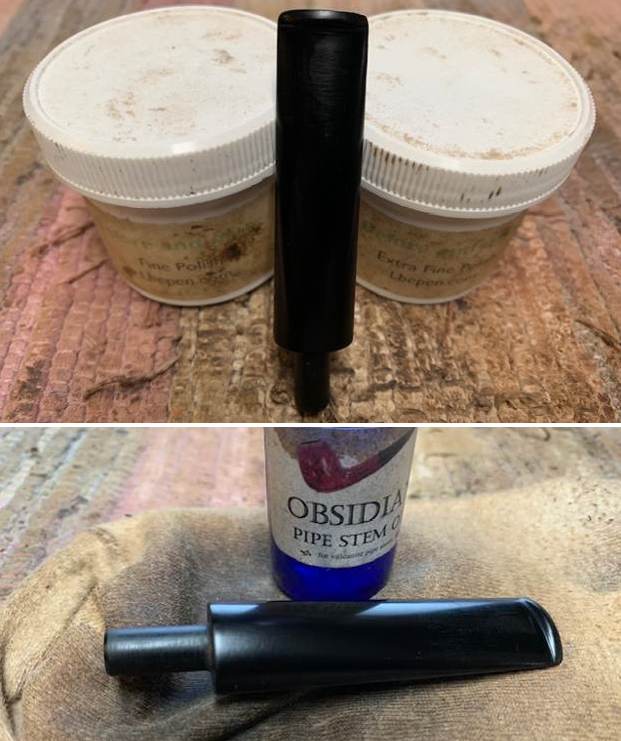
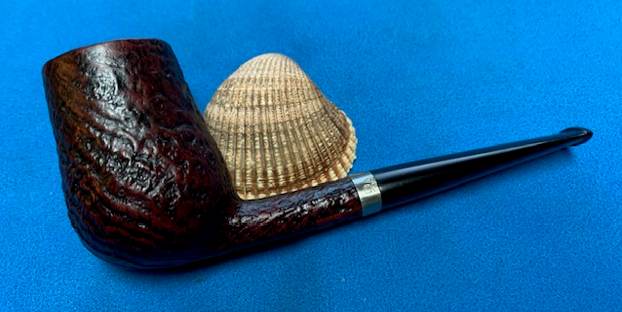
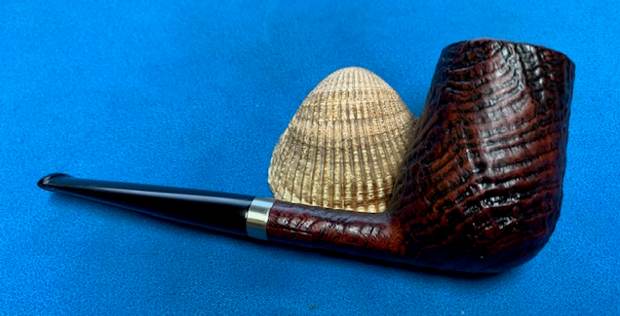
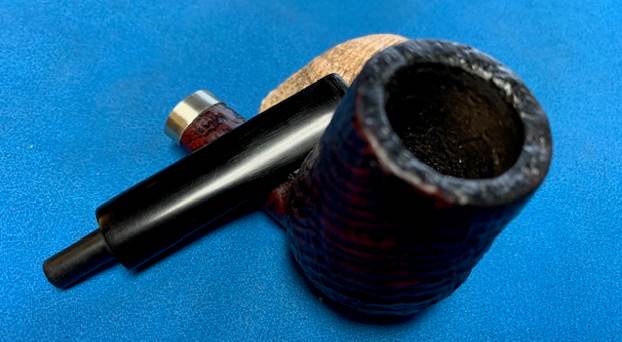
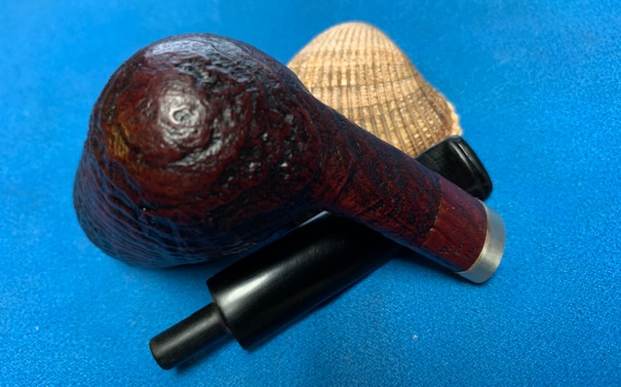
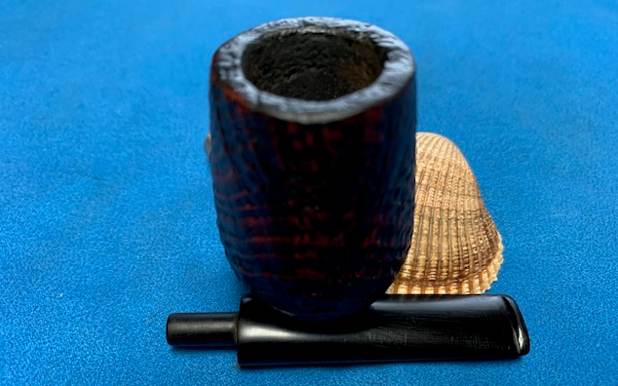
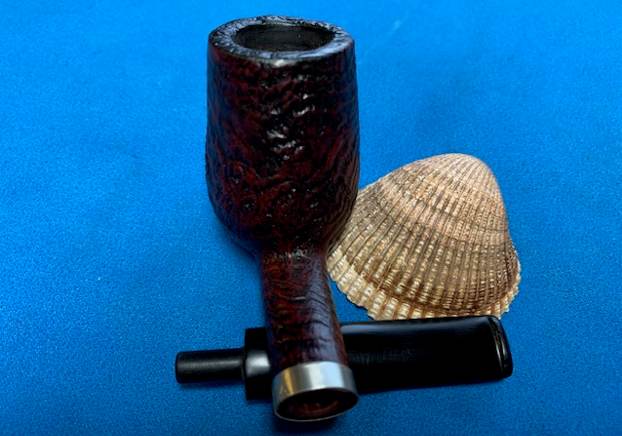
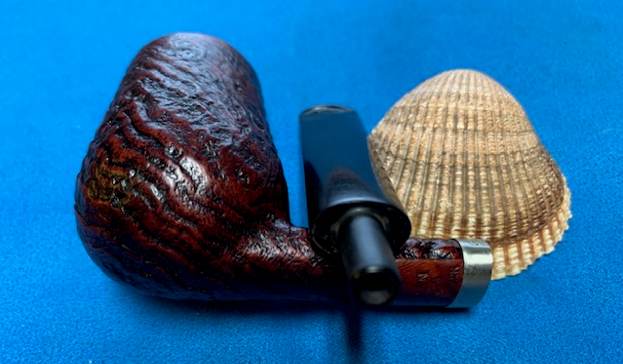
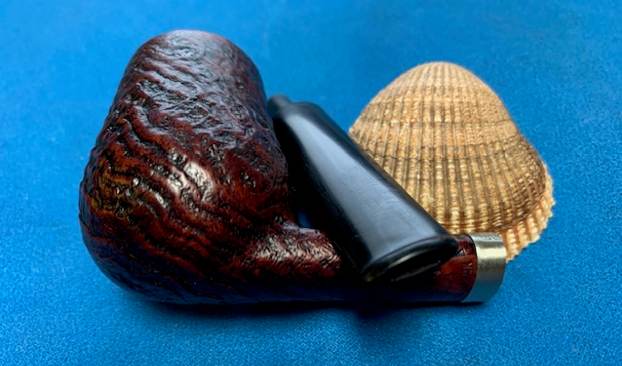
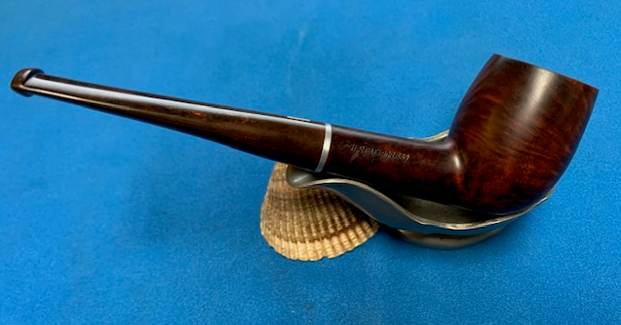
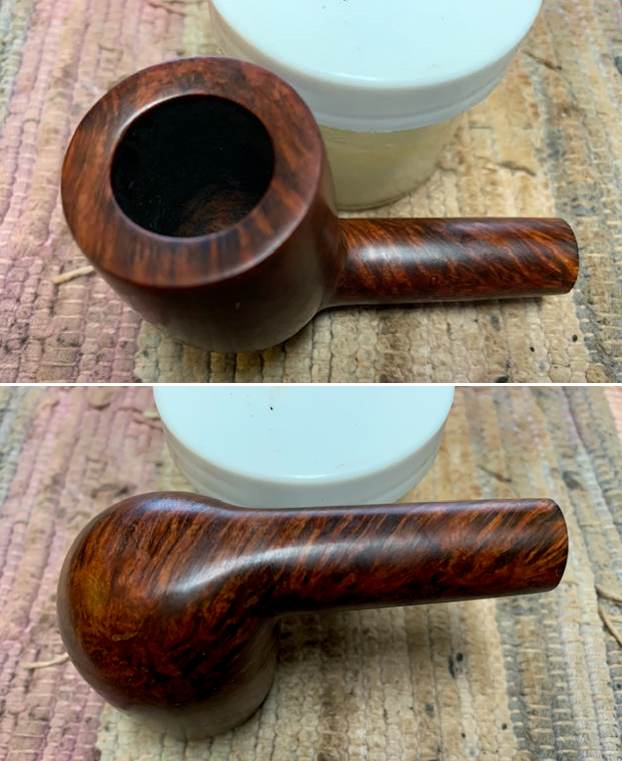
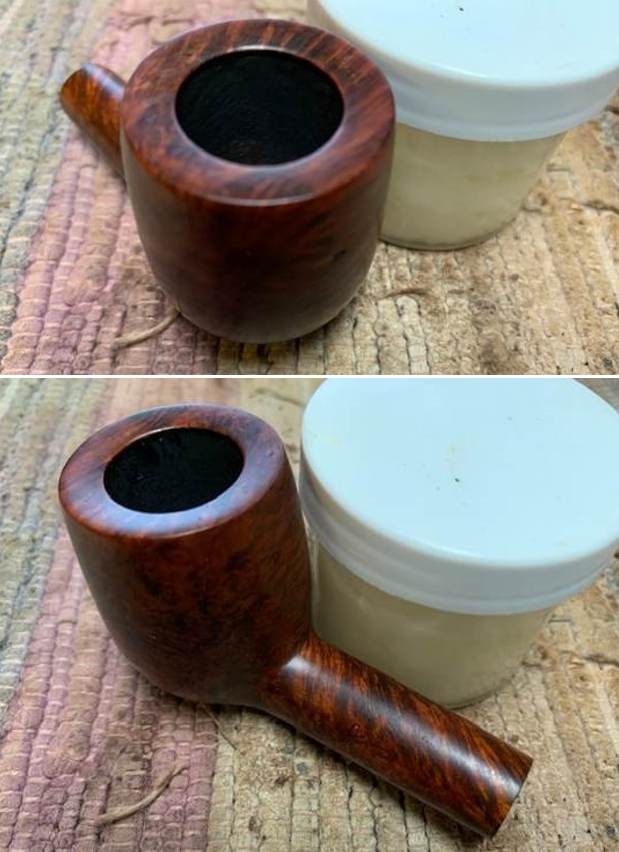
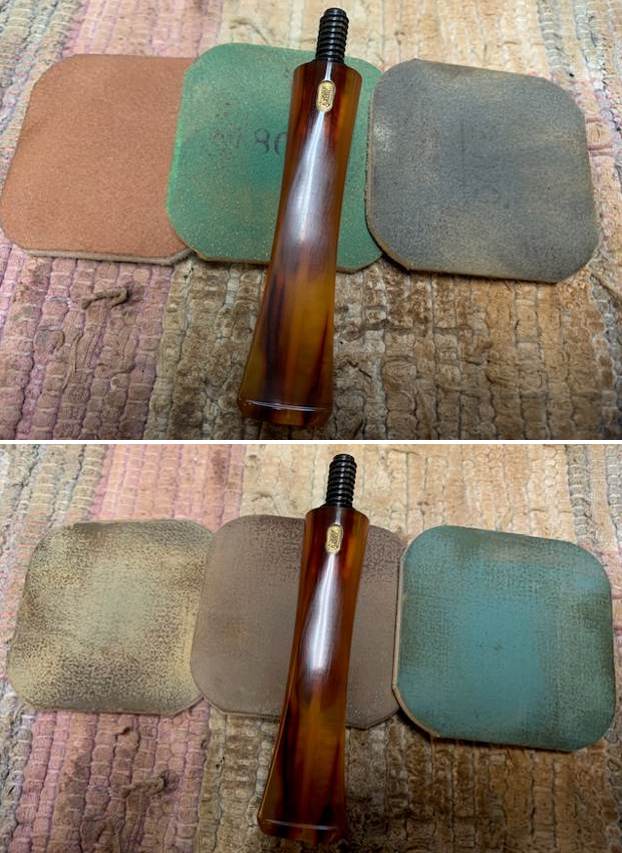
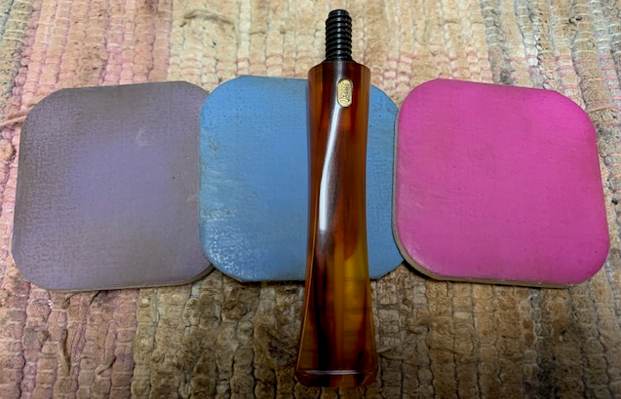
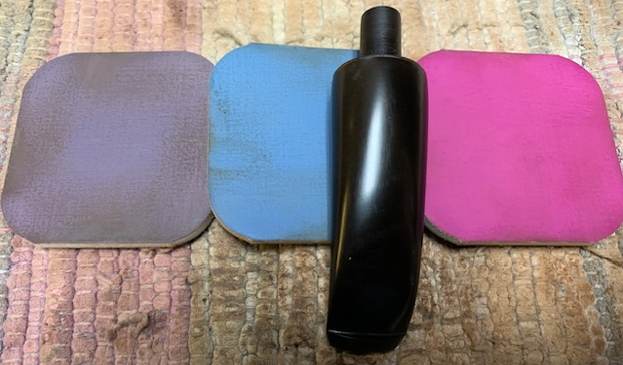
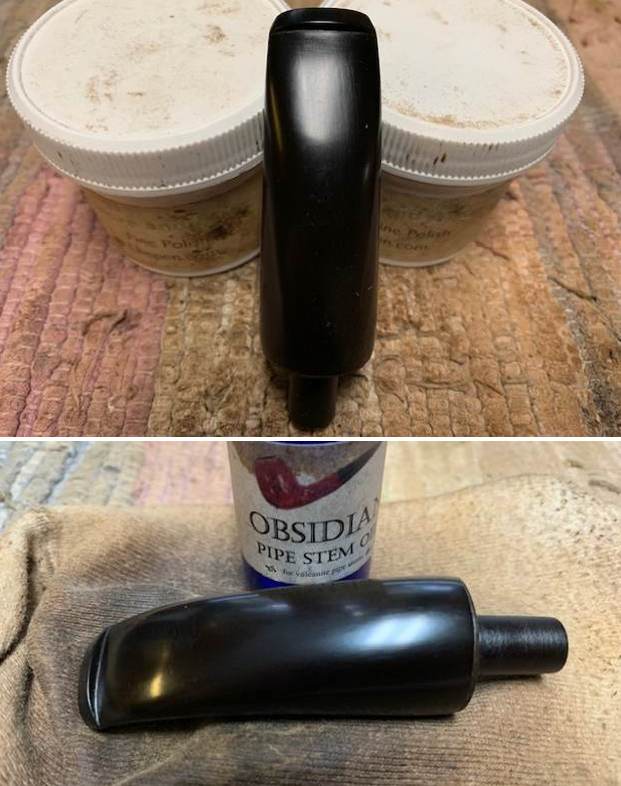
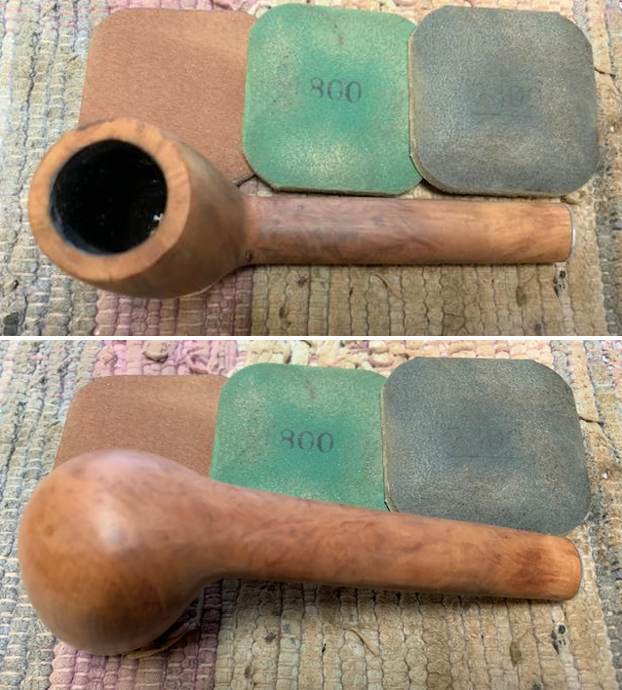
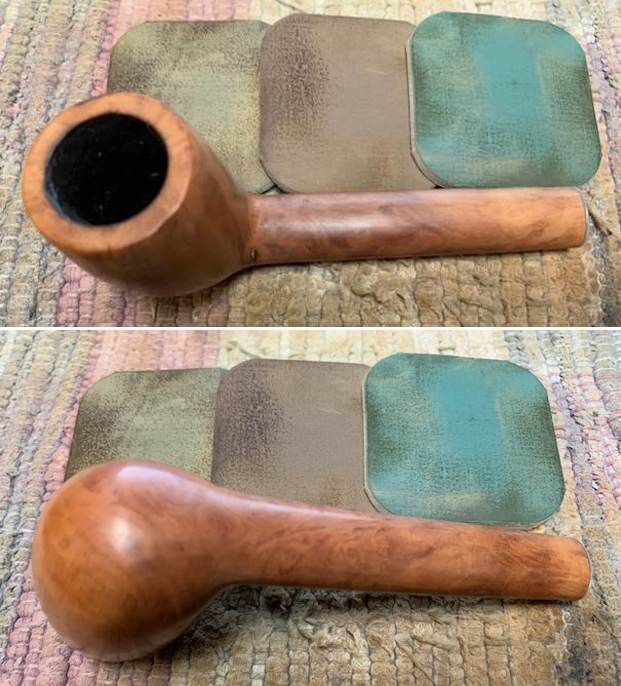
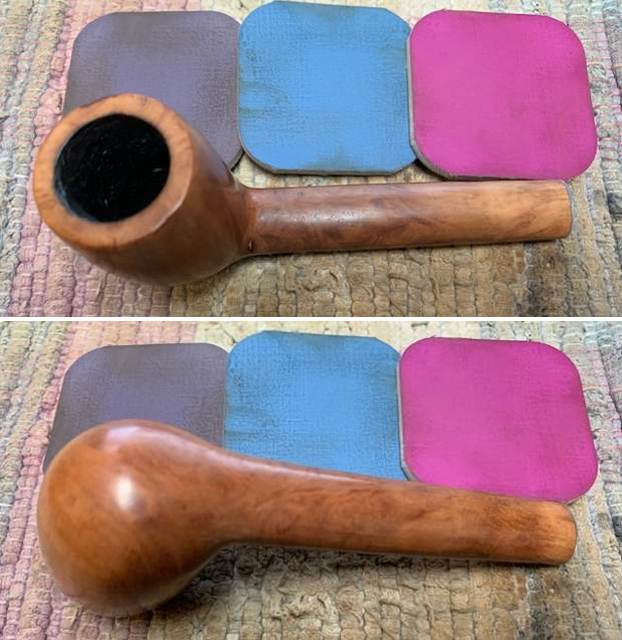
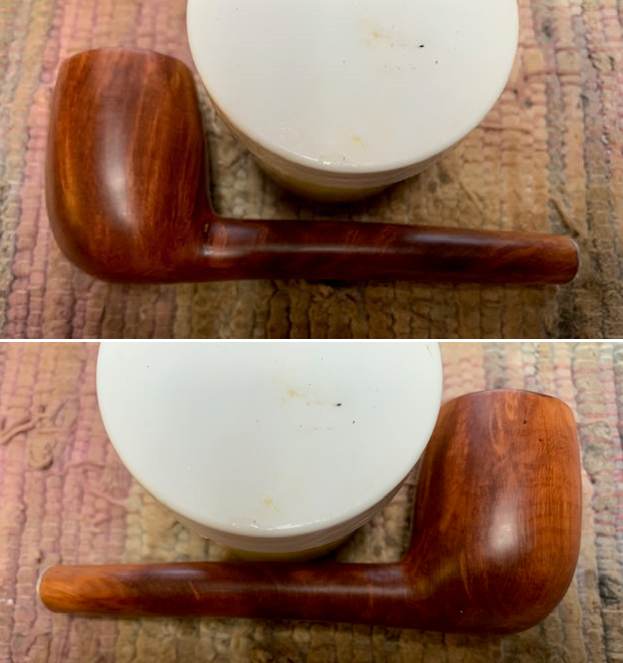
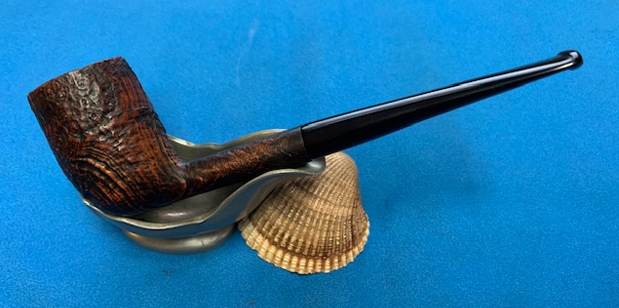
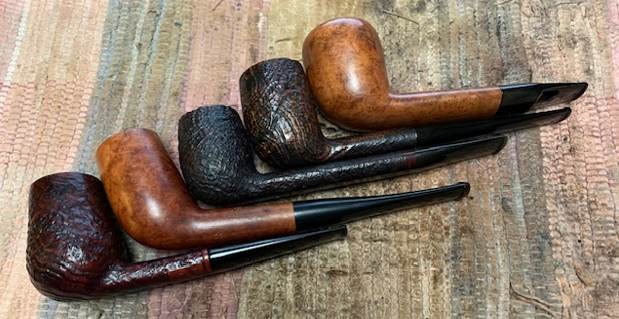
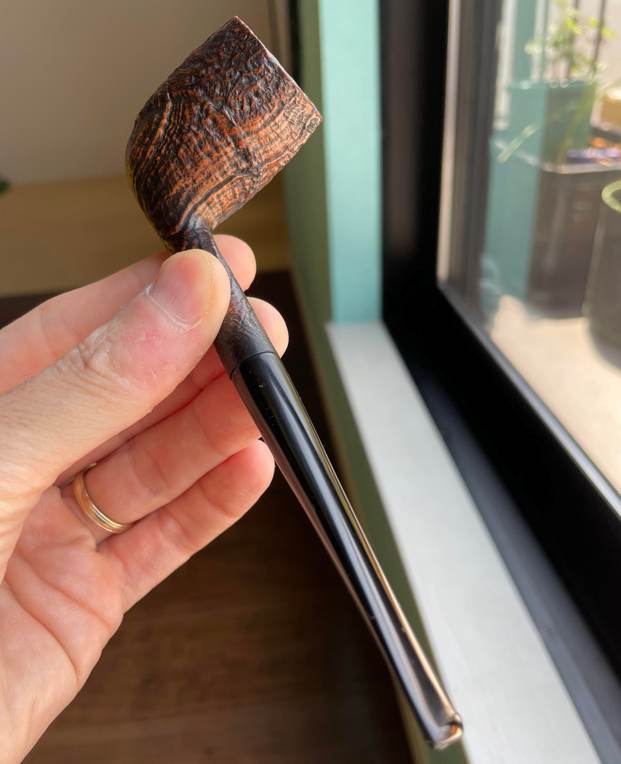
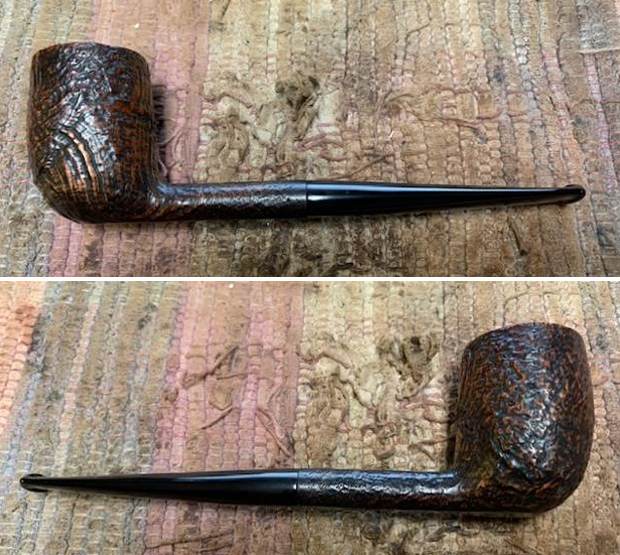
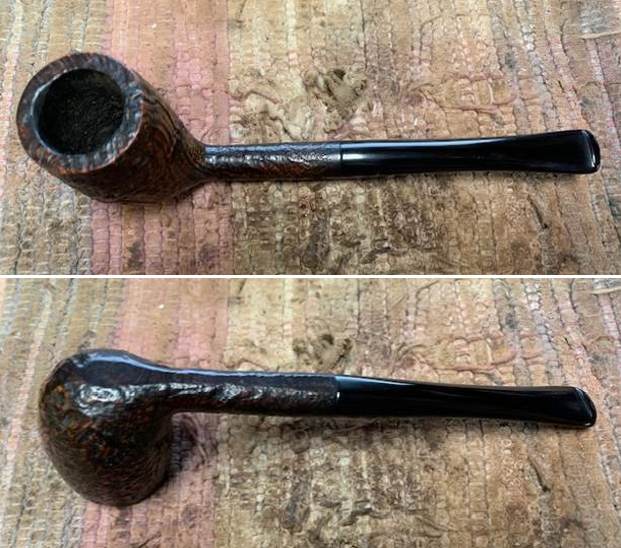
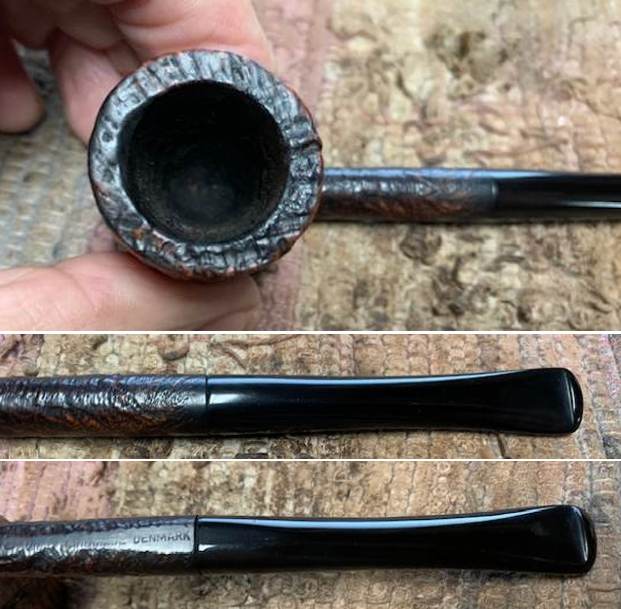
Not long ago I worked a trade with a fellow for these five pipes in exchange for one that I had here. He sent me photos of the pipes and the deal was struck. The pipes he sent are as follows from bottom to top. There is a W.O. Larsen sandblast oval shank Brandy with a hairline crack in the shank and with tooth marks on the button on both sides, a Bertram Cutty that I had traded with him earlier, a Kriswill sandblast Canadian with a cracked shank, a Viby pencil shank Billiard and a Stanwell Royal Briar wide oval shank Dublinesque Freehand with burn damage on the rim edges and top around the bowl and deep tooth marks on the stem.The next of these I chose to work on today is the Viby 018 Pencil Shank Billiard. It is the second pipe down from the top of the photo above. It is a great looking sandblast piece with a very thin shank and normal sized bowl. The blast reveals some interesting grain patterns around the bowl and the shank. The rim top was in good condition and there was some darkening and burn damage on the front inner edge. The outer edge of the rim is in good condition. The bowl had a light cake in the bowl and smells of good Virginia tobacco. There was some grime and grit ground into the surface of the finish. The stamping on the underside of the shank reads 018 (shape number I believe) followed by Viby. That is followed by Handmade Denmark. The stain is medium/dark brown and goes well with the thin taper stem. Once it is cleaned up and polished the grain around the bowl and shank will shine. The stem is in good condition with some tooth marks on it. The surface just ahead of the button is worn on both sides. The button edge looks good on both sides. I have included a photo of the pipe that was included in the exchange of emails while we struck a deal. It is good looking pipe.I took photos of the pipe before I did my clean up work on it to show its condition. The photos confirm what I noted above regarding the condition of the bowl and the stem. It a nice looking pipe that will look better with a bit of work on the stem and bowl.   I took close up photos so that I could have a clearer picture of the condition of the bowl, rim edges and top. The rim top photos confirm my assessment above and show that while there is some darkening and burn damage on the front top and inner edge. The cake in the bowl is quite moderate and smooth. You can also see the condition of the outer and the inner edge. They appear to be in great condition. The bowl is slightly out of round on the front inner edge. The issues with the stem are visible in the photos on both sides. The sharp edge of the button is worn down and will need to be recut. This is what I look for when assessing a pipe. I took a photo of the stamping on the underside of the shank. It is a little faint but readable as noted above.I took the stem off the bowl and took a photo of the pipe to give a sense of proportion of the pipe. You can also see shape of the pipe and some interesting grain around the bowl and shank. Before I started my work on this pipe I turned to Pipephil’s site (http://pipephil.eu/logos/en/logo-b4.html) to the section on Benni Jørgensen. I knew that the Viby pipe was made by Benni and it was a matter of question whether it was a Benni second or another line by Benni. I quote from the section on Pipephil below.
Artisan: Benni Jørgensen is a professional pipemaker since 1980. He worked for W.O. Larsen for 25 years. He sells his pipes under his own brand (Benni Pipes) since 2000. Lasse Skovgaard Jorgensen is his son.

I turned then to Pipedia (https://pipedia.org/wiki/Benni_Pipes) and read the brief history of Benni’s craftsmanship. It is a great read and is full of connections between and the big name Danish carvers who worked in W.O. Larsen’s workshop. Give the article a read as it is well worth the time. There was no specific information on the Viby Line of pipes. The one I am working on is a handmade pipe and looks very good.

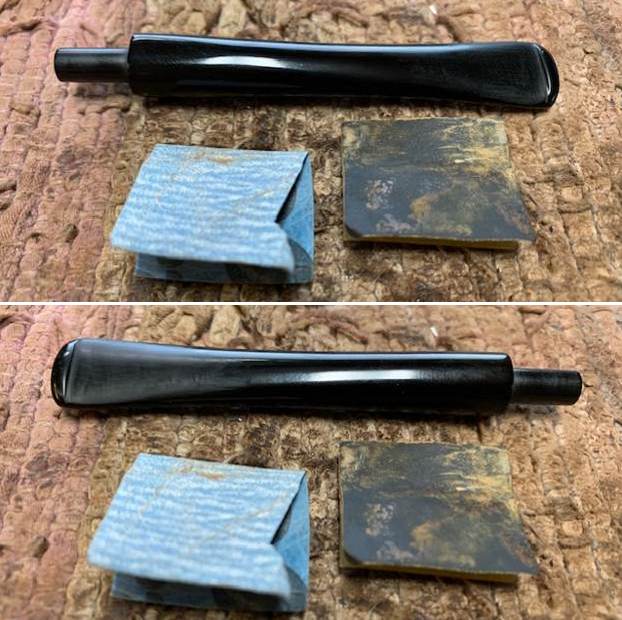
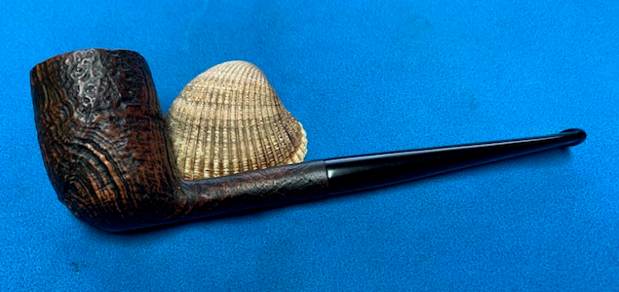
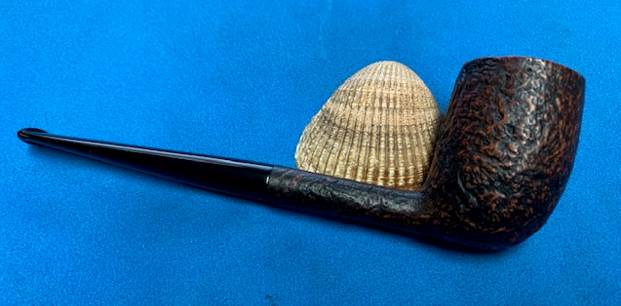
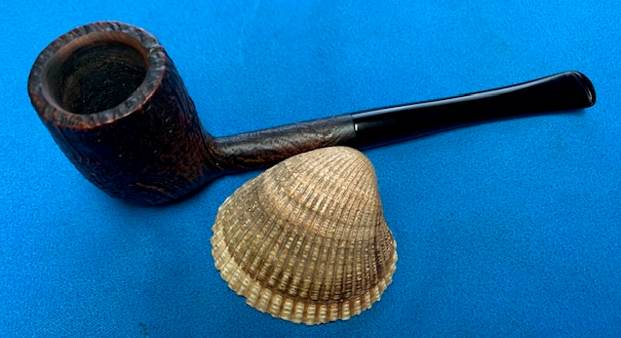
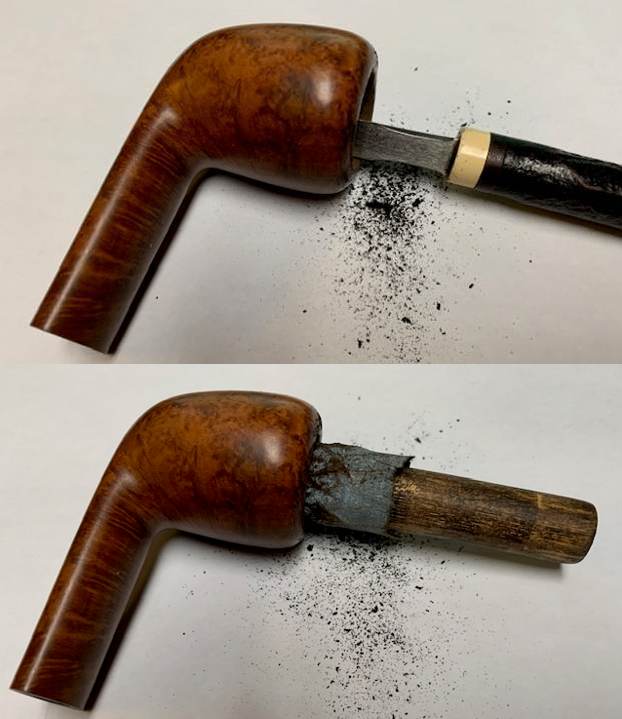
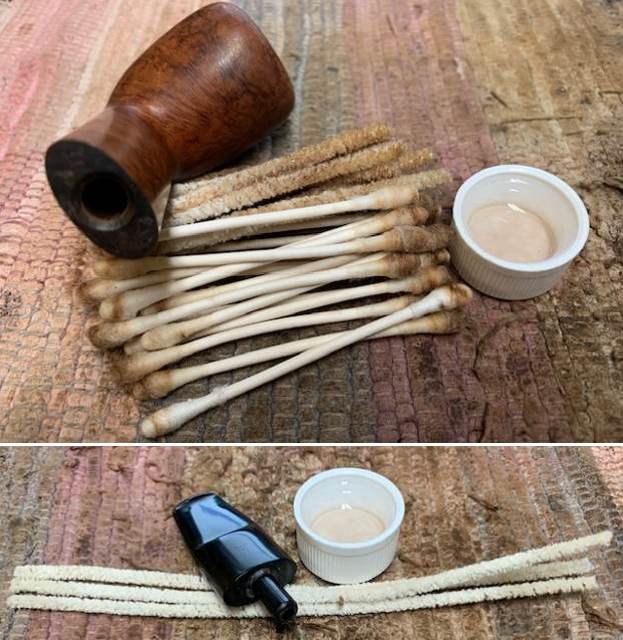
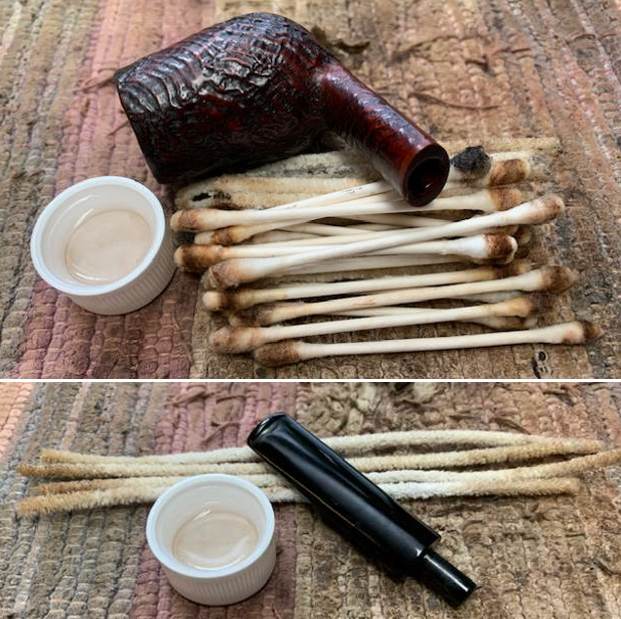
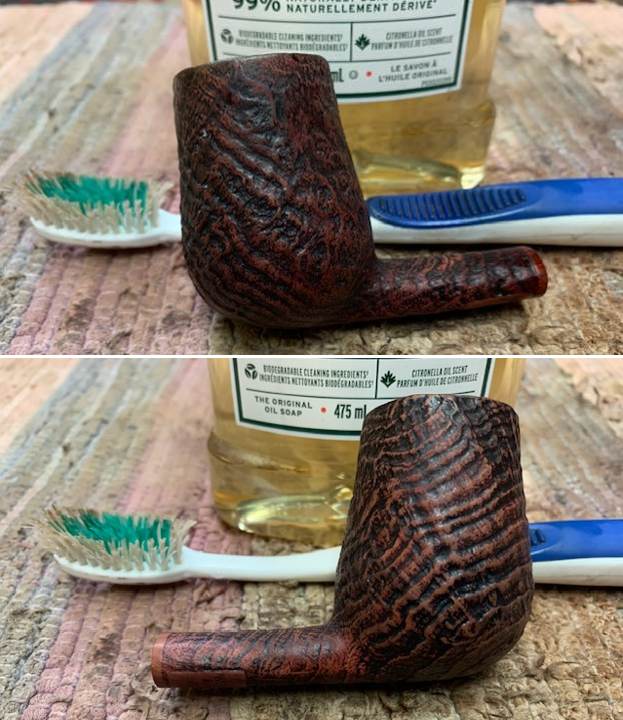
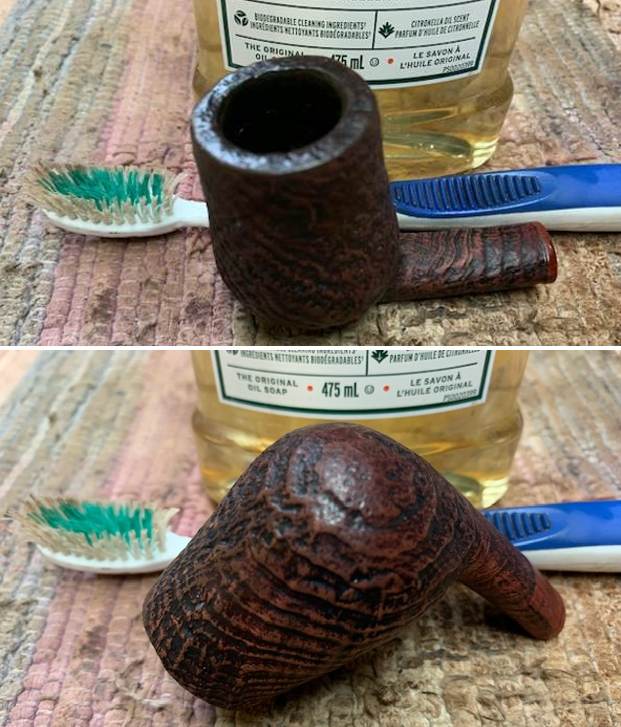
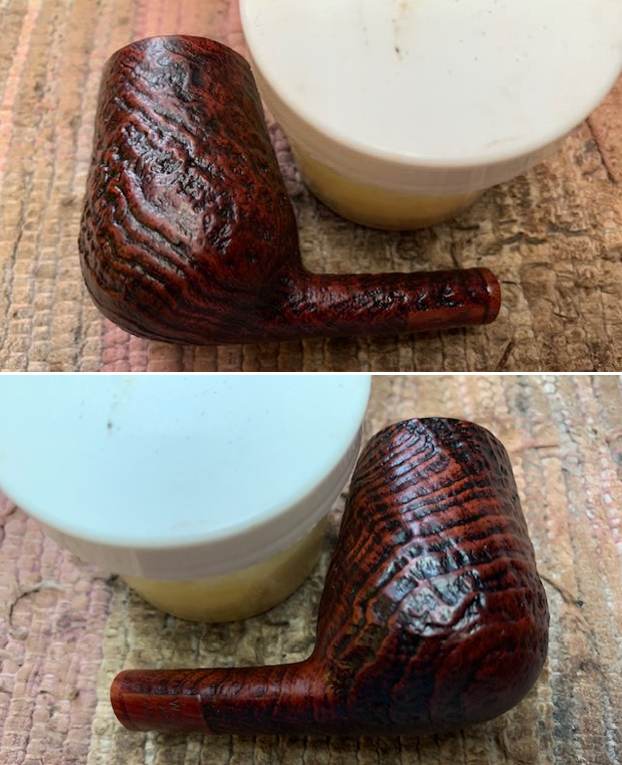
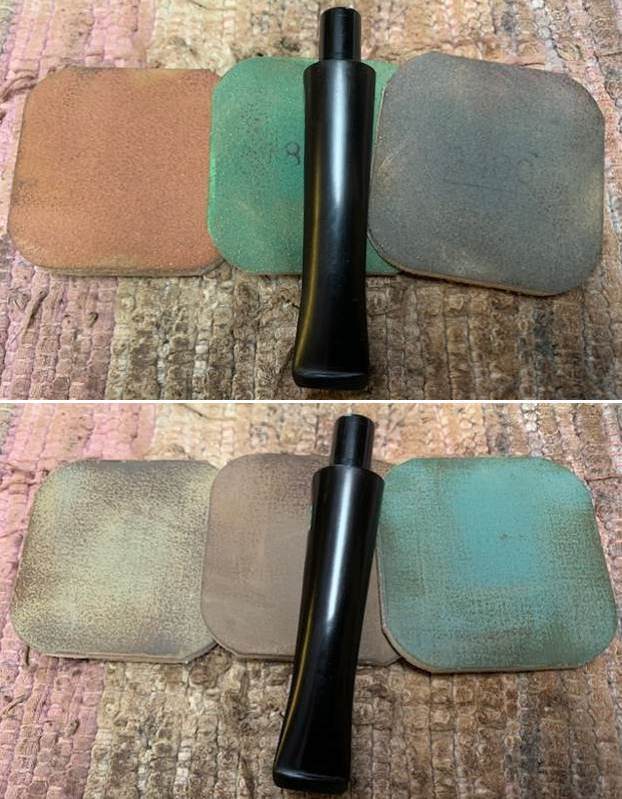
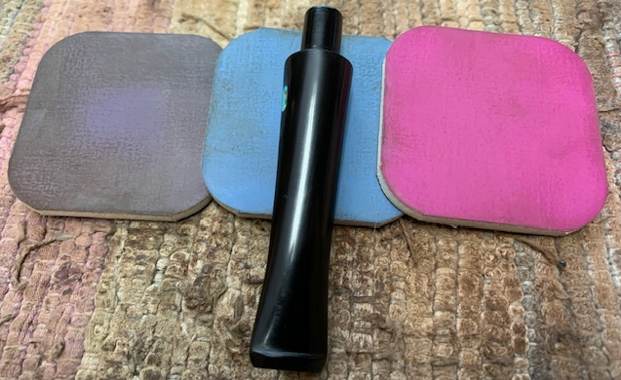
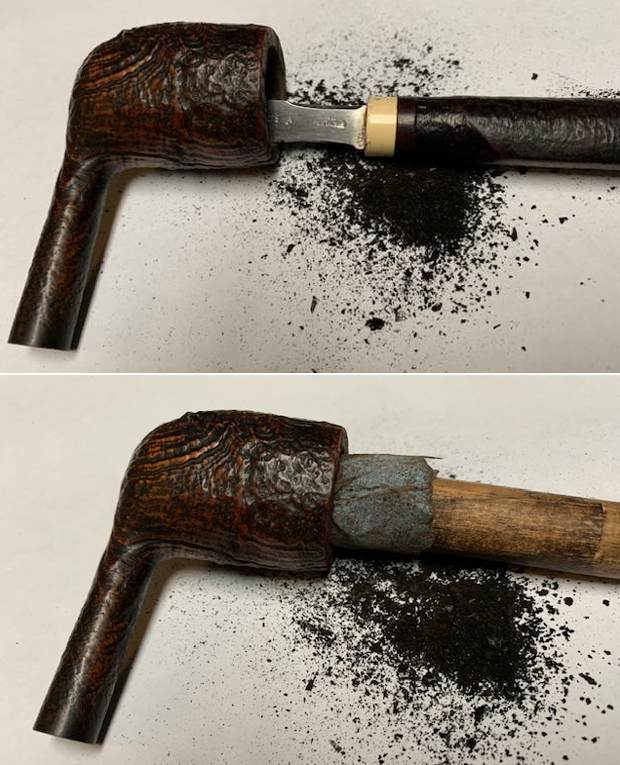
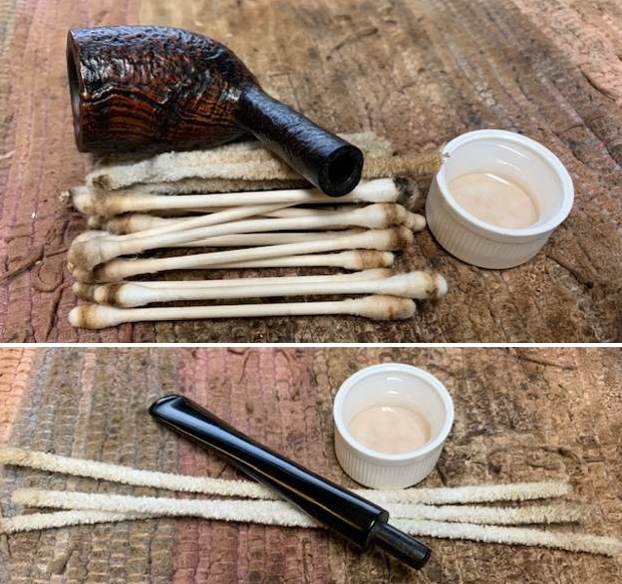
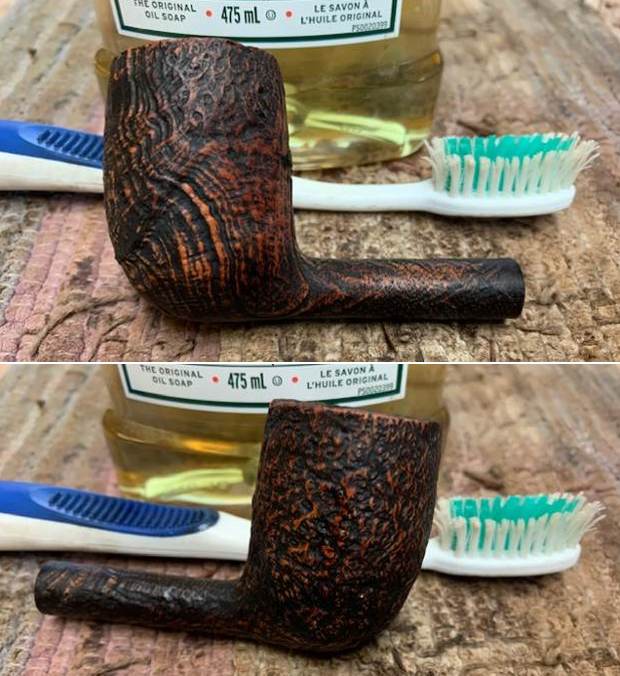
Now it was time to work on the pipe itself. I started my work on this one by reaming the bowl with a Savinelli Fitsall Pipe Knife. I followed that up by sanding the bowl walls with 220 grit sandpaper wrapped around a piece of dowel.  I cleaned the internals of the shank and the stem with 99% isopropyl alcohol, cotton swabs and pipe cleaners. I scrubbed it until the shank was clean and the smell was much cleaner smelling. Before scrubbing the bowl exterior I decided to clean up the darkening and the burn damage on the rim top and inner edge of the bowl. I used a folded piece of 220 grit sandpaper give the bowl a light inward bevel and remove the darkening and the damage as much as possible. It looks much better.I scrubbed the external surface of the briar with a tooth brush and undiluted Murphy’s Oil Soap. I scrubbed it until the finish was clean and then rinsed it off with warm running water to rinse off the soap and the grime from the finish. I dried it off with a soft cloth and took photos of the pipe. I applied some Before & After Restoration Balm to the briar. It is a paste/balm that is rubbed into the surface of the briar. The product works to deep clean finish, enliven and protect the briar. I worked it into the briar with my finger tips and a shoe brush. I let it sit for 10 minutes to do its work. I wiped it off with a soft cloth then buffed it with a cotton cloth. The briar really began to have a deep shine and the grain shone through. The photos I took of the bowl at this point mark the progress in the restoration. It is a gorgeous pipe. I set the bowl aside and turned my attention to the issues with the vulcanite stem. I used a small file to reshape the button edge redefine it. I sanded the file marks smooth with 220 grit sandpaper and started the polishing with 600 grit wet dry sandpaper. The stem surface and button looked much better. I continued polishing the stem with micromesh sanding pads – 1500-12000 grit sanding pads and water to wet sand the stem. I wiped it down after each sanding pad with Obsidian Oil on a cotton rag after each sanding pads. But I find it does two things – first it gives some protection to the stem from oxidation and second it give the sanding pads bite in the polishing process. After finishing with the micromesh pads I rub the stem down with Before & After Fine and Extra Fine stem polish as it seems to really remove the fine scratches in the vulcanite. I rub the Fine Polish on the stem and wipe it off with a paper towel and then repeat the process with the Extra Fine polish. I finish the polishing of the stem down with a final coat of Obsidian Oil and set the stem aside to let the oil absorb. This process gives the stem a shine and also a bit of protection.The final steps in my process involve using the buffer. I put the Benni Jorgensen Handmade Viby Pencil Shank Billiard back together and lightly buffed the bowl and stem with Blue Diamond to polish the finish. I polished the vulcanite stem at the same time to polish out the scratches. I gave the bowl multiple coats of Conservative Wax and the stem multiple coats of carnauba wax. I have found that I can get a deeper shine if I follow up the wax buff with a buff with a clean buffing pad. It works to raise the shine and then I hand buff with a microfiber cloth to deepen the shine. It is always fun for me to see what the polished bowl looks like with the polished stem. It really is a nice pipe. The finish around the bowl sides and shank looks great with the rich combination of brown stains. The Viby Pencil Shank Billiard feels great in my hand. It is a well balanced pipe. Have a look at it with the photos below. The dimensions are Length: 5 ¾ inches, Height: 1 ¾ inches, Outside diameter of the bowl: 1 ¼ inch, Chamber diameter: ¾ of an inch. The weight of the pipe is .95 ounces/27 grams. It is a beautiful pipe that functions as a sitter due to the wide heel on the bowl. I will soon be adding to the rebornpipes store in the Danish Pipemakers section. If you would like to add it to your collection let me know. It should be a great smoking pipe. As always I encourage your questions and comments as you read the blog. Thanks to each of you who are reading this blog. Remember we are not pipe owners; we are pipe men and women who hold our pipes in trust until they pass on into the trust of those who follow us.

Restoring a Stanwell Royal Briar Regd. No 689-48 Dublinesque Freehand 189


Blog by Steve Laug

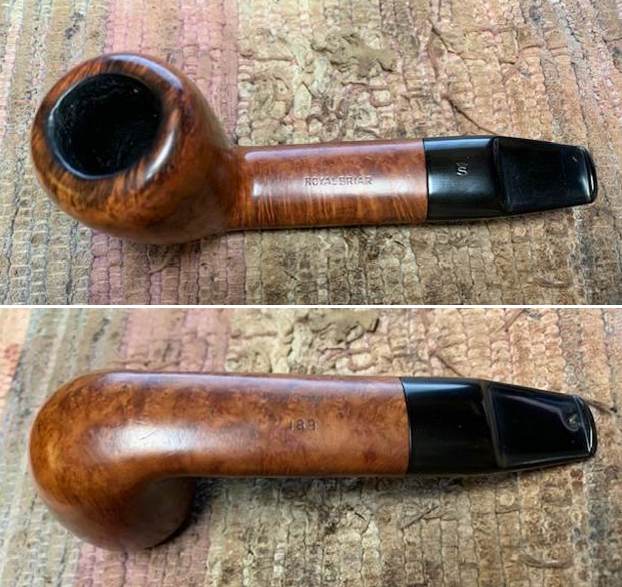
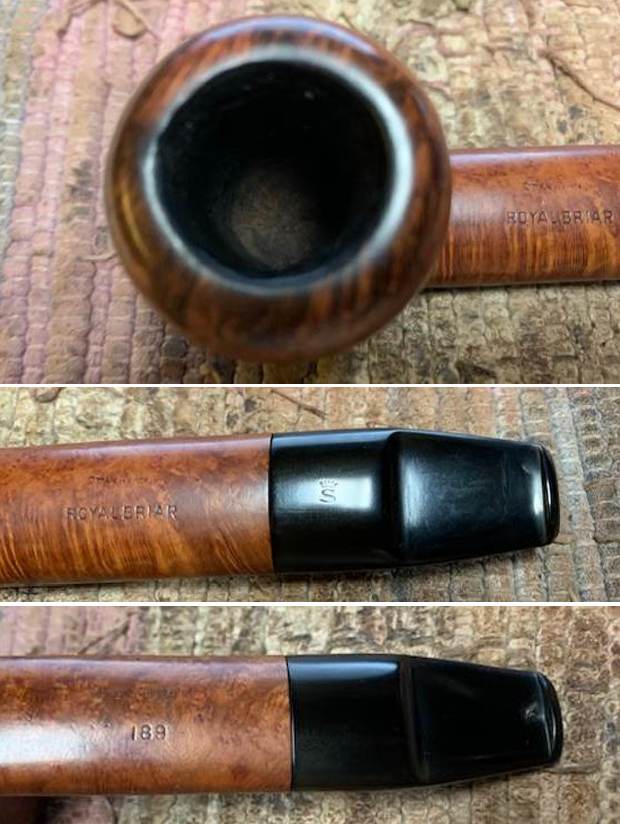
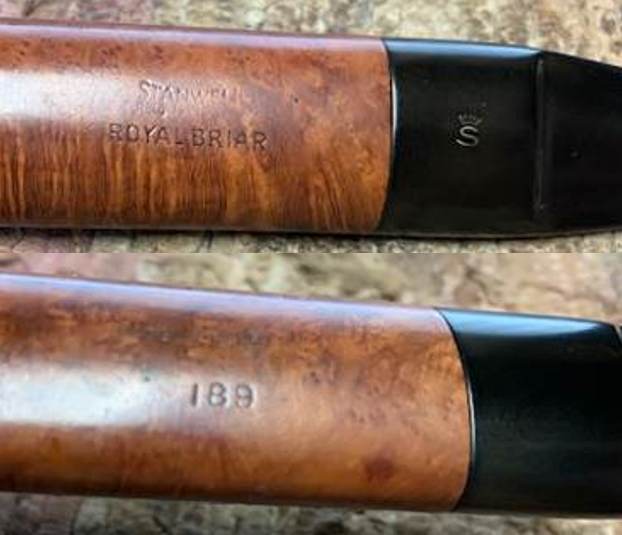
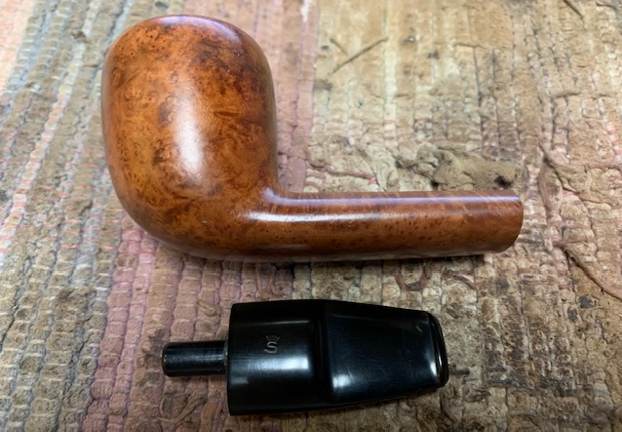
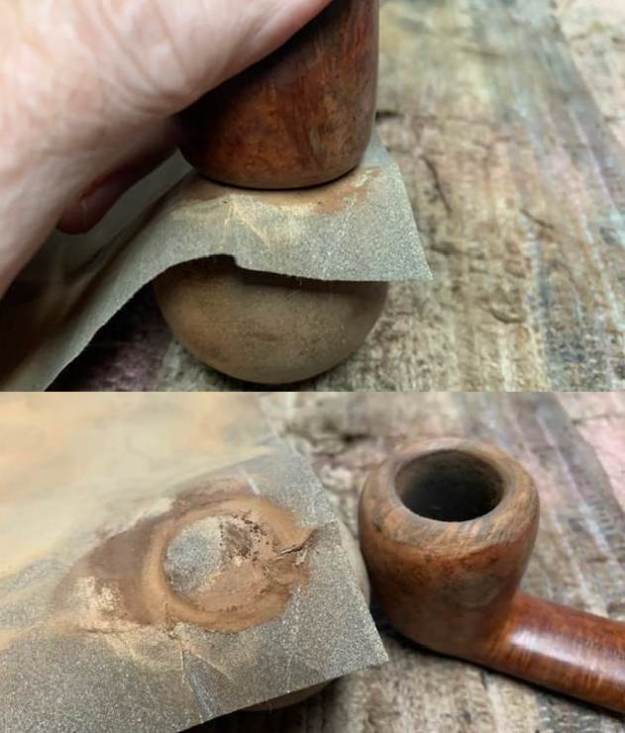
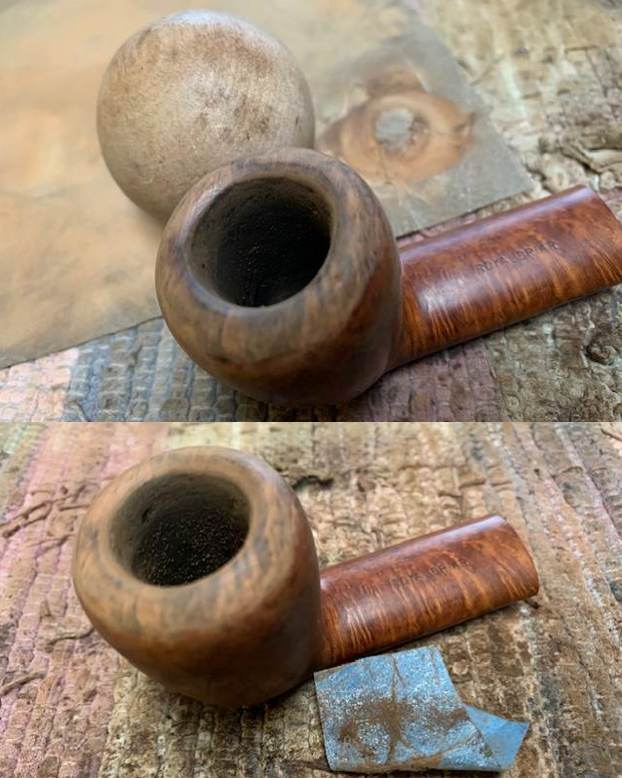
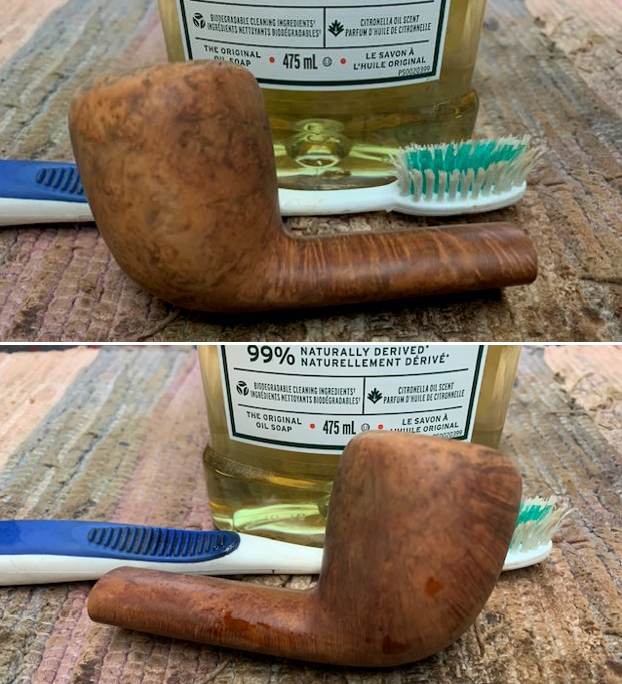
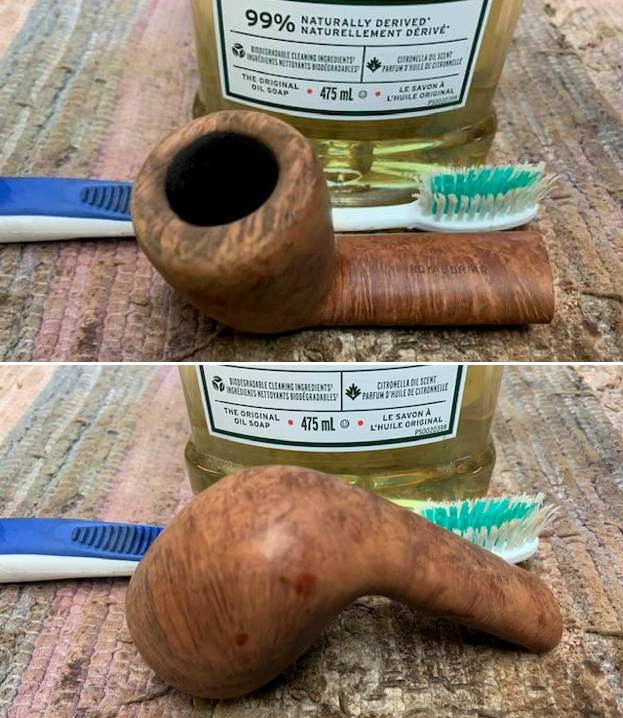
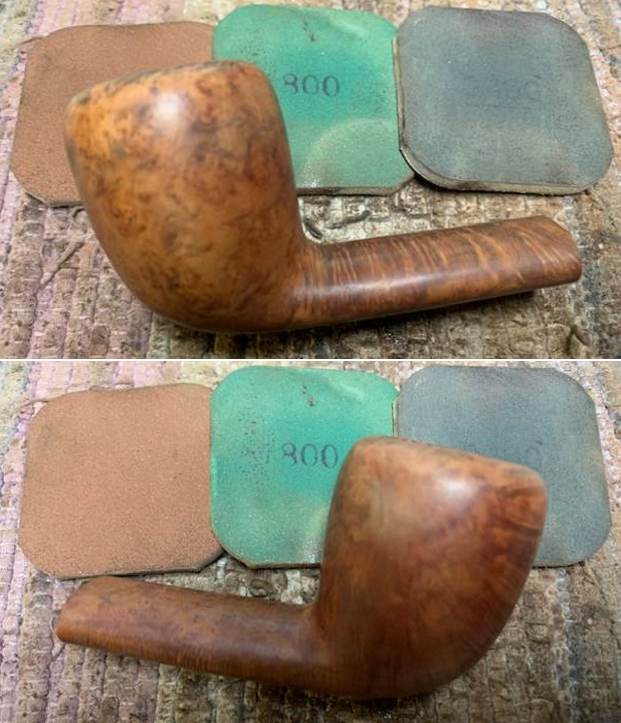
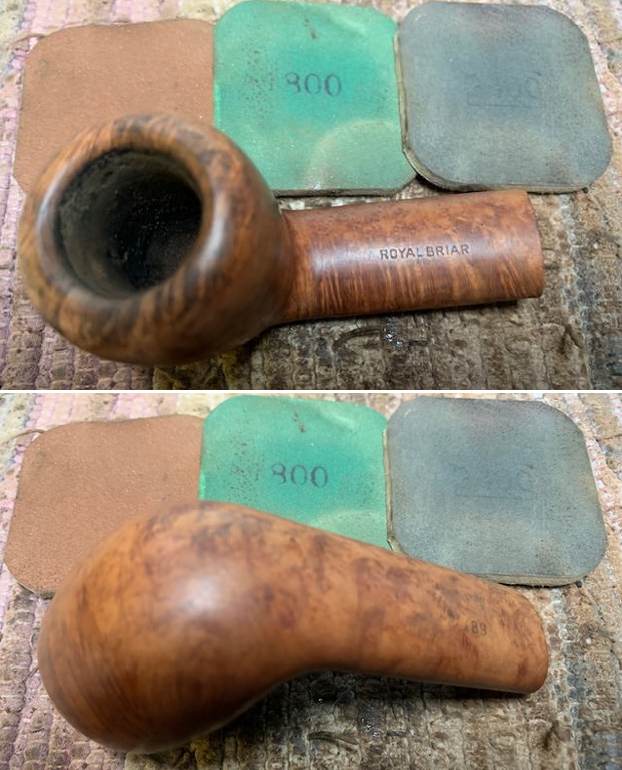
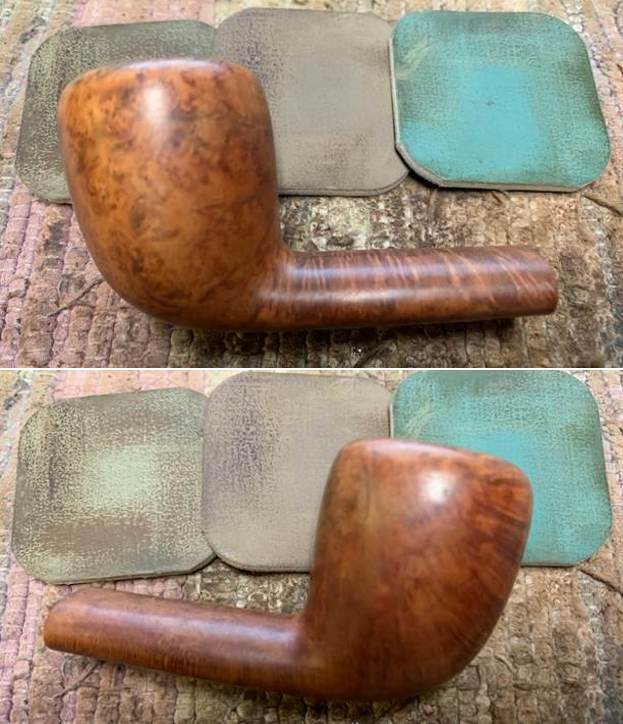
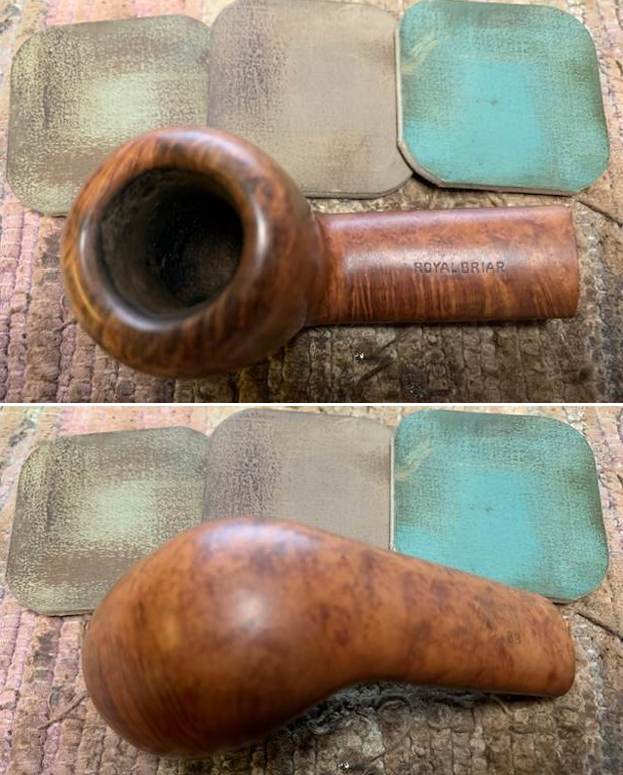
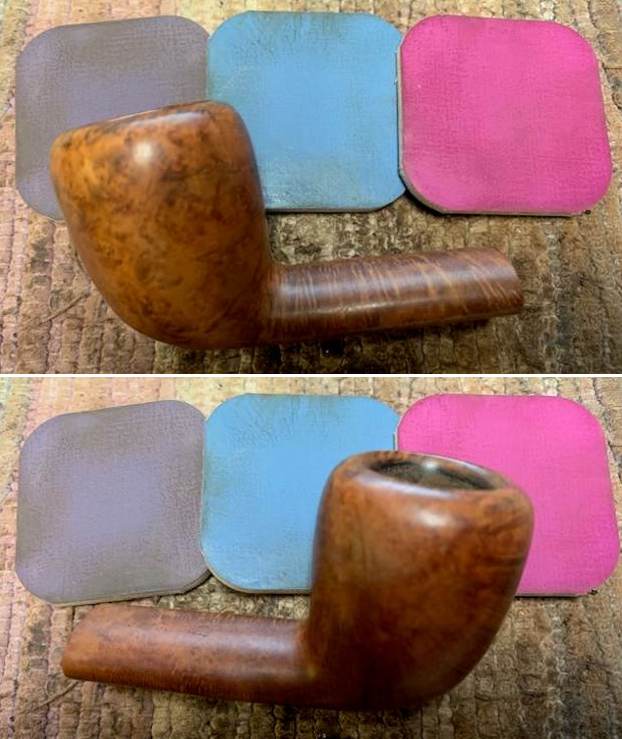
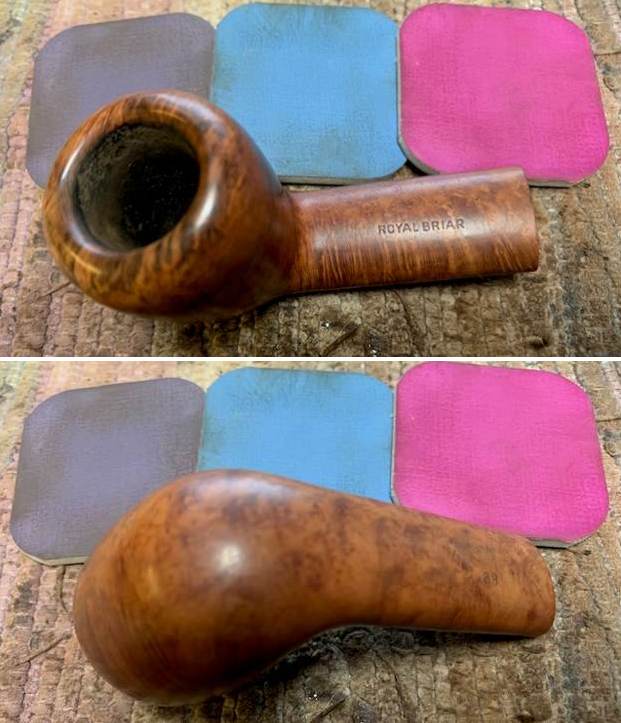
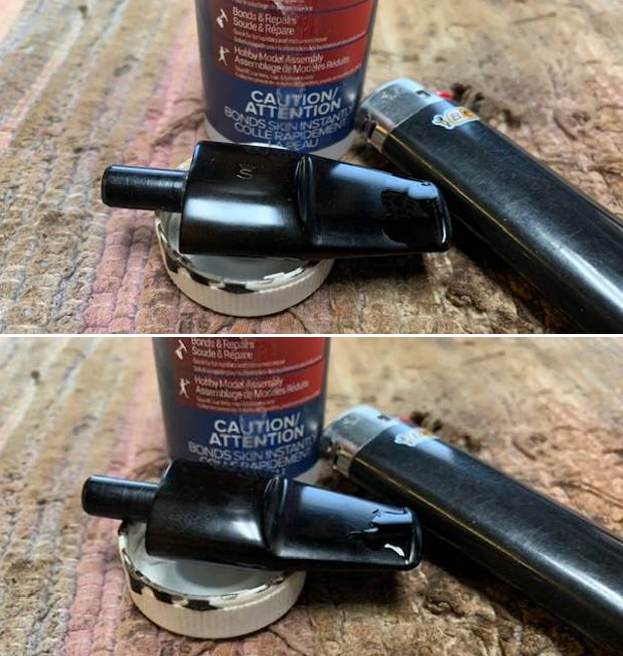
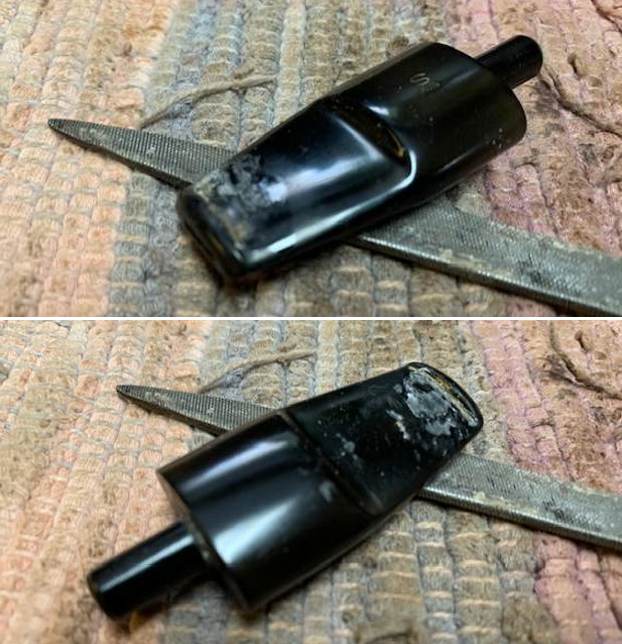
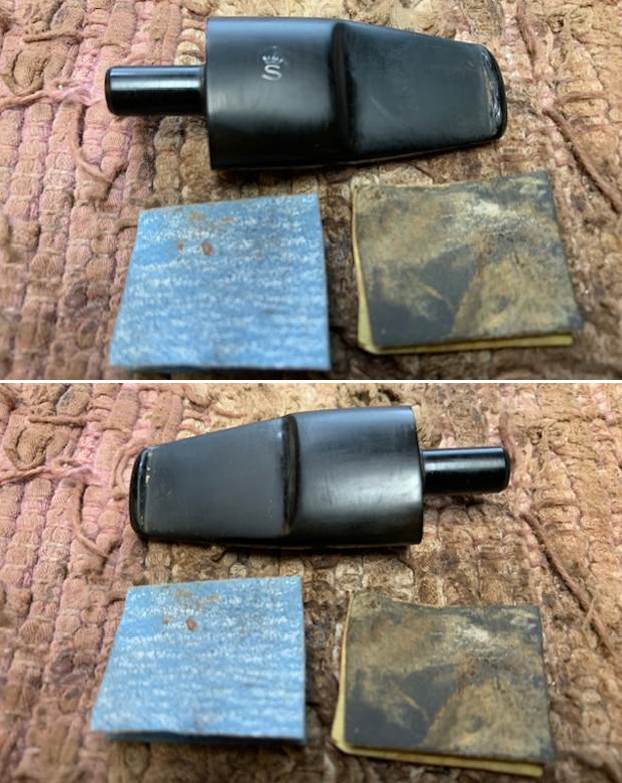
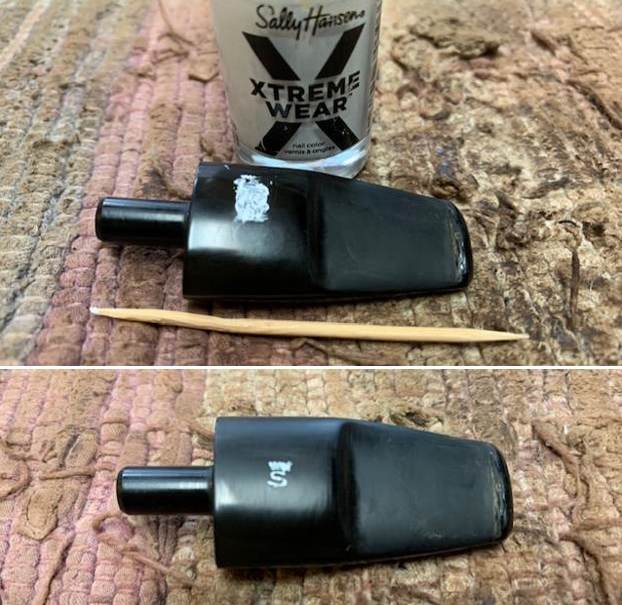
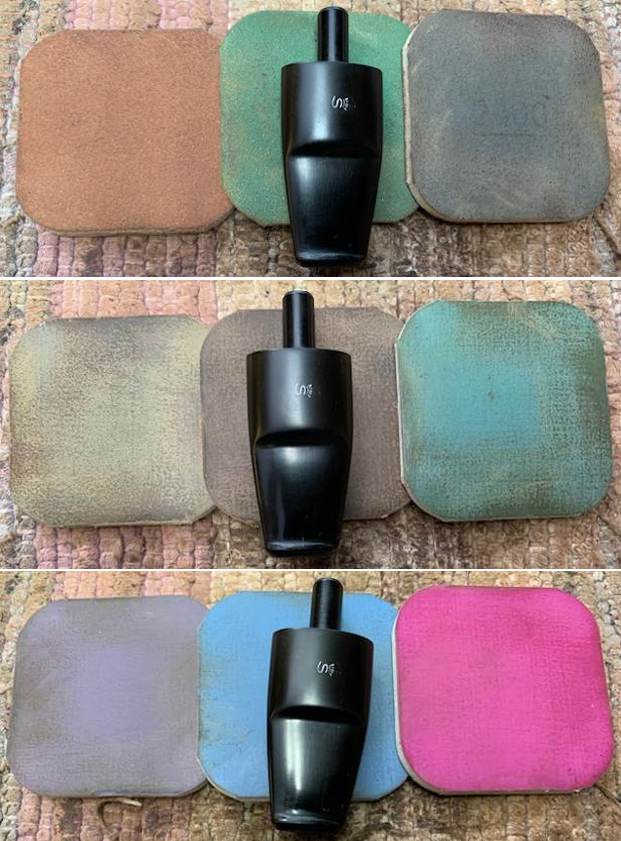
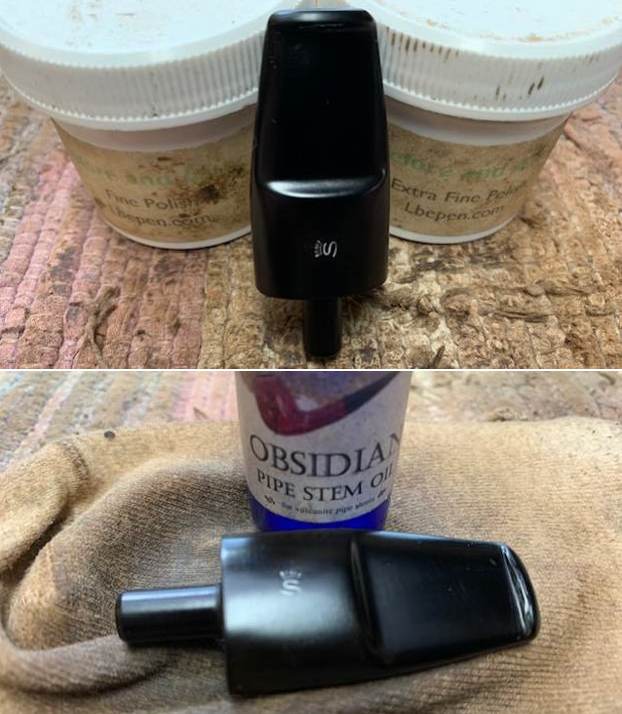
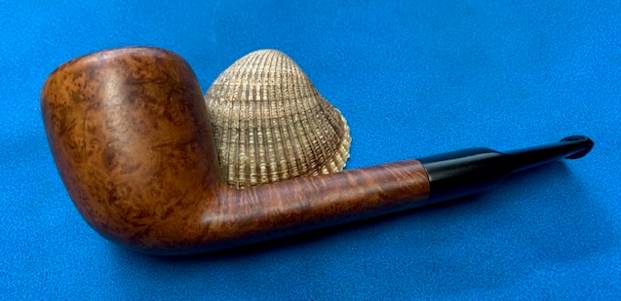
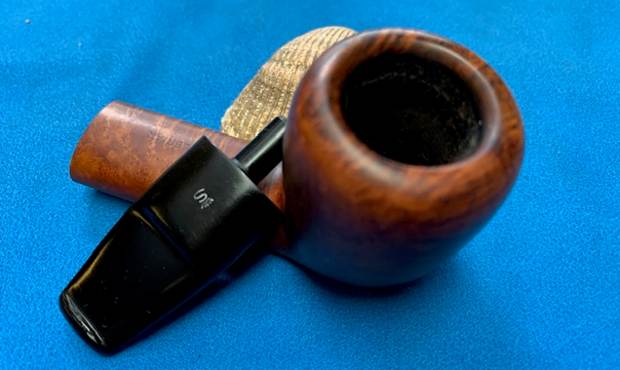
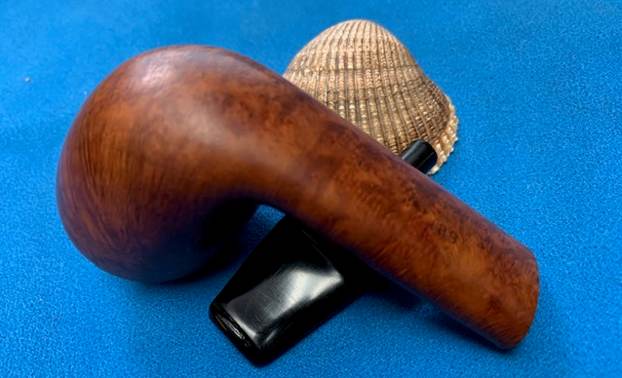
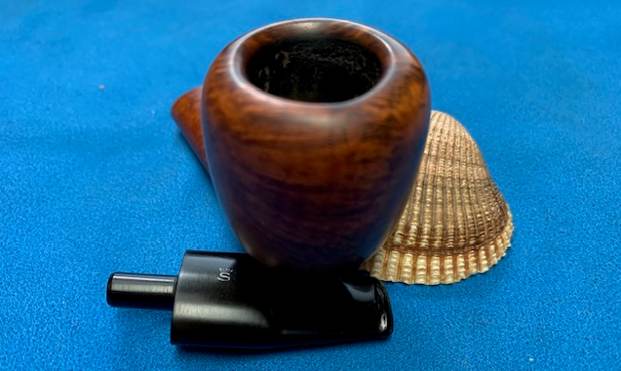
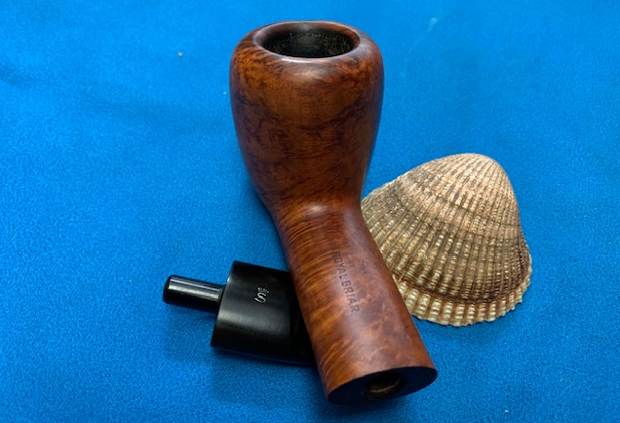
Not long ago I worked a trade with a fellow for these five pipes in exchange for one that I had here. He sent me photos of the pipes and the deal was struck. The pipes he sent are as follows from bottom to top. There is a W.O. Larsen sandblast oval shank Brandy with a hairline crack in the shank and with tooth marks on the button on both sides, a Bertram Cutty that I had traded with him earlier, a Kriswill sandblast Canadian with a cracked shank, a Viby pencil shank Billiard and a Stanwell Royal Briar wide oval shank Dublinesque Freehand with burn damage on the rim edges and top around the bowl and deep tooth marks on the stem.The next of these I chose to work on today is the Stanwell Royal Briar 189 at the top of the photo above. It is a classic Stanwell shape with a some nice grain around the bowl and the shank. The rim top was in good condition and there was some darkening and burn damage on the front inner edge. The outer edge of the rim is in good condition. The bowl had a light cake in the bowl and smells of good Virginia tobacco. There was some grime and grit ground into the surface of the finish. The stamping on the topside of the shank reads Stanwell [over] Regd. No. 689-48 [over] Royal Briar. On the underside it is stamped Made in Denmark [over] the shape number 189. The stain is light/medium brown and goes well with the oval vulcanite saddle stem. Once it is cleaned up and polished the grain around the bowl and shank will shine. The stem is in good condition with some tooth marks on it. The surface just ahead of the button is damaged with some deep bite marks on both sides. The button edge looks good on both sides. I am including several of the photos that were sent to me for viewing. The first shows the front of pipe and the grain around the front. It also gives a look inside the bowl and shows the cake. The second shows the marks on the stem surface that I spoke of above. The third photo shows the pipe from the button forward on the bowl. I took photos of the pipe before I did my clean up work on it to show its condition. The photos confirm what I noted above regarding the condition of the bowl and the stem. It a nice looking pipe that will look better with a bit of work on the stem and bowl.   I took close up photos so that I could have a clearer picture of the condition of the bowl, rim edges and top. The rim top photos confirm my assessment above and show that while there is some darkening and burn damage  on the front top and inner edge. The cake in the bowl is quite moderate and smooth. You can also see the condition of the outer and the inner edge. They appear to be in great condition. This is what I look for when assessing a pipe. The bowl is still round and other than being in a used condition it is in great shape. The issues with the stem are visible in the photos on both sides ahead of the button and on the button itself. I took a photo of the stamping on the underside of the shank. It is clear and readable as noted above.I took the stem off the bowl and took a photo of the pipe to give a sense of proportion of the pipe. You can also see shape of the pipe and some interesting grain around the bowl and shank.Now it was time to work on the pipe itself. I started my work on this one by reaming the bowl with a Savinelli Fitsall Pipe Knife. I followed that up by sanding the bowl walls with 220 grit sandpaper wrapped around a piece of dowel.    I cleaned the internals of the shank and the stem with 99% isopropyl alcohol, cotton swabs and pipe cleaners. I scrubbed it until the shank was clean and the smell was much cleaner smelling.  Before scrubbing the bowl exterior I decided to clean up the darkening and the burn damage on the rim top and inner edge of the bowl. I used some 220 grit sandpaper and a wooden ball to give the bowl a light inward bevel and remove the darkening and the damage. I finished by cleaning it up a bit further with a folded piece of 220 grit sandpaper. It looks much better. I scrubbed the external surface of the briar with a tooth brush and undiluted Murphy’s Oil Soap. I scrubbed it until the finish was clean and then rinsed it off with warm running water to rinse off the soap and the grime from the finish. I dried it off with a soft cloth and took photos of the pipe. I polished the briar with micromesh sanding pads. I choose to dry sand the briar rather than wet sand it. Again it is a matter of personal preference. I prefer to use the pads dry and find they work very well on the briar. I sand with each pad (9 in total) and group them by threes for ease of reference. I wipe the bowl down after each pad with a damp cloth to remove the sanding debris and check the briar. I love seeing the developing shine on the briar as I move through the pads which is why I include so many photos of this step.     I applied some Before & After Restoration Balm to the briar. It is a paste/balm that is rubbed into the surface of the briar. The product works to deep clean finish, enliven and protect the briar. I worked it into the briar with my finger tips. I let it sit for 10 minutes to do its work. I wiped it off with a soft cloth then buffed it with a cotton cloth. The briar really began to have a deep shine in the briar and the grain shone through. The photos I took of the bowl at this point mark the progress in the restoration. It is a gorgeous pipe. I set the bowl aside and turned my attention to the issues with the vulcanite stem. I “painted” the surface of the stem with the flame of a Bic Lighter to lift the tooth marks in the stem surface on both sides as well as the button edges where the marks were deepest. I was able to lift the marks significantly and filled in the remaining marks with clear CA glue. I set the stem aside to allow the repairs to cure. Once the repairs cured, I used a small file to reshape the button edge and flatten them. I sanded them smooth with 220 grit sandpaper and started the polishing with 600 grit wet dry sandpaper. The stem surface and button looked much better. I touched up the Crown S stamping on the top of the saddle portion of the stem with white acrylic fingernail polish. I worked it into the stamp with a tooth pick. I scraped off the excess with the tooth pick. It was ragged looking but readable. When I started polishing, it would clean up well. I continued polishing the stem with micromesh sanding pads – 1500-12000 grit sanding pads and water to wet sand the stem. I wiped it down after each sanding pad with Obsidian Oil on a cotton rag after each sanding pads. But I find it does two things – first it gives some protection to the stem from oxidation and second it give the sanding pads bite in the polishing process.    After finishing with the micromesh pads I rub the stem down with Before & After Fine and Extra Fine stem polish as it seems to really remove the fine scratches in the vulcanite. I rub the Fine Polish on the stem and wipe it off with a paper towel and then repeat the process with the Extra Fine polish. I finish the polishing of the stem down with a final coat of Obsidian Oil and set the stem aside to let the oil absorb. This process gives the stem a shine and also a bit of protection. The final steps in my process involve using the buffer. I put the Stanwell Royal Briar 189 Freehand back together and lightly buffed the bowl and stem with Blue Diamond to polish the finish. I polished the vulcanite stem at the same time to polish out the scratches. I gave the bowl and the stem multiple coats of carnauba wax. I have found that I can get a deeper shine if I follow up the wax buff with a buff with a clean buffing pad. It works to raise the shine and then I hand buff with a microfiber cloth to deepen the shine. It is always fun for me to see what the polished bowl looks like with the polished stem. It really is a nice pipe. The finish around the bowl sides and shank looks great with the rich combination of brown stains. The Stanwell Regd. No. 689-48 Royal Danish Freehand feels great in my hand. It is a well balanced pipe. Have a look at it with the photos below. The dimensions are Length: 5 inches, Height: 1 ¾ inches, Outside diameter of the bowl: 1 ½ inch, Chamber diameter: ¾ of an inch. The weight of the pipe is 1.55 ounces/45 grams. It is a beautiful pipe that functions as a sitter due to the wide heel on the bowl. I will soon be adding to the rebornpipes store in the Danish Pipemakers section. If you would like to add it to your collection let me know. It should be a great smoking pipe. As always I encourage your questions and comments as you read the blog. Thanks to each of you who are reading this blog. Remember we are not pipe owners; we are pipe men and women who hold our pipes in trust until they pass on into the trust of those who follow us.
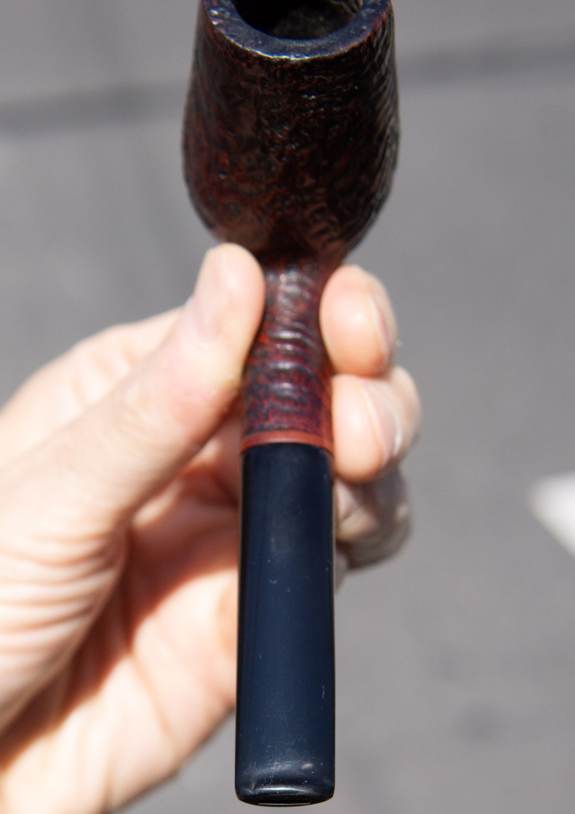
Refreshing a Handmade in Denmark W.O. Larsen Sandblast Brandy


By Steve Laug

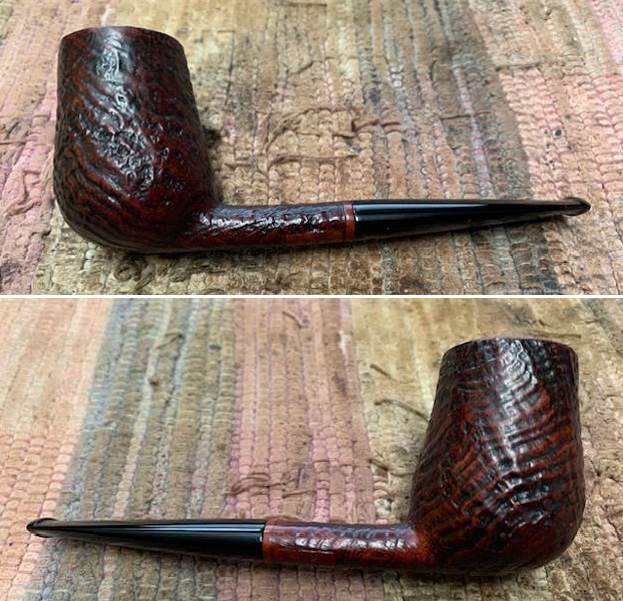
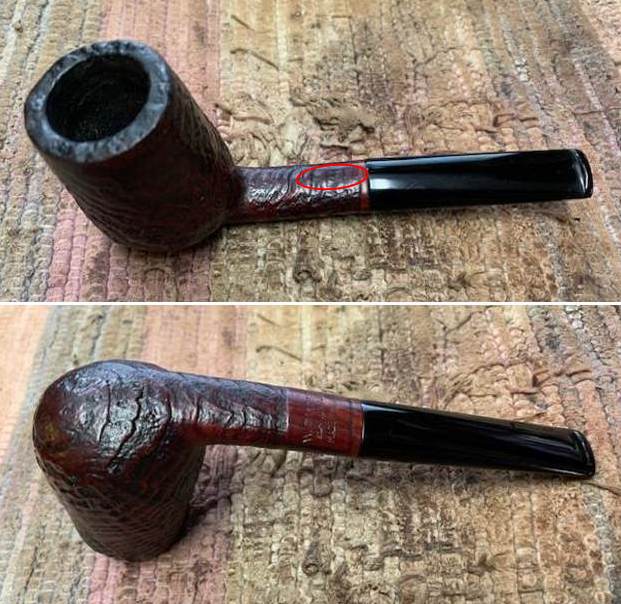
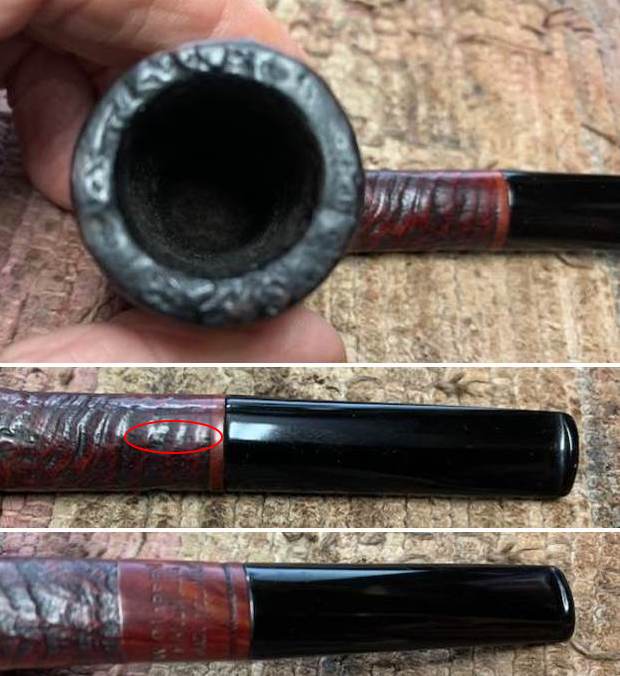
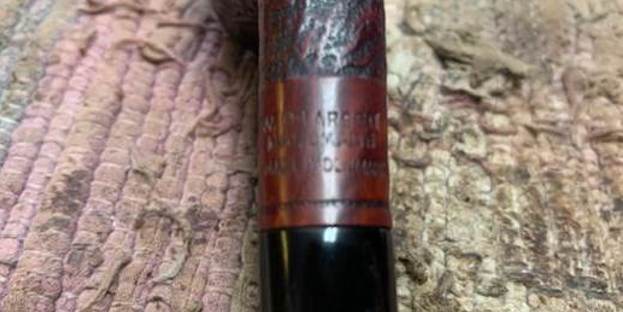
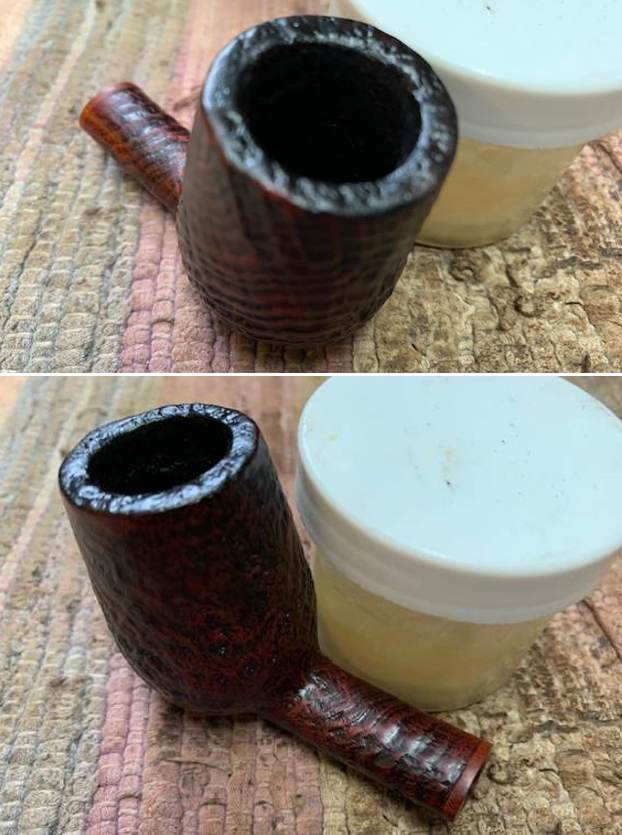
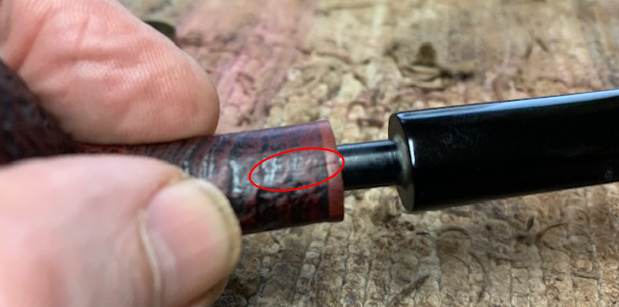
Not long ago I worked a trade with a fellow for these five pipes in exchange for one that I had here. He sent me photos of the pipes and the deal was struck. The pipes he sent are as follows from bottom to top. There is a W.O. Larsen sandblast oval shank Brandy with a hairline crack in the shank and with tooth marks on the button on both sides, a Bertram Cutty that I had traded with him earlier, a Kriswill sandblast Canadian with a cracked shank, a Viby pencil shank Billiard and a Stanwell Royal Briar wide oval shank Dublinesque Canadian with burn damage on the rim edges and top around the bowl and deep tooth marks on the stem.The first of these I chose to work on today is the Hand Made W.O. Larsen Sandblast Brandy at the bottom of the photo above. It is a classic Larsen Brandy shape with a beautiful, deep and tactile sandblast around the bowl and the shank. The rim top were in good condition and the blast had some darkening but no lava in the blast. The bowl has a light cake in the bowl and smells of good Virginia tobacco. The inner edge of the rim is in good condition. The blast is quite clean with no grime and little dust ground into the surface of the finish. The stamping on the underside of the shank reads W.O. Larsen [over] Handmade [over] Made in Denmark. The stain is a mix of dark and medium browns and goes well with the oval vulcanite stem. Once it is cleaned up and polished the blast will highlight the grain around the bowl and shank. The stem is in good condition with some tooth marks on it. The button area and the surface just ahead is damaged. There are bite marks on the button surface on both sides. The button edge has been flattened and worn with tooth marks on the underside. I am including two of the photos that were sent to me for viewing. The first shows the right side of pipe and the second shows the marks on the stem surface that I spoke of above. I took photos of the pipe before I did my clean up work on it to show its condition. The photos confirm what I noted above regarding the condition of the bowl and the stem. It a nice looking pipe that will look better with a bit of work on the stem, the cracked shank and bowl. I have circled a short crack in the top of the shank with red in the top photo below. It is hairline and fine but it is very present.I took close up photos so that I could have a clearer picture of the condition of the bowl, rim edges and top. The rim top photos confirm my assessment above and show that while there is some darkening. However, I missed the tars and lava build up on the sandblast rim top. The cake in the bowl is quite moderate and was very smooth. You can also see the condition of the outer and the inner edge. They appear to be in great condition. This is what I look for when assessing a pipe. There is no visible burn damage at this point. The bowl is still round and other than being in a used condition it is in great shape. The small crack in the shank is circled in red below. The issues with the stem are visible in the photos on both sides ahead of the button and on the button itself.I took a photo of the stamping on the underside of the shank. It is clear and readable as noted above.I took the stem off the bowl and took a photo of the pipe to give a sense of proportion of the pipe. You can also see shape of the pipe and some interesting grain in the blast on the briar.I have worked on quite a few W.O. Larsen pipes that are well made Danish takes on classic shapes. Several of them have been Brandy shaped pipes. This sandblast Canadian has a bowl that is almost a Brandy shape. Here is a link to the blog describing the background and history of the brand (https://rebornpipes.com/2021/10/25/restoring-a-sandblast-canadian-hand-made-designed-by-w-o-larsen-super-tan-65/). I quote from that blog in information that follows.

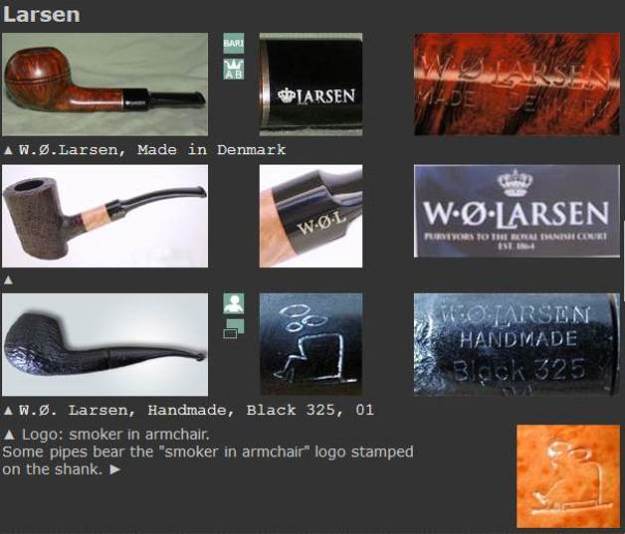
I turned to Pipephil (http://www.pipephil.eu/logos/en/logo-l2.html) to get a quick view of the brand once again. I did a screen capture of the site’s information and have included that below. The pipe I am working on is a W.O. Larsen as it is stamped similarly to the ones in the photos. I quote from the sidebar below:

In the 1960s Ole Larsen, owner of the Copenhagen tobacco store, retails pipes carved by Sixten Ivarsson, Poul Rasmussen, Sven Knudsen or Peter Brakner. Faced with the success and urged by Sven Bang (store manager), Sven Knudsen and Former (Hans Nielsen) are successively hired to carve pipes in the basement of the shop at the beginning and in the old Larsen cigar factory afterwards. Carver like Teddy Knudsen, Tonni Nielsen, Jess Chonowitch, Peter Hedegaard work a while in this context. When Nils, son of Ole Larsen, succeeds his father he acquires the Georg Jensen pipe factory to focus on less expensive pipes. This turns out to be an error ending with the sale of W.O. Larsen trademark to Stanwell. The famous tobacco shop at Strøget, Amagertorv 9 closed down for good on Dec 31, 2004. Do not confuse W.O. Larsen with: Jorgen Larsen

I turned to Pipedia (https://pipedia.org/wiki/W.%C3%98._Larsen) for a quick read. The site is worth reading the history of the shop and the brand and its influence on Danish pipe carving. I quote a portion of the article below:

The workshop of W.Ø.Larsen

W.Ø.Larsen is Denmark’s oldest and probably most famous pipes and tobacco store, placed in the center of Copenhagen on the main pedestrian street, Stroget. If you visit Copenhagen and do a “pipe crawl” this store is a must. In the beginning of the 1960’s the store began to sell Danish hand-made pipes, especially those of Poul Rasmussen. This went very well and Poul Rasmussen could not keep up with the demand. W.Ø.Larsen, with their dynamic business manager Svend Bang (who later started his own pipe business), decided to establish their own workshop in rooms next to the store.

The first manager of the pipe workshop was Sven Knudsen, but he soon left to make pipes under his own name. The next manager was Hans Nielsen, also known as “Former” (named after the late British actor George Formby, whom he was said to resemble. Coincidentally, in Danish, “Former” means “shapes”). Under the management of Former the workshop grew and W.Ø.Larsen pipes became a prominent name abroad. Among the prominent pipemakers educated here were Else Larsen (Denmark’s first female pipemaker),Poul Ilsted, Ph. Vigen, Teddy Knudsen, Tonni Nielsen, and Peter Hedegaard.

Typical for the W.Ø.Larsen School were semi-classic shapes, meaning classic shapes, but with slight differences, often bring a little more full or round. The pipes often had lower center of gravity. A typical billard would have a bowl shaped more like a pear and the connection between the bowl and the shank would be clearly distinguished. Yellow and orange were colors more widely used for the finishes.

What I learned from the research is that the pipe is a W.O. Larsen pipe made by one of the famous carvers who worked in the shop. It is a beautiful pipe in both shape and finish.

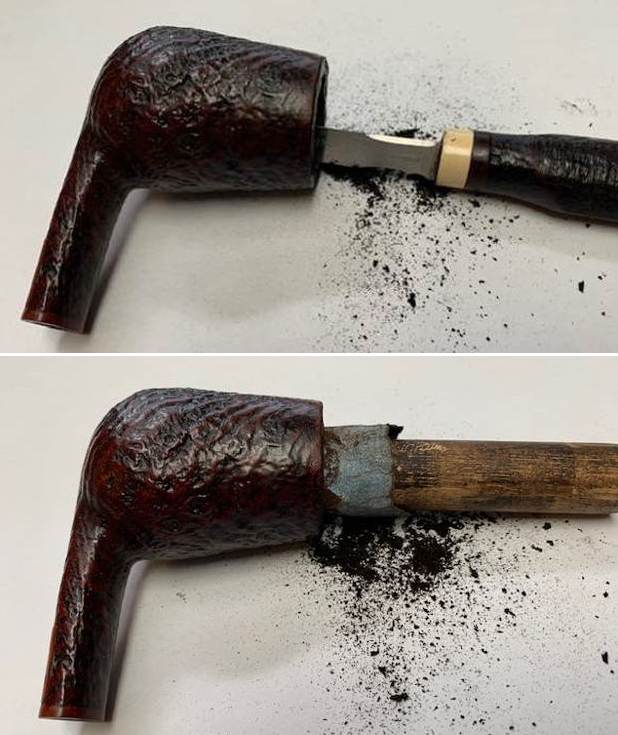
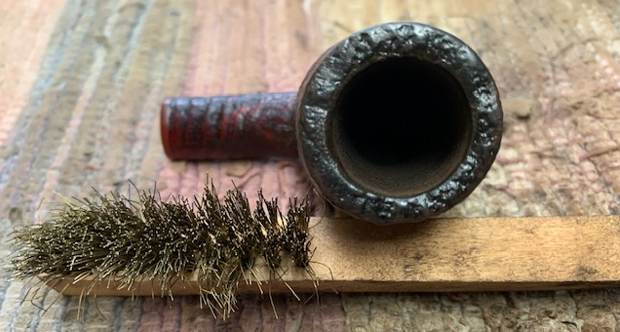
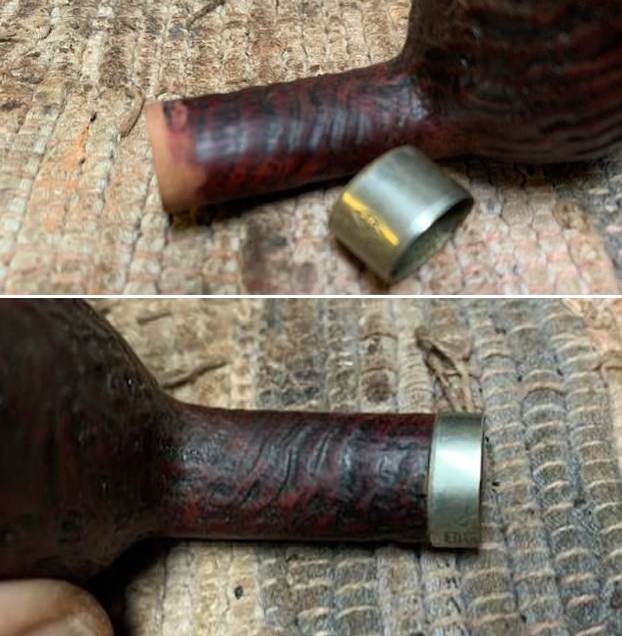
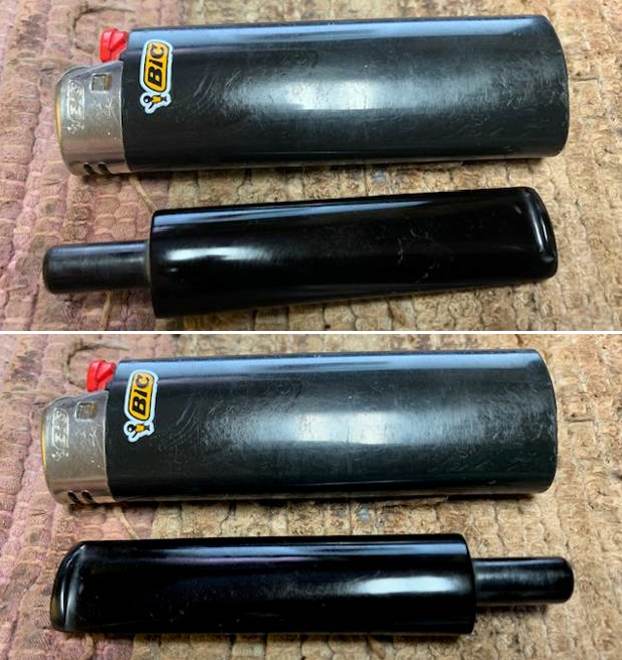
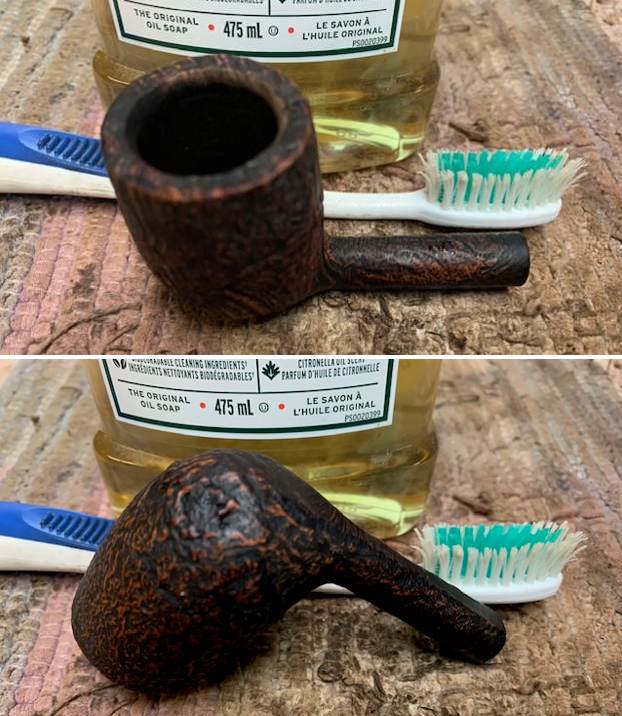
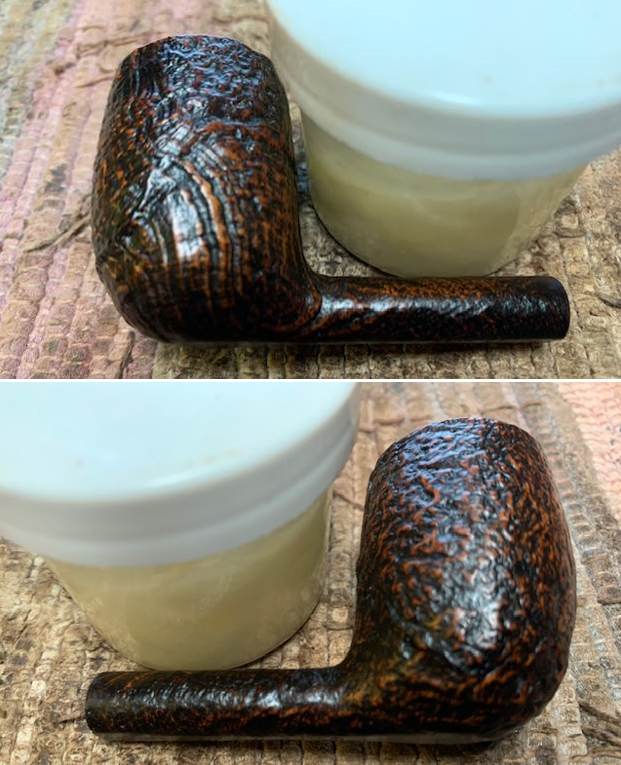
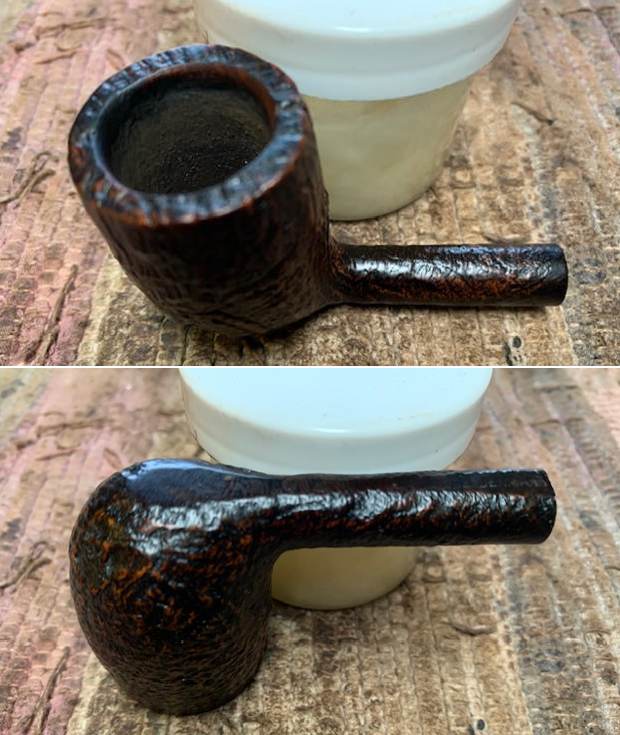
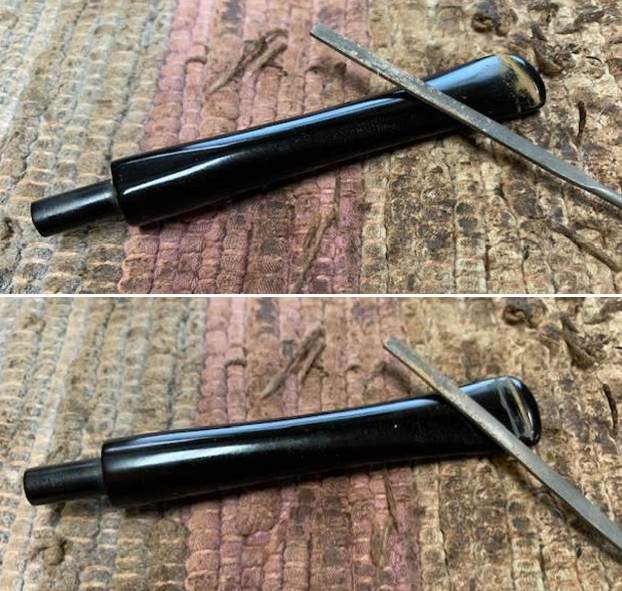
Now it was time to work on the pipe itself. I started my work on this one by reaming the bowl with a Savinelli Fitsall Pipe Knife. I followed that up by sanding the bowl walls with 220 grit sandpaper wrapped around a piece of dowel.I scrubbed the rim top with a brass bristle wire brush to knock of the lava and tars in the blast on the rim top. Once it was scoured with the brass it looked significantly better.I cleaned the internals of the shank and the stem with 99% isopropyl alcohol, cotton swabs and pipe cleaners. I scrubbed it until the shank was clean and the smell was much cleaner smelling.I scrubbed the external surface of the sandblast briar with a tooth brush and undiluted Murphy’s Oil Soap. I scrubbed it until the finish was clean and then rinsed it off with warm running water to rinse off the soap and the grime from the finish. I dried it off with a soft cloth and took photos of the pipe. I applied some Before & After Restoration Balm to the briar. It is a paste/balm that is rubbed into the surface of the briar – both smooth and rusticated finishes. The product works to deep clean the nooks and crannies of finish, enliven and protect the briar. I worked it into the briar with my finger tips and a horse hair shoe brush. I let it sit for 10 minutes to do its work. I wiped it off with a soft cloth then buffed it with a cotton cloth. The briar really began to have a deep shine in the briar and the grain shone through. The photos I took of the bowl at this point mark the progress in the restoration. It is a gorgeous pipe.     I decided to repair the cracked shank next. The first photo shows the crack. I inserted the tenon partially in the shank to make the crack visible and took a photo. I have circled it in red so that it is clear. I cleaned up the crack and pushed a pinhole with an awl into the end of the crack to stop it. I pressed some CA glue into the crack held it together until the glue cured. I reduced the diameter of the shank end with a folded piece of 220 grit sandpaper. I found a nickel band and used a Dremel and sanding drum to remove the excess nickel on the band until the end was flush against the shank end. I cleaned up the sharp edge with a folded piece of 220 grit sandpaper. I heated it with a lighter and pressed it in place against a hard wood surface. I took photos of the band before I fit it and after it was on the shank end. It looks very good at this point. I set the bowl aside and turned my attention to the issues with the vulcanite stem. I “painted” the surface of the stem with the flame of a Bic Lighter to lift the tooth marks in the stem surface on both sides as well as the button edges where the marks were deepest. I was able to lift the marks significantly and filled in the remaining marks with clear CA glue. I set the stem aside to allow the repairs to cure. Once the repairs cured, I used a small file to reshape the button edge and flatten them. I sanded them smooth with 220 grit sandpaper and started the polishing with 600 grit wet dry sandpaper. The stem surface and button looked much better. I continued polishing the stem with micromesh sanding pads – 1500-12000 grit sanding pads and water to wet sand the stem. I wiped it down after each sanding pad with Obsidian Oil on a cotton rag after each sanding pads. But I find it does two things – first it gives some protection to the stem from oxidation and second it give the sanding pads bite in the polishing process.   After finishing with the micromesh pads I rub the stem down with Before & After Fine and Extra Fine stem polish as it seems to really remove the fine scratches in the vulcanite. I rub the Fine Polish on the stem and wipe it off with a paper towel and then repeat the process with the Extra Fine polish. I finish the polishing of the stem down with a final coat of Obsidian Oil and set the stem aside to let the oil absorb. This process gives the stem a shine and also a bit of protection.  The final steps in my process involve using the buffer. I put the W.O. Larsen Handmade Brandy back together and lightly buffed the bowl and stem with Blue Diamond to polish the blast without filling in the grooves in the finish. I polished the vulcanite stem at the same time to polish out the scratches. I gave the bowl multiple coats of Conservator’s Wax and the stem multiple coats of carnauba wax. I have found that I can get a deeper shine if I follow up the wax buff with a buff with a clean buffing pad. It works to raise the shine and then I hand buff with a microfiber cloth to deepen the shine. It is always fun for me to see what the polished bowl looks like with the polished stem. It really is a nice pipe. The finish around the bowl sides and shank looks great with the rich combination of brown stains. The W.O. Larsen Sandblast Brandy feels great in my hand. It is a well balanced pipe. Have a look at it with the photos below. The dimensions are Length: 5 ½ inches, Height:  2 inches, Outside diameter of the bowl: 1 ¼ inch, Chamber diameter: ¾ of an inch. The weight of the pipe is 1.41 ounces/40 grams. It is a beautiful pipe that functions as a sitter due to the wide heel on the bowl. I will soon be adding to the rebornpipes store in the Danish Pipemakers section. If you would like to add it to your collection let me know. It should be a great smoking pipe. As always I encourage your questions and comments as you read the blog. Thanks to each of you who are reading this blog. Remember we are not pipe owners; we are pipe men and women who hold our pipes in trust until they pass on into the trust of those who follow us.
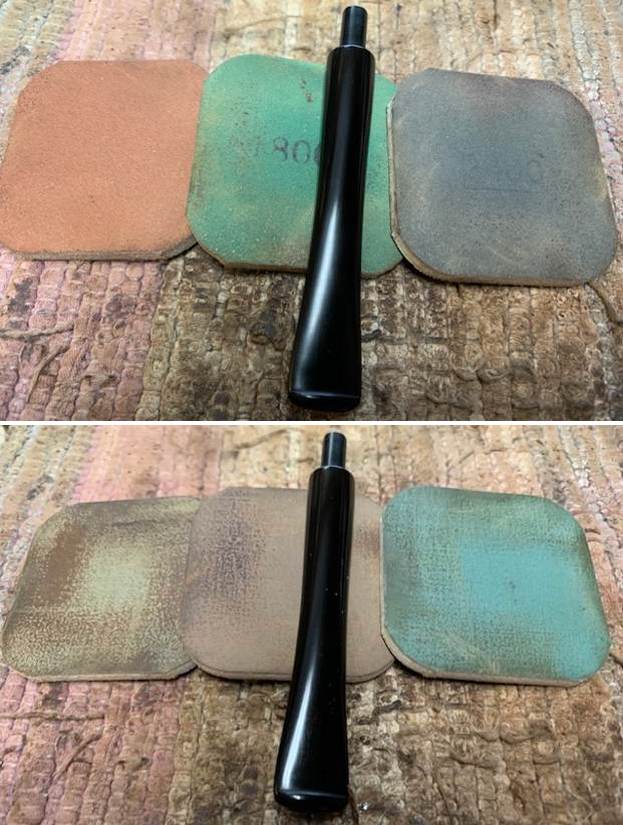
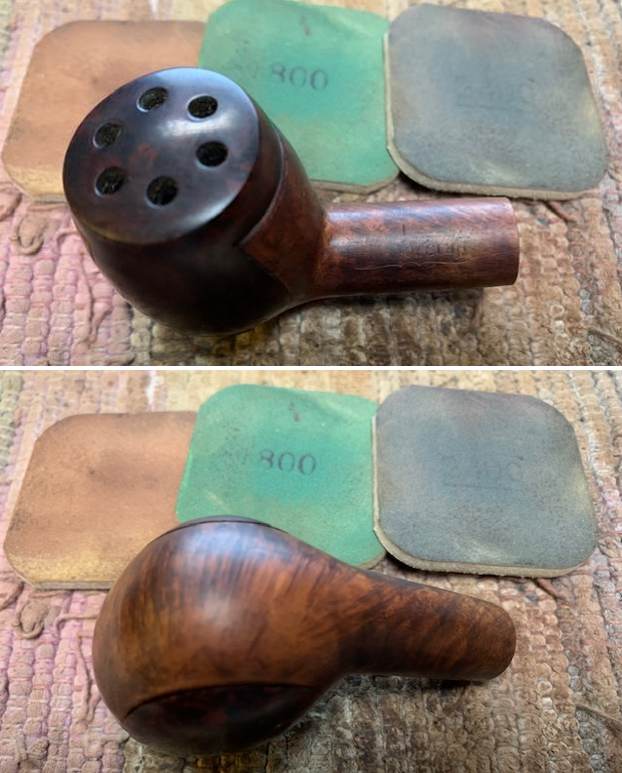
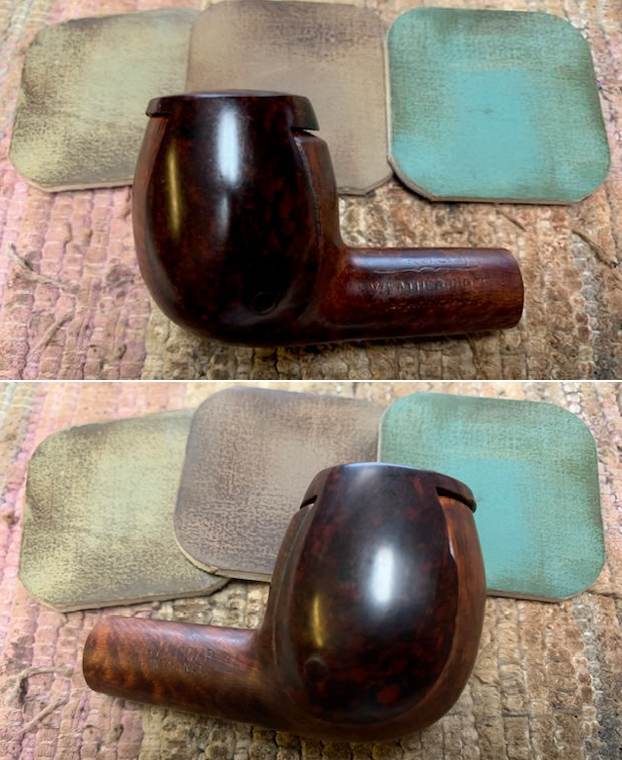
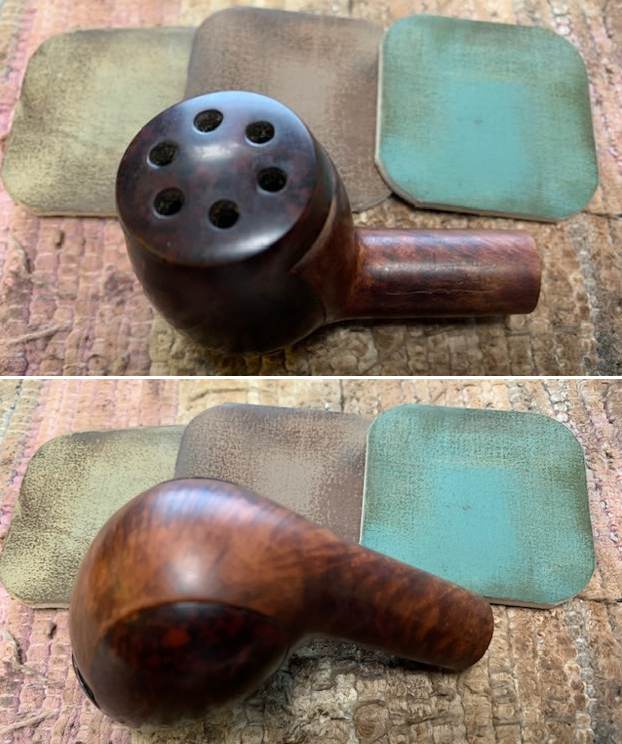
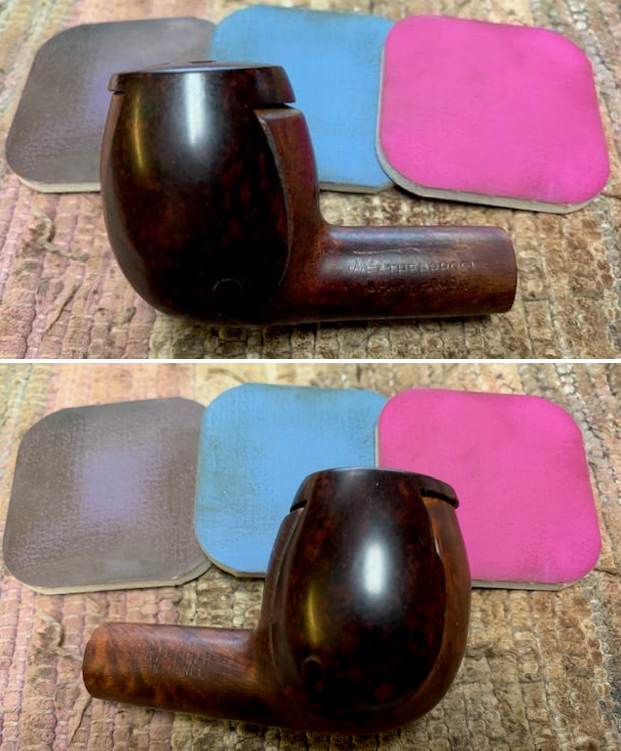
Moving another one of my own – a Mastercraft Weatherproof Sparkproof 59 Apple


Blog by Steve Laug

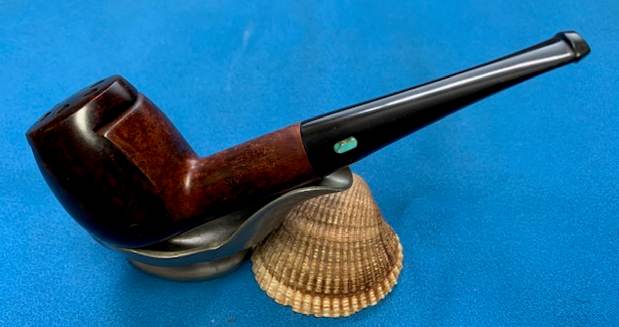
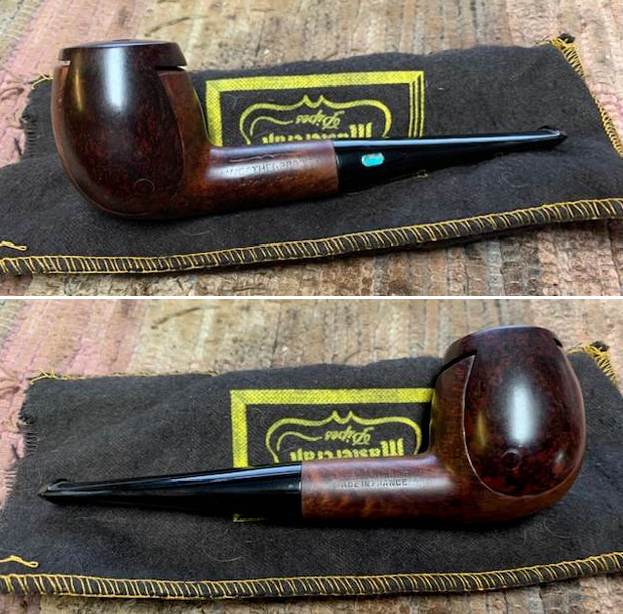
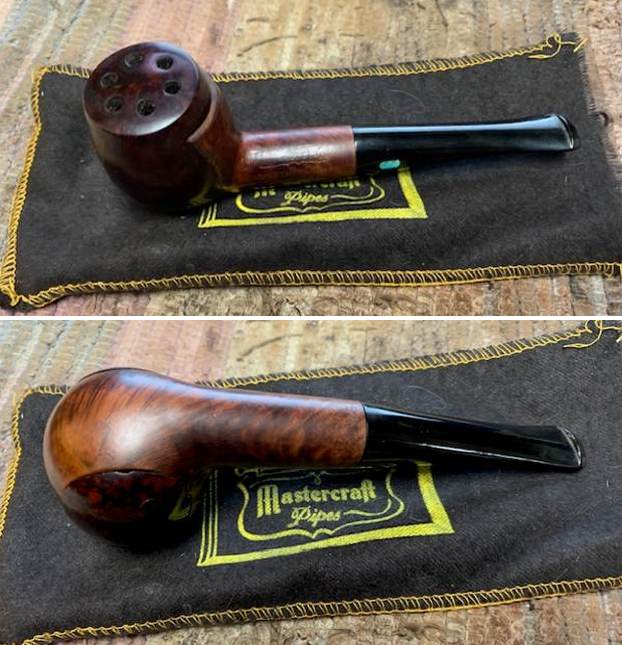
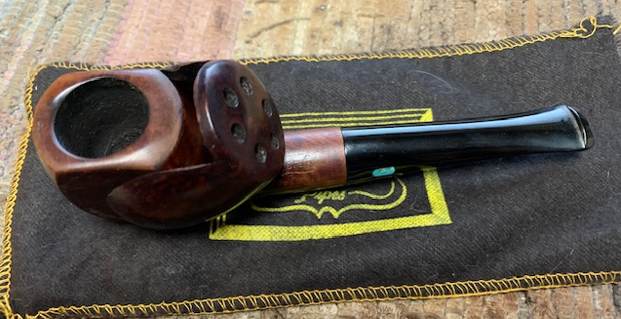
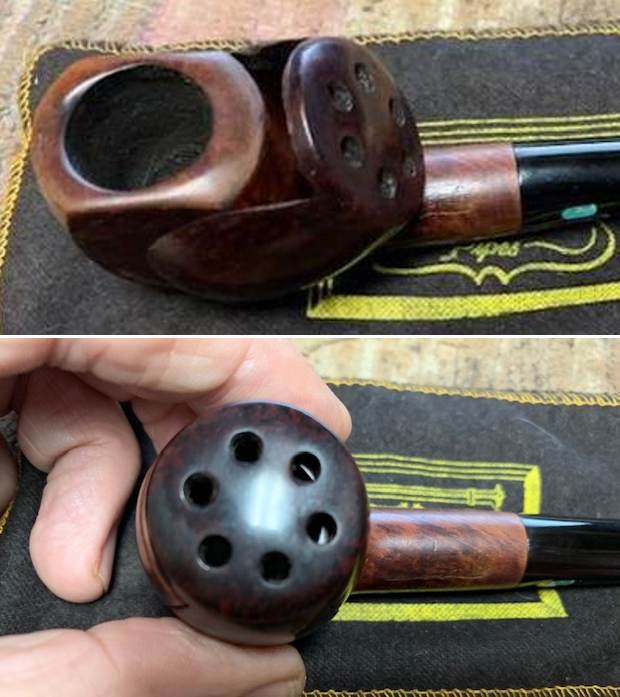
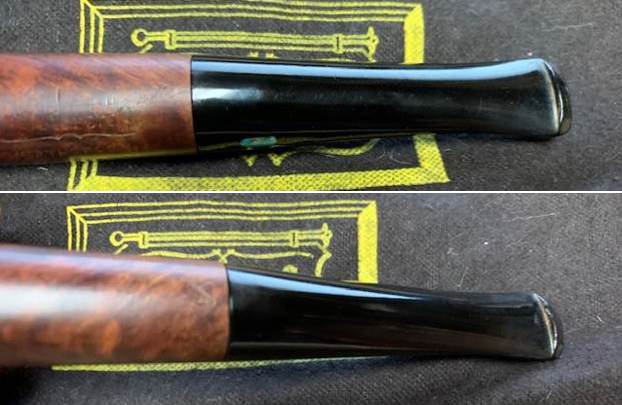
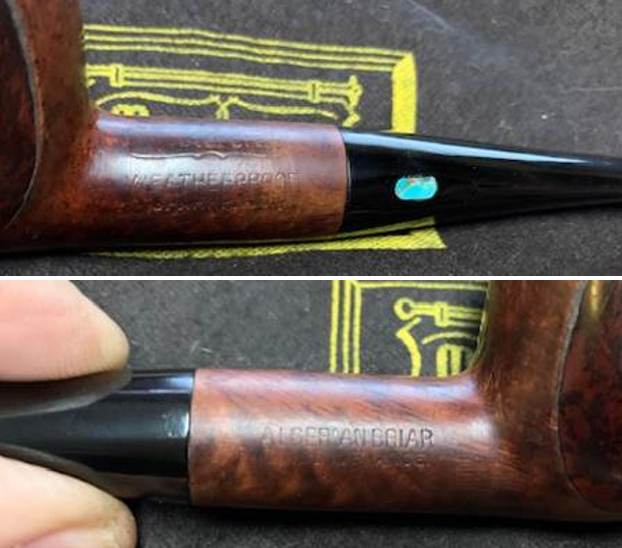
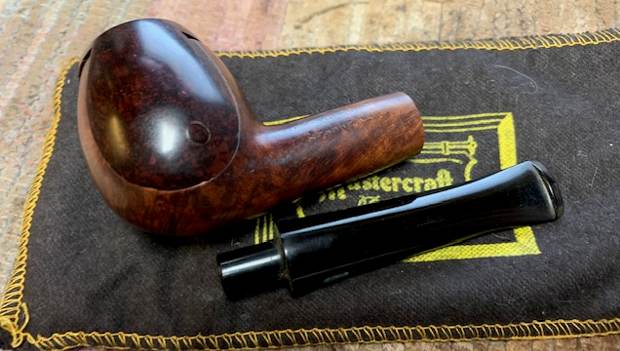
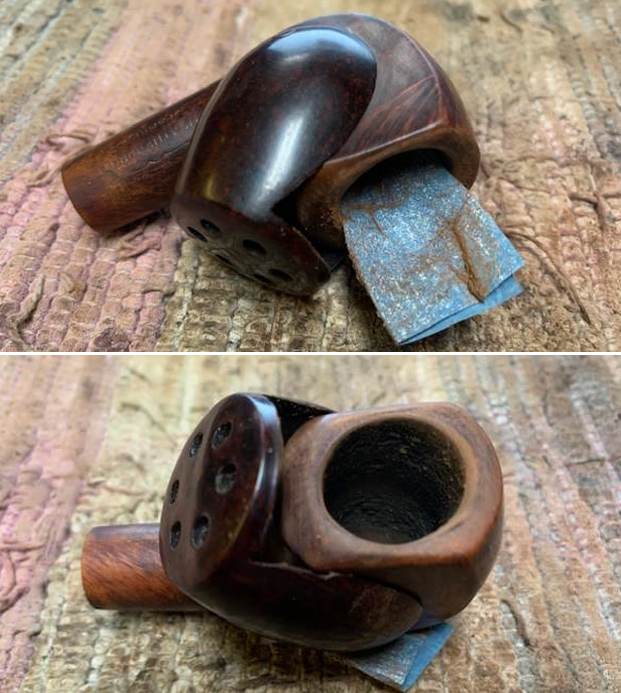
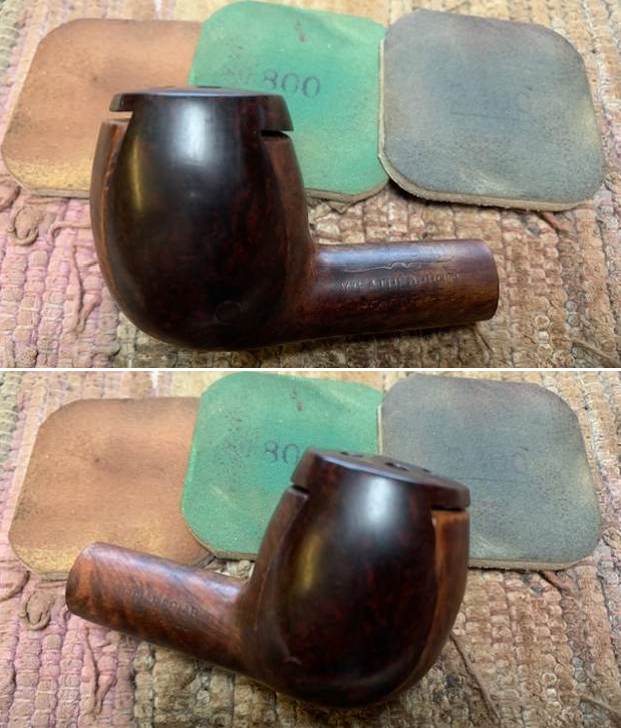
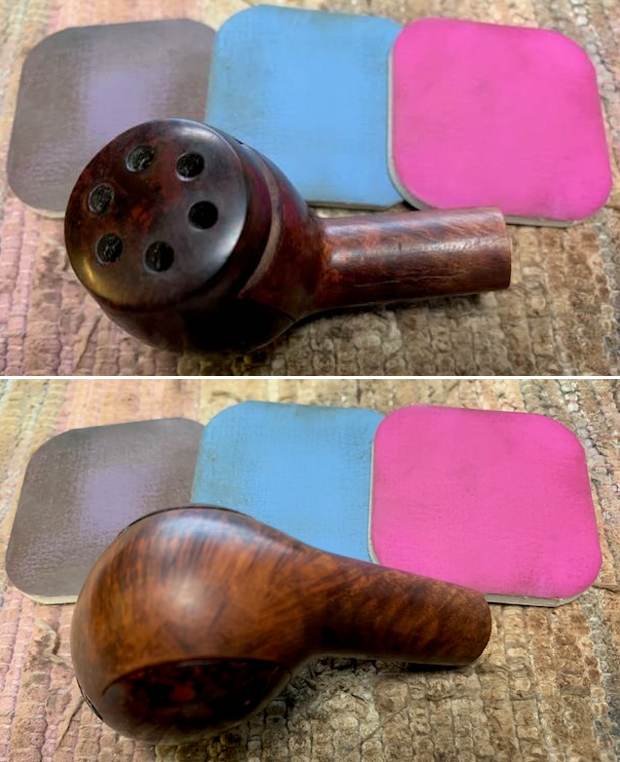
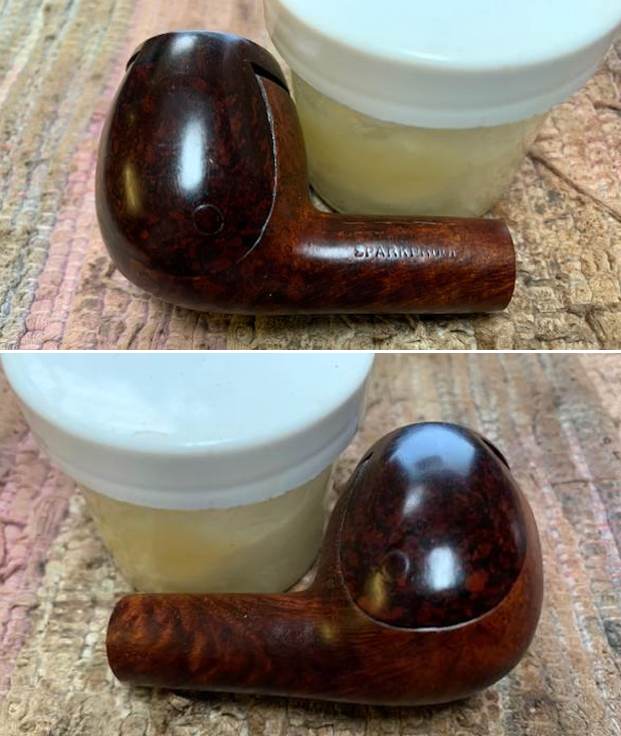
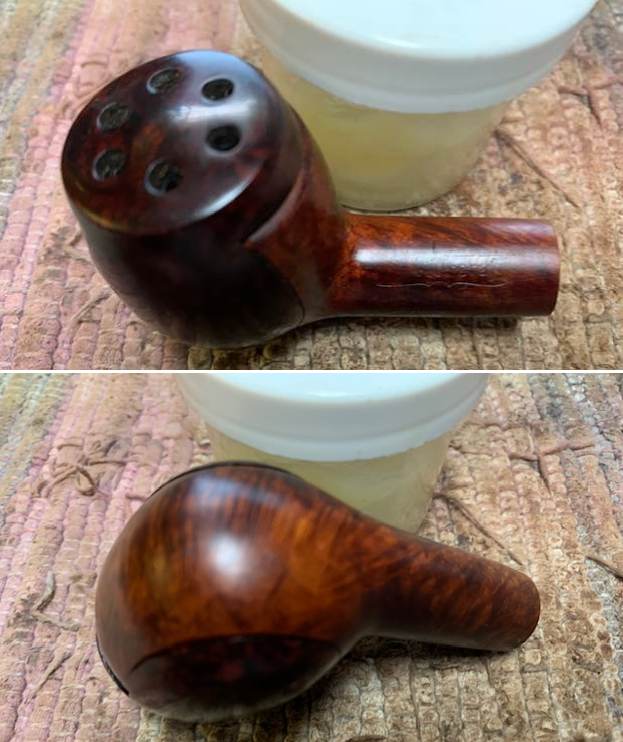
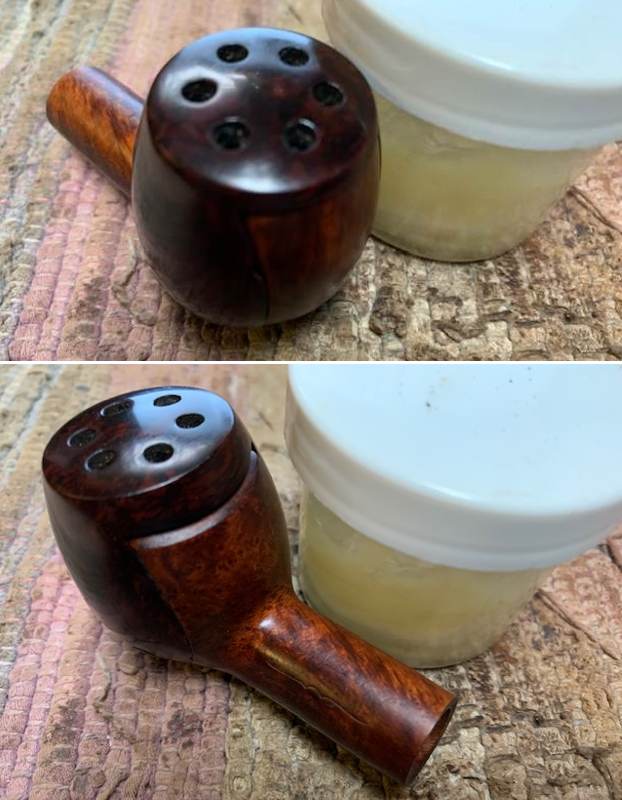
This is another pipe that I have taken out of my personal collection as I just do not use enough to warrant keeping it. This pipe was one that I purchased long ago but have no memory where it came from. I have picked up several of these over the years and this is one that I don’t think I ever smoked to be honest. It is a pipe I should have smoked as it is attractive enough but did not. It is time to move it on to someone who will enjoy it. The airway in the shank and the mortise are very clean. The smooth finish and rim top were in good condition but it is dull and lifeless looking. It has a Bakelite windcap that is integral to the pipe and flips back toward the bowl for loading and lighting. The inner edge of the rim is in good condition. The stamping on the pipe on the left side of the shank reads Mastercraft in a shield [over] Weatherproof [over] Sparkproof. On the right side it is stamped Algerian Briar [over] Made in France. On the underside of the shank is the shape number 59 next to the stem shank union. The finish is a medium brown and goes well with the brown Bakelite flip cap and vulcanite stem. Once it is polished the grain will show clearly. There is an oval on the left side of the stem that appears to be inlaid with a piece of turquoise in the area where there is typically a MC brass logo. There is an odd metal half circle in the tenon that is one I have never seen. It could be part of a stinger but it hard to know for certain. The stem is in excellent condition with no tooth chatter or marks on it. It comes with its own pipe sock which has kept it from getting dirty sitting in my cupboard, so it looks good. I took photos of the pipe before I did my clean up work on it to prepare it for you.   I took a photo of the bowl and rim top to verify the description above. The rim top looks good. There is a little darkening around the inner edge but otherwise it is in good shape. The vulcanite stem looks quite good on both sides. I took photos of the stamping on the sides of the shank. It is clear and readable as noted above.I took the stem off the bowl and took a photo of the pipe to give a sense of proportion of the pipe. You can also see shape of the pipe and some interesting grain on the briar. I used a folded piece of 220 grit sandpaper to clean up the darkening on the inner edge of the bowl. Once finished it looked much better.The shank and mortise were very clean and a quick run through with a pipe cleaner proved all that was necessary. I polished the rim top and the briar with micromesh sanding pads – dry sanding with 1500-12000 grit pads. I wiped the bowl down with a damp cloth after each sanding pad to remove the dust and debris. I gave the bowl and shank a coating of Before & After Restoration Balm. I worked it into the surface of the briar with my fingertips to clean, enliven and protect the briar. I let the balm sit for 15 minutes and then buffed with a cotton cloth to raise the shine. The photos show the bowl at this point in the restoration process.   I set the bowl aside and turned my attention to the stem. I polished it with micromesh sanding pads – 1500-12000 grit sanding pads and water to wet sand the stem. I wiped it down after each sanding pad with Obsidian Oil on a cotton rag after each sanding pads. But I find it does two things – first it gives some protection to the stem from oxidation and second it give the sanding pads bite in the polishing process.       After finishing with the micromesh pads I rub the stem down with Before & After Fine and Extra Fine stem polish as it seems to really remove the fine scratches in the vulcanite. I rub the Fine Polish on the stem and wipe it off with a paper towel and then repeat the process with the Extra Fine polish. I finished polishing the stem with a final coat of Obsidian Oil and set the stem aside to let the oil absorb. This process gives the stem a shine and also a bit of protection.     This Mastercraft Weatherproof Sparkproof 59 Apple turned out to be a great looking pipe. With polishing, the grain shines through clearly. The polished Bakelite wind cap looks very good. The vulcanite taper stem is in excellent condition and works great with the polished Bakelite and briar. I put the stem back on the bowl and carefully buffed the pipe with Blue Diamond on the buffing wheel using a light touch on the briar. I gave the bowl and stem multiple coats of carnauba wax on the buffing wheel and followed that by buffing the entire pipe with a clean buffing pad. I hand buffed the pipe with a microfiber cloth to deepen the shine. The finished Mastercraft Weatherproof Spark Proof Apple fits nicely in the hand and feels great. Give the finished pipe a look in the photos below. The dimensions of the pipe are Length: 5 ½ inches, Height: 1 ¾ inches, Outside diameter of the bowl: 1 ¼ inches, Chamber diameter: ¾ of an inch. The weight of the pipe is 43 grams/1.52 ounces. It is a great looking pipe that I will soon be adding it to the rebornpipes store in the American Pipemakers Section. If you are interested in adding it to your collection let me know Thanks for reading this blog and my reflections on the pipe while I worked on it.
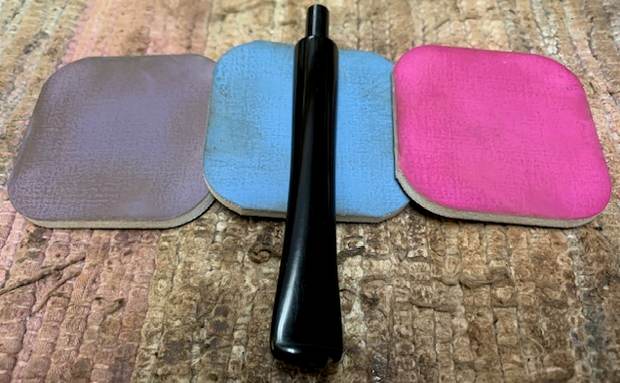
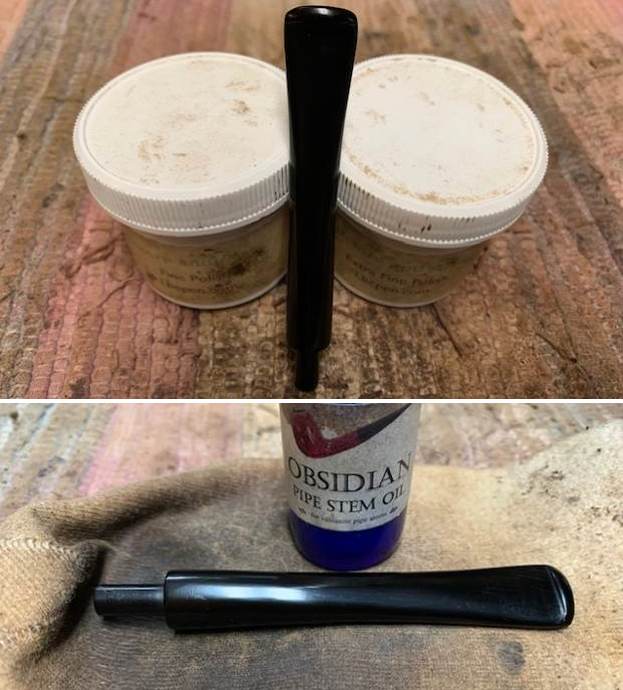
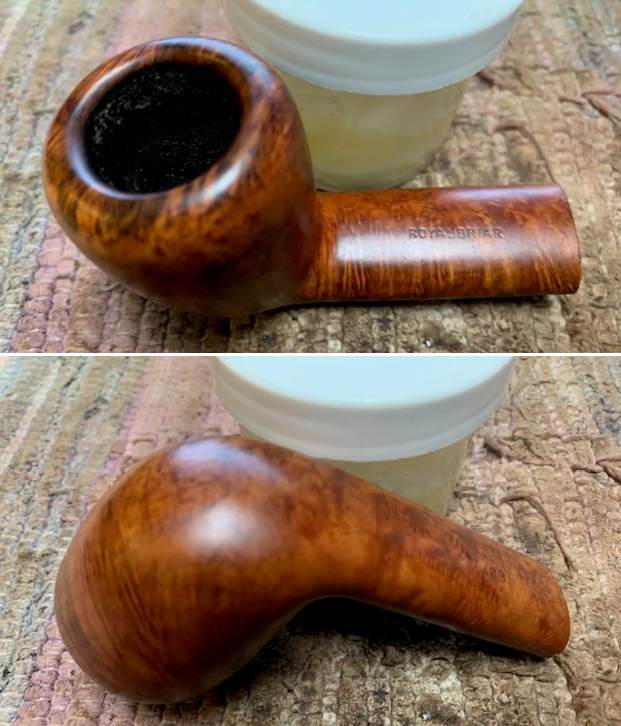
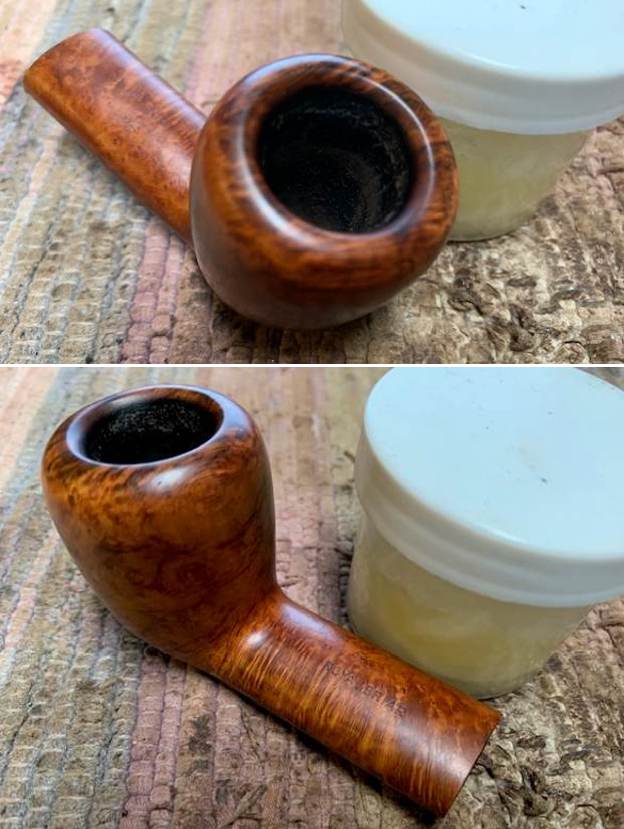
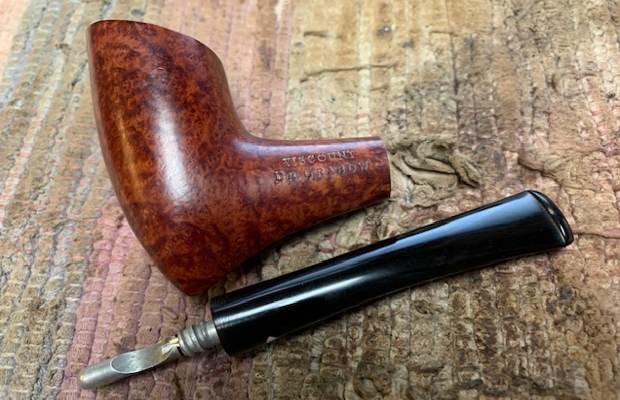
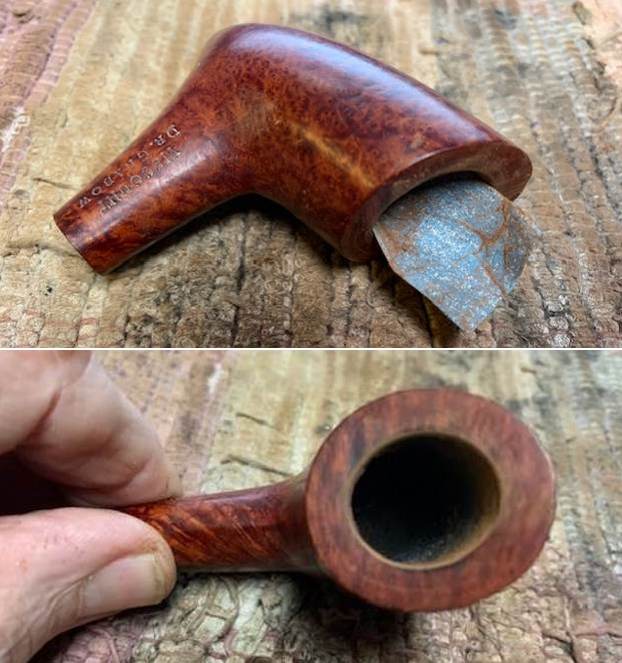
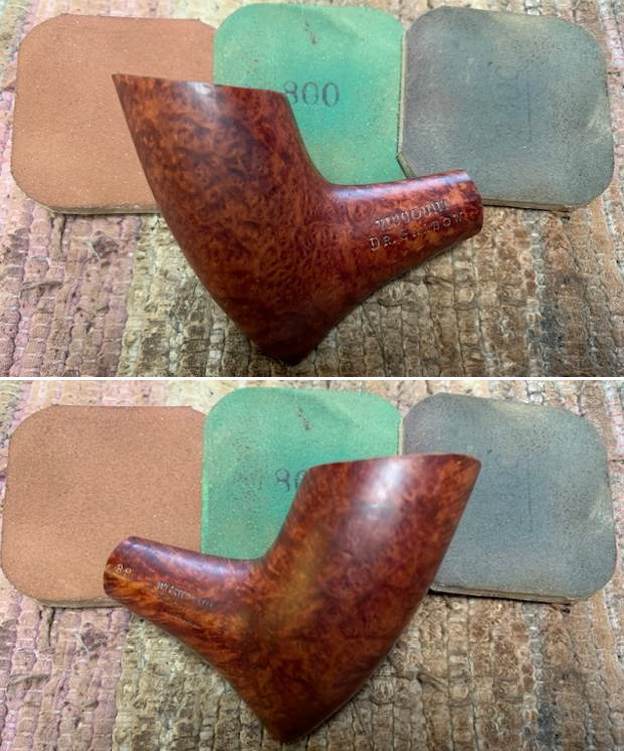
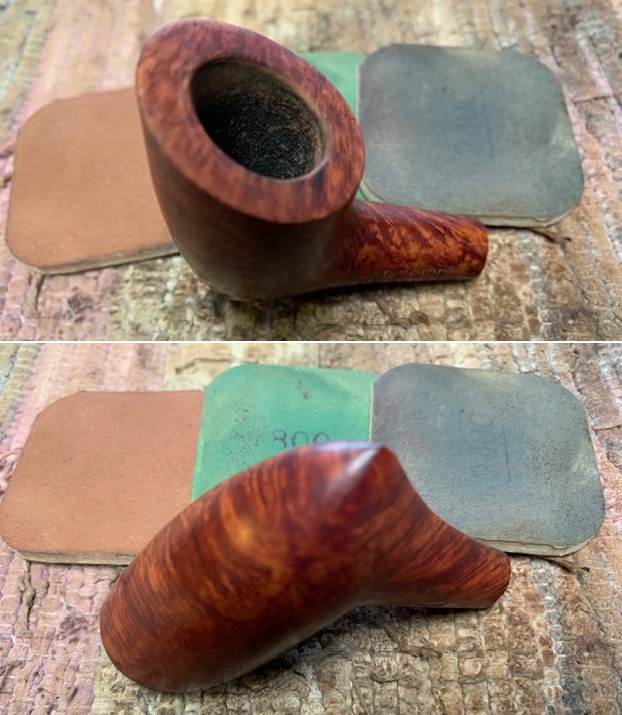
Moving another one of my own – a Dr. Grabow Viscount 39 Pickaxe


Blog by Steve Laug

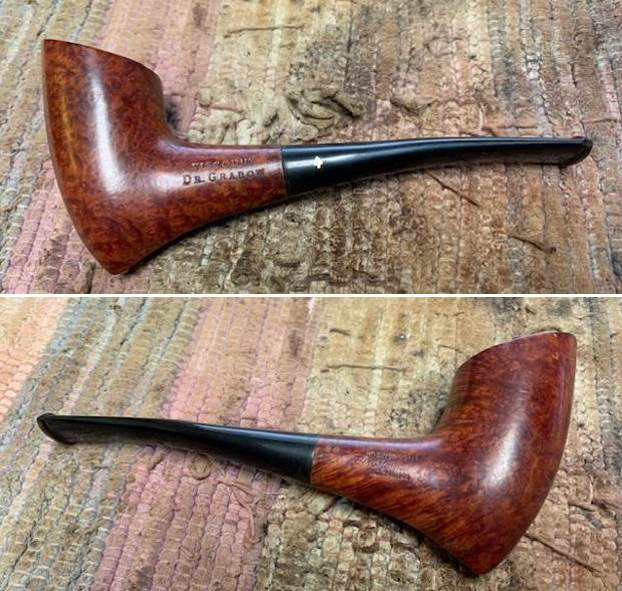
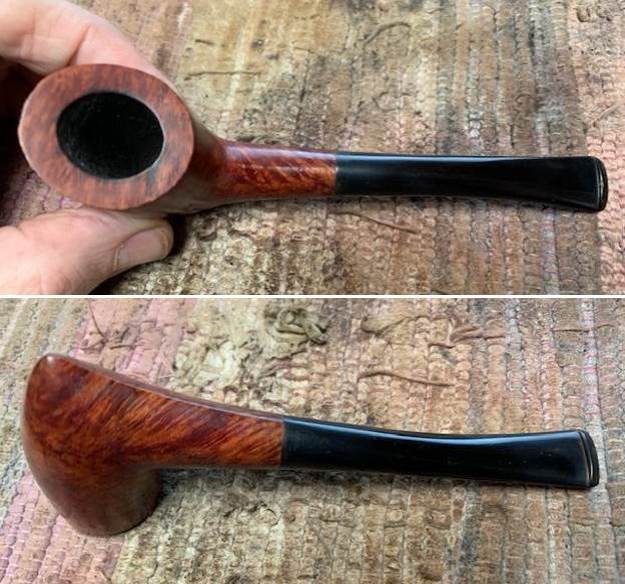
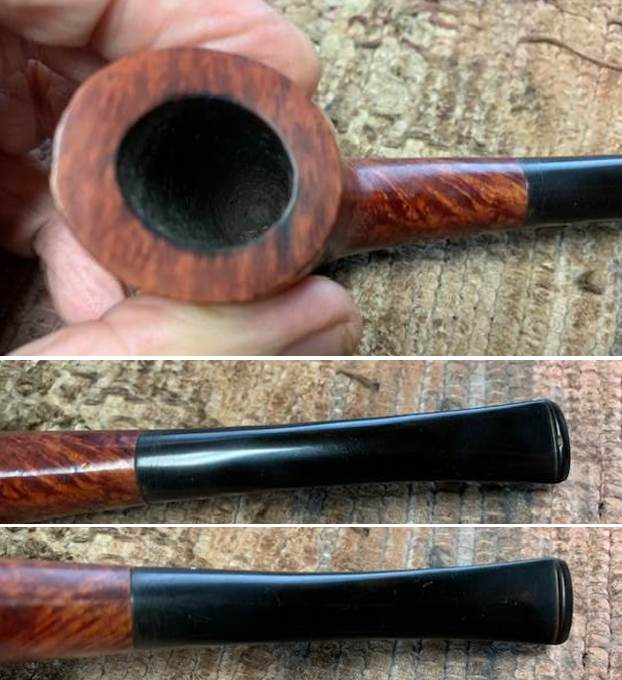
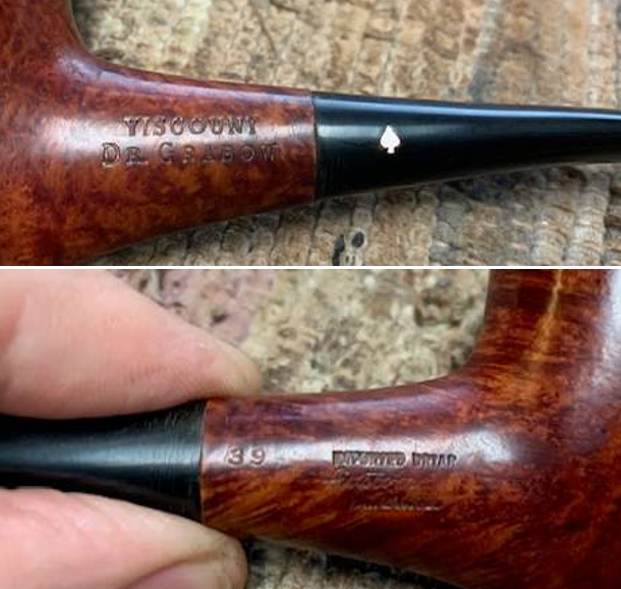
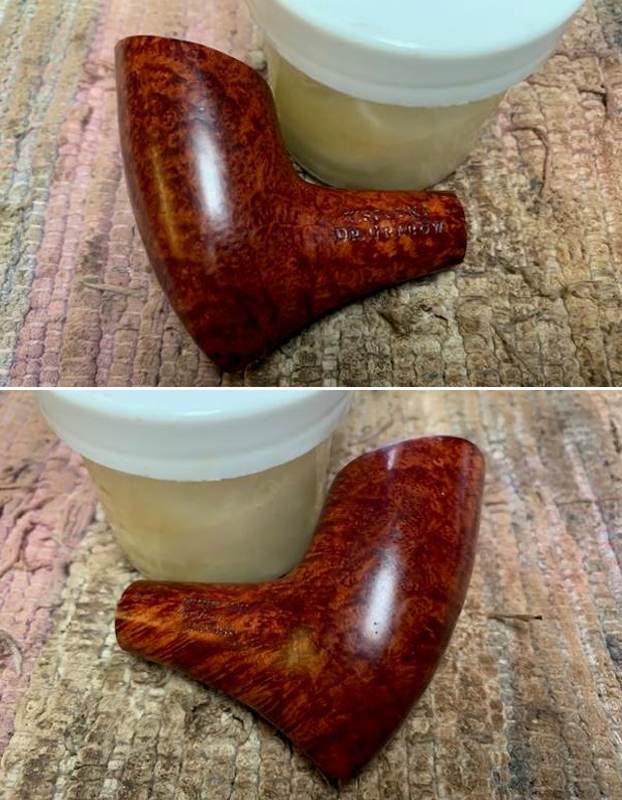
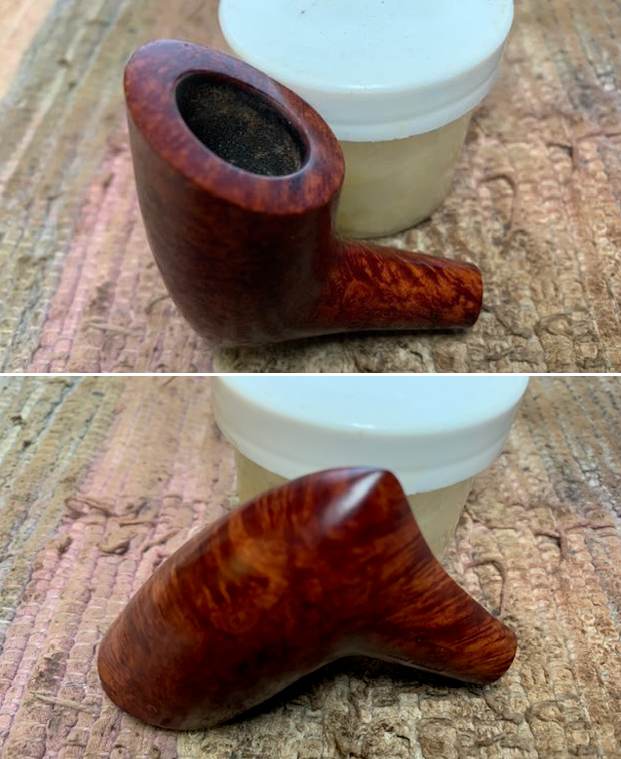
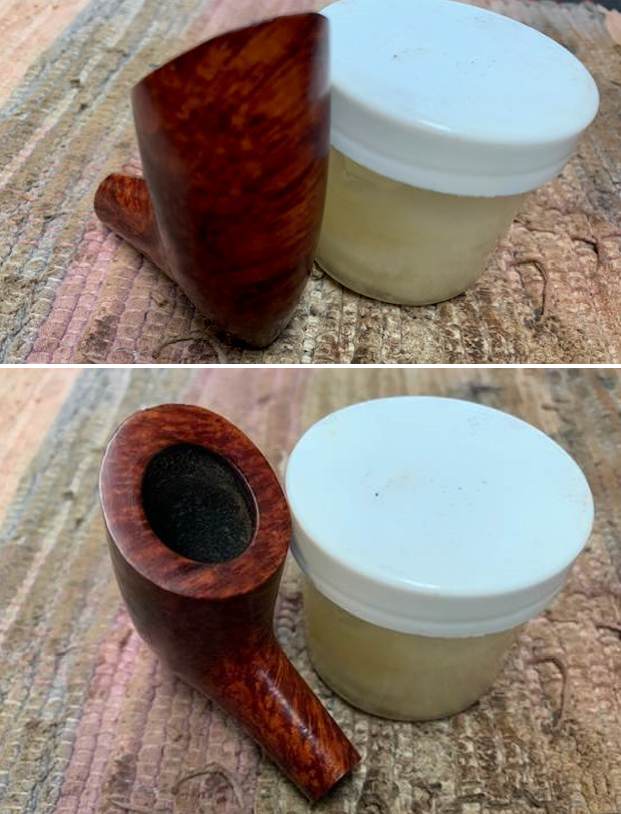
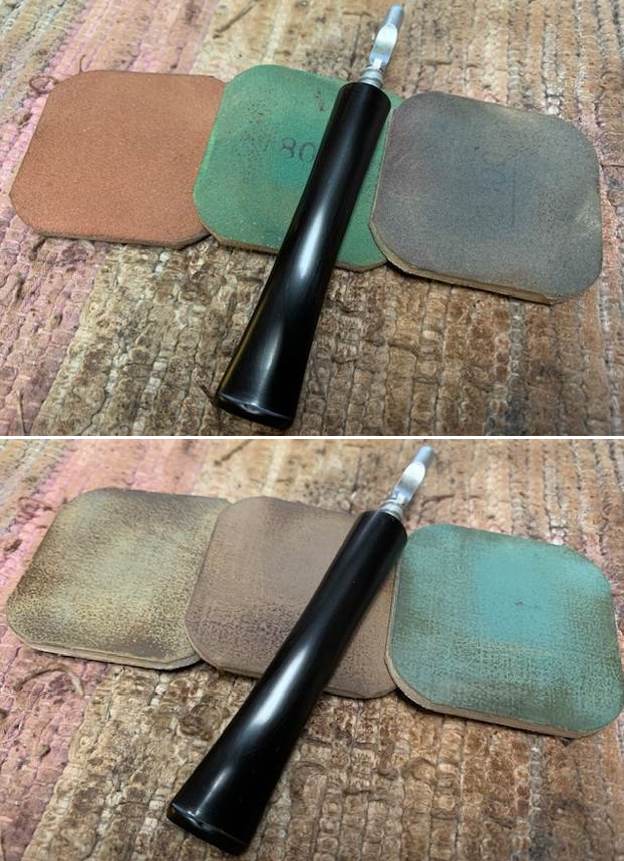
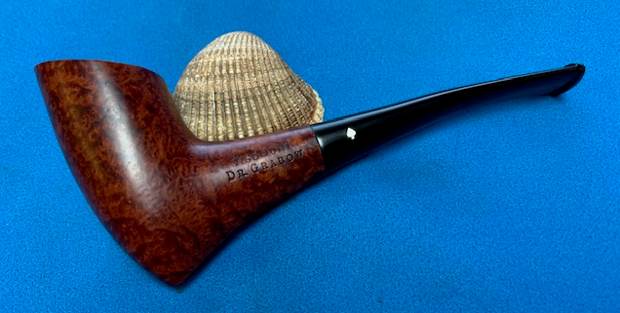
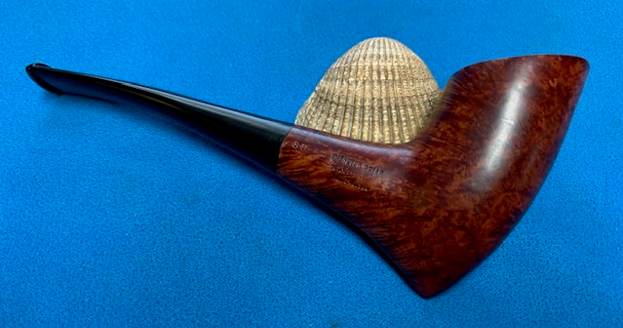
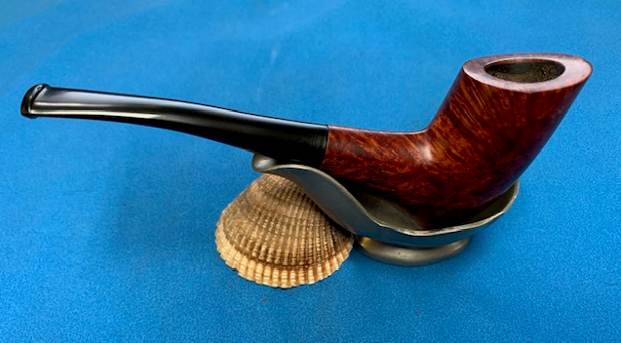
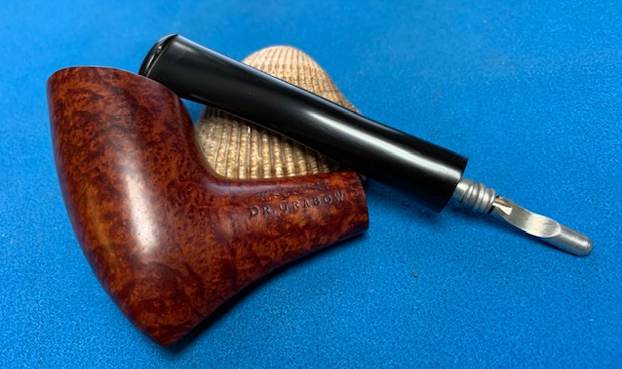
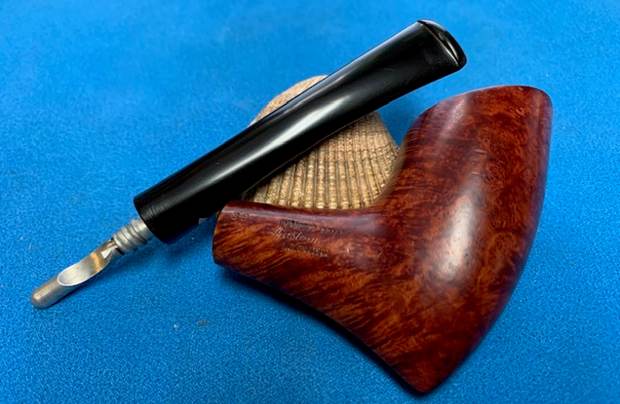
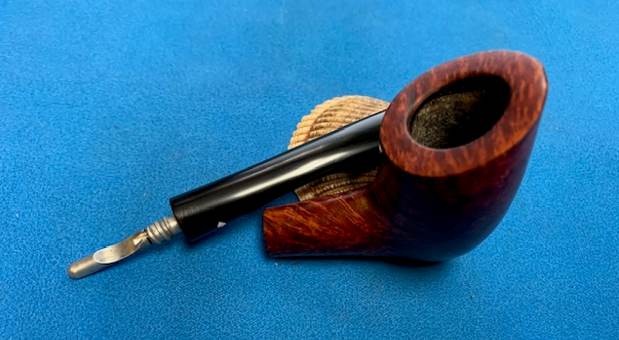
This is another pipe that I have taken out of my personal collection as I just do not use enough to warrant keeping it. This pipe was one that I purchased long ago but have no memory where it came from. I don’t think I ever smoked it to be honest. It is a pipe I should have smoked as it is attractive enough but did not. It is time to move it on to someone who will enjoy it. The airway in the shank and the mortise are very clean. The smooth finish and rim top were in good condition but it is dull and lifeless looking. The inner edge of the rim is in good condition. The stamping on the pipe on the left side of the shank reads Viscount [over] Dr. Grabow. On the right side it is stamped with the shape number 39 next to the shank. That is followed by Imported Briar [over] Adjustomatic [over] Pat.2461905. The finish is a medium brown. Once it is polished the grain will show clearly. The colour of the stain goes well with the vulcanite stem. There is a white spade Grabow logo on the left side of the stem. There is a threaded metal tenon and stinger apparatus on the stem. The stem is in excellent condition with no tooth chatter or marks on it. It is dirty from sitting in my cupboard but otherwise looks good. I took photos of the pipe before I did my clean up work on it to prepare it for you.   I took a photo of the bowl and rim top to verify the description above. The rim top looks good. There is a little darkening around the inner edge but otherwise it is in good shape. The vulcanite stem looks quite good on both sides. I took photos of the stamping on the sides of the shank. It is clear and readable as noted above.I took the stem off the bowl and took a photo of the pipe to give a sense of proportion of the pipe. You can also see shape of the pipe and some interesting grain on the briar. I used a folded piece of 220 grit sandpaper to clean up the darkening on the inner edge of the bowl. Once finished it looked much better.The shank and mortise were very clean and a quick run through with a pipe cleaner proved all that was necessary. I polished the rim top and the briar with micromesh sanding pads – dry sanding with 1500-12000 grit pads. I wiped the bowl down with a damp cloth after each sanding pad to remove the dust and debris. I gave the bowl and shank a coating of Before & After Restoration Balm. I worked it into the surface of the briar with my fingertips to clean, enliven and protect the briar. I let the balm sit for 15 minutes and then buffed with a cotton cloth to raise the shine. The photos show the bowl at this point in the restoration process.   I set the bowl aside and turned my attention to the stem. I polished it with micromesh sanding pads – 1500-12000 grit sanding pads and water to wet sand the stem. I wiped it down after each sanding pad with Obsidian Oil on a cotton rag after each sanding pads. But I find it does two things – first it gives some protection to the stem from oxidation and second it give the sanding pads bite in the polishing process.     After finishing with the micromesh pads I rub the stem down with Before & After Fine and Extra Fine stem polish as it seems to really remove the fine scratches in the vulcanite. I rub the Fine Polish on the stem and wipe it off with a paper towel and then repeat the process with the Extra Fine polish. I finished polishing the stem with a final coat of Obsidian Oil and set the stem aside to let the oil absorb. This process gives the stem a shine and also a bit of protection.   This Dr. Grabow Viscount 39 Pickaxe turned out to be a great looking pipe. With polishing, the grain shines through clearly. The thin vulcanite taper stem is in excellent condition and works great with the polished briar. I put the stem back on the bowl and carefully buffed the pipe with Blue Diamond on the buffing wheel using a light touch on the briar. I gave the bowl and stem multiple coats of carnauba wax on the buffing wheel and followed that by buffing the entire pipe with a clean buffing pad. I hand buffed the pipe with a microfiber cloth to deepen the shine. The finished Dr. Grabow Viscount Pickaxe fits nicely in the hand and feels great. Give the finished pipe a look in the photos below. The dimensions of the pipe are Length: 5 ¾ inches, Height: 2 ½ inches, Outside diameter of the bowl: 1 ¼ inches, Chamber diameter: ¾ of an inch. The weight of the pipe is 34 grams/1.20 ounces. It is a great looking pipe that I will soon be adding it to the rebornpipes store in the American Pipemakers Section. If you are interested in adding it to your collection let me know Thanks for reading this blog and my reflections on the pipe while I worked on it.
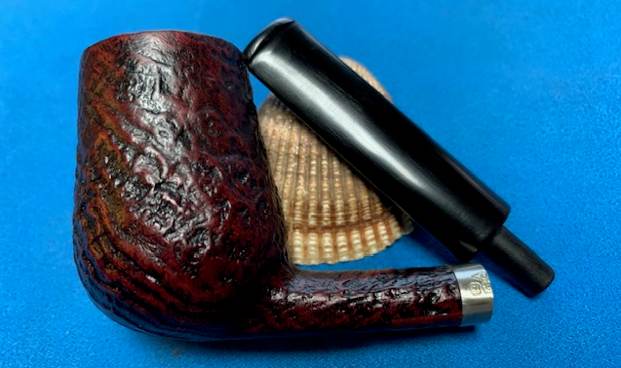
Moving another one of my own – an LHS Parklane De Luxe Billiard 19


Blog by Steve Laug

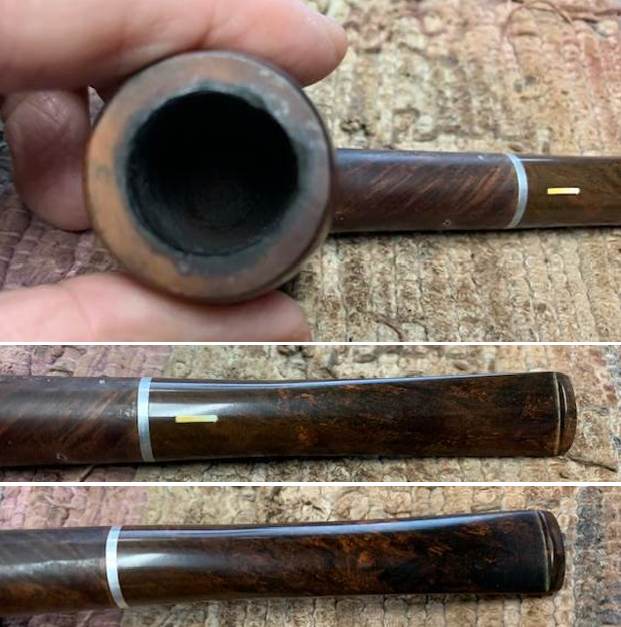
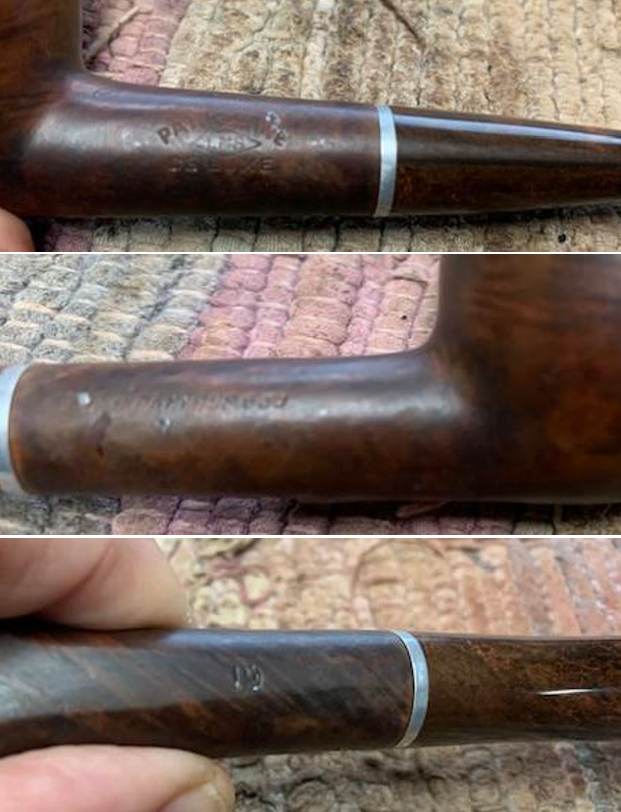
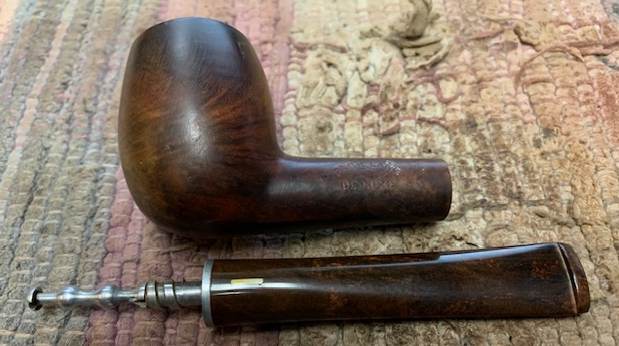
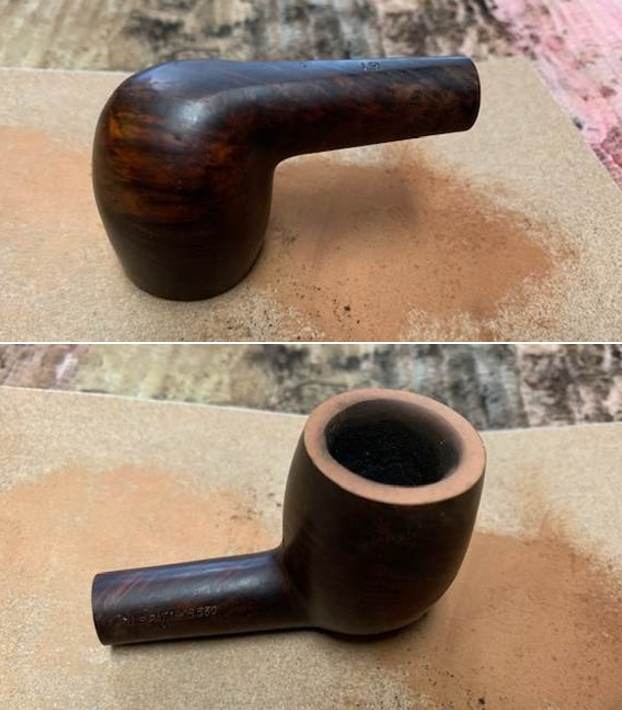
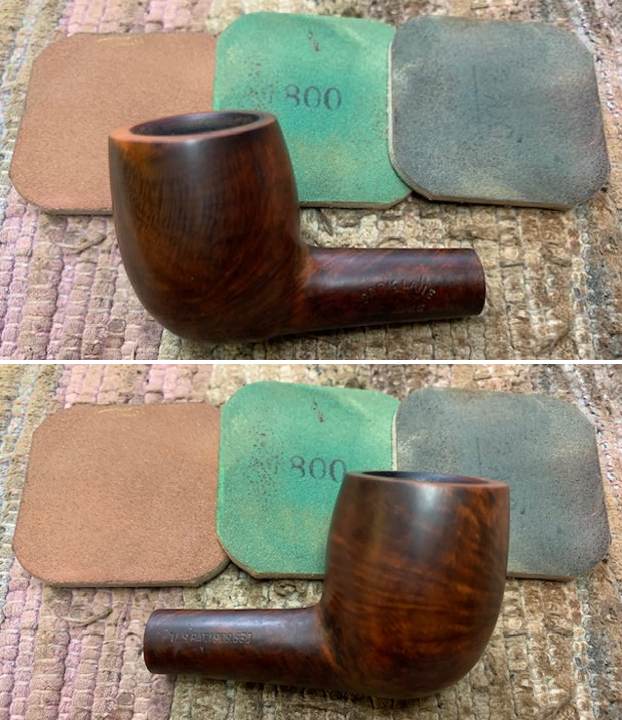
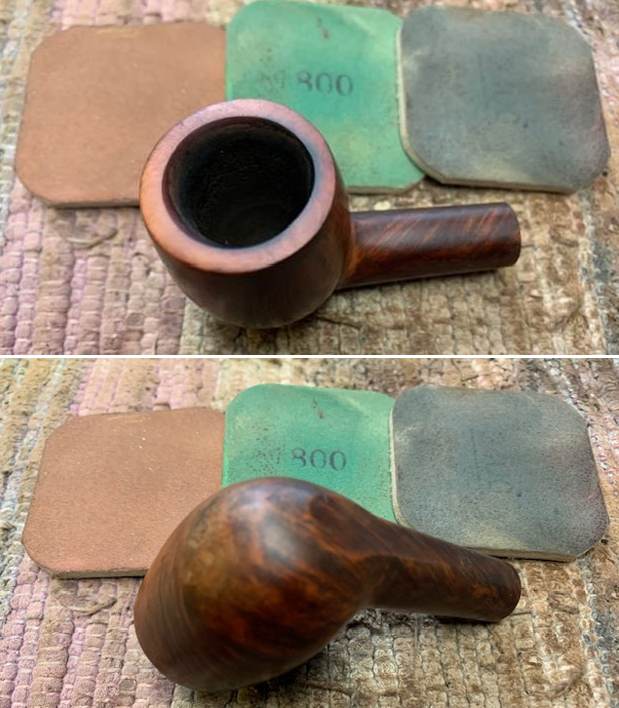
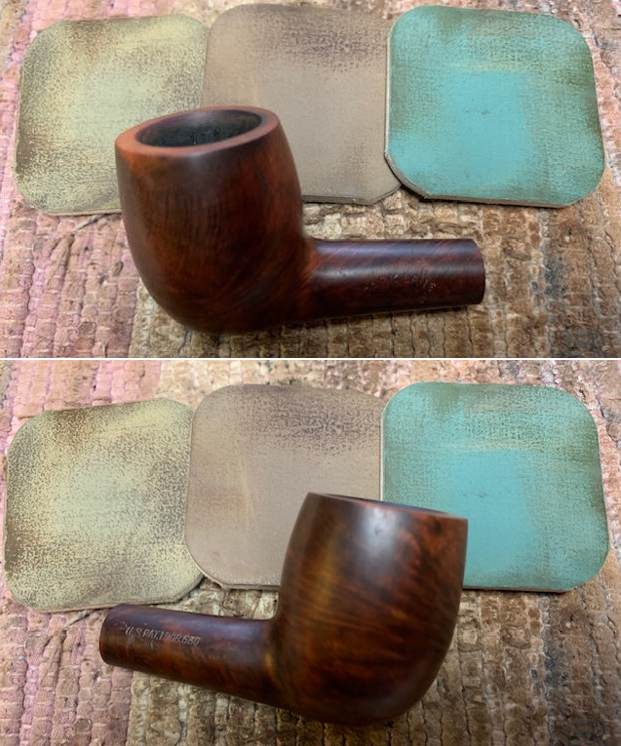
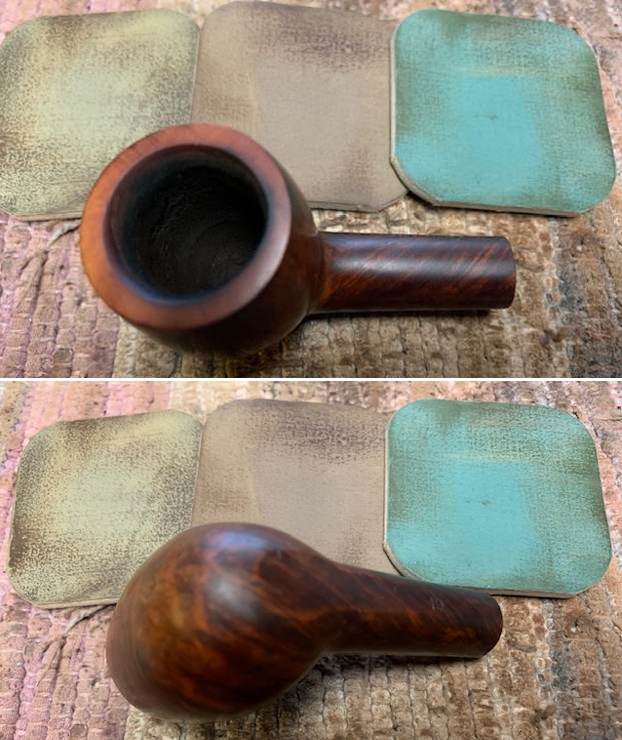
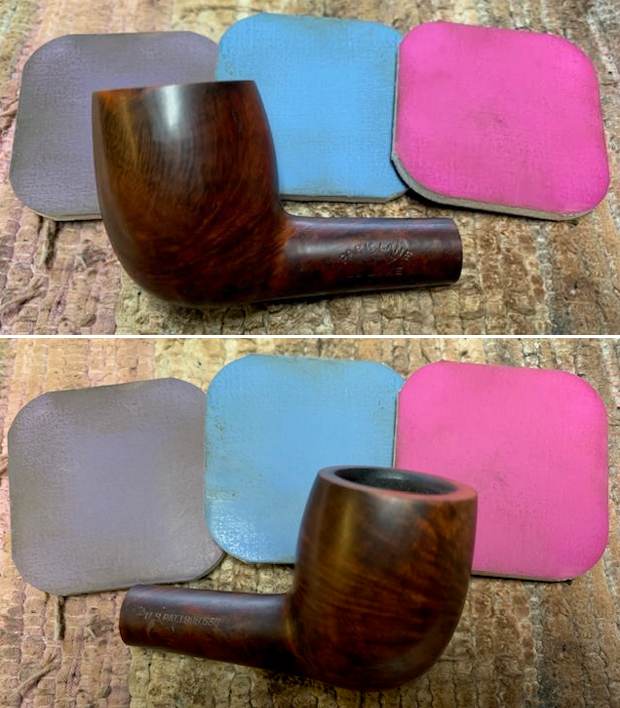
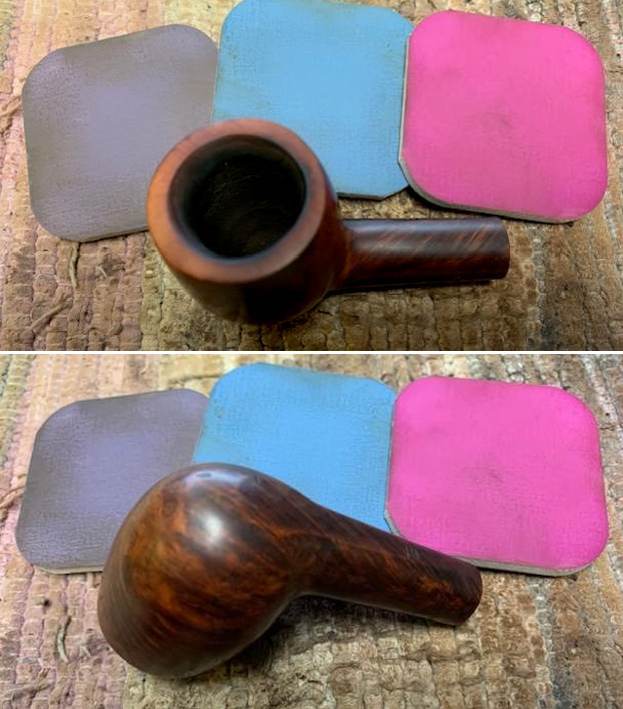
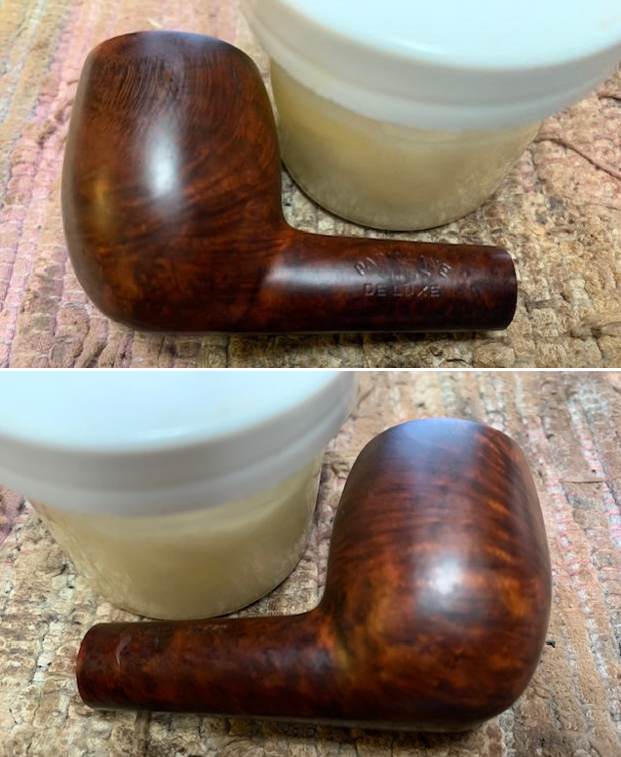
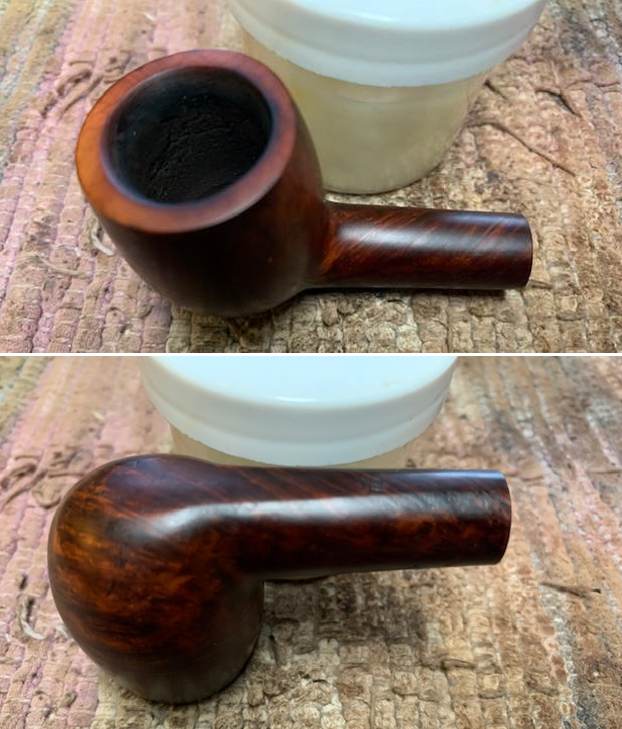
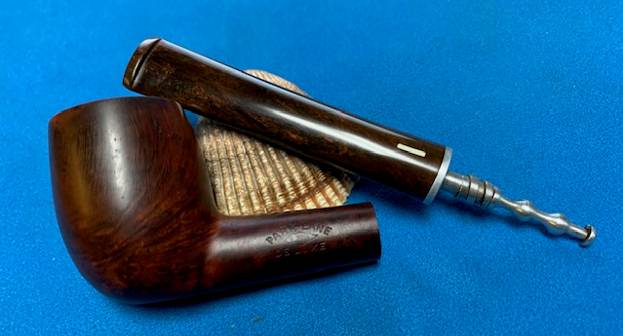
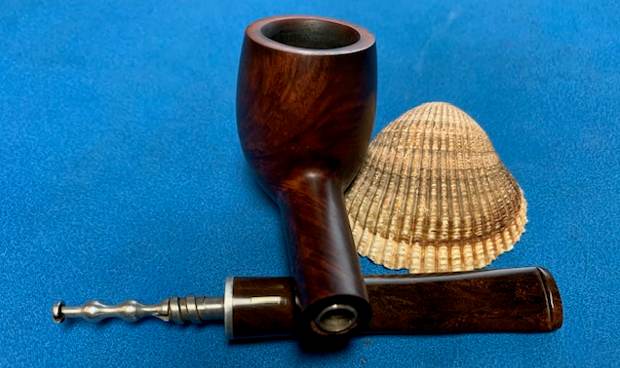
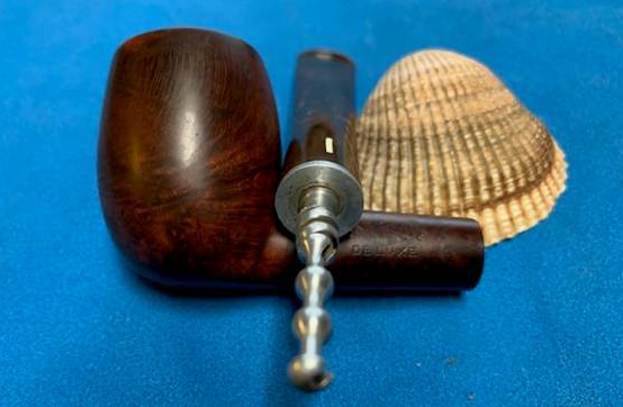
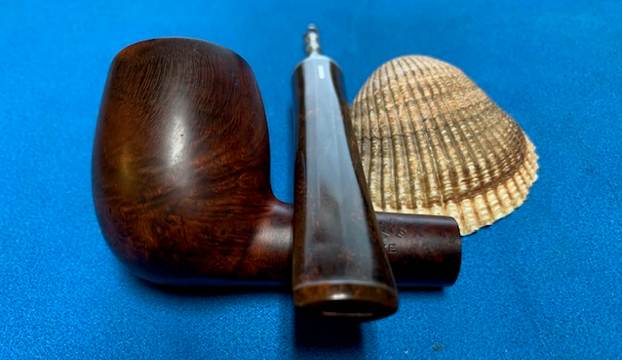
This is another pipe that I have taken out of my personal collection as I just do not use enough to warrant keeping it. This pipe was one that I purchased long ago but have no memory where it came from. I don’t think I ever smoked it to be honest. It is a pipe I should have smoked as it is attractive enough but did not. It is time to move it on to someone who will enjoy it. The airway in the shank and the mortise are very clean. The smooth finish and rim top were in good condition but it is dull and lifeless looking. The inner edge of the rim has a bit of damage on the backside. The stamping on the pipe on the left side of the shank reads Parklane [over] LHS in a diamond [over] De Luxe. On the right side it is stamped US PAT. 1,908,630. The shape number 19 or 61 is on the underside of the shank. The finish is a medium brown. Once it is polished the grain will show clearly. The colour of the stain goes well with the Cumberland or Bowling Ball stem. There is a white bar inset logo on the top of the stem. There is a threaded metal tenon and stinger apparatus on the stem. The stem is in excellent condition with no tooth chatter or marks on it. It is dirty from sitting in my cupboard but otherwise looks goo. I took photos of the pipe before I did my clean up work on it to prepare it for you. I took a photo of the bowl and rim top to verify the description above. The rim top is a bit of a mess with darkening and burn marks around the edges and heavier at the back of the bowl. The Cumberland style stem looks quite good on both sides. I took photos of the stamping on the sides of the shank. It is clear and readable as noted above. The white bar on the top of the stem also is clean and looks good.I took the stem off the bowl and took a photo of the pipe to give a sense of proportion of the pipe. You can also see shape of the pipe and some interesting grain on the briar. I decided to start my work on the bowl by dealing with the burn damage on the back inner edge of the bowl. I used a piece of folded 220 grit sandpaper to give the edge a slight bevel all the way around the bowl to blend in the damage. The top also had some damage so I gently topped it on a topping board with 220 grit sandpaper to remove the damaged portion of the rim top and give the backside some more thickness. Once finished, it looked quite good.    The shank and mortise were very clean and a quick run through with a pipe cleaner proved all that was necessary. I polished the rim top and the briar with micromesh sanding pads – dry sanding with 1500-12000 grit pads. There was a small sandpit on the front of the bowl about mid-bowl. I wiped the bowl down with a damp cloth after each sanding pad to remove the dust and debris.     I gave the bowl and shank a coating of Before & After Restoration Balm. I worked it into the surface of the briar with my fingertips to clean, enliven and protect the briar. I let the balm sit for 15 minutes and then buffed with a cotton cloth to raise the shine. The photos show the bowl at this point in the restoration process.   I set the bowl aside and turned my attention to the stem. I polished it with micromesh sanding pads – 1500-12000 grit sanding pads and water to wet sand the stem. I wiped it down after each sanding pad with Obsidian Oil on a cotton rag after each sanding pads. But I find it does two things – first it gives some protection to the stem from oxidation and second it give the sanding pads bite in the polishing process.     After finishing with the micromesh pads I rub the stem down with Before & After Fine and Extra Fine stem polish as it seems to really remove the fine scratches in the vulcanite. I rub the Fine Polish on the stem and wipe it off with a paper towel and then repeat the process with the Extra Fine polish. I finished polishing the stem with a final coat of Obsidian Oil and set the stem aside to let the oil absorb. This process gives the stem a shine and also a bit of protection.  This LHS Parklane De Luxe Billiard 19 turned out to be a great looking pipe. With polishing, the grain shines through clearly. The Cumberland style taper stem is in excellent condition and works great with the polished briar. I put the stem back on the bowl and carefully buffed the pipe with Blue Diamond on the buffing wheel using a light touch on the briar. I gave the bowl and stem multiple coats of carnauba wax on the buffing wheel and followed that by buffing the entire pipe with a clean buffing pad. I hand buffed the pipe with a microfiber cloth to deepen the shine. The finished LHS Parklane De Luxe fits nicely in the hand and feels great. Give the finished pipe a look in the photos below. The dimensions of the pipe are Length: 5 ½ inches, Height: 1 ½ inches, Outside diameter of the bowl: 1 ¼ inches, Chamber diameter: ¾ of an inch. The weight of the pipe is 32 grams/1.13 ounces. It is a great looking pipe that I will soon be adding it to the rebornpipes store in the American (US) Pipemakers Section. If you are interested in adding it to your collection let me know Thanks for reading this blog and my reflections on the pipe while I worked on it.

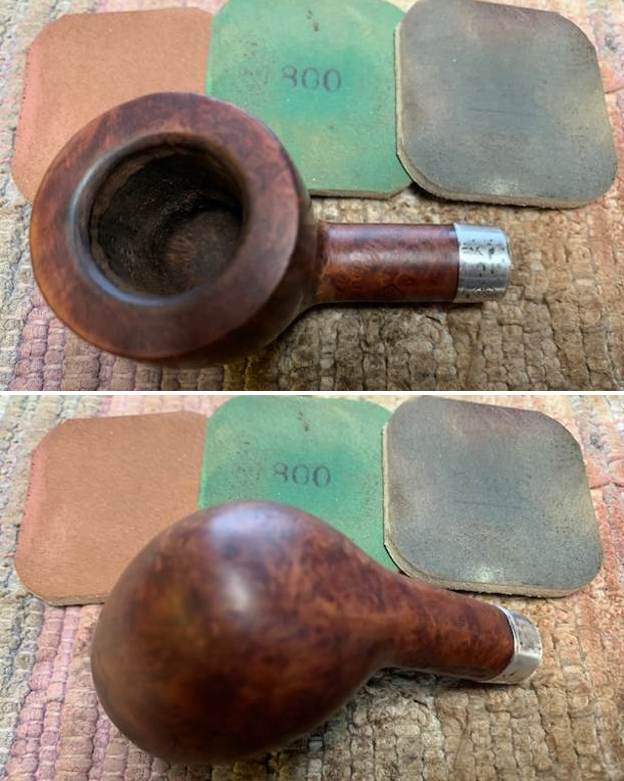
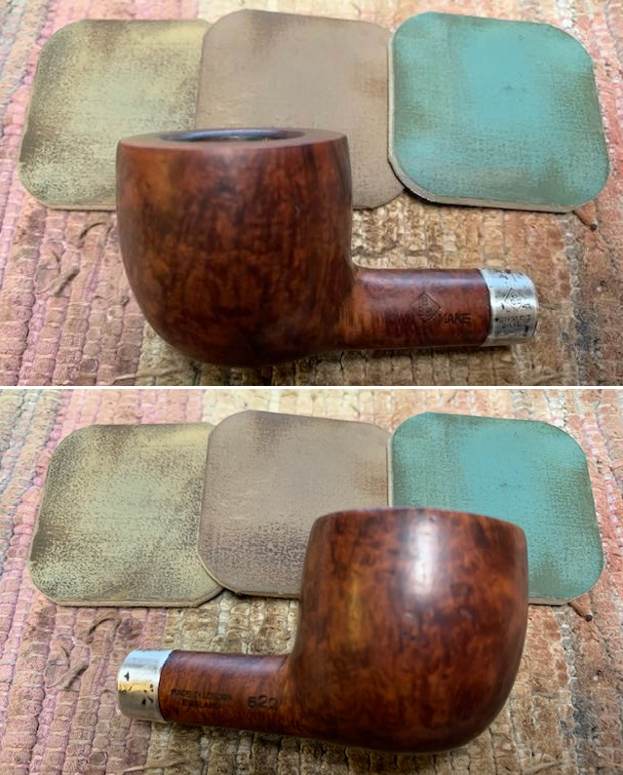
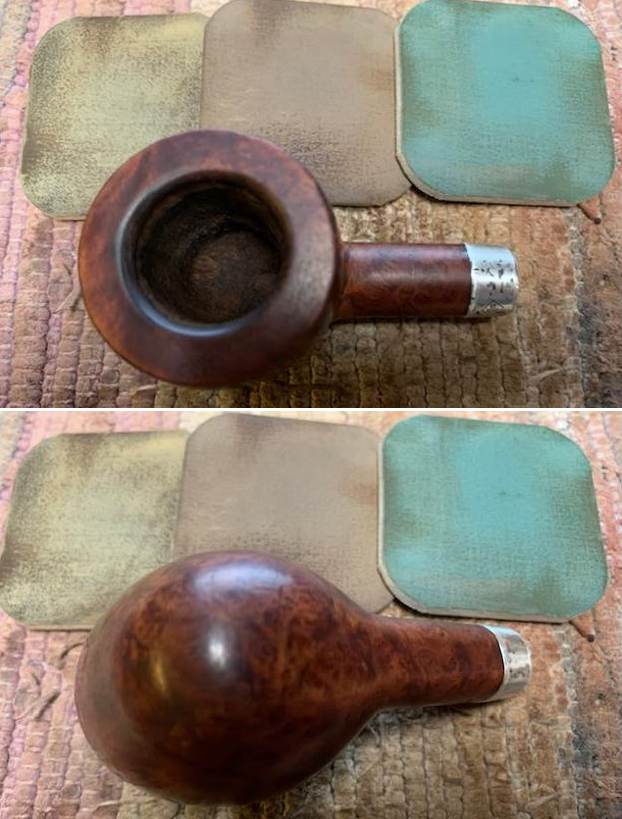
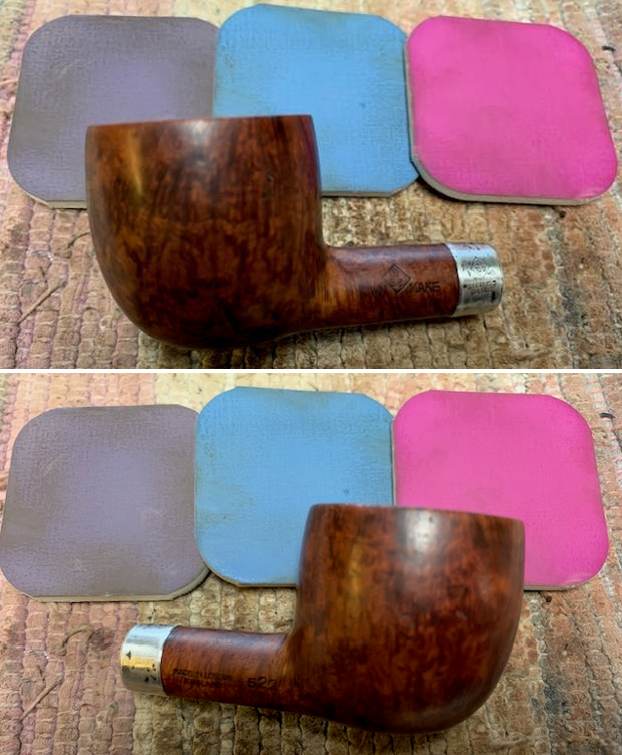
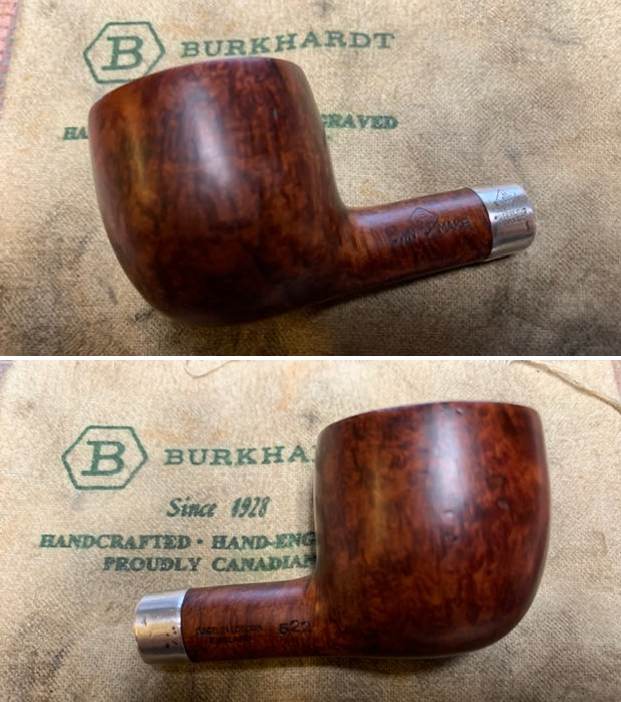
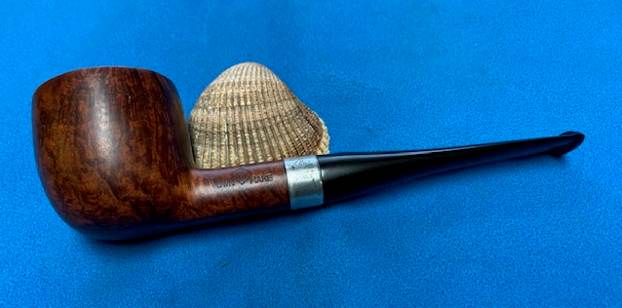
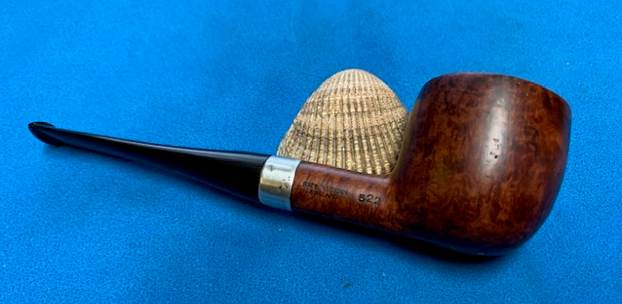
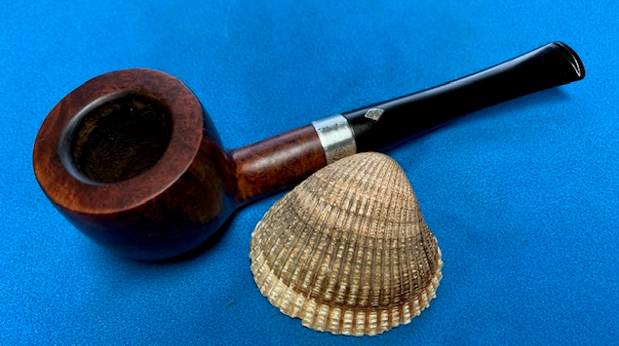
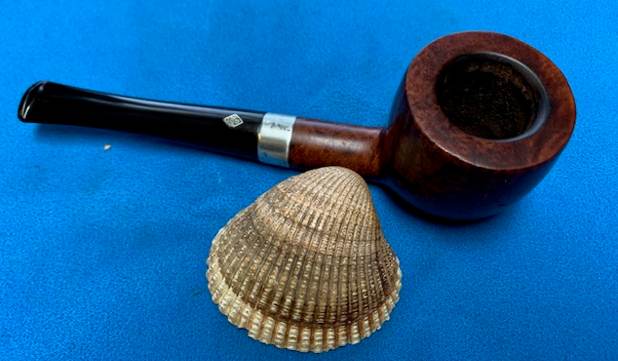
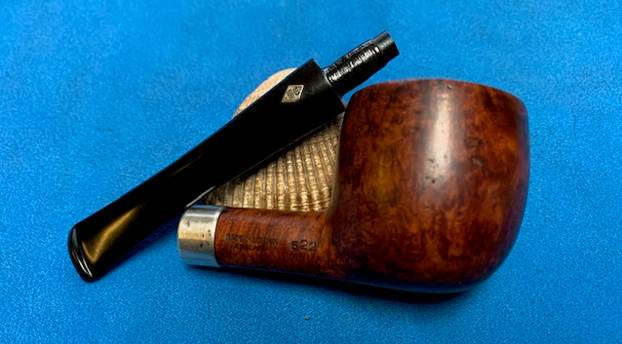
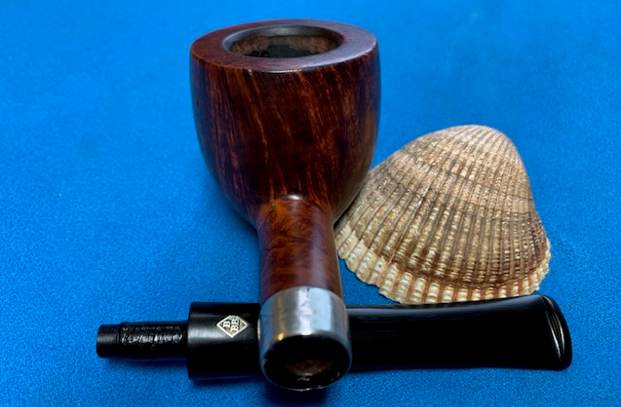
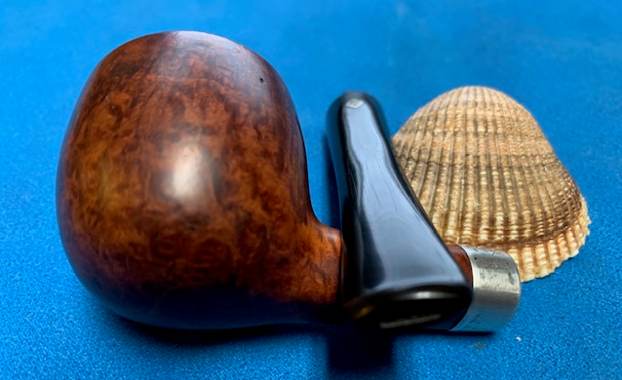
Moving another one of my own – a silver banded BBB Own Make 522 Pot


Blog by Steve Laug

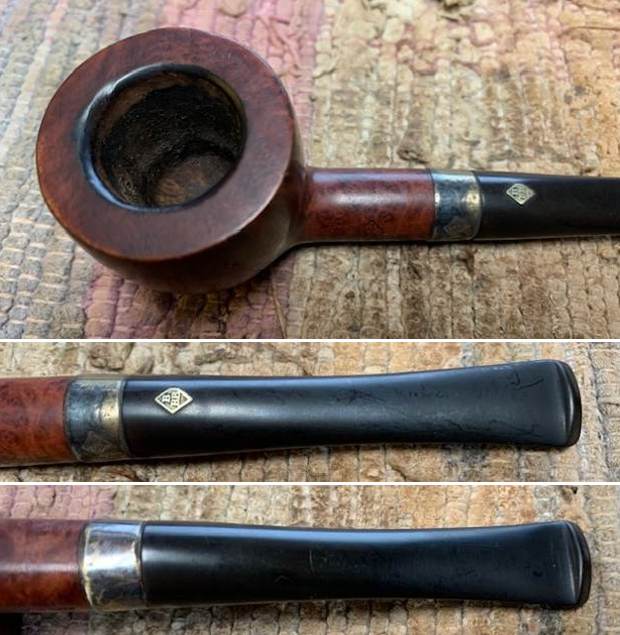
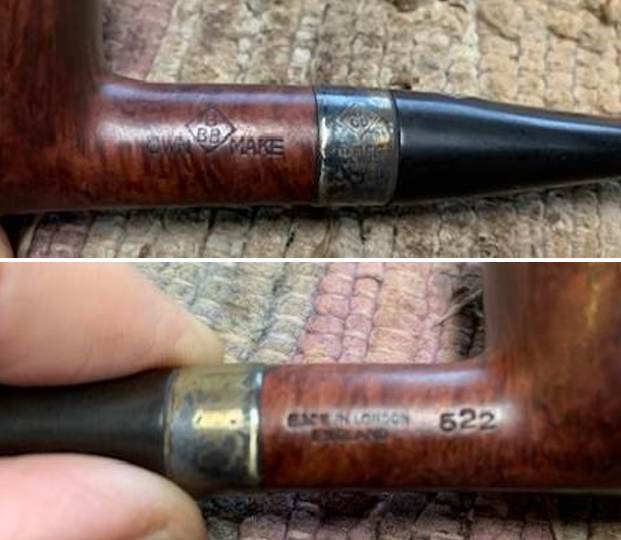
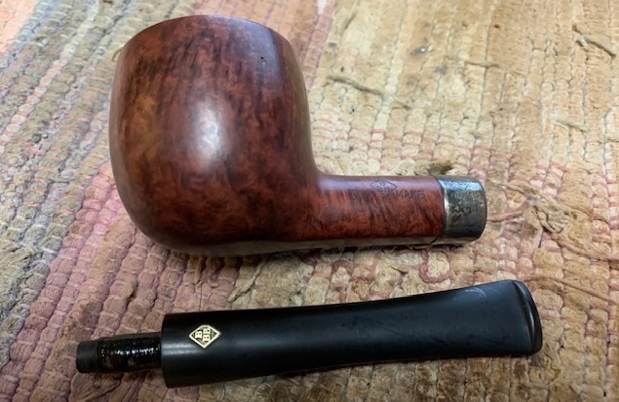
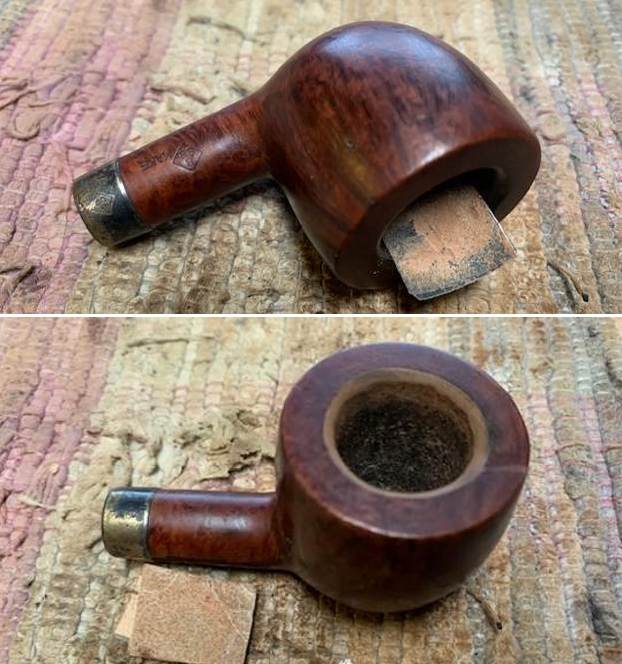
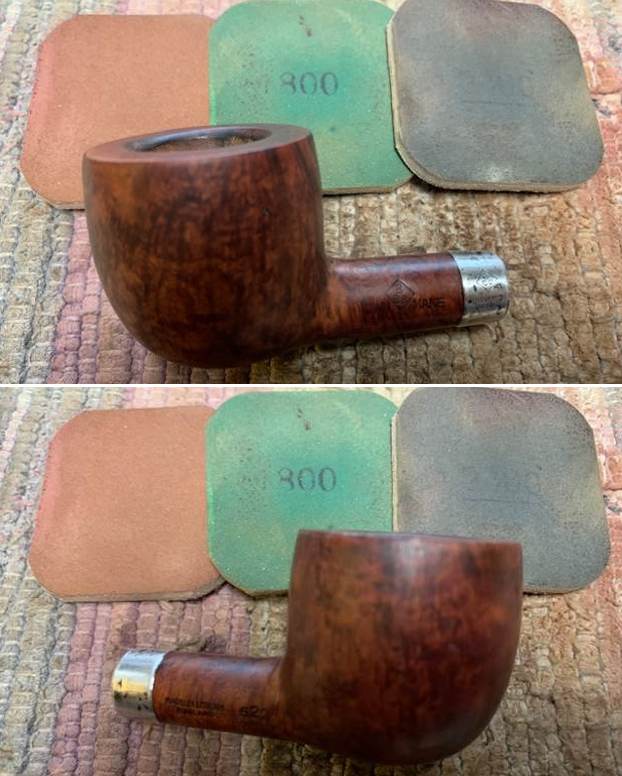
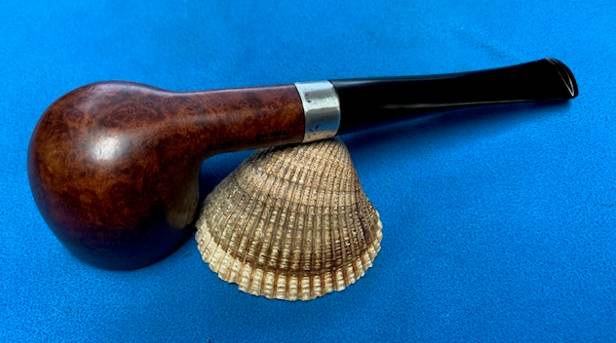
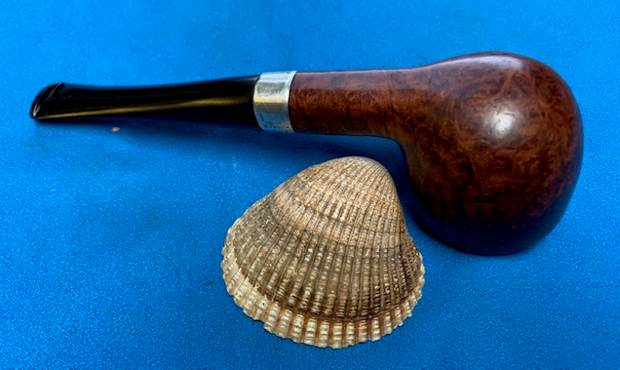
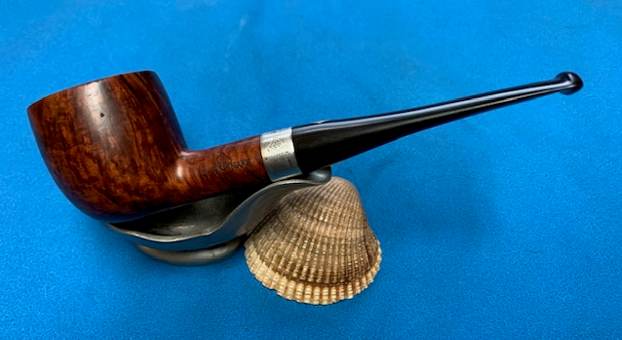
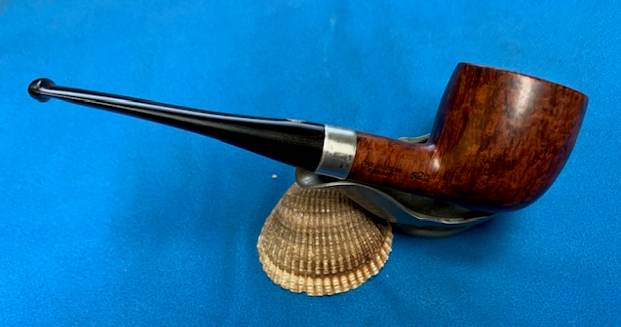
This is another pipe that I have taken out of my personal collection as I just do not use enough to warrant keeping it. This pipe was one that I purchased long ago but have no memory where it came from. I don’t think I ever smoked it to be honest. It is a pipe I should have smoked as it is attractive enough but did not. It is time to move it on to someone who will enjoy it. The airway in the shank and the mortise are very clean. The smooth finish and rim top were in good condition but it is dull and lifeless looking. The inner edge of the rim has a bit of damage on the right side toward the front. The stamping on the pipe on the left side of the shank reads BBB in a diamond flanked on either side by Own (left) and Make (right). On the right side it is stamped Made in London [over] England followed by the shape number 522. There is a Sterling silver band on the shank that is cosmetic as there are no cracks. It is stamped with the BBB in a diamond logo [over] Sterling Silver. It is tarnished and has some small dents in the surface. The finish is a medium brown. Once it is polished the grain will show clearly. The colour of the stain goes well with the black vulcanite stem. There is a BBB Diamond brass inset logo on the top of the stem. The stem is in excellent condition with no tooth chatter or marks on it. It is dirty form sitting in my cupboard but otherwise looks goo. I took photos of the pipe before I did my clean up work on it to prepare it for you.    I took a photo of the bowl and rim top to verify the description above. The rim top looks good other than the burn mark on the inner edge at the right front of the bowl. The Sterling band is also very tarnish and dark in the photos. I also took photos of the stem surface showing how clean it was on both sides.I took photos of the stamping on the sides of the shank. It is clear and readable as noted above. The stamping on the Sterling Band though dirty and tarnish is also very readable. I took the stem off the bowl and took a photo of the pipe to give a sense of proportion of the pipe. You can also see shape of the pipe and some interesting grain on the briar. I decided to start my work on the bowl by dealing with the burn damage on the front inner edge of the bowl. I used a piece of folded 220 grit sandpaper to give the edge a slight bevel all the way around the bowl to blend in the damage. Once finished, it looked quite good. The shank and mortise were very clean and a quick run through with a pipe cleaner proved all that was necessary. I polished the rim top and the briar with micromesh sanding pads – dry sanding with 1500-12000 grit pads. There was a small sandpit on the front of the bowl about mid-bowl. I wiped the bowl down with a damp cloth after each sanding pad to remove the dust and debris. I gave the bowl and shank a coating of Before & After Restoration Balm. I worked it into the surface of the briar with my fingertips to clean, enliven and protect the briar. I let the balm sit for 15 minutes and then buffed with a cotton cloth to raise the shine. The photos show the bowl at this point in the restoration process. I polished the silver band with a jeweler’s cloth to remove the tarnish and oxidation. It took some elbow grease but the cloth works to clean and protect the silver from further tarnishing. It looks significantly better than when I started. I set the bowl aside and turned my attention to the stem. I polished it with micromesh sanding pads – 1500-12000 grit sanding pads and water to wet sand the stem. I wiped it down after each sanding pad with Obsidian Oil on a cotton rag after each sanding pads. But I find it does two things – first it gives some protection to the stem from oxidation and second it give the sanding pads bite in the polishing process.   After finishing with the micromesh pads I rub the stem down with Before & After Fine and Extra Fine stem polish as it seems to really remove the fine scratches in the vulcanite. I rub the Fine Polish on the stem and wipe it off with a paper towel and then repeat the process with the Extra Fine polish. I finished polishing the stem with a final coat of Obsidian Oil and set the stem aside to let the oil absorb. This process gives the stem a shine and also a bit of protection.  This BBB Own Make 522 Pot turned out to be a great looking pipe. With polishing, the grain shines through clearly. The black vulcanite stem is in excellent condition and works great with the polished briar. The polished silver is a touch of class. I put the stem back on the bowl and carefully buffed the pipe with Blue Diamond on the buffing wheel using a light touch on the briar. I gave the bowl and stem multiple coats of carnauba wax on the buffing wheel and followed that by buffing the entire pipe with a clean buffing pad. I hand buffed the pipe with a microfiber cloth to deepen the shine. The finished BBB Own Make Pot fits nicely in the hand and feels great. Give the finished pipe a look in the photos below. The dimensions of the pipe are Length: 6 inches, Height: 1 ½ inches, Outside diameter of the bowl: 1 ½ inches, Chamber diameter: 7/8 of an inch. The weight of the pipe is 43 grams/1.52 ounces. It is a great looking pipe that I will soon be adding it to the rebornpipes store in the British Pipemakers Section. If you are interested in adding it to your collection let me know Thanks for reading this blog and my reflections on the pipe while I worked on it.

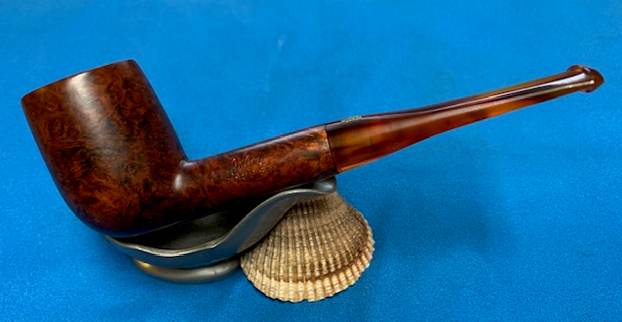
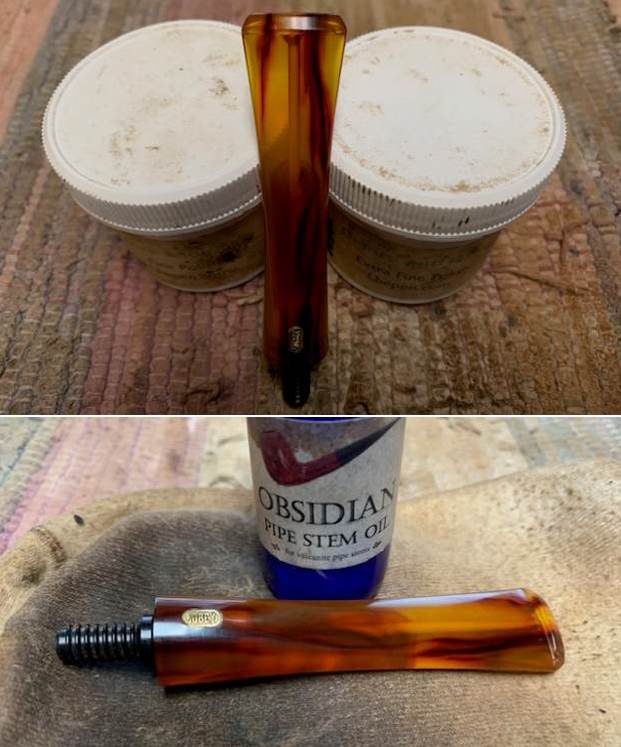
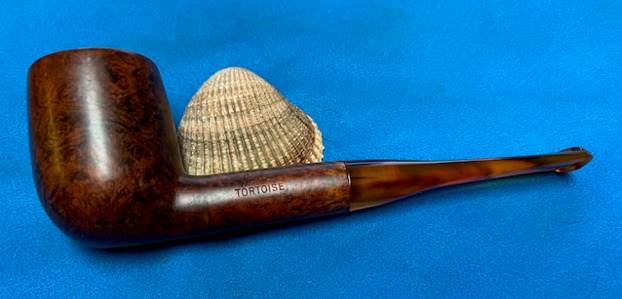
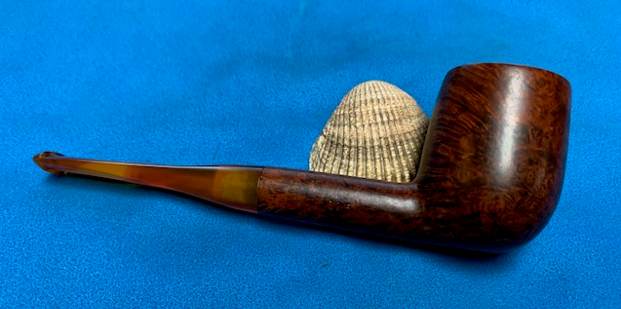
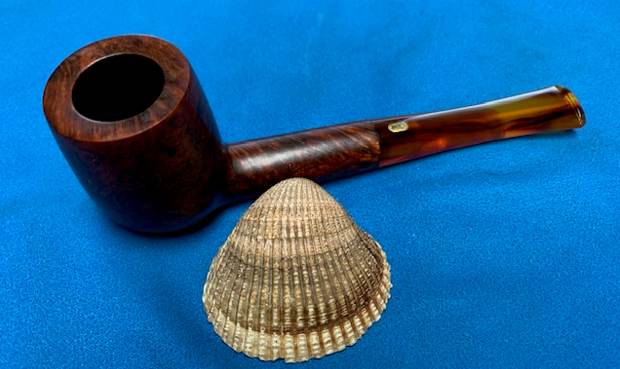
Moving another one of my own – a Jobey Tortoise 115 Billiard with a Shell Acrylic Stem


Blog by Steve Laug

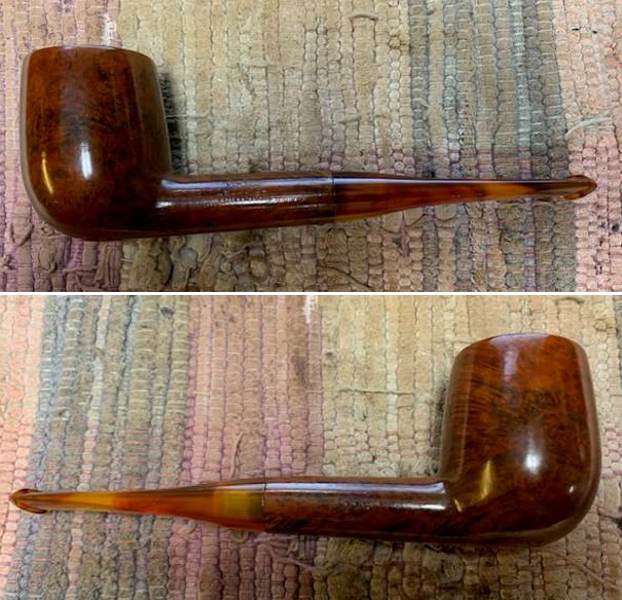
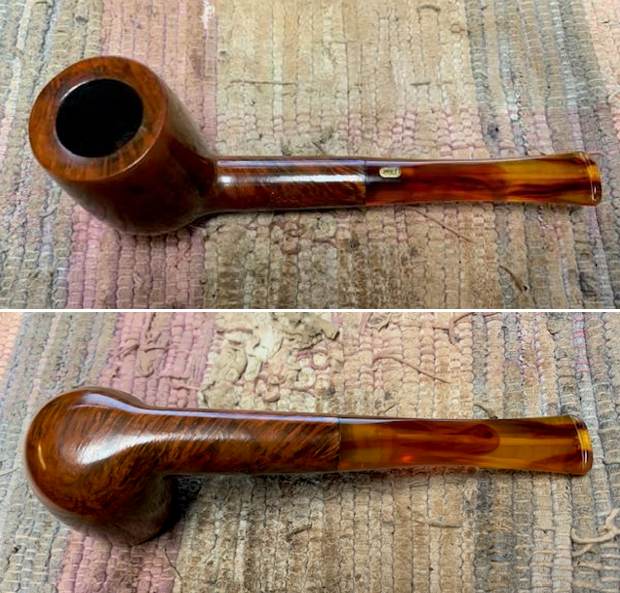
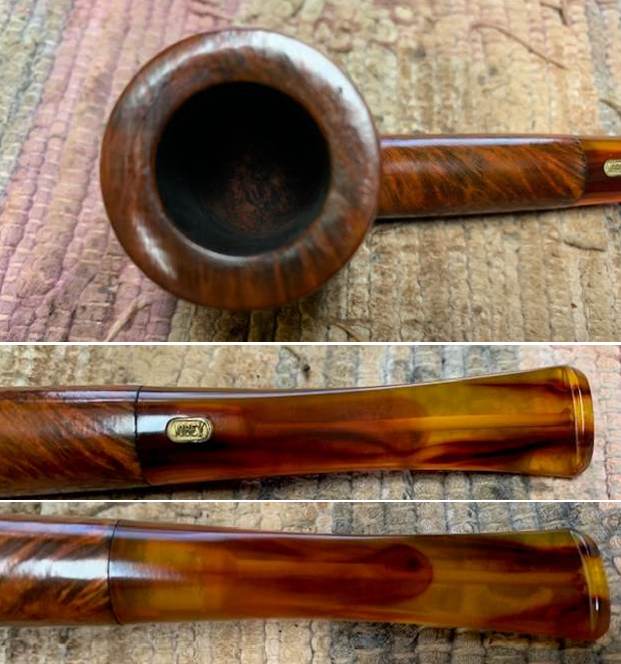
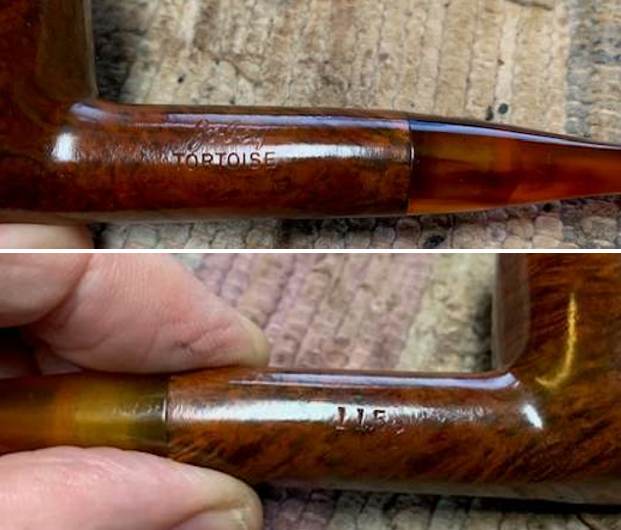
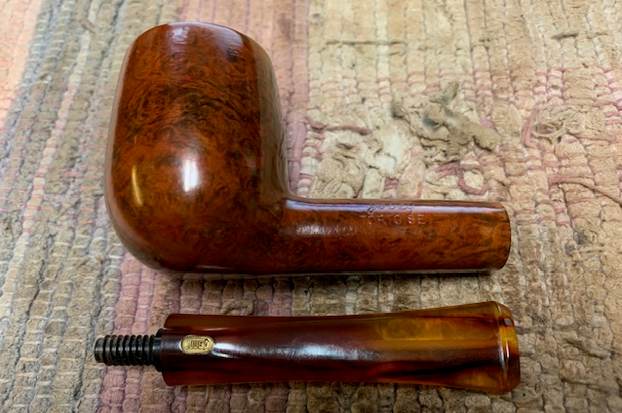
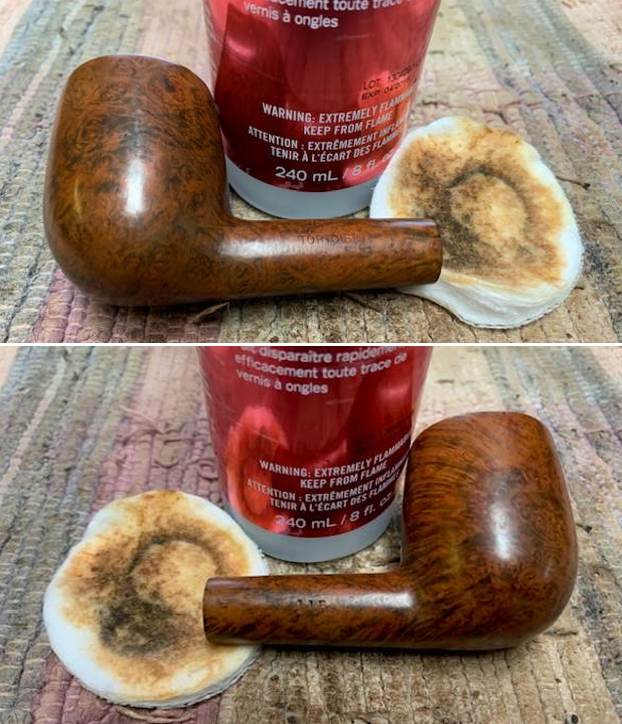
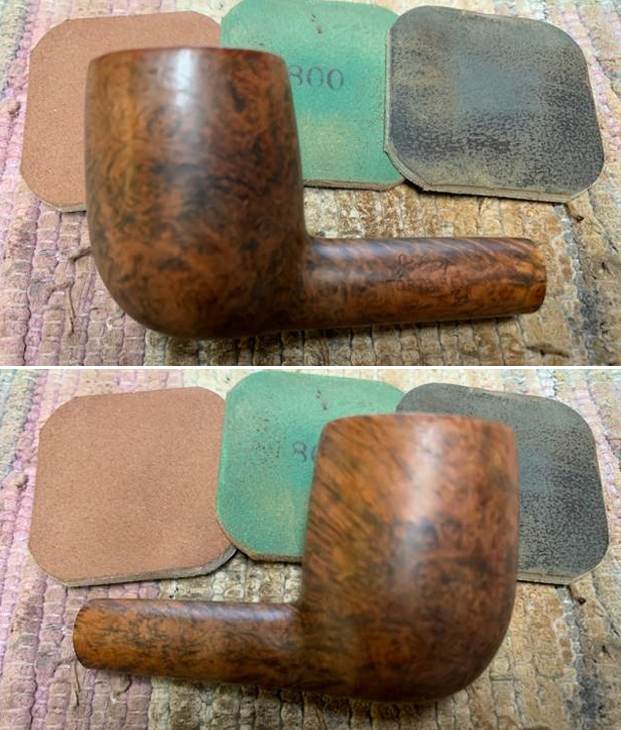
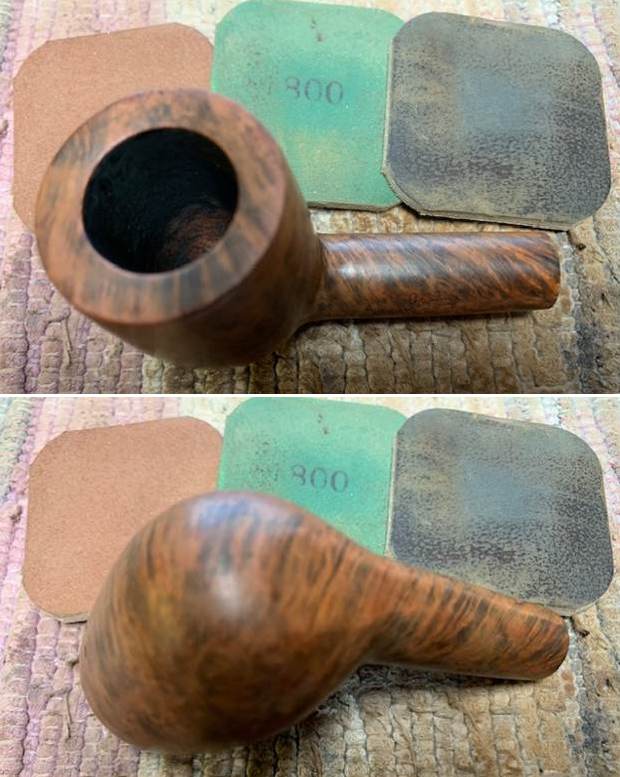
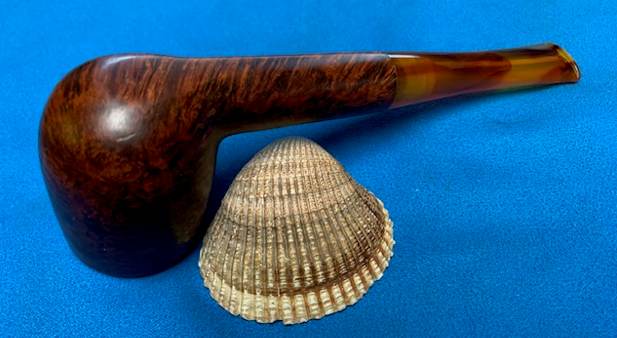
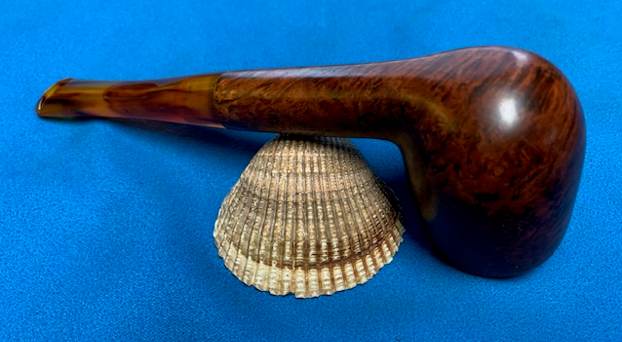
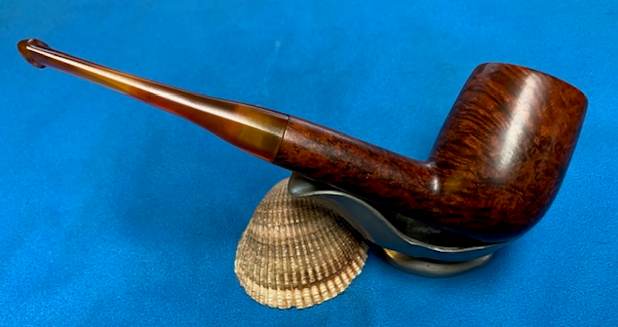
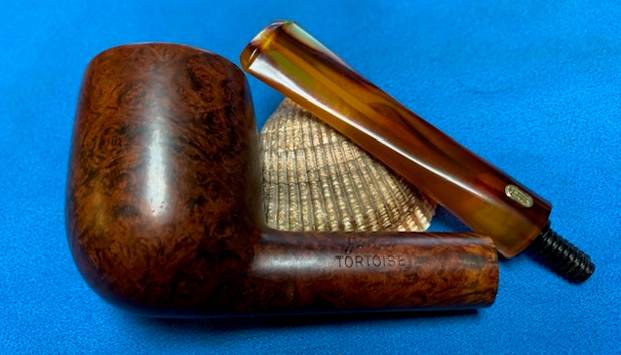
This is another pipe that I have taken out of my personal collection as I just do not use enough to warrant keeping it. This pipe was one that I purchased long ago but have no memory where it came from. I don’t think I ever smoked it to be honest. It is a pipe I should have smoked as it is attractive enough but did not. It is time to move it on to someone who will enjoy it. The airway in the shank and the mortise are very clean. The smooth finish and rim top were in good condition. It appears that the bowl is coated with some varnish or shellac that I will remove. The inner edge of the rim is beveled inward. The finish was a very shiny but there appears to be some great grain poking through the shine. The stamping on the pipe on the left side of the shank reads Jobey in script [over] Tortoise. On the right side it is stamped with the shape number 115. The finish is a medium brown and with the varnish/shellac coat that is rough and uneven. Once it is removed the grain will show clearly. The colour of the stain goes well with the tortoise shell acrylic taper stem. There is a Jobey brass inset logo on the top of the stem. The stem is in excellent condition with no tooth chatter or marks on it. I took photos of the pipe before I did my clean up work on it to prepare it for you.   I took a photo of the bowl and rim top to verify the description above. The beveled rim top and edges look good but there are some nick and scratches in the varnish/shellac coat. The bowl and edges are in good condition. I also took photos of the stem surface showing how clean it was on both sides. I took photos of the stamping on the sides of the shank. It is clear and readable as noted above. The Tortoise stamp on the shank matches with the tortoise acrylic stem.I took the stem off the bowl and took a photo of the pipe to give a sense of proportion of the pipe. You can also see shape of the pipe and some interesting grain on the briar. I decided to start my work on the bowl by dealing with the varnish/shellac coat. If it was either it would come off with acetone. I wiped the bowl down with acetone and a cotton pad to remove the rough shiny topcoat from the bowl. It looked significantly better when I finished. The shank and mortise were very clean and a quick run through with a pipe cleaner proved all that was necessary. I polished the rim top and the briar with micromesh sanding pads – dry sanding with 1500-12000 grit pads. There was a small sandpit on the front of the bowl about mid-bowl. I wiped the bowl down with a damp cloth after each sanding pad to remove the dust and debris. I gave the bowl and shank a coating of Before & After Restoration Balm. I worked it into the surface of the briar with my fingertips and a horsehair shoe brush to clean, enliven and protect the briar. I let the balm sit for 15 minutes and then buffed with a cotton cloth to raise the shine. The photos show the bowl at this point in the restoration process. I set the bowl aside and turned my attention to the stem. I polished it with micromesh sanding pads – 1500-12000 grit sanding pads and water to wet sand the stem. I wiped it down after each sanding pad with Obsidian Oil on a cotton rag after each sanding pads. But I find it does two things – first it gives some protection to the stem from oxidation and second it give the sanding pads bite in the polishing process. After finishing with the micromesh pads I rub the stem down with Before & After Fine and Extra Fine stem polish as it seems to really remove the fine scratches in the acrylic. I rub the Fine Polish on the stem and wipe it off with a paper towel and then repeat the process with the Extra Fine polish. I finished polishing the stem with a final coat of Obsidian Oil and set the stem aside to let the oil absorb. This process gives the stem a shine and also a bit of protection.  This Jobey Tortoise 115 Billiard turned out to be a great looking pipe. With the shiny varnish coat removed from the pipe the grain shines through clearly. The tortoise shell acrylic stem is in excellent condition and works great with the polished briar. I put the stem back on the bowl and carefully buffed the pipe with Blue Diamond on the buffing wheel using a light touch on the briar. I gave the bowl and stem multiple coats of carnauba wax on the buffing wheel and followed that by buffing the entire pipe with a clean buffing pad. I hand buffed the pipe with a microfiber cloth to deepen the shine. The finished Jobey Tortoise Billiard fits nicely in the hand and feels great. Give the finished pipe a look in the photos below. The dimensions of the pipe are Length: 6 inches, Height: 1 ¾ inches, Outside diameter of the bowl: 1 ¼ inches, Chamber diameter: ¾ of an inch. The weight of the pipe is 49 grams/1.73 ounces. It is a great looking pipe that I will soon be adding it to the rebornpipes store in the American (US) Pipemakers Section. If you are interested in adding it to your collection let me know Thanks for reading this blog and my reflections on the pipe while I worked on it.

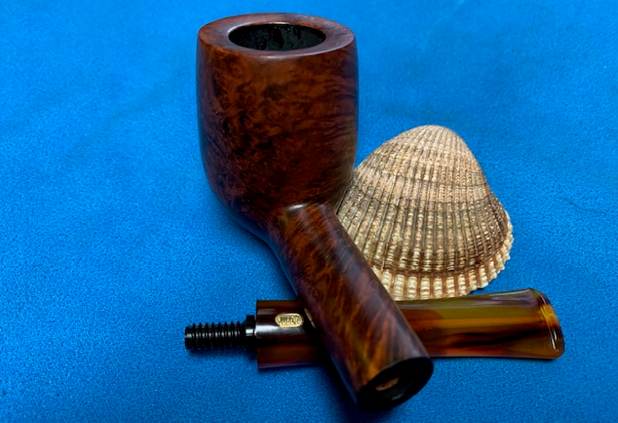
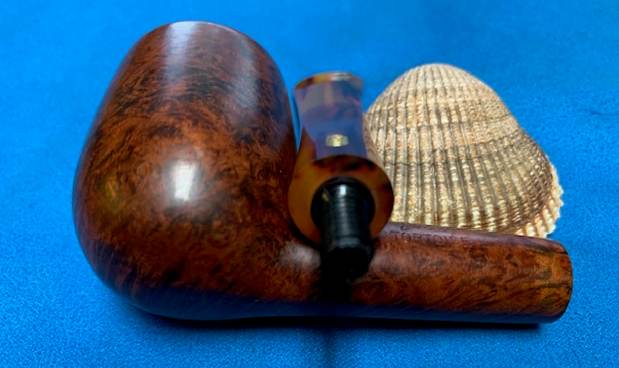
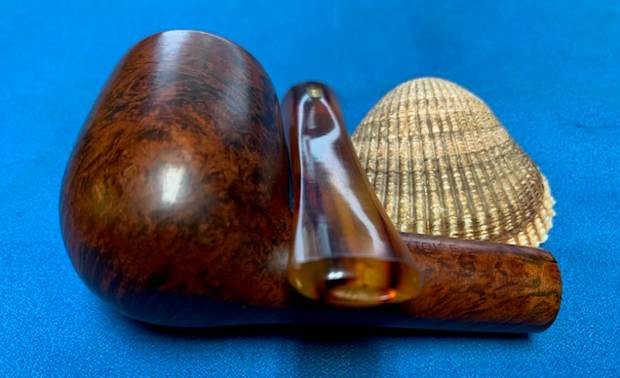
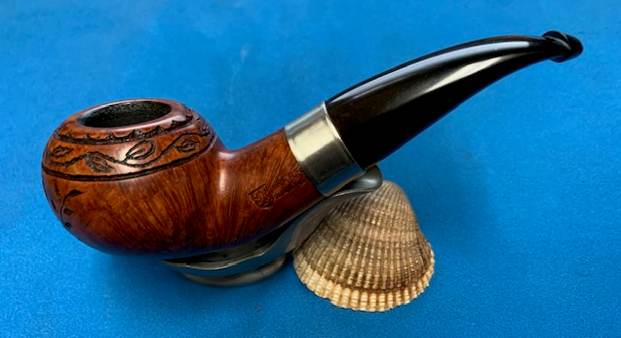
Moving another one of my own – a Natural Imported Briar Folk Art Carved Rhodesian


Blog by Steve Laug

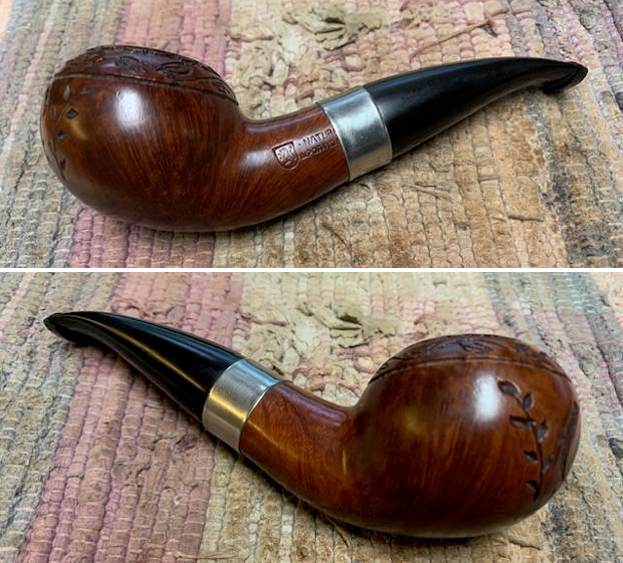
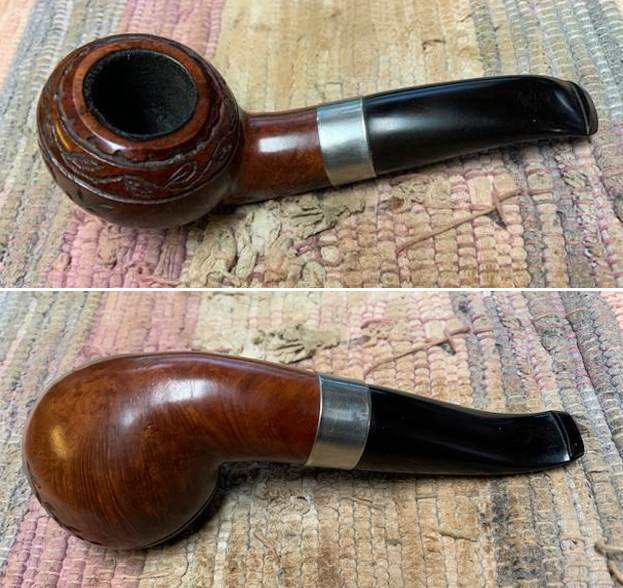
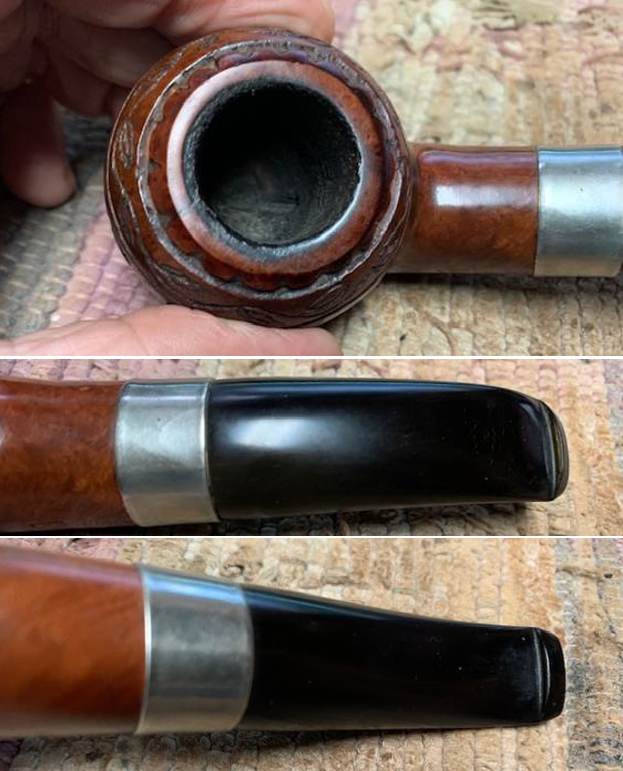
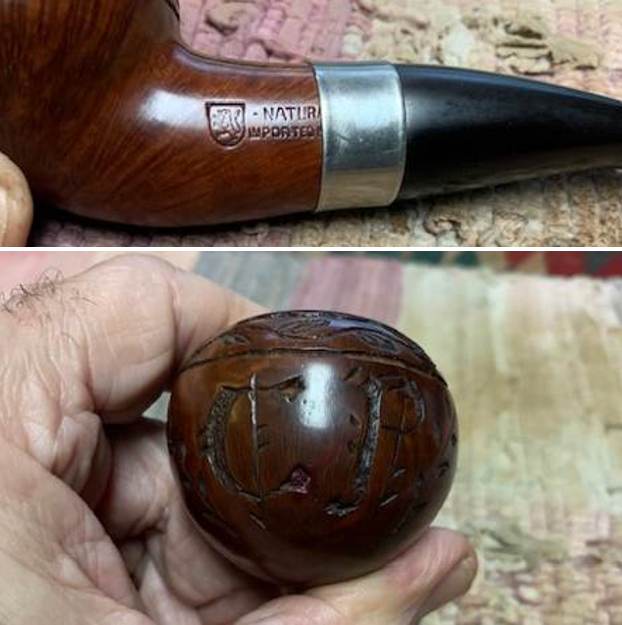
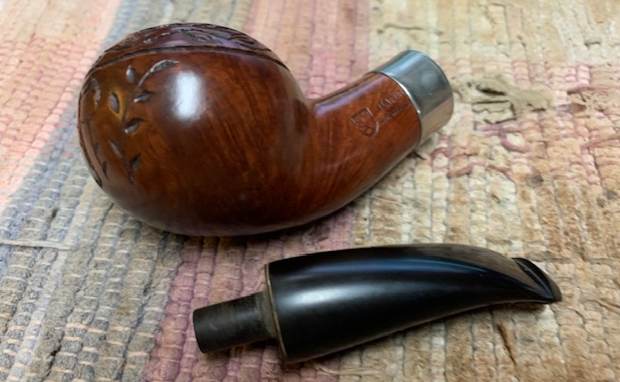
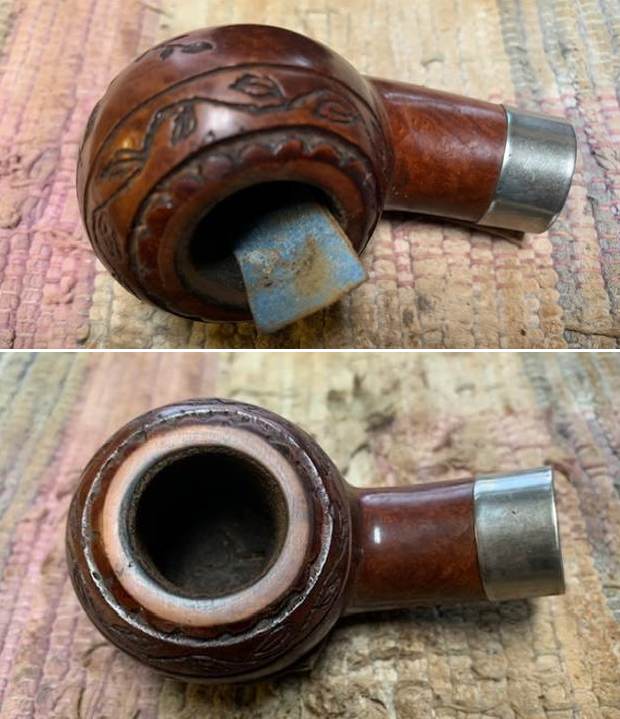
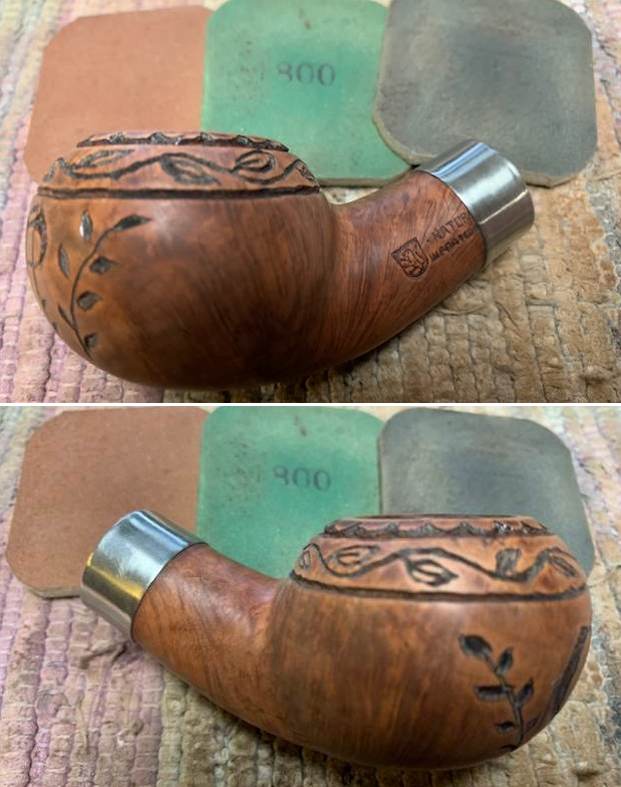
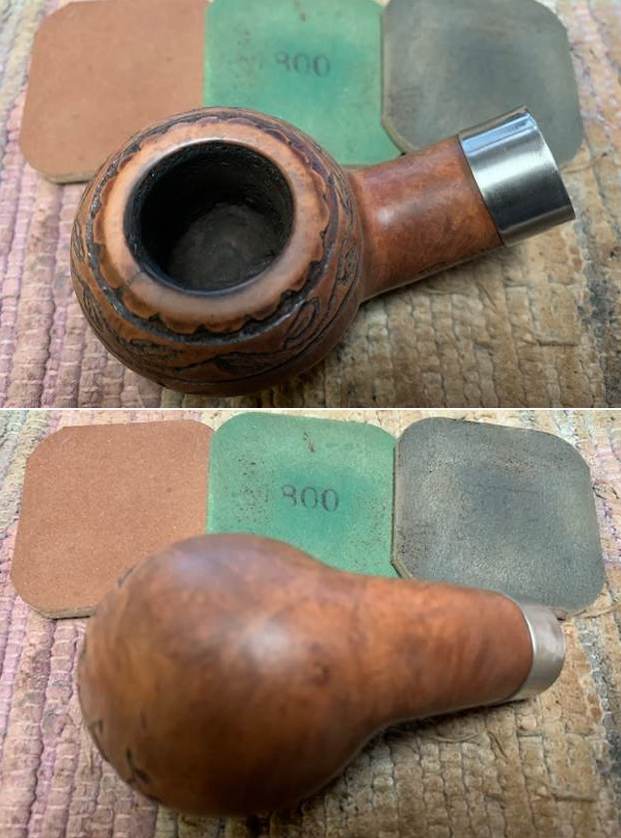
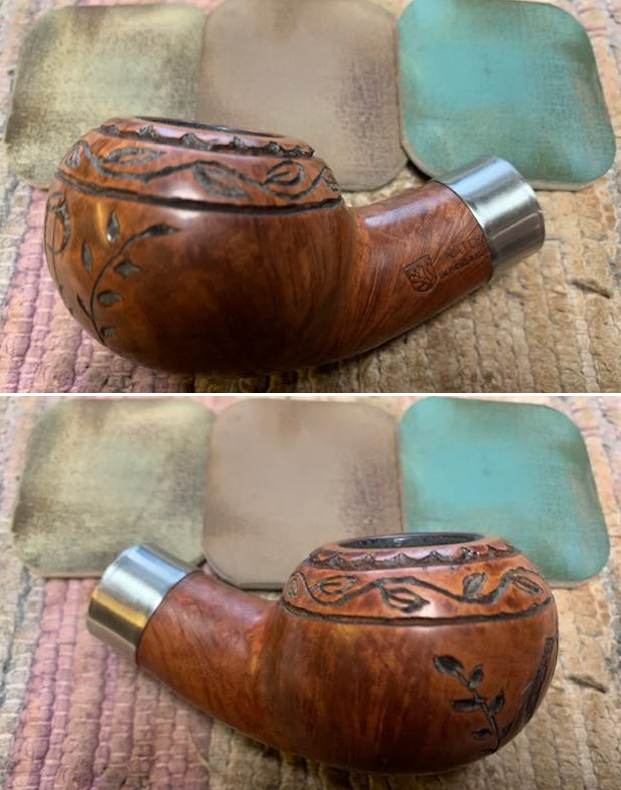
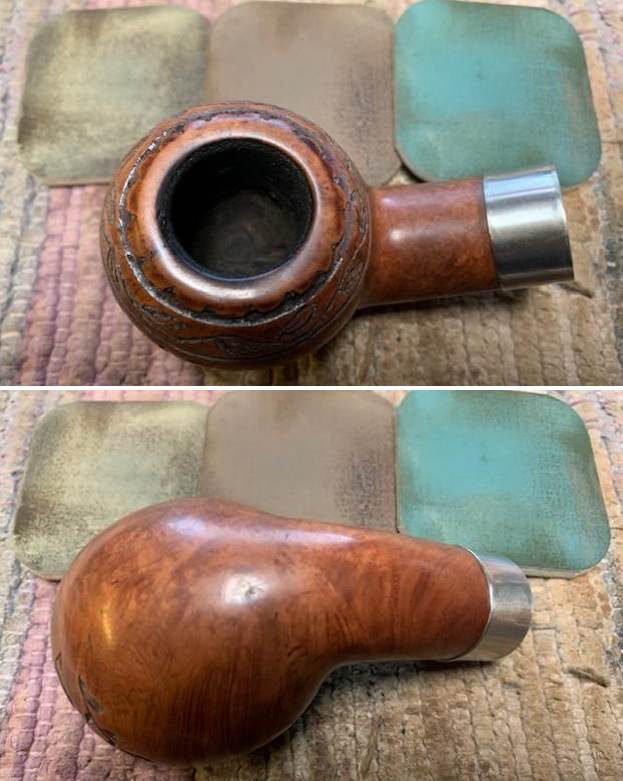
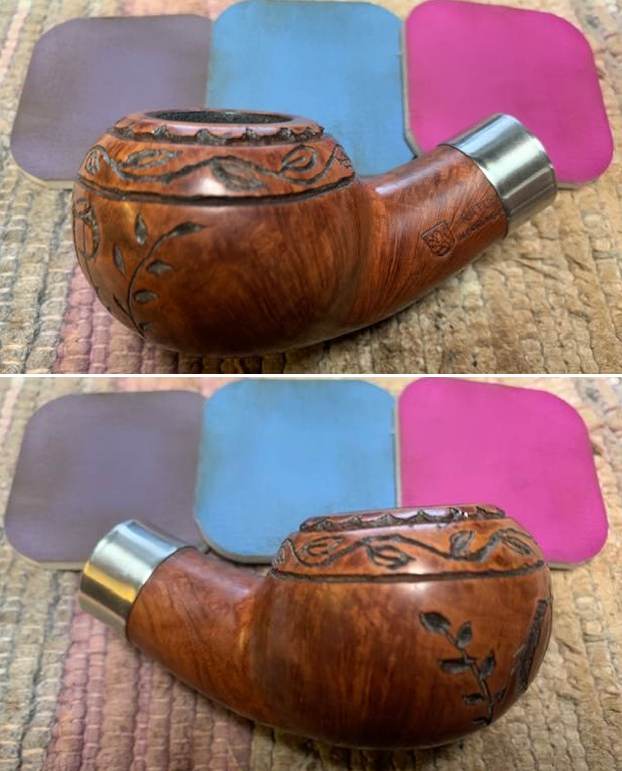
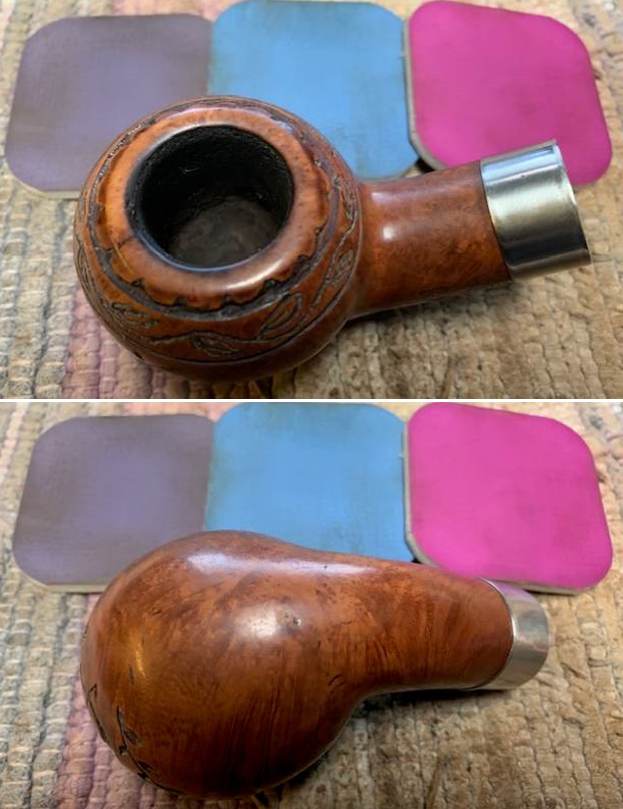
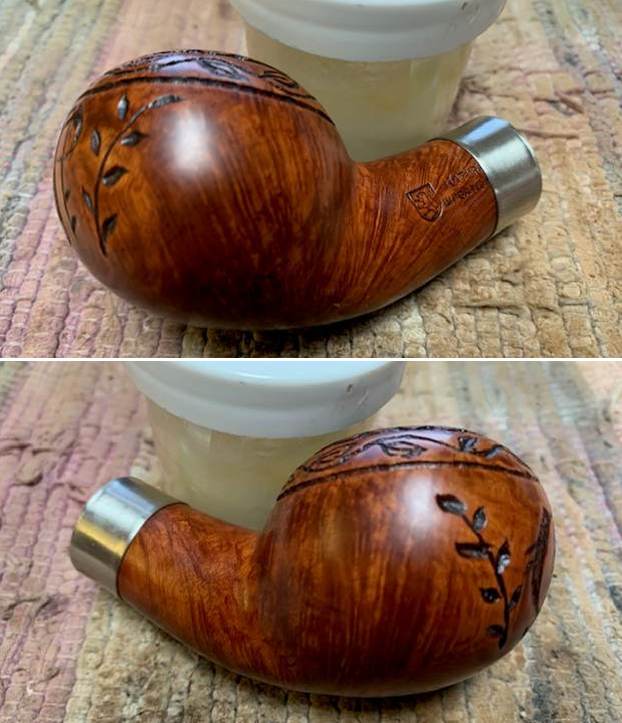
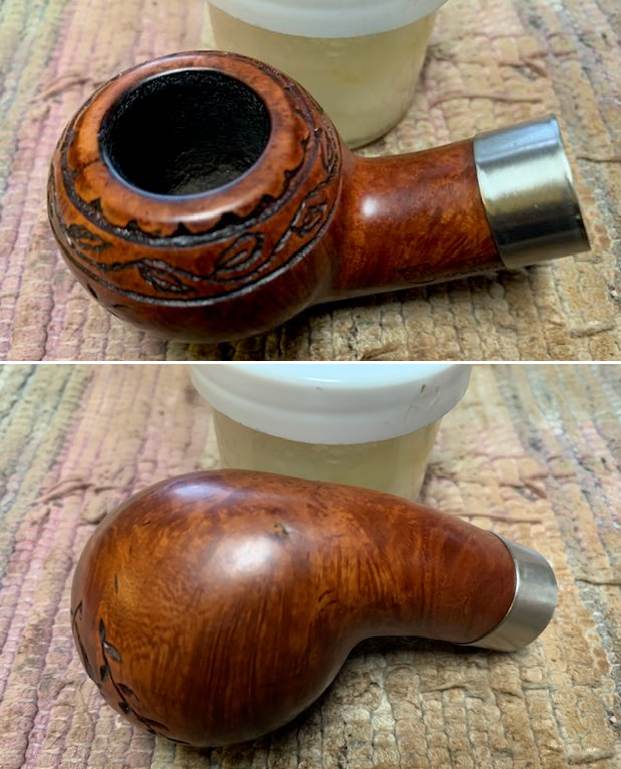
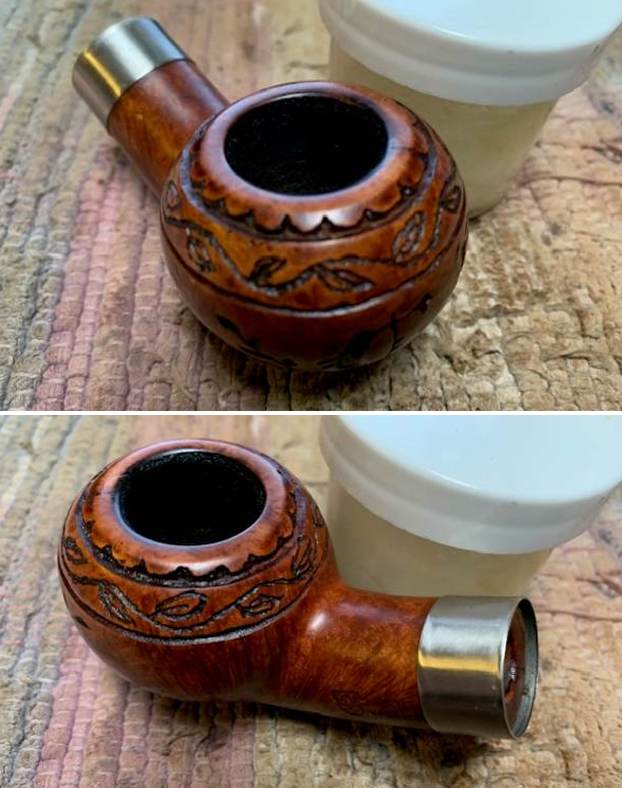
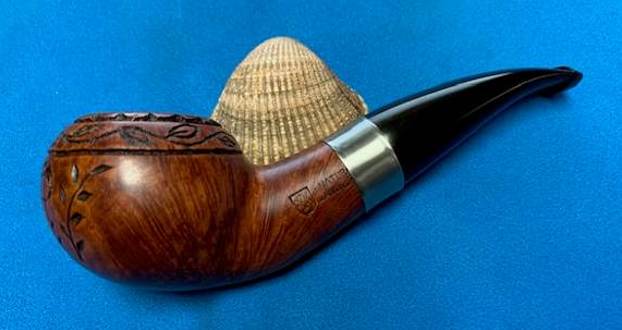
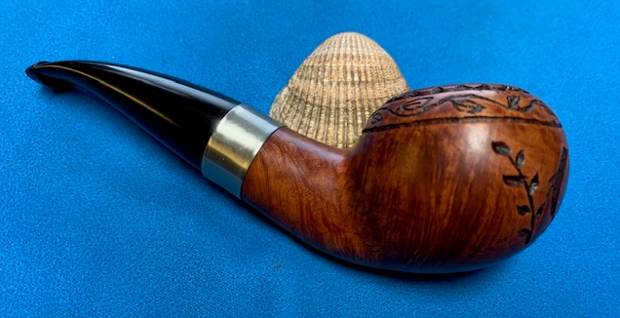
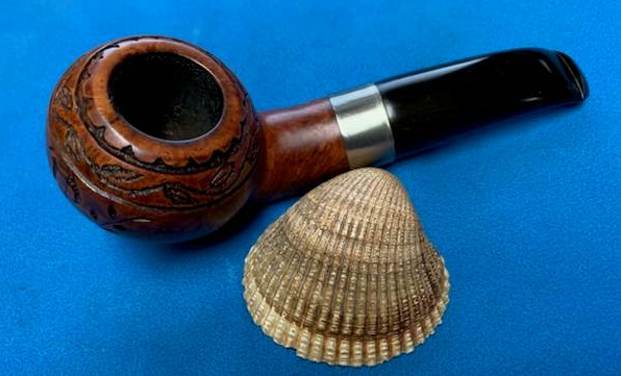
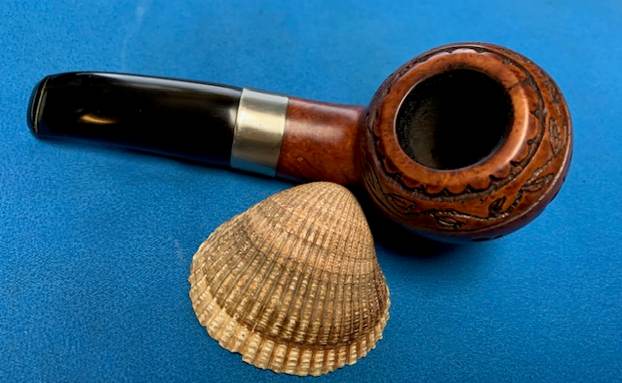
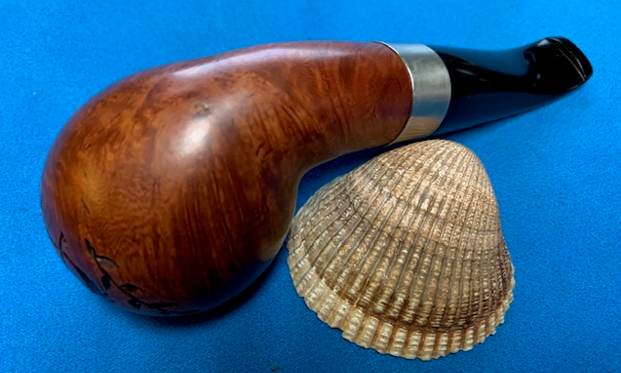
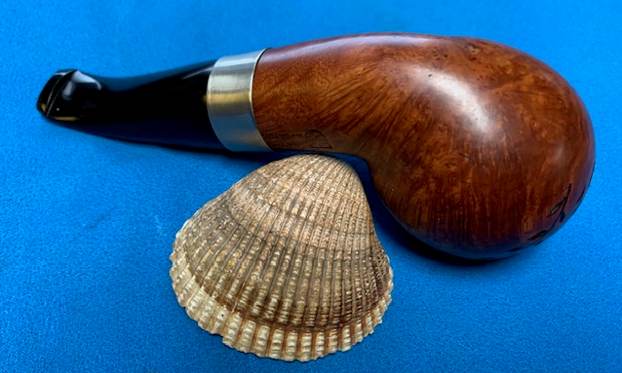
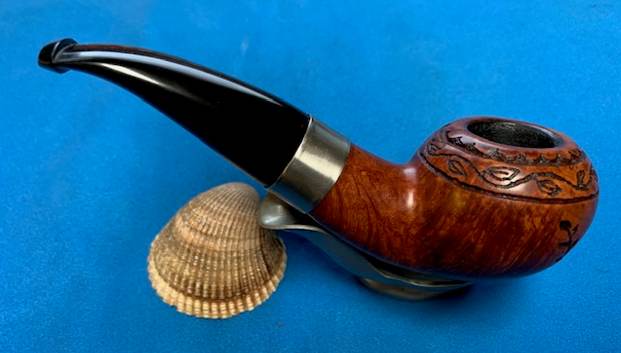
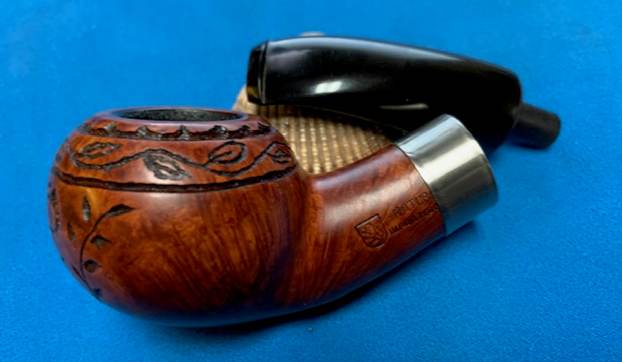
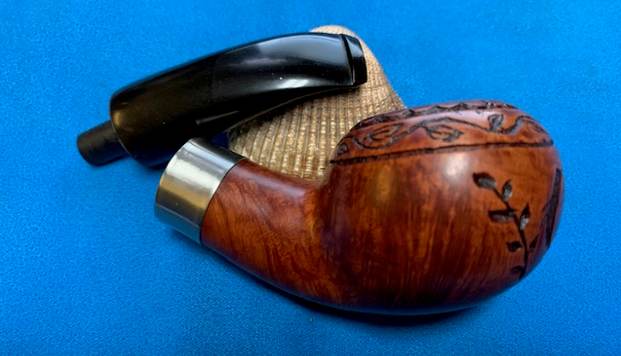
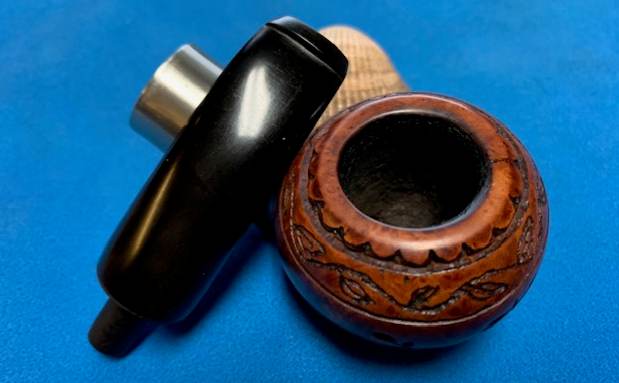
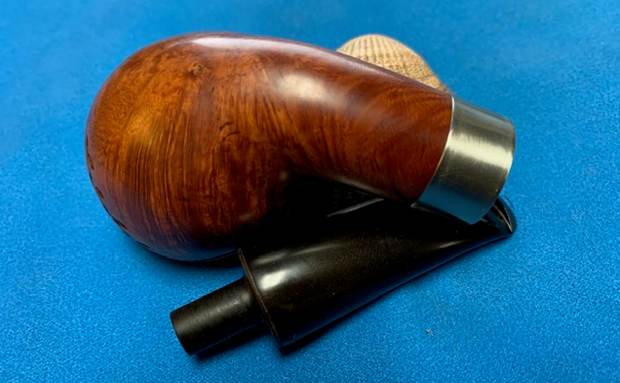
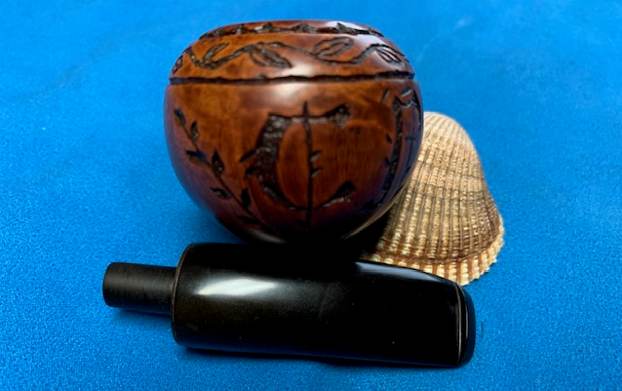
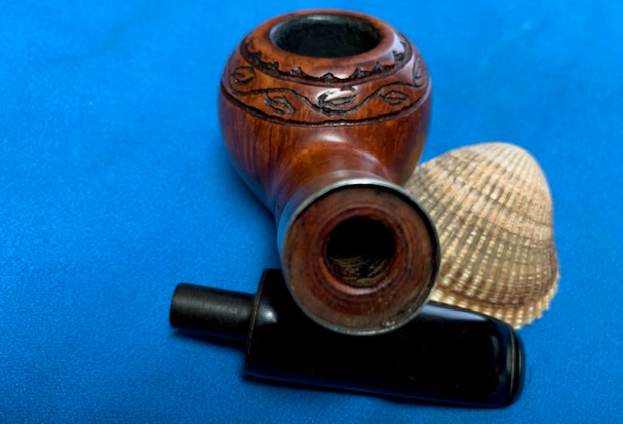
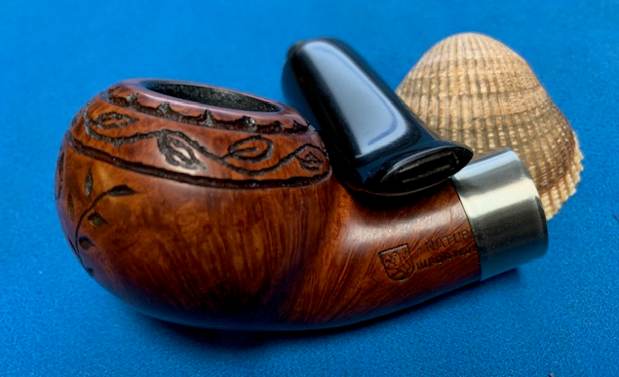
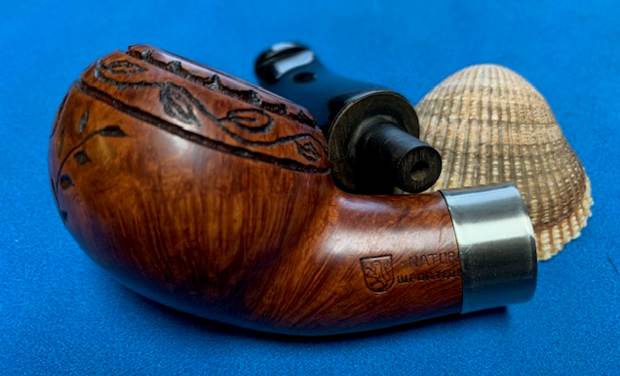
This is another pipe that I have taken out of my personal collection as I just do not use enough to warrant keeping it. This pipe was one that I purchased long ago from an Antique shop in Aldergrove, British Columbia. I still remember seeing it in the case and asking to have a look at it. It was just a bowl, a stummel as the stem was long lost. It was interesting in that it had some folk art style carving around the rim top and the front of the bowl. It has the letters CP carved on the front of the bowl intertwined with vines. There are also vines twined around the bap of the Rhodesian bowl and almost a flower petal on the top. I remember restemming it with a taper stem and possibly banding it though I am not sure of that. The band seems to be cosmetic as I cannot see any cracks from the shank end. It is a pipe I should have smoked but did not. From what I can see I actually never loaded a bowl to enjoy. It is a little bigger than what I like so it was ignored. It is time to move it on to someone who will enjoy it. The airway in the shank and the mortise are very clean. The smooth finish and rim top were in good condition. There is darkening on the inner edge of the rim that I never cleaned up. The finish was a little dull but it is a beauty. The stamping on the pipe is partially covered by the band. On the left side of the shank it has a shield with a rampant lion in it. That is followed by the stamp Natural [over] Imported Briar. On the right side there is no stamping. The finish is a medium brown and with polishing should make the grain show clearly. The finish goes well with the thick vulcanite taper stem. The stem is in excellent condition with no tooth chatter or marks on it. I took photos of the pipe before I did my clean up work on it to prepare it for you. I took a photo of the bowl and rim top to verify the description above. The rim top and edges are in okay condition. There is some burn damage and chipping on the inner edge of the bowl but otherwise it looks good. The outer edge is in good condition and the flower petal carving looks very good. I also took photos of the stem surface showing how clean it was on both sides. I took photos of the stamping on the side of the shank. It is so faint as to be almost unreadable. It has a shield with a rampant lion followed by NATURAL [over] Imported Briar. The nickel band covers part of the stamping though it is readable. The second photo shows the CP carved into the surface of the briar. I took the stem off the bowl and took a photo of the pipe to give a sense of proportion of the pipe. You can also see shape of the pipe and some interesting grain on the briar.I decided to address the darkening and nicks around the inner edge of the bowl with a folded piece of 220 grit sandpaper. I gave the rim edge a slight bevel to minimize the darkening and the damage. It looked significantly better when I finished.The shank and mortise were very clean and a quick run through with a pipe cleaner proved all that was necessary. I polished the rim top and the briar with micromesh sanding pads – dry sanding with 1500-12000 grit pads. There was a nick on the front top left side that looks like a crack but it is not. It a gouge caused by a blade. I wiped the bowl down with a damp cloth after each sanding pad to remove the dust and debris. I gave the bowl and shank a coating of Before & After Restoration Balm. I worked it into the surface of the briar with my fingertips and a horsehair shoe brush to clean, enliven and protect the briar. I let the balm sit for 15 minutes and then buffed with a cotton cloth to raise the shine. The photos show the bowl at this point in the restoration process. I set the bowl aside and turned my attention to the stem. I polished it with micromesh sanding pads – 1500-12000 grit sanding pads and water to wet sand the stem. I wiped it down after each sanding pad with Obsidian Oil on a cotton rag after each sanding pads. But I find it does two things – first it gives some protection to the stem from oxidation and second it give the sanding pads bite in the polishing process.   After finishing with the micromesh pads I rub the stem down with Before & After Fine and Extra Fine stem polish as it seems to really remove the fine scratches in the vulcanite. I rub the Fine Polish on the stem and wipe it off with a paper towel and then repeat the process with the Extra Fine polish. I finished polishing the stem with a final coat of Obsidian Oil and set the stem aside to let the oil absorb. This process gives the stem a shine and also a bit of protection.  This Natural Imported Briar Rhodesian turned out to be a great looking pipe. The natural finish on the pipe is in excellent condition and works great with the polished vulcanite taper stem. I put the stem back on the bowl and carefully buffed the pipe with Blue Diamond on the buffing wheel using a light touch on the briar. I gave the bowl and stem multiple coats of carnauba wax on the buffing wheel and followed that by buffing the entire pipe with a clean buffing pad. I hand buffed the pipe with a microfiber cloth to deepen the shine. The finished Natural Rhodesian fits nicely in the hand and feels great. Give the finished pipe a look in the photos below. The dimensions of the pipe are Length: 5 ½ inches, Height: 1 ¾ inches, Outside diameter of the bowl: 1 ¾ inches, Chamber diameter: 7/8 of an inch. The weight of the pipe is 71 grams/2.50 ounces. It is a great looking pipe that I will soon be adding it to the rebornpipes store in the American (US) Pipemakers Section. If you are interested in adding it to your collection let me know Thanks for reading this blog and my reflections on the pipe while I worked on it.

Moving another one of my own – a Kaywoodie Drinkless Canadian


Blog by Steve Laug

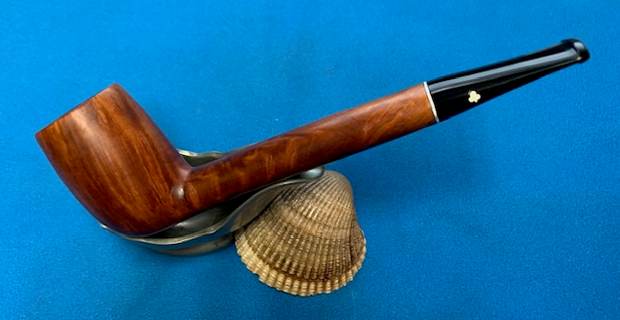
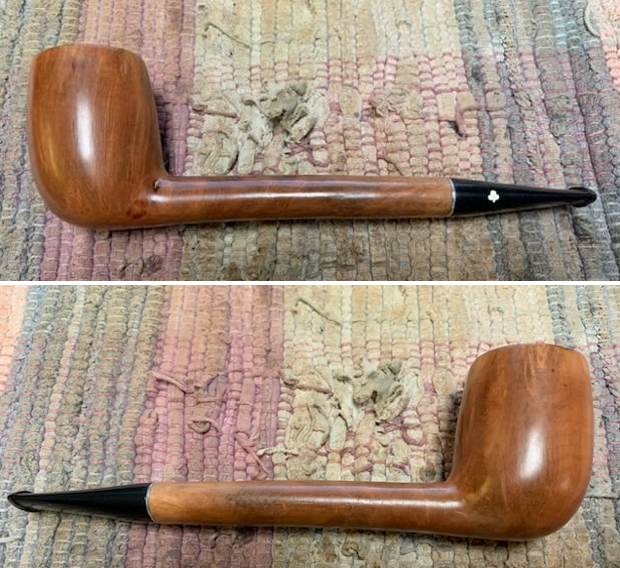
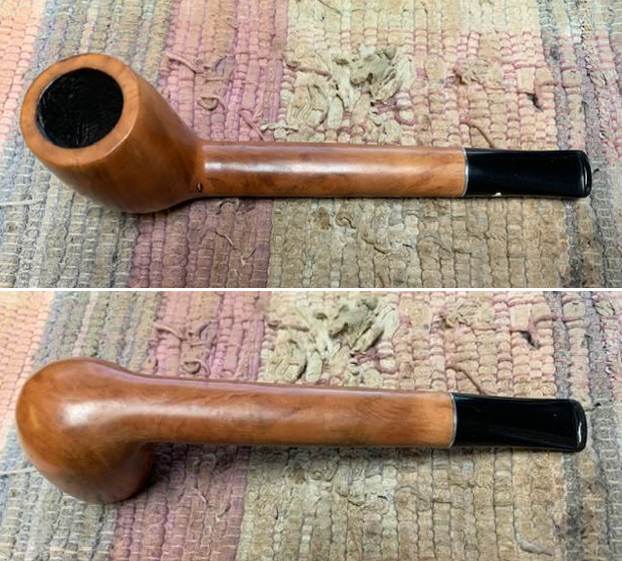
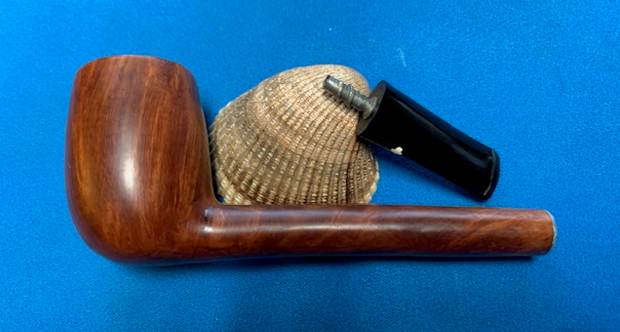
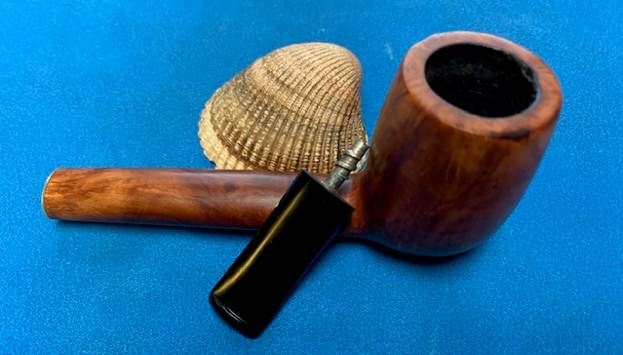
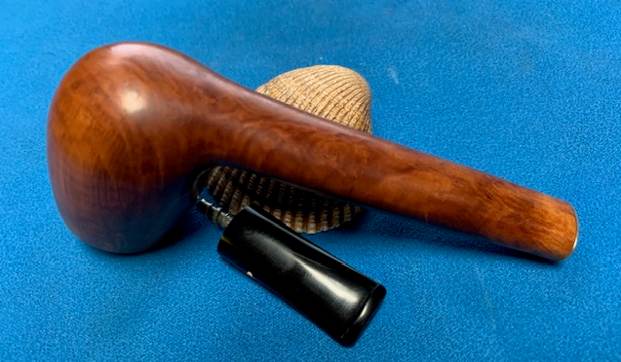
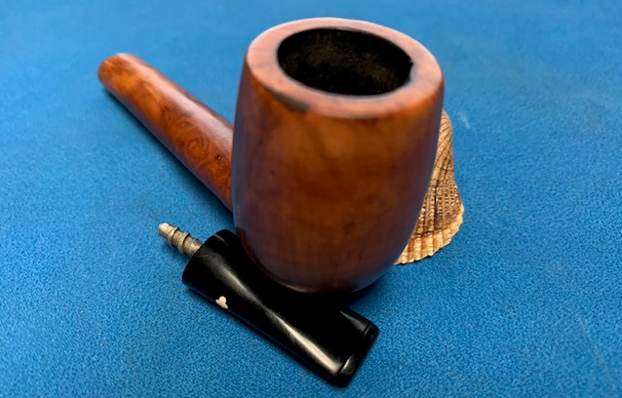
This is another pipe that I have taken out of my personal collection as I just do not use enough to warrant keeping it. This pipe was one that I kept from a group of pipes Jeff and I purchased long ago and I cannot seem to find any information on where it came from. This beautiful Canadian should have seen more use but it was not used often. If I smoked it I used it solely for Virginia tobaccos so there is no real ghost in the pipe. The airway in the shank and the mortise were quite clean. The smooth finish and rim top were in good condition. There is a small burn mark on the outer edge of the rim on the right side. It is not large but it is present. The finish was a little dull and there were a few small fills on the top and left side of the shank. The stamping on the pipe is very faint and barely readable. On the left side of the shank it is faintly stamped with the Drinkless [over] Kaywoodie. It is only visible with a lens and a bright light. On the right side shape number is not visible at all. The finish is a light brown and with polishing should make the grain show clearly. The rich finish goes well with the oval vulcanite taper stem. The stem is in excellent condition with no tooth chatter or marks on it. I took photos of the pipe before I did my clean up work on it to prepare it for you. I took a photo of the bowl and rim top to verify the description above. The rim top and edges are in great condition with a slight burn mark on the outer edge of the rim on the right side (top of the photo below). I also took photos of the stem surface showing how clean it was on both sides. I took photos of the stamping on the sides of the shank. It is so faint as to be almost unreadable. It appears to read Drinkless [over] Kaywoodie. I took the stem off the bowl and took a photo of the pipe to give a sense of proportion of the pipe. You can also see shape of the pipe and some interesting grain on the briar. The Kaywoodie Patented Drinkless stinger/tenon has been clipped off somewhere along its journey. Now it was time to work on the pipe. The shank and mortise were very clean and a quick run through with a pipe cleaner proved all that was necessary. I polished the rim top and the briar with micromesh sanding pads – dry sanding with 1500-12000 grit pads. I wiped the bowl down with a damp cloth after each sanding pad to remove the dust and debris. I gave the bowl and shank a coating of Before & After Restoration Balm. I worked it into the surface of the briar with my fingertips and a horsehair shoe brush to clean, enliven and protect the briar. I let the balm sit for 15 minutes and then buffed with a cotton cloth to raise the shine. The photos show the bowl at this point in the restoration process. I set the bowl aside and turned my attention to the stem. I polished it with micromesh sanding pads – 1500-12000 grit sanding pads and water to wet sand the stem. I wiped it down after each sanding pad with Obsidian Oil on a cotton rag after each sanding pads. But I find it does two things – first it gives some protection to the stem from oxidation and second it give the sanding pads bite in the polishing process. After finishing with the micromesh pads I rub the stem down with Before & After Fine and Extra Fine stem polish as it seems to really remove the fine scratches in the vulcanite. I rub the Fine Polish on the stem and wipe it off with a paper towel and then repeat the process with the Extra Fine polish. I finished polishing the stem with a final coat of Obsidian Oil and set the stem aside to let the oil absorb. This process gives the stem a shine and also a bit of protection.  This Kaywoodie Drinkless Canadian turned out to be a great looking pipe. The natural finish on the pipe is in excellent condition and works great with the polished vulcanite taper stem. I put the stem back on the bowl and carefully buffed the pipe with Blue Diamond on the buffing wheel using a light touch on the briar. I gave the bowl and stem multiple coats of carnauba wax on the buffing wheel and followed that by buffing the entire pipe with a clean buffing pad. I hand buffed the pipe with a microfiber cloth to deepen the shine. The finished Kaywoodie Canadian fits nicely in the hand and feels great. Give the finished pipe a look in the photos below. The dimensions of the pipe are Length: 6 inches, Height: 1 ¾ inches, Outside diameter of the bowl: 1 1/8 inches, Chamber diameter: ¾ of an inch. The weight of the pipe is 36 grams/1.27 ounces. It is a great looking pipe that I will soon be adding it to the rebornpipes store in the American (US) Pipemakers Section. If you are interested in adding it to your collection let me know Thanks for reading this blog and my reflections on the pipe while I worked on it.