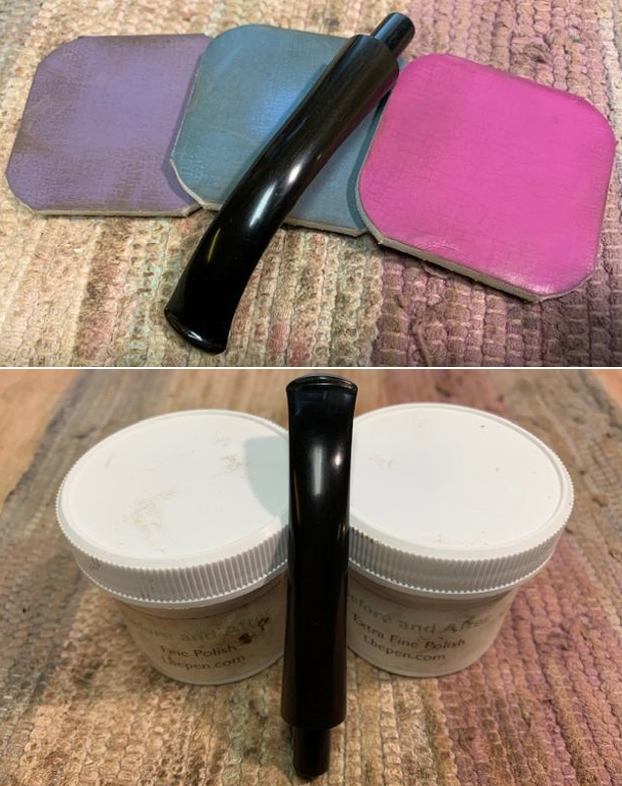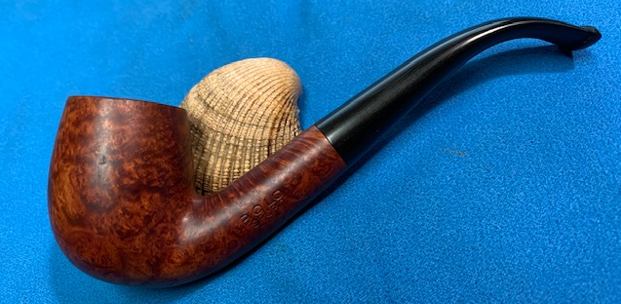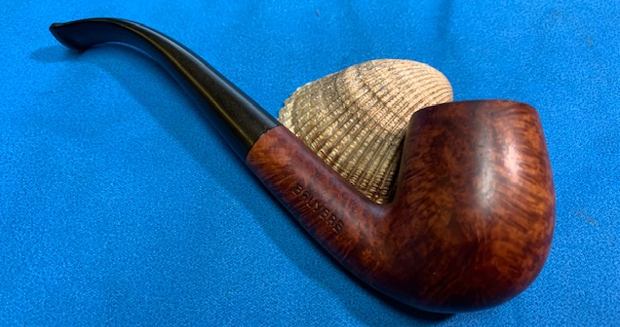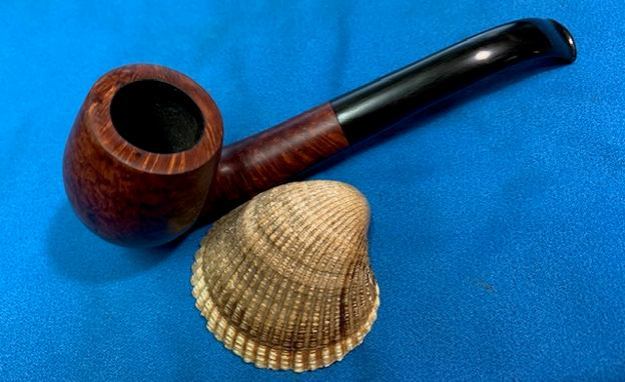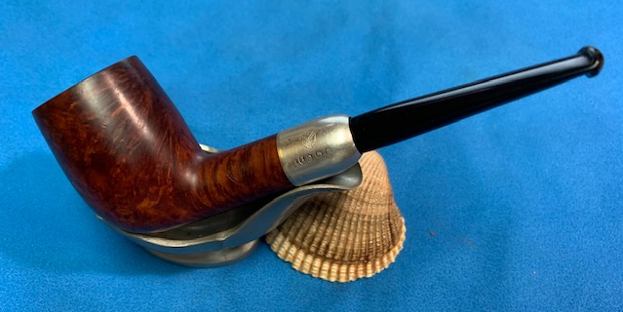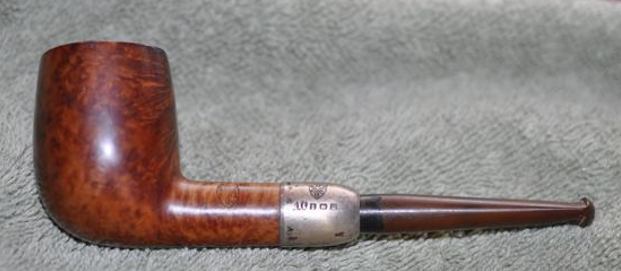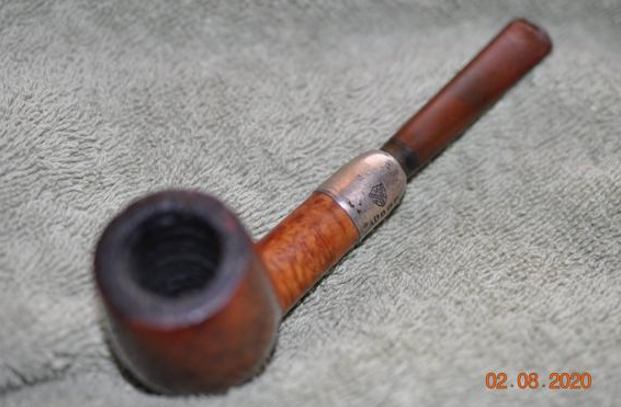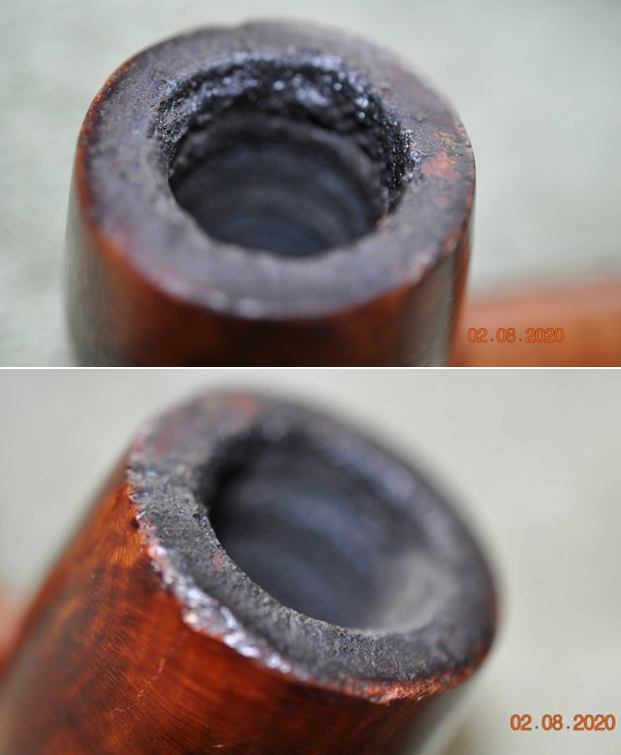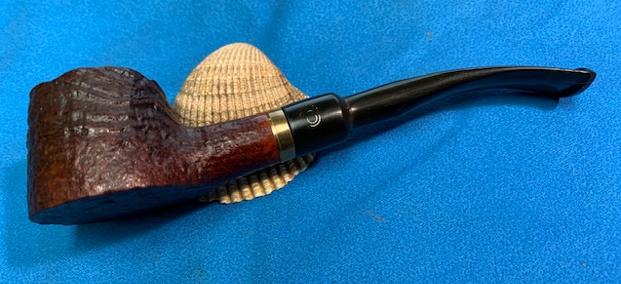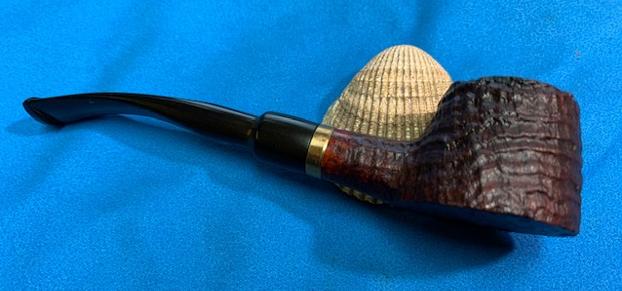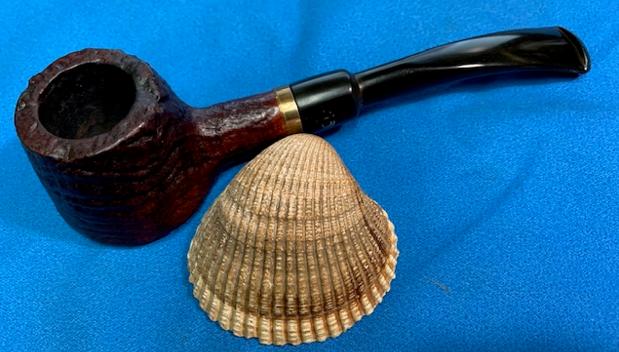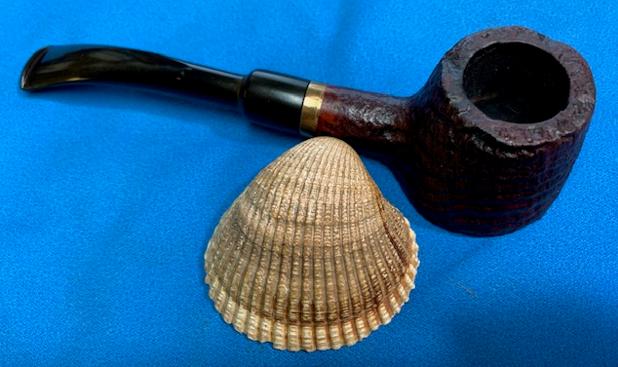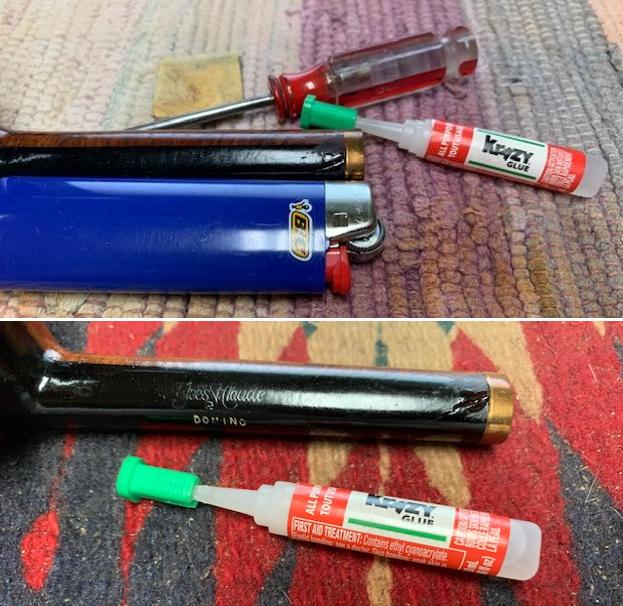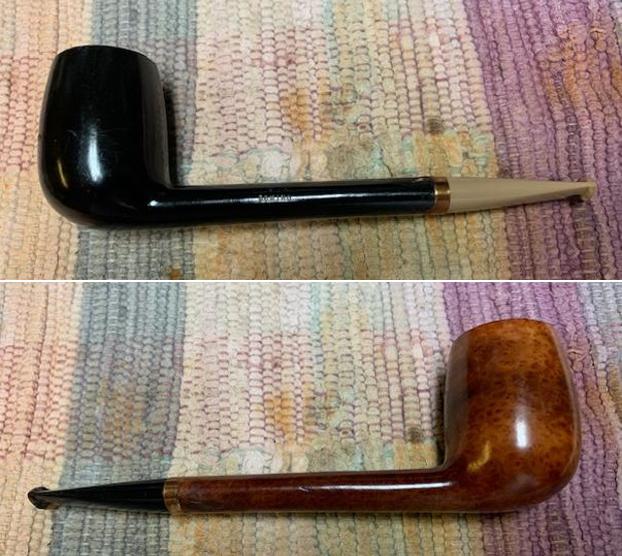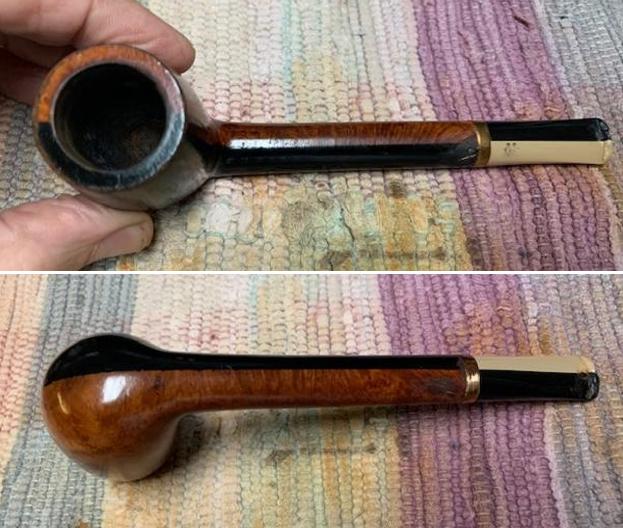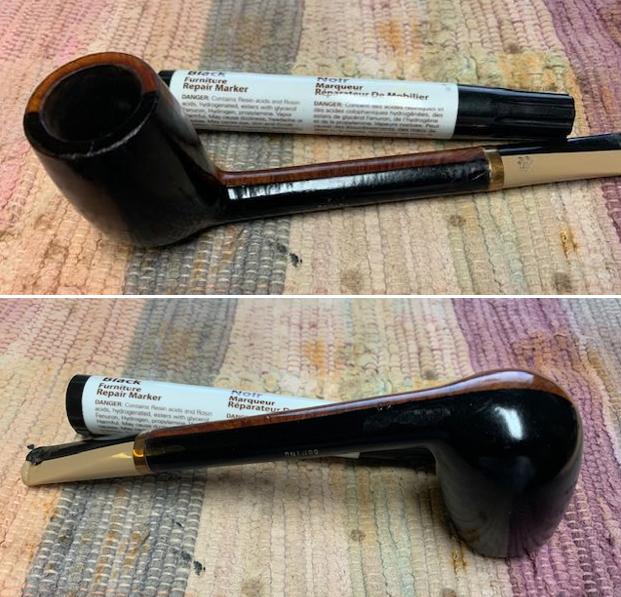
Tag Archives: Stem repairs

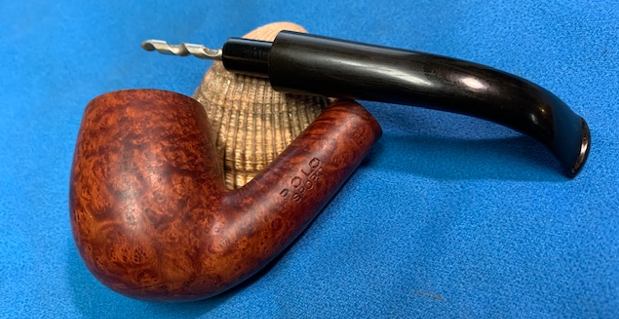
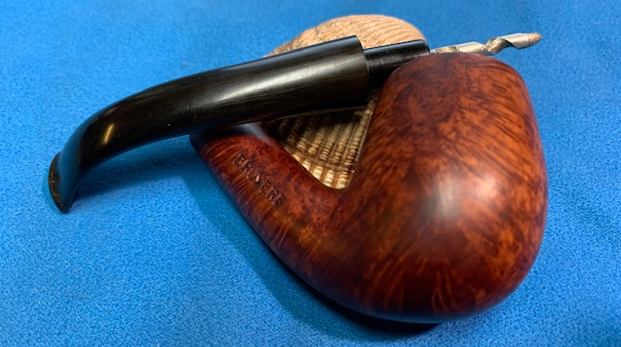
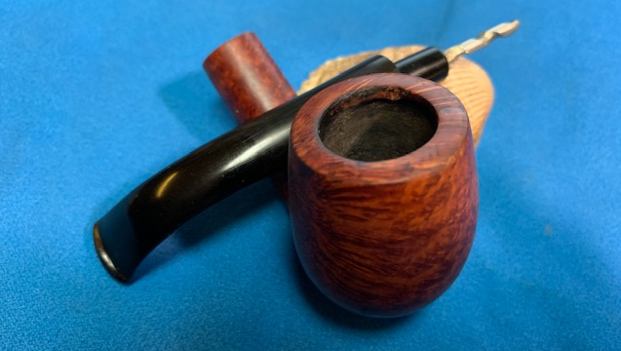
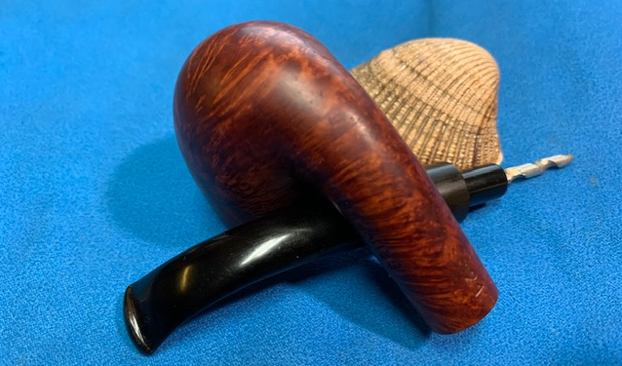
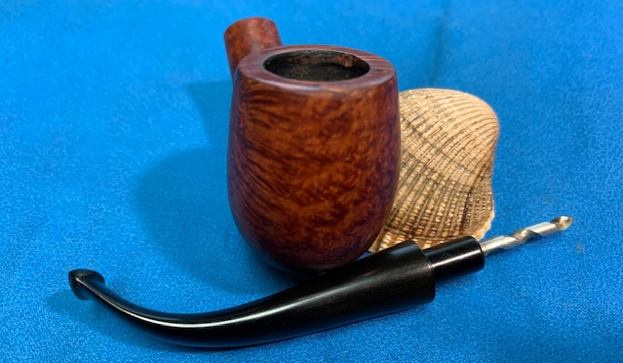
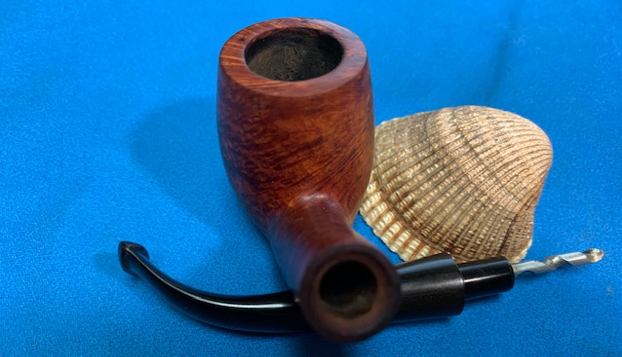
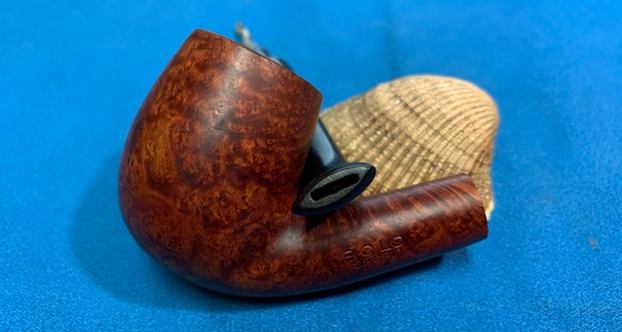
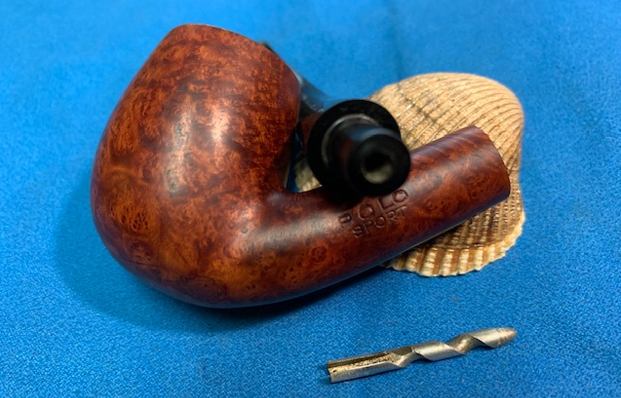
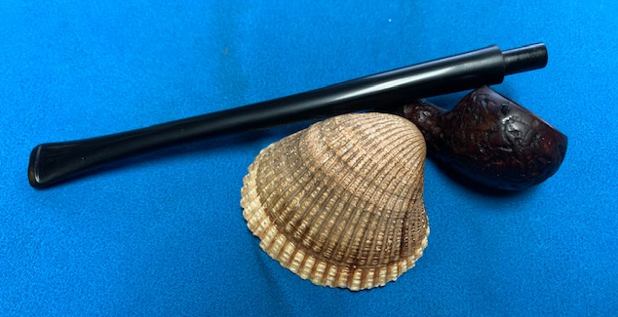
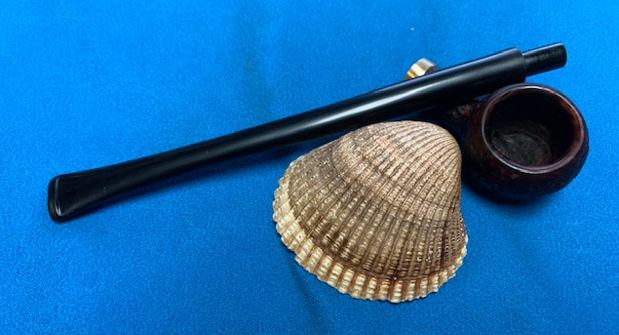
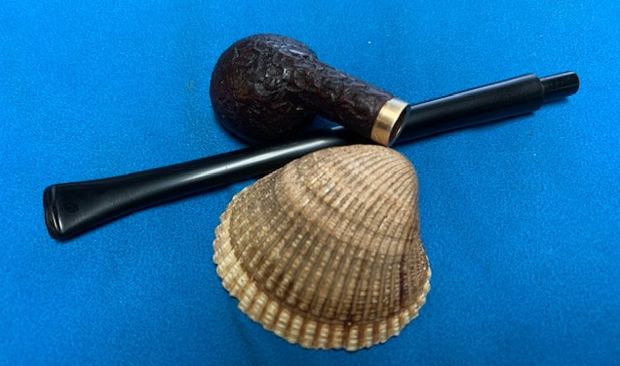
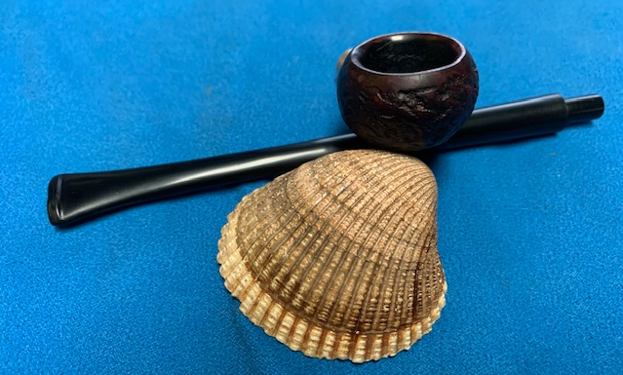
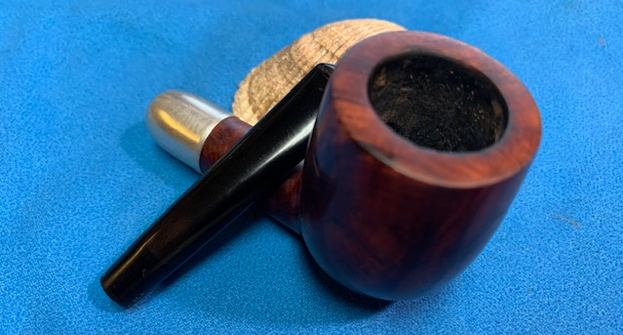
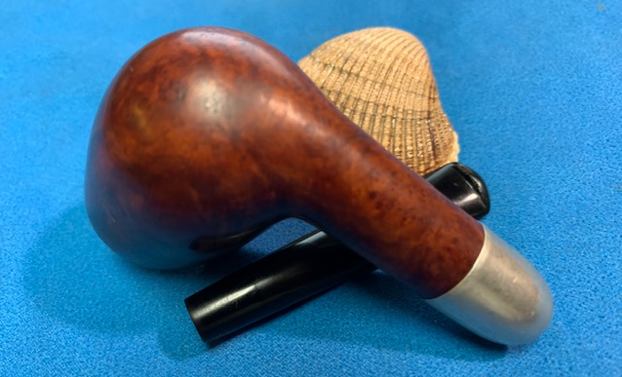
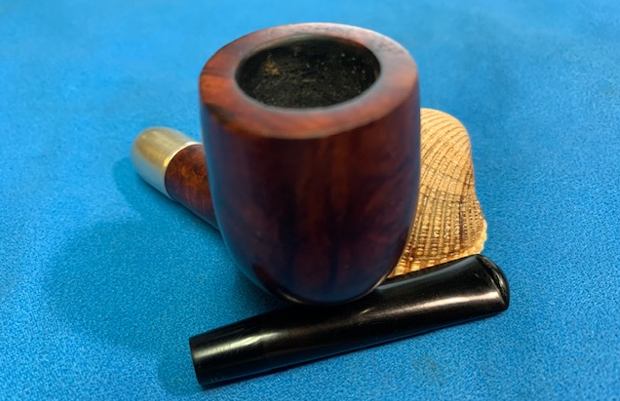
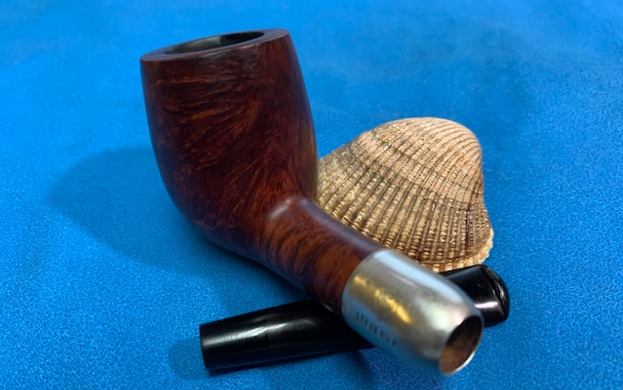
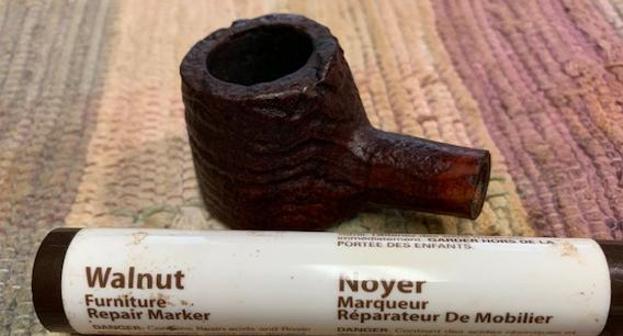
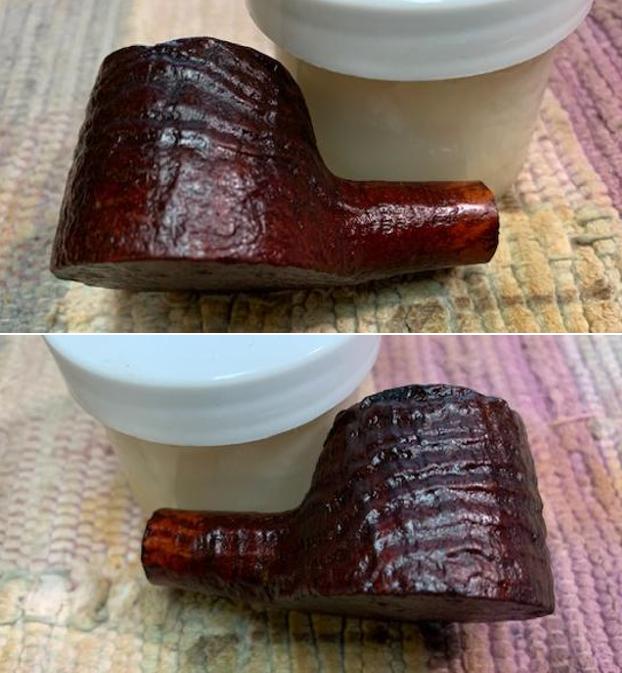
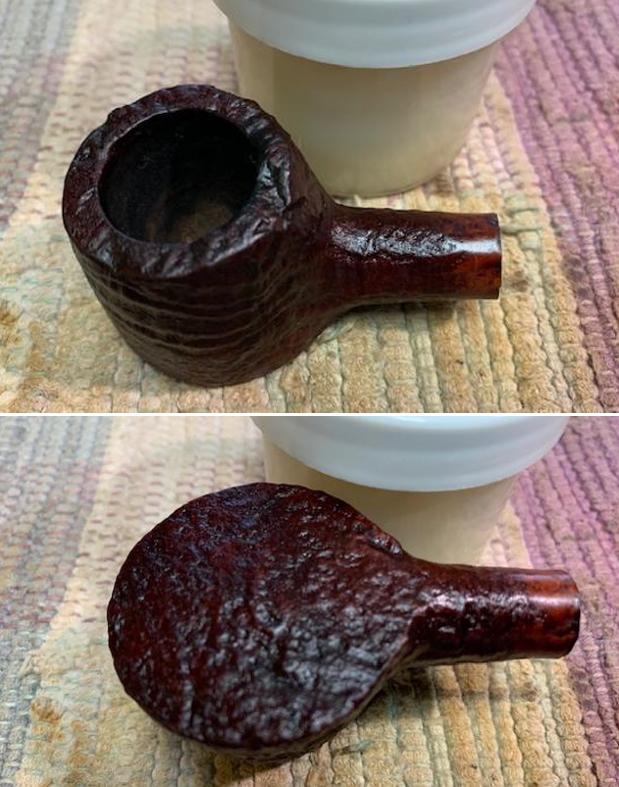
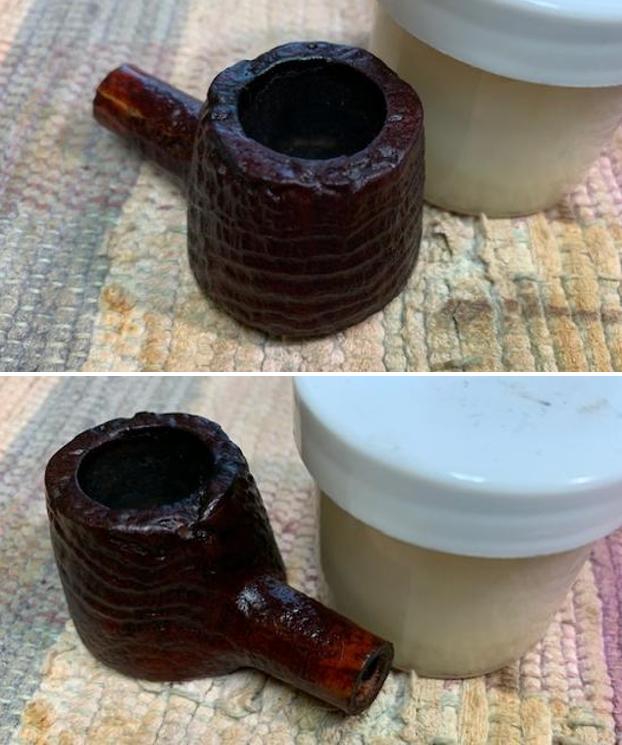
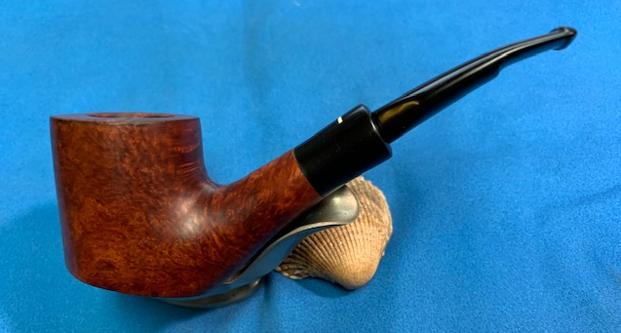
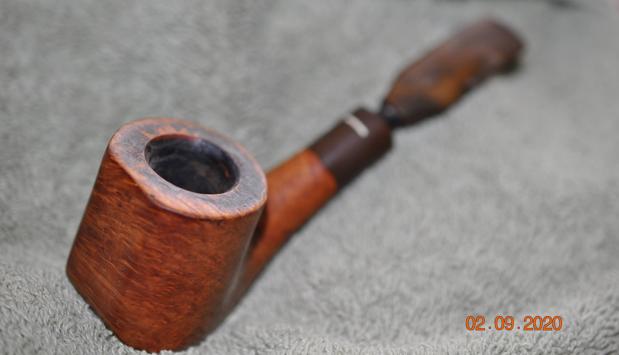
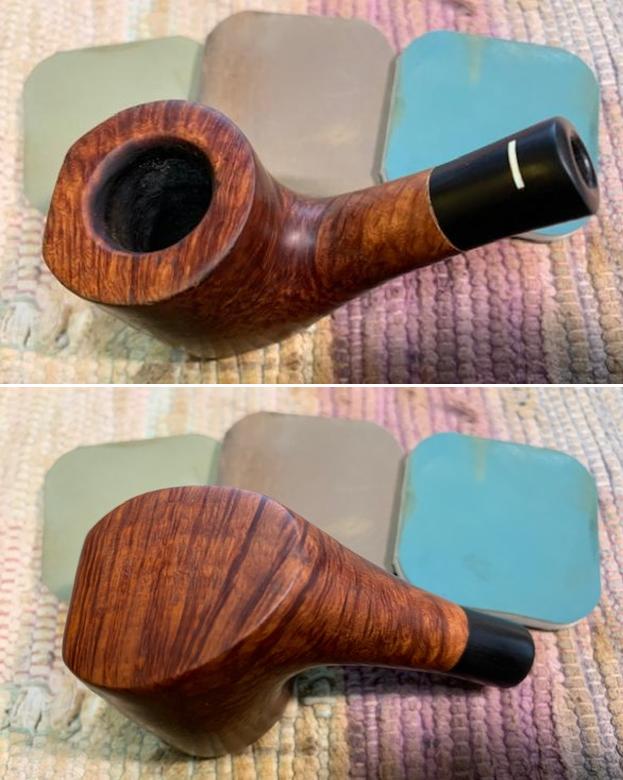
Restemming a Stanwell Design Choice 892 Ukelele with a proper stem


Blog by Steve Laug

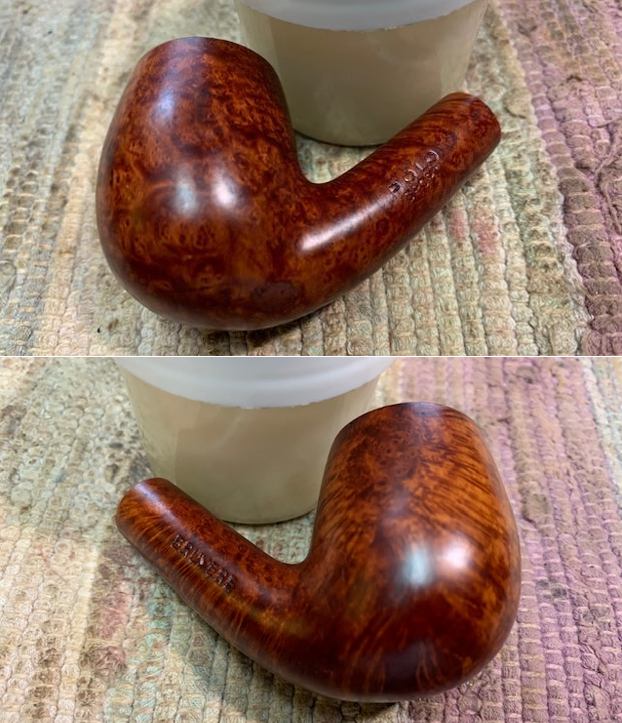
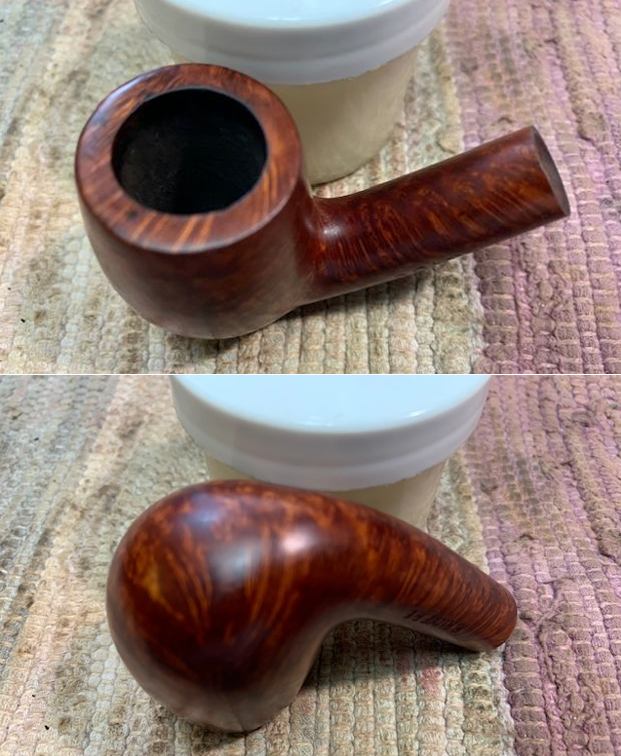
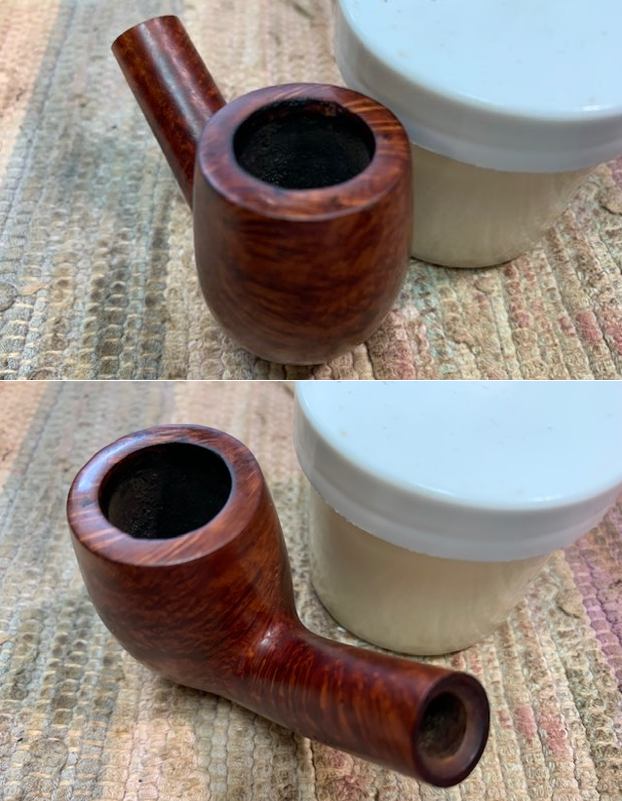
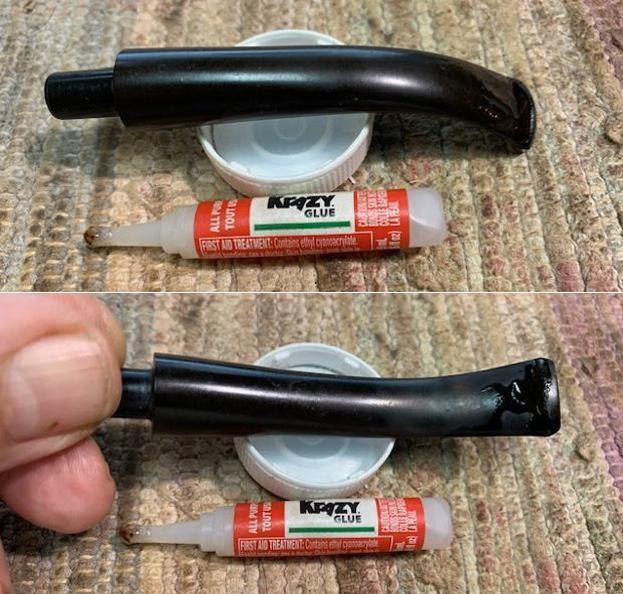
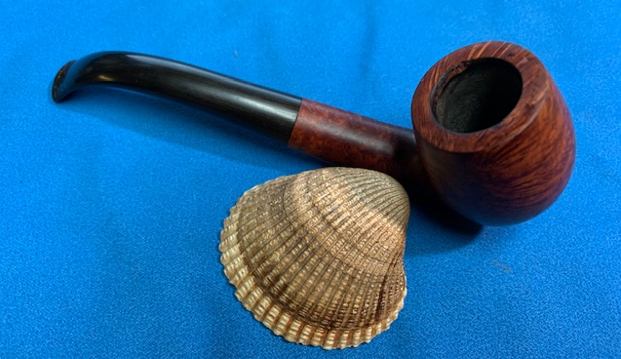
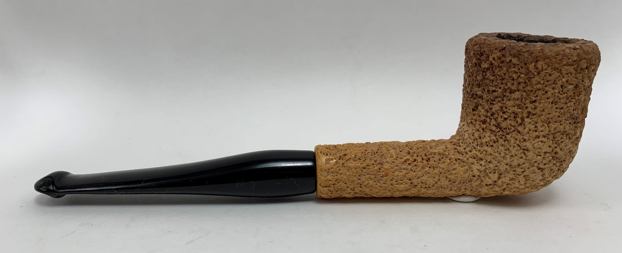
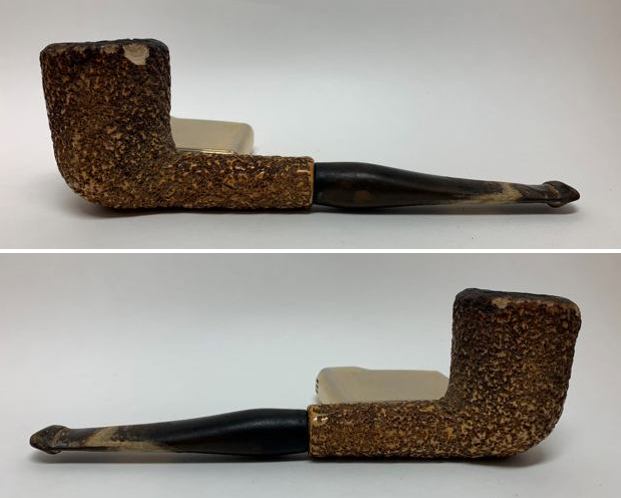
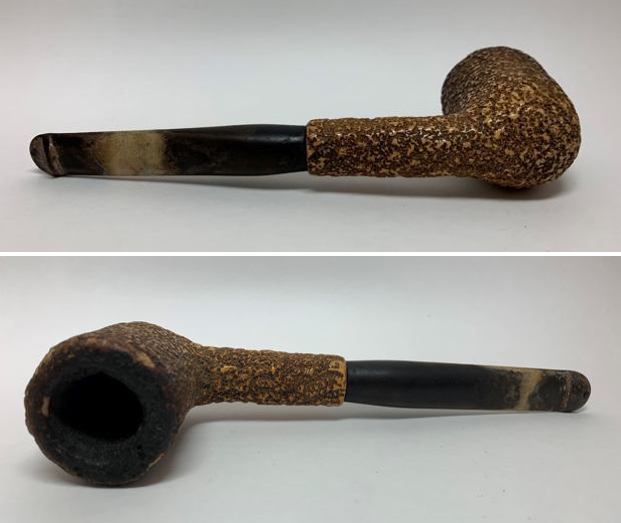
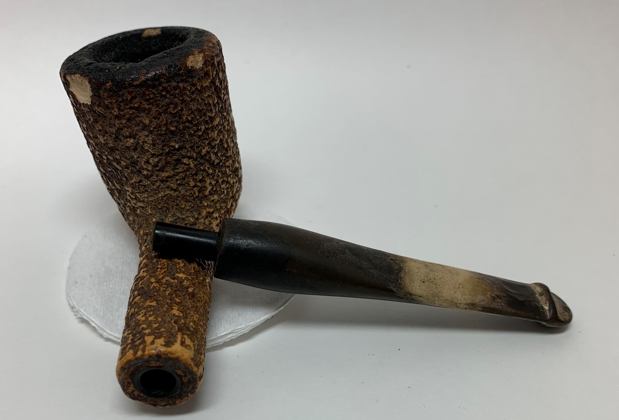
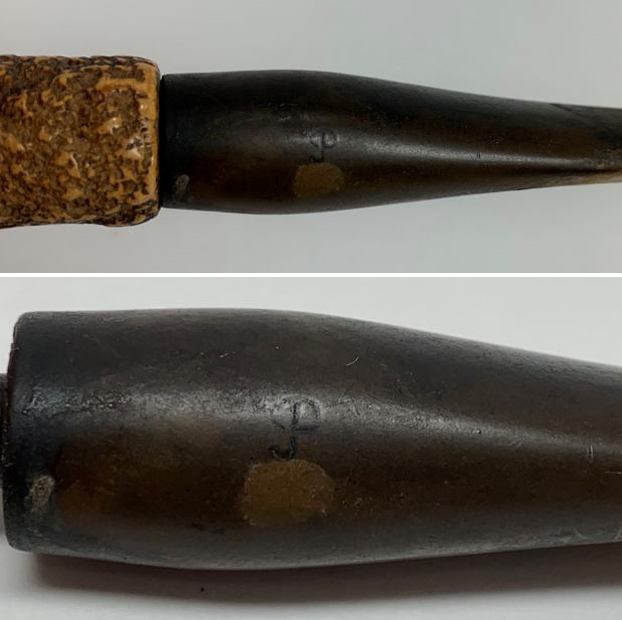
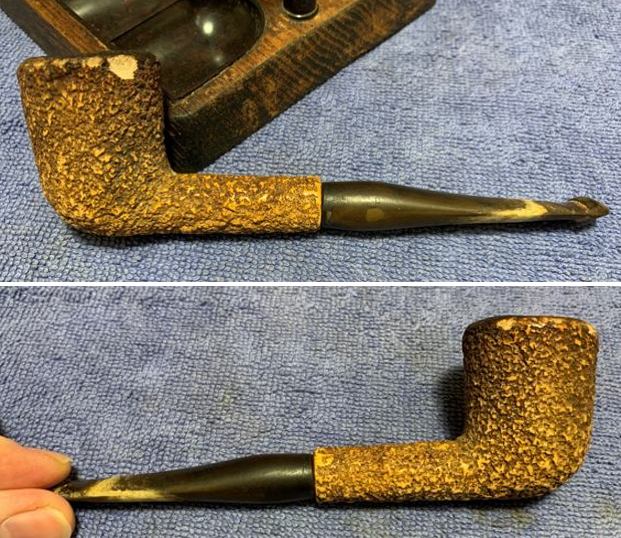
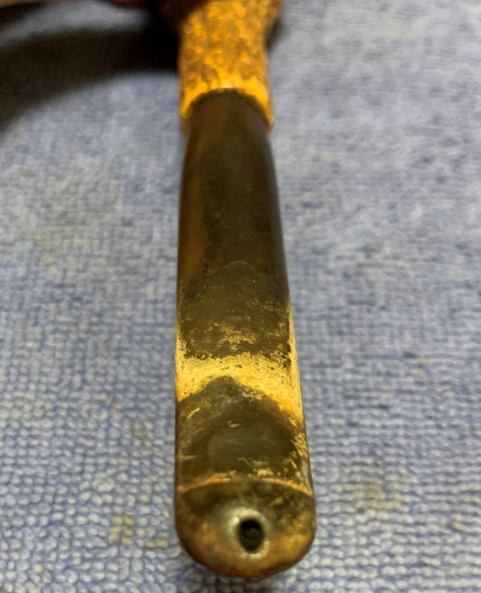
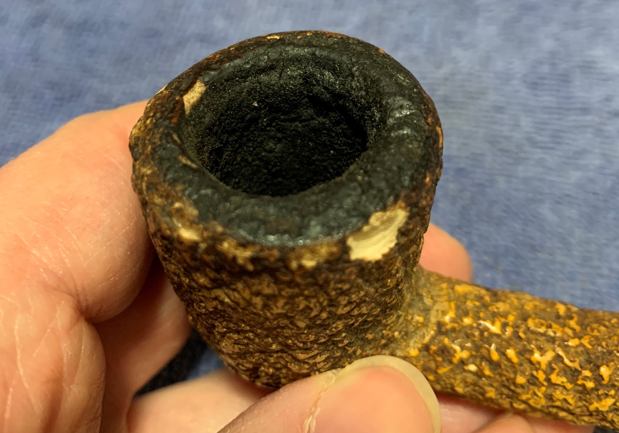
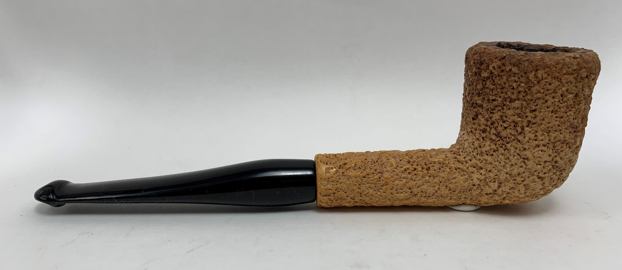
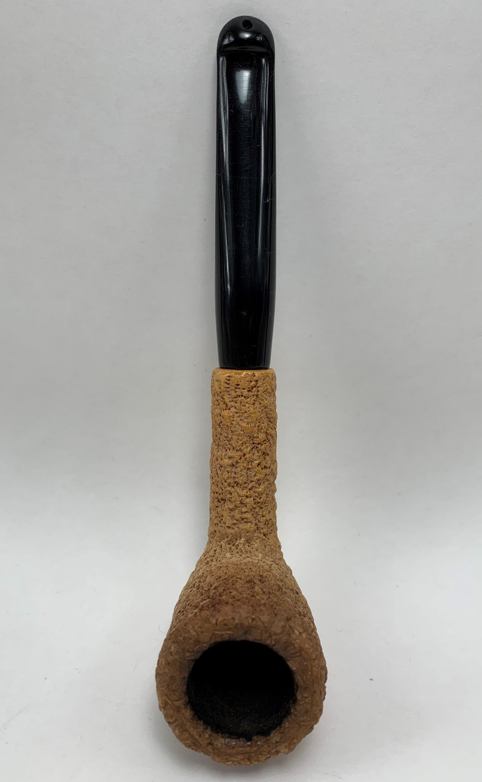
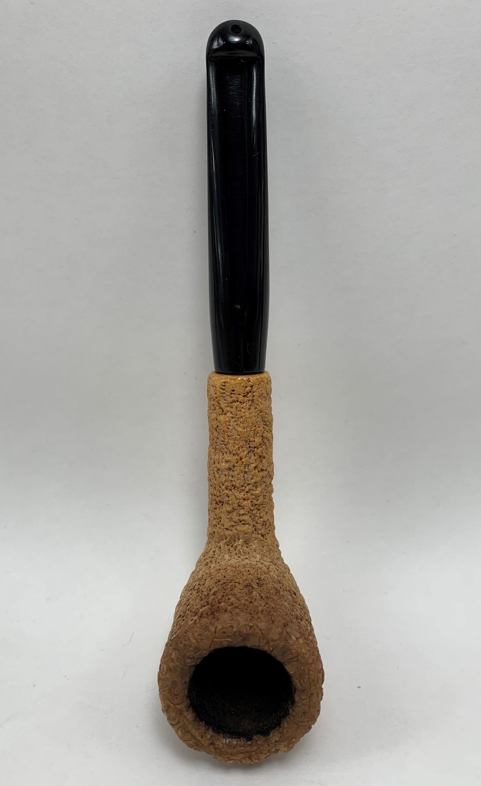
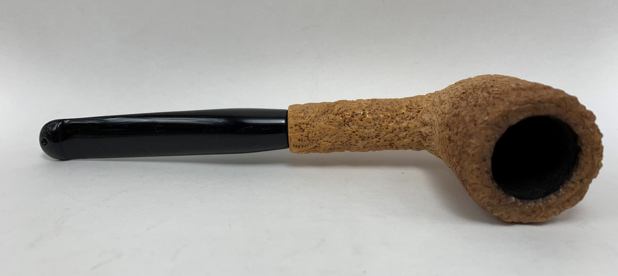
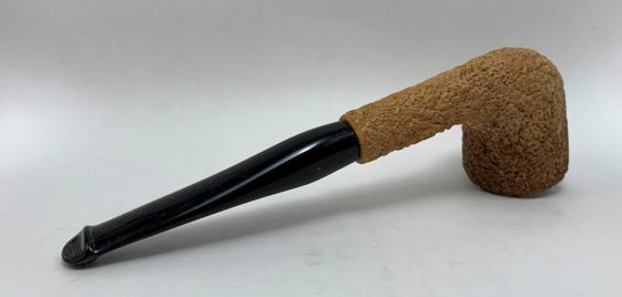
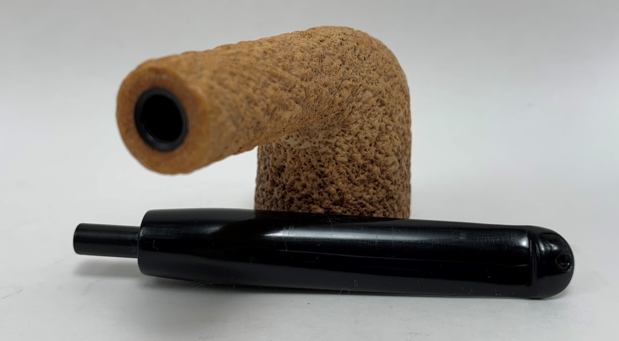
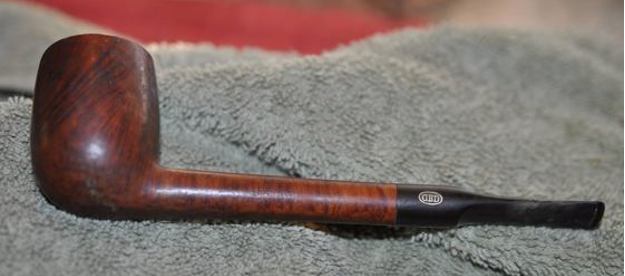
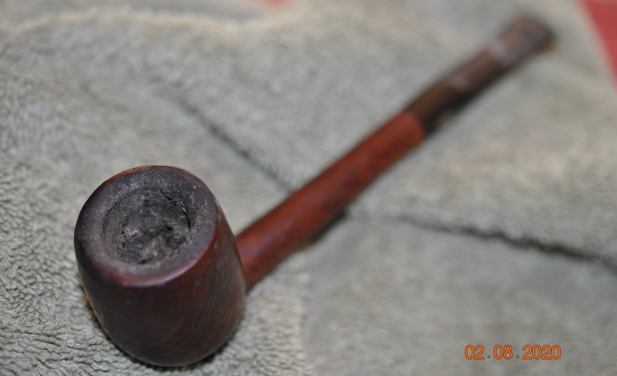
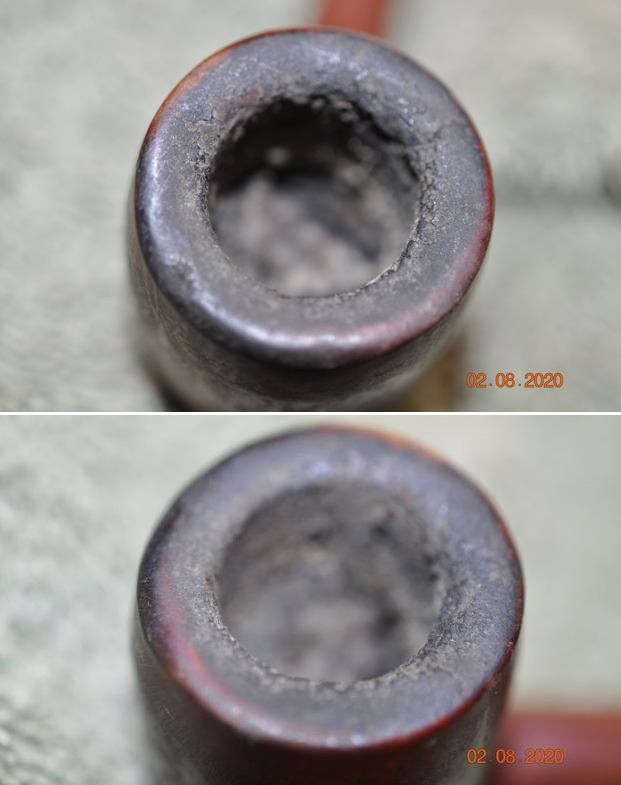
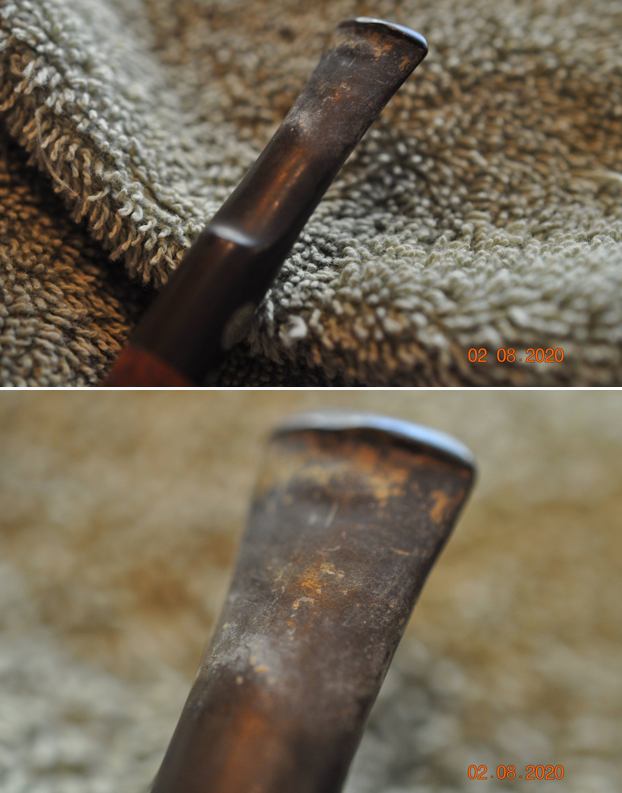
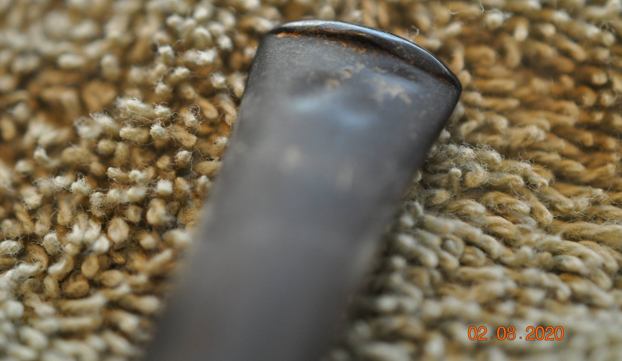
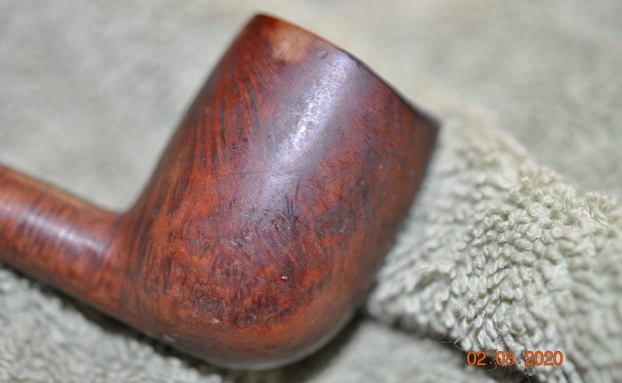
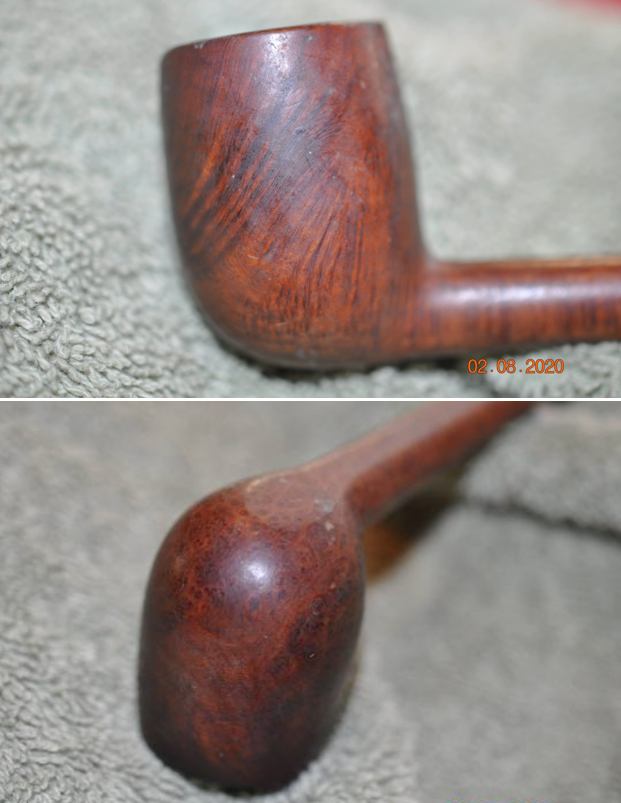
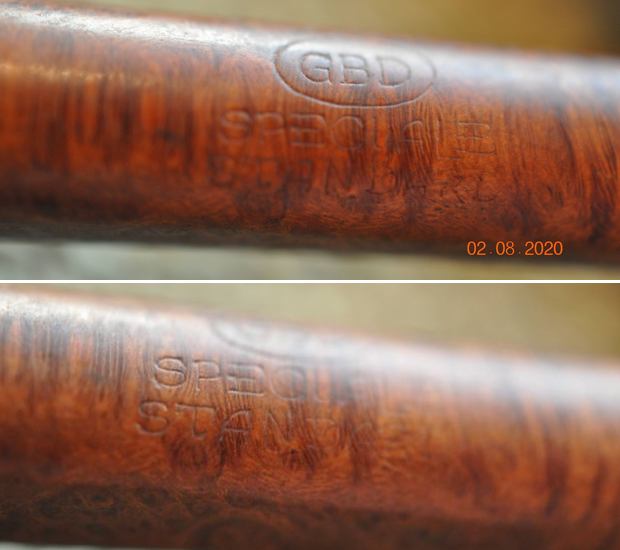
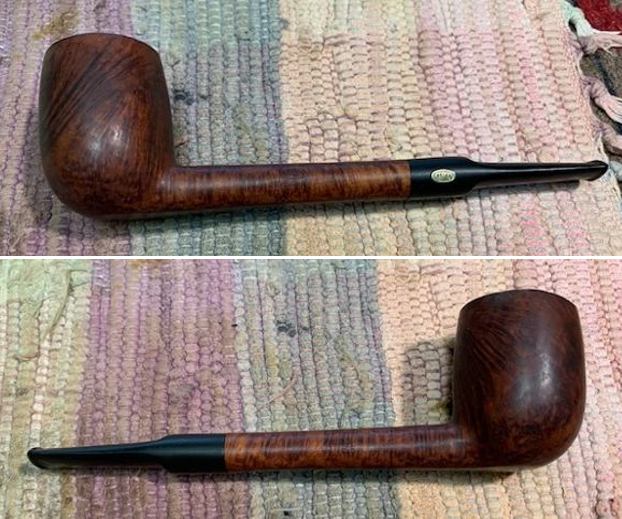
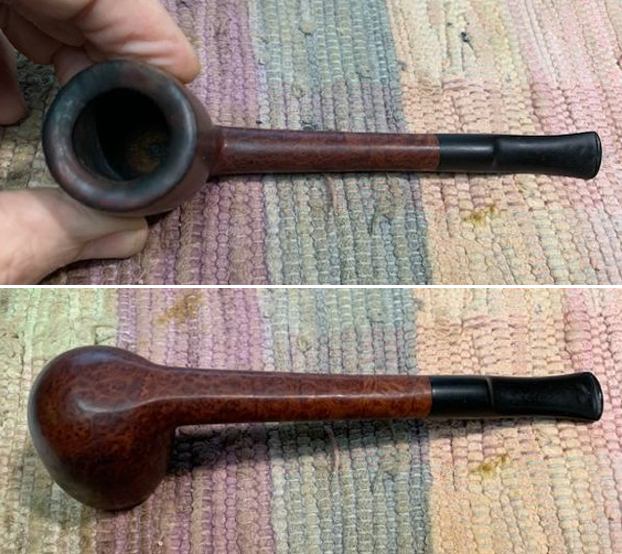
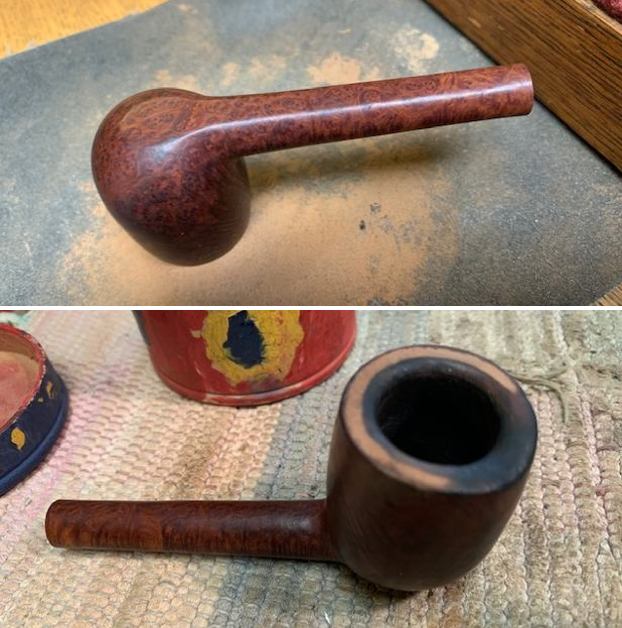
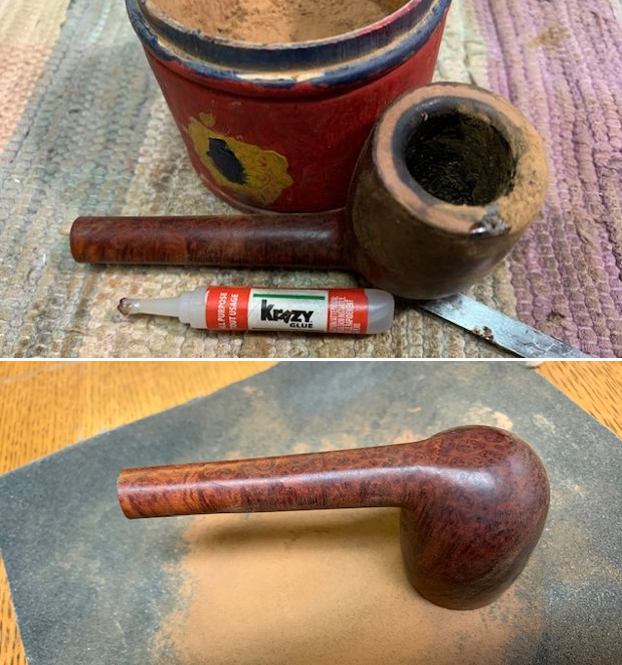
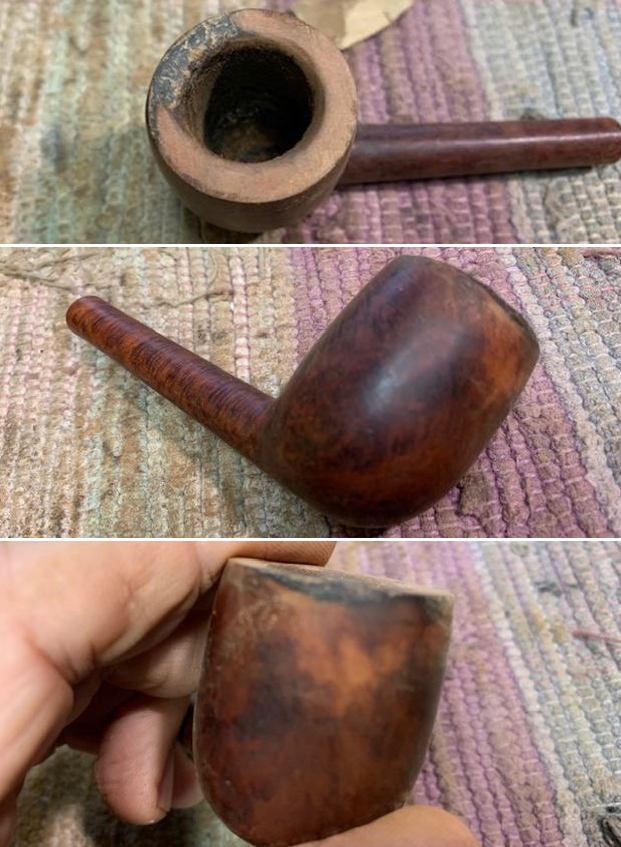
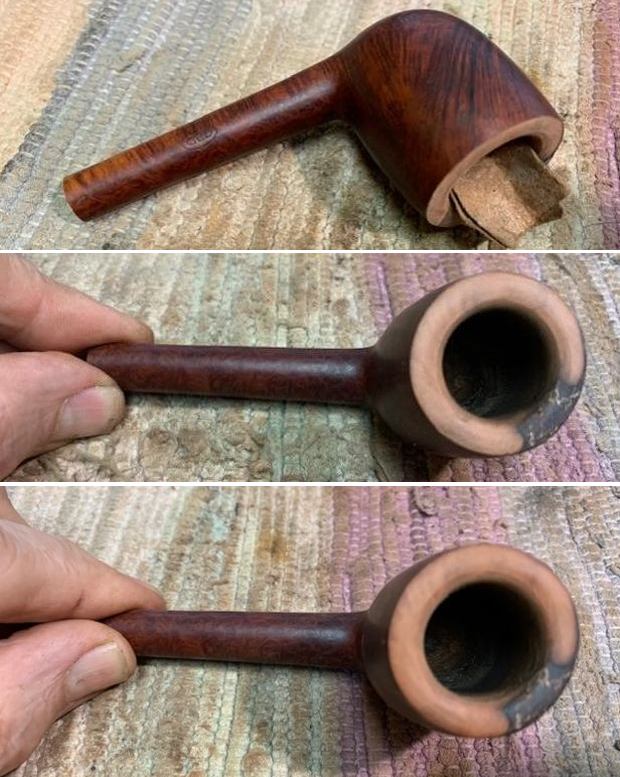
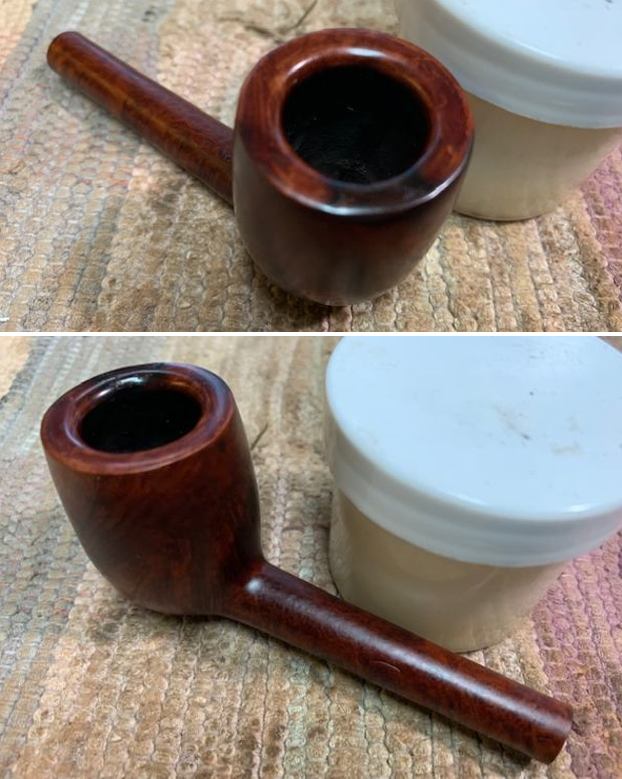
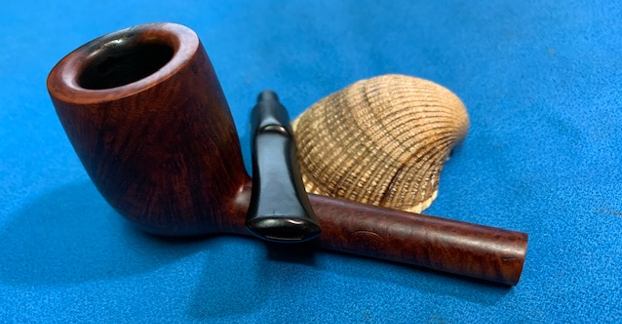
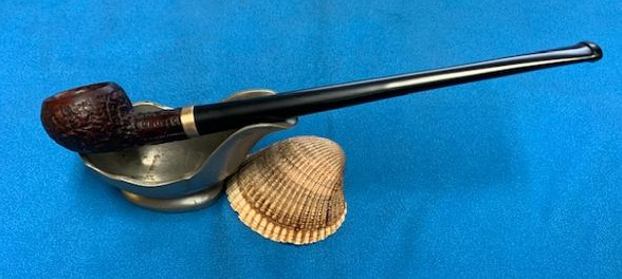
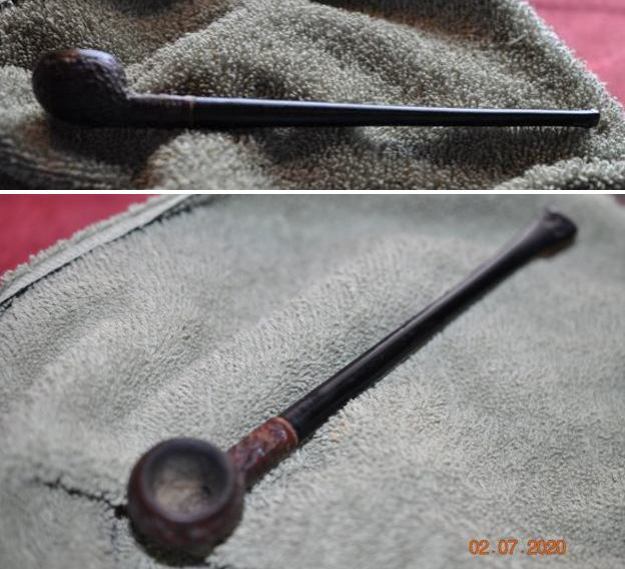
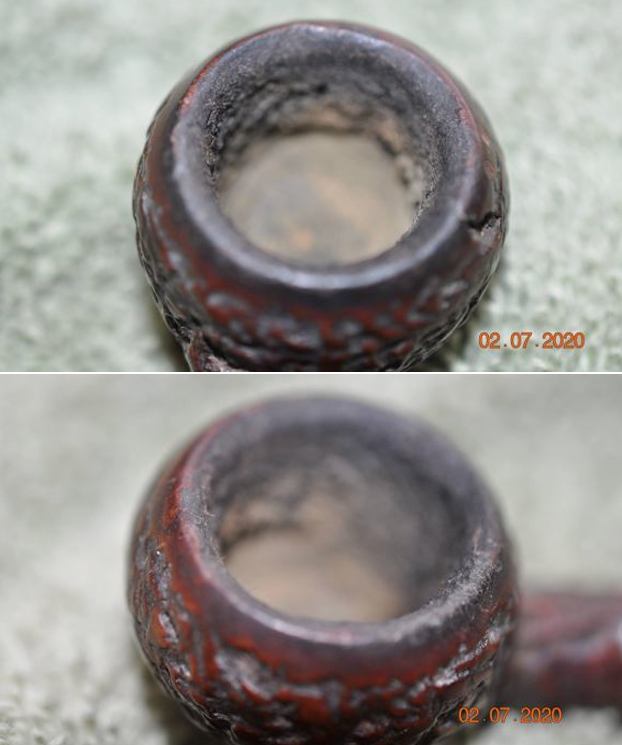
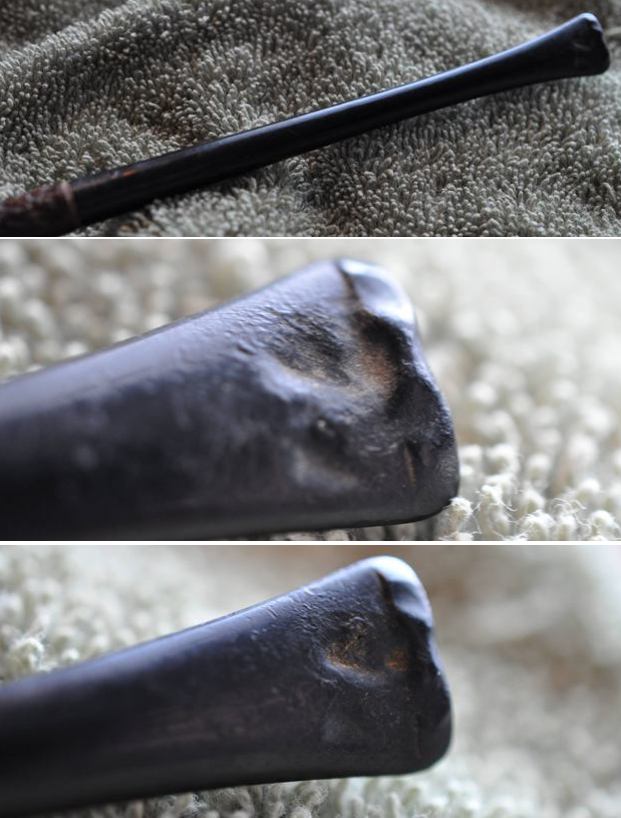
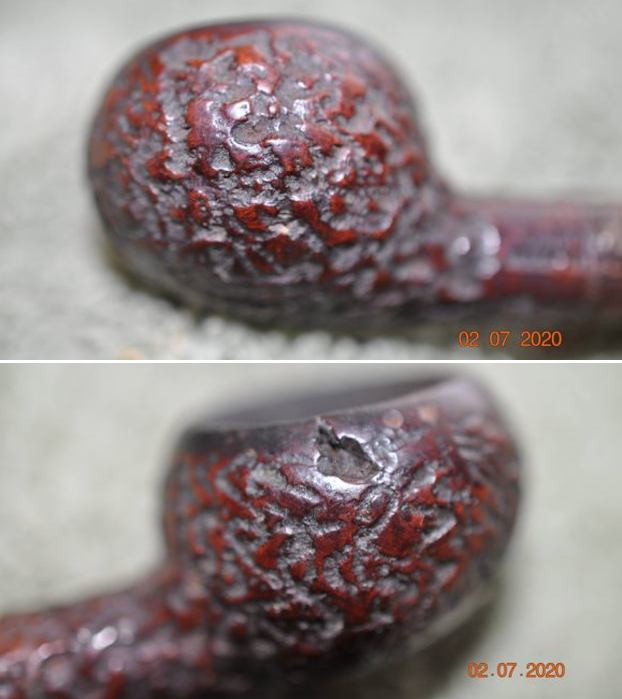
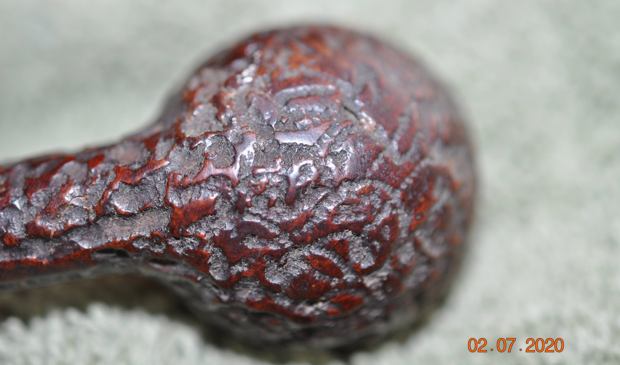
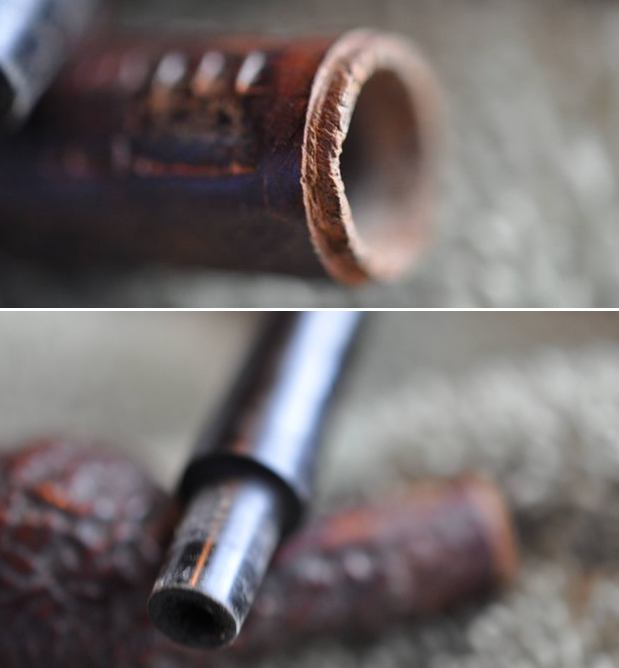
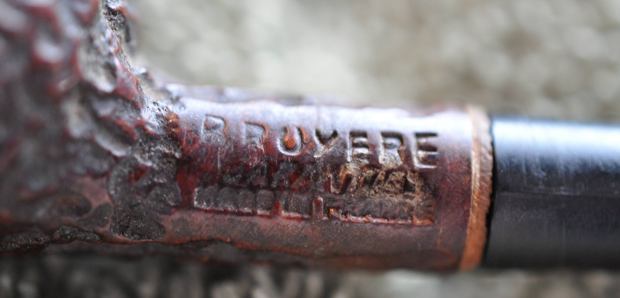
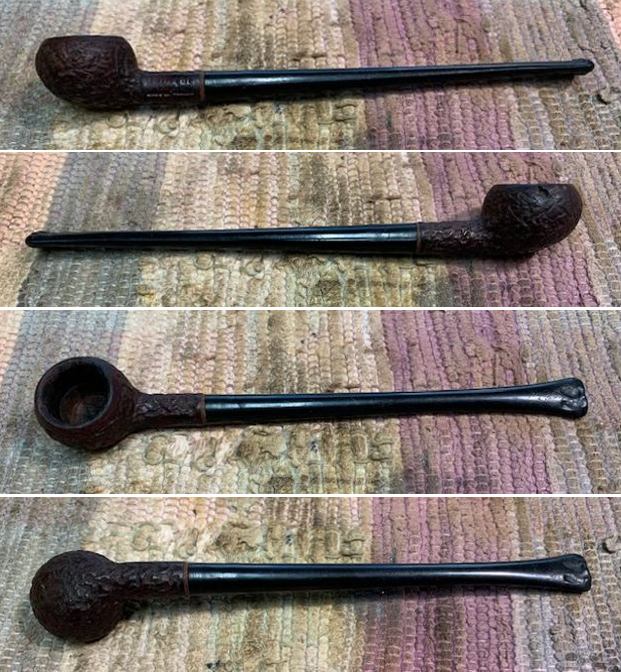
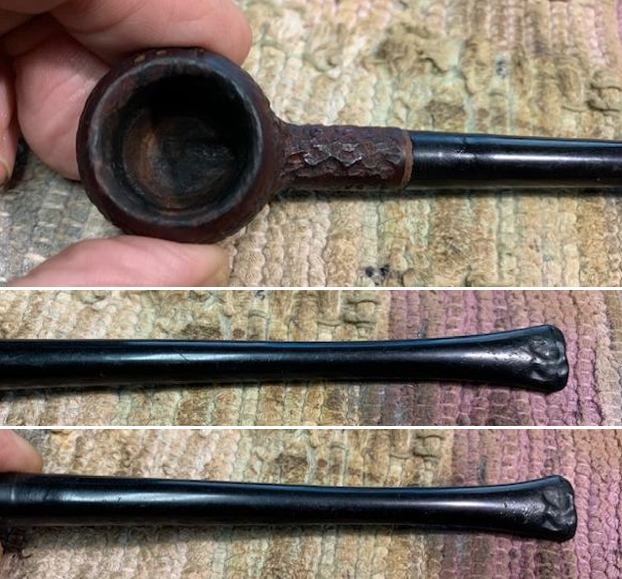
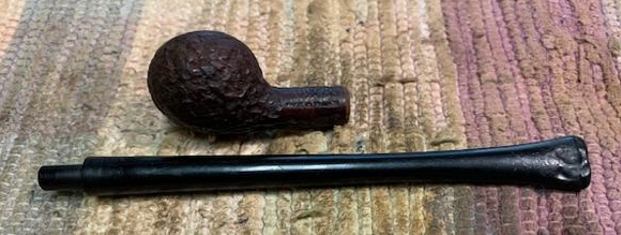
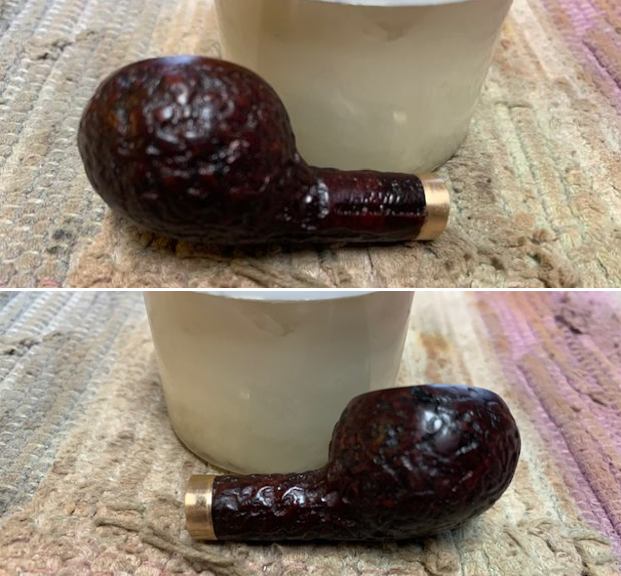
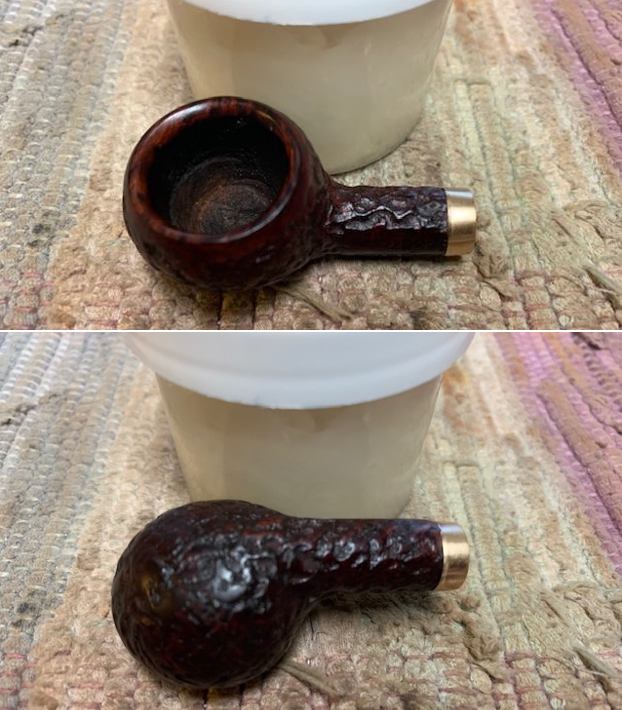
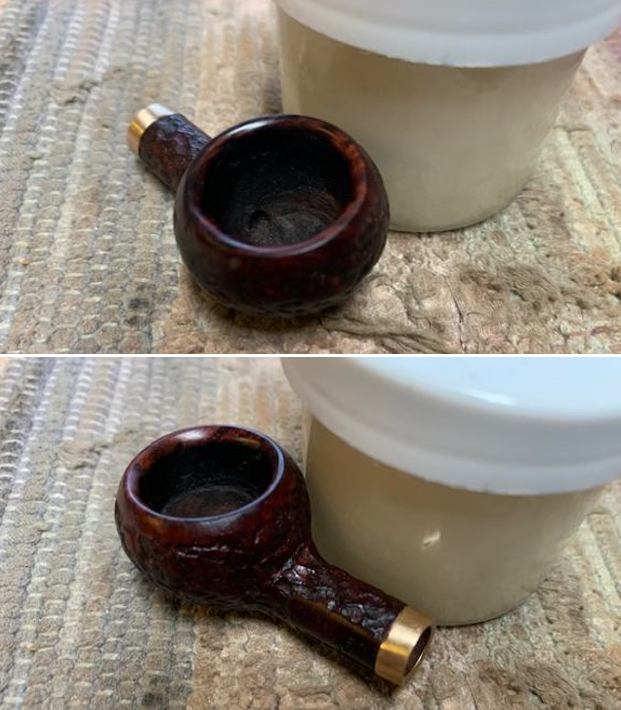
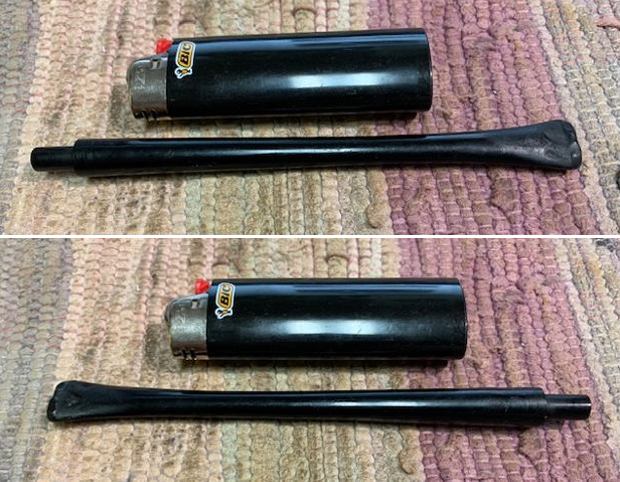
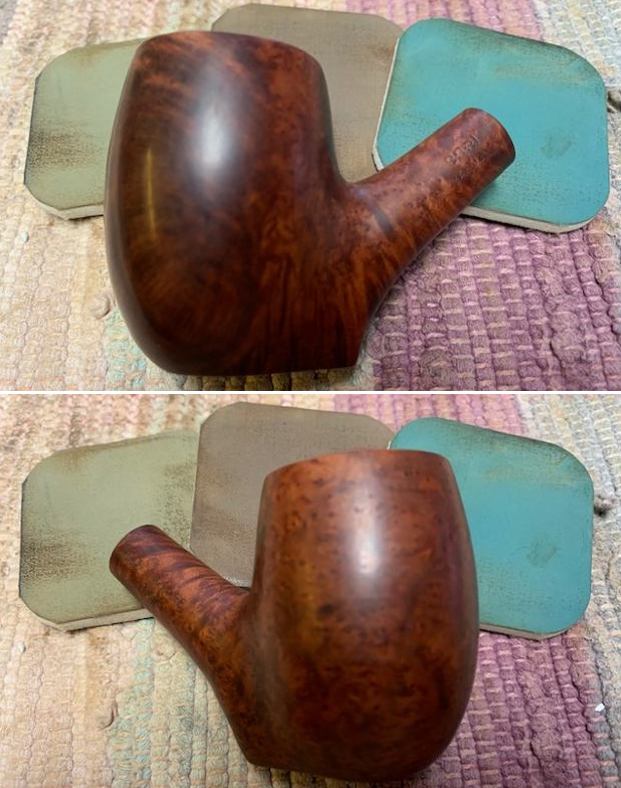
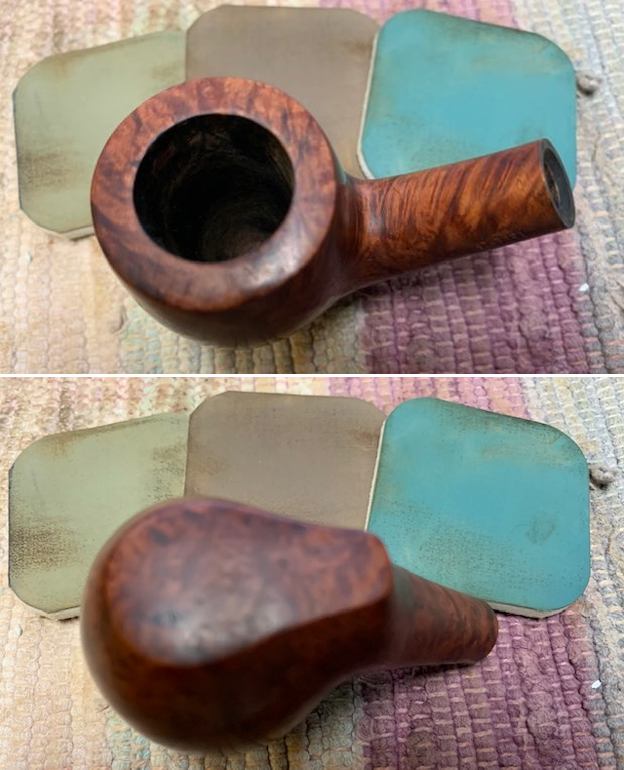
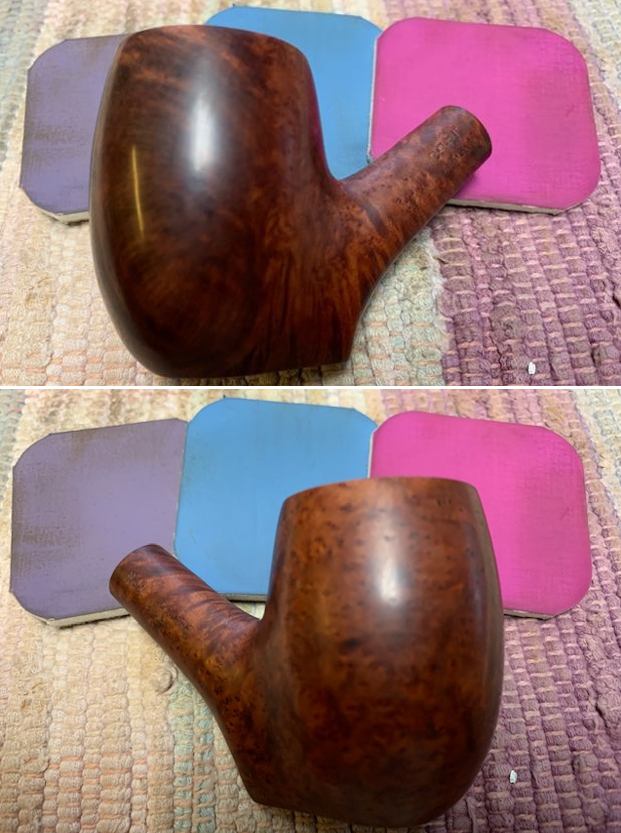
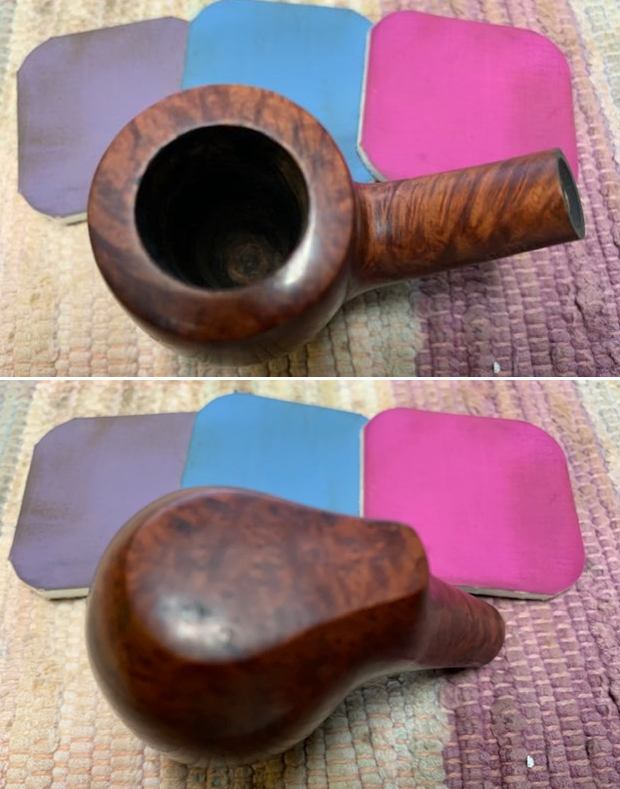
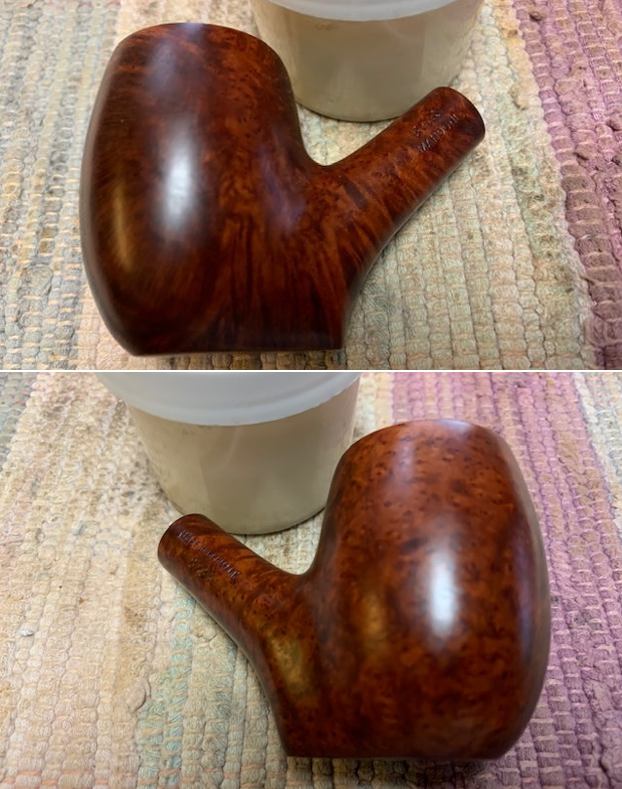
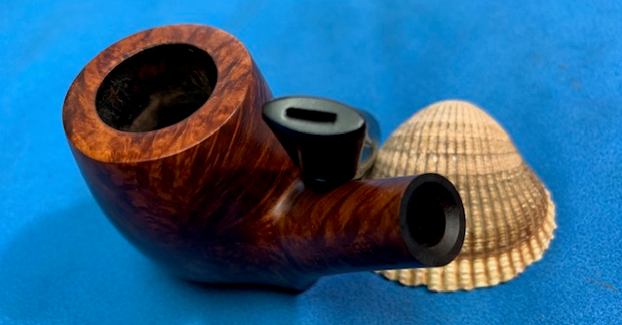
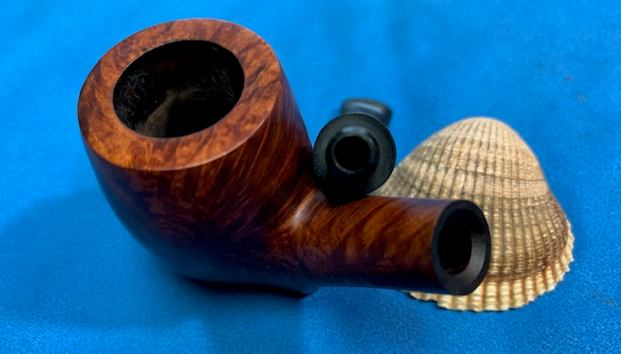
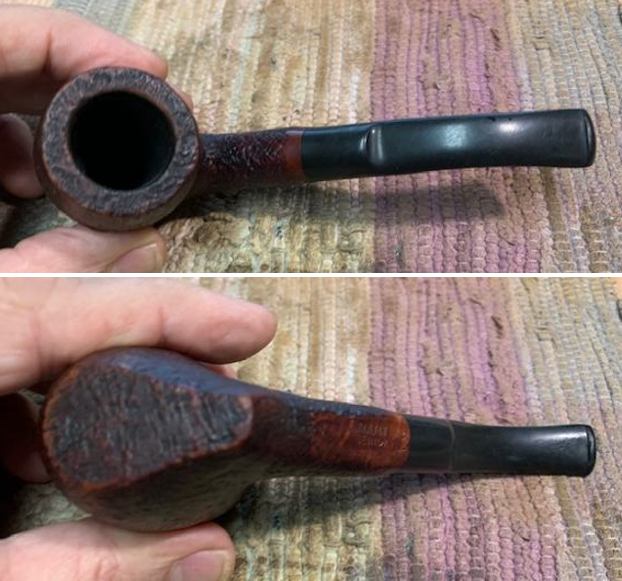
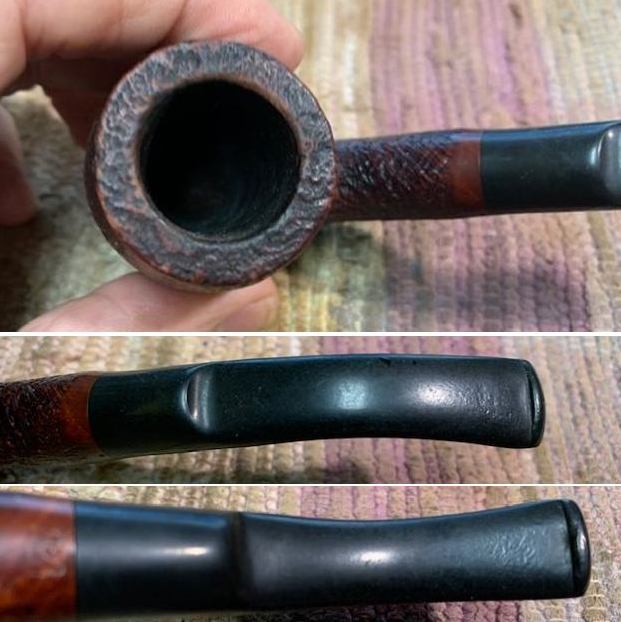
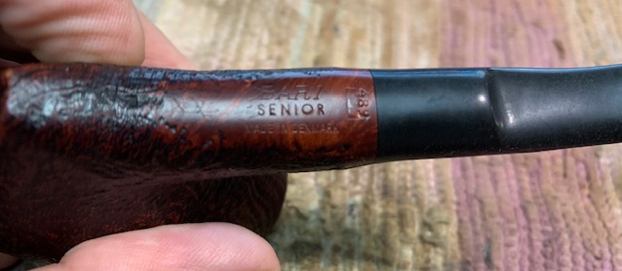
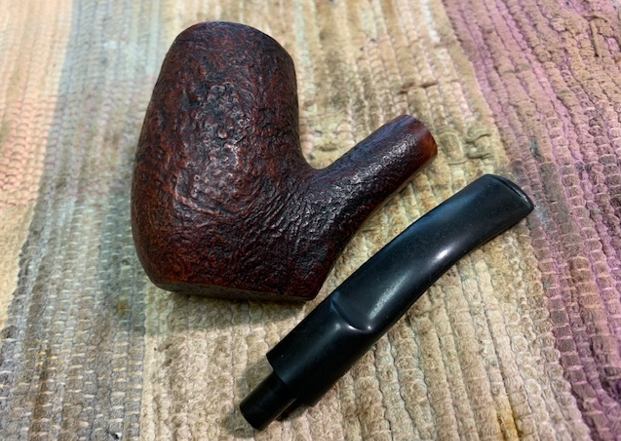
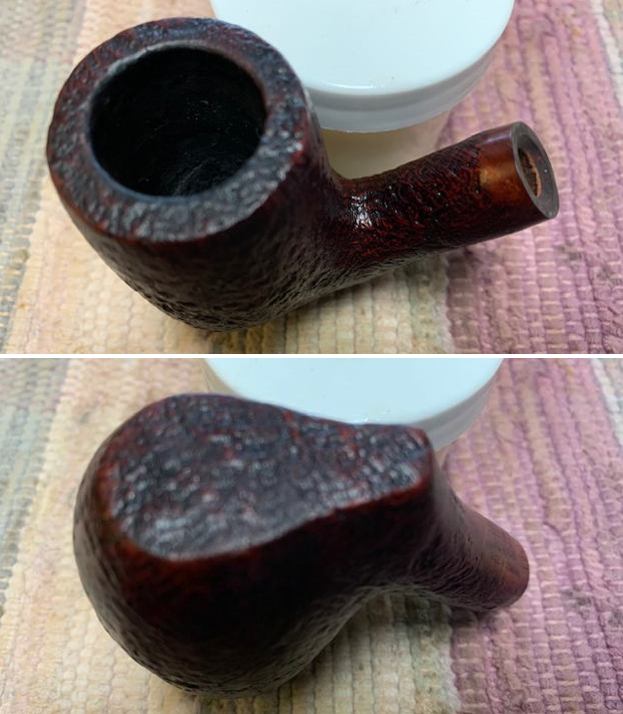
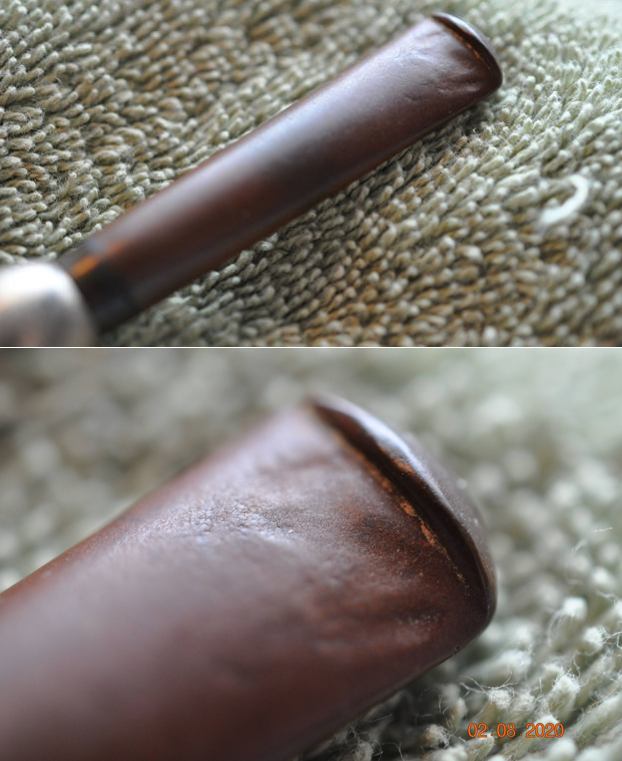
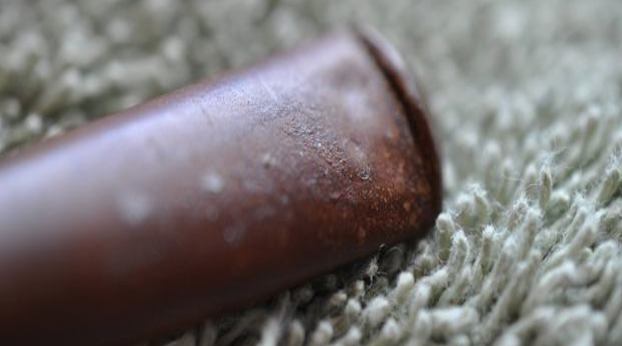
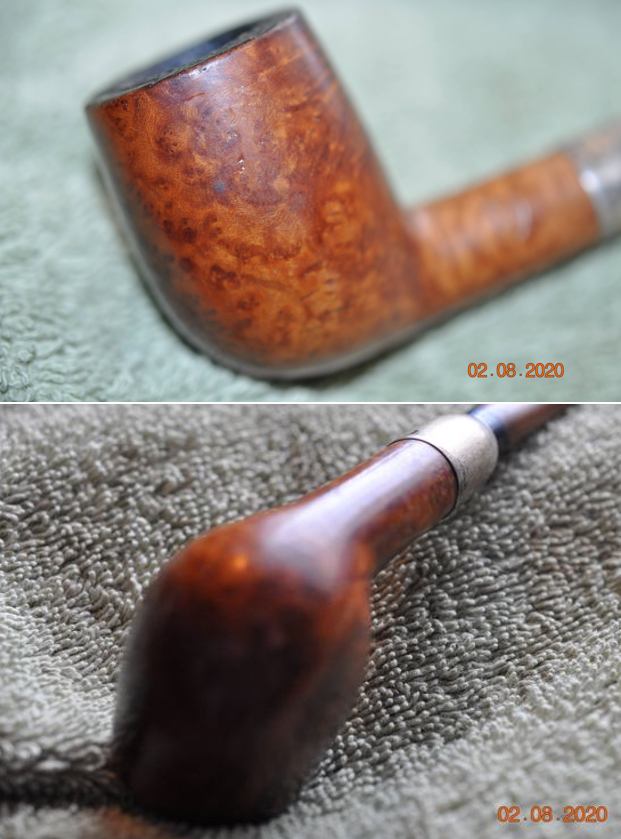
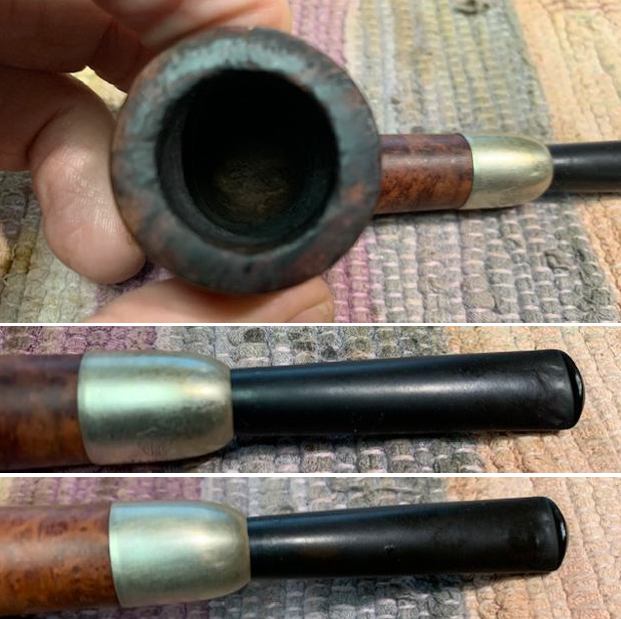
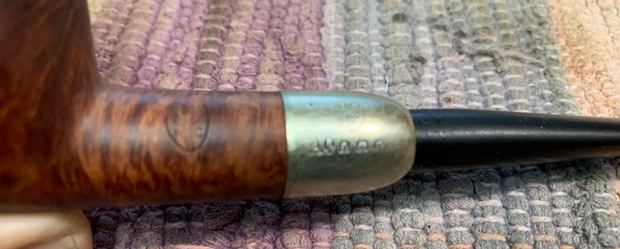
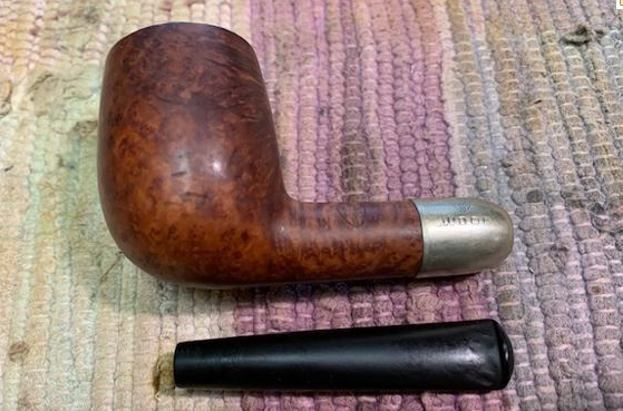
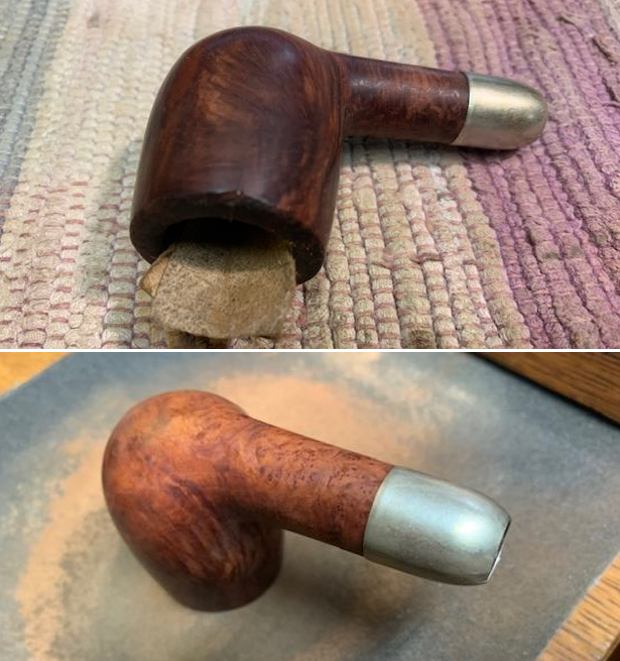
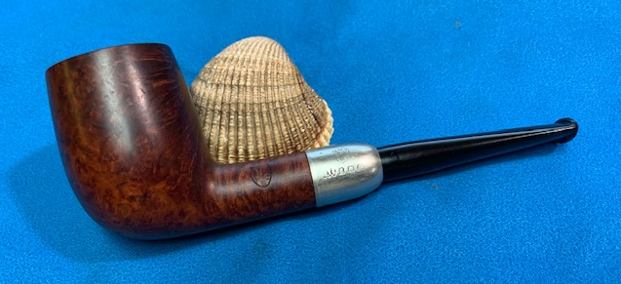
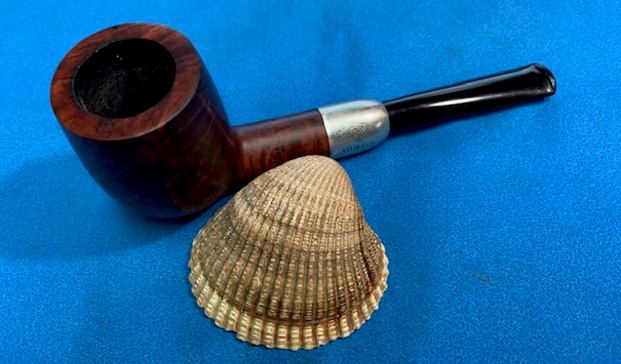
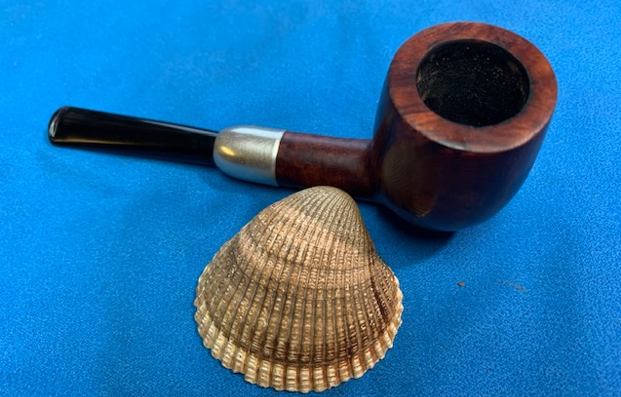
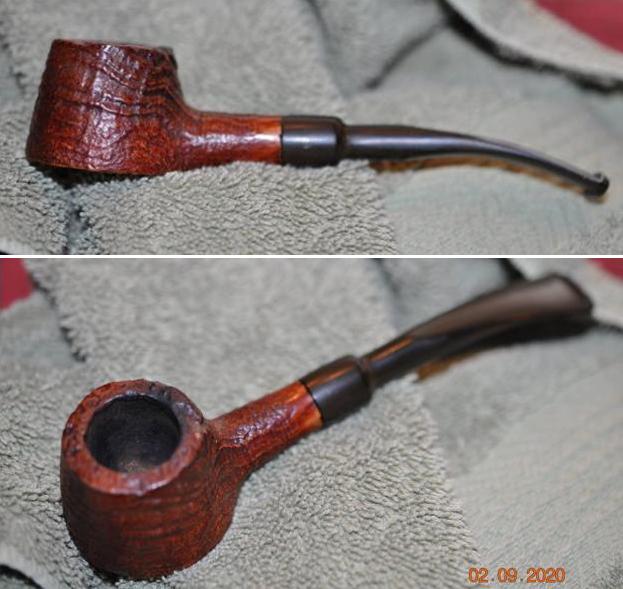
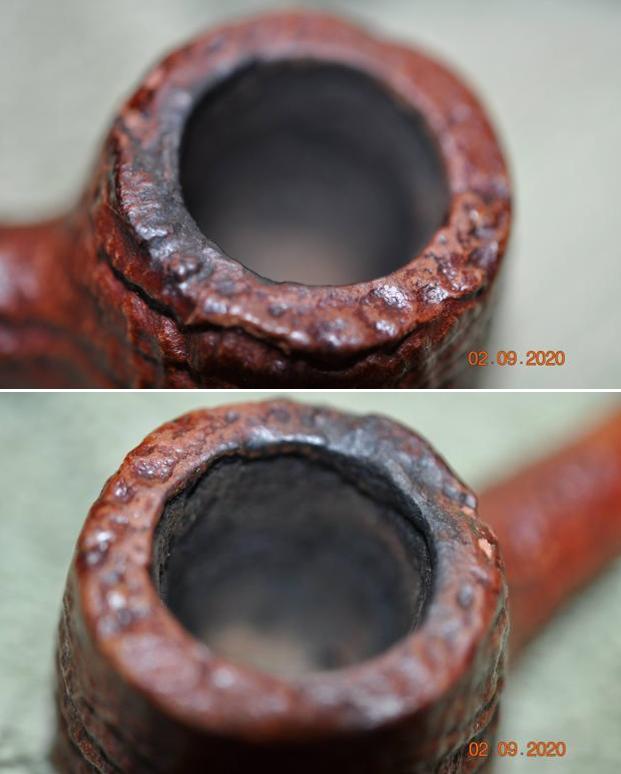
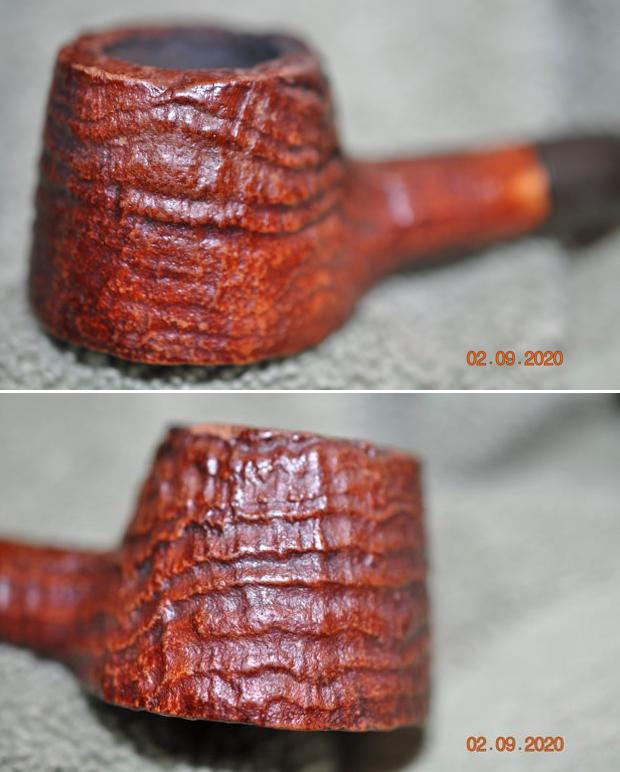
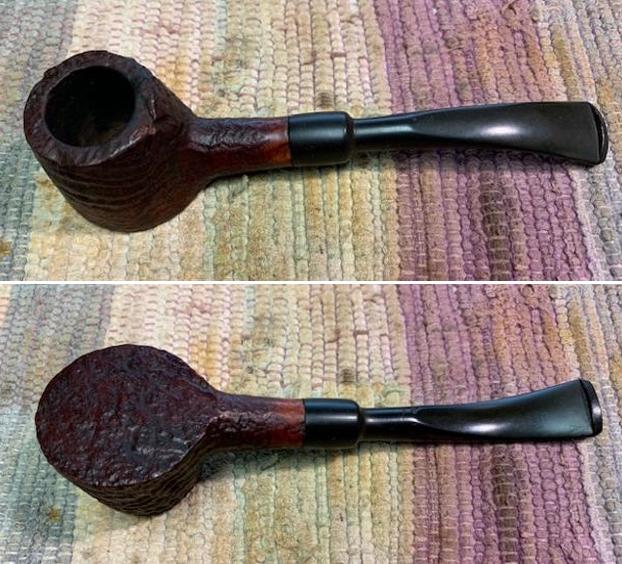
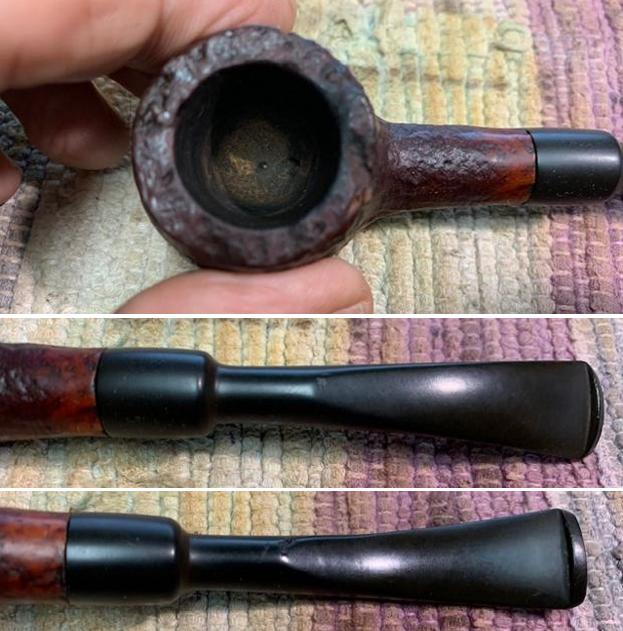
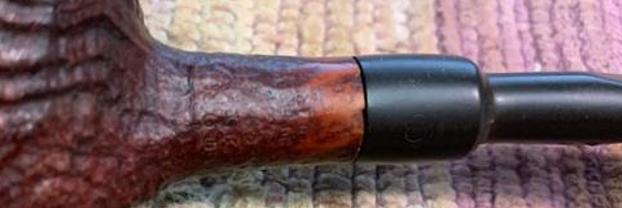
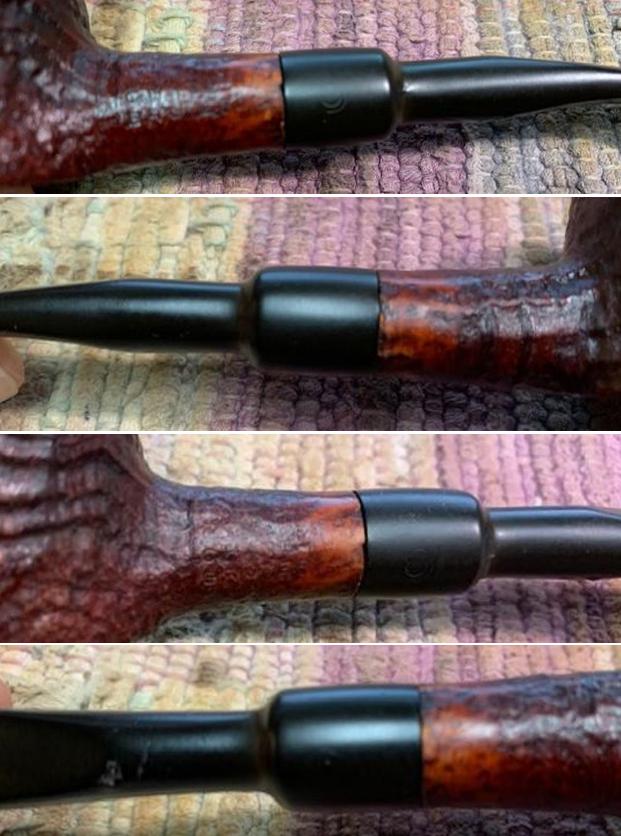
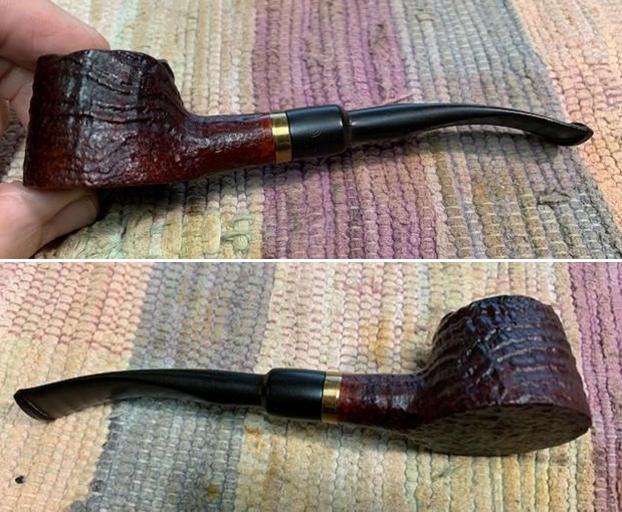
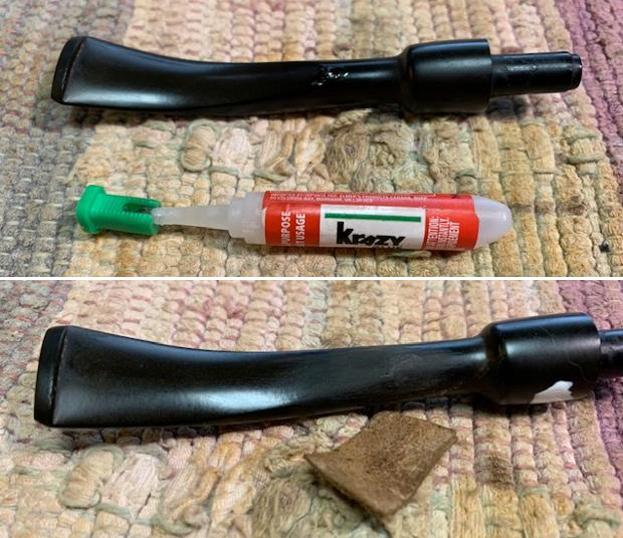
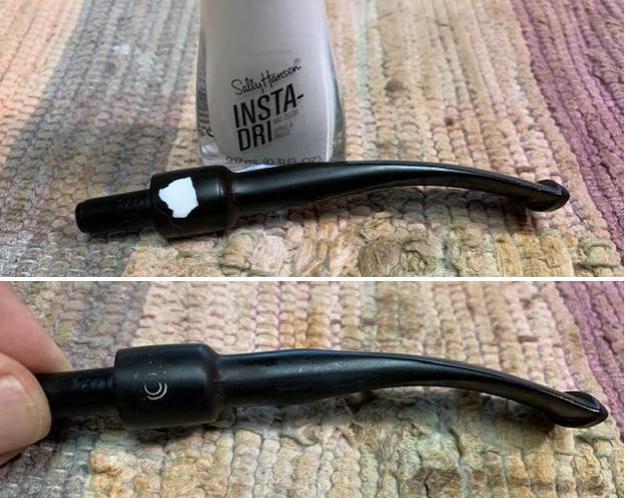
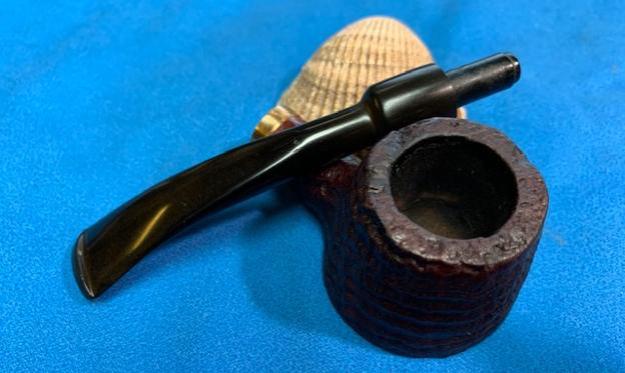
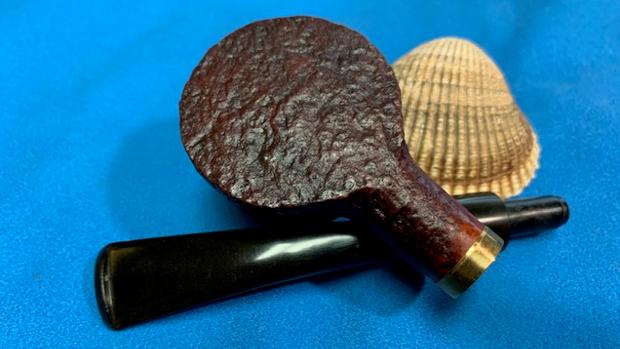
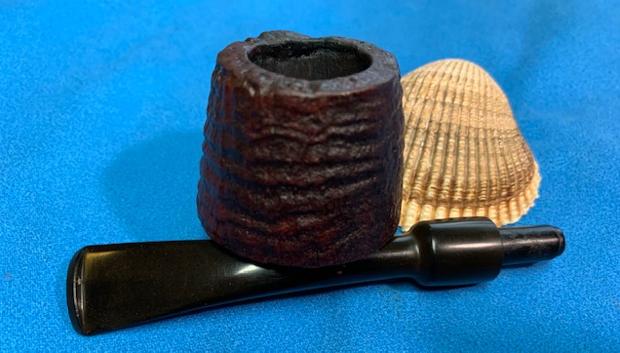
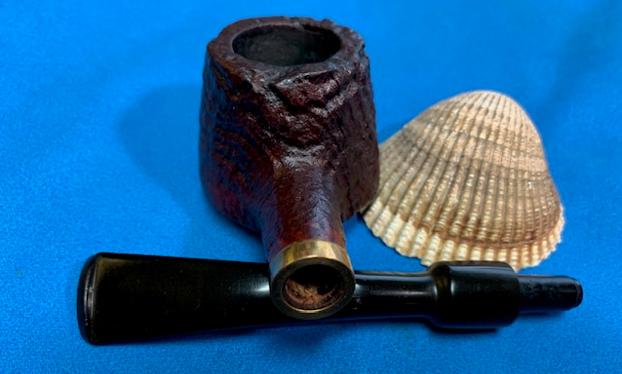
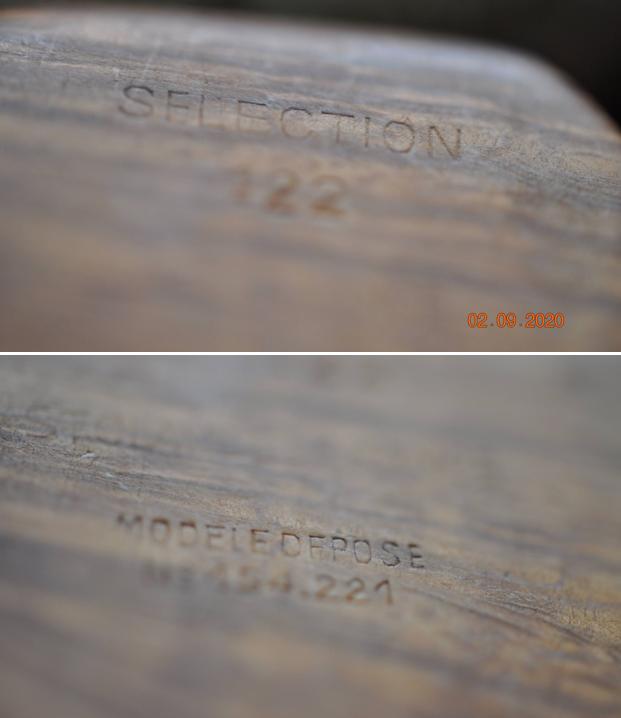
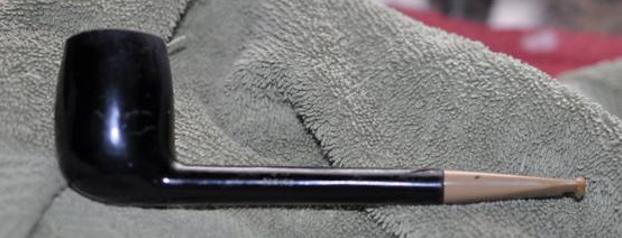
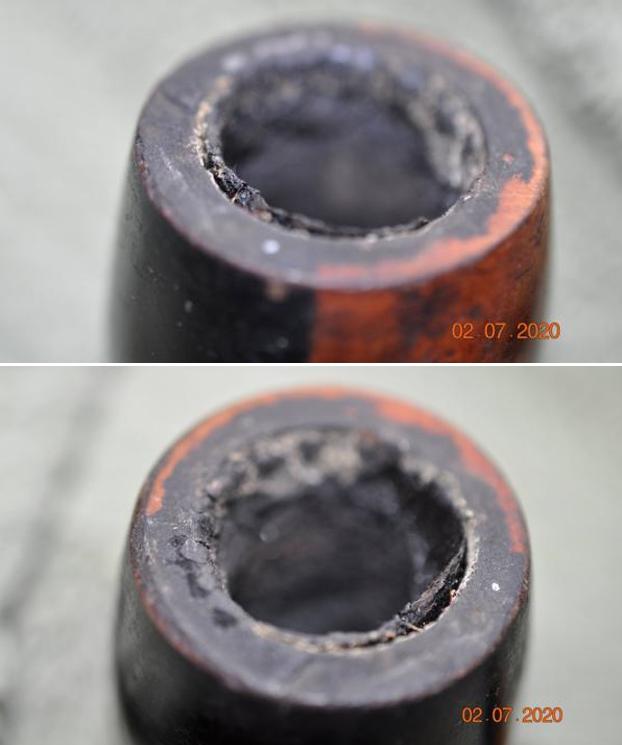
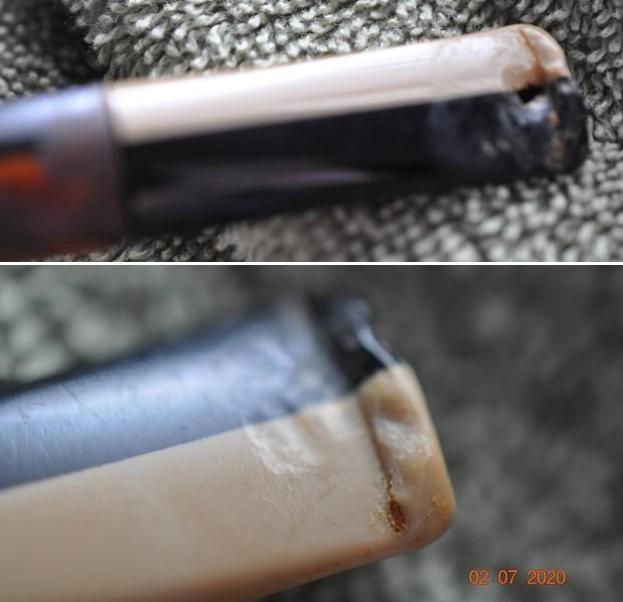
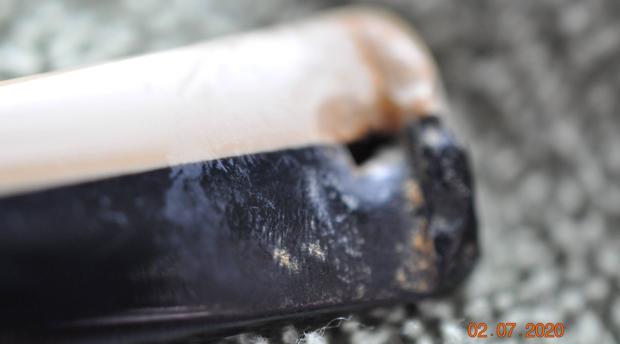
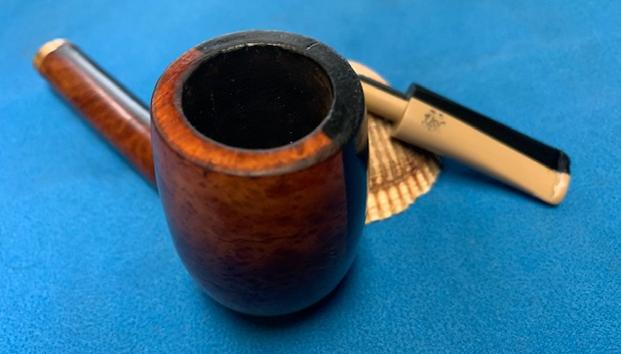
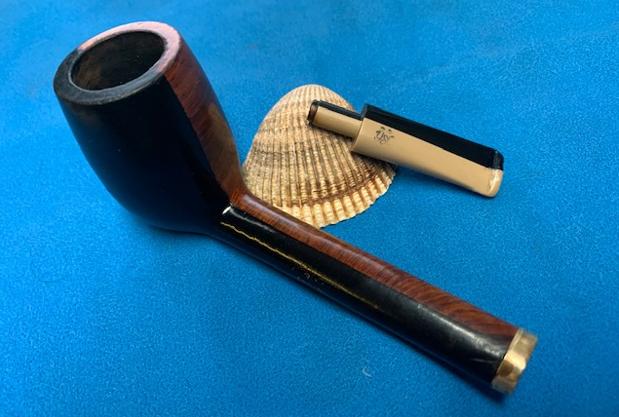
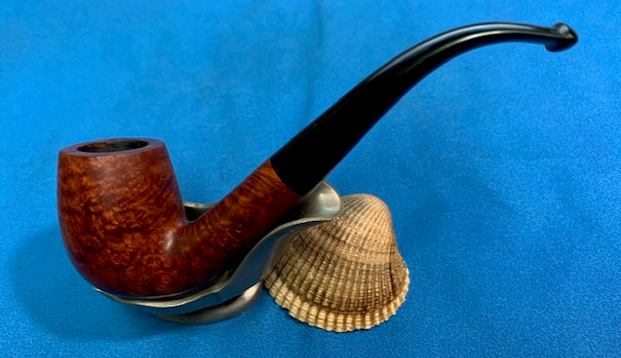
The next pipe on the work table is one that was purchased in 2020 from an auction in Bloomingdale, New York, USA. It has been here for a while and I am just now getting to it. Work has been demanding so it is slowing down my restoration work a bit. This flat bowled volcano shaped pipe obviously has a a poorly fit replacement stem that has made it into an odd shaped churchwarden. I don’t think that it looked like this when it came out but I had no idea what it would have looked like before. It has a really mix of grains around the bowl and shank. It was stamped on the underside of the shank and it reads Stanwell [over] Design [over] Choice [over] Made in Denmark. To the left of this it is stamped with the shape numbers 892. The pipe was dirty with grime ground into the finish. There was a moderate cake in the bowl and lava overflow on the rim top. The inner edge of the rim was covered in lava it was hard to know what was underneath. The vulcanite shank extension was oxidized and worn. The churchwarden stem is overly bent and the fit in the shank extension is not quite right – just a few of several reasons that I knew it was a replacement stem. Jeff took some photos of the pipe before he started to work on cleaning it up for us. Jeff took photos of the rim top and the stem to show the condition of the pipe when we received it. You can see the cake in the bowl and the lava on the rim top and inner edge of the bowl. The oxidized and replacement churchwarden vulcanite stem was over bent and would need to be straightened or replaced with a more original stem. This one has chatter and deep tooth marks on both sides near the button. He took photos of the sides of the bowl and the heel to give an idea of the shape and the condition of the briar around the bowl. It really is a nicely shaped pipe with some great grain. There are some flaws in briar on the bottom of the bowl. The next photo Jeff took shows the stamping on the underside of the shank. It is clear and readable as noted above. I Googled the Stanwell shape 892 Design Choice pipe to see if I could find photos of what the pipe looked like when it was made and to see if I could see if there was information on who had made the pipe originally. I found a link to the shape on smokingpipes.com to the shape number (https://www.smokingpipes.com/pipes/estate/denmark/moreinfo.cfm?product_id=238398). I have included the description from the site below as well as a photo of one of the pipes.

A shape designed for Stanwell by Sixten Ivarsson, this is a take on the Ukelele, with plenty of plump curvature and low-slung charm on display. This example is still in good condition overall, though it has picked up some light scratches around the bowl, and the chamber is slightly out of round.Now I knew that I was dealing with a shape designed by Sixten Ivarrson called a Ukelele that had a short fancy saddle stem and there was no reference anywhere I looked for a churchwarden stemmed Ukelele. I would need to fashion a new stem for the pipe to give the pipe a similar look to the one above.

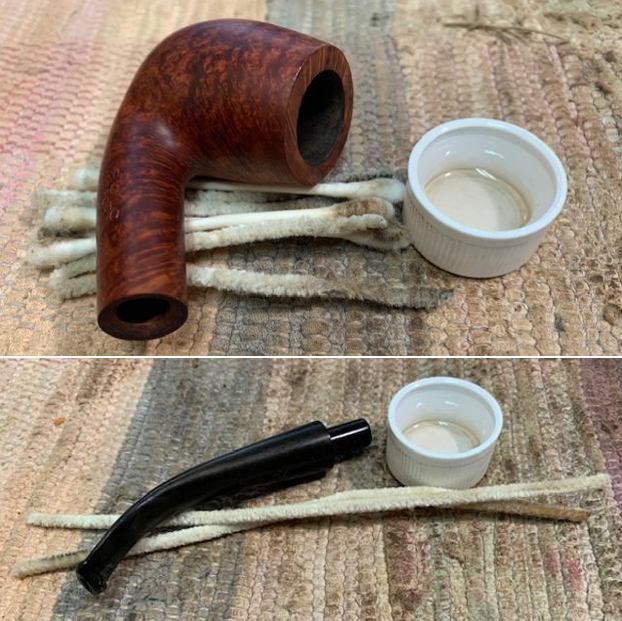
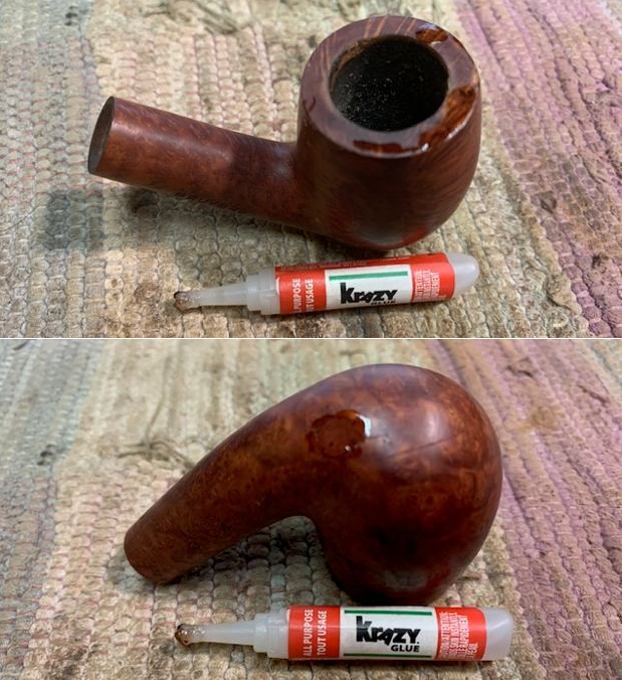
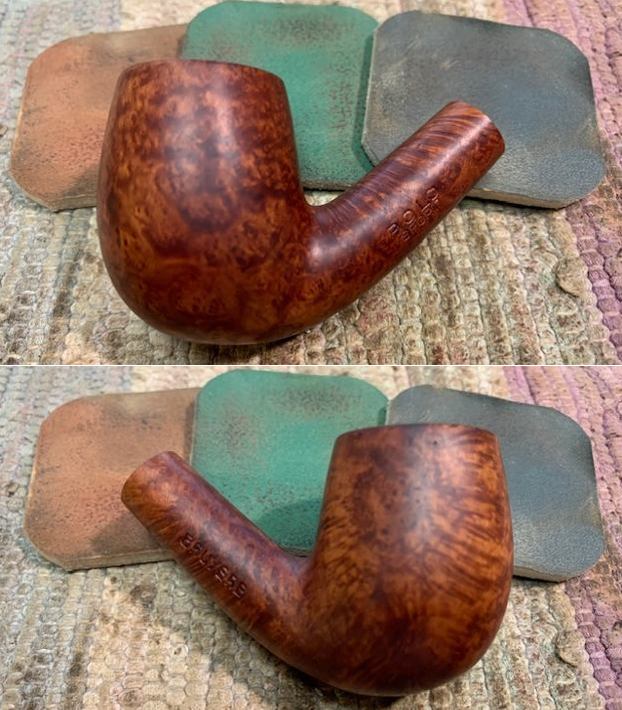
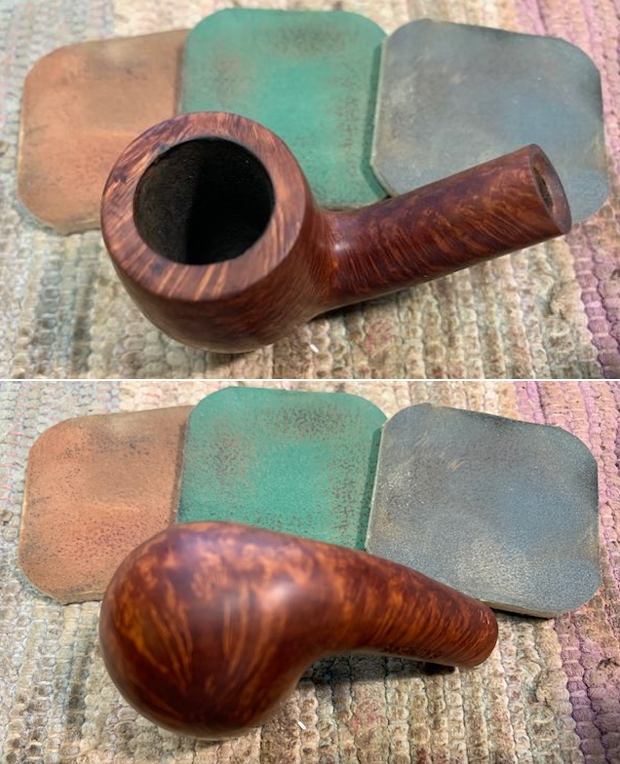
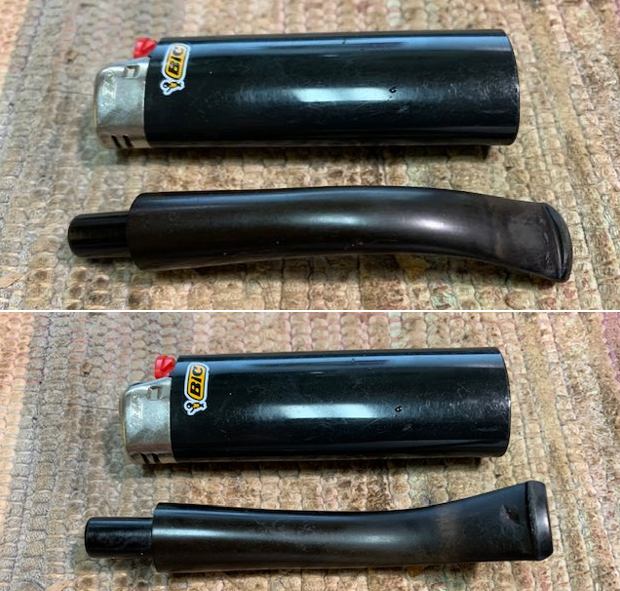
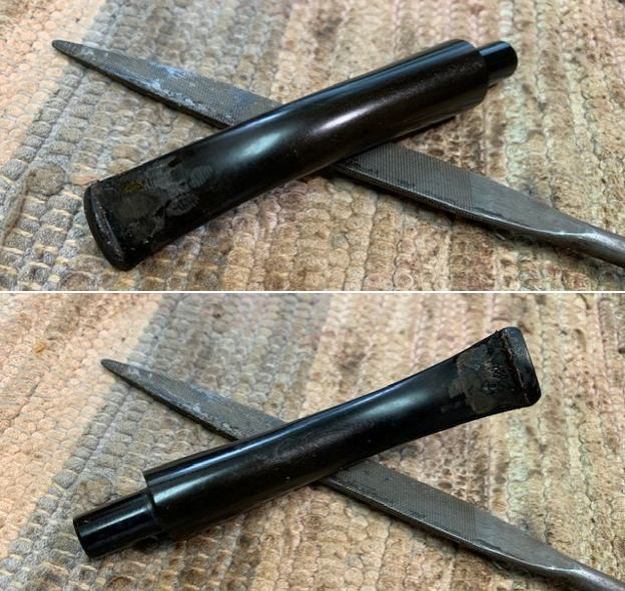
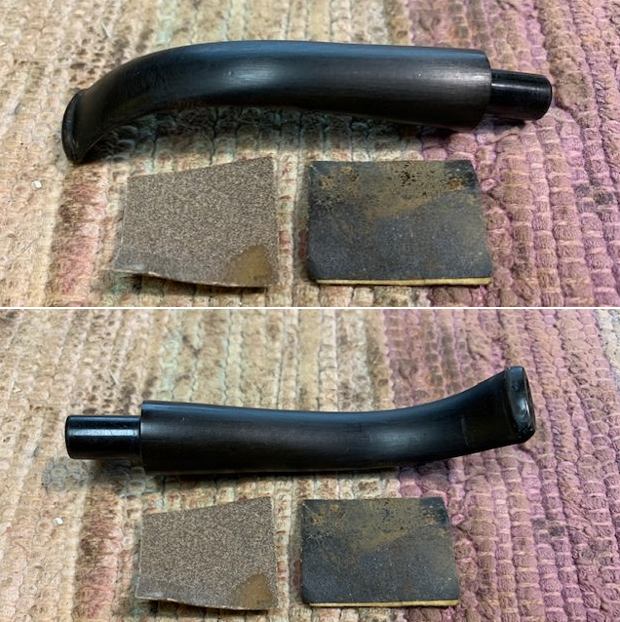
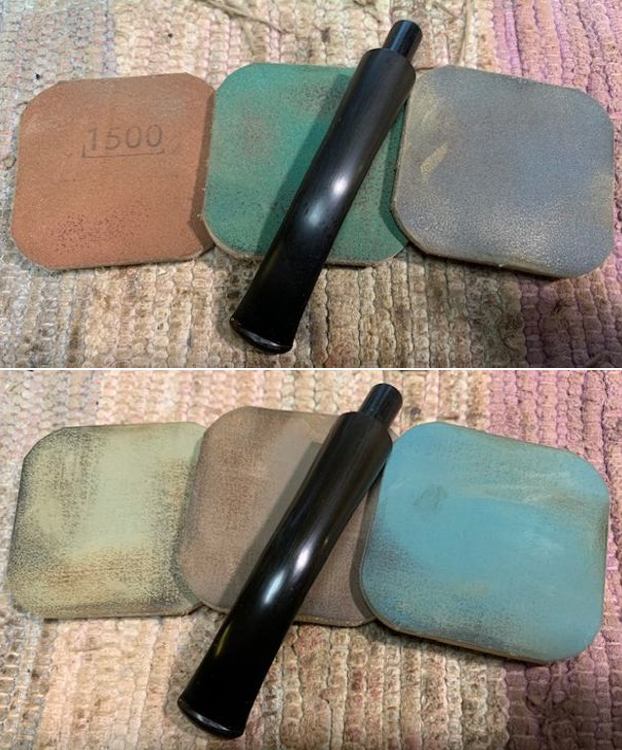
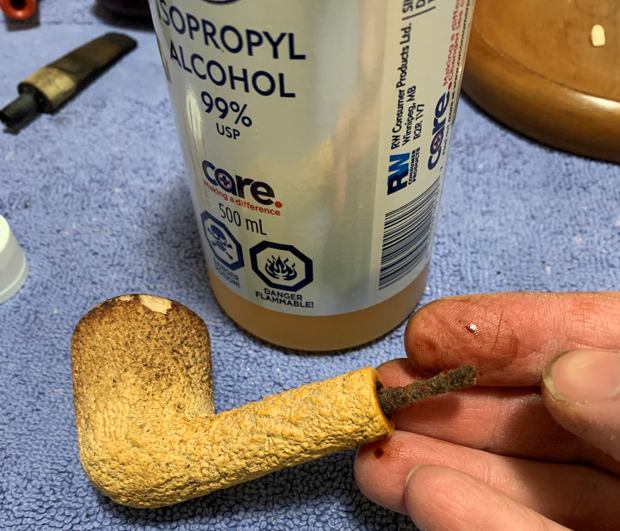
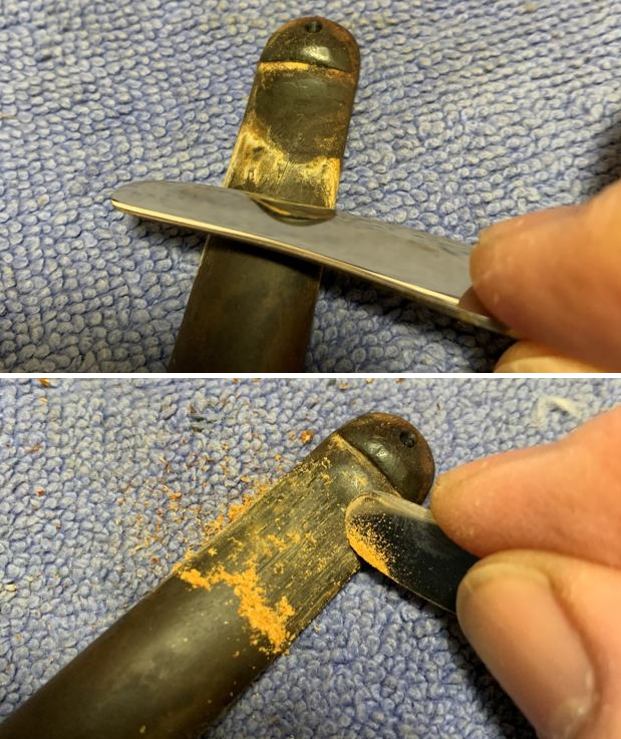
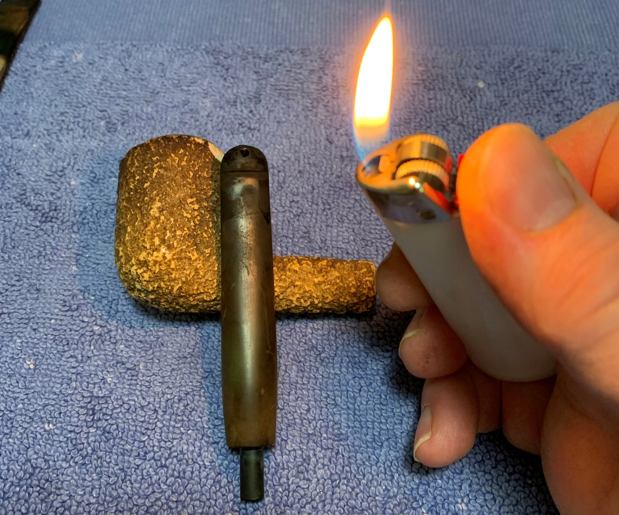
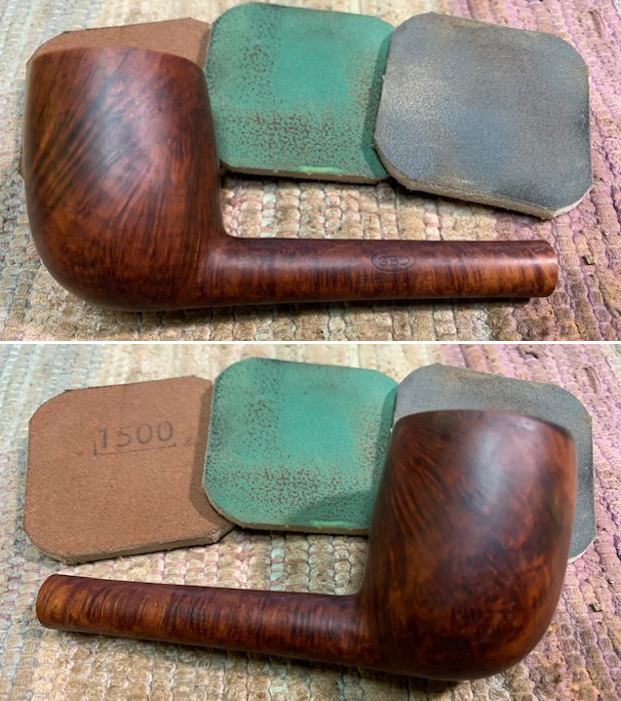
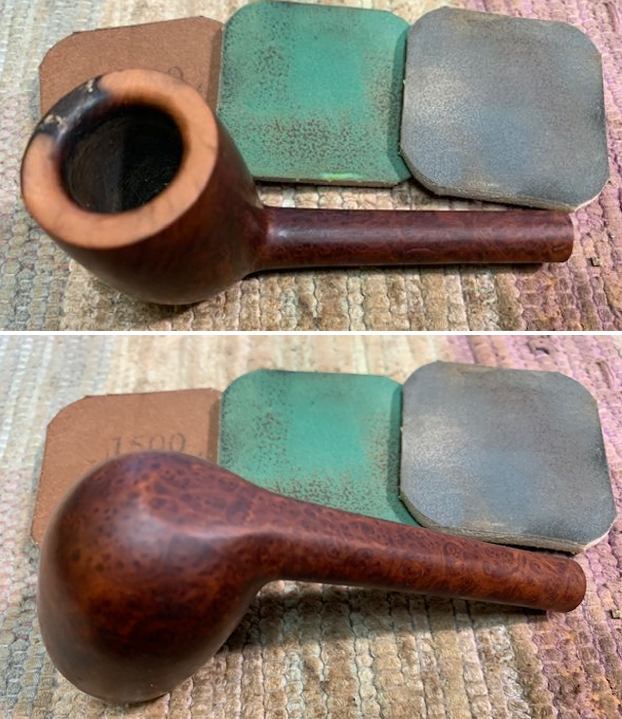
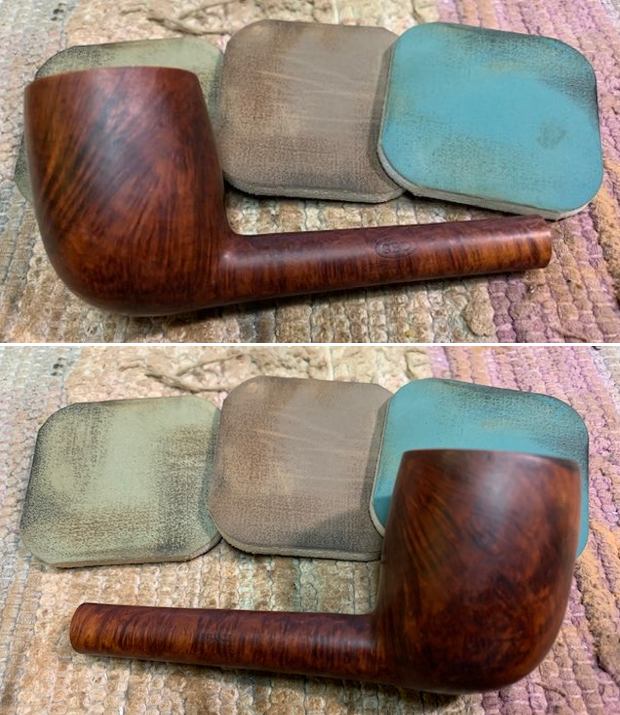
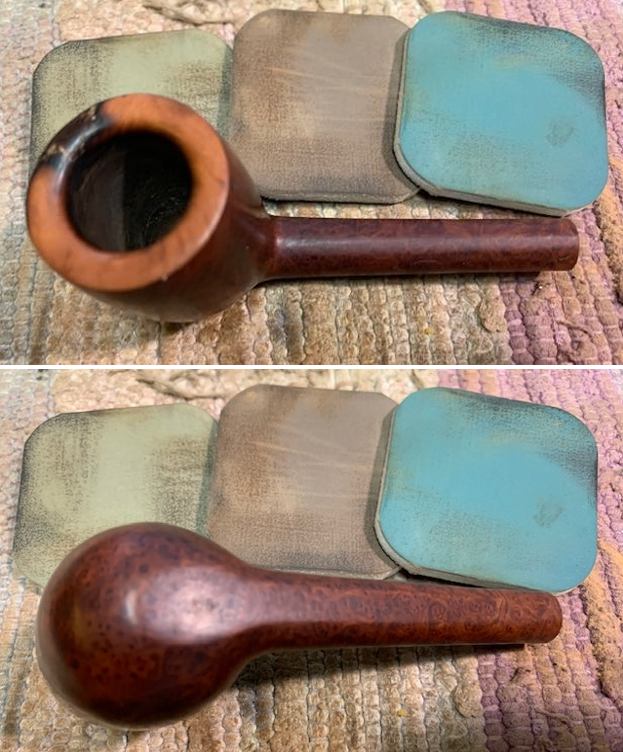
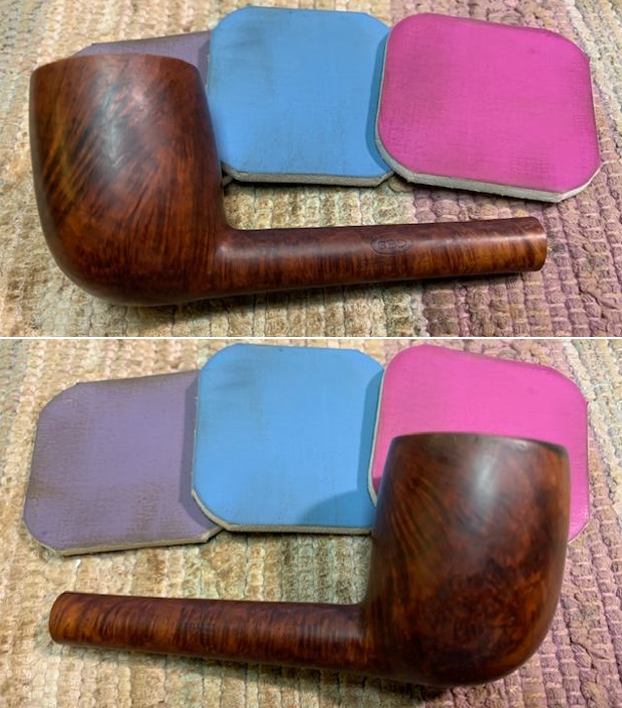
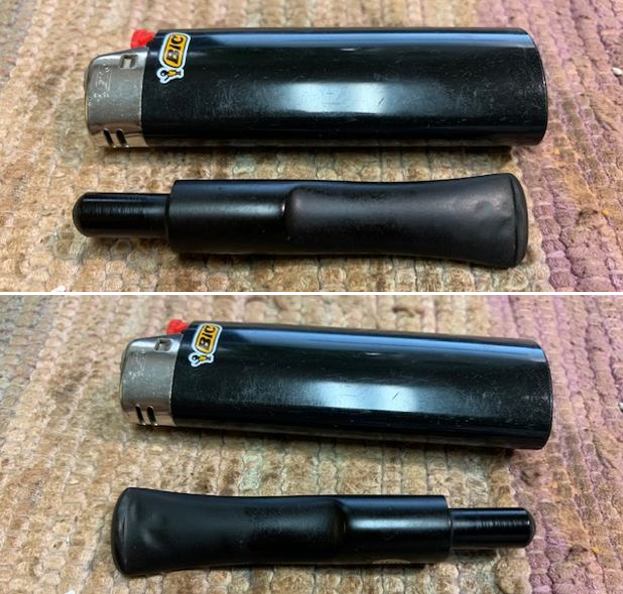
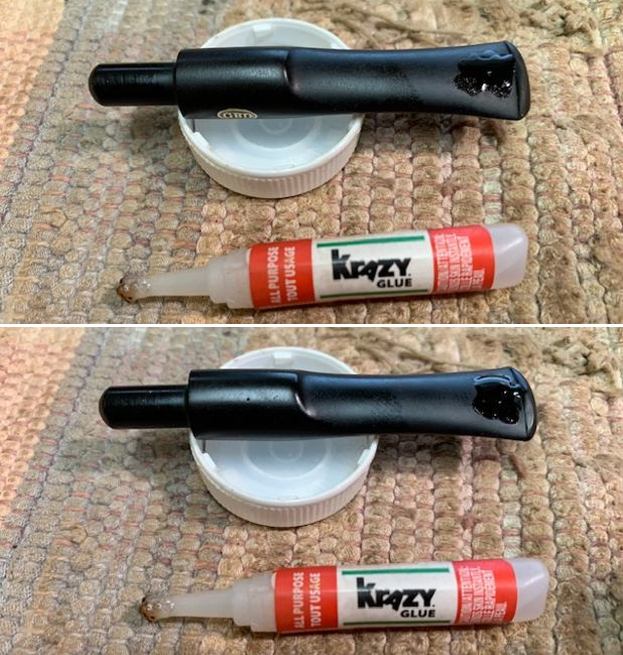
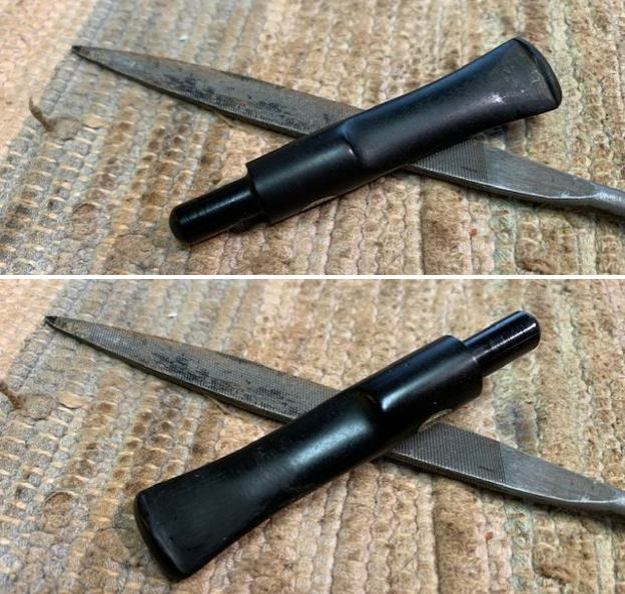
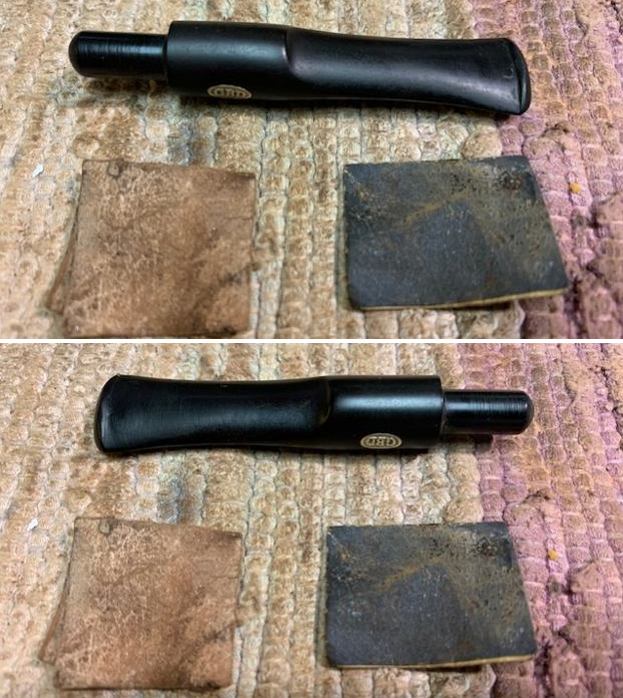
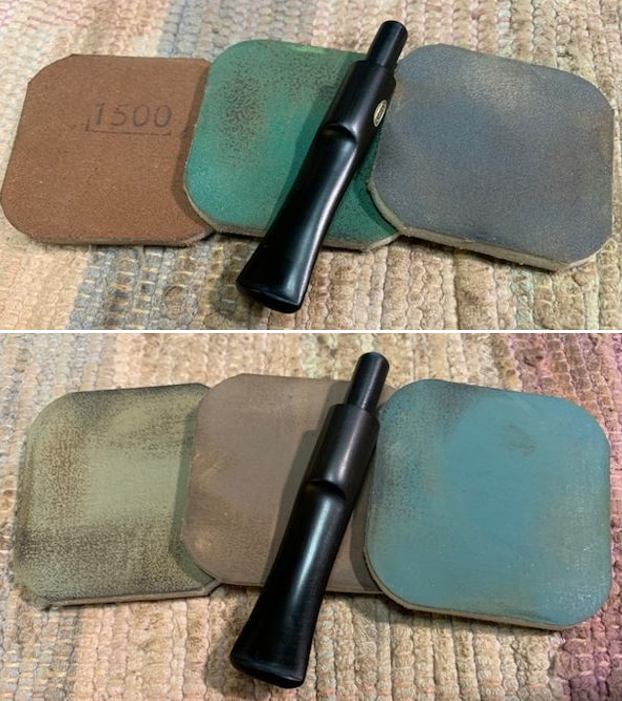
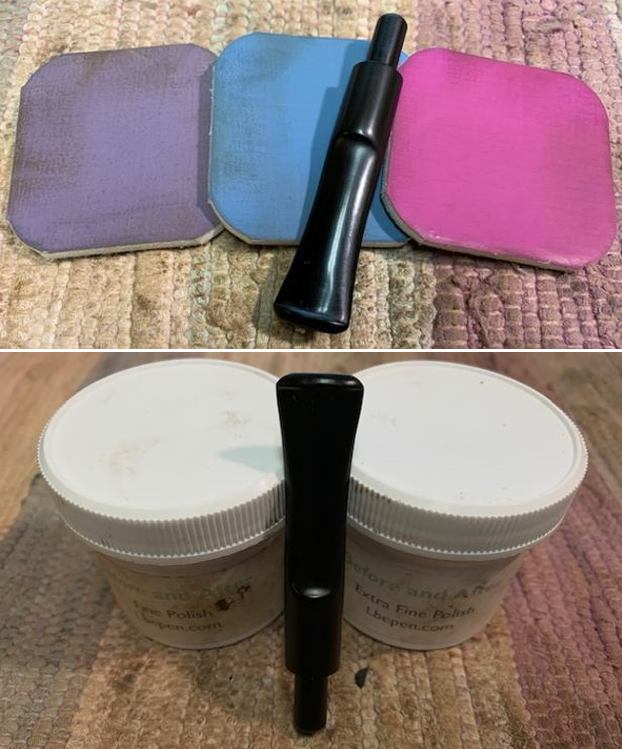
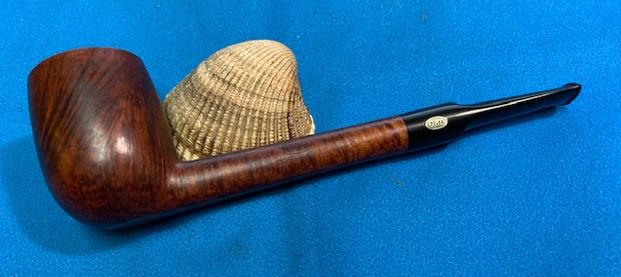
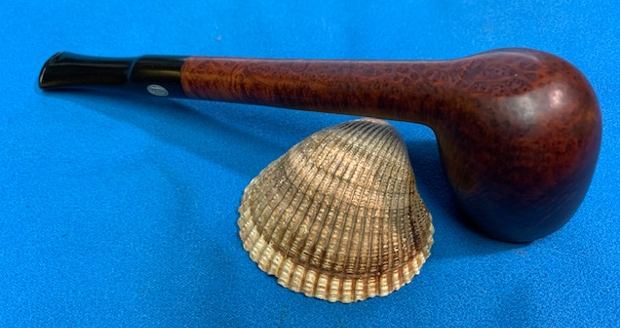
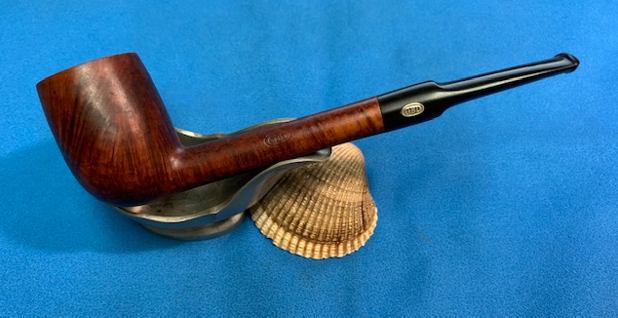
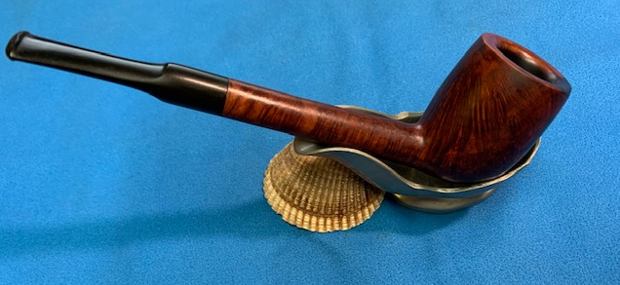
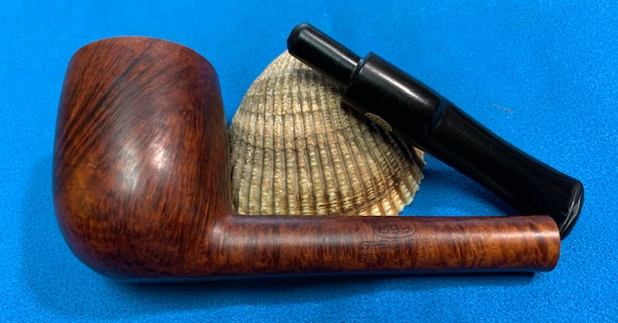
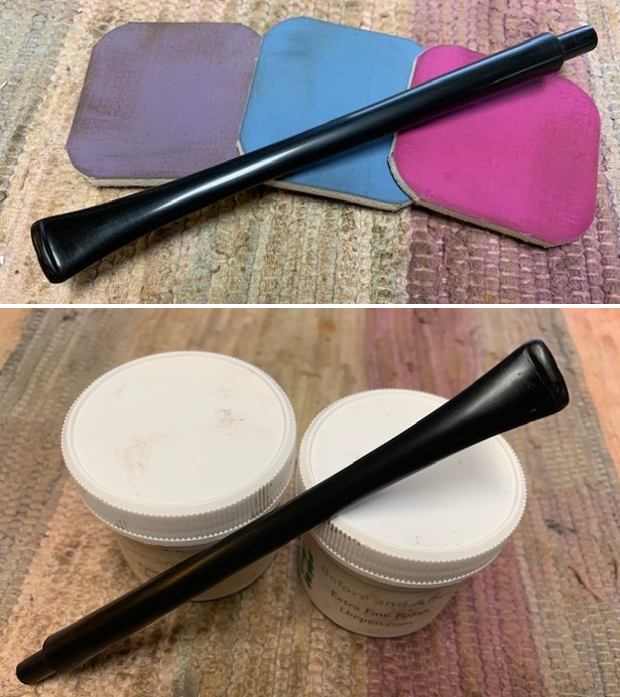
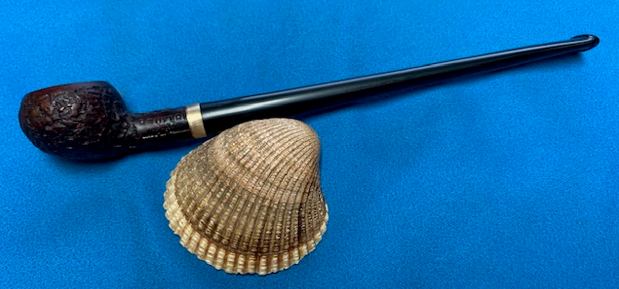
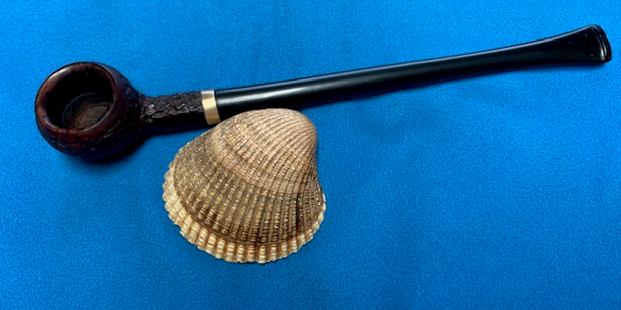
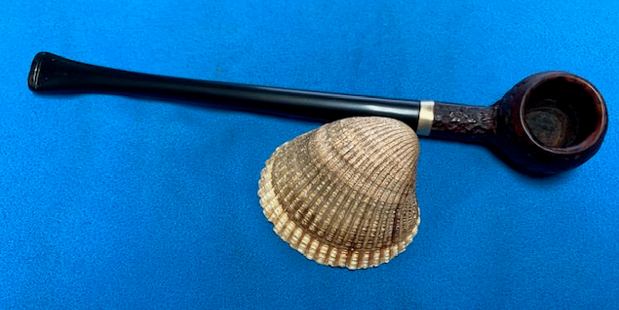
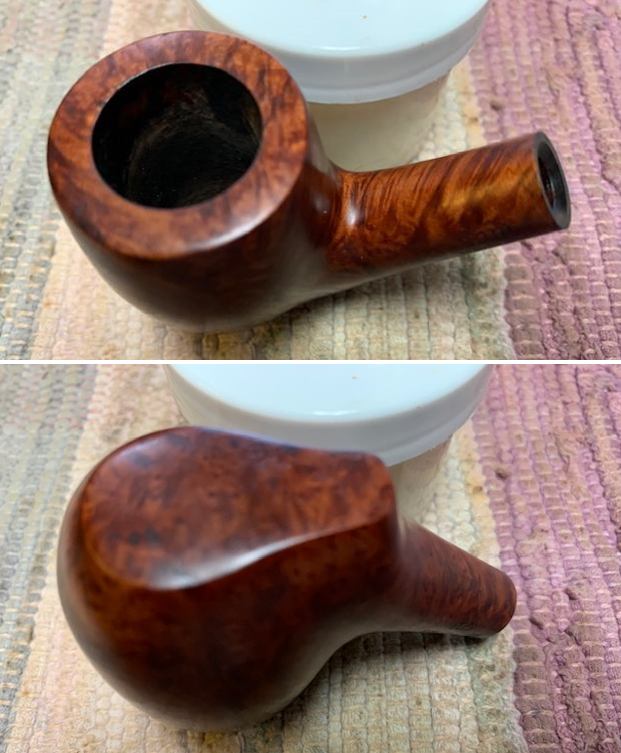
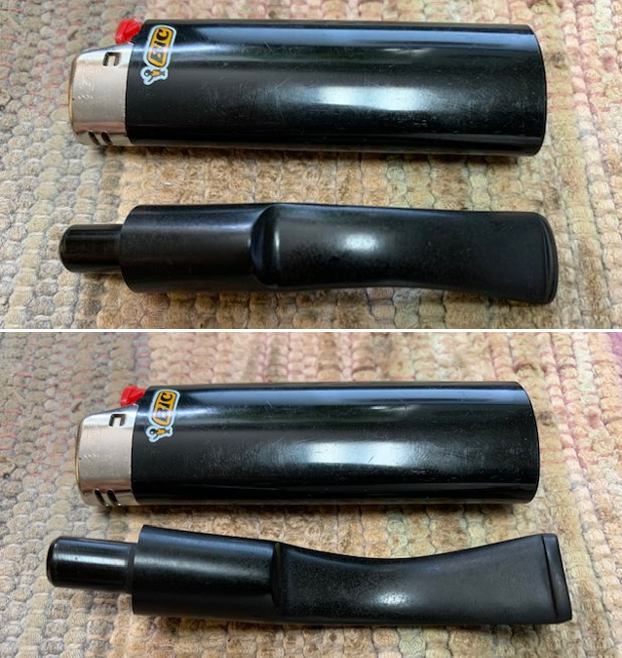
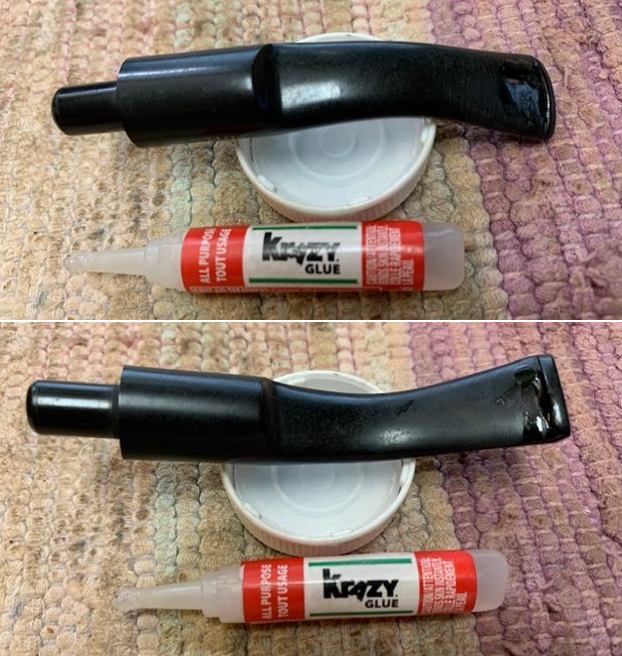
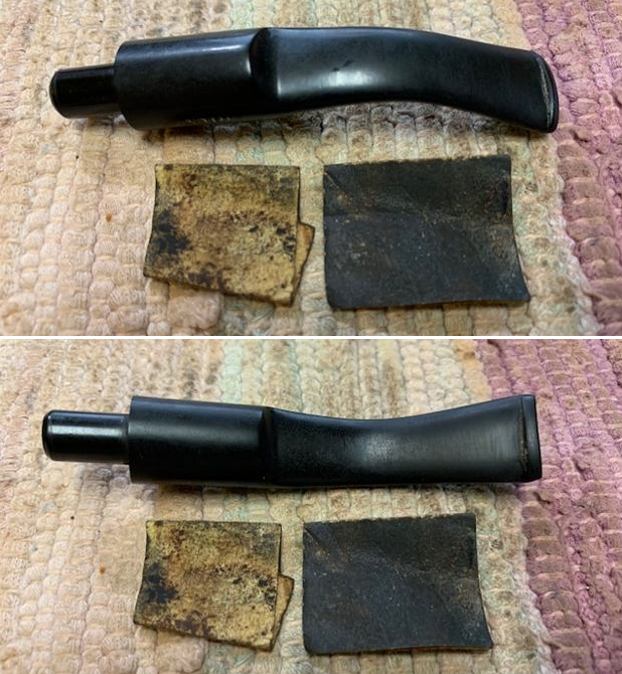
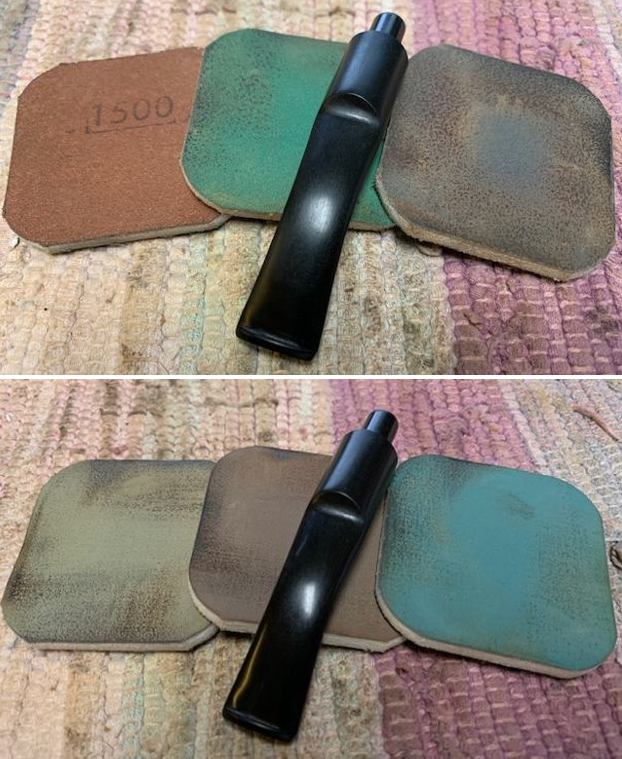
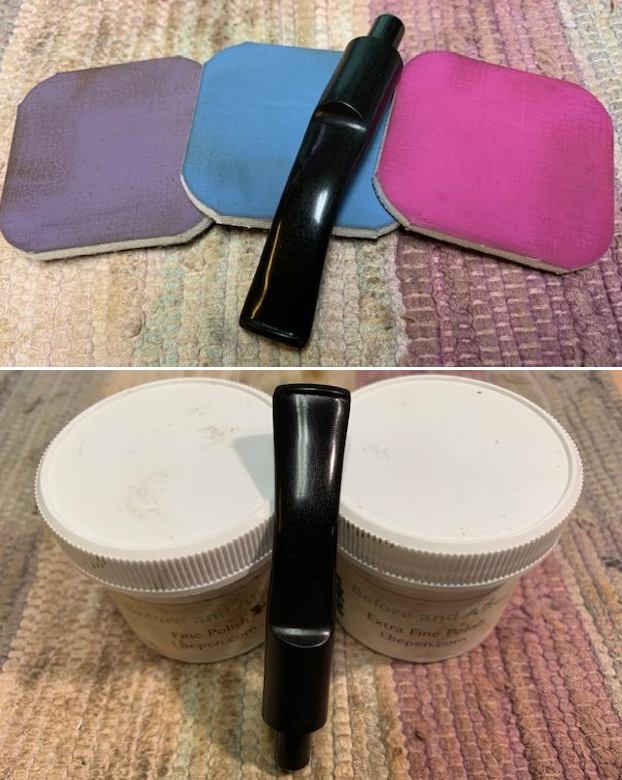
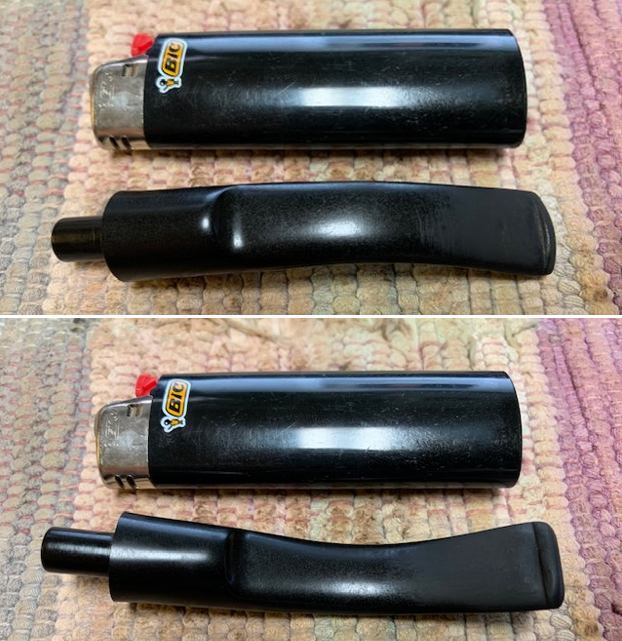
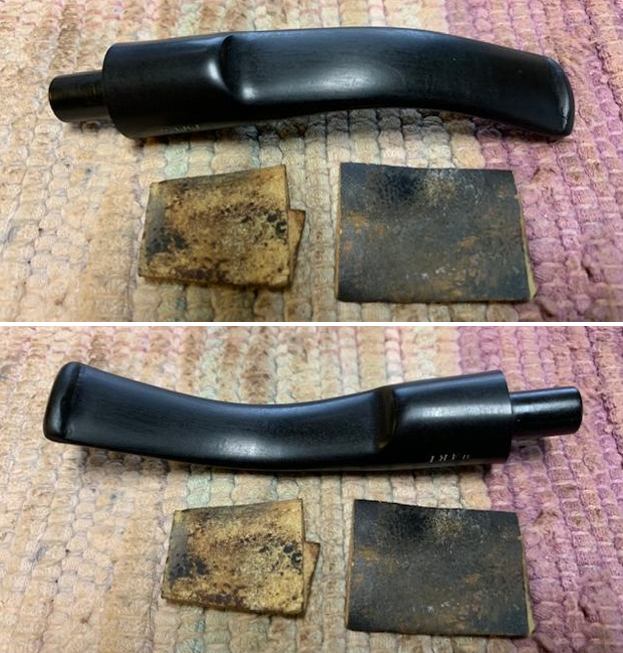
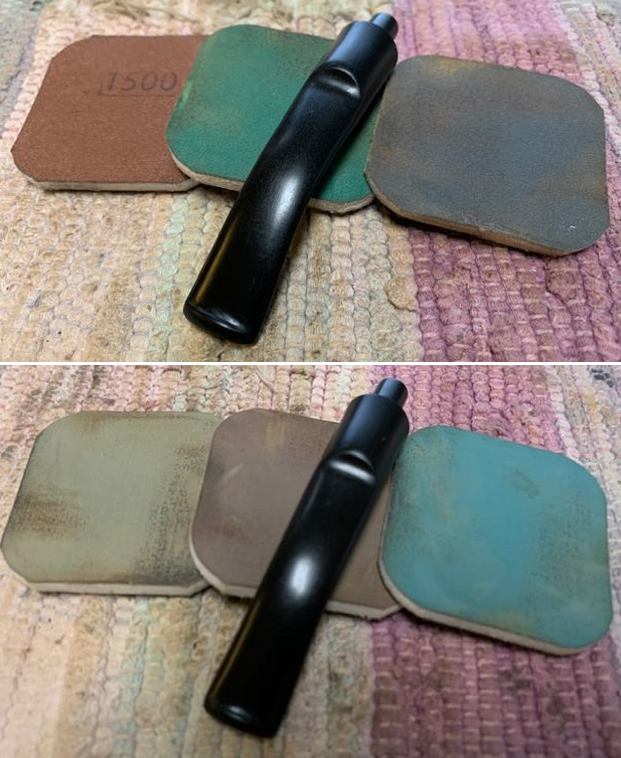
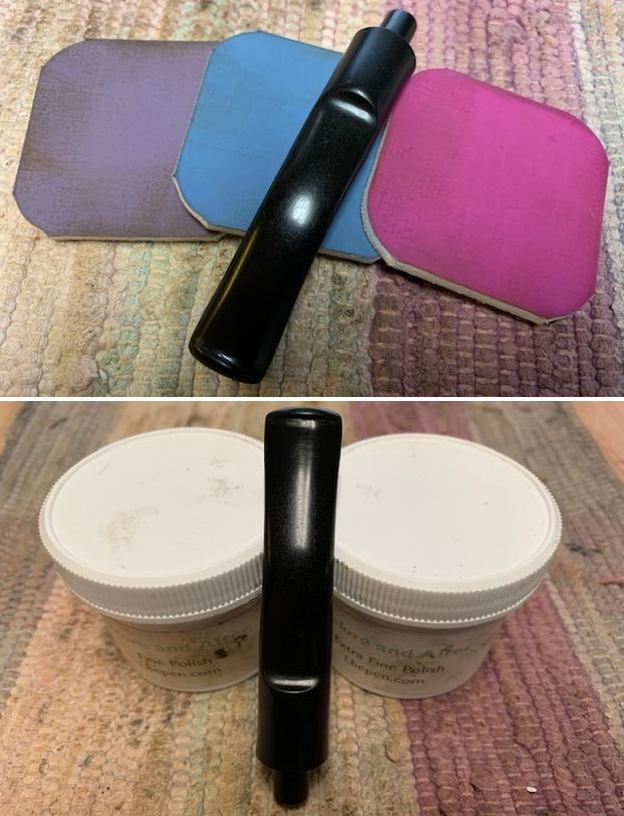
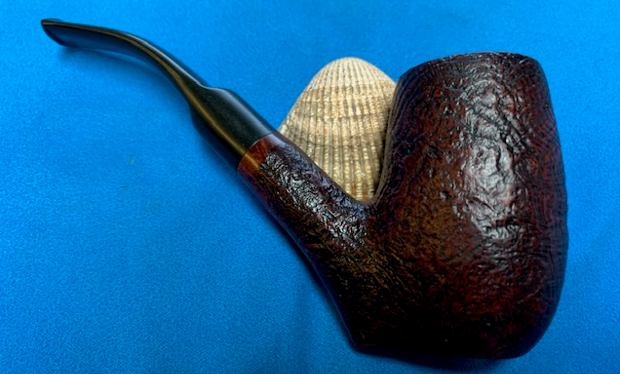
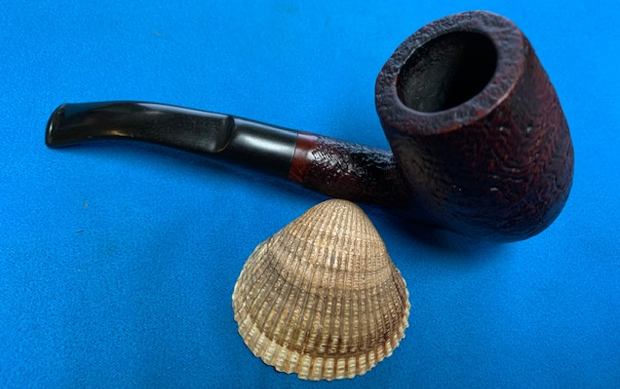
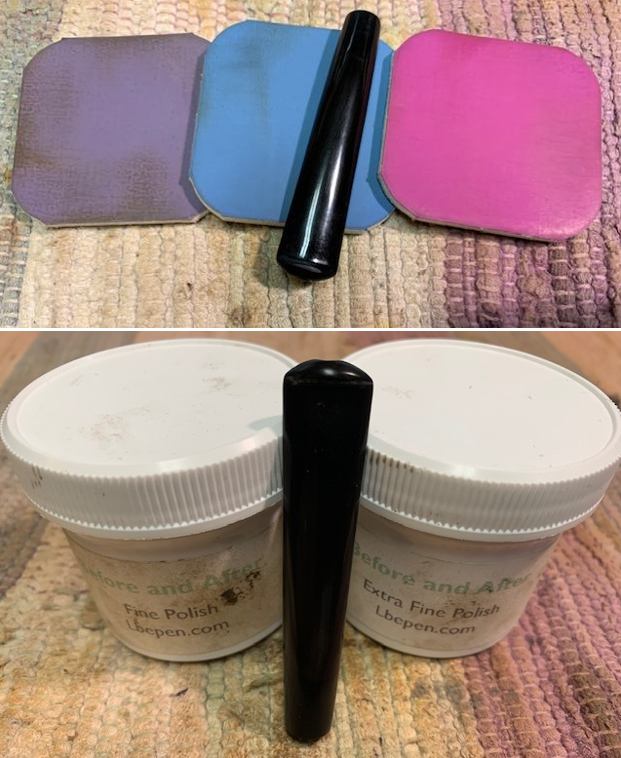
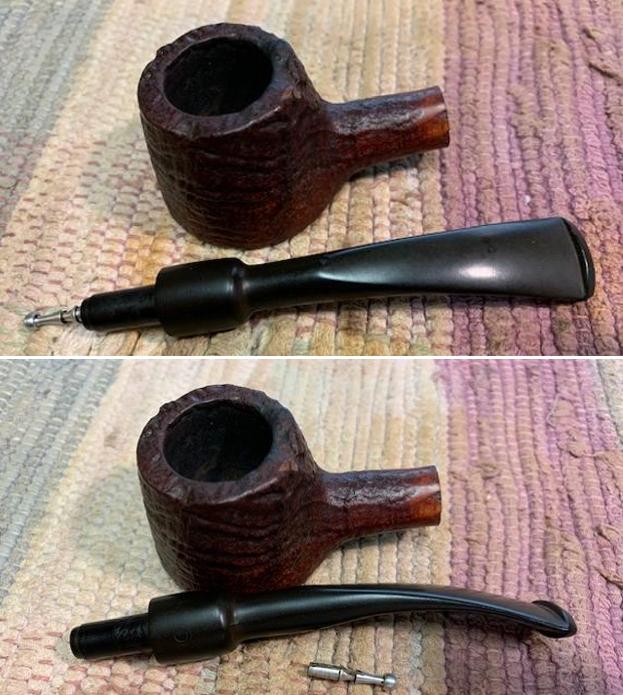
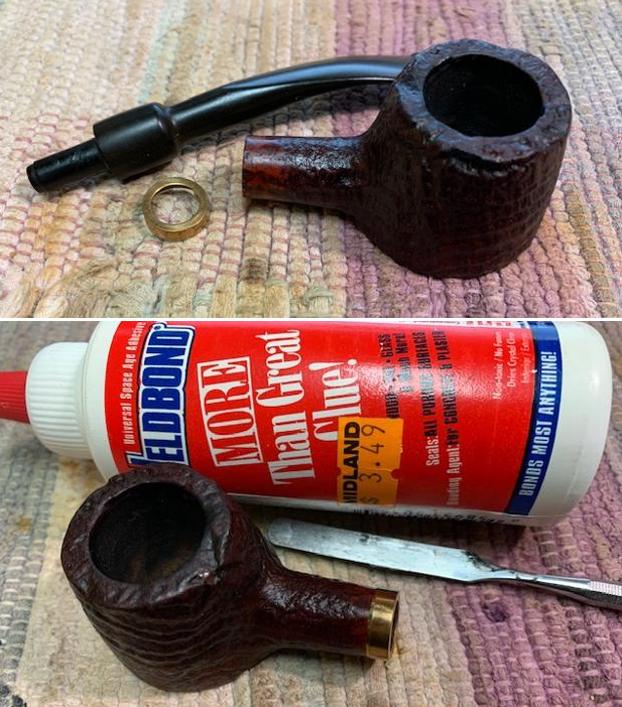
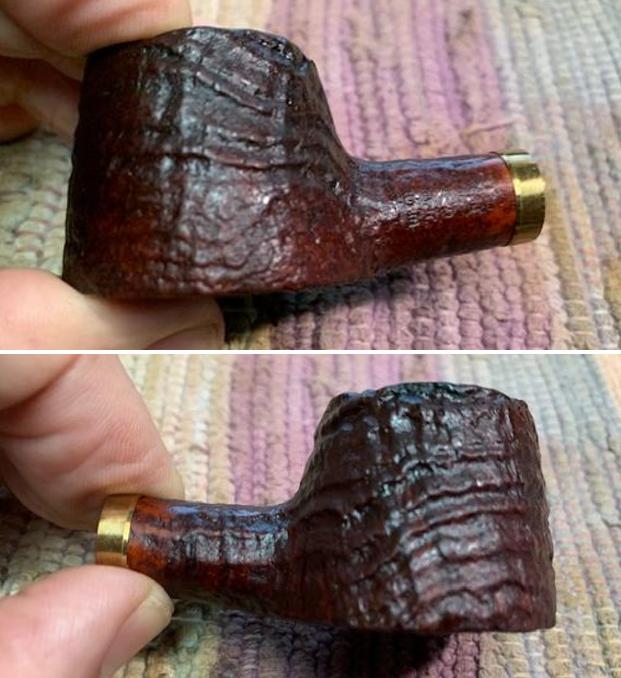
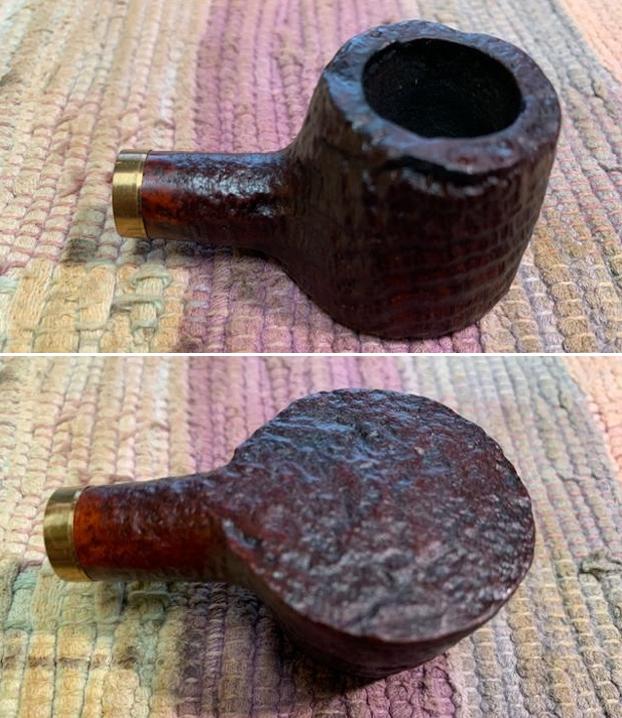
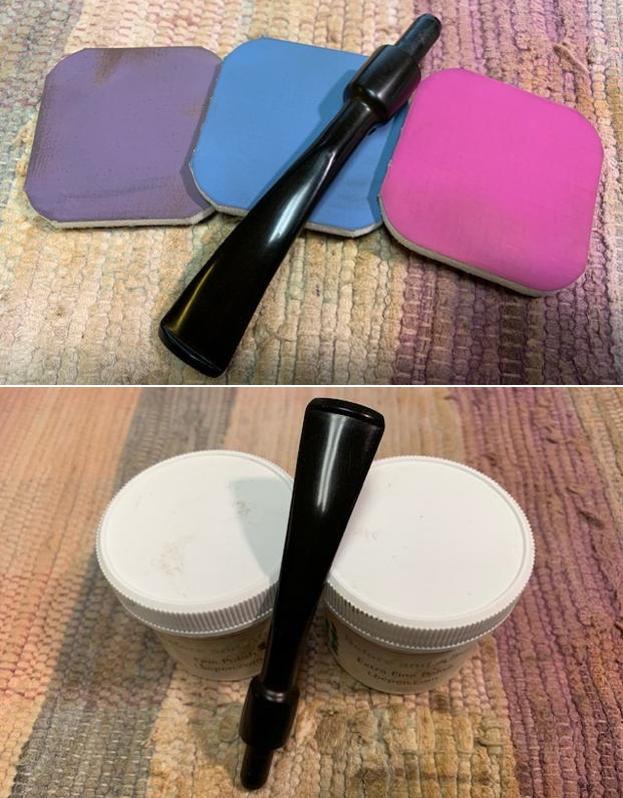
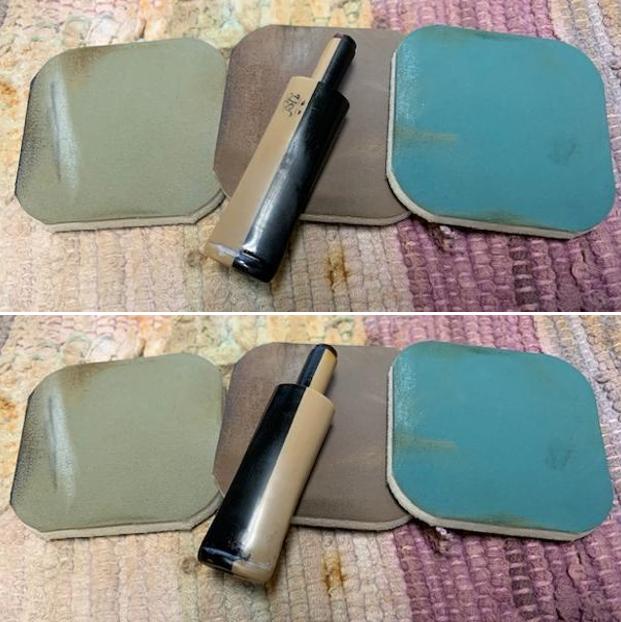
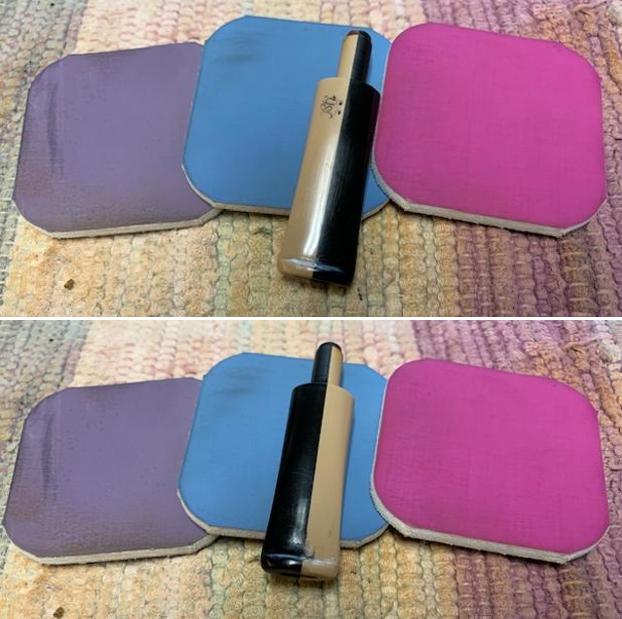
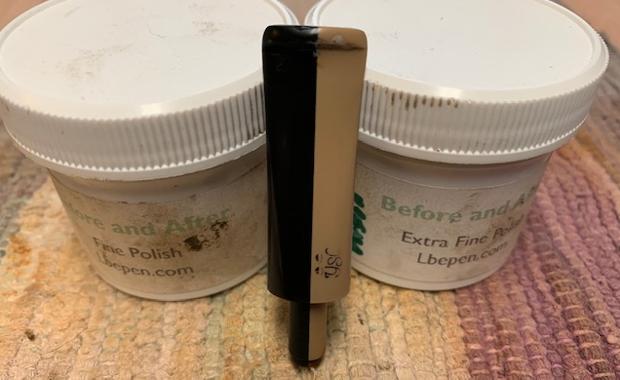
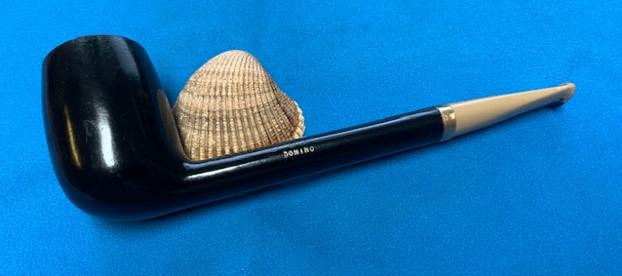
Jeff had cleaned up the pipe following his normal cleaning process. In short, he reamed the bowl with a PipNet pipe reamer and cleaned up the reaming with a Savinelli Fitsall Pipe Knife.  He scrubbed the smooth bowl with undiluted Murphy’s Oil Soap with a tooth brush. He worked over the lava and debris on the rim top and was able to remove it. He rinsed it under running warm water to remove the soap and grime. He cleaned out the inside of the shank and the airway in the stem with alcohol, cotton swabs and pipe cleaners. He scrubbed the stem with Soft Scrub and cotton pads to remove the debris and oils on the stem. He soaked it in a bath of Briarville’s Pipe Stem Deoxidizer to remove the oxidation. He rinsed it with warm water and dried it off. I took photos of the pipe once I received it. It really looked good but I was more convinced than ever that a new stem was needed. I decided that I would work on this stem while I was looking for a new stem.I took close up photos of the stem and the rim top to show both how clean they were and what needed to be addresses with both. The rim top and bowl look good. The edge was clean but there was some damage on the rim top at the front of the bowl. The Churchwarden stem looked better and the tooth marks and chatter were still present. I took a photo of the stamping on the underside of the shank. You can see from the photo that it is readable.I removed the stem from the bowl and took a photo of the parts to give a sense of the beauty of the pipe. I started my work on the pipe by addressing the flaws in the bottom of the bowl. Under a lens there were small sand pits along the line of the CA glue that I filled them with in the photo below. Once the repair cured I sanded it smooth with a folded piece of 220 grit sandpaper to blend it into the surrounding briar. I polished the smooth briar and the vulcanite shank extension with micromesh sanding pads – dry sanding with 1500-4000 grit pads to smooth out the surface of the briar and the repair on the bottom of the bowl. I wiped the bowl down after each sanding pad with a damp cloth to remove the sanding dust. The briar began to take on a shine. I paused after polishing the bowl with the 4000 grit micromesh pad to stain the repair on the bottom of the bowl. I used a Maple stain pen to match the surrounding briar. Once the stain cured I finished polishing the bowl with 6000-12000 grit micromesh sanding pads. The bowl really did begin to shine. I rubbed the bowl down with Before & After Restoration Balm working it into the briar with my finger tips. The product works to clean, revive and protect the briar. I let it sit on the pipe for 10 minutes then buffed it off with a soft cloth.   I set the bowl aside and turned my attention to the stem. I decided to deal with the stem even though I would replace it on the finished pipe. I straightened the churchwarden stem with a heat gun to get the angle more in keeping with the angles of the shank. I sanded out the tooth marks on both sides of the stem at the button with 220 grit sandpaper and started the polishing with 400 grit sandpaper.I polished the stem with micromesh sanding pads – wet sanding it 1500-12000 pads. I wiped it down with some Obsidian Oil each pad to remove the dust and polishing debris. I polished it with Before After Pipe Polish – both Fine and Extra Fine. I gave it a final coat of Obsidian Oil and set it aside to dry. Now that the churchwarden stem was finished I turned my attention to a shorter stem that I shaped to match the one in the photo from smokingpipes.com. I used a stem blank that I shaped with a Dremel and sanding drum. I shaped the saddle above the tenon to flow into the blade of the stem. I also shaped the tenon area to also have the same slope. I wanted  the slope on both sides to match. I used 220 grit sandpaper to smooth out the angles. I took photos of the newly shaped stem in place in the bowl. I like the looks of the pipe with the new stem. I heated the vulcanite with the flame of a lighter to soften the stem and give it a slight bend. The bend fit the angles of the shank and allowed it to sit on the desktop.I put the stem on the pipe and took photos of the pipe with its new stem. I looked very good and the angles were perfect. I liked the way the pipe looked at this point.I polished the new stem with micromesh sanding pads – wet sanding it 1500-12000 pads. I wiped it down with some Obsidian Oil each pad to remove the dust and polishing debris. I polished it with Before After Pipe Polish – both Fine and Extra Fine. I gave it a final coat of Obsidian Oil and set it aside to dry. This is another pipe that I am really happy about the finished restoration. This reborn Stanwell Ivarrson Designed Ukelele turned out really well. I used a blank to shape and craft a new stem for it as the churchwarden stem just did not work well. After restemming I think that it really is a great looking pipe with a great shape and grain. The bowl is flattened volcano shape and the vulcanite shank extension goes well with it. The new vulcanite saddle stem is very close to the original stem that would have come with the pipe when it was new. The polished black of the stem works well with the briar. The briar really came alive with the buffing. The rich brown stains of the finish make the grain really pop with the polishing and waxing. I put the stem back on the bowl and buffed the pipe with Blue Diamond on the buffing wheel. I gave the bowl and the stem multiple coats of carnauba wax on the buffing wheel. I buffed the pipe with a clean buffing pad to raise the shine. I hand buffed the pipe with a microfiber cloth to deepen the shine. The finished Stanwell Design Choice Ukelele really has a unique beauty and feels great in the hand. It looks very good. Give the finished pipe a look in the photos below. The dimensions of the pipe are Length: 6 ¼ inches, Height: 1 ¼ inches, Outside diameter of the bowl: 1 ½ inches, Chamber diameter: 7/8 of an inch. The weight of the pipe is 55 grams/1.98 oz. The pipe will be going on the rebornpipes store soon. It will be in the section on Danish Pipe Makers if you would like to add it to your collection. Thanks for reading this blog and my reflections on the pipe while I worked on it. It was a fun one to work on!
Working on a bit of an odd Bari Special Handcut Freehand


Blog by Steve Laug

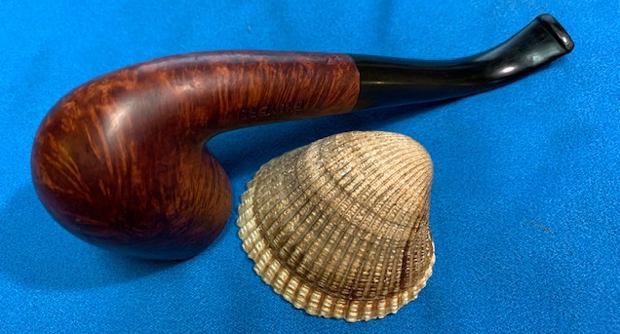
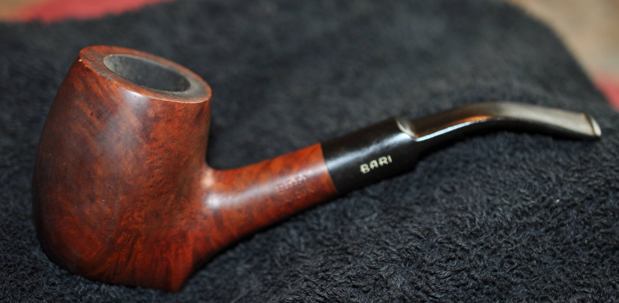
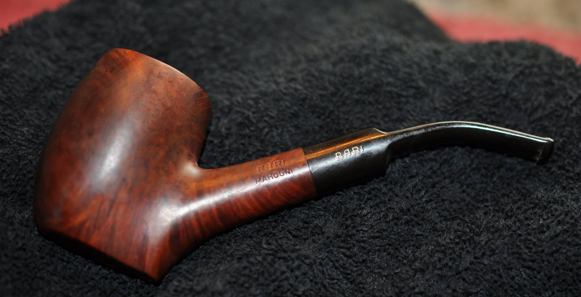
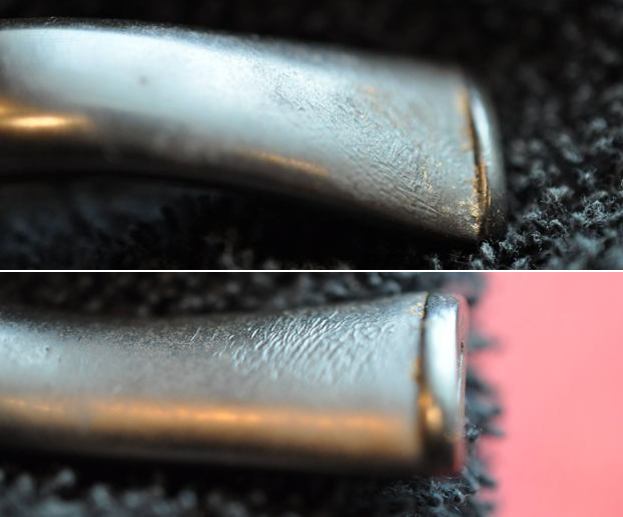
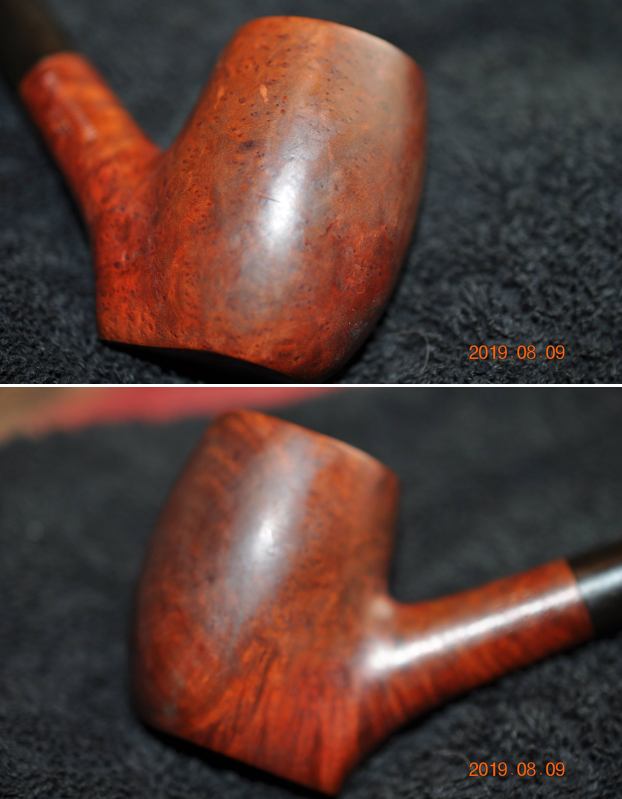
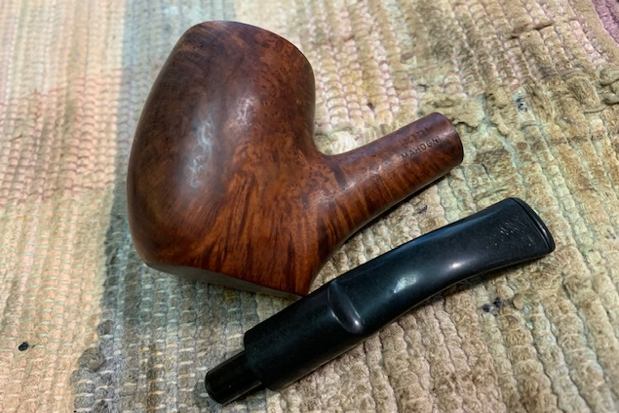
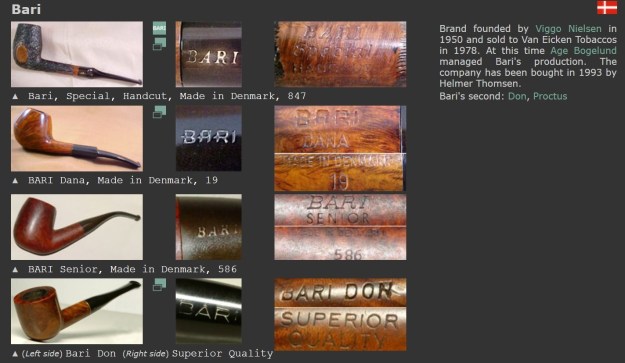
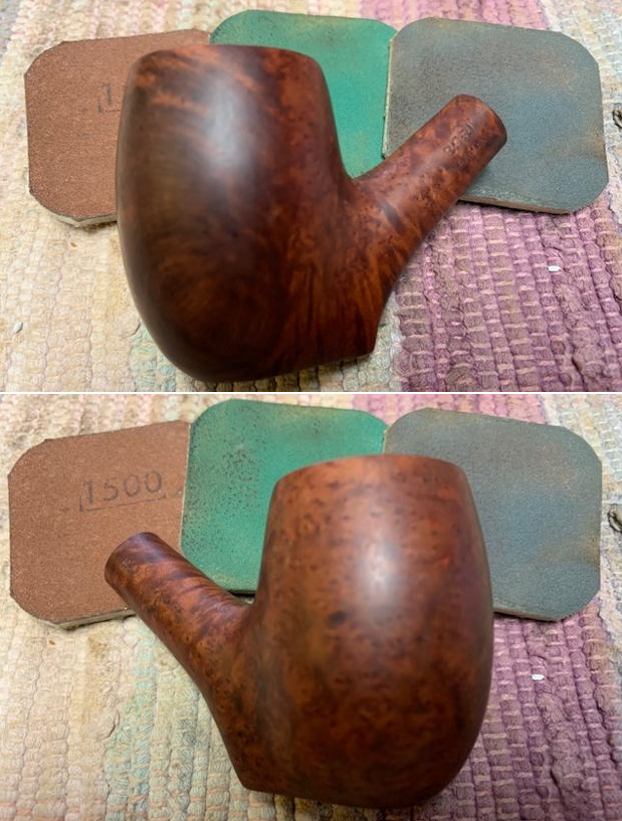
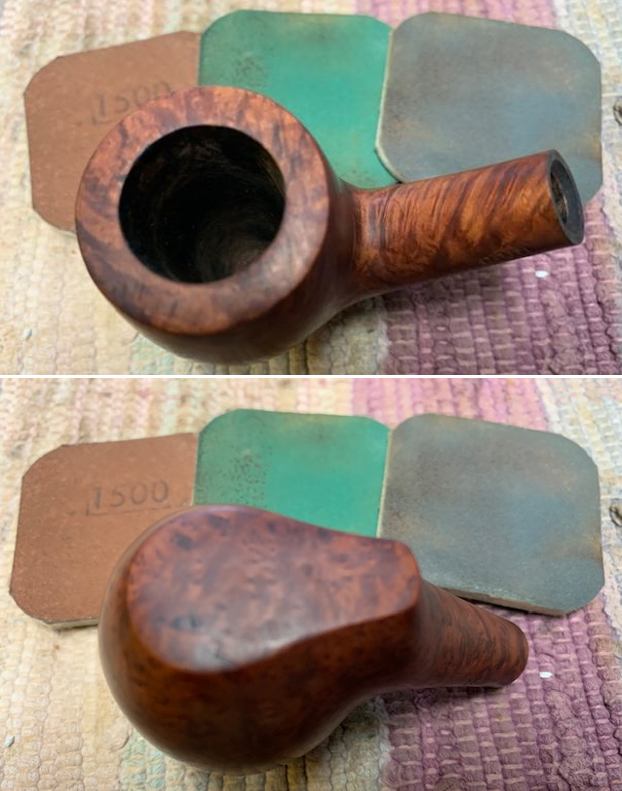
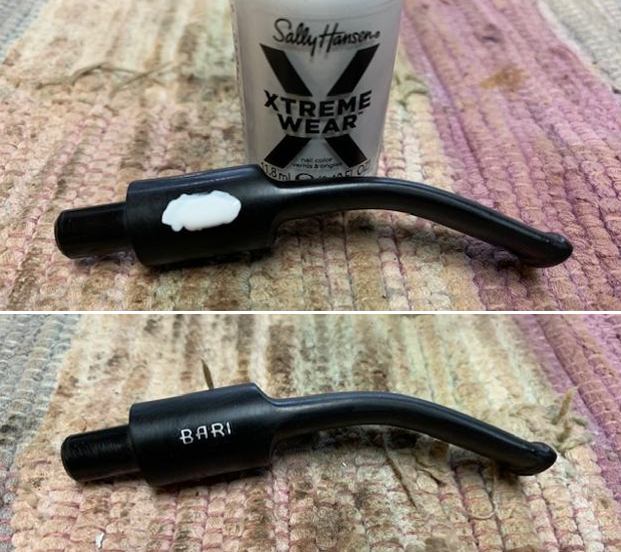
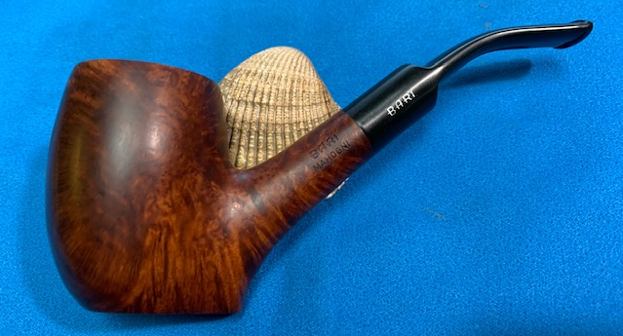
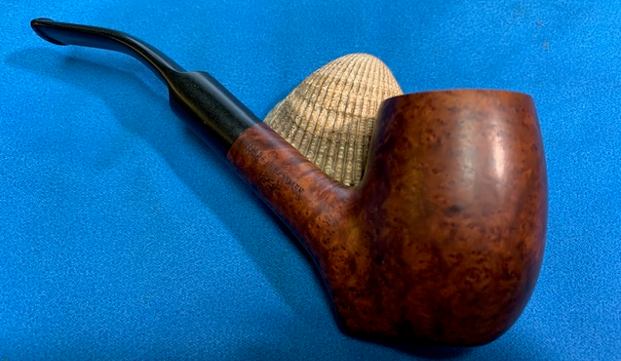
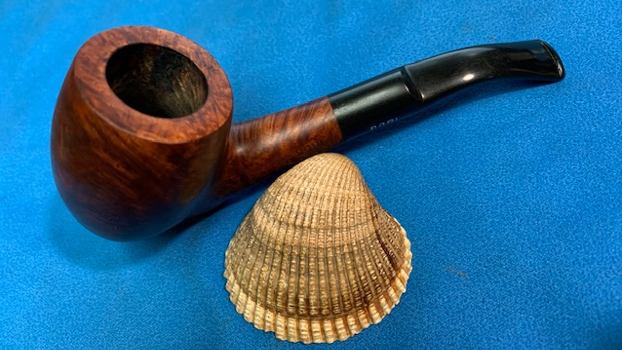
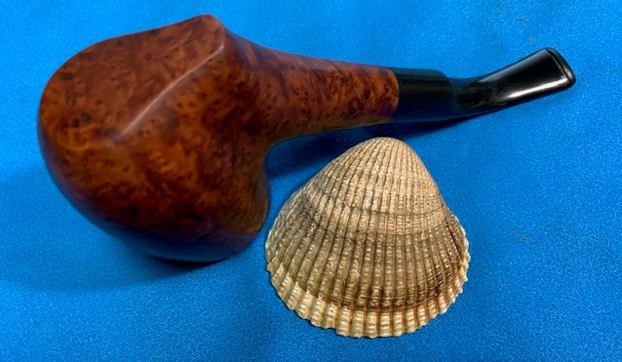
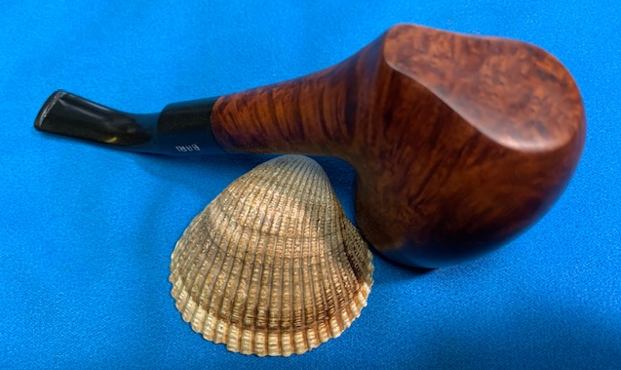
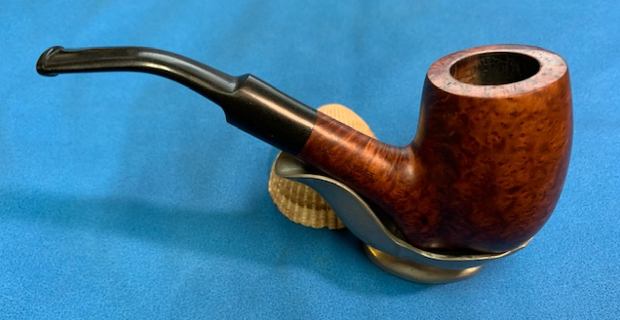
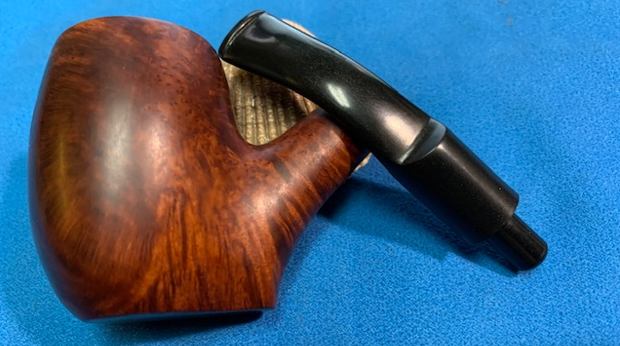
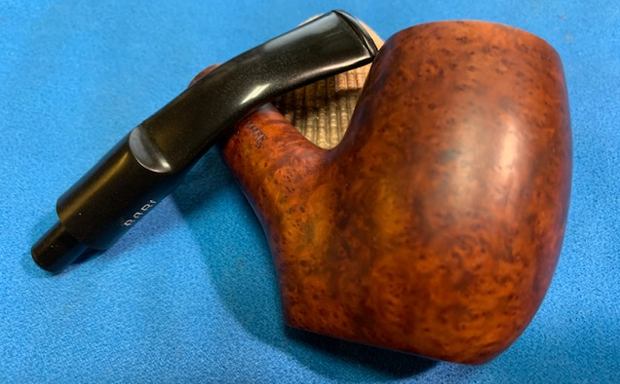
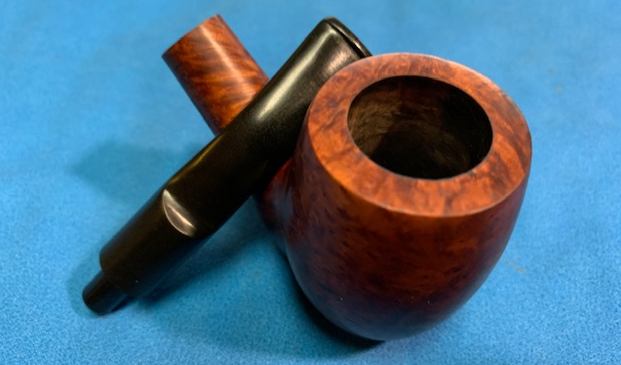
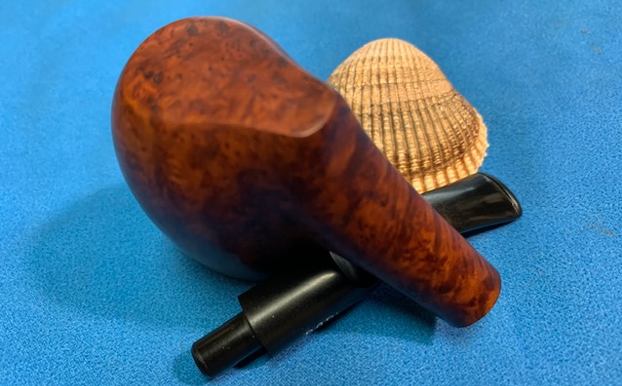
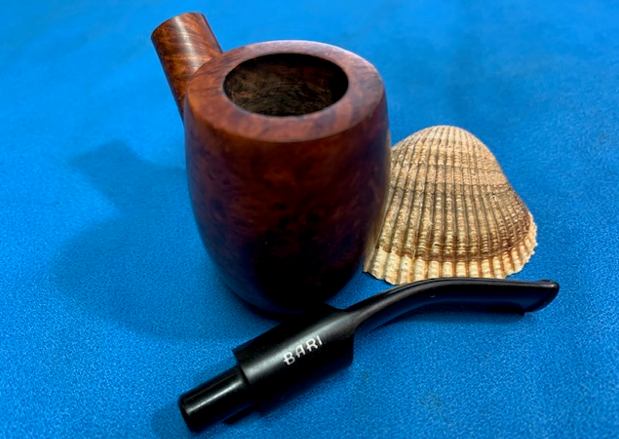
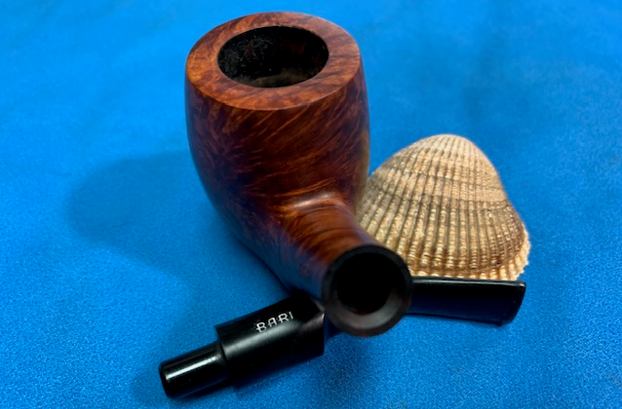
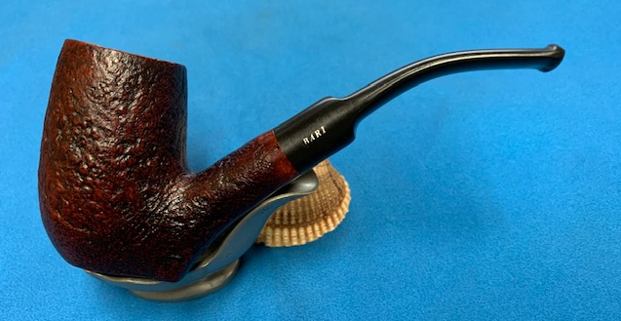
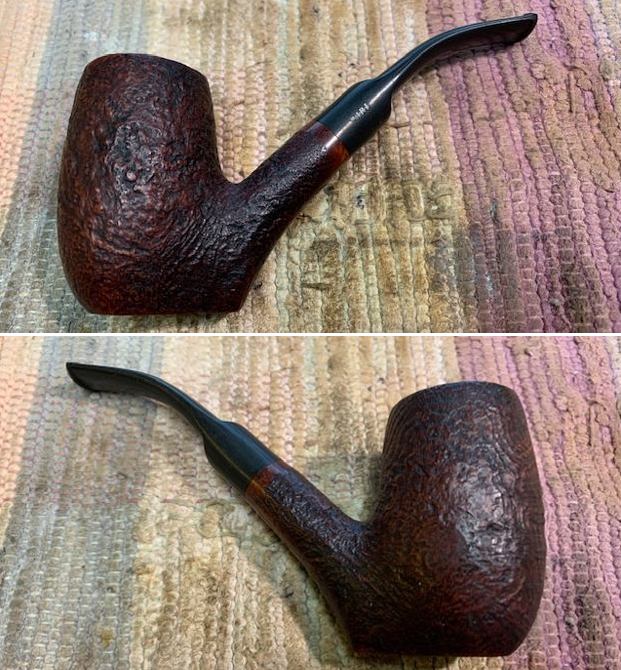
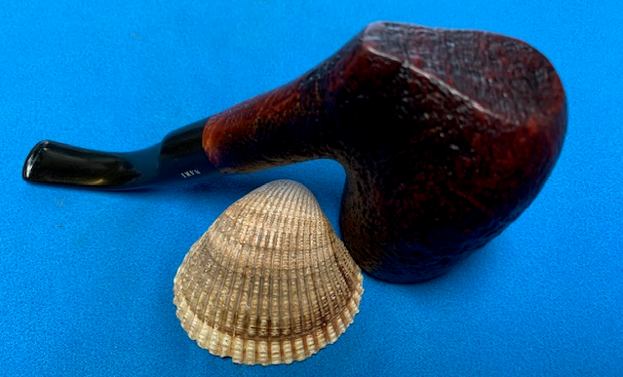
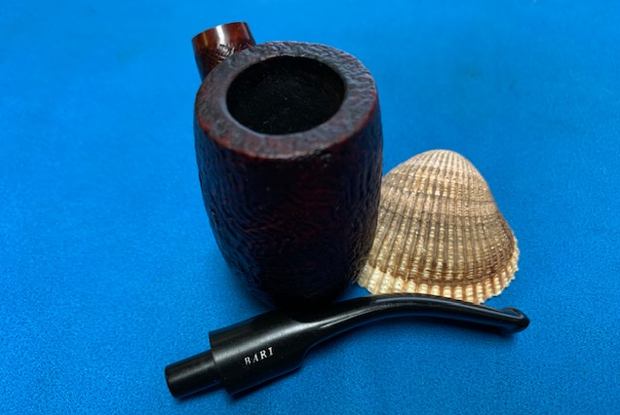
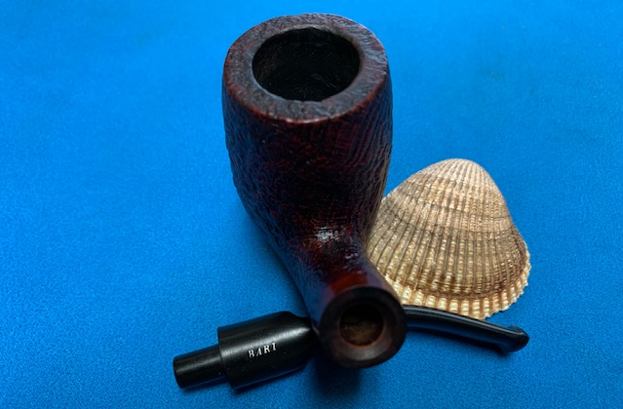
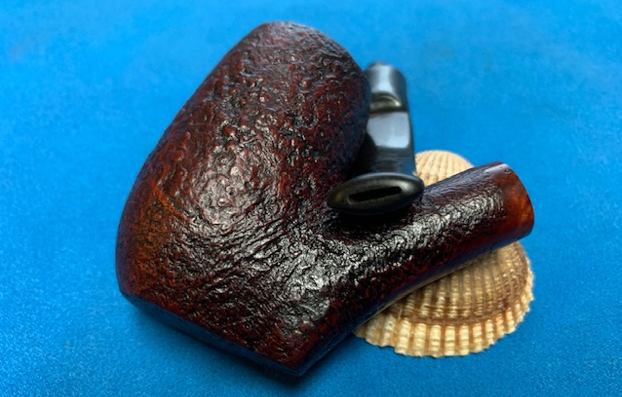
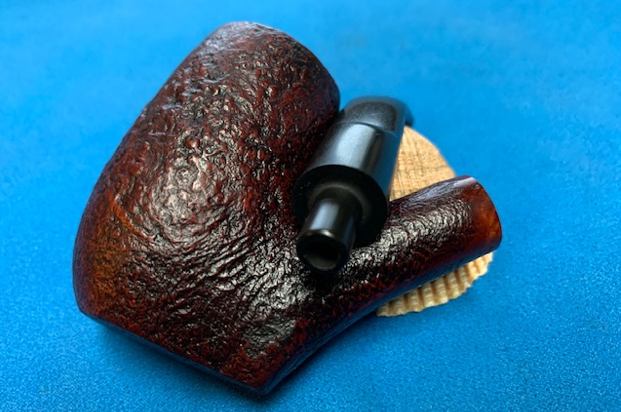
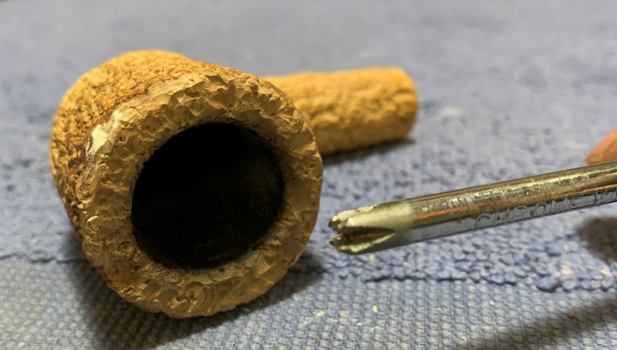
The next pipe on the work table is one that was purchased in 2020 from an auction in Salina, Kansas, USA. It has been here for a while and I am just now getting to it. Work has been demanding so it is slowing down my restoration work a bit. This pipe is a Bari Special Handcut Freehand. It has a really mix of flame and straight grain around the bowl and shank. It was stamped on the sides of the shank. On the left side it reads Bari [over] Special [over] Handcut. On the right side it reads Handmade [over] in Denmark. On the underside of the shank it is stamped with the numbers 72  00. The pipe was dirty with grime ground into the finish. There was a thick cake in the bowl and lava overflow on the plateau rim top. The inner edge of the rim was covered so thickly in lava it was hard to know what was underneath. The square saddled vulcanite stem was oxidized and had tooth marks and chatter ahead of the button on both sides. BARI was stamped on the left side of the fancy saddle stem. Jeff took photos of the pipe before he started his work on cleaning it up for us. Jeff took photos of the rim top and the stem to show the condition of the pipe when we received it. You can see the thick cake in the bowl and the lava on the rim top and inner edge of the bowl. The bowl is square while the chamber is round. The oxidized and calcified vulcanite stem was quite unique and picked up the square angles of the bowl and the shank. It has chatter and deep tooth marks on both sides near the button. He took photos of the sides of the bowl and the heel to give an idea of the shape and the condition of the briar around the bowl. It really is a nicely shaped pipe with some great grain. The next photos Jeff took show the stamping on the sides of the shank. It is clear and readable as noted above. The stem logo is also clear. Jeff took a photo of the partial plateau on the shank end. The top two thirds of the shank end was plateau while the bottom third was smooth. It is quite nice.I worked on a Bari Special Handcut pipe previously so I looked up the blog to refresh myself on the brand a bit (https://rebornpipes.com/2020/07/22/cleaning-up-a-danish-made-bari-special-handcut-b-dublin-freehand/). I quote from the research I did for that pipe below:

I quoted a section from Pipedia on Bari pipes (https://pipedia.org/wiki/Bari). It is good to be reminded of the fact that Viggo Nielsen was the pipe maker.

Pipedia states that Bari Piber was founded by Viggo Nielsen in Kolding, Denmark around the turn of 1950/51. His sons Kai and Jørgen both grew into their father’s business from a very young age and worked there till 1975. Both have become successful pipe makers.
Bari successfully adapted the new Danish design that had been started mainly by Stanwell for its own models. Bari was sold in 1978 to Van Eicken Tobaccos in Hamburg, Germany though the pipes were still made in Denmark. From 1978 to 1993 Åge Bogelund and Helmer Thomsen headed Bari’s pipe production.
Helmer Thomson bought the company in 1993 re-naming it to “Bari Piber Helmer Thomsen”. The workshop moved to more convenient buildings in Vejen. Bogelund, who created very respectable freehands of his own during the time at Bari got lost somehow after 1993. Bari’s basic conception fundamentally stayed the same for decades: series pipes pre-worked by machines and carefully finished by hand – thus no spectacular high grades but solid, reliable every day’s companions were what they turned out. The most famous series are the smooth “Classic Diamond” and the blasted “Wiking”.

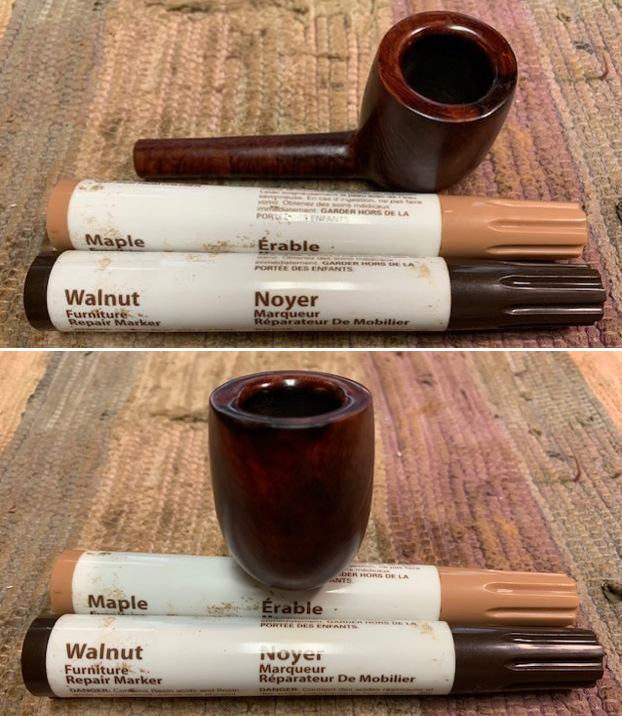
I did a quick look at Pipephil’s site (http://www.pipephil.eu/logos/en/logo-b1.html) and did a screen capture of the section on Bari pipes.Jeff had cleaned up the pipe following his normal cleaning process. In short, he reamed the bowl with a PipNet pipe reamer and cleaned up the reaming with a Savinelli Fitsall Pipe Knife. He scrubbed the smooth bowl with undiluted Murphy’s Oil Soap with a tooth brush. He worked over the lava and debris on the rim top and was able to remove it. He rinsed it under running warm water to remove the soap and grime. He cleaned out the inside of the shank and the airway in the stem with alcohol, cotton swabs and pipe cleaners. He scrubbed the stem with Soft Scrub and cotton pads to remove the debris and oils on the stem. He soaked it in a bath of Briarville’s Pipe Stem Deoxidizer to remove the oxidation. He rinsed it with warm water and dried it off. I took photos of the pipe once I received it. It really looked good however, surprisingly there were a number of fills around the shank and bowl. I took close up photos of the stem and the rim top to show both how clean they were and what needed to be addresses with both. The rim top and bowl look good. The edge was clean but there was some burn damage on the rim top at the back of the bowl. The stem looked better and the tooth marks and chatter were still present.I took a photo of the stamping on the sides of the shank. You can see from the photos that it is readable. I removed the stem from the bowl and took a photo of the parts to give a sense of the beauty of the pipe. I started my work on the pipe by addressing the damage to the back of the plateau rim top. Notice that it is burned but the grooves and crevices are still present. I cleaned it up with a brass bristle wire brush to remove as much of the loose char as possible. Once it was clean I used several burrs on my Dremel to redefine the grooves and crevices in the plateau at the back of the rim top. Once I was finished I was happy with the look or the rim top. I restained the rim top with a black stain pen to match the plateau on the shank end. I polished the smooth briar with micromesh sanding pads – dry sanding with1500-4000 grit pads to smooth out the surface of the briar and the noticeable fills around the shank and bowl. I wiped the bowl down after each sanding pad with a damp cloth to remove the sanding dust. The briar began to take on a shine. I paused after polishing the bowl with the 4000 grit micromesh pad to stain the fills around the sides of the shank and bowl. I used a Walnut stain pen to match the surrounding briar. Once the stain cured I finished polishing the bowl with 6000-12000 grit micromesh sanding pads. The bowl really did begin to shine. I rubbed the bowl down with Before & After Restoration Balm working it into the briar with my finger tips and into the plateau on the shank end and rim top with a horsehair shoe brush. The product works to clean, revive and protect the briar. I let it sit on the pipe for 10 minutes then buffed it off with a soft cloth. I set the bowl aside and turned my attention to the stem. I “painted” the stem surface with the flame of a lighter to lift the deep tooth marks in the vulcanite. Since vulcanite has “memory” I was able to lift the marks on the top and underside of the stem significantly. There were a few that did not lift completely so I filled them in with clear CA glue and set the stem aside to cure. Once the repairs cured I sanded it with 220 grit sandpaper to blend them into the surface and started polishing the stem with 400 grit wet dry sandpaper. I polished the stem with micromesh sanding pads – wet sanding it 1500-12000 pads. I wiped it down with some Obsidian Oil each pad to remove the dust and polishing debris. I polished it with Before  After Pipe Polish – both Fine and Extra Fine. I gave it a final coat of Obsidian Oil and set it aside to dry. This is another pipe that I am really happy about the finished restoration. This Odd Bari Special Handcut Freehand 72 00 turned out beautifully. It really is a great looking pipe with a great shape and rugged plateau rim top and shank end. The bowl is almost square and the shank is the same with virtually the same angles as the bowl from bottom to top. The unique vulcanite saddle stem carries on the shape to the end. The polished black of the stem works well with the briar. The briar really came alive with the buffing. The rich black and brown stains of the finish make the grain really pop with the polishing and waxing. I put the stem back on the bowl and buffed the pipe with Blue Diamond on the buffing wheel using a light touch on the briar. I gave the bowl and the stem multiple coats of carnauba wax on the buffing wheel. I buffed the pipe with a clean buffing pad to raise the shine. I hand buffed the pipe with a microfiber cloth to deepen the shine. The finished Bari Special Freehand really has a unique beauty and feels great in the hand. It looks very good. Give the finished pipe a look in the photos below. The dimensions of the pipe are Length: 6 ½ inches, Height: 2 ¼ inches, Outside diameter of the bowl: 1 ¾ inches long x 1 ½ inches wide, Chamber diameter: ¾ of an inch. The weight of the pipe is 70 grams/2.47 oz. The pipe will be going on the rebornpipes store soon. It will be in the section on Danish Pipe Makers if you would like to add it to your collection. Thanks for reading this blog and my reflections on the pipe while I worked on it. It was a fun one to work on!
Breathing Life into a Tired Looking Bjarne Hand Carved Freehand


Blog by Steve Laug

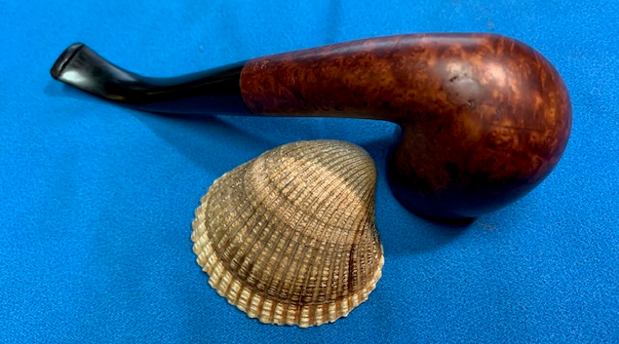
This particular Freehand pipe is another one that came in a lot that Jeff and I purchased on early in 2020 from a woman in Australia who had contacted us about selling her late husband’s collection. He had some beautiful pipes in his estate and this was another of them. It is stamped on the underside of the shank and reads Bjarne [over] Hand Carved [over] In Denmark. It is a smooth finish pipe with some interesting carved feathers (leaves) on the right side of the shank and the bowl. The rim top and shank end are finished in rugged plateau. The pipe had a thick cake in the bowl and there was a thick coat of lava on the smooth bevel of the rim and into the plateau. The rest of the plateau on the rim top and shank end was clogged with dust and debris in the valleys and crevices. The original orange variegated acrylic saddle stem had the Bjarne Bj logo on the top of the blade. It was dirty inside and out and had tooth marks and chatter on both sides near the button. The pipe was dirty but still had a unique beauty. Jeff took photos of the pipe before he started his work on it. Jeff took photos of the rim top and the stem to show the condition of the pipe when we received it. You can see the cake in the bowl and the build up of lava and debris in the plateau of the rim top and shank end. I really is a dirty pipe. The variegated orange acrylic stem and has chatter and a few deep tooth marks on both sides near the button. He took photos of the sides of the bowl and the heel to give an idea of the shape and the condition of the briar around the bowl. It really is a nicely shaped pipe that has a great finish under the grime on the briar. The next photos Jeff took show the stamping on the underside of the shank. It is clear and readable as noted above. He also took a photo to show the stem logo. In a previous blog I had researched the brand quite a bit. I have included it in full below for information on this pipe (https://rebornpipes.com/2020/03/07/another-pipe-from-the-eastern-canada-lot-a-hand-carved-bjarne-freehand/). I quote:

I turned my favourite go to sites on background of brands. The first is Pipephil’s site (http://www.pipephil.eu/logos/en/logo-b5.html). There I looked up the Bjarne brand. I have copied the pertinent information below.

Bjarne Nielsen (1941 – † 2008) distributed his own “Bjarne” brand and pipes carved by Danish pipemakers (Mogens Johansen, Tonni Nielsen or Ph. Vigen). High grade pipes were stamped “Bjarne Nielsen” without any logo on the mouthpiece and graded A, B, C and D. Bjarne second brand: Viking.

I have included a screen capture of the section on the brand below.I turned to Pipedia and looked up the brand for a bit more information on the pipes that were stamped like the one that I am working on (https://pipedia.org/wiki/Bjarne). Toward the end of the article I found what I was looking for. I quote:

Among the pipemakers that worked for Bjarne were Johs (for the lower priced high volume pieces), and makers like Ph. Vigen, Ole Bandholm and Tonni Nielsen for high grade pieces. The cheaper line was stamped “Bjarne” while the highest grades were stamped “Bjarne Nielsen” (never with the pipemakers’ name) and graded, from highest to lowest, by the letters: AX, A, B, C, D, E, F, G, H, I, and J.

Now I knew that I was dealing with the cheaper line of pipe made by the company. It was stamped Bjarne while the higher grade pipes were stamped Bjarne Nielsen with a grade stamp.

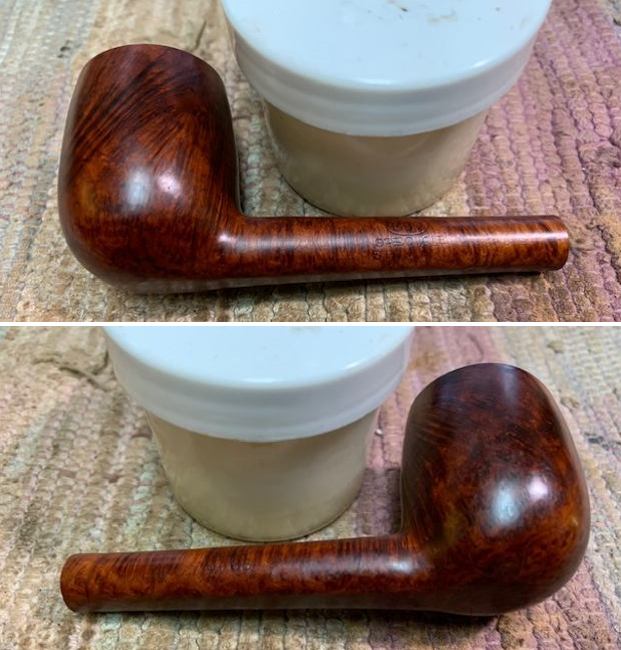
Jeff did a great job cleaning off the debris and grime on this old. He reamed it with a PipNet reamer and smoothed the walls of the bowl with a Savinelli Fitsall pipe knife. He scrubbed out the mortise and the airway in the shank and the stem with alcohol, cotton swabs and pipe cleaners. He scrubbed the exterior of the bowl, rim and shank with a tooth brush and Murphy’s Oil Soap to the oils and tars on the bowl, rim and shank. He rinsed it under running water. He dried it off with a soft cloth. Once the grime was removed the finish underneath was in stellar condition. The rich patina of the older briar was a variegated finish of smooth and sandblast looked great. He scrubbed the exterior of the stem with Soft Scrub then soaked it in a bath of Briarville’s Pipe Stem Deoxidizer. He rinsed off the deoxidizer with warm water and wiped the bowl and stem down with a light coat of olive oil to rehydrate both. The pipe really was quite stunning. I took photos of the pipe to show its condition before I started my work on it. I took close up photos of the stem and the rim top to show both how clean they were. The rim top and bowl were in good condition with some darkening on the inner bevel of the bowl edge and rim top. The stem looked better but the deep tooth marks and chatter were still present. I would need to remove those to bring the stem back.I took a photo of the stamping on the underside of the shank. You can see from the photo that it is readable. It is clearer on the top half of the stamp than the lower but it is still readable.I removed the stem from the bowl and took a photo of the parts to give a sense of the beauty of the pipe. I started my work on this pipe by addressing the darkening on the rim top and bowl edge. I sanded the edge bevel with a folded piece of 220 grit sandpaper to smooth out the edge and to reduce the darkening. It looked better when I  had finished.I polished the briar with micromesh sanding pads – dry sanding with 1500-12000 grit pads. I wiped the bowl down after each pad with a damp cotton cloth. The briar took on a shine by the last pads.I worked some Before & After Restoration Balm into the surface of the briar with my finger tips and a horse hair shoe brush to get into the crevices of the plateau rim top and shank end. The product is incredible and the way it brings the grain to the fore is unique. It works to clean, protect and invigorate the wood. I set the bowl aside and turned my attention to the stem. I filled in the deep tooth marks on the surface of both sides with clear CA glue. Once it cured, I sanded them smooth with 220 grit sandpaper to blend them into the surface of the briar. I started the polishing of the stem with 400 grit wet dry sandpaper. I polished the stem with micromesh sanding pads – wet sanding it 1500-12000 pads. I wiped it down with a damp cloth after each pad to protect it and preserve it. I polished it with Before After Pipe Polish – both Fine and Extra Fine. I am really happy with the way that this Bjarne Hand Carved Freehand turned out. It really is a beautiful looking pipe with a unique shape and smooth, plateau and carved finishes. The fancy original acrylic saddle stem is really nice. The briar really came alive with the buffing. The rich brown and black stains of the finish gave the pipe a sense of depth with the polishing and waxing. I put the stem back on the bowl and carefully buffed the pipe with Blue Diamond on the buffing wheel using a light touch on the briar. I gave the bowl and the stem multiple coats of carnauba wax on the buffing wheel. I buffed the pipe with a clean buffing pad to raise the shine. I hand buffed the pipe with a microfiber cloth to deepen the shine. The finished Bjarne Freehand really is a beauty and feels great in the hand and looks very good. Give the finished pipe a look in the photos below. The dimensions of the pipe are Length: 7 inches, Height: 2 ½ inches, Outside diameter of the bowl: 2 ½ inches long x 2 inches wide, Chamber diameter: 7/8 of an inch. The weight of the pipe is 88 grams/3.10 oz. The pipe will be going on the rebornpipes store soon. It will be in the section on Danish Pipe Makers if you would like to add it to your collection. Thanks for reading this blog and my reflections on the pipe while I worked on it. It was a fun one to work on!
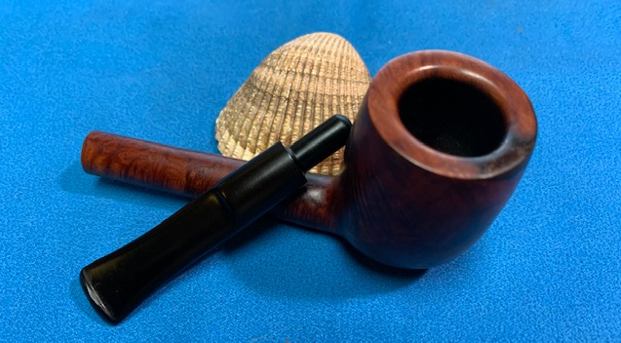
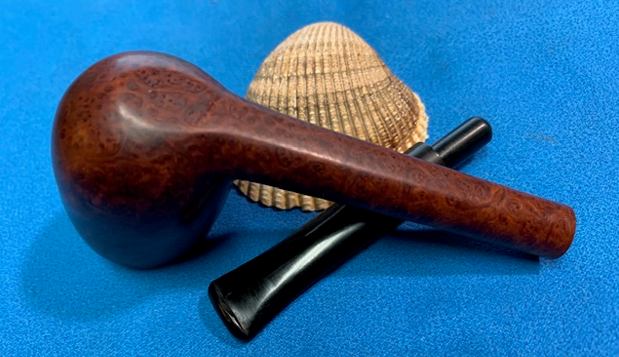
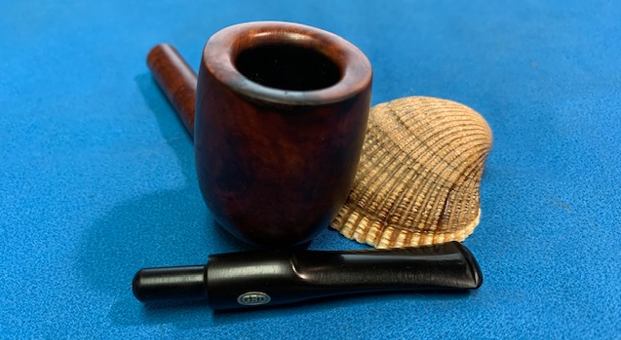
Finally a Preben Holm Crown Hand Made Standing Freehand…and then I saw this!


Blog by Steve Laug

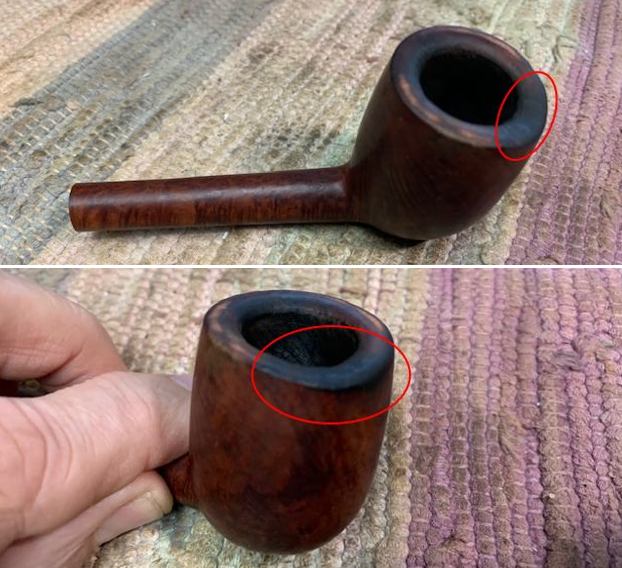
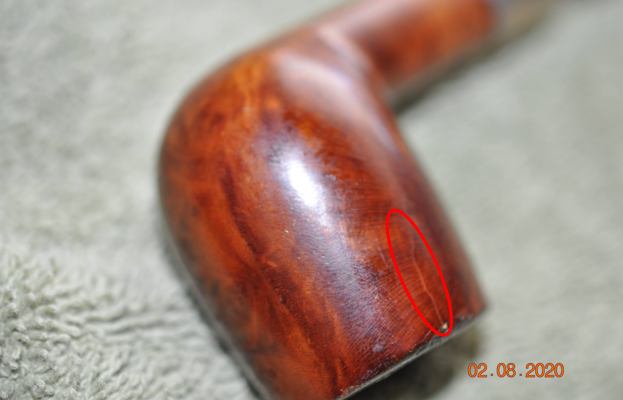
I have worked on many Preben Holm pipes over the years in many of his lines – Danish Pride, Monte Verde, Ben Wade and even his Walnut line which was a bit more classic in shape. I have always enjoyed his take on the flow of the pipe and how well he follows the way the grain takes him shaping his work. I have never worked on one that bore the Preben Holm Crown stamp on the shank. This particular smooth finished Freehand pipe was purchased from an auction in 2020 in Salina, Kansas, USA. It really is a filthy pipe though underneath all the grime it is a beautiful looking Freehand pipe that stands. It combines a plateau rim top and shank end with a smooth finish on the bowl and shank. It is stamped on the underside of the shank and reads Preben Holm [over] Crown [over] Hand Made [over] In [over] Denmark. The classic walnut finish is incredibly dirty but I was excited about it being a Crown – until Jeff mentioned to me that there was a hairline crack on the heel of the bowl! The bowl had a thick cake lining the walls and overflowing onto the plateau rim top in thick lava. It filled in the inner edge of the bowl and the rim top. It was a mess! There was grime ground into the smooth, grooved finish and dust and debris in the plateau valleys on the shank end.The turned vulcanite saddle had a twist in the saddle and had a faint Crown stamp on the topside. It had deep tooth marks and chatter on both sides near the button. The pipe must have been a great smoker judging from the condition it came it. Jeff took photos of the pipe before he started his work on it. Jeff took photos of the rim top and the stem to show the condition of the pipe when we received it. You can see the thick coat I the bowl and the heavy lava on the plateau rim top and inner edge of the bowl. The plateau on the shank end is also filthy. The turned vulcanite stem and has chatter and a few deep tooth marks on both sides near the button. He took photos of the sides of the bowl and the heel to give an idea of the shape and the condition of the briar around the bowl. The third photo below that shows the flat bottom of the heel shows a hairline crack from the back edge inward for about ½ inch and down into the groove about ¼ inch. I have circled it in red in the photo below. Certainly depressing but fixable! It has a shape that truly reflects the style and process of grain chasing that Preben Holm was famous for in his pipemaking. The next photo Jeff took shows the stamping on the underside of the  shank. It is clear and readable as noted above.I turned first to Pipephil to see what I could find about the Crown line of pipes and get some background (http://pipephil.eu/logos/en/logo-p5.html). I have included the photo capture below as it shows the look of the stamping and logo on the pipe I am working on.I turned then to Pipedia and read the listing on the brand to refresh my memory and flesh out the knowledge of the brand (https://pipedia.org/wiki/Holm,_Preben) and the article on Ben Wade (https://pipedia.org/wiki/Ben_Wade). I quote the portion of the Ben Wade article that summarizes the Danish period of the history of the brand:

Young Copenhagen master pipemaker Preben Holm had made a meteoric career heading a pipe manufacture employing 45 people at the age of 22! But around the turn of 1970/71 he was in major financial difficulties. His US distributor, Snug Harbour Ltd. in New York City, left him in the lurch. Holm had three unpaid invoices on his desk and another large shipment was ready for the USA, when Snug Harbour’s manager told him on the phone that there was no money at all on the account to pay him.

So the Dane went to New York for an almost desperate search for a new distribution partner. He made contacts with Lane Ltd. and met Herman G. Lane in February 1971. Lane Ltd. had no interest in Holm’s serial pipes produced at that time but so much the more in the hand-carved freehands because the hype for Danish freehands and fancies in the States was still on its way to the climax then. The meeting resulted in an agreement to start a cooperation. Lane insisted to improve the quality considerably and in return he assured to be able to sell essentially larger quantities.

Holm went back home to work on new samples with all-new designs and altered finishes for Lane. Both, Lane and Holm, agreed that it would be unwise to sell the pipes under Preben Holm’s name as long as Snug Harbour had a considerable stock of Preben Holm pipes and might sell them pipes at very low prices just to bring in some money.

So on Mr. Lane’s proposal it was determined to use the name Ben Wade belonging to Lane Ltd. Lane spent considerable amounts of money for advertising the new brand in the big magazines– the centerpiece being whole-page ads showing a very exclusive Seven Day’s Set.

The cooperation with Lane Ltd. proved to be an eminent business success for both partners. Within a very short time Ben Wade Handmade Denmark sold in much larger quantities and at higher prices than they had ever dreamed of. And the hype these freehands and fancy pipes caused went on unbroken long after Herman G. Lane deceased. Preben Holm – obviously much more brilliant in pipe making than in pipe business – was in major troubles again in 1986 and had to sack most of his staff. The Ben Wade production was significantly lowered but continued until his untimely death in June of 1989.

Up to now Preben Holm made Ben Wade pipes are cult and highly sought for on the estate markets.

With that information my initial thoughts were confirmed. This pipe was a Preben Holm made Freehand distributed in the US by Lane Ltd under his own name. The freehand rage occurred in the late 70s and the pipes were made until Preben’s death in 1989. My guess would be that this pipe was made sometime during that time period and potentially in the late 70s.

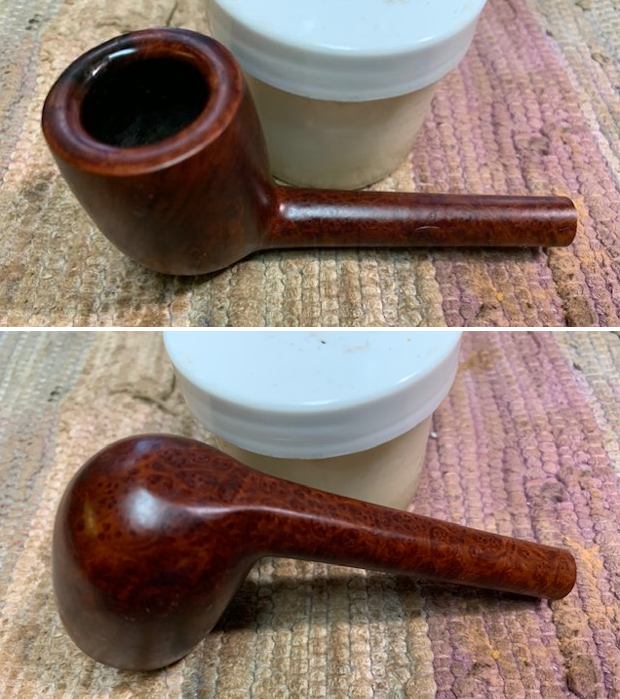
Jeff had cleaned up the pipe following his normal cleaning process. In short, he reamed it with a PipNet pipe reamer to strip out the cake in the bowl and then cleaned up the reaming with a Savinelli Fitsall Pipe Knife. He scrubbed the bowl with undiluted Murphy’s Oil Soap with a tooth brush. He worked over the lava and debris on the plateau rim top and shank end and was able to remove it. He rinsed it under running warm water to remove the soap and grime. He cleaned out the inside of the shank and the airway in the stem with alcohol, cotton swabs and pipe cleaners. He scrubbed the stem with Soft Scrub and cotton pads to remove the debris and oils on the stem. He soaked it in Briarville’s Pipe Stem Deoxidizer and then rinsed it with warm water and dried it off. I took photos of the pipe once I received it. It really looked good. I took close up photos of the stem and the rim top to show both how clean they were and what needed to be addresses with both. The rim top and bowl look good. The stem looked better and the tooth marks and chatter were still present. I would need to remove those to bring the stem back.I took a photo of the stamping on the left side of the shank. You can see from the photo that it is readable. It is clearer on the top half of the stamp than the lower but it is still readable.I removed the stem from the bowl and took a photo of the parts to give a sense of the beauty of the pipe.I decided to start my work on the pipe by addressing the hairline crack on the heel of the bowl. I  examined the inside of the bowl with a light to see if the crack had come through. I had not gone through at all. I looked at the heel of the bowl and saw that it truly was a hairline surface crack probably made by dropping the pipe. I drilled small pilot holes on each end of the crack to stop it from spreading. I cleaned out the crack with alcohol to remove any dust. I filled in the holes and the crack with clear super glue and briar dust. When the repair cured I sanded it smooth with 220 grit sandpaper to blend it into the surrounding briar. I used a folded piece 220 grit sandpaper to smooth out the inner bevel of the bowl and the grooves flowing out of the bowl toward the outer edges.I polished the smooth briar with micromesh sanding pads – wet sanding with 1500-12000 grit sanding pads. I wiped down the briar after each pad with a damp cloth to remove the dust and debris from the surface. The briar began to take on a shine. I worked some Before & After Restoration Balm into the surface of the briar with my finger tips and a horse hair shoe brush to get into the crevices of the plateau rim top and shank end. The product is incredible and the way it brings the grain to the fore is unique. It works to clean, protect and invigorate the wood. I set the bowl aside and turned my attention to the stem. I “painted” the surface of the stem with the flame of a Bic lighter to try and lift the tooth marks. I filled in the remaining marks with clear super glue. Once the repairs cured I sanded them smooth with 220 grit sandpaper to blend them into the surface of the briar. I started the polishing of the stem with 400 grit wet dry sandpaper. I touched up the faint stamp on the top of the stem with Rub’n Buff Antique Gold. I rubbed the product into the faint stamping and buffed it off with a soft cloth. While not perfect it was very visible and distinguishable.I polished the stem with micromesh sanding pads – wet sanding it 1500-12000 pads. I wiped it down with Obsidian Oil after each pad to enliven and protect the vulcanite. I polished it with Before After Pipe Polish – both Fine and Extra Fine. I gave the stem another rub down with Obsidian Oil and set it aside to dry. I am really happy with the way that this Preben Holm Crown Hand Made Danish Freehand turned out. It really is a beautiful looking pipe with a great shape and smooth finished bowl and rim and the remnant of plateau on the shank end. The hairline crack repair went very well and it is virtually invisible. The fancy original vulcanite saddle stem is really nice. The polished black of the stem works well with the briar. The briar really came alive with the buffing. The rich brown stains of the finish gave the pipe a sense of depth with the polishing and waxing. I put the stem back on the bowl and carefully buffed the pipe with Blue Diamond on the buffing wheel using a light touch on the briar. I gave the bowl and the stem multiple coats of carnauba wax on the buffing wheel. I buffed the pipe with a clean buffing pad to raise the shine. I hand buffed the pipe with a microfiber cloth to deepen the shine. The finished Preben Holm Crown Hand Made really is a beauty and feels great in the hand and looks very good. Give the finished pipe a look in the photos below. The dimensions of the pipe are Length: 7 inches, Height: 2 inches, Outside diameter of the bowl: 2 ½ inches long x 2 inches wide, Chamber diameter: 1 inch. The weight of the pipe is 86 grams/3.03 oz. The pipe will be going on the rebornpipes store soon. It will be in the section on Danish Pipe Makers if you would like to add it to your collection. Thanks for reading this blog and my reflections on the pipe while I worked on it. It was a fun one to work on!

Restemming & Restoring a Peterson’s Product – a Made in Ireland  Shamrock X105 Billiard


Blog by Steve Laug

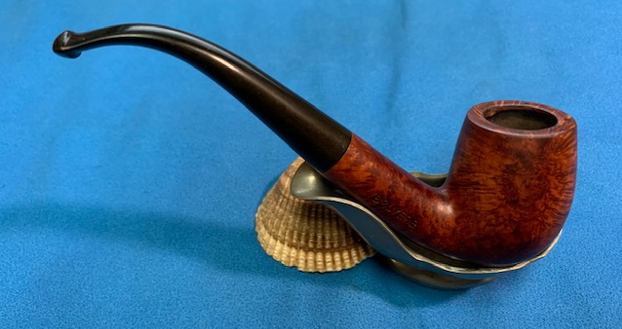
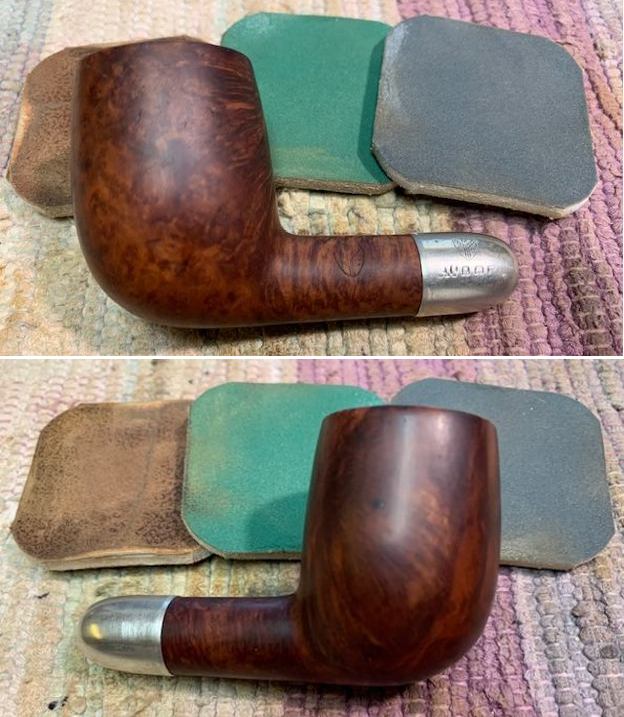
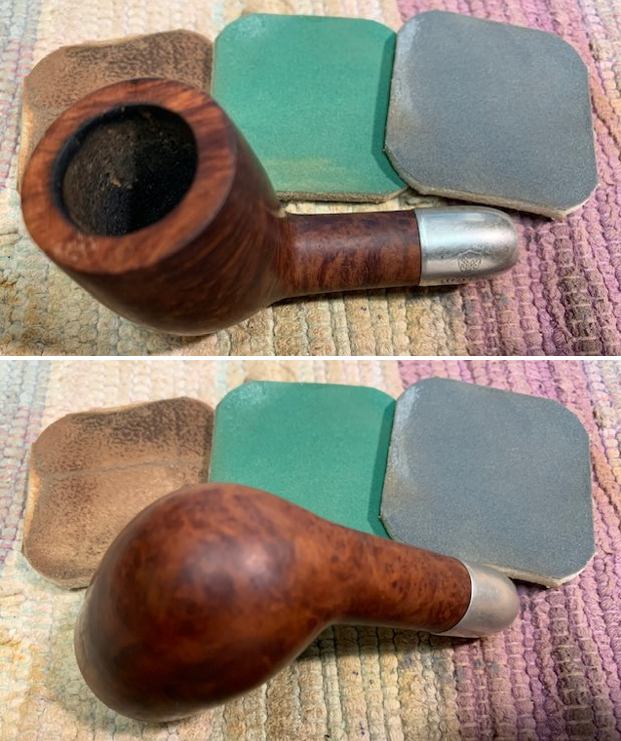
The next pipe I have chosen to work on came to me as a referral from a local pipe shop here in Vancouver. While I am not taking on work via mail I am still doing the repairs for this pipe shop. This one was a smooth finished Peterson’s Billiard bowl. It needed to have a stem fit to the shank so the fellow could smoke it again. It had not had a stem since the 70s. He decided it was time to get it back in order. He says he is a bit older than me and in our conversation it turns out that we are pretty close to the same age. He does not drive, no computer and no cell phone. We chatted a bit on his land line and decided a regular slotted stem would work for the pipe as I did not have any straight (or bent for that matter) Peterson’s stems. It had originally been offered with a choice of stems anyway. The finish is was dirty. I can see sand pits on the left side of the bowl but other than that it was in decent condition. It was stamped on the  left side of the shank and read SHAMROCK. It was stamped to the right of the shank and reads “A PETERSON’S [over] PRODUCT” over MADE IN IRELAND (3 lines) with the shape number X105 next to the bowl. The bowl had been reamed recently and the inner edge was nicked in several spots. The rim top was covered with a lava coat. I took a few photos of the pipe when I removed it from the shipping envelope.    I took a close up photo of the rim top and bowl to show the general condition of the pipe. The bowl looks to have been reamed recently but the rim top and edges have some lava overflow. I took photos of the sides of the shank to show the stamping. The stamping is readable in the photos below and is as noted above. I am including the link to the Pipedia’s article on Peterson pipes. It is a great read in terms of the history of the brand (https://pipedia.org/wiki/Peterson).

I turned to “The Peterson Pipe” by Mark Irwin and Gary Malmberg to get some background on the Peterson’s Shamrock Pipe. On page 312 it had the following information. 

Shamrock (c1941-2009) Originally stamped SHAMROCK with no brand name, an inexpensive line first described in George Yale (New York) mail order booklet in 1941, imported by Rogers Import. The line was actively promoted beginning in ’45, aggressively promoted in US by Rogers from early ‘50s when they registered the Shamrock logo with US Patent Office, claiming propriety since ’38. Over the years offered with P-lip or fishtail mouthpiece, with or without nickel band, with or without shamrock logo on the band, with or without S stamped in white or later in gold on mouthpiece. Appearing in 2008 as unstained smooth and rustic, fishtail mouthpiece with gold impressed P on the stem. COMS of MADE IN over IRELAND (C1945-1965), MADE IN IRELAND forming a circle (c1945-1965), “A PETERSON’S PRODUCT” over MADE IN IRELAND (c1945-1965), MADE IN THE over REPUBLIC over OF IRELAND9c1948-1998). Model is always difficult or impossible to date. 

Judging from the description above, the pipe I am working on is stamped with the stamp noted in red above. It reads “A Peterson’s Product” over Made in Ireland which narrows the date to between approximately 1945-1965. It is just stamped SHAMROCK with no brand name and no stem.  

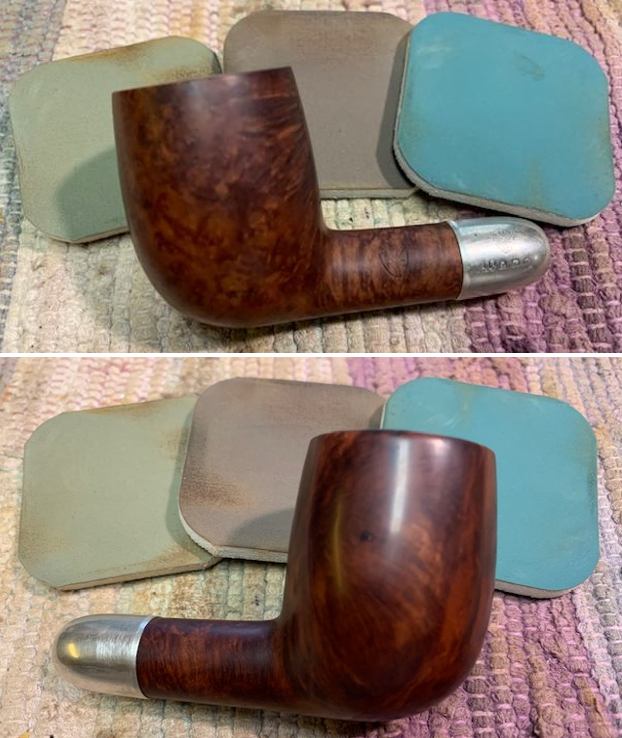
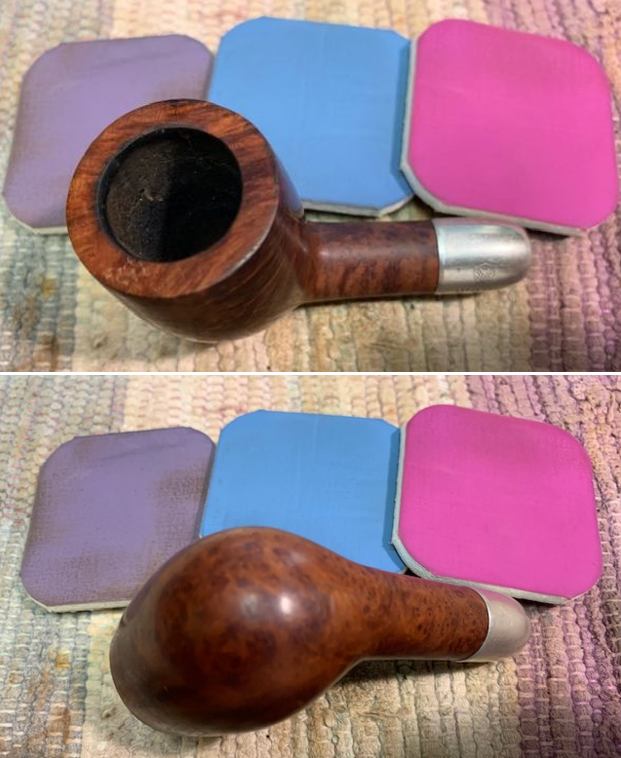
Now it was time to work on the pipe. I went through my can of stems and found a fishtail stem that would work with a little adjustment to the diameter at the band. The stem was in very good condition. I laid aside the stem and turned my attention to the bowl. I worked on the thickly lava coated rim top and edges with a folded piece of 220 grit sandpaper. I was able to remove the lava and I worked over the inner edge with the sandpaper. Once finished I reamed the bowl with a Savinelli Fitsall Pipe knife to remove the remnants of cake in the bowl. I scrubbed the externals of the bowl and rim with undiluted Murphy’s Oil Soap and a tooth brush. I rinsed the bowl with warm running water to remove the soap and the grime. The scrubbing left the surface very clean. I decided to leave the sandpits on the bowl side and filling them seemed unnecessary to me. I polished the briar with micromesh sanding pads – dry sanding with 1500-12000 grit sanding pads. I wiped the bowl down with a damp cloth after each sanding pad. I worked some Before & After Restoration Balm into the surface of the briar with my fingertips to clean, enliven and protect the briar. I let the balm sit for 15 minutes and then buffed with a cotton cloth to raise the shine. The photos show the bowl at this point in the restoration process. I sanded the diameter of the stem at the shank end with 220 grit sandpaper to take down the left side so that it matched the side of the band on the shank. I worked it over until the flow between the nickel band and the stem was smooth. I started the polishing with 400 grit wet dry sandpaper.I set the bowl aside and polished the stem with micromesh sanding pads – wet sanding with 1500-12000 grit sanding pads. I wiped it down after each sanding pad with Obsidian Oil. I polished it with Before & After Pipe Stem Polish – both Fine and Extra Fine.    I am excited to finish this Nickel Banded Older Peterson’s Shamrock X105 Straight Billiard. I put the pipe back together and buffed it with Blue Diamond on the buffing wheel. I gave the bowl and the stem multiple coats of carnauba wax. I hand buffed the pipe with a clean buffing pad to raise the shine. It is fun to see what the polished bowl looks like with beautiful flame grain all around it. Added to that the polished Sterling Silver band and the black vulcanite stem was beautiful. This smooth Classic Shamrock X105 Billiard is great looking and the pipe feels great in my hand. It is light and well balanced. Have a look at it with the photos below. The dimensions are Length: 5 ¾ inches, Height: 1 ¾ inches, Outside diameter of the bowl: 1 ¼ inches, Chamber diameter: ¾ of an inch. The weight of the pipe is 46 grams/1.62 oz. It turned out to be a beautiful pipe. I will be packing it up on the weekend and getting it ready to go back to the pipeman who sent it to me to be restemmed. Thanks for your time and as Paresh says each time – Stay Safe.

Reconditioning a Stunning Rungsted Mariner Freehand by Preben Holm


Blog by Steve Laug

This particular Freehand pipe came in a lot that Jeff and I purchased on early in 2020 from a woman in Australia who had contacted us about selling her late husband’s collection. He had some beautiful pipes in his estate and this was one of them. It is stamped on the underside of the shank and reads Rungsted [over] Mariner [over] Hand Made [over] In [over] Denmark. It is a mixed finish pipe with the majority of the lower 2/3 of the bowl sandblasted with a deep and rugged blast. The top third of the bowl and shank are smooth finished while the rim top and shank end are plateau finished. The pipe had a moderate cake in the bowl and there was dust and debris in the plateau valleys and in the valleys of the sandblast. The original stem had the Rungsted logo on the top of the blade of the fancy turned vulcanite saddle. It was lightly oxidized and had tooth marks and chatter on both sides near the button. There was also some calcification around the sharp edge of the button that would need to be cleaned out. The pipe was dirty but still a beauty. Jeff took photos of the pipe before he started his work on it. Jeff took photos of the rim top and the stem to show the condition of the pipe when we received it. You can see the cake in the bowl and the sandblast of the bowl sides and the plateau of on the rim top and shank end. The rim edges appear to be very clean. The stem is vulcanite and is oxidized, calcified and has chatter and a few deep tooth marks on both sides near the button. He took photos of the sides of the bowl and the heel to give an idea of the shape and the condition of the briar around the bowl. It really is a nicely shaped pipe that has the classic look of a Freehand carved by Preben Holm. The next photos Jeff took show the stamping around the smooth briar on the underside of the shank. It is clear and readable as noted above. It took several photos to capture the stamping but it is clear. The last photo shows the stem logo. In a previous blog I had researched the brand quite a bit. I have included it in full below for information on this pipe (https://rebornpipes.com/2017/10/15/restemming-and-reconditioning-a-rungsted-mariner-by-preben-holm/). I quote:

I don’t know when I learned that the Rungsted line of pipes was another line that Preben Holm carved. But I learned that he made several lines outside the Ben Wade contract pipes he was producing for Snug Harbor/Lane. This was confirmed when I looked online and found a thread on PipesMagazine.com. The discussion covered a brand called Britta Bech and one of the members there happened to mention and confirm what I already knew about the Rungsted line. From my memory and the speaker’s the pipes were mostly carved in the mid to late 70’s or early 80’s during the height of the Danish Freehand pipe craze in the US. The speaker there said that though some refer to these as seconds he did not think that was accurate and that really it was a totally separate line from Preben Holm. I would agree with his assessment on this. I am pretty certain looking at the various Rungsted pipes that I have worked on that there are no flaws. They all combine both smooth and sandblast finishes and present a really interesting finished pipe. (mlaug on pipesmagazine.com http://pipesmagazine.com/forums/topic/preben-holm-info-needed).

Now it was time to move on to this particular Rungsted Mariner pipe. Jeff did a great job cleaning off the debris and grime on this old. He reamed it with a PipNet reamer and smoothed the walls of the bowl with a Savinelli Fitsall pipe knife. He scrubbed out the mortise and the airway in the shank and the stem with alcohol, cotton swabs and pipe cleaners. He scrubbed the exterior of the bowl, rim and shank with a tooth brush and Murphy’s Oil Soap to the oils and tars on the bowl, rim and shank. He rinsed it under running water. He dried it off with a soft cloth. Once the grime was removed the finish underneath was in stellar condition. The rich patina of the older briar was a variegated finish of smooth and sandblast looked great. He scrubbed the exterior of the stem with Soft Scrub then soaked it in a bath of Briarville’s Pipe Stem Deoxidizer. He rinsed off the deoxidizer with warm water and wiped the bowl and stem down with a light coat of olive oil to rehydrate both. The pipe really was quite stunning. I took photos of the pipe to show its condition before I started my work on it. I took close up photos of the stem and the rim top to show both how clean they were and what needed to be addresses with both. The rim top and bowl were in great condition with no major issues. The stem looked better but the deep tooth marks and chatter were still present. I would need to remove those to bring the stem back.I took a photo of the stamping on the underside of the shank. You can see from the photo that it is readable. It is clearer on the top half of the stamp than the lower but it is still readable.I removed the stem from the bowl and took a photo of the parts to give a sense of the beauty of the pipe. Because the bowl was in such good shape after Jeff’s clean up I moved directly to working some Before & After Restoration Balm into the surface of the briar with my finger tips and a horse hair shoe brush to get into the crevices of the sandblast and plateau. The product is incredible and the way it brings the grain to the fore is unique. It works to clean, protect and invigorate the wood. I set the bowl aside and turned my attention to the stem. I “painted” the surface of the stem with the flame of a Bic lighter to lift the tooth marks. I was able to lift them quite a bit. I filled in the remaining tooth marks on the surface of both sides with clear CA glue. Once it cured, I sanded them smooth with 220 grit sandpaper to blend them into the surface of the briar. I started the polishing of the stem with 400 grit wet dry sandpaper. I polished the stem with micromesh sanding pads – wet sanding it 1500-12000 pads. I wiped it down with Obsidian Oil after each pad to protect it and preserve it. I polished it with Before  After Pipe Polish – both Fine and Extra Fine. I finished the polishing with a final coat of Obsidian Oil. I touched up the stamp on the top of the stem with Rub’n Buff Antique Gold. I rubbed it into the stamp with a tooth pick and buffed it off with a cloth. It looked much better.I am really happy with the way that this Preben Holm made Rungsted Mariner Freehand turned out. It really is a beautiful looking pipe with a great shape and smooth, plateau and sandblast finishes. The fancy original vulcanite saddle stem is really nice. The briar really came alive with the buffing. The rich brown and black stains of the finish gave the pipe a sense of depth with the polishing and waxing. I put the stem back on the bowl and carefully buffed the pipe with Blue Diamond on the buffing wheel using a light touch on the briar. I gave the bowl multiple coats of Conservator’s Wax and the stem multiple coats of carnauba wax on the buffing wheel. I buffed the pipe with a clean buffing pad to raise the shine. I hand buffed the pipe with a microfiber cloth to deepen the shine. The finished Rungsted Mariner really is a beauty and feels great in the hand and looks very good. Give the finished pipe a look in the photos below. The dimensions of the pipe are Length: 7 inches, Height: 2 ¼ inches, Outside diameter of the bowl: 2 ½ inches long x 2 inches wide, Chamber diameter: 1 inch. The weight of the pipe is 83 grams/2.93 oz. The pipe will be going on the rebornpipes store soon. It will be in the section on Danish Pipe Makers if you would like to add it to your collection. Thanks for reading this blog and my reflections on the pipe while I worked on it. It was a fun one to work on!

What a Tired and Worn Pair of Cased 1919 Charles Mass Pipes – Part 2: An Exhausted Billiard


Blog by Steve Laug

This restoration is Part 2 of one that started with an email from a reader of the blog name Tim. He had written the following email to me with a request. I have included that email below.

Hello Steve, I have a cased set of 1919 Charles Maas pipes that have been smoked hard and put away wet. Can I send them to you to have them restored? I’m a huge fan of your work and use your site often as inspiration, but these are outside my ability. – Tim

I finished the restoration of the Bulldog first and have written about the work on the blog already. Here is the link (https://rebornpipes.com/2021/05/30/what-a-tired-and-worn-pair-of-cased-1919-charles-mass-pipes-part-1-a-weary-bulldog/).

I am including the photos that Tim Sent me so you can see them if you have not read Part 1 of the blog on the Bulldog. Tim’s package arrived on Thursday and when I got home from work I opened it to have a look at the pipes first hand. I took the case out of the well packed box and this is what I saw. The case was suede with a fine leather edge around the sides. There was a thin gold line around the case edges. When I opened it I saw Tim’s 1919 label and the two pipes. There was a gold banded Bulldog and a nice stubby billiard. Both were nicely carved bowls and both had been heavily used and worn.

I sent Tim the following list summarizing the damages on the Billiard (a similar list is on the blog about the Bulldog). There is a lot of work to do to bring these back to life.

The billiard:
1. The rim top is badly damaged leaving the top uneven and thicker/taller toward the back of the bowl and more damaged than even the Bulldog.
2. The inner edge of the bowl is thicker than the bulldog but still thinner on the front side than the rest of the bowl. It is still thick enough.
3. The outer edge is chipped and uneven on the bowl front showing some burn marks.
4. The finish is worn and damaged with paint marks on the surface.
5. The bowl is slightly out of round with chips and marks on the inner edge
6. The stem has deep compressions from tooth marks on both sides at the button.                        7. The inside of the bowl is badly checked and will need to examined for integrity.

Both pipes had been reamed and they were quite clean inside. It appeared that previous earlier reaming somewhere along the way had left the inner edge chipped and damaged. That is the assessment of the Billiard and it is clear from the list that there is a lot of work to do on it.

For background on the Charles Maas brand read the previous blog to get a clear idea of the history of the company. I will not include it again at this point. Here is another copy of the link for ease of reference (https://rebornpipes.com/2021/05/30/what-a-tired-and-worn-pair-of-cased-1919-charles-mass-pipes-part-1-a-weary-bulldog/).

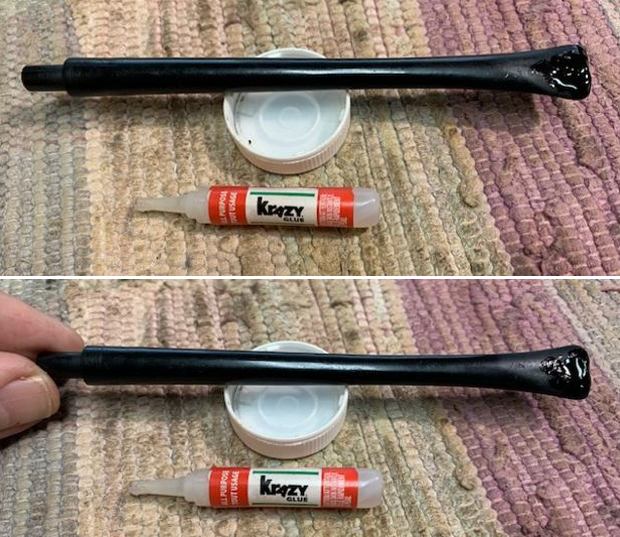
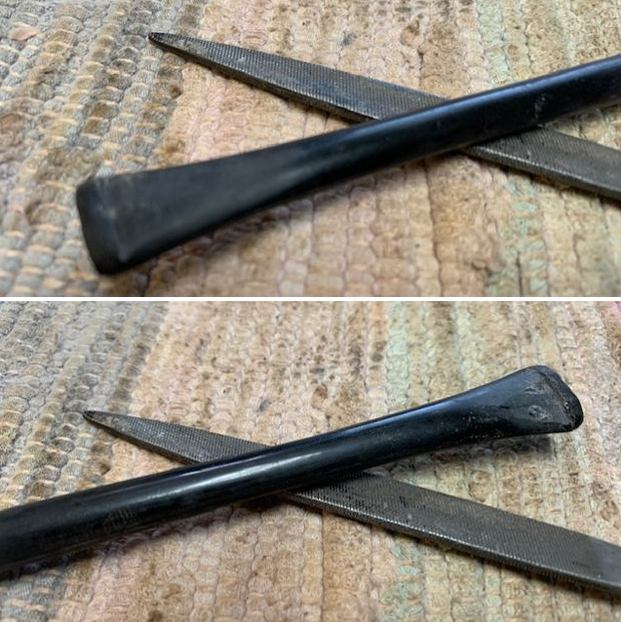
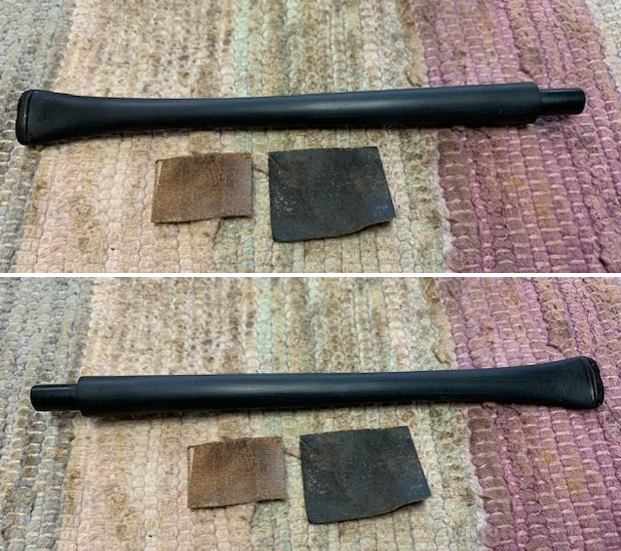
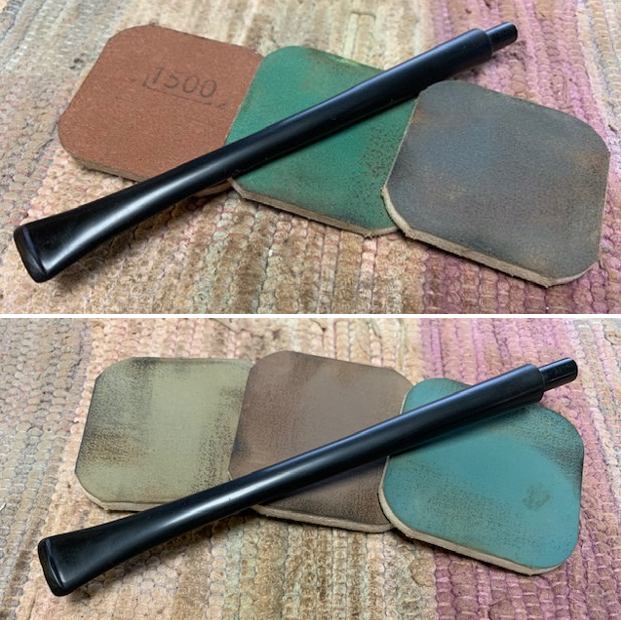
It was time to work on the second pipe – the Billiard. It was surprisingly clean. The bowl had been reamed and the airways cleaned. (I later found out that Tim had done the clean up for me. Thanks Tim!)There was no stamping on the shank of the pipe. There was no gold band to identify it as a Charles Maas pipe like the one on the Bulldog. However it was obvious that the case was custom fitted to this little Billiard so that is proof enough for me. I took some photos of the pipe before I began, to catalogue what I saw before I started. I took some close up photos of the rim top and the stem surfaces. You can see the chipping and damage to the top and inner edges of the bowl. The top is significantly lower on the front of the bowl with burn marks and charring to the top and front of the bowl. The stem shows some deep tooth marks on both sides ahead of the button.I took some photos of the rim from various angles to show the serious damage to the bowl top and edges. It really is a mess and will be an interesting challenge to rebuild.I removed the stem from the shank and took a photo of the left side of the pipe as it really gave a good picture of what the pipe must have looked like when new.I decided to start work on this pipe by addressing the damaged rim top and edges. I built up the front edge of the bowl with briar dust and clear CA glue. My goal was to bring it up as close as possible to the height of the bowl on the left side. It took a bit of layering to get there. I also filled in the damage on the front outer edge of the bowl at the same time. Once I had the height as even as possible I would top the bowl on a topping board with 180 grit sandpaper to smooth out the rim top.Once I had it close to even I topped it on a topping board with 180 grit sandpaper. I took a few photos of the front and sides of the bowl to show what the repair looked like at this point in the process. There is still work to do but it is definitely getting there. I sanded the repair on the front of the bowl a bit as well. Much work to do! I worked over the top and edges of the bowl – both inner and outer edges, with 220 grit sandpaper to capture the original shape as much as possible. You can see the repaired areas on the rim top and edges from the photos below. I am pretty pleased with the overall appearance of the cap and top at this point in the process. The repairs are very clear at this point. I still had work to do on the rim top and outer edges but I also wanted to work on the inner edge. I repaired the damage there with the super glue and briar dust as well. I was not looking to build it up too much but to take care of the deep cuts and gouges on the left front of the edge. I sanded the repair with 180 and 220 grit sandpaper and I was happy with what I was seeing at this point in the process. I worked some more on the inner edge of the bowl with a piece of 220 grit sandpaper wrapped around a piece of dowel. I wanted to smooth out the inside of the bowl and the inner edges of the rim.I decided to give the repaired edge and top a quick coat of Walnut stain to see what it looked like. I find that doing this often shows flaws that need to be addressed in the repair and makes it easier to see where I am with the top and edges. I started the polishing process with 1500-2400 grit micromesh sanding pads. I dry sanded with the pads in preparation for restaining the bowl. After each pad I wiped the bowl down with a damp cloth. My goal was to remove the scratching left behind by the repairs to the rim top and cap. I was able to remove them. Once it was smooth the briar was ready for staining. I stained it with a Feibing’s Light Brown aniline stain. I applied it and flamed it with a lighter to set it in the grain. I repeated the process until the coverage of the briar was good. I set it aside to let the stain cure.I buffed pipe with Blue Diamond on the buffing wheel to remove the crusty coat of stain. I then polished it with the remaining micromesh pads -3200-12000 grit pads. I wiped it down after each pad with a damp cloth. I worked some Before & After Restoration Balm into the surface of the briar of the bowl with my finger tips. The product is incredible and the way it brings the grain to the fore is unique. It works to clean, protect and invigorate the wood. I set the bowl aside and turned to work on the stem. I “painted” the stem with the flame of a Bic lighter to try to lift the tooth marks in the surface on both sides. I was able to lift it some but not completely. I filled in the remaining dents with clear CA glue and set it aside to cure. Once they cured I used a small file to recut the button edge and flatten the repairs to blend them into the surface. I sanded the stem with 220 grit sandpaper to remove the remaining oxidation on the saddle and also to further blend in the repairs. I started the polishing with 400 grit wet dry sandpaper. I polished the stem with micromesh sanding pads – wet sanding with 1500-12000 grit pads. I wiped the stem down after each sanding pad with Obsidian Oil. I finished polishing the surface with Before & After Pipe Stem Polish – both fine and extra fine. I gave the stem a final coat of Obsidian Oil and let it dry. I am really happy with the way that the rebuild of the rim and cap worked on on this Charles Maas Billiard (the second of two in a cased set). It really is a great looking pipe with lots of character. The old style hard rubber mouthpiece really look good with the brown of the briar. The grain really came alive with the buffing and a sense of depth came out with the polishing and waxing. I put the stem back on the bowl and carefully buffed the pipe with Blue Diamond on the buffing wheel using a light touch. I gave the bowl and the stem multiple coats of carnauba wax on the buffing wheel. I buffed the pipe with a clean buffing pad to raise the shine. I hand buffed the pipe with a microfiber cloth to deepen the shine. The finished Charles Maas Billiard really is a beauty and feels great in the hand and looks very good. Give the finished pipe a look in the photos below. The dimensions of the pipe are Length: 4 ¼ inches, Height: 1 ½ inches, Outside diameter of the bowl: 1 1/8 inches, Chamber diameter: ¾ of an inch. The weight of the pipe is 27 grams/.95 oz. The pipe will be going back to Tim with the Bulldog that I have finished. I think this little cased set is a real beauty.Thanks for reading this blog and my reflections on the pipe while I worked on it. It was a fun one to work on!

What a Tired and Worn Pair of Cased 1919 Charles Mass Pipes – Part 1: A Weary Bulldog


Blog by Steve Laug

This restoration started with an email from a reader of the blog name Tim. He had written the following email to me with a request. I have included that email below.

Hello Steve, I have a cased set of 1919 Charles Maas pipes that have been smoked hard and put away wet. Can I send them to you to have them restored? I’m a huge fan of your work and use your site often as inspiration, but these are outside my ability. – Tim

The first thing that caught me was the age of the pipes. I am a real sucker for old briar. The next thing that grabbed my attention was the brand – Charles Maas. That is a brand that I have not worked on and not heard of and it is English! The third thing that grabbed my attention was that they were a cased pair – which can often mean matching briar. All of those things conspired against my resolve to not add more work to the queue right now because of the demands of my day job and my own large number of restorations awaiting attention. I wrote him back and asked for pictures of the pipes to see if that would save me or draw me in further. Tim responded with photos and the magic words – I am not in a hurry!

Hi Steve, Here are the pictures.  I’m not in a hurry.  

I looked through the photos and assessed what needed to be done and took the plunge. I had Tim mail them to me. I was hooked and completely drawn into the project.Tim’s package arrived on Thursday and when I got home from work I opened it to have a look at the pipes first hand. I took the case out of the well packed box and this is what I saw. The case was suede with a fine leather edge around the sides. There was a thin gold line around the case edges. When I opened it I saw Tim’s 1919 label and the two pipes. There was a gold banded Bulldog and a nice stubby billiard. Both were nicely carved bowls and both had been heavily used and worn.I took the pipes out of the case and took pictures after I examined each of them to assess what needed to be done. They really are a classic set that should look great once finished. I made the following list summarizing the damages on the pipes and sent it to Tim. There is a lot of work to do to bring these back to life.

The Bulldog:
1. The rim top is badly damaged leaving the top uneven and thicker/taller toward the back of the bowl.
2. The inner edge of the bowl is quite thin on the front side from burning and over  reaming of the bowl.
3. The outer edge is chipped and uneven on the bowl front.
4. The finish is worn and damaged with signs of burn darkening all around the rim cap.
5. The band has a ragged edge on the top, rear corner of the diamond shaped band.
6. The stem has deep compressions from tooth marks on both sides at the button
7. The inside of the bowl has some checking but they are not as deep as those on the billiard.

The billiard:
1. The rim top is badly damaged leaving the top uneven and thicker/taller toward the back of the bowl and more damaged than even the Bulldog.
2. The inner edge of the bowl is thicker than the bulldog but still thinner on the front side than the rest of the bowl. It is still thick enough.
3. The outer edge is chipped and uneven on the bowl front showing some burn marks.
4. The finish is worn and damaged with paint marks on the surface.
5. The bowl is slightly out of round with chips and marks on the inner edge
6. The stem has deep compressions from tooth marks on both sides at the button.                        7. The inside of the bowl is badly checked and will need to examined for integrity.

Both pipes have been heavily reamed and they were quite clean inside. It appeared that previous earlier reaming somewhere along the way had left the inner edge chipped and damaged. That is the assessment of both bowls and it is clear from the list that there is a lot of work to do on both of them.

It was time to work on the pipes. I chose to deal with the Bulldog first (Part 1). If you were to ask me why I actually have no idea even though it is first above. I took some photos of the pipe before I began, to catalogue what I saw before I started. It was surprisingly clean. The bowl had been reamed and the airways cleaned. There was no stamping on the shank of the pipe. The gold band had hallmarks on it that Tim had said led him to the 1919 date for the pipes. The hallmarks are CM in an oval which is the mark for Charles Maas. To the right of that is a “6” in s diamond followed by 375 which is the mark for 37.5% or 9 carat gold. That is followed by a “d” and another mark that could be a lion’s head which indeed identifies the pipe as London Made and “d” identifies it as a 1919 pipe.

I turned to an English silver and gold hallmark guide to see if I could find information on the maker CM (http://www.silvercollection.it/ENGLAMAAS.html). Sure enough it was very clear that the CM in and oval linked to Charles Maas. I have included the information from the site on the brand.

Charles Leopold Maas was active in London from 1883 at 13 Jewin Crescent, EC as manufacturer and importer of smokers’ pipes of various types, including “recherché” and “meerschaum”.

The firm entered various silver hallmarks as pipes were often silver-mounted as were manufactured in precious metal many of its smokers’ accessories and walking sticks.

In 1890 (London) and 1910 (Chester) Charles Maas entered a conjoined hallmark with Marcus Maas (manager).

In 1910 the firm removed to 1A Aldermanbury Avenue. Interesting to note that from 1891 the firm used a hallmark “CM surmounted by a crown” to characterize its “Unsurpassed quality Corona Mounts”. The punches with the crown were cancelled on request of Charles Maas having the Sheffield Assay Office written on 28 February 1896 that the crown represents their hallmark and is objectionable. The firm was converted into a limited liability company in c. 1915. I took some close up photos of the rim top and the stem surfaces. You can see the chipping and damage to the top and inner edges of the bowl. The left side is thin toward the front of the bowl. The stem shows some deep tooth marks on both sides ahead of the button.I removed the stem from the shank and took a photo of the left side of the pipe as it really gave a good picture of what the pipe must have looked like when new.I decided to start work on this pipe by addressing the damaged rim top and edges. I built up the front edge of the bowl with briar dust and clear CA glue. My goal was to bring it up as close as possible to the height of the bowl on the left side. It took a bit of layering to get there. I also filled in the damage on the front outer edge of the bowl at the same time. Once I had the height as even as possible I topped the bowl on a topping board with 180 grit sandpaper.Once I had it topped I took a few photos to show what it looked like at this point in the process. There is still work to do but it is definitely getting there. I sanded the repair on the front of the bowl a bit as well. Much work to do!I worked over the shape of the rim cap and rim top with 220 grit sandpaper and small files to capture the original shape as much as possible. You can see the build up on the rim top and edges from the photos below. I am pretty pleased with the overall appearance of the cap and top at this point in the process. The repairs are very clear at this point.I still had work to do on the rim top and cap but I also wanted to work on the inner edge. I repaired the damage there with the super glue and briar dust as well. I was not looking to build it up too much but to take care of the deep cuts and gouges on the left front of the edge. I sanded the repair with 180 and 220 grit sandpaper and I was happy with what I was seeing at this point in the process.I decided to give the repaired edge and top a quick coat of Walnut stain to see what it looked like. I find that doing this often shows flaws that need to be addressed in the repair and makes it easier to see where I am with the top and edges. There was still a long way to go to get it the way I wanted but it was truly beginning to take shape. I used a knife blade small file to clean up the twin rings around the repair on the front of the bowl. I started the polishing process with 1500-2400 grit micromesh sanding pads. I dry sanded with the pads in preparation for restaining the bowl. After each pad I wiped the bowl down with a damp cloth. My goal was to remove the scratching left behind by the repairs to the rim top and cap. I was able to remove them.Once it was smooth the briar was ready for staining. I stained it with a Feibing’s Light Brown aniline stain. I applied it and flamed it with a lighter to set it in the grain. I repeated the process until the coverage of the briar was good.I buffed pipe with Blue Diamond on the buffing wheel to remove the crusty coat of stain. I then polished it with the remaining micromesh pads -3200-12000 grit pads. I wiped it down after each pad with a damp cloth.I worked some Before & After Restoration Balm into the surface of the briar of the bowl with my finger tips and a horse hair shoe brush to work it into the grooves around the bowl cap. The product is incredible and the way it brings the grain to the fore is unique. It works to clean, protect and invigorate the wood. I set the bowl aside and turned to work on the stem. I “painted” the stem with the flame of a Bic lighter to try to lift the tooth marks in the surface on both sides. I was able to lift it some but not completely. I filled in the remaining dents with clear CA glue and set it aside to cure. Once they cured I used a small file to recut the button edge and flatten the repairs to blend them into the surface. I sanded the stem with 220 grit sandpaper to remove the remaining oxidation on the saddle and also to further blend in the repairs. I started the polishing with 400 grit wet dry sandpaper. I polished the stem with micromesh sanding pads – wet sanding with 1500-12000 grit pads. I wiped the stem down after each sanding pad with Obsidian Oil. I finished polishing the surface with Before & After Pipe Stem Polish – both fine and extra fine. I gave the stem a final coat of Obsidian Oil and let it dry. I am really happy with the way that the rebuild of the rim and cap worked on on this Charles Maas Bulldog (the first of two in a cased set) turned out. It really is a great looking pipe with lots of character. The old style hard rubber mouthpiece and the gold band really look good with the brown of the briar. The grain really came alive with the buffing and a sense of depth came out with the polishing and waxing. I put the stem back on the bowl and carefully buffed the pipe with Blue Diamond on the buffing wheel using a light touch. I gave the bowl and the stem multiple coats of carnauba wax on the buffing wheel. I buffed the pipe with a clean buffing pad to raise the shine. I hand buffed the pipe with a microfiber cloth to deepen the shine. The finished Charles Maas Bulldog really is a beauty and feels great in the hand and looks very good. Give the finished pipe a look in the photos below. The dimensions of the pipe are Length: 4 ½ inches, Height: 1 ¾ inches, Outside diameter of the bowl: 1 inches, Chamber diameter: ¾ of an inch. The weight of the pipe is 23 grams/.81 oz. The pipe will be going back to Tim once I have finished the little billiard. I think this little cased set is a real beauty.Thanks for reading this blog and my reflections on the pipe while I worked on it. It was a fun one to work on!

What an interesting Sandblast Butz-Choquin 2nd Generation A Metz Origine


Blog by Steve Laug

So when this Butz-Choquin A Metz Origine sandblast showed up in an auction Jeff was watching we went for it and picked it up. It was purchased late in 2020 from an online auction in Bloomingdale, New York, USA. I have worked on the older Origine and also one of these newer ones. While the 1858 Origine had an albatross wing bone for the shank extension the new one had a shorter acrylic look alike. The other one I had worked on was a smooth finished pipe while this one is sandblasted. The shape of the bowl is the same but the 1858 version’s horn stem was replaced by an acrylic stem that was nowhere near as elegant as the first. The pipe was in overall good condition. It is stamped on the left side of the shank and reads Butz-Choquin at an angle over A Metz over Origine. On the right side of the shank it is stamped St. Claude France over the number 2. The sandblast  finish was dull and lifeless and a little dirty from sitting around. There was a thin cake in the bowl and a light overflow of lava on the rim top toward the back. There also appears to be some burn/charring damage on the inner edge in the same area. The acrylic shank extension had come loose from the metal end cap that fit in the shank. The silver (polished nickel) that caps the shank and the faux “bone” extension was tarnished but in good condition. The stem was amazingly clean with just some tooth chatter on both sides near the stem. Jeff took the previous and the following photos before he started his cleanup work on the pipe. Jeff took close-up photos of the bowl and rim top from various angles to capture the condition of the bowl and rim top edges. You can see the darkening around the inner edge of the rim and the top at the back of the bowl. The next photos of the stem show the general condition of the stem and angle of the stem. It is very similar to the shape of the original 1858 horn stem. The next photos show the metal end caps on the shank extension. The end that fits in the end of the shank is stuck in the shank and the acrylic extension was loose. The other end is fitted with the stem that was not able to be removed.He took photos of the sides and heel of the sandblast bowl to show condition of the briar. You can see the swirls of grain in the blast on the sides of the bowl.The stamping is very clear on both sides of the pipe. The next two photos confirm what I wrote about the stamping above.I had written a previous blog on a restoration of a second generation Butz-Choquini A Metz Origine (https://rebornpipes.com/2020/04/13/new-life-for-a-second-generation-butz-choquin-a-metz-origine/). It was a smooth briar pipe but the information that I included was helpful and applicable. I am including some of that below.

I turned to Pipephil (www.pipephil.eu/logos/en/logo-butzchoquin.html) to get a bit of background on the second or the modern version of the Origine pipe. I have included a screen capture of the pertinent section below.Now it was time to look at it up close and personal. Jeff had great job in cleaning up this Origine. He had reamed the bowl with a PipNet Pipe Reamer and cleaned up the remnants with a Savinelli Fitsall Pipe Knife. He took the cake back to bare briar so we could check the walls for damage and also see the extent of the burn damage on the back of the inner edge of the rim. He scrubbed the exterior of the bowl with Murphy’s Oil Soap and a tooth brush to remove the grime on the bowl and rim and was able to remove much of the grime and dirt. He cleaned out the interior of the bowl and shank with pipe cleaners, cotton swabs and alcohol until they came out clean. The rim top looked much better when you compare it with where it started. The damaged area is very clear now and the extent of the damage was clear. He cleaned the stem with Soft Scrub to remove the grime on the exterior and cleaned out the airway with alcohol, cotton swabs and pipe cleaners. I took some photos of the pipe as I saw it. To show how clean the rim top and stem really was I took a close-up photo of the rim and stem. The bowl was clean and cake free. The rim top is quite clean and the damage to the back rim top and inner edge of the bowl is clear. The tan/bone coloured acrylic stem looks very good. The surface and the button edge look really good. There are no issues that are there to address. The tarnished silver ends on the shank ends have a rich shine to it now as well.I removed the stem from the bowl and took photos of the parts. The shank extension came apart at the shank end but not at the stem. The metal end on the acrylic shank extension came loose from the extension and was stuck in the shank. The stem was glued to the shank end and unmovable. The pipe looks pretty amazing – kind of a shorter version of the 1858 Origine.I decided to address the shank endcap that was stuck in the shank. I heated it with a Bic lighter and wiggled the end cap. I repeated the process until it finally came loose. Once it was loose I cleaned the inside of the cap and shank extension end so that I could reglue it.I coated the end of the shank extension with all purpose white glue using a dental spatula. I spread it around with my fingers and pressed the cap on the shank extension. I wiped off the excess of the glue and let it cure and harden. I took photos of the repaired shank extension and have included them below. I cleaned out the shank end with alcohol and cotton swabs to remove the tars and oils that had hardened in the metal end cap locking in the shank cap. I sanded the shank cap with 180 and 220 grit sandpaper to reduce the external diameter of the cap. I needed to reduce it so that it fit in the shank end but did not lock it in place.I checked the fit in the shank and it was smooth and snug. I polished the shank cap with micromesh sanding pads – wet sanding it with 1500-12000 grit sanding pads. I wiped it down after each sanding pad with a damp cloth. At the same time I also polished the acrylic stem to remove the tooth chatter and marks with the micromesh pads. I set the stem and shank extension aside and turned my attention to the damage rim top. I used a set of burrs to replicate the blast pattern on the burn damaged part of the bowl. It took all three burrs to replicate the pattern. Once it was finished I stained the top of the bowl with a Mahogany Stain Pen to match the rest of the bowl.I worked some Before & After Restoration Balm into the surface of the briar of the bowl with my finger tips and a horse hair shoe brush to work it into the grooves of the sandblast. The product is incredible and the way it brings the grain to the fore is unique. It works to clean, protect and invigorate the wood.I am really happy with the way that this Butz-Choquin A. Metz Origine 2 turned out. It really is a great looking pipe with character. The long acrylic shank extension is a unique feature of this pipe and I was able to repair the loose end cap. The blast really came alive with the buffing. The rich brown and mahogany stains gave the grain a sense of depth with the polishing and waxing. The grain really popped. I put the stem back on the bowl and carefully buffed the pipe with Blue Diamond on the buffing wheel using a light touch. I gave the bowl and the stem multiple coats of carnauba wax on the buffing wheel. I buffed the pipe with a clean buffing pad to raise the shine. I hand buffed the pipe with a microfiber cloth to deepen the shine. The finished Butz-Choquin A Metz Origine really is a beauty and feels great in the hand and looks very good. Give the finished pipe a look in the photos below. The dimensions of the pipe are Length: 8 ½ inches, Height: 2 inches, Outside diameter of the bowl: 1 1/8 inches, Chamber diameter: ¾ of an inch. The weight of the pipe is 45 grams/1.59 oz. The pipe will be going on the rebornpipes store soon. It will be in the section on French Pipe Makers if you would like to add it to your collection.Thanks for reading this blog and my reflections on the pipe while I worked on it. It was a fun one to work on!

There is something about this French Made 9465 Liverpool that just grabs me


Blog by Steve Laug

Sometimes when you are pipe hunting there is one that just grabs you. That was the case with this pipe as well as several of the previous pipes. It is a classic Liverpool shaped pipe with a clear Perspex stem. We have picked up a lot of pipes over the years, whether GBD or others that have had either the clear Perspex stem or a clear acrylic stem we obviously are attracted to the unique look of them. We picked this little pipe up from a fellow in Brazil, Indiana, USA early in 2020 and are finally getting around to working on it. The pipe was stamped on the right side of the shank and reads France [over] the shape number 9465. The shape number points to a French Made GBD pipe as does the stem but there is no GBD logo on either the stem of the shank of the pipe. It was in filthy condition. The bowl was thickly caked and there was a thick lava overflow in the rim top. It was easy to assume there was some darkening and burn damage under the grime but the cleaning would reveal the full story. The briar was very dirty with grit and grime ground into the surface. The clear Perspex stem was dirty and had darkening from tobacco stains in the airway from the tenon to the button. There were light deep tooth marks and chatter on the top and the underside of the stem near the button. Jeff took photos of the pipe before he did his clean up on it. Jeff took photos of the rim top and the stem to show the condition of the pipe when we received it. You can see the cake in the bowl and the lava on the rim top. It is hard to know the condition of the rim edges with certainty until the pipe is clean. The stem is Perspex and has staining from the tobacco in the airway in the tenon and stem. There is chatter and light tooth marks on both sides near the button. He took photos of the sides of the bowl and the heel to give an idea of the shape and the condition of the briar around the bowl. It really is a nicely shaped pipe that has classic charm and elegance.The pipe is stamped solely on the right hand side of the shank and does not appear to have any buffed out or partial stamping anywhere else on the pipe. It clearly reads France [over] 9465 as noted above. I am still thinking it is a French GBD but the research that follows will tell.I turned first to Pipedia to read about the time frame when GBD moved from Paris/St. Claude France to England (https://pipedia.org/wiki/GBD). That would help to narrow down the date the pipe was made. I quote the pertinent information from the article below.

There is a very simple explanation for GBD’s program to turn more “British”: GBD became a British company soon after the turn of the century! In 1902 Marechal and Ruchon sold GBD to A. Oppenheimer & Co. in London. Charles Oppenheimer had founded this successful trade business in 1860 as an import-/export house. His brothers David and Adolphe and brother-in-law Louis Adler soon joined him. Adolphe took over when Charles went to Germany as British ambassador. Briar pipes were among the first products traded. The business relation to GBD in Paris began as early as 1870. Being the most important customer in the English speaking world, Oppenheimer & Co. were designated as sole distributor for Great Britain, the USA and Canada in 1897. Especially Adolphe Oppenheimer had a burning interest in the pipe business, and Louis’ son James Adler shared that. He should play the most important role in the amicable merger of GBD. A. Marechal, Ruchon and Cie. in Paris was now Marechal, Ruchon & Co. Ltd. (see Marechal Ruchon & Cie. page) – a British firm with four directors: Adolphe Oppenheimer and James Adler had their seat in the head office in London while Auguste Marechal and Ferdinand Ruchon went on leading the GBD factory in the Rue des Balkan in Paris, which was considerably extended and modernised. Ruchon acted as CEO.

At the same time when the negotiatios with GBD started Oppenheimer also acquired two pipe factories in Saint-Claude: Sina & Cie. and C.J. Verguet Freres. Merging them a huge plant came into being that was thoroughly reconstructed and reorganized. The management was headed by Lucien Verguet. This new Saint-Claude factory was ready to operate in 1906. Beside it’s very own commercial activities in pipe production it’s main task was to supply prefabricated bowls.

Simultaneously Oppenheimer started to build a pipe factory in London. It was opened in 1903, but the forecasts had been over-optimistic for it’s capacity could not be utilized to the full until World War I. Things changed as the French pipe factories lacked more and more workers who were called to the front. In 1916 the ledgers registered that 18,000 of 27,000 dozens bowls manufactured in Saint-Claude were determined via GBD Paris for GBD London. Wherewith London had become the more important location.

After the war, GBD continued production both in London and in Paris. London GBDs mainly went into the national trade and as well into the British Empire and the USA. Paris on the other hand served the French and the other European markets. The location of the factories influenced the GBD history furthermore in the future although later on the products of both countries occasionally were marketed side to side to match special market requests.

Now I knew that it probably came post WWI when the French side of the company served the European Markets. There is no indication of the pipe being made in St. Claude so my thinking it is a French made pipe that at least entered the market through Paris.

I followed the links on the article to the GBD shape numbers article to link the shape stamp to GBD (https://pipedia.org/wiki/GBD_Shapes/Numbers). Sure enough the 9465 was a GBD shape number and it matches the pipe I am working on. I have included a screen capture of the section on the shape chart below.I have to say that once again I was looking forward to what Jeff had done to this French Made GBD Liverpool pipe when I took it out of the box. It had shown such beauty through the grime so I was quite sure it would be stunning. He reamed the bowl with a PipNet pipe reamer and cleaned the remnants of cake back with a Savinelli Fitsall Pipe Knife.  He scrubbed the bowl with Murphy’s Oil Soap and a tooth brush to remove the grime and oils. He cleaned the internals of the shank with pipe cleaners, cotton swabs and alcohol to remove all of the tars and oils there. He scrubbed the interior and the exterior of the stem with Soft Scrub. He was able to remove much of the tobacco darkening on the inside of the stem. There is still some on the tenon and the middle of the airway that I will need to work on. He rinsed off the cleaner with warm water and wiped the bowl and stem down with a light coat of olive oil to rehydrate both. The pipe really was quite stunning. You can see the burn mark/charring on the front top and inner edge of the bowl but it does not lessen the beauty of the pipe. I took close up photos of the stem and the rim top to show both how clean they were and what needed to be addressed with both. The bowl had some burn damage on the front top and inner edge. The stem looked better but the tobacco staining in the airway and tenon were bothersome to me. The tooth chatter on both sides was still present. I would need to work on those issues with the stem to bring it back.I took another photo of the stamping on the shank side. You can see how clear and readable it is.I decided to addressing the burn damage to the front inner edge and rim top. I used a folded piece of 180 grit sandpaper to smooth out the damage and work on the inner edge bevel to minimize the burn damage.There was a deep gouge on the right side of the bowl. I filled it in with some clear CA glue and when the repair cured I sanded it smooth with 220 grit sandpaper to blend it into the surface. I polished the repair and the rest of the briar with micromesh sanding pads – wet sanding with 1500-12000 grit pads. I wiped the briar down after each pad. The grain began to really come alive through the polishing. I worked some Before & After Restoration Balm into the surface of the briar of the bowl with my finger tips. The product is incredible and the way it brings the grain to the fore is unique. It works to clean, protect and invigorate the wood. I set the bowl aside and turned my attention to the stem. The stem had quite a bit of residual stain in the airway and on the tenon interior. The picture to the left shows the remainder in the airway. I forgot to take a photo of the tenon before I started working on it.
I used small round and oval needle files to work over the inside of the airway. I entered from the tenon end and worked the back and forth and around to remove the remnant and smooth out the walls of the airway. I have found that often the drilling on the stem is rough on the inside and it collects this debris and even if it looks clean there is tar trapped in the valleys of the drilling. The files smoothed it out very well. I followed that with pipe cleaners and warm water to remove the dust from the filing. The photos below show the files and the stem as I worked on it.I sanded out the tooth marks and chatter on the stem surface with 220 grit sandpaper and started the polishing with 400 grit wet dry sandpaper.As I sanded the stem I found a tooth mark mid stem on the underside. I filled it in with clear CA glue and when it cured sanded it smooth with 220 and 400 grit sandpaper. Once it was polished it would blend in perfectly.I polished the stem with micromesh sanding pads – wet sanding it 1500-12000 pads. I wiped it down with Obsidian Oil after each pad to protect it and preserve it. I polished it with Before After Pipe Polish – both Fine and Extra Fine. I finished the polishing with a final coat of Obsidian Oil. I am really happy with the way that this GBD French Made Liverpool 9465 turned out. It really is a great looking pipe with character. The Perspex mouthpiece is a unique feature of this pipe and I was able to remove much of the staining on the inside of the airway. The grain really came alive with the buffing. The rich brown stains of the finish gave the grain a sense of depth with the polishing and waxing. The grain really popped. I put the stem back on the bowl and carefully buffed the pipe with Blue Diamond on the buffing wheel using a light touch. I gave the bowl and the stem multiple coats of carnauba wax on the buffing wheel. I buffed the pipe with a clean buffing pad to raise the shine. I hand buffed the pipe with a microfiber cloth to deepen the shine. The finished GBD Made Liverpool really is a beauty and feels great in the hand and looks very good. Give the finished pipe a look in the photos below. The dimensions of the pipe are Length: 5 ¼ inches, Height: 1 ¾ inches, Outside diameter of the bowl: 1 ¼ inches, Chamber diameter: ¾ of an inch. The weight of the pipe is 33 grams/1.16 oz. The pipe will be going on the rebornpipes store soon. It will be in the section on French Pipe Makers if you would like to add it to your collection.Thanks for reading this blog and my reflections on the pipe while I worked on it. It was a fun one to work on!