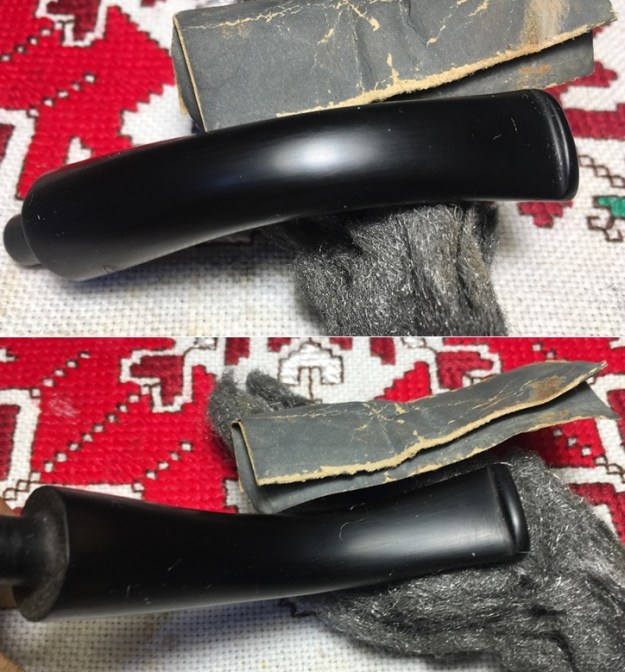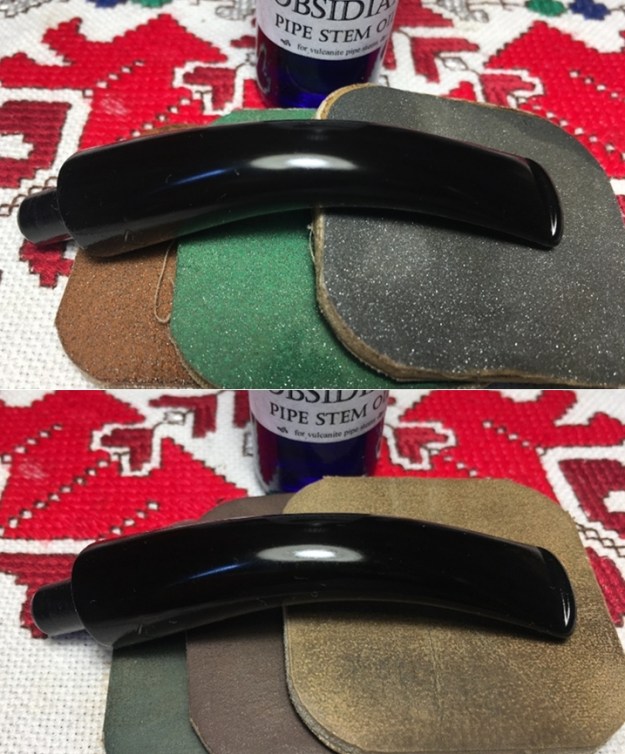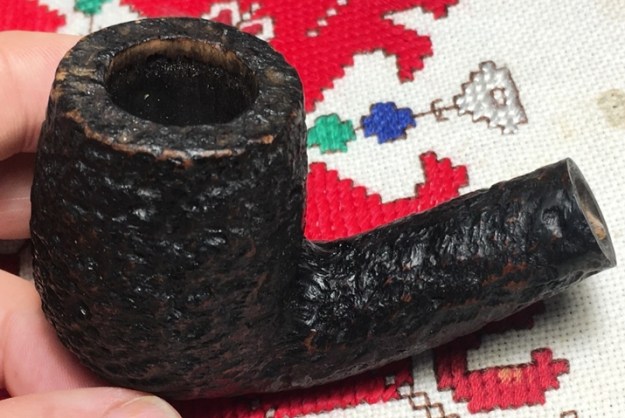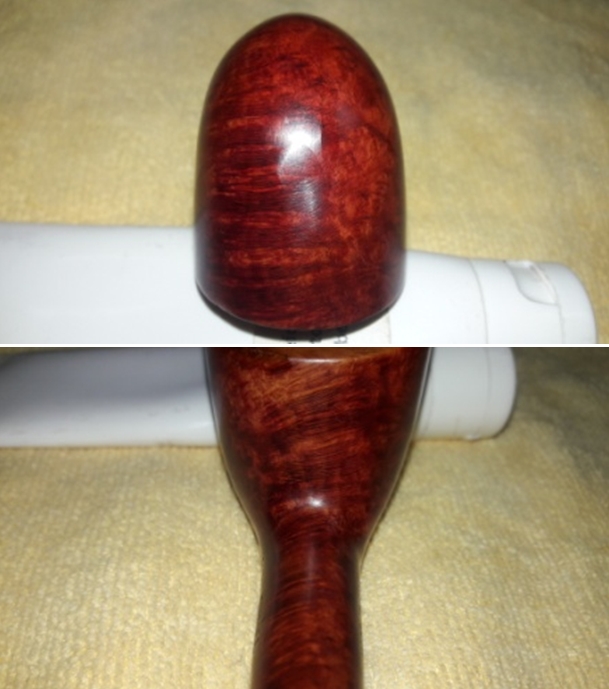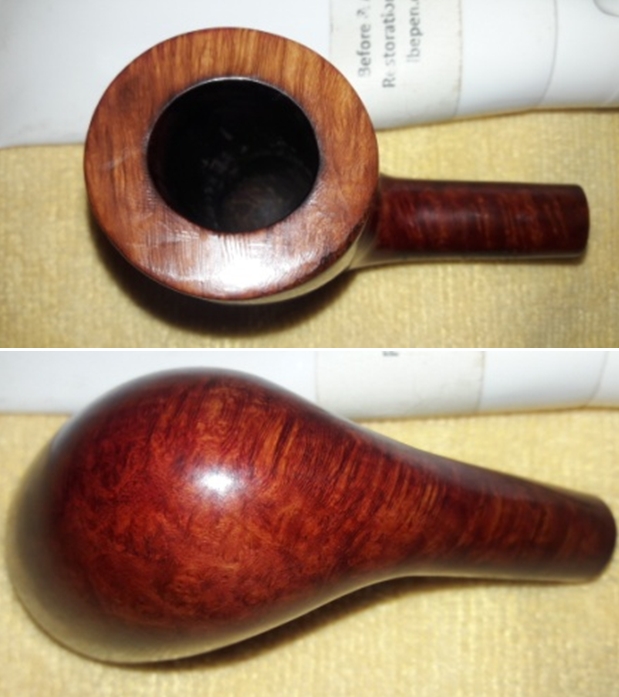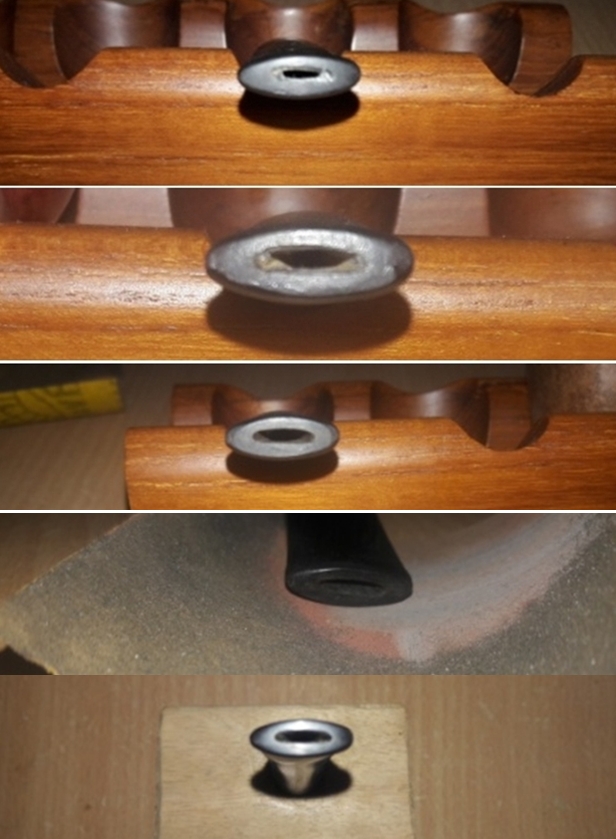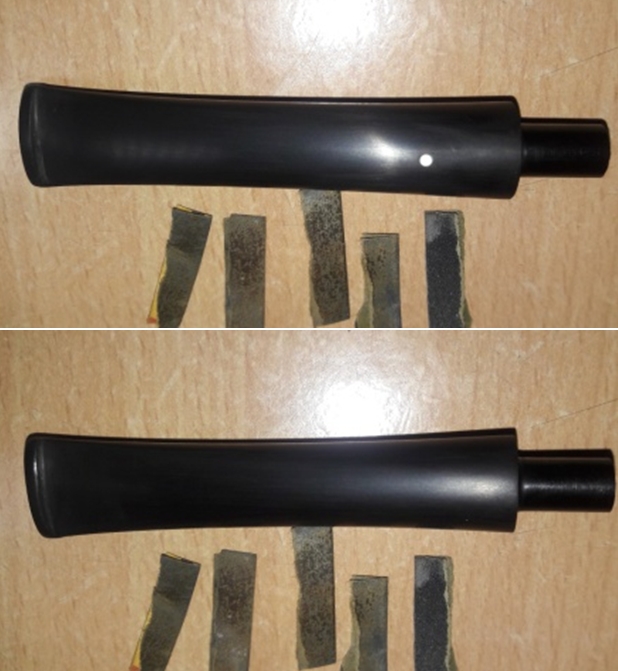
Tag Archives: staining

Restoring a French Made Butz Choquin Camargue 1310 Bent Billiard


Blog by Steve Laug

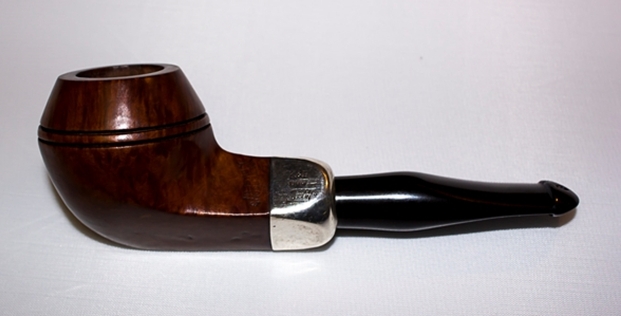
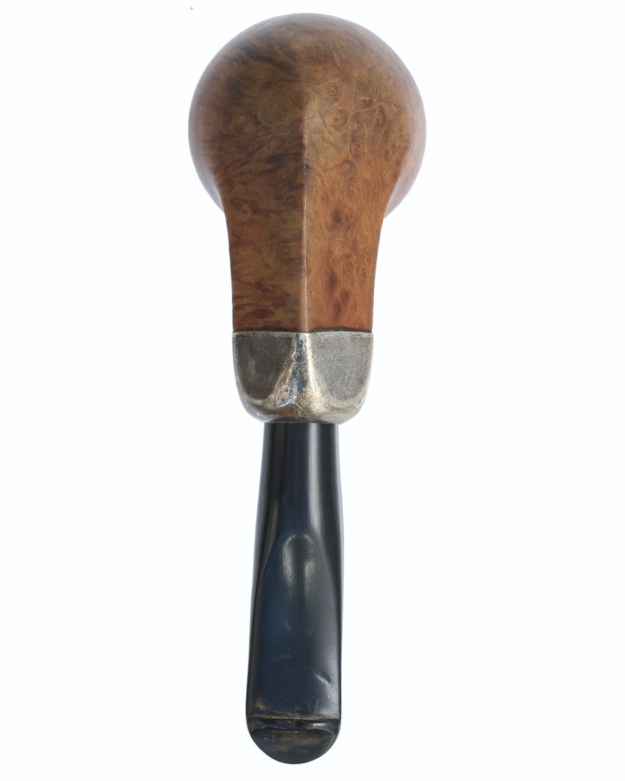
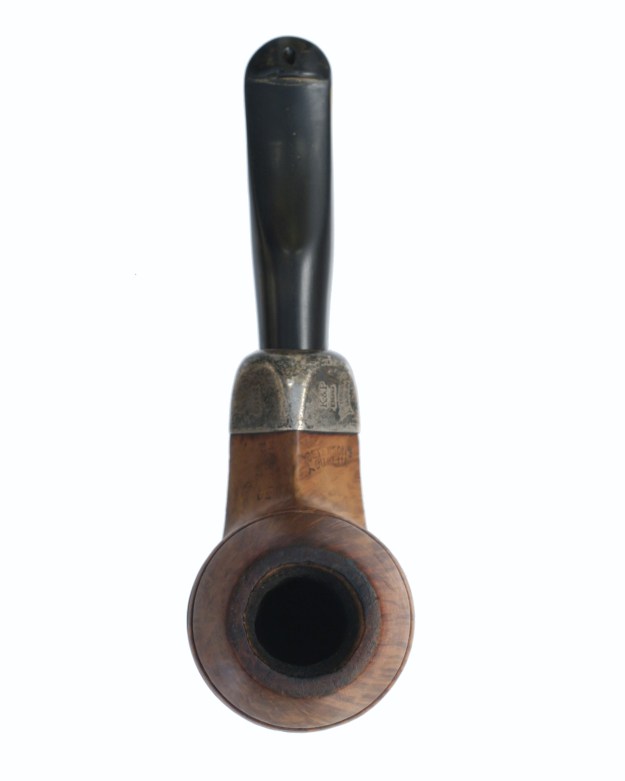
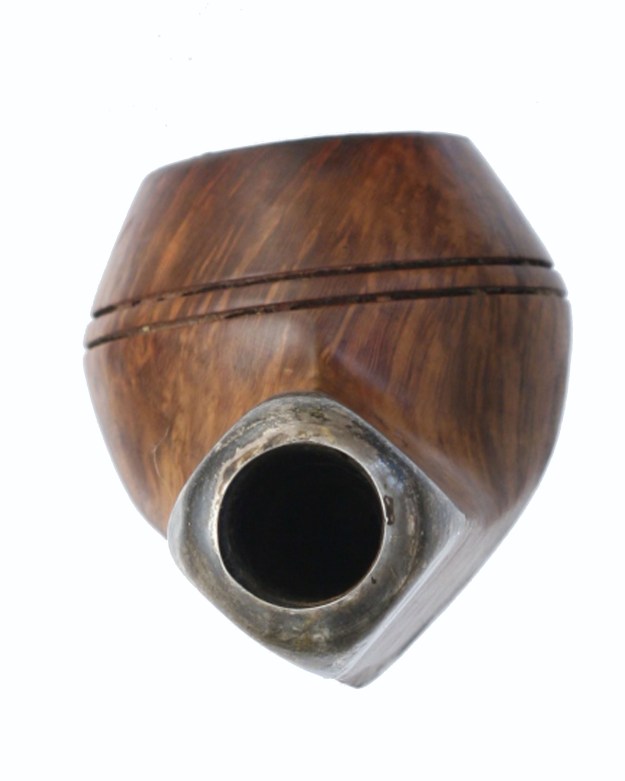
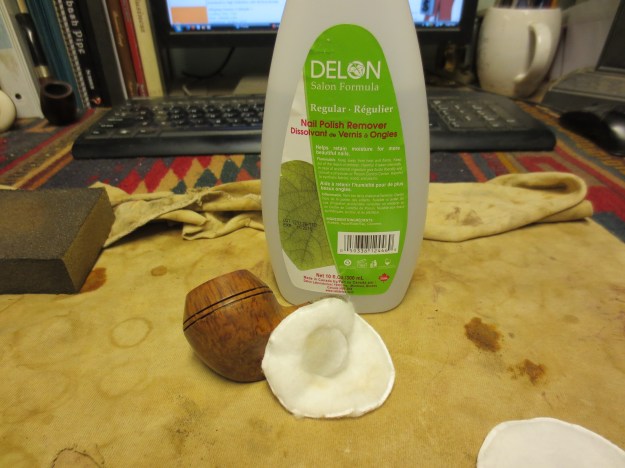
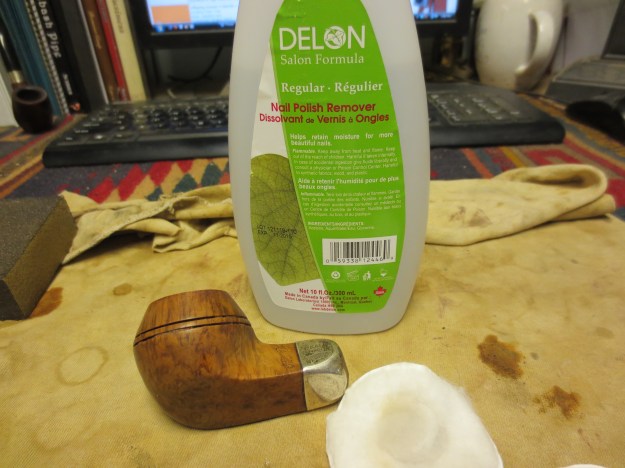
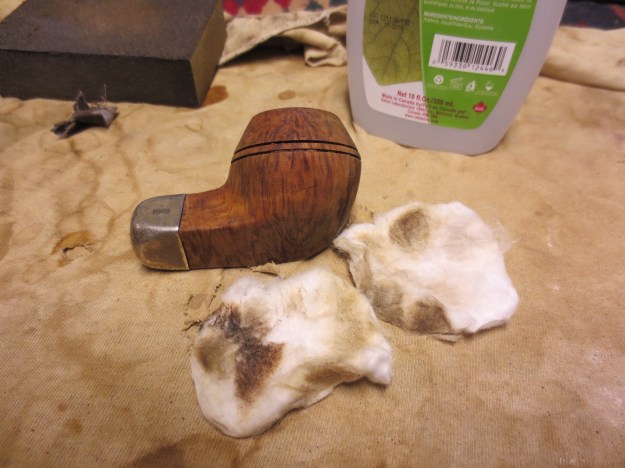
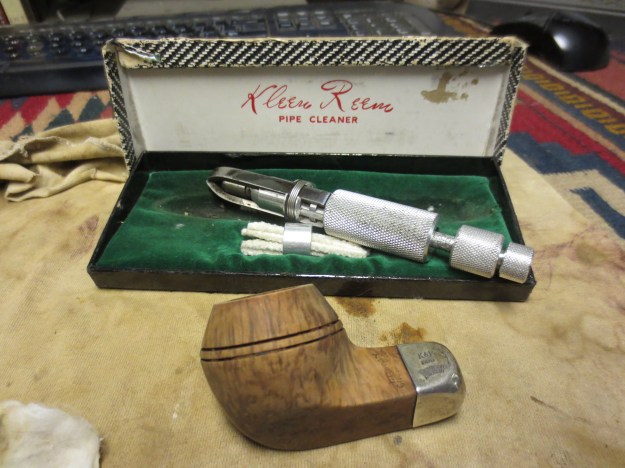
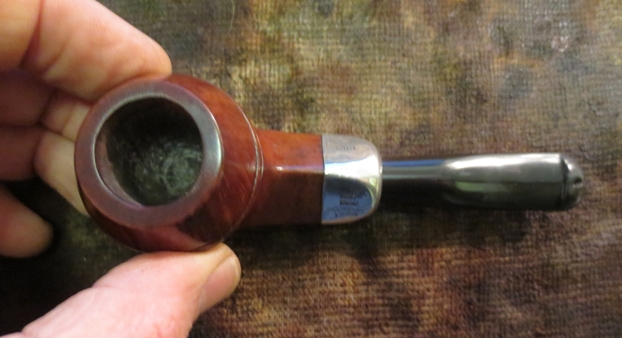
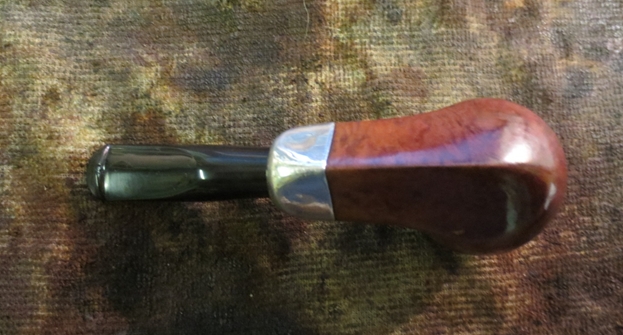
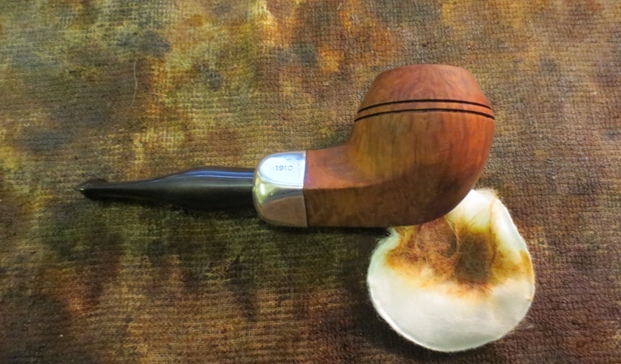
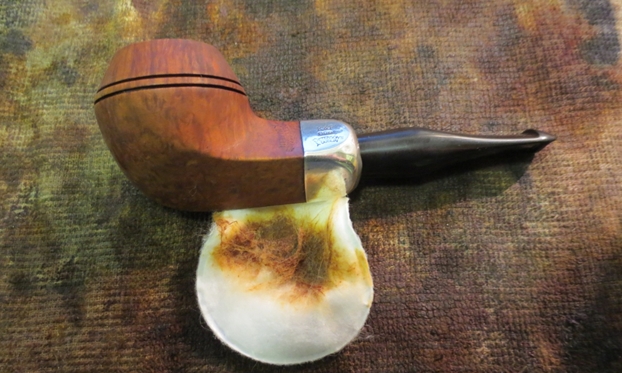
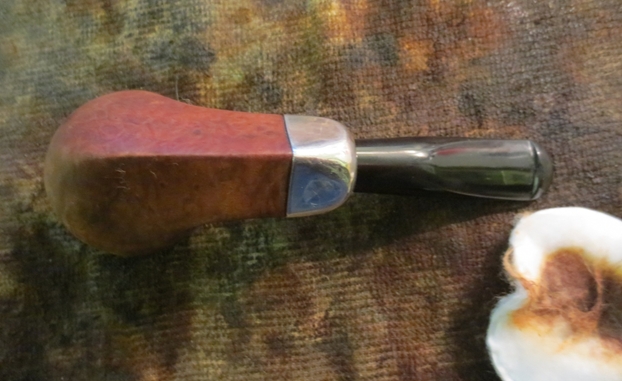
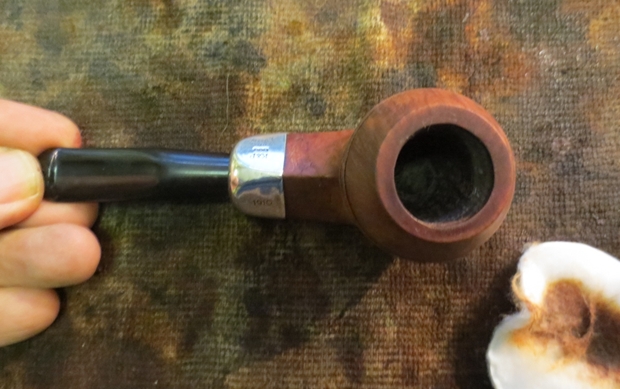
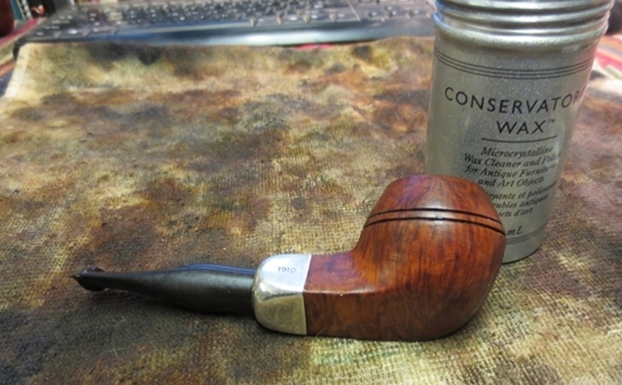
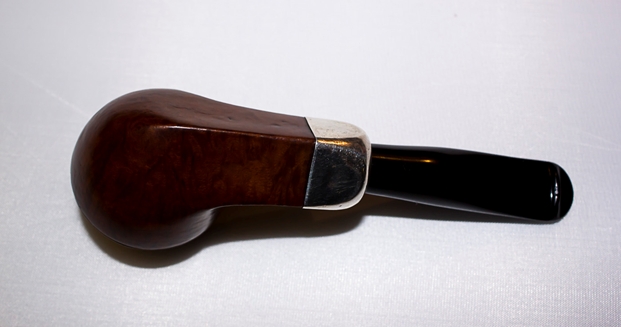
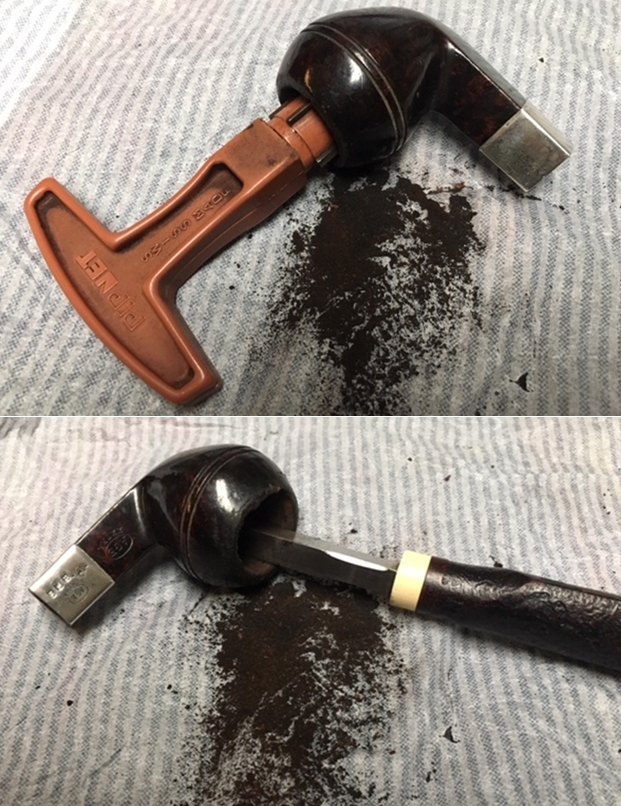
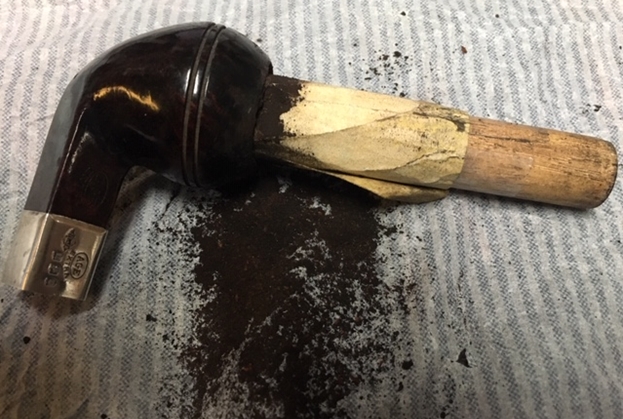
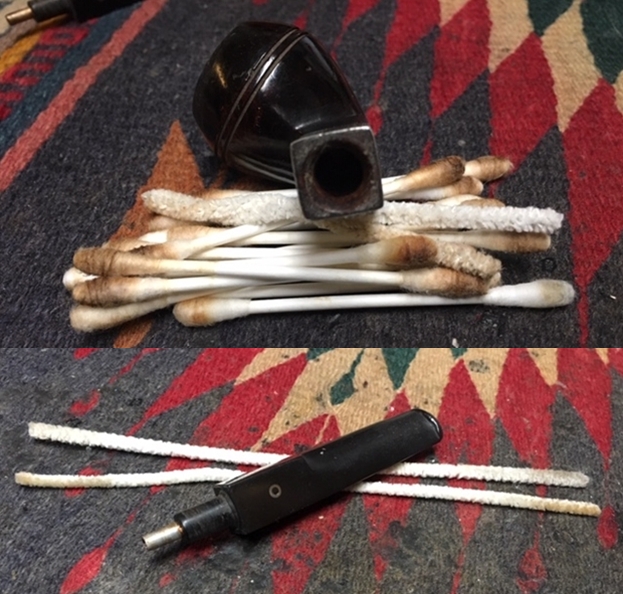
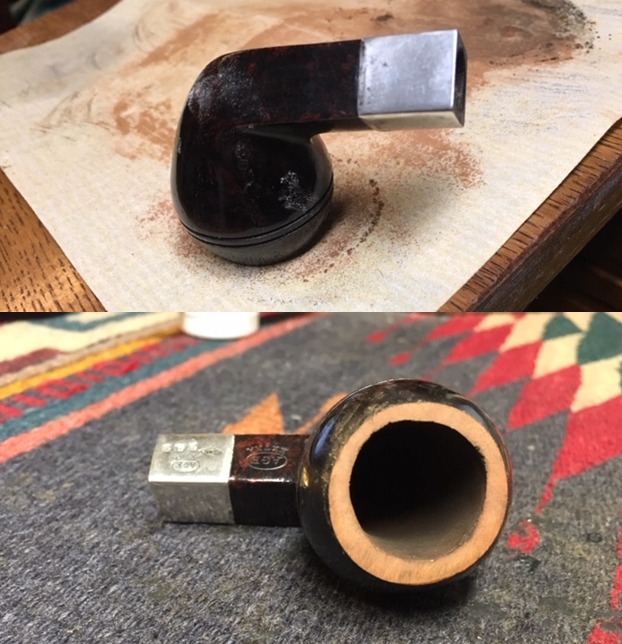
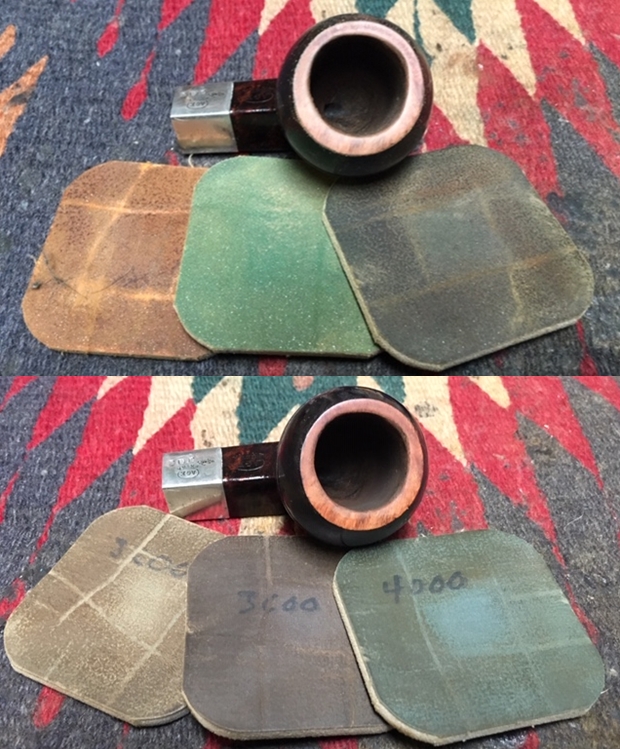
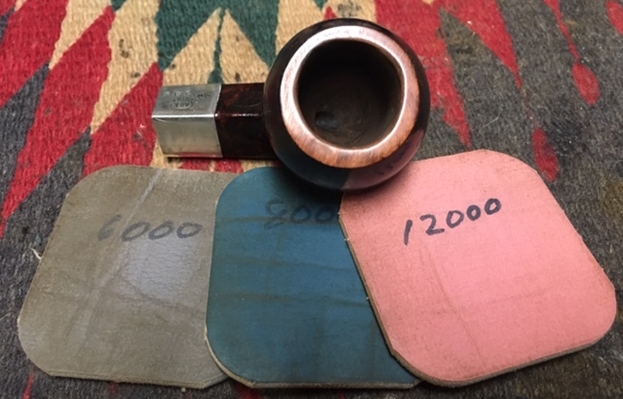
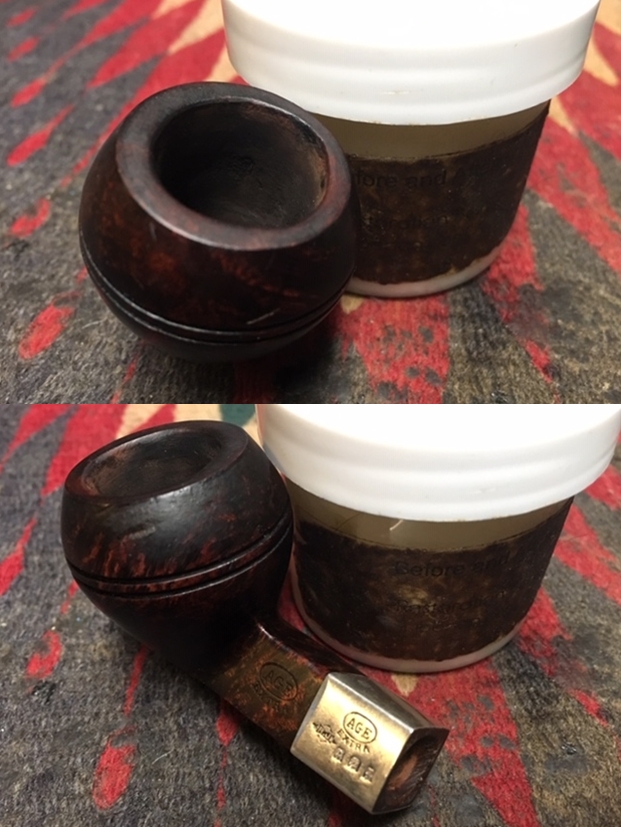
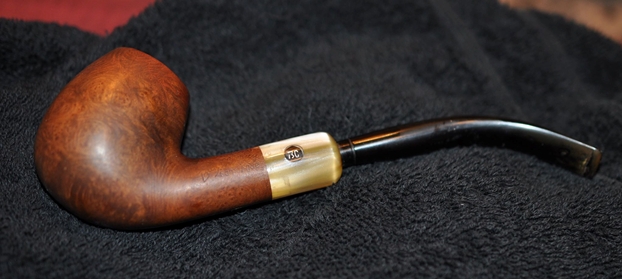
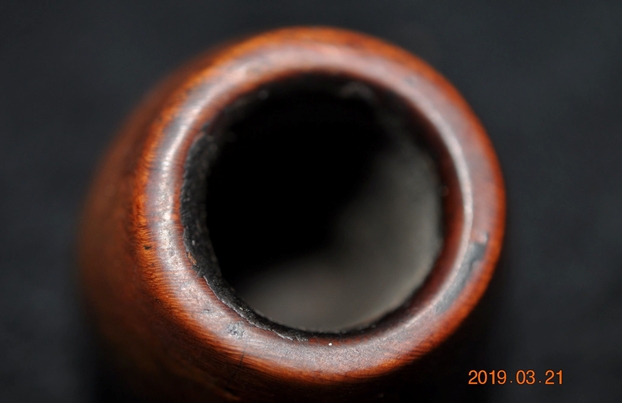
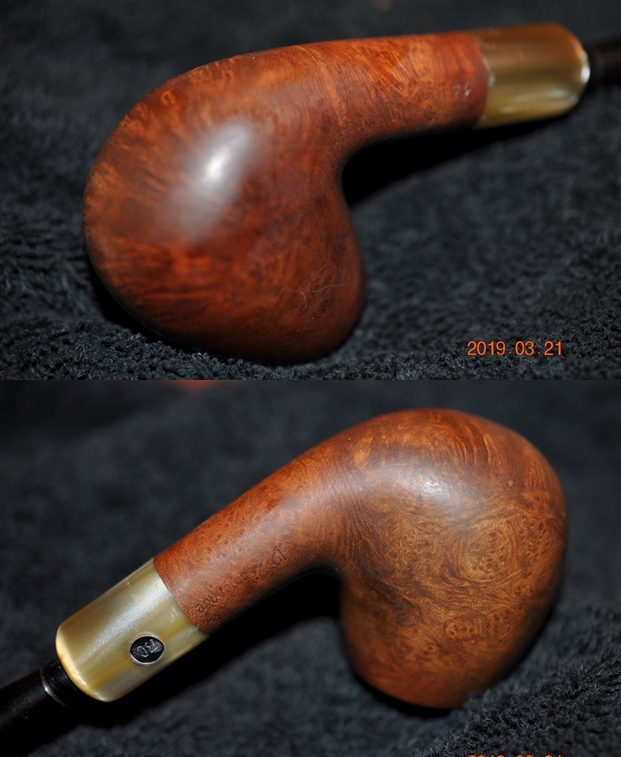
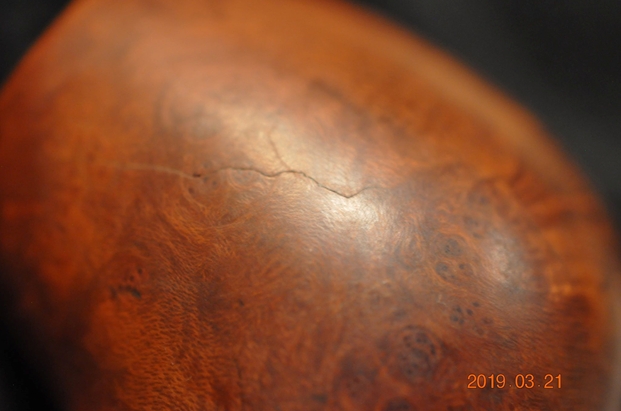
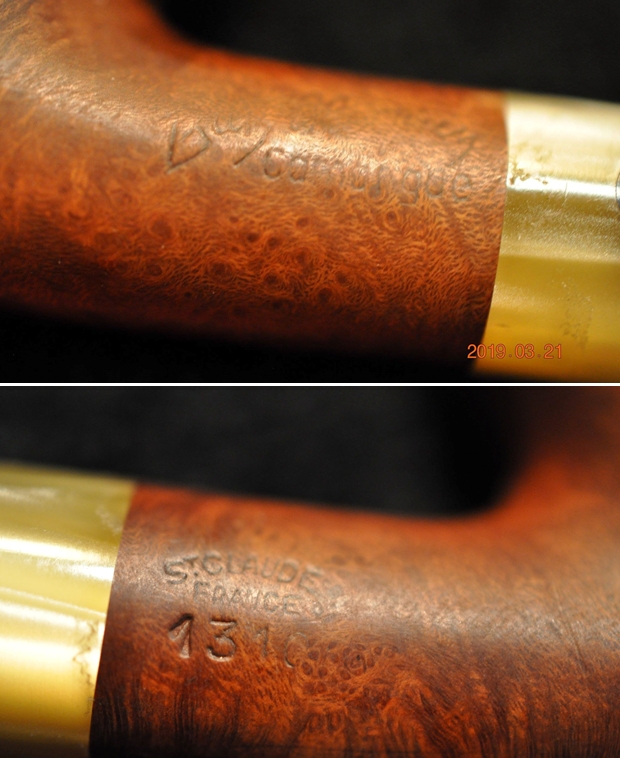
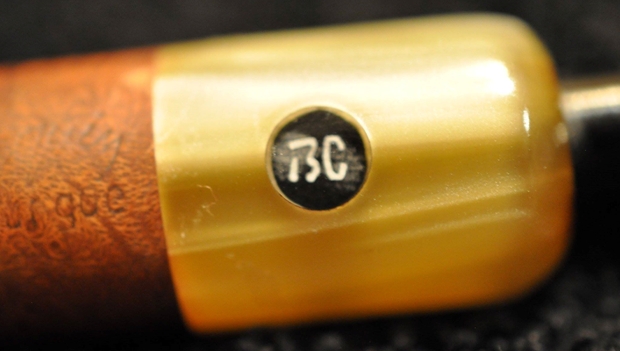
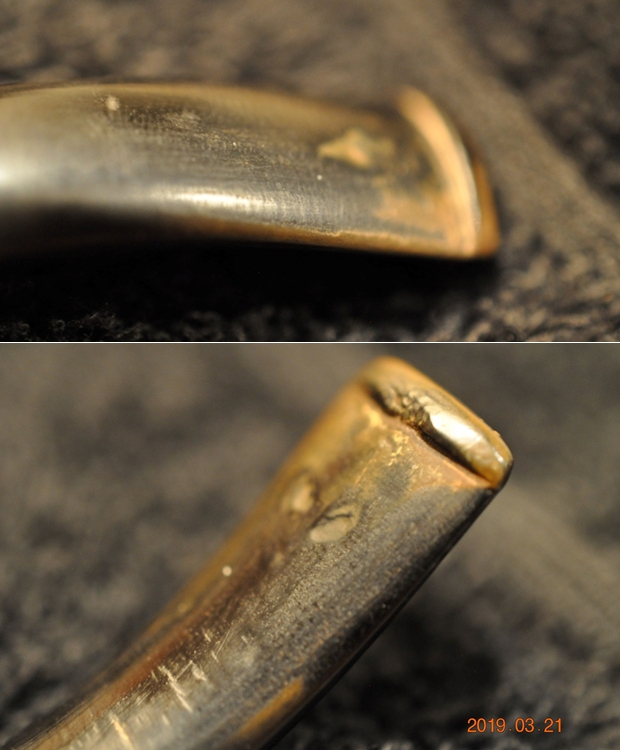
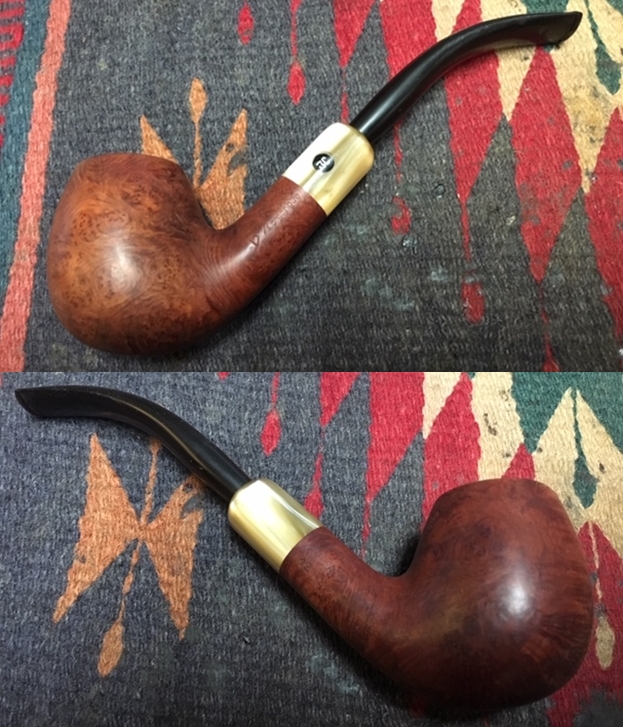
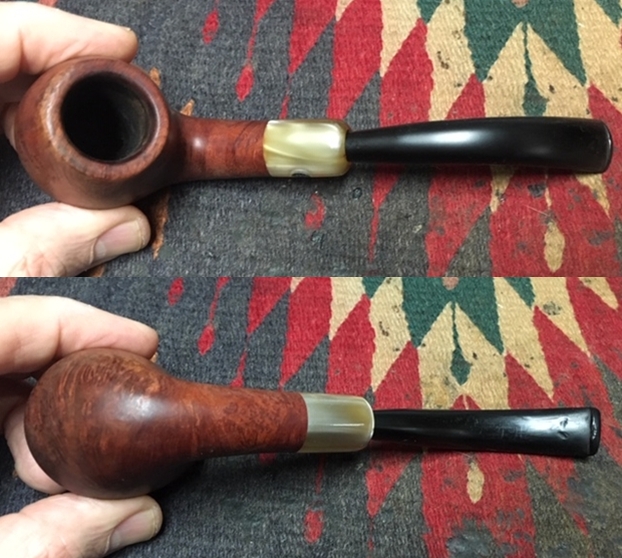
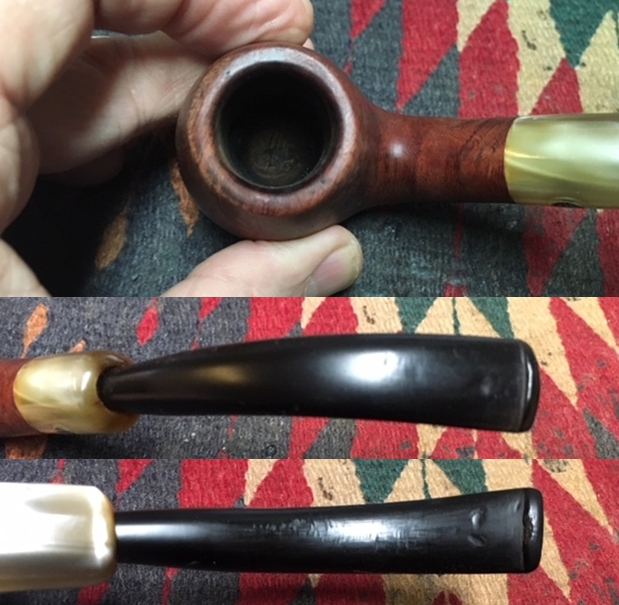
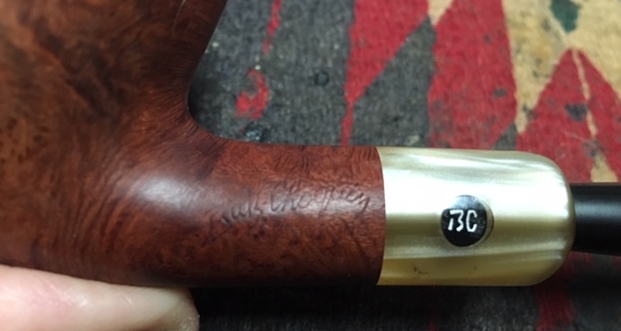
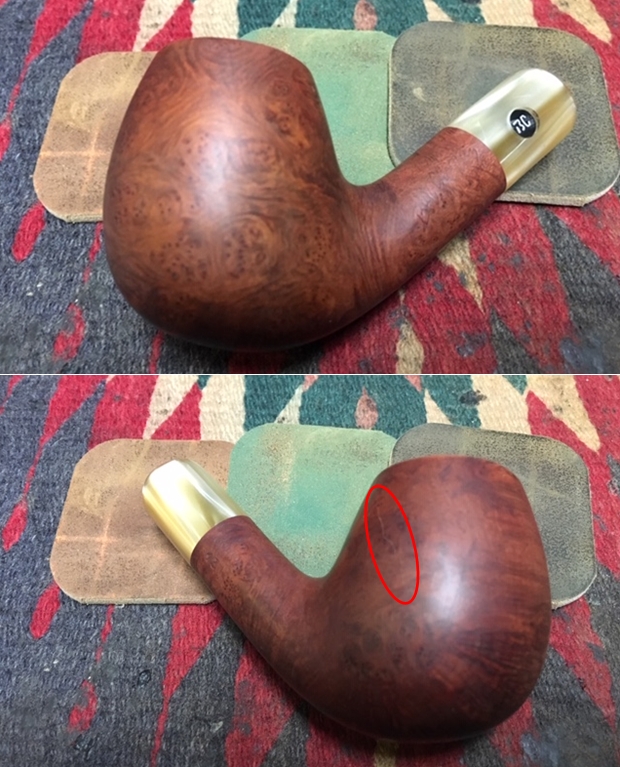
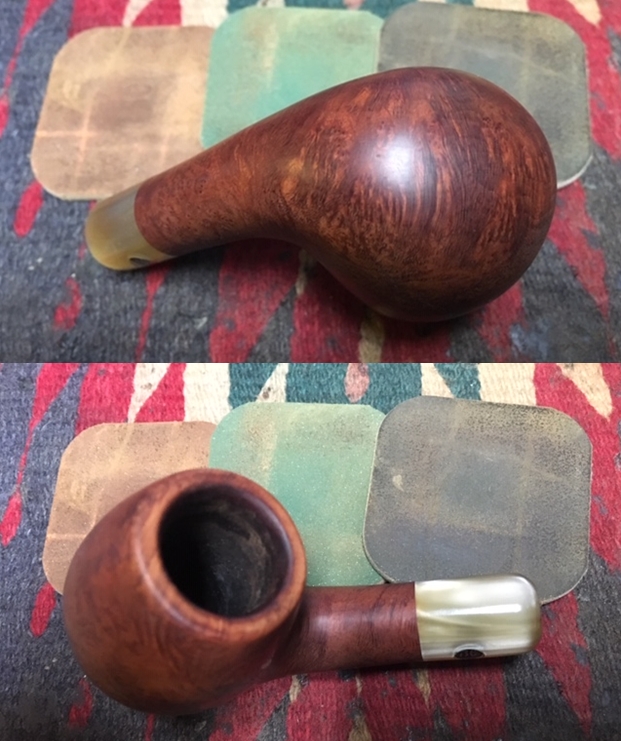
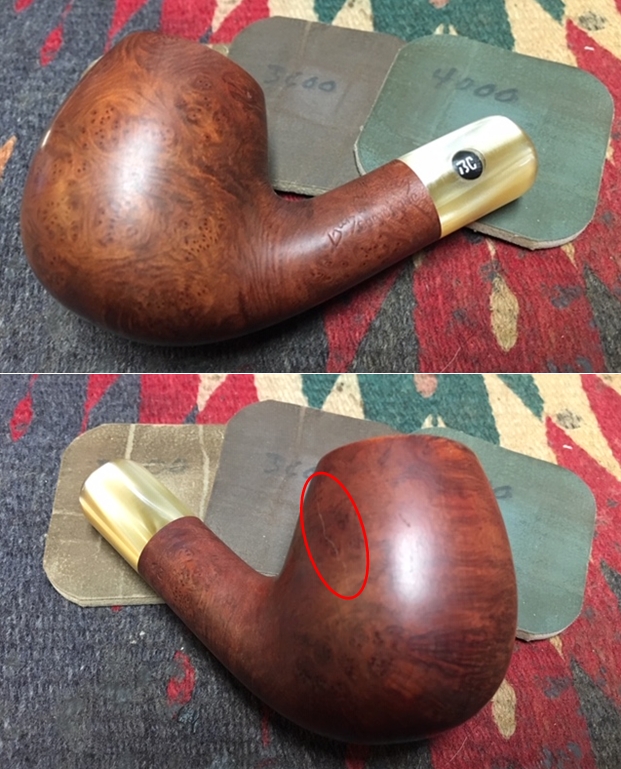
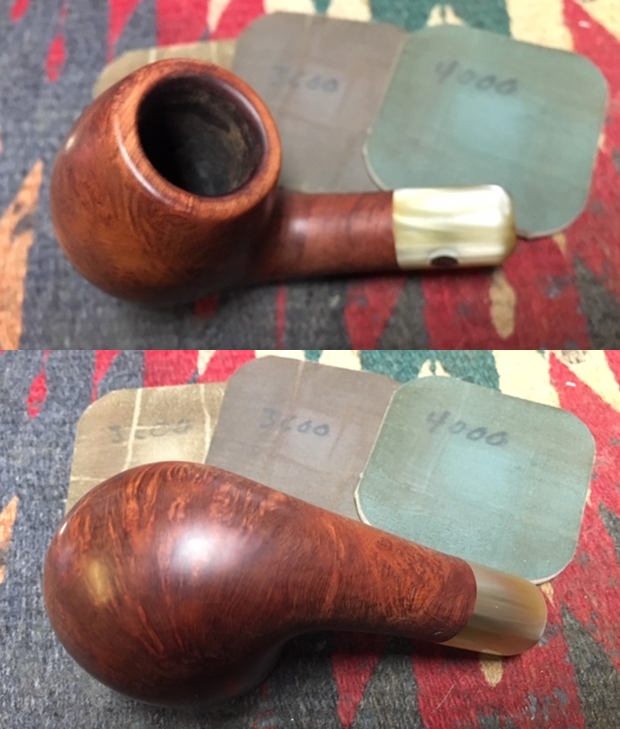
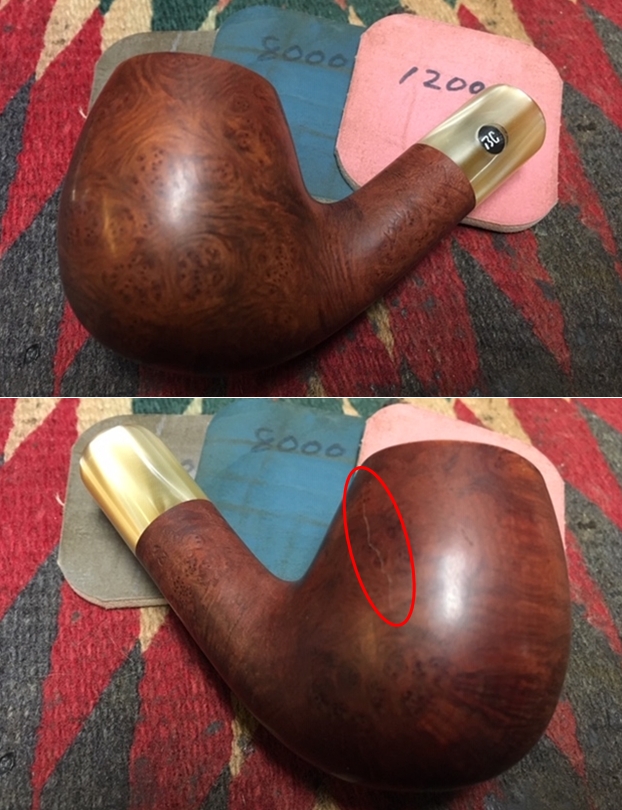
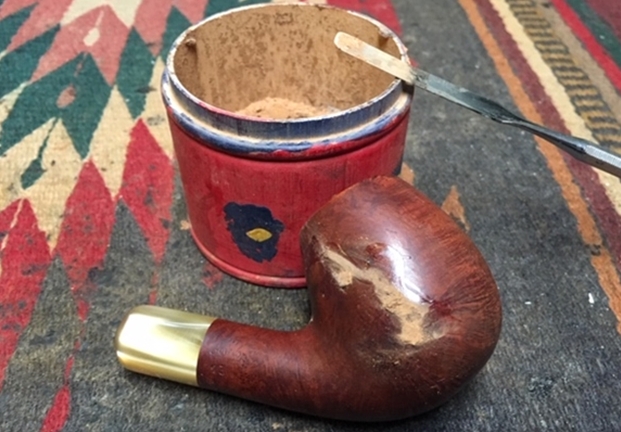
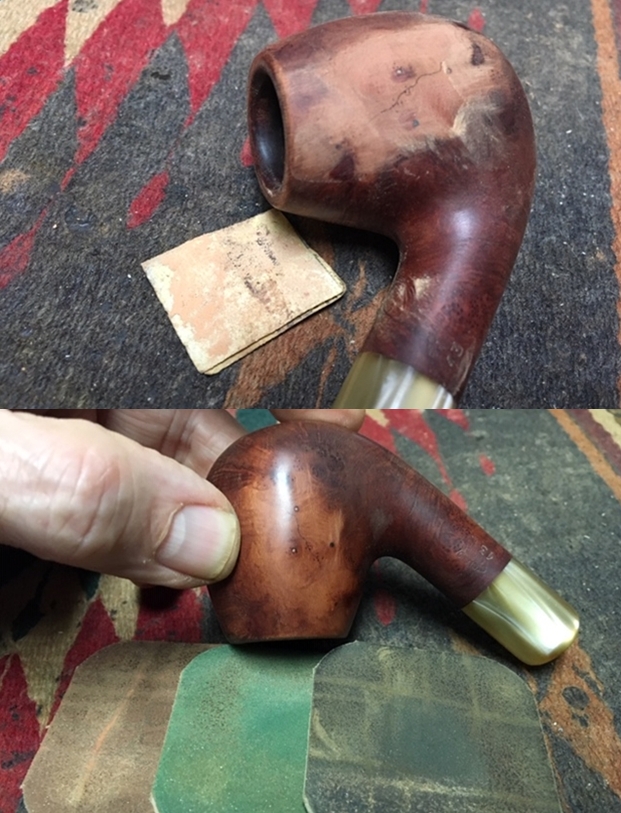
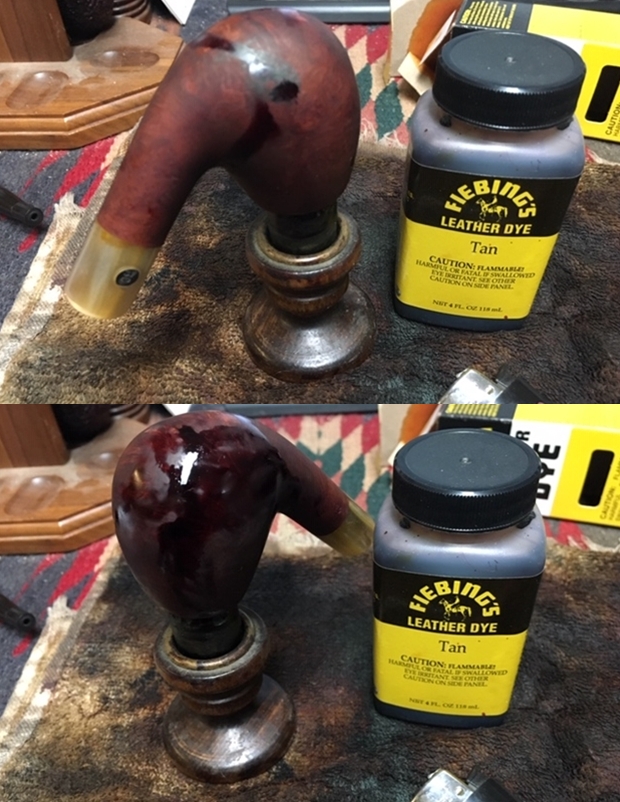
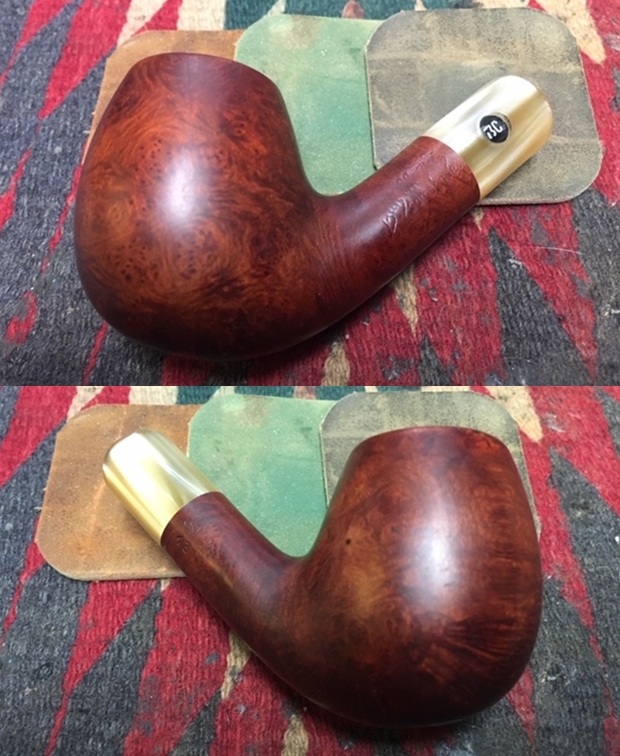
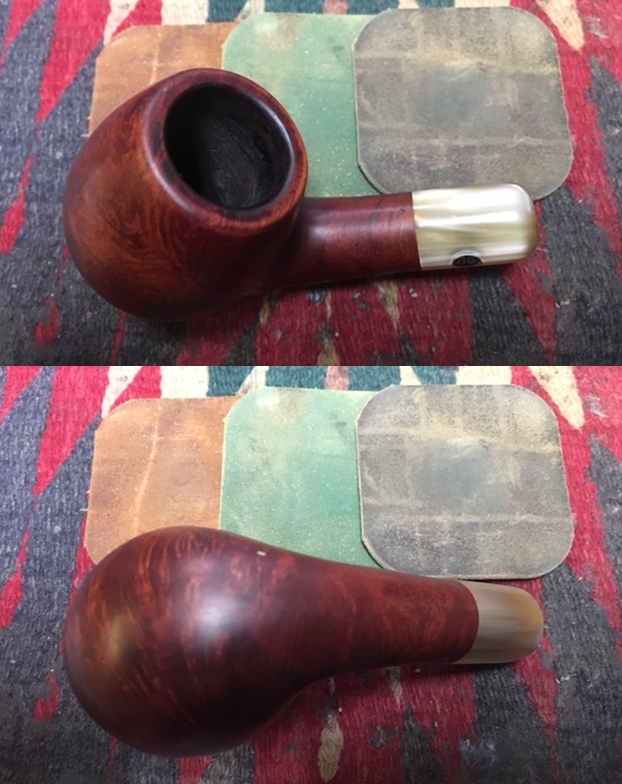
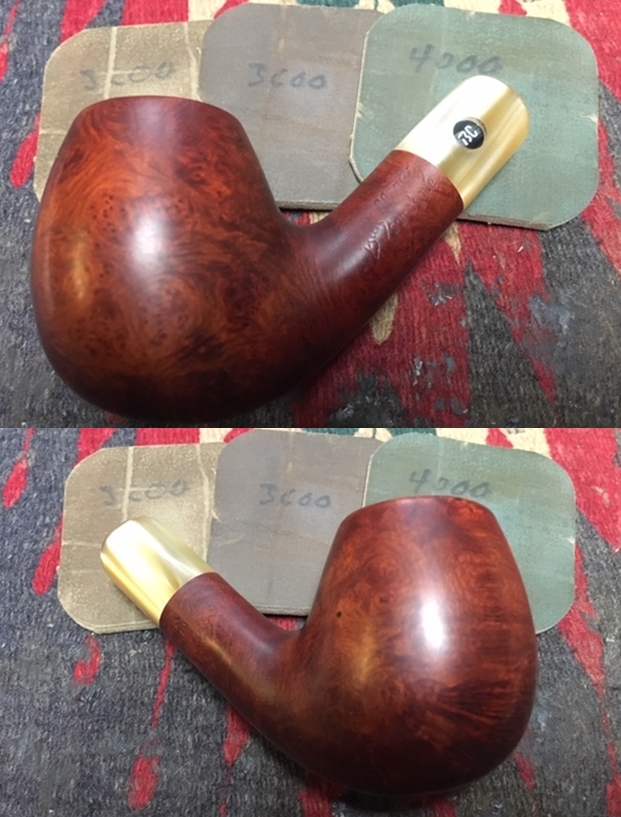
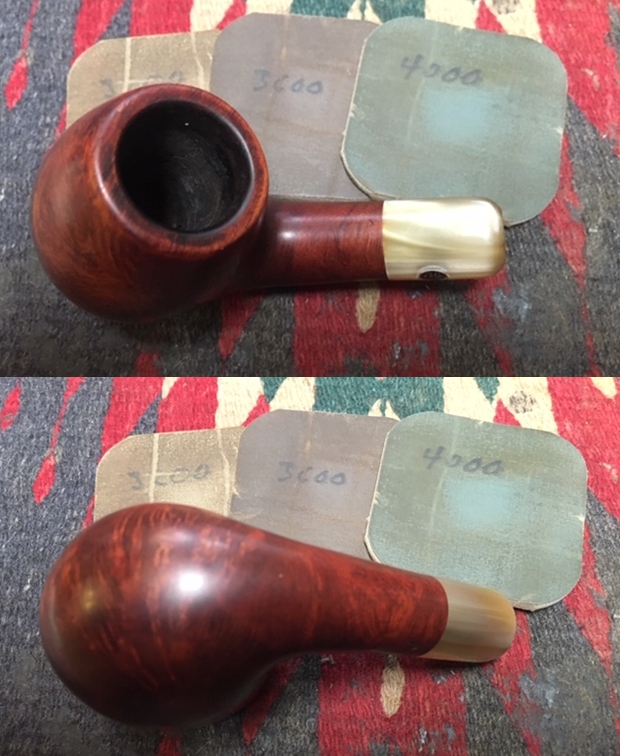
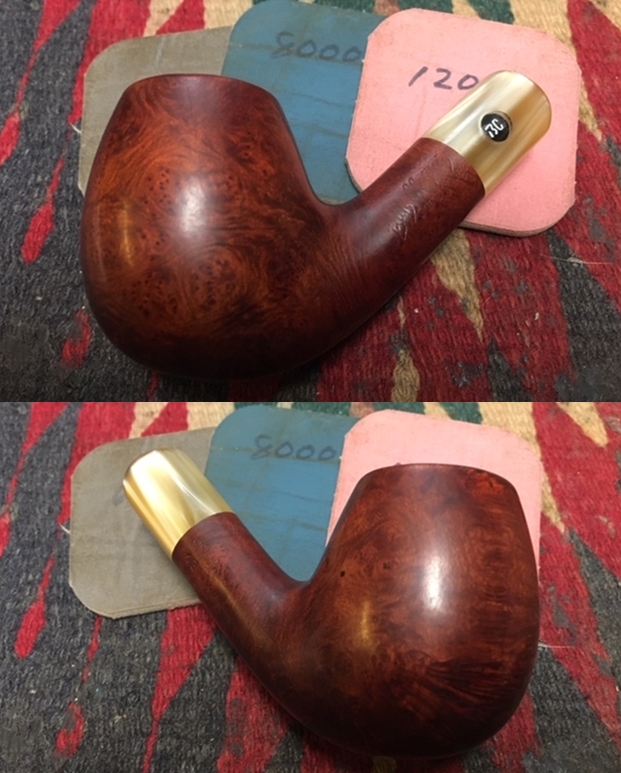
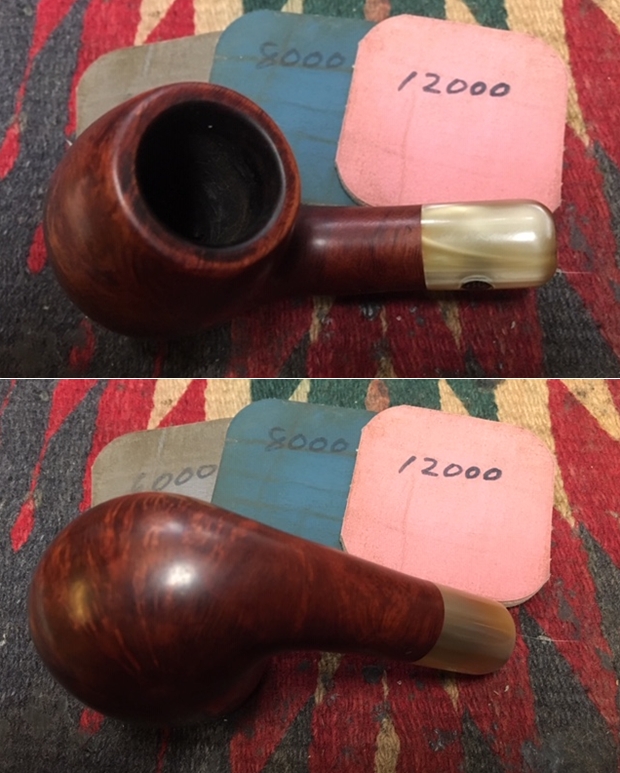
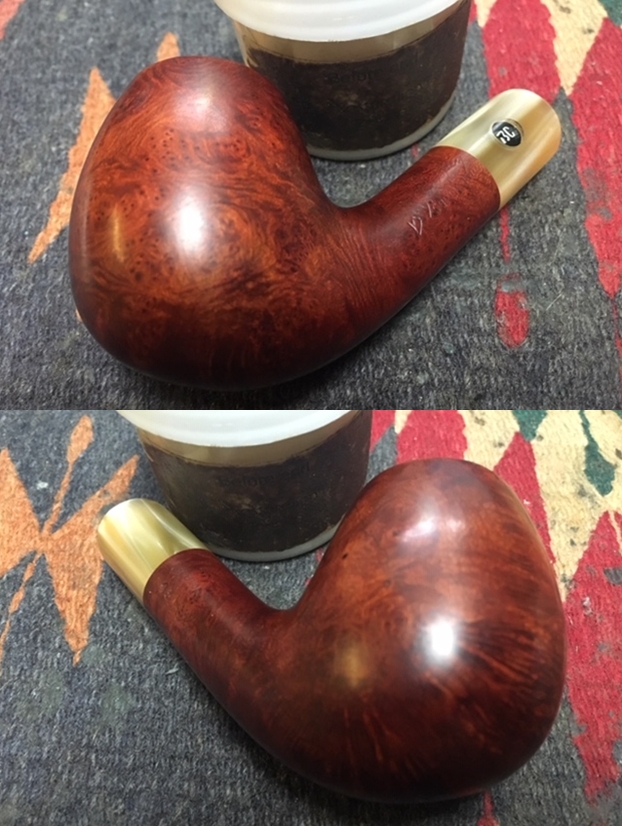
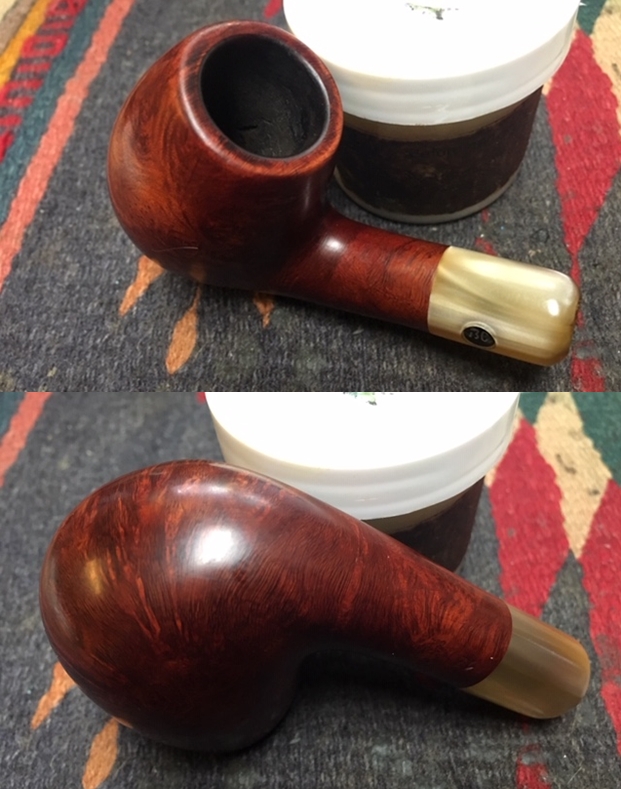
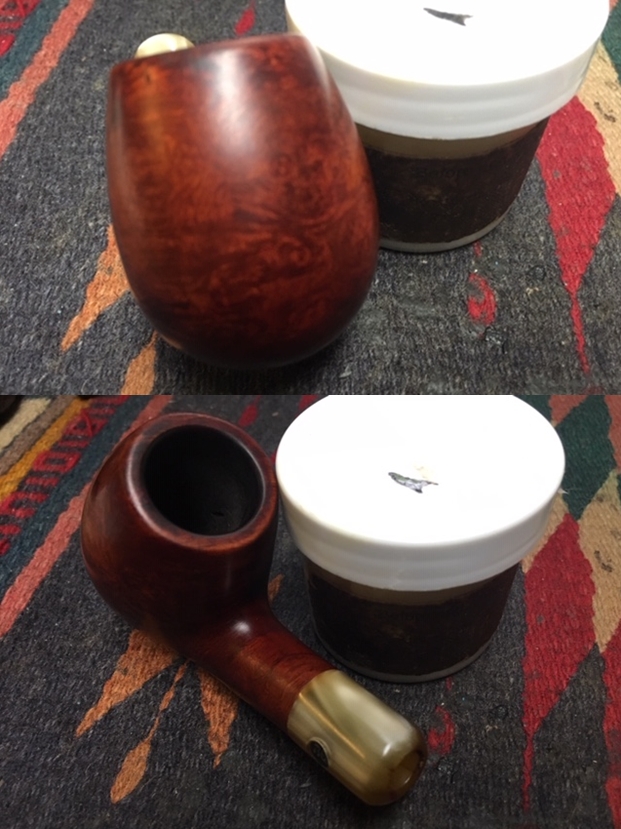
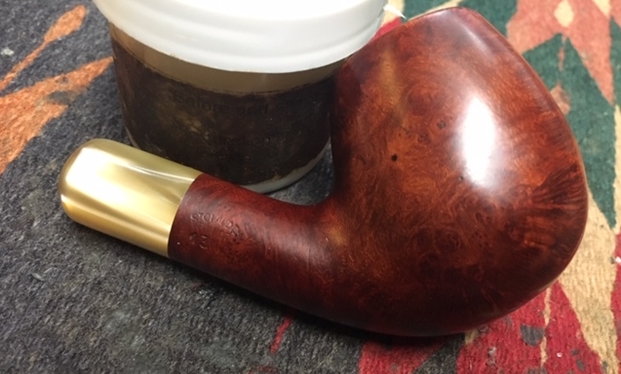
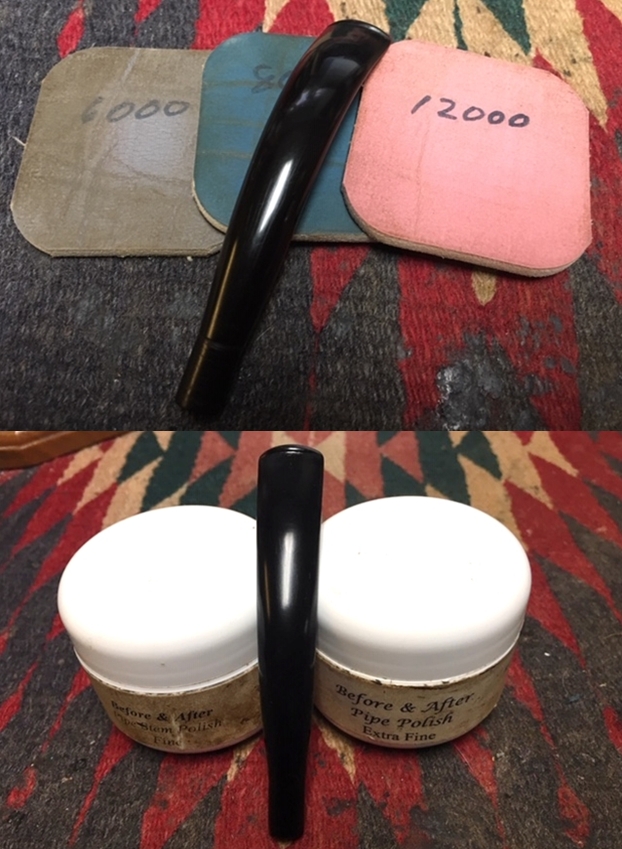
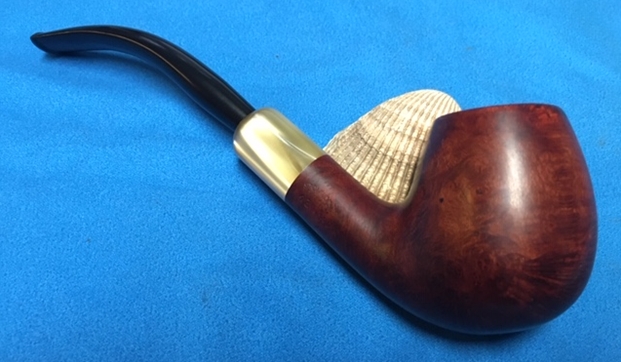
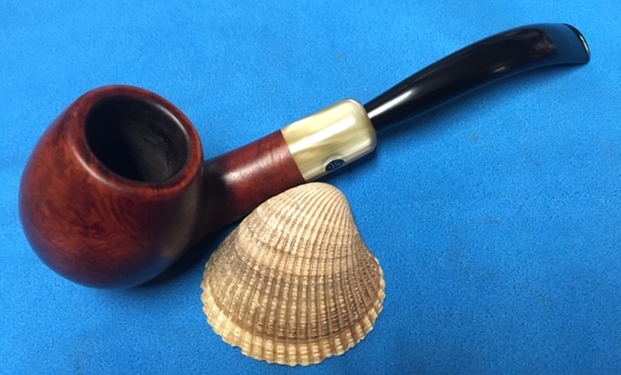
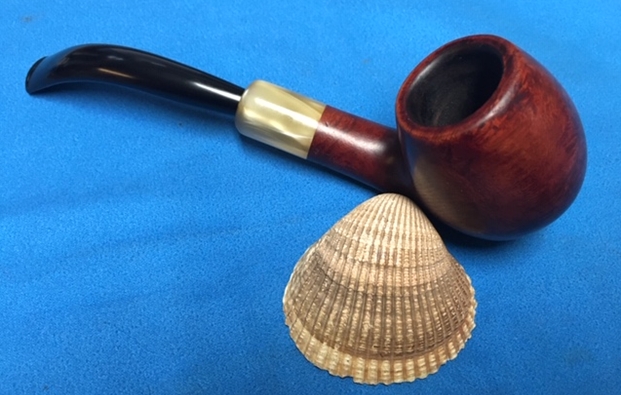
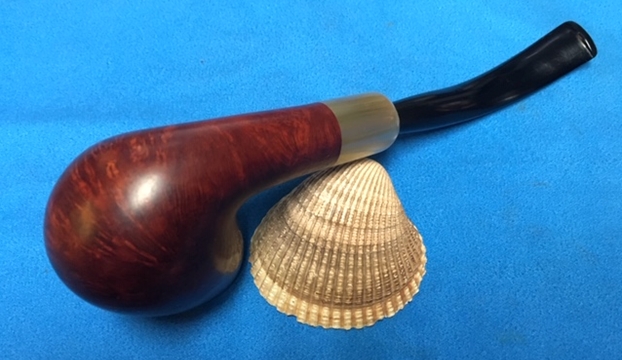
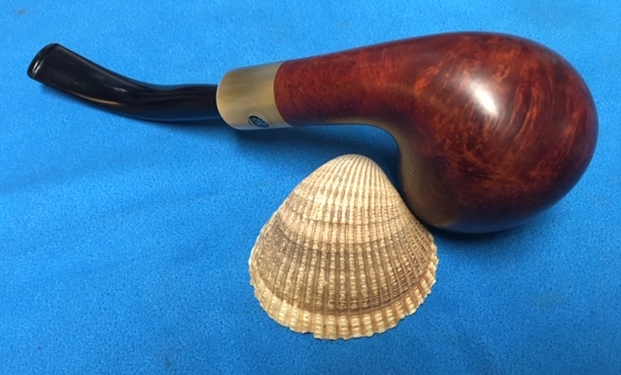
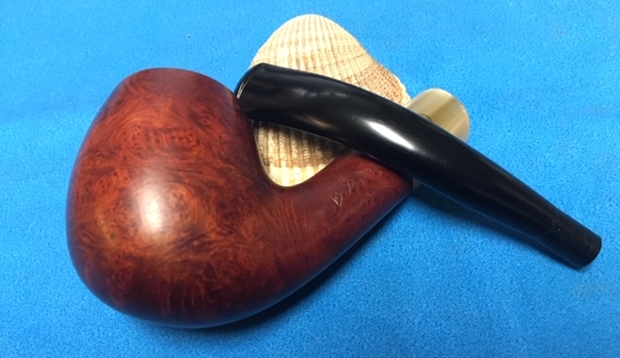
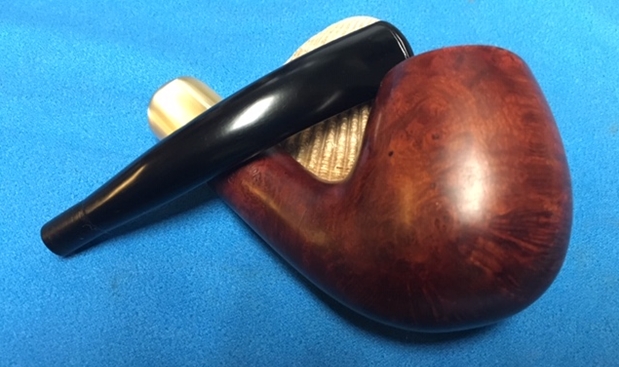
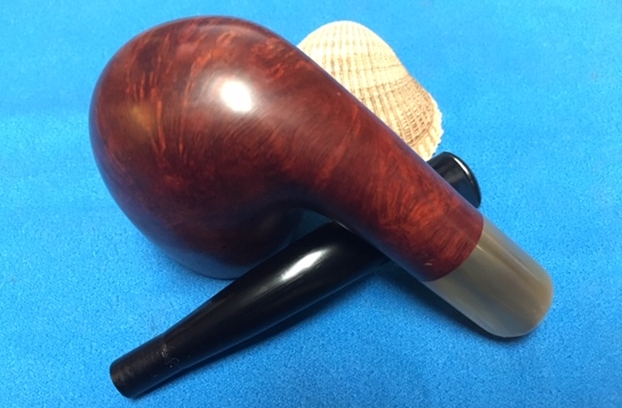
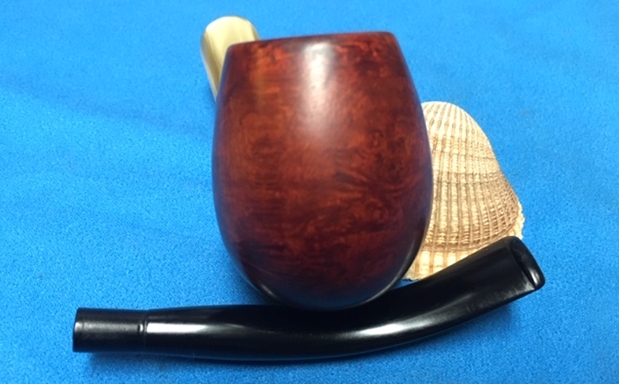
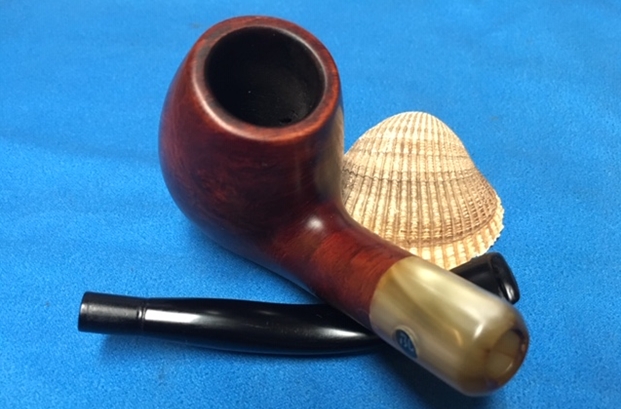
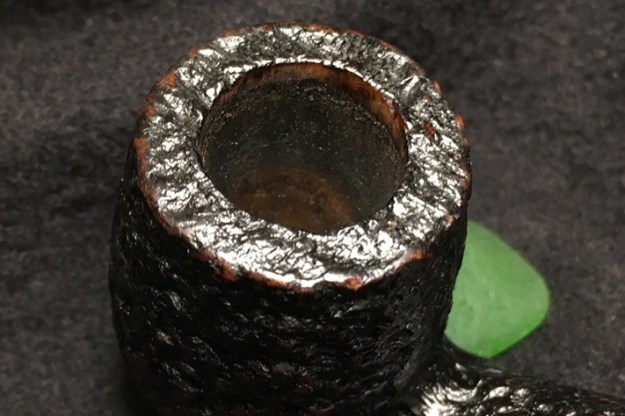
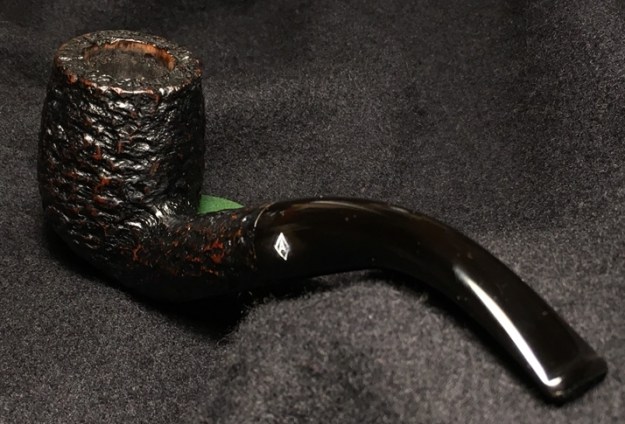
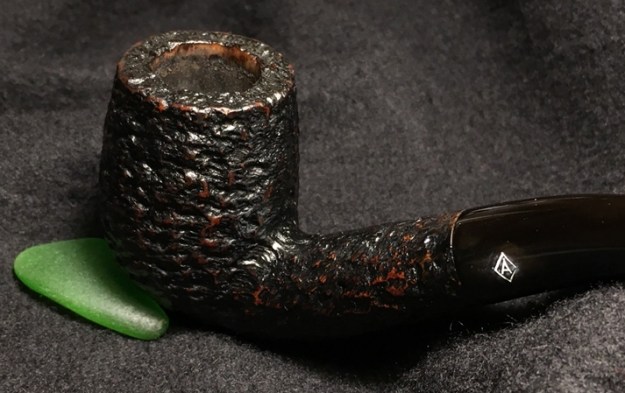
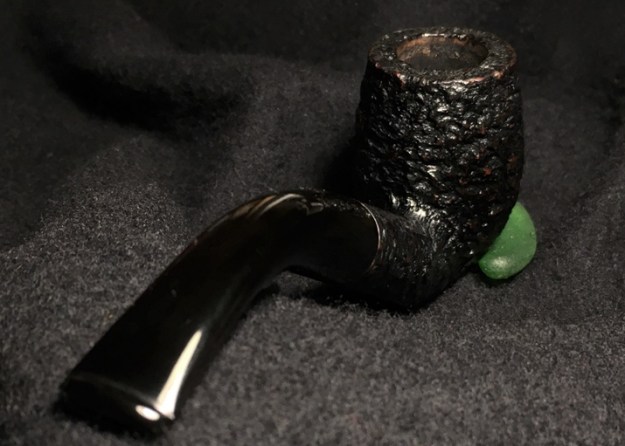
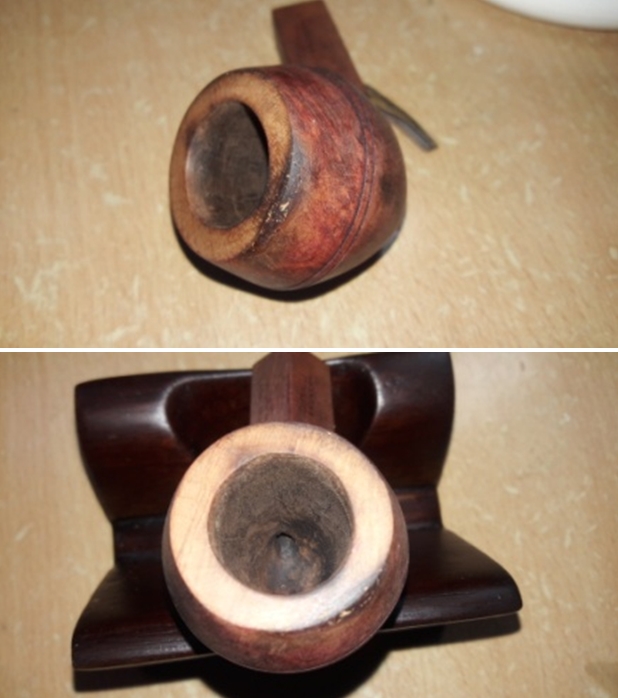
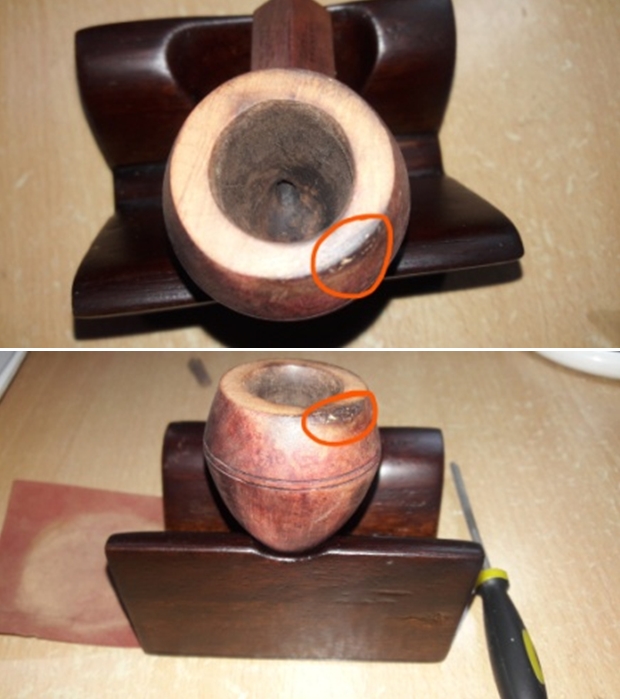
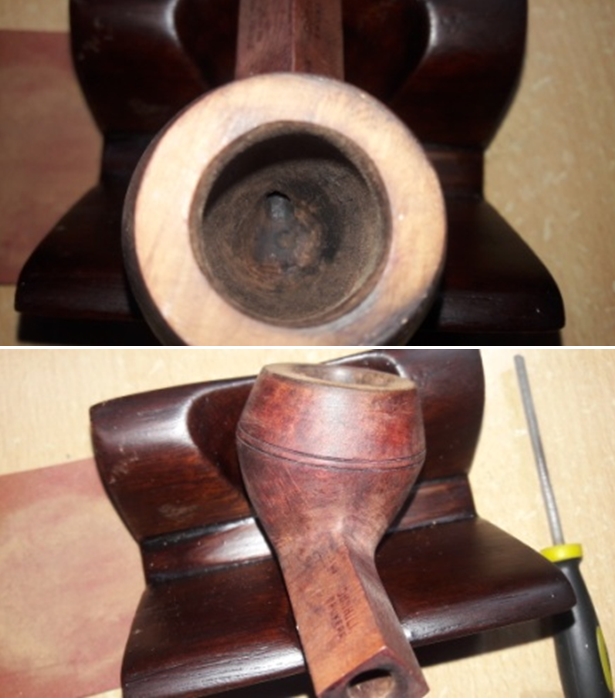
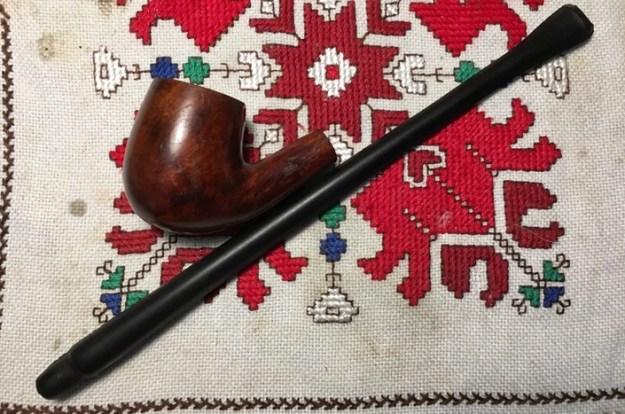
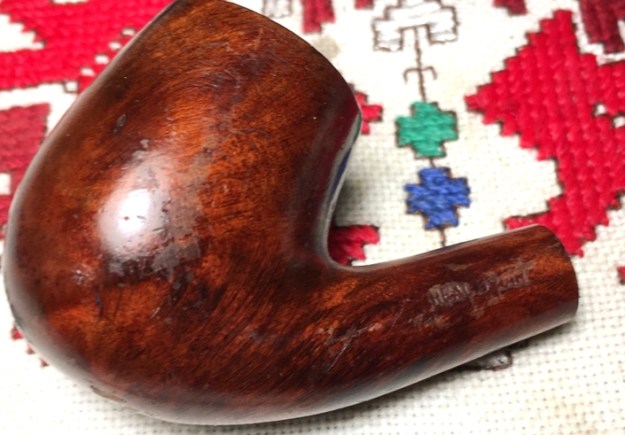
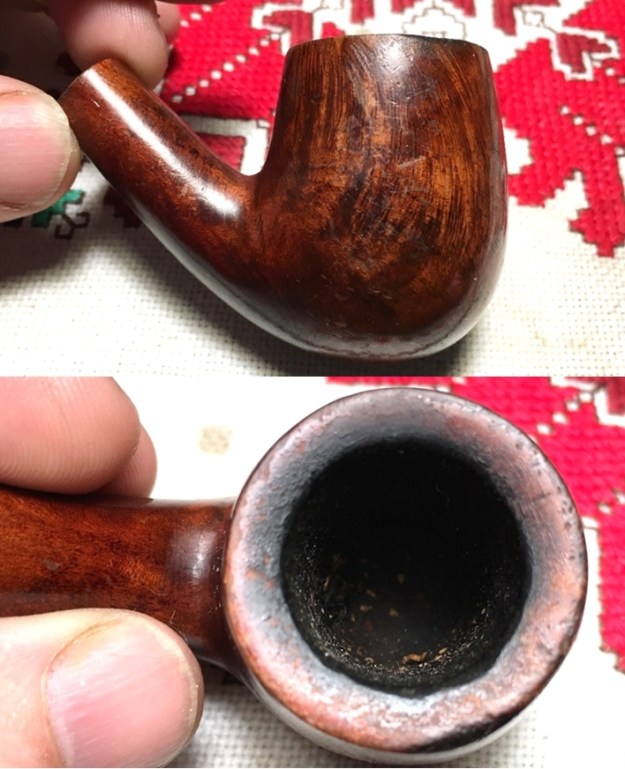
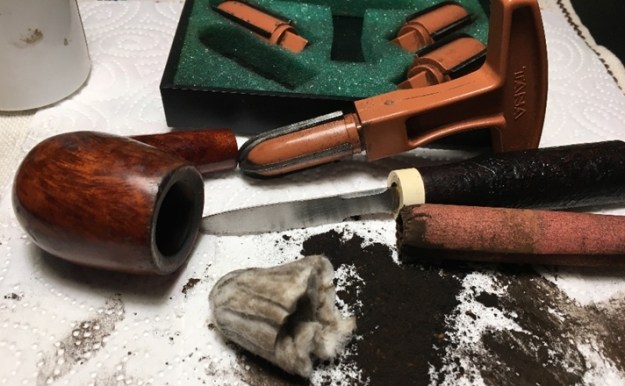
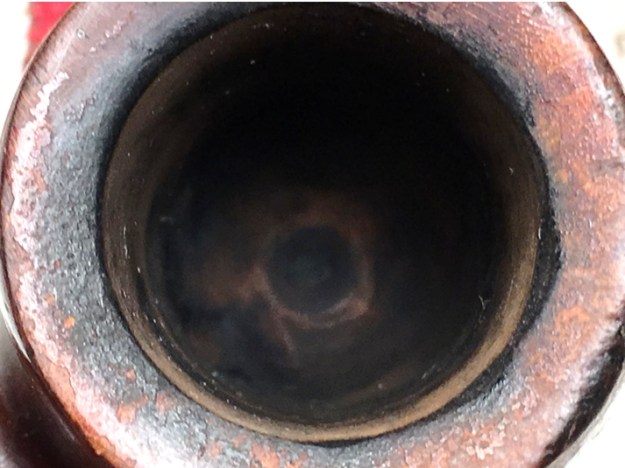
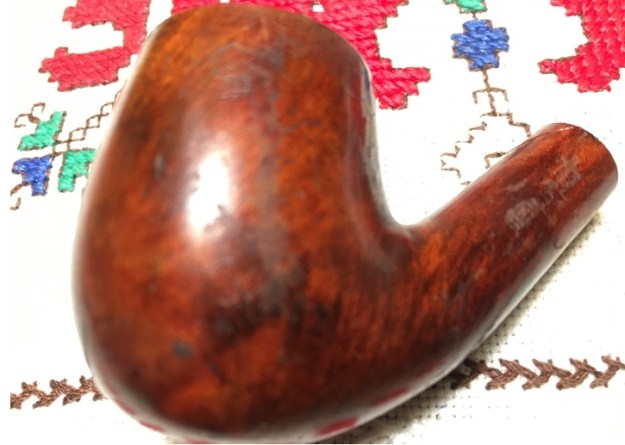
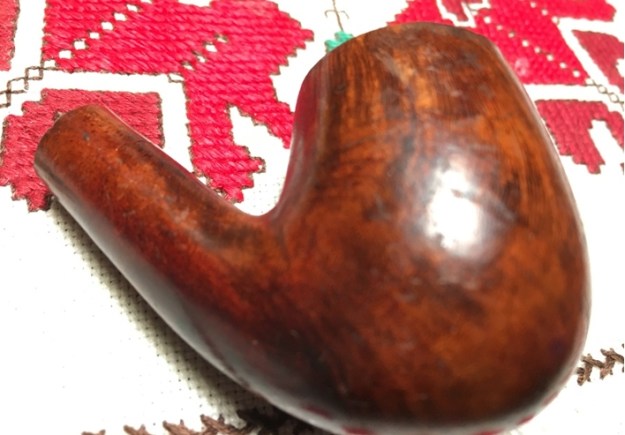
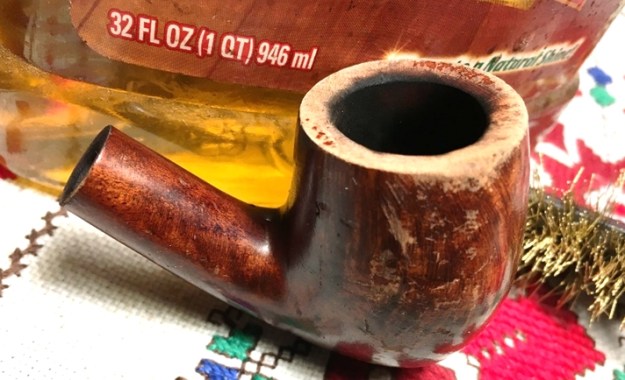
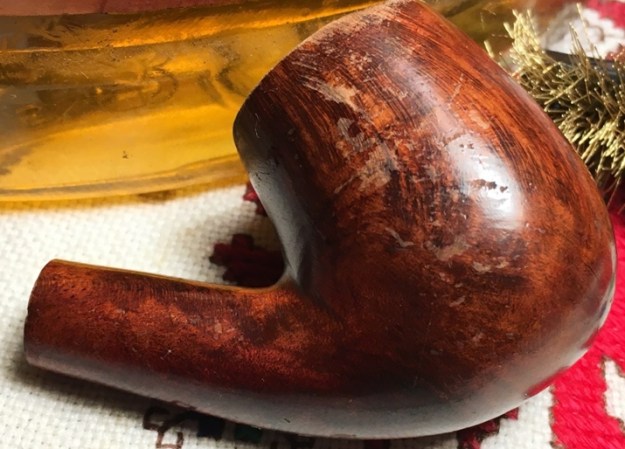
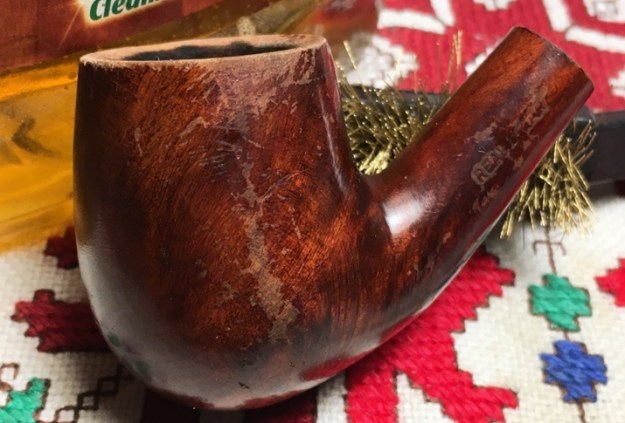
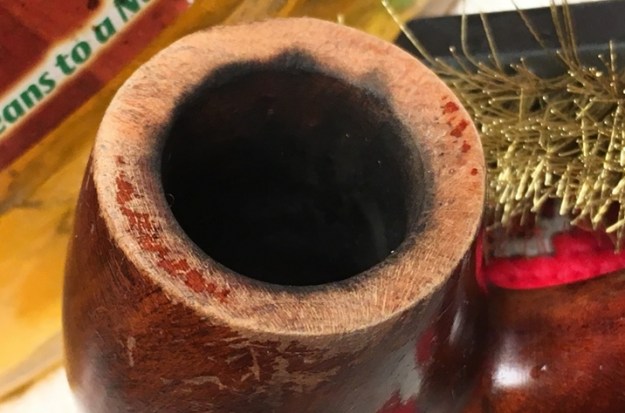
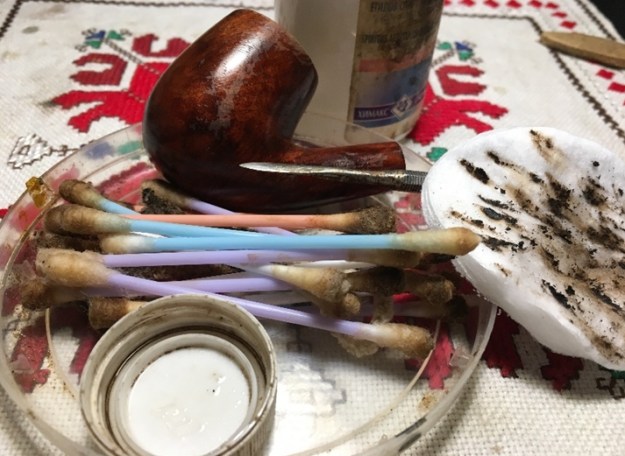
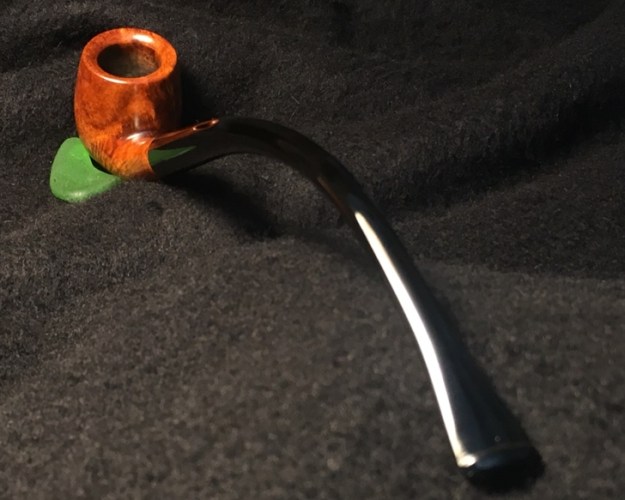
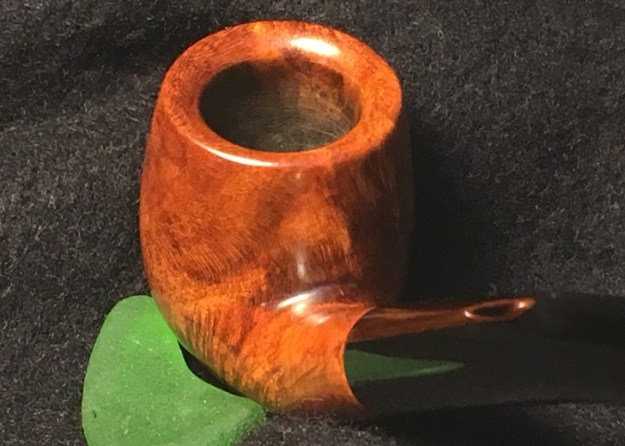
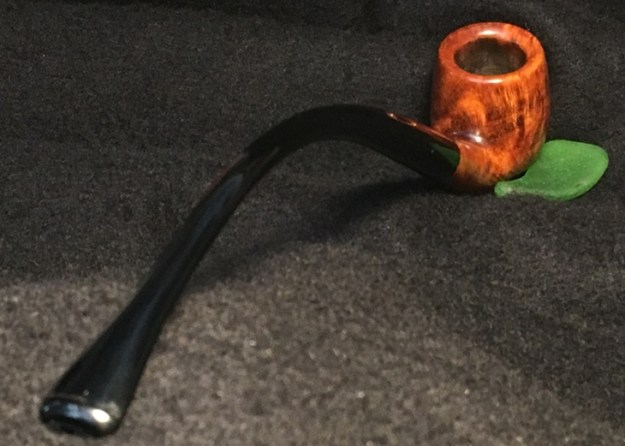
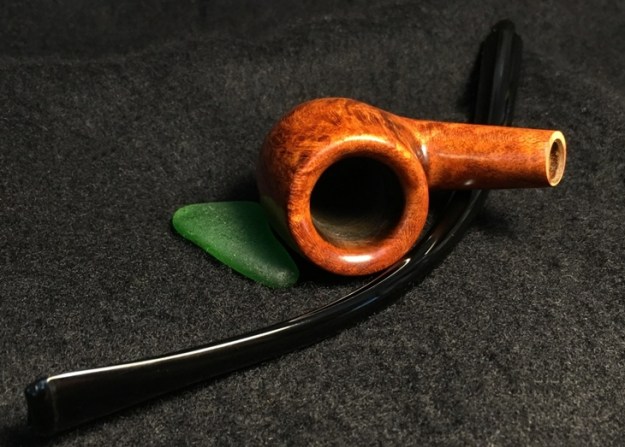
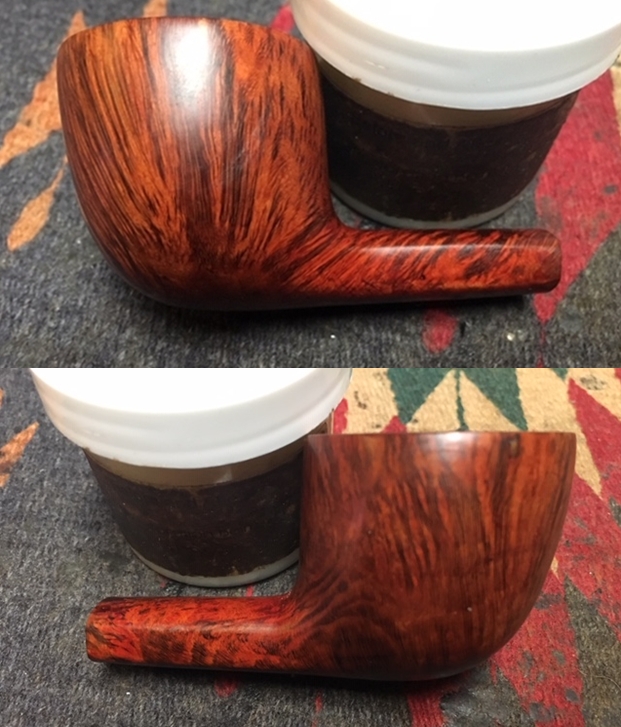
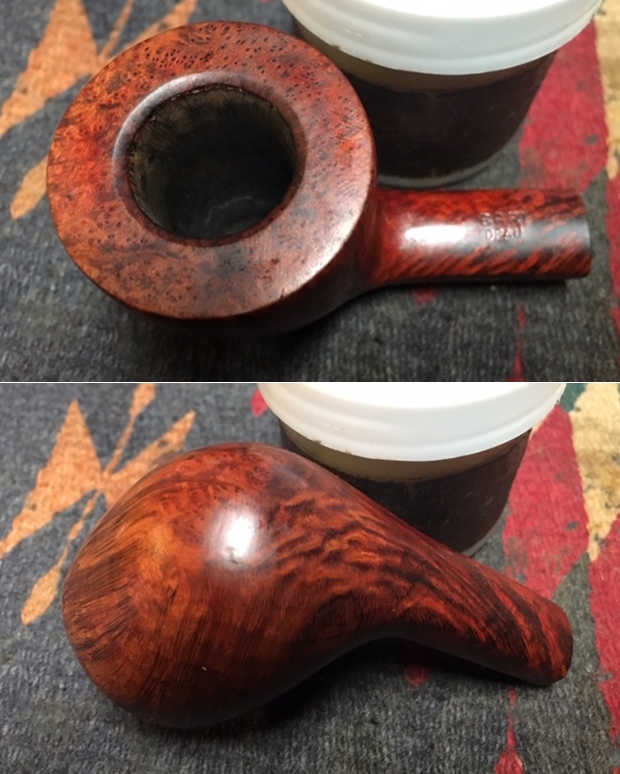
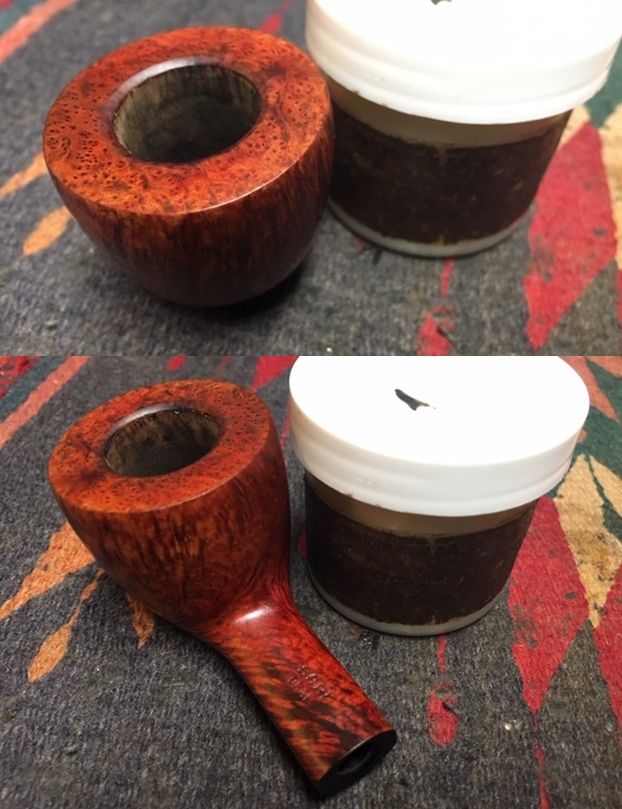
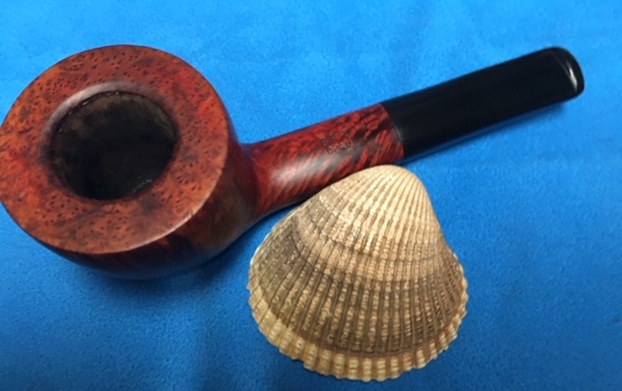
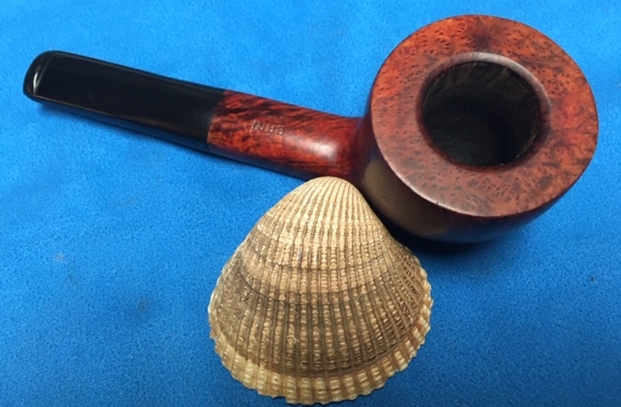
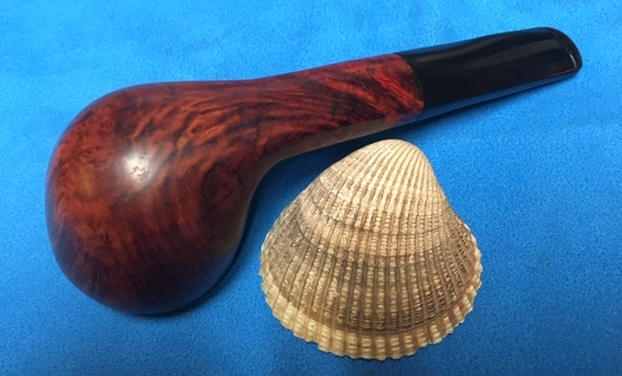
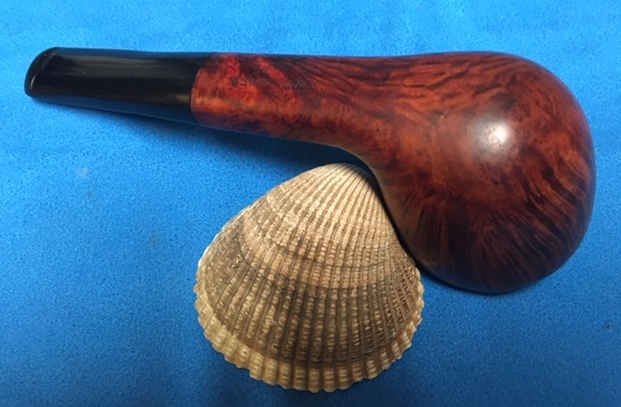
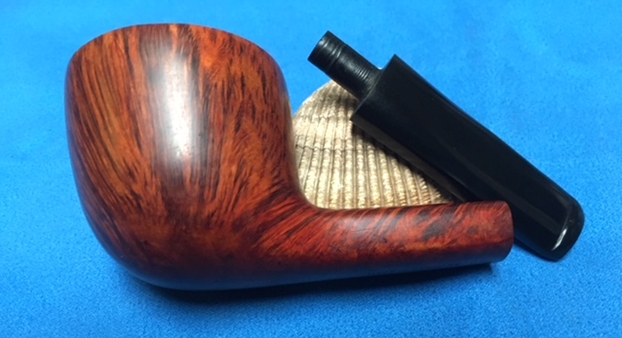
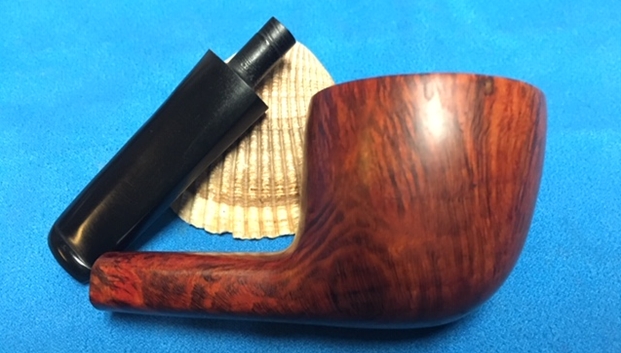
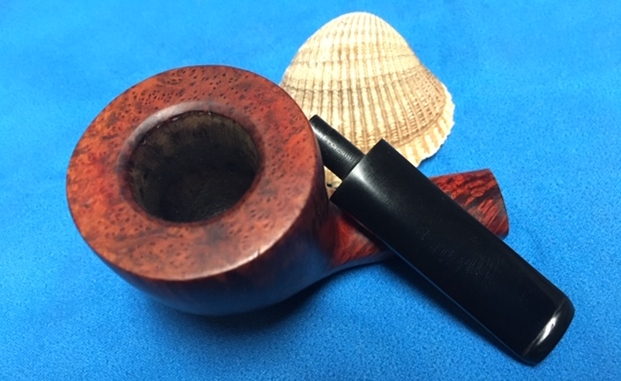
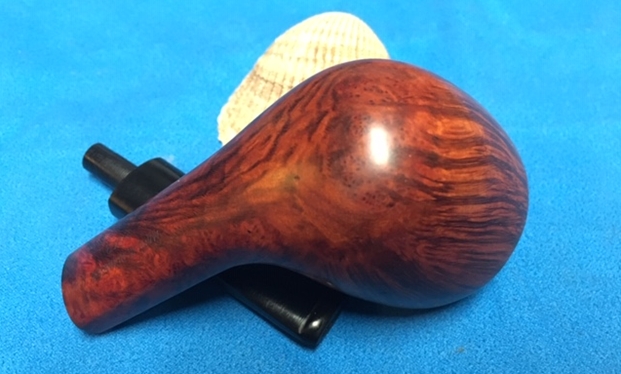
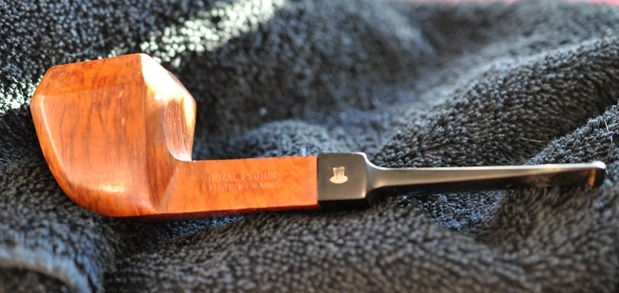
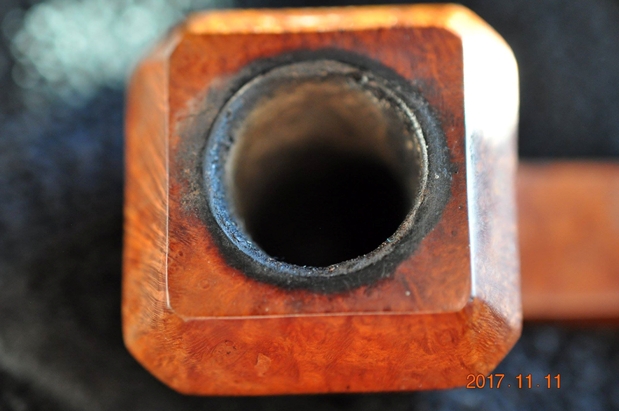
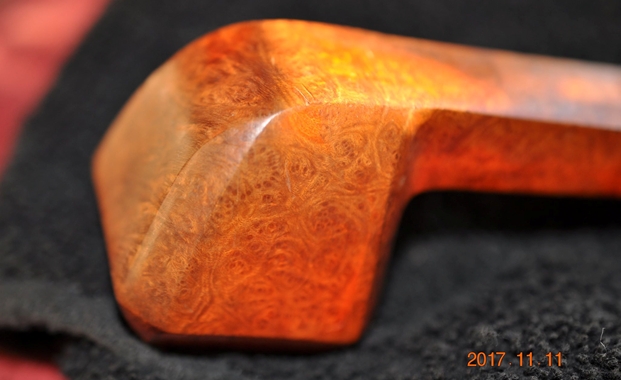
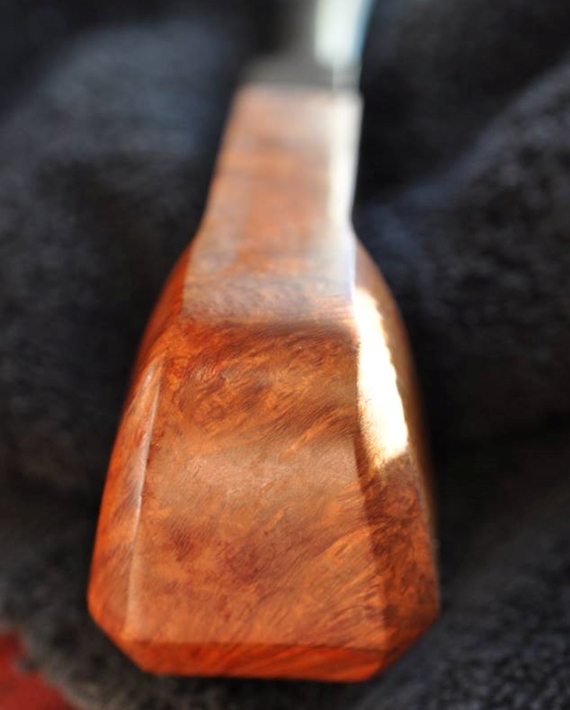
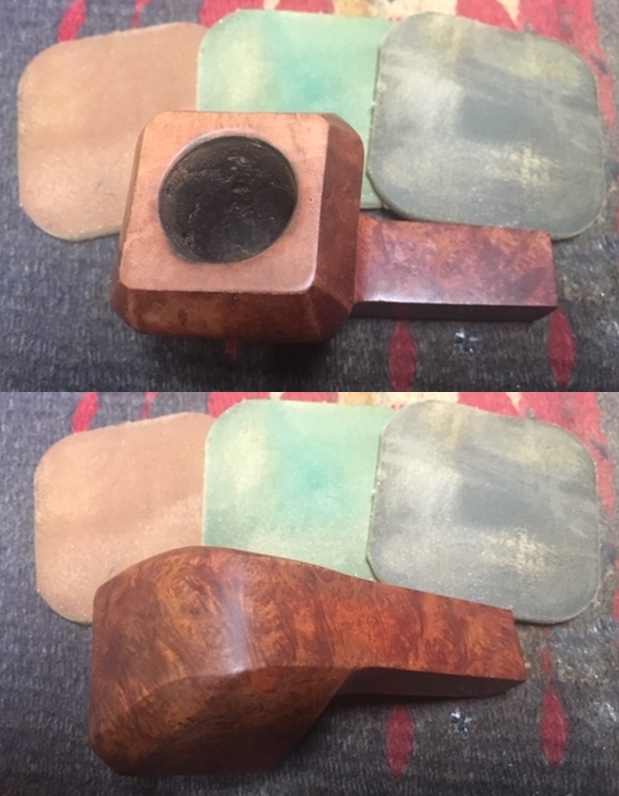
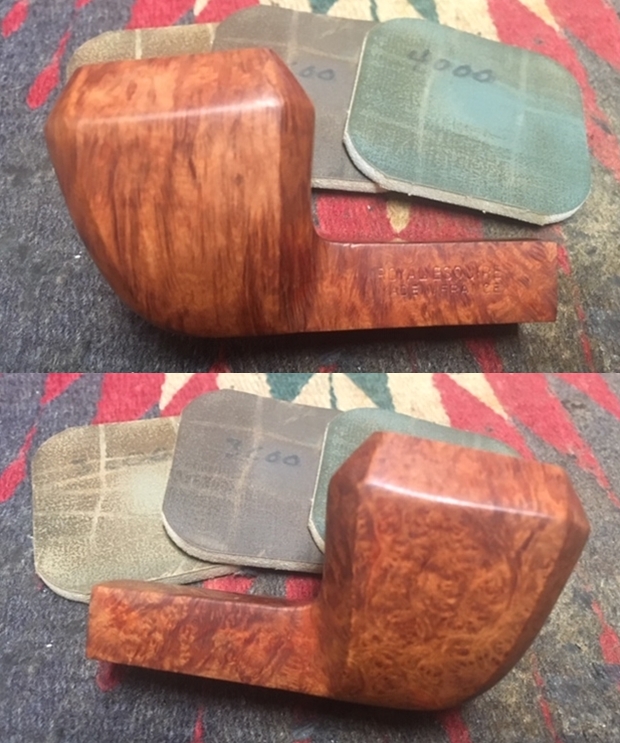
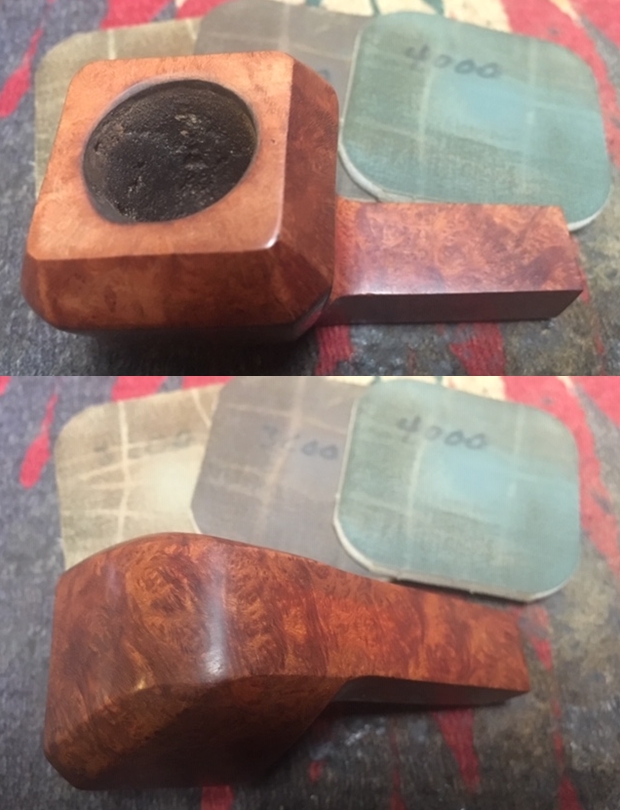
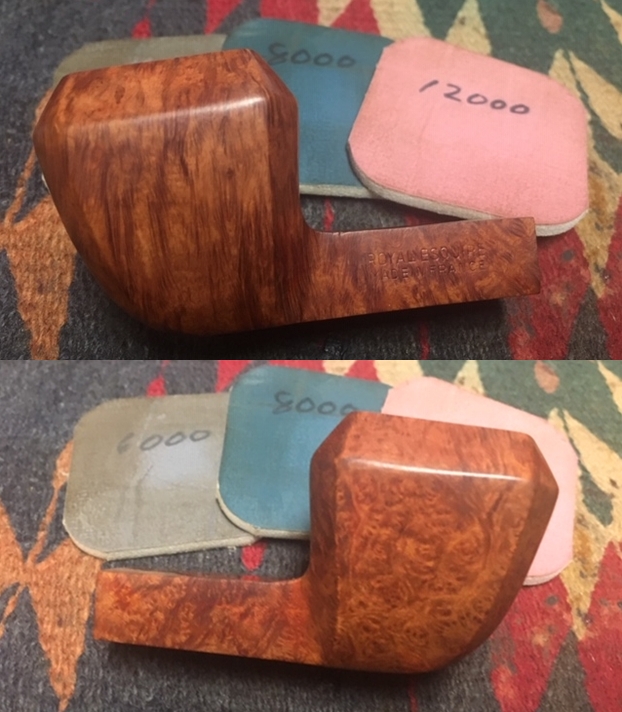
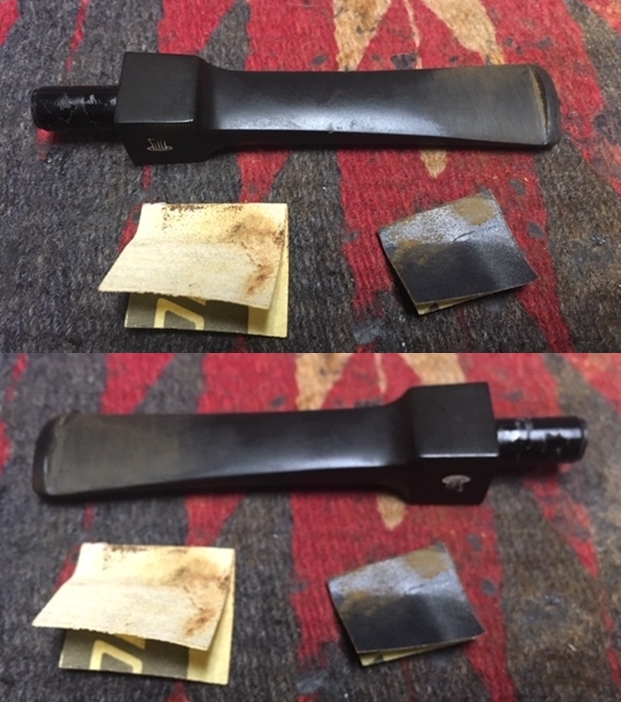
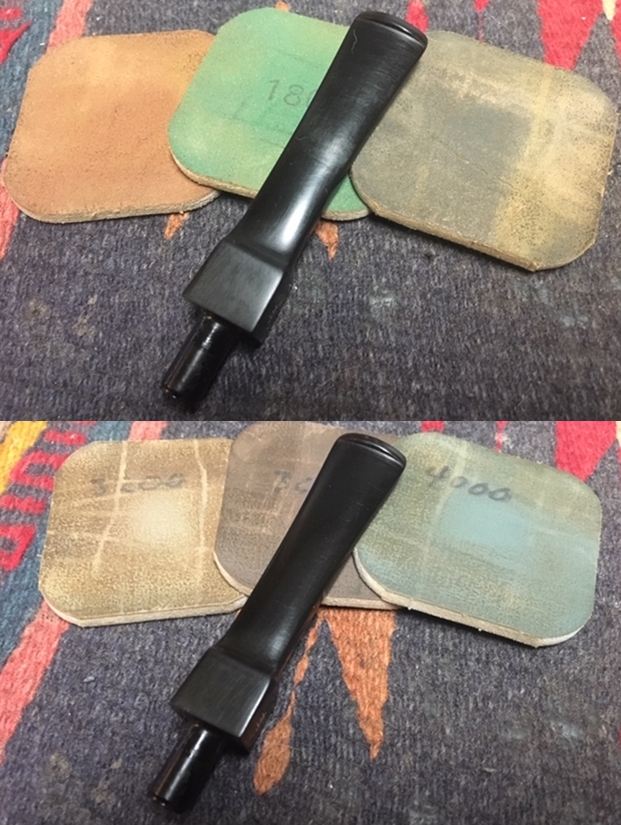
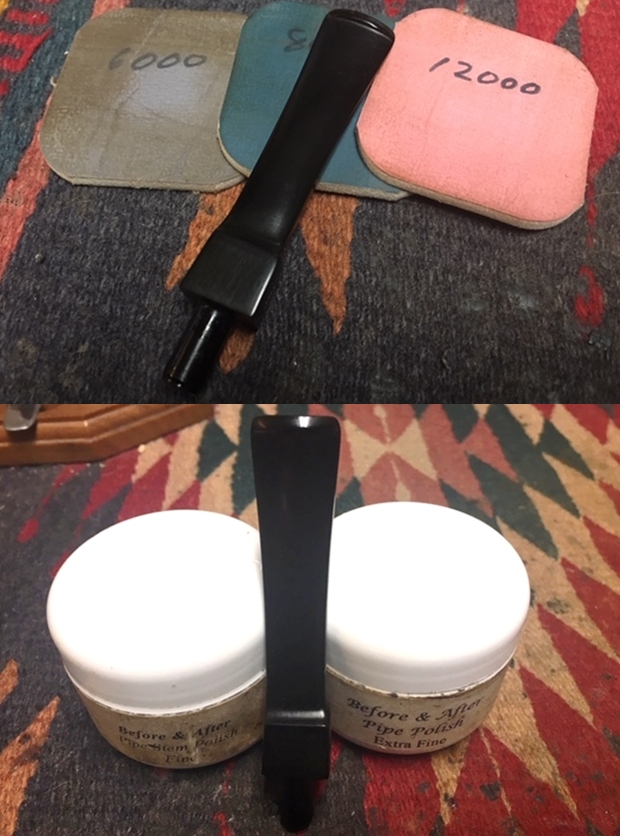
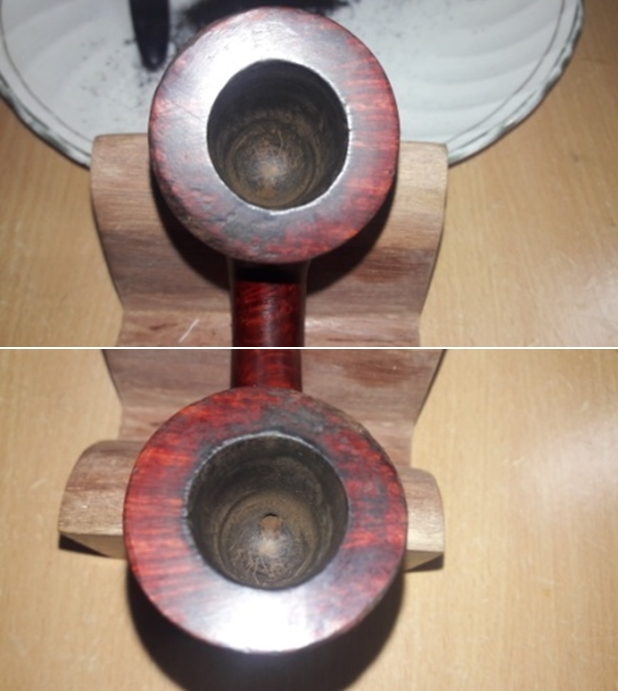
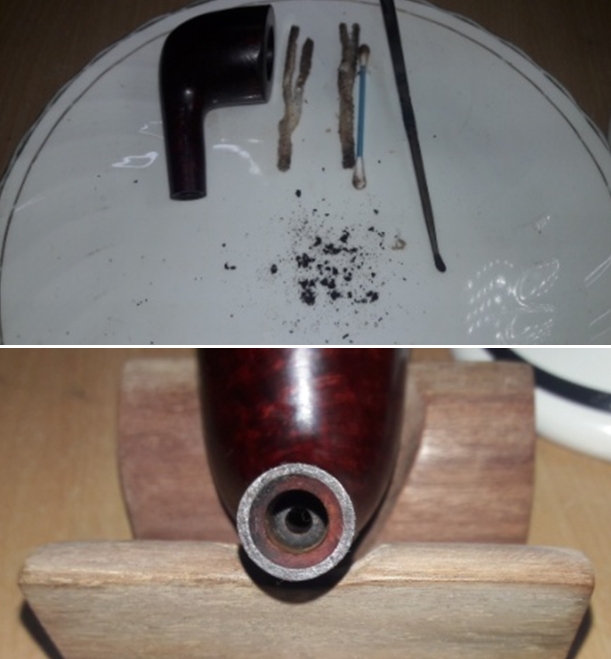
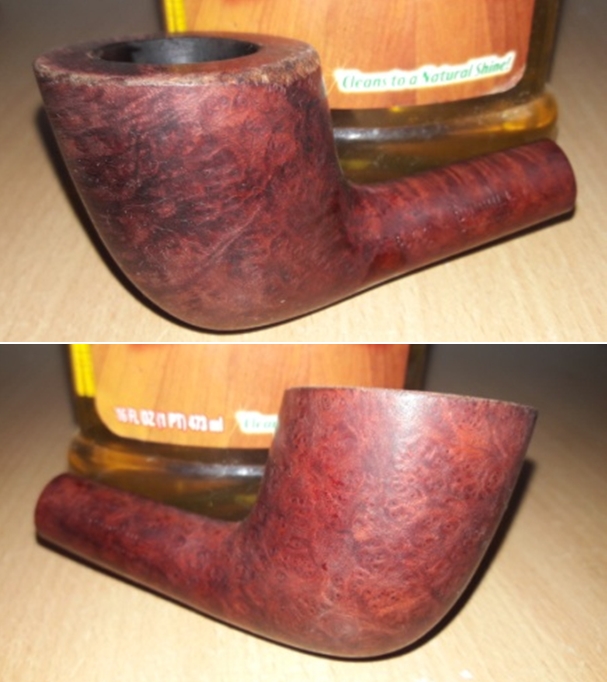
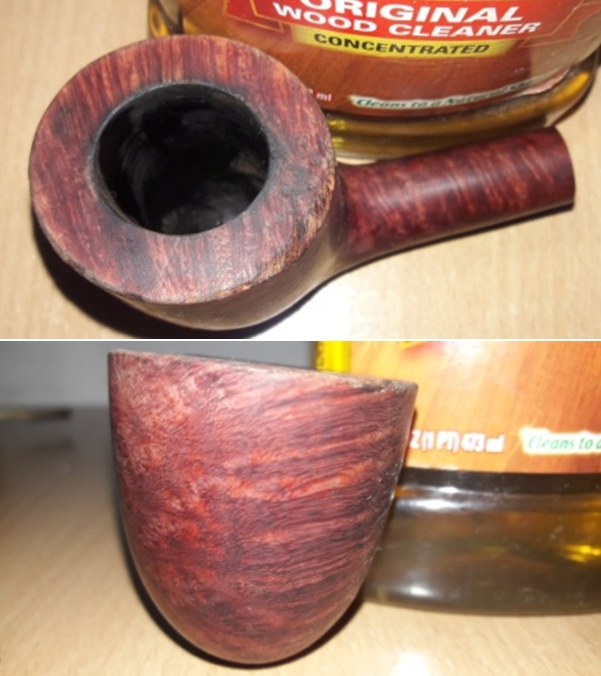
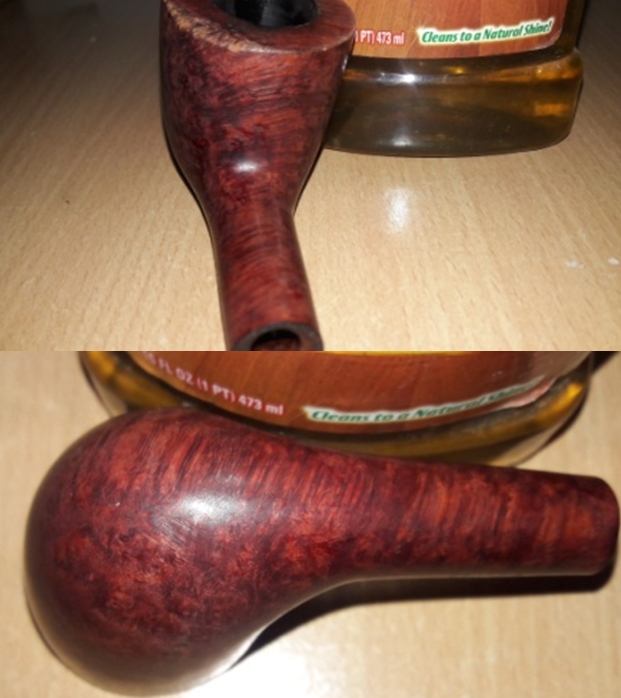
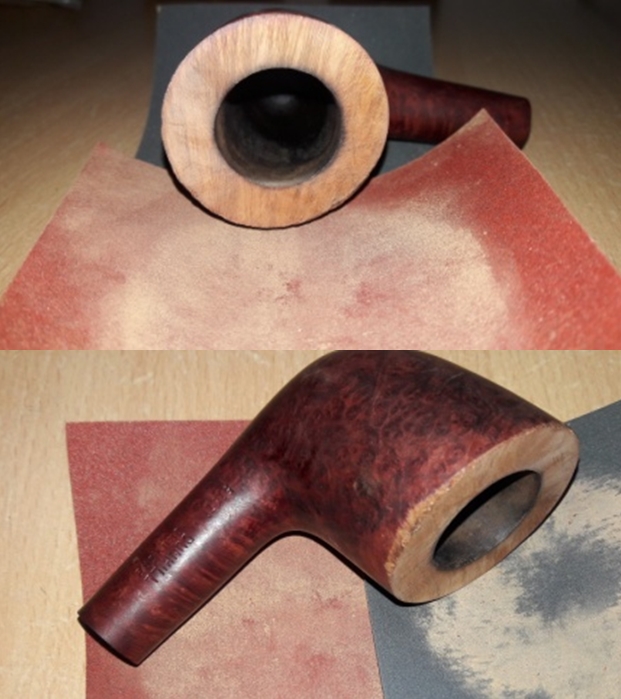
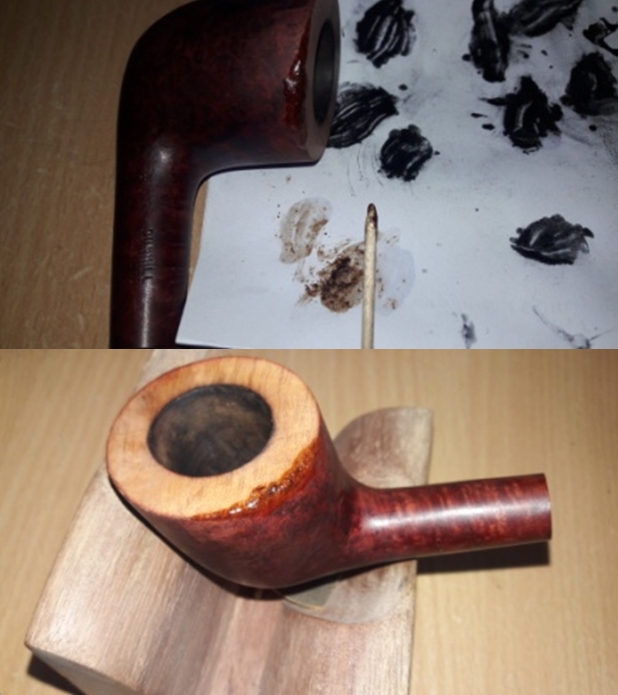
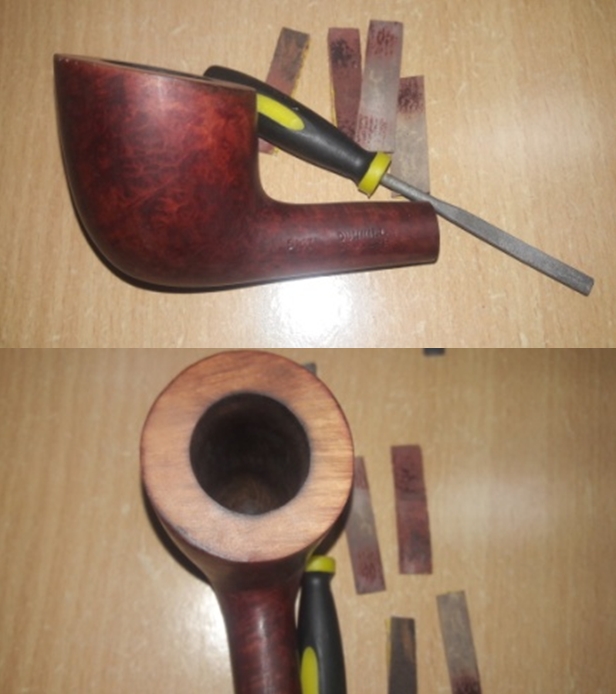
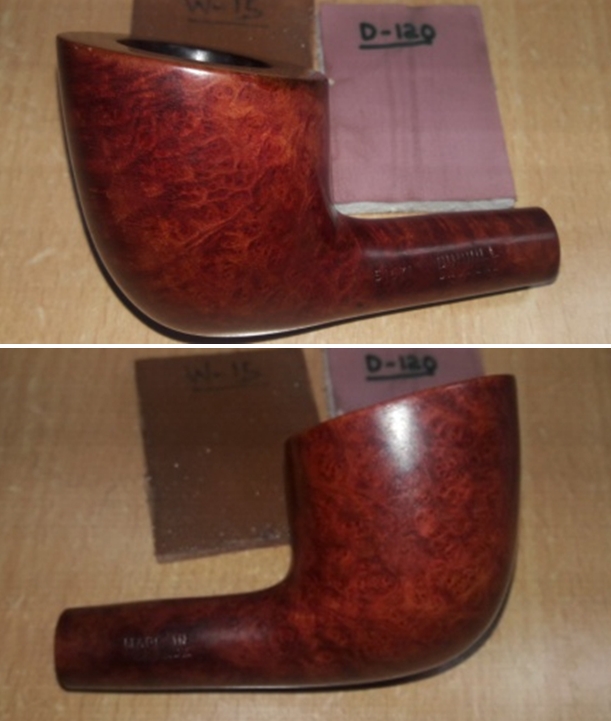
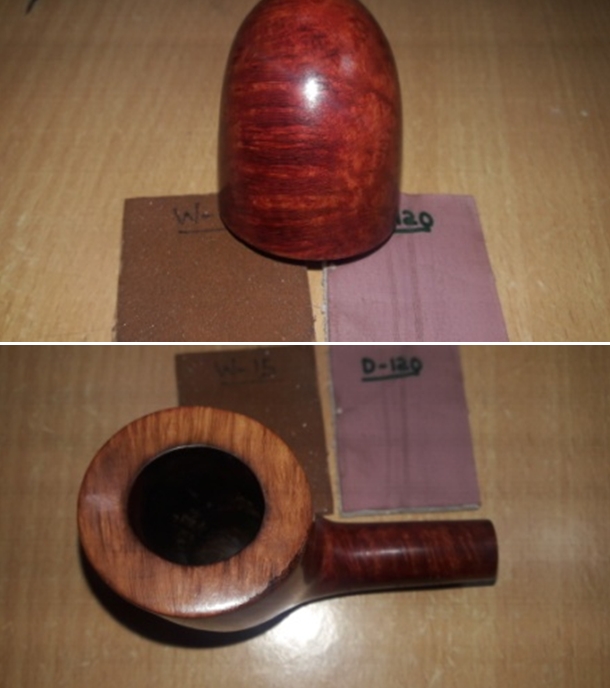
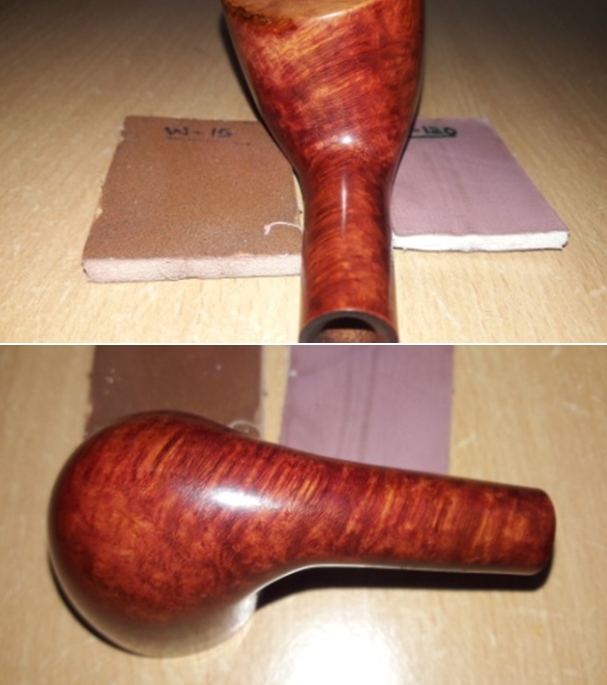
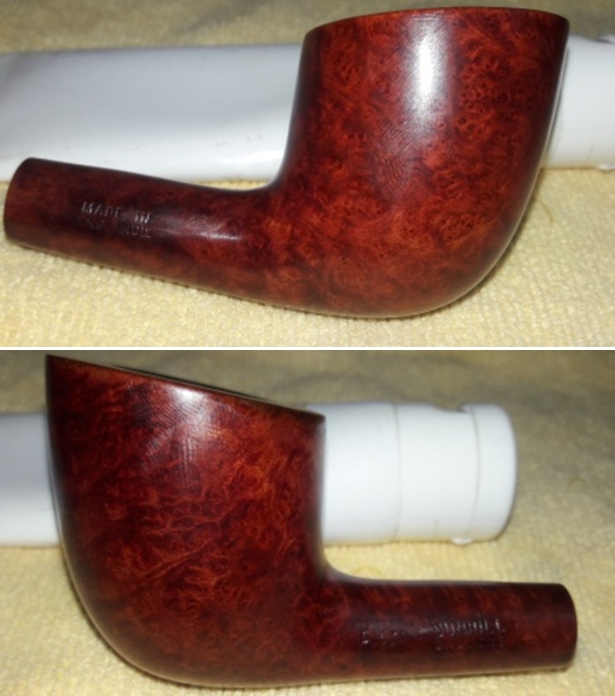
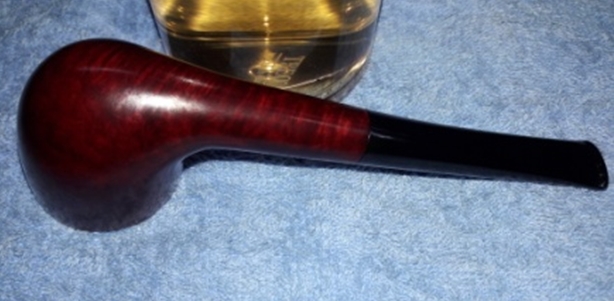
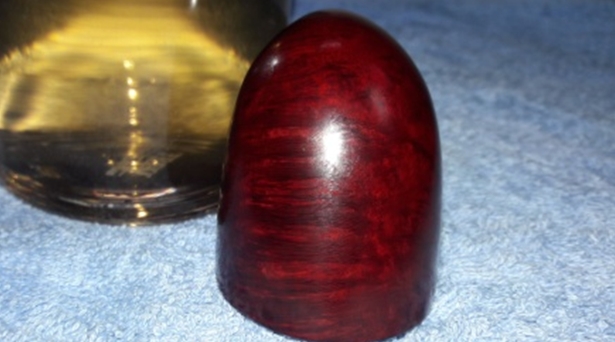
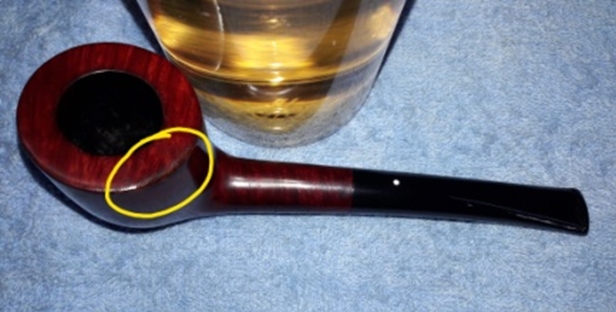
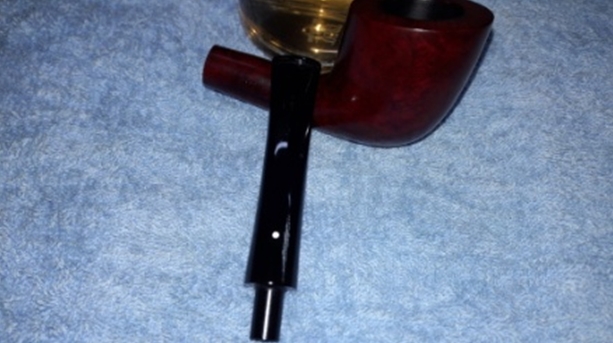
The next pipe on the table Jeff picked up at an antique shop near his home in Idaho. It is a Butz Choquin Made in France pipe. On one side is written Butz Choquin over Camargue. On the other side St. Claude is arched over France with the shape number 1310 under that. On the horn coloured Lucite shank extension are the initials BC in a clear acrylic insert. The military bit stem is vulcanite and has a slight bend in it. It is lightly oxidized and there are deep tooth marks on both sides of the stem near the button and wear on the button on the underside. There are also some dents on the top and underside near the bend. The smooth finish is very dirty and dusty. The rim top has a thin coat of lava near the back side. The bowl has a thick cake that flows onto the back of the bowl rim. It is hard to know if the inner edge of the rim is in good condition because of the lava and cake. The outer edge looks very good. Jeff took the following photos before he started his clean up. Jeff took a photo of the rim top and bowl. You can see the lava on the back side of the rim that obscures the condition of the rim edge. You can see the condition of the bowl as well in the photo.He took photos of the heel and the sides of the bowl to give a clear picture of the remarkable grain on this beautiful pipe.The next photo is a bit of a mystery to me… there is clearly a crack shown in the photo of the somewhere on the bowl. The problem is that it is not clear where it is on the bowl in the photo. Is it the heel or a side or…? I will have to go over the bowl with a light and a lens to hunt for it as I restore the pipe. It should be easy to repair once I find it!The next two photos capture the stamping on the left and right side of the shank. The third photo shows the BC logo on the horn coloured Lucite shank extension. The stamping on the left side reads Butz Choquin at an angle up the shank toward the shank end and underneath it is stamped Camargue. The other side is stamped with the St. Claude, France stamp and the shape number 1310. The last two before photos show the condition of the stem. You can see the tooth marks on both sides of the stem along the length of the stem. You can also see the calcification and oxidation on the stem. It is dirty but very repairable.When the pipe arrived it was my turn to do my part of the restoration work. Jeff had reamed the bowl with a PipNet pipe reamer and followed up with a Savinelli Fitsall pipe knife to remove the cake. He scrubbed out the mortise and the airway in the shank and the stem with alcohol, cotton swabs and pipe cleaners. He scrubbed the exterior of the bowl, rim, shank and stem with a tooth brush and Murphy’s Oil Soap to remove the oils and tars on the rim and the grime on the finish of the bowl. He rinsed it under running water. He dried it off with a soft cloth. He was able to remove lava build up on the rim top and you could see the great condition of the bowl top and edges of the rim. There was still some darkening to the rim top toward the back of the bowl. He soaked the stem in Before & After Deoxidizer to remove the oxidation. I took photos of the pipe before I started my work on it. I took a close up photo of the rim top to show the condition of the bowl and rim after Jeff had cleaned up the grime and lava. Both the inner edge of the rim look good. There was some damage on the front outer edge. The stem photos show that the oxidation is gone. The light tooth chatter is hard to see but I should be able to sand it out quite easily. The tooth marks on the top and underside and the scratching and gouges will take a little more work to remove. The damage to the button top on the underside is also going to take some work.I also took a photo of the stamping on the left side of the shank showing how the stamping was laid out. The Camargue stamp is quite faint. To clean up the rim top damage and minimize the roughness on the front outer edge I lightly topped the bowl with 220 grit sandpaper on a topping board. I did not have to do too much topping as the damage was not too extreme.I polished the bowl and rim top with micromesh sanding pads – wet sanding with 1500-2400 grit pads and dry sanding with 3200-12000 grit pads. I wiped the bowl down with a damp cloth after each sanding pad to remove the sanding dust. It was during this process that I found the crack. It is on the right side of the bowl toward the back. I have circled it in red to highlight it. Now that I had found the crack and checked that it was not deep and not on the inside of the bowl it was time to address it. I drilled the ends of the crack with a microdrill bit to stop the crack from spreading. I filled in the pin holes and the crack surface with clear super glue. I spread some briar dust on the top of the repaired areas and pressed it into the drill holes with a dental spatula. I set it aside to cure. Once the repair cured I sanded it smooth with a piece of 220 grit sandpaper to blend it into the surface of the briar. I started the polishing process with 400 grit sandpaper. I polished the area with 1500-2400 grit micromesh pads and wiped the area down with alcohol.I restained the pipe with a Tan aniline stain to blend the repaired areas into the rest of the finish. Sometimes it pays to stain the entirety of a bowl rather than fuss with trying to match an area this large into the rest of the surrounding briar. I flamed and stained and repeated the process until I was happy with the coverage. I set the bowl aside to dry.I buffed the bowl with red Tripoli on the buffing wheel to remove thick overcoat of stain. I sanded it with a medium and a fine grit sanding sponge to smooth out the stain coat coverage. I followed that by wet sanding it with a 1500 grit micromesh sanding pad to even out the coverage of stain across the bowl sides and over the repaired crack. I have really come to appreciate many of Mark Hoover’s Before & After Products. One of my favourites is his Restoration Balm. I worked some of the Balm into the finish of the briar with my fingertips to clean, enliven and protect it. I let it sit for a short time and buffed it off with a cotton cloth to raise the shine. The Restoration Balm really makes the pipe take on a rich glow. I set the finished bowl aside and turned to address the issues with the stem. I filled in the deep tooth marks and nicks in the stem surface and button with clear super glue. I set it aside to cure. Once the repairs had cured I used a needle file to smooth out the repairs and then a folded piece of 240 grit sandpaper to blend the tooth marks and chatter into the surface of the stem. After the surface was smooth I sanded out the scratch marks and started the polishing of the stem with a folded piece of 400 grit sandpaper. I wiped the stem down with Obsidian Oil. I polished the stem with micromesh sanding pads – wet sanding it with 1500-2400 grit pads and dry sanding it with 3200-12000 grit pads. I wiped the stem down with Obsidian Oil after each pad. I polished it with Before & After Pipe Polish – both Fine and Extra Fine and gave it a final coat and set it aside to dry.  I put the stem and bowl back together and buffed the stem with Blue Diamond on the buffing wheel. I gave the bowl and the stem with multiple coats of Carnauba Wax. I buffed the bowl and stem with a clean buffing pad until there was a rich shine then hand buffed it with a microfiber cloth to deepen the shine. This Butz Choquin Camargue Bent Billiard with a faux horn acrylic shank extension is a beautiful pipe. The grain really stands out with a combination of birdseye, cross grain and swirls surrounding the bowl give it a rich look. The rich contrasting brown stains makes the grain stand out while hiding the repaired cracks. It is a proportionally well carved pipe. The polished black vulcanite stem had a rich glow. The finished pipe is a beautiful bent billiard that feels good in the hand and the mouth. Have a look at it with the photos below. The dimensions are Length: 6 1/2 inches, Height: 2 inches, Outside diameter of the bowl: 1 1/4 inches, Chamber diameter: ¾ of an inch. I will be putting this beauty on the rebornpipes online store soon. If you are interested let me know. Thanks for walking through the restoration with me as it was a pleasure to work on.

Rebuilding a Button to Recommission an Aristocrat London Made – Made in England 1077


Blog by Dal Stanton

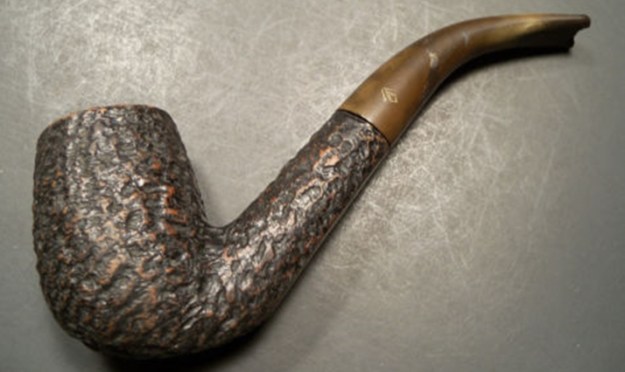
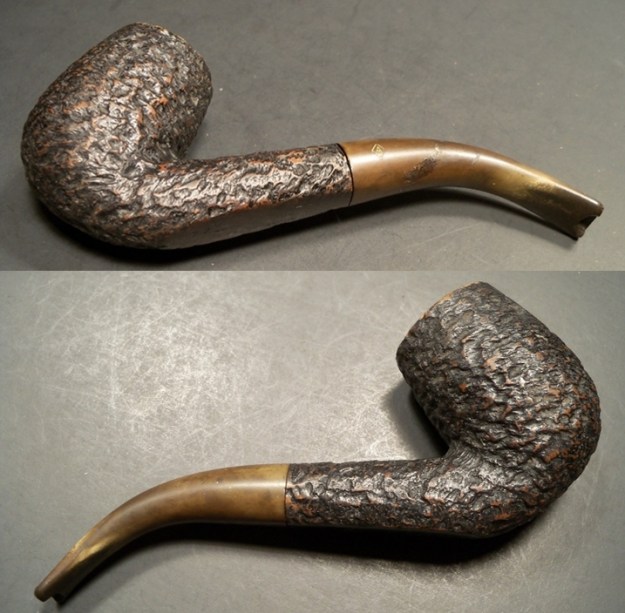
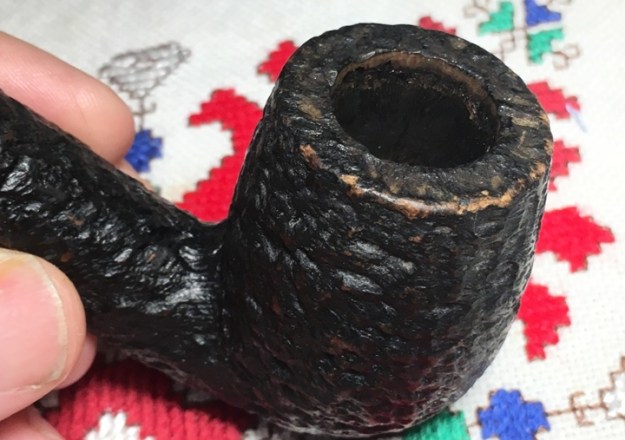
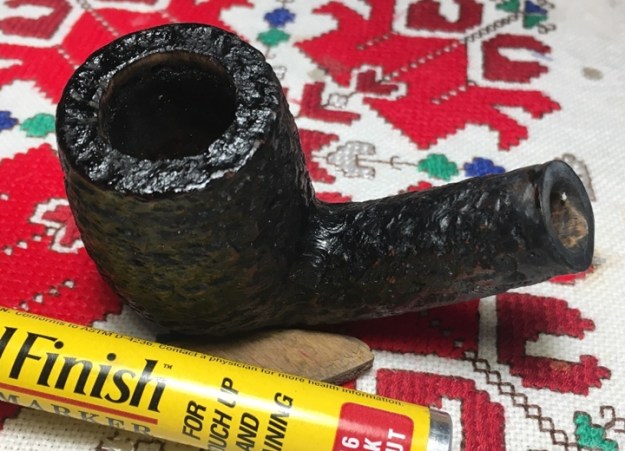
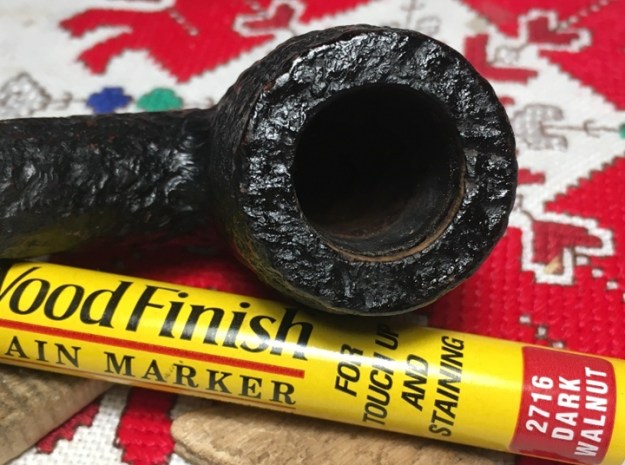
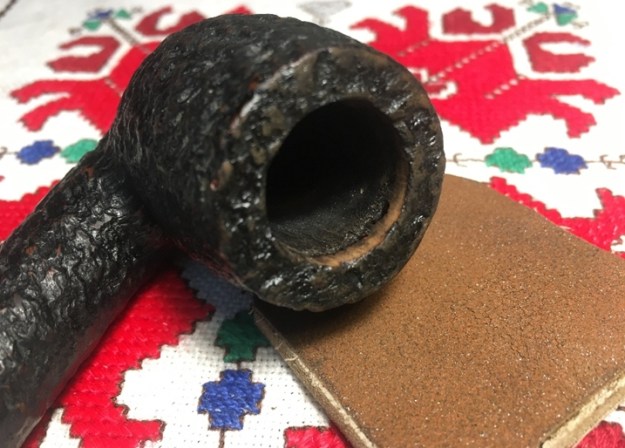
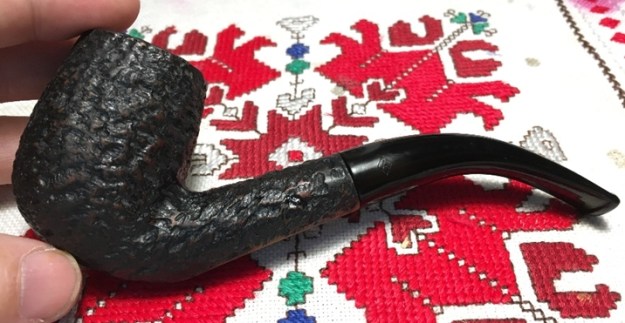
I acquired this very stately looking Aristocrat trolling through offerings on eBay.  I liked it immediately because of its large rusticated bowl and the nice half bent Billiard presence.  It needed some work which was good for me – a broken off button and deep oxidation – factors that would discourage many from taking a second look.  When the auction ended, the price was a good one and I had the highest bid.  Another great pipe to restore to benefit the Daughters of Bulgaria – our work here in Bulgaria helping women and girls who have been trafficked and sexually exploited.  I was in the US when I landed this hefty rusticated Billiard and it was in the suitcase in the Lufthansa cargo hold on its way back to Bulgaria with me.As with all the pipes available in the For “Pipe Dreamers” Only! collection, I take additional pictures for stewards looking to commission a pipe.  When Andrew reached out to me, he indicated interest in the Aristocrat but also in the Bearded Sailor Carved pipe I had then.  He had served in the Navy for 17 years and the old sailor caught his attention.  Unfortunately, the Carved Bearded Sailor was already commissioned for another pipe man.  I appreciate the service that Andrew has given in serving his country, and I mentioned to him that my son had also served as a submariner in the Navy, on the USS Boise. I appreciated his reply when I asked him for patience waiting for the Aristocrat to reach the work table.  Here’s what he wrote:

Dal, 

As the Grandson of a hobbyist wildlife painter I fully understand the time required to do something like this.  I would love this pipe and would like to commission too this pipe.  Thank you for keeping me in mind about the bearded sailor and thank your son for his service.

Andrew 

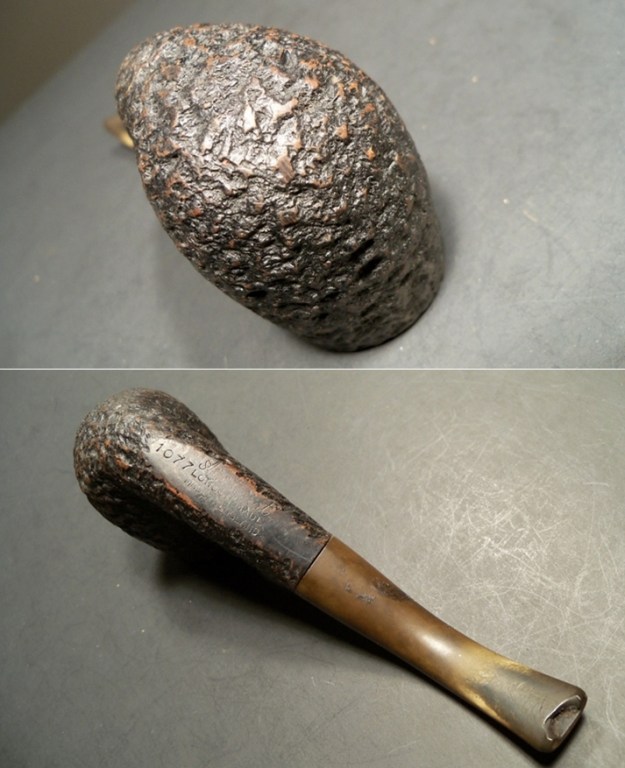
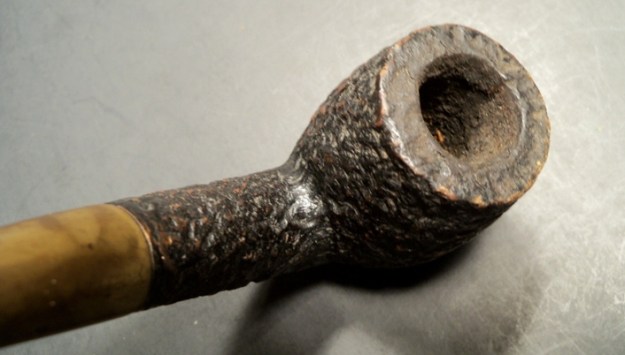
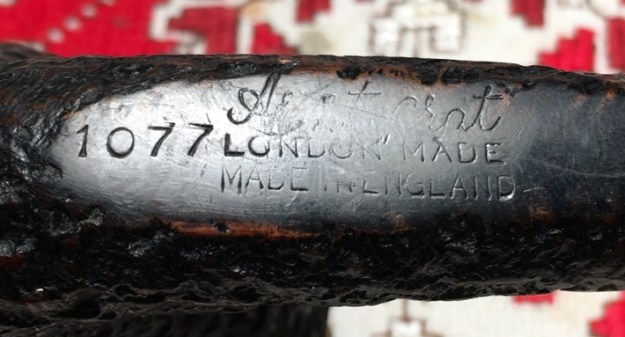
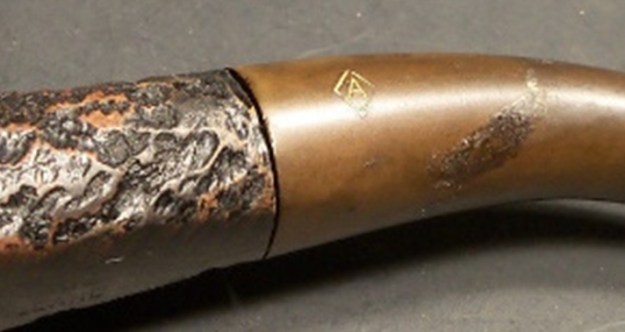
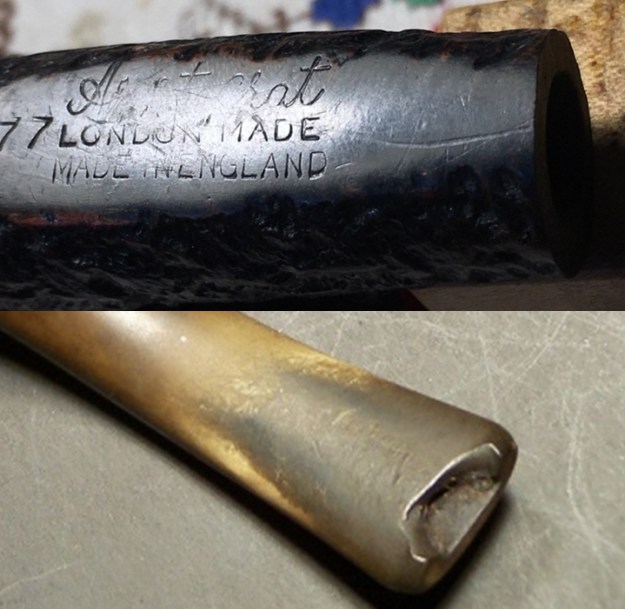
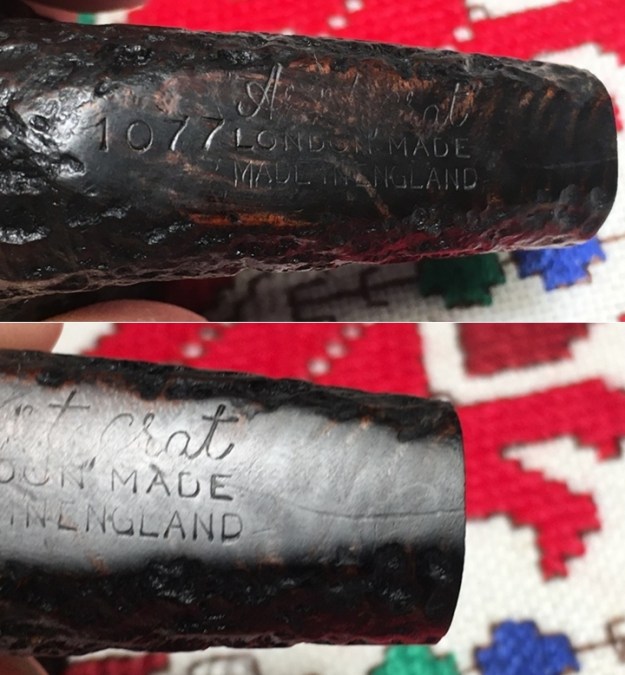
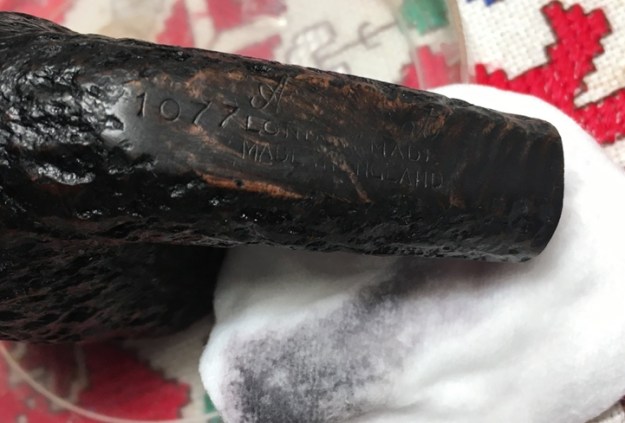
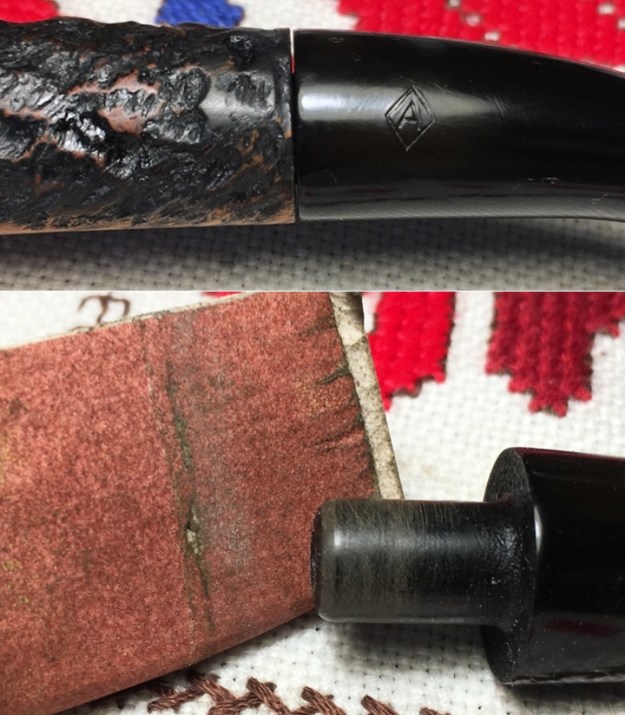
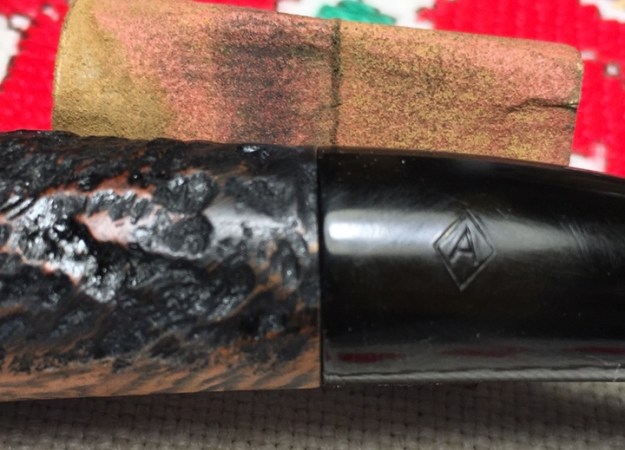
Here are some of the pictures Andrew saw of the Aristocrat London Made that I used from the original seller: The pipe has a large presence and I take out my ruler and take the measurements: Length: 5 15/16 inches, Height: 2 inches, Rim width: 1 1/4 inches, Chamber width: 3/4 inches, Chamber depth: 1 13/16 inches.  The nomenclature stamped on the lower shank smooth panel is thin. I take additional pictures of this from my worktable.  What is stamped is cursive ‘Aristocrat’ [over] LONDON MADE [over] MADE IN ENGLAND.  To the left of the nomenclature is a shape number: 1077 which undoubtedly points to the half-bent Billiard designation.The stem stamping is an ‘A’ set in a diamond frame.In search of the origins of the Aristocrat, I first look in my autographed copy of Herb Wilczak & Tom Colwell’s, “Who Made That Pipe?” dated 3/3/97.  Tom Colwell’s gifting of this book to “Bruce” is in April of 2001, concluding with his signature.  There were several listings for ‘Aristocrat’ but only two fell within the correct UK parameters:

John Redman/Kapp & Peterson – ENGL
Comoy’s / Harmon Bros. LTD – ENGL

Pipedia’s information narrowed the field by isolating the plain ‘A’ logo:

Pipedia’s entry for the John Redman Co. does not include much information.  I researched this company before as being the probable English manufacturer of pipes stamped with Boston’s Tobacconist Shop, L.J. Peretti name (see: A Christmas Gift in need of a stem splice – L J Peretti Squared Shank Billiard).  This restoration started a fun hobby of collecting L.J. Peretti pipes and selling many too!  Here is the information.

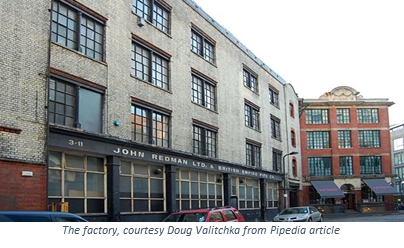
John Redman Ltd. and British Empire Pipe Co.

Other lines include Aristocrat, Buckingham, Buckingham Palace, Canberra, Captain Fortune, Dr John, Golden Square, Redonian, Richmond (not Sasieni), Twin Bore.

Former factory located at 3-11 Westland Place, Hackney, London N1 7LP

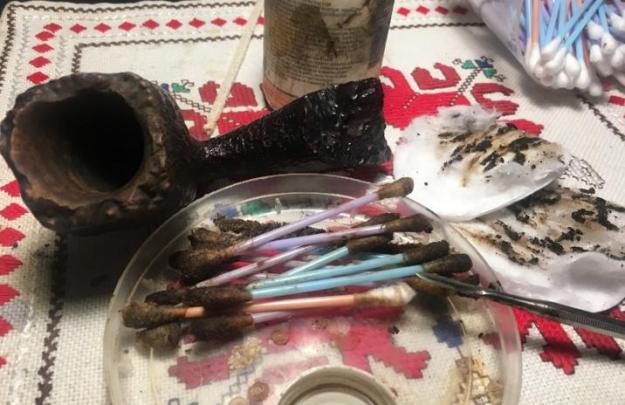
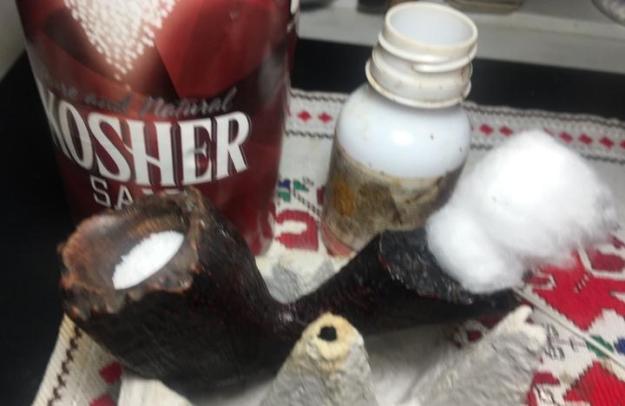
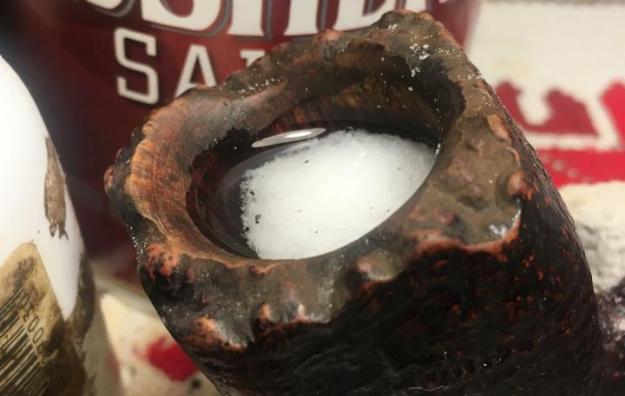
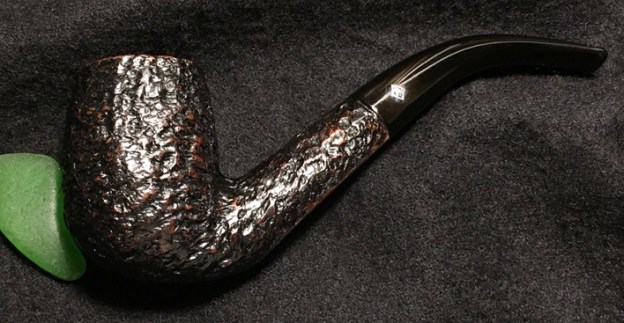
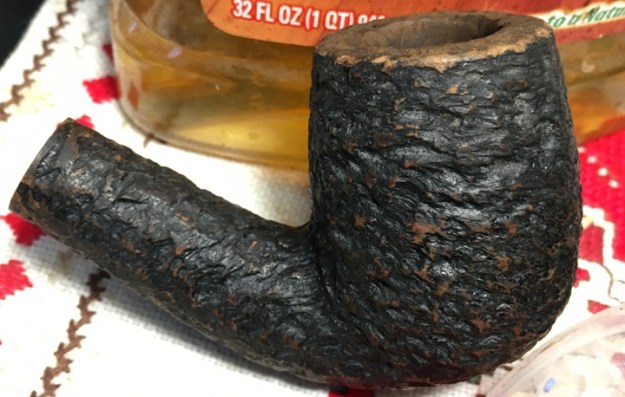
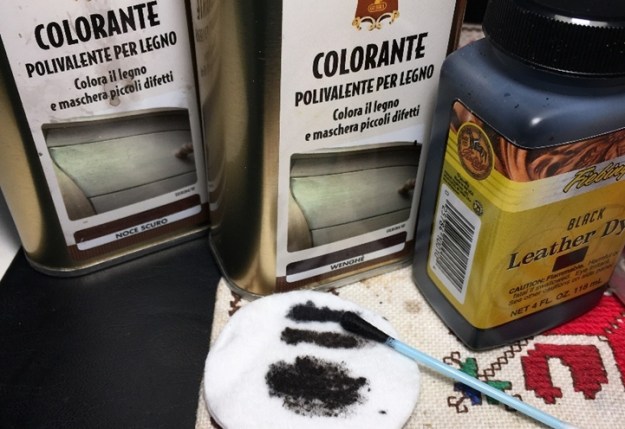
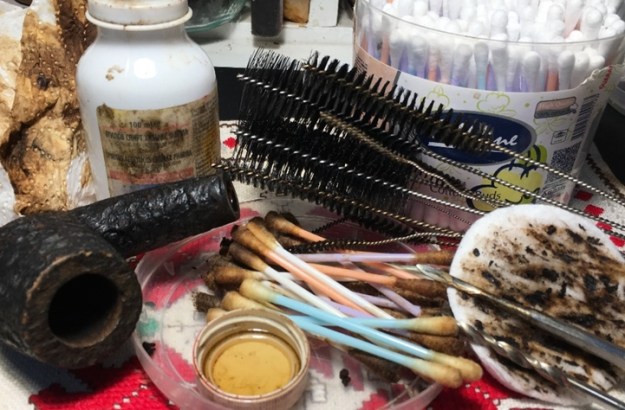
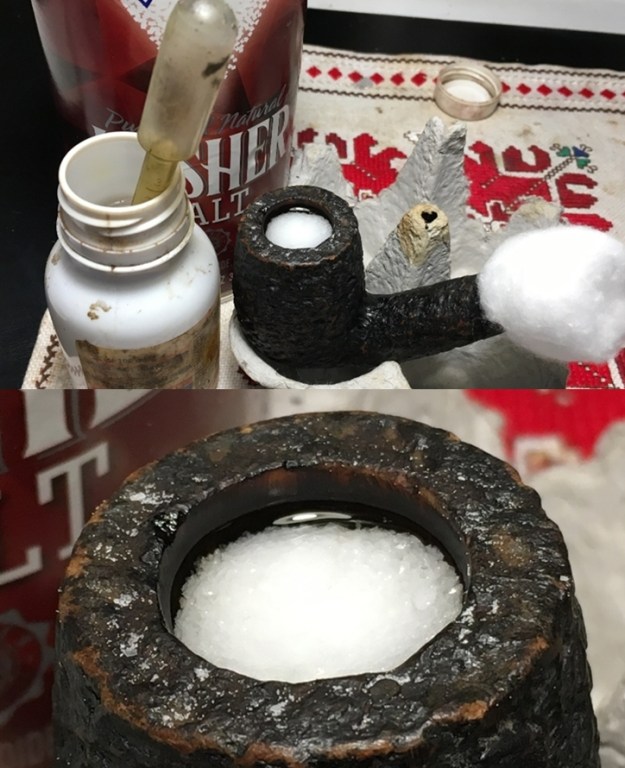
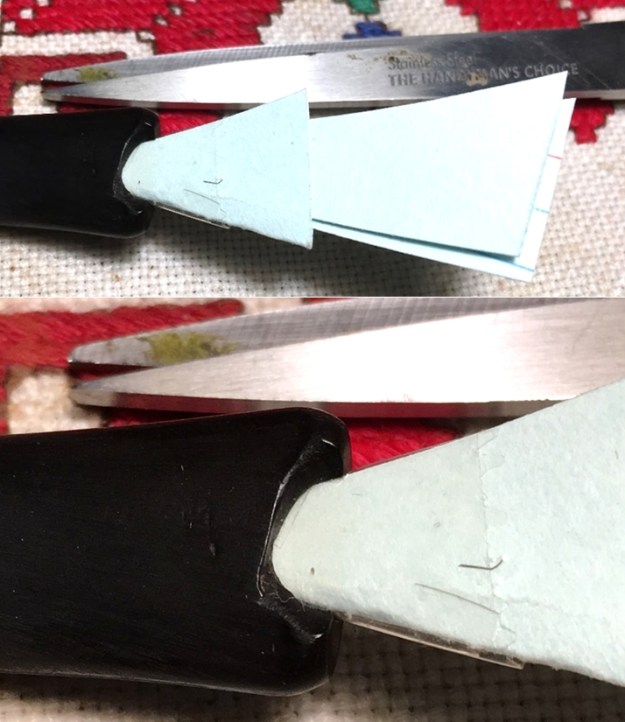
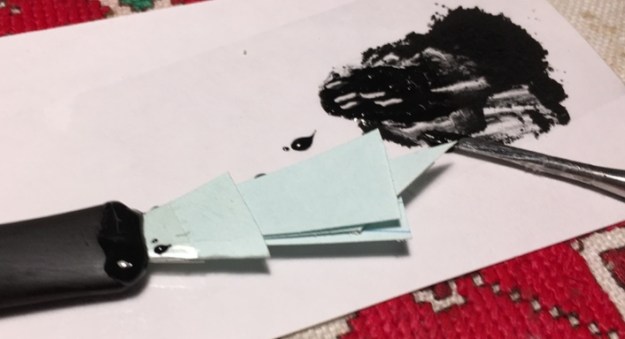
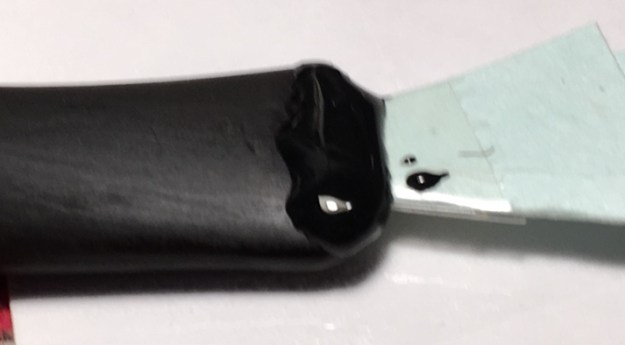
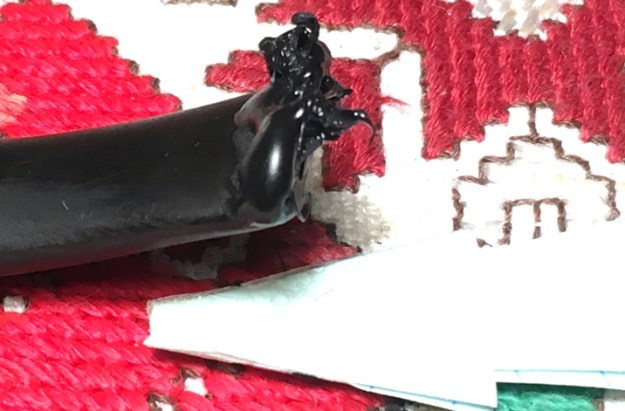
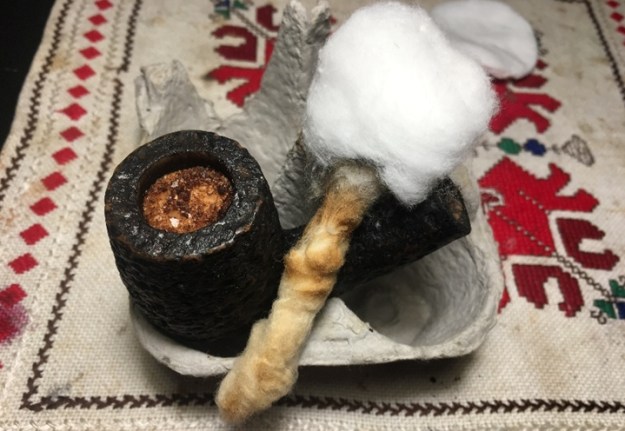
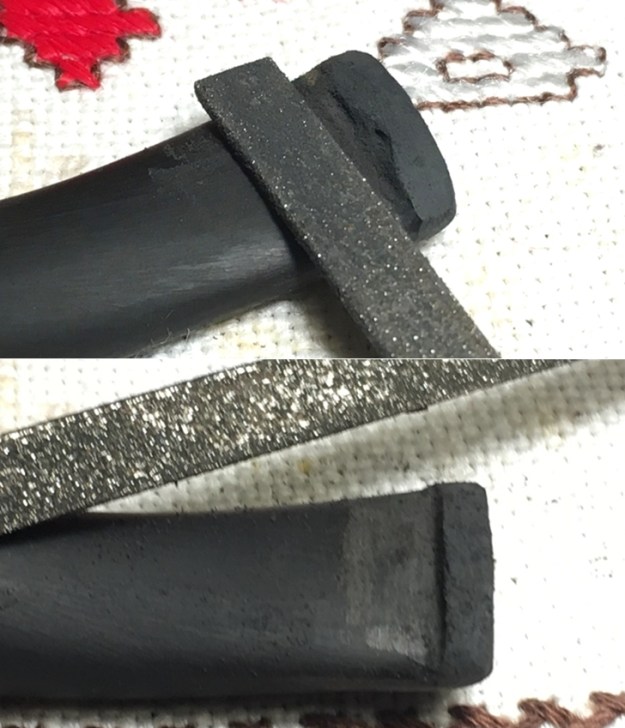
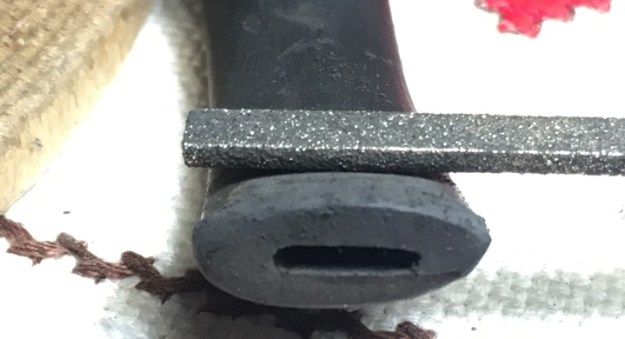
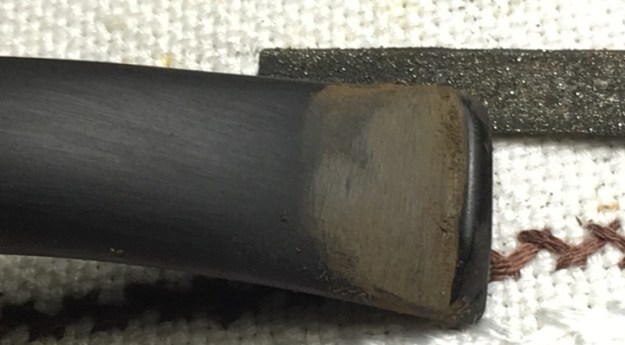
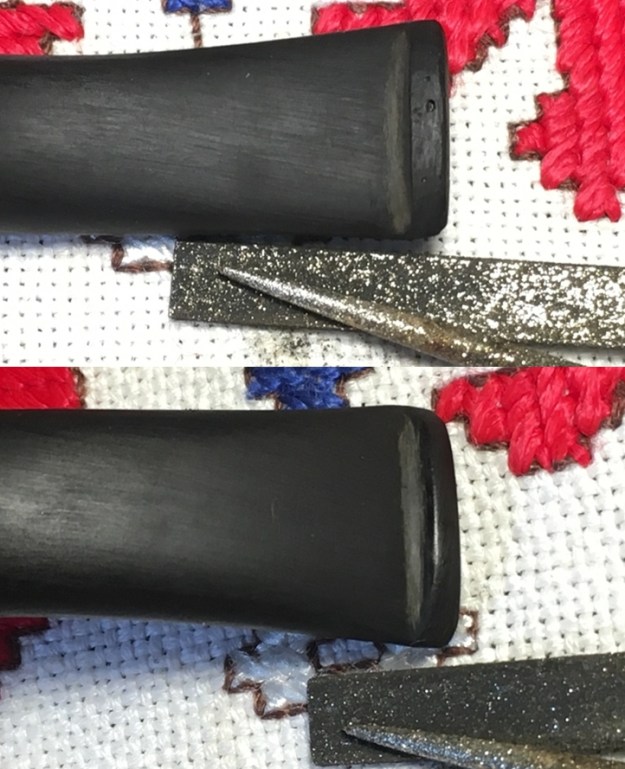
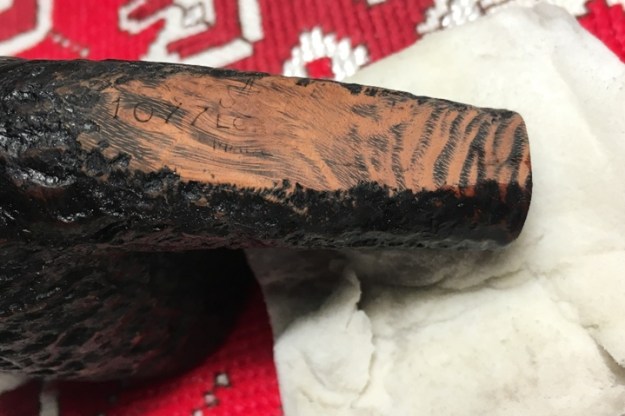
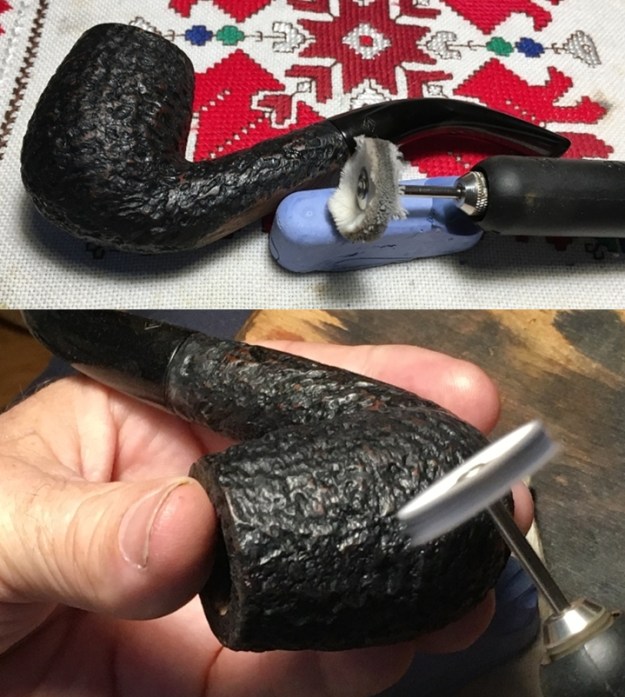
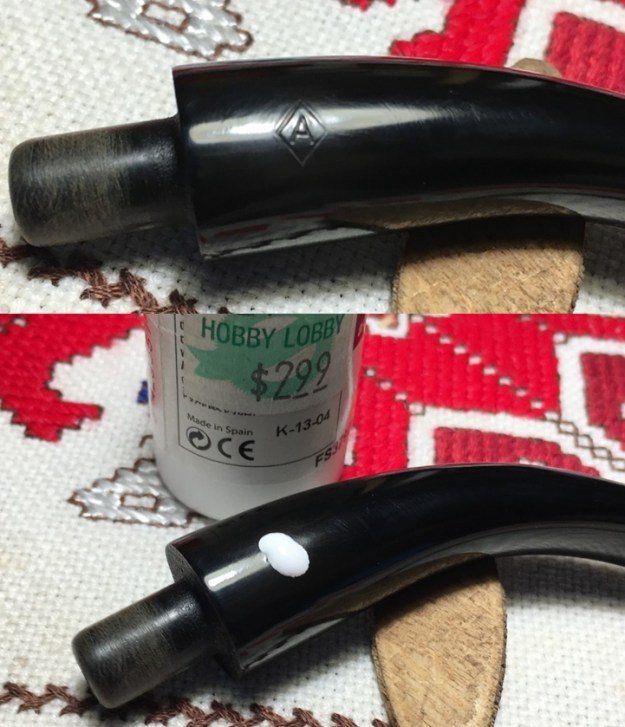
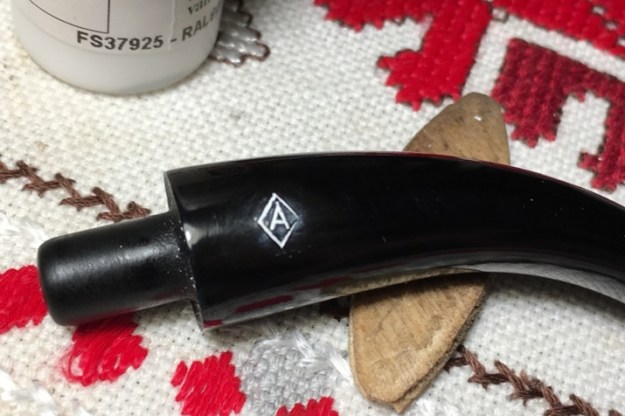
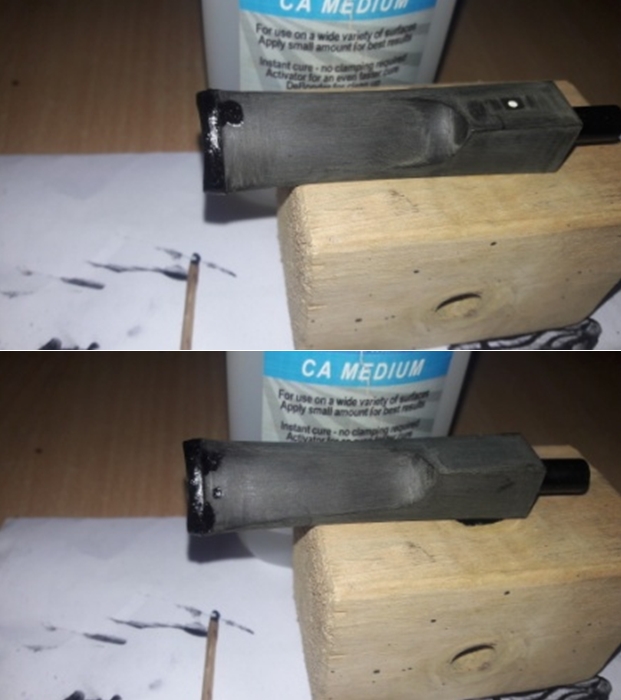
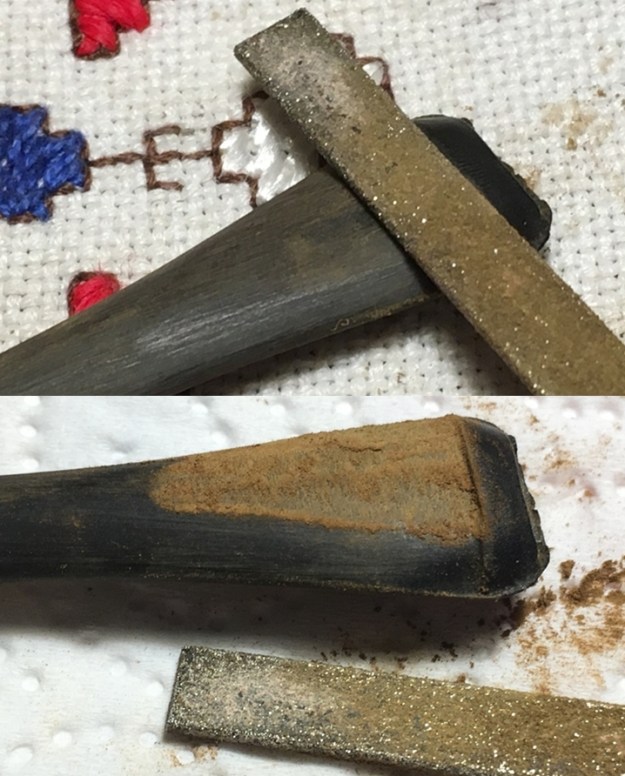
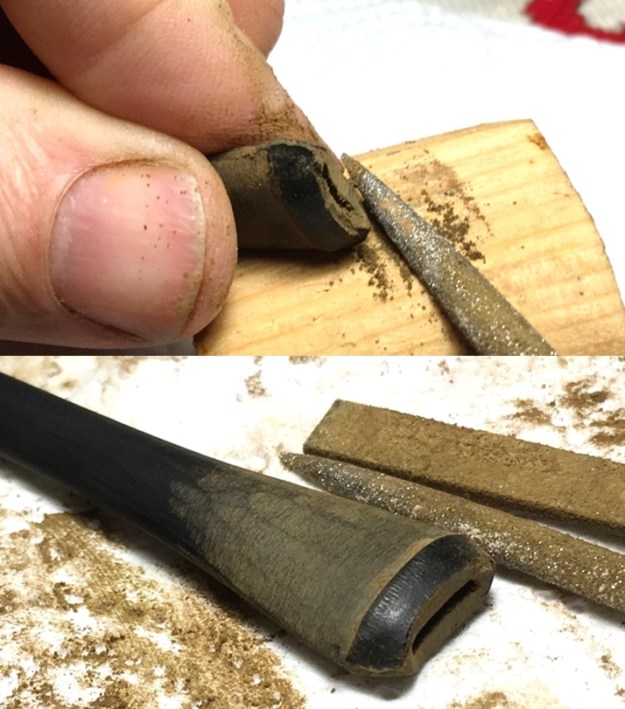
Pipephil’s entry solidified the John Redman Ltd. And British Empire Pipe Co., with the Aristocrat and the ‘A’ stem stamping.The dating of the Aristocrat on my table is difficult to determine, but it has an older feel to it and is set in a very traditional dark English style hue.  Looking at the pipe itself, there is a moderate amount of carbon cake buildup in the chamber which I will remove to examine the condition of the chamber walls.  The rusticated stummel is very attractive – the deep, distinct etching is nice, but there is grime and build up on the rim as well as in the stummel’s nooks and crannies.  The smooth briar panel holding the nomenclature on the shank’s underside is worn and the nomenclature is thin. There is a large scratch scarring the panel.  The panel’s scratches and nicks will be a challenge to clean without further eroding the stampings.  The stem has deep oxidation and the lower button has cracked off.  This will need to be rebuilt.  These pictures show some of these specific issues.I begin the restoration of this John Redman Aristocrat London Made, half-bent Billiard by cleaning the airway of the stem with a pipe cleaner wetting with isopropyl 95%.  I add the deeply oxidized stem to a soak of Before & After Deoxidizer along with other stems and pipes in the queue. After soaking for several hours, I fish out the Aristocrat’s stem and again clean the airway with a pipe cleaner wetted with isopropyl 95% to clean the excess Deoxidizer. I use a cotton pad to wipe off the raised oxidation and the Deoxidizer has done a good job, but I still detect oxidation in the vulcanite.To begin revitalizing the stem, I apply paraffin oil, a mineral oil, and put it aside to dry.Next, I begin the process of cleaning the stummel. I start with reaming the chamber using the smallest blade head of the Pipnet Reaming Kit and moving to the larger blades. I put paper towel down to expedite the cleanup.  I use 2 of the 4 blades available then transition to scraping the chamber further using the Savinelli Fitsall tool and follow with sanding the chamber using 240 grade paper wrapped around a Sharpie Pen for reach and leverage.  After cleaning the chamber with a cotton pad wetted with alcohol, I examine the chamber and it looks great.  I see no evidences of burning damage with fissures or cracking. Next, using undiluted Murphy’s Oil Soap on a cotton pad I start the cleaning of the external rusticated surface.  I also employ a bristled tooth brush to work into the ridges of the rustication.  A brass wire brush which is gentle on the briar, also helps with the rim cleaning.  Finally, I take the stummel to the sink and rinse it with cool tap water.  The cleaning did a good job.  I take some pictures to show the surface and the question begins in my mind regarding the base color of the stummel.  Bare briar is peeking through, but the base looks black to me. Wanting to get a head start on my thinking for later stages, I pull out 3 very dark or black dyes to compare.  I have two Italian brands that are labeled ‘Dark Night’ and ‘Wenghe’ – both of which are so dark brown that they appear black to me.  The third dye is Fiebing’s Black Leather Dye – it is black.  I test each of these to see what they do and which may be the dye I use later to freshen the stummel if I indeed do decide to stain it. Thinking….Moving to the internal stummel cleaning, I use pipe cleaners and cotton buds dipped in isopropyl 95%. I quickly transition to scraping the mortise walls with a narrow dental spatula to excavate what tars and oils would come out manually.  I also use different sizes of shank brushes wetted with isopropyl 95% to clean.  As the picture below shows, this was not a short-lived encounter.  I also use a drill bit to hand turn down the airway to draw out more tar build-up.  After some time, the buds begin to lighten but not enough to declare the job done. To continue cleaning the internals passively, I use a kosher salt and alcohol soak.  I do this to further clean as well as to freshen the internal briar for the new steward.  I first pull and twist a cotton ball to form a wick which I stuff down the mortise and airway with the aid of a stiff wire.  This will act to draw out the tars and oils as the isopropyl 95% does its thing. After putting the stummel in an egg crate to stabilize things, I fill the bowl with kosher salt.  Unlike iodized salt, kosher salt doesn’t leave an aftertaste.  Next, I fill the bowl with isopropyl 95% until it surfaces over the salt.  As the alcohol absorbs into the chamber and mortise, the level of alcohol goes down.  After a few minutes I top off the isopropyl 95% and put the stummel aside to soak. Turning now to the stem, I take some pictures and take a closer look.  The Before & After Oxidizer did well, but there are still build up places on the surface showing where the oxidation was.  The button on the topside is worn down and underneath the button has broken off. Before starting on the rebuild of the button, I use 240 grade sanding paper and sand the stem.  I want to first address the overall condition of the stem surface then the button. While sanding, I’m careful to protect the diamond A stamp of the Aristocrat as well as to avoid shouldering the shank facing. To rebuild the button, I begin by cutting a folded over triangle from index card stock which is a bit stiffer.  I leave the end of the triangle open and create a sleeve.  I put smooth scotch tape over the end of the triangle sleeve to hold the sleeve together and to keep the wedge from sticking to the CA glue and activated charcoal mixture.  After the triangle wedge is fashioned, I insert it into the slot airway as far as it will go to fill the gap and then I push other triangle pieces of index card into the sleeve to fill it out and to hold it in place firmer.I then mix the charcoal putty.  I use extra thick CA glue and mix it with activated charcoal by gradually pulling charcoal into a small puddle of CA glue and mixing with a toothpick.  I add charcoal until it reaches the viscosity of molasses and then apply it to the button.The first application is a little too runny, so I add a bit more charcoal to the mixture and apply more.I have a good coverage over the entire area which will allow me to file and shape the new button.  After the charcoal putty sets, I work the wedge loose and it comes out easily.  I put the stem aside to allow the putty to cure thoroughly.Well, after a few days longer than planned because of dealing with an unforeseen flu bug hitting many here in Sofia, the kosher salt and alcohol soak has done some major work.  The salt and wick are soiled in a big way indicating that the tars and oils were drawn more from the internals. I toss the salt in the waste and clean the chamber with paper towel as well as blowing through the mortise to rid the stummel of salt crystals.I follow again with more cotton buds and pipe cleaners dipped in isopropyl 95% to clean up the left-over residue.  The salt soak made a dent.  After some more effort, I declare the internals clean and move on.The stem button rebuild is next.  The charcoal putty is fully cured after the days of the flu bug and I start working on it using a flat needle file. I start working on the end filing toward the slot to form the end of the stem. After the button face is flush, I then file downwardly to form the depth of the button lip.When I arrive at about the right depth for the button lip, I then file from the stem side to sharpen and shape the new button.I also use the round pointed needle file to smooth the slot – forgot to picture that file!I also freshen the topside button lip with the flat needle file.The filing process is complete.  The bottom rebuild looks great – it shaped up well.  The next pictures show the completion of the filing on the upper bit and button face. As is often the case, air pockets are trapped in the charcoal putty and are revealed during the sanding process. To remedy this, using a toothpick, I run a small drop of regular CA glue on the toothpick and use it to paint the entire lip with the glue.  I also run a line to seal the edges of the button – both the stem side and on the button face.  Taking a picture of black with a light background doesn’t show a lot of detail often!I use an accelerator to quicken the curing process and follow by lightly sanding the button with 240 grade paper.  The CA glue filled the pits well.I take the stem to the sink and wet sand the entire stem with 600 grade paper.  I’m careful to avoid sanding the Aristocrat ‘A’ stem stamp.  After using 600 paper, I then apply 0000 grade steel wool to the entire stem.I move directly to applying the full regimen of 9 micromesh pads to the Aristocrat stem.  I start by wet sanding using pads 1500 to 2400 followed by dry sanding with pads 3200 to 4000 and 6000 to 12000.  Between each set of 3 pads, I apply a coat of Obsidian Oil to condition the stem.  I like that newly polished pop that comes from the vulcanite after the micromesh process! With the stem waiting in the wings, I take a close look at the stummel.  The rustication is deep and expressive and the stummel itself is large.  The briar block this stummel is hewn from must have been dense, because the stummel itself has some weight to it.  I like the dark hue of the rustication and my head debate is whether to freshen the entire bowl by staining it or to keep what is present and touch it up, primarily on the rim?  I’m drawn to the flecked bare briar that is present in the current condition – it gives the stummel and classic rustic look – not too polished, but a pipe that has seen some life.  The rim has raw briar showing and needs touching up. The other question has to do with the smooth briar underplate holding the nomenclature.  The stamping is already ghosting and thin – I don’t want to contribute to this loss of his history!  There is a scratch to the right of the lettering that I can sand without trouble.  But as I look at the smooth briar plate, the dark stain that is now covering the smooth briar does not look good.With the decision made to go with the current hue and touch up, I start on the smooth briar nomenclature plate first on the underside of the shank.  I want to create a more distinct and classy looking nomenclature plate by removing the finish from the smooth briar.  This will create a classy looking contrast between the dark rusticated surface and the smooth briar.  I first use a cotton pad wetted with alcohol which had little effect.  I then switch to using acetone.  I wetted several cotton pads and scrubbed the smooth briar.  This had some effect, but still nothing spectacular showing a loosening of the dark finish on this area.The breakthrough came when I thought of trying Mr. Clean Magic Eraser. To my great surprise, it works.  The finish was removed in large measure leaving behind and interesting patch of smooth briar.  Yet, as I look closely at the nomenclature, I’m afraid it appears as though the Magic Eraser sponge exerted more abrasiveness than I thought would be the case.  The lettering has deteriorated further – the profanity that flashed through my mind did not surface!  Ugh – we make plans, but often they are not what happens.  I allow the briar to dry before doing more on the underside panel.Next, to touch up the rim, I use a Dark Walnut dye stick, which I chose after testing several colors on a cotton pad.  I apply the dye stick over the rim and in the crevices.  It looks great, blending well with the rest of the stummel. To roughen the rim up a bit, to blend it more with the weathered, rustic stummel, I use a 1500 grade micromesh pad and lightly sand the ridges of the rusticated rim.  This lightens the tips and helps blending.To get a bird’s eye view of the project, I rejoin the Aristocrat London Made stem and stummel.  It’s looking good.With a closer look at the junction there is a gap between the shank and the stem facings.  I examine the mortise and there is no ridge that would be creating the obstruction.  With no obvious obstruction, I use 240 grade sanding paper simply to taper the end of the tenon more guessing that the mortise narrows, and this will afford a little more room for the tenon.  After sanding, I try again, and it seats well now. I now mount a cotton cloth buffing wheel to the Dremel, set the speed at about 40% full power and apply Blue Diamond compound to the stem and stummel.  With my wife’s help, she takes a picture of the process in motion.  When completed, I give the pipe a good wipe down with a felt cloth to clean it of compound dust. Before applying wax to the stem and stummel, two mini-projects are first needed.  I could have done this earlier, but now is ok too!  Using Before & After Restoration Balm, I apply some to my fingers and then rub it into the smooth briar area on the underside of the shank.  I also apply the Balm to the shank alone.  Later, after it absorbs for a few minutes, I wipe off the excess and buff up the smooth briar and the shank.  I like the results so well, even on the rusticated shank surface, I decide to then apply B&A Restoration Balm to the entire stummel.  After about 15 minutes, I again wipe off the excess then buff the surface up, making sure all the Balm has been absorbed into the briar surface. While the Balm is absorbing, I refresh the diamond encased ‘A’ Aristocrat stem stamp.  Using white acrylic paint, I apply some paint over the stamp and then blot it with a cotton pad to draw off the excess paint.  After it dries, I gently scrape the excess paint leaving the paint filling the stamping lines.  I like it! I reunite the stem and stummel and mount another cotton cloth buffing wheel onto the Dremel.  Because I’m applying wax to a rougher rusticated surface, I increase the speed of the Dremel to about 60% full power to increase the RPMs and therefore the heat helping to dissolve the wax.  I apply a few coats of carnauba wax to the stummel. Moving to the stem, I decrease the speed to 40% of full power and apply carnauba.   After finishing with the wax, I use and microfiber cloth and give the pipe a rigorous hand buffing to raise the shine.

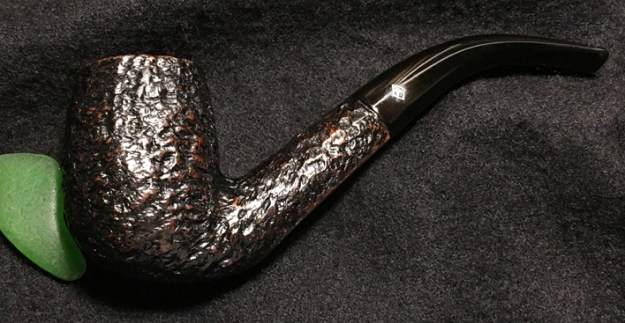
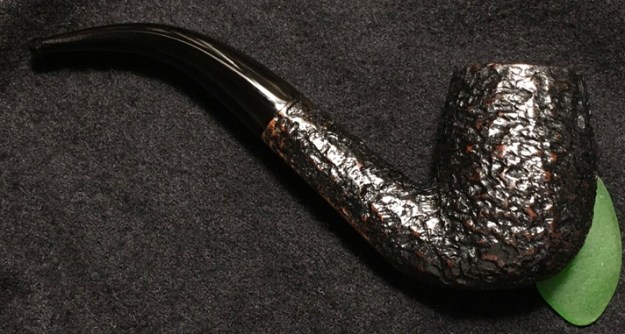
I am very pleased how this hefty pipe turned out.  The deep, distinct rusticated surface looks great on this nice looking, classic half bent Billiard.  The half bend works very well with the overall feel of the bowl resting in the palm.  My only disappointment is the further eroding of the nomenclature in order to reveal the grain of the smooth briar panel.  Even so, the pipe is a keeper.  The major technical hurdle of rebuilding the button came out beautifully and reveals no evidence of its former state.  Andrew could see how nice this Aristocrat London Made could be and he commissioned him from the For “Pipe Dreamers” Only! collection and will have the first opportunity to acquire it from The Pipe Steward Store.  The restoration of this pipe benefits the Daughters of Bulgaria – women and girls who have been trafficked and sexually exploited.  Thanks for joining me!

Refurbishing a Battered Dunhill Bruyere #32041


Blog by Paresh Deshpande

I had just finished restoring three pipes from my inheritance; a WDC Stratford, The Doodler and a Barling # 2639. Save for the WDC, these were easy projects and it helped that Abha, my wife, had done all the initial cleaning. I finished these pipes in real quick time.

Now I turned my attention once again to the pipes from my “Mumbai Bonanza”. I have restored three pipes; two Dunhill and a Stefano Exclusive from this lot of 30 and each one has been, well, to put it mildly a royal pain where you wouldn’t like it!!  How did I land up with this lot makes for an interesting read and about one which I have written in the restoration of the Stefano Exclusive (https://rebornpipes.com/2019/03/11/mumbai-bonanza-stefano-exclusive-restorationa-month-long-project/).

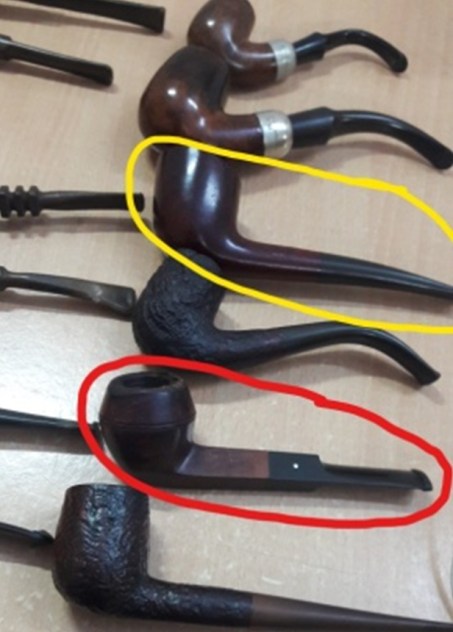
Here are pictures of the pipes that I received in this lot. This lot contains some very nice collectible pipes, a few well known brand pipes and some mediocre pipe brands. Overall, with seven Dunhills, a Preben Holm #1, a couple of “Made in England” Pete System pipes, Charatan’s and other assorted pipes, I would say that I had hit a huge jack pot!!! Hence, I like to call this find as “Mumbai Bonanza”.

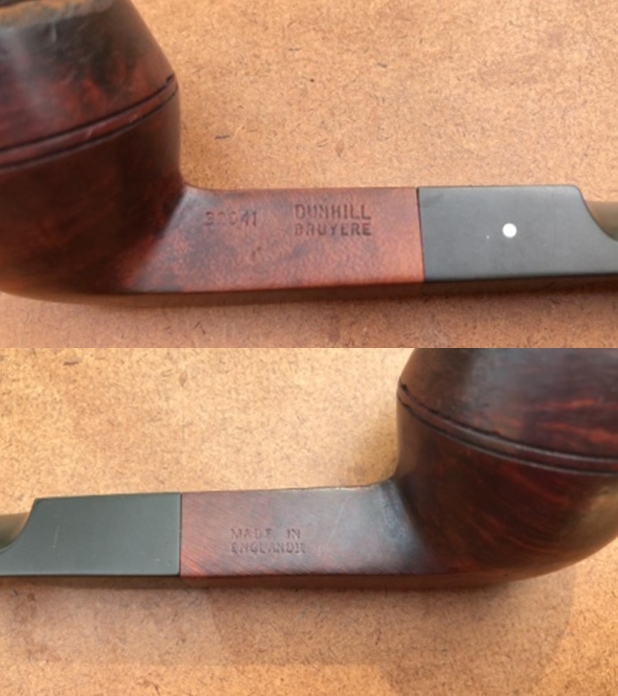
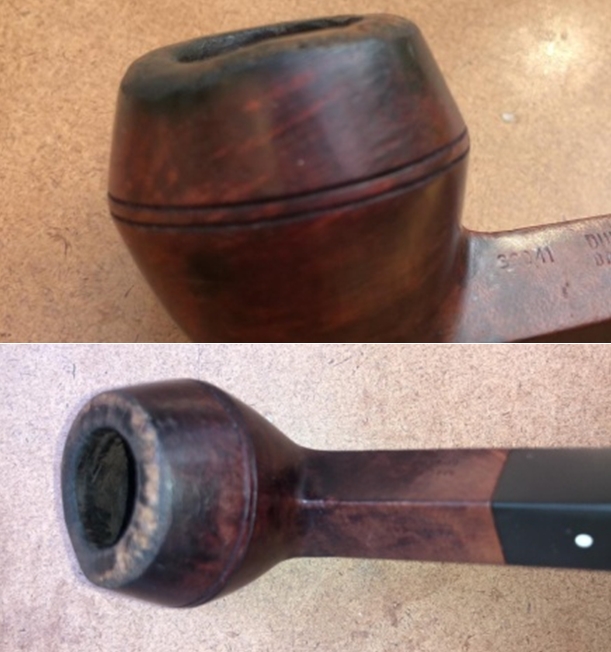
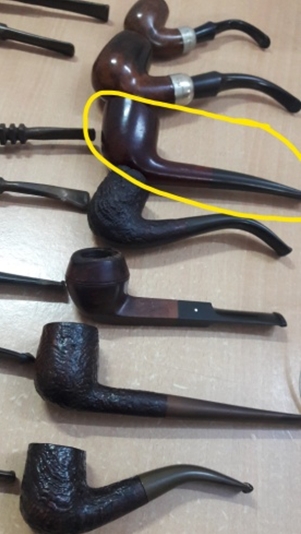
The pipe that I decided to work on is from this find and is marked in a red circle in the picture below. It’s the third Dunhill from this lot, a Bruyere in a classic bulldog shape. The stummel surface boasts of some beautiful densely packed cross grain on the stummel, cap and also the shank top, bottom and side surfaces. It is stamped with “# 32041” towards the bowl and followed by “DUNHILL” over “BRUYERE” on the left side of the shank while the right side bears the COM stamp “MADE IN” over “ENGLAND” followed by underlined numeral “18”. Dunhill White Dot adorns the top of the vulcanite stem. The stampings on either side is deep, crisp and clear.The dating of this pipe is very straight forward and dates to 1978 (1960+18). Deciphering the shape code, “32041” is equally straight forward with the first digit 3 identifying this pipe as being Group size 3, second numeral, 2, identifies the style of mouthpiece as being a saddle stem and the digits 04 indicates Bulldog shape. With this information, I proceed ahead with the restoration of this handsome pipe.

INITIAL VISUAL INSPECTION
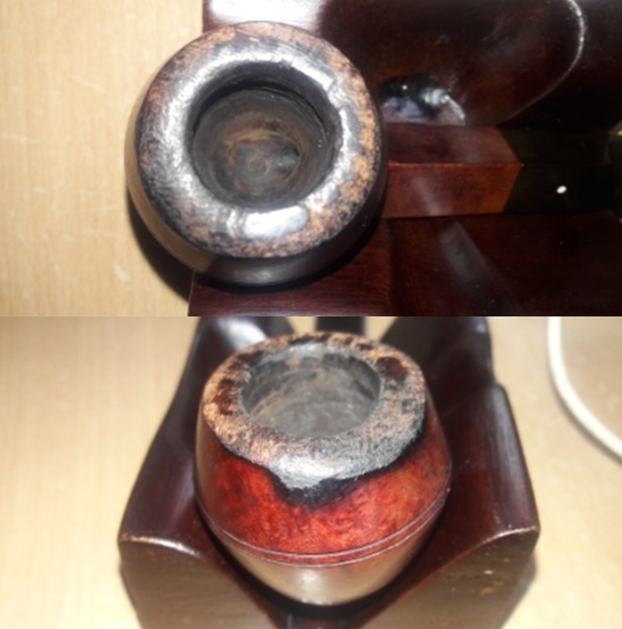
The chamber is clean with a thin layer of cake which indicates that the pipe has been kept clean by its previous Steward; however, the reaming has been done unevenly. From what I can see, the chamber walls appear to be without any damage. The chamber is odorless. It is the rim top, including the outer and inner rim edge that shows significant damage on the left side in 11 o’clock and 7 o’clock directions. This must have been caused due to hammering of the edge against a hard surface to remove dottle!! There is not even a millimeter of surface on the rim top surface which does not show signs of severe damage. All in all, it appears like this pipe’s rim top was used by the previous Steward as a hammer while giving vent to his/ her anger, and if this is true by any stretch of imagination, HE/ SHE SHOULD ENROLL FOR ANGER MANAGEMENT TREATMENT!! Darkening of the outer rim edge is also seen all along the left half of the rim top, most significantly in 11 o’clock and 7 o’clock directions. I just hope that it does not go deep in to the briar!!  Being a Dunhill, any issue of fills is never to be expected and hold true for this pipe too. However, there are a number of scratches and dents that can be seen on the stummel surface. These dents and ding are probably caused due to uncared for storage by the previous Steward and further contributed to by the trash collector who had sold the pipes to me. The stummel is covered in dirt and grime. The briar looks lifeless and dull which is nothing serious to address.I am very pleased with the condition of the stem. The diamond saddle type vulcanite stem shows minor damage to the button end and the lip edges. Light scratches can be seen extending upwards from the button end towards the saddle. The quality of vulcanite is good. These issues should be an easy fix. The mortise is clogged and will have to be cleaned. In this project, repairs to the damaged outer edge and rim top surface will be a major challenge. While restoring the Dunhill Bruyere # 51671 (https://rebornpipes.com/2019/03/13/reconstructing-a-broken-stem-on-dunhill-bruyere-51671/), I had faced difficulties in blending the repairs to the outer rim edges and these could be seen even after I had stained the stummel. Similar set of difficulties are envisaged on this pipe too!!!! I have learned my lesson and will follow the advice and suggestion received from readers of rebornpipes.com.

THE PROCESS
Since the stummel has significant damage, I start this project by tackling the stummel repairs first. I reamed the chamber with size 2 head of a PipNet reamer. The cake was thicker at the bottom and using my fabricated knife, I scraped out all the remaining cake. I further used one folded piece of 180 grit sand paper to sand out the last traces of remaining cake and expose the walls of the chamber to ascertain that there are no cracks/ heat fissures. I wiped the chamber with a cotton pad dipped in isopropyl alcohol to remove the carbon dust left behind by all the reaming and sanding process. The walls of the chamber were solid with just very fine superficial web of lines seen on one side. This was followed by cleaning the mortise by scraping away at the dried gunk with my fabricated spatula and followed it up with further cleaning using cue tips, pipe cleaners and shank brush dipped in isopropyl alcohol. With the thin sharp edge of my fabricated spatula, I cleaned in between the edges of the cap ring separating the cap from the rest of the stummel. Continuing with the cleaning regime, using a hard bristled tooth brush dipped in undiluted Murphy’s oil soap, I very deliberately scrubbed the surface of the stummel and the rim top. The original reddish dye was also washed away to some extent. The dirt and grime on the stummel surface was so stubborn that I had to resort to using a scotch-brite pad to get rid of it. While scrubbing the stummel, I paid special attention to areas where significant darkening was seen just below the rim outer edge. Thankfully, the burn marks were superficial and cleaned out nicely. However, a dark spot was revealed just below the cap ring and is marked in a red circle. The damages to the outer rim edge, uneven inner rim edge and stummel dents and dings are now clearly visible in the above pictures after the cleaning. I had a close, hard look at the darkened spot seen and marked in red. The briar on and around the spot was hard and solid with no deep heat fissures on the corresponding inner surface of the chamber. This ruled out the possibility of a burn out!!!! Phew, what a relief this was!!!! This external darkening, most probably, appears to have been caused when the pipe was placed in an ash tray alongside a smoldering cigarette butt, just a hypothesis!!! This will be addressed (hopefully!) when I sand the stummel surface to get rid of all the scratches and dents.

With the stummel now dried out, I got around to address the rim top and outer rim damage. The extent of the dip or trough caused due to banging the rim edge against a hard surface was deep and would necessitate heavy topping off of the rim surface, and I for one, absolutely wish to avoid any loss of briar!!!!! So, I decided to try out something different. I planned on first filling up the deep troughs on the rim edge using briar dust and superglue to roughly match the rim surface and some more and then topping it to achieve a smooth surface. Theoretically, this sounded logical.

I resorted to the layering method again; first I layered superglue over the damaged surfaces on the front and back outer rim edges, followed by sprinkling of briar dust, another layer of superglue followed by a final layer of briar dust. This final layer of briar dust reduces the probability of air pockets. In the last picture, you can see that the layering has been done to the level of the rim surface so that it sits evenly on a flat surface without showing any gaps. I set the stummel aside to cure. While the stummel fill was being set aside to cure, I tackled the stem repairs by first flaming the surface with a Bic lighter flame to raise the bite marks to the surface. This was followed by sanding the stem surface with a folded piece of 220 grit sand paper. This step has a twofold purpose; firstly, it helps to roughly blend the raised bite marks with the rest of the stem surface and brings to fore the spots which require filling and secondly, it helps to rid the oxidation from the stem surface which helps subsequently in better finish after polishing. I cleaned out the surface with a cotton pad dipped in alcohol to remove all the dirt and grime. Once the surface was clean, the lip edges and the bite marks were filled with a superglue and activated charcoal mix and set aside to cure overnight. The fill repair to the outer rim edges had cured by this time and with a flat head needle file, I roughly sand the fills to match the surrounding surface. Using a folded piece of a 220 grit sand paper, I further blended the outer filled edges with the rest of the edge and created a slight bevel to mask the uneven inner rim edges. The rim top surface was topped on a piece of 220 grit sand paper to further blend and even out the rim top, checking frequently the progress being made. Personally, I prefer to avoid topping as I do not appreciate loosing even one mm of briar estate, but in this instance, I was left with no recourse but to top the rim. I lightly top it on 600 grit sand paper to reduce the sanding marks left behind by the 220. However, a few air pockets revealed themselves (marked in red-orange circle) at this stage which necessitated reapplication of briar dust and super glue. Sorry, missed out taking pictures of this stage!! While the second fill to the rim outer edge was curing, I turned my attention to work on the cured stem fills. Using a flat head needle file, I roughly matched the fills with the rest of the stem surface. For a better blending, I further sanded the entire stem with 220 followed by 400, 600 and 800 grit sand paper. This helps to reduce the sanding marks left behind by the more abrasive 220 grit paper. To bring a deep shine to the vulcanite stem, I went through the complete set of micromesh pads, wet sanding with 1500 to 2400 grit pads and dry sanding with 3200 to 12000 grit pads. I wiped the stem with alcohol after each pad and rubbed it down with Extra Virgin Olive oil to rehydrate the vulcanite. The repairs have blended in very well and the stem now looks a shiny black and beautiful. The internals of the stem was cleaned out using alcohol and pipe cleaners. The finished stem is shown below. The next evening, the repairs to the edge had completely cured and I move ahead by filing and rough shaping with a flat head needle file. I further fine tune the blending by sanding it down with 220, 320, 600 and 800 grit sand papers. Here is how the repaired area appears at this stage. I am very pleased with the way this repair progressed. I sand the entire stummel using 220, 400, 600 and 800 grit sand papers. The little dents and dings that remained on the stummel and outer rim edge were also evened out under this sanding process. This was followed by polishing with micromesh pads. I wet sand the stummel with 1500 to 2400 grit pads and follow it up by dry sanding with 3200 to 12000 grit pads. I wiped the surface with a moist cotton cloth after every wet pad to check the progress. The repaired rim edge appears, in picture, as though it is patchy with air pockets. However, that is not the case. The fill is smooth and solid and should get masked after I have stained it. I rub a small quantity of “Before and After Restoration Balm” in to the briar with my finger tips and let it rest for a few minutes. The balm almost immediately works its magic and the briar now has a nice vibrant appearance. I further buff it with a horse hair shoe brush. I had hoped that the balm would work its magic on the filled area and help in blending it a bit, and that did happen!! I am very pleased with the way these repairs have turned out. And now on to staining and polishing… After Mr. Steve had uploaded my write up on the Dunhill Bruyere Horn shaped pipe (https://rebornpipes.com/2019/03/13/reconstructing-a-broken-stem-on-dunhill-bruyere-51671/), the feedback and responses were very educative and I had decided to incorporate these suggestions while working this project. Mr. Roland Borchers brought out that the original color of Bruyere was achieved by first staining with Dark Brown stain followed by Cherry red stain. Mr. Steve also concurred and then there was no turning back!! I stained the stummel in DB stain first. I use the powder variety of stain and mix it with 99% isopropyl alcohol. I heated the stummel surface with a heat gun and applied the stain with a folded pipe cleaner. As I paint the stummel with stain over sections at a time, I burn the dye using a Bic lighter that combusts the alcohol in the aniline dye and sets the dye pigmentation in the wood.  After fully saturating the stummel and covering the whole surface, including the rim top, I set the stummel aside to rest for several hours. By next evening, the stain had set nicely. I mount a cotton cloth buffing wheel (because I do not have felt cloth buffing wheels!!) on the Dremel and set the speed at about 40% of full RPM and apply white compound to the stummel. This does help in revealing the grains gradually. This time around, the repaired area had blended very nicely in to the rest of the stummel surface. Here is another lesson that I have learned; it is advisable to use white compound after staining and not red Tripoli as I used to, for the reason that the red Tripoli compound is more abrasive and does not make sense to use after polishing by 12000 grit micromesh pad!! I followed this polish by re-staining the stummel with Cherry red stain. I set it aside to let the briar pores absorb the stain pigments. To finish, I re-attach the stem with the stummel. I mounted a cotton cloth buffing wheel to my local machine which is similar to a Dremel, set the speed at about half of the full power and applied White Diamond compound to the entire pipe. I wiped/ buffed the pipe with a soft cotton cloth to clear it of any leftover compound dust. I then mounted another cotton cloth wheel on to the polishing machine and applied several coats of carnauba wax. I finished the restoration by giving the entire pipe a rigorous hand buffing using a microfiber cloth to raise the shine further. The completed pipe looks lovely, fresh and vibrant; the photographs in this case, do not do justice to the appearance of this beautiful pipe. I cannot thank enough my friends and gentlemen who painstakingly identified my mistakes and suggested remedial measures after reading the write up for helping me to hone my skills while gaining experience.

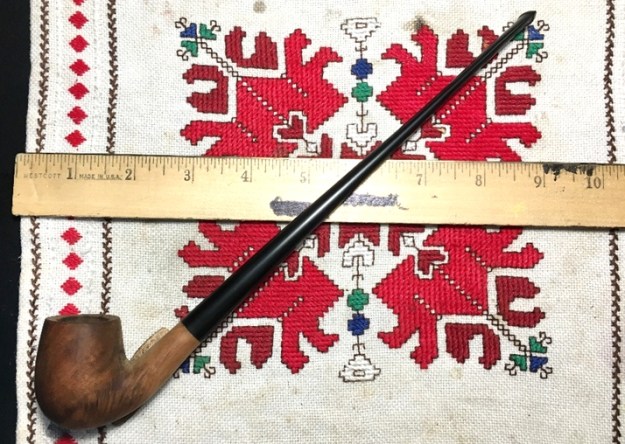
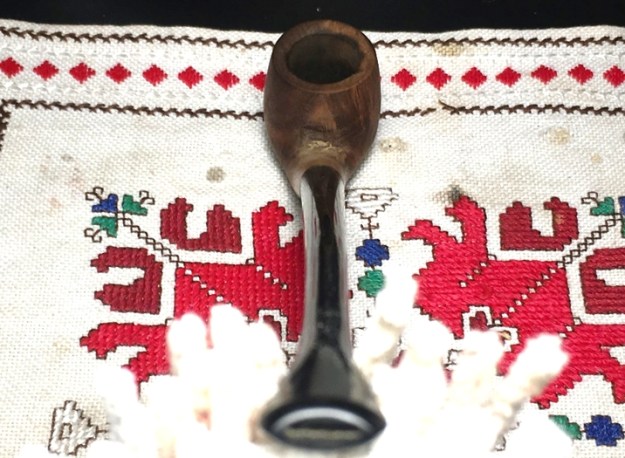
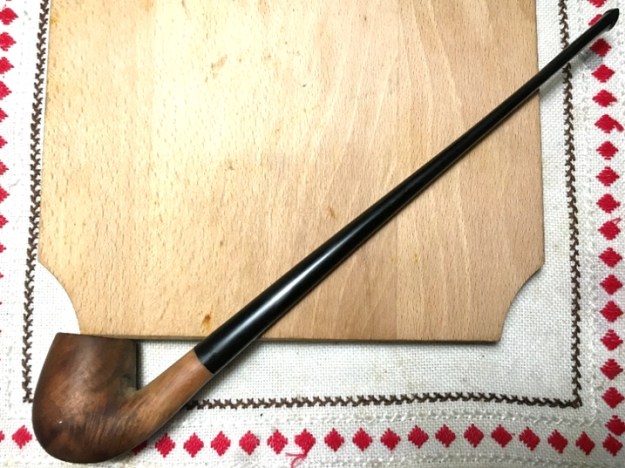
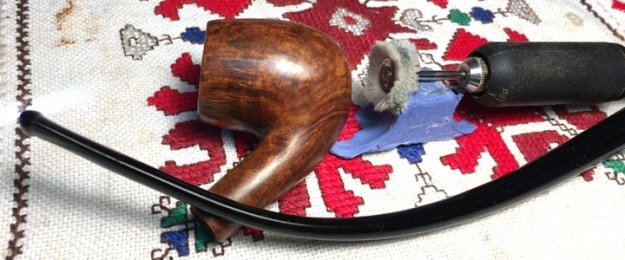
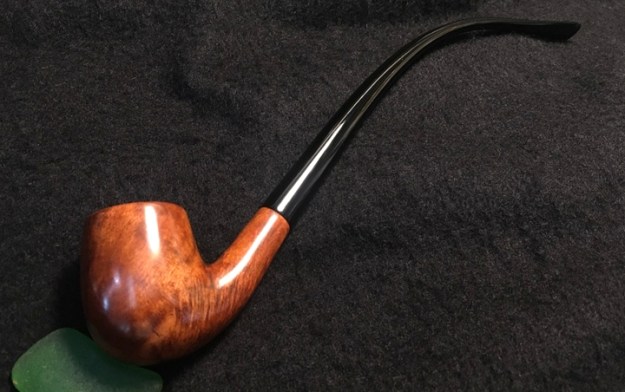
Crafting a Churchwarden for a Lord of the Ring’s Enthusiast


Blog by Dal Stanton

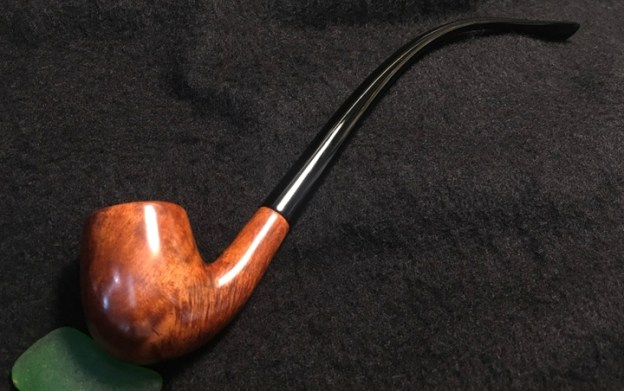
After restoring 3 pipes which Tina chose to gift special men in her life, the final request was to fashion a Churchwarden for her oldest son Thomas, who is a Lord of the Rings “groupie” and of course, he wants a ‘Gandalf Pipe’ to aid in blowing inspired smoke rings!  Tina’s son has been married for a few years and apparently, he and his wife have a Lord of the Rings movie binge at least once a year!

In my research on the Churchwarden shape, as the story goes, there were men back in the days when they didn’t lock churches at night, who were employed as ‘wardens’ of the church – whose responsibility was to guard the premises.  To be faithful to their charge, they were not allowed to leave the walls of the church.  That created an unusual dilemma between guarding the holy confines and the desire to enjoy one’s evening smoke.  The moral dilemma was creatively solved by a stem.  The length of the stem enabled the church wardens to tend to their evening bowls as they stood vigilantly inside the church walls while the stems extended through the windows…so the story goes (see Pipedia’s article).  Of course, everyone knows that Churchwardens were prevalent in Middle Earth as Gandalf spun up fireworks and smoke rings!

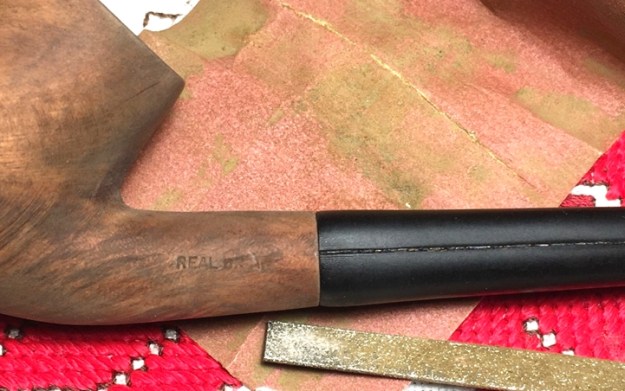
I found a bowl that I put aside quite some time ago that

Courtesy of Gonzalo Kenny https://lotr.fandom.com/wiki/Balrogs

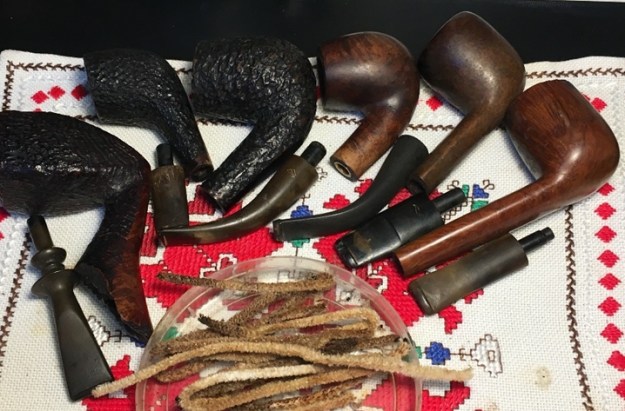
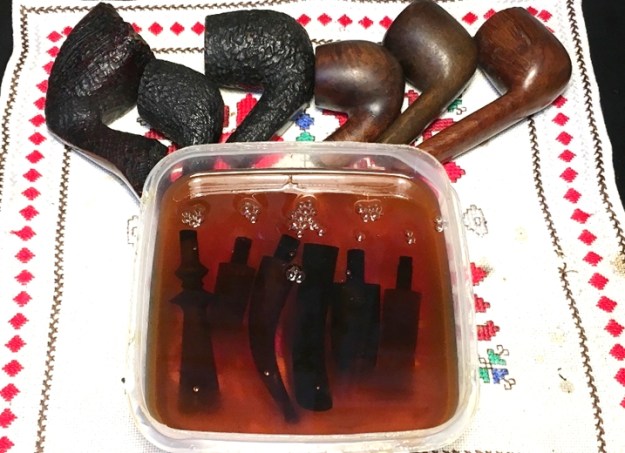
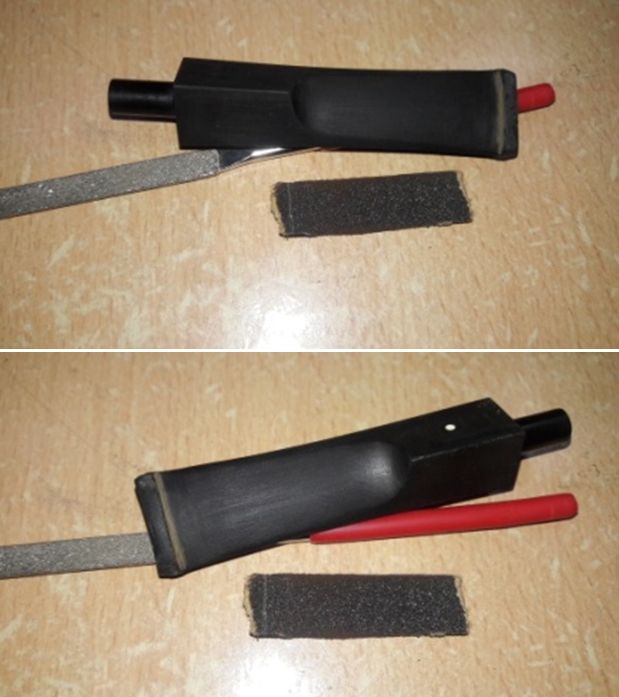
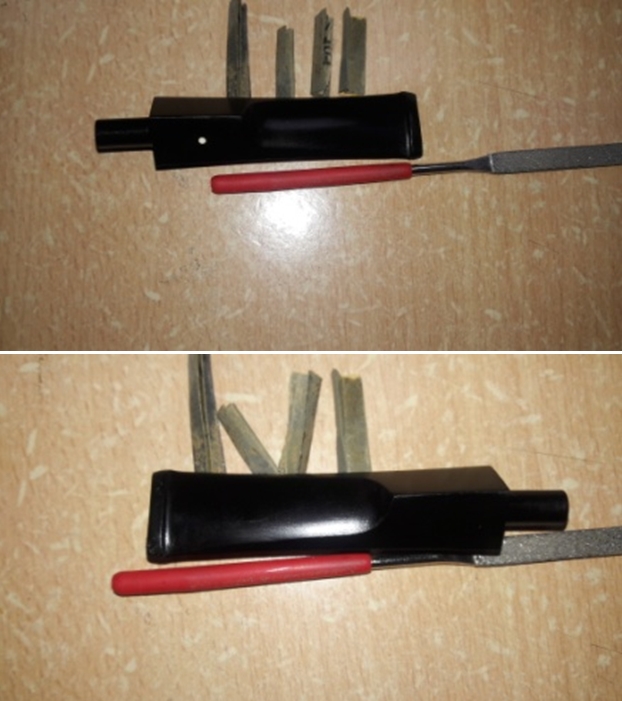
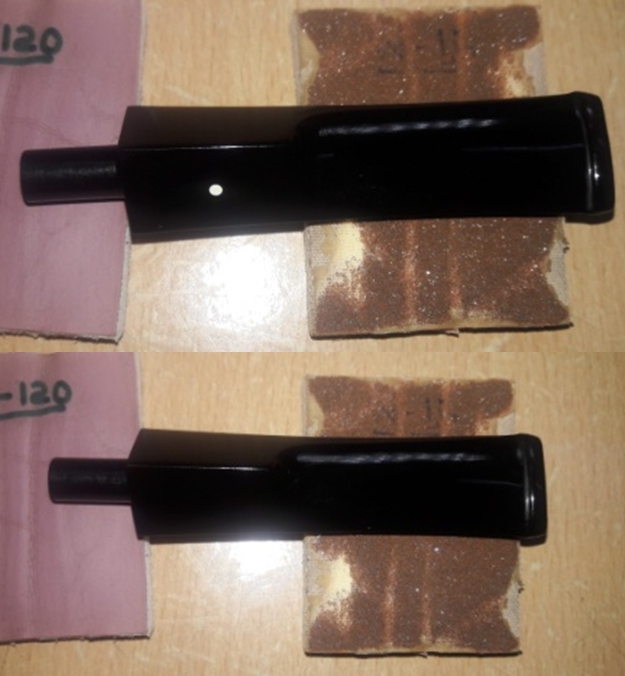
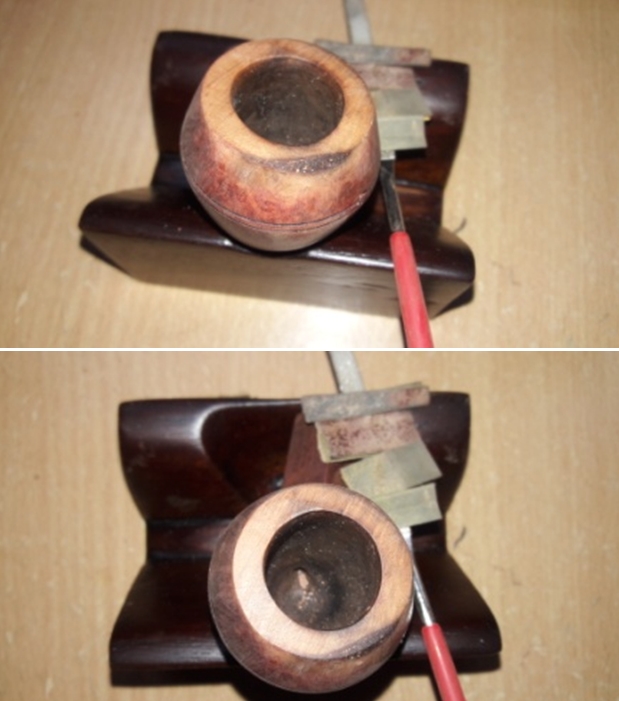
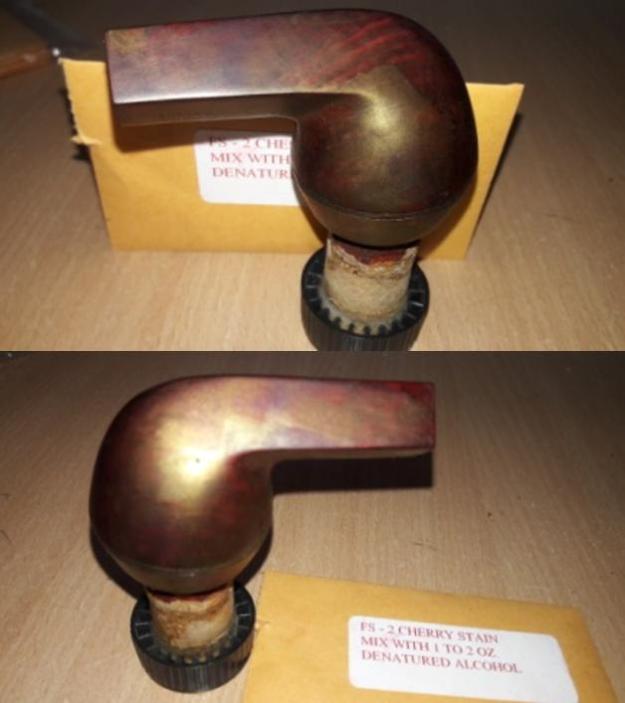
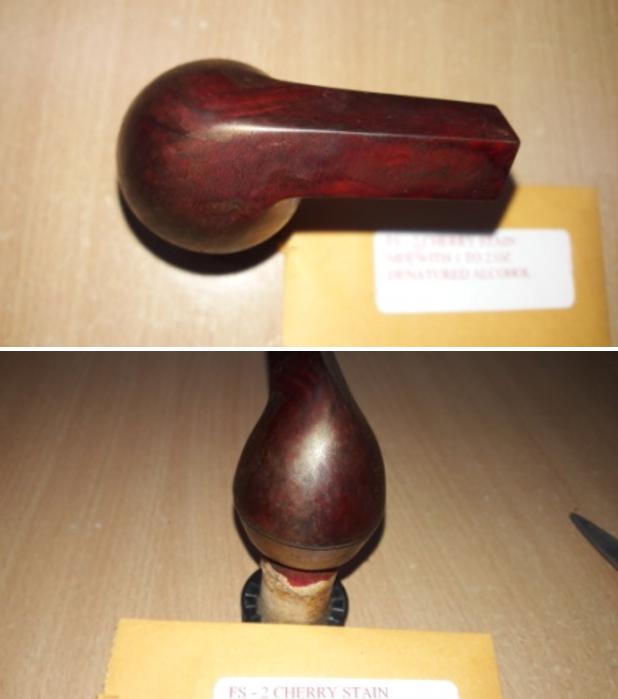
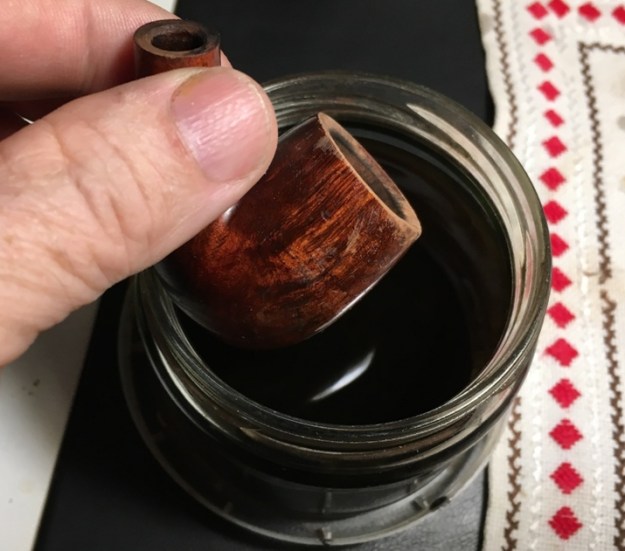
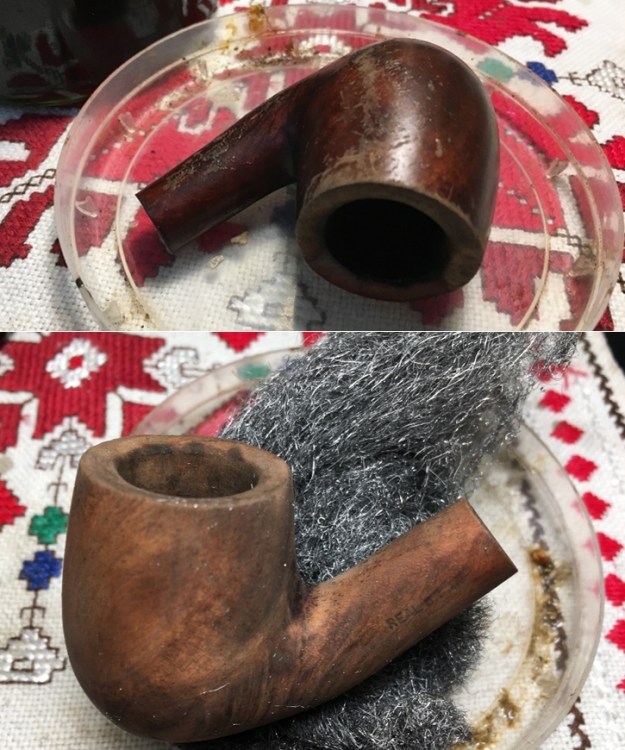
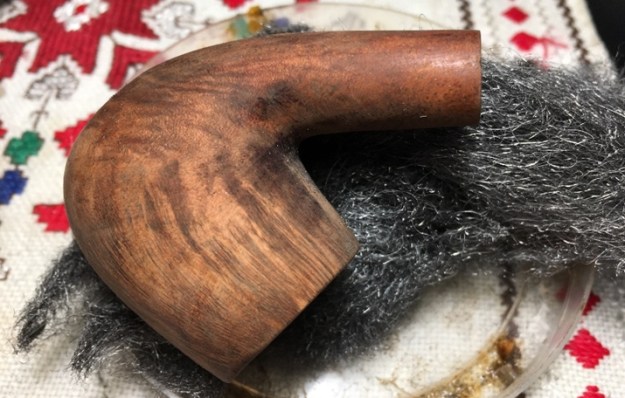
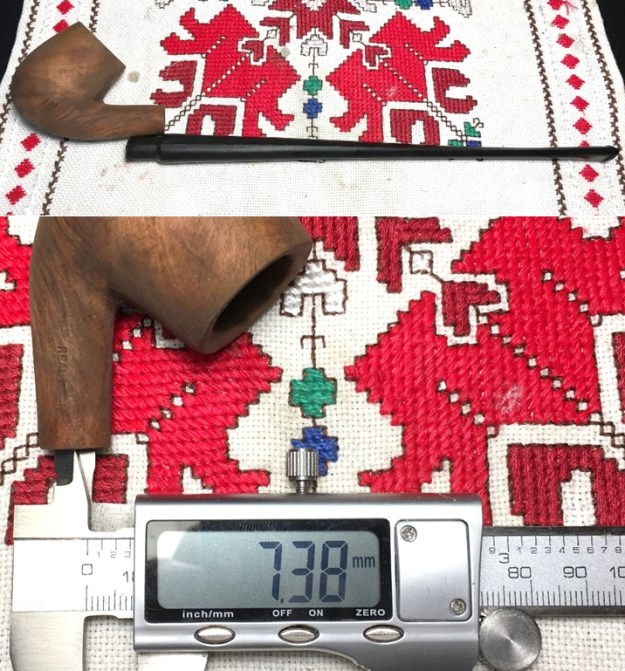
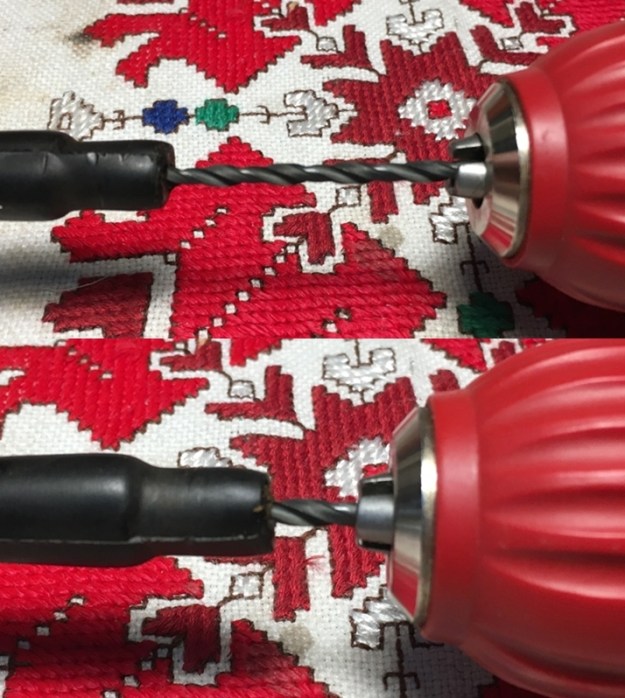
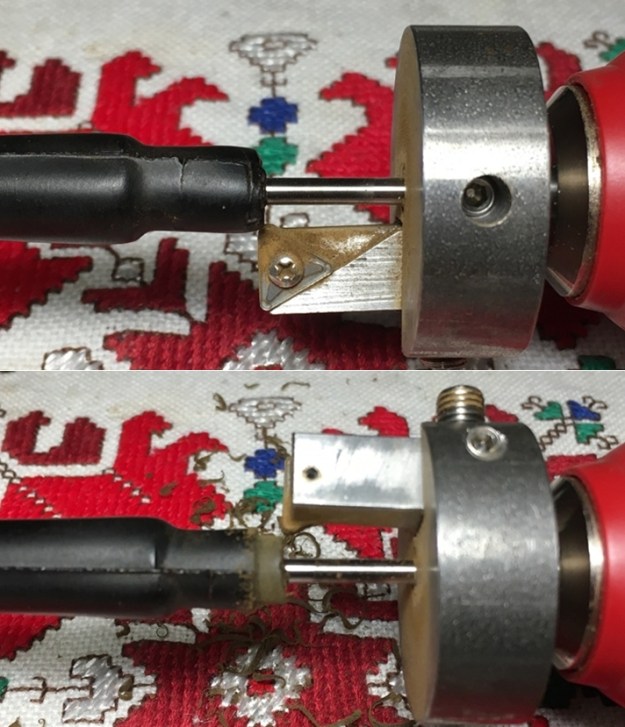
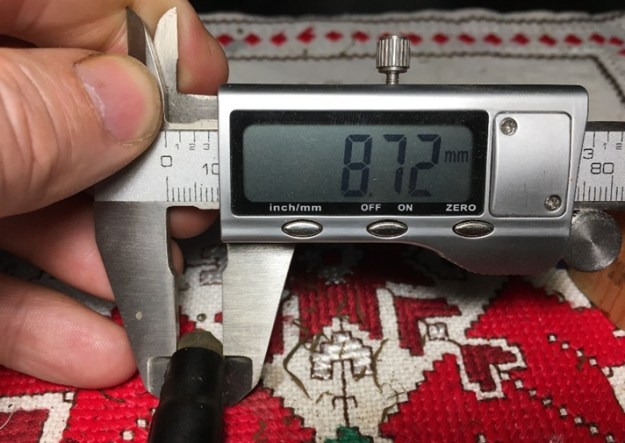
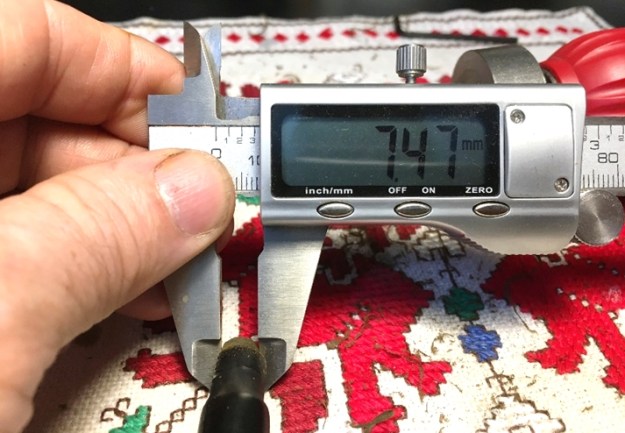
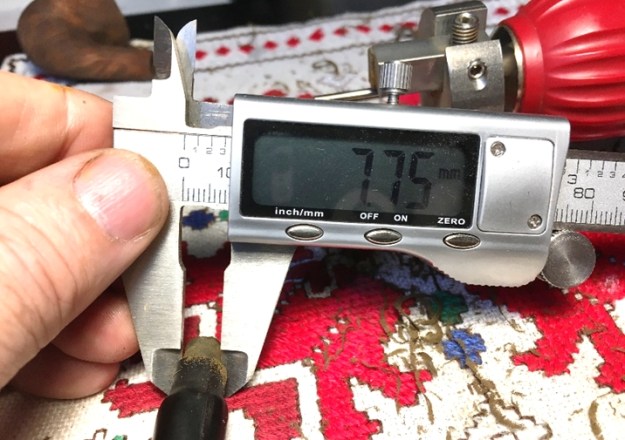
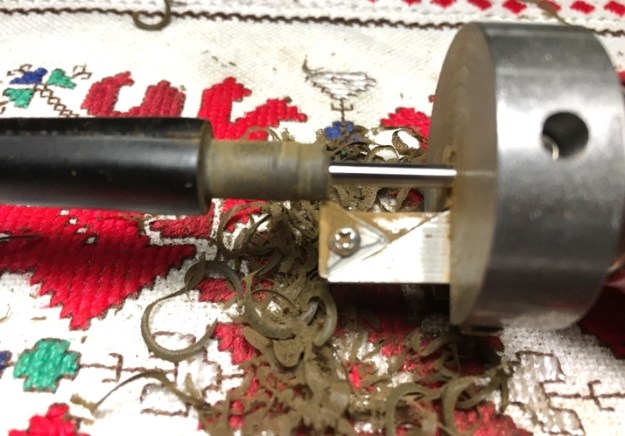
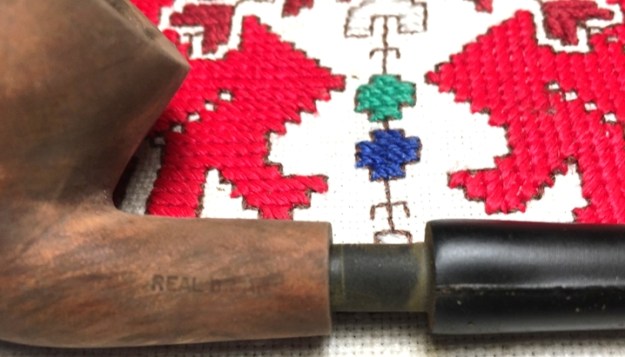
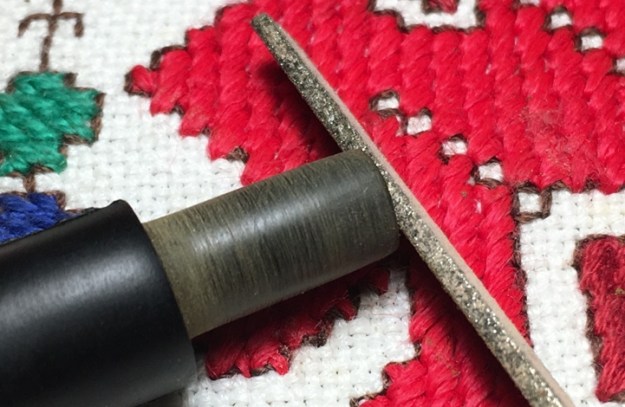
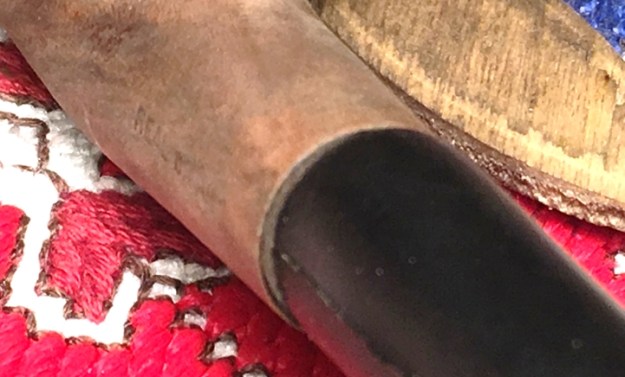
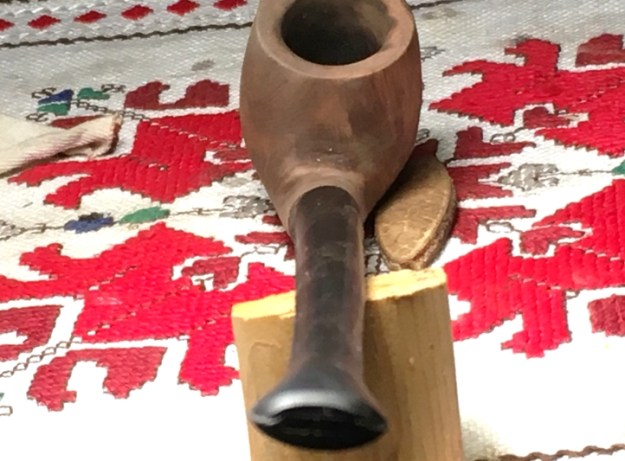
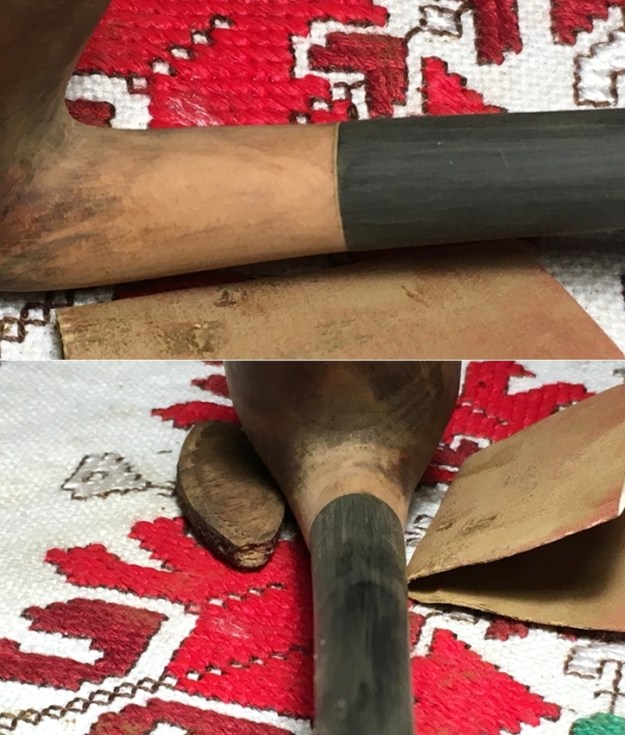
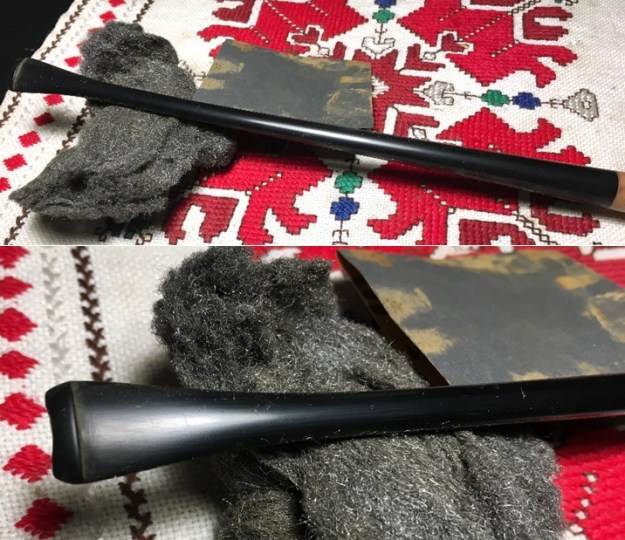
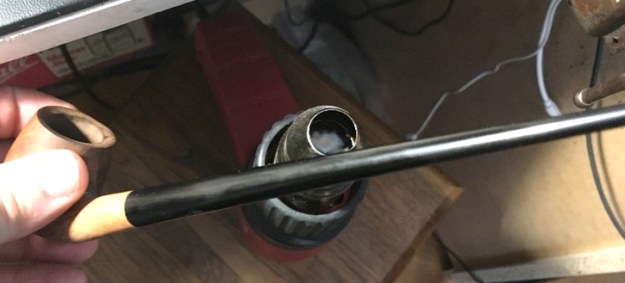
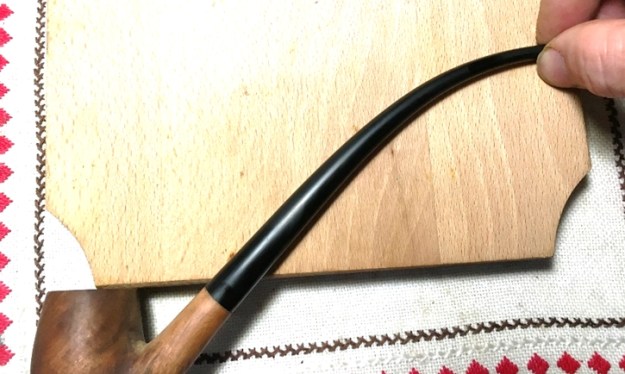
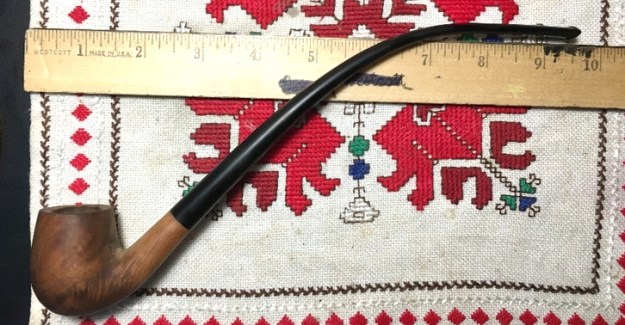
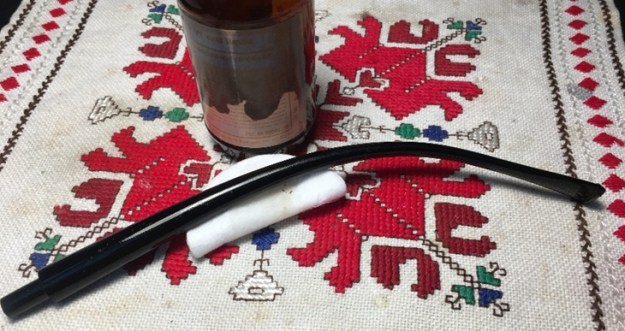
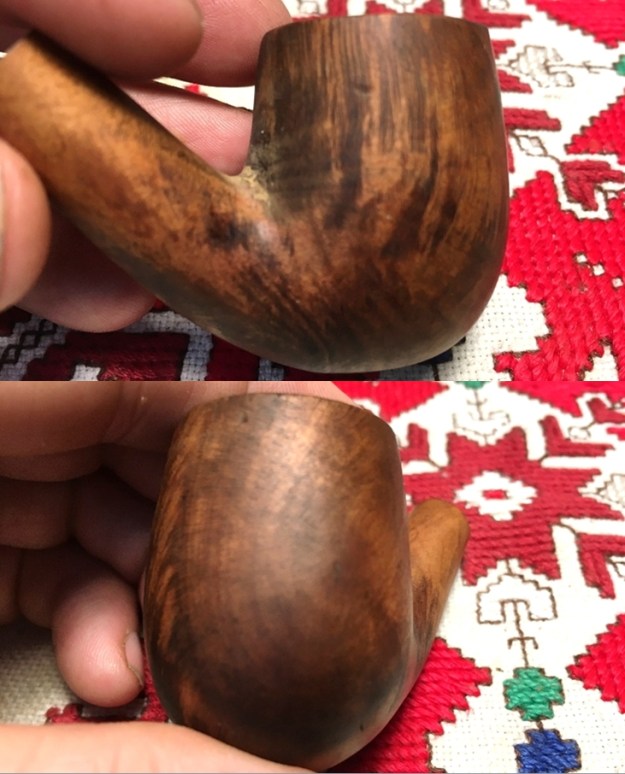
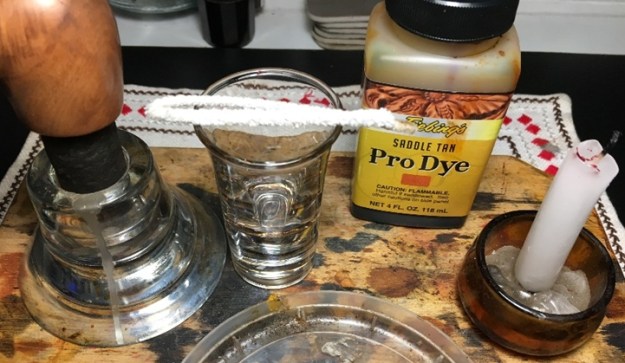
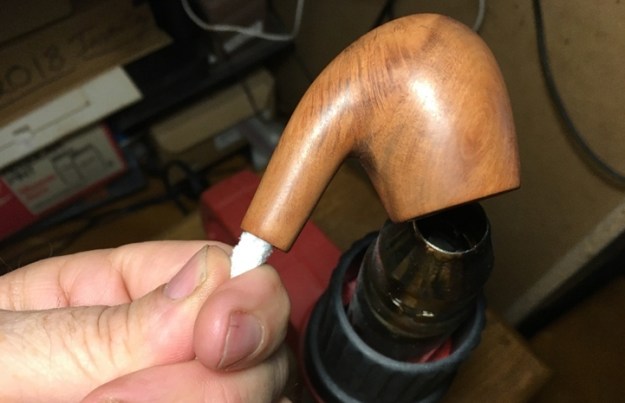
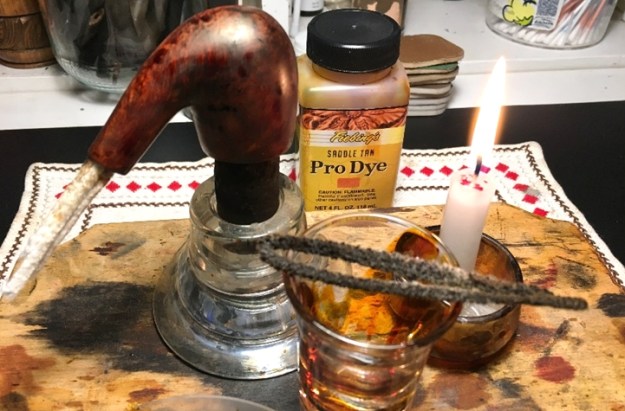
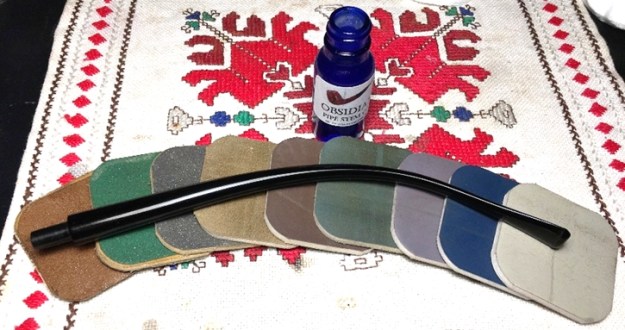
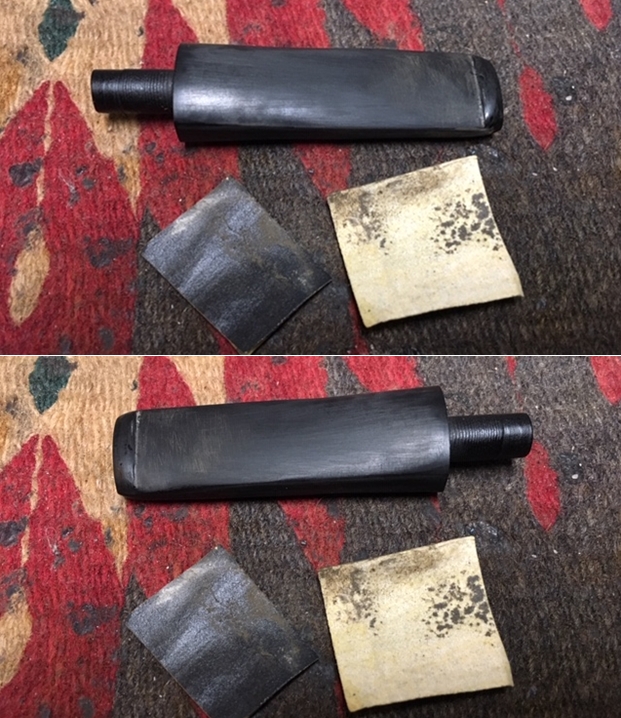
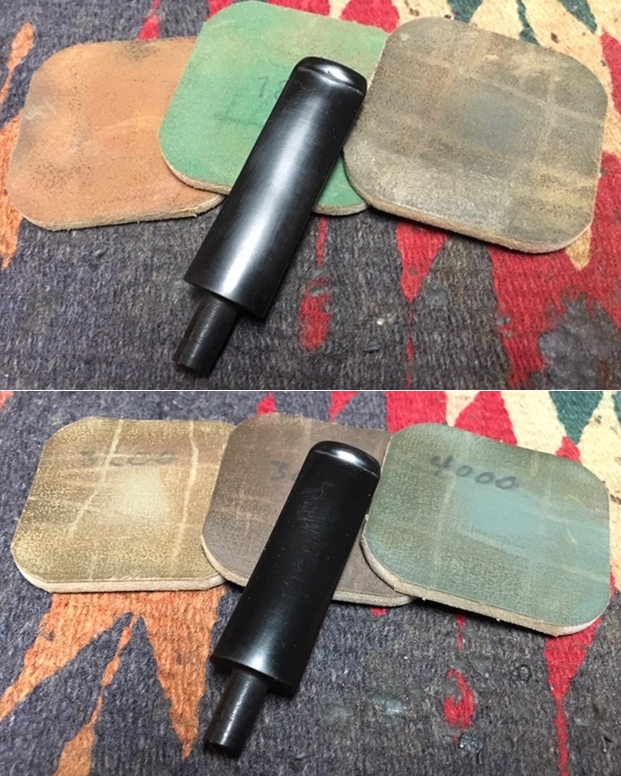
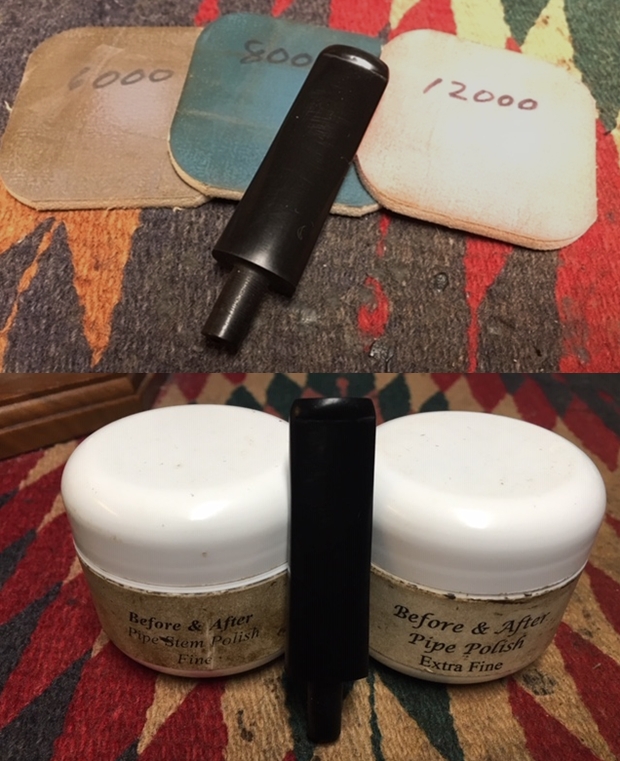
I believed would serve well as a repurposed stummel to be mounted as a Churchwarden.  I know that there are strict Warden purists out there who question the validity of repurposing a bowl for use in fashioning a Churchwarden.  Yet, I appeal to Bill Burney’s description of the Churchwarden in his excellent Pipe Shapes Chart published in Pipedia where he says: “Interestingly, all the other styles of pipe are identified by the shape of their bowls, but the churchwarden is identified by its long stem.  The stem can be bent or straight, but it is always very long – 9” to 18” long.”.  There may be ‘true born’ Churchwardens and there are also those Churchwardens who are adopted into the ranks through the promotion of a discarded and forgotten stummel surviving from another lifetime where they served among other mere mortal pipes that they used to be.  For a common bowl to be remounted onto a Warden stem and to experience that metamorphosis is perhaps like when Gandalf transformed through fire in his mortal combat with Balrog – transforming from The Grey to The White….  Perhaps, only Gandalf knows for sure!  The bowl and stem I chose for this transformation are now on my table.The pre-molded Warden Stem comes from my main supplier, Tim West at http://www.jhlowe.com/bits.htm.  The stummel has ‘Real Briar’ stamped on the side of the shank, but what I like a lot is the 1/2 bent shank.  This will yield a very nice sweeping bend in the Warden stem.  The bowl’s size is not too large – perfect for a Churchwarden. Looking closely at the stummel, I see potential grain underneath the dark, marred surface.  The rim has lava flow but has an attractive inwardly slanted rim.  The chamber has light cake.  I take some pictures of the stummel in its current condition. Before I start working on fashioning the new preformed stem, I clean the stummel.  I start by reaming the chamber using the Pipnet Reaming kit.  I only use the smallest of the blade heads and then transition to the Savinelli Fitsall Tool to fine tune the scraping and cleaning.  Then I sand the chamber using a piece of 240 grade sanding paper wrapped around a Sharpie Pen.  Finally, after wetting a cotton pad with alcohol, I wipe the chamber cleaning it from the carbon dust.  I inspect the chamber after finishing and all looks good. Next, turning to the external surface, I take a few more pictures to show the nasty layer of grime over this stummel!  I use Murphy’s Oil Soap undiluted on a cotton pad and begin the scrubbing process.  I also utilize a brass wire brush to clean the rim. The results are good, but the reality is revealed by the cleaning!  The reality of the condition of the stummel is the reason it was in the box with other lonely stummels having given their all and discarded!  The finish is shot and the rim in mangled. Restoring this stummel to fashion a Churchwarden will be a noble endeavor! Next, I turn to cleaning the internals.  Using cotton buds and pipe cleaners wetted with isopropyl 95%, I go to work.  The internals are nasty.  I also utilize and small dental spatula to scrape the mortise walls.  There was a lot of resistance, but the buds started lightening until I was satisfied that the largest part of the cleaning was accomplished.  I’m not too concerned at this point because I’ve already made the decision to put the stummel in a soak of acetone to totally remove all the old finish which will also take care of residual internal tars and oils. The next morning, I fish the bowl out of the acetone bath.  Some of the finish was removed during the soak, but with the use of 0 grade steel wool, I’m able to dispatch the old finish easily after the night’s soak softened the old finish.  The pictures show the raw briar that allows me to start over. With the stummel cleaning process completed, I turn now to fashioning the preformed Churchwarden stem.  I use an electronic caliper to measure the diameter of the mortise to mark the target sizing of the tenon of the preformed stem that will eventually be seated.  The mortise measurement is 7.38mm in diameter.  Using Charles Lemon’s (of Dad’sPipes) methodology, I add 50mm to this exact measurement to give me my ‘fat’ target.  The ‘fat’ target is what I will aim for when bringing the tenon down to size using the PIMO Tenon Turning Tool.  The ‘fat’ target is 7.88mm.  From this point, I will sand the tenon by hand which gradually and patiently custom fits the mortise. The first thing needed is to pre-drill the tenon airway with the drill bit provided by the PIMO tool.  This enlarges the airway slightly enabling the insertion of the PIMO tool guide pin.  I mount the drill bit to the hand drill and drill out the airway.Next, the PIMO Tenon Turning Tool is mounted on the hand drill and I cut a small test sizing to measure to give me the distance between the test cut and the ‘Fat’ target.  After cutting the test, I measure it with the caliper and record 8.72mm and subtract the ‘Fat’ target, 7.88mm leaving .84mm to remove using the PIMO tool. Using the Allen wrench provided with the PIMO tool, I close the gap of the cutting arm and cut again.  The measurement of the next cut after closing the gap of the carbide cutter arm took off more than I wanted – the measurement is 7.47mm – beyond the 7.88 fat target.  This is why you only to partial cuts at the beginning!I enlarge the gap of the cutter arm a small amount and cut again.  The next measurement is 7.75mm – much better, just falling under the 7.88mm fat target.With this measurement reached, I cut the entire tenon down to the 7.75mm width.  I take the cut to the stem shank facing so a nice straight edge is created, and a ‘shoulder’ is not left from the rough preformed stem.I begin the sanding process by wrapping the tenon with 240 grade paper and rotating the stem and applying pressure strategically with my finger and thumb. I smooth and shorten the tenon a little so that it looks better and doesn’t butt into a ridge that I detect in the mortise which would block the full insertion of the tenon.  I use a flat needle file to do this.The process is slow with a lot of tests and sands… But in time the tenon seats very nicely in the mortise.  Nice!With the tenon snuggly seated in the mortise, the work is far from finished!  The picture shows the offset of the stem and the lip of briar hanging over the stem.  No stem fits automatically!The preformed Warden stem also is not straight but bows to the left through the reach of the stem.  I’ll work on this when I bend the stem later.Using 240 grade paper I begin the process of sanding the junction of the stem and shank.  My goal is to have a seamless transition from shank to stem with no overhanging ridges.  The other issue I see is that both the shank and stem have high spots that need to be sanded down and blended into a uniform flow.  What I want to avoid is the bloomers or stuff-pants look – where the shank balloons out when the sanding has not tapered the flow of the shank from the stem width as it transitions into the shank. It takes time, but in time the ridges have been removed and the tapering through the shank to the bowl looks good. I continue sanding the entire stem with 240 grade paper.  The precast stem is full of ridges and the casting seam down both sides – all of which needs to be sanded away and smoothed.  I also use the flat needle file to form and shape the new button.  I want to retain the curved button slot.  It looks classy! After sanding out the main issues with the new precast Warden stem, I transition to wet sanding using 600 grade paper.  With the bowl and stem united, I sand not only the stem including the shaped button, but also the junction of stem and shank to continue to smooth and blend the tapered transition.  After completing the wet sanding with 600 grade, I use 000 grade steel wool to sand in the same way.  The distance pictures with a Warden stem are always too far away to see detail, but a close-up shows some progress.With the main fabricating and sanding completed with the Churchwarden’s stem, the next step is to bend it.  The 1/2 bent shank of the stummel provides a wonderful trajectory for the bend and sweep of the stem – which emulates more directly Gandalf’s style of Warden.  My goal is to bend the stem so that the final orientation of the bit is generally on a parallel orientation with the plane of the stummel rim which is what is suggested by the ruler in the picture. I remarked earlier that the stem is also a little catawampus to the left as you look down the shaft toward the bowl.  Interestingly, I set up a renewed picture to show this looking down the shaft and my second look at this isn’t as pronounced as it appeared to me before.  The sanding and shank tapering may have mitigated this to some degree. Bending the stem is usually by trial and error to get it right, but the good thing is that the vulcanite stem is very forgiving!  To be on the safe side, though I don’t really believe it to be necessary, I put a pipe cleaner into the end of the stem to protect the airway integrity.I use the hot air gun to warm the vulcanite.  As it’s warming, I gently apply pressure to the bend as the rubber compound becomes supple.  When the stem becomes pliable enough and the bend reaches what appears to be at the right place as I eyeball it, I transfer the pipe to a chopping board where I can use the flat surface and the overhang for the bowl and button expansion at both ends, I press down to straighten the shaft orientation as I hold the bend.  This works very well. The first time around, I decide I need a bit more bend, so I reheat, bend further and then hold the stem firmly against the chopping board until the vulcanite sufficiently cools so that I don’t lose the bend.  To make sure the bend holds I run cool tap water on the stem to seal the bend.I like the results!  The bend is perfect and will present a true Gandalf experience for the new steward of the Churchwarden taking shape.Before I put the newly bent Warden aside to turn to the stummel, I apply paraffin oil to vitalize the vulcanite.Turning now to what was a ‘throwaway’ stummel, I like the grain that made an appearance after the cleaning.  It’s in there!  It just needs some TLC to restore it to the condition that allowed for more beauty to come through.  The briar surface is in surprisingly good condition. There are a few dents and nicks to be expected. There’s a more significant heel bruise where it appears the bowl was thumped on a hard surface.The rim has an attractive inwardly sloping cant which will serve to my advantage in dealing with the residual burn marks and the right side (top in the first picture) of the rim.  The outer edge of the rim is also chewed up a bit. Starting with the rim, I begin by using a coarse 120 grade paper to clean and remove the scorched wood and the dents on the edge.  I follow this with 240 grade paper sanding the canted rim surface.  I’m hopeful this will remove the blemishes but also serve to freshen the rim canted pitch and lines.  I then fine tune with 600 grade paper. The results are great.  The transformation is more than hoped for!  The rim is actually very attractive and some grain peeking out.I do the same with the heel bruise.  I dispatch the blemish quickly with 240 grade paper followed by 600 grade paper.Continuing the sanding, I now sand the entire stummel using sanding sponges.  I start with a coarse sponge, followed by a medium grade then finish with the light grade sanding sponge.  The briar grain is showing up!Following the sanding sponges, I apply the full regimen of 9 micromesh pads.  First, I wet sand using pads 1500 to 2400 then dry sand with pads 3200 to 4000 and 6000 to 12000.  For a ‘throwaway stummel’ this piece of briar is looking very nice. Throughout the micromesh process, I knew I was approaching a decision point.  The natural briar came out way more than I had thought possible when I began with this stummel.  I can remain with the natural briar or apply a dye.  I decide to apply Fiebing’s Saddle Tan Pro Dye to the stummel not for the purpose of covering blemishes but to bring out the briar grain more which is still somewhat subdued as I look at it.  I assemble my desktop dying components.  After I wipe the stummel with alcohol to clean the surface, I insert two folded pipe cleaners into the shank to serve as a handle.I then heat the briar stummel with an air gun.  As the briar heats, this expands the grain enabling the grain to be more receptive to the dye when it’s applied.Using a folded pipe cleaner, I paint the bowl with the aniline based dye in sections and flame each section as I go.  I use the lit candle to combust the painted section of wet dye and it immediately combusts the alcohol in the dye leaving the pigment to set in the heated wood.  I eventually apply the Saddle Tan dye to the entire stummel and repeat the painting and flaming process again to assure full coverage.  I then put the dyed and flamed stummel on the cork to rest through the night. With the dyed bowl resting I take the Churchwarden stem through the full micromesh regimen.  I wet sand using pads 1500 to 2400 and then dry sand with pads 3200 to 4000 and 6000 to 12000.  Between each set of 3 pads I apply a healthy coat of Obsidian Oil to the stem to vitalize the vulcanite.  The newly polished vulcanite pops!  I take one concluding picture instead of the usual 3 because the picture shows no detail because of the size of the stem!The next morning, I’m ready to unwrap the flamed bowl.  After mounting a felt cloth buffing wheel on the Dremel, I set the speed to the lowest possible to reduce the heating factor.  I then apply Tripoli compound to the bowl to remove the flamed crust to reveal the briar beneath. With the assistance of my wife, she takes a few pictures to show the initial removal of the flamed crust.  It takes me a good bit of time to slowly and methodically go through this ‘plowing’ and polishing process.  I remove dye blotches to make sure what is revealed is the minutia of the grain texture.  Not pictured is after I complete the process with the felt wheel (pictured below) I change to a cotton cloth buffing wheel and increase the speed of the Dremel to 40 % of full speed and again go over the entire stummel with Tripoli compound.  I do this first, to reach into the crook of the shank that is too tight for the felt wheel to reach.  Also, I like the further fine tuning of the Tripoli compounds polishing of the briar surface.  The grain sharpens even more providing the contrasts between the harder and softer woods of the briar.I then wipe the bowl with a cotton pad wetted with isopropyl 95% to blend the dyed finish.  The wipe of alcohol evens out the finish and blends it.  Wiping with alcohol will also lighten the finish if I continue to wipe, but I like the tone of the hue where it is so I only to a light wipe for blending purposes.I switch to another cotton cloth buffing wheel, keep the speed on the Dremel and 40% and apply Blue Diamond compound to the stem and stummel.  I don’t join the two because it is easier to work with each individually.  After completing the application of the compound, I wipe both stem and stummel with a felt cloth to remove the compound dust left behind.Finally, I reunite the Warden stem with the repurposed stummel and apply a few coats of carnauba wax to the Churchwarden.  When finished, I give the pipe a vigorous hand buffing with a microfiber cloth to bring out the shine.

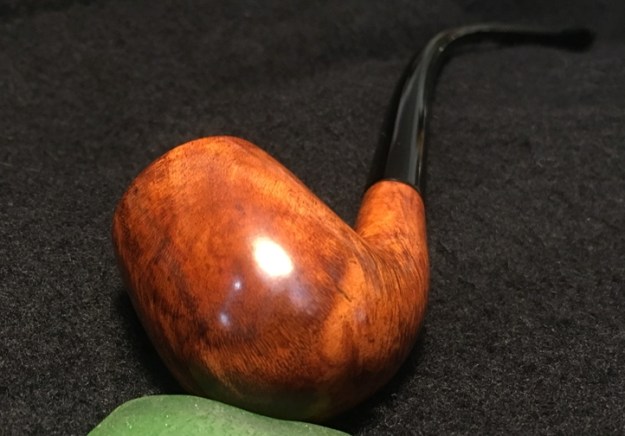
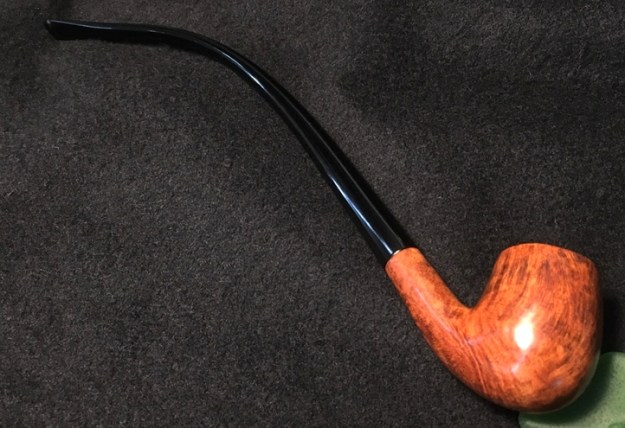
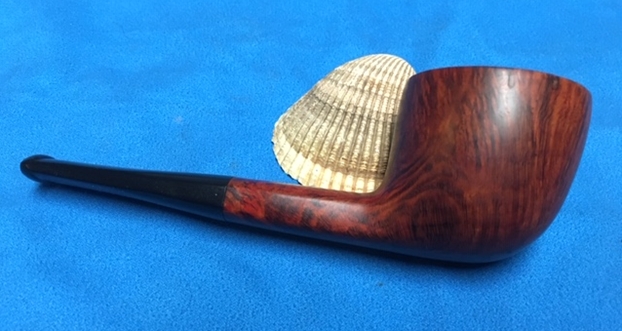
Wow!  When I think of where this throwaway stummel was at the beginning of the process and what I see now, it is truly amazing. This Churchwarden’s 1/2 bent shank provides the perfect trajectory for the stem’s gentle, flowing bend to project a pipe that is truly Gandalf worthy!  The grain of the bowl is varied from a vertical flame, a knot with outwardly flowing concentric circles and some bird’s eye thrown in for good measure!  This Churchwarden is certified for Middle Earth distribution for Tina’s son, Thomas.  Tina commissioned  this Churchwarden project along with 3 other restorations (to learn more about commissioning pipes see: For “Pipe Dreamers” Only! ) and each will be boxed and heading to Birmingham, Alabama, USA, from Bulgaria.  All these pipes benefit our efforts here in Bulgaria working with women and girls who have been trafficked and sexually exploited – the Daughters of Bulgaria.  Thank you, Tina!, and thank you for joining me!
 

Renewing a Classic Bari Shape – A Bari Opal 8443


Blog by Steve Laug

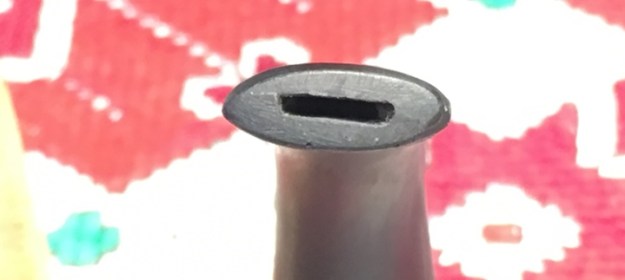
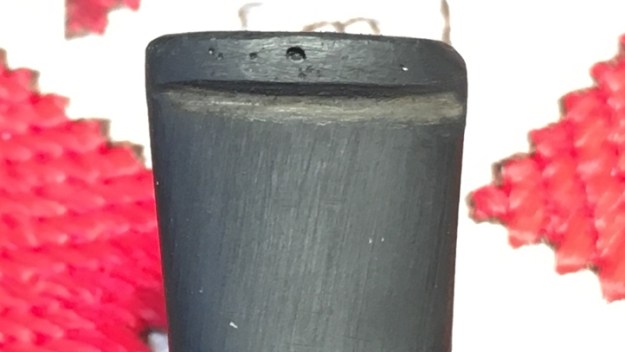
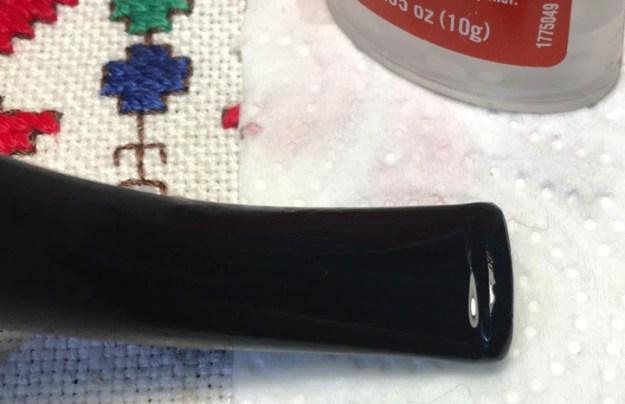
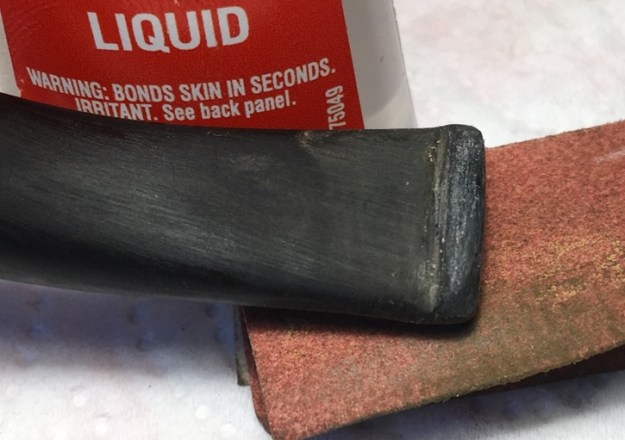
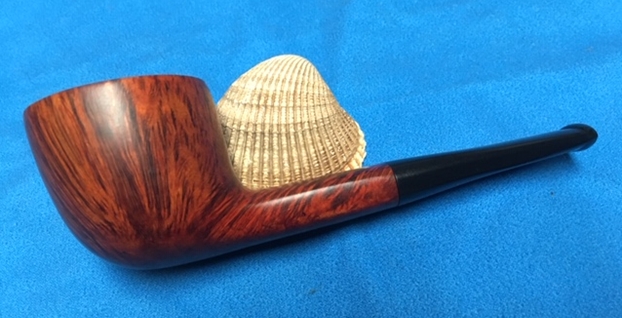
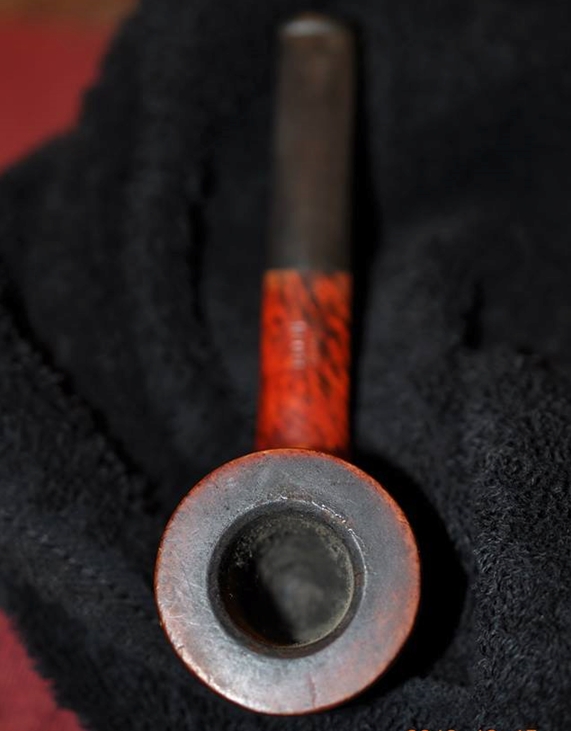
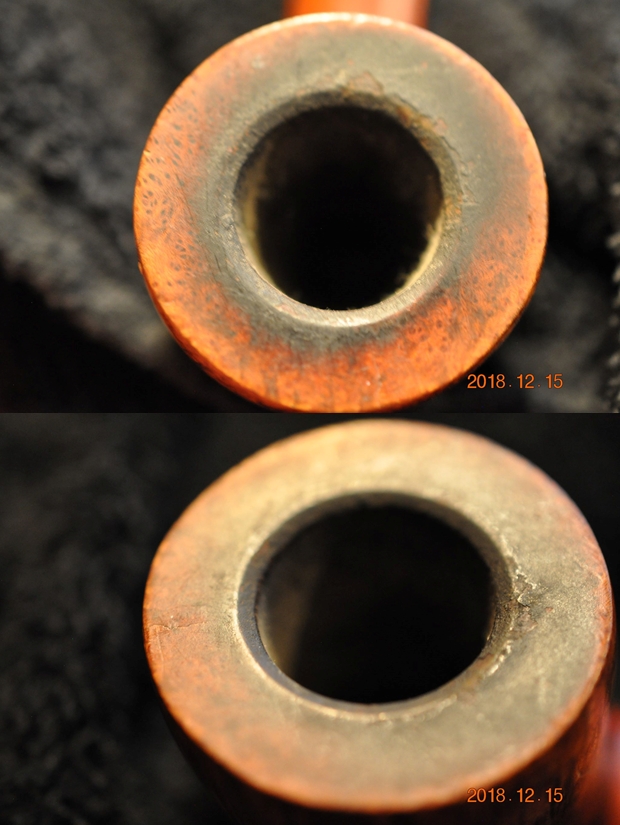
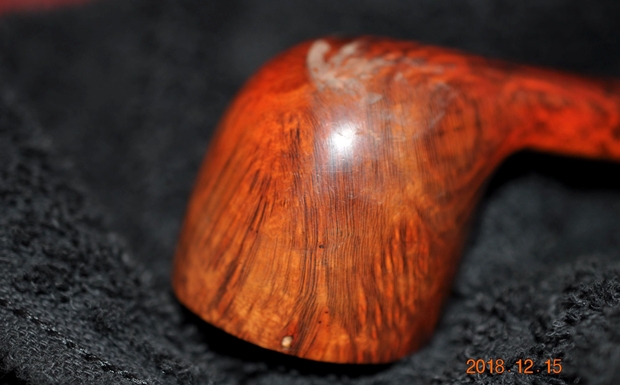
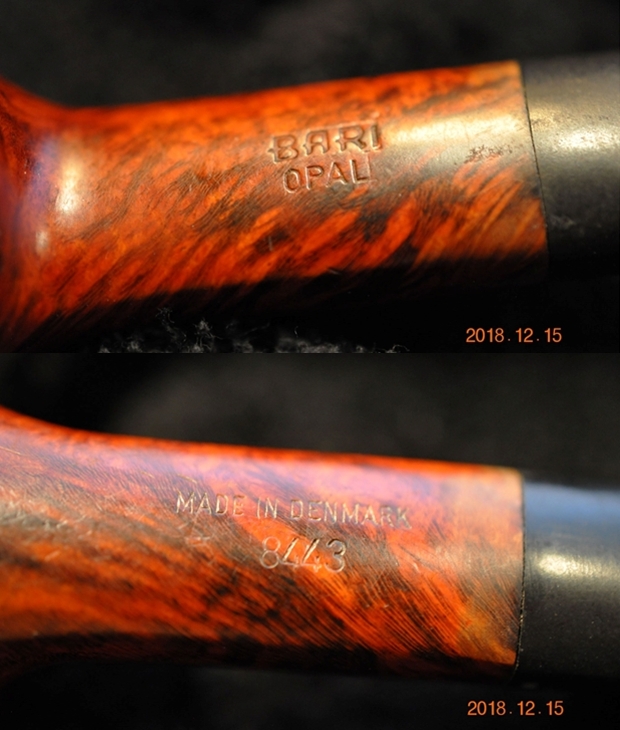
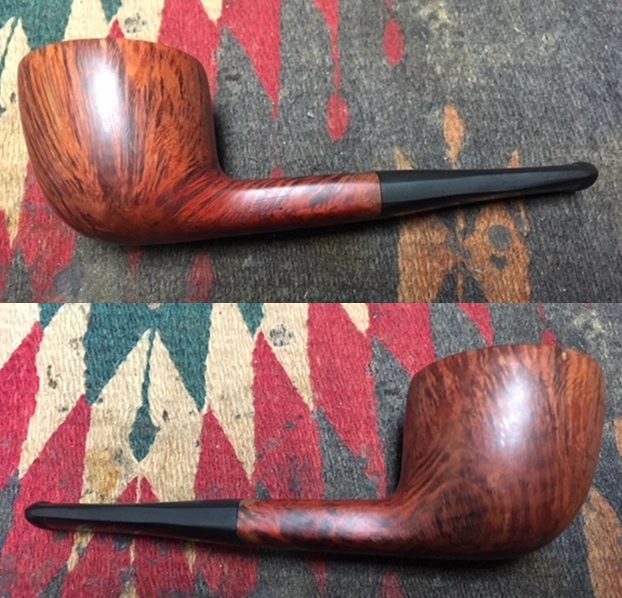
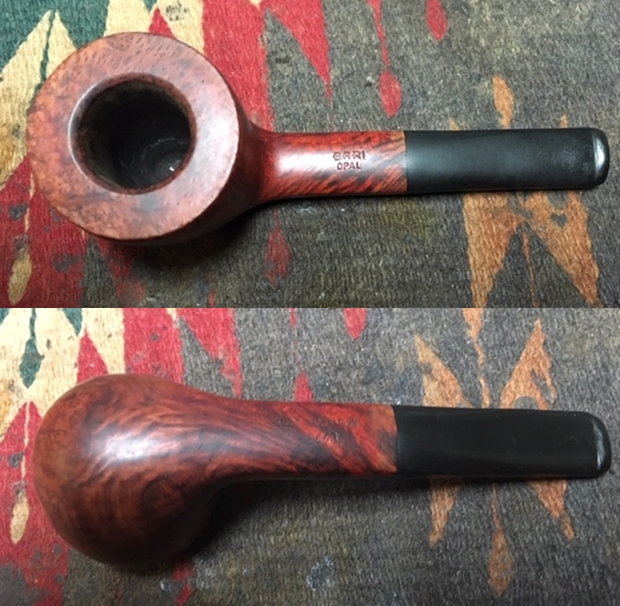
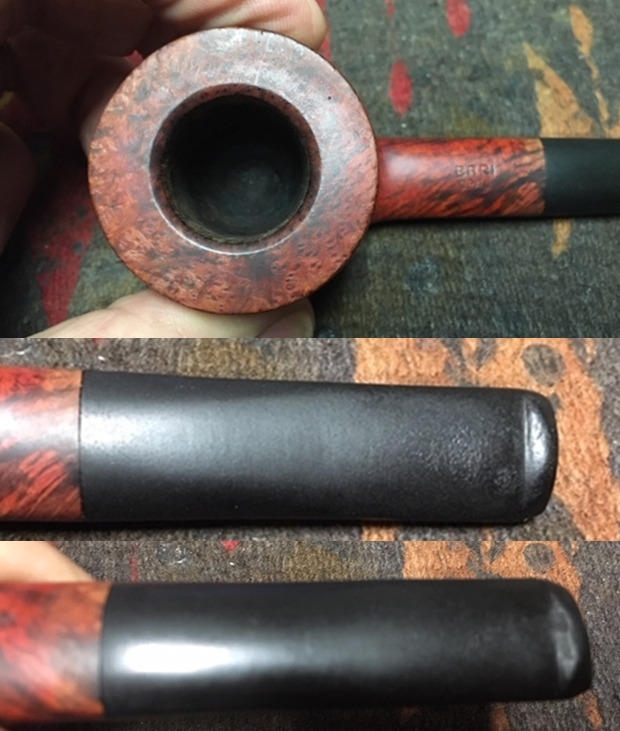
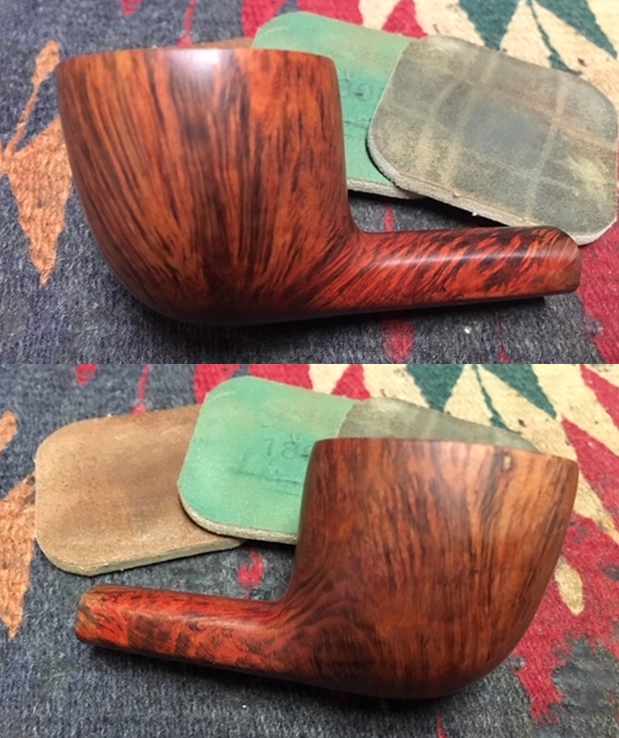
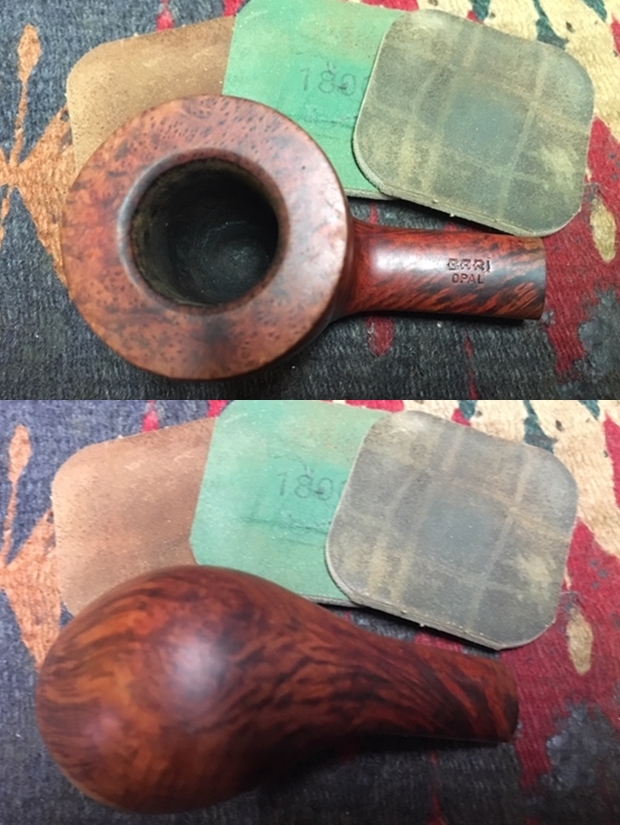
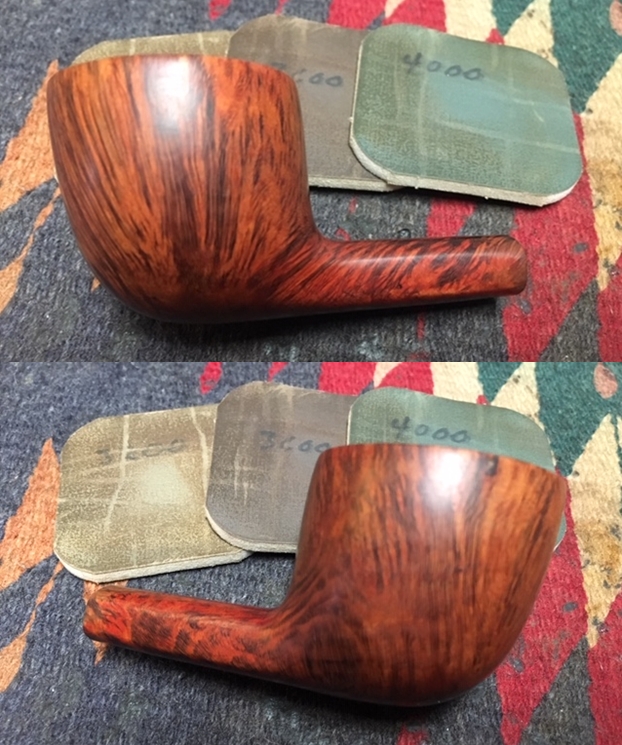
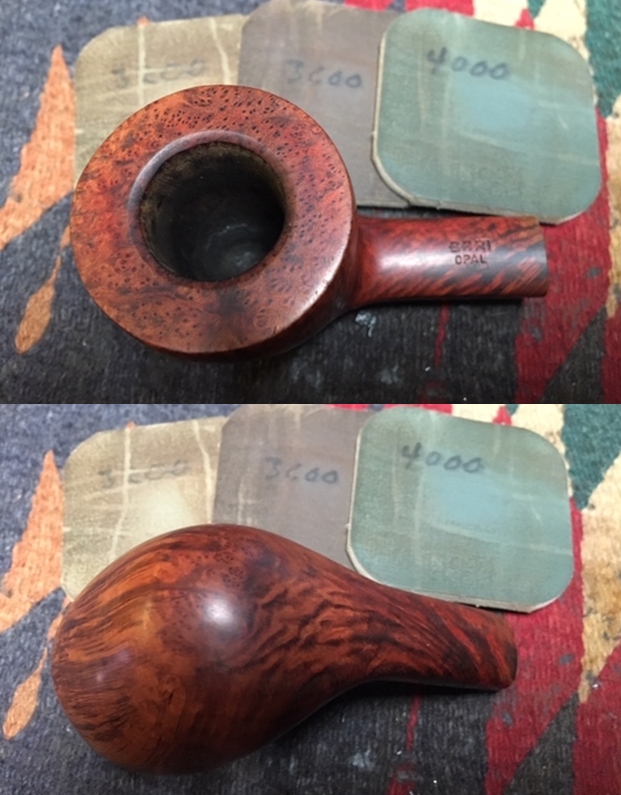
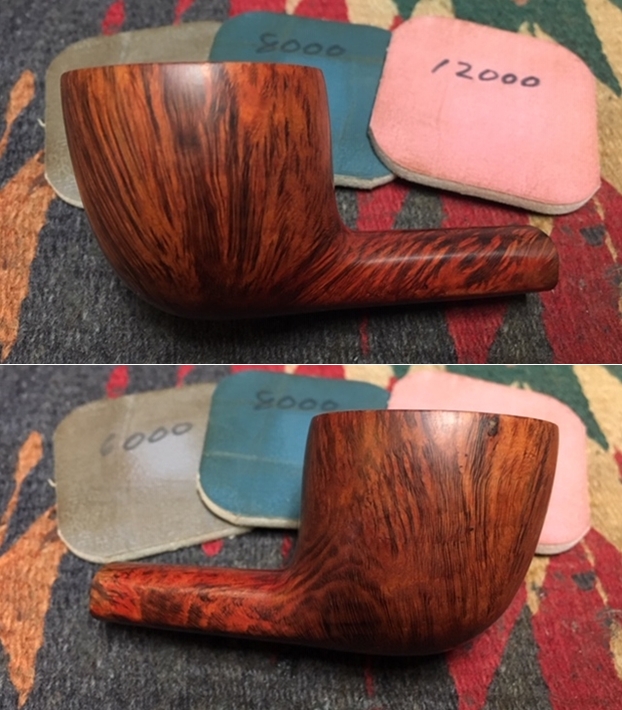
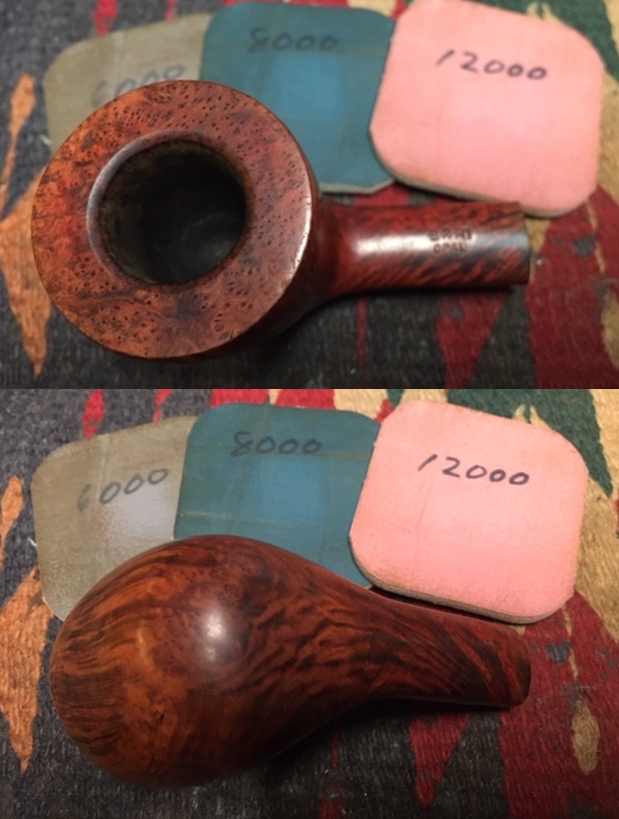
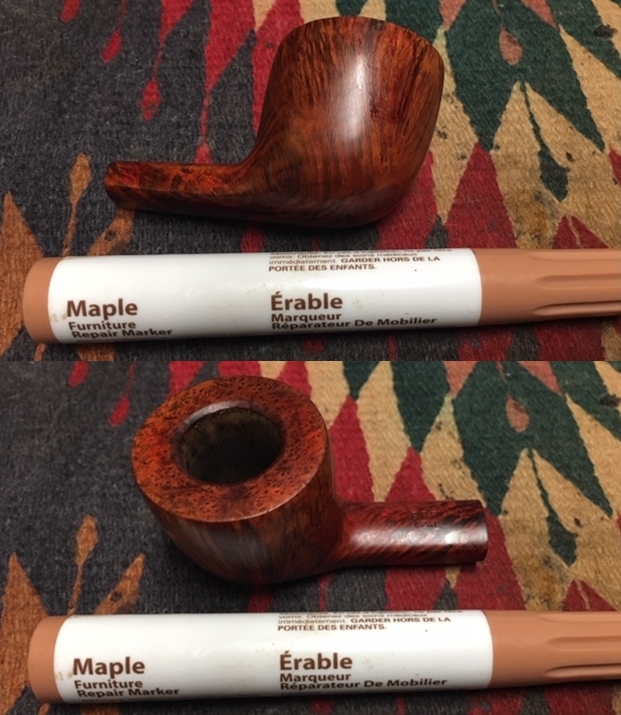
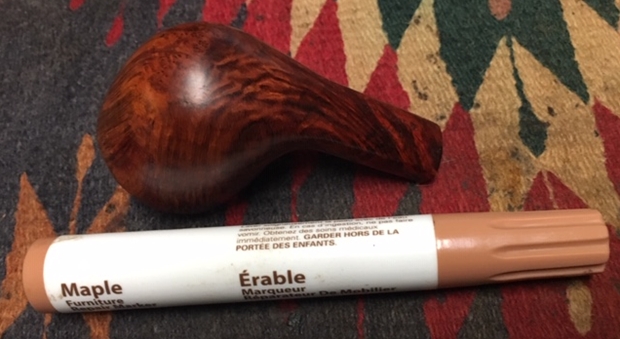
The next pipe on the table is from one of the unsung pipe makers that I really enjoy working on. It is a Bari pot shaped pipe with a rectangular shank and tapered vulcanite stem. This has some stunning straight and flame grain around the bowl and shank with birdseye on the top of the bowl and the heel. It showed a lot of promise even in its filthy condition. The rim top was quite wide and had a slight bevel on the inside rim edge. The pipe is stamped on the topside of the shank Bari over Opal and on the underside Made in Denmark over the shape number 8443. Lately we have been picking up some really dirty pipes and this pipe was no exception. It was very dirty with a thick cake in the bowl and a layer of lava overflowing on to the rim top. It was thick enough to have some wrinkles in the surface that looked almost like cracks. It was hard to know what the inner edge of the rim looked like because of the lava and cake. From the photos it appeared that the inner edge was in good condition. Other than being dirty the finish also appeared to look very good. The stem was lightly oxidized and the button surface on both sides was worn down from tooth damage. There was chatter on both sides of the stem. Jeff took some photos of the pipe before he started working on it. He took photos of the rim top to show the thick cake in the bowl and the overflow of lava. The cake is thick and hard and the lava overflow is a thicker toward the back of the beveled rim. The bowl and the rim are a real mess. This must have been a great smoking pipe.He took a photo of the right side and heel of the bowl to show some of the grain and the condition of the pipe. There is one small fill at the top of the bowl that will need to be dealt with but otherwise it is a pretty pipe.Jeff took photos of the stamping on the top and underside of the shank to capture the clarity of it even under the grime. It is clear and legible.The vulcanite stem was worn at the button with the sharp edge of the button worn down with tooth marks. The stem also had a lot of chatter both sides and some oxidation.Jeff had already cleaned up the pipe before sending it to me. He had reamed the bowl with a PipNet pipe reamer and cleaned it up with a Savinelli Fitsall Pipe Knife. He scrubbed the exterior with Murphy’s Oil Soap and a tooth brush to clean off the grime off the finish and the heavy overflow of lava on the rim top. He cleaned up the internals of the shank, mortise and stem with pipe cleaners, cotton swabs and alcohol to remove all of the oils and tars in the pipe. When it arrived here in Vancouver it was a clean pipe and I knew what I had to work with. I took photos of it before I started my part of the restoration. I took photos of the rim top and the stem to show their condition. Jeff was able to clean up the thick cake and lava overflow that was shown in the rim and bowl in the earlier photos. He was also able to get rid of the grime and grit in the surface of the briar. The rim top looked a lot better than when he started. There was still some pitting and darkening on the surface of the inward bevel but it should clean up very well.I decided to work on the scratches in the surface of the briar first. I polished the surface with micromesh sanding pads – wet sanding with 1500-2400 grit pads and dry sanding with 3200-12000 grit pads. I wiped the rim down with a damp cloth after each pad. I was able to polish out the scratches without damaging the finish on the bowl or the rim. The finish looked very good once I was done polishing it. On the right side of the bowl there was a fill that stuck out. I touched it up with a black Sharpie pen and buffed it by hand. I used a Maple stain pen to touch up the area around the fill and the lighter areas on the shank end. The finish on the rest of the bowl was in excellent condition. After I was finished with the stain pens and polishing the restained areas I rubbed the bowl and shank down with Before & After Restoration Balm to deep clean the finish on the bowl and shank. The product works to clean, enliven and protect the briar. After it sat for a little while I wiped it off and buffed it with a soft cloth. The briar really began to have a rich shine. I took some photos of the bowl at this point to mark the progress in the restoration. It is a beautiful bowl. I set the bowl aside and worked on the stem at this point in the  process. The stem may well be a replacement one but it is hard to know for certain. It is well made and fits perfectly to the shank. I decided to start by repairing the deep tooth marks on the button and the stem. I filled them in and built up the surface of the button with clear super glue and set the stem aside while I went to lunch.I used a needle file to cut a sharp edge on the button on both sides of the stem. I worked it until there was a definite sharp edge. I sanded the button and the stem with 220 grit sandpaper and 400 grit sandpaper to remove the scratches. I polished the stem with micromesh sanding pads – wet sanding with 1500-2400 grit pads and dry sanding with 3200-12000 grit pads. I wiped the stem down after each pad with Obsidian Oil to remove the sanding dust. I polished Before & After Pipe Stem Polish – both Fine and Extra Fine. I gave it a final hand buff with some Obsidian Oil and laid it aside to dry. I put the stem back on the pipe and the pipe to the buffer. I worked it over with Blue Diamond to polish out the remaining small scratches in the briar and the vulcanite. I gave the bowl and the stem several coats of carnauba wax and buffed the pipe with a clean buffing pad to raise the shine. I hand buffed it with a microfiber cloth to deepen the shine. I love the way that the buffer brings a shine to the pipe. I was happy with the look of the finished pipe. The photos below show what the pipe looks like after the restoration. I have worked on quite a few Bari’s over the years and I am always pleased with the way the shape and the grain work together.  The shape and the look is uniquely Bari and are very elegant. The polished black vulcanite stem looks really good with the contrasting browns of the briar. The dimensions of the pipe are Length: 5 inches, Height: 1 3/4 inches, Outside diameter of the bowl: 1 3/4 inches, Chamber diameter: 7/8 of an inch. This pipe will soon be added to the rebornpipes online store. If you are interested in adding it to your collection let me know. This one should be a great smoker. Thanks for walking through the restoration with me on another beauty!
Breathing Life into a Paneled Royal Esquire 730 Dublin


Blog by Steve Laug

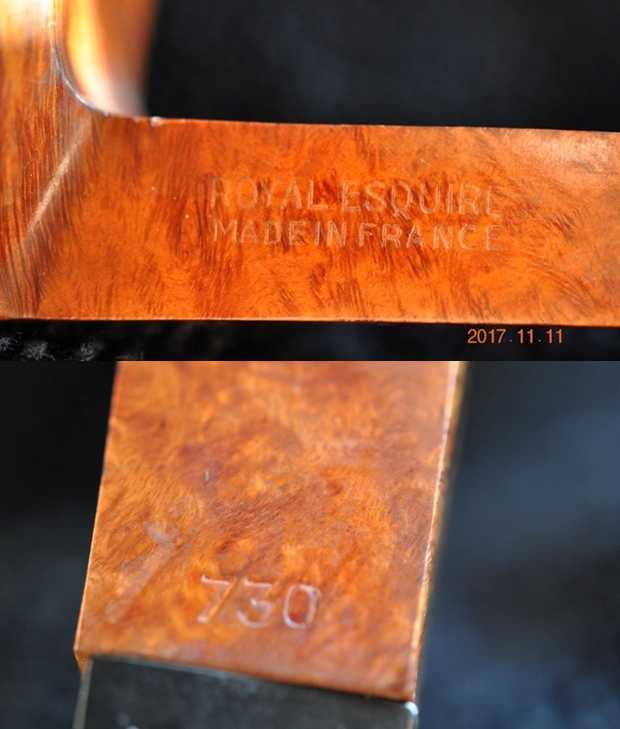
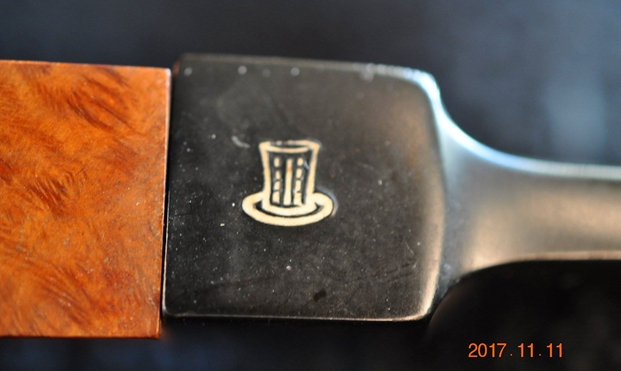
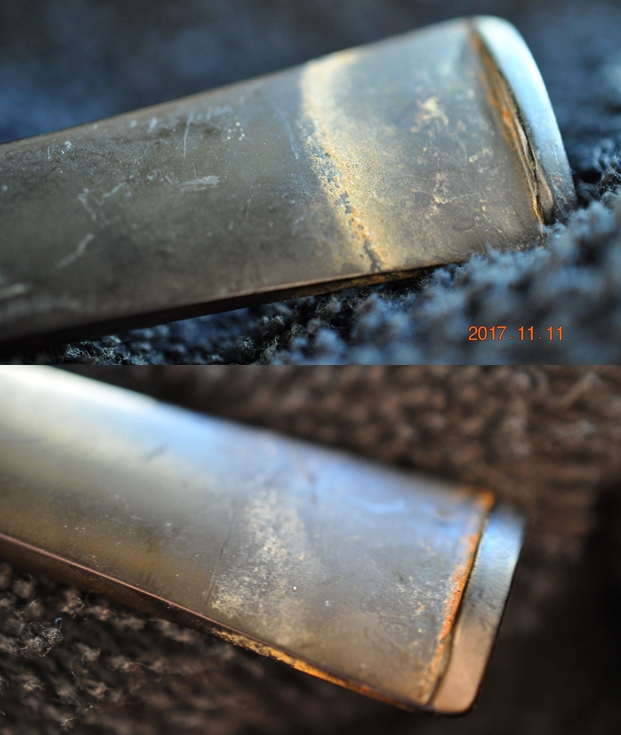
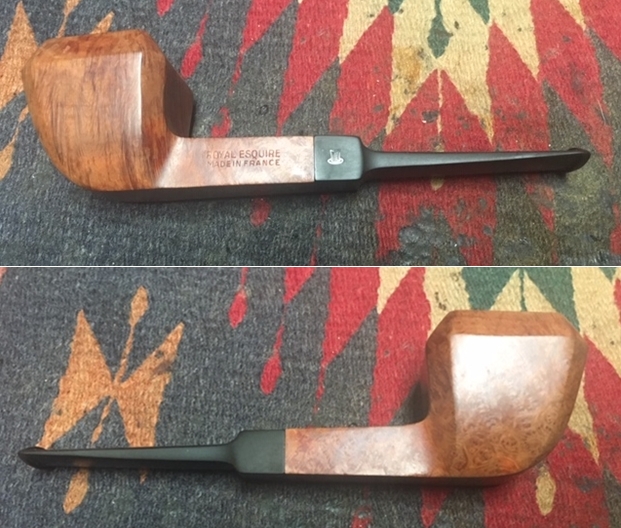
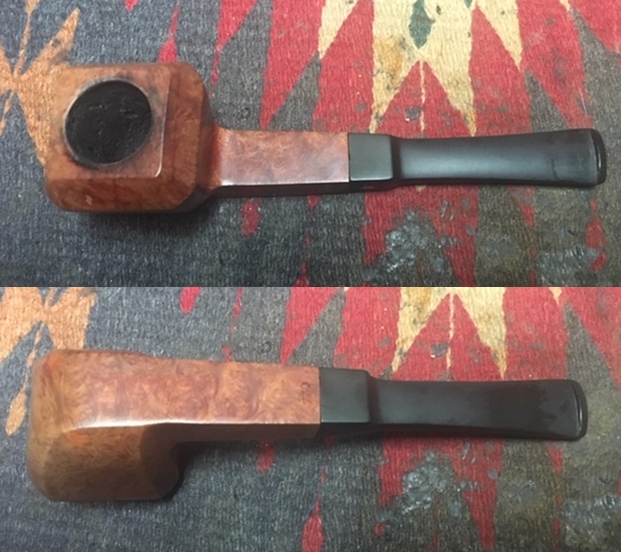
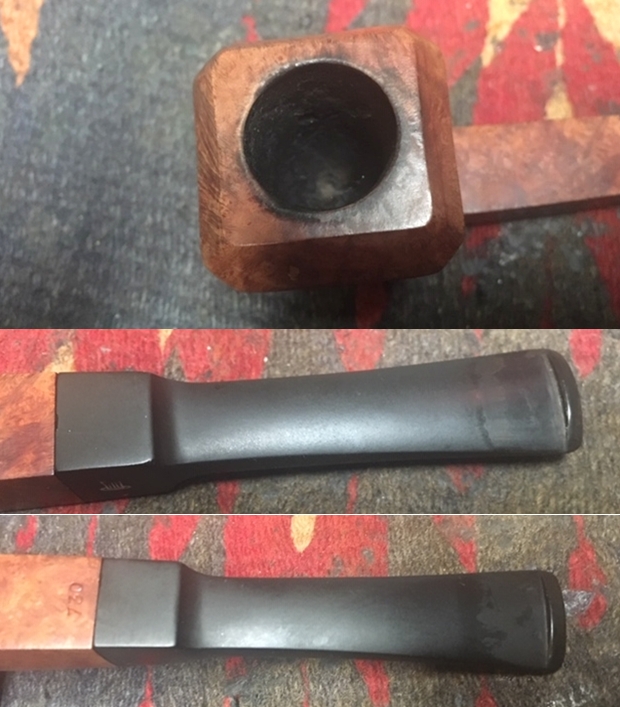
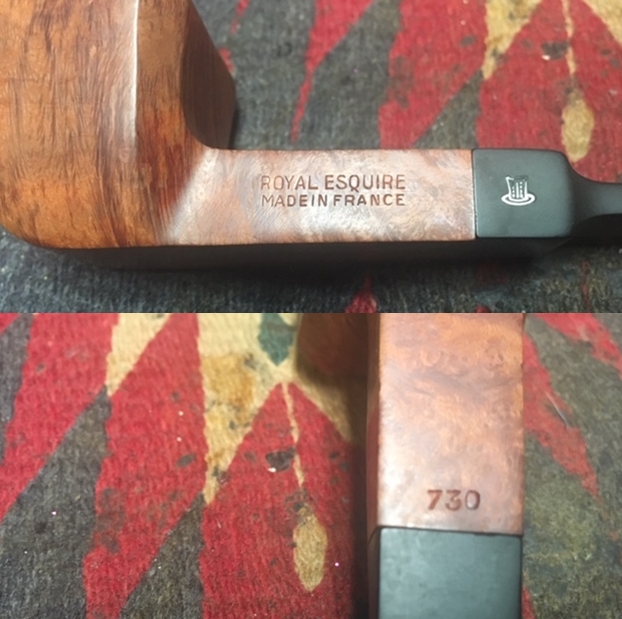
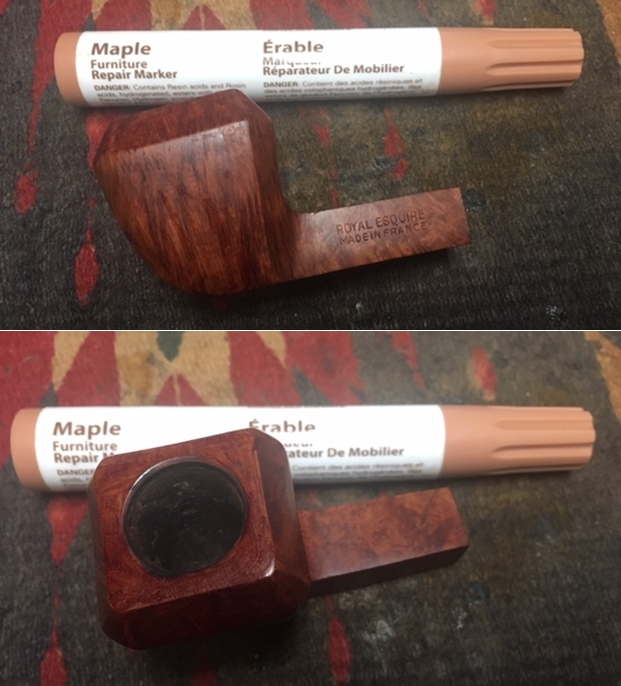
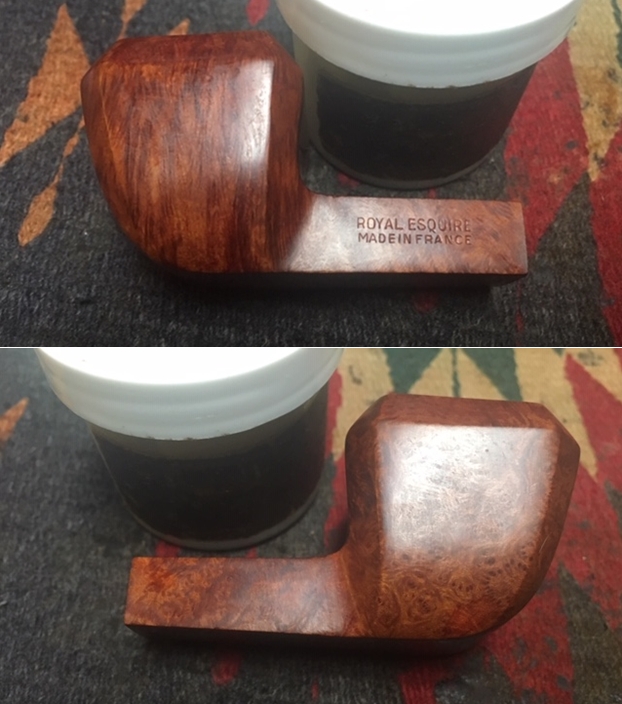
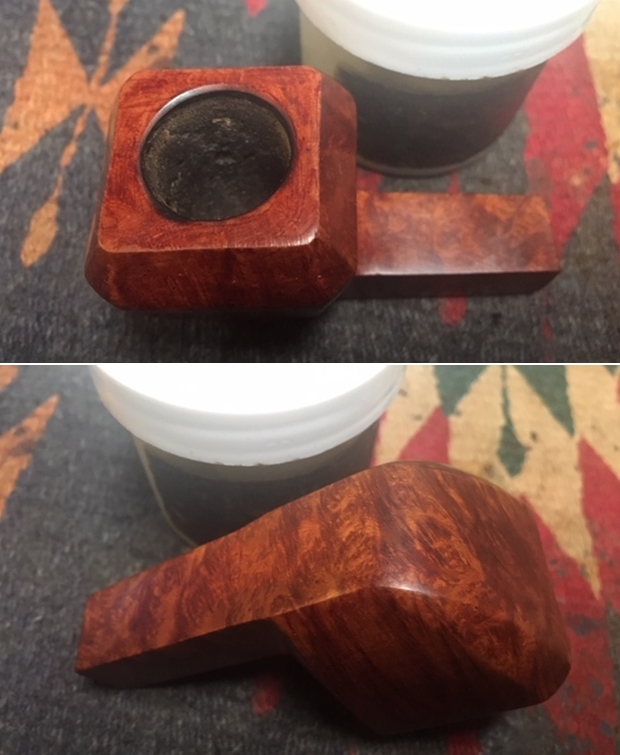
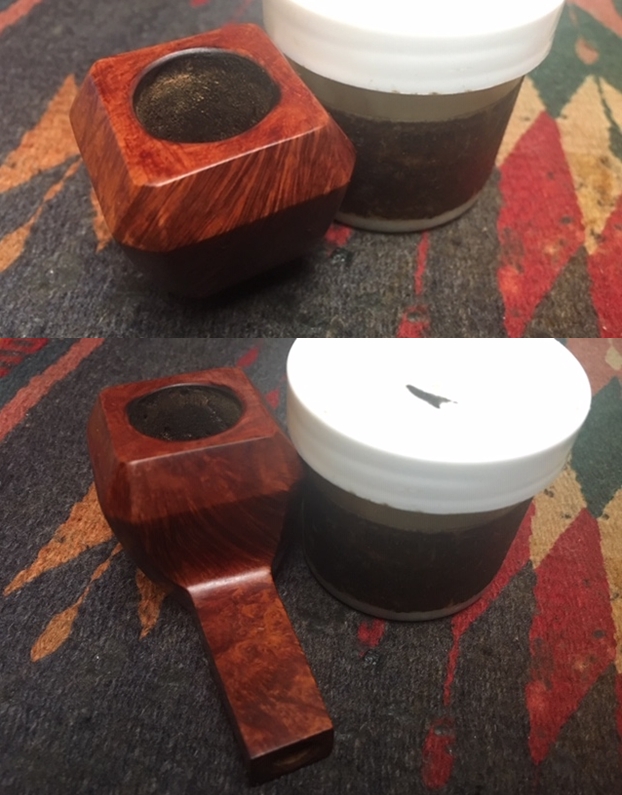
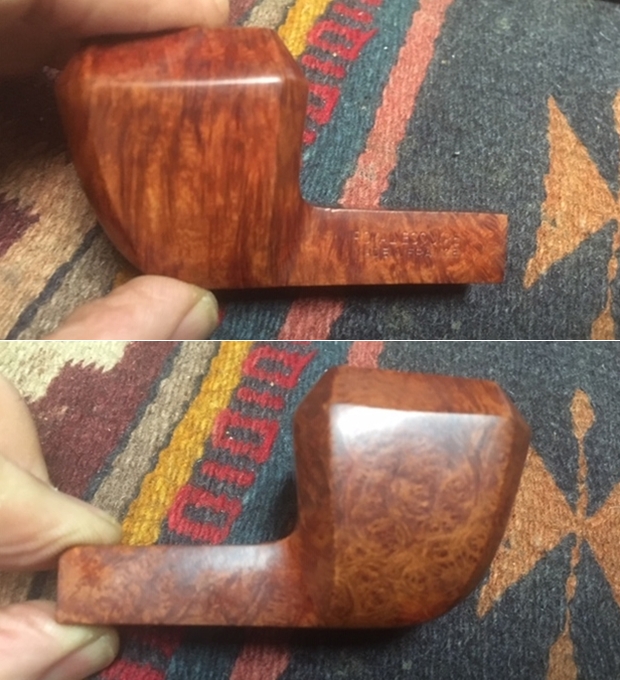
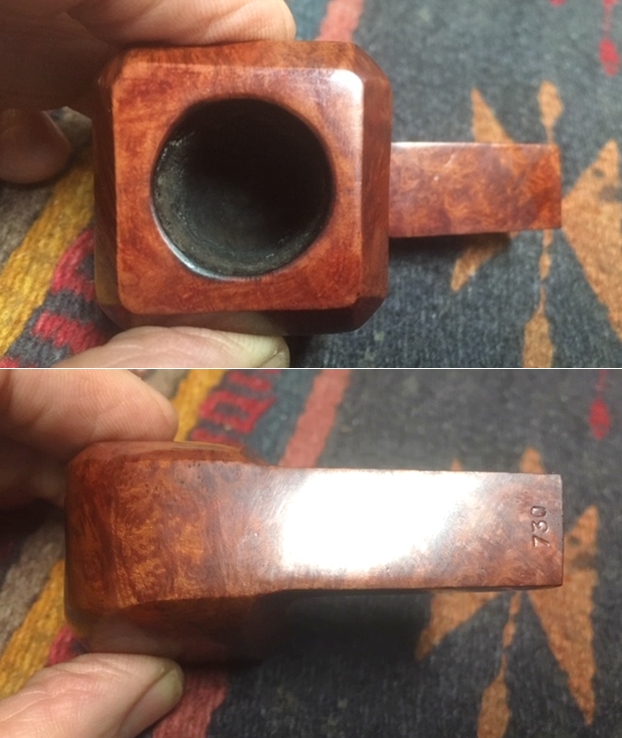
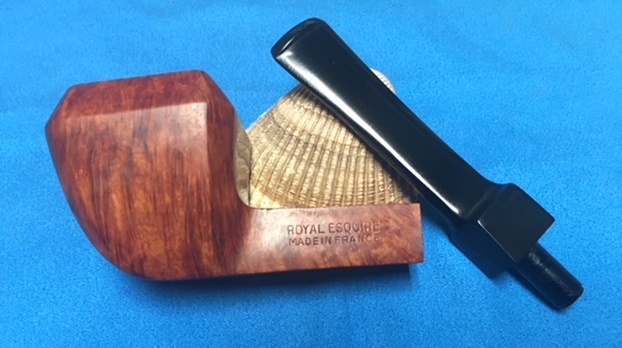
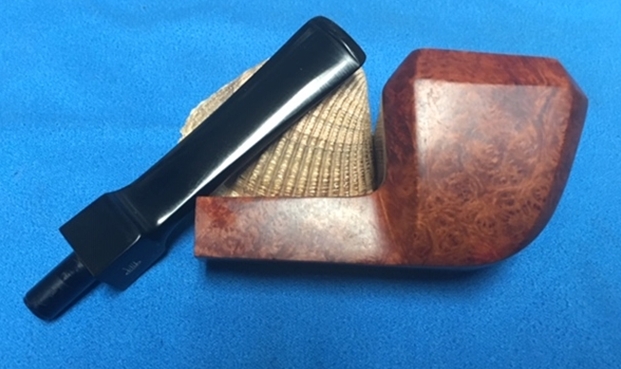
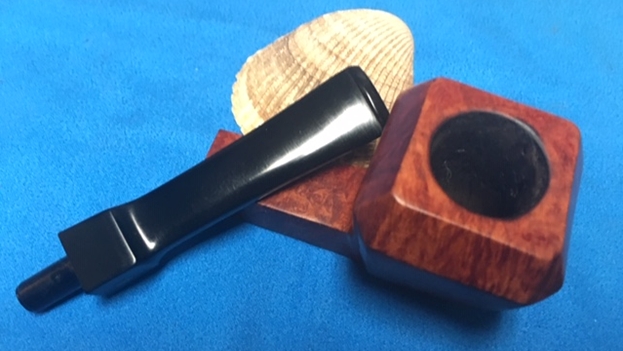
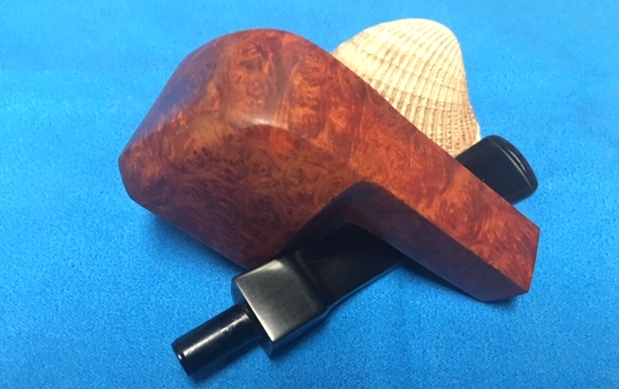
The next pipe on my worktable is yet another pipe from a local pipe shop. It is another of the pipes that came from the estate of an older gentleman whose wife returned his pipes to the shop for restoration and resale. This one is a smooth finished Paneled Dublin. It is stamped on a left side of the shank Royal Esquire over Made in France with the shape number 730 next to the shank/stem junction on the underside of the shank. On the left side of the saddle stem is the is a stamped top hat logo. The pipe was very dirty with a thick cake in the bowl and some lava overflowing on to the rim top. It was hard to know what the inner edge of the rim looked like because of the lava and cake. There were some nicks on the left side of the bowl and the cap that would need to be dealt with. The stem was lightly oxidized and had come calcification where a pipe Softee bit had been. There was some tooth chatter and tooth marks on both sides of the stem at the button. I included this pipe in the batch that I sent off to my brother for cleaning. I know I have said this before but I will have to say it again. I can’t say enough how much I appreciate his willingness to clean and ream the pipes for me. It allows me to move through the repairs much more quickly. When he received the pipe he took a series of photos of it to show its condition.He took a photo of the rim top to show the thick cake in the bowl and the overflow of lava on the rim top.He took photos of the sides and bottom of the bowl to give a clear picture of the beauty of the grain on this smooth finished old pipe. Under the grime there is some great grain peeking through. Jeff took photos of the stamping to capture the clarity of it even under the grime. The brand and the shape number are very readable. He also included a photo of the Top Hat logo on the stem. The stem looked dirty and oxidized with the calcification left behind by a pipe Softee bit. The edges of the button had bite marks and there was some tooth damage to the surface of the stem next to the button on both sides.I have worked on one other Royal Esquire pipe previously from this same collection. It was a poker with a lot of fills in the shank and bowl. It was a mess and once finished turned out very well. Here is the link to that blog: https://rebornpipes.com/2018/03/25/breathing-new-life-into-a-royal-esquire-french-made-poker/. On the previous pipe I had done a lot of searching and hunting to find out about the maker and found nothing on Pipedia or on PipePhil’s site. It remains a mystery to me. Are any of you familiar with the brand? Let us know.

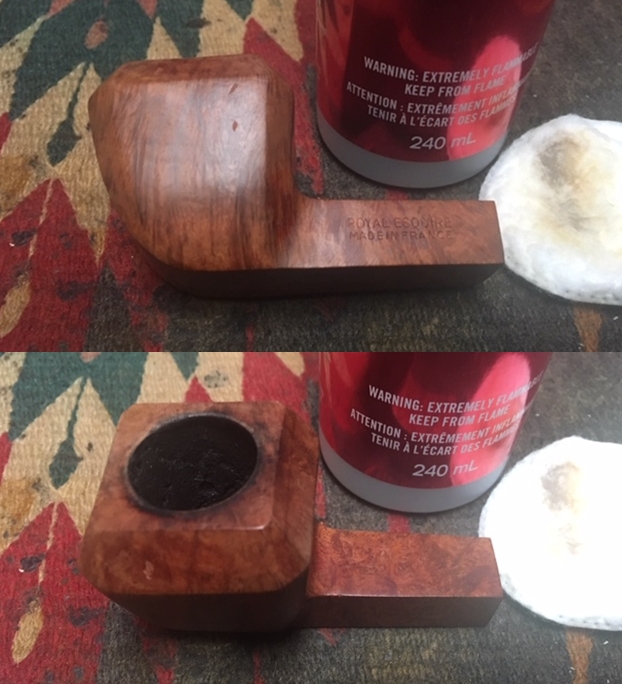
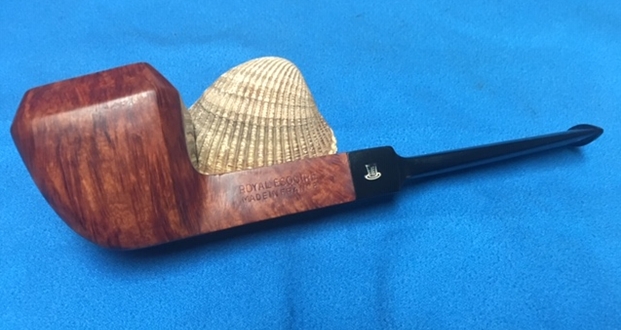
Jeff cleaned up the pipe for me. He reamed the bowl with a PipNet pipe reamer and cleaned it up with a Savinelli Fitsall Pipe Knife. He scrubbed the exterior with Murphy’s Oil Soap and a tooth brush to clean off the grime in the sandblast finish and the heavy overflow of lava on the smooth rim top. He cleaned up the internals of the shank, mortise and stem with pipe cleaners, cotton swabs and alcohol to remove all of the oils and tars in the pipe. When it came back to Vancouver it a cleaner and better looking pipe. I took photos of it before I started the restoration. I took photos of the rim top and the stem to show their condition. Jeff was able to clean up the grime and darkening on the rim top. The inner edge of the bowl had some damage on the front left and right. There was some general rim darkening and the rim top was damaged from tapping it out on hard surfaces. The stem had light tooth chatter and some deeper tooth marks on both sides near the button.I was able to get a very clear picture of the stamping on the left and underside of the shank and the Top Hat logo on the saddle stem.I decided to address the issues with the bowl and rim top first. I wiped the bowl down with acetone on a cotton pad to remove the shiny spots of the lacquer coat that remained on the shank. The acetone also cleaned off any remaining debris on the briar. You can see the deep nicks and gouges on the left side of the bowl in the photos below. I  topped the bowl on a topping board with 220 grit sandpaper to clean up the rim top damage and to minimize the burn damage on the edge of the bowl. I used a folded piece of 220 grit sandpaper to smooth out the inner edge and give it a slight bevel to remove more of the burn marks and damage. I repaired the gouges and nicks in the left side of the bowl and cap with clear super glue and briar dust. Once the repairs cured I sanded them smooth with a folded piece of 220 grit sandpaper. I polished the rim top and the bowl and shank with micromesh sanding pads – wet sanding with 1500-2400 grit pads and dry sanding with 3200-12000 grit pads. I wiped the bowl down after each pad with a damp cloth. The photos tell the story. I used a Maple coloured stain pen to blend the newly sanded areas on the side of the bowl and the rim top into the rest of the bowl.I rubbed the bowl and shank down with Before & After Restoration Balm to deep clean the finish on the bowl and shank. The product works to clean, enliven and protect the briar. I worked it in with my fingers to get it into the finish. After it sat for a little while I wiped it off with a soft cloth. I buffed the bowl with a horsehair shoe brush to polish it. The briar really began to have a rich shine. I took some photos of the bowl at this point to mark the progress in the restoration. I buffed the bowl with Blue Diamond polish on the buffing wheel to even out the look of the stain on the bowl sides and rim top. The pipe is looking really good at this point. It is even better in person than the photos show. I set the bowl aside and worked on the stem. I repaired the tooth marks with clear super glue. I set the stem aside to let the repairs cure. Once the glue cured I cleaned up the edge of the button and flattened out the repaired areas with a needle file. I sanded the repaired areas with folded pieces of 220 to remove the scratches and file marks on the stem surface. I sanded them with 400 grit sandpaper until the repairs were blended into surface of the stem.I polished the stem with micromesh sanding pads – wet sanding with 1500-2400 grit pads and dry sanding with 3200-12000 grit pads. I wiped the stem down after each pad with a damp cloth to remove the sanding dust. I used the Before & After Pipe Polish to remove the small minute scratches left in the vulcanite. I finished by wiping the stem down with a final coat of Obsidian Oil and set it aside to dry. I put the stem back on the pipe and worked it the pipe over with Blue Diamond to polish out the remaining small scratches. I gave the bowl and the stem several coats of carnauba wax and buffed the pipe with a clean buffing pad to raise the shine. I hand buffed it with a microfiber cloth to deepen the shine. The pipe polished up really well with the repairs disappearing into the new finish. The finished pipe is shown in the photos below. There is something about the pipe that reminds me of some of the Edwards pipes that I have repaired and restored over the years. The paneled Dublin and cap polished really well. The polished black vulcanite looks really good with the browns of the briar. The dimensions of the pipe are Length: 5 3/4 inches, Height: 1 3/4 inches, Outside diameter of the bowl: 1 1/2 inches, Chamber diameter: 3/4 of an inch. This is another pipe that I will be putting it on the rebornpipes online store shortly, if you are interested in adding it to your collection. Thanks for walking through the restoration with me as I worked over this interesting smooth finished paneled Dublin with a square shank. It was a fun one to work on.


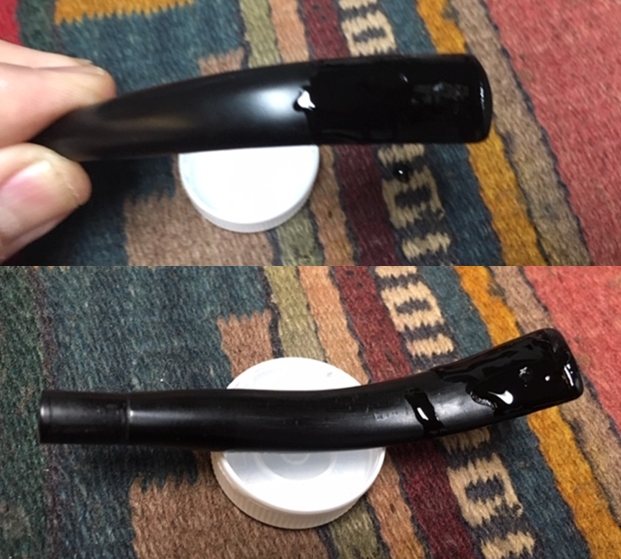
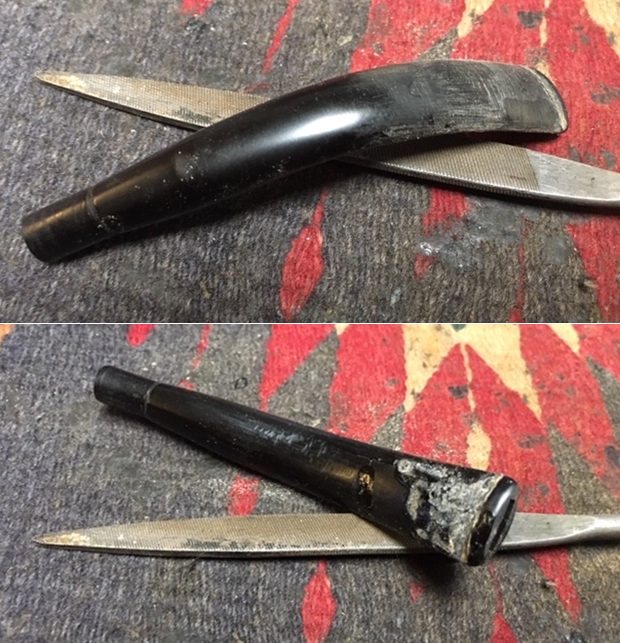
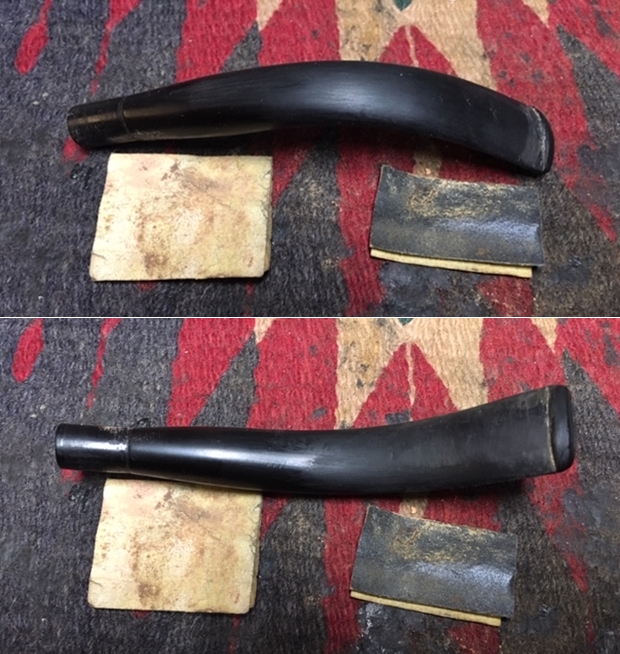
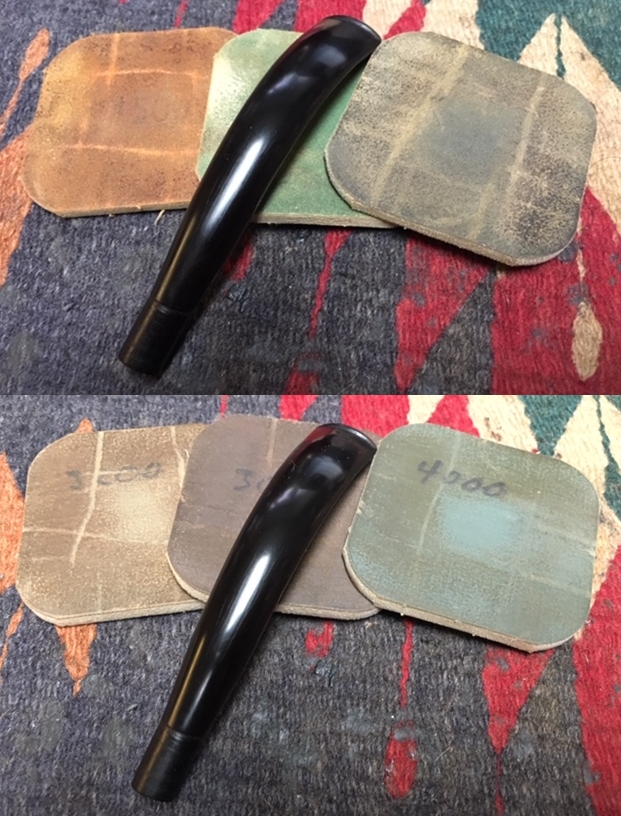
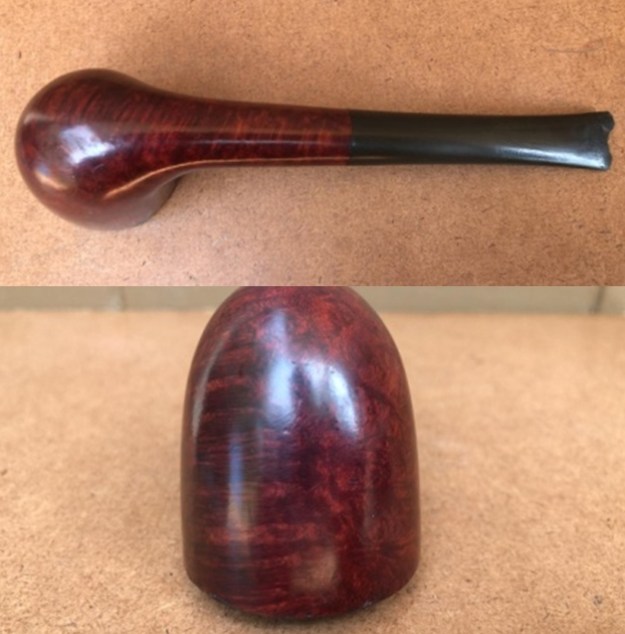
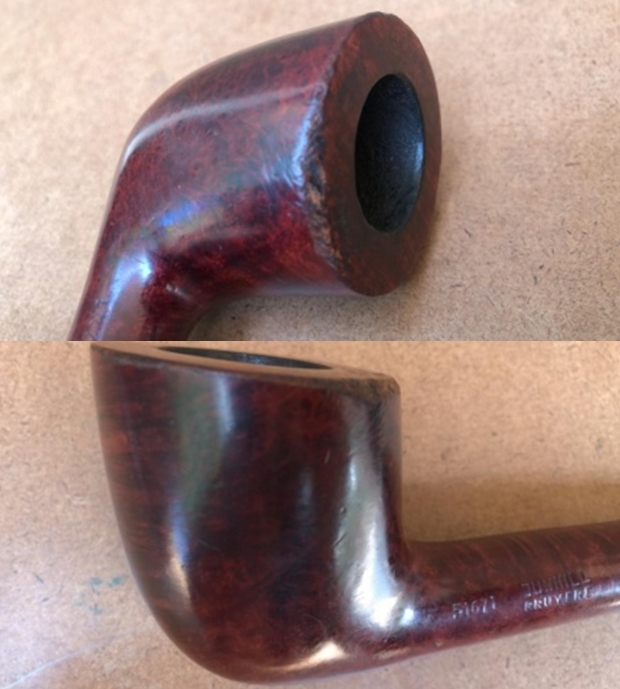
Reconstructing a Broken Stem on Dunhill Bruyere # 51671


Blog by Paresh Deshpande

I had just finished the first of the 30 pipes from my Mumbai Bonanza find, a Stefano “EXCLUSIVE”; here is the link to the write up; https://rebornpipes.com/2019/03/11/mumbai-bonanza-stefano-exclusive-restorationa-month-long-project/

How did I land up with this lot makes for an interesting read and one which I have written about in the above restoration. Here are pictures of the pipes that I received in this lot. This lot contains some very nice collectible pipes, a few well known brand pipes and some mediocre pipe brands. Overall, with seven Dunhills, a Preben Holm #1, a couple of Made in England Pete System pipes, Charatan’s and other assorted pipes, I would say that I had hit a huge jack pot!!! Hence, I like to call this find as “Mumbai Bonanza”.
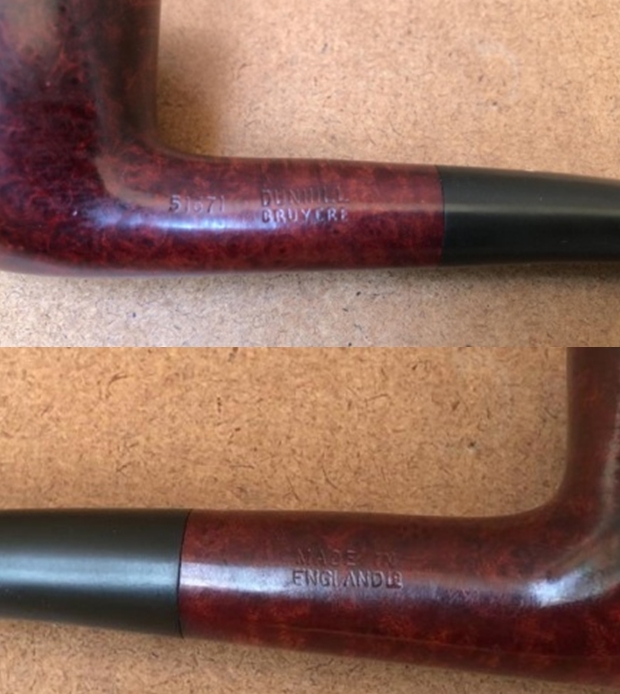
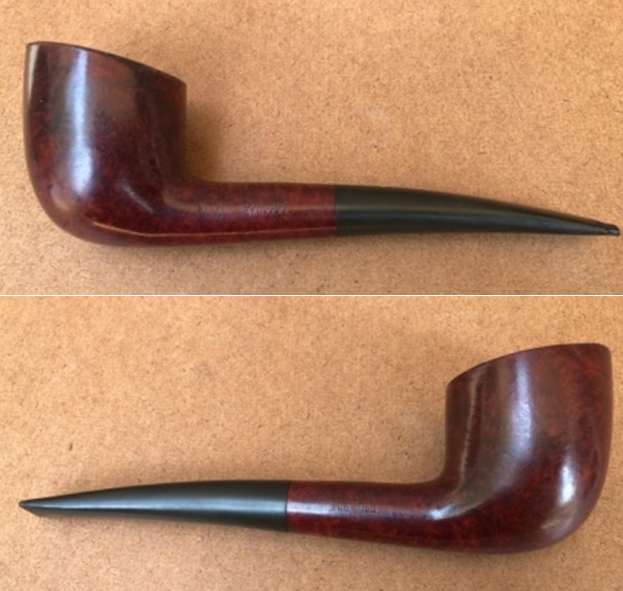
The pipe that I decided to work on is from this find and is marked in a red circle in the picture below. The stummel surface boasts of some beautiful bird’s eye grain on either side of the stummel while densely packed cross grain adorns the front and back of the stummel and also the shank top and bottom surface. It is stamped with “# 51671” towards the bowl and followed by “DUNHILL” over “BRUYERE” on the left side of the shank while the right side bears the COM stamp “MADE IN” over “ENGLAND” followed by underlined numeral “19”. Dunhill White Dot adorns the top of the vulcanite stem. The stampings on either side is deep, crisp and clear. The dating of this pipe is very straight forward and dates to 1979 (1960+19). However, deciphering the shape code, 51671, proved to be a challenge. The first digit 5 identifies this pipe as being Group size 5, second numeral, 1, identifies the style of mouthpiece as being tapered and this is where the ease ends and led to a lot of confusion with the next two digits. Though the shape appears as Zulu, it is not so since the shank is rounded. The profile of the pipe points towards it being a Horn shaped, but the shape code supports neither a Zulu nor a Horn!!! Well, another mystery which is likely to remain unresolved!!

With this information, I proceed ahead with the restoration of this handsome pipe, my first ever DUNHILL!

INITIAL VISUAL INSPECTION
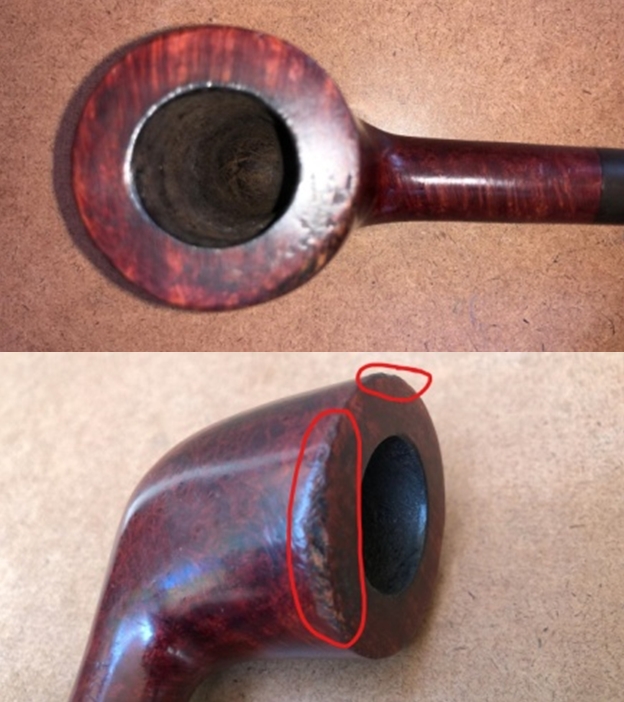
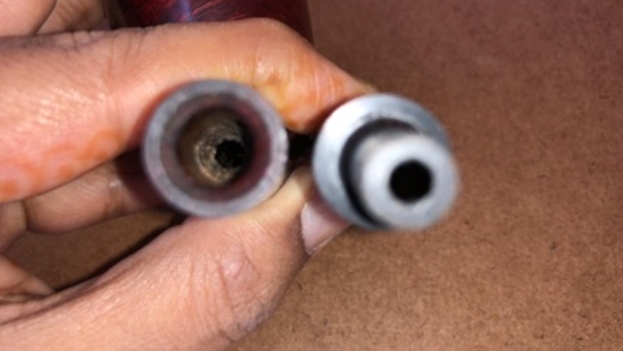
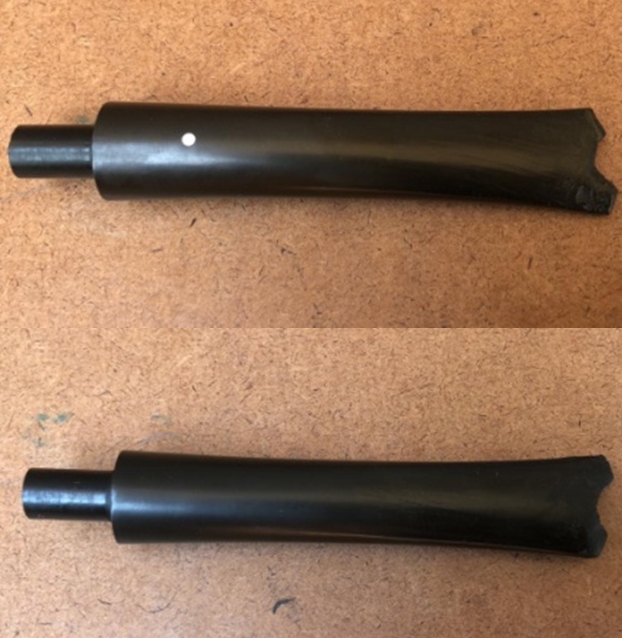
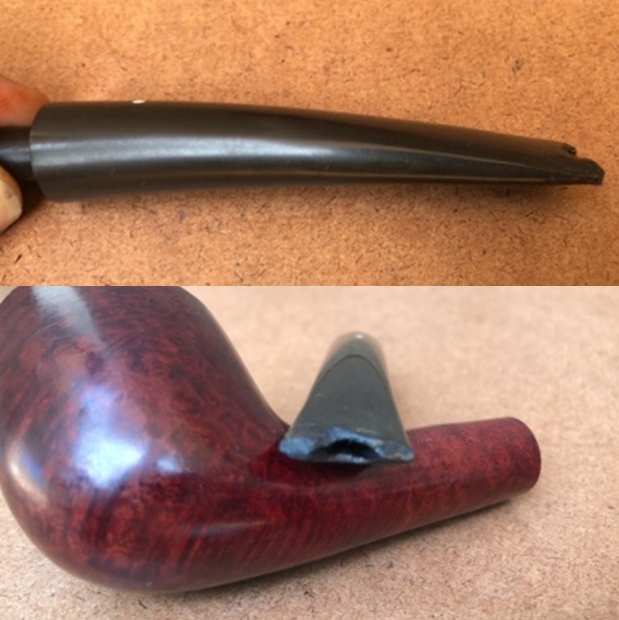
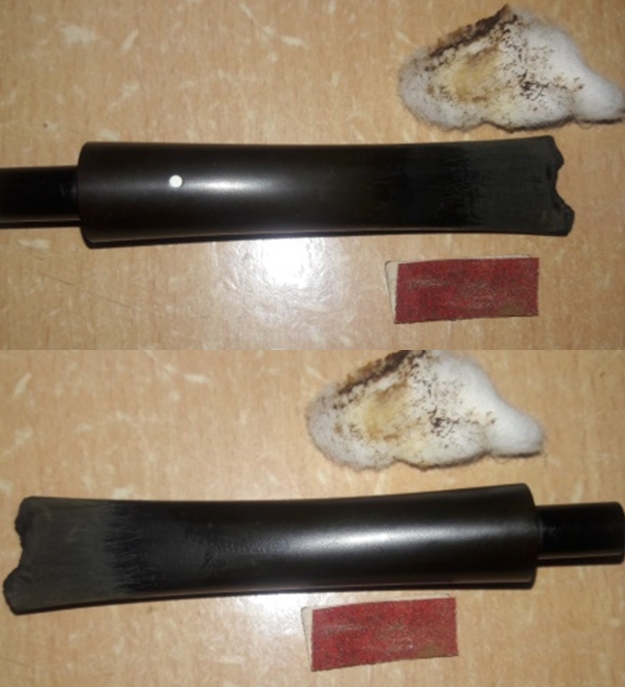
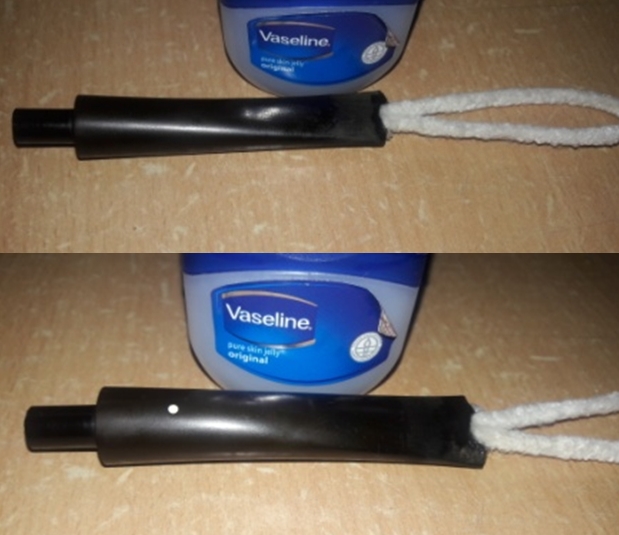
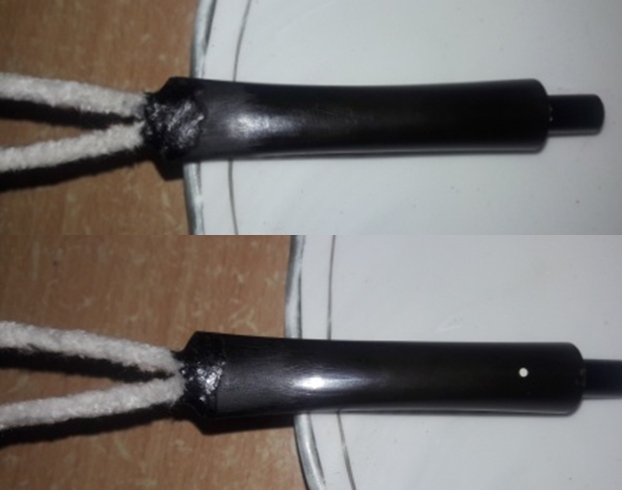
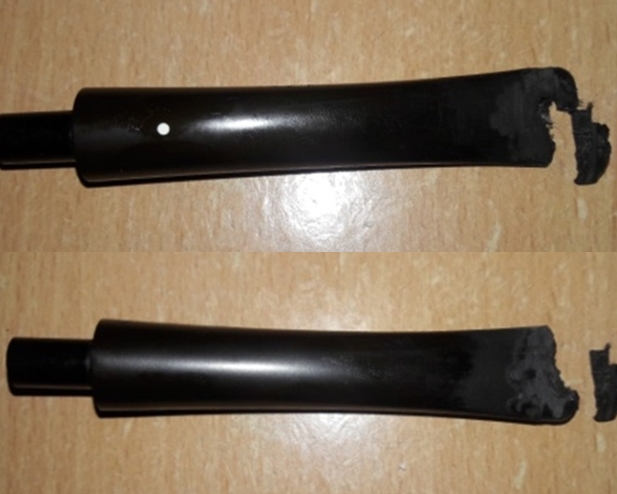
The chamber is clean with a thin layer of cake which indicates that the pipe has been kept clean by its previous Steward. From what I can see, the chamber walls appear to be without any damage. The chamber is odorless. The inner rim edge show minor unevenness which should be easy to address. It is the outer rim edge that shows significant damage on the left side in 7 o’clock and 11 o’clock directions. This must have been caused due to hammering of the edge against a hard surface to remove dottle!! The rim top surface has a number of dents due to the same reason. The mortise is clean and so is the shank airway. The stummel surface is peppered with numerous dents and dings and scratches. Being a Dunhill, any issue of fills is never to be expected and hold true for this pipe too. These dents and ding are probably caused due to uncared for storage by the previous Steward and further contributed to by the trash collector who had sold the pipes to me. The stummel is covered in dirt and grime and is surprisingly slightly stick to the touch. The briar looks lifeless and dull which is nothing serious to address. The vulcanite stem shows significant damage to the button end, in fact, there is no button at all!! The stem end is missing, well, about half an inch of vulcanite. Heavy and slightly deep scratches can be seen extending upwards from the broken button side. The stem surface is very thin at the place where it has been chewed off by the previous owner. I intend to reconstruct/ rebuild this portion of the stem, including the slot, while maintaining the stem and general profile of the pipe. This will require major repairs. The quality of vulcanite is good. In this project, repairs to the damaged outer edge and stem rebuild will be a major challenge, the stem more so, as maintaining the tapered profile of the stem will need to be adhered to for overall appeal of this piece of briar. Having just finished the tedious restoration of the Stefano, I am aware of the challenges this restoration will be presenting enroute.

THE PROCESS
Since the stem has significant damage, and from my experience of stem repairs (Stefano nightmare!) this will be the most time consuming and laborious part of this restoration, I start this project by tackling the stem first. I was faced with two options in my approach to this stem repair; first was to recreate a new button around the broken part and maintain the existing stem profile with a straight slot and the second option was to cut away the damaged button and reconstruct an entirely new button with a straight horizontal slot, sacrificing the overall length of the pipe. I decided to take the former approach. This decision was partly dictated by the fact that I do not have a rotary cutting blade to cut the damaged button end and partly to my innate desire to maintain the originality of the pipe. It’s a Dunhill after all!!

Now that I was clear about the path to be followed, I sand the stem end with a folded piece of 220 grit sand paper to erase the scratches and provide a smooth surface for the intended fill. I cleaned out the internals of the stem with hard bristled and regular pipe cleaners dipped in isopropyl alcohol. Once I was satisfied with the internal cleaning, I wiped the stem surface, particularly the damaged button end, with a cotton pad and alcohol to remove any traces of dirt and grime. To begin the stem repairs, I smeared a folded pipe cleaner with petroleum jelly and inserted it in to the stem airway. I prepared a mix of CA superglue and activated charcoal and generously applied it over and extending beyond the broken surface and set it aside for curing over night. To be honest, I have not researched and measured the exact length that I had to reconstruct, but eyeballed the length using the longer left side of the stem (where a very tiny raised portion of the button is still visible) as a guiding length. Before moving ahead, I would like to mention here that I had applied this mix in layers, over the week, to achieve sufficient thickness which would help during the filing and sanding while shaping the button and achieving the correct stem profile. Once I was satisfied that the fill had cured nicely, I moved ahead and began the process of filing and shaping the button end with a flat head needle file. And then this happened… As you can see in the following pictures, not everything was lost. There remained a portion of the fill which was intact. Not one to give up and having the experience of the Stefano behind me, I persisted with the reconstruction. I made a fresh mix of activated charcoal and CA superglue, this time around increasing the amount of superglue, and reapplied it over the broken button end after inserting a petroleum jelly smeared a folded pipe cleaner. I continued with the layering technique of building up the fill.The next set of pictures show the progress of the stem rebuild using the layering technique. Slowly but surely, I am getting there!Once I had achieved the desired thickness and having let the fill cure for a few days, I proceed with shaping the button using flat head needle files. I am quite pleased with the way things are progressing at this point in restoration. However, fingers remain crossed and mentally remained prepared for disaster to strike anytime. At this stage, I am pretty satisfied with the profile of the stem, the thickness of the button and, in general, the overall progress on the stem rebuild. Also glad that there have been no further setbacks!!!! With this I proceed to shape the horizontal slot for the button. It is a long drawn process and a tedious one at that!! The inside of the slot needed to be smoothed out while maintaining the thickness of the button edge on either side. I build up the insides of the slot by layering it with superglue, letting it cure, sanding and then applying a fresh layer. I must have repeated this process for good about a week plus!!!! The external surface of the slot was also developed the same way and this helped in maintaining the thickness of the button edge.While the stem repair was progressing at its own pace, I moved ahead to deal with the stummel repairs. Given the size of the chamber, I reamed the chamber with size 4 head of a PipNet reamer. The cake was thicker at the bottom and used the size 2 head to remove the cake. I used my fabricated knife and scraped out all the remaining cake. The amount of cake reamed out of the chamber really surprised me as I was expecting minimum cake. I further used one folded piece of 180 grit sand paper to sand out the last traces of remaining cake and expose the walls of the chamber to ascertain that there are no cracks/ heat fissures. I wiped the chamber with a cotton pad dipped in isopropyl alcohol to remove the carbon dust left behind by all the reaming and sanding process. The walls of the chamber were solid with no damage. This was followed by cleaning the mortise by scraping away at the dried gunk with my fabricated spatula and followed it up with further cleaning using cue tips, pipe cleaners and shank brush dipped in isopropyl alcohol. This eliminated all traces of old smells from previous usage. Continuing with the cleaning regime, using a hard bristled tooth brush dipped in undiluted Murphy’s oil soap, I very deliberately scrubbed the surface of the stummel and the rim top. The original reddish dye was also washed away to some extent. The stummel and rim top was dried using paper napkins and soft cotton cloth. I set the stummel aside to dry out naturally. The damages to the outer rim edge, uneven inner rim edge and stummel dents and dings are now clearly visible in the above pictures after the cleaning.

Next, I decided to address the dents and dings on the stummel surface and the damage on the rim outer edge by steaming them out. I heated my fabricated knife over the flame of a candle, placed a wet Turkish hand towel over the damaged areas and steamed out the dents by placing the heated knife over the towel. Though some dents were still observed, these were greatly reduced when compared to before steaming. The steaming method had raised to the surface all the major dents and dings. However, the outer edge of the rim still remained unaffected. The steaming method having failed to address the issue of the damaged outer rim edge, I decided to use a more aggressive method of topping the rim top. Personally, I prefer to avoid topping as I do not appreciate loosing even one mm of briar estate, but in this instance, I was left with no recourse but to top the rim. I topped the rim on a 220 grit sand paper, checking frequently the progress being made. The damage to the outer rim was so extensive that the even after what felt like ages of topping, the damage was still apparent. Finally, I just did not feel like topping any further and hence decided on another course of action. I would rebuild the outer edge with briar dust and superglue. Having decided on this course of action, I lightly top it on 600 grit sand paper to reduce the sanding marks left behind by the 220. The only benefit derived from this topping was that the inner rim is now perfect and I collected some briar dust!

I tried mixing briar dust with superglue, but to no avail. The moment the two came in contact with each other, the mix hardened. So I resorted to the layering method again, first I layered superglue over the damaged surface followed by sprinkling of briar dust and one final layer of superglue. I set the stummel aside to cure. The only problem with this method is the high probability of presence of air pockets.The next evening, the repairs to the edge had completely cured and I move ahead by filing and rough shaping with a flat head needle file. I further fine tune the blending by sanding it down with 220, 320, 600 and 800 grit sand papers. Here is how the repaired area appears at this stage. I am very pleased with the way this repair progressed.Steaming out the dents and dings from the stummel surface had necessitated that the surface of the stummel be evened out by sanding. I sand the entire stummel using 220, 400, 600 and 800 grit sand papers. The little dents and dings that remained on the stummel and outer rim edge were also evened out under this sanding process. This was followed by polishing with micromesh pads. I wet sand the stummel with 1500 to 2400 grit pads and follow it up by dry sanding with 3200 to 12000 grit pads. I wiped the surface with a moist cotton cloth after every wet pad to check the progress. The repaired rim edge now appears shiny and glossy. This has got me a bit worried as it stands out from the rest of the stummel surface. I fervently pray that this is masked after I have stained it. I rub a small quantity of “Before and After Restoration Balm” in to the briar with my finger tips and let it rest for a few minutes. The balm almost immediately works its magic and the briar now has a nice vibrant appearance. I further buff it with a horse hair shoe brush. I had hoped that the balm would work its magic on the filled area and help in blending it a bit, but that did not happen. I had simultaneously been working on the stem reconstruction by building up the slot and button using the layering technique. Though tedious, I have reached a satisfactory stage from where I can fine tune the slot and button edges. What followed were hours of tedious, back breaking and nerve wracking process of sanding and shaping of the slot and the button. Though the slot is not a perfect horizontal straight opening, rather a slight oval, I have managed to match the profile and dimensions of the original stem and the pipe is definitely smokable. Here are pictures of the progress.For a better blending, I further sanded the entire stem with 220 followed by 400, 600 and 800 grit sand paper. This helps to reduce the sanding marks left behind by the more abrasive 220 grit paper. To bring a deep shine to the vulcanite stem, I went through the complete set of micromesh pads, wet sanding with 1500 to 2400 grit pads and dry sanding with 3200 to 12000 grit pads. I wiped the stem with alcohol after each pad and rubbed it down with Extra Virgin Olive oil to rehydrate the vulcanite. The repairs have blended in very well and the stem now looks a shiny black and beautiful. The internals of the stem was cleaned out using alcohol and pipe cleaners. The finished stem is shown below. I kept the stem aside to let the stem absorb the oil and turn my attention towards the stummel. I decided to stain the stummel in cherry red stain which was the original stain true to the Bruyere line of Dunhill pipes. I use the powder variety of stain and mix it with 99% isopropyl alcohol. I heated the stummel surface with a heat gun and applied the stain with a folded pipe cleaner. As I paint the stummel with stain over sections at a time, I burn the dye using a Bic lighter that combusts the alcohol in the aniline dye and sets the dye pigmentation in the wood.  After fully saturating the stummel and covering the whole surface, including the rim top, I set the stummel aside to rest for several hours. By next evening, the stain had set nicely. I mount a cotton cloth buffing wheel (because I do not have felt cloth buffing wheels!!) on the Dremel and set the speed at about 40% of full RPM and apply red compound to the stummel. This does help in revealing the grains gradually; however, my fears had come true. The repairs to the outer edge of the rim did not absorb the stain and is encircled in yellow. To finish, I re-attach the stem with the stummel. I mounted a cotton cloth buffing wheel to the Dremel (actually it is not the brand machine, but a local machine which is similar).  I set the speed at about half of the full power and applied White Diamond compound to the entire pipe. I wiped/ buffed the pipe with a soft cotton cloth to clear it of any leftover compound dust. I then mounted another cotton cloth wheel on to the polishing machine and applied several coats of carnauba wax. I finished the restoration by giving the entire pipe a rigorous hand buffing using a microfiber cloth to raise the shine further. The completed pipe looks lovely, fresh and vibrant; the photographs in this case, do not do justice to the appearance of this beautiful pipe, my first Dunhill. I cannot thank enough my friends Mr. Dal Stanton, Mr. Sam Vior, Mr. Victor Naddeo and Mr. Steve for helping me to research and complete this mysteriously stamped Dunhill pipe. PS: The readers would have observed the fact that the rim repair could not blend completely in spite of my best of efforts and still I have highlighted the flaw while the general tendency is to hide it. True, there are reasons for me highlighting the flaws; firstly, if I cannot hide it from myself, than why attempt to pretend it’s not there and secondly, the highlighting will encourage you to have a closer look at the flaw and maybe you could have an explanation for it in the first place and share it with me. This will help me in avoiding these mistakes in my future restorations. Third and most important reason is that a newbie somewhere who is not so fortunate like me to have friends and mentor that I have will also benefit from my mistakes.


Life for a Beat up Bari Senior Old Briar Pick Axe


Blog by Steve Laug

The next pipe in the queue came from a pipe that Jeff purchased from an antique shop in Brookings, Oregon. He stopped by there on a trip last fall and picked up a few pipes. He picked up quite a few of his pipes and they included this interesting, Kriswill like Bari Senior. It is stamped on the left side of the shank and read Bari over Senior over Old Briar. On the right side it said Made in Denmark over the shape number 503. It is a pick axe shaped pipe with a deep pointed bowl and a narrow shank. The entire pipe had some beautiful mixed grain around the bowl but it was covered with deep cut marks on both sides and the front of the bowl. The rim top was covered with lava and darkening. The pipe was filthy but the grain underneath was rich and the finish looked like it would clean up well. The stem is vulcanite and has a pinched side on both left and right just past the saddle. The stem is oxidized and had tooth marks and chatter on both sides at the button edge. The photos below tell the story and give a glimpse of the pipe before clean up. Jeff took photos of the bowl and rim from various angles to capture the condition of the pipe before he started his cleanup work. There was a thick coat of lava on the rim and the cake in the bowl. It appeared that the beveled inner edges were in good condition. The outer edges actually appeared to be in excellent condition.He also took a series of photos of the sides of the bowl and shank to show the beautiful grain on the pipe but also the serious damage to the bowl – large gouges in the briar all around the bowl sides and front. The number of the gouges was a nightmare. Jeff took photos of the stamping on the left side of the shank. It reads as noted above. The first stamp BARI is legible. The second line that reads Senior and the third that reads Old Briar are both less legible.The next two photos show the stem surface. They show the tooth marks and chatter on both sides near the button. The stem is oxidized and has a thick build up around the button end. The pinched stem is a beautiful and sleek addition to the pipe.Once again, Jeff did his usual thorough clean up job on the pipe so that  when it arrived here in Vancouver it looked really good. Jeff reamed the bowl with a PipNet pipe reamer and followed up with a Savinelli Fitsall pipe knife to remove the cake. He scrubbed out the mortise and the airway in the shank and the stem with alcohol, cotton swabs and pipe cleaners. He scrubbed the exterior of the bowl, rim, shank and stem with a tooth brush and Murphy’s Oil Soap to remove the oils and tars on the rim and the grime on the finish of the bowl of the pipe. He rinsed it off under running water. He dried it off with a soft cloth. He was able to remove all of the lava build up on the beveled rim top of the pipe. The rim top looked pretty good though there were scratches in the flat top and a little darkening on the inner bevel toward the front of the bowl. The grain was beautiful but there were a lot of deep gouges in the briar around the sides of the bowl. He soaked the stem in Before & After Deoxidizer and was able to remove the oxidation. The pipe looked very good.I took photos of the pipe to show its condition before I started my work. I took a close up photo of the bowl and rim to capture the condition of the pipe before I started my restoration of the pipe. The rim top was clean but had some nicks on the flat surface and some darkening on the inside edge of the rim at the back of the bowl. The stem was quite clean with some light tooth marks and chatter on the top and underside near the button.I took some close up photos of the sides and front of the bowl to show the deep gouges in the briar. They were cuts rather than dents so steaming would not repair them. This would take some sanding and then strategic filling and staining to blend them into the briar. Time would tell if I could achieve what I wanted to do with this one. I started my restoration of the pipe by dealing with this damage. I sanded the damage areas on the bowl sides and front with a folded piece of 220 grit sandpaper. I worked on the areas until the lighter damaged areas were removed and the deeper ones were less visible.I filled in the deeper gouges with clear super glue. You can see the repairs are almost like pock marks around the bowl. They also highlight the extent of the damage on the sides of the bowl were when I started.When the repairs had cured I sanded them smooth with folded 220 grit sandpaper until they blended in to the surrounding briar. As I sanded I also found more damage on the front of the bowl and filled it in and sanded it smooth. I wiped the bowl down with alcohol on a cotton pad to remove the sanding dust. I wanted to remove it in preparation for restaining the bowl.I topped the bowl on a topping board with 220 grit sandpaper to remove the damage on the rim top and edges of the bowl. It did not take too much sanding to remove the damaged areas and leave the top ready for the next step.I sanded the bowl and rim with a medium and a fine grade sanding sponge to remove the sanding marks from the briar on the bowl and rim top. It was the first step in polishing the briar to ready it for staining. I continued to polish the briar with micromesh sanding pads – wet sanding with 1500-2400 grit pads and dry sanding with 3200-12000 grit pads. I  wiped the briar down after each pad with an alcohol dampened cotton pad. I decided to stain the pipe with contrasting stains – a dark brown undercoat and a cherry top coat. My thinking was that this would minimize the visual overload of repairs. I stained the bowl with the dark brown aniline stain and flamed it to set the stain in the grain of the briar. I repeated the process until the coverage was even and then set it aside for the afternoon. My thinking was that the dark stain would highlight the grain and also hide some of the repairs to the briar bowl.I wiped down the excess stain on the bowl with a cotton pad and isopropyl alcohol. I wanted to make the stain a bit more transparent and prepare it for buffing. I buffed the pipe with Red Tripoli on the buffing wheel to remove the excess dark stain. After buffing the bowl the Tripoli the grain was darker and the contrast between the light and the dark on the grain was quite stunning. I wiped the bowl down with alcohol and then rubbed some Before & After Restoration Balm into briar to enliven and preserve it. I buffed it with a soft cloth to raise the shine at this point. Once I had buffed off the balm I gave it a top coat of Danish Oil Cherry stain. I applied it with a soft cotton pad and let it sit for about 30 minutes before buffing it off with a cloth. Here is what it looked like as it dried. With the second coat of stain finished, I worked some Before & After Restoration Balm into the surface of the briar with my fingertips to clean, enliven and protect it. I let the balm sit for a little while and then buffed with a cotton cloth to raise the shine. The following photos show the bowl at this point in the restoration process. The bowl and the rim top look really good and the darkening is lessened. The finish looks very good with the combined rich brown and cherry stain on the bowl and rim. The stem was in good enough condition that I was able to polish out the tooth chatter and marks by wet sanding it with 1500-2400 grit micromesh sanding pads. I then dry sanded it with 3200-12000 grit pads. I wiped the stem down with a damp cloth after each pad. I further polished it with Before & After Pipe Polish – both Fine and Extra Fine. I wiped it down with a coat of Obsidian Oil and set it aside to dry. There was a spot of metal embedded in the vulcanite of the stem on the top left side ahead of the button. I have marked it with a red circle to highlight it for you as you look at the photo. It does not disappear as the stem is polish but seems to go quite deep in the rubber of the stem. Since I had finished both the bowl and stem I put them together and polished them both with Blue Diamond polish on the buffing wheel. I gave the bowl multiple and the stem multiple coats of carnauba wax. I buffed the pipe with a clean buffing pad to raise the shine. I hand buffed it with a microfiber cloth to deepen the shine. The pipe polished up pretty nicely. The grain around the sides of the bowl really began to stand out with contrast as I buff the bowl. The rich dark brown undercoat and cherry top coat finish on the briar works well with polished black vulcanite stem. Bari made some beautiful pipes and this is certainly one of them. The darker stain does the job hiding the repairs to the gouges and makes the grain really show through. This pipe is a great feeling pipe in the hand and I am sure that it will be an amazing smoker. Have a look at it with the photos below. The dimensions are Length: 5 1/2 inches, Height: 2 1/2 inches, Outside diameter of the bowl: 1 1/2 inches, Chamber diameter: 3/4 of an inch. I will be putting this beauty on the rebornpipes store shortly and it can be added to your collection. Thanks for walking through the restoration with me on this Bari Senior Old Briar 503 Pick Axe.

Fresh Life for  a Stanwell Brazilia 87 Apple


Blog by Steve Laug

The next pipe in the queue came from a group of pipes Jeff and I purchased from a fellow in Pennsylvania who was selling out his collection as he no longer smoked a pipe. We picked up quite a few of his pipes and they included this beautiful Stanwell Made in Denmark Brazilia with a horn shank extension. It is a round apple shaped pipe with a round rim top curving from the sides into the bowl. The entire pipe had some beautiful mixed grain around the bowl. The rim top was covered with a thick tar and lava coat. The pipe was filthy but the grain underneath was rich and the finish looked like it would clean up well. The pipe is stamped on the underside of the shank and reads Stanwell over Brazilia over Made in Denmark. On the right side of the shank it is stamped with the shape number 87. The stem is vulcanite and has the Stanwell Crown S on the top side. The stem is dirty and had deep tooth marks and chatter on both sides of the stem at the button edge. The photos below tell the story and give a glimpse of the pipe before clean up.Jeff took photos of the bowl and rim from various angles to capture the condition of the pipe before he started his cleanup work. There was a thick coat of lava on the rim and the cake in the bowl. It appeared that the beveled inner edges were in good condition. The outer edges actually appeared to be in excellent condition. He also took a series of photos of the sides of the bowl and shank to show the straight grain around the bowl. It is very dirty but the grain is visible in the photo. Jeff took photos of the stamping on the underside and the right of the shank. It reads as noted above and is clear and legible. The horn shank extension is quite stunning and should shine up nicely. The next two photos show the stem surface. They show the deep tooth marks on both sides near the button. The stem is oxidized and has a thick build up around the button end.Jeff did his usual thorough clean up job on the pipe so that  when it arrived here in Vancouver it looked really good. Jeff reamed the bowl with a PipNet pipe reamer and followed up with a Savinelli Fitsall pipe knife to remove the cake. He scrubbed out the mortise and the airway in the shank and the stem with alcohol, cotton swabs and pipe cleaners. He scrubbed the exterior of the bowl, rim, shank and stem with a tooth brush and Murphy’s Oil Soap to remove the oils and tars on the rim and the grime on the finish of the bowl of the pipe. He rinsed it off under running water. He dried it off with a soft cloth. He was able to remove all of the lava build up on the beveled rim top of the pipe. The rim top looked really good with a little darkening on the inner bevel toward the front of the bowl. The mixed grain stood out on the clean pipe. He soaked the stem in Before & After Deoxidizer and was able to remove the oxidation. The pipe looked very good.I took photos of the pipe to show its condition before I started my work. I took a close up photo of the bowl and rim to capture the condition of the pipe before he started my restoration of the pipe. The rim top was clean but had some darkening on the inside edge of the rim at the front of the bowl. It was solid so it was not charred. The horn shank extension looked dry and lifeless but otherwise in good condition. The stem was quite clean with some deep tooth marks on the top and underside near the button.I started the process of the restoration by working on the bowl. I worked over the inner bevel of the rim with 220 grit sandpaper to address the darkening and light damage.I polished the briar with 2400-12000 grit micromesh sanding pads – wet sanding with 1500-2400 grit pads and dry sanding with 3200-4000 grit pads. I wiped the bowl down with a damp cloth after each pad. I found that with each successive grit of micromesh the grain on the bowl and shank sides stood out more and gave a shine to the pipe. The sanded rim top was beginning to blend in quite well. I stained the top of the bowl to match the rest of the bowl. I used a Maple stain pen and set it aside to dry.As is my pattern on these restorations, I worked some Before & After Restoration Balm into the surface of the briar with my fingertips to clean, enliven and protect it. I let the balm sit for a little while and then buffed with a cotton cloth to raise the shine. The following photos show the bowl at this point in the restoration process. The bowl and the rim top look really good and the darkening is lessened. The finish looks very good with the rich brown stain on the bowl and rim. The horn has come alive once again and the striations of colour are rich. I am very happy with the results. With the bowl finished I set it aside and turned my attention to the stem. I filled in the deep tooth marks with black super glue and rebuilt the damage on the button. I set the stem aside to let the repairs cure overnight.In the morning when the repairs had cured I used a needle file to cut the sharp edge of the button and to flatten out the repairs. I sanded the stem surface with 220 grit sandpaper to smooth out tooth chatter and light tooth marks. I polished the surface of the whole stem with 400 grit wet dry sandpaper.I touched up the Stanwell Crown S with a white touch up pen. I used a dental pick to push it into the grooves and polished the excess off with a coarse cotton cloth. I did it early in the polishing to make sure I did not polish off any of the deep grooves of the stamp.I continued to polish the stem with micromesh sanding pads – wet sanding it with 1500-2400 grit pads and dry sanding it with 3200-12000 grit pads. I wiped the stem down with a damp cloth after each pad. I further polished it with Before & After Pipe Polish – both Fine and Extra Fine. I wiped it down with a coat of Obsidian Oil and set it aside to dry. Since I had finished both the bowl and stem I put them together and polished them both with Blue Diamond polish on the buffing wheel. I gave the bowl multiple and the stem multiple coats of carnauba wax. I buffed the pipe with a clean buffing pad to raise the shine. I hand buffed it with a microfiber cloth to deepen the shine. The pipe polished up pretty nicely. The mixed grain really began to stand out with contrast as I buff the bowl. The rich medium brown finish on the briar works well with the polished horn shank extension and the black vulcanite stem. Stanwell has a knack for making pipes that not only look good but also feel great in the hand. Have a look at it with the photos below. The dimensions are Length: 5 1/2 inches, Height: 1 7/8 inches, Outside diameter of the bowl: 1 1/2 inches, Chamber diameter: 3/4 of an inch. I will be putting this beauty on the rebornpipes store shortly and it can be added to your collection. Thanks for walking through the restoration with me on this beautiful Stanwell Brazilia 87 Apple.

A Silver Banded Malaga Pot from Kathy’s Dad’s Pipes


Blog by Steve Laug

After getting the Malaga Catalogue from Kathy I was motivated to tackle another pipe from George Koch’s estate. It is Malaga pipes Pot with a Sterling Silver repair band. It has a variegated brown, gold and copper Lucite Stem. It has a beveled rim top tipping inward toward the bowl and combined with the silver and the stem it is quite a stunning pipe. It spoke to me as I went through the bag of Malaga pipes that I still have to work on. The Pot shaped pipe was just one of the many Malaga pipes that came to my brother and me in several shipments of pipes from George’s daughter Kathy. When Jeff got each box the pipes were well wrapped and packed. Jeff unwrapped them and took the following photo to give an idea of the volume of the pipes that we purchased. The next Malaga came in mixed in a box of pipes much like the one below.In each of the previous blogs that I have written on the restoration of George’s pipes I have told his story. If you have followed the restorations you will have read the information and the background piece that Kathy did on her father. Here is a link to one of the previous blogs on his Malaga pipes where I included her tribute in full (https://rebornpipes.com/2019/01/26/back-to-kathys-dads-pipes-restoring-a-%c2%bc-bent-malaga-author/). You can also read the bio on her Dad, George Koch. It is an interesting read and one that shows just how far our pipe collecting passion can go when we find a brand of pipes that we enjoy. I am going to only include the portion on the Malagas at this point. If you wish to read the rest follow the link above.

Kathy writes…We lived in Livonia, and that’s where his love for Malaga pipes began. After a few years he returned to Allis Chalmers and we moved back to Springfield. I remember that when we went back to Michigan to visit friends, Dad had to go to the Malaga store and acquire a few new pipes. Many a year I wrote to Malaga and they picked out a pipe for me to purchase that I could give Dad for a Christmas or birthday present. He was always pleased. His favorites were the straight stemmed medium sized bowl pipes, but he liked them all. 

He had some other pipes, but the Malagas were his favorites. I remember him smoking them sitting in his easy chair after work, with feet up on the ledge by the fire burning in the fireplace.  Growing up it was my job to clean them and he liked the inner bowl and stem coated with Watkins vanilla, leaving a little of that liquid in the bowl to soak in when I put them back on the rack…I’m very happy they are being restored by you and your brother and hope they find homes who enjoy them as much as Dad did. Thank-you for your care and interest. — Kathy, the oldest daughter

The Malaga Pot with a silver band and variegated brown/gold acrylic stem is next on the table. The carver did a great job of shaping the pipe to follow the grain on the briar. There is a Sterling Silver band on the shank end that is a repair band that I can only assume George picked up at the Malaga Pipe Shop as they did most or all of his repairs. The bowl top is smooth and beveled inward. The rim top has some damage on the top and inner edge as well as nicks and chips on the outer edge. The bowl had a very thick cake and an overflow of lava onto the thin rim top. The sides of the bowl and shank are very dirty with grime and oils from prolonged use. The stamping on the left side of the diamond shank read MALAGA. The brown/gold swirled acrylic stem had tooth dents and chatter on the top and the underside of the stem. Jeff took these photos before he started the cleanup work on the pipe. Jeff took three close up photos of the bowl and rim with different lighting to capture the condition of the pipe before he started his cleanup work. The rim top had some lava overflow and some darkening. There appeared to be some rim damage on the inner edge at the rear of the bowl. The third photo shows some of the damage to the outer edge of the bowl. You can see the wear on the rim top, the cake and cobwebs in the bowl. The pipe is dirty. He also took photos of the sides and bottom of the bowl and shank to show the beautiful cross and birdseye grain around the bowl. The photos show the general condition of the bowl and wear on the finish. It is very dirty but this is another beautiful pipe.The next two photos show the Sterling Silver Band and the repair that had been made to a cracked shank. The crack was on the top side of the shank and the pipe had been well repaired.Jeff took a photo to capture the stamping on the left side of the shank. The photo shows stamping MALAGA. The stamping does not have the quotation marks that I have seen on some pipes.The next two photos show the stem surface. There are tooth marks and chatter on both sides near the button. There is also some wear on the sharp edge of the button.I am also including the link to a blog that I wrote that gives some of the history of the Malaga brand and the Malaga Pipe Shop in Royal Oak, Michigan in the USA. I have written an earlier blog to give a little history of the Malaga Brand and the pipemaker, George Khoubesser. Here is the link – https://rebornpipes.com/tag/malaga-pipes/.That blog also includes links to a catalogue and the history of the pipemaker George Khoubesser. Follow the link to get a feel for the brand and the pipemaker.

Jeff reamed the bowl with a PipNet pipe reamer and followed up with a Savinelli Fitsall pipe knife to remove the cake. He scrubbed out the mortise and the airway in the shank and the stem with alcohol, cotton swabs and pipe cleaners. He scrubbed the exterior of the bowl, rim, shank and stem with a tooth brush and Murphy’s Oil Soap to remove the oils and tars on the rim and the grime on the finish of the bowl. He rinsed it under running water. He dried it off with a soft cloth. He was able to remove the lava build up on the rim top and you could see the damage to the flat surface of the rim and the inner edge on the back side and on the outer edge toward the front of the bowl. I took photos of the pipe to show its condition before I started my work on it. I took close up photos of the bowl and rim top as well as the stem. You can see the condition of the rim top and bowl in the first photo. Jeff was able to remove all of the tar and oils but you can now see the damaged areas on the surface clearly. There are damaged spots all around the top surface and on the front and the backside of the inner edge of the bowl. The silver band on the shank is badly oxidized. The acrylic/Lucite stem had tooth chatter and some tooth marks on the top and underside of the stem near and on the button surface.I took a photo of the stamping on the shank to show how good the condition is. The stamp is deep and legible on the left side.I decided to address the damage to the rim top first. I hand topped the beveled rim top with a folded piece of 220 grit sandpaper the damage to the flat surface of the rim top and also to try to minimize the damage to the inner edge of the rim. I worked over the inner edge of the rim with a folded piece of 220 grit sandpaper to smooth out the damage. I gave it a slight bevel to hide the burn damage on the inner edge of the rim. The photos tell the story. The damage to the rim top is gone and the inner edge looks far better with the light bevel. The damage to the front edge looks much better than when I began.I polished the rim top and the exterior of the bowl with micromesh sanding pads – wet sanding with 1500-2400 grit pads and dry sanding with 3200-12000 grit pads. I wiped the bowl down after each sanding pad to remove the dust. The damage on the rim is pretty much invisible after polishing and the rim top really looked good. I worked some Before & After Restoration Balm into the rusticated and the smooth surface of the briar with my fingertips to clean, enliven and protect it. It took some time to really get it into the grooves and valleys of the rustication but I was able to work it in. I let the balm sit for a little while and then buffed with a cotton cloth to raise the shine. The following photos show the bowl at this point in the restoration process. The reworked rim top looks really good and matches the colour of the rest of the pipe. I am very happy with the results. I set the bowl aside and worked on the stem. There were some tooth marks on the top and underside at the button that needed to be addressed. I also needed to do some work on the surface of the button on both sides. I filled the damaged areas in and build up the surface with clear super glue and set the stem aside until the repairs cured.Once the repair had cured I used a needle file to smooth out the repairs and begin to blend them into the surface of the stem.I sanded both sides smooth with 220 grit sandpaper and 400 grit sandpaper to blend the tooth chatter and the repair into the surface of the stem. As I sanded and reshaped the button and stem surface the repaired areas and the tooth chatter disappeared.I polished the acrylic stem with micromesh sanding pads – wet sanding with 1500-2400 grit sanding pads and dry sanding it with 3200-12000 grit sanding pads. I wiped it down after each sanding pad with a damp cloth. This is a beautiful Malaga pipe and the Sterling Silver band gives it a nice touch of class. It is one of the only banded pipes that I have worked from George’s collection. The beveled rim top and the cut of the briar works well to highlight the cross and birdseye grain. I polished Lucite stem and the bowl with Blue Diamond polish on the buffing wheel. I polished the silver band with silver polish to remove all of the remaining oxidation. I gave the bowl multipole coats of and the stem multiple coats of carnauba wax. I buffed the pipe with a clean buffing pad to raise the shine. I hand buffed it with a microfiber cloth to deepen the shine. The pipe polished up pretty nicely. The cross and birdseye grain took on life with the buffing. The rich oil cured colour works well with the silver band on the shank end and the polished variegated brown/gold Lucite stem. The finished pipe has a rich look that is quite catching. Have a look at it with the photos below. The shape, finish and flow of the pipe and stem are very well done. The dimensions are Length: 5 1/2 inches, Height: 1 1/2 inches, Outside diameter of the bowl: 1 1/2  inches, Chamber diameter: 3/4 of an inch. I will be putting this newly finished Malaga pipe on the rebornpipes store shortly if you are interested in adding it to your collection and carrying on the trust. Thanks for walking through the restoration with me as I worked over another one of Kathy’s Dad’s Pipes.