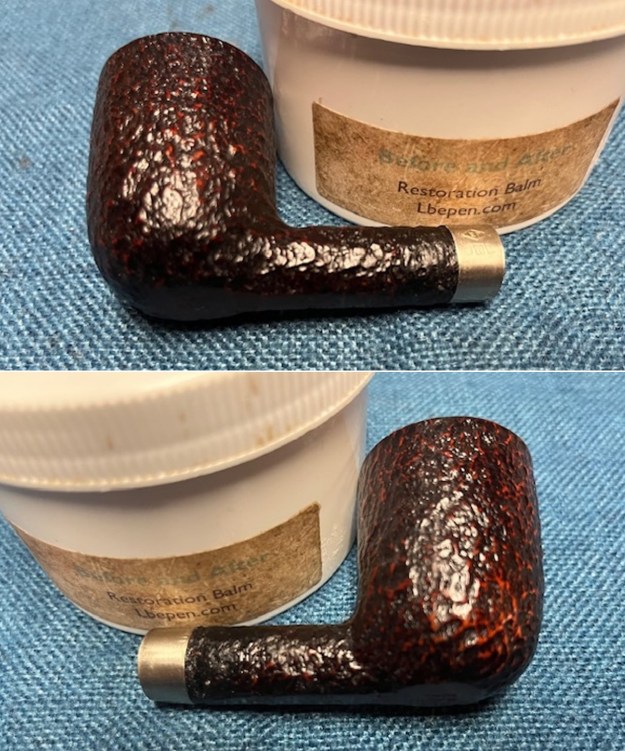
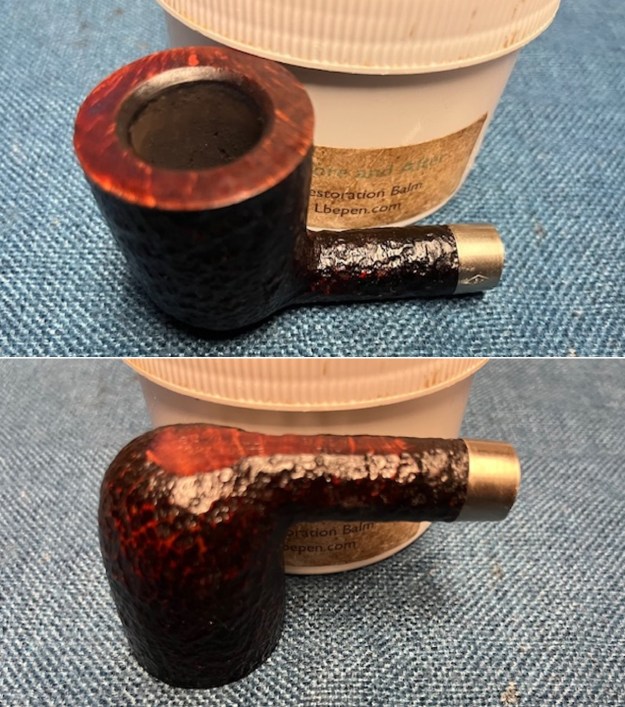
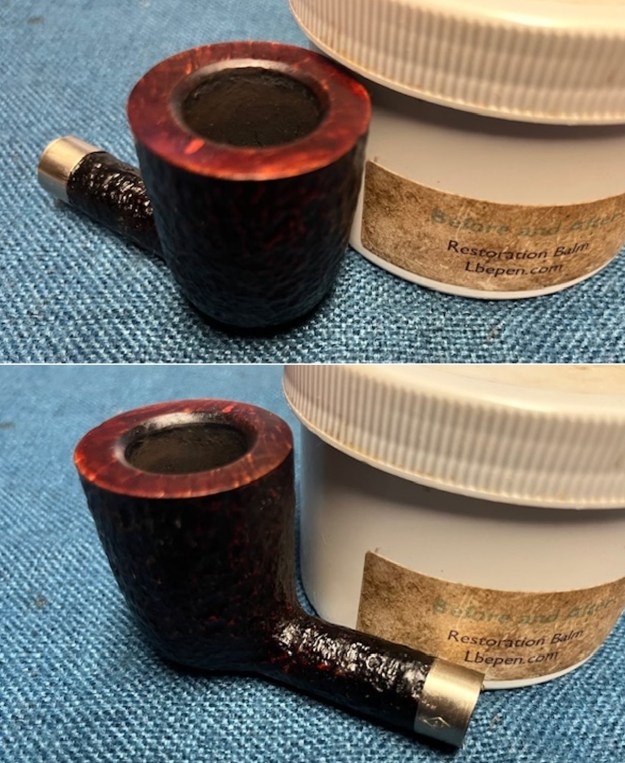
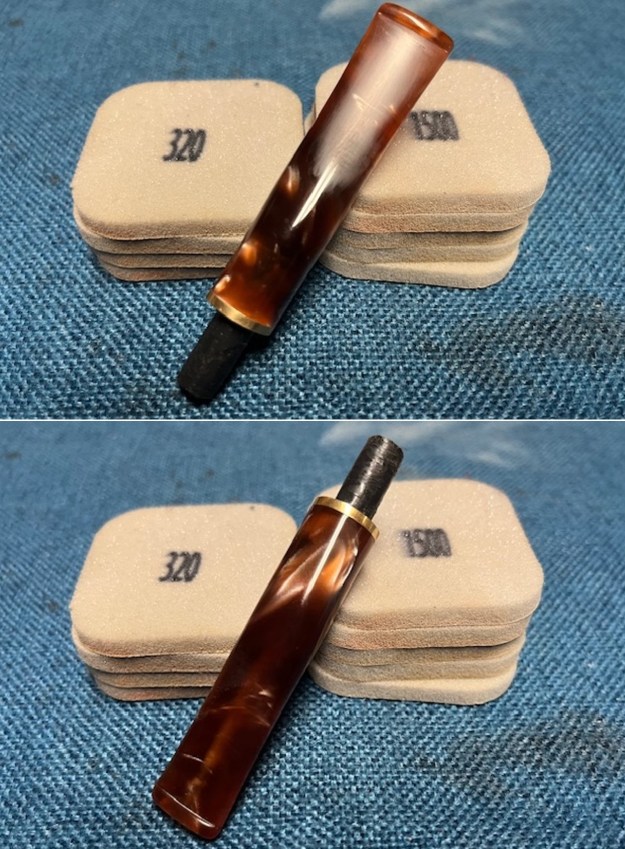
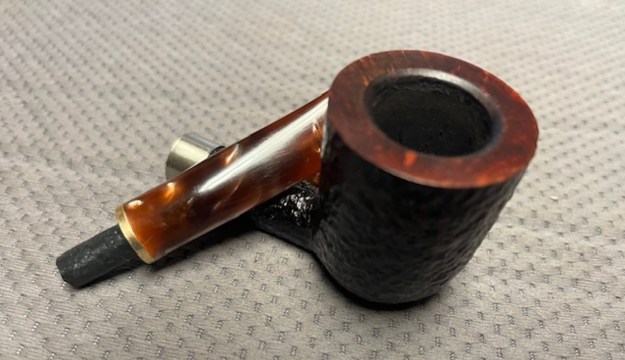
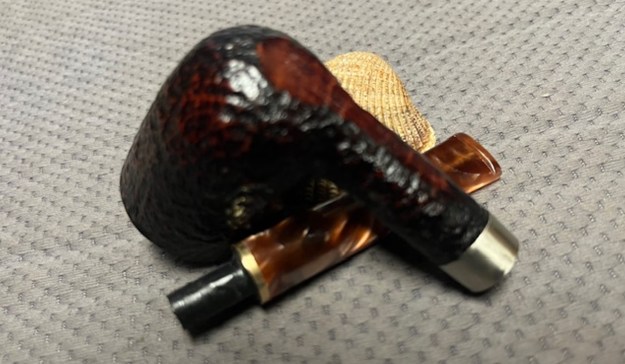
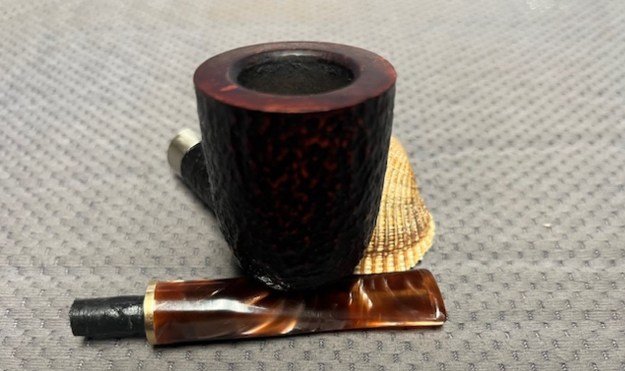
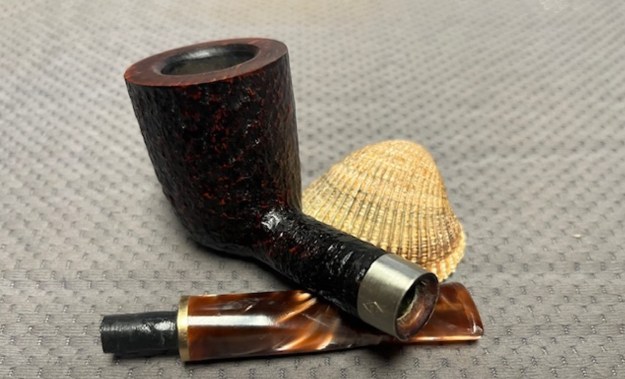
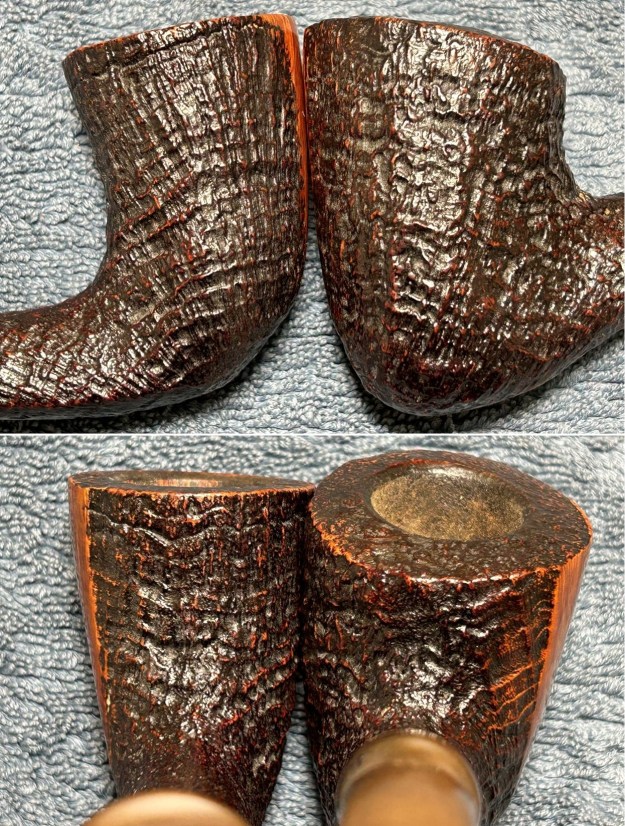
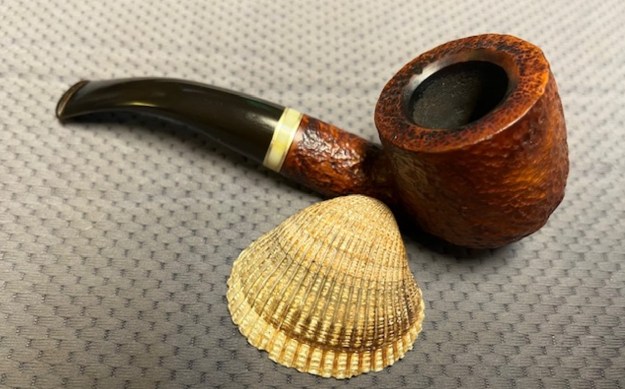
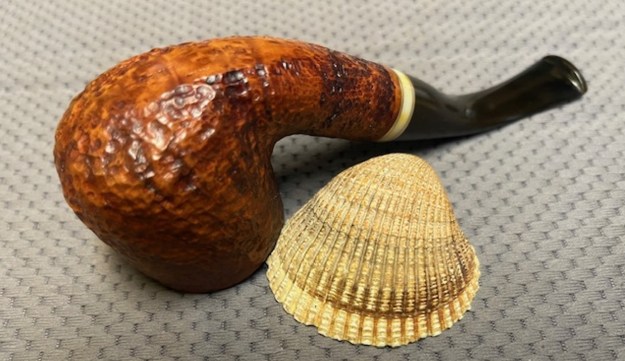
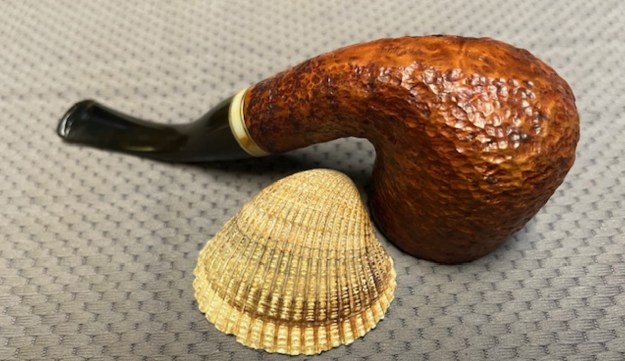
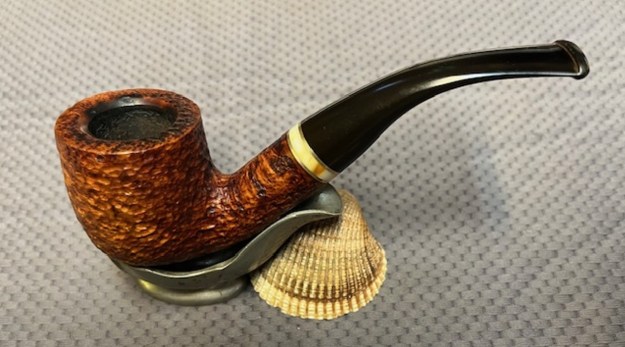
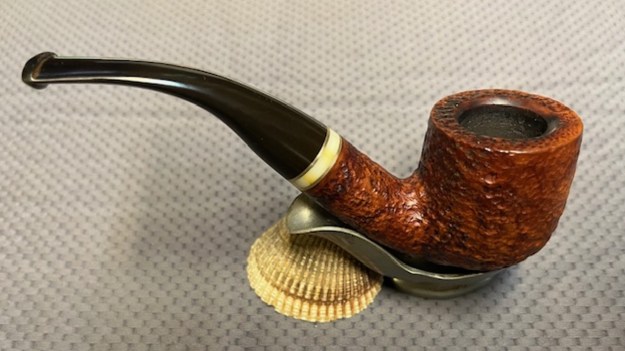
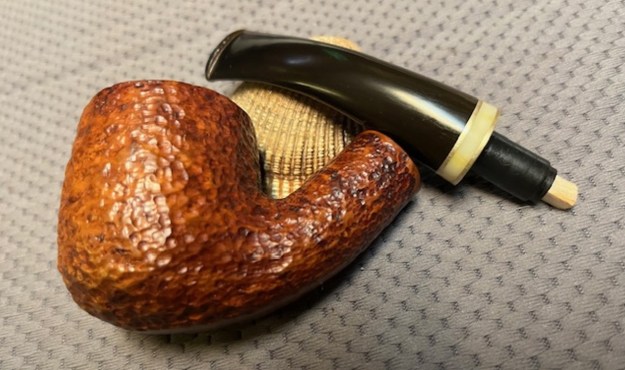
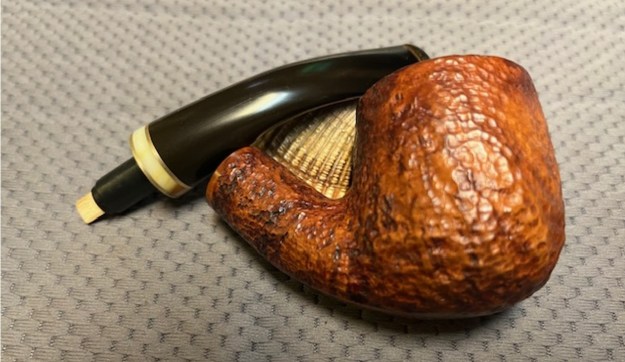
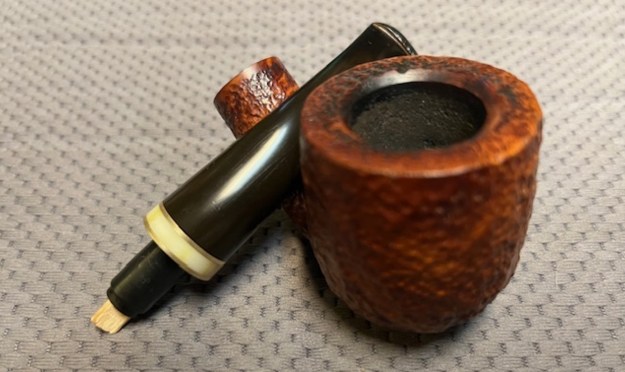
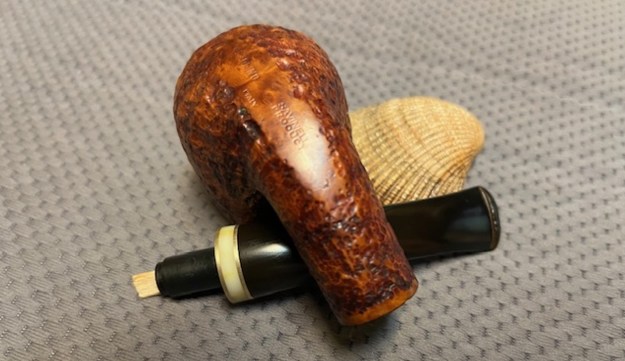
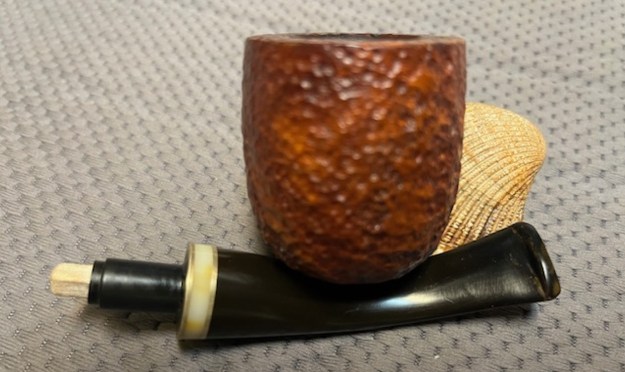
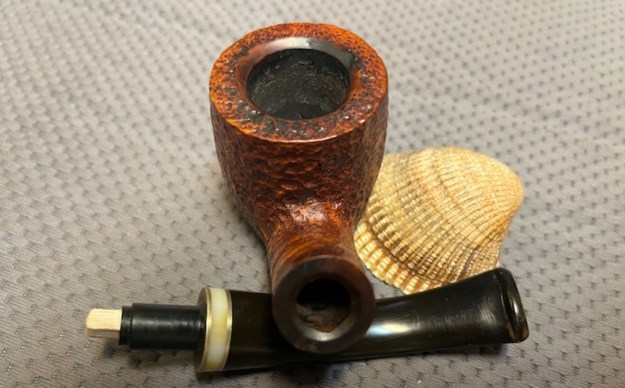
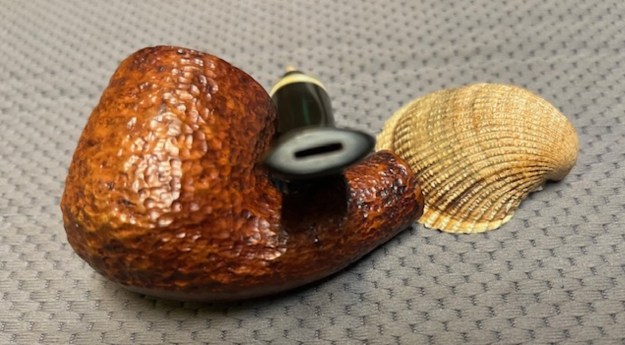
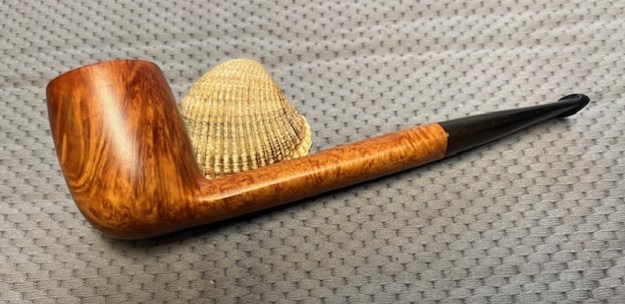
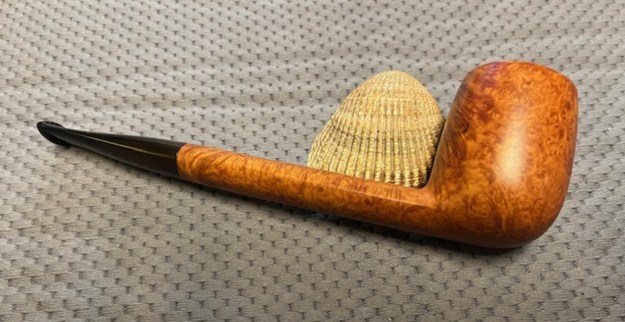
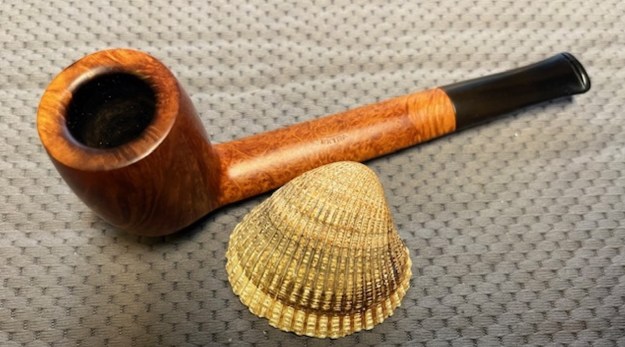
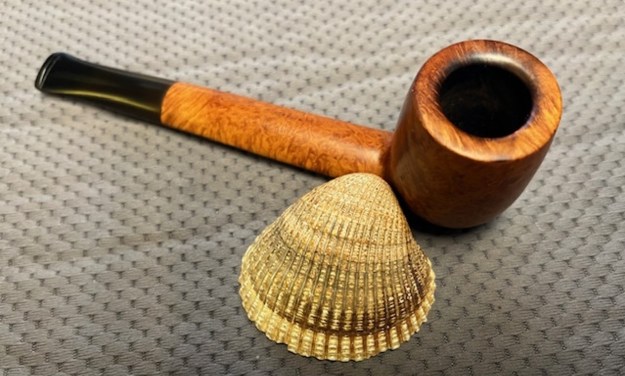
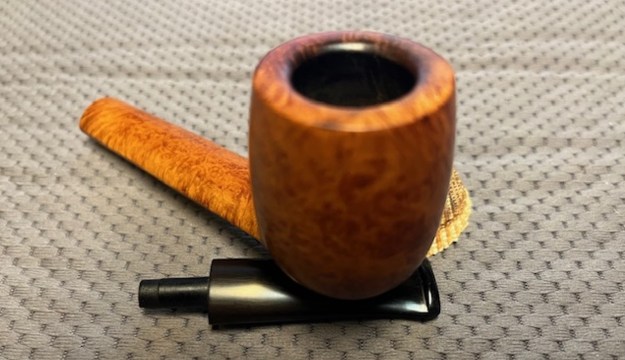
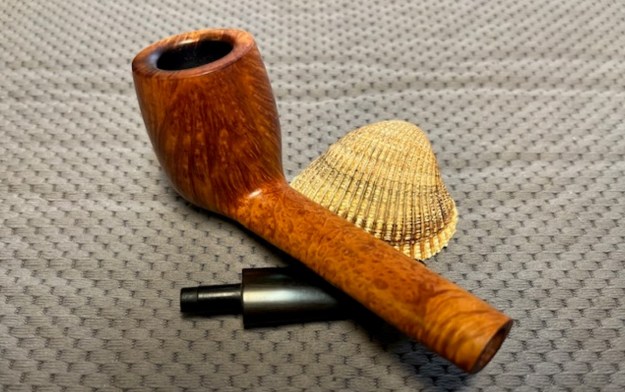
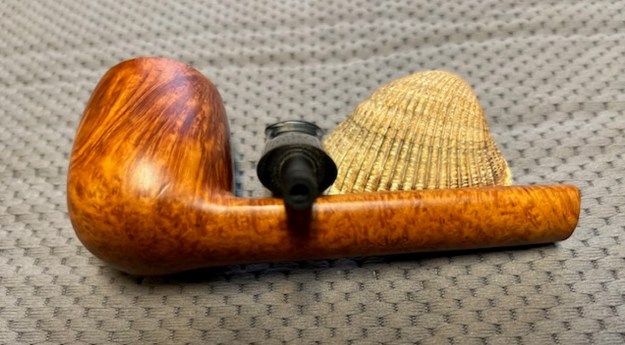
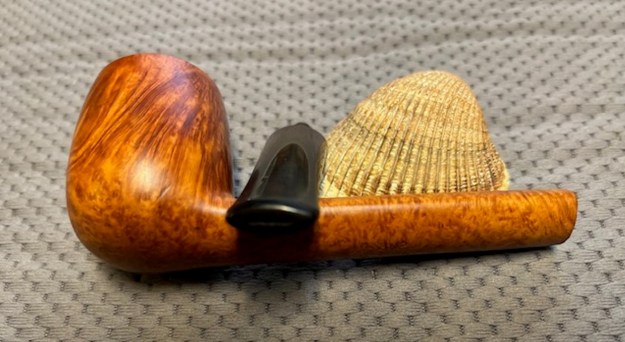
Tag Archives: Savinelli Pipes

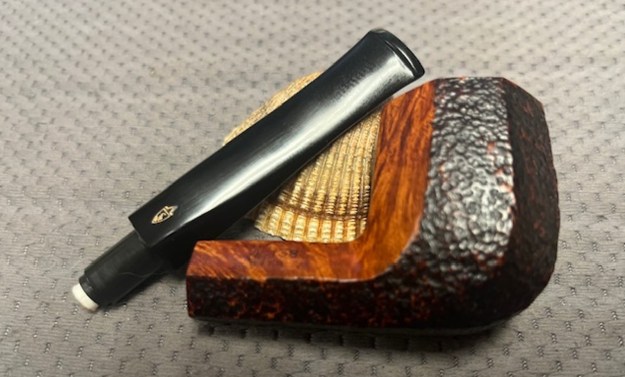
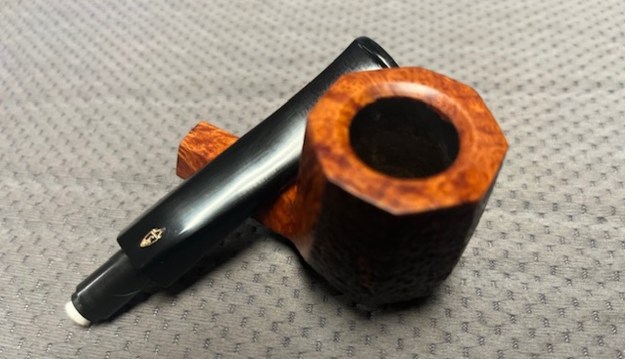
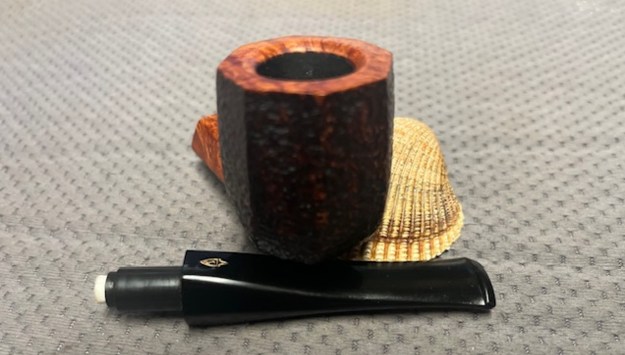
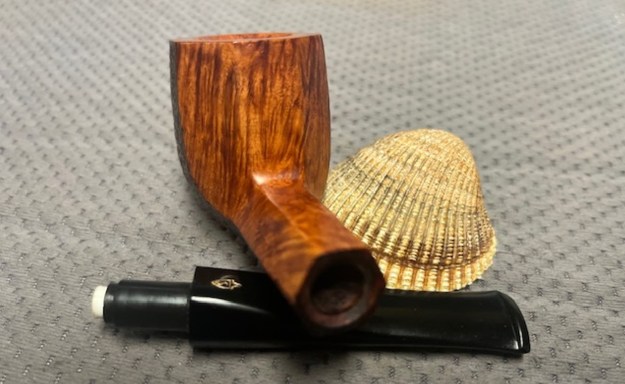
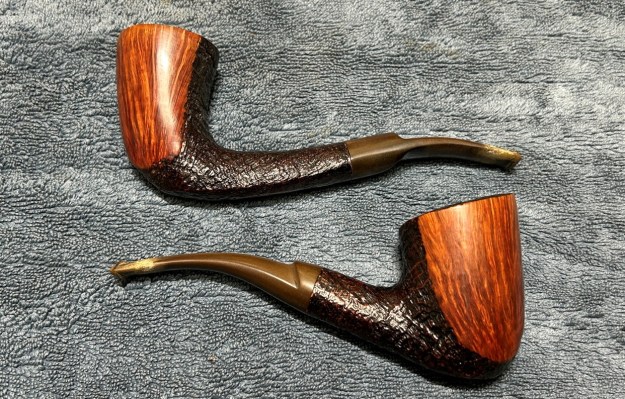
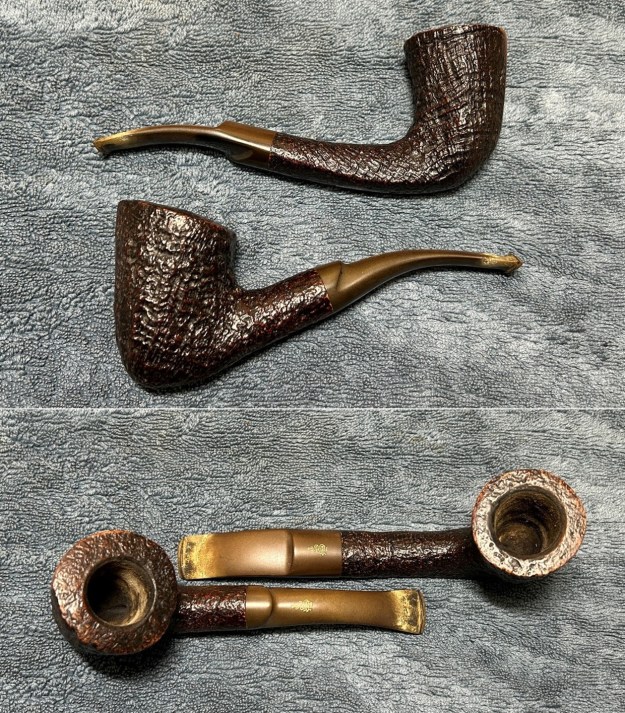
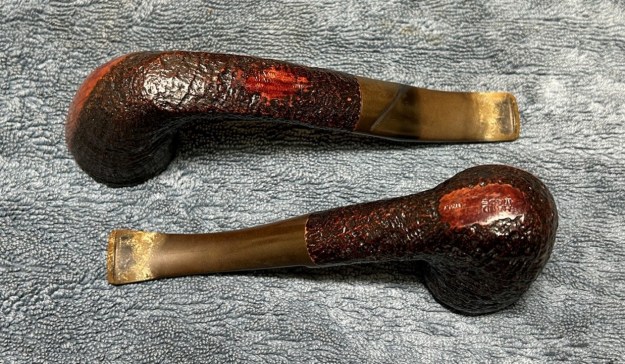
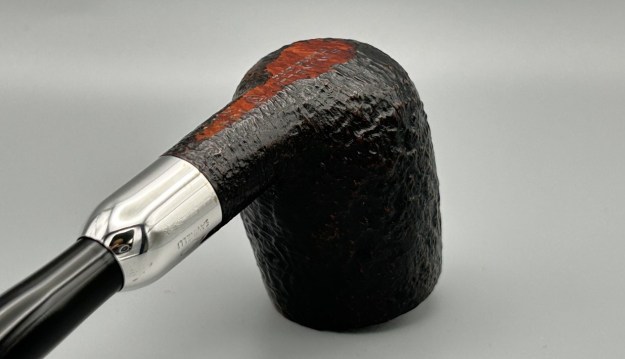
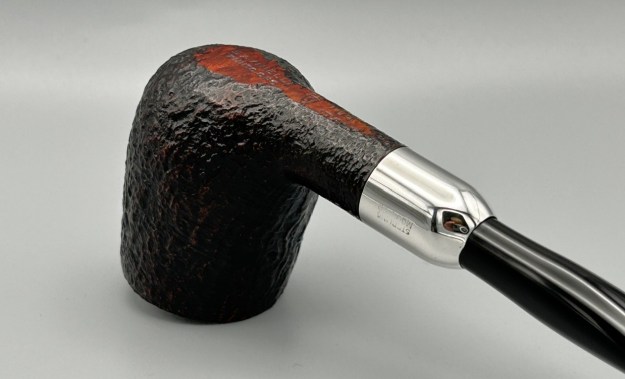
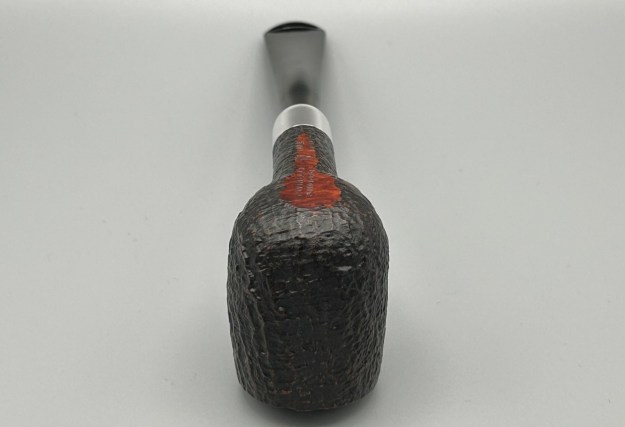
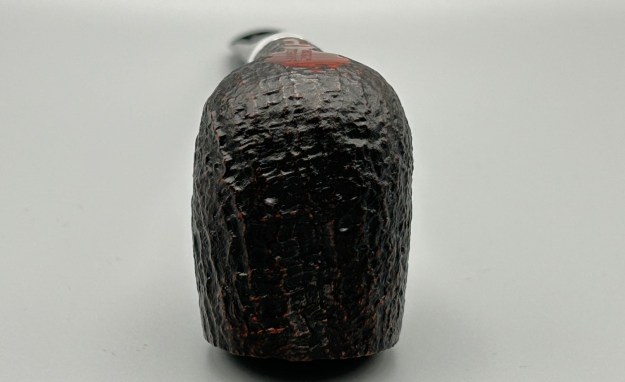
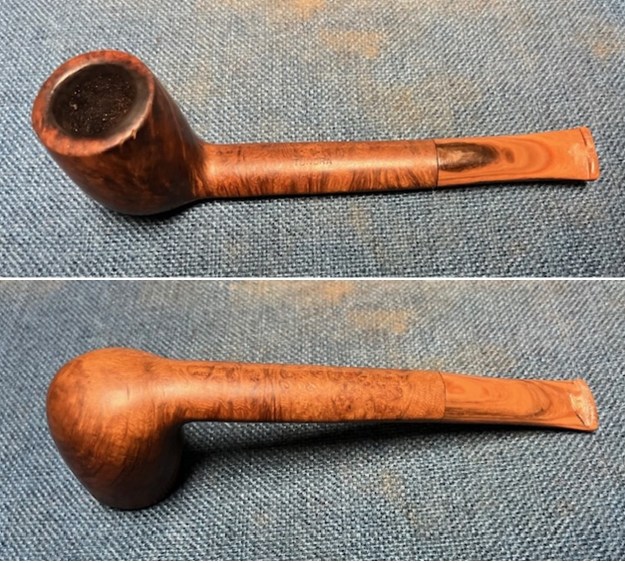
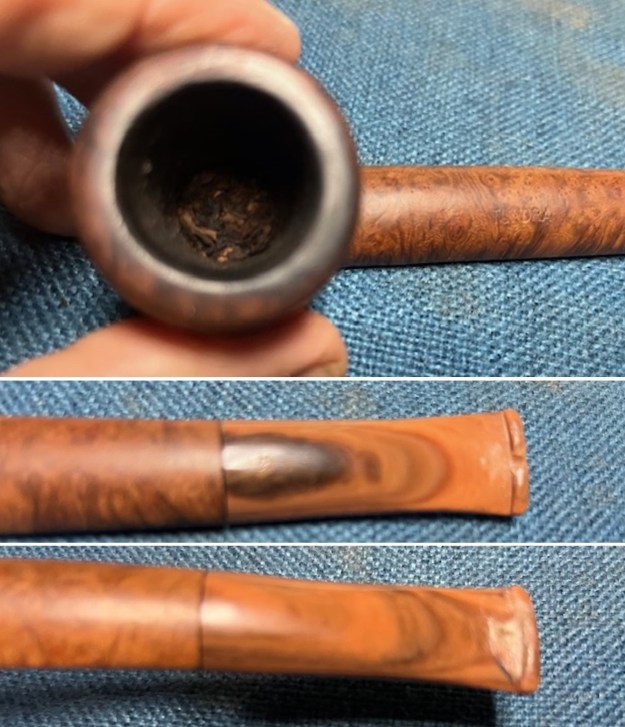
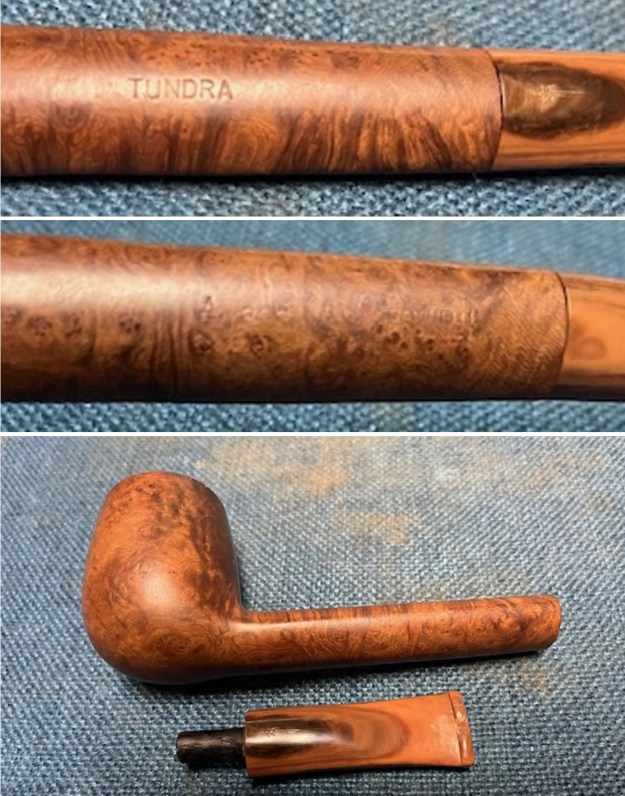
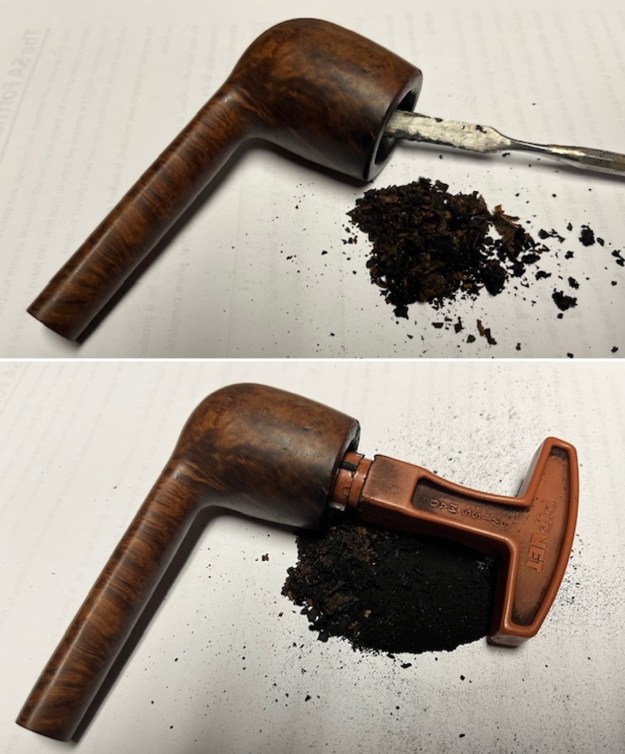
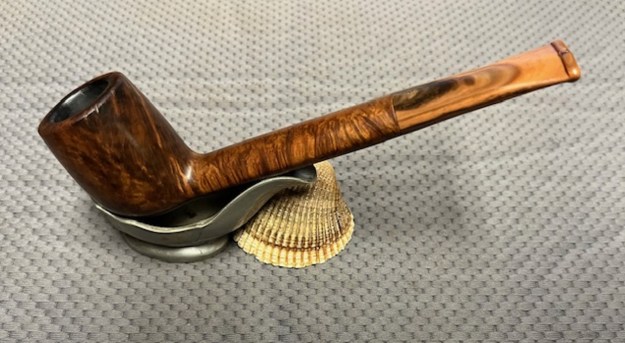
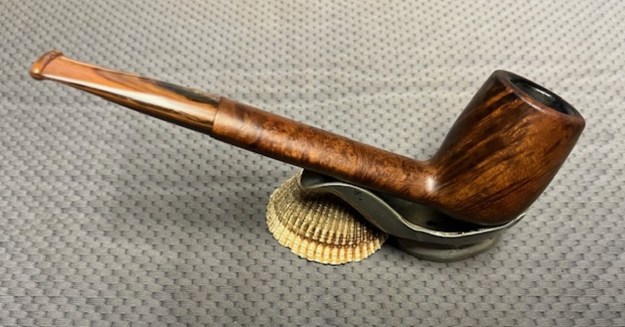
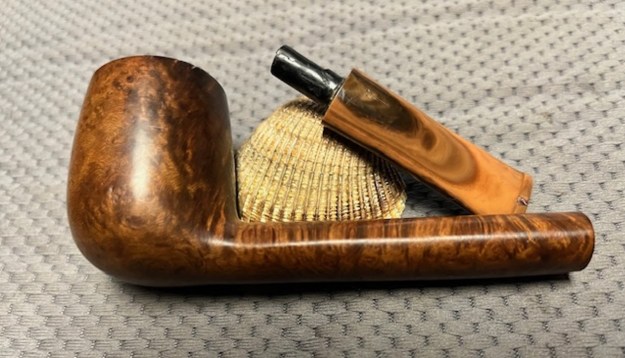
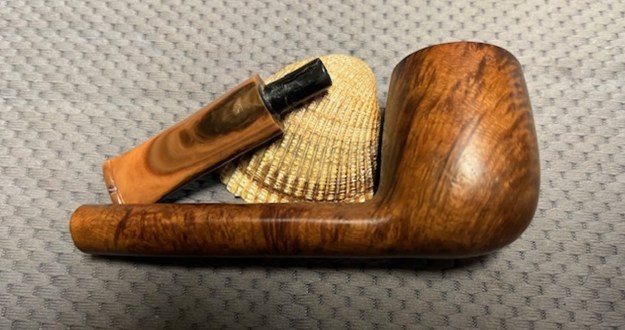
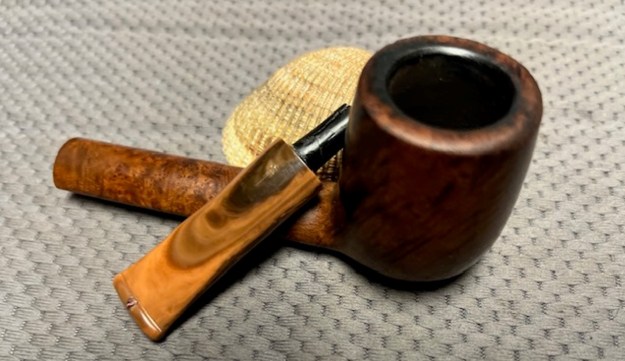
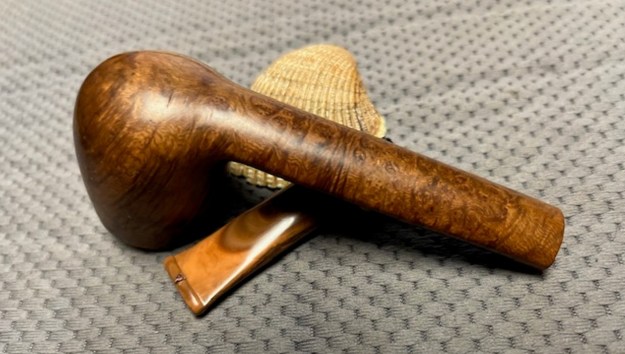
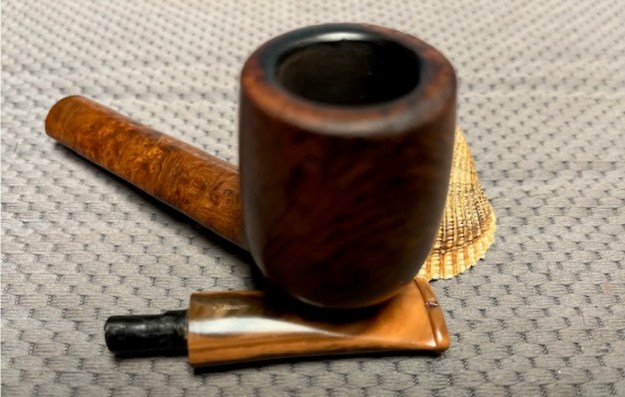
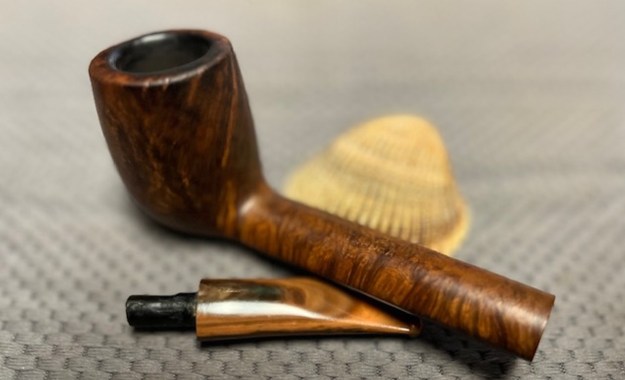
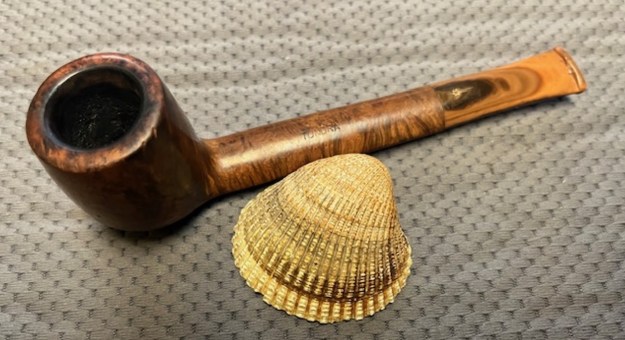
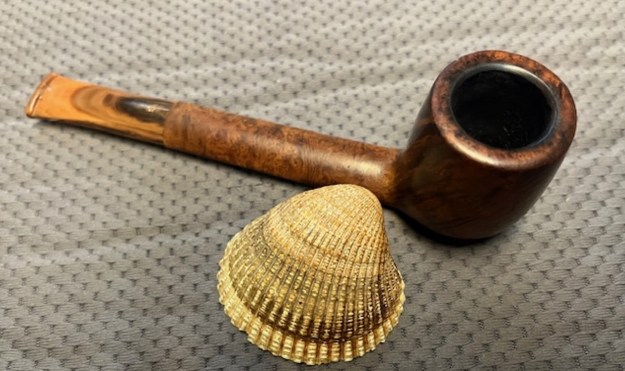
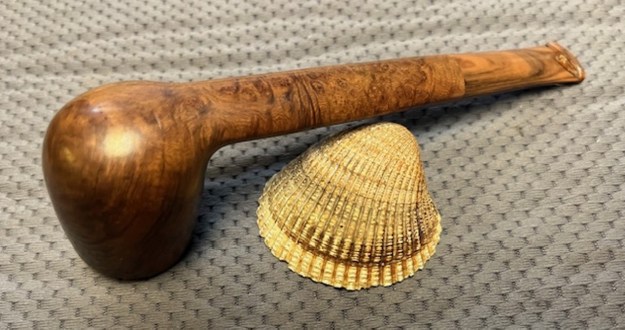
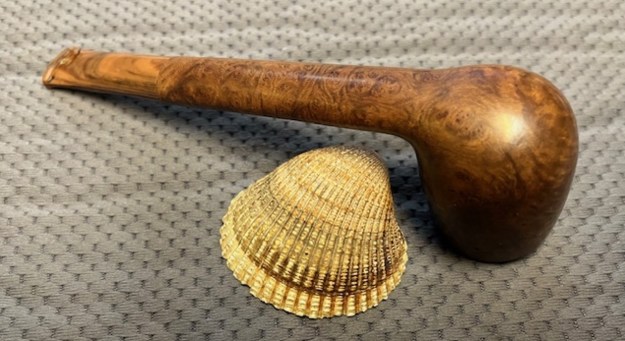
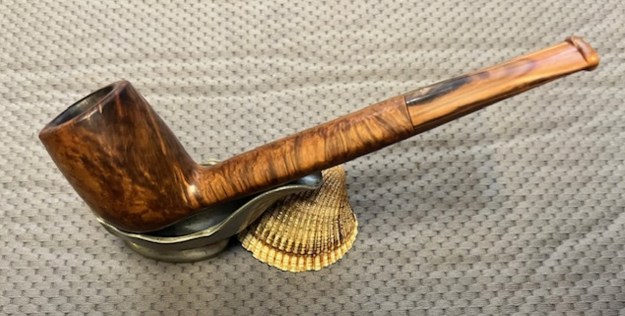
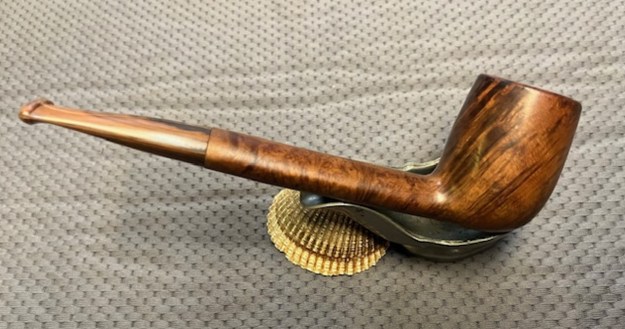
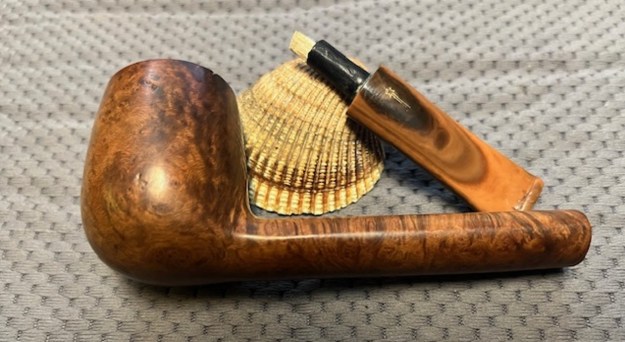
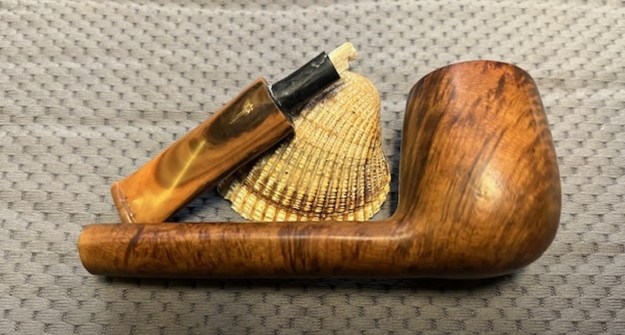
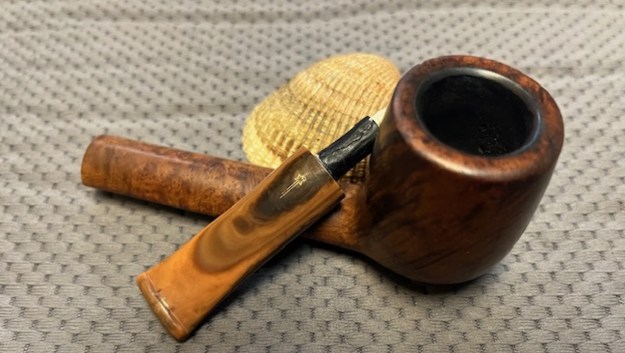
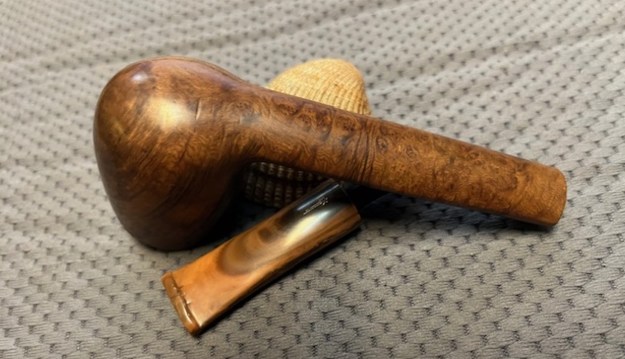
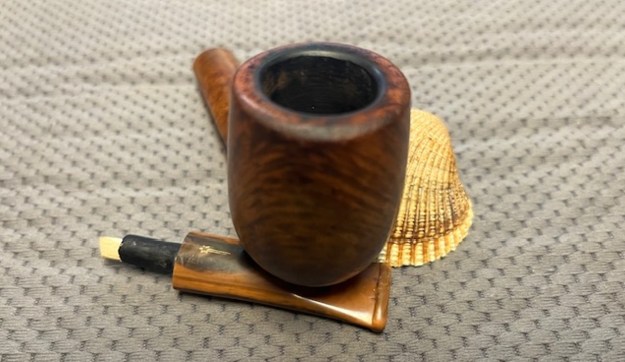
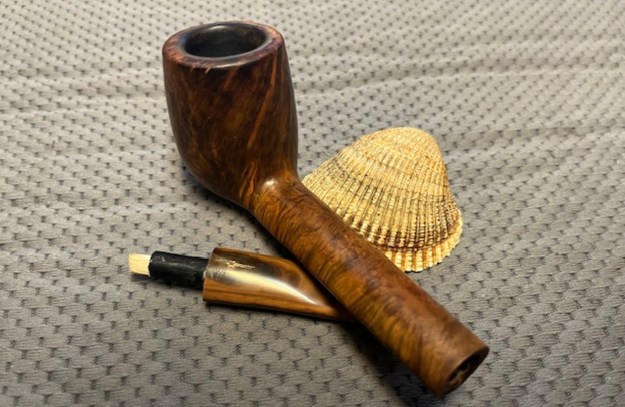
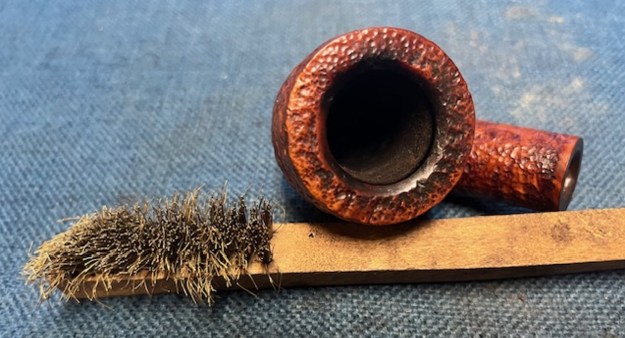
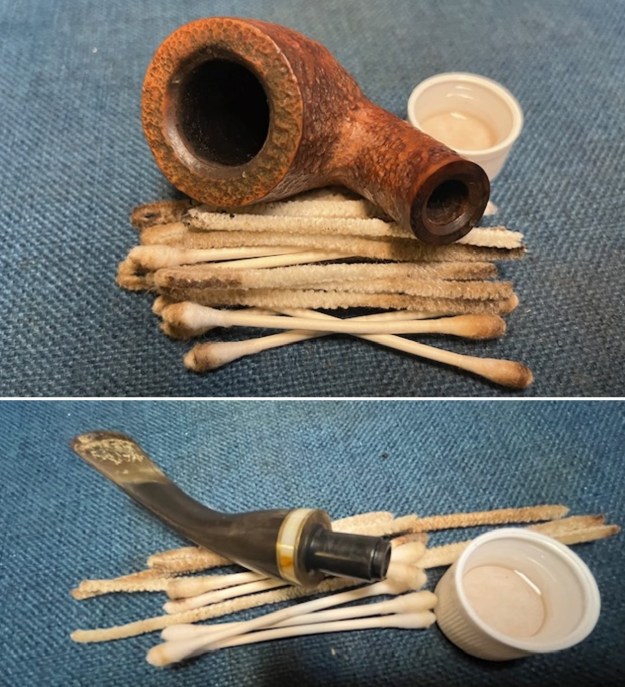
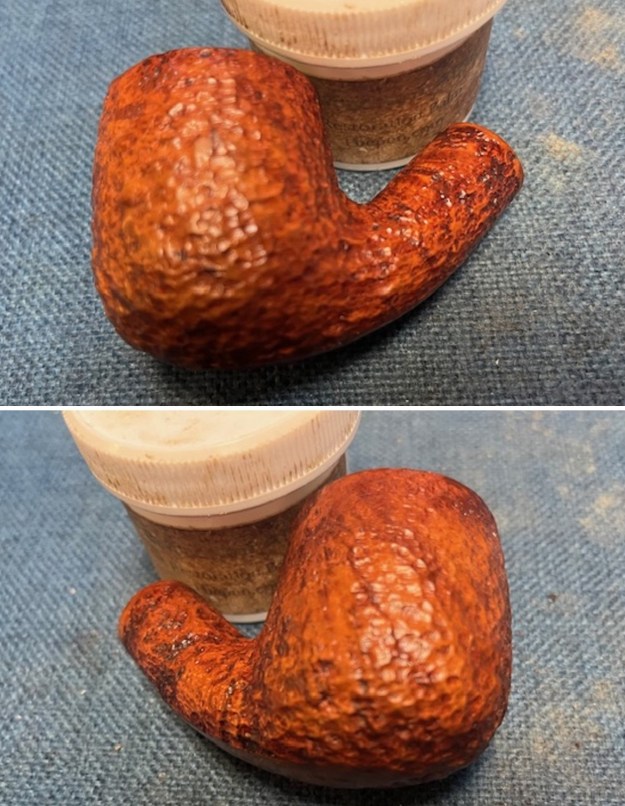
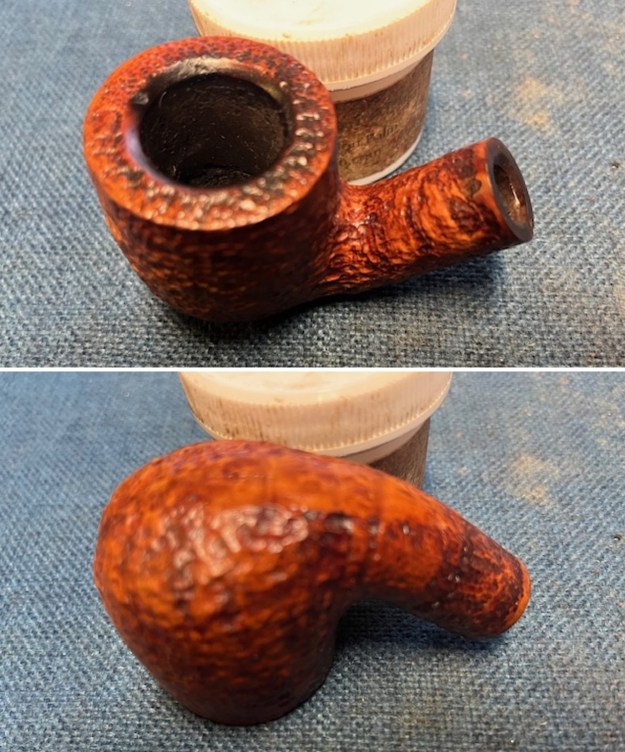
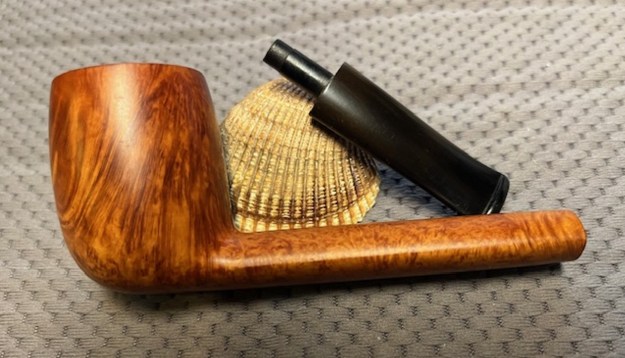
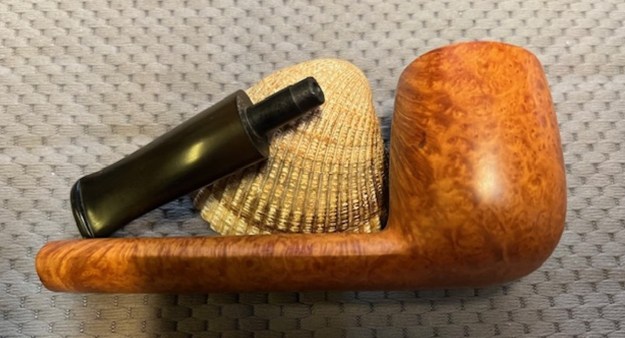
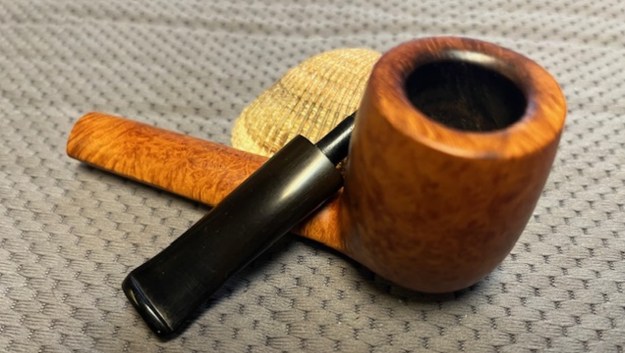
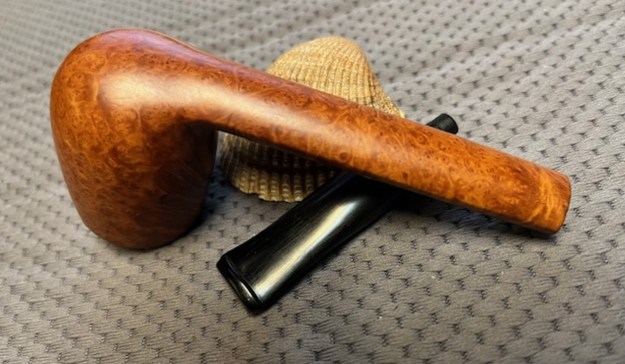
Restoring and Cleaning a Clogged Savinelli Tundra 802 Canadian yet again


by Steve Laug

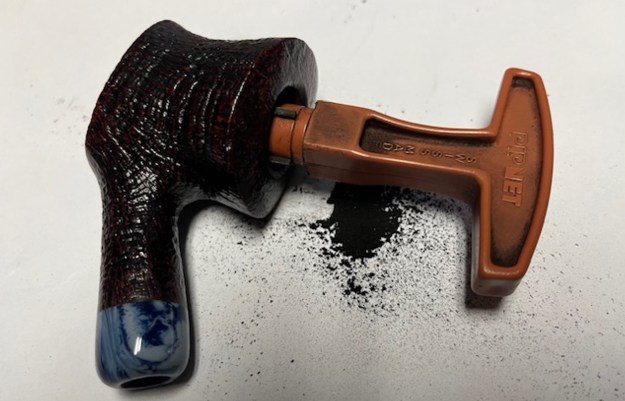
Last week I received a phone call from Brian in Victoria about a few more clogged pipes. He sent them by courier and I received them on Wednesday this week. The first pipe I worked on was a Lorenzo that I restemmed and blogged on (https://rebornpipes.com/2025/10/24/restoring-and-restemming-a-clogged-and-filthy-italian-lorenzetti-billiard/). The second one was a Savinelli Tundra 802 Canadian that was clogged and had no airflow once again. I had restored and cleaned it for him and written a blog on July 29, 2025 (https://rebornpipes.com/2025/07/29/restoring-and-cleaning-a-clogged-savinelli-tundra-802-canadian/). The third one is a Savinelli Tortuga that I had also restored at the same time and written a blog on (https://rebornpipes.com/2025/07/30/restoring-and-cleaning-a-clogged-savinelli-tortuga-128-billiard/). He asked if I would clean and open them up for him once again.

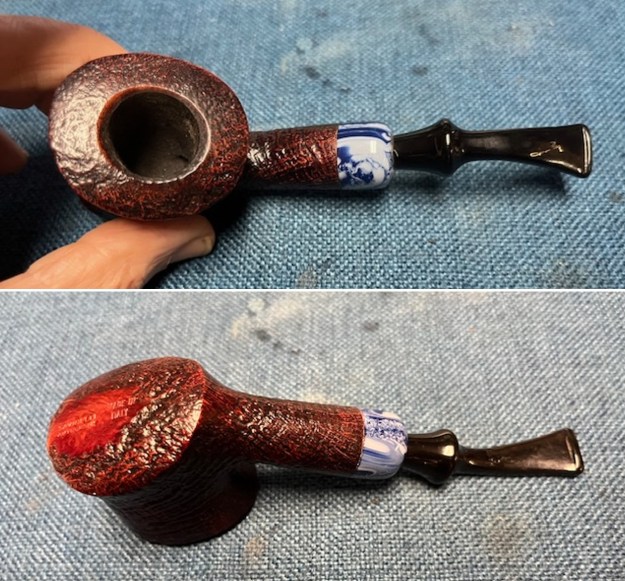
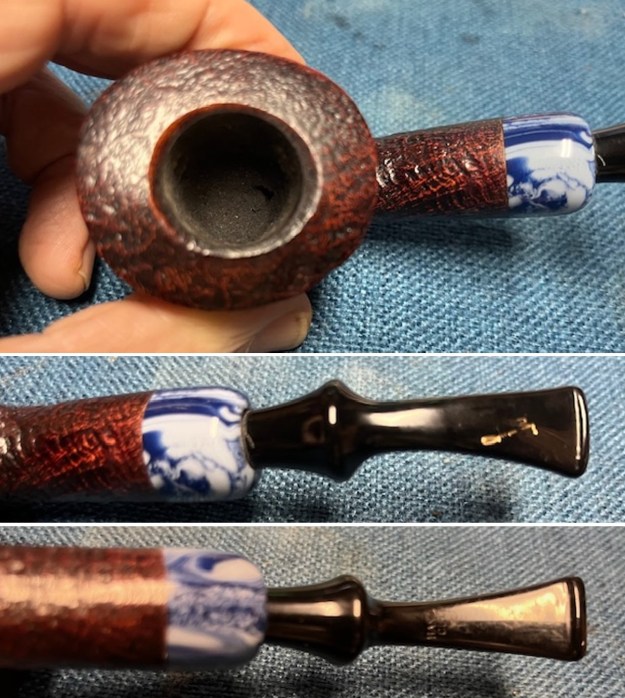
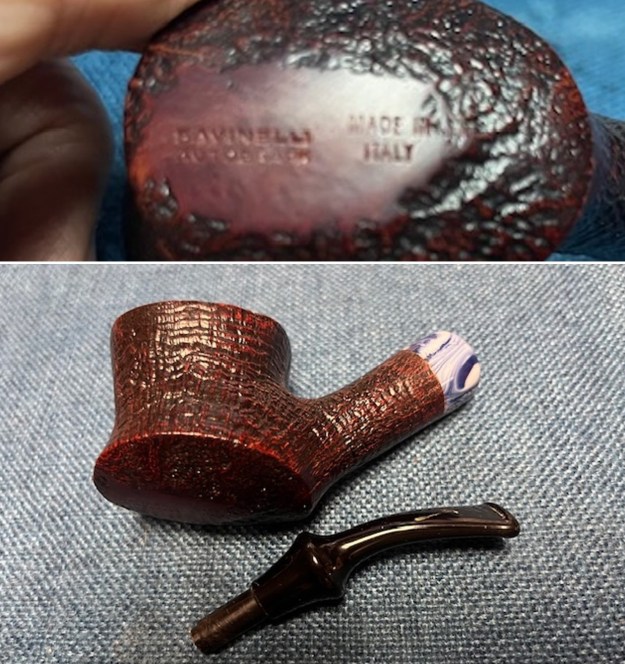
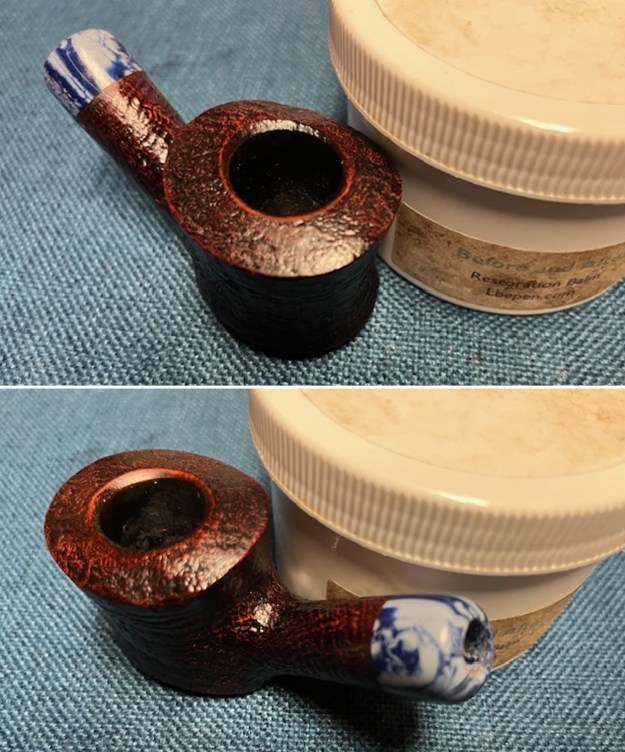
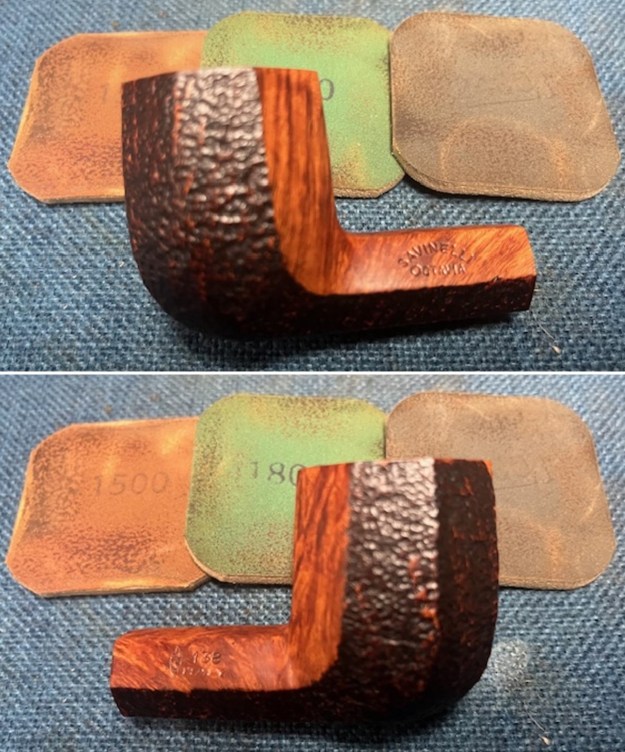
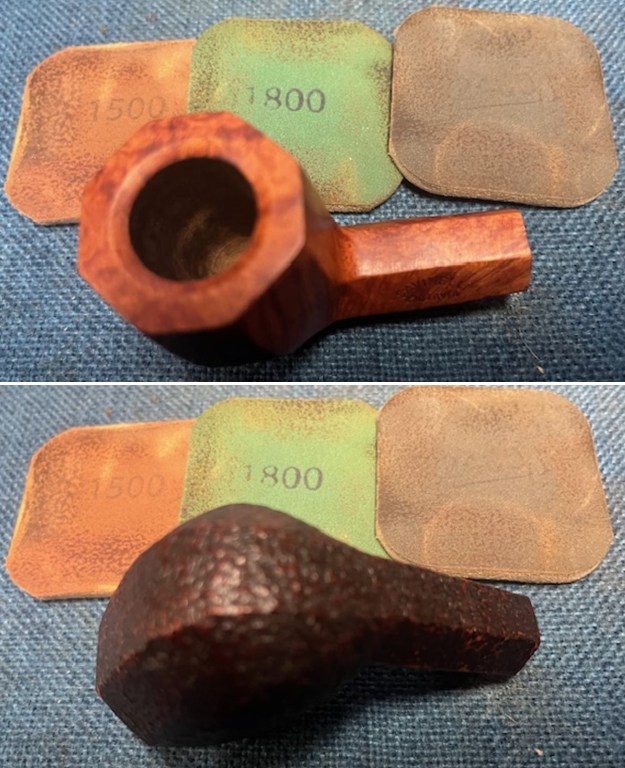
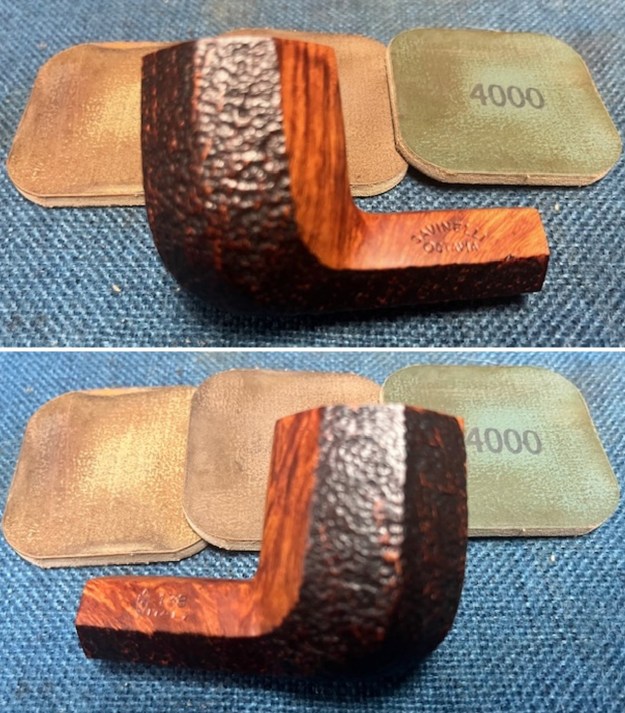
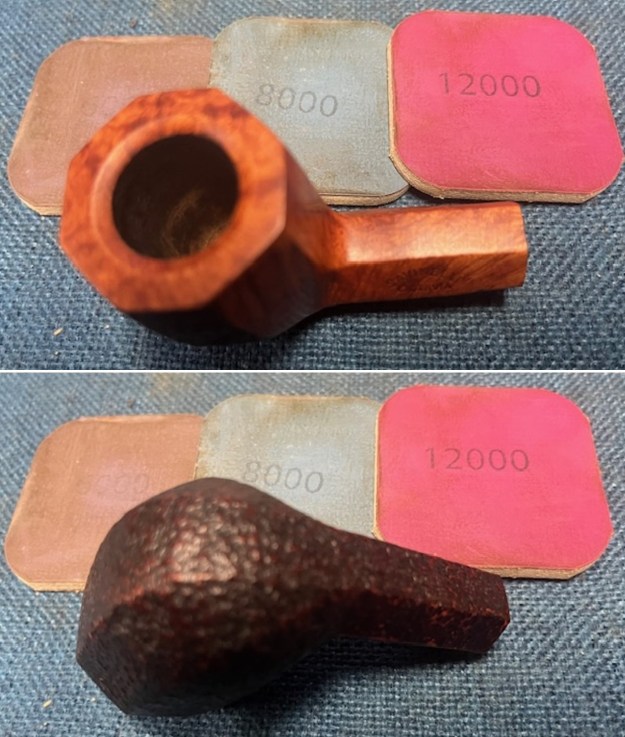
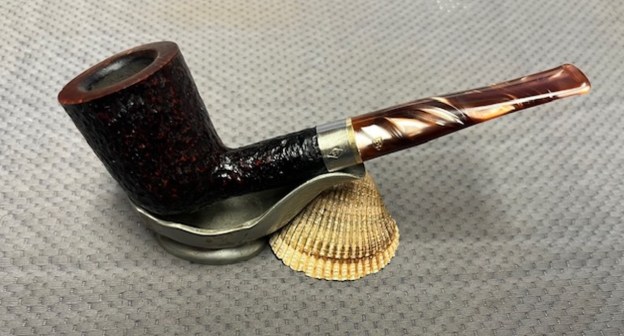
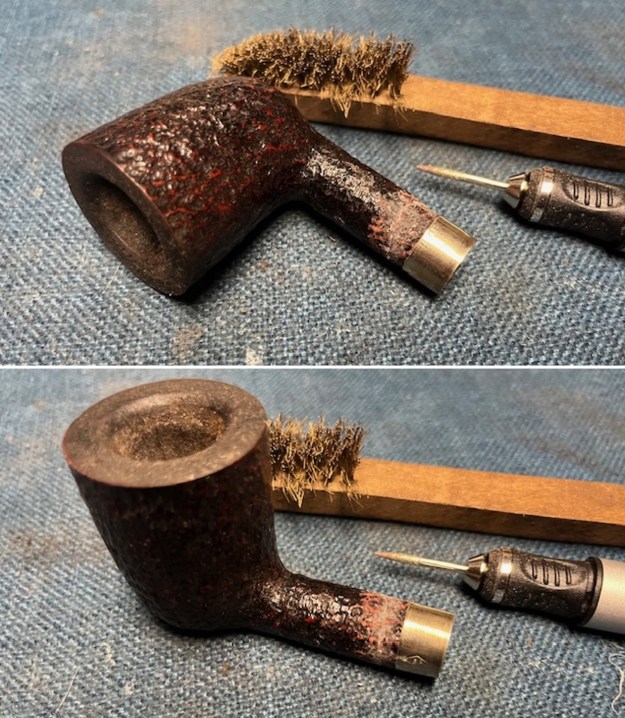
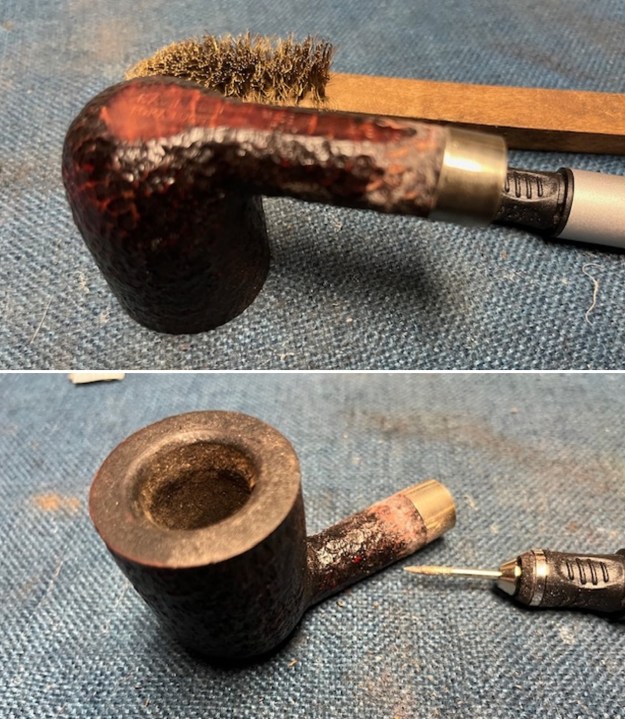
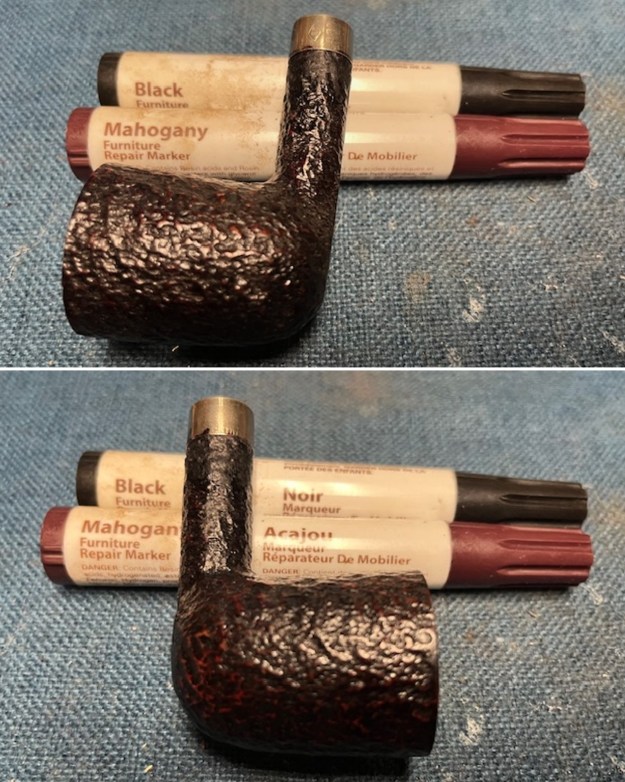
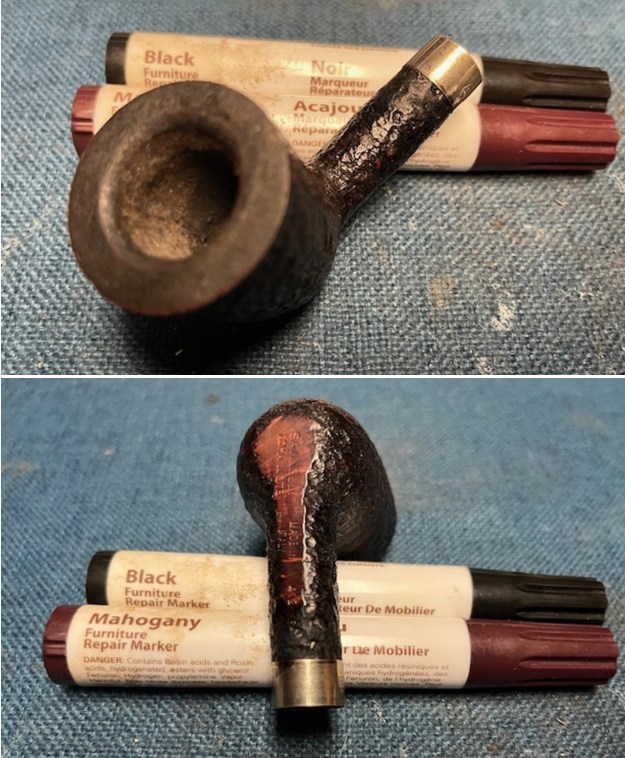
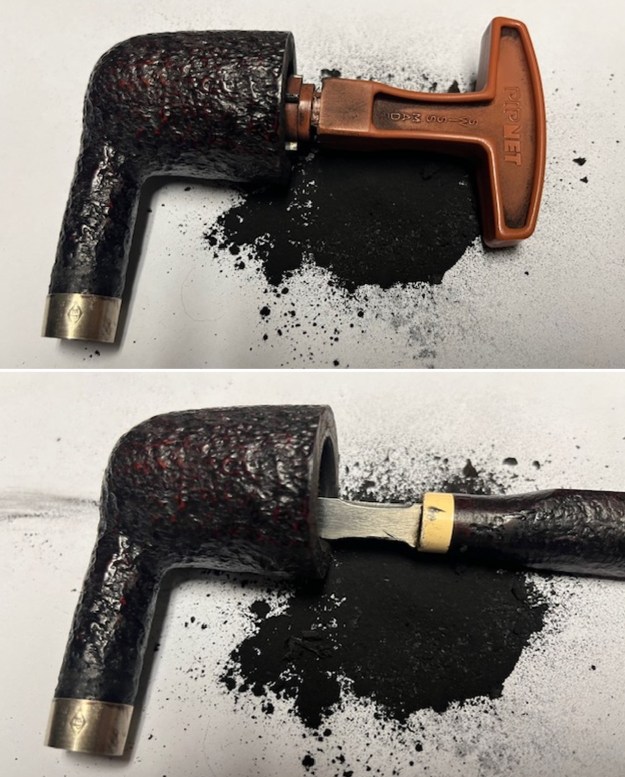
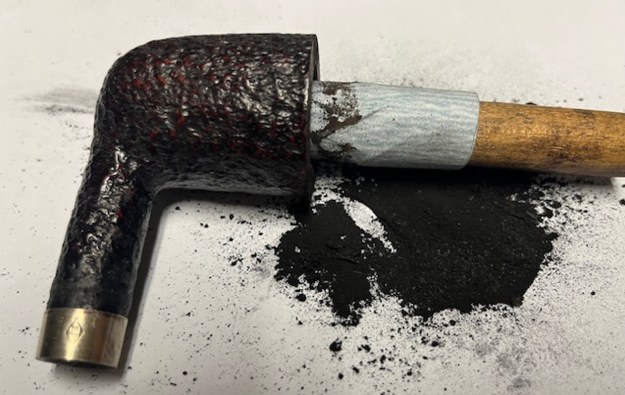
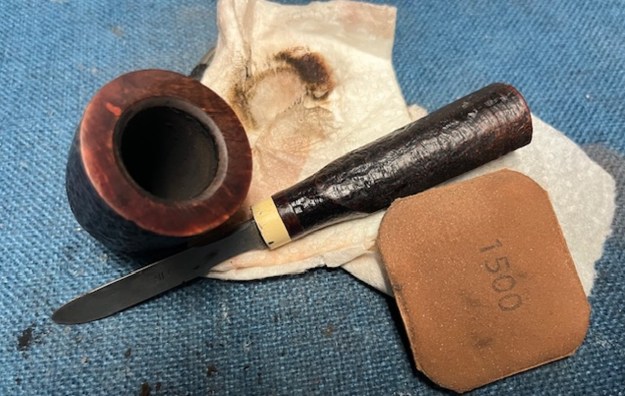
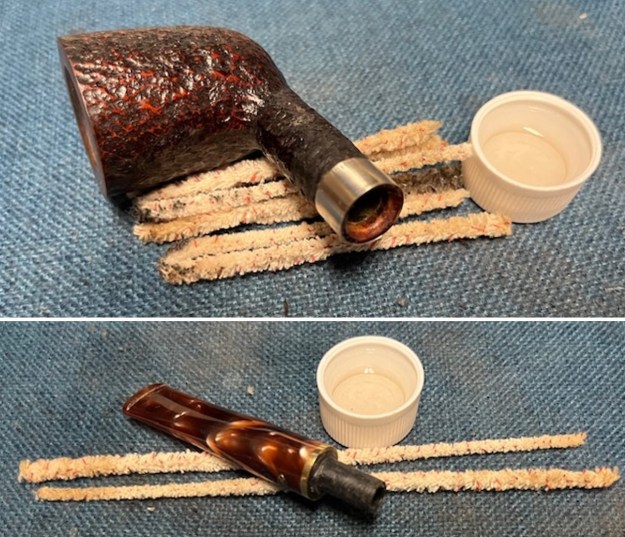
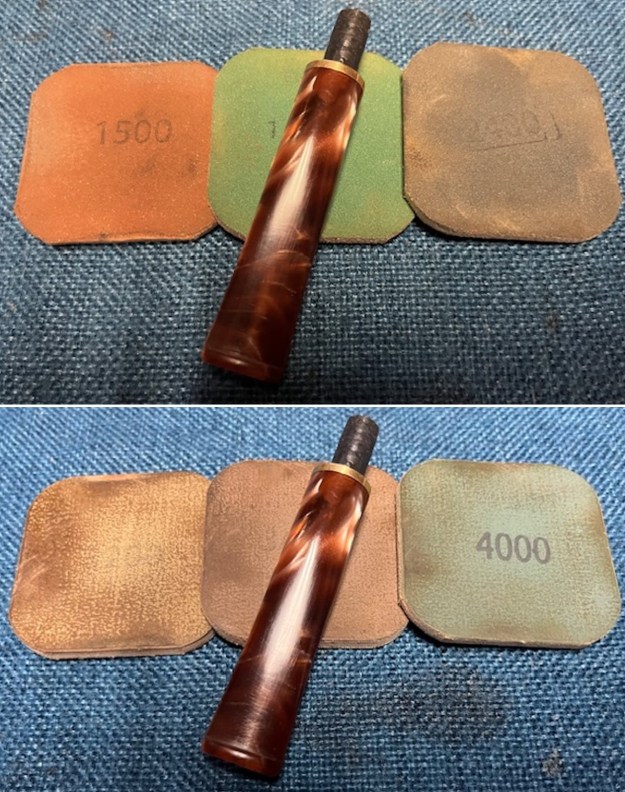
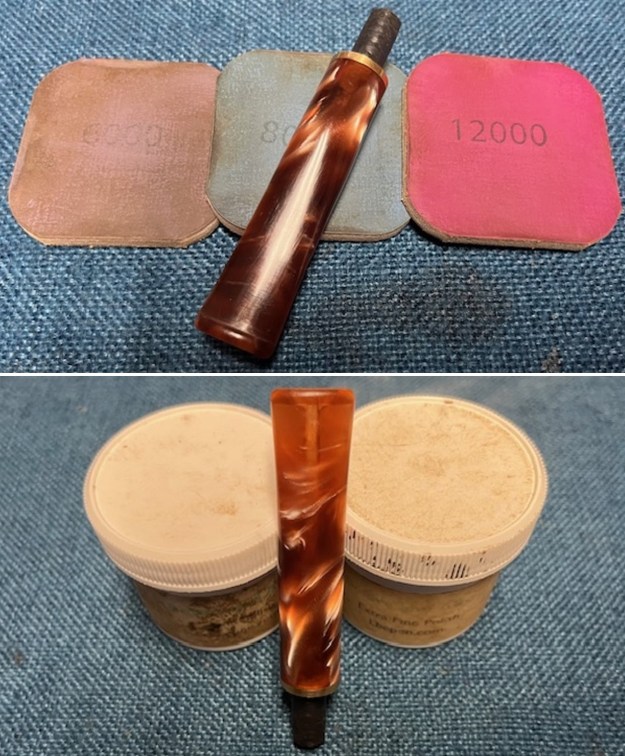
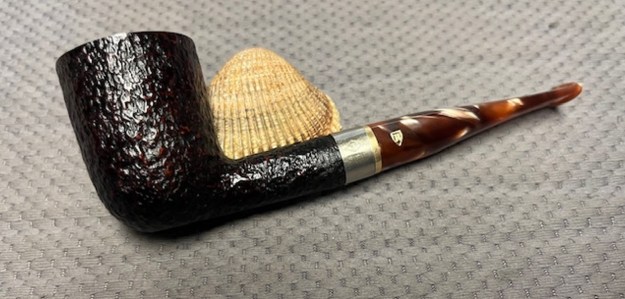
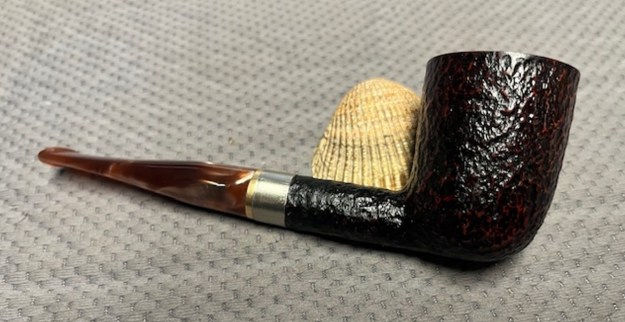
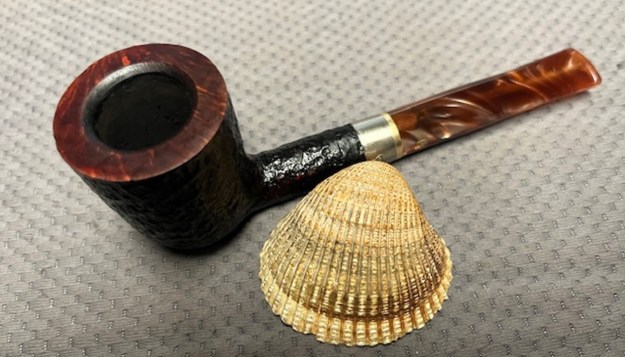
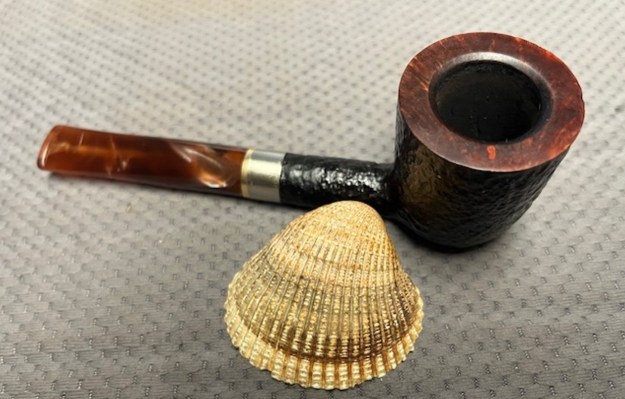
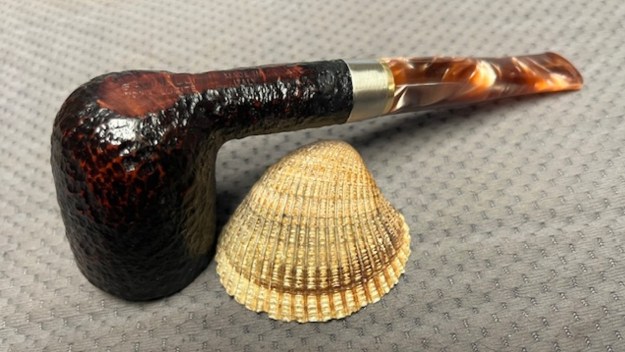
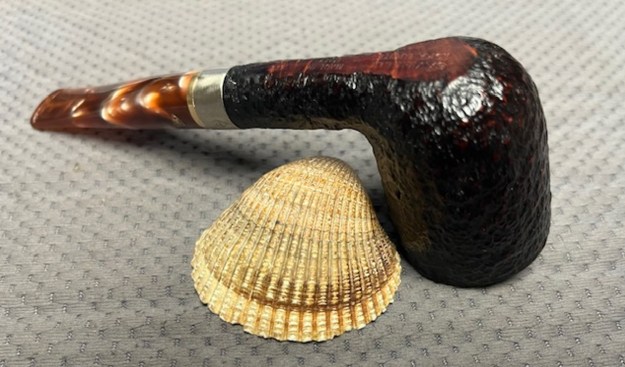
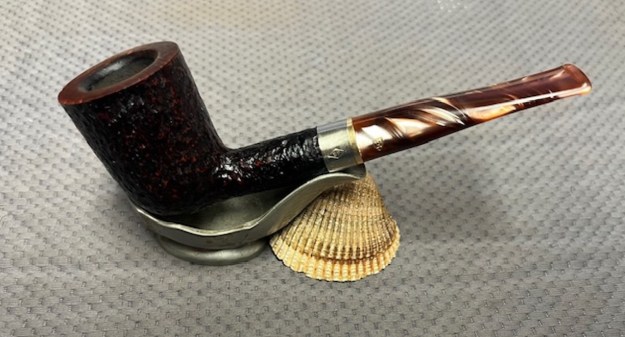
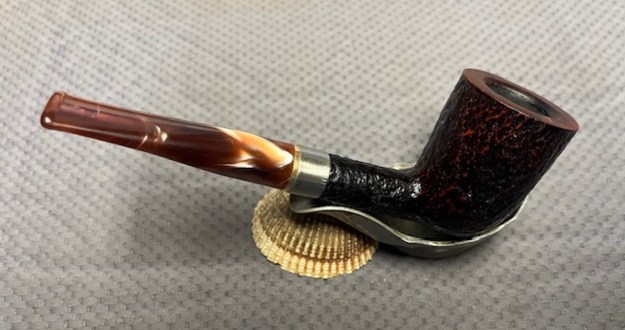
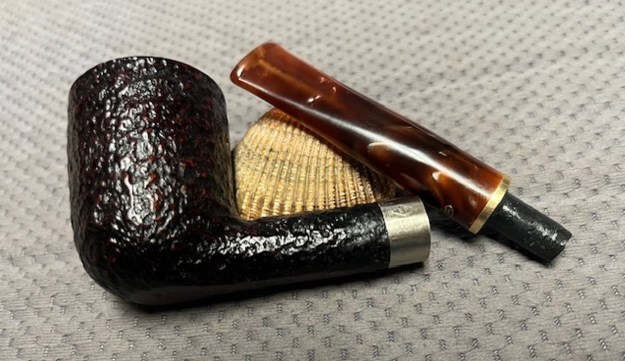
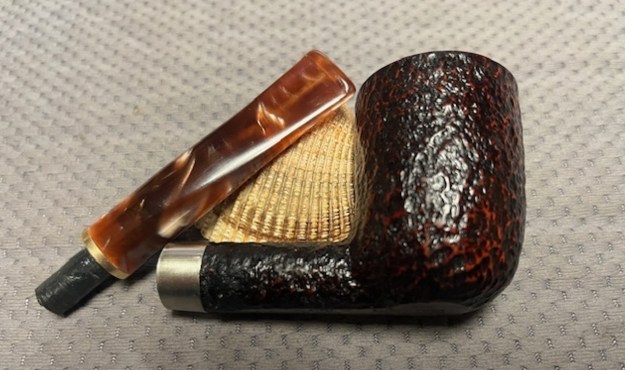
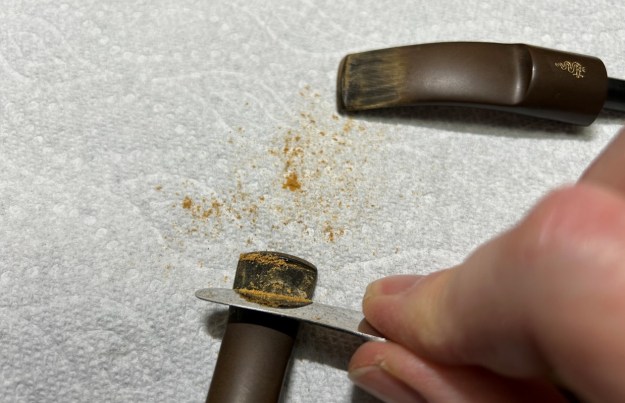
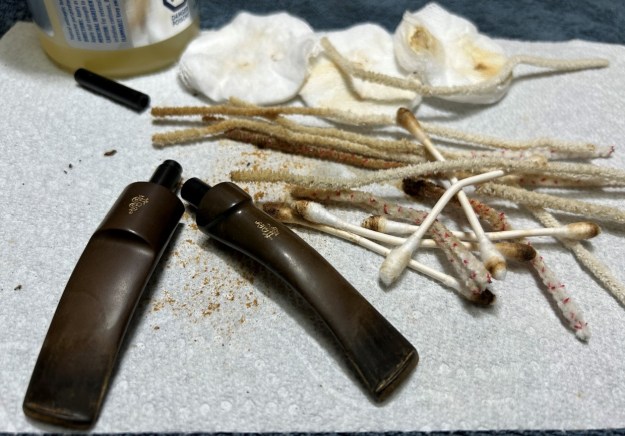
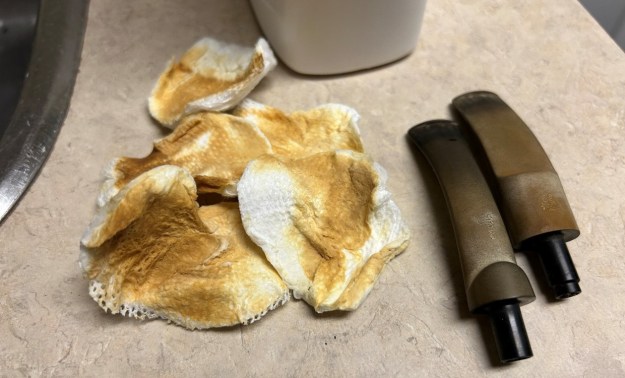
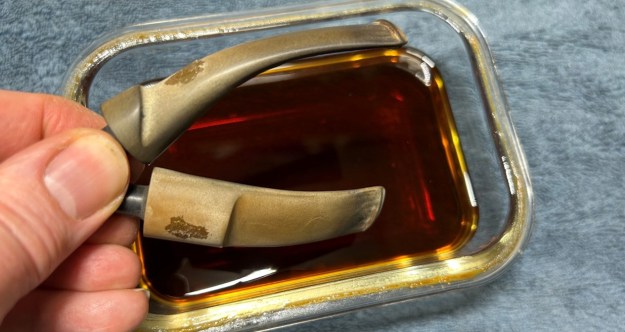
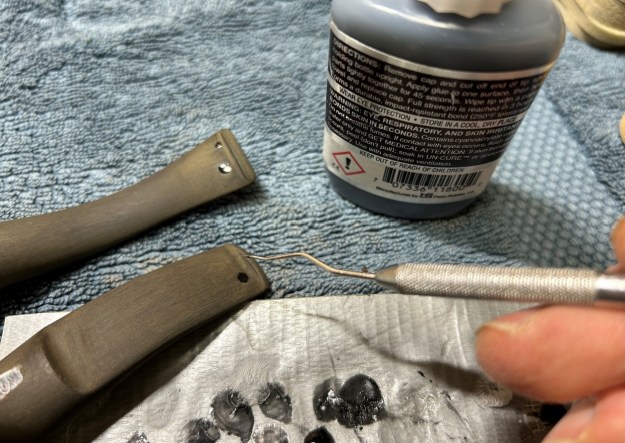
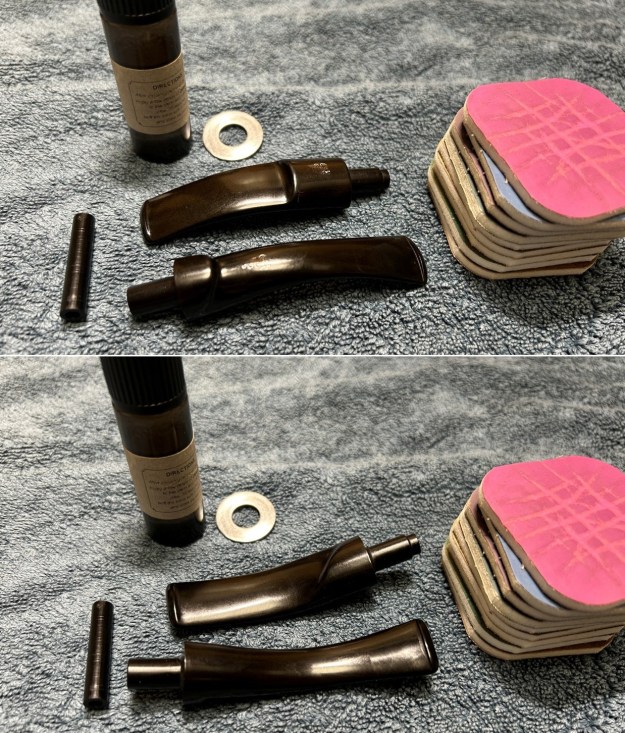
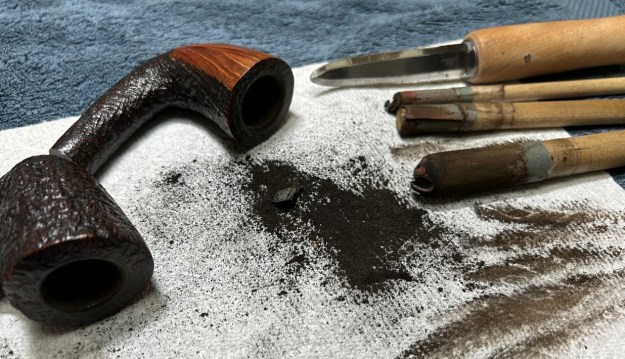
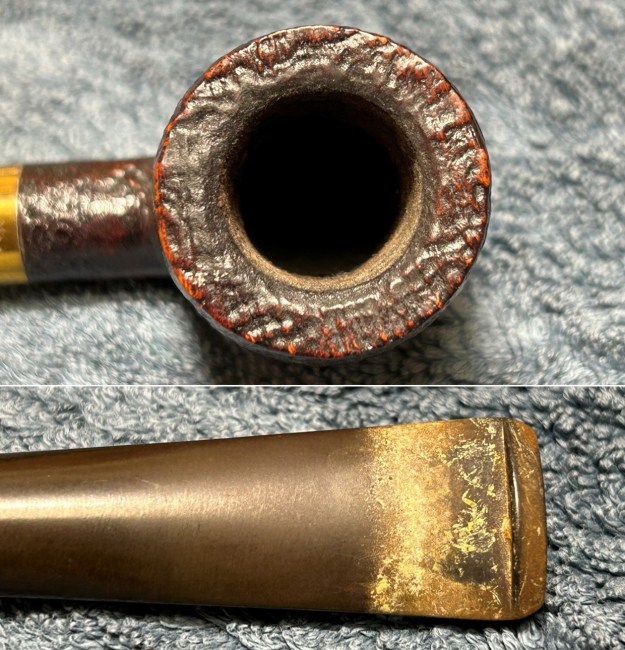
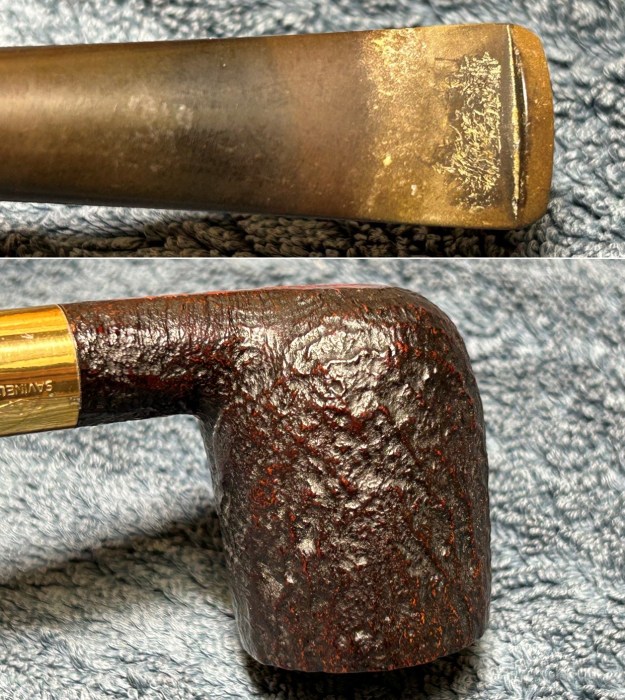
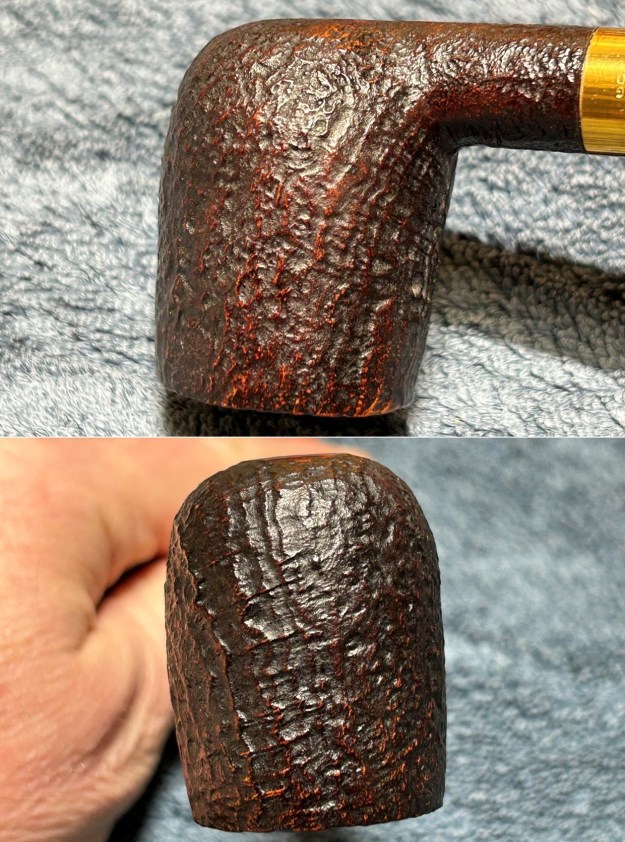
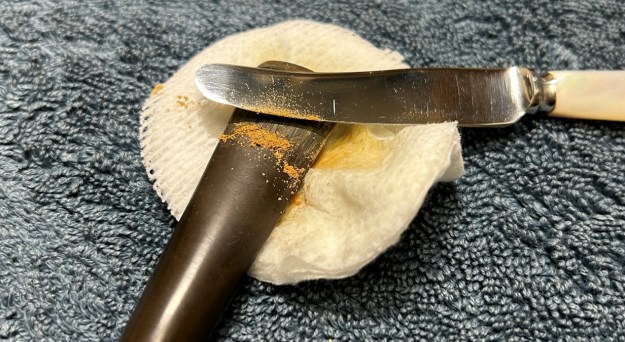
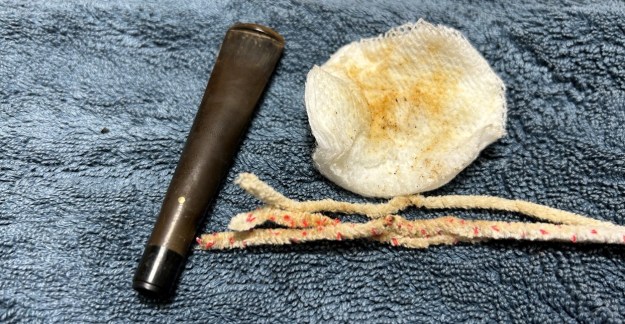
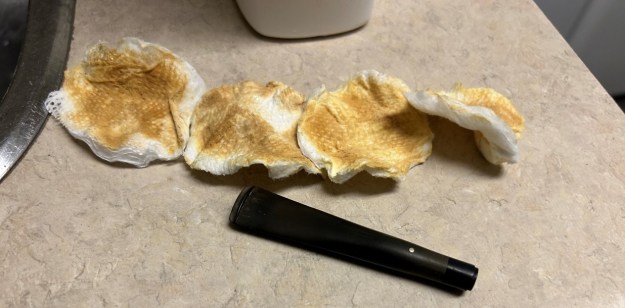
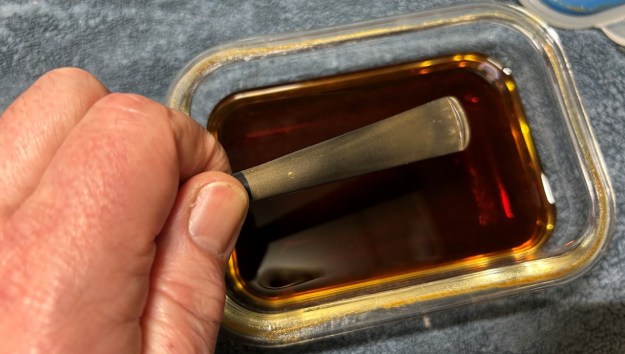
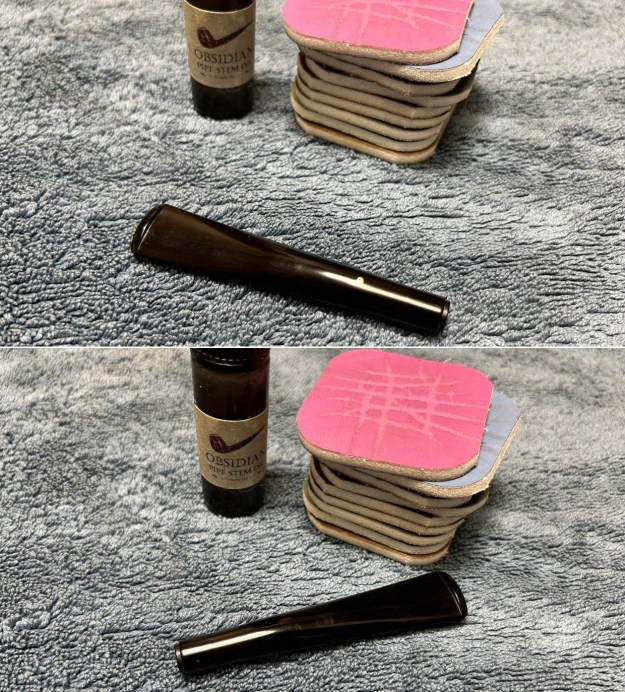
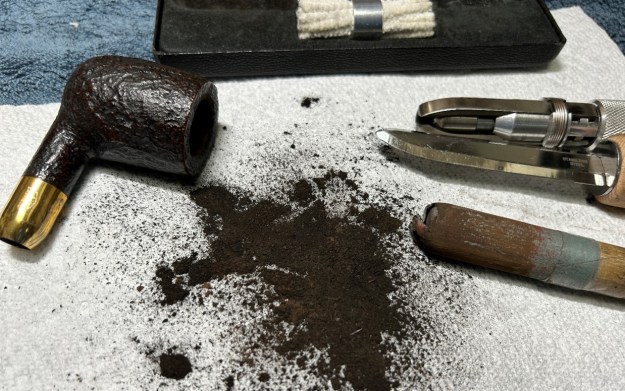
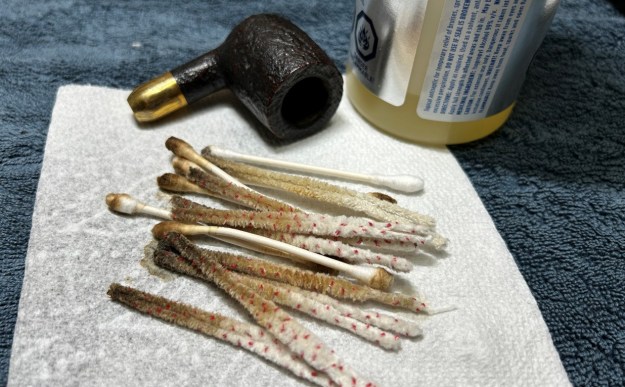
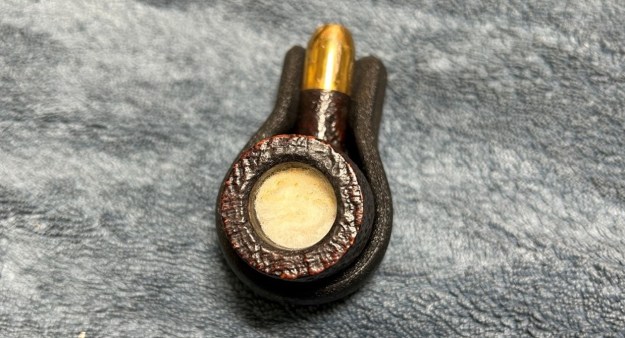
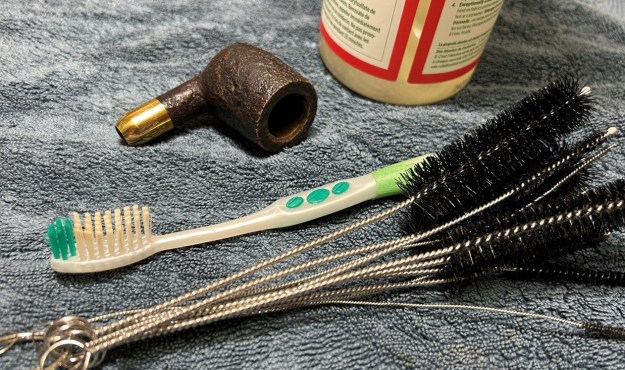
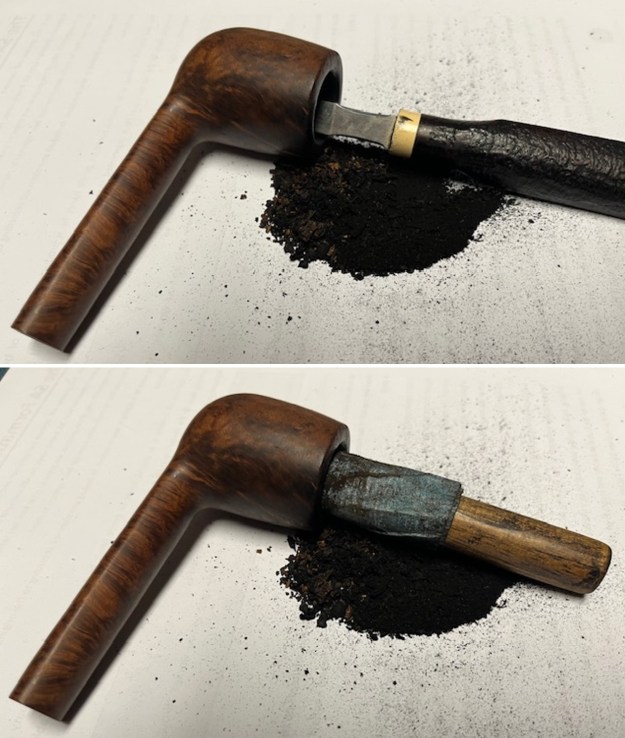
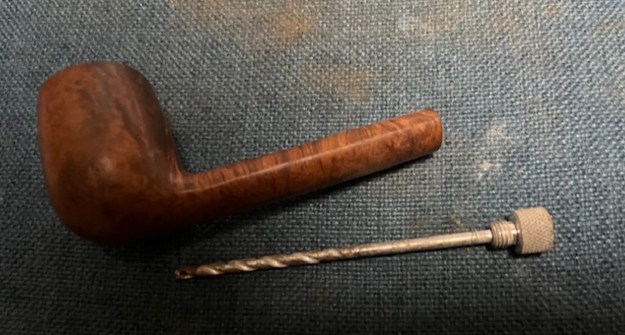
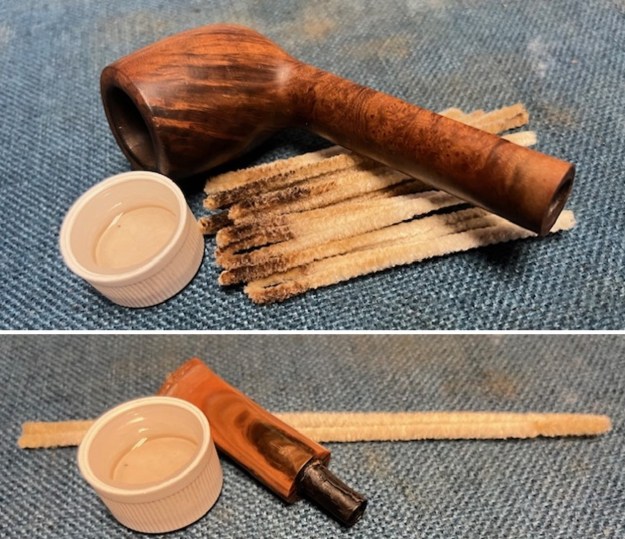
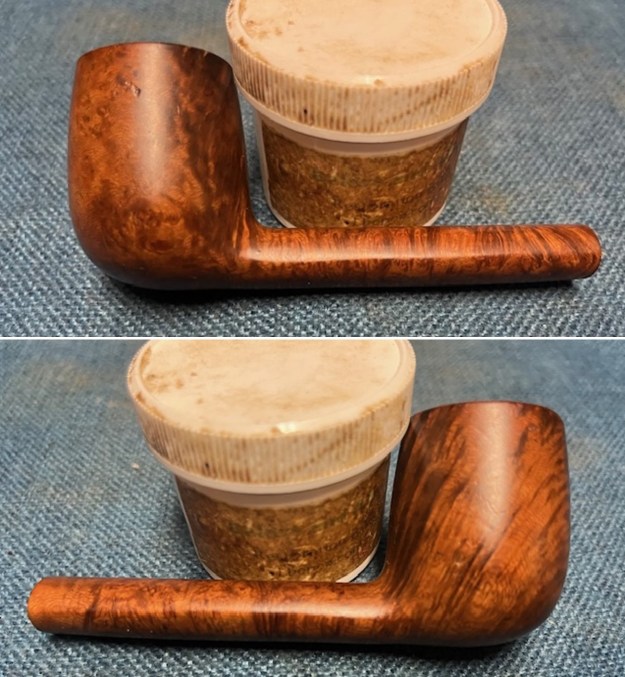
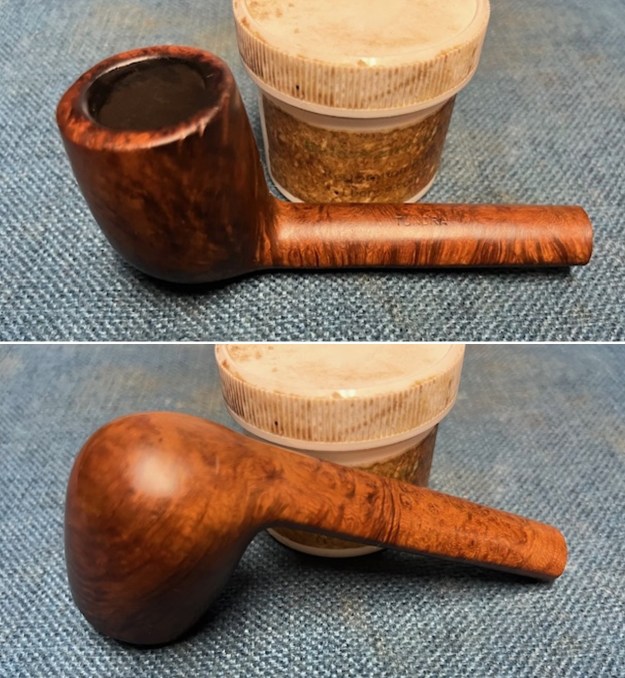
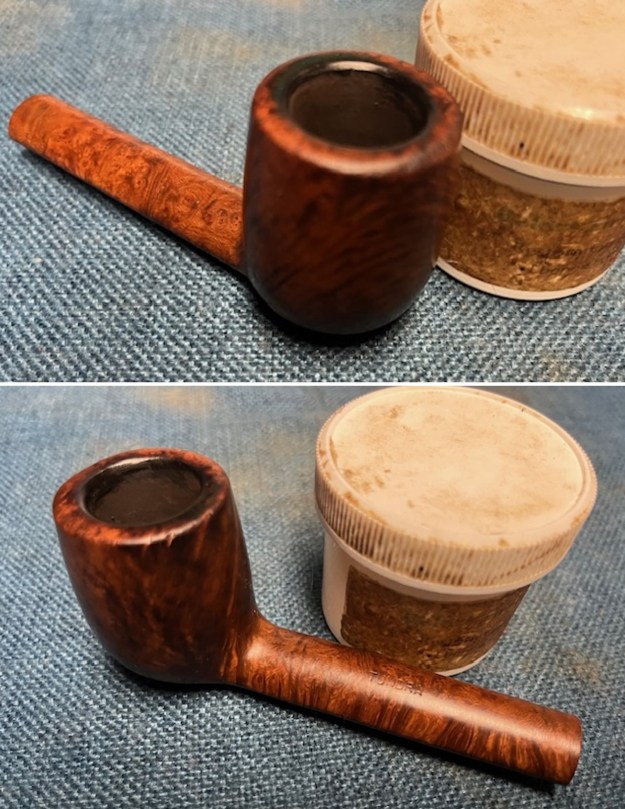
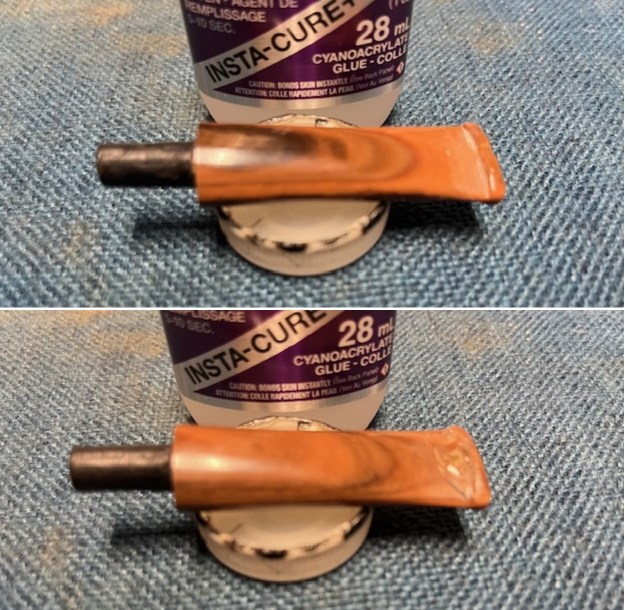
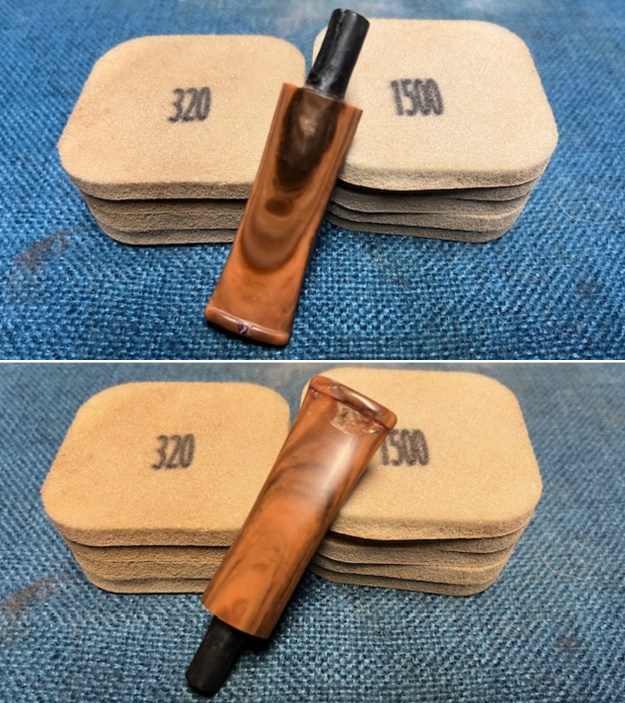
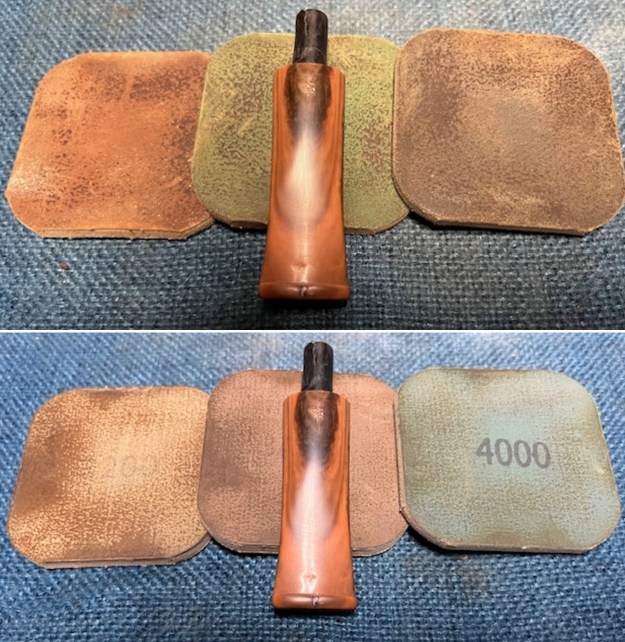
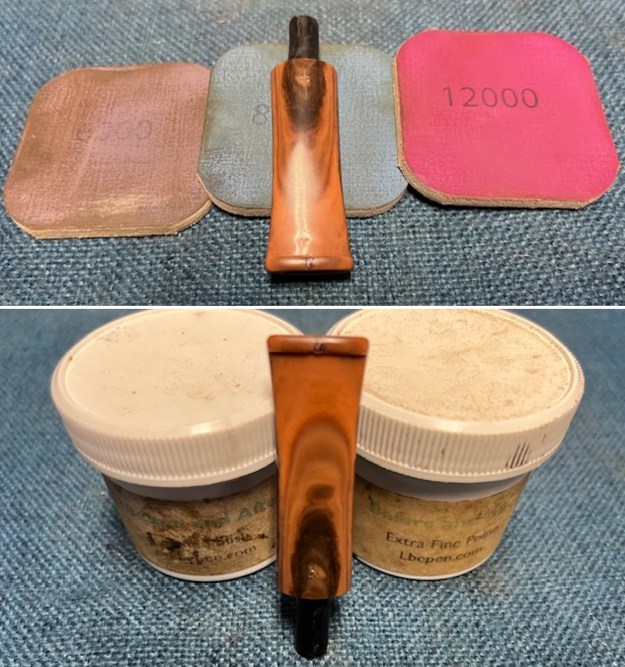
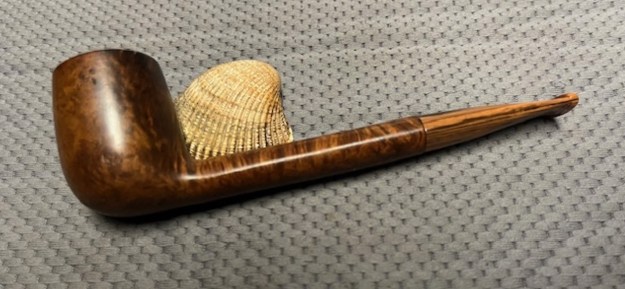
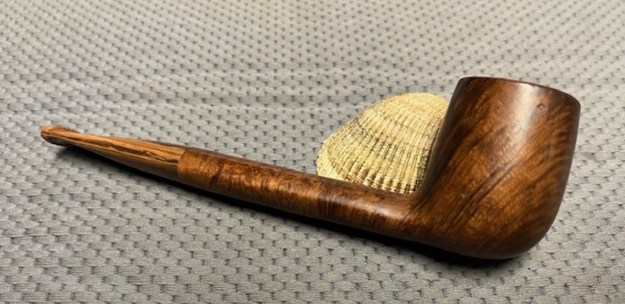
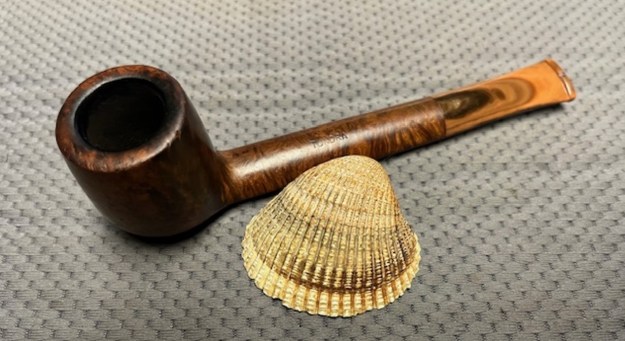
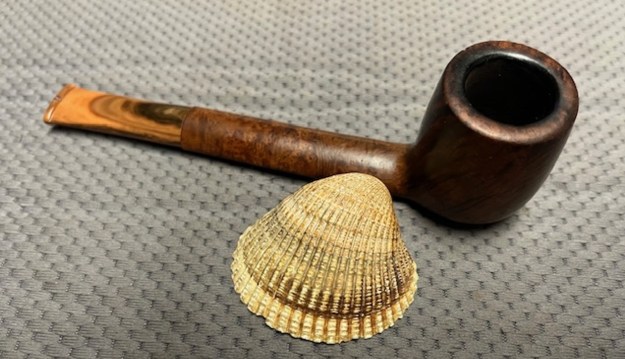
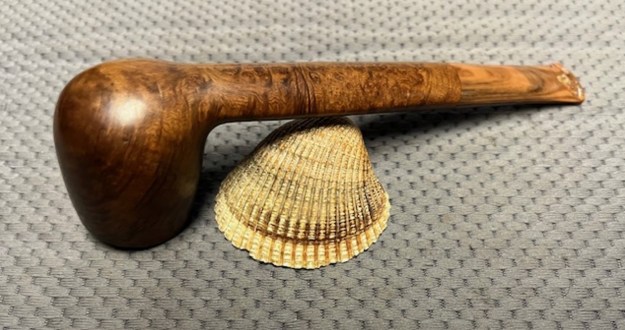
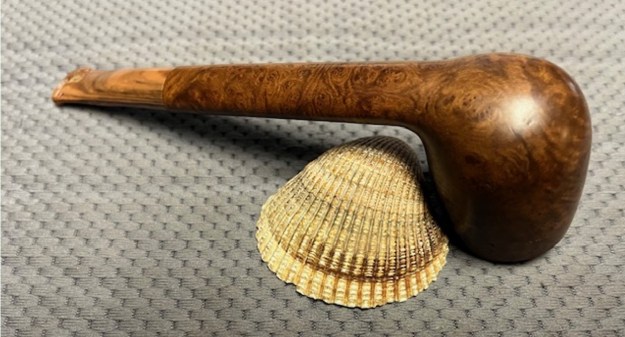
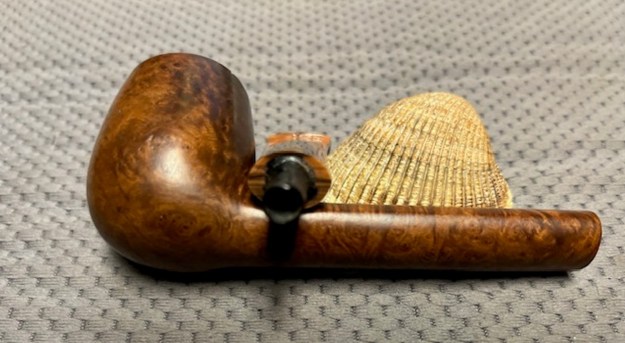
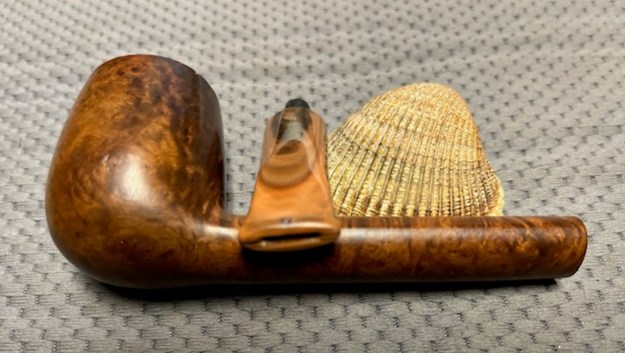
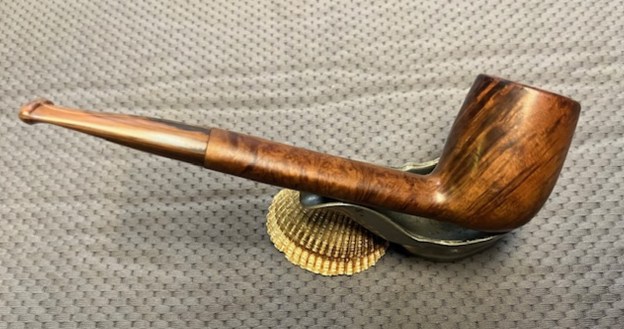
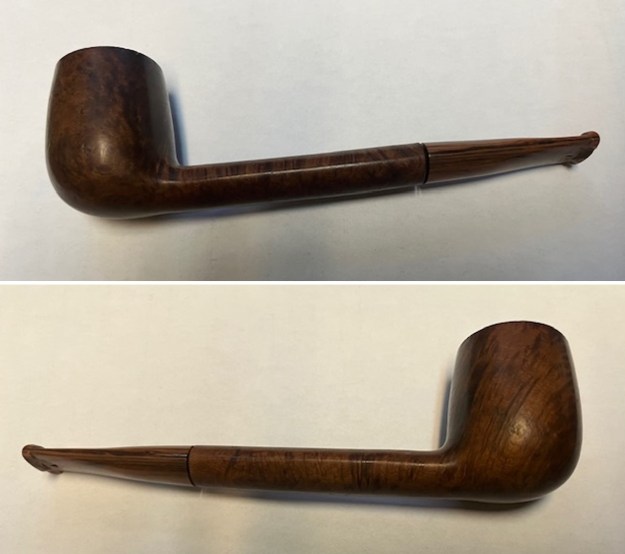
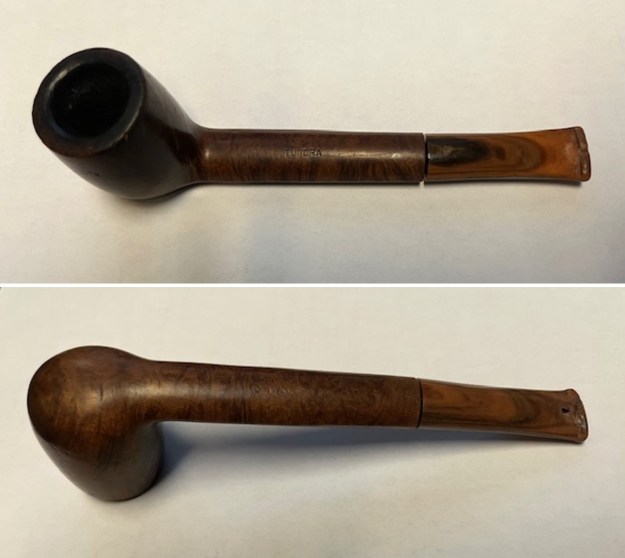
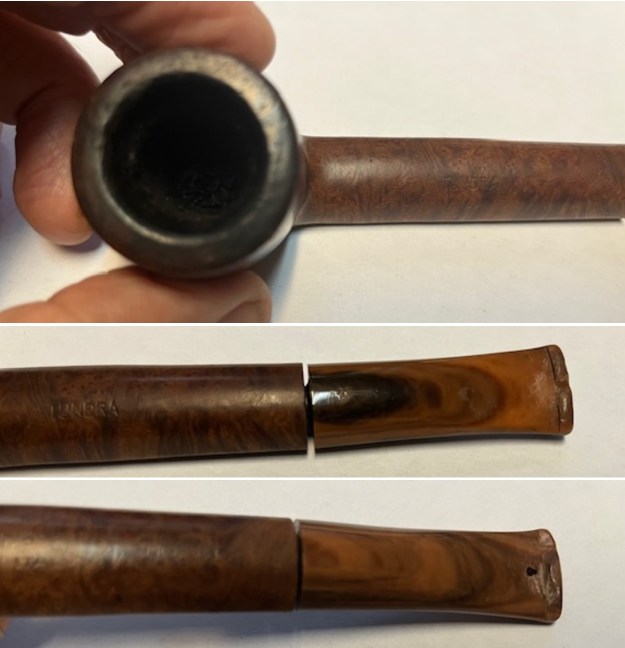
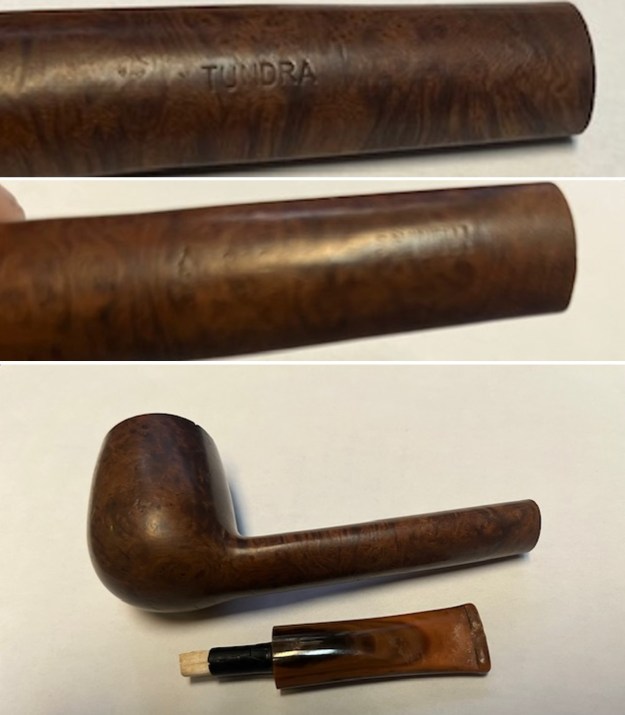
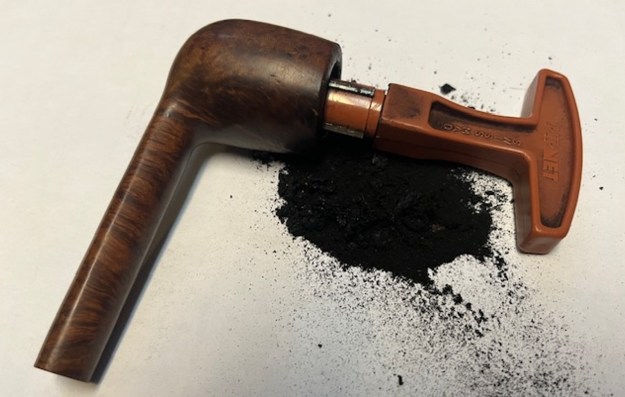
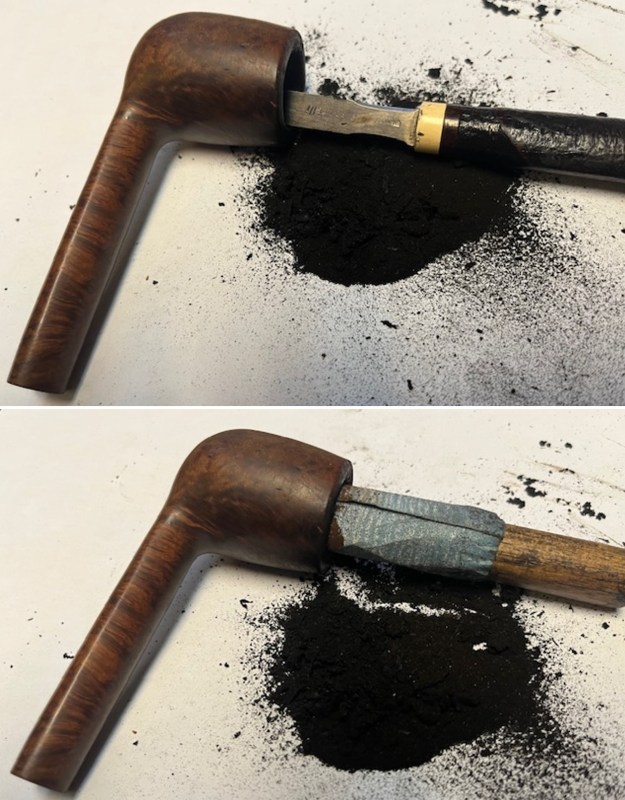
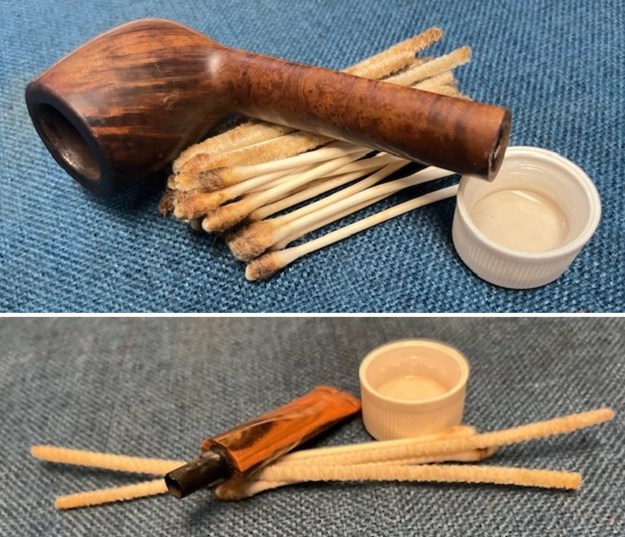
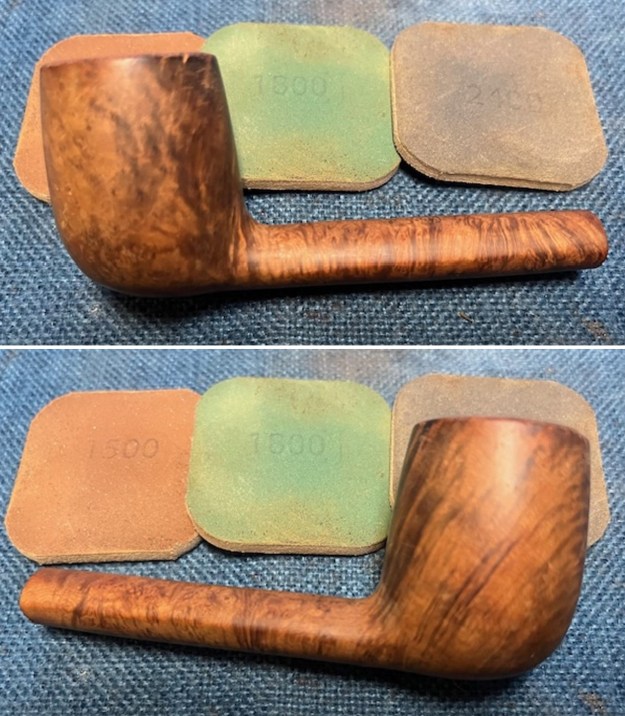
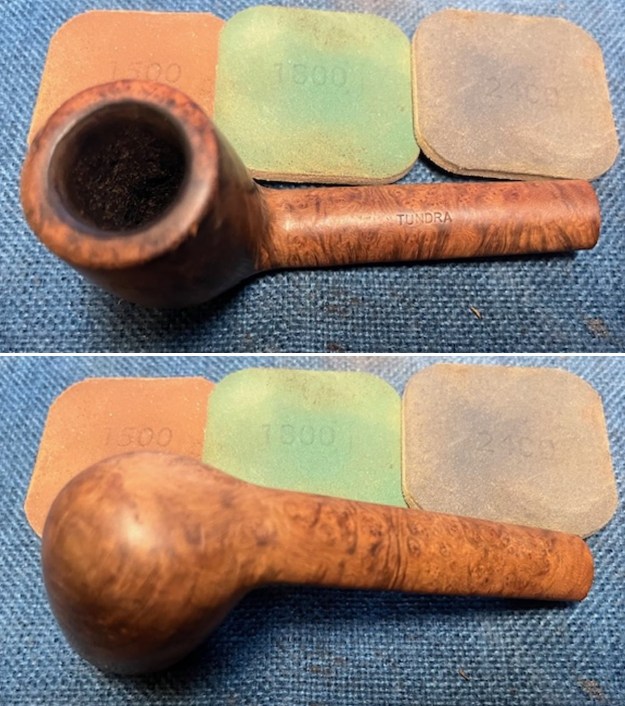
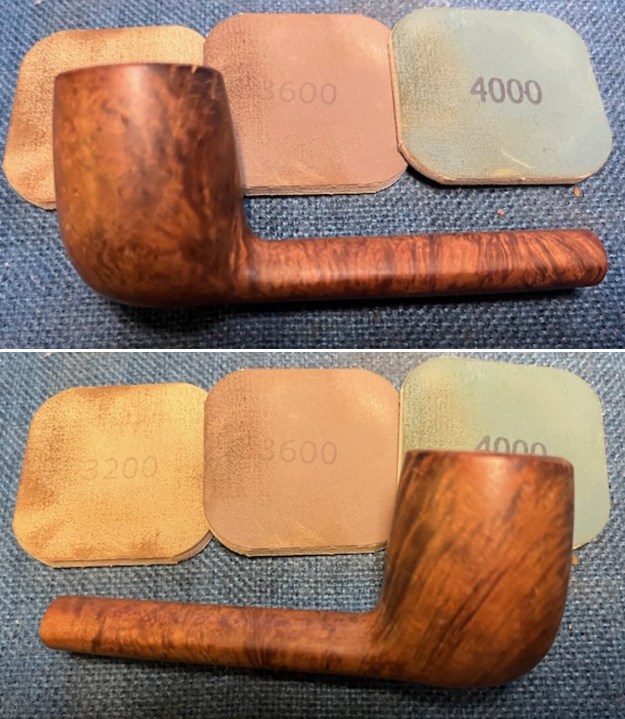
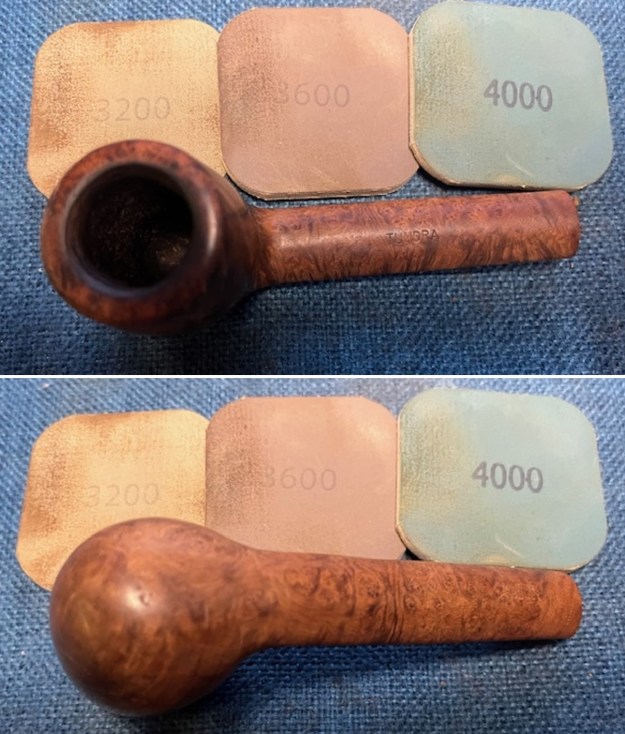
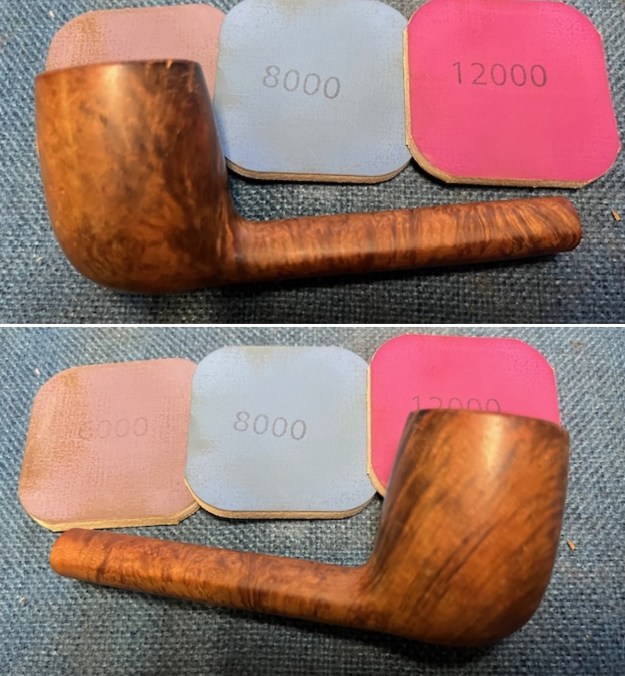
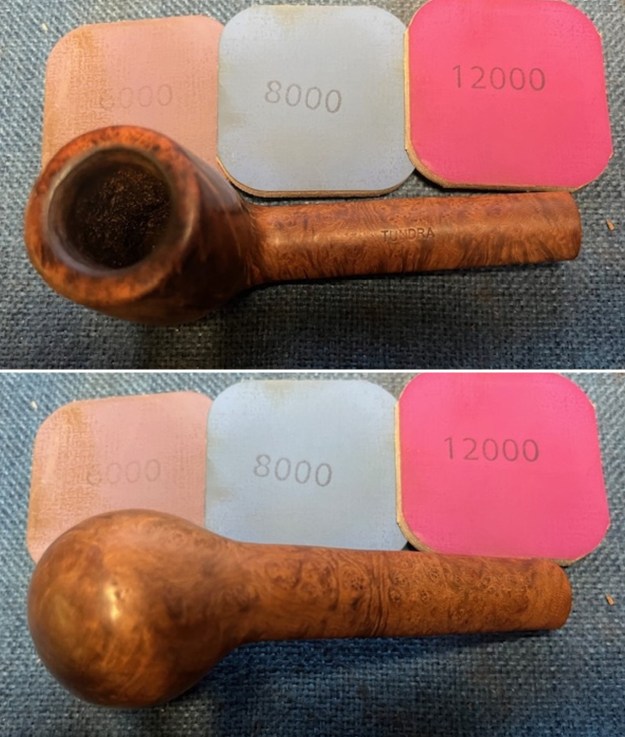
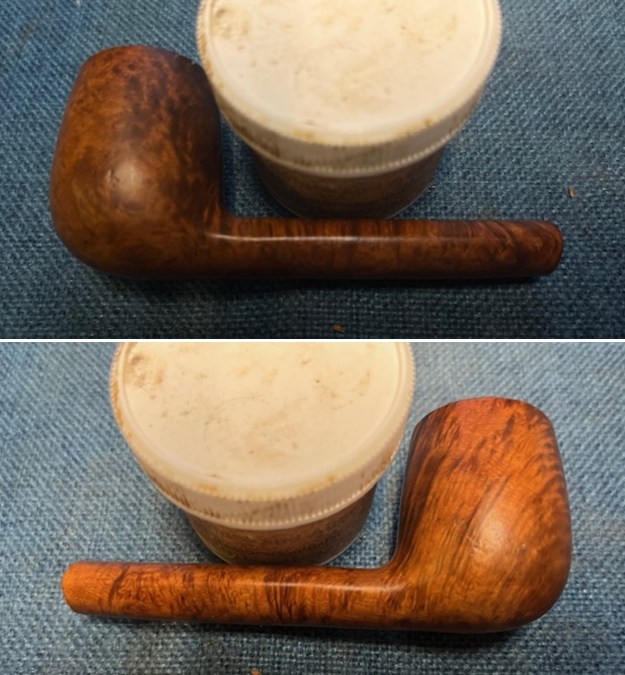
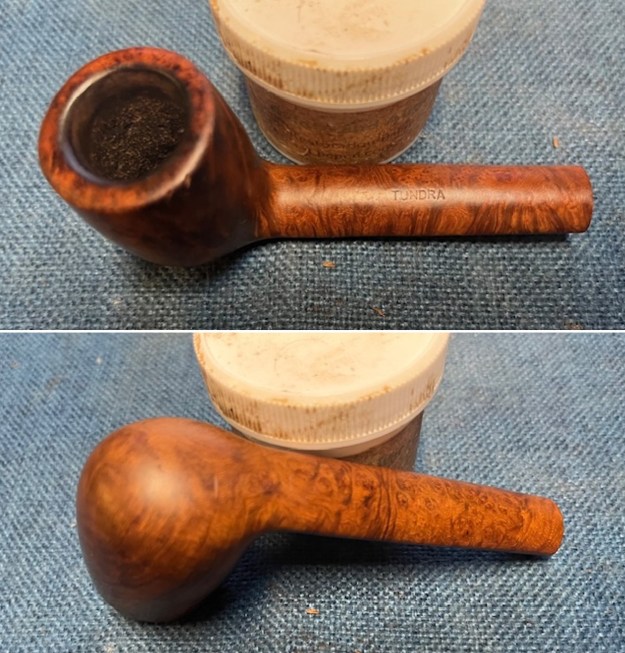
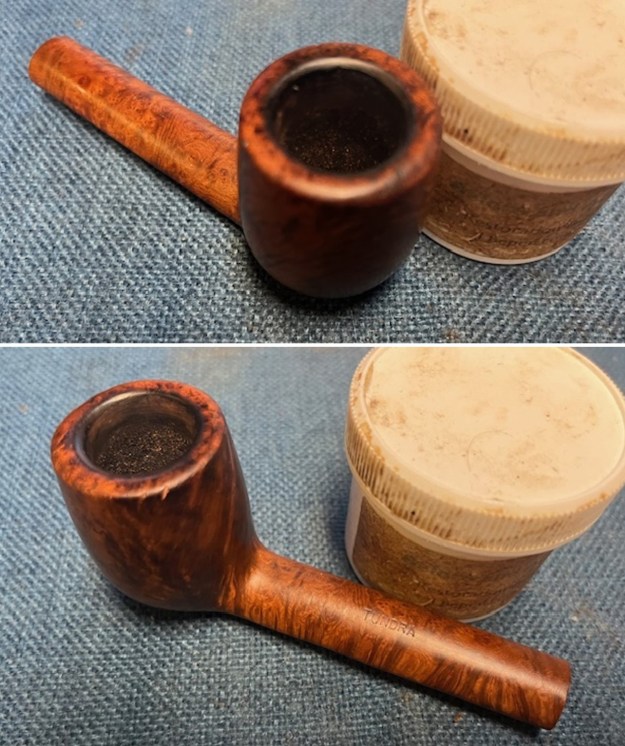
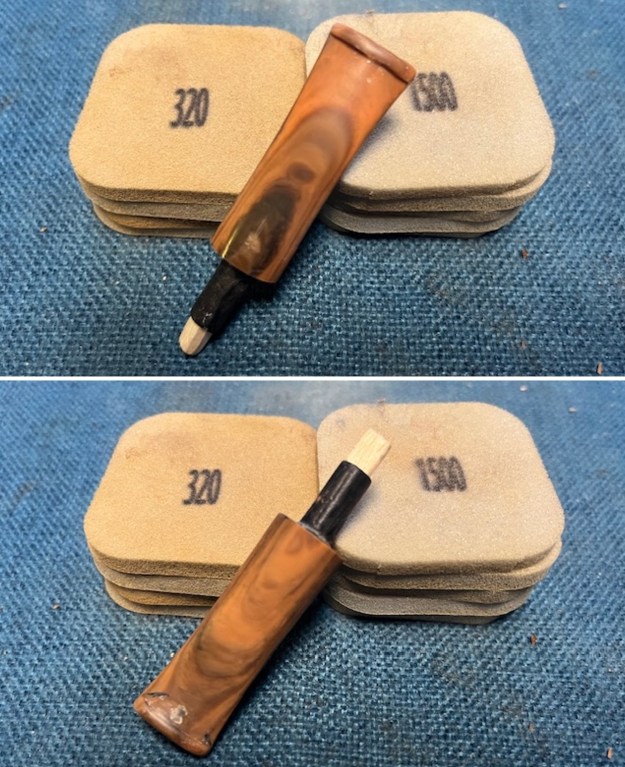
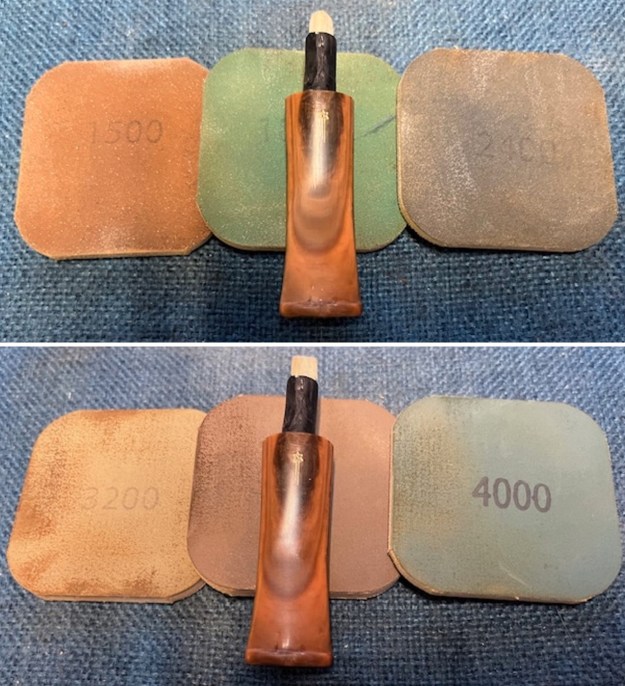
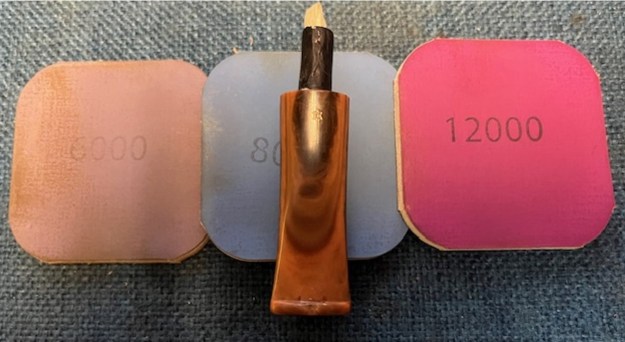
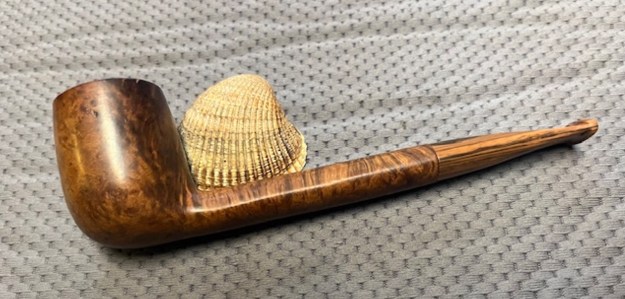
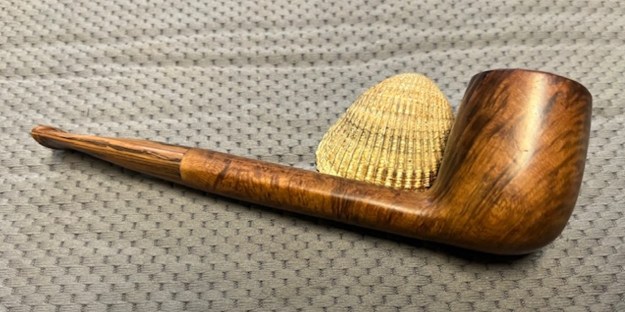
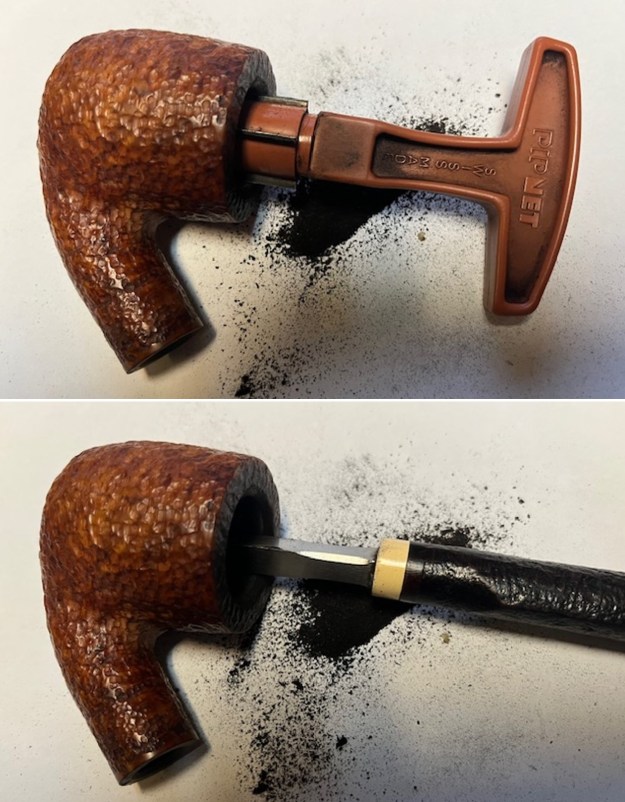
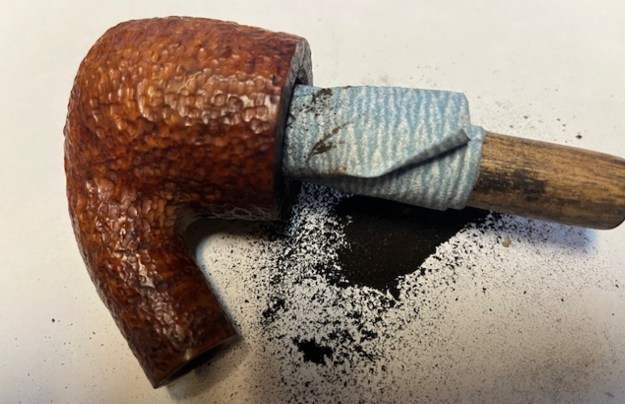
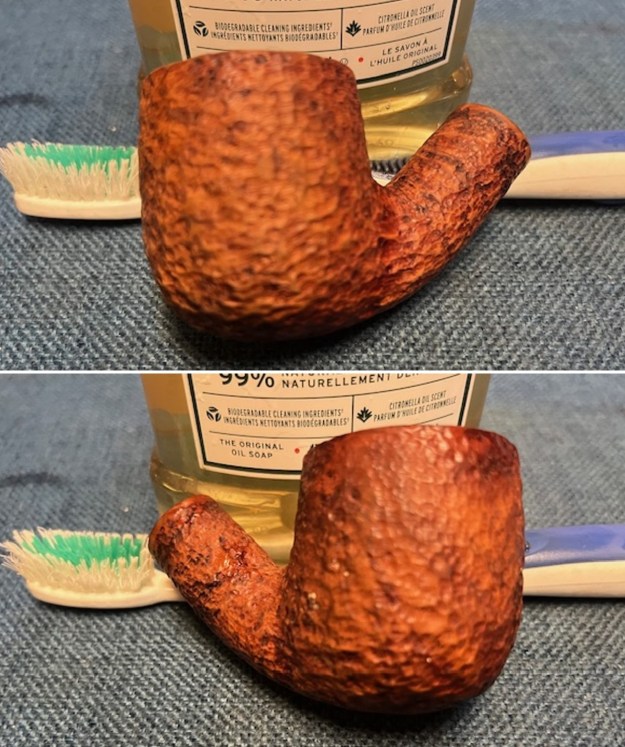
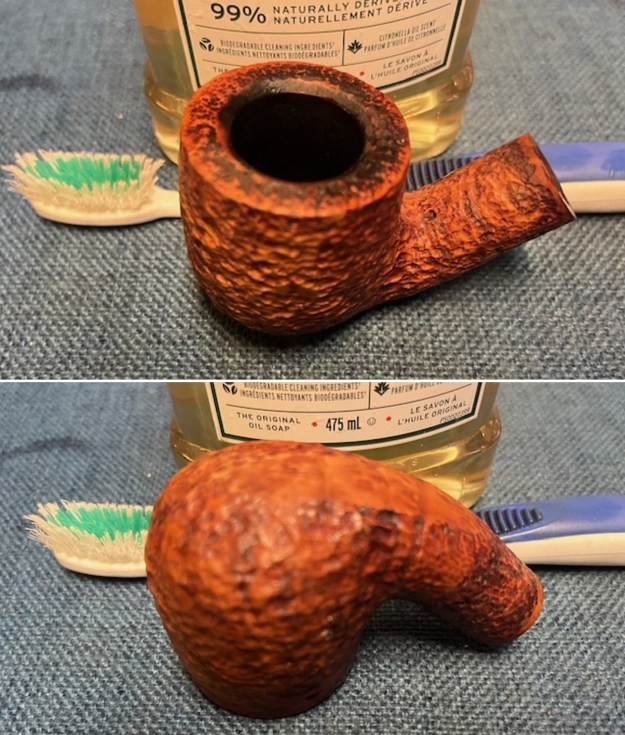
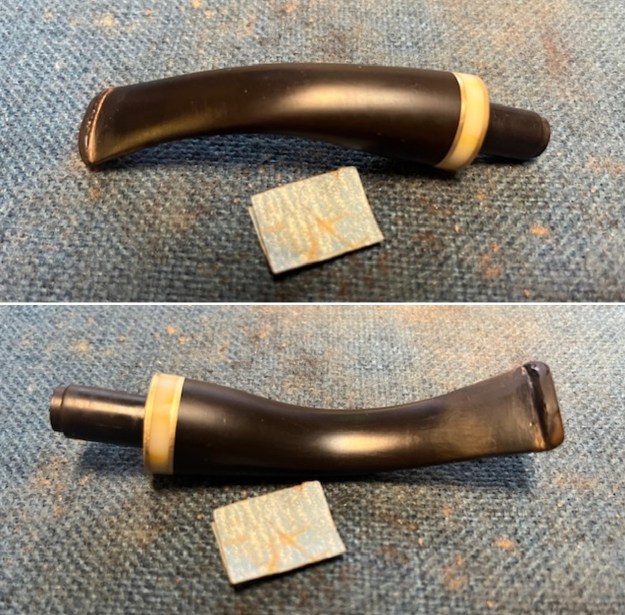
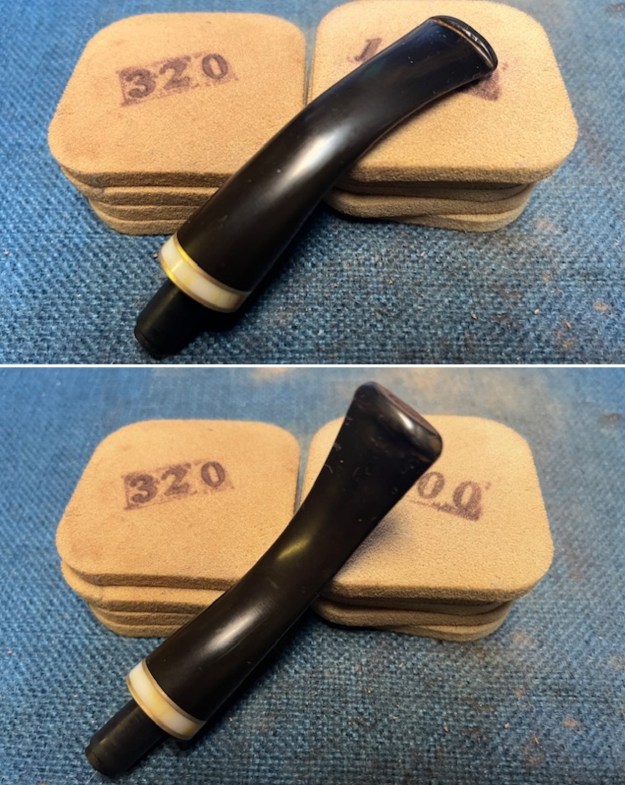
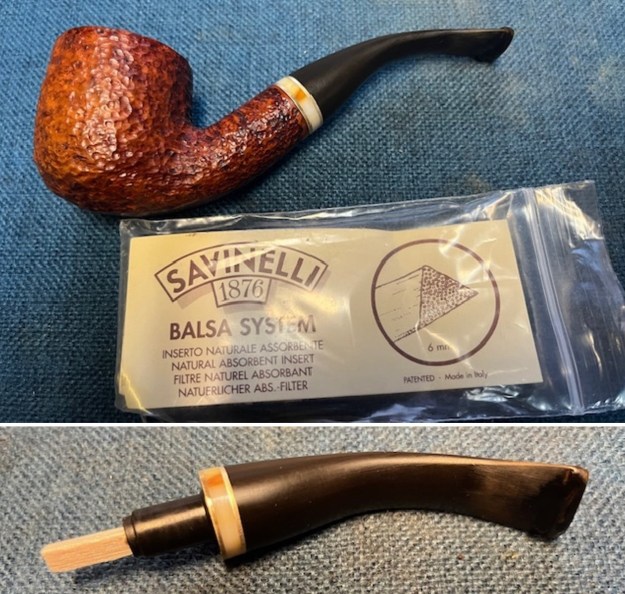
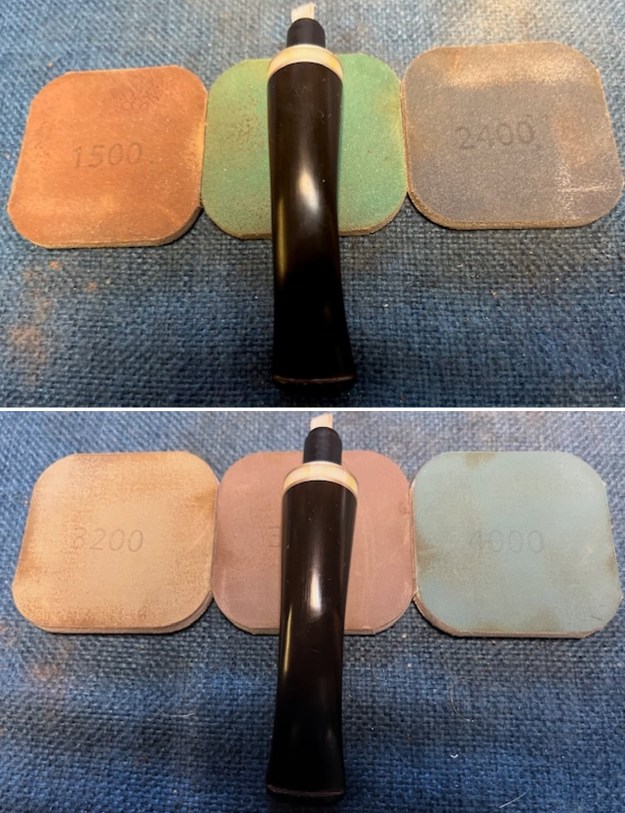
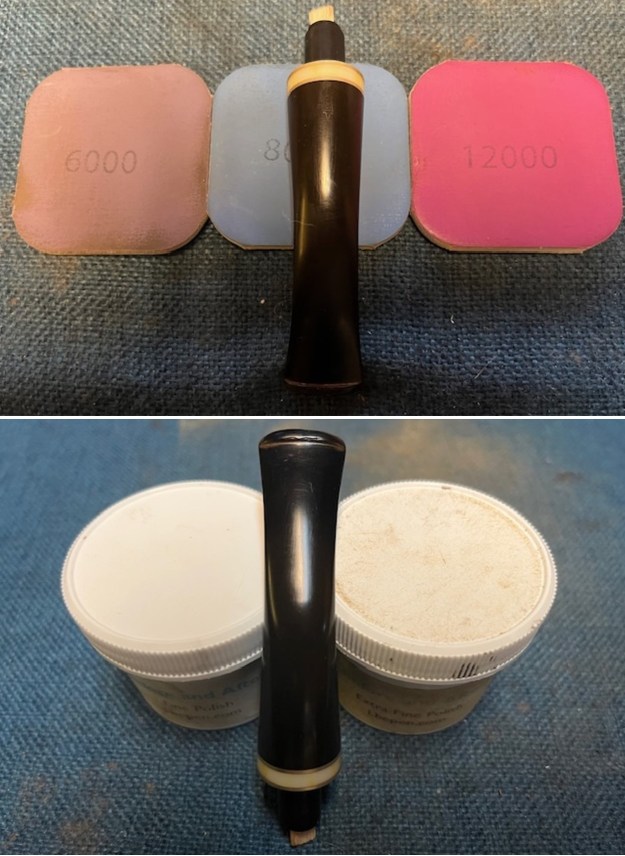
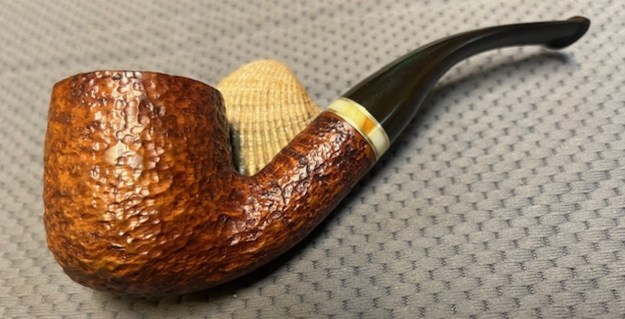
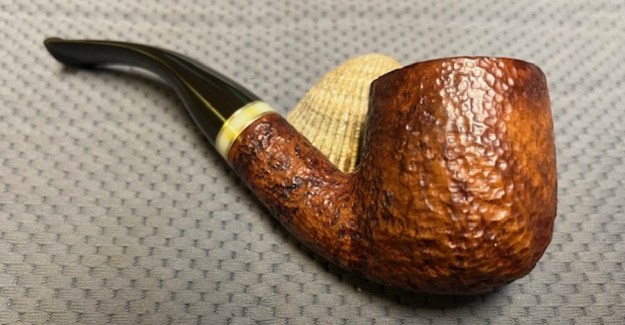
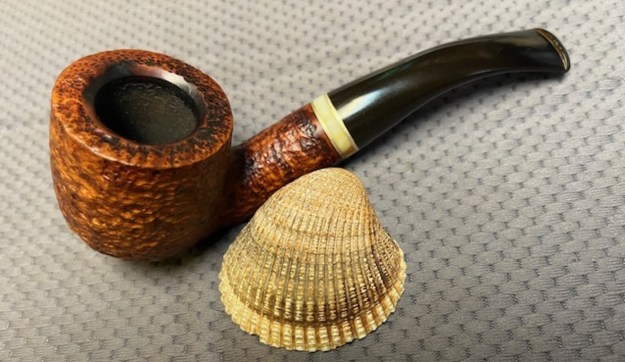
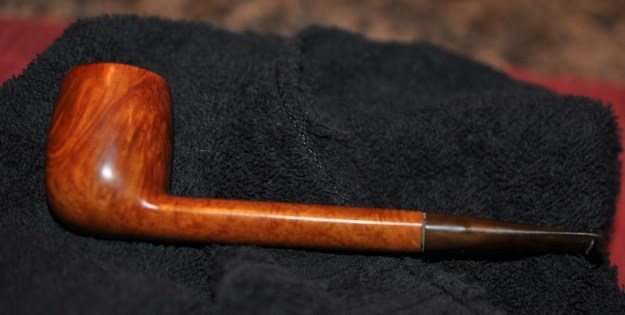
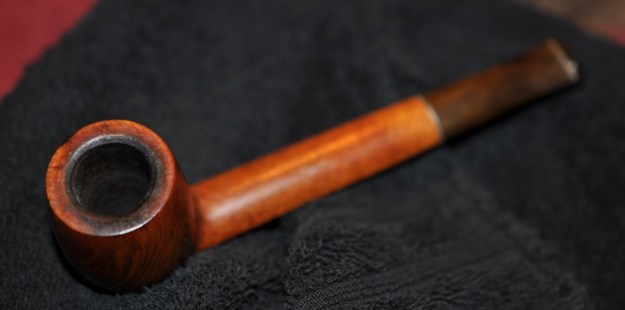
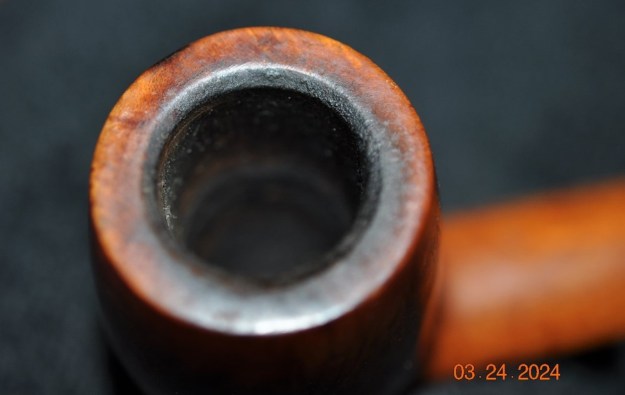
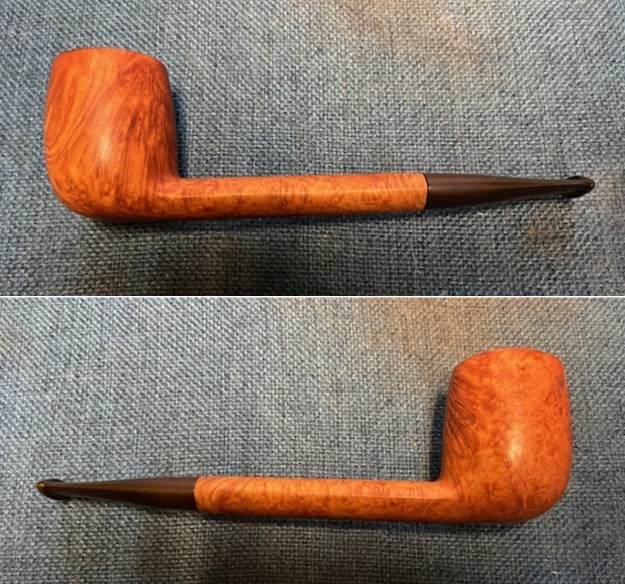
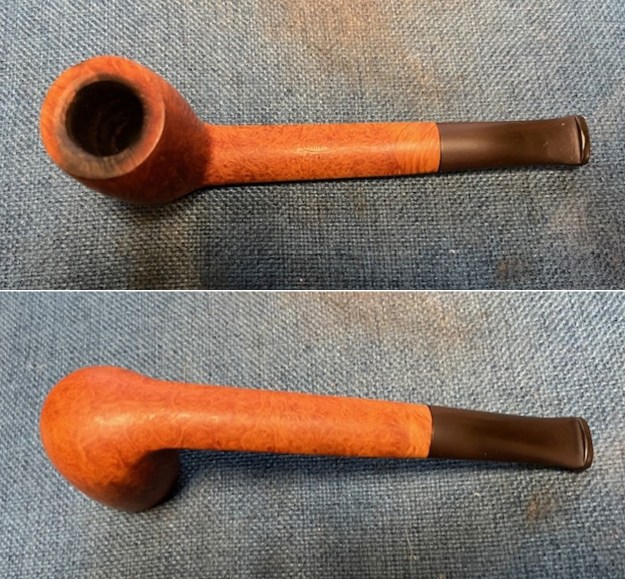
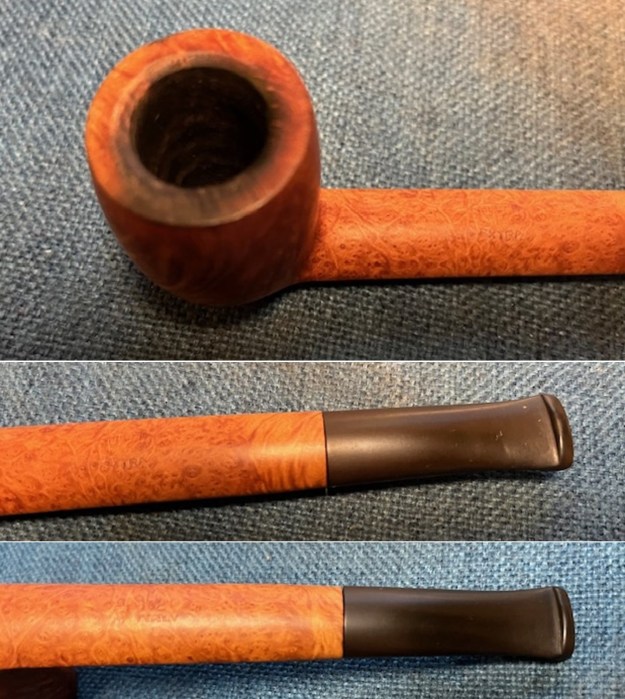
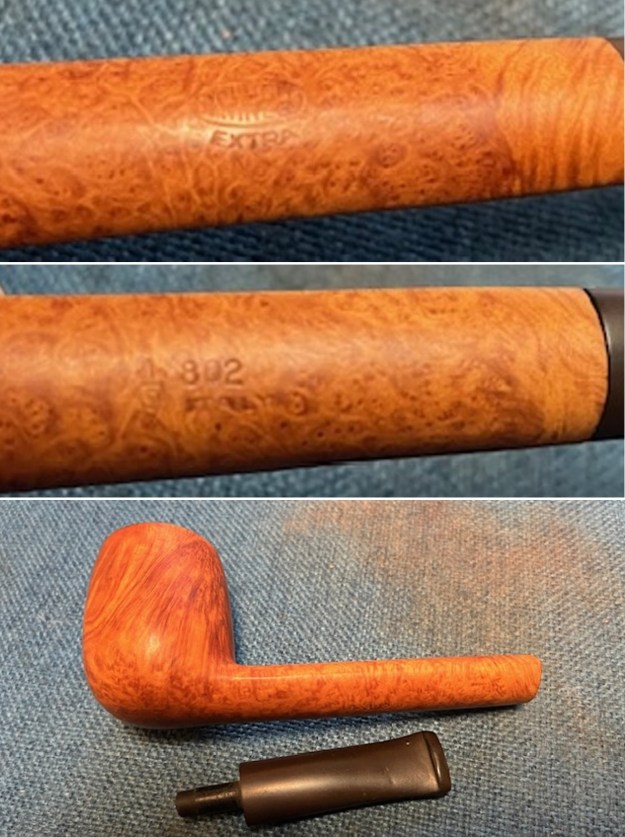
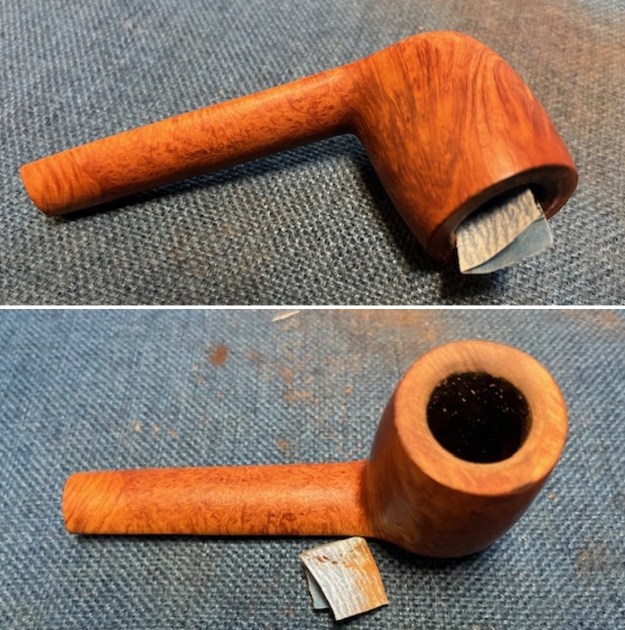
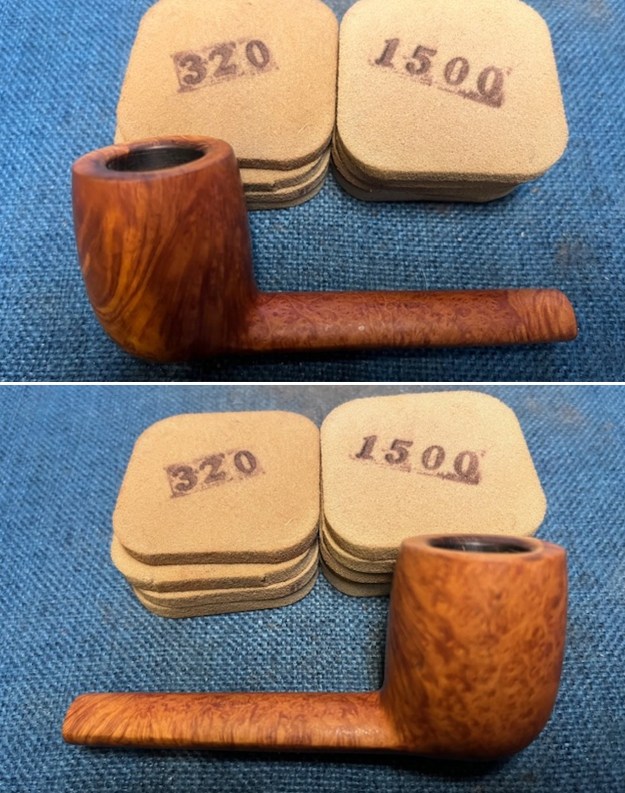
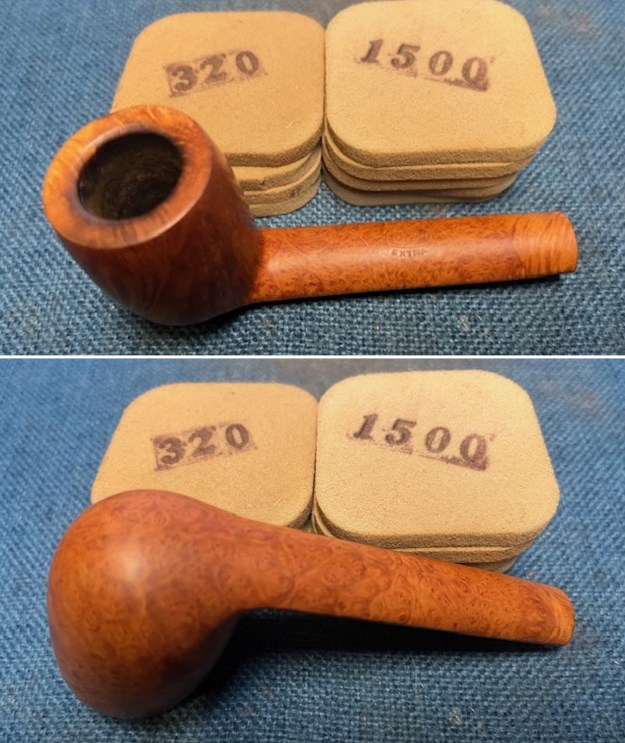
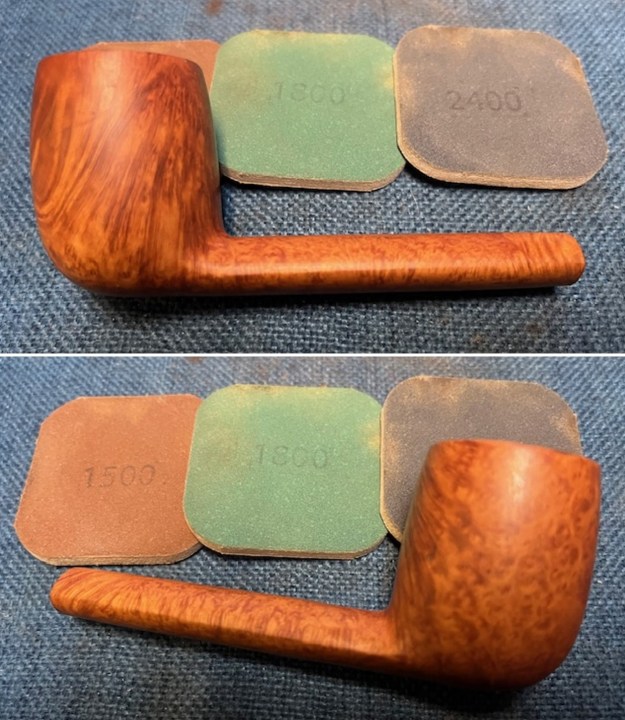
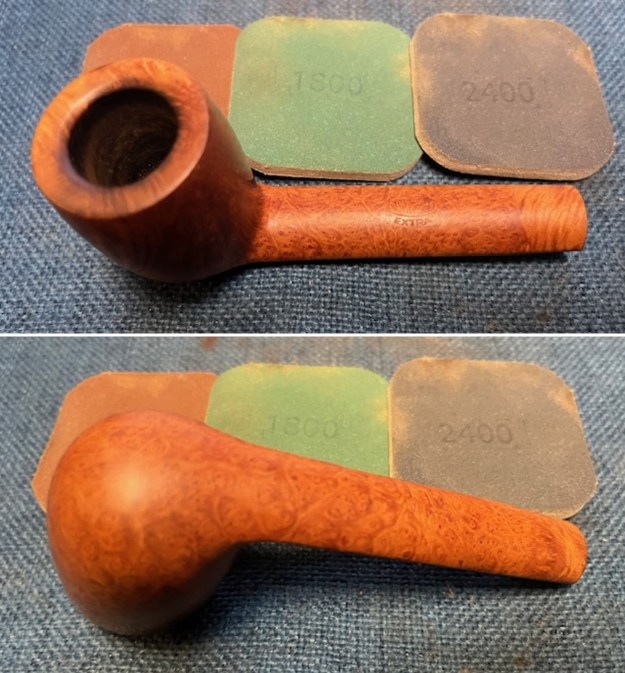
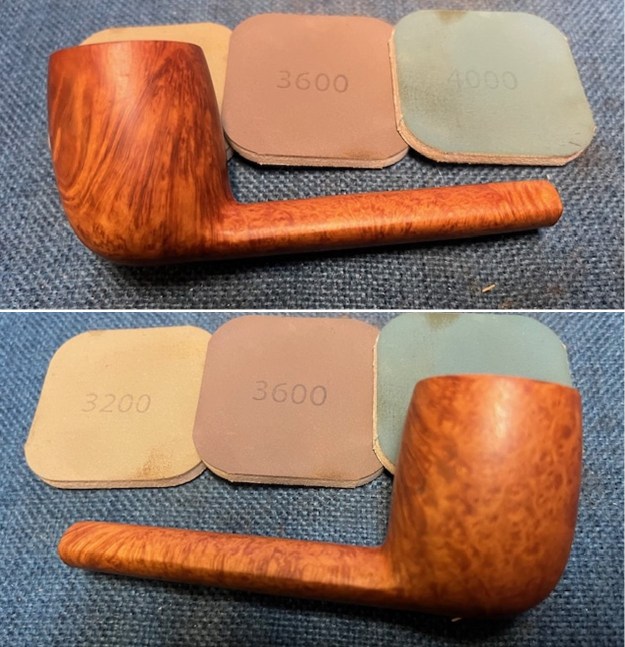
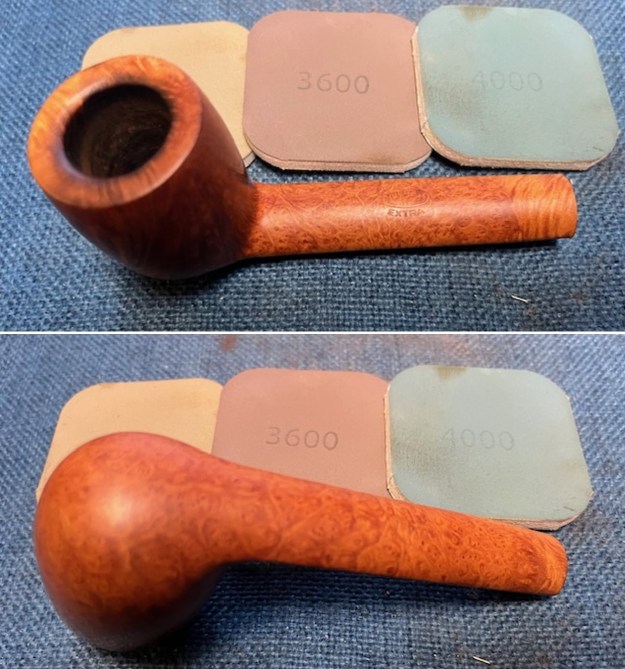
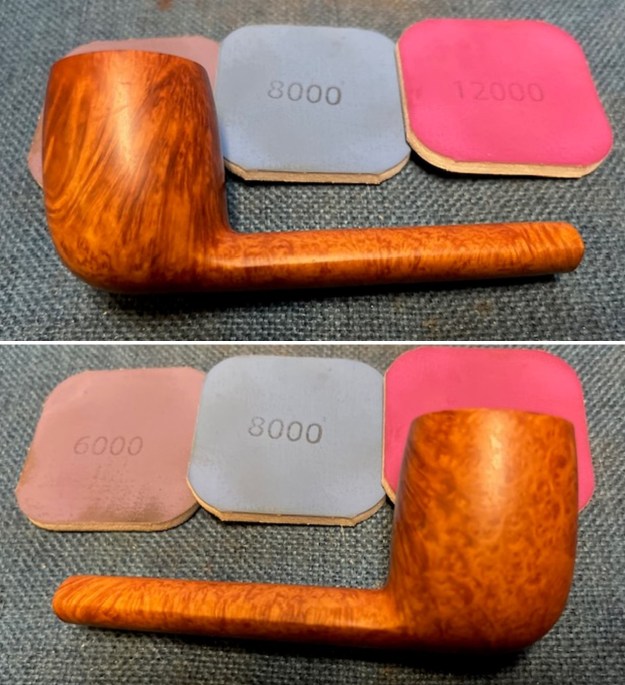
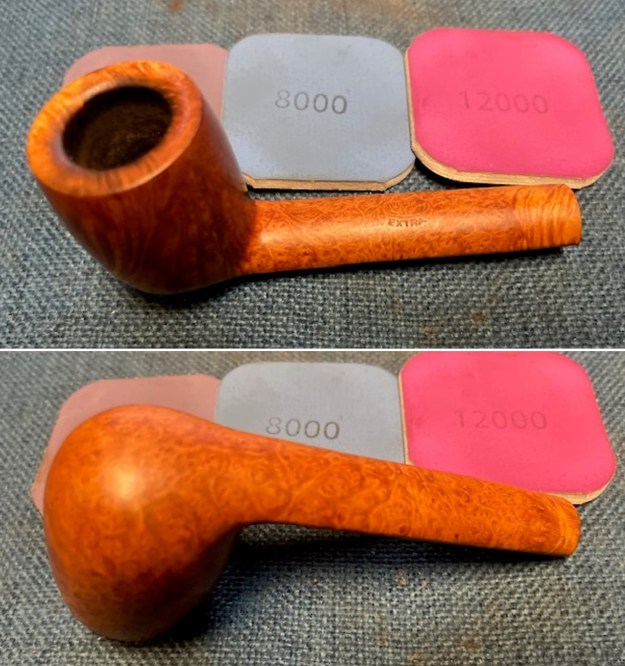
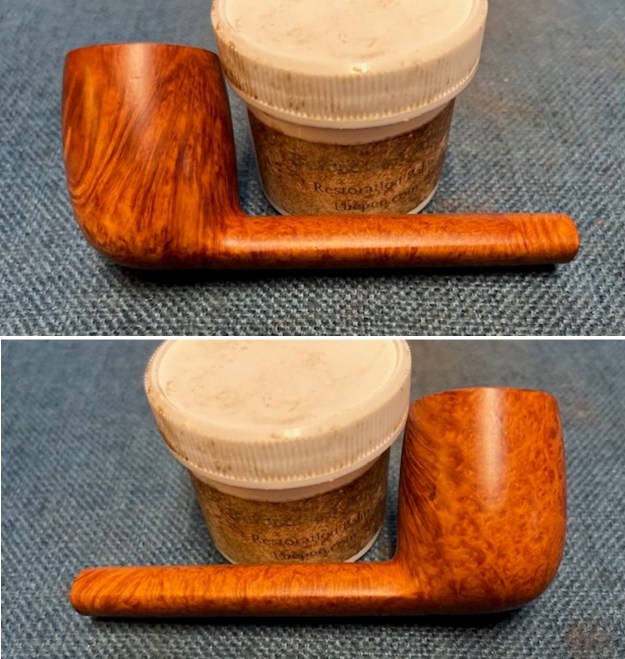
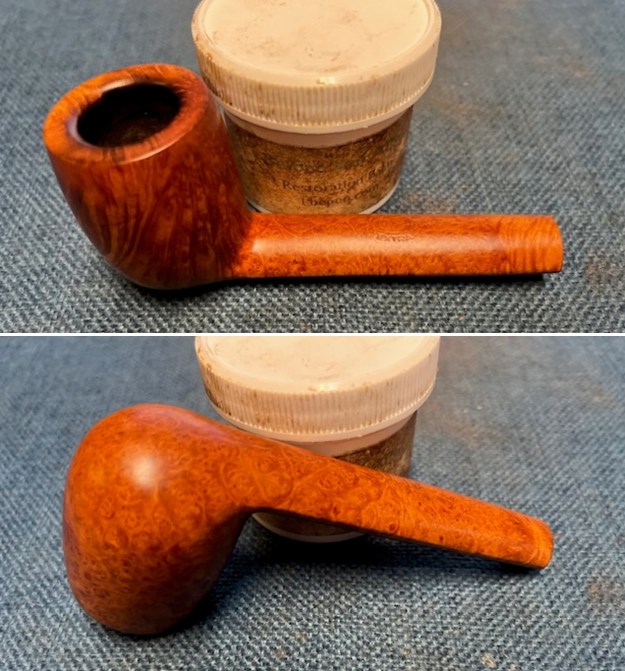
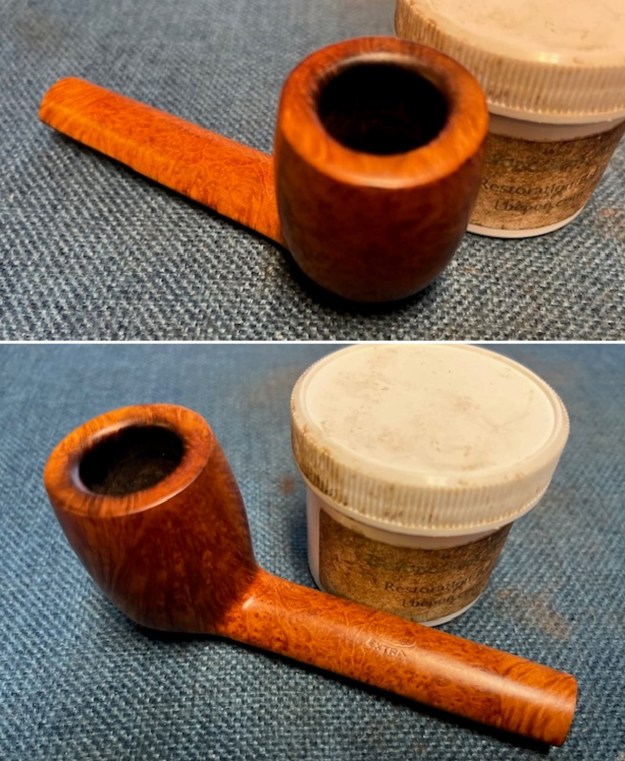
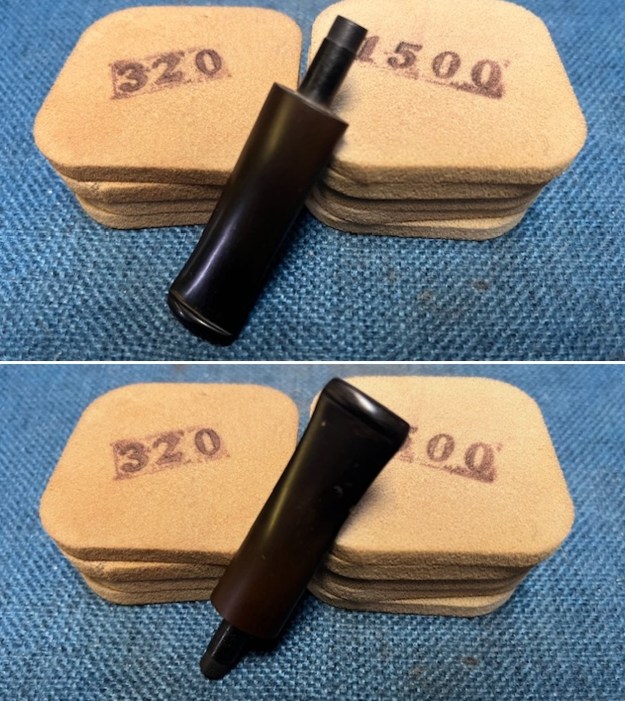
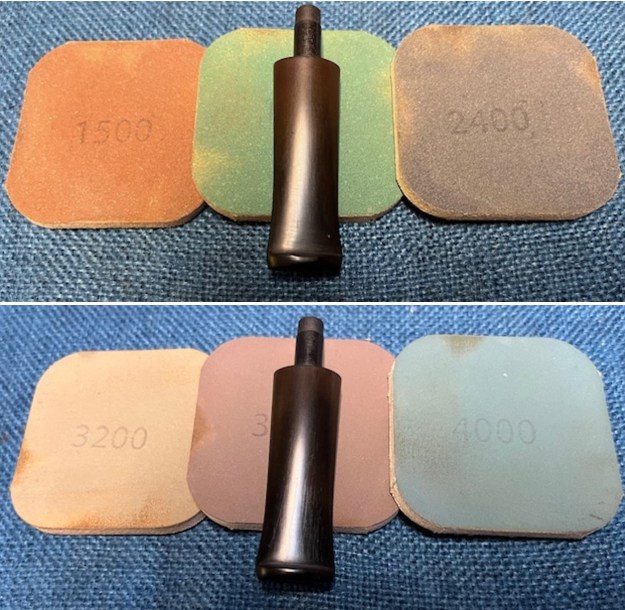
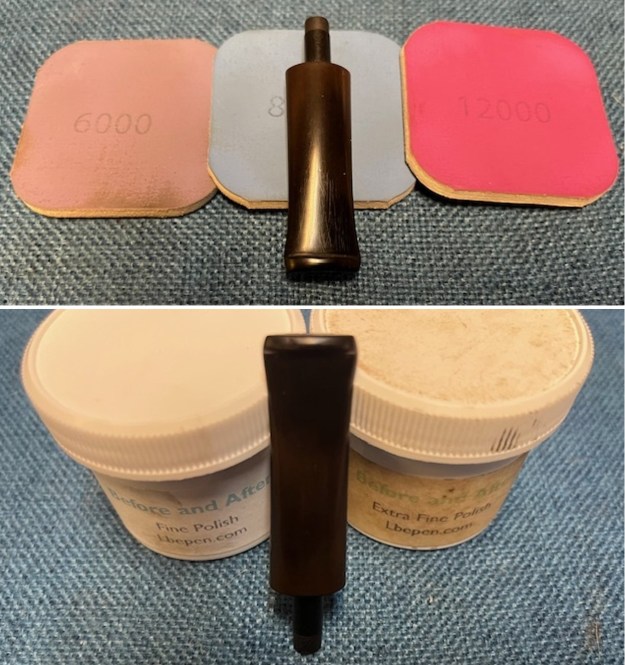
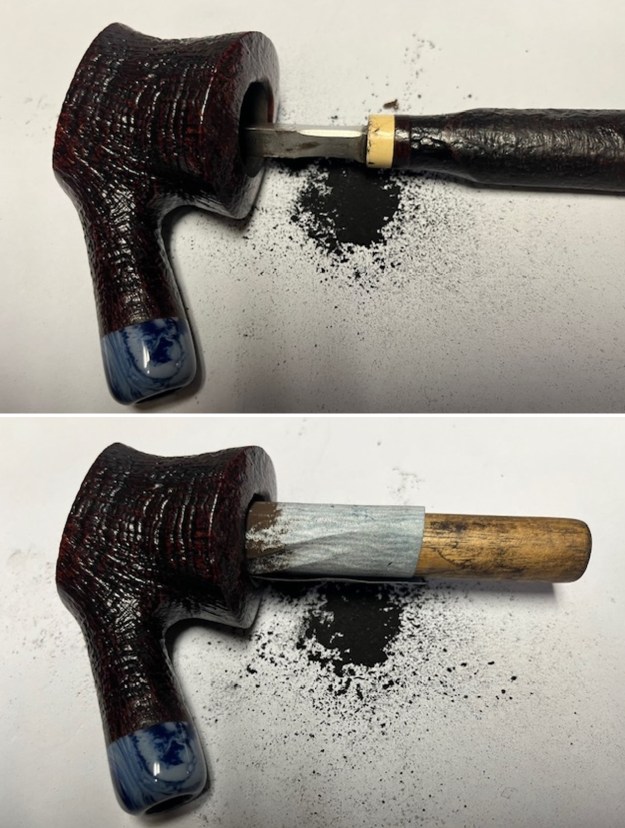
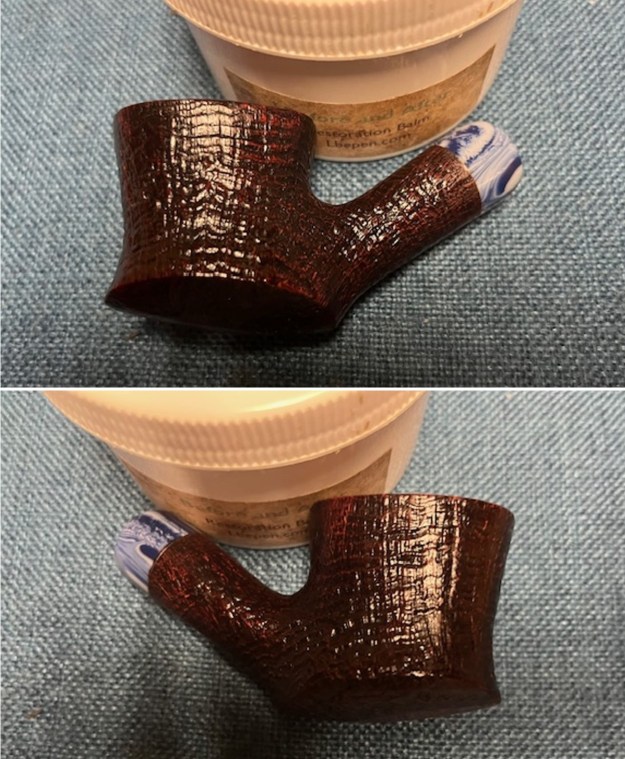
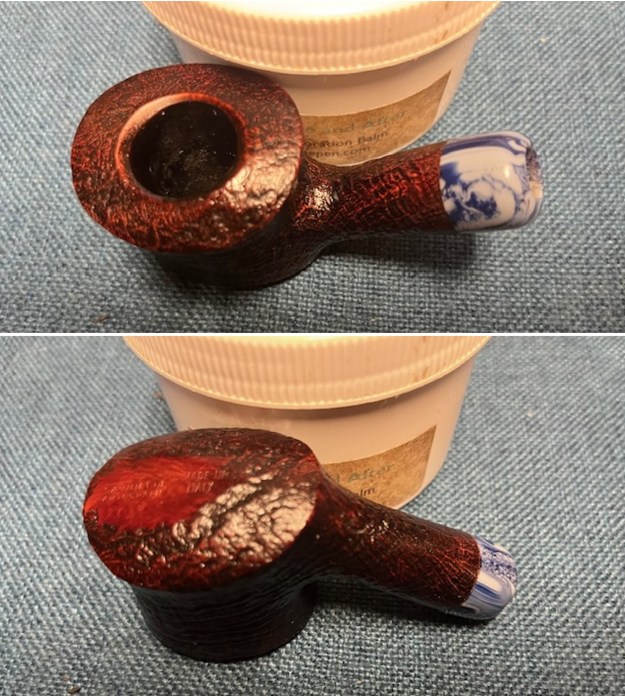
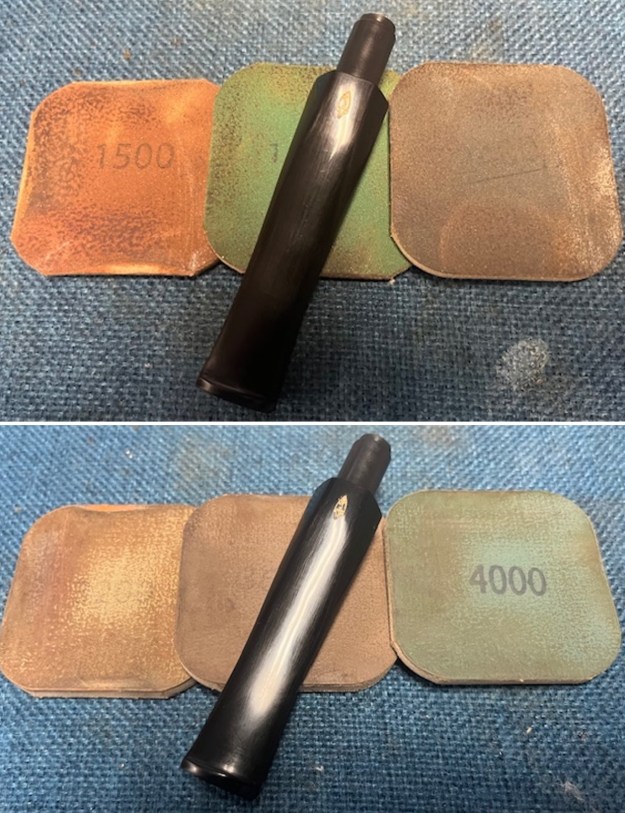
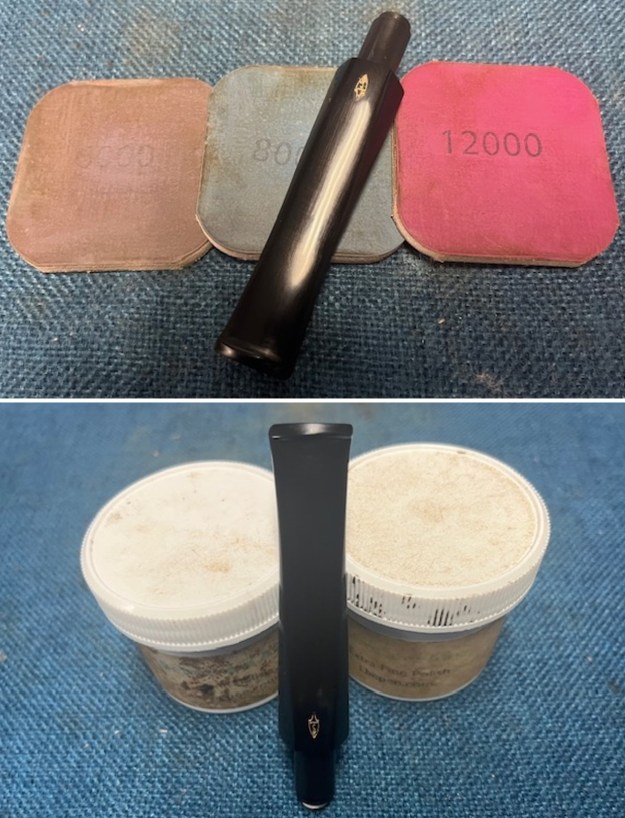
I chose to work on was Savinelli Tundra. It looked very familiar to I checked out the blog and sure enough as noted above I had restored it once already. It was stamped on the topside of the shank and read Tundra. On the underside it has a Savinelli S shield on the underside followed by the shape number 802. The finish was still pretty clean. The bowl already had a thick cake and some wet sticky dottle that completely covered the airway at the bottom of the bowl as it had before. The rim top had was covered by light coat of lava that was sticky. The taper stem was multi-coloured acrylic. The bite through I had repaired had held up quite well. The shank and airways in both the mortise and stem were very dirty. I blew through the stem and it was clear and unclogged. I tried to blow through the shank and it was constricted with tars.  I took photos of the pipe before I started my work. It amazed me how quickly the pipe had clogged again. I took photos of the rim top and the stem to show the condition. You can see the cake and dottle in the bowl and the clean rim top. The photos of the stem show that the repairs on the tooth marks and chatter on the top looks to be in great condition.I took photos of the stamping on the top and underside of the shank to capture it. The Tundra stamp and the stamping on the underside was faint but readable as noted above. I removed the stem and took a photo of the parts to give a sense of the look of the pipe.I started my work on the pipe by cleaning out the dottle in the bottom of the bowl. It was thick and wet. I reamed the bowl with a PipNet reamer. I used the first cutting head and took the cake back to bare briar. I cleaned up the reaming with a Savinelli Fitsall Pipe Knife and removed all the remnants of the cake. I sanded the walls of the bowl with a piece of dowel wrapped in 220 grit sandpaper. The walls look very good at his point in the process. I used the drill bit in a Kleen Reem pipe reamer and twisted it into the shank in the shank until it went to the bowl. It cleaned out more of the debris and opened the airway. I cleaned out the shank, the airway and the mortise as well as the airway in the stem with alcohol, cotton swabs, hard bristle and soft bristle pipe cleaners. It was a very dirty pipe which just meant that Brian really enjoyed it. I rubbed the bowl and shank down with Before & After Restoration Balm to deep clean the finish on the bowl and shank. The product works to clean, enliven and protect the briar. I worked it in with my fingers to get it into the briar. I let it sit for 10 minutes then I wiped it off and buffed it with a soft cloth. The briar really began to have a rich shine. I took some photos of the bowl at this point to mark the progress in the restoration. It is a beautiful bowl. With the shank clear and the airway open it was time to work on the stem. It was clear once again just dirty and I needed to clean up my repairs on the stem. Though I did not take photos of the process as this point I used my normal process. I used small files to recut the button edge, reshape the surface and flatten the repair on the stem surface on both sides. The filled in bite through on the underside was visible but the beauty was it was underneath! I would continue to sand and work it to minimize the visibility but the repair was solid.I sanded the surface of the acrylic taper stem with the 2 x 2-inch sanding pads – 320-3500 grit pads to clean up the sanding marks on the stem surface. By the final 3500 grit pad the stem started to really shine. The repairs are visible but they are smooth. It is hard to patch Cumberland style stems.I polished the stem with micromesh sanding pads – dry sanding with 1500-12000 grit pads. I wiped the stem down after each sanding pad with Obsidian Oil. I set it aside to dry. I finished cleaning and opening up the airway once again on this Savinelli Tundra 802 Canadian with an acrylic taper stem. I put the pipe back together and buffed it with Blue Diamond on the buffing wheel. I gave the bowl multiple coats of carnauba wax. I buffed the pipe with a clean buffing pad to raise the shine and then by hand with a microfibre cloth to deepen it. It is fun to see what the polished bowl looks like with beautiful grain on the smooth bowl and shank. The polished grain on the pipe looks great with the repaired acrylic stem. This Savinelli Tundra Canadian looks better and the pipe feels great in my hand. It is light and well balanced. Have a look at it with the photos below. The dimensions are Length: 6 inches, Height: 1 ¾ inches, Outside diameter of the bowl: 1 ¼ inches, Chamber diameter: ¾ of an inch. The weight of the pipe is 41 grams/1.45 ounces. This second of three pipes that Brian me to open up again. I will send the pipes back to him once I have cleaned up the final pipe he sent. I look forward to hearing what he thinks of this resurrected beauty. It should be a great smoking pipe.

As always, I encourage your questions and comments as you read the blog. Thanks to each of you who are reading this blog. Remember we are not pipe owners; we are pipe men and women who hold our pipes in trust until they pass on into the trust of those who follow us.

Restoring and Cleaning a Clogged Savinelli Tundra 802 Canadian


by Steve Laug

On the weekend I received a phone call from Brian, a fellow the local pipe shop referred to me. He had two Savinelli Balsa filter pipes that were clogged and had no airflow. He asked if I would clean and open them up for him. I received them in the post yesterday and opened the box that he sent them in. The first pipe I chose to work on was a Canadian shape. It was stamped Tundra on the topside of the shank and has a Savinelli S shield on the underside followed by the shape number 802. The finish was very dirty and sticky to touch. The bowl had a thick cake that completely covered the airway at the bottom of the bowl. The rim top had was covered by thick coat of lava that was sticky. The taper stem was multi-coloured acrylic. It had a bite trough in the underside ahead of the button and some deep tooth marks on the topside. The tenon was thin and was made to hold a Balsa filter. There was a clean and very damaged filter in the tenon. The shank and airways in both the mortise and stem were very dirty. I blew through the stem and it was clear and unclogged. I tried to blow through the shank and it was completely closed off with no airflow at all.  I took photos of the pipe before I started my work. I took photos of the rim top and the stem to show the condition. You can see the cake in the bowl and overflow of lava on the rim top. The photos of the stem show the tooth marks and chatter on the top and the bite through on the underside of the stem. There are also bite marks on the top and underside of the button. I took photos of the stamping on the top and underside of the shank to capture it. The Tundra stamp and the stamping on the underside was faint but readable as noted above. I removed the stem and took a photo of the parts to give a sense of the look of the pipe.I turned to the Savinelli website to see what it had to say about the Tundra line of pipes (https://www.savinelli.it/rw_en/savinelli-tundra-802.html). Interestingly, they had the same pipe pictured on the site with the following description.

This pipe series take inspiration from Tundra, typical landscape of cold countries. The warm finish and the coloured stem let appreciate a wide variety of brown shades. Here we propose you a splendid Canadian, model 802. Style which has as main feature a long and elliptical shank. The shank length allows the smoke to cool down, making it fresh and pleasant.

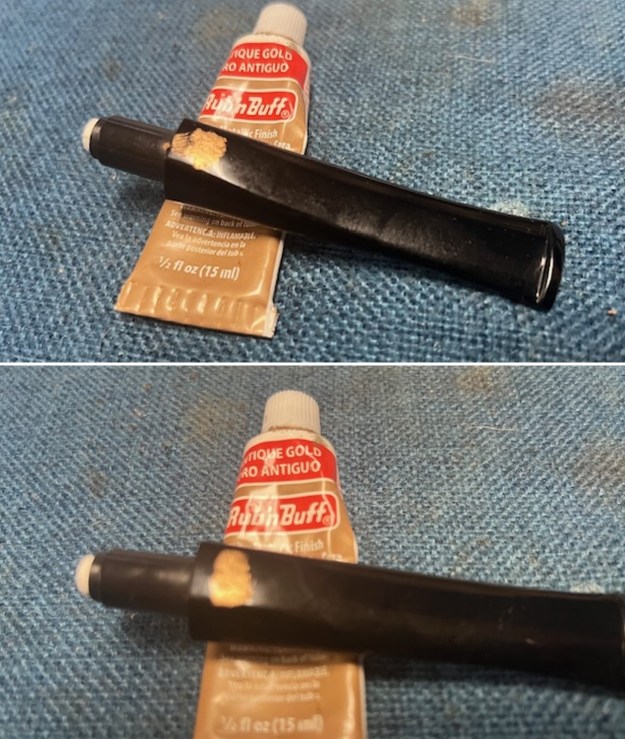
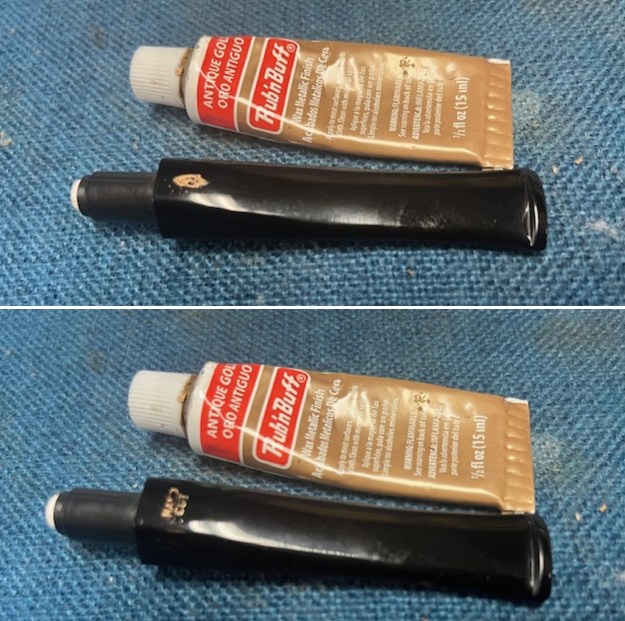
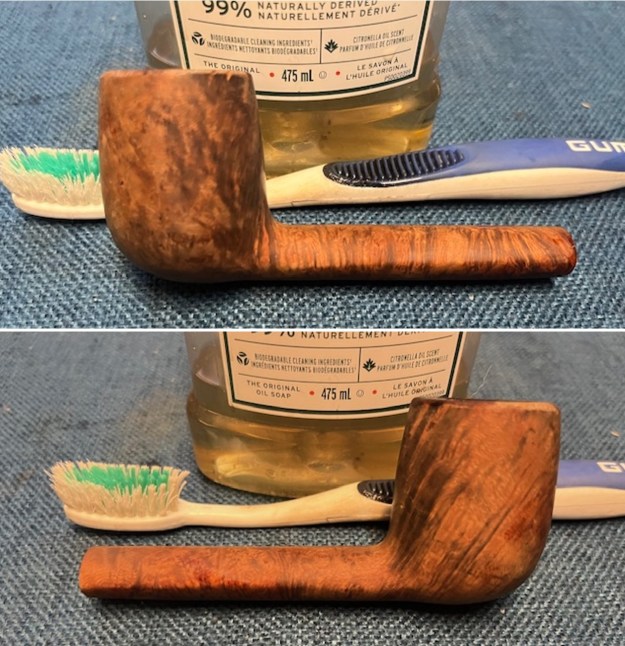
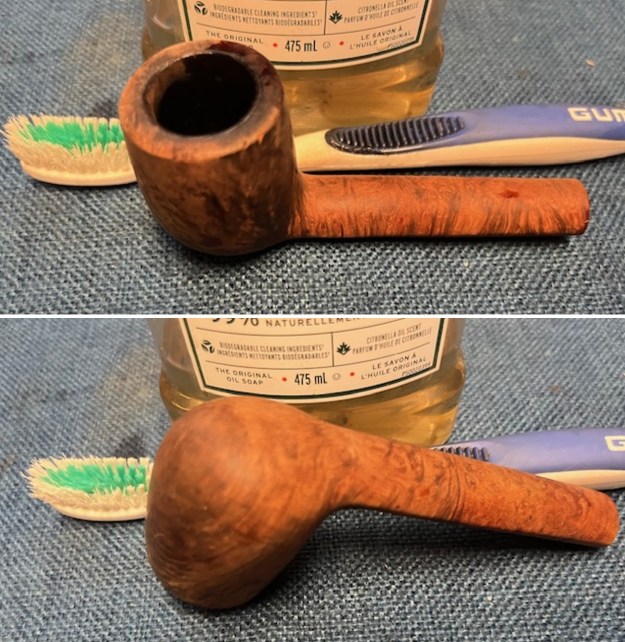
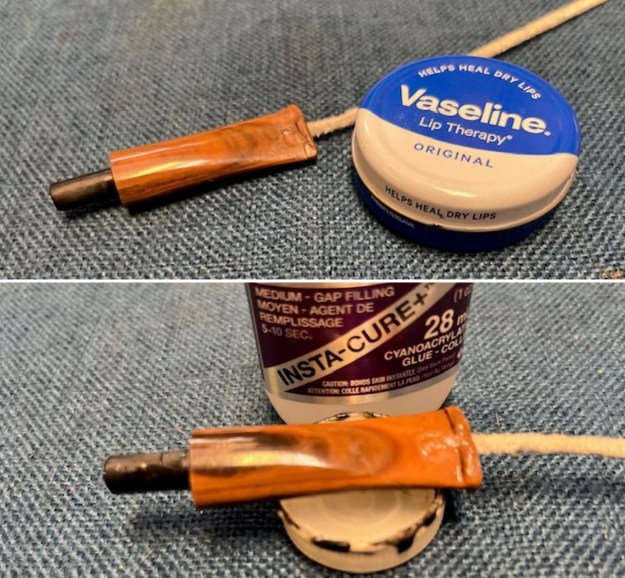
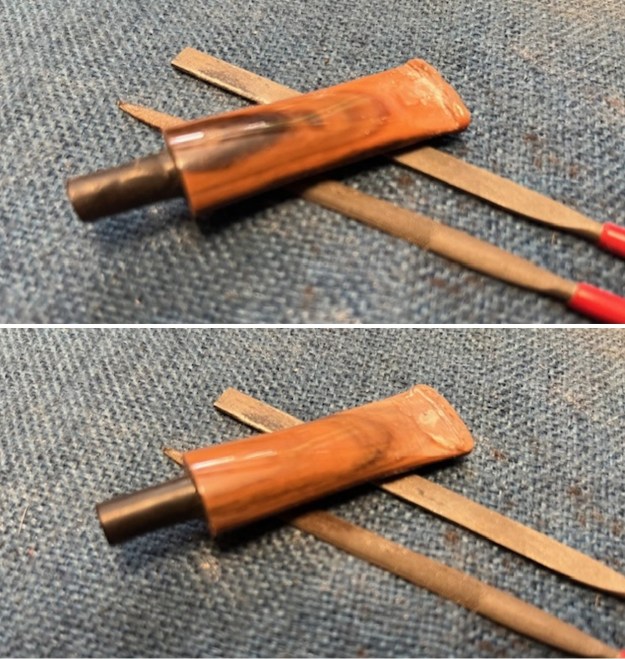
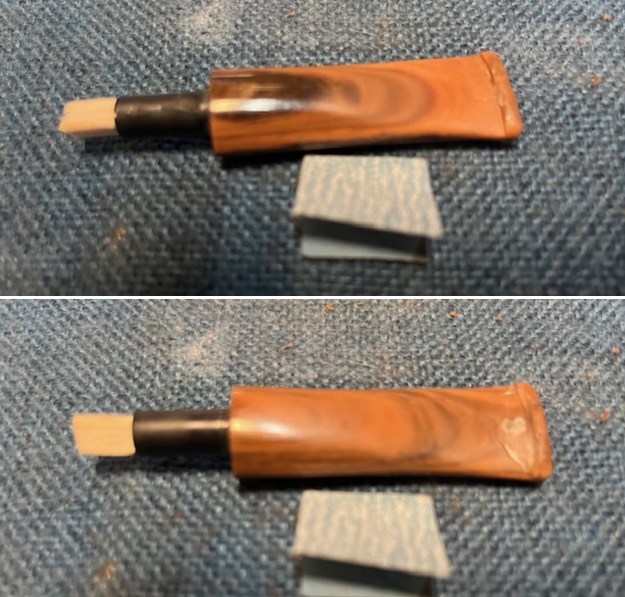
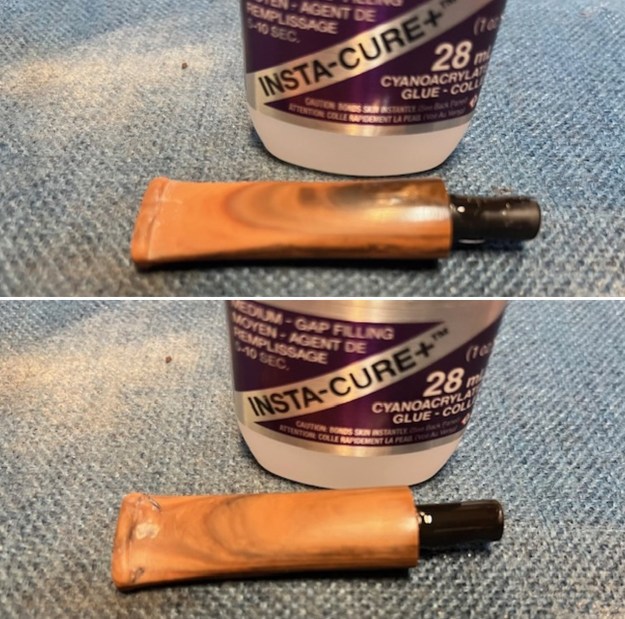
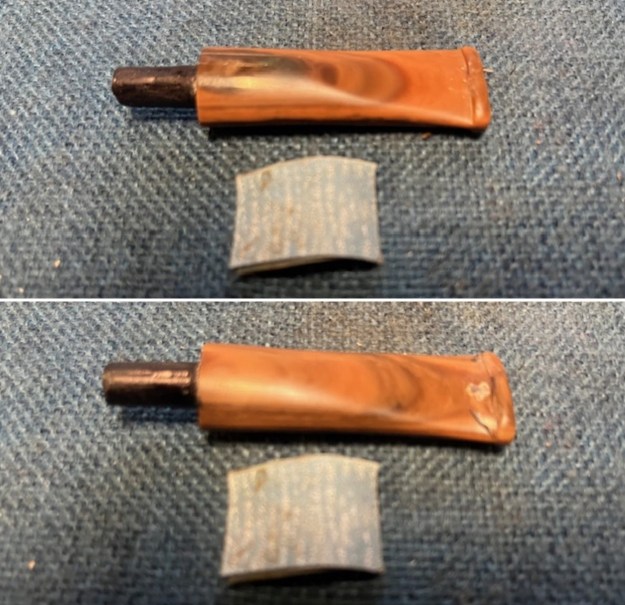
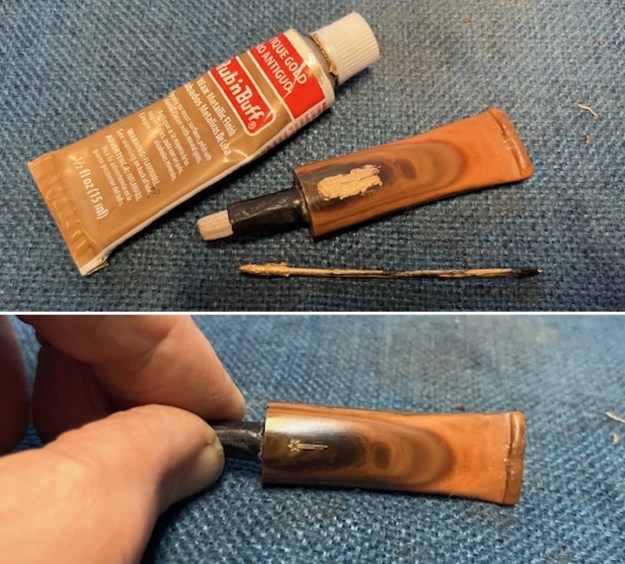
I started my work on the pipe by reaming the bowl with a PipNet reamer. I used the first cutting head and took the cake back to bare briar. I cleaned up the reaming with a Savinelli Fitsall Pipe Knife and removed all the remnants of the cake. I scraped the rim top with the flat edge of the blade at the same time and removed most of the thick lava build up. I sanded the walls of the bowl with a piece of dowel wrapped in 220 grit sandpaper. The walls look very good at his point in the process. I cleaned out the shank, the airway and the mortise as well as the airway in the stem with alcohol, cotton swabs, hard bristle and soft bristle pipe cleaners. It was a very dirty pipe which just meant that it had really been enjoyed by the previous pipe man. I scrubbed the exterior of the bowl and shank with a tooth brush and undiluted Murphy’s Oil Soap. I scrubbed the lava on the rim top and overflow on the outside of the bowl with the soap. I rinsed the briar with warm water to remove the grime and debris of the scrubbing. It looked significantly better after the scrubbing. The darkening on the rim top was better but it would need a little more work. Once I cleaned the bowl with the soap it looked much better. To take the pipe to the next level, I polished the bowl and rim top with micromesh sanding pads – dry sanding it with 1200-15000 grit pads. I wiped the bowl down with a damp cloth after each sanding pad. The grain started to rise to the surface and the repairs blended even more as I polished it. I rubbed the bowl and shank down with Before & After Restoration Balm to deep clean the finish on the bowl and shank. The product works to clean, enliven and protect the briar. I worked it in with my fingers to get it into the briar. I let it sit for 10 minutes then I wiped it off and buffed it with a soft cloth. The briar really began to have a rich shine. I took some photos of the bowl at this point to mark the progress in the restoration. It is a beautiful bowl. With the the shank clear and the airway open it was time to work on the stem. It was clear, just dirty and I needed to address the bite through in the stem. The coloured acrylic made this challenging but not undo-able. I needed to also fill in the bite marks on the topside and the marks on the button edge as well. I greased a pipe cleaner with Vaseline and inserted it below the hole. I filled in the hole with clear CA glue, rebuilt the button edge and also filled in the tooth marks at the same time. I set it aside to cure. Once the repairs cured I used some small files to recut the button edge, reshape the surface and flatten the repair on the stem surface on both sides. I put the balsa filter back in the tenon to stiffen it and used 220 grit sandpaper to smooth out the edges, the button top and the surface of the stem. It was looking good. The filled in bite through on the underside was visible but the beauty was it was underneath! I would continue to sand and work it to minimize the visibility but the repair was solid. I built up the flimsy and misshaped tenon surface with some clear CA glue. It also repaired the thin hairline cracks in the surface. Once it cured I sanded it smooth with 220 sandpaper. I sanded the surface of the acrylic taper stem with the 2 x 2-inch sanding pads – 320-3500 grit pads to clean up the sanding marks on the stem surface. By the final 3500 grit pad the stem started to really shine.I touched up the gold shooting star stamp on the top of the stem with Antique Gold Rub’n Buff. I pressed it into the stamp with a tooth pick and buffed it off with a soft towel. It looks good.I polished the stem with micromesh sanding pads – dry sanding with 1500-12000 grit pads. I wiped the stem down after each sanding pad with Obsidian Oil. I set it aside to dry. I am excited to finish this Savinelli Tundra 802 Canadian with an acrylic taper stem. I put the pipe back together and buffed it with Blue Diamond on the buffing wheel. I gave the bowl multiple coats of carnauba wax. I buffed the pipe with a clean buffing pad to raise the shine and then by hand with a microfibre cloth to deepen it. It is fun to see what the polished bowl looks like with beautiful grain on the smooth bowl and shank. The polished grain on the pipe looks great with the repaired acrylic stem. This Savinelli Tundra Canadian is great looking and the pipe feels great in my hand. It is light and well balanced. Have a look at it with the photos below. The dimensions are Length: 6 inches, Height: 1 ¾ inches, Outside diameter of the bowl: 1 ¼ inches, Chamber diameter: ¾ of an inch. The weight of the pipe is 41 grams/1.45 ounces. This first Savinelli that Brian sent is a beautiful pipe that I will send to him once I have cleaned up the other pipe he sent. I look forward to hearing what he thinks of this resurrected beauty. It should be a great smoking pipe.

As always, I encourage your questions and comments as you read the blog. Thanks to each of you who are reading this blog. Remember we are not pipe owners; we are pipe men and women who hold our pipes in trust until they pass on into the trust of those who follow us.

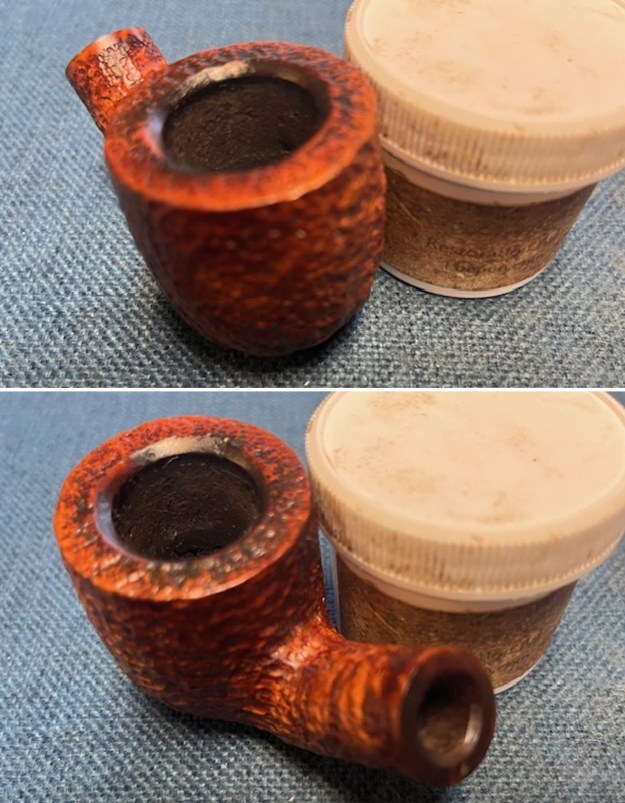
Restoring the second of six pipes for a Vancouver Pipeman – Savinelli Portofino Rusticated Pot


by Steve Laug

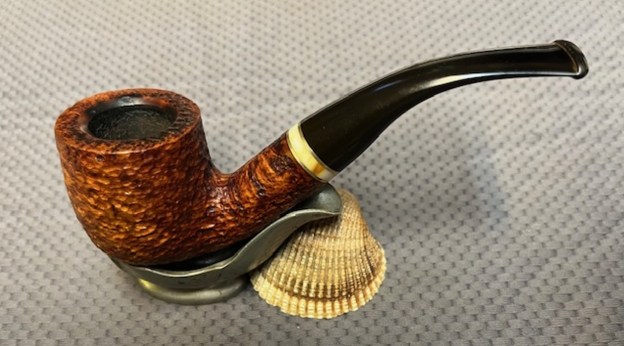
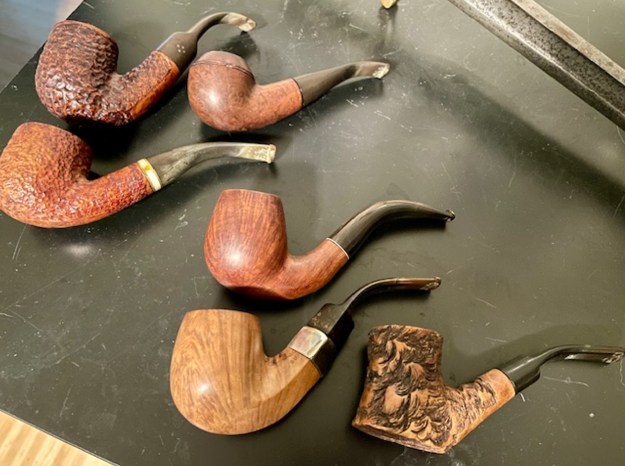
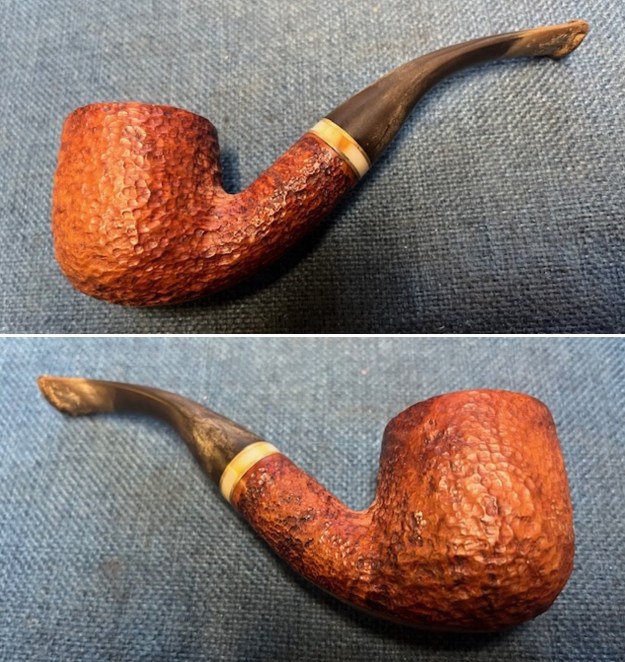
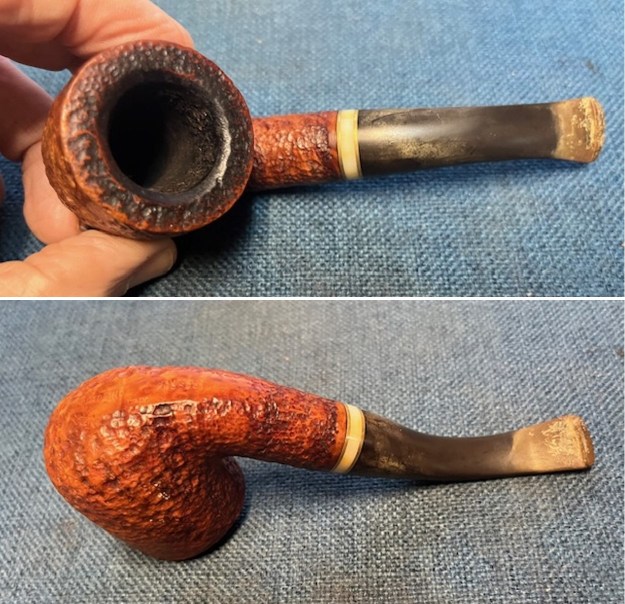
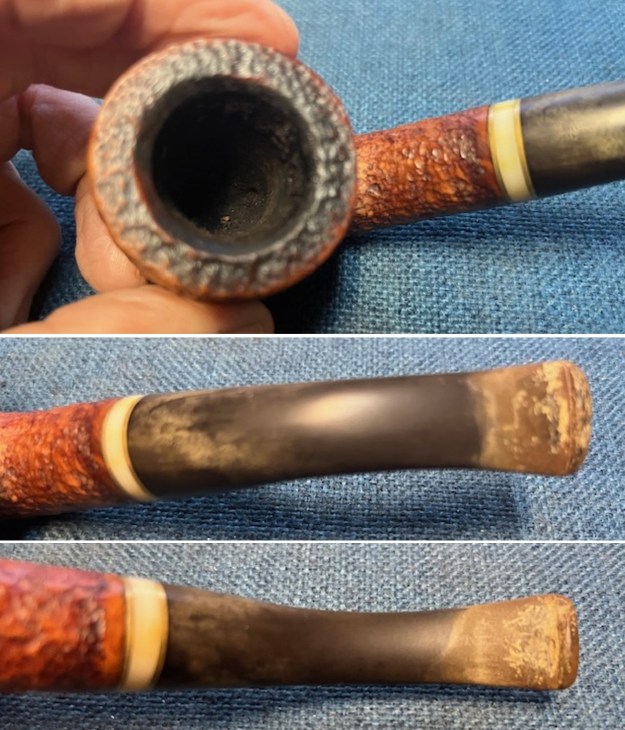
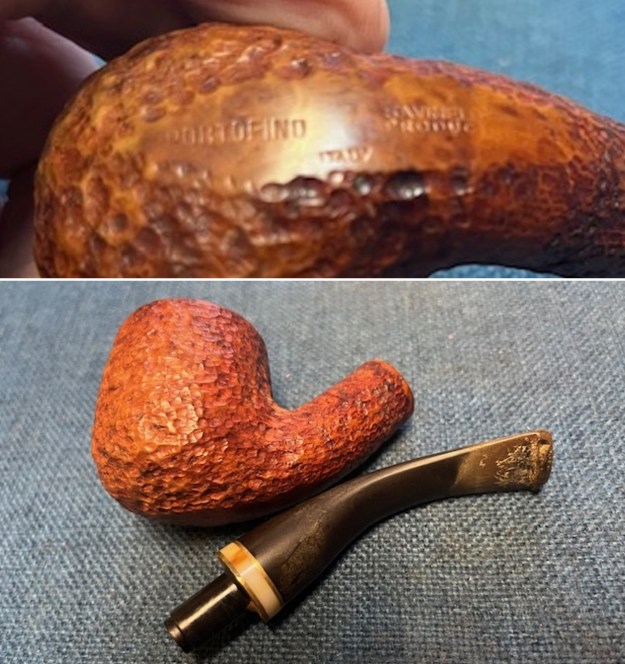
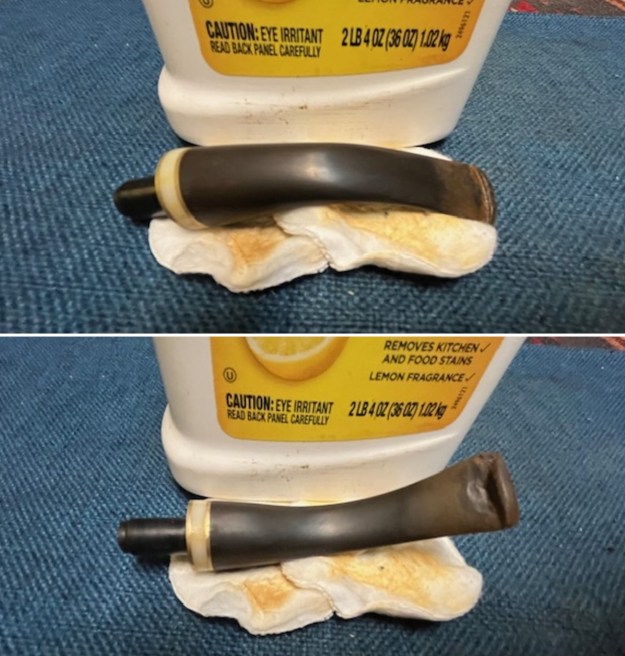
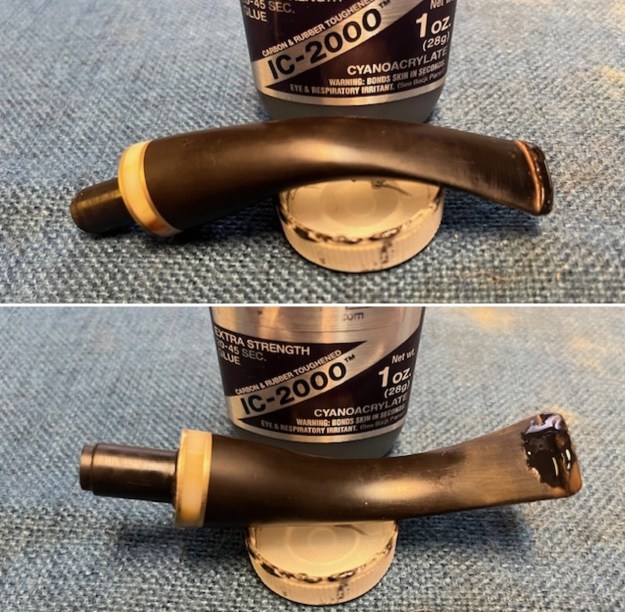
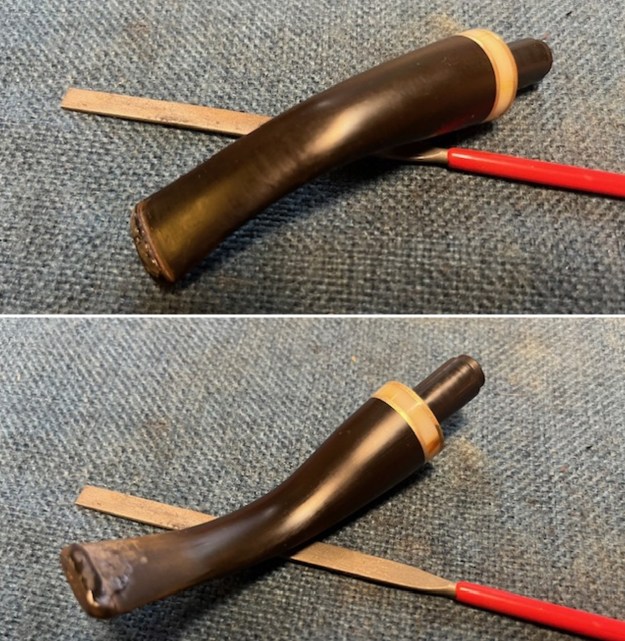
Earlier this week I received an email from Steffen regarding a few more pipe projects that he had for me to work on. He dropped them off here yesterday for me to work on. There were six pipes in the lot. Two were his that I had worked on a few years ago – a Mayfair 1005 rusticated tree stump and a Jost Supreme. Both were favourite pipes of his. One was a Savinelli Bent Billiard that he purchased on a trip to Italy. The final three were pipes that belonged to his father who would soon be visiting him in Vancouver – a Brigham full bent four dot 4244, a Savinelli Portofino Bent Pot and a Bent Rhodesian with no name stamped on the shank sides. Steffen texted me this photo of the pipes before he sent them.This afternoon I decided to work on the first of Steffen’s father’s pipes. It is a rusticated Bent Pot. It is a beautiful grained piece of briar that I can appreciate why he chose it. There is a mother of pearl acrylic disc sandwiched between two brass bands on the end of the stem that provides a separation between the bowl and the vulcanite taper stem. The pipe is stamped on the underside of the shank and heel of the bowl and reads Portofino [followed by] Italy below and to the right [followed by] Savinelli [over] Product. The briar is dirty from use with a moderate cake in the bowl and an overflow of lava on the rusticated rim top. The stem was oxidized, calcified and had some tooth marks and chatter on the top and underside of the stem ahead of the button. There is no stamping on the side of the stem as it was unmarked. It also looked to have been made for a Savinelli Balsa Filter. I took photos of the pipe before I started my work on it. I have included them below. I took a photo of the stem surfaces and the bowl and rim to give a sense of condition of the pipe. You can see the cake in bowl and the lava overflow on the edges and rim top of the bowl. The stem surface is very dirty and you can see the tooth marks and chatter on both sides ahead of the button.I took a photo of the stamping on the sides of the shank. It is clear and readable as noted above. I also took a photo of the bowl with the stem removed. It is a great looking pipe.I cannot find any specific information on the Savinelli Product Portofino Rusticated Pot online. I found pipes for sale on Worthpoint and other sites that were both smooth and rusticated so the name does not imply rusticated pipes. Portofino is a village in NW Italy, SE of Genoa: tourist resort. The brand is thus part of a collection of pipes made by Savinelli named after villages in Italy. I have included a photo of the village from a tourist site.Now it was time to start working on the pipe itself. I reamed it with a PipNet pipe reamer using the second and third cutting head to trim the cake back. I used a Savinelli Fitsall Pipe knife to clean up the remnants leaving bare briar. I sanded the bowl walls with 220 grit sandpaper wrapped around a piece of dowel. The bowl was significantly cleaner. I scrubbed the externals of the bowl with a tooth brush and some undiluted Muprhy’s Oil Soap.  I rinsed the bowl down with warm water to remove the debris and dust. The bowl looked muc better. I worked on the rim top with a brass bristle wire brush to clean up the debris on the rim top. It looked significantly better.I cleaned out the airway in the shank and mortise as well as the stem with cotton swabs, pipe cleaners and isopropyl alcohol. It was dirty but it cleaned up very well.   I rubbed the bowl down with Before & After Restoration Balm. I worked it into the surface of the briar with my fingertips. It works to clean, restore and preserve the briar. I let it do its magic for 15 minutes then buffed it off with a cotton cloth. The pipe looks very good at this point in the process. I set the bowl aside and turned my attention to the vulcanite taper stem. I scrubbed the surface of the stem with Soft Scrub to break through the oxidation, calcification and clean up the tooth marks.I filled in the tooth marks on the stem surface and on the surface of the button on both sides with black CA glue. The glue I use has both rubber and carbon in the mix that harden as it dries but does not become brittle. Once it cured I flattened the repairs and reshaped the button edge with a flat needle file. I cleaned up the repaired areas with 220 grit sandpaper. I sanded the stem with 320-3500 grit sanding pads. I wiped the stem down after each sanding pad to remove the sanding debris and dust. The stem looked very good. The stem was drilled to fit a Savinelli Balsa System filter. I removed a new filter from the package of Balsa filters and fit one in the tenon of the stem. It fit well and looked good.I polished the stem with micromesh sanding pads – 1500-12000 grit pads. I wiped it down with an Obsidian Oil cloth after each sanding pad. I finished polishing it with Before & After Pipe Stem Polish – both Fine and Extra Fine and buffed it off with a cotton cloth. I gave it a coat of Obsidian Oil to preserve and protect the stem. This Savinelli Product Portofino Rusticated Pot is a great looking pipe now that it has been restored. The mix of brown stains really highlight the grain under the rustication and the polished finish has depth. I put the vulcanite stem back on the bowl and carefully buffed the pipe with Blue Diamond on the buffing wheel. I gave the bowl and the stem multiple coats of carnauba wax on the buffing wheel and followed that by buffing the entire pipe with a clean buffing pad. I hand buffed the pipe with a microfiber cloth to deepen the shine. The finished Savinelli Product Portofino Pot fits nicely in the hand and feels great. Give the finished pipe a look in the photos below. The dimensions of the pipe are Length: 5 ½ inches, Height: 1 ¾ inches, Outside diameter of the bowl: 1 ½ inches, Chamber diameter: 1 inch. The weight of the pipe is 67 grams /2.33 ounces. I have five more of Stephen’s pipes to work on. Once I have finished I will get them back to him to enjoy with his father. Thanks for reading this blog and my reflections on the pipe while I worked on it.
As always, I encourage your questions and comments as you read the blog. Thanks to each of you who are reading this blog. Remember we are not pipe owners; we are pipe men and women who hold our pipes in trust until they pass on into the trust of those who follow us.

Fresh Life for a Savinelli Extra 802 Italy Canadian


by Steve Laug

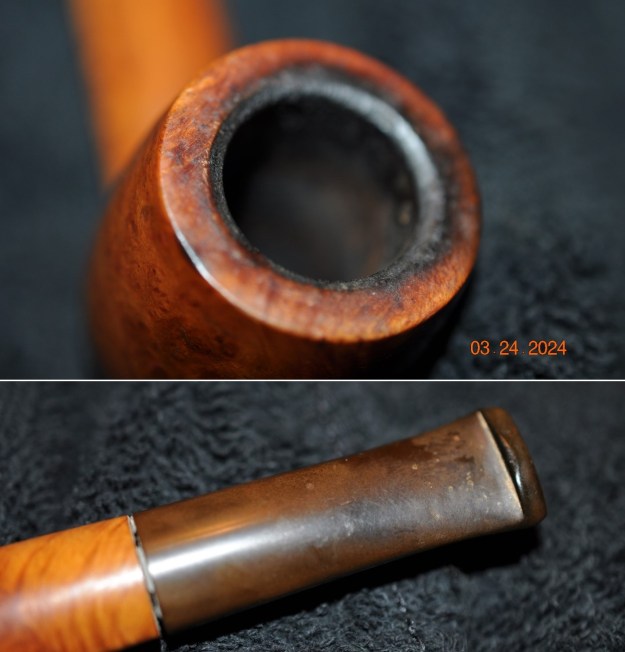
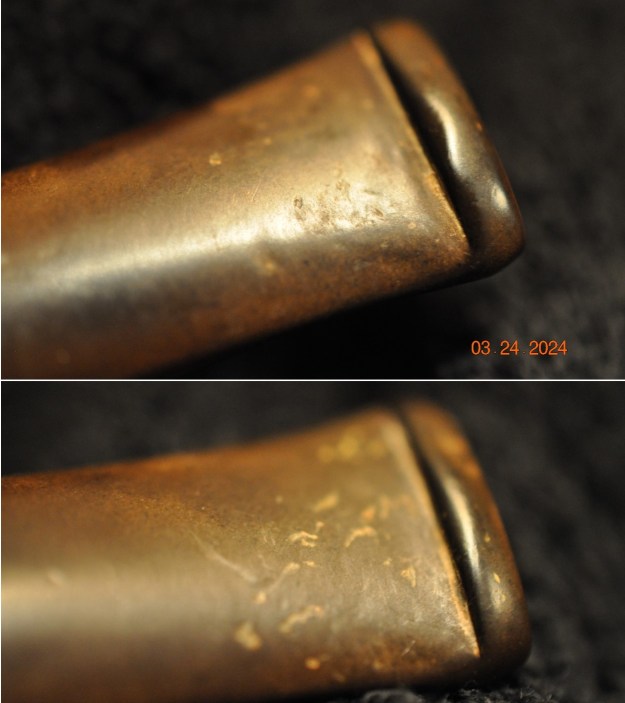
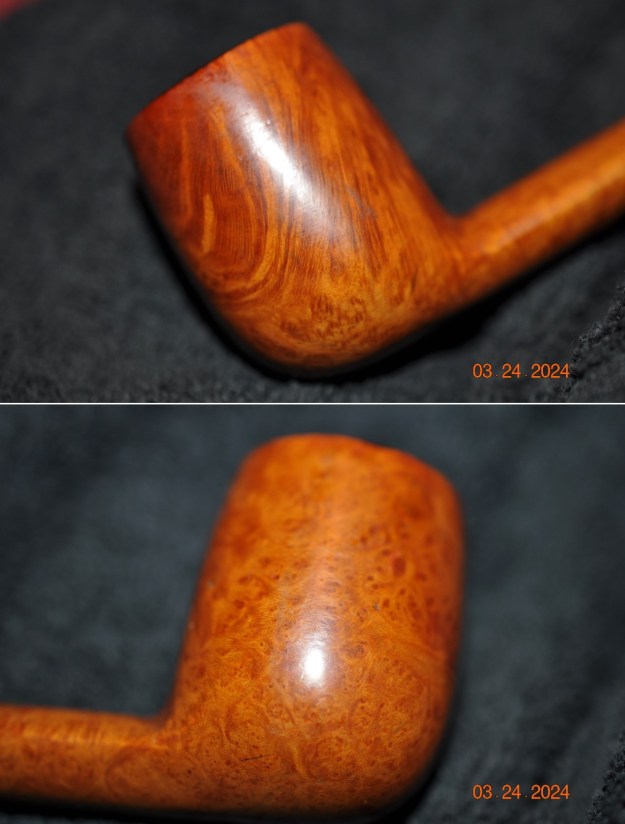
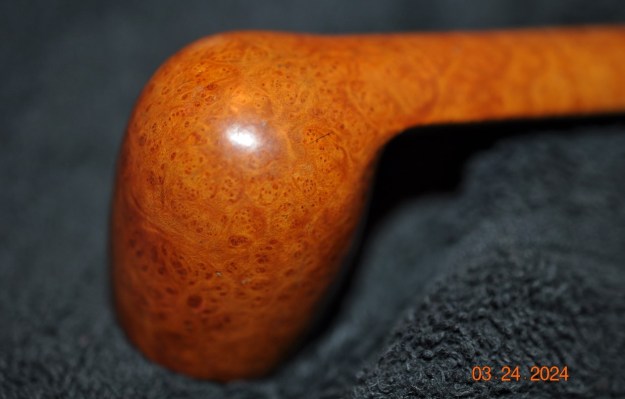
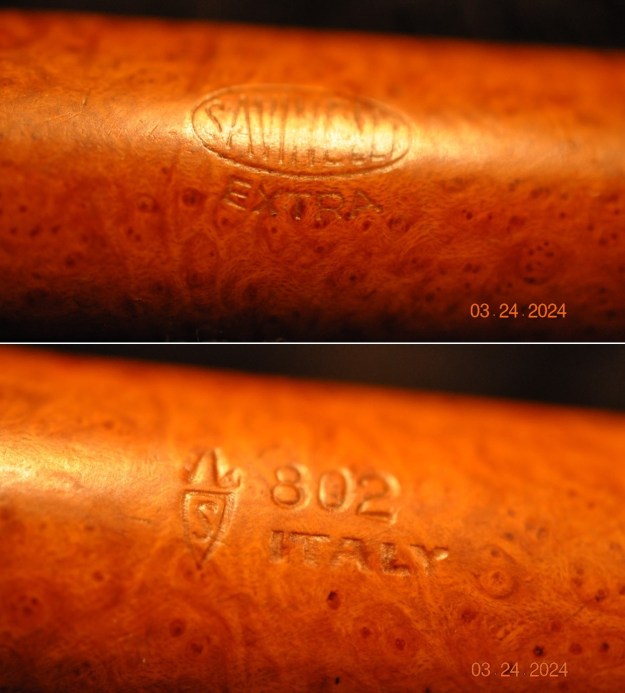
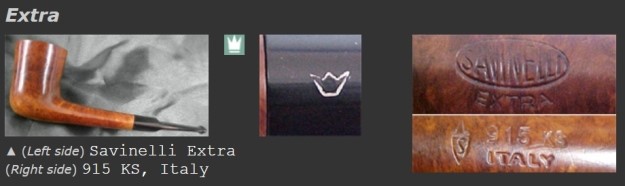
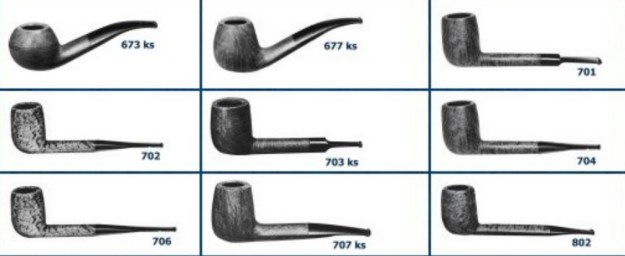
The next pipe on the work table came to us from a group of pipes we purchased on 03/21/2024 from a seller in Oregon City, Oregon, USA. It is a nice looking natural Canadian shaped pipe with a taper stem. The bowl has a natural or light colour stain that highlights grain. It has an interesting mix of grain around the bowl and long shank. The pipe is stamped Savinelli in an oval [over] Extra. On the underside of the shank it is stamped with a Savinelli S Shield logo followed by the shape number 802 [over] Italy. The bowl had a thick cake with some lava overflow on the top and bevelled inner edge of the rim top. The stem is black vulcanite and was lightly oxidized with some tooth marks and chatter on both sides near the button. The pipe looks to be in good condition under the grime. This is a nice looking pipe and in a well-loved shape. Jeff took photos of the pipe before he started his cleanup. He took photos of the rim top and bowl to give a clear picture of the thickness of the cake and tobacco debris as well as the lava on the top and the bevelled inner edge of the rim. There was also some burn damage on the right outer edge toward the front. He also took photos of the top and underside of the stem to show its overall condition. Jeff took photos of the sides and heel of the bowl to give a picture of what the briar looked like. It truly has some nice grain – birdseye, swirls and cross grain around the bowl and shank. The stamping on the top and underside of the shank is clear and readable as noted above. I turned to Pipephil (http://www.pipephil.eu/logos/en/logo-savinelli2.html) to get a quick view of the Extra Line. I did a screen capture of the site’s information and have included that below. I am also including a screen capture of the Shape and code chart introduction that is link in the above capture. The 802 is in the bottom left corner.
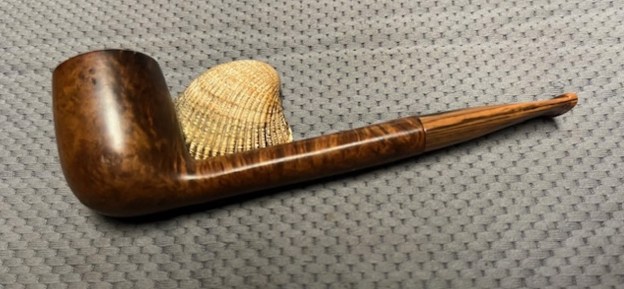
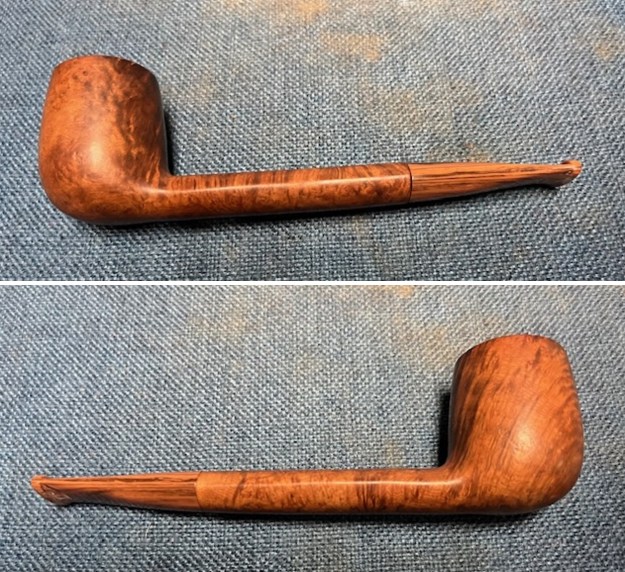
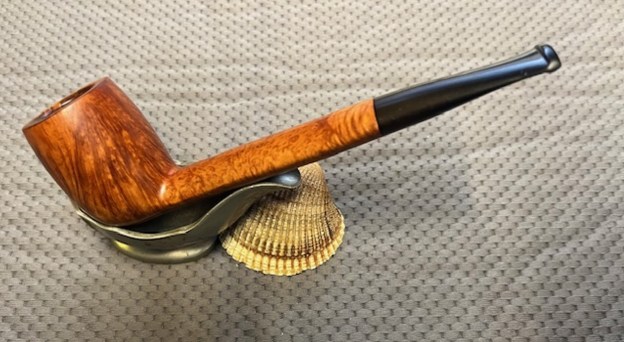
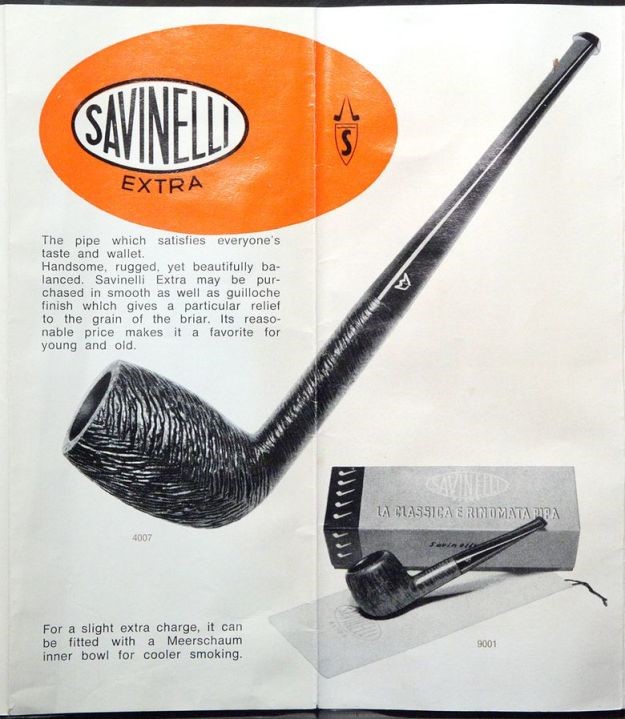
I turned to Pipedia (https://pipedia.org/wiki/Savinelli) for a quick read. The site is worth reading the history of the Savinelli brand and it philosophy of pipemaking. There was a photo of a brochure that included the Extra (https://pipedia.org/wiki/File:Sav_Extra.jpg) that came from Doug Vliatchka.Jeff had cleaned up the pipe with his usual methods. He reamed the pipe with a PipNet pipe reamer and removed the rest of it with a Savinelli Fitsall Pipe Knife.  He scrubbed the bowl with undiluted Murphy’s Oil Soap with a tooth brush. He rinsed it under running warm water to remove the soap and grime. He cleaned out the inside of the shank and the airway in the stem with alcohol, cotton swabs, shank brushes and pipe cleaners. He soaked the stem in a Briarville’s Pipe Stem Deoxidizer bath and rinsed it off with warm water. I took photos of the pipe before I started my part of the restoration work. The rim top cleaned up really well. The rim top, inner and outer edge of the bowl is in excellent condition there is darkening on both. The stem surface looked very good with a few tooth marks and chatter on both sides near the button. The stamping on the shank top and underside is clear and readable. It is stamped as noted above. I removed the stem and took a photo of the pipe to show the proportion of the stem and shank. It is a beauty.  I removed the stem started working on the darkening on the rim top and edges. I worked them over with a folded piece of 220 grit sandpaper. Once it was finished it looked better. I sanded the rim top and bowl sides with 320-3500 grit sanding pads to remove the scratching and shiny spots on the finish. I wiped the bowl down after each sanding pad with a damp cloth to remove the debris from sanding. I polished the rim top and bowl with micromesh sanding pads – dry sanding with 1500-12000 grit pads. I wiped the bowl down after each sanding pad to remove the debris and dust. I rubbed the bowl and shank down with Before & After Restoration Balm. I worked it into the surface of the bowl sides and shank with my fingertips to clean, enliven and protect the briar. I let the balm sit for 15 minutes and buffed with a cotton cloth to raise the shine. The grain came alive and the pipe looked great.  I set the bowl aside and turned to work on the stem. I “painted” the stem surface with the flame of a lighter and was able to lift out all of the marks on both sides. I used 220 grit sandpaper to blend it into the surface of the vulcanite and the stem looked better.I sanded the stem with 320-3500 grit sanding pads to smooth out the marks and it is looking quite good at this point in the process.I polished the vulcanite stem with micromesh sanding pads – 1500-12000 grit pads. I wiped it down with Obsidian Oil after each sanding pad. I used Before & After Pipe Polish – both Fine and Extra Fine to further polish the stem. This Savinelli Extra 802 Canadian is a great looking pipe now that it has been restored. The smooth finish gives the shape an elegant look. The flow of the bowl, shank and short stem make for a great looking pipe. I put the stem back on the bowl and carefully buffed the pipe with Blue Diamond on the buffing wheel using a light touch on the briar. I gave the bowl and the stem multiple coats of carnauba wax on the buffing wheel and followed that by buffing the entire pipe with a clean buffing pad. I hand buffed the pipe with a microfiber cloth to deepen the shine. The finished Savinelli Extra 802 Canadian fits nicely in the hand and feels great. Give the finished pipe a look in the photos below. The dimensions of the pipe are Length: 6 inches, Height: 1 ¾ inches, Outside diameter of the bowl: 1 ¼ inches, Chamber diameter: ¾ of an inch. The weight of the pipe is 40 grams/1.41ounces. It is a great looking and light weight pipe. I will be putting it on the rebornpipes store in the Italian Pipe Makers Section shortly. If you are interested in adding the pipe to your collection send me a message or an email. Thanks for reading this blog and my reflections on the pipe while I worked on it.

Restoring a Bings Favorite Italy Savinelli Product


Blog by Steve Laug

The next pipe that I am working on came from an estate sale in Oregon City, Oregon, USA we purchased on 03/21/24. It was very dirty and was a reddish, brown coloured pipe when it started. The smooth finish around the bowl was dirty and had hand oils ground into the grooves. The bowl had a moderate cake a spotty coat of lava onto the rim edge and top of the bowl. The stem was vulcanite that was very dirty and had tooth marks on both sides ahead of the button. The stem might be a replacement stem as the fit to the shank is off in terms of stem diameter being larger than the shank. The pipe was stamped on the left side of the shank and read Bings Favorite. On the right side of the shank it is stamped Italy. On the underside of the shank it was stamped Savinelli Product. Jeff took photos of the pipe so I could have a sense of what it looked like before he started his work on it. Jeff took photos of the stem surfaces and the bowl and rim to give a sense of condition of the pipe. You can see the thick cake in bowl and the spots of lava overflow on the edges and rim top of the bowl. The stem surface is very dirty, oxidized, calcified and tooth marks covered by the dirt and debris. The stem did not fit the diameter of the shank properly. It was larger than the shank and would need to be fitted. The stamp on the top of the shank is faint. He also took photos of the sides of the bowl and the heel to show the interesting grain that went around the bowl. The grain is beautiful and you can see the oils and debris in the surface of the briar. He took photos of the stamping on the sides of the shank. It is clear and readable on all the shank sides as noted above. Jeff did not capture the stamping on the right side of the shank. I turned to Pipephil’s site (http://www.pipephil.eu/logos/en/logo-savinelli1.html) to get a sense of the Bing’s Favorite. It is a Savinelli Product and it is listed in the Savinelli pipe section. I did a screen capture of the section and included it below. The stamping on the stem confirms that the stem I have is a replacement.I turned to Pipedia (https://pipedia.org/wiki/Savinelli) and after reading through the history I focused on a section entitled Editions in the “Favorite” line. I have included that section below.

We are compiling a sub-list of known editions in the “Favorite” line of Savanelli pipes, starting with those in Fred Huening’s collection. If you know of others, or have additional information about this line of pipes, please add it here, or send them to sethile.pipes@gmail.com and we can add them for you:

  • Bing’s Favorite
  • Byron’s Favorite
  • Clark’s Favorite
  • Ginger’s Favorite
  • Achille’s Favorite (apparently, I, II, and III)

Now it was my turn to work on the pipe. Jeff had done an amazing cleanup of the pipe. He reamed the cake with a PipNet reamer and cleaned up that with a Savinelli Fitsall Pipe Knife. He scrubbed the internals of the bowl and stem with alcohol, cotton swabs and pipe cleaners. He scrubbed the externals with undiluted Murphy’s Oil Soap and rinsed the bowl off with running water. He soaked the stem in Briarville’s Pipe stem Deoxidizer and once it had soaked, rinsed it off with warm water to remove the residual solution. He dried it off and rubbed it down to remove any oxidation that was still on the stem. The pipe looked very good when I received it. I took a photo of the rim top to show the condition. You can see the clean bowl. The bowl is in excellent condition and is clean. The rim top and the inner edge was in great condition. The stem came out looking clean. There were some light tooth marks and chatter on both sides ahead of the button. I took photos of the stamping on the shank. It is faint but still very readable. There was also a very faint stamp on the stem but I am still not certain it is the correct stem because of the fit and shape of the stem. I removed the stem from the shank and took a photo of the pipe parts to show what I was working with. The pipe had cleaned up so well that I turned to polish the briar with micromesh sanding pads. I dry sanded it with 1500-12000 grit sanding pads and wiped the bowl down after each pad with a damp cloth. By the final pads the briar really had a shine. I rubbed the briar down with Before & After Restoration Balm. I worked it into the briar with my fingertips. The product works to clean, enliven and preserve the briar. I let it sit for 10 minutes then I buffed it with a cotton cloth to deepen the shine. The briar really comes alive with the balm. I set aside the bowl and turned my attention to the stem. I “painted” the stem with the flame of a lighter to soften the vulcanite and give the stem a slight bend like it must have originally had.Next, I worked on the diameter of the stem. I needed to take off the excess so that the flow between the shank and the stem was smooth. I used a flat rasp and small file to quickly remove the excess vulcanite. I sanded it with 220 grit sandpaper to clean up the file marks and smooth out the surface of the stem. I moved on to further smooth out the surface of the vulcanite. I sanded it with 320-3500 grit sanding pads to further clean up the scratches and file marks on the surface of the stem.I polished the vulcanite with micromesh sanding pads – 1500-12000 grit pads. I wiped it down with Obsidian Oil after each sanding pad. I used Before & After Pipe Polish – both Fine and Extra Fine to further polish the stem. It really took on a shine and I knew that once it was buffed it would look amazing. I put the stem back on the Bings Favorite ¼ Bent Vulcanite Stem Long Billiard and took it to the buffer. I worked it over with Blue Diamond to polish out the remaining small scratches. I gave the bowl and the stem several coats of carnauba wax and buffed the pipe with a clean buffing pad to raise the shine. I hand buffed it with a microfiber cloth to deepen the shine. The pipe polished up really well and the rim top looked good. I was happy with the look of the finished pipe. The photos below show what the pipe looks like after the restoration. The Bings Favorite Savinelli Product is a beautiful and unique take on a classic shape. The polished, reshaped vulcanite taper stem looks really good with the browns of the briar. The dimensions of the pipe are Length: 6 ½ inches, Height: 1 ¾ inches, Outside diameter of the bowl: 1 ¼ inches, Chamber diameter: ¾ of an inch. The weight of the pipe is 1.27 ounces/36 grams. This is another pipe that I will be putting it on the rebornpipes store in the Italian Pipe Makers Section shortly, if you are interested in adding it to your collection. The long shank and tall bowl look and feel great in the hand. This one should be a great smoker. Thanks for walking through the restoration with me on this beauty!
Life for a Savinelli Italy Coral Finished Bing Billiard with a Specialty Sterling Band


Blog by Steve Laug

The next pipe on the table has one of my favourite finishes – a deeply rusticated one with what appears to have originally been a natural finished. We purchased this one from an estate on 03/21/2024 from a fellow in Oregon City, Oregon, USA. It is a Savinelli rustication that really looks like a classic Capri Root Briar. The coral like rustication around the bowl and shank was filled in with dust and debris. The natural finish was dirty and the high spots are darkened by hand oils and grime ground into briar. The pipe was stamped on underside of the shank. It is stamped Savinelli followed by Italy. There is no shape number on the shank but the style is much like a Bing Crosby Pipe. The Sterling Silver Band on the shank has 925 in an oval followed by SA113. On the topside it is etched Le Mie Pipe over AS underlined in script. There was a thick cake in the bowl and lava overflow on the inner edges and the rim top. The vulcanite stem was oxidized and had tooth marks and chatter ahead of the button on both sides. Jeff took photos of the pipe to show its general condition before he did his cleanup. As I mentioned above the exterior of the pipe was very dirty – grime and grit ground in from years of use and sitting. The rim top was covered with a thin coat of lava that overflowed from the thick cake in the bowl. The rim edges looked quite good with no damage. The stem was dirty, calcified and oxidized with tooth chatter and marks on the top and underside of the stem at the button. Jeff took photos of the sides and the heel of the bowl to give a better feel for the condition of the briar around the bowl. It is a great looking piece of briar with a deep coral style rustication. The next photo shows the stamping on the heel of the bowl and the underside of the shank. It is very readable and reads as noted above.Jeff also took photos of the stamping on the Sterling Silver band. The top of the band on the shank reads as noted above – Le Mie Pipe over AS signature line. The underside of the is stamped 925 in an oval followed by SA113. I wrote my brother Jeff to see if I had spelled what I read on the stamping correctly. He sent me a response to my question affirming that I had spelled it correctly and also included a link that he had found while Googling for Le Mei pipes. It took him to a listing on Smokingpipes.com that defined the stamping and gave some context for it pipes made by Savinelli (https://www.smokingpipes.com/pipes/estate/italy/moreinfo.cfm?product_id=370851). I quote below from Jeff’s email with the info he found on the site:

Le Mie means “mine” in Italian. On smoking pipes.com, it talks about Savinelli Le Mie pipes. According to this, it says that the favorite finish of Achille Savinelli was said to be a rugged, coral-like rustication, but his preferred pipe to wear such a finish was an understated, long-stemmed, straight billiard. That being the case, when the marque made a series of briars in his honor, Le Mie, meaning “mine” in Italian, that’s precisely what was made. This piece also wears a handsome, silver accent band that displays the founder’s signature. — Angela Robertson

Now I knew what the stamping on the band meant – it is a pipe made in honour of Achille Savinelli. It was made in his preferred shape and with his favourite coral finish and a silver band with his signature. Hence, it is stamped MY PIPE (Le Mie). Armed with that information I turned to work on the pipe itself. Jeff had done an amazing cleanup of the pipe. He reamed the light cake with a PipNet reamer and cleaned up that with a Savinelli Fitsall Pipe Knife. He scrubbed the internals of the bowl and stem with alcohol, cotton swabs and pipe cleaners. He scrubbed the externals with undiluted Murphy’s Oil Soap and rinsed the bowl off with running water. He soaked the stem in Briarville’s Pipe stem Deoxidizer and once it had soaked rinsed it off with warm water to remove the residual solution. He dried it off and rubbed it down to remove any oxidation that was still on the stem. The pipe looked very good when I received it. I took some close up photos of the rim top and the stem surface. I wanted to show what cleaned bowl and rim top looked like. The rim top and the inner and outer edges of the bowl were in excellent condition. The top of the bowl was in good condition. I also took close up photos of the stem to show the tooth marks and the remaining oxidation on the stem surface. I took a photo\s of the stamping on the underside of the shank and it is clear and readable. It is stamped as noted above. I removed the stem for the shank and took a photo of the bowl and stem to give a picture of what it looked like. The remaining oxidation is very visible.I rubbed the bowl down with Before & After Restoration Balm. I worked it into the surface of the briar with my fingertips and a horse hair shoe brush to clean, enliven and protect it. I let the balm sit for a little while and then buffed with a cotton cloth and shoe brush to raise the shine. I set the bowl aside and turned to work on the stem. I touched up the golf club and ball logo stamp on the left side of the taper stem with a white acrylic fingernail polish. Once it cured I scraped off the excess polish and polished around it with a worn micromesh 1500 grit sanding pad. I took a photo of the whitened stamp.    I wiped down the stem with some Soft Scrub to remove the remaining oxidation on the stem. I worked very well to remove what remained.The stem was in good condition to I polished the vulcanite with micromesh sanding pads – 1500-12000 grit pads. I wiped it down with Obsidian Oil after each sanding pad. I used Before & After Pipe Polish – both Fine and Extra Fine to further polish the stem. The stem was a filter stem drilled for 6mm filters. I fitted the tenon with a new Vauen 6mm filter so it is ready for the next owner to load and enjoy.This Savinelli Le Mie Pipe (My Pipe) Achilles Savinelli signed Crosby Billiard cleaned up really well and looks very good. The Before & After Restoration Balm brought the colours and grain out in the rusticated finish on the pipe. It works well with the polished vulcanite taper stem. I put the stem back on the bowl and carefully buffed the pipe with Blue Diamond on the buffing wheel using a light touch on the briar. I gave the bowl multiple coats of Conservator’s Wax and the stem multiple coats of carnauba wax on the buffing wheel. I followed that by buffing the entire pipe with a clean buffing pad. I hand buffed the pipe with a microfiber cloth to deepen the shine. The finished Savinellil Le Mie Pipe Crosby Billiard fits nicely in the hand and I think it will feel great as it heats up with a good tobacco. The tactile finish will add to the experience. Give the finished pipe a look in the photos below. The dimensions of the pipe are Length: 6 ½ inches, Height: 1 ¾ inches, Outside diameter of the bowl: 1 ¼ inches, Chamber diameter: ¾ of an inch. The weight of the pipe is 1.16 ounces/33 grams. If you are interested in carrying the previous pipeman’s legacy with this pipe send me a message or an email. I will be adding it to the rebornpipes store in the Italian Pipe Makers Section. Thanks for reading this blog and my reflections on the pipe while I worked on it.

Restoring one of Gene’s Favourite Pipes – A Savinelli Made Bings Favorite Italy


Blog by Steve Laug

In January Jeff found out about an estate sale in Pocatello, Idaho, USA. It turned out that the sale was for a fellow Jeff and I had purchased pipes from in the past, Gene. He had been the owner of Outwest Tobacco in Pocatello (long closed now) and I bought tobacco and other smoking items from him in the past. As I think about it now, it seems that I had known Gene for over 30 years Jeff and I had been to his home and enjoyed coffee and a few pipes together. I have no idea how many pipes we bought on those visits as well as to the antique shop of his daughter. I know that there were many pipes. When we heard that it was Gene’s personal collection that was for sale and that he had passed away we decided for Jeff to go to the house and have a look. He went on January 25, 2024 to scope it out as we had seen his personal collection of pipes and there were definitely some among those well smoked old warriors that would be great to pick up. Perhaps there would even be one that could join my own collection in memory of Gene.

Jeff went to the house and looked through the racks, pipe bags, tobacco both bulk and tinned as well as a variety of pipes. All the pipes were well smoked and needed serious cleaning. Another one of the pipes he picked up was this Savinelli Made Bings Favorite pipes with a poorly fit replacement black vulcanite taper stem. It was very dirty and was a reddish, brown coloured pipe when it started. The smooth finish around the bowl was dirty and had hand oils ground into the grooves. The bowl had a thick cake that overflowed in lava onto the rim edge and top of the bowl. The bottom of the bowl was flattened so the pipe could be set on a desktop. The stem was vulcanite that was very dirty and had the marks of a rubber Softee Bit on the end. It had become discoloured and there was a line where the debris from smoking had accumulated along the edge and under the bit protector. The good news was that there were some deep tooth marks and chatter under the calcification and grime. The rest of the stem was dirty and had lost the characteristic shine. The pipe was stamped on the left side of the shank and read Bings Favorite. On the right side of the shank it is stamped Italy. On the underside of the shank it was stamped Savinelli Product. Jeff took photos of the pipe so I could have a sense of what it looked like before he started his work on it.Jeff took photos of the stem surfaces and the bowl and rim to give a sense of condition of the pipe. You can see the thick cake in bowl and the spots of lava overflow on the edges and rim top of the bowl. It is had to know if there is any damage as the cake and lava is quite thick. The stem surface is very dirty and you can see the area on the end of the stem where the Softee Bit had protected it from chewing though there were some previous deep tooth marks covered by the dirt and debris. I am pretty sure the stem was a replacement and it did not fit the diameter of the shank properly. It was larger than the shank and would need to be fitted. He also took photos of the sides of the bowl and the heel to show the interesting grain that went around the bowl. The grain is beautiful and you can see the oils and debris in the surface of the briar.  He took photos of the stamping on the sides of the shank. It is clear and readable on all the shank sides as noted above. I turned to Pipephil’s site (http://www.pipephil.eu/logos/en/logo-savinelli1.html) to get a sense of the Bing’s Favorite. It is a Savinelli Product and it is listed in the Savinelli pipe section. I did a screen capture of the section and included it below. The stamping on the stem confirms that the stem I have is a replacement.I turned to Pipedia (https://pipedia.org/wiki/Savinelli) and after reading through the history I focused on a section entitled Editions in the “Favorite” line. I have included that section below.

We are compiling a sub-list of known editions in the “Favorite” line of Savanelli pipes, starting with those in Fred Huening’s collection. If you know of others, or have additional information about this line of pipes, please add it here, or send them to sethile.pipes@gmail.com and we can add them for you:

  • Bing’s Favorite
  • Byron’s Favorite
  • Clark’s Favorite
  • Ginger’s Favorite
  • Achille’s Favorite (apparently, I, II, and III)

Now it was my turn to work on the pipe. Jeff had done an amazing cleanup of the pipe. He reamed the cake with a PipNet reamer and cleaned up that with a Savinelli Fitsall Pipe Knife. He scrubbed the internals of the bowl and stem with alcohol, cotton swabs and pipe cleaners. He scrubbed the externals with undiluted Murphy’s Oil Soap and rinsed the bowl off with running water. He soaked the stem in Briarville’s Pipe stem Deoxidizer and once it had soaked, rinsed it off with warm water to remove the residual solution. He dried it off and rubbed it down to remove any oxidation that was still on the stem. The pipe looked very good when I received it. I took a photo of the rim top to show the condition. You can see the clean bowl. The bowl is in excellent condition and is clean. The rim top and the front inner edge was in great condition. The stem came out looking clean. There were definitely deep tooth marks and chatter on both sides. I took photos of the stamping on the shank. It is faint but still very readable. I removed the stem from the shank and took a photo of the pipe parts to show what I was working with. The pipe had cleaned up so well that I turned to polish the briar with micromesh sanding pads. I dry sanded it with 1500-12000 grit sanding pads and wiped the bowl down after each pad with a damp cloth. By the final pads the briar really had a shine. I rubbed the briar down with Before & After Restoration Balm. I worked it into the briar with my fingertips. The product works to clean, enliven and preserve the briar. I let it sit for 10 minutes then I buffed it with a cotton cloth to deepen the shine. The briar really comes alive with the balm. I set aside the bowl and turned my attention to the stem. I “painted” the stem surface with the flame of a lighter. I was able to lift the tooth marks significantly. There were still some deep marks. I filled them in with a coat of clear CA glue and spread it across the surface with a dental spatula. Once the repairs cured I flattened them with a small file. I started the process of blending them into the surface of the surrounding vulcanite.Once I finished that work I addressed the diameter of the stem. I needed to take off the excess so that the flow between the shank and the stem were smooth. I used a flat rasp to quickly remove the excess then sanded it with 220 grit sandpaper to clean up the file marks and smooth out the surface of the stem. I moved on to further smooth out the surface of the vulcanite. I sanded it smooth with 320-3500 grit sanding pads to further blend them into the surface of the stem.I polished the vulcanite with micromesh sanding pads – 1500-12000 grit pads. I wiped it down with Obsidian Oil after each sanding pad. I used Before & After Pipe Polish – both Fine and Extra Fine to further polish the stem. It really took on a shine and I knew that once it was buffed it would look amazing. I put the stem back on the Bings Favorite ¼ Bent Vulcanite Stem Long Billiard and took it to the buffer. I worked it over with Blue Diamond to polish out the remaining small scratches. I gave the bowl and the stem several coats of carnauba wax and buffed the pipe with a clean buffing pad to raise the shine. I hand buffed it with a microfiber cloth to deepen the shine. The pipe polished up really well and the rim top looked good. I was happy with the look of the finished pipe. The photos below show what the pipe looks like after the restoration. The Bings Favorite Savinelli Product is a beautiful and unique take on a classic shape. The polished, reshaped vulcanite taper stem looks really good with the browns of the briar. The dimensions of the pipe are Length: 6 ½ inches, Height: 1 ¾ inches, Outside diameter of the bowl: 1 ¼ inches, Chamber diameter: ¾ of an inch. The weight of the pipe is 1.23 ounces/35 grams. This is another pipe that I will be putting it on the rebornpipes store in the Italian Pipe Makers Section shortly, if you are interested in adding it to your collection. The long shank and tall bowl look and feel great in the hand. This one should be a great smoker. Thanks for walking through the restoration with me on this beauty!
Restoring a Beautiful Savinelli Punto Oro 811 Military Bit Billiard


Blog by Steve Laug

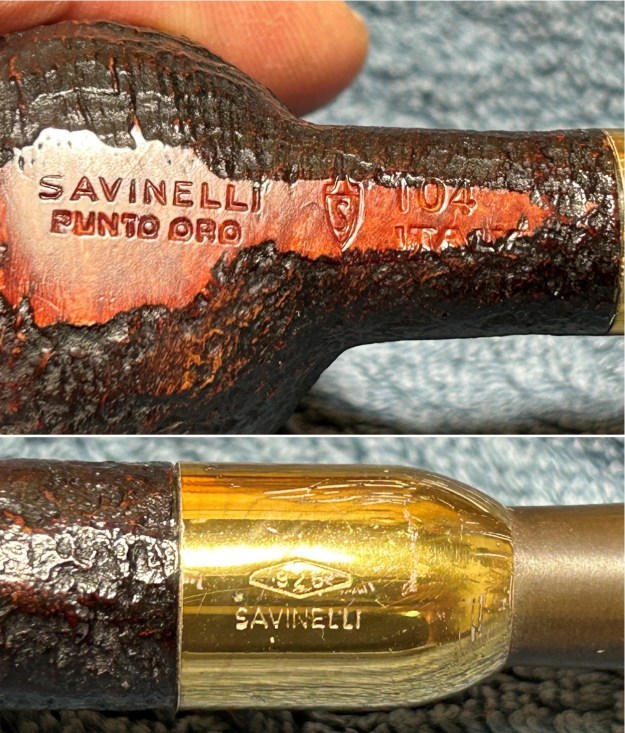
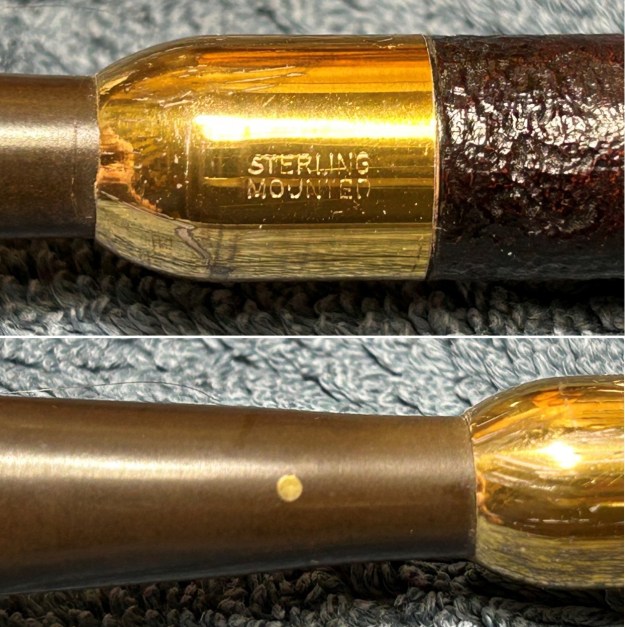
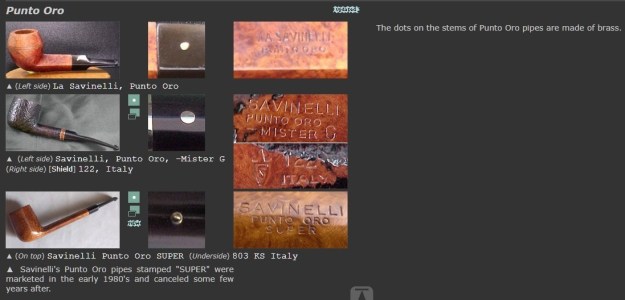
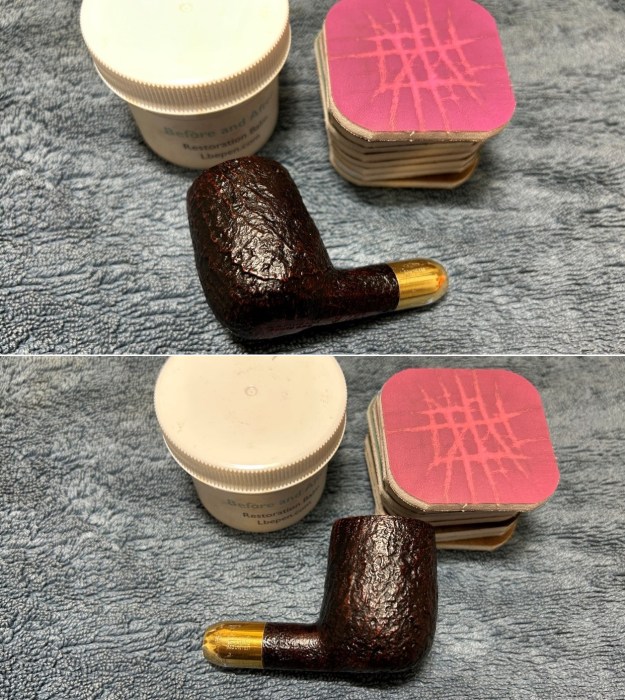
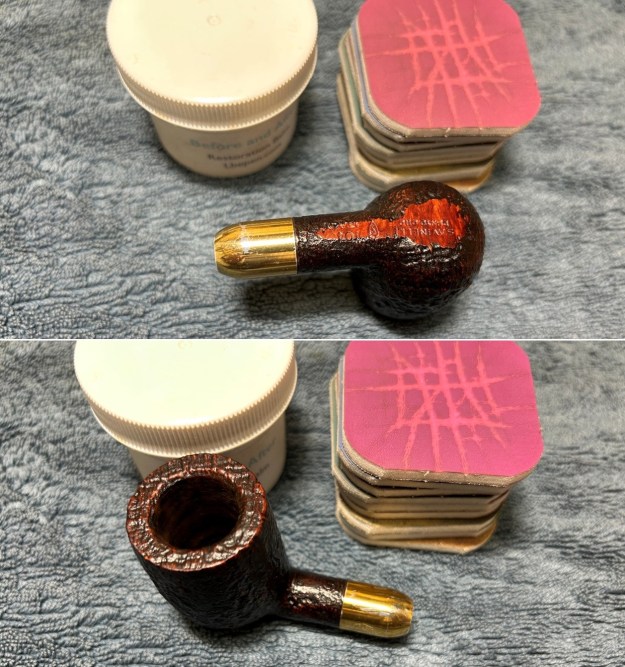
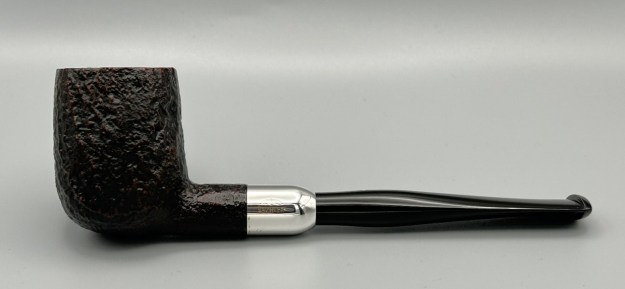
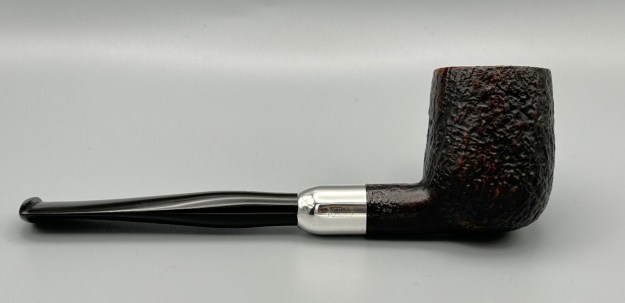
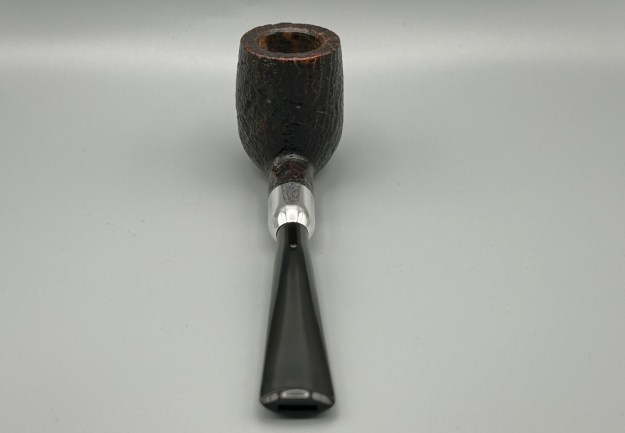
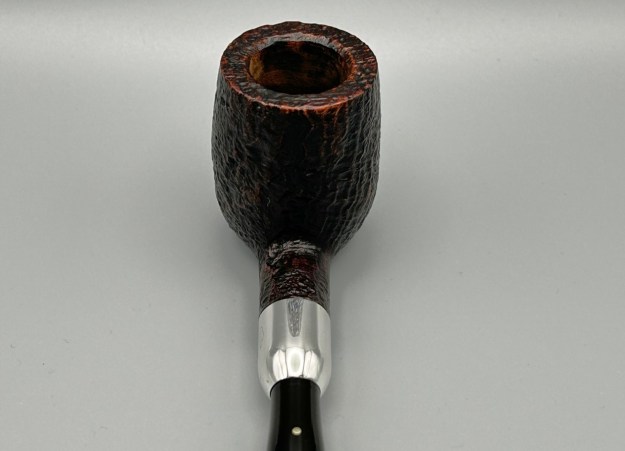
The next pipe on the table is a sandblast finished Billiard with a vulcanite shank extension and military bit stem. We purchased it from a seller on eBay from Jordan, Minnesota, USA on 01/22/2024.The pipe is stamped on the underside of the shank and reads Savinelli [over] Punto Oro. That is followed by the Savinelli “S” Shield logo followed by the shape number 811 [over] Italy. On the top of the stem there is an inserted brass dot. The rim was in good condition other than a lot of lava in the sandblast finish overflowing from the thick cake in the bowl. There were oils and grime ground into the bowl sides gives the finish a flat look. The stem is oxidized and calcified. It had light tooth marks on both the top and underside of the stem just ahead of the button. Jeff took photos of the pipe before he started his clean up work. I have included them below. He took photos of the rim top to show the cake and the dust on the top. It is another dirty pipe. He also captured the light tooth marks on the top and underside of the stem near the button. He took photos of the sides and heel of the bowl to show the grain around the bowl and the amount of grime ground into the surface of the briar.   He took photos of the stamping on the heel of the bowl and the underside of the shank. It is clear and quite readable. The single brass dot logo on the top of the military style stem looks very good.  I turned to Pipephil’s site to get a feel for the Punto Oro line. All of the previous Punto Oro pipes that I have worked on were smooth finish with great grain. This was a sandblast one and I do not recall working on one before. Here is the link (http://www.pipephil.eu/logos/en/logo-savinelli3.html). I have included a screen capture of the pertinent information on the line below. It appears the line came out in both smooth and sandblast finishes. I turned to Pipedia to look at what information they had on the brand. I found a catalogue page on the Punto Oro which confirmed what I had surmised about the line having both smooth and sandblast finished pipe (https://pipedia.org/images/d/db/Sav_Punto_Oro.jpg). I have included a screen capture of the page below. It says that the line was available in 2 distinct finishes – a rich Mahogany smooth finish and a genuine sandblast. The Savinelli shape number was 811 so I turned to the Savinelli Shape Chart on Pipedia and included a screen capture (https://pipedia.org/images/4/41/Sav_Shape_Chart_2017.jpg). I have drawn a red box around the 811KS shape in the photo below. Armed with that information I turned to work on the pipe itself. Jeff had done a great job cleaning up the pipe as usual. He cleaned up the inside of the bowl with a PipNet reamer and a Savinelli Fitsall Pipe Knife. The bowl walls looked very good. He scrubbed the interior of the bowl and shank with pipe cleaners, cotton swabs and alcohol to remove the tars and oils. He scrubbed the exterior of the pipe with Murphy’s Oil Soap and a tooth brush to remove the grime from the finish. He worked on the rim top lava and darkening with the soap and tooth brush. He scrubbed the inside of the stem with alcohol and pipe cleaners. He scrubbed the exterior with Soft Scrub and then soaked it in Briarville’s Pipe Stem Deoxidizer. He washed it off with warm water to remove the deoxidizer. The pipe looked far better. I took photos of the pipe when I received it before I started working on it. I took photos of the bowl and rim top to show how clean it was. You can see the places on the rim top and the inner edge where the stain had faded or washed out.  The stem looks clean of oxidation and there are light tooth marks and chatter on both sides.I took photos of the stamping on the top and the underside of the shank. The stamping is faint in spots but it is still readable. I took a photo of the pipe with the stem removed to show the overall look of stem, tenon and profile of the pipe.I started my work on this pipe by addressing the oxidation that remained on the vulcanite shank extension. I scrubbed it with Soft Scrub and cotton pads and was able to remove a large majority of the oxidation.I touched up the faded stain on the rim top and edges with a Walnut stain pen. It matched the rest of the stain on the bowl very well. I touched up the area where the briar met the vulcanite shank extension. There were areas around the extension were faded on the briar. I touched them up with a black Sharpie pen. It blended the faded briar into the surrounding briar very well. It looked much better.  I polished the vulcanite shank extension with 320-3500 grit sanding pads. I wiped the vulcanite down after each pad with Obsidian Oil on a cloth to remove the sanding dust and debris from the shank extension. It really began to take on a rich glow. I polished the vulcanite shank extension with micromesh sanding pads – dry sanding with 1500-12000 grit sanding pads. I wiped it down with a damp cloth after each pad to remove the debris. The bowl took on a rich glow. I rubbed the bowl down with Before & After Restoration Balm. I worked it into the surface of the briar with my fingertips and a horsehair shoe brush to clean, enliven and protect it. I let the balm sit for 10 minutes and then buffed with a cotton cloth and shoe brush to raise the shine. Mark Hoover’s Balm is a product that I have come to appreciate and one I use on every pipe I have been working on. I set the bowl aside and “painted” the stem surface with the flame of a lighter. I was able to lift the majority of the tooth marks in the stem surface. Those that remained should be able to be removed by sanding the stem.I worked over the tooth marks with 320-3500 grit sanding pads. After each pad I wiped the stem down with a damp cloth to remove the sanding dust. At this point the stem is starting to look much better.I polished the vulcanite with micromesh sanding pads – 1500-12000 grit pads. I wiped it down with a damp cloth after each sanding pad. I used Before & After Pipe Polish – both Fine and Extra Fine to further polish the stem. This Savinelli Sandblast Punto Oro 811 Oval Shank Billiard with a Military Bit turned out to be a great looking pipe. The mix of dark stains highlights the sandblasted grain around the bowl sides, top and bottom. The vulcanite shank extension works very well with the dark finish on the bowl and the polished vulcanite military style bit. I put the stem back on the bowl and carefully buffed the pipe with Blue Diamond on the buffing wheel using a light touch on the briar. I gave the bowl multiple coats of Conservator’s Wax and the stem multiple coats of carnauba wax on the buffing wheel. I buffed the entire pipe with a clean buffing pad followed by hand buffing with a microfiber cloth to deepen the shine. The finished beautiful sandblast Savinelli Punto Oro 811 Billiard fits nicely in the hand and feels great. Give the finished pipe a look in the photos below. The dimensions of the pipe are Length: 6 inches, Height: 2 inches, Outside diameter of the bowl: 1 ¼ inches, Chamber diameter: 7/8 of an inch. The weight of the pipe is 1.48 ounces/42 grams. If you are interested in carrying on the pipeman’s legacy with this pipe send me a message or an email. Thanks for reading this blog and my reflections on the pipe while I worked on it.
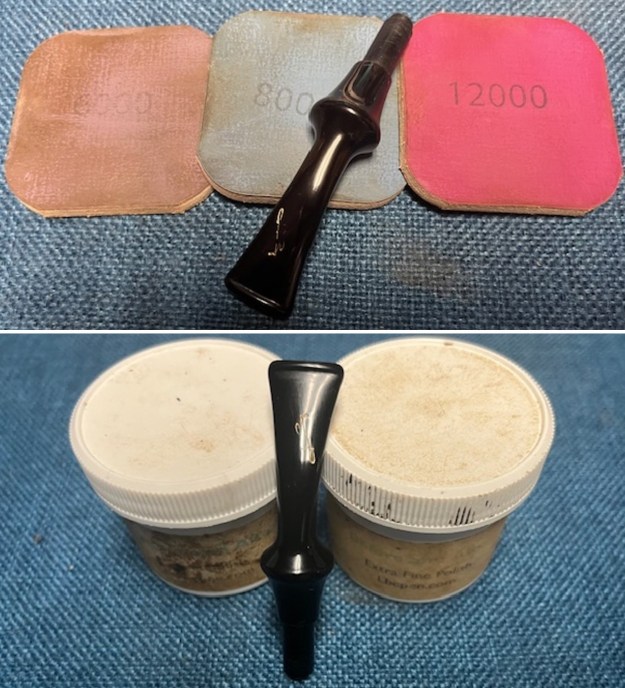
As always, I encourage your questions and comments as you read the blog. Thanks to each of you who are reading this blog. Remember we are not pipe owners; we are pipe men and women who hold our pipes in trust until they pass on into the trust of those who follow us.

A Savinelli Like No Other


by Kenneth Lieblich

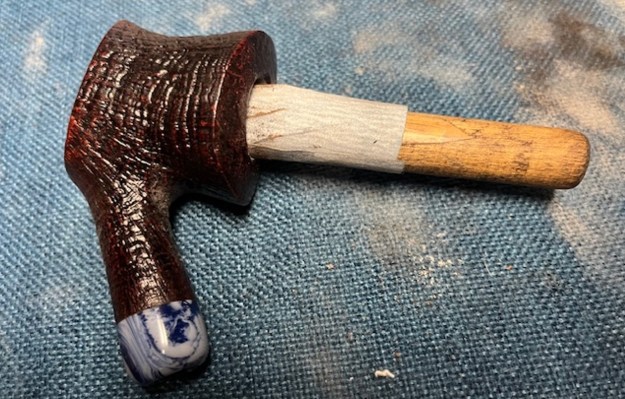
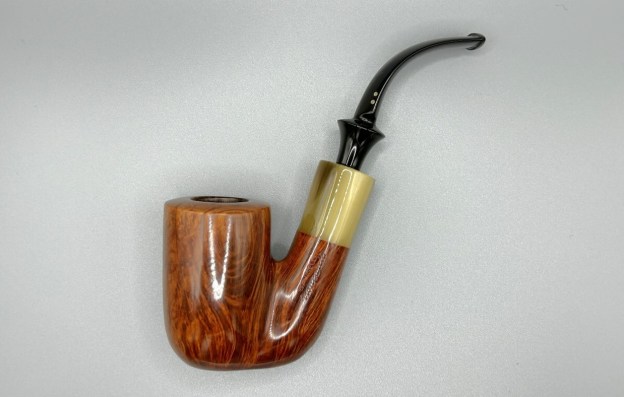
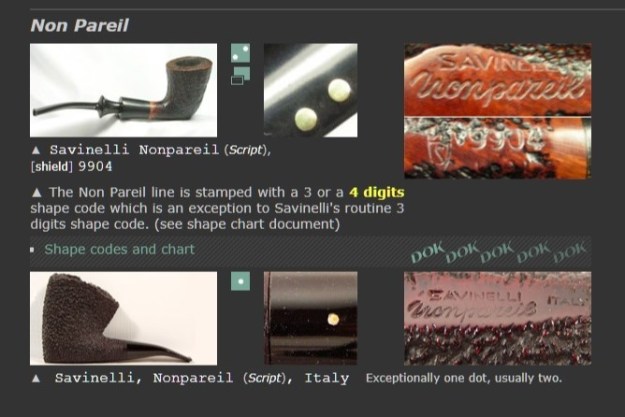
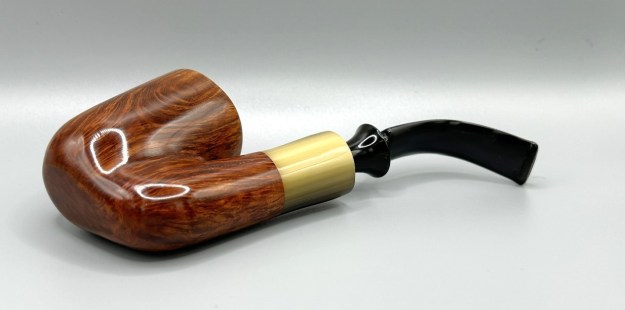
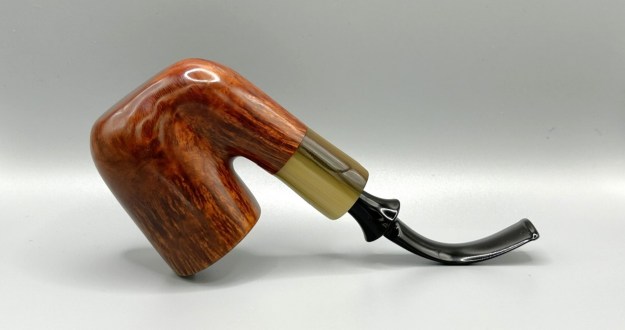
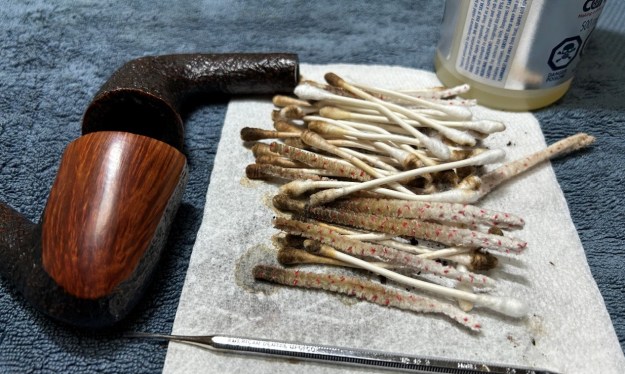
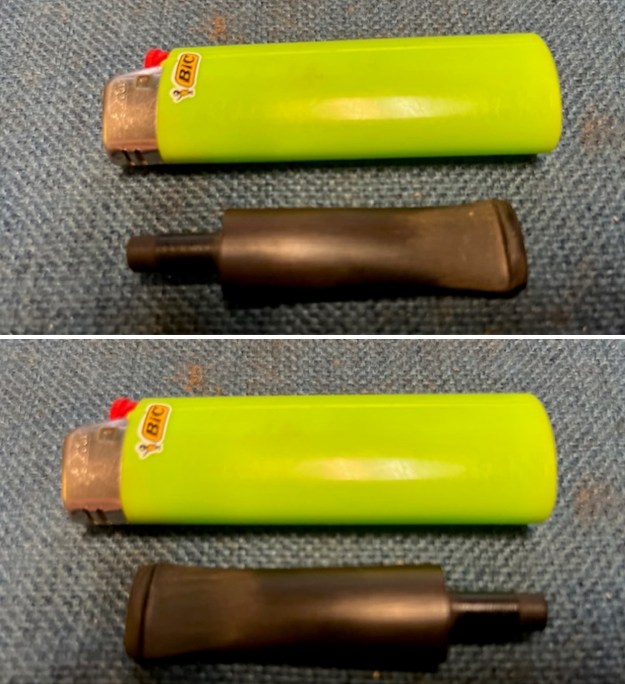
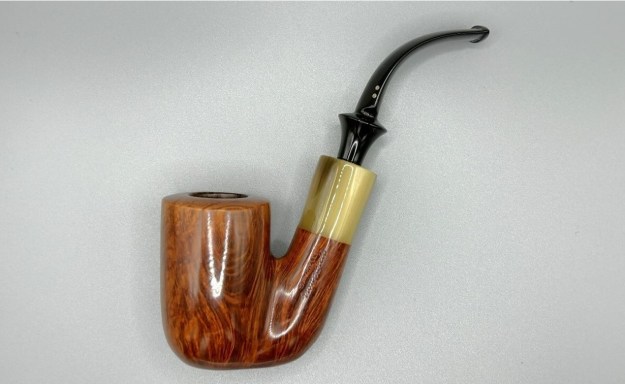
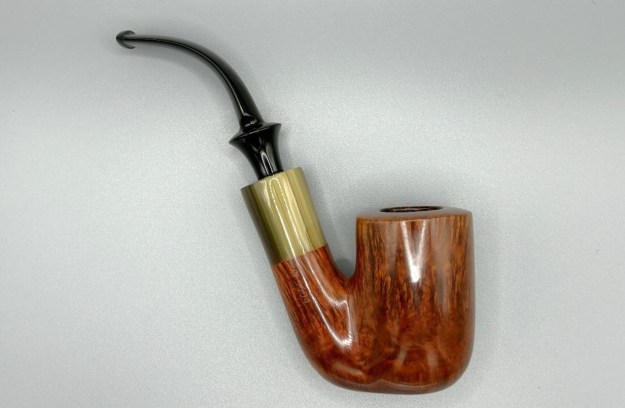
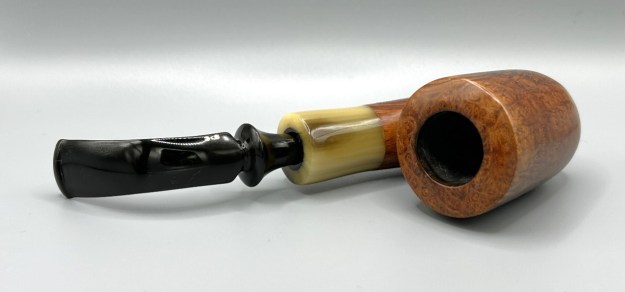
Say hello to this beautiful Savinelli Nonpareil 9614 bent billiard! It came to me in a lot of pipes I bought some time ago and it seemed right to bring this one back to life. At first, it seemed like a relatively straightforward restoration, but – wow – this pipe ended up taking an awful lot of work. You can now buy this pipe for your collection and enjoy the fruits of my labours. This pipe promises to be a great smoker, I figure. Let’s look at the markings. The left side of the shank reads Savinelli [over] Nonpareil. Despite Savinelli being an Italian company, the word nonpareil is French and means “without equal” – literally, “not the same”. On the left side of the shank is the lovely Savinelli crown, next to which are the marks 9614 [over] Italy. Naturally, the number refers to the shape. Finally, there are two brass dots on the left side of the stem – very nice touch. Savinelli is one of the most recognized names in pipe smoking and they have a long and storied history. You can read about them from their own website or from Pipedia’s article about them. However, I was particularly interested in learning more about the Nonpareil line. Sadly, Pipedia had nothing on this subject. I checked with Pipephil and they did have a bit of information, which I display below. I learned from Pipephil that old Savinellis used to have four-digit shape numbers, newer ones three. The exceptions to this rule, however, are the Nonpareil and Dry System lines.The stem on this pipe definitely shows signs of use. There were some tooth marks – dents and scratches – and plenty of calcification. Of course, there was also some oxidation, but I didn’t realize just how much until much later. The stummel was tired and drab. There were indications of lava on the rim and plenty of cake in the bowl. Also, the briar had a few little scratches from the years of love of its previous owner. Nothing to worry about – or so I thought. More on that later. Well, the usual cleaning procedures were in order for this pipe. I started on the stem by wiping it down with some Murphy’s on a cotton round. Then, I cleaned out the insides of the stem with pipe cleaners and lemon-oil isopropyl alcohol. At this point, I took a BIC lighter and ‘painted’ the stem with its flame in order to lift the tooth marks. This was moderately successful in raising the dents. Once that was done, the stem went for an overnight soak in the Before & After Hard Rubber Deoxidizer. After soaking, I cleaned off the de-oxidizing fluid with alcohol, pipe cleaners, et cetera. The oxidation had migrated to the surface and I used SoftScrub to work it off. I was surprised at how poorly this worked (as compared with other restorations), so I actually sent it for another soak in the deox fluid and repeated the same cleaning procedures afterwards. Once I got the stem looking vaguely deoxidized (and before I moved on to the Micromesh pads), I built up the tooth damage on the stem with black cyanoacrylate adhesive and let it fully cure. I used my miniature files to take down the majority of the dried glue. I then sanded it down with 400-grit sandpaper to meld seamlessly into the stem. I then used all nine Micromesh pads (1,500 through 12,000 grit) to bring out the lovely black lustre on the stem. But WAIT! I never made it through all nine pads because I could see that the oxidation was so stubborn, I would need to put in some extra work first. Recently, Steve kindly introduced me to a new type of sanding pad – more aggressive grit for more aggressive jobs. I’m going to refer to them as the ‘grey pads’ since that’s their colour. I used the grey pads to really attack the oxidation on the stem and they worked very well. I don’t have photos of this, but I’m pleased with the results. There are some small wounds remaining on the stem, but they are not an issue at all. Once done with the greys, I went back again to the Micromesh pads. I also used Obsidian Pipe Stem Oil in between each pad scrubbing. This also really made the brass dots pop! Putting the stem aside, I moved on to the stummel. I used the PipNet Reamer (and some sandpaper taped to a wooden dowel) to take the bowl down to bare briar, as I wanted to ensure there were no hidden flaws in the walls of the bowl. Fortunately, there were none. I then proceeded to clean out the insides of the shank with Q-tips, pipe cleaners, and isopropyl alcohol. There was a lot of nastiness inside this stummel and – boy-oh-boy – it took a lot of cotton to get this thing clean! I took a close look at the rim. In order to save as much of the rim as possible, I used a piece of machine metal to very delicately scrape away as much lava as I could. I do this before automatically jumping to my topping board. This worked well and the topping board was not needed.A de-ghosting session seemed like a good idea. This de-ghosting consisted of thrusting cotton balls in the bowl and the shank, and saturating them with 99% isopropyl alcohol. I let the stummel sit overnight. This caused the oils, tars and smells to leech out into the cotton. Finally, a relatively clean and fresh-smelling bowl emerged. I then moved on to cleaning the outside of the stummel with Murphy’s Oil Soap and some cotton pads. What a difference that made! I also cleaned the insides with some Castile soap and tube brushes.I examined the scratches and bumps in the briar. I dug out my iron and a damp cloth to try to raise them. The hot and moist steam can often cause the wood to swell slightly and return to shape. This worked quite well, but alas, I forgot to take pictures. After this, I used all nine Micromesh pads (1,500 through 12,000 grit) to remove the scratches in the wood and make everything smooth. Prior to that, however, I applied some clear hockey tape to the shank extension – it was already lovely and smooth, and I didn’t want to scratch it. This tape is fantastic because it is incredibly resistant to sanding yet comes off with no residue whatsoever. I applied some Before & After Restoration Balm and began to admire my work when my eyes saw something that was uncovered in my restoration: a thin craze line in the valley between the stummel and the shank. It was certainly not visible before, so the cleaning and sanding had revealed it. Even though the line was incredibly thin and seemingly shallow, I needed to address it. My first step was to ensure that the line would not continue to creep after I had repaired it. To that end, I took a micro-drill bit, inserted it in my Dremel, and very carefully drilled a hole in both ends of the line. That done, I carefully applied a tiny bead of cyanoacrylate adhesive to the tiny hole and the tiny line. Finally, I let it cure. This was a great success – I was really pleased with how the repair looked. I had to sand this area again, of course, so I applied my hockey tape all over the place (see photo) and went to work with some sandpaper and Micromesh pads. I then rubbed in some more Before & After Restoration Balm and finally saw the beauty of my work.Off to the bench polisher I went. I applied some White Diamond and a few coats of carnauba wax and they added the finishing touch. This Savinelli Nonpareil 9614 bent billiard was in need of a reminder of its beauty and Italian heritage. I am pleased to announce that this pipe is for sale! If you are interested in acquiring it for your collection, please have a look in the “Italy” pipe section of the store here on Steve’s website. You can also email me directly at kenneth@knightsofthepipe.com. The approximate dimensions of the Savinelli Nonpareil 9614 bent billiard are as follows: length 4¾ in. (121 mm); height 5⅛ in. (130 mm); bowl diameter 1⅝ in. (40 mm); chamber diameter ¾ in. (19 mm). The weight of the pipe is 1⅞ oz. (55 g). I hope you enjoyed reading the story of this restoration as much as I enjoyed restoring it. If you are interested in more of my work, please follow me here on Steve’s website or send me an email. Thank you very much for reading and, as always, I welcome and encourage your comments.
Resurrecting a Savinelli Dry System


by Kenneth Lieblich

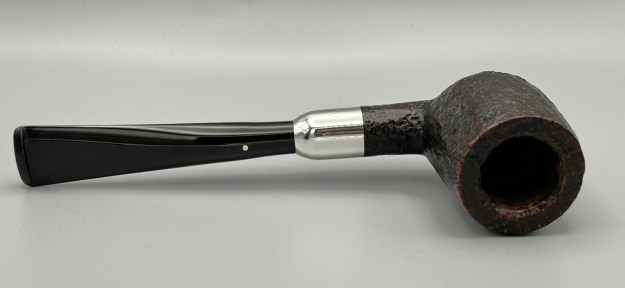
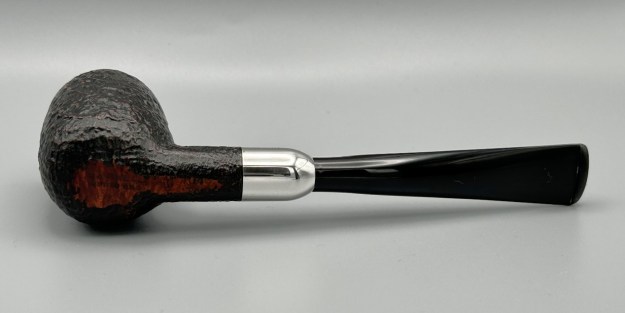
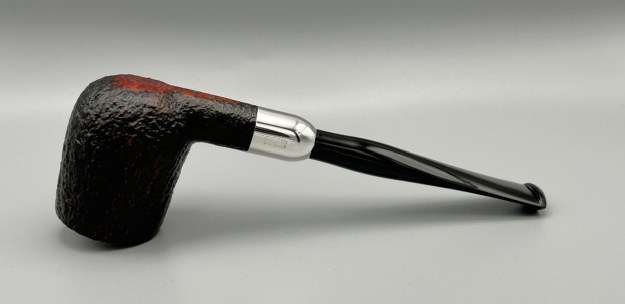
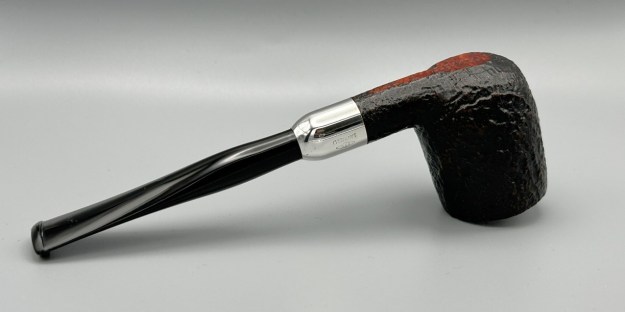
Next on the old chopping block is a wonderful Savinelli Dry System 3621 Bent Dublin. It’s a really good-looking pipe and I understand that this is a popular and well-loved series. I got it recently in a lot of pipes and it called out to me for some help. I suppose this pipe is meant to be reminiscent of the Peterson system pipes – it even has a sort of P-lip button! It’s a terrific-looking pipe, with a bit of a rough history. The main markings of the pipe are on the underside of the stummel. On the left it reads Savinelli [over] Dry [over] System. Next to that is the Savinelli crown and “S” logo. And next to that is 3621 [over] Italy.  The shank has a nickel cap with Savinelli stamped on it. Finally, the stem has a worn, but still readable, stylized “S” on the top.Savinelli is one of the most recognized names in pipe smoking and they have a long and storied history. You can read about them from their own website or from Pipedia’s article about them. However, I was particularly interested in learning more about the Dry System. Sadly, Pipedia had nothing on this subject. I checked with Pipephil and they did have a bit of information which I provide here below:However, the definitive word on the Dry System comes from Savinelli’s own website. It provided some very useful information.
In 1981, after several years of research, Savinelli launched the “Dry System”, combining trap and filter. The name “Dry” comes from the introduction of the balsa “filter” into the traditional system pipe – the “System” being the presence of the built-in moisture trap in the shank. The balsa mops up the moisture in the smoke hence the term “Dry” system, and if the pipe is smoked without the balsa all that will happen is that this moisture will condense and collect in the trap. It can then either be mopped up with a folded pipe cleaner, or flicked out.

Finally, here’s an image of the pipe from an old Savinelli shape chart:This was obviously a terrific smoker, as the wear and tear on this pipe shows. The stummel was quite dirty – both inside and out – and even appeared to have some dust-bunnies inside the bowl (not to mention all the cake). The finish was well worn and would need to be addressed. The nickel cap had some mess on it too. The stem, however, was from another planet. Have you ever seen such oxidation on a pipe stem? In fact, my wife asked me if the stem was actually meant to be brown. “No” was my emphatic answer! Aside from that, the stem had some tooth marks and nicks. I could tell that this stem was going to be a bear to deal with. This pipe is always going to retain some marks from its hard life, but it is my job to make sure this pipe looks as good as possible. It’s a wonderful pipe and it deserves to be part of someone’s collection again.
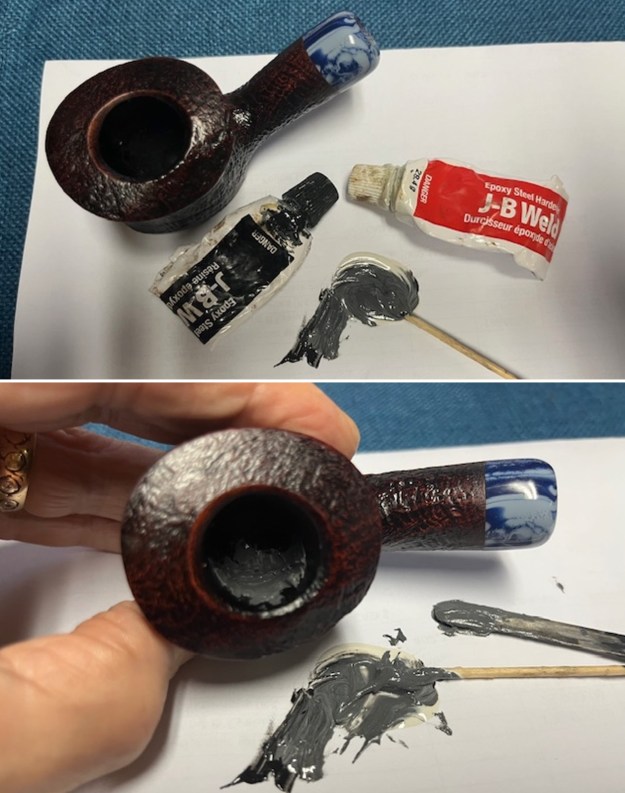
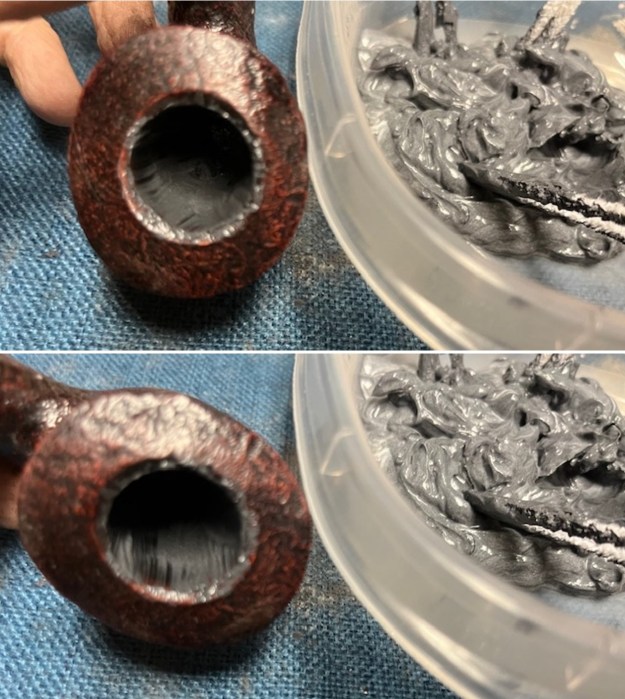
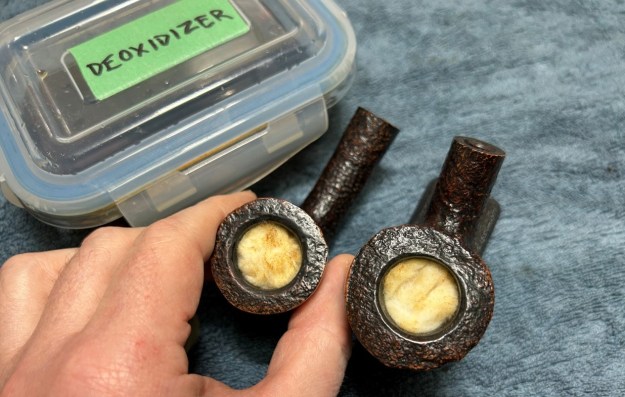
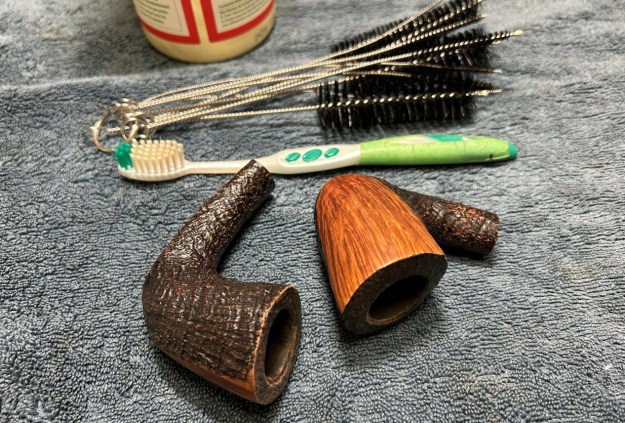
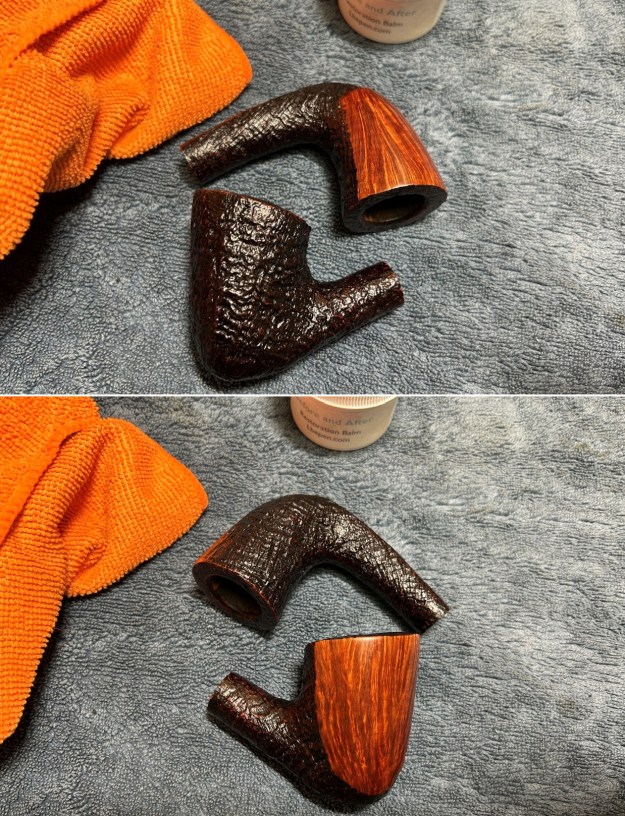
The stem is going to take a lot of work, so let’s get started. I took up the stem and cleaned it off with Murphy’s Oil Soap. It was quite dirty and needed some scrubbing. I then cleaned out the insides of the stem with pipe cleaners and lemon-infused isopropyl alcohol, and, as you can see, if was pretty dirty inside. I also took a BIC lighter and ‘painted’ the stem with its flame in order to lift the tooth marks. This was only moderately successful in raising the dents.Now to tackle the epic oxidation. Next, I scrubbed (and scrubbed and scrubbed) the stem with some SoftScrub cleanser and then put the stem in my container of deoxidizing fluid overnight. This works to draw the oxidation to the surface of the stem, so that it can be cleaned off again with more SoftScrub. As you can see, this worked in the sense that it drew out the oxidation, but there remained a lot of labour ahead. In fact, I repeated the process of scrubbing and soaking overnight, because the situation was so dire. Eventually, I got to a point where the stem was something I could work with. Before I moved on to sanding, I built up the tooth marks on the stem with black cyanoacrylate adhesive and let them fully cure. I then sanded them down with sandpapers to merge a bit better into the stem. I also added some nail polish to the ‘S’ on the stem. At this point, it was clear that more than the ‘usual’ sanding was going to be required here. I took two sanding sponges (220- and 320-grit) and worked the stem hard. I needed to sand out the remaining oxidation to get this stem the best chance of looking decent again. I then used all nine Micromesh pads (1,500 through 12,000 grit) to bring out the lovely black lustre. I also used Obsidian Pipe Stem Oil in between each pad scrubbing. As I mentioned before, there are still hints of its past life, but I’m pretty pleased with how the stem came out. On to the stummel and the usual cleaning procedures were in order for this pipe. I used the KleenReem to remove the cake in the bowl and I followed up by sanding the walls down with some 220-grit sandpaper attached to a wooden dowel. I took it down to bare briar, as I wanted to see if there were any issues in the walls of the bowl. There was some charring and some slight fissures, but nothing serious. I then proceeded to clean out the insides of the shank with Q-tips, pipe cleaners, and isopropyl alcohol. There was some nastiness inside this stummel and it took a lot of cotton to get this thing clean. I decided to de-ghost the bowl to be on the safe side. I thrust some cotton balls into the bowl and the shank and saturated them with 99% isopropyl alcohol. I let the stummel sit overnight. This caused any remaining oils, tars and smells to leach out into the cotton. I then moved on to cleaning the outside of the stummel with Murphy’s Oil Soap and a toothbrush. What a difference that made! I followed that up by cleaning the insides with some dish soap and tube brushes. As I mentioned earlier, there were some minor issues to fix inside the bowl. The solution to this problem is an excellent one: epoxy. I prepared some J.B. Weld epoxy and smeared the walls, ensuring that the epoxy was evenly spread. Once done, a good 24 hours was needed to ensure that the epoxy was properly cured. After that, I gently sanded the inside of the bowl to provide a rough surface for what was to come later. I coated the entire inside of the bowl with a mixture of activated charcoal and my wife’s homemade yogurt. Once hardened, this provides a good, slightly rough surface for a new cake to build. Due to the pipe’s hard life, it was clear to me that the pipe needed to be stained. I applied some Fiebing’s Dark Brown Leather Dye. I flamed it with a BIC lighter and let it set. I then removed the excess with isopropyl alcohol on a cotton round. It looked so much better after this. I then rubbed some Before & After Restoration Balm into the wood. I gently brushed it into the rustication grooves and let the balm sit for fifteen minutes or so. The BARB works so well at bringing out the best in the wood. I brushed it with a horsehair brush and buffed it with a microfibre cloth. Beauty! I rubbed the nickel band with 0000 steel wool. This is the least abrasive grade of steel wool and I wouldn’t use anything harsher than that. I then used a few MicroMesh pads to make the metal shine. Later, I went to the bench buffer and applied some White Diamond to the stummel and stem. Then the final polish! The rusticated surface meant that I didn’t use carnauba wax – it gets gummed up in the grooves. Instead, I used Lee Valley Conservator’s Wax which worked like a charm. This was a nifty restoration and I had fun with it. I think the result is terrific and it’s a very handsome pipe once again. I am pleased to announce that this pipe is for sale! If you are interested in acquiring it for your collection, please have a look in the “Italy” pipe section of the store here on Steve’s website. You can also email me directly at kenneth@knightsofthepipe.com. The approximate dimensions of the Savinelli Dry System 3621 Bent Dublin are as follows: length 5 in. (126 mm); height 4 in. (101 mm); bowl diameter 1⅜ in. (36 mm); chamber diameter ¾ in. (19 mm). The weight of the pipe is 1⅛ oz. (35 g). I hope you enjoyed reading the story of this restoration as much as I enjoyed restoring it. If you are interested in more of my work, please follow me here on Steve’s website or send me an email. Thank you very much for reading and, as always, I welcome and encourage your comments.