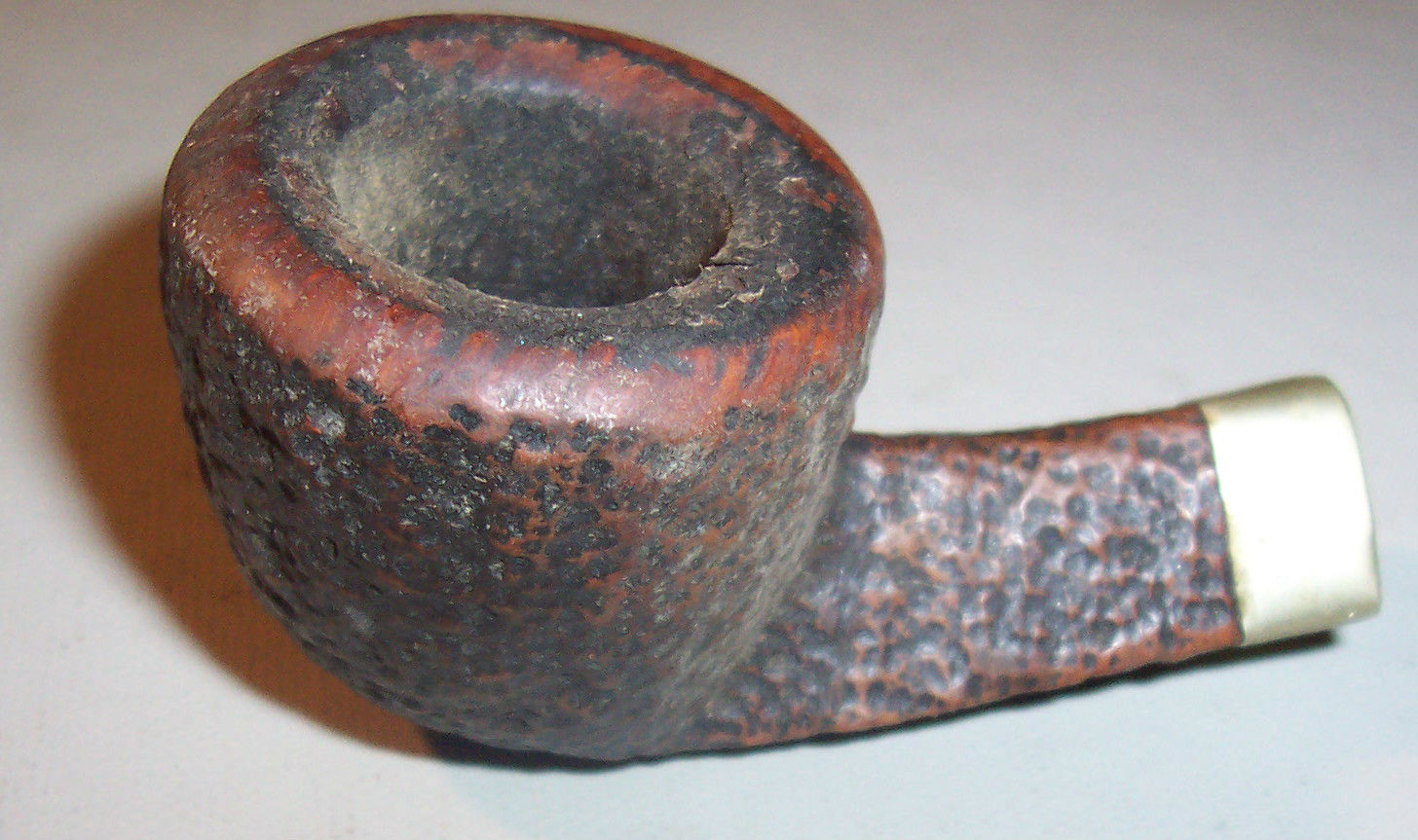
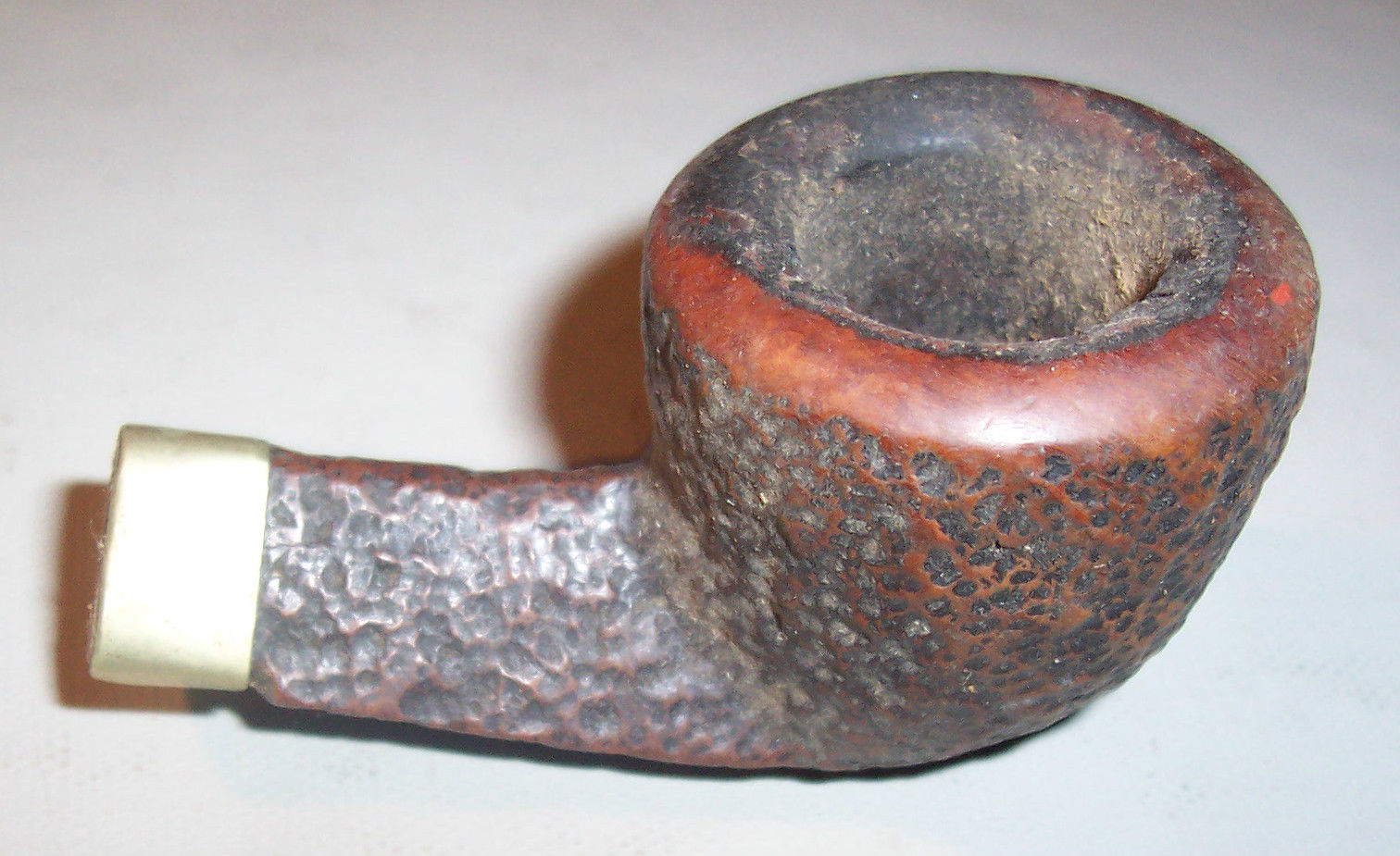
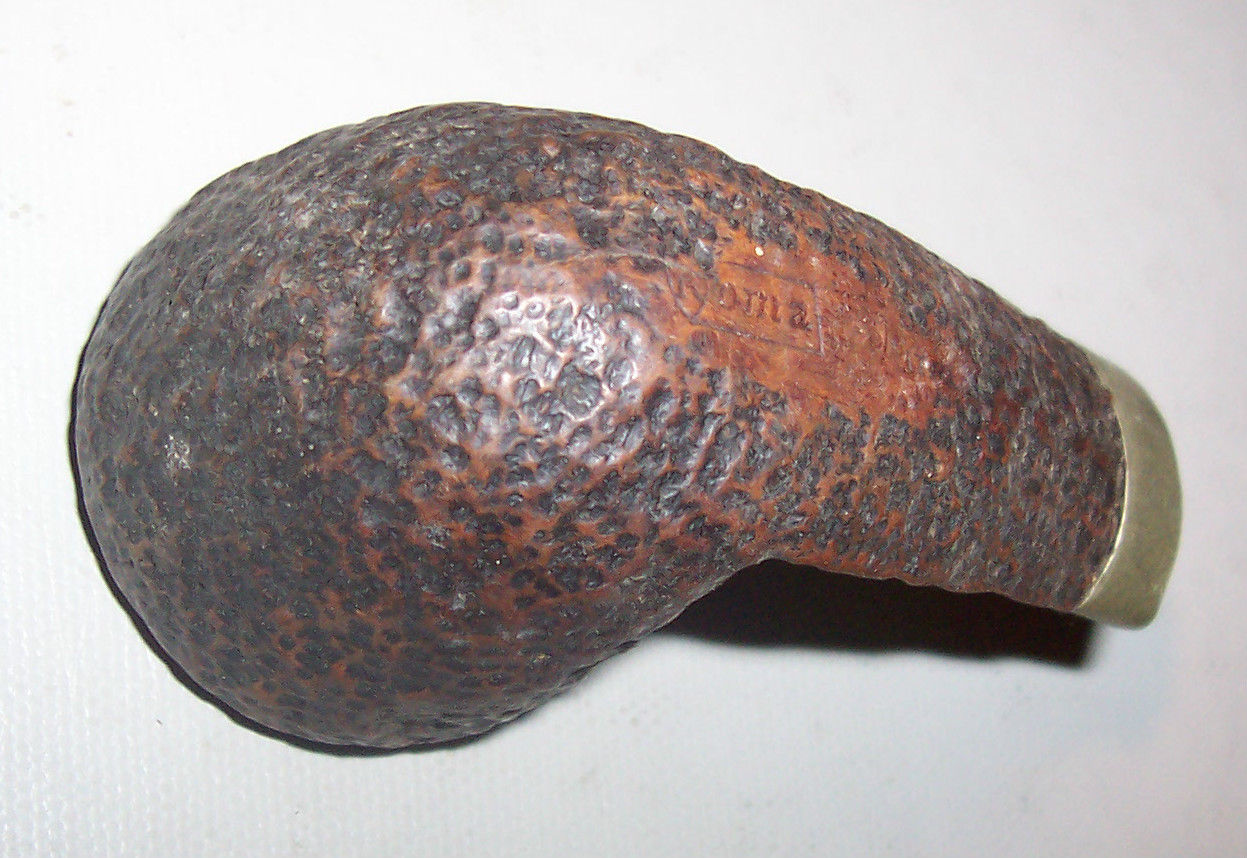
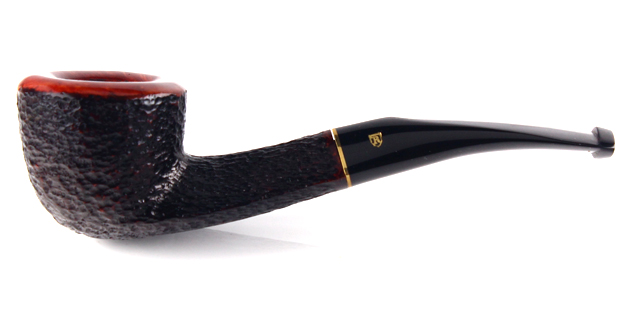
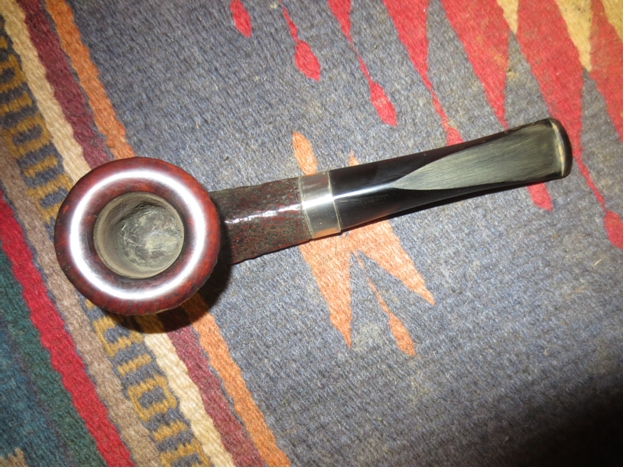
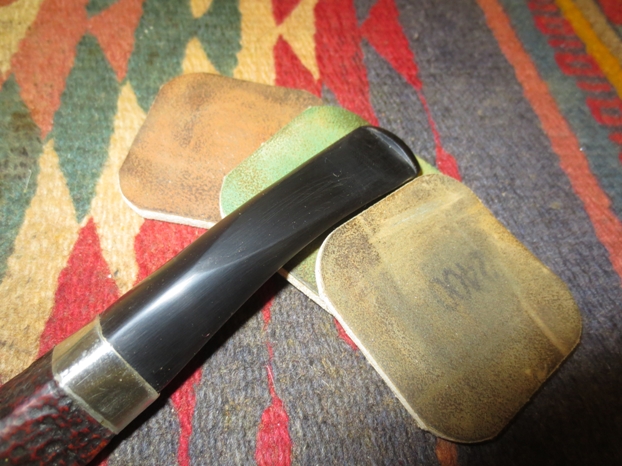
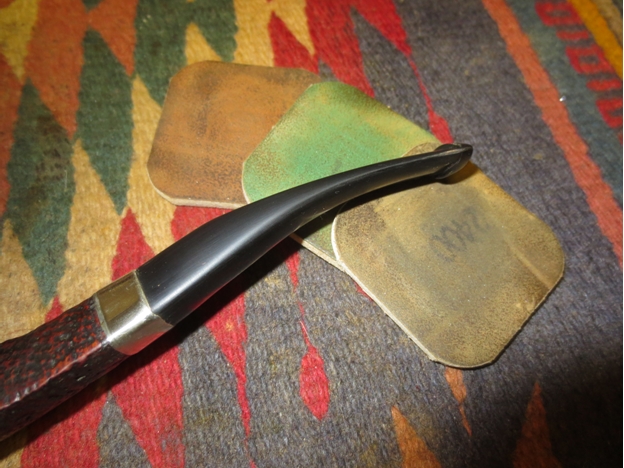
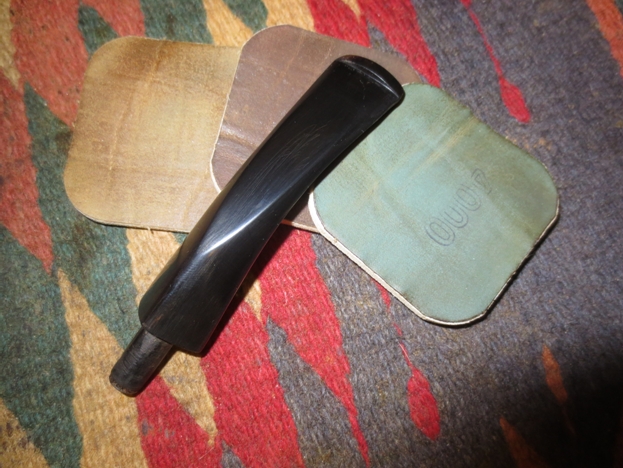
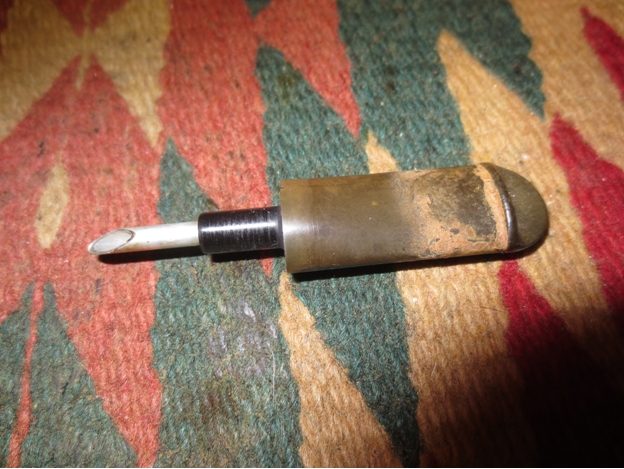
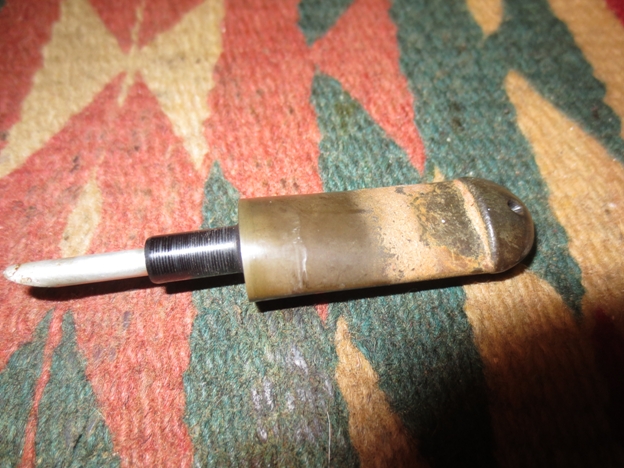
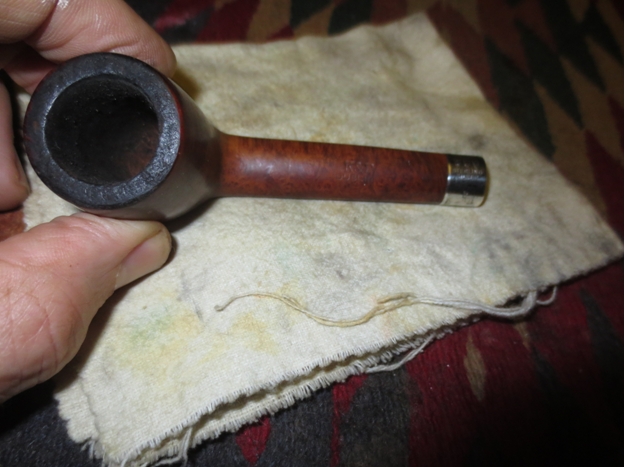
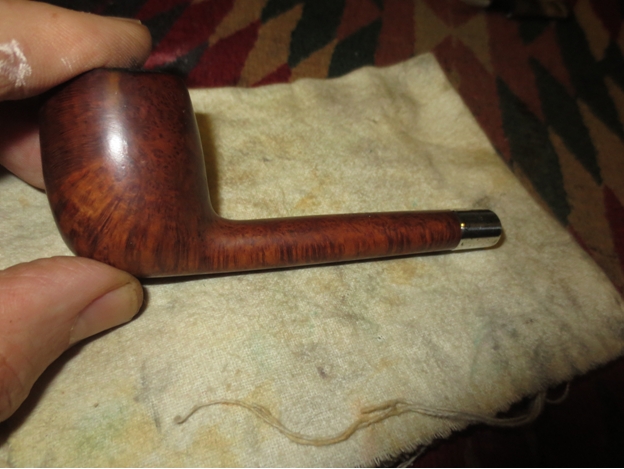
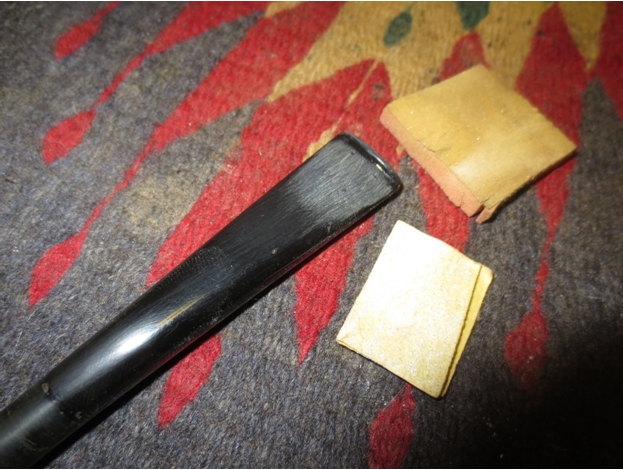
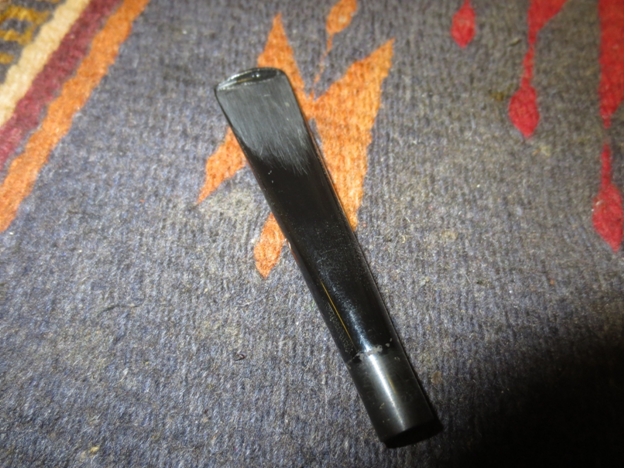
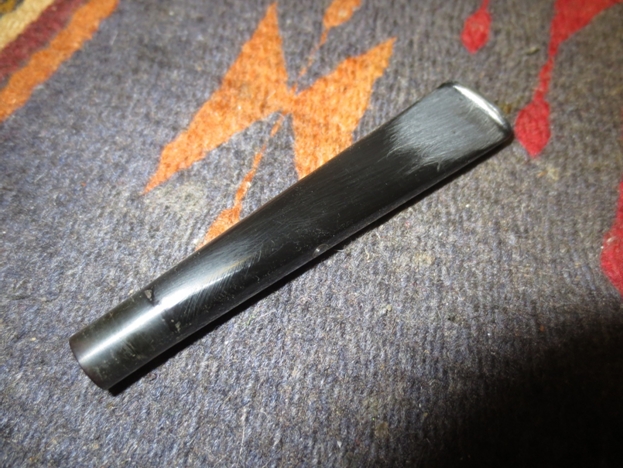
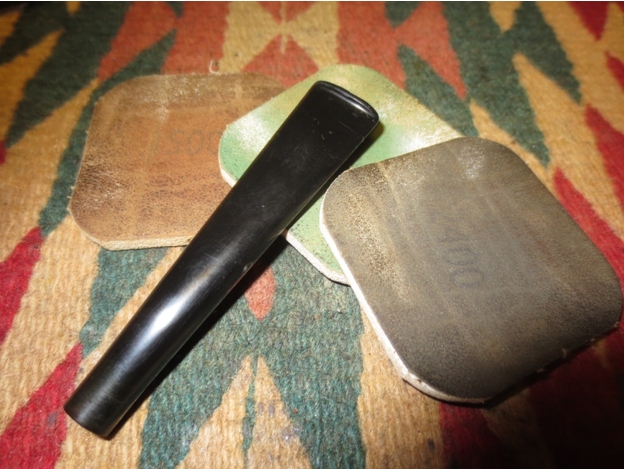
Tag Archives: sanding a stem

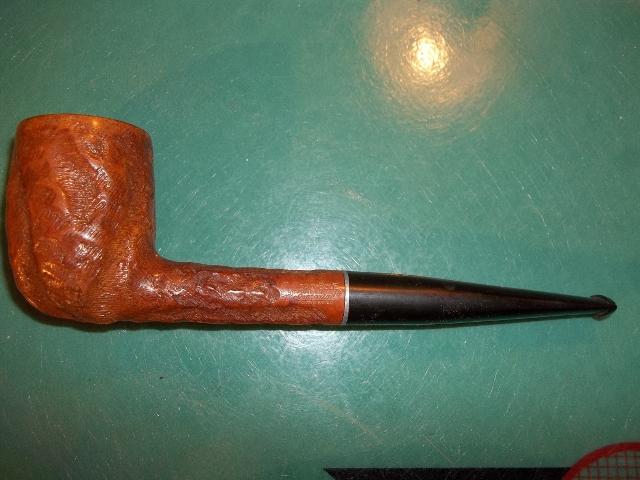
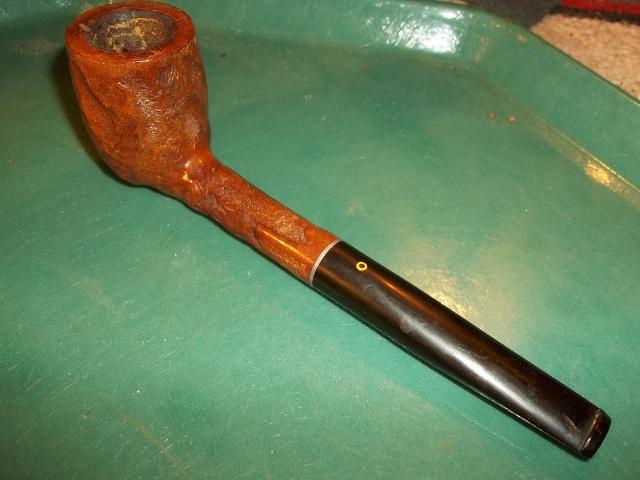
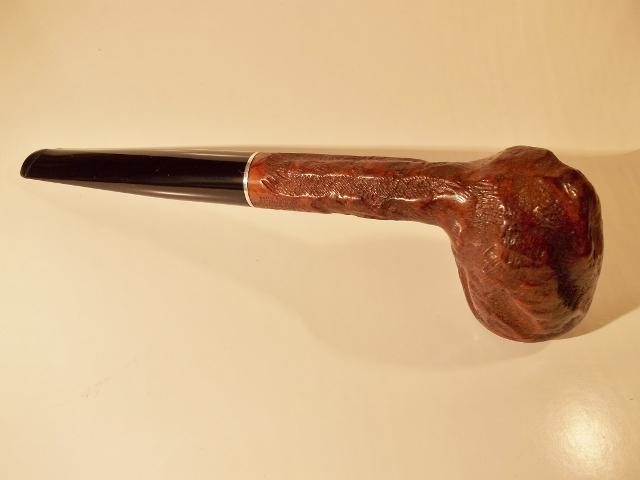
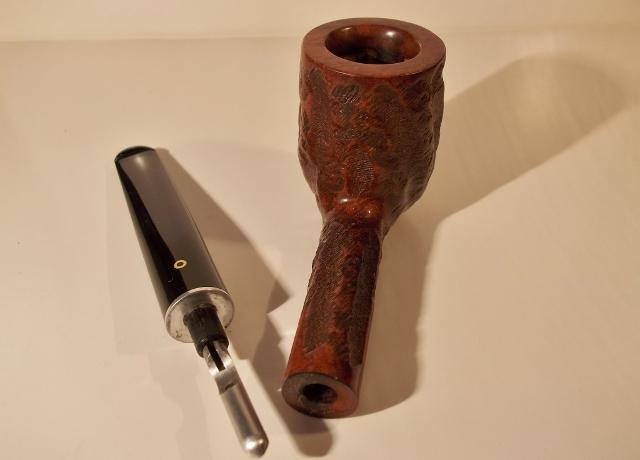
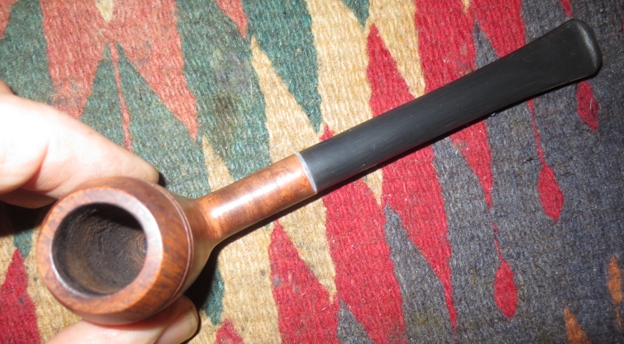
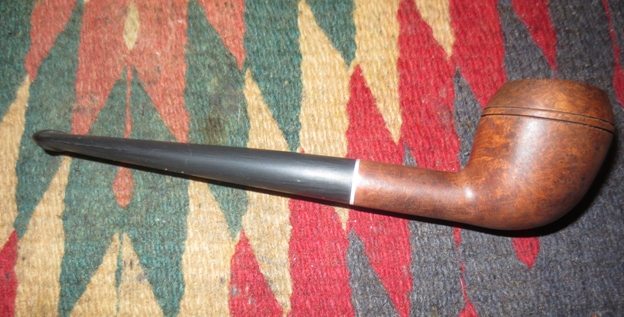
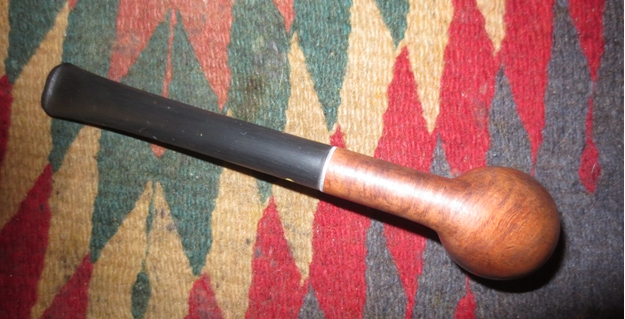
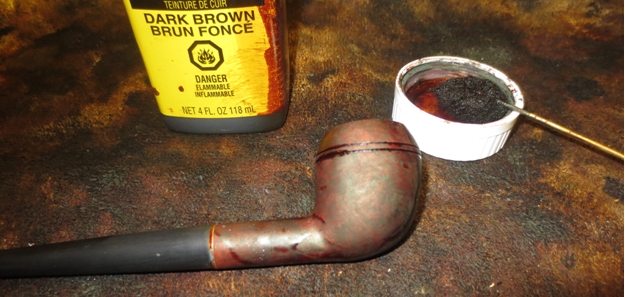
Trash to Treasure – Restoring a KBB Yello-Bole Billiard


Blog by Aaron Henson

Last evening I received an email from Aaron to which he attached this writeup on his restemming of an older KBB Yello-Bole. It is great to have the various readers of the blog submit articles to the blog to share with others. The dream of rebornpipes when I started it was just that – to provide a platform where those of us engaged in refurbishing tobacco pipes could share our methods, successes and failures. This community would provide ongoing education for anyone who wanted to try their hand at restoring estate pipes. With that background here is Aaron’s restoration and the explanation of his process. Welcome to rebornpipes Aaron.

By way of introduction, let me begin by saying that I am relatively new to pipe restoration. This write up details my third restoration and I thought I would submit it for two reasons; 1) I have gotten so much help from the regulars posting here at rebornpipes and from forums elsewhere I felt that I would like to share my experience for others to glean from, and 2) although it is not very different from some of the other restorations that Steve has catalog for us here, some of my tools and techniques may be a little different. I also hope to get some feedback on ways to improve my process.

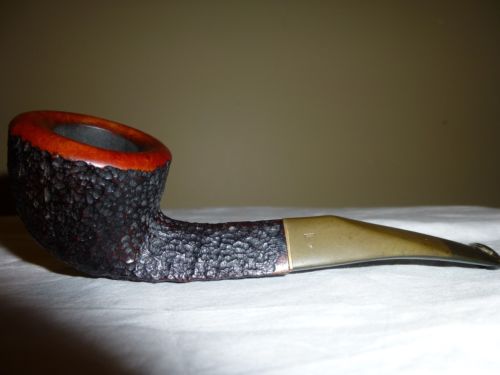
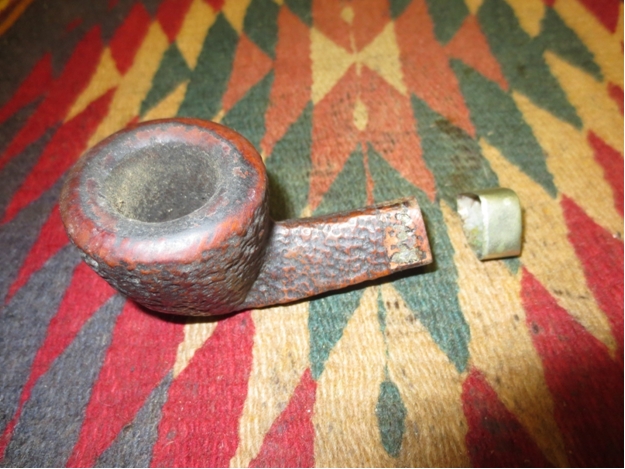
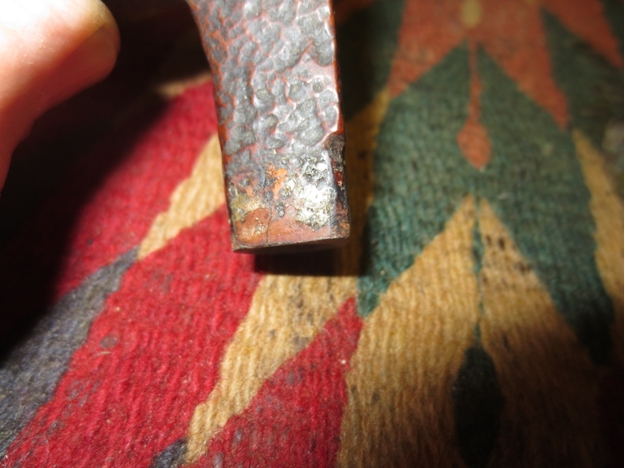
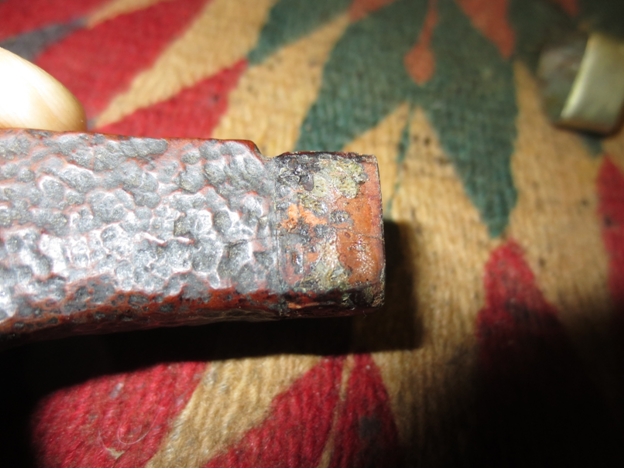
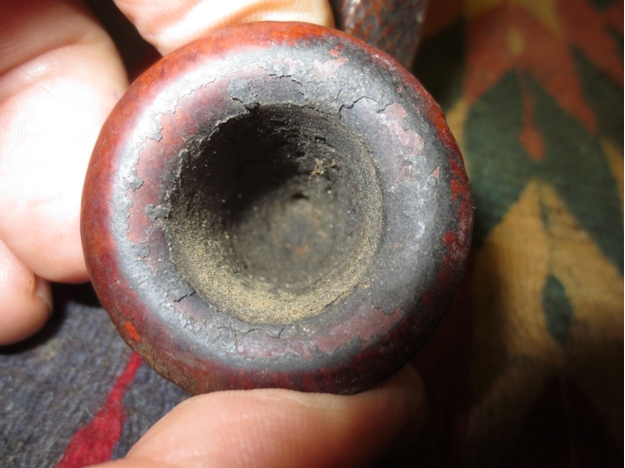
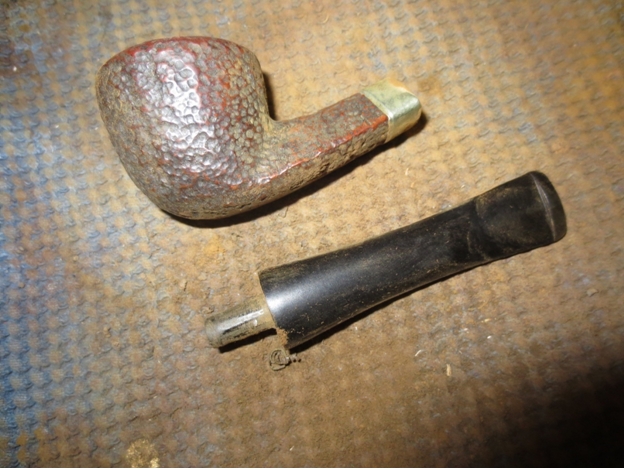
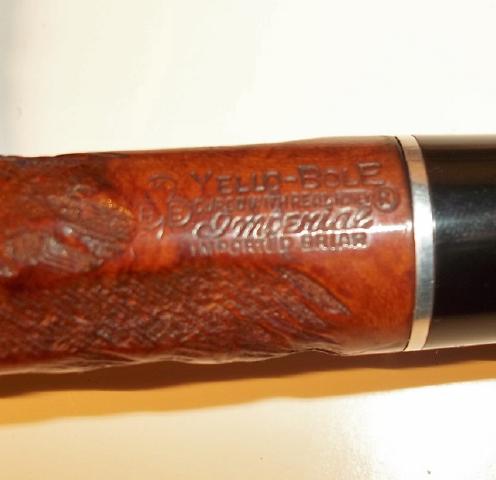
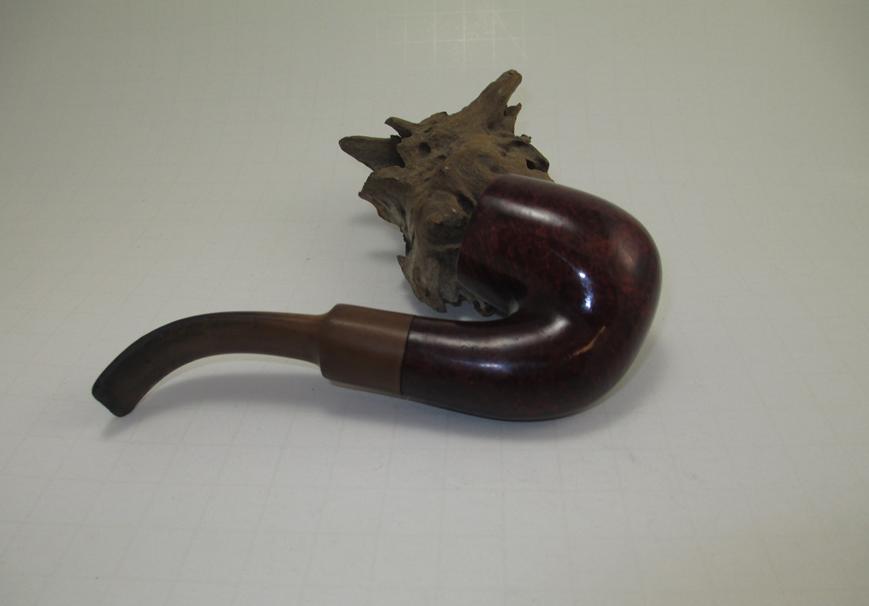
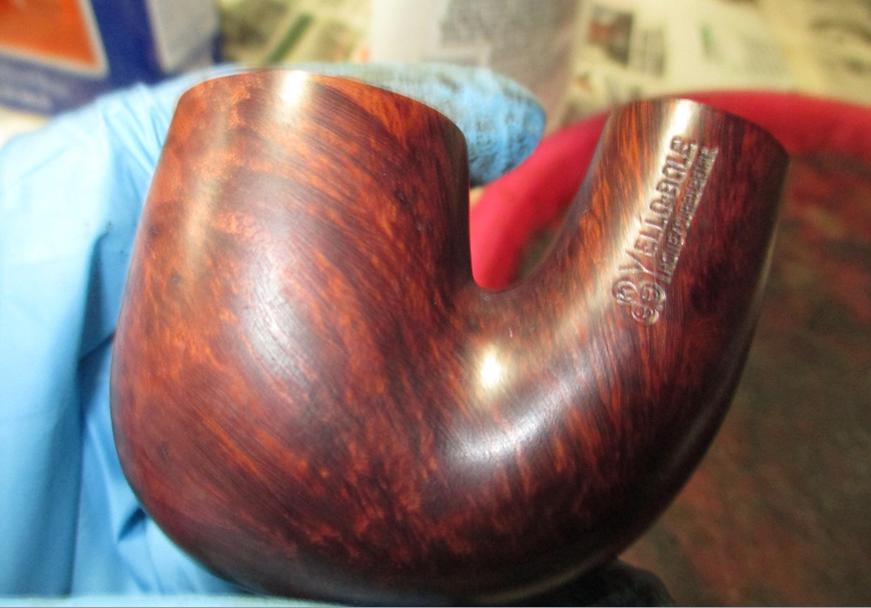
I was at local second-hand shop with my family around Thanksgiving and was looking for pipes when my son found a stemless KBB Yello-Bole stummel. After looking it over for cracks in the bowl and stem I realized that the briar was in relatively good condition. I noted a few chips on the edge of the rim and some blackening of the rim but no fills and not much cake in the bowl. The stem was clearly stamped with the KBB logo in a clover leaf just to the left of:YB

YB1 I did not know much about the Yello-Bole brand but I thought I should be able to find a stem easily enough (aren’t they somewhat universal in size?). Besides, with a $4 price tag I figured I would not be out anything if it didn’t work out.YB2

YB3

YB4 I jumped on my computer as soon as I got home and found some interesting history on the Yello-Bole brand. I won’t go into it here because Steve has done a nice job summarizing it in one of his posts: Narrowing Down a Date for Kaufman Brothers & Bondy’s KBB and KB&B Pipes. From the data available I had to guess that this pipe was form the late 1950’s or 60’s.

After reading up on the history of the pipe I began looking online for a new stem. I quickly learned that not all pipe stems are created equal, nor are they interchangeable. For a while, I considered sending the stummel to someone to have a stem made but that kind of defeated the whole spirit of restoring the pipe myself.

It took a while to find a stem that I thought would look right on the pipe. I settled on a stem from Vermont Freehand (ebay vt_freehand), a 2½” tapered stem – No. 547. I ordered 3 of them, figuring that I would need at least one for practice.

While I waited for the stems to arrive I began working on the stummel. There was not a lot of cake in the bowl so I started there – low hanging fruit. Now, I don’t own a reamer, but I have found that a ½” dowel wrapped with 60 grit sandpaper answers very well. What cake there was came out cleanly.

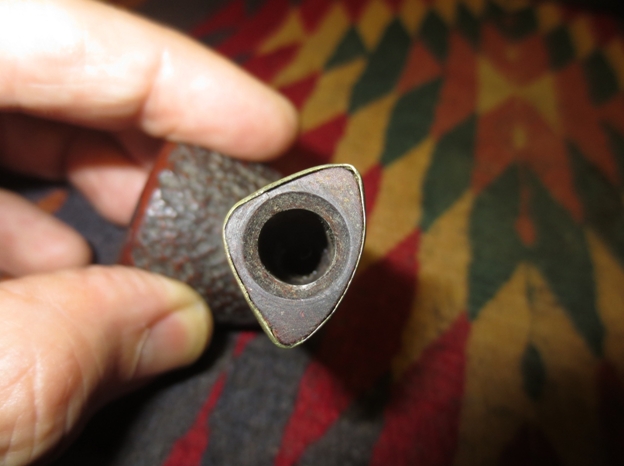
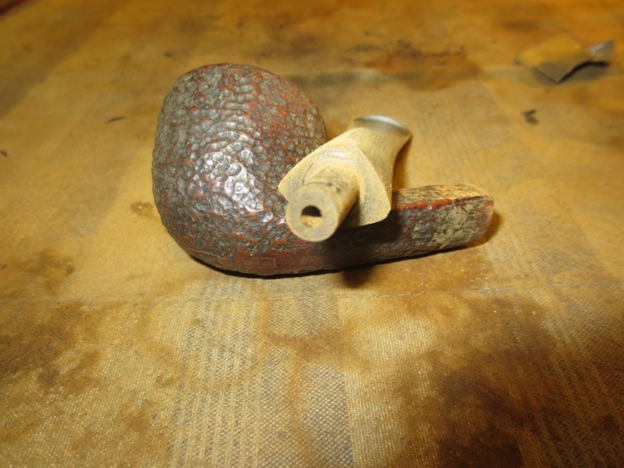
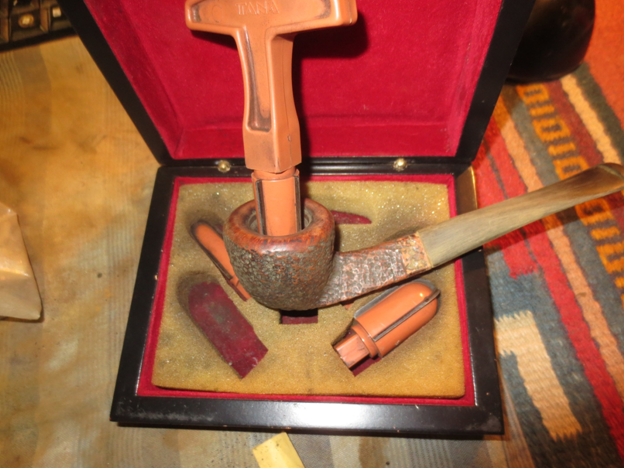
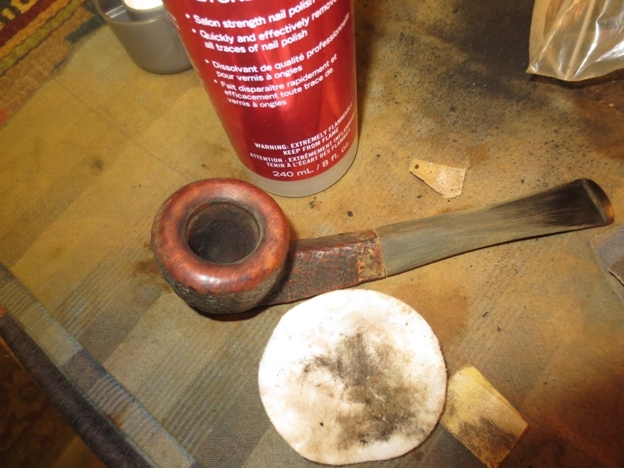
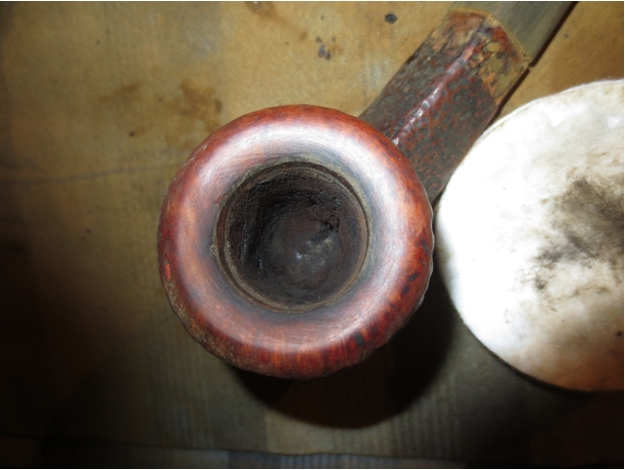
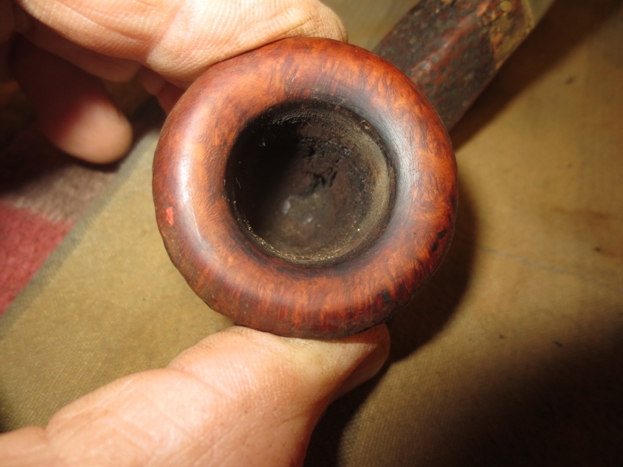
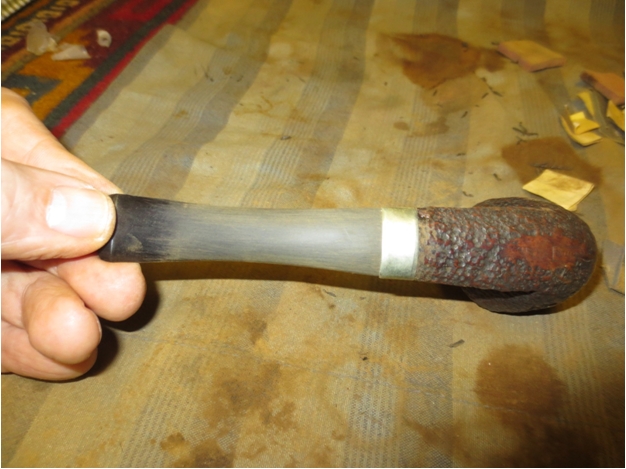
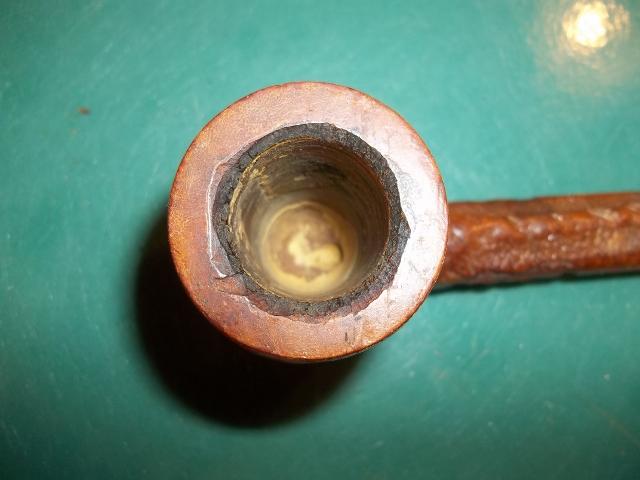
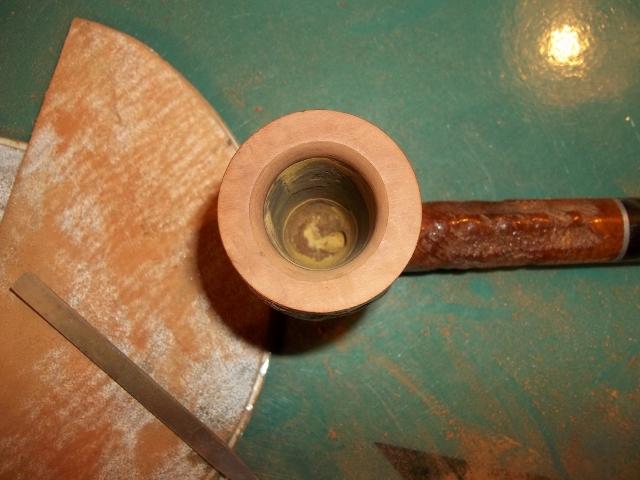
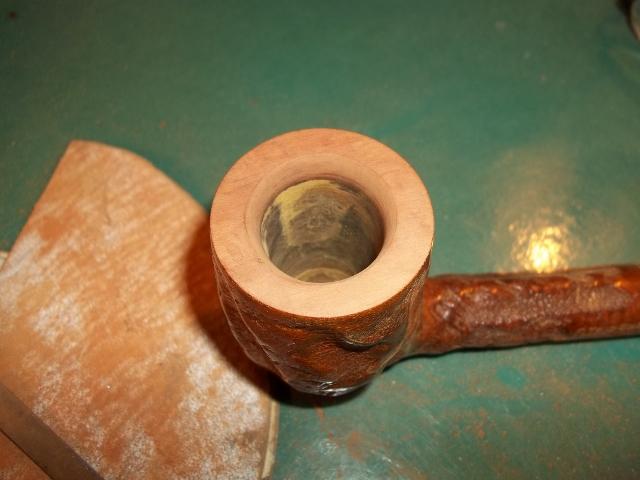
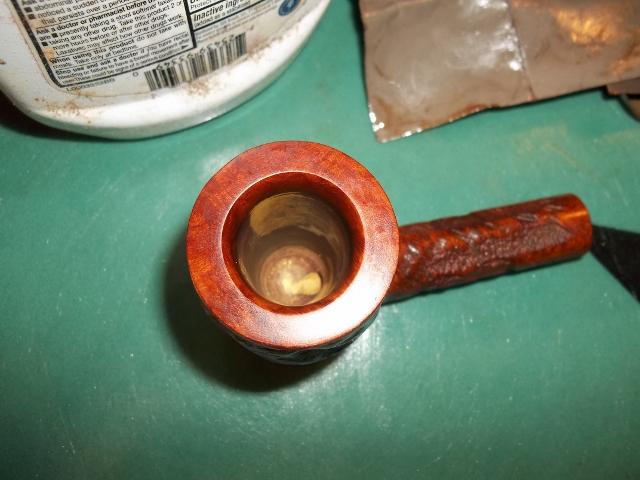
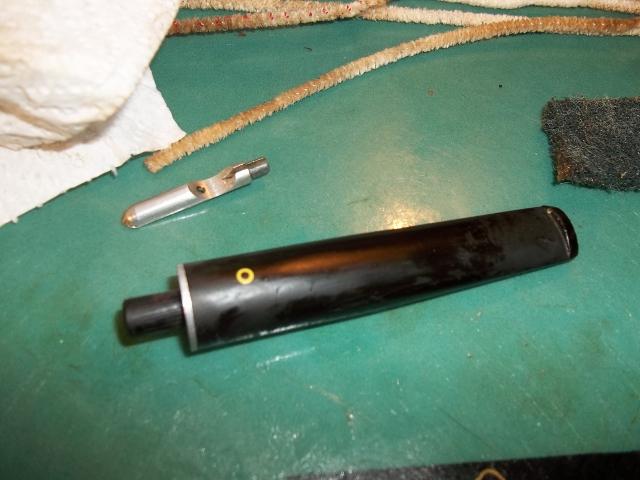
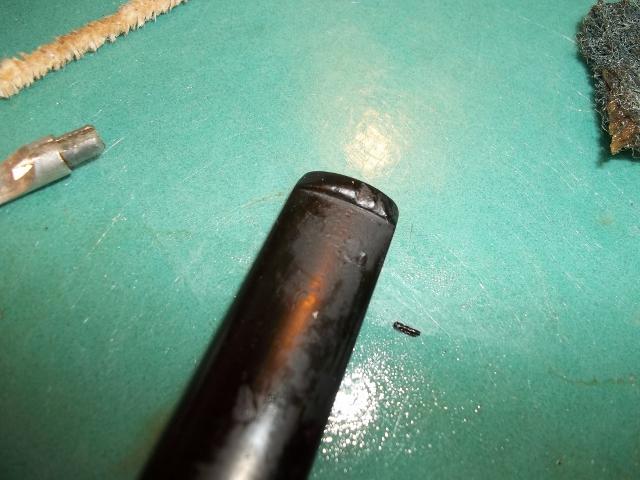
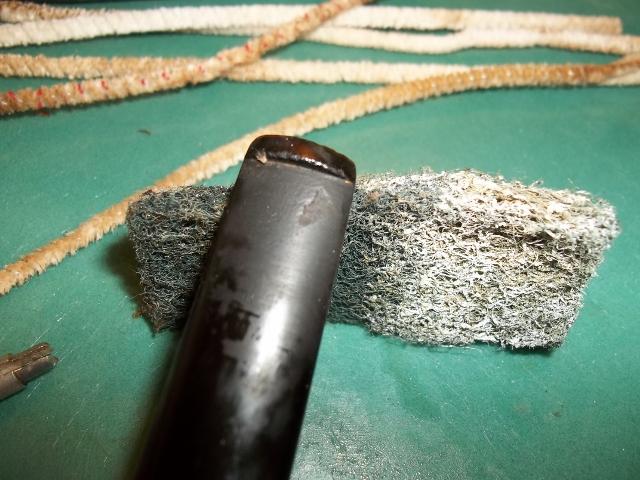
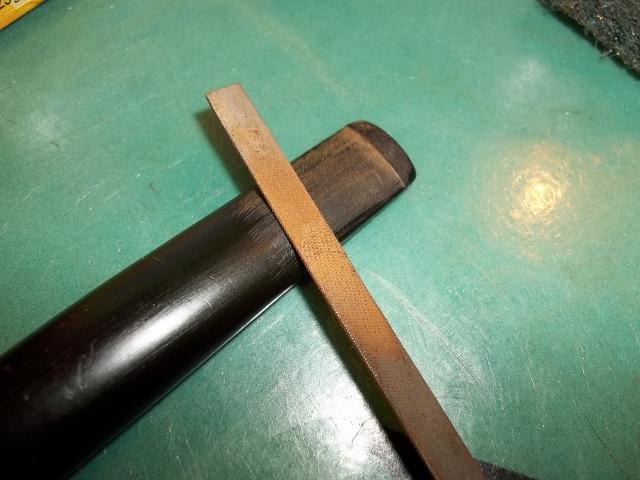
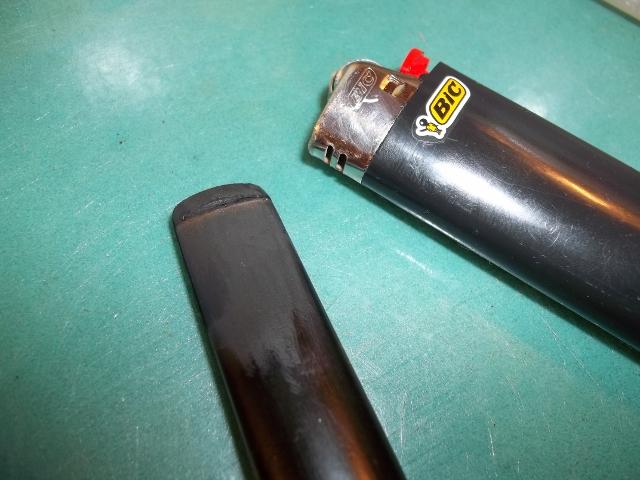
Besides the chip there was some charring on the rim. The chip was not very deep so I thought I would take care of both issues by taking the top of the bowl down to clean briar. Using 120 grit sand paper mounted on a flat surface, I carefully worked the bowl in a circular motion trying to keep it level. I didn’t want to take off too much of the top so I gave the outside lip of the bowl a slight chamfer to remove the bottom part of the chip.YB5 I then gave the stummel a soak in a 91% isopropyl alcohol bath. This was for the dual purpose of removing the existing finish and loosening the crud in the shank. I removed the stummel after about 24 hours and wiped off the existing stain. I then cleaned the shank with a bristled brush, bristled cleaners and cotton swabs. I wanted to make sure the mortise was thoroughly cleaned before I began to size the tenon on the new stem.YB6 When the stems arrived, I realized that I probably could have been a little more attentive to the size I purchased. I was going to have to remove a lot of material to get the tenon to fit the mortise as well as flushing the stem to the shank. The best way to shape a stem is on a lathe, but not having a lathe I turned to my drill press.YB7 I found that a bamboo skewer fit very snugly into the air hole of the stem.YB8 Leaving about 1 inch of the skewer protruding out of the air hole, I chucked the stem into my drill press.YB9 I started out a little timidly, removing material with 120 grit sand paper but the vulcanite is so soft that it gums up the paper very quickly. I switched to 60 grit and still was not seeing much progress. I tried a metal file next and when that did not answer I rummaged around the tool box and found a rasp. A bit aggressive I admit, and I would not recommend it unless you are removing a lot of material, and I was.

The drill press method worked great but was not without its problems. Pressing too hard with the file or rasp would cause the stem to slip on the skewer. The stem would then have to be reseated before I could resume. The other problem happened about half way through the rough shaping; the skewer broke off flush with the end of the tenon. I admit I panicked a little when I could not get a hold of the skewer with my needle nose pliers. But using a small drill bit I was able to carefully drill out the wedged skewer.

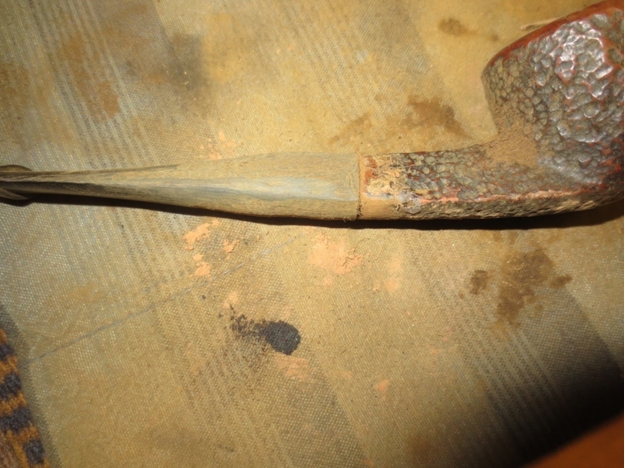
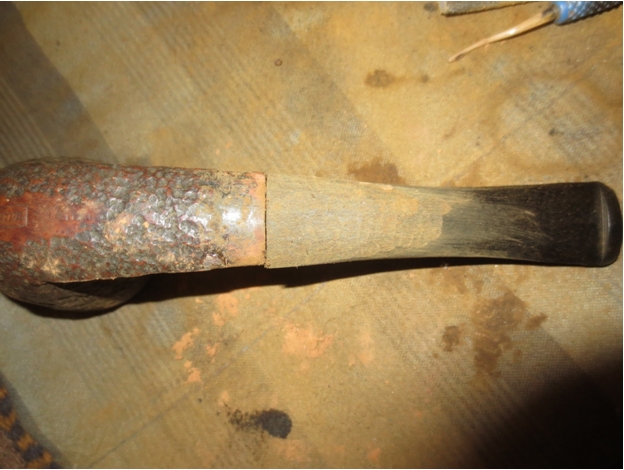
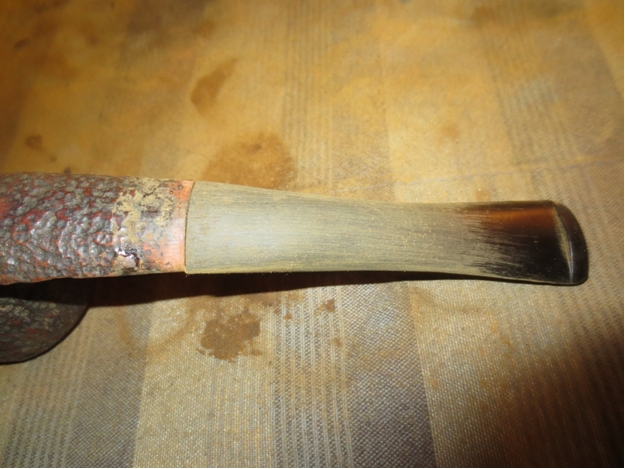
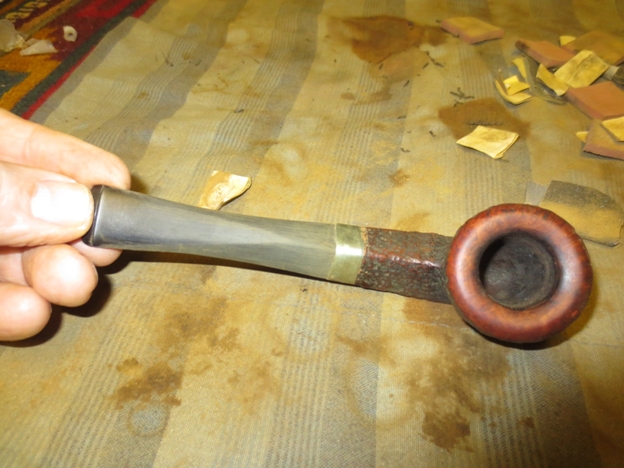
Back on track I, stopped often to check the fit. As I neared the correct size I switched back to the file then to the sand paper again. I finished the tenon with 320 grit sand paper.YB10 I thought fitting the tenon to the mortise was going to be the hard part but shaping the stem to get that perfect flush fit with the shank turned out to be the big challenge. You can see in the picture above that I have a ways to go to get the taper from the shank to the button. I have also started to get a bit of a wave about a quarter of the way from the tenon.

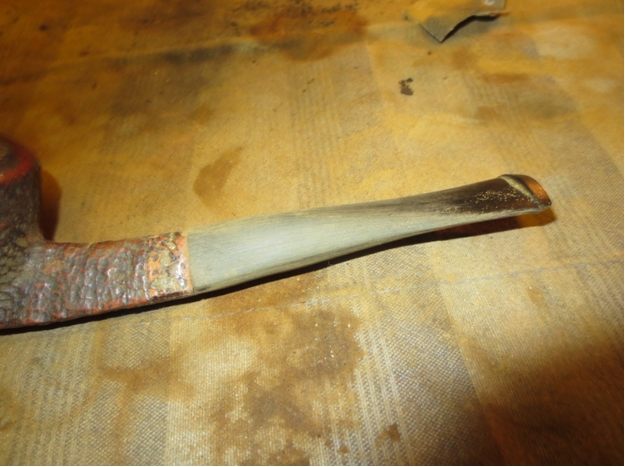
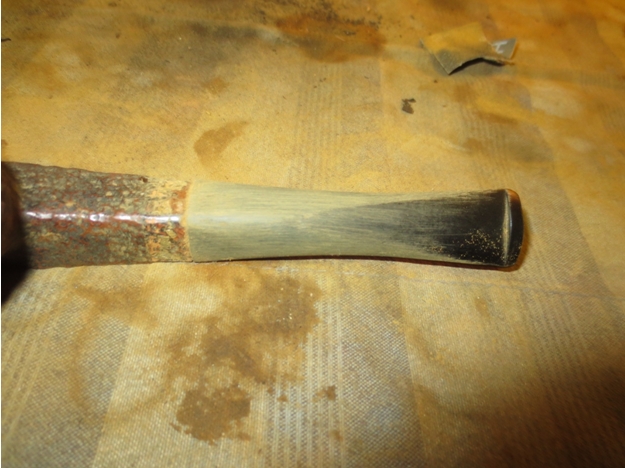
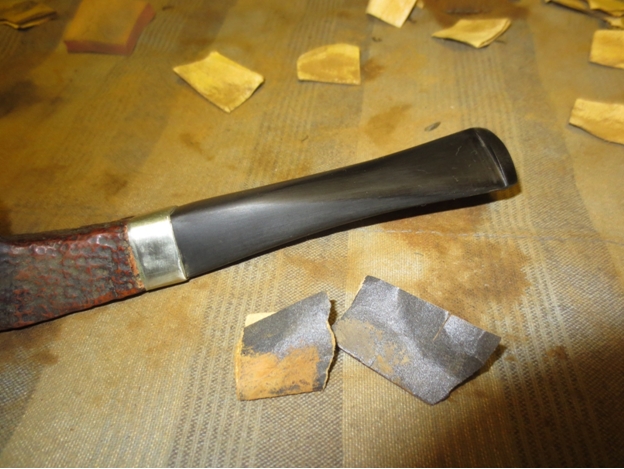
To fix this I stapled a piece of 240 grit paper to a 3” sanding block and went to town. The sanding block kept the contact surface flat and helped to eliminate the wave. It took about an hour of work stopping often for fit checks. In the end I was rewarded with nice taper. Somehow I had rounded over the shoulder of the stem ever so slightly. This formed a little groove at the stem/shank connection. It was not terrible and I felt could live with it for now.

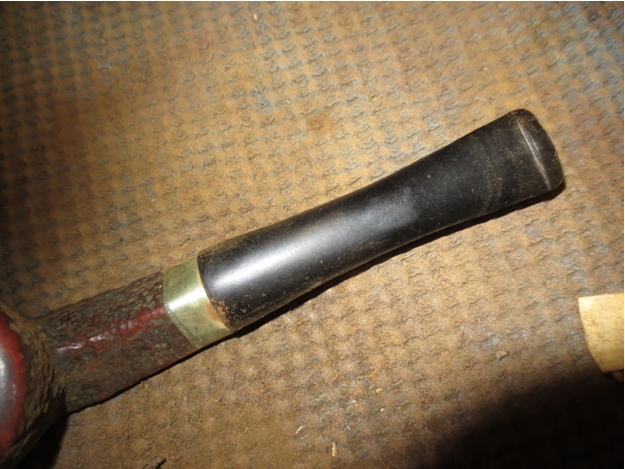
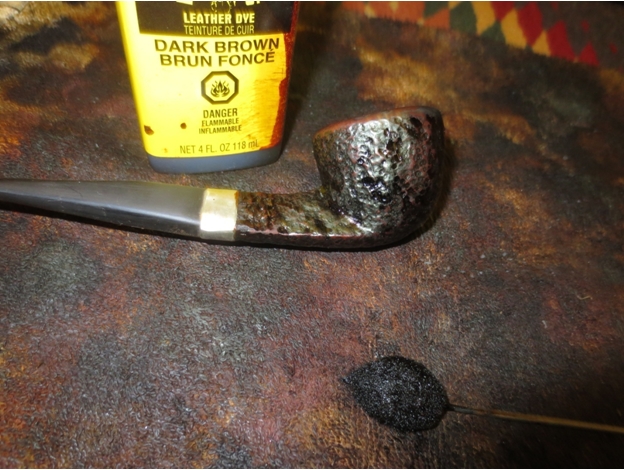
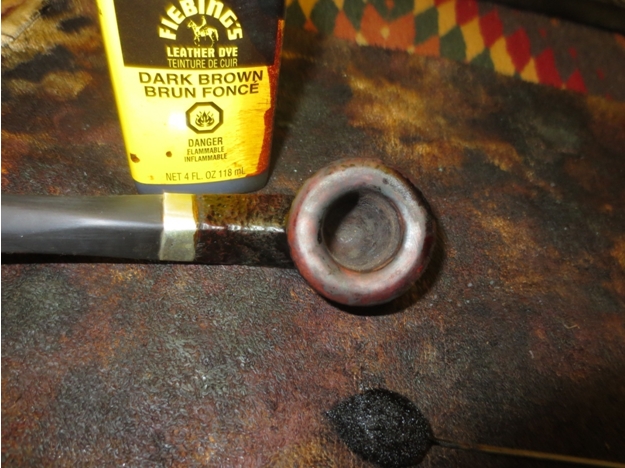
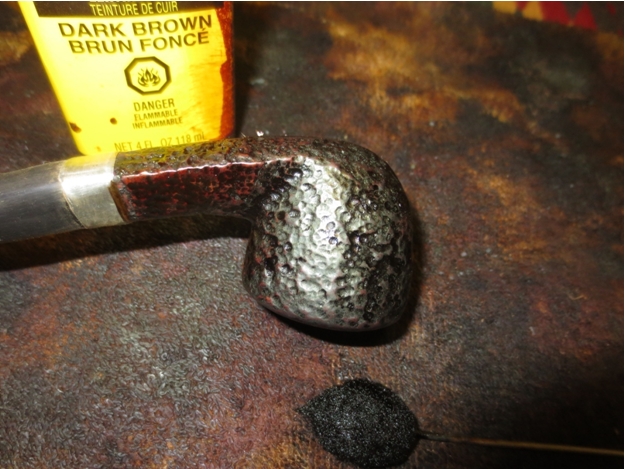
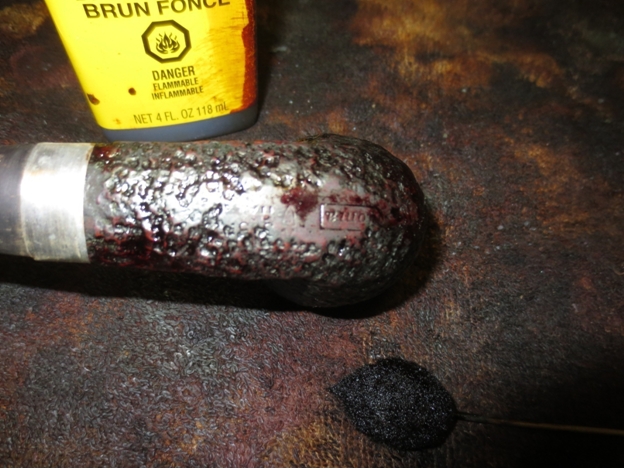
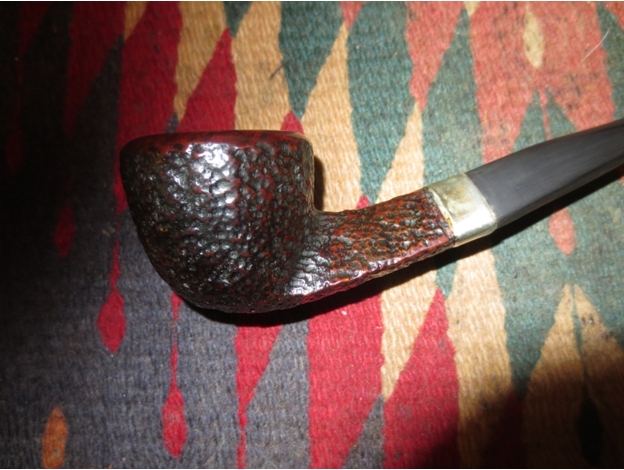
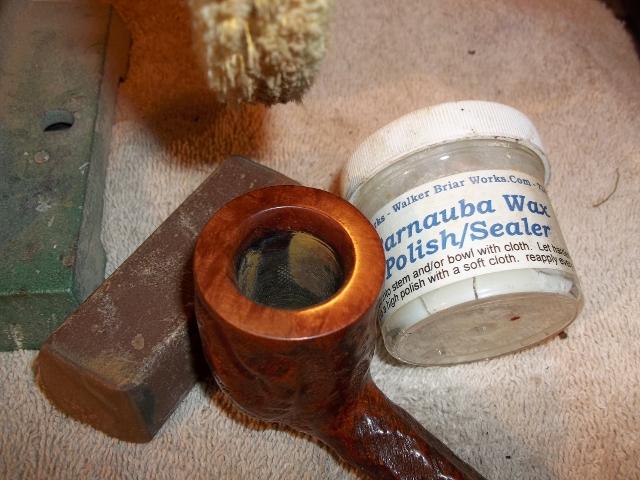
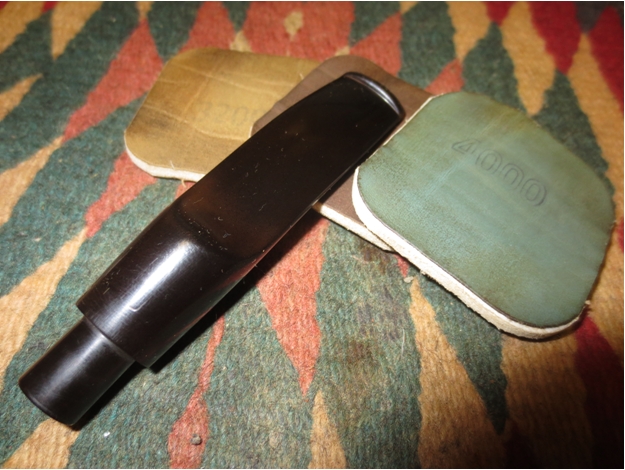
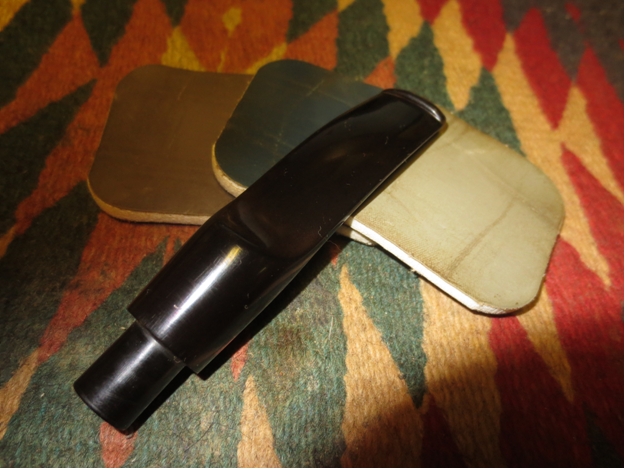
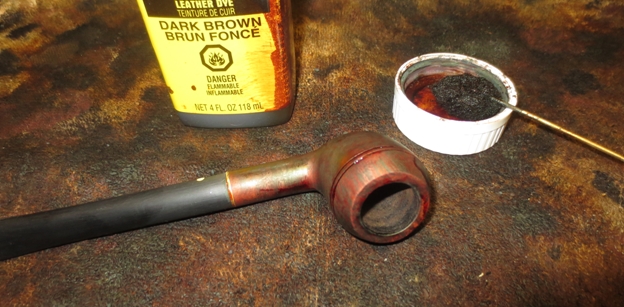
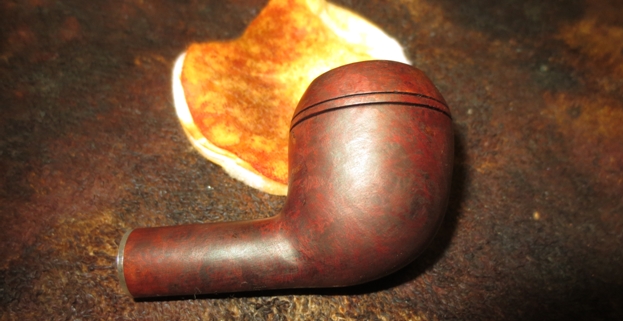
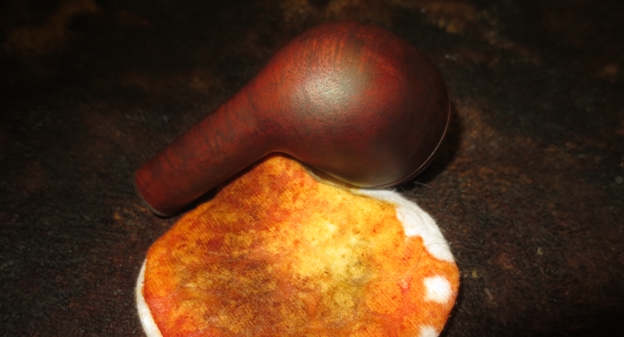
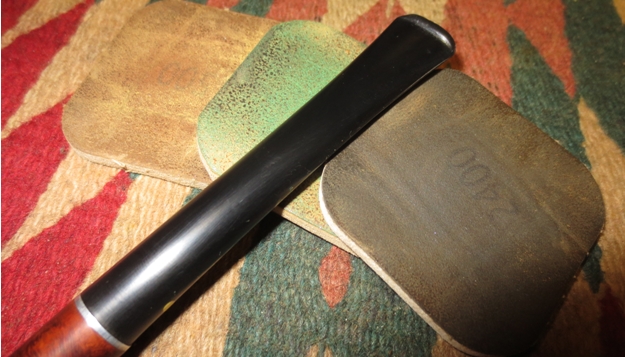
I finished the stem with 600, 1000, 2000, 4000, 6000 grit sand paper. Then set it aside to buff with the stummel once it was complete.YB11 I stained the stummel using one part Fiebing’s light brown diluted with 2 parts isopropyl alcohol. I applied two coats, flaming each coat. Once dry, I wiped it down with a clean cloth and attached with stem.YB12 I set my drill press up with an inexpensive Sears buffing system and started with the white buffing compound. I found on previous projects that gearing down the drill speed to 1200 rpms was important to maintain control of the pipe and not overheat the pipe.YB13 I finished with two coats of carnauba wax and buff with a soft cloth.YB14

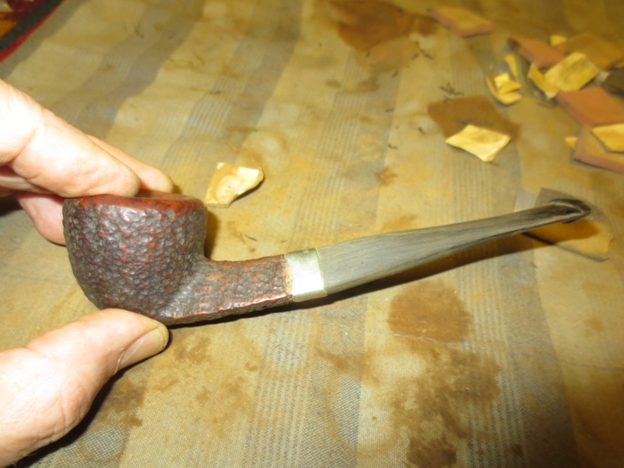
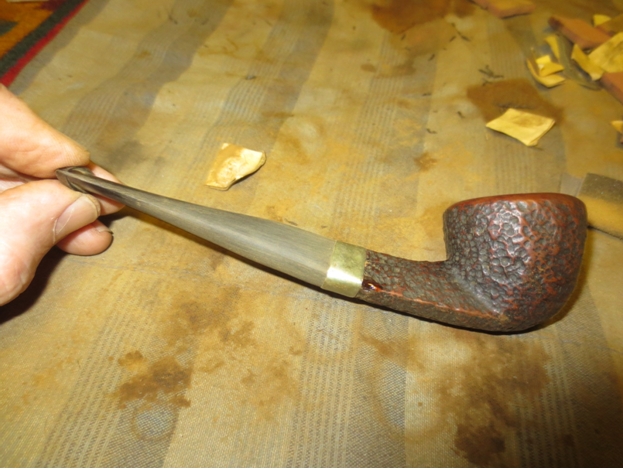
YB15 I needed a tooth pick to remove some of the wax from the sand blasted areas. And that little groove between the stem and shank collected some wax too. Overall I am very happy with the outcome of this restoration. I am looking forward to smoking my first bowl in it.

Looking back, I am glad that I tried shaping my own stem. It was not without its challenges but the result was very rewarding. I now have two spare stems in my tool box, so I will be keeping an eye out for another stemless billiard.

A Student Pays Tuition with a Reborn Suffolk


Blog by Anthony Cook (Piffyr from Reddit’s /r/PipeTobacco forum)

It is a pleasure to put Anthony’s first blog on rebornpipes. His work on this tired old Suffolk pipe is well done. His ability to adjust and flex to deal with the challenges presented by this old pipe is really enjoyable to read about. I did a little digging and found that Suffolk pipes were made by two companies – one in England (Tyler & Co.) and one in the US (Whitehall Products). My guess would be that this is the American made pipe – thus made by Whitehall. It has a look that is very similar to some of the Whitehall pipes that I have restored over the years. Welcome to the blog Anthony. We look forward to reading about more your work in the year ahead. Thanks for being willing to post here. Without further introduction here are Anthony’s own words.

I think when I first spoke with Steve near the end of last year over on Reddit’s /r/PipeTobacco forum that I was actually a bit starstruck. You see, I’m a new guy at the art of pipe restoration, but since discovering Reborn Pipes around mid-2014, I have fallen madly and deeply in love with the site. I have read every post going back to October 2012. Steve, Al, Greg, and the other contributors here have been unwittingly providing me a free education for months and I have great admiration for the excellent work that they do.

So, when Steve invited me to share some of my work on the site I quaked in my Nikes a little. At the time, I had restored a sum total of six pipes to varying degrees of success. None of them had exploded, but I did partially dissolve one (more on that later). Still, when you are invited up to the Country Club, you go even if you’re not dressed for it.

It so happens that another member of that same forum was kind (or possibly foolish) enough to send me a few pipes to practice with around that same time. The pipe in the following picture was part of that group. It was described by him as one of two in the lot that were “as basket pipey as basket pipes get.” It had a few issues that I had not dealt with previously and had rarely seen covered. Since Lady Fortuity seemed to have spoken, I decided to document the restoration of this one and contribute it to the site to pay back some of the tuition that I owe.Suf1 I’ve had no luck digging up anything on the origin of this pipe, but the stamping reads “SUFFOLK” over “ALGERIAN BRIAR”. The first thing that struck me when I pulled this one out of the packaging was the interesting and varying grain pattern. I thought it would be fun to work with to bring up to its full potential. Two small fills on the side of the bowl that were barely more than scratches and another that peeked out from under the band on the shank were the only factory flaws that I could find. There was clear evidence that it had suffered through an abusive relationship in its past though.

The stummel was dented and well scratched with a worn and uneven stain. The rim, as you can see in the photo below, was tarred, charred, deeply scratched, and there was a large gouge on the front edge from being knocked on a hard surface. Worse yet, the bottom of the bowl chamber had been reamed within five millimeters of its life and it was just begging for a burnout. Clearly, the wood was going to need some intensive therapy.Suf2 The ABS stem was largely in good shape on the bit end with only light tooth chatter and a small amount of material missing from the upper portion of the button. On the other end though, the edge of the stem face had been roughly chiseled away in what I could only imagine to be an attempt to create a faux military mount fit. There was also an abrasion along the side that was deep enough to take the stem out of round.Suf3 Once the ailments were cataloged, I went to work cleaning and sanitizing the internals. I started by reaming the bowl to bare wood to prepare it for the necessary repairs. Since I was unsure of the condition of the bottom of the chamber, I used my T-handle reamer only in the top 2/3 of the bowl. Then, I sanded out the remaining cake in the bottom by hand with 400-grit, then 600-grit sandpaper.Suf4 The bowl, mortise, and airway were scrubbed clean with several cotton swabs and pipe cleaners until they came out as white as they were when they went in. Then, I ran a pipe cleaner through the shank into the bowl and filled the chamber with cotton balls and alcohol and set it aside in a container of rice (to keep it upright) and let it leech out any remaining tars. I know that some people prefer to use kosher salt instead of cotton balls for this treatment. I’ve tried both and haven’t seen any difference in the end results. Cleanup is easier with the cotton balls, though. So, that’s the method I choose. In any case, I’ve since figured out that this step is unnecessary for pipes like this, because it’s going into an alcohol bath anyway and that will accomplish pretty much the same thing. Sometimes, it takes me a while, but I get there eventually.Suf5 I then turned my attention to cleaning the stem. I don’t like working with ABS stem material. Some experience has taught me that some of the cheaper ones will begin to dissolve when exposed to alcohol. You’ll think (or at least I did) that you are removing thick tar build-up, but the sticky sludge on the pipe cleaner is actually disintegrated stem material. I speak with no exaggeration when I tell you that this is a horrifying revelation when you are faced with it. So now, I make sure to always test them first by dipping the pad of a finger in alcohol and pressing firmly against the surface of the stem for 20-30 seconds while it’s lying on the work surface. If the stem sticks to my finger when I lift it away and needs to be “peeled” off, then I know that the material is no good for alcohol cleaning. If that’s the case, like it was here, I use a citrus cleaner instead. It doesn’t work as well for breaking down tar build-up, but it’s non-toxic and doesn’t cause harm to the stem material. It just takes more a bit more elbow grease and I always keep a good supply of that on hand.

Roughly 24 hours later, I removed the tar-stained cotton balls and pipe cleaner from the bowl. Then, I dropped the stummel into a jar of isopropyl alcohol to bathe overnight to remove the old stain and soften the tar around the rim to make removing it easier.

I removed the stummel from the bath the next morning. I was surprised to see that not only had it performed well at removing the stain, but it had done a fantastic job of removing the crud from around the rim too. A lot of what I had taken to char was actually heavily caked soot and tar that had dissolved away in the alcohol. It still looked like it had been through a thresher, but this time at least, the machine hadn’t been on fire.Suf6 My first step in repairing the damaged rim was to remove the surface scratches. I clamped 220-grit sandpaper to a sheet of glass from and glass-top table (the glass looks dimpled in the photo below, but that’s actually the opposite side) to set up a topping surface. 220 is more course than what I would normally start with, but the scratches were deep and it helps to speed things up when you’re removing that much material. I placed the bowl rim-down on the paper, firmly gripped the bottom of the bowl, and slowly sanded in a circular motion. While sanding, I made sure to check my progress often and to change the position of my hand frequently to avoid putting too much pressure on the same side.Suf7Once the worst of the scratches were about half of their original depth, I switched to a 320-grit paper. I continued sanding until the scratches were barely visible. Then, I swapped the paper to 400-grit and sanded until the scratches and majority of the charring were gone.

The top surface of the rim was smooth and scratch-free but there were still several small nicks remaining along the inner and outer edges. Also, the gouge along the front had barely been touched. So, I decided to chamfer the outside edge of the rim at an angle and depth that matched the gouge. The chamfer would have to be deep. So, this decision was going to take the project outside of the realm of pure restoration and into modification, since it was going to change the shape of the pipe. I’m never completely happy with a choice like that, but in my opinion, it was the only way to give the pipe a truly refinished look.

Starting at the front of the rim, I first sanded the rough surface of the gouge smooth, and then worked my way around the rim to create the chamfer. I used the same progression paper that I had when topping the bowl. I roughed in the shape with 220-grit and then refined it as I moved to the higher grits. I also put a narrow chamfer on the inside edge to remove most of the nicks there. You can see the end results in my admittedly poorly lit photo below.Suf8The major issues of the rim were taken care of. So, I began to work on the rest of the briar surface using a little steam power. To free up my hands, I secured the stummel in my bench vice using a bit of foam rubber to protect it. I then heated the end of an old, flat-head screwdriver over a tea candle, placed a dampened cotton cloth over the dents, and pressed the hot metal into it. If there’s no material missing inside the dent and the edges aren’t too sharp, this method does a fine job of raising the wood to the surface. There were still scratches when I finished, but I would take care of those in a later step.Suf9 I gave the stummel a good wipe-down with acetone after working on the dents, and then dropped it into a short alcohol bath to further remove the original stain. I wanted this one as bare as possible to give the grain the chance to do what it so badly wanted to do.Suf10 I let the stummel completely dry out overnight. Then, I patched a few scratches on the front of the bowl that were too deep to be sanded out. I used an artist’s palette knife as a trowel to pack briar dust into the scratches until they were slightly overfull and dripped CA glue into the dust.Suf11 Once dry, I sanded back the hardened glue. I began sanding with 320-grit until the “bumps” of glue were about half their original height. Then, I used 400-grit until the glue was just barely a ridge above the surface. Finally, I sanded with 600-grit to sand the patch flush and remove any of the shiny glue that remained on the surface around the patch.Suf12 At this point, the bowl was looking much better, but it was still heavily scratched and needed more work. However, I also needed to pay some attention to the stem. So, I sat it aside for later.

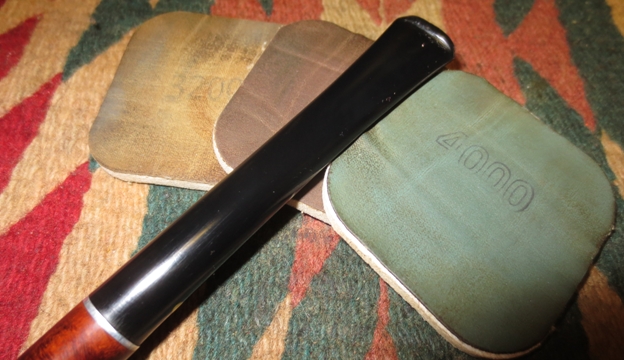
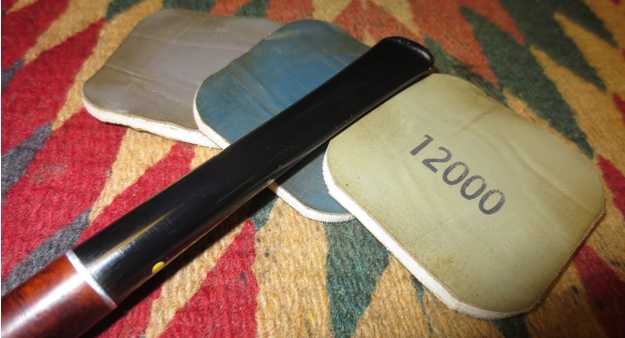
It seems that even these ABS stems will oxidize over time. Perhaps not at the rate or to the severity of vulcanite, but I’ve noticed a brownish hue on the surface of some of the older stems like this one. So, I applied a bit of Vaseline to the metal tenon and dropped it into a Oxyclean bath for an hour or so (the Oxyclean dulls the finish on polished metal, thus the Vaseline). Once removed, it was ready for a scrub with a Magic Eraser. When I use these, I cut each pad into eight cubes and rotate the cubes as I work to get a clean surface. Lightly oxidized stems might need only one or two cubes before they’re finished. Here’s the stem with a matte black finish after the scrub.Suf13 Heating a stem is a great method for raising deep tooth dents in most materials. I’ve found that it also works well for leveling out even normal chatter. The more that I accomplish with the application of heat, then the less material I will have to remove and the less work I will have to do in sanding them out. So, it’s become part of my regular routine for stem maintenance. My high-tech stem heating apparatus consists of a paint stripper secured by a large, weathered c-clamp with a jar of cold water by the side. I run a pipe cleaner through the stem to hold it and move it back and forth over the heat source to keep it from burning. As soon as I can smell the hot material I know that I have done all that I can do. I either immediately dip it in the cold water to set it, or re-bend if necessary, and then dip.Suf14 Most bent stems like this one tend to straighten out at least a little during heating. So, before I begin, I print a photo reference of the stem, trace the inside edge of the bend on paper, and find a hard, smooth, rounded surface that fits well inside the bend. If it’s required, I’ll grasp both ends of the pipe cleaner and bend the warm, pliable stem over the rounded surface and let it cool for a few seconds. Then, I set it with cold water, wipe it dry and compare it to my tracing. If it’s still off a bit, it usually takes only a couple of minutes to reheat the stem enough to give it another try. The following picture shows the stem after heating and re-bending.Suf15 It was time to address that chiseled chamfer along the stem face. I considered cutting the damage off and reseating the tenon, but decided against it because I didn’t want to shorten the stem. The only other option, aside from replacement (and that wasn’t going to happen – this was for practice after all), was to replace the missing material. I began by applying several layers of black CA glue to create a sort of collar around the edge. I allowed each layer to dry and sanded them back a bit to keep it smooth and prevent bubbles from forming between each layer. I also applied a couple of layers of CA glue to the abrasion that had taken the stem out of round and on the top of the button where a bit had been worn off. The picture below shows the collar once it was completely built-up.Suf16 To ensure that the stem was without gaps when attached to the shank, I needed a way to evenly sand out a smooth surface on the face of the stem. My solution was to take a piece of scrap wood and drill a hole in it only slightly larger than the tenon. Then, I tightly clamped a strip of sandpaper over the wood and used an X-Acto blade to carefully cut a hole in the paper to match the bore. I inserted the tenon into the hole, then twisted and rotated to sand out any lumps and bumps created by the CA glue. I began sanding with 320-grit paper, and then progressed to 400-grit and 600-grit to finalize.Suf17 When the stem face was smooth and even, I reattached it to the stummel to do the final work on the stem patches. I put a strip of painter’s tape around the end of the shank to prevent any scratching. It’s much easier to match the shape of this sort of patch with the stem attached. Still, care has to be taken not to remove material from outside of the patch, which would give it a fluted appearance. I used the same progression of grits to sand as I did on the face.Suf18 It took a long time to get the collar, abrasion, and button patches shaped to my satisfaction. Once they were, I sanded out what tooth chatter remained after the heat treatment with 400 and 600-grit paper. Then I lightly sanded the entire stem with 1200-grit to smooth the dimpled surface. I followed with the full range of micromesh pads from 1500 to 12,000 to polish it. I don’t have a currently working buffer. So, that was going to have to be it for this stem. I gave it a wipe down with Obsidian oil and two shots of Paragon wax to achieve the results you see in the two pictures below. Also, it is obvious from those pictures that I am not working in a lint-free environment.Suf19

Suf20The stem was complete. So, I could get back to work on the stummel, which is where I have the most fun. There were still all of those scratches to address, but before removing them, I applied a quick layer of dark brown stain thinned with about three times the amount of isopropyl alcohol. I heated the wood to open the grain, and then I used a cotton swab to “paint” the stain along the grain. I didn’t want to cover the whole piece. I just want to add a bit of contrast and variation to the grain. The stain is very uneven and blotchy in the picture below, but that’s fine. Most of it was to be removed in the next step anyway, leaving only what had set in the grain.Suf21 After letting the stain set, I sanded out the scratches with 600-grit paper. I also took the opportunity to further refine the shape of the rim chamfer and soften the edges a little. You can see in the picture below that the contrast stain has done its thing and the grain is really starting to “pop”. Even the minor grain has some definition now.Suf22 Once again, I painted the bowl with another contrast stain. This time, I got fancy and used a size 20/0 liner brush. I again heated the wood, and then used a black stain to paint over only the thickest and tightest areas of the grain. The last staining gave the grain definition. I was hoping that this one would give it depth.Suf23 Next, I sanded the stummel with 1200-grit paper. Then, I used micromesh pads 1500, 1800, and 2400 to arrive at the results you see in the picture below. It’s difficult to tell from the picture, but the lighter grain seems to recede a bit behind the darker stained grain to add some subtle intensity.Suf24 I then applied a final stain to the wood. I used a medium brown to even everything out and add some warmth. I used micromesh pads 3200-12,000 to give it a polish. The following picture gives you an idea of the final finish.Suf25 There was still the issue of that over-reamed bowl that needed to be addressed. So, I mixed up a batch of pipe mud to fill the bottom of the bowl. The recipe that I use consists of activated charcoal, powdered pumice and sodium silicate (water glass). I use the spoon on my pipe tool to “measure” out roughly equal parts activated charcoal and powdered pumice. Then, I use a toothpick to stir them together in a glass candle jar top. When they are well mixed, I level out the powdered material, and then use a pipette to drip a few drops of sodium silicate into the mix near the edge. I then begin stir the sodium silicate into the mix with the toothpick and “shovel” in more dry material as needed. Once it reaches a thick, tar-like consistency, it’s ready to be applied.

Once mixed, the patch material begins to set up very quickly. So, it’s important to work with a bit of haste. I use the toothpick to load the spoon of my pipe tool with the gooey “tar”, and then transfer it to the pipe bowl where I have already ran a pipe cleaner through the airway and slightly into the bowl to seal it. When the patch is in the bowl, I use the tamper to press it into place just below the draft hole. After a minute or two, the patch material has set up enough that it is no longer sticky but still pliable. I use this opportunity to refine the shape of the patch with my fingertip.Suf26 I put the stummel aside for three days to give the bowl patch a chance to fully cure. When I returned to it, the material had become dark gray and very hard to the touch. I’m sorry, but I didn’t get a picture of it after it cured. I was excited to be in the home stretch with this pipe and plunged ahead without thinking about it. So, I probed around the edges of the patch a bit with the spoon of my pipe tool, and then turned the bowl upside-down and gave it a few firm taps into the palm of my hand. I wanted to make sure that the material was fully adhered to the bottom surface of the chamber. Once I was satisfied that it was, I sanded the patch a bit with a piece of 600-grit paper to smooth the edges along the slope of the chamber and the patch was complete. This repair should last a long time and eliminate any chance of a burn-through in the bottom of the bowl.

Then, I prepared a batch of bowl coating. I know that bowl coatings are a controversial subject among pipe smokers, but to me it just makes sense when a chamber has been badly damaged like this one. To me, any extra protection that I can provide is a benefit. Personally, I can’t detect any taste from it, but I won’t argue with those who say that they can. In any case, my simple recipe is a mixture of sour cream and activated charcoal. I don’t measure. I just mix by eye until it becomes a deep charcoal gray. I then apply it to the inside of the bowl with a cotton swab. Suf27 After six hours, the coating was dry and I smoothed it out with a paper towel wrapped around my finger.

Again, I’m currently working without a buffer. So, instead of carnauba, I gave the bowl several coats of Paragon wax to finish the work. You can see the completed pipe in the pictures below.

Thanks again to Steve and the rest of the contributors at Reborn Pipes for taking the time to teach me the skills to get this done. I still have a lot of learning to do. So, I’ll be around for a good while. Until next time… Suf28

Suf29

Suf30

Suf31

Suf32

Suf33

Restoring a Burned Beveled Rim on an Algerian Briar Pot


Blog by Steve Laug

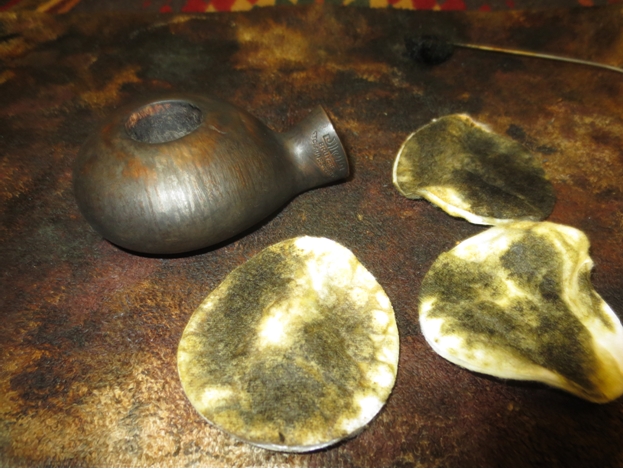
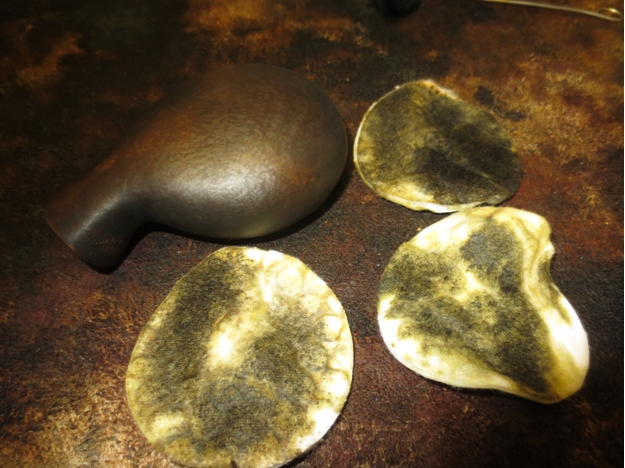
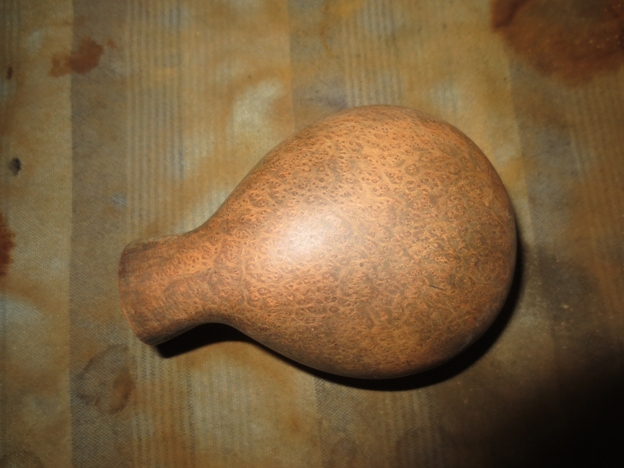
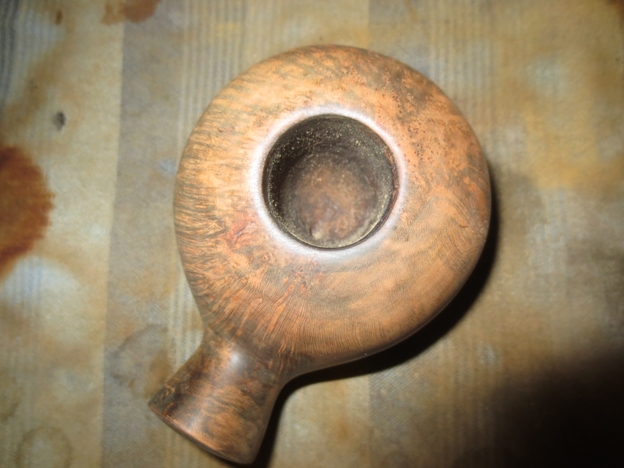
This morning I finished working on the second pipe from my recent pipe hunt – the small pot shaped pipe on the right in the two photos below. It is a natural finish, virgin pot shaped pipe. The left side of the shank has no stamping and the right side is stamped Algerian Briar over Made in France. It is a pretty decent piece of briar and had a beveled/chamferred rim that caught my eye. Not a bad pickup for $10USD.MC1

MC2 When I took it to the work table to examine it I found that the stem was very tight and would not go all the way into the shank. There was no oxidation on it and not a bite mark on the stem. The finish was clean and there were no fills or dents in the bowl. The left side had some great birdseye grain and the right side had a mix of grains. The rim was dirty and had a buildup of tars and oils that would need to be removed. There was also a burn mark on the outer edge at the front of the bowl and potential inner edge burn damage at the back side of the bowl.AB1

AB2

AB3

AB4

AB5 I removed the stem carefully as it was very tight in the shank. It is a delicate stem so I did not want to snap the blade. I reamed the bowl with a PipNet reamer to remove the light cake that was buildup in the bowl. I was surprised to see that the bowl was almost unsmoked from midway down to the bottom of the bowl. The briar did not show any burn or darkening in the bottom of the bowl.AB6 The shank was very clean. I scrubbed it down with isopropyl alcohol, pipe cleaners and cotton swabs to remove the little debris that was in the shank and made the tenon fit so tight.AB7 Once the shank was clean, I waxed the tenon with beeswax and it fit the shank with no problems. That was a very simple fix.

The burned area on the front of the rim was another story. I have detailed the repairs on the rim in a separate blog. If you want to read the details have a look at this link https://rebornpipes.com/2015/01/04/repairing-and-minimizing-a-burn-mark-on-a-bowl-rim/ After sanding, reshaping and polishing the rim I rubbed the natural finish down with a light coat of olive oil to blend it with the bowl. I buffed it by hand and then gave the bowl several coats of carnauba wax to seal and protect the briar. The finished rim is shown in the photo below. At this point I still needed to buff the pipe on the buffer and give it a final polish but the reworked rim is visible.AB8

AB9

AB10

AB11 The stem was one of the simplest I have worked on in a long time. There were no bite marks, tooth chatter or even oxidation. I lightly sanded it with a fine grit sanding sponge and wiped it down with a soft cloth to remove the debris that was stuck on the surface of the stem. I then sanded it with my usual array of micromesh sanding pads – wet sanding with 1500-2400 grit pads and dry sanding with 3200-12,000 grit pads. I rubbed the stem down with Obsidian Oil between each set of three pads and then gave the stem a final coat of oil and let it dry before buffing and applying the wax.AB12

AB13

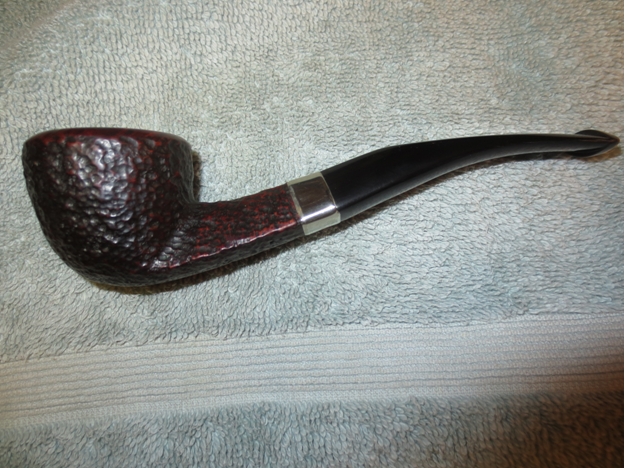
AB14 I buffed the bowl and stem with White Diamond and gave them multiple coats of carnauba wax. I gave it a final buff with a soft flannel buff to raise the shine and polish the pipe. The finished pipe is shown in the photos below.AB15
AB16

AB17

AB18

AB19

AB20

Putting another new stem on a Peterson’s K&P Dublin 207 Pot


Blog by Steve Laug

I have had this 1940s era Peterson’s pot for quite a while now (stamped with a com circle Made in Ireland). I found it at a flea market here in Vancouver. It was a mess and missing a stem when I found it. There was a spring windcap welded to the top of the bowl by the carbon and the cake buildup. I did a write up on the restoration and how I made the stem that is on it in the photos below. You can read about it by clicking on the link below.
https://rebornpipes.com/2012/06/07/fitting-a-pipe-with-a-new-stem-photo-essay-20/ pete1

pete2

pete3

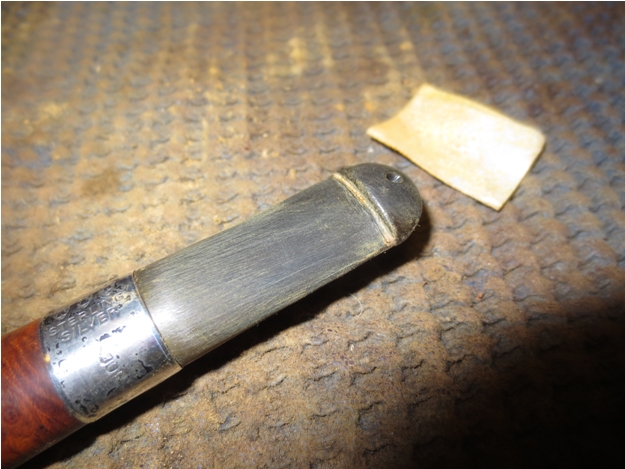
pete4 From the moment I finished restemming it in June of 2012 I did not like it. It went into my box of pipes for sale. It is a beautiful piece of briar and the original band is clean and readable – it says K&P Sterling Silver. But the stem – even though it looked okay – did not do it for me. Since I am on this binge of reworking old pipes these days, pipes that just did not make the rotation even though they were workable and smokeable, this one was next on the hit list. I held in hand and looked it over. I was going to do some work on the stem shank fit but even as I looked at it I knew that would not change my mind.

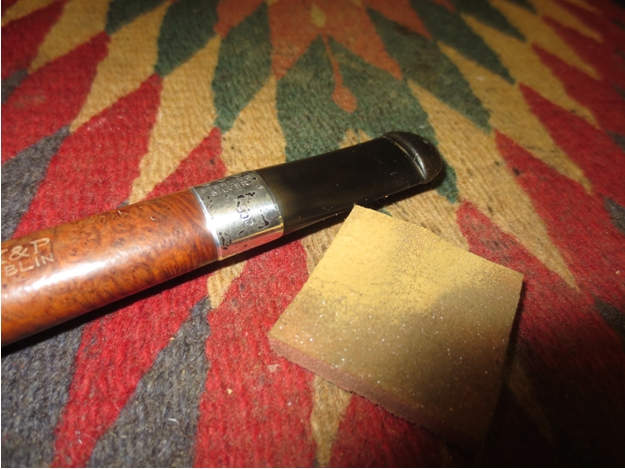
Then the lights came on and I understood what it was that bugged me about this pipe. The stem was just too long to my liking. No amount of reshaping it would change that overall feel for me. The stem would need to go. I remember going through my can of stems when I restemmed it and this was the only one that I had that was even remotely close to working. However, recently I had purchased some old stems that only needed to be cleaned and repurposed. I was certain there was one in the can that would work. There was one that was about ½ inch shorter than the existing one. It was the perfect diameter for the shank. The tenon was a little big but a quick work over with the Dremel and sanding drum followed by hand sanding with 220 grit sandpaper took care of that problem. The stem fit well. It needed to be cleaned up and the oxidation removed from the surface but it was going to be a better looking stem in my opinion once I finished working it over.pete5

pete6

pete7

pete8

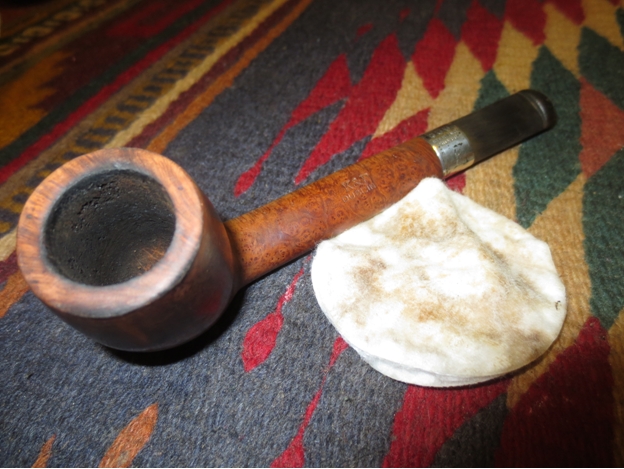
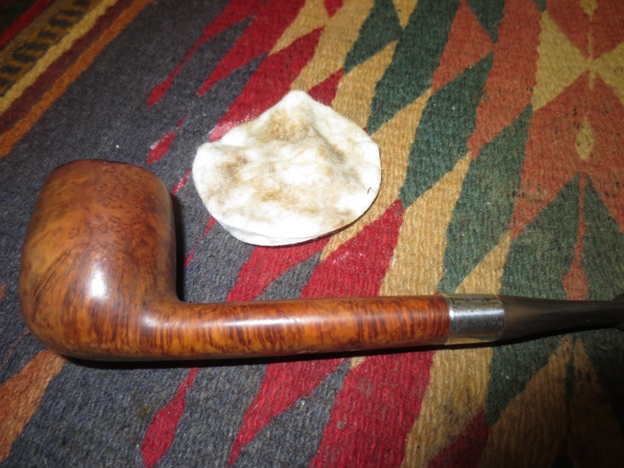
pete9 I sanded the stem with 220 grit sandpaper, medium and fine grit sanding sponges and then a fine grit sanding block to remove the oxidation on the stem. I could have let it soak in oxyclean but chose not to as I wanted to work on it without waiting. I also did not have any stamping on the stem that I wanted to preserve so sanding would do no harm. I worked on the button edges to sharpen them. I then sanded the stem with micromesh sanding pads – wet sanding with 1500-2400 grit pads and dry sanding with 3200-12,000 grit pads. I buffed the stem in between the 4000 grit pad and the 6000 grit pad with White Diamond. I rubbed the stem down with Obsidian Oil and when it was dry gave it several coats of carnauba wax and buffed it with a soft flannel buffing pad. The finished stem is shown in the photos below. I really like the new look of the pipe and am glad I replaced my first replacement stem. It will probably stay in the rotation for awhile now.pete10
pete11

pete12

pete13 You may be wondering when this “urge” to rework previous work will end. I am not sure I can give you a clear answer to that question. I am going through the pipes I am preparing to sell so there may well be others that come under scrutiny. As I rework them I will let you all know. Maybe it will end when I get the pipes I have picked up on Ebay finally arrive. It may well be a case of too much time during the holidays and the ladies in my life disappearing to do shopping that keeps me looking for ways to stay busy.

Reworking a horn stem on a Regent Pipe


Blog by Steve Laug

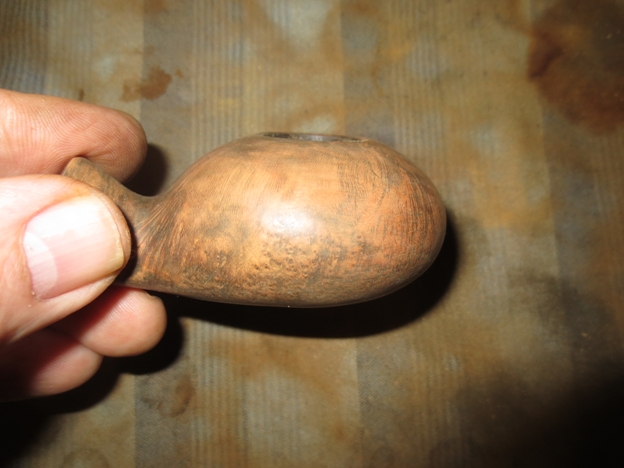
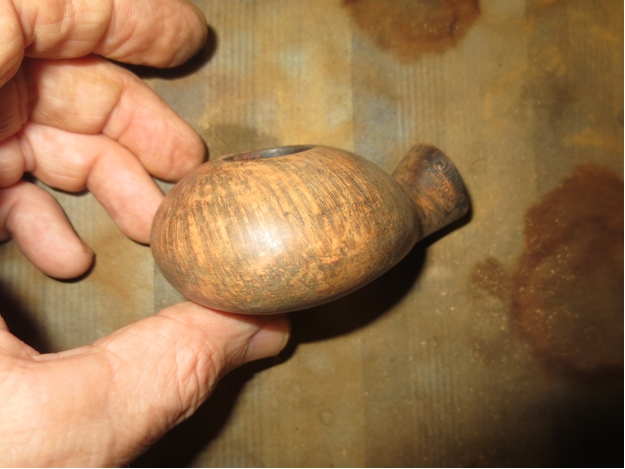
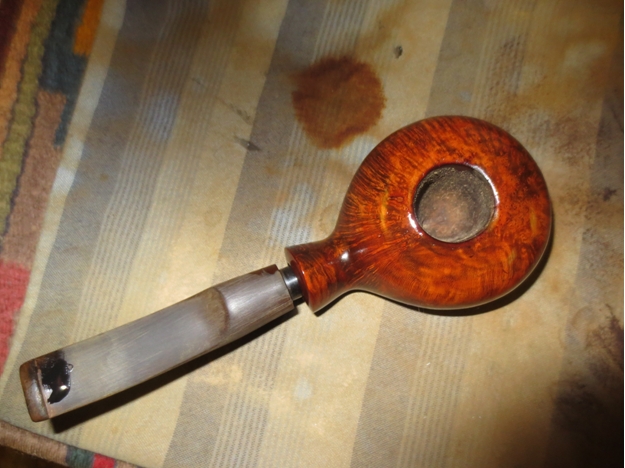
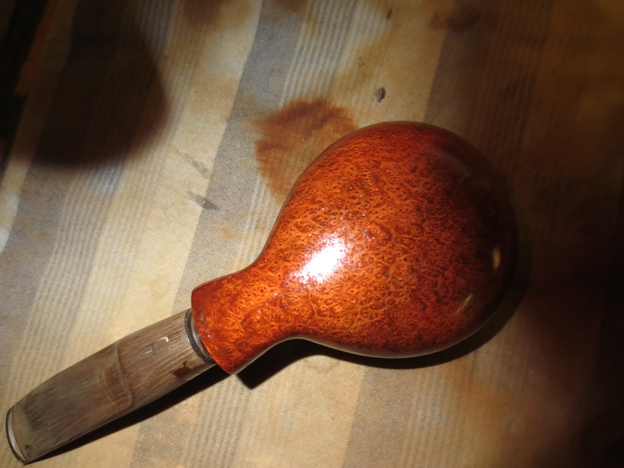
I restored this old horn stem on June 9, 2012 and fit it to an old horn-shaped bowl I had in my box. The bowl is stamped The Regent arched around a star. I wrote about the restoration of the stem and the bowl previously in this post: https://rebornpipes.com/2012/06/09/refurb-on-an-old-the-regent-fit-a-horn-stem-7/ I love the translucence of the horn material. I trimmed off excess horn material to fit the end of the shank. The first photo shows the stem when I started.Regent1 The next three photos show the stem after I had trimmed it to match the diameter of the shank band.Regent2

Regent3

Regent4 This holiday season I find that I am out of pipes to restore – I have finished the last of the ones in my box. So during the doldrums of no pipes to refurbish I spent time looking through my collection. I took on the horn stem pipes to look at. I posted on PSU – Pipe Smokers Unlimited – Forum about horn stem pipes. I have quite a few in my collection as I really like the look and feel of a well restored horn stem. I posted the above photos and really did not like the overall look of the stem. It did not seem to flow with the lines of the bowl. In those days I was just starting out on restoring horn stems and I was fearful of ruining the old stem so I did not shape it as aggressively as I do now. I don’t know if it fearlessness or just stupidity but I still am not careless in the work.

I took the pipe out of the cupboard and reworked the stem. I sanded the stem with 220 grit sandpaper to match the angle of the shank – top and sides. I wanted to take out the bulging look, the pinch at the shank stem union. I took off quite a bit more material until the flow looked better and the bulge was gone. I worked to also straighten the sides of the stem from that junction to the button on the end of the stem. I sanded it with medium and fine grit sanding sponges and a fine grit sanding block to flatten angles from shank to button. I finished by wet sanding with 1200-3200 grit sanding pads and then buffed the stem with White Diamond. I took it back to the work table and dry sanded it with 3600-12,000 grit micromesh sanding blocks. I rubbed it down with Obsidian Oil and then gave the bowl and pipe several coats of carnauba wax. I finished by buffing it with a soft flannel buff until it shone.

The finished pipe is shown below. I like the new look of the stem far better than the previous fitting. The pipe is sitting on my desk now and will be in my rotation for this weekend.Regent5

Regent6

Regent7

Regent8

Cutting back a broken stem – rescuing a potential cast off


Blog by Steve Laug

When I recut the button on a recent Peterson Shamrock stem I thought I would use the opportunity to go into more detail on how I cut back the stem and shape a new button on the end of the cut off. The photo below shows the state of the stem when I received it. While I had other options in terms of repair of the stem I decided to cut it back.Shamrock7 I have a Dremel that is my go to tool for cutting off a stem. Others use a saw – coping or hack saw, but I use the Dremel. The photo below shows the sanding drum that I use. It is pretty coarse sandpaper and makes short work of trimming back the vulcanite or Lucite of a stem. The trick is to hold the stem and the Dremel steady while you work the end of the stem against the sandpaper.F2DF829HZI92Z2B.MEDIUM Over time I have learned to hold it steady and work the cutting line straight. I take off all of the damaged material so that I have some thickness on the top and bottom of the stem that will accommodate a new button without making the stem too thin in the process. In this case I removed the funneled portion of the airway in the button and what remained was the round airway that would need to be reshaped. The line across the stem is pretty straight considering I do it by eyeballing it rather than using a straight edge.Shamrock13

Shamrock14

Shamrock15 The next step in the procedure is to cut a straight line equidistance on the top and the bottom of the stem that will be the sharp edge of the button. The outer edge is slightly rough in the photos but that does not matter as that edge will be bevelled toward the airway in the shaping process. I use a flat blade needle file with a square edge for this initial cut.Shamrock16

Shamrock17 Before I put the flat blade needle file away I use it to shave some of the material that is directly ahead of the sharp line of the button and begin the tapering process. I follow that up with an emery board to get a feel for the look of the stem and to assess how much material I will remove in the process.Shamrock18

Shamrock19 The next step in the process is to shave more of the material away and adjust the angles of the stem to the button. I use a needle file with a knife shaped blade and draw it across the stem toward the button edge. As I draw the file toward the button it peels the material away. I work it from the point on the stem that I have picked as the place where the new taper will begin. I lightly draw it across the upper portion and deepen the cuts the further I go down the stem. I clean up the sharp edge with the straight file once again. I cut a groove in the material next to the button edge that sets the depth of the bottom of the taper. I work the stem angles until they taper directly into the button and the groove disappears. I used 220 grit sandpaper to clean up the file marks and smooth out the transition of the angles to the button. At this point the definition of the button is finished. All that remains is to shape the button and clean up the marks on the material.Shamrock20

Shamrock21 I used the oval needle file to open and flare the edges of the airway to open the airways. Once I have the funnel cut I use a folded piece of sandpaper to clean up the file marks in the slot and smooth out the end of the button. I also use the sandpaper to shape the button and taper and round the edges to make the button oval and smooth.Shamrock22

IMG_3126 I worked the curve of the underside of the stem to make a smooth and clean angle that matched the curve of the bottom of the bowl of the pipe. I used 220 grit sandpaper, medium and fine grit sanding sponges to reshape the curve. The next two photos show the curve and the shape of the button on the cut off stem.Noname

IMG_3073 Once the shaping was finished I sanded the stem with micromesh sanding pads. I sanded the blade and the button and slot area of the stem at the same time. I wet sanded with 1500-2400 grit sanding pads and dry sanded with 3200-12,000 grit pads. I polished the stem with red Tripoli and White Diamond on the wheel and then gave the stem multiple coats of carnauba to polish and raise the shine.Shamrock31

Shamrock34

Shamrock33

Shamrock32 The finished stem is shown below. The goal in the process is to return the stem as near as possible to its original shape and condition. The button shape is determined by photos or by the remnant of the stem prior to being cut off. The buffed and polished stem should look as close as possible to a factory cut stem. While I have done many of these I still feel like I am in the process of learning. The key to the whole thing is to move slowly, carefully and methodically until the stem is finished. Then sand some more and polish some more… I can’t tell you how many times I have gone back after several months of smoking the pipe and doing a bit more reworking until I am happy with the feel in the mouth.IMG_3091

IMG_3092

Restoring a Republic Era Shamrock 999 Rhodesian


Blog by Steve Laug

peterson When I saw this pipe on Ebay I immediately threw in a low bid. The seller included two photos the clear side view of the pipe shown below and the second photo below – an out of focus picture of the stem end. It was obvious there was damage to the stem and that it would take some work but it was still interesting to me. I was the only bidder so the pipe became mine.Shamrock1

Shamrock2 It was stamped Shamrock on the left side of the shank in capital letters (once it arrived I saw that on the right side of the shank it bore the stamping “A Peterson Product” over Made in the Republic of Ireland with 999 stamped next to that). While the seller never revealed the data stamped on the right side of the shank or the shape number it was clearly a Peterson 999 – one of my favourite shapes. I am particularly fond of the thick shanked older versions of the shape but this one looked workable. While I waited for it I did some research on the brand. I have several Shamrock pipes and fortunately all of them are very nicely grained briar.

I wrote to a favourite source of all things Peterson, Mark Irwin, to inquire about the mark. He responded with the following helpful information. “There were two Shamrock lines—the Rogers Import U.S.-only line with the nickel band, and the Peterson unmounted line with a white “S” stamped on the mouthpiece. This line—which is what your pipe is from—debuted in the 1945 catalog in the 30 classic shapes then being offered, in both smooth and sandblast, always with a fishtail mouthpiece, and continued with the same finish and “S” stamp until the 1975 catalog. It was a “Product” line, so look carefully for fills, as Peterson always strives to get the most mileage out of their briar. If it does indeed lack fills, someone messed up in the workshop, as it would normally have been released in a much higher line. The name was subsequently used on newer “Shamrock” lines with various finishes and stains until very recently, but always as an entry-grade line.”

I also was a bit more information on the stamping on the other side of the shank so I read more on dating Peterson Pipes in an article here on the blog by Mike Leverette. In it I found that pipes that bore the Republic of Ireland stamping came from the Republic Era which extended from 1949 until the present. “The Republic of Ireland was formed on 17 April 1949. From 1949 to present the stamp for this era is “Made in the Republic of Ireland” in a block format generally in three lines but two lines have been used with or without Republic being abbreviated.”

Mike also addressed a further question on the stamping “A Peterson Product”. He wrote: “Also, we must address the stamp “A Peterson Product.” During the last few years of the Pre-Republic era and throughout the Republic era, Peterson began stamping their other lines, such as Shamrocks and Killarneys, with “A Peterson Product” over the COM stamp. So a pipe stamped thusly will have been made say from 1948 to the present with the COM stamp identifying it as a pre-Republic or a Republic pipe.”

That was helpful information. With Mark’s and Mike’s information I had learned a lot about my pipe even before it arrived. It came from the earlier Shamrock line which debuted in 1945 and continued until 1975. It certainly fit in the description of a classic shape and an unmounted line with a white S on the stem. It was a Republic Era pipe which put it after 1949 and bore the Peterson Product stamp which put it in the same time frame. That is as specific as I can get in dating this pipe.

When the pipe arrived I opened the box and took it out of the bubble wrap. The stem was frozen in the shank and did not fit against the shank. The grain was beautiful and the natural finish was dirty. The bowl had a thick cake and still had a half bowl of unsmoked tobacco. The rim had a build up of tar on it that was thick. The inner and outer edge of the rim was undamaged and the bowl was still round. The stem was oxidized and the button end had significant damage as can be seen in the third photo below.Shamrock3

Shamrock4

Shamrock5

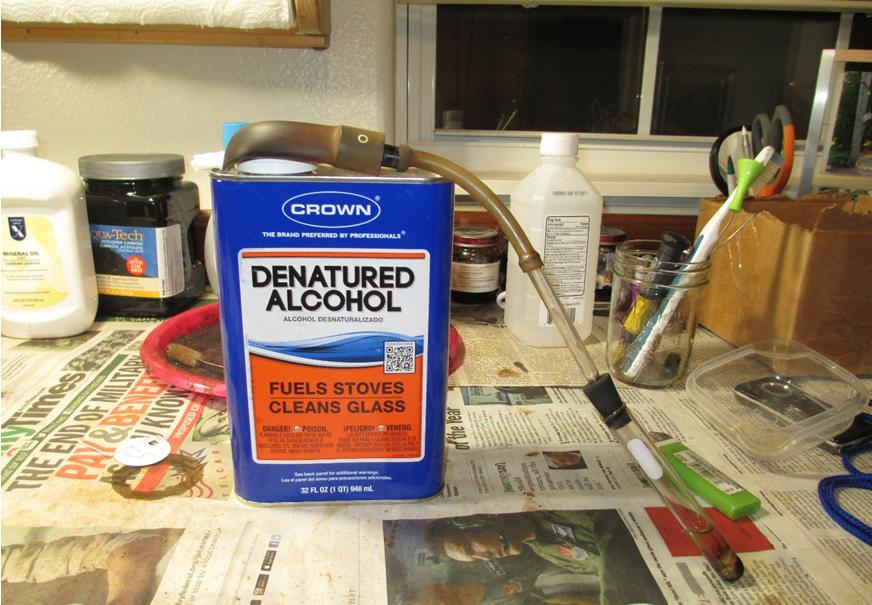
Shamrock6 I put the pipe in the freezer and left it overnight so that the temperature change would do its magic and loosen the stem in the shank. In the morning I took it out and was able to remove the stem with no problems. The photo below shows the damage to the button very clearly. There is also a sand pit visible in the side of the bowl. It is unfilled and from what I could see of the rest of the bowl there were not any fills.Shamrock7 I left the tobacco in the bowl while I worked on the rim. I scrubbed it with saliva and cotton pads until I was able to remove all of the tarry build up. I also scrubbed down the rest of the exterior of the bowl and shank.Shamrock8 I removed the tobacco with a dental pick and then reamed the pipe with a PipNet reamer and took the cake back to bare wood.Shamrock9 I used the dental pick to also clean out the twin rings around the bowl. These were packed with dust and wax from previous buffing.Shamrock10I set up my retort and put the tube on the broken stem. I loosely stuff a cotton ball in the bowl and heated the alcohol over a tea light candle. I ran the alcohol through until it came out a rich brown. I emptied the test tube and refilled it with alcohol and repeated the process. The second time the alcohol came out clean. I removed the retort and cleaned out the shank and bowl with cotton swabs and pipe cleaners.Shamrock11

Shamrock11a

Shamrock12 I debated for a long time what to do with the damaged stem. I could try a stem splice or replace the stem. I could also cut off the stem and reshape the button. In looking over the stem I decided there was enough length and material to allow me to cut if off and reshape it. I used a Dremel with a sanding drum to remove the broken part of the stem. I squared it off on the topping board and I was ready to recut the button.Shamrock13

Shamrock14

Shamrock15 I use needle files to cut the lines of the new button. They give me a good square edge and let me cut the basic shape of the button.Shamrock16

Shamrock17 Once the line is cut I use a variety of tools to trim back the taper from the line back toward the shank. I used an emery board to work on the shape of the stem. Often this is all I need but in this case it was not enough.Shamrock18

Shamrock19 I used a knife blade shaped needle file to shave the stem back to the button. With this blade I removed a lot of the excess material and the button began to take shape. I also used the file to begin to shape the oval of the button and to open up the slot in the end of the button. I continued to work on the taper of the stem and smoothed out the flow o the stem to the button using 220 grit sandpaper.Shamrock20

Shamrock21

Shamrock22 Once I had the shape and the taper of the stem correct I put a washer on the tenon and inserted it in the shank so that I could work on the stem. I sanded the stem with 220 grit sandpaper to remove the oxidation and then sanded it with a medium and a fine grit sanding sponge. I carefully avoided damaging the logo stamp on the stem. I also rubbed the bowl down with a little olive oil on a cotton pad. It really enlivened the grain on the pipe. I buffed it lightly with White Diamond and then gave it several coats of carnauba wax.Shamrock23

Shamrock24

Shamrock25

Shamrock26 Once the oxidation was taken care of I used some liquid paper to re-whiten the S on the stem. The photos below show the shape of the button and the stem at this point in the process. The new button works well and the shortening of the stem did not too seriously damage the appearance of the pipe.IMG_3070

IMG_3071

IMG_3072

IMG_3073 I wet sanded the stem with 1500-2400 grit micromesh sanding pads and dry sanded it with 3200-12,000 grit pads. I rubbed the stem down with Obsidian Oil between each set of three grits of micromesh sanding pads.Shamrock31

Shamrock32

Shamrock33

Shamrock34 I rubbed it down with a final coat of Obsidian Oil and once it had been absorbed into the vulcanite I hand buffed it with a soft cloth and took the next two photos to show the finished look of the stem.IMG_3091

IMG_3092 The finished pipe is shown below. The two profile photos show the look of the new button and the revised taper of the stem. It feels great in the hand and in the mouth. The bend matches my other 999 pipes and the overall length actually is the same as the chunkier stemmed early 999s that I have in my collection. I buffed the pipe and stem with White Diamond and gave it several coats of carnauba wax. I buffed it with a soft flannel buff to raise the shine on the pipe. It looks and smells fresh and clean. It is ready to load with a bowl of Virginia and give an inaugural smoke. In closing look at the grain on this old Shamrock – for the life of me I can find no fills in the briar. It is clean – two or three smalls sandpits but they in no way effect the overall look of the pipe. Amazing, I think that it did indeed slip through during production. No problem for me, I will enjoy it.Shamrock37

Shamrock40

Shamrock39

Shamrock38

A Unique Town and Country Squat Round Bottom Rhodesian – Robert M. Boughton


Guest Blog by Robert M. Boughton
Member, North American Society of Pipe Collectors
http://www.naspc.org
http://www.roadrunnerpipes.com
http://about.me/boughtonrobert
Photos © the Author

The pipe with solemn interposing puff,
Makes half a sentence at a time enough;
The dozing sages drop the drowsy strain,
Then, pause and puff – and speak, and pause again.
— William Cowper (1731-1800), English poet, in “Conversation,” 1782

INTRODUCTION
When this odd little pipe arrived in the mail a couple of months ago, as part of an estate lot, it stood out, to be sure. Amongst a beautiful Kaywoodie Standard mixed Sandblast/Smooth Grain Billiard, an elegant LHS Park Lane DeLuxe Dublin, a vintage WDC Full Bent Billiard with 14K ring, an Ehrlich Rusticated Billiard and two others – yes, it stood out. I will leave it to the reader to determine the nature of the deviation.

Still, it did force me to reconsider the true form and figure of a Rhodesian, and to imagine the turmoil I could incite if I threw this pipe as an example into the ongoing brouhaha that is the Bulldog versus Rhodesian debate. I do have a touch of Old Nick in me that way (and I don’t mean St. Nick).

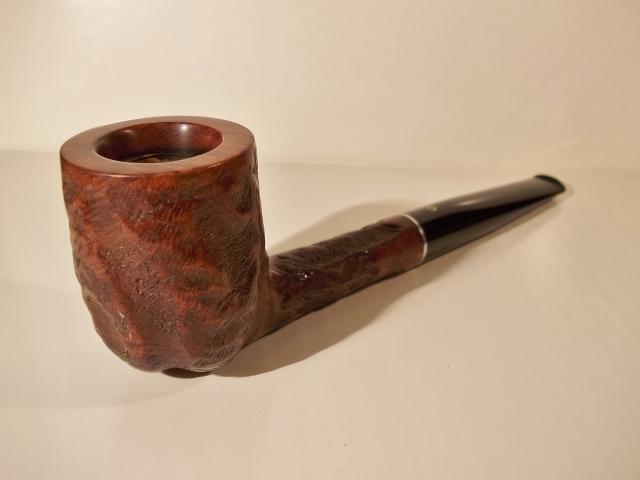
Yet how else can I describe this weird pipe, at its basest, but as a Rhodesian, despite the squatness of its stature and the roundness of the bottom of the bowl? The fact is that this Town and Country (made by the Bradberry Briar Pipe Corp. of New York) has a rounded bowl with two slits carved into its upper end below the rim and a round shank.Rob1

Rob2

Rob3

Rob4 RESTORATION
Part of me did not want to mess with the original stain, but some impulse screamed at me, “Drown this thing in Everclear and see what lies beneath!” And so, that I did. As it turned out, the voice was right. All kinds of scratches and other flaws became apparent where they were obscured before.Rob5

Rob6 Beginning the process of removing the various blemishes with a thorough sanding (except for the nomenclature)using 220-grit paper, I was careful to make smooth, even runs in the directions of the grain. After some time at this task, rubbing the fine briar dust away with a rag as I progressed, I was at last satisfied with the results.

To prep the wood for staining, I brushed the surface with super fine steel wool, which returned the natural color of the briar and created a light sheen. Then I commenced a thorough de-wrinkling treatment with micromesh pads, starting with 1500, then 1800, 2400, 3200 and 4000. Again, I rubbed the wood clear of any residue between each micromesh pad.Rob7

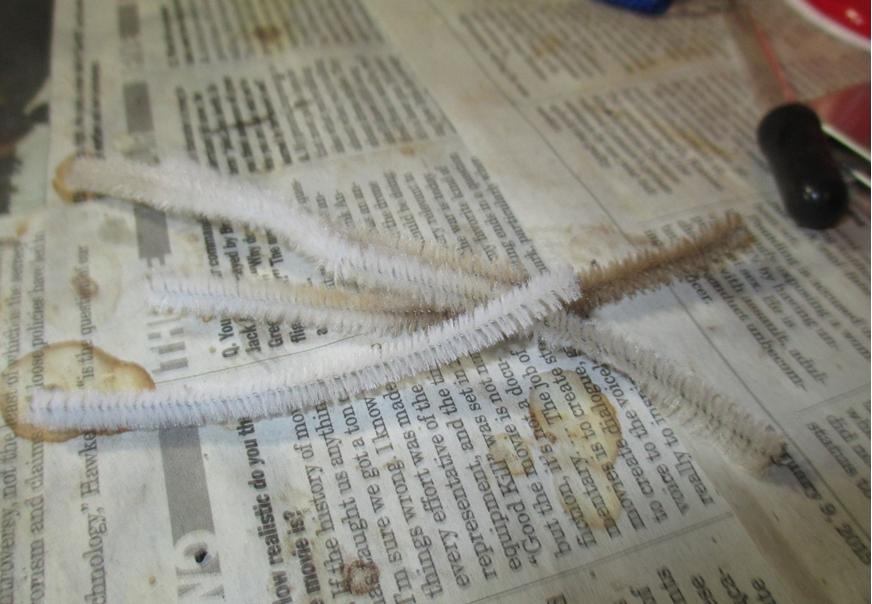
Rob8 The obvious next step seemed to be a full cleaning of the pipe’s interior. Expecting to find the usual massive buildup of crud associated with the shanks of most estate pipes, I was in fact shocked to see the wire-handled, heavy-duty bristly cleaner, dipped in Everclear, emerge from the exercise almost un-befouled the first time and spotless the second.

Still wary, I sanded the pinky-sized circumference of the chamber with a Lilliputian-sized scrap of 220-grit paper and succeeded in removing a fair amount of carbon. Then I inserted an alcohol-soaked square of gun cleaning cotton cloth and twirled it with the aforementioned pinky until most of the carbon residue was cleared from the chamber.

Despite the failure of the wire cleaner to dig up more than trace elements of old tobacco, and determined to assure the shank was truly ready to pass anyone’s test, I employed my newly acquired proficiency in retorting. To my utter dismay, despite my certainty that I had performed the retort without error, the remainder of the boiling alcohol – which had surged all the way into the chamber and left the cotton there somewhat dirtier than it started – returned to the Pyrex test tube clear enough to drink, if I were so inclined. Disbelieving the unheard of result, I re-boiled the alcohol in a second and sent it packing again whence it had returned once empty-handed, so to speak. The second try came back as clean as the first.

At last, my mind exploded in dizzying exultation, a clean shank at the outset!

I turned to the stem, which, other than being a uniform military green, was all but devoid of scratches or chatter. There was one small ding, but given the usual mauling of stems I encounter, this one was a gift from Heaven. As I have yet to come up with a formula for a solution in which to treat stems, I was compelled to do it the old fashioned way: by hand, using 320-grit paper to restore the stem from green to black. This step required several passes, more and more localized each time.

Next I turned to micromesh and gave the stem the same care I provided the wood: 1500, 1800, 2400, 3200 and 4000.Rob9 I tend to enjoy re-staining the wood of a pipe when necessary, and my biggest question so far had been what shade of brown to use if not marine (burgundy) red. This pipe I wanted to do as a two-tone, with the beautiful natural color and grain of the rounded rim left unchanged and the rest of the bowl and shank dark enough to show the difference. And so the only question was whether to use medium brown, which is darker than it sounds, or marine? I admit to having a fluttery, nervous feeling in my stomach when I opted for the marine. Although the result was better than okay, I won’t be showing it here for reasons that will soon be apparent.

Having stained the majority of the wood marine and left the round rim plain, I flamed out the alcohol from the boot stain, buffed the greater part of the wood with its resulting ash using 3200 micromesh and then waxed the wood and stem – from which I had removed the superfluous metal tenon extension by heating it with my Bic and yanking it out – and achieved a definite high contrast. The grain still showed through the stain, but I knew it wasn’t right.

Therefore, wishing to have a little fun and test my mentor, Chuck Richards, I took the “almost finished” product to him for his opinion. True to form, Chuck scrutinized every angle of the pipe through his glasses and handed it back to me. His critique was like the ultimate New Yorker bad book review: no comment. He still has no idea how good that made me feel!

Pleased with myself, I later returned home with the dark red body of the pipe topped by a blond head and with care again applied the super fine steel wool to remove the wax and stain on all of the wood but the rim. Ready for the correct approach, I re-stained most of the wood medium brown, went through all of the steps as before to prepare it for waxing on my two buffer machines, and applied white and red Tripoli, White Diamond and carnauba. The result was much more satisfying, and I felt no need to run it by Chuck again before submitting this blog, as I had already messed with him enough, albeit unbeknownst to my good friend.Rob10

Rob11

Rob12

Rob13

Rob14

Rob15 CONCLUSION
All fun and pranks with my big-hearted but not coddling mentor aside, I ended this restoration with more work than was necessary. I should have learned by now not to disregard the advice of that little fluttery feeling of unease I had in my stomach when I chose marine over medium brown. In the end, the stomach almost always wins in all matters over the mind.

A Wally Frank Sandblast Unique Sitter Reborn


Blog by Steve Laug

Every once in a while I get the urge to just sit and work my way through the estate pipes on the various Ebay sites. I rarely if ever pick anything up anymore unless it is something that is unique and just grabs me. The last time I did the scan of the various sales I came across this old Wally Frank sitter. It combined the look of a Rhodesian with a diamond shank like a Bulldog and a sitter base. It had a very English made pipe look in my opinion. The sandblast on the bowl and front portion of the shank appeared to be deep and craggy. The rustication of the last third of the shank, a feature that I find often on sandblasted Wally Frank pipes, looked good and the stamping was clear and readable. The bowl appeared to be in decent shape and finish looked good in the photos. The stem was oxidized and the seller noted that it sat off centre slightly or did not line up with the shank. I figured if it had a metal tenon that was fixable and if it was a push tenon it was a non-issue. I was hooked. I bid on it and won, only to find out that the shipper never shipped out of the US. We corresponded and he decided to send it on to me. For that I thank him. The next series of six photos were included by the seller in the Ebay write-up.Frank1

Frank2

Frank3 When the pipe arrived, I opened the box and removed the pipe. The blast was even better than the photos had shown. The stem oxidation was pretty much as shown above. The misaligned stem was no issue as the stem had a push tenon and was only a matter of turning the stem slightly. The airway was open but dirty with tars and grime. The bowl had a light cake that thickened toward the bottom of the bowl. The edges of the shank and the stem were sharp and clean showing that it had not been buffed much in its history. There were a couple of spots on the edge of the rim and shank at the union next to the stem where the stain was worn or missing. The rim itself was dirty with tars. The stem was clean though oxidized with no tooth marks or chatter. The button was crisp and sharp and the slot was an open oval that flared into the stem opening up into the airway like a funnel. I took a few photos of the pipe when I took it out of the box.Frank4

Frank5

Frank6

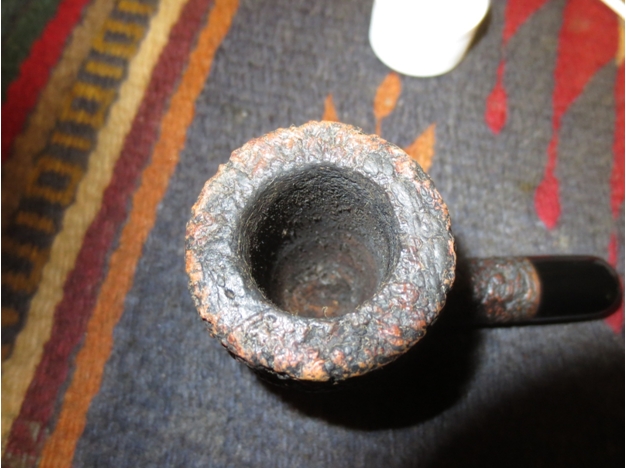
Frank7 The photo below shows the situation with the cake in the bowl. It was not centered or evenly built up around the bowl so it would need to be cleaned up and adjusted.Frank8 I reamed the bowl with a PipNet reamer and took the uneven cake back to bare wood. I used the smallest cutting head to begin with and worked my way up to the second cutting head. With these two I was able to clean out the cake. The bowl shape is kind of combination of a V and U shape. The sides are U-shaped to about a half-inch from the bottom of the bowl where it shifts to a V shape. I scrubbed the rim surface with a soft bristle brass tire brush to clean off the tars and oils built up there.Frank9

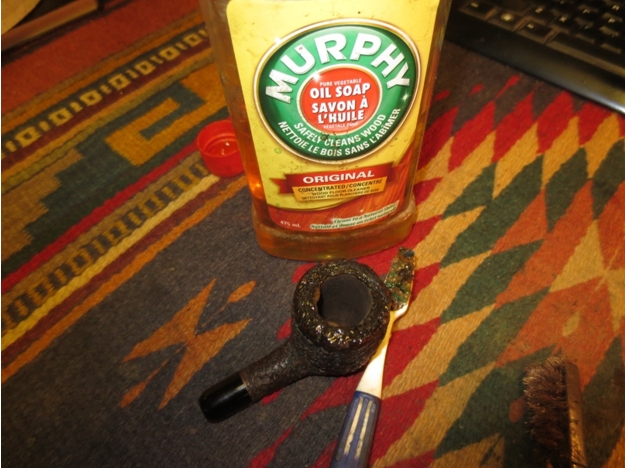
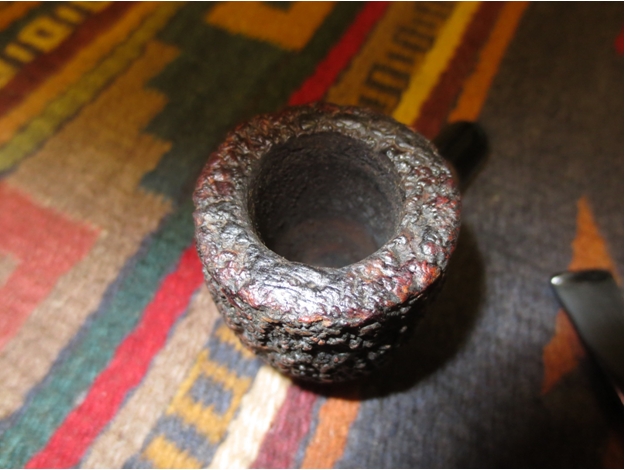
Frank10 I scrubbed the bowl and rim with Murphy’s Oil Soap and a tooth brush. Once I had scoured it with the soap I put a thumb over the bowl and rinsed off the soap with running water. The photos below show the pipe after I had scrubbed, rinsed it and dried it off with a soft cloth.Frank11

Frank12

Frank13

Frank14

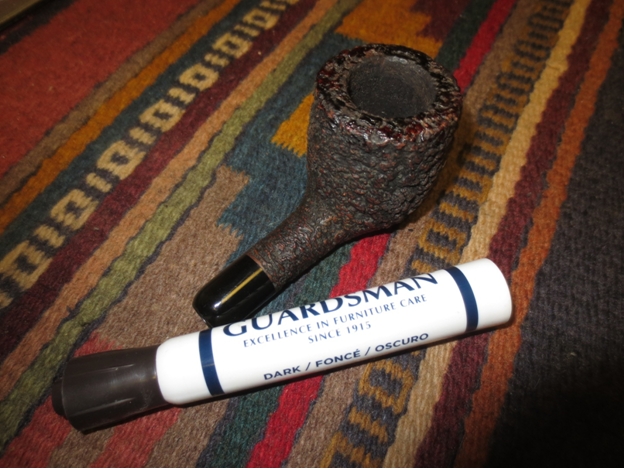
Frank15 After cleaning the briar I gave it a coat of Conservators Wax which is a microcrystalline wax cleaner. I buffed it with a shoe brush to bring a shine to the bowl.Frank16 I put the stem in a jar of Oxyclean to soak and raise the oxidation to the surface. I let it sit overnight to soak. I then returned to the inside of the bowl. (NOTE: The reason I give the bowl a coat of wax before cleaning the inside of the shank and bowl is because I want to protect the finish when I am cleaning out the inside).Frank17

Frank18 I cleaned out the shank with isopropyl alcohol and cotton swabs and the airway with pipe cleaners. I cleaned it until the cleaners came out with no grime on them.Frank19 In the morning I took the stem out of the oxyclean and dried it off with a paper towel. The roughness of the paper towel removes the oxidation that has been raised to the surface of the stem. Once it was dry I slipped a plastic washer on the tenon and reinserted it into the shank of the pipe. The washer allows me to sand all the way to the edges of the stem without rounding the edges at the shank junction. I started with a medium grit sanding sponge and worked through a fine grit sponge and fine grit sanding block. I then wet sanded with 1500-2400 grit micromesh pads and dry sanded with 3200-12,000 grit pads. I rubbed down the stem between each group of three pads with Obsidian Oil and then moved onto the next set of three. When I finished I buffed the stem with White Diamond and gave it a final coat of Obsidian Oil and let it sit until it had dried.Frank20

Frank21

Frank22 (NB In the photo below I left the plastic washer in place on the stem while in the two above I removed it for the photo)Frank23 I put the stem back on the bowl and gave it a final buff with a blue polishing bar on the buffer. This polishing compound is a plastic polishing compound (Blue Diamond maybe, can’t remember the name). I finished by giving the bowl a buff of carnauba wax (light touch so as not to gum up the blast finish) and then multiple coats of the wax on the stem. I buffed the whole pipe with a soft flannel buff for the finished shine on the stem and the bowl shown in the photos below. The pipe is ready to be christened with its inaugural smoke this afternoon while I go for a walk in the neighbourhood. I have chosen a Virginia Perique blend called Pilgrim’s Muse that I purchased from the Country Squire Tobacconist. It is a great smoking tobacco with a good flavour.Frank24
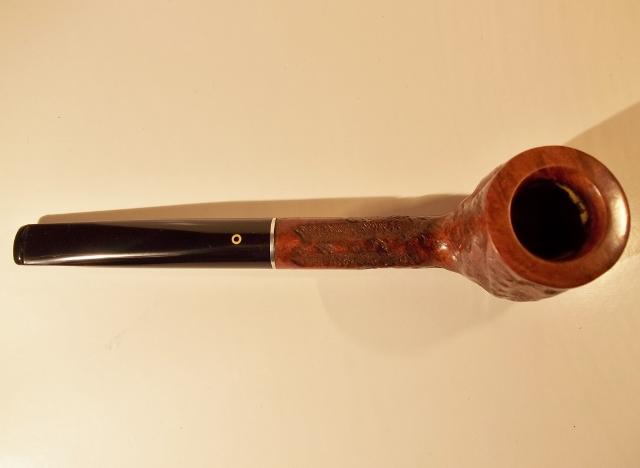
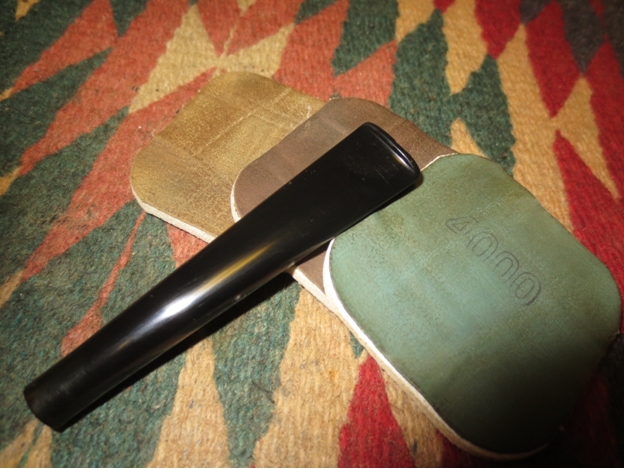
Frank25

Frank26

Frank27

Frank28

Re-stemming a Hardcastle Pot – Andrew Selking


Blog by Andrew Selking

I picked up this nice looking Hardcastle pot, but when it arrived I realized that it did not have the proper stem.Hardcastle1

Hardcastle2 Fortunately Steve bailed me out and sent a couple of likely replacements. The stem that I settled on had a slightly smaller tenon diameter and the outside diameter was noticeably bigger. This was going to be a fun challenge. I covered the shank with painter’s tape and started reshaping the stem with 100 grit sand-paper.Hardcastle3 Here is a shot after getting to about 80% completion.Hardcastle4 Next, I took the painter’s tape off and replaced it with Scotch tape (since it is thinner) at the end of the shank. At this point I was using 400 grit wet/dry without water.Hardcastle5 Once I completed that step, I took a rubber washer and placed it on the tenon to protect the end of the stem and shank. I used 400 grit to finish the last little bit, frequently taking the washer out to check the fit.Hardcastle This is what the pipe looked like once I had the stem sanded to fit.Hardcastle6

Hardcastle7

Hardcastle8

Hardcastle9Next I turned my attention to the bowl. I used the largest reamer to get almost to the bottom and finished it with the next smaller one.Hardcastle10 I used OOOO grade steel wool to remove the tar from the rim.Hardcastle11 Once the bowl was clean, I used my retort to clean the shank.Hardcastle12 This is why I am a firm believer in the retort, pipe cleaners dipped in alcohol came clean, but all this gunk was still inside.Hardcastle13 I used the retort on the stem. Although this picture does not show it, always plug the end of the stem to prevent the retort from boiling over and spitting nasty tobacco juice everywhere (ask me how I know this).Hardcastle14 After the stem was cleaned, I worked on polishing it. I started with 400 grit, then moved to 1500 through 2400 grit micro mesh with water.Hardcastle15 I used the 1500 grit through 2400 grit without water on the bowl, then finished both with a progression through 12,000 grit.Hardcastle16 Now the pipe was ready for stain. This time I used an aniline dye (light walnut) from Pimo Pipe Supply. I diluted the dye by 50% with denatured alcohol, applied it with a cotton ball, flamed it with a lighter, and repeated until I had the coverage I wanted.

After an uneventful trip to the buffer, where I used white diamond and carnauba wax on both the stem and bowl, this is the result. I am really happy how this turned out. Thanks again to Steve for his generosity in providing the donor stem.Hardcastle17

Hardcastle18

Hardcastle19

Hardcastle20

Hardcastle21