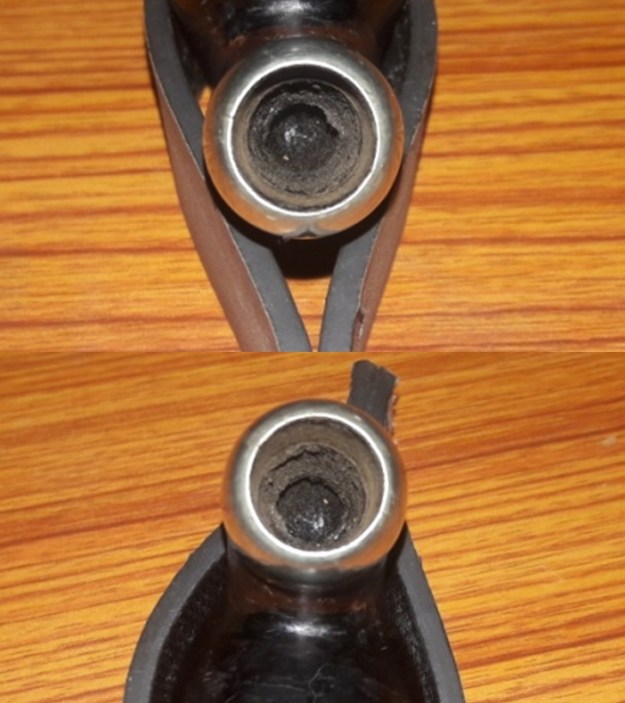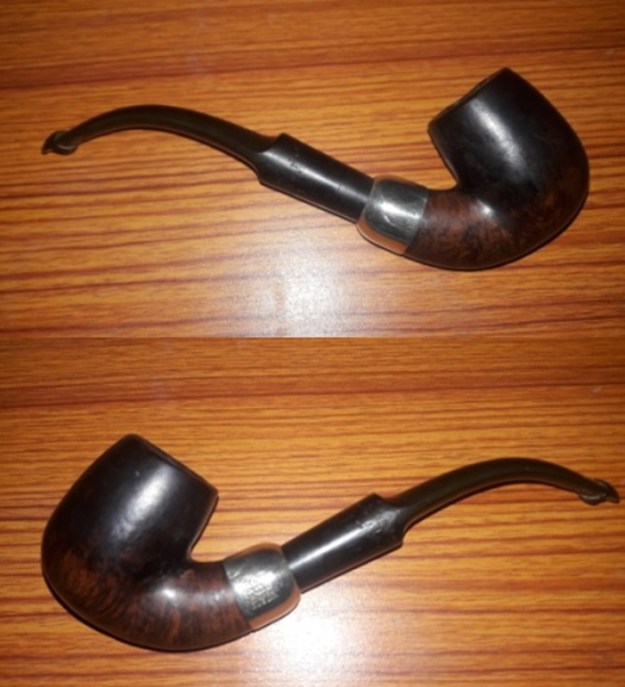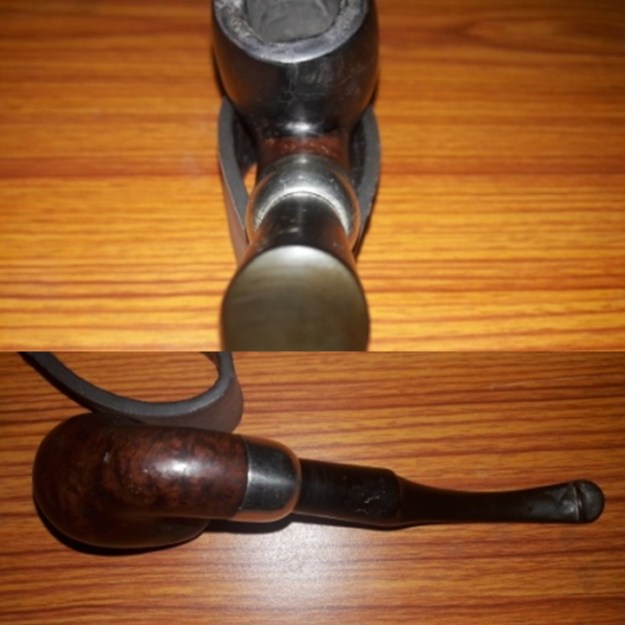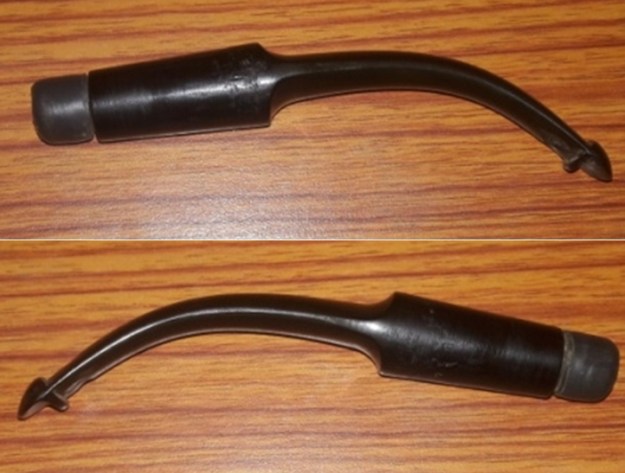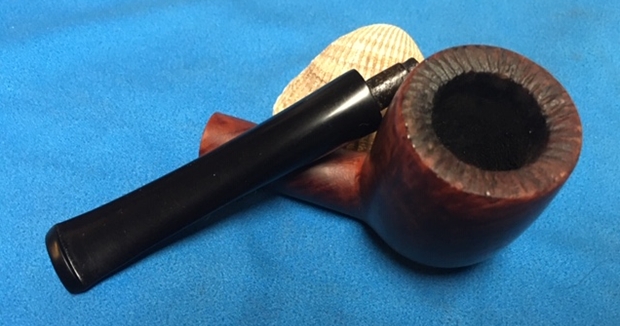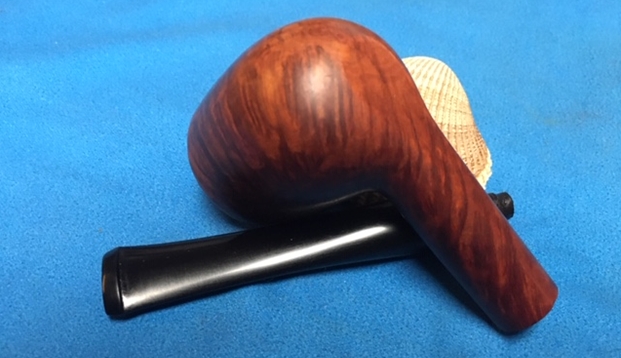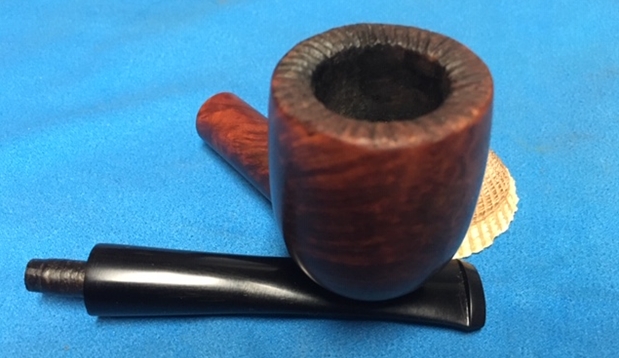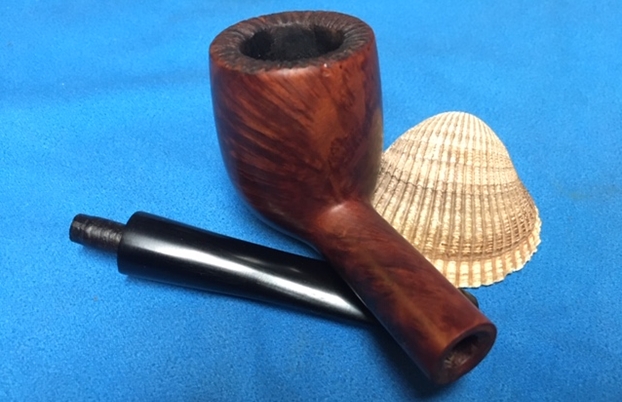
Tag Archives: restemming

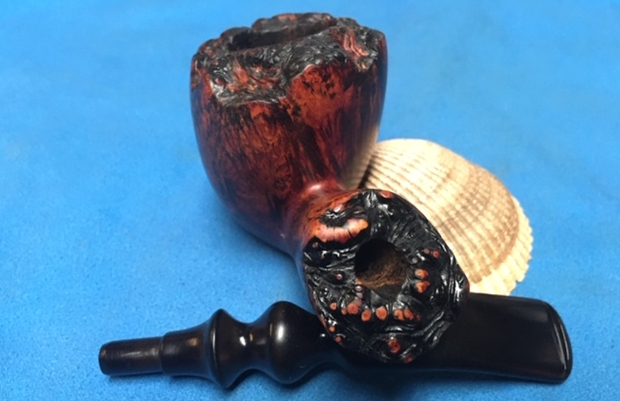
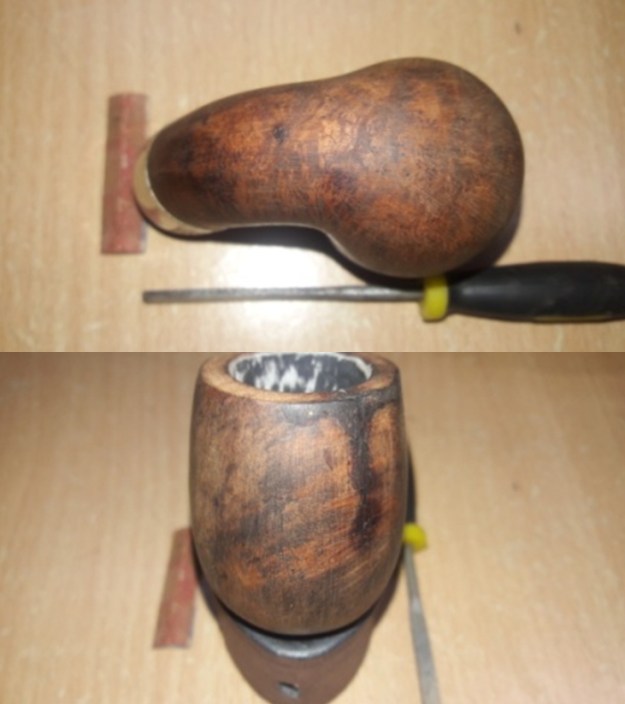
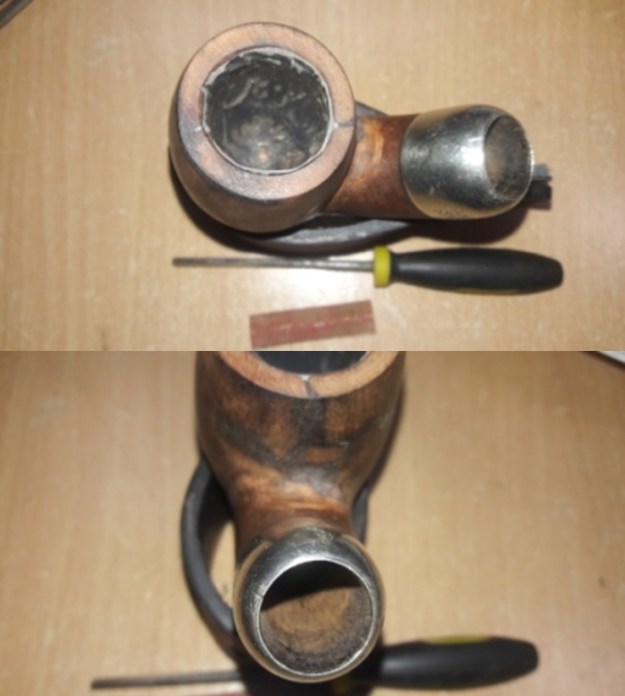
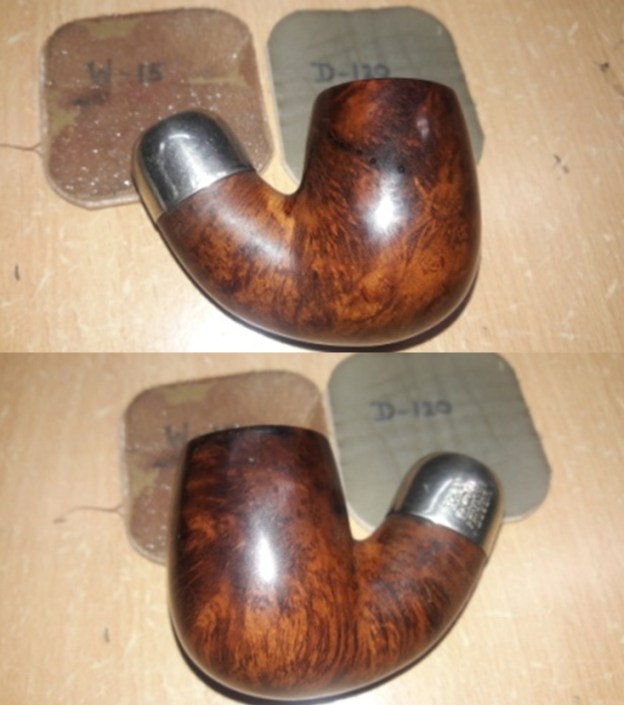
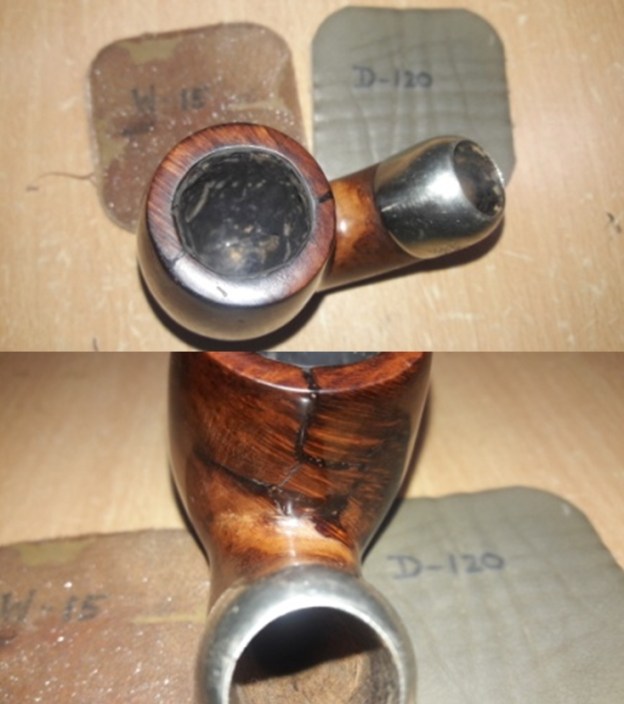
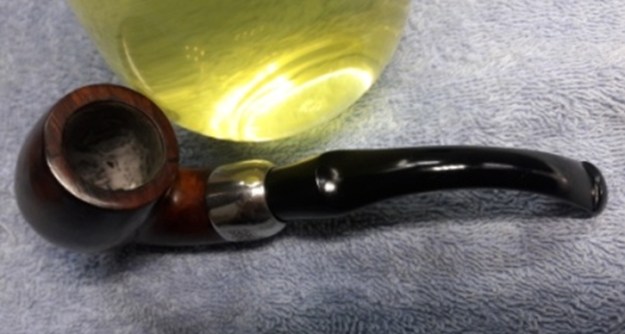
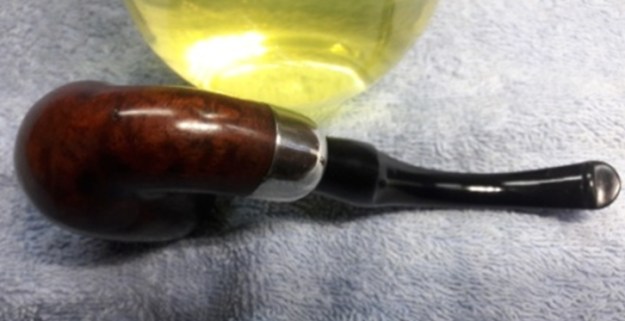
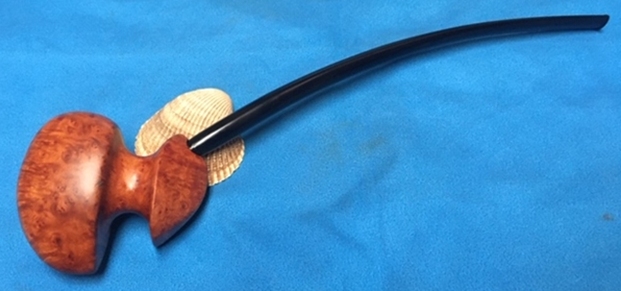
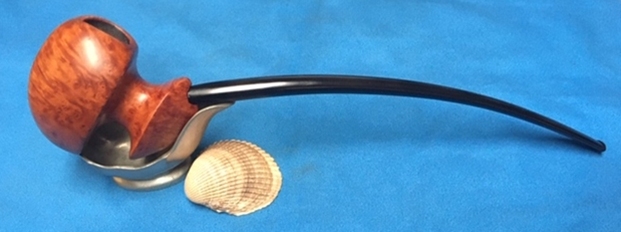
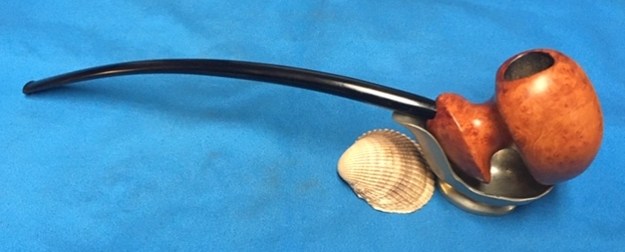
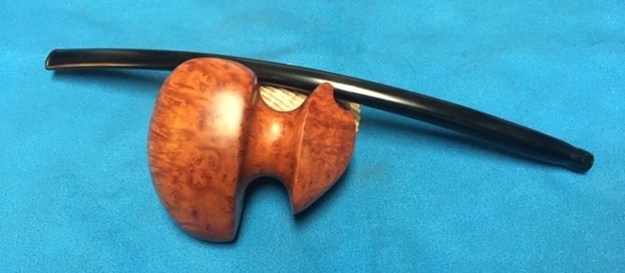
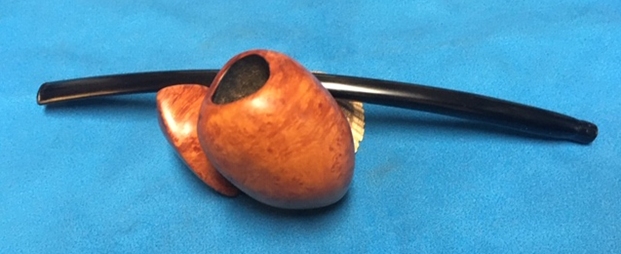
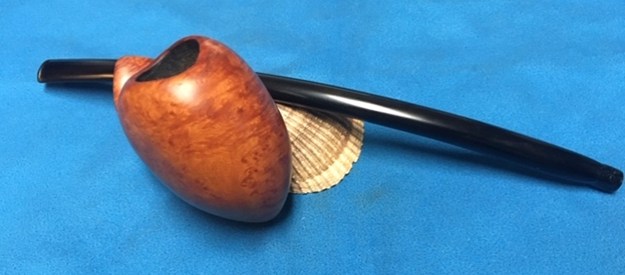
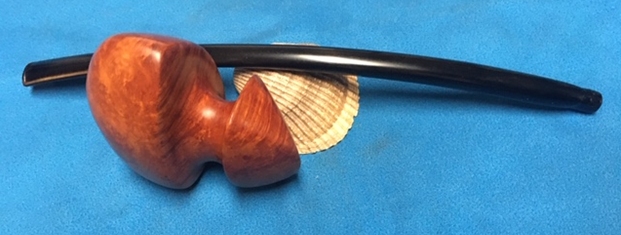
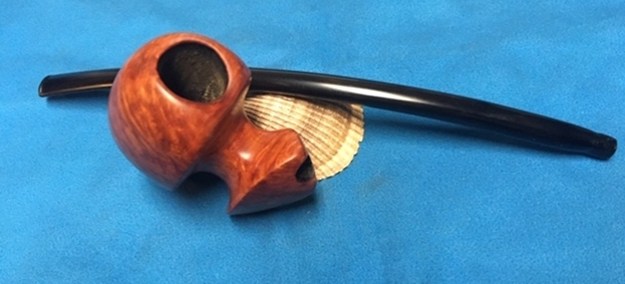
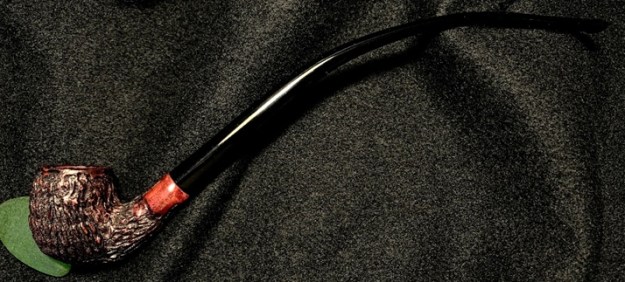
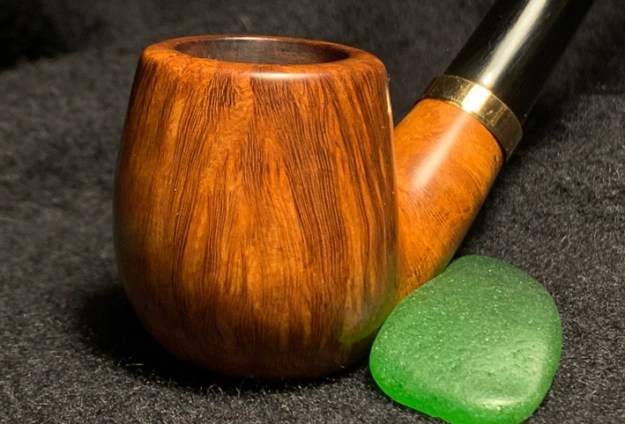
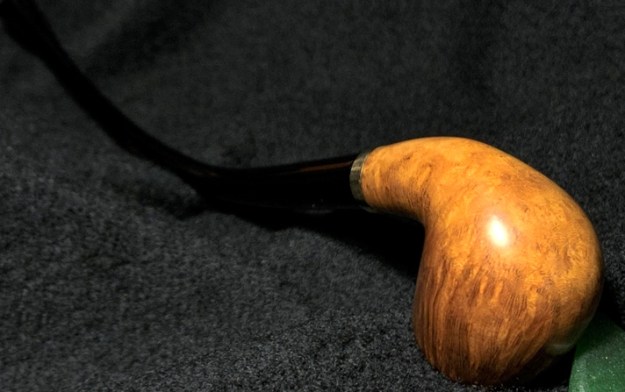
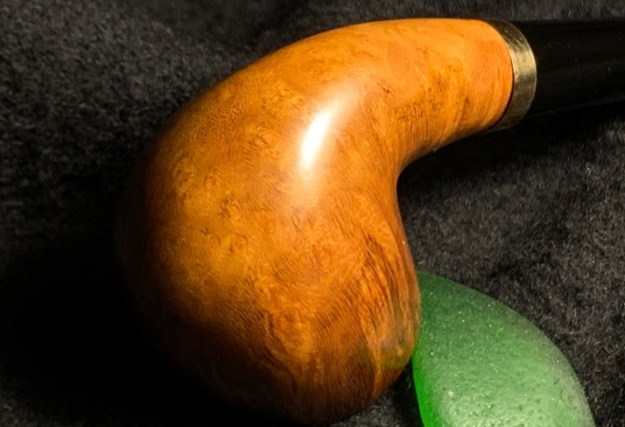
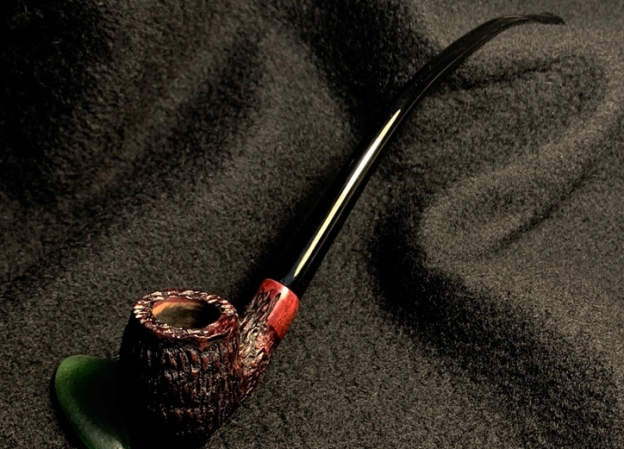
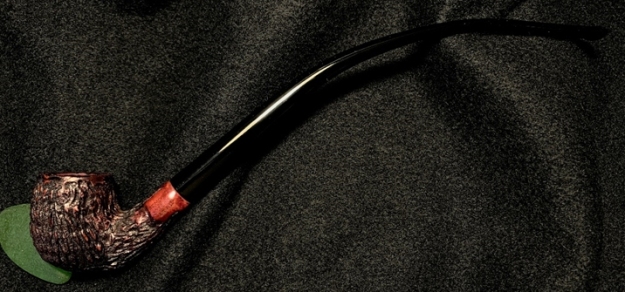
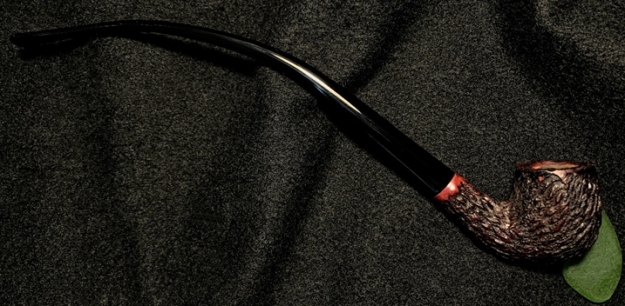
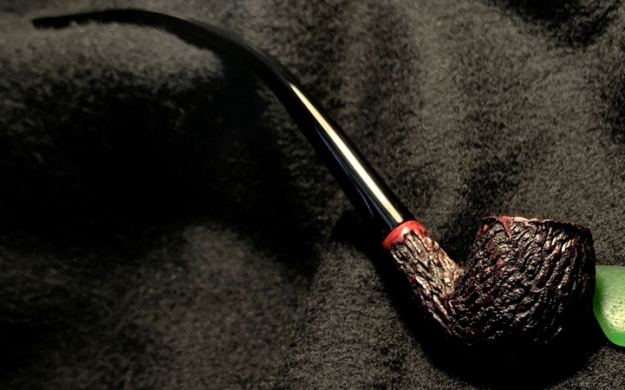
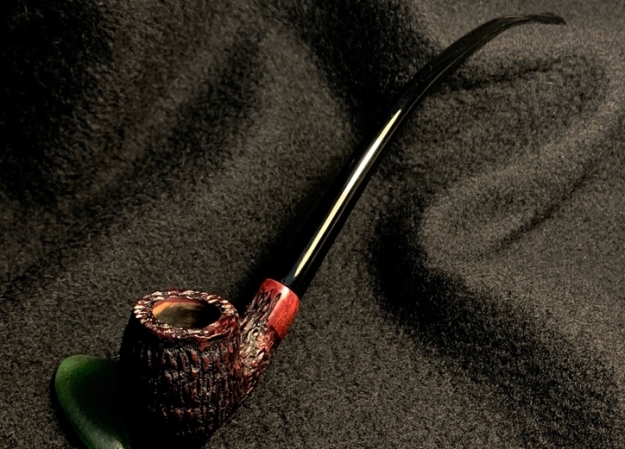
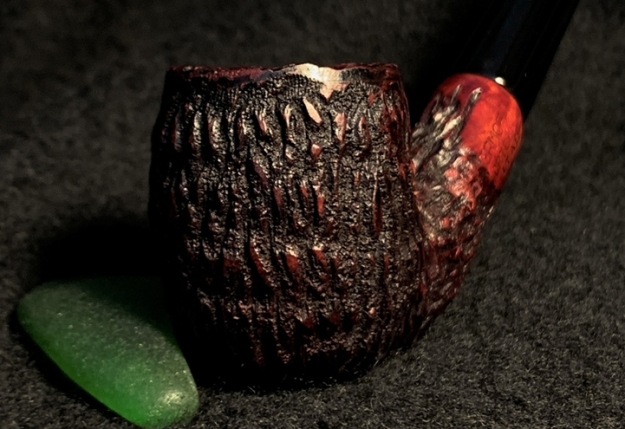
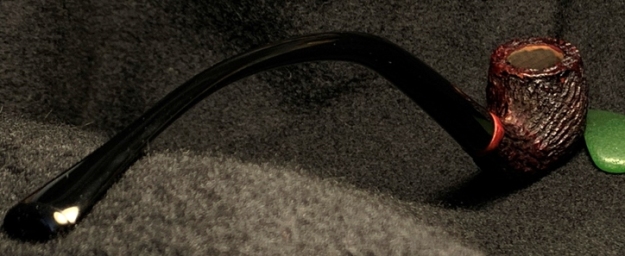
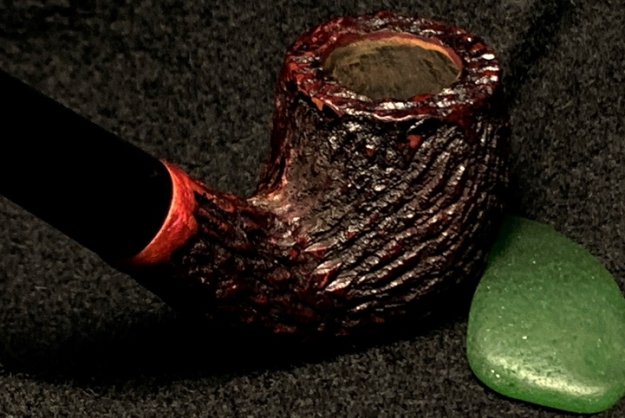
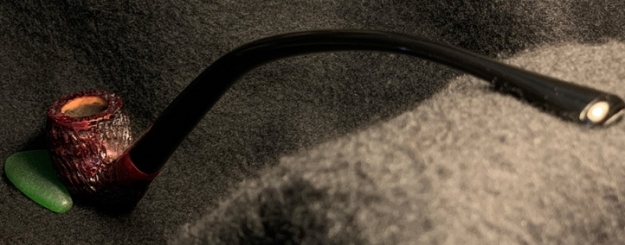
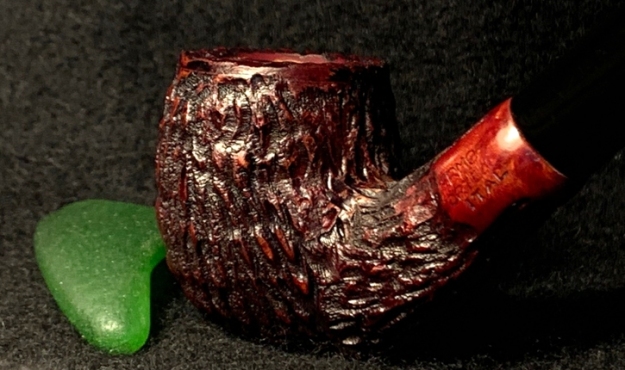
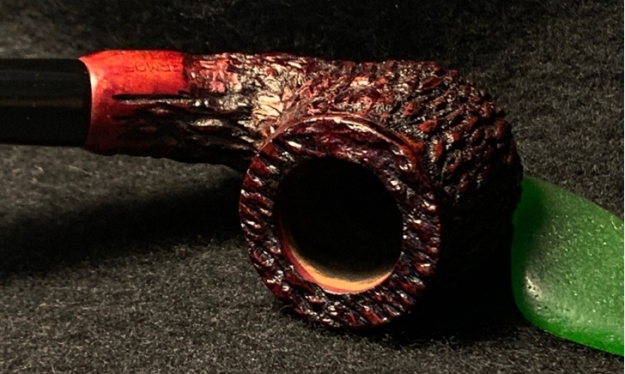
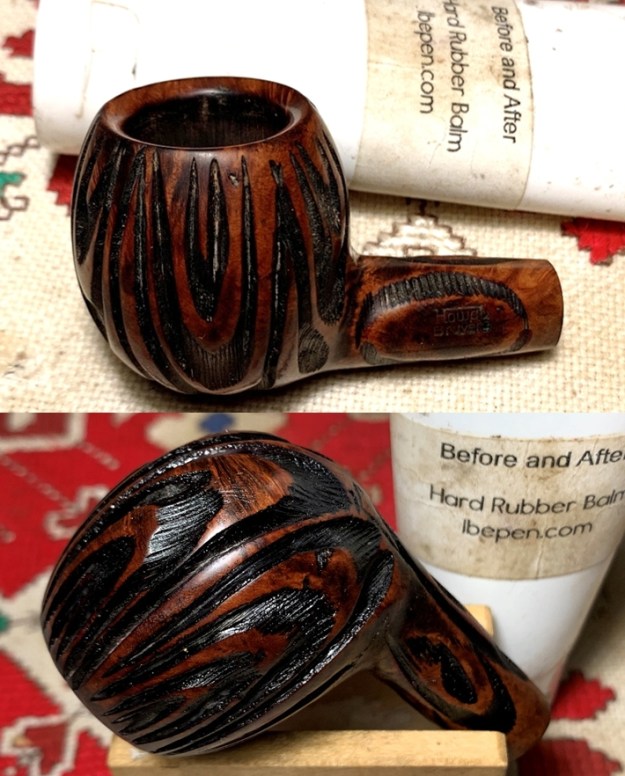
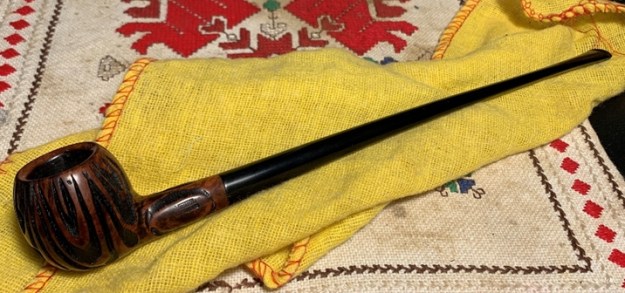
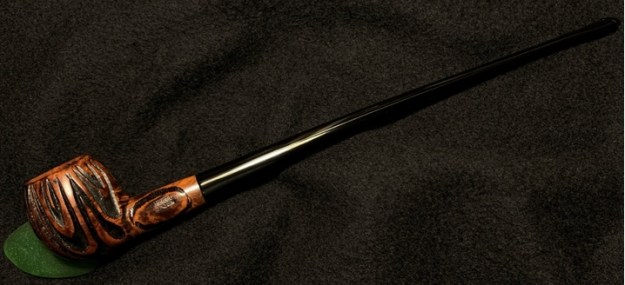
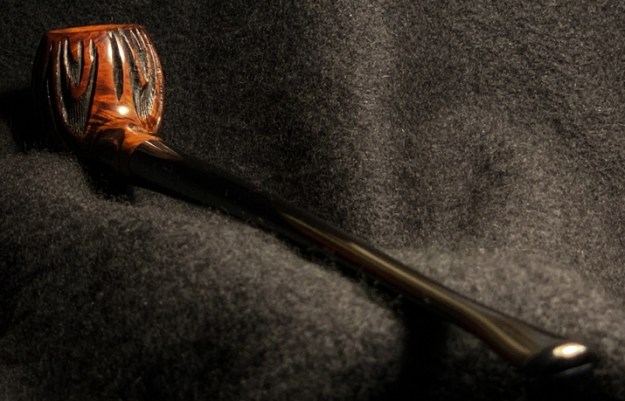
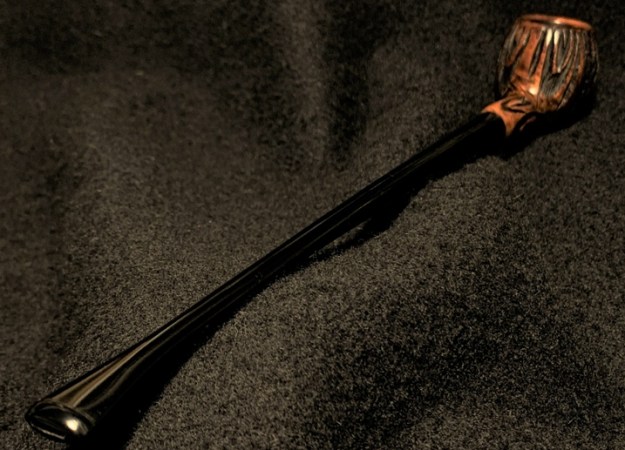
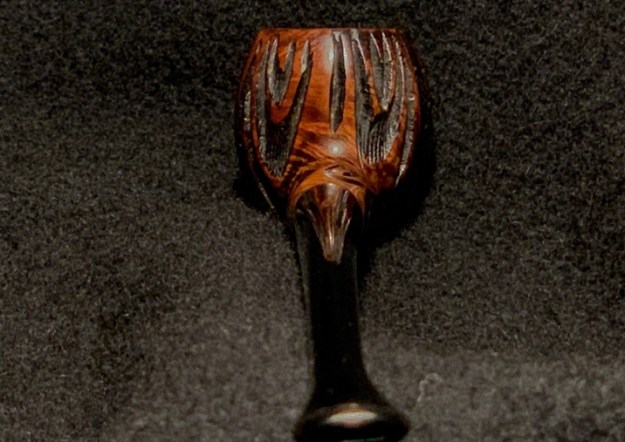
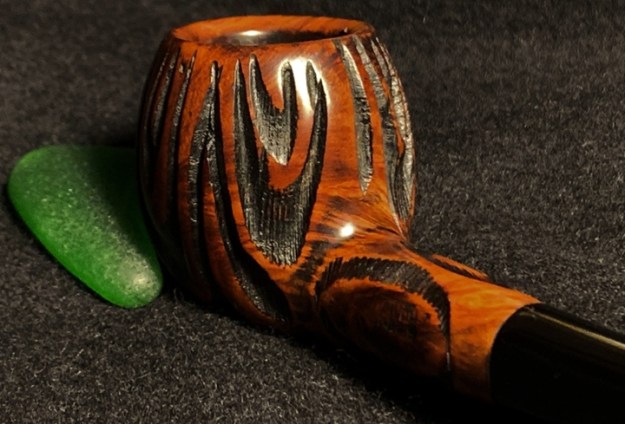
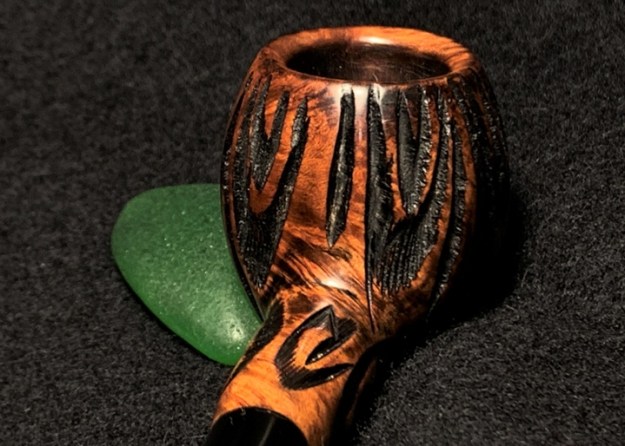
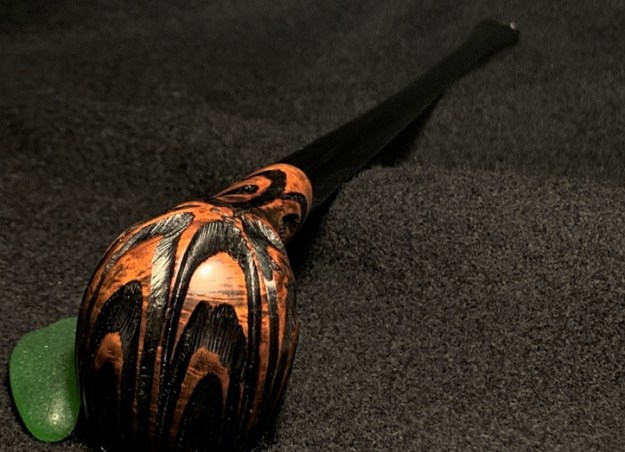
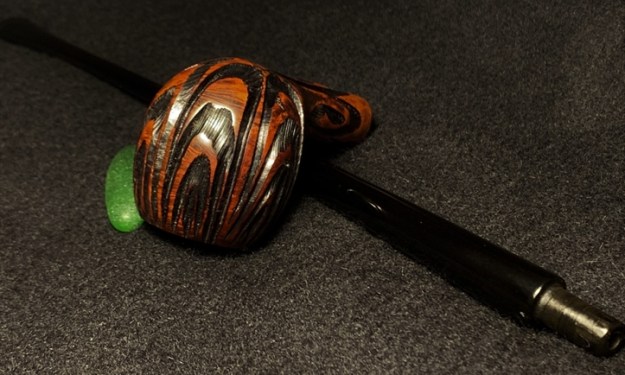
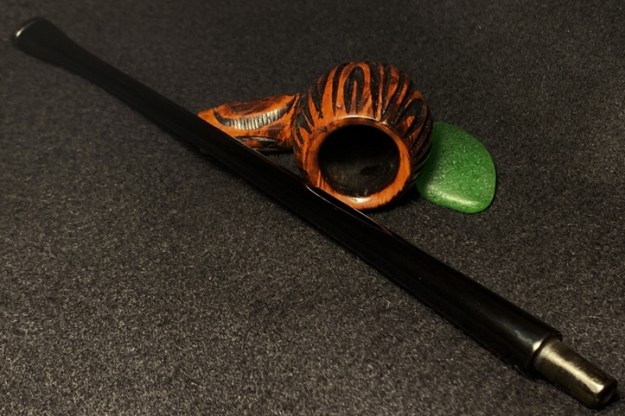
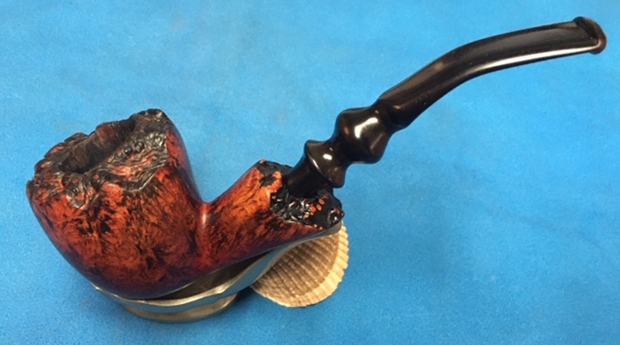
Fashioning a Churchwarden by Reclaiming an East German Howal Sculpted Apple Bowl


Blog by Dal Stanton

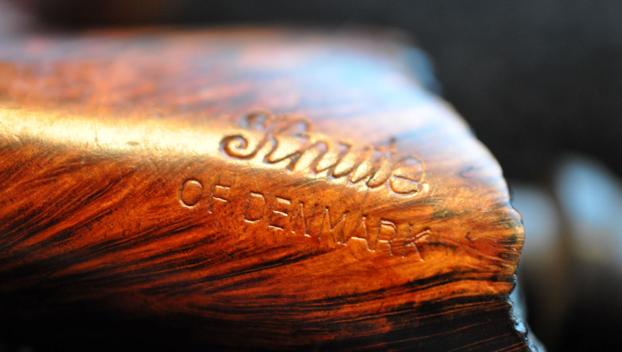
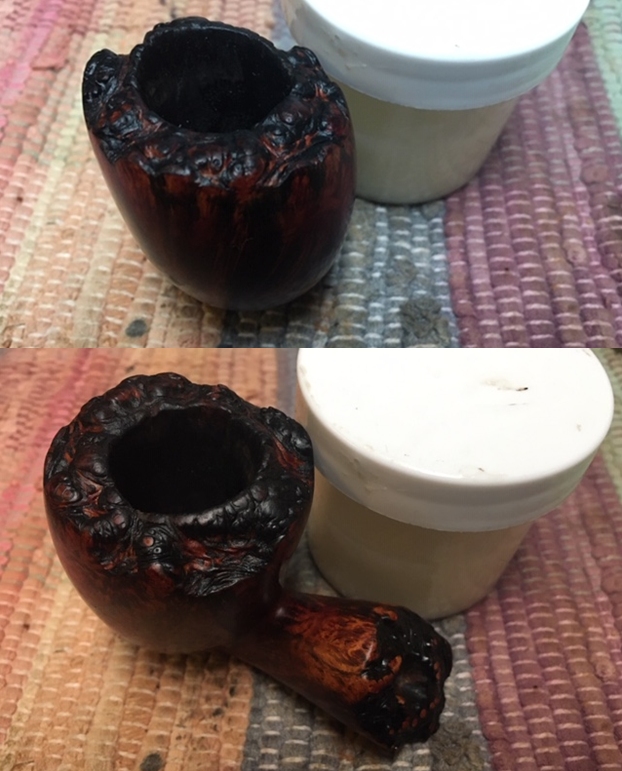
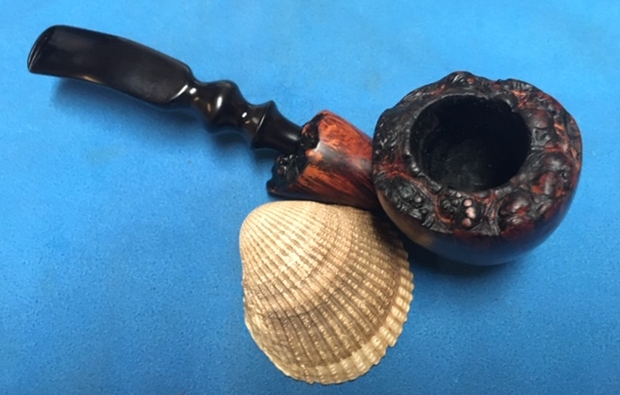
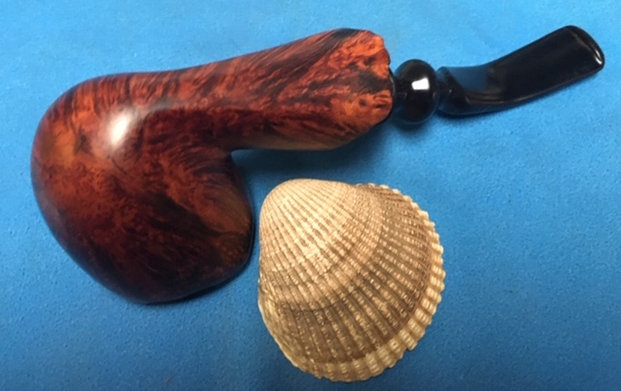
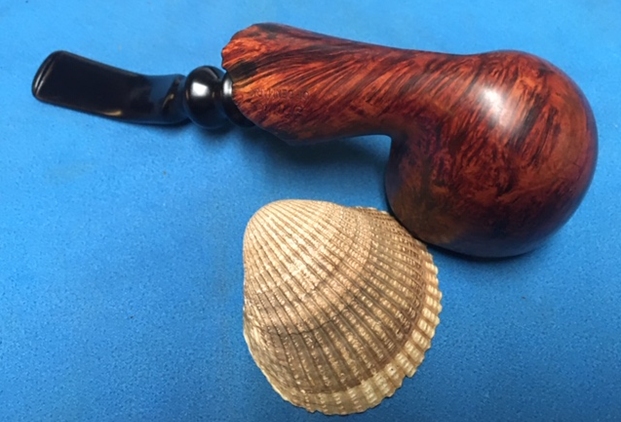
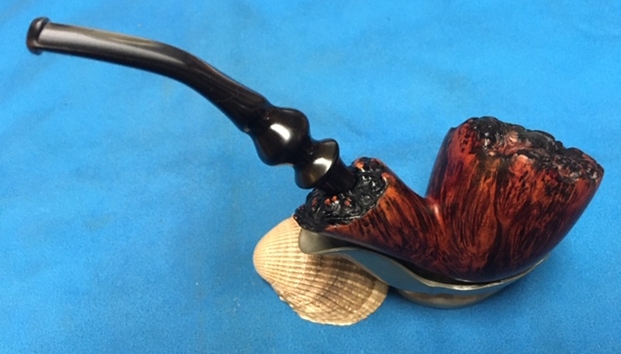
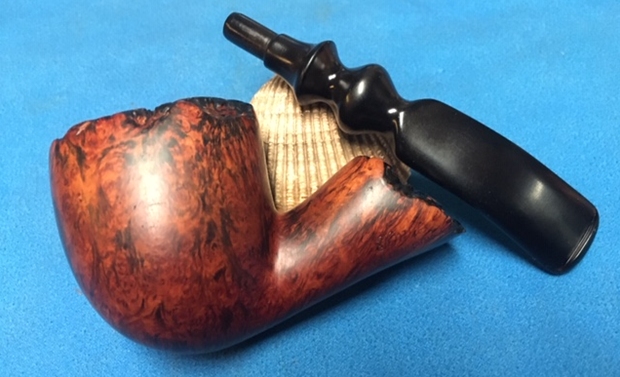
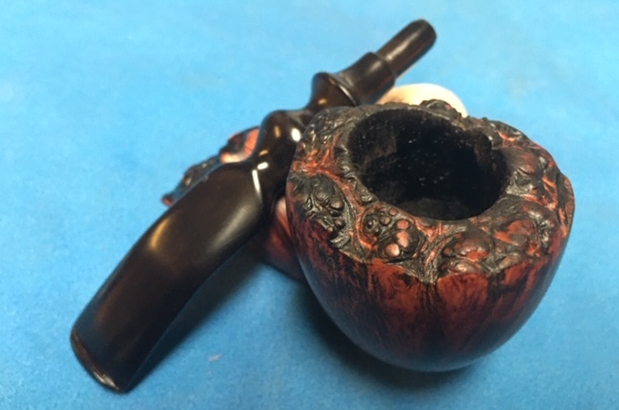
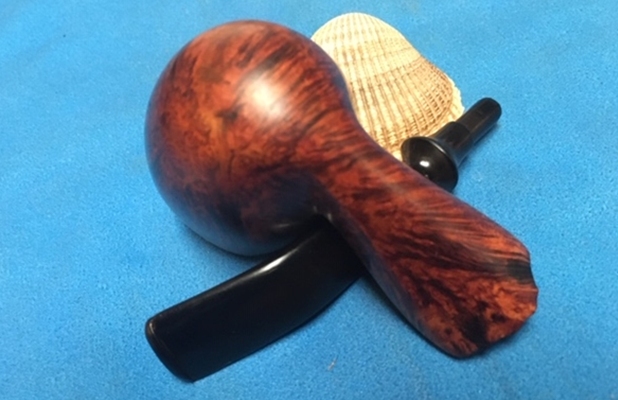
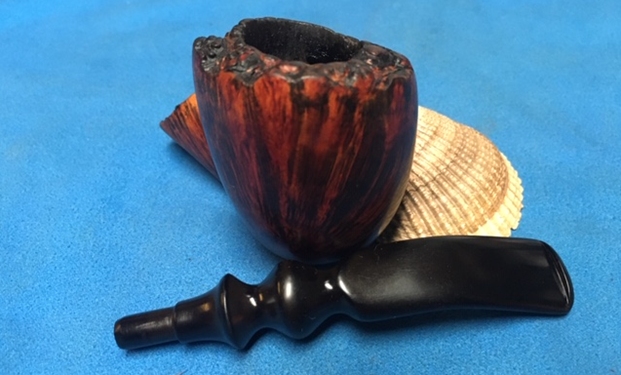
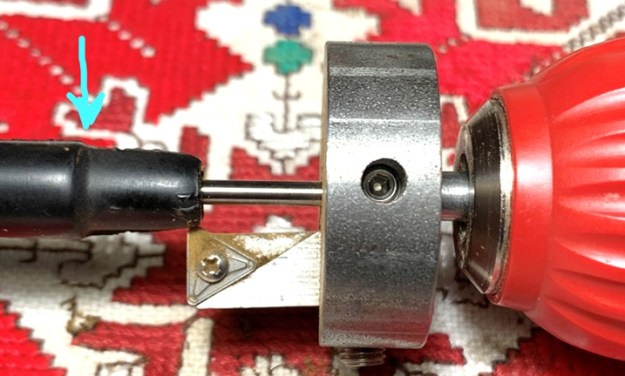
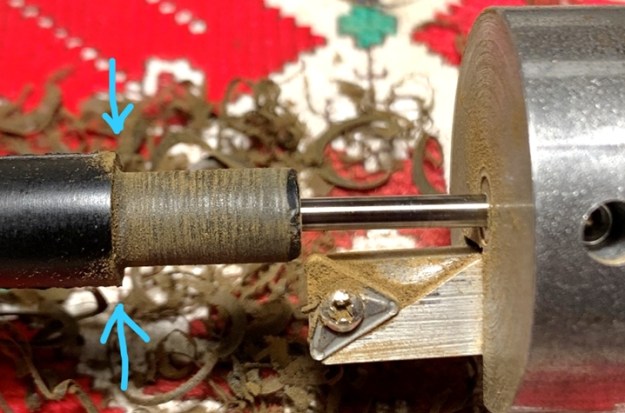
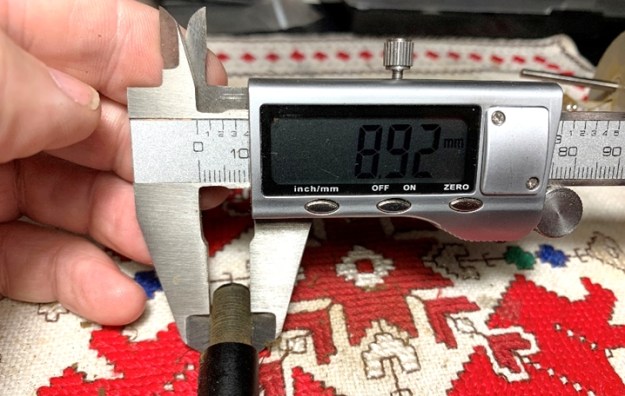
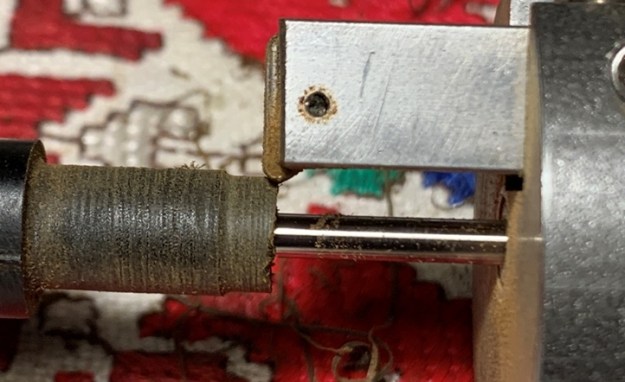
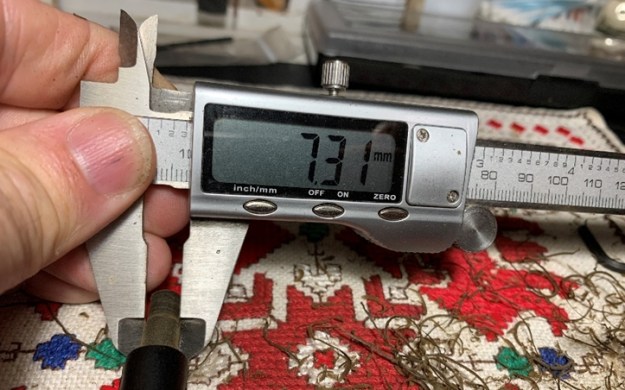
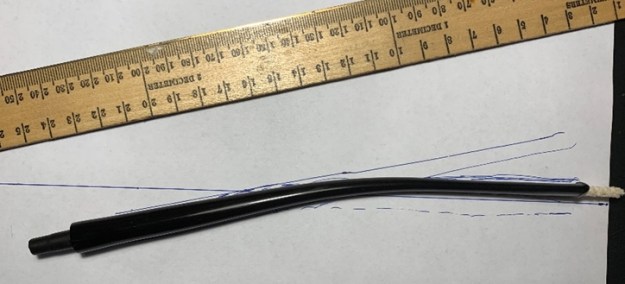
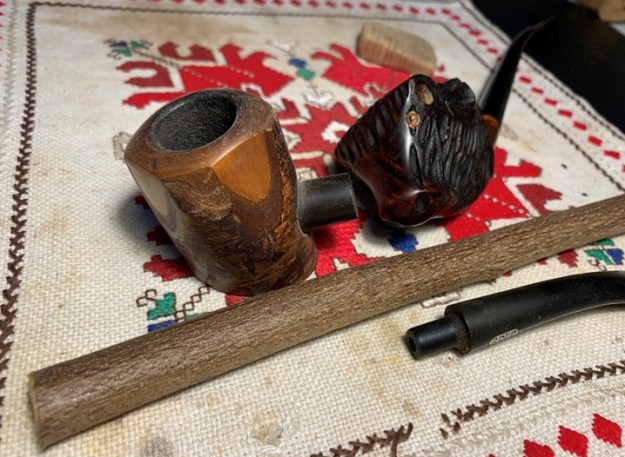
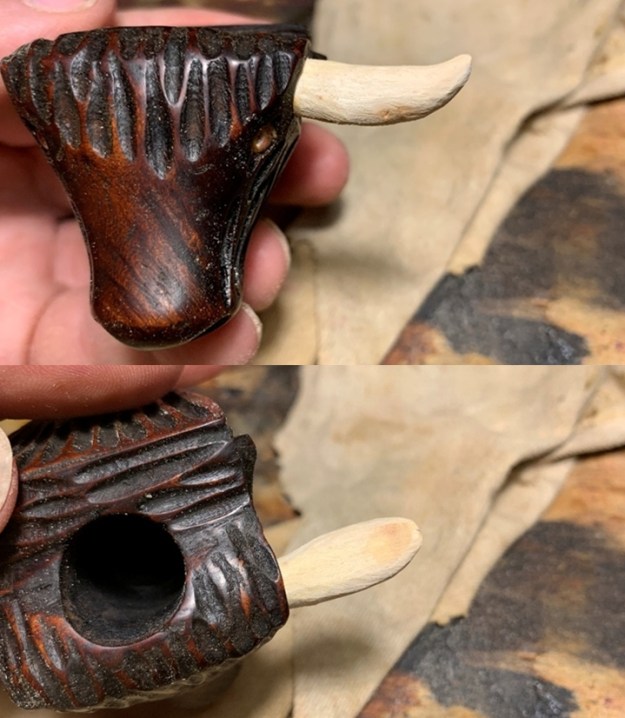
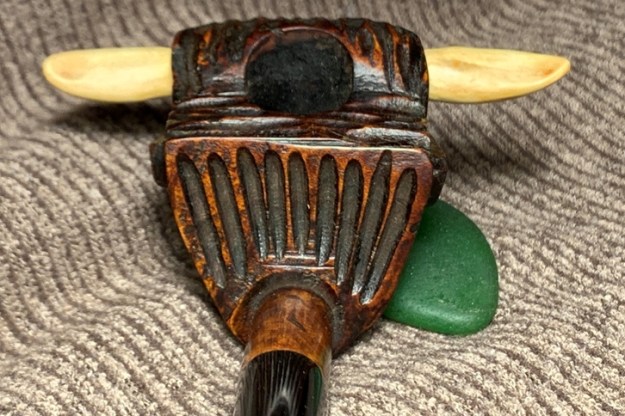
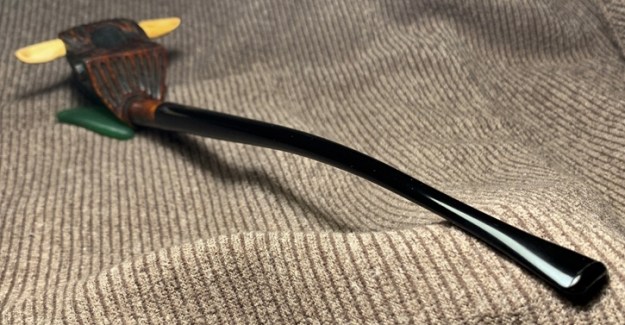
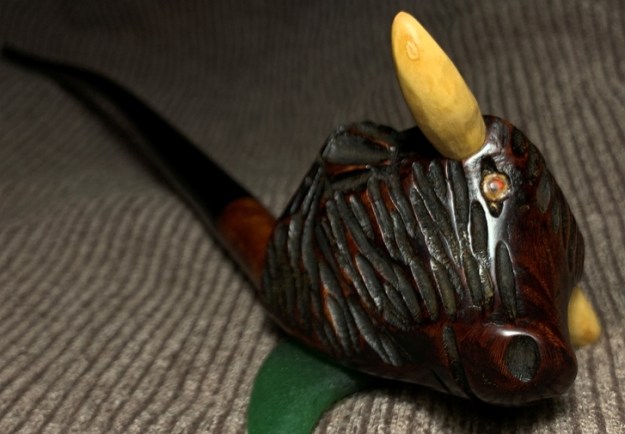
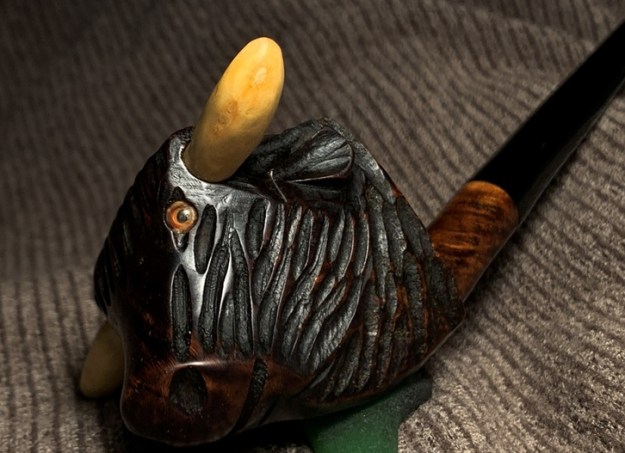
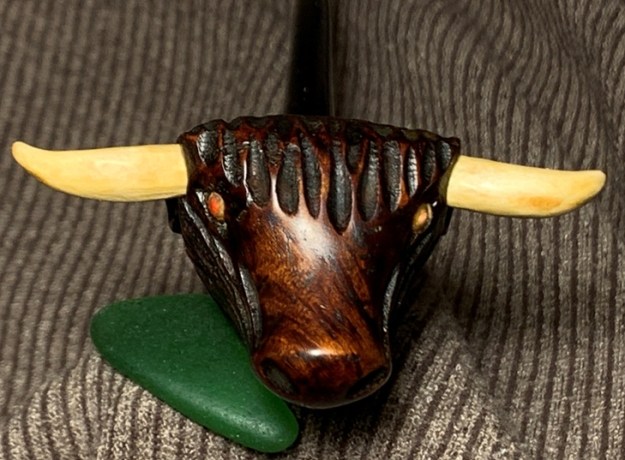
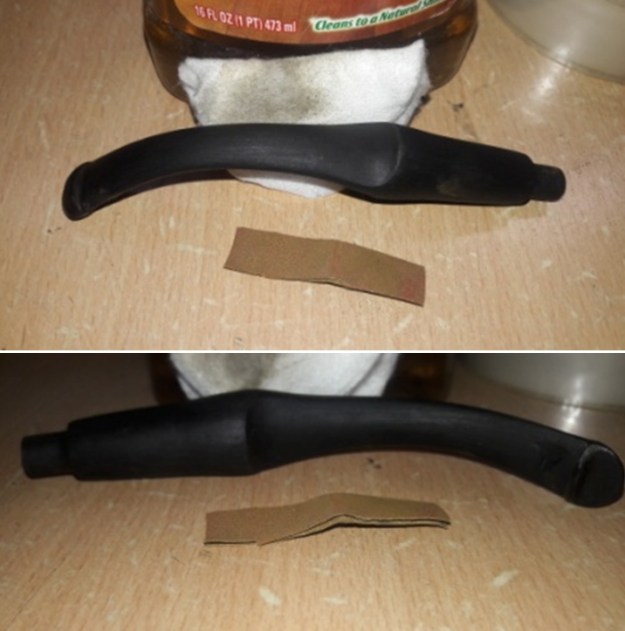
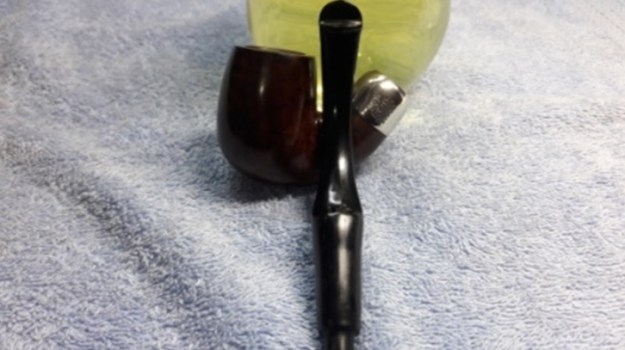
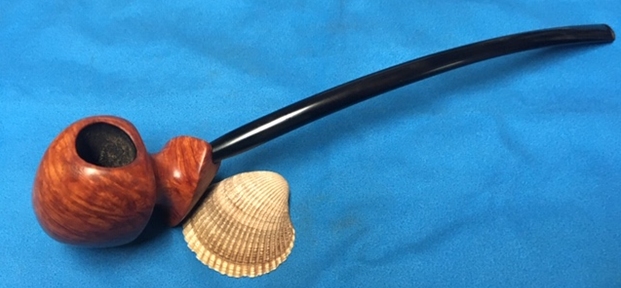
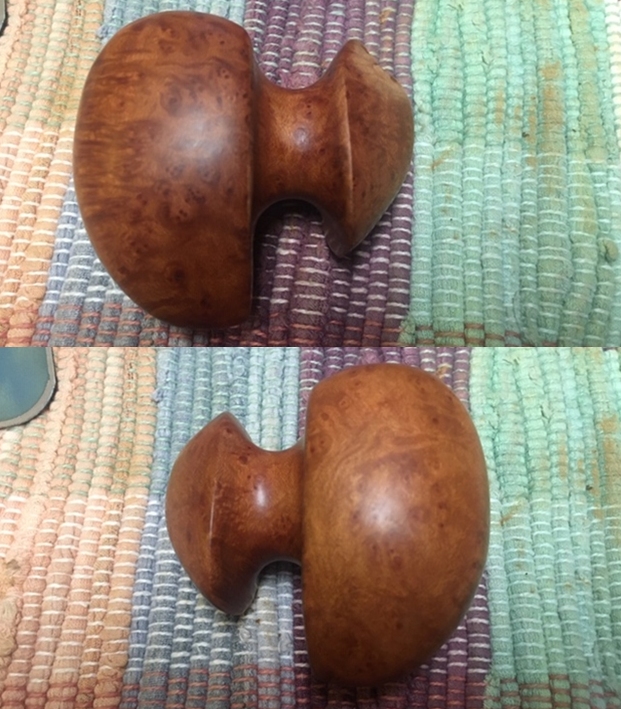
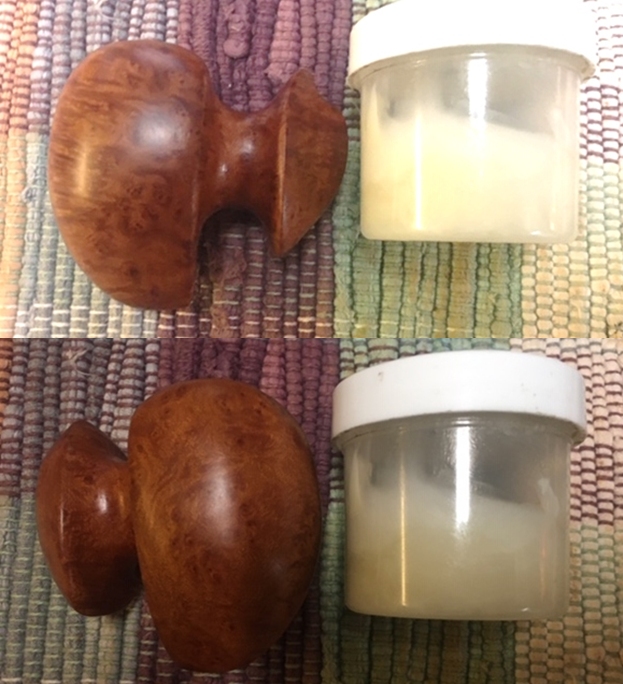
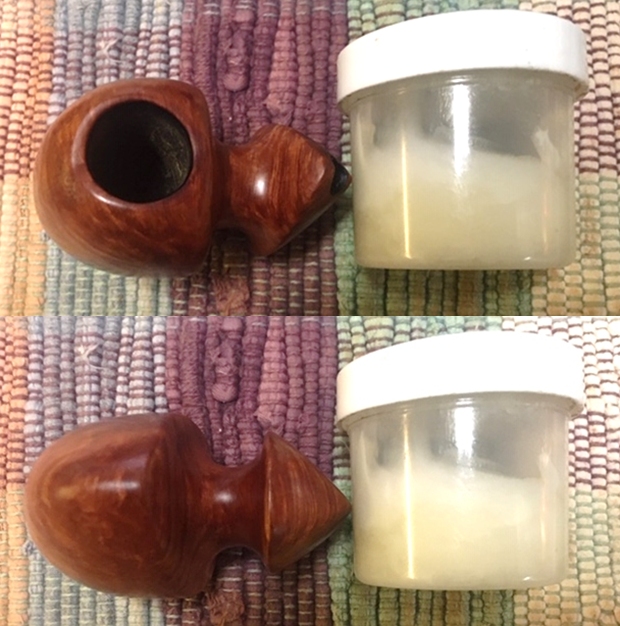
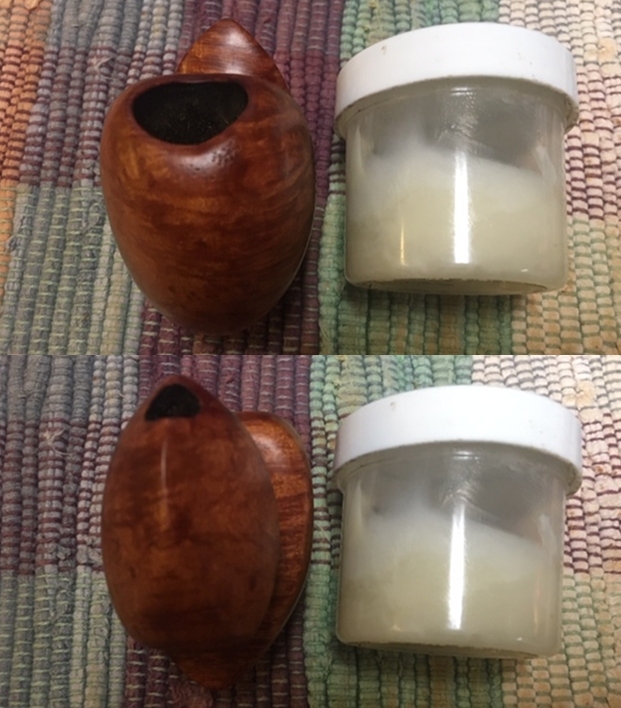
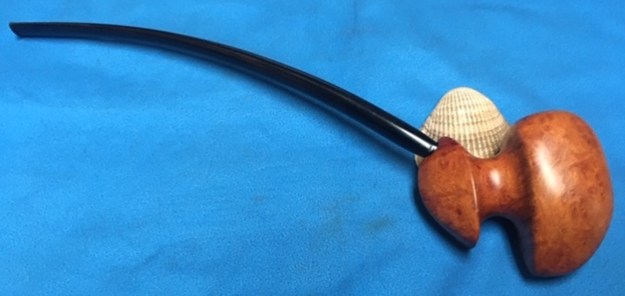
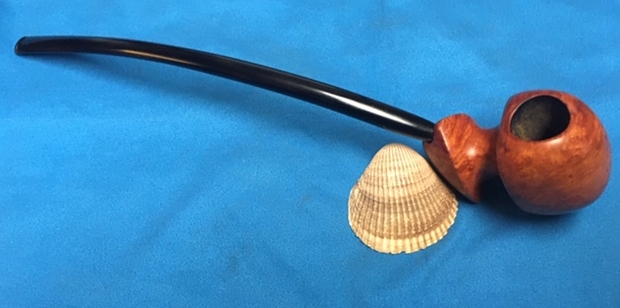
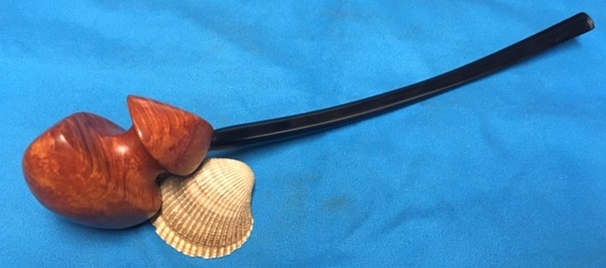
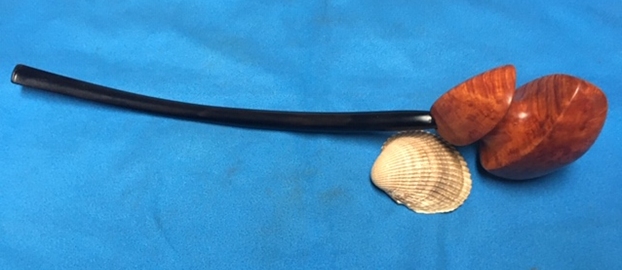
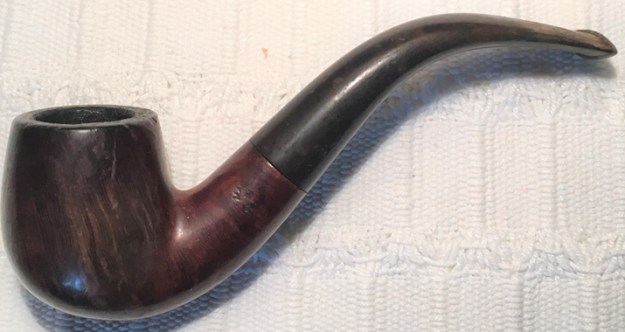
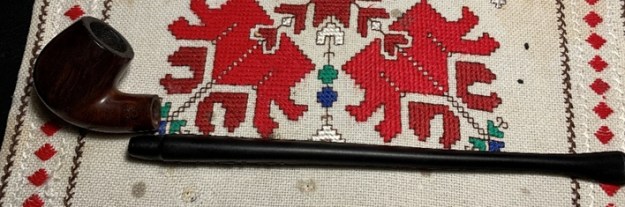
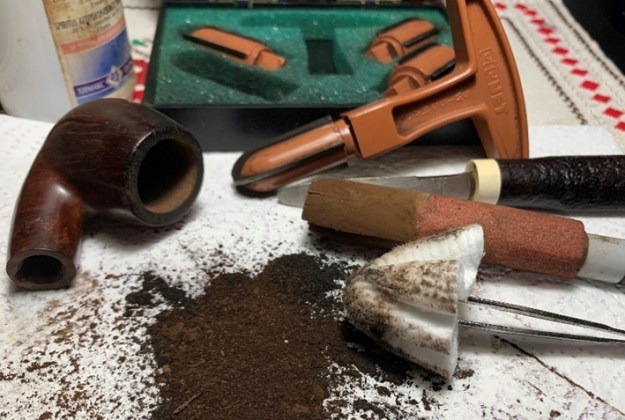
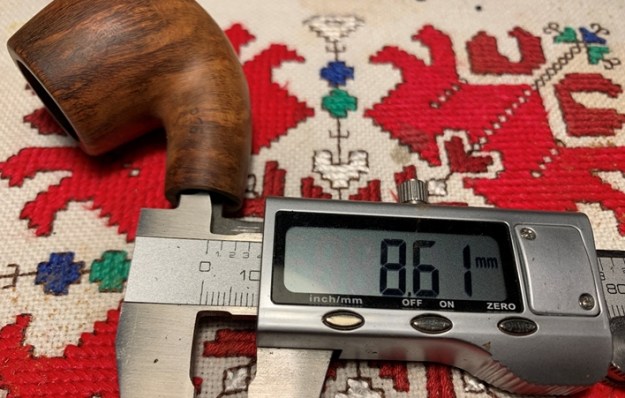
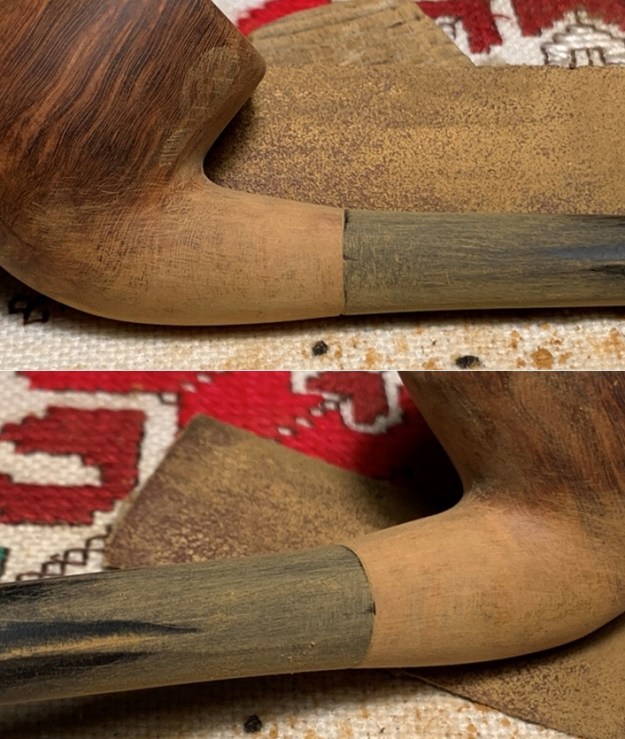
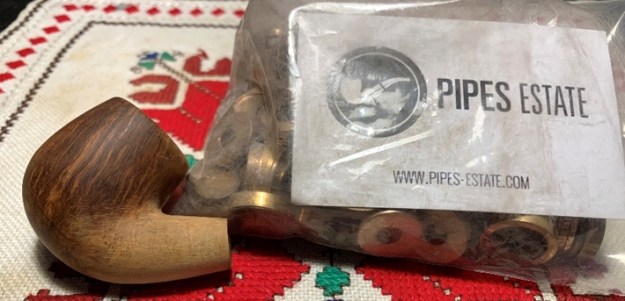
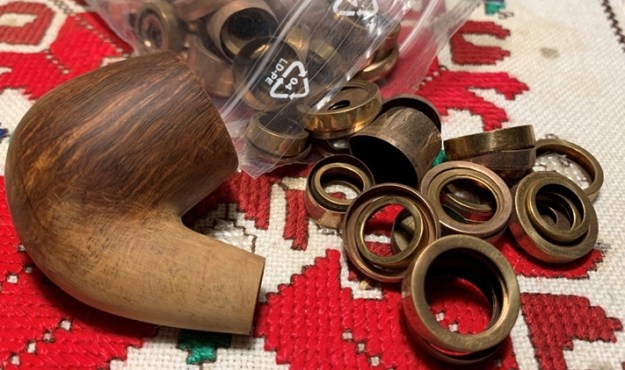
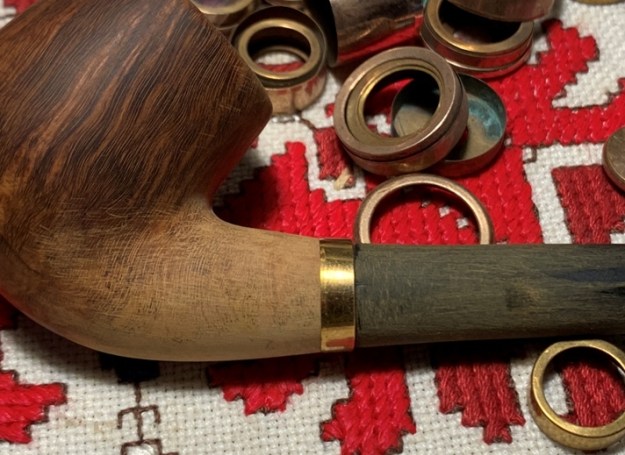
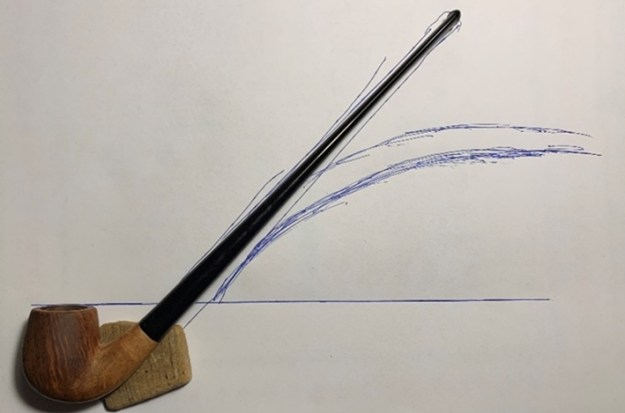
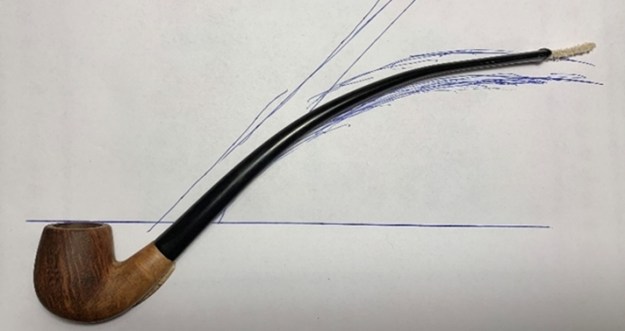
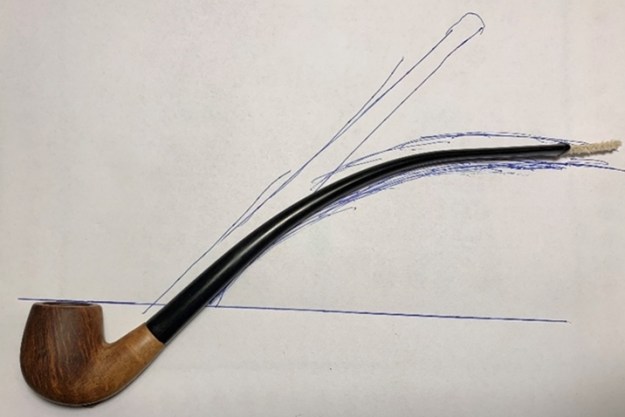
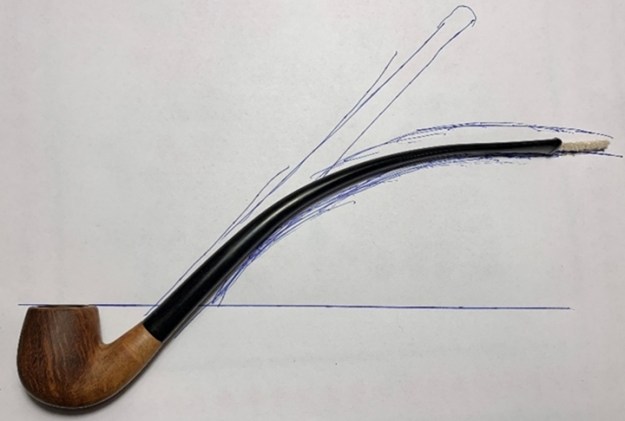
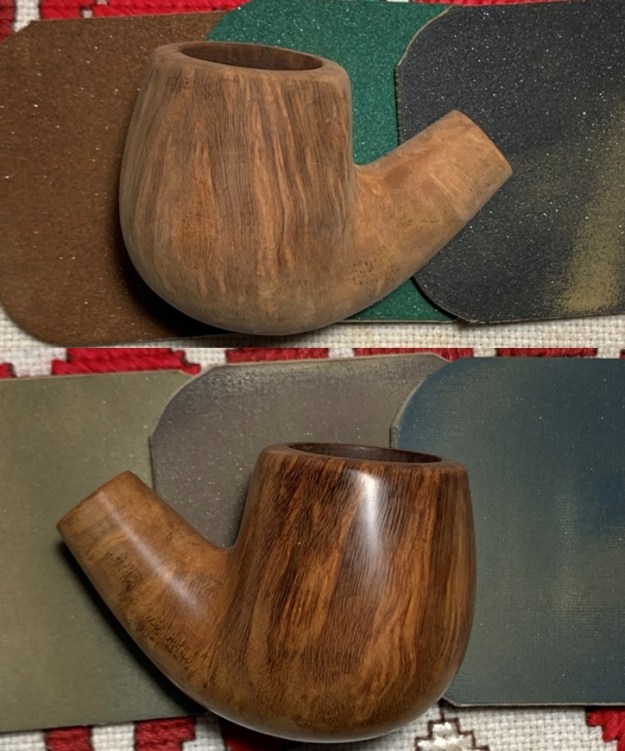
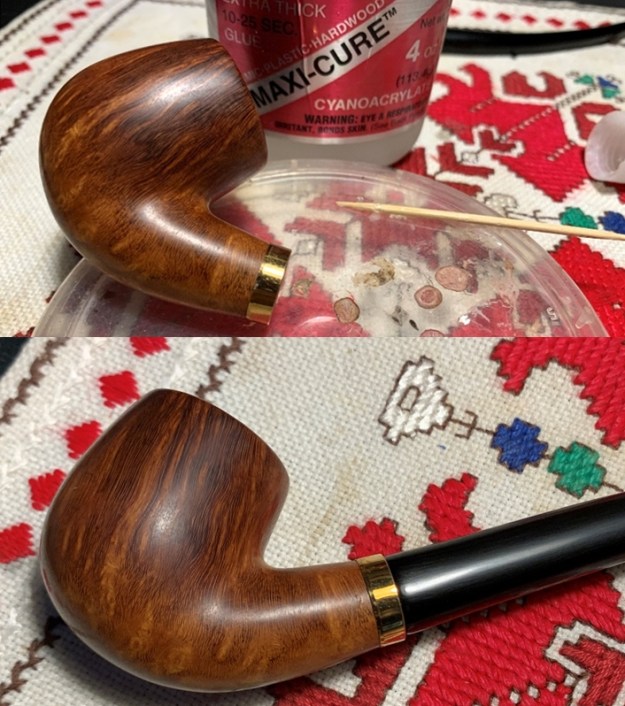
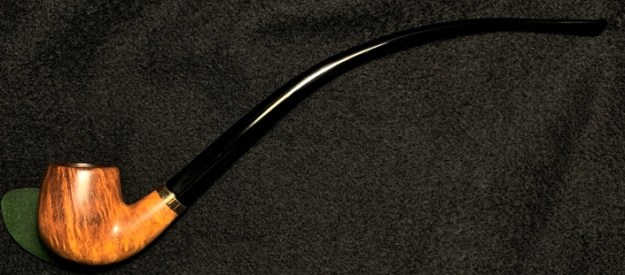
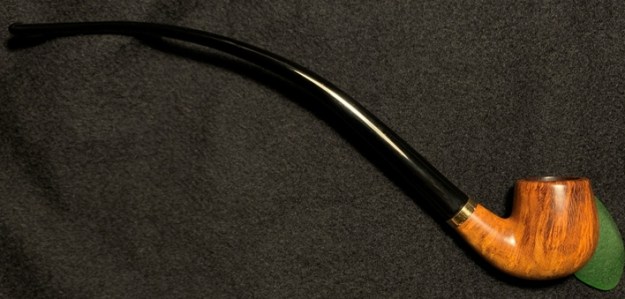
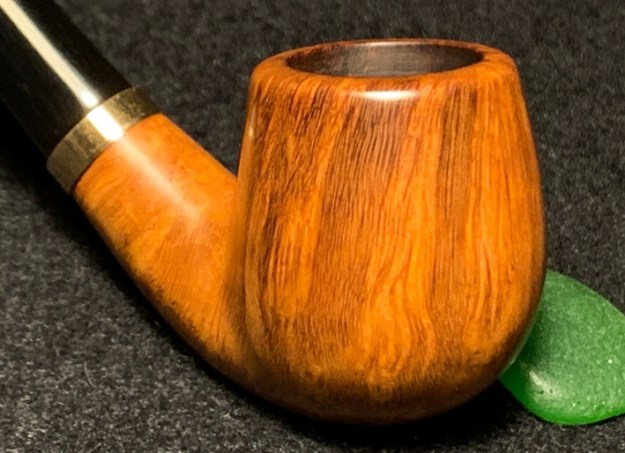
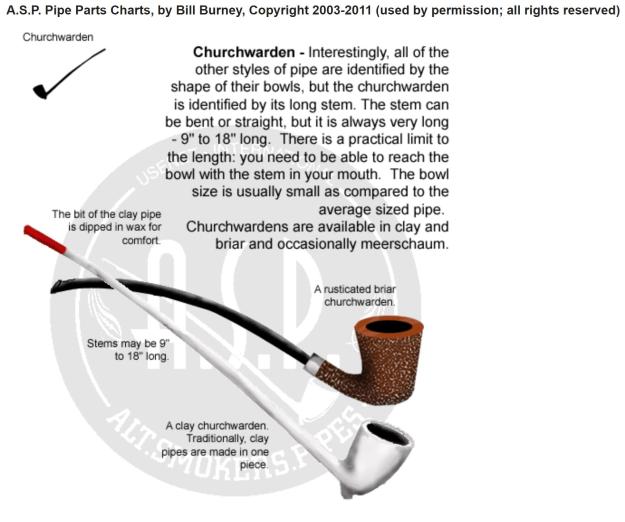
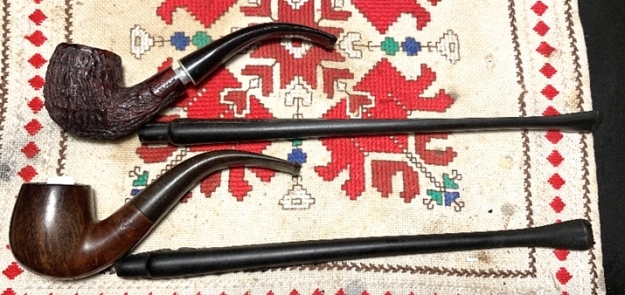
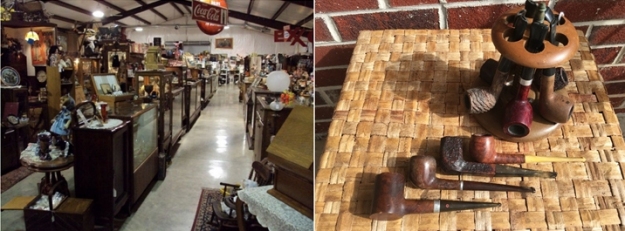
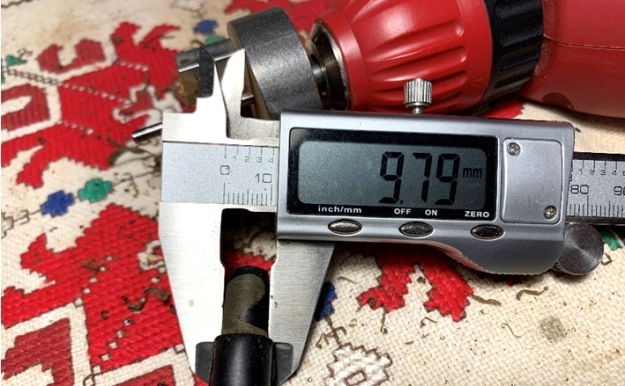
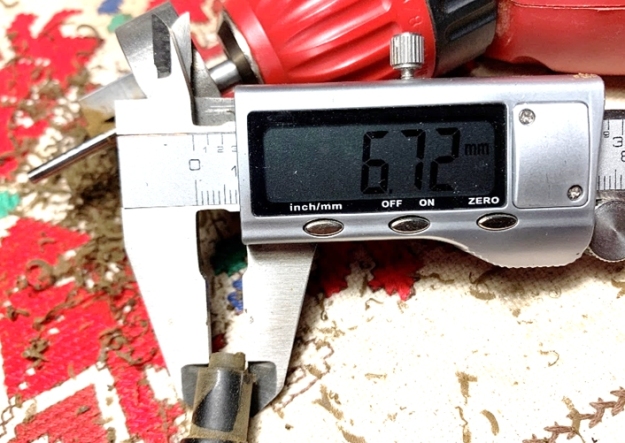
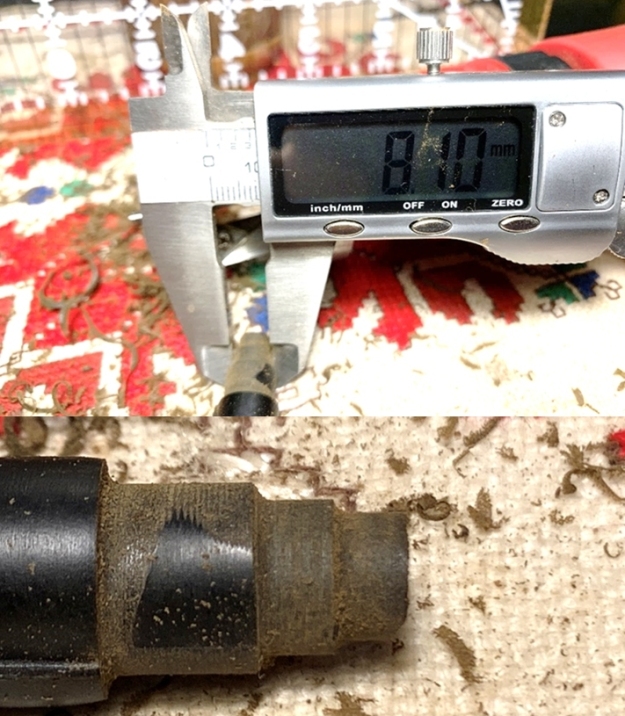
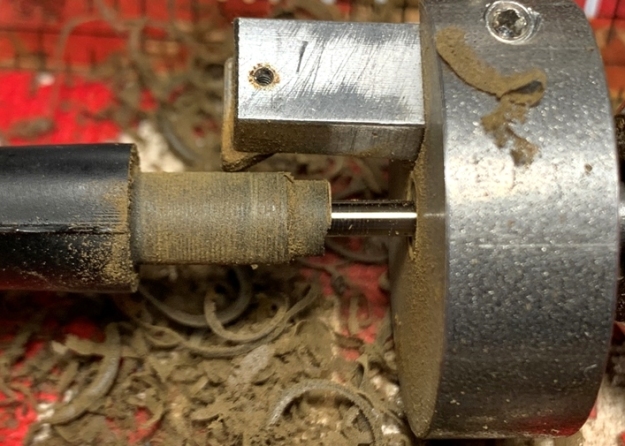
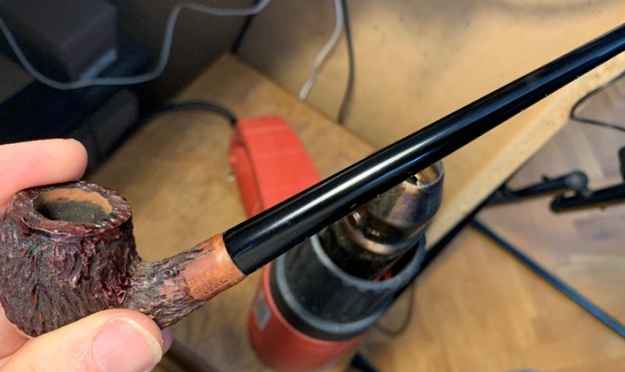
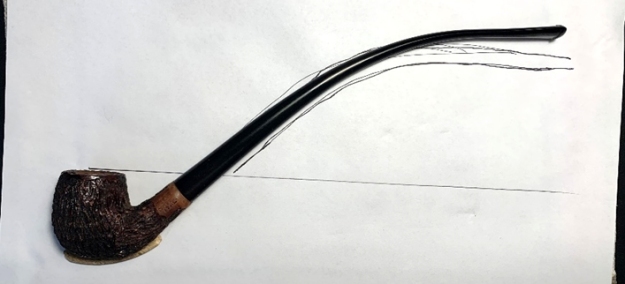
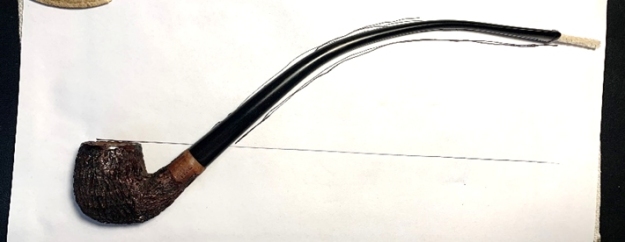
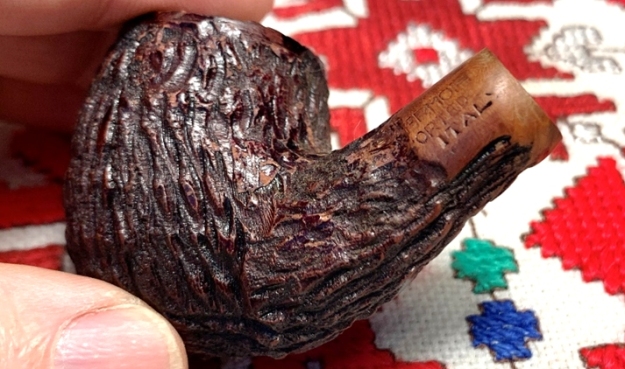
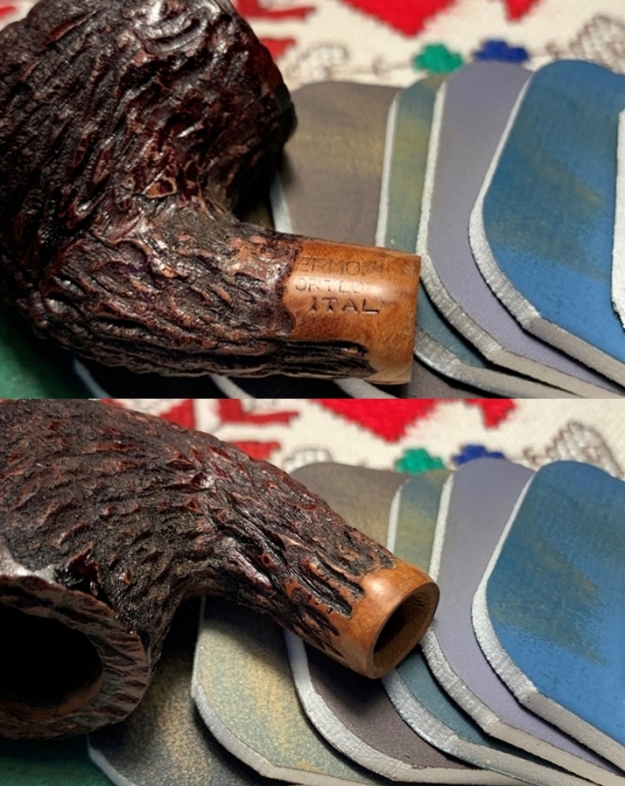
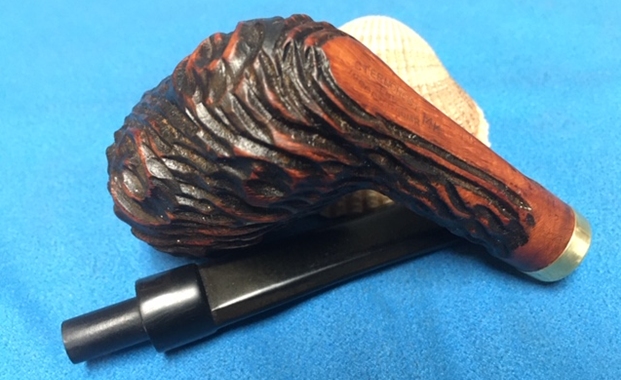
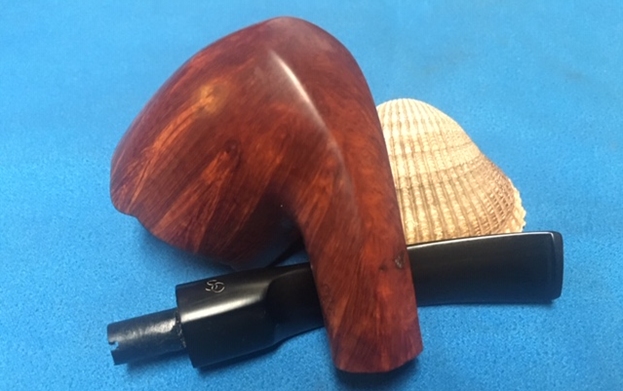
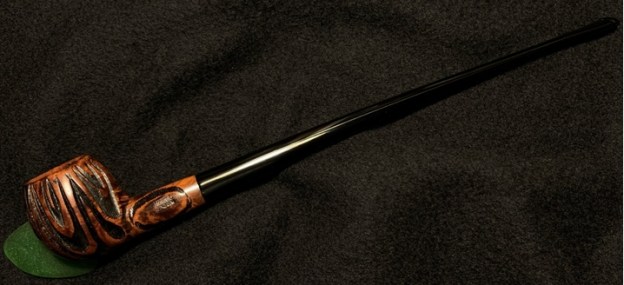
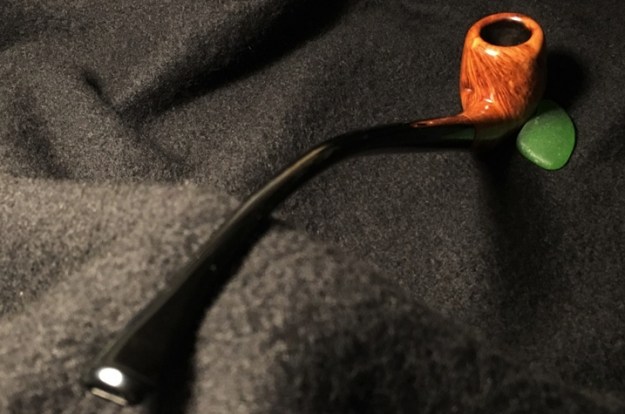
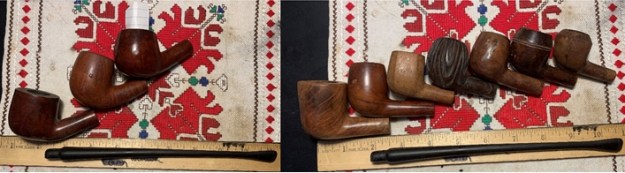
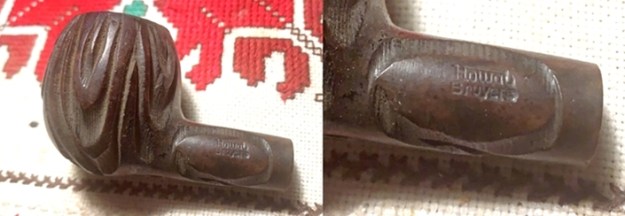
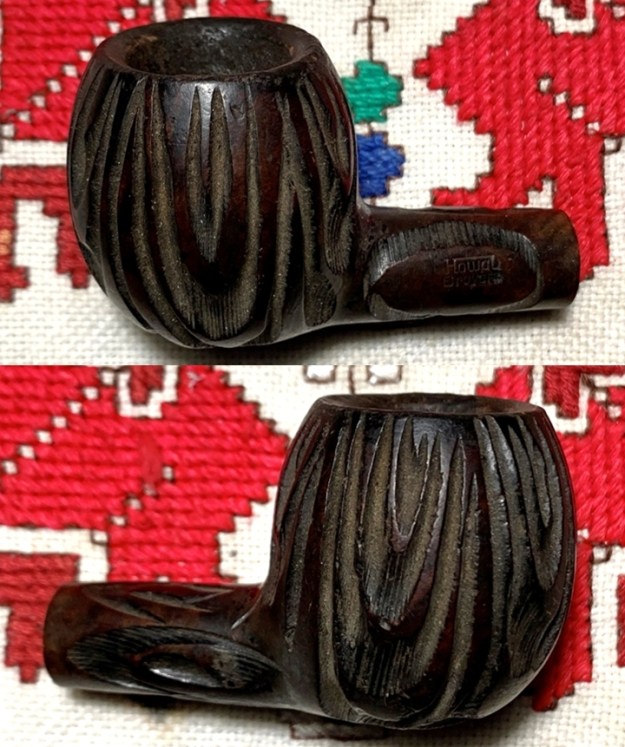
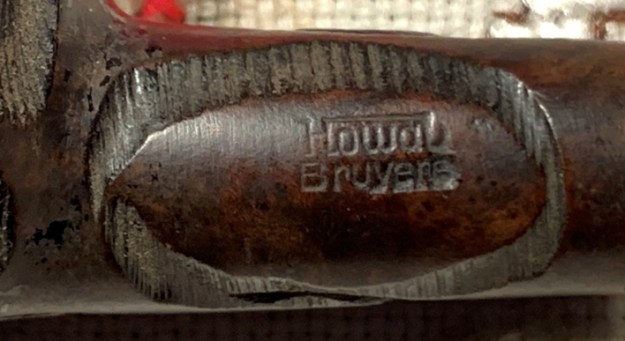
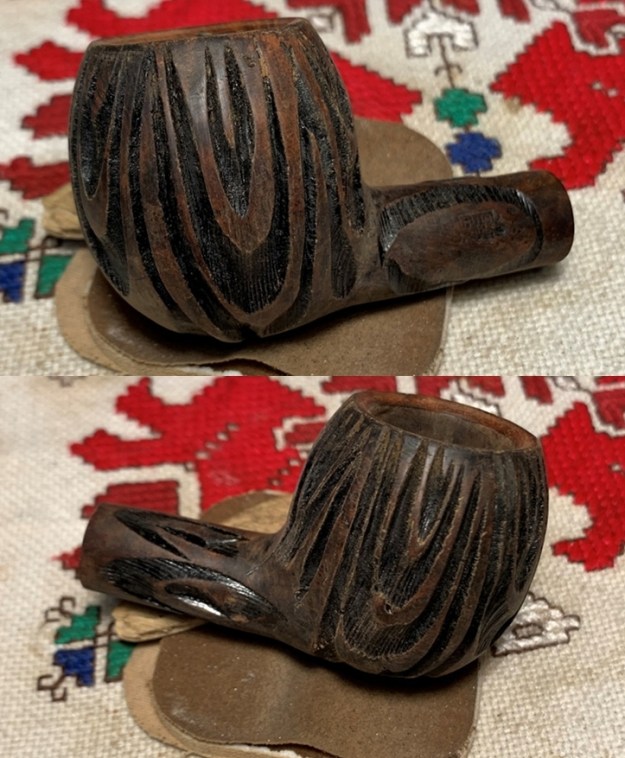
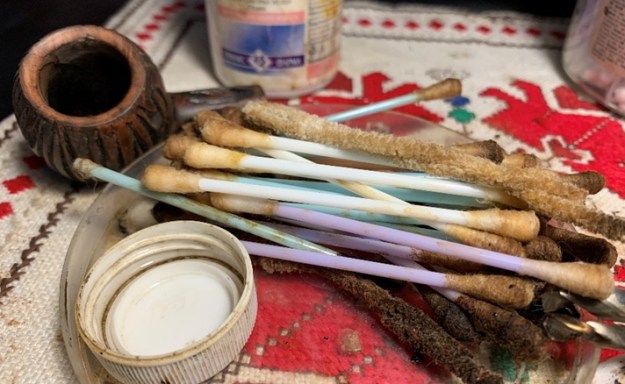
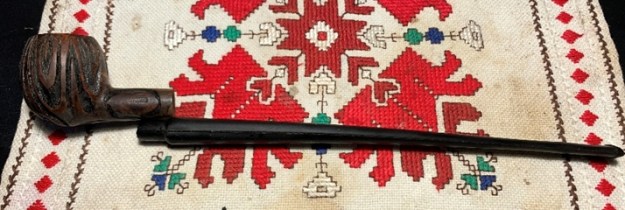
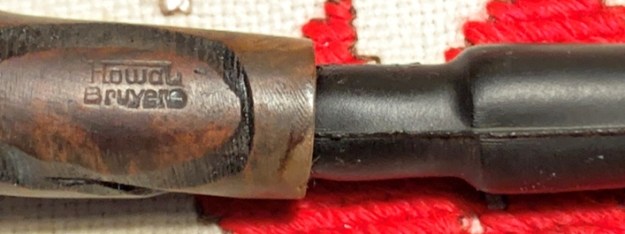
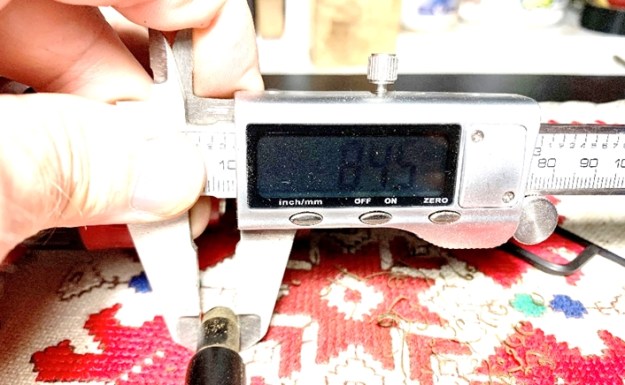
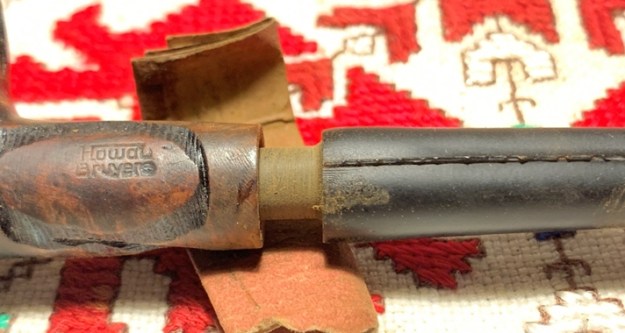
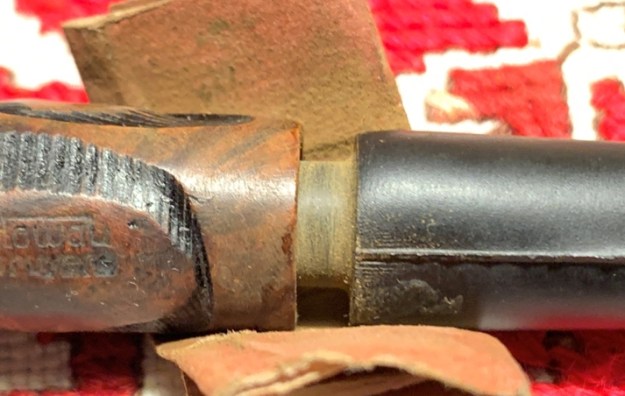
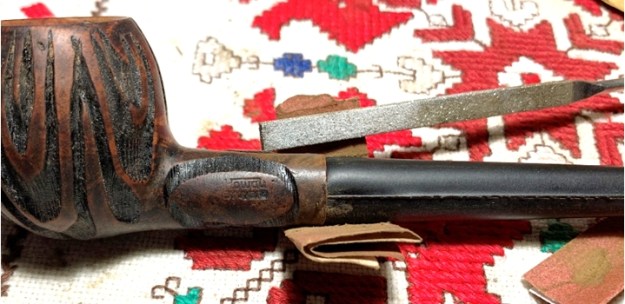
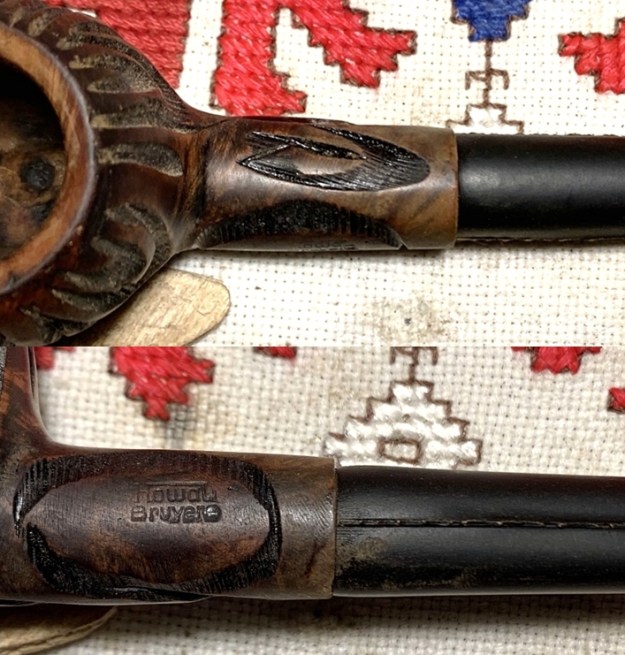
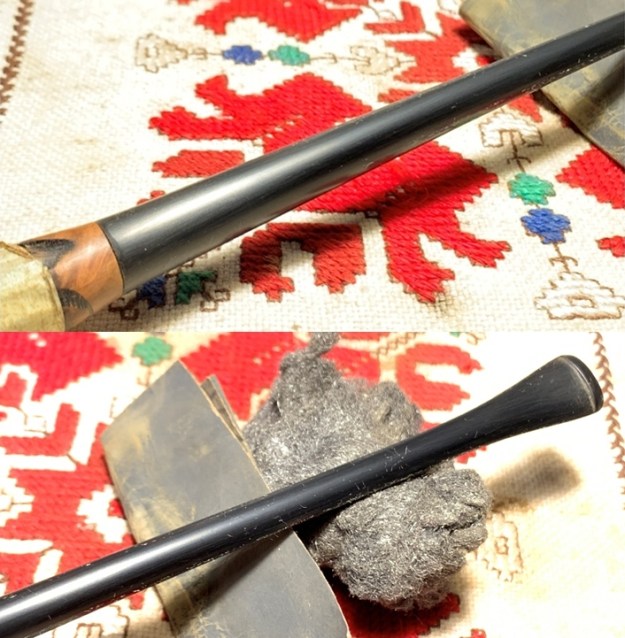
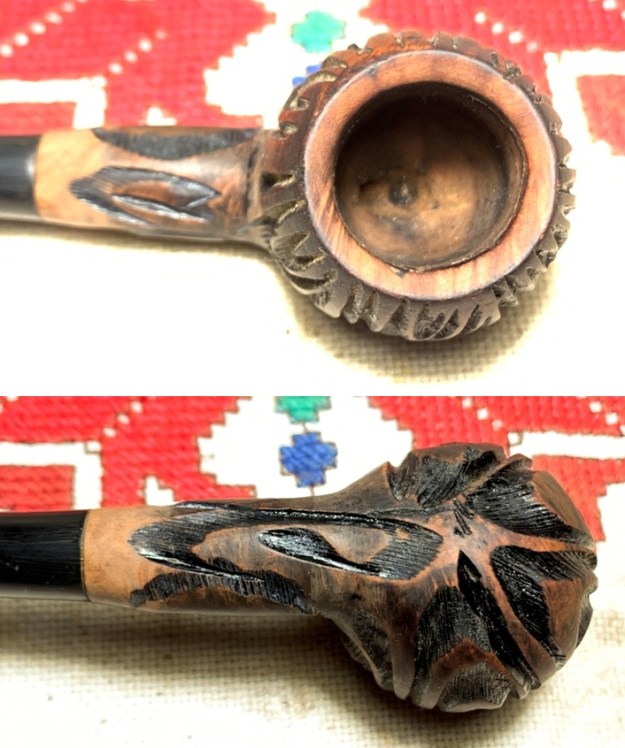
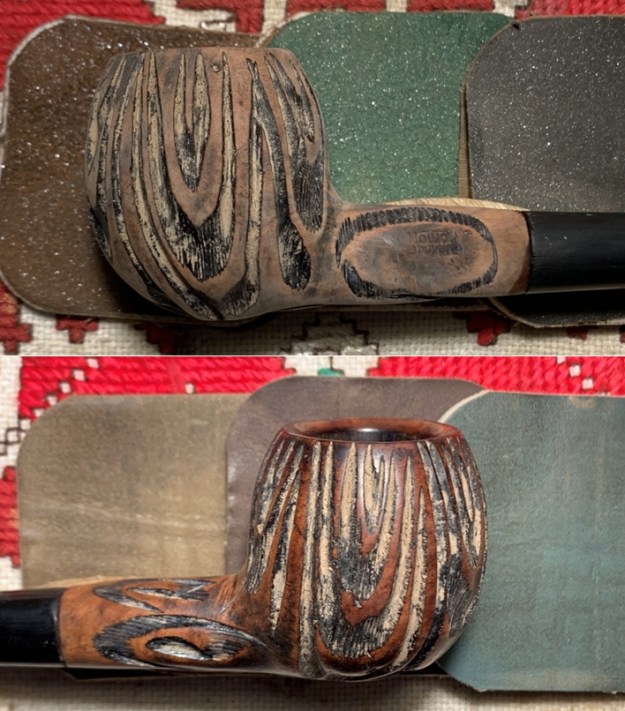
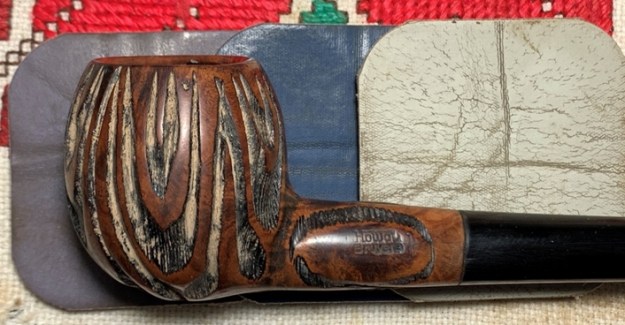
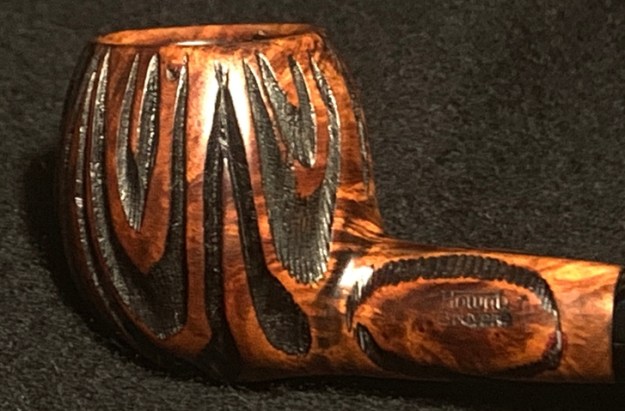
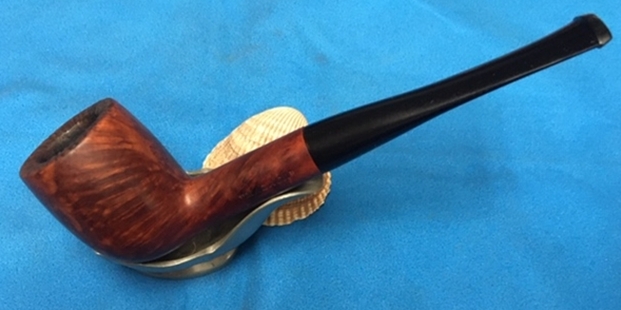
One of the ways I can help benefit women and girls who have been trafficked and sexually exploited – the Daughters of Bulgaria,is by fashioning Churchwardens from discarded repurposed bowls.  I enjoy taking discarded bowls, no longer serving any purpose, and after restoring them, mounting them on the fore of a long, flowing Warden stem.  Suddenly, the metamorphosis is realized – the neglected and discarded again becomes a treasure, sought after with great value.  John, from Utah, saw another CW I created – Fashioning a Churchwarden from a Dimpled Bent Billiard Bowl when I posted it on the Old Codgers Smoking Pipe Facebook group, and he reached out to me to explore commissioning a Churchwarden for himself.  This was the Dimpled Bent Billiard Churchwarden got his attention:After some months, John’s CW project finally worked its way through the queue, patience always appreciated(!) – and as I told him before, when his project was on the worktable, I would contact him with choices for a bowl.  I spread out a selection of bowls next to a Warden stem and ruler.  The selection included bent and straight shanks and smooth and rusticated surfaces – and different shapes.  The unique thing about the Churchwarden shape is that its designation is not determined primarily by the shape of the bowl but by the length of the stem.  After taking a few pictures, and sending them to John, he made his choice.John’s chose a very nice-looking sculpted Apple shape pictured on the right, in the middle.  Through this choice, he expressed that he preferred a straight rather than a slightly bent Warden stem.  When I pulled that bowl aside and took a closer look at the shank, I discovered that on the left side was stamped the name, ‘Howal’ [over] ‘Bruyere’.Howal is not a well-known name in the West, but I became familiar with it after seeing several Howals here in Bulgaria – formerly under the Warsaw Pact, behind the Iron Curtain of the Former USSR.  Having previously restored a Howal – a rusticated Dublin, I enjoyed the research of the Howal name which was a mystery to me.  My research uncovered not only the origins of the pipe in former East Germany, but that the city where Howals were produced was a historical center for pipe manufacturing in Germany that pre-dated WW2.  A fascinating story that I wrote of in this restoration: Checkered History and Heritage of an East German Howal Old Briar Rustified Dublin.

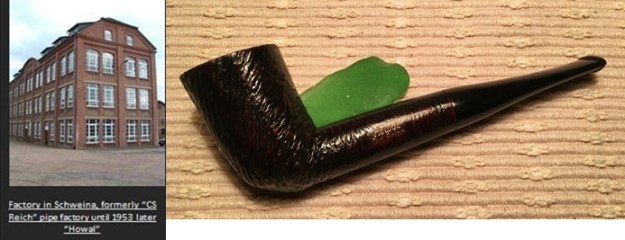
Pipedia’s article that I sited in that write up was both interesting and helpful in understanding the predecessor of and origins of the Howal name:

C.S. Reich was founded by Carl Sebastian Reich in Schweina, Germany in 1887. By its 50th jubilee in 1937 C.S. Reich was the biggest pipe factory in Germany.  In 1952, however, the owners of the company were imprisoned and the company itself was nationalized as Howal, an abbreviation of the German words for “wood products Liebenstein” or “Holzwaren Liebenstein”.  By the 1970’s Howal, after acquiring many other smaller pipe making firms, was the sole maker of smoking pipes in East Germany. In 1990, with the fall of the Berlin Wall and reunification of the Germanys, the company was closed.

As I reread that previous research on the history of the Howal name for this write-up, I decided to restate my observations in full because I don’t restore Howals often and the history and human story draws me to retell the story as I transform this Howal bowl into a Churchwarden.  From the previous restoration (my present comments in brackets):

While helpful for a broad sweep, I discovered much missing from this [Pipedia] summary and it raises more questions.  From another interesting source, Edith Raddatz’s lecture on tobacco pipe production in Schweina [a link which unfortunately is no longer working!] at the Tobacco Pipe Symposium in 2003, it describes a history of pipe production in this central German village that was reminiscent of my research into France’s pipe mecca, St. Claude.  A strong development of the pipe making industry can be traced in the 1800s to the apex of the C.S. Reich Co. being Germany’s largest pipe producer in 1937, but Raddatz’s lecture reveals that other producers of pipes were also based in the German village of Schweina.  Pipedia’s article above describes how the owners of the C.S. Reich Co. were arrested and imprisoned followed by the nationalization of the Reich Co. and becoming ‘Howal’, an acronym for “Wood Products Liebenstein” – Bad Liebenstein was the town that bordered and absorbed the village of Schweina. The question begs to be asked – which, unfortunately introduces the human tragedy wrapped around the name ‘Howal’ – Why were the owners arrested?  In an unlikely source, the website of the ‘Small Tools Museum’ adds the names of those imprisoned: shareholders Robert Hergert and Karl Reich.

Edith Raddatz’s lecture (referenced above) brings more light to the difficult geopolitical realities these people faced (Google translated from German – brackets my clarifications):

By 1945 the company, which had meanwhile [passed to] the next generation – Kurt Reich And Walter Malsch – [had] about 100 employees.   Among them were many women who mainly did the painting work.  At the beginning of the 1950s, an era ended in Schweina. The first [oldest] tobacco pipe factory in Schweina closed their doors. There were several reasons for this. Kurt Reich passed away in 1941, [and] Walter Malsch [in] 1954.  The political situation in the newly founded GDR made the conditions for private entrepreneurship difficult. The heirs of the company “AR Sons” [Reich family] partly moved to West Germany. The operation was nationalized, and later toys were made there.

In post WWII occupied Germany, the Soviet occupied section was declared to be a sovereign state and the German Democratic Republic (GDR) was established in 1949 (See link).  With a rudimentary understanding of Marxism and the economic philosophy undergirding it, it is not difficult to deduce what brought the demise of the C. S. Reich Co. and the formation of Howal.  Solidification of the FDR’s hold on power paralleled the necessity to nationalize private ownership and to institute a State-centered command economy.  These efforts gained momentum and forced companies/workers to work more with no additional pay.  In 1952, the year that the owners of C. S. Reich Co., were arrested, this edict was advanced (See link):

In July 1952 the second party conference of the Socialist Unity Party of Germany (SED) took place in East Berlin. In SED General Secretary Walter Ulbricht‘s words, there was to be the “systematic implementation of Socialism” (planmäßiger Aufbau des Sozialismus); it was decided that the process of  Sovietization should be intensified and the importance of the state expanded. The party was acting on demands made by Soviet premier Joseph Stalin.[2]

As a result, today Germany remembers the Uprising of 1953 which started in East Berlin, as factory workers revolted against the repression of the GDR, and spread to all East Germany.  Many lost their lives as Moscow responded to squelch the unrest with tanks on the streets.  In play also, was the mass exodus of people fleeing to West Germany, which included, per Edith Radditz’s lecture, the Reich family, who would have been heirs of the family’s legacy and company – pipe making.  Also, in 1953, completing the State forced abolition of any Reich claim, the largest pipe making company of Germany was seized, nationalized, and changed from C. S. Reich Co. to Howal.  As ‘Howal’, pipes continued to be produced, undoubtedly with the same hands and sweat of the people of Schweina, along with other wooden products, such as toys.  In the Pipedia article I quoted above, it said:

By the 1970’s Howal, after acquiring many other smaller pipe making firms, was the sole maker of smoking pipes in East Germany. In 1990, with the fall of the Berlin Wall and reunification of the Germanys, the company was closed.

My curiosity piqued, what does it mean when it says that Howal acquired many other smaller pipe making firms?  Should we question whether these words can be understood in the normal free market enterprise way we are accustomed?  Doubtful.

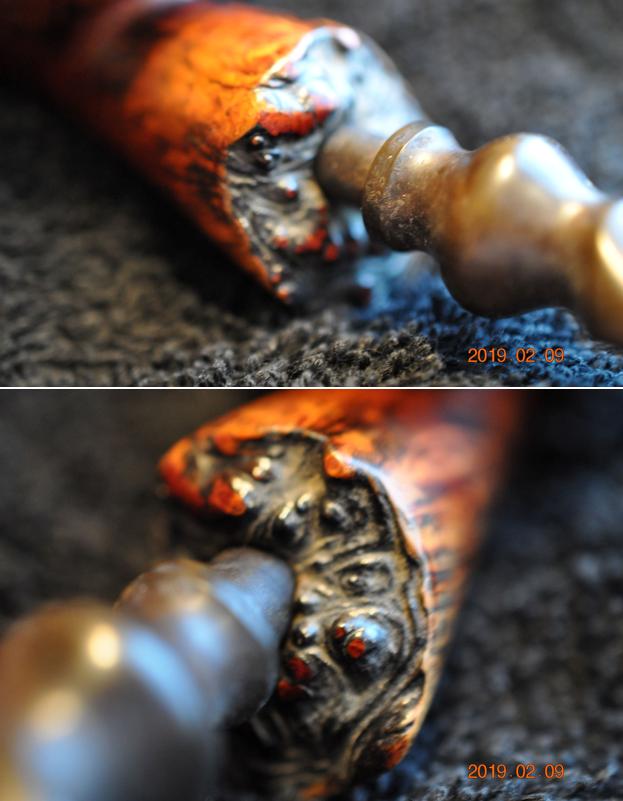
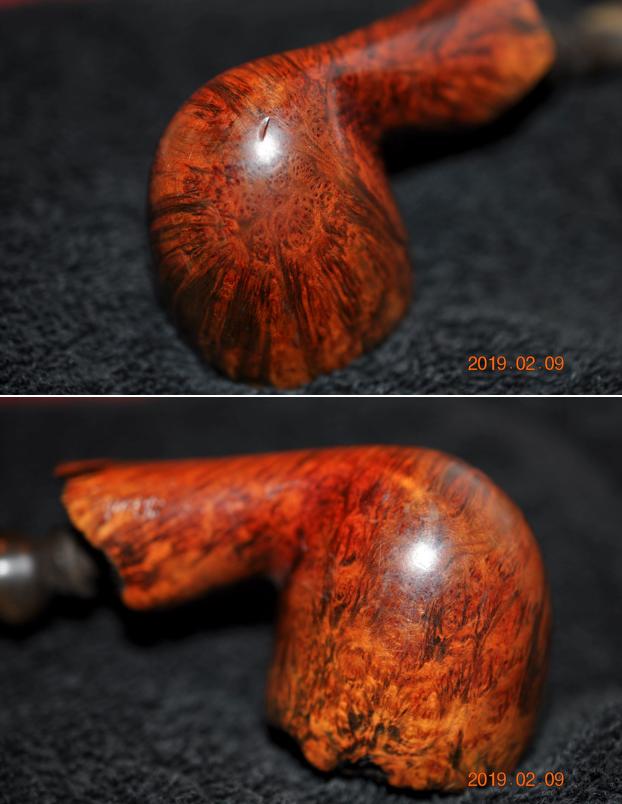
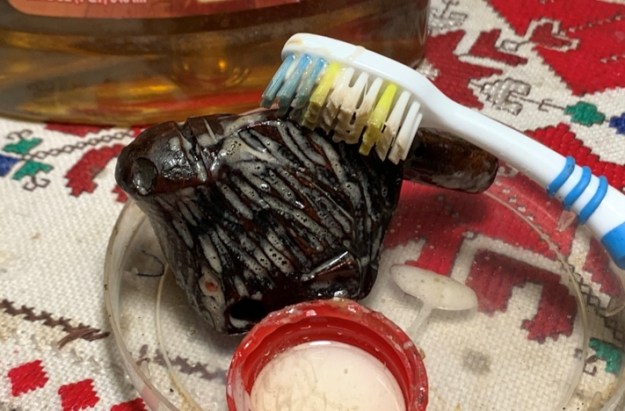
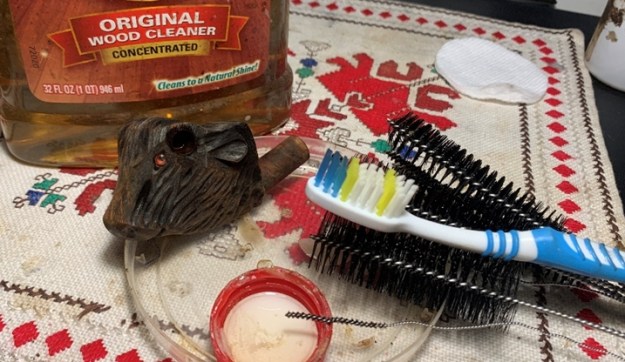
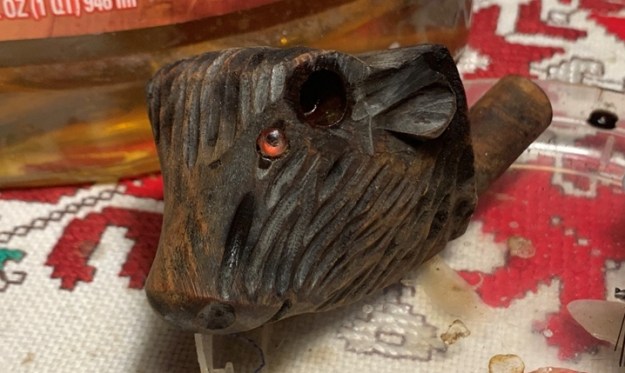
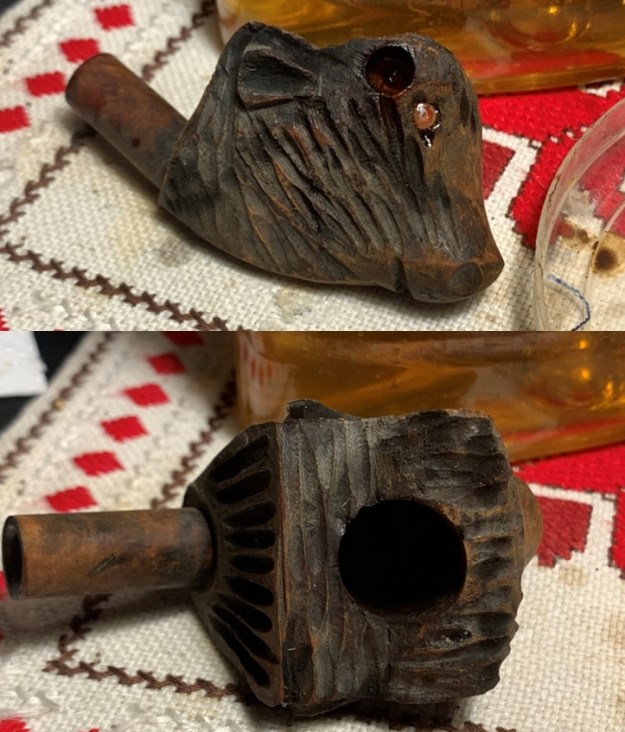
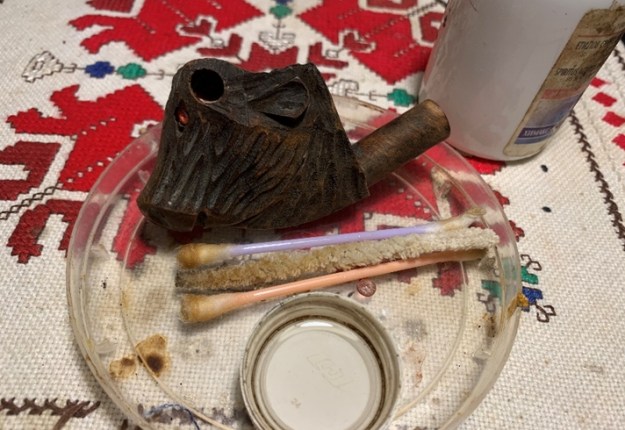
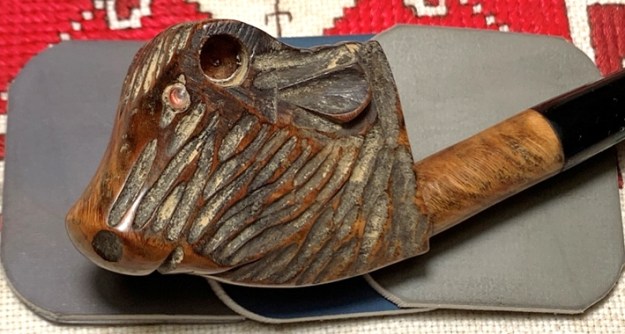
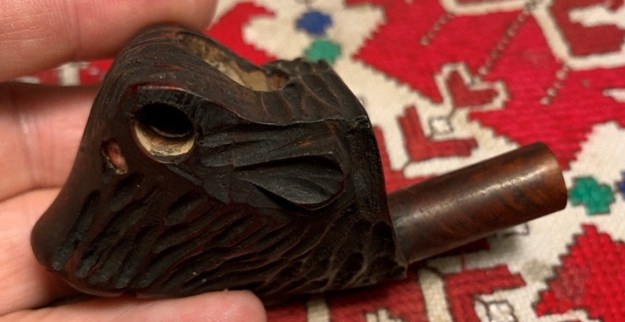
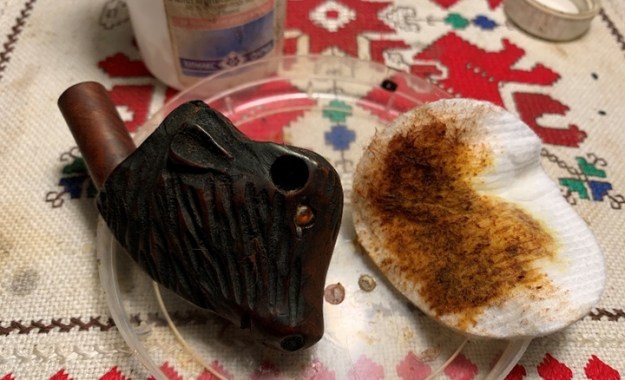
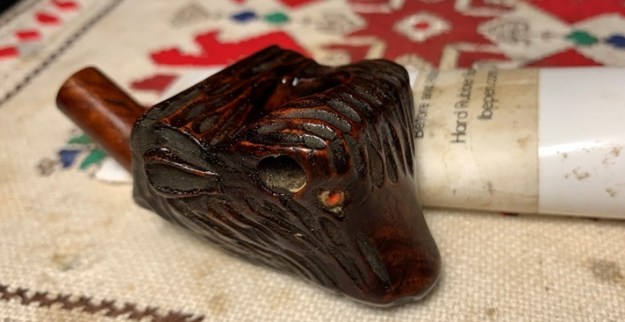
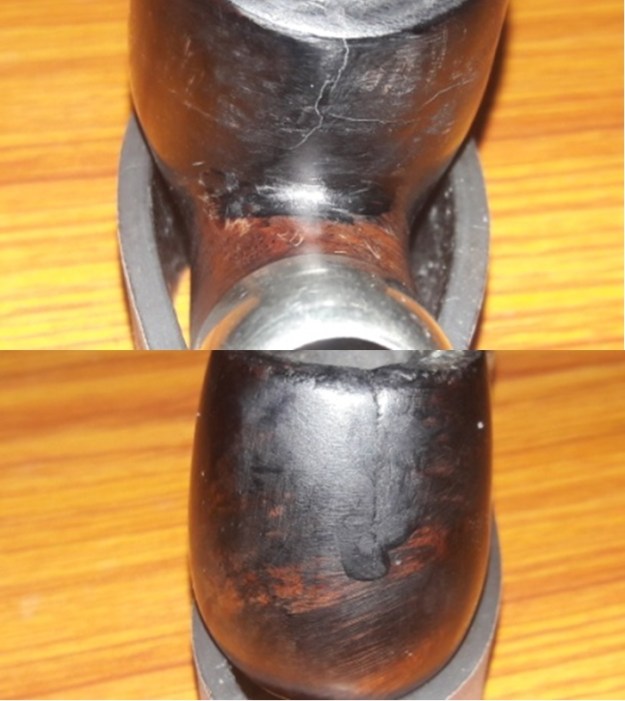
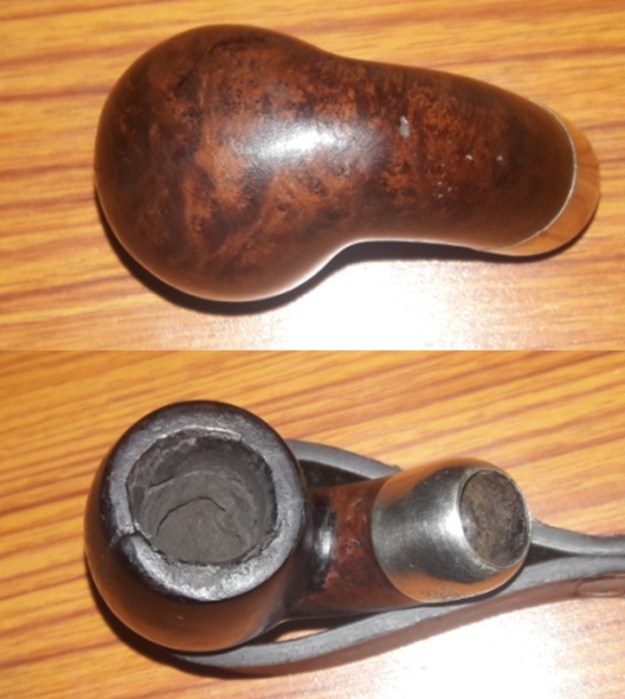
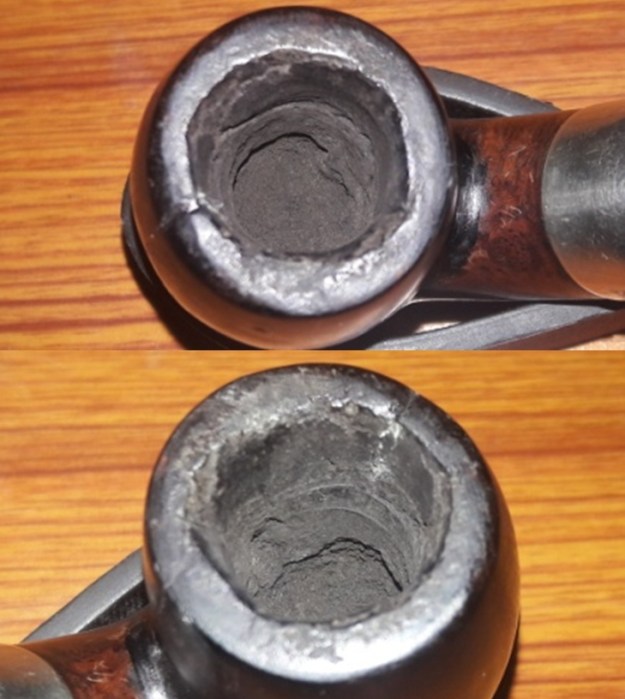
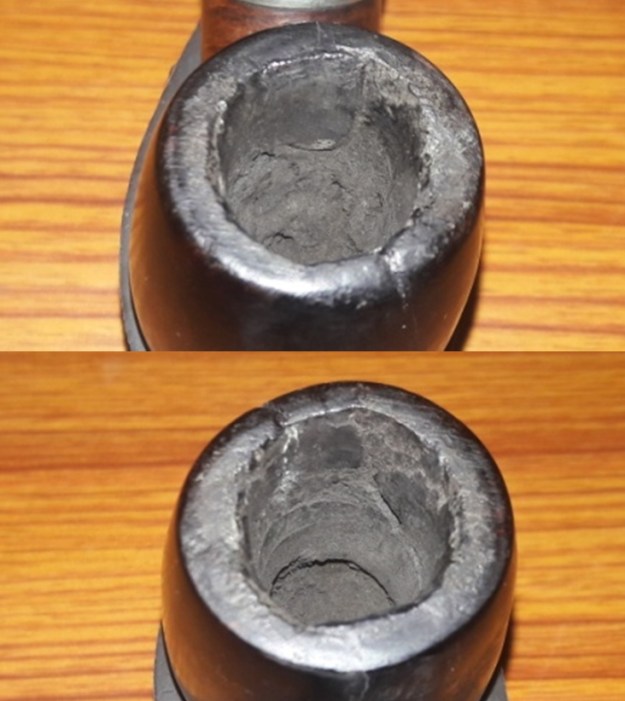
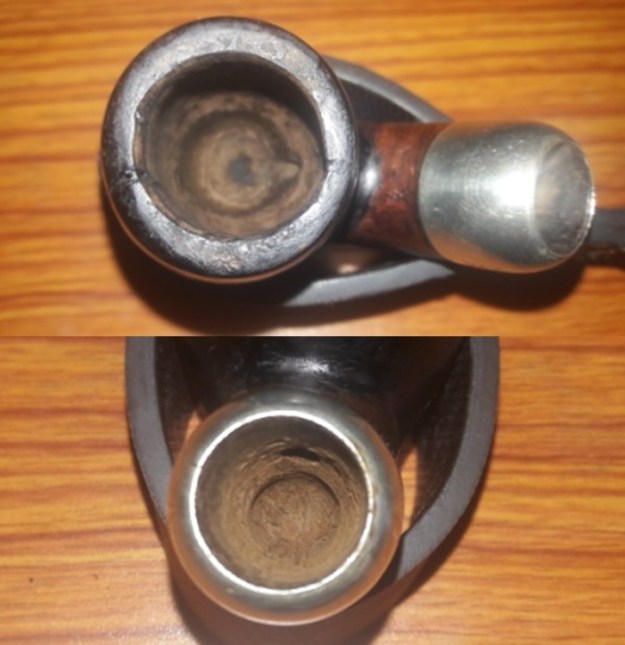
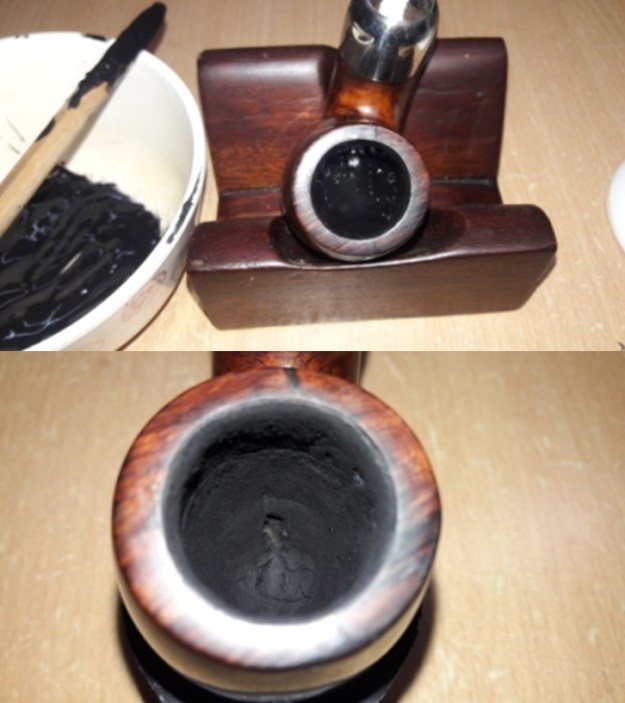
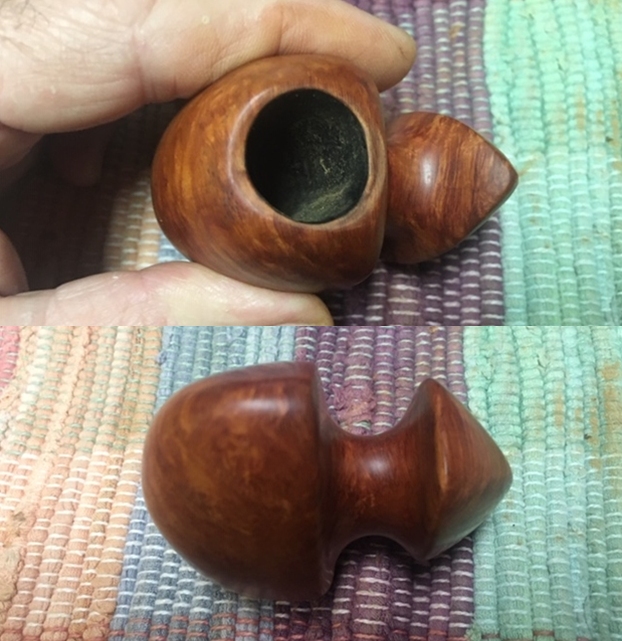
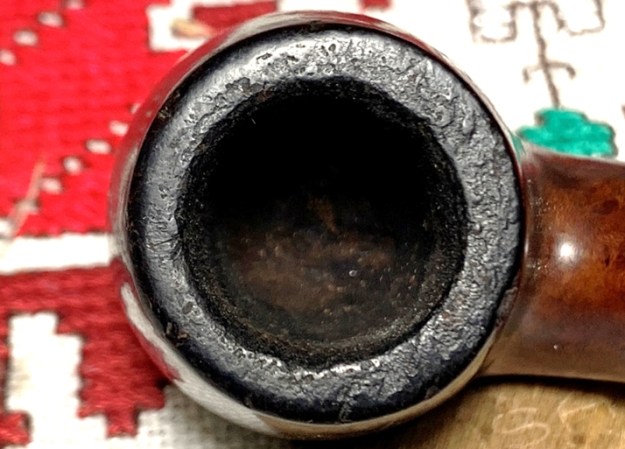
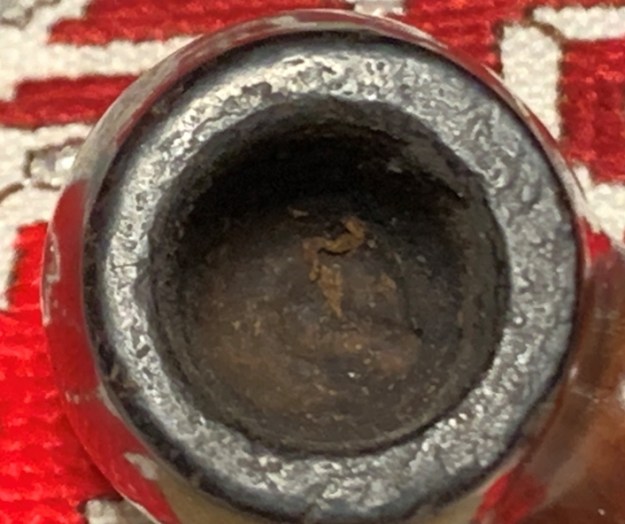
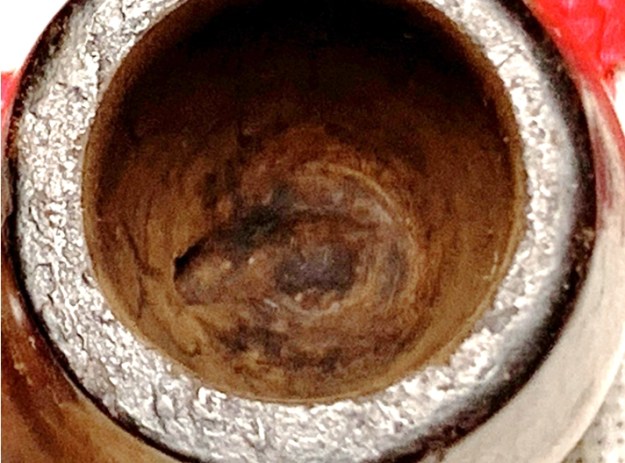
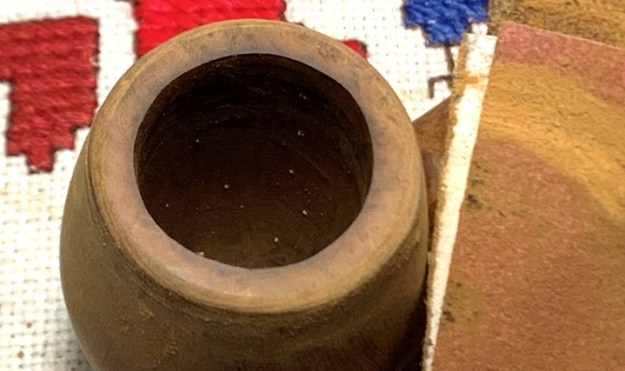
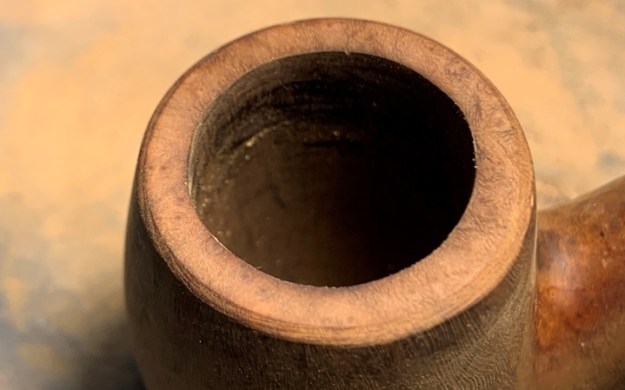
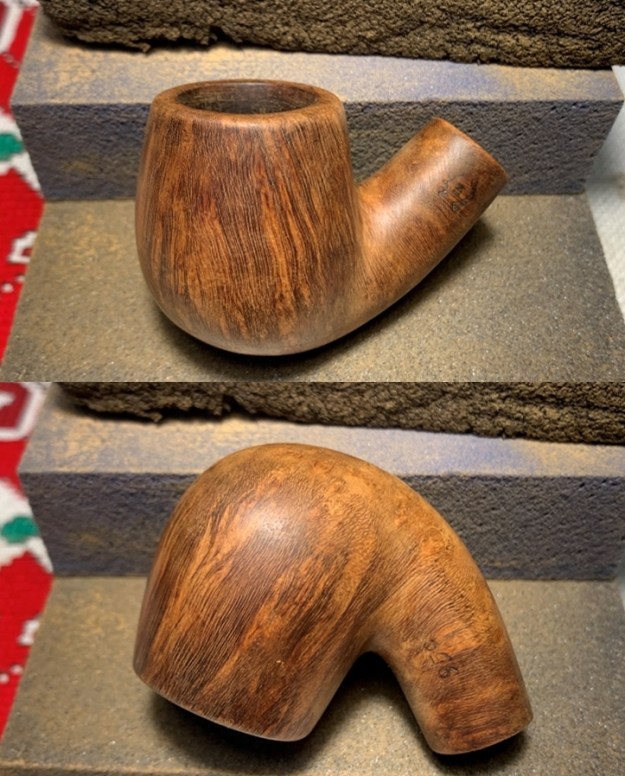
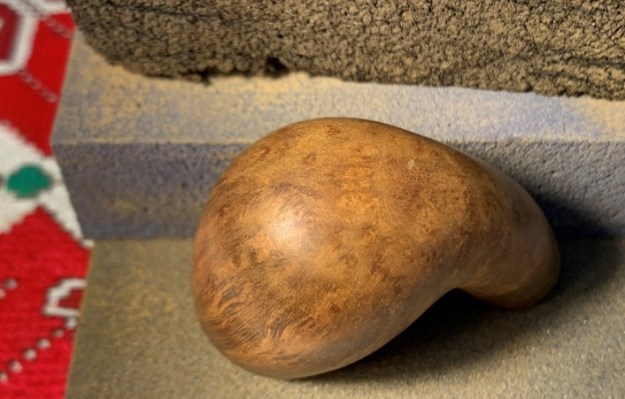
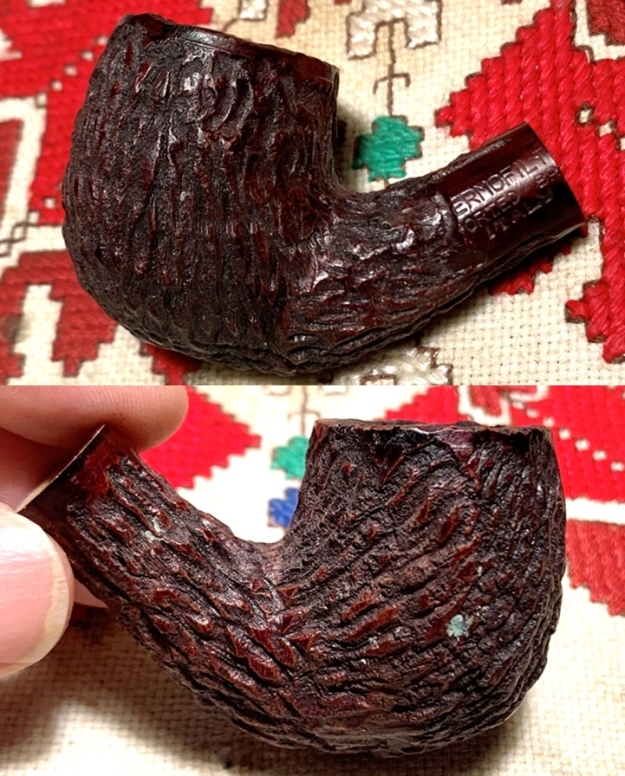
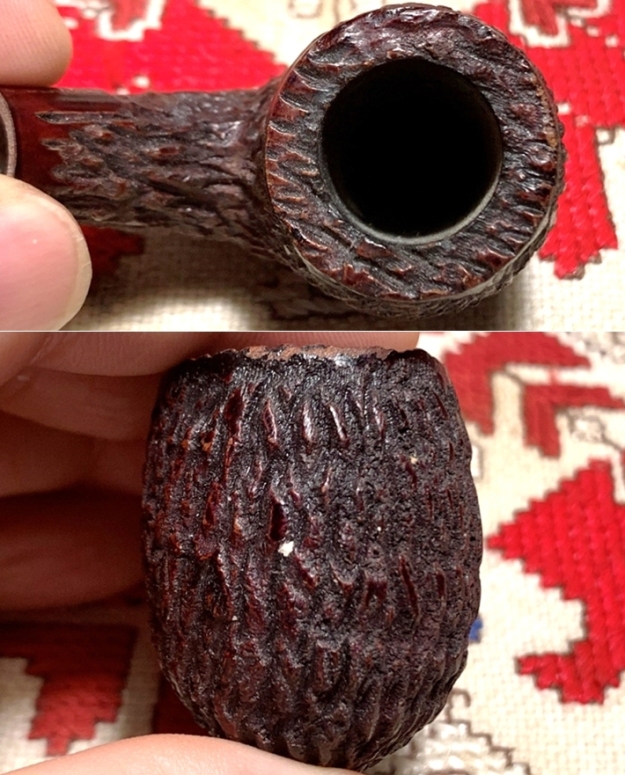
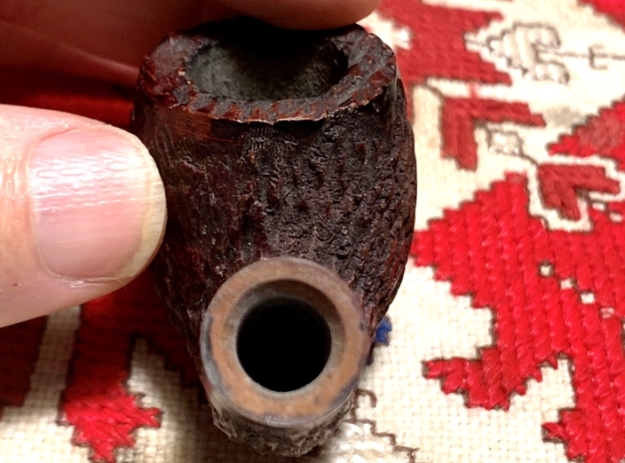
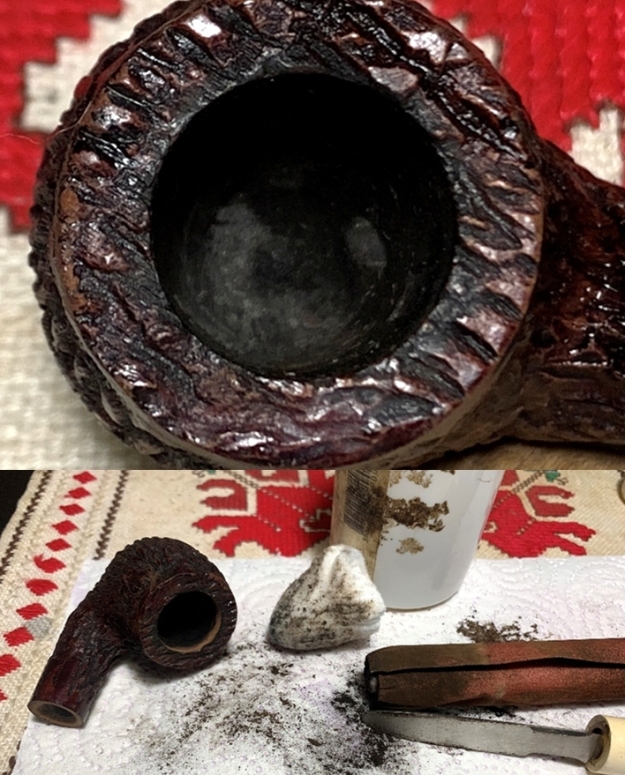
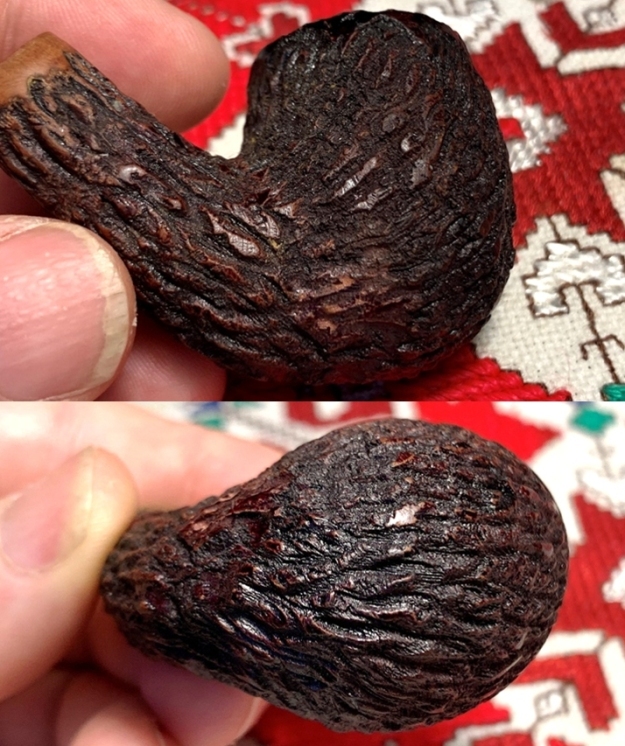
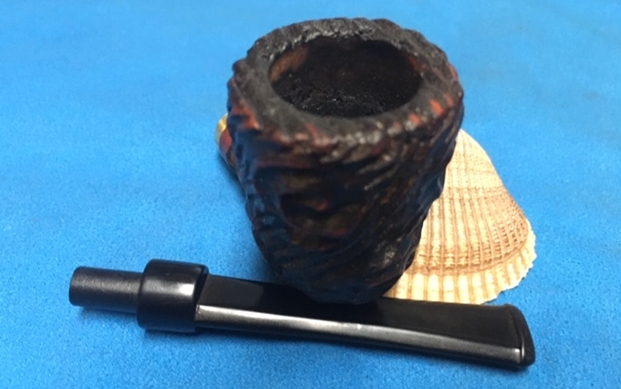
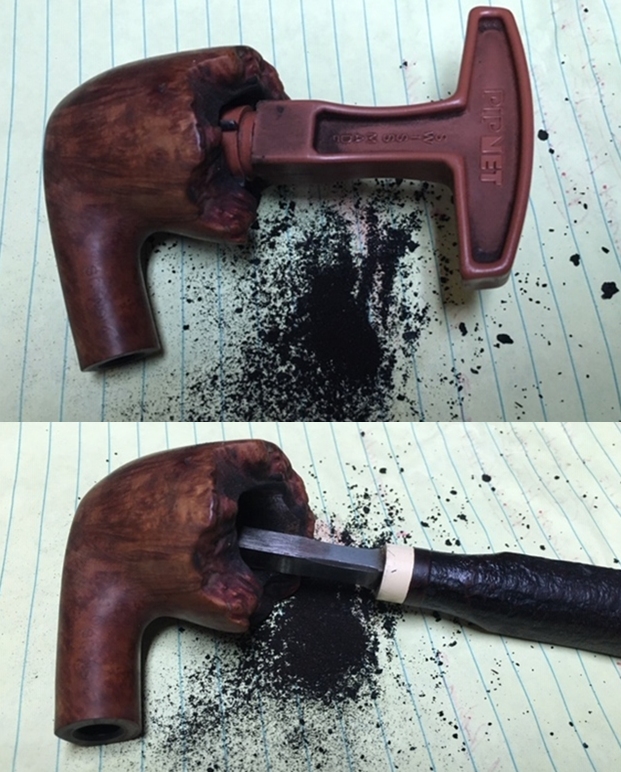
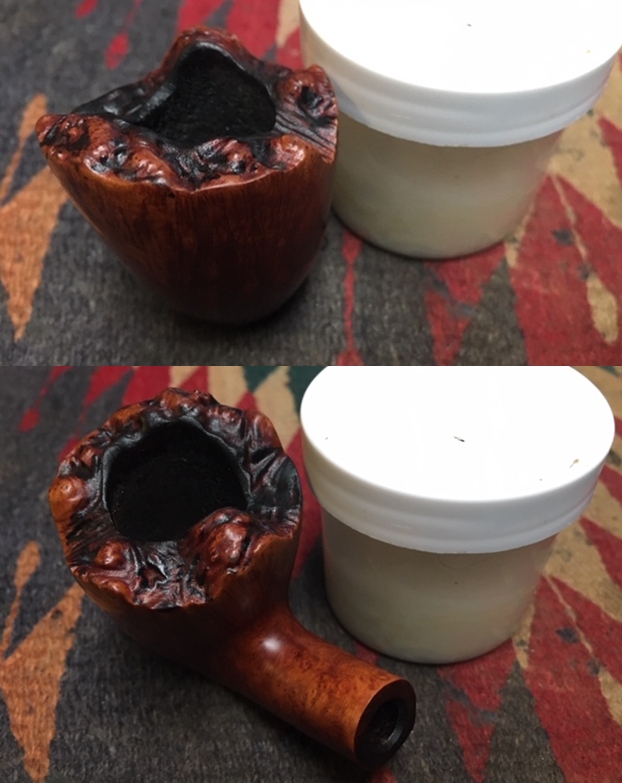
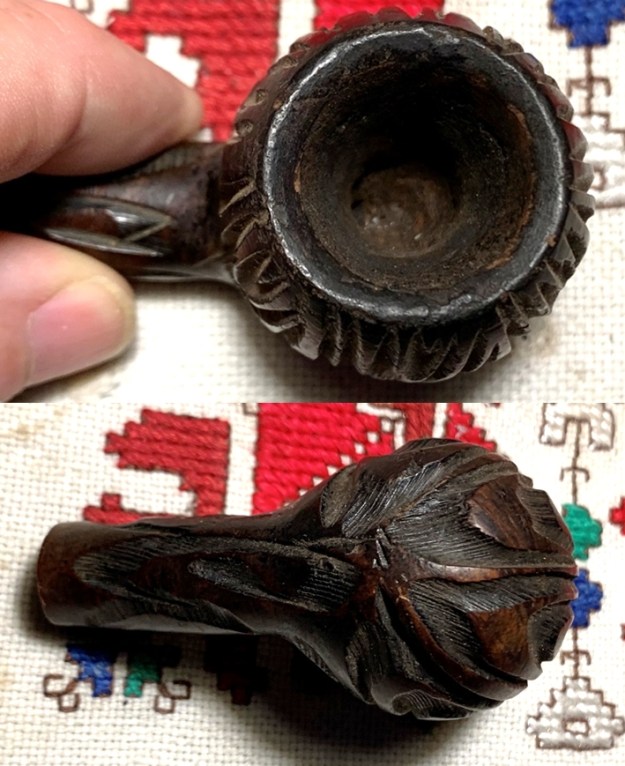
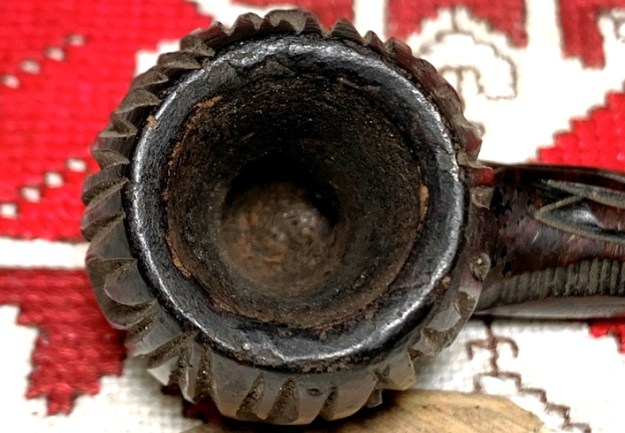
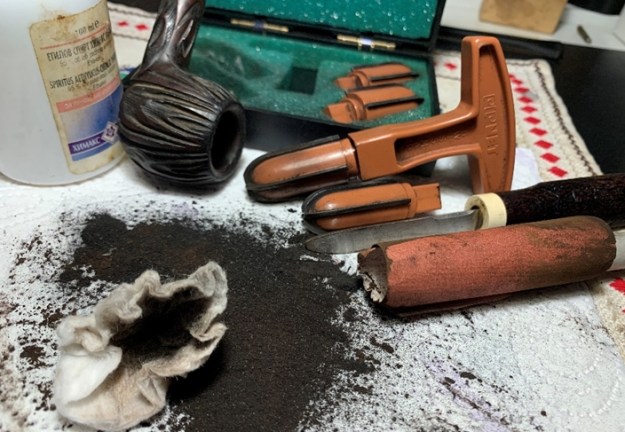
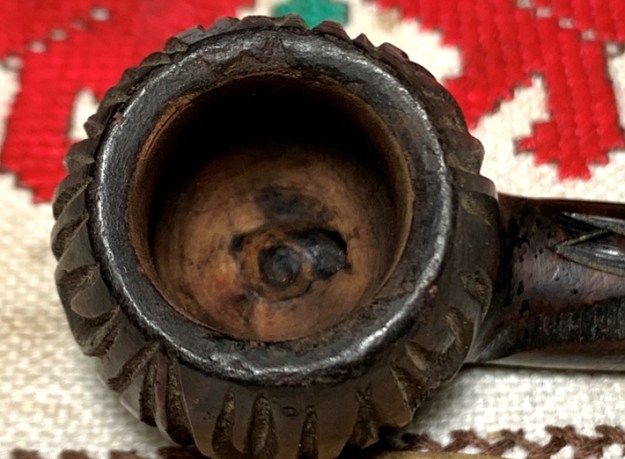
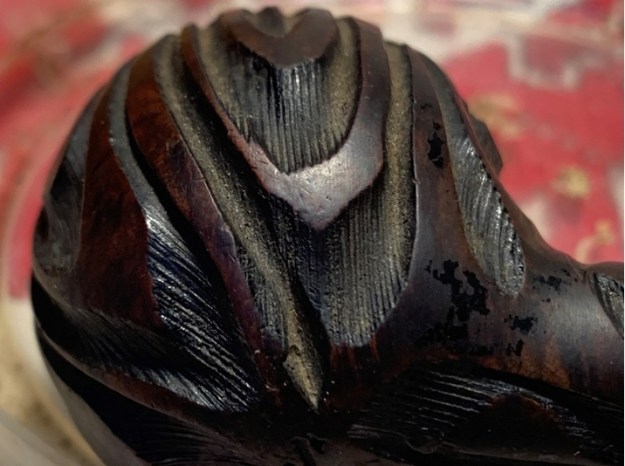
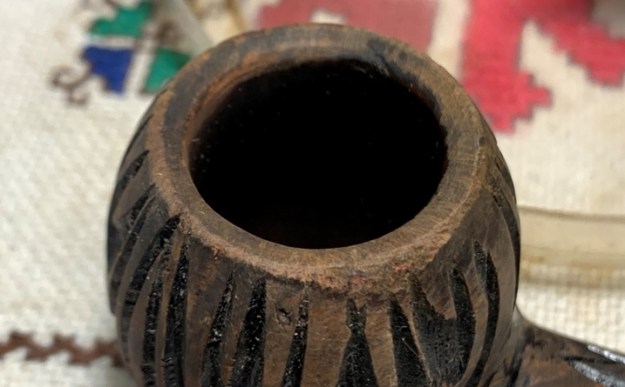
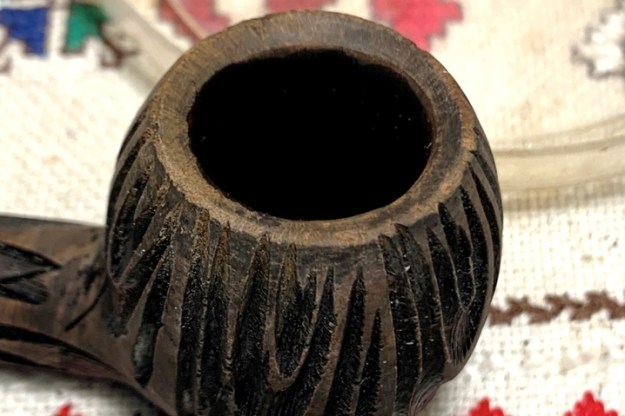
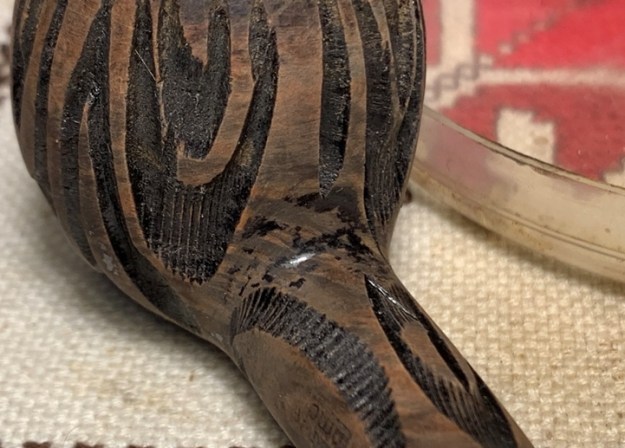
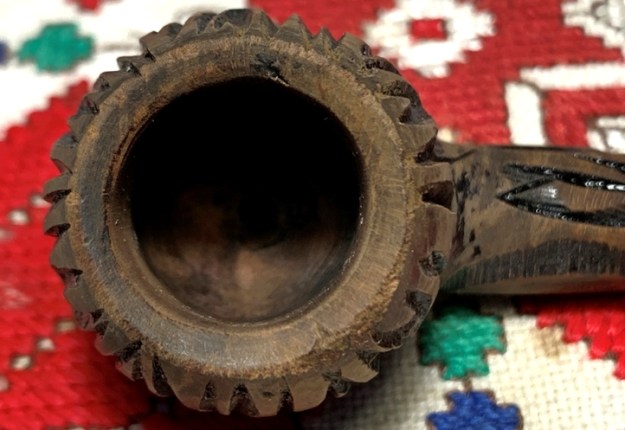
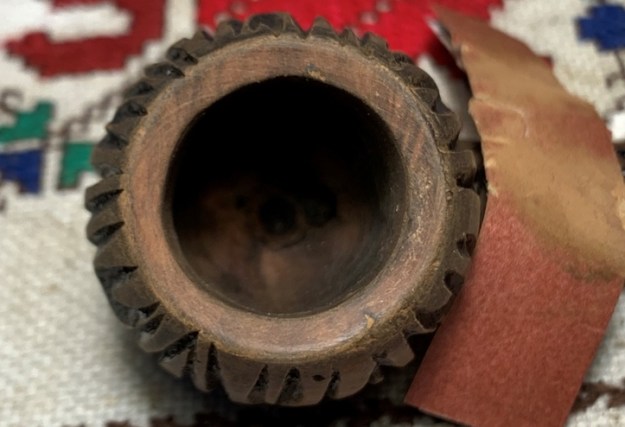
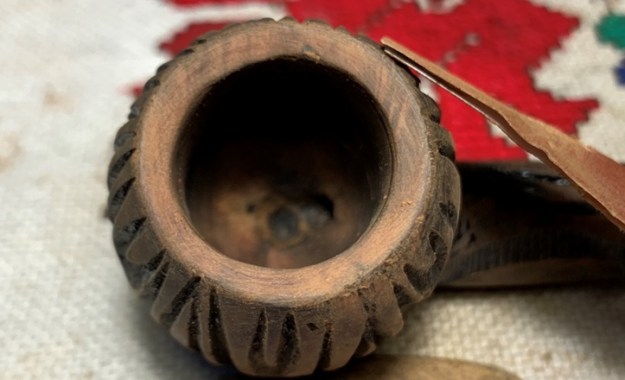
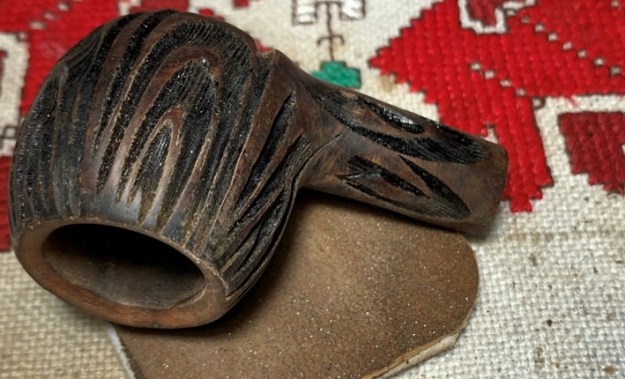
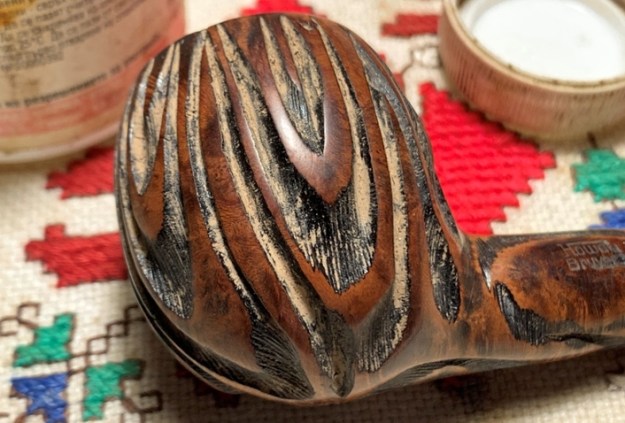
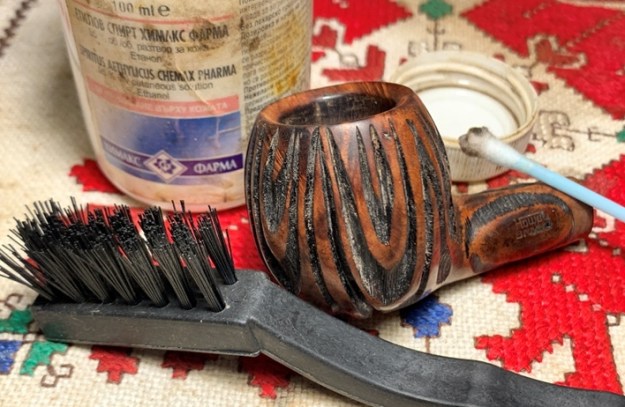
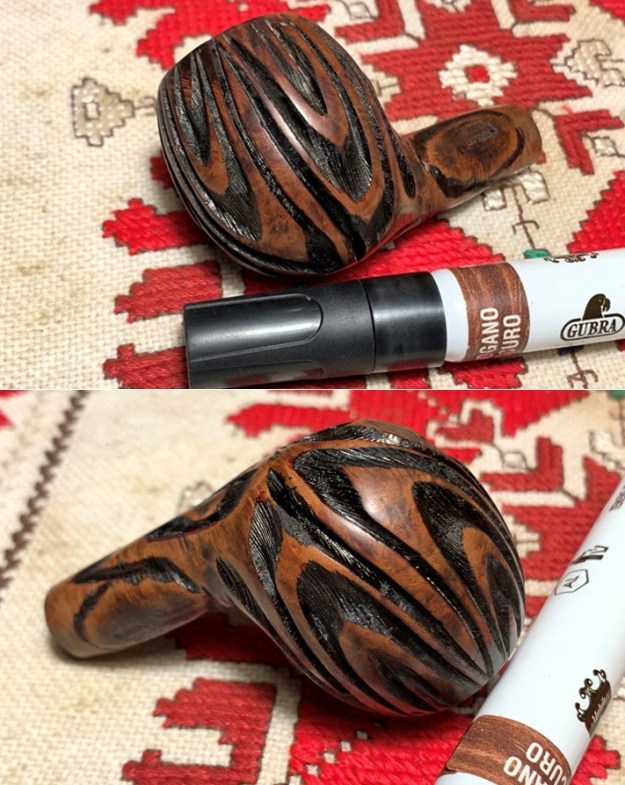
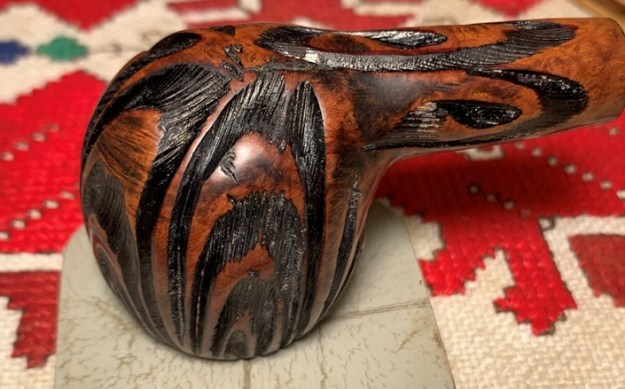
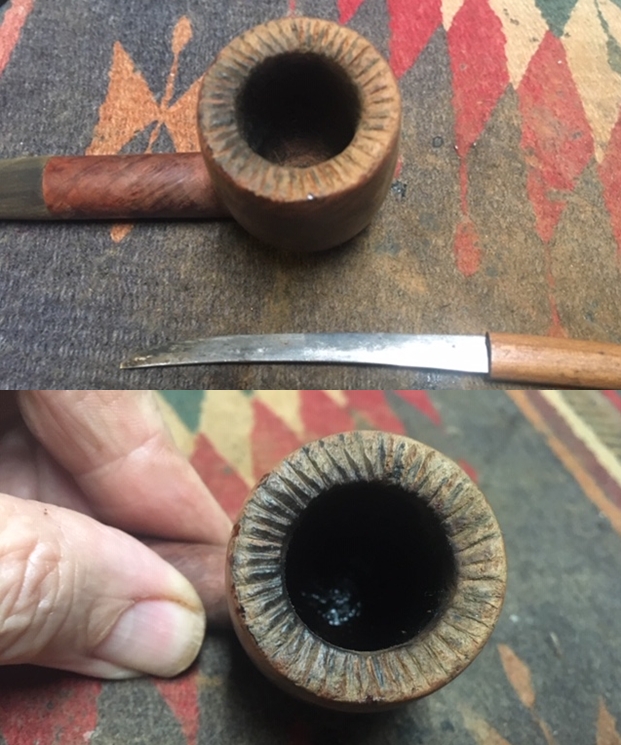
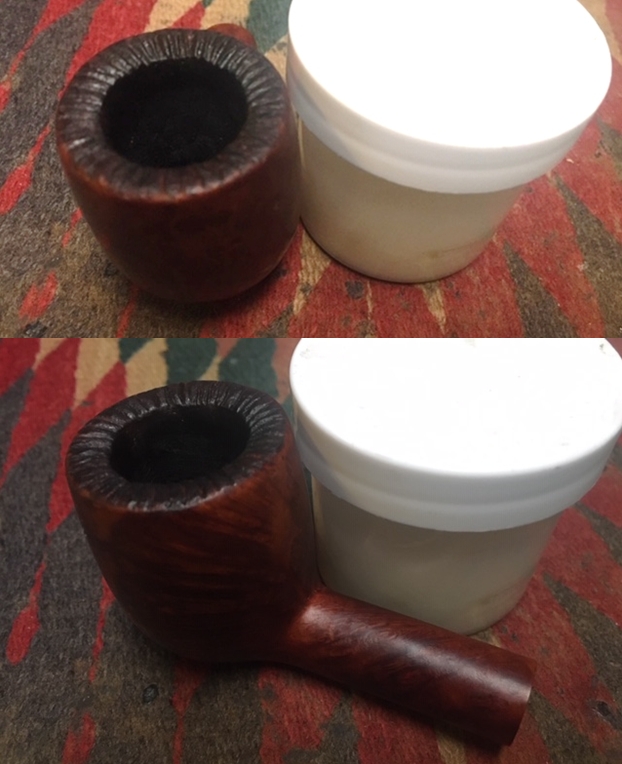
…So, as I had written before regarding the checkered history of the Howal name.  Now, as I look again at the Howal sculpted Apple bowl on my worktable, I take a few more pictures to mark the starting point and to take a closer look. I very much like John’s choice of a bowl to fashion a Churchwarden.  The sculpting of the classic Apple shape will look very nice as a Warden – with a rustic, ‘Olde World’ look to it.  The condition of the Howal bowl is generally good.  The chamber has a heavy cake which will be removed to give the briar a fresh start and to check the chamber wall for heating problems.  The rim has some crusting lava overflow that needs cleaning. The rusticated surface with the intricate ribs carved into the sculpting also needs scrubbing to remove grime lodged in the wood.  Before working on the stem, I start the Howal Churchwarden project by using the Pipnet Reaming Kit.  After taking a picture of the chamber showing the tightening chamber as the cake thickens, I use the two smallest blade heads of the 4 available and ream the chamber.  The cake proves to be stubborn – hard as a brick.  After the Pipnet Kit, transitioning to the Savinelli Fitsall Tool, clearing the cake continues as the tool scrapes the chamber wall. Finishing this phase, I wrap 240 paper around a Sharpie Pen and sand the walls and then wipe the excess carbon dust with a cotton pad wetted with alcohol.

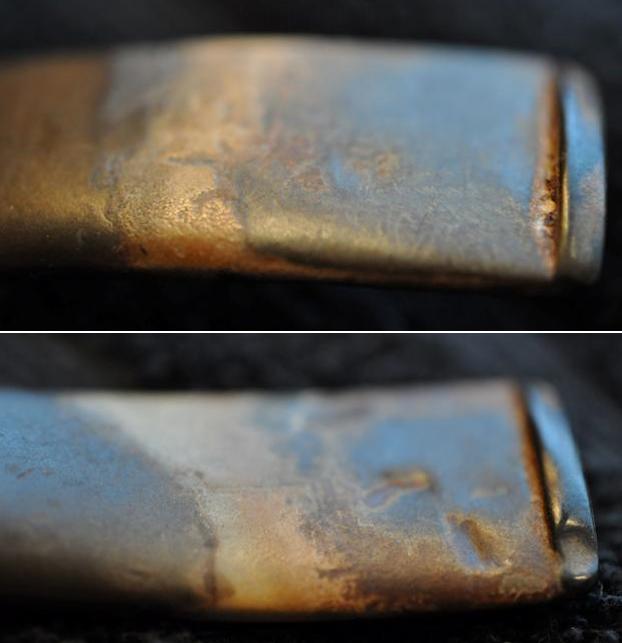
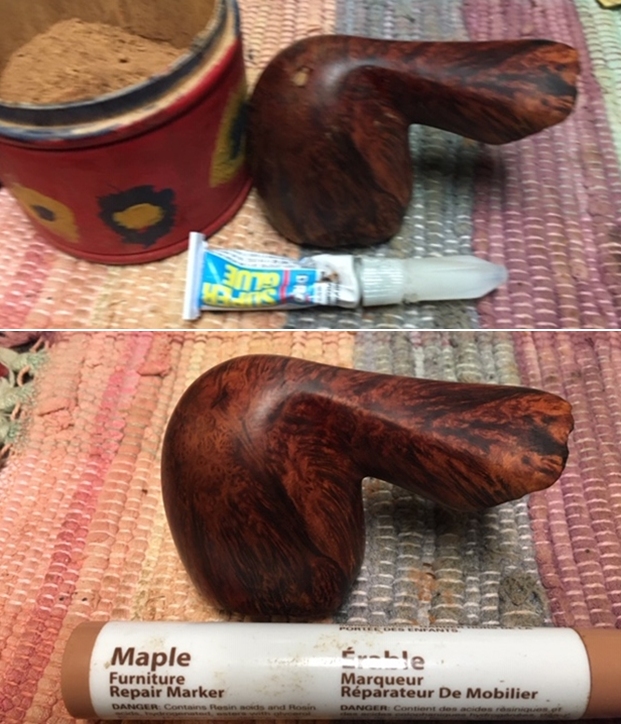
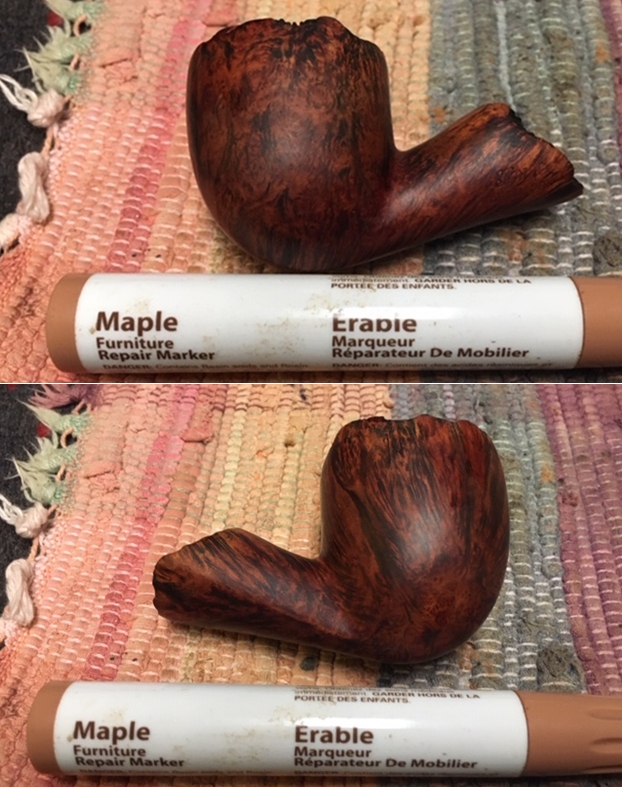
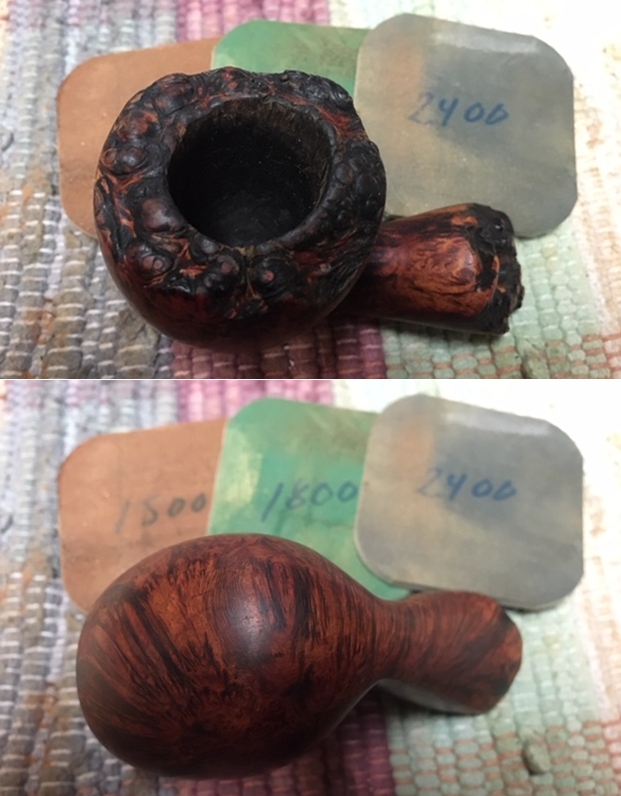
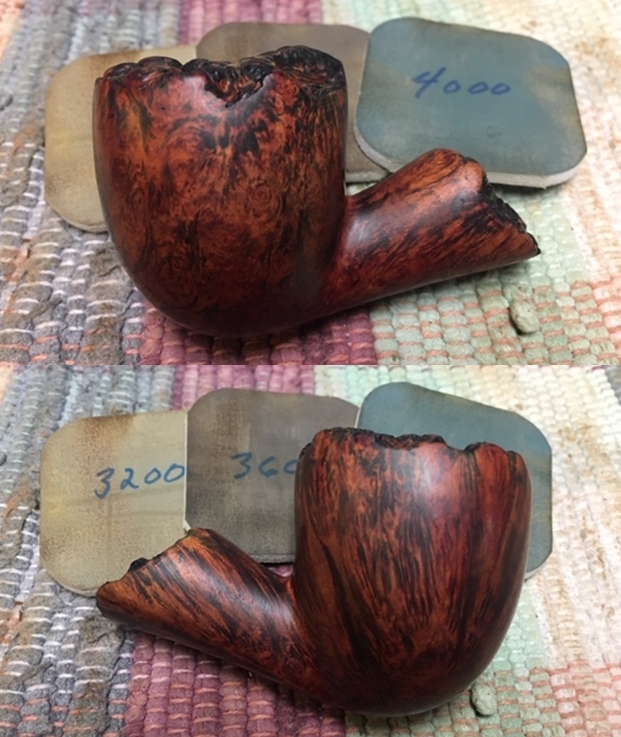
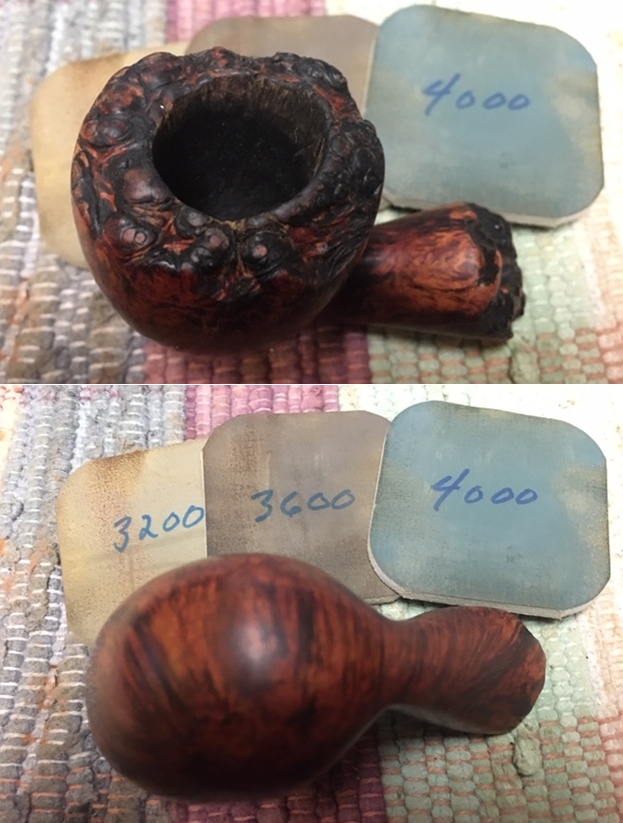
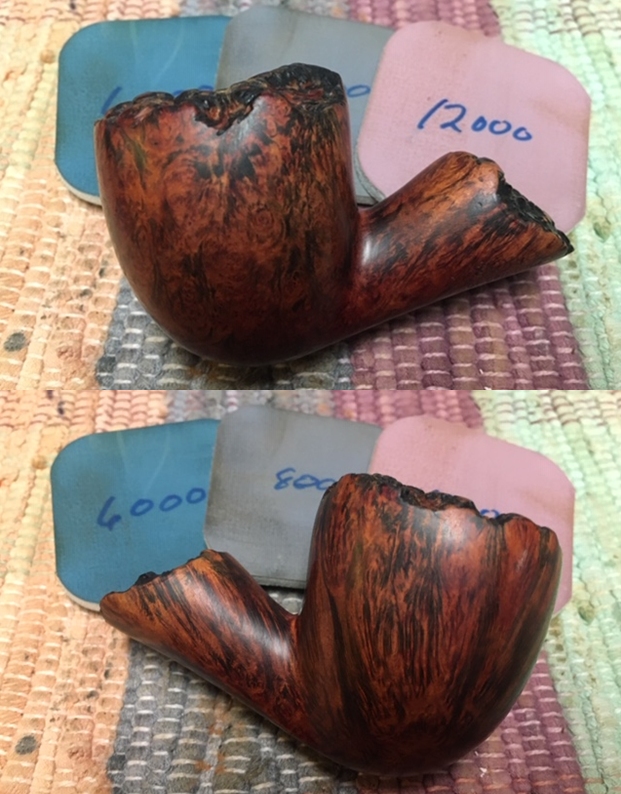
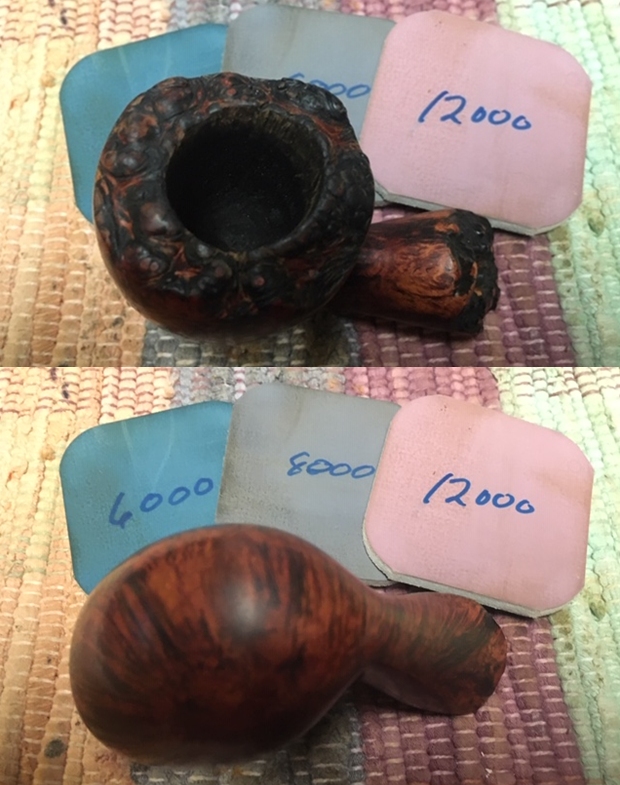
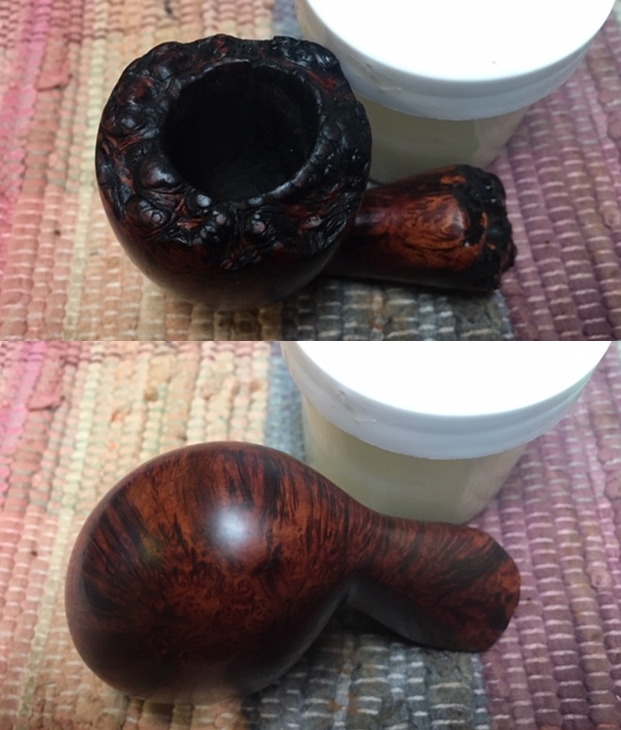
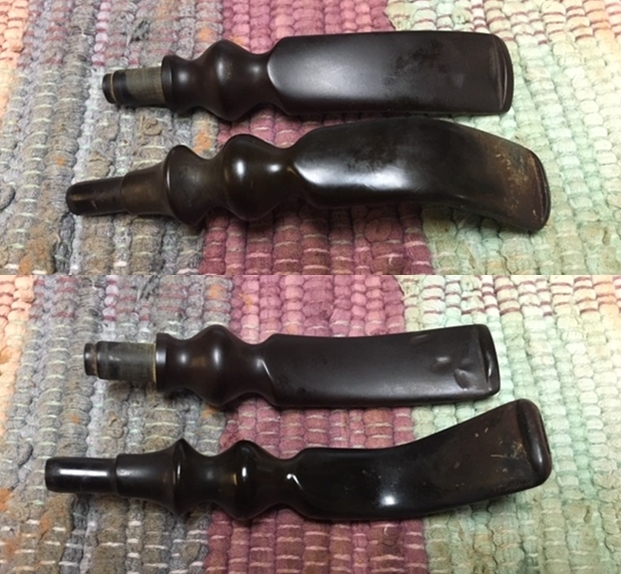
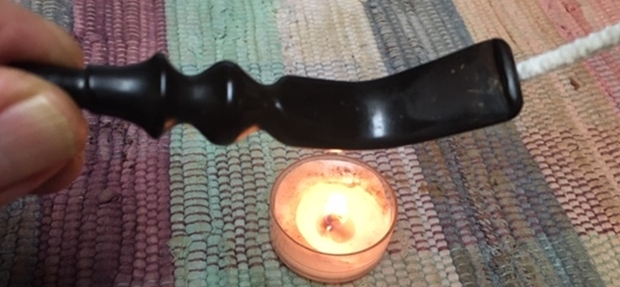
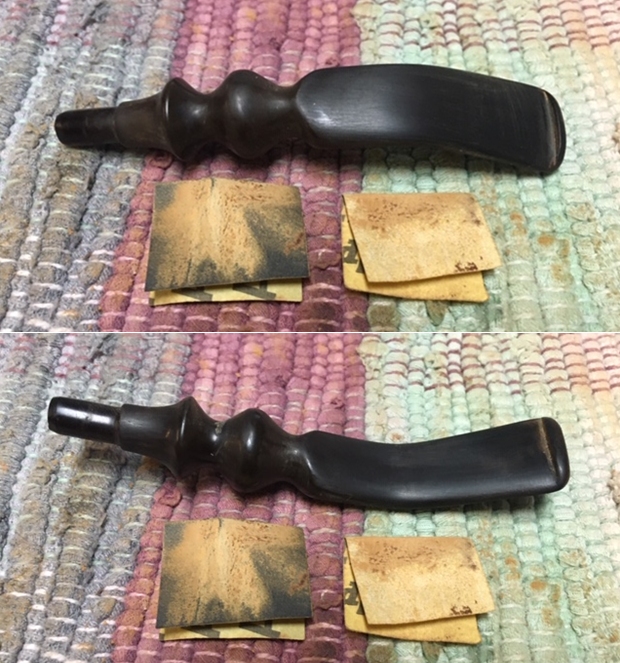
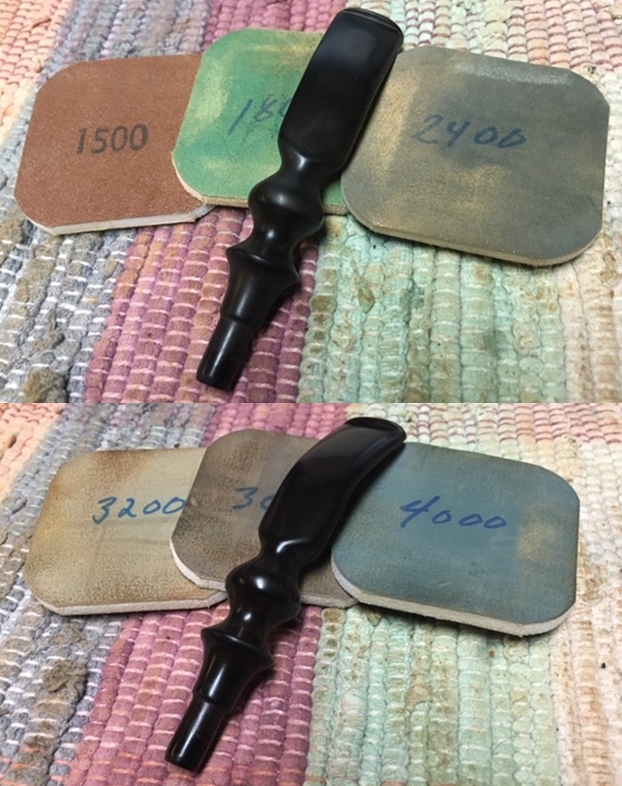
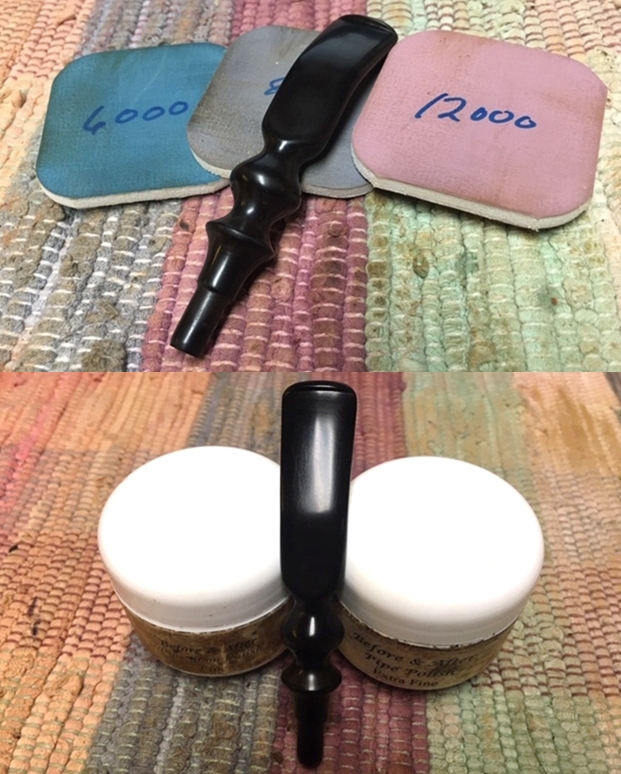
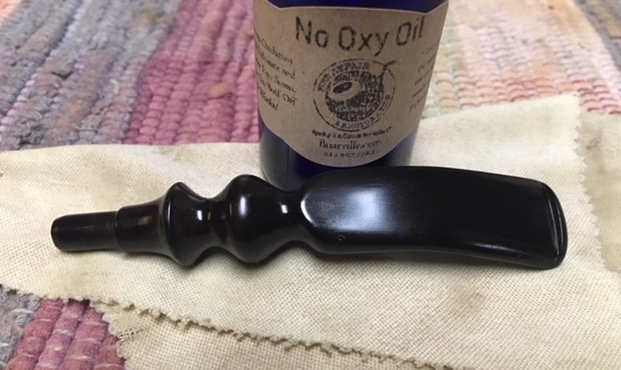
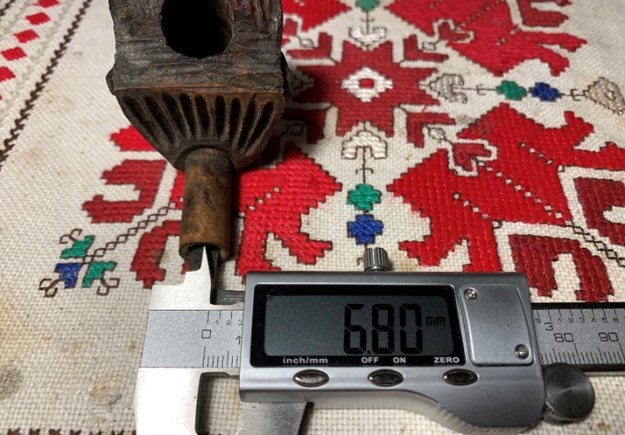
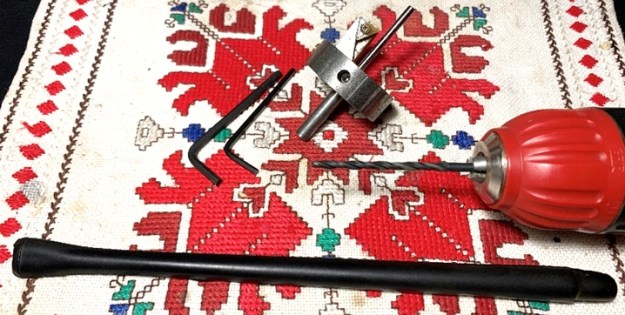
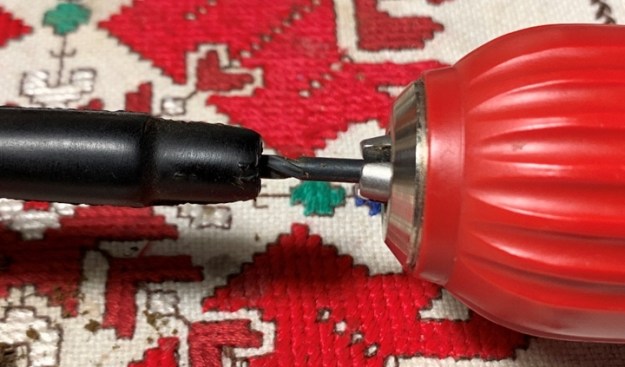
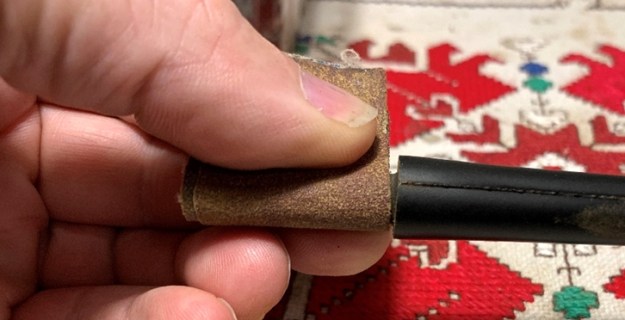
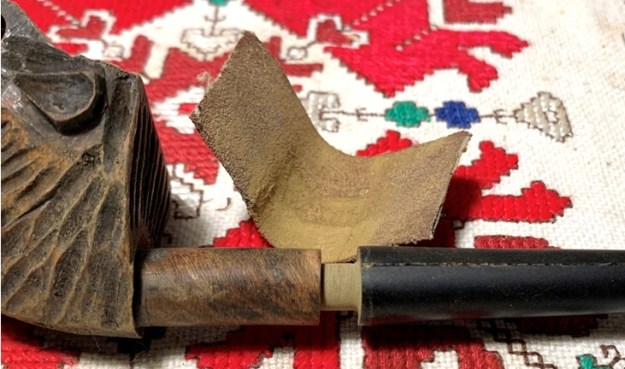
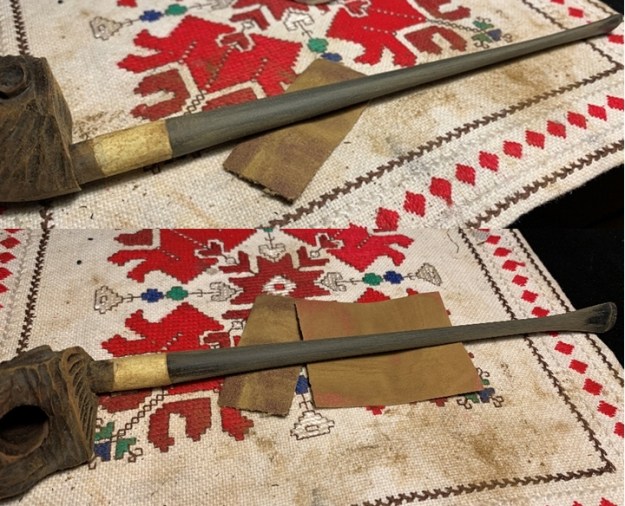
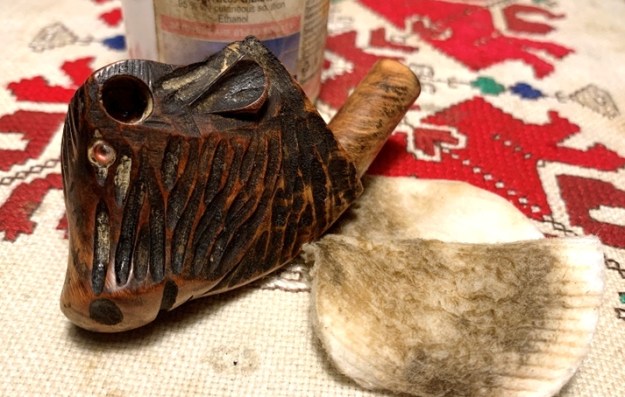
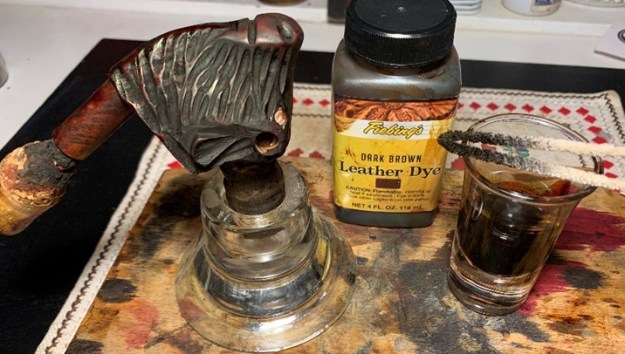
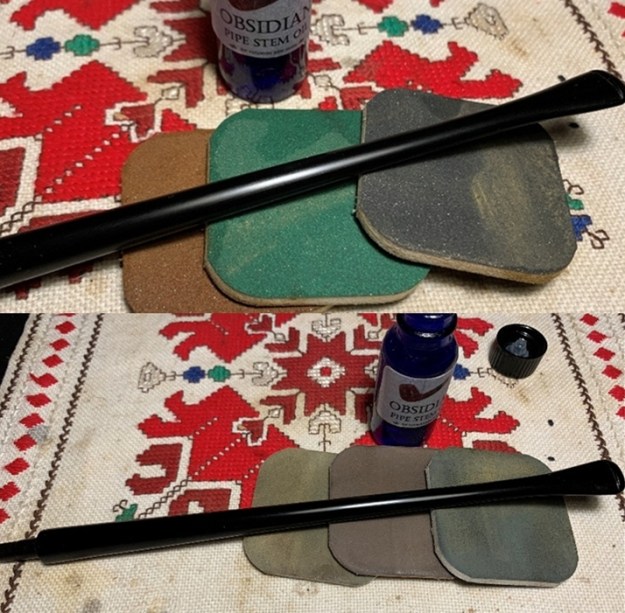
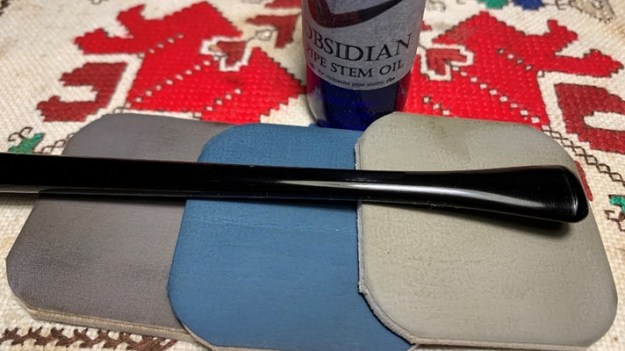
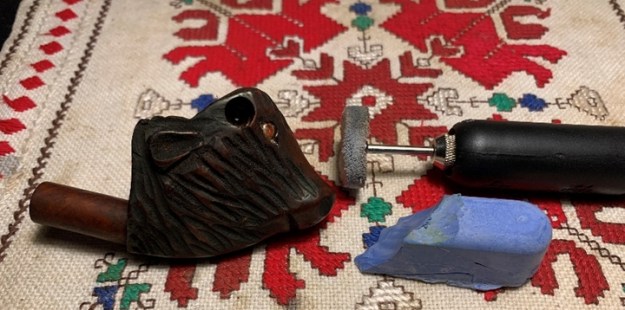
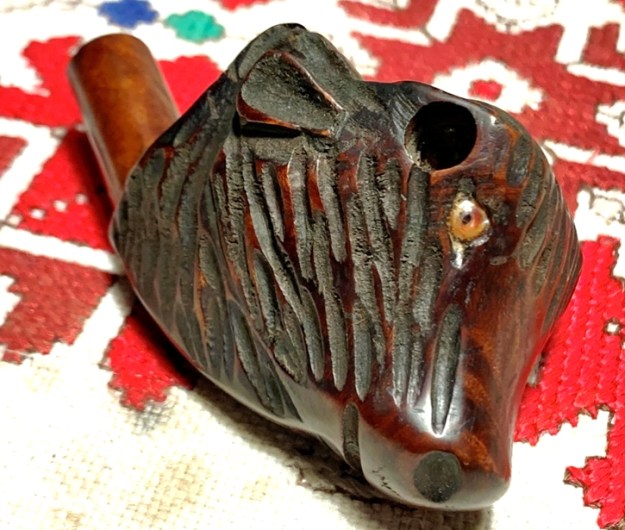
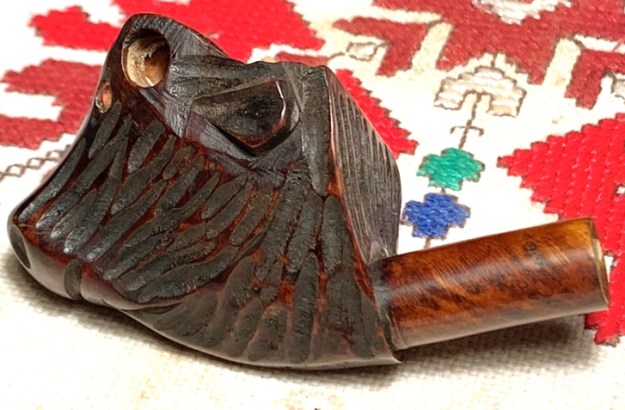
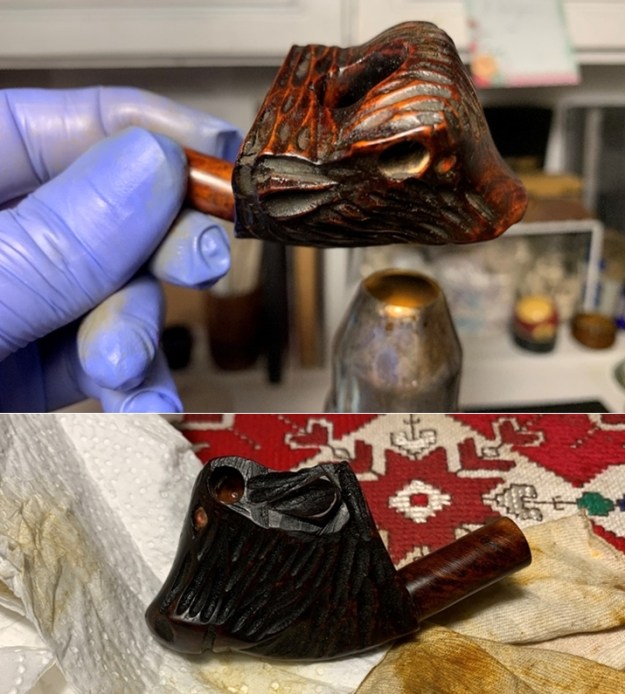
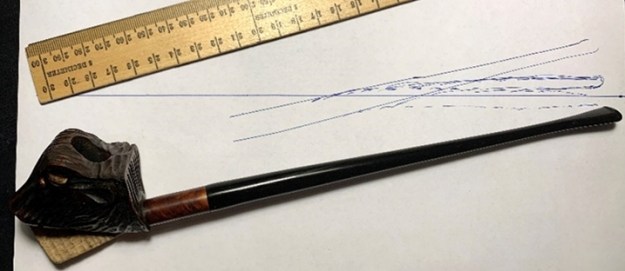
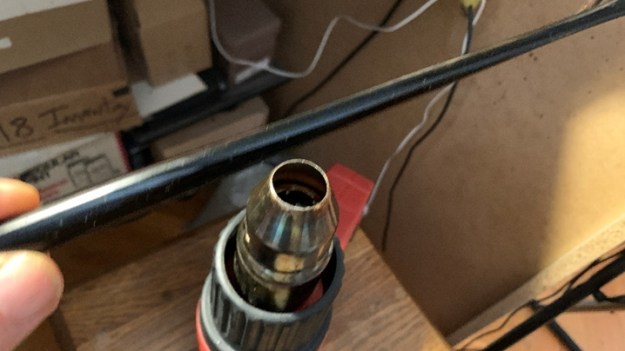
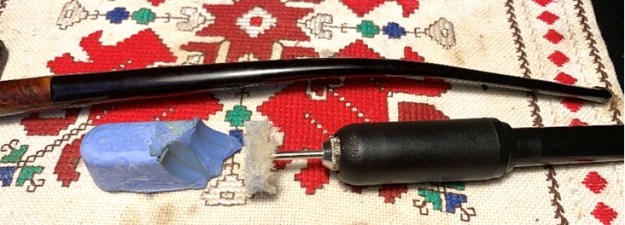
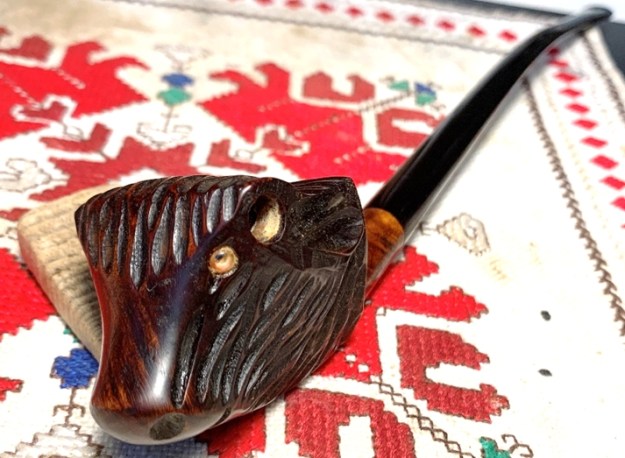
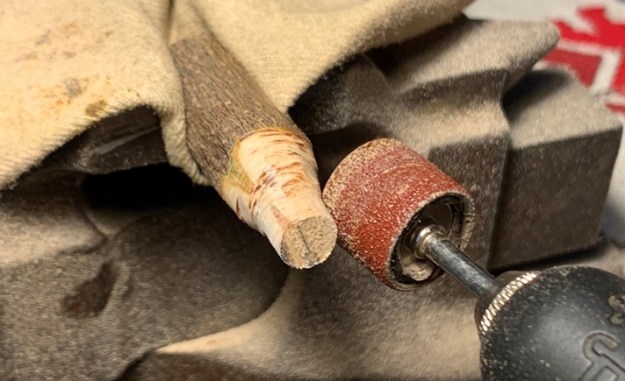
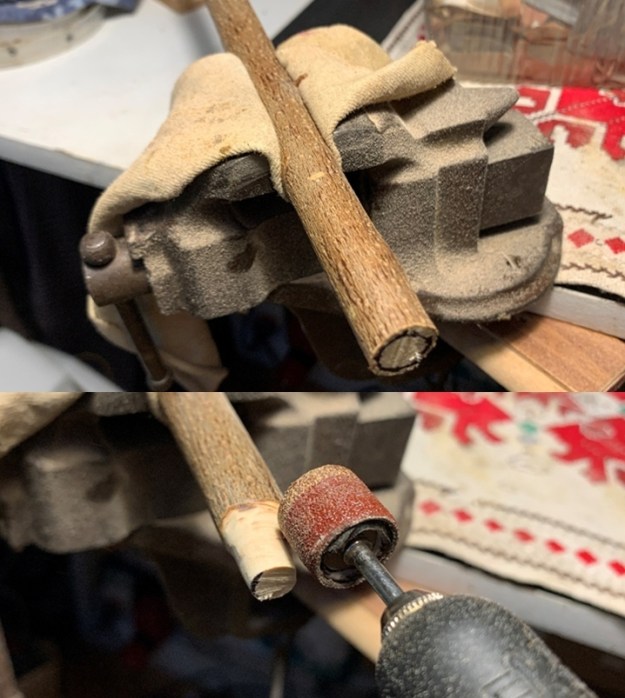
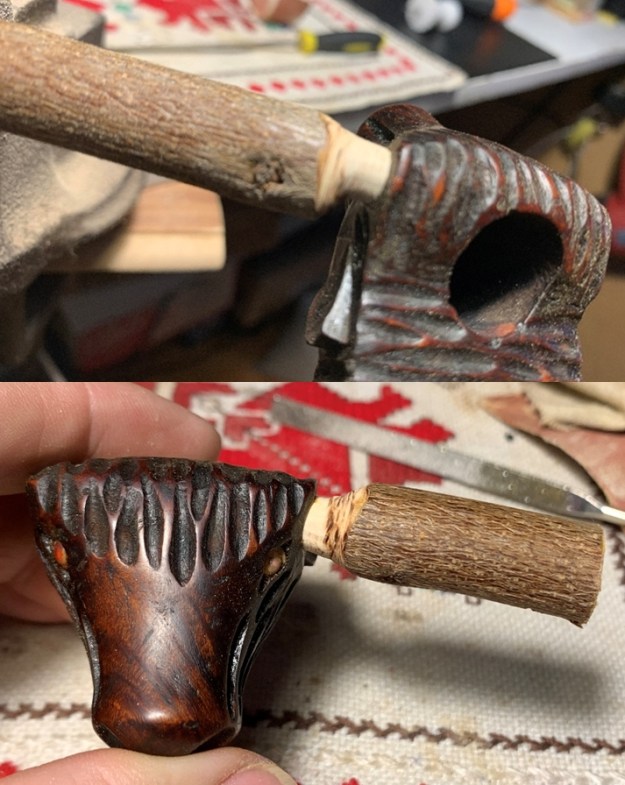
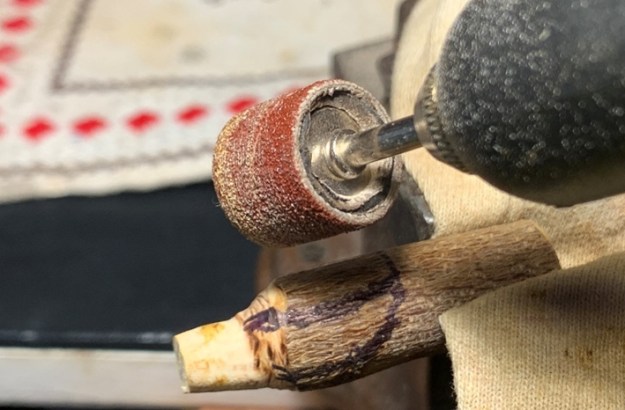
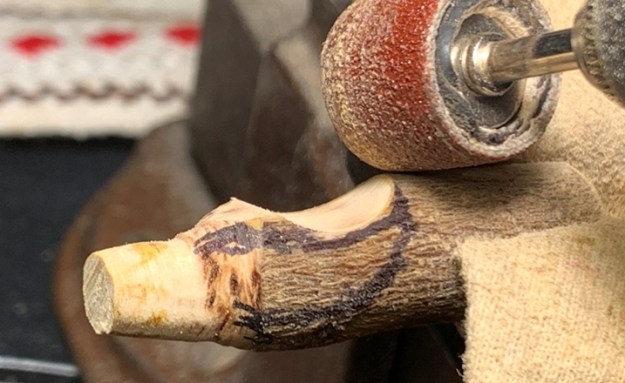
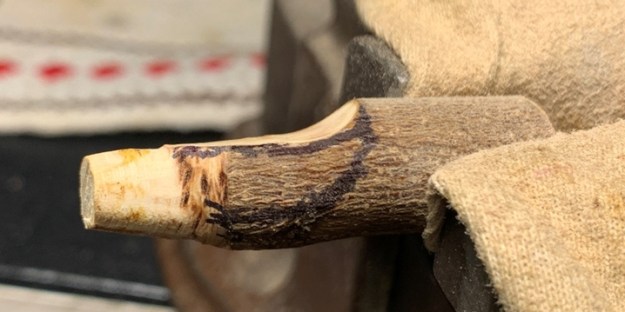
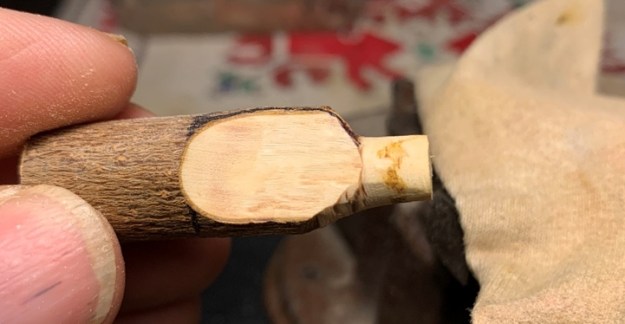
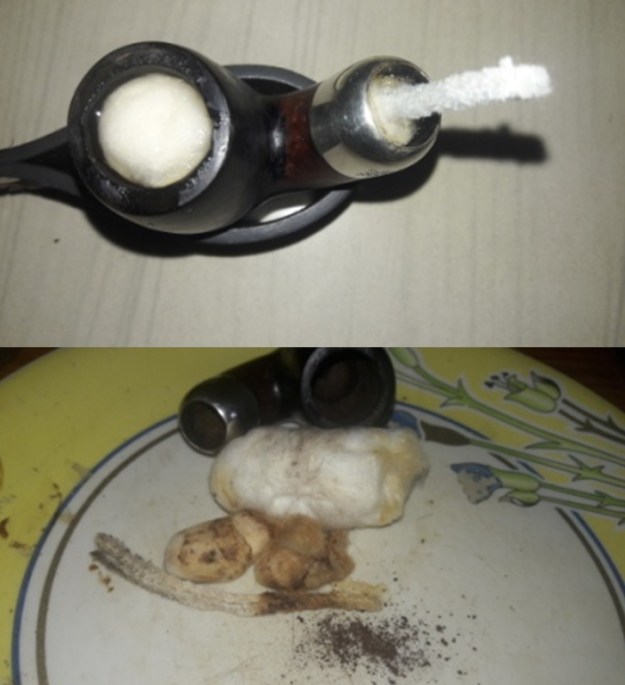
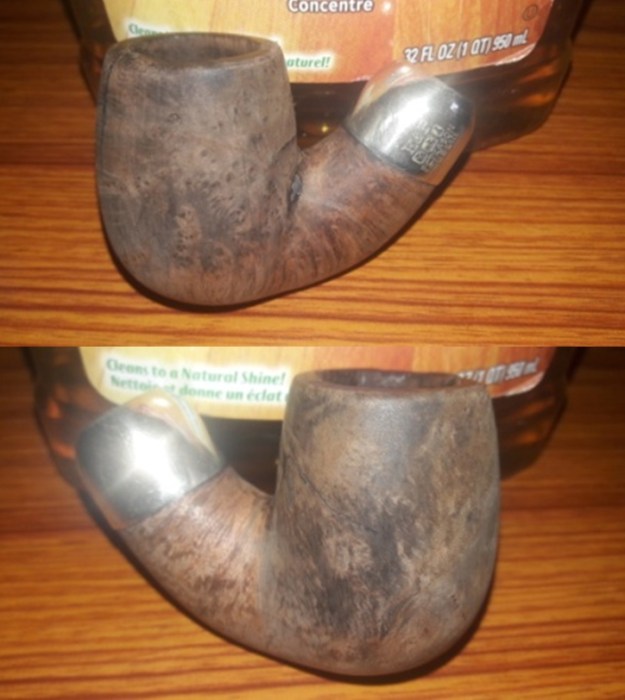
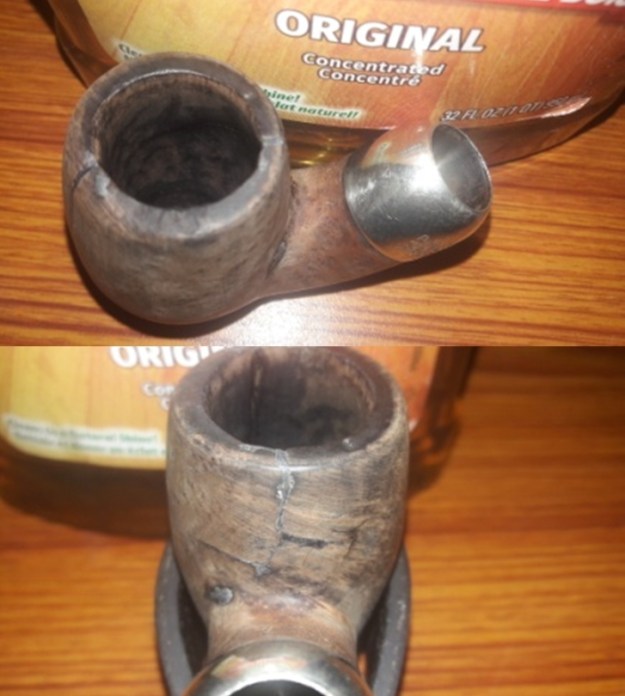
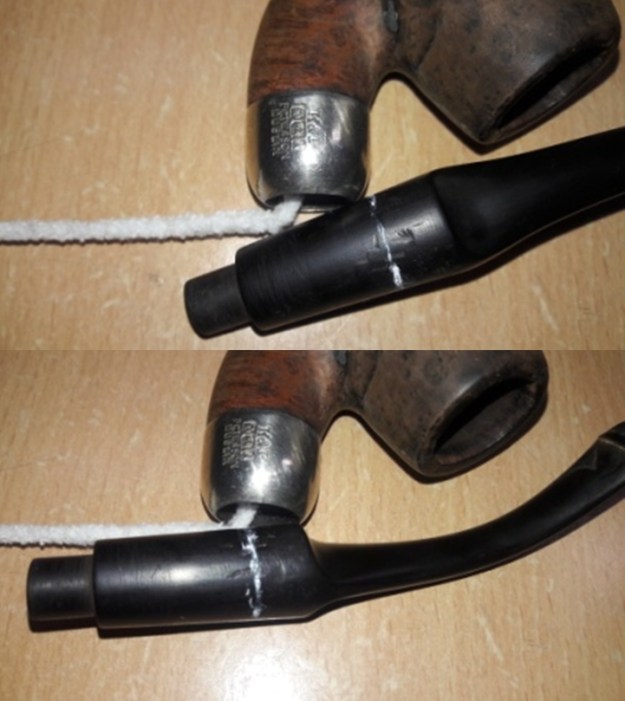
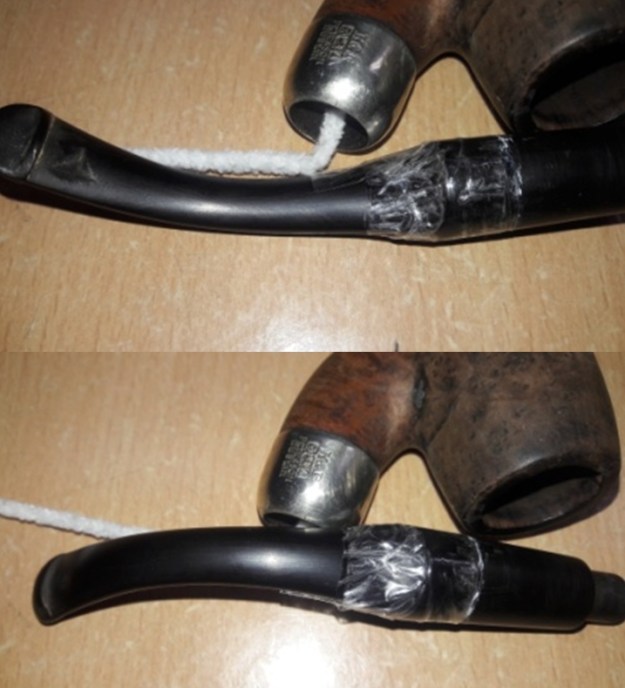
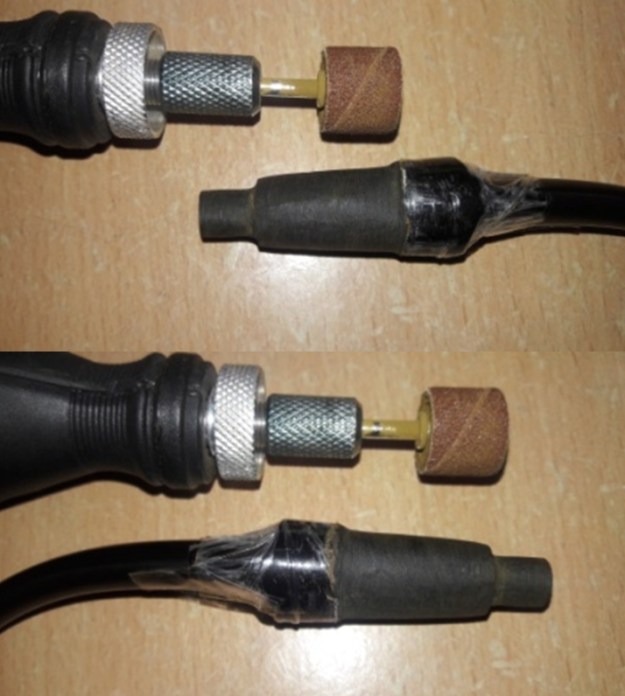
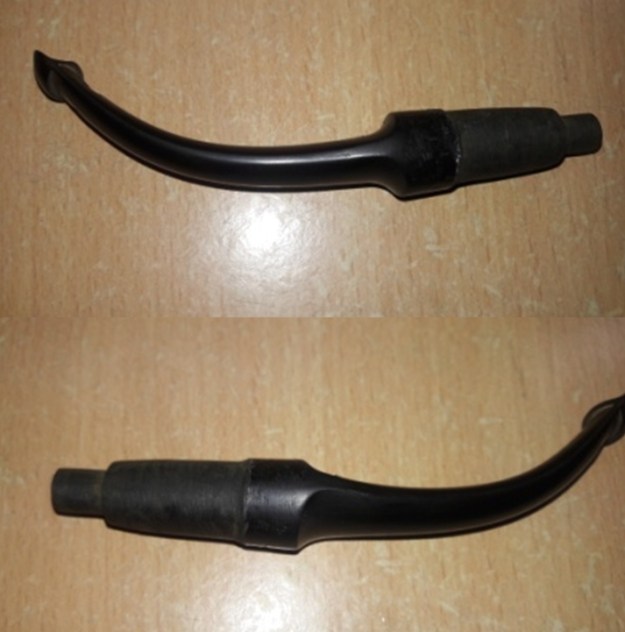
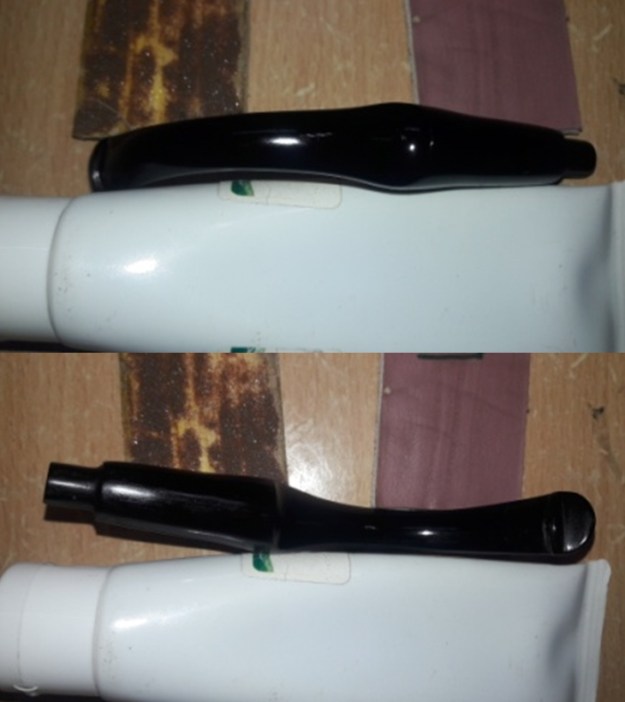
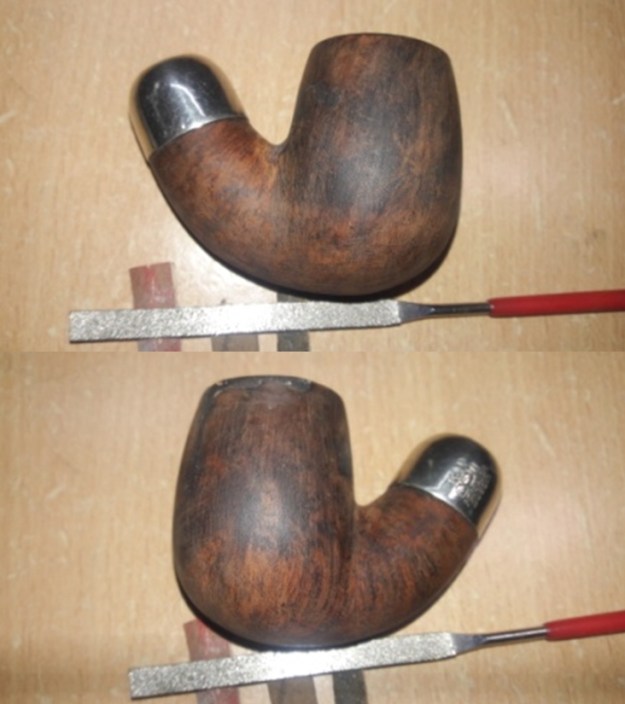
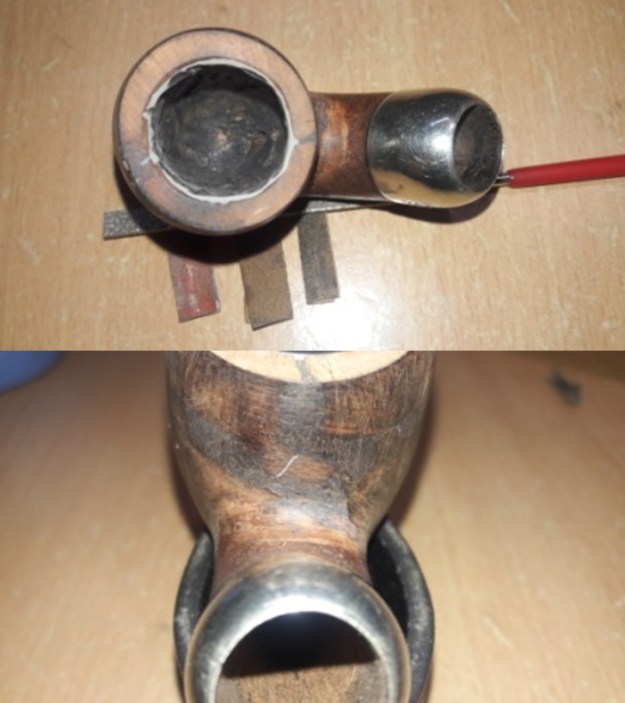
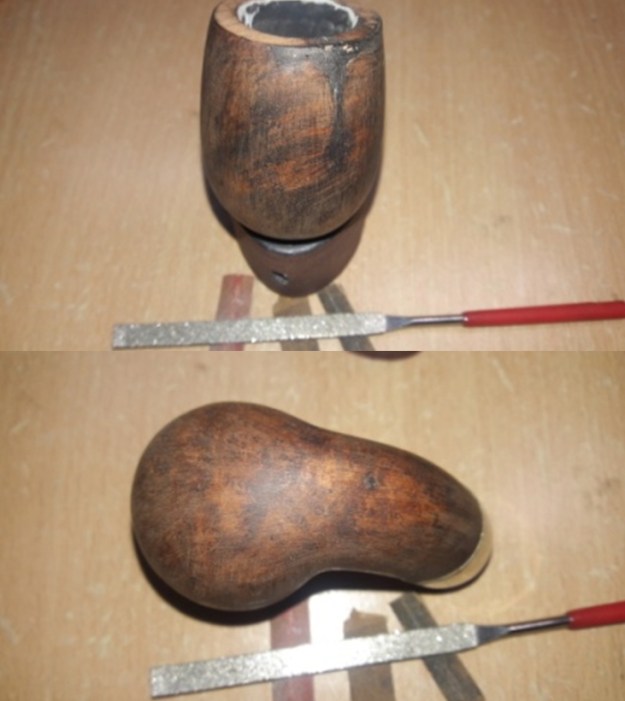
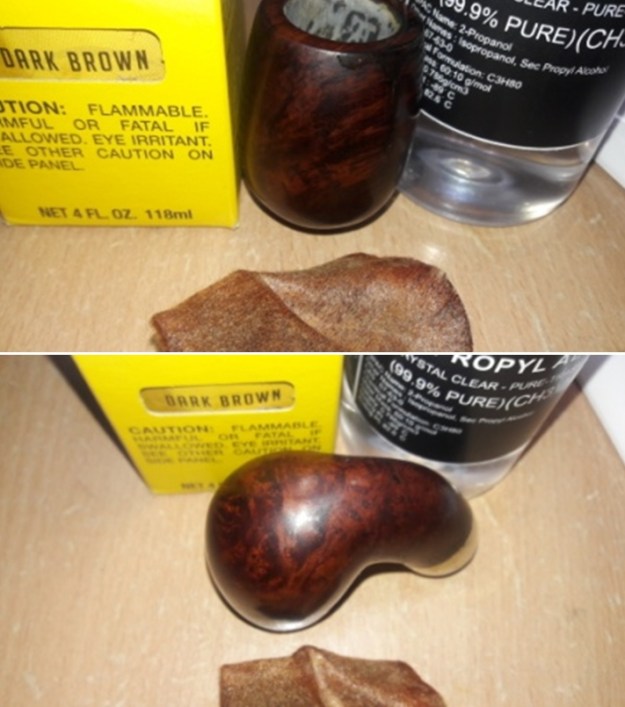
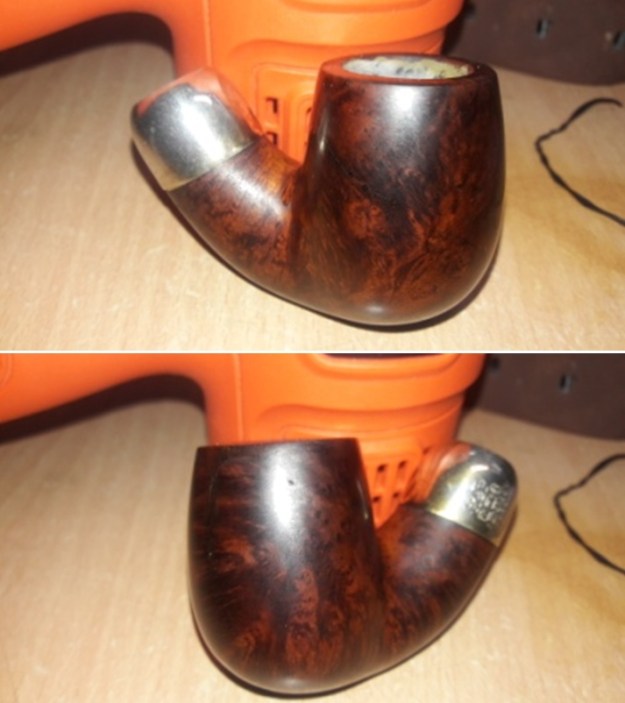
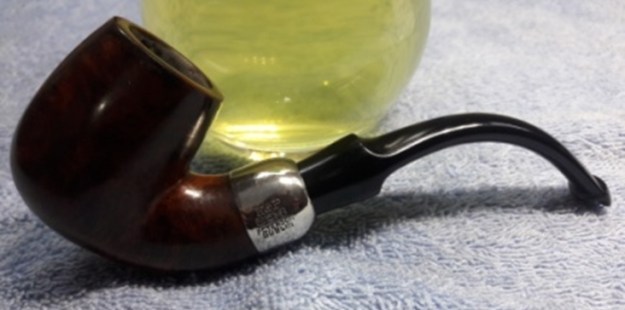
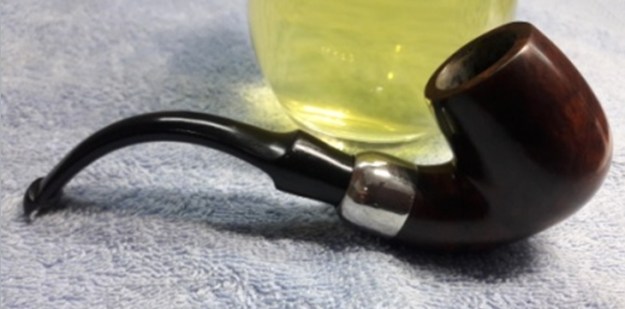
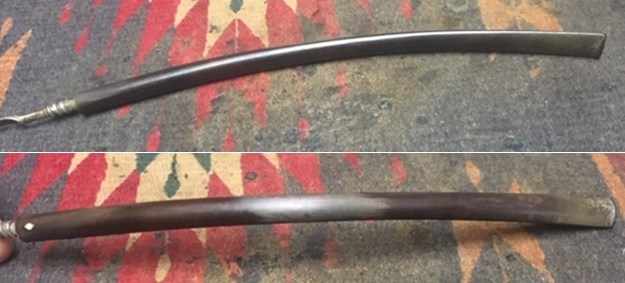
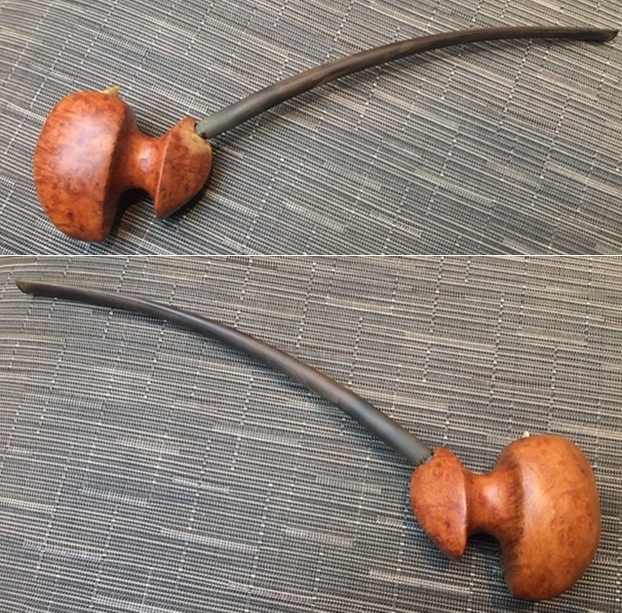
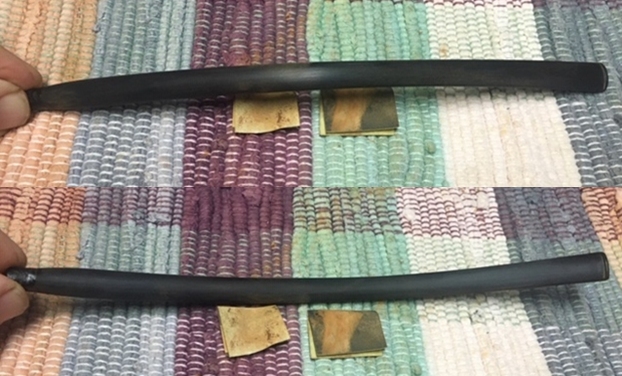
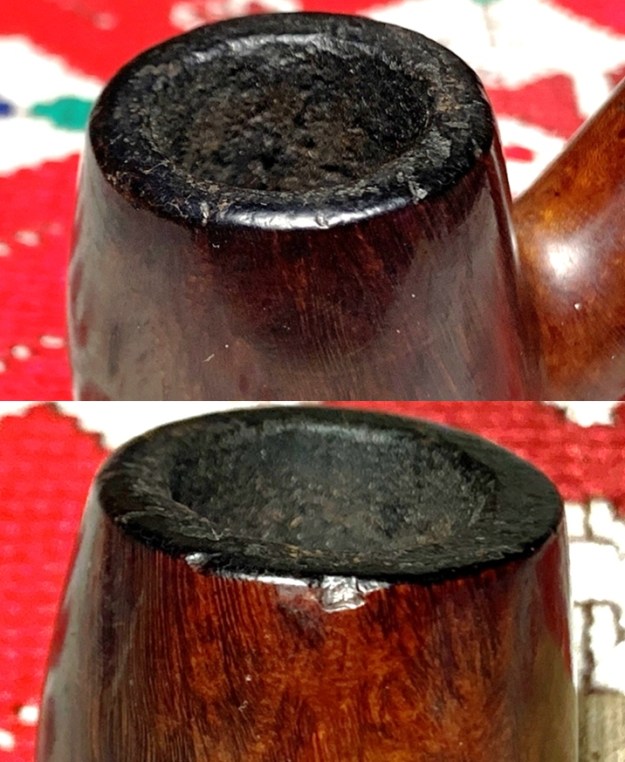
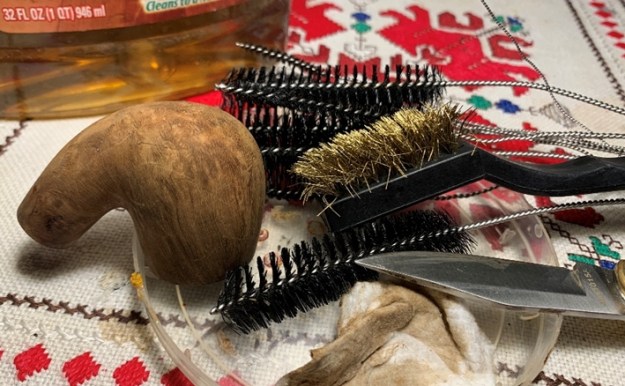
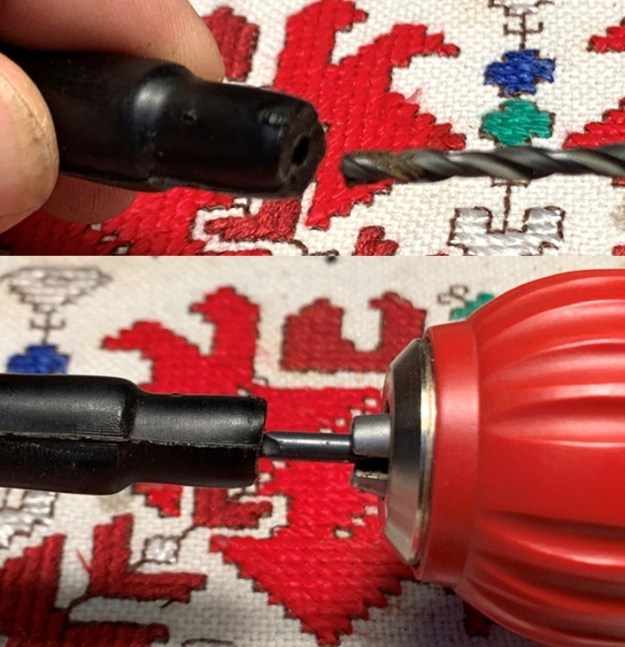
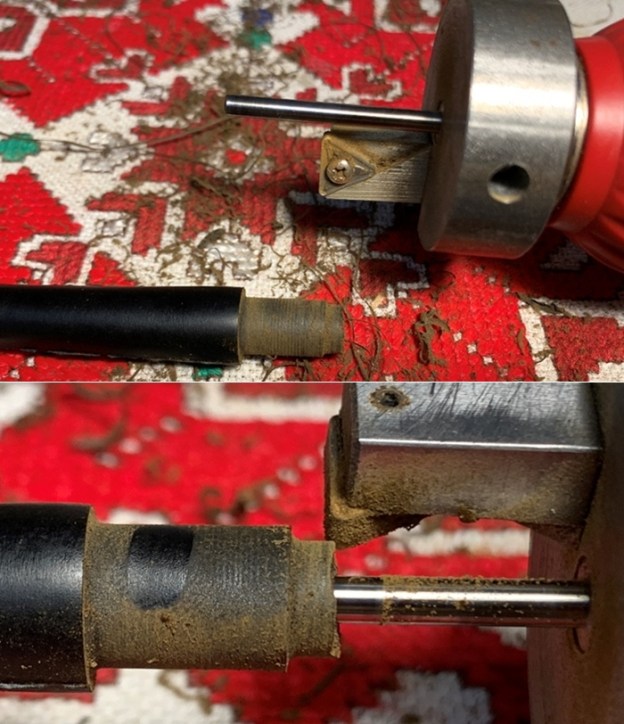
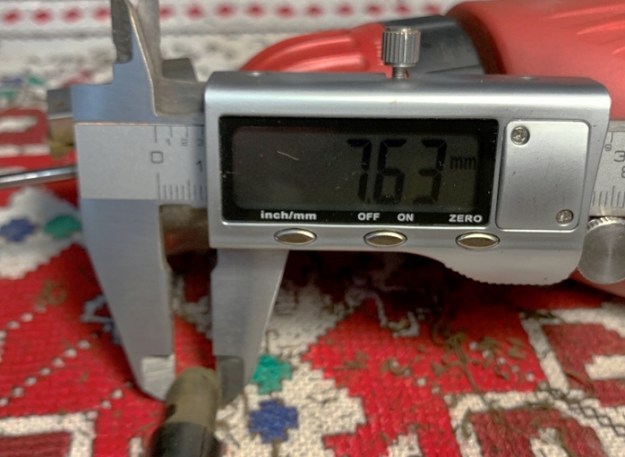
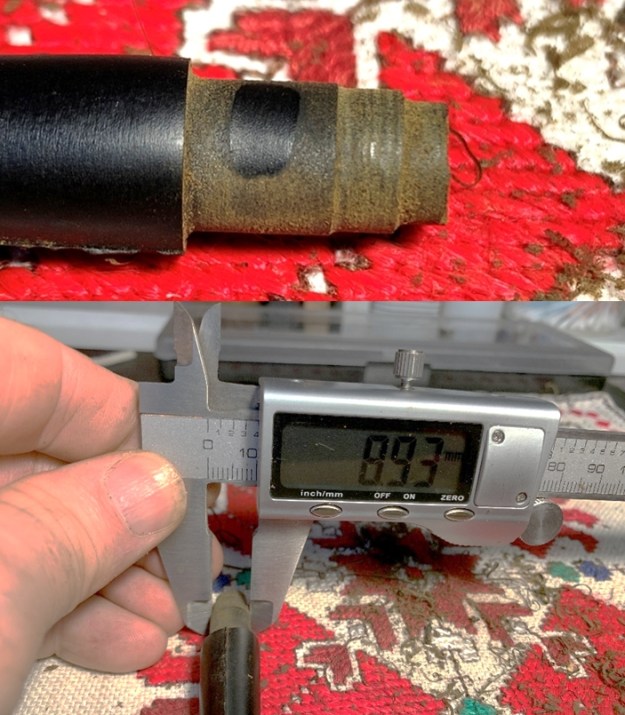
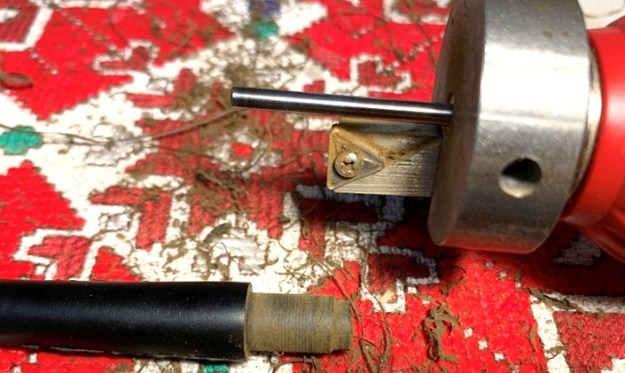
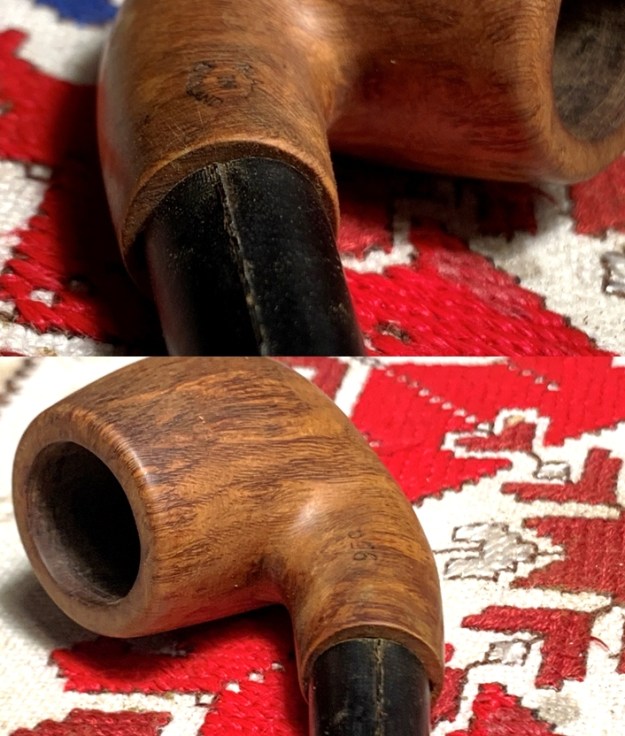
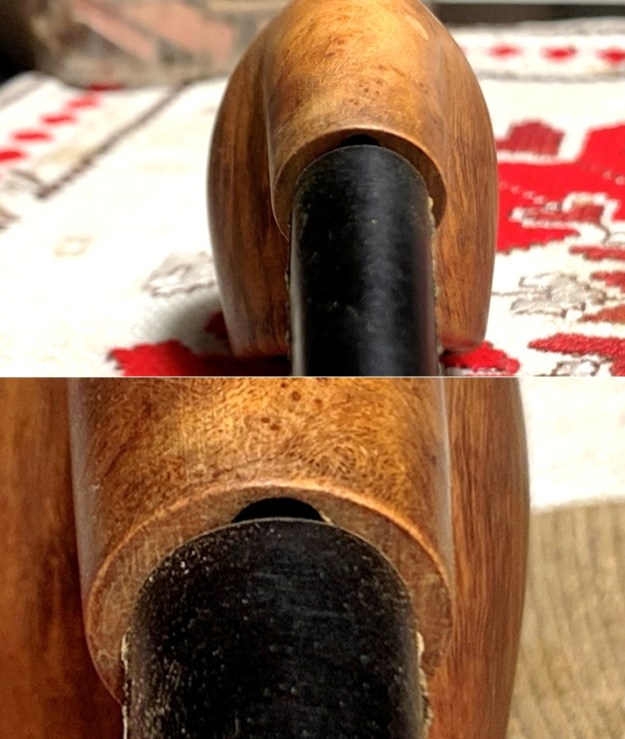
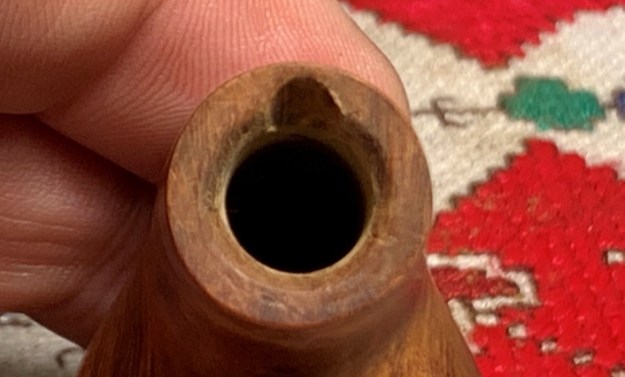
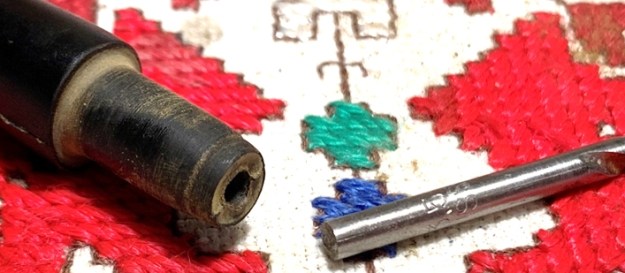
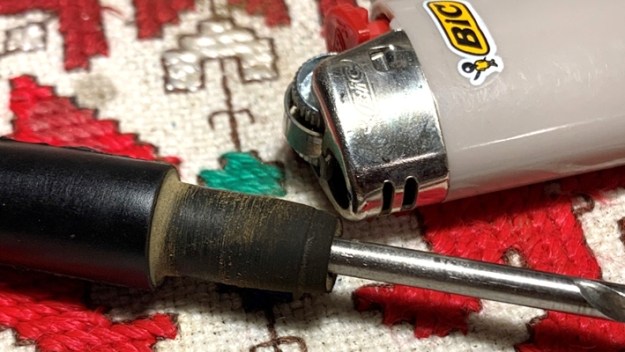
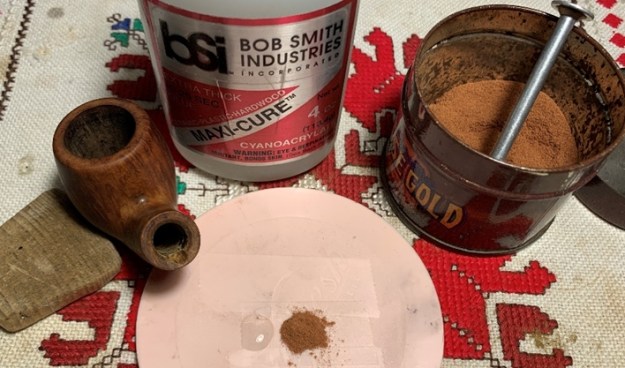
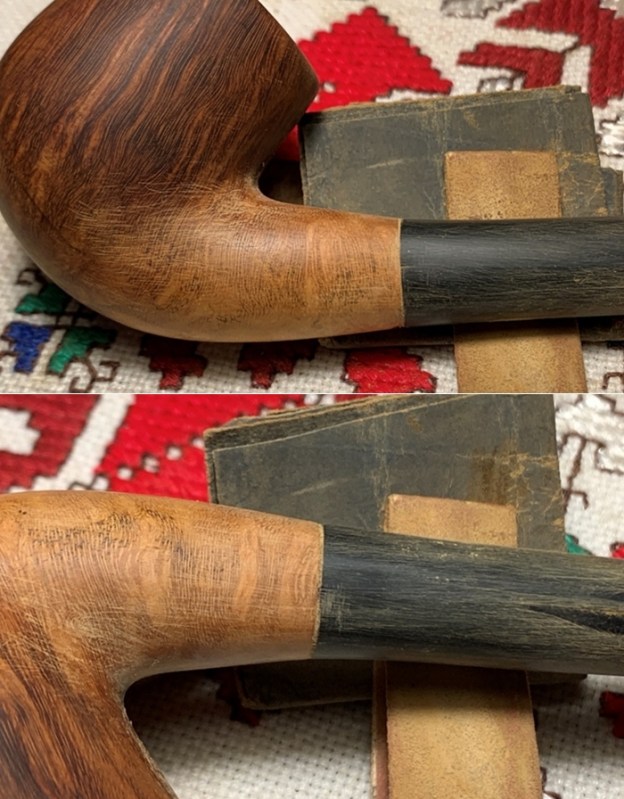
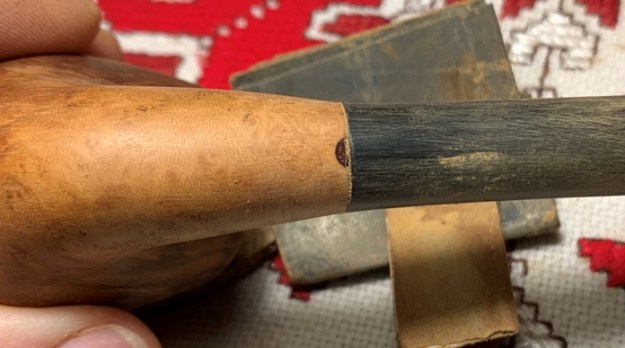
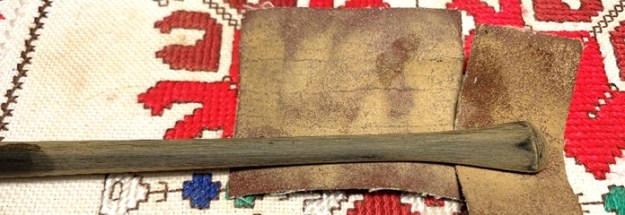
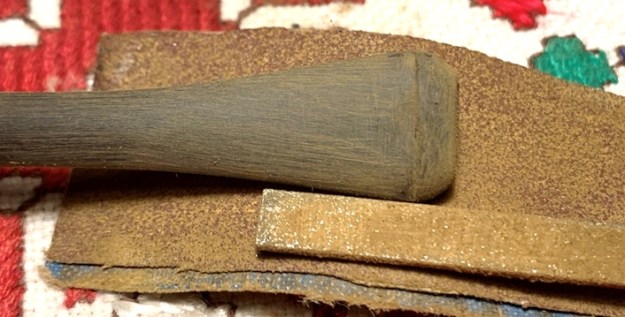
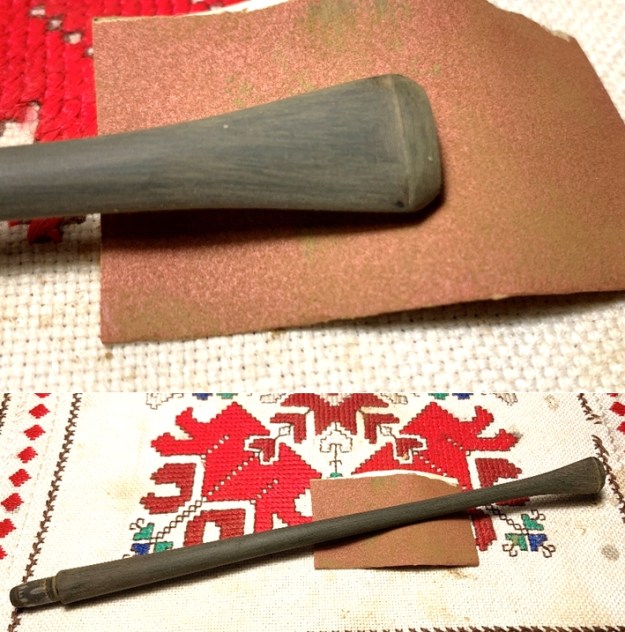
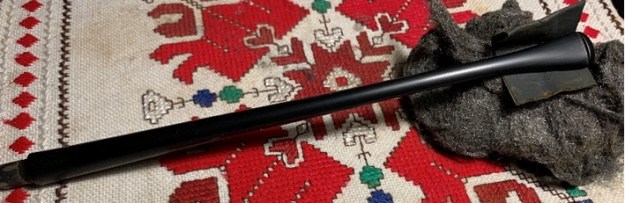
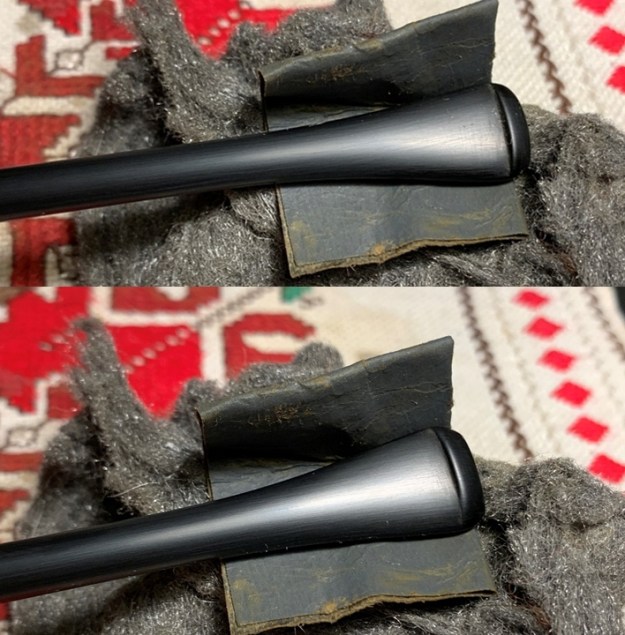
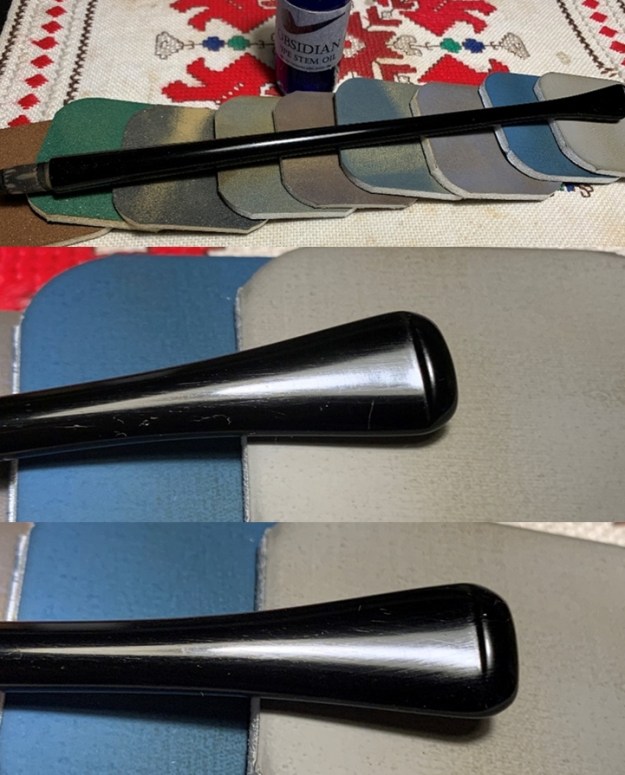
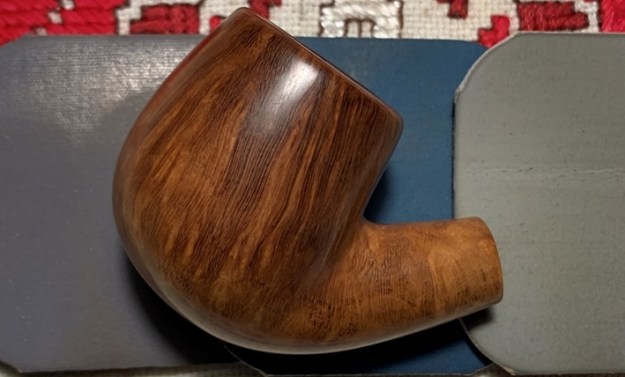
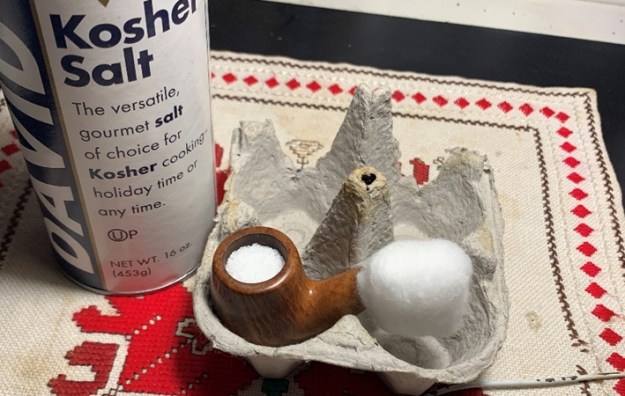
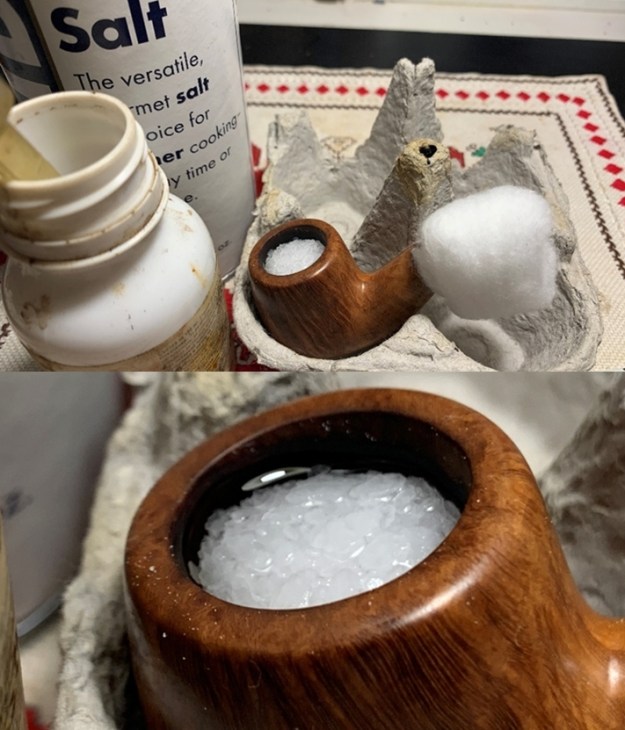
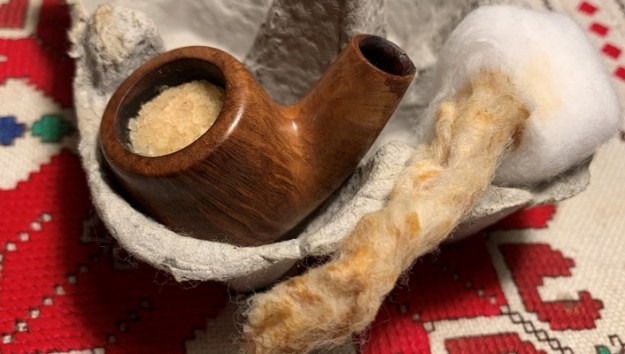
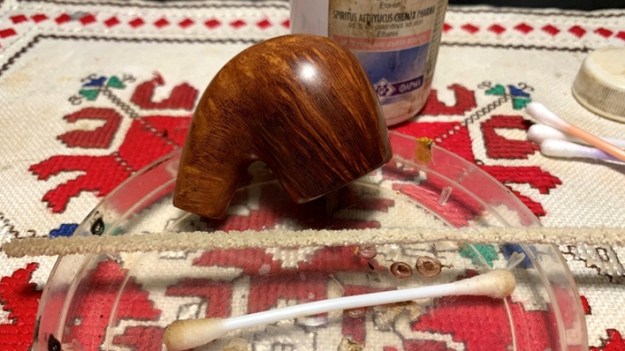
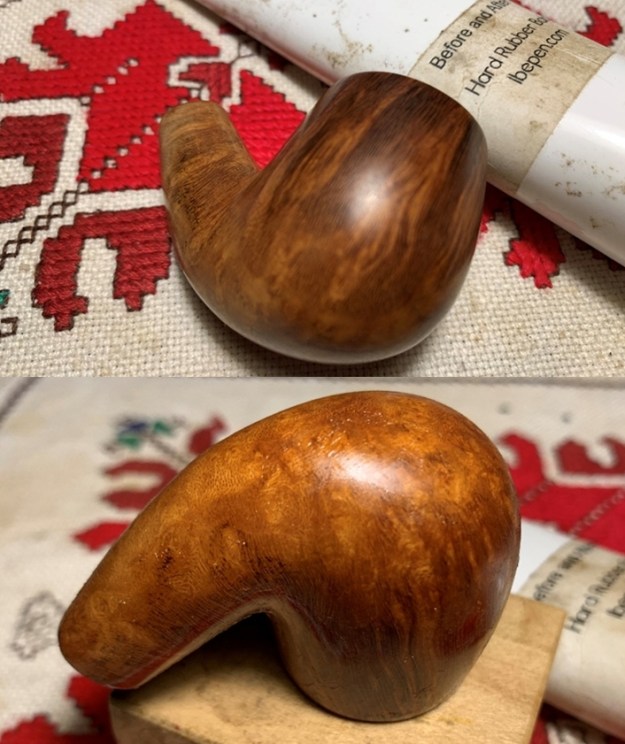
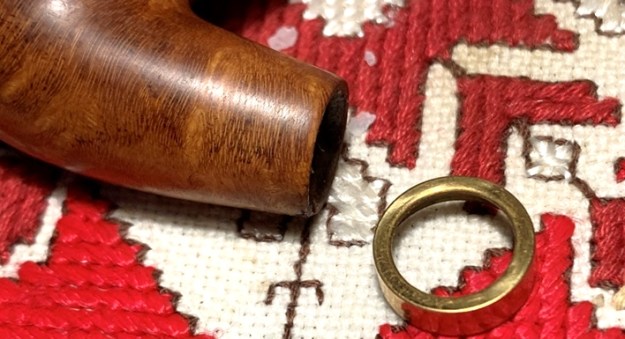
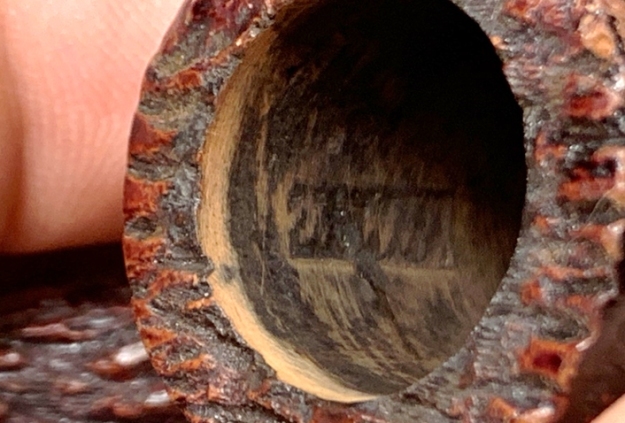
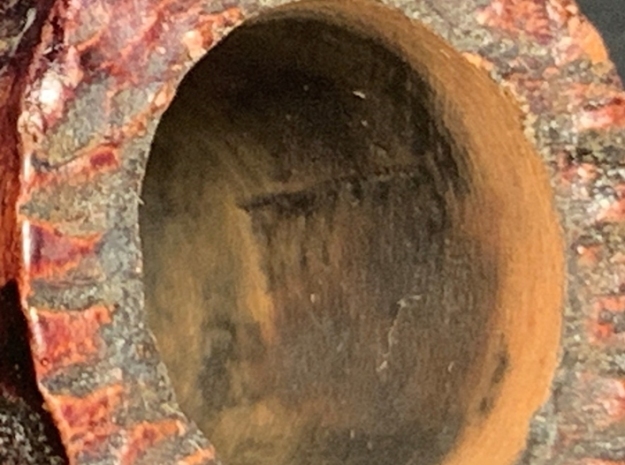
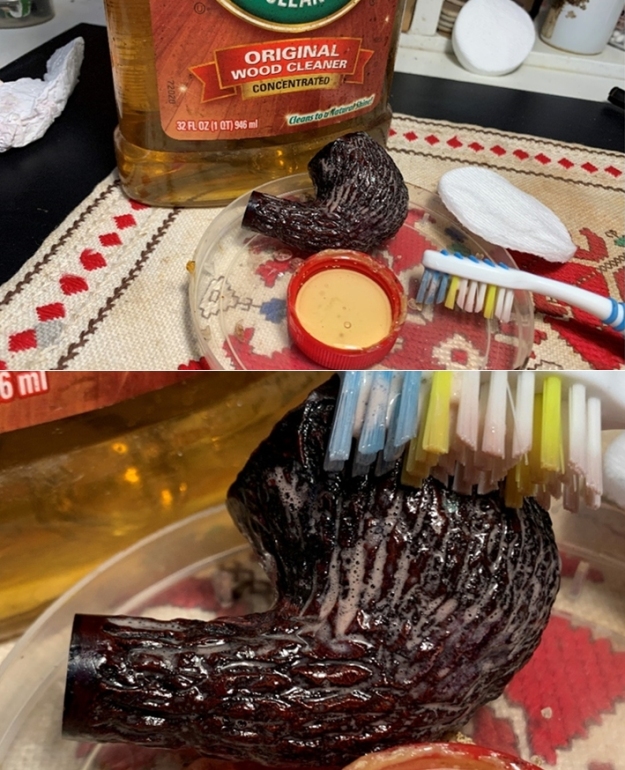
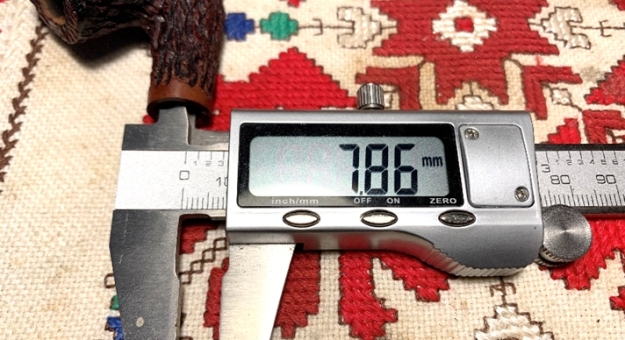
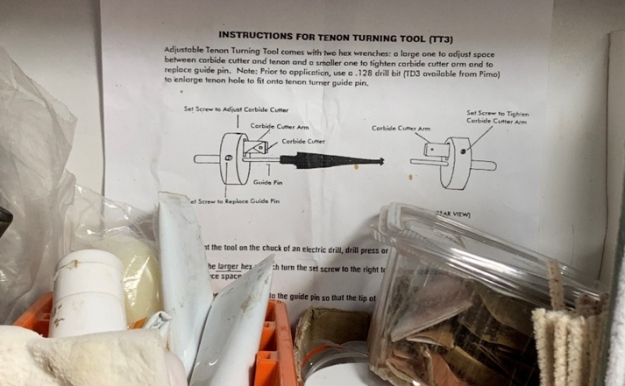
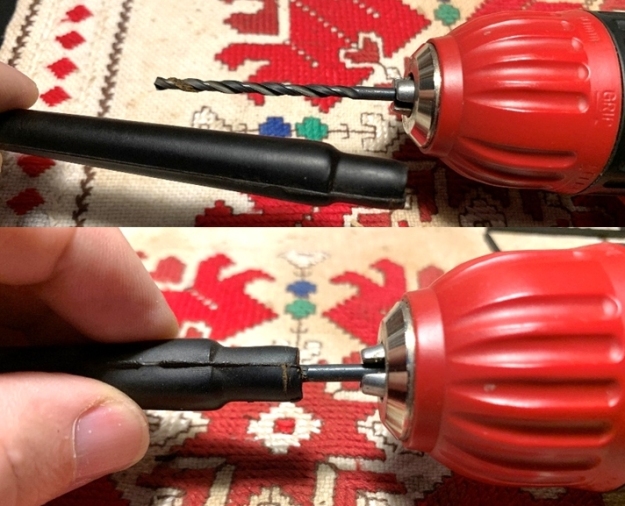
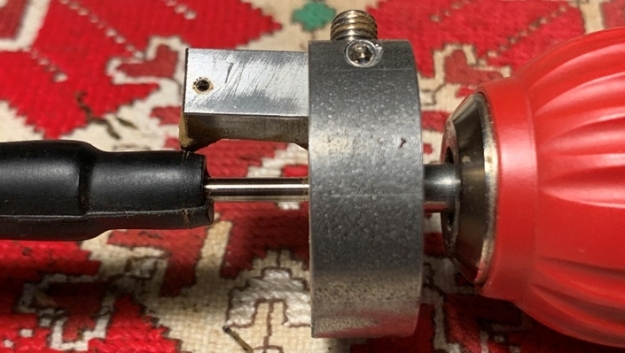
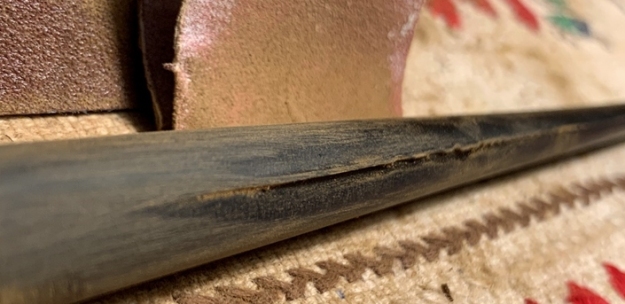
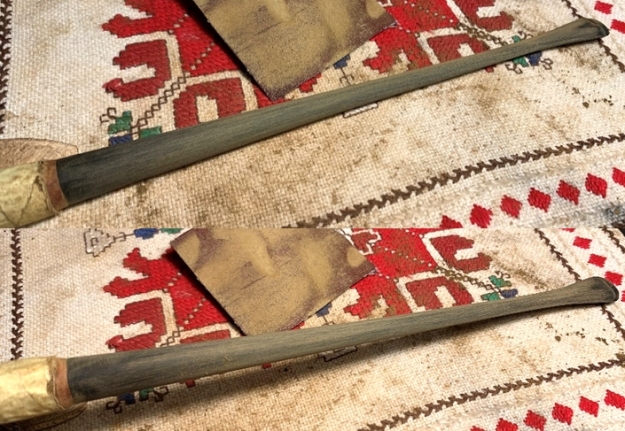
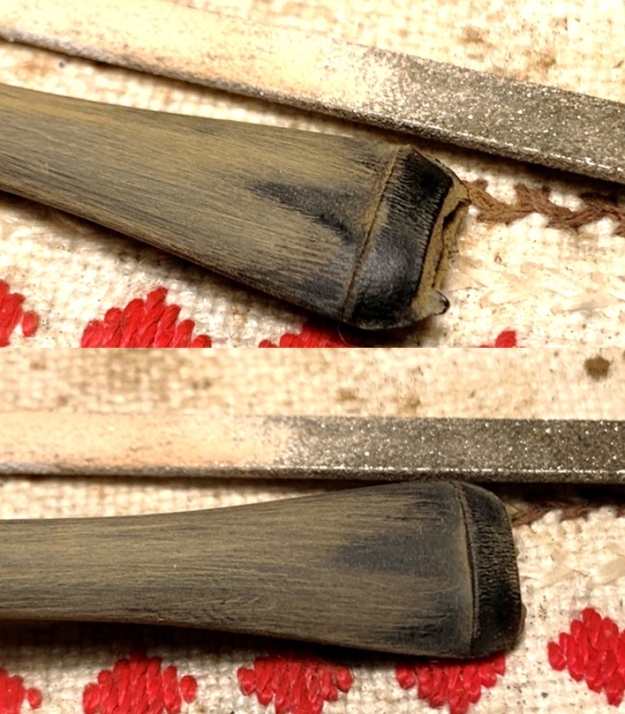
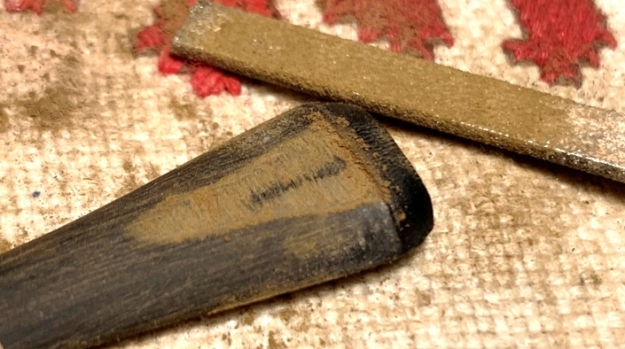
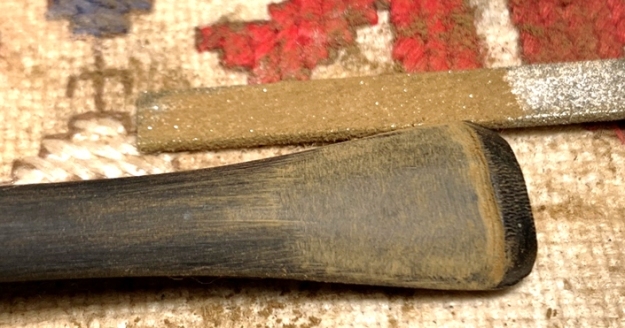
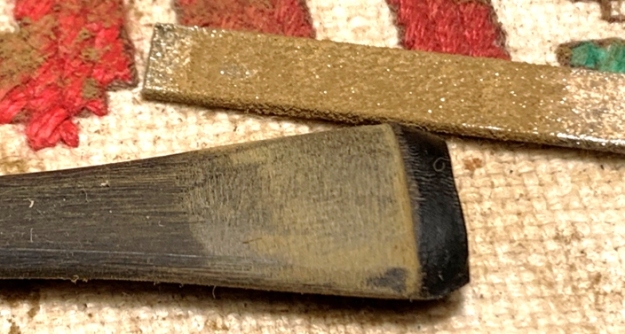
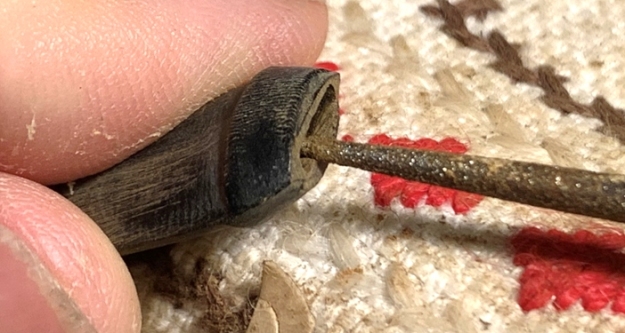
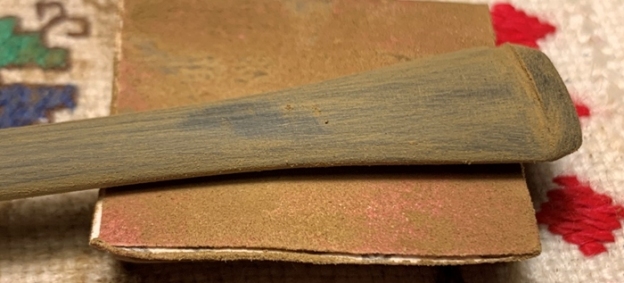
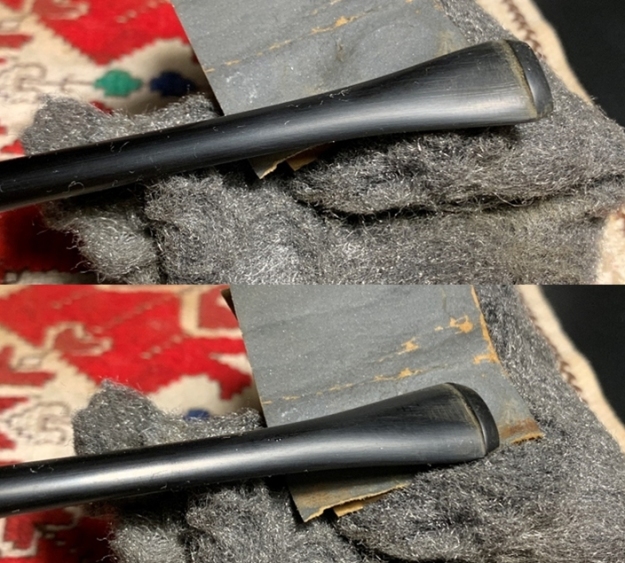
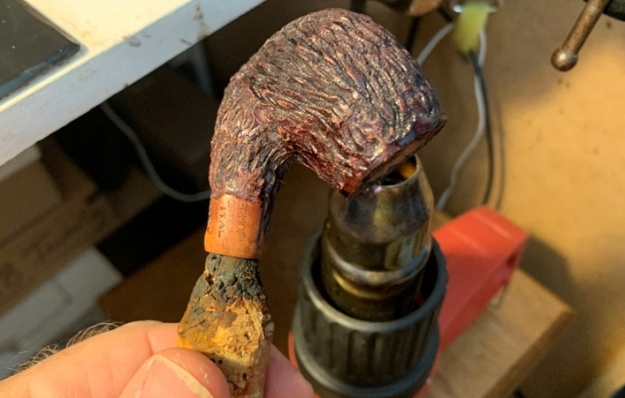
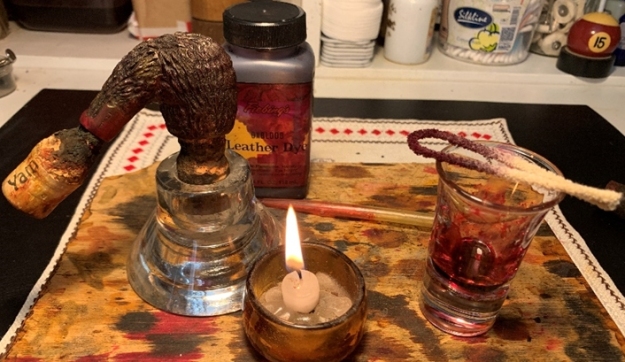
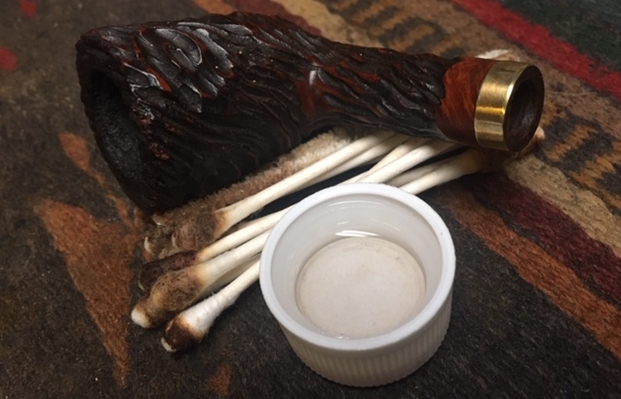
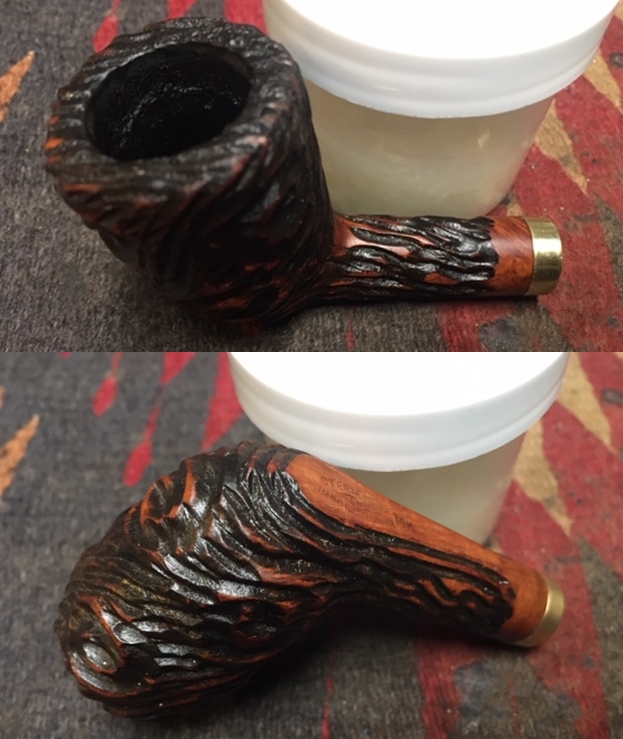
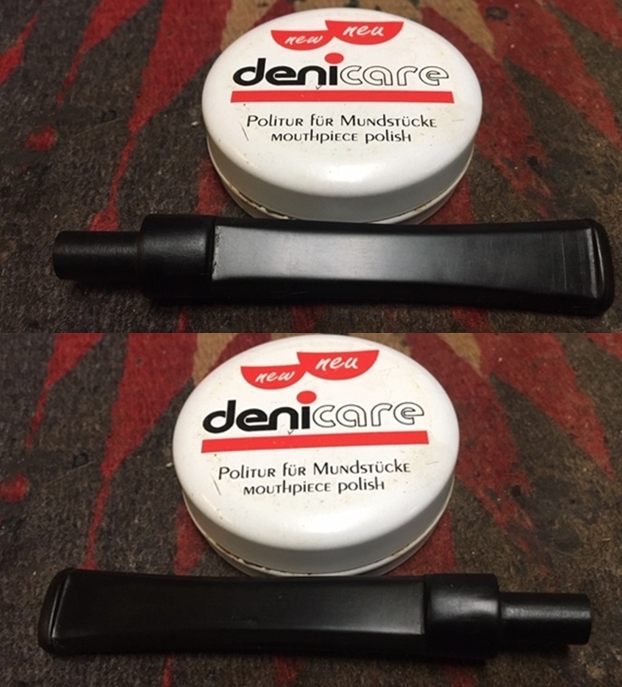
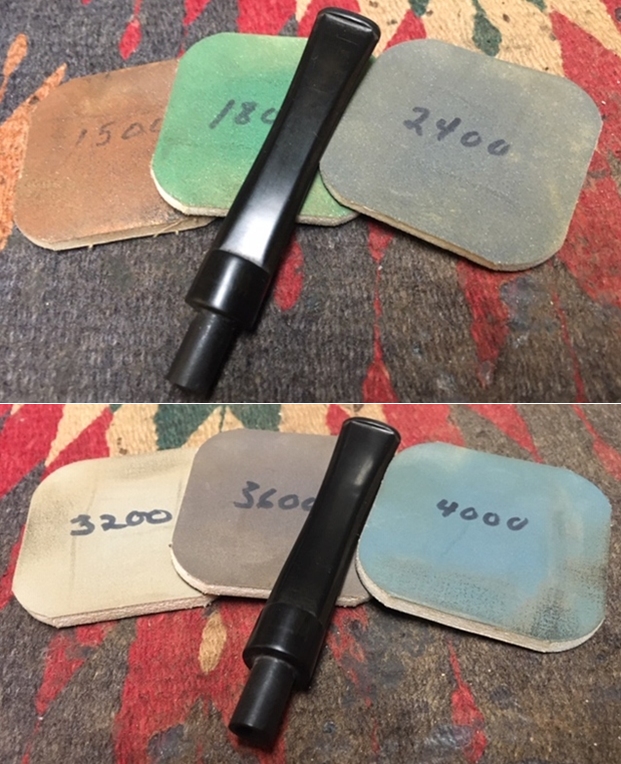
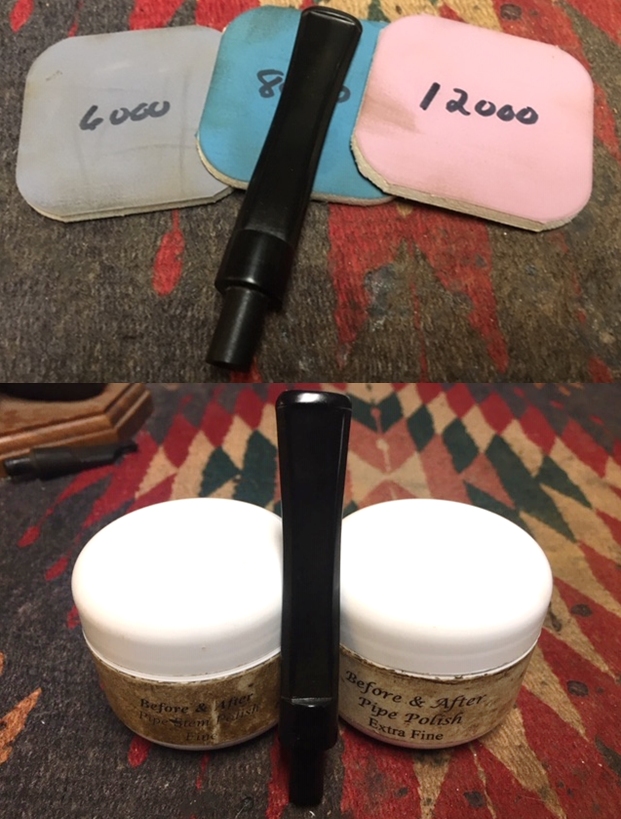
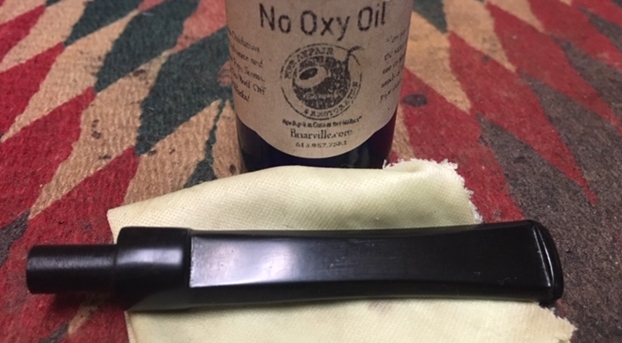
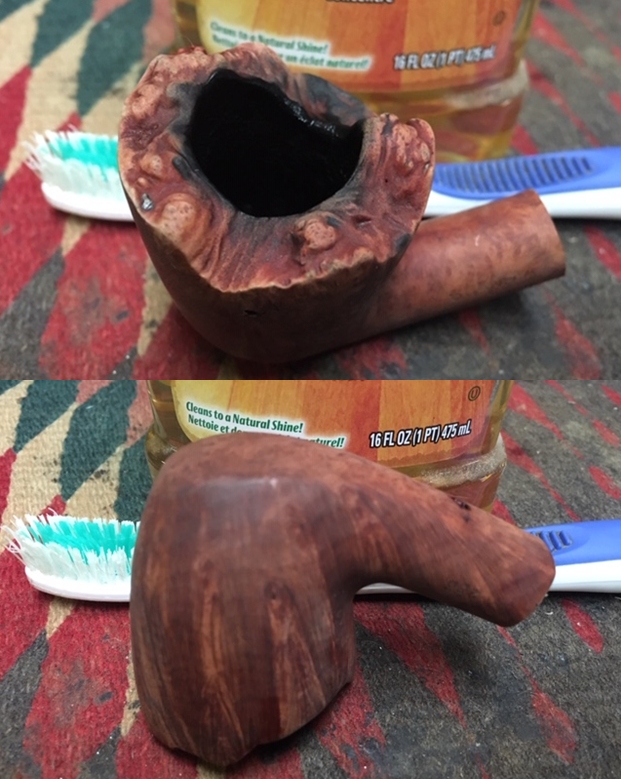
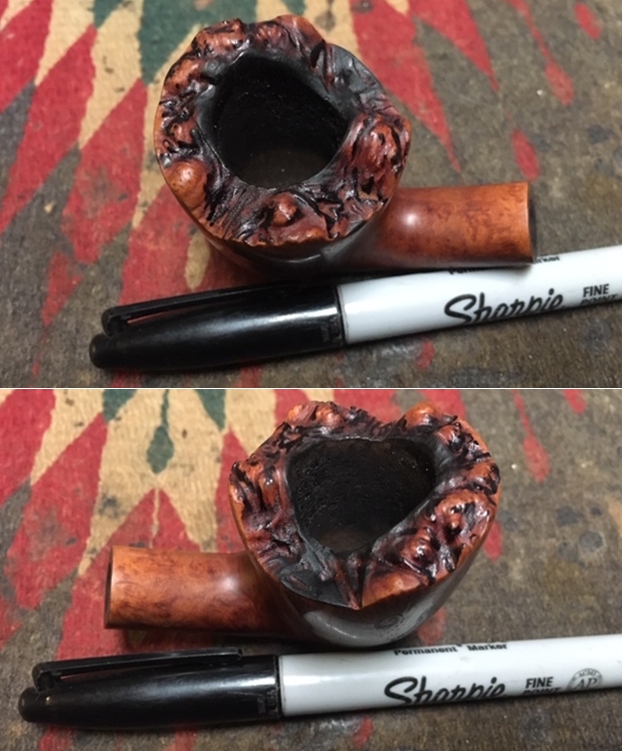
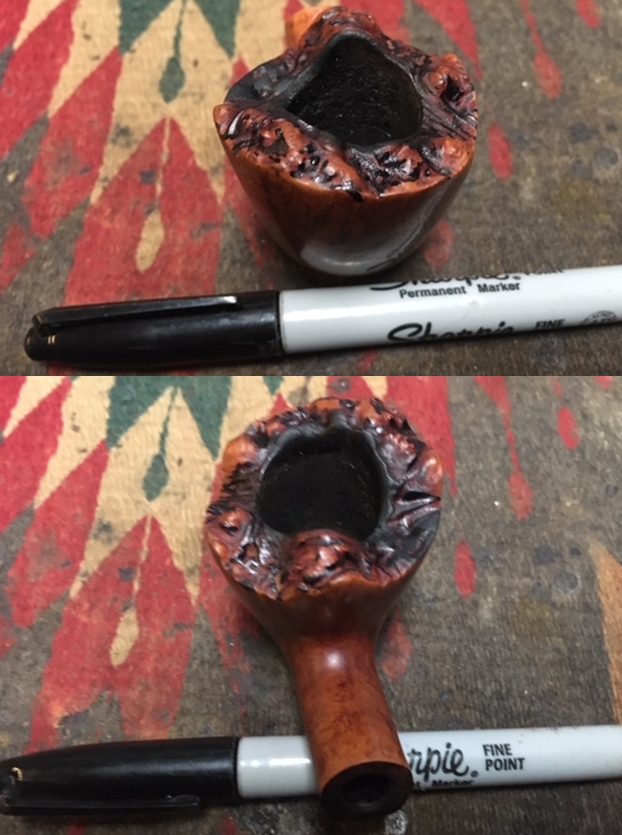
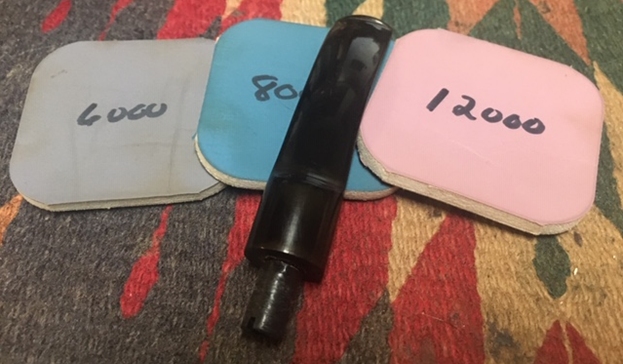
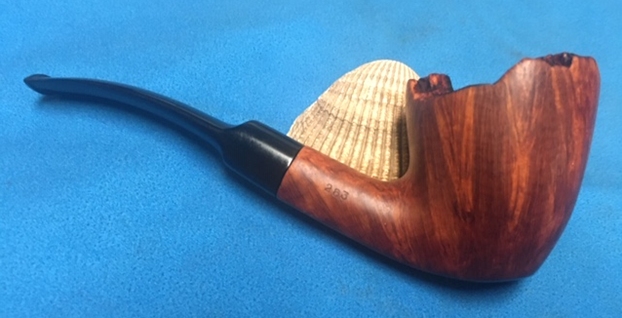
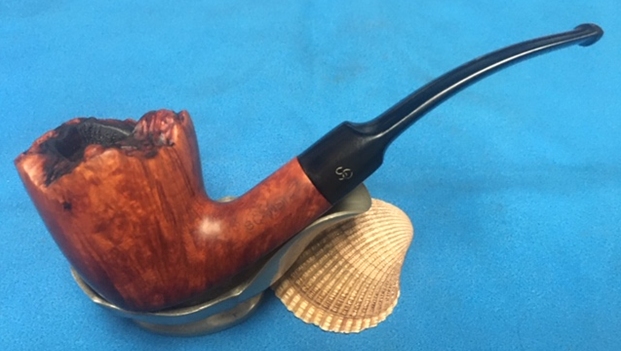
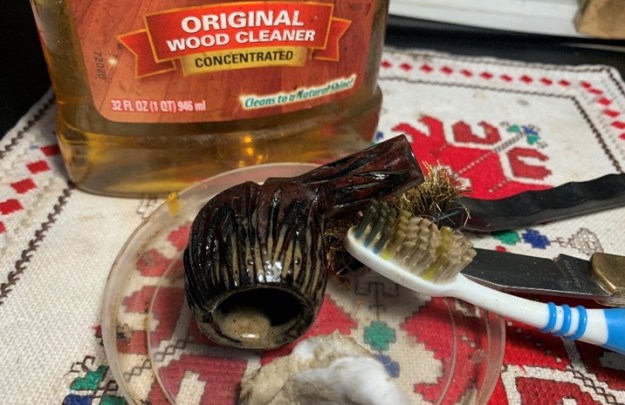
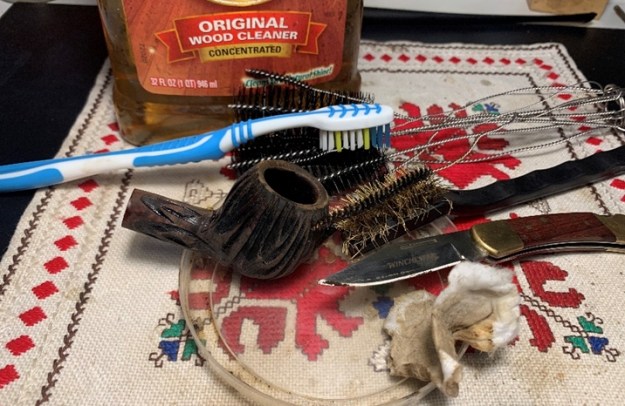
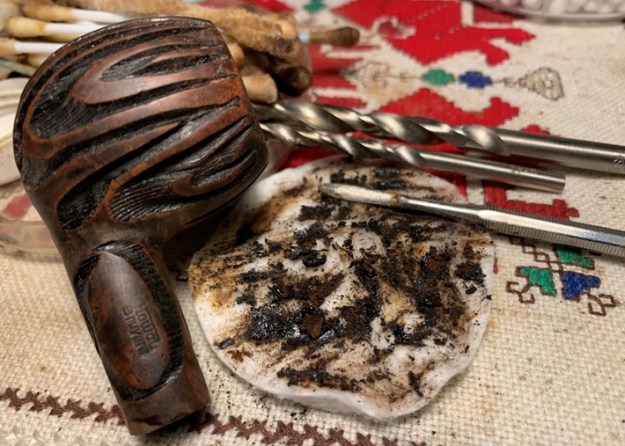
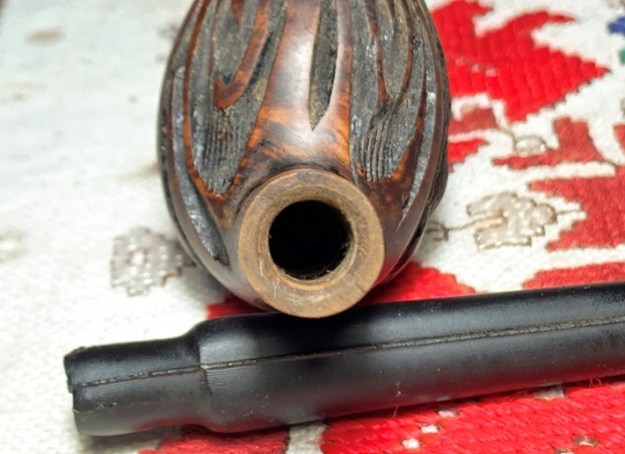
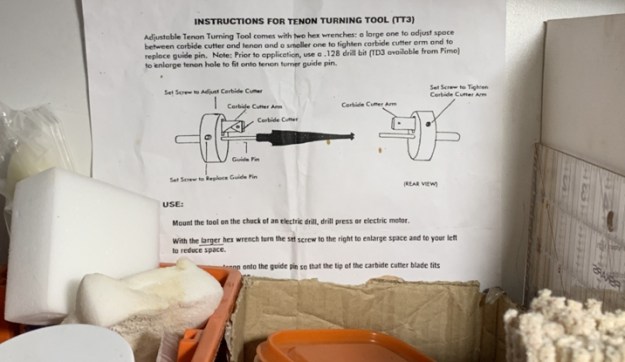
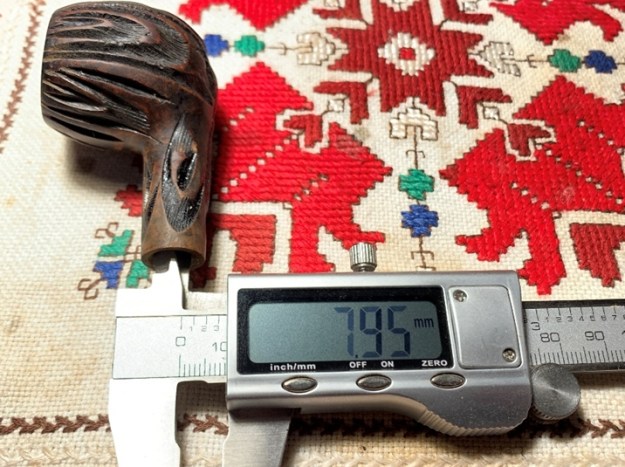
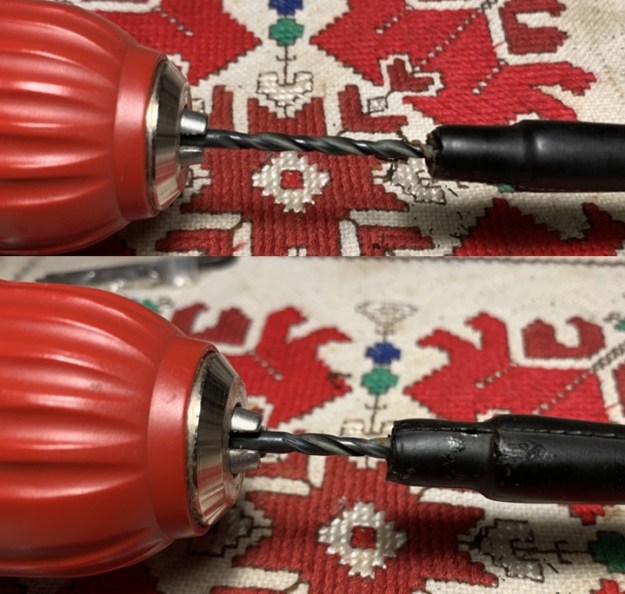
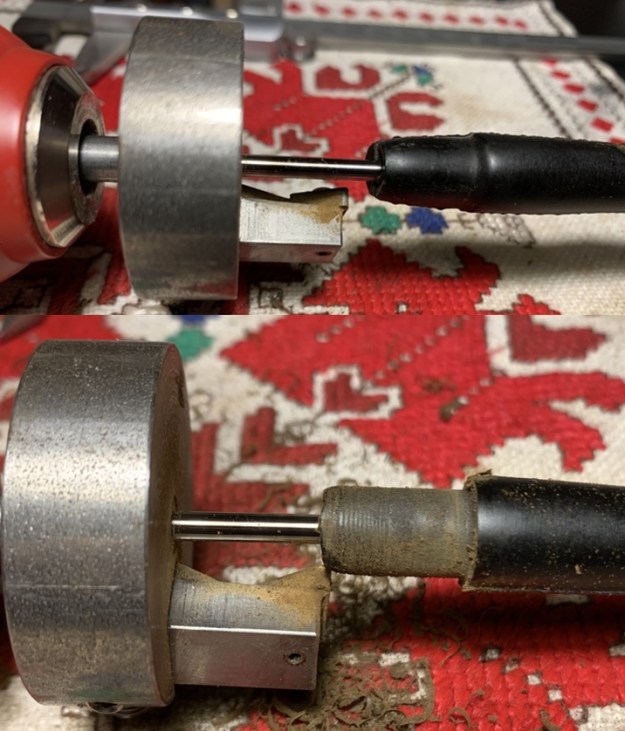
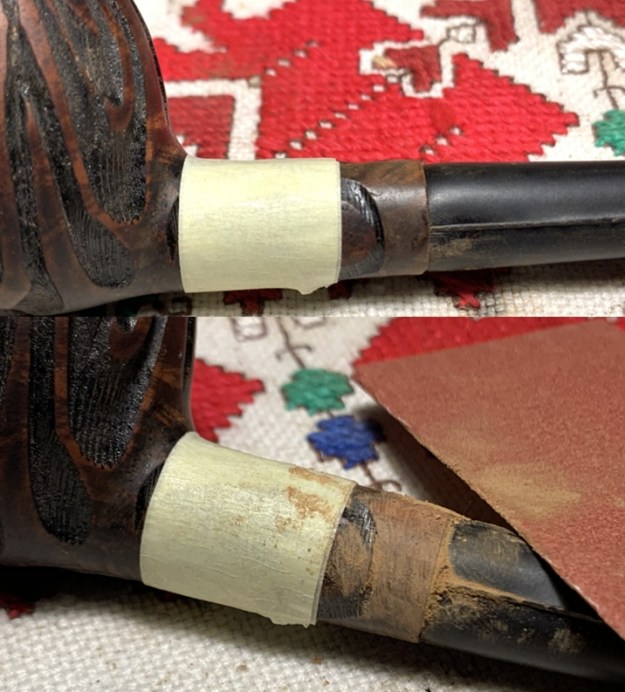
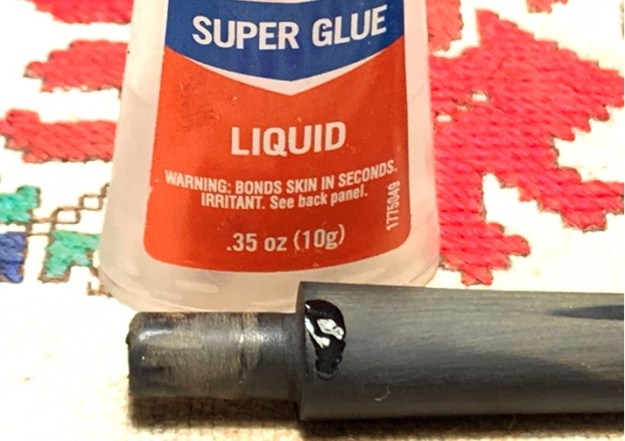
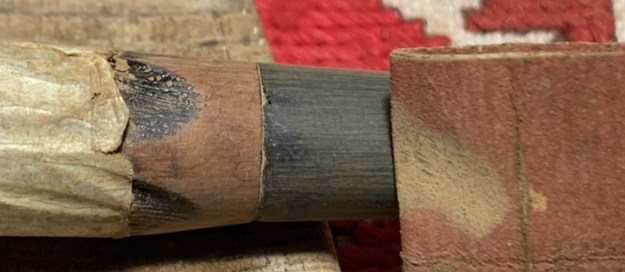
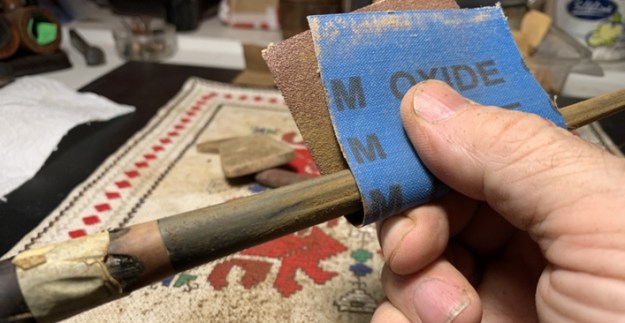
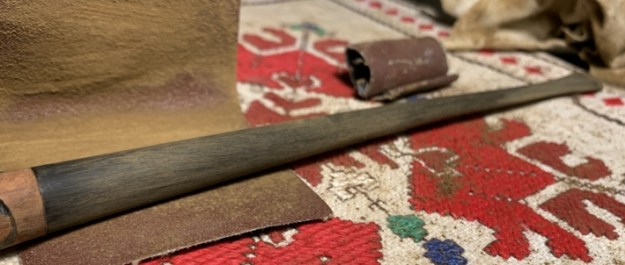
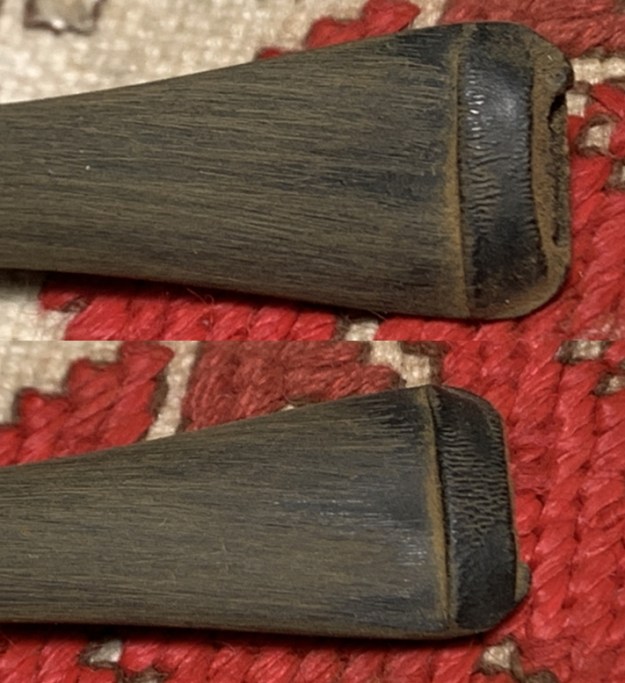
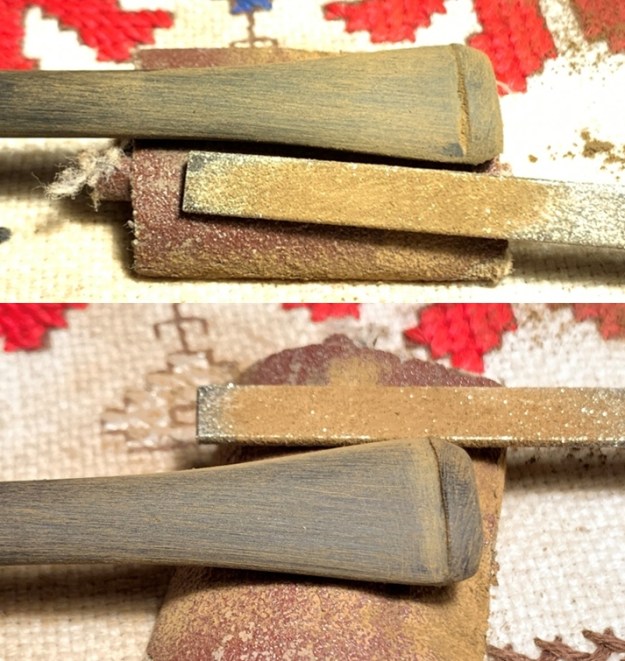
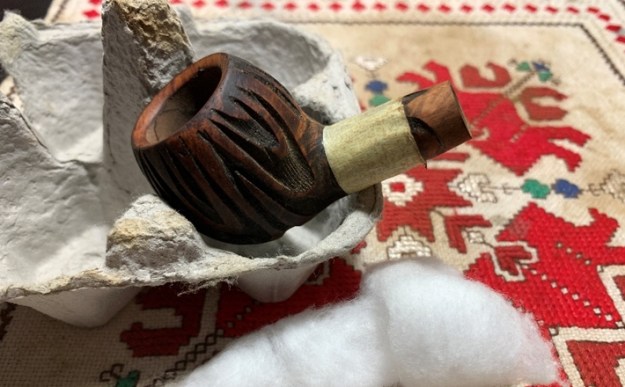
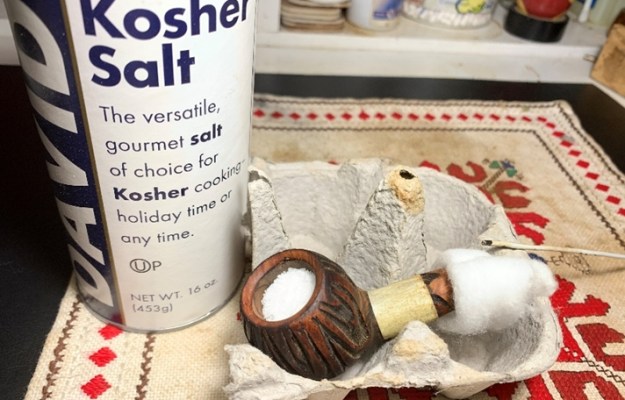
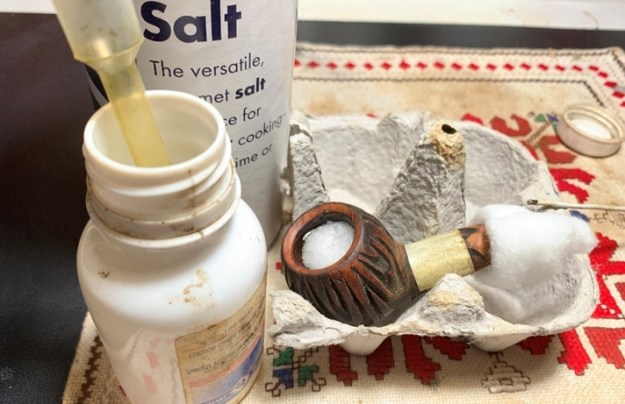
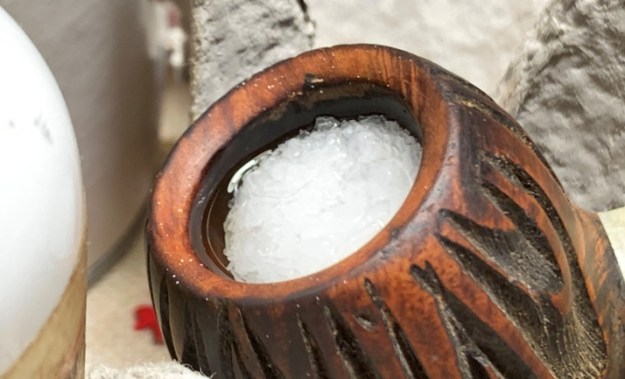
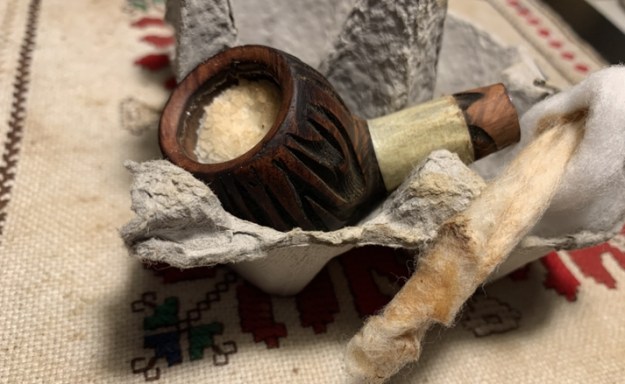
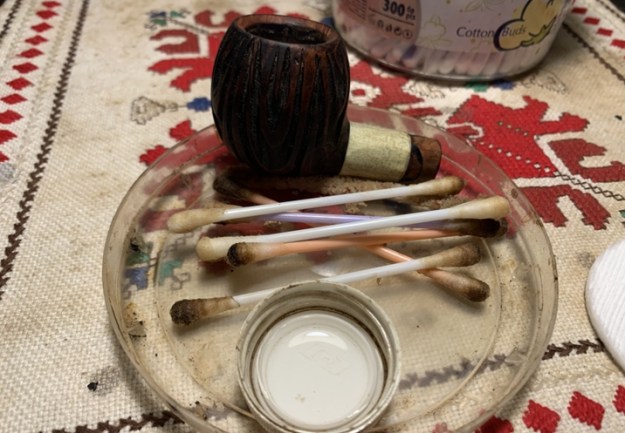
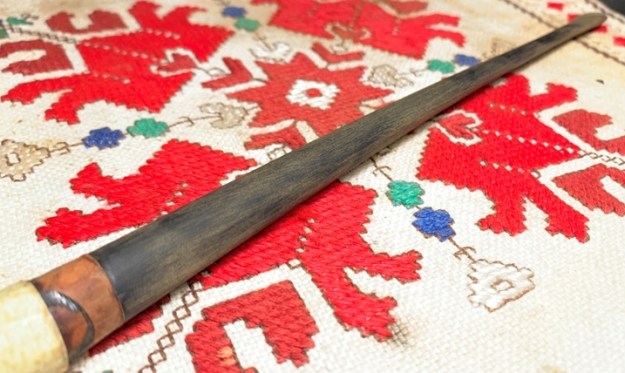
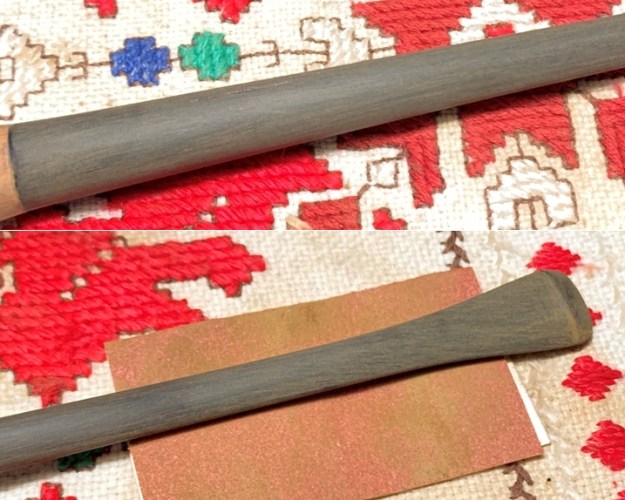
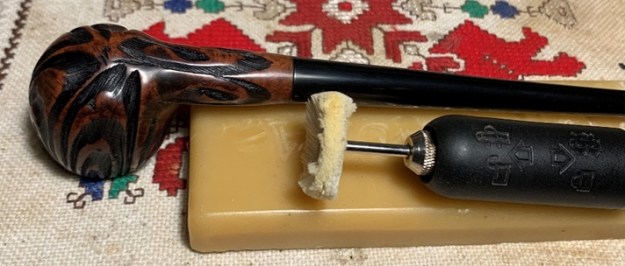
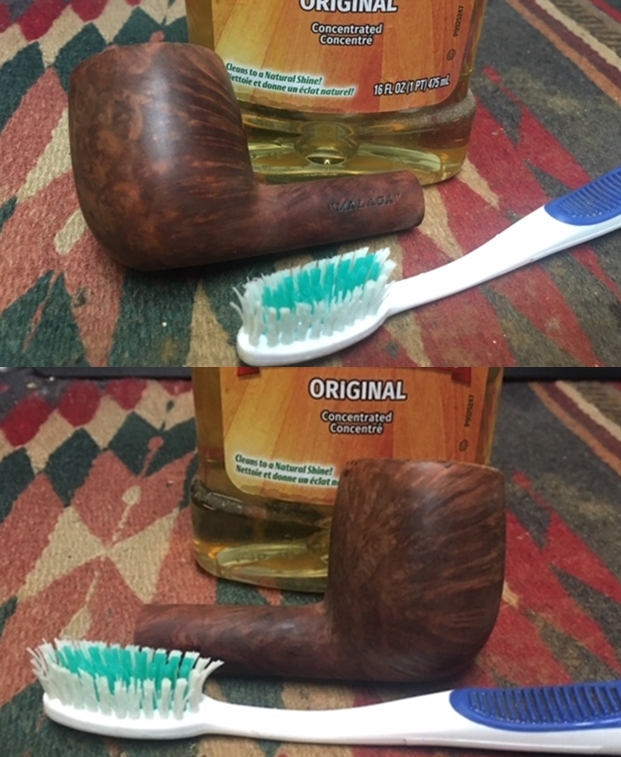
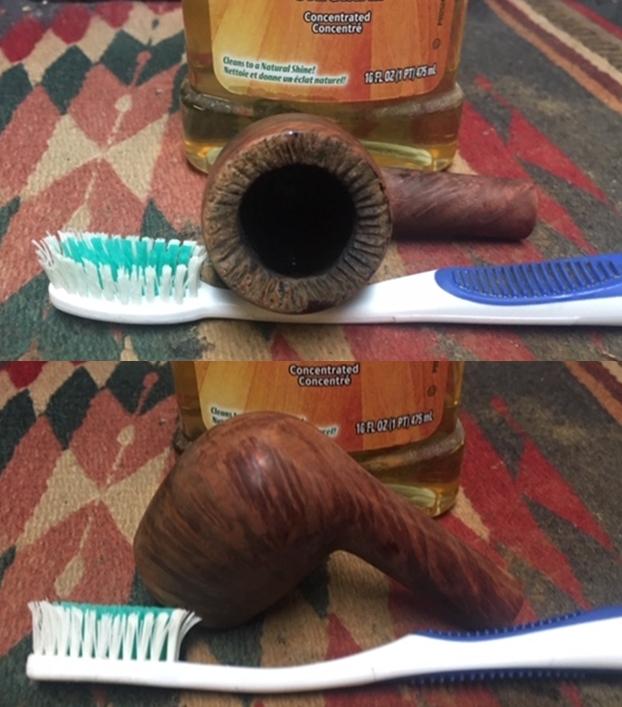
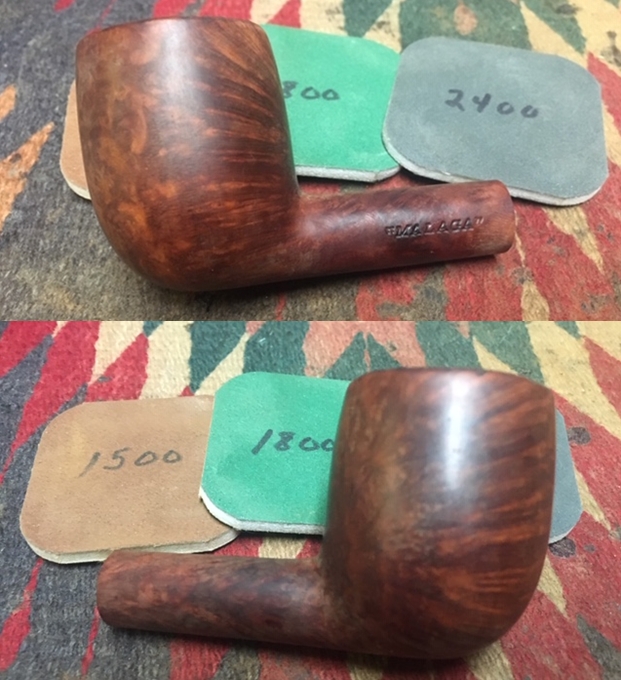
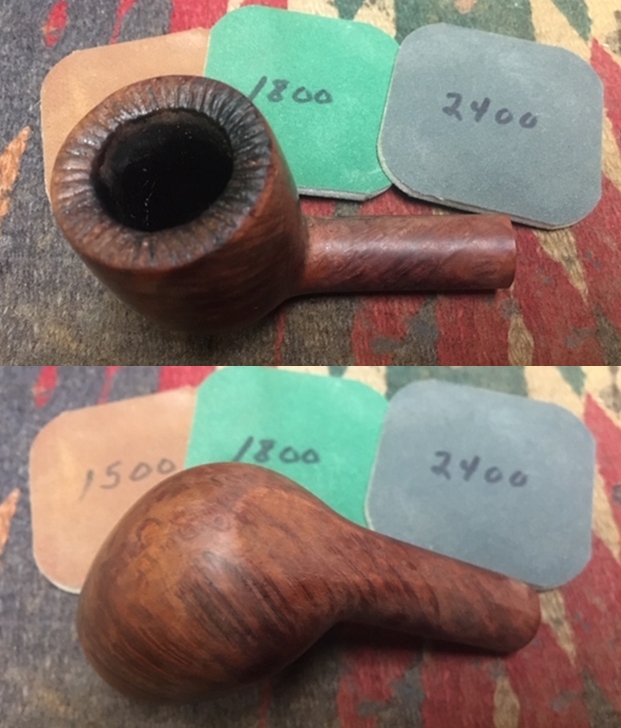
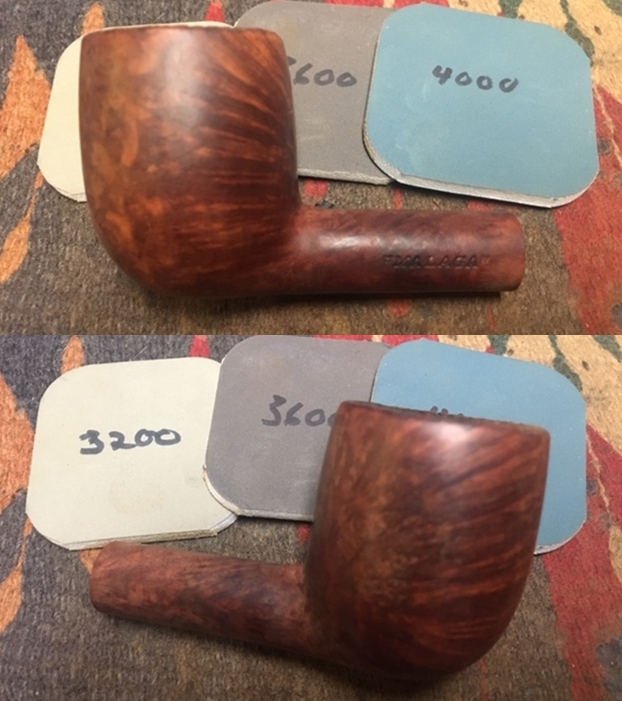
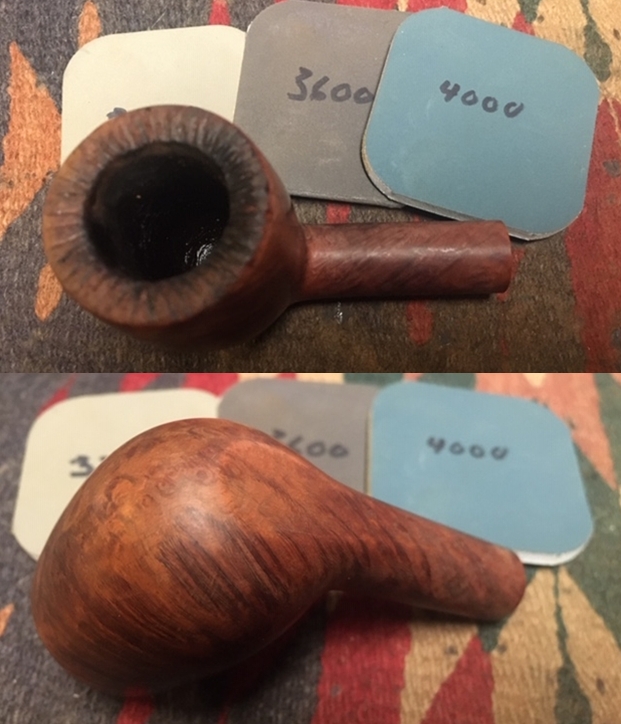
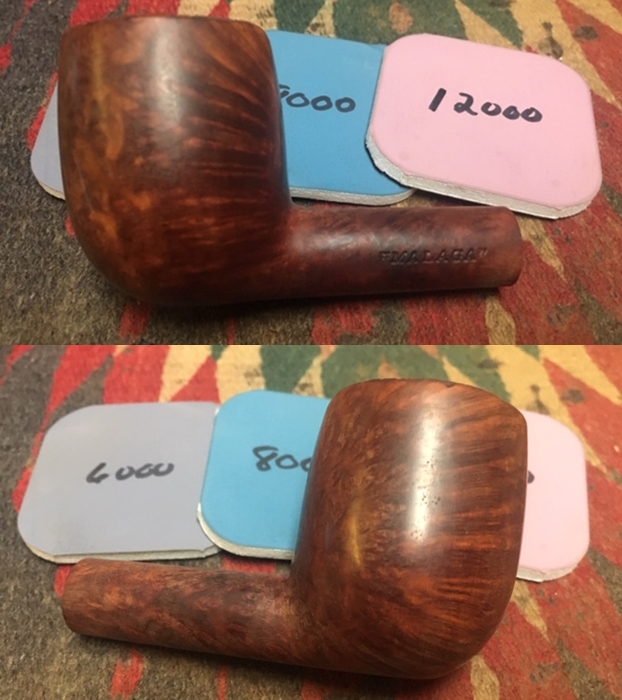
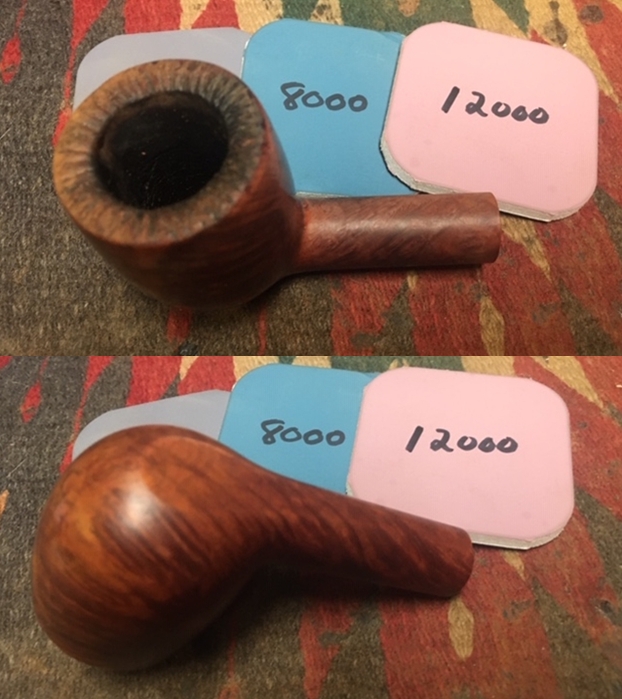
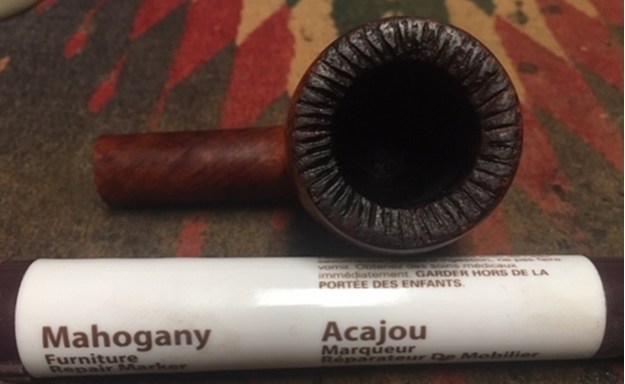
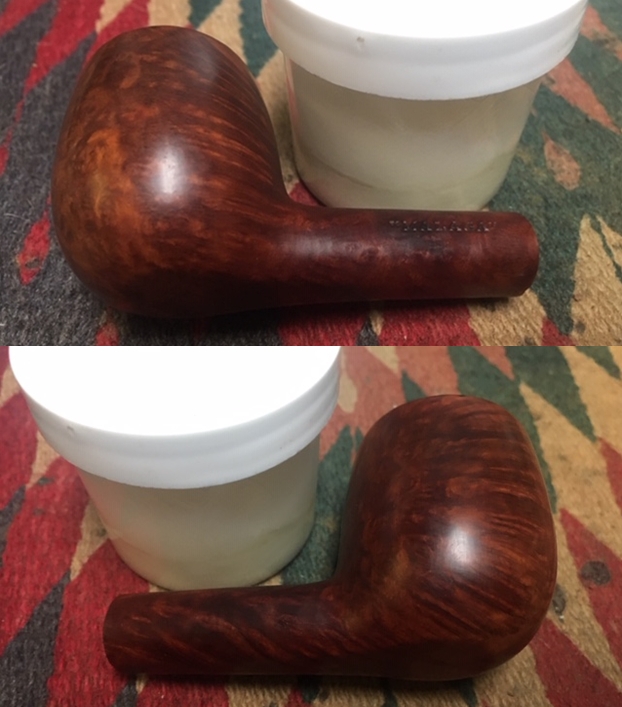
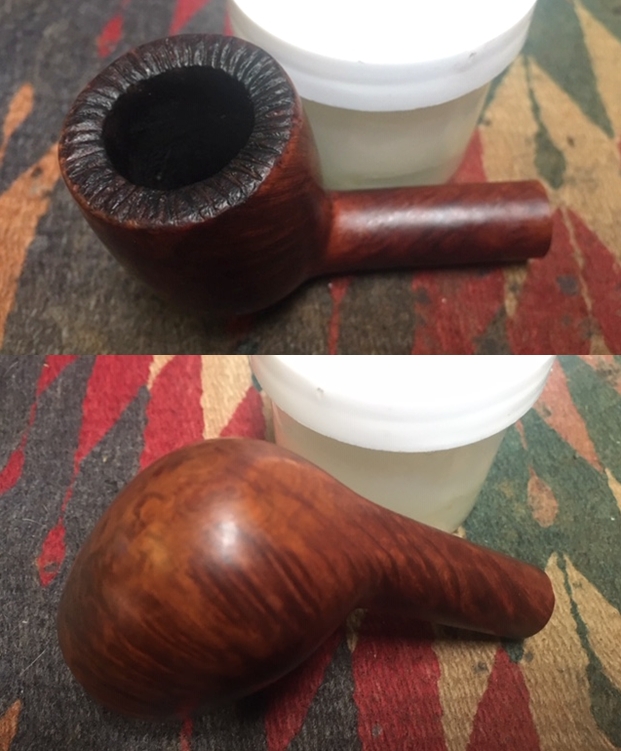
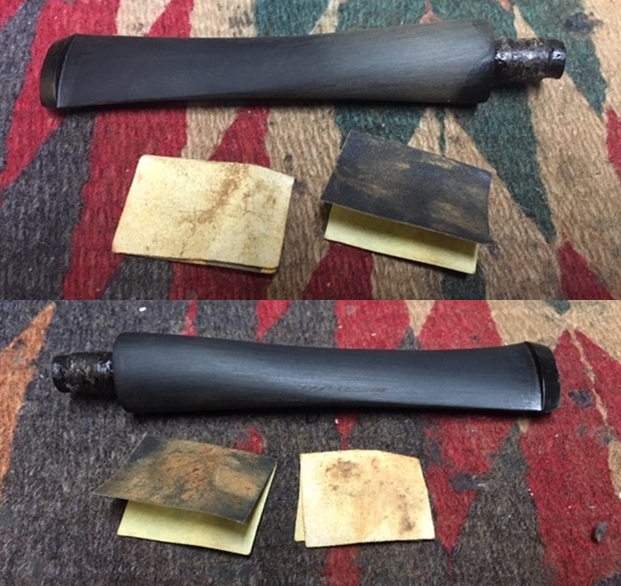
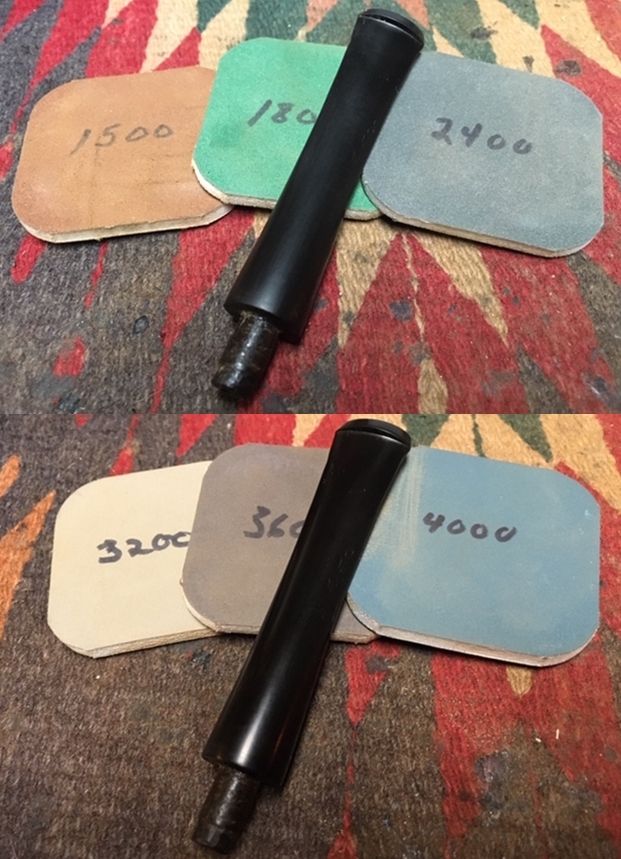
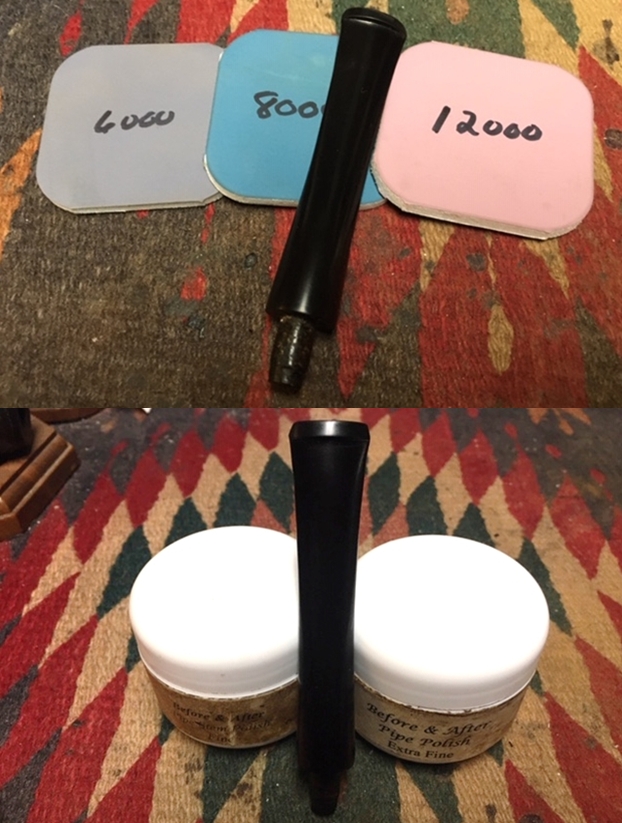
After completing the removal of the cake and cleaning the walls, an inspection reveals no heating problems.  I move on.Next, using undiluted Murphy’s Oil Soap I begin the external cleaning. I also employ a bristled toothbrush to get into the crevasses of the sculpted vertical sweeps, which are more detailed upon closer inspection. Within each crevasse, fine lines have been carved to provide a classier sculpted appearance. I like it. From the picture above, the lava flow caking on the rim is evident. A brass brush helps with removal of the crusting without damaging the briar underneath. The sharp edge of my Winchester pocketknife also helps as I carefully scrape the rim surface. From the worktable, I take the bowl to the sink and there using different sized long shank brushes with some anti-oil dish soap, I scrub the internal mortise under warm water.  After a thorough rinsing of the soap, I bring the bowl back to the worktable. The cleaning did a good job. I can now see the rim more clearly with a cut on the right side and some light damage on the left. The cleaning also reveals the residue of old finish on the smooth briar which shows up dark and shiny in the picture.  I’ll remove these patches with sanding.Starting with the rim, I take another picture showing the damage on the top and the bottom of the picture’s orientation.  The rim is sloped downwardly to form beveled rim peak. This is attractive and accentuates the Apple shape’s peaked rim. Going with this flow, I use 240 grade paper and sand the rim to freshen the lines and to remove the damage.  I show a few pictures to show the freshening progression. I follow the 240 paper by dry sanding with 600 grade paper on the rim.  I’m liking the emergence of a smooth grain contrast underneath.  A few blemishes remain on the rim at this point but I like the more rustic look – some imperfections on the rim accents the overall look.Next, to address the patches of old, dark shiny finish on the bowl’s surface, I dry sand using a 1500 micromesh pad to remove the old finish patches from the smooth briar surfaces of the sculpted motif.  I intentionally leave the rough rusticated briar in the sculpting untouched to preserve the original, darkened patina.  I’m aiming for an attractive contrast between the smooth briar, which will naturally lighten through the restoration process, revealing briar grain, with the rough, darkened sculpted briar. Not forgetting where I am in the cleaning process, I return to working on the internals with cotton buds and pipe cleaners dipped in isopropyl 95% – the strongest rubbing/cleaning alcohol available to me here in Bulgaria.  For a smaller Apple bowl, the internals were rife with old oils and tars.  I also did much excavation of tars and oils using the small dental spoon as well as drill bits.  With the bits, I hand turn a bit that is the same size as the drilling diameter which scrapes the wall.  The gunk seemed to have no end, yet finally, the cotton buds started to lighten, and I call the cleaning provisionally finished.  Later, I’ll continue the cleaning and refreshing of the internals by using a kosher salt and alcohol soak. Now to the stem fabrication.  I cease the stummel work at this point because there will be additional sanding as I size and sand the stem with the shank.  I take a few pictures to mark the starting point.  John prefers a straight stem for his Churchwarden which is not a problem.  The precast Warden stem has a very slight bend as it arrived on my table.  This will remain as it helps with maintaining the up/down orientation of the mounted stem.  The picture below shows the rough tenon oversizing which will be shaped to form a good junction with the Howal shank and tenon seating in the mortise. No shank/stem fitting is the same which means that sanding and finetuning the junction is always required.  The picture below illustrates this – the mortise drilling is slightly higher in the mortise which means that the upper thickness of the shank/mortise briar will be thinner and the lower will be slightly thicker.  Shaping the stem fit must factor this offset.The first step in fashioning the CW stem is to size the tenon.  I use the PIMO Tenon Turning Tool that I purchased from Vermont Freehand.  I keep the instructions tacked on the wall in front of me for a reminder and safe keeping!  A very useful tool to have for fashioning tenons.First, using an electronic caliper to measure the diameter of the mortise marks the target sizing of the tenon of the precast stem.  The mortise measurement is 7.95mm in diameter.  Using Charles Lemon’s (of Dad’s Pipes) methodology, I add about 50mm to this exact measurement to give me my ‘fat’ target.  The ‘fat’ target is what I will aim for when bringing the tenon down to size using the PIMO Tenon Turning Tool.  The ‘fat’ target (7.95mm minus 50mm) is about 8.45mm.  From this ‘fat’ point, I will sand the tenon by hand which gradually and patiently custom sizes the tenon to the mortise.The first thing needed is to pre-drill the tenon airway with the drill bit provided by the PIMO tool.  This enlarges the airway slightly enabling the insertion of the PIMO tool guide pin.  I mount the drill bit to the hand drill and drill out the airway.Next, the PIMO Tenon Turning Tool is mounted on the hand drill and I cut a small test sizing to give me the distance between the test cut and the ‘Fat’ target.  After cutting the test, I measure with the caliper and record 9.23mm and subtract the ‘Fat’ target, 8.45mm, leaving about .78mm to remove using the PIMO tool. Using the Allen wrench provided with the PIMO tool, I close the gap of the cutting arm and cut again.  I only cut a small portion out of the end of the tenon and then measure – this additional test cut guards from taking off too much.  The measurement of this test cut after closing the gap of the carbide cutter arm is 8.45mm.  On the button!  I finish the cut to the stem facing and begin sanding the tenon down. Using 240 grade paper, I uniformly sand the tenon so that the fit is snug, but not too snug.  As I sand the tenon, I often test the progress by inserting the tenon into the mortise.  I NEVER force the tenon to make it fit – a cracking sound of a shank is not a happy thing!I come to a point where the end of the tenon was butting up against the closing ridge from the mortise drilling.  I could detect the bump in the mortise.  Using the sanding paper and a flat needle file, I focus on tapering the end of the tenon so that it can navigate the narrowing mortise.  I don’t want to cut off the end of the tenon as a longer tenon provides a bit more strength for the longer stem’s reach.Finally, a good snug fit it accomplished and the stem is seated well.  The next step in the project is to fashion the shank around the new stem.  The pictures following show the overbite of the shank which needs sanding.To protect the Howal nomenclature and provide a sanding barrier, I wrap masking tape around the shank.  Using 240 sanding paper, I begin the process of sanding to bring the shank and stem into alignment. After making good progress, I discover a dimple at the seam of the precast stem just at the tenon facing. I’ve seen this before. To take the dimple out by sanding also will remove the corresponding briar on the shank side.  This I don’t wish to do more than is necessary.  I could also use the PIMO Tool to shave off more of the facing to remove the dimple.  Yet this would shorten the overall length of the Warden stem – not a good solution either. To remedy the dimple, after cleaning the area with a cotton pad wetted with alcohol, I spot drop regular CA glue on the dimple and immediately give it a spray of an accelerator so that the glue patch stays in place.  I don’t want CA glue running down the tenon facing!Shortly after, I rejoin the stem and Howal stummel and continue sanding the patch area.  The patch did the trick. The pictures show the results and the shank and stem are now in alignment.  I move on. Even though a precast Warden stem is new, it doesn’t arrive on the scene ready for action. Precast stems will usually not have smooth surfaces but tend to be ‘wavy’ – a leftover from the casting process. Therefore, sanding the entire stem is necessary. To do the initial rough sanding of the stem I use a coarse 120 paper to do the heavy lifting. As I sand the stem, the first picture below reveals what I’m describing as sanding reveals the rippled surface. After much sanding and bothersome rubber dust(!), the stem is shaping up well.  I’m liking what I’m seeing.With the rough sanding of the stem-proper done, I shape the button using the 120 grade paper and a flat needle file.  The first two pictures show the starting point and sanding – upper then lower. My day is ending, and the final project is to continue the internal cleaning and refreshing of the stummel.  To do this I use kosher salt and isopropyl 95% to give the internals a soak which helps draw out the tars and oils embedded in the internal briar.  I first stretch and twist a cotton ball to serve as a ‘wick’ that helps draw the oils out of the mortise walls.  Using a stiff wire, I guide the wick down the mortise and airway.  I then fill the bowl with kosher salt – kosher doesn’t leave an aftertaste as iodized salt. After placing the stummel in an egg carton that keeps it stable, with a large eyedropper I fill the bowl with isopropyl 95% until the alcohol surfaces over the salt.  After a few minutes, the alcohol is absorbed, and I refill the bowl with alcohol.  I put the stummel aside to soak through the night. The next morning, the salt and wick are soiled indicating the activity of the soak through the night.  I toss the expended salt in the waste, wipe the chamber with paper towel and blow through the mortise to dislodge any salt crystals left behind.  To make sure all is clean, I again employ a pipe cleaner and cotton buds dipped in isopropyl 95% to finish the cleaning.  Not long after, the buds are emerging clean.  I move on. I return now to a reunited stem and stummel, using 240 sanding paper I now start the fine tuning of the stem after the coarse 120 paper. To show the completed condition of the stem after the 240 grade paper sanding, two close-ups show the improved texture of the sanded surface.Next, for more fine tuning of the stem’s surface, I wet sand with 600 grade paper and follow by applying a buff with 000 grade steel wool.  I love to see the emergence of the buffed-up vulcanite stem!  I keep the stem and stummel united throughout the sanding process to assure that the stem’s tenon facing remains sharp and in alignment with the shank – shouldering the stem is not an option!Turning back to the Howal bowl, I remove the masking tape and take some pictures marking the stage of progress. I like the rustic look this bowl already has.  My approach will be to run the bowl through the full regimen of micromesh pads to bring out the shine and briar of the smooth briar surfaces – going over for the most part, the sculpted surfaces.  At that point I’ll determine if I need to darken the shank end that was lightened because of the stem sanding.  I also will freshen the darker sculpted sections with a stain stick.  I’ll keep the stem and stummel joined through this process which will aid me later when I continue with the micromesh process on the stem. I take pictures of the bowl to mark the starting point. Beginning with micromesh pads 1500 to 2400, I wet sand followed by dry sanding with pads 3200 to 4000 and 6000 to 12000.  The pictures show the progression. The grain came out of the smooth briar nicely.  Now, to freshen the sculpted sections.  With the fine lined carvings in each sculpted section, briar dust has collected from all the sanding.  I first brush the carvings with a bristled brush.  This removes a good deal.  Following this, with an alcohol wetted cotton bud, I wipe out each carved section.  Next, using a very dark brown dye stick which turns out to be a mahogany, which looked the best after blending with the original surface, I trace the carvings darkening the sculpted briar.  After finishing, I give another quick sanding over the smooth briar surface with the last of the micromesh sanding pads, 12000.  I do this to clean off any inadvertent overrun of the dye stick onto the smooth briar and to sharpen the lines. Using Before & After Restoration Balm, I place some on my fingers and work the Balm into the briar surface.  I’m careful to work it into the crevasses of the sculpting.  B&E Restoration Balm is an excellent product from Mark Hoover at www.ibepen.com that raises the natural hues in subtle ways that enhances the presentation of the pipe.  After thoroughly working the Balm into the briar surface, I set the bowl aside for 20 minutes to allow the Balm to do its thing.  The second picture shows this state.  After 20 minutes, I wipe the excess Balm with a cotton cloth and then buff the stummel with a microfiber cloth to thoroughly remove the excess Balm and to raise the shine.The next step is to apply Blue Diamond compound to the entire pipe.  After reuniting stem and stummel, I mount a cotton cloth buffing wheel to the Dremel, set the speed at about 40% full power and apply a light application of the compound focusing primarily, but not exclusively, on the smooth briar sections.  I keep it light because I do not want the compound to cake up in the rusticated ridges of the sculpting.  I apply the compound to the smooth and rusticated surfaces and to the stem.Following the compound, I use a felt cloth to wipe the pipe to clean it of compound dust.  I don’t want compound mixing with the waxing phase.After switching to another cotton cloth buffing wheel, maintaining the same speed, carnauba wax is applied to the entire pipe.  As with the compound, I go easy on the rusticated ridges not wanting wax to cake.  After applying wax to the entire pipe, I use a microfiber cloth to give the Howal Churchwarden a rigorous hand buffing to remove excess wax and to raise the shine.The Howal Sculpted Apple bowl looks great mounted on the bow of the Churchwarden stem!  I’m pleased how the smooth briar surfaces cleaned up and how the grain provides a striking contrast with the sculpted design.  The added rusticated ribs in the carvings adds a nice detail.  The overall presentation of the Howal Sculpted Churchwarden gives a very old, rustic feel.  I’m glad John was patient waiting for this Churchwarden to come to life.  He will have the first opportunity to add this pipe to his own collection from The Pipe Steward Store.  This Churchwarden project benefits the Daughters of Bulgaria – women and girls who have been trafficked and sexually exploited.  Thanks for joining me!

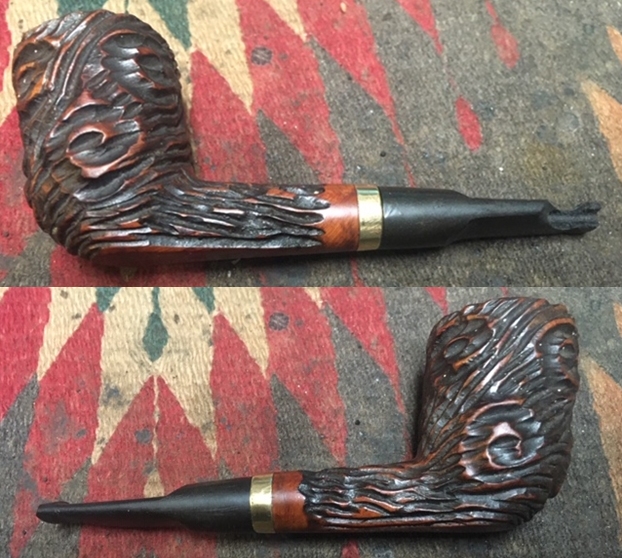
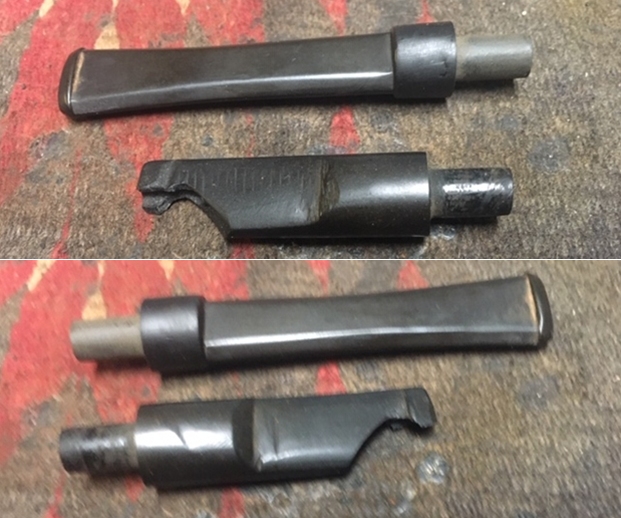
Restemming a “Malaga” Billiard from Kathy’s Dad’s Pipes


Blog by Steve Laug

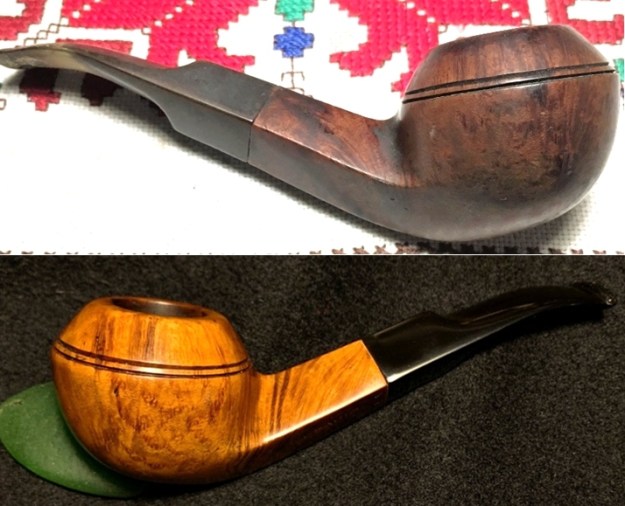
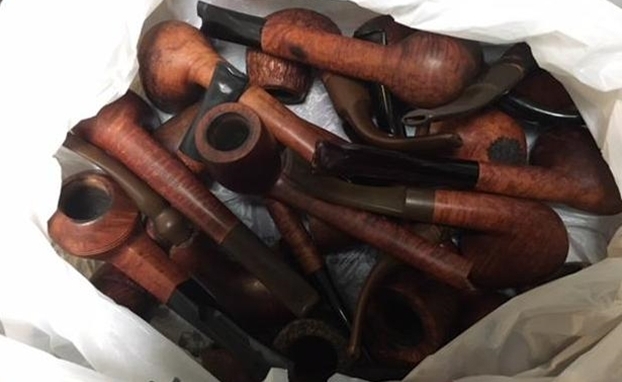
I have been working on a lot of different estate pipes and selling them for different families. This morning I was looking through the bag of pipes that I have left from George Koch’s estate. There are only three of them and all were in pretty rough shape. The rims were well knocked about and the stems were either chewed off or through and really would need to be carefully worked over and have new stems fit to them. The second of these three Malaga pipes that need a lot of attention was the next one I picked up this morning. It is a Billiard with a chewed through stem. Once again the rim top was used as a hammer or at least spent a lot of time being knocked against hard surface. The rim top was scored and originally had a bit of sunburst look around the chamber. But sides of the bowl had a mix of grain styles that was fascinating. It is the second of the last three Malaga pipes that came to my brother and me in several shipments of pipes from George’s daughter Kathy. Alex had gone through the bag in essence had passed on these three. Jeff unwrapped the pipes when they came to him and took the following photo to give an idea of the volume of the pipes that we purchased. In each of the previous blogs that I have written on the restoration of George’s pipes I have told his story. If you have followed the restorations you will have read the information and the background piece that Kathy did on her father. Here is a link to one of the previous blogs on his Malaga pipes where I included her tribute in full (https://rebornpipes.com/2019/01/26/back-to-kathys-dads-pipes-restoring-a-%c2%bc-bent-malaga-author/). You can also read the bio on her Dad, George Koch. It is an interesting read and one that shows just how far our pipe collecting passion can go when we find a brand of pipes that we enjoy. I am going to only include the portion on the Malagas at this point. If you wish to read the rest follow the link above.

Kathy writes…We lived in Livonia, and that’s where his love for Malaga pipes began. After a few years he returned to Allis Chalmers and we moved back to Springfield. I remember that when we went back to Michigan to visit friends, Dad had to go to the Malaga store and acquire a few new pipes. Many a year I wrote to Malaga and they picked out a pipe for me to purchase that I could give Dad for a Christmas or birthday present. He was always pleased. His favorites were the straight stemmed medium sized bowl pipes, but he liked them all. 

He had some other pipes, but the Malagas were his favorites. I remember him smoking them sitting in his easy chair after work, with feet up on the ledge by the fire burning in the fireplace.  Growing up it was my job to clean them and he liked the inner bowl and stem coated with Watkins vanilla, leaving a little of that liquid in the bowl to soak in when I put them back on the rack…I’m very happy they are being restored by you and your brother and hope they find homes who enjoy them as much as Dad did. Thank-you for your care and interest. — Kathy, the oldest daughter

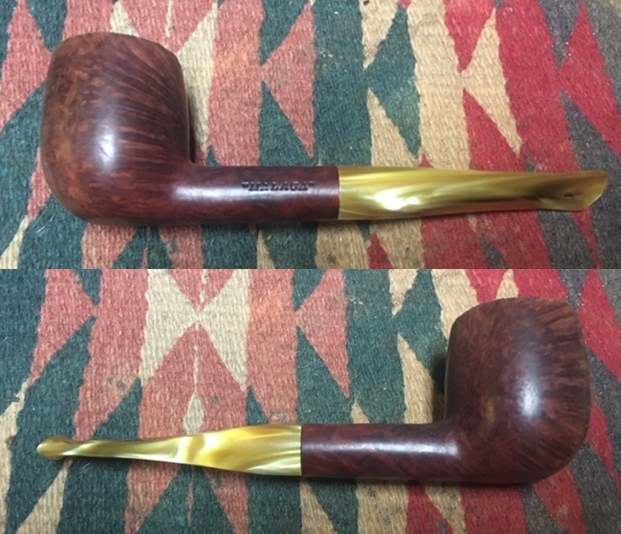
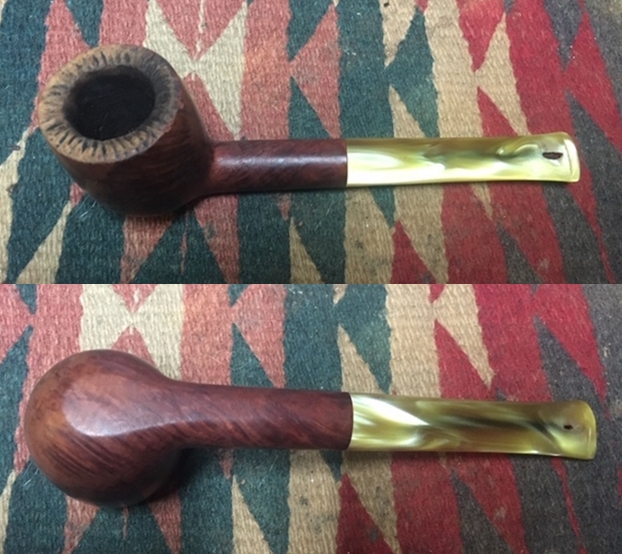
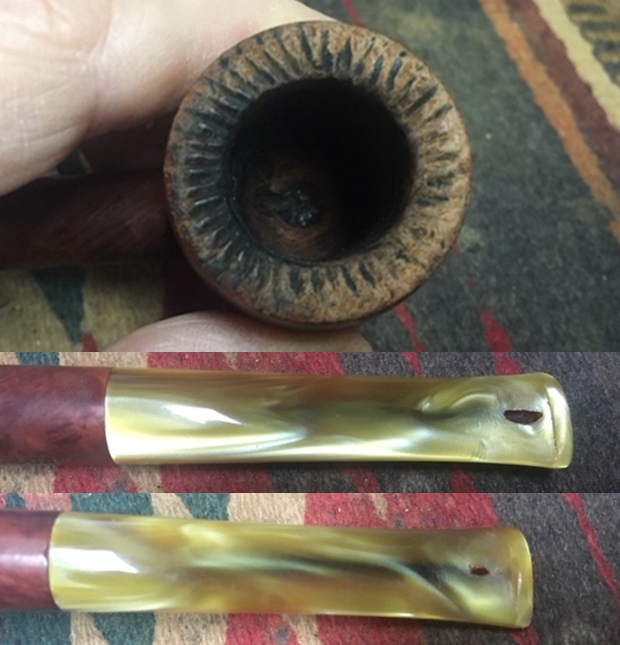
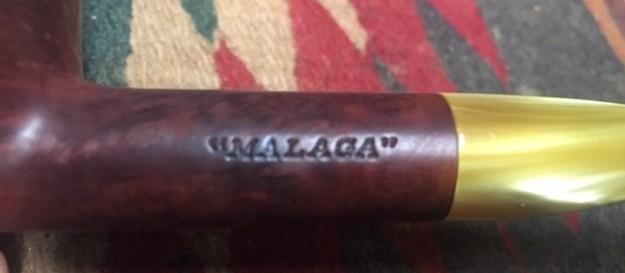
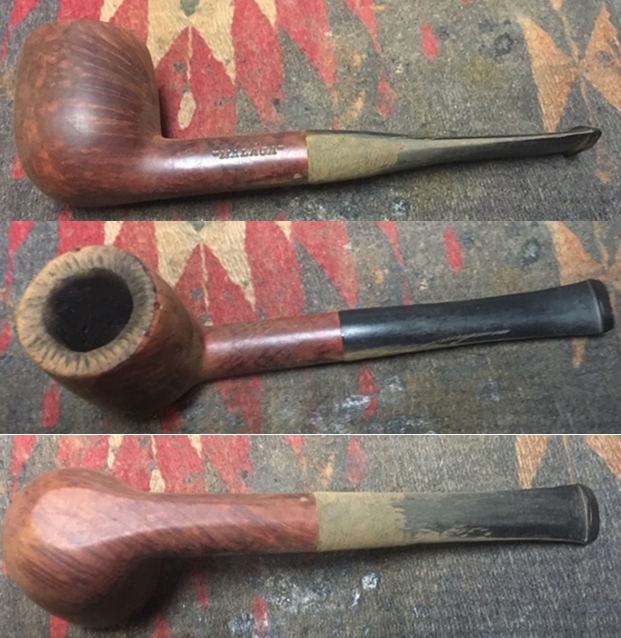
The “Malaga” Billiard on the table is another on that is in rough condition. But even under the damage and dirt I can see the great grain on the briar. There was an interesting sunburst pattern of grooves carved in the rim top. The large bowl, round shank and chewed through acrylic stem give a clear picture of what the pipe must have looked like when George bought it at the shop. Again, I did not bother Jeff for the pre-cleanup photos because really it was obvious what the pipe must have looked like. From the condition of the bowl and rim post cleanup I could see that it originally had a thick cake that overflowed with lava onto the rim so that there was damage on the inner edges. The rim top had been knocked hard against rough surfaces to knock out the dottle and left damage. The sides of the bowl and shank are very dirty with grime and oils from prolonged use. The stamping on the left side of the shank read “MALAGA”. The acrylic stem had been gnawed through leaving a useless stem that would need to be replaced. Since Paresh is not here in Canada it will be replaced rather than rebuilt! 😉 I took photos of the pipe before I started my work. The condition of the pipe will be shown in the photos below. I took a photo of the  rim top and bowl to show the condition of the pipe. You can see why I said it was used as a hammer. The surface of the rim is very rough but you can see the carved sun burst like grooves.  The inner edge of the rim looks good while the outer edge has some damage. There is some darkening on the back edge and surface of the rim top. I think that this pipe must have been another shop pipe or knock about pipe for George as it was very well smoked! I took photos of the stem to show the broken and chewed condition it was in. Remember this is hard acrylic so it took some real gnawing to do this to it!I took a photo to capture the stamping on left side of the shank. The photo shows the stamping “MALAGA” and is very readable.I am also including the link to a blog that I wrote that gives some of the history of the Malaga brand and the Malaga Pipe Shop in Royal Oak, Michigan in the USA. I have written an earlier blog to give a little history of the Malaga Brand and the pipemaker, George Khoubesser. Here is the link – https://rebornpipes.com/tag/malaga-pipes/.That blog also includes links to a catalogue and the history of the pipemaker George Khoubesser. Follow the link to get a feel for the brand and the pipemaker.

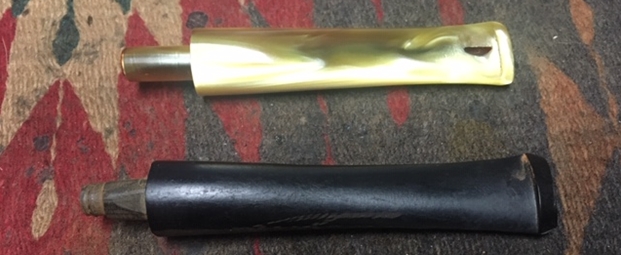
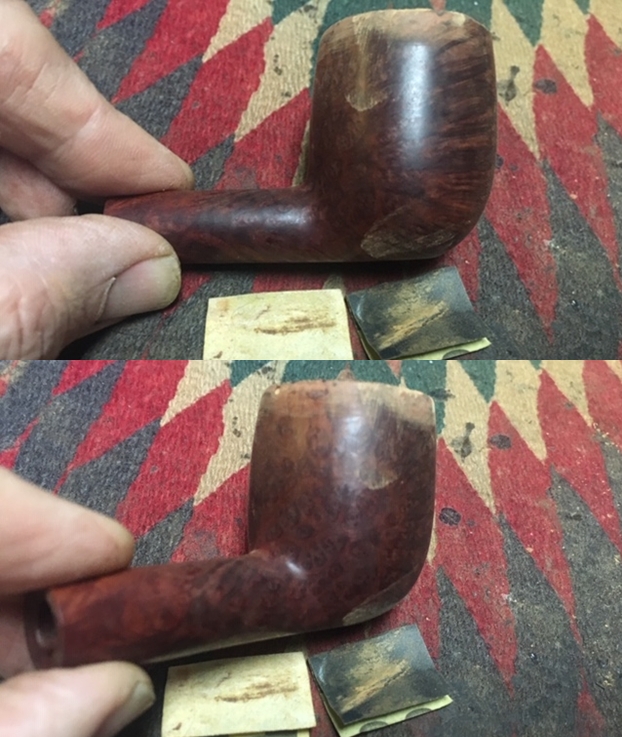
Jeff had gone to the trouble to ream the bowl with a PipNet pipe reamer and followed up with a Savinelli Fitsall pipe knife to remove the cake. He scrubbed out the mortise and the airway in the shank and the stem with alcohol, cotton swabs and pipe cleaners. He scrubbed the exterior of the bowl, rim, shank and stem with a tooth brush and Murphy’s Oil Soap to remove the oils and tars on the rim and the grime on the finish of the bowl. He rinsed it under running water. He dried it off with a soft cloth. All of his work gave me a clean pipe to work on to say the least. I decided to start with the new stem. I went through my collection of stems to find one that was the same dimensions as the ruined stem. I found one in my can that would fit the bill. Interestingly it is a twin bore bite proof stem like the other ones that Malaga used when they restemmed pipes.I set up my cordless drill with the PIMO Tenon Turning Tool in the chuck and started turning the tenon on the new stem back to match the broken one. I usually do the turning in several passes, adjusting the depth of the blade between each cut. In this case I did it in three passes. I got it close and finished the fit with my Dremel and sanding drum.I sanded off the castings on the sides and slot end of the stem with the Dremel and sanding drum and did a few turns on the tenon with the sanding drum. You can see from the first photo below that it was very close. I cleaned it up with a folded piece of 220 grit sandpaper. You can see the fit in the photos below.I set the stem aside and turned my attention to the bowl. I used a folded piece of 220 grit sandpaper to clean up the outer edge on rim top. Once I had the edges smooth I filled in the deeper nicks and chips in the outer edge of the rim with clear Krazy Glue. Once the repairs cured I sanded them smooth with 220 grit sandpaper and a piece of 400 grit sandpaper. I used a pen knife to clean up the cut marks on the rim top. Some of them were worn so I recut them to give them more definition. I cleaned up the carving with a brass bristle wire brush to clean up the repairs. The second photo shows the cleaned up rim top.I scrubbed the briar with Murphy’s Oil Soap and a tooth brush. I rubbed it into the surface of the briar with my finger tips and let it sit for about 10 minutes then rinsed it off with running water. I dried it off with a soft cloth. I polished the bowl with micromesh sanding pads to smooth out the rim edge repairs and the nicks in the bowl sides. I wet sanded with 1500-12000 grit pads and wiped the bowl down with a damp cloth after each pad. The photos show the progress. I used a Mahogany Stain Pen to stain the carvings on the rim top to blend all of the darkening together and make it stand out. I buffed it with a clean buffing pad. You can see from the photo below that I was able to blend it into the rest of the bowl.I worked some Before & After Restoration Balm into the surface of the briar with my fingertips to clean, enliven and protect it. I let the balm sit for a little while and then buffed with a cotton cloth to raise the shine. The following photos show the bowl at this point in the restoration process. I am very happy with the results. I turned to the stem and started by sanding the surface. I wanted to smooth out the surface of the vulcanite to remove the castings and the sanding marks. I sanded it with 220 grit sandpaper and 400 grit sandpaper to clean up the stem.I polished the stem with micromesh sanding pads – wet sanding with 1500-12000 grit sanding pads. I wiped it down after each sanding pad Obsidian Oil. I finished by polishing it with Before & After Pipe Stem Polish both Fine and Extra Fine and then wiped it down with a final coat of Obsidian Oil. This is a restemmed and restored “Malaga” Billiard with a vulcanite tapered “bite-proof” stem. The new black vulcanite stem looks good in place of the yellow acrylic stem. It has a great look and feel. The shape of the bowl, the reshaped and repaired rim top and the cut of the briar work well to highlight the grain around the bowl sides. I polished stem and the bowl with Blue Diamond polish on the buffing wheel. I gave the bowl and the stem multiple coats of carnauba wax. I buffed the pipe with a clean buffing pad to raise the shine. I hand buffed it with a microfiber cloth to deepen the shine. The pipe polished up pretty nicely. The grain took on life with the buffing. The rich oil cured colour works well with the polished vulcanite stem. The finished pipe has a rich look that is quite catching. Have a look at it with the photos below. The shape, finish and flow of the pipe and stem are very well done. The dimensions are Length: 6 ¼ inches, Height: 1 7/8 inches, Outside diameter of the bowl: 1 ½ inches, Chamber diameter: ¾ of an inch. I will be adding the pipe to the finished Malaga pipes that I have completed. I am looking forward to a new pipeman picking up this pipe and will carry on the trust for George Koch. Thanks for walking through the restoration with me as I worked over another one of Kathy’s Dad’s Pipes.

Restemming another “Malaga” Billiard from Kathy’s Dad’s Pipes


Blog by Steve Laug

I have been working on a lot of different estate pipes and selling them for different families. This morning I was looking through the bag of pipes that I have left from George Koch’s estate. There are only three of them and all were in pretty rough shape. The rims were well knocked about and the stems were either chewed off or through and really would need to be carefully worked over and have new stems fit to them. The third of these three Malaga pipes that need a lot of attention was the next one I picked up this morning. It is a Billiard with a chewed through acrylic stem. Of the three was the least beat up of the three. The rim top had some damage on the flat surface and the inner edge. But sides of the bowl had great looking flame and mixed grain that was fascinating. It is the last of the three Malaga pipes needing restemming that came to my brother and me in several shipments of pipes from George’s daughter Kathy. Alex had gone through the bag and had passed on these three. Jeff unwrapped the pipes when they came to him and took the following photo to give an idea of the volume of the pipes that we purchased. In each of the previous blogs that I have written on the restoration of George’s pipes I have told his story. If you have followed the restorations you will have read the information and the background piece that Kathy did on her father. Here is a link to one of the previous blogs on his Malaga pipes where I included her tribute in full (https://rebornpipes.com/2019/01/26/back-to-kathys-dads-pipes-restoring-a-%c2%bc-bent-malaga-author/). You can also read the bio on her Dad, George Koch. It is an interesting read and one that shows just how far our pipe collecting passion can go when we find a brand of pipes that we enjoy. I am going to only include the portion on the Malagas at this point. If you wish to read the rest follow the link above.

Kathy writes…We lived in Livonia, and that’s where his love for Malaga pipes began. After a few years he returned to Allis Chalmers and we moved back to Springfield. I remember that when we went back to Michigan to visit friends, Dad had to go to the Malaga store and acquire a few new pipes. Many a year I wrote to Malaga and they picked out a pipe for me to purchase that I could give Dad for a Christmas or birthday present. He was always pleased. His favorites were the straight stemmed medium sized bowl pipes, but he liked them all. 

He had some other pipes, but the Malagas were his favorites. I remember him smoking them sitting in his easy chair after work, with feet up on the ledge by the fire burning in the fireplace.  Growing up it was my job to clean them and he liked the inner bowl and stem coated with Watkins vanilla, leaving a little of that liquid in the bowl to soak in when I put them back on the rack…I’m very happy they are being restored by you and your brother and hope they find homes who enjoy them as much as Dad did. Thank-you for your care and interest. — Kathy, the oldest daughter

This second “Malaga” Billiard on the table is the least damaged of the three. Under the damage and dirt I can see the great grain on the briar. There were some scratches and nicks in surface of the rim top. The large bowl, round shank and chewed through acrylic stem give a clear picture of what the pipe must have looked like when George bought it at the shop. Again, I did not bother Jeff for the pre-cleanup photos because really it was obvious what the pipe must have looked like. From the condition of the bowl and rim post cleanup I could see that it originally had a thick cake that overflowed with lava onto the rim so that there was damage on the inner edges. The rim top had been knocked hard against rough surfaces to knock out the dottle and left damage. The sides of the bowl and shank are very dirty with grime and oils from prolonged use. The stamping on the left side of the shank read MALAGA. The acrylic stem had been gnawed through leaving a useless stem that would need to be replaced. Since Paresh is not here in Canada this is another that will be replaced rather than rebuilt! 😉 I took photos of the pipe before I started my work. The condition of the pipe will be shown in the photos below. I took a photo of the  rim top and bowl to show the condition of the pipe. You can see why I said it was used as a hammer – though less than the others. The surface of the rim is very rough. The inner and the outer edge have some damage. There is some darkening on the back inner edge, bevel and surface of the rim top. I think that this pipe must have been another shop pipe or knock about pipe for George as it was very well smoked! I took photos of the stem to show the broken and chewed condition it was in. Remember this is hard acrylic so it took some real gnawing to do this to it!I took a photo to capture the stamping on left side of the shank. The photo shows the stamping MALAGA and is very readable.I am also including the link to a blog that I wrote that gives some of the history of the Malaga brand and the Malaga Pipe Shop in Royal Oak, Michigan in the USA. I have written an earlier blog to give a little history of the Malaga Brand and the pipemaker, George Khoubesser. Here is the link – https://rebornpipes.com/tag/malaga-pipes/.That blog also includes links to a catalogue and the history of the pipemaker George Khoubesser. Follow the link to get a feel for the brand and the pipemaker.

Jeff had gone to the trouble to ream the bowl with a PipNet pipe reamer and followed up with a Savinelli Fitsall pipe knife to remove the cake. He scrubbed out the mortise and the airway in the shank and the stem with alcohol, cotton swabs and pipe cleaners. He scrubbed the exterior of the bowl, rim, shank and stem with a tooth brush and Murphy’s Oil Soap to remove the oils and tars on the rim and the grime on the finish of the bowl. He rinsed it under running water. He dried it off with a soft cloth. All of his work gave me a clean pipe to work on to say the least. I decided to start with the new stem. I went through my collection of stems to find one that was the same dimensions as the ruined stem. I found one in my can that would fit the bill.I set up my cordless drill with the PIMO Tenon Turning Tool in the chuck and started turning the tenon on the new stem back to match the broken one. I usually do the turning in several passes, adjusting the depth of the blade between each cut. In this case I did it in three passes. I got it close and finished the fit with my Dremel and sanding drum.I sanded off the castings on the sides and slot end of the stem with the Dremel and sanding drum and did a few turns on the tenon with the sanding drum. You can see from the first photo below that it was a good snug fit. The diameter of the stem was larger than the shank do I would need to remove the excess material to get a solid fit.I used a Dremel and sanding drum to remove the excess material from the stem and get it close to the diameter of the shank. I worked over the diameter with a folded piece of 220 grit sandpaper to smooth out the stem. It still has a ways to go before it was finished but it was getting pretty close. I set the stem aside and turned my attention to the bowl. I topped the bowl with 220 grit sandpaper on a topping board. I removed the damaged areas on the rim top. I did not need to remove too much to bring it back to smooth condition and the outer edge was still clean.I used a folded piece of 220 grit sandpaper to clean up the inner bevel of the bowl. I worked it at an angle to clean up the edge and to give it a smooth bevel.I scrubbed the briar with Murphy’s Oil Soap and a tooth brush. I rubbed it into the surface of the briar with my finger tips and let it sit for about 10 minutes then rinsed it off with running water. I dried it off with a soft cloth. I used an Oak Stain Pen to stain the carvings on the rim top to blend all of the darkening together and make it stand out. I buffed it with a clean buffing pad. You can see from the photo below that I was able to blend it into the rest of the bowl.I polished the bowl with micromesh sanding pads to smooth out the rim edge repairs and the nicks in the bowl sides. I wet sanded with 1500-12000 grit pads and wiped the bowl down with a damp cloth after each pad. The photos show the progress. I worked some Before & After Restoration Balm into the surface of the briar with my fingertips to clean, enliven and protect it. I let the balm sit for a little while and then buffed with a cotton cloth to raise the shine. The following photos show the bowl at this point in the restoration process. I am very happy with the results. I turned to the stem and started by sanding the surface. I wanted to smooth out the surface of the vulcanite to remove the castings and the sanding marks. I sanded it with 220 grit sandpaper and 400 grit sandpaper to clean up the stem.I polished the stem with micromesh sanding pads – wet sanding with 1500-12000 grit sanding pads. I wiped it down after each sanding pad Obsidian Oil. I finished by polishing it with Before & After Pipe Stem Polish both Fine and Extra Fine and then wiped it down with a final coat of Obsidian Oil. This is a restemmed and restored Malaga Billiard with a vulcanite tapered stem. The new black vulcanite stem looks good in place of the black chewed acrylic stem. It has a great look and feel. The shape of the bowl, the reshaped and repaired rim top and the cut of the briar work well to highlight the grain around the bowl sides. I polished stem and the bowl with Blue Diamond polish on the buffing wheel. I gave the bowl and the stem multiple coats of carnauba wax. I buffed the pipe with a clean buffing pad to raise the shine. I hand buffed it with a microfiber cloth to deepen the shine. The pipe polished up pretty nicely. The grain took on life with the buffing. The rich oil cured colour works well with the polished vulcanite stem. The finished pipe has a rich look that is quite catching. Have a look at it with the photos below. The shape, finish and flow of the pipe and stem are very well done. The dimensions are Length: 5 ¼ inches, Height: 2 inches, Outside diameter of the bowl: 1 ½ inches, Chamber diameter: ¾ of an inch. I will be adding the pipe to the finished Malaga pipes that I have completed. I am looking forward to a new pipeman picking up this pipe and will carry on the trust for George Koch. Thanks for walking through the restoration with me as I worked over another one of Kathy’s Dad’s Pipes.

Restemming & Restoring a “Malaga” Canadian from Kathy’s Dad’s Pipes


Blog by Steve Laug

I have been working on a lot of different estate pipes and selling them for different families. This morning I was looking through the bag of pipes that I have left from George Koch’s estate. There are only three of them and all were in pretty rough shape. The rims were well knocked about and the stems were either chewed off or through and really would need to be carefully worked over and have new stems fit to them. The first of these three Malaga pipes that need a lot of attention was the one I picked up this morning. It is a Canadian with a broken or chewed off stem. The rim top was used as a hammer or at least spent a lot of time being knocked against hard surface. But sides of the bowl had a mix of grain styles that was fascinating. It is one of the last three Malaga pipes that came to my brother and me in several shipments of pipes from George’s daughter Kathy. Alex had gone through the bag in essence had passed on these three. Jeff unwrapped the pipes when they came to him and took the following photo to give an idea of the volume of the pipes that we purchased. This Malaga is actually shown in the photo of the box of pipes below. I have drawn a red box around it so you can see it clearly.In each of the previous blogs that I have written on the restoration of George’s pipes I have told his story. If you have followed the restorations you will have read the information and the background piece that Kathy did on her father. Here is a link to one of the previous blogs on his Malaga pipes where I included her tribute in full (https://rebornpipes.com/2019/01/26/back-to-kathys-dads-pipes-restoring-a-%c2%bc-bent-malaga-author/). You can also read the bio on her Dad, George Koch. It is an interesting read and one that shows just how far our pipe collecting passion can go when we find a brand of pipes that we enjoy. I am going to only include the portion on the Malagas at this point. If you wish to read the rest follow the link above.

Kathy writes…We lived in Livonia, and that’s where his love for Malaga pipes began. After a few years he returned to Allis Chalmers and we moved back to Springfield. I remember that when we went back to Michigan to visit friends, Dad had to go to the Malaga store and acquire a few new pipes. Many a year I wrote to Malaga and they picked out a pipe for me to purchase that I could give Dad for a Christmas or birthday present. He was always pleased. His favorites were the straight stemmed medium sized bowl pipes, but he liked them all. 

He had some other pipes, but the Malagas were his favorites. I remember him smoking them sitting in his easy chair after work, with feet up on the ledge by the fire burning in the fireplace.  Growing up it was my job to clean them and he liked the inner bowl and stem coated with Watkins vanilla, leaving a little of that liquid in the bowl to soak in when I put them back on the rack…I’m very happy they are being restored by you and your brother and hope they find homes who enjoy them as much as Dad did. Thank-you for your care and interest. — Kathy, the oldest daughter

The “Malaga” Canadian on the table is in rough condition. But even under the damage and dirt I can see that the carver did a great job of shaping the pipe to follow the grain on the briar. The large bowl, oval shank and short broken stem give a clear picture of what the pipe must have looked like when George bought it at the shop. I did not bother Jeff for the pre-cleanup photos because really it was obvious what the pipe must have looked like. From the condition of the bowl and rim post cleanup I could see that it originally had a thick cake that overflowed with lava onto the rim so that there was damage on the inner edges. The rim top had been knocked hard against rough surfaces to knock out the dottle and left damage. The sides of the bowl and shank are very dirty with grime and oils from prolonged use. The stamping on the left side of the shank read “MALAGA”. On the right side it read Imported Briar. There was a burn mark on the underside of the shank near the stem/shank junction that looked like the pipe had been set down in an ashtray. The acrylic stem had been broken or gnawed off leaving a useless stem that would need to be replaced. Since Paresh is not here in Canada it will be replaced rather than rebuilt! 😉 I took photos of the pipe before I started my work. Somehow the rest of the before photos of the pipe as a whole were out of focus. The condition of the pipe will be shown in the remaining photos however.I took a photo of the  rim top and bowl to show the condition of the pipe. You can see why I said it was used as a hammer. The surface of the rim is very rough. The outer and inner edges fo the rim are  also in very bad condition. There is some darkening on the back edge and surface of the rim top. I think that this pipe must have been kind of shop pipe or knock about pipe for George as it was very well smoked! I took photos of the stem to show the broken and chewed condition it was in. Remember this is hard acrylic so it took some real gnawing to do this to it!I took a photo of the burn mark on the underside of the shank. It was not a deep mark and the wood was still solid so it was not badly damaged.I took a photo to capture the stamping on each side of the shank. The photos show the stamping “MALAGA” on the left side of the shank and Imported Briar on the right side. The stamping is faint but still readable. I am also including the link to a blog that I wrote that gives some of the history of the Malaga brand and the Malaga Pipe Shop in Royal Oak, Michigan in the USA. I have written an earlier blog to give a little history of the Malaga Brand and the pipemaker, George Khoubesser. Here is the link – https://rebornpipes.com/tag/malaga-pipes/.That blog also includes links to a catalogue and the history of the pipemaker George Khoubesser. Follow the link to get a feel for the brand and the pipemaker.

Jeff had gone to the trouble to ream the bowl with a PipNet pipe reamer and followed up with a Savinelli Fitsall pipe knife to remove the cake. He scrubbed out the mortise and the airway in the shank and the stem with alcohol, cotton swabs and pipe cleaners. He scrubbed the exterior of the bowl, rim, shank and stem with a tooth brush and Murphy’s Oil Soap to remove the oils and tars on the rim and the grime on the finish of the bowl. He rinsed it under running water. He dried it off with a soft cloth. All of his work gave me a clean pipe to work on to say the least. I decided to start with the new stem. I went through my collection of stems to find one that was the same dimensions as the broken stem. I found one in my can that would fit the bill. I set up my cordless drill with the PIMO Tenon Turning Tool in the chuck and started turning the tenon on the new stem back to match the broken one. I usually do the turning in several passes, adjusting the depth of the blade between each cut. In this case I did it in three passes. I got it close and finished the fit with my Dremel and sanding drum.I sanded off the castings on the sides and slot end of the stem with the Dremel and sanding drum and did a few turns on the tenon with the sanding drum. You can see from the first photo below that it was very close. I took it back to the Dremel and did a few more passes on the tenon and cleaned it up with a folded piece of 220 grit sandpaper. You can see the fit in the second photo. There was some gap where it did not sit flush against the shank. The issue was not the fit of the tenon but rather the shank end. I could see that it was uneven and rough so I would need to make a few decisions on how to address that issue.I decided that the best way to address the fit and give the pipe a little pizzazz would be to use a nickel band. They come from the maker quite thick – ½ of an inch and I wanted something about ¼ of an inch thick. I used the topping board and the Dremel to thin down the height of the band. It took a bit of time but I like the way it looks once it is finished. Once I had the band done I set it aside and cleaned the briar. The third photo shows the finished band glued in place on the shank using Weldbond all-purpose glue. The ¼ of an inch thick band works for me!I topped the bowl on a new piece of 220 grit sandpaper on the topping board. Once I had the top smooth I filled in the deeper nicks and chips in the outer edge of the rim with clear Krazy Glue. Once the repairs cured I sanded them smooth with 220 grit sandpaper and retopped the bowl to remove the excess glue. I used a folded piece of sandpaper to sand out some of the burn damage on the underside of the shank. I scrubbed the briar with Before & After Briar Cleaner and a tooth brush. I rubbed it into the surface of the briar with my finger tips and let it sit for about 10 minutes then rinsed it off with running water. I dried it off with a soft cloth. I polished the bowl with micromesh sanding pads to smooth out the rim top repairs and the nicks in the bowl sides. I wet sanded with 1500-12000 grit pads and wiped the bowl down with a damp cloth after each pad. The photos show the progress. I used an Oak Stain Pen to blend in a few of the spots on the rim top and edges that were lighter than the bowl. I buffed it with a clean buffing pad. You can see from the photo below that I was able to blend it into the rest of the bowl.I worked some Before & After Restoration Balm into the surface of the briar with my fingertips to clean, enliven and protect it. I let the balm sit for a little while and then buffed with a cotton cloth to raise the shine. The following photos show the bowl at this point in the restoration process. I am very happy with the results. I turned to the stem and started by sanding the surface. I wanted to smooth out the surface of the vulcanite to remove the castings and the sanding marks. I sanded it with 220 grit sandpaper and 400 grit sandpaper to clean up the stem.I polished the stem with micromesh sanding pads – wet sanding with 1500-12000 grit sanding pads. I wiped it down after each sanding pad Obsidian Oil. I finished by polishing it with Before & After Pipe Stem Polish both Fine and Extra Fine and then wiped it down with a final coat of Obsidian Oil. This is a restemmed and restored “Malaga” Canadian with a vulcanite tapered stem. The nickel band adds a touch of class that truly makes the pipe stand out from the other Malaga pipes that I have worked on. It has a great look and feel. The shape of the bowl, the reshaped and repaired rim top and the cut of the briar work well to highlight the grain around the bowl sides. I polished stem and the bowl with Blue Diamond polish on the buffing wheel. I gave the bowl and the stem multiple coats of carnauba wax. I buffed the pipe with a clean buffing pad to raise the shine. I hand buffed it with a microfiber cloth to deepen the shine. The pipe polished up pretty nicely. The grain took on life with the buffing. The rich oil cured colour works well with the polished vulcanite stem. The finished pipe has a rich look that is quite catching. Have a look at it with the photos below. The shape, finish and flow of the pipe and stem are very well done. The dimensions are Length: 5 ½ inches, Height: 1 7/8 inches, Outside diameter of the bowl: 1 ¼ inches, Chamber diameter: ¾ of an inch. I will be adding the pipe to the finished Malaga pipes that I have completed. I am looking forward to a new pipeman picking up this pipe and will carry on the trust for George Koch. Thanks for walking through the restoration with me as I worked over another one of Kathy’s Dad’s Pipes.

Redemption for an Old Pipe – a Briar Basket Holding a Meerschaum Egg Bowl


Blog by Steve Laug

One of my favourite finds from Jeff and my recent trip to Alberta was this old timer. It is in its original case with a broken amber stem and a brass filigreed band. The thing that made me buy this pipe was not the age or even the case. What made it stand out to me was the uniquely carved entangled vines and stump forming a basket for the egg shaped meerschaum bowl that sat inside of it. We found it in a little shop in in Innisfail, Alberta that had some interesting antiques but only this one pipe. The case is in decent condition though the hinges and clasp are shaken and will need to be repaired. There is no stamping on the shank that is readily visible and there is no logo that I can see on the faded lining of the case. I will need to inspect it more closely to be sure. The pipe was dirty and caked when we picked it up. The rim top had a thick buildup of lava flowing over from the thick cake in the bowl. It was hard and dense. The exterior of the bowl and shank are very dirty with grime and oils from prolonged use. The grooves of the intertwining vines of the briar were filled with dust and were dull and lifeless.  The meerschaum bowl insert had some patina to it but was also scratched and nicked in the spots where it showed through the vine. The stem that was with the pipe was amber and broken. The shape of the stem made me wonder about it as it was oval rather than round like the shank. The band was conical and held the stem end against the shank end. There was no tenon in the shank or stem piece. I took photos of the pipe before I started the cleanup. I took some close up photos of the briar exterior bowl to show the details in the carving. It is wrapped by vines and leaves and on the front of the bowl is ram’s head with a cluster of grapes between the horns. The shank is the thick vine from which the vines around the bowl flow. The briar and the meerschaum are dirty and dust is deep in the grooves of the briar and in the spaces around the connection to the bowl.I carefully removed the band from the shank and could see that there was no tenon in the shank. The shank itself was clogged up with tars and oils. The stem was fit into the filigreed band with wraps of paper that had locked into the band. I carefully wiggled the broken amber stem out of the band and was surprised by the mess that came out with it. The wraps of paper lined the band and needed to be scraped out and the stem itself was oval! This was definitely not the correct stem for this pipe. The band and the shank were both round and a oval stem without a tenon did not work with the original design of the pipe. With the band removed from the shank and the bowl freed of the stem it was time to work on the cake in the bowl. Because of the delicate nature of this inserted bowl I decided to scrape out the cake with a Savinelli Fitsall pipe knife. I took the cake back to bare walls on the meer bowl. I sanded out the bowl with 220 grit sandpaper wrapped around a piece of dowel. I scraped the rim top with the knife and then sanded off the lava build up with a folded piece of 220 grit sandpaper. I wanted to remove the grime without removing the patina that was underneath. I scraped out the inside of the shank with a pen knife to clean out the build up of tars and oils on the inside. There was a lot of buildup in the shank that needed to be removed. Once it was scraped clean I cleaned it out with pipe cleaners, cotton swabs and alcohol to remove the remainder of buildup and open the airway in the shank. Once I was finished, the pipe not only smelled clean but was very clean. The airflow in the shank was clear and draw was perfect.I went through my can of stems to see if I could find one that could possibly work. I knew that I did not have an amber one but I probably had an acrylic one that I could shape. It was not long before I found one that would work for this pipe. I would need to reduce the diameter of the tenon to get a good fit and to shape the diameter of the stem at the tenon make it fit with the filigreed shank band.Once I had the tenon reduced I put the band on the shank and inserted the stem to get an idea of what I needed to do to adjust and adapt the stem. I took photos of the pipe and stem from various angles to see what needed to be done. You can see the bulging around the band that I will need to take down. My brother Jeff called it a belly!I used a rasp to remove the excess material on the “hips” of the stem. I sanded it smooth and put it in the shank to see the progress. The photos below show the progress! I used a Dremel and sanding drum to take off more material and to smooth out the marks left behind by the rasp. I sanded the stem with a folded piece of 220 grit sandpaper to smooth it out further and inserted the stem in the shank to check the progress. I further sanded the “hips” until I was happy with the overall look of the stem at this point. I polished the sanding marks on the stem with 400 grit wet dry sandpaper. I wanted to remove as much of the scratching as I could before using micromesh sanding pads.I polished the stem with micromesh sanding pads – wet sanding with 1500-12000 grit sanding pads. I wiped the stem down after each sanding pad with a damp cloth. I polished it with Before & After Pipe Stem Polish – both Fine and Extra Fine and buffed it with a cotton pad. I heated water in a cup in the microwave to bend the stem. Once the water was boiling I put the Lucite stem in the water and let it sit until the stem was pliable. I carefully bent it to match angle of the case.I wet sanded the stem once again with the full range of micromesh sanding pads from 1500-12000 grit and wiped it down after each pad with a damp cloth. The stem was finished after this regimen.I set the stem aside and turned my attention to cleaning up the externals of the bowl. I scrubbed the briar and meerschaum with Murphy’s Oil Soap and a tooth brush to get in to all the nooks and crannies of the twisted vine and ram’s heard. I rinsed it in warm water and dried it off with a soft cotton cloth. I worked Before & After Restoration Balm into the briar with my fingertips and a horse hair shoe brush. I made sure to get it into all the nooks and crannies of the briar. I buffed it with a soft cotton cloth to raise a shine. This newly restemmed old timer looks really good to me. The new Lucite stem approximates the look of amber without the fragility. It fits the pipe well and has a great look and feel. The shape is very tactile with the vines and leaves wrapped around the meerschaum bole. It feels great in the hand and should be very nice as it warms up with a bowl of tobacco inside. I gave the bowl multiple coats of Conservator’s Wax and the stem multiple coats of carnauba wax. I buffed the pipe with a soft cotton cloth to raise the shine. I hand buffed it with a microfiber cloth to deepen the shine. The pipe polished up pretty nicely. The grain on the vines and leaves entwining the bowl came alive with the buffing. The rich contrasting browns and patina on the meerschaum works well with the polished acrylic stem. The finished pipe has a rich look that is quite catching. Have a look at it with the photos below. The shape, finish and flow of the pipe and stem are very well done. The dimensions are Length: 5 ½ inches, Height: 1 ¾ inches, Outside diameter of the bowl: 1 1/8 inches, Chamber diameter: ¾ of an inch. Thanks for walking through the restoration with me as I worked over the next of the finds of Jeff and my Alberta pipe hunt. It is an old timer that is unlike anything that I have ever seen before. The combination of briar and meerschaum is catching and unique. Give the blog a read and if any of you have seen one like this let me know in the comments below. Any help will be appreciated.

A Nightmare Restoration of an Oldenkott Munchen Huber Filter Pipe


Blog by Steve Laug

I have had this old pipe kicking around in my box for refurbishing for a long time now. I have picked it up numerous times and put it back as I just had no desire to do anything with it. That changed yesterday. I took it out and looked at it to think about what needed to be done to it. The stem was a mess – it had shattered when the guy who owned it tried to take it off. He sent me these photos of the pipe. It was green which did nothing for me and there was nothing about it that called my name. It was an Oldenkott pipe – a brand that I had worked on before but not a shape that I was interested in. The stem was broken and the pipe was a mess. After seeing the photos below, I had declined purchasing it as it really was not interesting to me. But even my declining it did not matter much – He had mailed it as part of a group of pipes that Jeff and I had purchased from him them.The pipes had been sent to Jeff and in the box was this one. Jeff opened the box and showed me this pipe and really it was in even worse shape than I imagined. The pipe came with the stem pretty well stuck in the shank and a small plastic bag with stem pieces was rubber banded to the tenon. Jeff chucked it in the freezer and the stem came off easily enough. It was a mess and it was a filter pipe! The bowl had a thick in it and a thick lava overflow on the rim top. It was hard to know the condition of the inner edge of the rim because of this. The bowl had a lot of bright green fills around the sides and heel. The stem was a disaster – broken off and shattered at the same time. It was definitely one for the garbage. He took photos of the pipe before he started working on it so I could see what he was dealing with. He took a photo of the rim top and bowl to try to capture the mess of both. The thick cake in the bowl and the overflow of lava are both visible. The cake was thick and hard and the lava overflow was a thick band around the bowl. One consolation is that considering the mess it was in, this must have been a great smoking pipe.The next photos show the side and bottom of the bowl and give a clear picture condition of the green stain. It was spotty and worn. The fills in the bowl were very green spots, like painters green tape and stood out like a sore thumb to me. They were just ugly and almost obscured the interesting grain around the bowl for me. Hopefully you get a feel for why I just kept putting it back in the restoration “to do” box.Jeff took photos of the stamping to capture the clarity of it even under the grime. The Oldenkott name is stamped on the left side of the shank. On the underside it is stamped Huber over Munchen. Jeff took photos of the stem to show the shattered condition. It really was not redeemable even by such a stalwart stem rebuilder as Paresh Deshpande! It was also a 9mm filter stem and to me that also was another strike against it. It was useless in my opinion. I knew I was dealing with a German pipe from previous ones that I had worked on. I had been told that the brand was the German equivalent of Dunhill pipes in England. This one certainly did not make a case for that assumption. I turned first to Pipephil to see if I could get a brief review (http://www.pipephil.eu/logos/en/logo-oldenkott.html). The site gave various lines that had been made by the factory before its closure in 1992.

I went on to Pipedia knowing that there would be some more detailed information and I was correct in that assumption (https://pipedia.org/wiki/Oldenkott). I quote in full from that article.

Very little is known about the company. According to the albums the company was founded in 1760 in Amsterdam as Hermann Oldenkott, and in 1819, a subsidiary in Ahaus (Germany). There were likely other factories as well, as in 1838 August Kersten from Rees (Germany) bought the factories from Heinric Oldenkott in Elten (Germany) and Weesp (Holland), although it is not clear whether these were part of the of the original Oldenkott company. The German company increased rapidly and became one of the largest German tobacco companies. In 1929 the factories from Hermann Oldenkott in Ahaus and Neuss (Germany) were bought by the German Oldenkott company. The German company produced pipes starting in 1932. In 1972 the German company was bought by the Dutch company Niemeijer. Tobacco production ceased in 1974 and only pipes were made afterward. In 1987 the German pipe company was bought by the Kersten family again, but closed in 1992.

The pipes were machine made and in general of mediocre quality. The most important pipes of Oldenkott were the so called “Porsche” design pipe. The bowl was turned like the motor block of a racing car and was lacquered with a silver-grey color. Today these special pipes are very rare and expensive.

In spite of the apparent quality of both Oldenkott and VAUEN pipes, they are known as good smokers.

The site also quotes from the book “Pipes, Artisans and Trademarks, by José Manuel Lopes’ –“Oldenkott is an early 20th century German brand by Henry Oldenkott. His factory in Hallen closed in April 1982, with some of the workder moving to VAUEN. Oldenkott made ipes with and without filters. It was in this company that Porsche pipes were produced.”

Armed with that information I turned to address the pipe itself. Jeff had cleaned up the pipe before sending it to me. He reamed the bowl with a PipNet pipe reamer and cleaned it up with a Savinelli Fitsall Pipe Knife. He scrubbed the exterior with Murphy’s Oil Soap and a tooth brush to clean off the grime off the finish and the heavy overflow of lava on the rim top. He cleaned up the internals of the shank, mortise and stem with pipe cleaners, cotton swabs and alcohol to remove all of the oils and tars in the pipe. He cleaned up the stem so that it did not stink and soil the other clean pipes he sent me. When it arrived here in Vancouver it was a clean pipe and I knew what I had to work with. I took photos of it before I started my part of the restoration. I took a close up photo of the bow and rim to capture the burn damage on the right side inner edge of the bowl. I also took photos of the shattered stem to show the extent of the damage.I took a photo of the left side and the underside of the shank to show the stamping on the pipe. It read as noted above. After the cleanup it was still readable.I decided to address the broken stem first. I went through my can of stems and found a suitable saddle stem that was roughly the same length as the broken one. It had a different saddle arrangement but to be honest I like the new one better. It was a new cast stem that I had picked up from a fellow who was selling out his father’s refurbishing supplies. I measured the diameter of the tenon on the broken stem and set the PIMO Tenon Turning Tool to crank out a tenon on the new stem that would match. I turned it carefully and once I took it off the tool and measured both were identical in diameter – BUT (and this part is very irritating to me) the new tenon though identical and in size was loose in the mortise!!!I filed out the nubs left behind from the tool and the new stem was now functional. I would need to expand the tenon to get a good snug fit but it was done. I gave the tenon a coat of clear fingernail polish to snug up the fit in the mortise. I set it aside to dry. While the stem was drying I decided to work on the damage to the inner edge of the bowl on the right side. I topped it on a topping board with 220 grit sandpaper and removed as much of the damaged area as possible.I knew that I needed to deal with the uneven green stain coat on the bowl so that I could smooth it out. I also needed to deal with the fills in the bowl. I wiped it down with acetone on a cotton pad to evenly remove the stain. I picked out the largest fill on the right side of bowl with a dental pick. Under the bright green top coat the fill was bright white putty. Once I picked it out wiped it down with alcohol. I filled in the hole with briar dust and clear super glue to replace the fill. I put the stem on the shank and worked on the fit against the shank. I used a wood fill to reduce the diameter on the stem giving it a bit of a conical shape to match the flow of the shank. I also worked on the shank diameter because like everything else that is a bit of a deficit on this pipe the shank was not perfectly round and the stem had to be hand fit to the shank. I sanded the shank and stem with 220 grit sandpaper to smooth out and shape the shank and stem union. I also sanded the repaired fill on the right side of the bowl to blend it into the surface. The stem was looking pretty good as was the new fill. I wiped the bowl down with a damp cloth to have a look at it at this point. I removed the stem and worked on polishing the bowl with 1500-2400 grit micromesh sanding pads. I wiped the bowl down after each pad. I decided to only use these three grits because I had decided to experiment with staining this pipe GREEN once again. (I have to tell you this was an experiment and in many ways a failed one. But I get ahead of the story!). Here is where the restoration took a horrible turn for me. I should have left well enough alone but I wanted to tryout the Kelly Green stain that I had picked up earlier for some Peterson’s St. Patrick’s Day pipes that I have not dealt with yet. I figured this would be a good place to learn about the idiosyncrasies of green stain. I heated the briar and stained and flamed the pipe to set the stain in the wood. I looked at it and just shook my head. The stain set really well. I wasn’t sure how the fills received it and was a bit worried when I saw them shining through the dark green stain. I set the bowl aside to let the stain cure. Once the stain was dry I moved to my next “normal” step which is to wipe the bowl down with alcohol on cotton pads to make it more transparent and make the grain stand out more. Here is where my next issue rose – I wiped it down with four pads and alcohol and kept repeating the wipe down and it did not become more transparent. All that happened was that the fills turned white. I touched them up with green but there was no remedy to the issue. I like the pipe better before I stained it green. Now what was I going to do to make it LESS GREEN? At this point the experiment was a failure in my opinion. The GREEN NOT ONLY SET IN THE GRAIN BUT IN THE WHOLE PIECE OF BRIAR. I have to admit that at this point it crossed my mind that I probably could have thinned the stain a lot and made a green wash but after thought is too late. I buffed the pipe with Red Tripoli to try to remove it from the briar but it really had little effect. I was getting pretty frustrated and know from experience it is time to change things up a bit before I make things worse!

So I decided to address the stem for a while instead of the bowl. I put the stem on the shank and heated it with my heat gun until it was soft. I bent it to match the angles of the bottom of the bowl and set the bend with cool water. It was a good diversion from the GREEN bowl.I took the stem off and went back to work on the bowl. I wiped it down with acetone to try to reduce the green stain and while it partially worked it still was too green to my liking. I sanded the bowl and shank with 1500-2400 grit micromesh sanding pads to further reduce it. I still was not happy with the results. The green was just not to my liking. It needed to go. I restained the bowl with Tan stain and flamed and repeated the process until the coverage was good. I set it aside to cure and went to lunch with a friend. After lunch I buffed the bowl with Red Tripoli to unveil with the bowl looked like at this point. The tan stain had worked together with the Green stain to create a colour that I really liked. I buffed it with Blue Diamond to further polish it. I like the way the bowl looked at this point. I still needed to polish it and wax it but I wanted to finish the stem as well. I wet sanded it with 1500-12000 grit micromesh sanding pads to polish it. I wiped the stem down with Obsidian Oil after each pad. I finished polishing it with Before & After Pipe Polish – both Fine and Extra Fine. I gave it a final coat of Obsidian Oil and set it aside to dry. In looking at the photos above you can see a few nicks in the tenon. I filled them in with clear super glue to smooth them out and set the stem aside to dry. I sanded them smooth with 1500-2400 grit micromesh sanding pads. I wiped it down with Obsidian Oil and again let it dry.  With the parts finished it was time to polish up this nightmarish experiment that took me far longer than it rightly should have taken. I learned a ton in terms of Green stain – such as using it as a wash instead of as it comes in the bottle. I learned that it sinks deep into all of the grain not just the softer parts. I found that it is very hard to remove once it is once it is on the briar. Learning all of that I was finally glad that it was time to finish this pipe. I put the stem and bowl back together and buffed the pipe with Blue Diamond on the buffing wheel. I polished the briar and the minute scratches still in the vulcanite of the stem until there was a rich shine. This Oldenkott turned out better than I expected and has some nice grain showing through. The finish really highlights the grain and hides the fills on a proportionally well carved pipe. Once I buffed the pipe the briar came alive and the mixture of grain popped with polishing. The black vulcanite replacement stem had a rich glow. The finished pipe is a beautiful grained bent Apple. The dimensions are Length: 5 1/4 inches, Height: 1 3/4 inches, Outside diameter of the bowl: 1 1/4 inches, Chamber diameter: ¾ of an inch. Thanks for walking through the long, experimental restoration with me as it was a learning experience for me.

Another Study in Opposites – Restoring an NOS unsmoked C.P.F. Stack


Blog by Steve Laug

After the last batch of very clean pipes that I brought back from my trip to Idaho in a small bag of unsmoked C.P.F. pipes this is another pipe that was a big change. It was in rough shape with a split band, nicks and marks in the briar and a shattered stem. Other than the unsmoked condition of the bowl and base it was hurting. The bowl was a screw in briar bowl with a single airway in the bottom of the bowl like a calabash. It is dusty and dirty but the bowl was clean. The bowl exterior had been coated with a thick shiny coat of varnish and the base was varnished as well. It gave the pipe a spotty shiny look that had lasted through the years. The left side of the shank is stamped with gold leaf and reads Pullman over C.P.F. in the oval logo. There were deep gouges in the top of the shank and on the underside of the bowl. There is a brass/silver spacer between the bowl and the base. There was also a brass/silver ferrule on the shank end that was split, oxidized and also loose. The amber stem had was shattered was clean but epoxied in the remainder of the stem. I took photos of the pipe to show its condition at the start of the process. The next photo shows the stamping on the left side of the shank. It is clear and readable. The stamping reads as noted above. The band is loose and is stamped with the C.P.F. in an oval logo with the faux hallmarks that are on all of the metal banded C.P.F. pipes.I unscrewed the broken stem from the pipe and took photos of the parts – the briar base and bowl as well as all the adornments. The ferrule is split and will need work and the separator on the base is also oxidized and dirty. I have included the following information with each of the blogs on C.P.F. pipes because I always want to keep the historical context in mind as I work on these. The link to the blog follows (https://rebornpipes.com/2013/04/14/some-reflection-on-the-historical-background-on-cpf-pipes/). I quote a pertinent part of the blog below:

From my reading and research it seems to me that C.P.F. brand was discontinued sometime in the 1910-1920 range. Again, turning to Bill Feuerbach I found that he notes the following, which pins down the time frame of the discontinuation of the brand more specifically, “I have a C.P.F. Chesterfield in our office display that has a name tag from way before my time that says 1900 C.P.F. Chesterfield. It looks like most other Chesterfields you’ve seen, including the military type push stem, except this stem is horn and not vulcanite. As far as I have gathered the C.P.F. brand was phased out sometime around 1915.” Interestingly, he noted that the Chesterfield name and style was later introduced in the KB&B, Kaywoodie and Yello-Bole lines. He says that the 1924 KB&B catalog shows KB&B Chesterfields…

… From my research I believe that we can definitively assert that the C.P.F. logo stands for Colossus Pipe Factory. The brand was purchased by KB&B sometime between 1884 and 1898 and that it continued until 1915. That time frame gives help in dating some of the older C.P.F. pipes you or I might find. It can be said that prior to the dual stamping it is fairly certain that the pipe is pre-1884 to 1898. After the dual stamping it can be placed post 1898 until the closure of the brand line in 1915. C.P.F. made beautiful pipes.

From that information I can tentatively date this pipe to the same period as the other pipes I have been working on – prior to 1884-1898 because of the single C.P.F. stamp on the shank, ferrule and stem. At any rate it is another old pipe though this one is well smoked. The story of its journey to Jeff and me this long after the date it was made is another mystery. This batch of pipes has made me wish that even one of them could share its story with us. I can only imagine the journey it has had even minimally from the bits that I do know. It traveled from the Colossal Pipe Factory in New York City to Idaho Falls in journey that began in the 1880s and ended in 2019. Now it is has further traveled by air to Vancouver, Canada, as far west as it can go and remain on the same continent… what a well-traveled pipe. Armed with that information it was not time to work on the pipe.

I unscrewed the bowl from the briar base. I removed the loose ferrule and the loose spacer and cleaned the surface with alcohol on a cotton pad. I glued the spacer in place on the base with clear super glue. I filled in the nicks and divots on the top and underside of the shank with super glue. I sanded the repaired spots on the top and underside of the base with 220 grit sandpaper to blend the repairs into the briar. I spread some white glue on the shank end and pressed the ferrule in place. I held the break in the ferrule together until the glue set. I filled in the crack with clear super glue until it was smooth and set it aside to cure.  The internals were clean and a quick pipe cleaner and alcohol run through the shank and bowl to clean out the dust. I polished the brass ferrule on the shank end with Hagerty Tarnish Preventative Silver Polish to remove the tarnish and wear. I used it on the space between the bowl and base as well. You can see the effect of the polishing – the metal shone.I wiped the bowl and base down with isopropyl alcohol on a cotton pad to remove the varnish coat on both the bowl and the base. The briar looked very good. There was a fill in the back side of the bowl and a little one on the underside of the shank. I am continuing to experiment with Mark Hoover’s Briar Cleaner to see what I think of it as a possible replacement for my usual Murphy’s Oil Soap scrub. I rubbed it onto the briar bowl and base and worked it into the grain of the briar. I wiped it off with a clean cloth. There was still a coat of grime and grit from the cleaner left behind so I rinsed it with warm water to remove that and dried it with a microfiber cloth. I am really not sure if this is any better than the Murphy’s but I am committed to working with it. I rubbed the briar bowl and shank down with a coat of Before & After Restoration Balm. I worked it into the surface of the briar. The product works to clean, enliven and protect the briar. The old briar was dry and it drank up the balm. I buffed the bowl with a soft cloth to raise a shine. I like how the pipe looks as this point in the process. I set the bowl aside and went through my can of stems and found a Bakelite stem with the same diameter and length as the original one. It had a push tenon that I would need to sand down a bit to get a good fit in the threaded shank. I tried to remove the bone tenon from the original stem but it was stuck and breaking the old stem would likely damage the tenon. I started working on the stem. I used a needle file to reduce the diameter of the tenon. I heated the stem with a heat gun until it was softened and then bent it to match the angle of the bowl and shank. I sanded out the small ripple marks from bending the stem using 220 grit sandpaper. I sanded out the scratches with 400 grit sandpaper. I wiped the stem down with Obsidian Oil. I polished the stem with micromesh sanding pads – wet sanding it with 1500-2400 grit pads and dry sanding it with 3200-12000 grit pads. I wiped it down with Obsidian Oil after each sanding pad. I finished the polishing with Before & After Pipe Polish – both Fine and Extra Fine. I gave it a final coat of Obsidian Oil and set it aside to dry.   By now if you have read rebornpipes for very long you know that I love these old C.P.F. pipes. There is some serious thought that they were carved by European trained craftsman who were skilled pipemakers. These pipemakers were brought to the US by the Colossal Pipe Factory to make pipes. Many of the shapes, bands and stems have such high quality workmanship involved that I really think there is truth to this story. This little bent Briar Stack is a real beauty.

I screwed the bowl back on the base and carefully polished stem and the bowl with Blue Diamond polish on the buffing wheel carefully avoiding the stamping on the shank. I gave the bowl and the stem multiple coats of carnauba wax. I buffed the pipe with a clean buffing pad to raise the shine. I hand buffed it with a microfiber cloth to deepen the shine. The pipe polished up pretty nicely. The mixed grain on the base and shank really began to stand out; it seemed to take on life with the buffing. The rich contrasting brown stain on the base and bowl works well with new golden Bakelite stem. The finished pipe has a rich look that is quite catching. Have a look at it with the photos below. The shape, finish and flow of the pipe and stem are very well done. The dimensions are Length: 5 1/4 inches, Height: 2 1/8 inches, Outside diameter of the bowl: 1 1/8 inches, Chamber diameter: 3/4 of an inch. This is another one that I will be adding to my collection. It fits in the C.P.F. niche group that I have been building. The shape and feel in the hand is perfect. Since this one is another unsmoked pipe it too will be in line for a break in with some rich aged Virginia. Thanks for walking through the restoration with me as I restored and reworked this old Stack from 1884-1898. It is always a treat for me to work on a piece of pipe history especially when I have learned a bit of the story behind it.

Restoring Jennifer’s Dad’s Champ of Denmark 4 Freehand


Blog by Steve Laug

I decided to change things up a bit and work on a few more of Jennifer’s Dad’s pipes. I just posted the finished Sasieni Four Dot Walnut “Appleby” M apple on the blog. For the next pipe from the estate of George Rex Leghorn I have chosen a nicely shaped Champ of Denmark Freehand. You may not have read about this estate before, so I will retell the story. I received an email from Jennifer who is a little older than my 64+ years about whether I would be interested in her Dad’s pipes. My brother Jeff and I have been picking up a few estates here and there, so I was interested. Here is the catch – she did not want to sell them to me but to give them to me to clean up, restore and resell. The only requirement she had was that we give a portion of the sales of the pipes to a charity serving women and children. We talked about the organization I work for that deals with trafficking and sexual exploitation of women and their children and she decided that would be a great way to carry on the charitable aspect of her Dad’s character. With some great conversation back and forth she sent the pipes to Jeff and he started the cleanup process on them. Once he had finished cleaning them all he sent them to me to do my work on them.

The Champ of Denmark pipe is stamped on the underside of the shank CHAMP over of Denmark and below that is the number 4. It came to us with a broken stem and the tenon stuck in the shank. The beautiful straight and flame grain around the bowl and up the shank is visible through the very thick coat of grime. It seemed like it had a dark stain but hard to tell. There were oil stains from George’s hands on both sides of the bowl obscuring the grain. It was so dirty that it was hard to see the colour well. There was a thick cake in the bowl and it had overflowed with lava into the plateau on the bowl top and shank end. It was a dirty and tired looking old pipe. The stem was badly oxidized with deep gouges and tooth marks both sides from the button up about 1 inch onto the stem surface. The button was cracked on the topside and tooth marks made it an unlikely candidate for a repair. It had been sitting in boxes for a lot of years and it was time to move ahead with the restoration. Jennifer took photos of the pipes she was sending. I have included two she included from this pipe.When the box arrived from Jennifer, Jeff opened it and took photos of each pipe before he started his cleanup work on them. There were two Champ of Denmark Freehands in the box – both were in bags and both had broken tenons and stems. There is something about classic Danish Freehands that is intriguing and I like working on them. The shapes seem to really capture the flow of the grain on the briar and this is no exception. The briar appeared to be in good condition underneath the grime. The finish looked intact under the grime. The bowl had a thick cake that had hardened with time. The lava overflow on the rim but it could very well have protected the rim from damage. We won’t know what is under it until Jeff had cleaned it off. The stem was irreparably damaged and would need to be replaced. The broken tenon was only one of the problems that led me to the decision that this stem would need to be replaced. (Jeff quickly pulled the broken tenon before he even cleaned the pipe.)Jeff took photos of the bowl and rim top to show the cake in the bowl and the lava build up on the plateau rim top and on the shank end as well. It was thick and hard but hopefully it had protected the rim and edges from damage. The lava coat looks horrible but it points to a well-used, favourite smoking pipe. George must have enjoyed this old timer and when the tenon broke he must have been frustrated. Jeff took photos of the sides and heel of the bowl to show the condition of the finish – the grime and grit all over the sides and flat bottom of the bowl. It is a dirty pipe. Jeff took photos of the top and underside of the broken stem showing the scratching, oxidation and deep tooth damage to the stem surface. You can also see the broken tenon (totally fixable by with the other damage I don’t think it is worth it). I looked on the Pipephil site to get a quick overview of the brand. In the back of my mind I remembered a connection to Karl Erik. I could not remember the details of the connection (http://www.pipephil.eu/logos/en/logo-c4.html). I did a screen capture of the section on the brand that was shown on the site. I have included it below.In summary it says that the brand was distributed by Larsen & Stigart a tobacconist in Copenhagen, Denmark. The warehouse had a workshop that had such famous carvers as Soren Eric Andersen, Karl Erik Ottendahl and others.

I turned then to Pipedia (https://pipedia.org/wiki/Champ_of_Denmark) to see if I could get a bit more information. I quote in full from that site:

“Champ of Denmark” were made for and distributed by Larsen & Stigart by Karl Erik Ottendahl. Larsen & Stigart had some indoor carvers at certain times, too (e.g. Søren Eric Andersen) and among other things they managed to supply Dunhill with wild Danish fancy pipes.

In an endnote under the article on Karl Erik (https://pipedia.org/wiki/Karl_Erik) I found someo more information. I quote the endnote in full.

¹ It is almost impossible to draw a sharp line between some of these brands… Larsen & Stigart – once a famous Copenhagen pipe shop, now almost forgotten – offered pipes produced by KE stamped “Larsen & Stigart” as well as pipes stamped “Larsen & Stigart” + “Champ of Denmark” or “Larsen & Stigart” + “Shelburne”. Almost needless to say, there are pipes stamped “Champ of Denmark” or “Shelburne” only. And the only reason is inconsistent stamping??? (BTW Larsen & Stigart employed own indoor carvers for approximately one decade – e.g. Søren Eric Andersen. They even managed to supply Dunhill with wild Danish fancy pipes.)

Now I had the verification of the link to Karl Erik Ottendahl. The pipe was most probably made by him for the pipe shop in Copenhagen. Before I get on to cleaning up the pipe I thought I would once again include the tribute that Jennifer wrote to her Dad for the blog. She also sent some photos and an article that her Dad wrote for Jeff and me to be able to get a feel for him. I have included those below. Note in each of them that he is holding a pipe in his left hand. I asked her to also send me an email with a brief tribute to her Dad. Here is her tribute from an email to me.
Steve, I want to thank you again for accepting my dad’s pipes.  They were so much a part of my dad’s life that I could not simply discard them. But as his daughter, I was not about to take up smoking them either. *laughing* I think my dad would like knowing that they will bring pleasure to others.  I know that I do.

I’m not sure what to say about his pipes. I always remember Daddy smoking pipes and cigars.

First a bit about my dad. Though my father, George Rex Leghorn, was American (growing up in Alaska), he managed to join the Canadian Army at the beginning of WWII, but in doing so lost his American citizenship.  He was fortunate to meet a Canadian recruiting officer who told him the alphabet began with “A” and ended with “Zed” not “Zee”, and also told him to say that he was born in a specific town that had all its records destroyed in a fire.  When the US joined the war my dad, and thousands of other Americans who had made the same choice*(see the link below for the article), were given the opportunity to transfer to the US military, and regain their citizenship.

After WWII, my dad, earned his degree at the University of California Berkeley and became a metallurgist. There is even a bit about him on the internet.

He loved taking the family out for a drive, and he smoked his cigars on those trips. (As a child, those were troubling times for my stomach.)

I most remember my father relaxing in his favorite chair with a science fiction book in one hand and a pipe in the other… Sir Walter Raleigh being his favorite tobacco… and the pipes themselves remind me of him in that contented way.  If I interrupted his repose, he’d look up, with a smile on his face, to answer me.

It seemed he smoked his Briarwood pipes the most, though he had others.  At the time, it was only the Briarwood I knew by name because of its distinctive rough shaped bowl.  And it was the Anderson Free Hand Burl Briar, made in Israel, which I chose for his birthday one year, because I thought he might like that particular texture in his hand.

At least two of his pipes, he inherited from his son-in-law, Joe Marino, a retired medical laboratory researcher (my sister Lesley’s late husband)… the long stemmed Jarl (made in Denmark), and the large, white-bowled, Sherlock Holmes style pipe.  I believe Joe had others that went to my dad, but Lesley was only sure about those two.
The Buescher, corncob pipe my older sister Lesley bought for Daddy while on one of her travels around the States.

A note on the spelling of my sister’s name…

My dad met my mother, Regina, during WWII and they married in Omagh, Ireland.  My mother was English and in the military herself.  The English spelling of Lesley is feminine, and Leslie masculine, in the UK… just the opposite of here in the United States.  I guess my mom won out when it came to the spelling of the name.

I’ll send you photos of my dad soon, along with his WWII experience story.

Jennifer

*https://www.thestar.com/news/world/2013/10/22/the_americans_who_died_for_canada_in_wwii.html

I am getting more and more used to Jeff cleaning up the pipes before I work on them. So much so that when I have to clean them it is a real chore! This pipe was a real mess just like the other ones in the collection. I did not know what to expect when I unwrapped it from his box. He reamed it with a PipNet pipe reamer and cleaned up the reaming with a Savinelli Fitsall Pipe Knife. He scrubbed out the internals with alcohol, pipe cleaners and cotton swabs until the pipe was clean. He scrubbed the exterior of the bowl with Murphy’s Oil Soap and a tooth brush to remove the grime and grit on the briar and the lava on the rim top. The finish was in rough condition with some darkening from oils on both sides of the bowl. The rim top and shank end plateau looked lifeless. Since I was going to replace the stem he cleaned the internals and scrubbed the exterior to keep the box from smelling. When the pipe arrived here in Vancouver for the second stop of its restoration tour it looked very good. I took photos before I started my part of the work. It is still darkly stained on both sides. I started sanding the bowl before I took photos so the top view shows the sanding dust… I quickly did some photos. At this point I decided to see what I had in terms of a freehand stem that would work with this bowl. I went through my options here and chose one with the approximate shape. It is a little less ornate but I think it will work well when it is cleaned up.I put the stem in the shank and took some photos to get an idea of the look of the pipe with the new stem. I will likely bend it slightly more to match the bowl angles but at the moment it is the same bend as the broken on. I like it! I took some close up photos of the rim top and also of the stem surface. I wanted to show what an amazing job Jeff did in the cleanup of the rim top. Even with the work there was still some hard lava in the plateau area I also took close up photos of the new stem to show condition it was in. It would not take a lot of work – just sanding out the scratches and polishing with micromesh sanding pads.I wiped the underside of the shank down with a cotton pad and alcohol so I could more easily see the stamping. It read as noted above.I started to sand out the inside of the bowl as noted above – a lesson learned from Paresh’s daughter Pavni while I was in India. It soon became apparent that there were some heat fissures in the briar. Fortunately they were not too deep but they were significant on the front and backside of the inner walls of the bowl. I mixed a small batch of JB Weld and used a folded pipe cleaner to fill in the fissures in those areas. I did not coat the entire bowl. Once it had cured I would sand the areas smooth leaving the fill only in the fissures themselves.Once the repair had hardened to touch it was time to continue my work on the bowl. I wanted to scrub the briar with alcohol and see if I could remove some of the oils in the briar on both sides. I also worked over the front and rear of the bowl and the shank. I was able to remove a lot of the darkening oils with the alcohol. I used a dental pick and a brass bristle wire brush to work over the rim top plateau. I was able to clean out the remaining lava and set the rest of the definition of the plateau free. It is a nice looking rim top. I wiped it down with alcohol and then touched up the valleys in the plateau with a black Sharpie pen.I polished the bowl with 1500-2400 grit micromesh to see what the sides looked like. I was not happy with the finished look on the sides of the bowl as it seemed to highlight the darkening on both sides. I was going to have to stain the bowl to try to blend in the darkening on the sides.I decided to use a Tan stain to see what I could do with it. I applied it and flamed it to set it in the grain. I repeated the process until I was happy with the coverage on the bowl. Once the stain had set and the alcohol evaporated I wiped it down with alcohol on cotton pads to make the colour more transparent. I wanted the grain to stand out but still hide the darkening on the sides of the bowl. I was happy with the results so far. Once I polished it with micromesh sanding pads and buffed it with Blue Diamond it would be even more transparent. I polished the bowl and rim with micromesh sanding pads. I wet sanded it with 1500-12000 grit pads and wiped it down between pads with a soft cotton cloth. You can see the progress in the shine as you go through the photos. I worked some Before & After Restoration Balm into the finish of the bowl and the plateau on the rim top and shank end with my fingertips to clean, enliven and protect it. I find that the balm really makes the briar come alive again. The contrasts in the layers of stain really made the grain stand out. I let the balm sit for a little while and then buffed with a cotton cloth to raise the shine. The pipe really looks good at this point. I am very happy with the way the pipe is looking at this point in the process.  With the outside of the bowl finished and the repairs on the inside hardened and cured it was time to smooth out the interior of the bowl. I sanded it with a piece of dowel wrapped with 220 grit sandpaper. I was able to remove the material around the repairs by sanding. I wiped the bowl down with alcohol on a cotton pad to clean up the dust. I mixed up a batch of bowl coating – sour cream and charcoal powder blended together. The mixture dries hard and does not have any residual taste. I put a pipe cleaner in the airway to keep the coating out of it. I coated the bowl with the mixture by painting it on the briar with a folded pipe cleaner. Once the bowl was coated, I set it aside to dry. I will need to wipe off the rim top and externals before waxing the bowl but it is looking very good at this point. I set the bowl aside to allow the bowl coating to cure and turned my attention to the “new” stem. I sanded the stem with 220 grit sandpaper to remove the oxidation followed by 400 grit wet dry sandpaper. I rubbed the stem down with Denicare Mouthpiece Polish and a cotton pad to remove remnants of oxidation and to further blend in the sanding. The stem was showing some promise at this point in the process. I heated the stem over a candle to soften the vulcanite. When it was softened I bent it over a jar to match the angle that would match the top of the bowl.I polished the stem with micromesh sanding pads – wet sanding it with 1500-12000 grit pads. I polished it further with Before & After Pipe Stem Polish – both fine and extra fine. I finished by wiping it down with Obsidian Oil after each pad and set it aside to dry. Once the bowl coating had cured I wiped the bowl down with a microfiber cloth and hand wiped off any residual bowl coating on the outside with a damp cotton pad. I put the stem back on the bowl and polished the bowl and stem with Blue Diamond polish on the buffing wheel. I gave the bowl and the stem multiple coats of carnauba wax. I buffed the pipe with a clean buffing pad to raise the shine. I hand buffed it with a microfiber cloth to deepen the shine. The new darker stain works well to mask the darkening and make the grain really pop. The pipe polished up really well. The polished black vulcanite bit seemed to truly come alive with the buffing. This Freehand  feels great in my hand and it is a sitter as well. It must have been a fine smoking pipe judging from the condition it was when we received it from Jennifer. There should be a lot of life left in this Champ of Denmark by Karl Erik. Have a look at it with the photos below. The dimensions are Length: 6 ½ inches, Height: 2 3/4 inches, Outside diameter of the bowl: 1 1/2 inches, Chamber diameter: 7/8 of an inch. This is one that will go on the rebornpipes online store shortly. If you want to carry on the pipe trust of George Leghorn let me know. Thank you Jennifer for trusting us with his pipes. Thanks to each of you who are reading this blog. Remember we are not pipe owners, we are pipemen and women who hold our pipes in trust until they pass on into the trust of the next pipeman or woman.
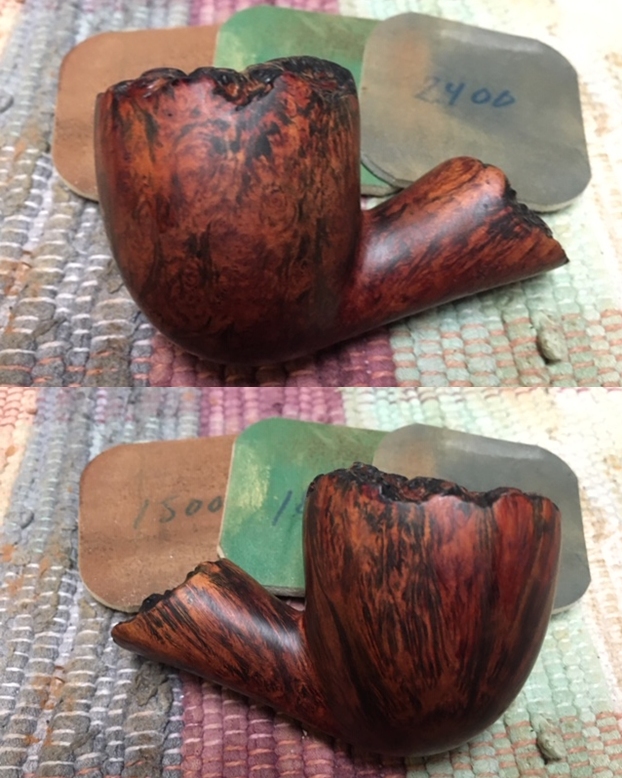
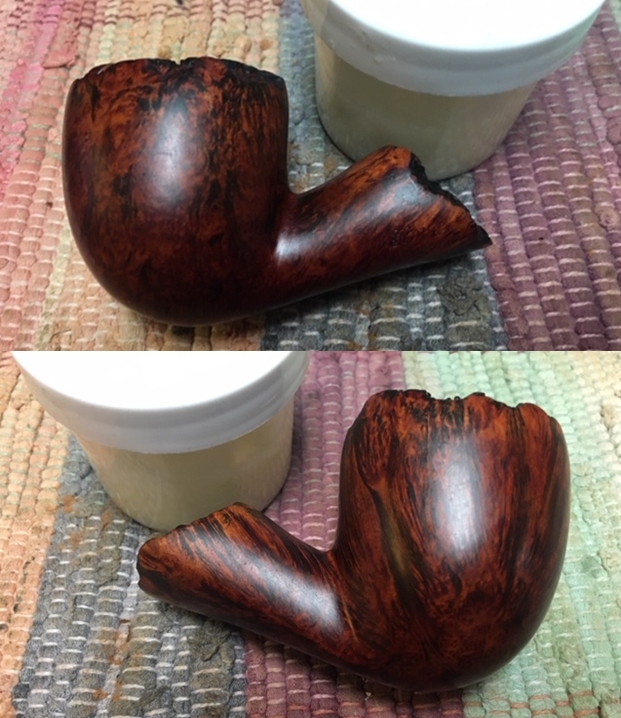
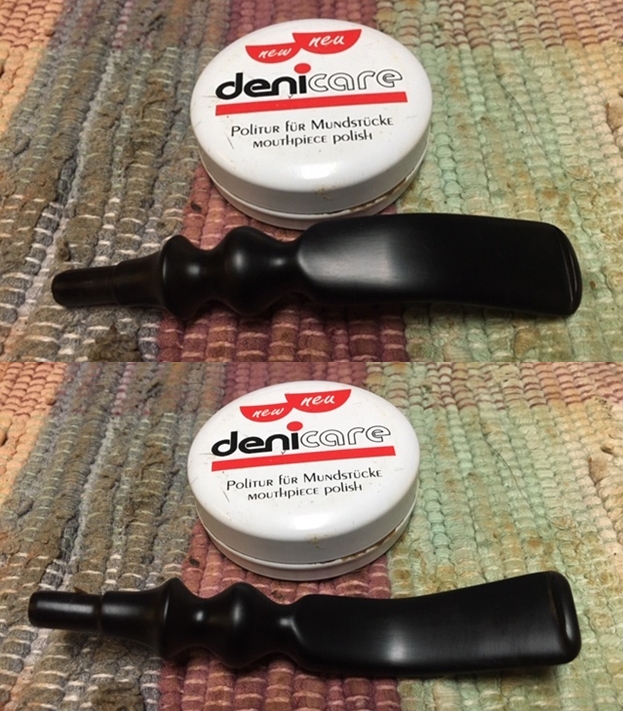
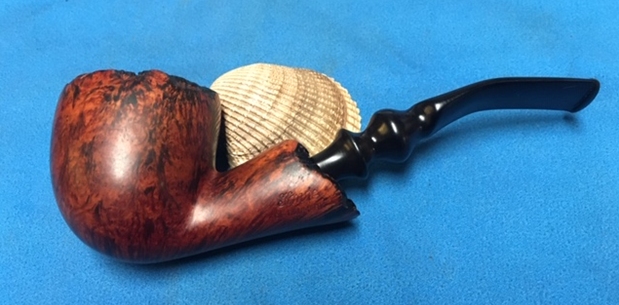
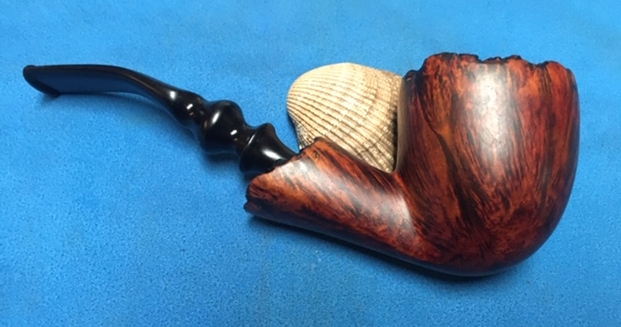
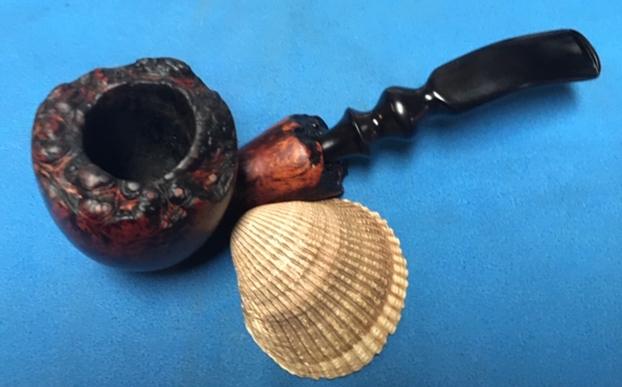
Restoring & Restemming an 1851 Ben Wade Silver Clad Cutty


Blog by Steve Laug

Over the past months in preparation for our trip to visit Paresh and his family in Pune, India we talked about what pipes we would work on while visiting. We had the notion that it would be the first ‘International’ gathering of Pipe Restorers. After all Dal Stanton was coming from Bulgaria, Jeff from US, Paresh and Abha and family from India and I was coming from Canada. It was going to be a grand time of restoring and sharing our tips and processes. I brought along a potential stem for either a meerschaum that Paresh had inherited from his Grandfather or from an early Ben Wade Fancy cutty. In the course of our time there Paresh and I looked over the stem I brought with me and tried it on the meerschaum and the Ben Wade. We chose not to use the stem on the meerschaum and it was too large in diameter for the Ben Wade. We decided that I would bring it home and see what I had in my can of stems.

I took photos of the bowl prior to my cleanup and restemming. The pipe came to me with a bone tenon in the mortise. In the process of cleaning the pipe and working to remove the tenon it cracked off in the shank leaving a broken tenon stuck in the shank. Since it was a threaded tenon removing it would be a matter of drilling out the broken portion of the tenon. Other than that the briar was dirty and the varnish finish was spotty. The silver leaves around the rim top and shank end were also tarnished and dirty. There were some dents in the rim top. The shank would have to wait for checking until I removed the broken tenon. The silver shank cap had a series of hallmarks on the top left of the cap. There were three running from the left of the photo to the end of the shank on the right. The first hallmark is a passant lion in a cartouche which signifies that the band is silver and that it was crafted by a British silversmith. The second hallmark was a shield shaped cartouche with three towers in it – two on the wider part of the shield and one below toward the point. This hallmark identifies the city in England where the silver was crafted – in this case Newcastle. The third hallmark was a square cartouche with the capital letter “M” in the box. The “M” is a date letter that will give me the year of the making of the pipe.I turned to a website that I use for dating English silver hallmarks. It is a British Hallmark site that gives the information necessary to interpret the hallmarks on silver items made in Britain (https://www.925-1000.com/dlNewcastle.html). On a chart from silver made in Newcastle from 1702-1884 I found what I was looking for. I have included the chart below with the date letter circled in red.Armed with that information, it was time to start working on the pipe itself. I started by reaming the bowl with a PipNet pipe reamer using the first two cutting heads to take the cake back bare briar. I followed that by cleaning up the reaming with a Savinelli Fitsall Pipe Knife. I sanded the walls of the bowl with a piece of dowel wrapped with 220 grit sandpaper. I sanded the inner edge of the rim with a folded piece of worn 220 grit sandpaper to clean off the silver edge of the cap folded into the bowl. I wanted the walls bare of cake so that I could check the walls for heat fissures or cracking. I cleaned out the inside of the shank and mortise with pipe cleaners, cotton swabs and alcohol until the swabs came out clean. I was quite surprised that the pipe was as clean as it was given its age and the condition of the cake in the bowl.I wiped down the bowl with acetone on cotton pads to clean off the varnish on the outside of the bowl. I scrubbed it until the finish was natural briar and the grain began to come to the surface of the bowl. I cleaned the tarnish on the silver rim top cap and the shank end cap with a tarnish remover and silver polish. I removed darkening in the carved leaves and flowers on the silver. I scrubbed the silver with a cotton pad to remove the tarnish. I worked some Before & After Restoration Balm into finish of the briar with my fingertips to clean, enliven and protect it. I let the balm sit for a little while and then buffed with a cotton cloth to raise the shine. The Restoration Balm really makes the grain stands out beautifully.  I buffed the bowl with a microfiber cloth to raise a shine on the bowl and the silver. I took photos of the pipe bowl as it stood at this point in the restoration process. It is a beautiful pipe with an elegance that speaks of the years in which it was manufactured.  I set the stem aside and worked on the stem that I had chosen for a replacement. The amber colour and the flow of the colour in the stem make it a great candidate for an amber look alike replacement stem. Once the airway was drilled the diameter of the replacement tenon I used a tap to cut new threads in the airway of the stem to receive new tenon. I threaded the new tenon into the tapped airway in the stem and took photos at this point in the process. I glued the tenon in the stem with clear super glue and let the glue set. Once it had cured I sanded the stem surface with 220 grit sandpaper to smooth out the new stem. I followed that by sanding the stem with 400 grit sandpaper to smooth out the scratches in the surface of the stem. I turned the stem onto the shank to get a feel for what the pipe would look like when it was completed. The following photos show the look of the finished pipe. I still need to polish the stem with micromesh sanding pads and buff it to raise the shine. But I like the way the pipe is beginning to look.  I polished the stem with micromesh sanding pads – wetsanding it with 1500-2400 grit pads and dry sanding it with 3200-12000 grit pads. I wiped the stem down with Obsidian Oil after each pad. I polished it with Before & After Pipe Polish – both Fine and Extra Fine and gave it a final coat and set it aside to dry.  I carefully buffed the pipe bowl with Blue Diamond polish on the buffing wheel. I lightly buffed the stem with Blue Diamond to raise a shine. I gave the bowl and stem multiple coats of carnauba wax and buffed it with a clean buffing wheel to raise the shine. I polished the silver rim top cap and the band with a jeweler’s cloth once more, then hand buffed the entire pipe with a microfiber cloth to deepen the shine. This 168+ year old restemmed and restored Ben Wade Cutty is really a beautiful pipe. The grain really stands out with a combination of birdseye, cross grain and swirls surrounding the bowl give it a rich look. The rich contrasting brown stains makes the grain stand out against the silver adornments. It is a proportionally well carved pipe. The polished black acrylic stem had a rich glow. The finished pipe is a beautiful straight Cutty that feels good in the hand and the mouth. Have a look at it with the photos below. The dimensions are Length: 6 inches, Height: 2 inches, Outside diameter of the bowl: 1 1/4 inches, Chamber diameter: ¾ of an inch. This pipe will be going back to Paresh in Pune, India very soon. I am excited to hear what he thinks of this beauty. Thanks for walking through the restoration and restemming with me as it was a pleasure to work on.
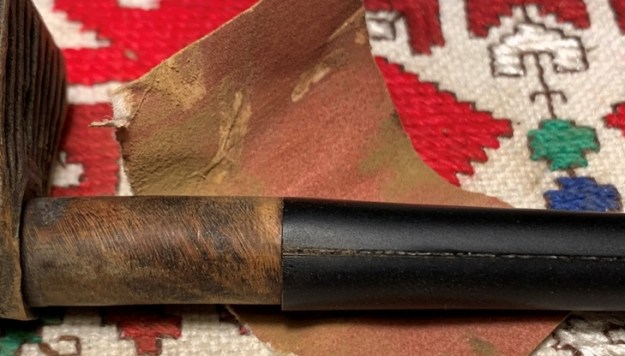
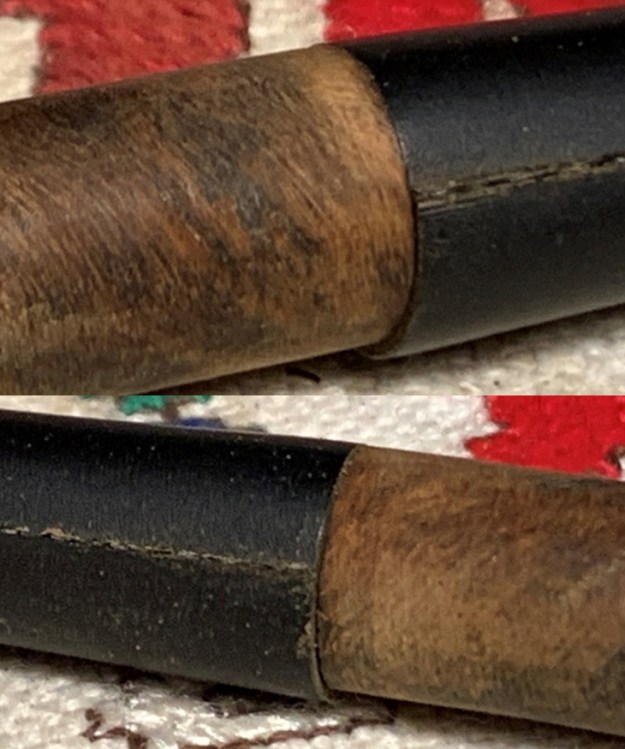
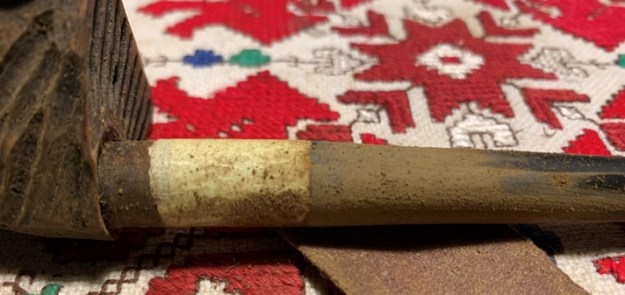
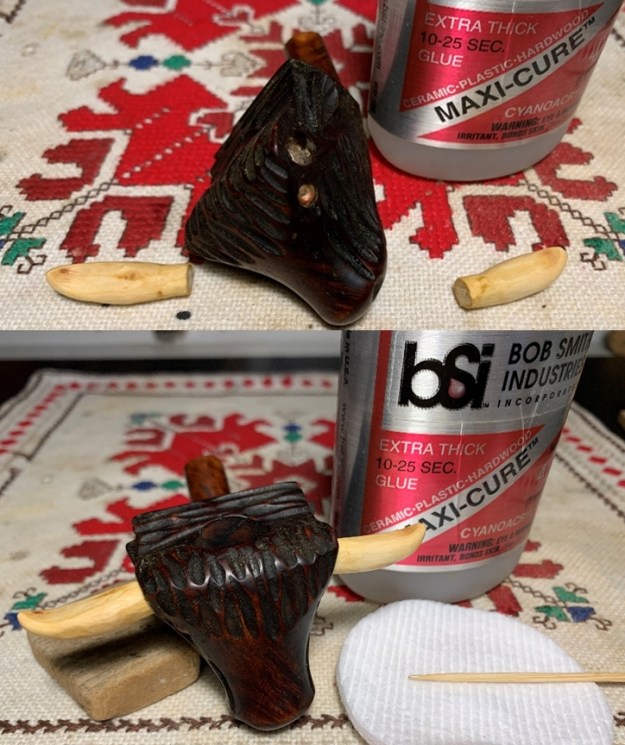
Restoring and Restemming a Savinelli Capri 915


Blog by Lee Neville

Over the past few months I have been continuing my correspondence with Lee via email. He picked up a couple of pipes for me at a local antique shop in Edmonton, Alberta, Canada and sent them to me. We have fired emails back and forth on restoration questions and issues. He also included Charles Lemon of Dad’s Pipes in the conversations and we had a great time. Earlier this week he sent Charles and me an email about a restoration of another pipe that he restemmed. Charles and I spoke with him of the style and size of stem to use. He did a great job on the restemming and the description of the work so I asked him if I could post it on rebornpipes. He was glad to have me do so. Thanks Lee for your work and this second write up. It is great to have you on rebornpipes as a contributor once again! – Steve

Thought I would share my pipe rehabilitation effort of a Savinelli Capri 915.  It showed up in the Winnipeg Ebay lot as a dirty stummel with a snapped-off stem tenon wedged into its shank. Alas, the original stem was not included in the lot.

This is a “Birks” pipe – Henry Birks & Sons, or what it’s now known by these days – “Maison Birks”, is a Montreal-based jewellery/glassware/fine leather goods/timepieces/ silver & gold flatware / object d’art firm in business here in Canada since the late 1800s.  It appears Birks would commission pipes from manufacturers and stamp them with their house name and offer them for sale during special promotions – Christmas, Father’s Day etc.  This Savinelli is the first of two “Birks” pipes I’ve got on my bench to restore.The plan is to clean this stummel up to the natural briar,  treat it to a wax protective finish and fit a replacement stem.  This will be fun as I just received the PIMO stem tenon cutter tool which will make short work of fitting a properly sized tenon on a replacement stem blank.

Stummel clean up
The bowl was in good shape. The rim showed minor discolouration from lighting.  The rim was not obscured by any lava. The previous owner was not a dottle-knocker – luckily no dents or chips on the bowl rim.  I reamed the bowl out with my newly arrived Pipnet set – I started with the smallest head, applying light twisting force and allowing the tool to make its way into the bowl.  This was repeated by the following two larger reaming heads to remove existing cake close to briar.  This was followed by twists with a dowel covered with 220 grit sandpaper to remove the remaining cake, then more twists with 320 / 400 grits to finish the bowl interior smooth. There are no cracks or burnouts in the bowl. The shank cleaned up with a few runs of alcohol-soaked pipe cleaners and q-tips.

I attacked the stummel with a soft toothbrush and Murphy’s Oil Soap to remove the rim discolouration and surface dirt/grease. The accumulated grunge lifted right off after two scrubbing sessions.  I was delighted to see the proprietary sandblasting/rustication is scarcely worn – the deep relief is quite attractive.

The stummel was then covered with masking tape. I clamped the padded stummel in my dremel vise and using a drill bit sized just over the ID of the snapped off stem tenon, ran it in a smidge gently, then reversed the drill and the tenon remnant came out with the drill bit.  This revealed a very fine crack in the mortise end of the stummel.  Using thin CA glue, I lightly dabbed the crack, watching it wick into the crack, then sprayed accelerant to instantly set the glue.  I lightly sanded the mortise face and mortise with 1000 grit paper to ensure any glue squeeze-out was removed before attempting to fit replacement stem

Fitting a new stem
I viewed the Savinelli web site to glean pipe proportions (stummel to stem) as well as canvassing yourselves for your thoughts on replacement stem length. I also found a high-definition image of a Capri 915 online.  Applying some ‘Edmonton Windage’, I ordered an oval tapered stem blank in a 2.25″ length from Vermont Freehand Pipes.

The stem blank on arrival was a bit wider than the stummel shank, so there was some filing and final sanding required to match the stem to the shank profile.

I mounted the replacement stem into the vise and drilled the stem draught hole to accept the guide rod of the PIMO stem tenon cutting tool.  I then mounted the PIMO stem tenon cutting tool and gently took a succession of cuts to arrive with a couple of thou of tenon final size.  I used a strip of 320 grit sandpaper to work the circumference of the tenon to a snug fit into the stummel mortise.  I used a variety of tools to flatten the stem tenon face so it would meet up with stummel mortise surface properly – needle files, sandpaper, a few licks with a very small chisel – all under a magnifier lens working the stem mating surface – testing fit/working it/test fit/working it until I got the proper fit.

Rough file work was then required to narrow the stem.  This took about an hour.  I then worked in the round with a file to shape the circumference of the stem to match the stummel profile. Last steps were using 220 sandpaper to work the circumference down as close to the final dimension. I followed that with 400 and 600 grit sandpaper.  I was now a scant hairs-width proud on the stem.  I then replaced the masking tape covering the stummel shank with clear scotch tape and brought the stem into line with the shank profile with 1500 and 1800 micro mesh pads.I filed the stem button into shape and from that point on, it was just applying a succession of micro mesh pads to 12000 to polish the replacement stem. Here is the clean stummel and new stem before finishing.Finishing the Pipe 
I treated the stummel to a coat of Howards Feed and Wax (beeswax, carnauba and citrus oils), let it sit for 30 minutes, then wiped off the excess, followed with a thin coating of carnauba wax over the whole pipe and a rub in with a polishing brush.  Using a cotton buff on my Dremel at 4000 rpm, I ran the buff over the entire pipe to bring out the shine. This pipe cleaned up very nicely and is a joy to hold.  I had fun fitting a new stem that is in proportion to the stummel and I think it’s a close resemblance to the stem originally fitted to the pipe.

Thank you Charles and Steve for your help on stem selection.

Onward and upwards!

Lee