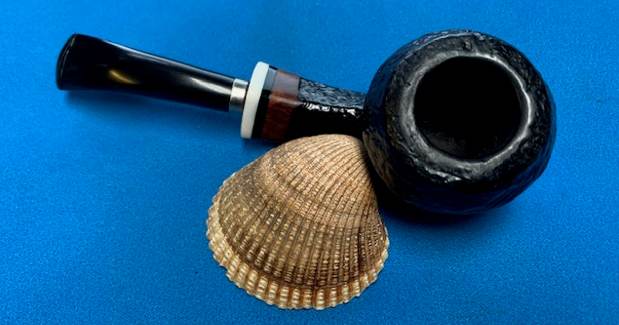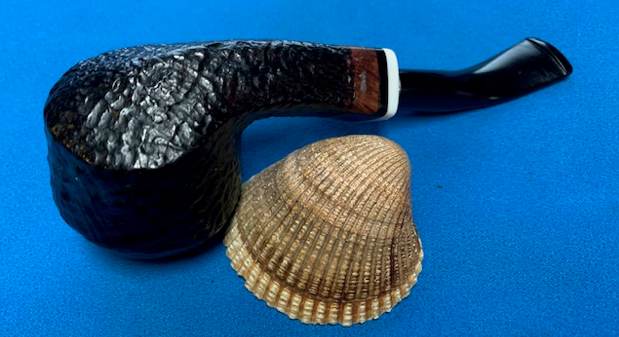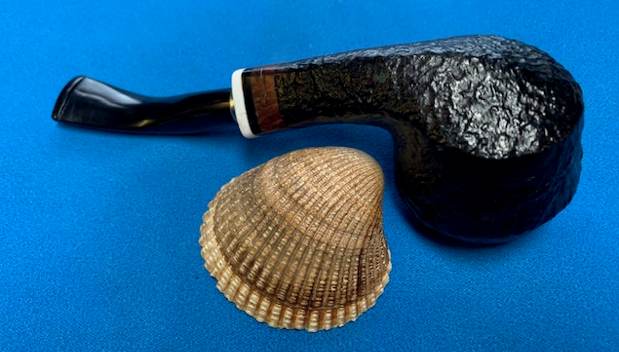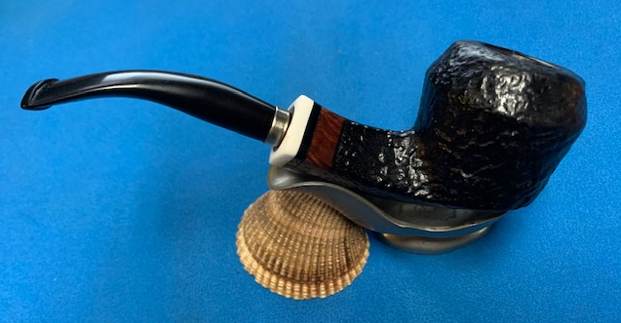
Tag Archives: restaining

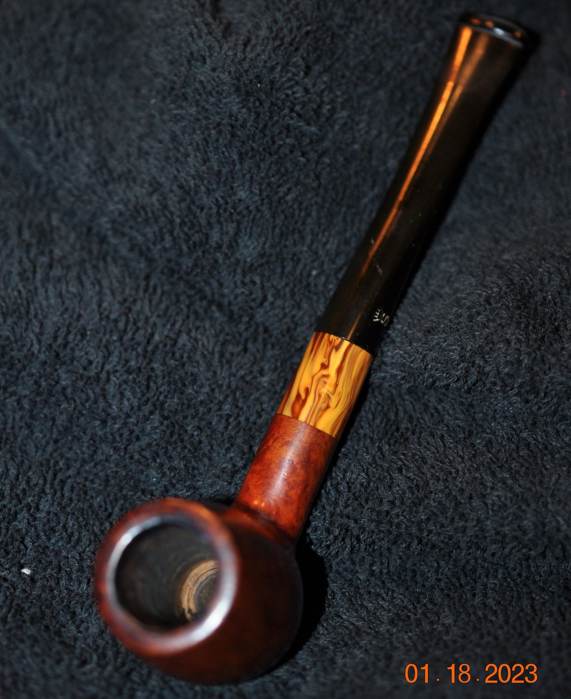
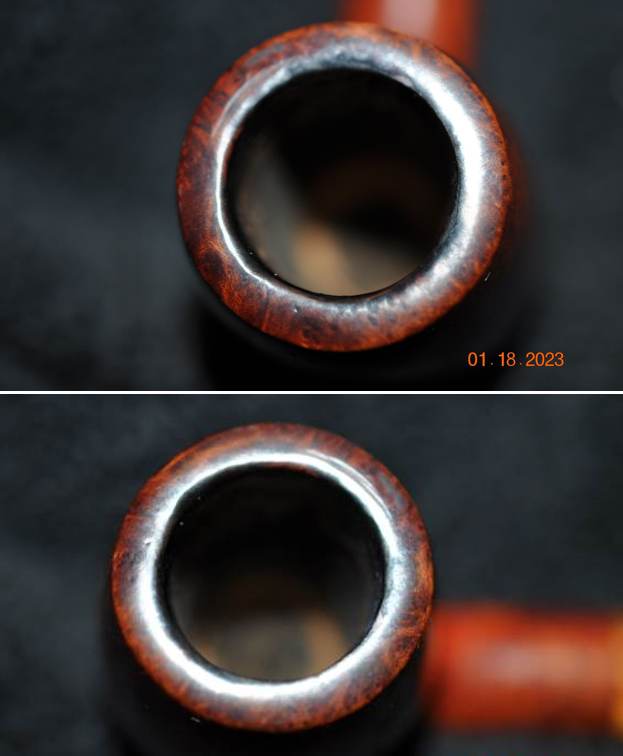
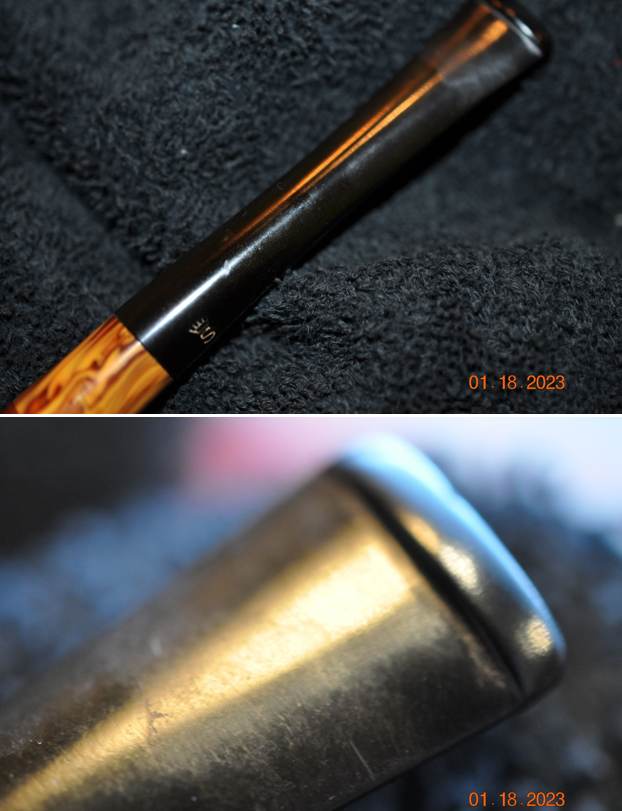
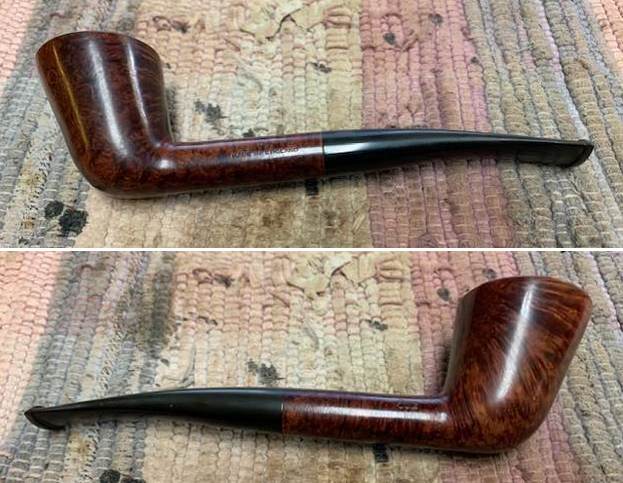
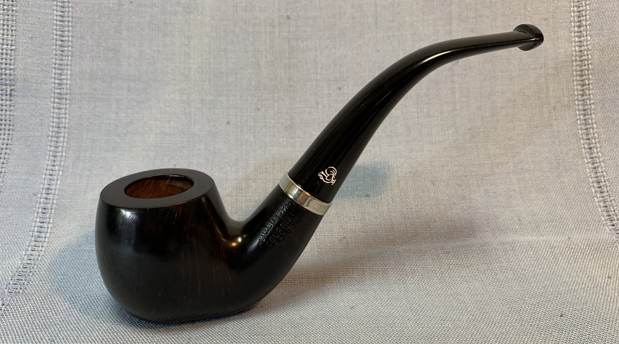
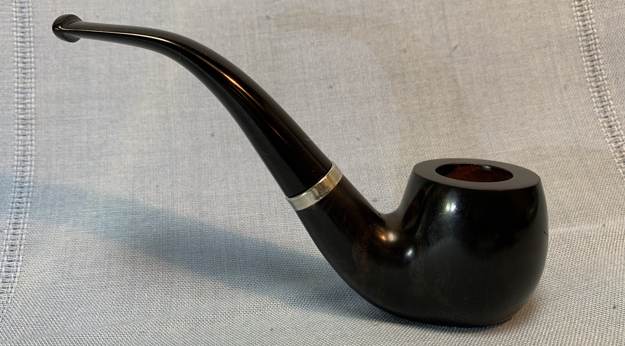
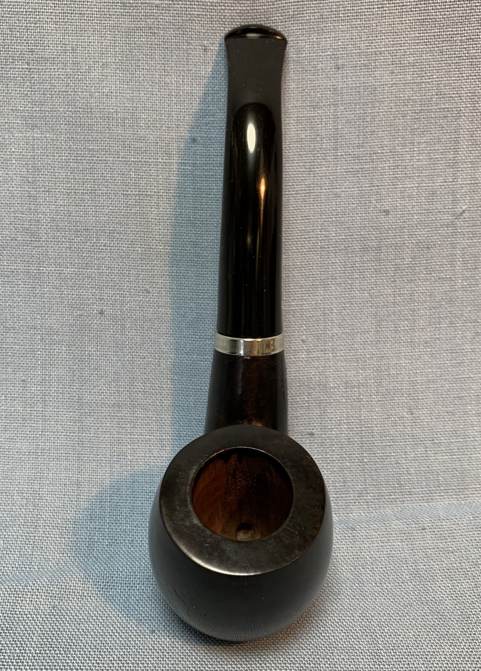
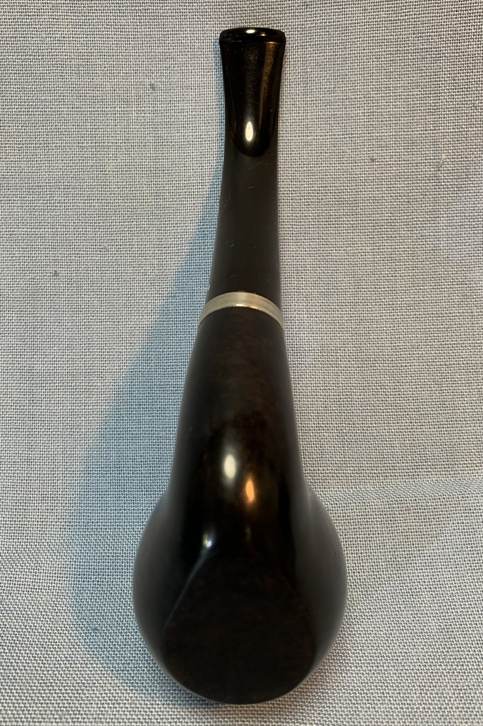
Fresh Life for a Beautiful Butz-Choquin Maitre Pipier Flamme Extra Horn


Blog by Steve Laug

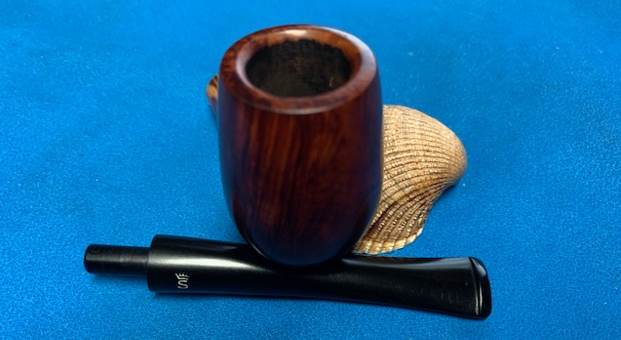
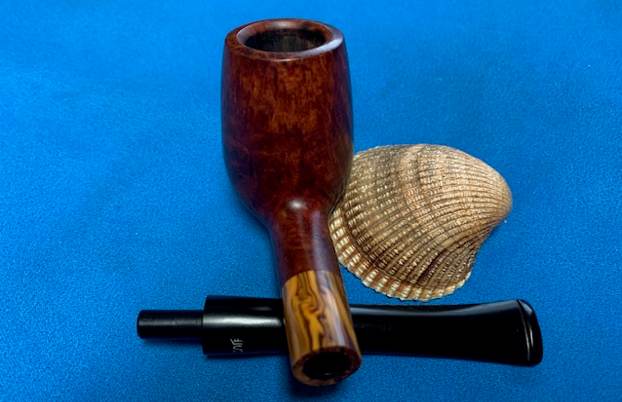
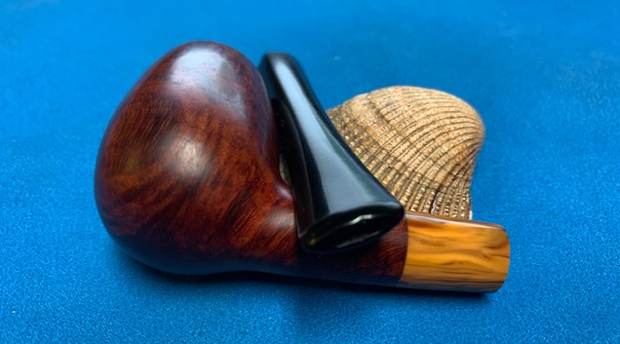
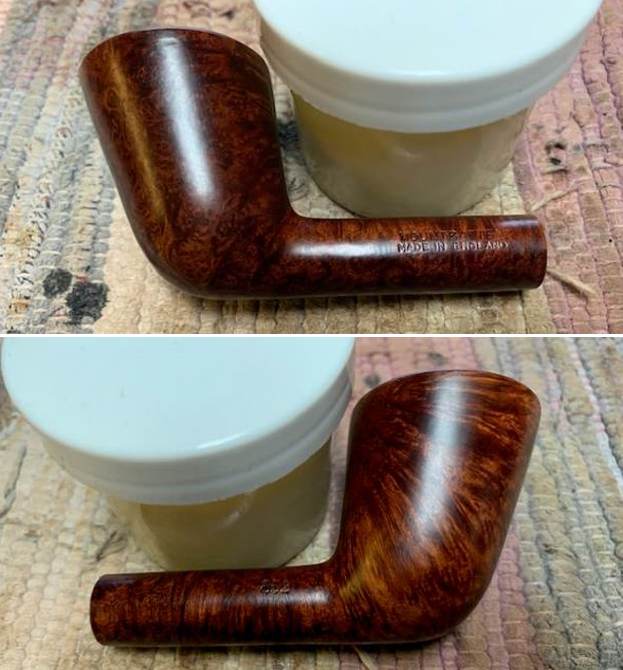
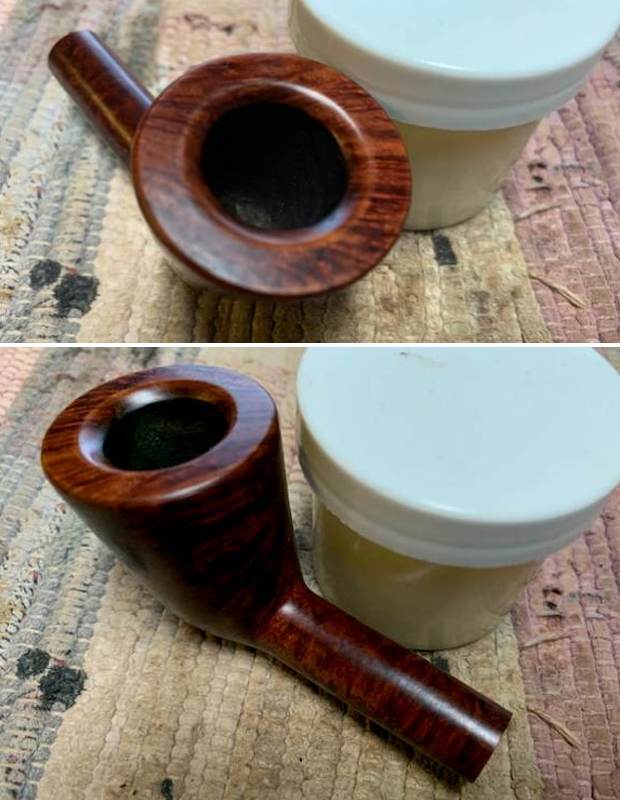
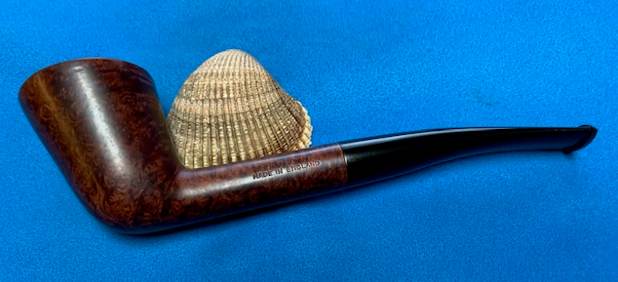
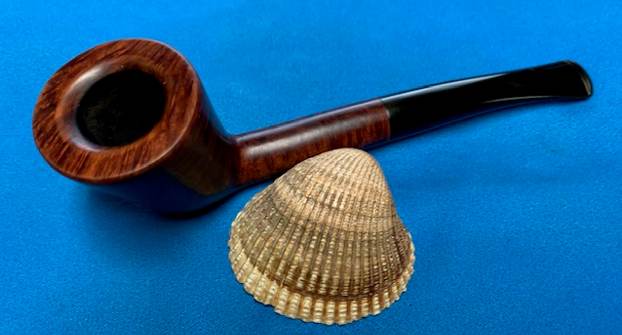
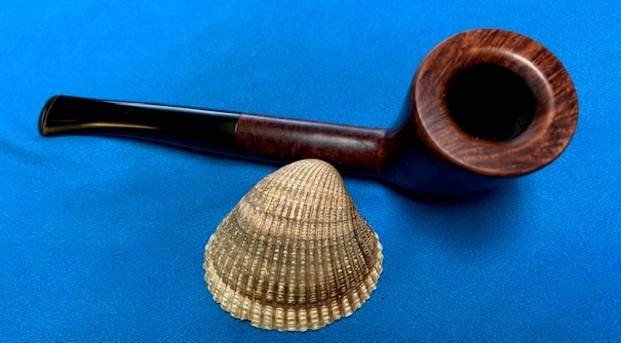
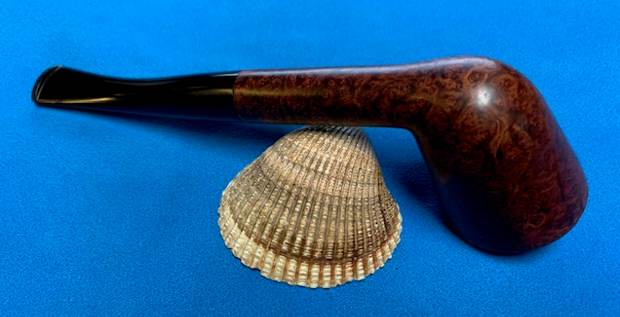
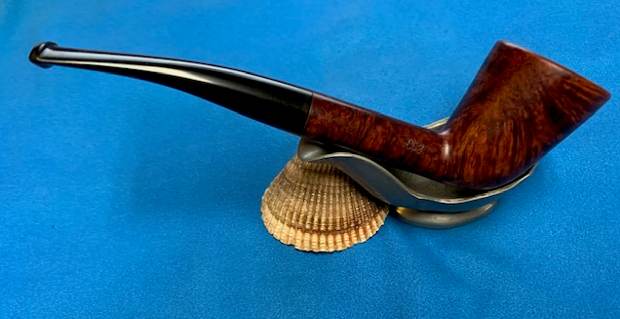
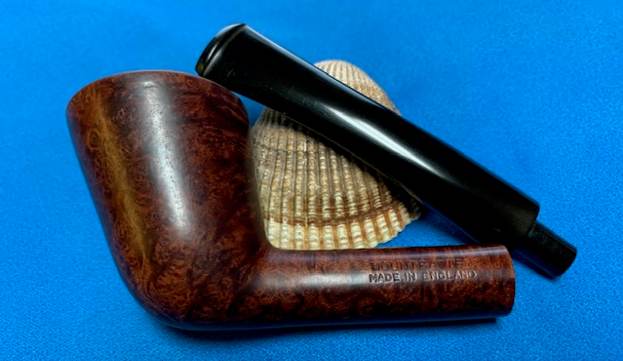
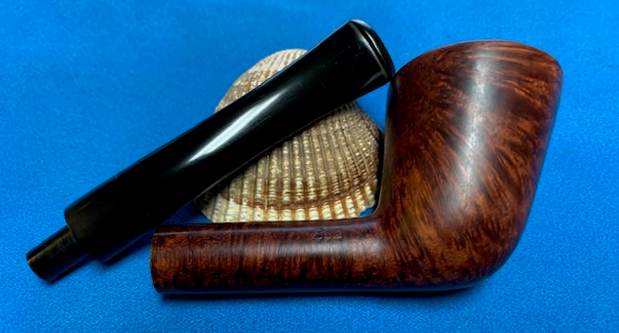
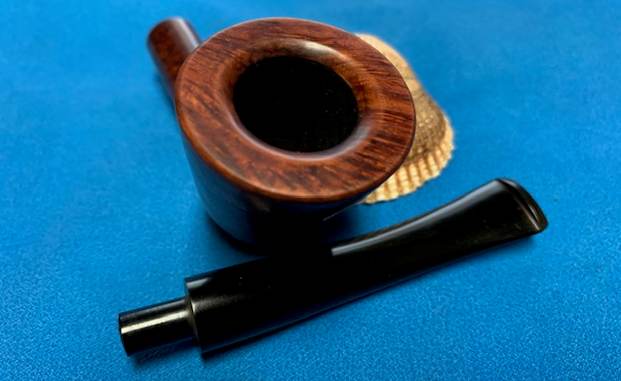
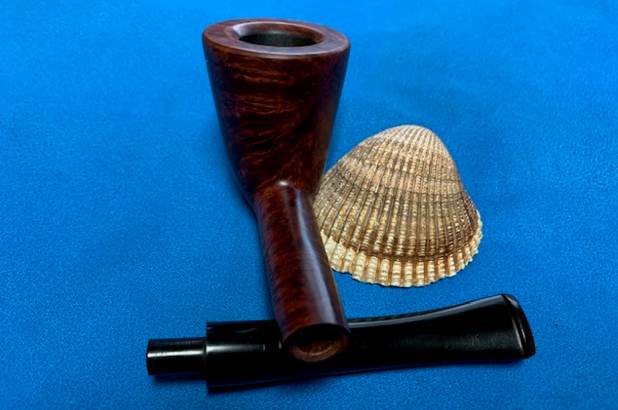
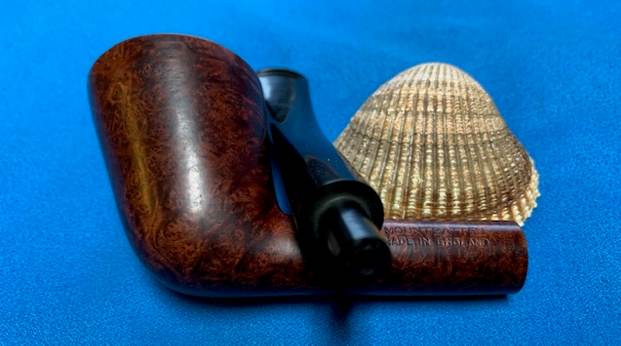
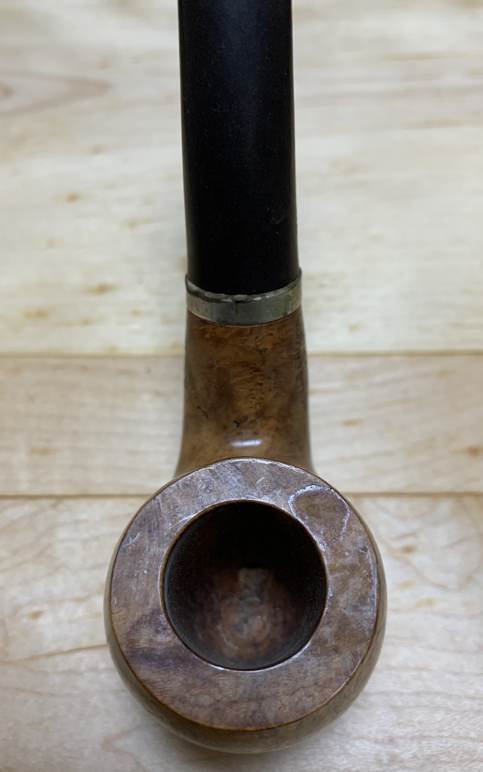
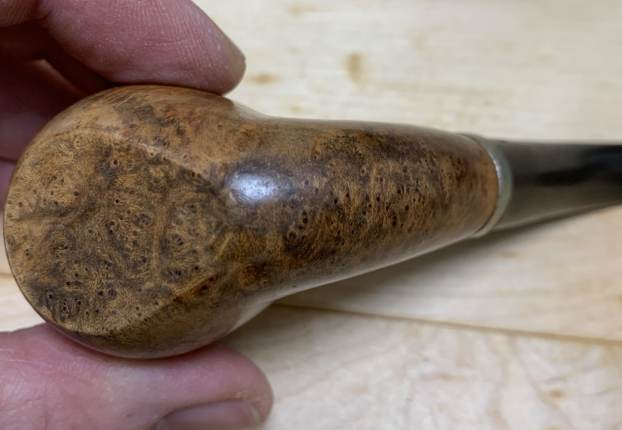
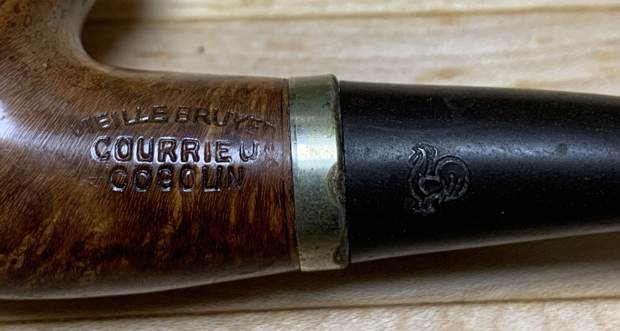
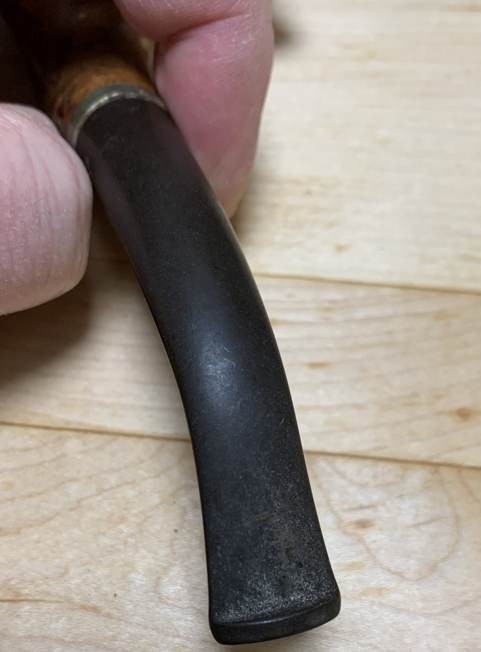
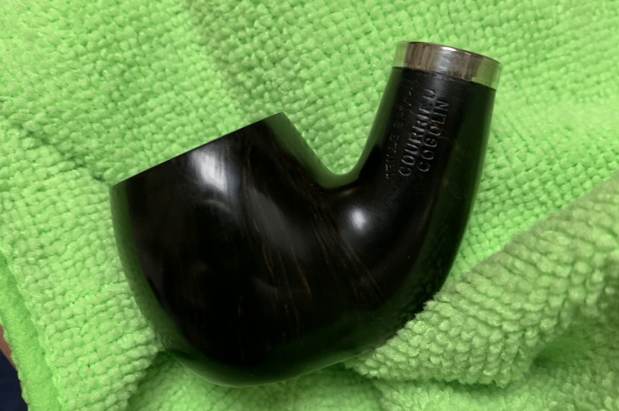
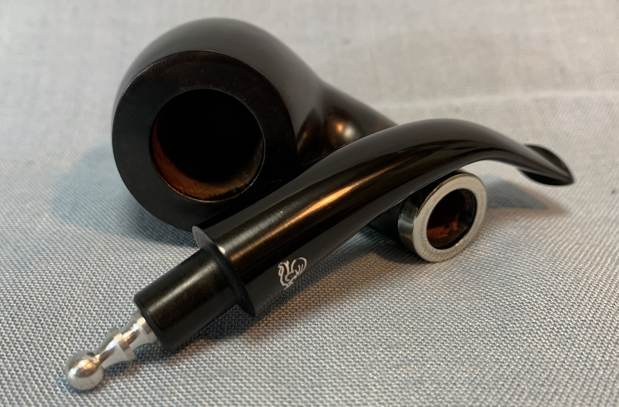
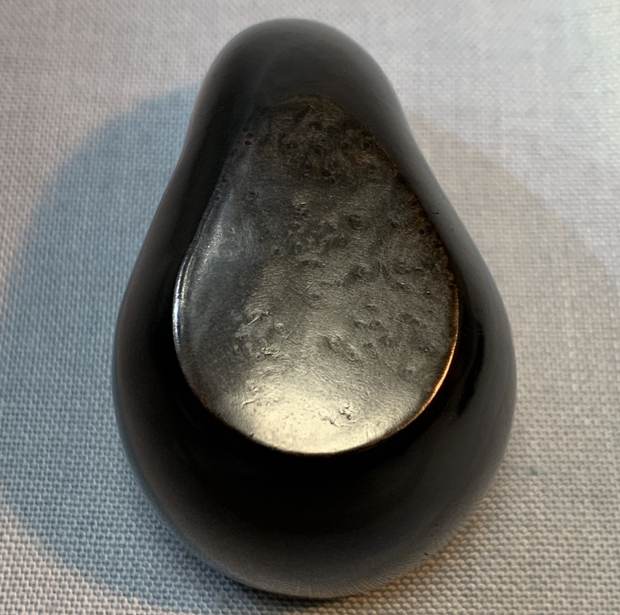
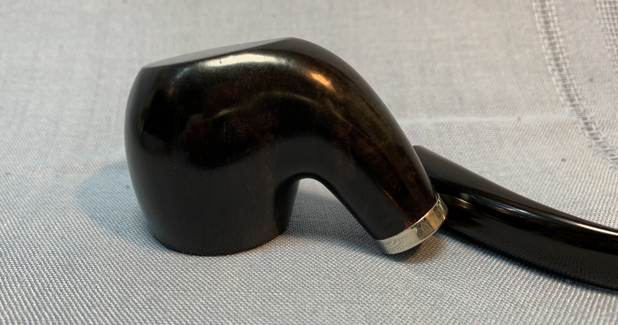
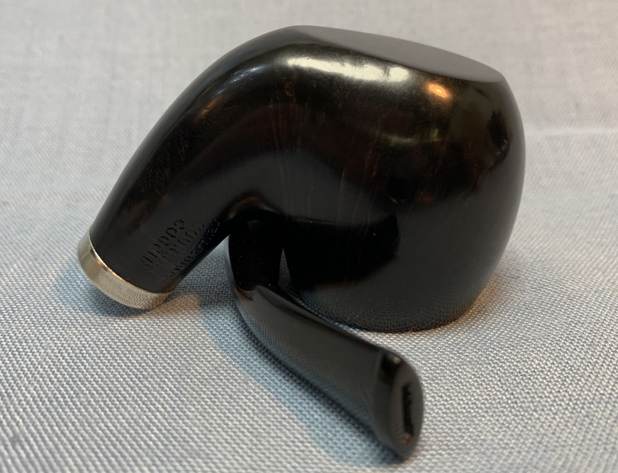
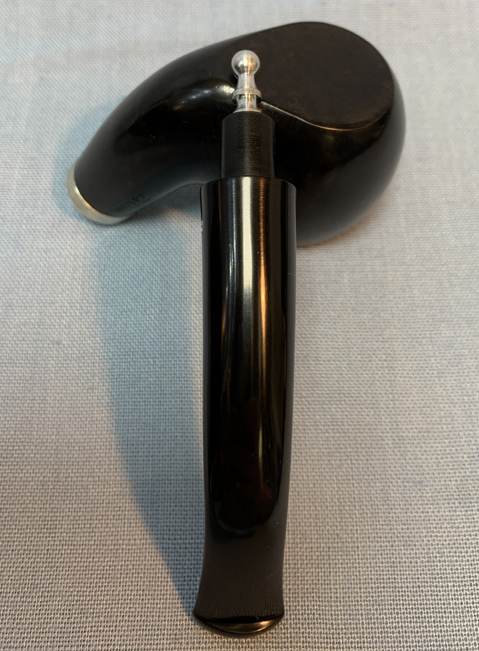
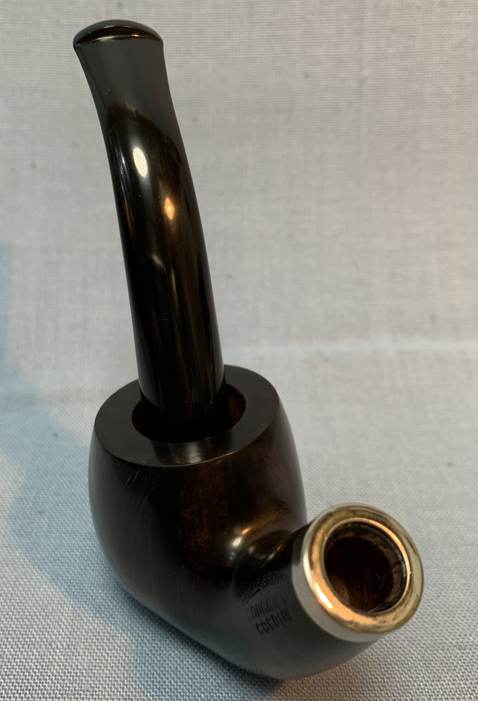
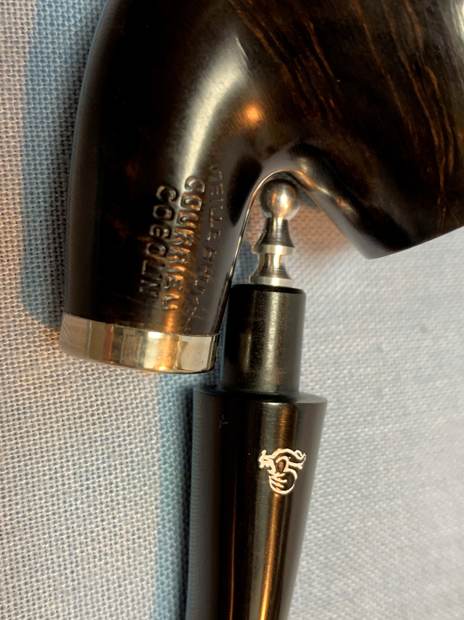
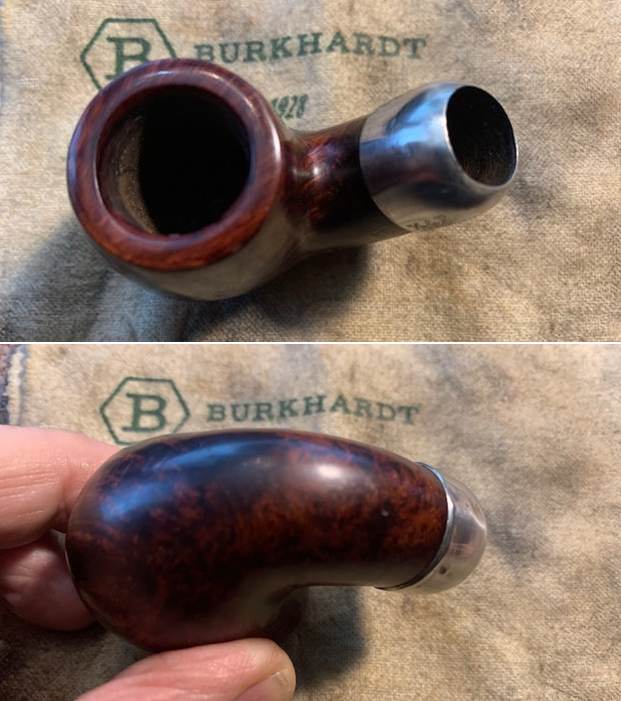
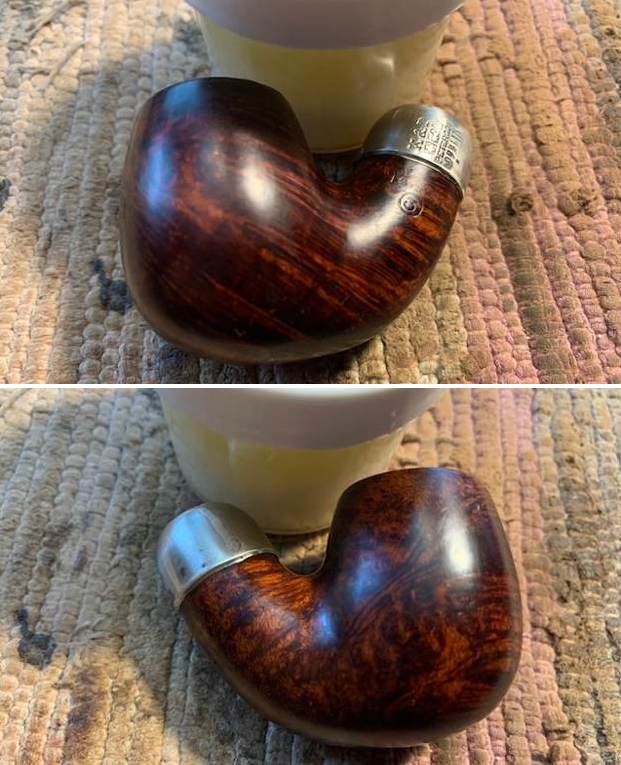
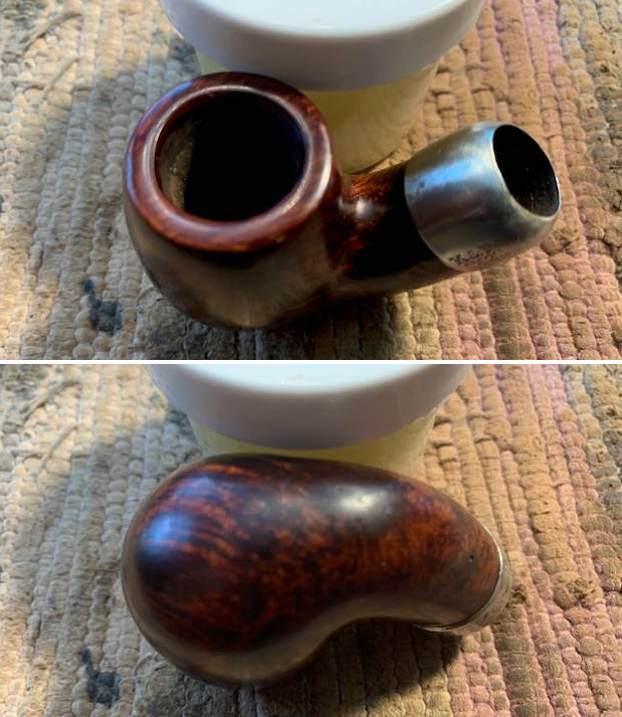
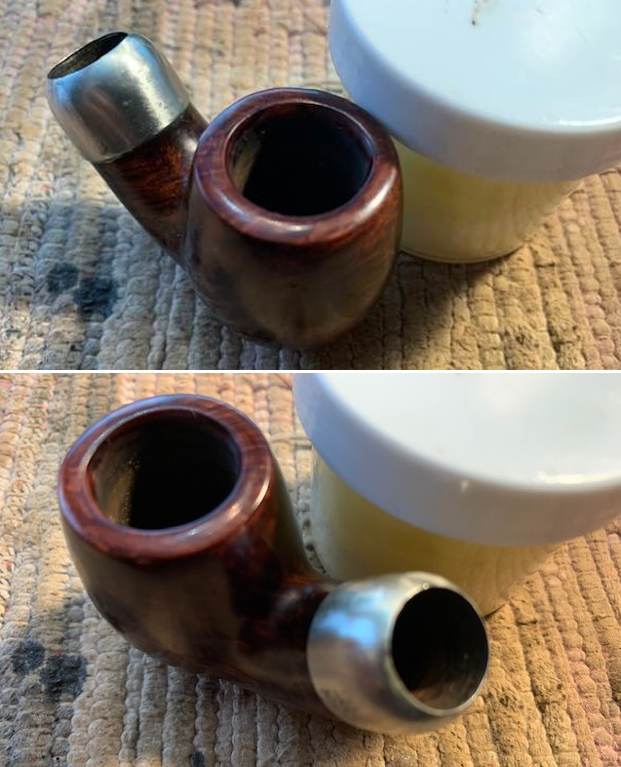
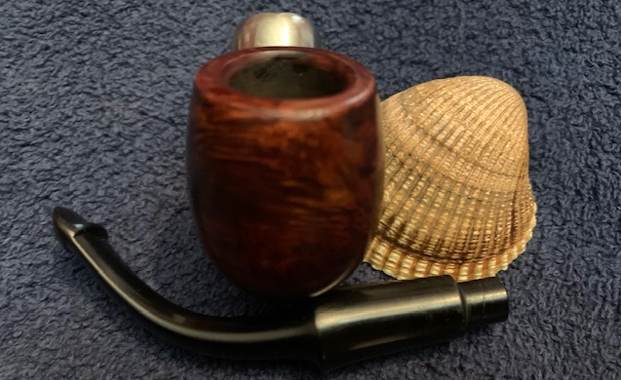
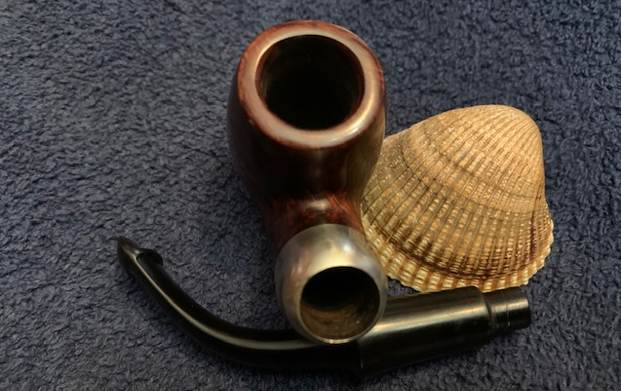
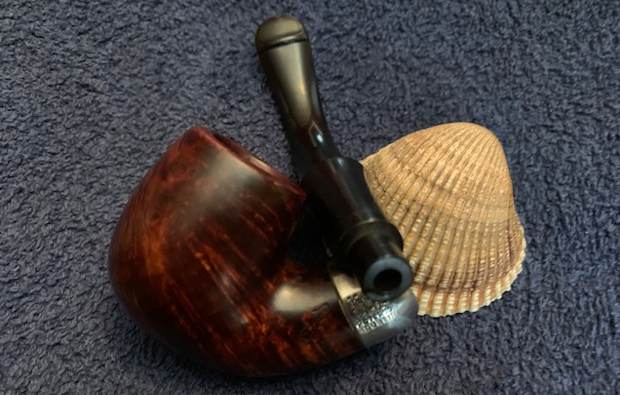
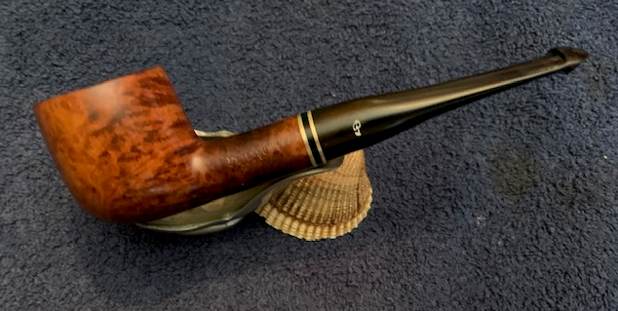
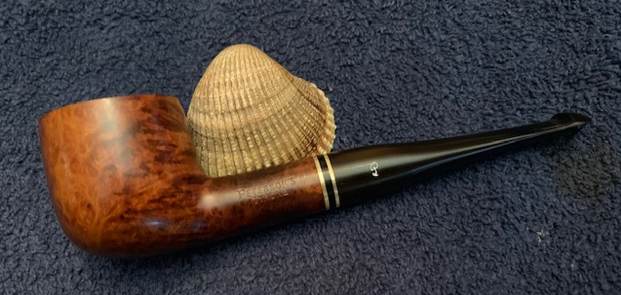
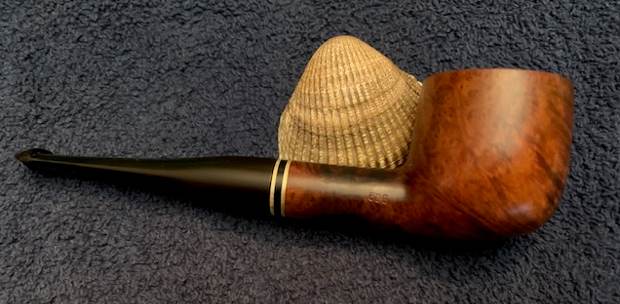
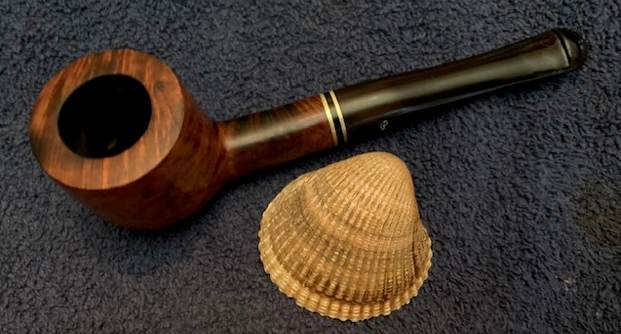
The next pipe in the queue came from a group of pipes a friend here in Vancouver passed on to me to restore and sell for him. The pipe is a beautiful Butz Choquin Maitre Pipier Flamme Extra pipe. It is almost a Danish shaped horn/scoop with a triangular shank and a uniquely shaped bowl. The entire pipe had some beautiful flame grain around the bowl and birdseye grain on bottom and top of the shank. The rim top was clean other than some burn or darkening damage on the back inner edge of the bowl. I could see that the carver had done an amazing job utilizing the block of briar to maximize the grain. The pipe is stamped on the left side of the shank and reads Butz-Choquin [over] Maitre Pipier [over] Flame [over] Extra. On the right side of the shank it is stamped Fait Main over St. Claude France. On the underside of the shank it is stamped J Berrod. The stem is vulcanite and has the inset BC circle on the left side of the uniquely fit triangular taper stem. I took photos of the rim top and edges and the stem surfaces. The rim top looked very good with some great birdseye. The inner edge had some burn damage and some darkening on the back inner edge. The stem had some oxidation, calcification and tooth marks and chatter on both sides ahead of the button. I took photos of the stamping on the sides of the shank. It read as noted above and is very clear. I removed the stem from the bowl and took a picture of the pipe to show the general look and proportion of the pipe. It is quite pretty in terms of grain and shape. The stem is definitely a fitted blank rather than a hand cut one. I have worked on another Maitre Pipier not too long ago and wrote up a blog on it. It was a nice looking Calabash (https://rebornpipes.com/2019/02/14/a-butz-choquin-maitre-pipier-hand-made-calabash/). On that blog I included some overall information on the brand and I will repeat it here to set the stage.

Butz-Choquin was a brand that I was familiar with having worked on quite a few of them over the years. I decided to check on a few sites to refresh the memory of the brand. I turned first to Pipephil and as usual the site gives a great summary (http://www.pipephil.eu/logos/en/logo-butzchoquin.html). I quote:

The origin of the brand reaches back to 1858 when Jean-Baptiste Choquin in collaboration with his son-in-law Gustave Butz created their first pipe in Metz (France). Since 1951 Butz-Choquin Site officiel Butz Choquin, pipes de Saint-Claude jura. BC pipe de bruyere luxe is a brand of the Berrod-Regad group (Saint-Claude, France).

I also found the line of Fait Main Maitre Pipier pipes listed. The pipe I am working on is stamped the same way as the one in the screen capture below. The shape is different but the rest is the same. The capture has a small paragraph on the line that reads as follows: Pipes of the “Maitre Pipier” séries were crafted by Paul Lanier until he retired and after him by Alain Albuisson.I turned then to Pipedia to see what I could find out there (https://pipedia.org/wiki/Butz-Choquin). I quote the article in its entirety as it gives a clear history.

The pipe, from Metz to Saint-Claude. Jean-Baptiste Choquin of Metz started out as a tobacconist. This enterprise was prosperous; he had several employees. Among those, there was a certain Gustave Butz who was its first workman and who became his son-in-law by marrying Choquin’s daughter Marie in 1858.

In 1858 Jean-Baptiste Choquin created, in collaboration with Gustave Butz, the Choquin pipe. This bent pipe with a flat-bottomed bowl was finished with an albatross-bone mouthpiece, fixed with silver rings.

In 1858, still in Metz, Gustave Butz built an establishment for the manufacture of the Choquin pipe which took the name of . In 1951, the Berrod-Regad company bought the trademark, continuing manufacture until 2002. Departing from Metz, the workshop was relocated to Saint-Claude, then also called “the world capital of the briar pipe,” under the Berrod-Regad group. The Berrod-Regad group would go on to completely rebuild the network of representatives until finally entering the export market in 1960 and has since won several prizes, as well as the Gold Cup of French good taste.

In a few years, the brand’s collection increased from ten to seventy series. 135 years after it was founded, the pipe is still well-known not only in France but throughout the world. In 2002, the Berrod family, wishing to preserve manufacture of pipes in Saint-Claude, handed over the company to Fabien Guichon, a native of the area, who will continue to develop the brand during the 21st century.

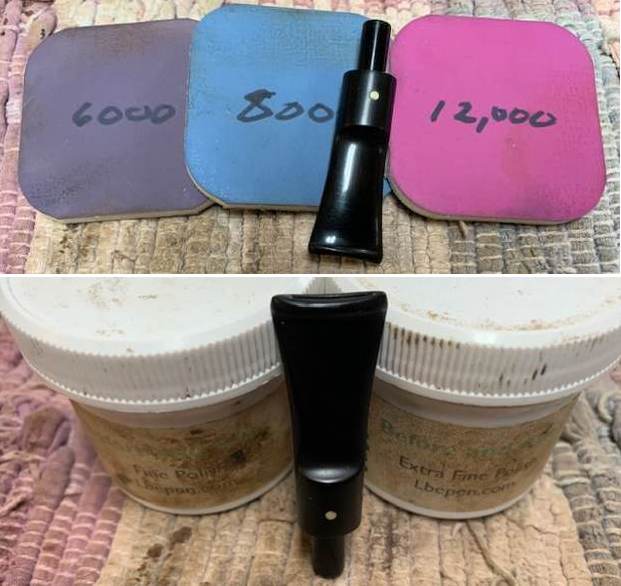
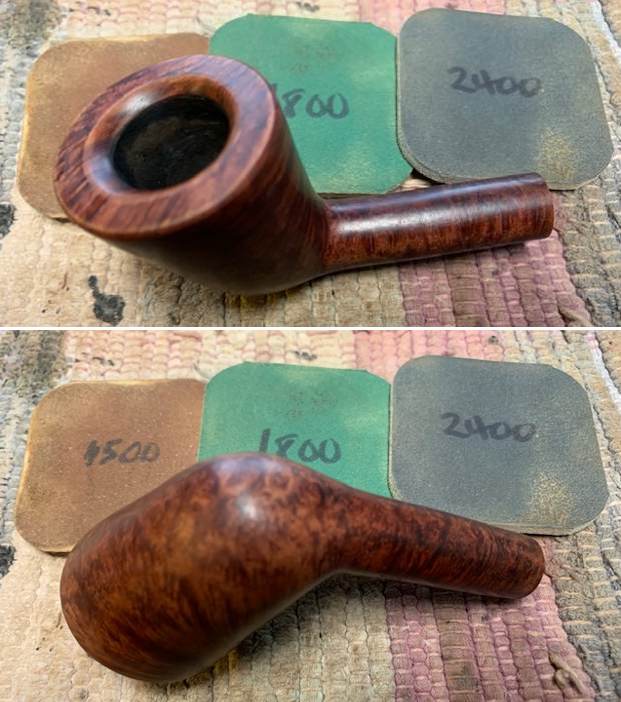
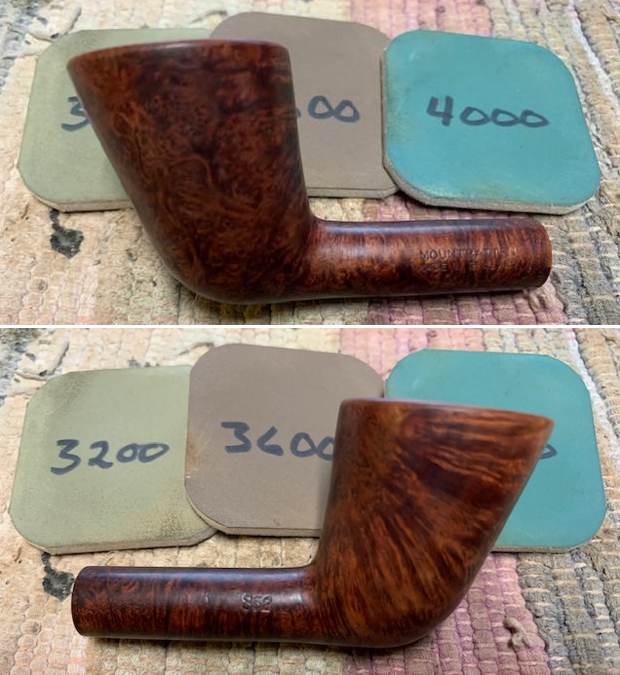
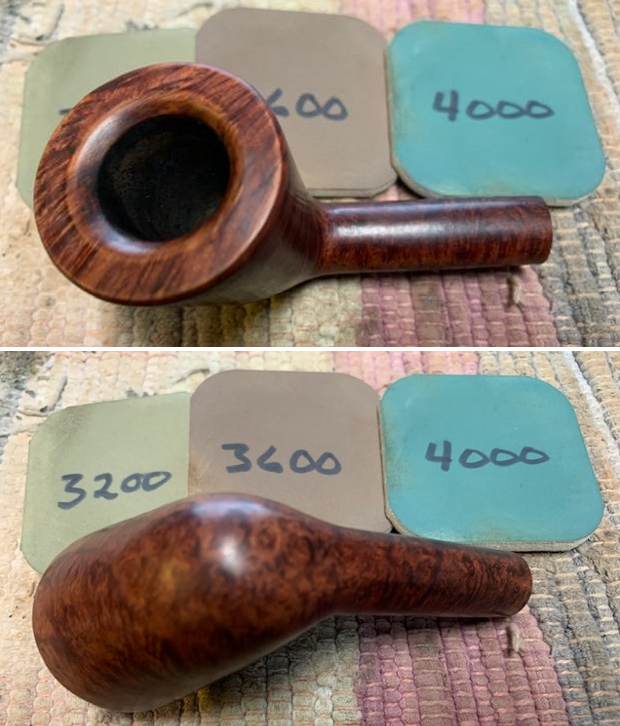
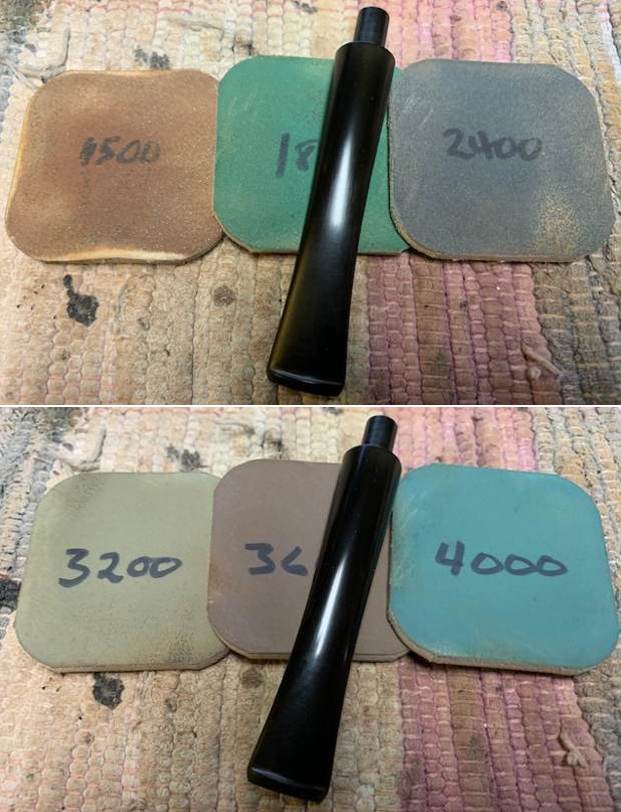
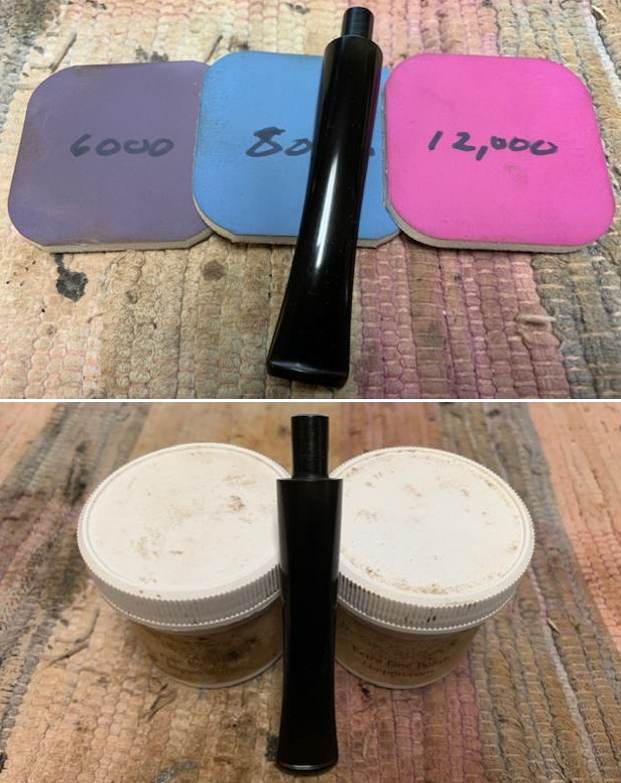
I reamed the bowl with a Savinelli Fitsall Pipe Knife to scrape out the thin cake in the bowl. There was not much there but enough that it had to go. I also sanded the bowl walls with a piece of 220 grit sandpaper wrapped around a piece of dowel. The bowl walls were smooth when I finished the work.  I wiped the bowl down with acetone to remove the shiny varnish coat as it was spotty on the sides and rim top. With it removed the grain really stood out clearly. It is a great looking piece of briar. I cleaned out the shank and the airway in the mortise and stem with pipe cleaners, cotton swabs and isopropyl alcohol. It was quite a bit dirtier than I expected from just the appearance. With the cleaning the pipe smelled cleaner. I worked over the inner edge with a folded piece of 220 grit sandpaper to smooth out the damage and to give the edge a slight bevel to remove the burn damage. I polished the briar with micromesh sanding pads – polishing it with 1500-12000 grit pads. By the time I was finished the briar had a great shine. The grain on the pipe is quite beautiful.  I rubbed the bowl and shank down with Before & After Restoration Balm to deep clean the finish on the bowl and shank. The product works to clean, enliven and protect the briar. I worked it into the finish with my fingers. After it sat for 15 minutes I wiped it off with a soft cloth. The briar really began to have a rich shine. I took some photos of the bowl at this point to mark the progress in the restoration. It is a beautiful bowl.  I set the bowl aside and turned my attention to the stem. I “painted” the surface with the flame of a lighter to lift the tooth marks and chatter. It worked very well and I sanded out the remnants and oxidation on the top and underside with 220 grit sandpaper and started polishing it with 400 grit wet dry sandpaper.   I polished the stem with micromesh sanding pads – dry sanding with 1500-12000 grit pads. I wiped the stem down after each pad with a damp cloth to remove the sanding dust. I used the Before & After Pipe Polish to remove the small minute scratches left in the vulcanite. I finished by wiping the stem down with a final coat of Obsidian Oil and set it aside to dry.   As usual at this point in the restoration process I am excited to be on the homestretch. I look forward to the final look when it is put back together, polished and waxed. I put the bowl and stem back together. I polished the bowl and stem with Blue Diamond to polish out the scratches in the briar and the vulcanite. I gave the bowl and the stem multiple coats of carnauba wax. I buffed the pipe with a clean buffing pad to raise the shine. I hand buffed it with a microfiber cloth to deepen the shine. The pipe polished up pretty nicely. The grain really pops with the wax and polish. The shiny black vulcanite stem is a beautiful contrast to the browns of the bowl and thick shank. This Butz-Choquin Maitrie Pipier Flamme Extra Scoop was another fun pipe to work on. It is a nice piece of briar whose shape follows the flow of the briar. The pipe is comfortable pipe to hold in the hand. The finished pipe is shown in the photos below. The dimensions of the pipe are Length: 5 ½ inches, Height: 1 ½ inches, Outside diameter of the bowl: 1 ½ inches, Chamber diameter: ¾ of an inch. The weight of the pipe is 1.45 ounces/41 grams. I will be putting this pipe on the rebornpipes store in the French Pipe Makers section. Thanks for reading this blog and my reflections on the pipe while I worked on it.

Breathing New Life into a Peterson of Dublin Dalkey 221 Chunky Bent Billiard


Blog by Steve Laug

The next pipe I brought to the table was another Peterson that Jeff purchased off eBay on 11/19/17 from Fort Meyers, Florida, USA. It has been sitting here in Vancouver awaiting my contribution to the restoration. It is a nicely shaped pipe with a chunky shank and feel in the hand. The finish is a walnut stain that gives a sense of rich brown. It is stamped on the left side of the shank and reads Peterson [arched over] of Dublin [over] Dalkey (in block print). On the right side there is the shape number 221 in the center of the and no other stamping. The bowl had a thick cake and a heavy overflow of lava on the rim top. The front outer edge of the rim had been beat against a hard surface and had a lot of damage and roughness across the bowl front. The rim top was also damaged with scratches and nicks in the surface that looked like it had been used as a hammer. The rest of the finish on the bowl was quite clean. The twin silver bands separated by an orange acrylic band on the stem is dirty but in good condition. The fishtail stem was oxidized, calcified and had light tooth chatter on both sides ahead of the button. The “P” stamp on the side of the saddle stem and readable and painted white. Jeff took photos of the pipe before he started his clean up work. He captured the cake in the bowl and the debris and lava on the rim top and edges in the next photos. It was very clear that it was an exceptional smoker! The damage on the front of the rim edge and the rim top is visible even under the heavy lava on the top and edges. The stem is oxidized, calcified and shows the tooth marks and chatter on both sides ahead of the button. Jeff captured some of the beauty of the shape and the grain in the next photo. The mix of grains on the front of the bowl and heel are quite lovely as can be seen in the photo below.He took photos of the stamping on the sides of the shank. It is clear and readable as noted above. He also took a photo of the  P logo stamp on the left side of the stem. I decided to check out both the Pipephil and the Pipedia sites for information on the Dalkey line. Both sites did not have any specific information. I then did a quick Google search for the Peterson Dalkey. The first link took me to smokingpipes.com (https://www.smokingpipes.com/pipes/estate/ireland/moreinfo.cfm?product_id=332074) to a pipe that had been sold there. I have included the information I found below:

While the bent Billiard is a classic shape, rendered by countless companies, Peterson’s “221” iteration is readily recognized as the work of the Irish marque because of the added visual weight attributed to the shank and transition. Such extra heft stretches the heel and provides more palm-filling substance. It makes for an eye-catching, muscular form in profile yet remains well balanced thanks to the curled transition and bent stem out back. Here it’s presented in the Dalkey finish, with a warm hazelnut stain and nickel-and-acrylic band.

The second link took me to pipesandcigars.com (https://www.pipesandcigars.com/p/peterson-dalkey-pipes/2000657/).I quote the following from the introduction to the line:

Peterson Dalkey Pipes come in an assortment of classic Peterson shapes. The finish is a warm brown tone, mated to black stems, and finished with a gold and orange triple trim ring. These pipes are not only handsome, but they’re among the most affordable smooth finished pipes that Peterson makes.

I then turned to The Peterson Pipe by Mark Irwin and Gary Malmberg and looked up the listing in the book for Dalkey. I quote what I found there.

Dalkey (2010-) Dark stained smooth finish line with a band of orange acrylic sandwiched between nickel bands, white P stamped on a fishtail mouthpiece.

Now I knew I was dealing with a pipe made after 2010 and the dark stained finish (to me it is a dark walnut). The shank band looks amazing with the stain on the finish. Now it was time to work on the pipe.

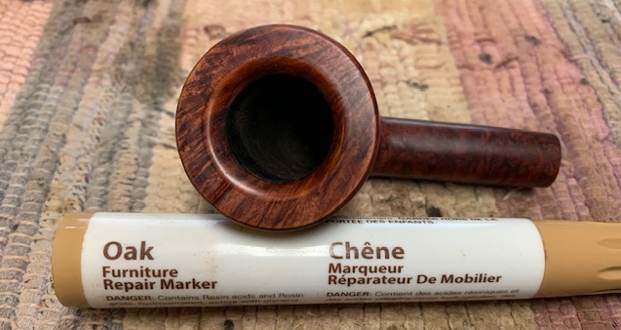
Jeff had done a great cleanup on the pipe. He reamed the bowl with a PipNet pipe reamer and followed up with a Savinelli Fitsall pipe knife to remove the cake. He scrubbed out the mortise and the airway in the shank and the stem with alcohol, cotton swabs and pipe cleaners. He scrubbed the bowl exterior with a tooth brush and Murphy’s Oil Soap to remove the grime on the finish of the bowl and the lava from the rim top. He rinsed it under running water. One of the benefits of this scrub is that it also tends to lift some of the scratches and nicks in the surface of the briar. He dried it off with a soft cloth. He cleaned the internals of the shank/mortise and stem with alcohol, pipe cleaners and cotton swabs. He soaked the stem in Briarville’s Pipe Stem Deoxidizer and rinsed it off with warm water and cleaned out the airway in the stem with alcohol, pipe cleaners and cotton swabs. I took photos of the pipe as I saw it when I finally brought it to my work table.   I took photos of the rim top and stem to show the condition. The rim top and edges were in very rough condition. You can see the damage to the top all the way around and to the outer edge on the bowl front. It really very rough to the touch. The stem was vulcanite and there were light tooth marks and chatter on both sides ahead of the button. I took photos of the stamping on the sides of the shank. They are clear and readable as noted above. The “P” logo on the stem is faint but is still quite readable.   I removed the stem from the shank and took a photo of the pipe to give a sense of the proportions of the bowl and stem.I took photos of the damage on the rim top and the front edge to show how beat up it was. The roughness is very tangible when I touched it. I dripped some clear CA glue on the front edge of the bowl so I could rebuild it. I then dipped it into some briar dust to build it up. I cleaned up and reshaped the edge with 220 grit sandpaper. I topped the bowl with a topping board and 220 grit sandpaper to smooth out the damage to the rim top. When I was finished it looked much better. With the rim top smooth it was now time to give the inner edge a bevel. I used a wooden ball and 220 grit sandpaper to shape the edge. I wrapped the ball with the sandpaper and worked on the edge. It took a bit of work to smooth it out and give it a bevel. I smoothed out the bevel with a folded piece of 220 grit sandpaper. The rim top came out looking very good at this point. I stained the rim top and the inner and front outer edges with an oak stain pen to match the colour of the stain around the bowl and shank.I decided to start with polishing the briar with micromesh sanding pads. I dry sanded it with 1500-12000 grit pads. I wiped the bowl down after each pad with a damp cloth. The bowl began to take on a rich shine and grain was beginning to stand out.   At this point the bowl was polished and clean. I rubbed down with Before & After Restoration Balm. I worked it into the surface of the bowl sides and shank with my fingertips to clean, enliven and protect the briar. I let the balm sit for 10 minutes, then buffed with a cotton cloth to raise the shine. The Balm did its magic and the grain stood out on the briar.   I set the bowl aside and turned my attention to the stem. I polished the stem with micromesh sanding pads – 1500-12000 grit pads. I wiped it down with Obsidian Oil after each sanding pad. I finished the polishing with Before & After Polishes – both Fine and Extra Fine. I gave it a final rub down with Obsidian Oil and set it aside to dry. I repainted the “P” logo stamp on the left side of the saddle stem with some white acrylic nail polish. I worked it into the stamp with a tooth pick. Once it dried I scraped of the excess and lightly polished it with a 1500-2400 grit micromesh sanding pad. This Peterson of Dublin Dalkey 221 Bent Billiard with a vulcanite taper stem has a smooth reddish finish. The rich browns of the stain make the grain come alive with the polishing and waxing. I put the vulcanite stem back on the bowl and carefully buffed the pipe with Blue Diamond on the buffing wheel using a light touch on the briar. I gave the bowl and the stem multiple coats of carnauba wax on the buffing wheel and followed that by buffing the entire pipe with a clean buffing pad. I hand buffed the pipe with a microfiber cloth to deepen the shine. The finished Peterson’s Dalkey 221 Bent Billiard really is a great looking and fits nicely in the hand and looks very good. Give the finished pipe a look in the photos below. The dimensions of the pipe are Length: 5 ½ inches, Height: 1 ¾ inches, Outside diameter of the bowl: 1 ¼ inches, Chamber diameter: ¾ of an inch. The weight of the pipe is 1.62 oz./46 grams. This pipe will soon be on the Irish Pipe Makers Section of the rebornpipes store if you would like to add it to your collection. Thanks for reading this blog and my reflections on the pipe while I worked on it.

Who made this La Torre Personal N1 Freehand?


Blog Steve Laug

A friend of mine sent me a link to this pipe on EBay US and thought I might be interested. He said he thought it was made by a fellow who carved for Castello but was not certain. The pipe was in decent condition and the seller said it had been thoroughly cleaned and restored. It had some amazing grain around the bowl and shank with some rugged plateau on the rim top. There were remnants of a black stain in the grooves around the plateau and some darkening and lava still in the grooves on the back side of the rim top. I sent the photos to Jeff and he put a bid on the pipe and we made the winning bid. The pipe was sent to Jeff who forwarded it to me. I am including the photos that were included by the Ebay seller below. I found a picture online of the stamping that is on the pipe I am working on. On the left it is stamped with Tower logo followed by La Torre [over] Personal (both in script). On the right side it is stamped with an N1.

That gave me what I needed to do some searching on the brand. But before I do that here are some more photos of the pipe from the seller. They really show its beauty and from them you can see why we were interested in this pipe. The next two photos show the front and the right and left sides of the pipe. The grain is quite stunning. He also included some close up photos of the bowl sides and rim top that really capture the condition of the pipe. The briar is very nice. The plateau on this one is beautiful but has some lava on the back edge and inner edge of the bowl. There is some remnants of black stain in some of the grooves around the bowl top that I can replicate in the cleanup. He also included a photo of the bowl with the stem removed that shows the well made and shaped tenon and stem. The fit on the shank is perfect.I wanted to verify my friend’s thoughts about the connectin to Castello so I did some searching online to see what I could find out about the brand. I turned first to Pipephil’s site as he generally has a good brief summary regarding most brands (http://pipephil.eu/logos/en/logo-l1.html). I found a short listing and did a screen capture of the section. I have included it below. In the side bar it included this information:
Artisan: Ernesto Ossola, pipemaker between 1970 and 1990

I also turned to Pipedia to see if there was more information. There was a bit more but still no link to Castello (https://pipedia.org/wiki/La_Torre). There was also a link to an article by an Italian Bloger Gusto Tobacco that was very helpful. I quote both below:

La Torre pipes were made by Ernesto Ossola, a pipemaker about the 1970’s.

Stamping: Tower logo + “La Torre” + “Personal” (both in script) + (usually) “N1”. Or “La Torre” + “DIAMANTE”

Mr. ERNESTO OSSOLA WAS A CRAFTSMAN THAT MADE PIPES WITH HIS “LA TORRE” LOGO UNTIL HIS DEATH IN 2010.

Italian pipe blogger, Gusto Tobacco, did some fairly detailed original research into Ernesto Ossola and La Torre pipes, which is available here: Ernesto Ossola’s tower: a story to remember. This is the Google translation, which leaves a bit to be desired, but it’s readable. Contributors, it would be great to expand our article here on Pipedia based on this research. Please feel free to dive in and do that if you are interested.

https://www-gustotabacco-it.translate.goog/storia/2652-la-torre-di-ernesto-ossola-una-storia-da-ricordare/?_x_tr_sl=it&_x_tr_tl=en&_x_tr_hl=en&_x_tr_pto=sc

…On Pipedia, but also on the Fumare la Pipa forum, it is claimed that Ossola would have been a worker from Castello, set up on his own in 1978, but nothing else was reported, if not the year of his death, 2010: unfortunately, these data would soon prove completely wrong…  (NOW I KNEW THE CASTELLO INFORMATION WAS INCORRECT)

The first step in my research was to consult the Castello di Cantù company: Franco Coppo has categorically denied having had a working relationship with Ossola. So I contacted the very kind Luigi Radice, who told me he had never heard of him: my little investigation was getting unexpectedly complex. So I started to annoy friends and acquaintances of the sector all over Italy: Damiano and Dorelio Rovera have no memory of it; Bollito, Fincato and Musicò, while remembering the brand, have no idea who the owner was; the very courteous Amorelli either, as well as Mauro Cosmo and Ascorti. Indeed, I have lost count of all the unfortunates I have bothered to find out something: I even wrote to the linguist Carlo Ossola who, with unusual kindness, told me that the name Ernesto is not part of his family branch. On the tower depicted in the trademark , assuming it is a realistic representation, to identify at least one geographical area on which to focus the investigations? Many hypotheses, but no certainty. In the end, it was my friend Gerti (former admin of Fumare la Pipa) who helped me: according to him, Ernesto Ossola was certainly Lombard, a conviction also supported by the map of the spread of the surname in Italy. At least I was able to narrow the field, but since Lombardy is big I had to get better…

So I thought of consulting the Paronellis, in the hope that they could be of help and, in fact, they put me on the right path: Ariberto explained to me that in Groppello di Gavirate he remembered someone, with the surname Ossola, who for a certain period of time had produced their own brand pipes. At his suggestion, therefore, I tried to write and call other historical artisans in the area: in the end, Stefano Santambrogio finally managed to tear the veil of oblivion that had fallen on the pipemaker career of the mysterious Ernesto Ossola .

I hope to contribute with this paper to finally shed light on the short history of this brand and to do justice to the work of a craftsman who, albeit for a short time, has contributed to enrich the world of the pipe that I love so much.

Santambrogio told me that he knew Ossola well, but he is absolutely certain that her first name was not Ernesto at all, but Oreste! This curious circumstance is confirmed by a notarial document in the possession of the Gavirate craftsman and dating back to 1995. Most likely, Ossola began to be called Ernesto later, perhaps by way of a nickname: the fact is that his adoptive parents lived right in front of Santambrogio’s workshop, who therefore knew them quite well. From the same document it is clear that Oreste was born on 5 February 1943 in Varese: grew up in the pipe district, like many of his peers he had begun to work the briar on behalf of third parties, in particular collaborating with Gardesana Pipe (a circumstance, this, confirmed by Fiorenzo Rovera). Oreste is described as a good person, but very original and of a very restless nature: precisely this restlessness of his drove him to frequent wanderings.

At the end of the 1960s, Ossola moved to Livorno with his French-born wife and two children, Pierrick and Letizia, and Santambrogio lost track of him: we know, however, that in the Tuscan city he first worked as a subcontractor (probably for Barontini) and then he set up on his own, creating the brand La Torre di Ernesto Ossola . Friends who tried to identify it together with me say that the tower reproduced in the logo, in all probability, is the 16th century Torre del Marzocco from Livorno. here, gradually, all the pieces of the puzzle were finding their right place. While attempting the way of the artisanal pipe, Oreste (now evidently known as Ernesto) presumably began to cultivate another passion, thanks to which he would have acquired greater notoriety among the professionals: the research and trade of minerals. In 1969, in Livorno, his third son, Gianclaudio, was born, destined to follow in his father’s footsteps in the world of mineralogy. After trying with little luck to make his way as a pipemaker, at the end of the seventies Ernesto decided to throw in the towel and devote himself only to minerals: he abandoned the briar and moved permanently to France, perhaps consenting to a wish of his wife. He returned for a short period to Gavirate only at the end of the nineties, when he put up for sale some properties of the adoptive parents, who had recently passed away. In love with North Africa, he went there quite often in search of minerals and, due to a mocking fate, precisely in Morocco, in 2007, he met his death in a completely accidental way.(appears to be due to fumes from a faulty heater). His legacy was collected by his son Gianclaudio, who unfortunately also tragically died last year, at the age of 45, due to an accident. Thus ends this story made of passions, travels and pipes.

I conclude my writing while I am about to re-light my La Torre , which died out of distraction, and I realize that the smoke has become strangely bittersweet: a taste that is certainly not due to tobacco, nor to the pipe.

Now I had the background I was lacking on the brand and a clear picture of the pipe maker Ernesto Ossola. Timing could not have been better as the pipe arrived in the mail that afternoon. It is a real beauty with some stunning grain. The internals and the stem are very clean but the rim top has some lava and darkening in the plateau and some of the black stain in the grooves has washed out. The bowl had been coated with a thin varnish coat that in my opinion needed to go so I could enjoy the briar itself. I took photos of the pipe to give a sense of the whole before I started my work on it.  I took a photo of the rim top to show the lava on the plateau on the back side and the general darkening around the edges. This will take some work to remove the darkening and the lava. I took a photo of the stamping on both sides of the shank. It is clear and readable as noted above.I removed the stem from the shank and took a photo of pipe to give a sense of the proportion of the pipe and its parts. It is a beauty. You can also see the heavy varnish coat on the briar.I worked over the plateau briar with a brass bristle wire brush to remove the lava in the grooves of the finish. I then washed down the rim top and the rest of the briar with acetone and cotton pads to further remove the grime in the plateau as well as remove the varnish on the bowl and shank. Once I had removed the varnish I polished the briar with micromesh sanding pads – dry sanding with 1500-12000 grit pads. I wiped the bowl down after each  pad to remove the grit. The bowl began to take on a rich shine. It is going to be a beauty.   I rubbed the bowl down with Before & After Restoration Balm. I worked it into the briar with my finger tips and into the plateau rim top with a horse hair shoe brush. I let it sit for 10 minutes and the Balm did its magic. It enlivens, cleans and preserves the briar. It certainly brought this bowl back to life. I buffed it off with a clean cloth and took the following photos.   I polished the stem with micromesh sanding pads – 1500-12000 grit pads. I wiped it down with Obsidian Oil after each sanding pad. I used Before & After Pipe Polish – both Fine and Extra Fine to further polish the stem.  This Italian Made La Torre Personal N-1 Freehand by Ernesto Ossola is a better looking pipe now that it has been restored. The beautiful grain that shines through the cleaned and polished finish is stunning. As the pipe is smoked the patina should develop and look even better. I put the stem back on the bowl and carefully buffed the pipe with Blue Diamond on the buffing wheel. I gave the bowl and the stem multiple coats of carnauba wax on the buffing wheel and followed that by buffing the entire pipe with a clean buffing pad. I hand buffed the pipe with a microfiber cloth to deepen the shine. The finished Ossola Made La Torre Personal fits nicely in the hand and feels great. Give the finished pipe a look in the photos below. The dimensions of the pipe are Length: 5 ½ inches, Height: 2 ¼ inches, Outside diameter of the bowl: 1 ½ inches, Chamber diameter: ¾ of an inch. The weight of the pipe is 57 grams/ 2.01 ounces. It is a beauty and still one I am deciding on what to do with – keep it or sell it! Keep an eye on the store. Thanks for reading this blog and my reflections on the pipe while I worked on it.

Restoring a Republic Era Peterson’s System 31 Billiard


Blog by Steve Laug

This is another one of those pipes that has been here for a long time and I have no memory where it came from. I had not been cleaned so it is not one that ever went to Jeff for clean up. It was a dirty but appeared to have some great grain under the grime. The bowl had been reamed somewhere in the journey and was quite clean inside. The smooth rim top was damaged and had some darkening. The edges – both inner and outer had some damages by burning and the bowl was out of round. The smooth finish is dirty with grime and grit deep ground into the sides of the bowl and shank. There were some deep nicks in the briar on the right side and heal of the bowl. The pipe stinks like heavily cased aromatics. The stamping on the shank is clear and readable. The left side is stamped Peterson’s [arched over] System. On the right side it was stamped Made in the Republic of Ireland (3 lines). To the right of that stamp is the shape number 31. The nickel band is oxidized and dirty but it has the K & P stamp over three symbols. Next to that it was stamped Peterson’s. It had some nicks and dents around shank end of the ferrule. The stem was quite clean and has deep tooth marks and chatter on both sides ahead of the button and on the topside of the button. I took some photos of the pipe before I started my work on it. I took close up photos of the bowl and the stem. You can see the reamed bowl and the darkening and light lava on the rim top. The bowl reeked of aromatic tobaccos. The stem surface was clean but there are deep tooth marks and chatter on both sides on and ahead of the button.I took a photo of the stamping on the sides of the bowl and shank. It is clear and readable as noted above. I removed the stem from the shank and took a photo to give a sense of the proportions of the pipe. It is really quite nice looking.I am including the information from Pipedia’s article on Peterson pipes. It is a great read in terms of the history of the brand (https://pipedia.org/wiki/Peterson). I have included a bit of the pertinent history here.

1950 – 1989 The Republic Era  – From 1950 to the present time, the stamp for this era is “Made in the Republic of Ireland” in a block format generally in three lines but two lines have been used with or without Republic being abbreviated.

During the 1950’s and 60’s the Kapp & Peterson Company was still in the ownership of the Kapp family. However 1964 saw the retiral of the company Managing Director Frederick Henry(Harry) Kapp.

I found a great description of the System 31 shape on smokingpipes.com (https://www.smokingpipes.com/pipes/new/peterson/moreinfo.cfm?product_id=192182). I am including a portion of that below.

Peterson’s “31” shape is the only straight pipe featured in the System Standard line, yet it still features system drilling. Featuring a push-style tenon and a long, tapering metal tube, it houses a condensation chamber just under the bowl itself — providing the same gurgle free smoke you’d expect of a bent System configuration.

I did a search on Google about the Peterson System 31 Straight Billiard to see if I could learn any specific information on the shape. I found a link to a pipe for sale on Smokingpipes.com. I quote:

Paresh had worked on System 31 pipe so I went back and reread his work on that smooth pipe. It was very helpful for the background information included (https://rebornpipes.com/tag/peterson-system-31-pipe/).

I knew that I was dealing with a Republic Era pipe made between 1950-1989. The K&P mark on the nickel band ties to Kapp & Peterson brings the date to the time between 1950-1964. It was a smooth Straight billiard with a unique shape and chamber beneath the bottom of the bowl. The finish was stained with a combination of rich reddish brown stains. Now it was time to work on the pipe.

The bowl had been reamed and cleaned. I started working on the pipe by cleaning out the inside of the shank and the airway into the bowl and the stem. I scraped the shank out with a small pen knife to remove the thick tars. I then cleaned it with a isopropyl alcohol, cotton swabs and pipe cleaners until it was clean.  I topped the damaged rim top on a topping board with 220 grit sandpaper to remove the damage on the rim top and edges of the bowl. I used a folded piece of 220 grit sandpaper to smooth out the inner edge of the bowl. I gave the inner edge of the bowl a slight bevel. I filled in some of the deep gouges in the briar on the right side and heel of the bowl with some clear CA glue. Once the repairs cured I sanded the briar surface with 220 grit sandpaper to smooth it out and blend it into the surrounding briar.I stained the sanded area on the bowl side and the rim top with a Cherry stain pen to lay a base coat and then did a top coat of Mahogany stain pen. I polished the rim top and edges with micromesh sanding pads – dry sanding with 1500-12000 grit pads to raise a shine. I wiped it down with a damp cotton pad to wipe off the debris after each sanding pad.   I worked some Before & After Restoration Balm into the surface of the briar with my fingertips. It works to clean, enliven and protect the briar. I let it sit for 15 minutes then buffed it off with a soft cloth and raised the shine. The bowl looks great at this point.   The nickel ferrule was out of round and dented. It was solidly connected to the shank end so I did not want to removed it. Instead I fit a dowel into the end of the ferrule that was round and heated the nickel with a lighter to soften it. Once it was softened I used a small furniture hammer to bring the ferrule end back to round. I repeated the process until the opening in the ferrule was round and the stem fit well. It was not perfect but it was better than when I started. I set the bowl aside and worked on the stem. I “painted” the stem with the flame of a Bic lighter to lift the tooth marks in the stem. I was able to raise them slightly. I filled in the remaining marks with Black CA glue. Once the repairs cured I sanded it smooth with 120 grit sandpaper and started polishing it with 400 grit wet dry sandpaper. I unscrewed the extension tube from the end of the stem. I cleaned up the threads on the extension and inside the stem with pipe cleaners, cotton swabs and isopropyl alcohol. It did not take long to clean it. I coated the threads on the extension with Vaseline and screwed the extension back into the stem. I worked on the stem to further smooth and reshape the button and stem with the 220 grit sandpaper and the 400 grit wet dry sandpaper.  I polished the stem with micromesh sanding pads – dry sanding it with 1500-12000 grit pads. I wiped the stem down with Obsidian Oil after each pad. I polished it with Before & After Pipe Polish – both Fine and Extra Fine and gave it a final coat and set it aside to dry.  I put the stem back on the Peterson’s System 31 Straight Billiard and buffed the pipe with Blue Diamond on the buffing wheel. I polished the briar and the vulcanite of the stem until there was a rich shine. This classic Peterson’s shape and finish really highlights a proportionally well carved pipe. Once I buffed the pipe the briar came alive and popped with polishing. The black vulcanite stem has a rich glow. This Peterson’s System Straight Billiard fits well in the hand and sits right in the mouth. Have a look at it with the photos below. The dimensions are Length: 5 ½ inches, Height: 1 ½ inches, Outside diameter of the bowl: 1 1/8 inches, Chamber diameter: ¾ of and inch. The weight of the pipe is 1.23 ounces/35 grams. This beauty will be going on the rebornpipes online store in the Irish Pipemakers Section. If you are interested let me know. Thanks for walking through the restoration with me as it was a pleasure to work on.

Restoring a Long Shank “Canadian” By Sasieni London Made


Blog by Steve Laug

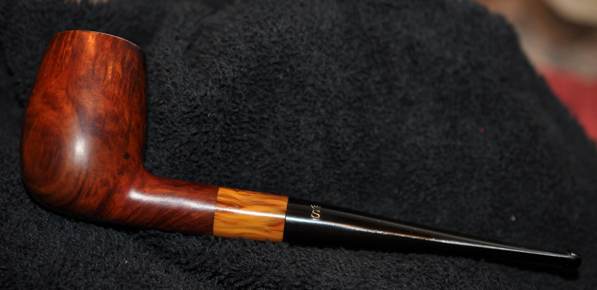
The next pipe I chose to work on has the characteristic rustication that I have seen on quite a few of the Sasieni Rusticated pipes that I have worked on. It is a long shank Canadian with hatch marked rim top and beveled inner edge. Jeff bought the pipe at an antique store on 10/29/2016 in Boise, Idaho, USA. It is stamped “Canadian” [over] By Sasieni [over] London Made [over] Made in England. The rustication on the bowl and shank was rugged with a tight pattern. The briar was stained with dark brown and black stains that provided depth to the finish. The finish on the pipe is dirty with a lot of dust and grime in the grooves of the rustication. There was a thick cake in the bowl and lava overflowing on to the rim top. The rim top is hatch marked and the inner edge is smooth. The outer edge of the rim has some wear from being knocked against a hard surface. There is a smooth ring around the end of the shank. The stem looked dirty but otherwise there were no tooth marks or chatter on the surface on either side. It was in good condition. Overall the pipe looked good. Jeff took photos of the pipe before he started his clean up work on it. Jeff took photos of the bowl and rim top and the stem to give a sense of the condition they were in. You can see the cake in the bowl and lava on the rim top as well as the hatch marks scratched into the rim top in the first photo. The stem photos show a relatively clean stem. He took photos of the bowl sides and heel to give a sense of the rustication around the bowl. To me it is a classic Sasieni style rustication. He took a photo of the stamping to show how clear and readable it is. It reads as noted above.I turned to Pipephil’s site to see if there was any specific information on “Canadian” By Sasieni (http://pipephil.eu/logos/en/logo-sasieni2.html). There was a listing there under the section on Sasieni seconds that matched the pipe I was working on. The pipe I have on the table is a lot like the second pipe in the screen capture below. The finish is the same though the stamping is slightly different and the stem does not have the –S- logo stamp on the top of the taper. I also captured the additional photos of the second pipe to show the finish and shape of the pipe. I then turned to Pipedia (https://pipedia.org/wiki/Sasieni#Sasieni_Seconds) and clicked on a list of seconds that had been provided by Doug Valitchka. The “Canadian” line is in the list at the bottom of the second column below. I have marked it in red for ease of reference on the chart below.Now it was time to work on the pipe. It is really a beautiful piece. Jeff had done a great cleanup on the pipe. He reamed the bowl with a PipNet pipe reamer and followed up with a Savinelli Fitsall pipe knife to remove the cake. He scrubbed out the mortise and the airway in the shank and the stem with alcohol, cotton swabs and pipe cleaners. He scrubbed the bowl exterior with a tooth brush and Murphy’s Oil Soap to remove the grime on the finish of the bowl and the lava from the rim top. He rinsed it under running water. One of the benefits of this scrub is that it also tends to lift some of the scratches and nicks in the surface of the briar. He dried it off with a soft cloth. He cleaned the internals and externals of the stem with alcohol, pipe cleaners and cotton swabs. He soaked the stem in Briarville’s Pipe Stem Deoxidizer and rinsed it off with warm water and cleaned out the airway in the stem with alcohol, pipe cleaners and cotton swabs. I took photos of the pipe as I saw it when I put it on the table. I took photos of the rim top and stem to show the condition. The rim top and edge looked much better. You can see the darkening on the beveled inner edge of the bowl and the hatching marks on the top of parts of the rim top. It seems to me that those marks are not original to the pipe when it was made. The stem looked very good and was smooth on both sides. There were scratches on both sides but no tooth marks or chatter.   The stamping on underside of the shank on the smooth panel is clear and readable as noted above. I really like the rugged Sasieni style rustication on the bowl and shank. The pipe is a beauty and the long shank fascinating to me. I removed the stem from the shank and took a photo of the pipe to give a sense of the proportions of the bowl and stem.I started my work on the pipe by dealing with the darkening on the beveled inner edge of the rim and the hatch marks on the rim top. I used a folded piece of 220 grit sandpaper to clean up the bevel and then stained it with a black Sharpie pen to blend it into the rest of the bowl walls. I then used the sandpaper to further flatten out the rim top. It definitely looks much better. I polished the rim top with micromesh sanding pads – dry sanding with 1500-12000 grit sanding pads. I wiped it down after each pad with a damp cloth to remove the sanding dust and debris. I restained the rim top with a combination of Walnut and Cherry stain pens to match the stained panel on the underside of the shank and the variations in colour on the rustication. Once it is buffed it will look very good.I rubbed the bowl and shank down with Before & After Restoration Balm. I worked it into the surface of the bowl sides and shank with my fingertips and a horsehair shoe brush to clean, enliven and protect the briar. I let the balm sit for 10 minutes, then buffed with a cotton cloth to raise the shine. The Balm did its magic and the rustication took on depth. It really looks good.  I set the bowl aside and worked on the stem. It was in great condition so I polished it with 1500-12000 grit micromesh sanding pads. I wiped it down with Obsidian Oil after each sanding pad. I finished the polishing with Before & After Polishes – both Fine and Extra Fine. I gave it a final rub down with Obsidian Oil and set it aside to dry.   This “Canadian” By Sasieni London Made with a vulcanite taper stem has a classic Sasieni rusticated finish that looks great. The rich dark contrasting stain gives depth to the rustication with the polishing and waxing. I put the stem back on the bowl and carefully buffed the pipe with Blue Diamond on the buffing wheel using a light touch on the briar. I gave the bowl multiple coats of Conservator’s Wax and the stem multiple coats of carnauba wax on the buffing wheel. I buffed the entire pipe with a clean buffing pad. I hand buffed the pipe with a microfiber cloth to deepen the shine. The finished Sasieni Made Canadian really is a beauty and fits nicely in the hand and looks very good. Give the finished pipe a look in the photos below. The dimensions of the pipe are Length: 7 inches, Height: 1 ¾ inches, Outside diameter of bowl: 1 ¼ inch, Chamber diameter: ¾ of an inch. The weight of the pipe is 1.38 ounces /39grams. This pipe will soon be on the British Pipe Makers section of the rebornpipes store if you would like to add it to your collection. Thanks for reading this blog and my reflections on the pipe while I worked on it. There are many more to come!
Restoring a  Petite MARKA St. Claude France 246 Dublin for a New Pipe Smoker


Blog by Steve Laug

Yesterday I got a call from a local lady who had been directed to me by our local pipe shop. She had found a pipe at an antique store when her family was traveling and decided it was time to load a pipe and try it out. When she was at the shop she picked up some tobaccos to sample once the pipe was cleaned up. We made arrangements for her to stop by and show me the pipe and I would be able to tell her what I saw. She arrived and took a small bag out of her pocket and removed a hard shell case. She opened it and took out the small pipe that is shown in the photos below. The pipe was stamped on the left side of the shank and read MARKA in bubble style type. On the right side it was stamped St. Claude – France [over] the number 246 (shape number). The bowl had a thick cake and an overflow of thick lava on the inwardly beveled rim top and edges. The finish was very dirty and appeared to be coated with a thick varnish coat that was bubbled or peeling on the underside of the shank. The thin saddle stem was oxidized, calcified and had light tooth chatter on the top and underside of the stem ahead of the button. The stem screwed on to a threaded metal tenon that was set in the shank of the pipe. The small pipe is a nice looking delicate Dublin that should clean up very well. I took photos of the pipe before I started my clean up work.  I took a close up photo of the bowl and rim top to show the thickness of the cake in the bowl and the thick overflow of lava on the beveled rim top. It really is a mess and hard to know what it looks like under the lava. I also took photos of the stem to show the condition it was in when she dropped it off. I took photos of the stamping on the shank sides. It is clear and readable as noted above.I unscrewed the stem from the tenon and took a photo of the bowl and stem to show the delicate proportions of the pipe. Note the metal threaded tenon on the shank end.I did some work on the background for this pipe. I checked on PipePhil and Pipedia and did not find any information on the Marka brand. I checked several other French brands to see if there was a sublisting for the Marka brand. There was nothing there. I also did a search on Google for the brand but found nothing listed. I also checked the book “Who Made That Pipe” and there was nothing listed there.  I wrote to Kenneth Lieblich to see if he was familiar with the brand or had any information on it. While I waited I did some work on the shape number 246. Interestingly it is a three digit number that fits neatly into the list of Comoy’s and Chacom shape numbers. That particular number is not listed, however the number before that – 245- is listed as is the number after it. Kenneth wrote me back that he wondered if the shape number pointed to Chacom. So independently we both came to the same conclusion that the brand was connected to Chacom. I don’t know if we will ever know for certain but that is where it stands at this point.

Now it was time to work on the pipe. I reamed the bowl back to bare briar with a PipNet reamer with the smallest cutting head. I cleaned up the reaming with a Savinelli Fitsall Pipe Knife. I finished the bowl work by sanding it with 220 grit sandpaper wrapped around a small piece of briar. Once finished I wiped out the inside. The bowl walls looked very good with no heat damage or checking.   I scrubbed the exterior of the bowl and rim with undiluted Murphy’s Oil Soap and a tooth brush. I scrubbed the pipe with the brush to remove the grime and the tars on the rimtop. I rinsed the bowl with warm water to remove the soap and the grime. It began to look better. There was some burn damage on the outer edge of the rim toward the back of the bowl. It was not deep damage and would probably be easily removed. I wiped down the bowl and rim with acetone on cotton pads to remove some of the darkening and the remnants of the varnish. It worked well and you can see the debris on the cotton pads. It looked much better.    Now it was time to address the damage on the rim top and the inner bevel of the chamber. I topped the pipe on a piece of 220 grit sandpaper on a topping board. I removed the damage and the top looked significantly smoother.   The beveled inner edge of the bowl still had some burn damage and darkening on the front and the back of the bowl. I used a piece of 220 grit sandpaper and a wooden ball to work on the bevel. I put the sandpaper on the ball and turned the bowl rim on the paper to remove damaged areas on the top. The rim top looked better but you can see the damage on the inner front and back of the bowl edge.     I used an Oak Stain Pen to match the sanded rim top to the rest of the bowl. It certainly looks better at this point.Now it was time to clean out the inside of the shank and stem. I used isopropyl alcohol, cotton swabs and pipe cleaners to remove the tars and oils. The shank was clogged near the entry to the bowl. I used an unfolded paper clip to poke through the airway and then worked pipe cleaners through the airway until the draught in the pipe was open and clean. I cleaned the airway in the stem at the same time using the same supplies. Once finished it smelled clean and fresh. I polished the briar with micromesh sanding pads – dry sanding it with 1500-12000 grit pads. I wiped it down with a damp cloth after each sanding pad. The pipe took on a shine as I moved through the sanding pads.   I rubbed the bowl and shank down with Before & After Restoration Balm. I worked it into the surface of the bowl sides and shank with my fingertips and a horsehair shoe brush to clean, enliven and protect the briar. I let the balm sit for 10 minutes, then buffed with a cotton cloth to raise the shine. The Balm did its magic and the grain stood out on the briar.     I polished the stem with micromesh sanding pads – 1500-12000 grit pads. I wiped it down with Obsidian Oil after each sanding pad. I finished the polishing with Before & After Polishes – both Fine and Extra Fine. I gave it a final rub down with Obsidian Oil and set it aside to dry.  This St. Claude-France Marka 246 Dublin with a vulcanite saddle stem has some beautiful grain. The rich brown stain makes the grain come alive with the polishing and waxing. I put the stem back on the bowl and carefully buffed the pipe with Blue Diamond on the buffing wheel. I gave the bowl and the stem multiple coats of carnauba wax on the buffing wheel. I buffed the entire pipe with a clean buffing pad. I hand buffed the pipe with a microfiber cloth to deepen the shine. The finished Marka 246 Dublin really is a beauty and fits nicely in the hand and looks very good. Give the finished pipe a look in the photos below. The dimensions of the pipe are Length: 5 inches, Height: 1 ½ inches, Outside diameter of the bowl: 1 inch, Chamber diameter: 5/8 of an inch. The weight of the pipe is .56 ounces/16 grams. This pipe will soon be back in the hands of the pipewoman who brought it to me to restore. I think she will enjoy smoking this petite little French Pipe. Thanks for reading this blog and my reflections on the pipe while I worked on it. There are many more to come!
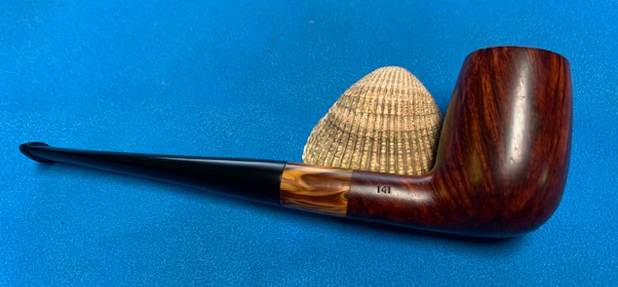
A Peterson’s Deluxe Zulu Brought Back to Life


Blog by Steve Laug

The next pipe I have chosen to work on is a Peterson’s Sterling Prince. This pipe was purchased on 05/25/22 from an antique mall in Portland, Oregon, USA. The grain on the pipe is quite beautiful and follows the flow of the bowl. The bowl heavily caked with a moderate lava overflow on the rim top. The inner edge of the bowl had some damage but also had cake on the edges. The outer edge looked to be in good condition. The finish on the bowl was filthy with grime ground into the surface but the grain shone through. There were some scratches on the top of the shank near the bowl and on the underside of the shank in the middle. The stem was lightly oxidized, calcified and also has tooth marks and chatter on both sides ahead of the button. The pipe was stamped on the topside of the shank and read Peterson’s [over] Deluxe. There does not appear to be any shape number or other stamping on the pipe. It is an interesting pipe that should clean up very well. Jeff took photos of the pipe before he started his clean up work. Jeff took photos of the rim top and stem to show the general condition of the pipe. The bowl is caked and the rim top and edges have a light lava overflow on the edges and top of the bowl. The stem is oxidized, calcified and has tooth marks and chatter on the top and underside near the button. Jeff took some photos of the bowl sides and heel to show the grain that was around this bowl. It is a nice looking pipe under the grime on the outside of the bowl.    Jeff took photos of the damage on the top and underside of the bowl and the small scratches/cracks on the top of the shank. The scratches/cracks are not deep but they are visible in close up and with a lens. He took a photo of the top side of the shank to show the stamping. It is readable in the photo below and is as noted above. You can also see the line running into the P of the top line. There were also several small lines on the underside of the shank.   I turned to Pipedia and read an article by Jim Lily called “A Closer Look at the Peterson Deluxe System pipe (https://pipedia.org/wiki/A_Closer_Look_at_The_Peterson_Deluxe_System_Pipe). While the article was focused on the System pipe there was some pertinent information on the Deluxe as a whole. I quote below:

…As far as value and cost is concerned, for the excellent quality finish, these are competitively priced at around $135 to $250 depending on size and briar grade.

For what it is worth, I reckon the Deluxes are probably the best value range of pipes that Peterson produce, both in terms of functionality and value. There is not a thing wrong with these pipes. Those who malign the brand because they’re made by the hundreds using machines, are very wrong, IMHO. I like them a lot and the bang for the buck is the best I’ve ever seen for new pipes of this quality. The Deluxes are all excellent smokers.

I then turned to the general history article on Pipedia (https://pipedia.org/wiki/Peterson). Below, I quote one section that refers to the hierarchy of the brand.

Peterson initially graded their mass -produced System pipes, i.e., regular catalogue pipes (in descending order) “Deluxe,” “First Quality,” “0” grade, “2nd grade,” and “3rd grade.”

Now, on to the restoration of this beautifully grained Peterson’s Deluxe Zulu. Jeff had done a great job cleaning up the pipe as usual. He reamed the pipe with a PipNet reamer and cut back the cake back to the bare briar. He cleaned up the walls with a Savinelli Fitsall Pipe Knife. He scrubbed the interior of the bowl and shank with pipe cleaners, cotton swabs and alcohol to remove the tars and oils. He scrubbed the exterior of the pipe with Murphy’s Oil Soap and a tooth brush to remove the grime from the finish. He worked on the rim top lava and darkening with the soap and tooth brush. He scrubbed the inside of the stem with alcohol and pipe cleaners. He scrubbed the exterior with Soft Scrub and then soaked it in Before & After Deoxidizer. He washed it off with warm water to remove the Deoxidizer. The pipe looked far better when it  arrived. I took some close up photos of the rim top and also of the stem surface. I wanted to show how well it had cleaned up. The rim top had some darkening and there was some damage on the inner edge with burn damage and some darkening that was heavier on the front edge of the bowl. I also took close up photos of the stem to show the tooth marks and chatter on the surface near the button.    I took photos of the stamping on sides of the shank. You can see that it is stamped as noted above and is clear and readable. The stamping on the band is also visible.I took the pipe apart and took a photo of the pipe. It is a good looking pipe and has nice mixed grain around the bowl.There were a series of small scratches/cracks on the top and underside of the of the shank. The cracks are not deep but they are visible in close up and with a lens. I cleaned off the areas on the underside and the top side at the curve of the bowl and shank with some isopropyl alcohol. I smeared the surface of the cracks with clear CA glue and spread it into the cracks with a dental spatula. I set it aside to dry. Once the repairs cured I sanded the repaired surface with 220 grit sandpaper until the surface is smooth and the repairs blended in. I used the sandpaper to also smooth out the inner edge of the rim top and bowl. I sanded the rim top at the same time. The bowl edge and rim top looked significantly better.   With the sanding finished I wiped the bowl down with isopropyl alcohol on a cotton pad to remove the darkening and mixed stain around the bowl sides and rim top. I used Maple Stain Pen to restain the sanded areas of the shank (top and bottom) and the rim top. It matched the stain on the pipe quite well and would look even better once I buffed it.I polished the briar with micromesh sanding pads – dry sanding with 1500-12000 grit pads. I wiped it down after each sanding pad with a damp cloth to remove the sanding dust and debris left behind by the sanding. The briar took on a deep shine and the sanded portions blended in very well with the rest of the bowl.  I rubbed the bowl down with Before & After Restoration Balm. I worked it into the surface of the briar with my fingertips to clean, enliven and protect it. I let the balm sit for 15 minutes and then buffed with a cotton cloth to raise the shine. Mark Hoover’s Balm is a product that I have come to appreciate and one I use on every pipe I have been working on.  I set the bowl aside and turned my attention to the stem. I sanded the tooth marks and chatter on both sides of the stem with 220 grit sandpaper. I started polishing the stem with 400 grit wet dry sandpaper. I polished the stem with micromesh sanding pads – sanding it with 1500-12000 grit pads. I wiped the stem down after each sanding pad with Obsidian Oil. I polished it with Before & After Pipe Stem Polish – both Fine and Extra Fine. Once I had finished the polishing I gave it final coat of oil and set it aside to dry.    As usual at this point in the restoration process I am excited to be on the homestretch. I look forward to the final look when it is put back together, polished and waxed. I put the Peterson’s Deluxe Zulu back together. I polished the bowl and stem with Blue Diamond to polish out the scratches in the briar and the vulcanite. I gave the bowl and the stem multiple coats of carnauba wax. I buffed the pipe with a clean buffing pad to raise the shine. I hand buffed it with a microfiber cloth to deepen the shine. The grain really pops with the wax and polish. The shiny black vulcanite stem is a beautiful contrast to the browns of the bowl. This Peterson’s Deluxe was a great pipe to spruce up. It is a very comfortable pipe to hold in the hand. The finished pipe is shown in the photos below. The dimensions of the pipe are Length: 6 inches, Height: 1 ¾ inches, Outside diameter of the bowl: 1 ¼ inches, Chamber diameter: ¾ of an inch. The weight of the pipe is 28 grams/.99 ounces. This pipe will be going on the rebornpipes store in the Irish Pipe Makers Section if you would like to add it to your collection and be the first to smoke it. Thanks for reading this blog and my reflections on the pipe while I worked on it. This is an interesting estate to bring back to life.
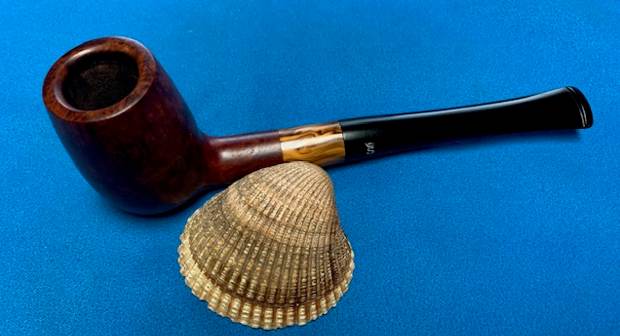
Sprucing up a Peterson’s Sterling Made in Ireland 406 Prince


Blog by Steve Laug

The next pipe I have chosen to work on is a Peterson’s Sterling Prince. The pipe was purchased on 06/24/22 from an online auction in Manorville, New York, USA. It has a Sterling Silver band around the shank that is tarnished and oxidized. The bowl heavily caked with a moderate lava overflow on the rim top. The inner edge of the bowl had some damage but also had cake on the edges. The outer edge looked to be in good condition. The finish on the bowl was filthy with grime ground into the surface but the mixed grain was quite nice. The stem was lightly oxidized, calcified and also has tooth marks and chatter on both sides ahead of the button. The pipe was stamped on the left side of the shank and read Peterson’s [over] Sterling. On the right side it is stamped with the Made in Ireland in two lines followed by the number 406 identifying the shape. It is an interesting pipe. That should clean up very well. Jeff took photos of the pipe before he started his clean up work. Jeff took photos of the rim top and stem to show the general condition of the pipe. The bowl is heavily caked and the rim top and edges have a thick lava overflow on the edges and top of the bowl. The stem is oxidized, calcified and has tooth marks and chatter on the top and underside near the button. Jeff took some photos of the bowl sides and heel to show the grain that was around this bowl. It is a nice looking pipe under the grime on the outside of the bowl.    He took photos of the sides of the shank to show the stamping. The stamping is readable in the photos below and is as noted above. He also took a photo of the band.   I checked on Pipephil’s website to see what I could learn about the stamping on the pipe. I found the following information that I quote:

The country of manufacture stamp changed from “Made in Eire” to “Made in Ireland” (In circle) about 1945. Later (1947-49) it became “MADE IN IRELAND” (block letters) stamped in one or two lines (http://www.pipephil.eu/logos/en/logo-peterson.html).

I turned to Pipedia’s article on Peterson pipes to see what I could garner from that information. It is a great read in terms of the history of the brand (https://pipedia.org/wiki/Peterson#1950_-_1989_The_Republic_Era). In a section on

Prior to 1920 it was rare for a country of origin to be stamped on the pipe, just Peterson’s Dublin on the band. After 1921/22 if it is stamped “MADE IN IRELAND” and the “Made in” is stacked over “Ireland” or “MADE IN EIRE” or several other forms, it was made between 1922 and 1938. A considerable number of Peterson pipes were stamped “Irish Free State”. From about 1930 to 1949, most of the pipes (those which were stamped) were stamped “Made in Ireland”.” If the stamp reads “MADE IN IRELAND” in a circle, the pipe was made between 1939 and 1948. These are all “prerepublic” pipes.

I then turned to the book I should have consulted first, The Peterson Pipe, by Mark Irwin and Gary Malmberg. On page 155 I found some information on the line.

Peterson’s US distributor during the early Republic era was Rogers Imports, Inc., a New York firm whose catalogs offered all varieties of smoker’s products. Rogers was the exclusive wholesale dealer for several prominent European pipe manufacturers, they also marketed accessories under their own name. On behalf of Kapp & Peterson they registered the Killarney, Shamrock and Sterling trademarks with the US Patent Office in the 1950s, and their catalogs also featured the System, Premier Selection and Supreme.

On page 156-157 in the same book there is a catalogue page with the Sterling shown on it. It sold for $7.50 in 1953. It read:

As the name implies the Sterling quality of this fine pipe is distinguished in a careful selection of its fine Mediterranean Bruyere, its careful workmanship and sparkling finish. Banded with a Sterling Silver band – a Hallmark of quality – the pipe is available in a handsome natural or dark rich walnut finish. Patent P-lip stem. Individually boxed.

With that information in hand I knew what I was dealing with in terms of the stamping on the pipe. It is a late Pre-republic era or early Republic era pipe. The Made in Ireland in two lines stamp on the right side of the shank tells me it was made between 1922-1938.

Now, on to the restoration of this beautifully grained Peterson’s Sterling 406 Prince. Jeff had done a great job cleaning up the pipe as usual. He reamed the pipe with a PipNet reamer and cut back the cake back to the bare briar. He cleaned up the walls with a Savinelli Fitsall Pipe Knife. He scrubbed the interior of the bowl and shank with pipe cleaners, cotton swabs and alcohol to remove the tars and oils. He scrubbed the exterior of the pipe with Murphy’s Oil Soap and a tooth brush to remove the grime from the finish. He worked on the rim top lava and darkening with the soap and tooth brush. He scrubbed the inside of the stem with alcohol and pipe cleaners. He scrubbed the exterior with Soft Scrub and then soaked it in Before & After Deoxidizer. He washed it off with warm water to remove the Deoxidizer. The pipe looked far better when it  arrived. I took some close up photos of the rim top and also of the stem surface. I wanted to show how well it had cleaned up. The rim top looked good. There was some damage on the inner edge with burn damage and some darkening that was heavier on the front of the bowl. I also took close up photos of the stem to show the tooth marks and chatter on the surface near the button. I took photos of the stamping on sides of the shank. You can see that it is stamped as noted above and is clear and readable.  The stamping on the band is also visible. I took the pipe apart and took a photo of the pipe. It is a good looking pipe and has Nice mixed grain around the bowl. I decided to start the process by addressing the damage on the rim top and the inner edge of the bowl. I used a folded piece of 220 grit sandpaper to sand the top and to give the edge a slight bevel and clean up the darkening and the damage on the edge. When I finished there was still damage on the right front that needed a little more work. I used a wooden ball and 220 grit sandpaper to increase the angle of the bevel and to even out the edges. It is looking much better. I polished the briar with micromesh sanding pads – dry sanding it with 1500-12000 grit sanding pads. I wiped the bowl surface down with a damp cloth to remove the sanding dust. Once I finished the exterior of the briar looked much better and had taken on a shine.  I paused in the polishing at this point to touch up the stain on the rim top. I used a Cherry stain pen and was able to match the rest of the bowl. I then picked up the polishing again with the last three micromesh pads.I rubbed the bowl down with Before & After Restoration Balm. I worked it into the surface of the briar with my fingertips to clean, enliven and protect it. I let the balm sit for 15 minutes and then buffed with a cotton cloth to raise the shine. Mark Hoover’s Balm is a product that I have come to appreciate and one I use on every pipe I have been working on. I set the bowl aside and turned my attention to the stem. I “painted” the surface of the stem with the flame of a lighter to lift the tooth marks. I was able lift many of them. I filled in the remaining marks with clear CA glue. I set the stem aside to cure. Once it cured I flattened the repairs with 220 grit sandpaper. I polished the stem with micromesh sanding pads – wet sanding with 1500-12000 grit pads. I wiped the stem down after each sanding pad with Obsidian Oil. I polished it with Before & After Pipe Stem Polish – both Fine and Extra Fine. Once I had finished the polishing I gave it final coat of oil and set it aside to dry. As usual at this point in the restoration process I am excited to be on the homestretch. I look forward to the final look when it is put back together, polished and waxed. I put the Made In Ireland Peterson’s Sterling 406 Prince back together. I polished the bowl and stem with Blue Diamond to polish out the scratches in the briar and the vulcanite. I gave the bowl and the stem multiple coats of carnauba wax. I buffed the pipe with a clean buffing pad to raise the shine. I hand buffed it with a microfiber cloth to deepen the shine. I polished the silver with a jeweler’s cloth. The pipe polished up pretty nicely. The grain really pops with the wax and polish. The shiny black vulcanite stem is a beautiful contrast to the browns of the bowl. This Peterson’s Sterling Prince was a great pipe to spruce up. It is a very comfortable pipe to hold in the hand. The finished pipe is shown in the photos below. The dimensions of the pipe are Length: 5 ¾ inches, Height: 1 ½ inches, Outside diameter of the bowl: 1 ¼ inches, Chamber diameter: ¾ of an inch. The weight of the pipe is 37grams/1.31 ounces. This pipe will be going on the rebornpipes store in the Irish Pipe Makers Section if you would like to add it to your collection and be the first to smoke it. Thanks for reading this blog and my reflections on the pipe while I worked on it. This is an interesting estate to bring back to life.
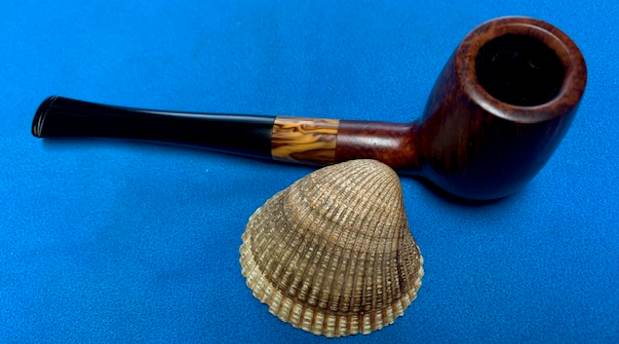
Restemming and Reclaiming a worn and tired No Name Billiard


Blog by Steve Laug

Though I am not currently not taking on new work but trying to catch up on my backlog of pipes I have a commitment to doing repairs for customers of our local pipe shop. I have worked on several pipes for the pipeman who dropped this pipe and two others off at my house on Tuesday morning. All three had the tenons snapped off in the shank and two with broken or damaged stems. All three were heavily smoked with cakes almost completely filling in the bowls. It always make me wonder how one can fill a bowl when cake is so thick my finger would not fit in the bowl. The exterior of all three bowls were heavily caked with tars, oils and grime ground into the finish. The pipes reeked of the aromatic tobaccos that had been smoked in them. My wife bagged the three pipes and sealed them until I could get to them.

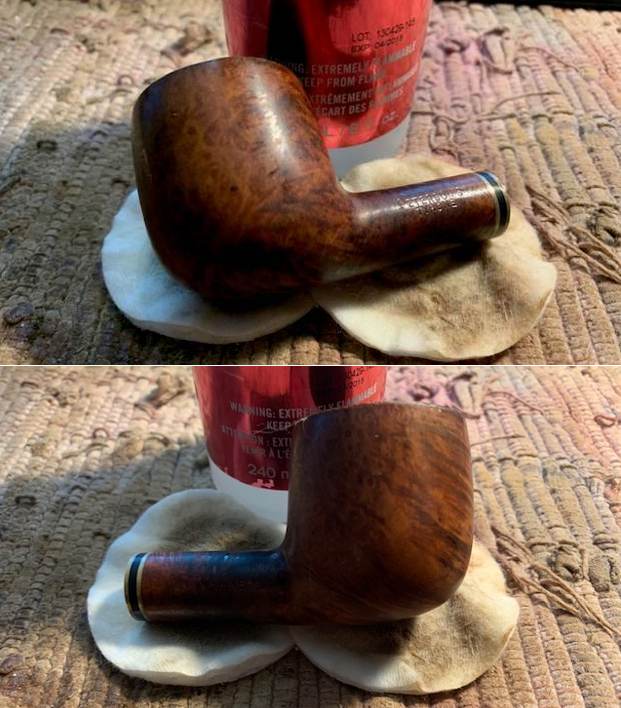
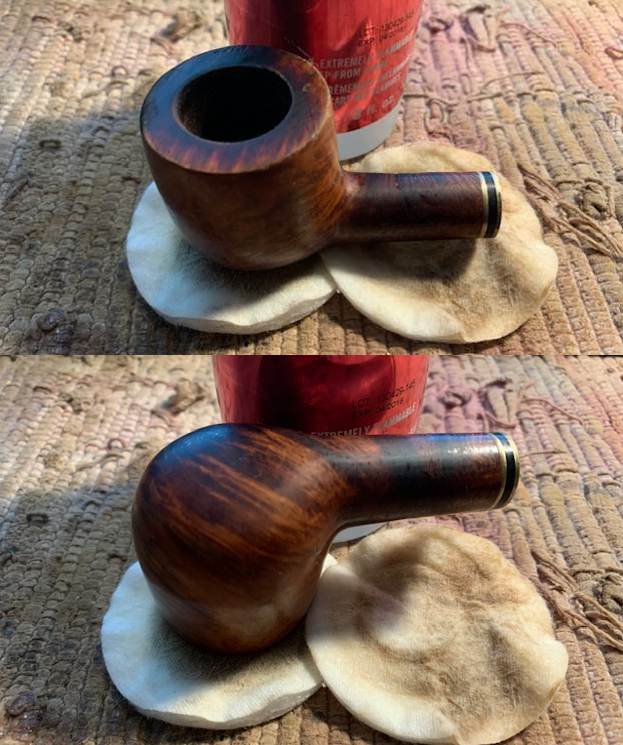
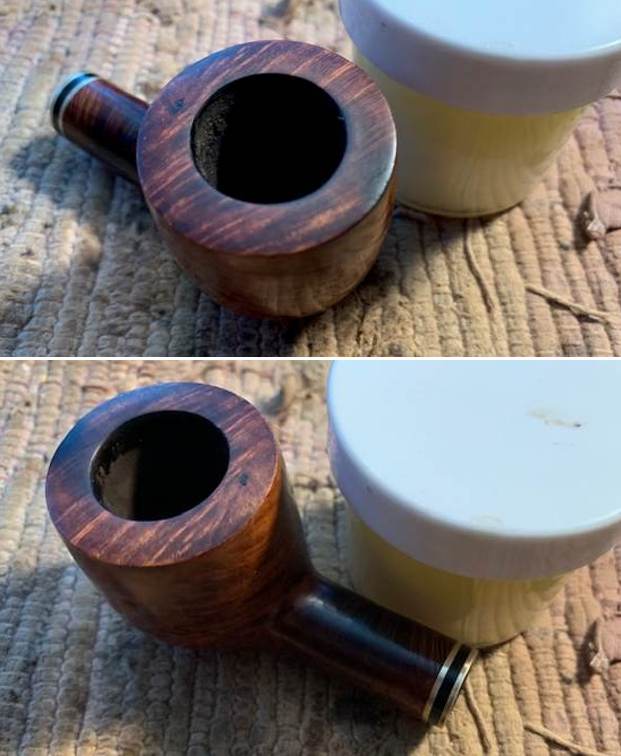
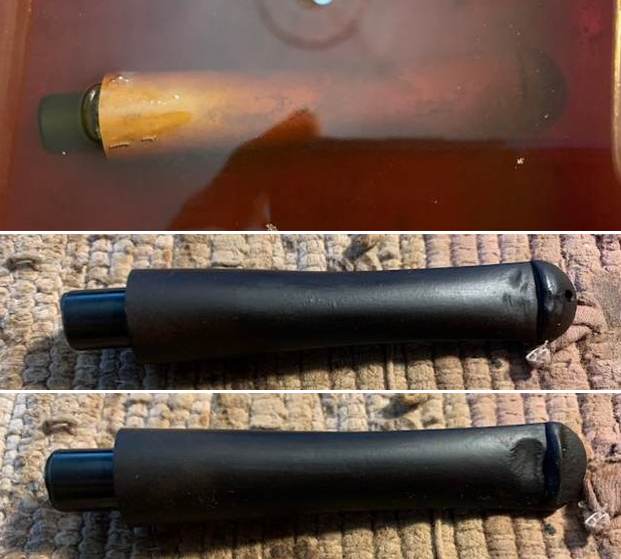
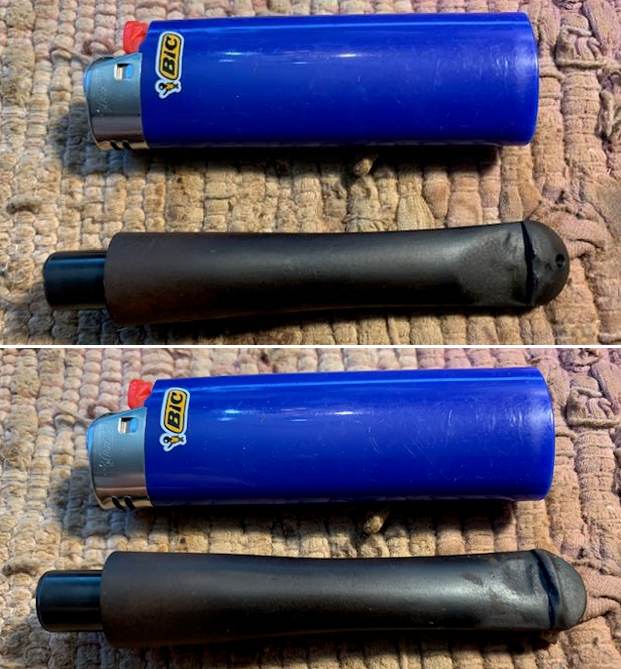
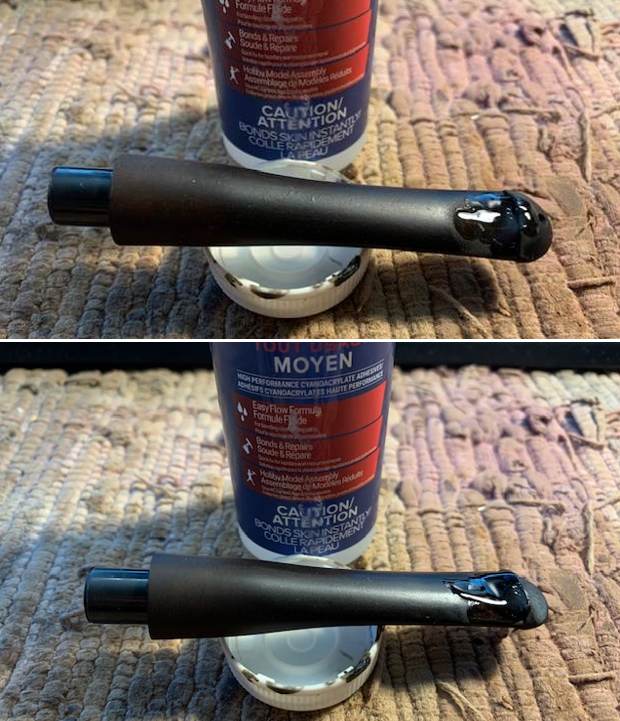
I decided to work on this billiard first. I opened the bag and removed both the bowl and the stem. It was a real mess. I took photos of the bowl to show its condition before I started on it. I took my normal foursome of photos and then added a few extra to show the heavy grime on the bowl sides, the cake in the bowl and the snapped tenon in the shank. Somewhere along its journey the pipe had been banded. Something about it makes me think it may well have been that I had banded and restemmed for the fellow quite a few ago. I did a bit of searching on rebornpipes for the blog but could not find it. In the big picture is did not matter but I am always very curious. I tried to pull the broken tenon and was not surprised that it was stuck in the shank. I put the bowl in the freezer and let it sit for 30 minutes. Once I removed it I used a screw turned into the airway to wiggle the tenon out of the shank. It actually came out quite easily. I went through my stems and found one that matched the broken one that had been included in the bag. I took a photo. I would need to reduce both the length and the diameter of the tenon to get a snug fit in the shank. It had a lot of potential but would take work to lift the dents in the stem and fit it to the pipe. Here is a photo of the bowl with the broken stem and the new one.Now it was time to clean it up so I could work on it. I like restoring clean pipes so that was going to be a lot of work but worth it to me to get rid of the grime. I reamed the bowl with a PipNet reamer using the largest cutting head. I cleaned up the reamer with a Savinelli Fitsall PipeKnife. I sanded the walls of the bowl with 220 grit sandpaper wrapped around a piece of dowel. There was a small mountain of carbon. I scrubbed the externals of the pipe to remove the heavy oils and tar build up on the bowl. It took a lot of elbow grease using a tooth brush and Murphy’s Oil Soap. I worked on it until the grime washed away with running water. It looks much better at this point.  With the externals cleaned I turned my attention to the internals. I scrubbed the shank and the airway in the bowl and stem with pipe cleaners, cotton swabs and isopropyl alcohol until it was clean. It was a mess.I topped the bowl to prepare it for reworking the damage to the inner edge of the bowl. I used briar dust and super glue to build up the heavily damaged areas around the edge. I layered it in place in the damaged area with a dental spatula. The second photo below shows the repair.I cleaned up the rough edge of the inner edge with a folded piece of 220 grit sandpaper. I wanted to smooth it out before working on the inner bevel of the bowl. I used a wooden ball and 220 grit sandpaper to give the bowl a bevel. The final photo of the four below shows the repaired and reshaped rim edge. I stained the rim top and edges with an oak stain pen to match the colour of the bowl. With the micromesh polishing it would be a good match.I polished the bowl with micromesh sanding pads – dry sanding with 1500-12000 grit pads and wiping it down after each pad with a damp cloth. It looks far better than it did before even with the many fills in the briar around the bowl.   I worked some Before & After Restoration Balm into the surface of the briar with my fingertips. The balm works to clean, enliven and preserve the briar. I let it sit for 10 minutes then buffed it off with a soft cloth. It is a beautiful pipe. The bowl looks surprisingly good when you consider what it looked like when I started. I set the bowl aside and turned my attention to the stem. I sanded the surface of the stem and then “painted” the surface of the stem with the flame of a Bic lighter to lift the tooth marks and scratches. I was able to lift many of them. I used clear super glue to fill in those that remained. I sanded the surface of the stem with 220 grit sandpaper to smooth out the repairs and started the polishing with 400 grit wet dry sandpaper. I also sanded the tenon with 220 grit sandpaper to reduce the diameter of the tenon and get a snug fit. I polished the stem with micromesh sanding pads – dry sanding with 1500-12000 grit pads. I wiped the stem down after each pad with some Obsidian Oil. I finished hand polishing it with Before & After Pipe Stem Polish – Fine and Extra Fine. I rubbed it down with another coat of Obsidian Oil and let it dry. The stem really was beginning to look very good.   This was a very beat up No Name Straight Billiard and now with its newly fit tapered black vulcanite stem it looks far better than when I started. The reworked rim top works very will with the rest of the bowl. I polished the bowl and the stem with Blue Diamond polish on the buffing wheel. I gave the bowl and the stem multiple coats of carnauba wax. I buffed the pipe with a clean buffing pad to raise the shine. I hand buffed it with a microfiber cloth to deepen the shine. The pipe polished up pretty nicely. The brown stain makes the grain just sing and it works well with the polished vulcanite stem. Have a look at the photos below. The shape, finish and flow of the pipe and stem are very well done. The dimensions are Length: 6 inches, Height: 2 inches, Outside diameter of the bowl: 1 ½ inches, Chamber diameter: 7/8 of an inch. The weight of the pipe is 60 grams/ 2.12 ounces. Once I finish restemming the other two pipes the three will be going home with the fellow who dropped them off. Thanks for walking through the restoration with me as I worked over this pipe.
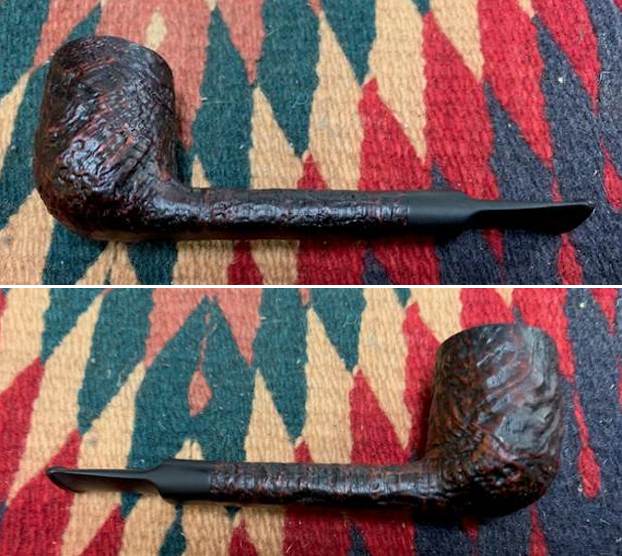
This Israeli Made Straight Grain Freehand Dublin Is a Beauty


Blog by Steve Laug

The next pipe on the table is a great looking mixed finish Freehand that Jeff picked up on 05/25/22 from an antique mall in Portland, Oregon, USA. The top 2/3rd s of the bowl and the shank is smooth, straight and flame while the heel is rusticated. The top of the bowl is plateau. It is a great looking pipe. It is stamped on the left side of the shank and reads Straight Grain and on the underside at the shank/stem junction it reads Israel. The finish was dirty and had a lot of grime and grit ground into the rustication and the smooth portions. The rim top and inner edge of the bowl is dirty with a light lava flow on the edge and the top. There is a thick cake in the bowl. The stem is lightly oxidized and there was a rubber Softee bit on the end. Because of that there was no damage or tooth marks or chatter on the surface. Jeff took photos of the pipe before he started his clean up work. It showed a lot of promise. He took close up photos of the bowl and rim top from different angles to show the condition of the bowl and the plateau rim top. You can see the light lava on the rim top and on the inner edge of a caked bowl onto the top. He took photos surface of the vulcanite stem which is lightly oxidized and covered with a rubber Softee Bit. Once the rubber bit guard is removed it looks to be in good condition. He took photos of the sides and heel of the bowl to show a deep and rugged rusticated heel and the grain peeking through the grime on the shank and the sides of the bowl. Jeff took photos of the stamping on the left and underside of the shank to capture it. It was clear and readable as noted above.  I turned to both Pipephil and Pipedia to see if I could find any information on the stamping on the pipe. There was nothing stamped with both Straight Grain and Israel. I am pretty convinced that the pipe was made by the Shalom Pipe Company in Israel and the makers of Alpha pipes. The shape and the conformation of the pipe remind me of Alpha pipes. While I will never know the maker for certain I am fairly confident it as noted above. It is a neat looking pipe.
When I received it from Jeff this past week it did not look like the same pipe. It was clean and the finish had life. He reamed it with a PipNet pipe reamer and got rid of the cake. He cleaned up the reaming with a Savinelli Fitsall Pipe Knife so that we could see the walls of the bowl and assess for damage. It was in good condition. He cleaned the internals of the shank and stem with cotton swabs, pipe cleaners and alcohol. He scrubbed the exterior with undiluted Murphy’s Oil Soap and a tooth brush. He rinsed the pipe under warm water. He dried it off with a cloth and then let it air dry. He removed the Softee Bit and then scrubbed the stem with Soft Scrub and soaked it in Briarville’s Stem Deoxidizer. He rinsed it with warm water and dried it off with a soft cloth. It came out looking very good. The finish on the bowl and the rim top cleaned up nicely. I took pictures of the pipe to show how it looked when I unpacked it.  I took some photos of the rim top and stem to show the condition of them both when the pipe arrived. Overall it looked good. There is some darkening to the inner edge of the bowl and some of the dark stain in the grooves had come off in the cleaning. Once the Softee Bit was removed the stem looked very good.  I took a photo of the stamping on the left side of the shank (though I forgot to take a photo of the Israel stamp on the underside). It is readable and in great condition.I removed the stem from the shank and took a photo of the pipe to show the look of the pipe.I started my work on the pipe by dealing with the faded black stain in the grooves of the plateau rim top. I used a black stain pen to restain the top and once I polished the briar with micromesh sanding pads it would show a contrast between the stained grooves and the high points.I polished the bowl and the high points on the plateau with micromesh sanding pads – wet sanding with 1500-12000 grit pads. I wiped the briar down after each pad with a damp cloth. The bowl is starting to look very good. I worked some Before & After Restoration Balm into the surface of the briar with my fingertips and into the plateau rim top and shank end with a horsehair shoe brush to clean, enliven and protect it. I let the balm sit for a little while and then buffed with a cotton cloth to raise the shine. The photos show the bowl at this point in the restoration process. I set the bowl aside and turned my attention to the stem. I polished the stem with micromesh sanding pads – wet sanding with 1500-12000 grit sanding pads. I wiped it down after each sanding pad with some Obsidian Oil. I finished polishing it with Before & After Pipe Stem Polish – both Fine and Extra Fine and buffed it off with a cotton cloth.   This beautiful mixed finish Israeli Made Straight Grain Freehand, probably made by the Shalom  Pipe Company with a slightly bent vulcanite stem has a great look and feel. I polished the stem and the bowl with Blue Diamond polish on the buffing wheel. I gave the bowl and the stem multiple coats of carnauba wax. I buffed the pipe with a clean buffing pad to raise the shine. I hand buffed it with a microfiber cloth to deepen the shine. The pipe polished up pretty nicely. The rich combination of browns and blacks in the smooth, rusticated and plateau finish took on life with the buffing. The rich colour of the briar works well with the polished vulcanite stem. I like the grain and finished look of this Straight Grain Freehand. Have a look at it with the photos below. The shape, finish and flow of the pipe and stem are very well done. The dimensions are Length: 6 inches, Height: 2 inches, Outside diameter of the bowl: 1 ½ wide, Chamber diameter: ¾ of an inch. The weight of the pipe is 52 grams/ 1.83 ounces. This Israeli Made Freehand is a real beauty. Thanks for walking through the restoration with me as I worked over another beautiful pipe. This one will be going on the rebornpipes store in the Pipes from Various Makers Section shortly if you would like to add it to your collection. Thanks for your time.