Tag Archives: repairing tooth marks

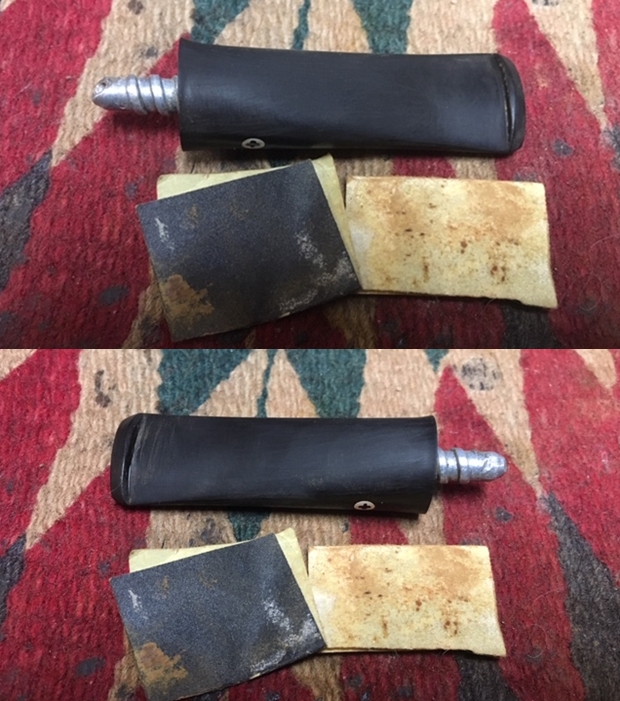
New Life for a Savinell Punto Oro 8004 Canadian


Blog by Steve Laug

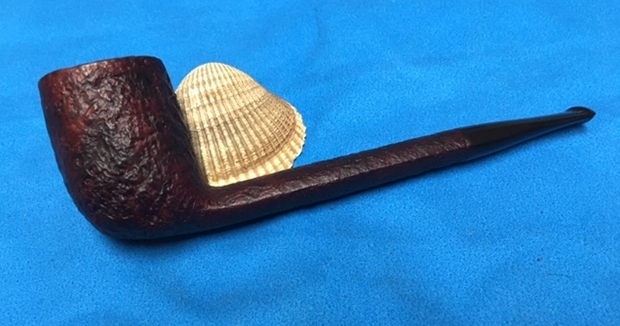
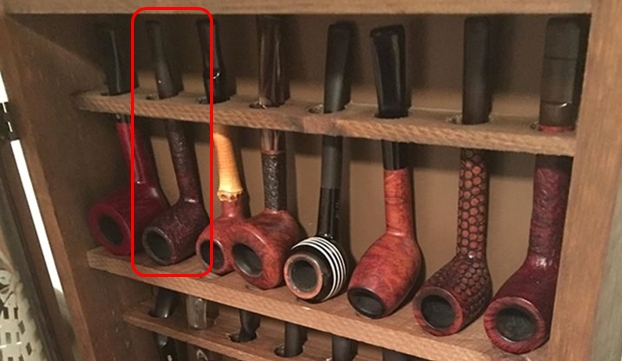
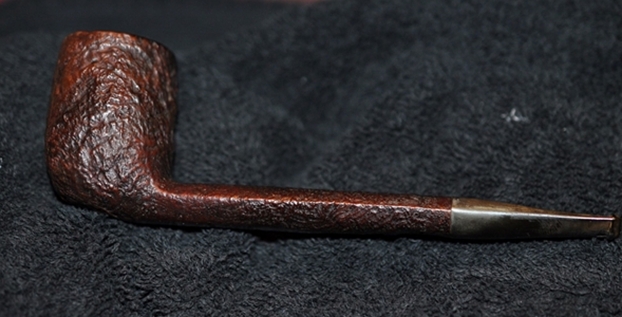
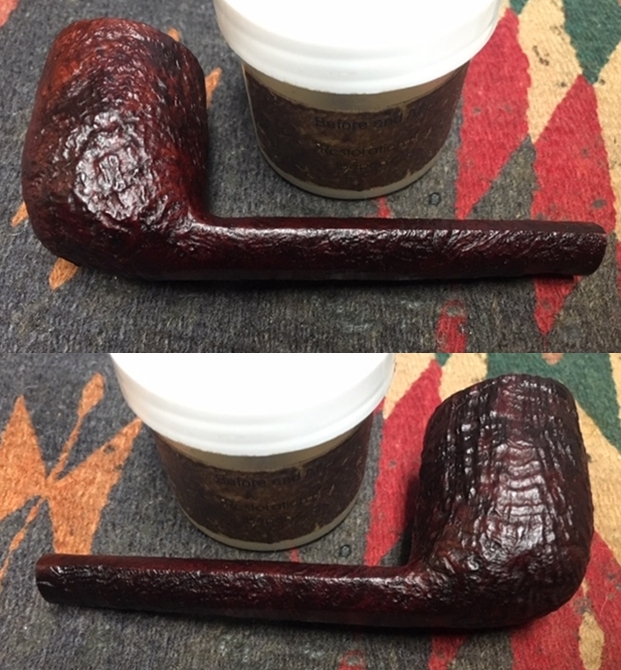
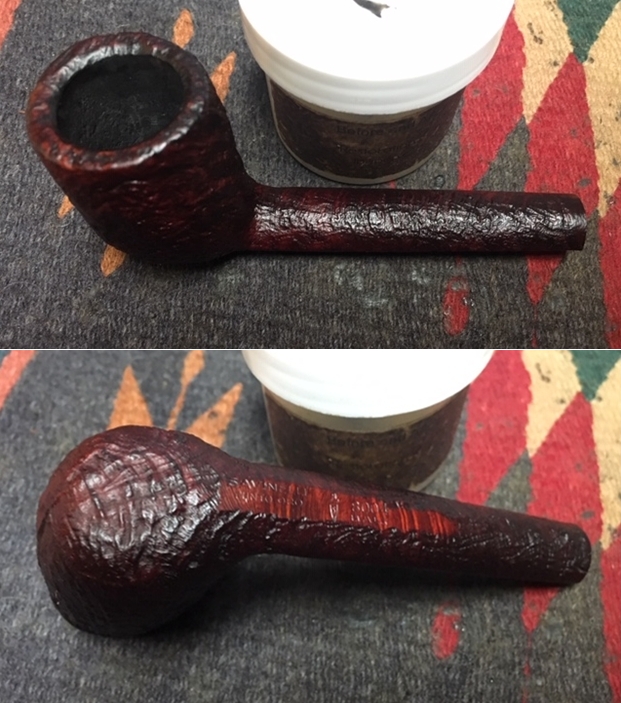
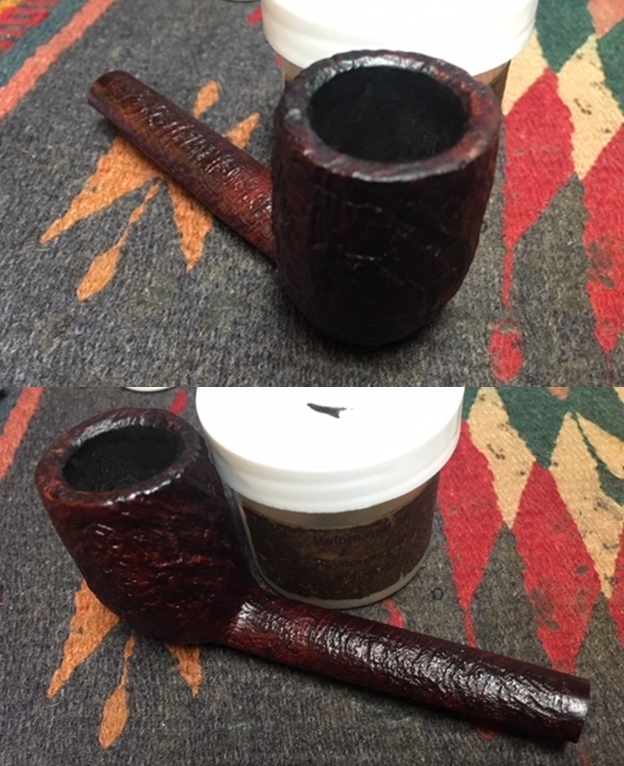
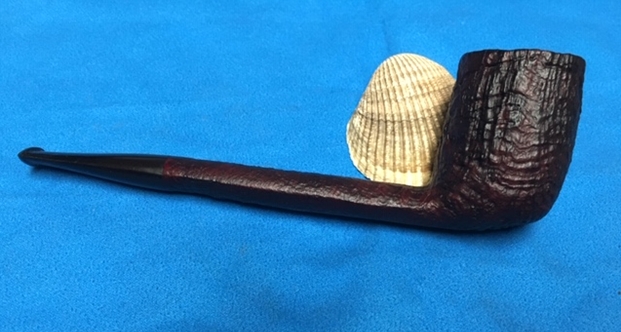
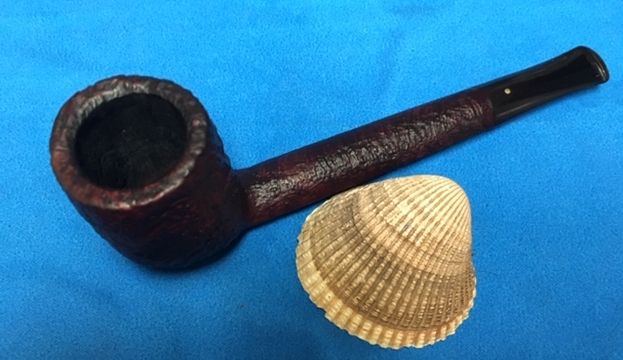
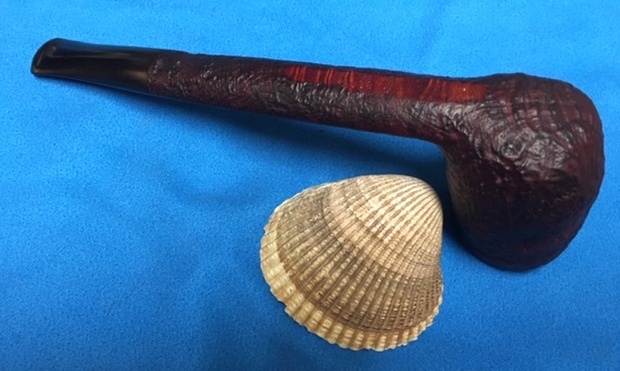
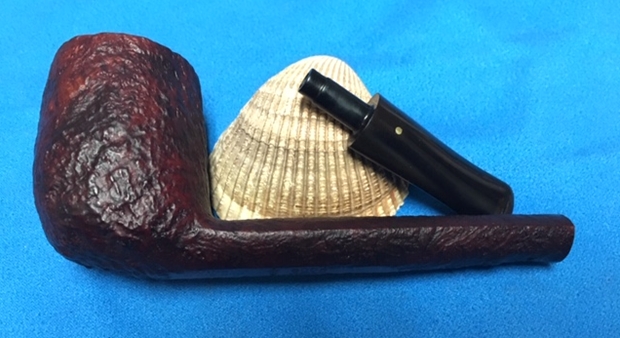
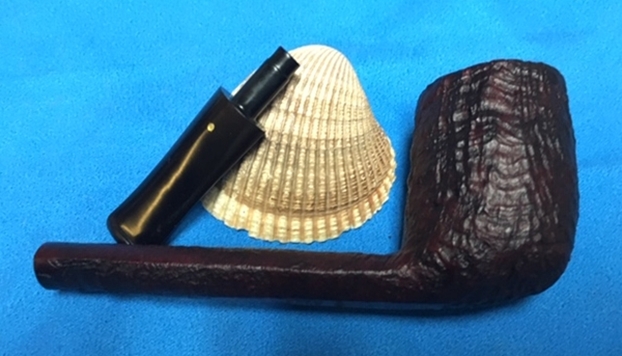
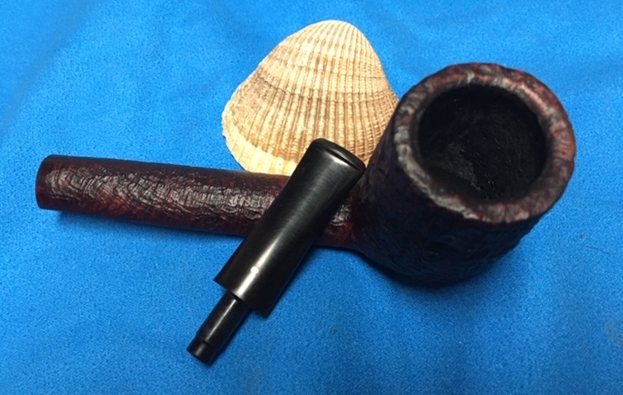
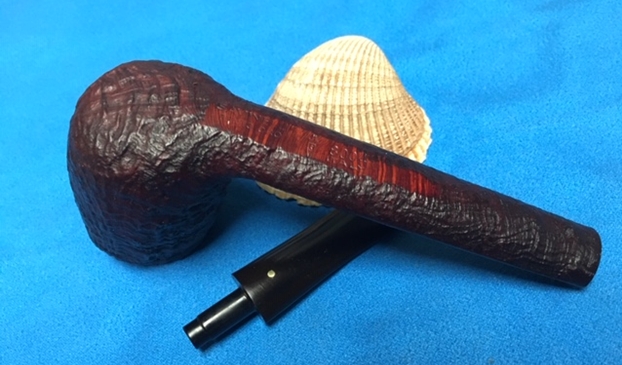
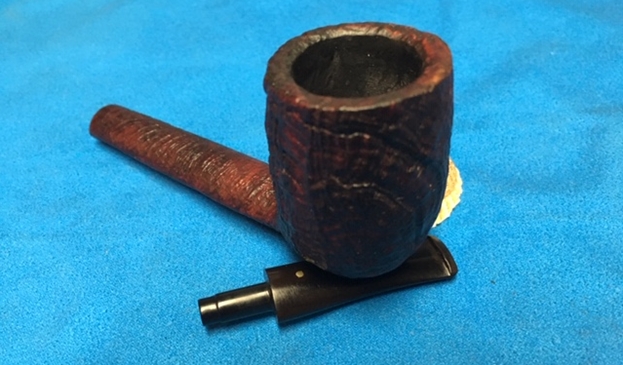
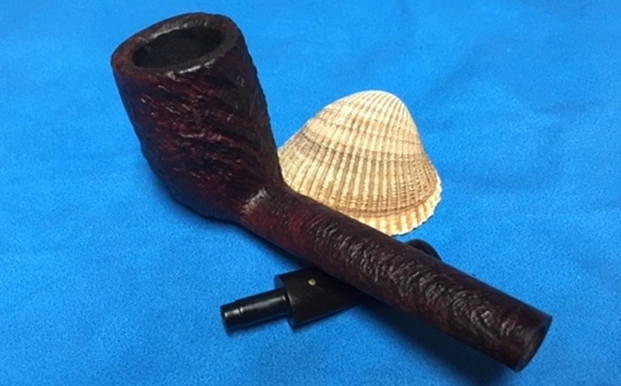
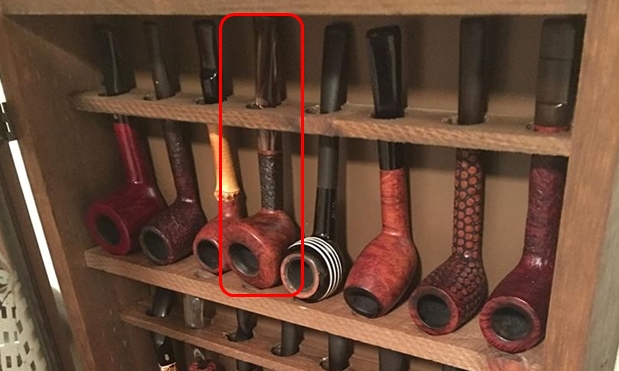
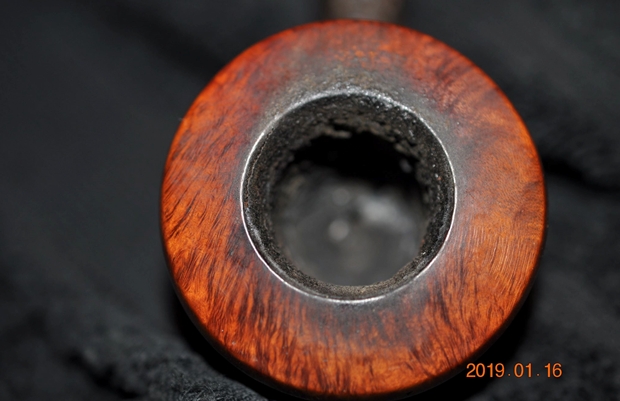
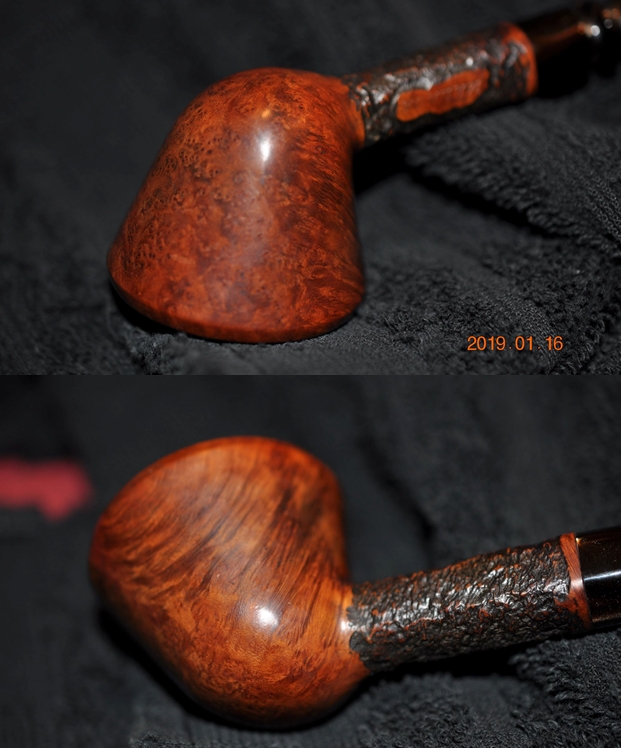
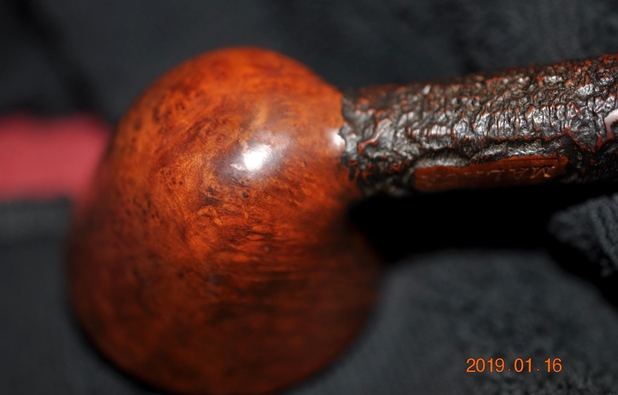
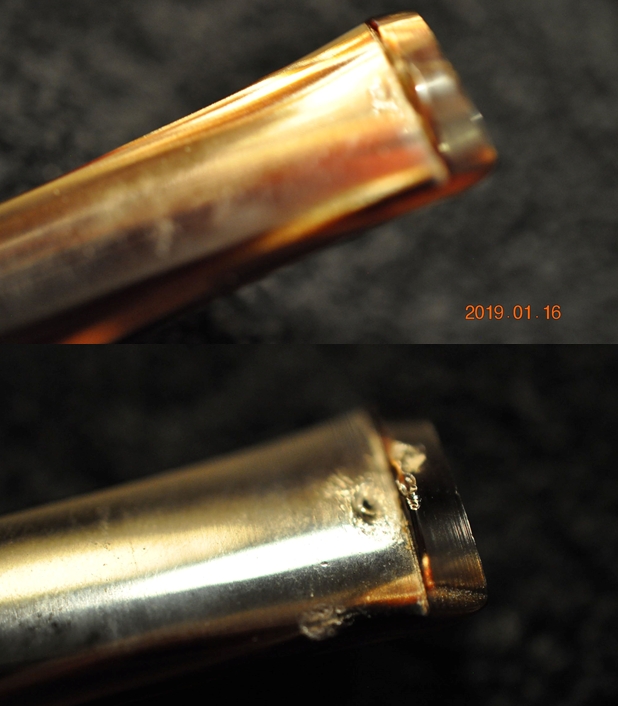
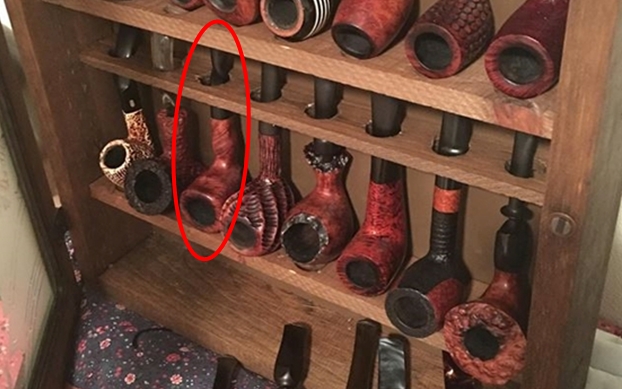
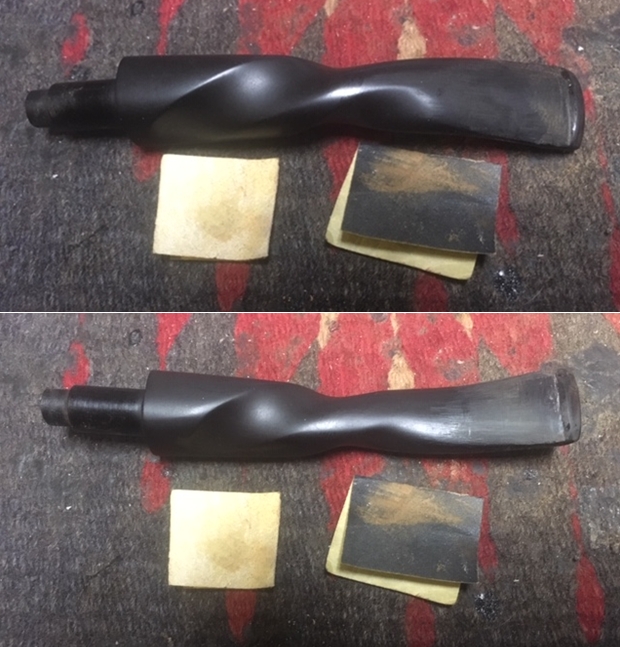
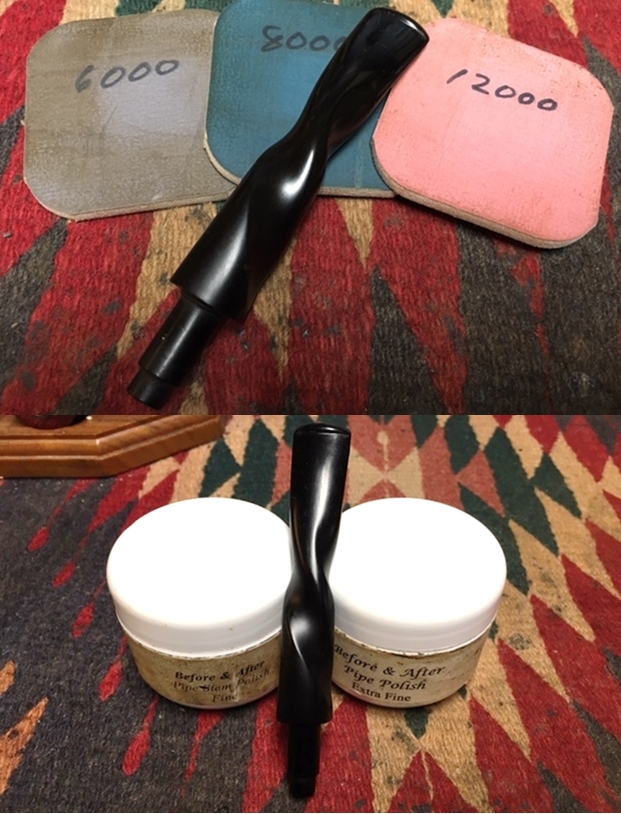
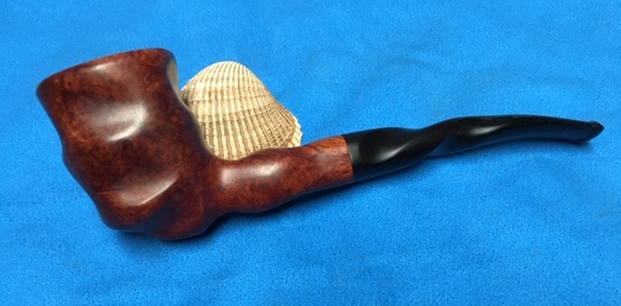
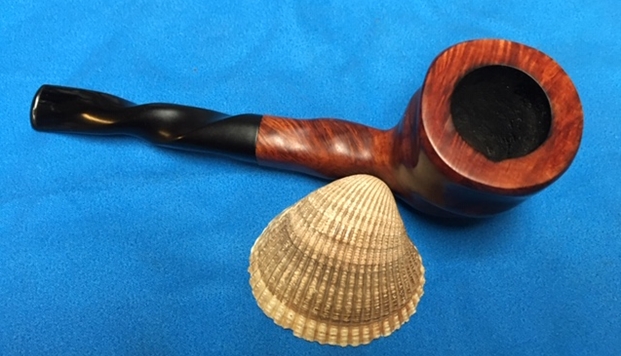
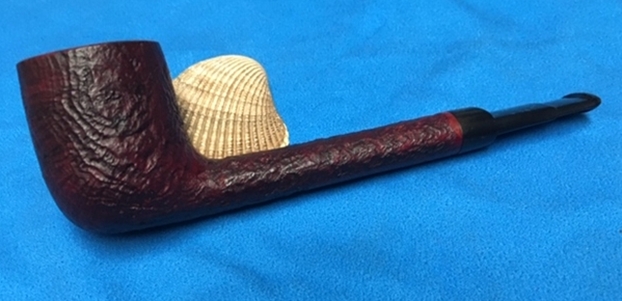
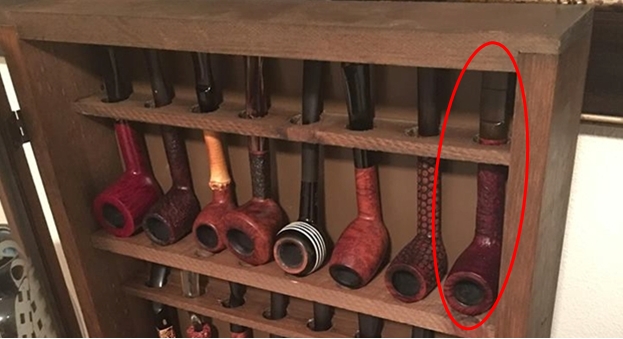
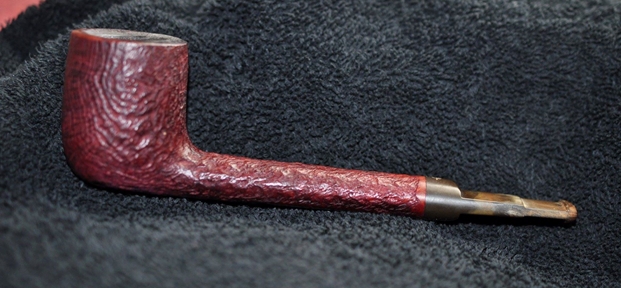
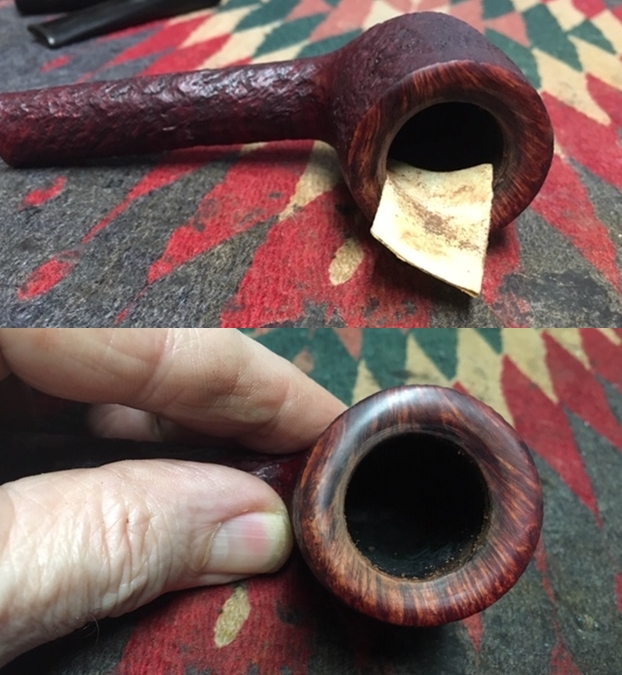
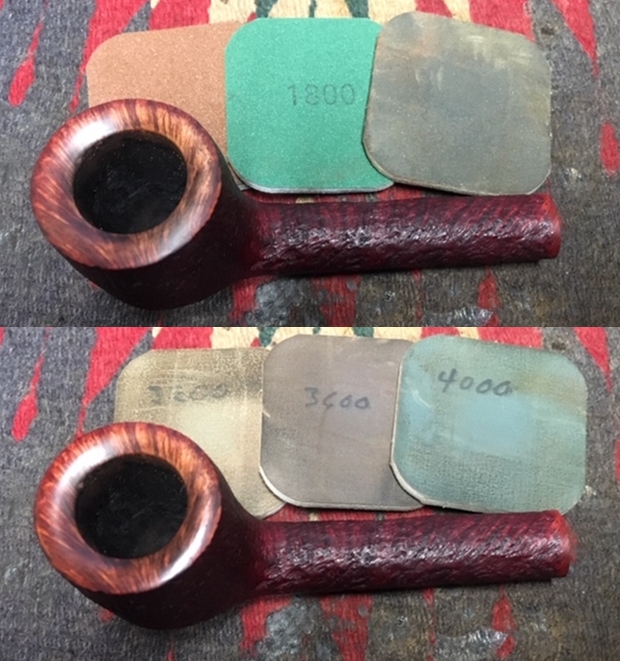
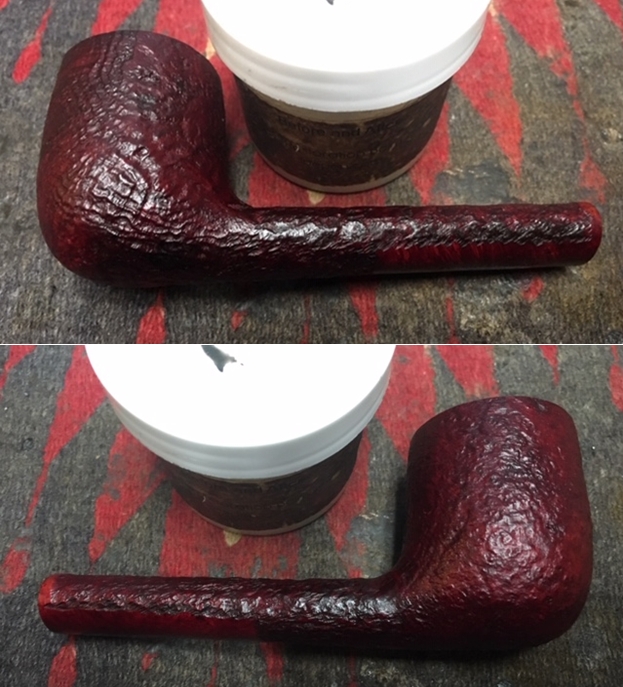
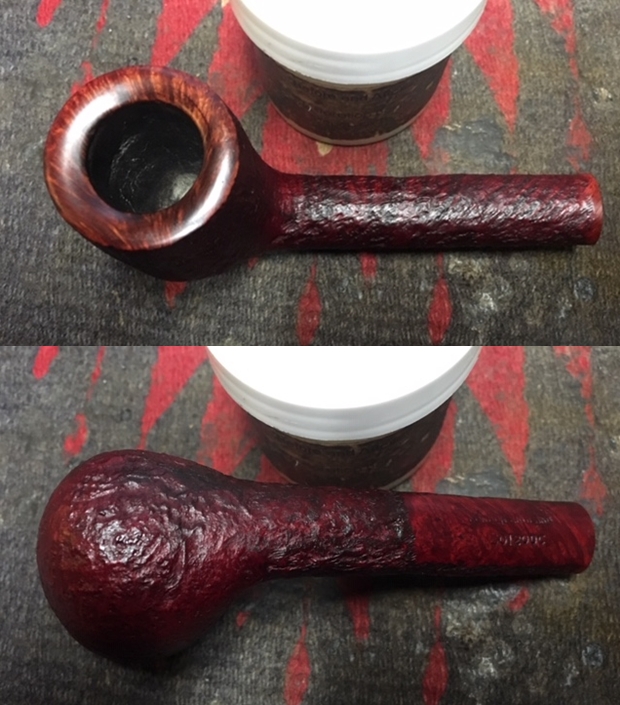
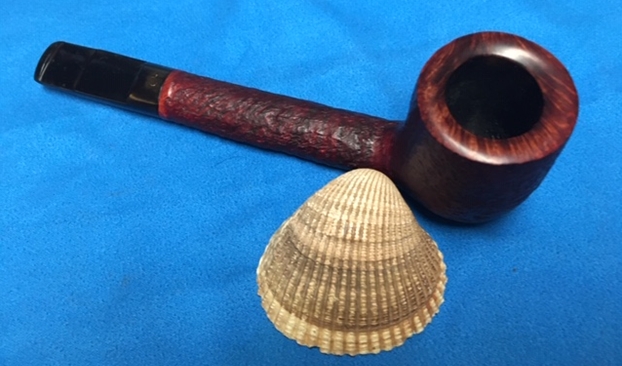
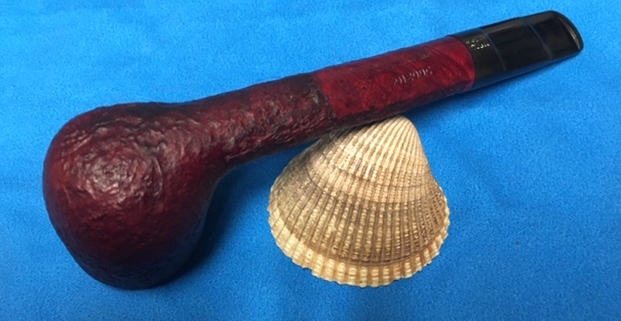
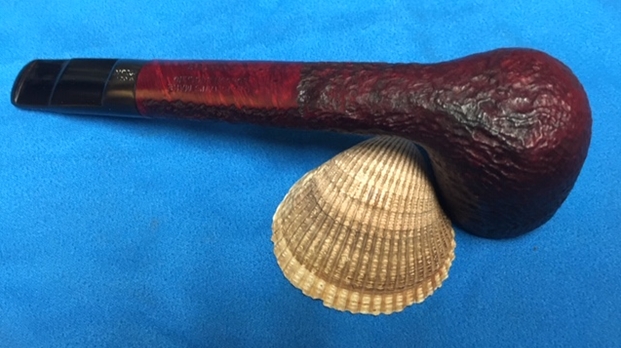
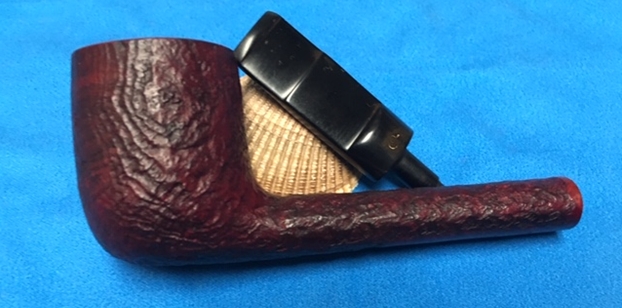
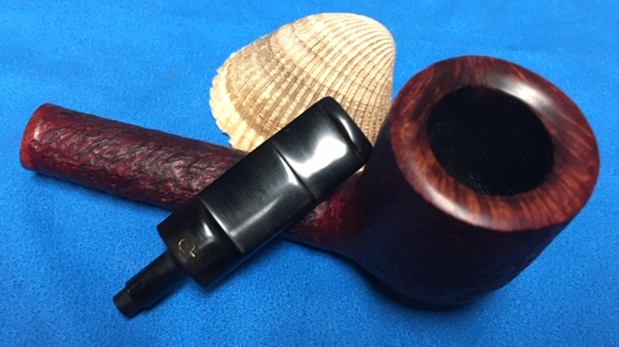
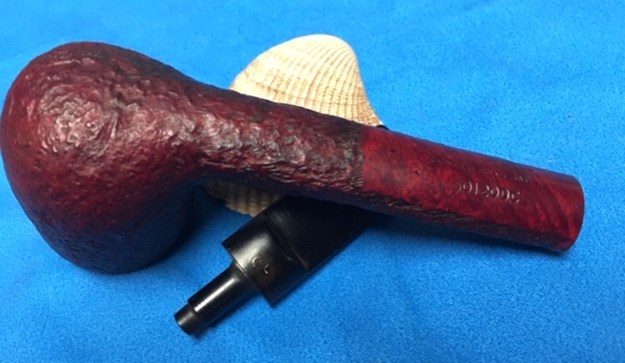
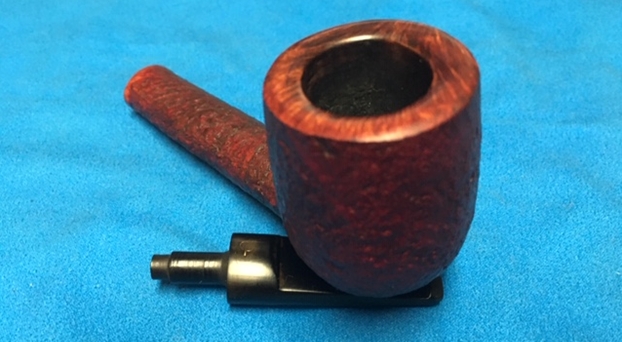
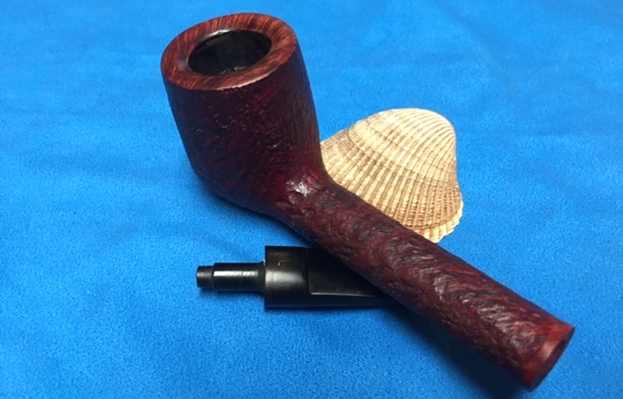
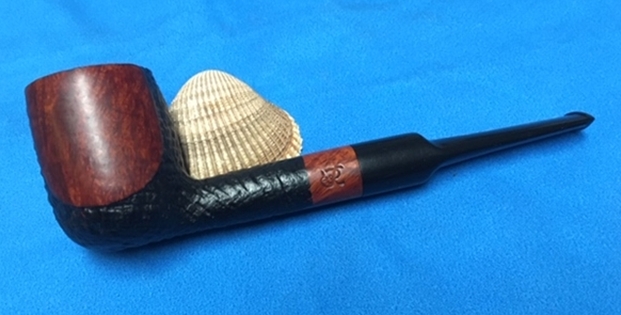
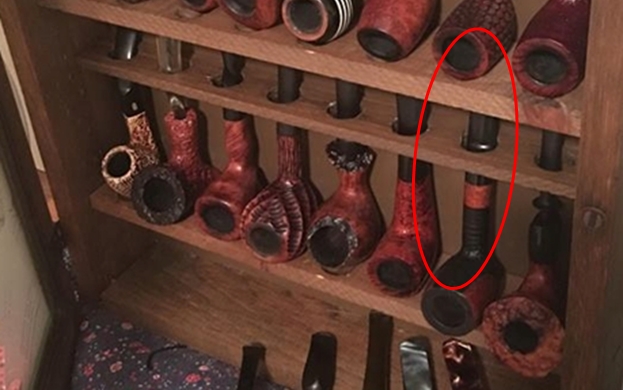
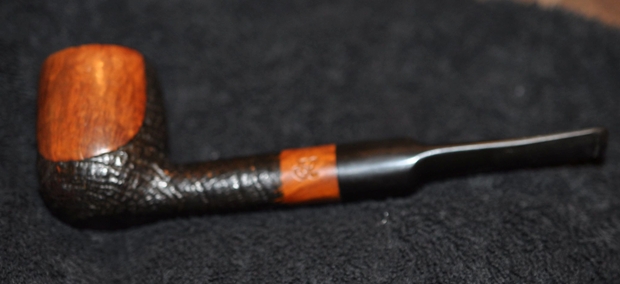
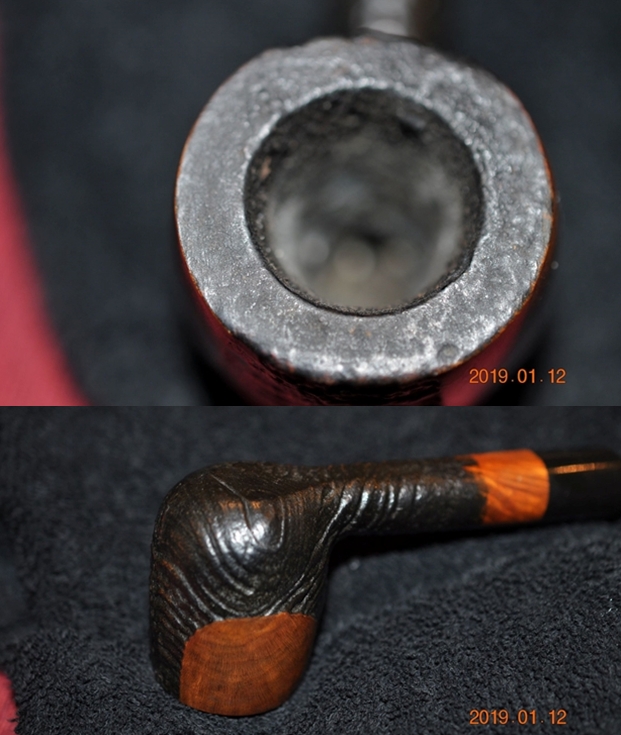
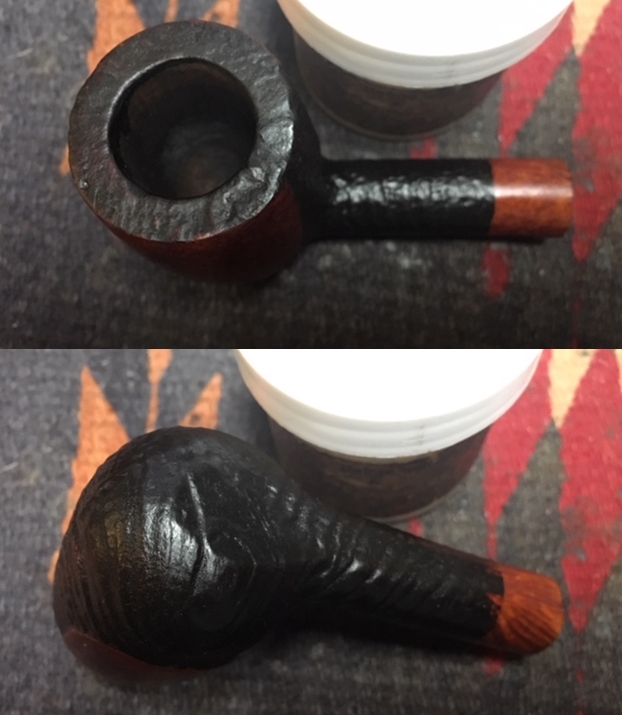
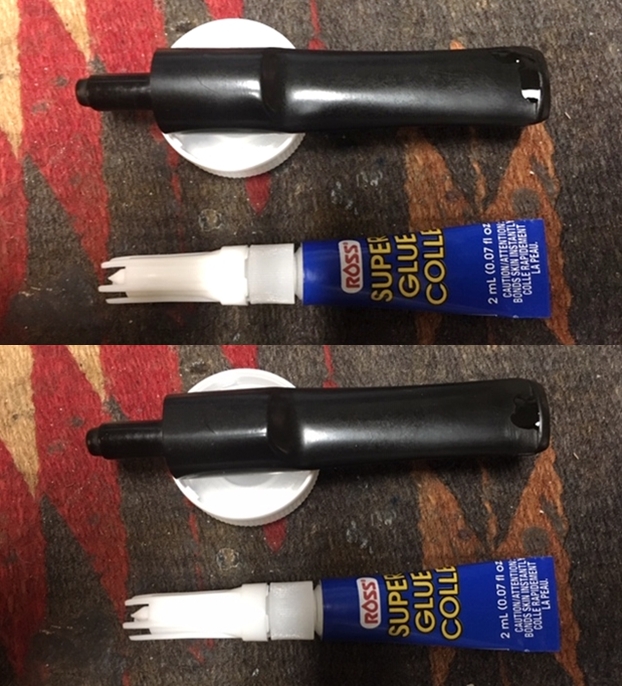
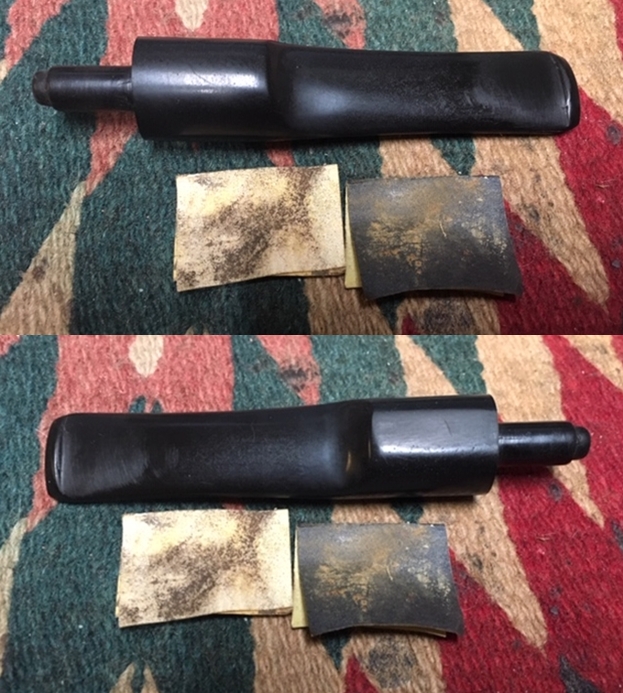
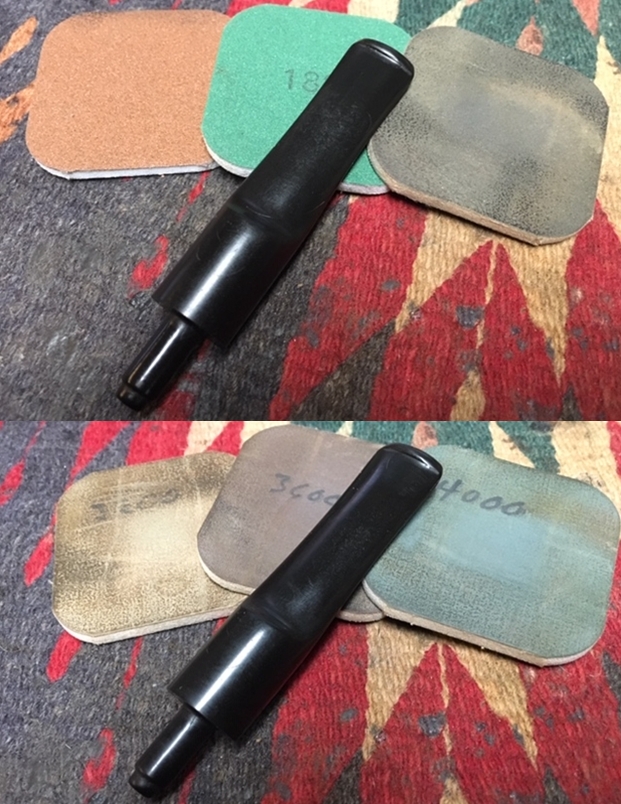
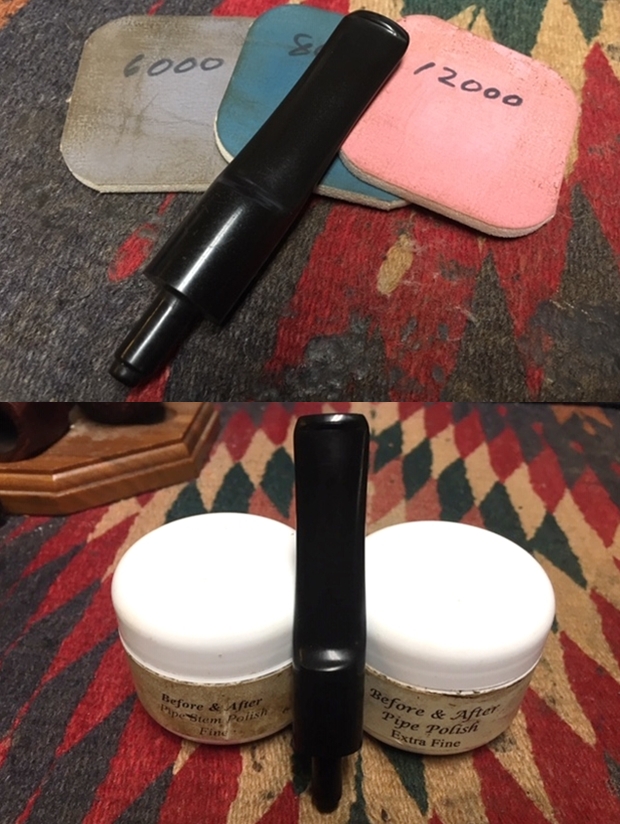
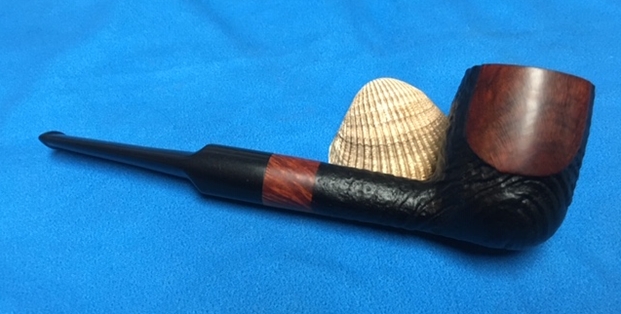
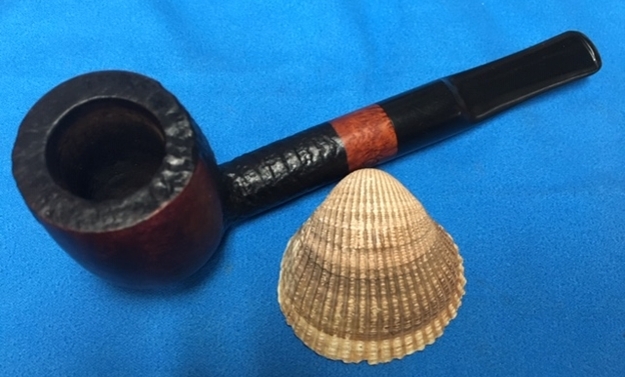
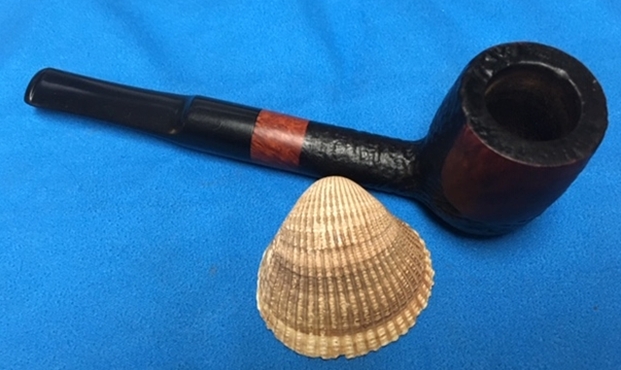
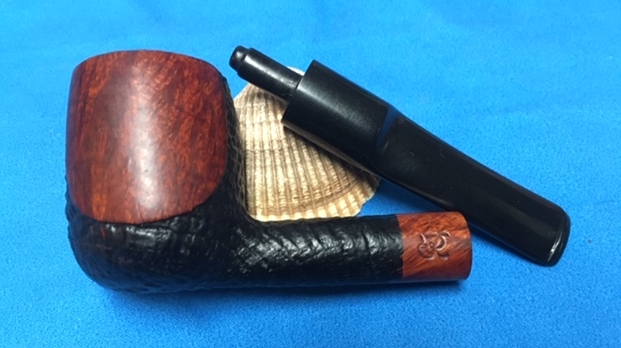
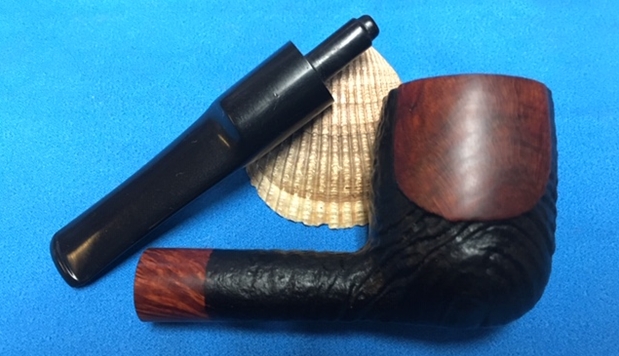
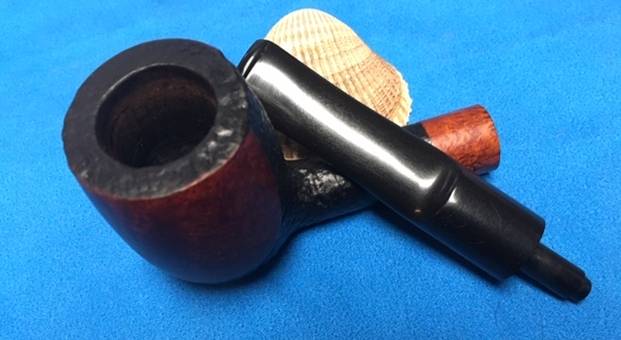
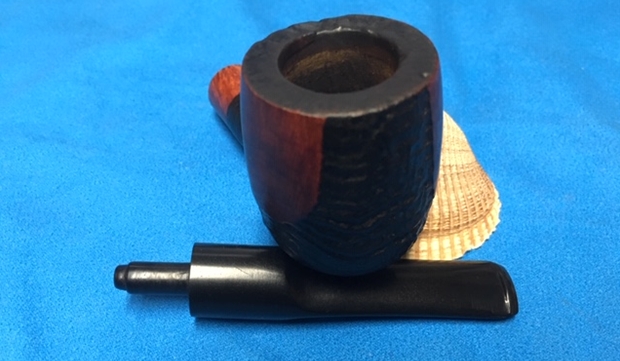
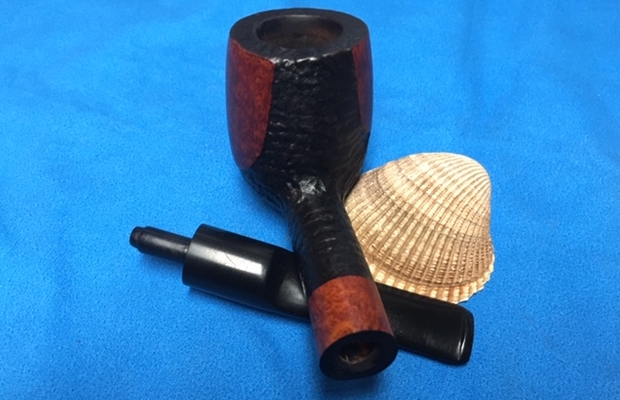
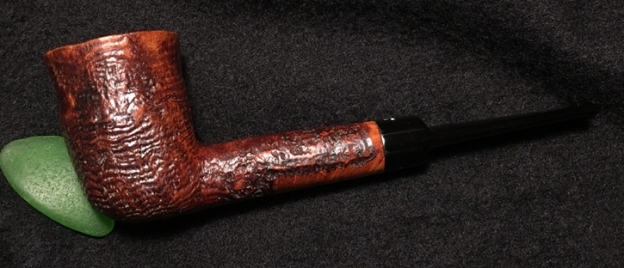
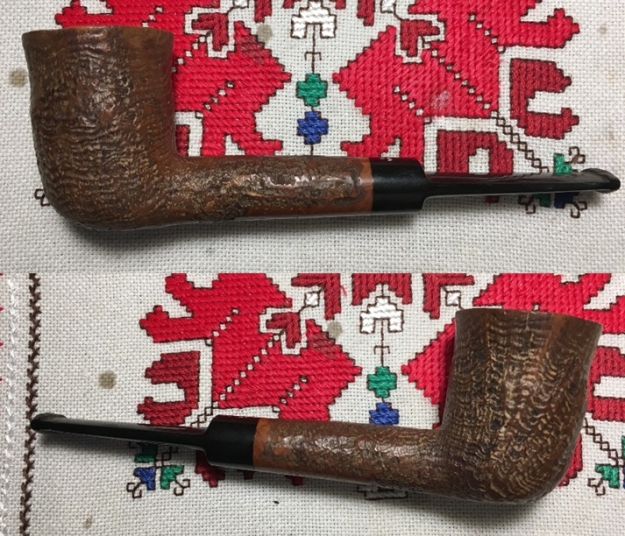
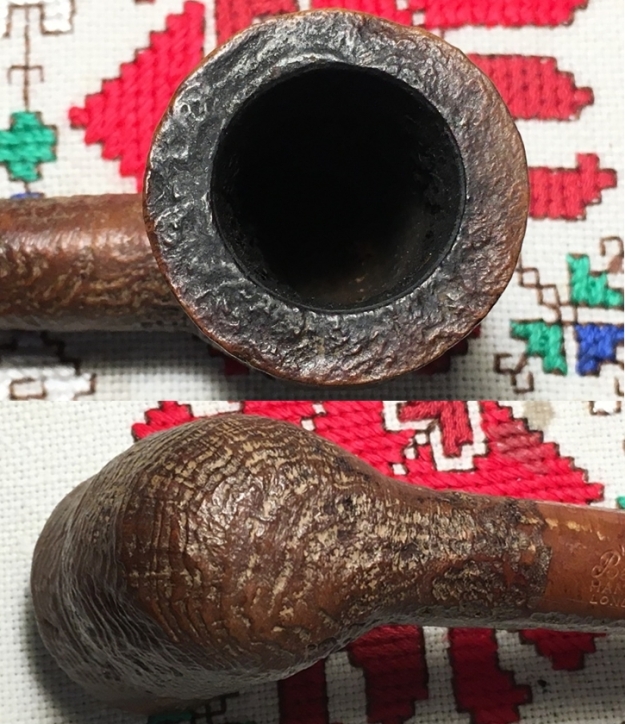
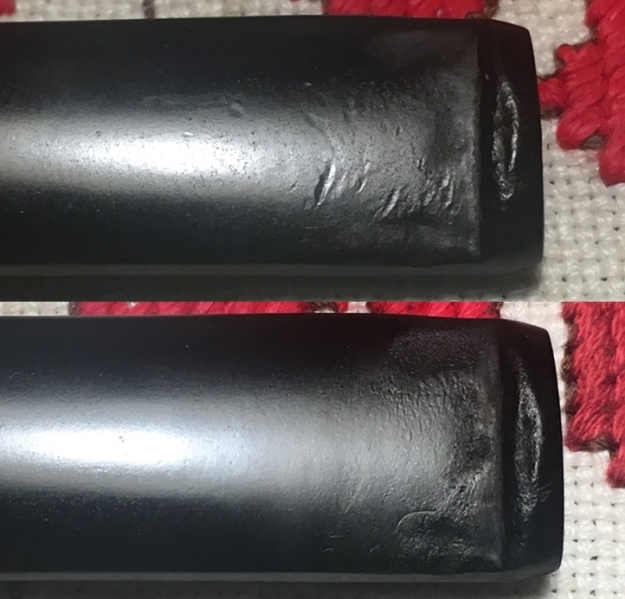
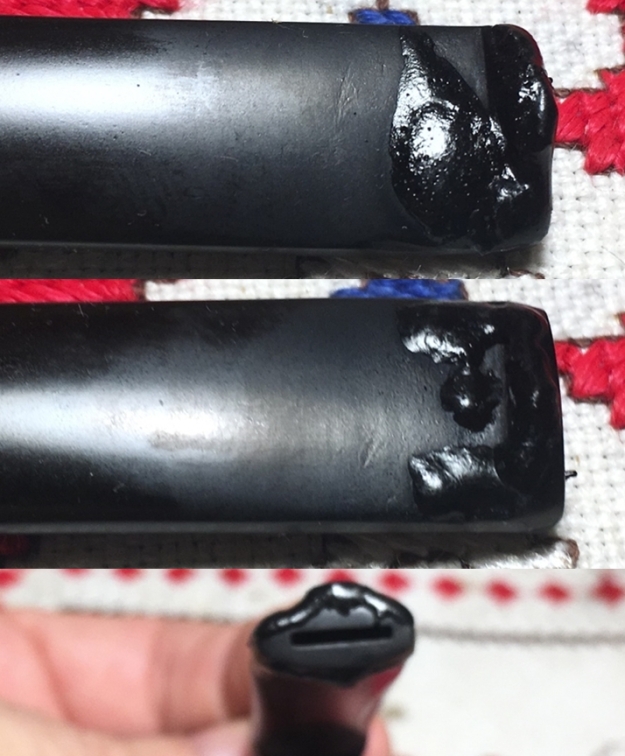
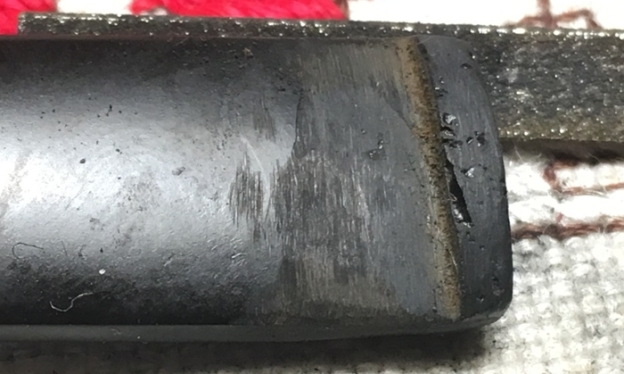
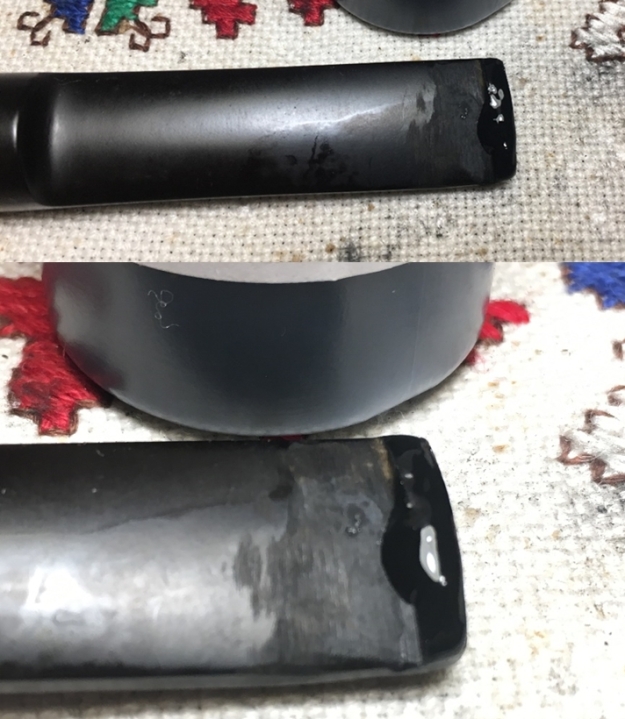
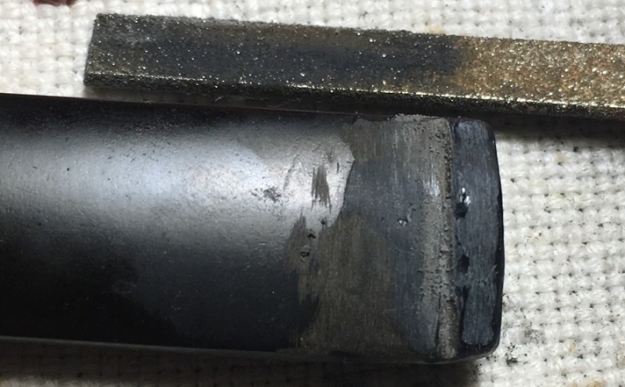
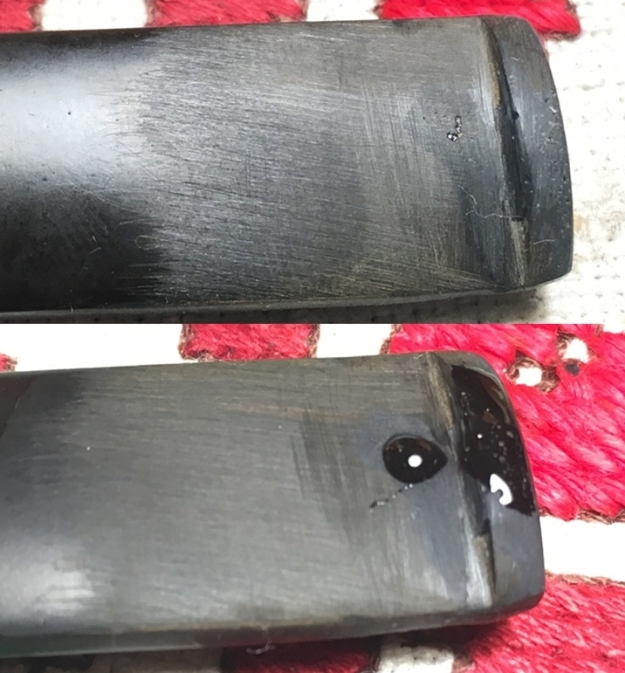
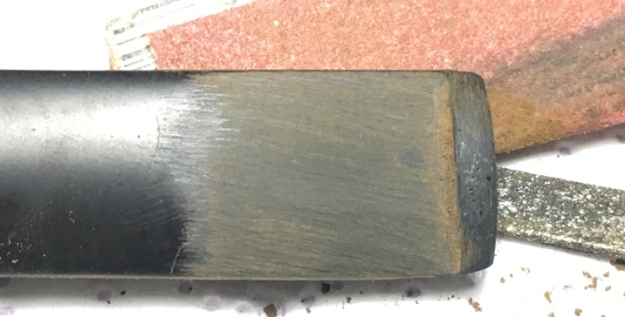
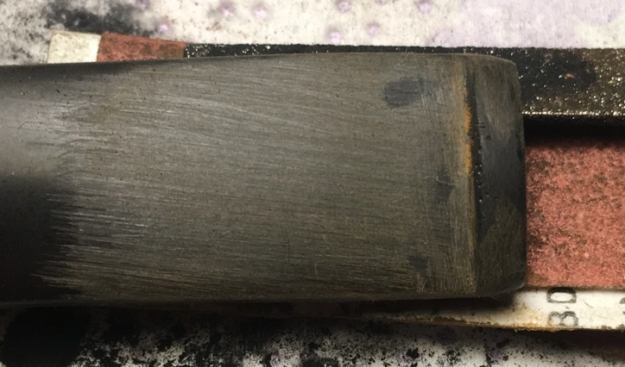
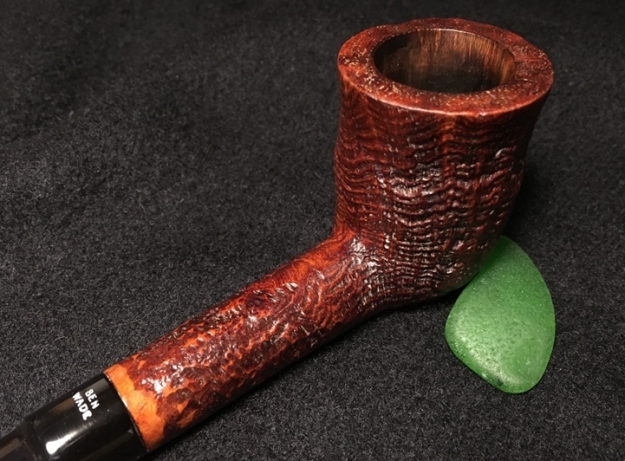
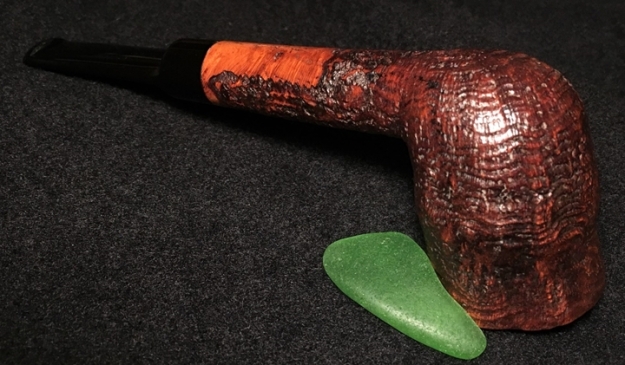
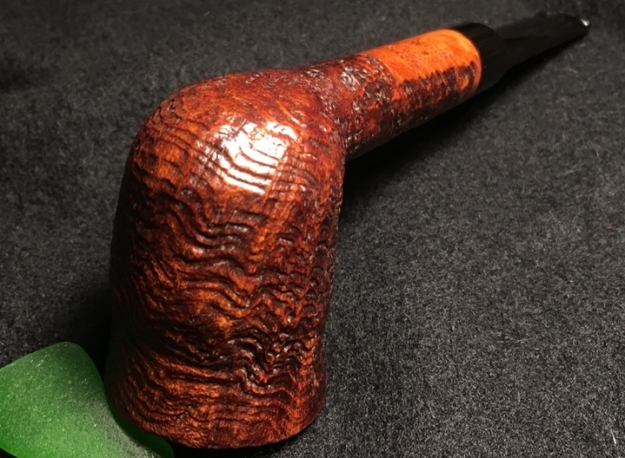
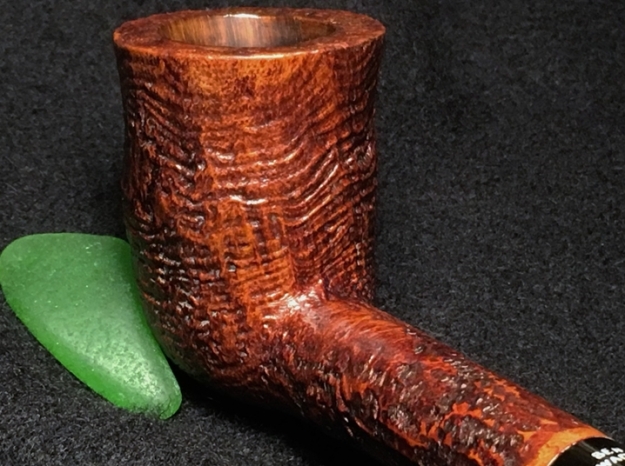
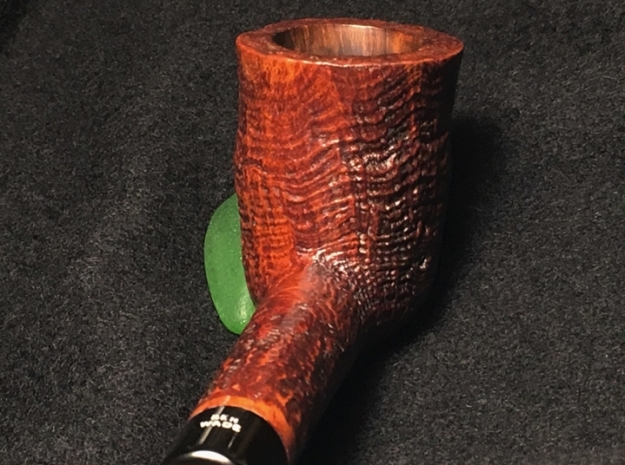
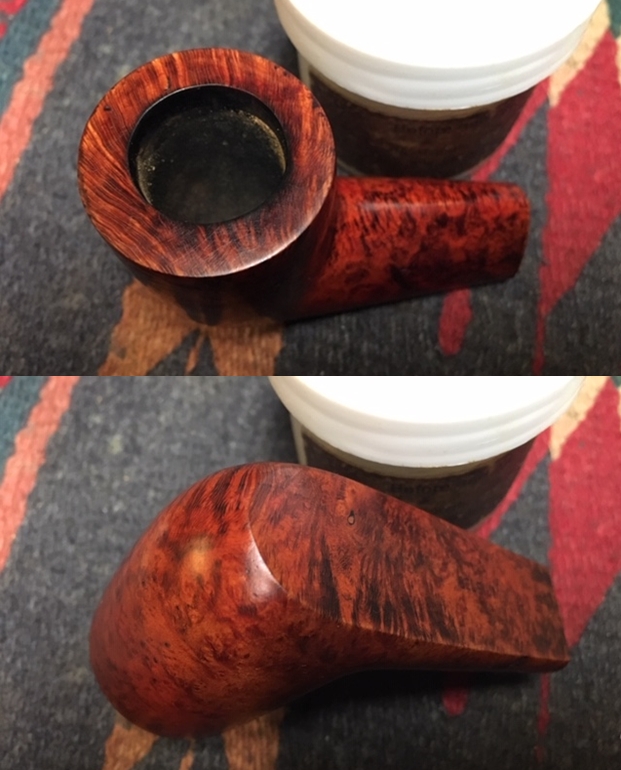
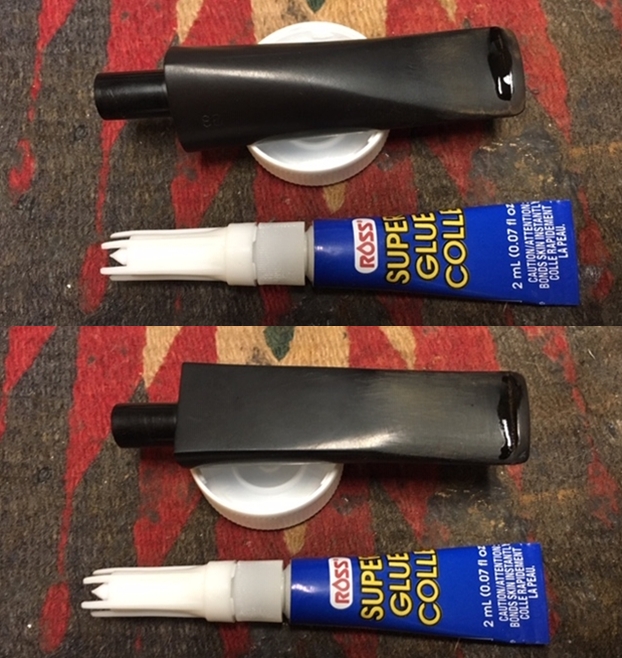
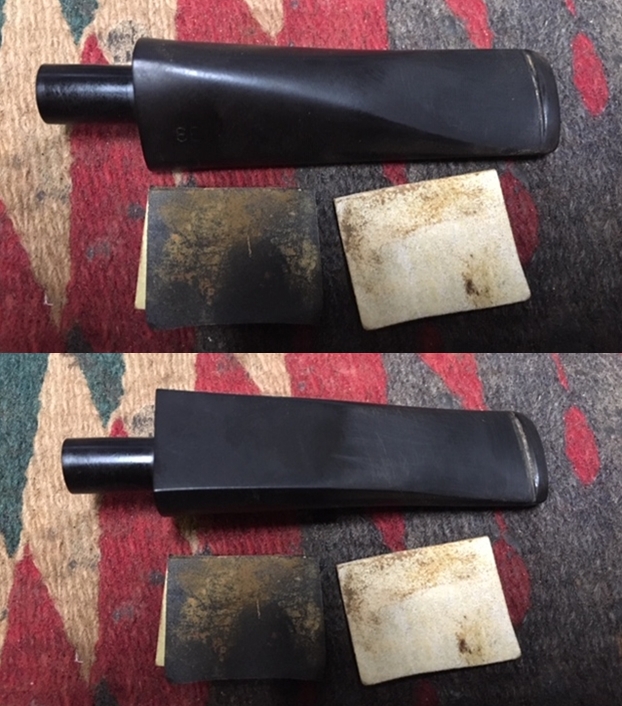
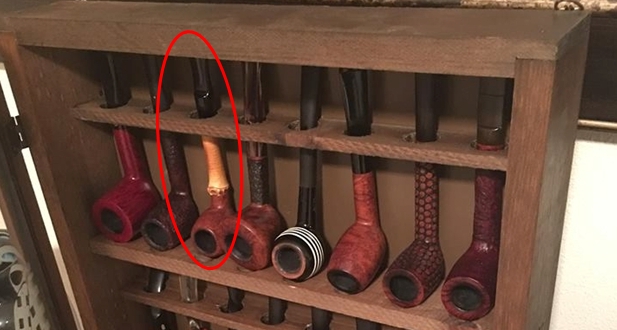
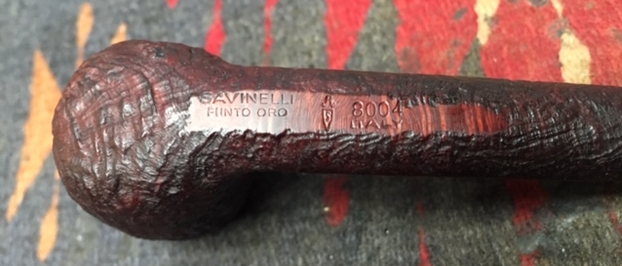
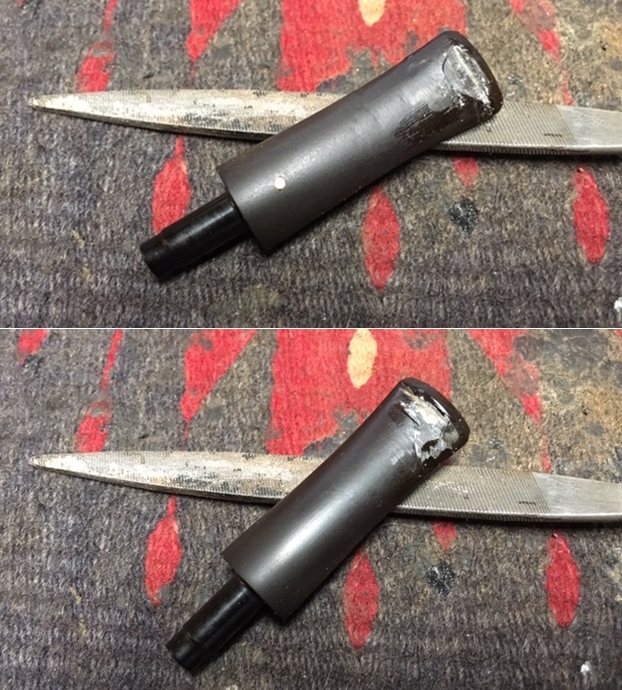
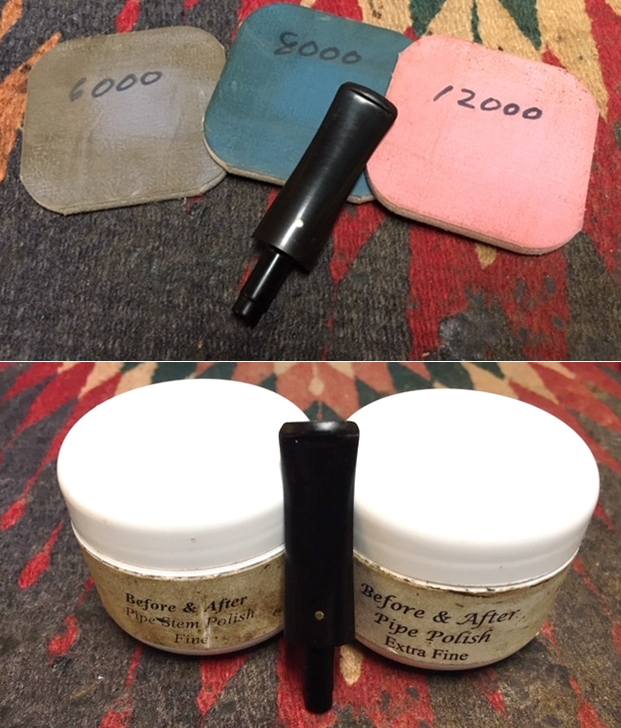
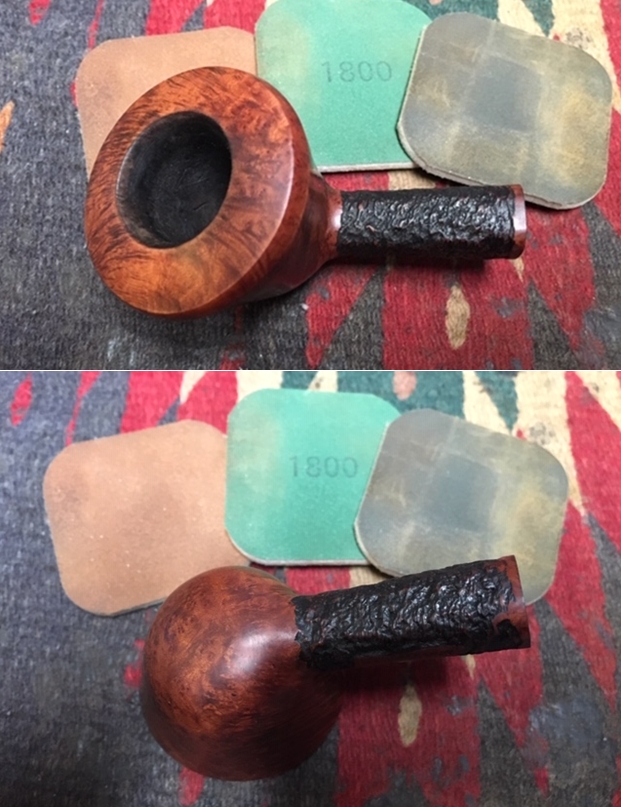
The next pipe in the queue is yet another interesting pipe from the Michigan lot – a really nice sandblasted Canadian with a deep blast and lots of great grain. The entire pipe – bowl, rim and shank sandblasted with a thin, smooth band at the end of the shank. It is another totally unique pipe and different from any of the other pipes in the collection. It is not a large pipe – probably a Group 4 sized bowl. The rim top has a slight inward bevel on the inner edge of the flat rim top. The pipe has a contrasting black, oxblood and brown stain coats that highlights and accentuates the blast. The underside of the shank has a smooth patch from the heel down most of the shank. It is stamped Savinelli over Punto Oro with a Savinelli S shield followed by the shape number 8004 over Italy. The stem is vulcanite and has a small brass dot on the top near the shank. This is another nice looking piece much like the rest of those in this 21 pipe Michigan pipe lot. The Savinelli I am working on now is on the first shelf of the rack. It is the second pipe on the left and I put a red box around it to make it easy to identify. Jeff took some photos of the pipe when he received them to show the general condition of the pipe before he started his cleanup work. Like the rest of the pipes from the Michigan collection this pipe was dirty and well used. There was a thick cake in the bowl and lava overflowing onto the rim top. It was hard to know if the edges of the bowl were damaged or not because of the cake and lava. The deep sandblast on the bowl, shank make the pipe very interesting. The vulcanite stem is lightly oxidized and has some calcification at the button. There are deep tooth marks on both sides of the stem at the button edge and some wear on the button edge itself. There are also scratches in the vulcanite where it looks like someone scraped off some of the calcification. The photos below tell the story and give a glimpse of the beautiful Canadian. Jeff took a close up photo of the bowl and rim to capture the condition of the pipe before he started his cleanup work. The rim top had some thick lava overflow and some darkening. The thick lava on the rim top made it hard to know what the inner and outer edges of the bowl looked like. There is also a general accumulation of dust in the finish on the rest of the bowl and shank.He also took photo of the right and underside of the bowl and shank to show the interesting sandblast finish. The finish is very dirty but this is another beautiful pipe.Jeff took a photo to capture the stamping on the underside of the shank. The photo shows stamping as noted above. The stamping on this pipe is clear and readable.The next two photos show the stem surface. They show the tooth marks and chatter on both sides near the button. There are also some marks on the sharp edge of the button. The stem is dirty, oxidized and has a yellow cast to it. The single brass Punto dot on the top of the stem is almost invisible.Jeff reamed the bowl with a PipNet pipe reamer and followed up with a Savinelli Fitsall pipe knife to remove the cake. He scrubbed out the mortise and the airway in the shank and the stem with alcohol, cotton swabs and pipe cleaners. He scrubbed the exterior of the bowl, rim, shank and stem with a tooth brush and Murphy’s Oil Soap to remove the oils and tars on the rim and the grime on the finish of the bowl. He rinsed it under running water. He dried it off with a soft cloth. He was able to remove the lava build up on the rim top and you could see the great condition of the bowl top and edges of the rim. He soaked the stem in Before & After Deoxidizer to remove the oxidation. I took photos of the pipe to show its condition before I started my work on it. I took a close up photo of the rim top to show the darkening on the surface of the rim toward the back of the bowl that was normal with use. The front part of the rim top looked a little lighter in colour but the sandblast on the entire rim made the rim top repairs minimal. The inner edge and the outer edge of the rim look really good. The stem photos show the tooth marks and the wear on the button surface on both sides. The final close up photos shows the Savinelli stamping on the underside of the shank. Jeff had done such a great job cleaning the surface of the pipe that there was nothing I needed to do move forward. I started by working some Before & After Restoration Balm into the sand blast finish of the briar with my fingertips to clean, enliven and protect it. I let the balm sit for a little while and then buffed with a cotton cloth to raise the shine. The following photos show the bowl at this point in the restoration process. The bowl and the rim top look really good and the darkening and lava are gone. The finish looks very good and I am very happy with the results. With the bowl finished I set it aside and turned my attention to the stem. I cleaned out the tooth marks on both sides of the stem with a cotton swab and alcohol. I filled in the tooth marks with clear super glue. Once the repairs had cured I used a needle file to flatten out the repaired areas. I filed it until the patches were smooth with the surface of the stem. I used a folded piece of 240 grit sandpaper to blend the repairs into the surface of the stem. Once the surface was smooth I sanded out the scratch marks and started the polishing of the stem with a folded piece of 400 grit sandpaper. I wiped the stem down with a damp cloth and took the following photos.I polished the stem with micromesh sanding pads – wetsanding it with 1500-2400 grit pads and dry sanding it with 3200-12000 grit pads. I wiped the stem down with a damp cloth after each pad. I further polished it with Before & After Pipe Polish – both Fine and Extra Fine. I wiped it down with a coat of Obsidian Oil and set it aside to dry. I put the stem back on the bowl so I could polish it without rounding the edges as the shank union. I polished stem with Blue Diamond polish on the buffing wheel. I gave the bowl multiple coats of Conservator’s Wax and the stem multiple coats of carnauba wax. I buffed the pipe with a clean buffing pad to raise the shine. I hand buffed it with a microfiber cloth to deepen the shine. The pipe polished up pretty nicely. The contrasting deep sandblast showed the contrasts between the valleys and the high spots. It truly came alive with the buffing. The rich browns and oxblood stains worked very well with the polished black vulcanite stem. The finished pipe is a beauty and feels great in the hand. Have a look at it with the photos below. The dimensions are Length: 6 inches, Height: 2 inches, Outside diameter of the bowl: 1 1/4 inches, Chamber diameter: 3/4 of an inch. This beauty will be on the rebornpipes store sometime in the days ahead. It may well be the kind of sandblasted Canadian you have been looking for. Let me know if you are interested. Thanks for walking through the restoration of this beautiful Canadian with me it was a pleasure to work on.


Discovering the History with the Reclamation of this Petite EPC Majestic Bent Horn Stem Billiard


Blog by Dal Stanton

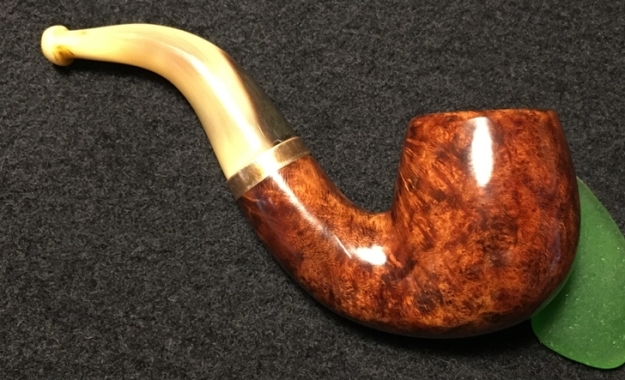
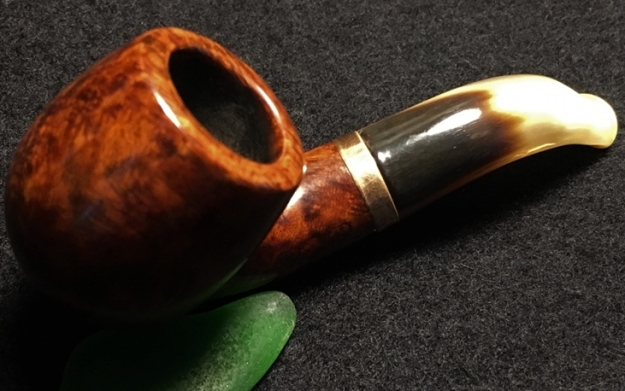
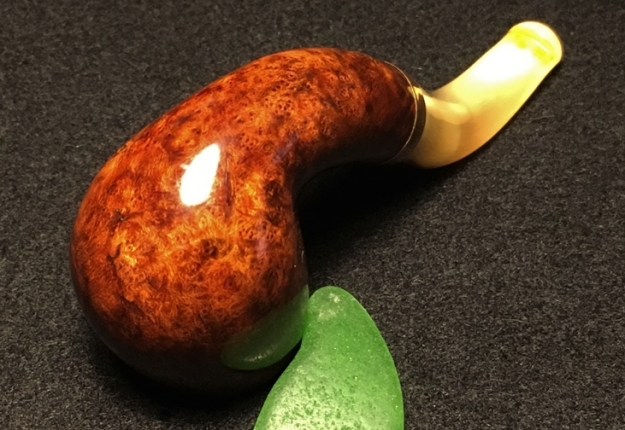
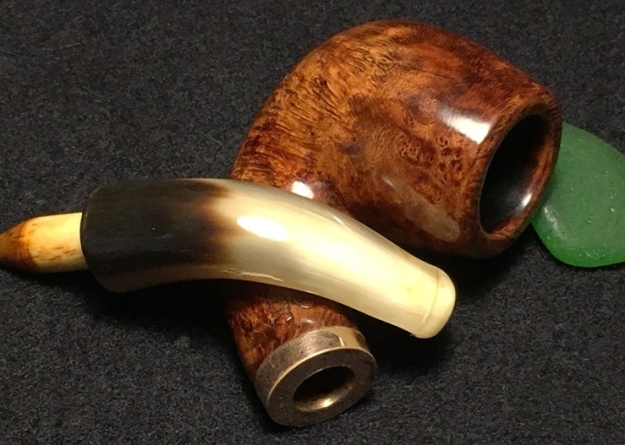
This is an amazing petite now on my worktable.  I think it qualifies as a ‘pocket pipe’ because it has obviously been used and loved.  I acquired it last year from the French eBay auction block in a Lot of 50 that included some prized pipes which have already passed through my work table and are now serving new stewards.  I cannot find the EPC Majestic in this picture of the French Lot of 50, but what has been characteristic of this Lot is that there are several named pipes that I’ve never heard of before.  My assumption has been that many of these are French made since the Lot came from France.  Many of these pipes also sport very nice horn stems.  This is true also of the EPC Majestic.

Stephen saw the EPC Majestic in the For “Pipe Dreamers” Only! collection on The Pipe Steward website.  I love it when I get return pipe men looking again!  Stephen has already brought home an L. J. Peretti Bent Billiard (LINK) and now he’s commissioned the EPC Majestic as well as a newer acquisition from an antique store in St. Louis, a really nice Aldo Valeni Trio Blasted Billiard – next on my worktable.  I appreciate Stephen, even though he happens to be a cousin on my wife’s side of the family!  He’s a retired Coast Guard man and has grown in his love for and appreciation of pipes.

When he asked about the EPC Majestic, I made sure he understood that he was inquiring about a pipe with diminutive dimensions.  He assured me that this was exactly what he was looking for and I placed him in the queue.

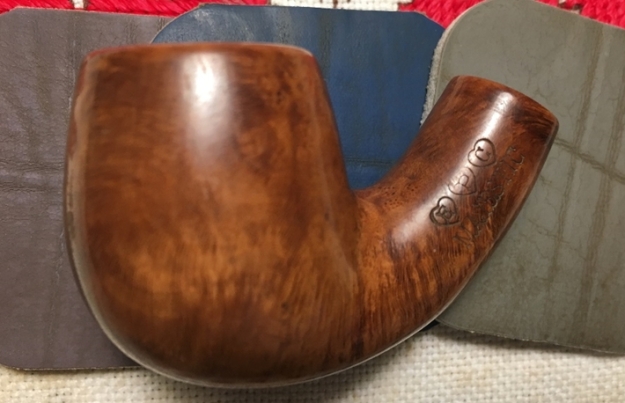
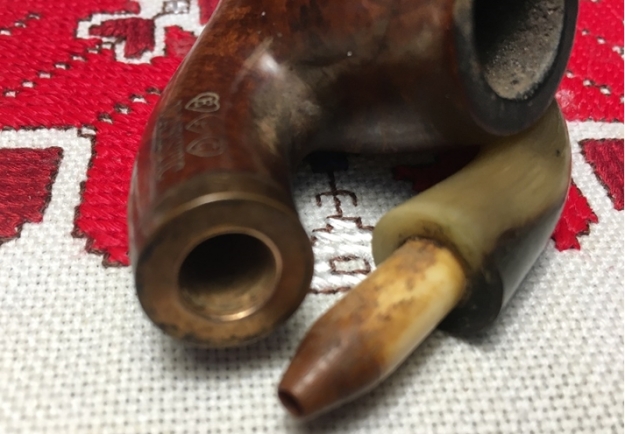
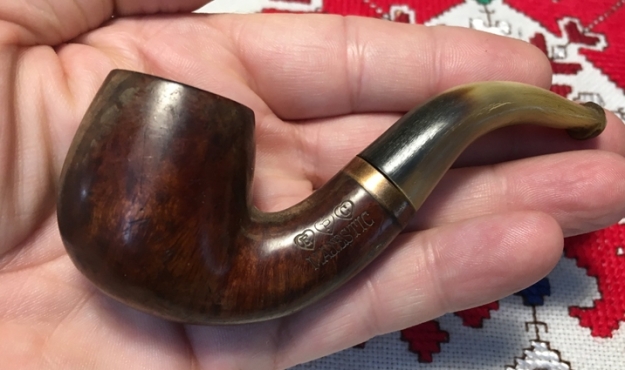
Here are pictures that got Stephen’s attention: The dimensions of the EPC Majestic are: Length: 4 1/8 inches, Height: 1 1/2 inches, Rim width: 1 inch, Chamber width: 5/8 inches, and Chamber depth: 1 3/8 inches.  Sometimes measurements don’t translate as well to people and therefore I questioned Stephen.  For demonstrable purposes to show this very nice looking ‘Pocket Pipe’ in the natural habitat, I take a palm picture – I’m not a big man and this pipe fits fully in my palm!  My wife’s description was, ‘How cute!’The nomenclature is interesting.  On the left shank flank is stamped 3 hearts and in each heart is stamped the letters, E – P – C.  The hearted letters are over ‘MAJESTIC’.  There are no other identifying marks that I can find on the pipe.  My assumption at this point, as I mentioned above, is that this is a French made pipe, but this is only a guess at this point.
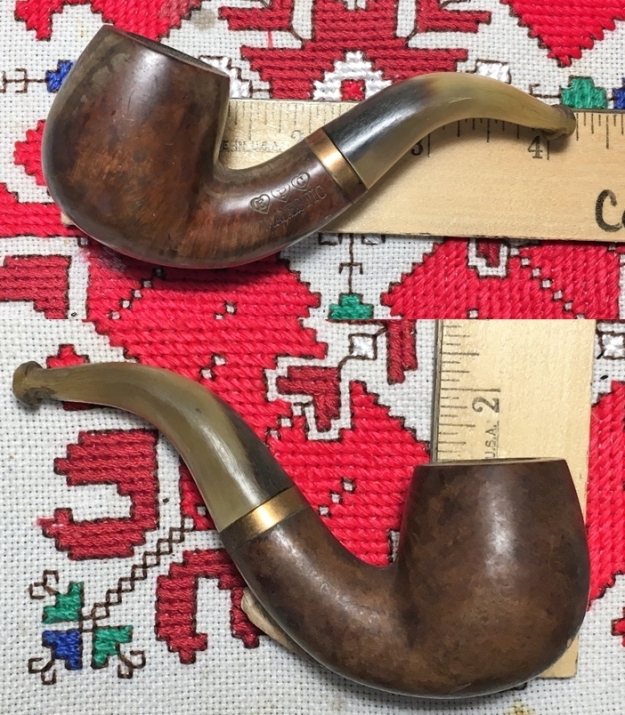
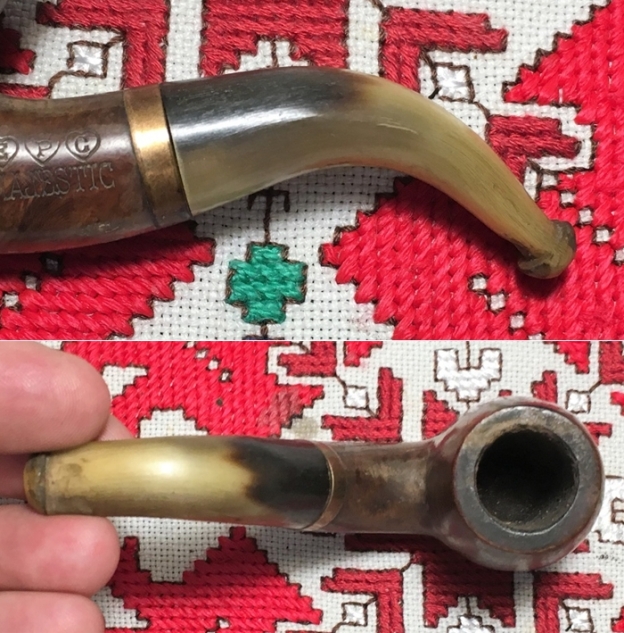
As I’ve experienced with other pipes from this Lot, EPC shows up nowhere that I see in my usual first places: Pipedia or Pipephil.eu.  I also look in other groups and threads and I can find nothing.  Expanding the search, I put in ‘EPC Majestic’ in Google and came up with an interesting vein of information – a cigar company.  E.P. Carrillo to be exact based in Miami, Florida.  I read with interest the story of Ernesto Perez-Carrillo who was a well-known cigar manufacturer in Cuba and during the Fidel Castro era was forced to leave Cuba and settle in Miami with his family.  After much struggle, was able to restart a cigar company which is very well-known today among cigar aficionados.  Interestingly, the brand that won the 2018 Cigar of the Year Award rated the #1 cigar of 2018 by Cigar Aficionado was named, ‘Majestic’.  Yet, what does this have to do with a nomenclature on the side of a pipe’s shank?
My mind started coming up with questions – Did this the E.P. Carrillo cigar company put its name on a pipe?  Was the diminutive size of this pipe indicator of a promotional pipe of some sort?  Would a pipe be used to promote cigars?  The questions came even though they made absolutely no sense!  Every pipe man and cigar man would answer, absolutely, not!  My heart agrees 100% but my mind’s questions were not satisfied.  So, as I’ve done many times before with surprising success, I went to the contact tab of the E.P. Carrillo website and sent an email to the info@epcarrillo.com address given.  I have very little expectation that I will receive a response, especially with an email essentially asking if they ever used pipes to promote their cigars….  We’ll see!

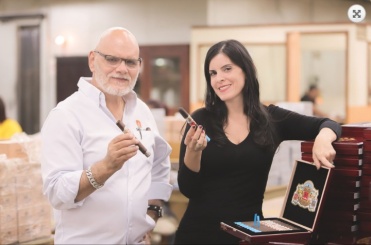
Well, during the restoration, I received a very nice note back from Lissette Perez-Carrillo, the daughter of founder, Ernesto (pictured above with father), stating: Hi that’s very nice but we aren’t in the pipe business. Thanks for sharing.   No one is surprised by her response!

I have one more lead that came after I posted pictures in different Pipe smokers Face Book groups and Eduardo responded from Pipe Smokers of America suggesting that the EPC may be related to the Edinburgh Pipe Club.  Feeling like I’m grasping at straws, I find the EPC web site (LINK) and it’s nicely done.  I also find an information email and send off another inquiry.  Does Scotland have a stake in the EPC Majestic?

Then, the breakthrough came.  I had completed the restoration and was doing the final edit of the write-up, when I remembered the link that Eduardo had posted in the FB group, Pipe Smokers of America.  It was a link that I had seen before in my first look in Pipedia, but I missed an important clue.  The link was a simple search result of ‘Majestic’ in Pipedia.   Twenty pictures come up on the page, most of the pictures have pipes with a ‘Majestic’ nomenclature that belonged to other companies that didn’t help me.  But I missed the clue in the very first picture of a very old company symbol.  The 3 hearts with EPC.

The picture gave me the company, but at first glance, the company name given, ‘A. Pandevant & Roy’ offered no correlation to EPC.  Pipedia nor Pipephil.eu had any references for a direct search of Pandevant & Roy.  When I broadened the search on the internet, I hit pay dirt.   The search took me to a Dutch site called, ‘PKN Society for Research of Historical Tobacco Pipes’ (link) which contained many old catalogues dating back to the 1800s when ‘Clay’ was king in the pipe world. Of special interest to me were two catalogues of the ‘A. Pandevant & Roy’ company.  The catalogues were in French, so it took some time to work through the text – Google Translate was employed!

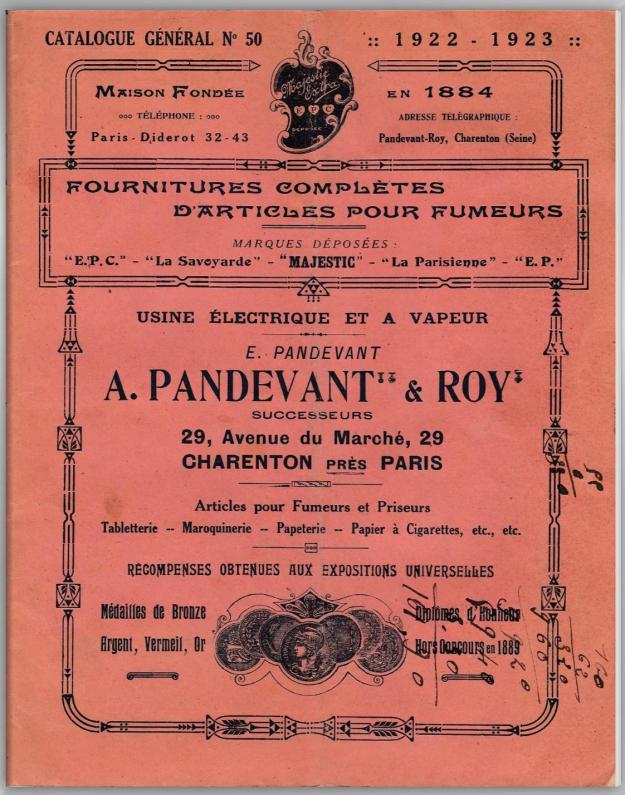
The catalogues were in PDF format and the pages turned easily to scan the product lines of pipes and other paraphernalia for sale.  I first looked through the first catalogue dated 1922 to 1923.  I perused the pages and still was not able to put together the nomenclature – EPC, though I was seeing EPC in several places.  I went back to the front cover of the catalogue and looked again to see if I could piece together EPC.  I think the cover is interesting and has a classic feel, so I included it below.  As I study the cover again, I noticed that there were actually two Pandevants represented – the more prominent was “A.”, but just above “A.”, the less prominent, “E. Pandevant” was present.  I’m theorizing that “A.” is still living and currently (1920s) is running the company with “Roy”.  However, the founder of the company was the father, “E.”, probably now deceased.  The theory sounds good, but not only good, but plausible!

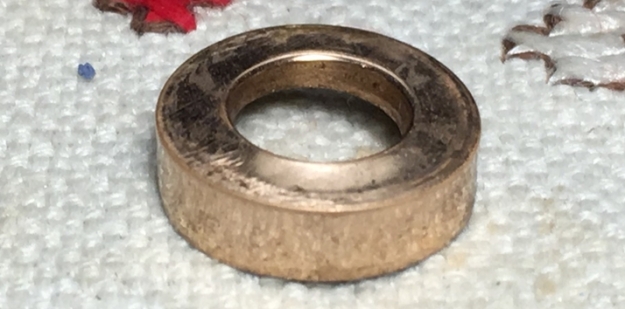
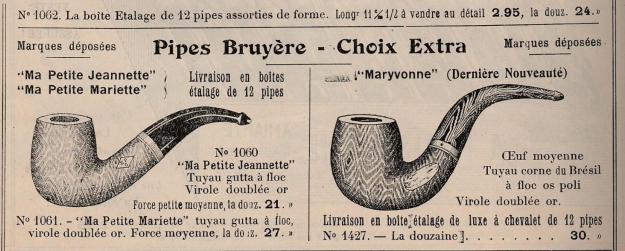
This gives me a credible EP, but what about ‘C’?  Then I see it – ‘Charenton’ near Paris.  I did a quick search of the French district of Charenton and discovered that there are many places in France bearing this name and the ‘Pres Paris’ – near Paris, would be a marker regarding which Charenton was the former base of operations for the A. Pandevant & Roy Co.  The cover also says that “E.P.C.”, “La Savoyarde”, “MAJESTIC”, “La Parisienne” and “E.P.” were registered trademarks of the company.  At the top of the cover, it states that this ‘House was founded in 1884’ – when clay pipes were the predominant medium of pipe smoking.  Curious to see, I used Google Maps to search the address, 29, Avenue du Marché, Charenton (Seine), Paris, and discover that the street and address have passed into history.  The pages in the catalogue were interesting to peruse.  I discover that horn is a predominant stem material displayed in the catalogue, though there are vulcanite varieties, there are just not as many.  Of course, I look for the petite EPC Majestic and I do find pipes very close to the Petite.  Notice on the page included below – the stems are all depicted as horn.  Depicted also is the brass shank cap receiving each of the horn stems.  It would seem the pipe on my table belongs to this era of production of the A Pandevant & Roy Co. I did find these this example below of a petite – the nomenclature isn’t exactly the same with the three hearts, but I wanted to include this just in case the petite on my table has one of these names, ‘My Little Jeannette’ or ‘My Little Mariette’!   I love it.The later catalogue dated 1937-39, gives some additional information.  The first thing I see is that the address has changed – the same street number, 29, but the street was changed to, 29, Avenue Anatole-France Charenton Seine.  This time Google Maps found the address – it is now an apartment complex on a residential street.  With this later catalogue, pipes took more of a backseat to the other paraphernalia – not starting until page 24!  The assortment was less than the former catalogue and few pipes that could possibly resemble the EPC Majestic in my possession.  1939, the date of this catalogue, is the last entry I could find anywhere for the A. Pandevant & Roy Co.  What was happening in 1939 could be a clue to understanding the fate of the A. Pandevant & Roy Co.   From ‘The People in History’:
1939 Germany and the Soviet Union attacked Poland and Britain, France, India, Australia and new Zealand declared war on Germany on September 3rd , the United States decided to remain neutral but did begin rearming for war , which helped end the great depression. The United States also hosted the Worlds Fair in New York early in the year. Also, after speaking to the physicist Albert Einstein president Roosevelt initiated the Americas A-Bomb programme. 

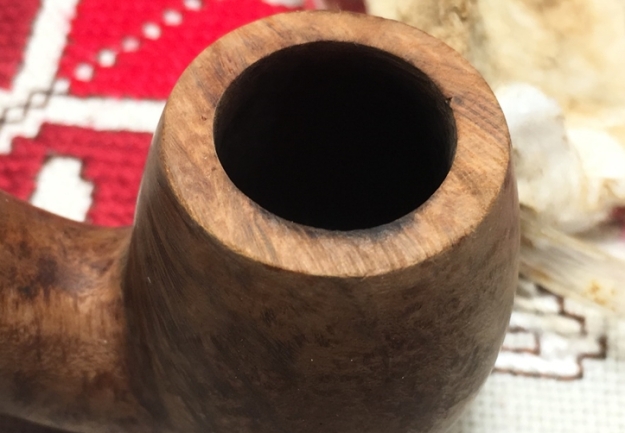
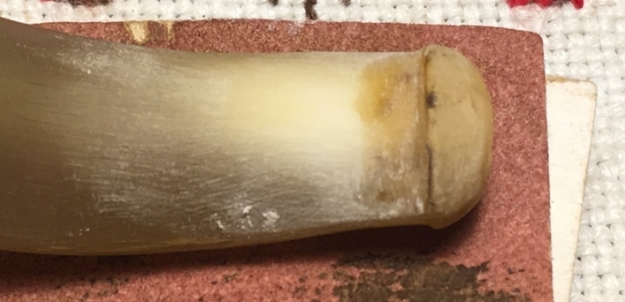
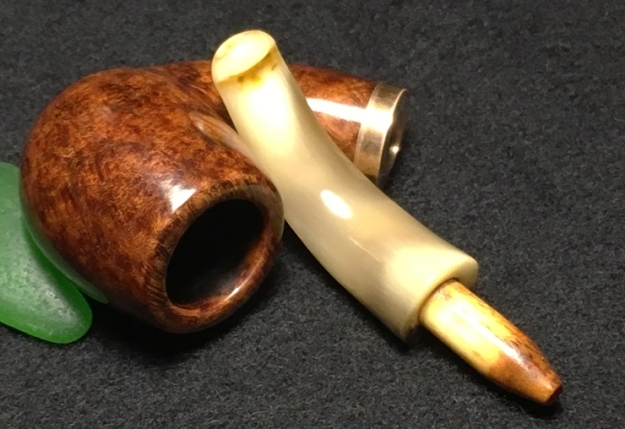
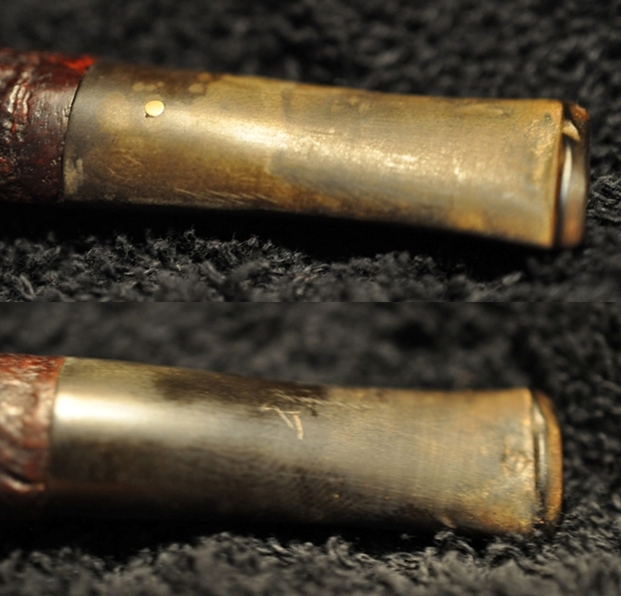
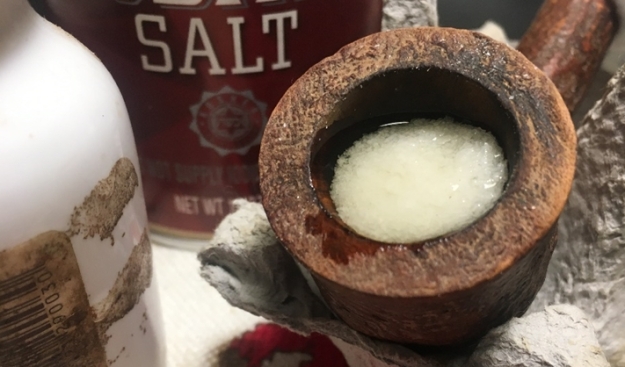
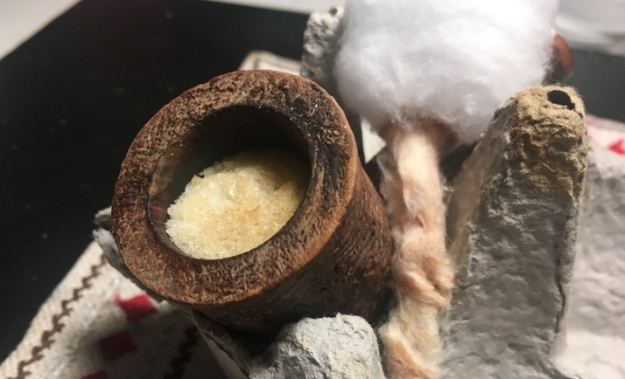
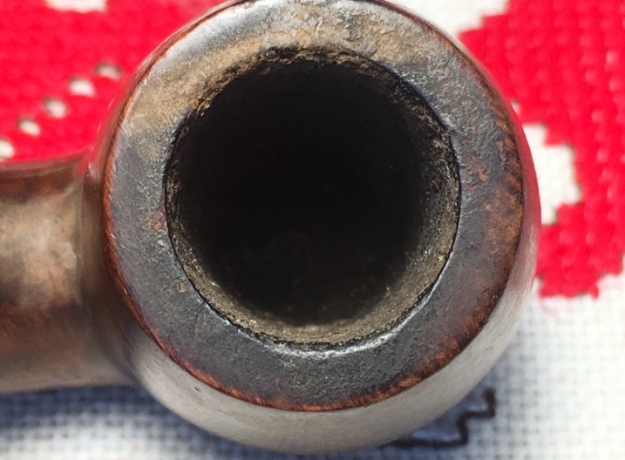
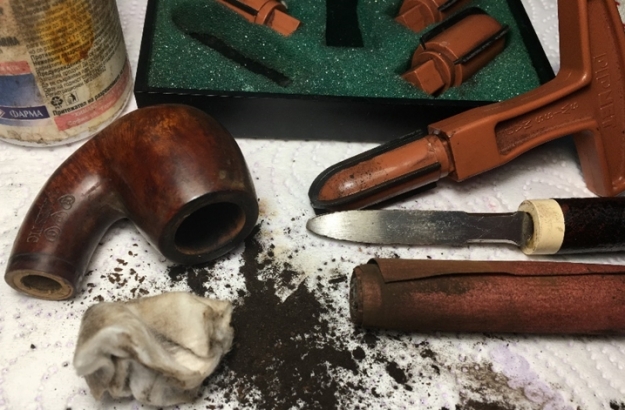
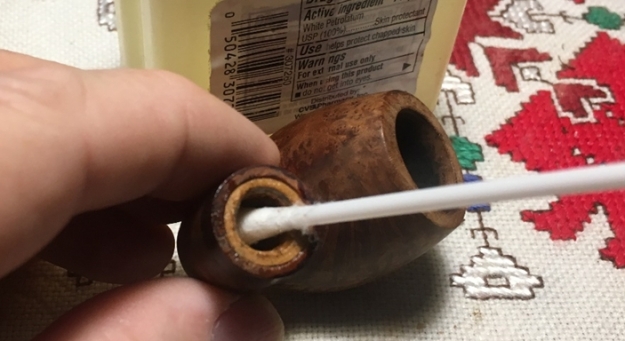
Perhaps, one of the tolls of World War II was also the French company in Paris that produced the EPC Majestic now on my table.  My research will stop here and with a greater sense of the history and heritage of this EPC Majestic Petite Horn Stem Billiard before me, I look more closely at the pipe itself, I discover something very interesting that I haven’t seen before and is reminiscent of a Gourd Calabash.  I’m looking more closely at the horn stem and that it was fashioned with what appears to be a horn tenon as well. I don’t know if its threaded or glued in place, but it is solid, and I’m not interested in forcing the tenon to discover if it will be moved! I then look at the shank and wonder if the brass band/shank cap will come off.  I give a little twist of pressure and it comes off easily.  What I see next surprises me.  I see the briar shank ringing something else inserted into to the mortise.  A lining of some sort.  I discover then that it appears to be cork.  Cork seats the horn tenon in the mortise much like cork seats the Meerschaum bowl on a Gourd Calabash. I have never seen this before, but it seems to work quite well.  I will condition the cork with a little petroleum jelly later.  The challenge becomes protecting the cork while I’m cleaning the rest of the stummel internals. I’m not sure that I want the cork saturated with alcohol – I’m not sure that will be the best thing.The bit of the horn stem appears to be chewed some.  On both the upper and lower bit there are bite compressions and chatter.The EPC Majestic bowl has seen better days.  There are four large fills on the heel of the stummel that will need addressing.  The finish on the bowl has seen better days.  There is a ‘water mark’ line running perfectly straight, bisecting the stummel.  It appears that the stummel was half submerged in some liquid for a time – enough time to discolor the stummel. The rim is nicked and has some lava flow needing to be cleaned.  The chamber has light cake but needs freshening.  The general condition of the pipe is banged up and dirty.I begin the clean up of the stummel by reaming the chamber using the Pipnet Reaming kit. I use only the smallest blade head and it is too large to reach to the chamber floor.  I switch to using the Savinelli Fitsall tool to continue the job and it does well scraping and cleaning the chamber walls down to the floor.  I then sand the chamber using 240 grade paper wrapped around a Sharpie Pen to give leverage.  This cleans the chamber further of carbon and then I wipe the chamber with a cotton pad wetted with isopropyl 95% to remove the carbon dust.  After looking at the cleaned chamber, I detect no problems with heating – fissures, etc.  Moving on!To clean the external briar surface, I use undiluted Murphy’s Oil soap and a cotton pad. I’m anxious to see how or if the stummel cleans up!  It does clean up, but the finish is very thin.  The rim cleans up nicely with the help of a brass wire brush except for one area on the right-hand side from lighting the tobacco.  After scrubbing the stummel, I rinse it with cool tap water careful to keep water out of the internals.  With the stummel wet, I use a sharp dental probe to test the large fills on the heel of the stummel.  As I suspected, they are soft, and I remove them with the probe and clean the holes to make sure all the old fill was gone.  The pictures show the progress. Next, I work on cleaning the internals of the stummel.  Using cotton buds and pipe cleaners dipped in isopropyl 95% I go to work.  With the cork lining in the mortise, I reach beyond it as much as possible to clean.  The drilling of the small stummel has the primary larger mortise drilling first, then a more angled airway drilling from the mortise to the draft hole.  A trap of sorts is created and the end of the mortise because of the drilling.  It cleans up well.  With the cork lining I will not be utilizing a kosher salt and alcohol soak, so I press through cleaning with buds and pipe cleaners.  I also use a dental spatula to scrape in the mortise, but things are clean.  Well, I finish the cleaning and toss the evidence before taking a picture!  Oh well, moving on!
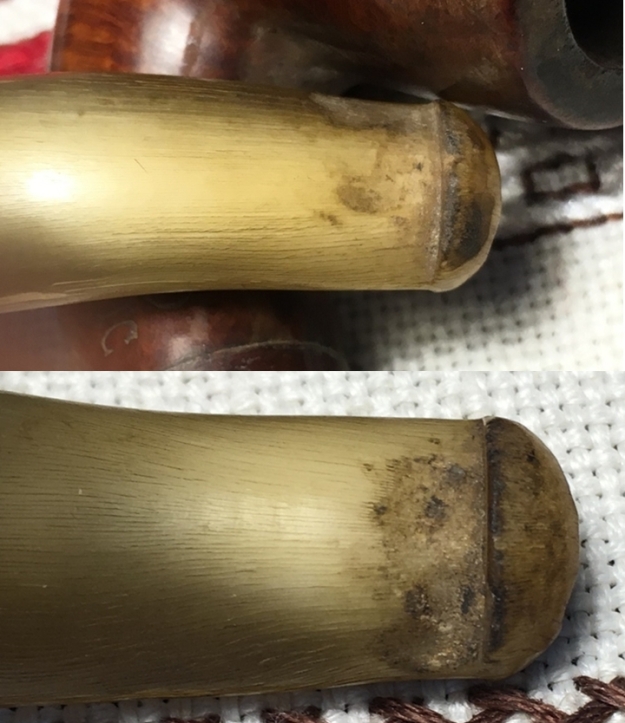
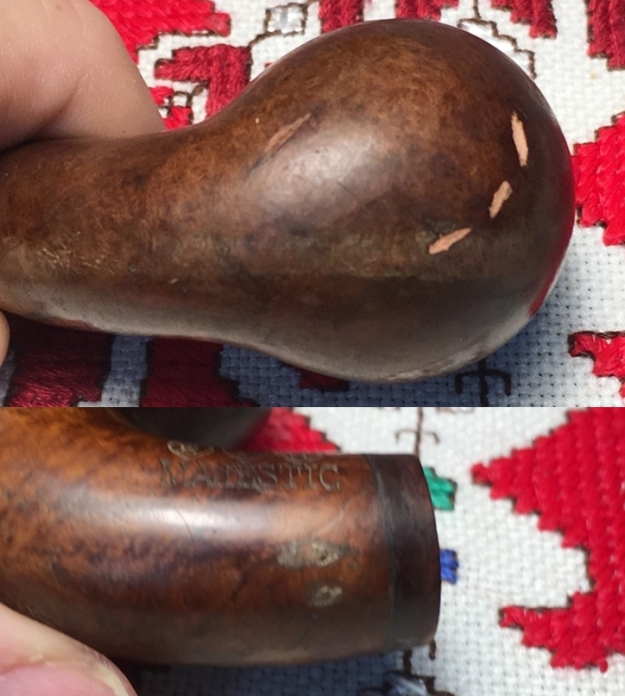
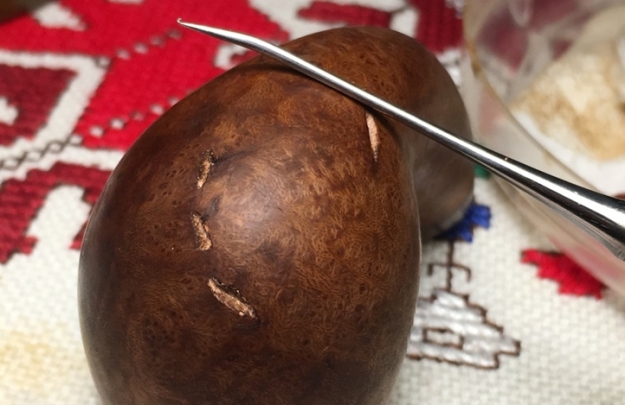
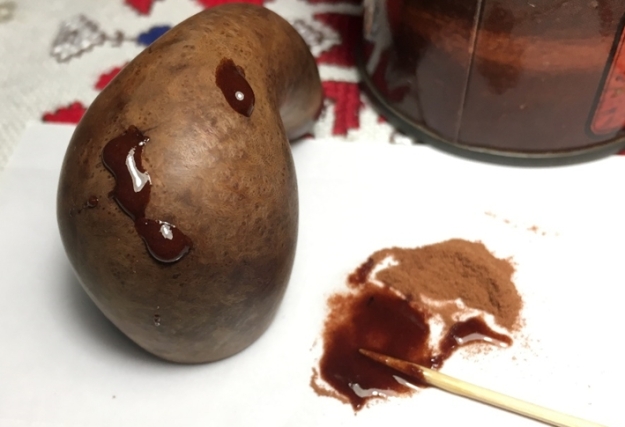
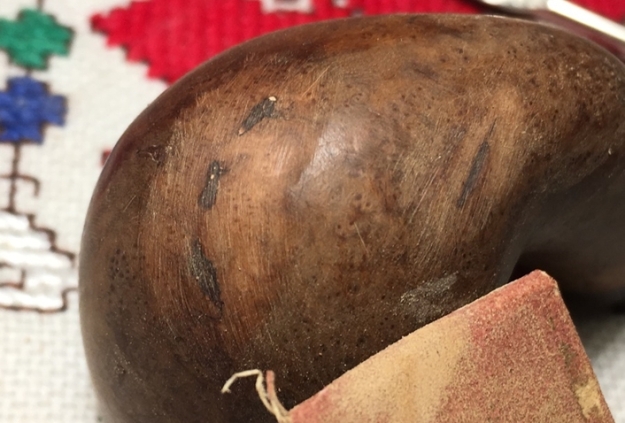
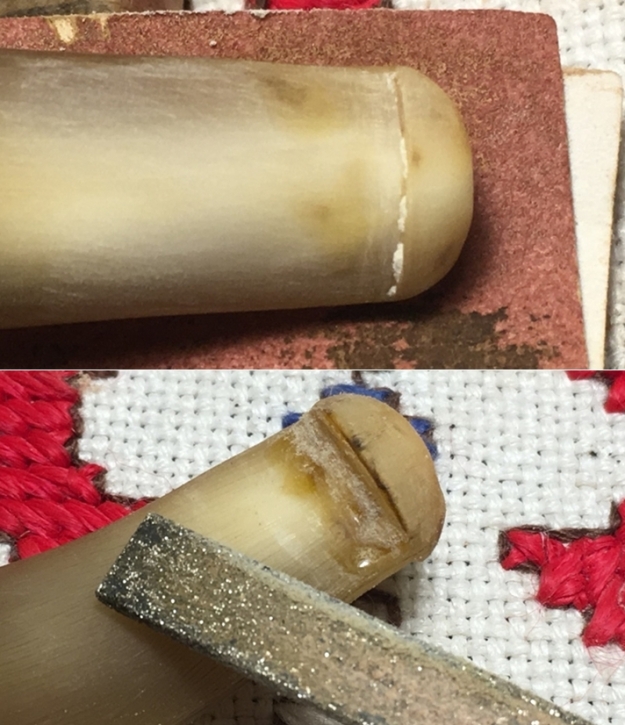
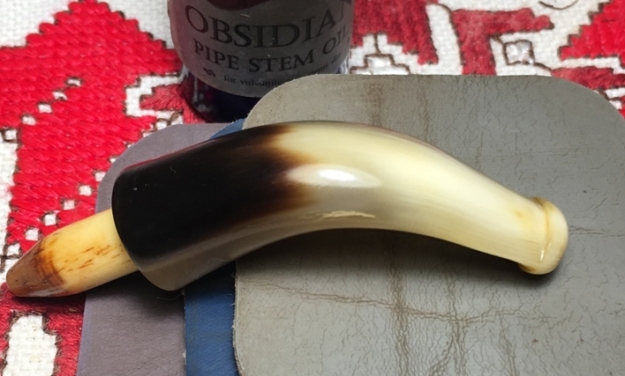
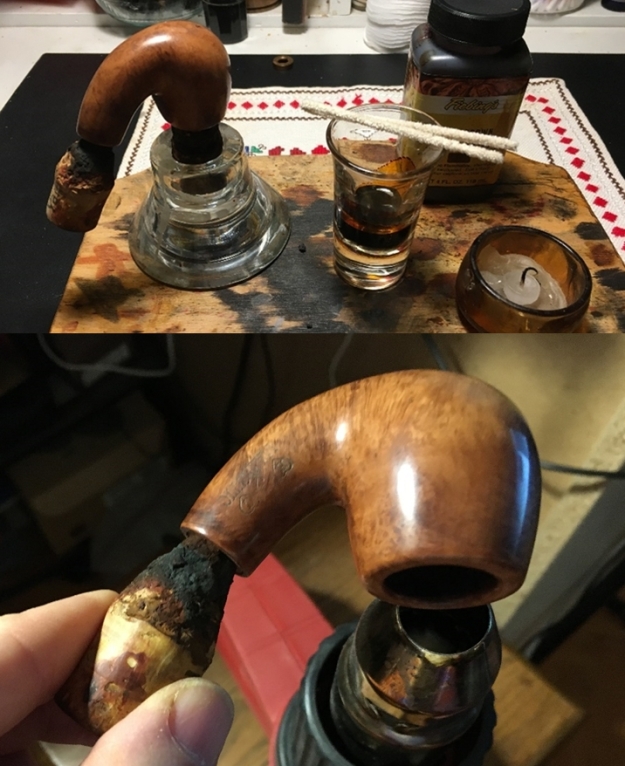
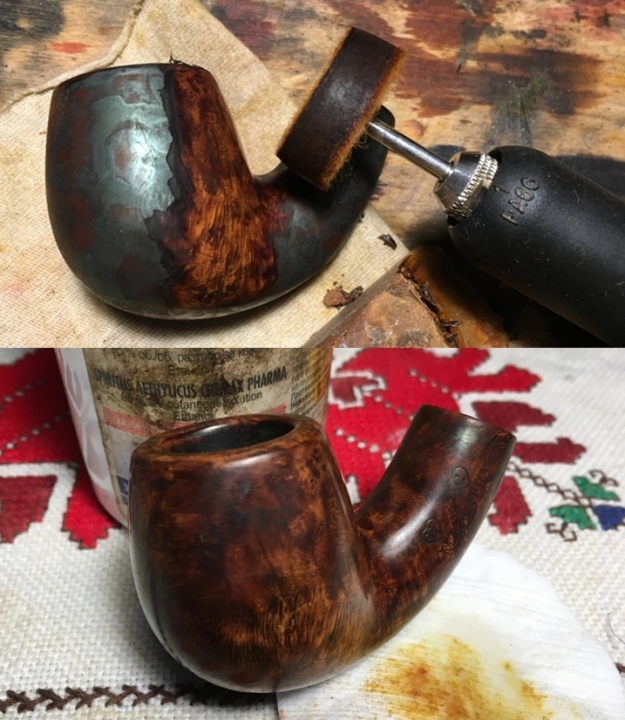
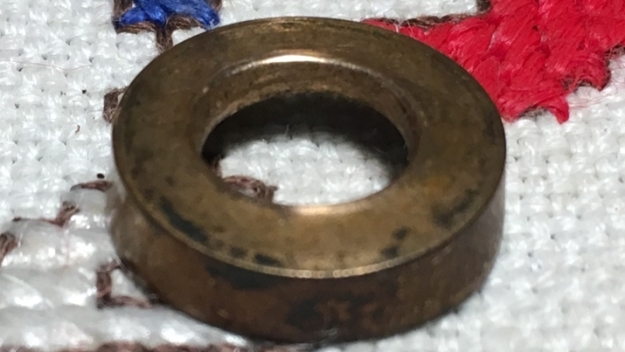
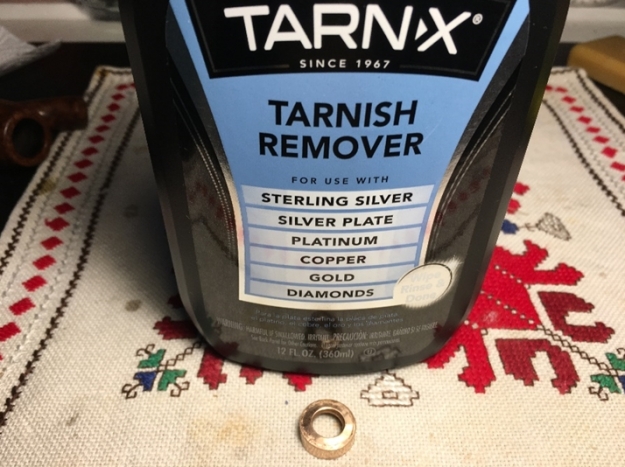
Next, I look more closely at the stummel.  I refill the holes now using a briar dust and CA glue putty mixture.  I first wipe the stummel with alcohol to clean the area.  I then put a small amount of briar dust on an index card and mix CA glue with it gradually until it thickens to a molasses-like thickness.  Then I use a tooth pick to trowel the putty to the holes and fill them. After tamping the patches, I set the stummel aside for a time to allow the briar dust putty to cure. With the stummel on the sidelines, I start work on the bent horn stem.  I first clean it with Murphy’s Oil soap and a bristled tooth brush to rid the porous horn surface of grime.  After I scrub it well, I rinse it off with water to rinse the soap.  It looks much better. Then I clean the internal airway with a few pipe cleaners wetted with isopropyl 95%.  It didn’t take too much effort.There is tooth chatter on the upper and lower bit.  I also see some bite compressions on the lower.  I sand the area with 240 grit paper.After sanding the upper and lower bit with 240 grit paper, there remains 2 small compressions on the bit and one on the button lip.  The lower has major bites that need filling. I purchased an amber CA glue last time I was in the US and this is the first opportunity to use it.  I apply drops to the upper bit in the 3 places and on the lower.  I’m hopeful that the amber CA glue will result in a blended patch.With the stem patches curing, I turn back to the stummel and the briar putty fills have cured.  I file the patches down with a flat needle file close to the briar surface. I’m careful to stay over the patch as I file to avoid scratching the adjoining briar. Then, switching to 240 grade paper, I sand the patches down to the briar surface.I condition the cork lining in the mortise and to do this, I swab some petroleum jelly over it using a cotton bud.  This will moisten the cork keeping it from drying out.  The Amber CA glue used to patch the horn stem has cured and I use a flat needle file and 240 grit sanding paper to work on the patches.  The smaller patches on the upper bit are dispatched easily with 240 grade paper.  On the lower repair, I first use the flat needle file to shape the button and reduce the patch.  I then finish it with 240 grit paper. Next, I wet sand the horn stem using 600 grade paper.Straight away, I then apply micromesh from 1500 to 12000.  I first wet sand using pads 1500 to 2400 and then dry sand with pads 3200 to 4000 and 6000 to 12000.  I apply a coat of Obsidian Oil after each set of three pads – the horn drinks up the oil and it looks great. I put the stem aside to absorb the oil and dry. Turning again to the stummel, I first use sanding sponges from coarse to light weight to address the scratches and nicks in the stummel surface.  I also sponge sand the rim and it looks good except for a small area of residual scorching on the inner rim lip. To clean the inner rim of the scorching I introduce a light bevel using 240 grit paper rolled tightly.  I pinch the roll between my thumb and the inner lip of the rim and rotate around the rim.  I then do the same with 600 grade paper.  I’m satisfied with the progress.Next, I sand the stummel with the full regimen of micromesh pads, 1500 to 12000.  First, I wet sand with pads 1500 to 2400, then dry sand with pads 3200 to 4000 and 6000 to 12000.  The grain really emerges during this sanding phase.  I believe the original hue on this EPC Majestic stummel was a darker brown.  I say this because the color of the stummel underneath the brass shank plate/band was darker – it was protected.  A darker hue suits better too, to help blend the briar dust patches on the heal of the stummel.  I elect to go with a Fiebing’s Dark Brown Leather Dye to darken the stummel.  I assemble all the desk top components of my staining process.  I first wipe the bowl down with a cotton pad wetted with alcohol to clean it.  I then fit the shank with a cork to serve as a handle.  I warm the stummel with the hot air gun to expand the briar to help it be more receptive to the dye.  Then, I amply apply the Dark Brown aniline dye using a folded over pipe cleaner.  As I paint a portion of the stummel with the dye I ‘fire’ it, by igniting the dye with a lit candle and it combust the alcohol in the dye and sets the dye pigment.  When the surface is covered, I set the stummel aside to rest through the night. The next morning, I mount a felt buffing wheel to the Dremel, lower the speed to the slowest possible, and ‘unwrap’ the ‘fired’ crust with Tripoli compound.  The grain contrast that begins to bleed out is striking.  After applying the Tripoli compound to the stummel, I mount a cotton cloth buffing wheel and go over the stummel again with Tripoli after increasing the speed of the Dremel to about 40% full power.  This helps sharpen the grain, removing blotches of dye and reaching into the crook of the shank bend that was difficult to reach with the felt wheel.  After completing the Tripoli compound application, I wipe the stummel with a cotton pad wetted with alcohol to lighten the finish a bit and to blend the newly dyed surface.  I then mount another cotton cloth buffing wheel to the Dremel, maintain the same speed and apply Blue Diamond compound to the horn stem and stummel.The brass shank cap/band is next on my sites. I wash it with warm tap water and soap and rinse it well and dry it.  Then I apply a little of the TarnX liquid to a cotton pad and wipe it on the brass shank cap to clean it.  Afterwards I rinse the shank cap and what a difference! I replace the cap on the shank with a small drop of thick CA glue to hold it solidly in place.  It looks great.Now the home stretch.  With the shank cap cleaned, polished and replaced, I rejoin the horn stem with the petite Bent Billiard stummel and wipe the pipe with a felt cloth to make sure the compound dust is removed before applying wax. I then mount another cotton cloth wheel and apply some coats of carnauba wax to the entire pipe.  I finish by giving the pipe a rigorous rubbing with a microfiber cloth to raise the shine.
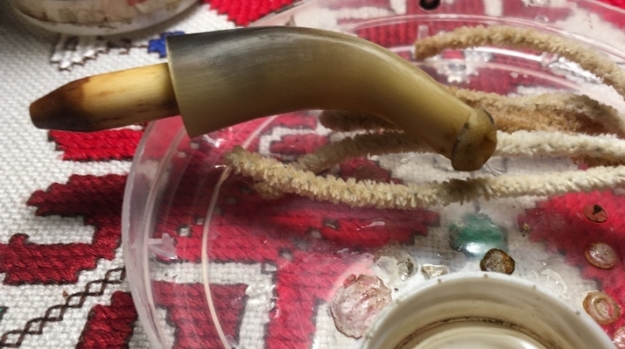
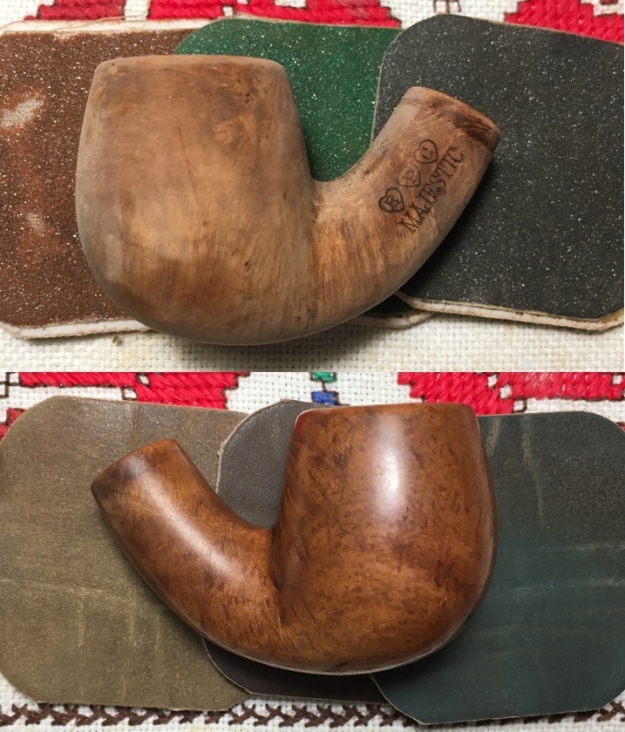
Well, this petite EPC Majestic Bent Horn Stem Billiard had a mysterious origin that is now much clearer.  I have not heard from the Edinburgh Pipe Club regarding my inquiry – I hope they don’t think me a loon!  The Miami-based Cigar company, E.P. Carrillo does not own this pipe.  It was manufactured by the A. Pandevant & Roy Co., at 29, Avenue du Marché, Charenton (Seine), Paris.  My guess is that this pipe is dated in the 1920s because of the preponderance of similarities to the pipes in the 1922-23 catalogue.  I believe the latest dating, if my theory holds, would be with the commencement with World War II and the eventual Nazi occupation of Paris and France.

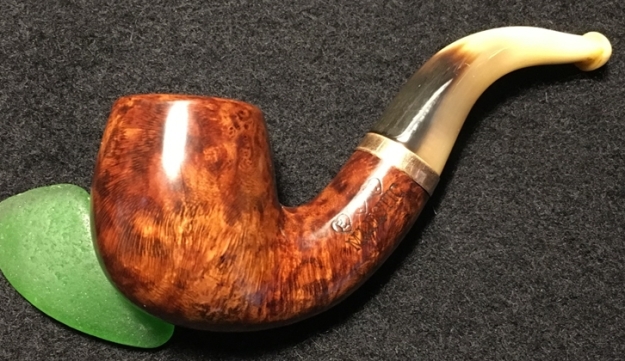
Yet, all told, this small pocket pipe is a superbly fashioned pipe.  It’s so small one might think it is toy-like.  It IS small, but it’s the real deal – a seriously fashioned pipe.  The grain color with the dark brown dye is beautiful – the heel patches are forgotten in the dark grain swirls.  The blend of the briar, brass band and horn stem are a striking ensemble that I believe my cousin Steve will be pleased to bring home to Alabama.  He commissioned the pipe from the For “Pipe Dreamers” Only! collection and this pipe truly fits into the dreamer category.  Not only is it a beautiful pipe but the research reveals that it is a collectible as well.  Since Stephen commissioned it, he will have the first opportunity to acquire it from The Pipe Steward Store.  This pipe benefits our work here in Bulgaria working with the Daughters of Bulgaria – women and girls who have been trafficked and sexually exploited.  Thanks for joining me!  First, before and after palm shots!
 

Restoring a Malaga Canted Dublin with a Square Shank


Blog by Steve Laug

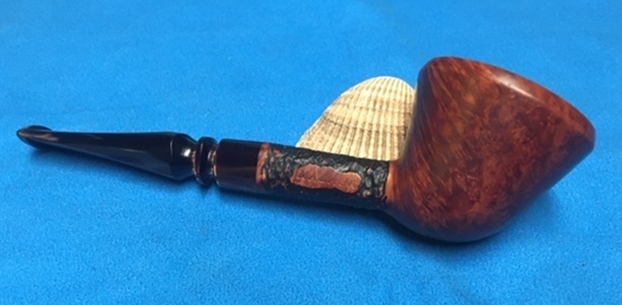
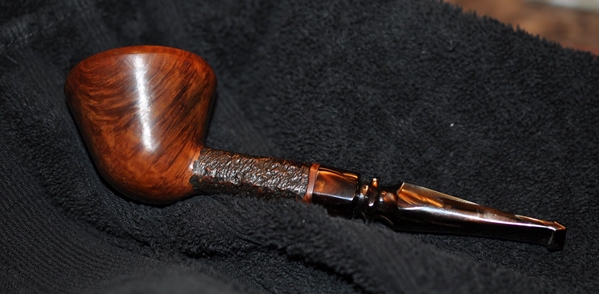
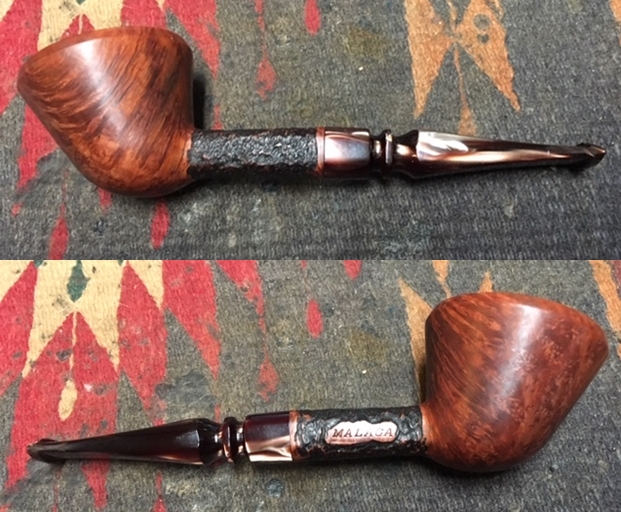
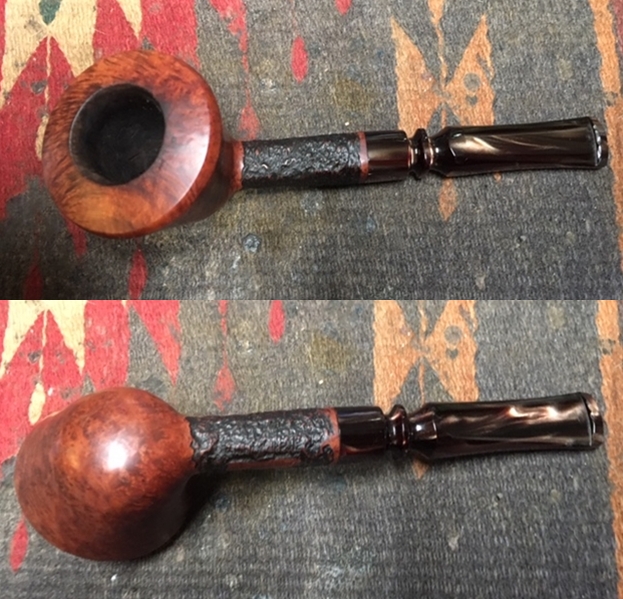
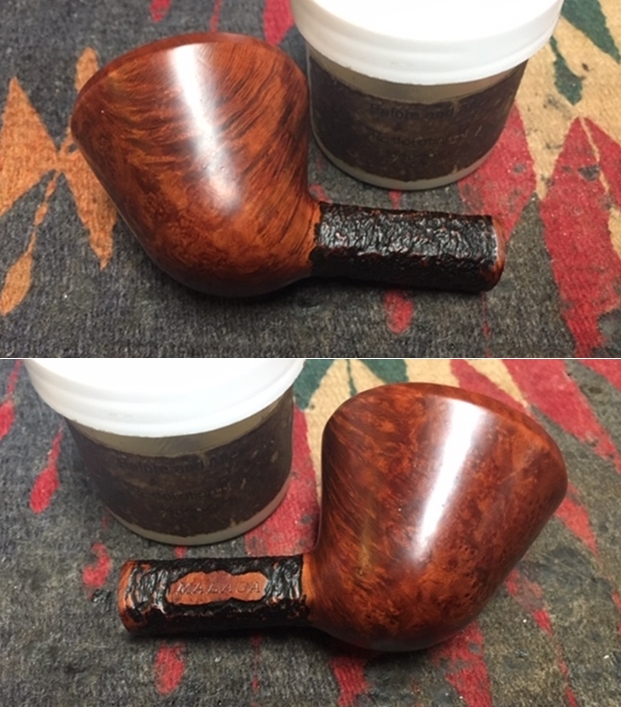
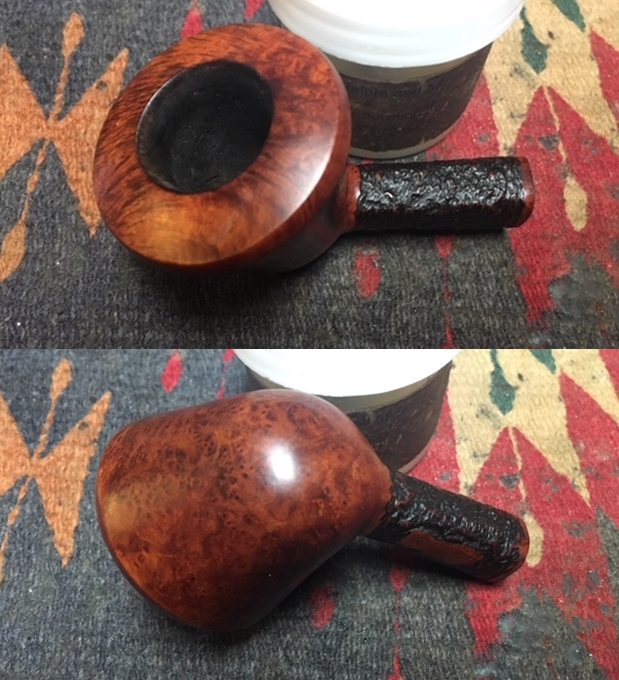
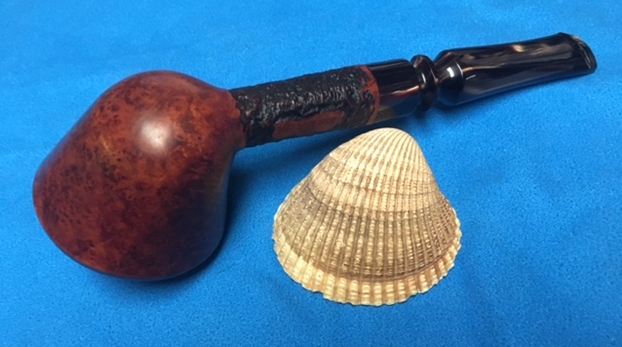
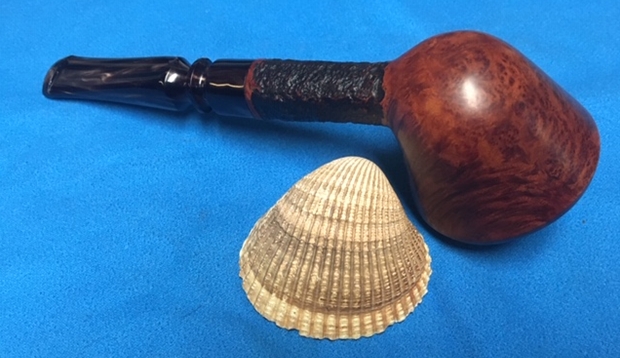
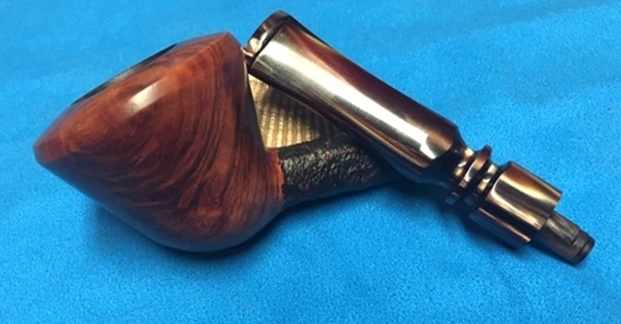
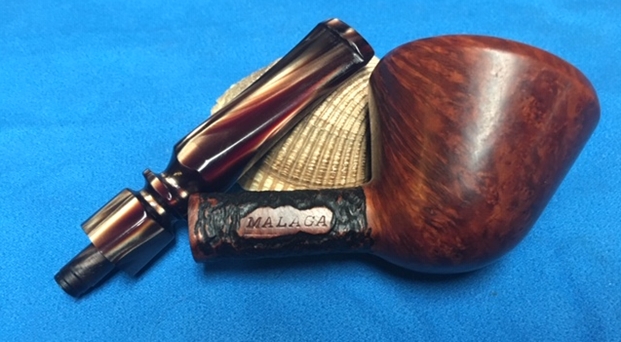
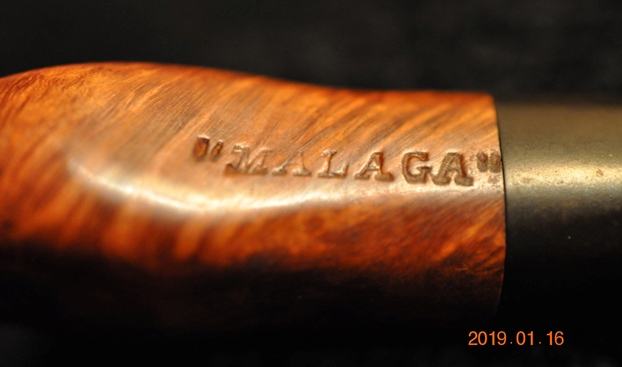
The next pipe in the queue is yet another interesting pipe from the Michigan lot – a canted, square shanked Dublin with a smooth and rusticated finish. The bowl and rim are smooth and the shank is rusticated with a smooth band at the end of the shank. It is another totally unique pipe and different from any of the other Malaga pipes that I have worked on. It is not a large pipe – probably a Group 4 sized bowl. The grain on the bowl is a combination of swirls, flame and birdseye. The rim top has a bevel on the outer edge culminating in a flat rim top. The pipe appears to be oil cured like the other pipes from the brand. The shank is square and is rusticated in a very tight pattern. The right side of the shank has a smooth patch that is stamped MALAGA. The stem is Lucite and has a square saddle followed by twin rings and a tapered blade. This is another nice looking piece much like the rest of those in this 21 pipe Michigan pipe lot. This Malaga joins the other two Malaga pipes I have worked on – the rusticated billiard and the twisted billiard that I worked on earlier. The Malaga I am working on now is on the first shelf of the rack. It is the fourth pipe on the left and I put a red box around it to make it easy to identify. Jeff took some photos of the pipe when he received them to show the general condition of the pipe before he started his cleanup work. Like the rest of the pipes from the Michigan collection this pipe was dirty and well used. There was a thick cake in the bowl and lava overflowing onto the rim top. The inner edge of the bowl in pretty good condition. The combination of rusticated shank and smooth bowl made an interesting tactile pip. It is another pipe that is unlike any of the Malaga pipes that I have worked on. The vulcanite stem is carved in the same manner as the bowl and carries on the twist. There are deep tooth marks on both sides of the stem at the button edge and some wear on the button edge itself. The photos below tell the story and give a glimpse of the carved canted Dublin. Jeff took a close up photo of the bowl and rim to capture the condition of the pipe before he started his cleanup work. The rim top had some thick lava overflow and some darkening. There was a thick cake in the bowl but the inner and outer edges of the bowl were in great condition. There is also a general accumulation of dust in the finish on the rest of the bowl and shank.He also took photo of the right, left and underside of the bowl and shank to show the interesting grain on the smooth part of the bowl and the carving in the rustication on the shank. The shape is unique and the pipe fits well in either left or right hand. The finish is very dirty but this is another beautiful pipe. Jeff took a photo to capture the stamping on the underside of the shank. The photo shows stamping MALAGA. The stamping on this pipe does not have quotation marks that I have seen on some of the pipes. I have yet to figure out what the quotation marks mean as they are not on all of the pipes. Perhaps some of you might know. Once again how about posting a comment about this? The next two photos show the stem surface. They show the tooth marks and chatter on both sides near the button. There are also some marks on the sharp edge of the button. On the underside there is a deep tooth mark that appears to be a bite through but I won’t be certain until I have the pipe in hand.Once again I am including the link to a blog that I wrote that gives some of the history of the Malaga brand and the Malaga Pipe Shop in Royal Oak, Michigan in the USA. Here is the link – https://rebornpipes.com/tag/malaga-pipes/. That blog also includes links to a catalogue and the history of the pipemaker George Khoubesser. Follow the link to get a feel for the brand and the pipemaker.
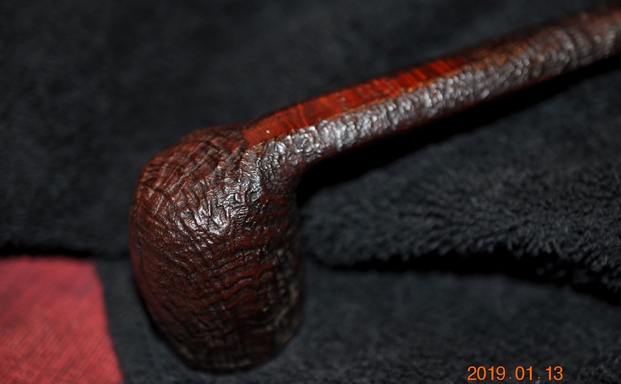
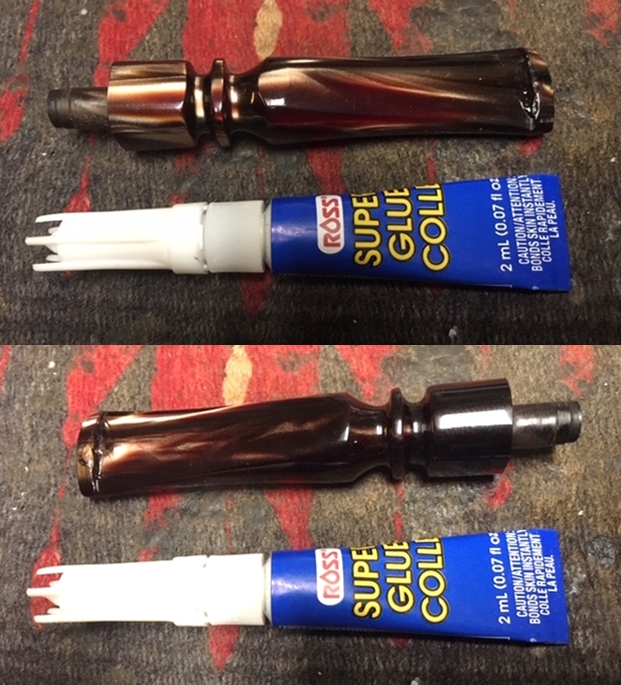
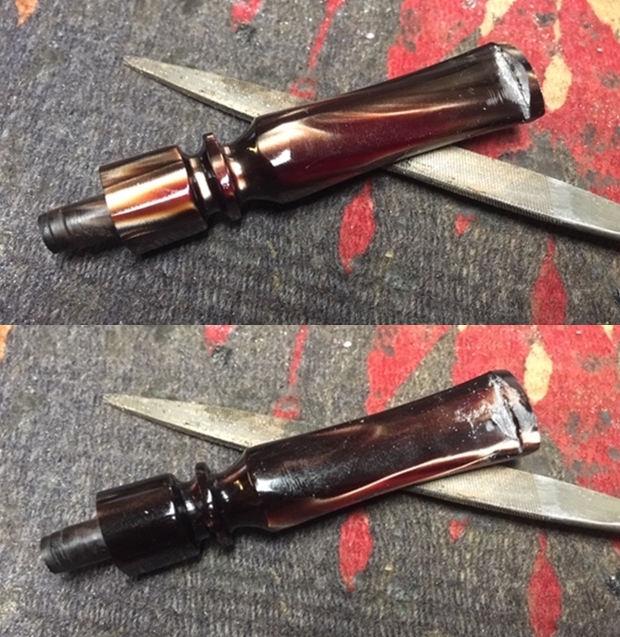
Jeff reamed the bowl with a PipNet pipe reamer and followed up with a Savinelli Fitsall pipe knife to remove the cake. He scrubbed out the mortise and the airway in the shank and the stem with alcohol, cotton swabs and pipe cleaners. He scrubbed the exterior of the bowl, rim, shank and stem with a tooth brush and Murphy’s Oil Soap to remove the oils and tars on the rim and the grime on the finish of the bowl. He rinsed it under running water. He dried it off with a soft cloth. He was able to remove the lava build up on the rim top and you could see the great condition of the bowl top and edges of the rim. I took photos of the pipe to show its condition before I started my work on it. I took a close up photo of the rim top to show the darkening on the surface of the rim toward the back of the bowl. The inner edge and the outer edge of the rim look really good. The stem photos show the tooth marks and the wear on the button surface on both sides. The final close up photos shows the MALAGA stamping on the right side of the shank.The bowl and shank of this particular Malaga pipe was in very good condition. I did not need to sand it with sandpapers or do any repairs to the briar. I could move right into the polishing process. I started by polishing the bowl and the rim top with micromesh sanding pads – wet sanding with 1500-2400 grit pads and dry sanding with 3200-12000 grit pads. I wiped the rim down after each pad with a damp cloth. With the rim top and bowl polished, I worked some Before & After Restoration Balm into the surface of the briar with my fingertips to clean, enliven and protect it. I let the balm sit for a little while and then buffed with a cotton cloth to raise the shine. The following photos show the bowl at this point in the restoration process. The bowl and the rim top look really good and the darkening and lava are gone. The finish looks very good with the swirling grain on the bowl and the rustication the shank. I am very happy with the results. With the bowl finished I set it aside and turned my attention to the stem. I cleaned out the tooth marks on both sides of the stem with a cotton swab and alcohol. Once the repairs had cured I used a needle file to flatten out the repaired areas. I filed it until the patches were smooth with the surface of the stem. I used a folded piece of 240 grit sandpaper to blend the repairs into the surface of the stem. Once the surface was smooth I sanded out the scratch marks and started the polishing of the stem with a folded piece of 400 grit sandpaper. I wiped the stem down with a damp cloth and took the following photos.I polished the stem with micromesh sanding pads – wetsanding it with 1500-2400 grit pads and dry sanding it with 3200-12000 grit pads. I wiped the stem down with a damp cloth after each pad. I further polished it with Before & After Pipe Polish – both Fine and Extra Fine. I wiped it down with a coat of Obsidian Oil and set it aside to dry. I polished stem with Blue Diamond polish on the buffing wheel. I gave the bowl and the stem multiple coats of carnauba wax. I buffed the pipe with a clean buffing pad to raise the shine. I hand buffed it with a microfiber cloth to deepen the shine. The pipe polished up pretty nicely. The contrasting smooth grain and rusticated shank came alive with the buffing. The rich browns work well with the polished variegated/swirled Lucite stem. The finished pipe is a beauty and feels great in the hand. Have a look at it with the photos below. The dimensions are Length: 6 ½ inches, Height: 1 3/4 inches, Outside diameter of the bowl: 2 inches, Chamber diameter: 15/16 of an inch. I am going to hang on to this pipe for a bit while I decide what to do with it. It is just too stunning a pipe for me to let go of right away. Thanks for walking through the restoration of this beautiful Canted Dublin with me it was a pleasure to work on.

Restoring another Malaga – A Billiard with a Twist from Bowl to Button


Blog by Steve Laug

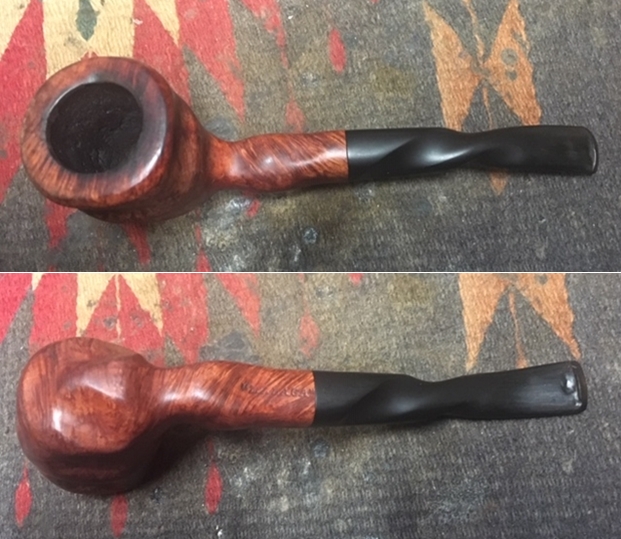
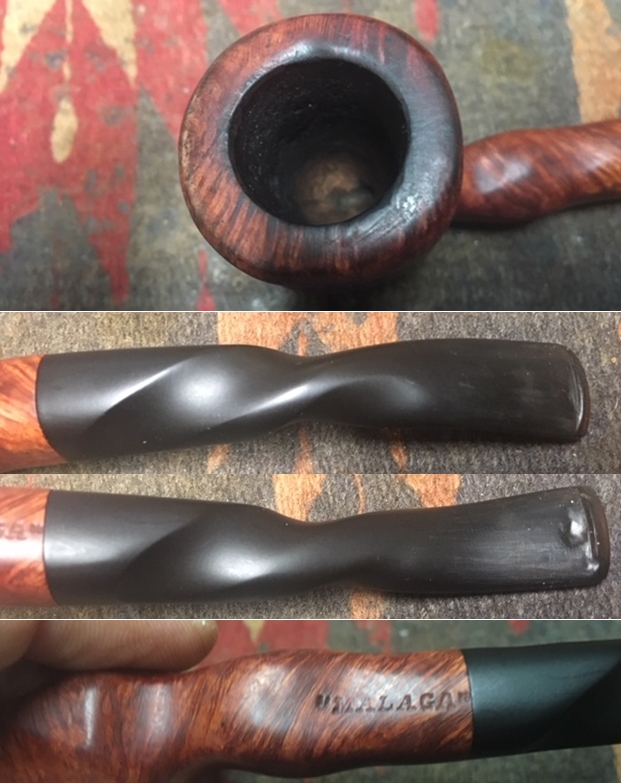
The next pipe in the queue is another interesting pipe from the Michigan lot – a Twisted Billiard with a twist going from the rim to the button. It is a totally unique pipe and different from any of the other Malaga pipes that I have worked on. It is not a large pipe – probably a Group 4 sized bowl. The twist is carved in around what appears to have been originally a panel bowl but I am not even sure of that as it has a round rim top. The finish is smooth and well finished in the oil cured style of other pipes from the brand. On the underside is a small flat panel running parallel to the shank that is stamped “MALAGA” with the quotation marks. The stem is vulcanite and carries on the twist of the shank and bowl. This is another nice looking piece much like the rest of those in this 21 pipe Michigan pipe lot. This Malaga joins the rusticated billiard that I worked on earlier and a freehand that also has a very interesting Malaga shape. The Malaga I am working on now is on the mat in front of the rack. It is the third pipe on the left and I have circled it in red to make it easy to identify. Jeff took some photos of the pipe when he received them to show the general condition of the pipe before he started his cleanup work. Like the rest of the pipes from the Michigan collection this pipe was dirty and well used. There was a thick cake in the bowl and lava overflowing onto the rim top. The inner edge of the bowl was damaged with nicks and cuts from a previous reaming job with a knife. The twisted carving in the bowl sides and shanks fit comfortably in the hand as it was wrapped around the bowl sides. The carving on the bowl, shank and stem make the pipe very interesting. It is another pipe that is unlike any of the Malaga pipes that I have worked on. It is grooves/twists are quite deep and are parallel on the right and left side and the front and the back. The vulcanite stem is carved in the same manner as the bowl and carries on the twist. There are deep tooth marks on both sides of the stem at the button edge and some wear on the button edge itself. The photos below tell the story and give a glimpse of the carved twisted billiard. Jeff took a close up photo of the bowl and rim to capture the condition of the pipe before he started his cleanup work. The rim top had a thick lava overflow and some darkening. There were some nicks and cuts around the rim. There also appeared to be a burn mark on the right inner edge of the rim at mid bowl and possibly on the left inner edge toward the read of the bowl . There is also a general accumulation of dust and grime in the carving of the bowl and shank.He also took photo of the right side and the bottom of the bowl and shank to show the interesting twisted carving that covers the pipe. The carving is unique and gives the pipe a rugged and tactile look and feel in the hand. It should be interesting as the pipe warms up when smoked. The finish is very dirty but this is another beautiful pipe. Jeff took a photo to capture the stamping on the underside of the shank. The photo shows stamping “MALAGA”. The stamping has the quotation marks that I have seen on some of the pipes. I have yet to figure out what the quotation marks mean as they are not on all of the pipes. Perhaps some of you might know. How about a note about this?The next three photos show the stem surface. The first shows the twist in the stem flowing out of the shank. There is some light oxidation on the stem surface. The next two show the tooth marks and chatter on both sides near the button. There are also some marks on the sharp edge of the button. The surface of the blade in front of the button also has some scratches from whoever attempted to clean it up. Once again I am including the link to a blog that I wrote that gives some of the history of the Malaga brand and the Malaga Pipe Shop in Royal Oak, Michigan in the USA. Here is the link – https://rebornpipes.com/tag/malaga-pipes/. That blog also includes links to a catalogue and the history of the pipemaker George Khoubesser. Follow the link to get a feel for the brand and the pipemaker.
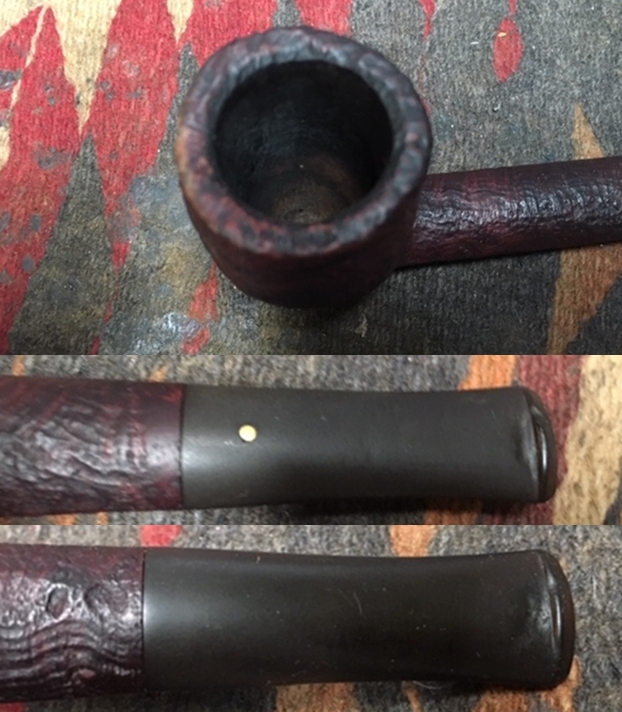
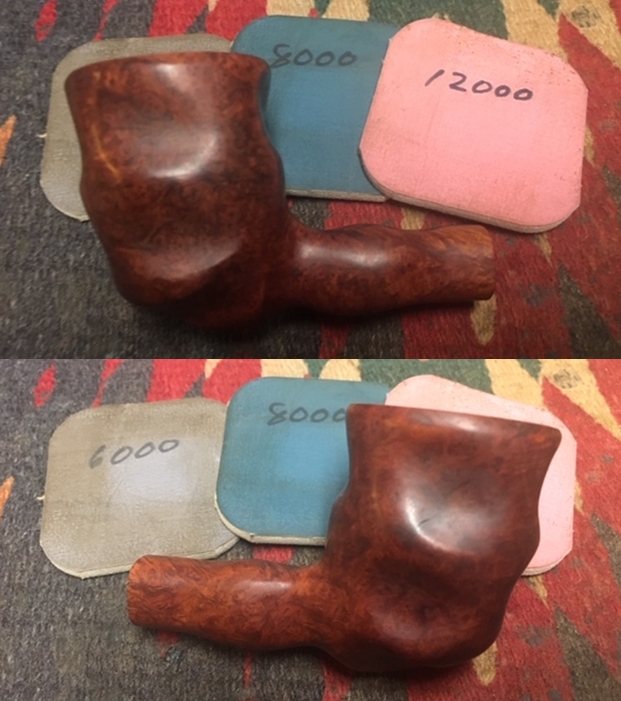
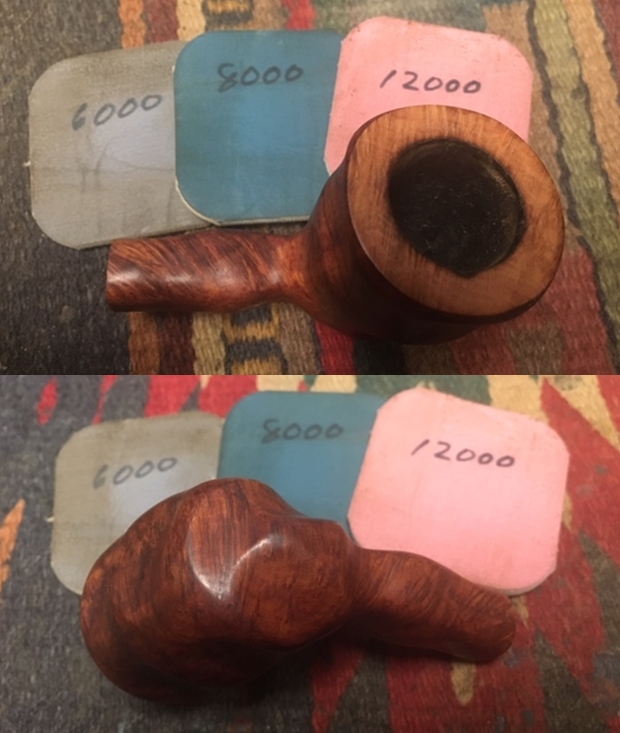
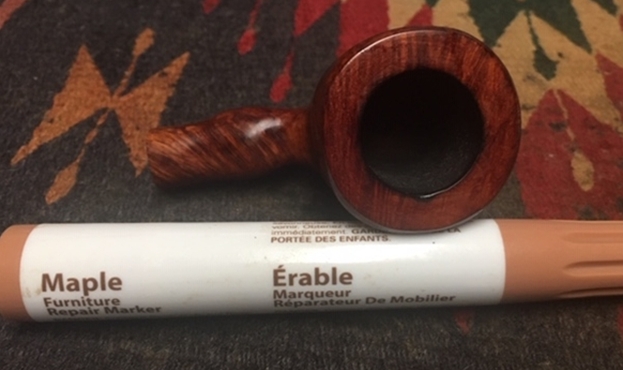
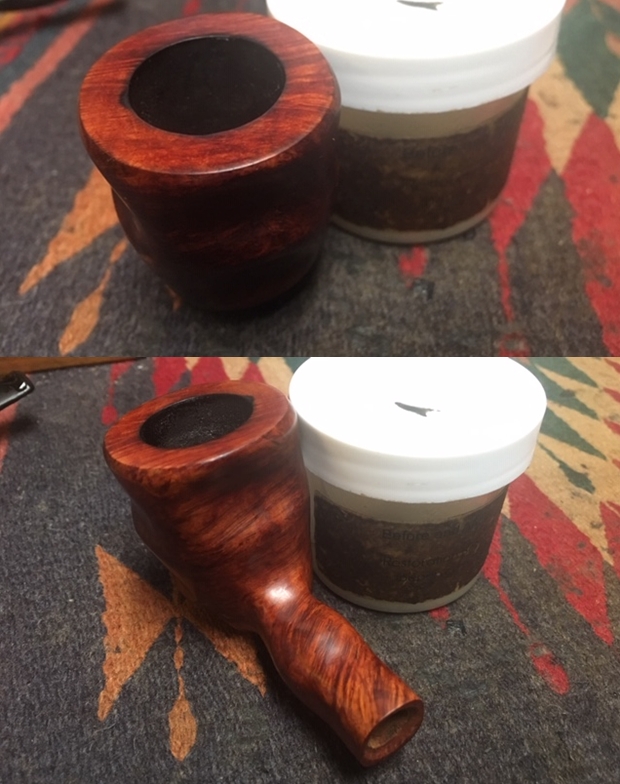
Jeff reamed the bowl with a PipNet pipe reamer and followed up with a Savinelli Fitsall pipe knife to remove the cake. He scrubbed out the mortise and the airway in the shank and the stem with alcohol, cotton swabs and pipe cleaners. He scrubbed the exterior of the bowl, rim, shank and stem with a tooth brush and Murphy’s Oil Soap to remove the oils and tars on the rim and the grime on the finish of the bowl. He rinsed it under running water. He dried it off with a soft cloth. He was able to remove the lava build up on the rim top and you could see the damage to the flat surface of the rim and the inner edge on the right side and toward the front of the bowl. I took photos of the pipe to show its condition before I started my work on it. I took a close up photo of the rim top to show the darkening on the surface of the rim toward the back of the bowl. There were also some burn marks on the right side toward the middle and the ledge side toward the rear of the rim top. The inner edge of the bowl had some damage from burns and reaming but the outside edge looks really good. The stem photos show the tooth marks and the wear on the button surface on both sides. The final close up photos shows the “MALAGA” stamping on the underside of the shank.To remove the damage to the top of the rim I topped it on a topping board with 220 grit sandpaper. I worked on it to remove the burned areas and the damage to the inner edge of the rim as much as possible. I am happy with how it turned out.I used a folded piece of 220 grit sandpaper to clean up the inner edge of the round rim top. I was able to remove the majority of the damage, leaving behind a dark spot on the right side of the rim top at the inner edge. I wiped the rim top down with a damp cotton pad to remove the dust. I polished the bowl and the rim top with micromesh sanding pads – wet sanding with 1500-2400 grit pads and dry sanding with 3200-12000 grit pads. I wiped the rim down after each pad with a damp cloth. I touched up the stain on the rim with a Maple stain pen and blended it into the grain. Once it dried I buffed it with Blue Diamond to spread it out. With the rim top and bowl polished, I worked some Before & After Restoration Balm into the surface of the briar with my fingertips to clean, enliven and protect it. I let the balm sit for a little while and then buffed with a cotton cloth to raise the shine. The following photos show the bowl at this point in the restoration process. The bowl and the rim top look really good and the darkening and lava are gone. The finish looks very good with the swirling carving on the sides of the bowl and shank. The Maple stain on the rim matched the rest of the bowl perfectly. I am very happy with the results. With the bowl finished I set it aside and turned my attention to the stem. I cleaned out the tooth marks on both sides of the stem with a cotton swab and alcohol. Once the repairs had cured I used a needle file to flatten out the repaired areas. I filed it until the patches were smooth with the surface of the stem. I polished the stem with micromesh sanding pads – wet sanding it with 1500-2400 grit pads and dry sanding it with 3200-12000 grit pads. I wiped the stem down with Obsidian Oil after each pad. I further polished it with Before & After Pipe Polish – both Fine and Extra Fine. I gave it a final coat of Obsidian Oil and set it aside to dry. I polished stem with Blue Diamond polish on the buffing wheel. I gave the bowl and the stem multiple coats of carnauba wax. I buffed the pipe with a clean buffing pad to raise the shine. I hand buffed it with a microfiber cloth to deepen the shine. The pipe polished up pretty nicely. The contrasting grain came alive with the buffing. The rich browns work well with the polished black vulcanite stem. The finished pipe is a beauty and feels great in the hand. Have a look at it with the photos below. The dimensions are Length: 6 inches, Height: 2 1/4 inches, Outside diameter of the bowl: 1 1/2 inches, Chamber diameter: 7/16 of an inch. This pipe will be going on the rebornpipes store. Thanks for walking through the restoration with me on this twisted Malaga billiard.
New Life for a Charatan’s Make 30120DC Canadian


Blog by Steve Laug

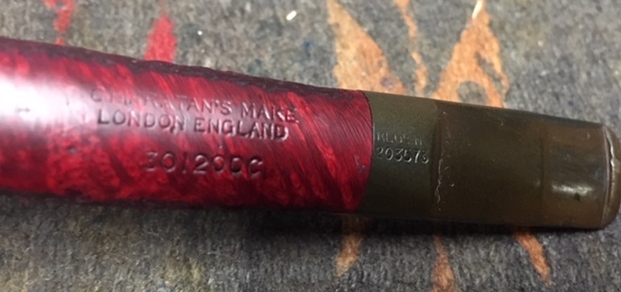
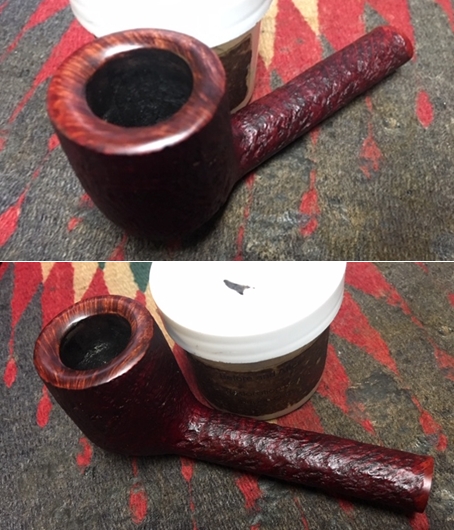
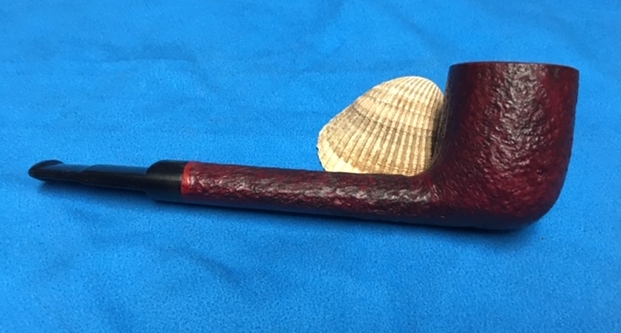
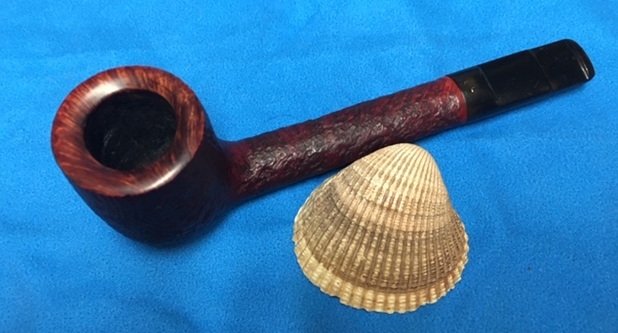
The next pipe in the queue is a Charatan’s Make Canadian with a Double Comfort saddle stem. It came to my brother and me in the lot that included the pipe cabinet and 21 pipes. It has a beautiful sandblast finish on the shank and bowl. There is a smooth, crowned rim top and a smooth band at the shank end. The bottom of the shank has a smooth panel that has the stamping on it. It is stamped Charatan’s Make (over) London, England (over) 30120DC which is the shape number and the DC which marks a Double Comfort bit from the Lane Era. Once again is a nice looking piece much like the rest of those in this lot. It is a brand that I have worked on over the years. It is on the far right side of the first shelf in the photo below. I have circled it in red to make it easier to identify.Jeff took some photos of the pipe when he received them to show the general condition of the pipe before he started his cleanup work. It was dirty and worn looking. There was a thick cake in the bowl and heavy lava overflow on the rim top. The smooth rim top was hidden under the grime and lava coat so it was hard to know what was underneath in terms of damage. The sandblast is well done and really shows the grain. It is quite deep and rugged and the oxblood stain over black stain makes it really stand out. The stem is vulcanite and oxidized. There are deep tooth marks on both sides of the stem at the button edge and some scratching on the stem surface. The photos below tell the story and give a glimpse of the saddle stemmed Canadian shape. Here are two close up photos of the bowl and rim top to show you the thick build up on the rim and the heavy cake in the bowl. It is hard to see if there is any damage on the inner or outer edge of the rim. There is a thick cake in the bowl that is hard and rough. There appears to be some interesting grain underneath all the lava. The close up photos of the stem shows the damage to the top and underside of the bit in front of the button and on the button surface itself. The next photo shows the stamping on underside of the shank of the pipe. It is clear and legible.I decided to take some time to review my knowledge of the brand. I turned to the Pipephil website for a quick overview of the brand (http://www.pipephil.eu/logos/en/logo-charatan.html). I quote a short overview of the history from that site.

The brand founded in 1863 by Frederik Charatan. When his father retired in 1910, Reuben Charatan took over the family business. All the pipes were handmade until 1973. The brandname was overtaken by Dunhill in 1978 and sold in 1988 to James B. Russell Inc. (NJ, USA). During the period 1988-2002 Charatans were crafted by Butz Choquin in St Claude (France). Dunhill re-purchased Charatan brand name in 2002 and Colin Fromm (Invicta Briars, Castleford) follows up on freehand production…

…The “DC” stamping after shape # was introduced when Dunhill took control of the company in 1979. DC means “Double Comfort” saddle bit.

I turned to Pipedia for a bit more history of the brand (https://pipedia.org/wiki/Charatan). I quote pertinent parts of the article.

…Charatan records indicate the DC (Double Comfort) bit was introduced in the 50’s, but some report seeing them in earlier production. Still others indicate they were introduced by Lane in 1960. Regardless, the DC bit is not an accurate way to date a pipe because many Charatan’s were made with regular and saddle type bits throughout the “Lane Era”.

I also read the translated article on Pipedia that was referenced in the opening article. It is entitled Dating of Charatans has been translated for Pipedia by Mathias Acciai. This study by Fabio Ferrara of Monterubbiano – Italy is based on more than 2000 old Charatan pipes he studied from the “Basciano stock” purchased by Mario Lubinski – Fermo. (https://pipedia.org/wiki/Dating_of_Charatans). I quote in part.

…Things started to change in 1965 after Lane’s acquisition of the Ben Wade brand and related machinery. (Actually Lane acquired only few of Wade’s machines and not its entire factory in Leeds, that was destroyed during WW II).

Essentially Charatan acquired a brand, rather than a real pipe manufacturing business. Furthermore Lane commissioned some pipes to Preben Holm and Wilmer, for the Ben Wade brand. Charatan took part in this operation too since some Danish freehands were displayed in its catalogue (while the so called ‘seconds’ were marked Ben Wade).


In mid 1976 Charatan was acquired from Lane by Dunhill. That obviously resulted in some major changes until 1982, when Dunhill decided to shut down the historical Charatan factory in Grosvenor Street.

From this moment on all Charatan’s pipes have been produced by Dunhill in the Parker/Hardcastle factory in Forest Road, Walthamstow.

It is worth noting that the factory was in Forest Road and not in 32 St. Andrew Road, Walthamstow, where the Dunhill factory was located since 1982.

In 1988 Dunhill sold Charatan to J.B. Russell and the production was moved to France. For many this is considered Charatan’s dark period.

The last change was in 2000, when Charatan was once again acquired by Dunhill and for a few months, the production was moved again to the Parker /Hardcastle site. This operation has to be viewed as Dunhill’s goal to give a new life to an old brand of the past, and the production of Charatans, Invictas, Simmons, and Hardcastles is taken over by Colin Fromm in Invicta’s site in Chatham. This information leaked during a recent interview with Marc Burrows, head of Dunhill’s shop in London’s Jermyn Street, who claimed that recent Charatans (from 2003) seem to be superior to those of the first Lane era!…

I quote a section of the article that helps me date the pipe I am working on.

…Pipes that belong to eras till the 1960 have the engraving ‘CHARATAN’S MAKE LONDON ENGLAND’ in two lines, the shape code is composed by numbers only. The X and the DC appear only on pipes after 1960…

This tells me that the pipe I have on the table came out after 1960. To try to date it further I moved on in the article. I found some help there from a section entitled, Identification of a fifth era pipe (First Dunhill era, 1977-1981).

Dunhill finally acquired Lane Ltd. in April 1976. To be honest this era should begin that year, however to clarify matters, knowing that during the first months everything changed in the production, I assume the beginning of this era to be 1977.

The characteristics of this era are close to the previous one, except for the absence of the LANE symbol (approx. ending of 1980).

In this very first period Dunhill didn’t change the production site and the original methods, making plans for the future, and the real revolution took place in 1982.

You may come across a pipe of the ‘old generation’, It is important to note that if the DC has been added later, it is often out of line with the shape code…

1) The mouthpiece is frequently double comfort, rarely saddle without the double comfort, never tapered. If the stem is not a double comfort but a saddle one, it is characterized by the letter X on the right of the shape code (e.g. 2502X), naturally in this case the letters DC are not displayed.

2) In the CP logo, the C enters the P (until approx. 1980)

3) Absence of £ on the shank (from the end of 1980 approx., this is because during the first period Dunhill kept the £, as Lane Ltd was property of Dunhill that could use its trademark)

4) Presence of the letter DC just after the shape number (e.g. 2502 DC) or of the letter X only if the stem is not a double comfort one

5) Presence of the writing “Made by Hand – In – City of London” (until 1979)

6) The pipes marked Chippendale are just a Belevedere series, On the mouthpiece, instead of the CP they display CD.

The Charatan’s Make on my work table has a double comfort saddle bit and has the DC code after the shape number. There is an absence of the L on the shank and “sings the praise of London production. The CP logo appears to match pipes from this period so I would date the pipe to the First Dunhill era, 1977-1981. That is getting the date a bit closer for me and is probably as close as I can get at this point.

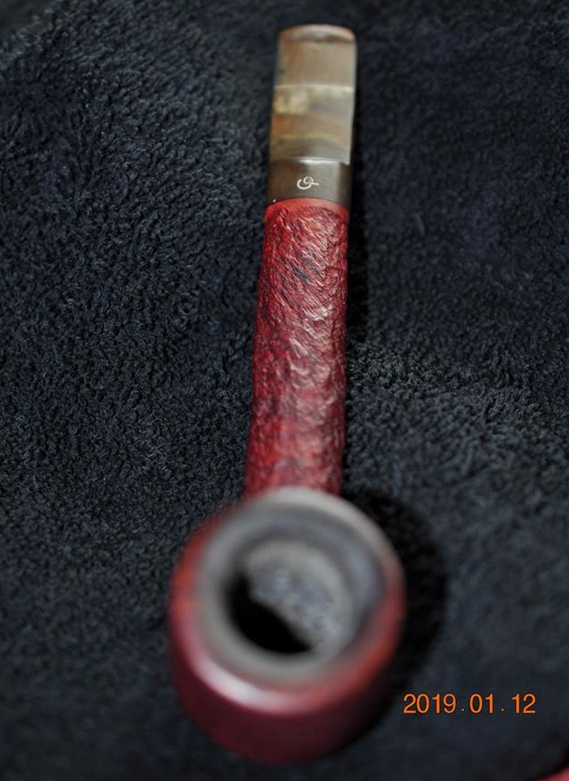
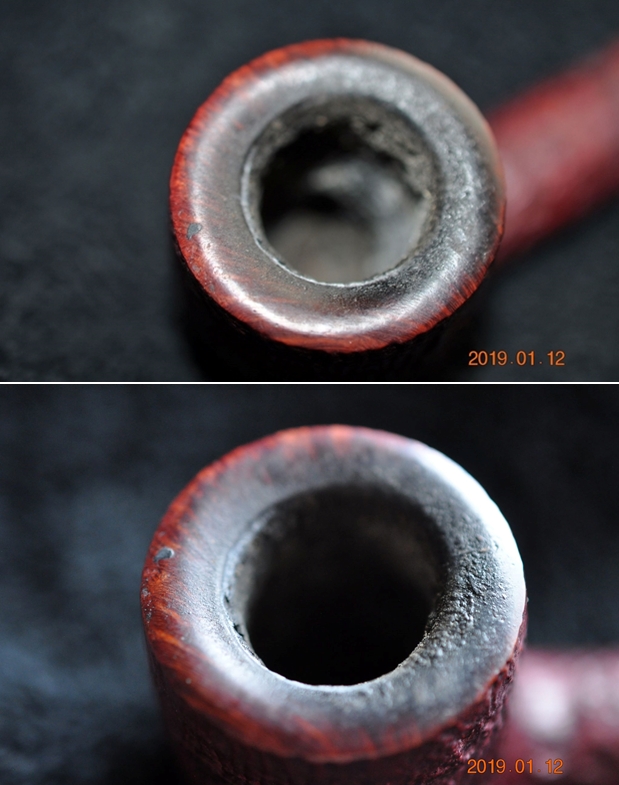
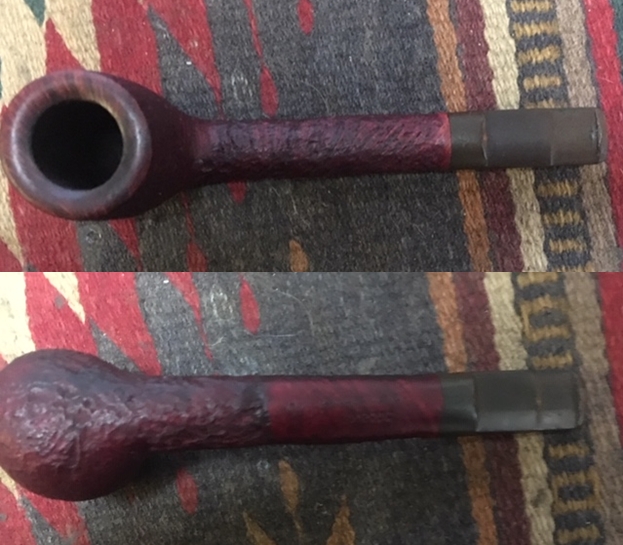
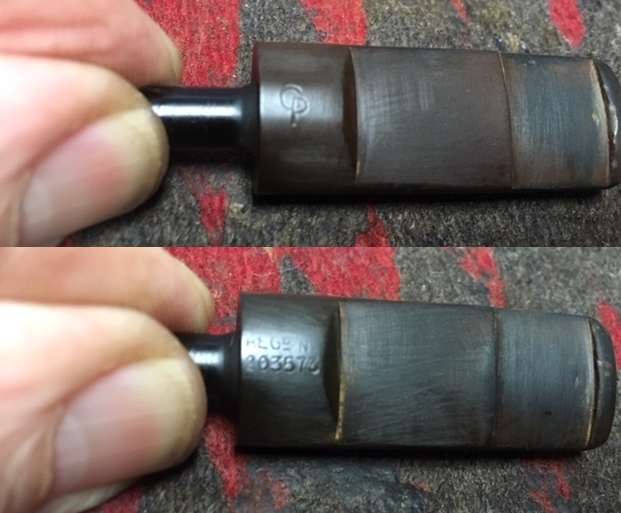
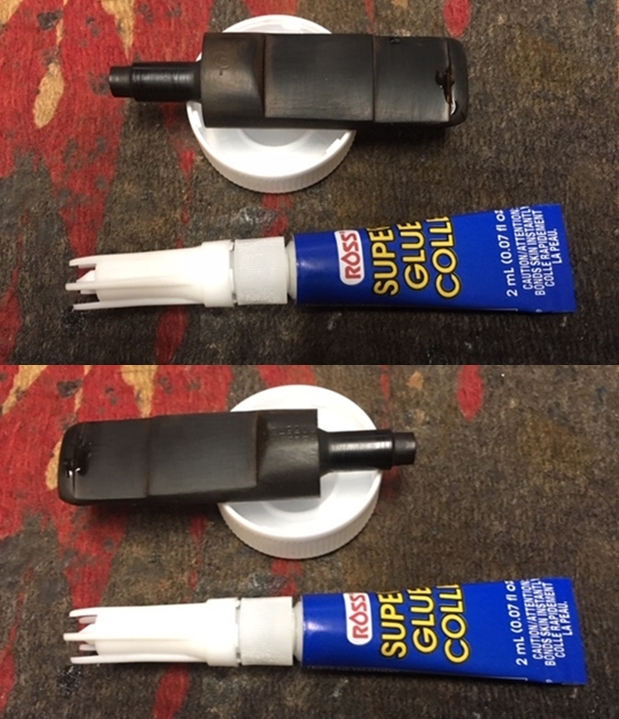
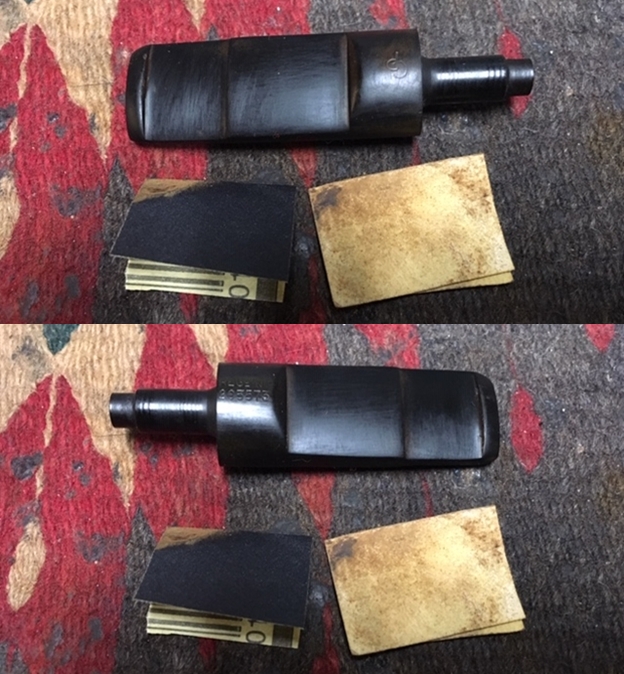
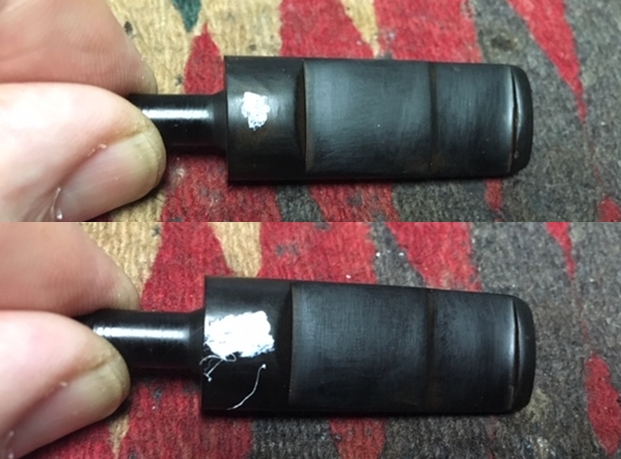
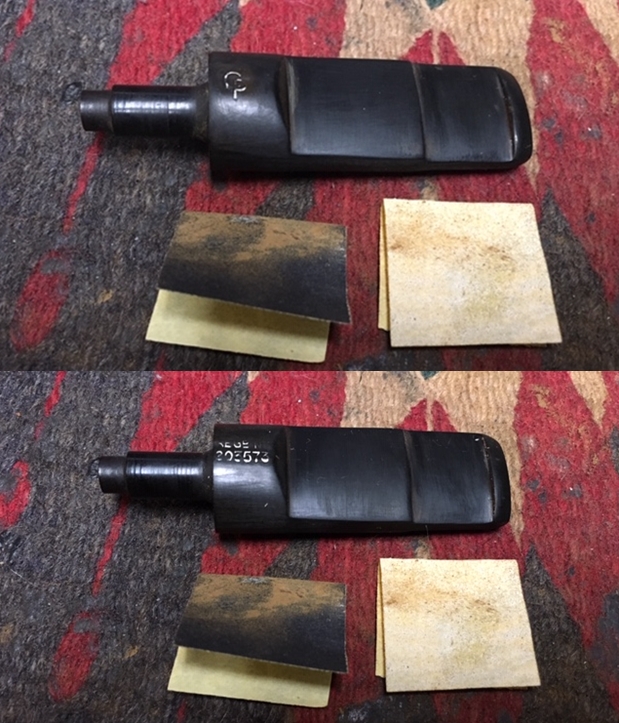
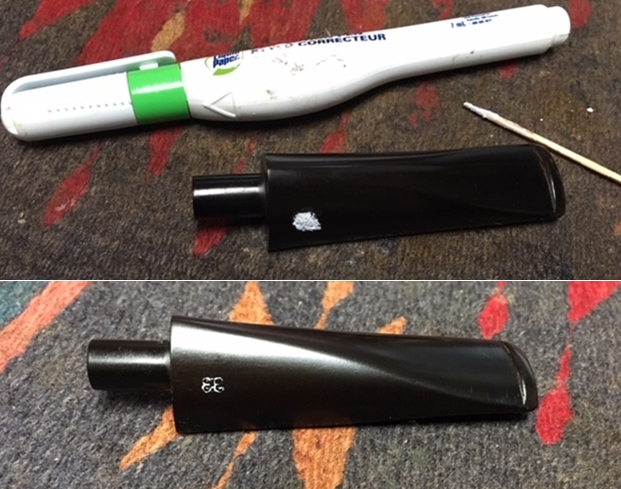
Jeff reamed the bowl with a PipNet pipe reamer and followed up with a Savinelli Fitsall pipe knife to remove the cake. He scrubbed out the mortise and the airway in the shank and the stem with alcohol, cotton swabs and pipe cleaners. He scrubbed the exterior of the bowl, rim, shank and stem with a tooth brush and Murphy’s Oil Soap to remove the oils and tars on the rim and the grime on the finish of the bowl of the pipe. He rinsed it off under running water. He dried it off with a soft cloth. He was able to remove most of the lava build up on the rim top of the pipe leaving a clean rim. I took photos of the pipe to show its condition before I started my work. I took a close up photo of the rim top to show the darkening on the surface of the rim toward the back of the bowl. There were also some small nicks in the surface of the rim. The inner and outer edge of the bowl looks really good. The stem photos show the oxidation on the surface of the Double Comfort bit and the tooth marks and the wear on the button surface on both sides. The top of the saddle is stamped with the CP mark and the underside bears a Regd No. that will be clearer in the next photos of the stamping.The underside of the shank has clear stamping with the name and shape number of the pipe. The underside of the stem also bears a Reg’d No stamp with the number 203573. The photo below shows the stamping on the shank and the stem.I started my cleanup on the rim top. I used a folded piece of 220 grit sandpaper to remove the darkening and damage on the inner edge of the round rim top. I wiped the rim top down with a damp cotton pad to remove the dust. I polished the rim top with micromesh sanding pads – wet sanding with 1500-2400 grit pads and dry sanding with 3200-12000 grit pads. I wiped the rim down after each pad with a damp cloth. I touched up the stain on the rim with a Mahogany stain pen and blended it into the grain. Once it dried I buffed it with Blue Diamond to spread it out. With the rim top cleaned and restained, I worked some Before & After Restoration Balm into the sandblast and smooth surfaces of the briar with my fingertips to clean, enliven and protect it. I let the balm sit for a little while and then buffed with a cotton cloth to raise the shine. The following photos show the bowl at this point in the restoration process. The bowl and the rim top look good. I am very happy with the results. With the bowl finished I set it aside and turned my attention to the stem. I sanded the scratches and the tooth marks on the stem with 220 grit sandpaper avoiding damaging the stamping on both sides of the saddle. I cleaned off the surface with a cotton swab and filled in the tooth marks on both sides with clear super glue. I set it aside to cure for a few hours and when it had cured I smoothed out the fills with 220 grit and 400 grit sandpaper to blend them into the surface. I filled in the stamping on the saddle of the stem with white liquid paper. I worked it into the grooves with a tooth pick. Once it dried it I scraped off the excess with the tooth pick and sanded the stem some more with the 400 grit sandpaper. I polished the stem with micromesh sanding pads – wetsanding it with 1500-2400 grit pads and dry sanding it with 3200-12000 grit pads. I wiped the stem down with Obsidian Oil after each pad. I polished it with some Before & After Pipe Polish – both Fine and Extra to deepen the shine. I wiped it down with a final coat of Obsidian Oil and set it aside to dry.

The Largest Malaga Rusticated Billiard I have ever seen


Blog by Steve Laug

The next pipe in the queue is a rusticated Malaga Billiard that is the largest Malaga I have worked on. It is like a war club in my hands which are not tiny! The rustication is rough and chipped glass like. There is a smooth band around the shank end and on the underside it is a little wider to accommodate the MALAGA stamp in the briar. The stem is a marbled brown Lucite saddle bit that is quite nice with the reddish brown stain on the bowl and shank. This is another nice looking piece much like the rest of those in this 21 pipe Michigan pipe lot. Along with this Malaga there were two others that are very interesting Malaga shapes. The Malaga I am working on now is on the mat in front of the rack. It is the first pipe on the right and I have circled it in red to make it easy to identify. Jeff took some photos of the pipe when he received them to show the general condition of the pipe before he started his cleanup work. Like the rest of the pipes from the Michigan collection this pipe was dirty and well used. There was a thick cake in the bowl and lava overflowing onto the outer edge of the rim filling in the rustication. The inner edge of the bowl was hidden under the grime and lava coat so it was hard to know what was underneath in terms of damage. The rustication was like broken glass and the tactile feel is really interesting. It is not like any of the Malaga pipes that I have worked on. It is quite deep and rugged and the medium brown and red stains give the rustication depth and dimension. The stem is pearlized Lucite with swirling browns and copper hues that is quite interesting. There are deep tooth marks on both sides of the stem at the button edge and some wear on the button edge itself. The photos below tell the story and give a glimpse of the large, saddle stemmed billiard. Jeff took a close up photo of the bowl and rim to capture the condition of the pipe before he started his cleanup work. The rim top had some lava overflow and some darkening. Some of the rustication is filled in with lava toward the back of the bowl. There is also a general accumulation of dust and grime in the rustication. He also took a photo of the right side and bottom of the bowl and shank to show the interesting rough rustication that covers the pipe. The rugged rustication gives the pipe a tactile sense when held in the hand and should be interesting as the pipe warms up when smoked. The finish is very dirty but this is another beautiful pipe.Jeff took a photo to capture the stamping on the underside of the shank. The photo shows stamping MALAGA. The stamping does not have the quotation marks that I have seen on some of the pipes. The next two photos show the stem surface. There are tooth marks and chatter on both sides near the button. There are also some marks on the sharp edge of the button.I am also including the link to a blog that I wrote that gives some of the history of the Malaga brand and the Malaga Pipe Shop in Royal Oak, Michigan in the USA. I have written an earlier blog to give a little history of the Malaga Brand and the pipemaker, George Khoubesser. Here is the link – https://rebornpipes.com/tag/malaga-pipes/. That blog also includes links to a catalogue and the history of the pipemaker George Khoubesser. Follow the link to get a feel for the brand and the pipemaker.

Jeff reamed the bowl with a PipNet pipe reamer and followed up with a Savinelli Fitsall pipe knife to remove the cake. He scrubbed out the mortise and the airway in the shank and the stem with alcohol, cotton swabs and pipe cleaners. He scrubbed the exterior of the bowl, rim, shank and stem with a tooth brush and Murphy’s Oil Soap to remove the oils and tars on the rim and the grime on the finish of the bowl. He rinsed it under running water. He dried it off with a soft cloth. He was able to remove the lava build up on the rim top and you could see the damage to the flat surface of the rim and the inner edge on the right side and toward the front of the bowl. I took photos of the pipe to show its condition before I started my work on it. I took close up photos of the bowl and rim top as well as the stem. You can see the condition of the rim top and bowl in the first photo. Jeff was able to remove all of the tar and oils leaving behind a little darkening on the back side of the rim top. The inner and outer edge of the bowl was in excellent condition with no damage. The Lucite stem had tooth chatter and some tooth marks on the top and underside of the stem near and on the button surface.I took a photo of the stamping on the underside of the shank to show how good the condition is. The stamp is deep and legible. It clearly reads MALAGA without the quotation marks that are sometimes used around the stamp.I decided to address the darkening on the backside of the rim top first. I used a brass bristle wire brush to work over the rustication on the rim top. I was able to remove much of the darkening with the wire brush. The rim top looks significantly better after the brushing.I worked some Before & After Restoration Balm into the rusticated surface of the briar with my fingertips to clean, enliven and protect it. It took some time to really get it into the grooves and valleys of the rustication but I was able to work it in. I let the balm sit for a little wall and then buffed with a cotton cloth to raise the shine. The following photos show the bowl at this point in the restoration process. The reworked rim top looks really good and matches the colour of the rest of the pipe. I am very happy with the results. I set the bowl aside and worked on the stem. There were some tooth marks on the top and underside at the button that needed to be addressed. I also needed to do some work on the surface of the button on both sides. I filled the damaged areas in and build up the surface with clear super glue and set the stem aside until the repairs cured.When the repairs were cured, I sanded both sides smooth with 220 grit sandpaper and 400 grit sandpaper to blend the tooth chatter and the repair into the surface of the stem. As I sanded and reshaped the button and stem surface the repaired areas and the tooth chatter disappeared.I polished the acrylic stem with micromesh sanding pads – wet sanding with 1500-2400 grit sanding pads and dry sanding it with 3200-12000 grit sanding pads. I wiped it down after each sanding pad with a damp cloth. I polished it with Before & After Pipe Stem Polish and buffed it with a microfiber cloth. This is the first fully rusticated or “carved” finishes as Malaga called them, that I have worked on. I have worked on partially rusticated but never one with this kind of very cut glass like finish. It is extremely well done and it is a large pipe. The combination of stained rustication with the swirled Lucite stem is stunning. I polished stem with Blue Diamond polish on the buffing wheel. I gave the bowl multiple coats of Conservator’s Wax and the stem multiple coats of carnauba wax. I buffed the pipe with a clean buffing pad to raise the shine. I hand buffed it with a microfiber cloth to deepen the shine. The pipe polished up pretty nicely. The oil cured briar is very light weight and the red and brown stain colour works well with the polished variegated copper and brown acrylic stem. The finished pipe has a rich look that is quite catching. Have a look at it with the photos below. The shape, finish and flow of the pipe and stem are very well done. The dimensions are Length: 7 inches, Height: 2 3/8 inches, Outside diameter of the bowl: 1 3/4 inches, Chamber diameter: 15/16 of an inch. I will be putting this newly finished Malaga pipe on the rebornpipes store shortly if you are interested in adding it to your collection and trying out this brand. Thanks for walking through the restoration with me it was an interesting pipe to restore.

A Breath of Life for a Variegated Finish S&R Sitter Billiard


Blog by Steve Laug

Years ago now I met Steve and Roswitha at the Chicago Pipe Show. I cannot even remember the year but I remember having a good conversation with them. I was not able to pick up one of their pipes at that time but I was amazed at the beauty and style of pipes that the two of them were creating in their shop, Pipes & Pleasures in Columbus, Ohio. Over the years I have watched for them and even bid on a few on eBay. Sadly, I never won any of the pipes that I bid on. They all escaped my grasp. Given that you may have a sense of the surprise I had when my brother and I picked up a pipe rack and 21 pipes from a fellow in Michigan and it had an S&R billiard. I clipped a photo of the collection and circled the S&R in the photo. It is the second pipe from the right on the second shelf of the rack. It is a nice looking two toned sitter billiard – sporting both smooth panels on the sides of the bowl and an interesting sandblast finish.Jeff took some photos of the pipe when he received them to show the general condition. I have included the photos of the S&R pipe. It was dirty and worn looking. There was a thick cake in the bowl and heavy lava overflow on the rim top. The smooth panels on both sides of the bowl and the ring around the shank end have great grain that follows the grain of the sandblast next to them. The stamping is very clear and shows the interlocked SR with a pipe. The sandblast is well done and really shows the grain. It is not to deep or rugged but it is very nicely done. The stem is vulcanite and slightly oxidized. There are deep tooth marks on both sides of the stem at the button edge and some scratching on the stem surface. The photos below tell the story and give a glimpse of the saddle billiard shape. Here is a close up of the bowl and rim top. You can see the thick lava coat. It is hard to see if there is any damage on the inner or outer edge of the rim. There is a thick cake in the bowl that is hard and rough. The second photo is a close up of the right side and the flat underside of the bowl. You can see the interesting grain in the sandblast.The next photo shows the interlocked S&R stamp with the pipe. It is clear and legible.The next two photos show the scratching, oxidation and tooth marks in the stem at the button. The first photo shows the top side of the stem and the second the underside.I decided to take some time to review my knowledge of the brand. I turned to Pipedia and read the article that was included there (https://pipedia.org/wiki/S%26R_Pipes). I quote in full below:

Stephen and Roswitha Anderson of S&R Pipes, also known as S&R Woodcrafters, have become pipe makers renowned throughout the world as talented carvers of high-grade briar pipes. They have been featured in several trade publications and magazines such as Pipes and Tobaccos and PipeSmoker, and have several pieces on display in museums in Europe and the United States.

They are the first American pipe carvers honored with induction into the Conferee of Pipe Makers of St. Claude, France; the very place where the carving of briar pipes became a world-wide industry. Sadly, Steve passed away in March of 2009. Roswitha is still carving S&R pipes and carrying on with the shop with help from her “guys” David, Marty, and Tony.

Steve and Roswitha began carving pipes in the 1960’s. They travelled to pipe shows and arts and crafts shows throughout the country and Europe selling their pipes and built up quite an extensive loyal customer base. Eventually, it became time to offer their pipes to the retail fraternity of pipe smokers.

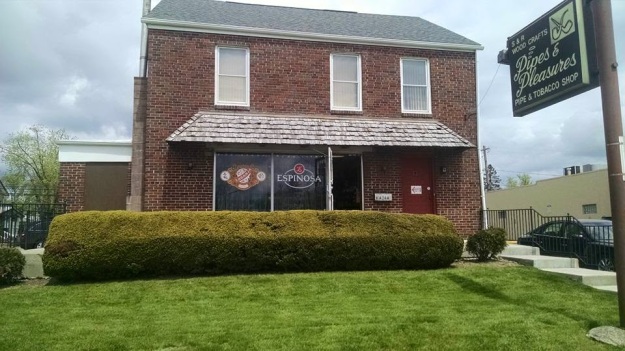
Pipes & Pleasures had its grand opening in a distinct red brick house on Main Street in Columbus, Ohio in 1977. The front section of the house was converted into a traditional tobacco shop selling pipe tobacco, cigars, and pipes manufactured by well known companies such as Dunhill, Charatan, and Savinelli as well as the high-grade S&R pipes that Steve and Roswitha carved. A workshop was set up in the back section of the house.

When the cigar boom hit in the ’90’s, the shop was expanded by building a large computer controlled walk-in humidor. It’s no secret throughout the country that Pipes & Pleasures has the best maintained cigars in the Columbus area as well as the best selection of premium cigars available in the area including the much sought-after Davidoff line.

Soon after the boom began, Steve and Roswitha moved their pipe making workshop to their farm and converted that space into a large smoking lounge for their many customers. The lounge features comfortable easy chairs, a television set, a stereo, a library of books and magazines about every aspect of tobacciana, a chess table, and a couple of card tables. The lounge is populated daily with long-time loyal customers and newcomers to the enjoyment and relaxation of cigar and pipe smoking. It’s also the room where several cigar tastings and samplings are held every year by representatives from cigar companies such as Davidoff and La Flor Dominicana.

I captured a photof the shop from the Pipedia article to include below. It is a great looking shop.

The Pipes & Pleasures shop, home of S&R Woodcrafters

I also turned to the Pipes & Pleasures website and copied the “About Us” section. Here is the link to the site (https://www.pipesandpleasures.biz/maintenance). I quote in part.

Pipes & Pleasures proprietors Stephen and Roswitha Anderson have become pipe makers renowned throughout the world as talented carvers of high-grade briar pipes. They have been featured in several trade publications and magazines such as Pipes and Tobaccos and PipeSmoker, and have several pieces on display in museums in Europe and the United States. They are the first American pipe carvers honored with induction into the Conferee of Pipe Makers of St. Claude, France; the very place where the carving of briar pipes became a world-wide industry.

Steve and Roswitha began carving pipes in the 1960’s. They travelled to pipe shows and arts and crafts shows throughout the country and Europe selling their pipes and built up quite an extensive loyal customer base. Eventually, it became time to offer their pipes to the retail fraternity of pipe smokers…

…Sadly, Steve passed away in March of 2009. Roswitha is still carving S&R pipes and carrying on with the shop with help from her “guys” David, Marty, and Tony, who welcome you to this website.

Jeff reamed the bowl with a PipNet pipe reamer and followed up with a Savinelli Fitsall pipe knife to remove the cake. He scrubbed out the mortise and the airway in the shank and the stem with alcohol, cotton swabs and pipe cleaners. He scrubbed the exterior of the bowl, rim, shank and stem with a tooth brush and Murphy’s Oil Soap to remove the oils and tars on the rim and the grime on the finish of the bowl of the pipe. He rinsed it off under running water. He dried it off with a soft cloth. He was able to remove most of the lava build up on the rim top of the pipe leaving a clean rim with some debris in the sandblast. I took photos of the pipe to show its condition before I started my work. I took a close up photo of the rim top to show the light debris in the sandblast finish of the rim. The inner and outer edge of the bowl looks really good. The stem photos show the scratching I noted above that extends from the button forward about an inch. They also show the tooth marks and the wear on the button surface on both sides.I started my restoration with the rim top. I used a brass bristle brush to clean out the remaining debris in the grooves of the sandblast. I wiped the rim top down with a damp cotton pad to remove the dust. I used a Walnut Brown and a Black stain pen to blend the colour on the rim top match the rest of the sandblast portion of the bowl.With the rim top cleaned and restained, I worked some Before & After Restoration Balm into the sandblast and smooth surfaces of the briar with my fingertips to clean, enliven and protect it. I let the balm sit for a little while and then buffed with a cotton cloth to raise the shine. The following photos show the bowl at this point in the restoration process. The bowl and the rim top look good. I am very happy with the results. With the bowl finished I set it aside and turned my attention to the stem. I sanded the scratches and the tooth marks on the stem and then filled it in with clear super glue. I set it aside to cure for overnight. In the morning I smoothed out the fills with a needle file to dress up the sharp edge of the button. I sanded the repairs with 220 grit and 400 grit sandpaper to blend them into the surface. I polished the stem with micromesh sanding pads – wet sanding it with 1500-2400 grit pads and dry sanding it with 3200-12000 grit pads. I wiped the stem down with Obsidian Oil after each pad. I polished it with some Before & After Pipe Polish – both Fine and Extra to deepen the shine. I wiped it down with a final coat of Obsidian Oil and set it aside to dry. This interestingly finished S&R billiard was a surprise to me. I had pretty much forgotten about ever restoring one of Steve and Roswitha’s pipes when this one came to me in a lot my brother and I bought from Michigan. It is a stunning example of their craft – the mixed smooth panels, band and sandblast finish and the contrasting stain is very well done. I polished the stem with Blue Diamond polish on the buffing wheel. I gave the bowl multiple coats of Conservator’s Wax and the stem multiple coats of carnauba wax. I buffed the pipe with a clean buffing pad to raise the shine. I hand buffed it with a microfiber cloth to deepen the shine. The pipe polished up pretty nicely. The contrasting finishes came alive with the buffing. The rich, contrasting brown and black colours work well with the polished black vulcanite stem. The finished pipe is a beauty and feels great in the hand. Have a look at it with the photos below. The dimensions are Length: 6 1/4 inches, Height: 2 inches, Outside diameter of the bowl: 1 1/2 inches, Chamber diameter: ¾ of an inch. I will be putting this beautiful billiard on the rebornpipes online store soon. It may well the kind of unique pipe you have been looking for so have a look. Thanks for walking through the restoration of this pipe with me. It was a fun one to work on.
Rejuvenating a Ben Wade Hand Model London Made Billiard


Blog by Dal Stanton

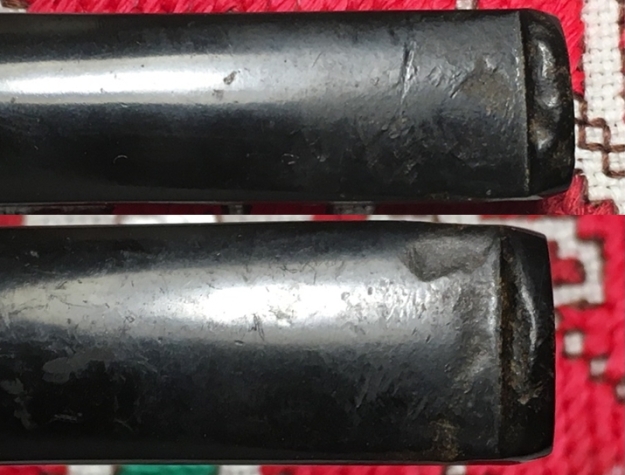
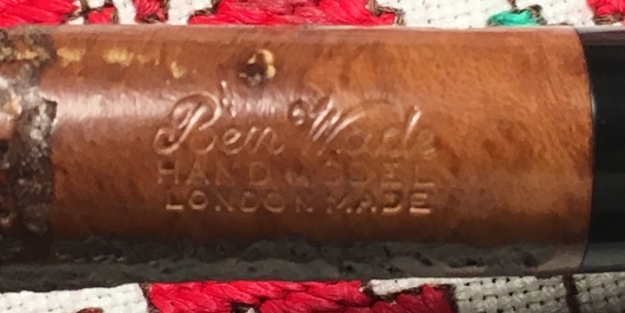
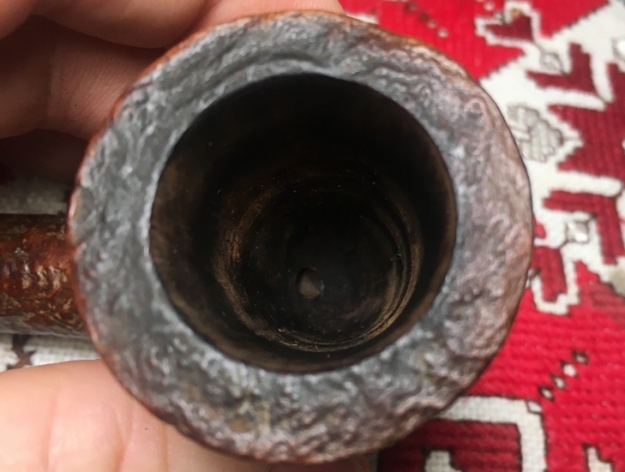
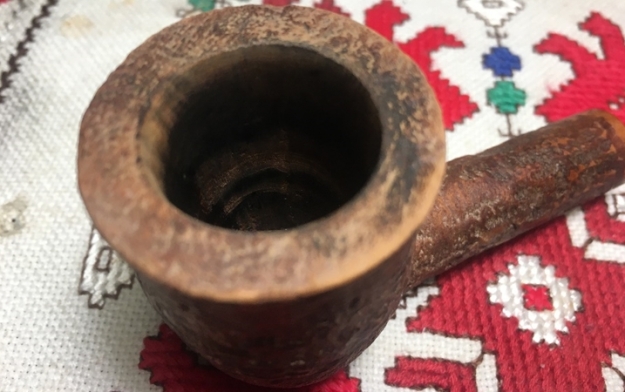
This Ben Wade came to me a couple of years back when I landed, from the eBay auction block, what I have called the Lot of 66. It continues to yield nice collectable pipes. The finish on this Ben Wade is a rustic looking blasted finish which is eye catching with the detail and bowl shaping. It caught Todd’s eye in the For “Pipe Dreamers” Only! collection and is the last of 3 that he has commissioned. Here are pictures of the Ben Wade Hand Model now on my worktable: I’ve discovered through the reading I’ve done about the name ‘Ben Wade’ that it has an up and down history. The Pipedia article is helpful in simplifying the history in four helpful ‘eras’ which I’ve summarized from the Pipedia:

The Family era (1860 to 1962) – the heydays of the English name when the pipes were stamped Made in Leeds, England.

Charatan / Lane second (1962 to 1988) – When Herman G. Lane purchased the name, the transition from a higher quality pipe during the long Family Era transitioned exclusively to the fabrication of machine-made pipes. Lane moved the production from the Leeds factory (closed in 1965) to Charatan’s Prescott Street factory. Ben Wade became essentially lower quality series pipes produced in standard shapes. The pipes during this period were stamped, “Made in London, England” or dropping the “London” and stamped with “England” alone. After Lane died, in 1978 his heirs sold the Charatan and Ben Wade names to Dunhill, which left the production of Charatan/Ben wade at the Prescott Street factor. In 1988 production came to an end for Ben Wade when the Charatan’s Prescott Street factory closed.

Ben Wade turns Danish (1971-1989) – During this era Preben Holm, from Denmark, was in financial difficulties and Herman Lane and he went into partnership producing the Handmade and fancy pipes. These pipes were marked “Ben Wade Made in Denmark”. These pipes gained great popularity, especially as the were marketed in the US. After Lane’s death, Preben Holm, not the businessman, was in financial difficulties and reduced his workforce and production, but at his death in 1989, production of the Danish Preben Holm pipes came to an end.

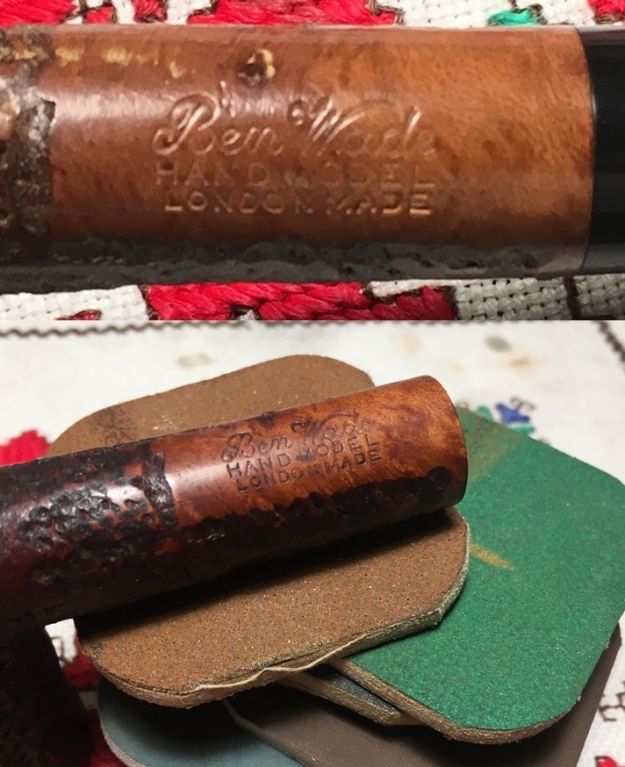
Resurrection – (1998 to present) – Duncan Briars bought the Ben Wade name from Dunhill in 1998 and production of Ben Wade pipes restarted at the Walthamstow plant, sharing the same space where Dunhill pipes are produced and reportedly benefiting from the same quality of production. During this present era, the stamping on the pipes is: “Ben Wade, Made in London, England”The reason I went through this summary of Ben Wade’s morphing history is because in nothing I’ve read about Ben Wade (and I’m sure there’s more out there), I found no reference to a Ben Wade Hand Model with the COM, London Made. The stamping on the pipe before me is ‘Ben Wade’ [over] HAND MODEL [over] LONDON MADE. The saddle stem has the Ben Wade stamped on the upper side of the stem saddle. My first glance at the blasted finish made me wonder whether this Ben Wade came out during the ‘mystery’ Resurrection period in the Pipedia article. Here is the full text that made me wonder:
As said before Preben Holm’s death marked the third end of Ben Wade and for long years there were no Ben Wade pipes in the shops anymore. But then, all of a sudden they were back in the USA some years ago! Who made these pipes? A concrete manufacturer was not known at first.

The rumors spreading were considerable. Especially because these Ben Wades – originally all blasted and in deep black color – featured so perfect straight and / or ring-grain that they were almost suspicious in view of the prices. The supposition that “Mother Nature” had been given a leg up by means of rustication combined with subsequent blasting was evident as different sources confirmed.

Steve on rebornpipes refers to pipes as having a ‘blasticated’ finish. The process is blasting a rusticated pipe making it appear naturally blasted but the more perfect lines make it seem better than ‘mother nature’ as the Pipedia described. As I look at this Ben Wade, I wonder if it’s from that time period and the grain looks so good, is it blastication? I sent Steve the picture below and his verdict was not blastication, but a really nice looking blasted finish. Yet, I’m stumped by the COM marking. Here’s a close-up of the stummel, very nice natural 3-D blasted grain and not blastication. I sent out pictures of some pictures and the nomenclature to various pipe Facebook groups and the responses I did get, though they were anecdotal, pointed to an earlier period. Paul, from Pipe Smoker of America FB Group, said that he believed it was a Pre-78 and made in Charatan factory. He also said that these were some of his best smokers are London BWs. It sounds good to me!
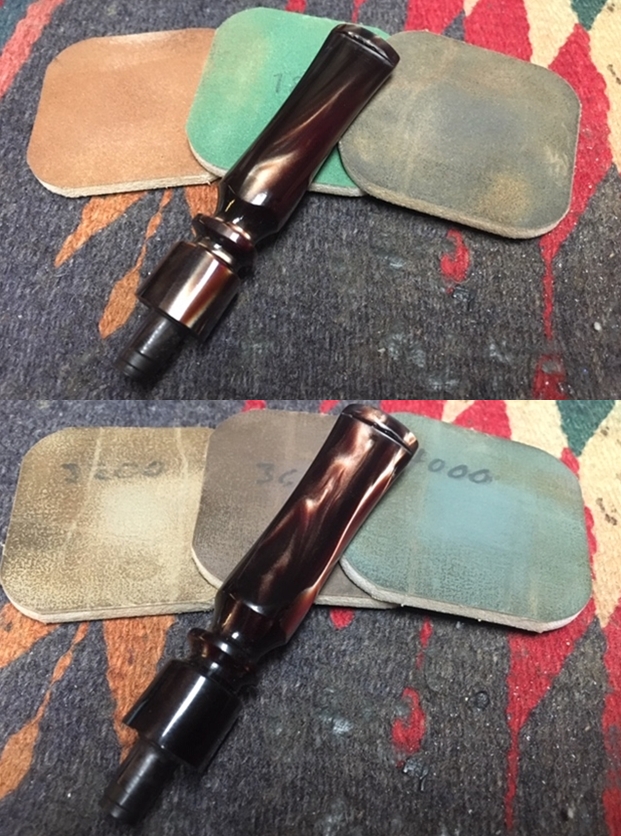
As I look at the condition of this Ben Wade, the surface needs cleaning to see what the finish will do. The finish is dark and tired as I look at it. The chamber shows light cake buildup and the rim is darkened with some lava flow. The stem will need to be cleaned of the oxidation and the button is chewed some with bite compressions on both the upper and lower bit.

With a better knowledge of the Ben Wade Hand Model Billiard on my worktable, I begin by cleaning the stem airway with pipe cleaners wetted with alcohol and then add it to a bath of Before & After Deoxidizer along with other pipes and stems in the queue. After several hours, I fish out the Ben Wade’s stem and wipe it down with cotton pads wet with alcohol to remove the raised oxidation. The Deoxidizer did a great job.To begin to rejuvenate the stem, I apply a coat of paraffin oil (a mineral oil) to the vulcanite and then put it aside.Next, I go to work on the chamber using the Pipnet Reaming Kit. After putting paper towel down, I ream using 3 of the 4 blade heads available. I follow by fine-tuning with the Savinelli Fitsall tool and finish by sanding the chamber with 240 grit paper wrapped around a Sharpie Pen giving the briar a fresh start. I then wipe the chamber with a cotton pad and alcohol ridding it of leftover carbon dust. After inspecting the chamber, I see no heating or burning problems. I move on! The internals of the mortise and airway are next on the cleaning regimen. Using cotton buds and a few pipe cleaners, things clean up quickly. I also use a dental spatula and scrape the mortise wall and remove very little tars and oils. It’s nice when a stummel isn’t horrendously grungy! Moving on.Moving now to the external blasted finish, I use undiluted Murphy’s Oil Soap with a cotton pad to scrub. I’m wondering how strong the finish is – it appears a bit thin and the cleaning will reveal the answer. I also use a bristled tooth brush as well as a brass wire brush on the rim. After scrubbing, I take it to the sink and rinse the stummel with cool tap water without allowing water in the internals! The verdict is that the finish is worn and the scrubbing on the rim has left bare briar. With the day closing, I want to give the internals a further cleaning using kosher salt and alcohol as a soak. I create a wick from a cotton ball by pulling and twisting it. The wick serves to draw the tars and oils out. I then insert the wick down the mortise and airway with the help of a stiff wire. I then fill the bowl with kosher salt (which leaves no aftertaste) and after placing the stummel in an egg carton to keep it stable; I put isopropyl 95% into the chamber until it fills. I wait a few minutes and top off the alcohol once more. I turn out the light allowing the stummel to soak through the night. The next morning, I discover that the soak has not unearthed too much additional tars and oils from the internals of the pipe. This was confirmed after I followed with a few cotton buds and pipe cleaners dipped in alcohol. Cleaned!Turning my attention now to the Ben Wade stem, the Before & After Deoxidizer did a great job excising the oxidation from the vulcanite rubber compound. Now I focus on the bit and button repair which have some significant bite compressions. I take a closer look with a couple of pictures to mark the start of the repair. I start by painting the bit area with a Bic lighter to heat and expand the vulcanite. After doing this for some time I take comparison pictures to show the unsatisfactory progress. Comparing first:
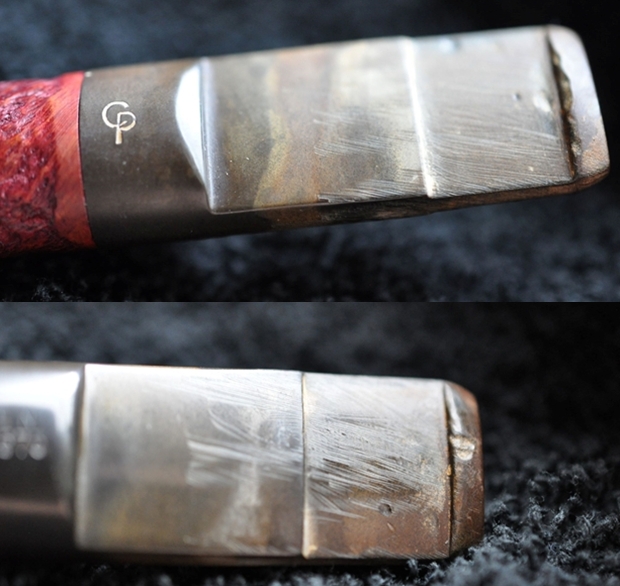
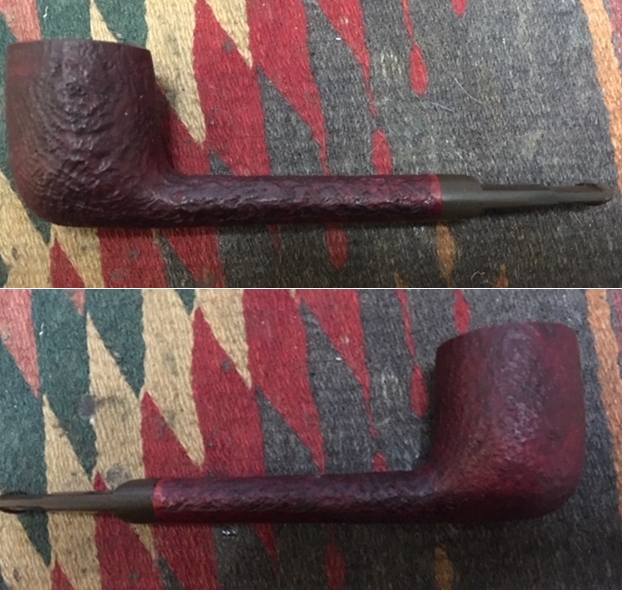
Upper bit, before and after:Lower bit, before and after:The heating process made little progress. I now mix activated charcoal with CA glue to form a patch material and apply it to the tooth compressions and to the button lips – I’ll need to reshape the button. I first clean the stem area with isopropyl 95%. I then gradually mix thick CA glue with activated charcoal on an index card. I aim for a thickness of molasses so it’s thick enough to stay in place not run but will allow some manipulation once applied. On the first mixing, I mixed too much activated charcoal with the CA glue and got one of the chemical reactions where the mixture hardens instantly giving off an acrid smoke!! This has happened before. I need to apply the mixture before it thickens too much. The next mixtures work well. After applying patch material to both upper and lower I set the stem aside to allow the patch to cure. I turn my attention now to the Ben Wade Hand Model stummel. I like the rustic look of this stummel. What I also like about it is that there is a curving or narrowing in the shaping of the bowl about 2/3s up as it moves toward the rim. With the rough finish, rough is good and the surface reminds me of tree bark! With the stummel being dry and with a light blotchy look in the valleys of the blasted areas, I decide to add some paraffin oil to the briar to hydrate it. Doing this also allows me to get a sneak preview of what the briar will look like somewhat finished, I apply paraffin oil to the surface with a cotton pad. This moisturizes the briar and I like what I’m seeing. The only thing I’m not liking is that the scorched place on the back side of the rim is still evident even with the help of a darkened blend. The pictures show what I’m seeing. I decide to go back to an elbow grease methodology and focus cleaning on the rim with a brass wire brush and Murphy’s Oil Soap. This time Murphy’s has its way. I did do a lot of scrubbing and the rim surface shows the skinned lighter area on the rim where the cleaning was, but the scorched area was removed.To darken the rim to blend with the rest of the bowl, I use a cherry dye stick which matches pretty well and I color the rim as well as the edge of the rim – external and internal. This looks good and will blend in more as I polish.Next, to clean up the lower shank panel, I very quickly and lightly, run the area through the full regimen of 9 micromesh pads from 1500 to 12000 – dry sanding with each. I wasn’t worried about the nomenclature because it is deep and solid, and I sanded very lightly with the pads. This gently cleaned the smooth briar of minor nicks and scratches.I like the look of the finish and decide that it looks good just as it is. In order to deepen and enrich the natural grain, I apply Before & After Restoration Balm. I like this product that can be found at http://www.lbepen.com. I apply some of the Balm to my fingers and thoroughly work it into the briar surface – into the nooks and crannies of the richly blasted briar. After applying, I let the stummel sit for a few minutes – 10 or so, and then I wipe the stummel with a microfiber cloth to remove the excess Balm and to buff it up a bit. I take a picture during the ‘absorbing’ period.The patches on bit and button of the stem are now cured after several hours. I begin to remove the excess patch material on the upper bit using a flat needle file. I’m careful to establish the new inner lip of the button. As I filed to shape the new button lip, I discover a crevasse hidden below which is too severe simply to remove. There are other pockets on the button that don’t look too promising. It is normal in my experience, that its necessary to apply additional patch material to fill pockets and gaps that appear during filing and sanding.To address patching the button problems, this time I use a black CA glue to fill the crevasse and pockets and I apply an accelerator to quicken the curing process. Again, filing and shaping the upper button lip and this time better results are realized.I follow filing by sanding with 240 grit paper (which I forgot to add as a prop to this picture!) to erase the marks left by filing. As with the filing of the button, the finer 240 paper reveal a cluster of pockets in the center bit area in the patch. Again, I spot drop black CA glue to fill the pockets, apply an accelerator and file the excess then sand the bit area with 240 grit paper. The upper bit and button area look good. The same process is repeated on the lower bit and button. It too, looks good. With the bit repairs completed and with the repaired button shaped, I continue by wet sanding the entire stem with 600 grade paper. I’m careful to work around the BEN WADE stem stamp on the saddle. After wet sanding with 600 grit, I apply 0000 steel wool to stem. Finally, I wet scrub the stem with Magic Eraser. I’m satisfied with the progress. I move forward with the micromesh pad regimen wet sanding using pads 1500 to 2400 followed by dry sanding with pads 3200 to 4000 and 6000 to 12000. I follow each set of 3 pads with an application of Obsidian Oil which further rejuvenates the vulcanite. I like that vulcanite pop! The stem looks great. I try to reunite the stem and the stummel and as is the case sometimes, after cleaning the mortise, the briar inside can expand causing the fit with the tenon to become too tight. I do not want to force the stem and risk a cracked shank, so I gently ream the mortise with a half-rounded needle file. Then I gently sand the tenon by wrapping 600 grit paper around the tenon.This works and I am able then to reunite the stem with the stummel and mount a cotton cloth buffing wheel to the Dremel and set the speed at about 40% full power.  I apply Blue Diamond compound to the entire pipe.  I run the wheel along the grain of the blasting to bring out the contrasts of rough briar as well as to buff it up into a shine.  After completing the Blue Diamond, before applying wax, I freshen the Ben Wade white stem stamp.  I clean the area with alcohol and then I dab a bit of white acrylic paint over the stamping.  I then use a cotton pad to tamp the wet paint which draws off the excess paint and helps the paint to dry sooner. Then using a toothpick, I gently scrape off the excess paint leaving a refreshed BEN WADE stamp.  It looks nice and crisp.I then mount another cotton cloth buffing wheel onto the Dremel and apply carnauba wax to the stummel.  I increase the speed of the Dremel from my usual 40% up to about 50 to 60% full power.  I do this to create more heat with the friction of the wheel to encourage the wax to dissolve in the craggy blasted briar surface.  Waxing a rough surface can cause the wax to collect and not to absorb into the surface.  The added heat encourages this and as I look at the waxing action, it looks like it’s having the desired effect.  Nice!  After finishing the waxing process, I then give the stem and stummel a rigorous and substantial hand buffing to remove any excess wax and to raise the shine.

The blasted grain on this Ben Wade Hand Model is distinctive.  It looked so good I thought that it might be the blastification process, but it is the real deal.  The shaping of the bowl also adds to the rustic effect with it tightening near the top and then flaring out.  The blasted briar displays many hues of grain – very eye pleasing.  This is the third of three pipes that Todd commissioned, and he will have the first opportunity to acquire this Ben Wade Hand Model from The Pipe Steward Store.  These pipes benefit the work we do here in Bulgaria with the Daughters of Bulgaria working among women and girls who have been trafficked and sexually exploited.  Thank you for joining me!

Life for an interesting Triangle Shank Enrico Bocci Belgium 612


Blog by Steve Laug

The next pipe in the queue is an interesting triangular shaped billiard – I think that is what I would call it. It came to us in the lot that included the pipe cabinet and 21 pipes. There is a decided slope from the button to the junction of the bowl and shank. The bottom of the bowl and shank is flattened and broad so that it is a very stable sitter. It is a unique piece and like many of those in this lot it is a brand that I have not seen before. It is on the second shelf, the third pipe from the right in the photo below. I have circled it in red to make it easier to identify.The finish on the pipe is very dirty with an interesting orange and black contrasting stain. I look forward to seeing it cleaned. There is a thick cake in the bowl and a lava overflow on the rim top. I can see some damage to the outer edge of the rim but because of the cake and tars it is hard to know what the inner edge looks like. Jeff took photos of the pipe before cleaning it. The photos give a pretty clear picture of the shape of the pipe and its general condition when we received it. Jeff took some photos of the bowl/rim top and the sides and bottom of the bowl to give and idea of the condition and the shape. You can see the nicks on the back and front side of the outer edge of the rim. He also took photos of the stamping on the left and underside of the shank. The left side was clear and readable. It read Enrico Bocci in script over Marrone. On the underside it said Belgium followed by the shape number 612. The left side of the stem also had a stamped EB logo. The stem had some deep scratching in the surface ahead of the button and some small tooth marks next to the button. There was also wear on the sharp edge of the button.Enrico Bocci was a brand that I was unfamiliar with so I did some research on the web to see what I could learn about the brand and the maker. I turned first to Pipephil and found the first lead. As usual the site gives a great summary. It identified the maker as Enrico Bocci and the brand as Italian (http://www.pipephil.eu/logos/en/logo-e3.html). This did not match the Belgium stamping on the underside of the shank so more searching would be necessary. I have included a screen capture from Pipephil that gave the initial information on the brand. It seems that Bocci retired from pipe making in the 1980s so that helped to date the pipe that I am working on.I turned then to Pipedia to see what I could find out there (https://pipedia.org/wiki/Bocci). The brand was listed under the country of Belgium. Sadly there was not a lot of information. I have copied the information and included it below.

Enrico Bocci, presumed to be of Italian origin, primarily turned out machine made pipes. The better ones were pre-turned and finally shaped and finished by hand.

From that at least I found that the maker was of Italian origin (not hard with a name like that). I knew that the pipe I had in hand was Belgian made and made prior to 1980. I also could deduce from the listing being in the Belgian list of pipemakers that Bocci lived there. Armed with that information I turned to deal with the pipe on the table.

As usual Jeff does a lot of the clean up on the pipes that we buy. He does a great job. When I pick them up here or do repairs here in Canada I am reminded just how much work he does to get the pipes to the point they are when I open his box to work on them.

Jeff reamed the bowl with a PipNet pipe reamer and followed up with a Savinelli Fitsall pipe knife to remove the cake. He scrubbed out the mortise and the airway in the shank and the stem with alcohol, cotton swabs and pipe cleaners. He scrubbed the exterior of the bowl, rim, shank and stem with a tooth brush and Murphy’s Oil Soap to remove the oils and tars on the rim and the grime on the finish of the bowl of the pipe. He rinsed it off under running water. He dried it off with a soft cloth. He was able to remove most of the lava build up on the rim top of the pipe leaving behind some darkening and a clear view of the damage to the outer edge. I took photos of the pipe to show its condition before I started my work. I took a close up photo of the rim top to show the darkening on the top and the damage to the outer edge at both the back and the front. You can also see some nicks and marks on the surface of the rim top. The stem photos show the scratching I noted above that extends from the button forward about an inch. They also show the tooth marks and the wear on the button surface on both sides.I took photos of the stamping to document what it looked like at this point in our cleanup process. You can also see some of the fills in the bowl and shank.I decided to address the damage to the rim top and edges of the bowl first. I used a folded piece of 220 grit sandpaper to clean up the inner edge of the bowl first. Once that was complete, I topped the bowl on a topping board using 220 grit sandpaper to remove the damage along the top surface and minimize the damage to the outer edge of the bowl. It looks like I forgot to take a photo of the rim top at this point. I removed the damaged surface (a minimal topping). I worked over the outer edge with a 1500 grit micromesh sanding pad to smooth out the damage on the edges (the condition of the rim top can be seen in the third photo below). Once I finished that I polished the entire bowl and shank with micromesh sanding pads. I wet sanded it with 1500-2400 grit pads to clean up the rim and smooth out the bowl. There were shiny spots on the finish from what looked like a light varnish coat that needed to be removed as well. I decided to stain the rim top and touch up the spots on the bowl and shank that needed it with a Maple stain pen before proceeding with the rest of the polishing. This might seem odd but I have found that it can work to blend the colours better. I let the stain coat dry for about 30 minutes and worked on the stem. Once the stain had cured for that time I continued polishing the bowl.I continued to polish the bowl with 3200-12000 grit micromesh sanding pads. Each successive grit of micromesh made the grain stand out more and hid the fills better. The overall look of the bowl improved. With the rim top and bowl polished, I worked some Before & After Restoration Balm into the surface of the briar with my fingertips to clean, enliven and protect it. I let the balm sit for a little while and then buffed with a cotton cloth to raise the shine. The following photos show the bowl at this point in the restoration process. The bowl and the rim top look really good and the darkening and lava are gone. The finish looks good and though the fills are visible they are not as obnoxious looking as before. I am very happy with the results. With the bowl finished I set it aside and turned my attention to the stem. I sanded the scratches and the tooth marks on the stem and then filled it in with clear super glue. I set it aside to cure for about a half hour then smoothed out the fills with a needle file to dress up the sharp edge of the button. I sanded the repairs with 220 grit and 400 grit sandpaper to blend them into the surface. I polished the stem with micromesh sanding pads – wetsanding it with 1500-2400 grit pads and dry sanding it with 3200-12000 grit pads. I wiped the stem down with Obsidian Oil after each pad. I used some liquid paper or correction white out to touch up the stamping on the stem. I applied it with a tooth pick and when it had dried I buffed the excess off with a cotton pad.I further polished it with Before & After Pipe Polish – both Fine and Extra Fine. I gave it a final coat of Obsidian Oil and set it aside to dry.This interestingly shaped Enrico Bocci surprised me. When I first saw it I thought it was a Lorenzo pipe and expected a real mess under the stain and lacquer coat. It turned out I was wrong. I polished stem and the bowl with Blue Diamond polish on the buffing wheel. I gave the bowl and the stem multiple coats of carnauba wax. I buffed the pipe with a clean buffing pad to raise the shine. I hand buffed it with a microfiber cloth to deepen the shine. The pipe polished up pretty nicely. The contrasting grain came alive with the buffing. The rich contrasting orange/brown and black colour works well with the polished black vulcanite stem. The finished pipe is a beauty and feels great in the hand. Have a look at it with the photos below. The dimensions are Length: 5 ½ inches, Height: 1 ¾ inches, Outside diameter of the bowl: 1 1/2 inches, Chamber diameter: ¾ of an inch. I will be putting this triangular shanked billiard on the rebornpipes online store soon. It may well the kind of unique pipe you have been looking for so have a look. Thanks for walking through the restoration with me on this interestingly shaped Enrico Bocci.

New Life for a Pair of Kaywoodie Bamboo Shank Mandarins


Blog by Steve Laug

The next pair of pipes on the work table is another relatively new acquisition. The Mandarin with the acrylic stem comes from a collection Jeff and I purchased from Michigan. It included a pipe cabinet and 21 pipes that is pictured below. The second one came from a friend of Jeff’s who is always on the lookout for pipe he thinks we might be interested in the New York area. This one has the original stem. I have circled the first Mandarin in the photo below – third pipe from the left on the first shelf of the rack.In the last box Jeff sent me he included both of these pipes. Both have the bamboo shank, both have an apple shaped bowl. Both are stamped Kaywoodie Mandarin on the underside of the bowl. Both had threaded stems and a metal space at the end of the shank. The first pipe from the rack above had a thinner diameter bamboo shank while the second was thicker – both were two knuckle bamboo pieces. The first pipe had a black acrylic replacement stem with a saddle while the second one had the original tapered stem with the Kaywoodie Club in a white circle on the left side of the stem.

Both pipes were quite dirty which seems to be the case when working on pipes that were obviously someone’s favourite.  Jeff took photos of both pipes before his cleanup work. The first pipe from the Michigan collection is shown first. There was a thick cake in the bowl and lava overflowing onto the rim top. The inner and outer edges of the bowl looked very good. The stem had some tooth marks and chatter on both sides near the button and some tooth damage to the sharp edge and top of the button. The photos below show the first pipe. The next photo shows a close up of the bowl. You can see the thick cake in the bowl and the overflow of lava on the rim top. He also took photos of the bottom of the bowl to highlight the condition of the pipe. It had some great grain all around the bowl and some nicks. It was a dirty pipe and obviously well smoked. The bamboo shank extension had a nice patina and a crackle like look that had developed as the pipe was smoked.  The next photo shows the stamping on the underside of the shank. It is quite clear and legible.  Jeff also took a photo of the shank and the fit of the replacement stem to the shank end. It is well done and the alignment is very good.The close up photos of the stem show the tooth marks in the surface near the button and the damage to the button itself on both sides. The tooth marks and chatter were repairable and the button could be reshaped.The pipe from the New York purchase is shown second. There was a thin cake in the bowl and very little lava on the rim top. The inner and outer edges of the bowl looked very good. The original Kaywoodie vulcanite stem had some light tooth marks and chatter on both sides near the button and some light wear on the sharp edge of the top and the bottom of the button. The photos below show the second pipe. The next photo shows a close up of the bowl. You can see the cake in the bowl and the light burn marks on the right side of the inner edge of the rim top.  The second photo below shows the stamping on the underside of the bowl – clear and readable Kaywoodie Mandarin.The Kaywoodie Club logo looks great and the fit of the stem to the metal spacer on the shank end is very good.He took close up photos of the stem top and bottom at the button. You can see the tooth chatter on both sides and the slight wear to the sharp edge of the button. Generally the stem is in very good condition.Jeff reamed both bowls with a PipNet pipe reamer and followed up with a Savinelli Fitsall pipe knife to remove the cake. He scrubbed out each mortise and the airway in the shanks and the stems with alcohol, cotton swabs and pipe cleaners. He scrubbed the exteriors of the bowl, rim, shank and stem with a tooth brush and Murphy’s Oil Soap to remove the oils and tars on the rim and the grime on the finish of the bowl of each pipe and bamboo shank. He rinsed them under running water. He dried them off with a soft cloth. He was able to remove most of the lava build up on the rim top of the first pipe and the little bit oon the second one. I took photos of the pipes to show its condition before I started my work on them. The first one is the Mandarin with the acrylic stem. Here are the photos of the second pipe. I took close up photos of the bowl and rim top as well as the stem on each of the pipes. You can see the condition of the rim top and bowl in the first photo of each pipe. Jeff was able to remove almost all of the tar and oils but there was darkening and damage on the inner surface of the rim on the first pipe and the surface and inner edge of the second pipe. The acrylic stem on the first pipe had tooth chatter and some tooth marks on the top and underside of the stem near and on the button surface. The vulcanite stem on the second pipe had some chatter but otherwise was in very good condition. The first set of photos show the first acrylic stem Mandarin. The second set shows the original vulcanite stem Mandarin.

The first pipe.The second pipe.I wanted to confirm a possible date for both of these pipes. I turned to Pipephil to see what he had to say about the brand (http://www.pipephil.eu/logos/en/logo-kaywoodie-2.html). I have included a screen capture of the listing on the site. It appears to have been made between 1958-1967.I turned next to Pipedia to check out the Kaywoodie Collector’s Guide to see if I could get some more information on the Mandarin line. I found an interest monograph there called Notes on Kaywoodies Introduced between 1955 and 1968. It included reference to the Mandarin line. I include that in part below (https://pipedia.org/wiki/Collector%27s_Guide_to_Kaywoodie_Pipes). I have highlighted and underlined the Mandarin in the list below. Both of the pipes I am working on are the smooth versions.

NOTES ON KAYWOODIES INTRODUCED BETWEEN 1955 AND 1968

The material presented in this monograph is extracted from 1936, 1947, 1955, 1968-69, and four undated Kaywoodie catalogs. Based on a comparison of prices in the 1955 and 1968-69 catalogs, the four undated catalogs appear to span the period from the late 1950’s to the late 1960’s (i.e., after 1955 but before 1968). This section presents a brief summary of the Kaywoodie Pipes that appeared in these undated catalogs, but did not appear in either the 1955 or 1968-69 catalogs…

Here is a list of pipes from this time period.

…Hi-Bowl. Tall, tapered bowl in six shapes (see Table 5). Available in smooth or “rough” finish ($10).

Mandarin. Smooth or relief grain finish with burnished-bamboo shank ($10).

Setter. No shank, just a ridged hole for a slender, filter-free, push-bit. Available in “flat bottom” (hence, “Setter”) panel, billiard, and poker shapes. Smooth or textured finish ($10).

Tuckaway. The 1955 catalog shows a Drinkless Tuckaway that was simply a smaller version of other Kaywoodie styles. The Tuckaways of the 1955-1968 period had military mountings, filter-free see-thru bits, and were packaged in a leatherette case. Available in Standard, Relief Grain, and Super Grain grades ($6-$8, depending on grade). Miniatures. Two-inch miniature replicas of “their big brother”, complete with the Drinkless fitment and Synchro Stem. The catalogs show these as individually-cased pipes but multiple pipe sets were apparently available. Price: $5.

Miniatures. Two-inch miniature replicas of “their big brother”, complete with the Drinkless fitment and Synchro Stem. The catalogs show these as individually-cased pipes but multiple pipe sets were apparently available. Price: $5.

Colossal Super Grains. Available in three “oversize” shapes (see Section 3.2) in hand-carved or smooth finishes ($5).

Now I knew that both pipes came from this time period. They were made between 1955-1968. Somewhere along the way the first pipe had been repaired and given an acrylic stem (this was the Michigan pipe). The other pipe from the NY connection had the original stem and threaded tenon though the stinger apparatus had been clipped off.

I started by working on the rim top of both pipes. The first pipe had a more classic apple shaped rim that came to a rounded top curved into the bowl. The second one had a flat rim top that I suppose could have come from a restoration sometime in its life but I could not be sure of that.

To smooth out the damage on the rim of the first pipe I sanded out the burn damage and the nicks with a folded piece of 220 grit sandpaper. I sanded the inner edge of the rim and the rounded top to remove the damage.On the second pipe I used a folded piece of 220 grit sandpaper to give the inner edge of the rim a slight bevel to remove the burn marks and smooth out the rim top and outer edge.I polished the bowls and the rim top on both pipes with micromesh sanding pads – wet sanding with 1500-2400 grit pads and dry sanding with 3200-12000 grit pads. I wiped the surface down after each sanding pad with a damp cotton cloth.

The first pipe. The second pipe. With the rim top cleaned, polished and restored on both of the pipes I worked some Before & After Restoration Balm into the surface of the briar with my fingertips to clean, enliven and protect it. I worked it into the bamboo on both pipes as well to enliven it as well. It took some time to really get it into the grooves and valleys of the bamboo but I was able to work it in. I used a shoe brush to make sure it was deep in the grooves. I let the balm sit for a little while and then buffed with a cotton cloth to raise the shine. The following photos show the bowls at this point in the restoration process. The bowl and the rim top on both pipes look really good and the darkening and lava are gone. The grooves and patina on the bamboo also look really nice with the new finish. I am very happy with the results. (Hopefully by now you can tell which is which. If not the pipe with the threaded metal tenon sticking out is the one with the acrylic stem from the Michigan collection.)I set aside the bowls at this point and turned my attention to the stems. I started with the acrylic replacement stem from the Michigan collection. I sanded out the tooth marks on the button surfaces on both sides with a folded piece of 220 grit sandpaper. I sanded it with a folded piece of 400 grit sandpaper to sand out the scratches. Once I was finished the tooth marks and chatter were gone.As I finished the stem I noticed that the end of the stem had an unfinished slot – merely a round hole that comes standard on replacement stems. It needed to be shaped and a slot cut in the end. I used a series of needle files to cut open the slot and shape it. I still needed to sand the slot but it was starting to look good. I folded a piece of 220 grit sandpaper and sanded the edges of the button to further shape it. The photos tell the story. I moved onto the original Kaywoodie vulcanite stem from the New York find. I sanded out the tooth marks on the button surfaces on both sides with a folded piece of 220 grit sandpaper. I sanded it with a folded piece of 400 grit sandpaper to remove the scratches. Once I was finished the tooth marks and chatter were gone.I polished both stems with micromesh sanding pads – wet sanding with 1500-2400 grit sanding pads and dry sanding with 3200-12000 grit sanding pads. I wiped them down after each sanding pad with a damp cloth. I polished them with Before & After Pipe Stem Polish and wiped them down a last time with the damp cloth and some Obsidian Oil and set them aside to dry. This beautiful pair of Kaywoodie Mandarin Smooth Apples really are unique and special pipes. The bamboo shank and the smooth well grained bowls make them quite stunning. I have a pair of these in my own collection and they are great smoking pipes. The patina on the old bamboo is very nice. You have to figure at the earliest these pipes come from the mid to late 50s and early 60s and at the latest they come from 1968. That means that they may be 64 years old at the earliest and then at the latest 51 years old. Either way they are old pipes. They have a lot of life left in them that is for sure and will definitely outlive most of us. I polished the bowls and stems with Blue Diamond polish on the buffing wheel. I gave the bowls and stems multiple coats of carnauba wax. I buffed both pipes with a clean buffing pad to raise the shine. I hand buffed them with a microfiber cloth to deepen the shine. The pipes polished up pretty nicely. The rich grain shining through the medium brown stain came alive with the buffing. The rich contrasting brown colour works well with the polished black vulcanite stem. The finished pipes are beautiful and feel great in the hand. Have a look at them in the photos below. The dimensions of the first pipe with the replacement Lucite stem are Length: 6 inches, Height: 1 1/2 inches, Outside diameter of the bowl: 1 1/4 inches, Chamber diameter: ¾ of an inch. The dimensions of the second pipe with the original Kaywoodie vulcanite stem are Length: 6 inches, Height: 1 1/2 inches, Outside diameter of the bowl: 1 3/8 inches, Chamber diameter: ¾ of an inch. I will be putting both Mandarin pipes on the rebornpipes online store individually and they can be purchased individually or as a pair. The patina on the bamboo of both pipes is a bonus on these beauties. Thanks for walking through the restoration with me on this pair of oldtimers.