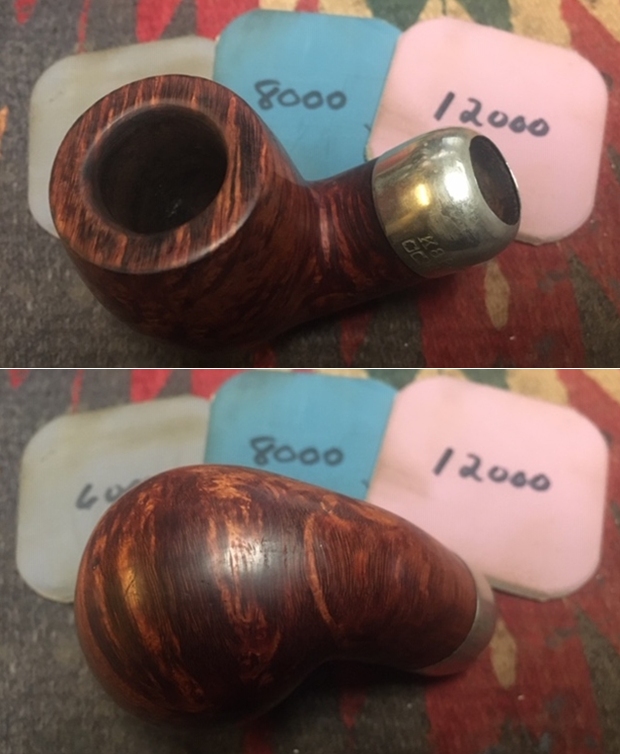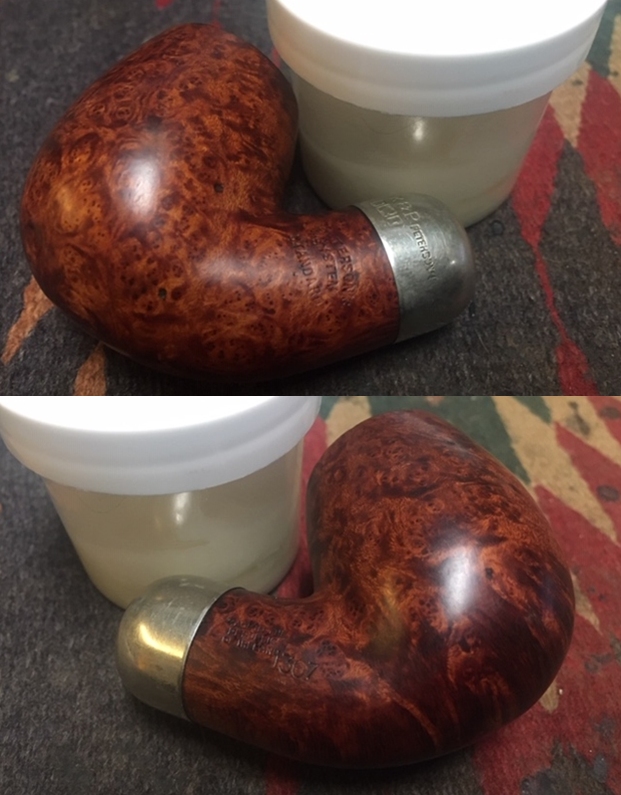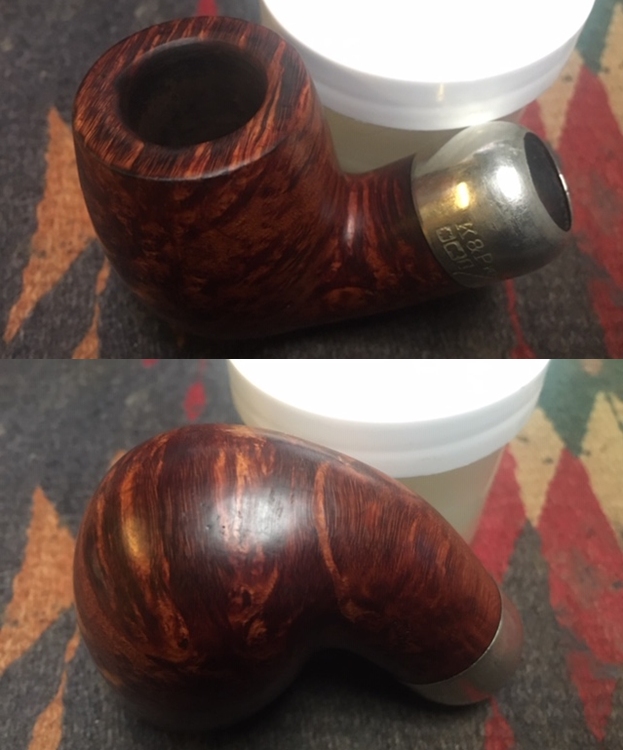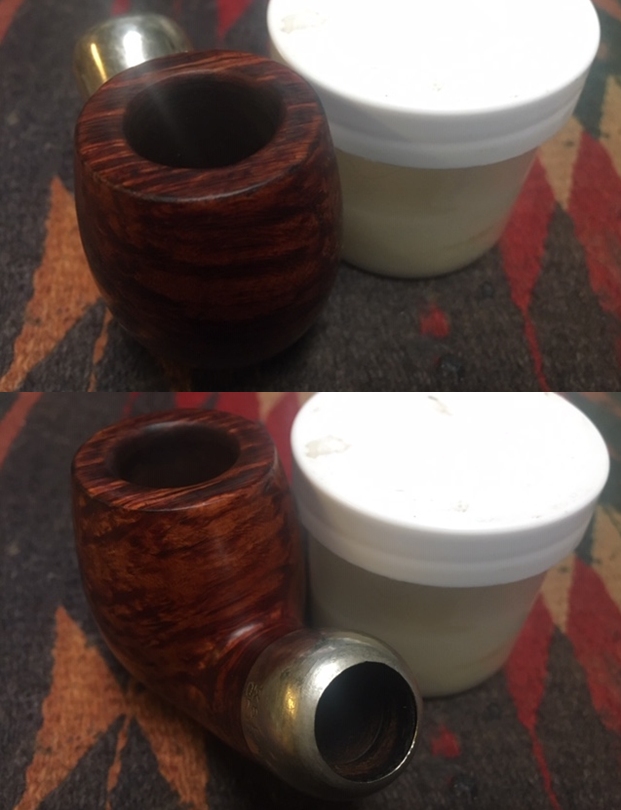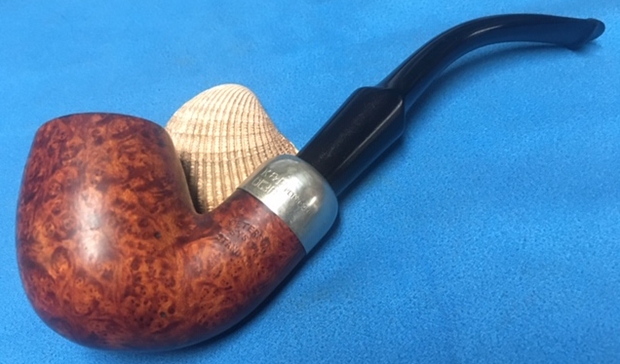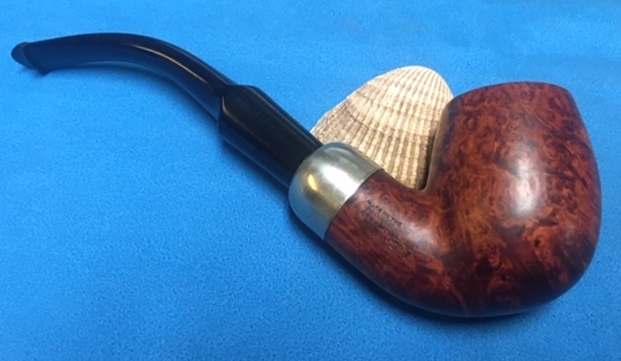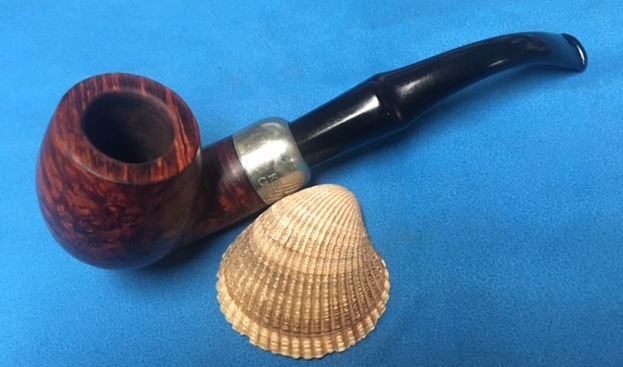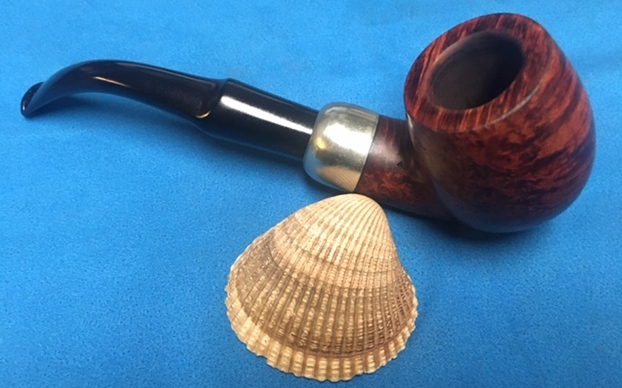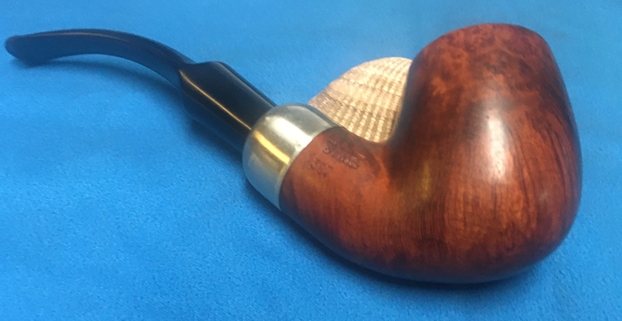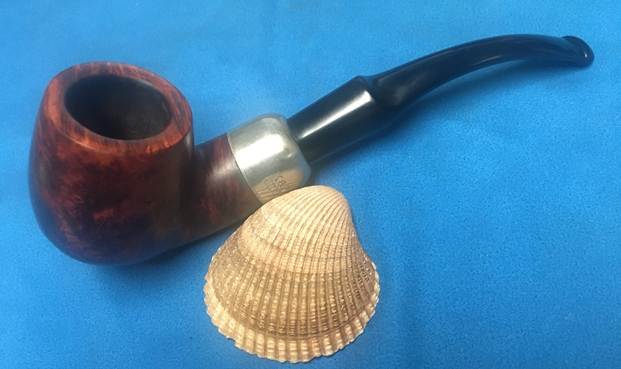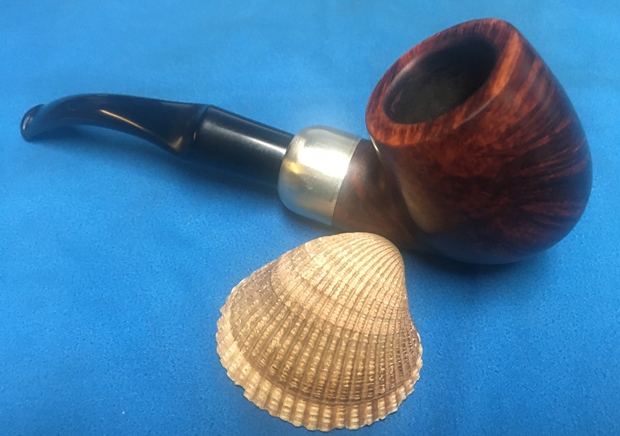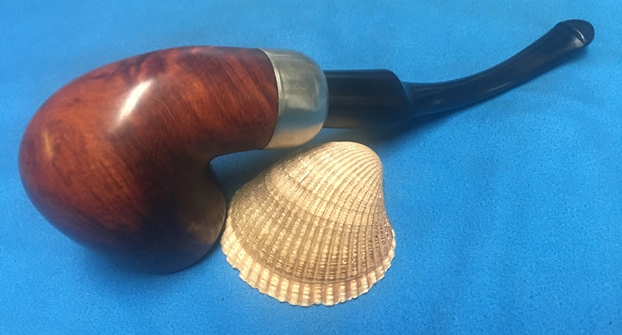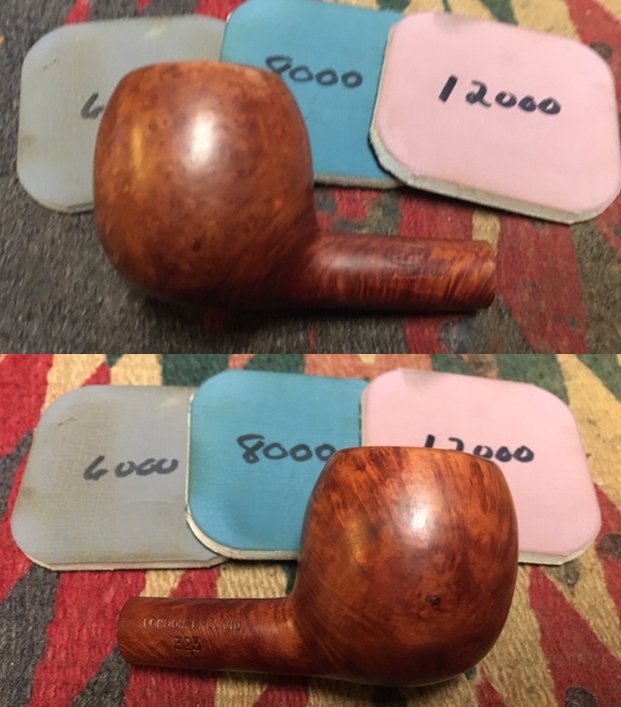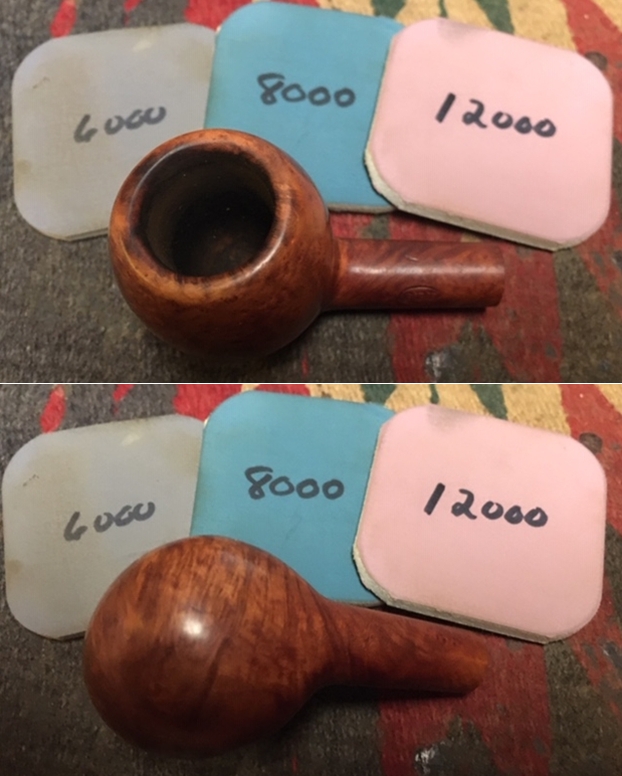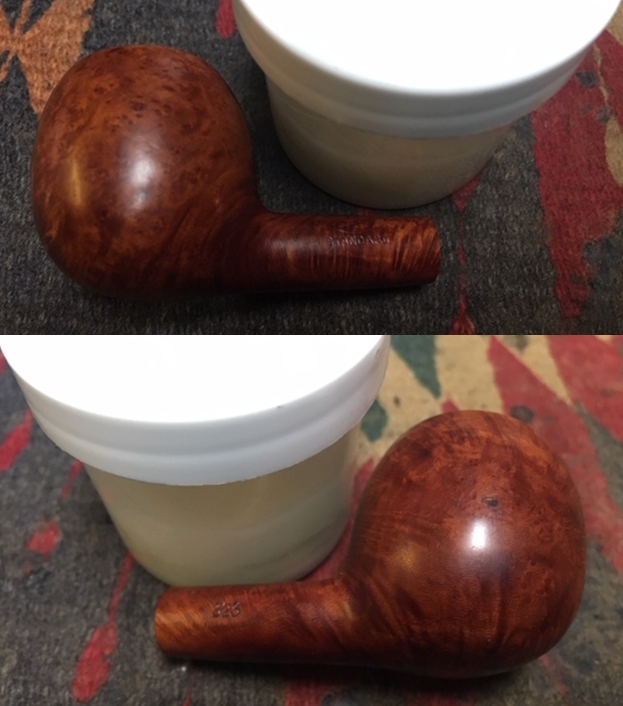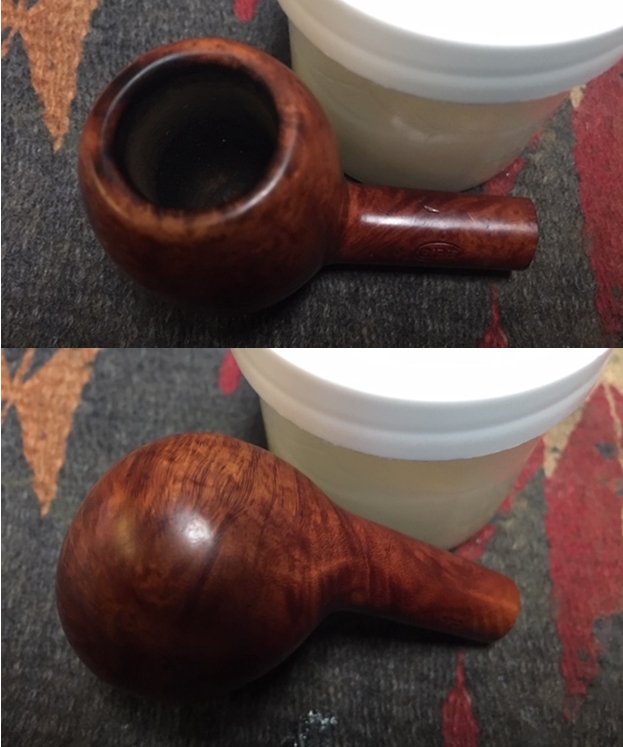
Tag Archives: repairing bite marks

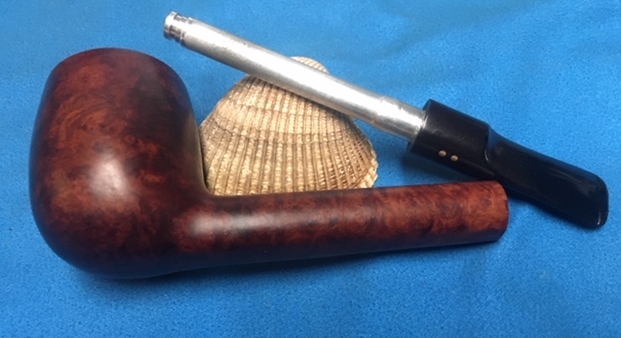
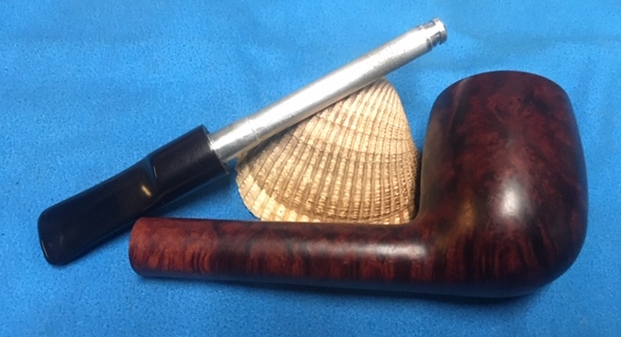
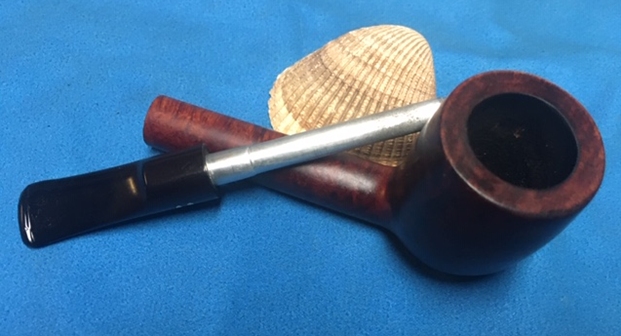
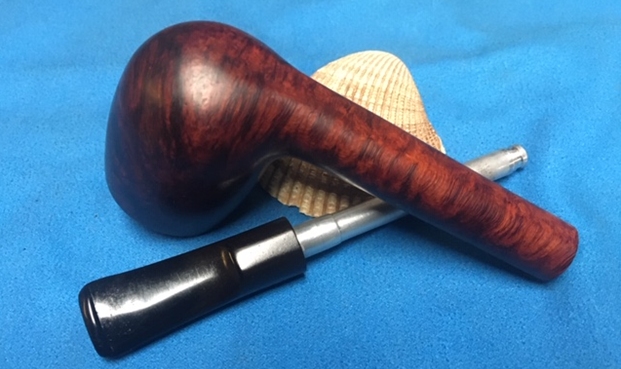
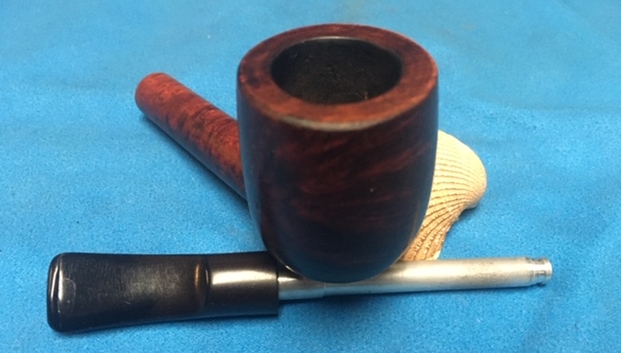
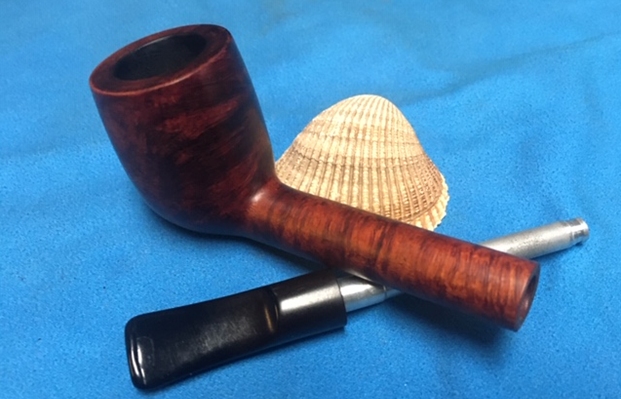
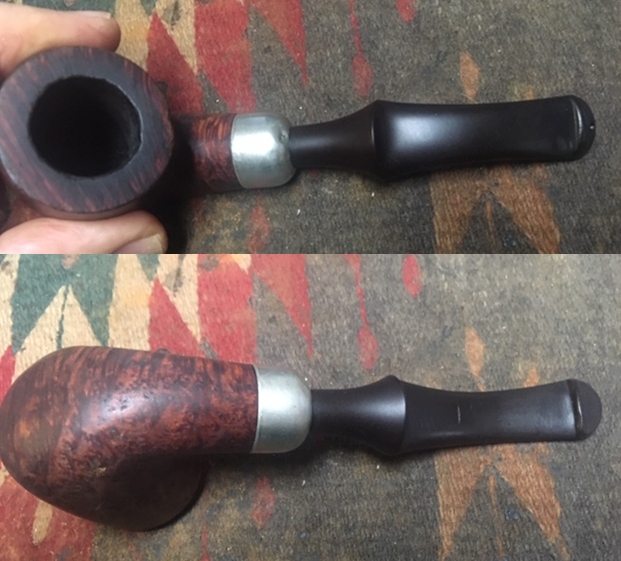
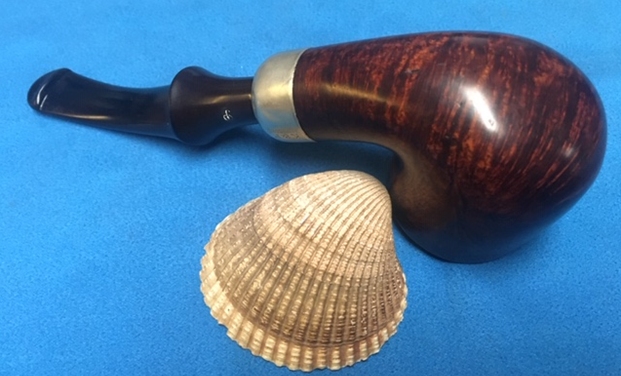
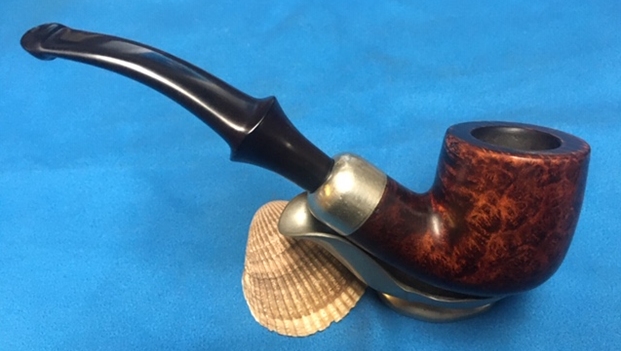
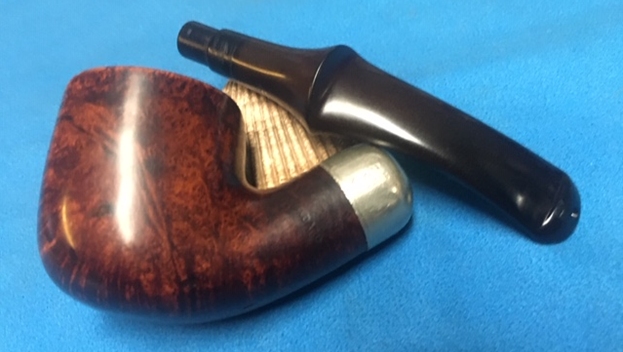
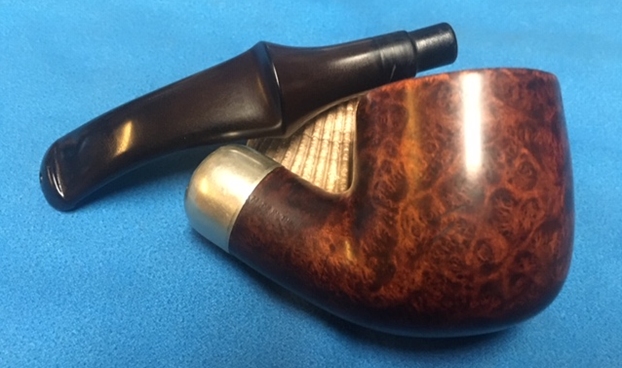
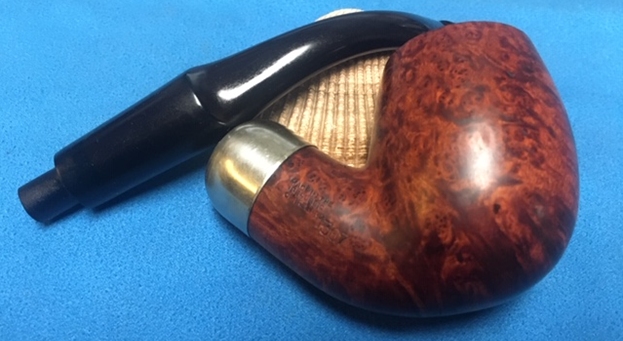
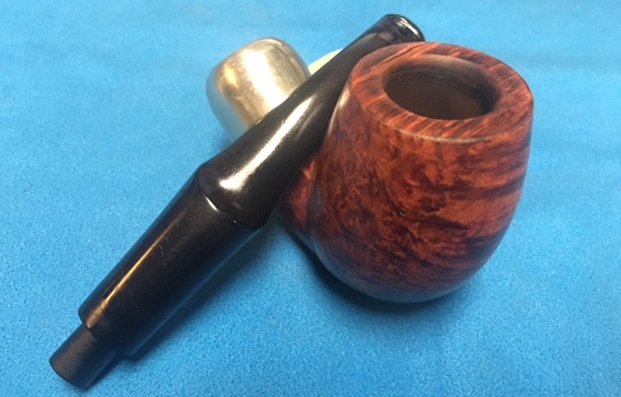
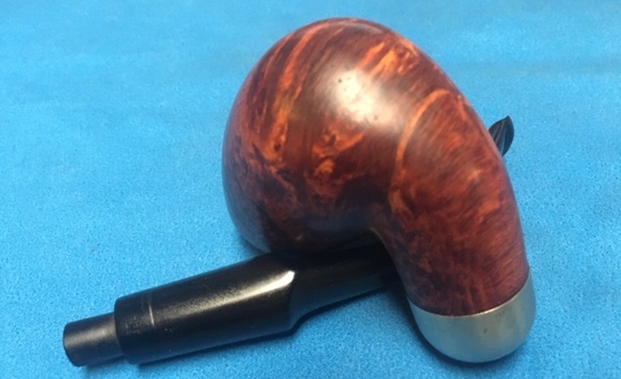
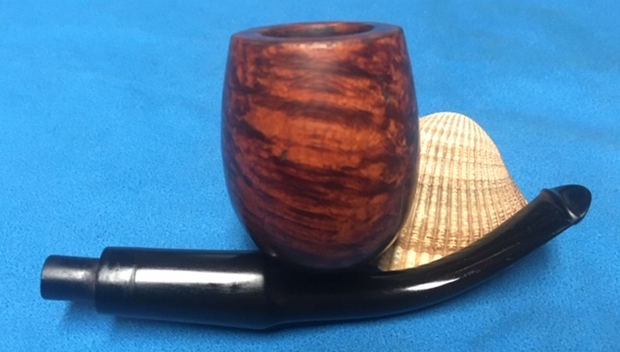
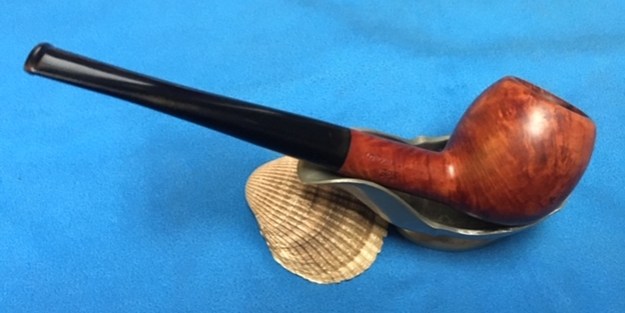
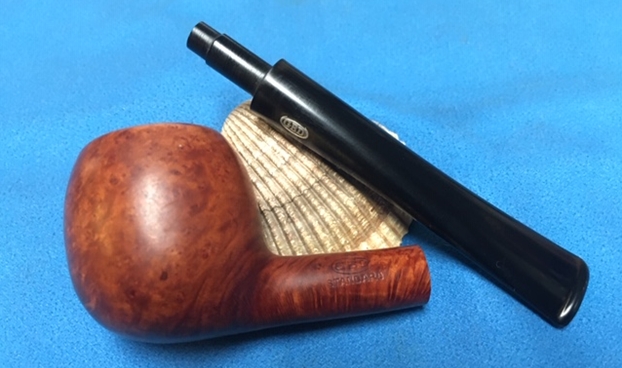
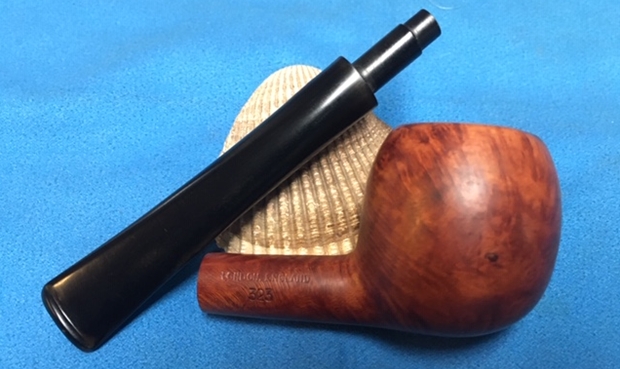
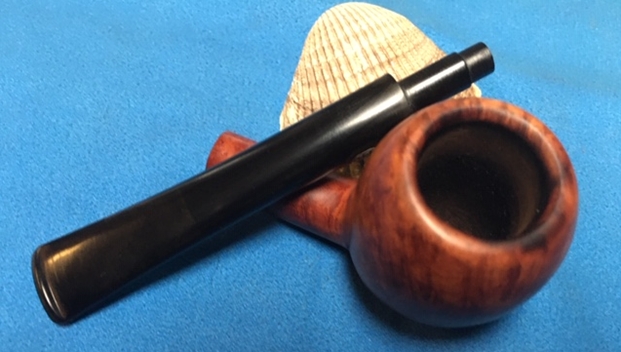
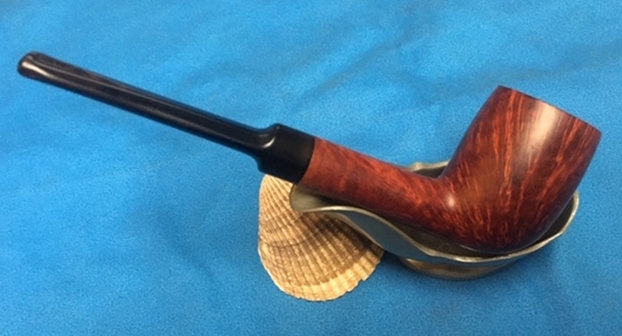
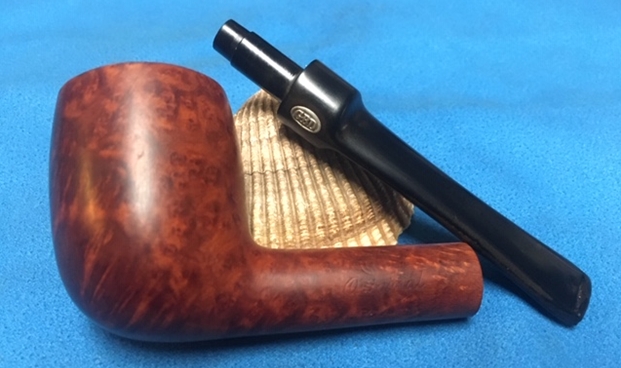
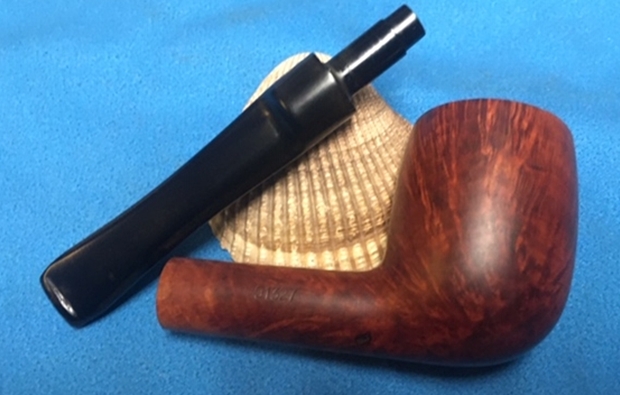
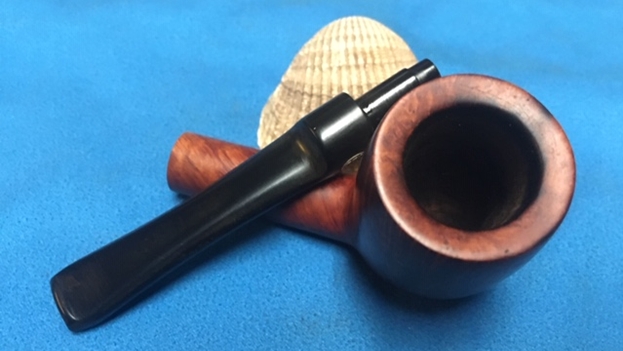
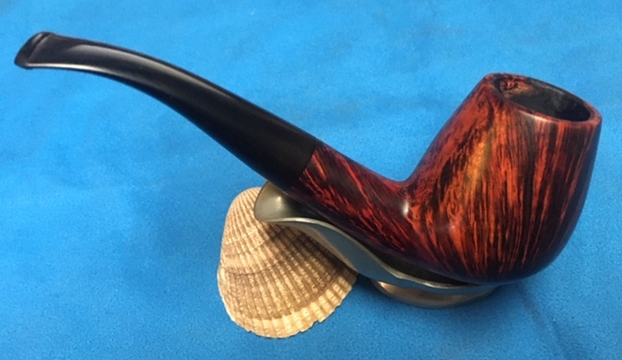
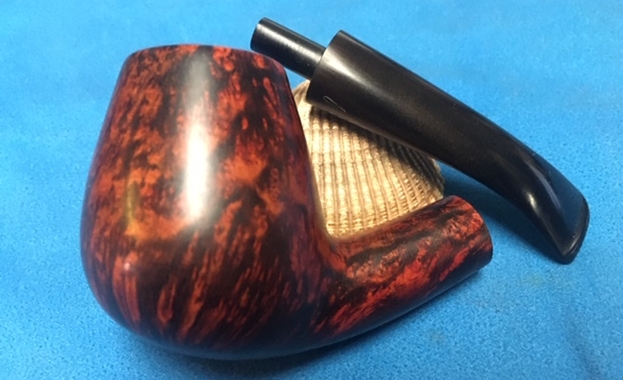
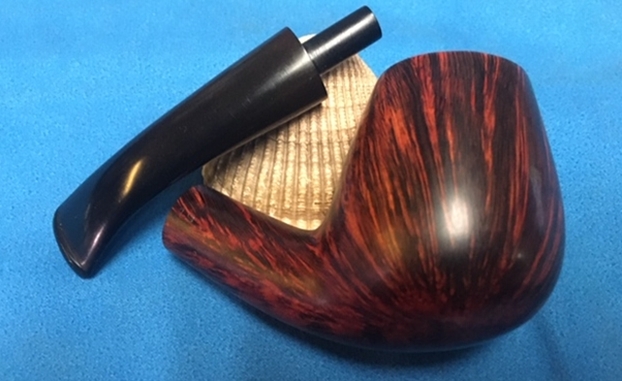
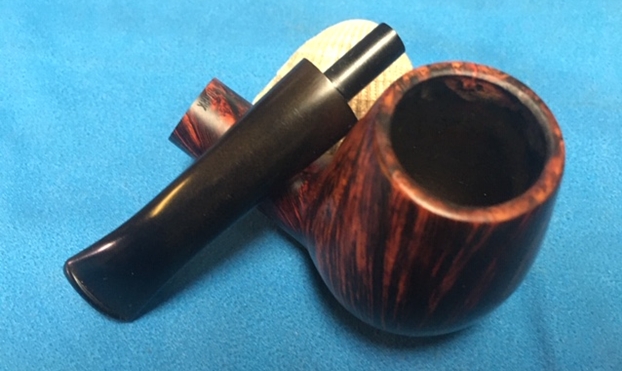
A Brigham Patent Era Select 2199 Club (Lovat) from Bob Kerr’s Estate


Blog by Steve Laug

As I continue to work through the pipes in Bob Kerr’s Estate I am enjoying choosing different brands that he had to focus on for a bit. He had six different pipes from Brigham in his collection so I decided to work my way through that sub collection of the estate. Out of the 6 pipes, #5 has a ruined bowl with a crack all the way around it as well as a cut off aluminum tenon. #6 went to Paresh Deshpande in India for his collection. That left behind four pipes for me to restore – #1, #2, #3 and #4. Here is the list of what I saw when I examined the 6 pipes.

  1. Brigham 503T Can. Pat. 372982 5 Dot Stack. Stem is oxidized, tooth marks and chatter near the button, some calcification with damage to the button. Finish is dirty, thick cake and lava overflow on the rim top. Rim top has is worn and damage on the back edge. I have finished restoring this one. Here is the link: (https://rebornpipes.com/2019/12/21/a-brigham-patent-era-special-grain-stack-from-bob-kerrs-estate/).
  2. Brigham Made In Canada 691 3 Dot Canadian. Stem is oxidized, tooth marks and chatter near the button, some calcification with damage to the button. Finish is dirty, thick cake and lava overflow on the rim top. Rim top is worn and damaged.
  3. Brigham Made In Canada 2199 2 Dot Lovat. Stem is oxidized, tooth marks and chatter near the button, some calcification with damage to the button. Finish is dirty and worn. Stamping is worn. There is a thick cake and lava overflow on the rim top. Rim top is worn and damaged.
  4. Brigham Made In Canada 1 Dot Bing Crosby Style Pipe. Stem is oxidized, tooth marks and chatter near the button, some calcification with damage to the button. Finish is dirty, thick cake and lava overflow on the rim top. Rim top is worn and damage on the back edge.
  5. Brigham Made In Canada 6 Dot Bent Billiard. Stem is oxidized, tooth marks and chatter near the button, some calcification with damage to the button. The aluminum tenon has been cut off. Finish is dirty and worn with paint on the bowl. There is a thick cake and lava overflow on the rim top. Rim top has a crack on the right side.
  6. Brigham Made In Canada 4 Dot Canadian. Stem is oxidized, tooth marks and chatter near the button, some calcification with damage to the button. Finish is dirty and stamping is worn. There is a thick cake and lava overflow on the rim top. Rim top is worn and edges are damaged.

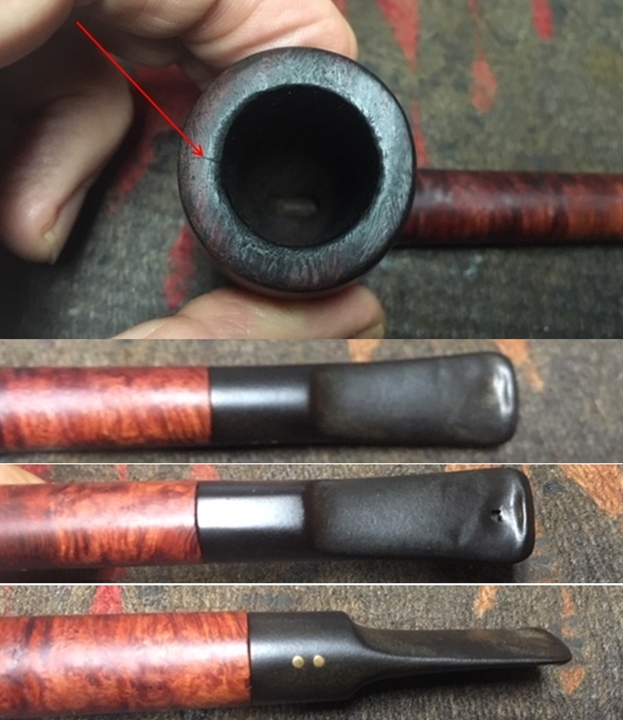
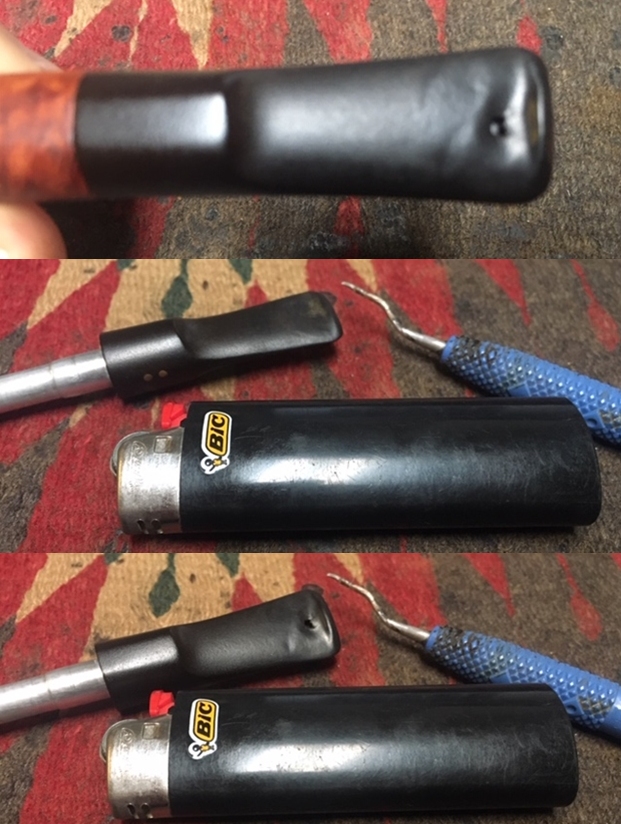
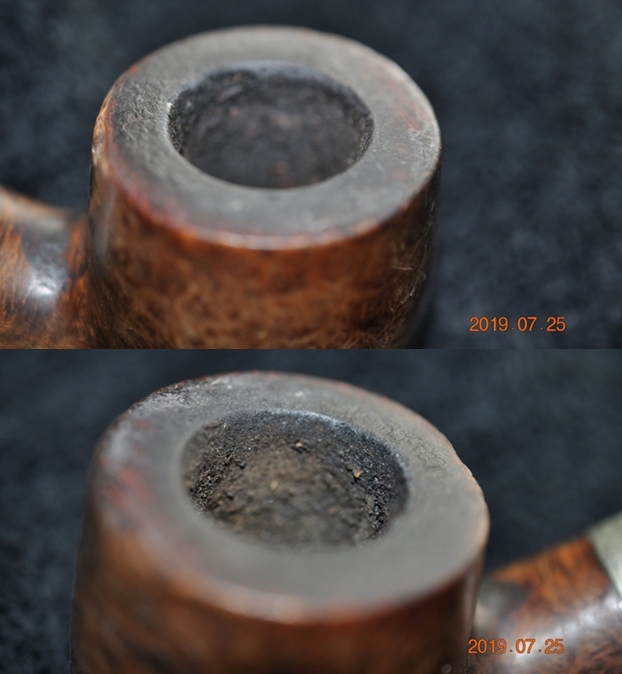
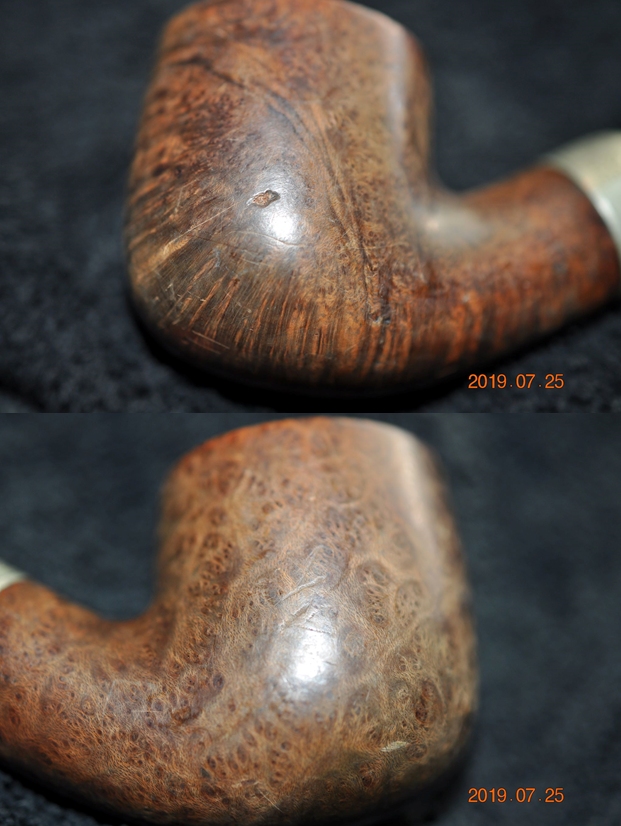
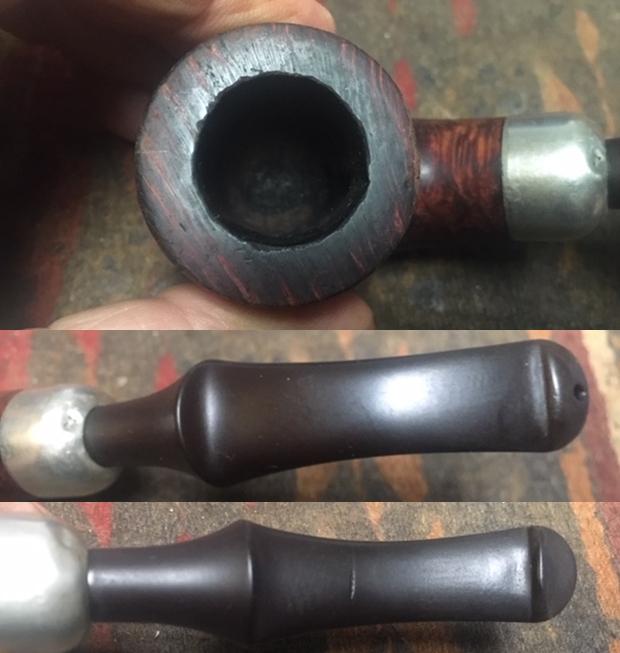
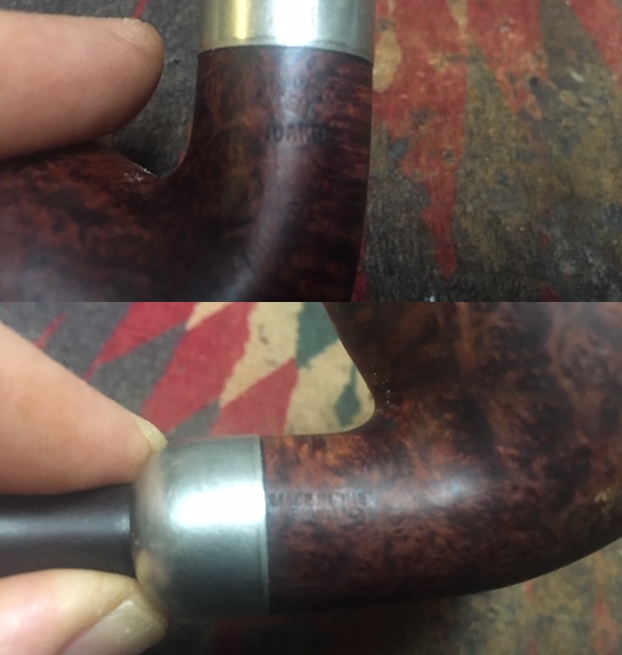
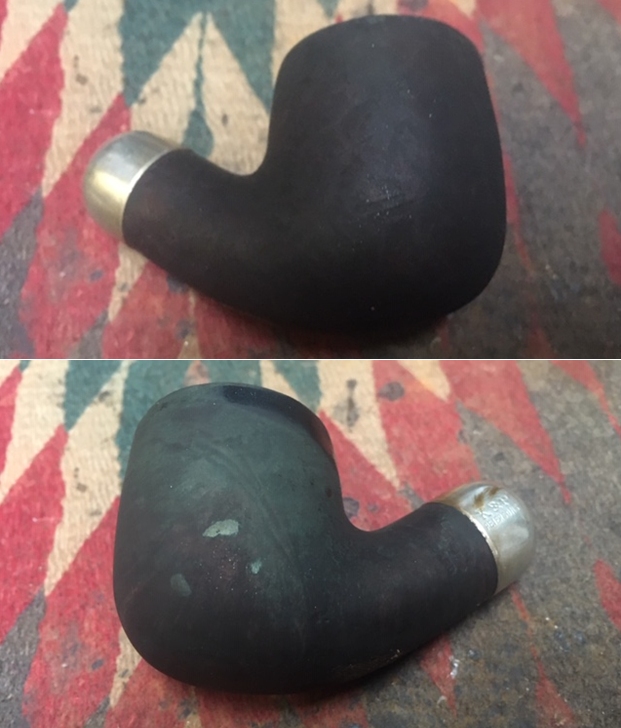
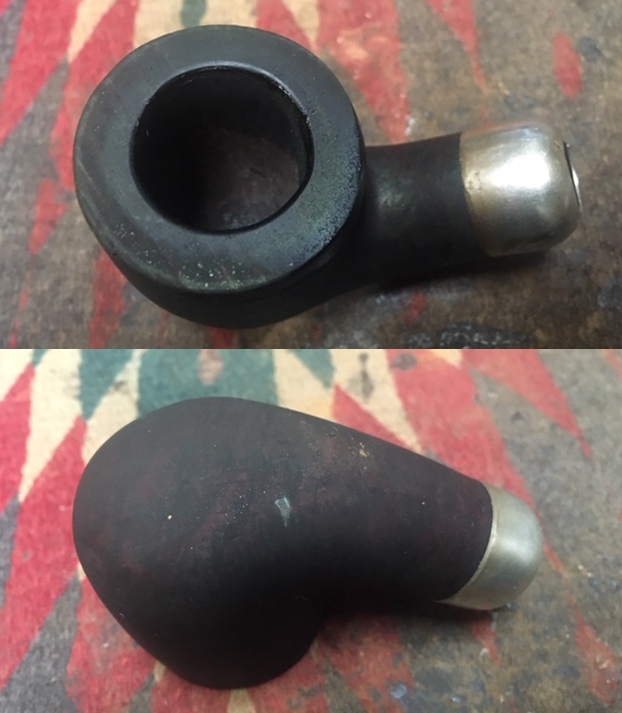
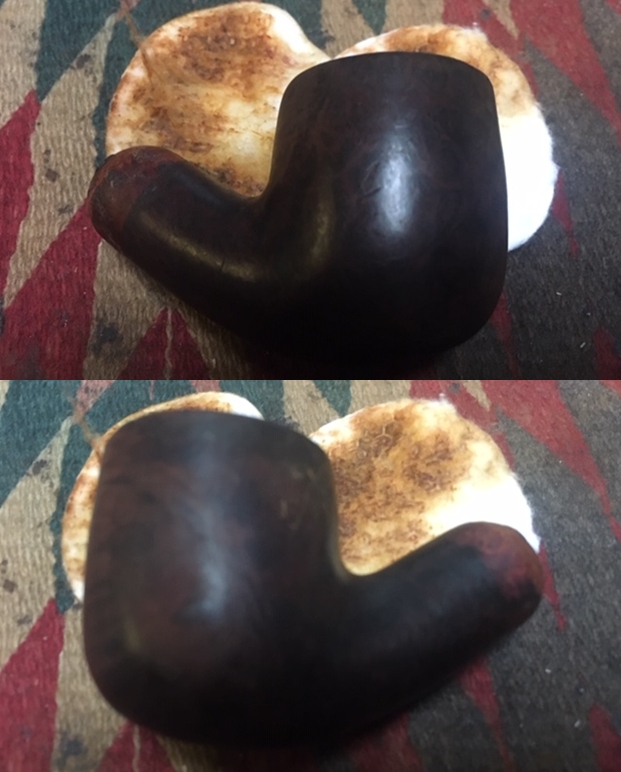
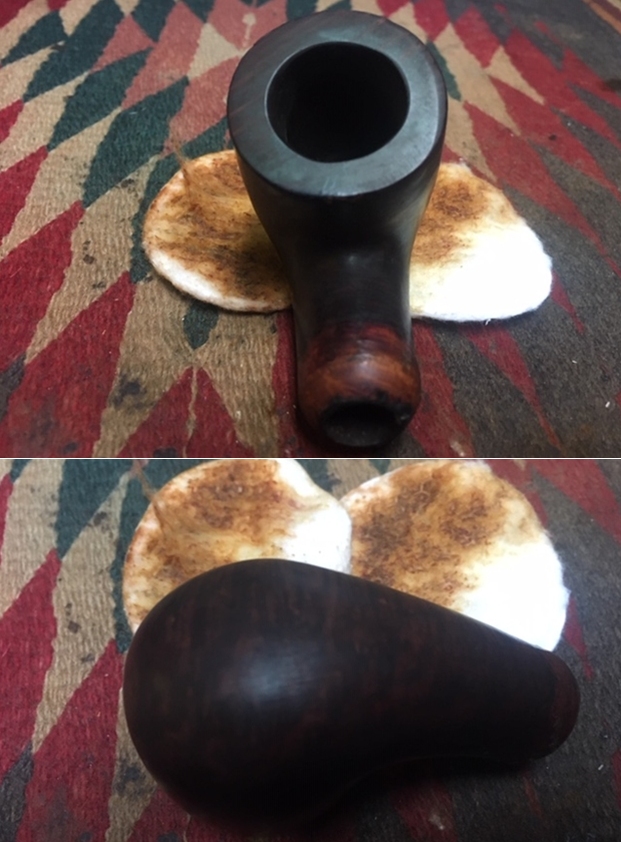
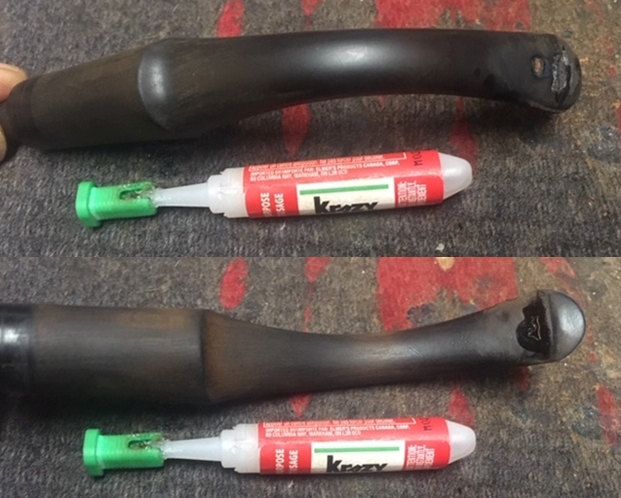
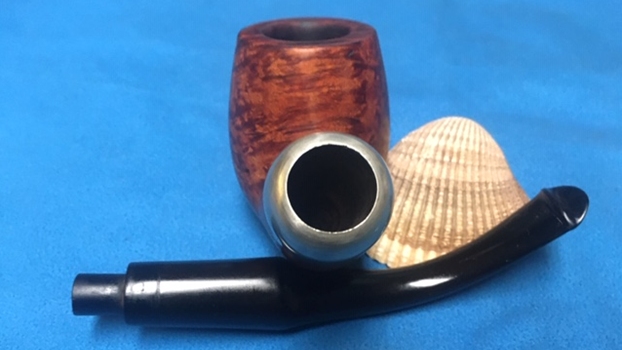
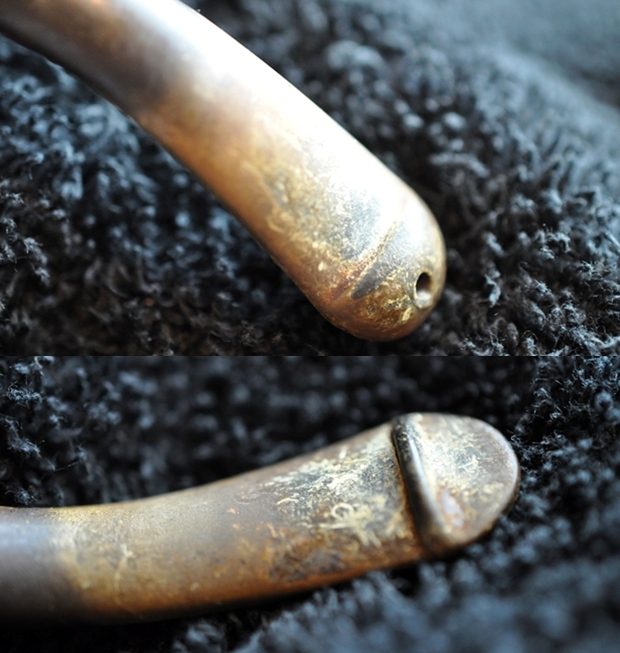
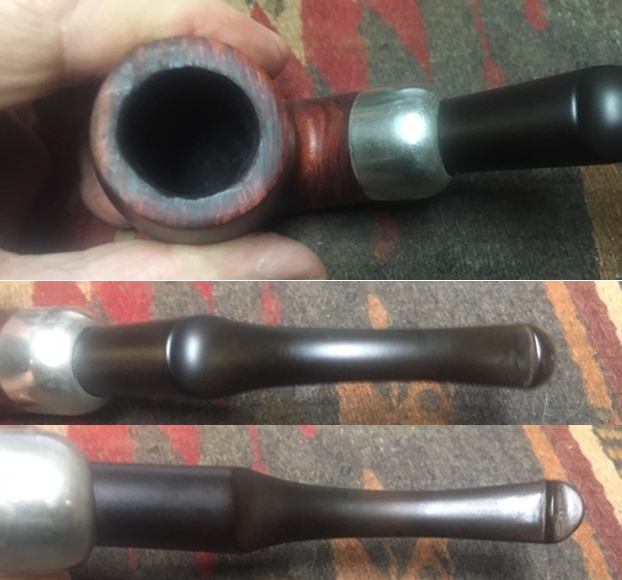
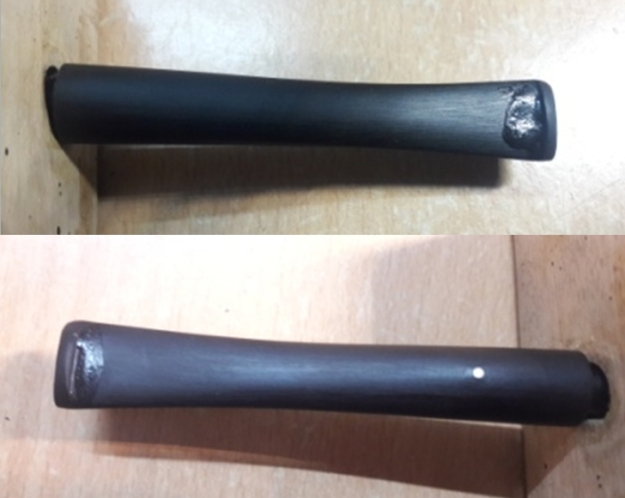
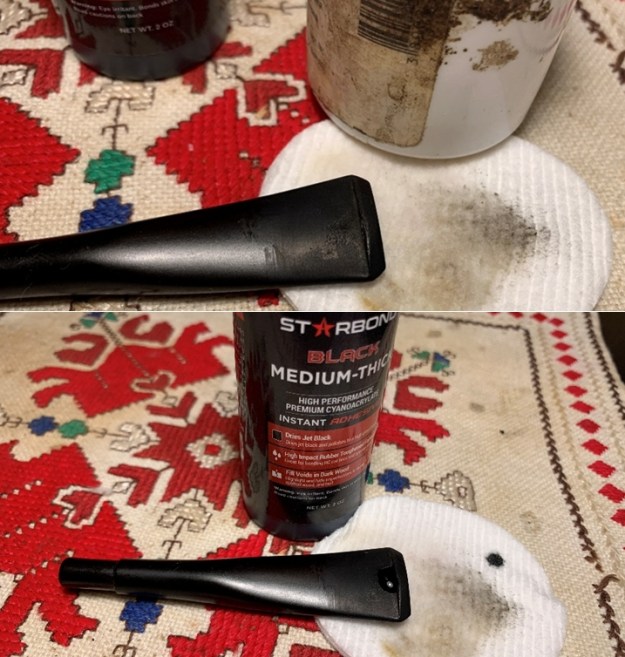
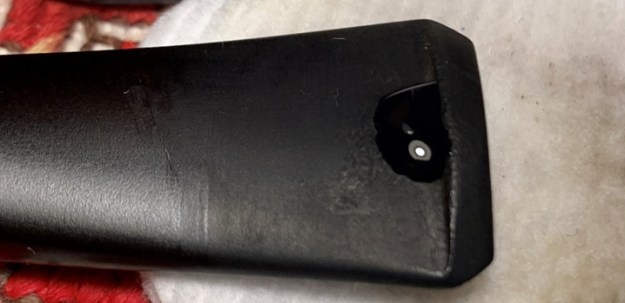
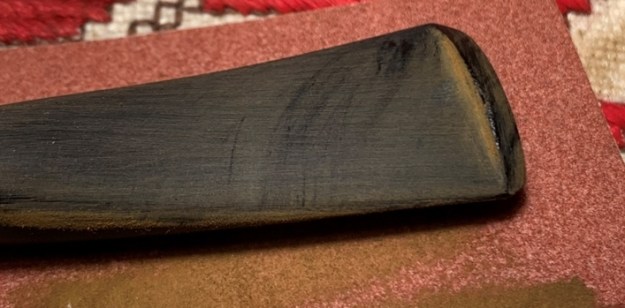
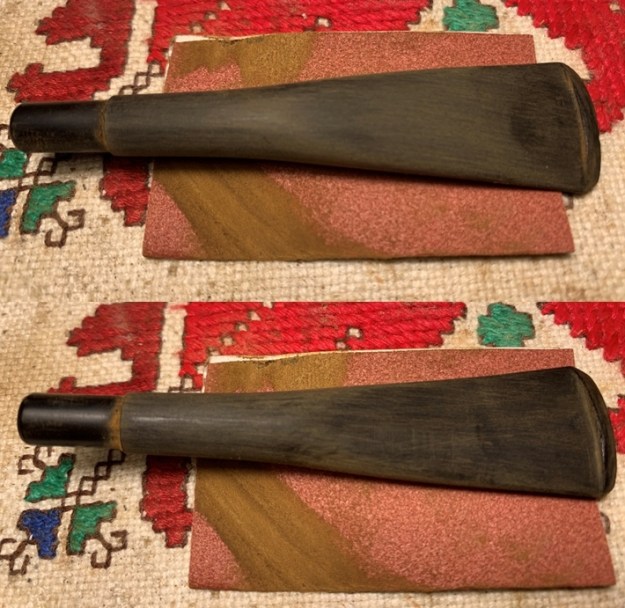
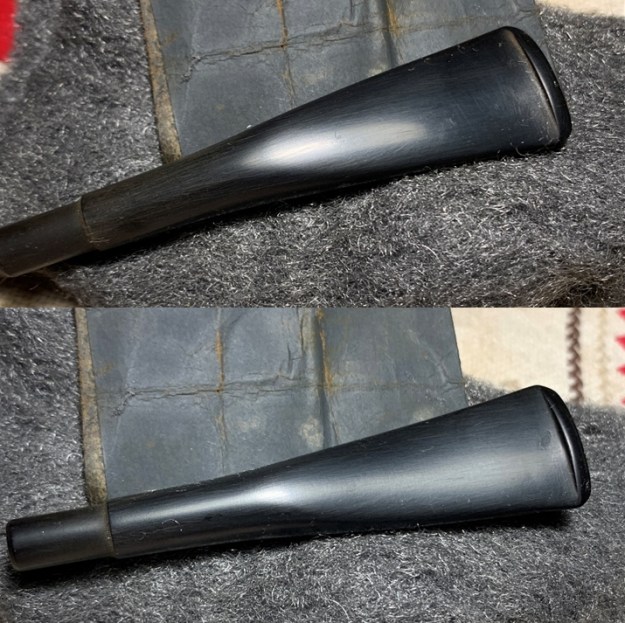
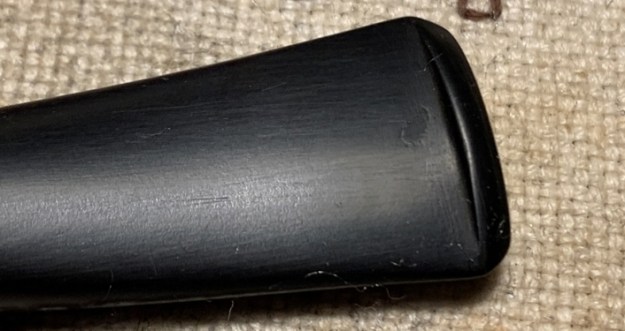
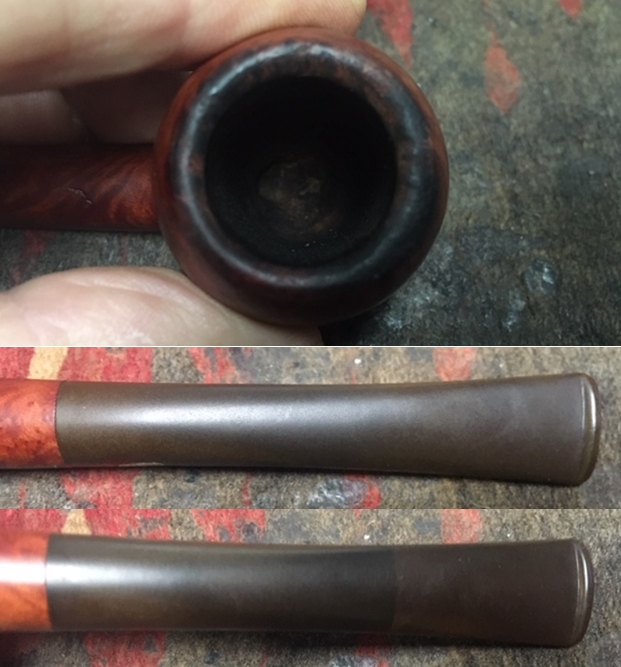
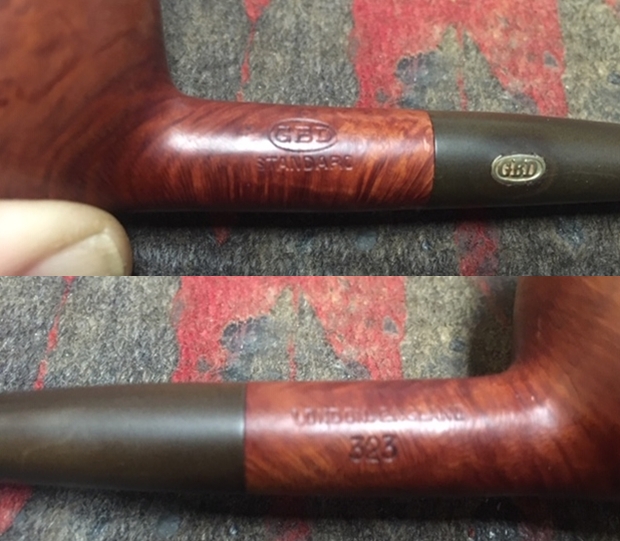
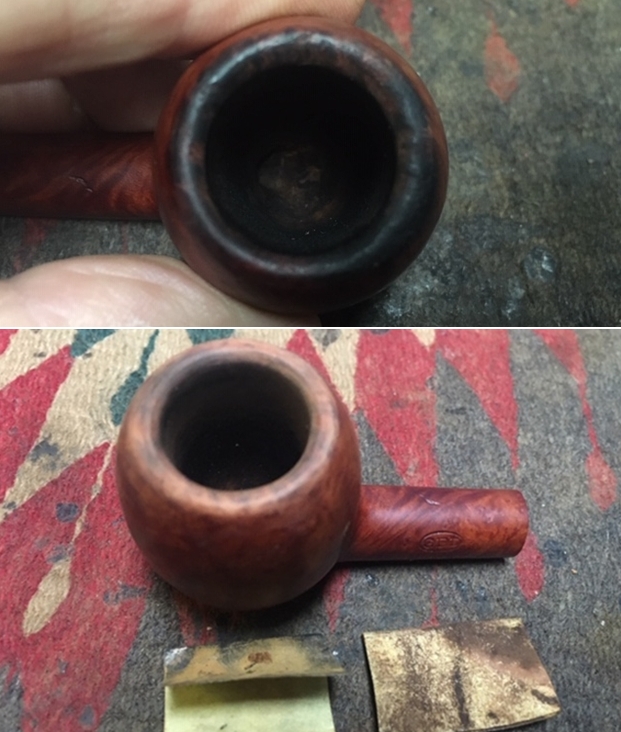
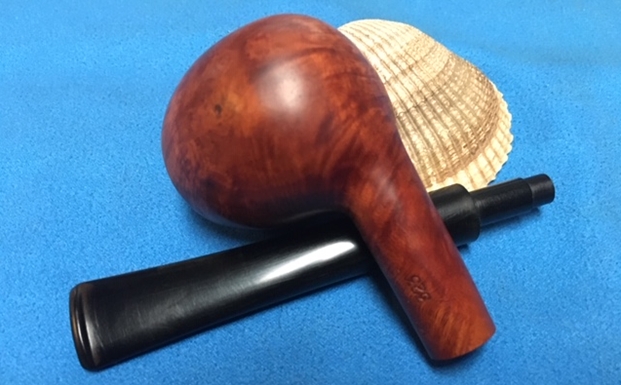
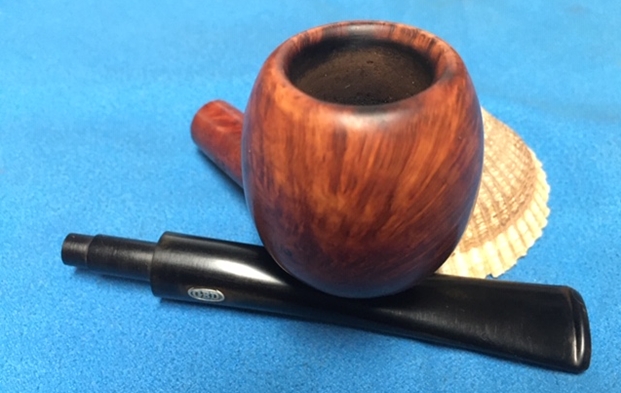
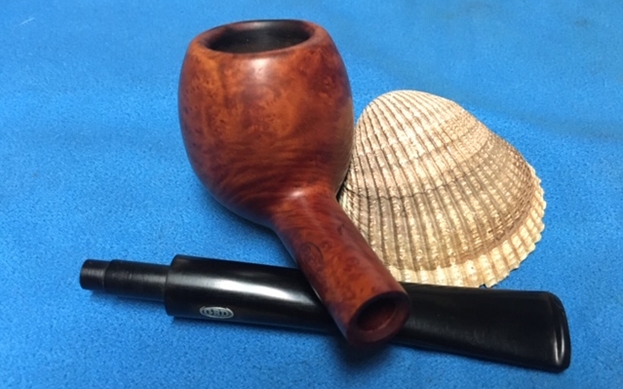
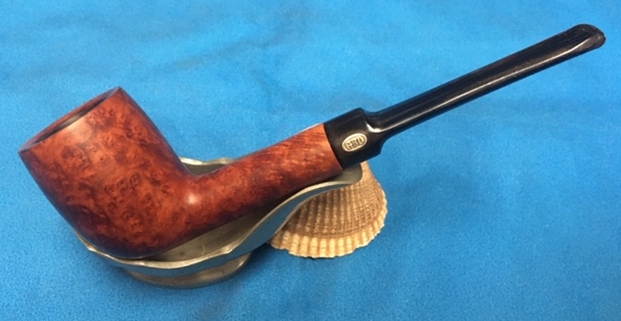
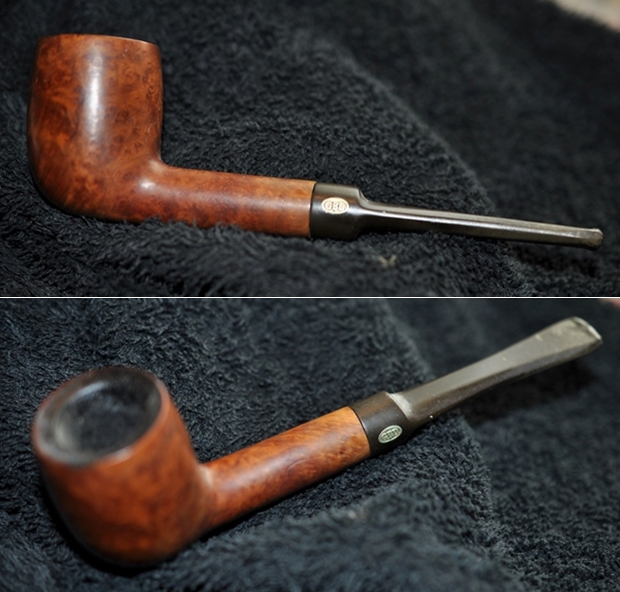
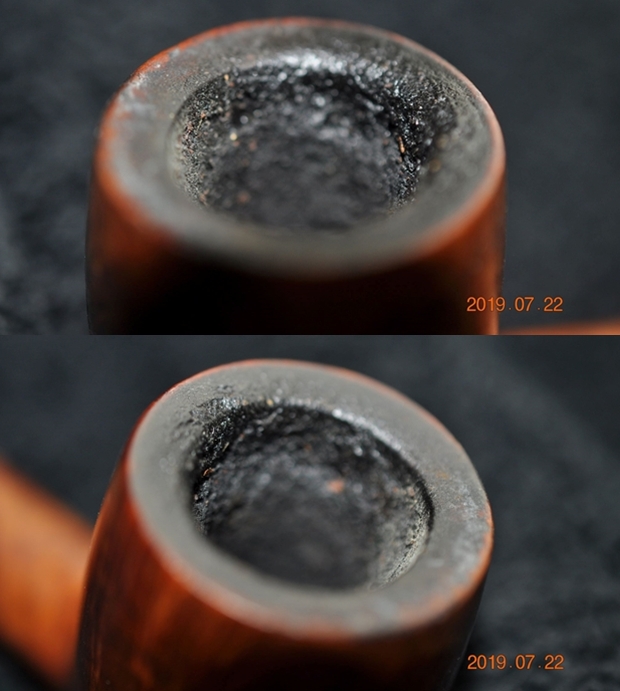
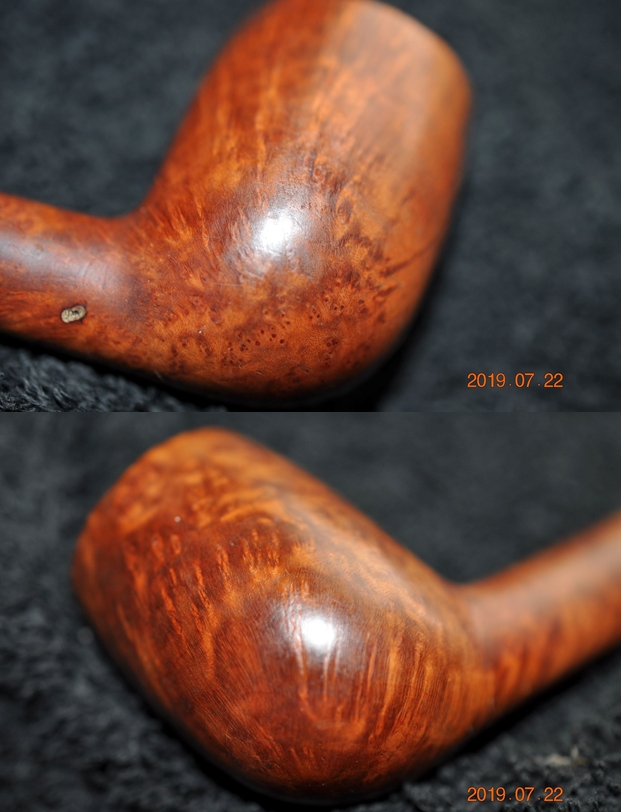
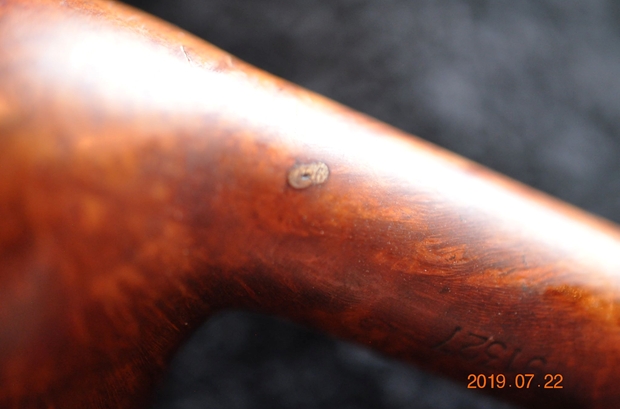
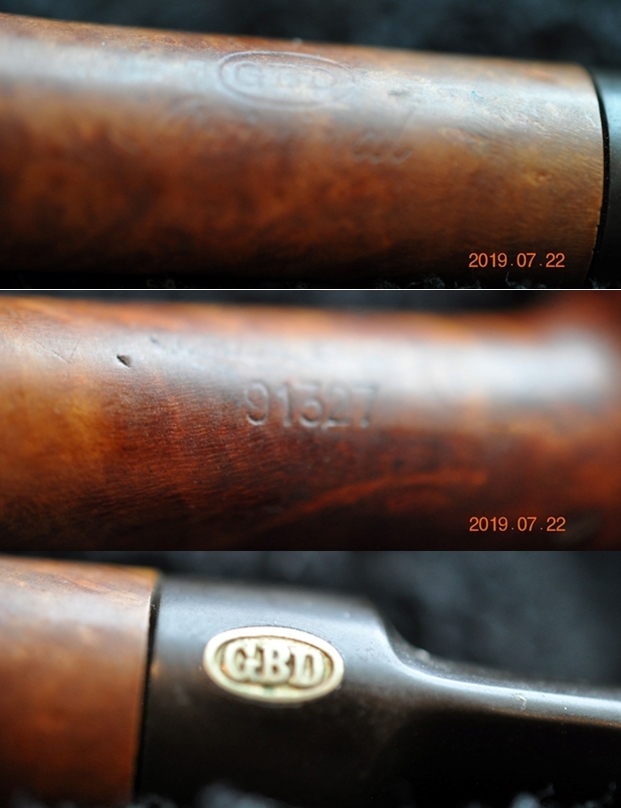
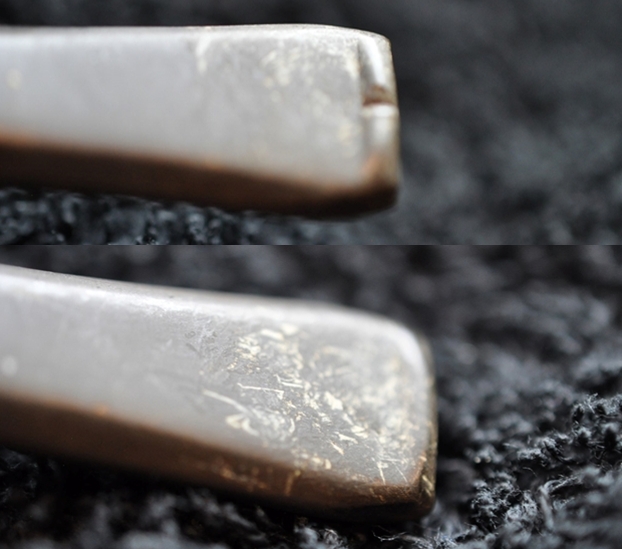
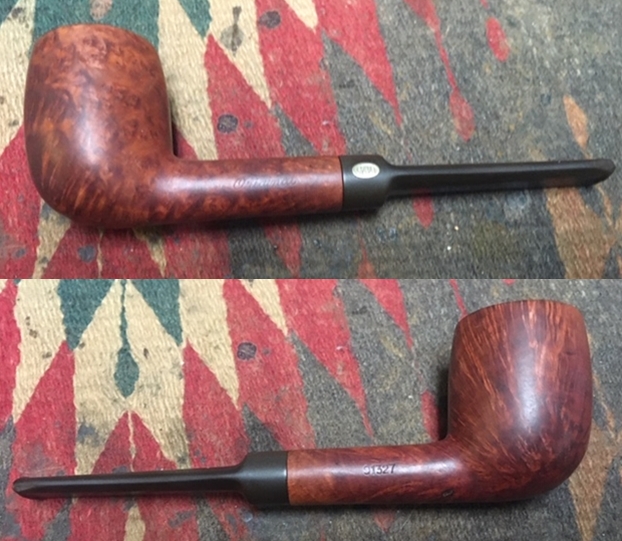
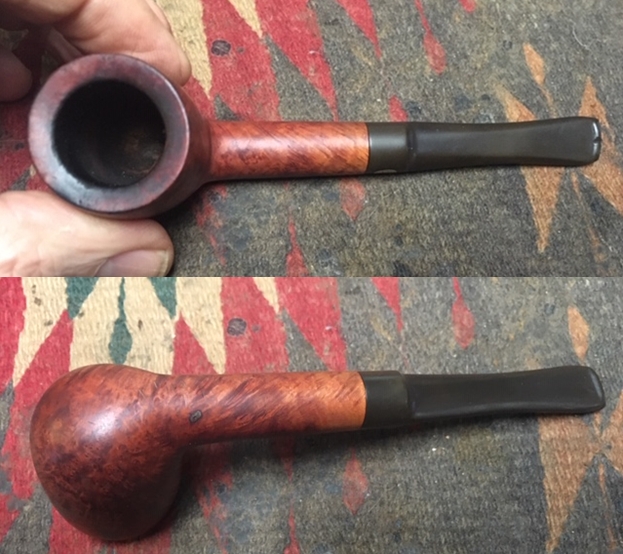
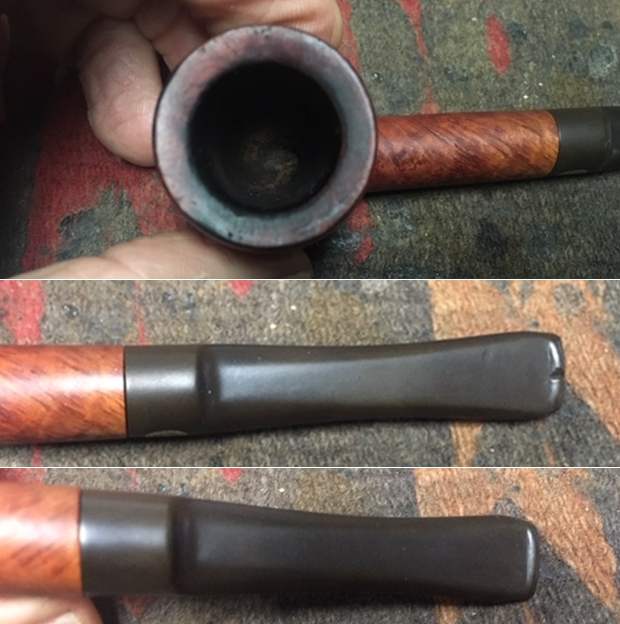
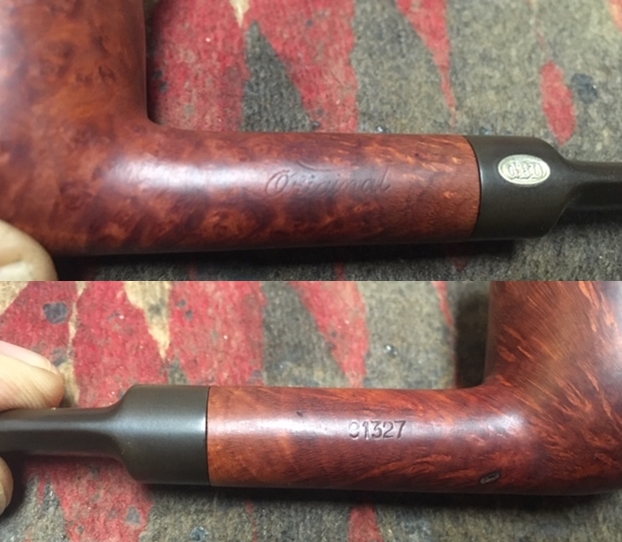
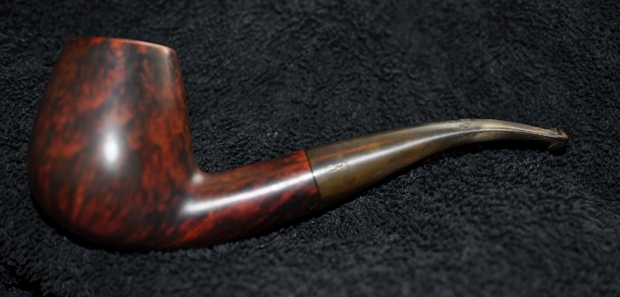
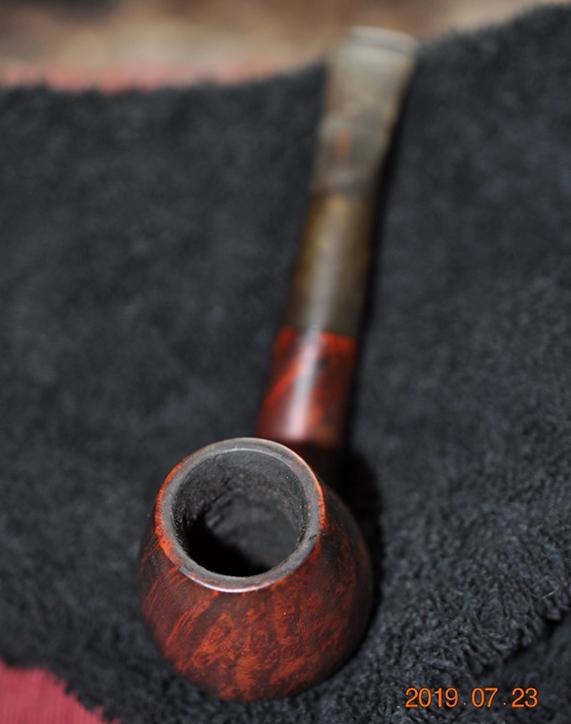
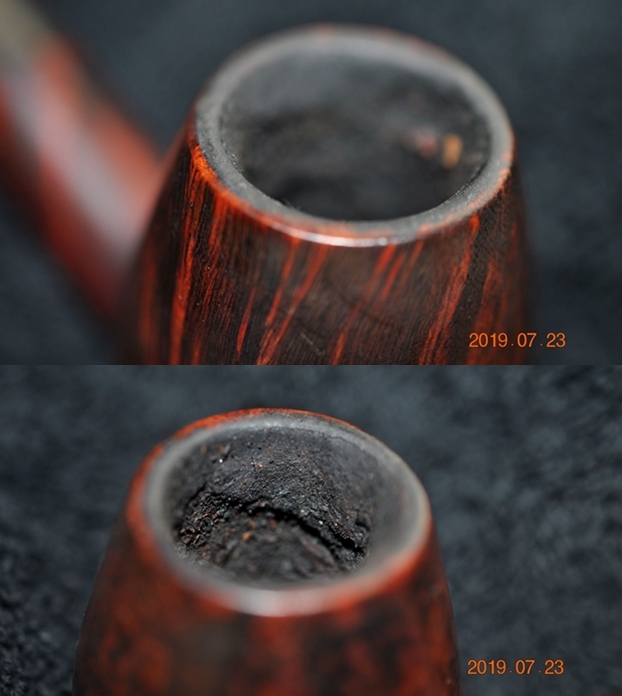
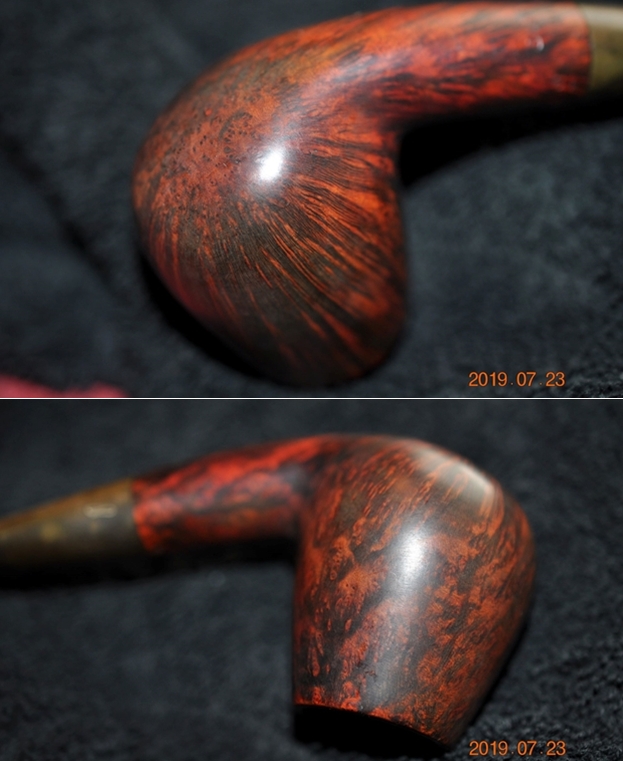
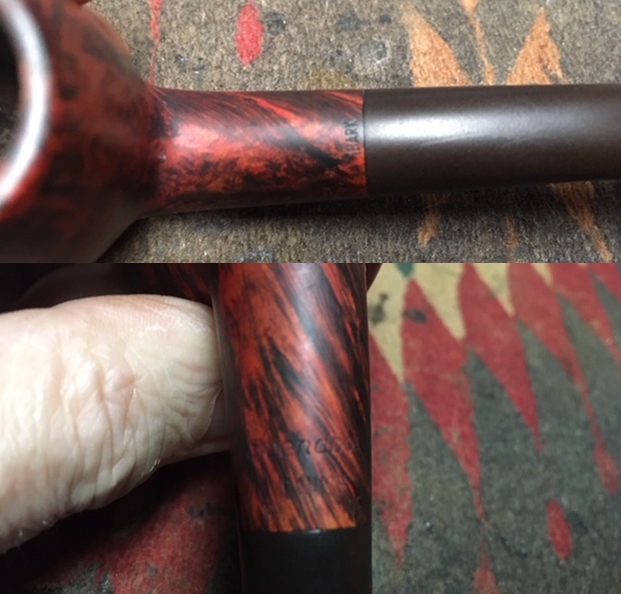
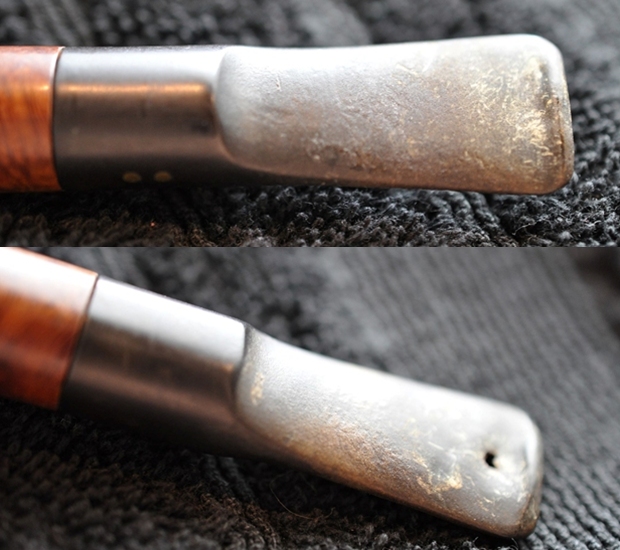
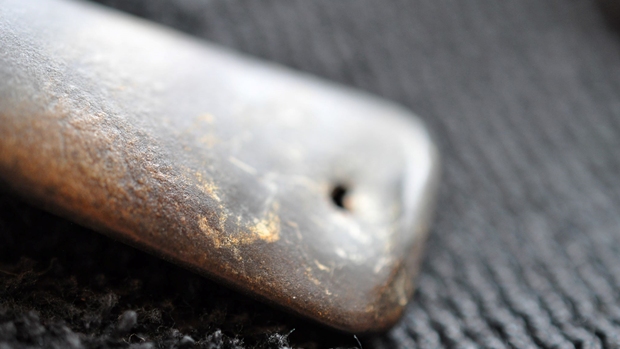
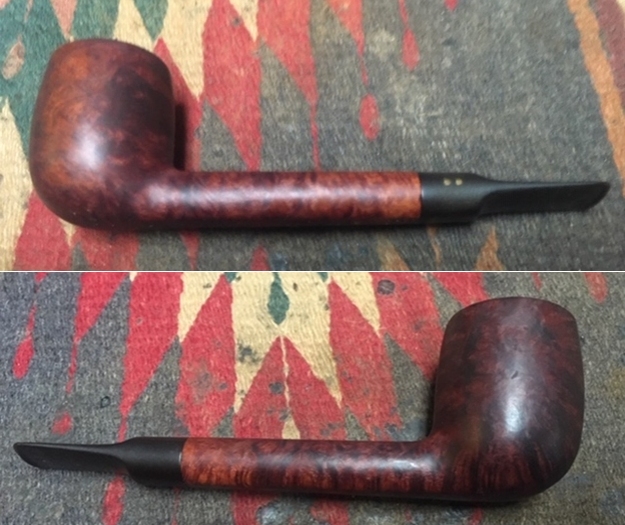
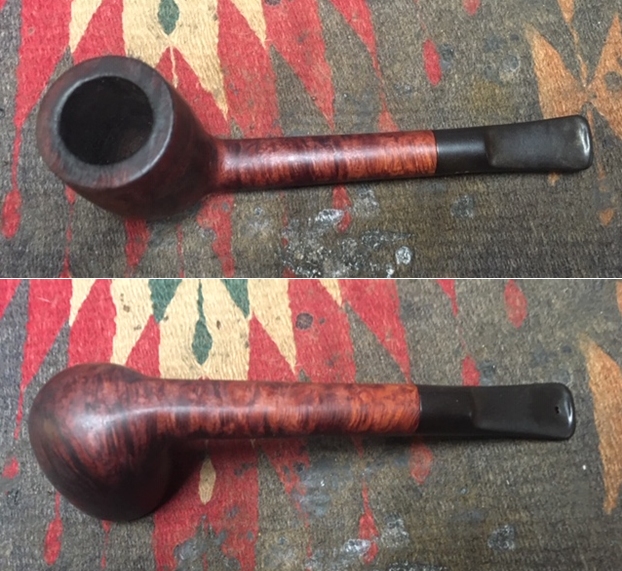
I chose to work on #3 next because of the issue with the stem. It is a Brigham Mixed Grain Lovat. It was stamped on the left side of the shank with faint stamping visible with a lens under light. It reads Brigham over Can. Pat. 372982. On the right side of the shank it was stamped with the shape number 2199. There was a thick cake in the bowl with remnants of tobacco stuck on the walls. There was a lava overflow on the rim. The top and edges of the rim appear to have some damage all the way around the bowl. The grain on the shank and bowl was a combination of grains. Once again, I think that there was a beautiful pipe underneath all of the buildup of years of use. The stem was oxidized and calcified toward the end with some tooth chatter. There were also some tooth marks on both sides of the stem ahead of the button. There was a bite through in the underside of the stem next to the button. There was a pattern of two brass dots on the left side of the saddle stem. Jeff took photos of the pipe before he started his cleanup work on it. Jeff took photos of the bowl and rim top to show the thick, hard cake in the bowl with remnants of tobacco stuck on the walls of the bowl. There was a lava build up on the top of the rim and the edges of the bowl. The rim top looked pretty good but it was hard to know for sure but it appeared that there was damage all around the inner edge. The outer edges of the rim looked to be in decent condition.  Jeff took a photo of the side and heel of the bowl to show the condition of the finish. You can see the beautiful grain around the side of the bowl and shank. Even under the dirt and debris of the years it looked very good. The stamping is very faint and cannot be captured even with a flash. He included a pic of the two brass dots on the stem and a few nicks in the shank edge.Jeff took photos of the top and underside of the stem showing the tooth chatter, scratching and oxidation on the stem surface and wear on the edges of the button. The second photo also shows the bite through on the underside near the button.  The third photo shows a close-up of the hole. I am also including the information from Pipedia’s article on Brigham pipes. It is a great read in terms of the history of the brand (https://pipedia.org/wiki/Brigham_Pipes). Charles Lemon (Dadspipes) is currently working on a book on the history of the brand. Until that is complete this article is a good summary. I have included it below.
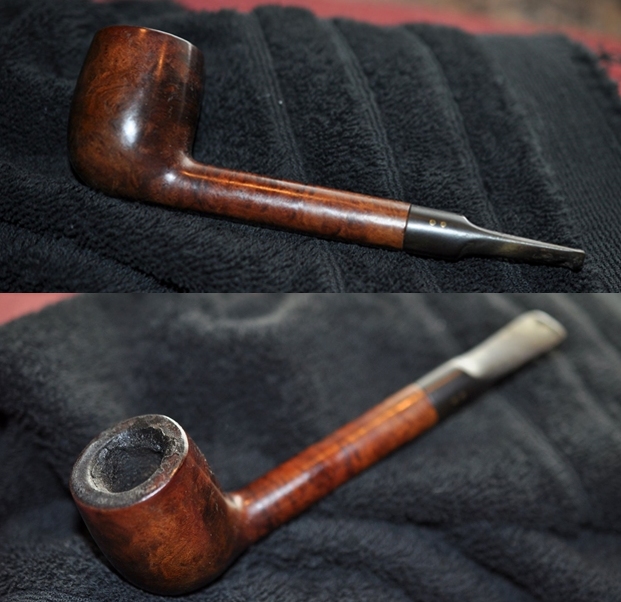
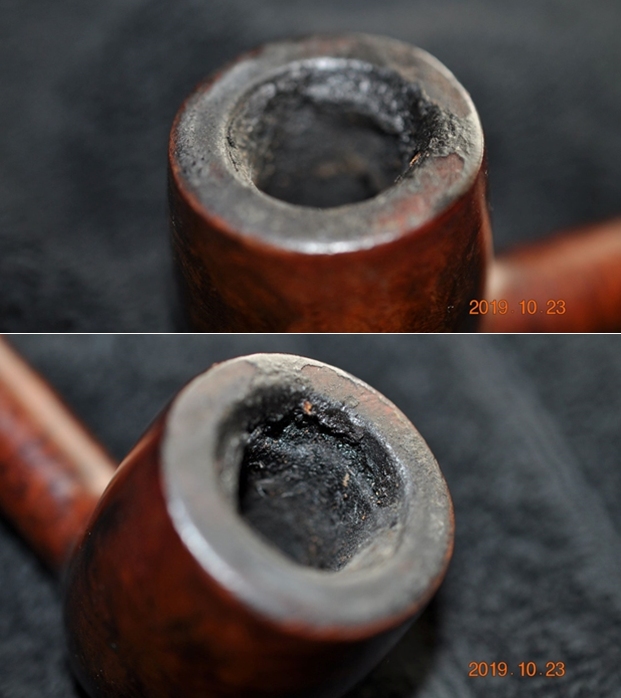
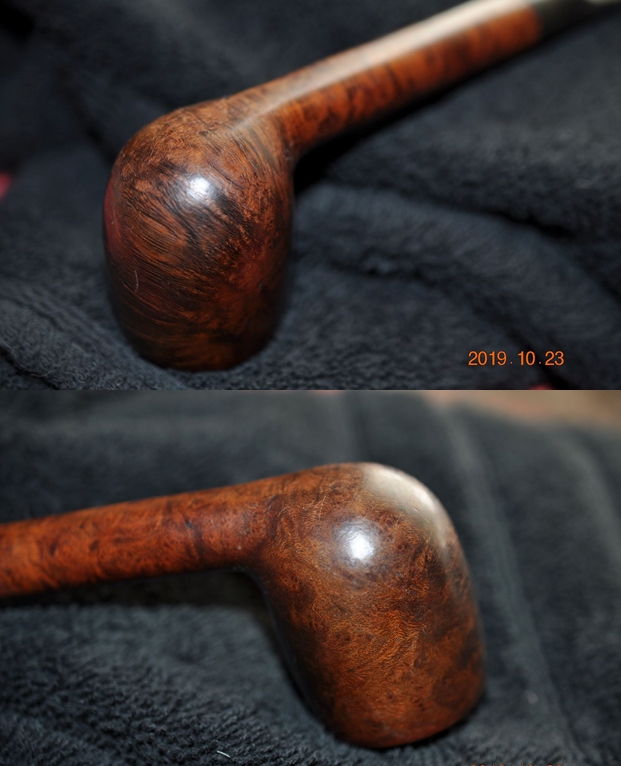
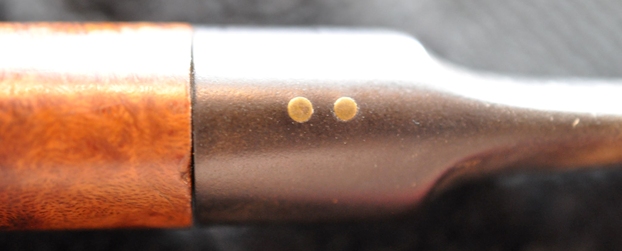
Roy Brigham, after serving an apprenticeship under an Austrian pipesmith, started his own pipe repair shop in Toronto, in 1906. By 1918 the business had grown to include five other craftsmen and had developed a reputation across Canada for the high quality of workmanship. After repairing many different brands of pipes over the years, Roy noted certain recurring complaints by pipe smokers, the most common referred to as “tongue bite”. Tongue bite is a burning sensation on the smoker’s tongue, previously thought to be due to the heat of the smoke (i.e. a “hot smoking pipe”).

He soon began manufacturing his own pipes, which were lightweight, yet featured a more rugged construction, strengthening the weak points observed in other pipes. The problem of tongue bite intrigued him, and he decided to make overcoming it a future goal.

About 1938, Roy’s son Herb joined him to assist in the business. The business barely survived the great depression because pipes were considered to be a luxury, not a necessity, and selling pipes was difficult indeed. In approximately 1937 [1], after some experimentation, Roy and Herb discovered that tongue bite was in fact a form of mild chemical burn to the tongue, caused by tars and acids in the smoke. They found that by filtering the smoke, it was possible to retain the flavour of the tobacco and yet remove these impurities and thereby stop the tongue bite.

Just as Thomas Edison had searched far and wide for the perfect material from which to make the first electric light bulb filaments, Roy & Herb began experimenting with many materials, both common and exotic, in the quest for the perfect pipe filter. Results varied wildly. Most of the materials didn’t work at all and some actually imparted their own flavour into the smoke. They eventually found just two materials that were satisfactory in pipes: bamboo and rock maple. As bamboo was obviously not as readily available, rock maple then became the logical choice.

They were able to manufacture a replaceable hollow wooden tube made from rock maple dowelling, which when inserted into a specially made pipe, caused absolutely no restriction to the draw of the pipe, yet extracted many of the impurities which had caused tongue bite. The result was indeed a truly better smoking pipe…

I wrote to Charles Lemon (Dadspipes) and asked him about the stamping on the pipe. He responded with information on all of the foursome. I am including the information on this particular pipe.

Hey Steve! Good to hear from you.

Shape 2199 is what most would call a Lovat. Brigham called it a Club for whatever reason- just to be different, perhaps!…As these are all Patent pipes, it’s more accurate to refer to their grade by name (the post 1980 grading scheme refers to Dots). Here is the original scheme:With the information from Charles’ message and the chart above that he included I knew what I was dealing with in terms of the stamping and the age of this pipe. I learned that this Patent Era 2199 is a Brigham Select (2-Dot) 01 Lovat or what they call a Club. It was made between 1938 and 1955. Most of Bob’s pipes were purchased in the 50s and 60s so my guess is that this is fits that time frame well. Now it was time to work on the pipe.

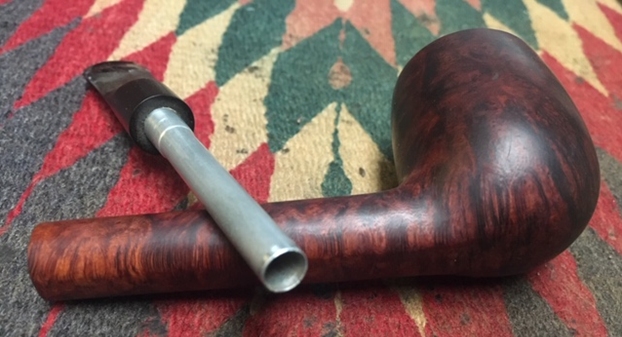
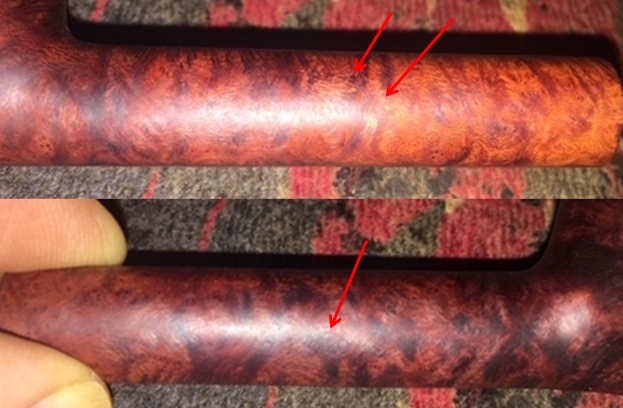
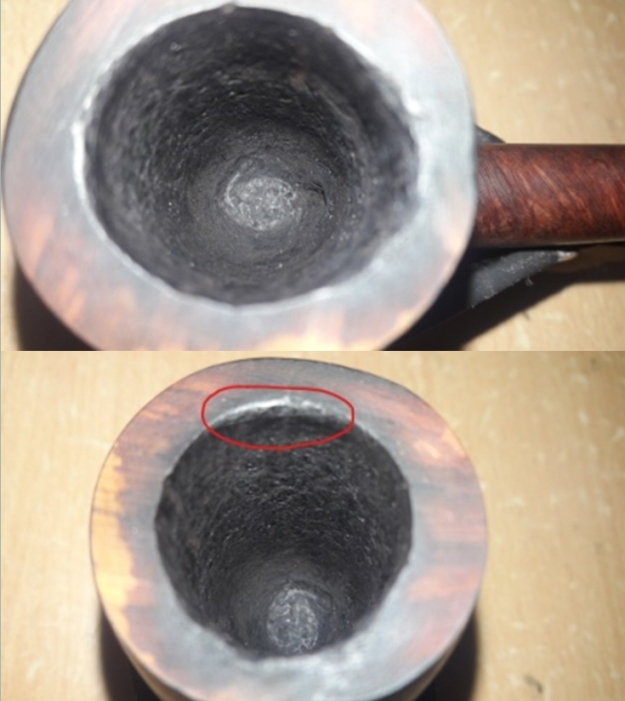
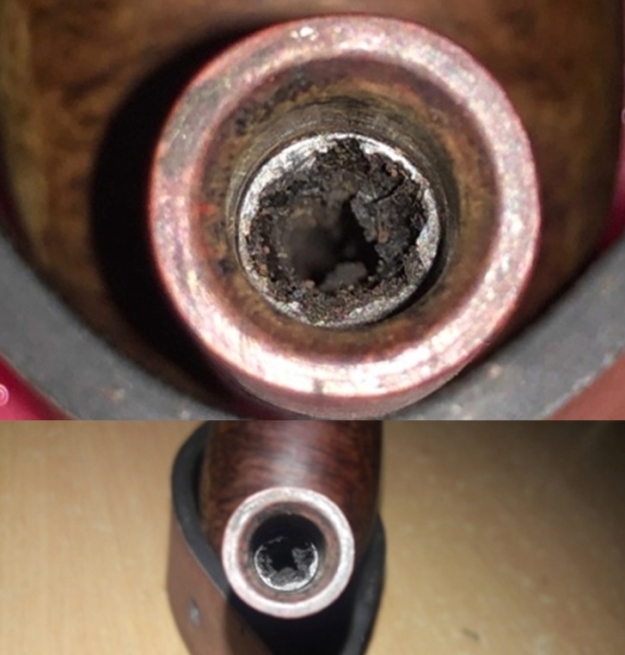
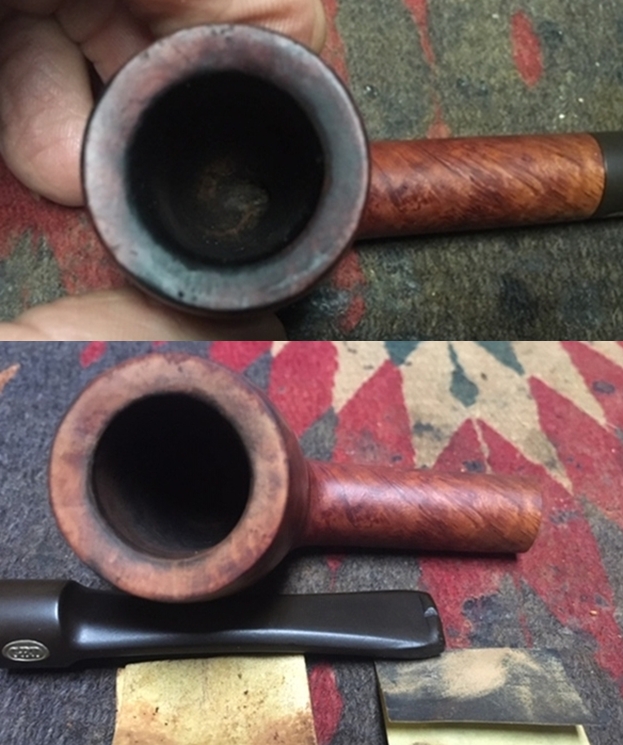
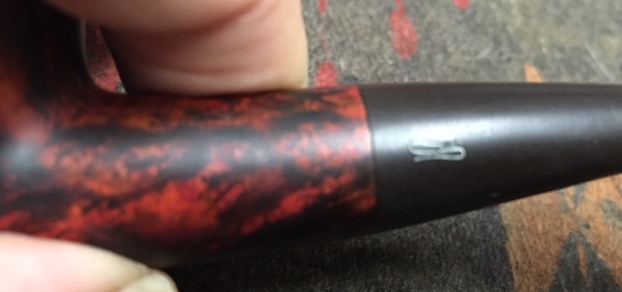
I am really happy to have Jeff’s help on cleaning up the pipes from Bob’s estate as the 125+ pipes were taking me a long time to do alone. He cleaned this filthy pipe with his usual penchant for thoroughness that I really appreciate. This one was a real mess and I did not know what to expect when I unwrapped it from his box. He reamed it with a PipNet pipe reamer and cleaned up the reaming with a Savinelli Fitsall Pipe Knife. He scrubbed out the internals with alcohol, pipe cleaners and cotton swabs until the pipe was clean. He scrubbed the exterior of the bowl with Murphy’s Oil Soap and a tooth brush to remove the grime and grit on the briar and the lava on the rim top. The finish looks very good with great looking grain around the bowl and shank. Jeff soaked the stem in Before & After Deoxidizer to remove the oxidation on the rubber. When the pipe arrived here in Vancouver for the second stop of its restoration tour I was amazed it looked so good. I took some close up photos of the rim top and also of the stem surface. I wanted to show what an amazing job Jeff did in the cleanup of the rim top. The rim top was darkened with nicks and notches around the top and inner edge. There is a deep scratch in the rim top that looks almost like a crack. I have drawn an arrow to the spot on the rim top. The inner edge was a little rough and looked like the bowl had burned at some time in its life. I also took close up photos of the stem to show the tooth marks and chatter on the stem surface. There was a bite through on the underside of the stem near the button.  I took the stem off the shank to show the aluminum tenon/tube that was used to hold the Brigham Rock Maple Distillator. The original Distillator (filter) had been filthy so after Jeff had cleaned the pipe up he threw it away. I will replace it once I have finished with the restoration.This was a tough pipe to photograph the stamping on because it was very faint. When it starts out faint it is very easy to lose even that remnant of a stamp. But one of the things I appreciate about Jeff’s cleanup is that he works to protect and preserve the nomenclature on the shank of the pipes that he works on. I took some photos to show the stamping. In the first photo the arrow on the left is pointed to where Brigham is stamped and the arrow on the right is pointing to the Can. Pat. Number. In the second photo the arrow points at the shape number.  Thanks Jeff for being so careful in the cleanup. Much appreciated.Since this is another pipe Bob’s estate I am sure that some of you have read at least some of the other restoration work that has been done on the previous pipes. You have also read what I have included about Bob Kerr, the pipeman who held these pipes in trust before I came to work on them (see photo to the left). Also, if you have followed the blog for long you will already know that I like to include background information on the pipeman whose pipes I am restoring. For me, when I am working on an estate I really like to have a sense of the person who held the pipes in trust before I worked on them. It gives me another dimension of the restoration work. Bob’s daughter wrote a short tribute to her father. I thank you Brian and tell your wife thank you as well.
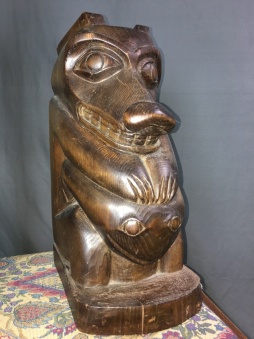
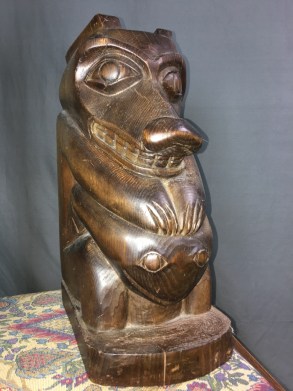
I am delighted to pass on these beloved pipes of my father’s. I hope each user gets many hours of contemplative pleasure as he did. I remember the aroma of tobacco in the rec room, as he put up his feet on his lazy boy. He’d be first at the paper then, no one could touch it before him. Maybe there would be a movie on with an actor smoking a pipe. He would have very definite opinions on whether the performer was a ‘real’ smoker or not, a distinction which I could never see but it would be very clear to him. He worked by day as a sales manager of a paper products company, a job he hated. What he longed for was the life of an artist, so on the weekends and sometimes mid-week evenings he would journey to his workshop and come out with wood sculptures, all of which he declared as crap but every one of them treasured by my sister and myself. Enjoy the pipes, and maybe a little of his creative spirit will enter you!

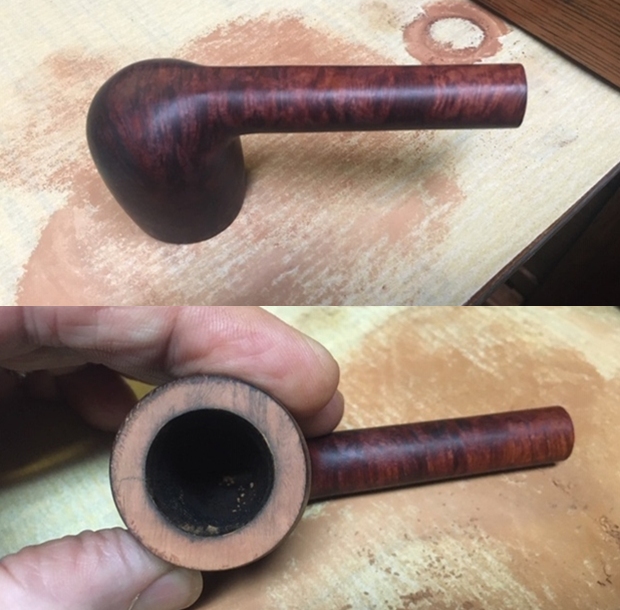
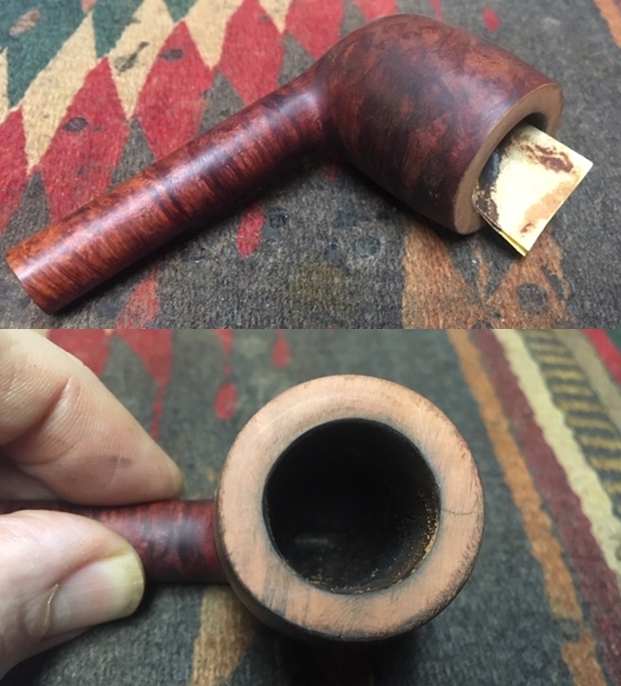
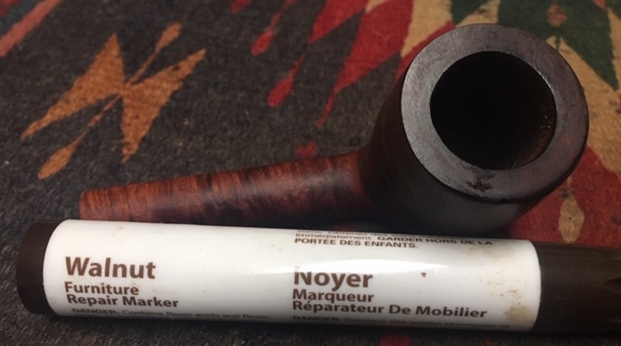
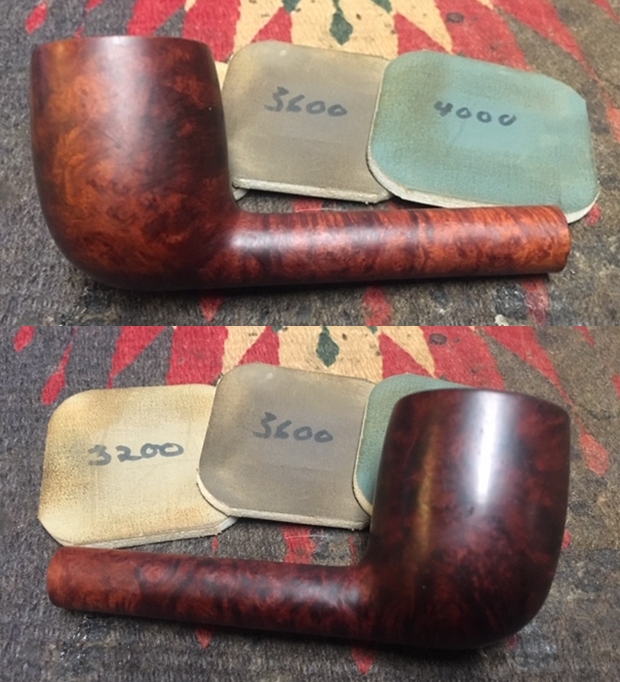
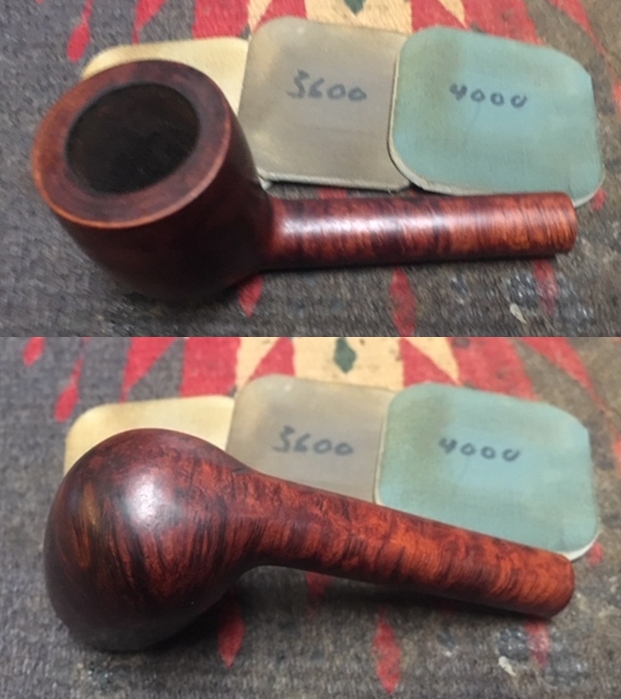
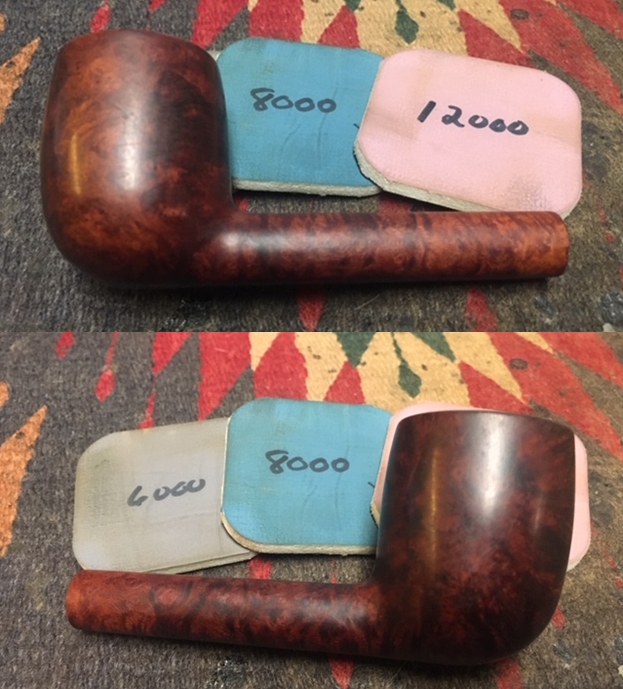
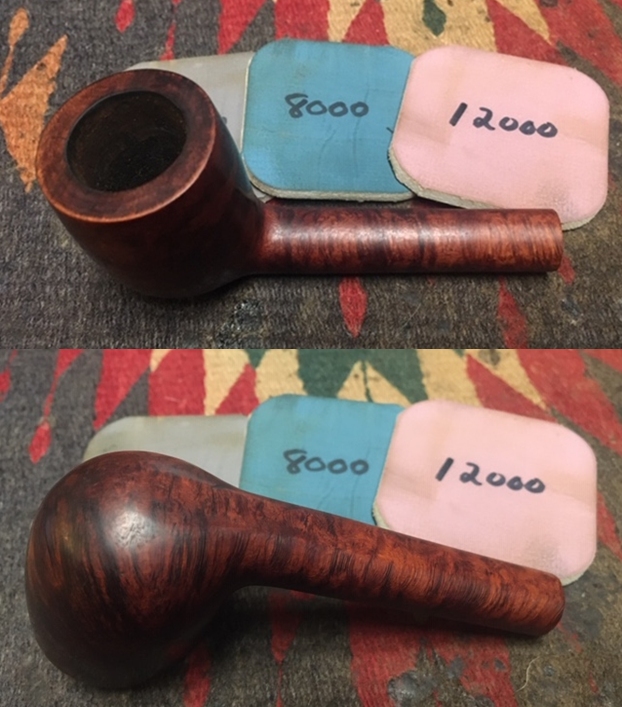
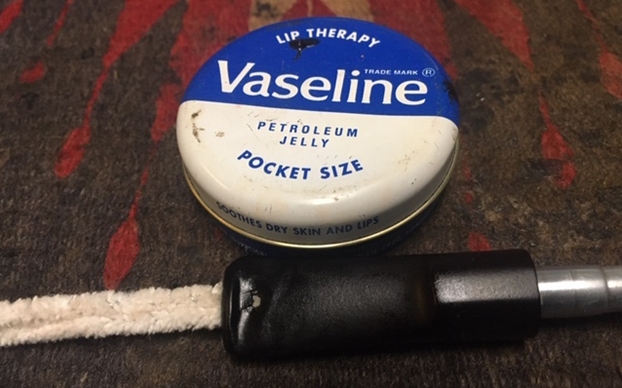
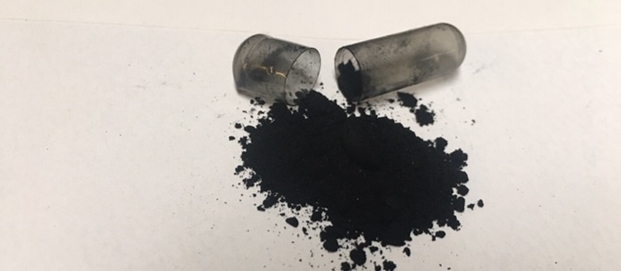
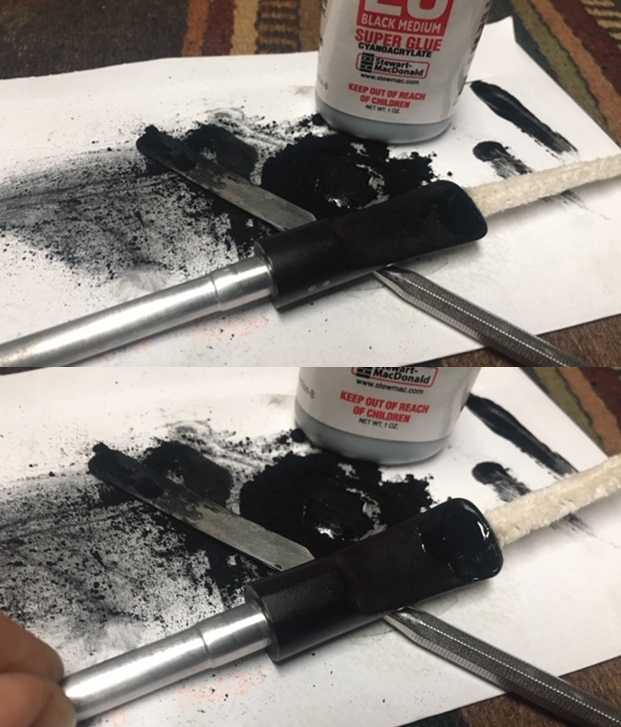
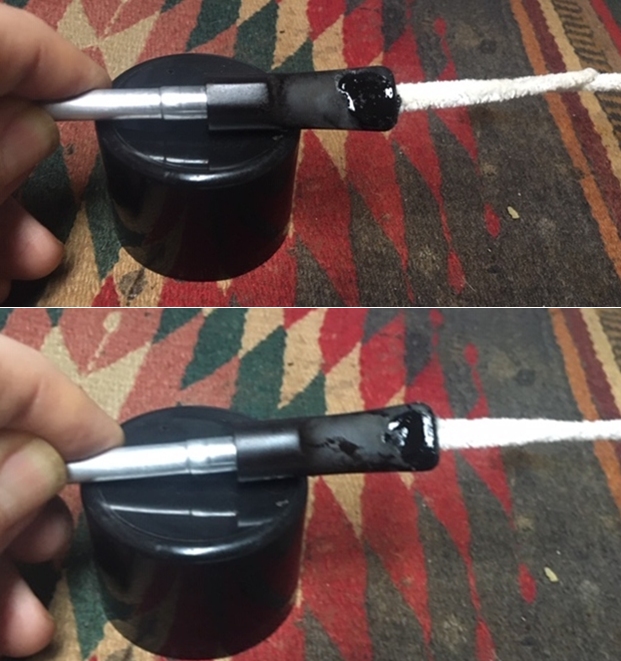
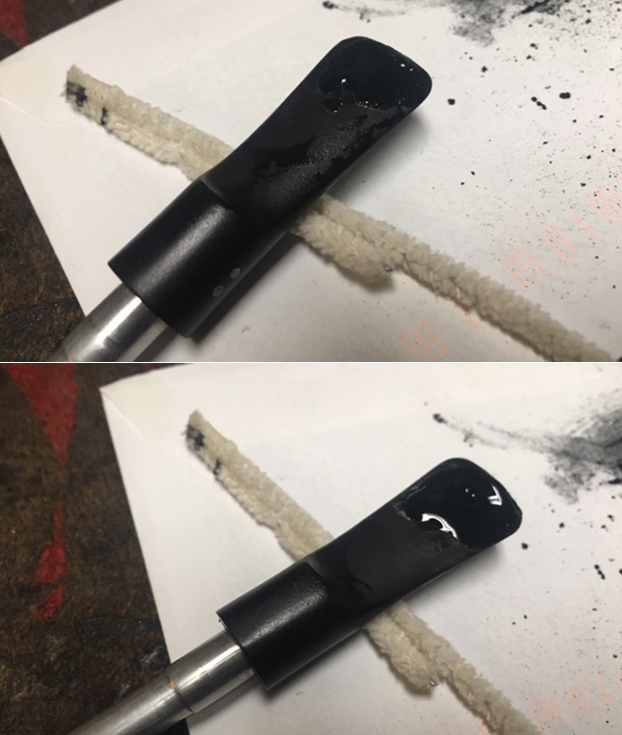
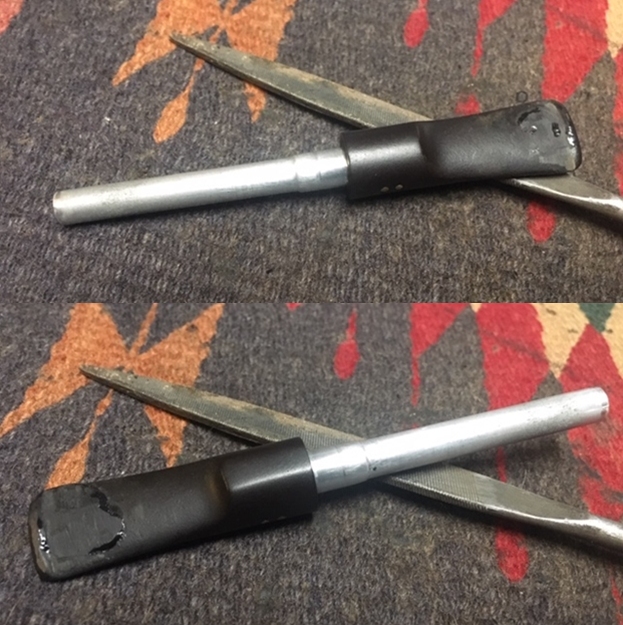
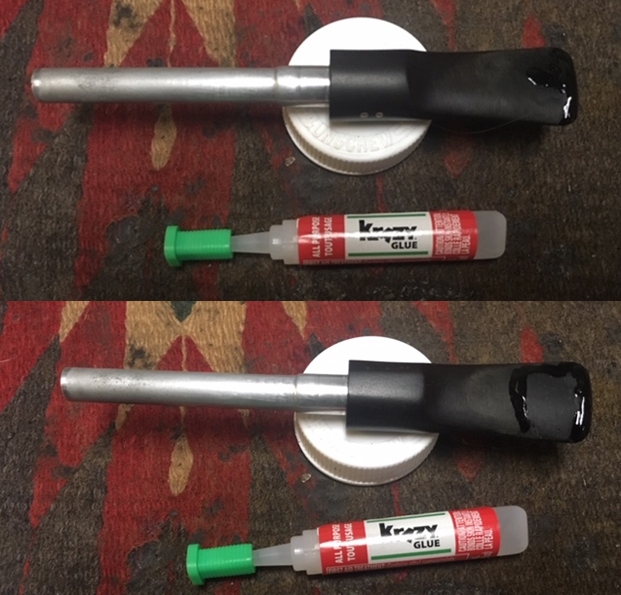
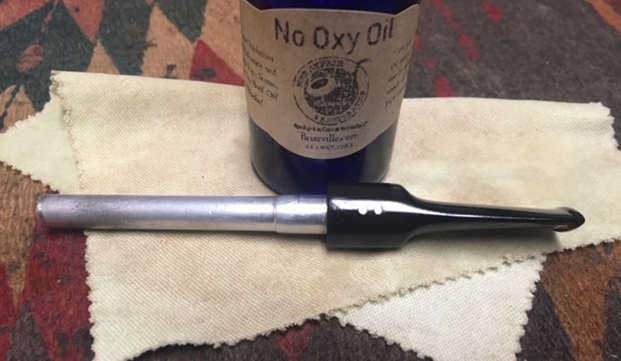
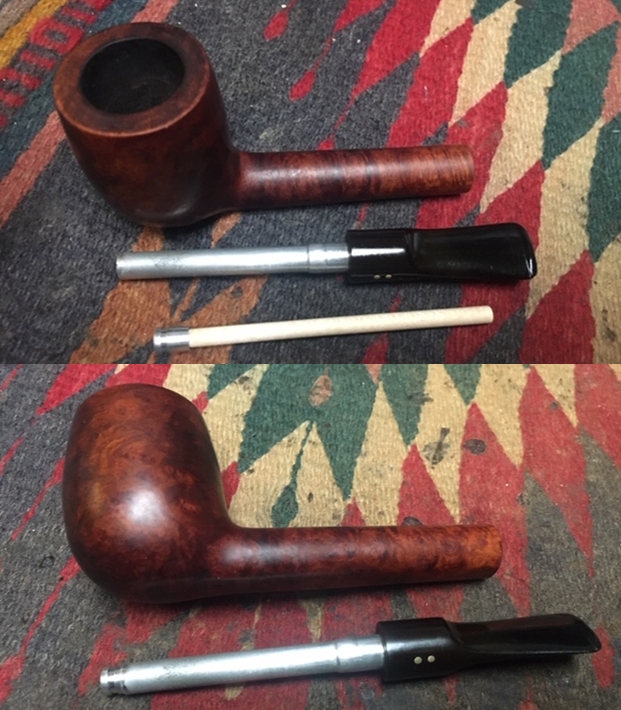
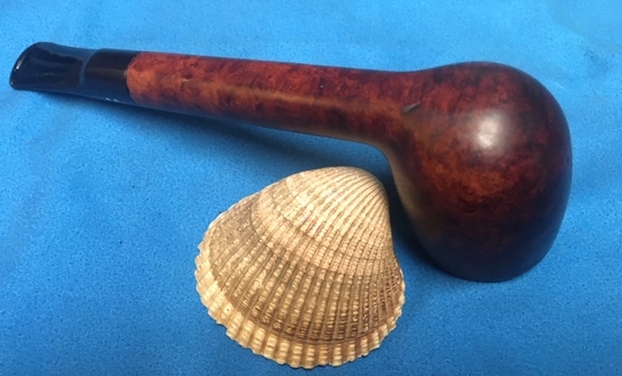
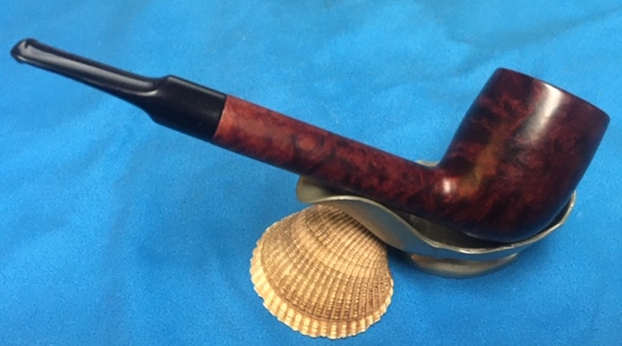
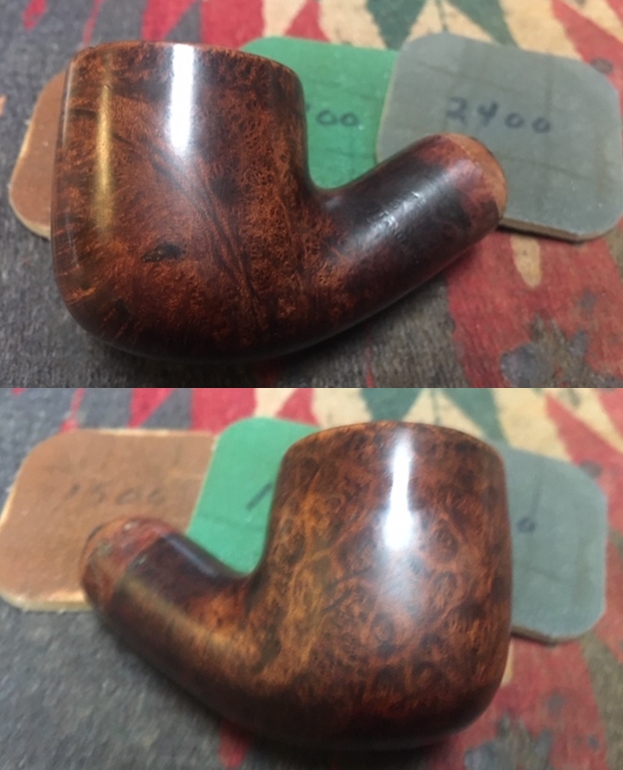
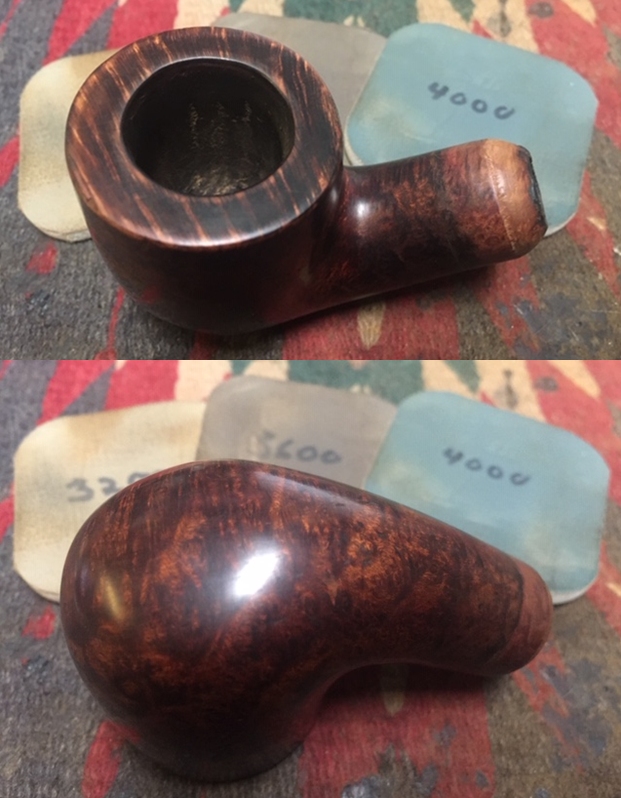
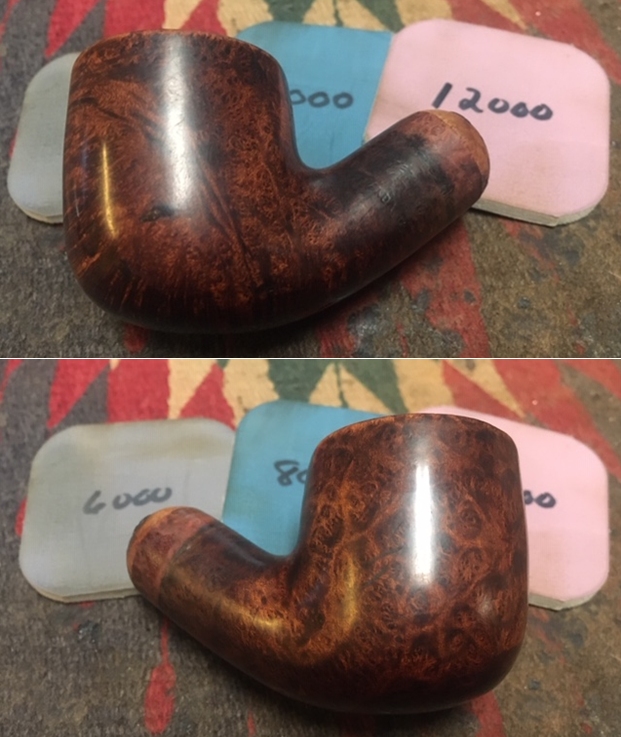
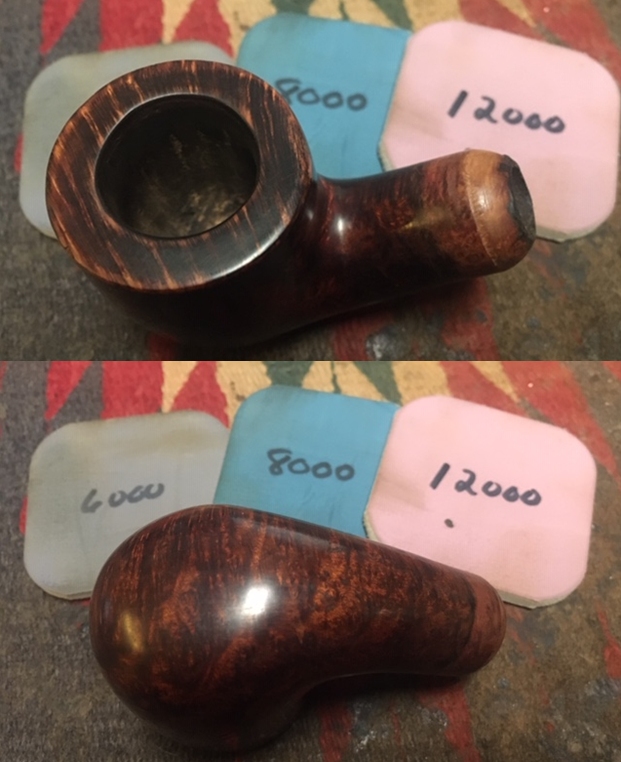
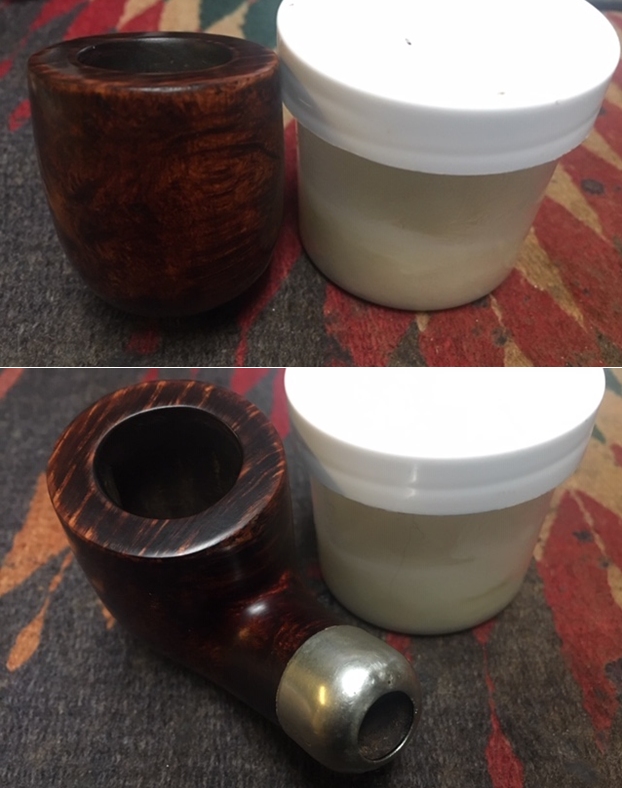
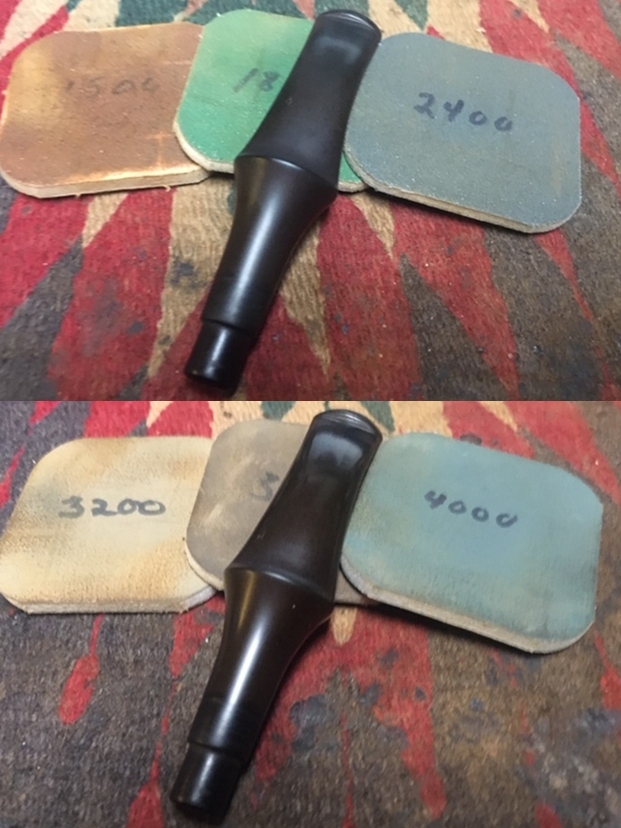
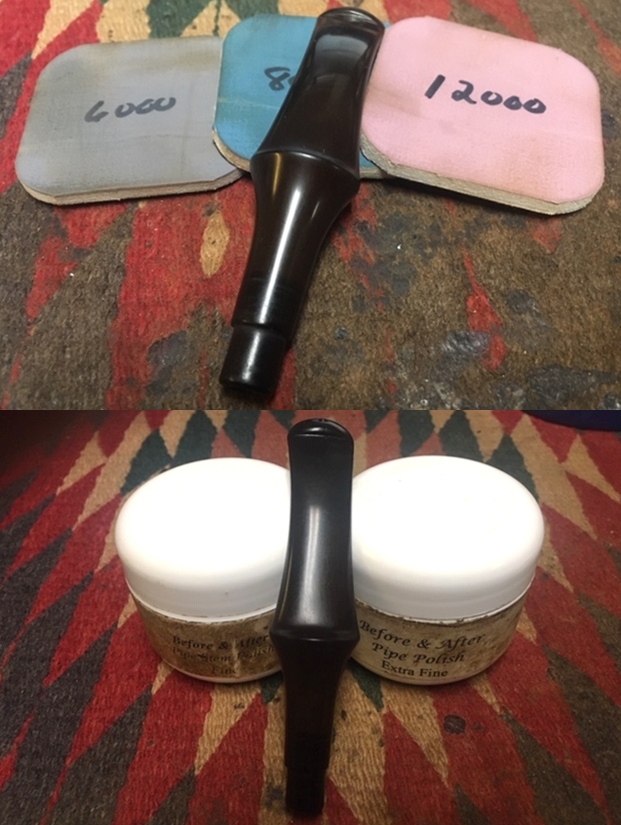
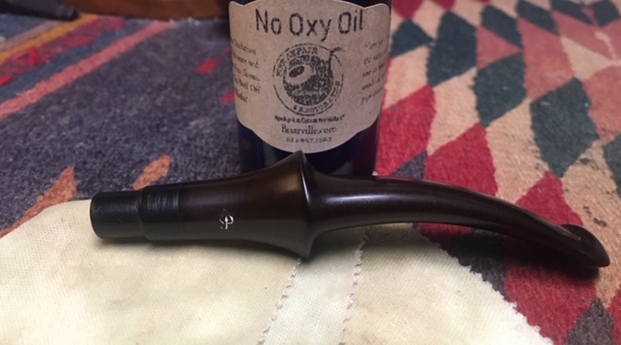
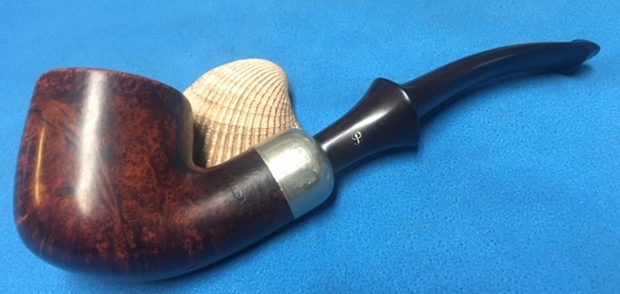
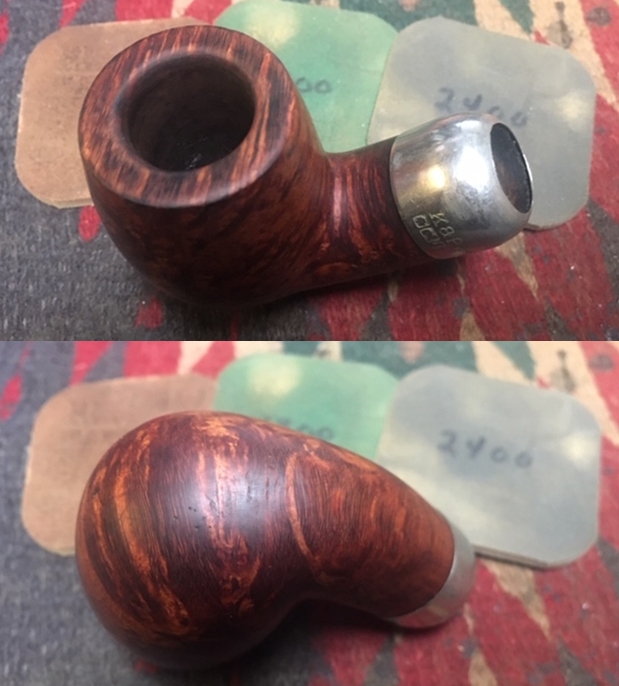
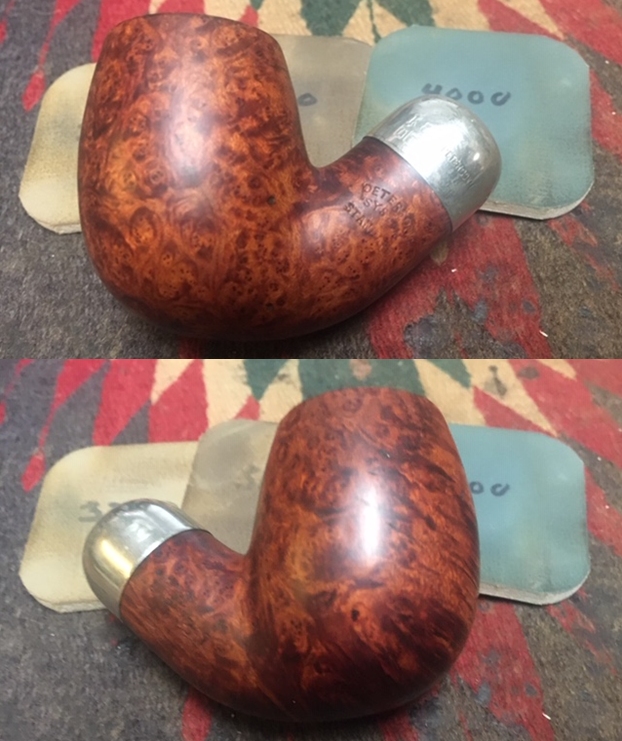
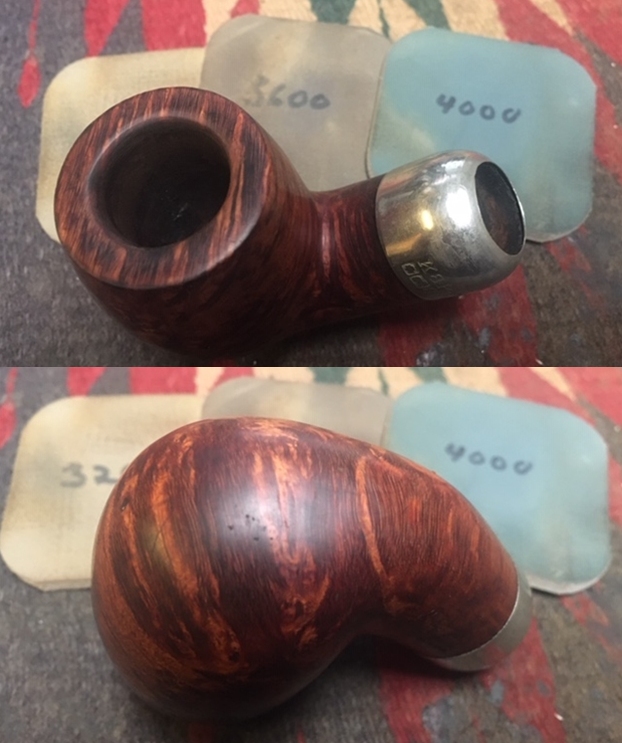
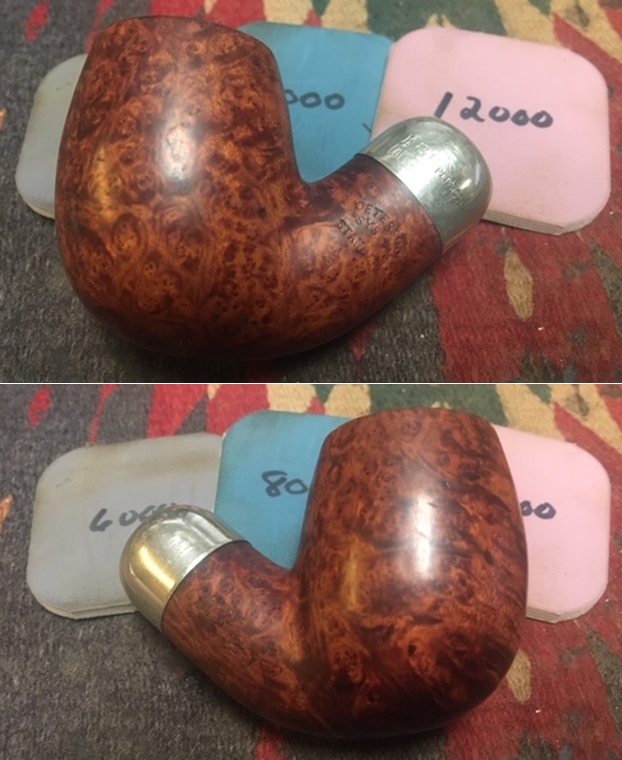
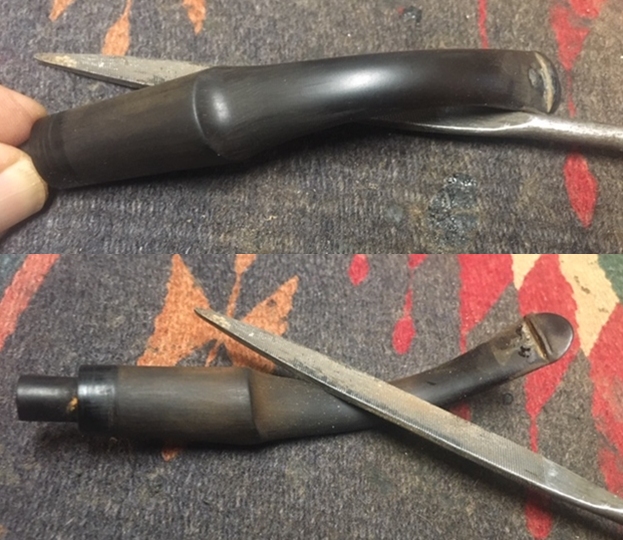
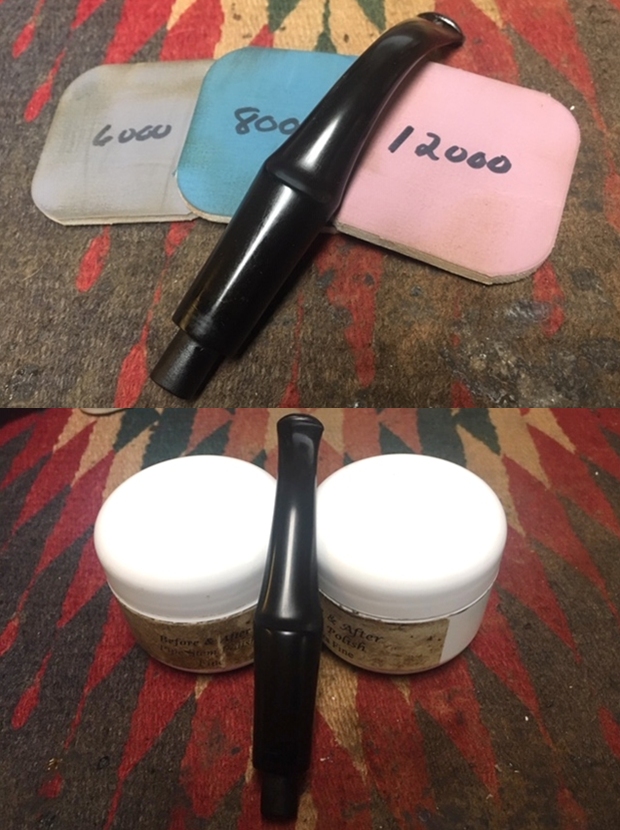
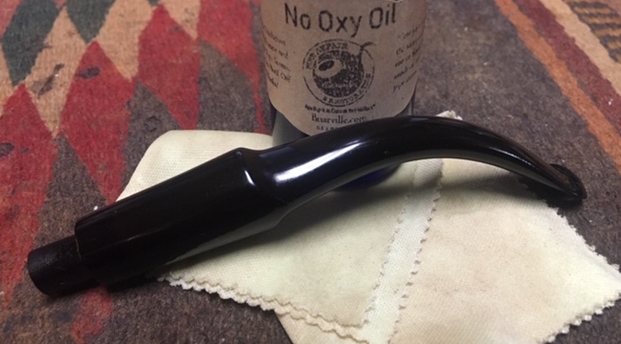
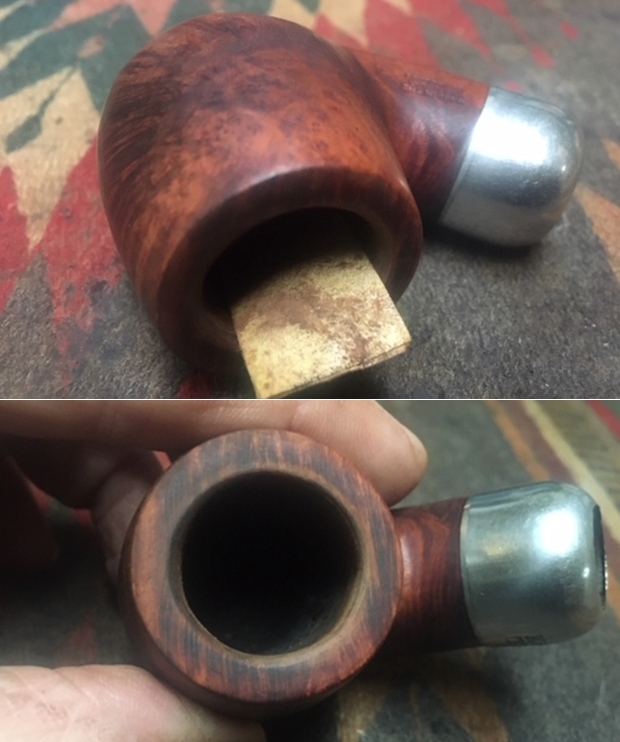
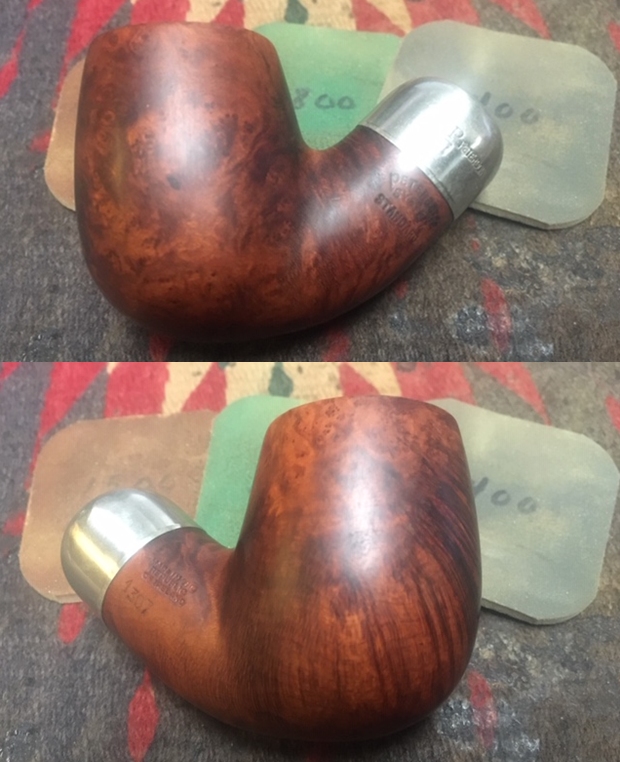
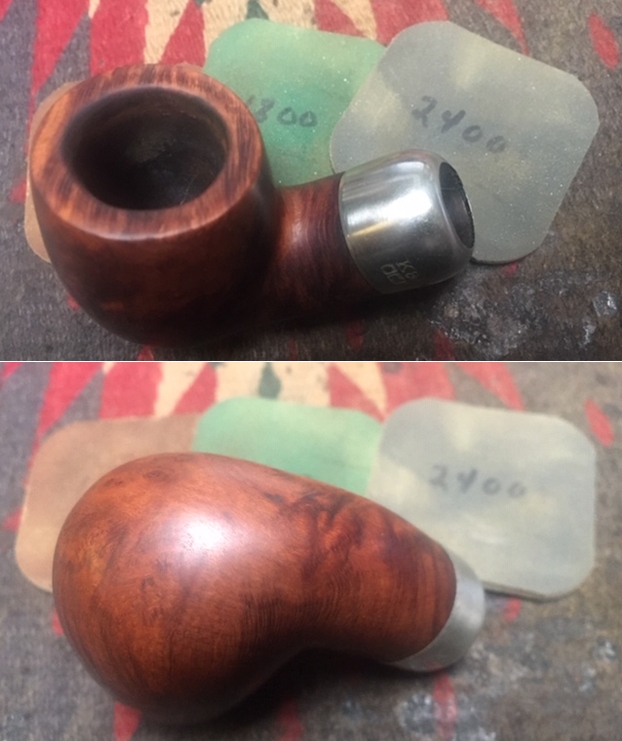
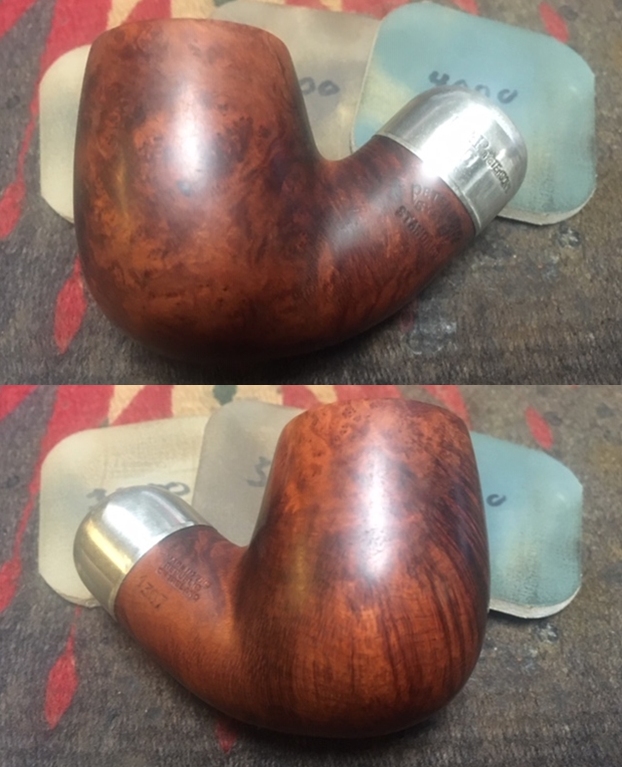
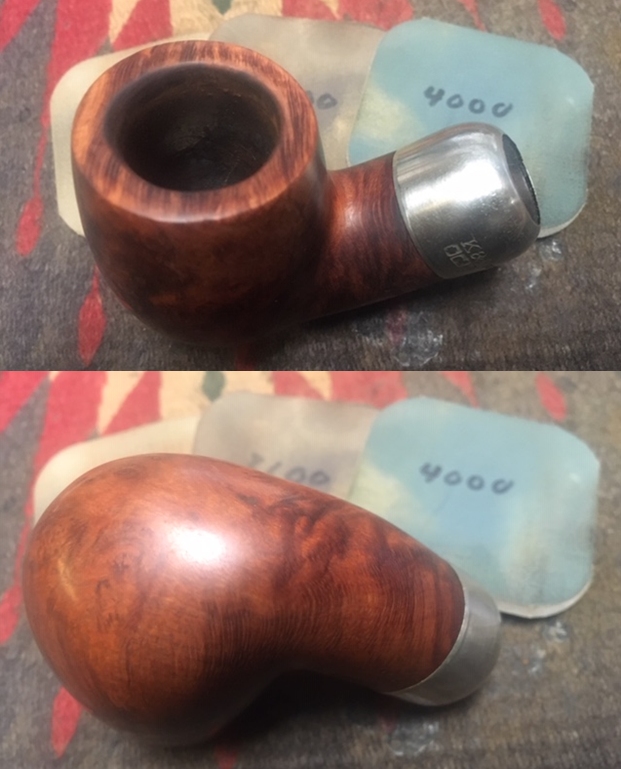
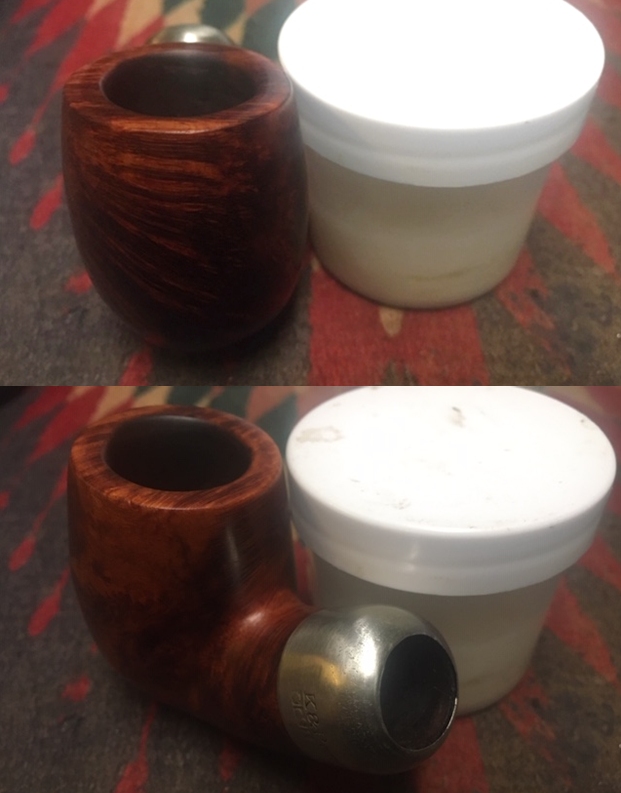
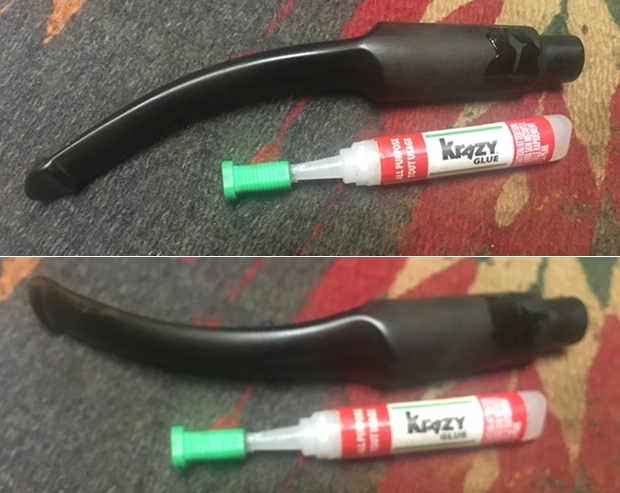
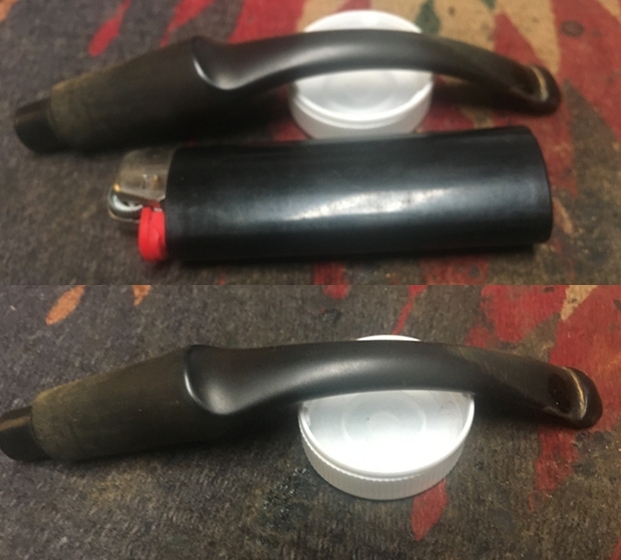
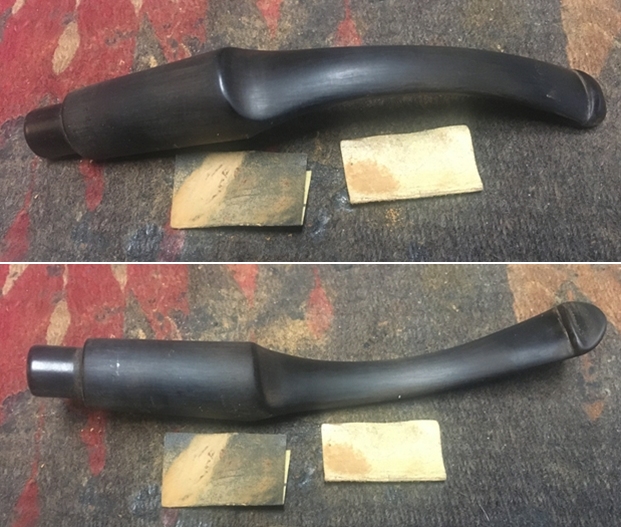
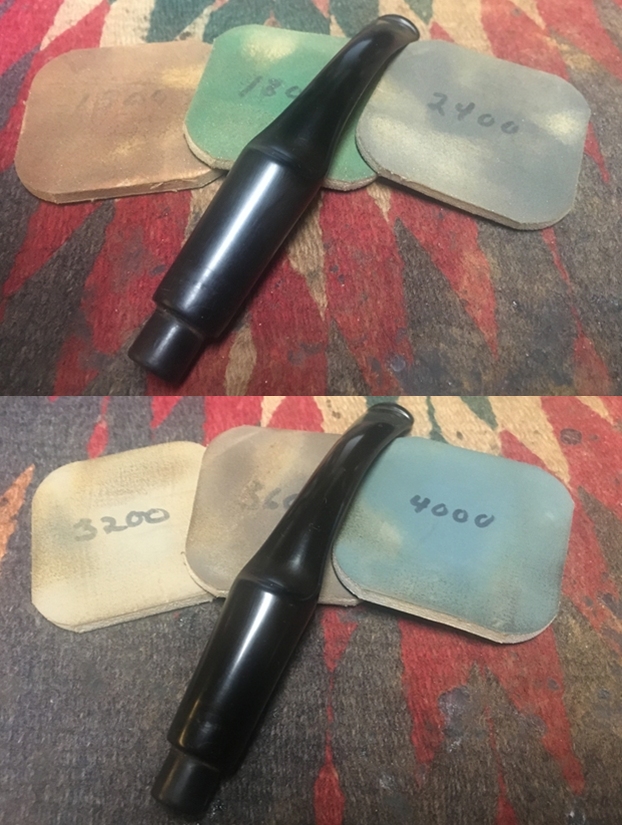
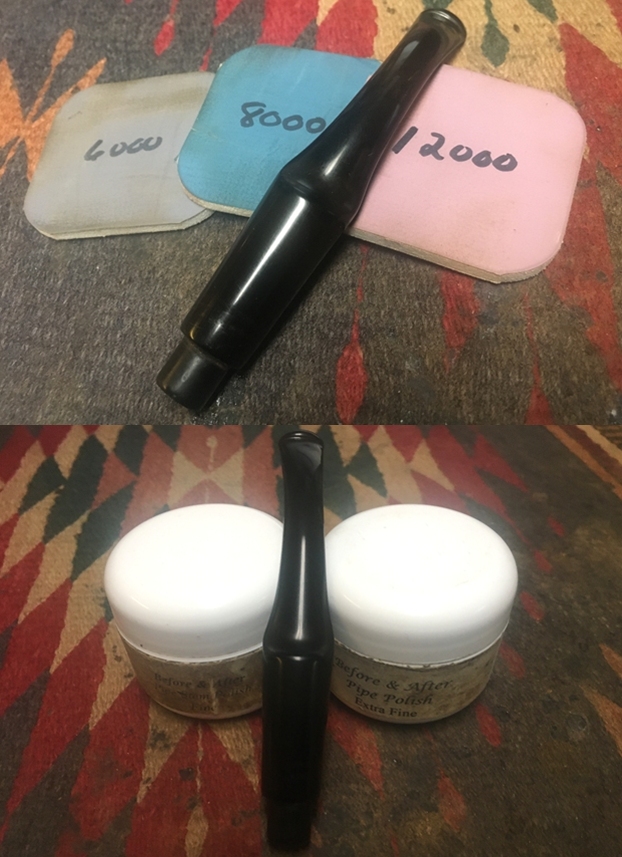
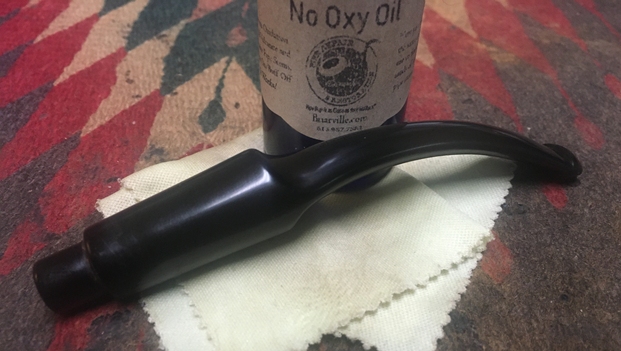
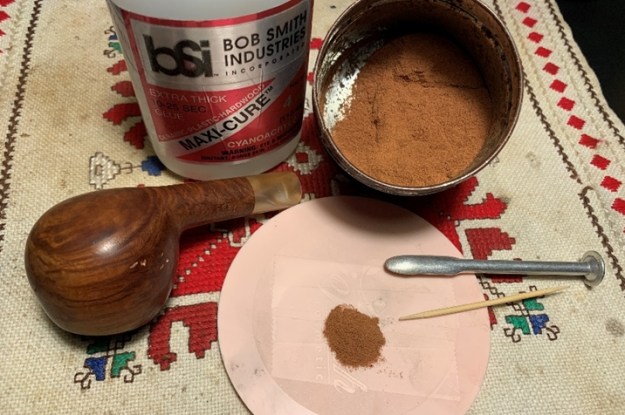
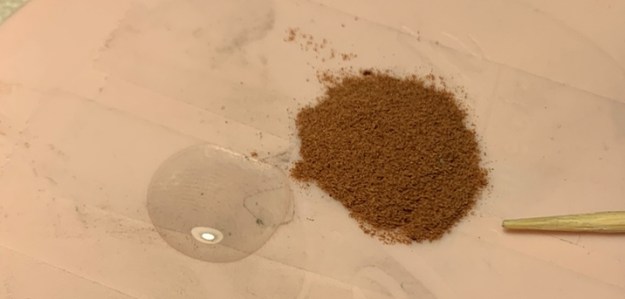
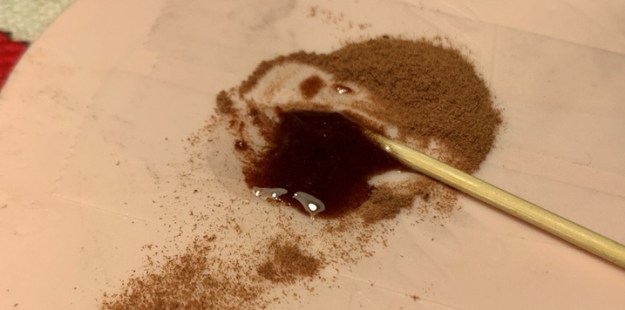
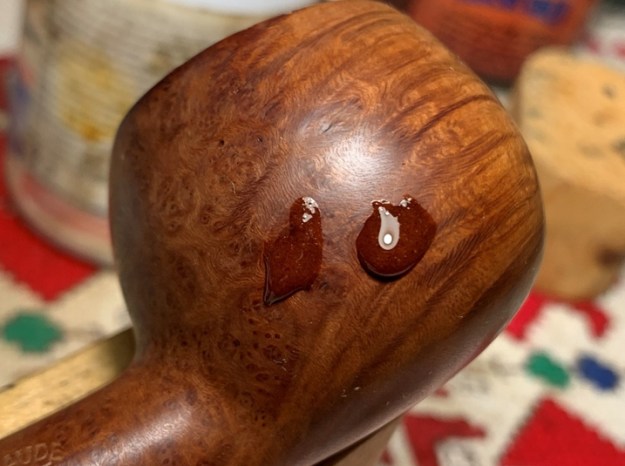
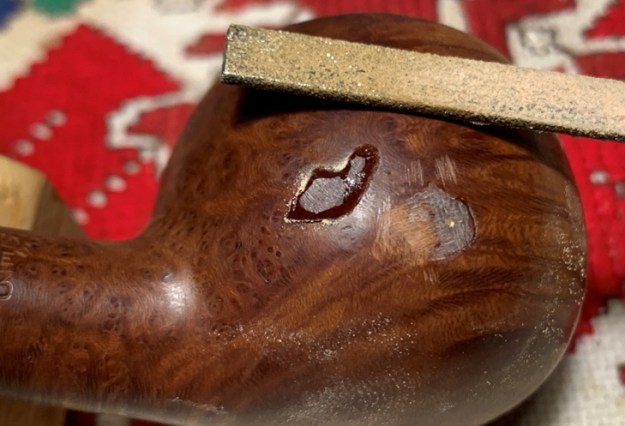
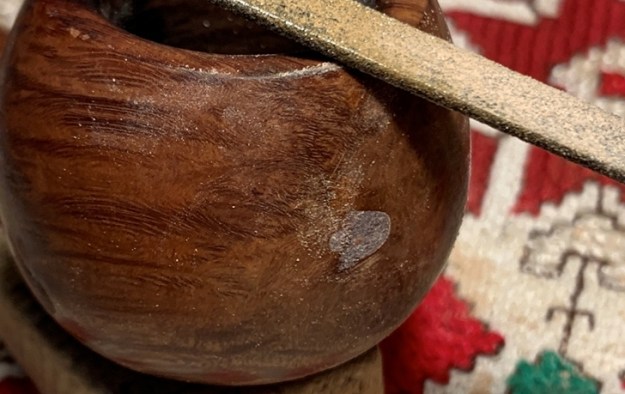
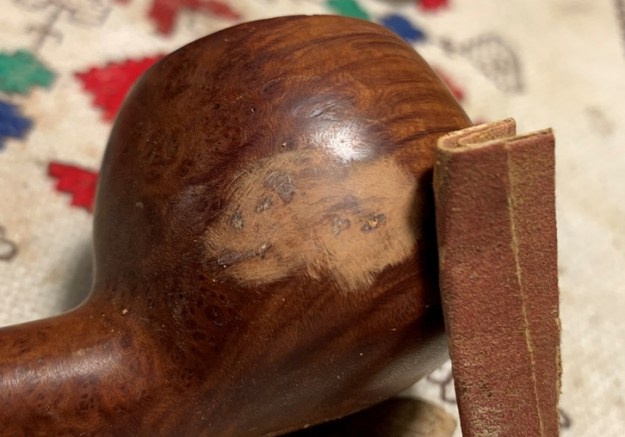
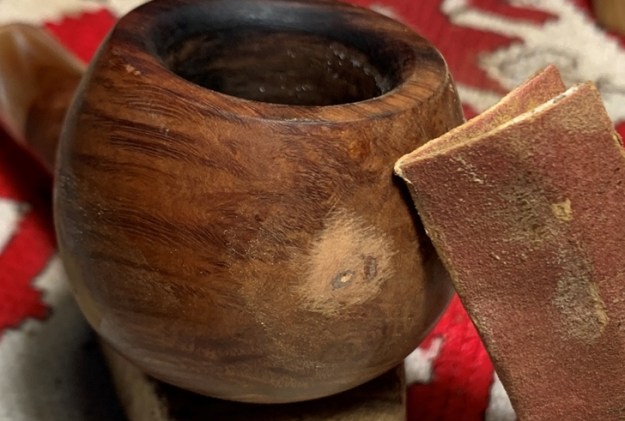
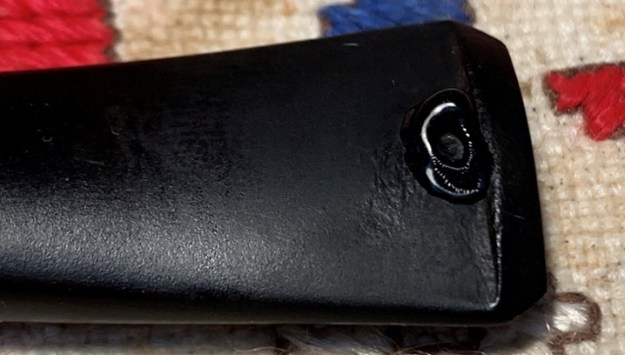
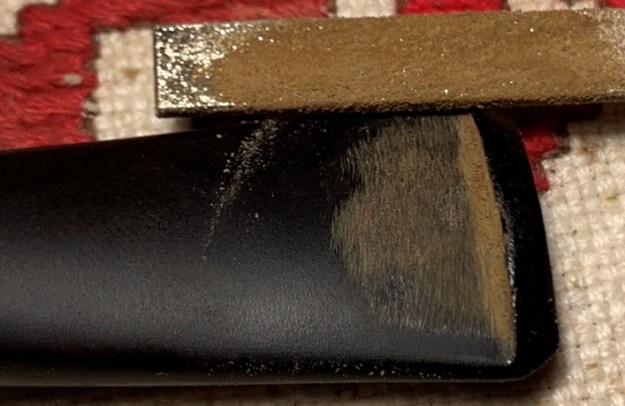
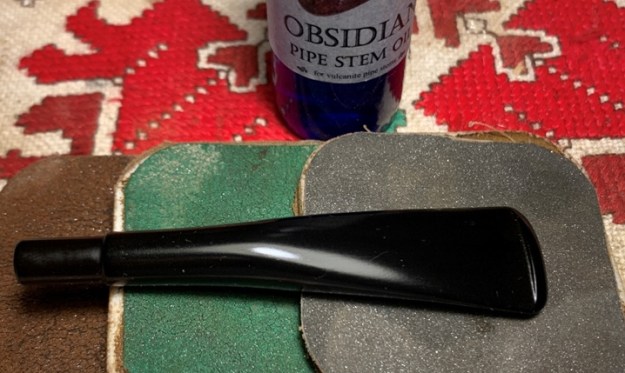
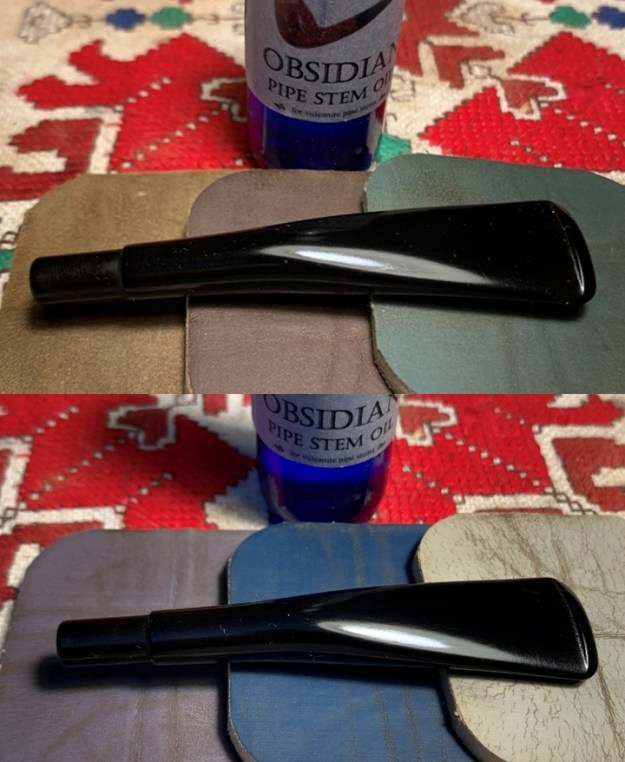
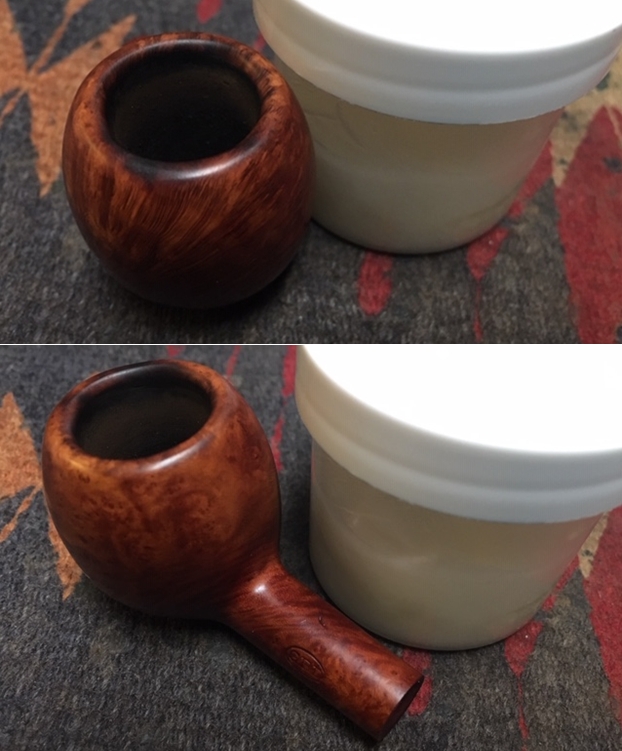
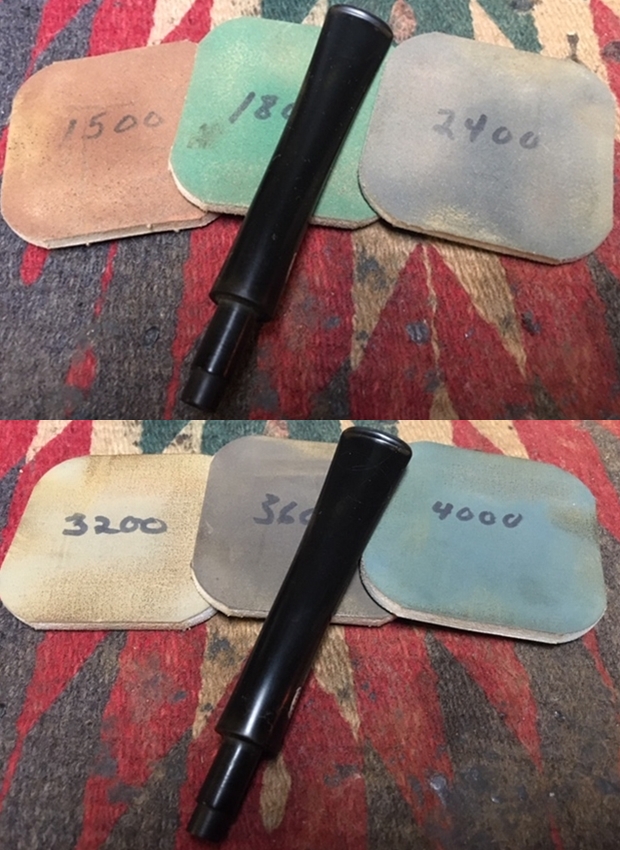
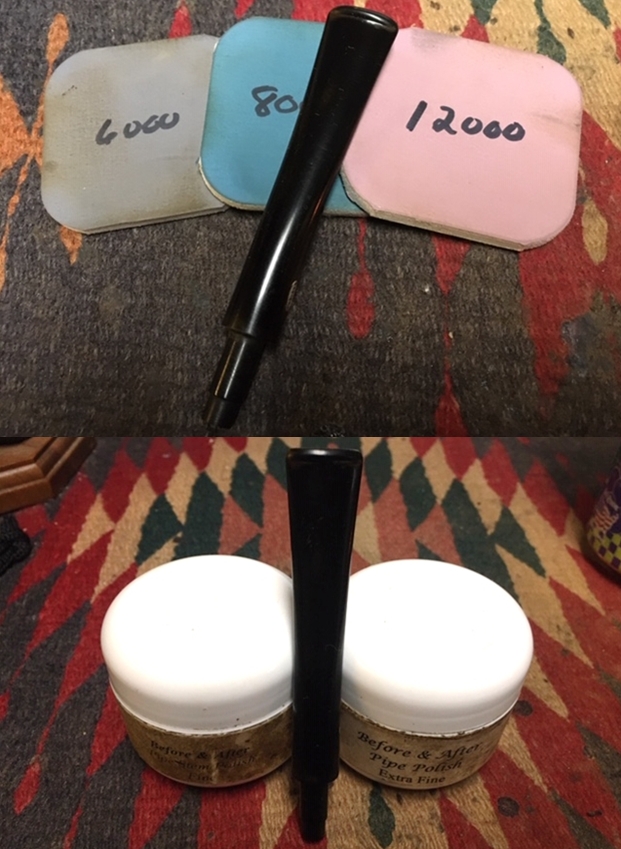
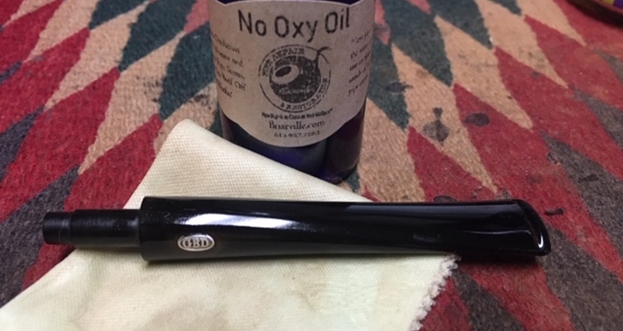
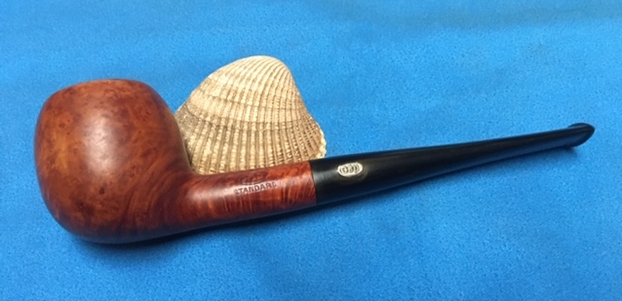
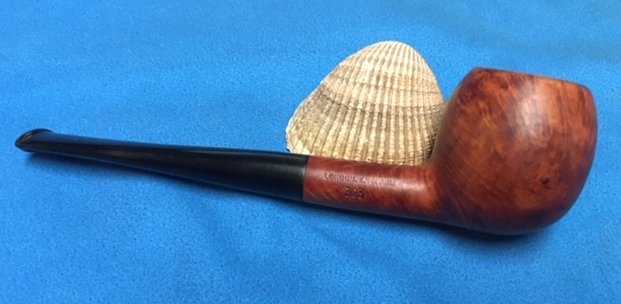
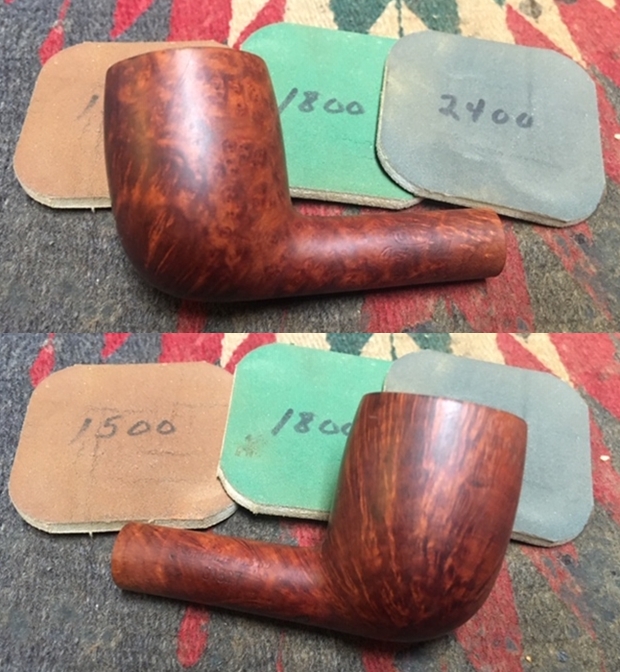
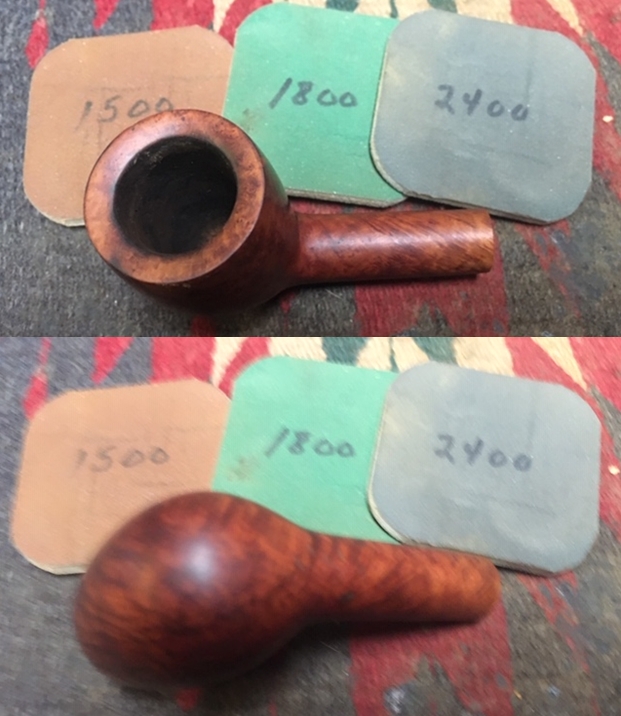
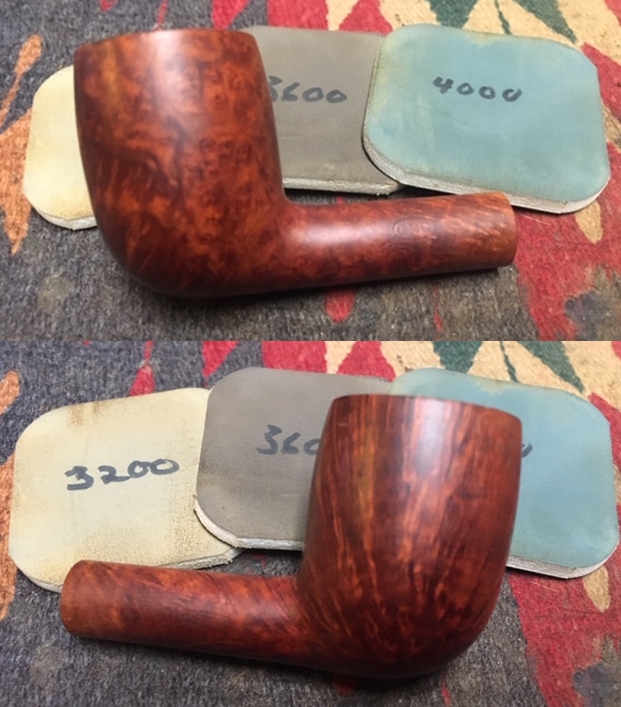
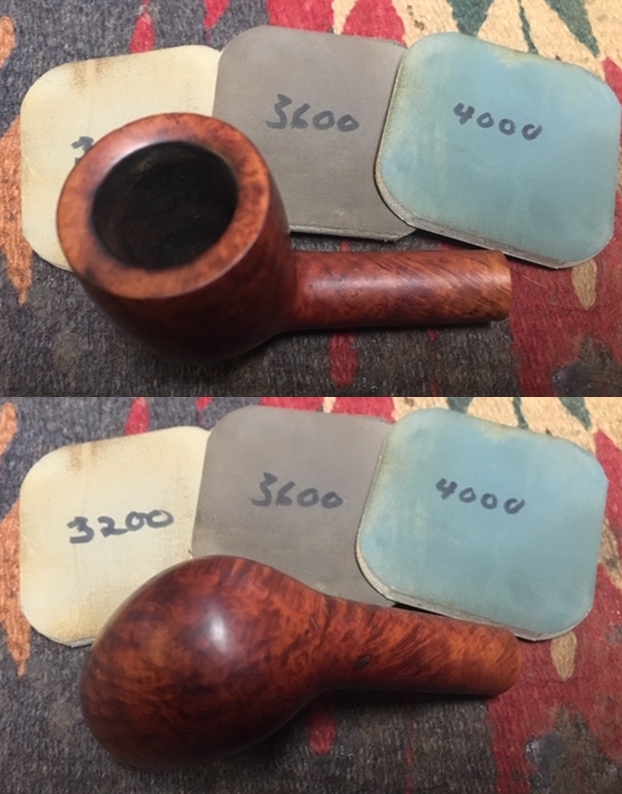
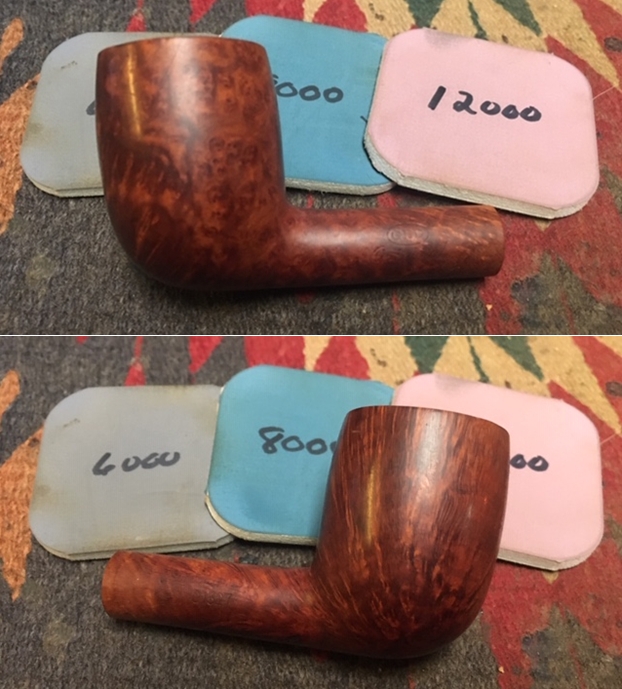
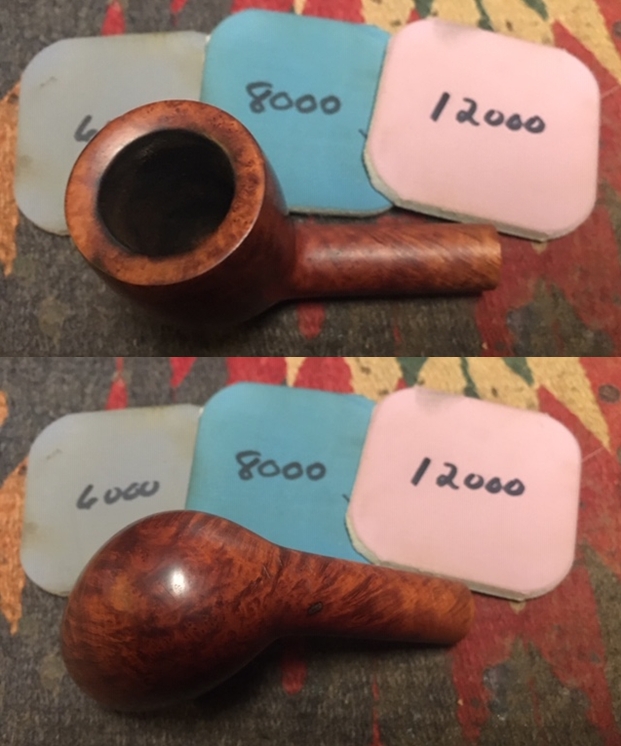
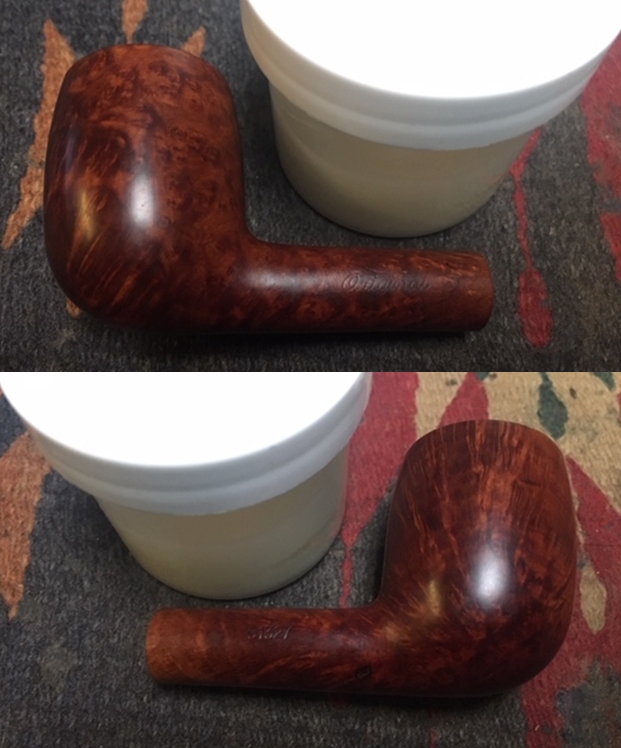
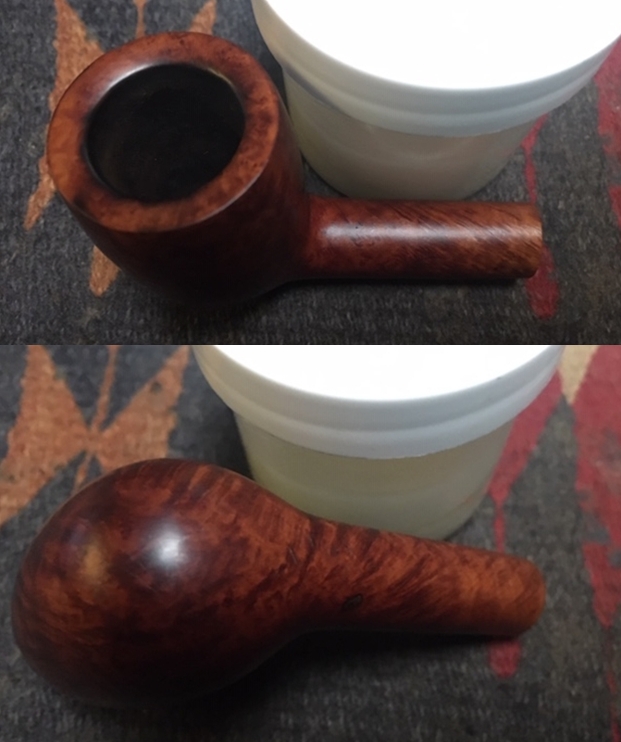
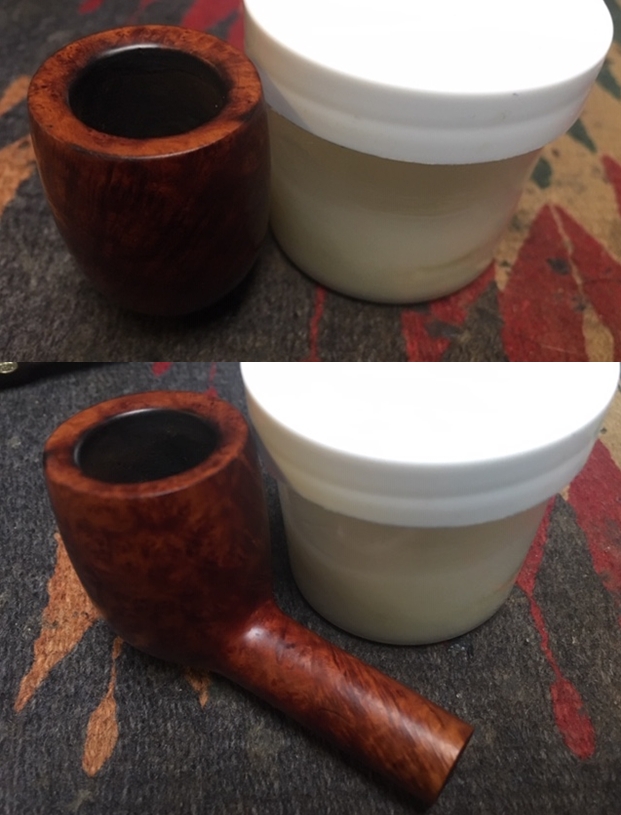
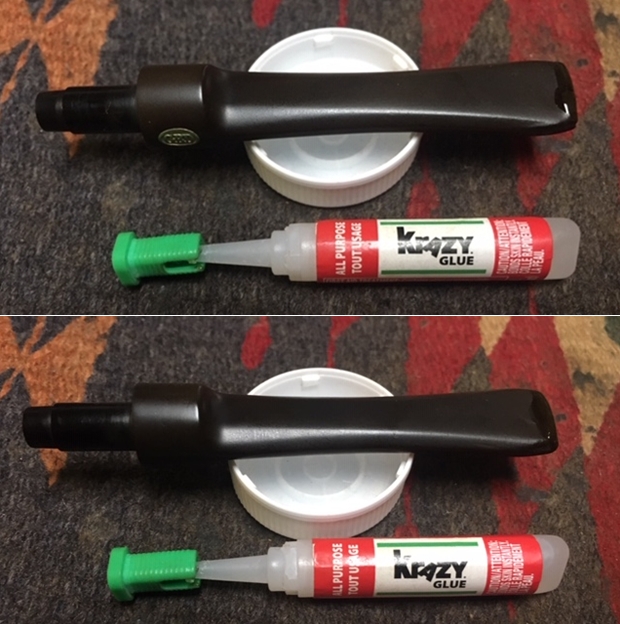
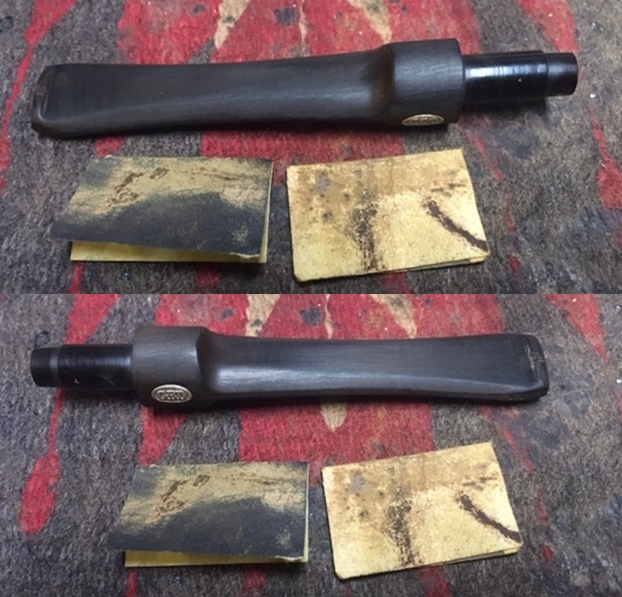
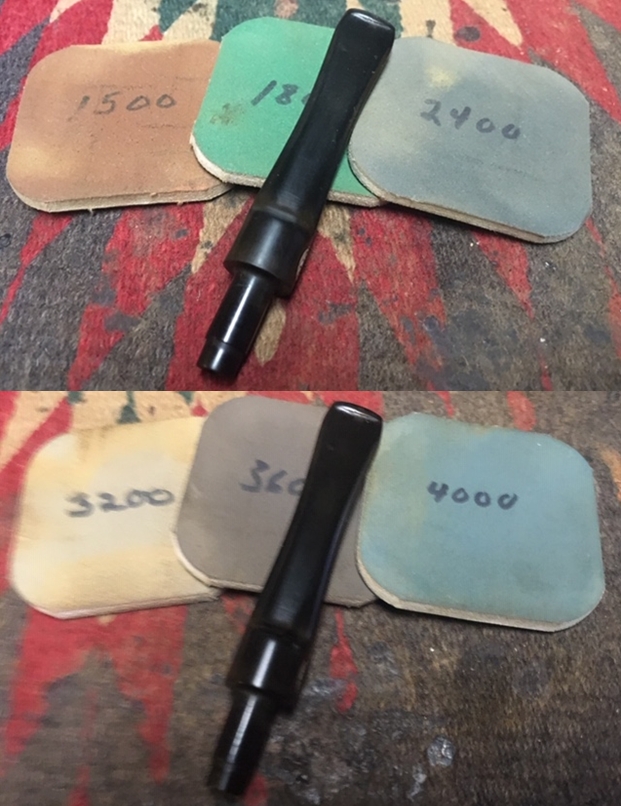
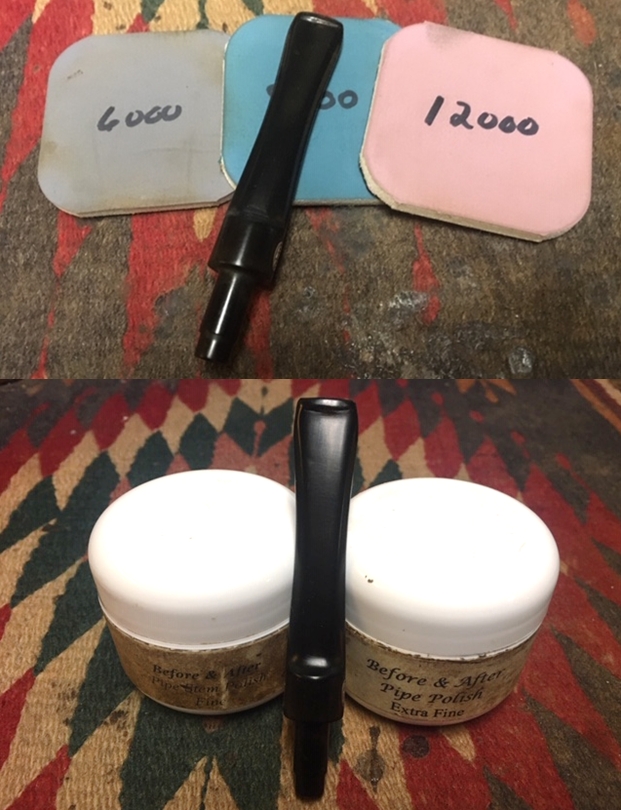
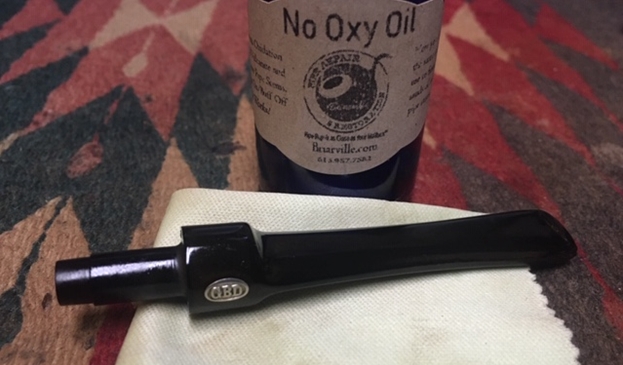
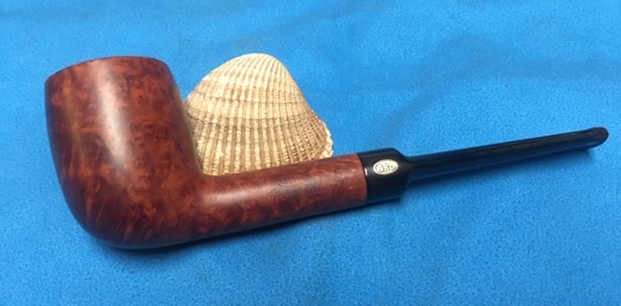
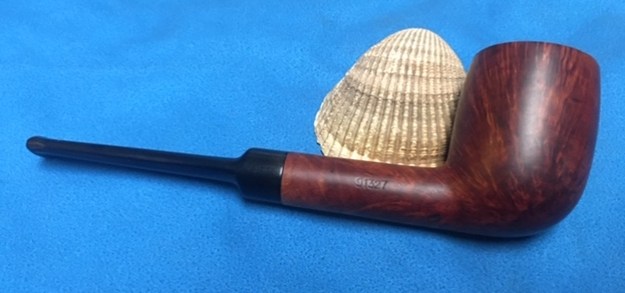
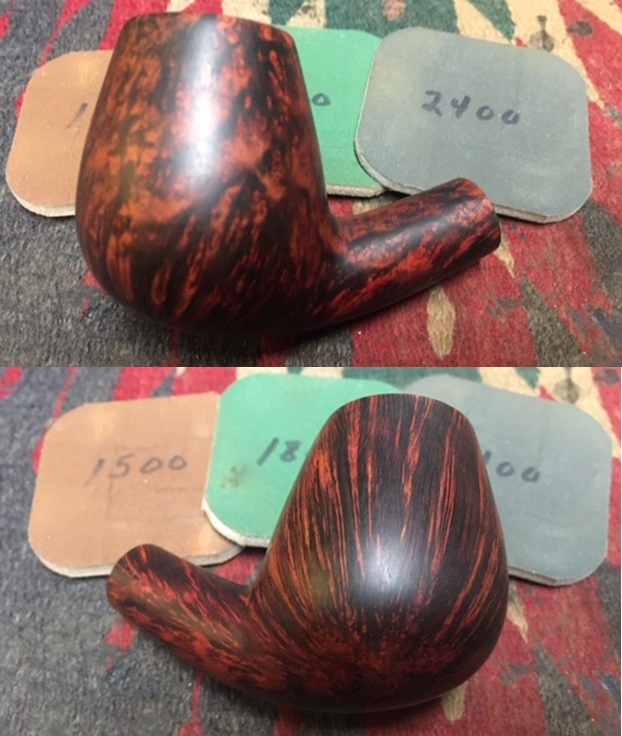
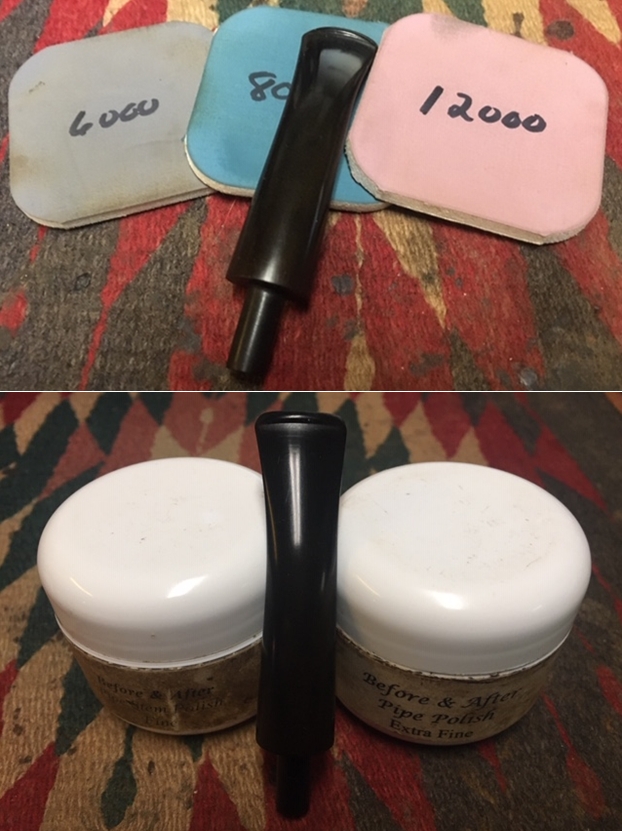
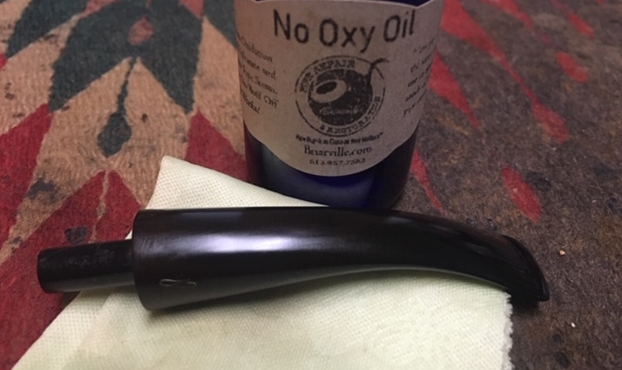
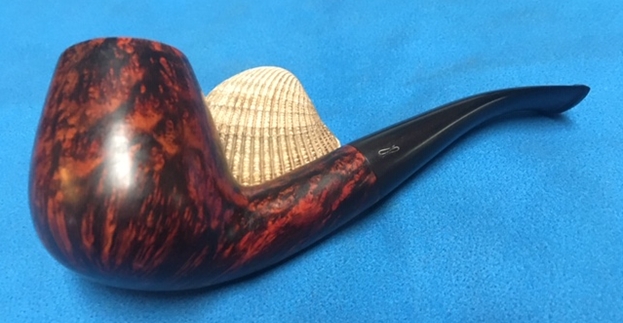
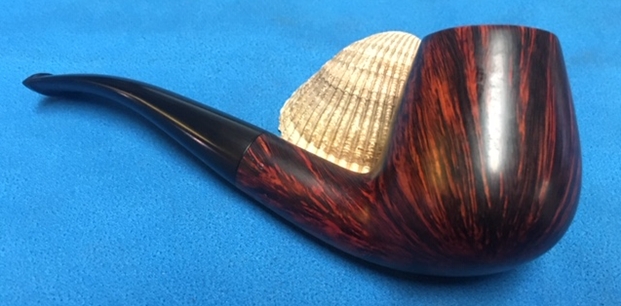
Now with all of the background on the line and the background on Bob Kerr it was time to get on with the restoration of this next mixed grain Brigham Select Lovat or Club as they call the shape. I am really coming to appreciate the hard cleanup work that Jeff did on these pipes. They were a real mess when I sent them to Jeff and I have to tell you it was great that I did not need to clean this pipe. I decided to start the process by dealing with the damage to the rim top and edges of the bowl. I topped it on a topping board with 220 grit sandpaper. I topped it to remove the deep scratch on the surface of the rim at the front. I was able to remove the scratch. What was left behind was a dark mark on the rim top. Once I stained the rim top that should disappear. I worked on the inner edge with a folded piece of 220 grit sandpaper and gave it a very slight bevel so that it took care of the damage on the inner edge. The photos show the progress. I stained the rim top and edges with a Walnut Stain pen to blend in the colour with the rest of the bowl. It is a good match and once it is polished it will work well!I polished the briar with micromesh sanding pads – wet sanding it with 1500-12000 grit pads and I wiped the bowl down after each sanding pad with a damp cloth.  The grain progressively stood out as I polished the pipe with the pads. I rubbed the bowl and rim down with Before & After Restoration Balm. I worked it into the surface of the briar with my fingertips to clean, enliven and protect it. I let the balm sit for a little while and then buffed with a cotton cloth to raise the shine. I really like watching the Balm do its magic and bring the briar alive.  With the bowl done it was time to address the issues with the stem. The deep dents in the top and underside with a bite through in the middle of the underside would make this a stem with multiple issues to deal with. The first photo shows the bite through. I “painted” the surface of the vulcanite to soften the rubber and then used the tip of a needle file to lift the deepest tooth marks and seek to flatten the stem surface (second and third photos). I was able to lift the tooth dents quite a bit on both sides but I would need to build up the stem surface on both sides.To prepare for the repair I wiped down the surface with alcohol on a cotton pad. I folded a pipe cleaner in half and coated it with Vaseline to make sure that the repair would not fill in the airway in the stem. I inserted it in the slot and slid it under the bit through.I mixed batch of charcoal powder and black superglue putty together on a piece of card. I learned from Dal to put a patch of tape on the card first so that the mix would not harden as quickly. It works like a charm by the way. I mixed the powder and black glue together with a dental spatula to get a thick putty/paste. I applied the putty to the top of the stem on both sides and pressed it into the bite through area. I sprayed the repaired areas on both sides of the stem with an accelerator so that the surface of the repair would be hard.  I slid the pipe cleaner out of the airway and set the stem aside to let the glue cure. When the repair had cured I used a needle file to reshape the button and smooth out the repair. More work would need to be done for it to be correct but the bite through was gone!   I sanded the repaired areas smooth with 220 grit sandpaper to blend them into the rest of the stem surface. As I sanded some small air bubbles appeared in the surface of the repair. I filled them in with clear Krazy Glue and once it had cured sanded the surface again. I started the polishing process with 400 grit wet dry sandpaper. It is starting to look pretty good!  I polished the stem with micromesh sanding pads – wet sanding with 1500-12000 grit pads. I wiped the stem down after each sanding pad with Obsidian Oil. I polished it with Before & After Pipe Stem Polish – both Fine and Extra Fine. Once I had finished the polishing I gave it a coat of a new product I am experimenting with from Briarville Pipe Repair. It is called “No Oxy Oil” and it is made to protect the stem from oxidizing. I set it aside to dry. With the pipe cleaned and ready to polish I put a new Brigham Distillator filter in the stem. The photos show the Distillator out of the tenon and in place in the tenon. It is a Maplewood tube that collects the moisture from the smoke and delivering a dry, cool smoke sans tongue bite. Once again at this point in the restoration process I am excited to be on the homestretch. This is the second Brigham from the four that are in Bob’s estate so I look forward to the final look when it is put back together, polished and waxed. I put the bowl and stem back together. I polished the bowl and stem with Blue Diamond to polish out the scratches in the briar and the vulcanite. I gave the bowl and the stem multiple coats of carnauba wax. I buffed the pipe with a clean buffing pad to raise the shine. I hand buffed it with a microfiber cloth to deepen the shine. The pipe polished up pretty nicely. The grain is quite stunning and really pops with the wax and polish. The repair to the stem surface looked really good and blended into the shiny black vulcanite stem. The black of the vulcanite stem along with the two brass pins is a beautiful contrast to the browns of the bowl and shank. This was another fun pipe to work on thanks to Jeff’s cleanup work. It really is a quite stunning piece of mixed grained briar whose shape follows the flow of the briar. The pipe is comfortable pipe to hold in the hand. The finished pipe is shown in the photos below. The dimensions of the pipe are Length: 5 ¾ inches, Height: 1 ¾ inches, Outside diameter of the bowl: 1 ¼ inches, Chamber diameter: ¾ of an inch. This beautiful pipe will be going on the rebornpipes store in the near future. I have a lot more of Bob’s estate to work on of various brands. Perhaps one of those will catch your attention. Thanks for reading this blog and my reflections on the pipe while I worked on it. This is an interesting estate to bring back to life.

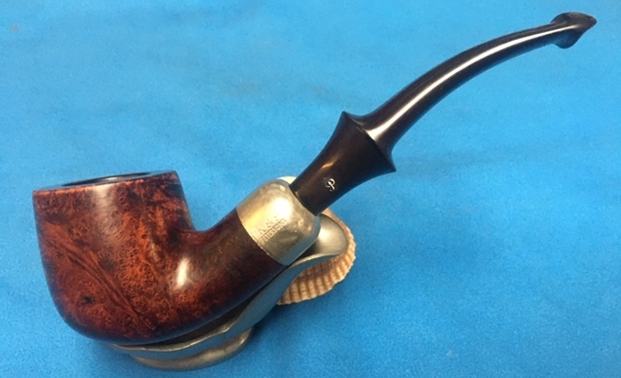
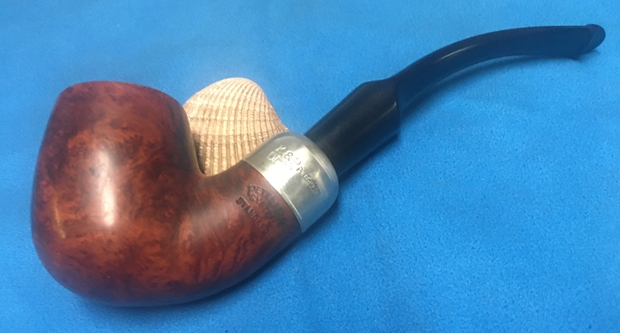
A Republic Era Peterson’s 301 System Standard Pot from Bob Kerr’s Estate


Blog by Steve Laug

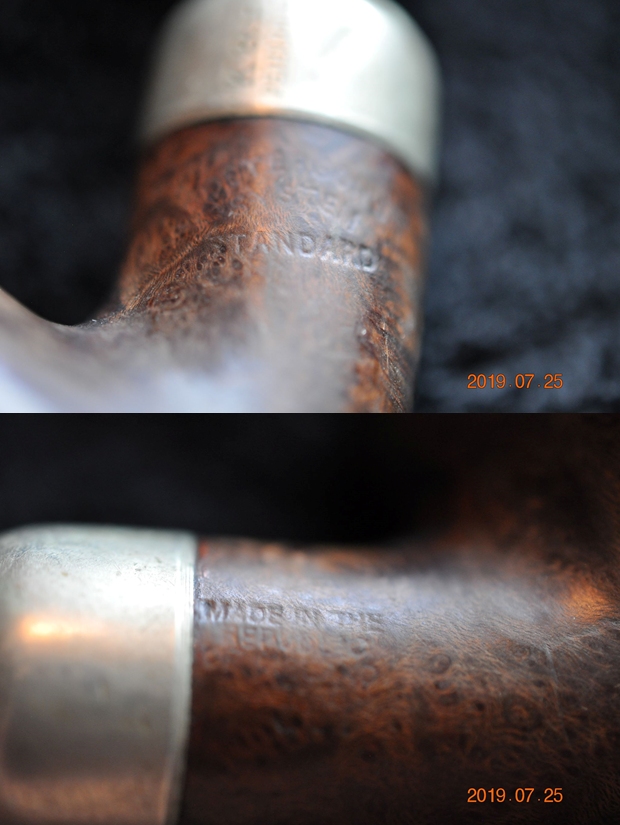
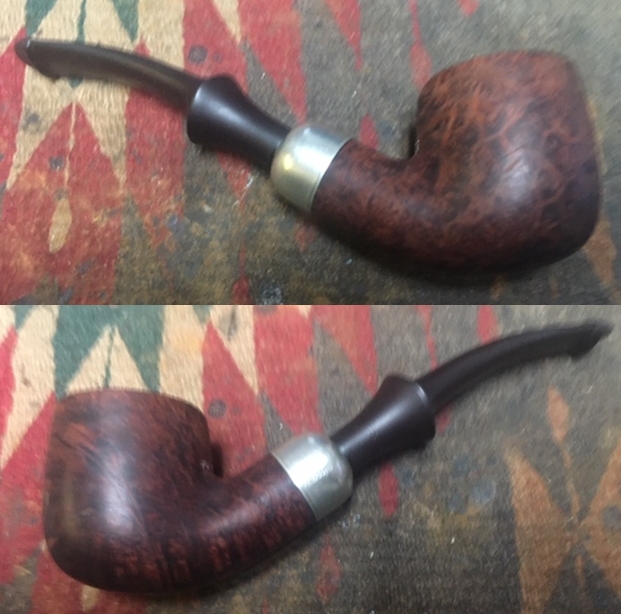
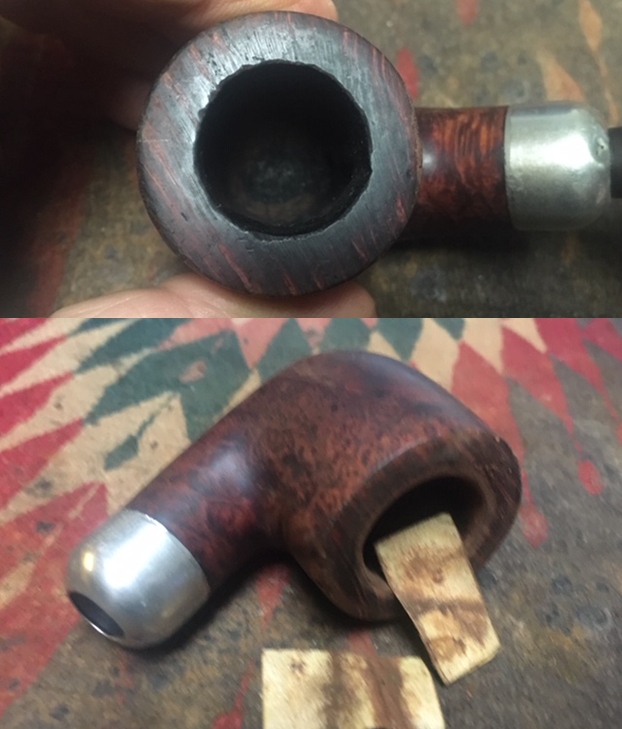
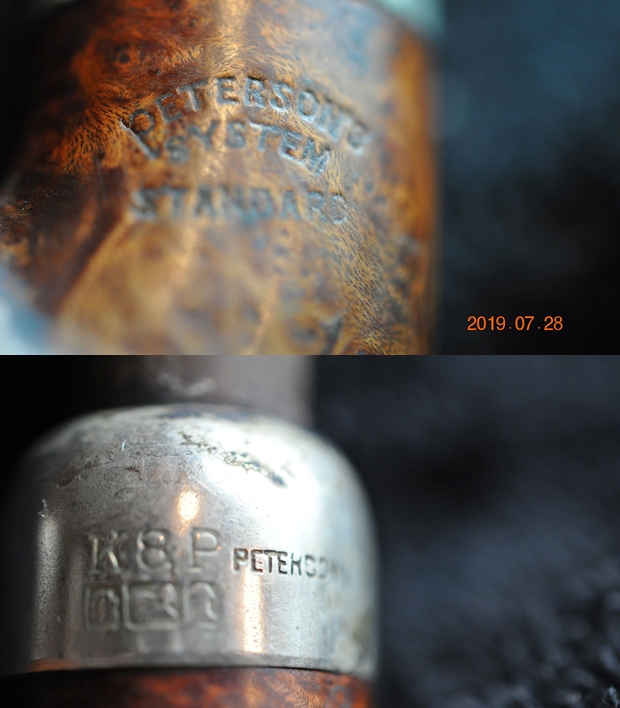
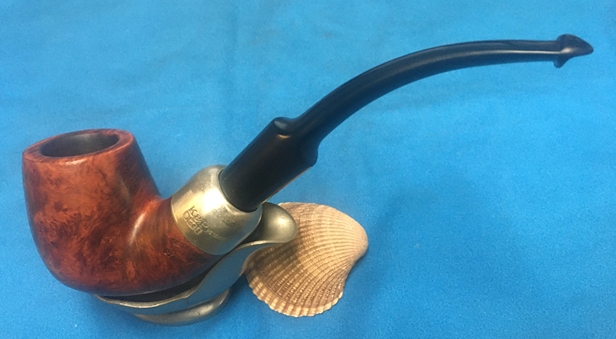
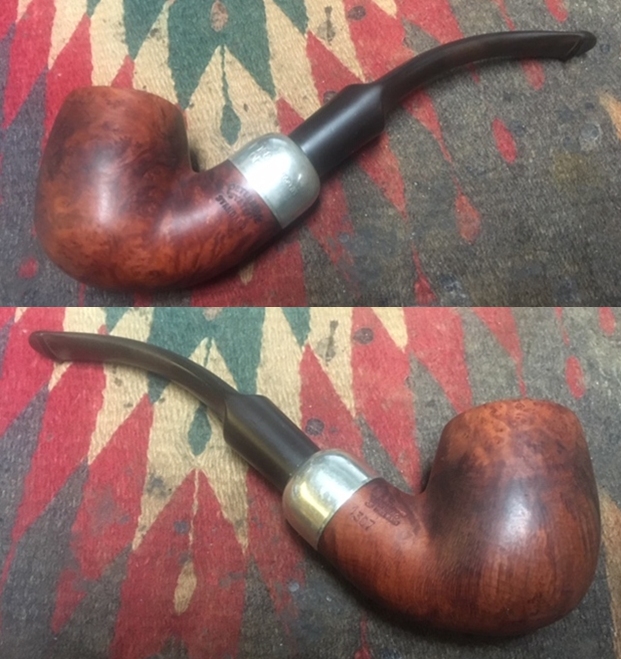
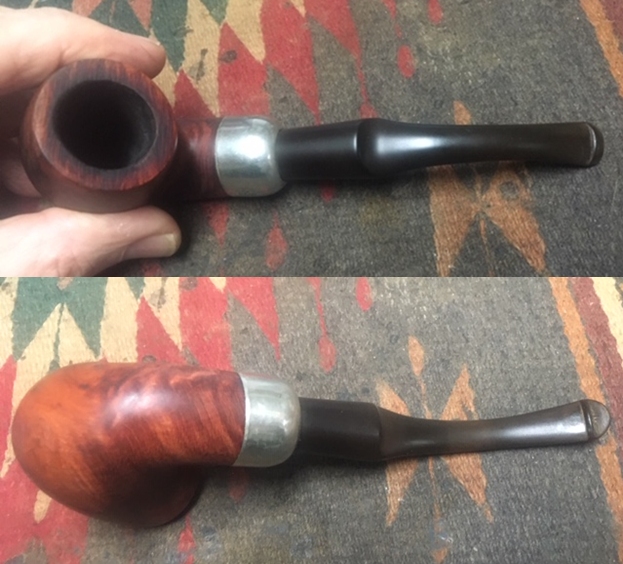
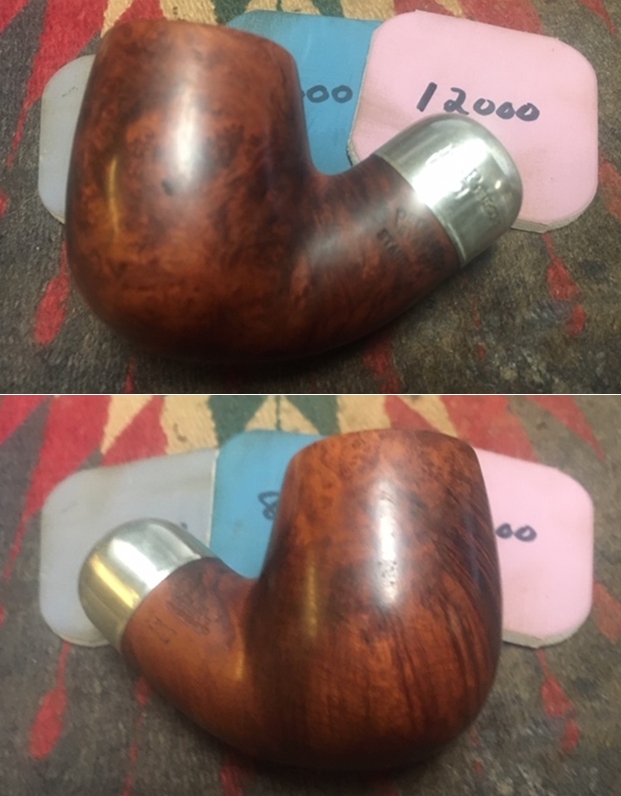
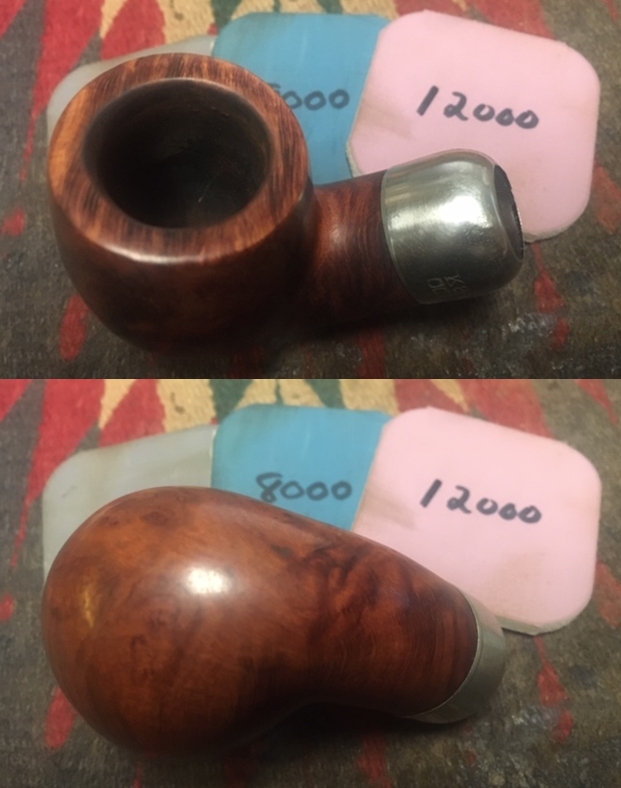
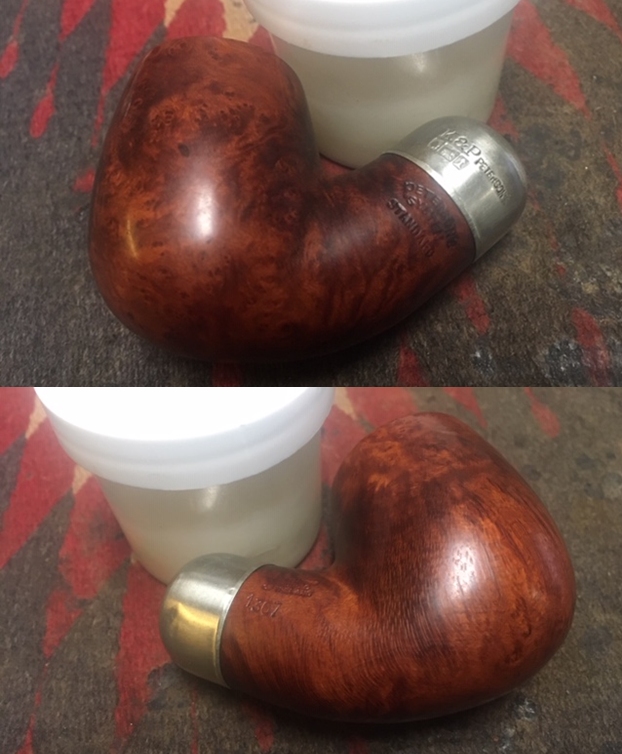
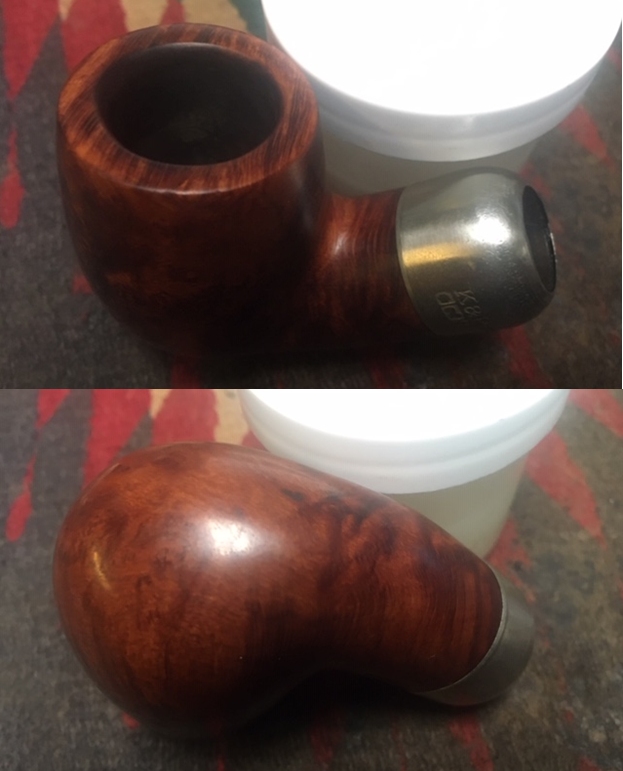
I am continuing to work on Bob Kerr’s collection of 9 Peterson’s System pipes that are ready to be restored. The next pipe on the table is a bit different from the other Standard System pipes that I have worked on from his estate. It is a pot shaped bowl with a different style stem. I have restored quite a few of his Petersons already so this is kind of subset of the Peterson Collection. You can read about those restorations in previous blogs. To be honest with you I have been dreading working on these 9 because when they arrived they were absolutely filthy and the reservoir in the shank was filled with tars and oils. It looked to me that they had never been cleaned. Jeff cleaned them for me and because of that I have been enjoying working on these Peterson’s particularly because Jeff has done such a thorough cleanup of them before I receive them. When I took it out of the box of the pipes that Jeff had cleaned up and sent back to me, I could see that it was stamped Peterson’s System Standard vertically on the left side of the shank next to the band. The right side of the shank was stamped Made in the Republic of Ireland over the shape number 301. The stamping is very faint but readable with a lens. It has some stunning grain around the bowl and shank that can be seen under the thick grime. There are also some deep nicks or flaws in the left and front sides of the bowl.

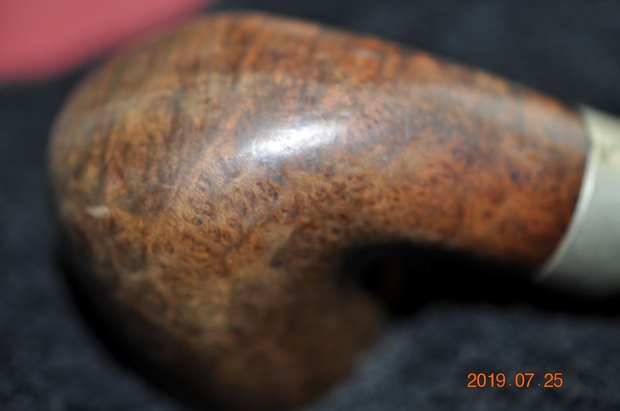
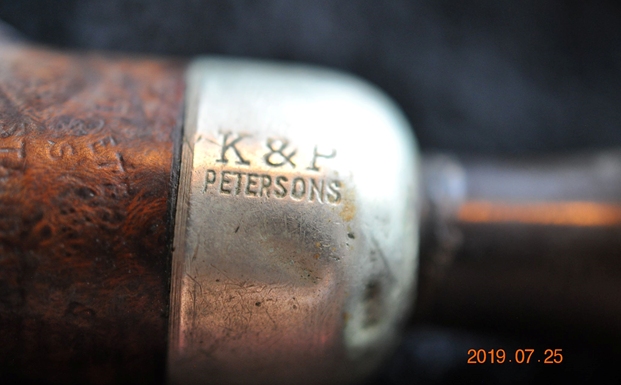
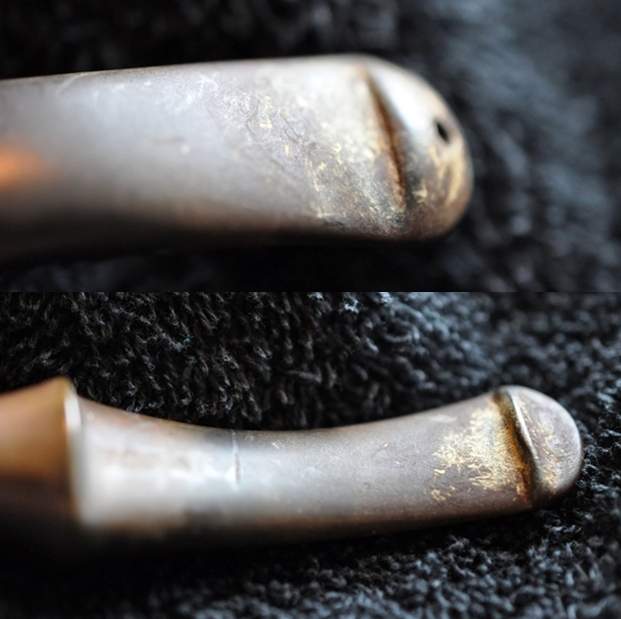
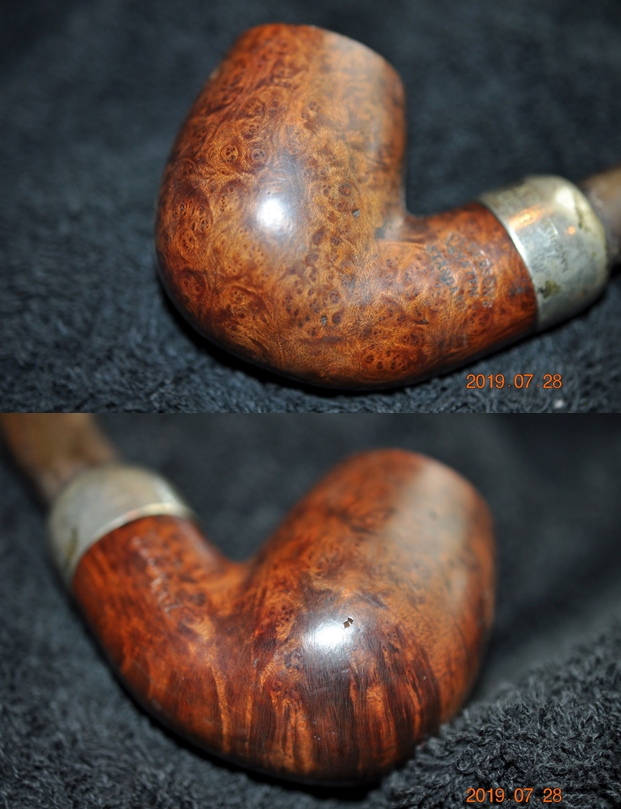
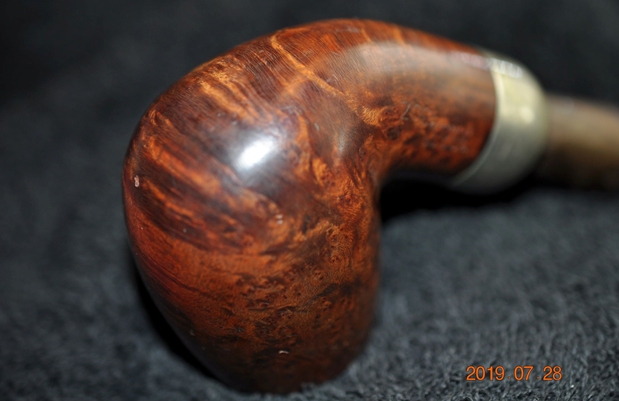
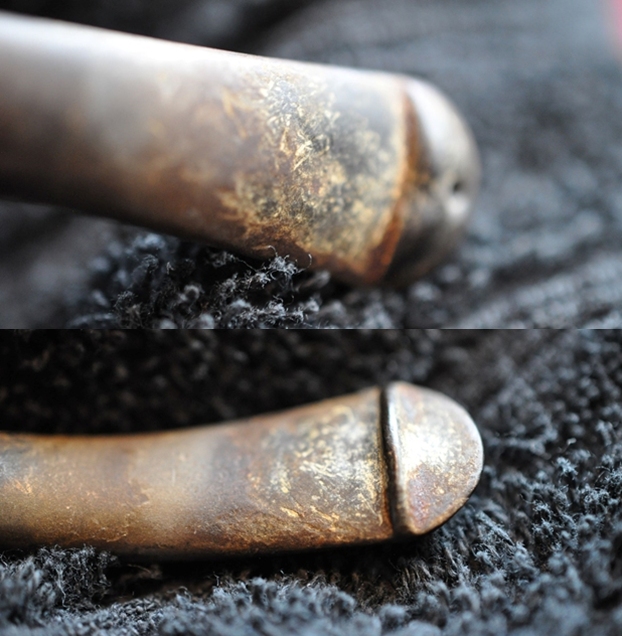
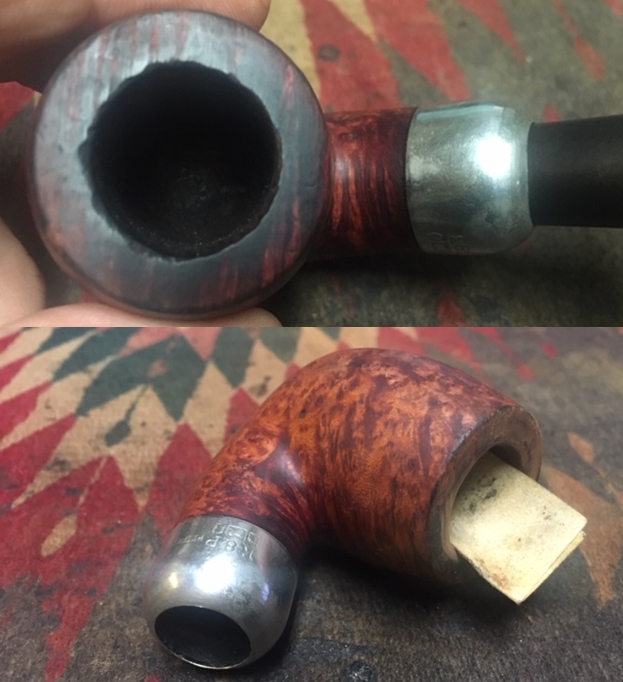
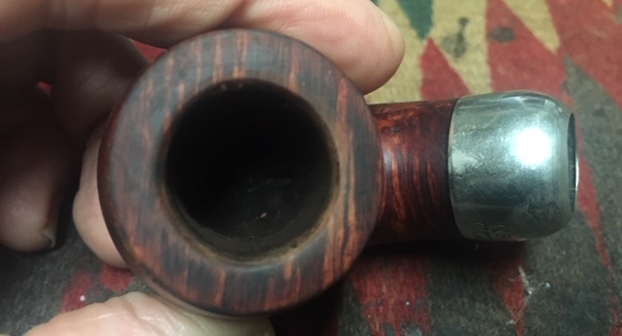
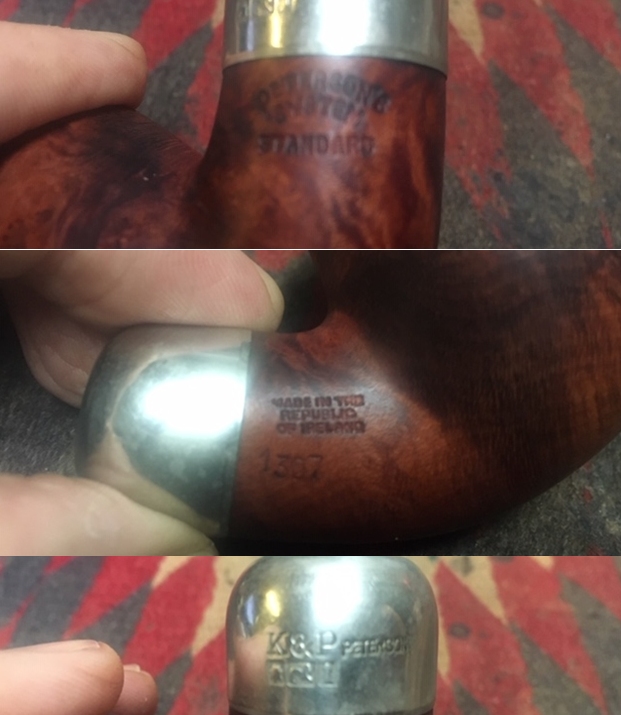
In many ways this was one of the dirtier System pipes if that is possible. There was a thick cake in the bowl with remnants of tobacco stuck on the walls. There was a lava overflow on the rim. The top and edges of the rim appear to have some damage all the way around the bowl. There was some damage on the back outer edge of the rim that looked as if it had been dropped. I think that there was a beautiful pipe underneath all of the buildup of years of use. There was some interesting grain poking through. The nickel ferrule on the shank end was oxidized and dented. The band was loose so it turned on the shank end. It is stamped K&P Petersons. The stem was oxidized and calcified toward the end with some tooth chatter. There were also some tooth marks on both sides of the stem ahead of the “P-lip”. There was also a deep mark mid stem on the underside. Jeff took photos of the pipe before he started his cleanup work on it. Jeff took photos of the bowl and rim top to show the thick, hard cake in the bowl and the lava build up on the top of the rim and the edges of the bowl. The rim top looked pretty good but it was hard to know for sure but it appeared that there was damage all around the inner edge. The outer edges of the rim appeared to have some serious damage on the back of the bowl. It is rough and could have been dropped or knocked out against a hard surface. Jeff took photos of the sides and heel of the bowl to show the condition of the finish. You can see the nicks and pits in the briar around the bowl.  It does have some interesting mixed grain on the sides of the bowl and shank. There is also some cross grain and birdseye for those who love grain. Even under the dirt and debris of the years it looked very good.    Jeff took photos of the stamping on the sides of the bowl and shank. The vertical stamping on the left side was faint but readable as you can see from the photo. It read Peterson’s System Standard. The stamping on the right side of the shank is also faint but it read Made in the Republic of Ireland with the shape number 301 underneath. The nickel ferrule on the shank end is stamped on the top and left side K&P Petersons.  The ferrule has some dents and nicks in it that will need to be addressed.   Jeff took photos of the top and underside of the stem showing the tooth chatter, scratching and oxidation on the stem surface and wear on the edges of the button. You can see the scratch in the vulcanite mid stem in the second photo.   I am including the information from Pipedia’s article on Peterson pipes. It is a great read in terms of the history of the brand (https://pipedia.org/wiki/Peterson). I have included a bit of the pertinent history here.

1950 – 1989 The Republic Era  – From 1950 to the present time, the stamp for this era is “Made in the Republic of Ireland” in a block format generally in three lines but two lines have been used with or without Republic being abbreviated.

During the 1950’s and 60’s the Kapp & Peterson company was still in the ownership of the Kapp family. However 1964 saw the retiral of the company Managing Director Frederick Henry(Harry) Kapp.

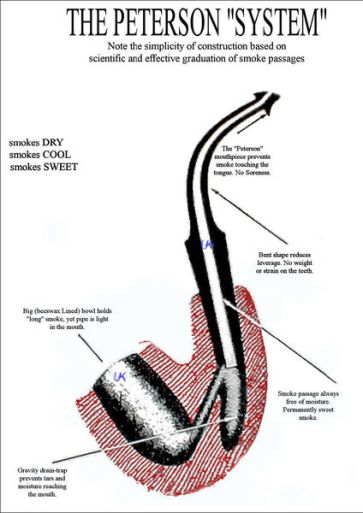
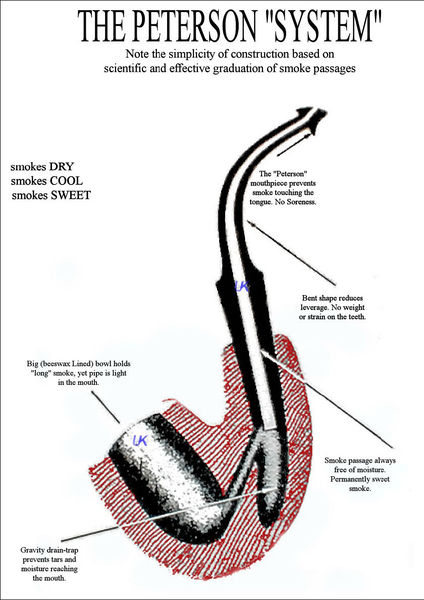
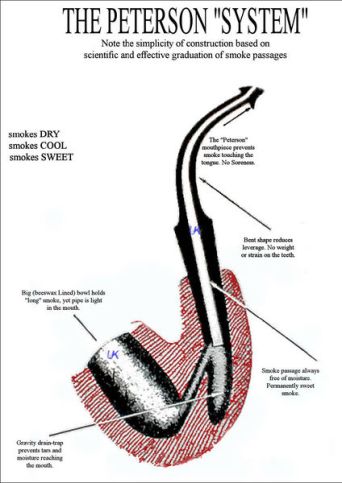
Pipedia also included a section of information on the System pipes including a diagram of the sytems look (https://pipedia.org/wiki/Peterson#Republic_Era_Pipes). I quote a section of the article in part and include a link to another article on Pipedia on the System pipe.

The Peterson System pipes are the standard bearers of the Peterson pipe family, famous for the excellent smoking pleasure they provide. Often imitated but never equaled, the Peterson System smokes dry, cool and sweet, thanks to the scientific effectiveness of the original design. The heart of the System is the unique graduated bore in the mouthpiece. This makes the suction applied by the smoker 15 times weaker by the time it reaches the tobacco chamber. The result is that all the moisture flows into the reservoir and, thus cannot reach the smoker’s mouth. The Peterson Lip further enhances the effectiveness of the graduated bore by directing the flow of smoke upwards and away from the tongue. This achieves a uniquely even distribution of smoke and virtually eliminates any chance of tonguebite or bitterness. Furthermore, the shape is contoured so that the tongue rests comfortably in the depression under the opening. Each “PLip” mouthpiece is made from Vulcanite. For the Peterson System pipes to work properly, the stem/tenon has to have an extension, the tip of which will pass by the draft hole from the bowl and into the sump. Upon the smoker drawing in smoke, this extension then directs the smoke down and around the sump to dispense a lot of the moisture before the smoke enters the extension and stem. On the System Standards and other less expensive systems, this extension with be made of Vulcanite turned integrally with the stem. On the more expensive System pipes this extension will be made of metal which screws into the Vulcanite stem. This extension on the earlier pipes will be of brass and the newer pipes will be of aluminium. Most smokers not knowing this function of the metal extension, assumes that it is a condenser/stinger and will remove it as they do with the metal condensers of Kaywoodie, etc. Should you have a System pipe with this metal extension, do not remove it for it will make the System function properly and give you a dryer smoke (https://pipedia.org/wiki/A_closer_look_at_the_famous_Peterson_Standard_System_Pipe).

With that information in hand I knew what I was dealing with in terms of the stamping and the age of this pipe. I knew from the information that the pipe was made during the Republic Era between 1950 and 1989. Most of Bob’s pipes were purchased in the 60s so my guess is that this is also a 60’s era pipe. Now it was time to work on the pipe.

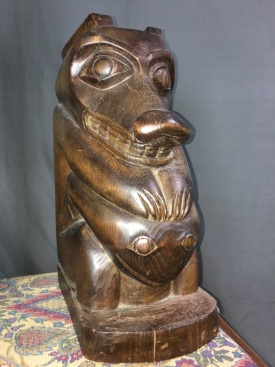
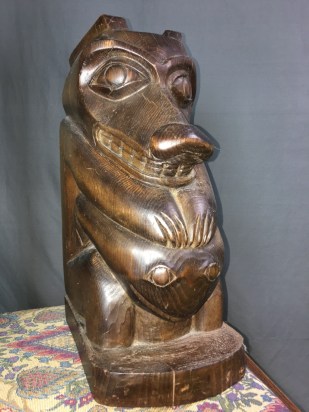
I am really happy to have Jeff’s help on cleaning these 9 Peterson’s System Standard pipes as they are a real pain to get clean. He cleaned this filthy pipe with his usual penchant for thoroughness that I really appreciate. This one was a real mess and I did not know what to expect when I unwrapped it from his box. He reamed it with a PipNet pipe reamer and cleaned up the reaming with a Savinelli Fitsall Pipe Knife. He scrubbed out the internals with alcohol, pipe cleaners and cotton swabs until the pipe was clean. He scrubbed the exterior of the bowl with Murphy’s Oil Soap and a tooth brush to remove the grime and grit on the briar and the lava on the rim top. The finish looks very good with great looking grain around the bowl and shank. Jeff soaked the stem in Before & After Deoxidizer to remove the oxidation on the rubber. When the pipe arrived here in Vancouver for the second stop of its restoration tour I was amazed it looked so good.  Forgive the poor quality pics I took of the pipe at this point… not sure what happened. I took some close up photos of the rim top and also of the stem surface. I wanted to show what an amazing job Jeff did in the cleanup of the rim top. The rim top was darkened with nicks and dents in the top. There were notches around the inner edge almost looked like a knife had been used on it. The back outer edge was worn and rough. I also took close up photos of the stem to show the tooth chatter on the stem surface. There was also the scratch on the underside. It was still lightly oxidized. The P stamp on the left was faint but visible.  You can also see the dents around the nickel ferrule. One of the things I appreciate about Jeff’s cleanup is that he works to protect and preserve the nomenclature on the shank of the pipes that he works on. The stamping on this one was very faint to start with so I was worried that it would disappear altogether with the cleanup. I took some photos to show the clarity of the stamping had neither worsened nor improved. Since this is another pipe Bob’s estate I am sure that some of you have read at least some of the other restoration work that has been done on the previous pipes. You have also read what I have included about Bob Kerr, the pipeman who held these pipes in trust before I came to work on them (see photo to the left). Also, if you have followed the blog for long you will already know that I like to include background information on the pipeman whose pipes I am restoring. For me, when I am working on an estate I really like to have a sense of the person who held the pipes in trust before I worked on them. It gives me another dimension of the restoration work. I asked Brian if he or his wife would like to write a brief biographical tribute to her father, Bob. His daughter worked on it and I received the following short write up on him and some pictures to go along with the words including one of Bob’s carvings. Once again I thank you Brian and tell your wife thank you as well.
I am delighted to pass on these beloved pipes of my father’s. I hope each user gets many hours of contemplative pleasure as he did. I remember the aroma of tobacco in the rec room, as he put up his feet on his lazy boy. He’d be first at the paper then, no one could touch it before him. Maybe there would be a movie on with an actor smoking a pipe. He would have very definite opinions on whether the performer was a ‘real’ smoker or not, a distinction which I could never see but it would be very clear to him. He worked by day as a sales manager of a paper products company, a job he hated. What he longed for was the life of an artist, so on the weekends and sometimes mid-week evenings he would journey to his workshop and come out with wood sculptures, all of which he declared as crap but every one of them treasured by my sister and myself. Enjoy the pipes, and maybe a little of his creative spirit will enter you!

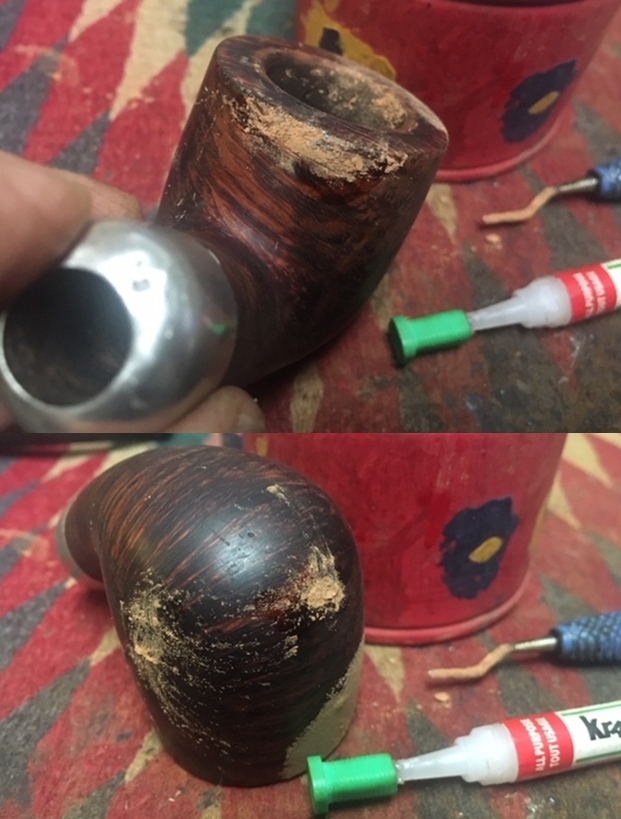
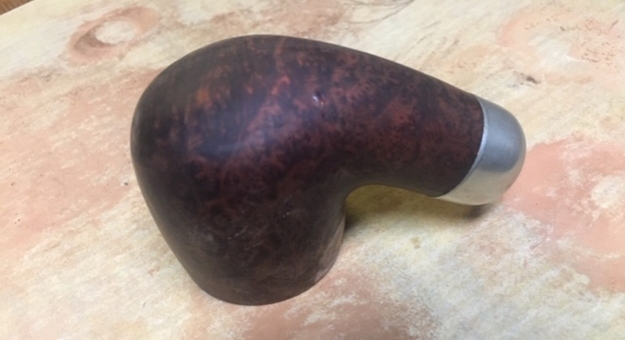
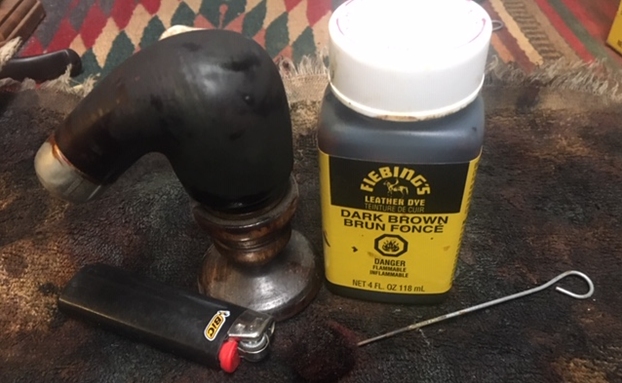
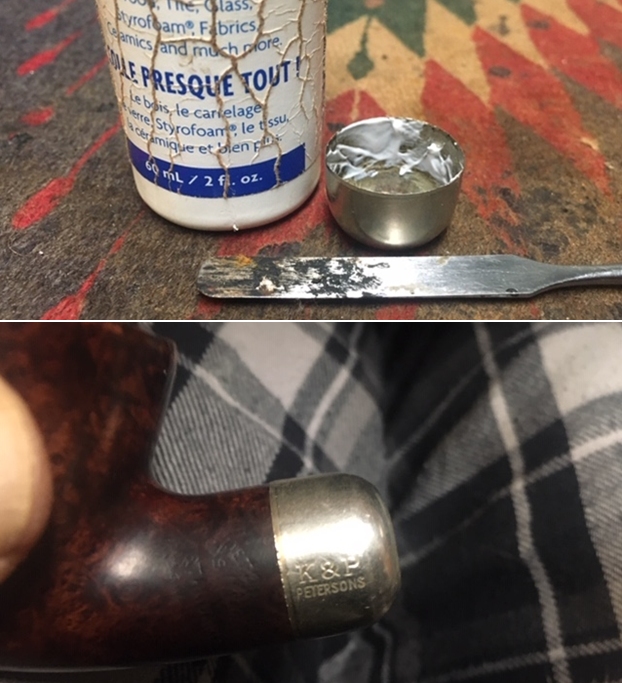
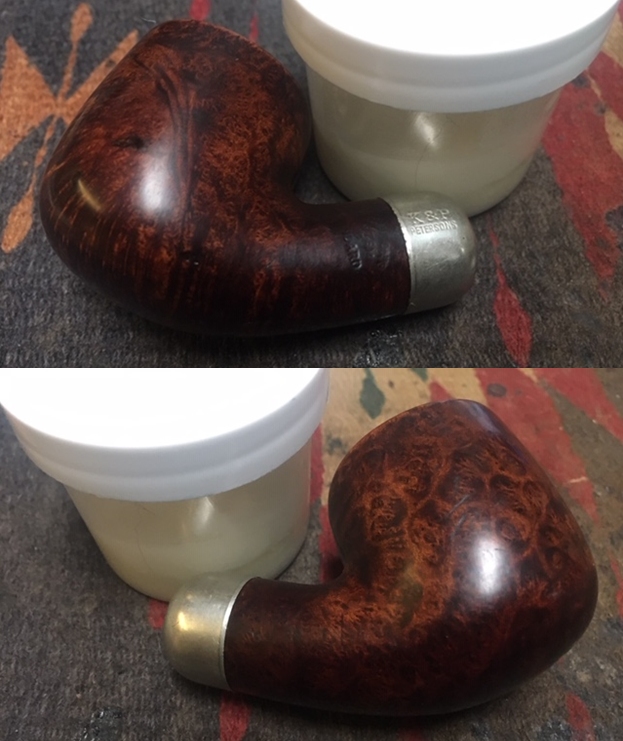
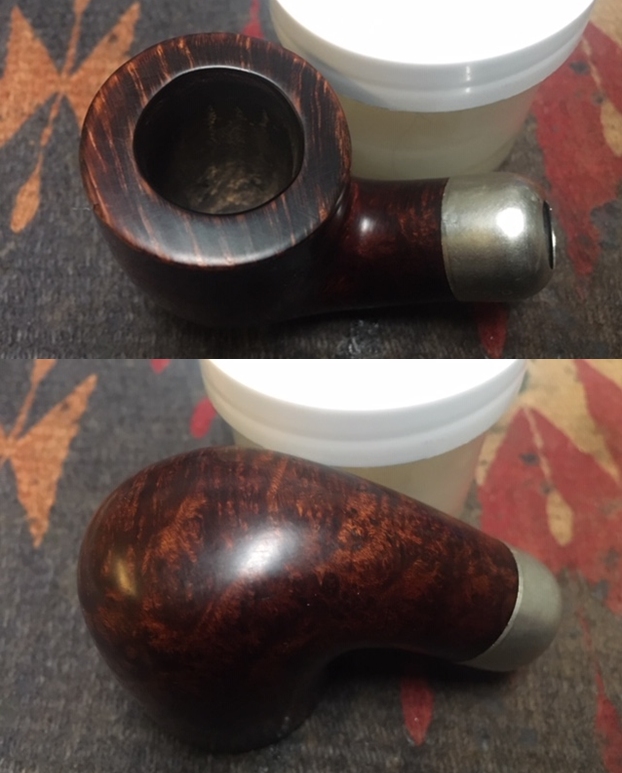
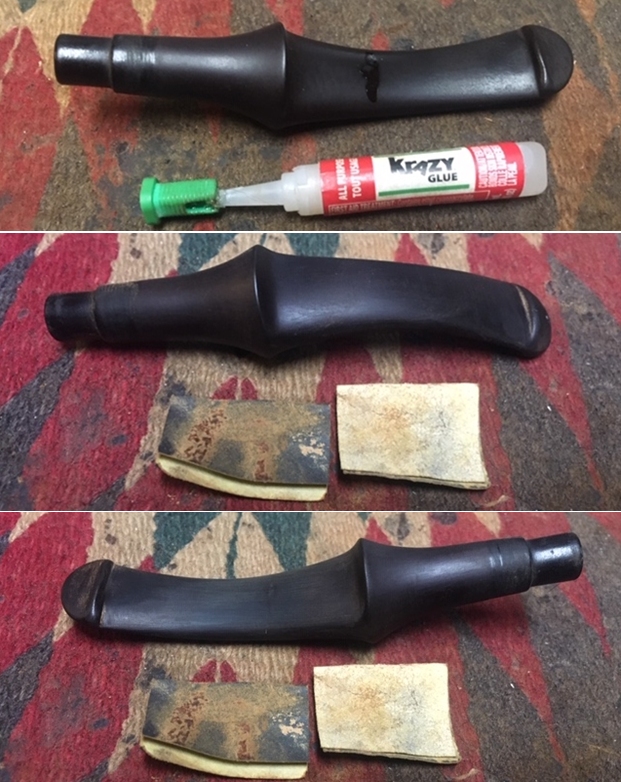
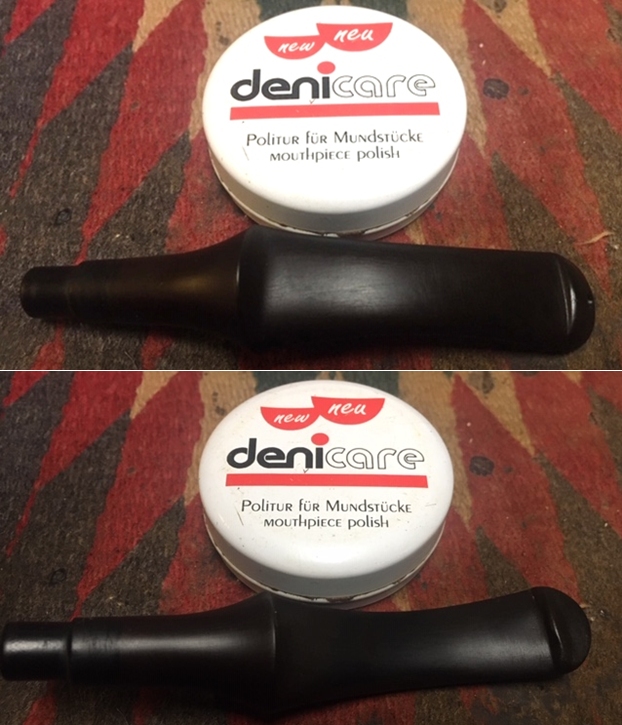
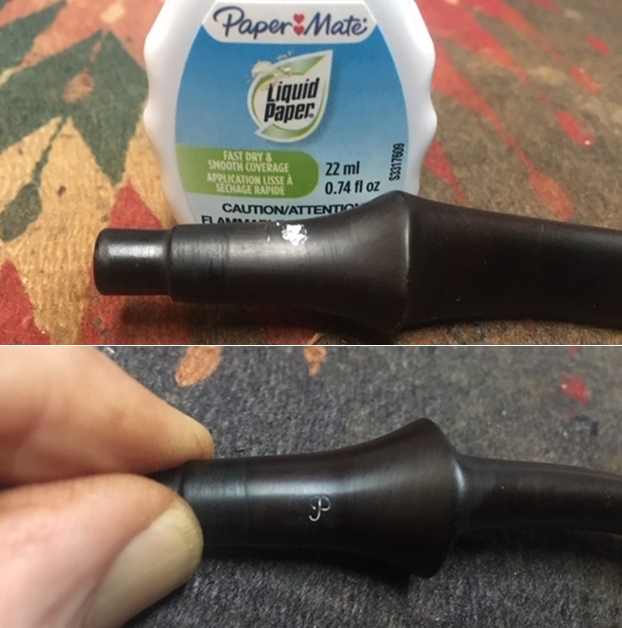
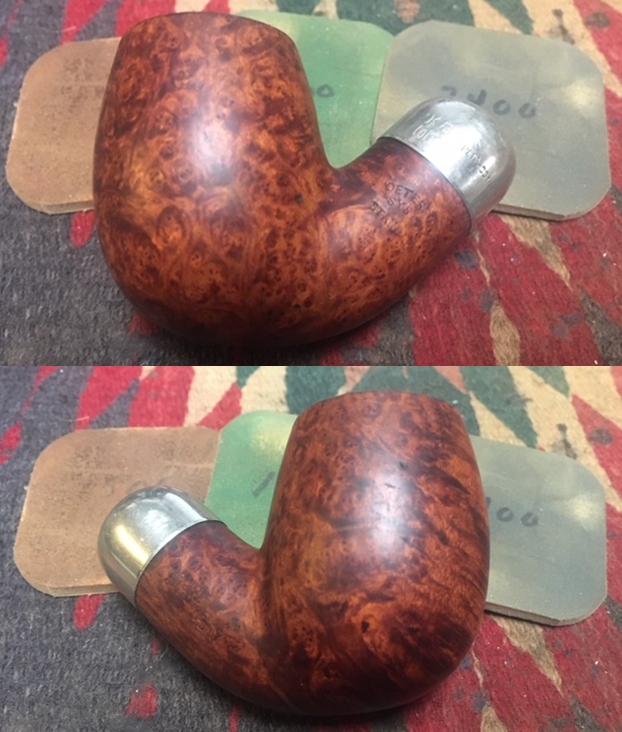
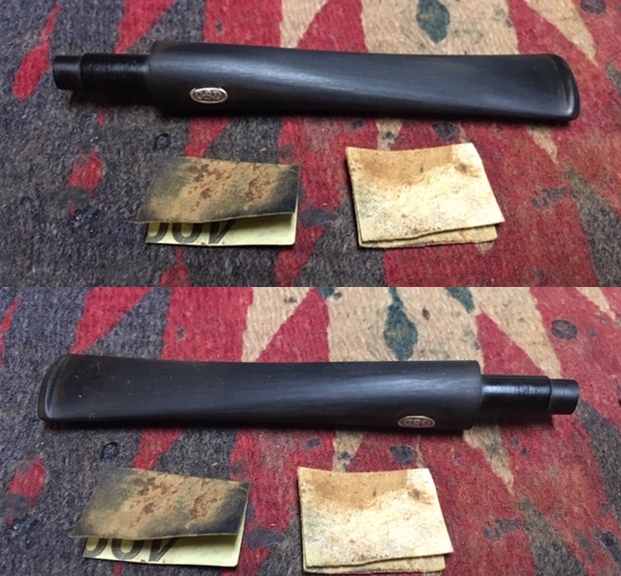
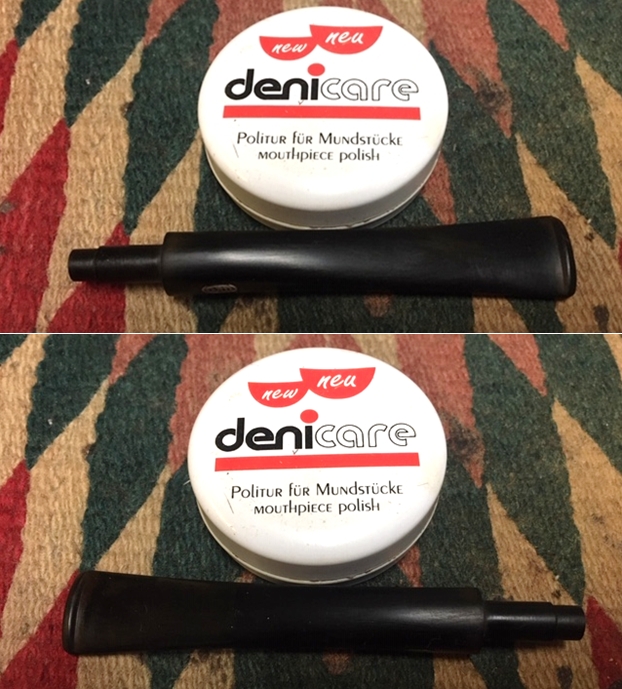
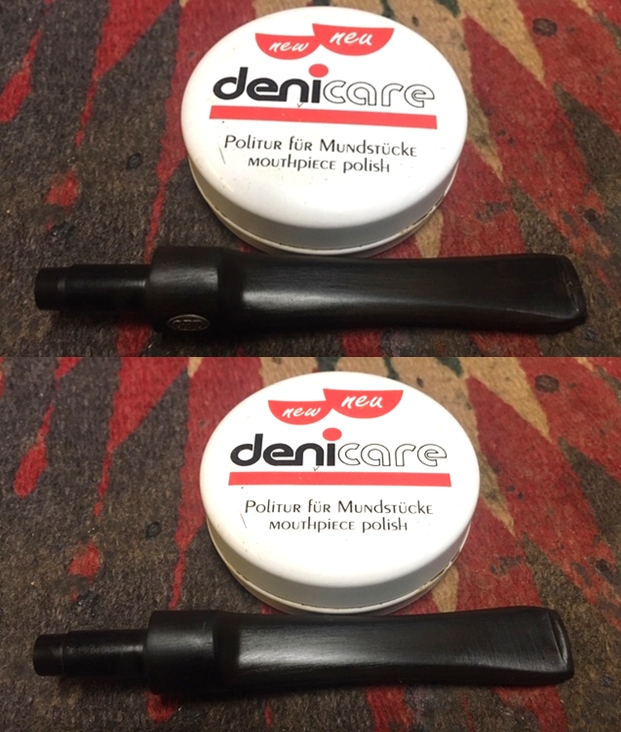
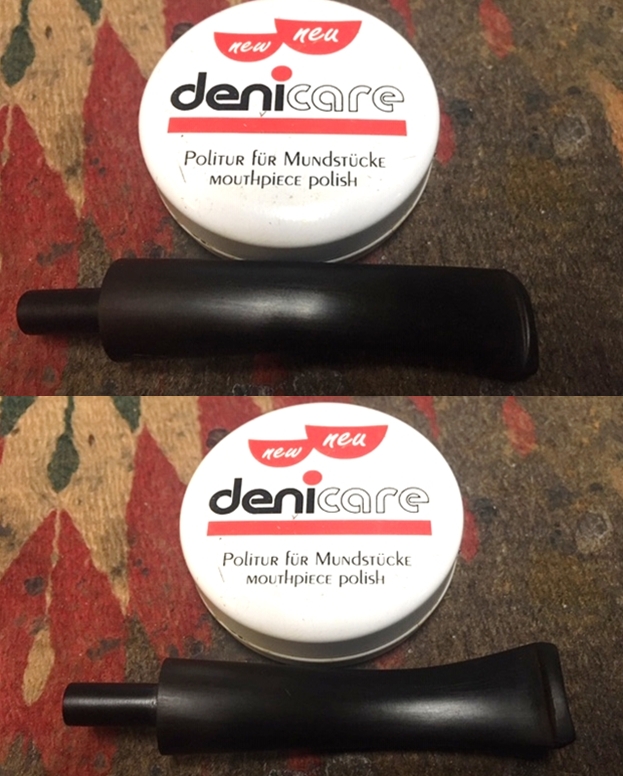
Now with all of the background on the line and the background on Bob Kerr it was time to get on with the restoration of this next mixed grain Peterson’s System Standard 301 Bent Pot. I am really coming to appreciate the hard cleanup work that Jeff did on these pipes. They were a real mess when I sent them to Jeff and I have to tell you it was great that I did not need to clean this pipe. I decided to start the process by dealing with the damage to the inner edge and top of the rim. The first photo below shows what the rim looked like when I started. I sanded it with 220 grit sandpaper and worked on the flat surface as well as the inner edge. I gave it a very light bevel so that it took care of the damage on the inner edge.I filled in the damage on the back edge of the rim and the deep pits in briar on the front and left side with briar dust and clear Krazy Glue. Once the repair had cured I sanded the spots of the repair and topped the bowl with 220 grit sandpaper on a topping board. Unfortunately I did not document what the repairs looked like after sanding or topping but that will become clear in the photos that follow. I heated the briar with a flame of a lighter and stained it with Fiebing’s Dark Brown aniline stain. I applied it and flamed it to burn off the alcohol. I took photos of the bowl after staining. You can see the repaired areas as dark spots on the side and the top of the bowl. These will need to be sanded more but the pipe is looking pretty good at this point. I set the bowl aside to cure for the night, turned out the lights and headed to bed. In the morning I removed the nickel ferrule and buffed the bowl with red Tripoli on the buffing wheel to remove the “crust” on the stain. It was dark but otherwise it looked good. I wiped the bowl down with alcohol on cotton pads to make it more transparent. It is hard to see from the photos but the repairs actually looked good at this point.  To further make the stain transparent I polished the briar with micromesh sanding pads – wet sanding it with 1500-12000 grit pads and I wiped the bowl down after each sanding pad with a damp cloth. The bowl began to take on a finished shine. You can see the repaired area on the rim top and left side of the bowl but they look and feel better to the touch than before.   I used the head of a Robertson style screwdriver to work on the dents in the ferrule. I usually use a piece of broom stick that has the rounded head on it but did not have one here at the moment. I place the head against the inside of the dent and tapped it with a small hammer to smooth it out. I was able to remove the majority of the dents around the ferrule. There are still small spots but it is significantly better than before.I spread some WellBond all purpose glue on the inside of the ferrule with a dental spatula and pressed it in place on the shank. I aligned the K&P Petersons stamp on the left side of the shank with the stamping.I rubbed the bowl and rim down with Before & After Restoration Balm. I worked it into the surface of the briar with my fingertips to clean, enliven and protect it. I let the balm sit for a little while and then buffed with a cotton cloth to raise the shine. I really like watching the Balm do its magic and bring the briar alive. I wiped off the scratch in the vulcanite with alcohol and filled it in with clear Krazy Glue. Once the glue cured I smoothed out the repair on the underside of the stem with 220 grit sandpaper.  I polished it with 400 grit wet dry sandpaper.   I rubbed the stem down with Denicare Mouthpiece Polish. I have a few tins of this laying around so I am trying to use them up. It does a pretty good job polishing the stem.  I used some Papermate Liquid Paper to touch up the stamping on the left side of the saddle stem. I pressed it into the stamped letter “P” and let it dry. I scraped it off with a tooth pick and took a photo of the re-whitened letter.   I polished the stem with micromesh sanding pads – wet sanding with 1500-12000 grit pads. I wiped the stem down after each sanding pad with Obsidian Oil. I polished it with Before & After Pipe Stem Polish – both Fine and Extra Fine. Once I had finished the polishing I gave it a coat of a new product I am experimenting with from Briarville Pipe Repair. It is called “No Oxy Oil” and it is made to protect the stem from oxidizing. I set it aside to dry.    Once again at this point in the restoration process I am excited to be on the homestretch. This is the only Peterson’s System Standard 301 Pot from Bob’s pipes so I look forward to the final look when it is put back together, polished and waxed. I put the bowl and stem back together. I polished the bowl and stem with Blue Diamond to polish out the scratches in the briar and the vulcanite. I gave the bowl and the stem multiple coats of carnauba wax. I buffed the pipe with a clean buffing pad to raise the shine. I hand buffed it with a microfiber cloth to deepen the shine. The pipe polished up pretty nicely. The grain is quite nice and really pops with the wax and polish. The shiny black vulcanite stem is a beautiful contrast to the browns of the bowl and thick shank. This was another fun pipe to work on thanks to Jeff’s cleanup work. The polished nickel Ferrule works as a contrast between the stem and the briar and binds it all together. It really is a quite stunning piece of briar whose shape follows the flow of the briar. The pipe is comfortable pipe to hold in the hand. The finished pipe is shown in the photos below. The dimensions of the pipe are Length: 6 inches, Height: 2 inches, Outside diameter of the bowl: 1 ½ inches, Chamber diameter: 7/8 of an inch. This beautiful pipe will be going on the rebornpipes store if you would like to add it to your collection and carry on Bob’s legacy. If not, I have a lot more of Bob’s estate to work on of various brands. Perhaps one of those will catch your attention. Thanks for reading this blog and my reflections on the pipe while I worked on it. This is an interesting estate to bring back to life.
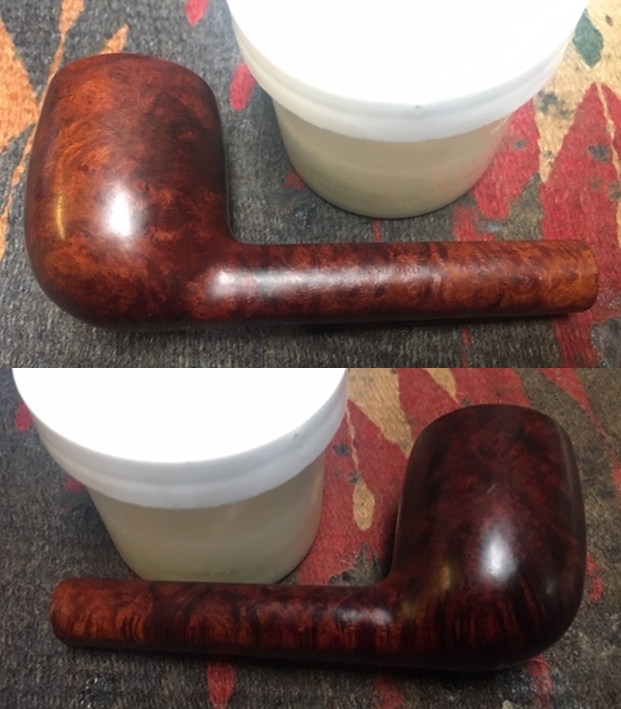
 

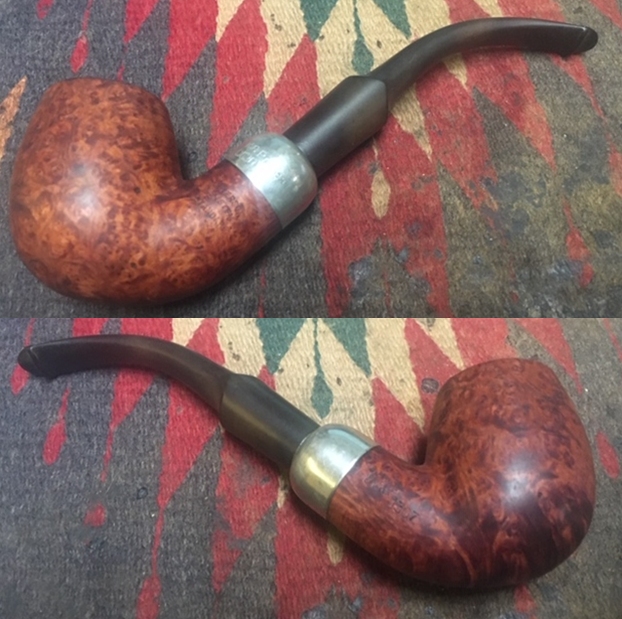
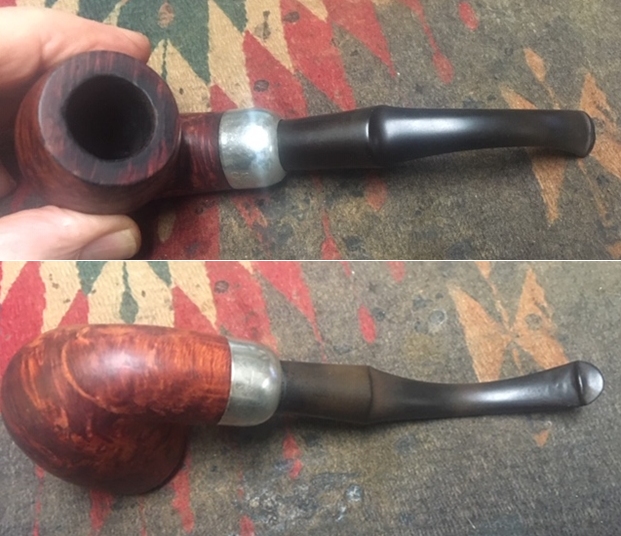
A Third Republic Era Peterson’s 1307 System Standard from Bob Kerr’s Estate


Blog by Steve Laug

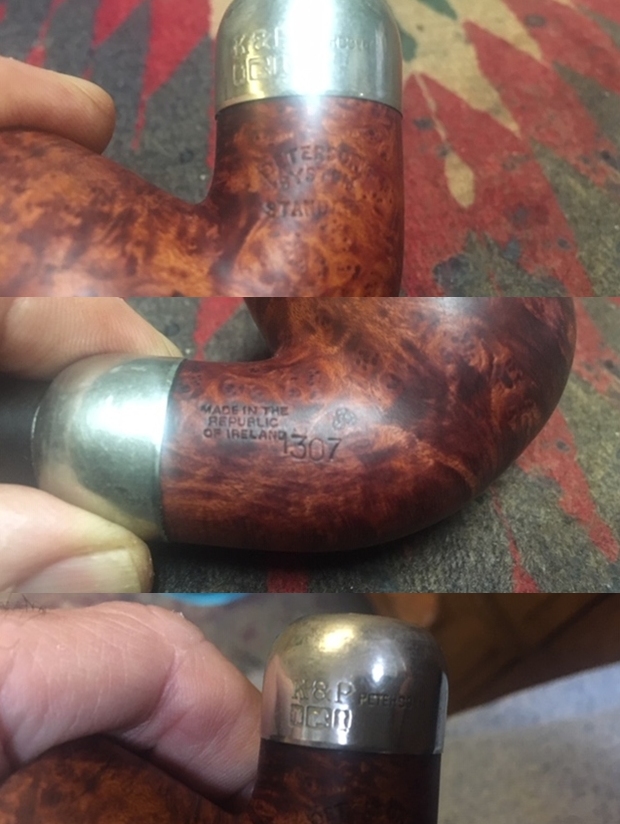
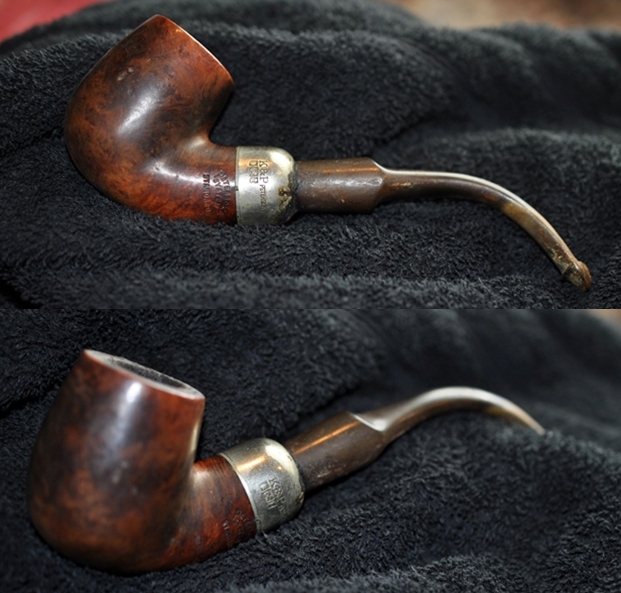
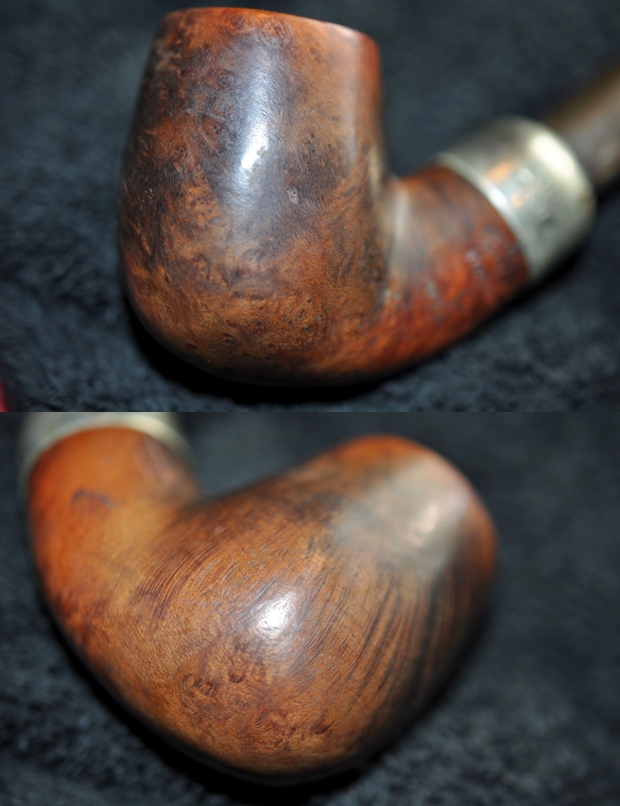
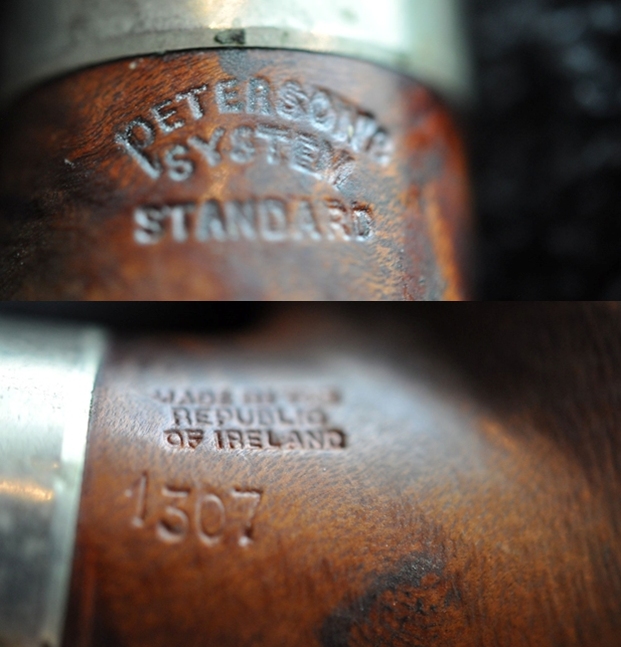
I am continuing to work on Bob Kerr’s collection of 9 Peterson’s System pipes that are ready to be restored. This pipe is the third of the large Canadian Imported Standard System 1307 pipes that I have in his estate. I have restored quite a few of his Petersons already so this is kind of subset of the Peterson Collection. You can read about those restorations in previous blogs. To be honest with you I have been dreading working on these 9 because when they arrived they were absolutely filthy and the reservoir in the shank was filled with tars and oils. It looked to me that they had never been cleaned. Jeff cleaned them for me and because of that I have been enjoying working on these Peterson’s particularly because Jeff has done such a thorough cleanup of them before I receive them. When I took it out of the box of the pipes that Jeff had cleaned up and sent back to me, I could see that it was stamped Peterson’s System Standard vertically on the left side of the shank next to the band. The right side of the shank was stamped Made in the Republic of Ireland over the shape number 1307. It has some stunning grain around the bowl and shank like the first one that I worked on that can be seen under the thick grime.

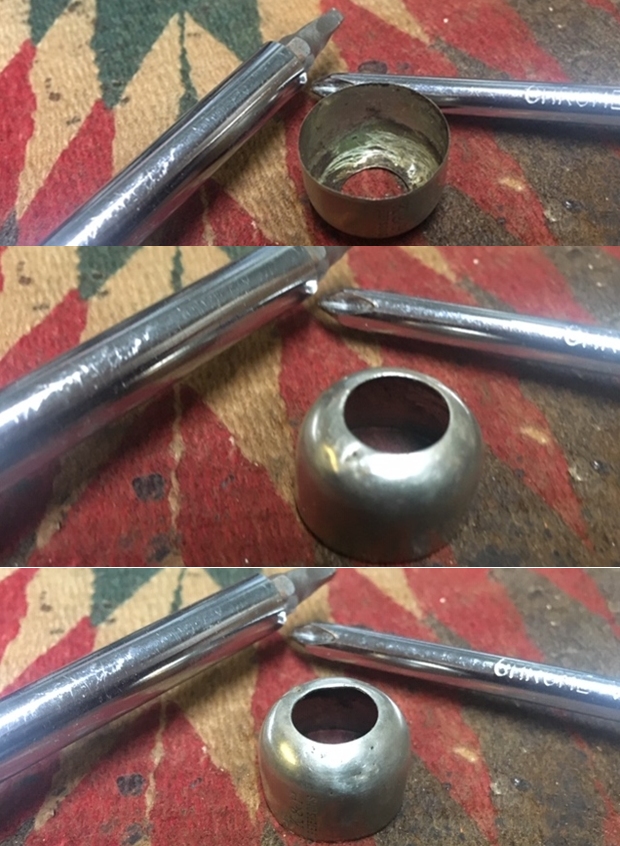
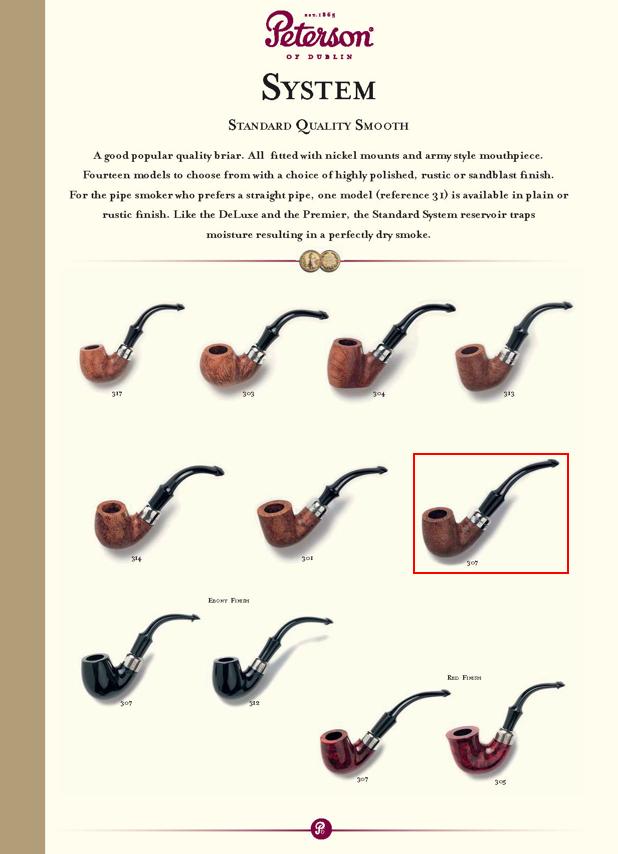
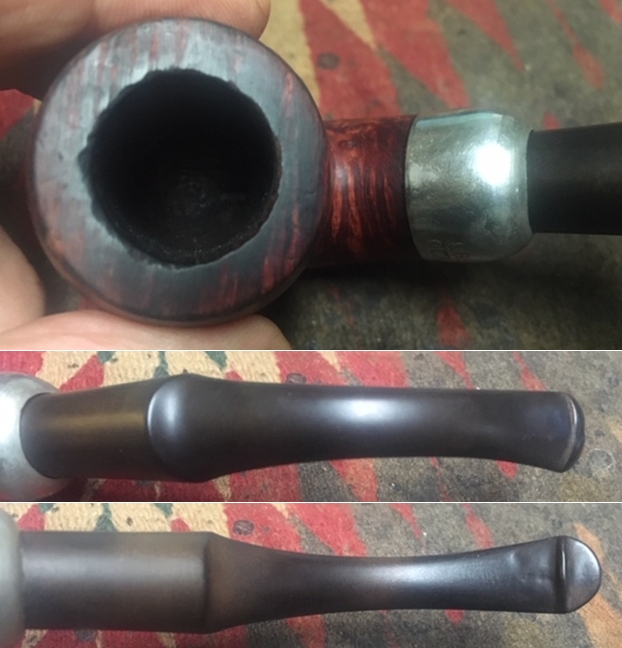
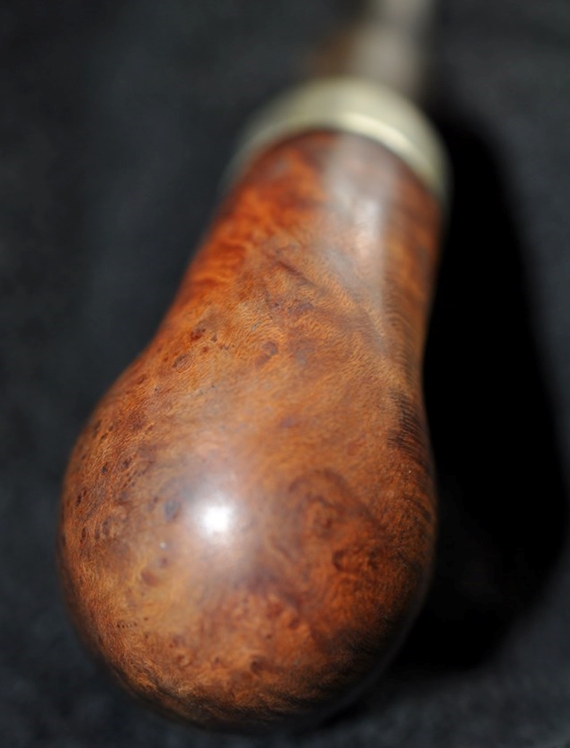
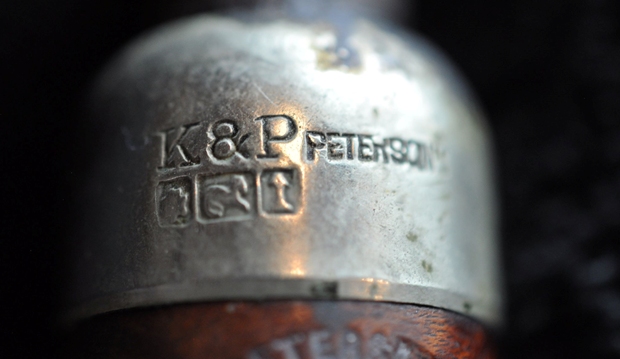
There was a thick cake in the bowl with remnants of tobacco stuck on the walls. There was a lava overflow on the rim. The top and edges of the rim appear to have some damage all the way around the bowl. I think that there was a beautiful pipe underneath all of the buildup of years of use. The nickel ferrule on the shank end was oxidized and is stamped on the top and left side K&P Peterson’s over three hallmarks. It is not dented or damaged. The stem was oxidized and calcified toward the end with some tooth chatter. There were also some tooth marks on both sides of the stem ahead of the “P-lip”. Jeff took photos of the pipe before he started his cleanup work on it. Jeff took photos of the bowl and rim top to show the thick, hard cake in the bowl and the lava build up on the top of the rim and the edges of the bowl. The rim top looked pretty good but it was hard to know for sure but it appeared that there was damage all around the inner edge. The outer edges of the rim appeared to be in good condition.   Jeff took photos of the sides and heel of the bowl to show the condition of the finish. You can see the interesting birdseye grain on the sides of the bowl and shank. Even under the dirt and debris of the years it looked very good. The cross grain on the heel was beautiful.   Jeff took photos of the stamping on the left side of the bowl and shank. The vertical stamping on the left side was readable as you can see from the photos. It read Peterson’s System Standard. He did not take a photo of the stamp on the right side of the shank but it read Made in the Republic of Ireland with the shape number 1307 underneath. The nickel ferrule on the shank end is stamped on the top and left side K&P Peterson’s over three hallmarks – a Shamrock, a shape that looks like a reclining lion and a tower. Typically these hallmarks are not like those in silver that help to date a pipe but are rather marks that make it clear that the pipe was made in Ireland.   Jeff took photos of the top and underside of the stem showing the tooth chatter, scratching and oxidation on the stem surface and wear on the edges of the button. There were two deep dents on the top of the stem just ahead of the P-lip.    I have included the information on the shape number on this pipe that I picked up on researching the previous pipes. It is another of the three Peterson’s System Standard pipes in Bob’s collection marked with the 1307 shape number. There are also 2 System Standards marked 307 and for the life of me I cannot tell the difference. They are virtually identical in shape, size and marking. I started my hunt for information by turning to a Peterson Catalogue that I have on rebornpipes and looked up the System Standard pipes (https://rebornpipes.com/tag/peterson-hallmark-chart/). I have put a red box around the 307 shown in the catalogue page shown below. That should give a clear picture of the size and shape of the pipe. But there was nothing to give me any information on what the first number 1 meant in the shape number 1307 pipe that I am working on. I decided to email Mark Irwin to see if he could point me in the right direction either in the book to something I was missing or to something else that might help.Since this is stamped the same as the previous two 1307 pipes, I am including the information on the unique numbering on it. Mark pointed me in the direction that I needed. I quote the pertinent part of his email. The red highlighted portion was the clue I was looking for on this pipe. I have already cleaned up several of Bob’s pipes that were sold through GT&C (Genin, Trudeau and Company, Montreal, Quebec).

The index at the back of the book is pretty good, and points you to all the GT&C goodies, but 155 has a photo from the catalog with your 1307, while 318 and 323 explain the rationale for the “1” prefix. In a nutshell, just drop the “1” and you’ve got the shape. My theory is that GT&C added this to aid them in warranty work, so they’d know the pipe was bought on Canadian soil.

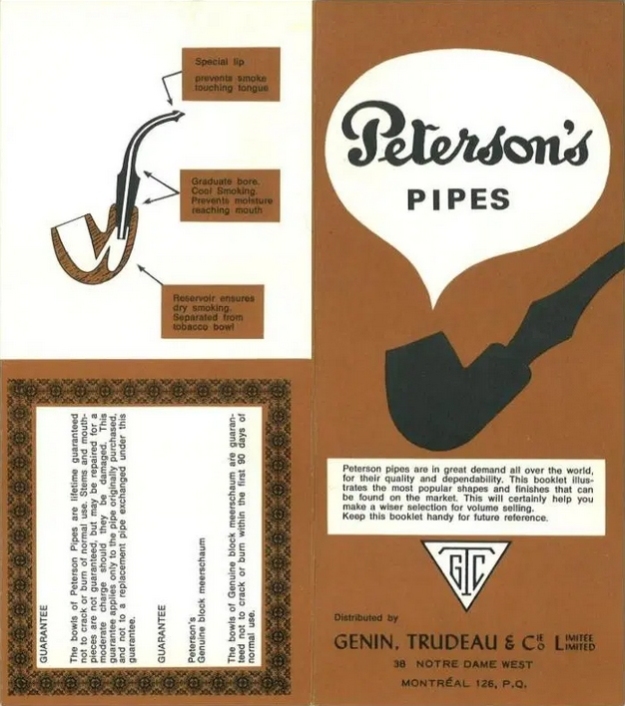
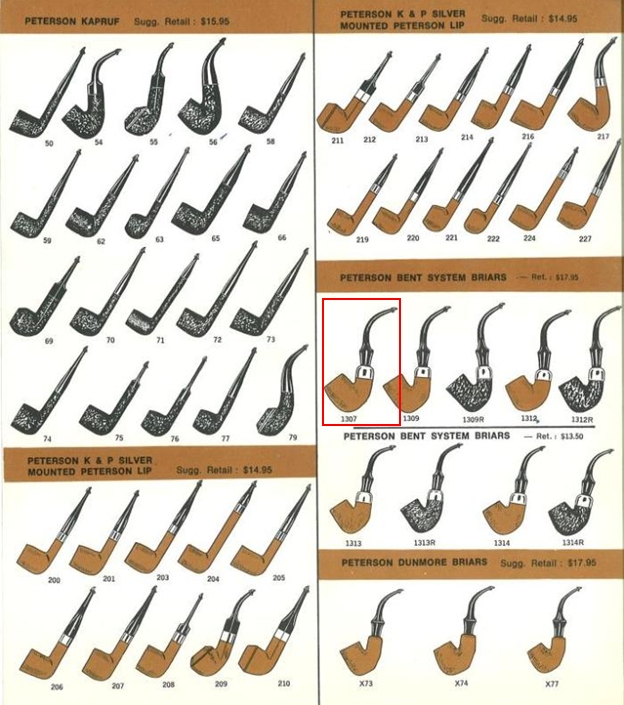
I turned then to a previous blog I had written on a Kapruf 54 that had an odd shape number stamp and referred to the Canadian numbering system used by GT&C. Here it the link to that blog (https://rebornpipes.com/2019/08/09/back-to-bob-kerrs-estate-another-canadian-import-petersons-kapruf-a-54/). In the blog I included a link to a blog I did on the GT&C Catalogue that came to me in some paperwork the family gave me. I have included the cover of the catalogue and the page on the system pipes showin the 1307 shape. I have put a red box around the shape for ease of reference (https://rebornpipes.com/2016/09/13/petersons-pipes-brochure-from-genin-trudeau-co-montreal-quebec/). Be sure to check out the rest of the document on the link.

The GT&C Catalogue combined with the earlier Peterson Pipe Catalogue page make the link definitive. I am also including the information from Pipedia’s article on Peterson pipes. It is a great read in terms of the history of the brand (https://pipedia.org/wiki/Peterson). I have included a bit of the pertinent history here.

1950 – 1989 The Republic Era  – From 1950 to the present time, the stamp for this era is “Made in the Republic of Ireland” in a block format generally in three lines but two lines have been used with or without Republic being abbreviated.

During the 1950’s and 60’s the Kapp & Peterson company was still in the ownership of the Kapp family. However 1964 saw the retiral of the company Managing Director Frederick Henry(Harry) Kapp.

Pipedia also included a section of information on the System pipes including a diagram of the sytems look (https://pipedia.org/wiki/Peterson#Republic_Era_Pipes). I quote a section of the article in part and include a link to another article on Pipedia on the System pipe.

The Peterson System pipes are the standard bearers of the Peterson pipe family, famous for the excellent smoking pleasure they provide. Often imitated but never equaled, the Peterson System smokes dry, cool and sweet, thanks to the scientific effectiveness of the original design. The heart of the System is the unique graduated bore in the mouthpiece. This makes the suction applied by the smoker 15 times weaker by the time it reaches the tobacco chamber. The result is that all the moisture flows into the reservoir and, thus cannot reach the smoker’s mouth. The Peterson Lip further enhances the effectiveness of the graduated bore by directing the flow of smoke upwards and away from the tongue. This achieves a uniquely even distribution of smoke and virtually eliminates any chance of tonguebite or bitterness. Furthermore, the shape is contoured so that the tongue rests comfortably in the depression under the opening. Each “PLip” mouthpiece is made from Vulcanite. For the Peterson System pipes to work properly, the stem/tenon has to have an extension, the tip of which will pass by the draft hole from the bowl and into the sump. Upon the smoker drawing in smoke, this extension then directs the smoke down and around the sump to dispense a lot of the moisture before the smoke enters the extension and stem. On the System Standards and other less expensive systems, this extension with be made of Vulcanite turned integrally with the stem. On the more expensive System pipes this extension will be made of metal which screws into the Vulcanite stem. This extension on the earlier pipes will be of brass and the newer pipes will be of aluminium. Most smokers not knowing this function of the metal extension, assumes that it is a condenser/stinger and will remove it as they do with the metal condensers of Kaywoodie, etc. Should you have a System pipe with this metal extension, do not remove it for it will make the System function properly and give you a dryer smoke (https://pipedia.org/wiki/A_closer_look_at_the_famous_Peterson_Standard_System_Pipe).

With that information in hand I knew what I was dealing with in terms of the stamping and the age of this pipe. I knew from the information that the pipe was made during the Republic Era between 1950 and 1989. Most of Bob’s pipes were purchased in the 60s so my guess is that this is also a 60’s era pipe. I also knew that the pipe was brought into Canada by the Canadian importer, Genin, Trudeau & Co. in Montreal, Quebec. Noting above that the catalogue postal code puts it in the late 60s early 70s which also fits the story. Now it was time to work on the pipe.

I am really happy to have Jeff’s help on cleaning these 9 Peterson’s System Standard pipes as they are a real pain to get clean. He cleaned this filthy pipe with his usual penchant for thoroughness that I really appreciate. This one was a real mess and I did not know what to expect when I unwrapped it from his box. He reamed it with a PipNet pipe reamer and cleaned up the reaming with a Savinelli Fitsall Pipe Knife. He scrubbed out the internals with alcohol, pipe cleaners and cotton swabs until the pipe was clean. He scrubbed the exterior of the bowl with Murphy’s Oil Soap and a tooth brush to remove the grime and grit on the briar and the lava on the rim top. The finish looks very good with great looking grain around the bowl and shank. Jeff soaked the stem in Before & After Deoxidizer to remove the oxidation on the rubber. When the pipe arrived here in Vancouver for the second stop of its restoration tour I was amazed it looked so good.   I took some close up photos of the rim top and also of the stem surface. I wanted to show what an amazing job Jeff did in the cleanup of the rim top. The rim top was darkened with nicks and notches around the top and inner edge. The inner edge was very rough – almost looked like a knife had been used on it.  I also took close up photos of the stem to show the tooth marks and chatter on the stem surface. The majority of the marks were on the underside.   One of the things I appreciate about Jeff’s cleanup is that he works to protect and preserve the nomenclature on the shank of the pipes that he works on. The stamping on this one was very faint to start with so I was worried that it would disappear altogether with the cleanup. He was not only able to preserve it but it is clearer than shown in the earlier photos. I took some photos to show the clarity of the stamping. I have noticed that many restorers are not careful to protect the stamping in their cleaning process and often by the end of the restoration the nomenclature is almost destroyed. I would like to encourage all of us to be careful in our work to preserve this as it is a critical piece of pipe restoration!      Since this is another pipe Bob’s estate I am sure that some of you have read at least some of the other restoration work that has been done on the previous pipes. You have also read what I have included about Bob Kerr, the pipeman who held these pipes in trust before I came to work on them (see photo to the left). Also, if you have followed the blog for long you will already know that I like to include background information on the pipeman whose pipes I am restoring. For me, when I am working on an estate I really like to have a sense of the person who held the pipes in trust before I worked on them. It gives me another dimension of the restoration work. I asked Brian if he or his wife would like to write a brief biographical tribute to her father, Bob. His daughter worked on it and I received the following short write up on him and some pictures to go along with the words including one of Bob’s carvings. Once again I thank you Brian and tell your wife thank you as well.

I am delighted to pass on these beloved pipes of my father’s. I hope each user gets many hours of contemplative pleasure as he did. I remember the aroma of tobacco in the rec room, as he put up his feet on his lazy boy. He’d be first at the paper then, no one could touch it before him. Maybe there would be a movie on with an actor smoking a pipe. He would have very definite opinions on whether the performer was a ‘real’ smoker or not, a distinction which I could never see but it would be very clear to him. He worked by day as a sales manager of a paper products company, a job he hated. What he longed for was the life of an artist, so on the weekends and sometimes mid-week evenings he would journey to his workshop and come out with wood sculptures, all of which he declared as crap but every one of them treasured by my sister and myself. Enjoy the pipes, and maybe a little of his creative spirit will enter you!

Now with all of the background on the line and the background on Bob Kerr it was time to get on with the restoration of this next mixed grain Peterson’s System Standard 1307 Bent Billiard. This is the last of the 1307 pipes that I am restoring. I am really coming to appreciate the hard cleanup work that Jeff did on these pipes. They were a real mess when I sent them to Jeff and I have to tell you it was great that I did not need to clean this pipe. I decided to start the process by dealing with the damage to the inner edge and top of the rim. The first photo below shows what the rim looked like when I started. I sanded it with 220 grit sandpaper and worked on the flat surface as well as the inner edge. I gave it a very light bevel so that it took care of the damage on the inner edge. The third photo shows the rim top after the shaping. I polished the briar with micromesh sanding pads – wet sanding it with 1500-12000 grit pads and I wiped the bowl down after each sanding pad with a damp cloth. The bowl began to take on a finished shine. I rubbed the bowl and rim down with Before & After Restoration Balm. I worked it into the surface of the briar with my fingertips to clean, enliven and protect it. I let the balm sit for a little while and then buffed with a cotton cloth to raise the shine. I really like watching the Balm do its magic and bring the briar alive. I “painted” the stem with the flame of a Bic lighter to raise the dents then lightly sanded it with 220 grit sandpaper to clean up the area around the deep tooth marks. I wiped the stem down with alcohol and filled in the tooth marks on the top and underside as well as on the edges of the “P-lip” button itself with clear Krazy Glue.I used a small file to recut the button edge on both the top and underside and to smooth out the filled in areas on the stem surface on both sides.  I smoothed out the repair on the button and on both sides of the stem with 220 grit sandpaper.  I polished it with 400 grit wet dry sandpaper.   I polished the stem with micromesh sanding pads – wet sanding with 1500-12000 grit pads. I wiped the stem down after each sanding pad with Obsidian Oil. I polished it with Before & After Pipe Stem Polish – both Fine and Extra Fine. Once I had finished the polishing I gave it a coat of a new product I am experimenting with from Briarville Pipe Repair. It is called “No Oxy Oil” and it is made to protect the stem from oxidizing. I set it aside to dry.    Once again at this point in the restoration process I am excited to be on the homestretch. This is the final 1307 from Bob’s pipes so I look forward to the final look when it is put back together, polished and waxed. I put the bowl and stem back together. I polished the bowl and stem with Blue Diamond to polish out the scratches in the briar and the vulcanite. I gave the bowl and the stem multiple coats of carnauba wax. I buffed the pipe with a clean buffing pad to raise the shine. I hand buffed it with a microfiber cloth to deepen the shine. The pipe polished up pretty nicely. The grain is quite stunning and really pops with the wax and polish. The shiny black vulcanite stem is a beautiful contrast to the browns of the bowl and thick shank. This last of Bob’s Peterson’s System Standard 1307 Bent Billiards was another fun pipe to work on thanks to Jeff’s cleanup work. The polished nickel Ferrule works as a contrast between the stem and the briar and binds it all together. It really is a quite stunning piece of briar whose shape follows the flow of the briar. The pipe is comfortable pipe to hold in the hand. The finished pipe is shown in the photos below. The dimensions of the pipe are Length: 6 ½ inches, Height: 2 inches, Outside diameter of the bowl: 1 3/8 inches, Chamber diameter: ¾ of an inch. This beautiful pipe will be going on the rebornpipes store if you would like to add it to your collection and carry on Bob’s legacy. If not, I have a lot more of Bob’s estate to work on of various brands. Perhaps one of those will catch your attention. Thanks for reading this blog and my reflections on the pipe while I worked on it. This is an interesting estate to bring back to life.
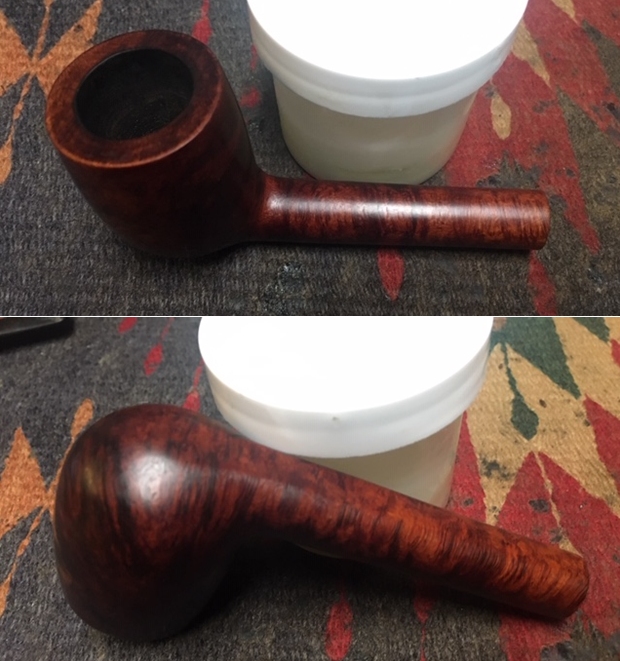
Another Republic Era Peterson’s 1307 System Standard from Bob Kerr’s Estate


Blog by Steve Laug

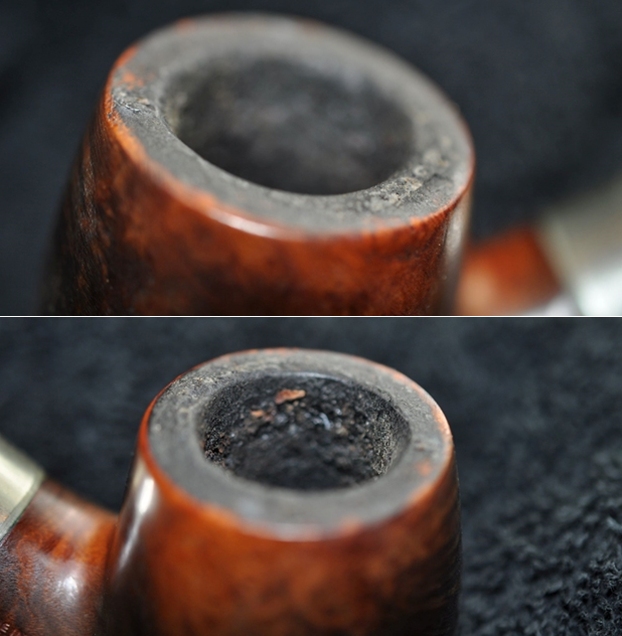
I am continuing to work on Bob Kerr’s collection of 9 Peterson’s System pipes that are ready to be restored. This pipe is the second of the large Standard System pipes that I have in his estate. I have restored quite a few of his Petersons already so this is kind of subset of the Peterson Collection. You can read about those restorations in previous blogs. To be honest with you I have been dreading working on these 9 because when they arrived they were absolutely filthy and the reservoir in the shank was filled with tars and oils. It looked to me that they had never been cleaned. Jeff cleaned them for me and because of that I have been enjoying working on these Peterson’s particularly because Jeff has done such a thorough cleanup of them before I receive them. When I took it out of the box of the pipes that Jeff had cleaned up and sent back to me, I could see that it was stamped Peterson’s System Standard vertically on the left side of the shank next to the band. The right side of the shank was stamped Made in the Republic of Ireland over the shape number 1307. It has some stunning grain around the bowl and shank like the previous one but the finish was darker in colour under the thick grime.

There was a thick cake in the bowl with remnants of tobacco stuck on the walls. There was a lava overflow on the rim. The top and edges of the rim looked very good under the grime. I think that there was a beautiful pipe underneath all of the buildup of years of use. The nickel ferrule on the shank end is stamped on the top and left side K&P Peterson’s over three hallmarks. It is not dented or damaged. The stem was oxidized and calcified toward the end with some tooth chatter but surprisingly it did not have the deep tooth marks that I have come to expect from Bob’s pipes but the button edges were worn. Jeff took photos of the pipe before he started his cleanup work on it. Jeff took photos of the bowl and rim top to show the thick, hard cake in the bowl and the lava build up on the top of the rim and the edges of the bowl. The rim top looked pretty good but it was hard to know looking through the lava rear left of the bowl and had some darkening and a potential burn marks on the front and the back right inner edge. The outer edges of the rim appeared to be in good condition.    Jeff took photos of the sides and heel of the bowl to show the condition of the finish. You can see the interesting grain on the sides and underside of the bowl and shank. Even under the dirt and debris of the years it looked very good. The cross grain on the heel was beautiful.   Jeff took photos of the stamping on both sides of the bowl and shank. The vertical stamping on the left side was readable as you can see from the photos. It read Peterson’s System Standard. The stamp on the right side read Made in the Republic of Ireland with the shape number 1307 underneath. The nickel ferrule on the shank end is stamped on the top and left side K&P Peterson’s over three hallmarks – a Shamrock, a shape that looks like a reclining lion and a tower. Typically these hallmarks are not like those in silver that help to date a pipe but are rather marks that make it clear that the pipe was made in Ireland. Jeff took photos of the top and underside of the stem showing the tooth chatter, scratching and oxidation on the stem surface and wear on the edges of the button. There were two deep dents on the top of the stem just ahead of the P-lip.   I wanted to find out information on the shape number on this pipe. It is one of three Peterson’s System Standard pipes in Bob’s collection marked with the 1307 shape number. There are also 2 System Standards marked 307 and for the life of me I cannot tell the difference. They are virtually identical in shape, size and marking. I started my hunt for information by turning to a Peterson Catalogue that I have on rebornpipes and looked up the System Standard pipes (https://rebornpipes.com/tag/peterson-hallmark-chart/). I have put a red box around the 307 shown in the catalogue page shown below. That should give a clear picture of the size and shape of the pipe. But there was nothing to give me any information on what the first number 1 meant in the shape number 1307 pipe that I am working on. I decided to email Mark Irwin to see if he could point me in the right direction either in the book to something I was missing or to something else that might help.Since this is stamped the same as the first of the 1307 I am including the information on the unique numbering on it. Mark pointed me in the direction that I needed. I quote the pertinent part of his email. The red highlighted portion was the clue I was looking for on this pipe. I have already cleaned up several of Bob’s pipes that were sold through GT&C (Genin, Trudeau and Company, Montreal, Quebec).

The index at the back of the book is pretty good, and points you to all the GT&C goodies, but 155 has a photo from the catalog with your 1307, while 318 and 323 explain the rationale for the “1” prefix. In a nutshell, just drop the “1” and you’ve got the shape. My theory is that GT&C added this to aid them in warranty work, so they’d know the pipe was bought on Canadian soil.

I turned then to a previous blog I had written on a Kapruf 54 that had an odd shape number stamp and referred to the Canadian numbering system used by GT&C. Here it the link to that blog (https://rebornpipes.com/2019/08/09/back-to-bob-kerrs-estate-another-canadian-import-petersons-kapruf-a-54/). In the blog I included a link to a blog I did on the GT&C Catalogue that came to me in some paperwork the family gave me. I have included the cover of the catalogue and the page on the system pipes showin the 1307 shape. I have put a red box around the shape for ease of reference (https://rebornpipes.com/2016/09/13/petersons-pipes-brochure-from-genin-trudeau-co-montreal-quebec/). Be sure to check out the rest of the document on the link.

The GT&C Catalogue combined with the earlier Peterson Pipe Catalogue page make the link definitive. I turned to Pipedia’s article on Peterson pipes to see what I could garner from that information. It is a great read in terms of the history of the brand (https://pipedia.org/wiki/Peterson). I have included a bit of the pertinent history here.

1950 – 1989 The Republic Era  – From 1950 to the present time, the stamp for this era is “Made in the Republic of Ireland” in a block format generally in three lines but two lines have been used with or without Republic being abbreviated.

During the 1950’s and 60’s the Kapp & Peterson company was still in the ownership of the Kapp family. However 1964 saw the retiral of the company Managing Director Frederick Henry(Harry) Kapp.

Pipedia also included a section of information on the System pipes including a diagram of the sytems look (https://pipedia.org/wiki/Peterson#Republic_Era_Pipes). I quote a section of the article in part and include a link to another article on Pipedia on the System pipe.

The Peterson System pipes are the standard bearers of the Peterson pipe family, famous for the excellent smoking pleasure they provide. Often imitated but never equaled, the Peterson System smokes dry, cool and sweet, thanks to the scientific effectiveness of the original design. The heart of the System is the unique graduated bore in the mouthpiece. This makes the suction applied by the smoker 15 times weaker by the time it reaches the tobacco chamber. The result is that all the moisture flows into the reservoir and, thus cannot reach the smoker’s mouth. The Peterson Lip further enhances the effectiveness of the graduated bore by directing the flow of smoke upwards and away from the tongue. This achieves a uniquely even distribution of smoke and virtually eliminates any chance of tonguebite or bitterness. Furthermore, the shape is contoured so that the tongue rests comfortably in the depression under the opening. Each “PLip” mouthpiece is made from Vulcanite. For the Peterson System pipes to work properly, the stem/tenon has to have an extension, the tip of which will pass by the draft hole from the bowl and into the sump. Upon the smoker drawing in smoke, this extension then directs the smoke down and around the sump to dispense a lot of the moisture before the smoke enters the extension and stem. On the System Standards and other less expensive systems, this extension with be made of Vulcanite turned integrally with the stem. On the more expensive System pipes this extension will be made of metal which screws into the Vulcanite stem. This extension on the earlier pipes will be of brass and the newer pipes will be of aluminium. Most smokers not knowing this function of the metal extension, assumes that it is a condenser/stinger and will remove it as they do with the metal condensers of Kaywoodie, etc. Should you have a System pipe with this metal extension, do not remove it for it will make the System function properly and give you a dryer smoke (https://pipedia.org/wiki/A_closer_look_at_the_famous_Peterson_Standard_System_Pipe).

With that information in hand I knew what I was dealing with in terms of the stamping and the age of this pipe. I knew from the information that the pipe was made during the Republic Era between 1950 and 1989. Most of Bob’s pipes were purchased in the 60s so my guess is that this is also a 60’s era pipe. I also knew that the pipe was brought into Canada by the Canadian importer, Genin, Trudeau & Co. in Montreal, Quebec. Noting above that the catalogue postal code puts it in the late 60s early 70s which also fits the story. Now it was time to work on the pipe.

I am really happy to have Jeff’s help on cleaning these 9 Peterson’s System Standard pipes as they are a real pain to get clean. He cleaned this filthy pipe with his usual penchant for thoroughness that I really appreciate. This one was a real mess and I did not know what to expect when I unwrapped it from his box. He reamed it with a PipNet pipe reamer and cleaned up the reaming with a Savinelli Fitsall Pipe Knife. He scrubbed out the internals with alcohol, pipe cleaners and cotton swabs until the pipe was clean. He scrubbed the exterior of the bowl with Murphy’s Oil Soap and a tooth brush to remove the grime and grit on the briar and the lava on the rim top. The finish looks very good with great looking grain around the bowl and shank. Jeff soaked the stem in Before & After Deoxidizer to remove the oxidation on the rubber. When the pipe arrived here in Vancouver for the second stop of its restoration tour I was amazed it looked so good.   I took some close up photos of the rim top and also of the stem surface. I wanted to show what an amazing job Jeff did in the cleanup of the rim top. The rim top was burned and darkened with nicks and notches around the top and inner edge. I also took close up photos of the stem to show the lack of tooth marks and chatter on the stem surface. It was very clean.  One of the things I appreciate about Jeff’s cleanup is that he works to protect and preserve the nomenclature on the shank of the pipes that he works on. The stamping on this one was very faint to start with so I was worried that it would disappear altogether with the cleanup. He was not only able to preserve it but it is clearer than shown in the earlier photos. I took some photos to show the clarity of the stamping. I have noticed that many restorers are not careful to protect the stamping in their cleaning process and often by the end of the restoration the nomenclature is almost destroyed. I would like to encourage all of us to be careful in our work to preserve this as it is a critical piece of pipe restoration! Since this is another pipe Bob’s estate I am sure that some of you have read at least some of the other restoration work that has been done on the previous pipes. You have also read what I have included about Bob Kerr, the pipeman who held these pipes in trust before I came to work on them (see photo to the left). Also, if you have followed the blog for long you will already know that I like to include background information on the pipeman whose pipes I am restoring. For me, when I am working on an estate I really like to have a sense of the person who held the pipes in trust before I worked on them. It gives me another dimension of the restoration work. I asked Brian if he or his wife would like to write a brief biographical tribute to her father, Bob. His daughter worked on it and I received the following short write up on him and some pictures to go along with the words including one of Bob’s carvings. Once again I thank you Brian and tell your wife thank you as well.

I am delighted to pass on these beloved pipes of my father’s. I hope each user gets many hours of contemplative pleasure as he did. I remember the aroma of tobacco in the rec room, as he put up his feet on his lazy boy. He’d be first at the paper then, no one could touch it before him. Maybe there would be a movie on with an actor smoking a pipe. He would have very definite opinions on whether the performer was a ‘real’ smoker or not, a distinction which I could never see but it would be very clear to him. He worked by day as a sales manager of a paper products company, a job he hated. What he longed for was the life of an artist, so on the weekends and sometimes mid-week evenings he would journey to his workshop and come out with wood sculptures, all of which he declared as crap but every one of them treasured by my sister and myself. Enjoy the pipes, and maybe a little of his creative spirit will enter you!

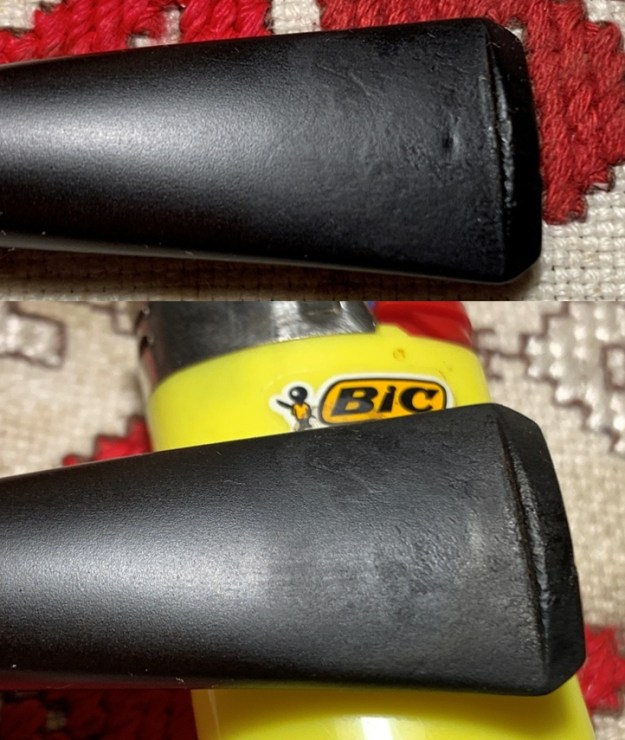
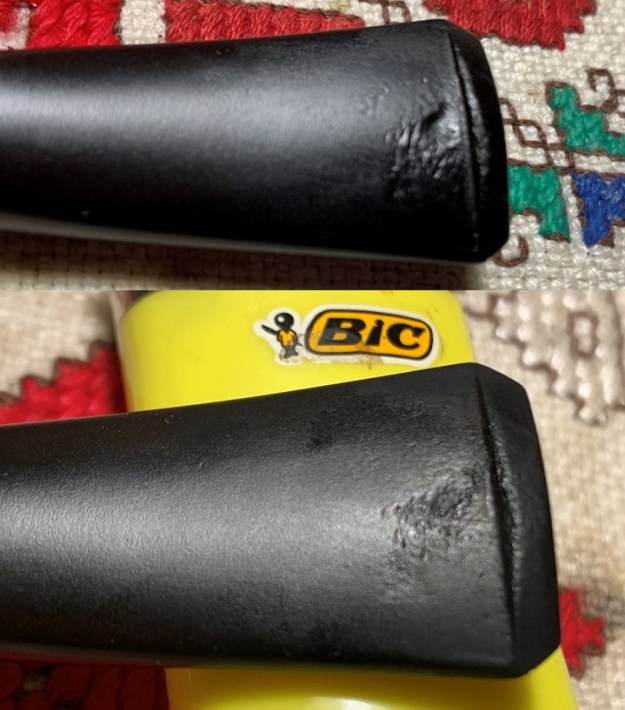
Now with all of the background on the line and the background on Bob Kerr it was time to get on with the restoration of this next mixed grain Peterson’s System Standard 1307 Bent Billiard. I am really coming to appreciate the hard cleanup work that Jeff did on these pipes. They were a real mess when I sent them to Jeff and I have to tell you it was great that I did not need to clean this pipe. I decided to start the process by dealing with the damage to the inner edge and top of the rim. I sanded it with 220 grit sandpaper and worked on the flat surface as well as the inner edge. I gave it a very light bevel so that it took care of the damage on the front and back side of the inner edge.   I polished the briar with micromesh sanding pads – wet sanding it with 1500-12000 grit pads and I wiped the bowl down after each sanding pad with a damp cloth. The bowl began to take on a finished shine.  I rubbed the bowl and rim down with Before & After Restoration Balm. I worked it into the surface of the briar with my fingertips to clean, enliven and protect it. I let the balm sit for a little while and then buffed with a cotton cloth to raise the shine. I really like watching the Balm do its magic and bring the briar alive. The stem had some deep gouges in the tenon end where it had been turned into the nickel ferrule. These needed some work to smooth out and repair. The top side of the stem had two deep tooth marks just ahead of the P-lip. I used a Bic Lighter to “paint” the surface of the stem with flame and lift them. I filled in the remaining small tooth mark with clear super glue. I sanded out the remainder of the tooth dents and the tooth marks in the underside of the stem with 220 grit sandpaper.  I polished it with 400 grit wet dry sandpaper. I polished the stem with micromesh sanding pads – wet sanding with 1500-12000 grit pads. I wiped the stem down after each sanding pad with Obsidian Oil. I polished it with Before & After Pipe Stem Polish – both Fine and Extra Fine. Once I had finished the polishing I gave it a coat of a new product I am experimenting with from Briarville Pipe Repair. It is called “No Oxy Oil” and it is made to protect the stem from oxidizing. I set it aside to dry.    Once again at this point in the restoration process I am excited to be on the homestretch. I look forward to the final look when it is put back together, polished and waxed. I put the bowl and stem back together. I polished the bowl and stem with Blue Diamond to polish out the scratches in the briar and the vulcanite. I gave the bowl and the stem multiple coats of carnauba wax. I buffed the pipe with a clean buffing pad to raise the shine. I hand buffed it with a microfiber cloth to deepen the shine. The pipe polished up pretty nicely. The grain really pops with the wax and polish. The shiny black vulcanite stem is a beautiful contrast to the browns of the bowl and thick shank. This Peterson’s System Standard 1307 Bent Billiard was another fun pipe to work on thanks to Jeff’s cleanup work. The polished nickel Ferrule works as a contrast between the stem and the briar and binds it all together. It really is a quite stunning piece of briar whose shape follows the flow of the briar. The pipe is comfortable pipe to hold in the hand. The finished pipe is shown in the photos below. The dimensions of the pipe are Length: 6 ½ inches, Height: 2 inches, Outside diameter of the bowl: 1 ½ inches, Chamber diameter: ¾ of an inch. This beautiful pipe will be going on the rebornpipes store if you would like to add it to your collection and carry on Bob’s legacy. If not, I have a lot more of Bob’s estate to work on of various brands. Perhaps one of those will catch your attention. Thanks for reading this blog and my reflections on the pipe while I worked on it. This is an interesting estate to bring back to life.
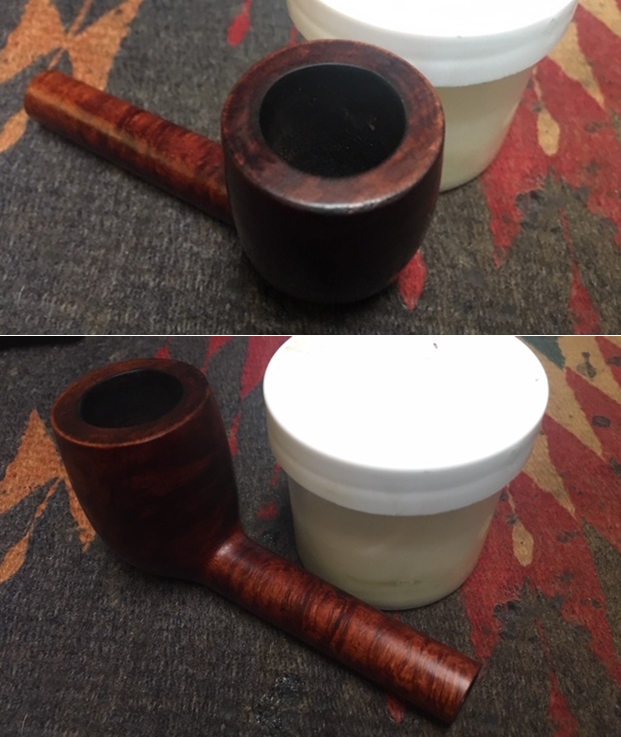
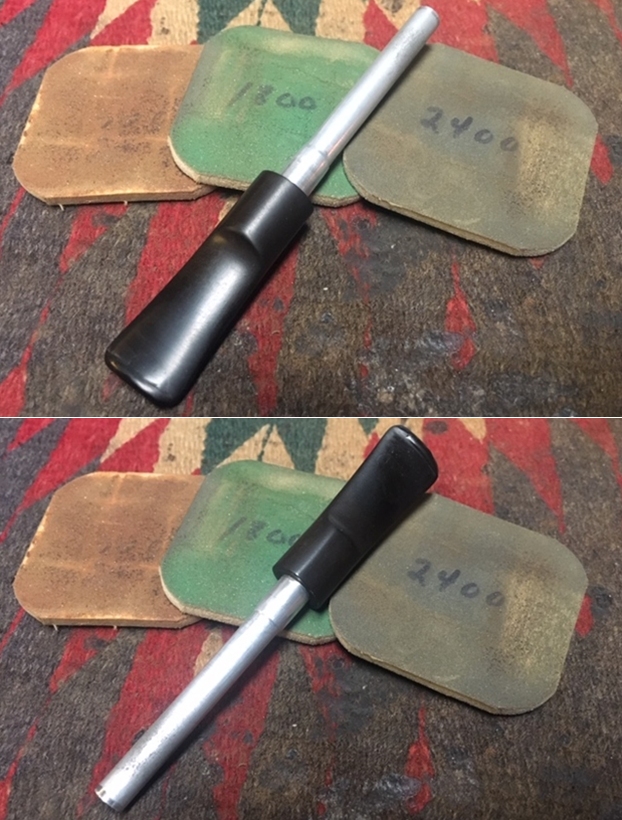
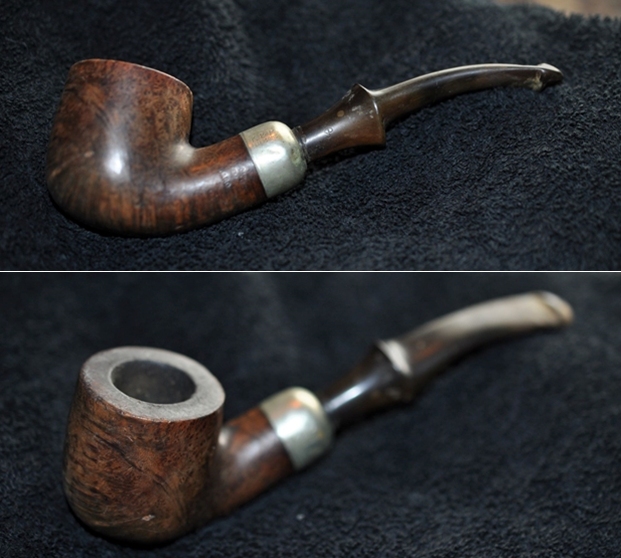
A Project  Close to My Heart;  Restoring a Dunhill from Farida’s Dad’s Collection


Blog by Paresh Deshpande

The next pipe that I have selected as my new project is a very special pipe for the following reasons:-

(a) Firstly, this pipe was in the trust of an adventurer who has been on expeditions to Antarctica, the Arctic and loved Dunhill pipes (and I happen to carry forward that trust with one of his Dunhill pipes).

(b) Secondly, is the reason why and how this pipe came to me. During one of the many Face Time chats with Steve more than a year ago, I remarked that in spite of the huge collection of British, American and Danish pipes that I had inherited, there was not a single Dunhill pipe in it and that how expensive it was to own one. Steve had then only recently acquired an estate lot that contained, amongst other pipes, seven Dunhills. We discussed each of the Dunhill and I zeroed in on one. A few days later, I received a parcel from Steve that contained the Dunhill pipe that I had selected and along with it came another Dunhill in classic Billiard shape. A call to Steve confirmed that the second pipe was not an error, but a surprise for me. He conveyed that should I decide to and thereafter be able to restore it; I could keep it!!

(c) Thirdly and most importantly, I treat this restoration as a tribute to the daughter who loves her father and desired to share that love and those memories with other pipers who wished to carry forward her father’s trust.

Well, with this as a background, the pipe on my work table once belonged to Late Mr. John Barber. His daughter, Farida had requested Steve to restore her Dad’s pipe and pass them on to others for her. Here is the link to the pipe that I had selected for carrying forward the trust of John Barber:-

https://rebornpipes.com/2018/07/07/faridas-dads-pipes-5-restoring-a-dunhill-root-briar-56-bent-billiard/

The above blog makes for a very interesting read to know the personality of Late Mr. John Barber and his adventures as conveyed by his daughter, Farida. The below picture has been picked from the above blog which Steve had done and the pipe that I had selected from Farida’s Dad collection (indicated with a yellow arrow) and the one now on my work table has been marked in blue circle.As with few other pipes from John Barber’s collection, this pipe too has very worn out and faint stampings. Under magnifying glass and bright light one is able to make out the very faint stamping on the left of the shank as “# 197” followed by “DUNHILL” over “BRUYERE”. On the right side the very faint stamping that is visible is “ENGLAND” and a circled “4” followed by the letter “A”. The high quality vulcanite stem bears the trademark Dunhill white dot.To be very honest, I am not very keen to ascertain the vintage of this pipe and lack of stampings don’t help either, since I know that all the pipes that belonged to Farida’s father are from 1950s to 1970s. Having worked on eight Dunhill pipes from my Mumbai Bonanza and researched each one, I roughly know that a Dunhill Billiard with long tapered bit with shape code # 197, similar to what I have on my work table, is from the period 1950 and 1969. This corresponds with other pipes that Steve had worked on from this collection.

I now move ahead with my initial visual inspection as it helps me chalk out a rough path or sequence that I would follow during restoration and also the processes that I would have to employ at each stage of restoration.

INITIAL VISUAL INSPECTION
This is indeed one pipe which I would have not have selected and worked on in the first place, even though it is a Dunhill, but for the provenance of this pipe and for the reasons mentioned above. The stummel is covered in dirt and grime of decades of uncared for use and storage. The stummel is very sticky to the touch and appears to be smothered in some kind of lard, could it be whale fat or fish oils from the Arctic or Antarctic expeditions that it had accompanied the previous owner? I would not know, but it is all prevalent over the stummel surface. Underneath all this lard, dirt and grime, the highest quality of the briar and solid feel in hand for which Dunhill pipes are renowned, can be seen and be felt. Beautiful cross grains along the shank bottom, front and back of the stummel await to be revealed in all their glory. Similarly, lovely bird’s eye grains on both the sides of the stummel should show up nicely when the surface is cleaned. A distinct patch on the left and right side of the stummel is prominently seen which could have been caused due melting of the lard (?) from the warmth and holding of the stummel while smoking. There is a prominent crack on either sides of the stummel extending downwards from the rim outer edge towards the heel for a few millimeters and is marked in red circle. The front and foot of the stummel is peppered with dents and dings. These should be addressed to a great extent when I sand the stummel surface to get rid of all the sticky substance and grime. Coming on to the assessment of the rim top surface and the chamber, it is immediately apparent that this is where the maximum damage lies!!!! There is an even layer of thick cake and appears to have been partially reamed before being stowed away. The rim top surface also appears to have been topped to address the severe charring to the inner edge of the rim at 6 o’clock and 12 o’clock direction (marked in red circle) and at the outer edge towards the front and back end of the stummel (marked in green semi circle). The inner edge is completely out of round and is at its thinnest in the 6 o’clock direction and along the left side of the chamber. A crack (marked with yellow arrow) is clearly visible on the left side atop the rim top surface in 9 o’clock direction which extend in to the chamber as well as to the outside as described in stummel condition above. The topped rim surface is considerably darkened and appears to have absorbed copious amounts of oils and tars. I plan to extract these oils through a salt and alcohol soaking of the chamber. The condition of the inner walls of the chamber will be ascertained only after the cake has been taken down to the bare briar. However, I envisage heat lines and fissures all over the inner walls what with the pipe being subjected to some serious use! And the smell of St. Bruno tobacco, Farida’s Dad’s favorite tobacco, is all pervading and super strong. The shank and mortise is completely clogged with accumulated oils, tars and grime and air flow is laborious to say the least. The edges of the shank end are out of round resulting in shouldering effect once the stem is seated in to the shank. The seating of the stem also appears to be a bit skewed towards the right side by a minuscule margin though not easily noticeable.The vulcanite stem has calcium depositions on either sides about an inch and a half from the button edge towards the tenon end. There are deeper bite marks on the upper and lower stem surface near the buttons in the bite zone. However, the buttons on either surface is undamaged. The tenon and horizontal slot show heavy deposition of dirt, oils and tars, adversely affecting the air flow.THE PROCESS
The restoration process started with sanding the bite zone of the stem with a folded piece of 220 grit sand paper to remove the calcium deposition and followed by internal cleaning of the tenon, stem air way and the slot with pipe cleaners and isopropyl alcohol. This was followed by cleaning the stem surface of all the oxidation by immersing the stem in “Before and After Stem Deoxidizer” bath overnight. This solution developed by Mark, pulls all the oxidation to the surface and makes the subsequent cleaning a breeze.The next morning, Abha my wife, took the stem out and cleaned all the thick sticky solution from the surface under running warm water. She blew out the solution that had clogged the airway and scrubbed out the raised oxidation with cotton pads and a piece of 0000 grade steel wool. She applied a little quantity of Extra Virgin Olive oil in to the stem to hydrate the vulcanite and set it aside. The initial sanding with a folded piece of 220 grit sand paper had evened out the minor tooth chatter and now that the stem is free of the heavy oxidation, I have a clear understanding of the damage that needs to be addressed, which by the way, is very minimal. I am pleased with the stem appearance at this stage.To raise the deeper bite marks from the upper and lower surface of the stem, I flamed the surface with a lighter flame. I went ahead and sand the raised bite mark with a 220 grit sand paper and sharpened the button edges. With a cotton swab and isopropyl alcohol, I wiped the stem surface to clean it of all the dust. I mixed superglue and activated charcoal powder and filled the bite marks and set it aside to cure. While the stem fill was set aside to cure, I worked the stummel and reamed the chamber with size 3 blade head of PipNet pipe reamer. Using my smaller sized fabricated knife, I removed all the cake from the areas which could not be reached by the reamer head. Very carefully, I removed all the charred briar from the outer and inner edges till I reached solid briar wood. With a folded piece of 220 grit sand paper, I sand the chamber walls to remove the last remaining traces of cake and wiped it with a cotton swab dipped in isopropyl alcohol. I am not very enthusiastic about the way the chamber appears at this stage. The inner edge at the rear has been pushed back significantly thinning the rim top surface. Also, the walls are peppered with numerous minor heat fissures/ lines making a web pattern. The crack, it is now clear, extends in to the chamber over the rim surface and on to the outer stummel surface. Another crack is now evident on the right side of the rim surface, but it’s superficial and not deep. Here is how the chamber appears at this stage, though not very encouraging, I say. Continuing with internal cleaning, I cleaned out the mortise, first by scrapping out the entire dried accumulated gunk with a dental tool. I further cleaned the shank internals with hard and regular pipe cleaners dipped in alcohol. Even after removing the cake from the chamber and cleaning the shank internals, the smells in the chamber are still very strong; in fact, my entire room smells of it!!Before I moved to the next stage in the process, I wanted to access the extent of charring over the outer rim edge. I gently scraped the charred briar from the outer rim edge with a sharp knife. Again not a very encouraging sight as the gaping saddle that was formed at the front and back of the stummel was anything that could be addressed by simply creating a bevel over the outer rim edge. Sad!! I have the option of addressing this issue either by topping the rim top surface or by the way of rebuilding the outer rim edge. I shall decide on the best course of action when I reach that stage.Next I decided to address the copious amounts of oils and tars that have been absorbed by the stummel giving it a considerably darkened appearance and a sticky feel in the hand. I stretched a cotton ball into a thick wick, wound it around a folded pipe cleaner and inserted it in to the shank and pushed it till it came out of the draught hole and packed the chamber, just below the rim, with Kosher salt. I topped the bowl with isopropyl alcohol using a syringe. I topped the bowl with alcohol again after 20 minutes when the alcohol level had gone down and set it aside overnight for the salt and alcohol to do its intended job. The next morning, the salt had turned a dirty and smelly brown and so was the wick and pipe cleaner in the shank. The ghost smells, the rim top dark coloration and the stickiness in the surface were still strong and hence I decided to give it a second salt and alcohol bath. This time around I used cotton balls in place of Kosher salt what with Kosher salt being more expensive and not readily available. I repeated the entire process described above and set the bowl aside overnight. By the next afternoon, the alcohol had drawn out maximum of the remaining oils and tars from the stummel surface and trapped it in the cotton balls. I am satisfied with the condition of the bowl internals with this cleaning.With the internals of the pipe cleaned and sorted, it was time to move to the external cleaning of the stummel. Using a hard bristled tooth brush dipped in undiluted Murphy’s oil soap, I very deliberately scrubbed the stummel, cleaning the surface thoroughly. I was very deliberate on the surface areas which were covered in fat-like sticky substance over which dirt and grime had accumulated over the years. I also cleaned the mortise with a shank brush and dish washing soap. I scrubbed the surface with a pad of Scotch-Brite to rid the surface of the slime. I was surprised to observe the stummel turning greasy white. This would need resorting to some heavy duty and abrasive methods to get rid of this grease from the stummel surface. Here is how the stummel appeared at this stage. I am happy that the salt and alcohol treatment had drawn out all the oils from the pores of the briar as can be seen from the cleaned up rim top surface. Next, I decided to stabilize the cracks that were observed prominently on either sides of the stummel extending downwards from the rim outer edge for a few millimeters. Under a magnifying glass, I marked the end point of the cracks and using a 1 mm drill bit, I drilled a counter hole at the base of the crack taking care that I did not drill a through hole. This ensures that the crack is stabilized and does not spread any further. With a heat gun, I warm the stummel and this expands the crack minutely. I fill this crack with clear CA superglue and firmly press the sides together. Once the superglue had sufficiently hardened, I apply a little superglue along the entire crack (rim top and side of the stummel) and press briar dust over it. This further stabilizes, strengthens and masks the fill in the cracks. I had reached that point in restoration where I had to decide on the way ahead for rim repairs. I could either top the bowl till I had a perfectly even round rim top, compromising on the shape and size or I could go for a complete rebuild. I decided on the latter as topping would significantly reduce the bowl size. Using a worn out piece of 150 grit sand paper, I completely remove the charred briar from the outer and inner rim edges in preparation for rebuilding the rim top. Using the layering technique (layer of glue followed by briar dust pressed on to this layer and repeating till the fill is over and above the intact rim surface), I completely rebuild the rim top and set the stummel aside for the fills to harden. While the rim top rebuild was curing, I decided to address the stem repairs. The stem fills had cured nicely and using a flat head needle file, I sand the fill to achieve a rough match with the surrounding stem surface. I further sand the stem surface with a folded piece of 220 and 320 grit sand papers to further blend in the repairs. However, a minor air pocket was revealed on the lower surface of the stem and I spot filled it with clear superglue and set it aside to cure and turned my attention to the stummel repairs again.The rim rebuilt surface had cured nicely. I could now proceed with reshaping the rim top and the inner rim edge to an even round. I mount a coarse 150 grit sanding drum on to my hand held rotary tool and setting a speed at half, I carefully sand off the excess fill from the rim top surface and the rim inner edge till I had achieved a rough match with the intact portion of the rim top and inner edge. I further top the rim on a 220 grit sand paper to achieve a seamless rim top surface. With a folded piece of 220 grit sand paper, I worked the inner rim to a crisp and perfectly rounded edge. I am very pleased with the rim surface rebuild at this stage in restoration. Staying with the stummel, I next decide to address the greasy white coating of whale fat or blubber or whatever fats that covered the stummel surface (remember all the Arctic and Antarctic expeditions on which this pipe must have accompanied Late Mr. John Barber!!). I sand the entire stummel surface with a piece of 180 grit sand paper. I frequently wiped the stummel with a cloth wetted in hot water to get rid of the loosened fat coating. A lot of elbow grease and few grueling hours later, beautiful bird’s eye grains and swirls began to make an appearance over the stummel surface. With renewed vigor, I completely remove the greasy white coat of fat from the stummel. I was careful not to sand the sides of the shank, but only wiping with hot water in an attempt to preserve the worn out stampings on this pipe. Though the surface has been cleaned up nicely, it appears dry and lackluster. I rub a small quantity of Extra Virgin Olive oil in to stummel to hydrate the briar and set it aside for the oil to be absorbed by the briar. The grains in the stummel now pop out and appear resplendent in their beauty. All the hard work up to this stage was well worth the effort and much more. The following pictures speak for themselves! To further smooth out the rim top, I topped the rim surface over piece of 320 grit followed by 420, 600 and 800 grit sand papers. Even though the cracks have now been exposed as a result of this topping, I am not overly worried as I am confident that the cracks have been solidly filled and stabilized.At this point I decided to work on the inner walls of the chamber. There are heat lines seen on the walls of the chamber and add to that the rebuilt inner edge using superglue and briar dust. To protect the walls and prevent the superglue and briar dust from coming in to direct contact with the burning tobacco, I plan to first coat the rebuilt part and the heat lined surface of the chamber walls with J B Weld followed by a second coat of activated charcoal and yogurt to the entire chamber which would assist in faster cake formation. J B Weld is a two-part epoxy Cold Weld that consists of two parts; hardener and steel which are mixed in two equal parts (ratio of 1:1) with hardening time of 5-6 minutes and complete curing time of 6-8 hours. I poured the contents of the two tubes and mixed it well. With a flat bamboo frond, I applied this mix, as evenly as possible, over the intended areas. I worked fast to ensure an even coat over the chamber walls before the weld could harden. I set the stummel aside for the application to harden and cure overnight. By next afternoon when I got back to working on this pipe, the J B Weld coat had completely cured and hardened considerably. With a folded piece of 150 grit sandpaper, I sand the weld coating to a smooth surface and continued till I had as thin a coat as was essential to protect and insulate the walls from the direct heat of the burning tobacco. Here are pictures of the process and the progress at this stage. Wanting a change, I decided to now tackle the stem fill which had been left curing for the last couple of days. Little did I know at this point that I was still some days away from completing the stem repairs!! I followed the golden rule of pipe restoration; “Less is more” and move ahead with sanding the fill with a piece of 220 grit sand paper without first using a flat head needle file. I followed it up with sanding the entire stem surface with 400, 600 and 800 grit sand papers. I finished the sanding regime with a 0000 grade steel wool. It was at this stage that I noticed the same dreaded air pocket and the fill was peeling out. With a dental pick, I completely removed the old fill and refilled it with a fresh mix of activated charcoal and superglue. I set the stem aside to cure overnight, third fill for the same spot!! With time still on my side before I hit the bed for the night, I decided to work on the stummel which had been set aside to absorb the olive oil. I thoroughly wiped the bowl with an absorbent paper towel to remove all the excess oils from the bowl surface. I polished the stummel, including the newly rebuilt rim top surface, wet sanding with 1500 to 12000 grit micromesh pads. I wiped the surface with a moist cloth to remove all the sanding dust left behind by the pads. I was very careful with the stamping as I desired to preserve as much of the worn out stampings as was possible. Though the rebuilt rim surface and outer rim edges stand out as sore thumb at this stage, I intend to mask the same with a dark stain. The stummel surface appears promising and I am absolutely in love the bird’s eye grains on this pipe. Next, I rub a small quantity of “Before and After Restoration Balm” in to the briar with my finger tips and let it rest for a few minutes. The balm almost immediately works its magic and the briar now has a nice vibrant appearance with the beautiful darkened grain patterns on full display. I further buff it with a horse hair shoe brush. While the stummel was set aside for the balm to be absorbed, I worked the stem fill which had cured over 24 hours. I sand the fill with a used and worn piece of 180 grits sandpaper and followed it with wet sanding the entire stem with 1500 to 12000 grade micromesh pads. I wiped the stem with a moist cloth to remove the dust and monitor the progress being made after every three grit pads. The stem polished up nicely and has a rich deep black shine to it. I applied a little Extra Virgin Olive oil to rehydrate the vulcanite and set the stem aside.Though the stummel had cleaned up nicely with a deep color to the briar, it was nowhere near the deep reddish brown coloration associated with the Bruyere line of Dunhill pipes; in fact it was much lighter. While restoring a Dunhill Bruyere from my Mumbai Bonanza (https://rebornpipes.com/2019/03/13/reconstructing-a-broken-stem-on-dunhill-bruyere-51671/), I had stained the stummel in cherry red stain and though the end results were great, it was not the original color associated with a Bruyere. The comments and suggestions received from esteemed readers of the write up pointed me in the direction of achieving this color!!! I decided to first apply a coat of DB followed by a final coat of red stain. However, when I went through my stains, I realized that I did not have Dark brown stain; the Feibing’s stain bottle had mysteriously dried out!!!!! The next best option available was the Cordovan. I consulted Steve and though he was not sure about the color, he encouraged me to go ahead and that is exactly what I did. I heated the stummel surface with my heat gun to open up the pores on the stummel so that the stain is well set while being careful that I do not overheat the fill, a lesson learned while restoring Steve’s Alexander Zavvos pipe. I dipped a folded pipe cleaner in Feibing’s Cordovan leather dye and liberally applied it over the heated surface of the stummel, flaming it with a lighter as I progressed. This helps in the setting of the stain in the grain of the briar. I set the stummel aside overnight for the stain to set. The next afternoon, I mounted a felt cloth buffing wheel on to my hand held rotary tool and proceed, as my dear friend Dal Stanton likes to say “unwrap the coat of stain to reveal the grains” on the stummel surface. Alas, there was no revelation of any sorts!! All that I saw was a dark stummel. You must understand my disappointment at this stage. I realized that the stain coat was too thick. I needed to lighten it up a bit and hence, with a cotton swab wetted in isopropyl alcohol, I wiped the entire stummel surface. Though the stain has lightened a bit, it was not the result that I desired. Here is how the stummel appeared at this stage. To further lighten the stain and “reveal” the stummel grains, I dry sand the entire stummel with 1500 to 12000 grit micromesh pads. The grains are now clearly visible. However, the trademark color of Bruyere line is still an illusion……it was browner than the reddish brown stain that I was looking for. I decided on giving the stummel a stain wash with a Cherry Red stain as suggested by Steve. I diluted the Cherry Red stain powder in 99.9% isopropyl alcohol in approx ratio of 1:4. With a cotton swab, I dabbed the diluted stain over the stummel surface, letting it set for a few moments and thereafter wiping it off with a dry clean cotton swab. I repeated the process till I had achieved the desired coloration. I am pleased with the color of the stummel which is as close as I could achieve, to the original Bruyere color. This time around, even the fills had absorbed the stain and blended in nicely with the rest of the stummel. To complete the restoration, I reattach the stem with the stummel. I mount a cotton cloth buffing wheel on to my hand held rotary tool and applied several coats of carnauba wax. I finished the restoration by giving the entire pipe a rigorous hand buffing using a microfiber cloth to raise the shine further. This dude has definitely come a long way from the condition it was in at the start.Now that the cosmetic aspects of this pipe have dealt with, all that remained was the functional aspect that needs to be taken care of. The minor heat lines and the J B Weld coated surface needs to be protected from the direct heat of the burning tobacco and for this; I coat the complete chamber walls with a mix of activated charcoal and yogurt and set it aside to harden naturally.I shared a few pictures of the pipe with my mentor, Steve, expecting some hearty praises on this restoration!! However, his keen eyes noticed an issue which had missed mine. He very gently pointed that a sterling silver band at the shank end would mask the shouldering that was inadvertently created!! This remark of his left me shocked!! Not at the remark as such, but at the fact that I had shouldered the shank end during the restoration process. Still smarting at being chided by my teacher, I revisited all the pictures and true enough, this issue already existed and I had missed out mentioning it in my initial inspection in the write up and hence missed it out during the entire process. I made necessary amendments to the post and had to keep the pipe aside till I reached back home during my leave where my local silversmith would fabricate one such ring for me.

I revisited the small, dingy and unsophisticated shop with rudimentary tools where the craftsman had built me a Sterling Silver ring for an Alfred Massin Meerschaum cutty that I had restored two months ago (https://rebornpipes.com/2019/10/09/complicating-a-simple-restoration-of-a-cutty-meerschaum/). The craftsman at the shop made me a perfect ring for the Dunhill shank end. This ring not only masks the shouldering, it also adds a touch of class while breaking the monotony of the pipe. I refreshed the bowl coating with activated charcoal yogurt mix and completed this project with a vigorous hand buffing with a microfiber cloth. How I wish I had carried my hand held rotary tool and some carnauba wax for a final polish while on leave!!! Nevertheless, the finished pipe has received a fresh lease on life and is now all set to stay with me for the rest of my time on this earth as part of my Dunhill rotation. The repairs are solid and blended in well with the surrounding surfaces. All that now remains is to load a nice English blend and enjoy a quite peaceful smoke… P.S. This perhaps would be the longest write up that I ever have posted on rebornpipes.com!! Apart from the Alfred Massin Meerschaum pipe that I have mentioned above, this project extended over a period of two months, just for the want of sterling silver band. Nonetheless, it was one project that I enjoyed working on and hope that my Guru and mentor Steve gives me passing marks on this test project (remember that it was a sort of test put forth by Steve for me!).

The most important aspect of this restoration was being able to live up to the belief and faith that Farida had entrusted in Steve and through him, in me, to carry forth the trust of her Father. It is while working on this project that I fully comprehend and understand what and why Dal Stanton calls himself Pipe Steward!! A perfect term coined by this well read gentleman, I say.

Farida, if at all you read this write up, I wish to let you know that it has been a privilege to have been afforded an opportunity to carry forward the trust of your father. As I puffed on this Dunhill, I could conjure up images of your father and his dogs amidst all the snow and loneliness…. A MAN, HIS FAITHFUL PIPE AND HIS BELOVED DOGS!! Thank you Steve and Farida…… and the pipe has a new friend!!

The CPF Arcadia: A Pipe Out of Time


Blog by Robert M. Boughton
Copyright © Reborn Pipes and the Author except as cited
https://www.roadrunnerpipes2k.com/
https://www.facebook.com/roadrunnerpipes/
Member, North American Society of Pipe Collectors

Be careful what you wish for, you may get it.
— Anonymous, quoted in “The Monkey’s Paw,” W.W. Jacobs, from The Lady of the Barge, 1902

INTRODUCTION
Whatever inspiration led Cliff Edwards to write the lyrics to the song that became Disney’s theme, “When You Wish upon a Star” – in which one’s heart need only be in the dream for no request to be too extreme, and fate will be kind – must have been, to be gentle to all of the Mouseketeers out there, in an alternate reality to mine.  I’ve long had two rules: be careful what you ask for, lest you get it, and above all, never ask for what you deserve, because everyone has done things that should have had stiffer consequences.  I’m not being cynical.  From my experience, it’s just the way whatever Higher Power we call by various names helps us humans avoid being selfish and greedy, at least those who ask for guidance now and then if not more.

Of course, I’m not perfect, in fact, far from it.  I found myself during the past two months or so becoming more and more fixated on acquiring not just any new pipe, but one made by the Colossus Pipe Factory.  Then I began my hunt in earnest, with eBay searches and general Googling, but to no avail.  At last I got a hit with a pair of pipes titled, in a somewhat jumbled way, “Vintage Smoking Pipe Tobacco Lot of 2 Arcadia CPF London England Briar.”  From that description alone I thought maybe I was going to see something made by an Arcadia brand and a rare English CPF.  There were enough photos, however, and they were good, to determine without doubt that a big, smooth poker stamped on the right MADE IN/LONDON ENGLAND was one mixed-up part of the seller’s heading, and CPF Arcadia was the other.  The disarray of the title and the low price I paid – about $45 – told me the seller didn’t know what he had and the other bidders were not sure enough that the CPF was real to risk going higher.

Before bidding anything and after studying the pics of the alleged CPF – and I mean I really poured over every detail of them – I was certain it had to be a fake, except for the band on the shank.

From the photos that I snapped when it arrived in the mail with the poker I believe is a Ben Wade reject, the only authentic-looking parts of a CPF are the band, bone tenon and stem.  Otherwise, honestly, I could see where the basic chunk of wood could have been fashioned into a stummel long ago before some Flower Child got ahold of it and turned the bowl into a psychedelic pin cushion, but I could not imagine anyone alive more than a century ago, especially the Old World masters employed by CPF, fashioning such a monstrosity, as I saw the pipe before its comic beauty grew on me.  I even used the “m” word in an email I sent to Steve, with a link to the eBay sale, in which I more or less implored him to tell me it wasn’t real, meaning a genuine CPF.

Needless to say, I was shocked when Steve not only replied that the Arcadia was real and “very old,” an age distinction he had never before made to me, but that he had worked on a meerschaum like it a couple of years ago.  Here are some before and after shots of Steve’s meerschaum, which indeed bear a scary resemblance to my old briar.

A.F. & Co./BBB Spotted Meerschaum photos courtesy Steve Laug.

The severe chicken pox-like similarities are undeniable, and I scrutinized every word and photo of Steve’s blog in hopes of connecting the dots (I’m so sorry, that just popped out) of the definitely funky tobacco pipe specimens.  Struck by a gung-ho fit to research the abbreviation “AF&C0” in Steve’s third photo above, I interrupted my reading to find the answer before continuing and learning Steve already had done so: Adolph Frankau & Co. of England.  Steve’s work restoring the meerschaum that he also dated to 1905, thanks to great detective work tracing the unique hallmarks on the sterling silver band, was phenomenal, in particular the addition of a Bakelite stem that he not only fitted to the shank but made look as old as the original stummel.

Now, in case anyone thinks my choice of details a mere glut of disconnected trivia, I’ll make my point.  Steve took one look at the weird pipe for sale on eBay, flashed on the A.F. & Co./BBB meerschaum he gave new life and instinctively sensed a connection.  I have to say, I had doubts despite the almost genetic resemblance.  After all, there was no indication my CPF Arcadia was a Frankau import.  By the time Steve and I connected on the phone to discuss the two pipes and other matters, I had restored the Arcadia and warmed to its charms.  Although lacking any proof of the pipe’s date of manufacture such as Steve dug up for the meerschaum, certain minute observations and research led me to conclude it was created in the latter part of the 19th century.  Steve concurred.

In particular, I finally figured out that the stem was not Vulcanite but black horn, and the metal band boasted that it was “Nickel Plated.”  What kind of pipe brags about having a nickel plated band?  Nowadays, that’s the bottom of the barrel.  So I looked up nickel plating history online and learned that in 1837 the first crude electrochemical nickel plating of platinum was accomplished.  Really?  Someone thought to cover up the most precious metal with nickel?  You bet he did, and in 1869 a better process that became the industry standard for 70 years was discovered.  The purpose of nickel plating certain other metals, of course, remains nickel’s resistance to tarnishing and corrosion.  The only logical explanation for the proud “NICKEL PLATED” stamp on the band of my CPF, therefore, is that the process was still relatively new.  Given that point and the use of black horn stems being much less common in the late 19th and early 20th centuries, when amber and Bakelite predominated, I am satisfied the pipe was created in the waning years of the Victorian Era.

Returning to Steve and his inspired flash that the “knobby meer,” as he called it, and the CPF Arcadia are related, Steve told me he now questions whether the meerschaum is a real BBB, owing to certain unstated problems with the band.  Steve is the expert, but this time I have to disagree and urge him to stick with his instincts.  The notion of the meerschaum, knobs and all, being a bona fide BBB is no wilder than my briar, with its gaudy plastic bulbs and brass studs, being a genuine CPF, and I do not mean to suggest in a roundabout way that neither is the truth.  Granted the extremity of different materials used to make the pipes, and the necessity of alternate methods for achieving the knobby looks, and still further suspending disbelief because of the admitted implausibility of the idea, I nevertheless can’t help thinking that the connection is the actual crafter of the two pipes.  To be blunt, I think the same person made both of them.  Of course, I will never be able to prove the theory.  Well, isn’t that convenient, as the Church Lady used to say.

With a little more research, I was pleased to settle with much more certainty a question that nagged Steve in his blog of the unusual meerschaum: was there a connection between it and BBB?  As several of the sources below show, the link is clear.  Frankau, who started business in 1847, died in 1856.  At that time, his widow was persuaded to continue operation of A.F. & Co. under the control of Frankau’s very young assistant, Louis Blumfeld, who was then only 18.  Blumfeld started BBB (for Blumfeld’s Best Briar, later Britain’s Best Briar), the famous triangular symbol for which he trademarked in 1905 – again, the year Steve’s meerschaum was made – under the A.F. & Co. banner.  BBB seems to be the first pipe maker with a trademark.  And so the connection, if I haven’t made it obvious, is that A.F. & Co. owned BBB.

Arcadia, part of the modern-day Peloponnese, a peninsular region of southern Greece (capital, Tripoli), is also a reference to Greek mythology.  The mythological Arcadia was named for Arcas, a hunter who became king of the utopic wilderness and is best remembered for teaching the skills of baking bread and weaving.  In Arcadian myth, Pan, the god of shepherds, hunters and the wilds, is said to have roamed the region with dryads, nymphs and other spirits.  The name, therefore, is an odd one for this pipe, unless it’s a reference to the Calydonian Boar killed by the king’s daughter, Atlanta.

CPF had an ephemeral but brilliant run from 1851 to c. 1915, producing with the unparalleled skill of its Old World craftsmen some of the most astounding pipes, meerschaum and briar, ever created.  That’s all I need tell of CPF’s history, as Steve’s account in the sources below is the definitive authority.  Another link to a few of the CPF beauties in Steve’s Wonderland collection shows examples that are far closer to what I had in mind when I was wishing for a pipe of that great brand to find its way to me.

But that’s what can happen to someone who wishes for something.

RESTORATION
A few close-ups show the peculiarities and problems I found.  The first, featuring the front of the bowl, makes the little, round, plastic bulbs – which I did not yet know the means of connection to the bowl – appear red instead of their actual light brown.  Scratches all over the uneven surface that is spotted with the bulbs and brass studs presented awkwardness to remove.  The second shot, of the rim and chamber, has the correct color of the bulbs and at a glance seems the hardest part of the pipe’s repair but in fact was the easiest. The third pic made me happy the band was already spinning on the shank so I could leave it out of an early alcohol soak.  The grime and stains would come off, but I knew I could not fill in the missing patches of nickel.  Then there was the stem, top and bottom, with moderate tooth damage that would typically be no hassle to eliminate if it were Vulcanite.Before I continue, take a close look at the bowl and count the bulbs and brass studs.  There are seven bulbs and four studs, and the arrangement may seem random.  But look again, and you’ll see a very odd order: on the left side, the bulbs start on the top left to right and then down to the bottom right; the studs move diagonally from the lower left to the middle.  On the right side, the opposite is true: the bulbs go from top left down to bottom left and then bottom right, and the studs are diagonal from top right to middle.  On the front, three bulbs form a diagonal, tic-tac-toe line from top right to bottom left, or vice versa if you prefer.  Finally, the back shows all four corners with bulbs.   The person who crafted this pipe had a very playful sense of order.

Thinking the Arcadia stem was Vulcanite but knowing it would do no harm anyway, I tossed it and the one from the Ben Wade reject candidate in an OxiClean bath.  The usual old dirt and tobacco residue came off both.  The first pictures after the bath show the stem not yet fully dried, and the next three dry. This was when I snapped that perhaps the stem material was not Vulcanite and Googled black horn, although if I had ever heard of such a variety of that organic material, it was dredged up from my subconscious.  I emailed Steve somewhat stupidly without photos.  He replied that horn has striations that are visible under a magnifier, so I shot him back the above photos and asked if the last showed the kind of marks he meant.  His brief response was, “Definitely horn.”  In the meantime, I had followed up with 220-grit sanding and wet and dry micro meshing from 1500-12000.While the stem had been taking a bath, I soaked the stummel in Isopropyl alcohol.  I was worried about the possible effects of the alcohol on the bulbs, but somewhat less catastrophic in the potential result than the Trinity Tests of the atom bomb south of Albuquerque nearing the end of World War II, I took a gamble.I started the next longer part by sanding the rim with 400- and 1000-grit papers, then the rest with 1000. Smoothing the chamber with 60- and 320-grit papers, I followed up with a full micro mesh of the rim and rest of the outer stummel.I thought Fiebing’s Dark Brown leather stain would be good for the stain.I performed the retort and decided to add a coat of Fiebing’s Burgundy.  I was satisfied with the color result, but in the process of flaming and micro meshing after the latter stain, a couple of the bulbs went M.I.A. Faced with the not altogether unanticipated contingency of somehow having to replace a bulb or two, as I still considered them, I had already considered using small push pins, the kind for wall maps, and had found a couple of places online that carried close to the same shade of brown in case it became necessary.  Hoping to avoid the time waiting for them to arrive by mail, however, I scoured this wannabe big city that is lacking in so many of the amenities found in the real thing.  The best I could find was the following box of 200 map pins in every color but brown (any shade of it!).  The good news was that they only cost $2.99 minus tax at a hobby store.  I concluded it would be necessary to replace all seven of the bulbs for the sake of consistency and suppose I might have opted for a conservative dark blue or even black, but as Tom Cruise’s high school character in Risky Business put it, “Sometimes you just have to say what the @#$*!”  Besides, Christmas is coming up.  The smaller brown pin below was an original I twisted out.The one prospect I didn’t even consider until I examined the holes left by the missing “bulbs” was that some antique version of map pins might have been used when the pipe was adorned in such an unconventional way by its maker.  But when the time came to remove the bulbs that were still intact, I found out they were indeed nothing more than map pins from more than a century ago.  All I had to do was snip off the longer metal ends of the new ones and Super Glue them into the slots.  I still don’t know how the brass studs are attached because I didn’t want to mess with them.  I’m curious by nature, but I have limits.  My dad always said, if it works, don’t fix it.

And so, without further ado, here is the finished CPF Arcadia. CONCLUSION
I’ve come to love this pipe out of time that should have been made in the Art Deco period, which didn’t really get rolling until 1925 and hit its peak in the 1930s art scenes of Europe and the U.S. – or even the hippie  (or psychedelic, counterculture and what-have-you) movement of the 1960s into the ’70s).  If this restoration taught me anything, it’s that sometimes wishing for something vague can lead to a happy ending.  I’ve come to love this pipe and will happily keep it if it doesn’t sell.  And it is for sale, for the right price on my site, or a good trade.

SOURCES
https://rebornpipes.com/2017/07/30/enlivening-a-mysterious-old-knobby-oval-shank-meerschaum-bowl/
https://rebornpipes.com/2019/02/22/reflecting-on-a-few-of-my-cpf-pipes-colossus-pipe-factory-pipes/
https://rebornpipes.com/2013/04/14/some-reflection-on-the-historical-background-on-cpf-pipes/
https://www.thomasnet.com/articles/metals-metal-products/nickel-plating-history/
https://www.google.com/search?q=when+you+wish+upon+a+star+lyrics&rlz=1C1CHBF_enUS857US857&oq=when+you+wish+upom+&aqs=chrome.2.69i57j0l5.7556j0j4&sourceid=chrome&ie=UTF-8
https://www.gracesguide.co.uk/Adolph_Frankau_and_Co
https://adolphs.weebly.com/blog/adolph-frankau-tobacco-pipes
https://pipedia.org/wiki/BBB
https://trademark.trademarkia.com/bbb-71008248.html

Rejuvenating a Fancy French Butz Choquin Camargue 1683 Prince


Blog by Dal Stanton

The Butz Choquin Camargue came to me via an antique store in St. Louis, Missouri.  Last December, my son Josiah, who was studying there, and now currently works there, came upon this lot for sale in an antique store.  He did the right thing – he called…, rather, he texted his father in Bulgaria with pictures asking the question, ‘What do you think, Dad?’  We didn’t think too long about the purchase and split the cost for the St. Louis Lot of 26.  Why did we split?  The jumbo French Champion Church Warden in the center of the picture below was to be my Christmas gift from Josiah and so he paid that part of this very nice trove of pipes he found!  Many of the pipes of the St. Louis Lot of 26 are still available in ‘For “Pipe Dreamer” Only!’ online collection.  Pipe men and women can peruse the online ‘Help Me!’ baskets and commission an unrestored vintage pipe.  Of course, this benefits our work here with the Daughters of Bulgaria – women and girls who have been trafficked and sexually exploited. One pipe man, Alex, who is from our neighbor to the north, Russia, saw and commissioned the BC as well as a Harvey Rusticated Dublin, which was first in line to be restored (See: Recommissioning a Mysterious Harvey London Paris New York Meerschaum Lined Rusticated Dublin).Next, the Butz Choquin Camargue is on the worktable. I take some additional pictures. Stamped on the left shank flank is the fancy lettering, ‘Butz-Choquin’ [over] ‘Camargue’.  The acrylic shank extension houses an inlaid rondel, with ‘BC’ in silver lettering.  The right side is stamped, ‘St. Claude’(arched) [over] FRANCE [over] 1683, which I assume is the shape number.  I’ve worked on several Butz Choquin pipes which is based in the French pipe center of St. Claude.  Here is a brief overview of the BC history from Pipephil.eu:

The origin of the brand reaches back to 1858 when Jean-Baptiste Choquin in collaboration with his son-in-law Gustave Butz created their first pipe in Metz (France). Since 1951 Butz-Choquin Site officiel Butz Choquin, pipes de Saint-Claude Jura. BC pipe de bruyere luxe is a brand of the Berrod-Regad group (Saint-Claude, France).

Jean Paul Berrod managed the company from 1969 to 2002 when he retired and sold the corporate to Mr Fabien Gichon. Denis Blanc, allready owner of EWA, took over the S.A. Berrod-Regad in 2006.

The BC line, ‘Camargue’ is not an old line as a simple search on the internet turns up several examples of classic pipe shapes with the ‘Camargue’ stamp, but unique to each is the acrylic shank extension and the military mounted stem.  This example is a Dublin shape from Smokingpipes.com:I saw no other examples of what I’m calling a ‘Fancy Prince’ on my worktable – the BC shape number 1683.  The name of the line, ‘Camargue,’ I discovered is a treasured nature reserve on the southern coast of France between Montpellier and Marseille – two beautiful venues which I’ve had the opportunity to visit. A Wiki article was very helpful in describing the area that this BC line is commemorating (Pictures are from the same article):

With an area of over 930 km2 (360 sq mi), the Camargue is western Europe’s largest river delta. It is a vast plain comprising large brine lagoons or étangs, cut off from the sea by sandbars and encircled by reed-covered marshes. These are in turn surrounded by a large cultivated area.

Approximately a third of the Camargue is either lakes or marshland. The central area around the shoreline of the Étang de Vaccarès has been protected as a regional park since 1927, in recognition of its great importance as a haven for wild birds. In 2008, it was incorporated into the larger Parc naturel régional de Camargue.

The Camargue is home to more than 400 species of birds and has been identified as an Important Bird Area (IBA) by BirdLife International.[8] Its brine ponds provide one of the few European habitats for the greater flamingo. The marshes are also a prime habitat for many species of insects, notably (and notoriously) some of the most ferocious mosquitos to be found anywhere in France. Camargue horses (Camarguais) roam the extensive marshlands, along with Camargue cattle (see below).

The native flora of the Camargue have adapted to the saline conditions. Sea lavender and glasswort flourish, along with tamarisks and reeds.

Without doubt, a place my wife would love to visit!With a better understanding of the pipe on my worktable, I take a closer look at the obstacles of restoring this Fancy BC Camargue of St. Claude.  The chamber has some thick carbon cake which needs to be removed for the briar to have a fresh start.  The rim has thick lava flow which also will be addressed.  The Prince stummel surface is dirty from normal wear and the smooth briar surface has small fills that need to be checked out as well as some rough places.  The acrylic shank extension is nice and will shine up very well.  The Fish Tail Military Mount stem shows significant oxidation as well as tooth chatter and bites, especially on the lower bit.

To begin the recommissioning of the BC Camargue, I first clean the stem with a pipe cleaner wetted by isopropyl 95% and then add it to a soak of Before & After Deoxidizer along with other pipes and stems in the queue. After a few hours in the soak, I remove and drain the BC stem of the Deoxidizer fluid and then wipe it down with a cotton pad wetted with isopropyl 95% to remove the raised oxidation, which is a lot!  I also run another pipe cleaner dipped in alcohol through the airway of the stem to clear it of B&A Deoxidizer.To begin the revitalization of the vulcanite stem, I give it a coat of paraffin oil with a cotton pad and put it aside to absorb.Turning now to the stummel, after putting paper towel down to ease the cleanup, I use the Pipnet Reaming Kit to begin the process of removing carbon cake from the chamber to give the briar a fresh start and to inspect the chamber wall for heating damage. I take a picture of the chamber to mark the start. I use three of the four blade heads in the Pipnet Reaming Kit – this chamber is broader than I expected.  Next, I transition to scraping the chamber using the Savinelli Fitsall tool and find that the lava flow on the rim is flaking off with the tool.  I finish by sanding the chamber with 240 grade paper wrapped around a Sharpie Pen to give leverage. After cleaning the chamber with a cotton pad wetted with isopropyl 95%, I inspect the chamber and there are no indications of heating problems. It looks great. I move on.Transitioning now to the external surface, I use undiluted Murphy’s Oil Soap and cotton pads to clean.  After scrubbing with Murphy’s, I transition the stummel to the sink to continue scrubbing the internals using anti-oil dish washing liquid and shank brushes to scrub with warm to hot water.  After scrubbing, the bowl is rinsed thoroughly and returns to the worktable. The internal cleaning continues using cotton buds and pipe cleaners wetted with isopropyl 95%. A small dental spatula is used to scrape tars and oils off the mortise walls.  Excavating the gunk saves a lot of time by bringing out large amounts at a time.  In time, the buds and pipe cleaners start emerging lighter and the cleaning is done for now.  Later, a kosher salt and alcohol soak will continue the internal cleaning and refreshing.With the internals cleaning completed until later, a closer look at the BC Camargue Prince stummel is next.  The grain of the bowl is very expressive – very nice bird’s eye as well, but there are also some issues.The rim cleaned up well and it sports a sharp internal bevel which needs refreshing.  Darker briar on the aft of the rim remains after the cleaning – the section where the former steward lit his favorite blend.The right side of the bowl is pitted with old fills which have lightened and stand out and have shrunk so that the surface is not smooth.One fill, somewhat larger, is on the face of the bowl – situated very nicely between the converging flows of grain which was probably the reason for the pit in the briar bole.  I’m impressed with the grain – it will spruce up very nicely.The right side of the bowl has some rough, skin marks – probably from a hard surface. The night is growing late, and I would like to do two things before turning out the lights: renew the fills in the briar surface and a kosher salt and alcohol soak.  I begin the first project by using a sharp dental probe carefully to remove the old fill from the pits. What is handy about using ‘real’ dental probes is that they are not just sharp on the ends, but they also have very small spurs that allow a simple twist of the instrument to grab and pull material out of the pits.  I clean the large set of pits on the side of the bowl as well as the one on the front. Using briar dust putty to replace the old fills, I first prepare the working pallet.  I use a plastic disk that came off a cosmetics cream container belonging to my wife.  I put scotch tape down on this surface only to quicken the cleanup after making the putty.After cleaning the pitted areas of the bowl with a cotton pad wetted with alcohol to clean the area, a small pile of briar dust is placed on the taped pallet. Then a small amount of BSI Maxi-Cure Extra Thick CA glue is placed next to the mound of briar dust.Using a toothpick as a mixer and a trowel, briar dust is pulled into the CA glue and is mixed.  As the dust is pulled into the mixture, it starts thickening.  The picture below shows the mixture in the early stages – still too thin, giving me time to take the picture.  If it takes too long to apply the putty it will harden in an instant. Or, if too much briar dust is introduced into the CA glue and thickens too quickly, it will harden immediately.  This has happened to me a few times – when it hardens, the chemical reaction sends up smoke! When the putty begins to reach the viscosity of molasses, the putty is troweled onto the pits with the toothpick.  With the pits being so small and close, I cover all of them with two larger globs which when cured will be sanded down. The front pit is also filled with briar dust putty. After a quick clean up, the putty has had enough time to set up (I’ll let the patches cure through the night) and I am able to handle the stummel with no problems.  Next, I transition to the second project before lights out – a kosher salt and alcohol soak to continue the internal cleaning and refreshing.  A ‘mortise wick’ is fashioned by stretching and twisting a cotton ball. The wick helps to draw the oils out of the internal briar cavity.  Then, using a stiff wire (a piece of wire from a clothes hanger) I guide and push the wick through the mortise close to the draft hole. The bowl is then filled with kosher salt. Kosher salt is used because it doesn’t leave an aftertaste and freshens the internals for the new steward.  The stummel is placed in an egg carton for stability and to situate the stummel so that the top of the bowl and the end of the shank are roughly level.  This allows the alcohol fully to saturate the wick. Then, using a large eyedropper, isopropyl 95% is added to the chamber until alcohol fills and surfaces over the salt.  After a few minutes, the liquid is absorbed, and a little more alcohol is added to top it off.  The stummel is set aside to soak through the night.  Both projects completed – lights out!The next morning, the salt and wick show the signs of soiling as tars and oils are absorbed.  After dumping the expended salt in the waste and wiping the bowl with a paper towel to remove salt crystals, I also blow forcefully through the mortise to clear any remaining crystals. To make sure all is clean, a few cotton buds and pipe cleaners dipped in isopropyl 95% are expended to clean up any residual oils.  All looks good.The briar dust patches on the stummel surface have cured and I use a flat needle file to file each down close to the briar surface.  I stay on top of the patches with the file as much as possible to avoid collateral impact on the briar. After filing, 240 sanding paper is employed to bring the patches down to briar level. Following the 240 grade paper, dry sanding with 600 grade paper serves to smooth the patch area out more by removing the scratches of the 240 sanding. Next, the rim.  The rim is darkened from lighting practices but is not damaged.  There are also minuscule nicks on the outer rim edge. I use 240 grade paper to clean up the internal bevel of the rim.Next, the stummel visits the topping board with 240 grade paper on top. The topping will refresh the lines of the rim and help restore a crisp bevel transition.  The topping is for cosmetic purposes but will also help to remove the nicks on the edges.  I invert the stummel and give it a few rotations on the board.  Not much is needed.After the sanding paper is transitioned to 600 grade paper, I give the stummel several more rotations as well as hand sand the bevel.  The results are good.  The lines have been restored and the cross-cut briar grain is coming through nicely.From working on the rim, sanding sponges are used to address the nicks and cuts on the briar surface.  Sponge sanding is not as invasive as regular sanding paper and it will help blend the sanded patch areas.  I start with a coarse sponge, then medium and finish with a light grade sponge.  The sponges are also used on the acrylic shank extension which helps to shine it up quite nicely!After the sanding sponges, to again refresh the lines of the rim, I take the stummel back to the topping board for a few rotations on 600 grade paper.  Nice.After the topping board, a small imperfection on the rim gets my attention.  It is not major but enough for a small detour.To address the problem, I spot drop clear CA glue on the small pit.  It does not take long for the CA glue to set up and I carefully sand the excess patch with 240 grade paper.  Then another trip for the stummel to the topping board with 600 grade paper to finish the repair. On a roll, and anxious to coax the grain out on the BC Prince stummel, the full regimen of micromesh pads is used.  As with the sanding sponges, micromesh pads are used on the acrylic shank extension. Using pads 1500 to 2400, I wet sand followed by dry sanding with pads 3200 to 4000 and 6000 to 12000.  I’m liking what I’m seeing. Wow – I love the pop on this bowl with the acrylic extension contrasted.  To improve on what is already a good situation, to bring out the subtle hues of the grain more, Before & After Restoration Balm is applied to the stummel. Placing a small amount on my finger, the Balm is worked into the briar surface.  It starts off with a crème-like texture but then thickens as it is applied to the briar.  I set the stummel aside while the Balm does its thing.  In about 20 minutes, the excess Balm is wiped off and I also buff up the surface.  The pictures show the 20-minute absorbing period and after buffing. With stummel to the side, I now turn to the waiting stem.  The upper bit has a few minor bite marks but the lower is more significant. I first apply the heating method with the use of a Bic lighter.  With the lighter, I paint the bit with flame thus heating and expanding the rubber compound, vulcanite.  The physics involved encourages the rubber to reclaim it’s original disposition or at least lessen the damage.  After painting with the Bic lighter, the upper bit looks good and can be finished with simple sanding, but the lower bit needs additional help.  Before and after pictures show the results. I use Black Medium-Thick CA glue to repair the tooth compressions on the lower bit.  After cleaning the area with a cotton pad wetted with alcohol, I spot drop the CA on the needed area and utilize an accelerator to quicken the curing process. The cured patch has collapsed which is normal.  I believe the fill is sufficiently covered.First, using the flat needle file, excess patch material is removed and the button is freshened.Following the file, I use 240 grade paper on the lower bit repair and expand the sanding to remove residual oxidation and nicks to the entire upper and lower fishtail stem surface. Following the 240 sanding, using 600 grade paper I wet sand the entire stem and follow this using 000 grade steel wool.A close up of the lower bit repair shows the results of the work.  The patch is barely visible if you know its there, but for the most part, it will be invisible.Moving straight on to the micromesh phase, I wet sand using pads 1500 to 2400 and dry sand with pads 3200 to 4000 and 6000 to 12000.  Between each set of three pads I give the fishtail stem an application of Obsidian Oil to continue the rejuvenation of the vulcanite.  I love the pop of newly sanded vulcanite! On the home stretch – after rejoining stem and stummel and mounting a cotton cloth buffing wheel to the Dremel setting the speed at 40% full power, Blue Diamond compound is applied to the entire pipe. Compound is also applied to the acrylic shank extension and it really pops!After using a felt cloth to wipe off residual compound dust, I change the Dremel’s cotton cloth buffing wheel to one dedicated to applying carnauba wax.  Maintaining the same speed, I apply a few coats of wax to the entire pipe and finish by giving the pipe a rigorous hand buffing to raise the shine.I called this Butz Choquin Camargue a ‘Fancy’ Prince shape and truly he is fancy.  Wow – the grain generally moves in a horizontal fashion around the bowl and tightens as it moves downwardly to the heel.  Large swoops of bird’s eye grain also punctuate the landscape.  Adding to the ‘Fancy’ is the acrylic shank extension with the embedded BC rondel transitioning to the gentle bend of the fishtail stem which splays outwardly.  Alex commissioned this French BC Camargue Fancy Prince of St. Claude and will have the first opportunity to claim him from The Pipe Steward Store benefitting the Daughters of Bulgaria.  Thanks for joining me!

Working on a GBD Standard 323 Smooth Apple from Bob Kerr’s Estate


Blog by Steve Laug

I am continuing to work through Bob Kerr’s estate. The next pipe on the table is a GBD Standard Apple, smooth bowl and shank a beveled rim top. It is an Standard with a black vulcanite stem. I am continuing to cleanup Bob’s estate for his family and moving them out into the hands of pipemen and women who will carry on the trust that began with Bob and in some pipes was carried on by Bob. In the collection there were a total of 125 pipes along with a box of parts. This is the largest estate that I have had the opportunity to work on. I put together a spread sheet of the pipes and stampings to create an invoice. I was taking on what would take me a fair amount of time to clean up. I could not pass up the opportunity to work on these pipes though. They were just too tempting.

I have been collecting and restoring GBD pipes for as long as I have worked on pipes. This one also has a beautiful mix of grain under the grime on the finish. It is quite beautiful! The pipe is stamped GBD in an oval over Standard on the left side of the shank. On the right side it is stamped London, England and the shape number 323. It had a rich brown stain that does not look too bad. There was a thick cake in the bowl with remnants of tobacco stuck on the walls. There was a lava overflow on the rim. The inner edge of the rim and top are dirty and had a thick lava coat. The edges appear to have a bit of burn damage on the front inner edge and the front outer edge has a bit of wear damage. It was a beautiful pipe that was dirty and tired looking. The stem was oxidized and calcified toward the end. Again, surprisingly did not have the tooth marks that I have come to expect from Bob’s pipes. Jeff took photos of the pipe before he started his cleanup work on it. Jeff took photos of the bowl and rim top to show the cake in the bowl and the lava build up on the edges of the bowl. It was thick and hard but hopefully it had protected the rim and edges from damage. There appears to be a little damage on the left front inner and outer edges of the bowl. Otherwise it looks pretty good.    Jeff took photos of the sides and heel of the bowl to show the condition of the finish. You can see the beautiful grain through the debris – both birdseye and cross grain. The finish was very dirty. There is a small putty fill on the lower right side of the bowl.     Jeff took photos of the stamping on the sides of the shank. The stamping was readable as you can see from the photos. On the left side it read GBD in an oval over Standard. On the right is reads London, England over the shape number 323. On the left side of the saddle stem was an inlaid brass GBD rondel. Jeff took photos of the top and underside of the stem showing the tooth chatter, scratching and oxidation on the stem surface and wear on the edges of the button. The edges of the button looked very good with slight wear on the edges.  I already cleaned up and restore another Standard from Bob’s estate and did the research on the brand while working on that one (https://rebornpipes.com/2019/08/10/back-to-bob-kerrs-estate-working-on-a-gbd-standard-9136-bent-billiard/). In that blog I referenced an article on Pipedia. The article gives a lot in terms of the history of the brand (https://pipedia.org/wiki/GBD). I quote the section where I found the reference to the Standard.

I also turned to the reference page on the site for GBD shapes and numbers and could not find any information on that shape number (https://pipedia.org/wiki/GBD_Shapes/Numbers). There was nothing there with the 323 number though there were other apple shaped pipes in the 335-345 numbers. So once again there is a mystery on this one.

With that information in hand I knew what I was dealing with in terms of the stamping and the age of this pipe. I knew from the information from the section quoted that the Standard originally came out in the 20s. In the late 1930s the New Standard was introduced after the war. So this is another one of Bob’s older pipes – late 1920s to early 30s. Now it was time to work on the pipe.

With over 125 pipes to clean from Bob’s estate I am really appreciating Jeff’s help cleaning them up. Jeff cleaned the pipe with his usual penchant for thoroughness that I really appreciate. This one was a real mess and I did not know what to expect when I unwrapped it from his box. He reamed it with a PipNet pipe reamer and cleaned up the reaming with a Savinelli Fitsall Pipe Knife. He scrubbed out the internals with alcohol, pipe cleaners and cotton swabs until the pipe was clean. He scrubbed the exterior of the bowl with Murphy’s Oil Soap and a tooth brush to remove the grime and grit on the briar and the lava on the rim top. The finish looks very good with good looking grain around the bowl and shank. Jeff soaked the stem in Before & After Deoxidizer to remove the oxidation on the rubber. When the pipe arrived here in Vancouver for the second stop of its restoration tour it looked good. The stem still sported some deep oxidation but otherwise it was clean. I took photos before I started my part of the work. I took some close up photos of the rim top and also of the stem surface. The rim top looks pretty good. There is some darkening on the top edge and a burn marks on the inner and outer edge. There is also some damage on the outer rim on the rim. The photos show a few small dents on the surface of the stem and the nick out of the top of the button on the topside. You can also see the remaining oxidation on the stem surface.      I am going to keep posting the next paragraph because of the importance of protecting the stamping/nomenclature.

One of the things I appreciate about Jeff’s cleanup is that he works to protect and preserve the nomenclature on the shank of the pipes that he works on. The stamping on this one was very faint to start with so I was worried that it would disappear altogether with the cleanup. He was not only able to preserve it but it is clearer than shown in the earlier photos. I took some photos to show the clarity of the stamping. I have noticed that many restorers are not careful to protect the stamping in their cleaning process and often by the end of the restoration the nomenclature is almost destroyed. I would like to encourage all of us to be careful in our work to preserve this as it is a critical piece of pipe restoration! Since this is another pipe Bob’s estate I am sure that some of you have read at least some of the other restoration work that has been done on the previous pipes. You have also read what I have included about Bob Kerr, the pipeman who held these pipes in trust before I came to work on them (see photo to the left). Also, if you have followed the blog for long you will already know that I like to include background information on the pipeman whose pipes I am restoring. For me, when I am working on an estate I really like to have a sense of the person who held the pipes in trust before I worked on them. It gives me another dimension of the restoration work. I asked Brian if he or his wife would like to write a brief biographical tribute to her father, Bob. His daughter worked on it and I received the following short write up on him and some pictures to go along with the words including one of Bob’s carvings. Once again I thank you Brian and tell your wife thank you as well.

I am delighted to pass on these beloved pipes of my father’s. I hope each user gets many hours of contemplative pleasure as he did. I remember the aroma of tobacco in the rec room, as he put up his feet on his lazy boy. He’d be first at the paper then, no one could touch it before him. Maybe there would be a movie on with an actor smoking a pipe. He would have very definite opinions on whether the performer was a ‘real’ smoker or not, a distinction which I could never see but it would be very clear to him. He worked by day as a sales manager of a paper products company, a job he hated. What he longed for was the life of an artist, so on the weekends and sometimes mid-week evenings he would journey to his workshop and come out with wood sculptures, all of which he declared as crap but every one of them treasured by my sister and myself. Enjoy the pipes, and maybe a little of his creative spirit will enter you!

Now, on to the rest of the restoration on this GBD Standard 323 Tapered stem Billiard. Since Jeff had done such an amazing clean up job on the bowl it was going to be a very easy job for me. There was some darkening and damage on the rim top, the inner and outer edges of the rim that needed to be addressed. I sanded it with a folded piece of 220 grit sandpaper to remove and minimize the damage to the top and the edges. I continued by starting to polish it with 400 grit wet dry sandpaper. I wiped the rim edge down with a damp cloth to remove the sanding dust on the briar. The first photo below shows the rim top when I started and the second one below shows it after the work. The finished rim top looked much better than when I started. I was able to minimize the damage on the front inner edge of the rim. It is still damaged but it looks considerably better. Once I clean it and stain it the rim edge will look better. I polished the rim top and sides of the bowl with micromesh sanding pads – wet sanding with 1500-12000 grit pads. I wiped the bowl and rim down with damp cloth after each sanding pad. The more I polished the rim top the more the rim blended in with the rest of the finish. I would not need to stain it.    I rubbed the bowl down with Before & After Restoration Balm. I worked it into the surface of the briar with my fingertips to clean, enliven and protect it. I let the balm sit for a little while and then buffed with a cotton cloth and shoe brush to raise the shine. I set the bowl aside and turned my attention to the stem. I sanded the stem with 220 grit sandpaper to break up the oxidation. I started the polishing with 400 grit wet dry sandpaper to remove the scratching. It is starting to look good.    I have one more tin of Denicare Mouthpiece Polish left from a few that I have picked up over the years. It is a coarse red pasted that serves to help remove oxidation. I polished the stem with that to further smooth out the surface of the vulcanite (and to be honest – to use it up).  I polished the stem with micromesh sanding pads – wet sanding with 1500-12000 grit pads. I wiped the stem down after each sanding pad with Obsidian Oil. I polished it with Before & After Pipe Stem Polish – both Fine and Extra Fine. Once I had finished the polishing I gave it final coat of oil and set it aside to dry.    I can’t tell you how great it feels to be moving through these 125 pipes – about 39 done so far! It is an overwhelming task that can only be achieved one pipe at a time. So each time I finish one of the pipes from Bob Kerr’s Estate I look forward to what it will look like when it is put back together, polished and waxed. I put the bowl and stem back together. I polished the bowl and stem with Blue Diamond to polish out the scratches in the briar and the vulcanite. I gave the bowl and stem multiple coats of carnauba wax. I buffed the pipe with a clean buffing pad to raise the shine. I hand buffed it with a microfiber cloth to deepen the shine. The pipe polished up pretty nicely. The rich medium brown smooth finish really popped with buffing showing the grain on the pipe. The polished thin black vulcanite taper stem went really well with the colours of the bowl. This old GBD Standard 323 Apple was another fun pipe to work on thanks to Jeff’s cleanup work. It really has the classic GBD Apple shape that is very recognizable. The medium brown stain really makes the pipe look attractive. It is another comfortable pipe to hold in the hand. The finished pipe is shown in the photos below. The dimensions of the pipe are Length: 5 ½ inches, Height: 1 ½ inches, Outside diameter of the bowl: 1 ¼ inches, Chamber diameter: ¾ of an inch. If you are interested in carrying on Bob’s legacy with this pipe send me a message or an email. I have a lot more to work on of various brands. Perhaps one of those will catch your attention. Thanks for reading this blog and my reflections on the pipe while I worked on it. This is an interesting estate to bring back to life.
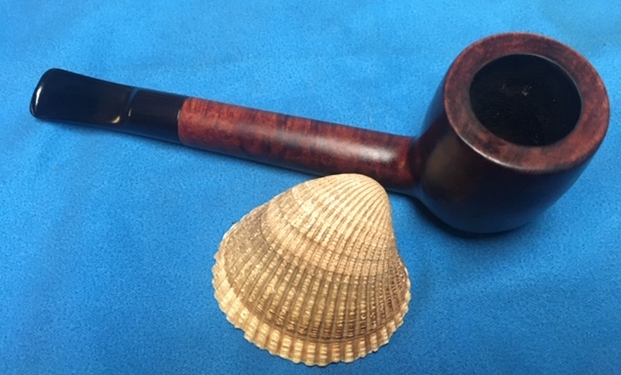
Working on a GBD Original 91327 Smooth Billiard from Bob Kerr’s Estate


Blog by Steve Laug

I am continuing to work through Bob Kerr’s estate. The next pipe on the table is a GBD Original Billiard, smooth bowl and shank a beveled rim top. It is an Original with a black vulcanite stem. I am continuing to cleanup Bob’s estate for his family and moving them out into the hands of pipemen and women who will carry on the trust that began with Bob and in some pipes was carried on by Bob. In the collection there were a total of 125 pipes along with a box of parts. This is the largest estate that I have had the opportunity to work on. I put together a spread sheet of the pipes and stampings to create an invoice. I was taking on what would take me a fair amount of time to clean up. I could not pass up the opportunity to work on these pipes though. They were just too tempting.

I have been collecting and restoring GBD pipes for as long as I have worked on pipes. This one also has a beautiful mix of grain under the grime on the finish. It is quite beautiful! The pipe is stamped GBD in an oval over Original on the left side of the shank. On the right side it is stamped London, England and the shape number 91327. It had a rich brown stain that does not look too bad. There was a thick cake in the bowl with remnants of tobacco stuck on the walls. There was a lava overflow on the rim. The inner edge of the rim and top are dirty and had a thick lava coat. The edges appear to have a bit of burn damage on the front inner edge and the front outer edge has a bit of wear damage. It was a beautiful pipe that was dirty and tired looking. The stem was oxidized and calcified toward the end. There seemed to be a chip or nick in the middle of the button on the top edge. Again, surprisingly did not have the tooth marks that I have come to expect from Bob’s pipes. Jeff took photos of the pipe before he started his cleanup work on it. Jeff took photos of the bowl and rim top to show the cake in the bowl and the lava build up on the edges of the bowl. It was thick and hard but hopefully it had protected the rim and edges from damage. There appears to be a little damage on the left front inner and outer edges of the bowl. Otherwise it looks pretty good.   Jeff took photos of the sides and heel of the bowl to show the condition of the finish. You can see the beautiful grain through the debris – both birdseye and cross grain. The finish was very dirty. There is a large putty fill on the right side of the shank near the bowl. Jeff took photos of the stamping on the sides of the shank. The stamping was readable as you can see from the photos. On the left side it read GBD in an oval over Original.  On the right side it was stamped London, England over the shape number 91327. On the left side of the saddle stem was an inlaid brass GBD rondel.Jeff took photos of the top and underside of the stem showing the tooth chatter, scratching and oxidation on the stem surface and wear on the edges of the button. There is a deep nick in the topside of the button.I turned to Pipedia’s article on GBD to see if I could find any information on the Historic line. I have heard of Original pipes but I have never seen one stamped with the five digit shape number like this 91327. The Pipedia article identifies the line as a French made pipe however, this one is stamped London, England thus contradicting the article that specifically says that the pipes were not made in England (https://pipedia.org/wiki/GBD_Model_Information).

I also turned to the reference page on the site for GBD shapes and numbers and could not find any information on that shape number (https://pipedia.org/wiki/GBD_Shapes/Numbers). There was nothing there with a five digit number so I checked the listing of the last 3 digits, 327 and did not find one. So once again there is a mystery on this one.

All of my research did not really help pin anything down. The shape number was a dead end and the line description was also a contradiction. I was dealing with a bit of anomaly – a French made saddle Billiard stamped London, England with a saddle stem. In terms of dating the pipe I can only guess that it fits in with the late 50s to late 60s of Bob’s other pipes but I cannot know for sure. Now it was time to work on the pipe.

With over 125 pipes to clean from Bob’s estate I am really appreciating Jeff’s help cleaning them up. Jeff cleaned the pipe with his usual penchant for thoroughness that I really appreciate. This one was a real mess and I did not know what to expect when I unwrapped it from his box. He reamed it with a PipNet pipe reamer and cleaned up the reaming with a Savinelli Fitsall Pipe Knife. He scrubbed out the internals with alcohol, pipe cleaners and cotton swabs until the pipe was clean. He scrubbed the exterior of the bowl with Murphy’s Oil Soap and a tooth brush to remove the grime and grit on the briar and the lava on the rim top. The finish looks very good with good looking grain around the bowl and shank. Jeff soaked the stem in Before & After Deoxidizer to remove the oxidation on the rubber. When the pipe arrived here in Vancouver for the second stop of its restoration tour it looked good. The stem still sported some deep oxidation but otherwise it was clean. I took photos before I started my part of the work. I took some close up photos of the rim top and also of the stem surface. I wanted to show what an amazing job Jeff did in the cleanup of the rim top. The rim top looks pretty good. There is some darkening on the top edge and a burn marks on the inner and outer edge. There is also some damage on the outer rim on the rim. The photos show a few small dents on the surface of the stem and the nick out of the top of the button on the topside. You can also see the remaining oxidation on the stem surface.     I am going to keep posting the next paragraph because of the importance of protecting the stamping/nomenclature.

One of the things I appreciate about Jeff’s cleanup is that he works to protect and preserve the nomenclature on the shank of the pipes that he works on. The stamping on this one was very faint to start with so I was worried that it would disappear altogether with the cleanup. He was not only able to preserve it but it is clearer than shown in the earlier photos. I took some photos to show the clarity of the stamping. I have noticed that many restorers are not careful to protect the stamping in their cleaning process and often by the end of the restoration the nomenclature is almost destroyed. I would like to encourage all of us to be careful in our work to preserve this as it is a critical piece of pipe restoration! Since this is another pipe Bob’s estate I am sure that some of you have read at least some of the other restoration work that has been done on the previous pipes. You have also read what I have included about Bob Kerr, the pipeman who held these pipes in trust before I came to work on them (see photo to the left). Also, if you have followed the blog for long you will already know that I like to include background information on the pipeman whose pipes I am restoring. For me, when I am working on an estate I really like to have a sense of the person who held the pipes in trust before I worked on them. It gives me another dimension of the restoration work. I asked Brian if he or his wife would like to write a brief biographical tribute to her father, Bob. His daughter worked on it and I received the following short write up on him and some pictures to go along with the words including one of Bob’s carvings. Once again I thank you Brian and tell your wife thank you as well.

I am delighted to pass on these beloved pipes of my father’s. I hope each user gets many hours of contemplative pleasure as he did. I remember the aroma of tobacco in the rec room, as he put up his feet on his lazy boy. He’d be first at the paper then, no one could touch it before him. Maybe there would be a movie on with an actor smoking a pipe. He would have very definite opinions on whether the performer was a ‘real’ smoker or not, a distinction which I could never see but it would be very clear to him. He worked by day as a sales manager of a paper products company, a job he hated. What he longed for was the life of an artist, so on the weekends and sometimes mid-week evenings he would journey to his workshop and come out with wood sculptures, all of which he declared as crap but every one of them treasured by my sister and myself. Enjoy the pipes, and maybe a little of his creative spirit will enter you!

Now, on to the rest of the restoration on this GBD Original 91327 Saddle Stem Billiard. Since Jeff had done such an amazing clean up job on the bowl it was going to be a very easy job for me. There was some darkening and damage on the rim top, the inner and outer edges of the rim that needed to be addressed. I sanded it with a folded piece of 220 grit sandpaper to remove and minimize the damage to the top and the edges. I continued by starting to polish it with 400 grit wet dry sandpaper. I wiped the rim edge down with a damp cloth to remove the sanding dust on the briar. The first photo below shows the rim top when I started and the second one below shows it after the work. The finished rim top looked much better than when I started. I was able to minimize the damage on the front inner edge of the rim. It is still damaged but it looks considerably better. Once I clean it and stain it the rim edge will look better.  Some how the fill that was obvious in the first photos that Jeff took seem to have expanded and filled in and with the polishing and sanding it disappeared. I can see it but it was not worth repairing or replacing. I polished the rim top and sides of the bowl with micromesh sanding pads – wet sanding with 1500-12000 grit pads. I wiped the bowl and rim down with damp cloth after each sanding pad. The more I polished the rim top the more the rim blended in with the rest of the finish. I would not need to stain it.   I rubbed the bowl down with Before & After Restoration Balm. I worked it into the surface of the briar with my fingertips to clean, enliven and protect it. I let the balm sit for a little while and then buffed with a cotton cloth and shoe brush to raise the shine. I set the bowl aside and turned my attention to the stem. I filled in the divot on the top of the button on the top side and built up the edge on the underside with clear Krazy Glue.I sanded the stem with 220 grit sandpaper to break up the oxidation. I started the polishing with 400 grit wet dry sandpaper to remove the scratching. It is starting to look good.    I have one more tin of Denicare Mouthpiece Polish left from a few that I have picked up over the years. It is a coarse red pasted that serves to help remove oxidation. I polished the stem with that to further smooth out the surface of the vulcanite (and to be honest – to use it up).    I polished the stem with micromesh sanding pads – wet sanding with 1500-12000 grit pads. I wiped the stem down after each sanding pad with Obsidian Oil. I polished it with Before & After Pipe Stem Polish – both Fine and Extra Fine. Once I had finished the polishing I rubbed it down with “No Oxy Oil”, a product I am trying out from Briarville Pipe Repair. So far it is an impressive product that is very similar to Obsidian Oil. I will continue to experiment with it.  I can’t begin to tell you how great it feels to be moving through these 125 pipes – about 38 done so far! It is an overwhelming task that can only be achieved one pipe at a time. So each time I finish one of the pipes from Bob Kerr’s Estate I look forward to what it will look like when it is put back together, polished and waxed. I put the bowl and stem back together. I polished the bowl and stem with Blue Diamond to polish out the scratches in the briar and the vulcanite. I gave the bowl and stem multiple coats of carnauba wax. I buffed the pipe with a clean buffing pad to raise the shine. I hand buffed it with a microfiber cloth to deepen the shine. The pipe polished up pretty nicely. The rich medium brown smooth finish really popped with buffing showing the grain on the pipe. The polished thin black vulcanite saddle stem went really well with the colours of the bowl. This old GBD Original 91327 Billiard was another fun pipe to work on thanks to Jeff’s cleanup work. It really has the classic GBD Billiard shape that is very recognizable. The medium brown stain really makes the pipe look attractive. It is another comfortable pipe to hold in the hand. The finished pipe is shown in the photos below. The dimensions of the pipe are Length: 5 ½ inches, Height: 1 ¾ inches, Outside diameter of the bowl: 1 ¼ inches, Chamber diameter: ¾ of an inch. If you are interested in carrying on Bob’s legacy with this pipe send me a message or an email. I have a lot more to work on of various brands. Perhaps one of those will catch your attention. Thanks for reading this blog and my reflections on the pipe while I worked on it. This is an interesting estate to bring back to life.
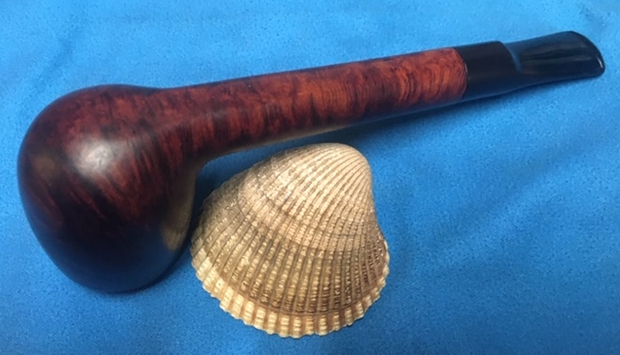
Restoring a Svendborg Danish Handmade Bark 19 Brandy


Blog by Steve Laug

The next pipe I chose to work on is another one from Bob Kerr’s estate and is part of his collection of Danish made pipes. I have worked on the restoration of others in this collection which include a Stanwell Jubilee Shape 118 (https://rebornpipes.com/2019/08/11/another-bob-kerr-estate-a-stanwell-jubilee-1942-1982-shape-118/); a Stanwell de Luxe Shape 812 (https://rebornpipes.com/2019/08/10/back-to-bob-kerrs-estate-changing-up-and-working-on-a-danish-made-stanwell-de-luxe-812-billiard-regd-no-969-48/); a WO Larsen (https://rebornpipes.com/2019/01/13/restoring-pipe-17-from-bob-kerrs-estate-a-w-o-larsen-super-15-bent-stack/); a Danish Sovereign Bulldog variation (https://rebornpipes.com/2019/08/11/another-bob-kerr-estate-a-danish-sovereign-305-bulldog-variant/) and a Danmore Deluxe Volcano (https://rebornpipes.com/2019/08/20/restoring-a-petersons-dunmore-70-bent-apple-sitter-from-bob-kerrs-estate-2/).

To this list of Danish pipes I am adding the next – a Svendborg Danish Handmade Bark Brandy shaped pipe. Like the others it is part of Bob’s estate that the family asked me to clean up and move out to others who will carry on the trust that began with Bob. In the collection there were BBBs, Peterson’s, Dunhills, Comoy’s and Barlings as well many others – a total of 125 pipes. This is the largest estate that I have had the opportunity to work on. I created a spread sheet to track the pipes, restoration and sales. This job would take a fair amount of time to clean up. I could not pass up the opportunity to work on these pipes and help the family.

When I took Svendborg Brandy shaped pipe out of the box of cleaned up pipes that Jeff sent back I could see that it was a beauty. It was stamped Svendborg over Danish Handmade on the underside of the shank next to the stem. On the topside of the shank it was stamped Bark at the stem/shank junction. On the right side near the junction it was stamped with the shape number 19. It has swirls of straight, flame grain around the sides of the bowl and shank with birdseye on the heel and the top of the bowl. The finish was very dirty like the rest of the pipes in this estate. There was a thick cake in the bowl with remnants of tobacco stuck on the walls. There was an overflow of lava on the rim. The top and edges of the rim were dirty. I could see a beautiful pipe underneath all of the grime and buildup of years of use. The stem was oxidized with tooth chatter on both sides. There was an squat S shaped swirl on the left side of the taper stem. Surprisingly it had none of the deep tooth marks that I have come to expect from Bob’s pipes. Jeff took photos of the pipe before he started his cleanup work on it. Jeff took photos of the bowl and rim top to show the cake in the bowl and the lava build up on the edges of the bowl. It was thick and hard but hopefully it had protected the rim and edges from damage. The edges look pretty good.    Jeff took photos of the sides and heel of the bowl to show the condition of the finish. You can see the beautiful straight and flame grain on the side of the bowl and the swirls of the birdseye on the heel. There is a lot of dust and grime on the surface of the briar.   Jeff took photos of the stamping on the underside of the shank. The stamping was readable as you can see from the photos. It read Svendborg Danish Handmade. On the topside it reads Bark. There is a shape number 19 on the right side of the shank but I do not have a photo of it at this time.    Jeff took photos of the top and underside of the stem showing the tooth chatter, scratching and oxidation on the stem surface and wear on the edges of the button.   I turned first to Pipephil’s site to get a quick idea of the Svendborg brand and the carver who made the pipes (http://www.pipephil.eu/logos/en/logo-s14.html). I quote what I found there.

The brand was founded in 1970s by Henrik Jørgensen, Poul Ilsted and Tao Nielsen. They bought an old factory (Nordisc Pibefabriker) in Svendborg on Funen Island. Poul and Tao gradually bow out from machine manufactured pipes (1982) and Henrik Jørgensen manages the brand until its take over by Design Berlin (D) in the late 90ies. Kaj C. Rasmussen jointed the firm for several years. 17 employees worked for this brand under Henrik Jørgensen direction.

I did a screen capture of the section on pipephil’s site for ease of reference.I also turned to Pipedia’s article on Svendborg and read some more about the history of the brand and the carvers noted on pipephils site. It is a great read in terms of the history of the brand (https://pipedia.org/wiki/Svendborg).

Jens Tao Nielsen and Poul Ilsted Bech met each other when working together for Erik Nørding and soon became close friends. Both felt a bit tired to make nothing but bizarre fancy shapes and agreed they wanted to produce pipes of more style and more classicism. They decided to establish their own brand “Tao & Ilsted” – But how to do it?

 A good fortune brought them in contact with Henrik Jørgensen, a passionate pipe lover and a wealthy Copenhagen banker who was willing to retire from bank business and change his career to become a pipemaker. The trio joined in 1969 and decided to start a new pipe brand together. Nielsen and Ilsted started to search for a suitable workshop while Jørgensen took care of the finances. In early 1970 the partners found an old, closed down pipe factory in Svendborg on Funen, and bought it shortly after for a mere 16.500 Danish Kroner. It was the earlier Nordic Pipe Factory – Nordisc Pibefabriker – maybe the oldest Danish pipe factory. And now it became the home of Svendborg Piber.

Included in the article was a catalogue courtesy of Doug Valitchka. I did a screen capture of the the pertinent part of the catalogue that showed the Bark line that this pipe belonged to. The top shape – the straight brandy is the same shaped bowl as the bent brandy that I am working on. The smooth finish on the Bark line in a rich reddish brown colour is a contrast to rusticated or sandblast finishes done on Bark pipes made by others. The beautiful stain combination makes a rich looking pipe.

With that information in hand I knew what I was dealing with in terms of the stamping and the rough age of this pipe. I knew from the information from Pipephil and Pipedia that the pipe was most like made in the 70s or 80s. Most of Bob’s pipes were purchased between the 50s and late 60s early 70s so my guess is that this pipe fits that time frame. Now it was time to work on the pipe.

With over 125 pipes to clean from Bob’s estate it was taking me forever to clean and restore them by myself. I enlisted Jeff’s help with the cleanup. He cleaned over half of the pipes for me. He cleaned up this pipe with his usual penchant for thoroughness that I really appreciate. It was a real mess and I did not know what to expect when I unwrapped it from his box. He reamed it with a PipNet pipe reamer and cleaned up the reaming with a Savinelli Fitsall Pipe Knife. He scrubbed out the internals with alcohol, pipe cleaners and cotton swabs until the pipe was clean. He scrubbed the exterior of the bowl with Murphy’s Oil Soap and a tooth brush to remove the grime and grit on the briar and the lava on the rim top. The finish looks very good with good looking grain around the bowl and shank. Jeff soaked the stem in Before & After Deoxidizer to remove the oxidation on the rubber. When the pipe arrived here in Vancouver for the second stop of its restoration tour it looked very good. I took photos before I started my part of the work.   I took some close up photos of the rim top and also of the stem surface. I wanted to show what an amazing job Jeff did in the cleanup of the rim top. The rim top looks very good. The finish is dull, but still is in great condition. The bowl looked very good. I also took close up photos of the stem to show the light tooth marks, chatter and the remaining oxidation on the stem surface. One of the things I appreciate about Jeff’s cleanup is that he works to protect and preserve the nomenclature on the shank of the pipes that he works on. The stamping on this one was faint to start with so I was worried that it would worsen with the cleanup. He was not only able to preserve it but it seems to be clearer than shown in the earlier photos. I took some photos to show the clarity of the stamping. You can also see the condition of the squashed S on the left side of the tapered stem.  I have noticed that many restorers are not careful to protect the stamping during their cleaning process and by the end of the restoration the nomenclature is damaged or lost. I encourage all of us to be careful to preserve this critical piece of pipe restoration! Since this is another pipe Bob’s estate I am sure that some of you have read at least some of the other restoration work that has been done on the previous pipes. You have also read what I have included about Bob Kerr, the pipeman who held these pipes in trust before I came to work on them (see photo to the left). Also, if you have followed the blog for long you will already know that I like to include background information on the pipeman whose pipes I am restoring. For me, when I am working on an estate I really like to have a sense of the person who held the pipes in trust before I worked on them. It gives me another dimension of the restoration work. I asked Brian if he or his wife would like to write a brief biographical tribute to her father, Bob. His daughter worked on it and I received the following short write up on him and some pictures to go along with the words including one of Bob’s carvings. Once again I thank you Brian and tell your wife thank you as well.
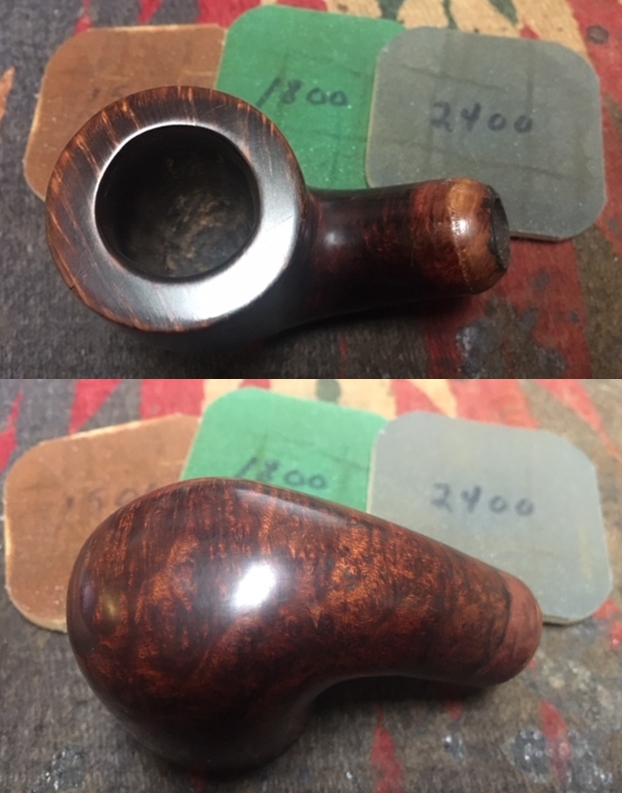
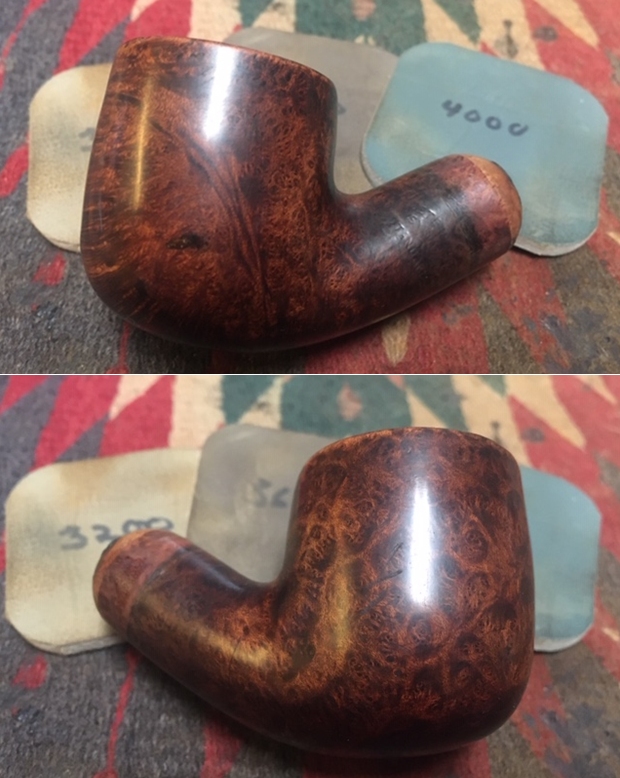
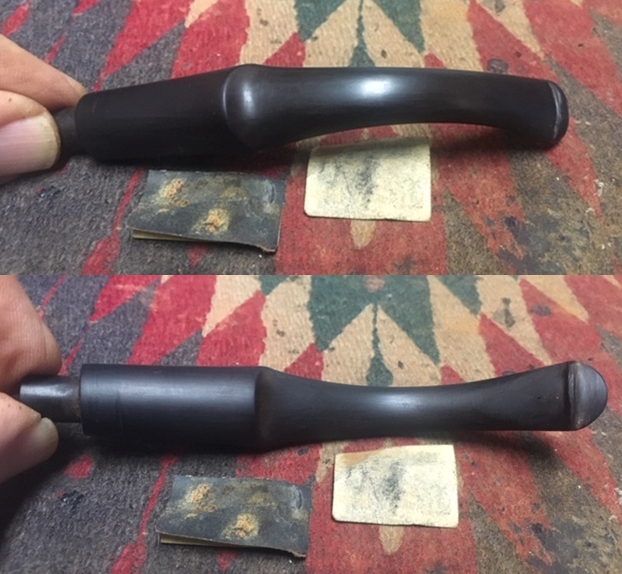
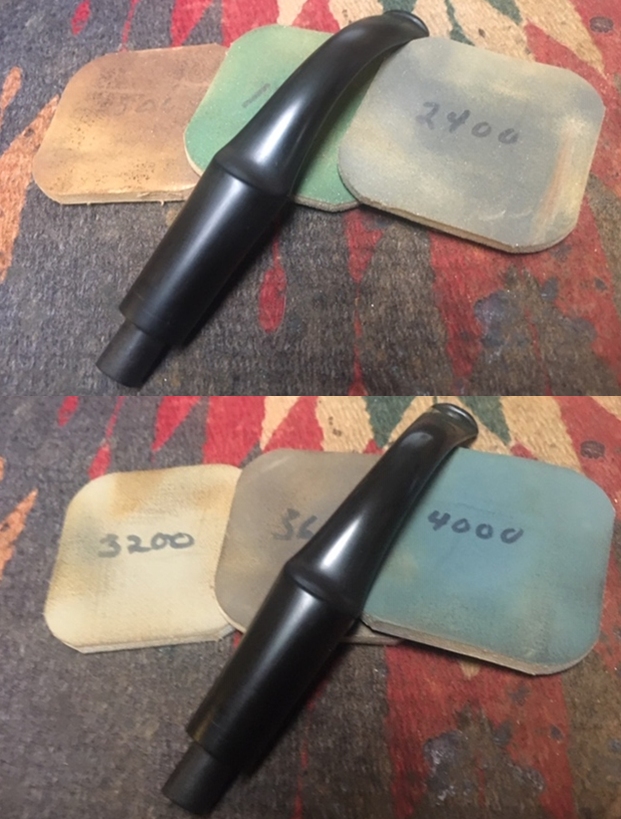
I am delighted to pass on these beloved pipes of my father’s. I hope each user gets many hours of contemplative pleasure as he did. I remember the aroma of tobacco in the rec room, as he put up his feet on his lazy boy. He’d be first at the paper then, no one could touch it before him. Maybe there would be a movie on with an actor smoking a pipe. He would have very definite opinions on whether the performer was a ‘real’ smoker or not, a distinction which I could never see but it would be very clear to him. He worked by day as a sales manager of a paper products company, a job he hated. What he longed for was the life of an artist, so on the weekends and sometimes mid-week evenings he would journey to his workshop and come out with wood sculptures, all of which he declared as crap but every one of them treasured by my sister and myself. Enjoy the pipes, and maybe a little of his creative spirit will enter you!

Now on to the rest of the restoration on this beautiful Svendborg Brandy 19! I decided to begin the restoration of the bowl by polishing the briar with micromesh sanding pads to blend in the stain and to polish the briar and remove the scratches in the surface of the bowl, heel and shank. I wet sanded with 1500-12000 grit pads and wiped the bowl down between each pad with a damp cloth.   I rubbed the bowl down with Before & After Restoration Balm. I worked it into the surface of the briar with my fingertips to clean, enliven and protect it. I let the balm sit for a little while and then buffed with a cotton cloth to raise the shine. Mark Hoover’s Balm is a product that I have come to appreciate and one I use on every pipe I have been working on.   I set the bowl aside and turned my attention to the stem. I “painted” the surface of the stem with the flame from a Bic lighter to lift the dents and tooth marks on both side. I was able to lift them all so that I could do the rest of the stem work with sandpaper.I sanded the stem with 220 grit sandpaper to break up the oxidation. I started the polishing with 400 grit wet dry sandpaper to remove the scratching. It is starting to look good. I carefully worked my way around the squashed S stamp. I rubbed the stem down with Denicare Mouthpiece Polish. I have a few tins of this laying around so I am trying to use them up. It does a pretty good job polishing the stem.    I polished the stem with micromesh sanding pads – wet sanding with 1500-12000 grit pads. I wiped the stem down after each sanding pad with Obsidian Oil. I polished it with Before & After Pipe Stem Polish – both Fine and Extra Fine. Once I had finished the polishing I gave it a coat of “No Oxy Oil” developed by Briarville. I am experimenting with this product on the pipes I am restoring. Once again I am excited to be working on another one of Bob’s pipes. This is the part of the restoration part I look forward to when it all comes back together, polished and waxed. I put the bowl and stem back together. I polished the bowl and stem with Blue Diamond to polish out the scratches in the briar and the vulcanite. I gave the bowl and the stem multiple coats of carnauba wax. I buffed the pipe with a clean buffing pad to raise the shine. I hand buffed it with a microfiber cloth to deepen the shine. The pipe polished up pretty nicely. The straight and flame grain around the smooth finish look really good with the polished black vulcanite. This Svendborg Danish Handmade 19 Bark Brand was another fun pipe to work on thanks to Jeff’s cleanup work. It really has that classic Danish look that catches the eye. The combination of various brown stains really makes the pipe look attractive. It is another comfortable pipe to hold in the hand. The finished pipe is shown in the photos below. The dimensions of the pipe are Length: 5 ½ inches, Height: 2 inches, Outside diameter of the bowl: 1 1/8 inches, Chamber diameter: ¾ of an inch. If you are interested in carrying on Bob’s legacy with this pipe send me a message or an email. I have a lot more to work on of various brands. Perhaps one of those will catch your attention. Thanks for reading this blog and my reflections on the pipe while I worked on it. This is an interesting estate to bring back to life.