by Steve Laug
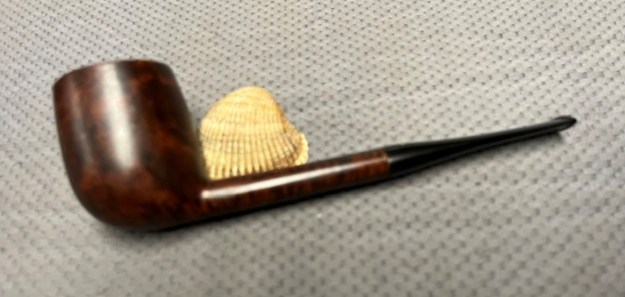
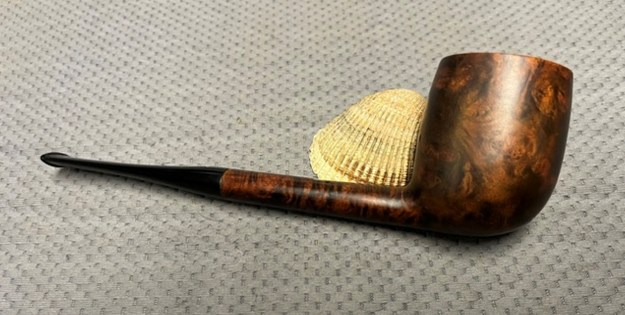
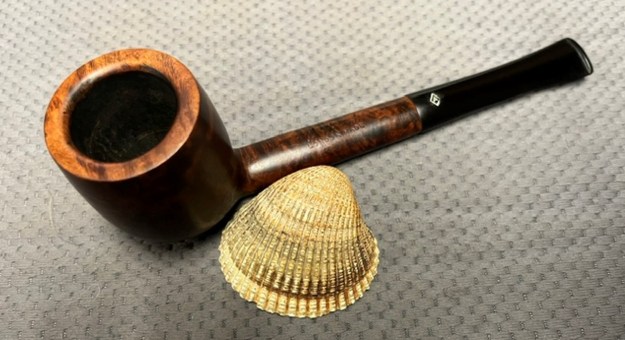
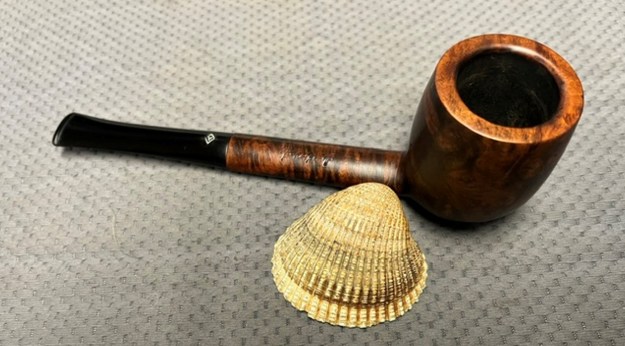
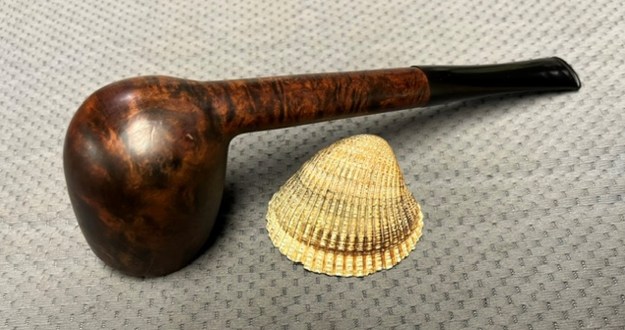
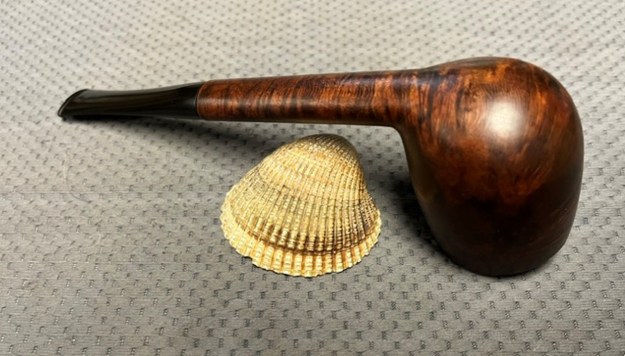
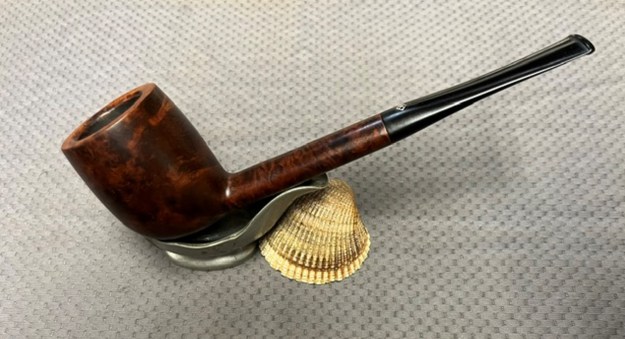
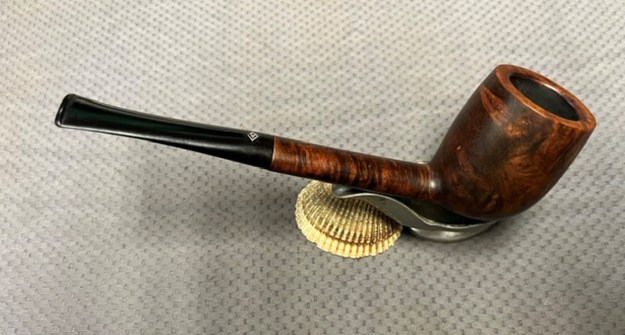
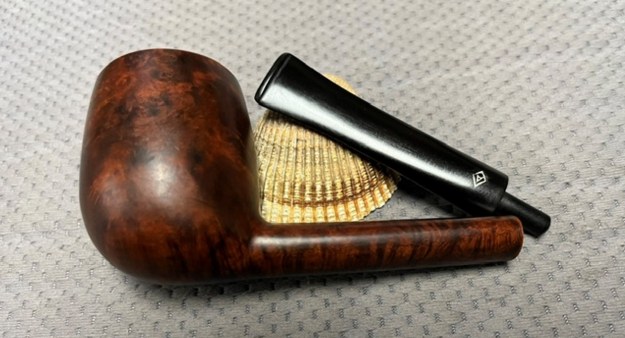
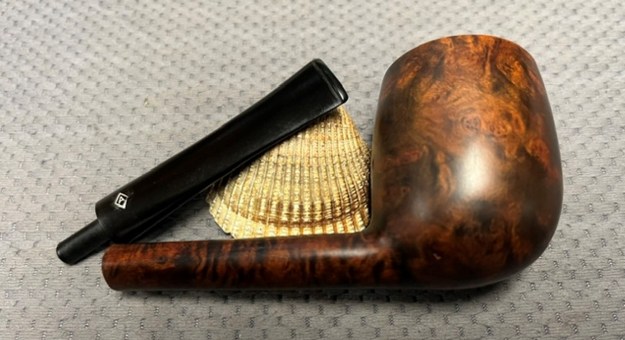
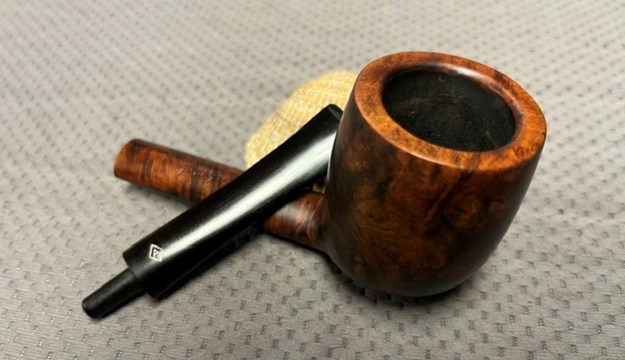
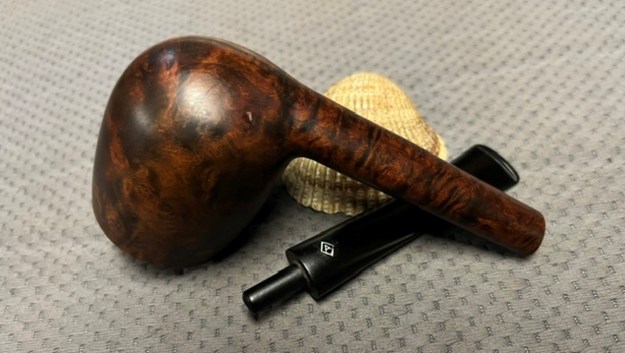
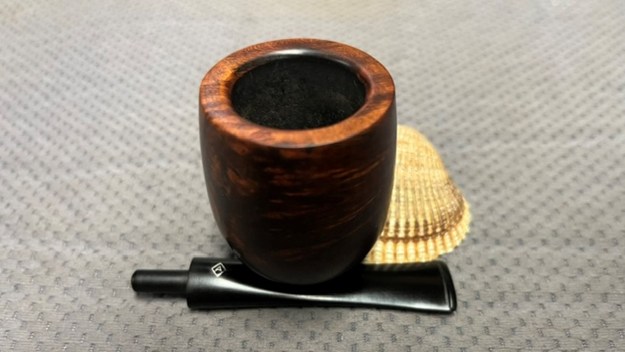
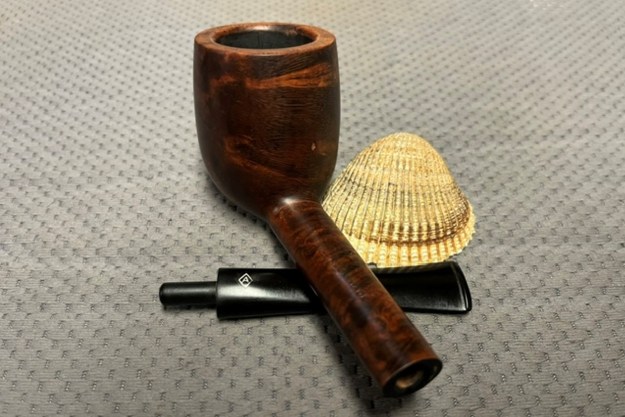
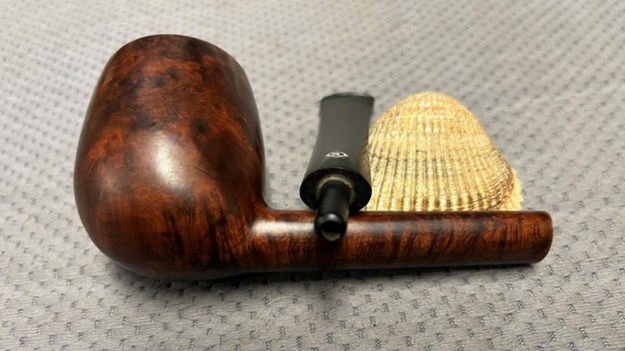
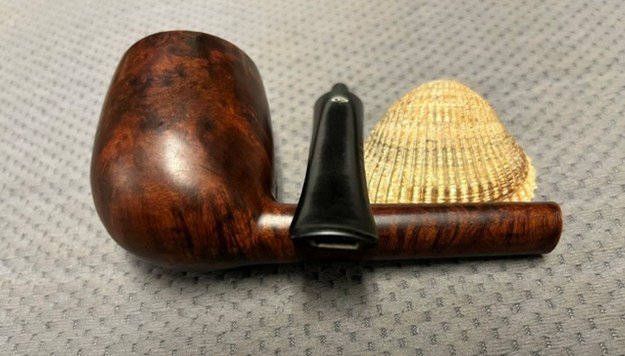
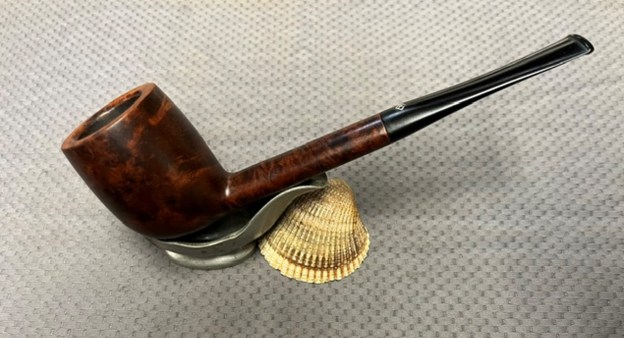
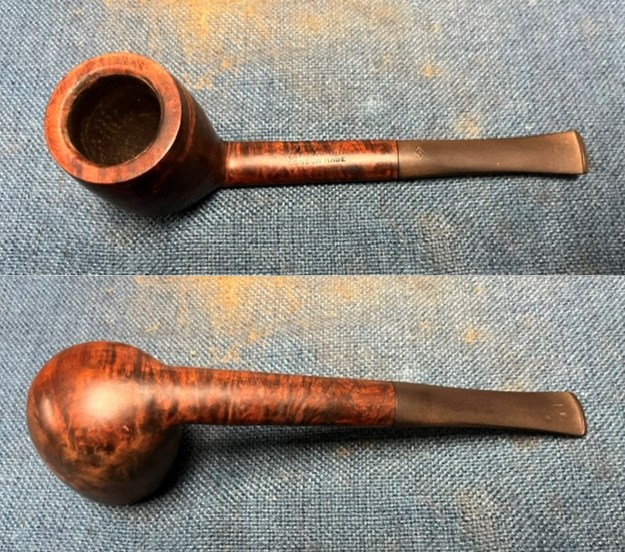
This large, smooth large bowled oval shank Billiard pipe was purchased on 01/20/2026 from a Facebook seller in Quaker Town, Pennsylvania, USA. It really is a beautifully grained large Billiard with a rich smooth finish. The stem is an oval vulcanite taper stem. The bowl is stained with a contrast of browns that give depth to the grain around the bowl and shank. It is stamped on the topside of the shank and reads Aristocrat in script [over] London Made. On the underside it is stamped Made In England. The bowl had a thick cake with an overflow of lava on the inner bevel and the rim top – heavier toward the back-left side of the bowl. There was grime ground into the finish which left the look quite dull. The taper stem has a Diamond A the topside. It was oxidized and had light tooth marks and chatter on both sides of the stem ahead of the button. Jeff took photos of the pipe before he started his work on it.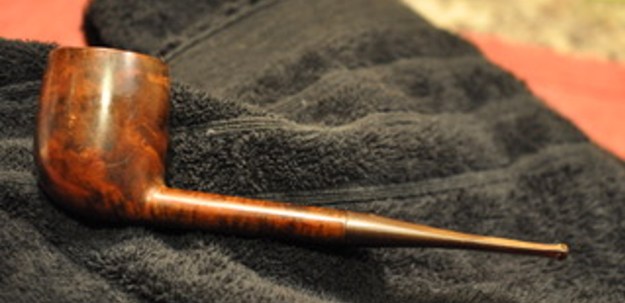
 He took photos of the rim top to show the condition of the top and edges of the bowl. It is dull and has the lava in the rusticated surface of the rim. It is uniquely a beautiful pipe. The stem had oxidation, light tooth marks and chatter on both sides ahead of the button.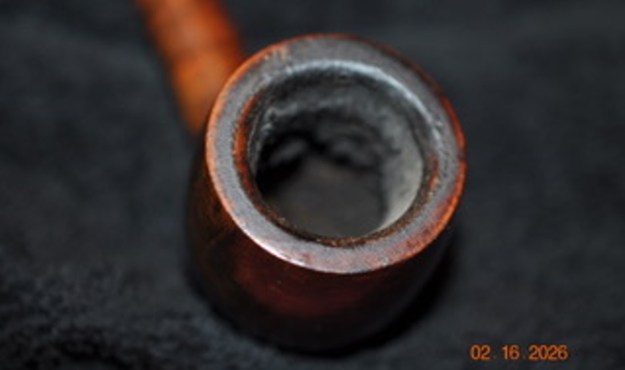
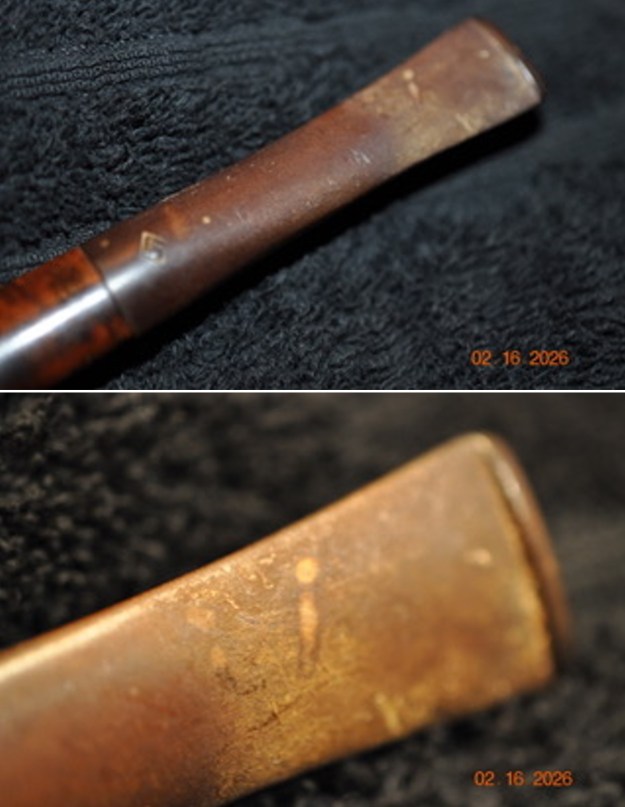
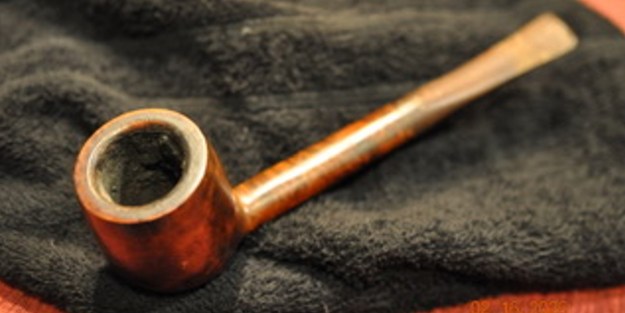
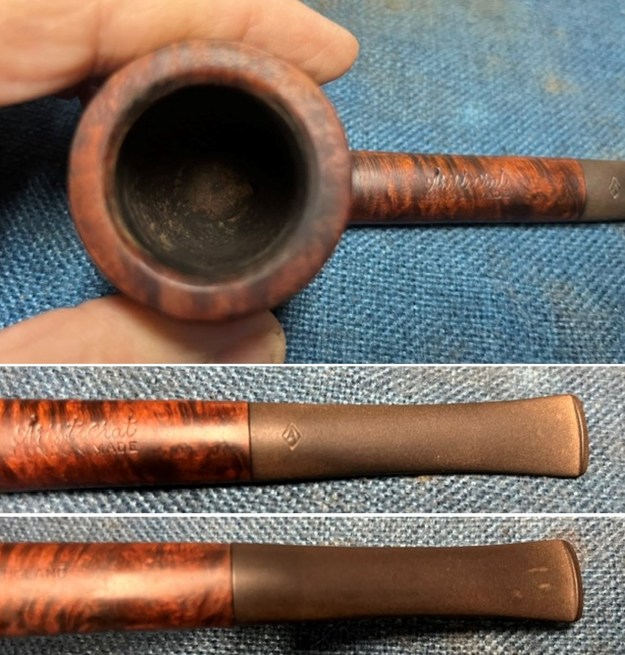
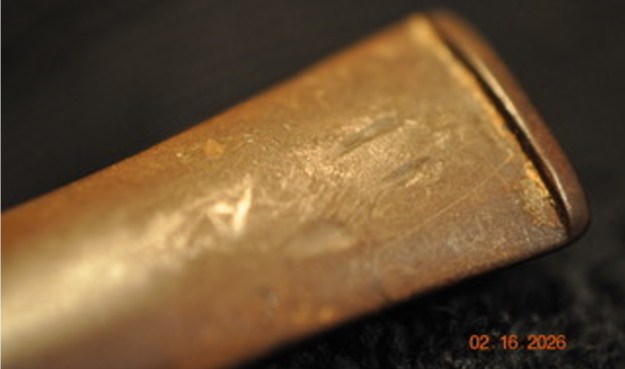 He took photos of the sides and heel of the bowl to show the finish around the bowl and the condition of the pipe. You can see the grime ground into the surface of the briar. The stain combination really makes the grain stand out. I look forward to seeing it once it is clean and polished.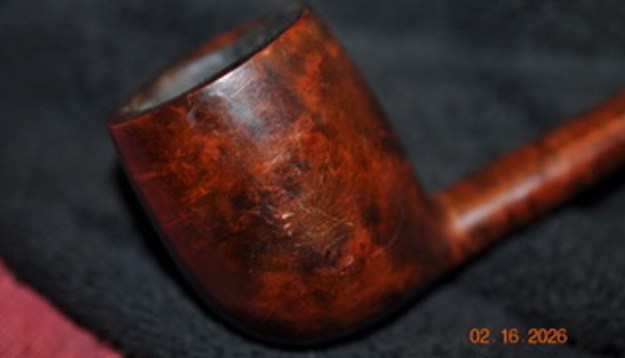
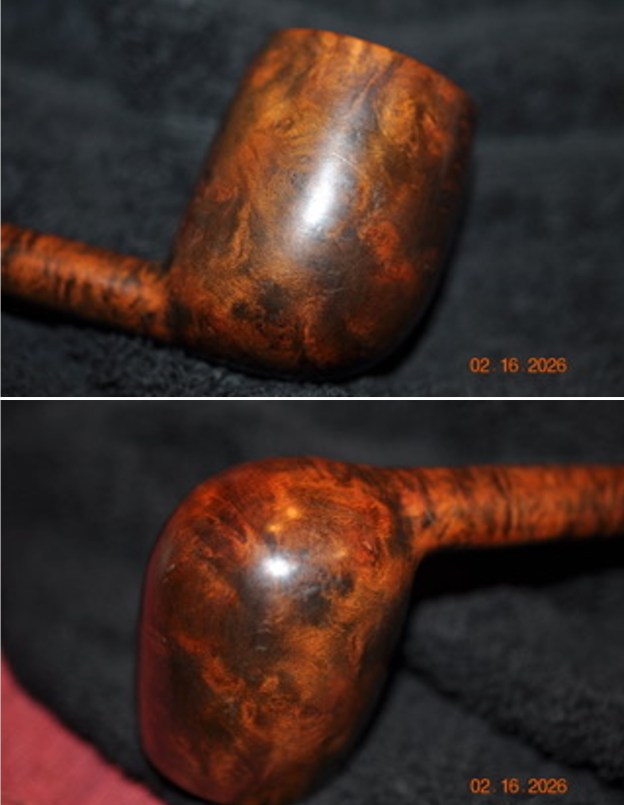 He took photos of the stamping on the sides of the shank. It is clear and readable as noted above. The Diamond A stamp on the top of the stem is also clear and readable.
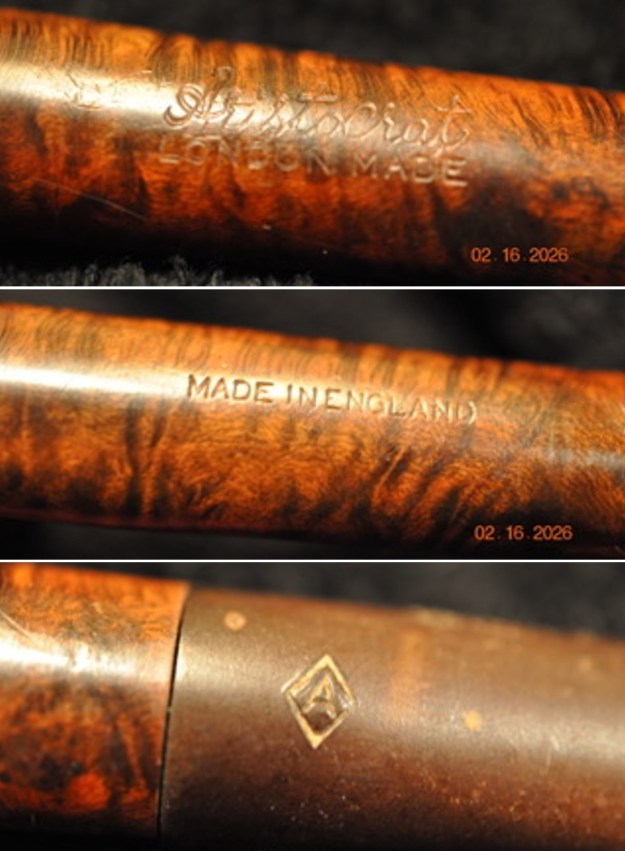 In search of the origins of the Aristocrat, I first look in my autographed copy of Herb Wilczak & Tom Colwell’s, “Who Made That Pipe?” dated 3/3/97. Tom Colwell’s gifting of this book to “Bruce” is in April of 2001, concluding with his signature. There were several listings for ‘Aristocrat’ but only two fell within the correct UK parameters:
John Redman/Kapp & Peterson – ENGL
Comoy’s / Harmon Bros. LTD – ENGL Pipedia’s entry for the John Redman Co. does not include much information. I researched this company before as being the probable English manufacturer of pipes stamped with Boston’s Tobacconist Shop, L.J. Peretti name (see: A Christmas Gift in need of a stem splice – L J Peretti Squared Shank Billiard). This restoration started a fun hobby of collecting L.J. Peretti pipes and selling many too! Here is the information.
 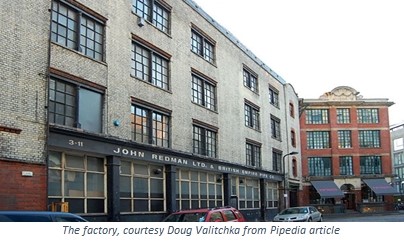 John Redman Ltd. and British Empire Pipe Co.
Other lines include Aristocrat, Buckingham, Buckingham Palace, Canberra, Captain Fortune, Dr John, Golden Square, Redonian, Richmond (not Sasieni), Twin Bore.
Former factory located at 3-11 Westland Place, Hackney, London N1 7LP
Pipephil’s entry solidified the John Redman Ltd. And British Empire Pipe Co., with the Aristocrat and the ‘A’ stem stamping (http://www.pipephil.eu/logos/en/logo-a7.html). The side bar stated that the Aristocrat is an export brand of John Redman Ltd. 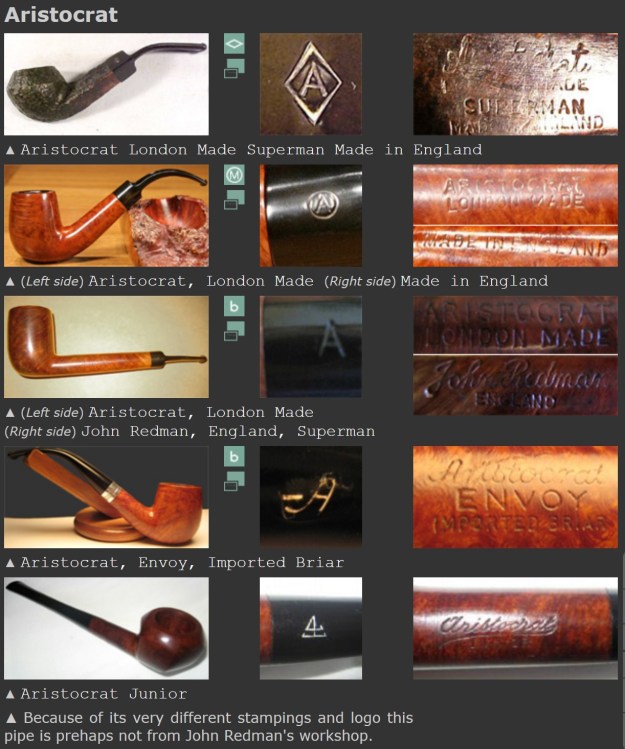 It was time to work on the pipe. As usual Jeff had done a thorough cleanup on the pipe. He reamed the bowl with a PipNet pipe reamer and a Savinelli Fitsall pipe knife to remove the cake. He scrubbed out the mortise and the airway in the shank and the stem with alcohol, cotton swabs, shank brushes and pipe cleaners. He scrubbed the exterior of the bowl, rim, shank and stem with a tooth brush and Murphy’s Oil Soap to remove the oils and tars on the rim and the grime on the finish of the bowl. He rinsed it under running water. He dried it off with a soft cloth. He soaked the stem in Before & After Deoxidizer and rinsed it off with warm water. He dried it with a soft cloth. The pipe looked good.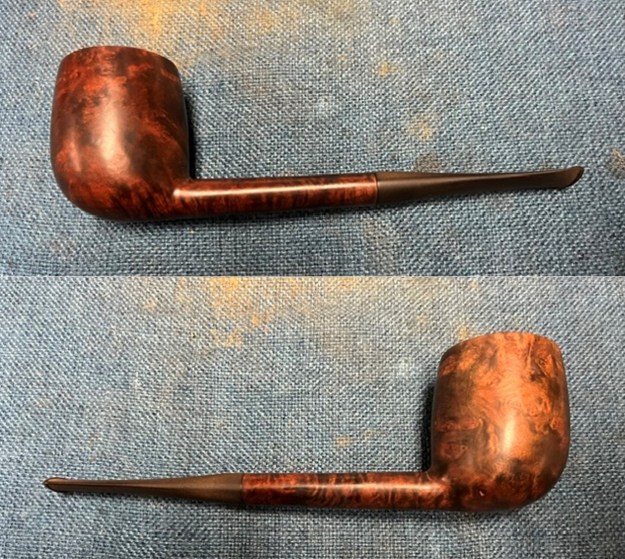
 I took a photo of the rim top and stem to show the condition. The finish on the rim top looked much better and had cleaned up well. The vulcanite stem had some remaining oxidation and some light tooth chatter and marks on both sides ahead of the button edges.
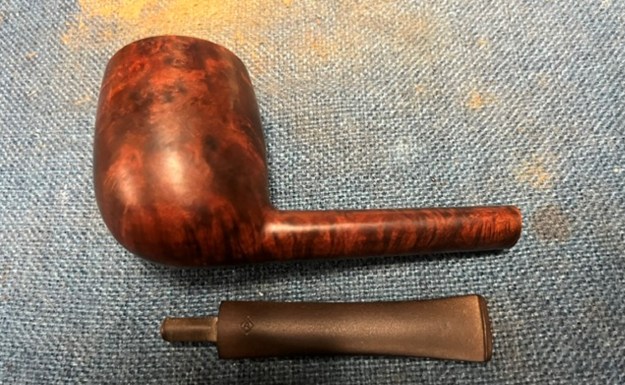
 The stamping on the top and underside of the shank is clear and readable as noted above. The logo on the top of the stem is clear but needs a touch up of colour. I removed the stem from the shank and took a photo of the pipe to give a sense of the whole. It is a nice-looking rusticated Brandy and should clean up very well.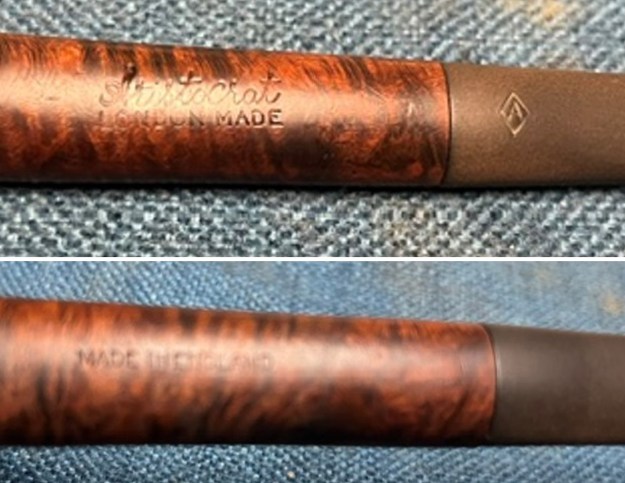
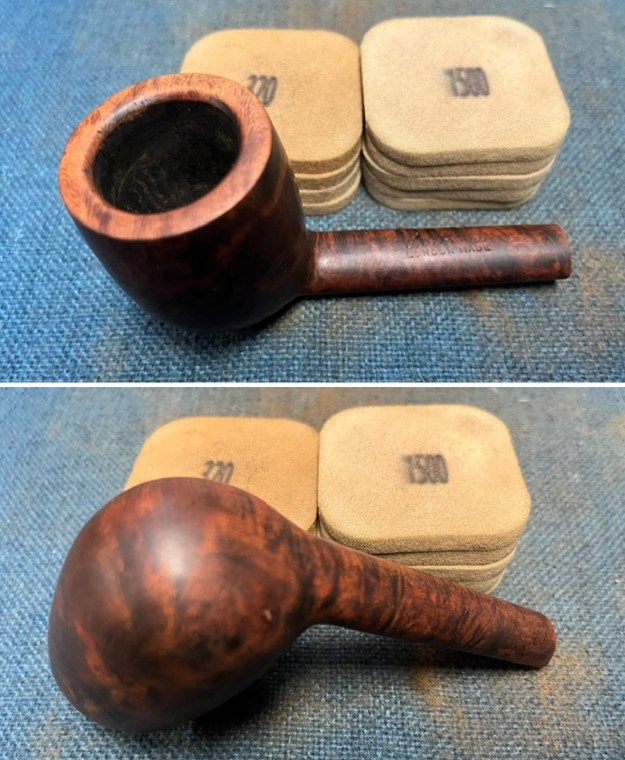
 I sanded the bowl with 320-3500 grit 2×2 inch sanding pads to remove the scratching on the sides of the bowl and shank. I wiped the bowl down with a damp cloth after each sanding pad to remove the sanding debris.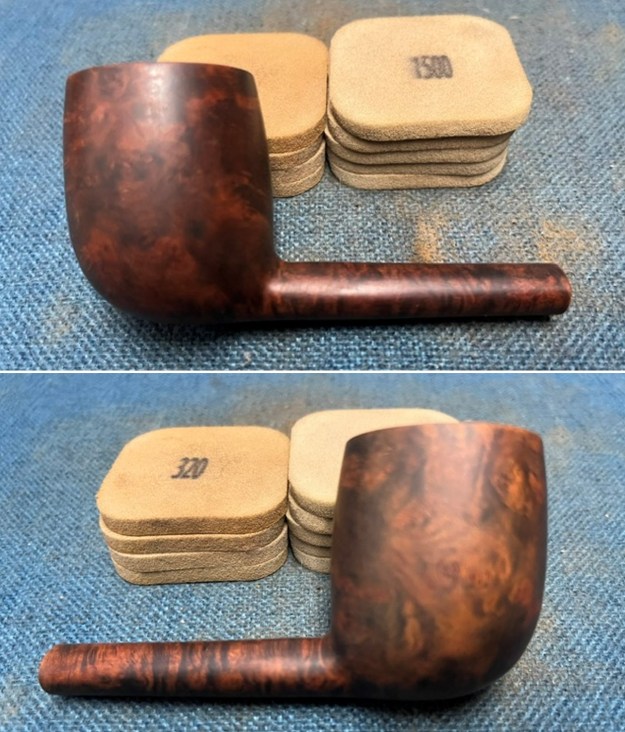
 I polished the briar with 1500-12000 grit micromesh sanding pads to further remove the marks in the finish and to deepen the shine. I wiped it down with a damp cloth after each sanding pad to remove the debris. It looked much better.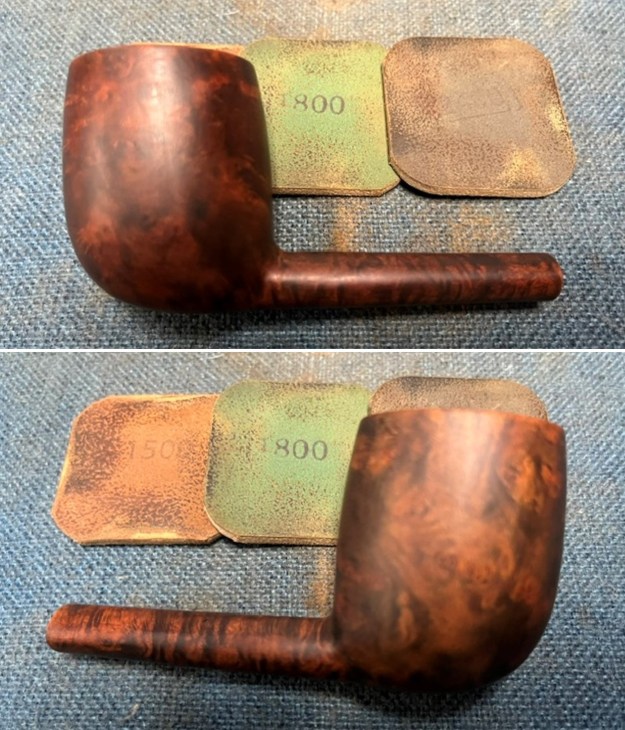
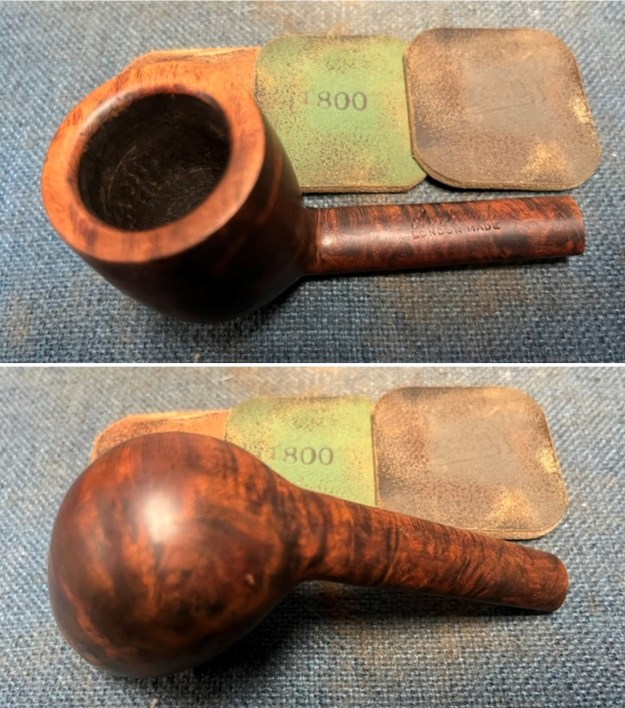
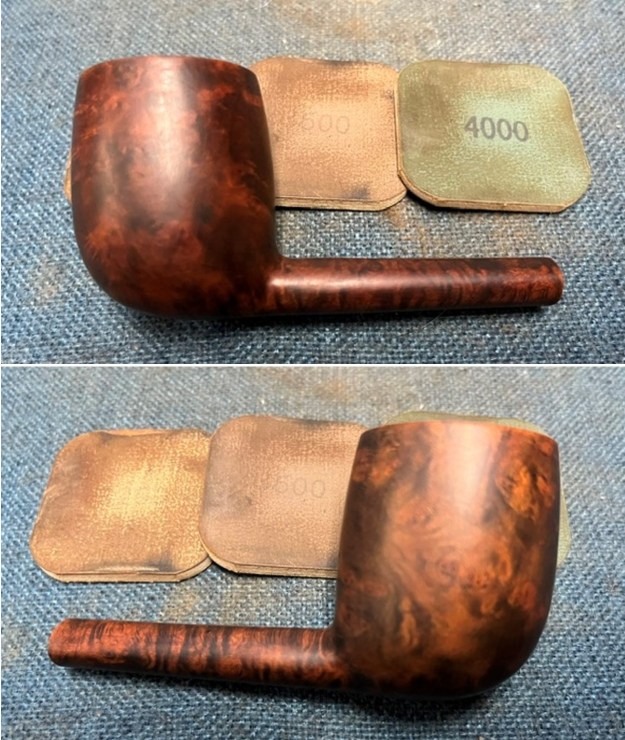
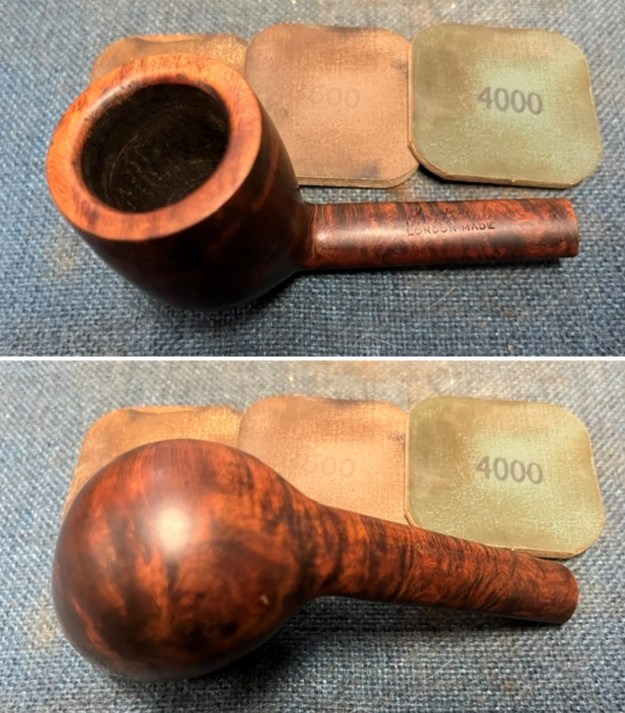
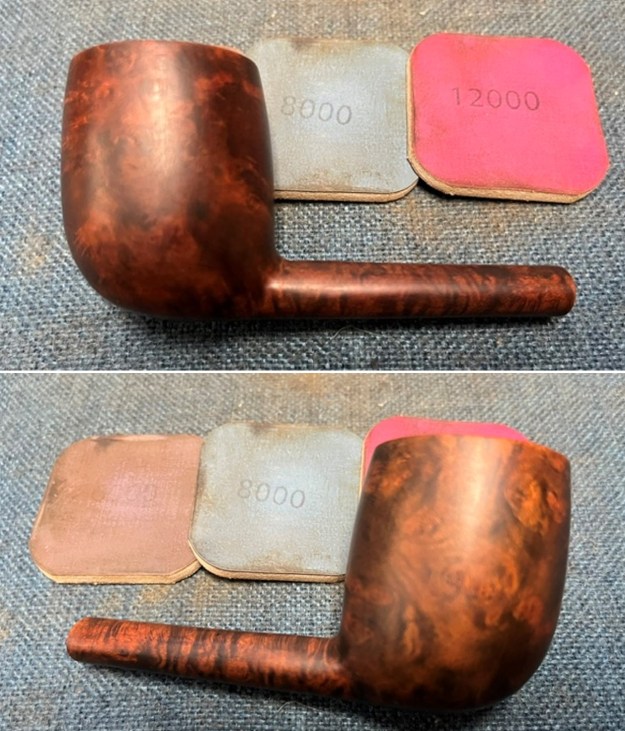
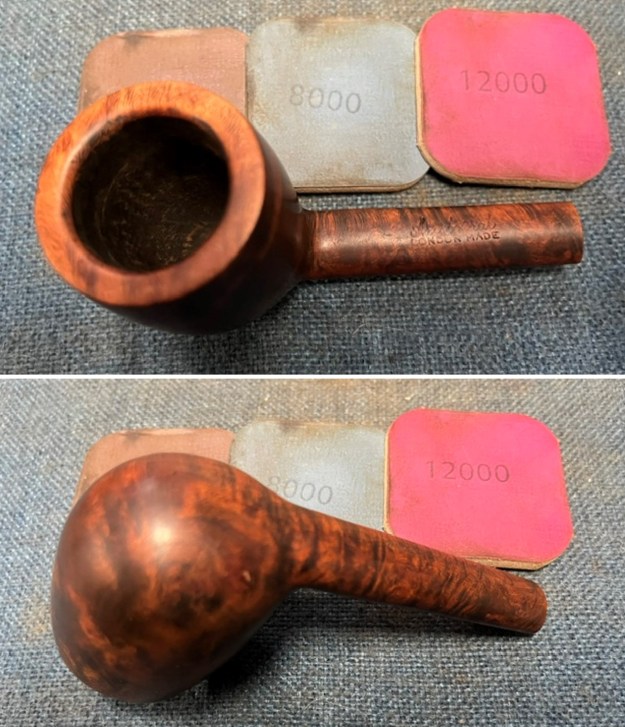 I worked some Before & After Restoration Balm into the surface of the briar with my finger tips. The product is incredible and the way it brings the grain to the fore is unique. It works to clean, protect and invigorate the wood.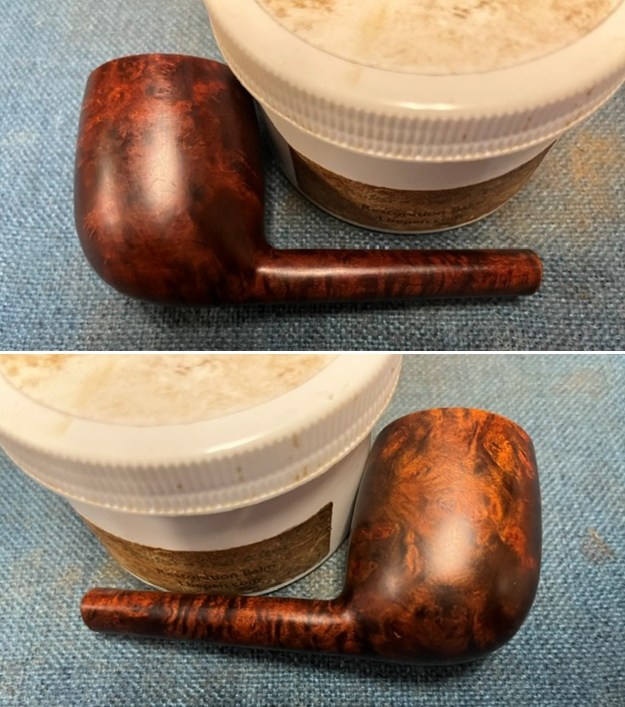
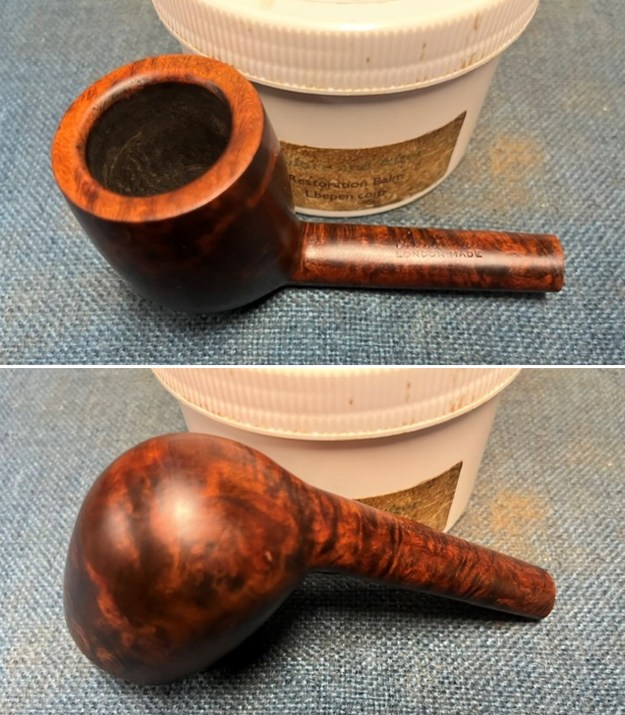
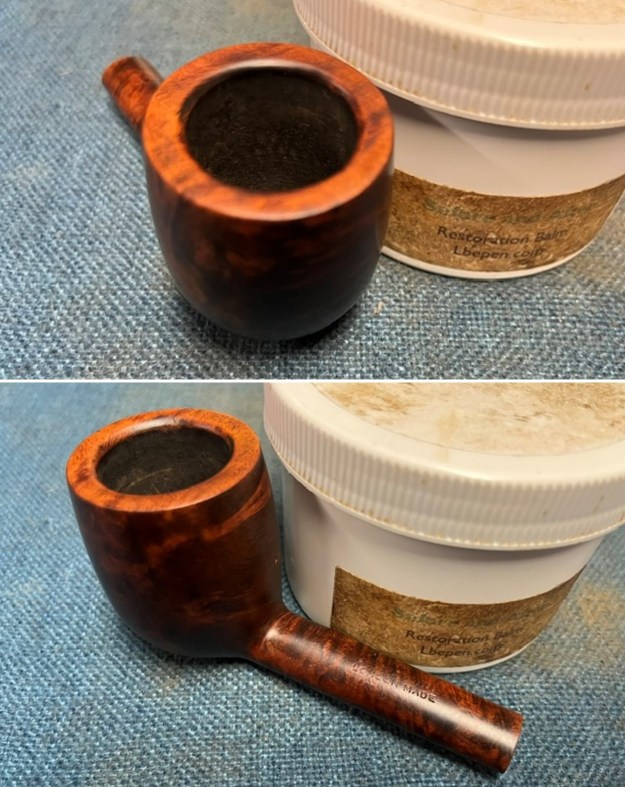 I set the bowl aside and turned my attention to the stem. I “painted” the surface of the stem with a lighter flame to lift the tooth marks. It raised them slightly. I filled in what remained with some extra strength Black CA Glue and set it aside to cure. Once it cured I carefully flattened the repairs with 220 grit sandpaper. It looked better. I promptly forgot to take photos of the stem at this point but the photos that follow these show the overall condition of the stem at this point in the process.
 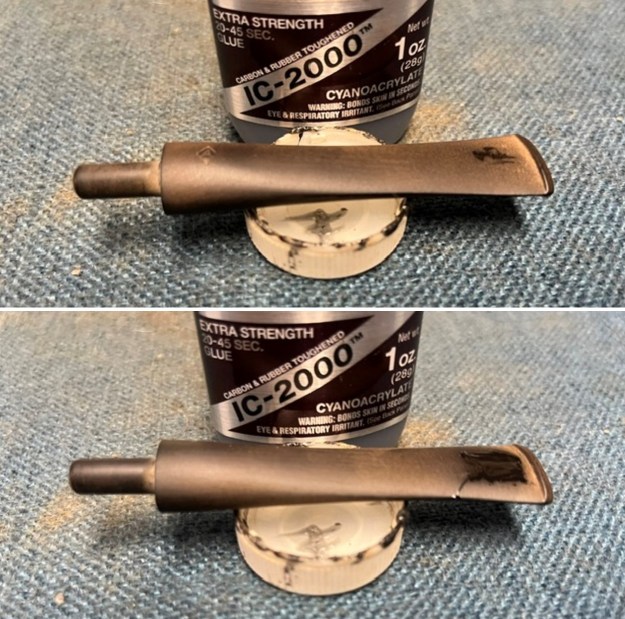 I touched up the diamond A stamp on the top of the stem with white acrylic fingernail polish. Once it cured it significantly better.
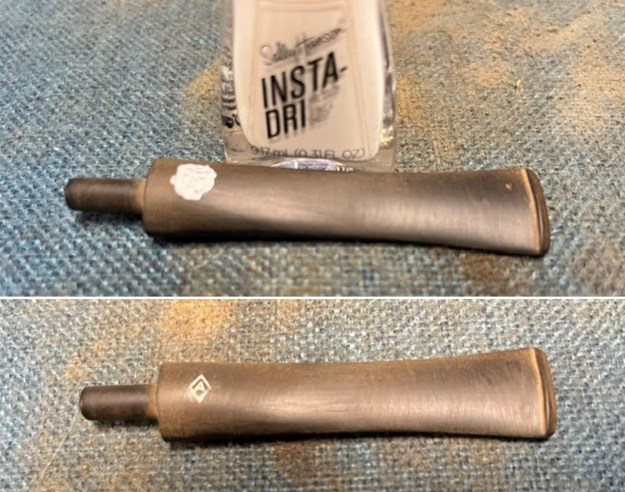 I sanded the stem with 320-3500 grit 2×2 inch sanding pads to remove the oxidation and tooth marks. I wiped the stem down after each sanding pads with an Obsidian Oil cloth. It looked much better.
 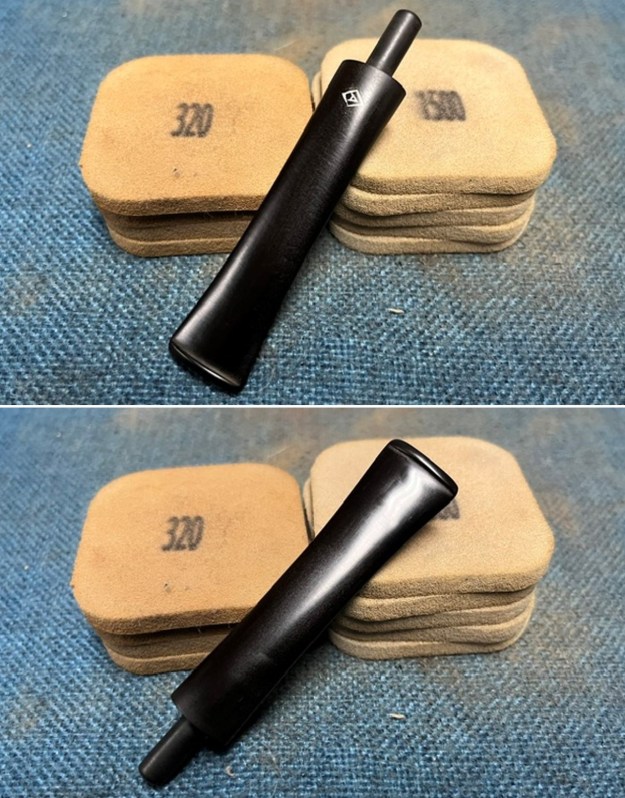 I polished the stem with micromesh sanding pads – dry sanding it 1500-12000 pads. I wiped it down with Obsidian after each pad to remove the dust and polishing debris. I polished it with Before After Pipe Polish – both Fine and Extra Fine. I gave it another coat of Obsidian Oil.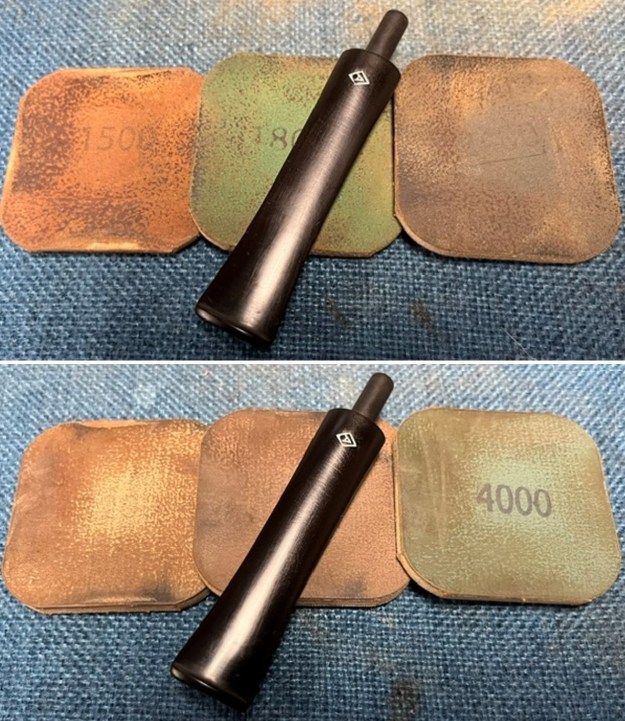
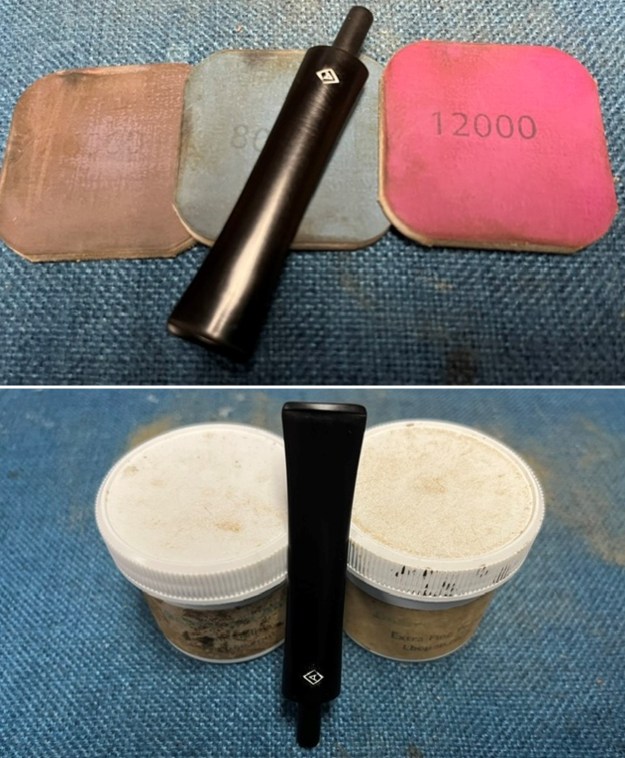 This richly finished, large bowled Aristocrat London Made Oval Shank Billiard with an oval vulcanite taper stem is in great condition. The briar is clean and really came alive. The rich brown stains gave the grain a sense of depth with the polishing and waxing. I put the stem back on the bowl and carefully buffed the pipe with Blue Diamond on the buffing wheel using a light touch on the briar. I gave the bowl and the stem multiple coats of carnauba wax on the buffing wheel. I buffed the pipe with a clean buffing pad to raise the shine. I hand buffed the pipe with a microfiber cloth to deepen the shine. The finished Aristocrat London Made Billiard is a beauty and feels great in the hand and looks very good. Give the finished pipe a look in the photos below. The dimensions of the pipe are Length: 7 inches, Height: 2 inches, Outside diameter of the bowl: 1 ½ inches, Chamber diameter: 1 inch. The weight is 1.83 ounces/53 grams. Thanks for reading this blog and my reflections on the pipe while I worked on it. I will be putting it on the rebornpipes store in the British Pipe Makers Section. If you are interested in adding it to your collection let me know. Thanks for following the blog on this restoration.