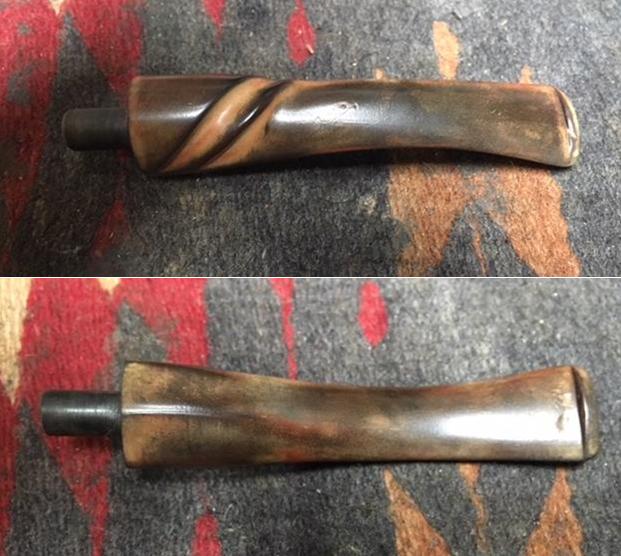
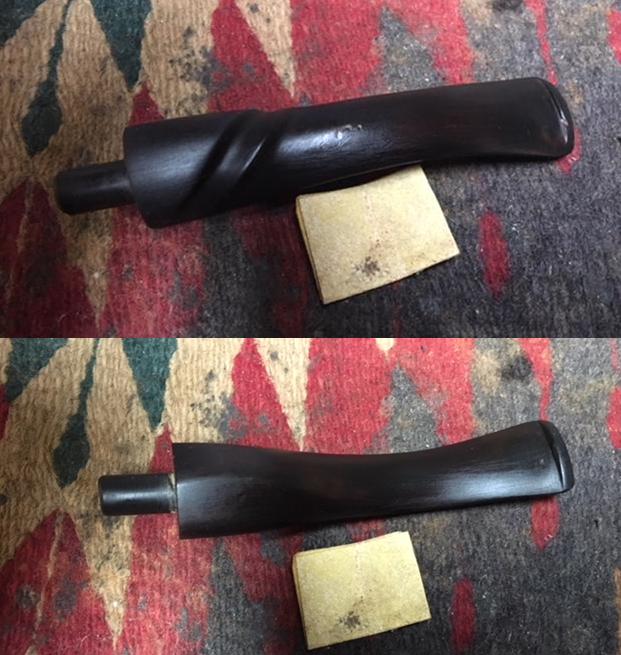
Tag Archives: removing tooth marks

Restoring and repairing a stem on a GBD Golden Blue 119 Billiard


Blog by Steve Laug

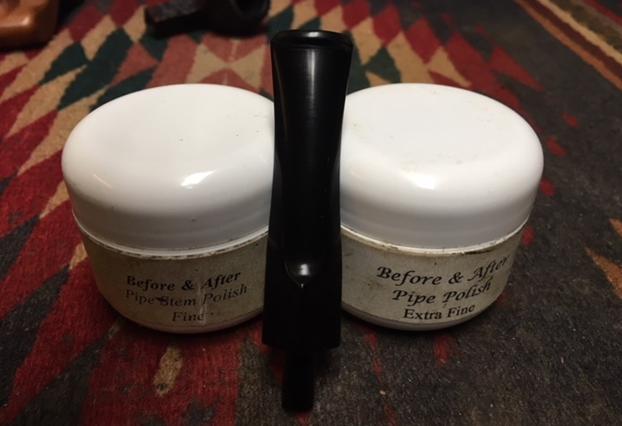
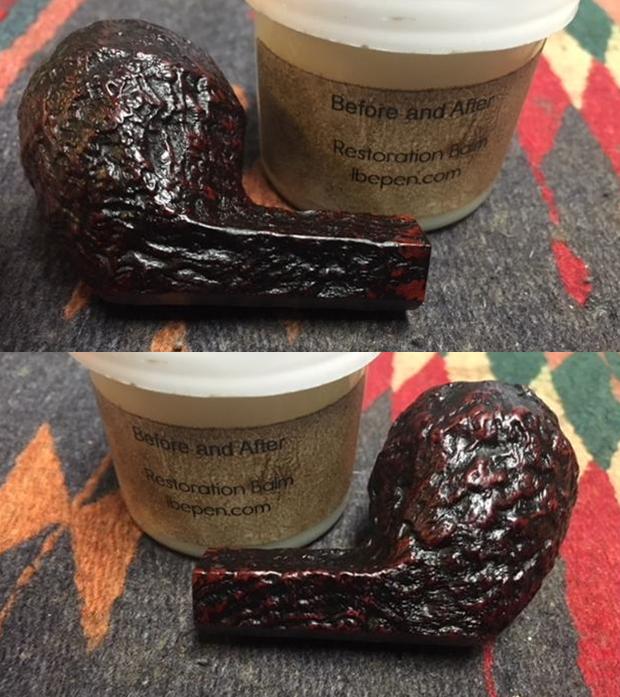
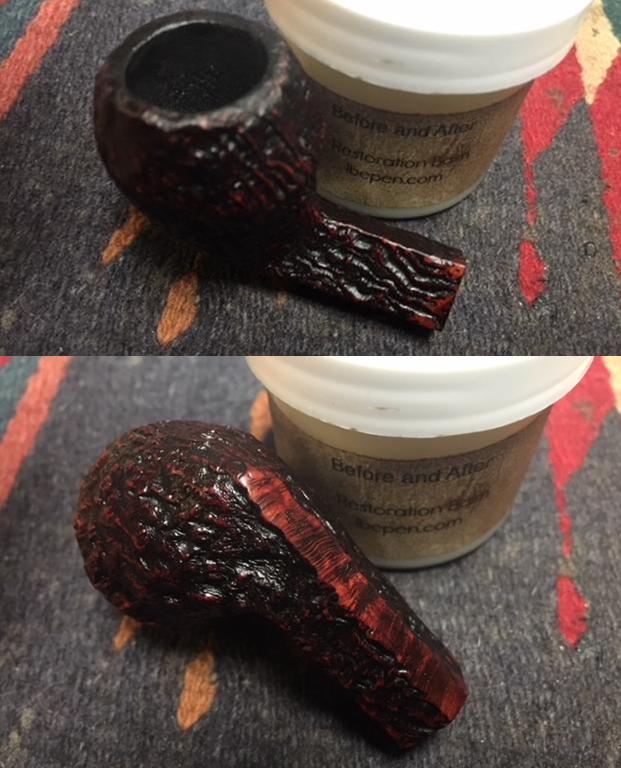
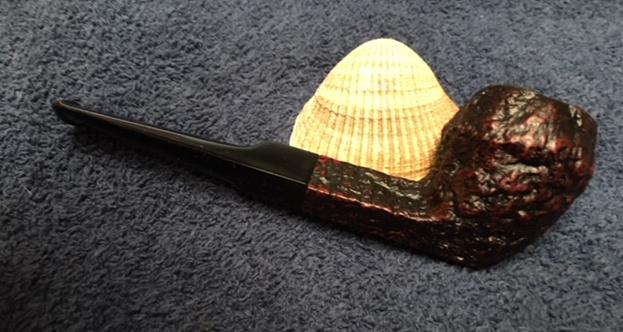
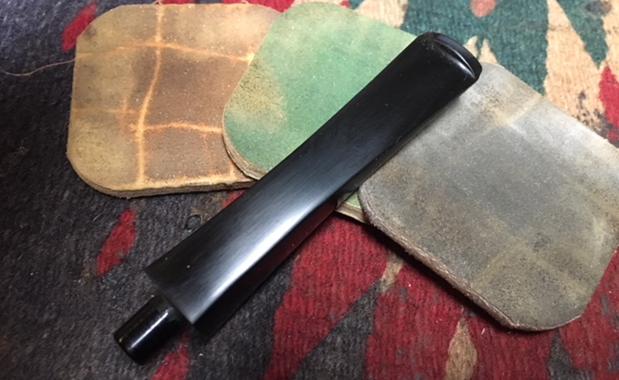
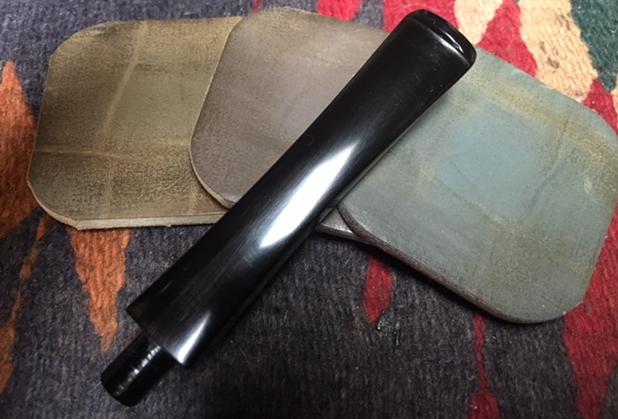
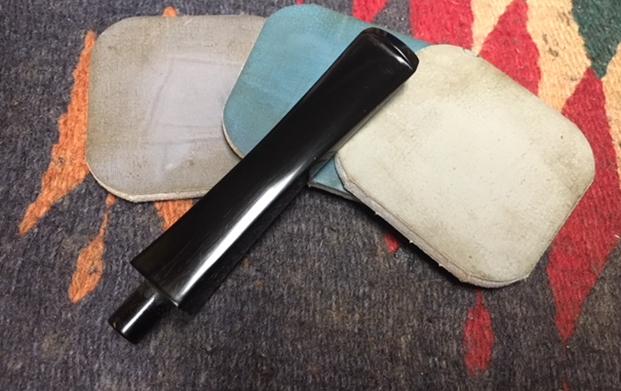
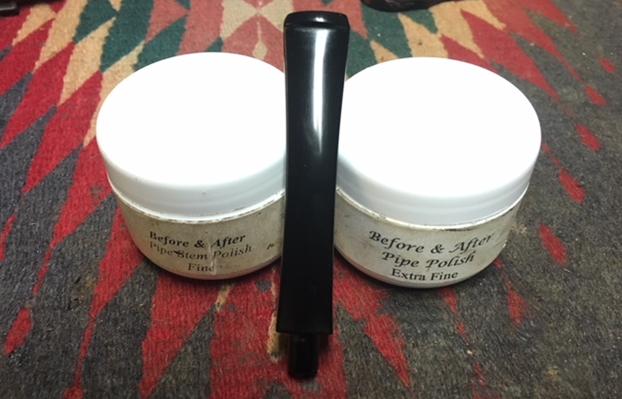
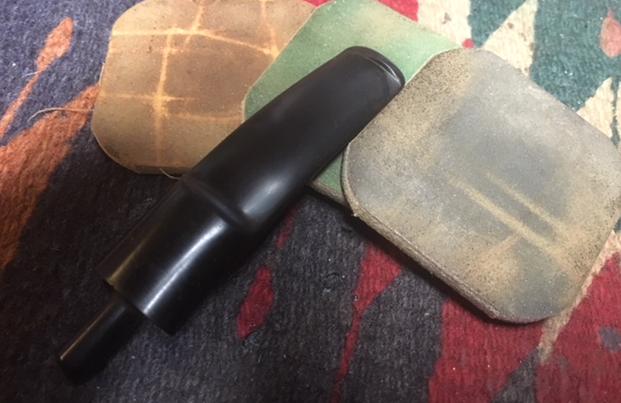
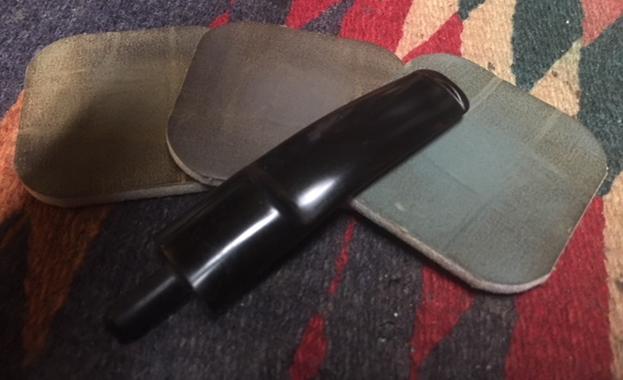
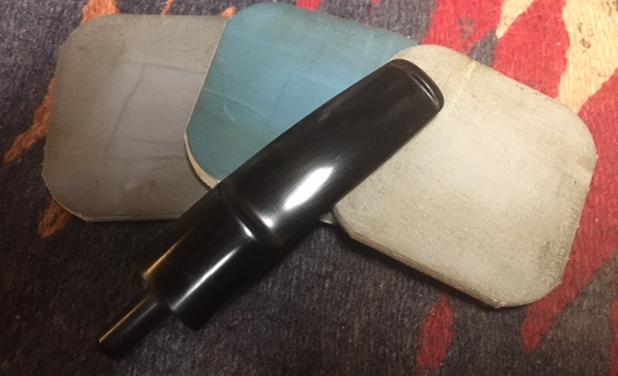
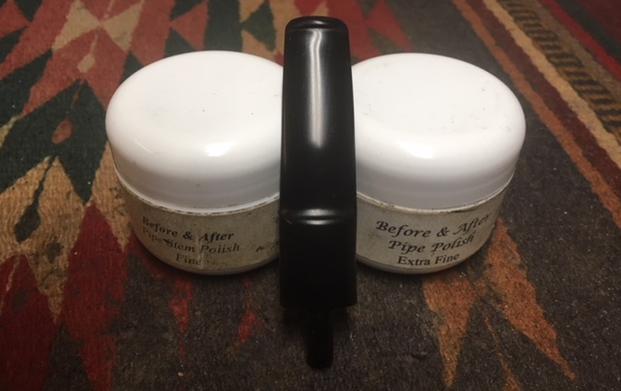
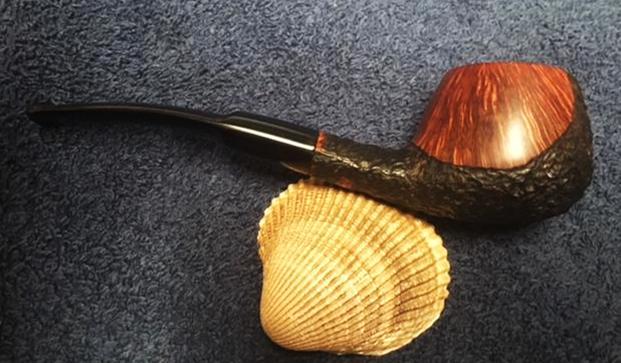
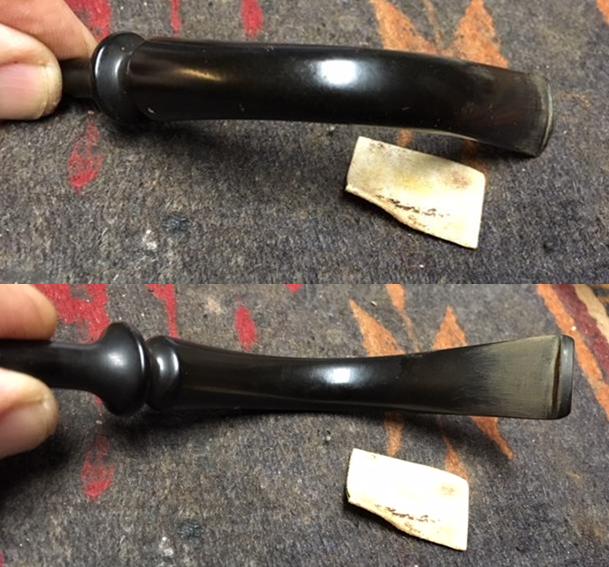
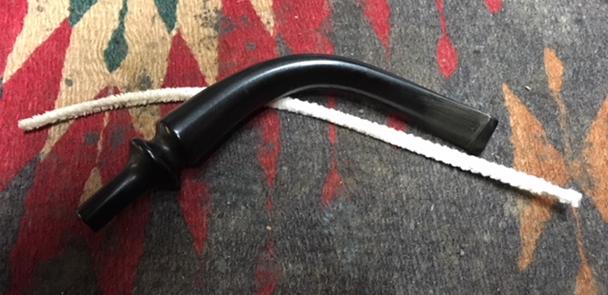
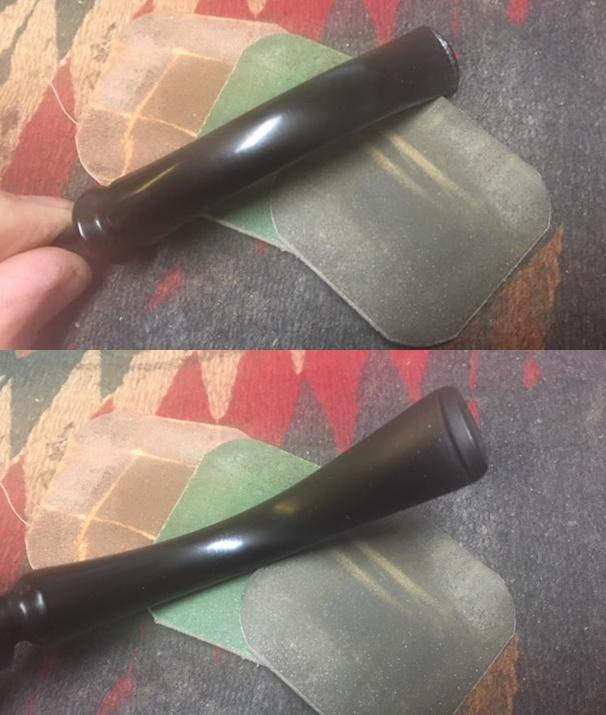
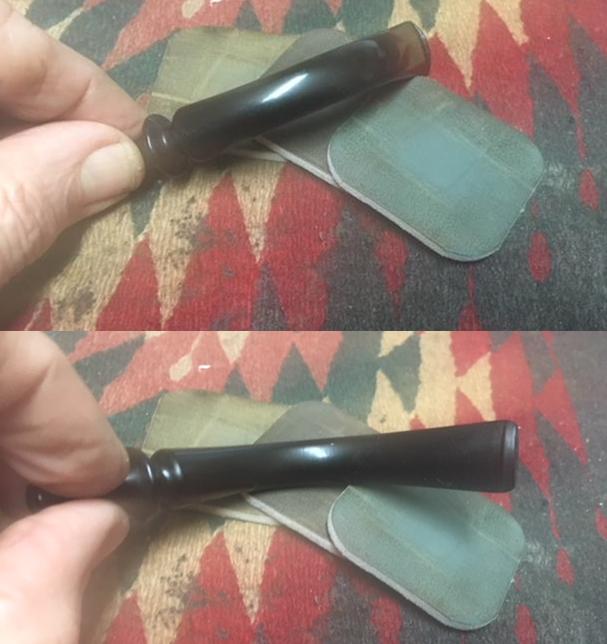
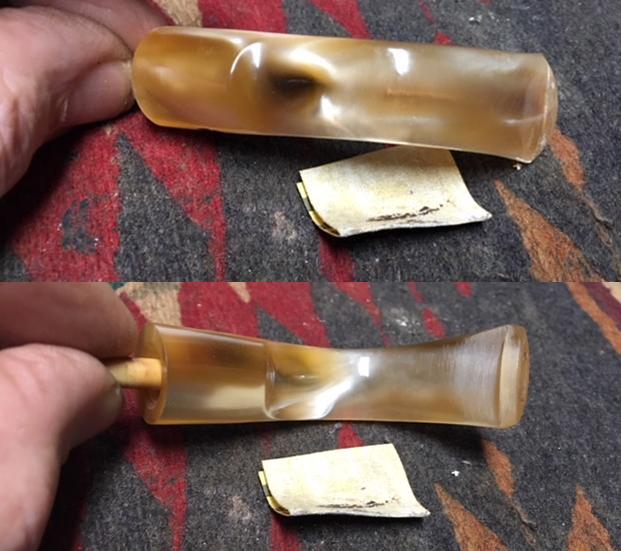
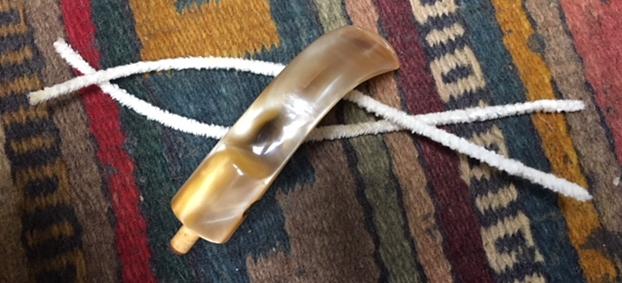
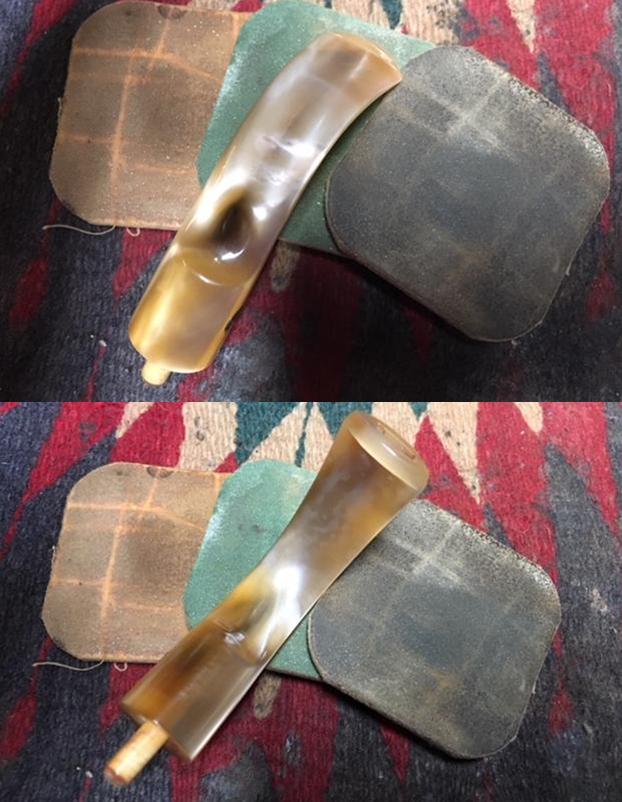
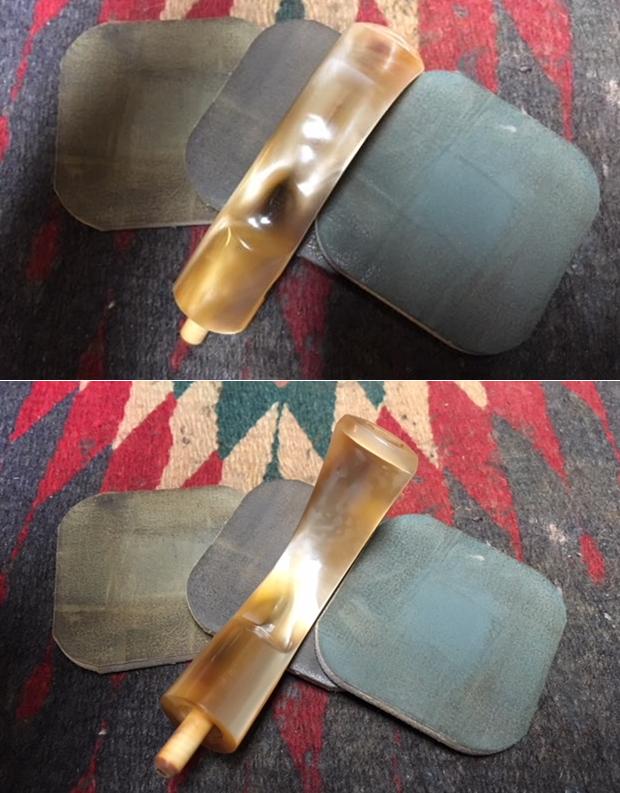
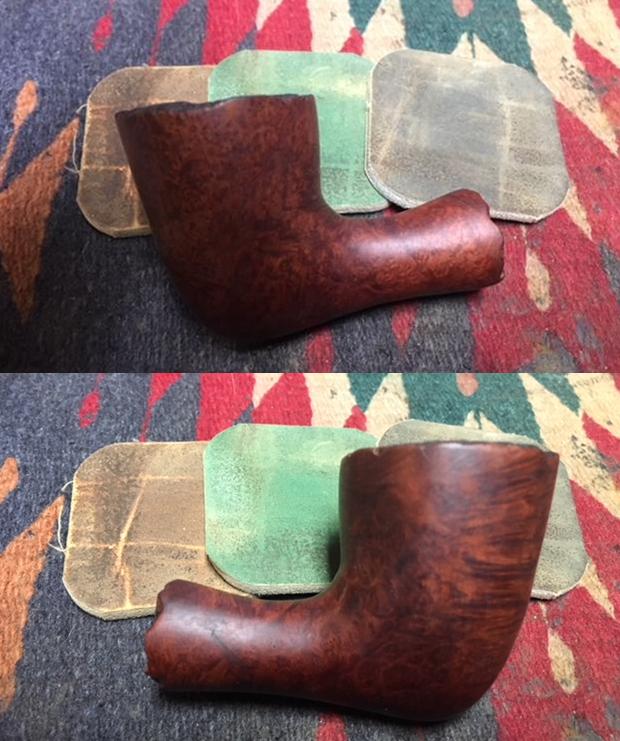
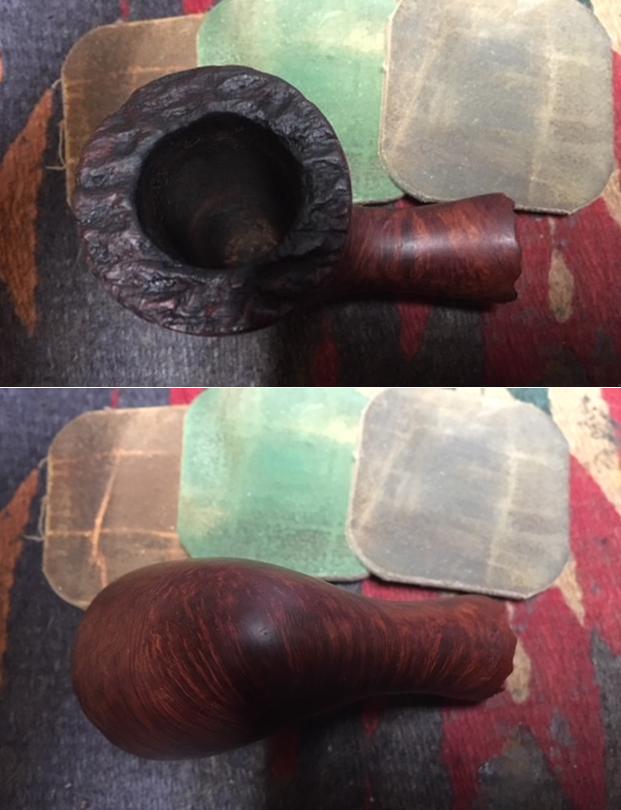
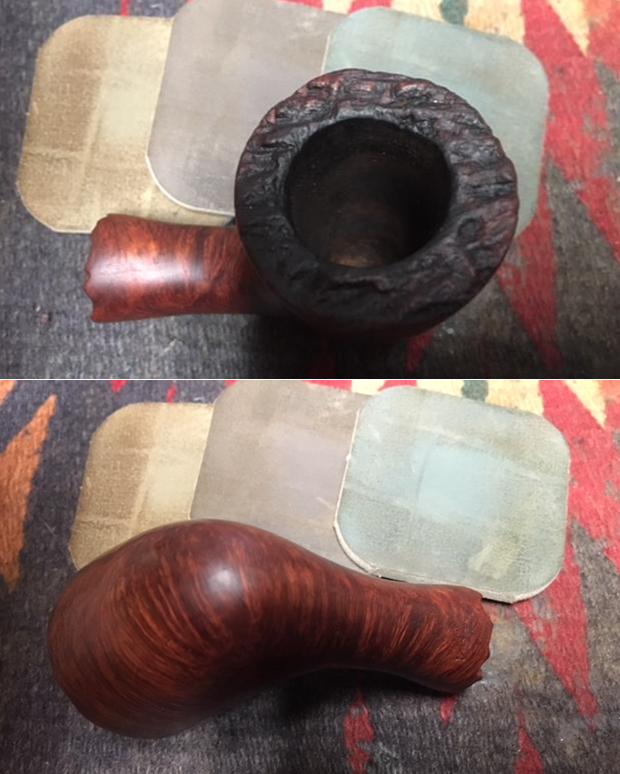
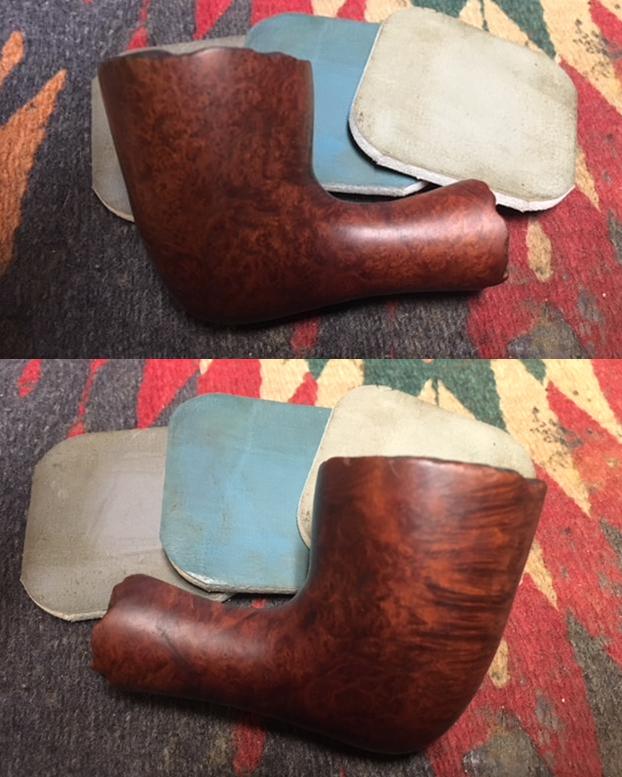
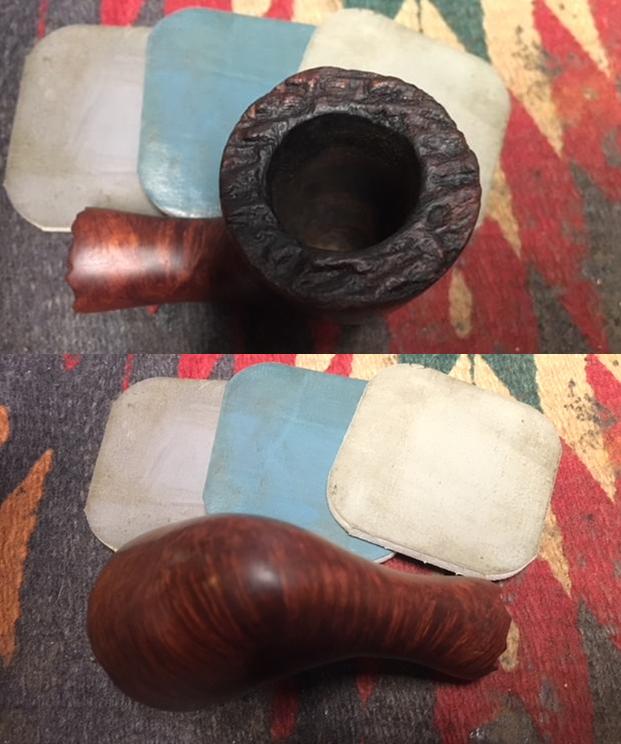
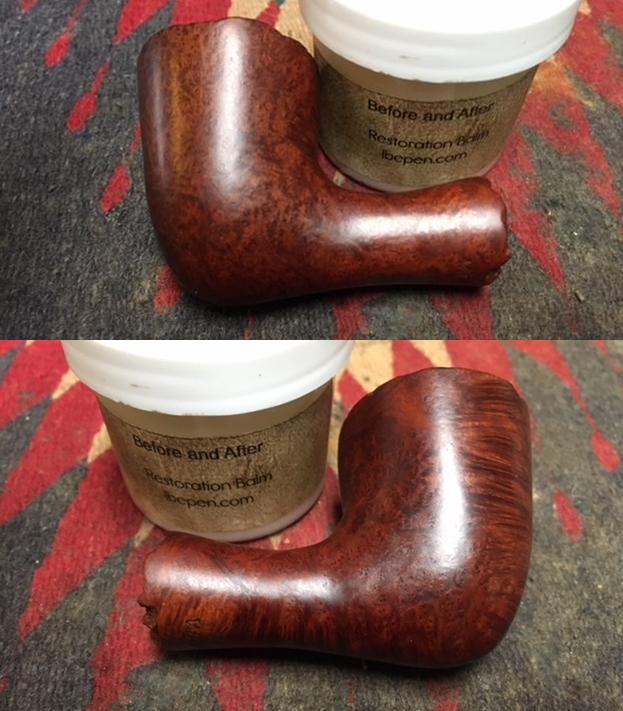
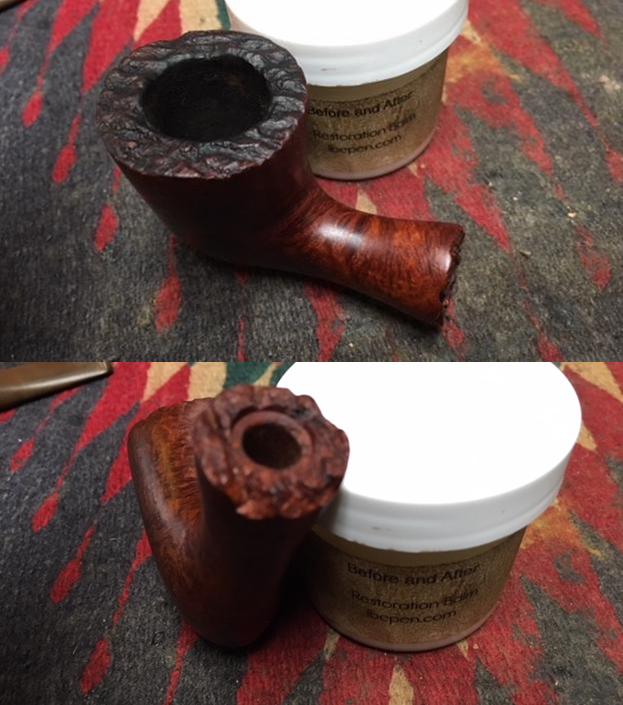
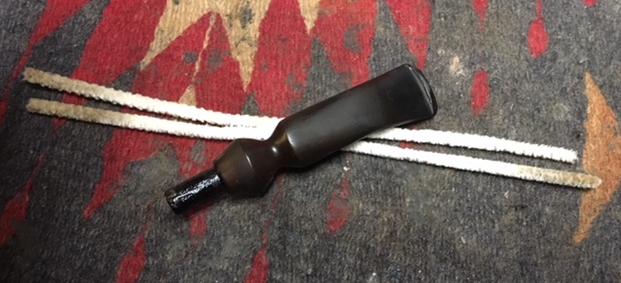
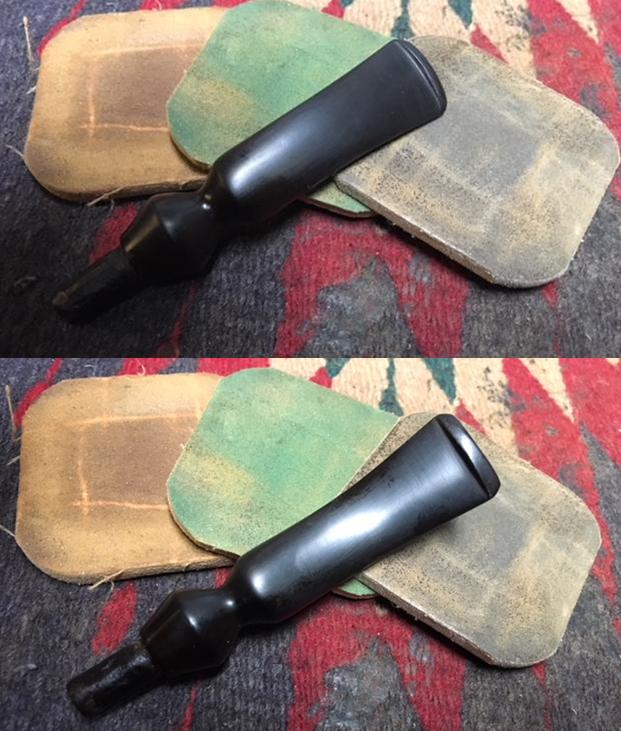
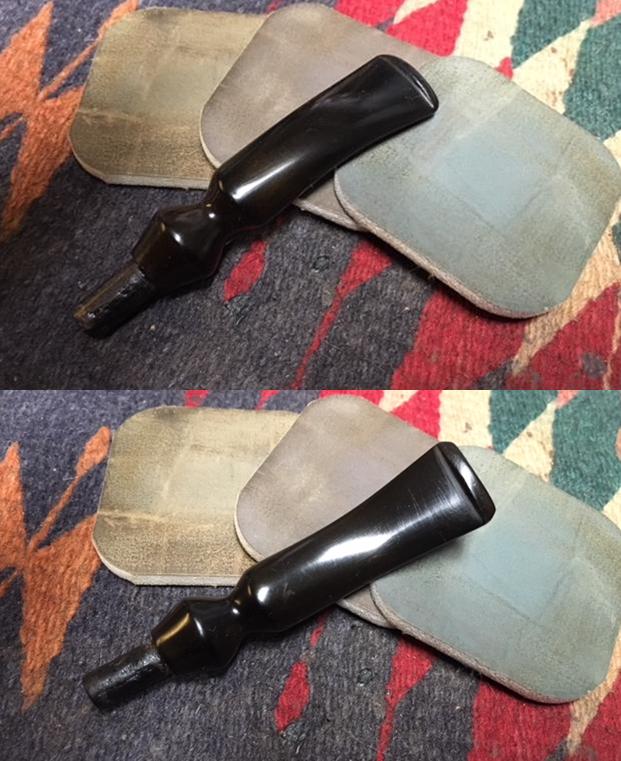
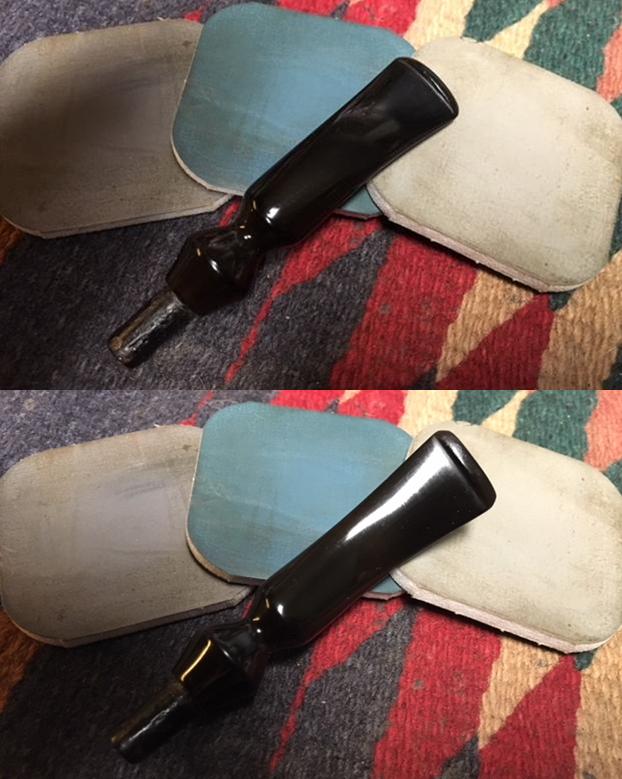
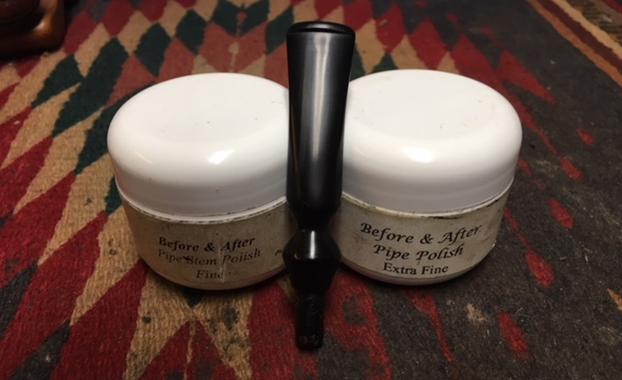
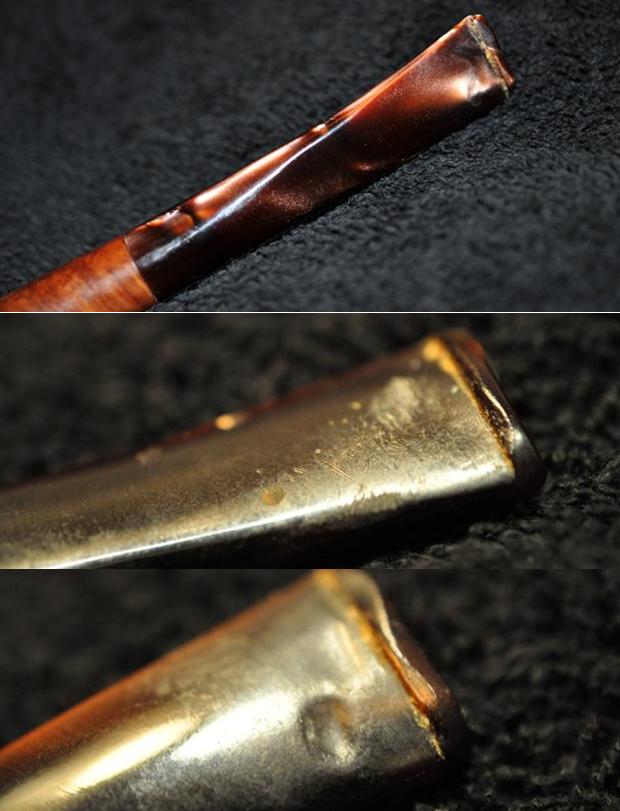
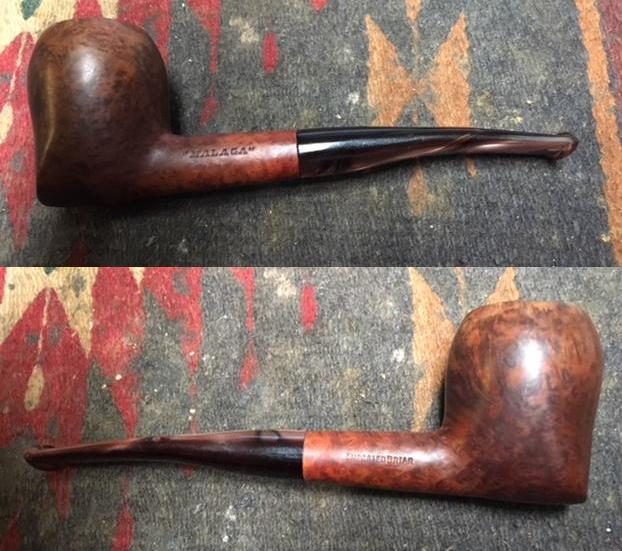
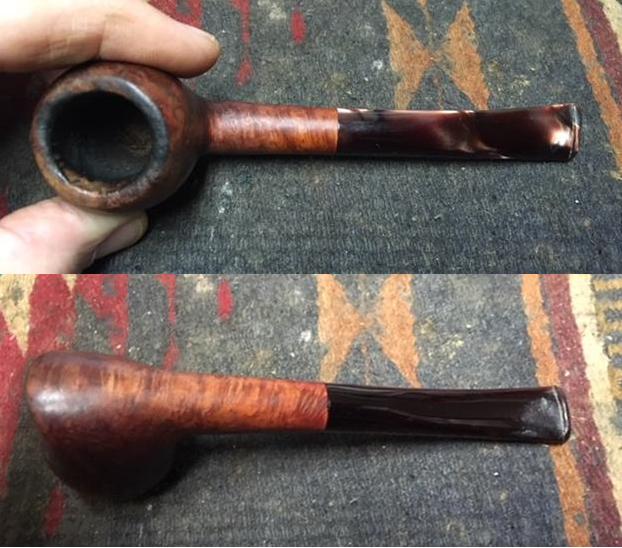
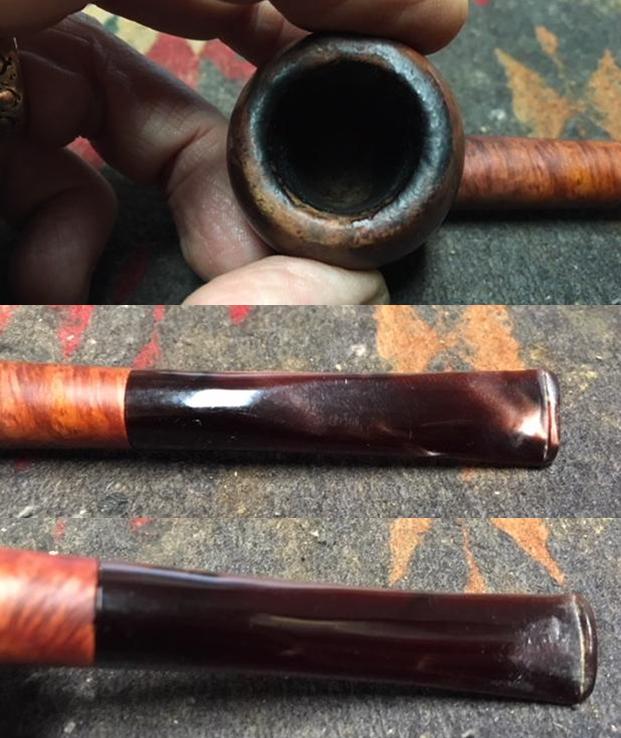
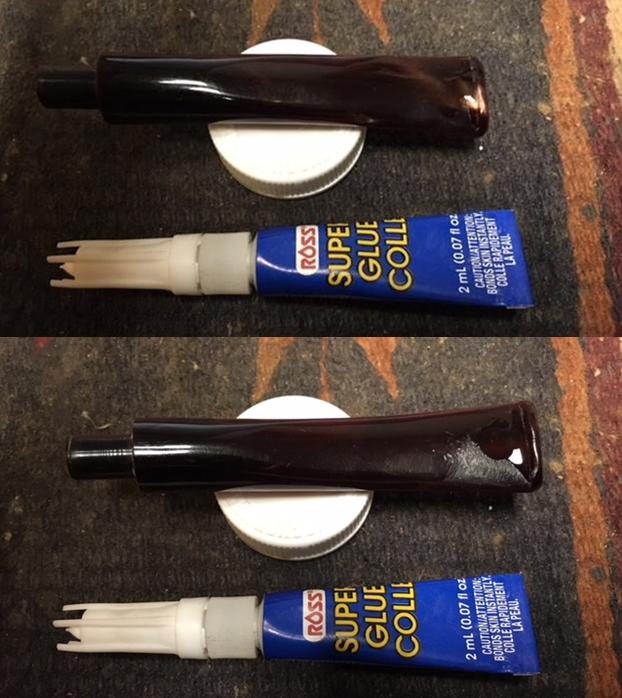
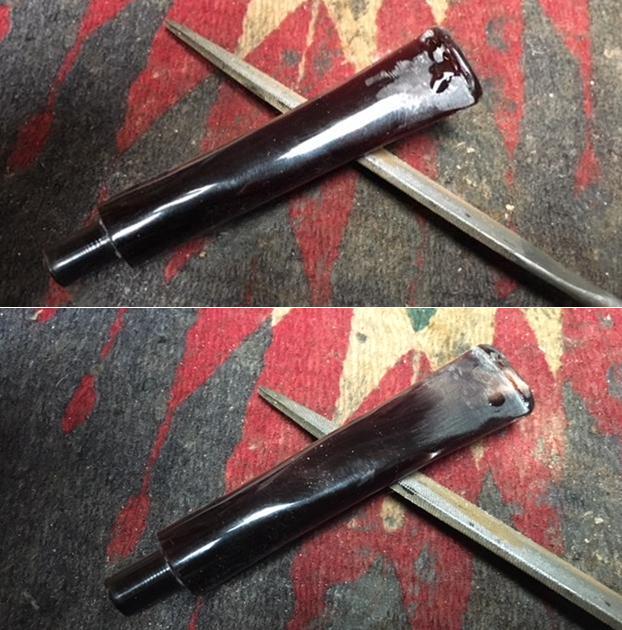
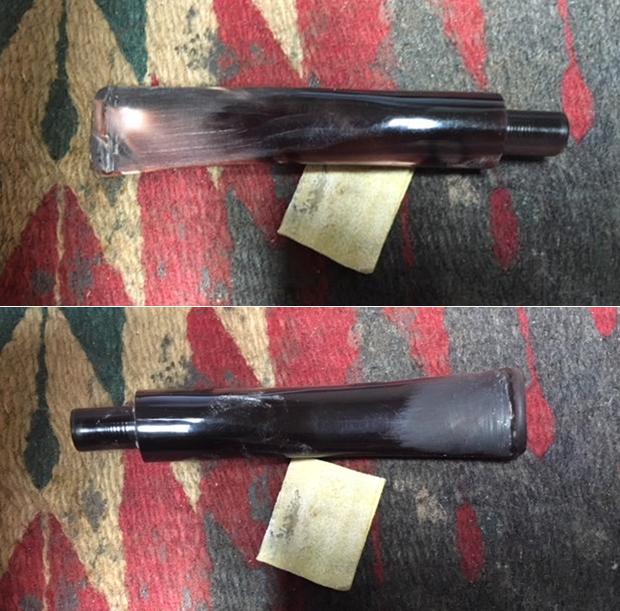
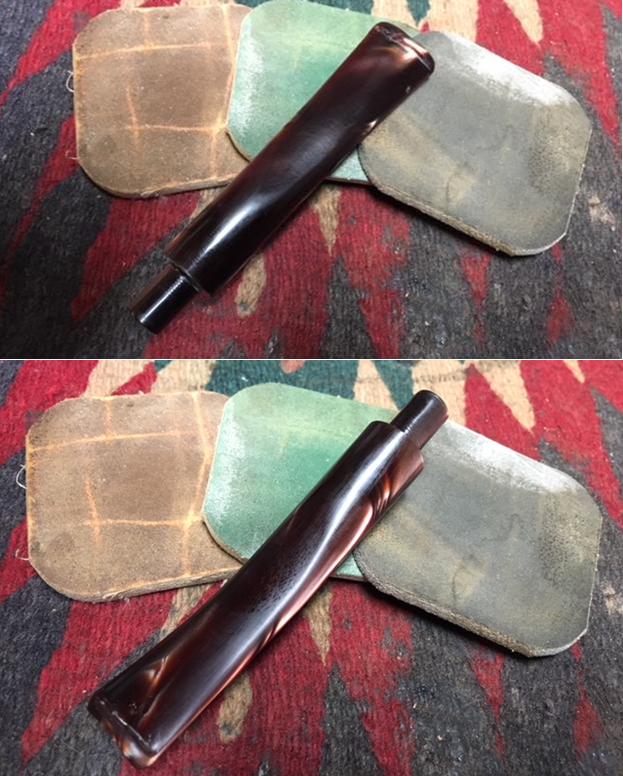
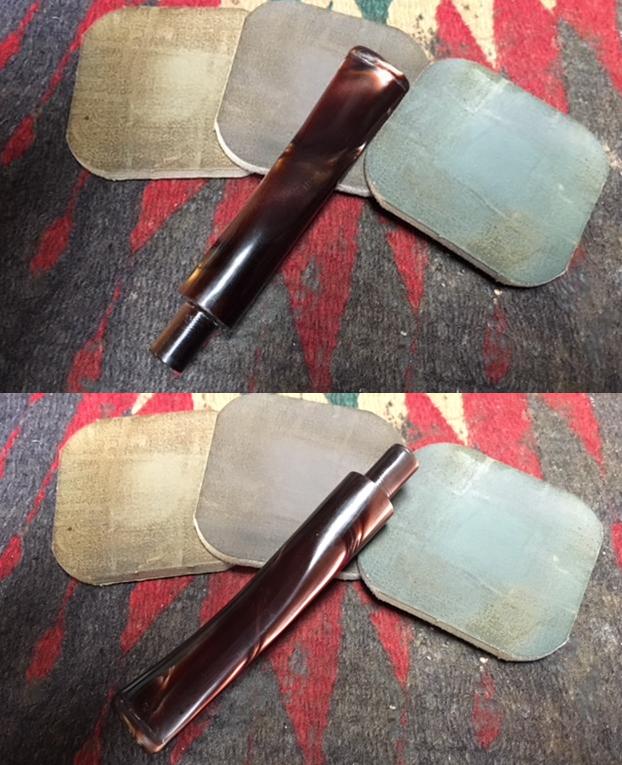
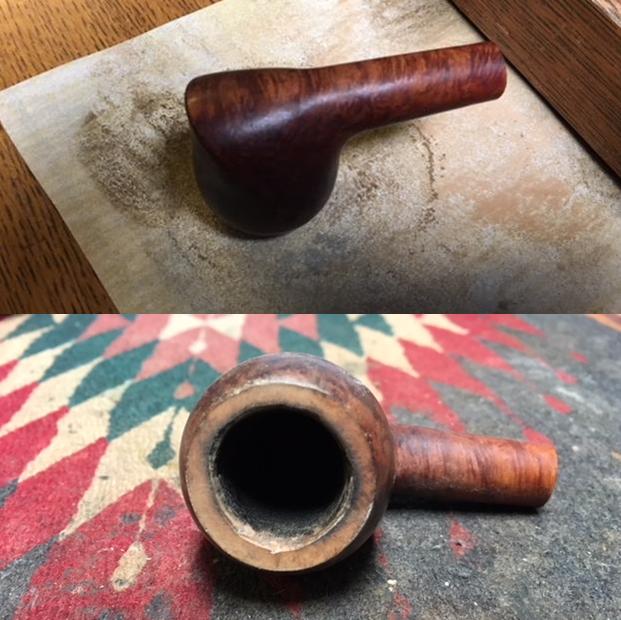
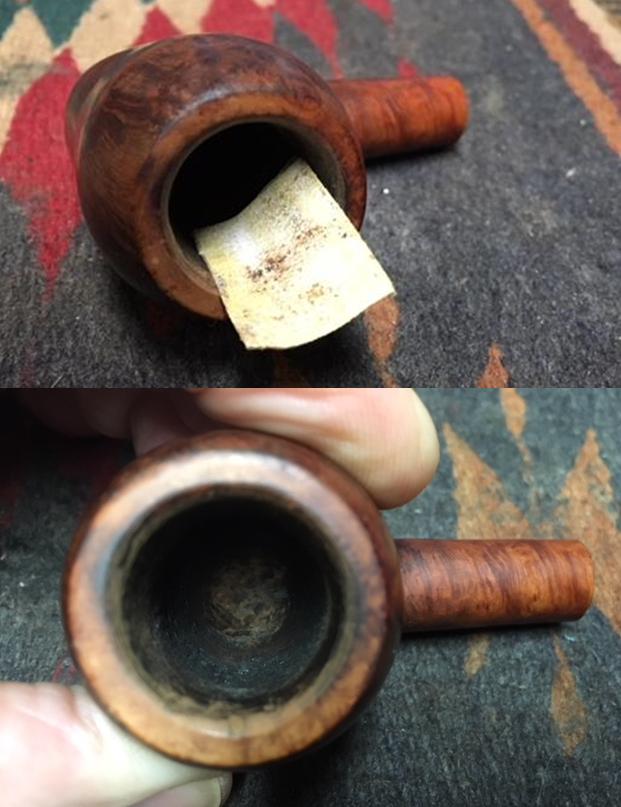
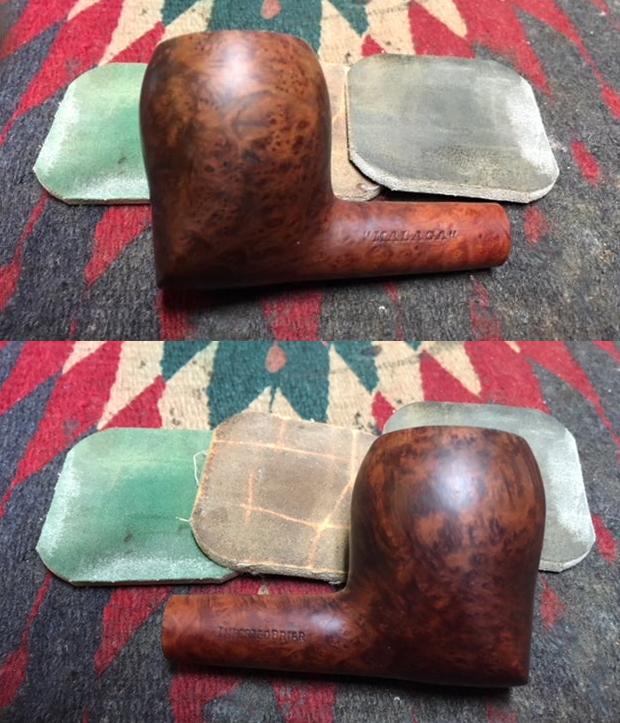
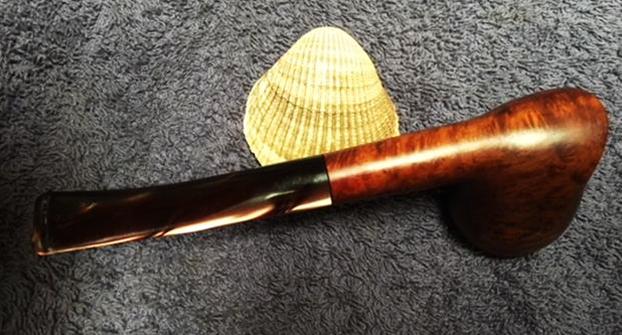
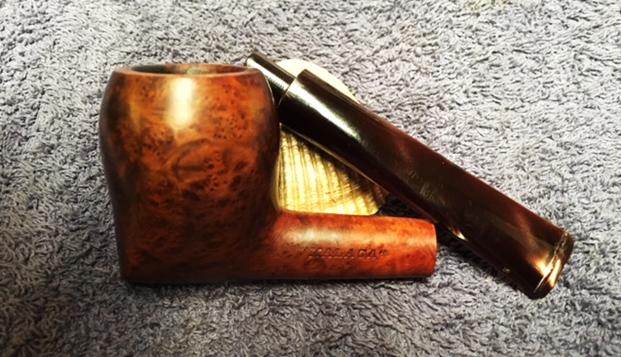
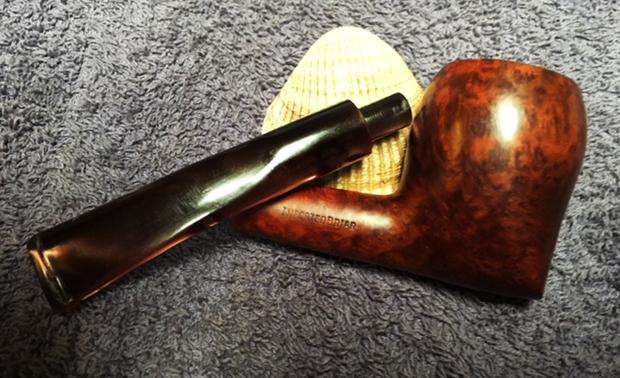
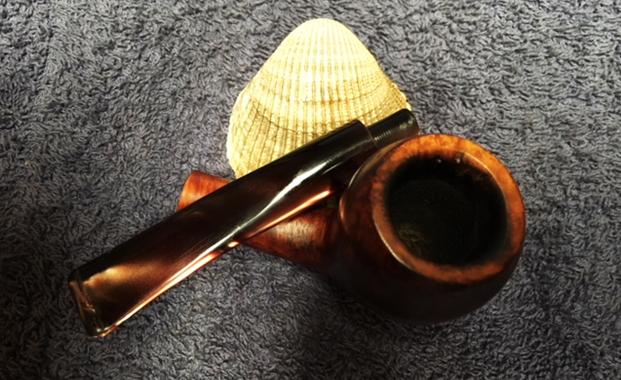
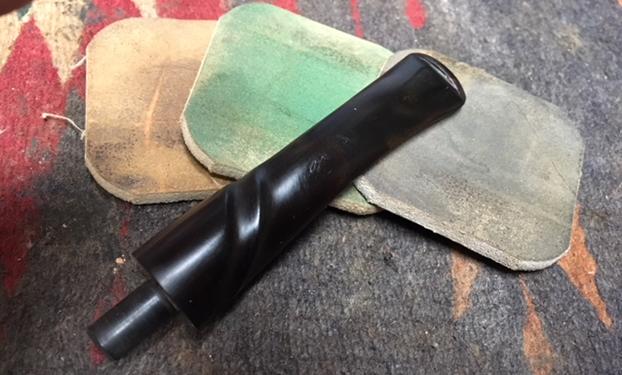
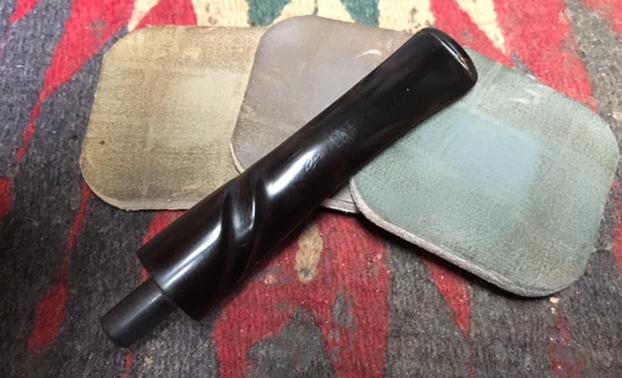
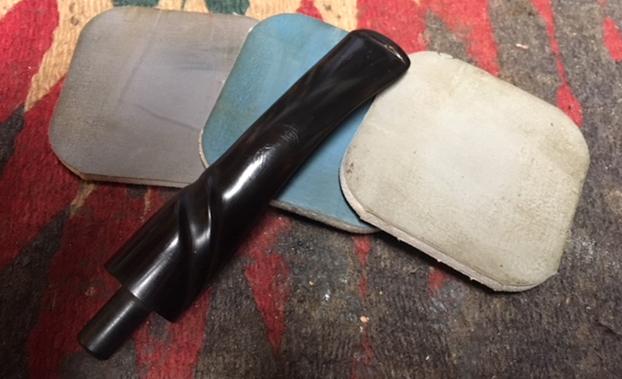
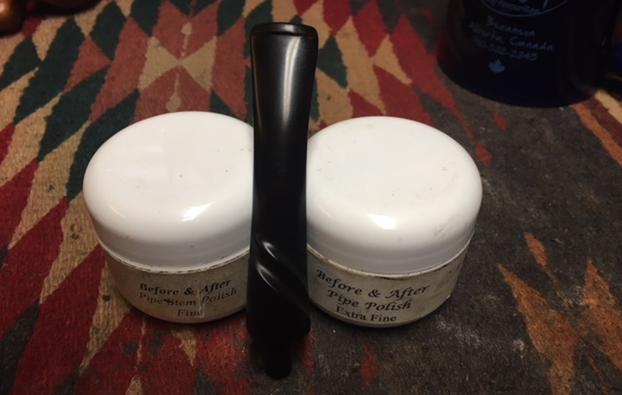
The next pipe on the table is another one from a local pipe shop. It is a pipe from the estate of the same older gentleman whose wife returned them to the shop for restoration and resale. This one is a smooth finished GBD with a Blue Perspex stem. The smooth finish shows mixed grain around the bowl. It has a rim top that is beveled inward to the inner edge of the bowl. It is stamped on the left side of the shank GBD in the oval over Golden Blue. On the right side it reads London, England over the shape number 119. The finish on the pipe was dirty and dull. The beveled rim top had lava built up that extended up and over the outer edge. The bowl had a thick, hard cake filling the bowl. The stem had deep tooth marks on the top and a bite through on the underside at the button. The bite through was repairable but it would be visible. I sent the pipes off to my brother for cleaning. This is the second pipe that I have brought to the work table from the lot of about 50 to rework. I really appreciate his willingness to clean and ream the pipes for me. When he received the pipe he took a series of photos of it to show its condition. He took a close up photo of the rim top showing the cake and the overflow of lava on the beveled top of the bowl. The cake is quite thick and the lava has almost leveled the bevel in many spots around the bowl. He also took photos of the bowl sides and underside to show some of the nicks and dents in the finish. The next photos show the stamping on the left and the right side of the shank. It is clear and readable. The brass rondel on the left side of the saddle stem is in very good condition and is undamaged.The stem was Blue Perspex and had some deep tooth marks on the top side near the button. They were deep but did not go all the way through the stem. There were scratches and nicks in the surface of the stem all the way around the stem. The button was worn down on both sides. On the underside of the stem there was a large bite through. With the stem being blue it was going to be a challenge to repair. The repair on the bite through would be hard to blend in as there was not a blue super glue or epoxy that I could match.As I have come to expect, Jeff did his usual thorough cleanup on the bowl and stem. He carefully reamed the bowl back to bare briar with a PipNet Pipe Reamer and cleaned up the remnants with a Savinelli Fitsall Pipe Knife. He cleaned the internals of the bowl with alcohol, pipe cleaners and cotton swabs – scrubbing out the mortise as it was dirty. He scrubbed the exterior of the pipes with Murphy’s Oil soap and a tooth brush and was able to remove all of the oils and dust in the smooth finish on the briar. He was able to remove all of the lava and grime from the beveled rim top and left it looking very clean. The inner edges of the bowl were in excellent condition and outer edges have many small nicks. He soaked the stem in an Oxyclean bath remove the grime in the bite through and the edges of the stem. He cleaned out the blue Perspex with soapy water to remove the tarry oils and grime in the airway. He was able to remove much of the internal grime. When the pipe arrived I took some photos to show how it looked before I did the restoration. Jeff was able to remove the lava buildup on the beveled rim top and clean off the inner and outer edges of the rim. The inner edge looked very good but the outer edge had nicks and scratches. The top surface of the bevel had some minor darkening but otherwise looked very good. The Blue Perspex stem was in rough condition. There were a lot of scratches and nicks in the surface, tooth marks on the top side and a bite through on the underside. The airway still showed darkening from the tars and oils of the tobacco.I took a close up photo of the bite through to show the size and shape of the damaged area on the underside of the stem.I folded a pipe cleaner and flattened it to fit in the funnel of the airway. I greased it with Vaseline so that it would prevent the glue from sticking to the inside and anchoring the pipe cleaner in the airway. I worked my way inward building up the edges of the hole. I filled in the tooth marks on the top side of the stem and sprayed it with an accelerator. I filled in the remaining hole in the underside of the stem with clear super glue. Once it was filled in I sprayed it with accelerator and removed the pipe cleaner. Filling in the hole with the glue was a messy proposition as the glue was thin and ran up the stem surface.I used a needle file to remove all of the excess glue on the surface of the stem and blend the repairs into the surface. I also reshaped the button on both sides of the stem. I sanded the stem down with 180 grit and 220 grit sandpaper. The photos below show the stem at this point in the process. The top side is in excellent condition now. The tooth marks are gone and the surface is smooth. The underside where the bite through was filled in is solid but visible.I worked over the stem with micromesh sanding pads. I polished out the sanding scratches and marks in the Blue Perspex – wet sanding it with 1500-2400 grit pads and dry sanding it with 3200-12000 grit pads and wiped it down with Obsidian Oil after each one. When I finished with the 12000 grit pad I gave it a final coat of oil and set it aside to dry. I polished it with Before & After Stem Fine Polish and wiped it down. I followed that by polishing it with the Extra Fine Polish. I buffed it with a microfiber cloth to raise the shine. I sanded the inner edge of the bowl with 220 grit sandpaper to smooth out the surface and remove the darkening. I used a 1500 grit micromesh pad to smooth out the outer edge of the bowl. I rubbed the bowl down with Before & After Restoration Balm to deep clean the smooth finish, enliven and protect the briar. I hand rubbed it with my fingers to get it deep into the briar. I let it sit for a few minutes and then wiped it off with a soft cloth and buffed it with a cotton cloth. The briar really began to have a deep shine. The smooth surface showed some nice grain patterns and begun to look really good. I took some photos of the bowl at this point to mark the progress in the restoration. I put the stem back on the bowl and took the pipe to the buffing wheel to work it over. I buffed the bowl with Blue Diamond to polish the briar. I buffed the stem at the same time to raise the gloss on the Blue Perspex. I gave the bowl and the stem multiple coats carnauba wax. I buffed the entire pipe with a clean buffing pad to raise the shine. I hand buffed it with a microfiber cloth to deepen the shine. The finished pipe is shown in the photos below. It is a beautiful GBD pipe that looks great and feels comfortable in the hand. The reddish brown stain and the Blue Perspex work really well together. Though the repaired area on the bite through is visible it is solid. Thankfully it is on the underside of the stem. It will make a great pipe addition to the rack and should smoke dry and cool.  The dimensions of the pipe are: Length: 5 1/2 inches, Height: 1 3/4 inches, Outer Diameter of the Bowl: 1 1/4 inches, Diameter of the Chamber: 3/4 inches. I will be adding this one to the rebornpipes store shortly if you are interested in adding it to your collection. If you are interested email me at slaug@uniserve.com or send me a message on Facebook. Thanks for looking.

Restoring a Kriswill Made Danish Special Smooth Panel Bent Billiard


Blog by Steve Laug

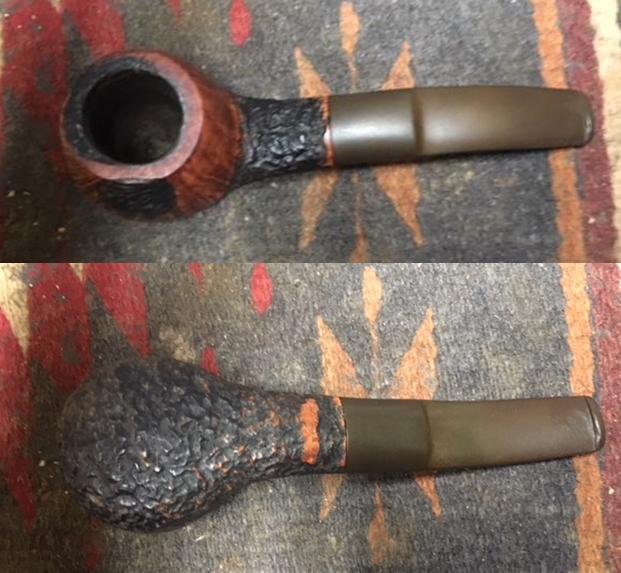
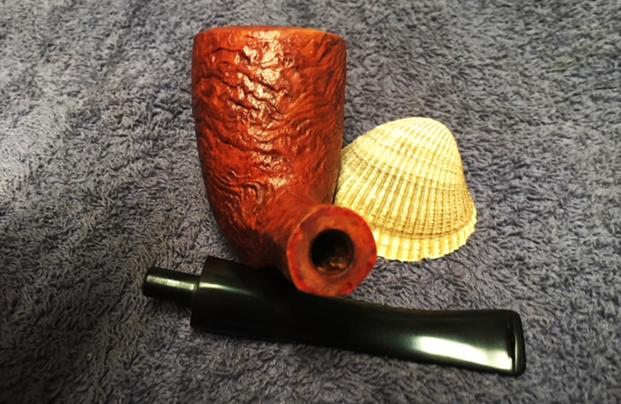
The next pipe on the table is one from a local pipe shop. It came from the estate of an older gentleman whose wife returned them to the shop for restoration and resale. This one is an interesting sandblast finish bent billiard. The sandblast is interesting showing a variety of grain around the bowl. It has smooth panels on the right and left side of the bowl and the right side of the shank. It is stamped on the smooth right side of the shank Danish Special over Made in Denmark. The finish on the pipe was dusty and some of the grooves were almost filled in with grime and dust. The rim top had lava built up in the blast on the flat surface. The bowl had a thick, hard cake almost filling it in. The stem had several tooth marks and was lightly oxidized. I sent the pipes off to my brother for cleaning. I have about 50 of them to rework and a waiting queue of pipes to repair. I really appreciate his willingness to clean and ream the pipes for me. When he received the pipe he took a series of photos of it to show its condition. He took a close up photo of the rim top showing the cake and the lava on the flat top of the bowl. The cake is quite thick and the lava has filled in the sandblast on the surface of the rim. He also took photos of the sandblast around the sides and underside of the bowl. His final photo shows the stamping on the right side of the shank. It is clear and readable. The brand Danish Special was unfamiliar to me. I had heard of Danish Pride, Danish Star, Royal Danish and other Stanwell brands but this one was unfamiliar.I Googled the name and found that the brand was a sub-brand or second brand of Kriswill pipes. From there I did some reading on Pipedia on the Kriswill Brand and found the following:  Kriswill was one of the large pipe manufacturers in Denmark during the 1960s and 1970s, and I believe closed around 20 years ago. Their catalog cover read “By Appointment to the Royal Danish Court, KRISWILL, Kriswork Briar Trading, Briar Pipes Hand Made in Denmark.” https://pipedia.org/wiki/Kriswill

I also went to the PipePhil logos and stamping site and found more on the date of the brand. It had no explicit ties to the Danish Special that I had but it was interesting nonetheless.

Kriswill is a brand of Kriswork Briar Trading, in Kolding (Denmark) established about 1955. Some of Kriswill pipes were designed by Sigvard Bernadotte, Swedish prince and brother to the late Queen Ingrid of Denmark. He collaborated with his Danish partner Acton Bjørn. When the company went bankrupt in the late 1970s it was on a level with Stanwell. Dan Pipe Cigar & Company (Hafenstrasse 30 D-21481 Lauenburg/Elbe, Ge) bought the rights to use the name and it is Holmer Knudsen and/or Poul Winsløw who make the Kriswill line. Nørding, on its side, bought the plant and introduced a Kriswell line. http://www.pipephil.eu/logos/en/logo-k3.html

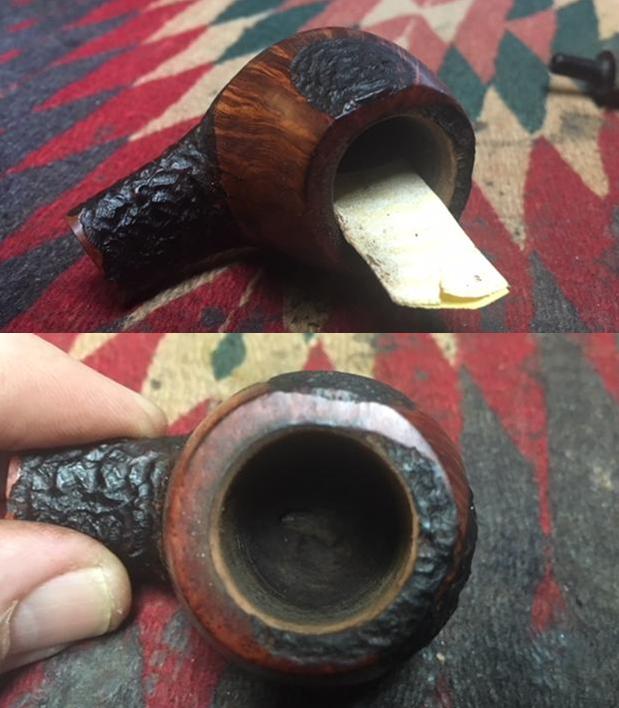
Jeff did his usual thorough cleanup on the bowl and stem. He carefully reamed the bowl back to bare briar with a PipNet Pipe Reamer and cleaned up the remnants with a Savinelli Fitsall Pipe Knife. He cleaned the internals with alcohol, pipe cleaners and cotton swabs – scrubbing out the mortise as it was dirty. He scrubbed the exterior of the pipes with Murphy’s Oil soap and a tooth brush and was able to remove all of the oils and dust in the smooth finish on the briar. He was able to remove all of the lava and grime from the rim top and left it looking very clean. The inner and outer edges of the rim top were in good shape. He soaked the stem in an Oxyclean bath to raise the oxidation to the surface of the vulcanite. It was clean and the remaining oxidation was very light. When the pipe arrived I took some photos to show how it looked before I did the restoration.  Jeff was able to remove the lava buildup on the rim top and clean grooves and crevices of the sandblast surface and edges of the rim. The inner and outer edges of the rim were in excellent condition and the rim top looked new. The stem was lightly oxidized and had tooth chatter and marks on both sides of the stem near the button.I rubbed the bowl down with Before & After Restoration Balm to deep clean the nooks and crannies of the finish, enliven and protect the briar. I hand rubbed it with my fingers to get it deep into the grooves. I let it sit for a few minutes and then wiped it off with a soft cloth and buffed it with a horsehair shoe brush. The briar really began to have a deep shine. The smooth panels showed some nice grain patterns and the sandblast looked really good. I took some photos of the bowl at this point to mark the progress in the restoration. I set the bowl aside and turned my attention to the stem. I sanded out the tooth chatter and many of the tooth marks with 220 grit sandpaper. There was a small tooth mark on the top and underside of the stem that I cleaned up and filled it in with a drop of clear super glue. When the glue cured, I sanded the repaired areas smooth to blend them into the surface of the stem. I worked over the stem with micromesh sanding pads. I polished out the sanding scratches and marks in the vulcanite – wet sanding it with 1500-2400 grit pads and dry sanding it with 3200-12000 grit pads and wiped it down with Obsidian Oil after each one. When I finished with the 12000 grit pad I gave it a final coat of oil and set it aside to dry. I polished it with Before & After Stem Fine Polish and wiped it down. I followed that by polishing it with the Extra Fine Polish. I buffed it with a microfiber cloth to raise the shine. I put the stem back on the bowl and took the pipe to the buffing wheel to work it over. I buffed the bowl with Blue Diamond to polish the briar. I buffed the stem at the same time to raise the gloss on the vulcanite. I gave the bowl and the stem multiple coats carnauba wax. I buffed the entire pipe with a clean buffing pad to raise the shine. I hand buffed it with a microfiber cloth to deepen the shine. The finished pipe is shown in the photos below. The dimensions of the pipe are: Length: 6 1/2 inches, Height: 2 1/4 inches, Outer Diameter of the Bowl: 1 1/8 inches, Diameter of the Chamber: 7/8 inches. I will be adding this one to the rebornpipes store shortly if you are interested in adding it to your collection. It is a beautiful Kriswill made pipe that feels comfortable in the hand. It will make a great pipe addition to the rack and should smoke dry and cool. If you are interested email me at slaug@uniserve.com or send me a message on Facebook. Thanks for looking.

Restoring a Jobey Gourd Calabash with a Briar Shank Extension


Blog by Steve Laug

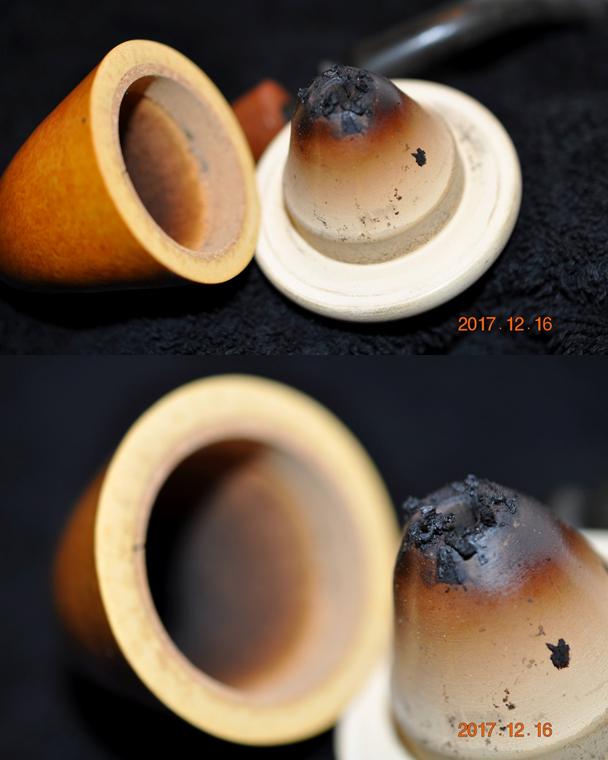
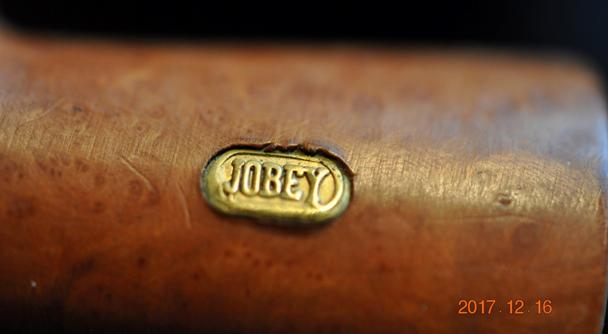
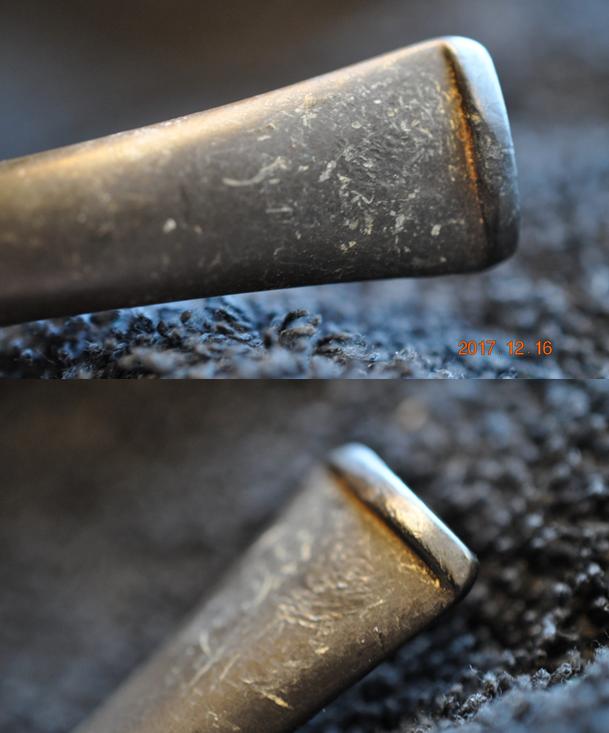
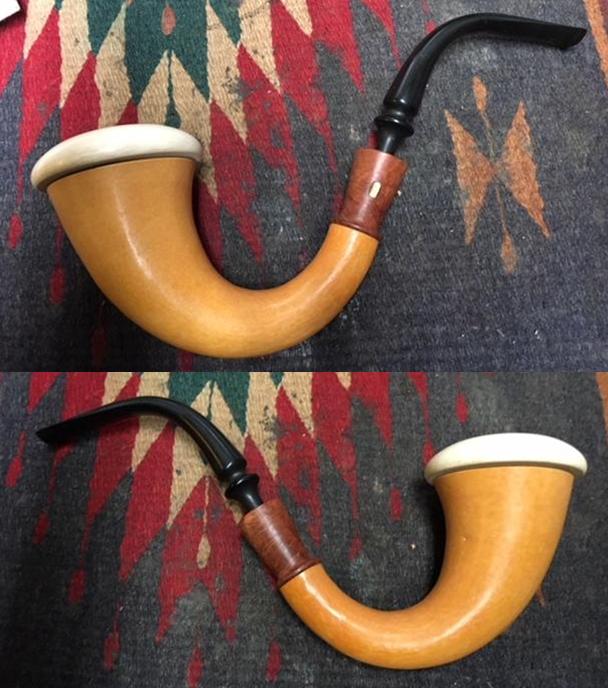
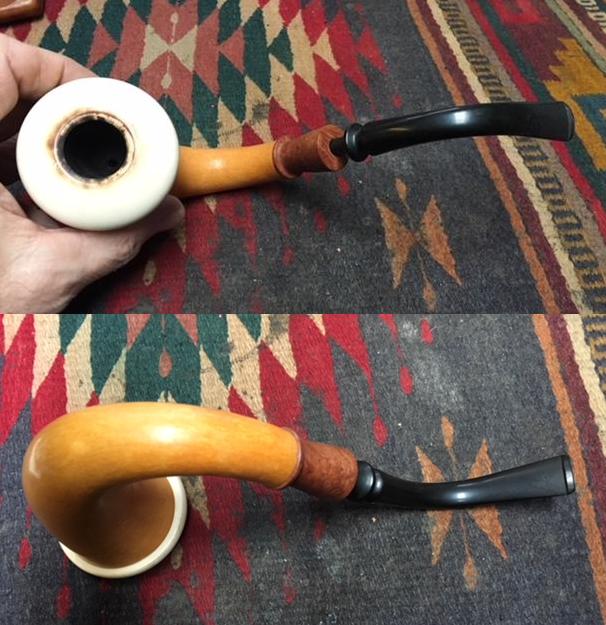
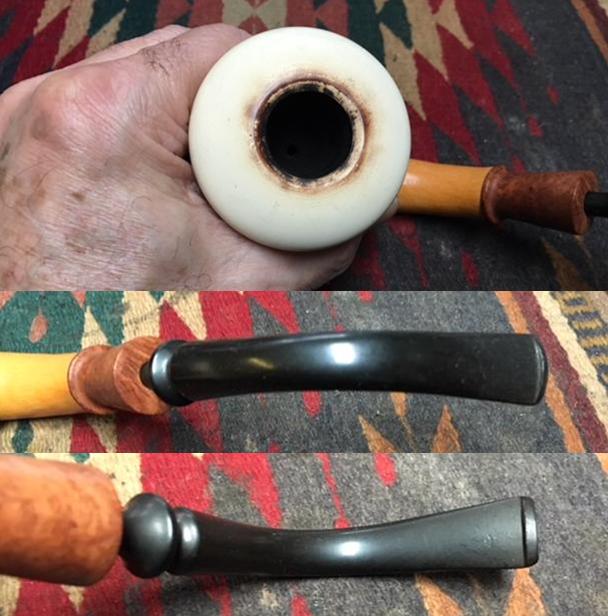
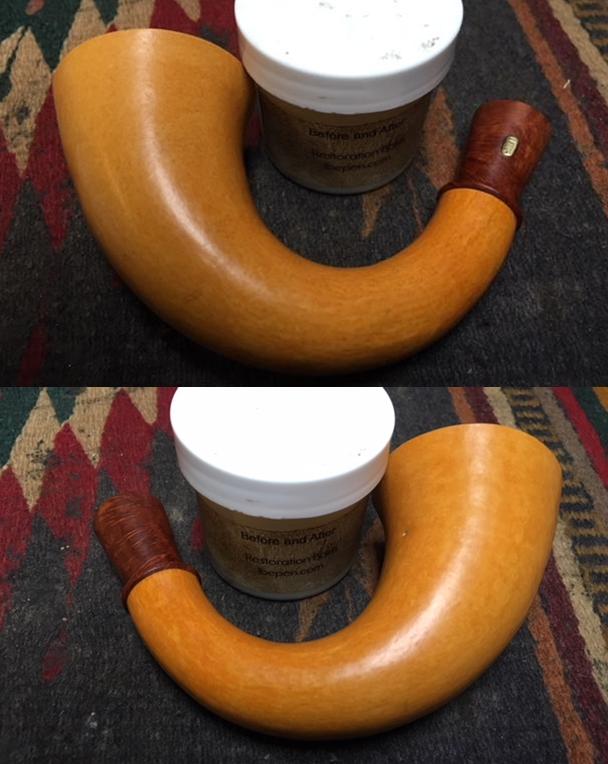
My brother Jeff has really gotten good at finding Gourd Calabash pipes on his recent “treasure” hunts. He picked up this batch recently. I posted about the large calabash in the middle of the right hand column recently and it is available on the rebornpipes store. It is by far the largest of the five calabash pipes that he found. The one I have chosen to work on it the one on the left side at the bottom circled in red. It is a unique looking Calabash to me in that it is a well bent and shaped gourd with a briar shank extension on the end of the gourd. It bears the Jobey brass oval logo on the side of the briar extension. When I first looked at it I wondered if it had the Jobey system tenon that I have come to expect on the Jobeys that I have in my own collection and the ones that I have worked on. However, this was not the case on this or the other two Jobey Gourd Calabashes in the bunch. All of them have the mortise drilled in the briar extension and is made for a push stem. I have never seen Jobey Gourd Calabashes before and frankly had no idea that the company even made them.Jeff took some photos of the pipe before he did his cleanup work on it. The photos below show it in the condition he found it in on one of his hunts. The gourd was dull looking and generally dirty. It had spots of sticky label material on the sides of the bowl. The briar shank extension was also dull and lifeless looking and there was a gummy substance in the brass logo on the shank extension. The meerschaum bowl was quite unique it is light weight and appeared to be block meerschaum but I am not certain as it had flecks of colour shot throughout the entirety of the bowl. There was a thick cake in the bowl and the rim had a coat of lava that went almost all the way around the inner edge of the chamber onto the rim top. The stem was oxidized and dirty. There were tooth marks and tooth chatter on both sides of the stem at the button.  The next two photos give a clear picture of the sticky label glue on the gourd and the dirty condition of the gourd. It also shows the flecks of colour throughout the meerschaum cup. The colour in the meerschaum matches the colour of the gourd. The next photo shows the condition of the meerschaum cup. The rim top of the meer had scratches in the surface and a heavy overflow of tars on the top of the rim. There is also darkening around the inner edge of the bowl and a thick cake in the bowl itself. It was hard to know if there was damage to the rim but once it was clean that would be clear. The two pictures following that show the condition of the inside of the bowl and the tars and oils on the walls of the gourd. The underside of the meerschaum cup is in good condition. There is some darkening on the underside of the bowl. There were some tars and oils spotted on the underside of the bowl. The cork gasket on the inside edges of the gourd was in good condition but dried out. It needed some grease to liven it up. The briar shank extension is dried out and has water spots. The next photo shows the brass Jobey oval insert inset in the left side of the briar shank extension. There is grime and a gummy substance in the lettering and around the edges of the insert. The briar was dirty and in need of a deep cleaning.The stem had light oxidation and tooth marks and chatter on both sides near the button. It also had the same price tag glue on the top and underside of the stem.I did some digging to see if I could find out about the connection between the calabash maker and Jobey. I found a bit of history of the brand on the Pipedia website at the following link. https://pipedia.org/wiki/Jobey . The section I am quoting is entitled Possible Jobey Origin. I quote it in its entirety.

Possible Jobey Origin

…the origins of this company seem to be shrouded in mystery, and most people claim that the origins were in England, followed by American production, and then a later move to St. Claude. There is another possible origin for the company, however, and it would suggest that Jobey was in Brooklyn, New York long before the 1969 patent of the Jobey “link”.

There’s not a lot of chatter about it, but if you can lay your hands on a copy of “The Tobacco World”, Volume 61, from 1941, there is a brief mention that reads “Norwalk Pipe Expands” and in the body states that Norwalk Pipe Corporation, “manufacturers of Jobey and Shellmoor pipes”, is moving to larger offices at 218 East Twenty-Sixth Street, NYC, as announced by Louis Jobey, president of that company. Norwalk is listed as one of the alternate distributors for Jobey on this page but apparently Louis Jobey was also actually working there at the time.

Before that, the first mention of Jobey seems to be back in 1915, when two brothers named Ulysses and Louis Jobey of Brooklyn, New York obtained a patent for an odd sort of cavalierish pipe in 1915, here’s the link: http://www.google.com/patents/USD46998

But less than four years later, in 1918, there’s a notice in the Brooklyn Daily Eagle on November 6th to the effect that Louis Jobey declared bankruptcy in the District Court, with final hearing scheduled for December 1918. And in an even sadder turn, that same month sees a funeral notice for Lorraine Jobey, the daughter of Mr. and Mrs. Louis Jobey, formerly of Brooklyn but now living in Moline Illinois at the home of Mr. and Mrs. George E. Hutchinson. The little girl evidently died in a fall.

There’s little else on Ulysses Jobey except that he evidently had a “junior” after his name or a son by the same name. Because Ulysses Jobey, Jr. was listed as the vice president in New Jersey of Lakewood Pipe Company Inc., a maker of smoker’s articles, in the 1922 New York Co-partnership and Corporation Directory for Brooklyn. Given the timing it’s likely this was the brother.

So while it is speculative, one possible origin story for Jobey is that the company was started by two brothers in Brooklyn in the teens with a new idea for a pipe, and failed amidst terrible tragedy. One brother went to one company and another to the other, but it was Louis who continued making Jobey pipes through the 40s under that name, despite evidently no longer owning the company. It would appear to be the Norwalk Company that was bought out by Wally Frank in the pre-link days. This would suggest that Jobey was always American.

From this I surmise that the Gourd calabash pipes were probably made by the Wally Frank Company or at least for them. I don’t know the dates of the manufacture of the pipes but my guess is that it is in the 60s.

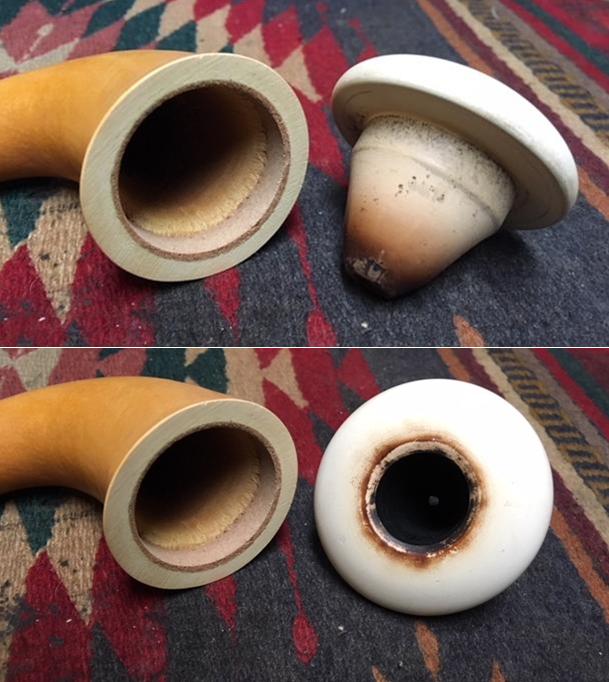
Jeff did a thorough cleanup on the meerschaum bowl, the inside of the gourd and the stem. He carefully scraped the cake in the bowl with a Savinelli Fitsall Pipe Knife. He cleaned the internals with alcohol, pipe cleaners and cotton swabs – scrubbing out the mortise as it was dirty. He scrubbed the exterior of the meerschaum cup and the gourd with Murphy’s Oil soap and a tooth brush and was able to remove all of the oils and dust ground into the gourd. He was able to remove all of the lava and overflow from the top of the meerschaum bowl and left it looking very clean. Once he had removed the lava on the rim top and inner edge they were cleaner than I expected. The scratches in the meerschaum were quite shallow and would be easy to polish out. He cleaned internals of the stem with alcohol. When it arrived I took some photos of it to show how it looked before I did the restoration. I took the bowl off the gourd to have a look at the inside of the pipe. The gourd was very clean. The cork gasket was dry but that could be remedied easily enough. The mottle appearance of the meerschaum bowl can also be seen in the photos.The stem had cleaned up nicely with relatively little oxidation. The tooth marks on the top and underside along with the chatter were still present.The wooden shank extension (which looks like briar to me) is very clean and ready for polishing. I used some Vaseline petroleum jelly to lubricate the cork gasket and soften it. I have done this for years and I really like the effect of the jelly on the cork. I used 1500 grit micromesh sanded off the spots along the surface of the meerschaum cup where it sat against the cork and the top of the gourd to ensure a smooth fit.I used my fingers to rub the gourd and briar extension down with Before & After Restoration Balm to bring life to both and to remove any residual dust or dirt in the surface of the calabash. I wiped it off with a cotton cloth and buffed it with a shoe brush. The next few photos show the gourd at this point in the process. I polished the rim top, inner edge and underside of the meerschaum bowl with micromesh sanding pads – wet sanding with 1500-2400 grit pads and dry sanding with 3200-12000 grit pads. I wiped the surface of the cup down with a damp cloth after each sanding pad. When I finished sanding with the last pad I wiped it down again and set it aside. I checked the pliability of the cork gasket, rubbed a little more Vaseline into it and put the bowl back on the gourd. The fit of the cup against the gasket was snug but not hard to insert. It was perfect. The pipe was beginning to look finished. The shine on the gourd and the rim looked good. The briar extension had its own shine as well. I sanded the stem with 220 grit sandpaper to remove the tooth chatter on the top and underside near the button. I also found as I examined the underside that there was a strange rippling to the vulcanite almost like it had some heat damage. I sanded that area to clean up the ripples and smooth them out.I polished the vulcanite stem with micromesh sanding pads – wet sanding with 1500-2400 grit pads and dry sanding with 3200-12000 grit pads. I rubbed the stem down with Obsidian Oil between each sanding pad. After using the 12000 grit pad I buffed the stem with Blue Diamond to give a deep and rich shine. Normally at this point I put the stem back on the bowl and take the pipe to the buffing wheel to work it over. This time I took the parts to the buffing wheel. I gently buffed the meerschaum cup and rim with Blue Diamond to polish the meer. I carefully buffed the gourd base and briar shank extension with Blue Diamond being cautious about the pressure I put on the gourd. I buffed the stem with Blue Diamond to raise the gloss on the vulcanite. I took the pipe back to the work table and gave the gourd multiple coats of Conservator’s Wax. I gave the stem several coats carnauba wax. I buffed the parts of the pipe with a clean buffing pad to raise the shine. I hand buffed it with a microfiber cloth to deepen the shine. The finished pipe is shown in the photos below. This one is already spoken for and I think that the pipeman that it is going out to will really enjoy the unique look of his new pipe. Thanks for looking.


The Restoration of a Savinelli Alligator 207 Apple


Blog by Steve Laug

If you read the previous blog on the Bari Special Handcut pipe you have also read that for the past month or more I have been carrying on an online conversation with a Colonel in the Indian Military about his own pipe refurbishing and repair work. In the process of talking through a variety of the processes of pipe restoration he asked if I would be willing to work on a few of his pipes that had chipped or broken stems. We decided to look into what it would take to ship them to Canada from India. It seemed like a pretty daunting task but nonetheless he has some pipes in transit to me in Vancouver. In the meantime he wrote and said he had picked up a Bari and a Savinelli Alligator pipe and had the EBay seller send them directly to me in Canada so I could refurbish them for him and add them to the box of other pipes I would be sending back to him. I agreed and this week the pipes arrived.

Once I finished the Bari I worked the Savinelli Alligator apple shaped pipe. I have never been attracted to the alligator finish as it just did not work for me. This one however had some very nice looking grain underneath the rustication and in the smooth portions of the finish. The finish was dirty with dirt, grime and oils in the finish and rim edge. It looks good underneath that grime. The bowl has been reamed but a bit poorly. There is some scraping to the inner edge that has affected the roundness of the bowl on the left side and rear edges of the bowl. It is a filter pipe made for the Savinelli triangular Balsa filter that fits in the stem and extends partially into the shank. These are one of the better filters but should be either flushed out with alcohol or replaced often. The seller put a new filter in place in the stem. The stem fit well in the shank but looking down the shank it is dirty and covered with oils and tar. The stem is oxidized (though not as bad as the Bari was). It had some small tooth marks and chatter on the stem near the button. The stem logo is very faint and may not show up well once the stem is cleaned up. I took photos of the pipe to record the condition it was in when it arrived here in Vancouver. It gives me a benchmark to measure the finished pipe against as well. I took a close up photo of the rim top and bowl. The bowl had a thick cake in it all the way down to the heel. The rim top has some light lava overflow but it is not too bad. There is damage on the left side and back inner edge of the bowl that can be seen in the first photo below. The stamping on the underside of the pipe is quite readable through the grime. It reads Alligator and next to that is the Savinelli S Shield logo followed by the shape number 207 over Italy. Next to that it reads Savinelli Product. There is a brass separator on the stem that adds a touch of class to the shank/stem union.I took photos of the stem condition as well. You can see it is oxidized but not in bad condition. The light tooth marks on both sides are barely visible in the photos below. There is a very faint alligator stamp on the left side of the stem in an oval. It is faint enough that I am concerned that there is not enough depth to recolour it but time will tell.I dropped the badly oxidized stem in a bath of Before & After Pipe Stem Deoxidizer to soak away the oxidation. In this case the oxidation was quite thick and the stamping on the left side was so shallow that I did not want to do a lot of sanding. The deoxidizer could do its work. I put the lid on the airtight container and left the stem to soak overnight.I turned my attention to the bowl and the cleanup that was awaiting me there. I reamed the bowl with a PipNet pipe reamer using the second cutting head to work away the heavy cake. I worked at it very slowly so as to keep the blade from creating further damage to the roundness of the bowl. I cleaned up the remaining cake with a Savinelli Fitsall Pipe Knife taking it to almost bare briar and smoothing things out. I used a folded piece of 180 grit sandpaper to work on the inner edge and the damage to the top of the rim on the left and back edge of the bowl and down into the bowl about an inch. With the bowl reamed it was time to clean out the internals of the bowl and shank. I used 99% isopropyl alcohol, cotton swabs and pipe cleaners to remove the accumulated tars and grime in the shank and airway. I folded the used pipe cleaners and swabbed out the walls of the bowl with them. I scraped out the walls of the mortise using a small pen knife blade to remove the buildup on the walls and give the interior a clean smell and feel.I wiped the exterior of the bowl with a damp cloth and then scrubbed it with the Before & After Restoration Balm. I was sure that it would work well on the alligator pattern and the dirty condition of the finish on this pipe. I worked it into the grooves of the rustication with my fingers, rubbing it deep into the grooves. I used a shoe brush to further work it into the finish. I touched up the repaired rim top and edges with a dark brown stain pen and blended the colour into the rest of the stain on the bowl. I buffed the bowl with a shoe brush to further blend the stain on the rim. At this point the rim was looking far better. I buffed the bowl on the buffing wheel with Blue Diamond using a light touch. The photos below show the bowl after the buffing. It is really starting to look good at this point. Once the stem is done I will buff it a bit more and give it several coats of wax but for now it is finished and I am calling it a night. I took the stem out of the bath of Before & After Pipe Stem Deoxidizer and wiped it down with a paper towel to remove the excess deoxidizer. I ran pipe cleaners and alcohol through the airway to clean out the buildup inside. The stem was very clean and the oxidation was gone. The tooth marks in the surface of the stem on both sides near the button were even less visible.I used some European God Rub’n Buff to touch up the very faint logo on the left side of the stem. It helped a bit but it is pretty shallow so I am not sure it will last too long.I sanded the pipe lightly around the button to remove the tooth marks using 220 grit sandpaper. I polished out the sanding scratches and marks in the vulcanite – wet sanding it with 1500-2400 grit pads and dry sanding it with 3200-12000 grit pads and wiped it down with Obsidian Oil after each one. When I finished with the 12000 grit pad I gave it a final coat of oil and set it aside to dry. At this point I was not happy with the remaining oxidation that showed up under the flash of the camera so I went back to the drawing board and reworked it with the sanding pads. Once I finished reworking the oxidation, I put the stem back on the bowl and took the pipe to the buffing wheel to work it over. I gently buffed the rusticated bowl with Blue Diamond to polish the briar. I buffed the stem at the same time to raise the gloss on the vulcanite carefully working around the faint stamping on the stem. I gave the bowl multiple coats of Conservator’s Wax and the stem several coats carnauba wax. I buffed the entire pipe with a clean buffing pad to raise the shine. I hand buffed it with a microfiber cloth to deepen the shine. The finished pipe is shown in the photos below. I am hoping that the fellow I am restoring it for enjoys the second of his “new pipes”. For now he will have to enjoy it by looking at the photos but soon it will wing its way back to India. Thanks for looking.

The Resurrection of a Bari Special Handcut 848 Pinched Stem


Blog by Steve Laug

For the past month or more I have been carrying on an online conversation with a Colonel in the Indian Military about his own pipe refurbishing and repair work. In the process of talking through a variety of the processes of pipe restoration he asked if I would be willing to work on a few of his pipes that had chipped or broken stems. We decided to look into what it would take to ship them to Canada from India. It seemed like a pretty daunting task but nonetheless he has some pipes in transit to me in Vancouver. In the meantime he wrote and said he had picked up a Bari and a Savinelli Alligator pipe and had the Ebay seller send them directly to me in Canada so I could refurbish them for him and add them to the box of other pipes I would be sending back to him. I agreed and this week the pipes arrived.

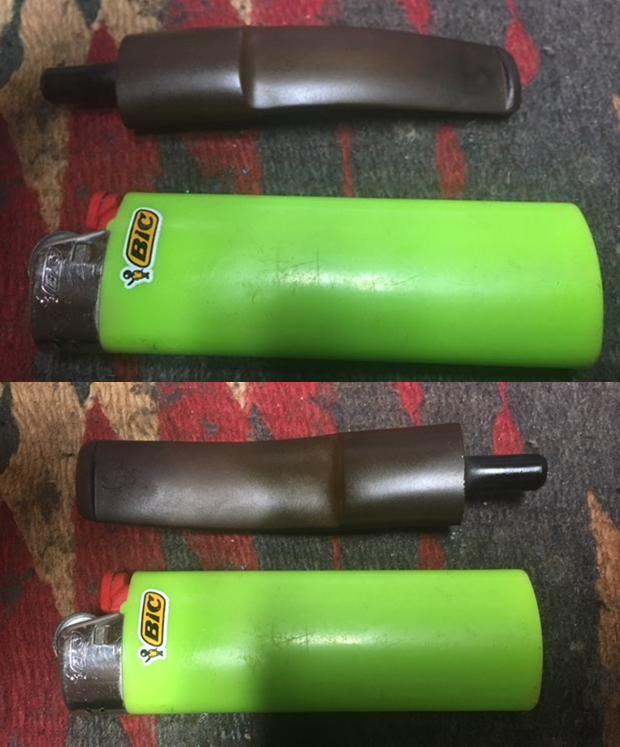
The first one that I decided to work on was a Bari Special Handmade, a really delicate and interesting looking pipe. The bowl has a pretty thick cake but otherwise looks sound. The finish and the rim are very dirty with dust and grime from years of use and then sitting unused. The finish is an interesting wire rustication that follows the angles of the bowl and looks good under the grime. The interior of the mortise and shank are very dirty and the stem does not fit the shank well – very tight because of the tars. In fact it will not seat all the way in the mortise at this point. The style of the stem is one I have seen on Bari pipes before – a pinched stem is how it has been described. You can see why when looking at it from the top or bottom view. The stem is very oxidized and also has some deep tooth marks on both sides of the stem at the button. It is a very delicate stem. There is something about the pipe that assures me that it will look very good when it is finished. I took photos of the pipe to record the condition it was in when it arrived here in Vancouver. It gives me a benchmark to measure the finished pipe against as well. I took a close up photo of the rim top and bowl. The bowl had a thick cake in it all the way down to the heel. It was thick enough that I could not get my little finger into the bowl. It is a narrow conical bowl anyway but the cake is very thick and hard. The rim top has some lava overflow but it is not too bad. The stamping on the underside of the pipe is quite readable through the grime. It reads Bari over Special over Handcut. Next to the shank/stem junction the shape number 848 is also readable. Both are stamped in a smooth unrusticated band on the underside of the shank.I took photos of the stem condition as well. You can see why it is called a pinched stem from the photos. It is oxidized and very delicate. The tooth marks on both sides are visible in the photos below. You can see the ones on the underside as they are worse. There is a number 10 stamped on the underside of the saddle portion of the stem. My guess is that it is a replacement stem number should one be required by a repairman back when the pipe was made.I dropped the badly oxidized stem in a bath of Before & After Pipe Stem Deoxidizer to soak away the oxidation. In this case the oxidation was quite thick and the stem was delicate so I did not want to do a lot of sanding so the deoxidizer could do its work. I put the lid on the airtight container and left the stem to soak overnight.I turned my attention to the bowl and the cleanup that was awaiting me there. I reamed the bowl with a PipNet pipe reamer using the smallest cutting head to work away the heavy cake. I worked at it very slowly so as to keep the blade from ruining the roundness of the bowl and to keep from splitting or damaging the delicate bowl. I finished up the reaming with a Savinelli Fitsall Pipe Knife taking the cake back to bare briar and smoothing things out. I used a folded piece of 180 grit sandpaper to work on the inner edge of the rim and smooth out that edge of the bowl and down into the bowl about an inch. With the bowl reamed it was time to clean out the internals of the bowl and shank. I used 99% isopropyl alcohol, cotton swabs and pipe cleaners to remove the accumulated tars and grime in the shank and airway. I folded the used pipe cleaners and swabbed out the walls of the bowl with them. I scraped out the walls of the mortise using a small pen knife blade to remove the buildup on the walls that kept the stem from seating.I wiped the exterior of the bowl with a damp cloth and then scrubbed it with the Before & After Restoration Balm. I wanted to see how well it would work with the wire rustication pattern and the dirty condition of the finish on this pipe. I worked it into the grooves of the rustication with my fingers, rubbing it deep into the grooves. I used a shoe brush to further work it into the finish. I wiped it off with a clean cloth and buffed it on the buffing wheel with Blue Diamond using a light touch. The photos below show the bowl after the complete treatment I described. It is looking really good at this point. Once the stem is done I will buff it a bit more and give it several coats of wax but for now it is finished and I am calling it a night. I took the stem out of the bath of Before & After Pipe Stem Deoxidizer and wiped it down with a paper towel to remove the excess deoxidizer. I ran pipe cleaners and alcohol through the airway to clean out the buildup inside. The stem was very clean and the oxidation was gone. The tooth marks in the surface of the stem on both sides near the button were visible.I painted the tooth marks with a Bic Lighter flame to lift the vulcanite. One of the beauties of vulcanite is its “memory”. When heated the dents will come back to the surface. In this case the tooth dents on the top of the stem came up almost even. The ones on the underside were greatly reduced but still present (first two photos below). I sanded out the tooth marks and was able to blend the majority into the surface of the stem (third and fourth photo below). Those that remained I filled in with clear super glue (fifth and sixth photo) and after the repairs dried sanded them smooth to blend (seventh and eighth photo). The photos below tell the story. I worked over the stem with micromesh sanding pads. I polished out the sanding scratches and marks in the vulcanite – wet sanding it with 1500-2400 grit pads and dry sanding it with 3200-12000 grit pads and wiped it down with Obsidian Oil after each one. When I finished with the 12000 grit pad I gave it a final coat of oil and set it aside to dry. I put the stem back on the bowl and took the pipe to the buffing wheel to work it over. I gently buffed the rusticated bowl with Blue Diamond to polish the briar. I buffed the stem at the same time to raise the gloss on the vulcanite carefully working on the delicate stem. It would be very easy to break it at the pinched area. I gave the bowl multiple coats of Conservator’s Wax and the stem several coats carnauba wax. I buffed the entire pipe with a clean buffing pad to raise the shine. I hand buffed it with a microfiber cloth to deepen the shine. The finished pipe is shown in the photos below. I am hoping that the fellow I am restoring it for enjoys this beauty. For now he will have to enjoy it by looking at the photos but soon it will wing its way back to India. Thanks for looking.


New Life for a Pioneer Meerschaum Lined Square Shanked Apple 250


Blog by Steve Laug

There seems to be a first time for everything and today I am working on my first meerschaum lined Pioneer pipe. I have had Pioneer Gourd Calabash pipes that have crossed my table with the meerschaum cup and gourd base. They cleaned up nicely and were good smokers. It is a nice sandblasted piece of briar with a well fit block meerschaum bowl insert. The pipe is a square shanked apple. The worst part of the pipe is the poorly fitted saddle stem that does not seem to line up particularly well. The beauty of the deep and rugged sandblast cover that and take the eye off the stem and focus it on the swirling grain highlighted by the sandblast. Jeff took photos of the pipe to show its general condition before he did his cleanup.The stem has some tooth marks and chatter on both sides near the button. It is oxidized and very dirty. The grooves of the sandblast are filled in with a lot of dust and debris that hide the real beauty of the finish. The bowl has a thick cake with a heavy overflow of lava on the rim top particularly at the back half of the bowl. The meerschaum bowl insert looks to be intact with no breaks or chips but the cleanup will reveal the truth in that area.The close up photo reveals the cake in the bowl and the lava on the rim top. It is a bit of a mess. Fortunately no one has tried to scrape away the char or the cake and damaged the bowl lining.The next three photos give a clear idea of the beauty of the deep sandblast. The bottom of the bowl and the sides really are quite stunning. The deep lines of the blast reveal the grain on the piece of briar. I am looking forward to seeing what the bowl looks like once it is cleaned and restored. The underside of the bowl is stamped as shown in the photo below – Genuine Block Meerschaum. On the underside of the shank it is stamped Pioneer and the shape number 250. The curled P logo on the stem proved that the stem was an original Pioneer stem. I did a bit of digging to find out more about the Pioneer Pipe Company as my memory of that was a bit foggy. Reading on Pipedia I found that it had been owned by Wally Frank, who trademarked the name Pioneer in 1940. At the time of the application the name was alleged to have been used in commerce in 1925. The company listed its location at 1817 Putnam Avenue, Brooklyn, New York. Pioneer sold Turkish and later African meerschaum through the Wally Frank, Ltd. Catalogs and elsewhere. https://pipedia.org/wiki/Pioneer. The link also included a cover page from a Pioneer Catalogue. I have included that here.I also went to one of my favourite sites; Chris Keene’s Pipe Pages and did some looking at the catalogues he has scanned there. I found a few pages that I have included below. The first is the story of Pioneer Meerschaums. I found it an interesting read but it did not give the link to Wally Frank. The index at the bottom of the included page took me to the inside of the back cover of the catalogue. It shows the meerschaum lined pipes that were available through Pioneer. The shape I have is an apple. There is no reference to a sandblast line or to the shape number 250. It leads me to wonder who made this pipe for Wally Franks Pioneer Company. The link that follows shows the full catalogue. http://pipepages.com/1pioneer2.html I did some more hunting on the PipePhil logo site (reference below) and found confirmation of the address linking the brand to the Wally Frank information above. What it added to the information is that they not only manufactured meerlined pipe but also distributed them. I quote in full: “Pioneer Pipes Co., a Meerschaum and Meerschaum lined pipes manufacturer and distributor. Address (about 1960): 1817 Putnam Avenue, Brooklyn 27, N.Y. Pioneer also used to import meerschaum pipes from the MANXMAN PIPES Ltd factory (Isle of Man, UK) as shown by the markings of this pipe. (See “Man”) Wilczak & Colwell, Who Made that Pipe, mention pipes with this label from Duncan Briars Ltd, Oppenheimer Pipes or Delacour Brothers.” http://www.pipephil.eu/logos/en/logo-p3.html. I have also included a screen capture of the stamping on the Pioneer pipe shown in the list. It is a similar shape and sandblast to the one I am working on. The difference is the round shank on this apple rather than the square shank on the one I am restoring. The stamping is the same on both pipes.Jeff did his usual thorough cleanup on the bowl and stem. He carefully reamed the bowl back to clean, smooth meerschaum with a Savinelli Fitsall reamer. He cleaned the internals with alcohol, pipe cleaners and cotton swabs – scrubbing out the mortise as it was dirty. He scrubbed the exterior of the pipes with Murphy’s Oil soap and a tooth brush and was able to remove all of the oils and dust in the smooth finish on the briar. He was able to remove all of the lava and grime from the rim top and left it looking very clean. The inner and outer edges of the rim top were in good shape. He soaked the stem in an Oxyclean bath to raise the oxidation to the surface of the vulcanite. When the pipe arrived I took some photos to show how it looked before I did the restoration. Jeff was able to remove the lava buildup on the rim top and clean away most of the darkening to meerschaum lining. There was still some darkening on the beveled edge of the rim that would probably come off with some work. The stem was deeply oxidized and had tooth chatter and marks on both sides of the stem near the button.I put the stem to soak in a bath of Before & After Stem Deoxidizer for a while to let it do its work on the oxidation. The stem pictured below is a second stem that was in the bath at the same time.When I took the stem out of the bath it was much cleaner. I wiped it down with a paper towel and pushed pipe cleaners and alcohol through the airway to remove the product from the interior of the stem. The aluminum inner tube was also clean and showed some cracking at different points along its length. It would need to be removed if possible. It was also collapsed on the tapered end of the tube.I sanded the stem surface with 220 grit sandpaper to remove the tooth chatter and marks on the surface near the button. I checked out the inner tube and found that the cracks in the aluminum were deep and the tube would need to be removed. As I worked on removing it the tube broke. I was unable to remove it from the tenon as it had been glued in place. I found that there were two deeper tooth marks on the top side that needed to be repaired. I used some small drops of clear super glue to repair the marks. When the glue dried I sanded them smooth to blend into the surface of the stem. I touched up the gold colour in the stamped P on the left side of the saddle stem using Rub’n Buff European Gold. I used a tooth pick to push the product into the stamping. I let it dry for a short time. I wiped down the excess material to show the touched up stem.I worked over the stem with micromesh sanding pads. I polished out the sanding scratches and marks in the vulcanite – wet sanding it with 1500-2400 grit pads and dry sanding it with 3200-12000 grit pads and wiped it down with Obsidian Oil after each one. When I finished with the 12000 grit pad I gave it a final coat of oil and set it aside to dry. I polished it with Before & After Stem Fine Polish and wiped it down. I followed that by polishing it with the Extra Fine Polish. I buffed it with a microfiber cloth to raise the shine.I used a folded piece of 220 grit sandpaper to sand out the darkened area remaining on the top of the bowl. I sanded the bevel to remove the damage from the rim top. The photos below show the cleaned rim.I rubbed the bowl down with Before & After Restoration Balm to deep clean the nooks and crannies of the finish, enliven and protect the briar. I hand rubbed it with my fingers to get it deep into the grooves. I let it sit for a few minutes and then wiped it off with a soft cloth and buffed it with a horsehair shoe brush. The briar really began to have a deep shine. I took some photos of the bowl at this point to mark the progress in the restoration. I put the stem back on the bowl and took the pipe to the buffing wheel to work it over. I gently buffed the bowl with Blue Diamond to polish the briar. I buffed the stem at the same time to raise the gloss on the vulcanite carefully working around the repaired P logo on the left side of the stem top. I gave the bowl multiple coats of Conservator’s Wax and the stem several coats carnauba wax. I buffed the entire pipe with a clean buffing pad to raise the shine. I hand buffed it with a microfiber cloth to deepen the shine. The finished pipe is shown in the photos below. The dimensions of the pipe are: Length: 5 1/2 inches, Height: 1 3/4 inches, Outer Diameter of the Bowl: 1 1/2 inches, Diameter of the Chamber: 3/4 inches. I will be adding this one to the rebornpipes store shortly if you are interested in adding it to your collection. It is an interesting piece of Pioneer/Wally Frank history and is a comfortable shape in my opinion. It will make a fine meerschaum lined pipe addition to the rack. If you are interested email me at slaug@uniserve.com or send me a message on Facebook. Thanks for looking.


Restoring an interesting SMS Meerschaum Canadian


Blog by Steve Laug

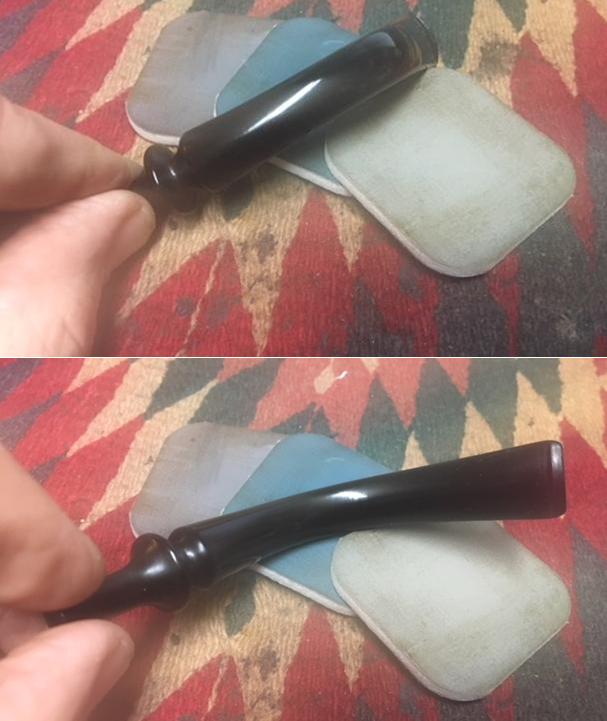
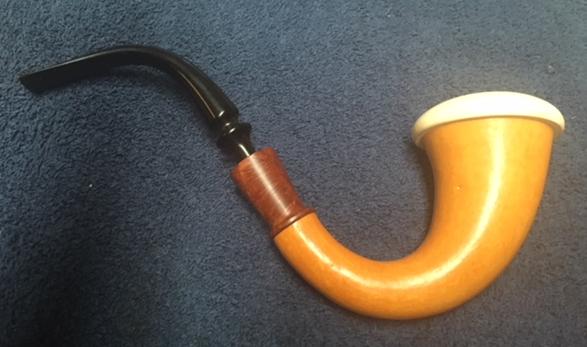
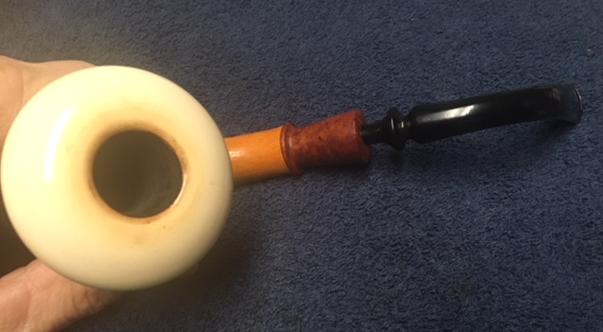
On a recent trip to Idaho to visit my parents, brothers and families I had the opportunity to go with my brother Jeff on a pipe hunt. We visited some of the shops where he has developed a relationship with the owners and had good luck on pipe purchases in the past. We visited a shop that belongs to the daughter of an old pipe man who I have known through business for quite a few years. I have purchased pipes and tobacco from him in years past and Jeff and I have bought a few estate pipes from him in recent years. On this trip we stopped and visited with his daughter a bit and had a look through her shop. Her dad had a few pipes there and a few sealed tins of Velvet Pipe Tobacco. These sealed tins still had the tax stamp on them and someone had the foresight to wrap a piece of duct tape carefully around the seal to keep the air out of the tin. I had to have one of those. There was one pipe that caught my attention – an oval shanked Meerschaum Canadian with an amber coloured acrylic stem made by SMS in a black vinyl covered case with a tan velour lining. I brought both the tin and the pipe to the counter and the daughter called her dad to let me dicker with him on the price.

We had a great conversation and caught up a bit regarding the past year for both of us. He is in his 80s and I always enjoy the conversation we have on all things pipe. I don’t think I have ever seen him without a pipe in his mouth and a wreath of smoke around his head. I expect that is what he looked like on the other end of the phone. We came to an agreed price for the pipe and tin. He always starts high in terms of price and I low ball him. We go back and forth and both end up feeling like we made a good deal. We said our good byes and I handed the phone back to his daughter. I paid the bill, said our good byes to his daughter and headed out to the next antique shop on the docket for the day.

I took some pictures of the pipe case to show its condition before I started my restoration work on the pipe. The faux leather case is in pretty good condition – just a few scuff marks but the edges are smooth and there is no peeling happening with the covering. The golden/tan velour interior is also in good condition – a little dusty and a few flakes of tobacco left behind in the fabric. It should clean up nicely as well. The pipe inside was in pretty decent condition. There was a cake in the bowl and some rim darkening and lava overflowing over the back of the rim. The bowl and shank had a lot of scratches and nicks in the finish with a bit of “road rash” on the bottom edge of the left side of the bowl. There were also some colour developing on the long shank of the pipe and some odd spotting around the top of the bowl. It was patina developing but it was spotty and strange – I have never seen that kind of colouring on a meer before. The stem was in good condition but had tooth marks and chatter on both sides near the button. The stem had a threaded tenon that screwed into and inset in the shank. It aligned perfectly. The SMS brass logo was set in the top of the stem and had been covered with a spot of clear acrylic to make it smooth and even with the surface of the stem. It should clean up well with a few character marks from its journey through the hands of different pipe men. I took some close up photos of the bowl, rim top and sides of the bowl to show the scratching and general condition of the pipe. The nicks and scratches on the left side of the bowl are visible in the second photo. The colouration process on the pipe is also visible through the scratches. The tooth marks and chatter are visible in the photos of the stem. They are predominantly around the button area on both sides. There are also some scratches and nicks on the sides and close to the shank/stem junction.I have to say how spoiled I have become when it comes to cleaning up pipes before I can do the restoration work. Thank you Jeff for the great work that you have been doing behind the scenes at rebornpipes. It is times like this when I have to clean up a pipe before I begin working on it that I am reminded of how much you do before I ever get the pipes. On this one I began with the cleanup work. I reamed the bowl with a Savinelli Fitsall Pipe Knife and took out all of the cake on the walls.I unscrewed the stem from the shank and wiped down the tenon with a damp cotton pad to remove the tars and oils in the threads on the outer edge of the airway. Afterwards I cleaned out the mortise and the airway in the shank and stem with alcohol, cotton swabs and pipe cleaners until it was clean.I sanded out the tooth chatter and marks with a folded piece of 220 grit sandpaper. I also sanded out the nicks and marks further up the stem sides and near the shank/stem union.I worked over the stem with micromesh sanding pads. I polished out the sanding scratches and marks in the amber acrylic – wet sanding it with 1500-2400 grit pads and dry sanding it with 3200-12000 grit pads and wiped it down with damp cotton pad after each one. When I finished with the 12000 grit pad I wiped it down a final time and dried it off. I set the stem aside and turned my attention to the meerschaum bowl. I polished the meerschaum bowl and shank with micromesh sanding pads – wet sanding with 1500-2400 grit pads to remove the damage of the scratches and nicks in the bowl. I was able to remove almost all of the surface scratches (leaving behind only those that add character) and most of the heavy damage to the marks on the lower left side of the bowl. I dry sanded the bowl and shank with 3200-12000 grit pads. I wiped the rim down after each pad with a damp cotton pad. I put the stem back on the bowl and carefully worked the pipe on the buffing wheel with Blue Diamond to further polish the bowl and the shank. It really brought life to the meerschaum. I also buffed the acrylic stem at the same time and worked it to a shine. I gave it several coats of Conservator’s Wax and buffed it with a clean buffing pad. I hand buffed the pipe with a microfiber cloth to deepen the shine in the meerschaum. The finished pipe is shown in the photos below. The dimensions of the pipe are: Length: 6 1/4 inches, Height: 2 1/4 inches, Diameter of the bowl: 1 1/2 inch, Diameter of the chamber: 7/8 inches. I will be adding this one to the rebornpipes store shortly if you are interested in adding it to your collection. It is an unusual shape in my opinion and it will make a fine meerschaum addition to the rack. If you are interested email me at slaug@uniserve.com or send me a message on Facebook. Thanks for looking.


Cleaning up a 1962 Gourd Calabash Pipe


Blog by Steve Laug

Jeff picked up this Calabash at a local estate sale in Idaho. It is a big pipe – large gourd, with the meerschaum insert and stem in place it is 8 ½ inches long and 5 inches tall. The diameter of the meerschaum cup is 2 ¾ inches and the chamber diameter is 1 1/8 inches. It is a bit different from other gourd Calabash pipes that I have worked on in that is has small flowers carved in the surface of the body of the gourd and in the meerschaum cup. The end of the gourd shank is capped with a plastic/hard rubber end cap and extension that are joined by a metal tube. The stem is acrylic and is a bright yellow colour. Jeff took some photos of the pipe before he started cleaning it. The gourd is in good condition and the overall appearance of the pipe is good. Jeff took some close up photos of the gourd to show its overall condition. You can see the carved flower patterns and small straight cuts around the flowers looking like blades of grass.The rim top had some scratching in the surface of the meerschaum as well as some more carved flower and leaf patterns. The bowl had some darkening around the inner edge of the bowl and there was a cake buildup in the bowl itself.Jeff removed the bowl to give a good look at the inside of the gourd. It was in good condition. Both the inside of the gourd and the underside of the meerschaum bowl had the number ’62 written on them in pencil. This makes me think that it is likely a date mark for the pipe – that is why I date it as a 1962 Calabash. The cork gasket around the inner edge of the gourd was in excellent condition. The cork was dry but otherwise undamaged. The black extension on the end of the shank was connected to the shank cap with a metal inner tube that lines the extension and provides a metal mortise for the stem. The stem was in excellent condition with light tooth chatter on the surface on both sides near the button with a little wear on the top and underside of the button itself.Jeff did a thorough cleanup on the meerschaum bowl, the inside of the gourd and the stem. He carefully scraped the cake in the bowl with a Savinelli Fitsall Pipe Knife. He cleaned the internals with alcohol, pipe cleaners and cotton swabs – scrubbing out the mortise as it was dirty. He scrubbed the exterior of the meerschaum cup and the gourd with Murphy’s Oil soap and a tooth brush and was able to remove all of the oils and dust in the carved flowers on the gourd and bowl. He was able to remove all of the grime from the top of the meerschaum bowl and left it looking very clean. Once he had removed the lava on the rim top and inner edge they were very clean appeared to be good shape. Some of the scratches in the meerschaum were deeper than others and would take some work to smooth them out. He cleaned internals of the stem with alcohol. When it arrived I took some photos of it to show how it looked before I did the restoration.  I took some close up photos of the bowl, rim and the stem to show how they looked after Jeff’s cleanup work. He was able to remove much of the grime and lave on the rim top. There was a little tar around the inner edge but the bowl itself was clean. The stem was in great condition. The Delrin push mortise was clean. It fit well in the metal tube in the mortise. I removed the meerschaum bowl and rubbed the gourd down with Before & After Restoration Balm to deep clean the smooth finish, enliven and protect the gourd. I hand rubbed it with my fingers and buffed it with a horse hair shoe brush to work it into the flower patterns on the gourd. I wiped it off with a soft cloth. The gourd really began to have a deep shine. I took some photos of the bowl at this point to mark the progress in the restoration. I rubbed Vaseline into the cork gasket to soften and enliven it. I rubbed it in, let it dry and repeated the process until the cork was softer.I took some photos of the pencil marks on the inside of the gourd and the underside of the meerschaum bowl. Both of the photos below show the marks and clearly reads 62.I polished out the sanding scratches and marks in the meerschaum with micromesh sanding pads – wet sanding it with 1500-2400 grit pads and dry sanding it with 3200-4000 grit pads. I wiped the bowl down with a damp cloth after each sanding pad. I dry sanded it with 3200-4000 grit pads and wiped it down with the damp cloth after each one. It looked better than before but I still was not satisfied so I buffed it again this time using Blue Diamond. I brought it back to the table and sanded it with the final three 6000-12000 grit pads. I wiped it down with the damp cloth after each pad. When I finished with the 12000 grit pad I gave it a final wipe down and set it aside. The final photo showing the underside of the meerschaum cup shows a previous repair that had been done before the pipe came to us. It was a good repair and the chip was smooth and there was no roughness to the outer edge of the cup. I polished out the tooth chatter in the acrylic stem with micromesh sanding pads – wet sanding it with 1500-2400 grit pads and dry sanding it with 3200-12000 grit pads. I wiped the stem down with a damp cloth after each sanding pad. I buffed the stem using a light touch with Blue Diamond on the buffing wheel. I brought it back to the table and did a final polish with the 12000 grit pad, gave it a final wipe down with a damp cloth and set it aside to dry. I worked over the black plastic end cap and extension with micromesh pads to polish them and remove all scratches in the surface. I gave the stem multiple coats of carnauba wax to protect and polish it. I gave the gourd bowl several coats of Conservator’s Wax and buffed it with a clean buffing pad to raise the shine. I hand buffed gourd and meerschaum cup with a microfiber cloth to deepen the shine. The finished pipe is shown in the photos below. The polished gourd, the rejuvenated meerschaum cup, black end cap and shank extension work very well with the bright yellow of the bent acrylic stem. The pipe is clean and ready to load and smoke with a favourite tobacco. It feels good in the hand and I would think it be cool, dry smoke. The dimensions of the pipe are: Length: 8 ½ inches, Height: 5 inches, Diameter of the meerschaum cup: 2 ¾ inches and Chamber diameter: 1 1/8 inches. I will be adding this one to the rebornpipes store shortly if you are interested in adding it to your collection. This is a larger pipe and it’s a nice addition to the rack. If you are interested email me at slaug@uniserve.com or send me a message on Facebook. Thanks for looking.

Renewing a large Calaman Brunette Unique Bent Billiard


Blog by Steve Laug

This large Italian made Calaman pipe was one that Jeff was drawn too but I was not sure about. He picked it up anyway and it turns out to be a very well made pipe. The bowl has a rustication pattern that I have only seen on Lorenzo pipes, so this may well be one of theirs. It is stamped on the underside of the shank Calaman over Brunette and at the end of the shank near the stem junction it reads Italy and underneath Italy it is stamped with the shape number 840. It is stained in a medium brown stain with black in the pits and rustication on the bowl and shank. The stem is good quality vulcanite. The bowl had a thin cake in it that was soft and smelled of aromatic tobacco. The finish was in good condition other than being dirty and dusty. The bowl had indents carved into it at the back side that are perfect for the thumb regardless of whether you hold it with your right or your left hand. The stem was lightly oxidized and the CM stamp on the left side of the saddle was undamaged. There were light tooth marks on both sides of the stem at the button. The marks on the underside were deeper than the ones on the topside. Jeff took a few photos to show the condition of the pipe before he worked on it.The next photos show the bowl from various angles revealing the condition. The first one shows the rim and bowl with the cake lining the bowl. If you try you can almost smell the aromatic, soft cake. The rim is in good condition – a little dirty on the back side of the rim top. The second photo shows the stem indents on the back side of the bowl. It makes the pipe a comfortable one to hold in the hand. The third and fourth photos show the underside of the bowl and shank. The stamping is readable. The CM stamp on the left side of the saddle stem is also in great condition. The oxidized stem shows lots of tooth chatter and some tooth marks on both sides near the button.Jeff did a thorough cleanup on the bowl and stem. He reamed the bowl back to bare briar with a PipNet pipe reamer and cleaned up the remnants with a Savinelli Fitsall reamer. He cleaned the internals with alcohol, pipe cleaners and cotton swabs – scrubbing out the mortise as it was dirty. He scrubbed the exterior of the pipe with Murphy’s Oil soap and a tooth brush and was able to remove all of the oils and dust in the rusticated finish on the briar. He was able to remove all of the grime from the rim top and left it looking very clean. The rim top and outer edge were very clean and the inner and outer edges were in good shape. He soaked the stem in an Oxyclean bath to raise the oxidation to the surface of the vulcanite. When it arrived I took some photos of it to show how it looked before I did the restoration.  The rim top and bowl looked really good. The finish was in great shape and the bowl was ready to load and smoke again. It was really clean.The Oxyclean soak had really raised the oxidation to the surface of this stem. The stem was internally very clean but the surface was heavily oxidized when it arrived.Because the stem was so oxidized after the soak in Oxyclean, I put it in a bath of Before & After Pipe Stem Deoxidizer to soak overnight and let the enzymes in the mixture work on the oxidation. In the morning I removed the stem from the deoxidizer and wiped off the excess deoxidizer from the surface of the stem with a paper towel. I cleaned out the airway in the stem with pipe cleaners and alcohol to remove any remnants of the bath from that part of the stem. I forgot to take any photos of the stem at this point but it was in much better condition. There was still some oxidation in the angles but otherwise it was cleaner. The tooth marks chatter on the top and underside of the stem were very visible. I sanded the stem with 220 grit sandpaper to remove the tooth chatter and minimize the tooth marks on both sides of the stem. I reshaped the button with the sandpaper and a needle file. I sanded the rest of the stem to break up the remaining oxidation.I polished out the sanding scratches and marks in the vulcanite with micromesh sanding pads – wet sanding it with 1500-2400 grit pads and dry sanding it with 3200-4000 grit pads. I wiped the stem down with Obsidian Oil after each sanding pad. The photo I took of the stem after working it over with the 1500-2400 grit pads showed some oxidation in the light of the flash. I buffed the stem with red Tripoli on the buffing wheel being careful around the CM logo stamp so I would not damage it. I dry sanded it with 3200-4000 grit pads and wiped it down with Obsidian Oil after each one. It looked better than before but I still was not satisfied so I buffed it again this time using red Tripoli and Blue Diamond. I brought it back to the table and sanded it with the final three 6000-12000 grit pads. I wiped it down with oil after each pad. When I finished with the 12000 grit pad I gave it a final coat of oil and set it aside to dry. I set the stem aside and rubbed the bowl down with Before & After Restoration Balm to deep clean the smooth finish, enliven and protect the briar. I hand rubbed it with my fingers and used a horse hair shoe brush to work it into the rustication on the bowl and shank. I wiped it off with a soft cloth. The briar really began to have a deep shine. I took some photos of the bowl at this point to mark the progress in the restoration. I put the stem back on the bowl and took the pipe to the buffing wheel to work it over. I carefully buffed it with Blue Diamond using a light touch to keep the polish out of the rustication. I like polishing with Blue Diamond as it raises a good shine without a lot of work. I buffed the stem at the same time to raise the gloss on the vulcanite. I gave the bowl several coats of Conservator’s Wax and the stem multiple coats of carnauba wax. I buffed the entire pipe with a clean buffing pad to raise the shine. I hand buffed it with a microfiber cloth to deepen the shine. The finished pipe is shown in the photos below. The black stain in the nooks and crannies of the rustication and the medium brown stain on the smooth portions of the bent billiard shaped bowl worked well with the rich black of the polished vulcanite stem. This Calaman Brunette pipe has a unique shape with the thumb dents on the back of the bowl. The finish feels good in the hand and I would think it would heat up nicely when smoked. The dimensions of the pipe are: Length: 6 inches, Height: 2 inches, Diameter of the bowl: 1 1/2 inches, Diameter of the chamber: 7/8 inches. I will be adding this one to the rebornpipes store shortly if you are interested in adding it to your collection. This is a larger pipe and it’s a nice addition to the rack. If you are interested email me at slaug@uniserve.com or send me a message on Facebook. Thanks for looking.

Breathing Life into an early 1900s Eagle Claw Billiard


Blog by Steve Laug

My brother Jeff picked up this interesting Eagle Claw pipe in Montana on one of his pipe hunts. It is well carved and is a well grained piece of briar. The finish was very dirty and worn but under the dirt and dust of years sat some beautiful briar. The bowl had a thin cake – almost like it had been cleaned. Sometime in the life of the pipe the inner edge of the bowl had been chipped on the left side of the bowl. I would almost bet that it happened the last time the pipe was cleaned as there was no buildup of tars or cake in the chip itself. There were remnants of lava on the top of the rim around the rim top but not too thick or too much. There was a very tarnished brass band on the shank that was loose. The stem was Bakelite and was overturned. It also was worn and the top surface at first appeared to be crazed but the more I looked at it the more I could see that it was actually deeply pitted. There were bite marks on the top of the stem and the top edge of the button was worn down. There was a large bite through on the underside of the stem and the button was worn. There was some chipping around the junction of the stem and the band on the shank. Jeff took the photos of the pipe that follow before he started his cleanup work. It is always good to have a baseline of what the pipe looked like when we began the work. The next two photos show the condition of the briar. The first shows the rim top and bowl. There is minor tar buildup on the left side rim top. The chip in the rim is also visible in that photo. The second photo shows the carving patterns on the side and bottom edge of the bowl and shank. Though they are dirty they are well executed and interesting.The band is worn and oxidized but appears to be brass underneath. The top side of the stem is worn and there appears to be casting marks on both edges.The next photos show the bite through in the underside of the stem and the shape and condition of the airway in the button end.The last two photos show the stem. The first is the top side showing the tooth marks near the button and the pitting and checking of the material. This photo shows why originally I thought that the stem had crazed. The second photo gives a close up look at the bite through in the underside of the stem. It was quite large and went from one side of the airway to the other.Jeff did his usual thorough cleanup on the bowl and stem. He used his two favourite reamers to clean up the bowl and rim edges – a PipNet pipe reamer a Savinelli Fitsall reamer. He cleaned the internals with alcohol, pipe cleaners and cotton swabs – scrubbing out the mortise and shank as it was very dirty. He scrubbed the exterior of the pipe with Murphy’s Oil soap and a tooth brush and was able to remove all of the tars and oils built up on the briar. He was able to remove all of the tars and lava on the rim top and left it looking very clean. The chip damage on the rim top and inner edge was clean and visible. He cleaned the stem with warm soapy water and pipe cleaners. He rinsed it with clean water to remove the soap in the airway. When it arrived I took photos of the pipe before I started to work on the restoration. I took a close up photo of the rim top to show how well it had cleaned up. The chip is on shown on the bottom of the photo (left side of the bowl). It would need to be repaired and topped to clean up the damage.The stem cleaned up nicely. The next two photos show the stem after Jeff’s clean up. You can see the pitting, chipping at the shank connection and the tooth marks on the top side. The bite through is clear on the underside and I have pushed a pipe cleaner through to show the size of the hole.Since the stem was quite clean, I wiped it down with a damp cotton pad and dried it off. I greased the pipe cleaner with Vaseline and inserted it into the airway. I filled in the bite marks on the top side and repaired the bite through with Amber super glue. I overfilled the two repairs to make sure that it would not shrink and require more as it dried. I sprayed it with an accelerator and set it aside to dry for an hour.Once the repair had cured for an hour I used a small file to smooth out the patch and reshape the edge of the button. At this point I was interesting in smoothing out the repair and the surface of the stem to match. I also wanted to have the edges of the button look as close as possible to their original shape.I sanded the repaired areas and the rest of the stem with 220 grit sandpaper to deal with the pitting and to blend the repair into the rest of the surface of the stem. The stem is starting to look pretty good and the button and shape are correct.I polished out the sanding scratches, pitting and marks in the Bakelite with micromesh sanding pads – wet sanding it with 1500-2400 grit pads and dry sanding it with 3200-4000 grit pads. I wiped the stem down with Obsidian Oil after each sanding pad. I carefully buffed the stem with Blue Diamond on the buffing wheel so as not to let it get too hot and damage the material. I brought it back to the table and sanded it with the final three 6000-12000 grit pads. After the final pad I gave it a final coat of oil and set it aside to dry. The band/ferrule on the end of the shank was loose so I removed it to clean up the pipe. The photos below show the beautiful grain in this pipe. I really like the looks of the grain and the carving. It is well laid out on the briar. In order to repair the damaged edge of the rim I wanted to top the bowl back to get rid of the other damage to the rim top and prepare it for the patch. I topped it on a topping board using 220 grit sandpaper. I removed enough of the rim top to take care of the other damage on the rim and the burned areas around the inner edge. I pushed some of the briar dust from sanding into the chipped area and put several drops of clear super glue on top of the dust. I repeated the process until the edge and the rim top were even. I sanded the inner edge with a folded piece of 220 grit sandpaper to smooth it out and finished by lightly topping the bowl. The repair looks really good.I polished the rim top using the micromesh sanding pads – wet sanding with 1500-2400 grit pads and dry sanding with 3200-12000 grit pads. I wiped the rim down after each pad with a damp cotton pad. When I finished the polishing I wiped it down a final time. I rubbed the briar down with Before & After Restoration Balm to deep clean the smooth finish, enliven and protect the briar. I hand rubbed it with my fingers and a cotton swab to get into the deep grooves of the carving. I wiped it off with a soft cloth and lightly buffed the bowl with soft cloth. I lightly buffed it with Blue Diamond on the wheel to polish it. It really began to have a deep shine in the briar. The rich reds and browns of the stain, which I have often found in briar of this age, made the grain really stand out. I took some photos of the bowl to mark the progress in the restoration. At this point I decided to not restain the rim top but let is remain natural. The balm that rubbed into the briar made it almost blend with the rest of the bowl. I used a cotton swab to paint some white glue around the shank end to hold the band firmly in place. Once it was evenly spread I pressed the band in place on the shank and let it dry. Once the band had cured I polished it with micromesh sanding pads and a jeweler’s cloth. The brass band really took on a rich glow that went well with the stain on the pipe. I put the stem back on the bowl and gently worked the pipe over on the buffing wheel using Blue Diamond to polish the bowl and shank. I lightly buffed the bowl so as not to get a lot of polishing compound in the grooves and feathers. I carefully buffed the stem to raise the gloss on the Bakelite without damaging it from the heat. I gave the bowl and stem multiple coats of Conservator’s Wax. I gently buffed the entire pipe with a clean buffing pad to raise the shine. I hand buffed it with a microfiber cloth to deepen the shine. The finished pipe is shown in the photos below. The rich reddish brown stain on the carved eagle claw and egg bowl works well with the yellow amber gloss of the Bakelite stem. This old carved pipe really has a nice mix of grain and now that it is restored it has lots of life in it. This is another pipe that I wish could speak and tell its story. As I hold it I wonder about its travels and how it came to rest in Montana before coming to Idaho and then up to Vancouver. It would be fascinating to be able to sit and have a chat with it while I fired up a bowl. I guess though I will have to be satisfied to add my own chapter to the ongoing saga of this old pipe. Thanks for looking.