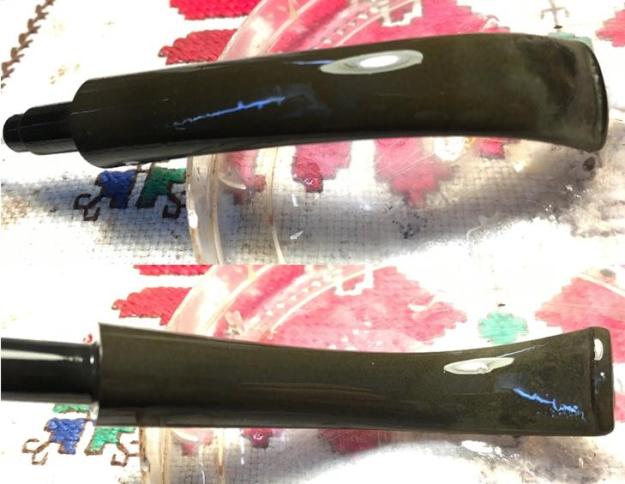
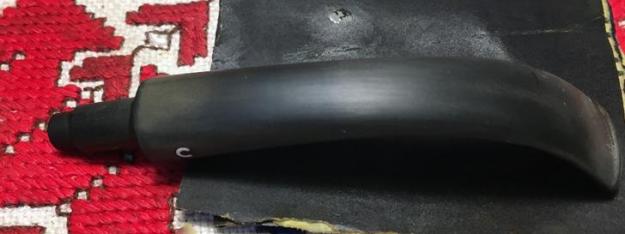
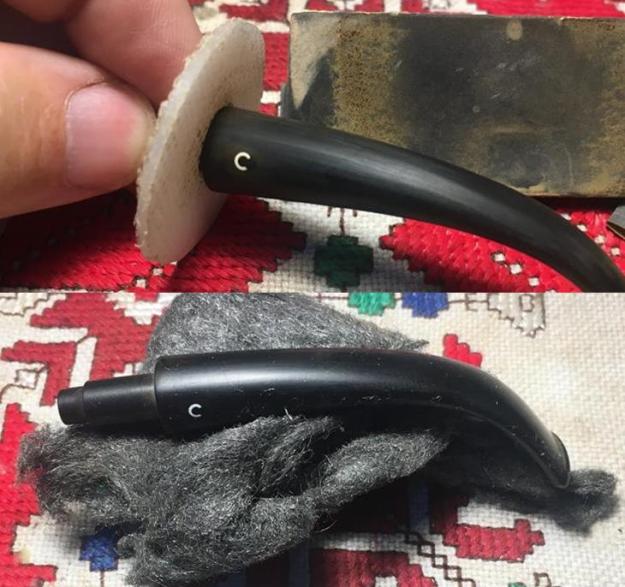
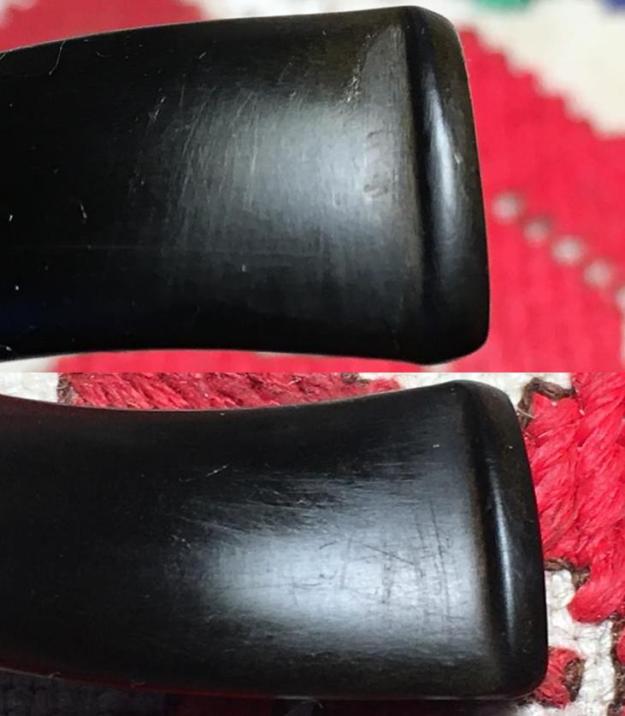
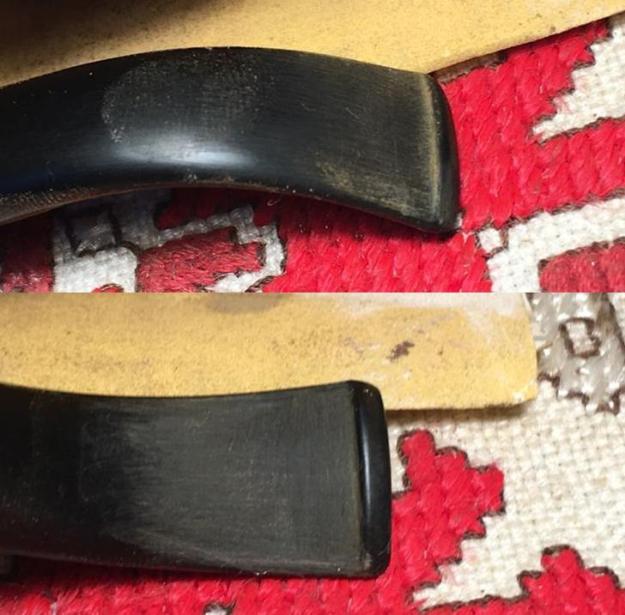
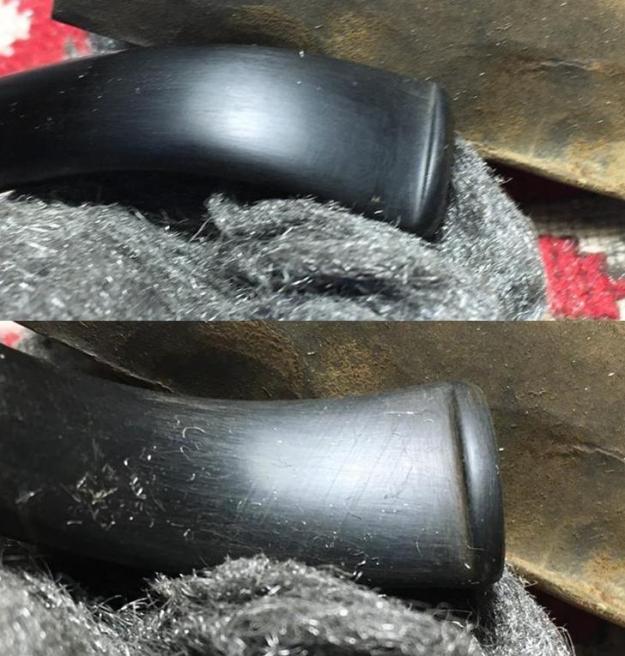
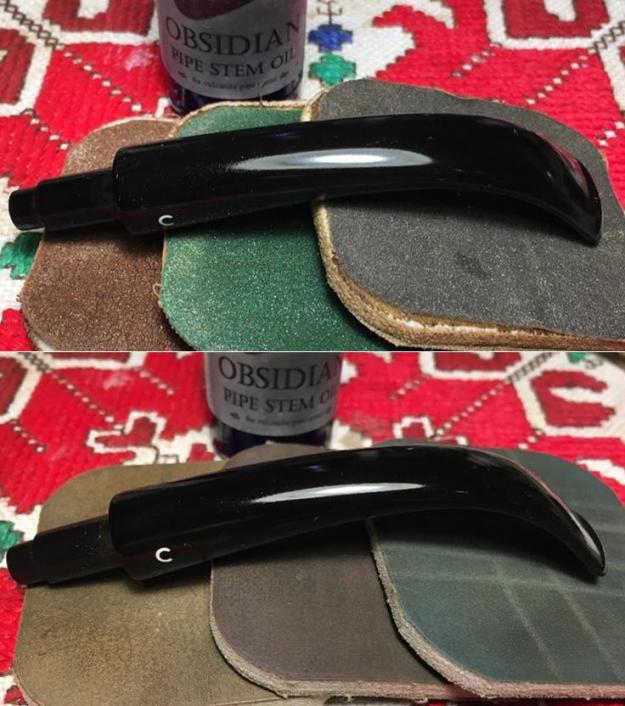
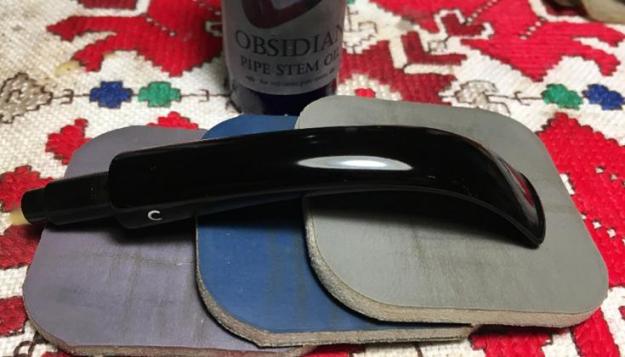
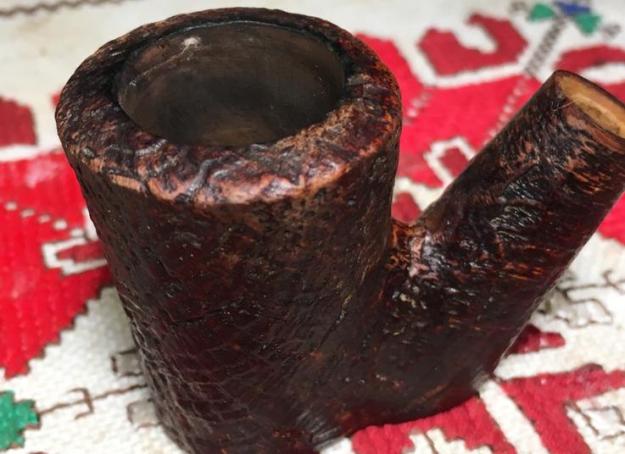
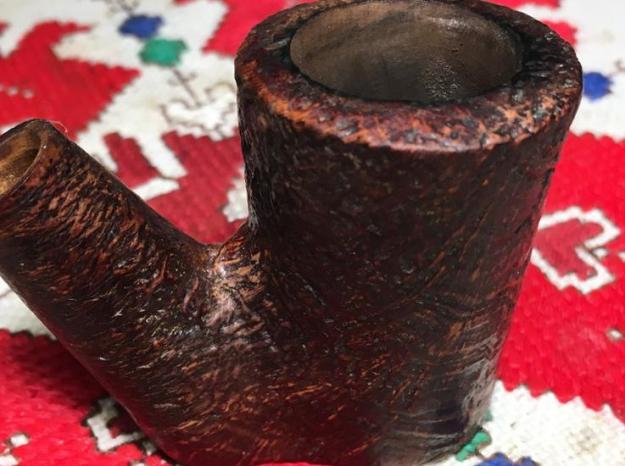
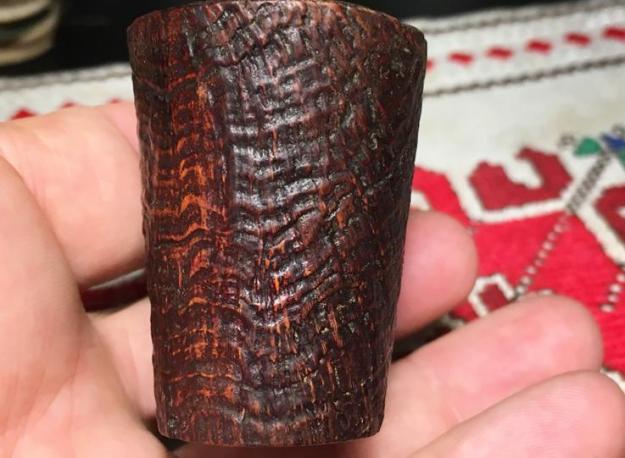
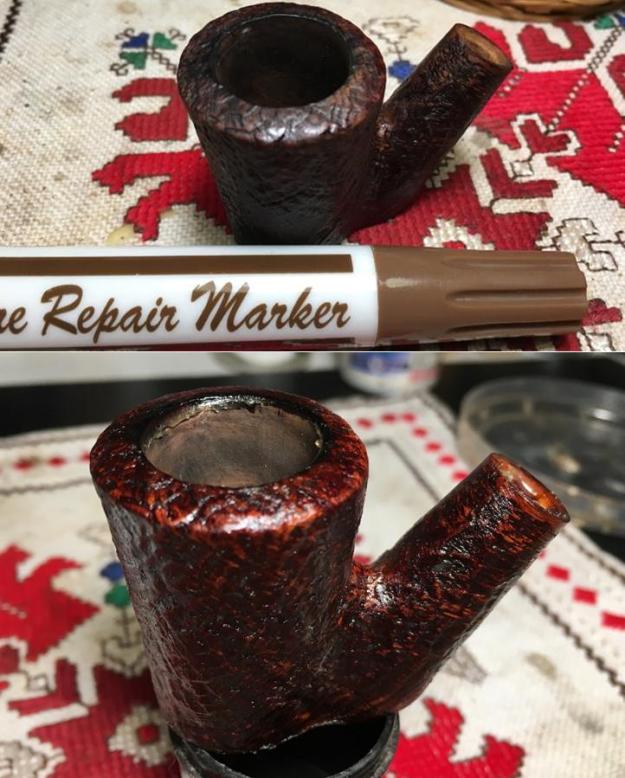
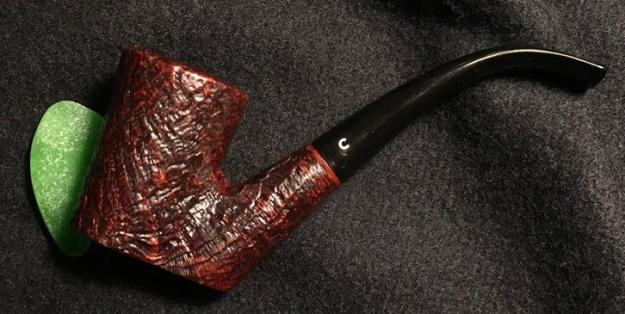
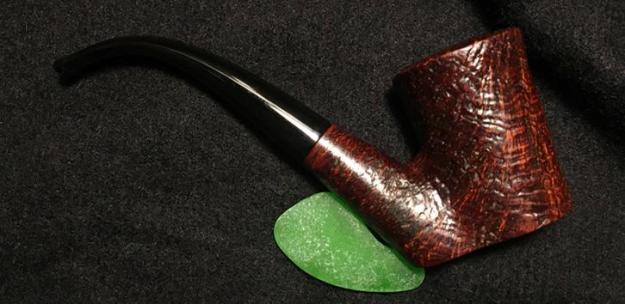
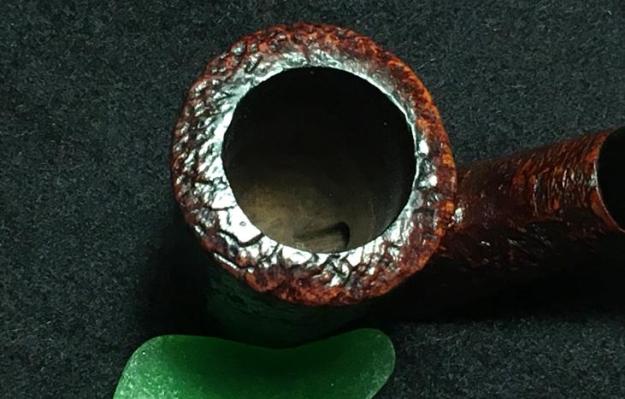
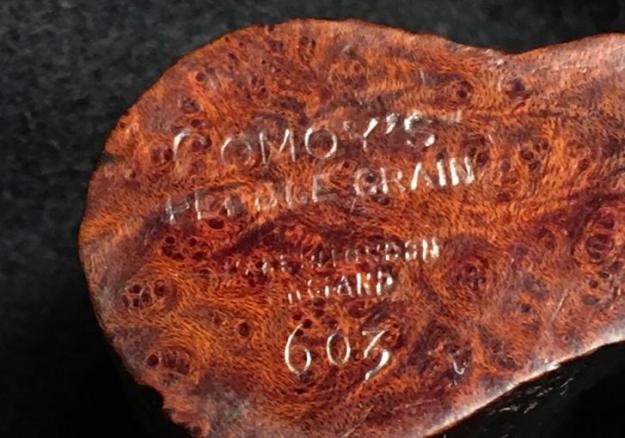
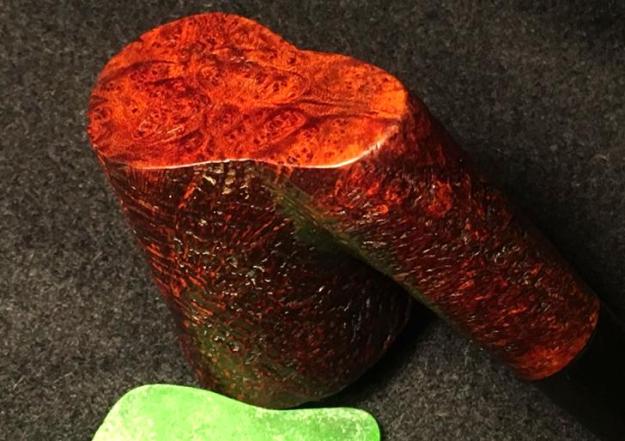
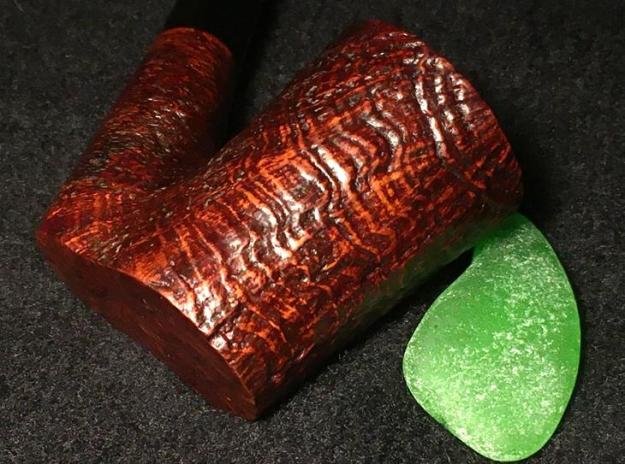
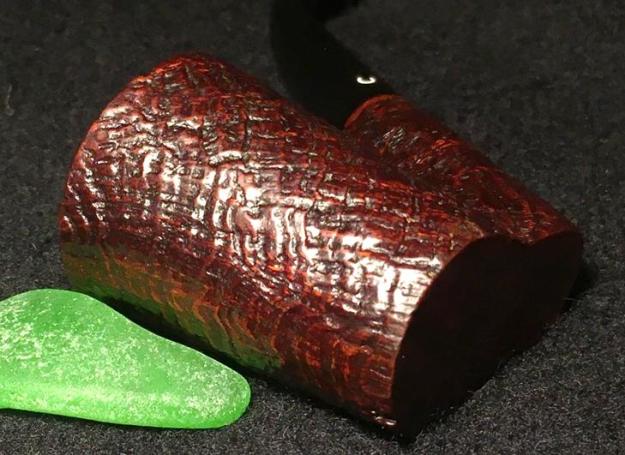
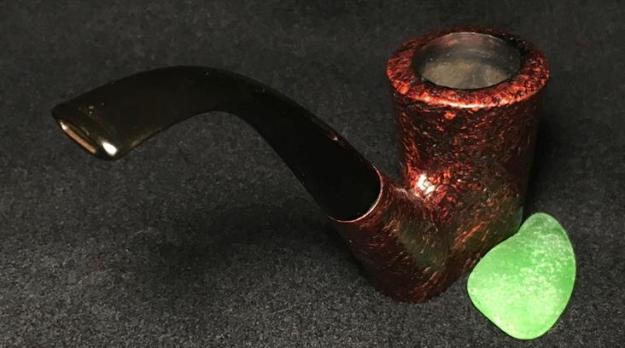
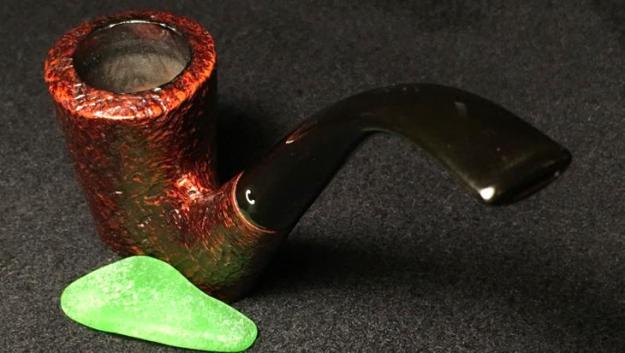
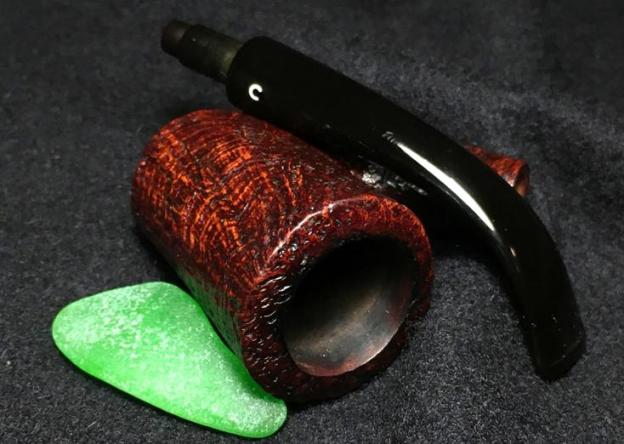
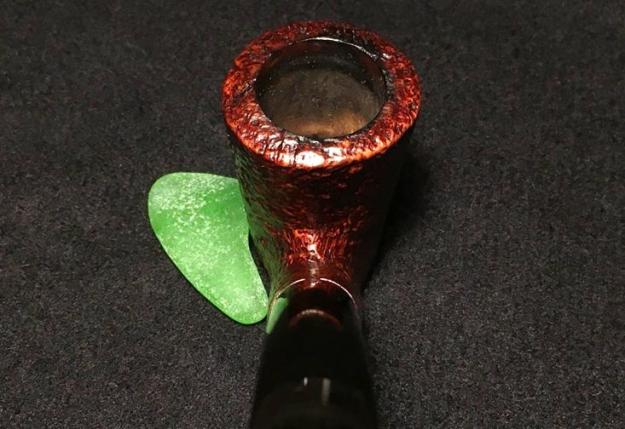
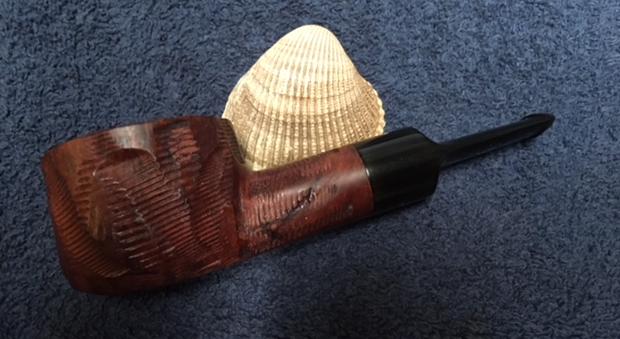
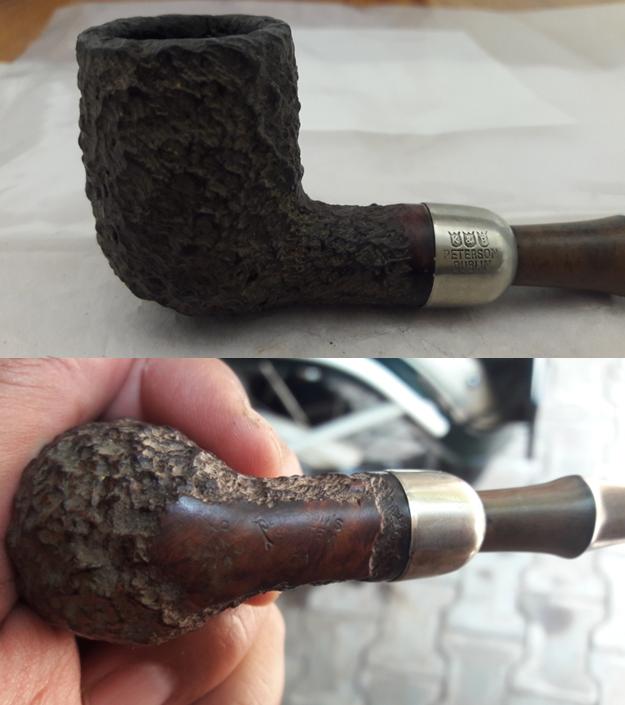
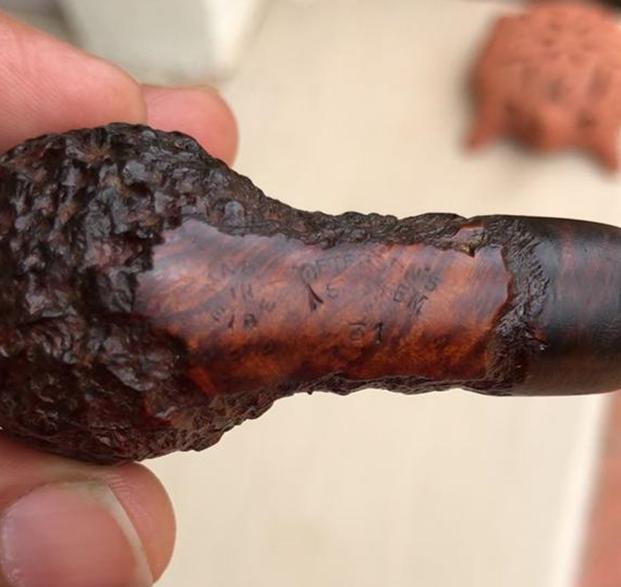
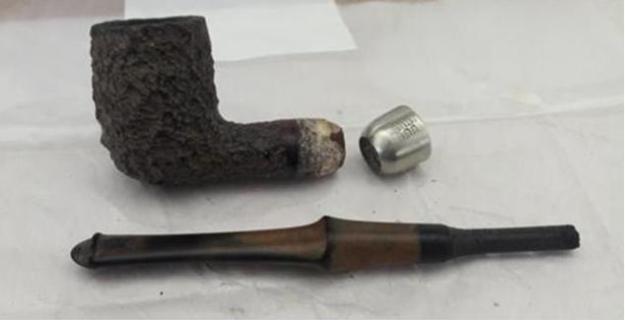
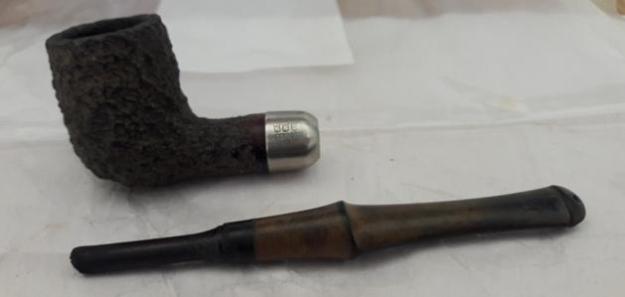
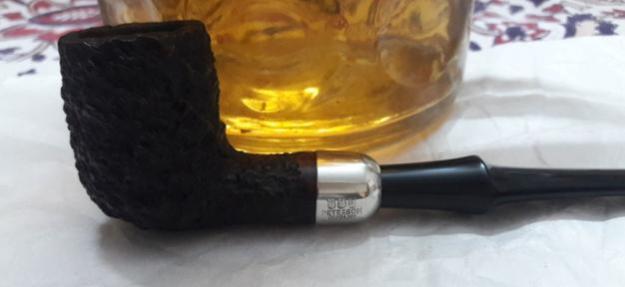
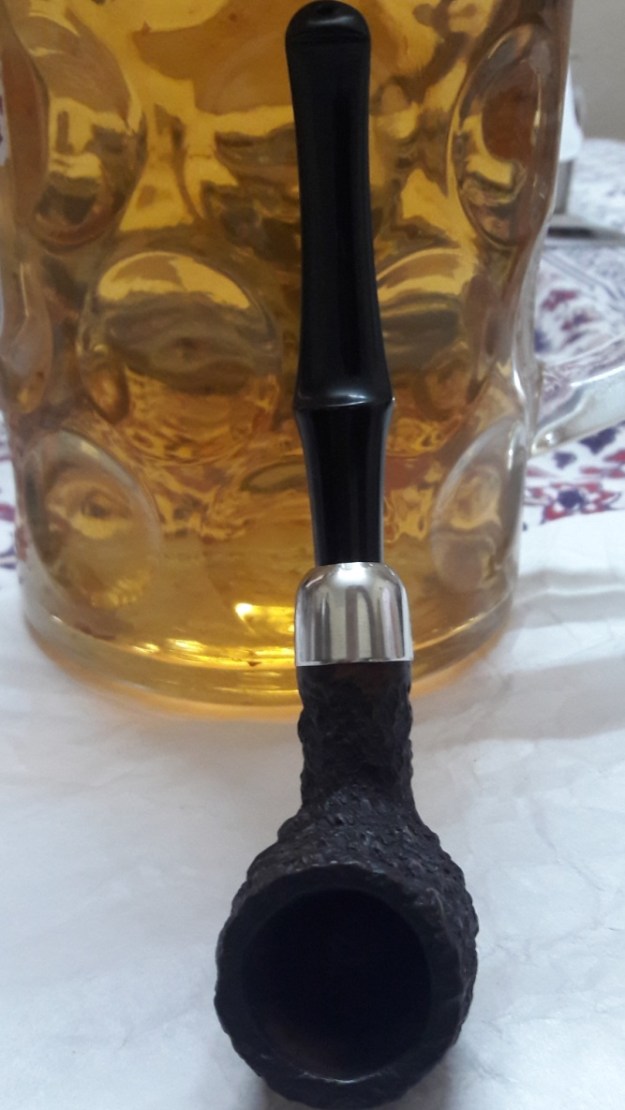
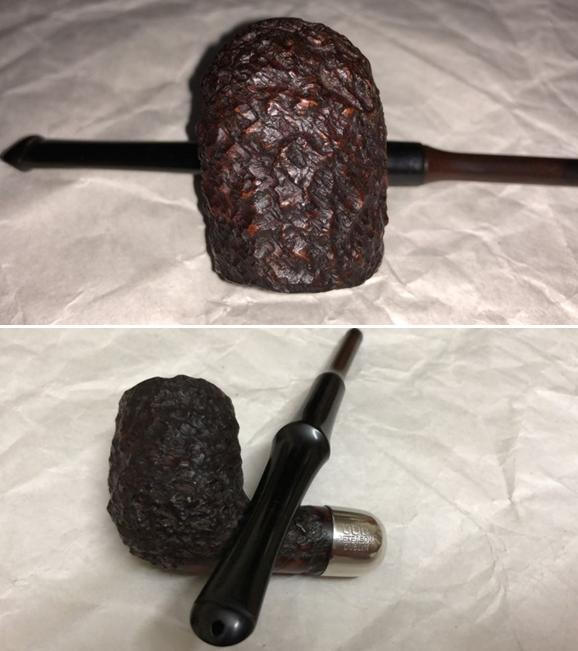
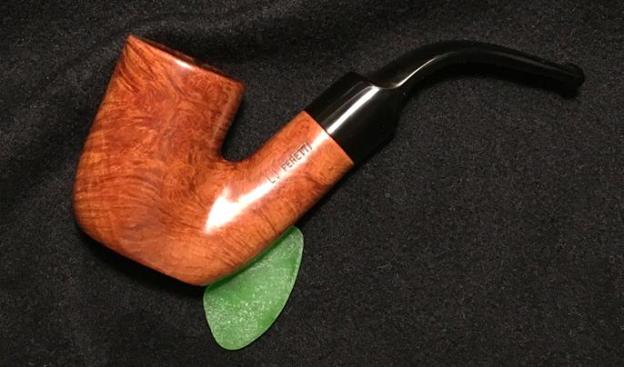
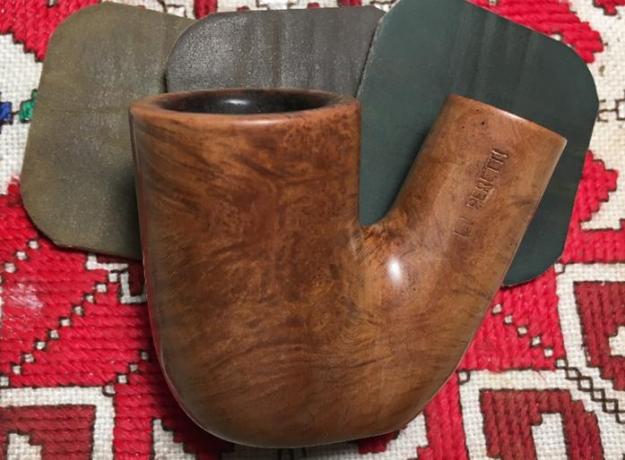
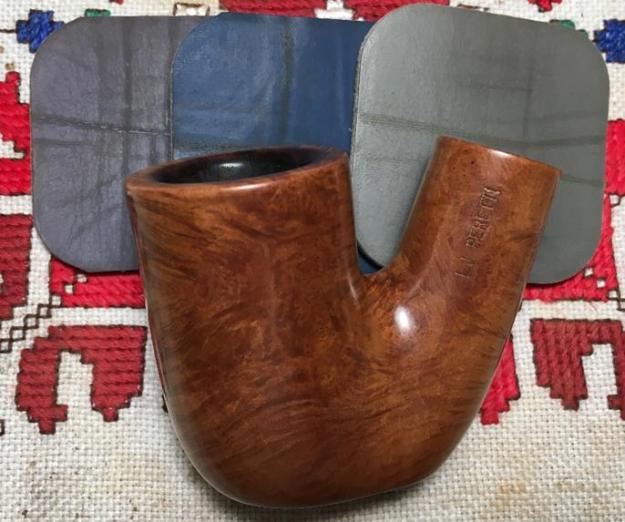
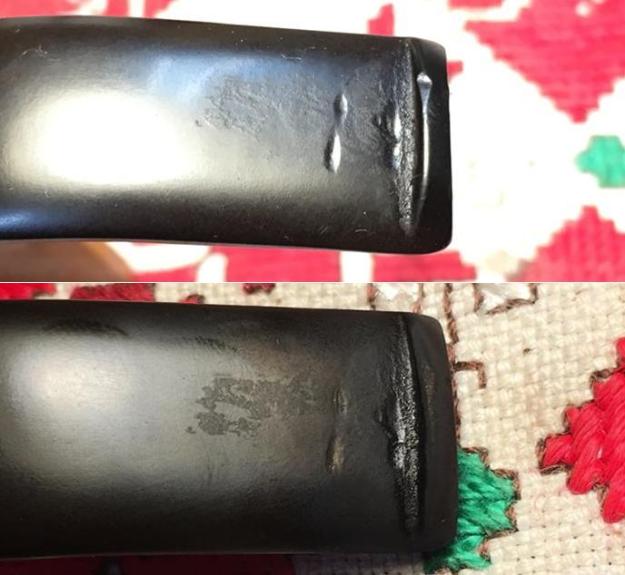
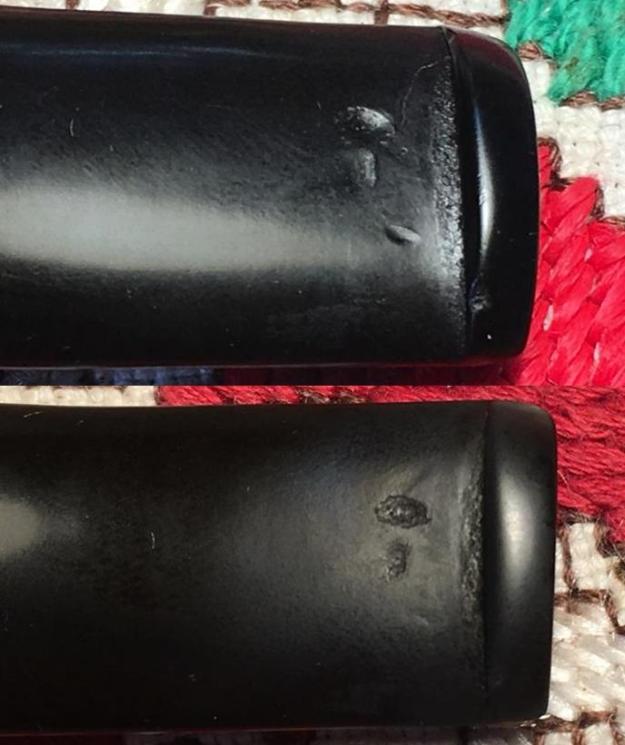
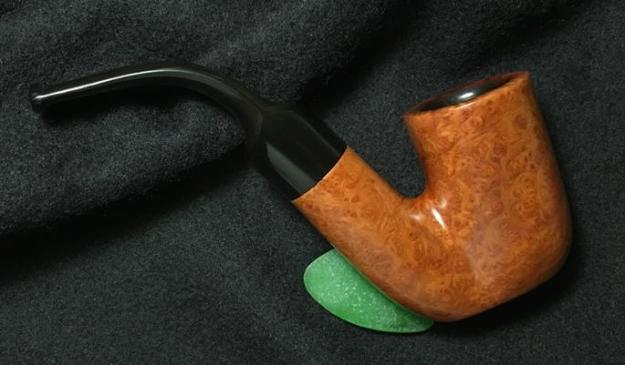
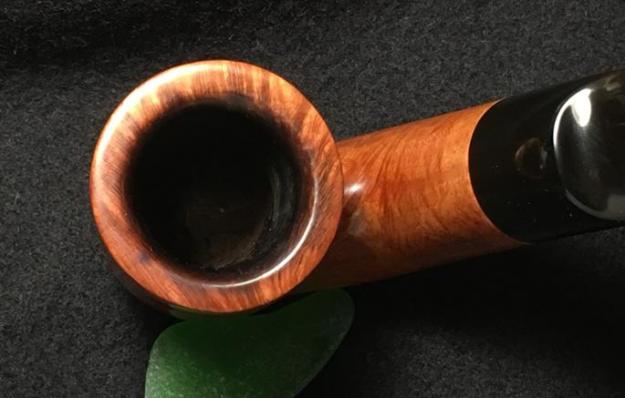
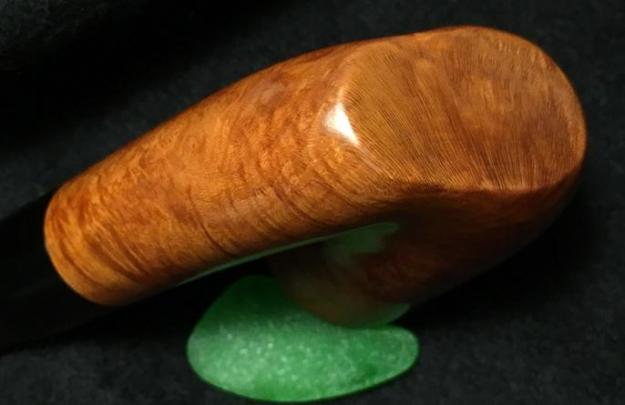
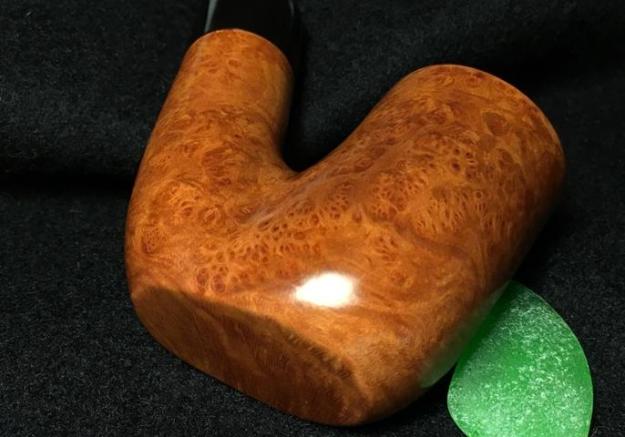
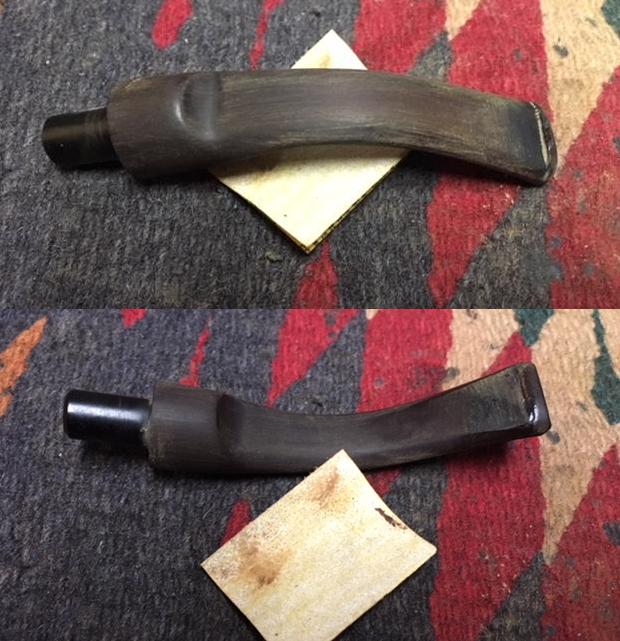
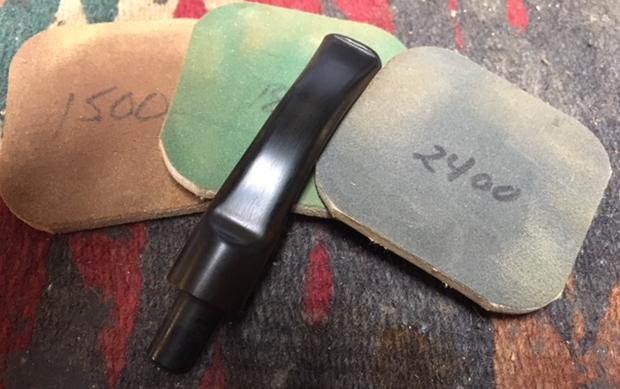
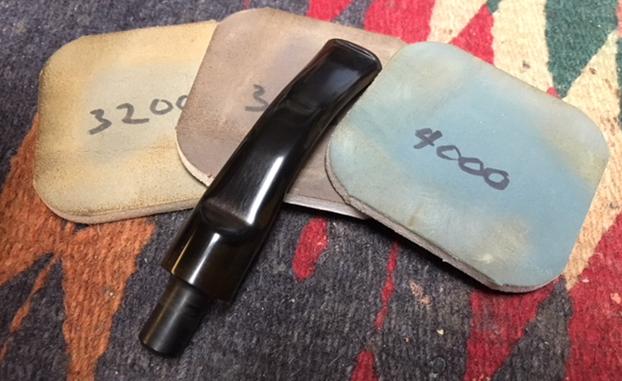
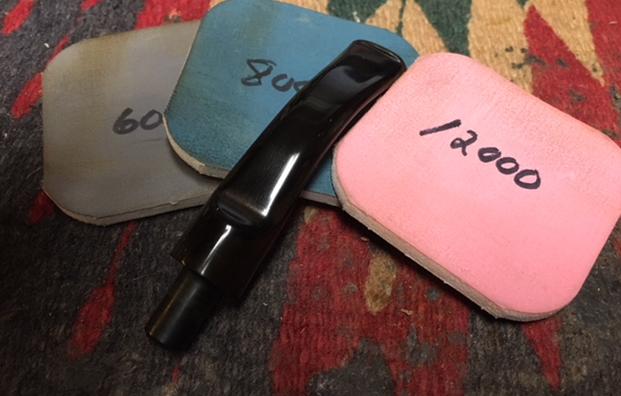
Tag Archives: removing tooth marks

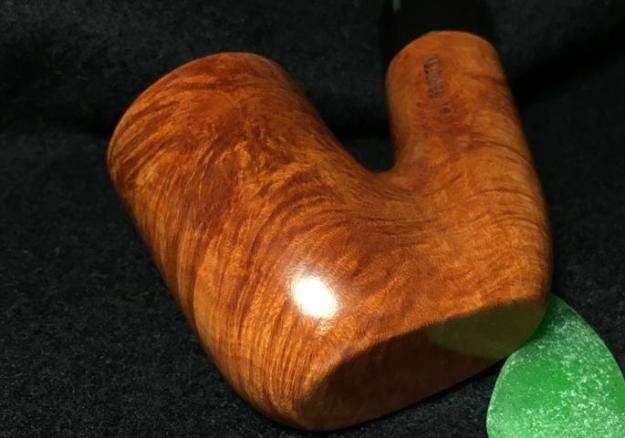
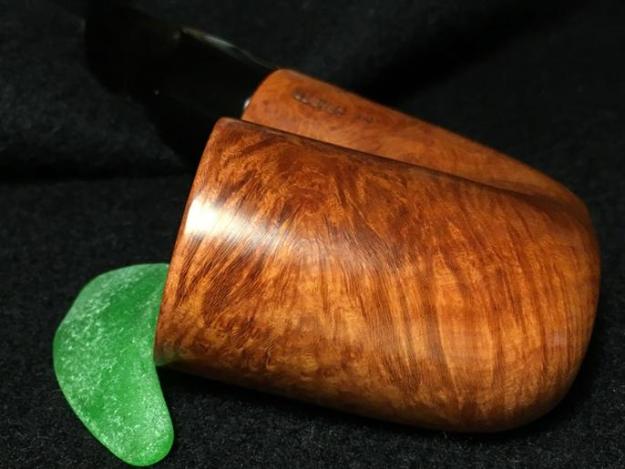
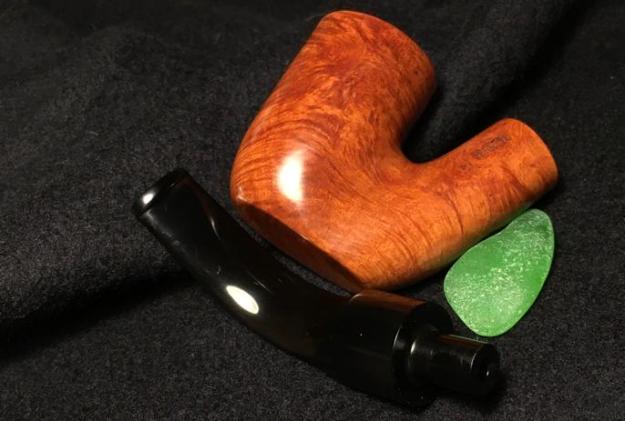
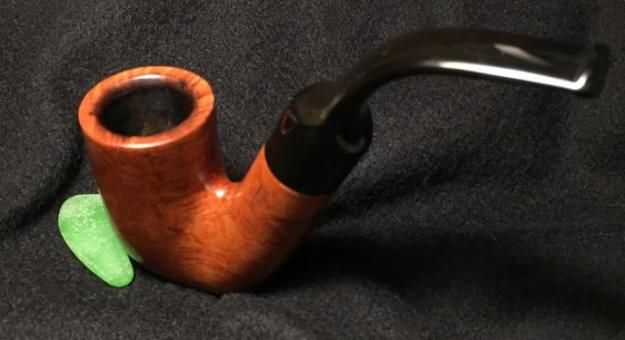
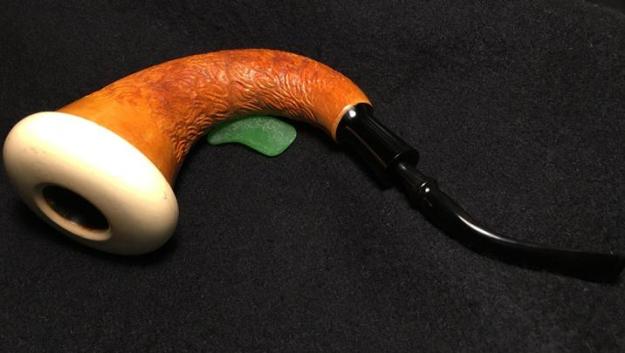
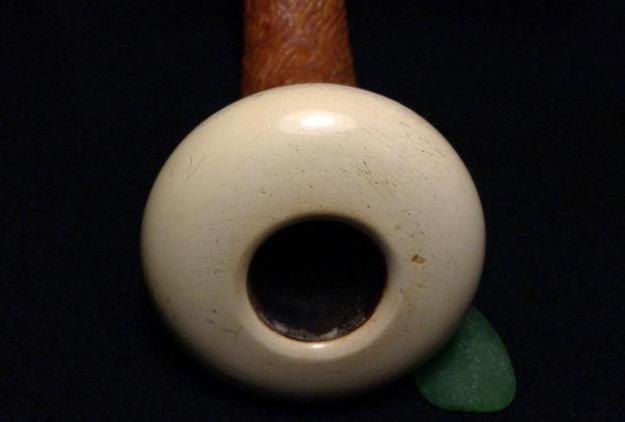
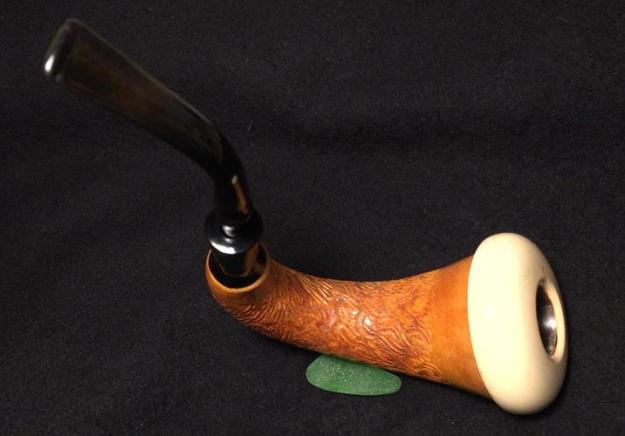
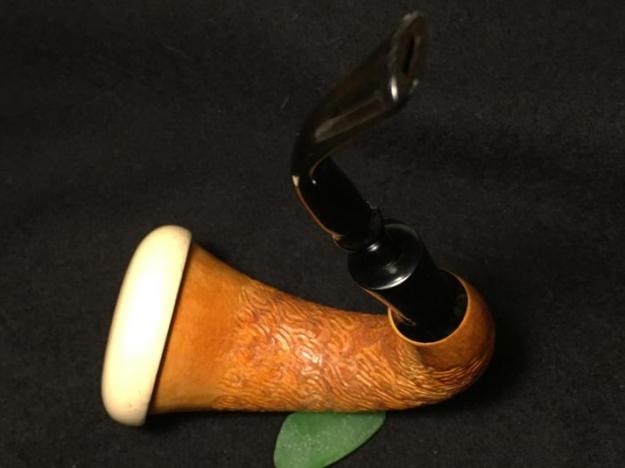
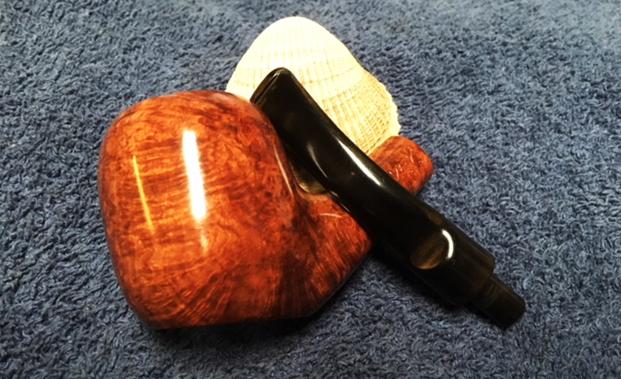
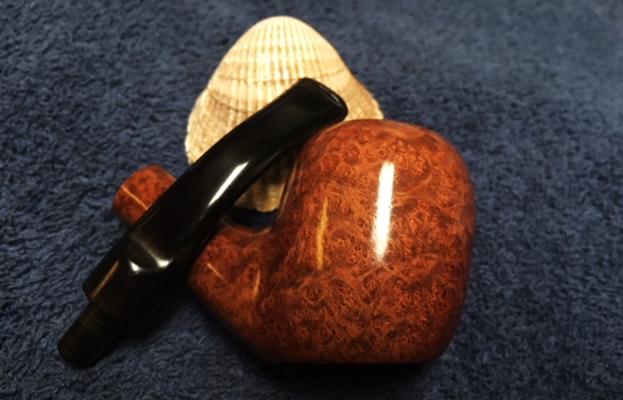
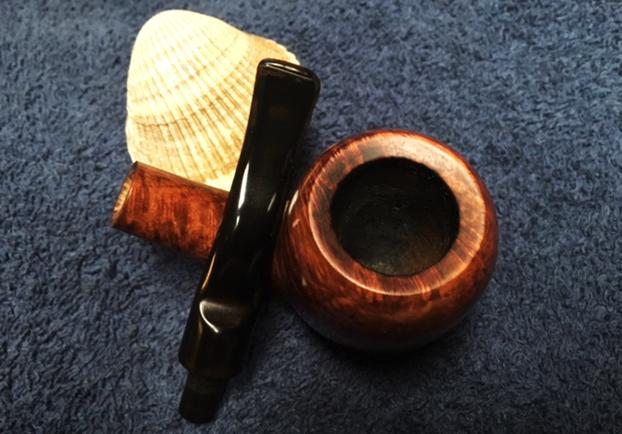
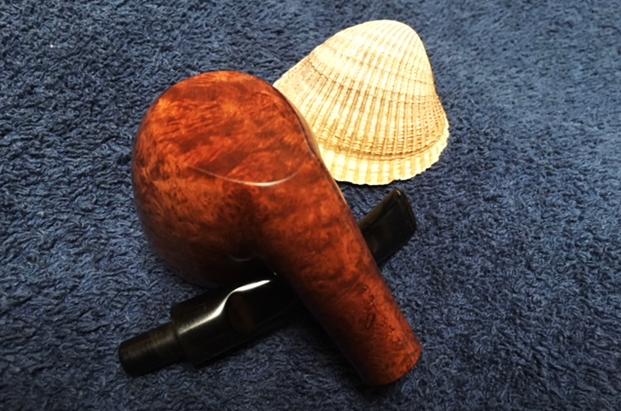
Breathing New Life into a Le Nuvole Rusticated Long Shank Dublin


Blog by Steve Laug

Sometimes a voice from the past is a good thing for both parties. Many years ago now, here in Vancouver I met Eric at the Vancouver Pipe Club. We talked at pipe club meetings and had a common calling as ministers in within different Christian Churches. Over time Eric moved to Eastern Canada and I moved on to work for an NGO here in Vancouver. Not too long ago I received an email from Eric about some pipes that he had that he wanted me to work on for him. We made arrangements and soon a box with three of his pipes was traveling to me from Ontario. It arrived quite quickly and I opened it when it arrived. Eric had thoughtfully included a tin of Samuel Gawith’s Commonwealth Mixture Full Strength for me to smoke and I was looking forward to cracking it open. Included in the box were three pipes – a Danbark Hand Carved from Denmark that was quite stunning, a Bewlay Sandblast Billiard and a Le Nuvole Long Shank Dublin. Each had different challenges to address but each was a beautiful example of the pipe maker’s craft. I decided to work on the Le Nuvole first. I am not sure why I chose that one first but maybe it is because I have a Le Nuvole Cornetto myself and really enjoy the craftsmanship of the pipe. Or perhaps something about the shape and finish caught my eye.

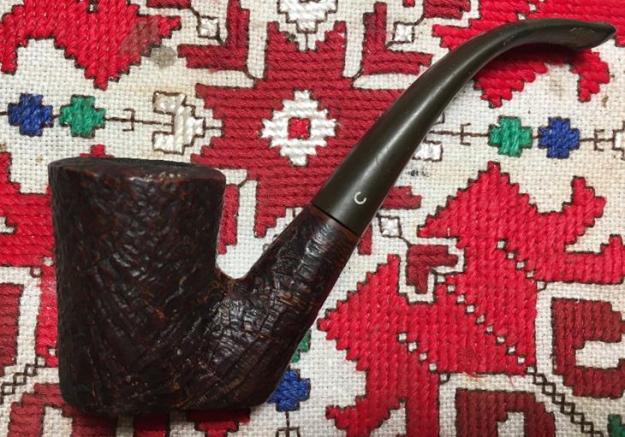
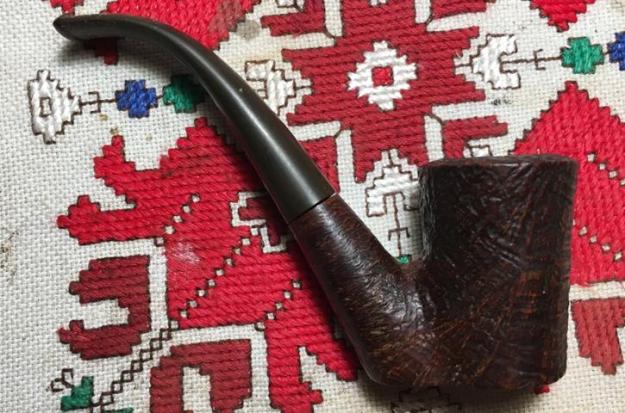
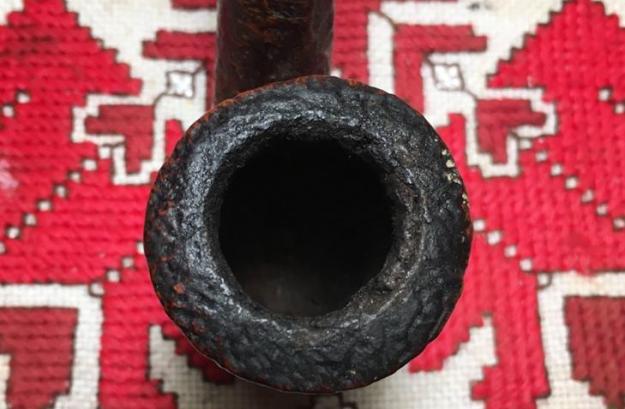
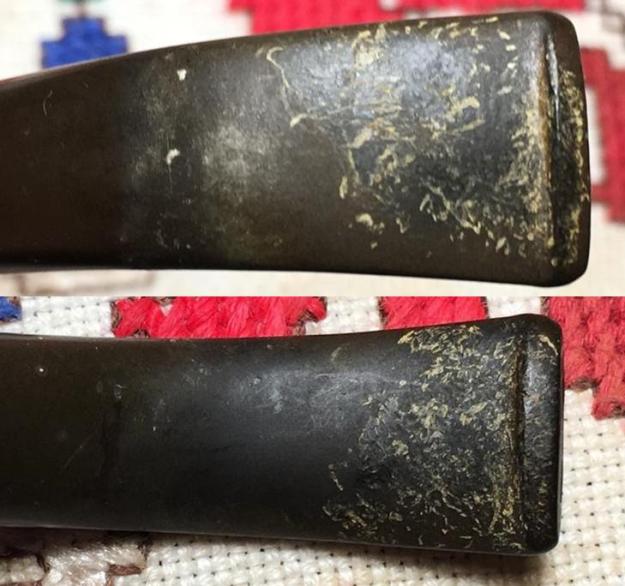
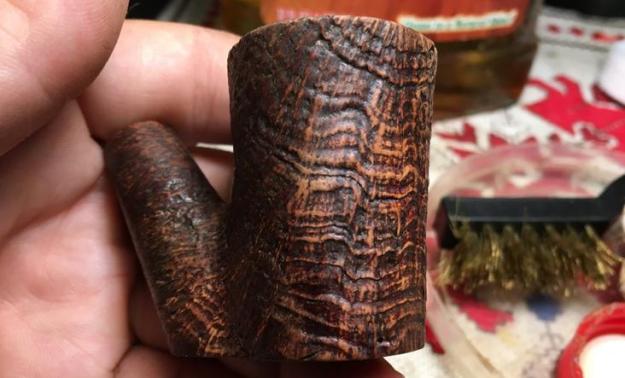
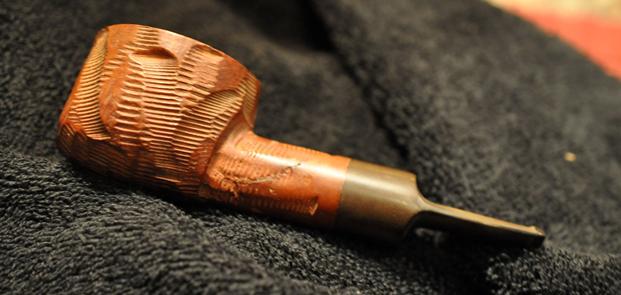
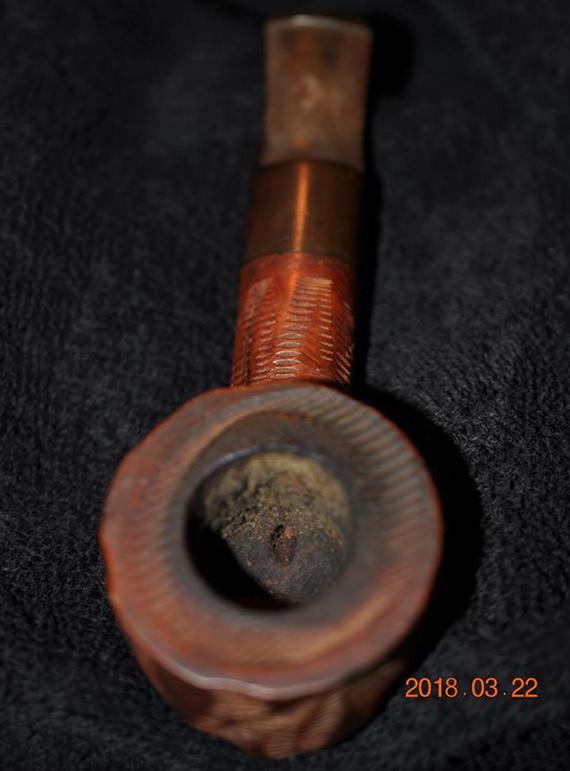
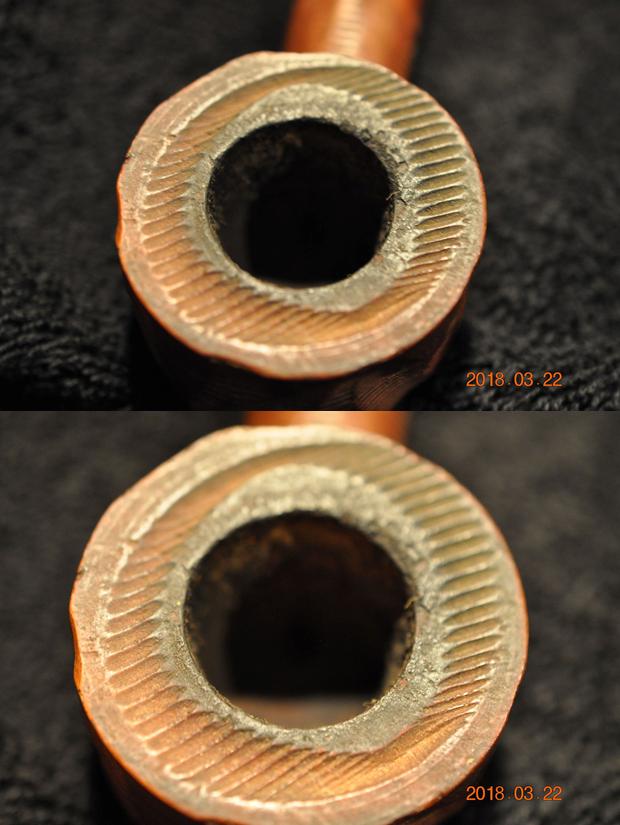
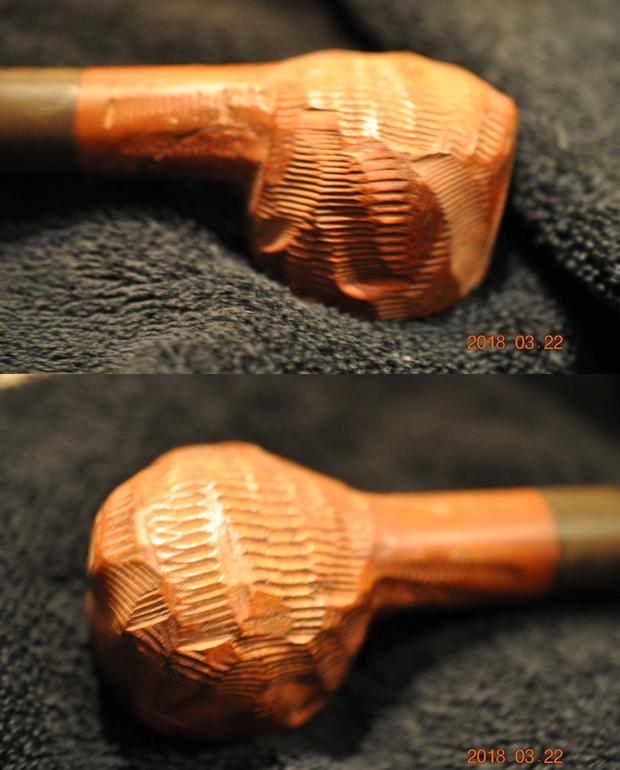
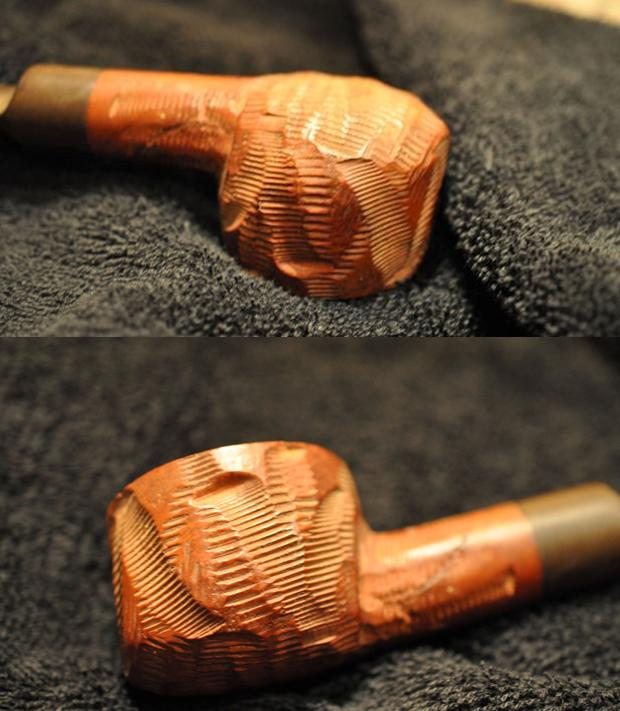
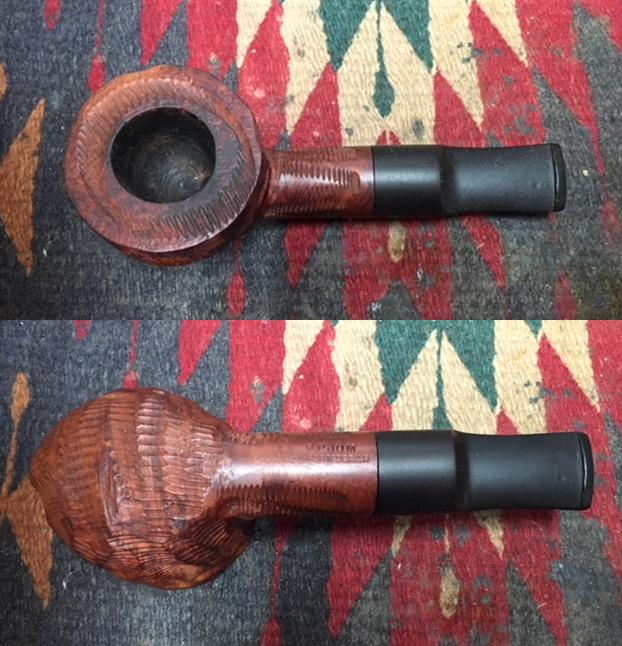
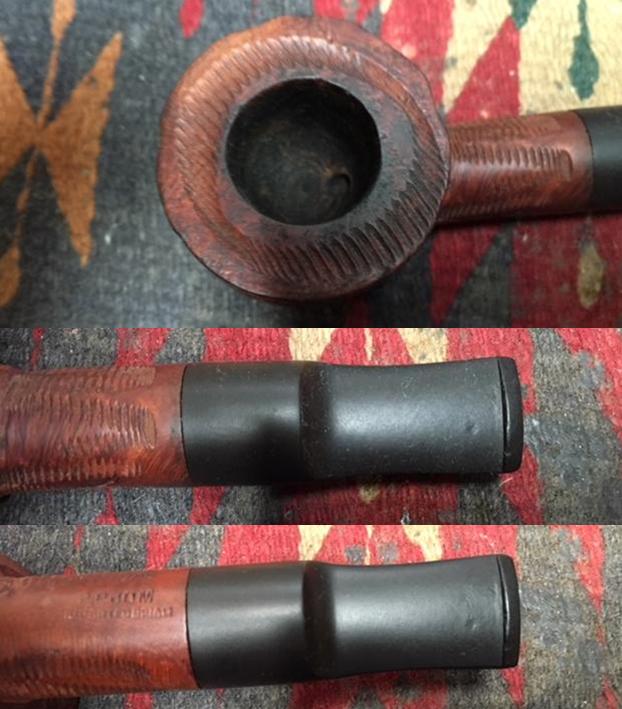
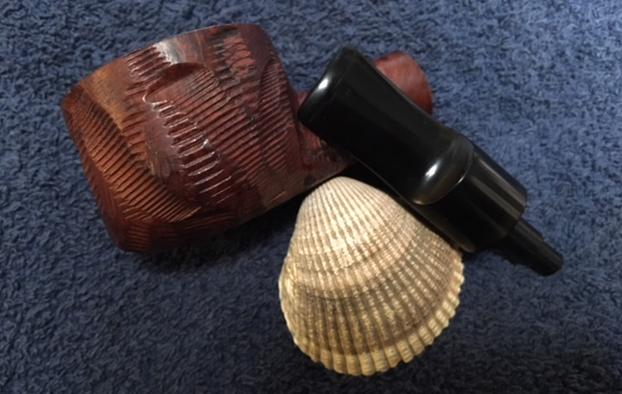
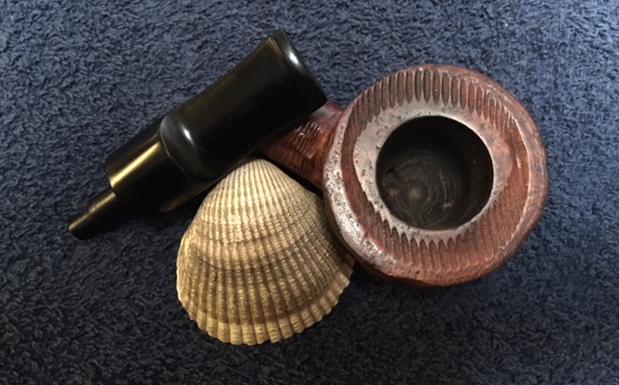
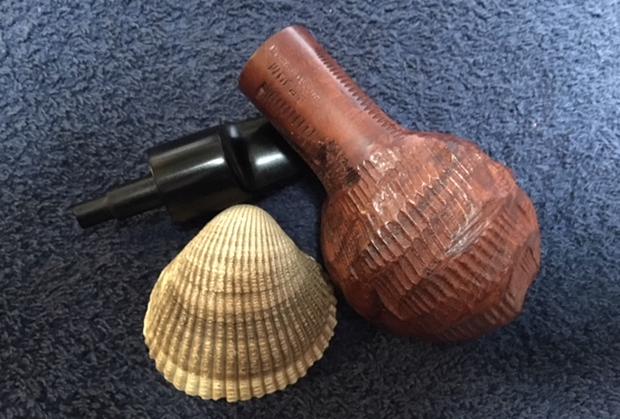
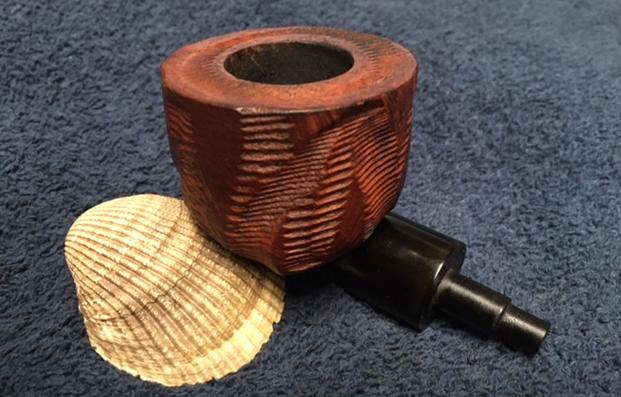
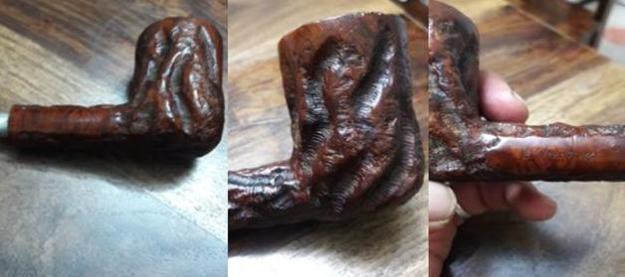
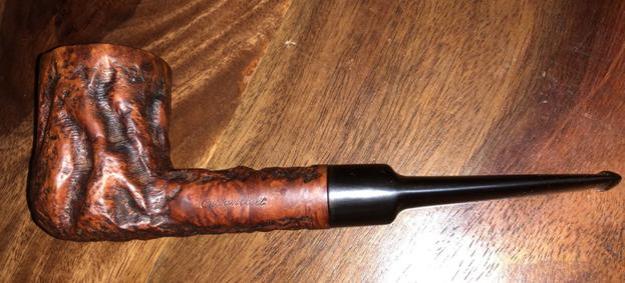
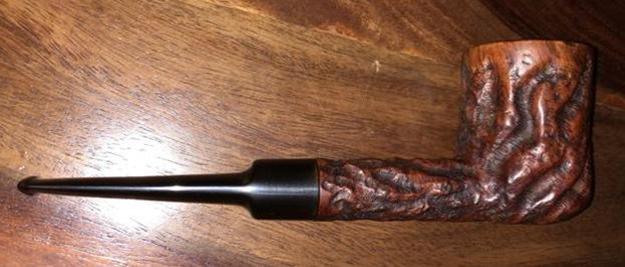
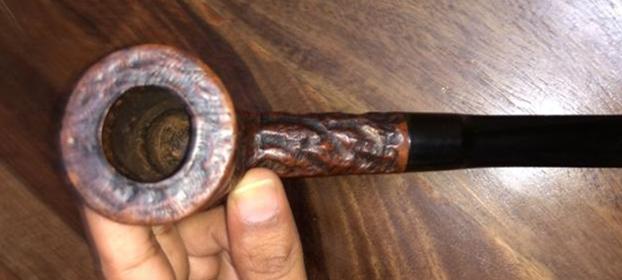
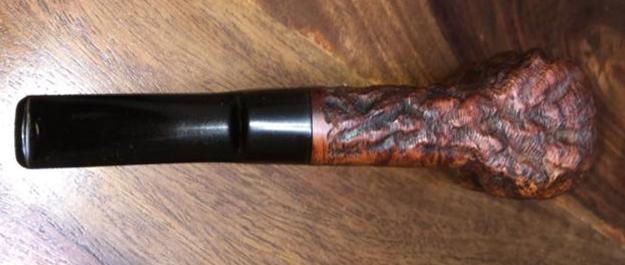
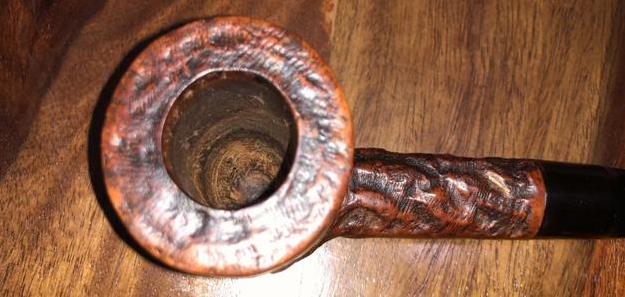
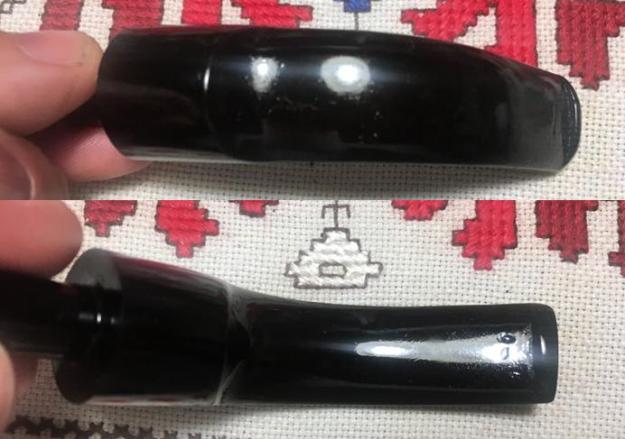
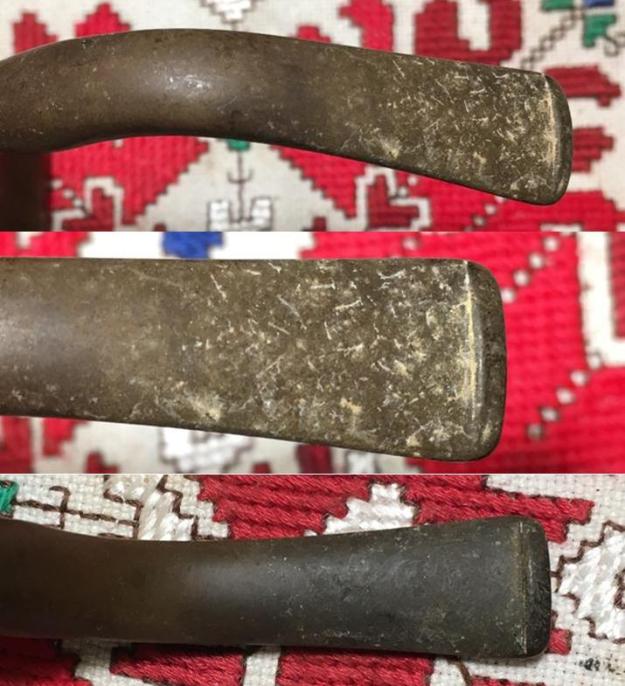
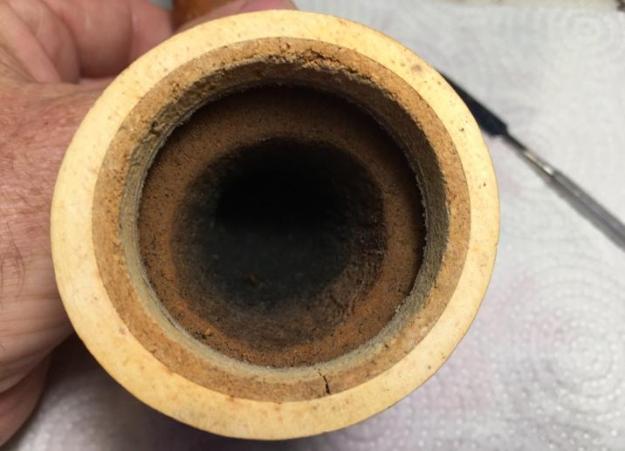
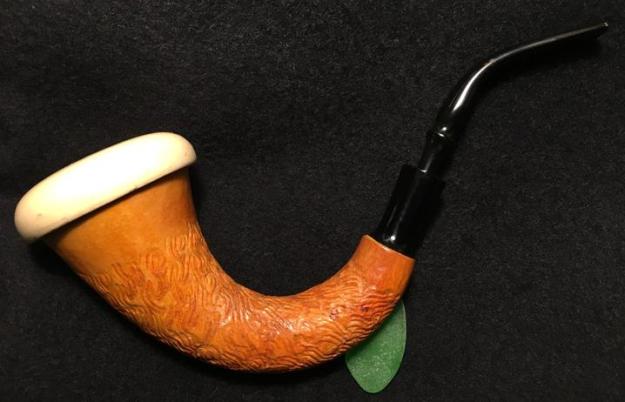
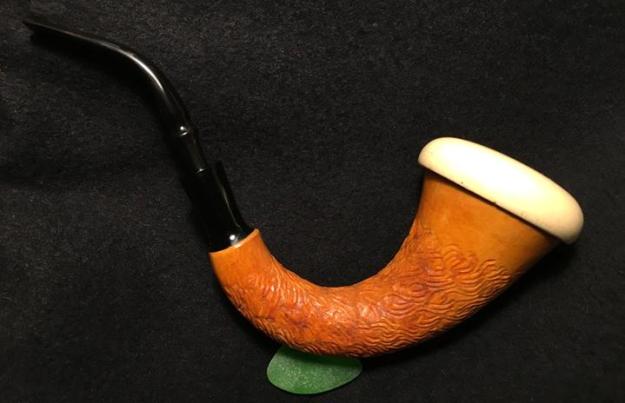
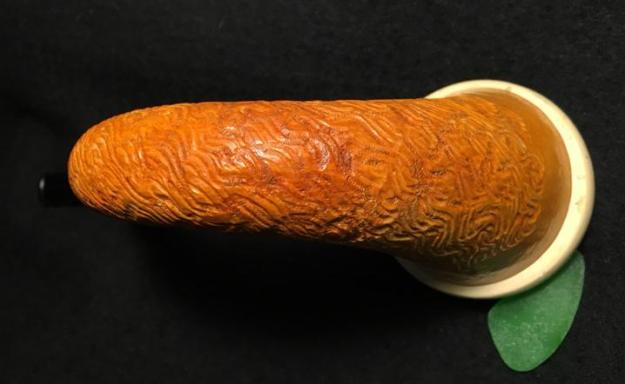
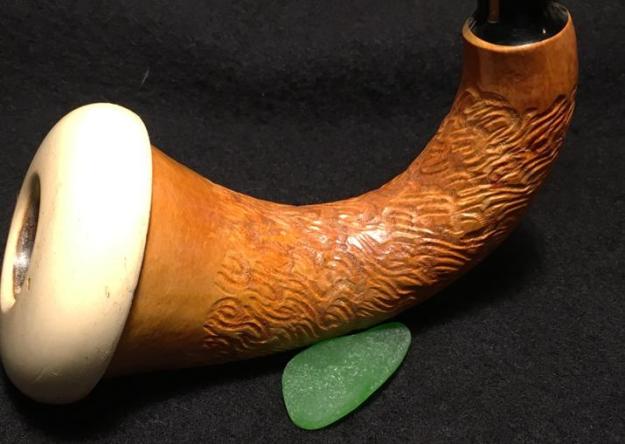
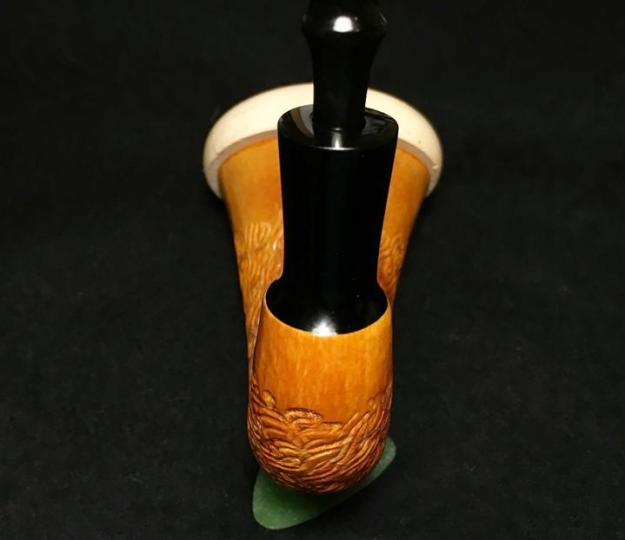
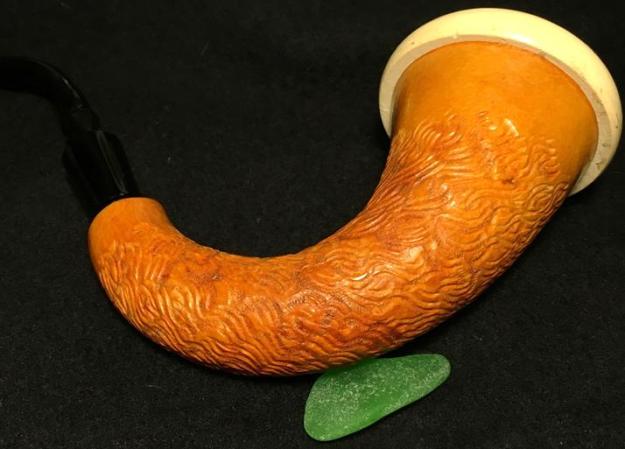
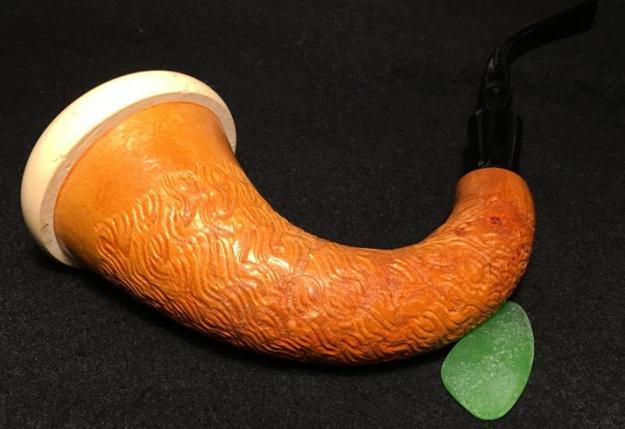
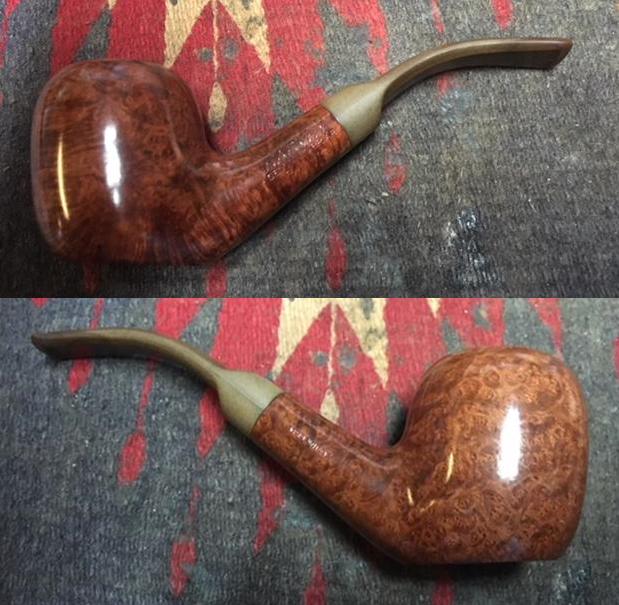
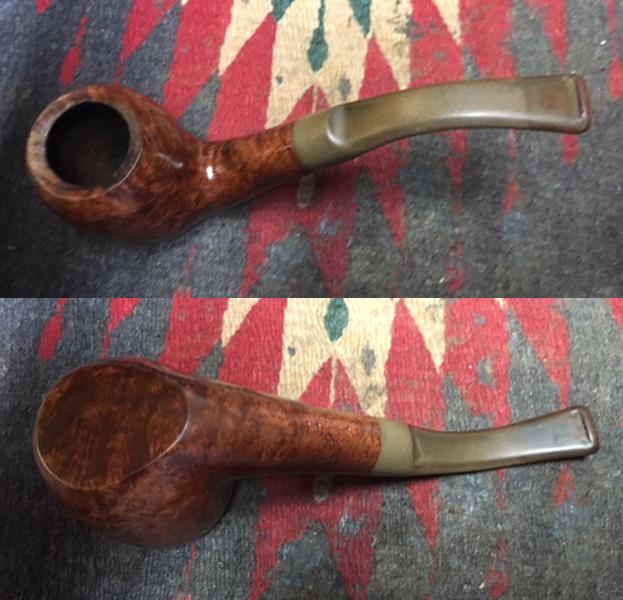
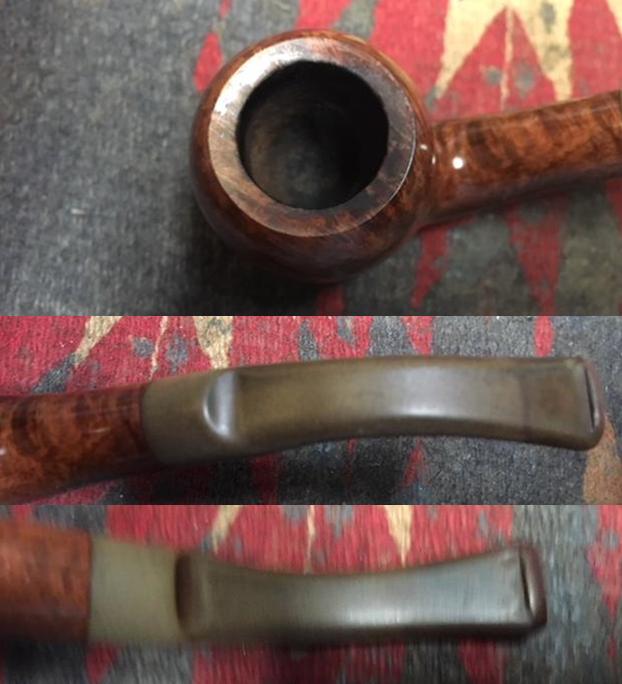
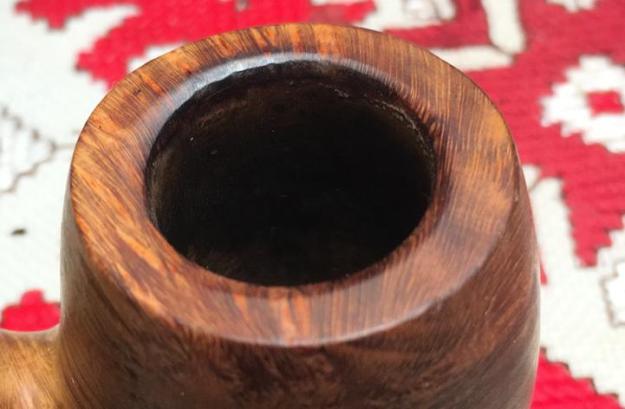
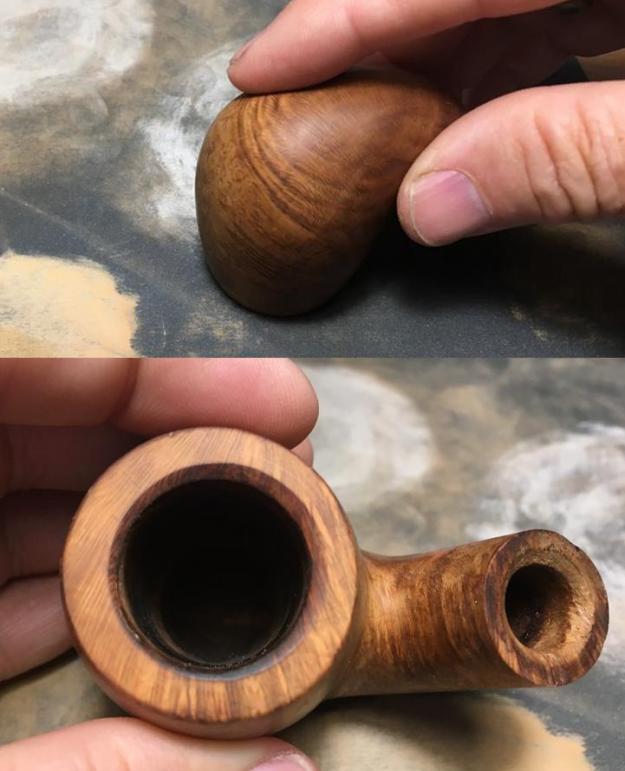
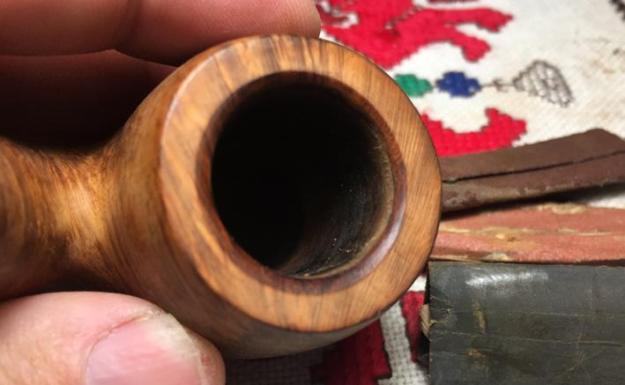
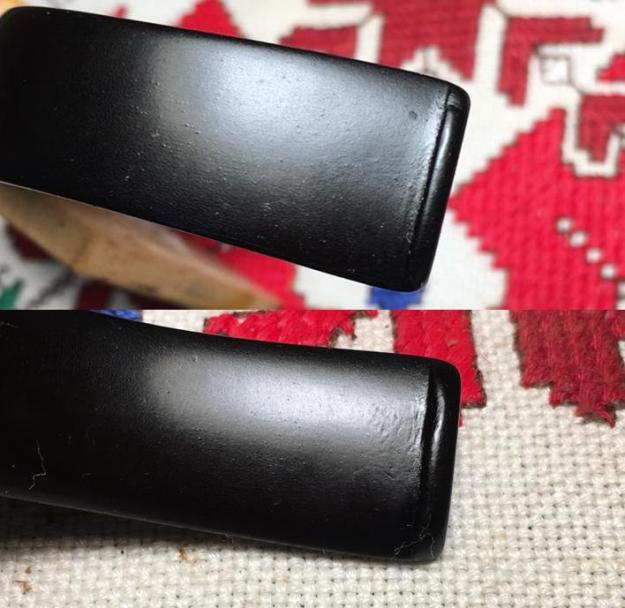
Whatever the reason, I began with it. The finish on the pipe was very dirty with a lot of grit and grim in the grooves and crevices of the rustication. The rim top was heavily tarred with lava that flowed from a thickly caked bowl. The edges of the rim appeared to be in okay condition though I would not know for sure until I had reamed the bowl and cleaned off the rim top. The inner edge of the bowl was beveled inward and showed promise. The bowl was rusticated all around other than a band of smooth briar around the top of the bowl, rim top and the end of the shank. The rim had twin rings around it and also small spots of inlay between the twin rings at ½ inch intervals. The grain on the smooth parts was very nice. The acrylic stem had the white Le Nuvole squiggle on the top side. There was tooth chatter on both sides at the button and a deeper tooth marks on the top next to the button. The pipe was very dirty and reeked of heavy English tobaccos. I think that the previous owner (before Eric) was a stranger to pipe cleaners. I took photos of the pipe to show the condition it was in when it arrived. I took close up photos of the bowl and rim top to show its condition. You can see the thick cake in the bowl and the overflow of lava onto the inner edge bevel and on the rim. The rim does not look damaged on either the inner or outer edge in this photo. I also took photos of the stem to show the general condition it was in as well. It looked pretty good other than a small tooth mark on the underside of the stem next to the button and tooth chatter on both sides. I decided to read a little about the brand and the couple who made the pipes – Maurizo and Stefania Tombari. I have had my Le Nuvole since the early 90s and it is a great smoking pipe and extremely well made. It has a very similar rustication pattern as this pipe. I did some reading on Pipedia and on PipePhil’s site to remind myself of the history of the brand. I thought I would summarize what I found to give some back story to the pipe.

With Le Nuvole line, founded in 1996, Maurizio Tombari would like to offer a fine artisanal product, coupled with the perfection of the execution and a personal and innovative formal research. This is done by melding long experience matured in the Pesarese workshops with the “uncontaminated” creative vision of his wife, Stefania, his partner for the stylistic designs.

Ambitious conductor theme “Ambizioso tema conduttore”: joining functionality and elegance. A particular concession to the fantasy of the shapes and a digression from rationality, is reserved for the ZED line of pipes, an exiguous series of exclusive and numbered models.

Maurizio produces 230 pieces per year; each piece is realized with the same meticulousness and care of details. The ageing of at least 3 years of the briar (from Calabria and Tuscany), stored in an insulated room, plays a vital role in the smokability and the ‘flavour’ of the pipes. The special processing and finishing of the methacrylate(acrylic) mouthpieces ensures a perfect “suitability” of the pipe.

Maurizio Tombari was born in Pesaro in 1953 and received a diploma in painting at Accademia di Belle Arti in Urbino in 1978. Since then until 1996 he worked for pipe makers Mastro de Paja and Ser Jacopo. At the same time, he was an interior designer and he took part in painting exhibitions. https://pipedia.org/wiki/Le_Nuvole

From the PipePhil website I quote: Artisan: Maurizio Tombari (born 1952) collaborates with his wife Stefania. This brand founded in 1996 offers amazing shapes.

Gradings: a number above a cloud. Smooth pipes (ascending): 3 to 8; Sandblast pipes: S1 to S3;    Rusticated pipes: 1 and 2. Dating: From Jan 1st, 2012 the pipes are stamped with a 2 digits number (12=2012). http://www.pipephil.eu/logos/en/logo-l3.html

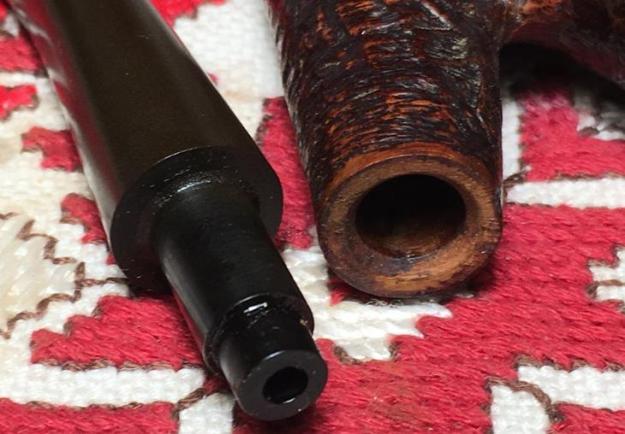
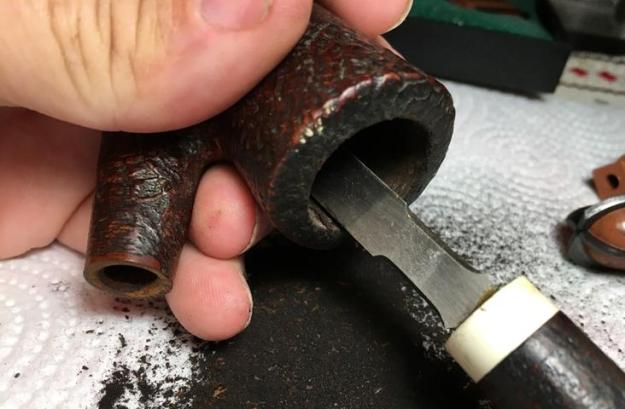
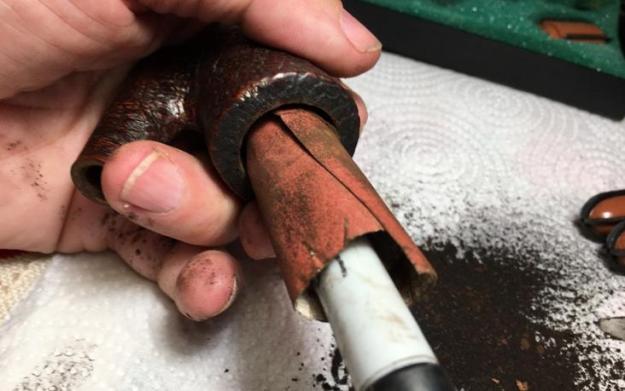
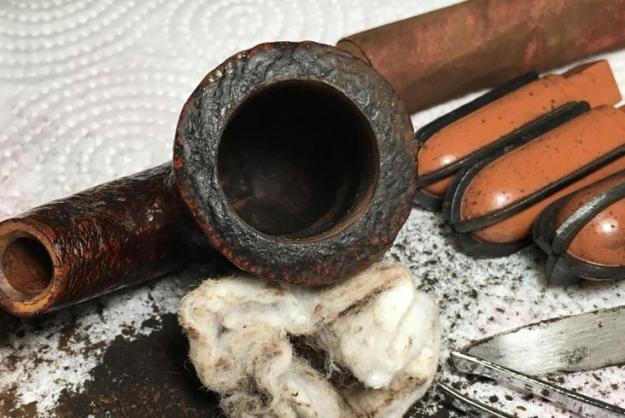
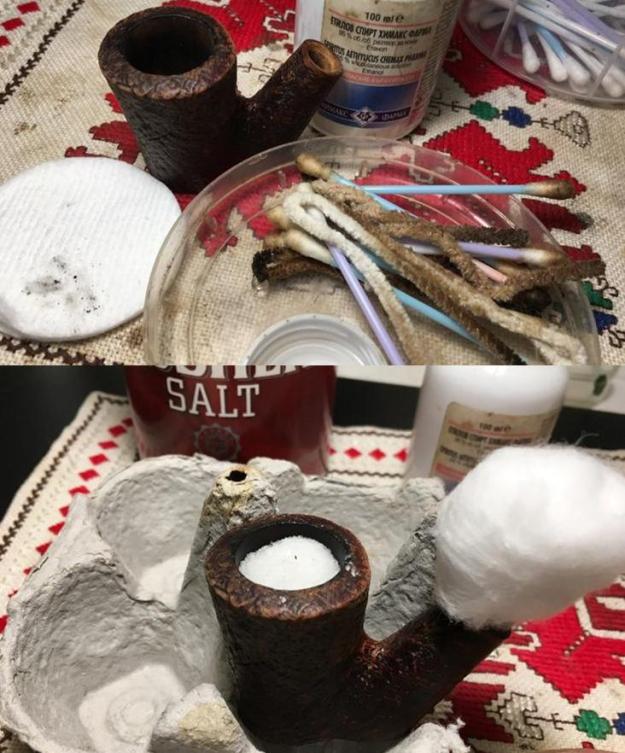
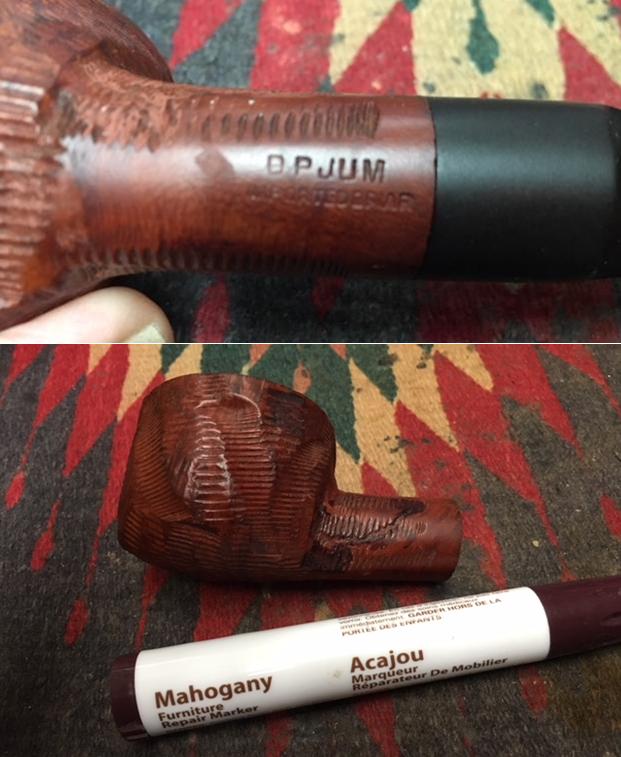
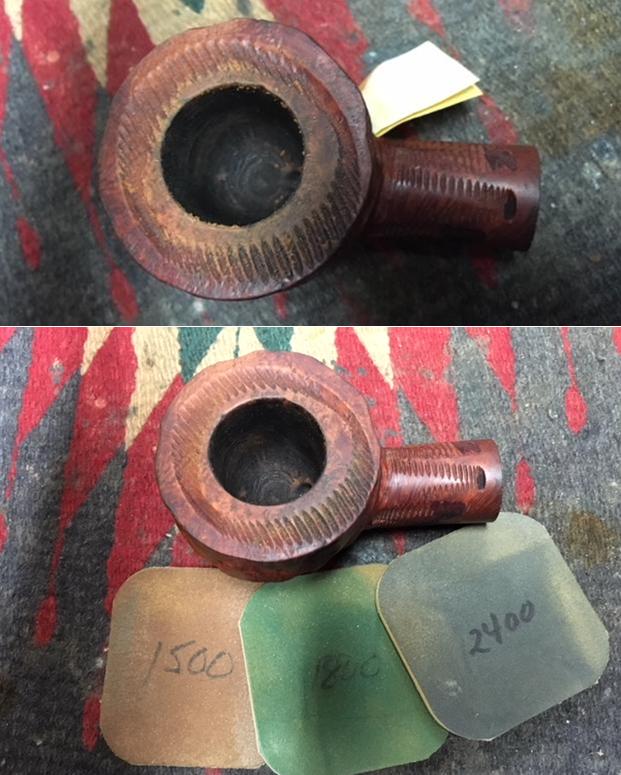
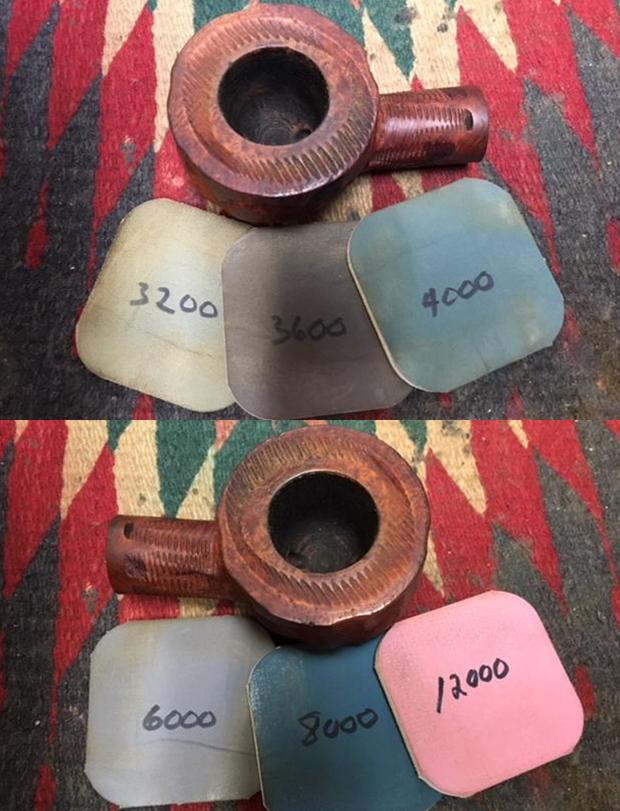
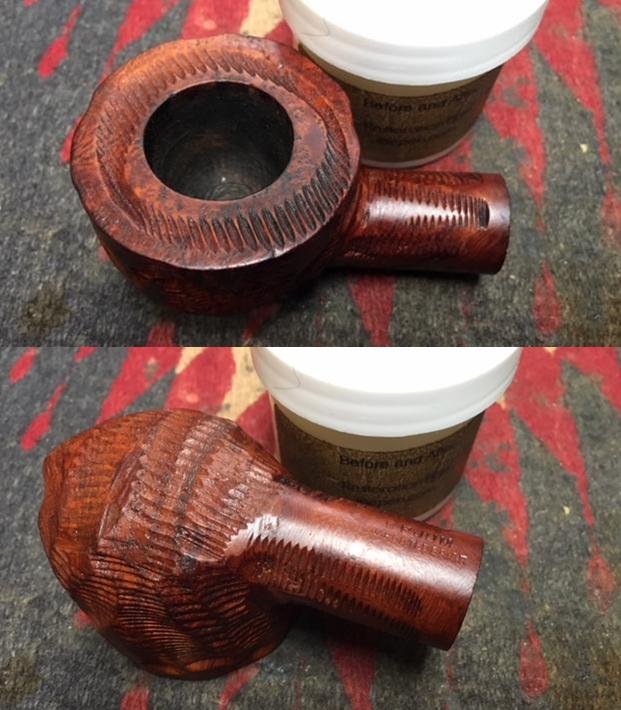
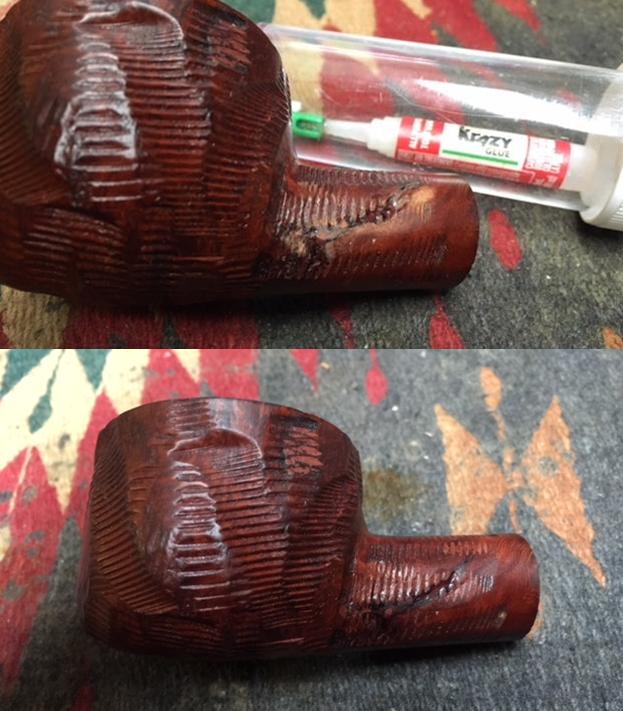
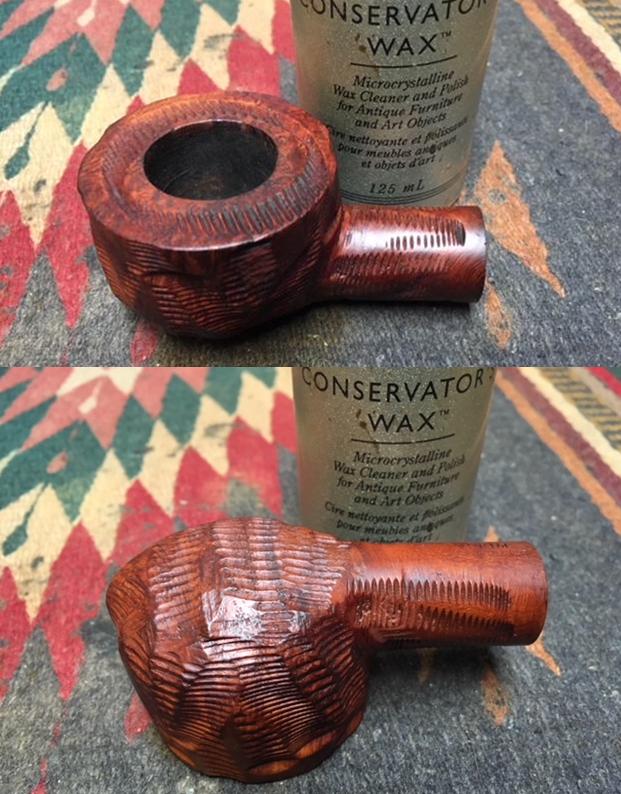
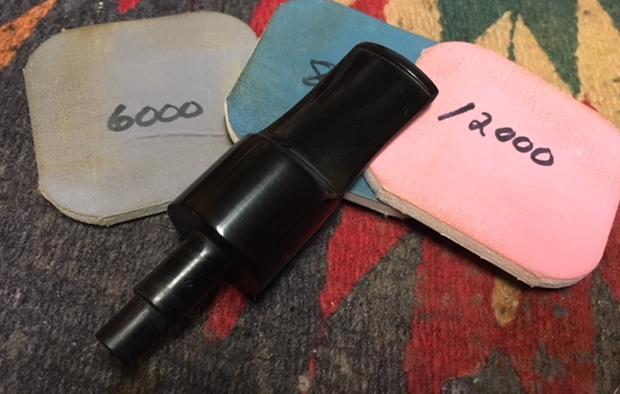
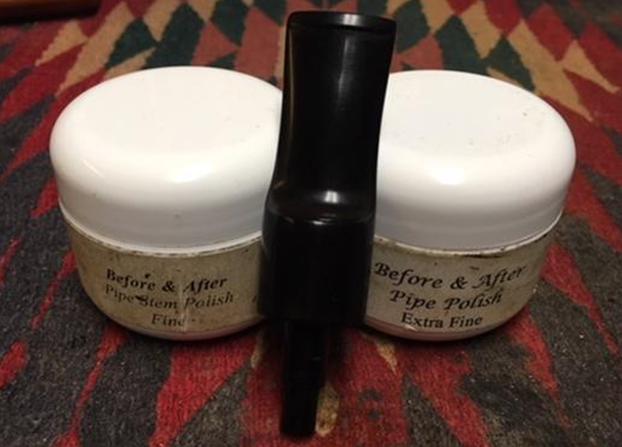
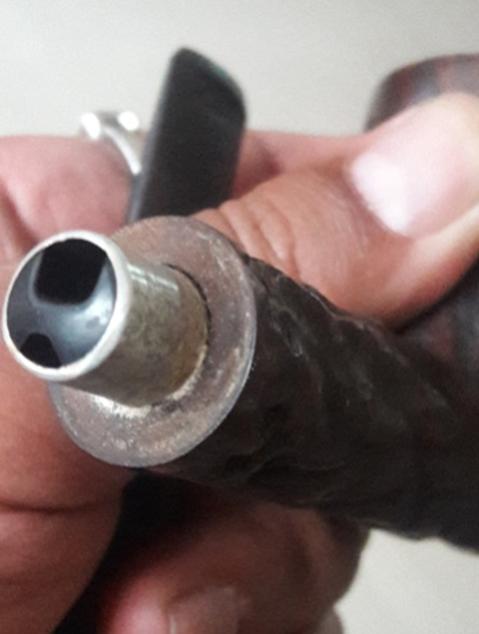
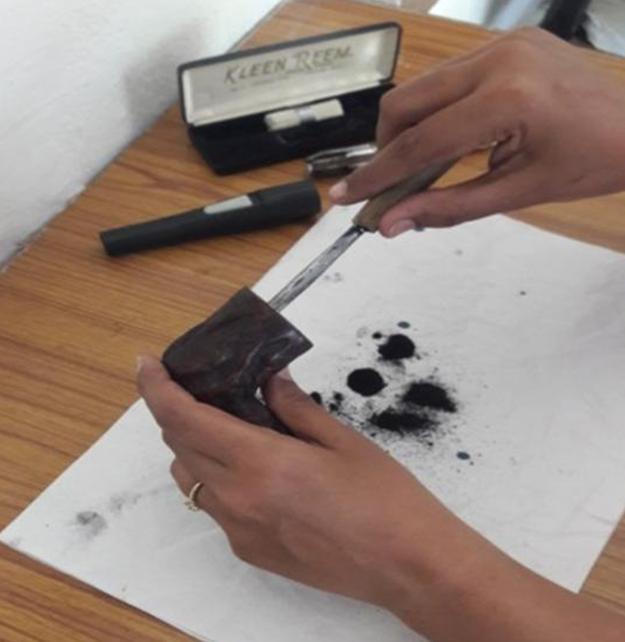
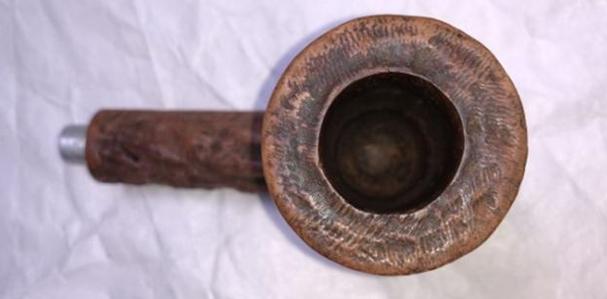
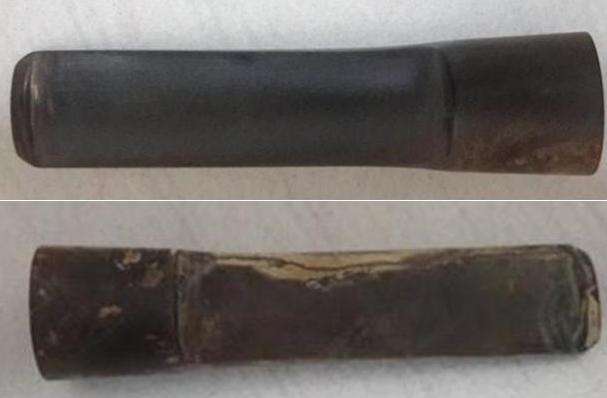
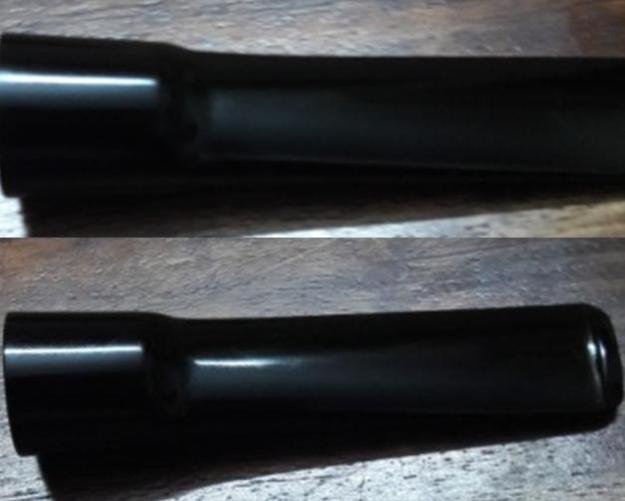
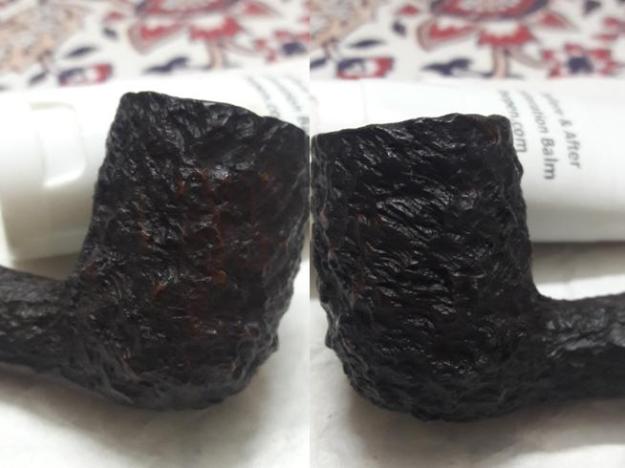
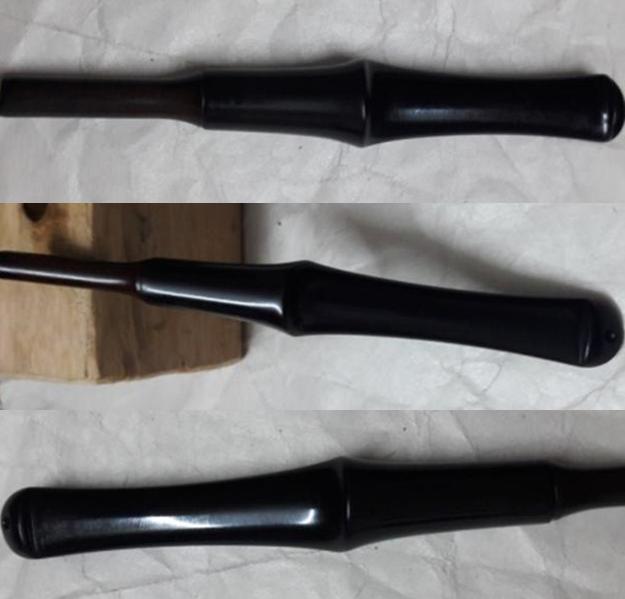
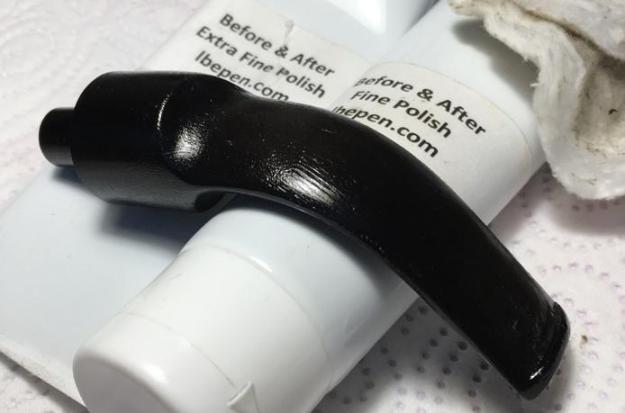
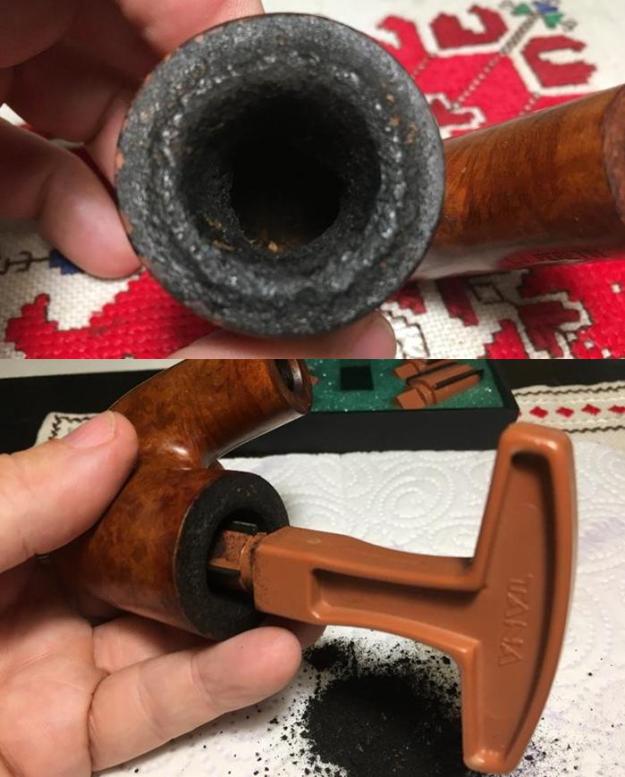
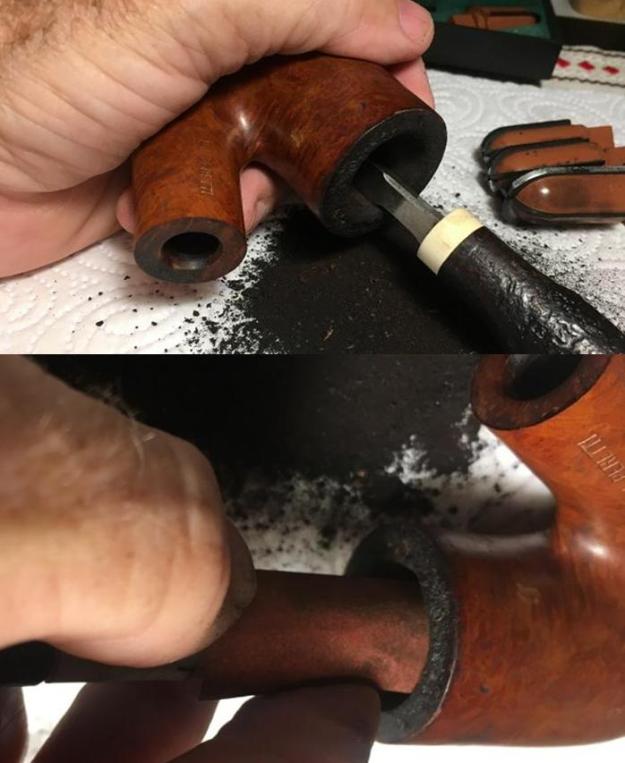
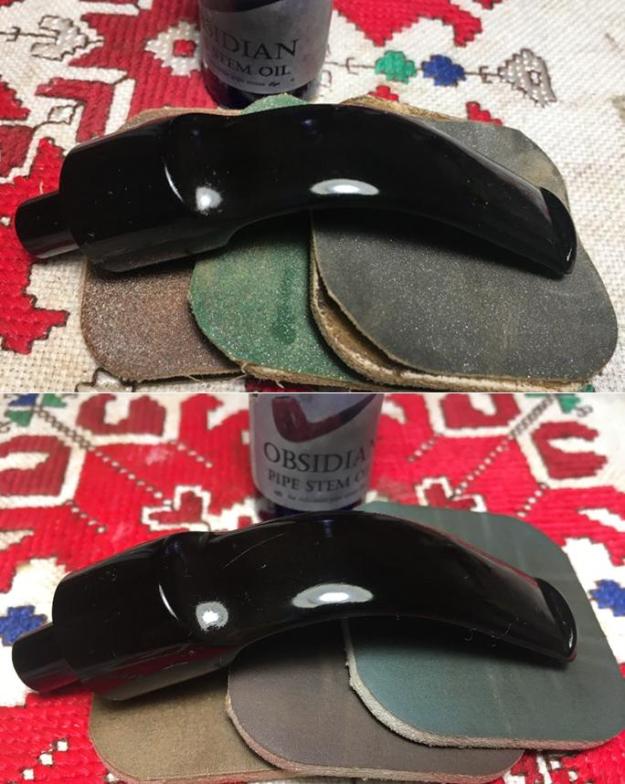
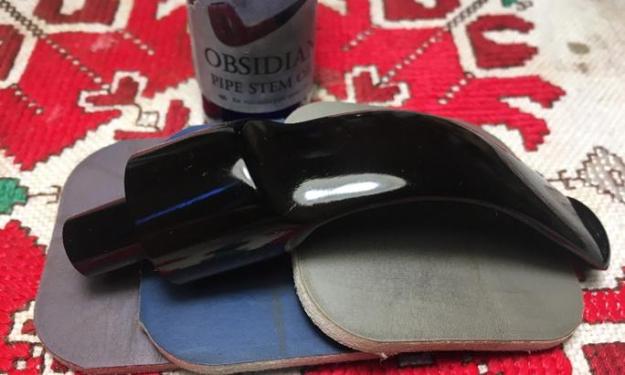
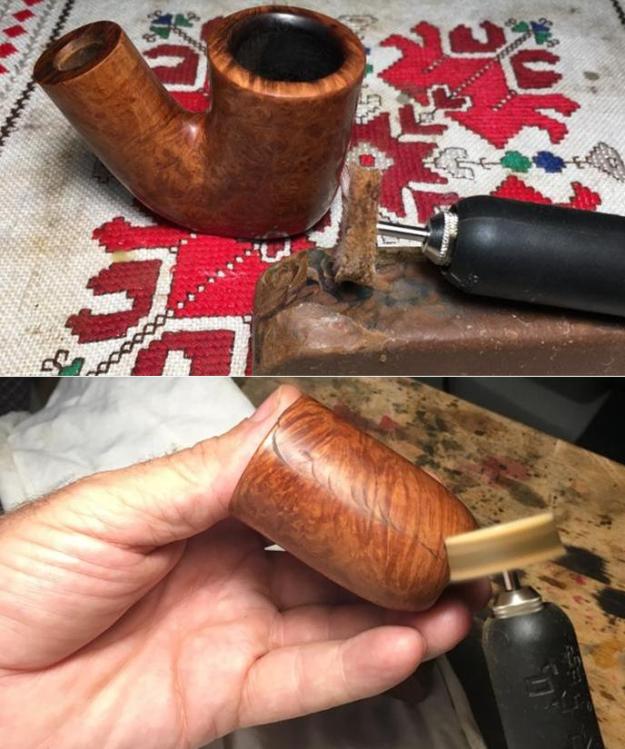
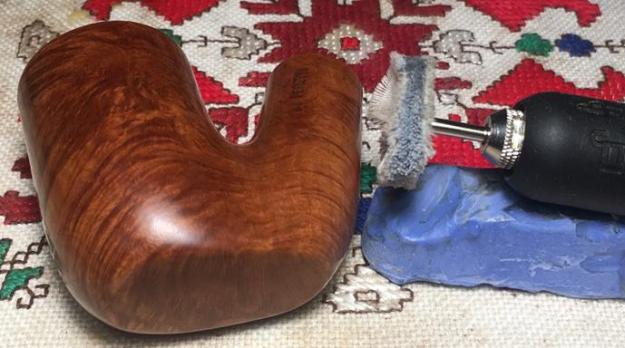
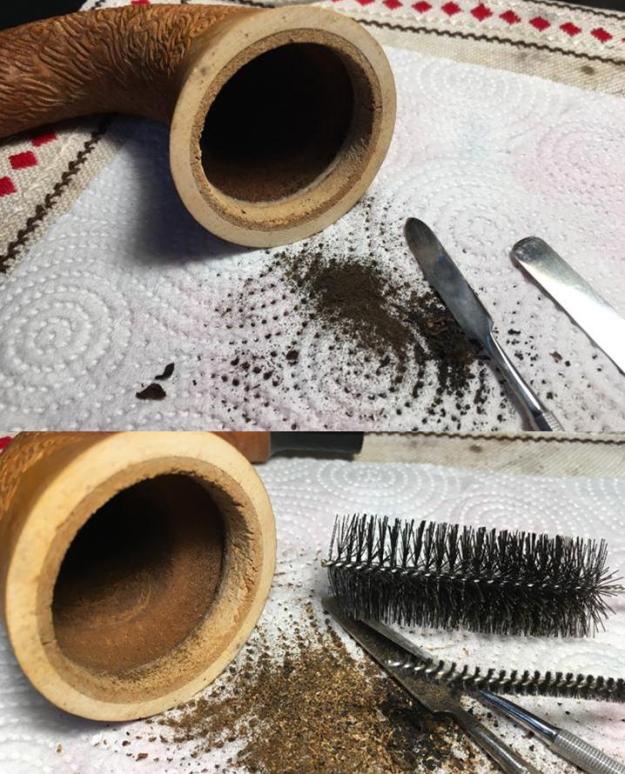
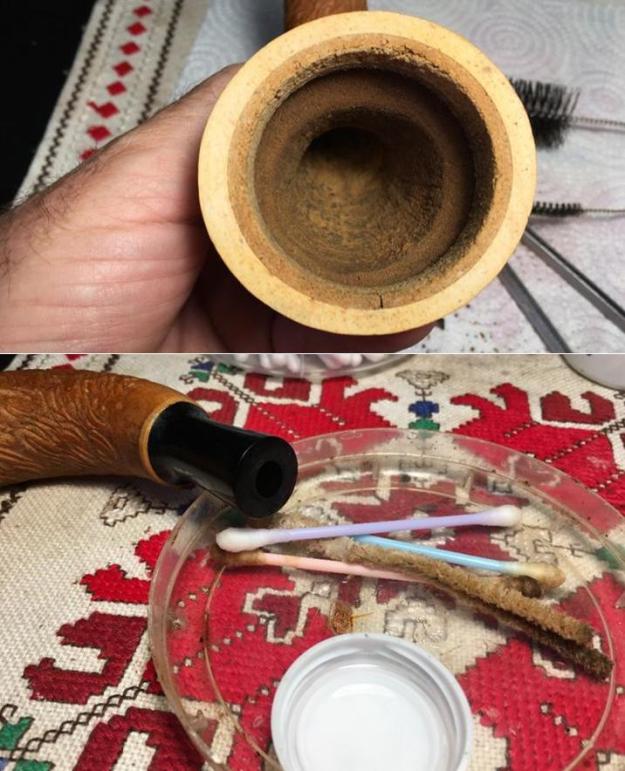
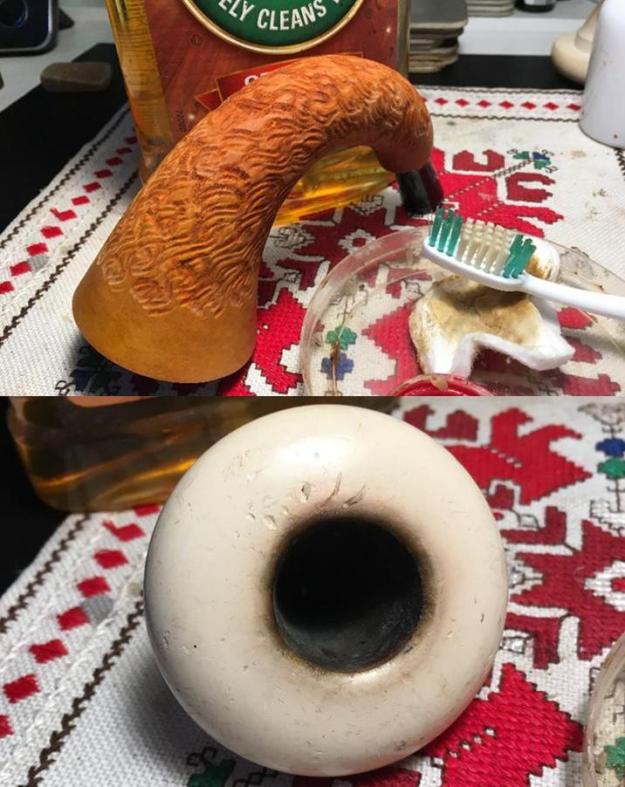
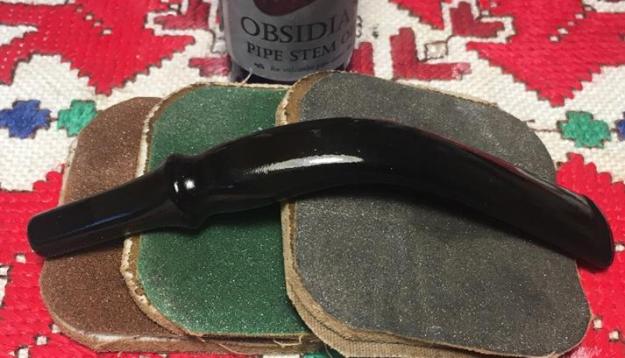
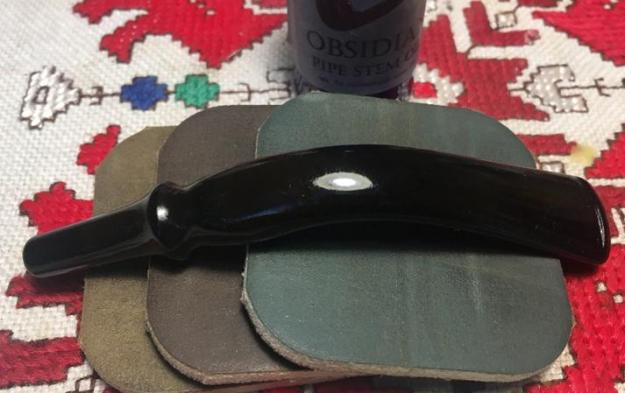
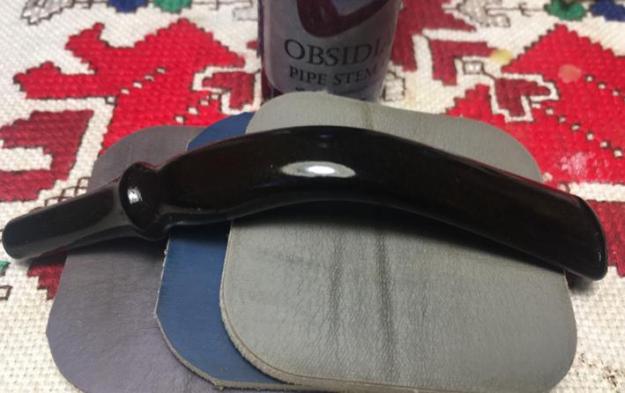
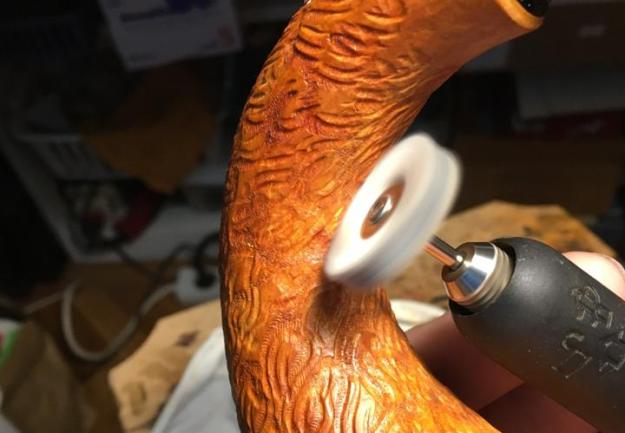
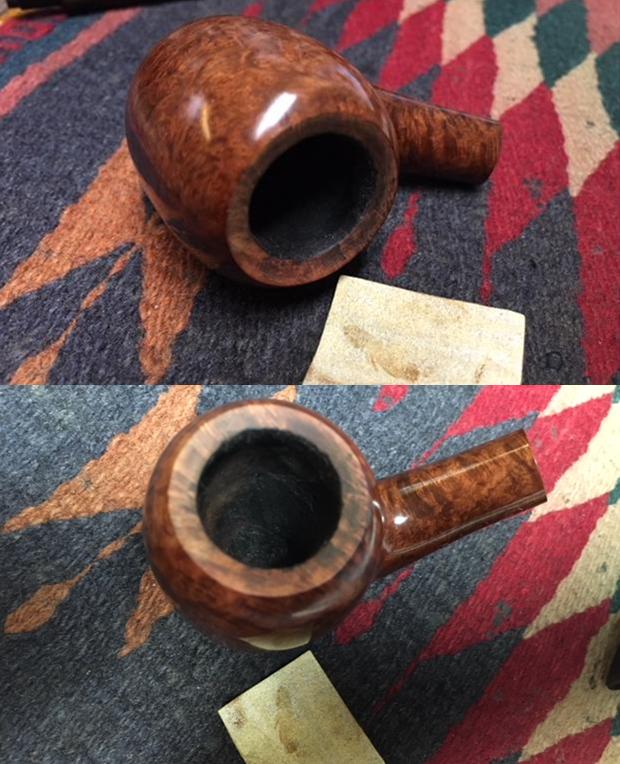
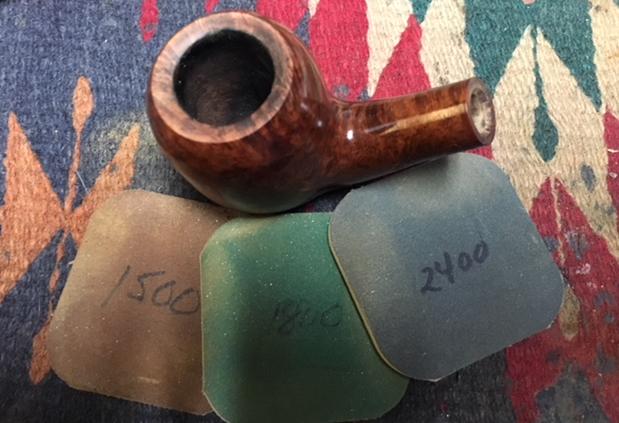
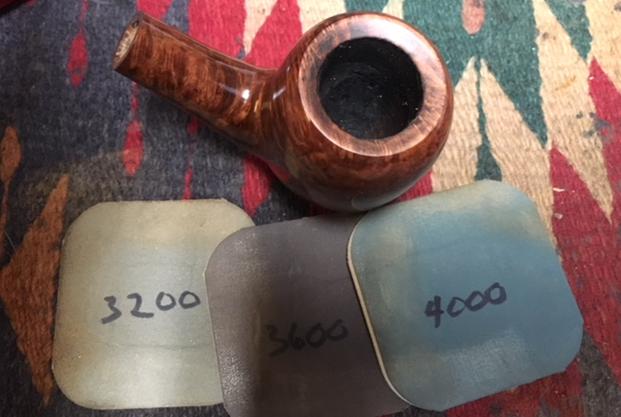
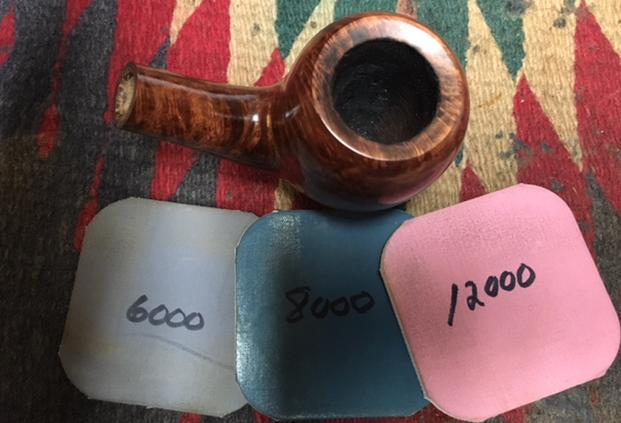
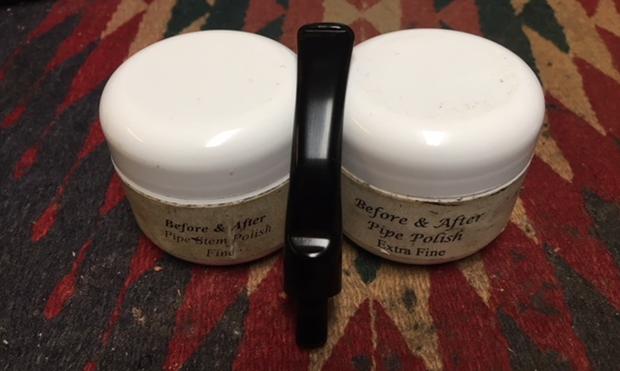
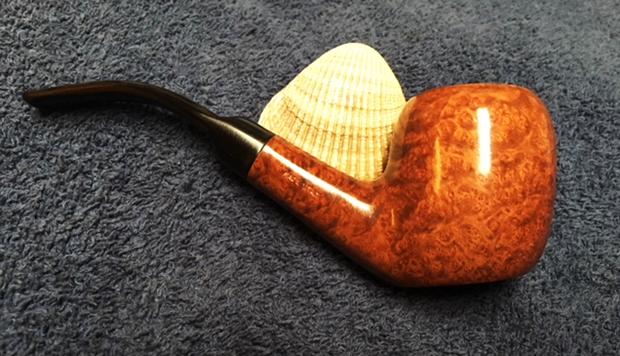
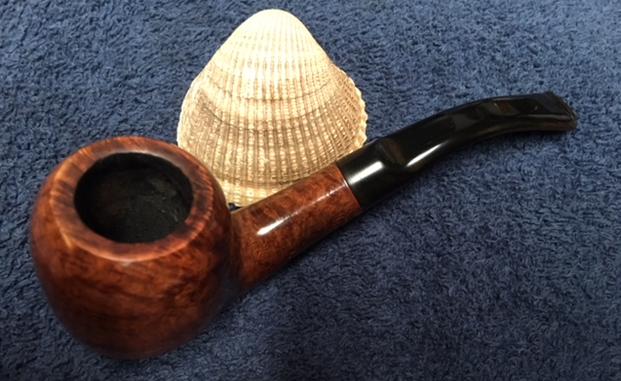
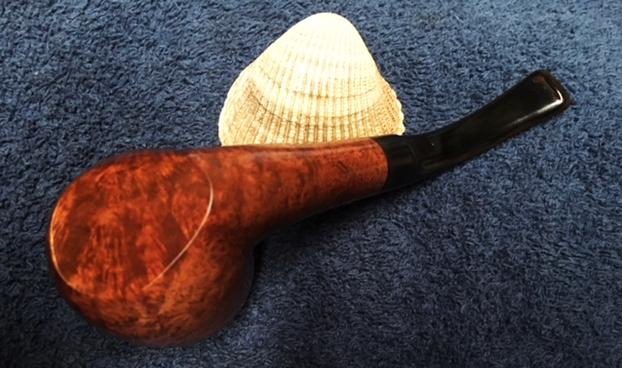
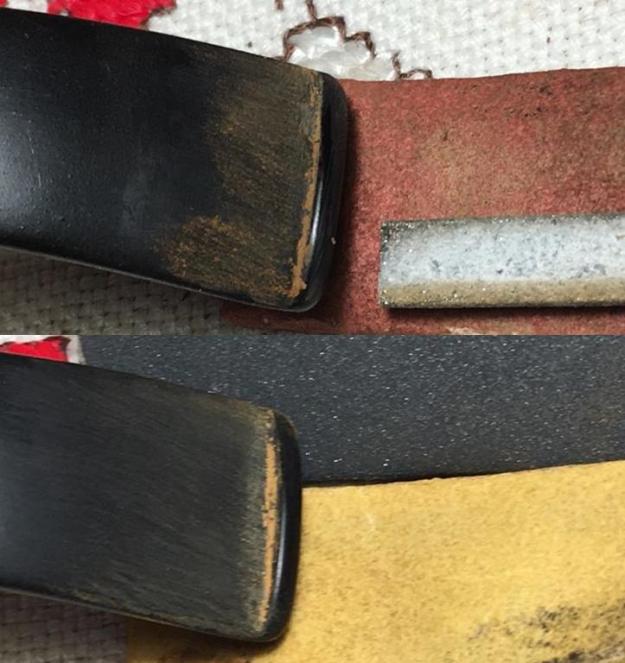
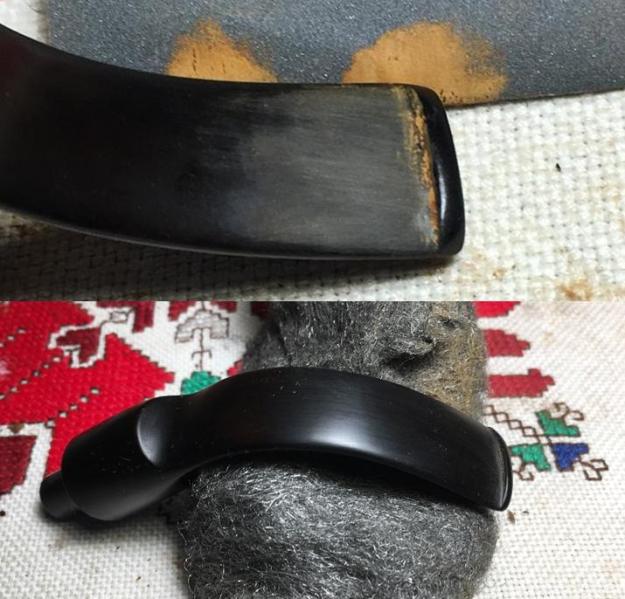
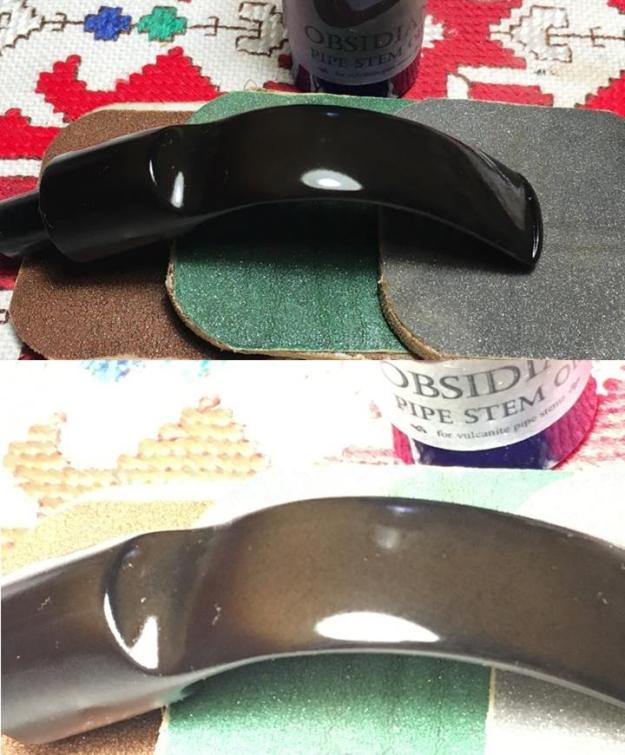
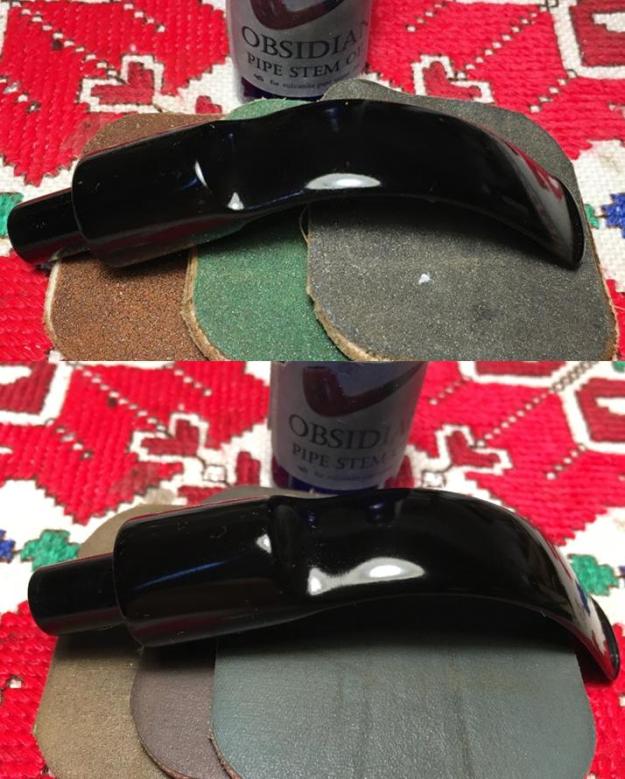
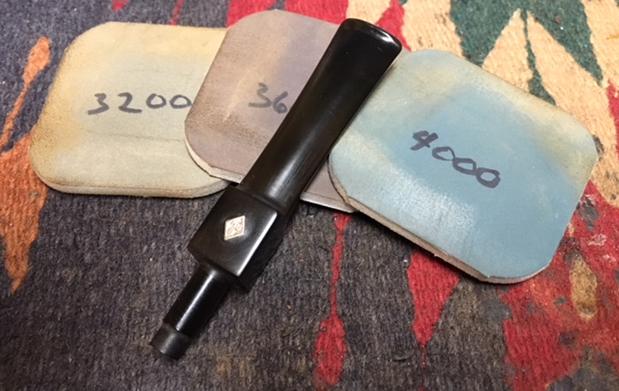
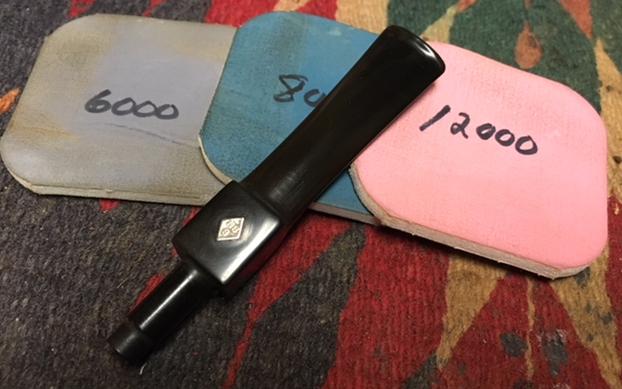
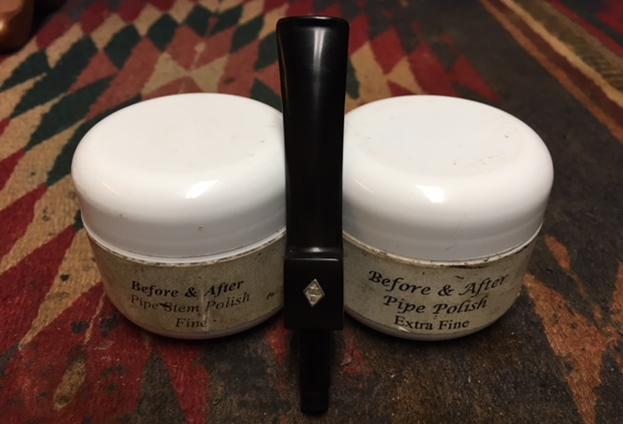
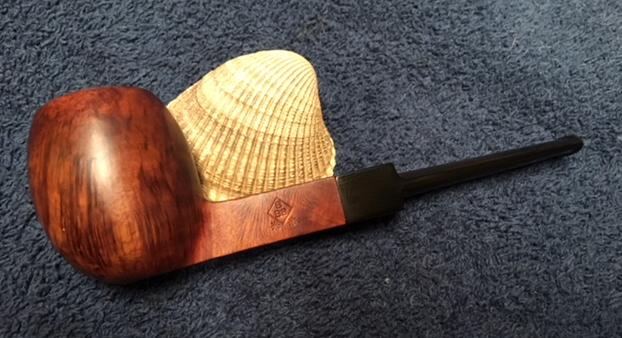
The Le Nuvole I am working on is stamped on the underside of the bowl and shank with the following information: Lavorate A Mano over in Italia. Next to that is the brand Le Nuvole followed by the cloud stamp with a number one over it. The stamping tells me that the pipe is a Grade 1 Rusticated pipe. The photo below shows the stamping on the bowl and shank. Maurizio’s handmade stems have a funneled airway leading through the tenon to the flared slot in the end of the stem. He does beautiful work. I started the restoration of this beautiful pipe by reaming the bowl. I wanted to clean out the cake and examine the inside of the bowl and the edges of the inner beveled rim. I reamed it with a PipNet pipe reamer starting with the smallest cutting head and working up to the second cutting head. The bowl is slightly narrower toward the bottom so I used the Savinelli Fitsall Pipe Knife to finish the reaming.I cleaned out the interior of the mortise and the airway in the shank and the stem with alcohol, cotton swabs and pipe cleaners. Cleaning the stem took the same amount of pipe cleaners as the shank but I forgot to include a photo of that. I cleaned it until the cleaners came out white.I carefully scraped the cake on the rim with the edge of the Savinelli Fitsall Pipe Knife to remove the heavy buildup on the bevel and the top. I sanded it gently with a worn piece of 220 sandpaper and wet sanded it with some 400 grit wet dry sandpaper. I polished the rim top with micromesh sanding pads – wet sanding it with 1500-2400 grit pads and dry sanding it with 3200-12000 grit pads. I wiped it down after each pad with a damp cloth. The photos below tell the story of the polishing of the rim top. I scrubbed the briar with Before & After Restoration Balm working it into the nooks and crannies of the rusticated finish. The balm cleans, enlivens and protects the briar and removes the dust and debris in the rustication. It also brought new life to the rim top. I rubbed it in and let it sit for a little while before rubbing it off with a cotton cloth. The photos below show the progress of the polishing.  I polished the briar with a horsehair shoe brush to raise a shine in the nooks and crannies of the rustication. The pipe is beginning to look fresh and new. I set the bowl aside and turned my attention to the stem. I sanded out the tooth mark on the top side next to the button and the tooth chatter on both sides of the stem with 220 grit sandpaper. I followed that with 400 grit wet/dry sanded paper – wet sanding until the scratches were beginning to blend into the surface of the acrylic. I polished the acrylic with micromesh sanding pads – wet sanding with 1500-2400 grit pads and dry sanding with 3200-12000 grit pads. I wiped it down after each pad with a damp cloth. I polished it further with Before & After Pipe Stem Polish – both the Fine and Extra Fine. I wiped it down and gave it a shine with some Obsidian Oil. With the stem polished I put it back on the shank and polished the bowl and stem with Blue Diamond on the buffing wheel. I used a light touch on the briar so as not to fill in the rustication or the rings with buffing compound and a slightly heavier touch on the acrylic stem. I gave the bowl multiple coats of Conservator’s Wax by hand rubbing it into the finish and the stem multiple coats of carnauba on the buffing wheel. I buffed the entire pipe with a clean buffing pad to raise the shine on the briar and the acrylic. I hand buffed it with a microfiber cloth to deepen the shine. The finished pipe is shown in the photos that follow. It is a beautiful piece of pipe crafting. I am sure Eric will enjoy this beauty once it heads back to Ontario. Just two more of his pipes to work on before they all travel east. Thanks for walking with me through the restoration. Cheers.

Restoring Barry’s Dad’s Pipes #6 – a Dunhill Root Briar 34 F/T Billiard


Blog by Steve Laug

I have been including some of the back story in each of the restorations of these pipes because to me the story gives colour to the pipe as I work on it. I am including it once again. Skip over it if you want to. Late in the summer of 2017 I received an email on rebornpipes blog from Barry in Portland, Oregon. He wanted to know if I would be interested in purchasing his Dad’s pipes. I have finished four of them so far, a 1939 Dunhill Patent Shell Bulldog, a Comoy’s Grand Slam Zulu, a Comoy’s London Pride Liverpool and a 1959 Dunhill Root Briar Billiard. After I finished the second pipe Barry wrote me an email that gave me a little more information on his Dad and incidentally on himself as this pipe was one of his own. Here is what he wrote me.

Steve, — Another great restoration and writing to go with it. I appreciate these pipes more watching the work it takes to get them in good condition.

Your (mine?) floral words about my father are perhaps a little deceptive. Inside that man was a lifelong Bolshevik. Who yearned for the revolution and settled for the party of Roosevelt. His parents were born in the Russian Empire (Ukraine), his father having escaped after brief detention during the 1905 failed uprising and to avoid conscription. His father was gruff, a bit crude and all politics. Given those origins he made the best of himself, had tons of friends and would have been a great social worker.

I misled you on the origin of his pipe conversion. It seems clear based on the 1939 pipe that he smoked a pipe in college, returning to them after the 1964 Surgeon General ‘s report on the danger of cigarettes. After that he only reverted to cigarettes at moments of great stress, a death, business setback or a fight with his wife.

He gave me two pipes in college – the GBD bulldog and a “Parker”. The latter I used to smoke a few times but found I was allergic to it, fortunately. The GBD was to get girls with an MGB, a Harris Tweed sport coat with leather elbow patches and jug wine. Didn’t work. Stanford women were in revolt and saw through the pretense. I put both pipes away for nearly fifty years and now they are in your good hands. — Barry

Barry and I corresponded back and forth and concluded our deal. I became the proud owner of his Dad’s pipes. The inventory of the pipes he would be sending included some real beauties – Comoy’s, Parkers, Dunhills and some no name brands. They were beautiful and I could not wait to see them. I had him send them to Jeff where he would clean them up before I received them. Jeff took some photos of the lot as he opened the box. Each pipe was individually wrapped with bubble wrap and taped to protect them. There were 25 bubble wrapped packages and a lot of pipe accessories included – pipe racks, reamers, scrapers and Comoy’s filters and washers. There were pipe pouches and a wooden cigar box that held all of the accessories and reamers. There was a boxed KleenReem pipe reamer that was virtually unused. Jeff unwrapped the pipes and took pictures of the estate showing both the pipes and the accessories. Barry had labeled each pipe with a sticky note. It was an amazing addition to my pipe and tool collection. The next pipe I chose to work on from the collection was the Dunhill Root Briar billiard that is the third pipe down in the photo above. It was in decent condition with dents and wear of the years on briar but the stem was un-oxidized. The pipe is stamped on the left side of the shank with the shape number 34 followed by F/T which is the style of stem (fish tail). I looked up the shape number on a previous blog on rebornpipes (https://rebornpipes.com/2012/11/01/dunhill-pipe-shapes-collated-by-eric-w-boehm/). The shape number 34 is a Billiard. Next to that it reads Dunhill over Root Briar. On the right side of the shank it reads Made in over England with a superscript 9 and a c. Next to that is the familiar 2 in a circle for the size of the pipe followed by a capital R for the Root Briar finish.

This petite billiard was interesting to me in that it was a unique little Root Briar with a mystery stamping next to the Made in England stamp. The superscript underlined 9 gives a potential date of 1959 but the mystery to me is the superscript underlined c next to that. I had not seen that before on any of the Dunhill pipes that I have worked on. The finish was dirty but in decent condition and the stamping was very readable. The bowl was caked and had an overflow of lava on the rim top as well as some darkening. The outer edges of the rim had some rough spots from knocking the pipe against something hard. There was a burn mark on the front right side of the bowl and the rim top. Even through the grime and grit the amazing birdseye on the sides and cross grain on the front and back of the bowl. The stem was in excellent condition with no oxidation and some tooth chatter both sides of the stem at the button. Jeff took photos of the pipe before he cleaned it up. As usual the photos tell the story better than my words can. Jeff took some close up photos of the bowl and rim top to show the cake and the overall condition of the bow and rim top. Both the outer edges and inner edges of the rim show damage. The top of the rim had some lava build up and had scratches and nicks in the surface. He also took a photo of the underside of the bowl to show the grain and the small dents. It is a really nice piece of briar and should clean up well. The stem was made of hard rubber and was barely oxidized as mentioned above and had tooth chatter on both sides near the button. Jeff took photos of both sides of the stem to capture their condition before he cleaned the pipe. The small white spot on the top of the stem was in good condition and slightly indented. Jeff once again did his usual great job on cleaning this pipe, leaving it pristine and without damage to the finish. He reamed the bowl with a PipNet pipe reamer and cleaned up the remnants with the Savinelli Fitsall Pipe Knife. He scrubbed out the mortise and the airway in the shank and the stem with alcohol, cotton swabs and pipe cleaners. He scrubbed the exterior of the bowl, rim and shank with a tooth brush and Murphy’s Oil Soap to remove the grime of the smooth finish on the bowl and shank. He was able to remove the tars and oil on the rim but the darkening and damage to the surfaced would need to be addressed. He rinsed it under running water. He dried it off with a soft cloth. Once the dust and debris were removed the finish looked very good. He soaked the stem in Before & After Pipe Stem Deoxidizer to remove the light oxidation, rinsed it with warm water and dried it off. I took photos of the pipe to show its condition before I started my work on it.   I took some close up photos of the bowl, rim top and damaged areas around the outer edge of the bowl. The front outer edge has a burn mark. The bowl was very clean and the rim top had some nicks on both the inner and outer, some scorching and general darkening. Jeff had been able to remove the lava from the finish. The inner edge had some damage and nicks and the roughness of the rim top and outer edge was visible. The stem was barely oxidized as can be seen in the photos and has tooth chatter near the button on both sides.Before I did and restoration work on the bowl or stem I decided to pin down the date a bit more. I knew that the pipe was made after the patent era pipes as there was no patent number on the shank but I wanted to narrow that down more. One of the beauties of Dunhill pipes is that the stamping can give you a precise date of manufacture. In this case I wanted to work on the stamping Dunhill Root Briar on the left side of the shank and the Made in England9 c  on the right side of the shank. I looked up the brand on the Pipephil website as he has very helpful photos and information in dating and interpreting the stamping on Dunhill pipes. On one of the supplemental pages associated with Dunhill pipes he has a page on the Patent era pipes. I find that this page is particularly helpful when I am trying to properly identify a pipe. Here is the link to the page: http://www.pipephil.eu/logos/en/dunhill/root-briar1.html.

The stamping on this one is similar to the one I am working on. Though the one I have in hand is not a DR A.  The one I have is stamped 34 F/T. The Made in England marking on the pipe in the photo on the right side of the shank is similar as well. The 9 on mine is more of a superscript than this one but the underscore is the same. There is also a 1969 version that is similar but it does not have the underscore on the 9. So the pipe I have is either a 1959 or a 1969 Root Briar. What is also unique on the one I have is the superscript underlined c next to the 9. I cannot find any information on what that means.Jeff photographed the stamping on the right side the shank to show what it read and the condition of the stamping. You can see the underscored superscript 9 matches the one above. The formula is simple – the base number is either1950 or 1960 and you add the underscored superscript 9 to that number. It is either 1969 or 1959. The parallels to the photo above leads me to think it is probably a 1959 pipe. Any help on this would be greatly appreciated.To remove the damage on the rim I decided to top the bowl. I used 220 grit sandpaper on a topping board to remove the damage. I worked on it until the top was smooth and the damage on the outer edge of the bowl was minimized. I used a folded piece of 220 grit sandpaper to smooth out the damages along the outer rim. I used it to also work on the inner edge of the bowl. I gave the inner edge a slight bevel like it original had before I started.  I polished the rim with micromesh sanding pads – 1500-12000 grit micromesh sanding pads. I wiped it down after each pad to check on the progress. I used a maple stain pen to touch up the rim top to match the colour on the rest of the bowl. With the touch ups the rim matches the rest of the bowl colour.I worked Before & After Restoration Balm deep into the briar on the smooth finish to clean, enliven and protect it. I wiped it off with a soft cloth. I buffed the bowl with a cotton cloth to polish it. It really began to have a deep shine in the briar. I took some photos of the bowl at this point to mark the progress in the restoration. The grain on the bowl is really beginning to stand out and will only do so more as the pipe is waxed. I started working on the stem next. I sanded out the tooth chatter next to the button on both sides with 220 grit sandpaper. I wiped the stem surface clean with a damp cloth. I sanded it with 400 grit wet/dry sandpaper to blend the scratches left behind by the sandpaper and blended the scratches into the surface of the vulcanite.  I polished stem with micromesh sanding pads – wet sanding with 1500-2400 grit pads and dry sanding with 3200-12000 grit pads. I wiped the stem down with Obsidian Oil after each pad. I polished it with Before & After Pipe Stem Polish, both Fine and Extra Fine. I gave it a final coat of Obsidian Oil and set it aside to dry. This small Dunhill Root Briar is a real beauty with straight grain on the back and front and beautiful birdseye on both sides of the bowl and shank. The grain really is quite stunning. The rim top looks much better. The Dunhill vulcanite stem is high quality and shined up well. I buffed the bowl and the stem with Blue Diamond polish to raise the shine on the briar and the vulcanite. I was careful to not buff the stamping and damage it. I gave the bowl and stem multiple coats of carnauba wax. I buffed the entire pipe with a clean buffing pad to raise the shine. I hand buffed it with a microfiber cloth to deepen the shine. The finished pipe is shown in the photos below. The rich brown stain allows the grain to really stand out on this little pipe and it works well with the rich black of the vulcanite stem. The dimensions of the pipe are: Length: 5 inches, Height: 1 1/2 inches, Outside Diameter: 1 1/8 inches, Diameter of the chamber: 5/8 inches. This little Dunhill will fit really nicely into the collection of a friend of mine, Henry who has been looking for a pipe this size. I will sending it to him soon and I know that he is looking forward to enjoying his first bowl in it. Thanks for walking through the restoration with me.

There is something about Custombilt Bulldogs that attracts me


Blog by Steve Laug

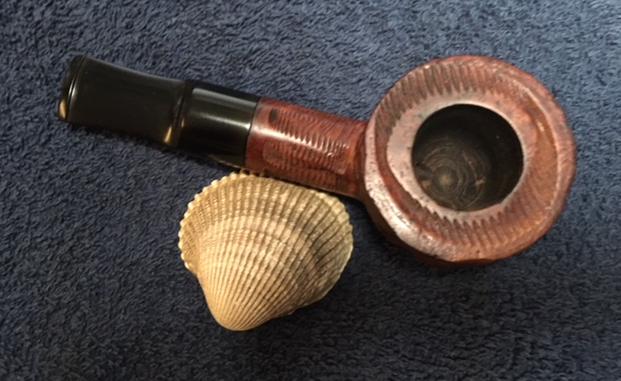
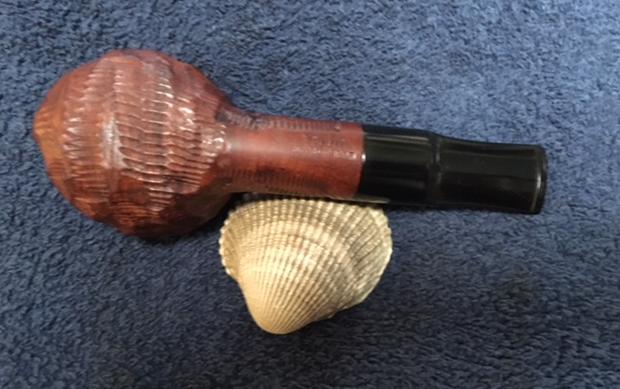
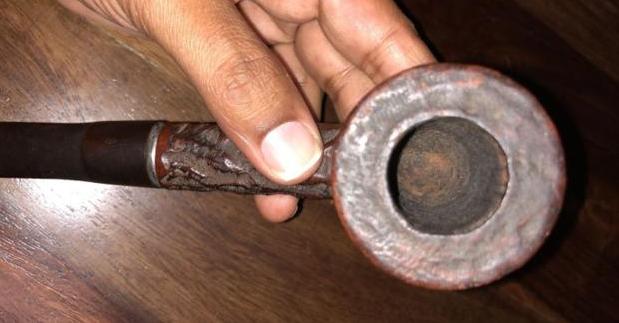
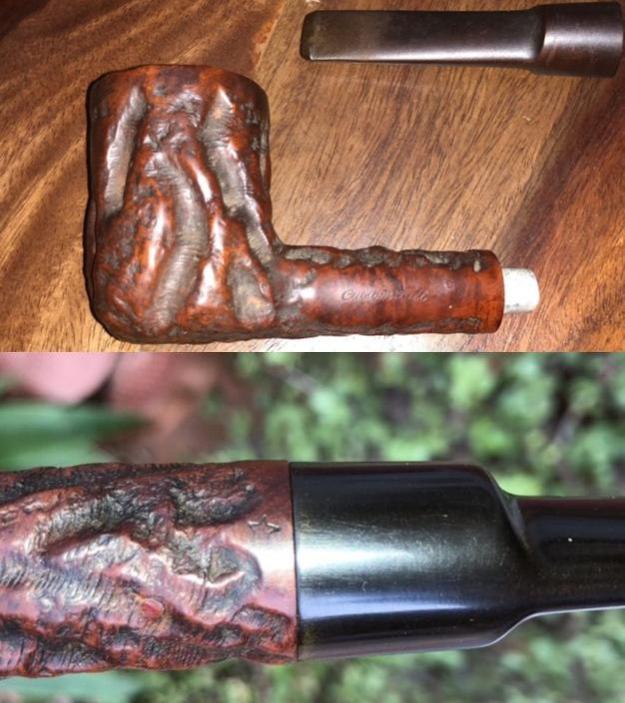
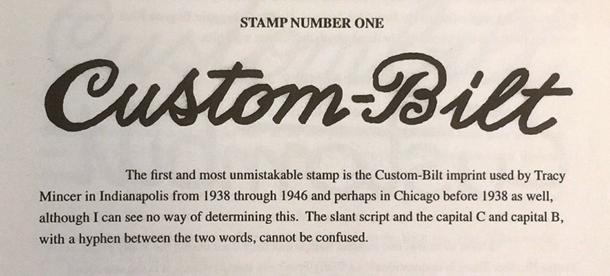
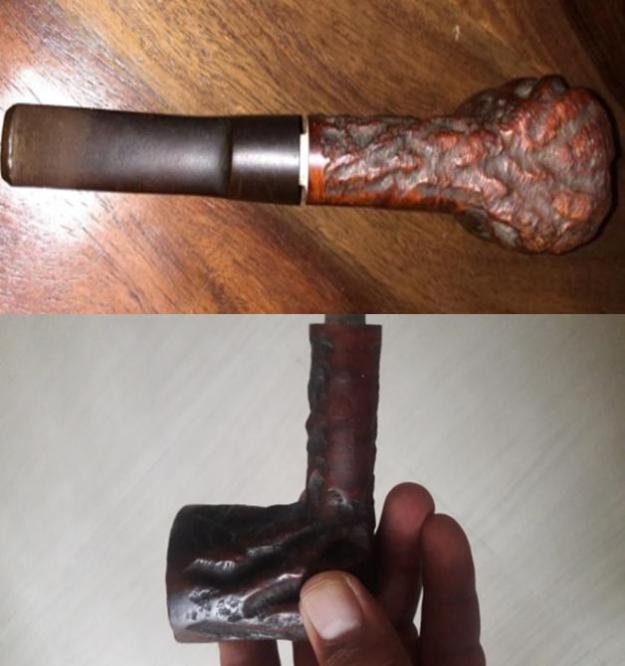
I needed a short break from the repairs that I have been doing a lot of lately so I chose to work on a nice Custombilt Bulldog that Jeff had sent me. It was a well-shaped ¼ bent Bulldog with worm trail rustication with a slight variation. Each of the worm trails and all around them was marked with a further rustication over the top – horizontal lines that ran all across them and around the bowl. They continued about half way up the shank on the top of the diamond shank. On the underside there was less rustication. The lower left side is stamped Custombilt over Imported Briar. There were two rings going around the bowl separating the rim cap from the rest of the bowl. One ring was slightly larger than the other. There were some small chips and nicks in the rim cap and between the rings. They were not too bad so they would not need a lot of work. The bowl had thick cake and a slight overflow of lava on the back side of the rim. There was some darkening to the rim. The rusticated finish was dirty and had grit and dirt in the grooves. The vulcanite stem was oxidized and there was tooth chatter on both sides near the button. There were no deep tooth marks in the stem itself. Jeff took some photos before he started working on his normal cleanup of the pipe. Jeff took a close up photo of the bowl and rim to show the condition of the pipe before he started to work his magic on it. The bowl had a thick dark cake and some overflow on the rim top. The rim edges were in decent condition with light dents in the surface. You can see some of the chipping to the edge of the cape over the twin rings around the bowl. Jeff took photos of the sides and bottom of the bowl from different angles and you can see the overall condition of the finish on the pipe. The next photo shows the chips in the edges of the cap. The middle ring was intact in this photo.He took a photo of the underside of the shank to show the stamping. The stamping is readable and is the standard Custombilt over Imported Briar stamp. The style of script in the stamp should help date and identify the time period the pipe was made.The next photos show that the stem was quite heavily oxidized and pitted. There was some light tooth chatter on both surfaces of the stem near the button and on the button edges itself.  I wanted to identify the stamping on the pipe so I started going through various sites I have used before. I looked on both the Pipephil website and the Pipedia website. The Pipephil site gave the following information: Tracy Mincer stopped making Custom-Bilt pipes in the early 1950s. The trademark was successively bought by Leonard Rodgers (1953), Consolidated Cigars (1968) and Wally Frank Co. (early 1970s). The later began to produce again his version of the pipe in 1974 or 1975 at Weber pipe factory (NJ). In 1987, the pipes were made out of the Butz-Choquin factory (France) and then Mexico until the late 1990s. Currently (2010), the Custombilt name is owned by Tobacalera of Spain which is part of Altadis. It is generally admitted (but not proved) pipes stamped “Custom – Bilt” (with the hyphen) are from the Mincer era. The name might have changed from Custom-Bilt to Custombilt (without the hyphen) in 1946. http://www.pipephil.eu/logos/en/logo-c8.html

I did some more research on the brand in the article on Pipedia. As I read through the material there I came across this photo that is pretty close to the stamping on the pipe I am working on. The note under the stamping photos identifies the stamping as one that was on pipes from the Wally Frank era.

https://pipedia.org/images/6/64/Custombilt_Stamp3.jpg

I read further in the Pipedia article to help confirm this. In the early 1950’s, Tracy Mincer developed severe financial problems that caused him to stop making the Custombilt, and he lost the name. In 1953, Leonard Rodgers bought the company and emphasized tobacco pouches and butane lighters. (However, it appears Mincer was working on his new pipe, the Doodler.) In 1968, Rodgers sold the Company to Consolidated Cigars. In the early 1970s, Wally Frank Co. bought the Custombilt trademark and began to produce their version of the pipe in 1974 or 1975. Hollco Rohr owned the Weber pipe factory, located in New Jersey, and produced the Custombilt pipes there. In 1987, the pipes were made out of the Butz-Choquin factory (France) and then Mexico until the late 1990s. Currently, the Custombilt name is owned by Tobacalera of Spain. https://pipedia.org/wiki/Custom-Bilt

From all of that I can say with fair certainty that the pipe came out in the 1970s and was made by the Wally Frank Company.

Jeff reamed the bowl with a PipNet pipe reamer and followed up with a Savinelli Fitsall pipe knife to remove the cake. He scrubbed out the mortise and the airway in the shank and the stem with alcohol, cotton swabs and pipe cleaners. He scrubbed the exterior of the bowl, rim, shank and stem with a tooth brush and Murphy’s Oil Soap to remove the oils and tars on the bowl, rim and shank. He rinsed it under running water. He dried it off with a soft cloth. Once more he soaked the stem in Before & After Stem Deoxidizer to remove the oxidation. The pipe came out looking really good. The grooves and carving on the briar looked clean and the stem oxidation was virtually gone. I took photos of the pipe to show its condition before I started my work on it. I took a photo of the rim top to show the condition it was in after the cleanup. Jeff was able to remove the darkening and tars from the rim top and edges. The grain on the top is very nice and the top is clean. There were dents in the surface of the rim but the edges of the rim itself looked very good. It is a nice looking finish. The stem was clean and you can see that the deoxidizer had done a great job removing the oxidation. The tooth chatter, though present was not as visible on the stem and button.I took a photos of the chips out of the cap on the front and middle left. While they are visible I will leave them as part of the story of the journey of this old pipe.I started my restoration with the bowl. I used a folded piece of 220 grit sandpaper to smooth out some of the nicks in the inner edge of the bowl. It was not out of round so it did not take too much work to remove the damage to the edge.The rest of the pipe was in such good condition from the cleanup that I did not have to do any sanding on the rim top or bowl. I began by rubbing the bowl down with Before & After Restoration Balm to deep clean the rusticated briar and the smooth rim. The product works to clean, enliven and protect the briar. I hand rubbed it with my fingers and worked it into the rustication with cotton swabs. I wiped it off with a soft cloth. I buffed the bowl with a horsehair shoe brush to polish it. The briar really began to have a rich shine. I took some photos of the bowl at this point to mark the progress in the restoration. I sanded the repair smooth with 220 grit sandpaper followed by 400 grit wet/dry sandpaper to remove the pitting and light oxidation that remained in the curves of the saddle and the edges of the button. (I apologize for the lighting on the 2 sanding photos as they are a bit dark. The stem actually looks far better than my photos at this point.)I polished the stem with micromesh sanding pads – wet sanding with 1500-2400 grit pads and dry sanding with 3200-12000 grit pads. I wiped the stem down after each pad with Obsidian Oil. I used the Before & After Pipe Polish to remove the small minute scratches left in the vulcanite. I finished by wiping the stem down with a final coat of Obsidian Oil and set it aside to dry.    I put the stem back on the pipe and worked it over with Blue Diamond to polish out the remaining small scratches. I gave the bowl several more coats of Conservator’s Wax and the stem several coats of carnauba wax and buffed the pipe with a clean buffing pad to raise the shine. I hand buffed it with a microfiber cloth to deepen the shine. The pipe polished up pretty nicely. The finished pipe is shown in the photos below. This chunky Custombilt Bulldog has been brought back to life. It is my kind of pipe but it is one that I will likely sell on the store. If you are interested let me know as I will be posting it soon. The dimensions of the pipe are Length: 5 1/4 inches, Height: 1 1/2 inches, Outside diameter of the bowl: 2 inches, Chamber diameter: 7/8 inches. Thanks for walking through the restoration with me as I worked over this Custombilt.

Finishing the last of Mark’s Challenges – this one a GBD Bulldog 2331


Blog by Steve Laug

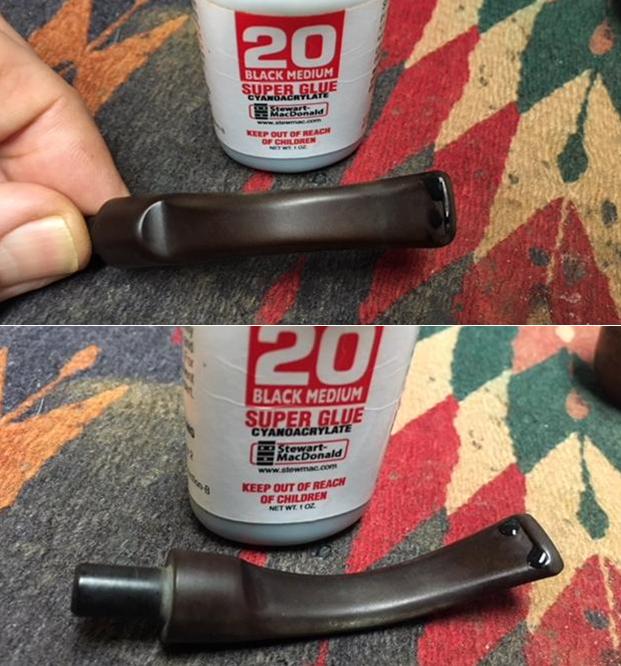
I finished the restoration work on Mark’s uncle’s pipes and a few of his own and sent them back to him in late January of this year. I wrote a blog on each of the restorations. They were a fun batch of pipes to restore for him. He sent me another package a few weeks ago that had just three pipes in it – A GBD 2331 Popular Straight Bulldog, a GBD 9242 Rhodesian (one of my holy grail pipes) and a long Churchwarden pipe. Each pipe had a different set of issues that would provide a variety of challenges. The GBD 9242 had suffered much at the hands of a hack repair person. The Churchwarden had a broken tenon stuck in the shank. I am finally working on the last of the pipes – the little classic shaped GBD Bulldog. The Bulldog was in excellent condition other than the first ½ inch of the stem missing in chunks. This pipe was by far in the best condition of the lot. The finish has spots of varnish on the sides of the bowl and shank. Most of it was gone but there were still flecks of it present. The finish underneath was in decent shape and the oxblood stain looked very good with the mixed grain patterns around the bowl. The bowl was clean and looked like it had been recently reamed. The rim top was free of lava and though it had some light rim darkening on the top. The edges of the bowl – both inner and outer were in good shape. The stem looked really good other than the missing chunks. There was little oxidation and after the damaged part was removed it was pretty clean. The stem had enough length on it that I thought I might be able to cut it off and reshape it. Time would tell. I took a close up photo of the rim top to show the general condition of the pipe. You can see how clean the bowl, rim top and edges are. You can see the broken end of the stem with the missing chunks. It appeared as if someone had tried to glue the pieces on the stem and affect a repair. The repair had not worked but the glue was left behind.I took some close up photos of the shank to show the stamping on both sides. The left side shows the GBD oval over the Brand Popular. The right side is stamped London England in a straight line over 2331 which is the shape number. The stamping is faint in some places but it is still readable. The GBD brass oval rondel is in good condition on the left side of the saddle stem.I decided to start working on this pipe by addressing the issue with the damaged stem. I removed the stem and set the bowl aside. I used a Dremel and sanding drum to remove the damaged portions of the stem on both sides. I cut off as much as the damage as necessary to remove the broken and chipped edges and still leave behind enough stem to work with in shaping the new button.I used a  mixture of black super glue and charcoal powder to build up a button edge on both sides of the stem. I set it over a lighter so that it could dry on both sides.Once the repair had dried/cured I reshaped the stem and button. I cut a sharp edge on both sides of the stem with a needle file. I shaped the taper of the stem surface on both sides with the blade of the file.I sanded out the file marks on the stem with 220 grit sandpaper and reshaped the button and slot with the sandpaper. I cleaned up the sanding marks with 400 wet dry sandpaper. I sanded the entire stem to clean up all of the scratches and marks in the vulcanite.I followed the sanding by polishing the stem with micromesh sanding pads – wet sanding with 1500-2400 grit pads and dry sanding with 3200-12000 grit pads. I wiped it down with Obsidian Oil after each pad. I finished polishing it with Before & After Pipe Polish – using both the Fine and the Extra Fine polish. I gave it a final coat of Obsidian Oil and set it aside to dry. I was happy with the new look of the button and stem. I rubbed down the surface of the briar with a cotton pad and acetone. I was able to remove the entire patchy varnish coat. The briar looked far better with that removed. The photos below show the bowl after the acetone wash. I rubbed the bowl down with Before & After Restoration Balm to deep clean the briar and the smooth rim. The product works to clean, enliven and protect the briar. I hand rubbed it with my fingers and wiped it off with a soft cloth and buffed it with a shoe brush to polish it. The briar really began to have a rich shine. I took some photos of the bowl at this point to mark the progress in the restoration. I put the stem back on the bowl and buffed the pipe with Blue Diamond on the buffing wheel. I gave it several coats of carnauba wax and buffed it with a clean buffing pad to raise a shine. I hand buffed it with a microfiber cloth to deepen the shine. The finished pipe is shown in the photos below. The new button and reshaping of the stem looks really good. Now that I have finished the last of Mark’s pipes I will be packing them up soon to send back to him. It won’t be long before Mark gets to enjoy them with their inaugural smokes. With the damage removed I think the pipe looks a lot better. Thanks for walking with me through the process of the reshaping.

Restoring a Comoy’s Sandblast 215 Bent Billiard


Blog by Steve Laug

Recently I was contacted by a reader, Daniel about restoring a couple of pipes that he had picked up at a local antique shop. The first was a nice looking Art Deco style pipe with a prow and fins around the bowl. I wrote about the restoration of the C.B. Weber Streamliner already at this link: https://rebornpipes.com/2018/03/30/restoring-a-cb-weber-inc-maplewood-streamliner/. The second pipe was a briar Comoy’s Sandblast Bent Billiard that I worked on next. The bowl had a thick cake in it that had overflowed onto the rim top. There were shards of tobacco in the bottom of the bowl and on the sides as well. The finish was dirty but otherwise not too bad. There was a smooth band on the underside of the shank. It was stamped Comoy’s over Sandblast over Made in London over England and next to that was the shape number 215. The vulcanite stem was oxidized and there was tooth chatter on the top and underside at the button. The C logo was not the three part older logo that was on earlier Comoy’s pipe but rather a one part inlay with a different style font. I took photos of the pipe before I began the cleanup process. I took photos of the rim top and both sides of the stem to show the condition of both. The close up of the rim top shows the cake in the bowl and the overflow of lava in the grooves of the sandblast finish. The photo shows the tobacco debris stuck in bottom and on the sides of the bowl. The stem was oxidized and both sides of the stem had tooth chatter near the button. There were no deep tooth marks so it would be a fairly easy cleanup.I took two photos of the underside of the shank rolling it between photos to make sure that all of the stamping was readable.I reamed the bowl with a Savinelli Fitsall Pipe Knife to remove all of the cake and the tobacco debris that was stuck to the walls of the bowl. I scraped the cake back to bare briar so that I could examine the walls of the bowl. There were very clean and there was no checking or burn marks.I cleaned out the interior of the pipe with pipe cleaners, cotton swabs and alcohol. It was not as dirty as I expected. I was able to remove all of the grime and tars that were in the mortise, shank and airway in the stem.I used a brass bristle wire brush to clean up the rim top sandblast. I scrubbed it until the entire rim top was clean and the debris removed. I worked over the inside of the bowl with a folded piece of 220 grit sandpaper to clean up the edge.I scrubbed the surface of the briar with Before & After Restoration Balm, working it into the grooves and deeper areas of the sandblast. The balm enlivens, cleans and protects the briar was it is worked into the finish. I let it sit for a short time and then buffed it off with a soft cloth. I took photos of the bowl to show the condition at this point. I wet sanded the stem with 400 grit wet dry sandpaper to smooth out the tooth marks and chatter. I worked on it until I had removed the majority of the oxidation on the surface. I polished the stem surface with micromesh sanding pads – wet sanding with 1500-2400 grit pads and dry sanding with 3200-12000 grit pads. I wiped it down with Obsidian Oil after each sanding pad. I further polished it with Before & After Pipe Stem Polish – both Fine and Extra Fine deepen the shine. I gave the pipe a final coat of Obsidian Oil and set it aside to dry. I put the stem back on the bowl and worked the pipe over on the buffing wheel using Blue Diamond to lightly polish both the bowl and the stem. I buffed the bowl and stem to raise the gloss on the briar and the vulcanite. I gave the bowl a lighter buff than I did on the stem to keep the polishing material from clogging the deep grooves of the blast. I gave the bowl multiple coats of Conservator’s Wax and gave the stem multiple coats of carnauba wax. I buffed the entire pipe with a clean buffing pad to raise the shine. I hand buffed it with a microfiber cloth to deepen the shine. The finished pipe is shown in the photos below. The contrasting brown stain – both medium and dark brown goes well with the rich black of the vulcanite stem. The dimensions of the pipe are: Length: 5 1/2 inches, Height: 1 3/4 inches, Outside Diameter: 1 1/4 inches, Diameter of the chamber: 3/4 inches. This is a newer Comoy’s pipe as far as can tell from the shape and fit of the C logo on the stem. Now that Daniel’s second pipe finished I will soon pack them up and mail both of them back to him. I know he is looking forward to loading it up and smoking it. Thanks for walking with me through the restoration.

Restoring a CB Weber Inc. Maplewood Streamliner


Blog by Steve Laug

Recently I was contacted by a reader about restoring a couple of pipes that he had picked up at a local antique shop. It was a nice looking Art Deco style pipe with a prow and fins around the bowl. The inside of the bowl itself was oval. The pipe was made out of Maple rather than briar. The fins went around the sides, back and front of the bowl. The finish was dirty but otherwise not too bad. The cuts around the bowl were rough and unsanded with a lot of burrs around the edges of each fin. The top of the bowl was darkened and also had a buildup of lava on the back side of the bowl and some darkening on the rim top. There was a cake in the bowl and shards of tobacco stuck to the sides and bottom. There were scratches on the shank and the bottom of the bowl. The bottom of the bowl had a raised ridge across the middle which made the pipe sit upright on the desk top. The stem appeared to be vulcanite with scratches and tooth chatter on the top and underside at the button. There was a small metal stinger in the tenon. I took photos of the rim top and both sides of the stem to show the condition of both. The close up of the rim top shows the darkening one the back side of the rim top and some around the other sides. The photo shows the tobacco debris stuck in bottom and on the sides of the bowl. Both sides of the stem had tooth chatter near the button. There were no deep tooth marks so it would be a fairly easy cleanup.The first article that I quoted from in that blog came from the following blogpost on WordPress: http://streamlinesdeluxe.wordpress.com/2012/06/01/weber-streamliner-pipe-2/. The author of the blog makes a brief reference to the pipe I found (and this one by the way) and even has a picture of it. He speaks of the stem being made of something other than vulcanite. Other references I found in online pipe forums spoke of the fact that the bowl was not made of briar but of some composite material. Others said that the bowls were made of American hardwoods. Interestingly no one spoke of what hardwoods were used. I have hunted high and low on the web and can find nothing definitive on the pipe’s manufacture or composition.

I broadened my search to information on finned pipes. I did not want information on Porsche design pipes or metal finned pipes but was looking for anything on wooden finned pipes. I came across the following information on a patent taken by a carver/designer named Wayne Leser. His diagrams and patent application is included below and it can be seen that it is actually very close to CB Weber’s Streamliner. His patent was applied for through the US Patent Office in January of 1941. I assume the patent was granted as it is on the Patent website. Weber’s design seems to be elongated a bit more than the Leser design but the tear drop shape of the outer bowl and the similarly tear drop shape of the drilling match quite well.

I can find no further information on Wayne Leser so I have no idea if he sold his concept to Weber, or worked for Weber. If anyone has further information on that connection it would be great to learn about it. Please post a response below. Refreshing myself on the history of the brand gave me the kind of background information that I enjoy when working on pipes that I am restoring. I took some close up photos to show that the pipe is made of Maple wood. It also shows that the shank of the pipe I am working bears stamping on both sides. On the left side it is stamped Streamliner in script over C.B. Weber Ltd. On the right side it is stamped Wally Frank Ltd. That means that while the pipe was made by C.B. Weber it was sold and distributed by Wally Frank. I wonder if it was not one of their Pipe of the Month sales.I reamed the bowl with a Savinelli Fitsall Pipe Knife to remove all of the cake and the tobacco debris that was stuck to the walls of the bowl. I scraped the cake back to bare wood so that I could examine the walls of the bowl. There were very clean and there was no checking or burn marks.I used a folded piece of 320 grit sandpaper to smooth out the inside of each of the fins so that the sawed areas were smooth and all of the burrs left behind by the sawing of each fin were removed and smoothed out.I polished the rim top to remove the darkening and the light lava overflow. I also sanded the outside of the bowl with micromesh sanding pads. I wet sanded it with 1500-2400 grit pads and dry sanded it with 3200-12000 grit pads. I wiped the bowl down after each pad with a damp cloth to remove the sanding debris. I took some more photos of the stem when it had been removed from the shank. You can see the scratching and wear on the top and underside near the button and other scratches up the stem toward the stinger in the tenon.  I removed the stinger and took a photo of it next to the stem.I sanded the stem with 220 grit sandpaper to smooth out the tooth marks and chatter. I worked on it until the surface was smooth. I polished the stem surface with micromesh sanding pads – wet sanding with 1500-2400 grit pads and dry sanding with 3200-12000 grit pads. I wiped it down with Obsidian Oil after each sanding pad. I further polished it with Before & After Pipe Stem Polish – both Fine and Extra Fine deepen the shine. I gave the pipe a final coat of Obsidian Oil and set it aside to dry. I put the stem back on the bowl and worked the pipe over on the buffing wheel using Blue Diamond to lightly polish both the bowl and the stem. I buffed the bowl and stem to raise the gloss on the briar and the vulcanite. I gave the pipe multiple coats of carnauba wax. I buffed the entire pipe with a clean buffing pad to raise the shine. I hand buffed it with a microfiber cloth to deepen the shine. The finished pipe is shown in the photos below. The C.B. Weber Maple Streamliner is unstained. The grain on the Maple wood shows through on the rim, sides and shank of the pipe. The blonde maple goes well with the rich black of the vulcanite stem. The dimensions of the pipe are: Length: 6 inches, Height: 1 1/2 inches, Outside Diameter: 1 1/4 inches, Diameter of the chamber: 5/8 inches wide and 1 inch long. This is an interesting pipe with an Art Deco look and a streamlined flow. The fins along the sides, front and back of the bowl act as cooling fins when the pipe is smoked. I have a second pipe to work on for Daniel and then I will mail both of them back to him. I know he is looking forward to loading it up and smoking it. Thanks for walking with me through the restoration.


Breathing Life into a Savinelli Capri Root Briar 141KS Billiard


Blog by Steve Laug

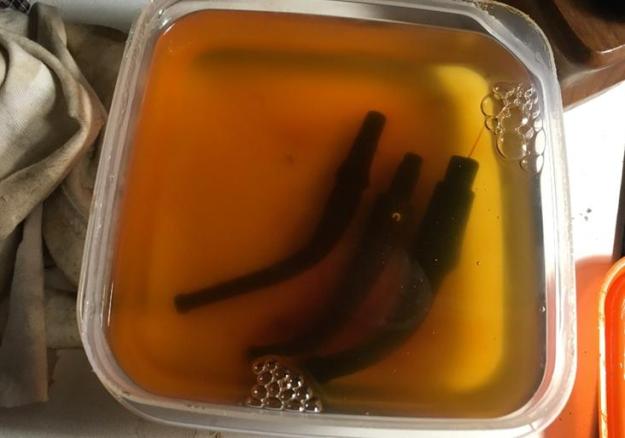
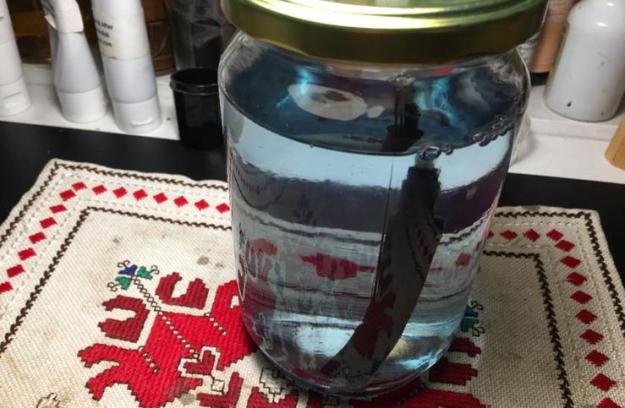
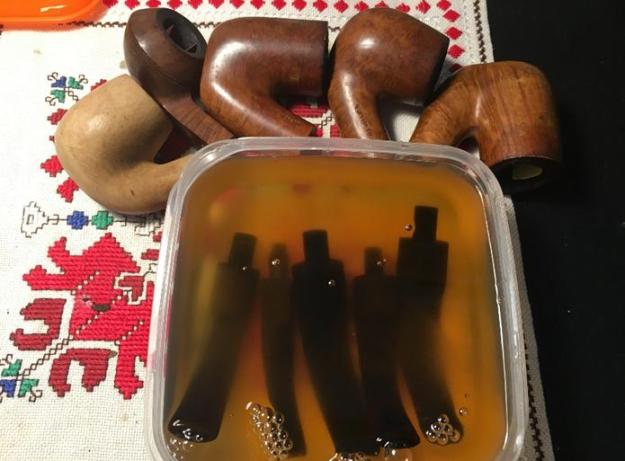
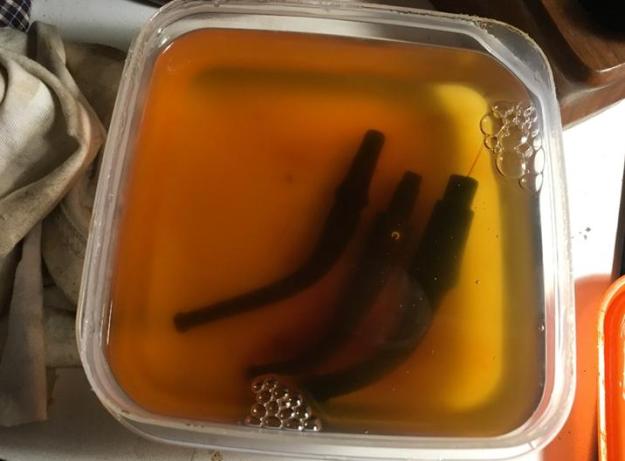
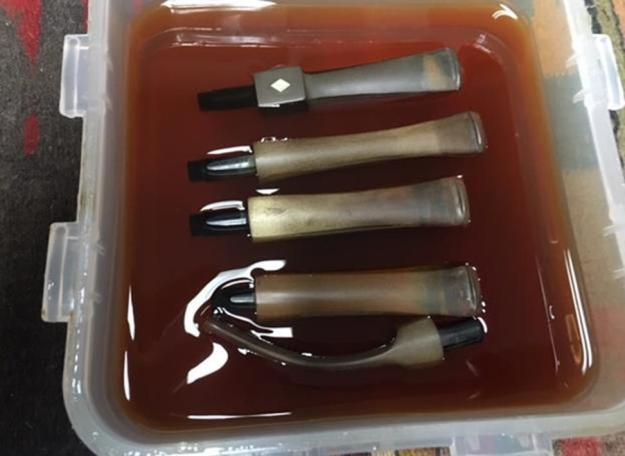
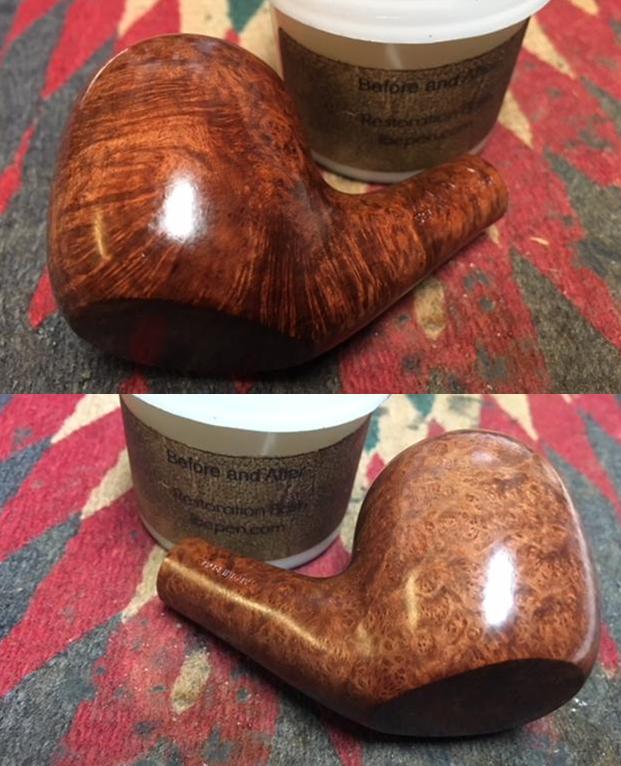
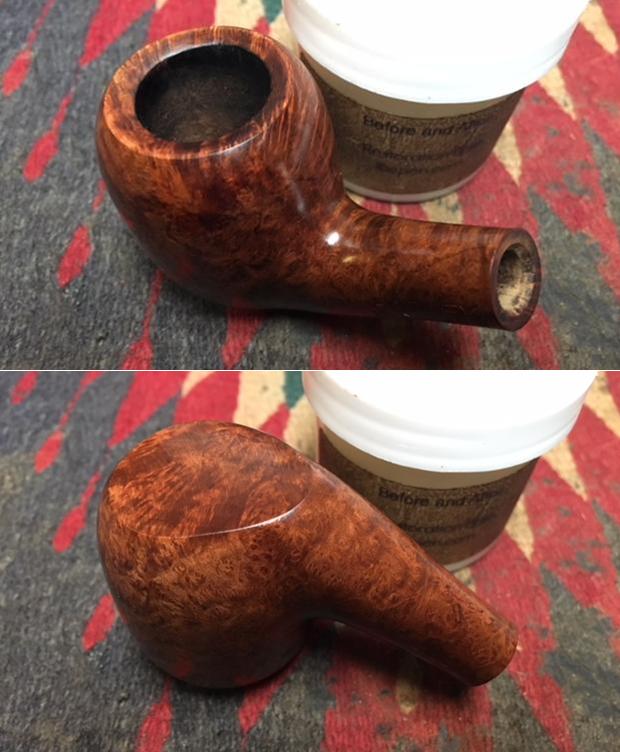
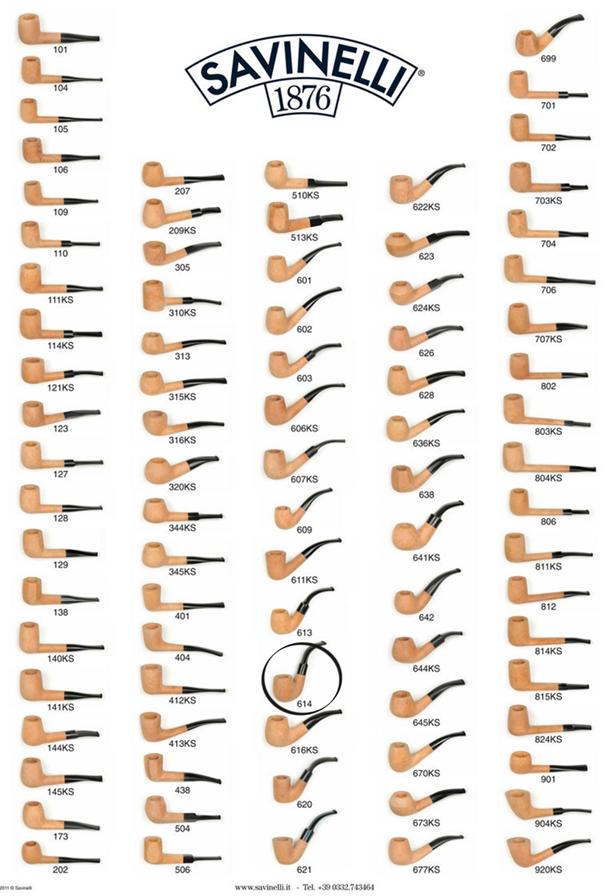
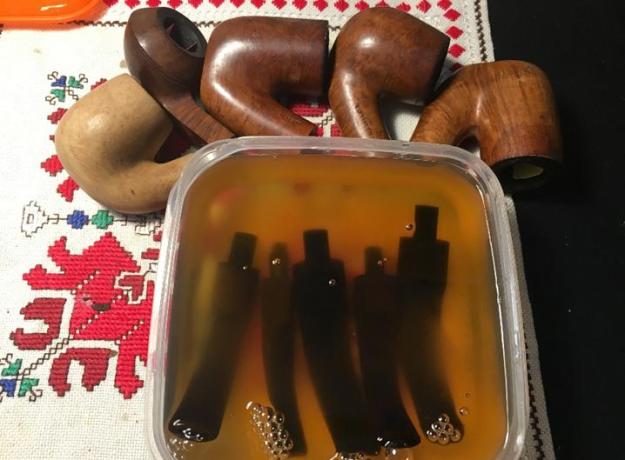
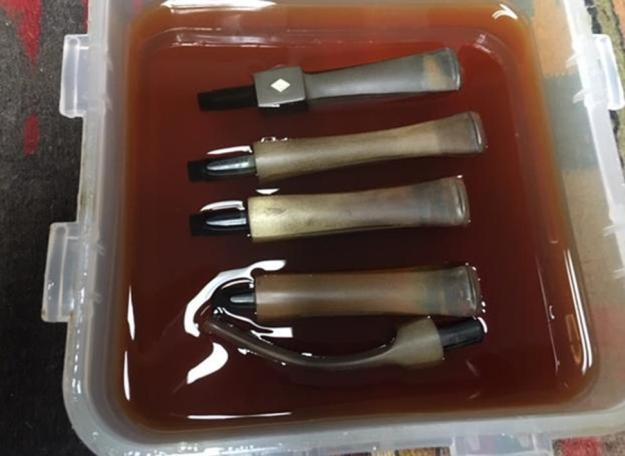
The next pipe on the work table is another pipe from the estate of a Vancouver pipe smoker whose widow left them with a local Pipe Shop. I was asked to clean them and sell them for the shop. The photos show the pipe when I brought it to my work table. It is a nice Savinelli Capri Root Briar with an almost Sea Rock type finish. The bowl was heavily caked with a lava coat on the top of the rim. It was hard to tell how the inner and outer edge of the rim actually looked until the bowl was reamed. The exterior of the bowl was dirty and covered with grime dust in the deep grooves of the finish. The stem had the same tooth marks and chatter on the top and underside near the button as the rest of the pipes in this estate. There was calcification on the first inch from what looked like a Softee bit. The stem has the Savinelli Shield S logo on the top. The pipe is stamped on the underside of the shank with the words Savinelli Capri over Root Briar. There is a Shield S logo next to that and the shape number 141KS at the shank/stem junction. I have included a Savinelli Shape Chart and circled the 141KS in red. It is a billiard with a tapered stem.I took photos of the pipe when it arrived so I would have a base point before I did any clean up or restoration. When I went back to the States after Christmas to visit my parents and brothers I took a box of these pipes with me so that I could have Jeff clean them for me. When they came back to Canada they looked like different pipes. He had reamed the bowl with a PipNet pipe reamer and cleaned it up with a Savinelli Fitsall Pipe Knife. He scrubbed the exterior with Murphy’s Oil Soap and a tooth brush to clean off the grime on the finish and the heavy overflow of lava on the rim top. He cleaned up the internals of the shank, mortise and stem with pipe cleaners, cotton swabs and alcohol to remove all of the oils and tars in the pipe. When it came back to Vancouver it was a quite different pipe. I took pictures of it to show the condition at this point – the bowl looked great and the stem was very oxidized. I took photos of the rim top and the stem to show their condition. Jeff was able to clean out the bowl completely and the rim top. He removed the tars and lava and left behind a clean top that showed all of the original rustication and looked very good. The stem was oxidized and there was tooth chatter and marks on both sides near the button and on the surface edges of the button itself.I am working on five of the pipes from that estate at the same time. I put all of the stems in a bath of Before & After Pipe Stem Deoxidizer to soak. I submerged them all of the stems in the bath and let them soak overnight to break down the oxidation.I took the stem out of the deoxidizer and rinsed it under warm water to rinse off the mixture. I blew air through the stem and ran water through it as well to rinse out the mixture there as well. The stem still had some oxidation spots but it was all on the surface as seen in the first two photos below. I painted the surface of the stem with the flame of a Bic lighter to lift the tooth marks. One of the benefits of the lighter is that it burned off the sulfur on the surface of the stem. It did not take too much work for the vulcanite to return to its smooth condition. I sanded out the lighter tooth marks and chatter with 220 grit sandpaper until there were two deep tooth marks on the underside of the stem that remained. I filled those in with clear super glue and laid the stem aside to let the repairs cure. While the repairs on the stem were  curing I rubbed down the briar with Before & After Restoration Balm. I worked it into the nooks and crannies of the rusticated briar to clean, enliven and protect the finish. I let the balm sit for a little while and then buffed it with a cotton cloth to raise the shine. The following photos show the bowl now. Once the repairs had dried/cured I sanded them smooth with 220 grit sandpaper to blend them into the surface of the bowl. It took a lot of sanding to smooth them all out.I polished out the scratches in the vulcanite with 400 grit wet dry sandpaper and with micromesh sanding pads. I wet sanded with 1500-2400 grit pads and dry sanded with 3200-12000 grit pads. I wiped the stem down after each pad with Obsidian Oil. After sanding with the 12000 grit pad I polished the stem with Before & After Pipe Stem Polish – both Fine and Extra Fine. With the stem polished I put it back on the pipe and lightly buffed the bowl with Blue Diamond. I buffed the stem with a more aggressive buff of Blue Diamond. I gave the bowl multiple coats of Conservator’s Wax and the stem several coats of carnauba wax and buffed the pipe with a clean buffing pad to raise the shine. I hand buffed it with a microfiber cloth to deepen the shine. The pipe polished up pretty nicely. The finished pipe is shown in the photos below. I will be posting it on the rebornpipes store very soon. It should make a nice addition to your pipe rack if you have been looking for a reasonably priced pipe with a Sea Rock style finish. It should be a great smoking pipe with a good hand feel. The dimensions are Length: 6 inches, Height: 2 inches, Outside diameter of the bowl: 1 3/8 inches, Chamber diameter: 3/4 inches. Thanks for walking through the restoration with me as I worked this pipe over.

About Savinelli Panels, and a Couple of Restores


Blog by Robert M. Boughton

Copyright © Reborn Pipes and the Author except as cited
https://www.facebook.com/roadrunnerpipes/

Thinking outside of the box is unnecessary when there are no boxes in your imagination.
— Matshona Dhliwayo, Canadian-based philosopher, entrepreneur and author born in Zimbabwe

INTRODUCTION

Four generations of the Savinelli family have managed not only to maintain but enhance the quality of pipes produced since Achille Savinelli Sr. opened his little business in Milan in 1876.  That shop is still there today.  In 1890, the founder’s son, Carlo, continued the original practice of assigning actual pipe production to skilled artisans.  For more than 55 years, that tradition went unbroken, until Carlo’s son, Achille Savinelli Jr., returned from his service in World War II and moved the business to Brebbia, where the pipes first began being made in the family’s own factory/workshop in 1948.  Since 1987, when Achille Jr. died, his son, Giancarlo, has been at the helm.

The Savinelli shop was the first to offer general pipe smoking items in Italy, and the name gained respect to Italian pipes, which before them had almost universally low opinions due to the general low standards of craftsmanship.  Of all the Savinelli pipes I’ve owned, I would describe just one as being notably less than exceptional.  My personal favorite styles are the many panel lines, examples of which I will show.  I had hoped to succeed in providing also a definitive list of shape numbers associated with panels, but every turn in my online searches leads to still more.

The chart below, although not official and woefully incomplete, includes the most panel shapes: 502, 506, 513KS, 515, 619EX and 824KS. Savinelli Pipe Shape Chart courtesy Pipephil

The easiest to find seems to be KS variations of the 515 such as the two I restored before.

Champagne 515KS

de luxe Milano 515KS

Here are more gorgeous specimens, all but one of them not to be found on any chart I can locate.  The official Savinelli chart lists the 505.

Autograph Grade 8 0007 courtesy Savinelli

de luxe Milano 505 courtesy Smoking Pipes

And here’s one I would so love to own.

120th Anniversary 6-panel D courtesy Smoking Pipes

At some point, Savinelli appears to have abandoned the number system altogether, but fighting the urge to show all that I found, I’ll limit it to the two most extraordinary.

Autograph Half Rustic-Half Smooth courtesy Tobacco Pipes

Autograph Mignon Freehand courtesy Smoking Pipes

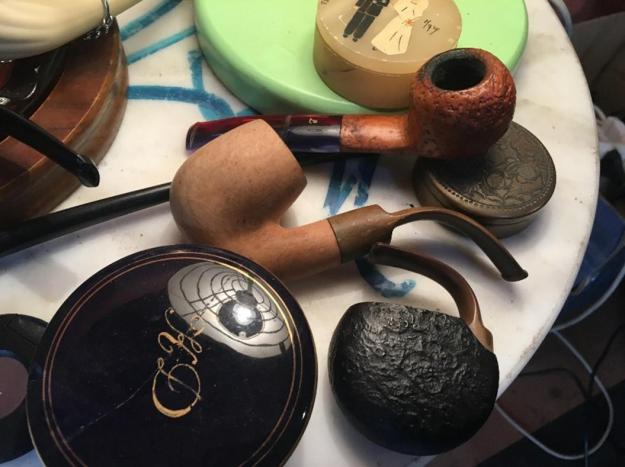
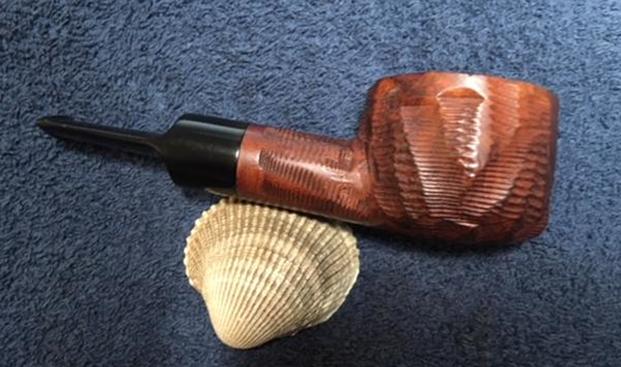
Now for the two more common panels I restored a few months ago, an Oscar 515KS and an un-numbered Colossal, in that order.

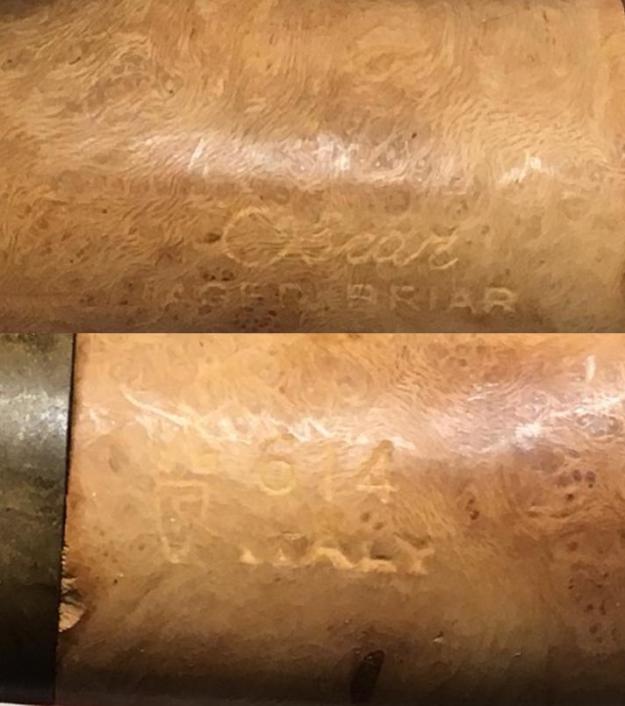
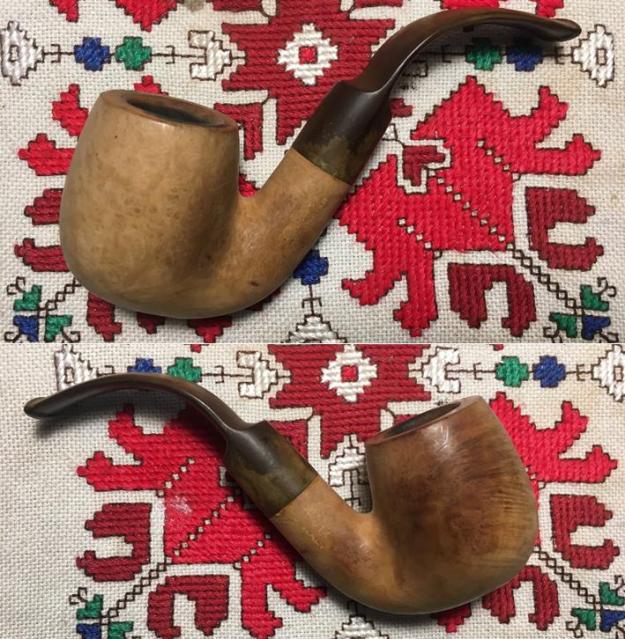
RESTORATION: OSCAR AGED BRIAR 515KS

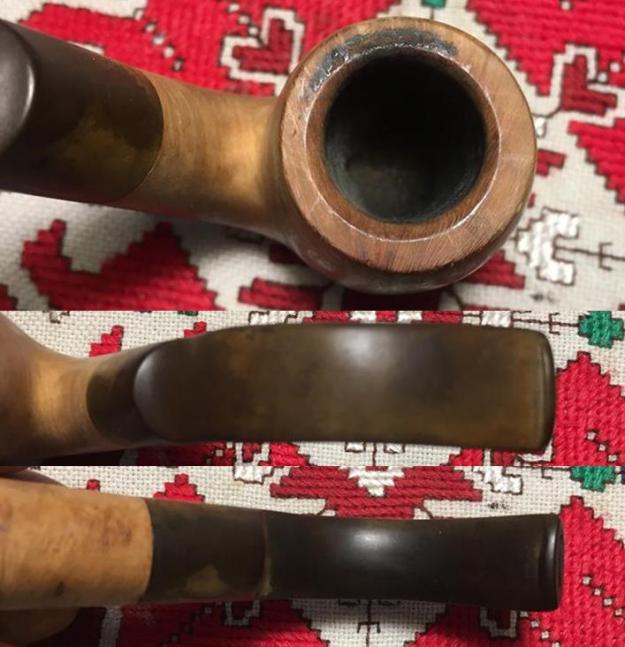
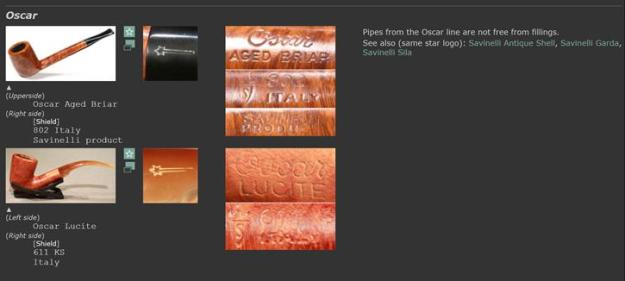
Starting with the stummel that was cleaner than most, some purified water on a paper towel made it look a little better but did almost nothing for the very charred rim.  I reamed the chamber and, in a measure uncommon to me, used the knife from a pocket utility tool to remove large, hardened spots of obdurate cake buildup before smoothing the area with 320- and 400-grit papers.  The rest of the black rim came clean with gentle use of super fine 0000 steel wool. As a preliminary cleaning, I put a soft cotton ball in the chamber and filled it with isopropyl alcohol, plugging the bit with a pipe cleaner.  Then I ran more cleaners through the shank and only one to clear the bit’s air hole. Turning to the bit, I heated the crusty old tenon and removed it before considering how to proceed with the well-used Vulcanite.After wiping it down with a little purified water on a paper towel, I used my Bic to raise some of the chatter and dings. That helped, but I decided on the 180-grit side of a sanding pad to remove some of the remaining marks.Focusing on the deeper marks below the lip with 150-grit paper before smoothing it all out with a progression all the way up to 600-grit, I finished with a full micro mesh workup.  Unfortunately, I didn’t snap any pics of the paper work, but here’s how the bit turned out.I retorted the pipe.To lighten the color, I sanded with 400-grit paper. A full micro mesh progression made the wood shine like new. The shooting star on the bit filled in well with a white grease china marker.  The Oscar is one of four pipes with the shooting star mark on the bit, including the Antique Shell, the Garda and the Sila. Machine buffing with carnauba was all that was needed to finish.

RESTORATION: COLOSSAL CUSTOM MADE FIRST QUALITY This time I decided to start with the bit.Again, the Bic raised some of the blemishes.After that, oddly enough, I gave it an OxiClean bath that had a remarkable effect, followed by wet micro mesh.  The Colossal’s inlaid C is unique. With the stummel, as before, I gave it a preliminary cleaning before the retort. I tried super fine steel wool on the rim, for some reason without success, and turned to 220-, 320- and 400-grit papers.The chamber had the same kind of obstinate cake buildup as the Oscar, so I again reamed it and scraped more with the blade of my utility tool.Micro mesh worked fine on all but the right side.  To eliminate more pernicious scratches there, I turned to 400- and 600-grit papers and re-micro meshed. And that was that other than the final machine carnauba buffing. CONCLUSION

Savinelli panels tend to be big, thick, sturdy pipes that smoke with a uniform, cool evenness.  I really love all of them that I’ve owned and kept the Colossal for my collection but sold the Oscar.  A more complete list of panel shape numbers is in the works, and I’m going to contact Savinelli to see what they have to say on the matter.  I’ll keep you posted.

Ciao!
SOURCES

https://www.savinelli.it/it_en/history
http://www.pipephil.eu/logos/en/logo-savinelli1.html
http://www.pipephil.eu/logos/en/infos/savinelli-chart.html
https://www.smokingpipes.com/pipes/new/savinelli-autograph/
https://www.cupojoes.com/pipes/savinelli/?sort=bestselling&page=1
https://www.cupojoes.com/savinelli-cumberland-smooth-dark-brown-pipe-812/
https://www.cupojoes.com/savinelli-porto-cervo-smooth-pipe-506/
https://www.google.com/search?q=savinelli+panel+pipes&rlz=1C1CHBF_enUS769US769&tbm=isch&tbo=u&source=univ&sa=X&ved=0ahUKEwiGnN2D34TaAhUeHGMKHRBSDJgQsAQIeA&biw=1366&bih=598
https://www.savinelli.it/it_en/pipe-freehand/autograph.html

Breathing New Life into a Royal Esquire French Made Poker


Blog by Steve Laug

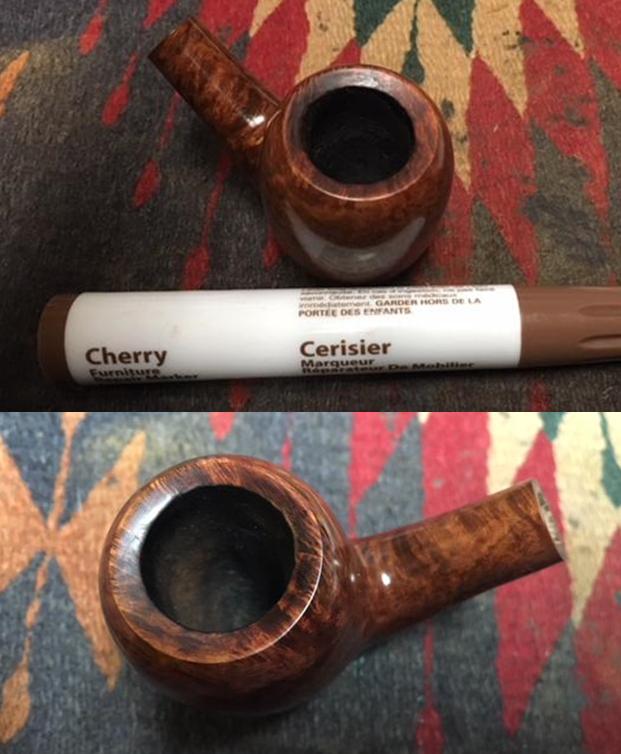
The next pipe on the work table is another pipe from the estate of a Vancouver pipe smoker whose widow left them with a local Pipe Shop. I was asked to clean them up and sell them for the shop after it closed. The photos show the pipe as it was when I brought it to my work table. It is a light weight Poker shape – with some interesting grain but the number of small putty fills in the bowl on the sides, back and shank detract from the cross grain on the bowl sides and birdseye on the front and back sides. The bowl was heavily caked with a lava coat on the top of the rim. It was hard to tell how the inner and outer edge of the rim actually looked until the bowl was reamed. The exterior of the bowl was dirty and covered with grime. The stem had the same tooth marks and chatter on the top and underside near the button as the rest of the pipes in this estate. There was calcification on the first inch from what looked like a Softee bit. The stem has a Top Hat logo on the left side of the saddle. The pipe is stamped on the left side of the shank with the words Royal Esquire over Made in France. There is no other stamping on the pipe. When I went back to the States after Christmas to visit my parents and brothers I took a box of these pipes with me so that I could have Jeff clean them for me. When they came back to Canada they looked like different pipes. He reamed the bowl with a PipNet pipe reamer and cleaned it up with a Savinelli Fitsall Pipe Knife. He scrubbed the exterior with Murphy’s Oil Soap and a tooth brush to clean off the grime on the finish and the heavy overflow of lava on the rim top. He cleaned up the internals of the shank, mortise and stem with pipe cleaners, cotton swabs and alcohol to remove all of the oils and tars in the pipe. When it came back to Vancouver it was a quite different pipe. I was in a hurry this afternoon when I worked on this one and forgot to take photos of the bowl and stem before I started working on the pipe. There were so many fills and places where the putty had shrunk that I had a hard time even looking at it the way it was. I had already refilled the fills in the sides and shank with clear super glue and then remembered to take photos. You will have to imagine it without all the super glue freckles around the bowl. I took photos of the rim top and the stem to show their condition. Jeff was able to clean out the bowl completely and the rim top. He removed the tars and lava and left behind a clean top that would need to be topped to remove some of the deep scratches and burn marks around the edges of the rim. The stem was lightly oxidized and there was tooth chatter and marks on both sides near the button and on the surface edges of the button itself.I took the stem off the bowl and took photos of the repaired fills all around the bowl and shank. Somehow the pink putty that was in them really stood out and made them highly visible. They look like pox marks. Once the repairs had dried/cured I sanded them smooth with 220 grit sandpaper to blend them into the surface of the bowl. It took a lot of sanding to smooth them all out. I was careful around the stamping on the left side of the shank so I would not damage it. To clean up the damaged rim top I used 220 grit sandpaper on a topping board. I topped the bowl until the surface was smooth and the damage was removed. It did not take too much work to remove the damaged areas.I cleaned up the inner edge and the slight bevel with a folded piece of sandpaper. I worked it around the bowl to smooth out the damage and minimize the darkening on the inner edge.I polished the bowl top and sides with micromesh sanding pads – wet sanding with 1500-2400 grit pads and dry sanding with 3200-12000 grit pads. I wiped the briar down after each sanding pad with a damp cloth. I was amazed at how many of the fills blended into the finish of the bowl and virtually disappeared. There were still some showing on the shank but the overall effect of the polishing was really apparent. I decided to stain the pipe with a Cherry stain pen to blend the repaired fills into the rest of the briar. The stain looks streaked and uneven but it will blend in nicely to the grain once I am finished with it. Once the stain dried I wiped the bowl and shank down with alcohol on a cotton pad to remove the streaking and blend the colours on the briar. The pictures below show the pipe at this point in the process. The fills have all but disappeared into the stain. The pipe looks considerably better at this point. I rubbed down the briar with Before & After Restoration Balm. I worked it into the surface of the briar to clean, enliven and protect the new finish. It also evened out the stain coat and gave the stain a multidimensional feel. I let the balm sit for a little while and then buffed it with a cotton cloth to raise the shine. The following photos show the bowl now. The fills are invisible. The bowl is pretty well finished. I still need to wax and buff it but that will wait for the stem. I turned my attention to the stem and worked on the tooth marks and chatter near the button. I sanded it with 220 grit sandpaper until I removed the lighter marks on the surface of the stem.I painted the surface of the stem with the flame of a Bic lighter to lift the tooth marks. One of the benefits of the lighter is that it burned off the sulfur on the surface of the stem. The tooth chatter and marks lifted on both sides of the stem. A little sanding would smooth it out well. I polished out the scratches in the vulcanite with 400 grit wet dry sandpaper and with micromesh sanding pads. I wet sanded with 1500-2400 grit pads and dry sanded with 3200-12000 grit pads. I wiped the stem down after each pad with Obsidian Oil. After sanding with the 12000 grit pad I polished the stem with Before & After Pipe Stem Polish – both Fine and Extra Fine. With the stem polished I put it back on the pipe and lightly buffed the bowl with Blue Diamond. I buffed the stem with a more aggressive buff of Blue Diamond. I gave the bowl and the stem several coats of carnauba wax and buffed the pipe with a clean buffing pad to raise the shine. I hand buffed it with a microfiber cloth to deepen the shine. The pipe polished up pretty nicely and the many fills virtually disappeared with the new stain. The finished pipe is shown in the photos below. I will be posting it on the rebornpipes store very soon. It should make a nice addition to your pipe rack if you have been looking for a reasonably priced pipe that can be used as a yard or shop pipe. It should be a great smoking pipe with a good hand feel. The dimensions are Length: 5 1/2 inches, Height: 1 3/4 inches, Outside diameter of the bowl: 1 1/4 inches, Chamber diameter: 3/4 inches. Thanks for walking through the restoration with me as I worked this pipe over.

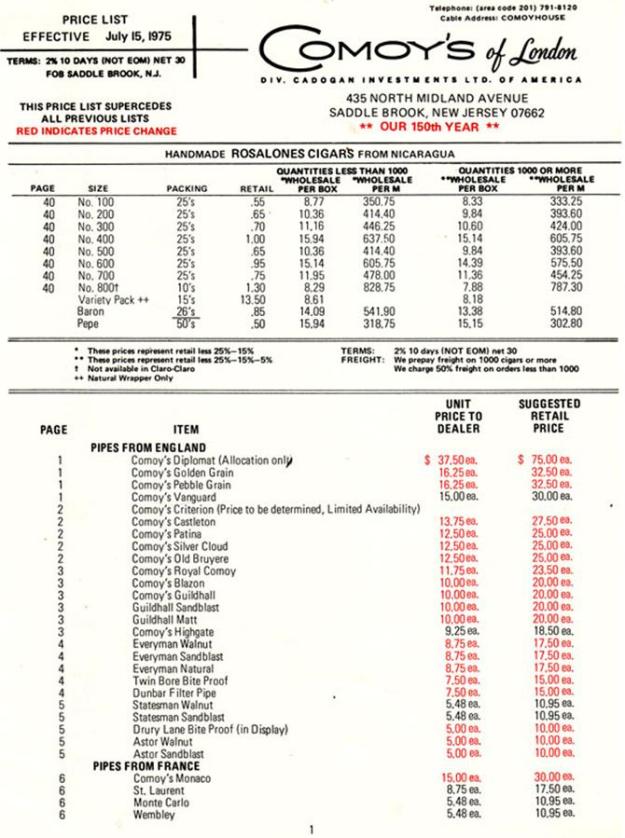
Fresh Life for a Comoy’s The Everyman 126 Sandblast Pot


Blog by Steve Laug

The next pipe on the work table is another pipe that came to me from the estate of a Vancouver pipe smoker whose widow left them with a local Pipe Shop after he died. I was asked to clean them up and sell them for the shop as it has since closed. The photos below show the pipe as it was when I brought it to my work table. It is a nicely shaped sandblast pot shaped pipe – with a a really nice looking grain pattern in the blast under all the grime. The bowl was heavily caked with a lava coat on the top of the rim. It was hard to tell how the inner and outer edge of the rim actually looked until the bowl was reamed. The bowl was dirty and the finish was almost filled in with the grime. The stem had the same deep tooth marks and chatter on the top and underside near the button as the rest of the pipes in this estate. There was calcification on the first inch from what looked like a Softee bit. From the three bars on the left side of the stem and the stamping it was clearly a Comoy’s product. In this case it was stamped on a smooth band on the bottom of the bowl and shank with the words The Everyman London Pipe. Next to that it is stamped Made in London England followed by the 126 shape number next to the shank/stem junction. I took photos of it before cleaning to show that even though it was dirty the pipe showed promise.   When I went back to the States after Christmas to visit my parents and brothers I took a box of these pipes with me so that I could have Jeff clean them for me. When they came back to Canada they looked like different pipes. He reamed the bowl with a PipNet pipe reamer and cleaned it up with a Savinelli Fitsall Pipe Knife. He scrubbed the exterior with Murphy’s Oil Soap and a tooth brush to clean off the grime on the finish and the heavy overflow of lava on the rim top. He cleaned up the internals of the shank, mortise and stem with pipe cleaners, cotton swabs and alcohol to remove all of the oils and tars in the pipe. When it came back to Vancouver it was a quite different pipe. I took photos of it before I started the restoration. I took photos of the rim top and the stem to show their condition. Jeff was able to clean out the bowl completely and the rim top. He removed the tars and lava and left behind a clean top that would need some stain touch ups. The stem was oxidized, though less so where the Softee bit had been. There were scratches, tooth chatter and marks on both sides near the button and on the surface edges of the button itself.I decided to work on five of the pipes from this estate at the same time so I put all of the stems in a bath of Before & After Pipe Stem Deoxidizer to soak. I submerged all of the stems in the bath and let them soak overnight to break down the oxidation.I took all of the stems out of the bath at the same time and rinsed them under warm water to rinse off the mixture. I blew air through the stems and ran water through them as well to rinse out the mixture there as well. Each of the stems still had varying degrees of oxidation but it was all on the surface of the stems. The photos below show the Everyman stem after rinsing and drying.I painted the surface of the stem with the flame of a Bic lighter to lift the tooth marks. One of the benefits of the lighter is that it burned off the sulfur on the surface of the stem. The top side of the stem came out very well as the tooth chatter and marks lifted. A little sanding would smooth it out well. On the underside it was a bit less successful. There were still two deep tooth marks present that would need to be repaired.I filled in the tooth marks and the dents on the top and bottom sharp edges of the button to smooth things out using clear super glue. Once the repair cures, I will sand it smooth and blend it into the surface on each side.While the repair was curing I turned my attention to the bowl. I touched up the faded areas on the rim top and around the sides of the bowl and shank with a Walnut stain touch up pen. It blended in very well with the colour of the rest of the bowl. The bowl had a hollow spot below the entrance of the airway. It was as if the bowl had been reamed with a knife and damage had been done to the bottom of the bowl. It was quite deep and rough. Since it was below the entrance of the airway I mixed a batch of JB Weld to apply to the deep gouge and build up the bottom of the bowl to the same height as the airhole. I applied it with a dental spatula and pressed it into the bottom of the bowl with a piece of wooden dowel. I rubbed down the briar with Before & After Restoration Balm. I worked it into the nooks and crannies of the sandblast finish to clean, enliven and protect the new finish. It also evened out the stain coat and gave the stain a multidimensional feel. I let the balm sit for a little while and then buffed it with a horsehair shoe brush. I buffed the bowl with a cotton cloth to raise the shine. At this point the bowl is pretty well finished. I still need to wax and buff it but that will wait for the stem. The repair on the stem had cured so I turned back to work on the stem. I used a file to recut the sharp edge of the button and then sanded it with 220 grit sandpaper until I had blended the repairs into the surface of the stem. I also worked on the remaining oxidation with the sandpaper until I removed that as well.I polished out the scratches in the vulcanite with 400 grit wet dry sandpaper and with micromesh sanding pads. I wet sanded with 1500-2400 grit pads and dry sanded with 3200-12000 grit pads. I wiped the stem down after each pad with Obsidian Oil. After sanding with the 12000 grit pad I polished the stem with Before & After Pipe Stem Polish – both Fine and Extra Fine. With the stem polished I put it back on the pipe and lightly buffed the bowl with Blue Diamond. I buffed the stem with a more aggressive buff of Blue Diamond. I gave the bowl several coats of Conservator’s Wax and the stem several coats of carnauba wax and buffed the pipe with a clean buffing pad to raise the shine. I hand buffed it with a microfiber cloth to deepen the shine. The pipe polished up pretty nicely. The finished pipe is shown in the photos below. I will be posting it on the rebornpipes store very soon. It should make a nice addition to your pipe rack if you have been looking for a reasonably priced Comoy’s The Everyman Pipe. The sandblast finish looks really good in person with depth and texture. It should be a great smoking pipe with a good hand feel. The dimensions are Length: 5 1/2 inches, Height: 1 1/2 inches, Outside diameter of the bowl: 1 1/2 inches, Chamber diameter: 7/8 inches. Thanks for walking through the restoration with me as I worked over this estate Comoy’s.