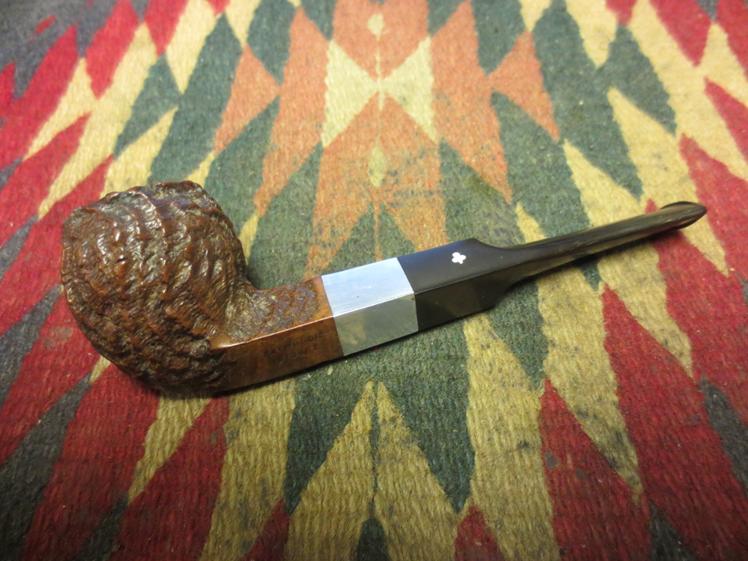
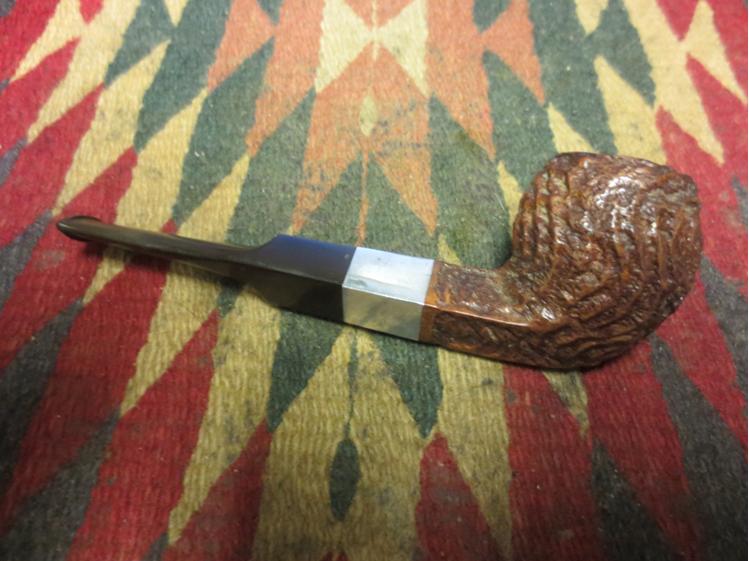
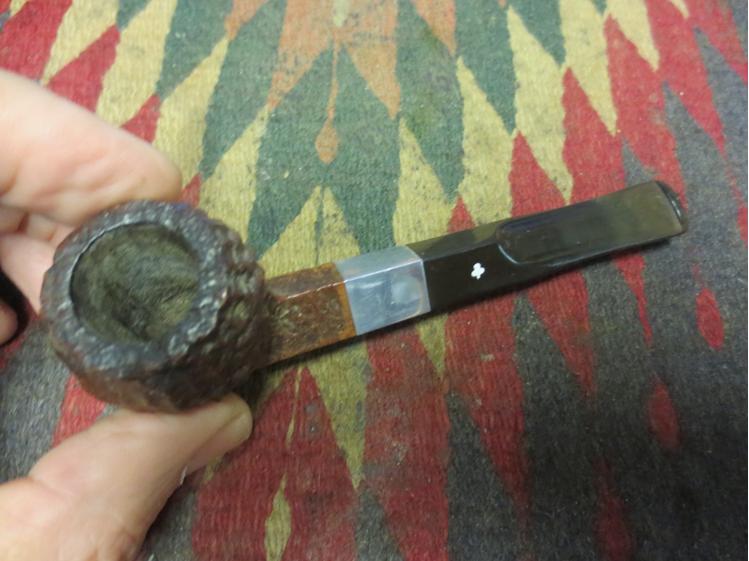
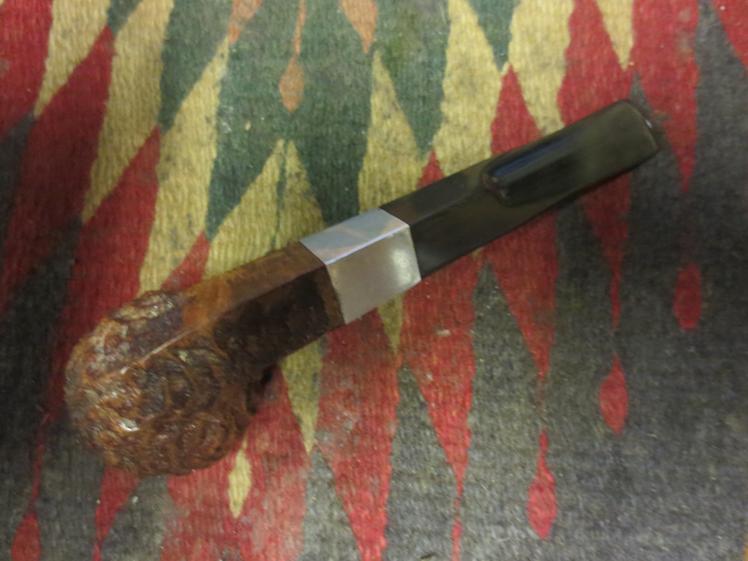
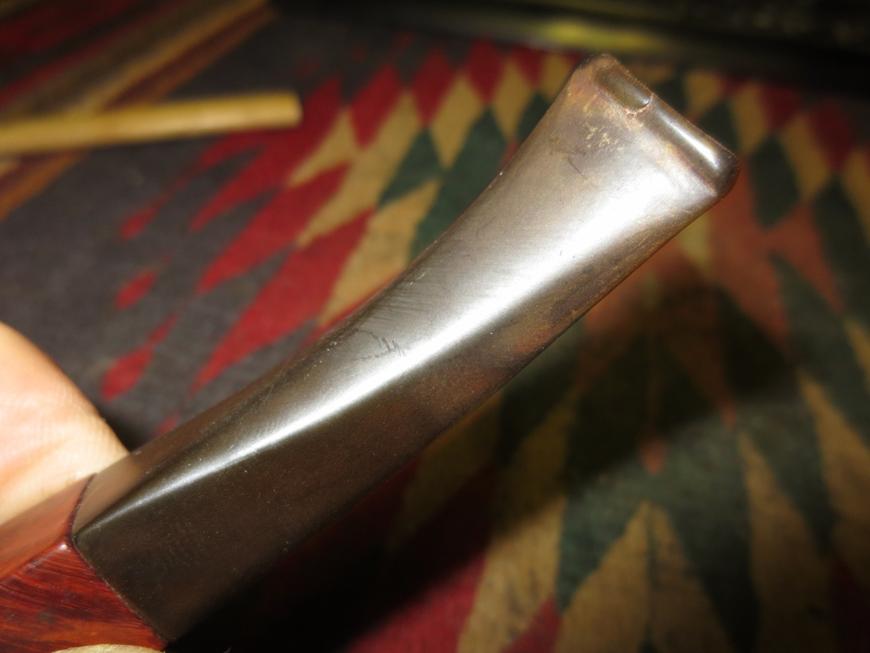
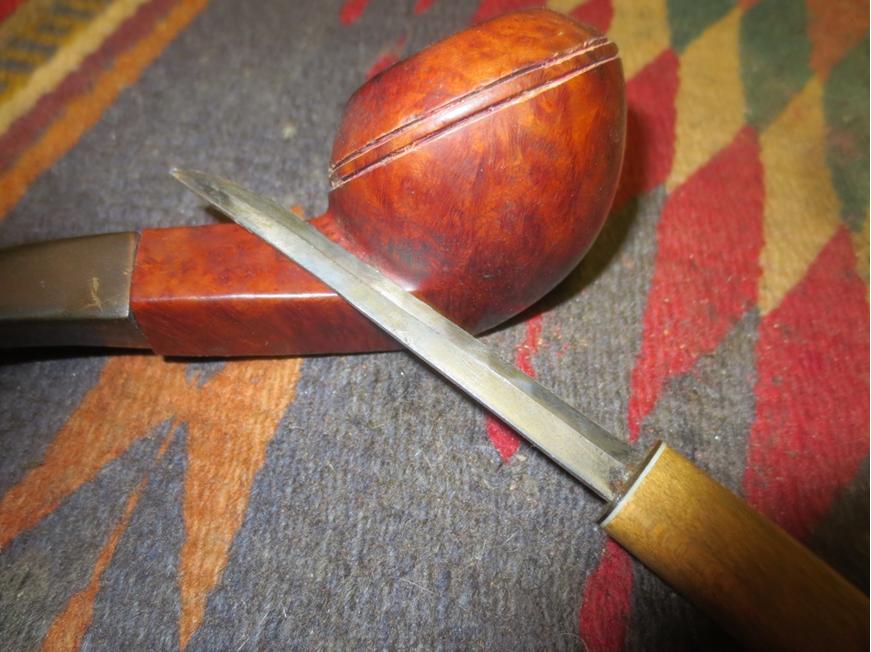
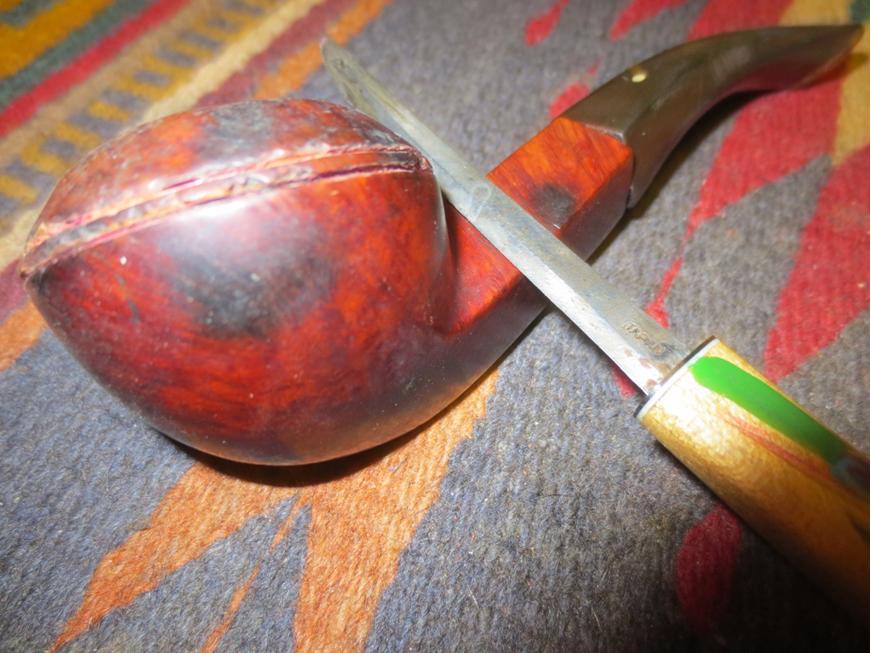
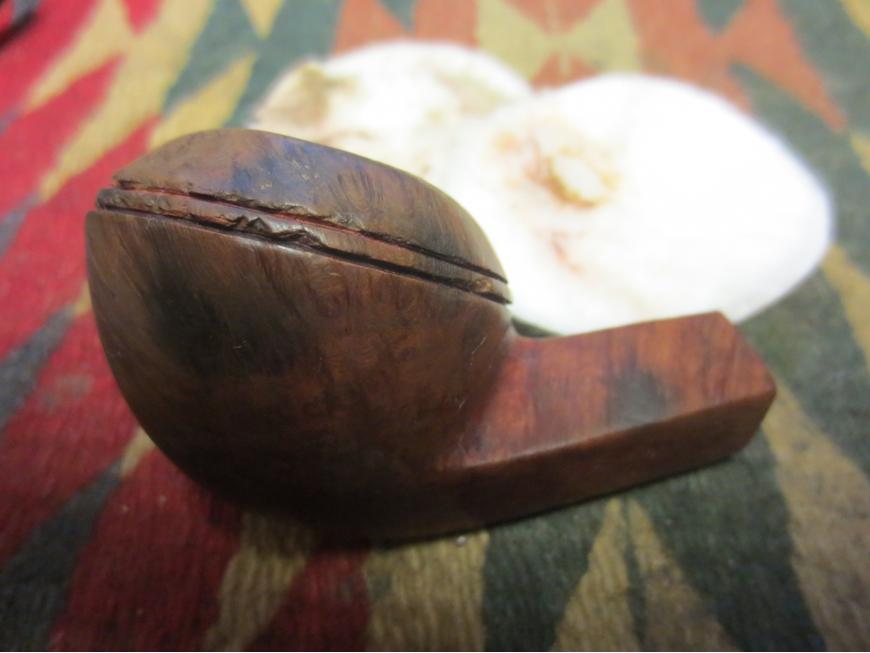
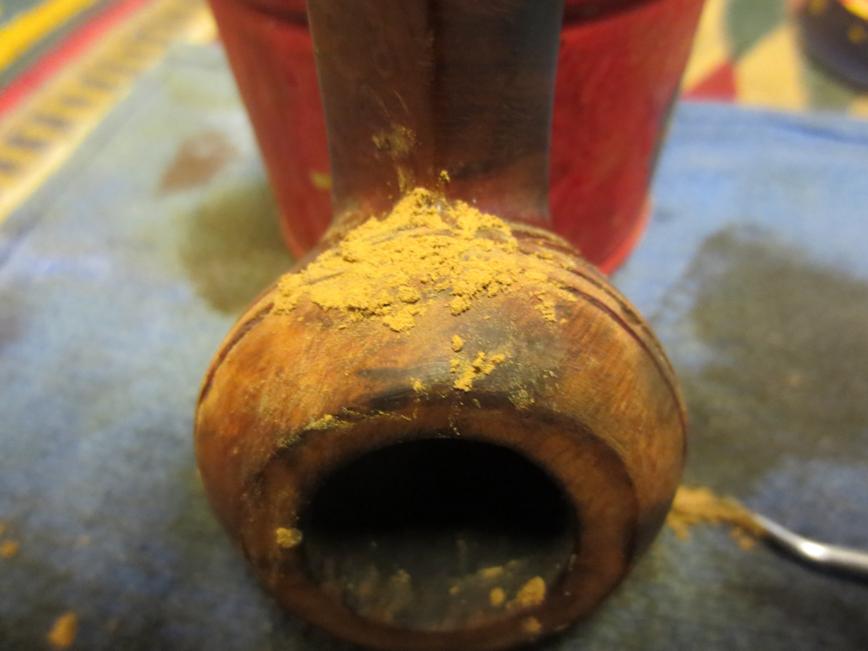
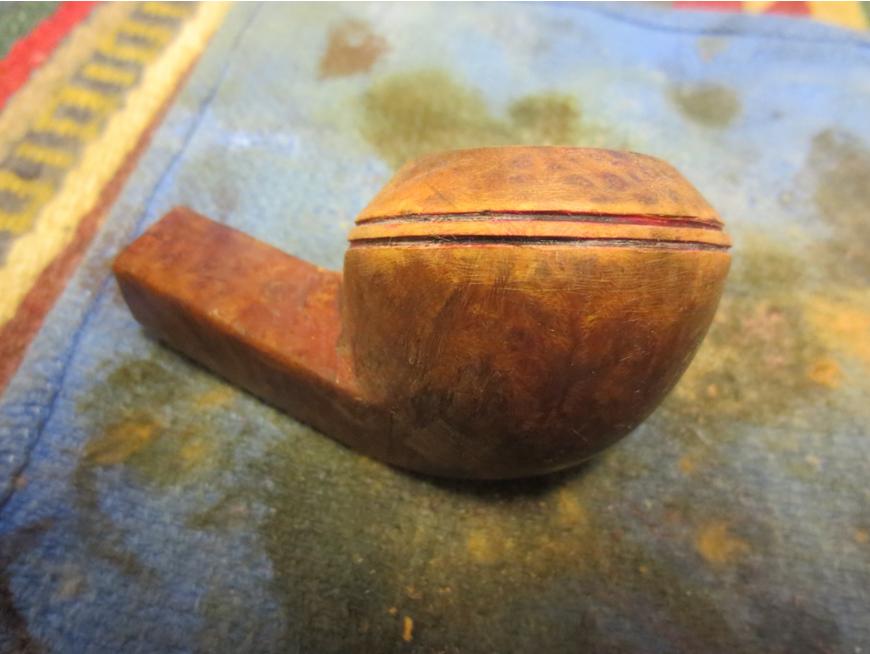
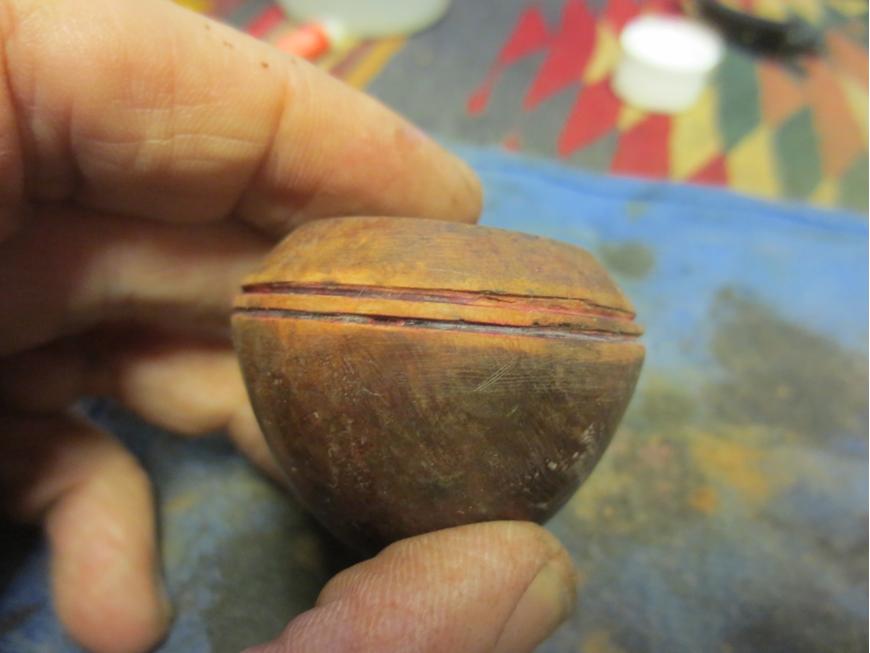
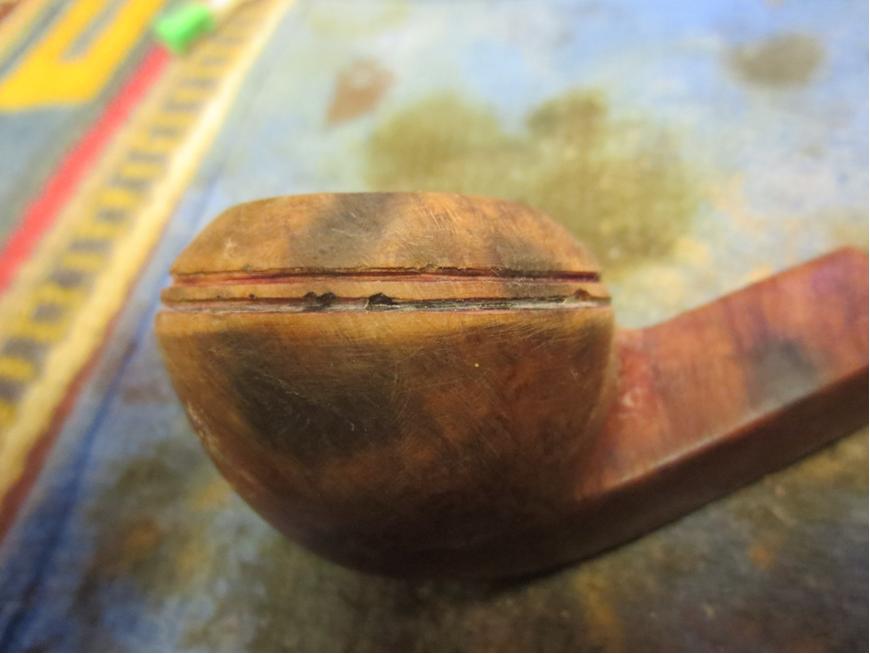
Tag Archives: refurbishing

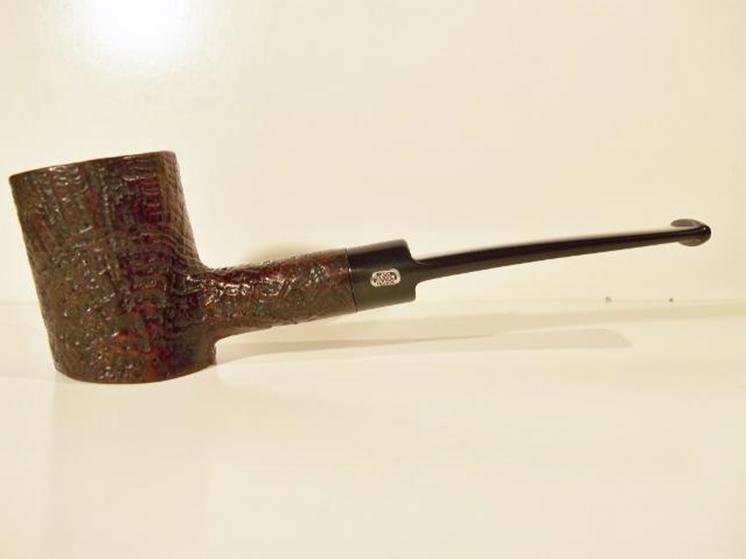
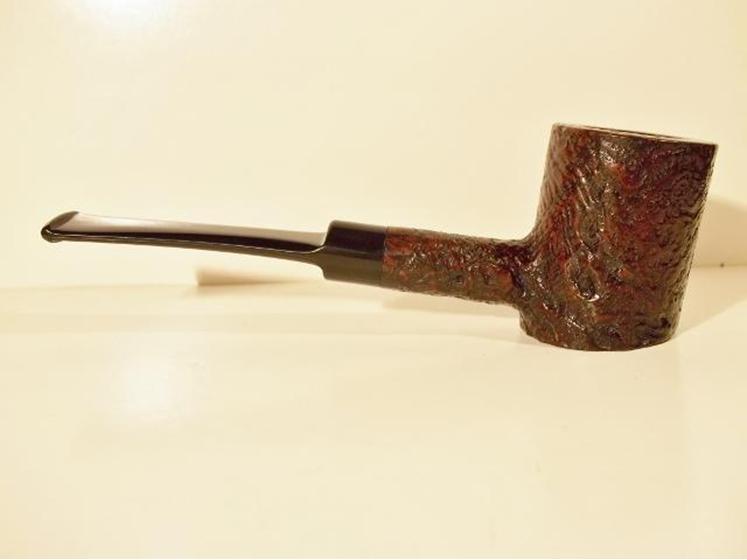
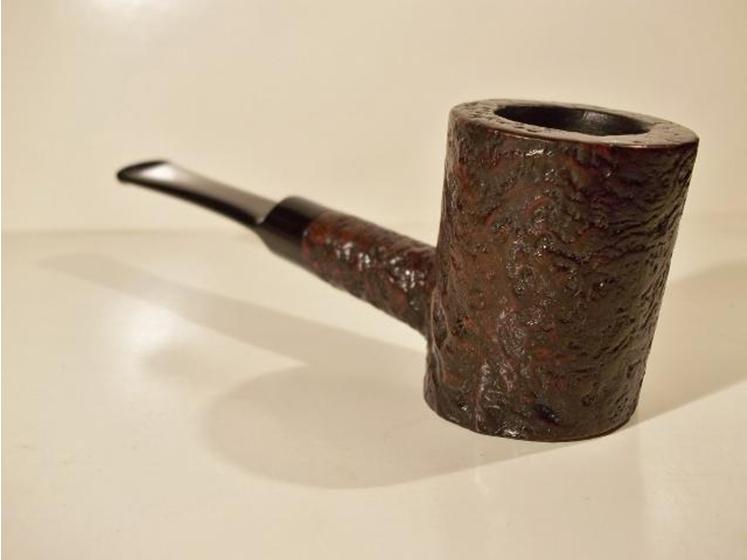
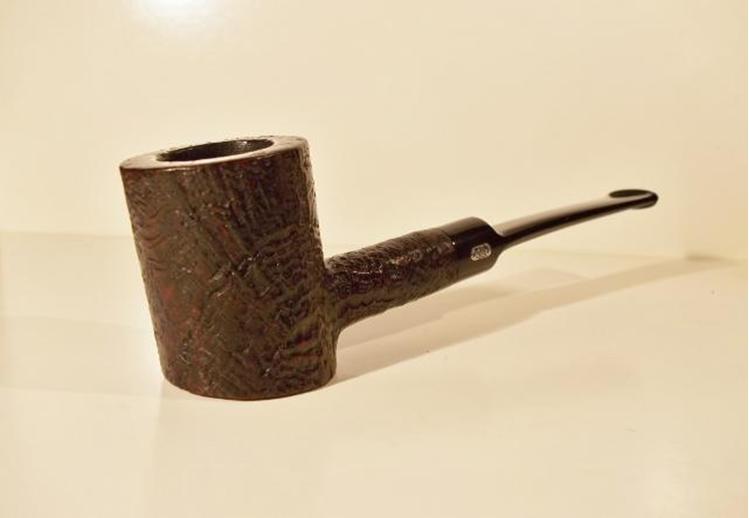
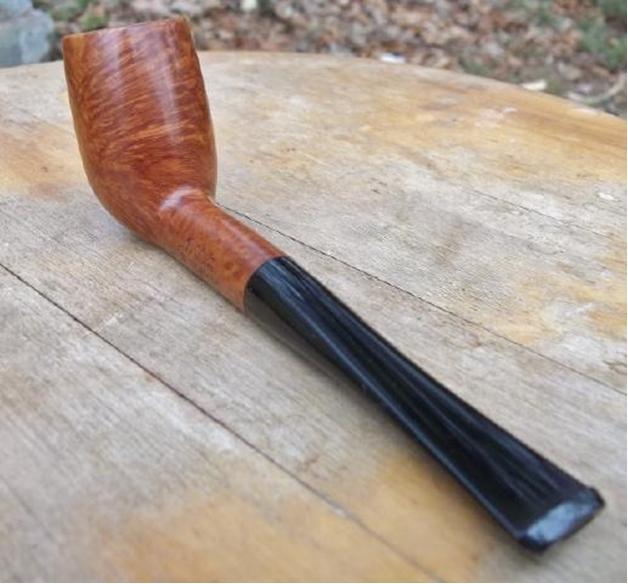
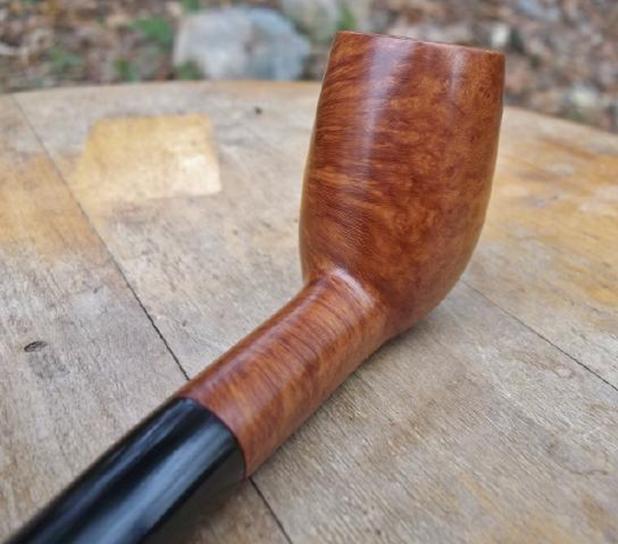
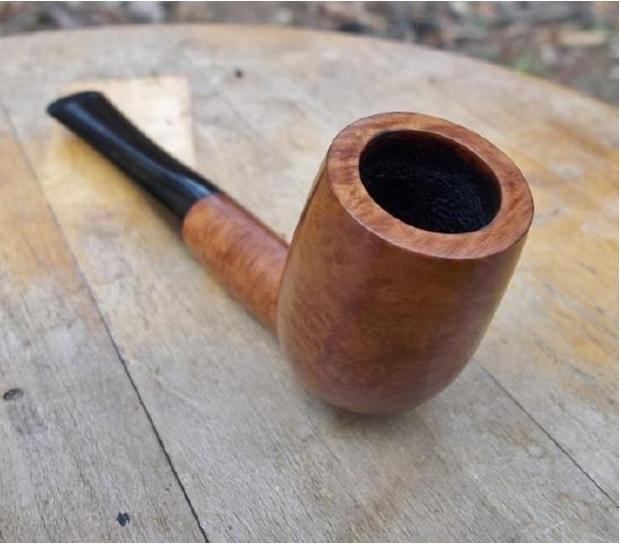
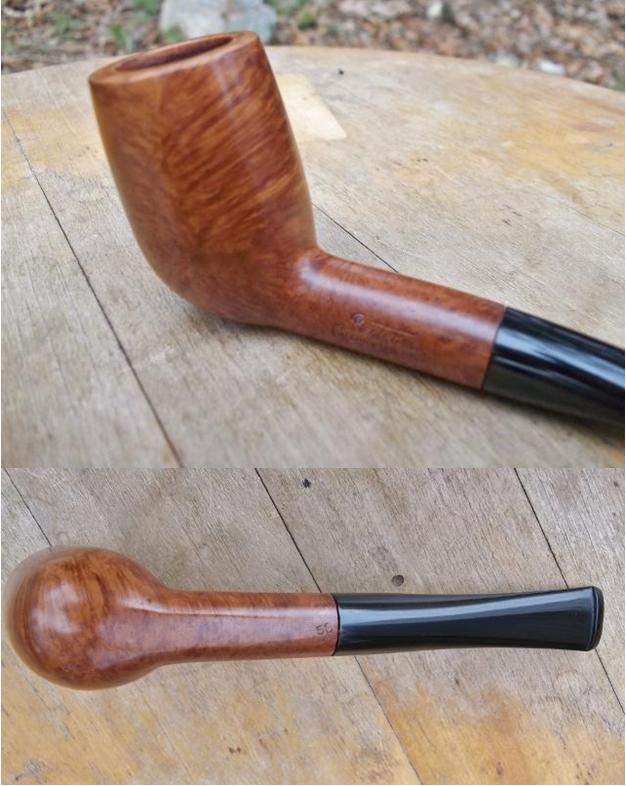
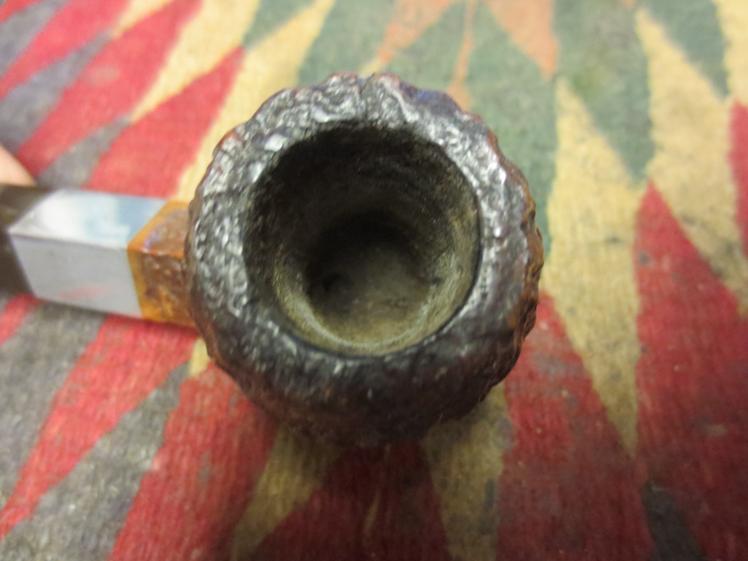
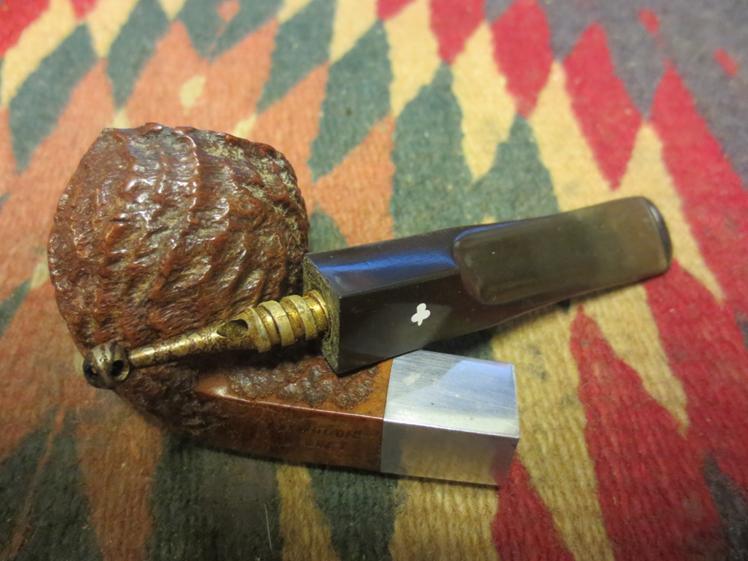
Bringing New Life to a Weber Blackthorne 370 Poker


Blog by Troy Wilburn

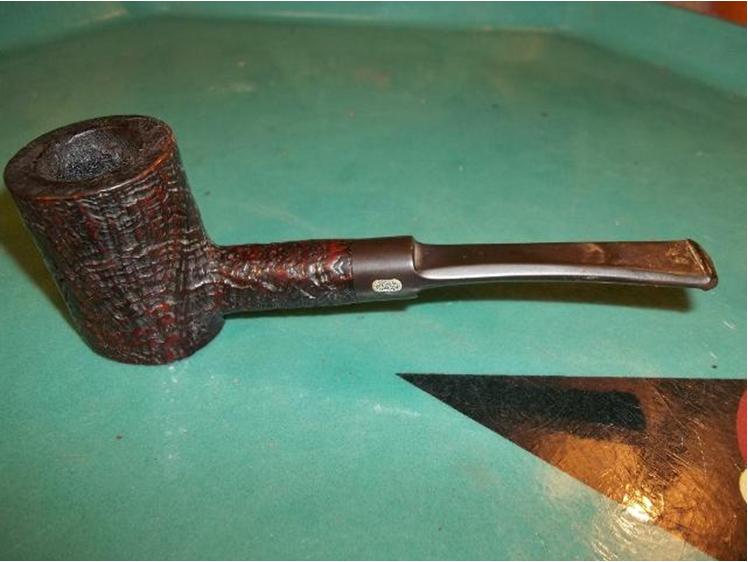
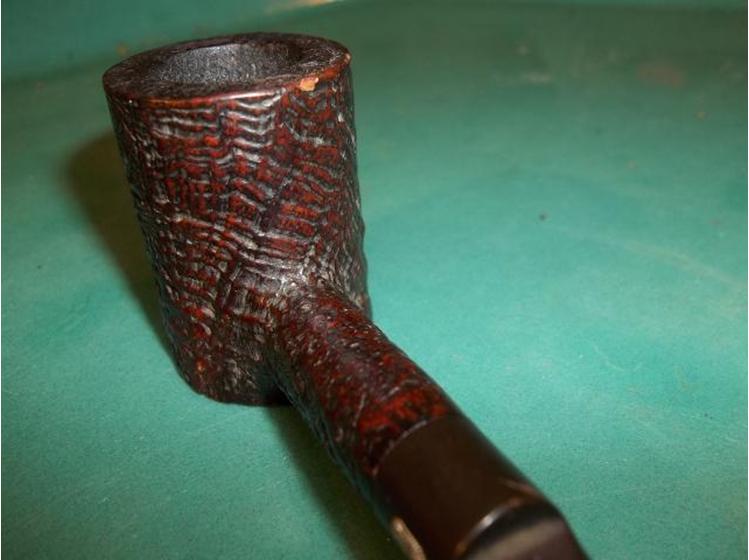
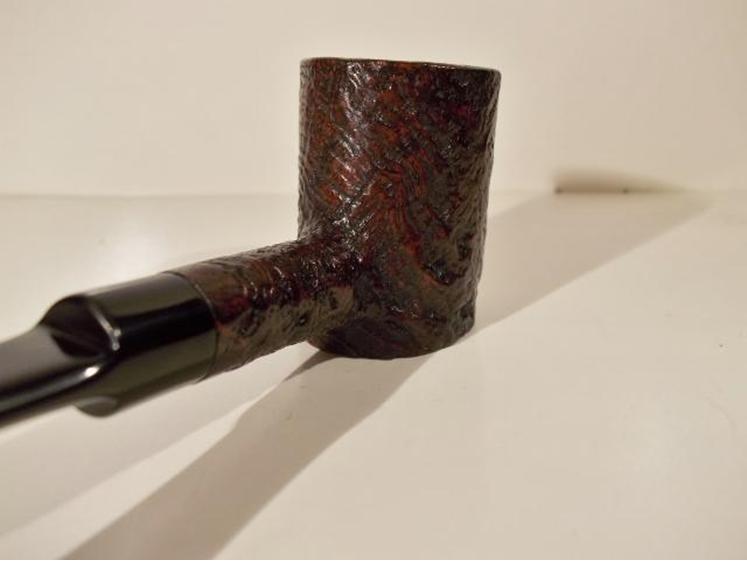
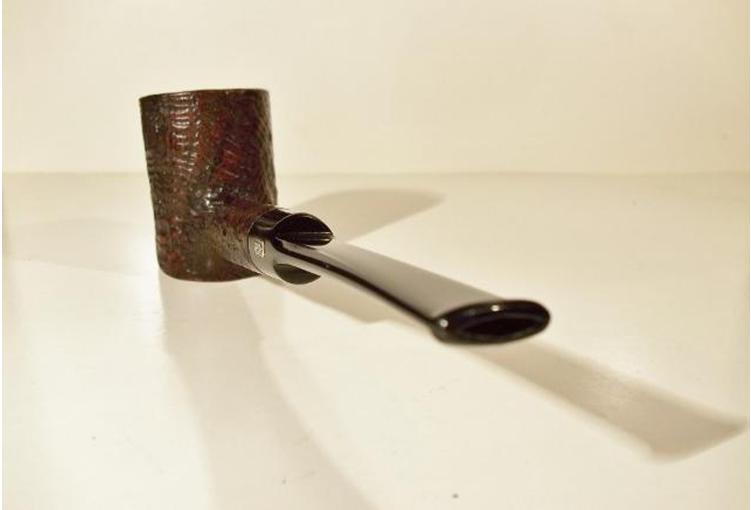
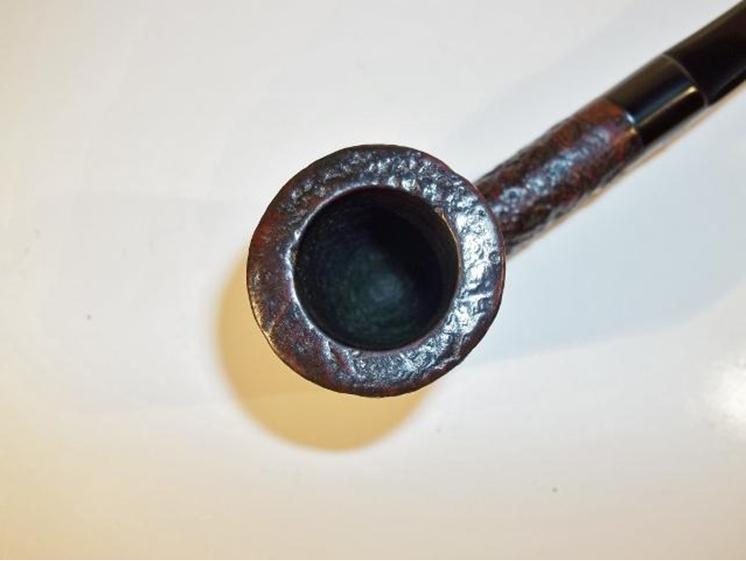
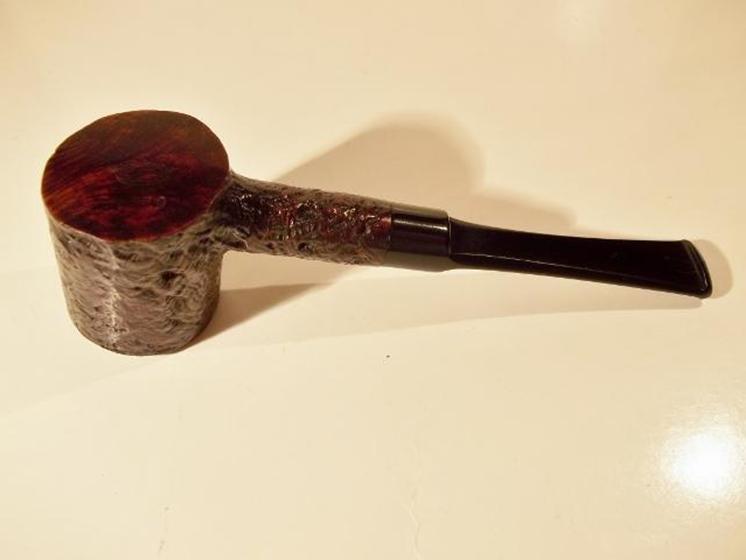
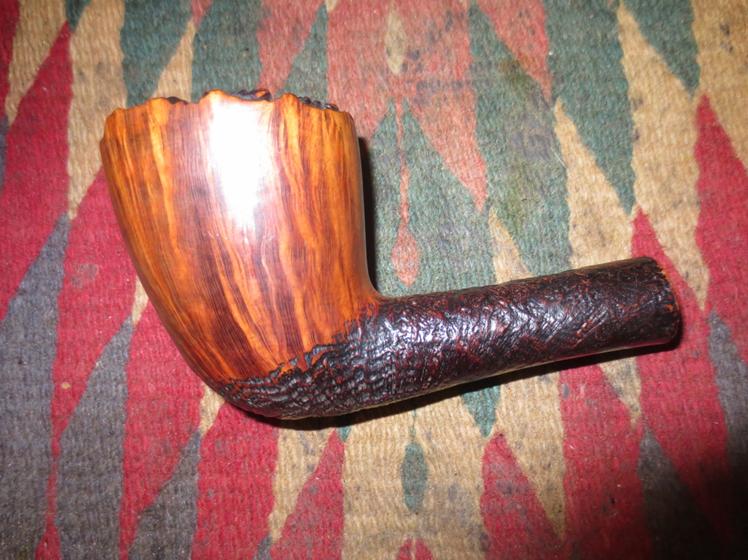
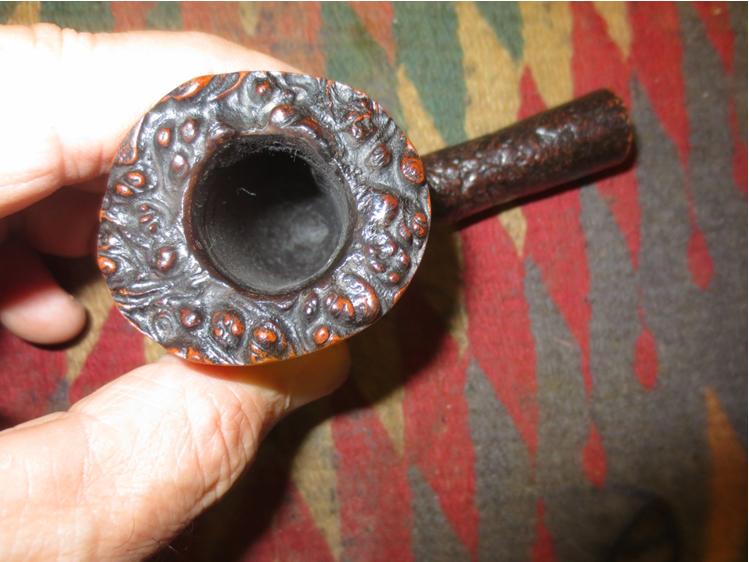
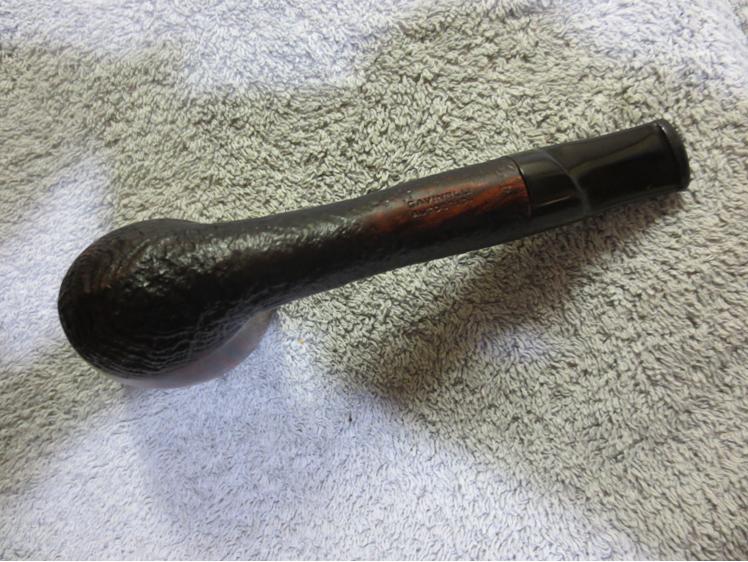
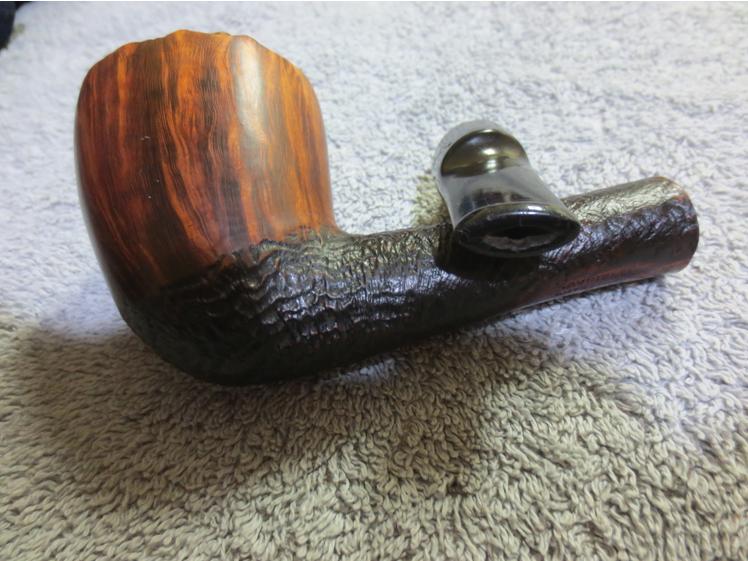
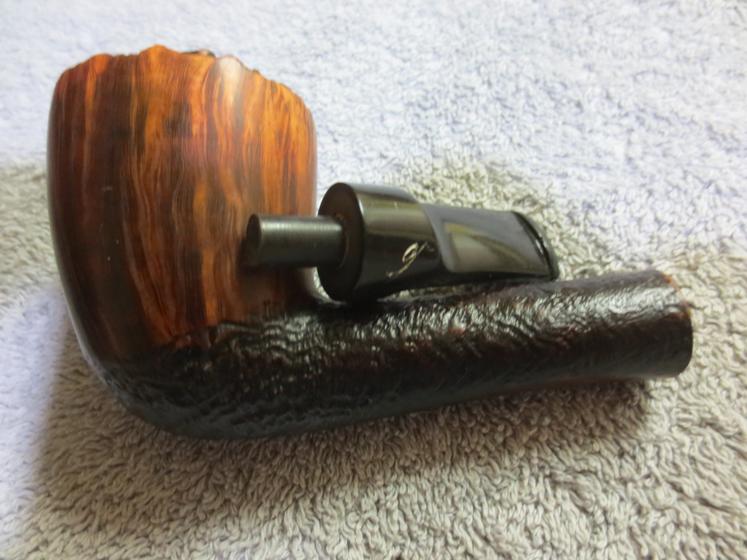
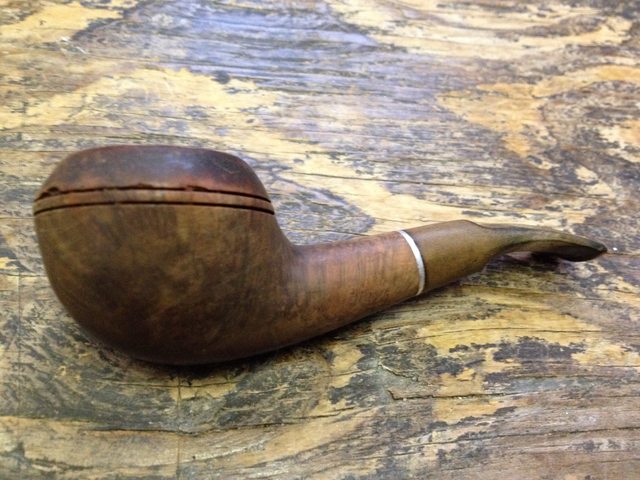
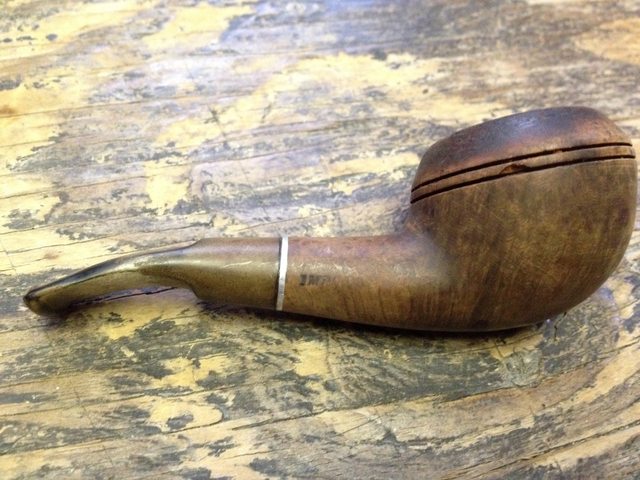
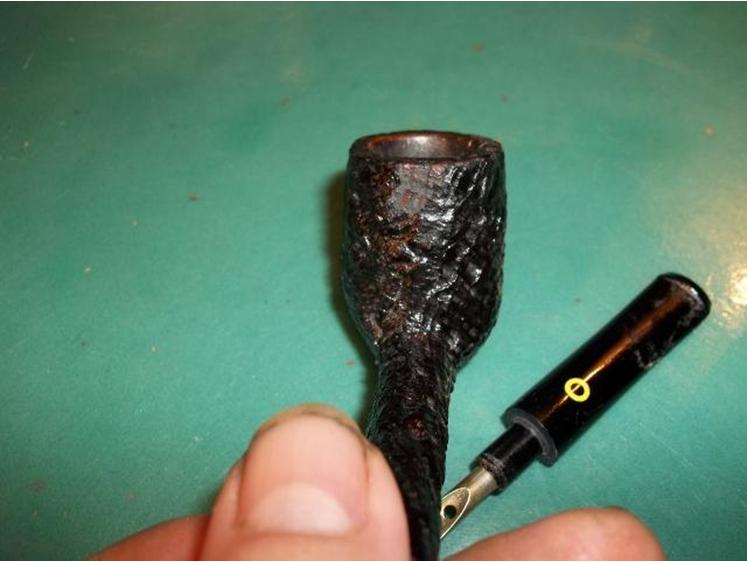
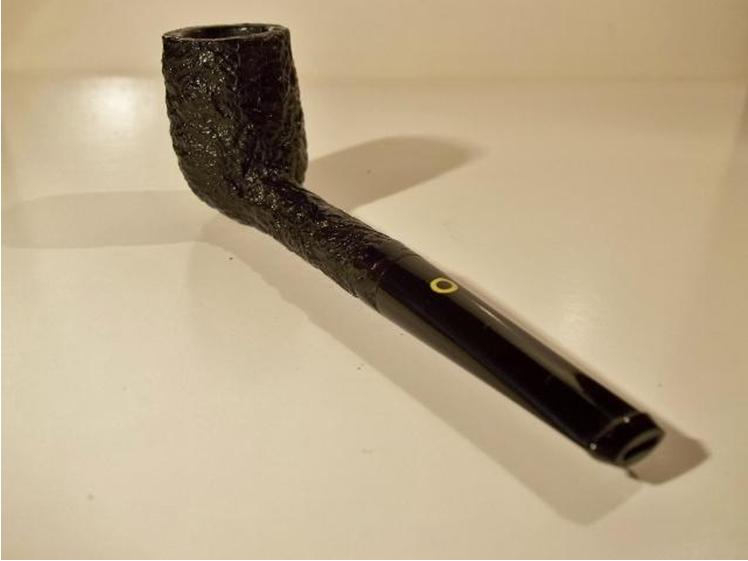
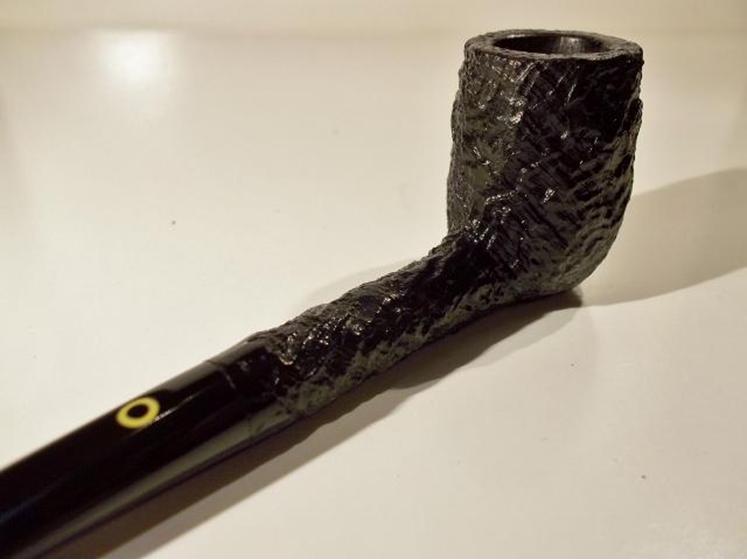
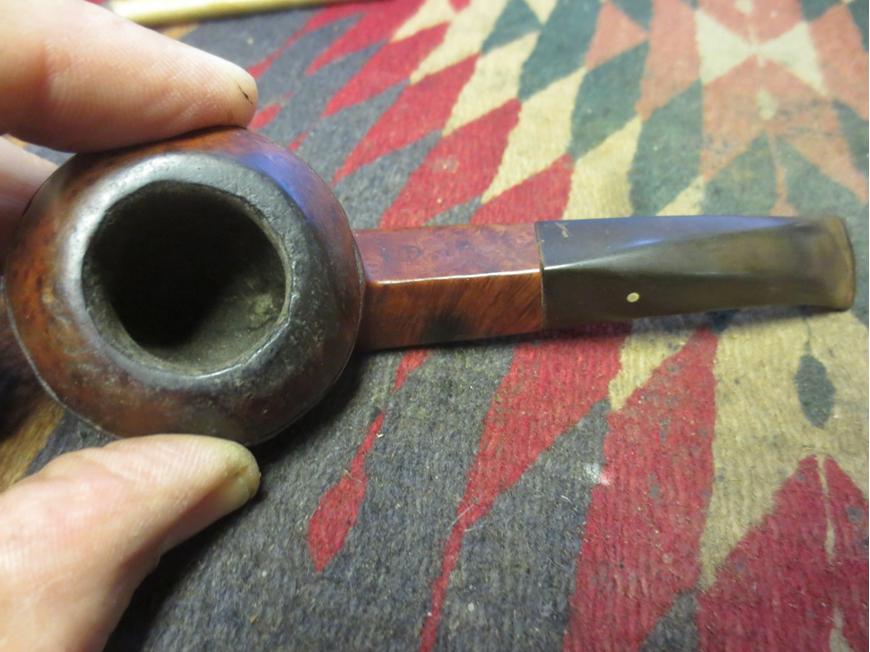
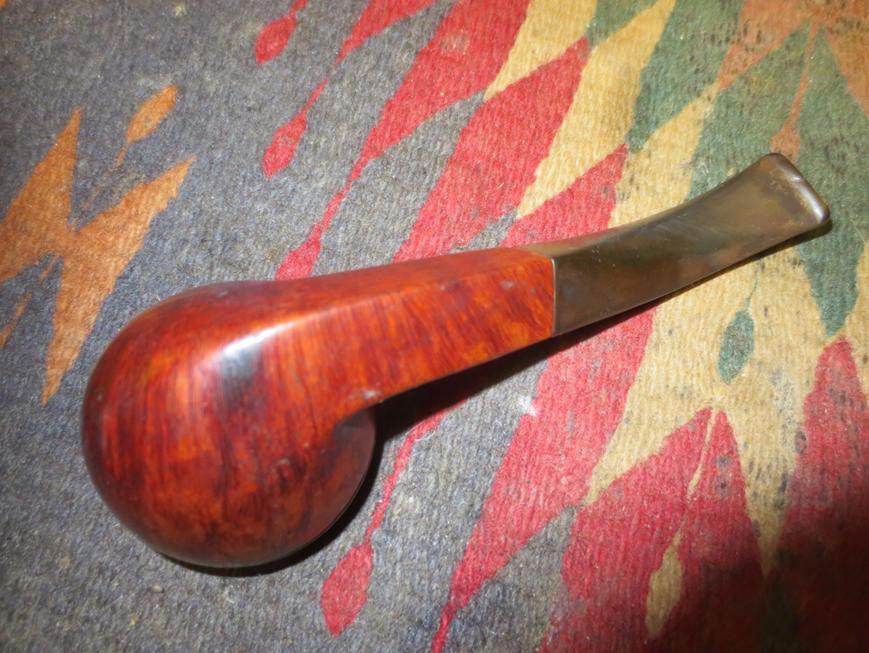
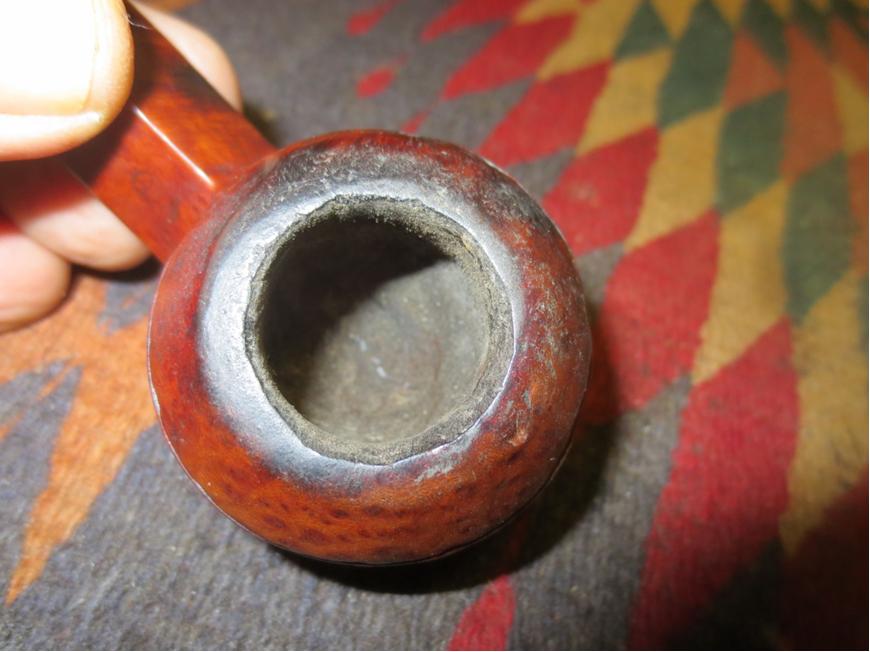
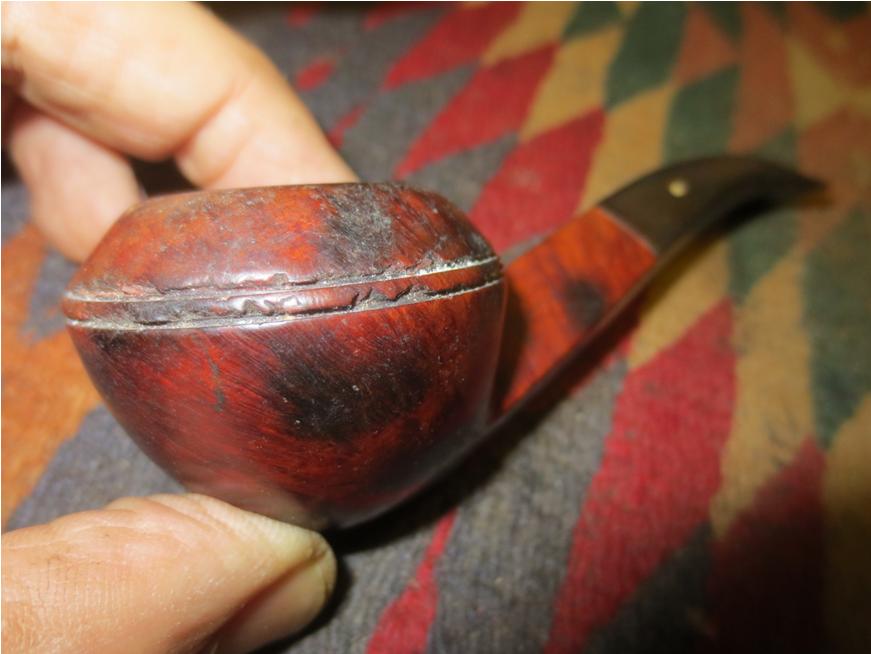
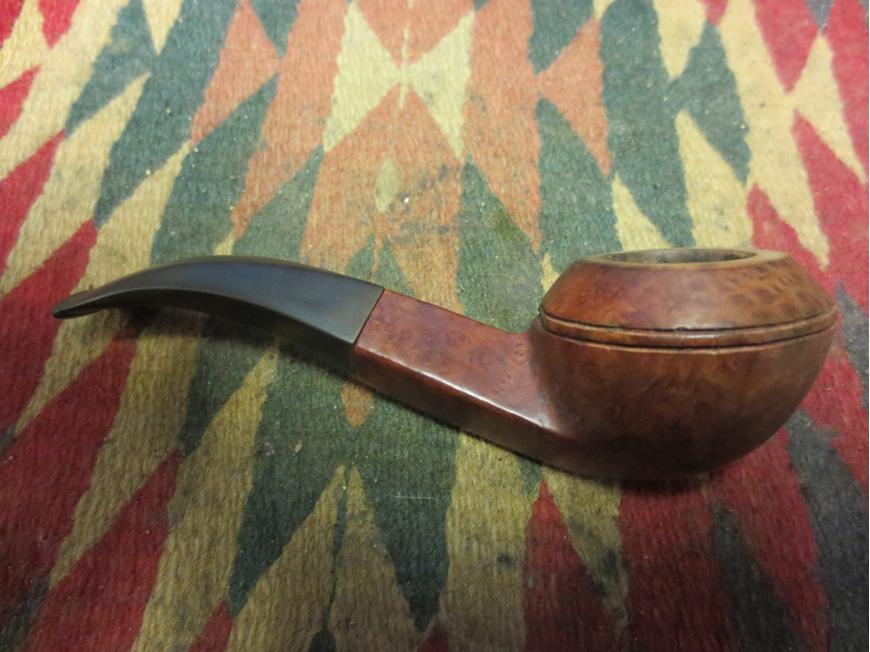
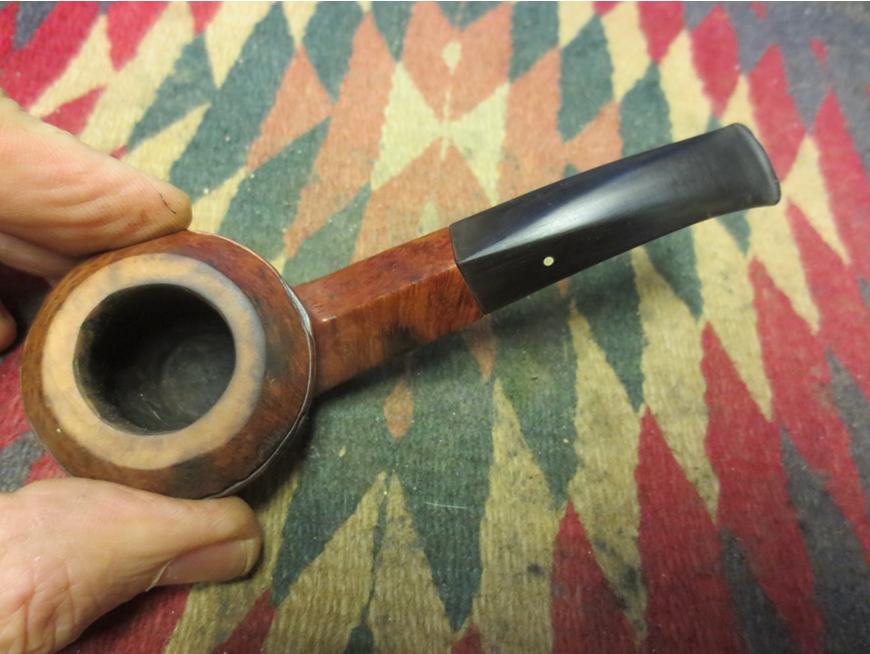
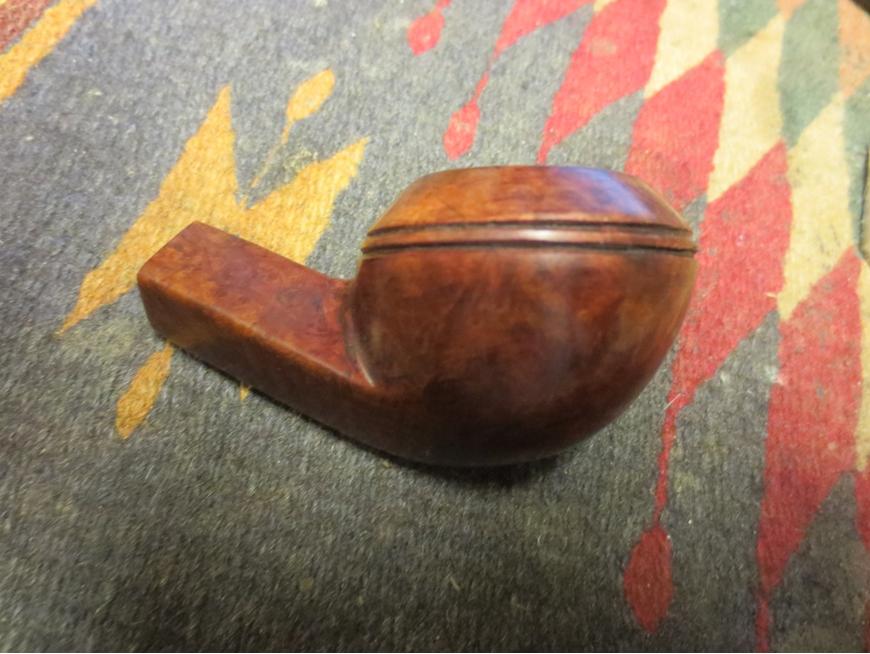
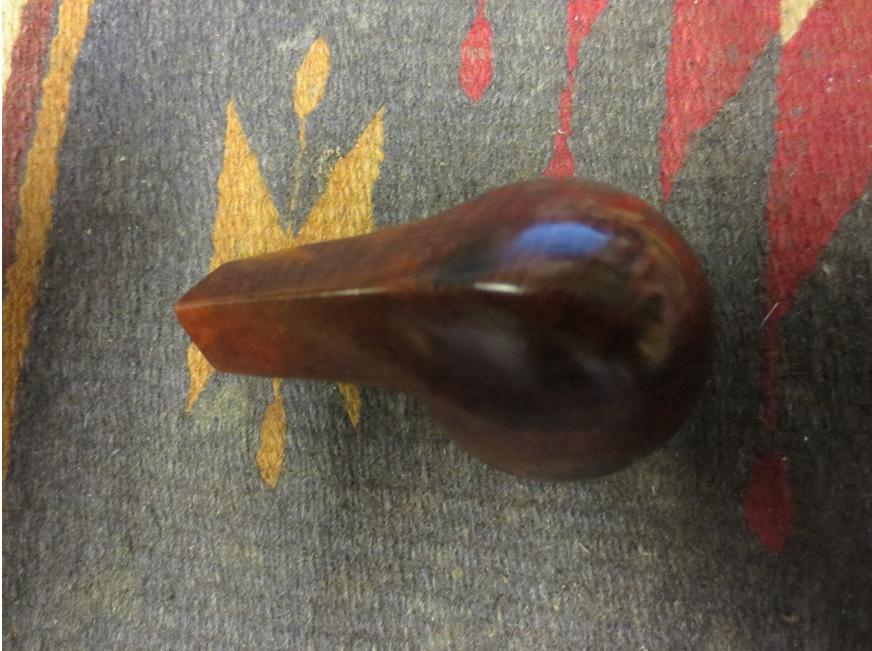
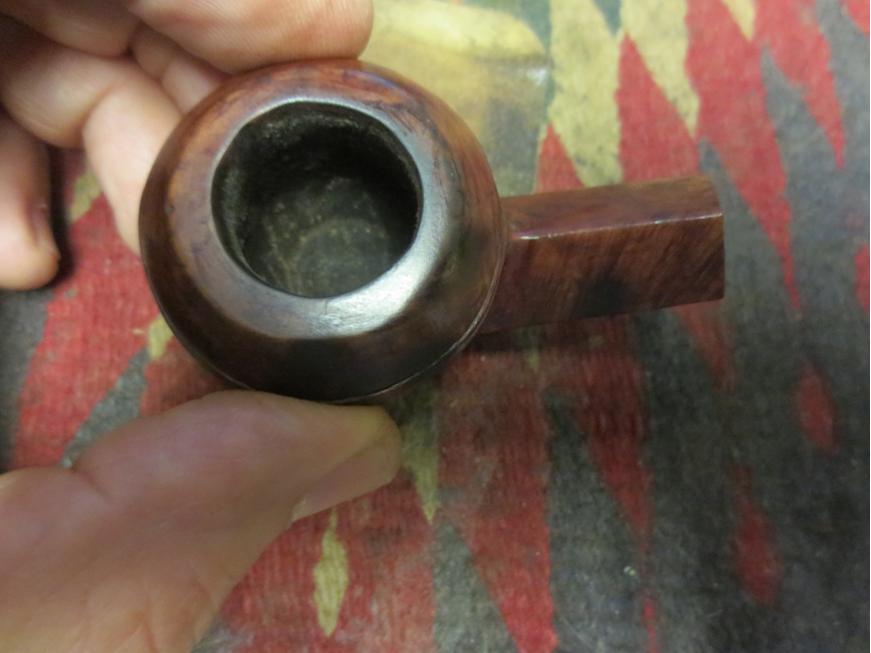
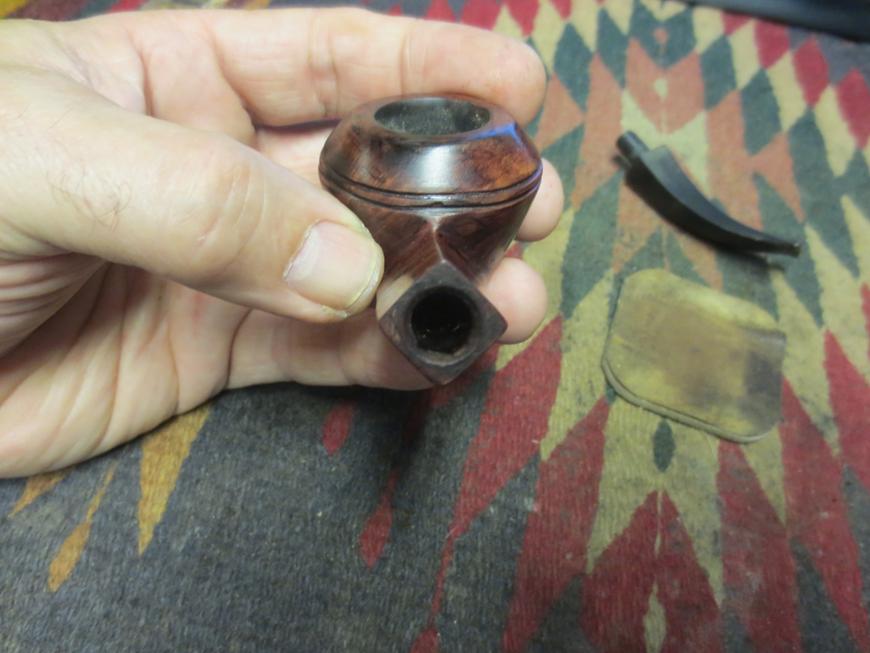
I acquired this Weber Poker off Ebay with a “Best Offer” bid. Although I got other pokers made by Weber (Webco, Jobey, Wally Frank) I did not have one stamped Weber, so I added this to my American Poker Collection.Frank1

Frank2

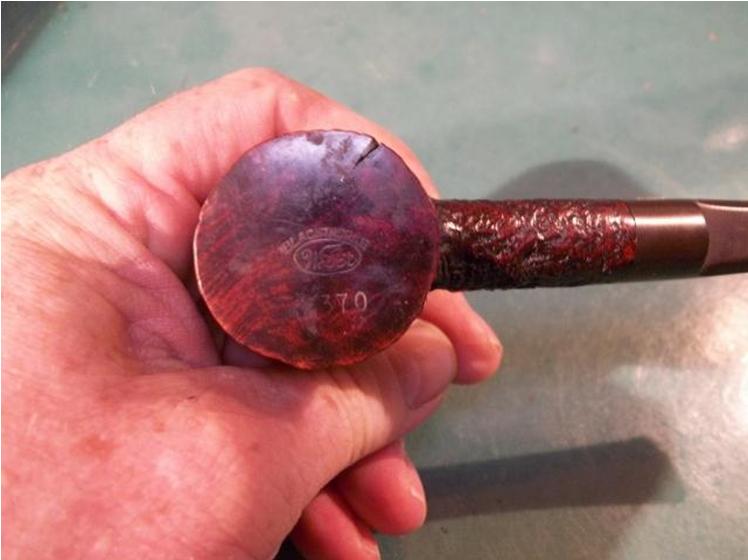
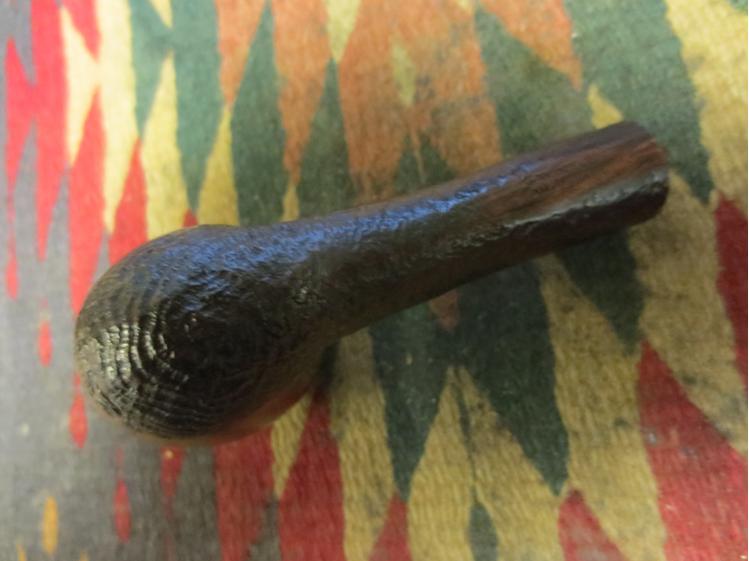
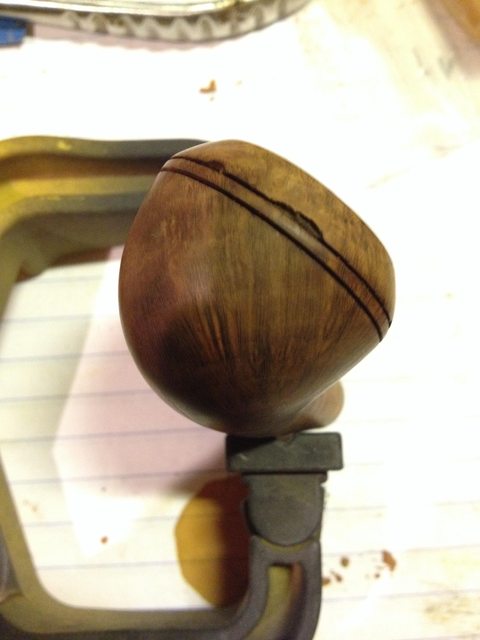
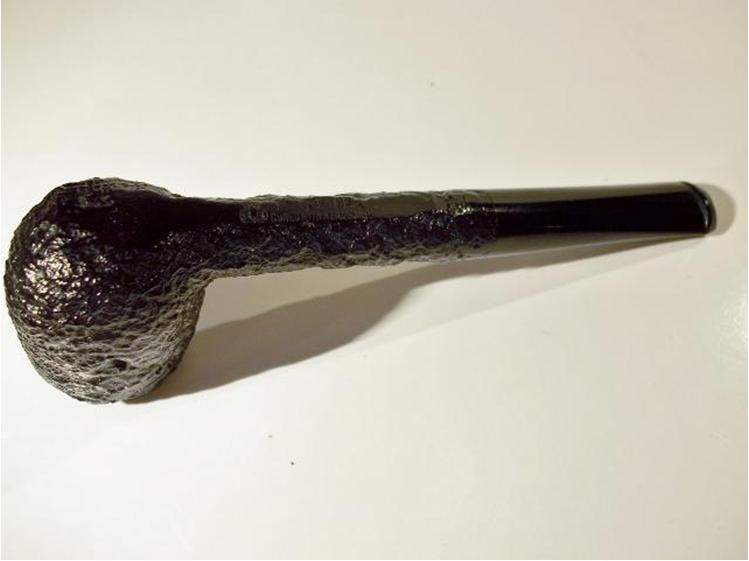
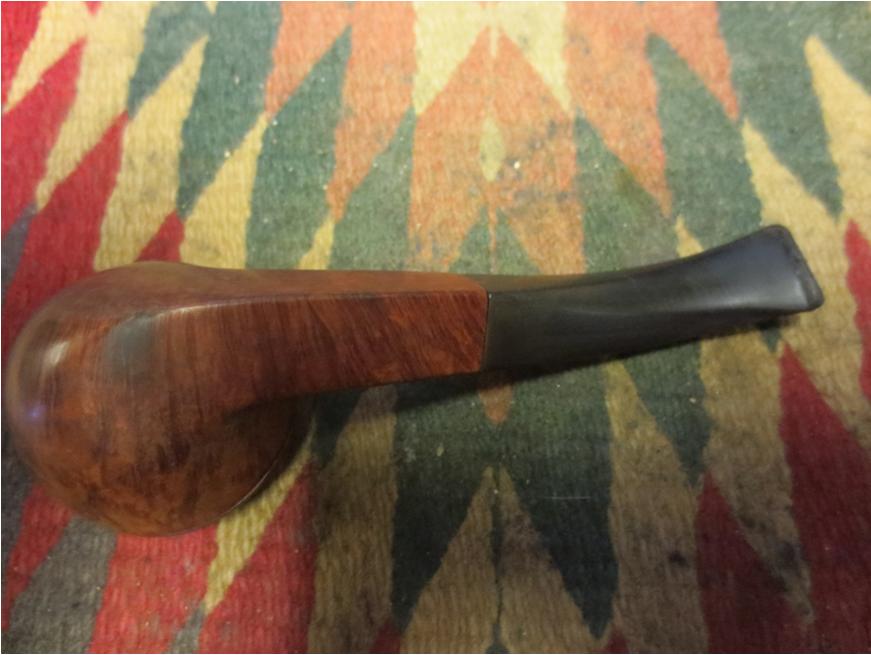
Frank3 It had a crack on the bottom which in my “Best Offer” bid I noted my concern over it and got the pipe for much less than the amount they wanted.Frank4

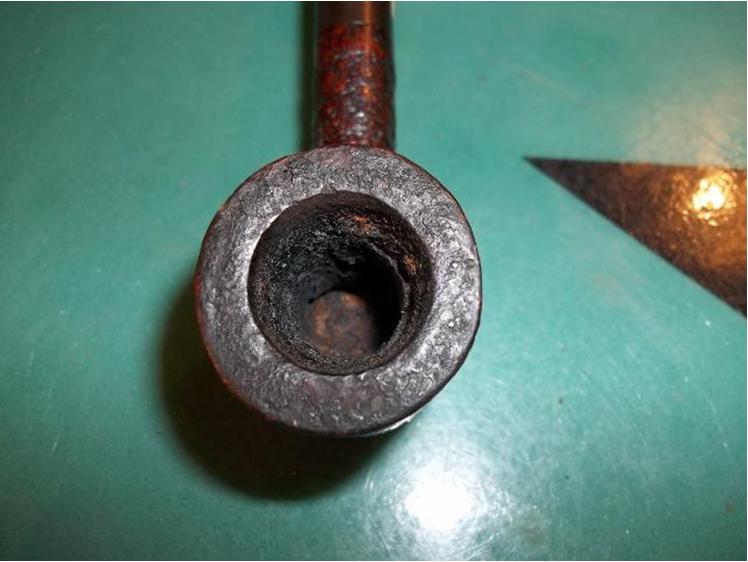
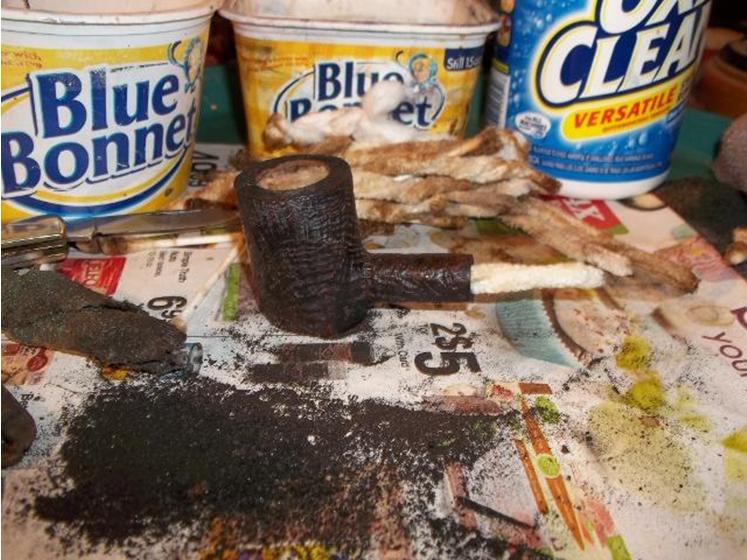
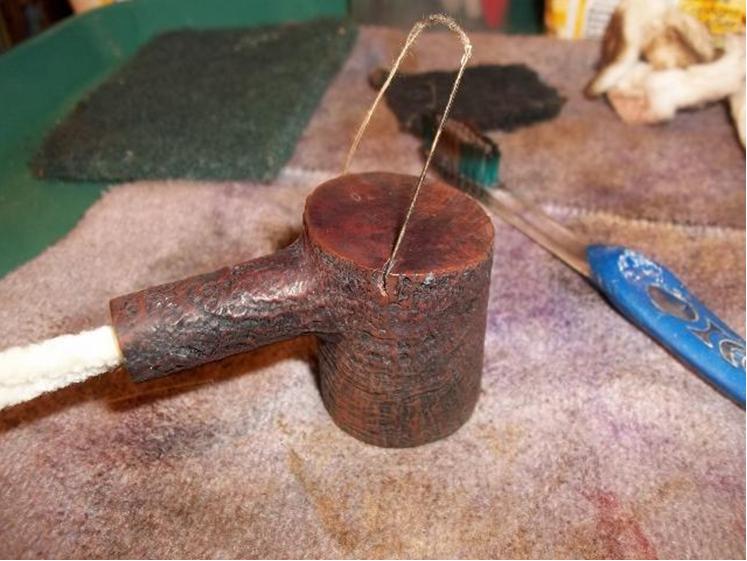
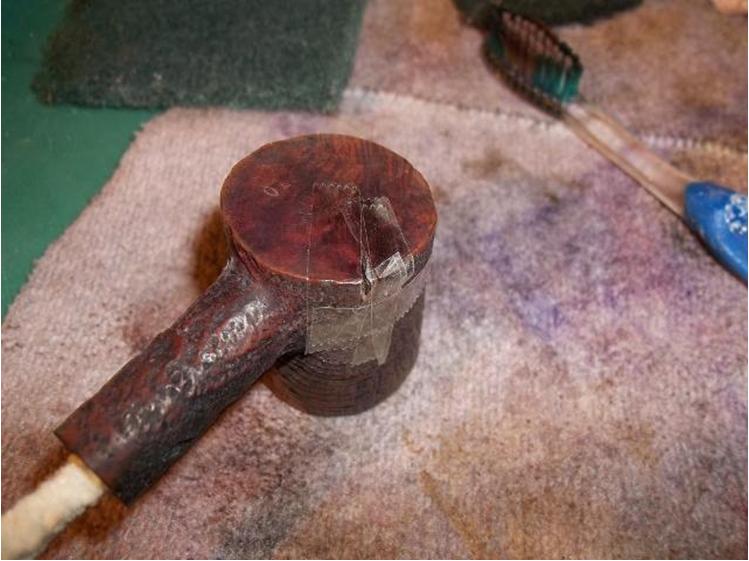
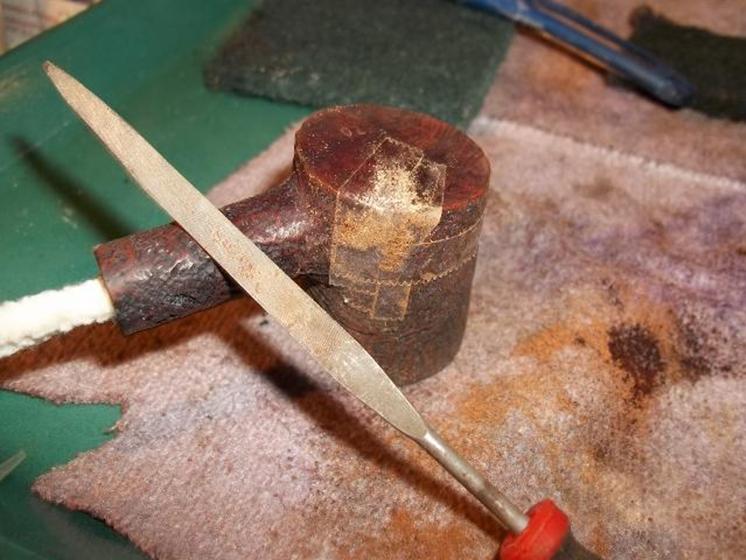
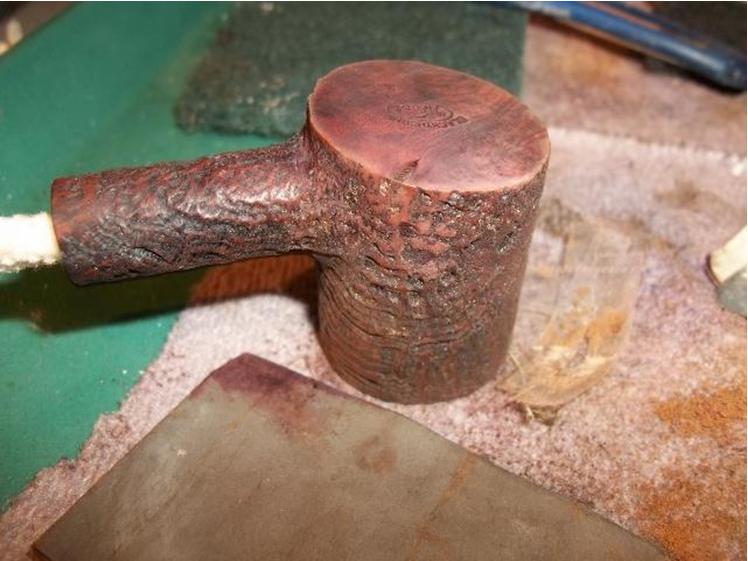
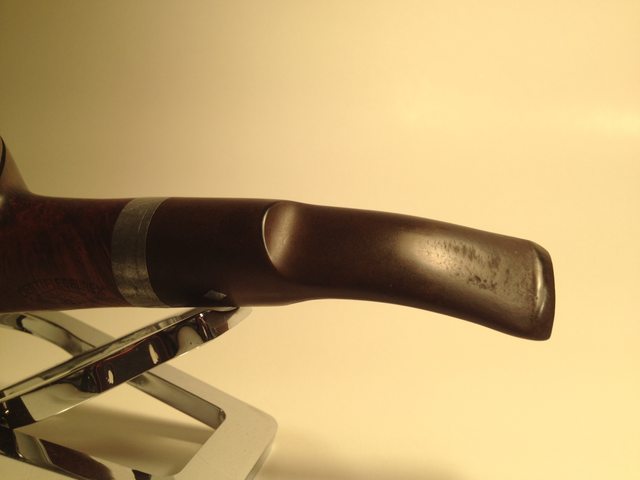
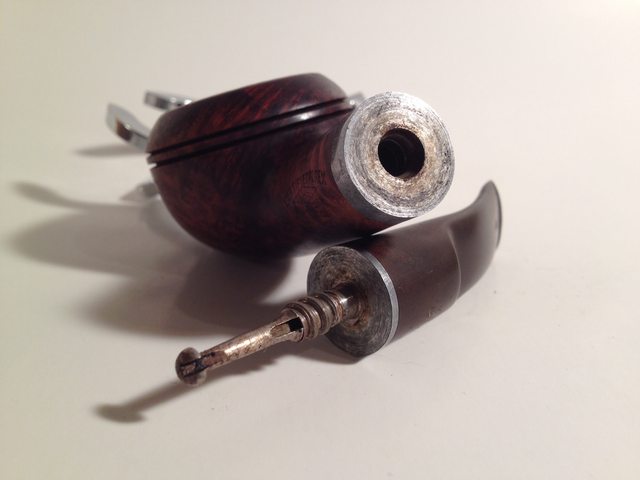
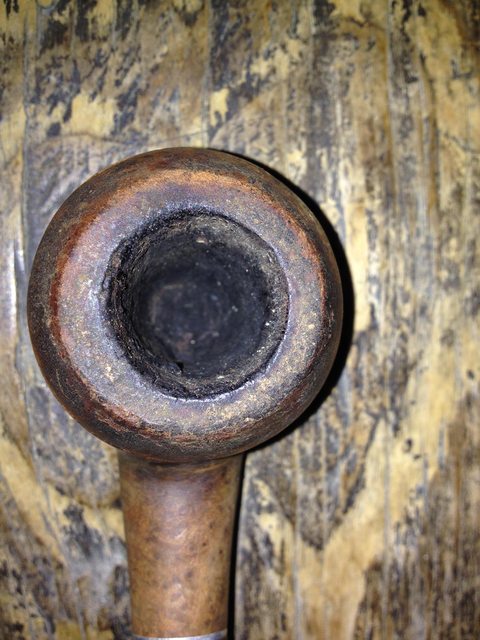
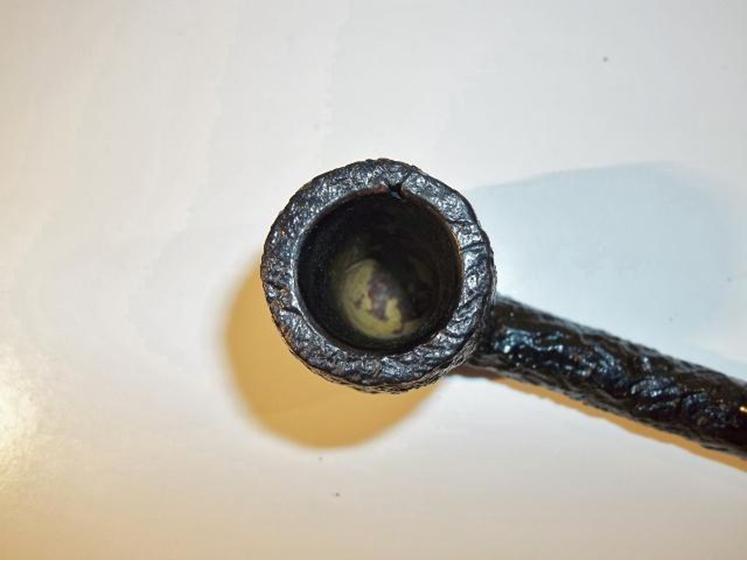
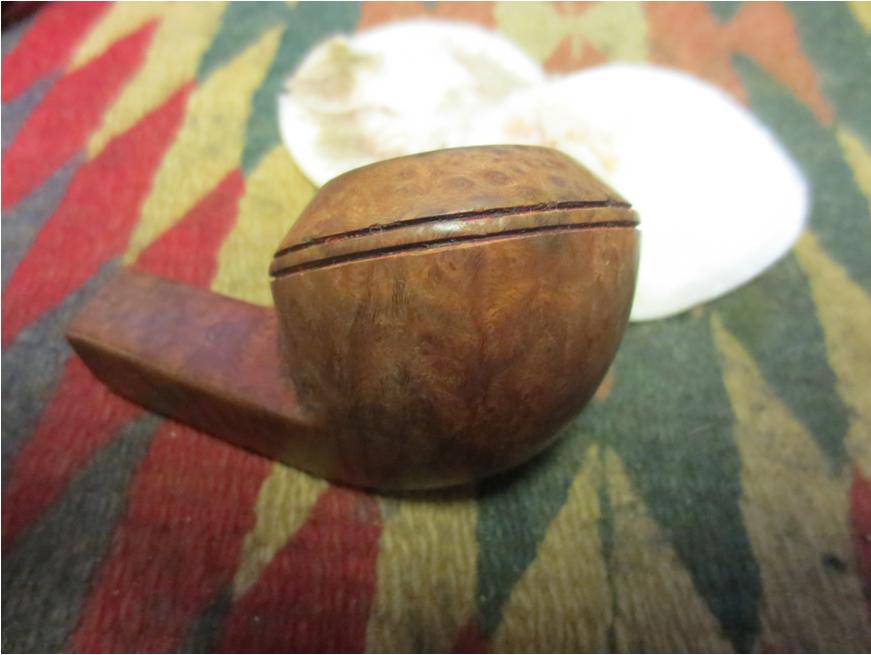
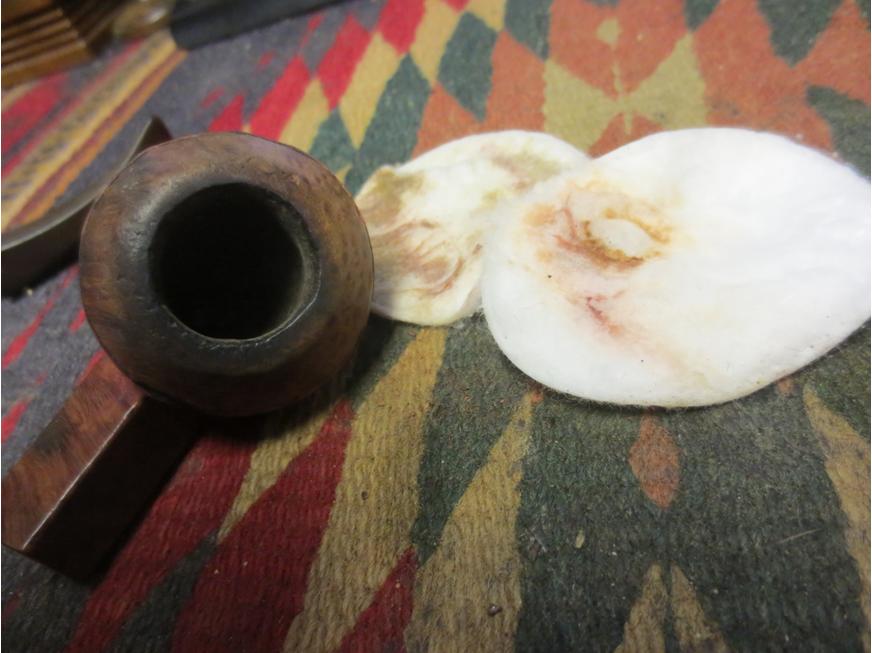
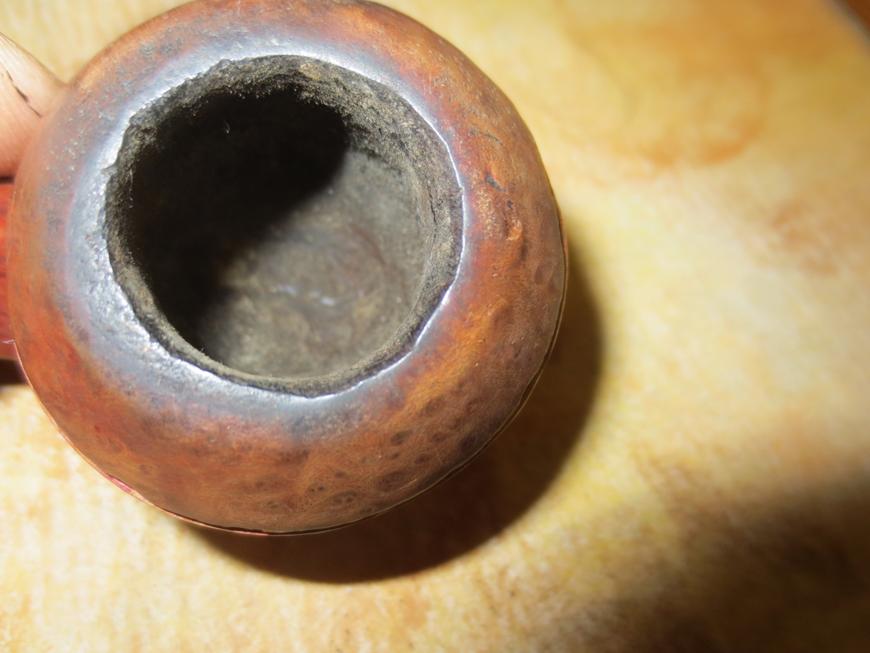
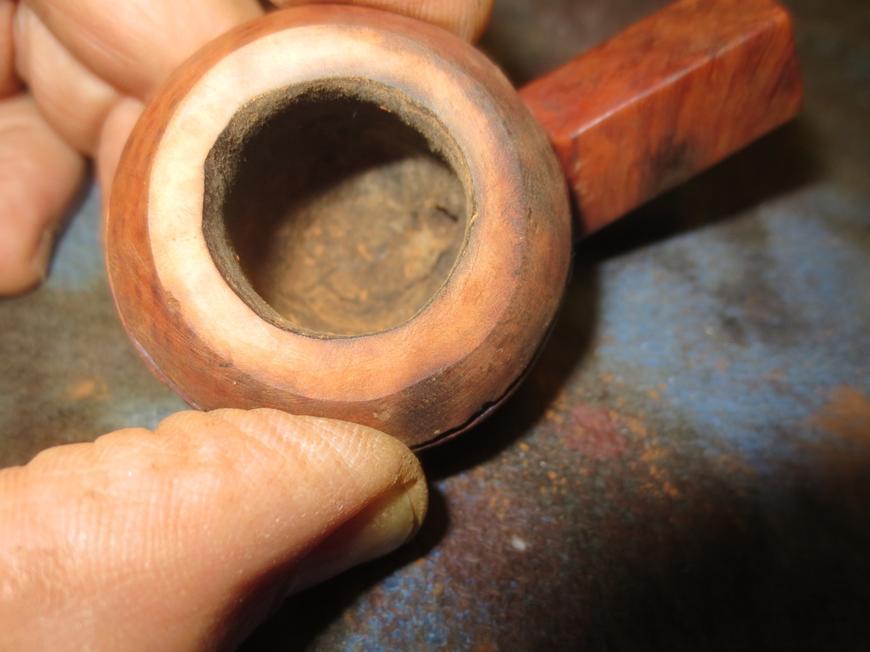
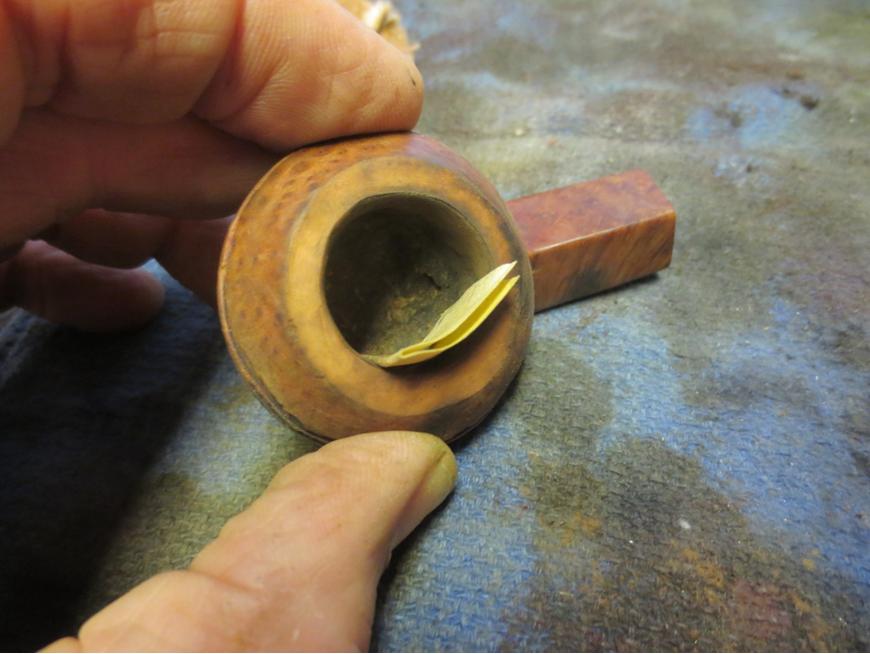
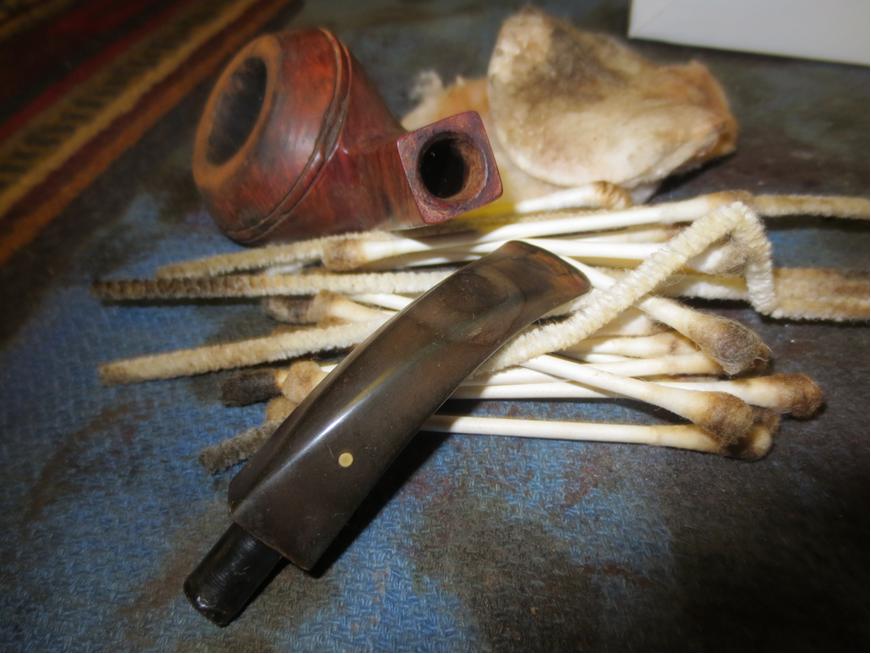
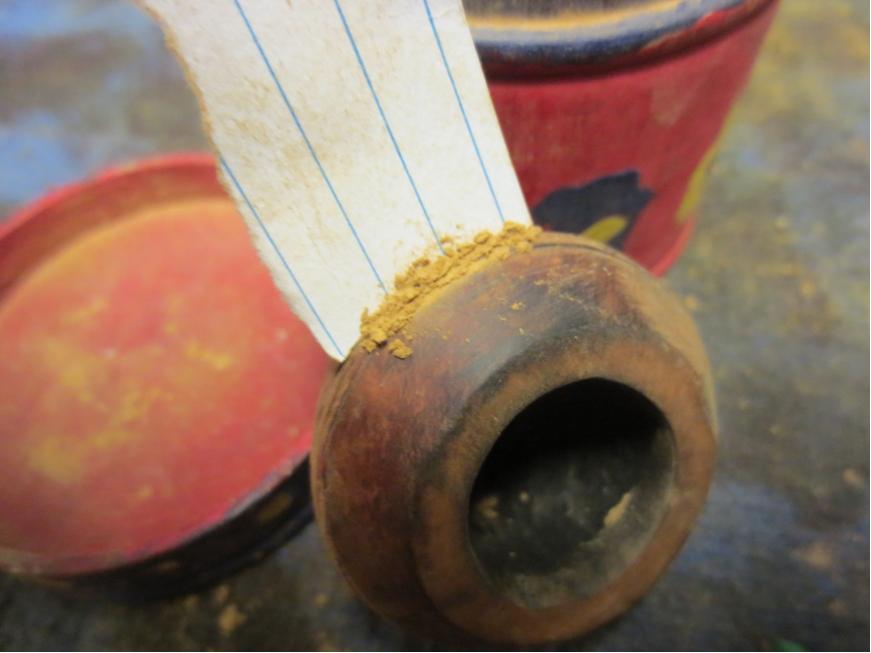
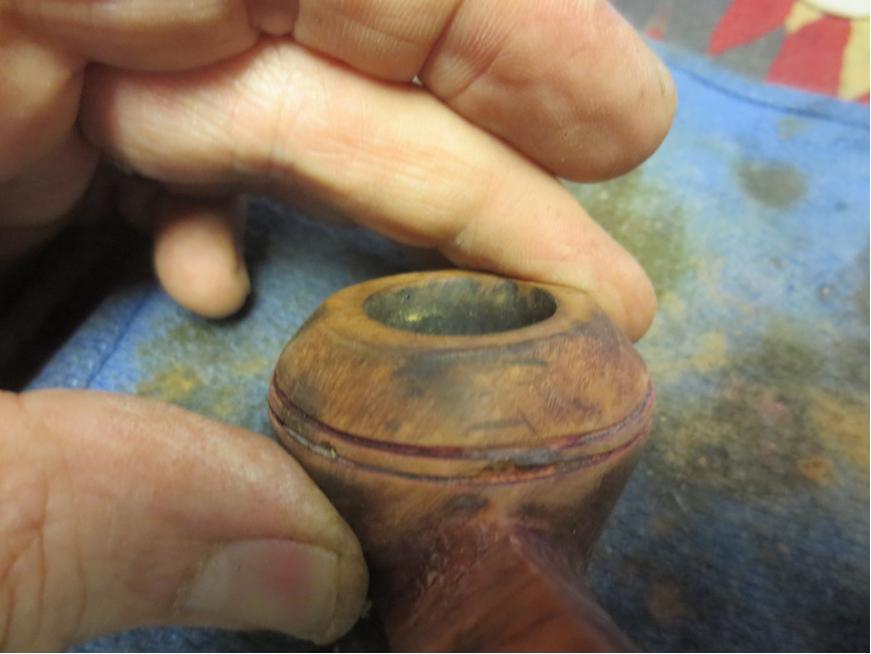
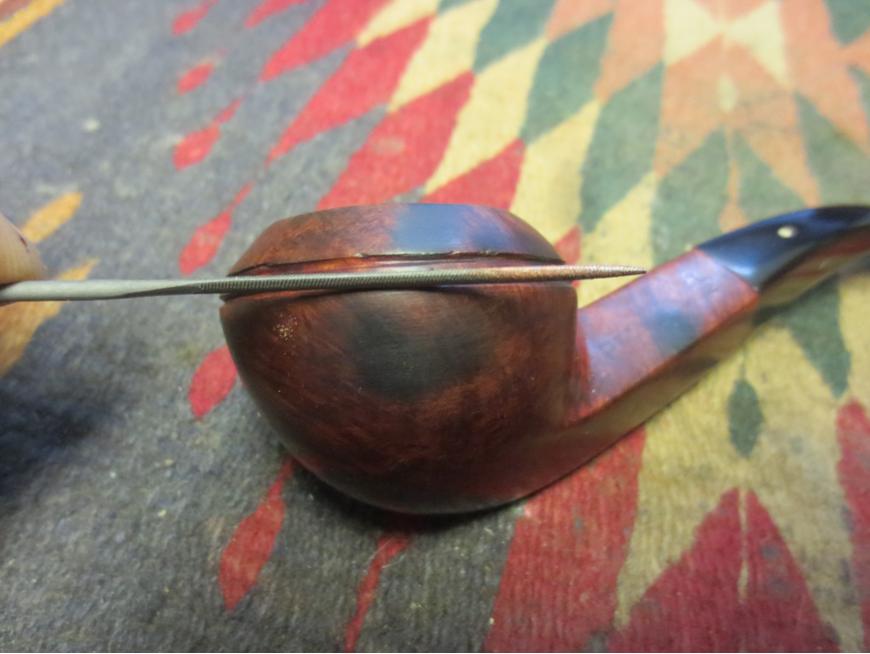
Frank5 The pipe was pretty dirty and the cake was set like concrete.Frank6 After getting cake out and shank cleaned I stripped off the old wax and grime.Frank7 I dug out all the trash from the crack with a sewing needle. I was thinking this damage was from abuse from a smoker. I dug out old filler so I think it may have come from factory with it.Frank8 After cleaning out crack I taped it up with some packing tape.Frank9 I then filled it with glue and briar dust and hit it with a file when dried.Frank10

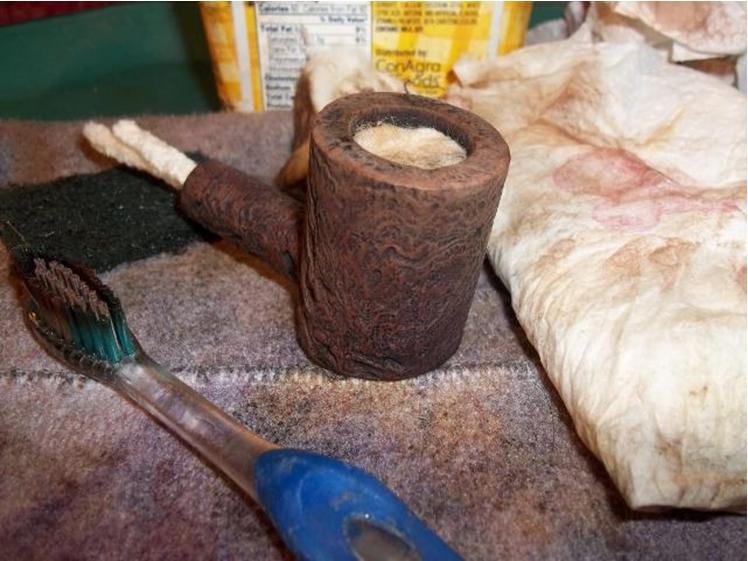
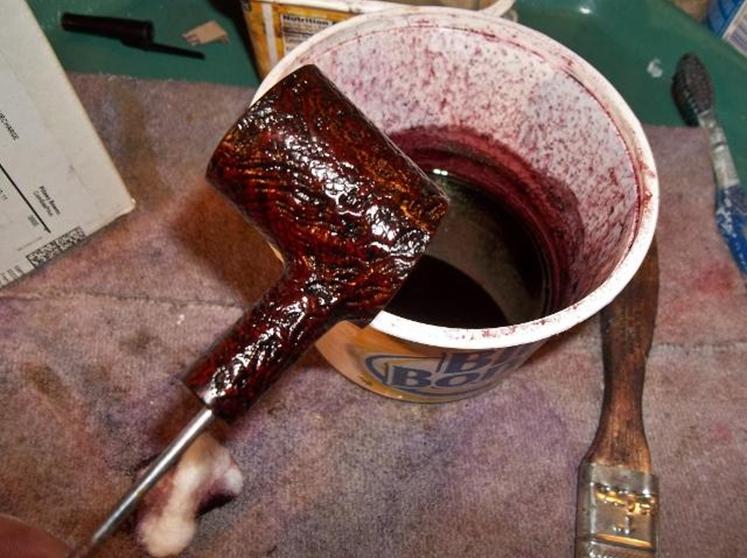
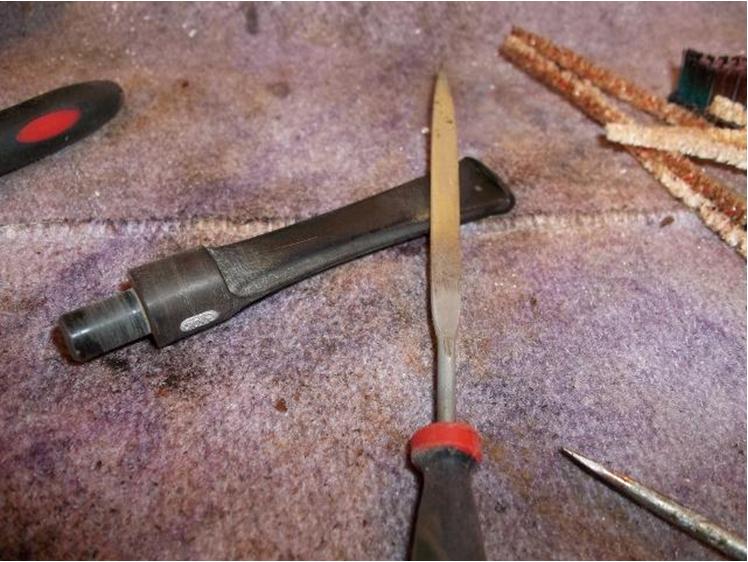
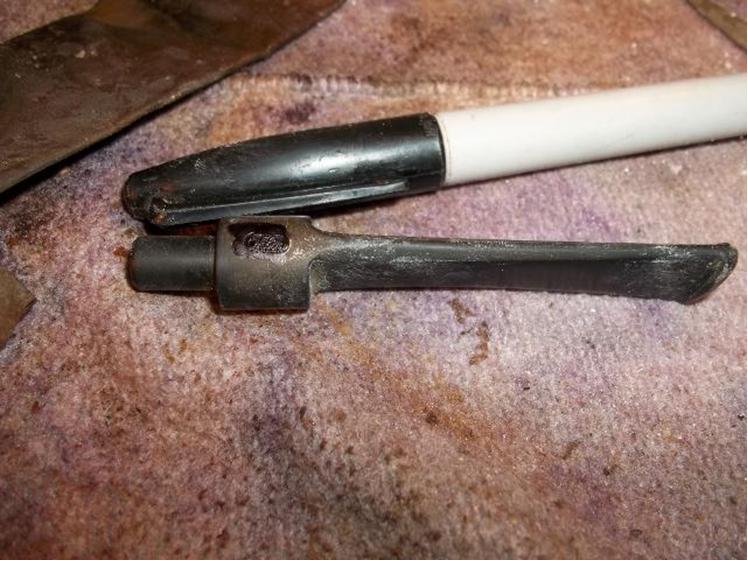
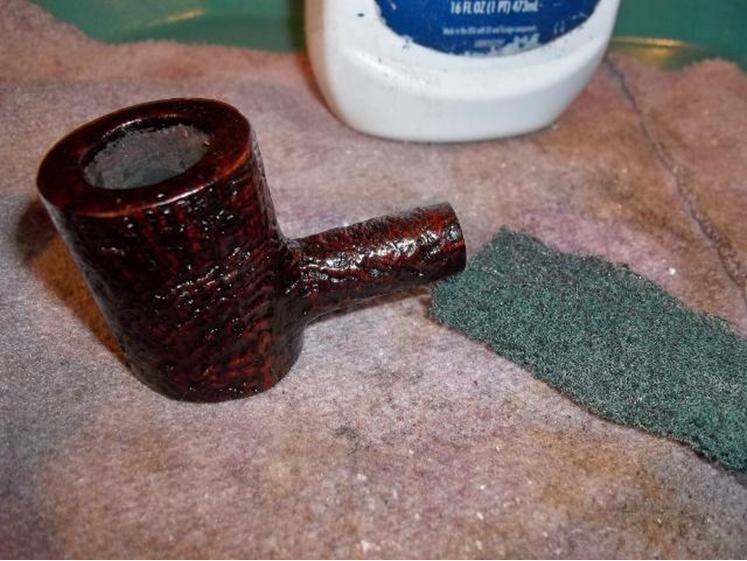
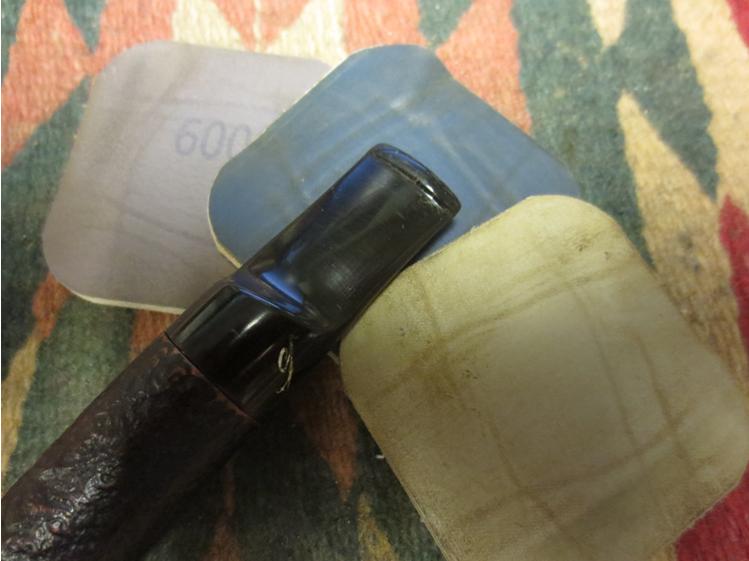
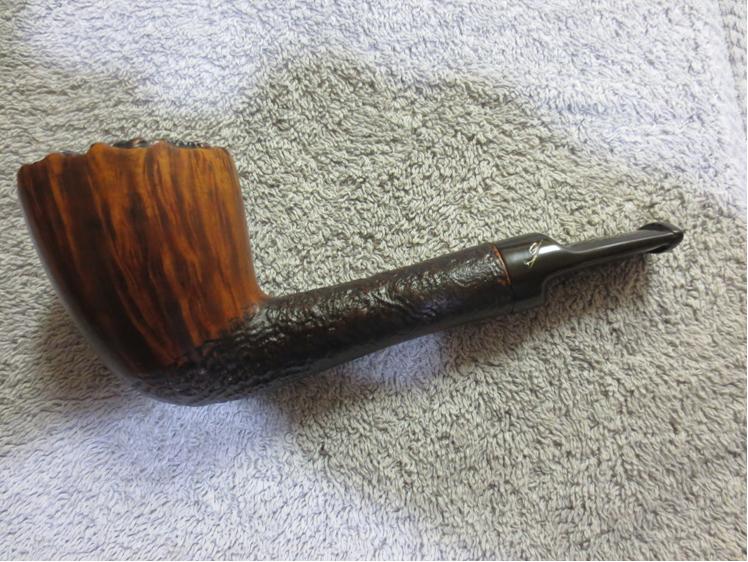
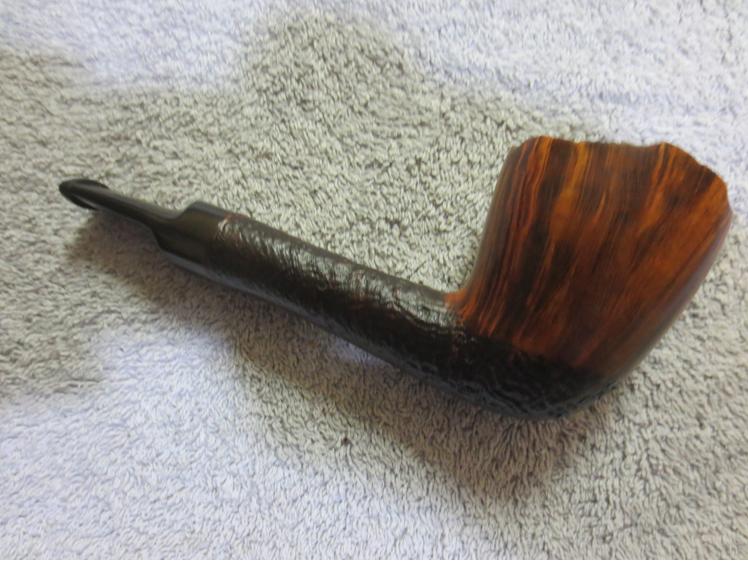
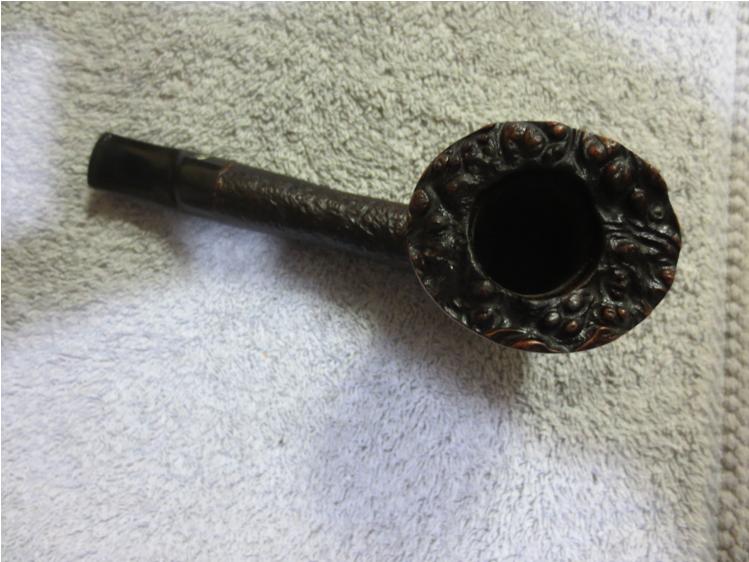
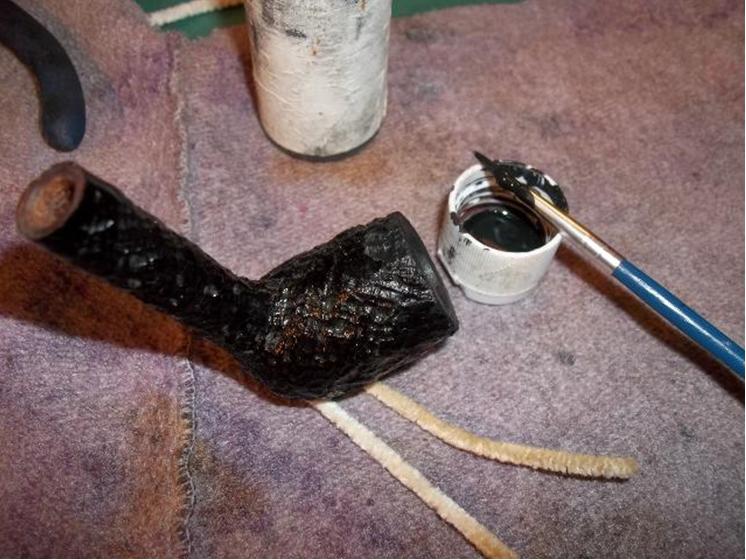
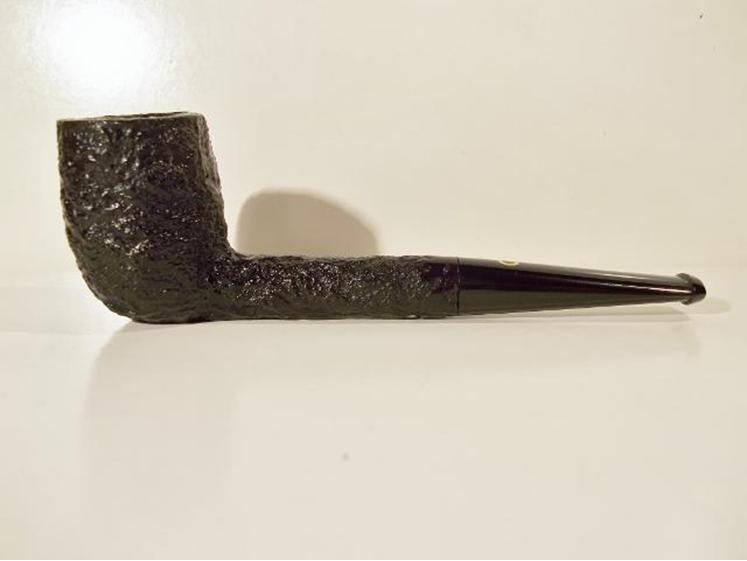
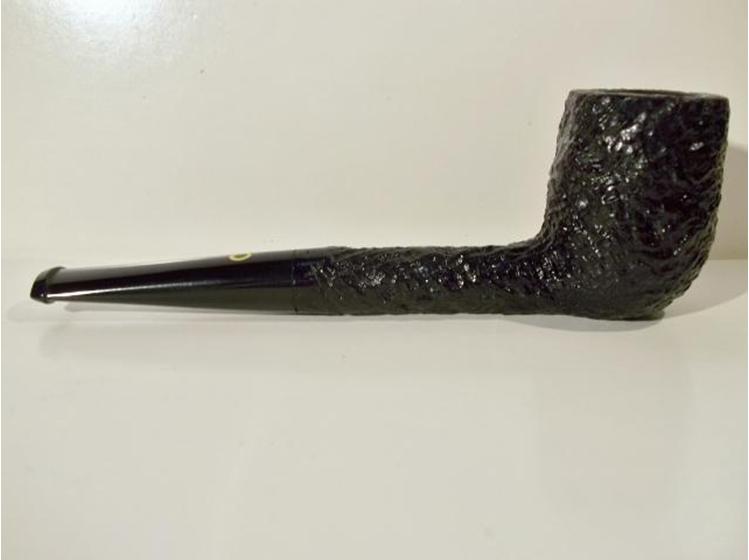
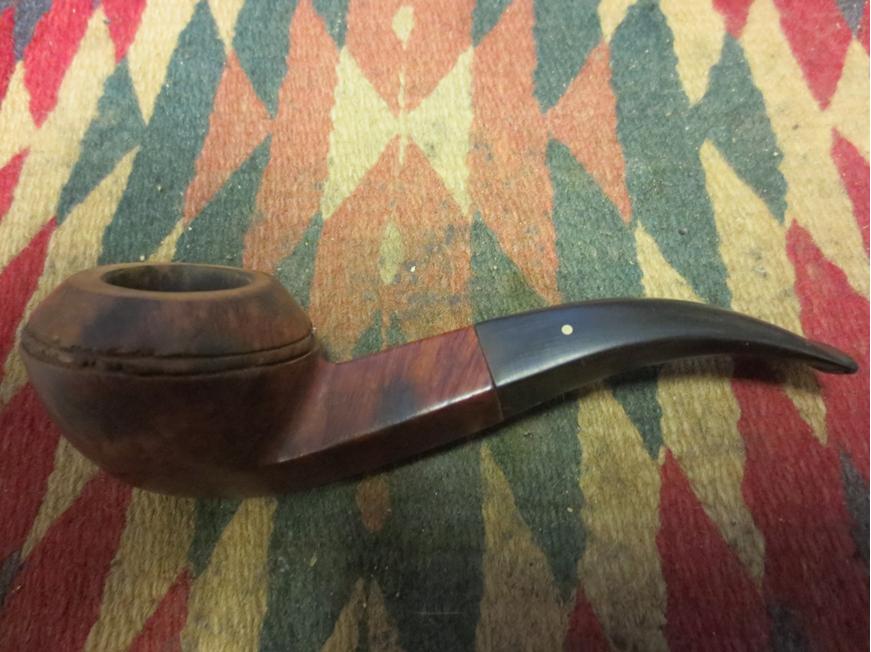
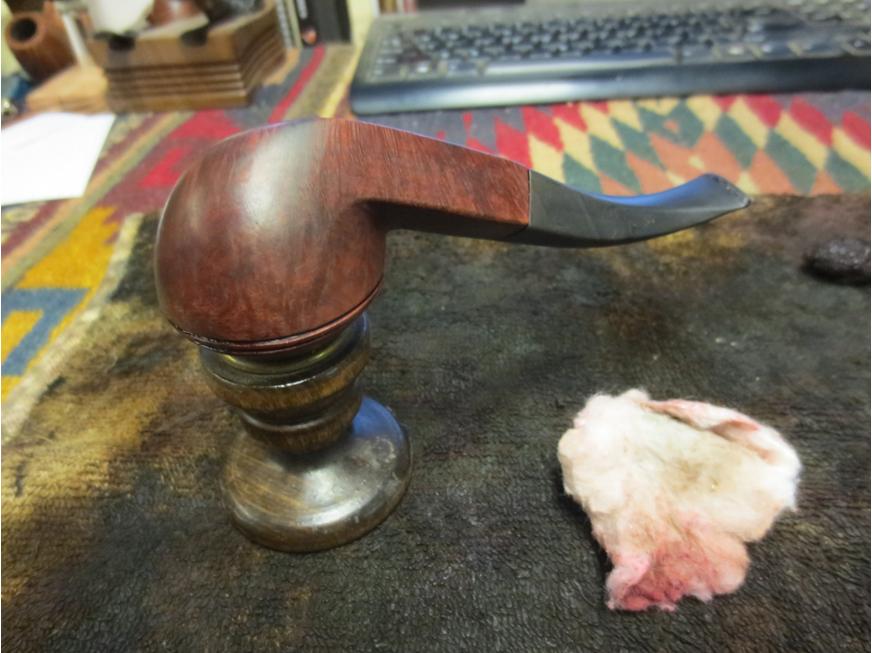
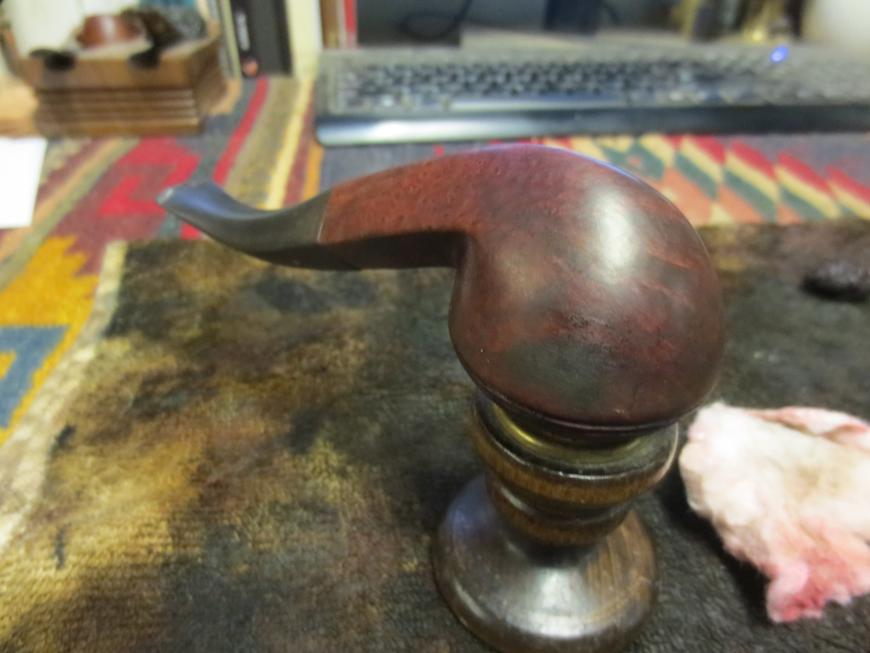
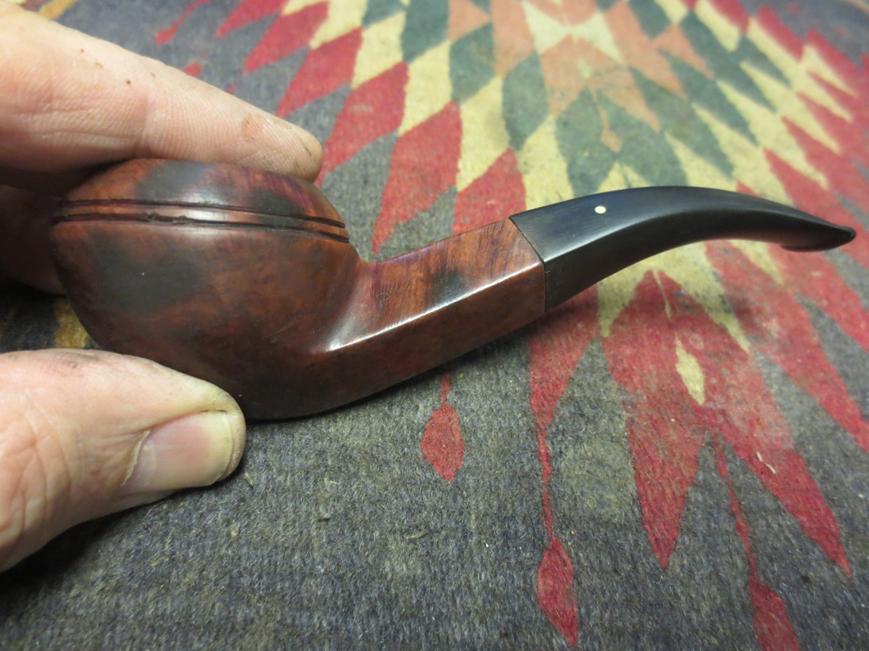
Frank11 I mixed up a thin color match to the factory color and applied a couple of coats.Frank12 After a soak in Oxy Clean I worked on stem. The owner had teeth like a house cat. All were small round and deep. What a pain they were. I haven’t done a Cherrywood Poker in a while and I had forgotten what a chore it was doing these thin little saddle bits.Frank13 I colored in the Weber emblem with black sharpie to be taken off when I buffed it.Frank14 After the dye dried I scuffed it with a Scotch Brite pad and mineral oil to highlight the blast.Frank15 Here is the finished pipe, buffed and waxed.Frank16

Frank17

Frank18

Frank19

Frank20

Frank21

Frank22

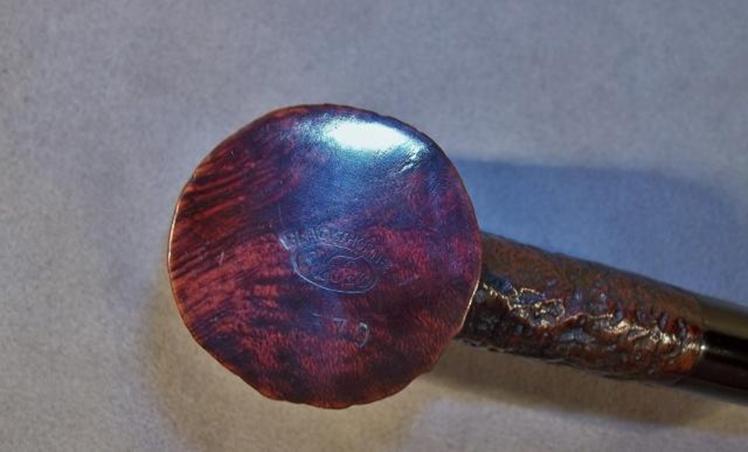
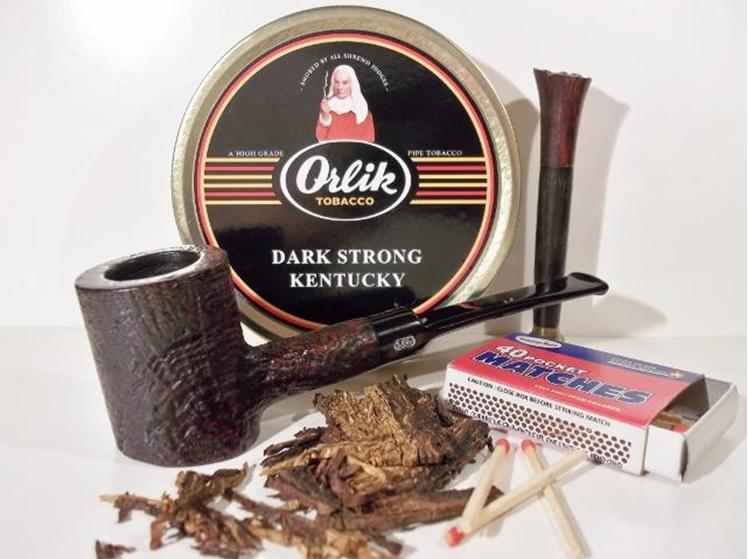
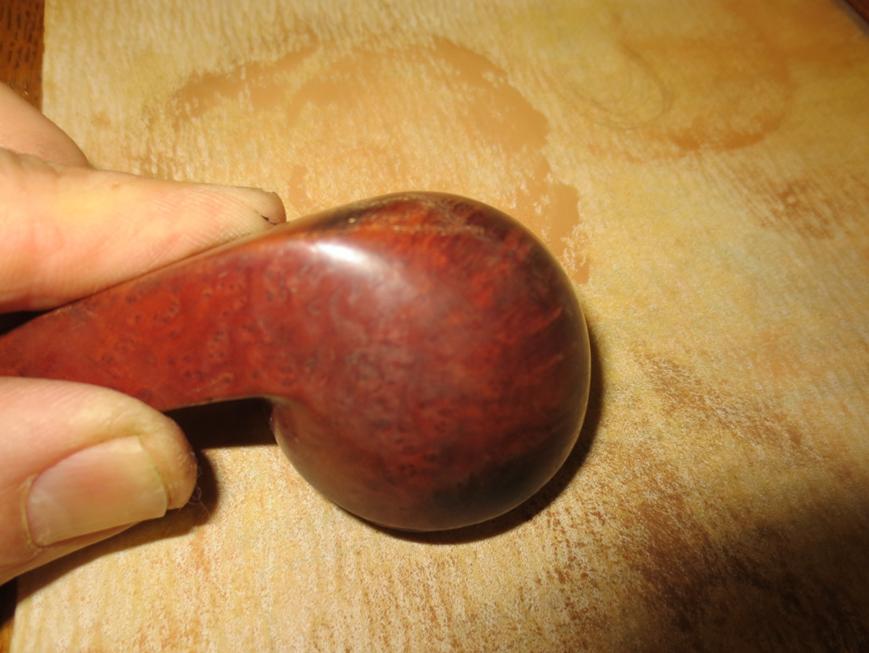
Frank23 I had a hard time getting a picture of stamping and repair on bottom of bowl with the glare. This was best out of several attempts.Frank24 Now it’s time to try this ol gal out with some Dark Strong Kentucky:). Frank25

Restoring an LHS Certified Purex Bullmoose Rhodesian


Blog by Dave Gossett
Dave1 LHS Certified Purex shape #99.

This pipe was in better shape than most estates I start with. It had some dents and dings and some tooth chatter, but overall it was a solid pipe.Dave2

Dave3

Dave4

Dave5 I started off this restoration with the usual internal cleaning, giving the stem, mortise, and airway an alcohol scrub with pipe cleaners and a shank brush. Next up was the bowl chamber. After removing what little cake build up that was in the bowl, I sanded the bowl chamber smooth with 400 grit.

Next, I tackled the dents and dings – first with steam followed by 2000 grit. Heating the flat side of a butter knife and pressing it firmly to the dented areas with a damp rag between the two will generate steam, lifting the dents from the briar. Don’t try this around any stampings, as it will lift the stampings just as it does with dents. This may need to be done more than once or twice for stubborn dents.

After I had worked the dents, I gave the briar a very light scrub with alcohol and 0000 steel wool to remove the stain and even out the finish where I had steamed and sanded.

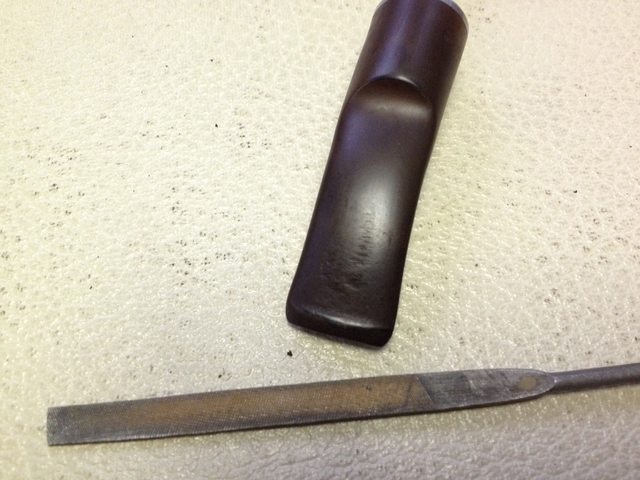
After prepping the briar, I started on the stem. The button was a little worn down but not bad enough to reform, so I left it as is. I used a needle file to remove the tooth chatter. Feathering out and away from the button past the damaged area will prevent the stem from having a warped look or divot around the repaired area.Dave6

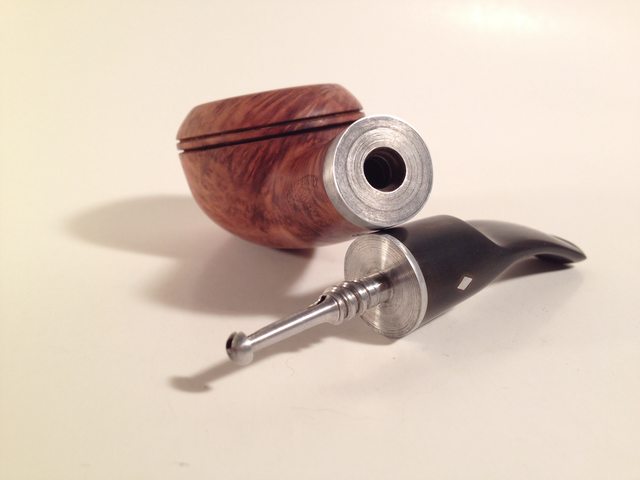
Dave7 The next step after removing the tooth chatter was wet sanding the stem to remove the oxidation and file marks. The way this particular stem was made with a metal inserted logo and metal ring and stinger attached, made this clean up much easier than most others. No worrying about working around a fragile stem stamping or rounding the crisp edge of the stem/shank connection, I was able to just mow through the whole stem while wet sanding until I unearthed fresh black vulcanite.

Now that the grunt work is over, it’s almost time for the fun stuff…Dave8

Dave9 Oh, one more thing. Let’s try our hand in some metal alchemy by making the aluminum look more like sterling silver.

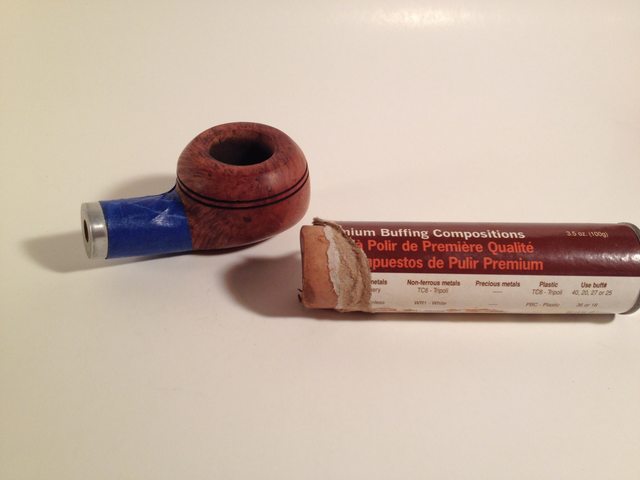
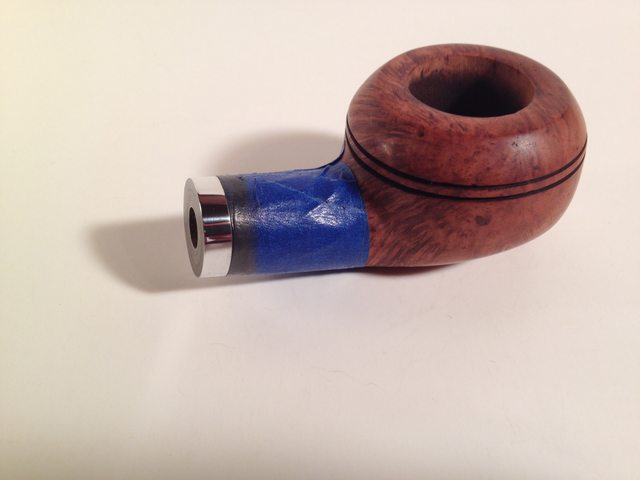
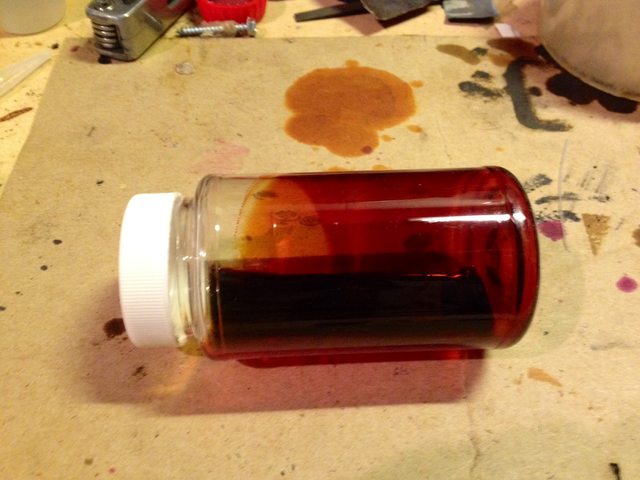
I prepped the briar with tape for two reasons. First, the compound will raise the grain if you run it on a buffing wheel and secondly, the tarnish/compound mix on the buffer wheel with stain the briar black.Dave10 Notice how dark the tape is afterwards.Dave11 The natural briar looked pretty nice and I thought about leaving it in a natural finish, but I decided to put it back to its original color, or as close as I could get. I blended a color close to the LHS burgundy by mixing two full droppers of alcohol, one full dropper of oxblood, and one half dropper of dark brown.

Pay no mind to the workbench of disarray. Sometimes I lose the pipe I’m working on in all the clutter.Dave12

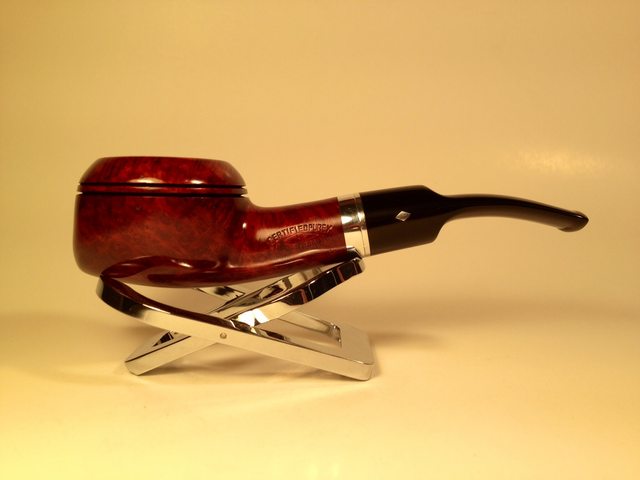
Dave13 After the stain had dried, I lightly sanded the briar with a worn piece of 2000 grit to highlight the grain a bit, and then proceeded with laying on the carnauba wax. Two coats followed by a hand buff with a microfiber rag.Dave14

Dave15

Dave16

Dave17 I forgot to wipe out the buffer fuzz before taking photos.Dave18 Last but least, I finished up the pipe by adding a fresh carbon bowl coating. This is a simple and effective way to give a tired looking bowl chamber a great new look. I’ve seen many crazy recipes for a homemade bowl coating but after trial and error, I have found this to be the most effective and easiest way to do it. Once the bowl chamber is clean and smooth, apply a thin coat of maple syrup to the chamber. Next fill the entire bowl to the top with activated charcoal. Leave it for one hour, then dump it out and blow through the shank to remove excess. Don’t touch it for five days. After the five day curing process, it is as tough as a Savinelli factory coating and looks just as nice.Dave19

Midterm Exam #4: Re-Refurbishing an Unknown Bulldog


Blog by Anthony Cook

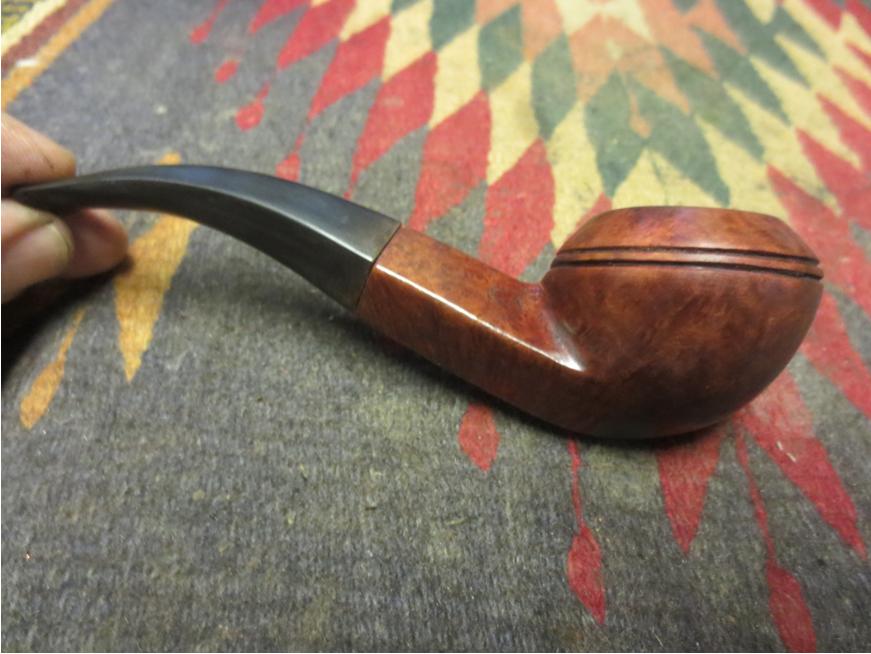
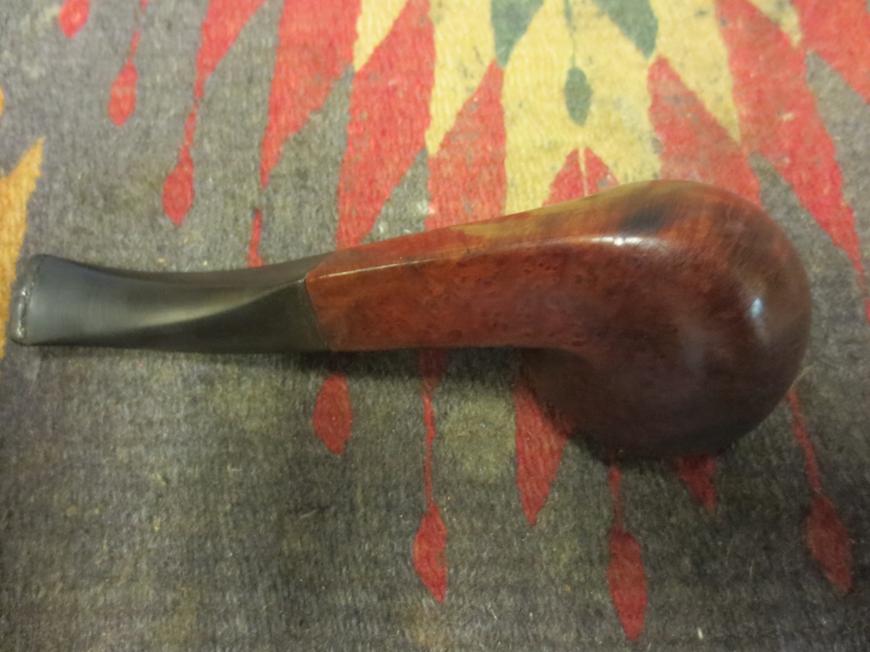
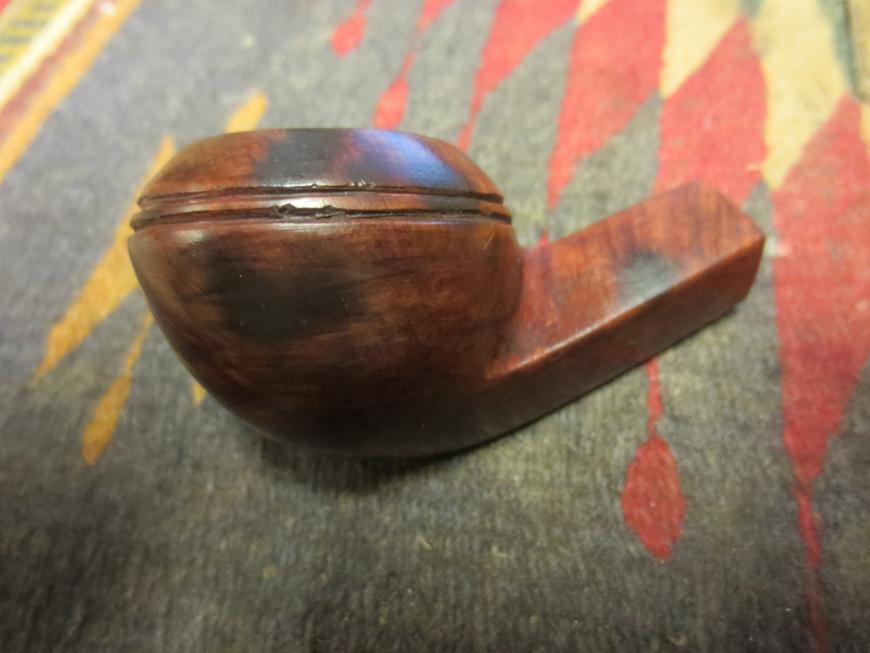
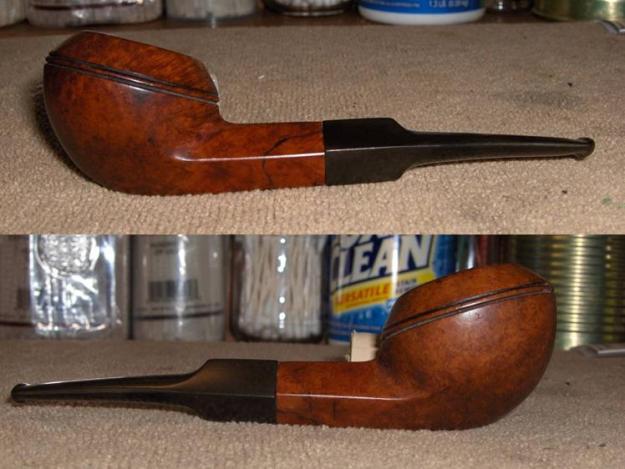
It’s time for the fourth and final midterm exam! This one is an “unknown” bent bulldog that I picked up from eBay. I snagged it because I liked the shape and it was cheap. What I didn’t know at the time, but became immediately apparent when the pipe arrived, was that the end of the shank had been shattered into at least three pieces and glued back together. There was no stamping on the pipe, but I don’t think that was always the case. It was likely sacrificed during the shank repair. The repair is fairly obvious in my photos below, but I assure you that it was not nearly so in the seller’s. The right combination of lighting and angles can cover up a multitude of sins, folks. Caveat emptor.

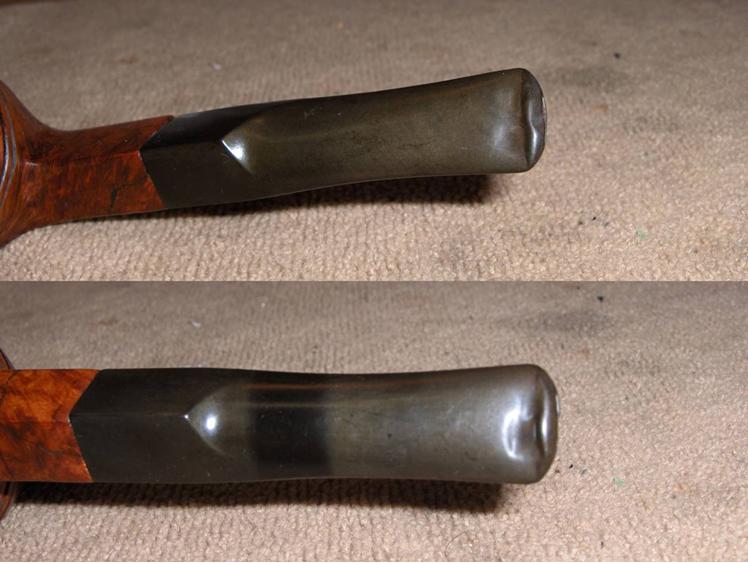
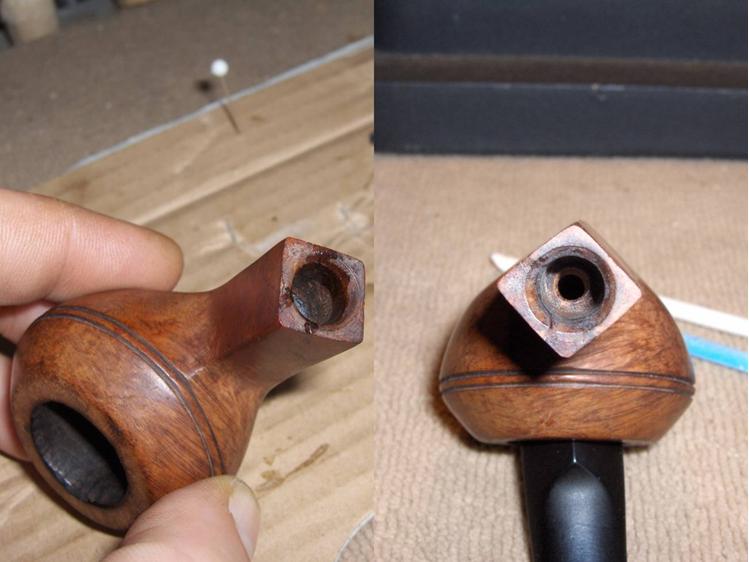
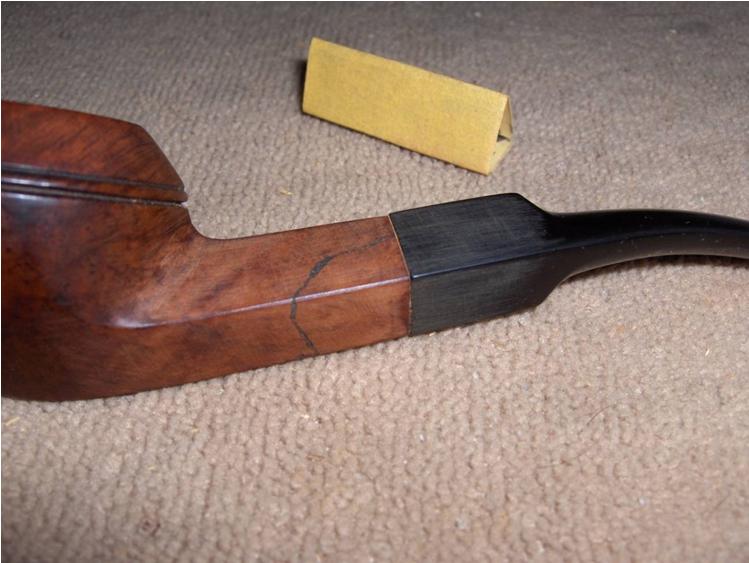
The exposed cracks weren’t the worst part of the story though. The repair did as much damage to the pipe as the crack did. An alarming amount of material had been taken off while sanding out the excess glue. It’s difficult to see in the photos, because from any one angle everything looked correct. However, if you held the pipe in hand and rolled it around you would notice that no two faces on the shank were equal. The shank was no longer a diamond shape; it was a trapezium. The repairman hadn’t paid much attention to keeping the surfaces level either. So, there was a subtle undulation to the line of the shank as it went from thick to thin and back again several times along its length. There was also very little effort made to blend the repaired area into the rest of the pipe, and several shallow “steps” were visible where the two surfaces met. There was at least an attempt to match up the stem to the shank, but that only gave the stem the same odd angles and even they didn’t quite match up to the ones on the shank. All in all, it was a bit of a travesty. Here are a few photos taken just after it arrived.Anthony1
Anthony2

Anthony3 That was all far more than my tender, noobie hands could handle at the time. So, I cleaned the internals of the pipe and put it away for later, but not before adding a bit of bend to the stem that it seemed to have lost over time.
I’ve finished up work on all the rest of the pipes in that first batch. So, this week it was time to put a collar on that dog and turn in my final midterm.

I started (or restarted I should say) by dropping the stummel into an alcohol bath for a couple of hours to soften any coating that might be on the pipe. I had quite a surprise when I removed it later on. It looked fine when it was fresh from the bath, but a hazy, white glaze began to form on the surface as it dried. I hadn’t seen anything like this before and I’ll admit to a brief moment of panic. I assumed that this was probably the result of some type of coating reacting to the alcohol. So, I wiped the stummel down with acetone taking extra care around the shank repair, since acetone will break down superglue. That did the trick and the stummel cleaned up nicely.Anthony4 I set up the retort to see if I could remove any more tar buildup from the pipe. I flushed the shank about 10 times with boiling alcohol before allowing the pipe to cool. I noticed that the vial appeared to be losing a lot of liquid during the retort. The cotton wasn’t discolored. So, it wasn’t gassing out through the bowl. It really had me scratching my head until I saw a spot of moisture on the shank when I was removing the retort. For some reason, it wasn’t sealing well at the mortise and I’d need to look into that before I went much further.Anthony5 I gave the pipe a post-retort scrub of the stem and shank, and then inspected the crack repair for gaps. The surface of the glue joints looked airtight, but I noticed that the glue hadn’t penetrated very deep. The joints left shallow fissures inside the mortise and along the shank face. I used a small pushpin to place a little super-thin CA glue directly into the fissures, and then used a toothpick to apply a thin layer of the CA around the end of the mortise to create a seal inside as well as out.
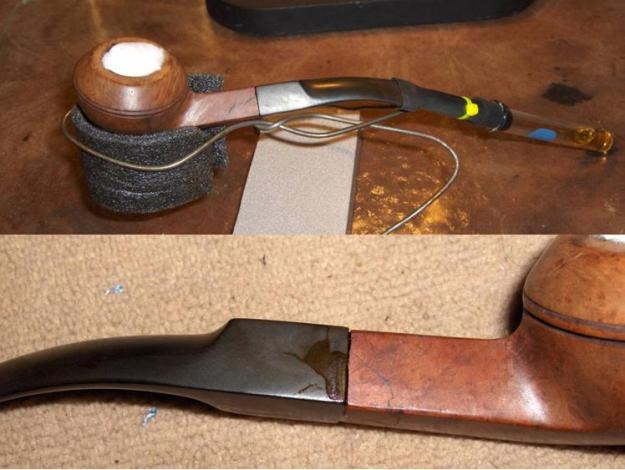
When the glue was dry, I sanded out the interior patches with sanding needles and a piece of 400-grit sandpaper wrapped around a small dowel. I refaced the shank on my topping surface in a manner similar to how I would top a bowl (pressing lightly into the paper and using a circular motion). The following pictures show the patches when fresh and after they had been sanded out. You can also get some idea of the irregularities in the shank by comparing the differences in the face angles and wall thickness around the mortise.Anthony6 After that, I reattached the stem and ran a retort through it again to test for leaks. The outside of the stem and shank stayed dry as a bone through the whole process. So, I began addressing the pipe’s cosmetic issues.

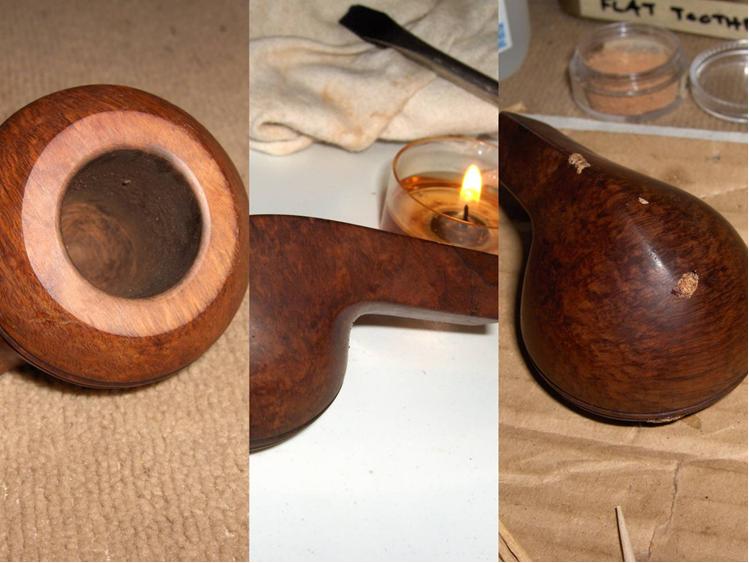
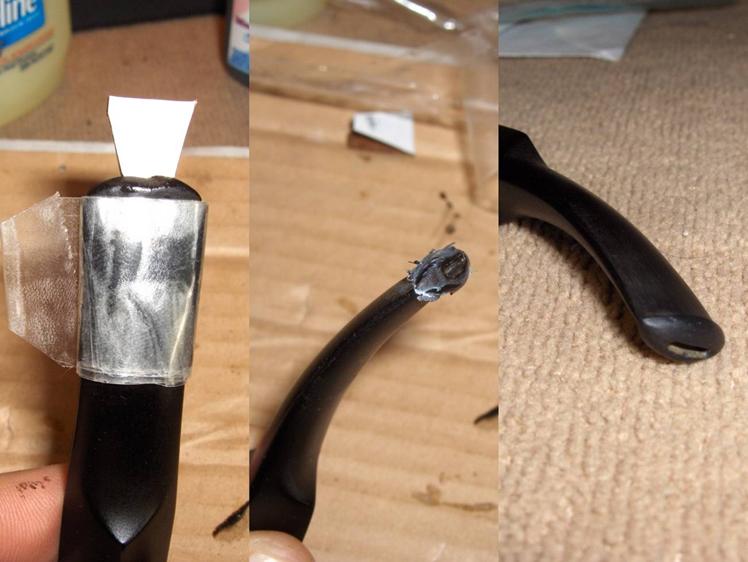
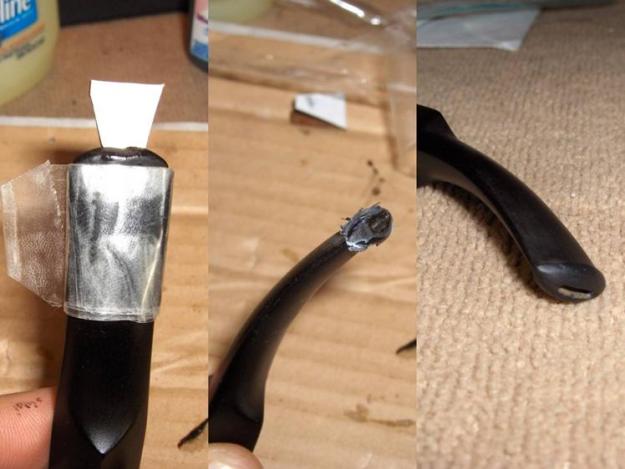
I lightly topped the bowl and chamfered the inner rim to remove the scratches and dings. Then, I steamed a few dents out of the finish by pressing a screwdriver that had been heated over a tea candle into a wet cloth placed over the dents. Finally, I used CA glue and briar dust to patch a few, small gouges and missing fills and sanded them out with 220-grit and 320-grit sandpaper.Anthony7 While I worked on the stummel, the stem had been soaking in an Oxyclean bath. I removed it and scrubbed it down with a Magic Eraser to remove any oxidation. I used black CA glue to fill the tooth dents on the top and bottom of the stem. Once that had dried I sanded it down with 220-grit paper.Anthony8 The stem button needed to be rebuilt since it was worn and dented. I wrapped several layers of clear tape around the stem just below the button to create a form to make a crisp edge and also inserted a Vaseline smeared wedge of cardboard into the slot to seal it. Then, I applied thick, black CA glue in several layers to the end of the stem to begin building the new button. It wasn’t a pretty thing to look at when I removed the tape, but the edge was sharp and there was enough material to work with. I trimmed away the glue artifacts created by the tape molding with an X-Acto blade and rough-shaped the new button with 220-grit paper.Anthony9 Once the button started taking shape, it was time to do something about the other end of the stem and also the deformity of the shank. This was the part of the exam that I had not been looking forward to. Up to this point, everything had been the equivalent to multiple-choice or fill-in-the-blank questions. There were a couple of challenges, but nothing too rough. The next part was more like the essay section.
After a lot of thought, I finally decided that there just wasn’t enough material left around the stem to square everything back up. So, I thought I’d try some trickery of my own. If I couldn’t make everything right, maybe I could use a little more finesse and subtlety than the original repairman did to make it at least look “righter”. If ya can’t beat ‘em, join ‘em.

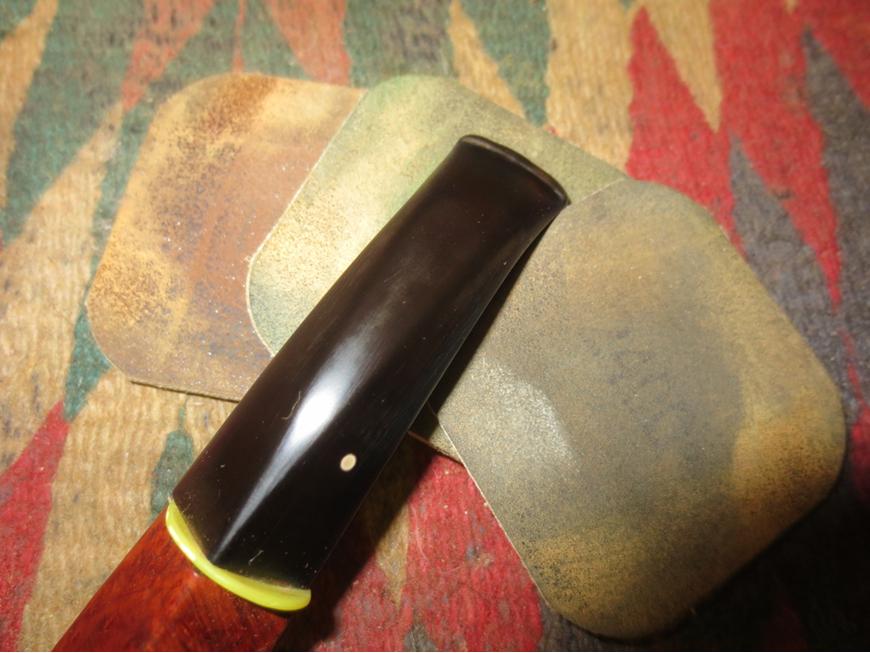
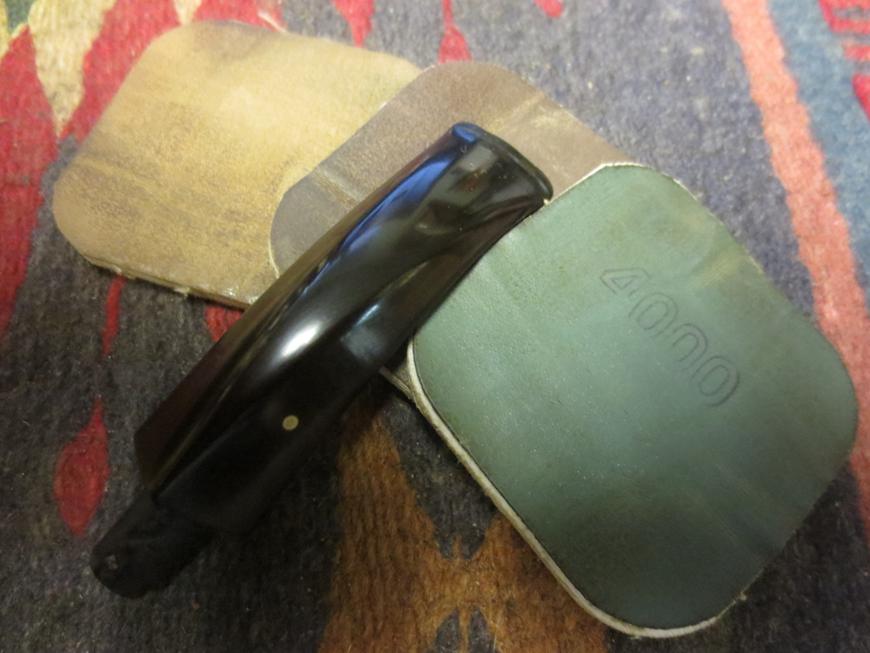
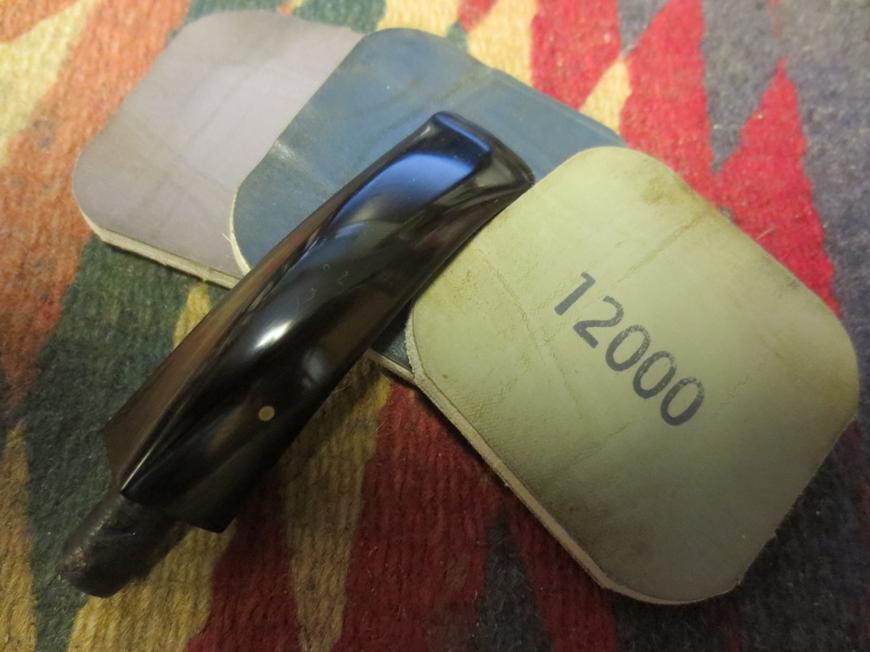
I used 220-grit sandpaper to start carefully nudging the edges of the shank and stem saddle this way and that to give them an appearance of alignment. All the while I paid special attention to keep the faces as level and even as I could. There was very little technical skill involved. I was basically just freehanding. Once I had corrected the lines as much as I could, I began blending the reworked areas into the rest of the pipe with 320-grit. The photo below shows the progress somewhere early in the reshaping phase. Honestly, I was at this for a while and kind of lost myself in the middle of it. So, I didn’t get many photos.Anthony10 When I was as satisfied as I was likely to be with the shape of the shank and saddle, I went back to work on the rest of the stem to finish it up. I continued shaping the button with 320-grit and 400-grit paper. Then, I smoothed the entire surface by lightly sanding with 600-grit and 1200-grit paper. Finally, I polished the stem with micro-mesh pads 1500-12000.Anthony11 The stem work was wrapped up. So, it was time to do the same for the stummel. The off-kilter shape of the shank made it difficult to find a band that would fit well. It took three attempts before I found one that would work. I used a method for shaping a round band for the diamond shank similar to what Steve has previously written about here, but it took quite a bit of reworking to get it to conform to the now strange dimensions of the shank. I’m still not quite happy with how it fits, but I’m not sure what I could have done differently.Anthony12 There was nothing left to do at that point but to address the finish of the stummel. I wanted the final color to be close to the original but a little darker to help hide the bit of crack repair that was still visible. I heated the stummel over the heat gun to open the grain and then applied Fiebing’s black dye to the stummel. I then sanded down the surface with 400-grit paper to remove the remaining scratches and most of the black stain, except for what had set in the grain and recesses of the rings. Next, I applied a mahogany stain before sanding with 600-grit and 1200-grit paper. I took the stummel to the buffer and gave it a quick Tripoli buff, and then applied a final stain of British Tan.
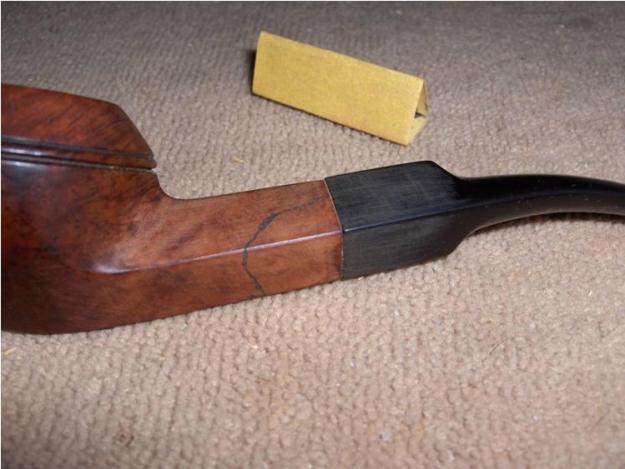
The stummel was polished with micro-mesh pads starting with 3600-grit and working through to 12000-grit. I then buffed the entire pipe with white diamond compound and gave it several coats of carnauba wax to finish it up.

I leaned back in my chair and checked the clock on the wall. There were only minutes to go and most of the other seats were already empty. I had to admit that this was really as good as it was going to get. So, with a sigh, I stood up from my chair, gathered my exam materials, and delivered them to the desk at the front of the room…Anthony13

Anthony14

Anthony15

Anthony16

A Bertram Grade # 50 Cutty


Blog by Troy Wilburn

This is the other Bertam I have in my collection that I refurbished last fall. It was my first refurbish of a higher end type pipe. I figured I would show it off since I got such a nice positive response on my latest Bertram poker I posted recently. When I acquired this pipe I had been looking and wanting a nice Bertram but most out of my price range, but luckily I found this one with just enough work to get it cheaper than most. I had also wanted a Cutty shaped pipe and this one really caught my eye.

The pipe was in wonderful shape and didn’t need much work. By the scorching on rim you think it would have been smoked more but wasn’t. There was barely any cake built up at all under inspection. I didn’t even have to clean out shank and stem but did so very lightly with 91% alcohol and a couple of pipe cleaners.

Pipe as it arrived from Ebay seller.Bertram1

Bertram2

Bertram3

Bertram4 There were some scratches in bowl.Bertram5 I sanded out scratches with nothing more than 2500 grit paper and mineral oil.Bertram6 The drilling was perfect.Bertram7 After soaking the stem in Oxy Clean I gave it a very light wet sanding with 800 grit sandpaper and then worked my way up to 2500 grit.

Stem and bowl back together for some time on the buffer.Bertram8 After buffing and waxing I took the pipe outside for some pics to really show off the grain and color.Bertram9

Bertram10

Bertram11

Bertram12

Bertram13

Bertram14

Bertram15

Bertram16

Bertram17 It’s an excellent smoker and really shines with VA/Per blends. I don’t smoke it often but when I do it brings great pleasure.Bertram18

Kaywoodie Fine Line


Blog by Aaron Henson

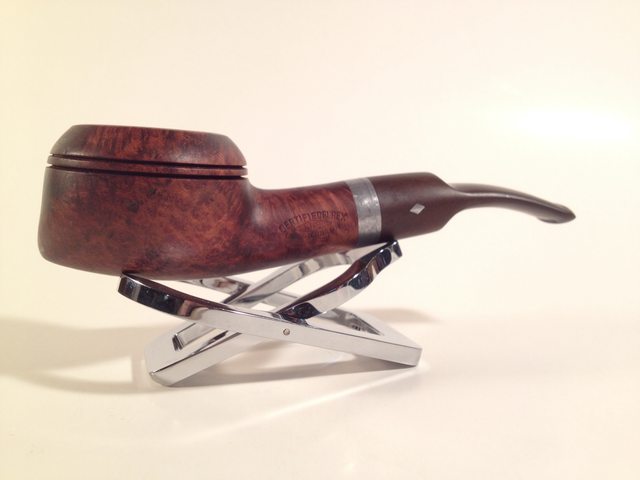
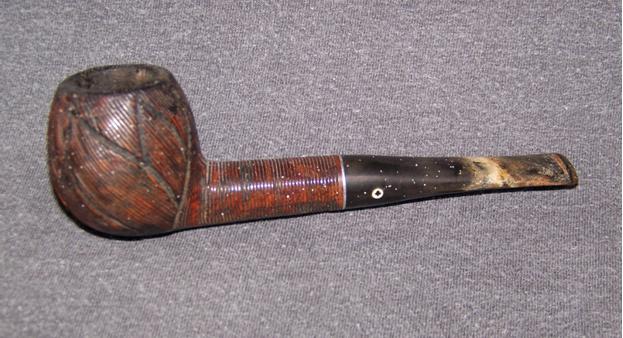
I was in the neighborhood of our second-hand stores a couple of months back so I thought I would stop into one that typically has estate pipes. While browsing the shelves I found three Kaywoodie pipes together in an old coffee cup. None of them were particularly eye-catching: a straight bulldog, a medium pot and this large apple – Fine Line carved. I didn’t have any Kaywoodie pipes in my collection and priced as they were ($11 for the three), I could not pass them up. Besides, I needed some more restoration practice.

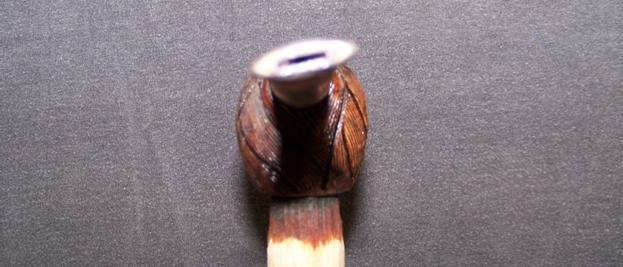
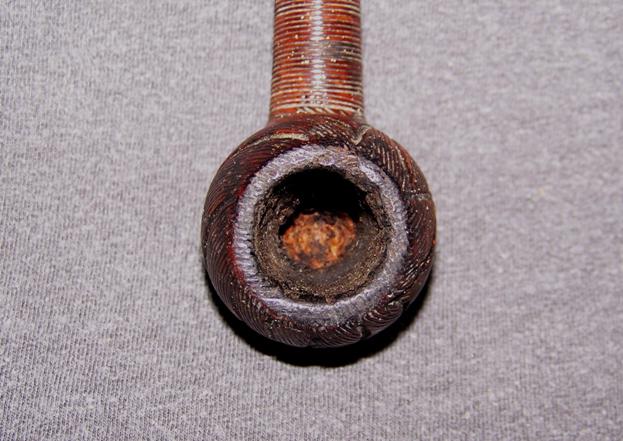
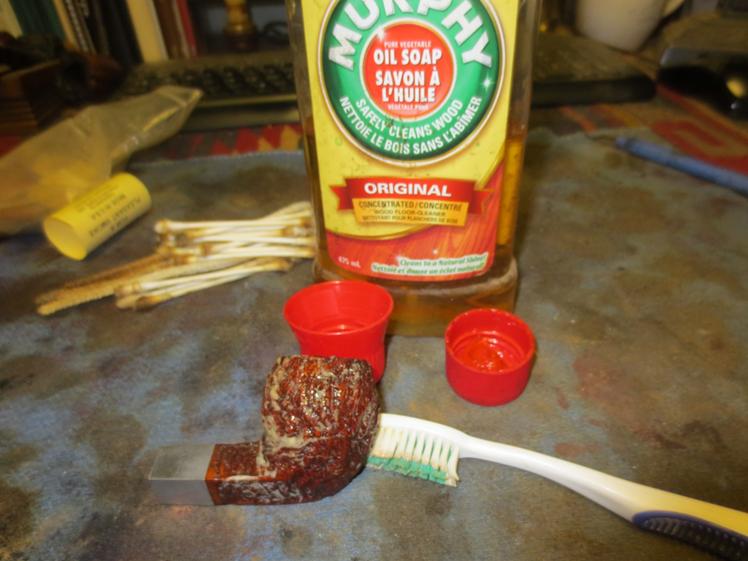
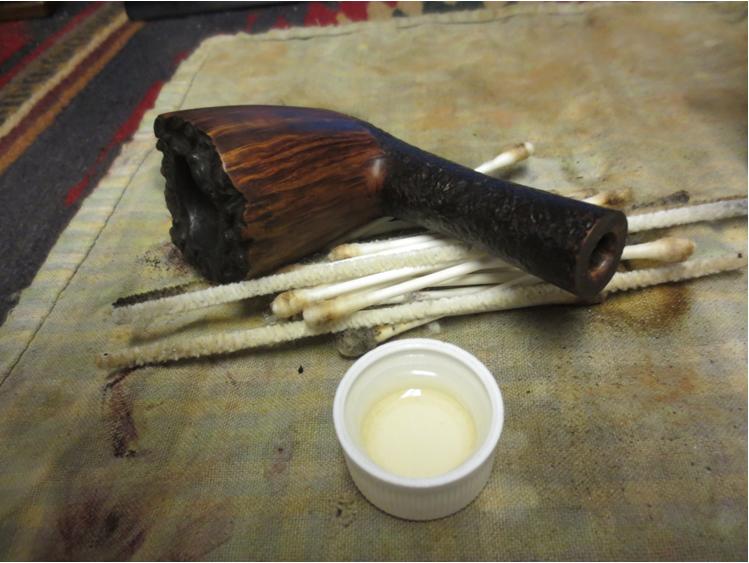
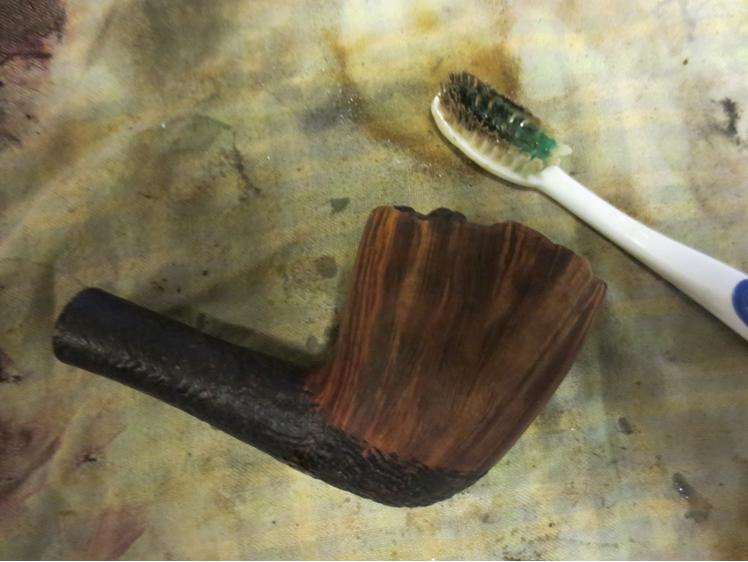
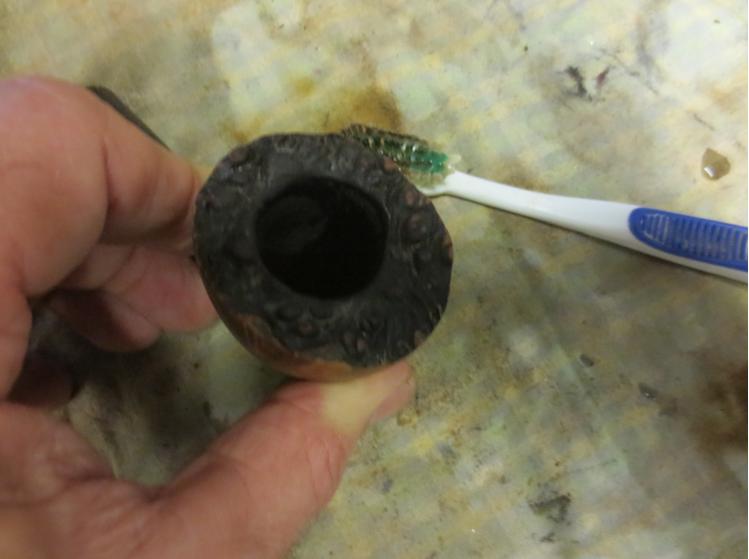
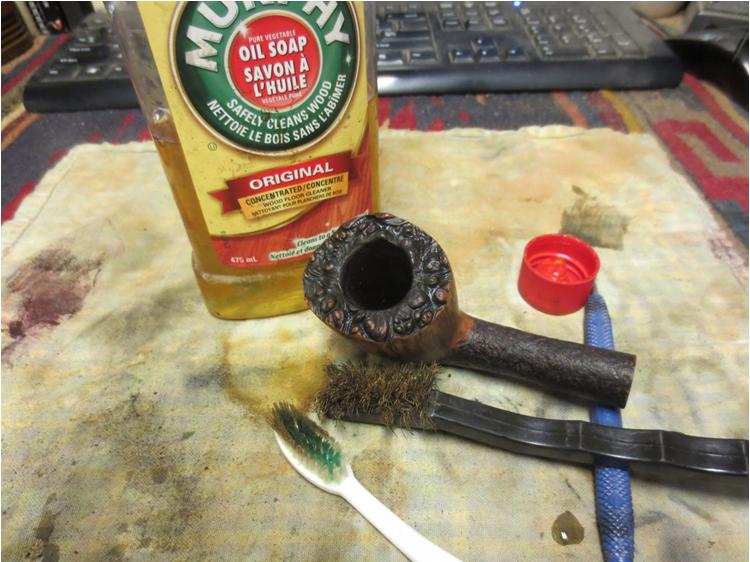
The first of the three that I took on was the Fine Line. It reminded me of the Dr. Grabow Wire Carved pipes I had seen, just not as rustic – if you like that sort of thing.Aaron1 The flat bottom of the shank was stamped with: “Kaywoodie” over “Fine Line ®” and the left hand side of the stem had the black clover in a white dot.Aaron2 The stem was in great shape. There was some mild oxidation, a little build up of crud and just a minor amount of chatter around the button. The stinger was also in good shape with the expected build up of tars. The stem was over clocked by about 10 degrees and after a little research I came to understand that this is a common problem with Kaywoodie pipes. Fortunately, it is an easy problem to correct.Aaron3 It looked like someone had been rolling out paint on a wall or ceiling near the pipe because there were small droplets of white paint all over the stem and stummel (perhaps they were smoking while painting?). The stummel was dirty but there was no damage that I could see. A thick cake lined the bowl and the lines in the rim where full of char and other gunk, but otherwise it too was in good condition.Aaron4 I began by soaking the stem in an alcohol bath to loosen the tars inside and to help lift the crud and paint from the surface. While the stem soaked, I went to work on the stummel with Murphy’s Wood Soap and a soft bristled tooth brush. The dirt and grime came off easily as did most of the paint droplets. I had to employ a soft wood tooth pick to remove more stubborn droplets that were caught in the grooves of the carving.
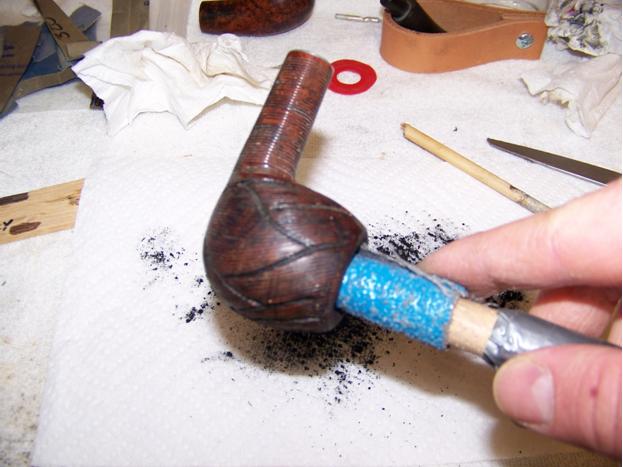
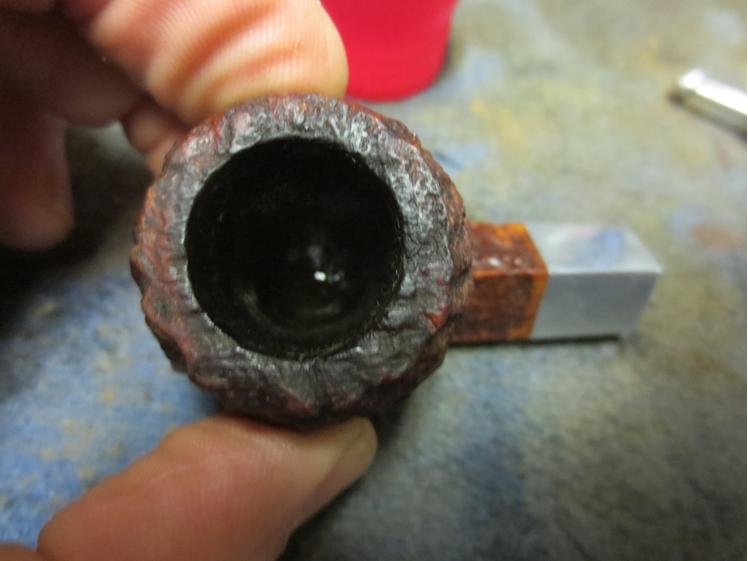
After rinsing the stummel with fresh water – being careful to keep the water out of the bowl and shank – I started reaming out the bowl. Not having a reamer, I use a ½” dowel with a rounded tip wrapped in 40 grit sand paper. This method has worked reasonable well for me on several pipes, even with thick caking.Aaron5

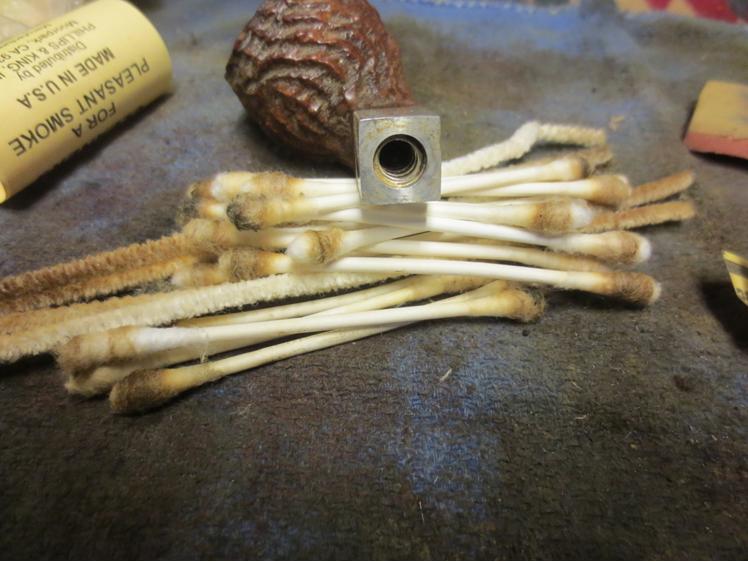
Aaron6 Next, I cleaned the inside of the shank with cotton swaps and isopropyl alcohol. This was a laborious process. The metal sleeve that receives the stinger prevents good access to the inside of the shank. I wanted to preserve as much of the original stain as I could so I choose not to soak the whole stummel in an alcohol bath. So, in an effort to loosen the tar build up, I dripped alcohol into the shank between bouts of swabbing. Eventually the swabs started coming out clean.

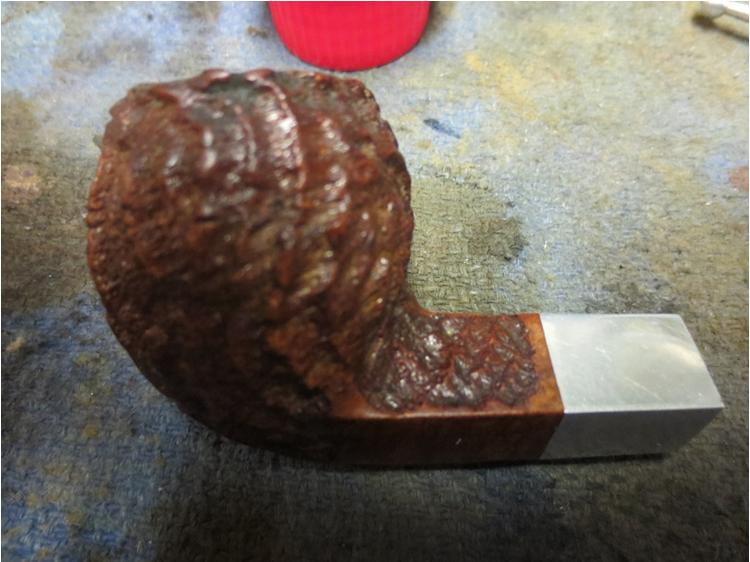
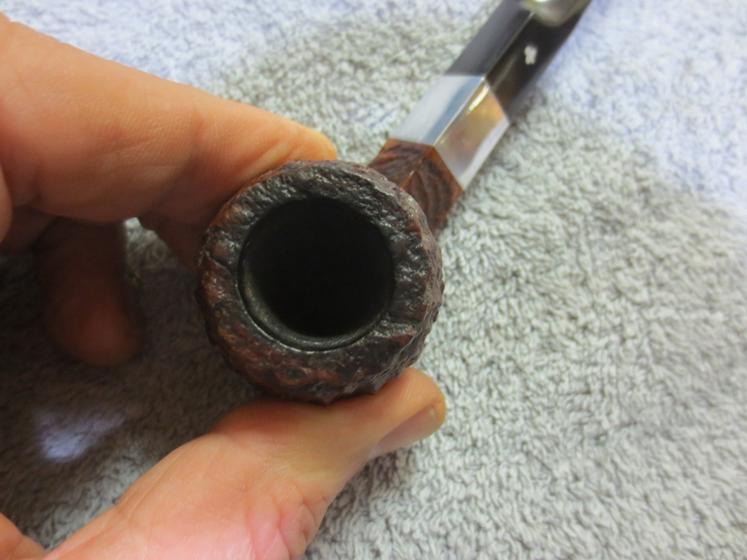
The char around the rim of the bowl was not cleaning up well. I had hoped that I could keep the carved lines on the rim but I made the decision to top the bowl and finish the pipe with a smooth clean rim. I freshened up the stain with a coat of light brown Feibing’s leather stain and flamed the stain to set the color.

Returning to the stem, I found that the alcohol bath succeed in loosening the tars inside and few passes with pipe cleaners got it clean. I was able to pass a cleaner from the hole in the stinger and out through the button without and troubles. I lightly hit the outside of the stem with 220 grit sand paper to remove the remaining foreign material and then cleaned the stinger with 0000 steel wool. I addressed the minor tooth marks by lightly flaming them with a lighter to raise the vulcanite then finished them off with the 220 grit paper.

Everything was going quite smoothly up to this point. Little did I know that I was about to get a refresher course in chemistry. Wanting to clean up the oxidation I dropped the stem into a bath of 50/50 bleach and water. Fortunately, I had cause to check on the stem in about 30 minutes and I realized my error. Chlorine (Cl) and aluminum (Al) react to form aluminum chloride (AlCl3). I found a large growth of aluminum chloride crystals on the stinger.
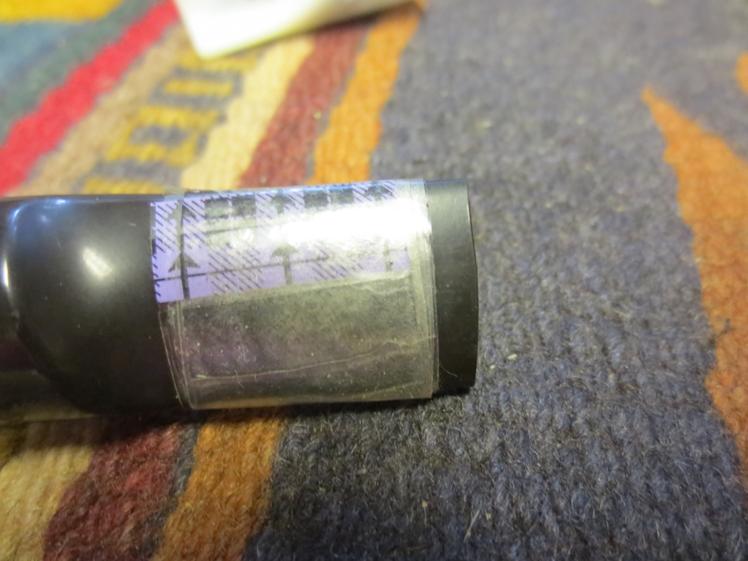
I wish I had had the forethought to document the mistake with a picture or two. But in truth, I was so caught up in cleaning the bleach off the stem and removing the crystals that photos were very far from my mind. All in all there was no real harm done. The aluminum chloride cleaned up easily but left the stinger rough to the touch and it needed to be polished again. Heating up the stinger with a butane lighter melted any of the aluminum chloride that built up inside and it drained out of the stinger holes.

While I had the butane lighter out heating up the stinger, I thought I would take care of the over clocked stem. I wrapped the stem with some cloth tape and made a couple of reference marks to indicate which direction and how much to twist the stinger. I waited until the heat loosened the glue between the stinger and stem and then twisted the stinger with a pair of soft jawed pliers to align it with the stummel.Aaron7 Before I finished the stem and polished everything I thought I would run the pipe through the alcohol retort. I was not confident that I had thoroughly cleaned the inside of the shank and after the aluminum chloride incident, I thought that some hot alcohol vapor though the stinger would hurt. I use 95% isopropyl alcohol for my initial cleaning and soaking but I prefer using Everclear for final rinsing and retort. In my limited experience it seems that the Everclear leaves fewer ghosts in the finished pipe.

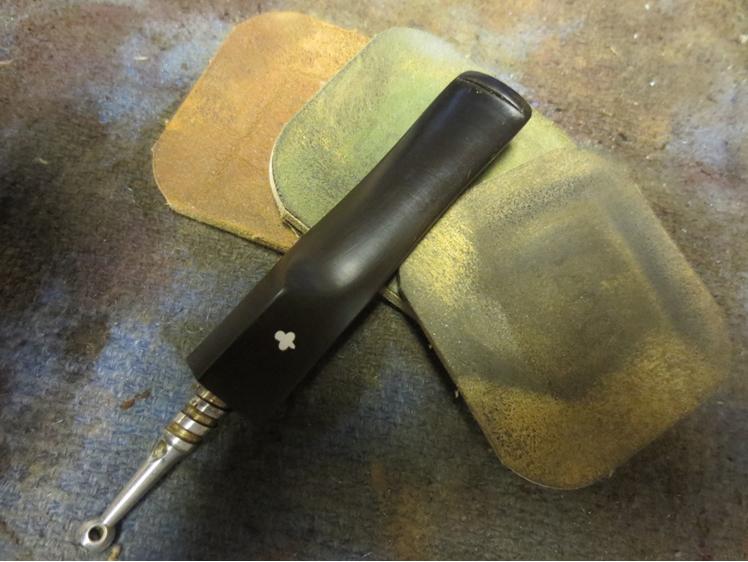
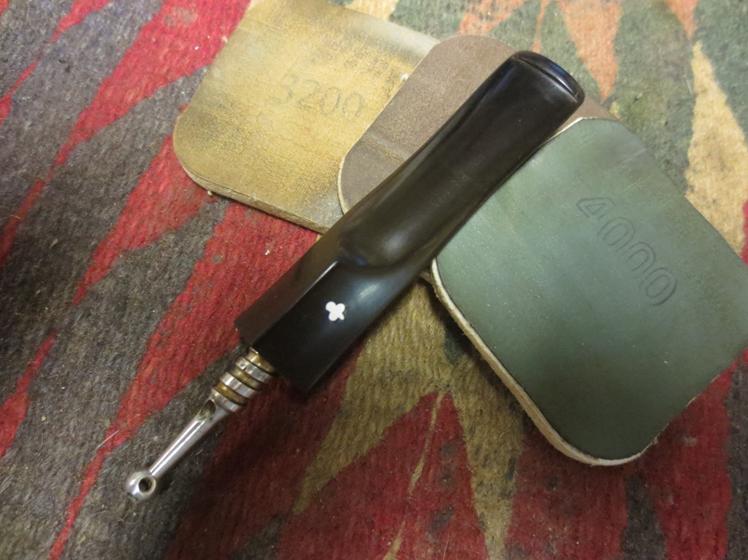
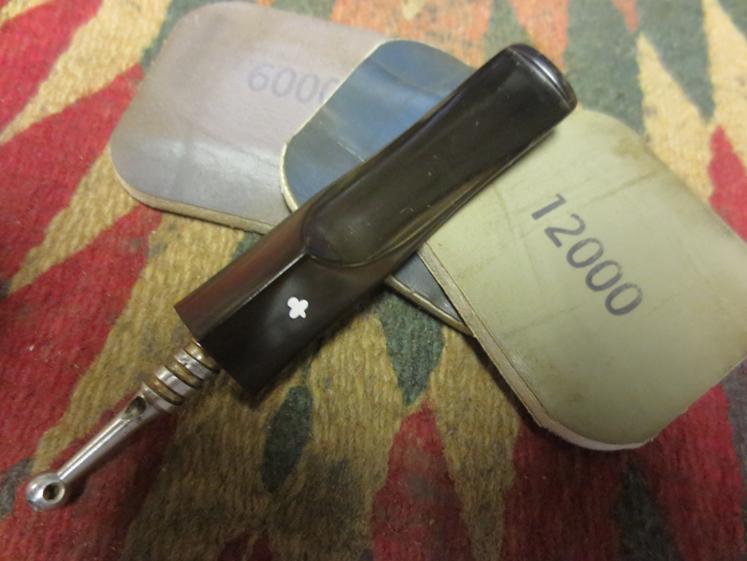
The remainder of the restoration was uneventful. I followed the typically stem polishing practices, wet sanding the stem with 400-4000 grit paper, stopping every few sets of paper to lightly coated the stem with mineral oil. I dry polished with 6000 and 12000 grit paper then took the pipe to the buffing wheel, applying red diamond compound, working the buffer with the carved lines of the pipe. I finished with 3 coats of carnauba wax buffing between each coat. I had to take a tooth pick to some of the wax that built up in the lines but the final product was a vast improvement from where I had started.Aaron8

Aaron9

Aaron10

Aaron11

NEPAL PROJECT PIPE SALE 13 – Breathing New Life into a Kaywoodie Signet Bulldog


Blog by Steve Laug

This is the thirteenth pipe from the box of pipes that I was gifted by a good friend of mine with the instructed purpose of cleaning them up and selling them with all of the proceeds going to the aid of earthquake victims in Nepal. Once again all funds raised will all go to the SA Foundation, and organization that has worked in Nepal for over 15 years helping provide recovery, housing and job training for women who are victims of sexual exploitation and trafficking. The ongoing earthquakes (over 300) that continue to shake Nepal have left much in ruins. The SA Foundation Project there was able to find new housing for the women and help with staff as well. Every dollar raised from the sale of these pipes will go to the work in Nepal.

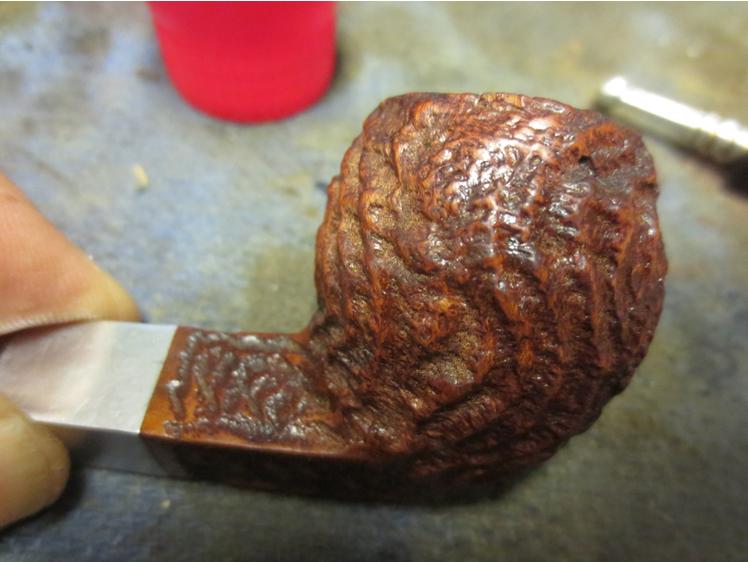
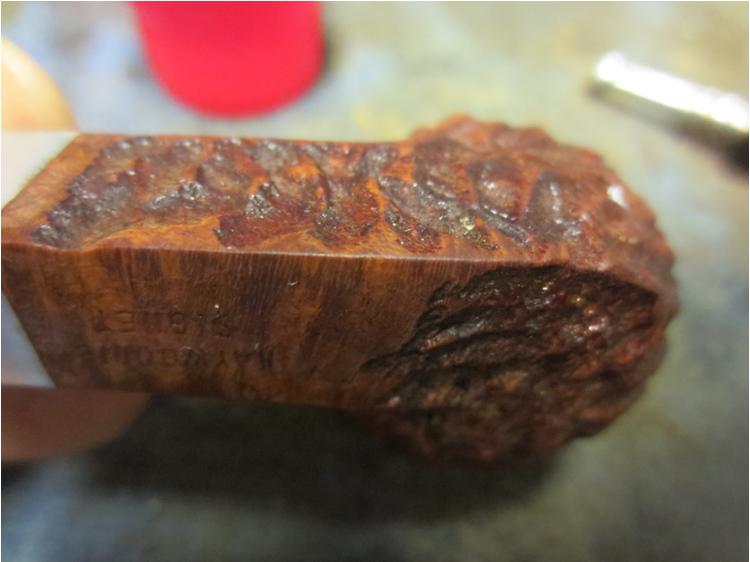
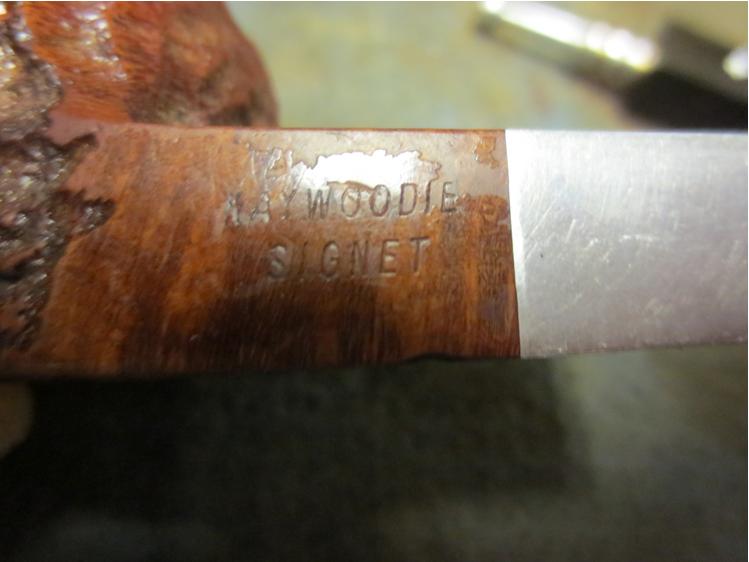
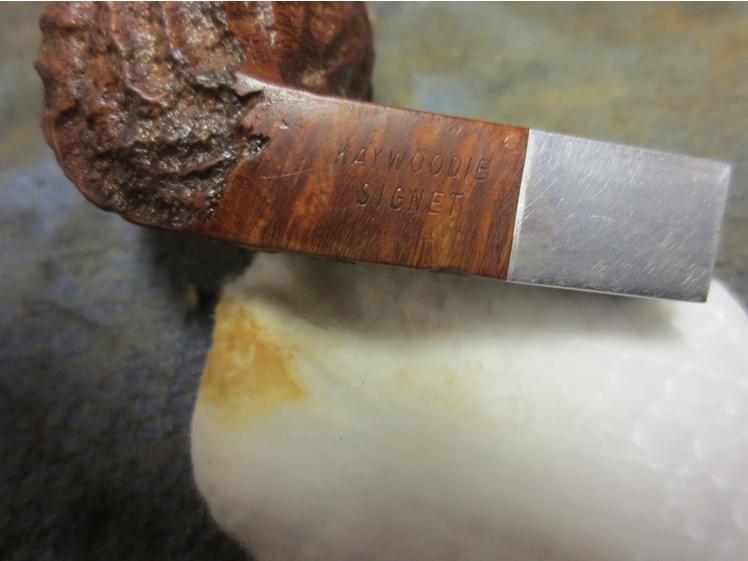
It is a Kaywoodie Signet Bulldog. I did a bit of digging on the web and found out from the Kaywoodie forum that the KW Signet line was made from 1956 to 1972. It is stamped very clearly on the underside of the left side of the diamond shank, Kaywoodie over Signet. There are no other stampings on the pipe. The finish appears to have been rusticated and possibly blasted in a swirling pattern up and around the bowl. The grooves in the briar are deep and the red brown stain gives the swirls a sense of movement as the pipe is rotated in the hands. It almost undulates as it is turned over and the varieties of browns lend themselves to the illusion of movement. That makes it an interesting finish. The exterior of the bowl is a well shaped bulldog sans a bead around the top of the bowl. The bowl was the cleanest of the lot of pipes donated. It did not need reaming but merely a light wipe of a pipe cleaner in the bowl. The finish was dirty but in decent shape.KW1

KW2

KW3

KW4 The rim had some darkening but was not damaged on either the outer or inner edge. It would only need to be scrubbed to clean up the darkening.KW5 The shank and airway were dirty. As I have often found in a metal mortise pipe, there was a lot of tar and oil built up in the threads of the mortise and behind it in the shank. The aluminum was oxidized and scratched. The stem was a screw mount with a classic KW four hole stinger apparatus and metal tenon. The stinger was not removable but part of the metal tenon. It was dirty and covered in oils.KW6 The stem was oxidized and had tooth marks on the top and underside near the button. Most of the oxidation was on both ends of the stem.KW7

KW8 I used a lighter to heat the bite marks on the stem and raise them to the surface. I paint the surface with the flame, never letting it sit too long in one place. This lifted the bite marks and they would be easily removed with a light sanding. An added benefit to using the lighter is that it also burns off the surface oxidation. The photo below shows the top side of the stem after I “painted” it with the lighter. The bite marks had disappeared the oxidation was less prominent.KW9 I sanded the stem with 220 grit sandpaper to remove the remaining tooth chatter and light tooth marks.KW10

KW11 I scrubbed the stinger and tenon apparatus with 0000 steel wool to remove the buildup of tar and oil that had hardened there.KW12 I cleaned out the airway in the stem and shank as well as the threaded mortise with cotton swabs, pipe cleaners, and alcohol to remove all of the residual oils. I finished by scrubbing the threads on the stinger with a tooth brush to remove the last of the oils. I also scrubbed the end of the shank cap.KW13 I scrubbed the briar with a tooth brush and Murphy’s Oil Soap and then rinsed it under running water to remove the soap. I dried it off with a cotton towel and took some photos of the cleaned finish.KW14

KW15

KW16

KW17

KW18 The smooth area on the underside of the left side of the shank where the stamping was had some peeling varnish or clear coat on it.KW19 I wiped down the shank with acetone on a cotton pad to remove the peeling finish on that portion of the shank. IT came off quite easily which leads me think it was a varnish rather than a lacquer or plastic coat.KW20 With the bowl cleaned and finished it was time to work on the stem. I sanded it with a medium and a fine grit sanding sponge to remove the oxidation and scratches. I sanded it with micromesh sanding pads – wet sanding with 1500-2400 grit pads and dry sanding with 3200-12,000 grit pads. I rubbed down the stem with Obsidian Oil between each set of three pads and then a final time after the sanding with the 12,000 grit pad.KW21

KW22

KW23 When the oil had dried I buffed the pipe with Blue Diamond – lightly pressing the bowl into the buffing wheel and normally buffing the stem. I then gave the bowl a light coat of carnauba and the stem multiple coats of carnauba wax. I finished by buffing the pipe with a soft flannel buff to raise the shine. The finished pipe is shown in the photos below.KW24

KW25

KW26

KW27

KW28

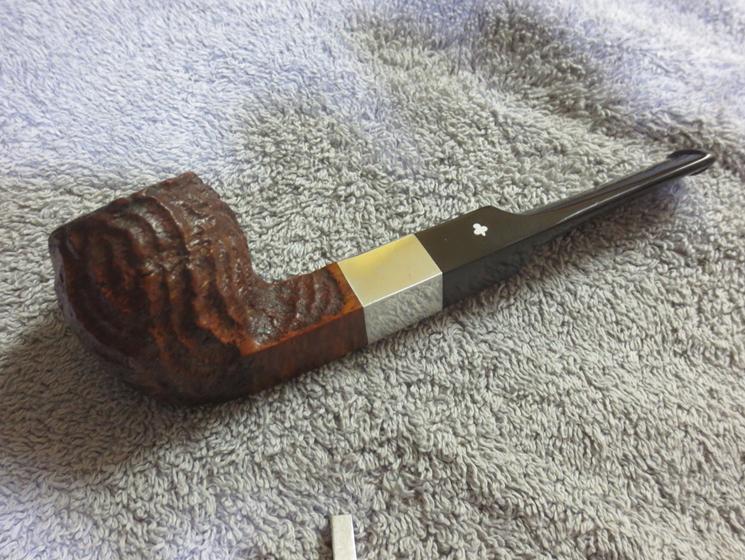
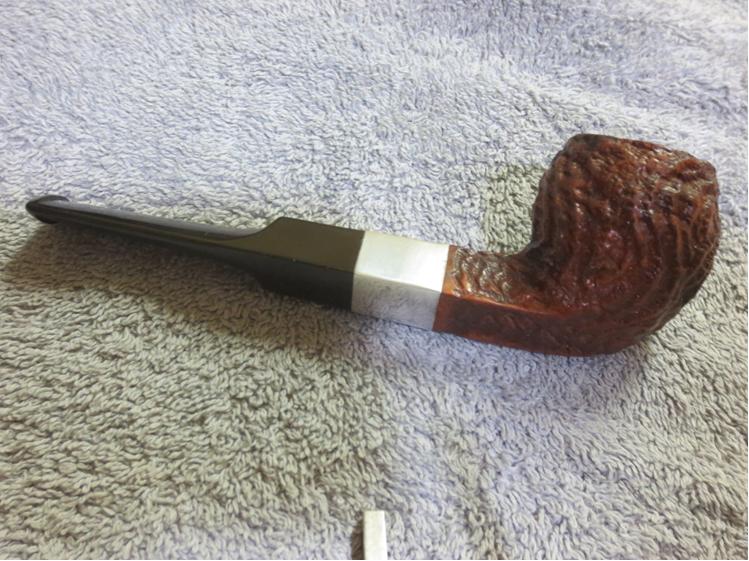
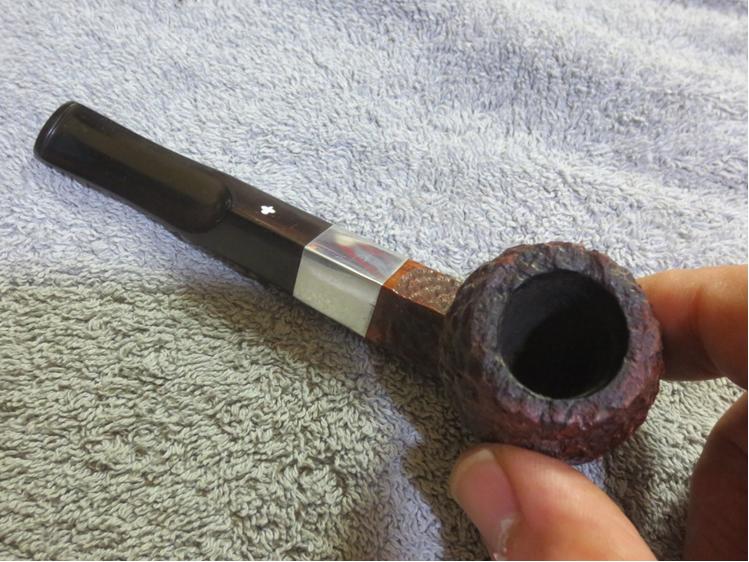
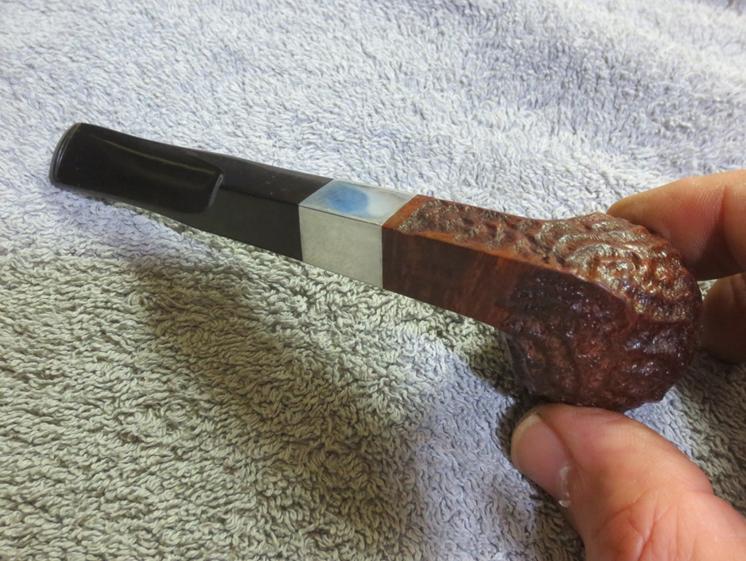
KW29 This Kaywoodie Signet Bulldog a small pipe, roughly a Group 2/3 in Dunhill terms. The pattern of rustication and possibly sandblasting as well give it an interesting to look at and the feel of it in the hand will make it quite tactile when heated up and smoked. The stain is a combination of medium and lighter browns that gives it a subtle look of movement when it is held and turned in the hand. It should make someone a great addition. If you are interested in this pipe email me with an offer at slaug@uniserve.com and we can discuss it. The entirety of the sale price will go to the Nepal project. I will pay the postage so that does not get taken off the proceeds. If you are interested in reading about the SA Foundation you can look at their website at http://www.safoundation.com.

Thanks for looking.

Building a New Button on the Cut off Stem of a Savinelli Autograph 4


Blog by Steve Laug

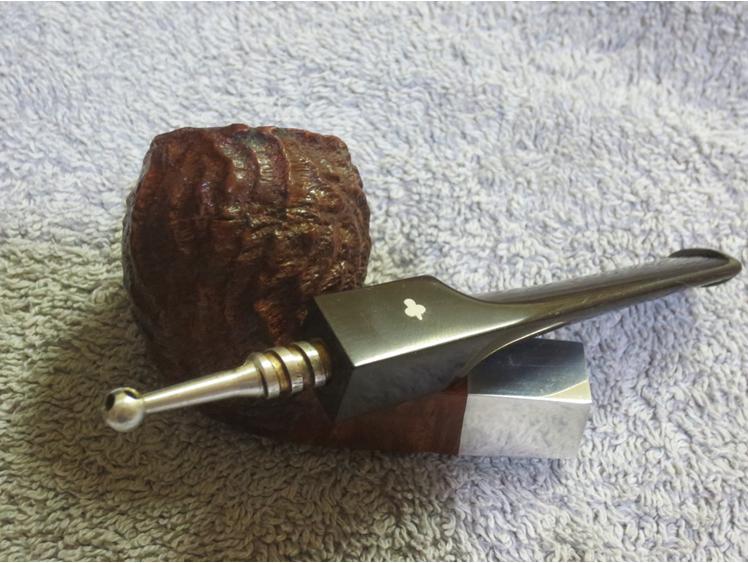
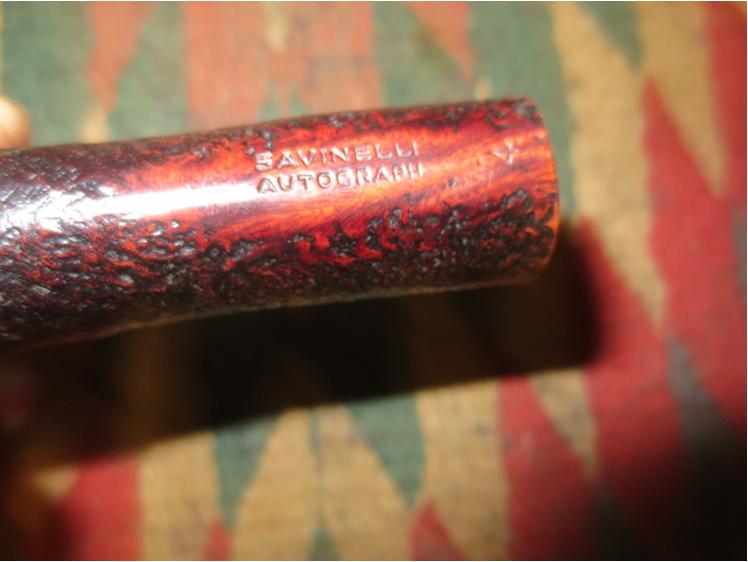
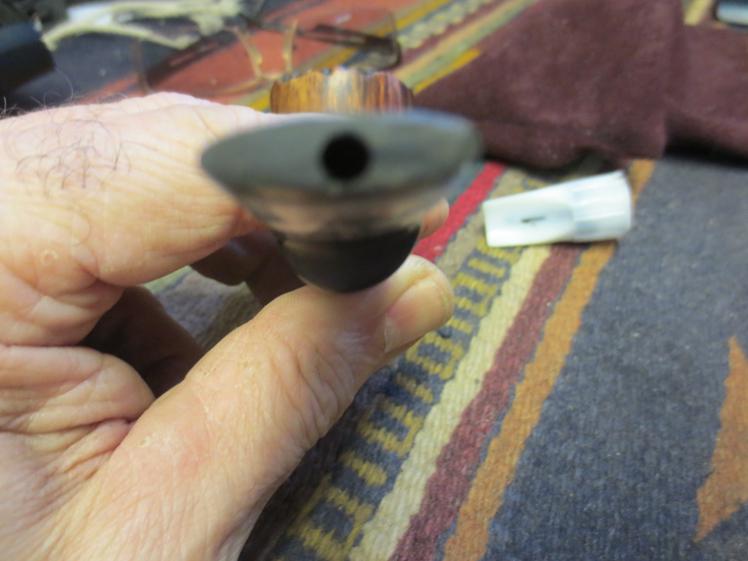
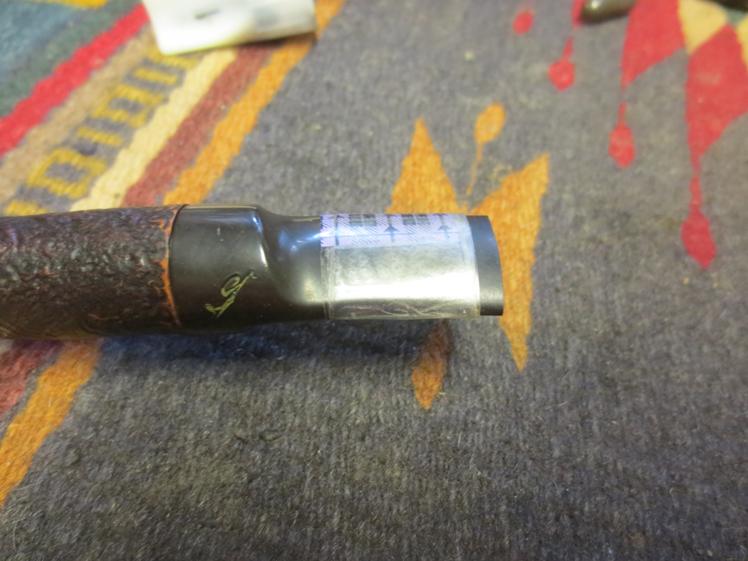
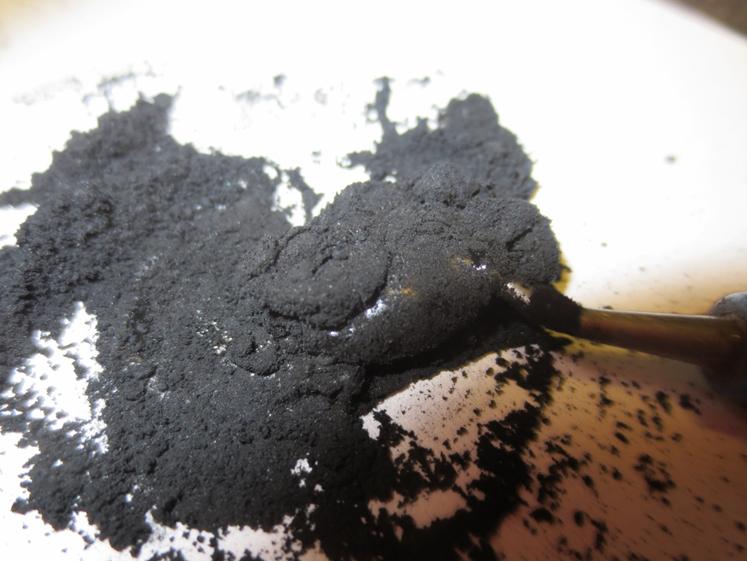
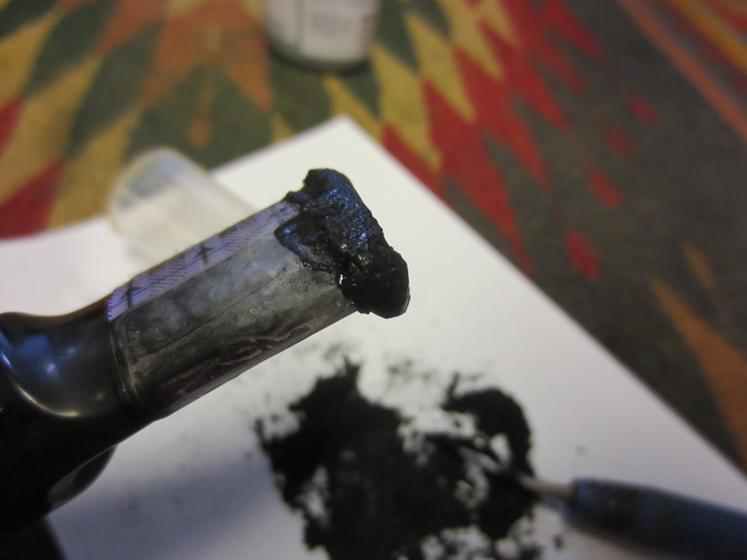
I decided to tackle another button rebuild. A friend brought over a cut off Savinelli Autograph long shank plateau Dublin that he had picked up. The shank was stamped Savinelli Autograph 4 on the underside and there was a signature stamp on the stem.Auto1 I have no idea how the stem got cut off but my guess would be that someone removed the damaged part of the stem and button and then saw how close to the surface the airway was and decided to abort the mission of cutting a new button on the stem. I have been working with developing my mixture of medium viscosity black cyanoacrylate glue and charcoal powder to rebuild/craft new buttons. I have used it on quite a few repairs of my own and on a few for friends. It definitely dries harder than the glue by itself and seems to be very strong once it has cured. I thought this pipe would be a good candidate for that process.Auto2 I wrapped the end of the stem with a band of cellophane tape to make a straight edge to work against for the glue and charcoal powder mixture. It works to keep a semi-straight edge but I find it is more of a guide than anything else. It gives me an edge to work with when I build up the layers of patch material.Auto3

Auto4 I mixed a batch of glue and charcoal powder on a card that I use for that purpose. That way when I have finished the mix and repair I can fold the card and throw it away without getting the glue all over the place.Auto5 I stirred the powder and glue together with a dental pick until I had a thick paste mixture that was still workable.Auto6 I applied it to the end of the cut off stem with the dental pick and shaped it roughly to match the kind of button shape I was aiming for when finished.Auto7

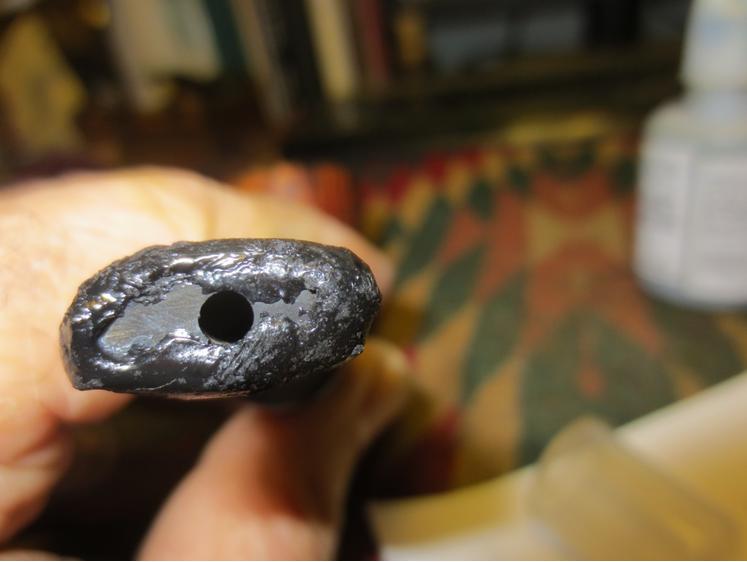
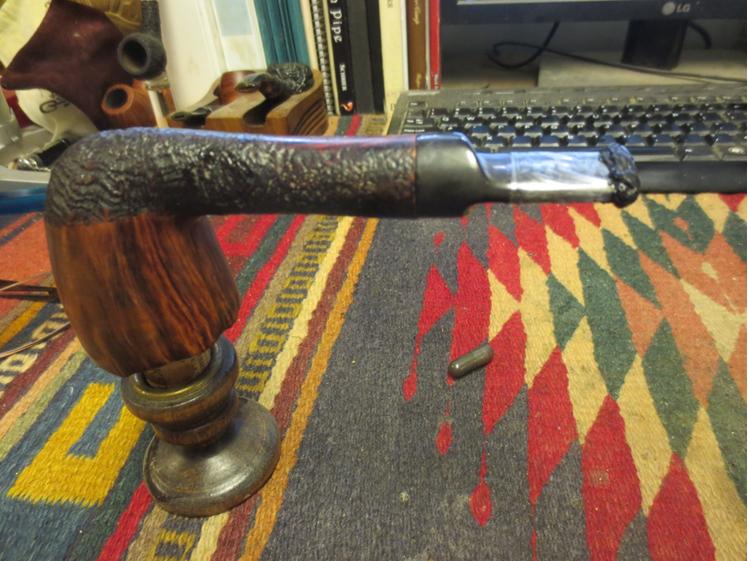
Auto8 I put the pipe on a cork and candle stick holder that I use for drying bowls when I stain them or stems when I have done this kind of repair and set it aside to cure for two days. This kind of patch is a long haul project. It is not a quick repair. If you start reshaping the button too soon the repair breaks off in chunks that are still soft underneath the surface. So, having learned that I left it alone and did other work while the days passed.Auto9 After two days of curing the repair was solid all the way through. I would still need to be careful as the longer it cured the harder it would become. I used emery cloth and 180 grit sandpaper to shape the button into an oval and to face the end of the button. You can see in the photo below how much more material there was to work with now in terms of shaping the airway and the slot in the button thanks to the build-up of material.Auto10

Auto11 I worked over the edge of the button with the sand paper as well to clean up the sharp edge next to the blade of the stem. I moved on to sand with 220 grit sandpaper and also with a medium and a fine grit sanding sponge to further define the new button and to clean up the scratches.Auto12 After the initial shaping and sanding I put the stem to the side to cure longer and addressed the bowl and shank. I reamed the bowl with a PipNet reamer and took the cake back to a very thin layer.Auto13

Auto14 I cleaned the interior of the airway and mortise with pipe cleaners, cotton swabs and isopropyl alcohol until they were clean.Auto15 I scrubbed the bowl and the plateau rim with a tooth brush and Murphy’s Oil Soap to clean off the grime and dirt in the plateau and the sandblast shank.Auto16

Auto17 I scrubbed the plateau with a brass tire brush to dig out the built up tars and oils that had clogged the crevices in the finish there.Auto18 I put my thumb in the bowl and carefully rinsed off the soap with cool running water. I dried the bowl with a cotton rag and took the next series of photos to show what the bowl looked like clean.Auto19

Auto20

Auto21

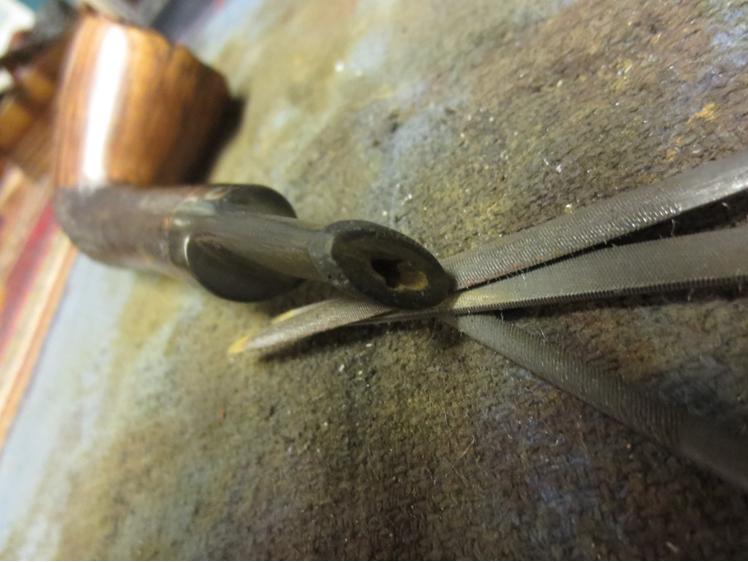
Auto22 The next day I decided to work on the slot in the button and open it up with a flare to create a Y shape. I used needle files to work on the airway. The next series of photos show the files and the progress of opening the airway.Auto23

Auto24

Auto25 With the airway/slot roughed in it was time to continue shaping the button and the face of the slot. I sanded it with 220 grit sandpaper to refined the shape and to smooth out the end of the stem.Auto26

Auto27

Auto28 I used a folded piece of sandpaper to smooth out the interior of the slot and further shape it. The photo below shows the state of the slot and the shape of the button.Auto29 With the shaping completed it was time to work on fine sanding of the stem and new button. The charcoal bits in the mixture are hard and coarse and need to be refined with fine sanding. I worked over the stem and button with micromesh sanding pads, wet sanding with 1500-2400 grit pads to remove the majority of the coarseness. It is only this first step in the process of polishing the stem but it is amazing to see the transformation as I work through the various grits of micromesh. I rubbed the stem down with Obsidian Oil when I had finished with the 2400 grit pad. I will still need to refine the inner edge of the button with files but the overall shape of the stem and button are clearly visible.Auto30

Auto31 I wet sanded the stem with the 2400 grit micromesh until I had minimized the scratches and polished the button. I then rubbed it down with another coat of Obsidian Oil and then sanded it with 3200-4000 grit micromesh pads. I gave it another coat of oil and then sanded it with 6000-12,000 grit pads. I gave it a final coat of oil and let it dry.Auto32

Auto33 I buffed the stem and the bowl with Blue Diamond and then lightly buffed the blast with the same. I gave it multiple coats of carnauba wax and buffed it with a clean flannel buffing pad to raise the shine. The finished pipe is shown below. The new button looks like it belongs. The shape of the slot is open and it accepts a pipe cleaner with ease. It should provide years of service to the pipeman who is holding it in trust. He should enjoy smoking it with much more ease. Thanks for having a look!Auto34

Auto35

Auto36

Auto37

Auto38

Auto39

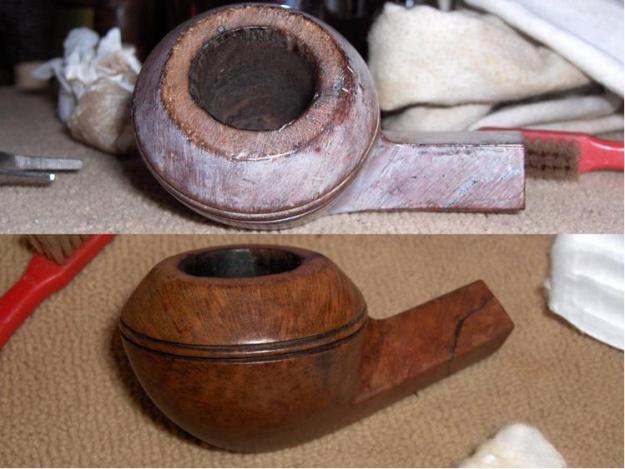
Bead repair on a baby Rhodesian


Blog by Dave Gossett

It is a pleasure to introduce you all to Dave Gossett’s work. Pat Russell, another contributor here sent me links to Dave’s work on Pipes Magazine forum and Dave sent me links to his own YouTube channel showing the beautiful work that he does. With no further ado here are Dave’s own words:

I received this pipe from a friend that acquired it in an estate lot. The only stampings on the pipe read imp, which I assume once read imported briar. This pipe had seen better days but it still drew my attention. Maybe it was the novelty of its size.Dave1

Dave2

Dave3

Dave4 I started out by repairing the bowl chamber which had been badly reamed over the years. After removing the cake I sanded the bowl chamber smooth using 400 grit wrapped around a small sharpie marker.

Next I proceeded to rebuild the bead line.dave5 I covered a small piece of cardboard in clear tape and wedged it in the groove under the damaged areas to keep the channel clear. Medium viscosity cyanoacrylate glue and fine ground briar dust will fill the missing voids. The glue will not stick to the clear tape and the wedge is easily removed after the repair has set up. I put a few small drops of glue in place and sprinkled the dust on top, then used the flat edge of a knife pressed it flat against the pipe. I repeated this several times around the circumference of the bead line.Dave6 After I had all the missing briar filled in I proceeded with the sanding . I started with 800 grit to smooth out all the excess glue, and then worked my way up to 2000 grit on the rest of the pipe.

Fiebings Dark brown leather dye is the base stain mix with a drop of oxblood. Once the stain dried, I went over it again with 2000 grit to give the grain a nice contrast, followed by a couple coats of pure carnauba wax on the buffing wheel.Dave7

Dave8

Dave9

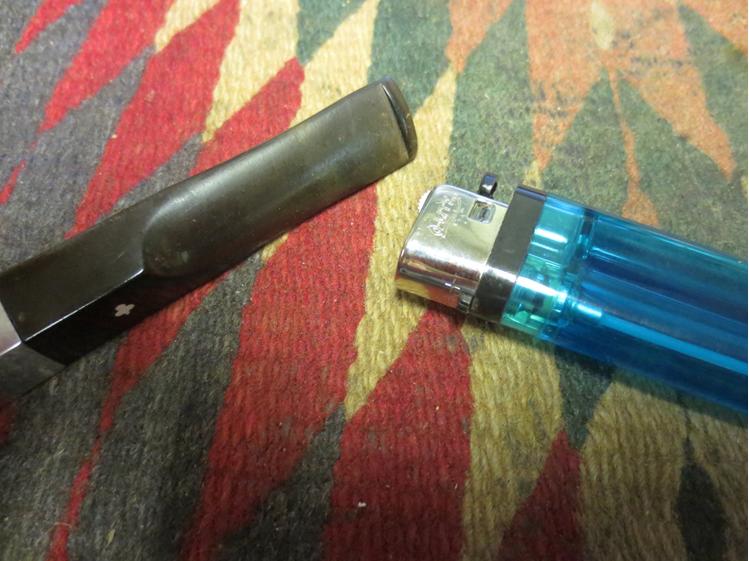
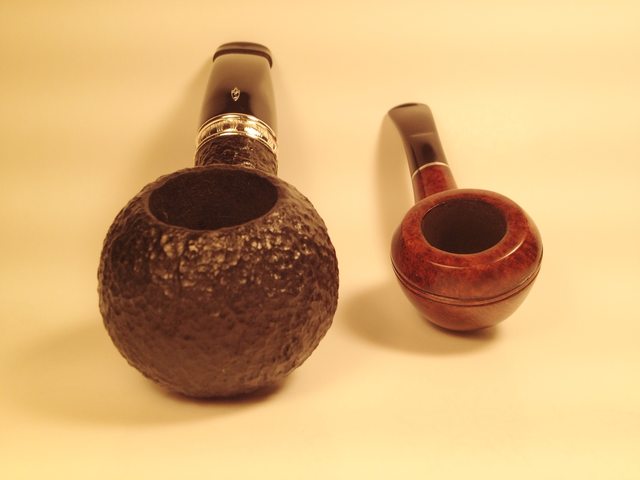
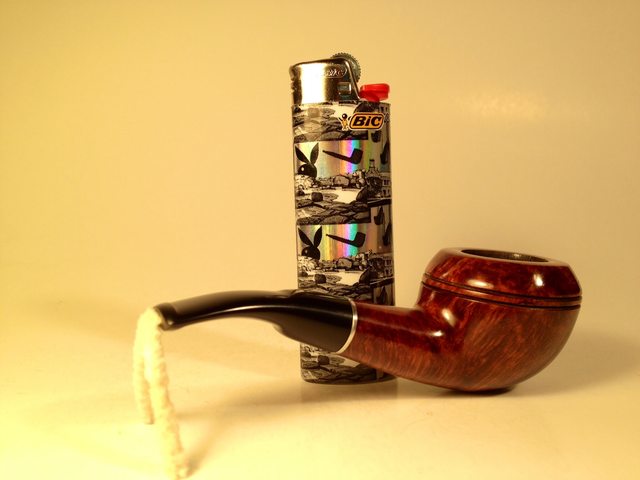
Dave10 Here it is sitting with a Savinelli 320 for size reference.Dave11 Next to a Bic lighter truly shows how small this Rhodesian really is.Dave12

Here is link to his YouTube channel. As he says: No worries. No blathering,YABO’s, or reviews, just pipes…. https://www.youtube.com/channel/UC_IKfDgcIgpOfsIYoodS_Hg

Cleaned up a Small KBB Yello Bole Sandblast Billiard


Blog by Troy Wilburn

I know what you all of you are thinking ….another Yello Bole? lol

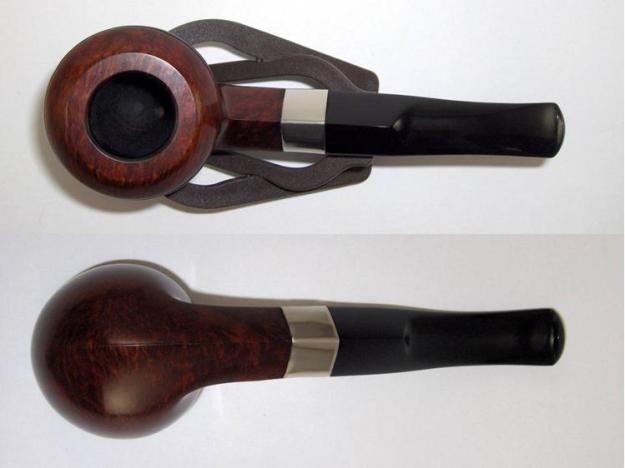
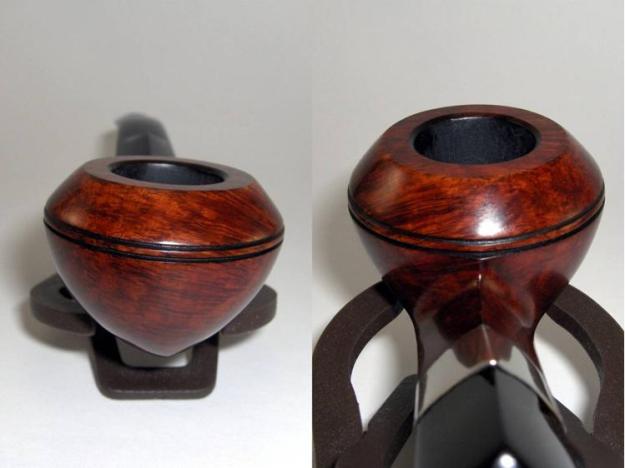
I was just telling a friend of mine that I most likely would not be going to go after anymore Yello Bole’s for a while unless I saw another sandblast I liked. Sure enough just after that this one popped up EBay. Here is the way it looked on EBay. I thought nice pipe but it has some stem chatter that won’t be too hard to get rid of. Yello1 Well when I got it in, come to find out it wasn’t stem chatter but just some glue residue. You can see in the picture where I wiped some off with my finger.Yello2 The pipe has not been smoked much at all.Yello3 There were a few nicks and spots around the rim.Yello4 All in all, I lucked out again and got a really nice excellent condition original Yello Bole. I wiped off glue with 91% alcohol and cleaned inside stem and stinger. I sanded the stem lightly with 2500 grit.Yello5 I touched up nicks with some black acrylic. Gave the inside a quick swab with a cleaner and 91% alcohol.Yello6 I gave the pipe a good scrubbing with mineral oil and toothbrush. I wiped it dry with cotton cloth.Yello7 Quick buff and wax ….Voila finished.Yello8

Yello9

Yello10

Yello11

Yello12

Yello13

Yello14

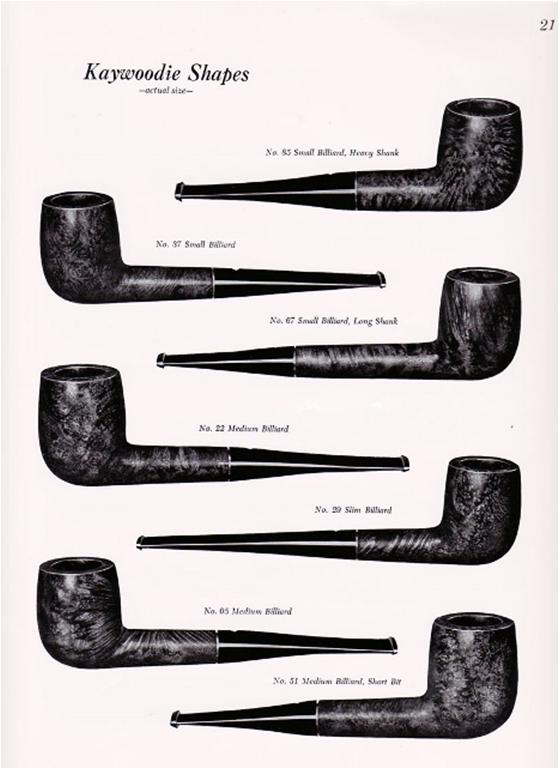
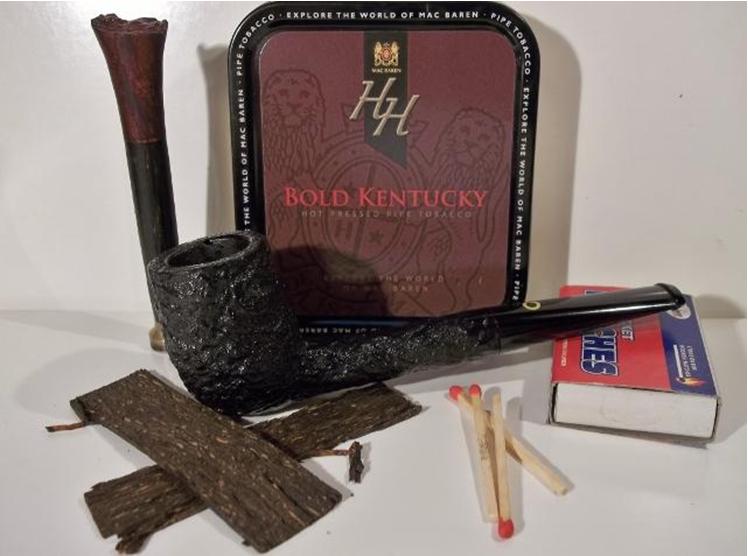
Yello15 Looking up the pipe on my Kaywoodie charts I believe this to be a shape #67 Small Billiard Long Shank.Yello16 Due to its small size this will be used mostly for flakes. I have smoked a bowl of Bold Kentucky in it already and it’s a great little smoker.Yello17 I have been thinking about doing a write up on why I like KBB Yello Boles so much and add some pictures of my Yello Bole collection. Steve has also mentioned this to me. So maybe in the near future I will post the article.

Bringing a Dunhill Bruyere Bent Rhodesian 08 Back From the Brink


Blog by Steve Laug

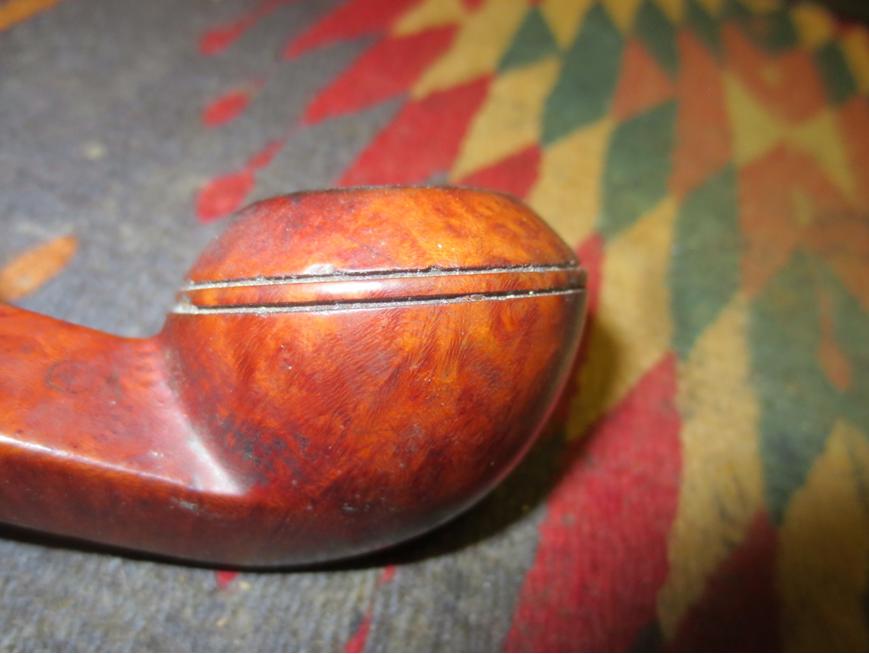
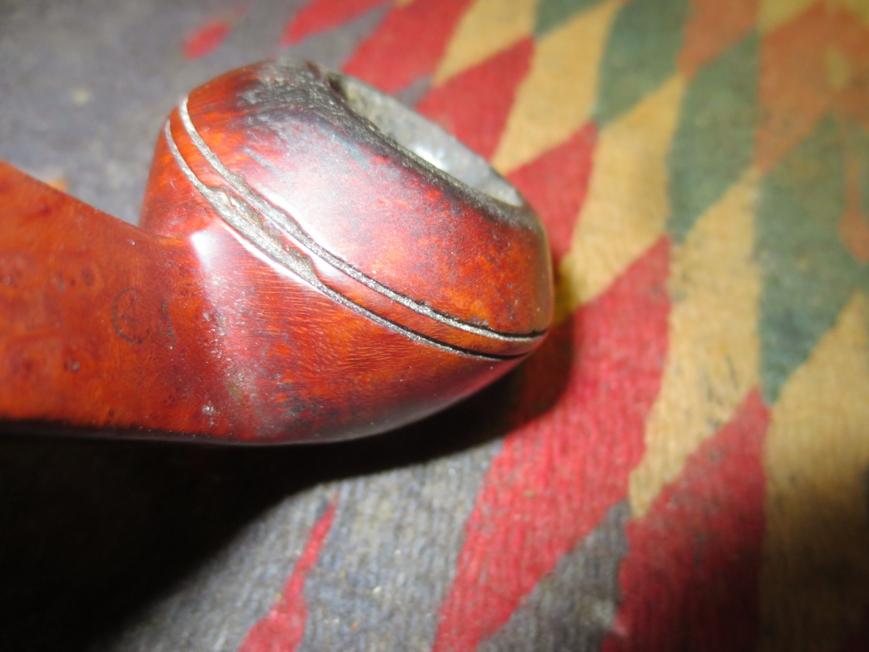
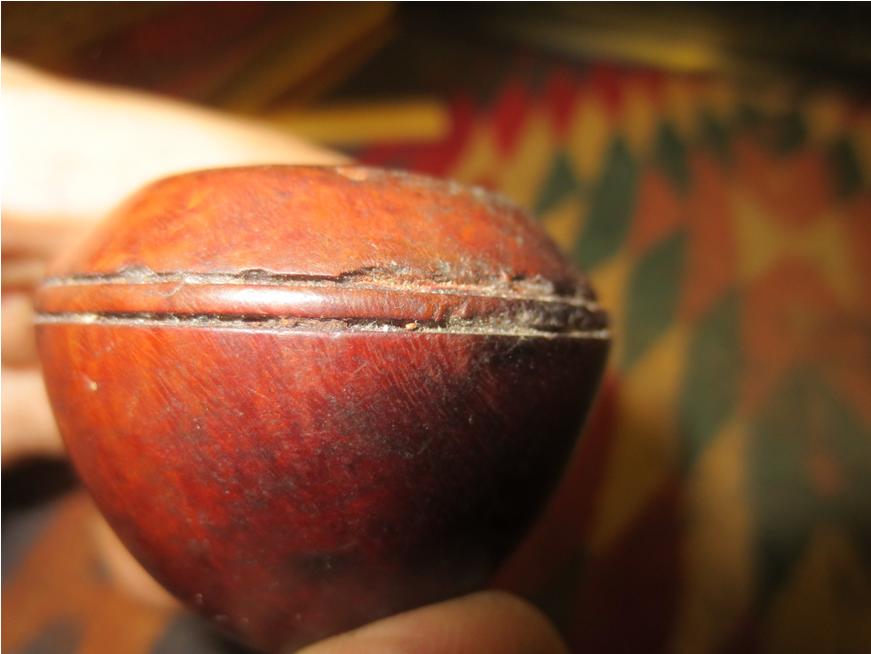
This Dunhill Bruyere was part of the gift lot for sale for Nepal. It was in very rough shape and one that would never be fit enough to grace a collection. The Dunhill stamping is only visible under bright light with a lens. The stamping on the left side of the shank is Dunhill over Bruyere. On the right side it is stamped with 4 in a circle and an A. The rest of the stamping is very faint and reads Made in London England (At least that is what it looks like). The shape number 08 is gone except for the 0. The finish was gone. The double ring around the bowl was virtually ruined and the bowl itself was in very rough shape. The rim was beat up and out of round. There were burn marks on the rim, the left side and bottom of the bowl and on the left side of the shank. To me it looks like the pipe was laid in an ashtray and the cigarette burned the bowl. It was in very rough shape. The stem was badly oxidized and upon examination there was a small split in the button on the underside and the stem was thin and the edges of the button were rounded down.Dunhill1

Dunhill2

Dunhill3

Dunhill4 I took some close up photos of the bowl to give a better picture of what I had to work with on this one. You can see from the photos the issues that I pointed out above. The ring was badly damaged and rough. The bowl was out of round and the rim was damaged. The finish was spotty and grimy.Dunhill5

Dunhill6

Dunhill7

Dunhill8

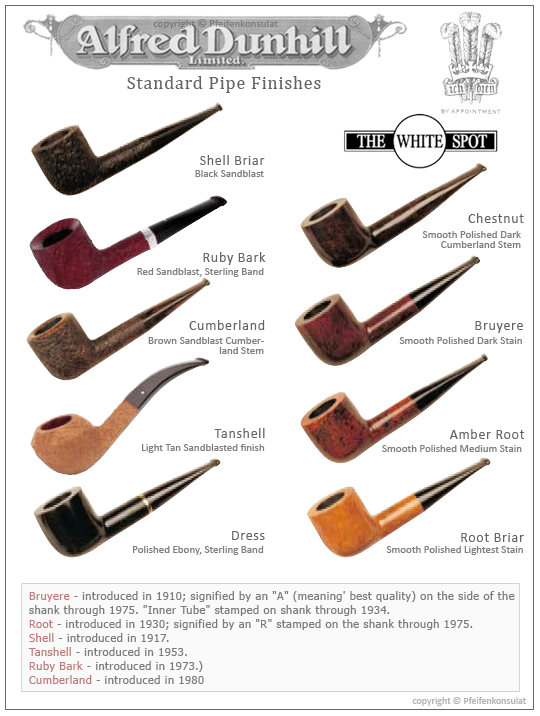
Dunhill9 I have one newer Bruyere in my rack so I kind of knew the colour this pipe should have been and it was not even close any more. I did a bit of searching on the web to see if I could find a finish chart and also one that would confirm the shape number that I was “speculating” on. I have included the next two charts for the information that I gleaned from them. The Bruyere was more dark/reddish coloured than this one was and the faint number was indeed 08 which was called a Bent Rhodesian.dunhill_pipe_finishes

dunhill_shape_size_chart The next two photos show the stem in some closeup photos. I wanted to show the oxidation and the split in the button on the bottom side of the stem. The fit in the shank was also worn. The tenon was sloppy fitting and could be wobbled side to side and up and down.Dunhill10

Dunhill11 I put off working on this one for a long time, choosing rather to work on pipes that I had some sense of what the finished product would look like. I had no idea if I could restore this one to any semblance of its original state let alone bringing back to “BEST QUALITY” which the Dunhill catalogue above said that Bruyere pipes stamped with the large “A” were supposed to be. This one was a challenge and I really drug my feet and postponed the test as long as possible. After looking at the photos above I hope that I have communicated the state of the pipe I was going to deal with. I have made no mention at all of the state of the inside of the shank and the stem. It was a mess as well – a thick black crud covered the inside of the airway in the stem and the shank and the mortise was almost clogged with the almost petrified tars of years of neglect.

So, yesterday I decided was the day to tackle this pipe. I had mowed the yard and done my weekend chores and needed some down time to relax. I suppose many of you would not call this relaxing but I still am under the illusion that it is restful…. Shhh don’t change my illusion please. I began with cleaning out the rings around the bowl. They were rough but they were also clogged with all kinds of debris. I used a sharp, thin blade pen knife that I have and use for this kind of thing. It works wonders and within a short time I had cleaned out the grime and the original red stain was showing in the bottom of the grooves.Dunhill12

Dunhill13 I scrubbed the bowl with cotton pads and acetone to remove the grime and the damaged finish. I also wanted to see the extent of the burn marks on the bowl, rim and shank. I wanted to see if they went deeper than the surface. Knowing that would help me decided what to do to address them.Dunhill14

Dunhill15

Dunhill16 With the grime cleaned off the rim I could see what I had to work with. The bowl was in rough shape. It was out of round but the inner edges did not have any char or burn. The rim had lots of dents and dings from someone using it as a hammer.Dunhill17 I decided to top the bowl to flatten out the rim and clean up as much of the damage as possible. I would then have to work on sanding the inner edge of the rim to smooth it out. I used the topping board with 220 grit sandpaper.Dunhill18

Dunhill19 With the rim flattened out once more and the outer edge more evenly set on the bowl top it was time to address the inner edge of the rim. I used a folded piece of 220 grit sandpaper to clean up the edge. I was able to greatly improve the “roundness” of the inner edge. While it was not perfect it was far better than when I started.Dunhill20 I cleaned out the shank and the airways with alcohol, cotton swabs and pipe cleaners. I scrubbed and scoured and scraped the airways clean of the “fossilized” tars until the pipe cleaners and cotton swabs came back white. Since I was probably going to smoke this one myself I decided to not use the retort at this point. If it smoked rough I could always set up the retort and let it do its magic.Dunhill21 I sanded the stem with 220 grit sandpaper, repaired the small split in the button on the bottom side and then sanded the stem with a medium and a fine grit sanding sponge. I rubbed it down with some Obsidian Oil and put the pipe back together. I took a few photos of the cleaned up look. If you are getting the idea that I was postponing working on the double ring and the heavy damage there you are correct in your assumption. I was not sure I would be able to work any redemption on that area of the bowl. Time would tell.Dunhill22

Dunhill23

Dunhill24

Dunhill25 I could not postpone dealing with the ring damage any longer if I was going to finish the pipe. I had read with interest Mark Domingues write up on restoring the rings on the Peterson 80 that he posted here recently. I spent time looking at how he rebuilt the centre briar ring between the two lines. I was ready to start. I cut a piece of note card the width of the back of the bowl and decided to address that damage first. I pressed briar dust into the damaged area of the ring and tamped it in with dental pick. When it was full I put some drops of clear super glue onto the briar dust. I did the same all around the bowl until I had a real mess on my hands. I was careful not to put the glue or dust on the places where the rings were in good shape. I would use these as guides to recut the lines later.Dunhill26

Dunhill27

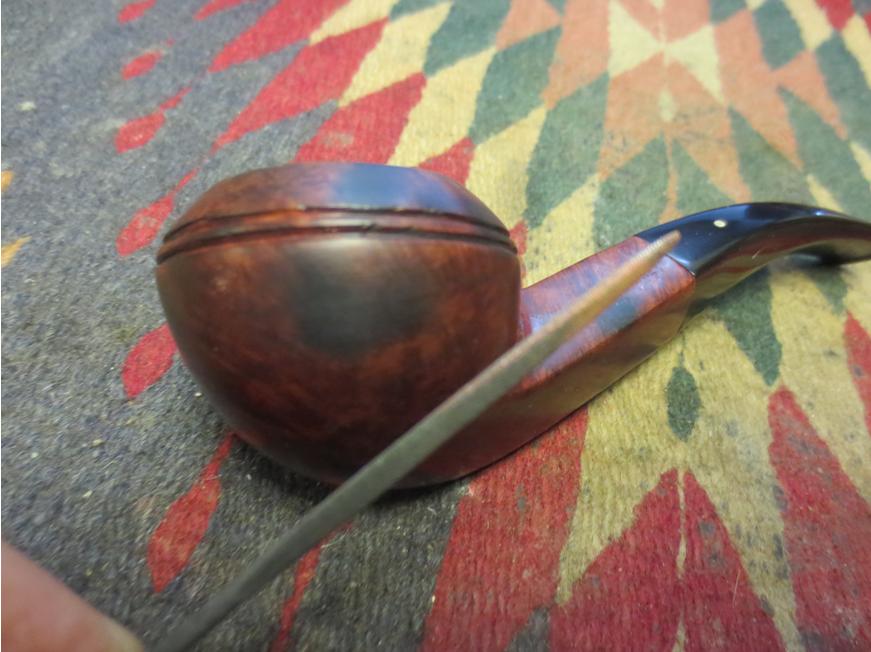
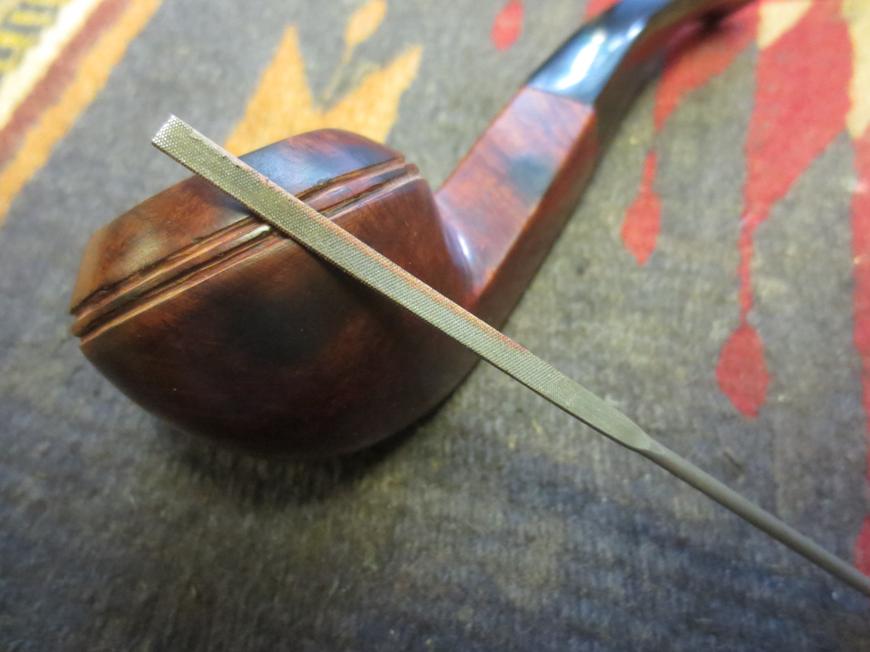
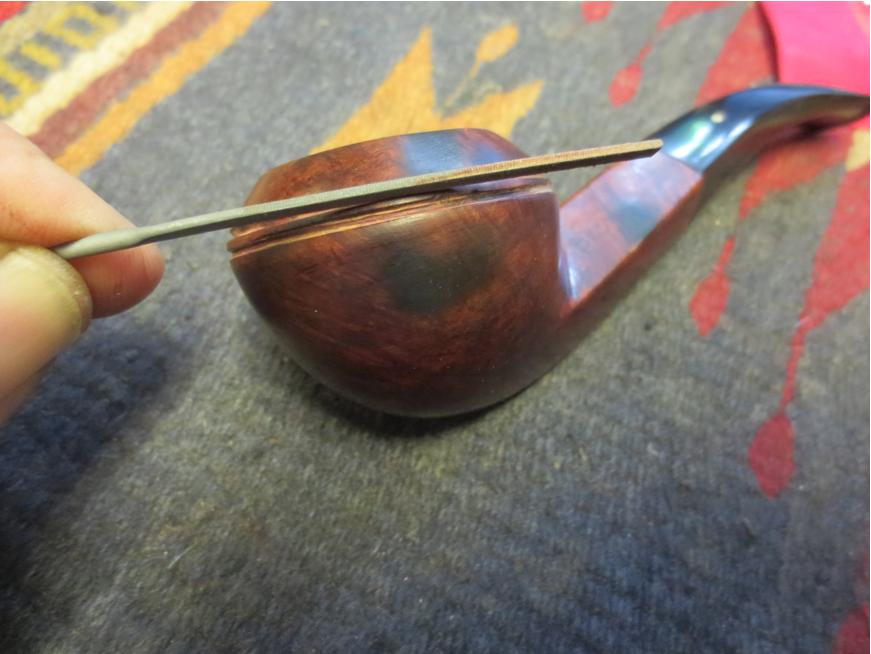
Dunhill28 I used a flat, thin blade knife edge needle file to recut the grooves in the bowl. It took a lot of work to slowly and carefully recut them but it worked as the photos below show.Dunhill29

Dunhill30

Dunhill31

Dunhill32 After the initial cutting of the grooves with the needle file I continued to use it to smooth out the grooves and the edges on the top and bottom. They took a lot of work to smooth things out. I also folded 220 grit sandpaper and ran it through the grooves on the bowl. Once they were smooth and cleaner looking than before it was time to clean off the bowl and then restain it with the first coat of stain. I wiped the bowl down with alcohol on cotton pads to remove the excess briar dust and any remaining glue. I sanded the burn marks on the bowl and rim with a medium and a fine grit sanding sponge to minimize them. I sanded them again with 1500-2400 grit micromesh pads to smooth out the scratches. I then gave it a coat of oxblood aniline stain, flamed it and set it aside to dry.Dunhill33

Dunhill34 The burn marks still showed with this first coat of stain and it was a little too red to my liking. I buffed it with White Diamond and then brought it back to the table to do some more work. I took some photos of the pipe after the buffing. I find that a couple pics help me focus on what needs some more work. In this case I could see that a little dark brown stain would work to tone down the red and also blend the dark spots in a bit more.Dunhill35

Dunhill36

Dunhill37

Dunhill38 I used a dark brown stain pen to give it a top coat of stain. In the photos it looks streaky but I don’t worry too much about that as a buff once it is dry will take care of that.Dunhill39 I buffed the bowl with White Diamond and a light touch. It is looking better. The rings on the left side are better but are still a little rough. The rest of the way around the bowl they are looking really good. The dark brown stain did a better job of blending in the dark spots and toning down the red. I liked the colour and it seemed to match the chart photos of the Bruyere that I had found.Dunhill40

Dunhill41

Dunhill42

Dunhill43

Dunhill44 At this point it was time for a break. I put the stem on the bowl and loaded a bowl of Boswell’s North Woods and went to church with my daughters. I smoked a bowl as I walked with them and loaded another bowl on the way home. I sat on the porch and fired up a third bowl filled with Malthouse Reserve 12. This pipe really sang with English tobaccos. Even if it was still a bit ugly it smoked well!

When I finally went back to the shop I worked on polishing the stem. I put the plastic spacer/washer between the shank and the stem and worked on it with micromesh sanding pads. I wet sanded with 1500-2400 grit pads and then rubbed the stem down with Obsidian Oil. I dry sanded with 3200-4000 grit pads and rubbed it down again with the oil. I dry sanded with 6000-12,000 grit pads and then gave it a final coat of Obsidian Oil. I set it aside to dry.Dunhill45

Dunhill46

Dunhill47 The stem was looking really good. There was a rich glow to the vulcanite. These older Dunhill pipe stems really shine like glass when they are polished. I set the stem aside and did a bit more work on the bowl. I used a very small oval needle file to work on the rings on the left side and front of the bowl. I wanted to clean up the edges and sharpen the overall look of the rings.Dunhill48

Dunhill49 I followed the oval file with a flat rectangular blade needle file and cleaned up the edges of the rings some more. When I had finished with the flat file the rings looked far better than they were when I started.Dunhill50

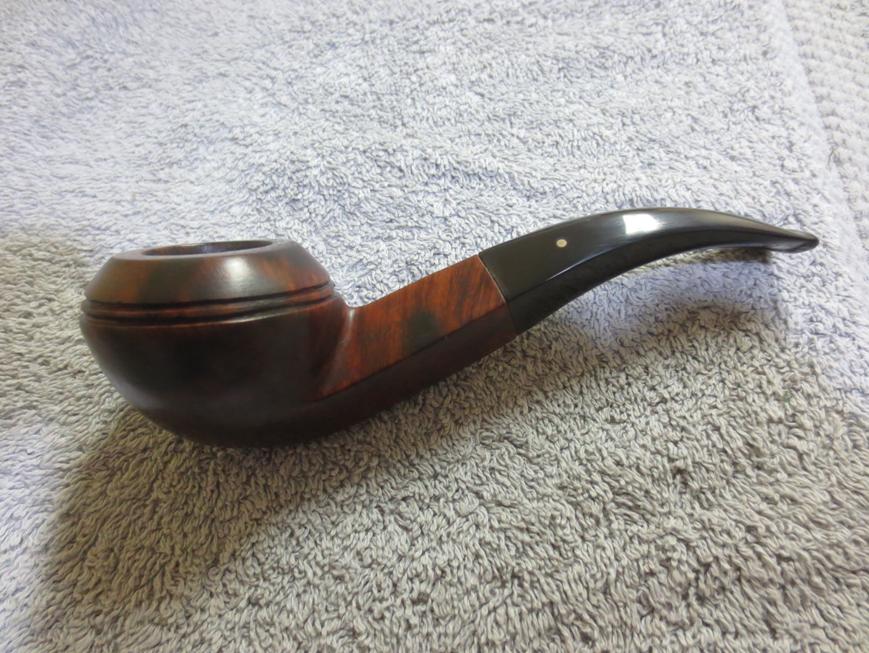
Dunhill51 I gave the bowl another coat of stain with the dark brown stain pen and then buffed the bowl and stem with Blue Diamond Plastic polish. I gave them both multiple coats of carnauba wax. Then I buffed the pipe with a clean flannel buff and polished it. The finished pipe is shown below. I think this one will stay with me as the nomenclature is almost illegible and the dark marks all over the bowl still show. The pipe smokes well so it will be a work horse pipe for me. It was well worth the time to clean up and I learned much in the process of reworking the rings.Dunhill52

Dunhill53

Dunhill54

Dunhill55 Thanks for looking.