Blog by Dal Stanton
I first laid my eyes on the Danish made, Stanwell Silver Mount a couple of weeks ago, not really knowing what I was seeing. I was giving a tour to a new team member who had just arrived in Bulgaria. As part of orientation I take ‘newbies’ on a tour of the center of Sofia – I sprinkle in a bit of history, architecture, politics, religion and culture as we stroll through the streets and boulevards. The tour was also the perfect opportunity to showcase a ‘typical’ Bulgarian antique shop – I’m always looking for a way to drop by the ‘Hole in the Wall’ where I’ve landed several great pipes in past visits. As my guest surveyed the shelves of stuff stacked on stuff, I went directly to THE basket, stuffed up into one area among the artifacts, where I started plucking through the newer offerings of pipes added since my last visit – since before Christmas. I did spy a very nice unmarked Brandy shape with a hearty stummel. When the shop owner diverted my attention, conspiratorially confiding that there was something he wanted me to see – my curiosity heightened. He pulled the Stanwell out from a closed cabinet which always is an indicator of a treasure of greater value. I left the Hole in the Wall with the pipe on my mind but not in my pocket. A week later, I returned to the Hole in the Wall with two other people as part of another tour. This time, however, I wanted to see the Stanwell again – hoping it was still there. It was. This time I took pictures and dickered a bit, but again, left without a pipe. I wanted to do some research on this Stanwell and send a note off to Steve to get his feedback, including some of the pictures I took at the Hole in the Wall.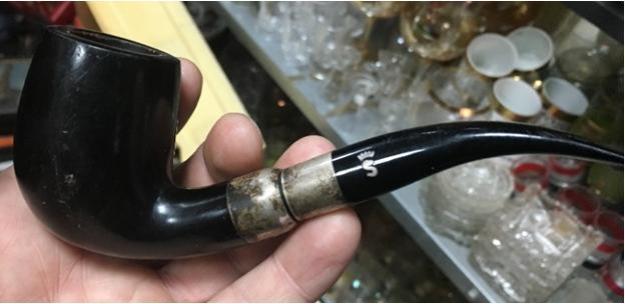
His response was to the point: “That line of Stannies is a pricey one. Nice find.” Added to this was confirmation that the asking price was indeed very reasonable! That sealed the deal for me and with resolve (after receiving my wife’s blessings) I returned to the Hole in the Wall the next day and negotiated a favorable deal. Sweetening the transaction of the Stanwell was bundling the Brandy Unmarked I saw in the basket. I’m a good customer and he agreed to a “good customer” price. He was happy and I walked out of the Hole in the Wall this time with two nice pipes – but the Stanwell was the find pipe pickers place their hopes!
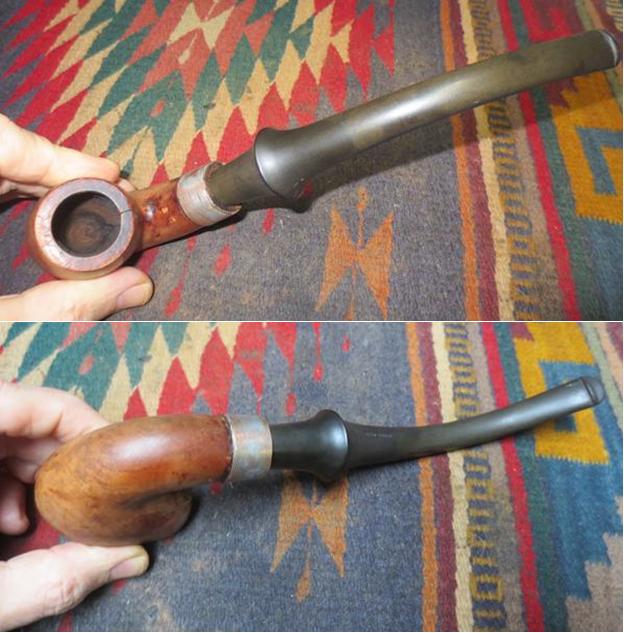
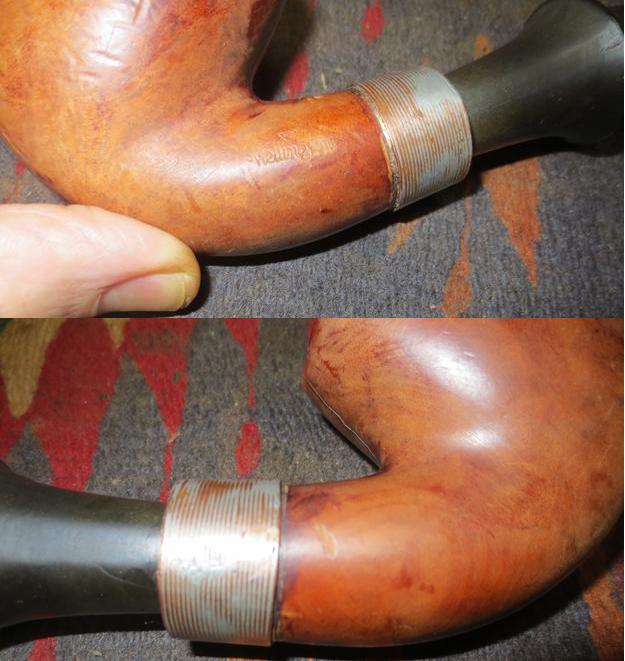
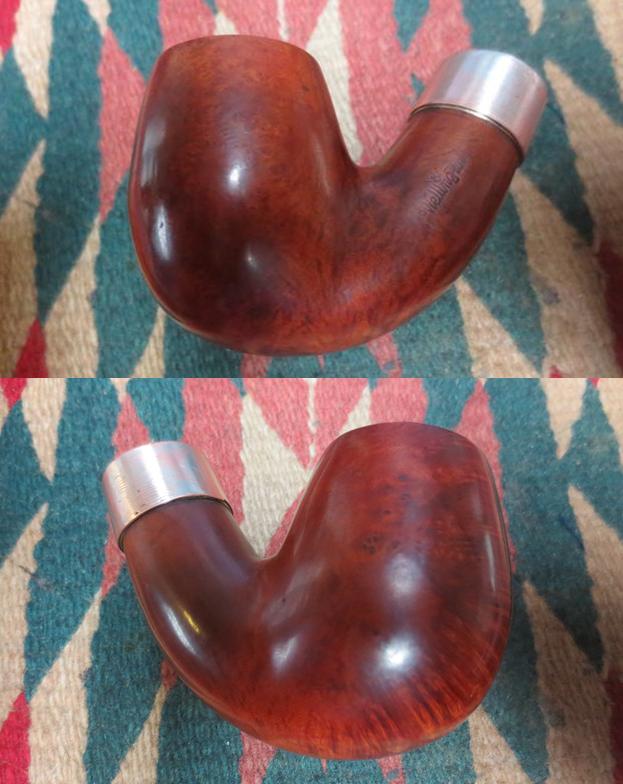
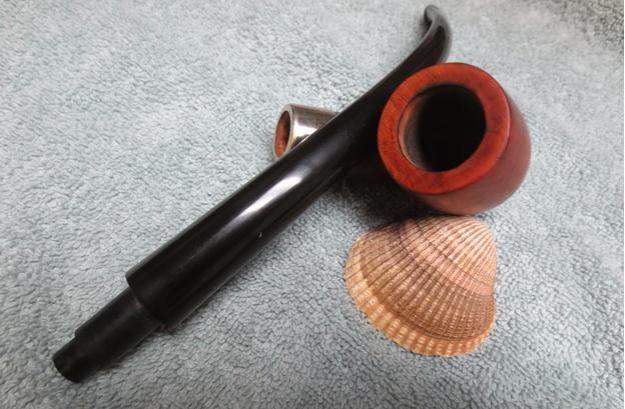
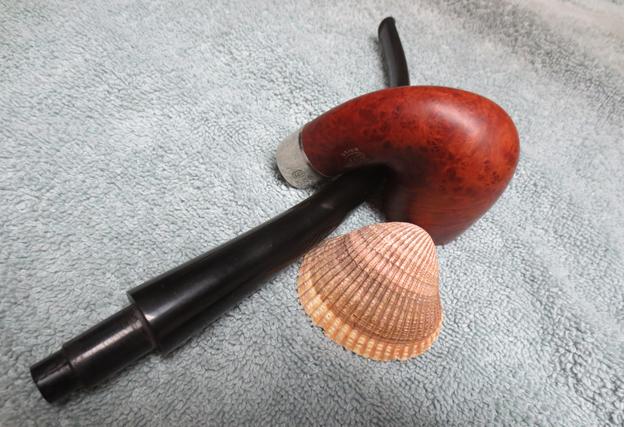
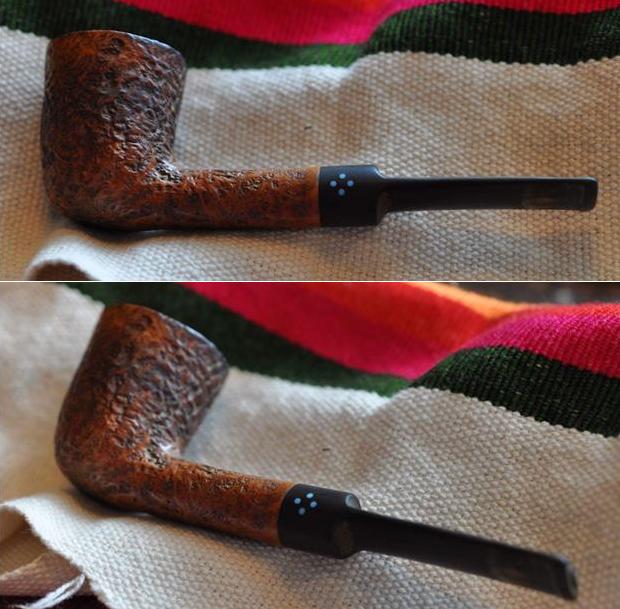
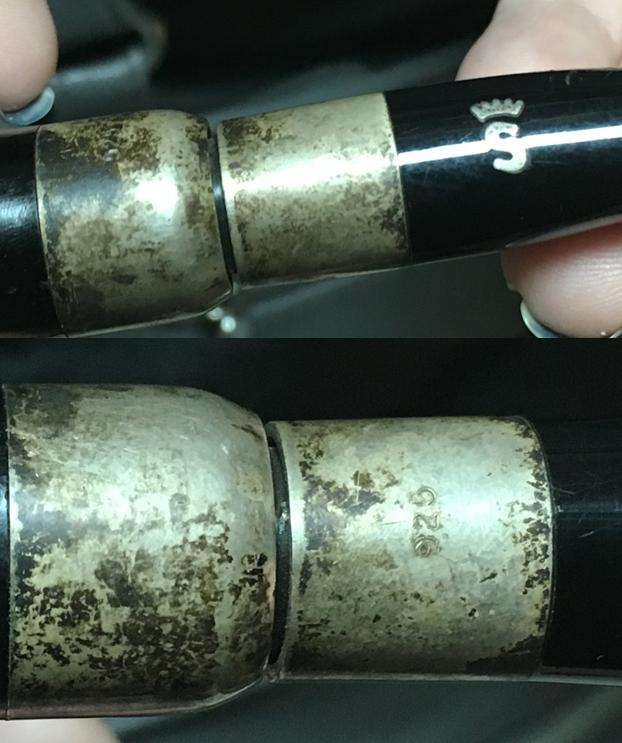
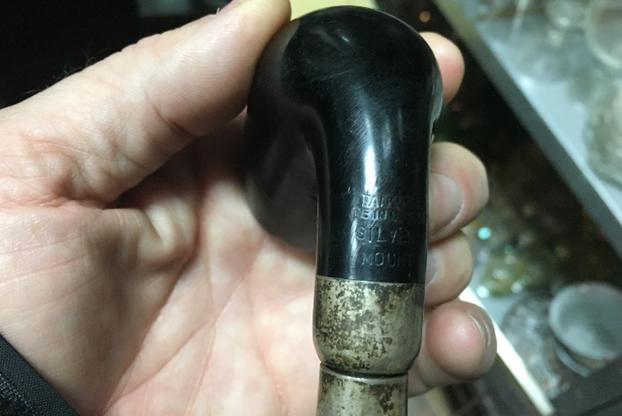
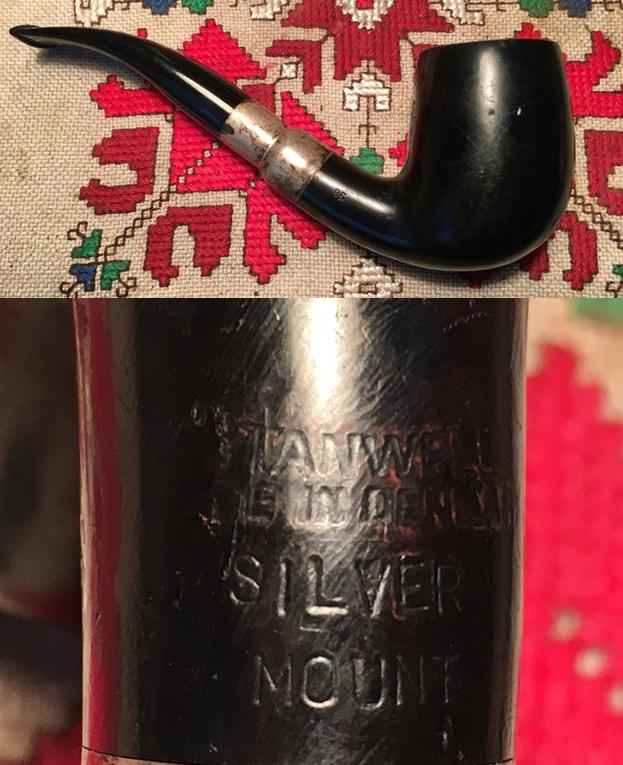
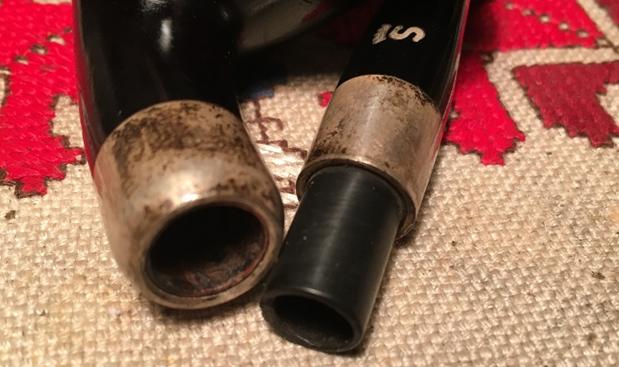
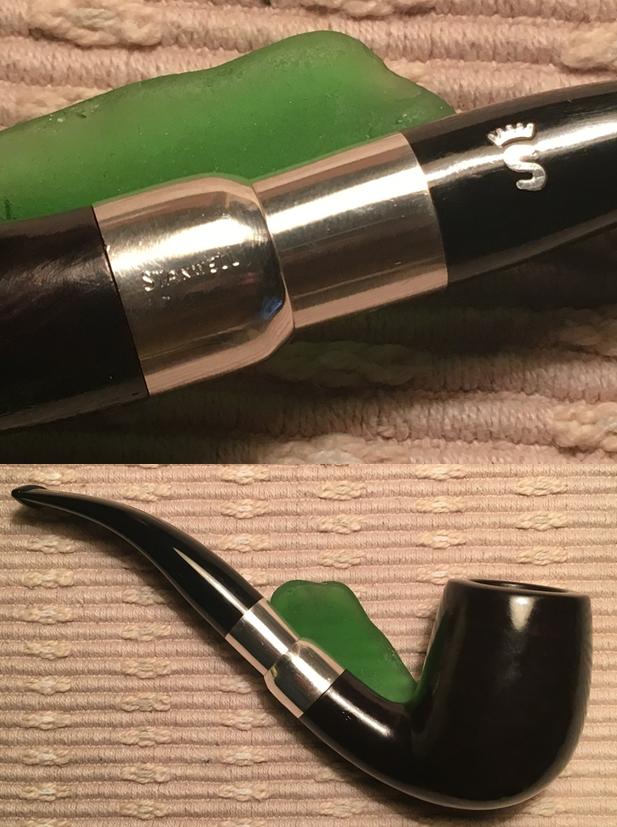
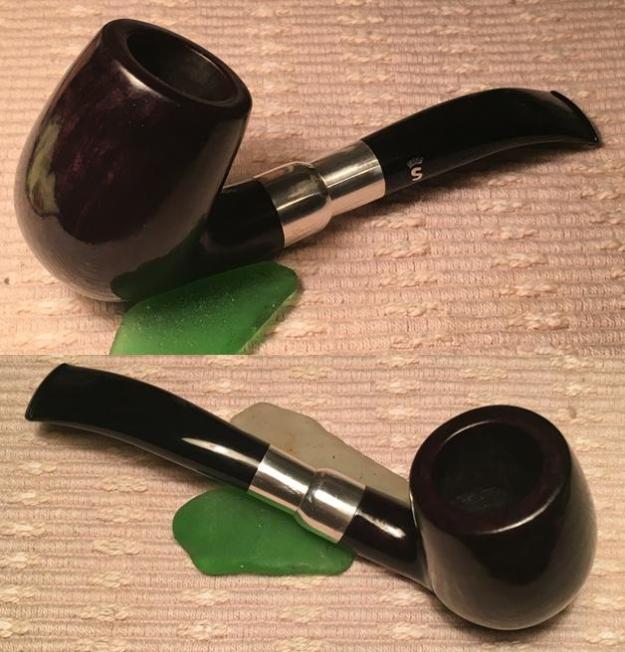
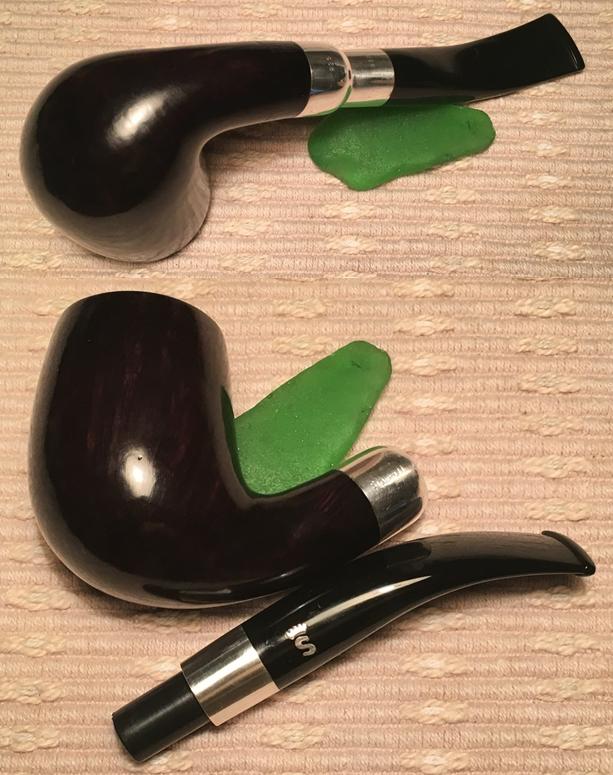
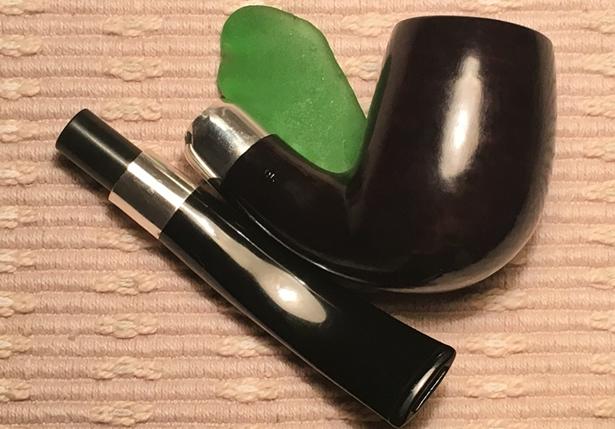
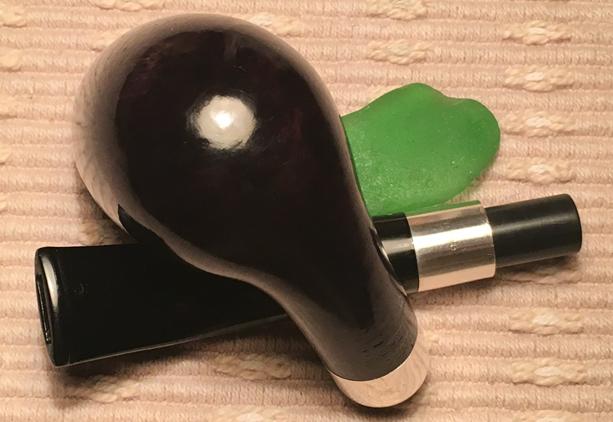
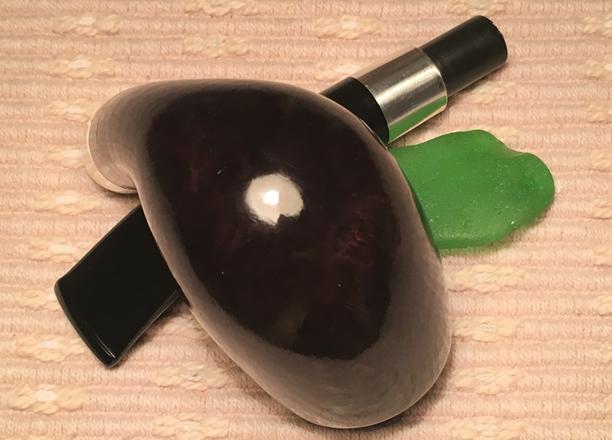
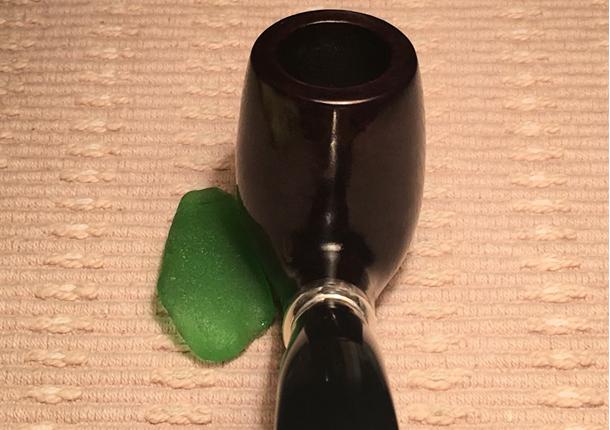
With my newest Hole in the Wall find now in front of me, I take more pictures for evaluation. On the lower side of the shank is stamped Stanwell over Made in Denmark over Silver over Mount. Unfortunately, through wear or over-aggressive buffing, the ‘S’ of Stanwell and the “Ma” in Made in Denmark are very thin. There is a shape number on the right side of the shank stamped 85 – I’ll need to research this to see if I can place this pipe with the plethora of information about Stanwell pipes on the internet. Both the shank’s ferrule and the military or spigot mounted stem’s band, have 925 stamped – the world-wide authentication of sterling silver (.925). What I did not see in the poor lighting of the Hole in the Wall, was that the mortise ferrule also had Stanwell stamped in the sterling. The silver inlaid crowned “S” stem cartouche is in good shape. The acrylic stem has many scuffs and nicks and tooth chatter near the button. The rim and bowl surfaces also are nicked and dented a good bit. As a matter of personal taste, I am not too partial to the black finish that hides the briar grain. These pictures fill in the gaps.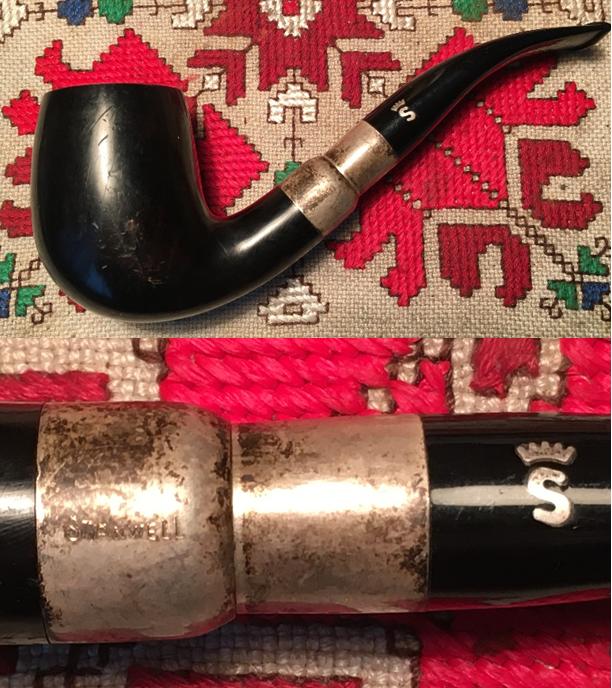
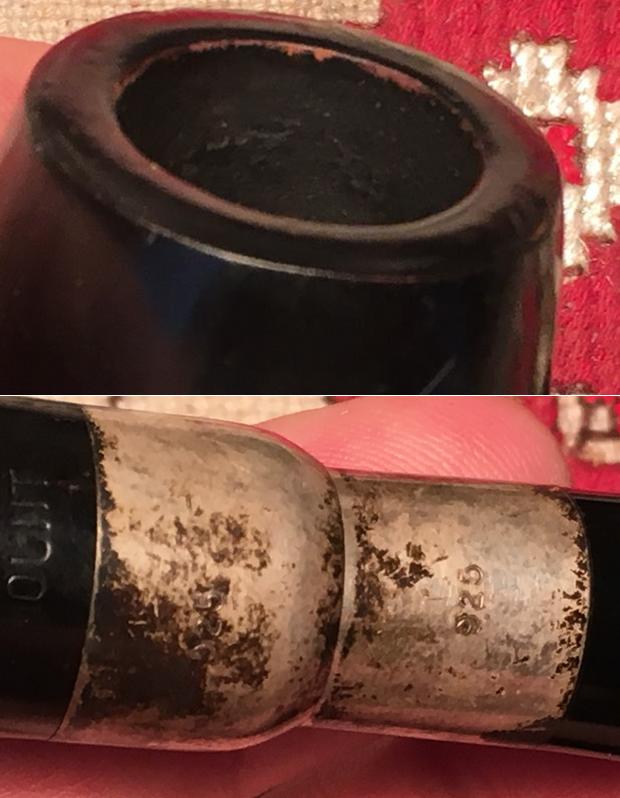
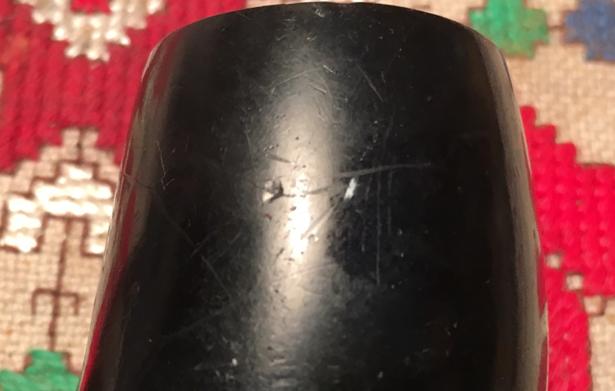
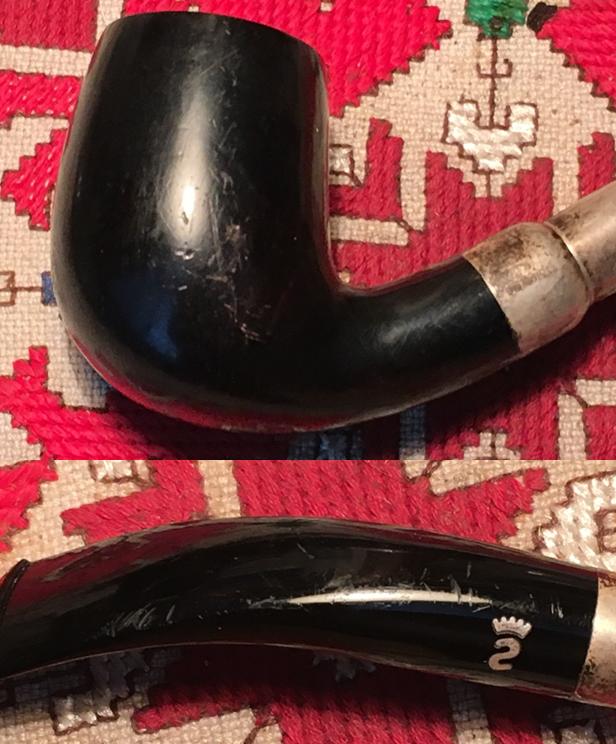
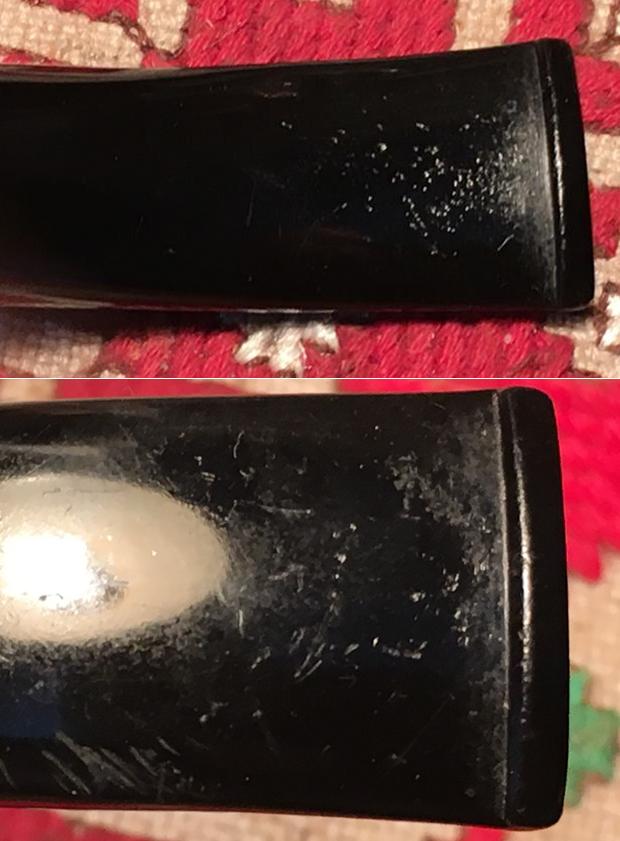
 My first time dealing with a Stanwell pipe was with a second – a Danske Club Vario, a very nice pipe also landed at the Hole in the Wall. Pipedia’s article describes the beginning of the well-known Danish pipe making company, Stanwell:
At the end of the war, briar became available again, so Nielsen began importing his own briar and started making briar pipes to compete with the English manufacturers. It must be remembered that in 1948, England was the single great center for pipe making. Therefore, Nielsen changed the name of his pipes to “Stanwell”, which sounded much more like a proper English name than “Nielsen”. He also created the horse-drawn carriage logo for its English connotations. He later changed his own last name from Nielsen to Stanwell, a testament to his devotion to the pipes he made. Stanwell’s relationships with Danish pipe makers goes back to Sixten Ivarsson, who is considered the originator of modern Danish pipe making. Ivarsson was commissioned to design Stanwell shapes. In 1969, the factory was moved to a town called Borup, just outside of Copenhagen to be closer to Ivarsson.
To establish the date of this Stanwell Silver Mount style, thanks to Bas Stevens’ extensive compilation of Stanwell pipe shapes posted on Rebornpipes, the shape number 85 is listed as a bent billiard which was discontinued in 2006 (changed to shape number 246). I also found the Silver Mount style featured in two Stanwell catalogs listed in Pipedia’s collection. One ‘Brochure by the Lorup Group’ displayed samplings of the Silver Mount style but I could not establish the date of the brochure. The other was a Russian catalog of Stanwell offerings including Silver Mounts dated 2001. This pipe could predate 2001 but the latest possible dating would be 2006 when the shape number was discontinued. Since Stanwell closed the doors of their manufacturing operations in Denmark and moved it to Italy in 2009 (link above), this confirms the Danish origin of the pipe. The Silver Mount style is unique, not only because it provides two large sterling silver adornments to the classic bent billiard shape – a shank ferrule and stem band insert, but it creatively immolates a military or spigot stem mount. I found two different comments on SmokingPipes.com about Stanwell’s Silver Mount line. The first highlighted Stanwell’s Silver Mount shape 85:
If you like the look of a military or spigot mount but prefer a more conventional tenon/mortise arrangement, this Stanwell offers both — along with an elegant, graceful silhouette and plenty of chamber to boot.
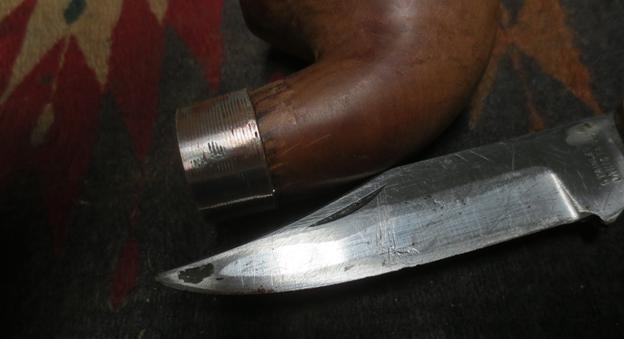
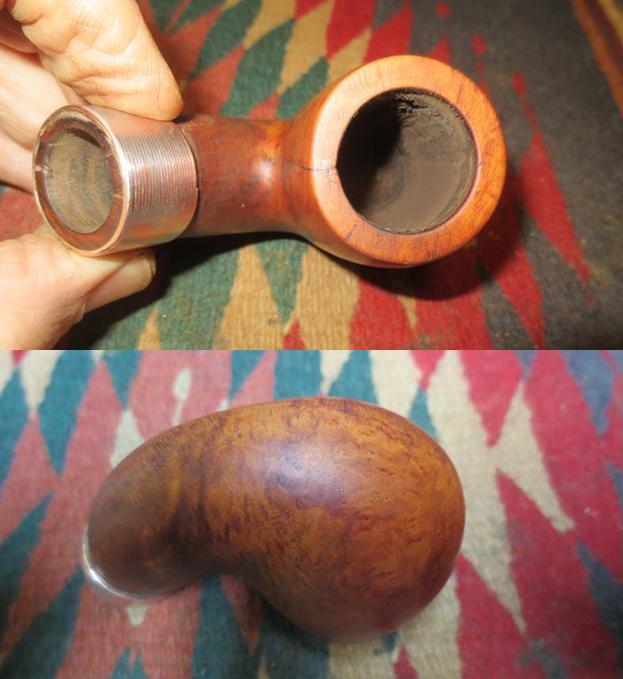
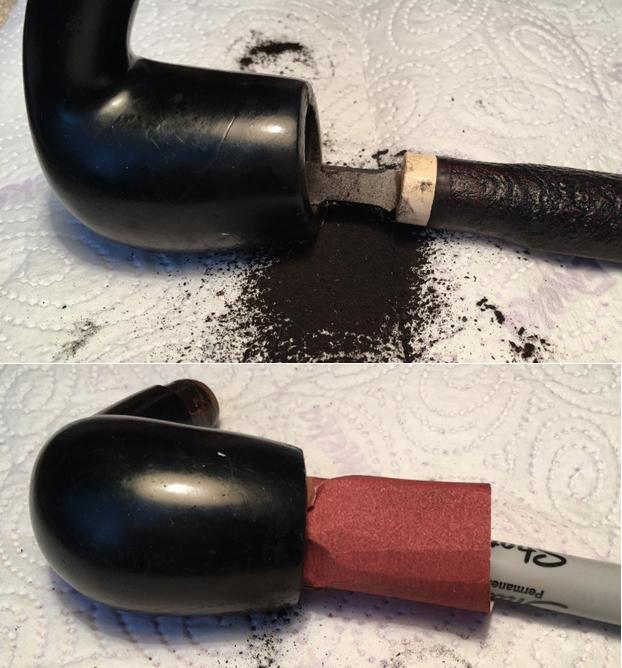
Of the stem style itself, there was this comment, that even though not a true military mount, since it has a tenon instead of a tapered fit, it nonetheless is one of the best faux-military mounts this observer had seen. The sense I have of the pipe’s design is that it is an interesting mixture of higher class elegance with the ample showcase of sterling silver, but with the military/spigot stem style a ruggedness is also introduced. My challenge now is to help this Stanwell, a ‘knight in shining armor’, regain its former glory! The sterling silver ferule mounted on the shank is easily removed. This will help the ease of the stummel’s cleanup. The chamber in this billiard is large with a depth measurement of 1 3/4 inches and width of 7/8 inches – a good long smoker able to pack a bowl of one’s favorite blend. The chamber is lightly caked but I want to clean it down to fresh briar. I do this with my Savinelli pipe knife working over a paper towel for easy disposal of the carbon. The reaming did not take long. Then I take a rolled piece of 240 grit sanding paper wrapped around both my index finger and then a Sharpie pen and sand the chamber wall. I finish the bowl cleaning by using a cotton pad wetted with isopropyl 95% and wash the chamber. The fire chamber looks good – I see no problems. The pictures show the progress.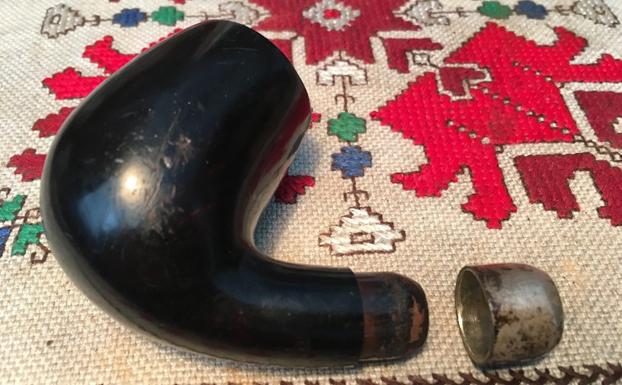
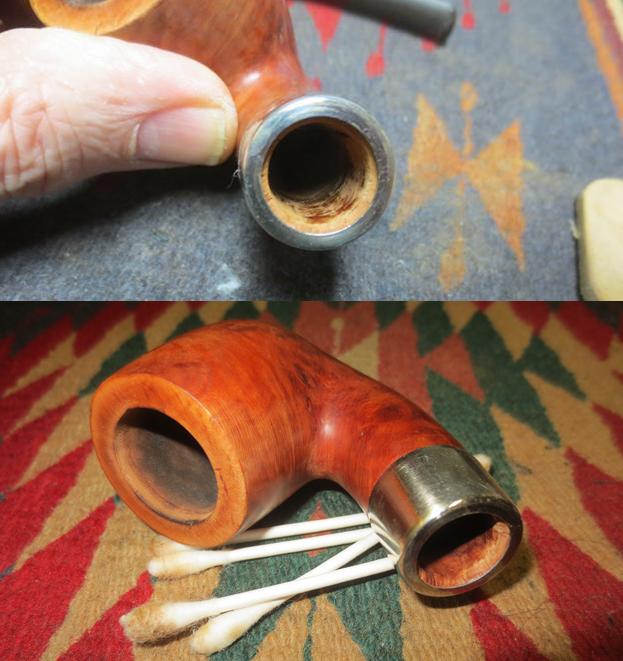
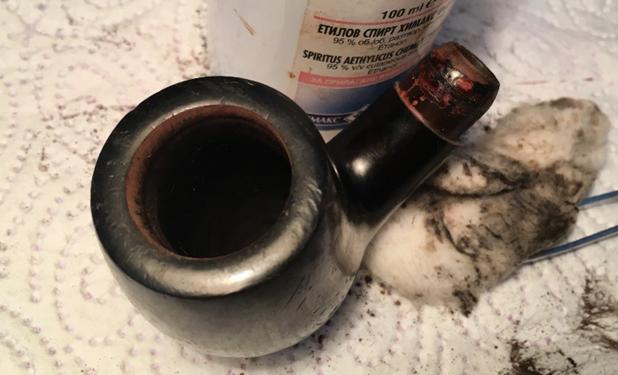 With isopropyl 95% on the work table, I turn directly to cleaning the stummel internals. Using pipe cleaners, Q-tips dipped in alcohol, I work cleaning the mortise. Using the flat edge of a dental spade, I scrape the sides of the mortise walls cleaning the tars and gunk. The Q-tips and pipe cleaners are doing the job. Later, I will also give the stummel a Kosher salt and alcohol soak to freshen the internals even more. On a roll, I take the acrylic stem and clean the internals with pipe cleaners and Q-tips in the 9mm tenon area with alcohol. There was little resistance. With a cotton pad wetted with isopropyl, I also give the stem’s and mortise’s sterling silver an initial cleaning and polishing. The progress is shown.
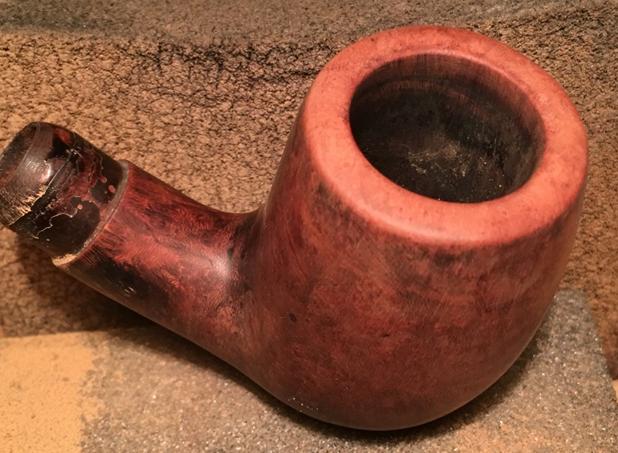
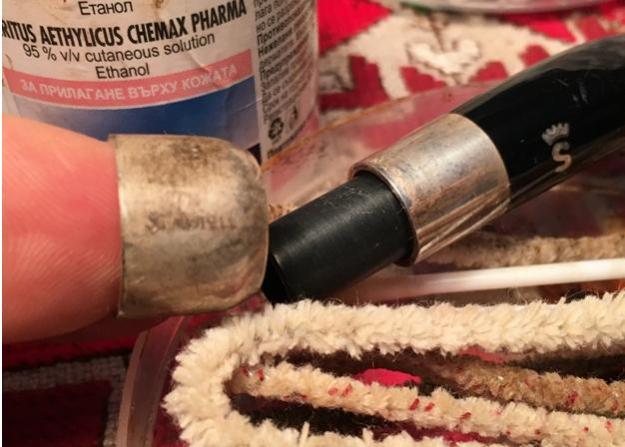 With internals finished, I take another look at the stummel and take a few close-ups looking closely at the surface and rim. As I said earlier, personally, I’m not a fan of the solid black finish. My standing ovations are roused by gazing upon natural briar grains! In my research looking into the Silver Mount line of Stanwell in catalogs, I came across a similar Stanwell line called the, ‘Silhouette Pipe’, featuring several different shapes with the same black finish.
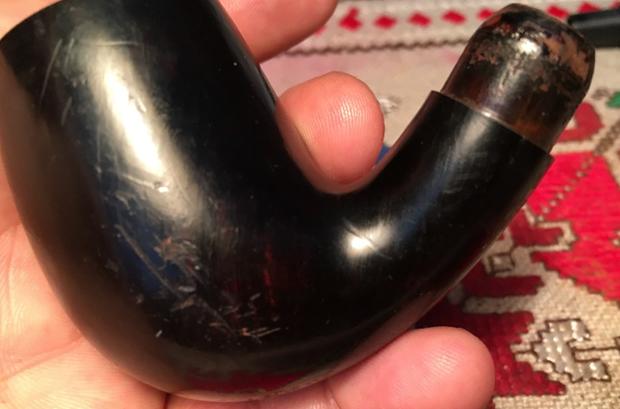
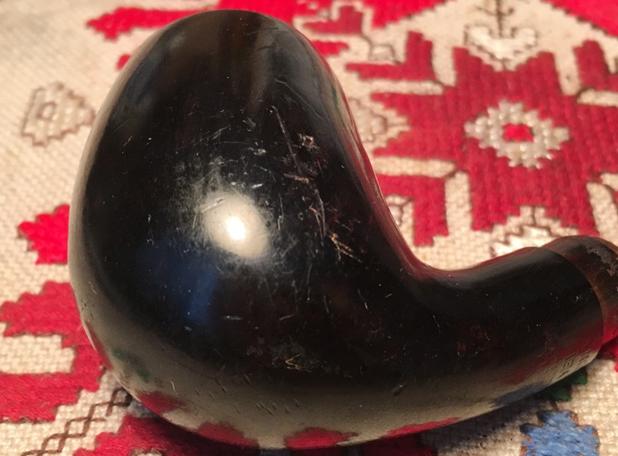
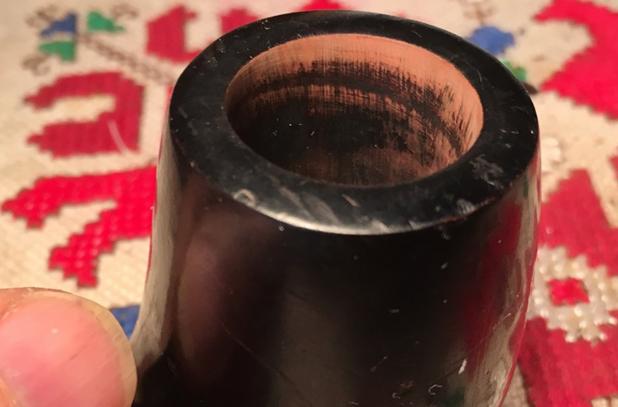 My plan is to remove the black finish and repair the stummel and rim surfaces, then apply a darker stain that is essentially black, but allowing the grain to be seen. This will maintain the sleek, dark look of the bent billiard and continue to set it off in sharp contrast to the sterling silver ferrule and band along with the classic silver crowned ‘S’ Stanwell inlaid silver cartouche. With this plan before me, I use acetone to remove the finish. Not knowing how tough the finish will stand, I start with a cotton pad wetted with acetone and see how the work progresses. The cotton pads wetted with acetone are not making much progress so I add the gentle abrasion of 0000 steel wool. I am careful to avoid the nomenclature on the lower part of the shank as well as the shape number. With these areas, I only use cotton pads and a bristled tooth brush, acetone and a lot of elbow grease. I do not want to erode the stampings! As the black finish gradually gives way, I’m amazed that Stanwell covered such a beautiful piece of briar! The straight grains travel vertically up the bowl from the heel of the stummel which holds a nest of bird’s eye grain – the whole effect is like a camp fire flowing upward from the fire pit.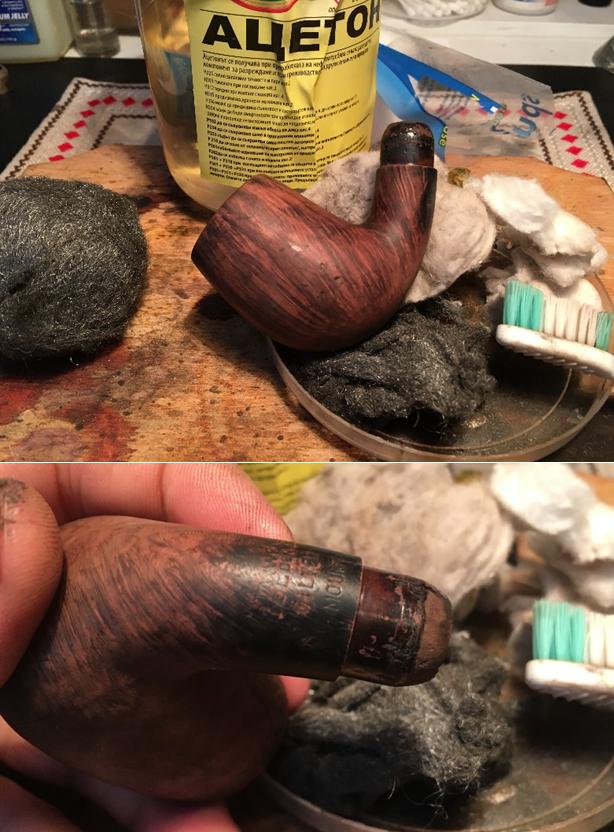
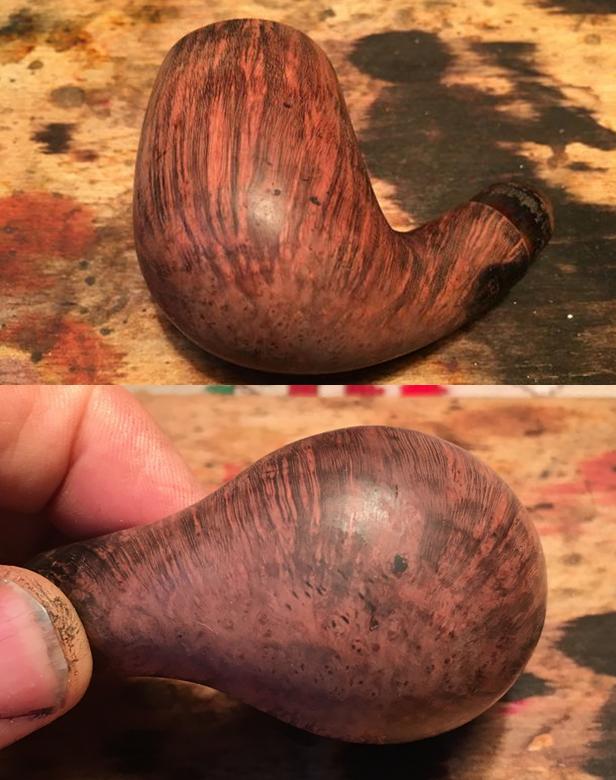
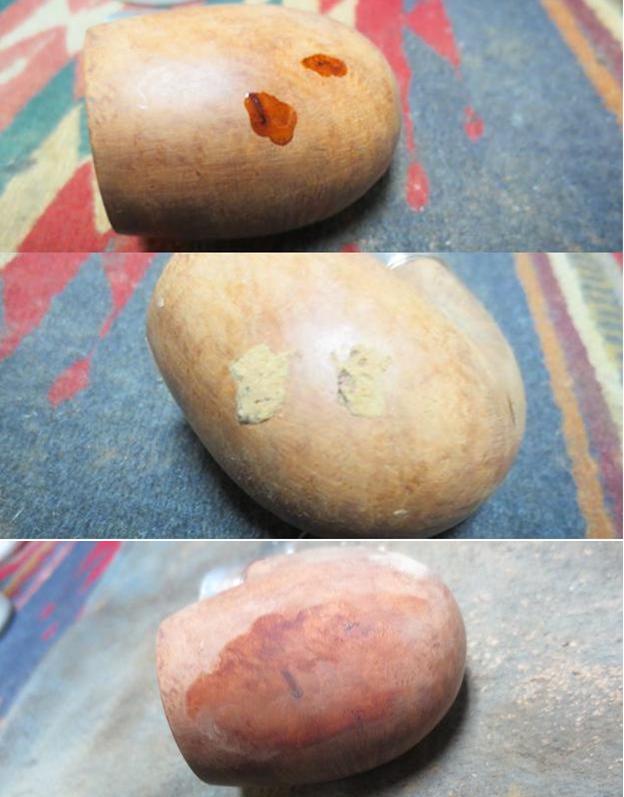
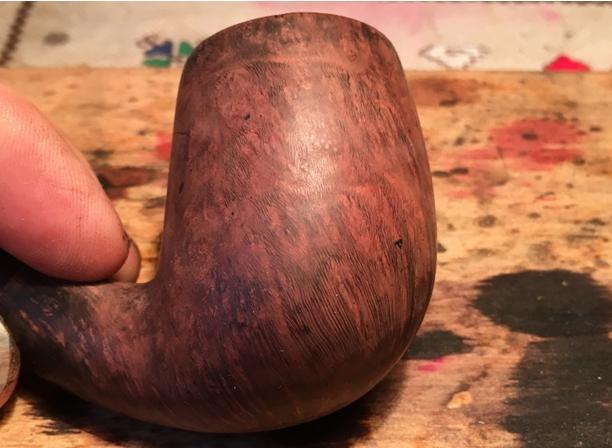 With the black finish removed, I’m able to see some small pin hole pitting exposed on the surface. To address this, I use a medium grade sanding sponge followed by a light grade sanding sponge to remove most of the pitting as well as nicks that remained on the rim. The pictures show the progress.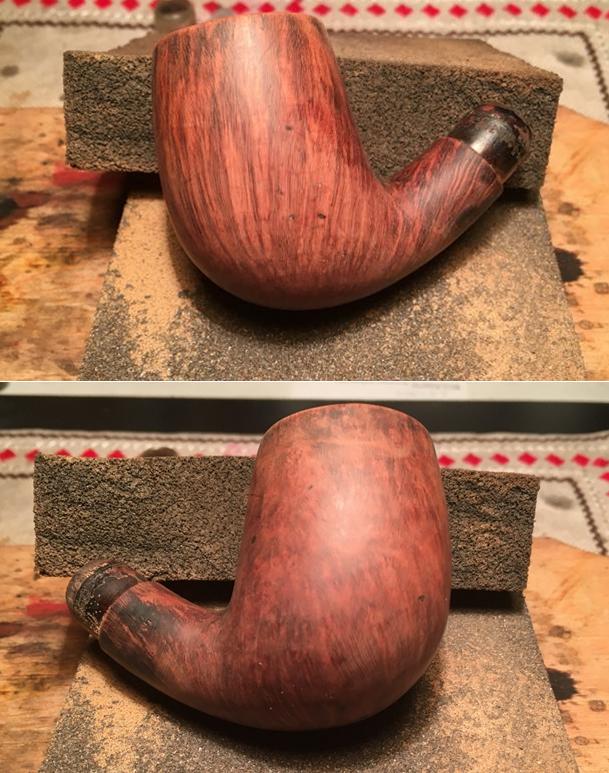
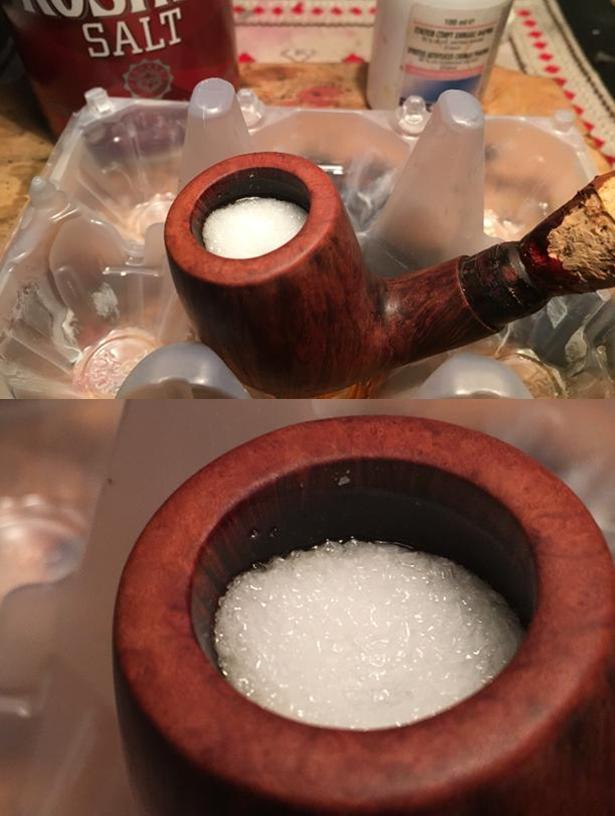
 With the initial stummel prep complete, I decide to use the Kosher Salt and alcohol soak to clean the internal airway and mortise more fully. Using Kosher salt (versus iodized which can leave an after-taste) I fill the bowl and then after corking the shank opening, I hold my palm over the bowl and give the stummel a shake. This displaces the salt a bit into the mortise. I then pour isopropyl 95% into the bowl until it fills just over the level of the salt. I put the stummel in an egg crate for stability and put it aside for 4 to 5 hours to let the salt and alcohol draw out the tars and oils residing in the briar. The pictures show this process.
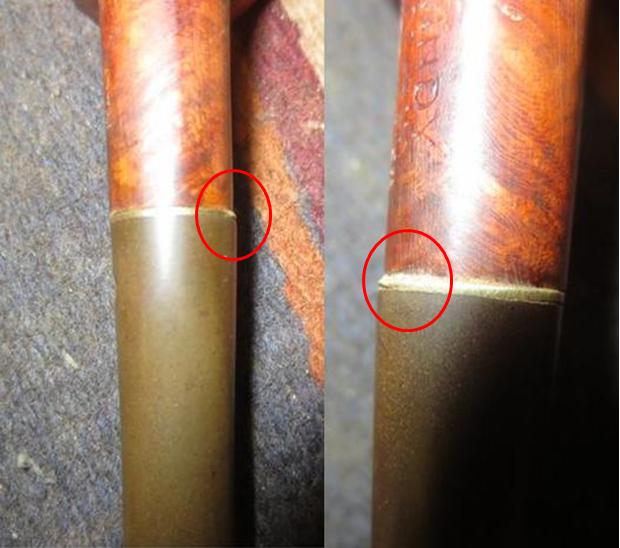
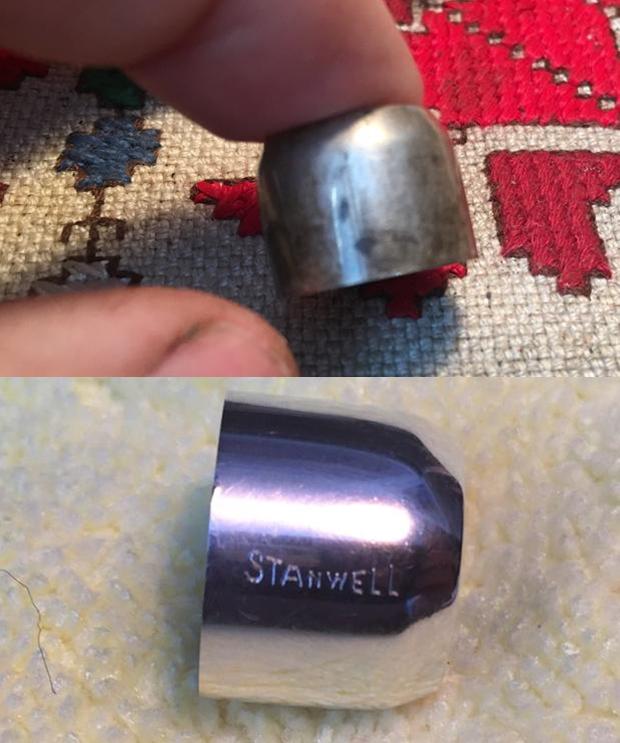
 With the stummel is ‘cooking’ with the salt/alcohol soak, I turn my attention to the stem. The question and concern that comes to mind is the care in cleaning the stem while protecting the sterling silver band that is attached to the stem? Will sanding the stem damage the band if the sanding runs over the edge? Unlike the sterling silver shank ferrule that came off easily, the stem band is not going anywhere. Just to get an idea how well the silver will clean up before I start on the stem clean up, I take the shank ferrule and apply Weiman Silver Cream to it. As the directions describe, using the sponge in the container, applying the compound, rubbing then rinsing off with tap water. Wow! It works well. The pictures show the result!
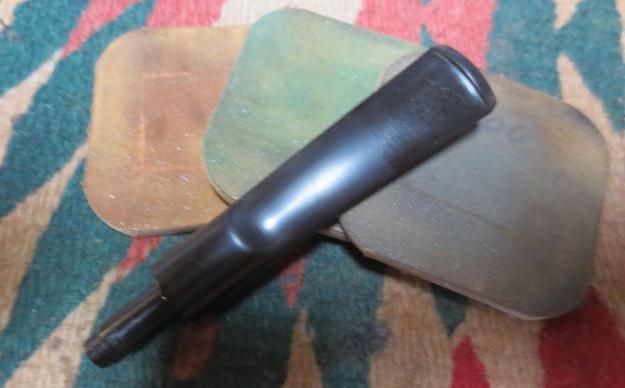
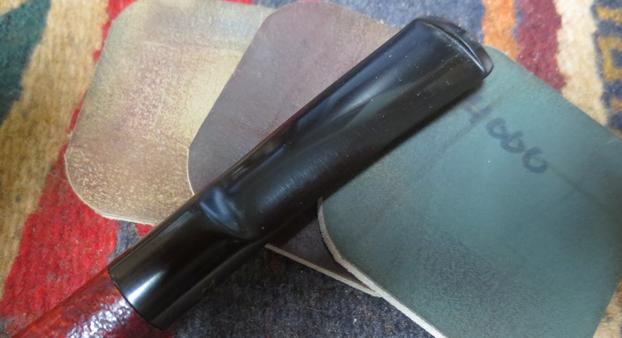
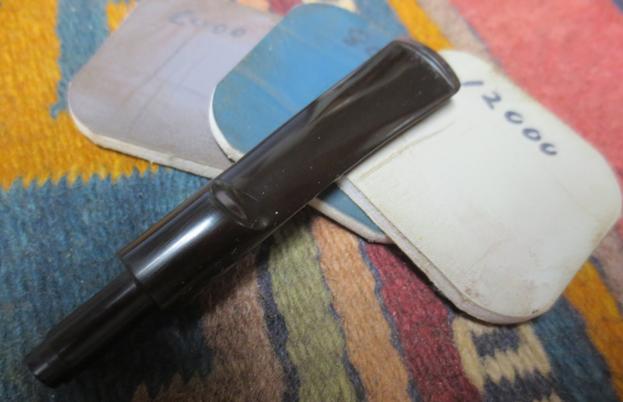
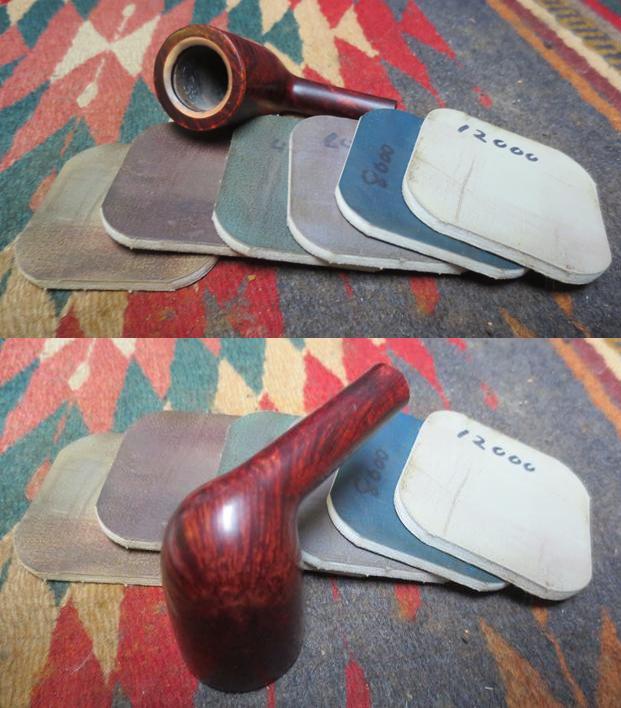
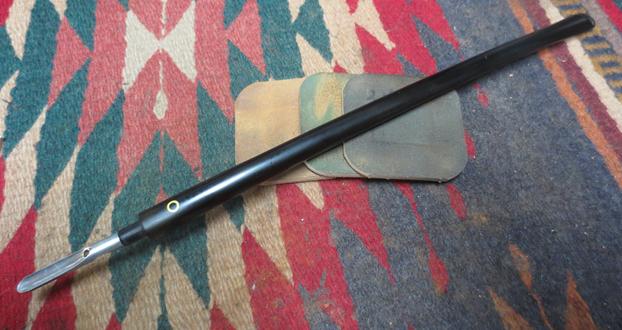
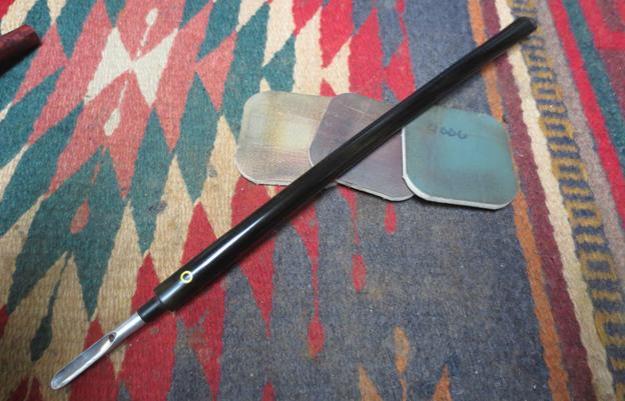
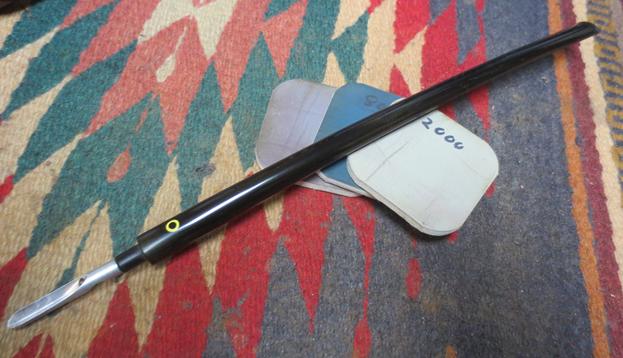
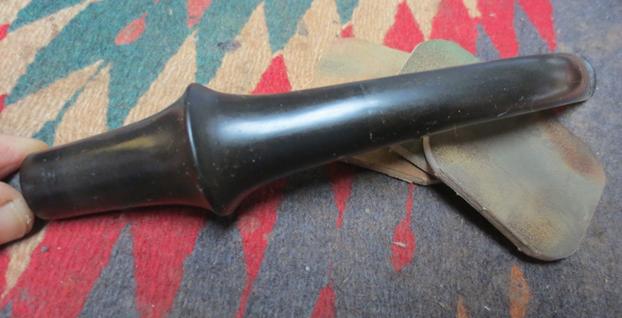
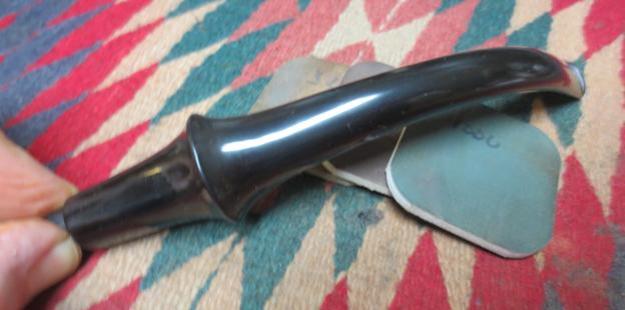
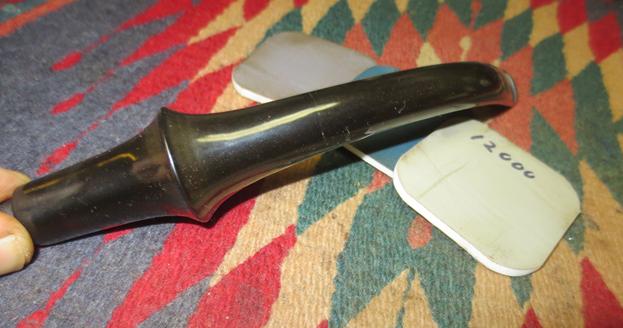
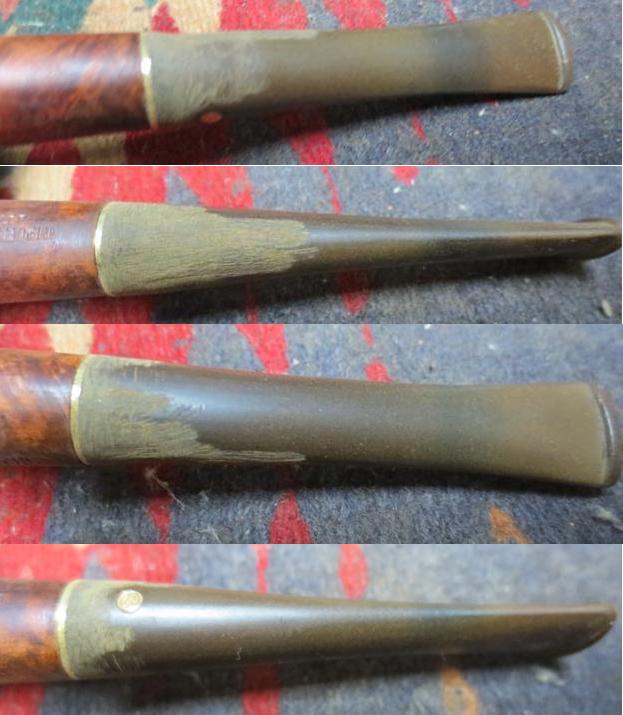
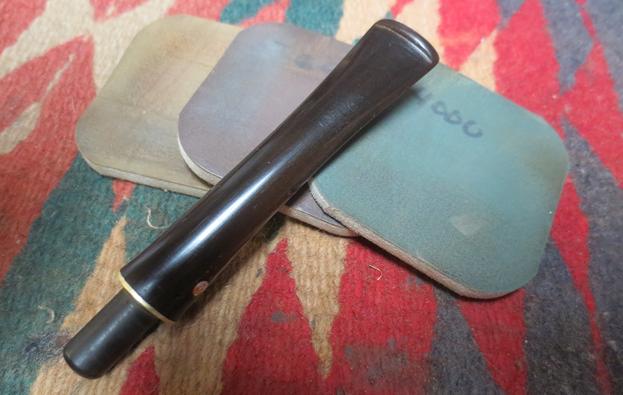
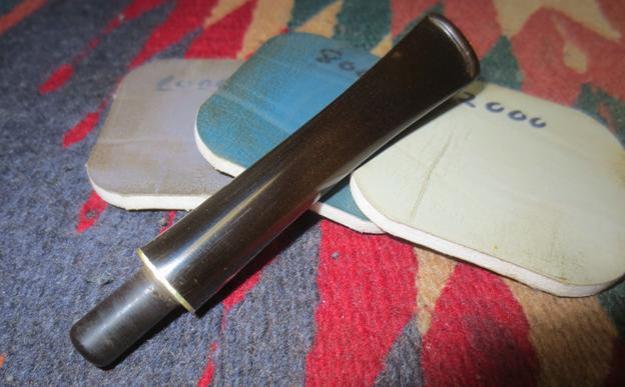
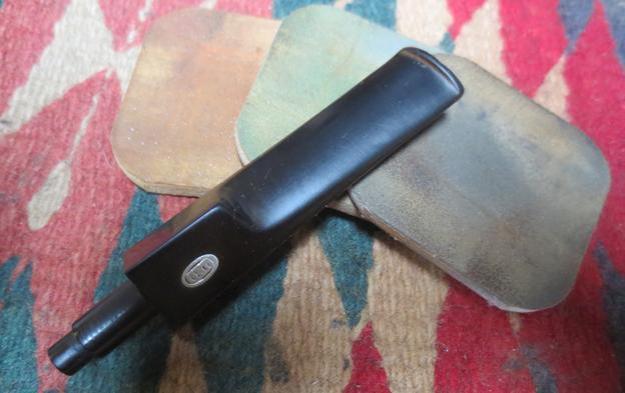
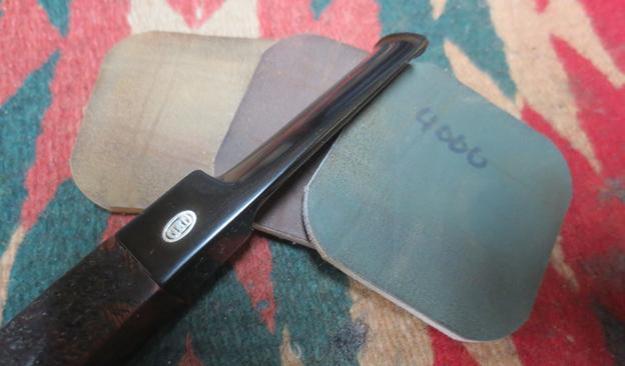
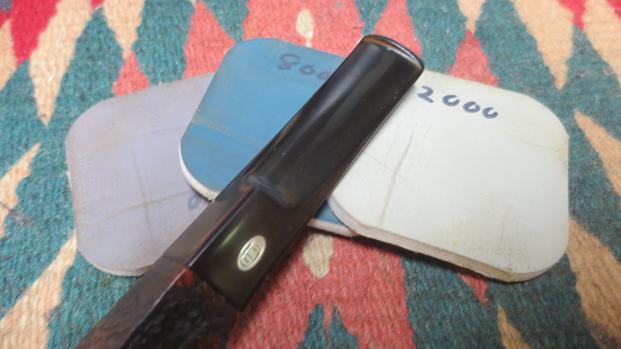
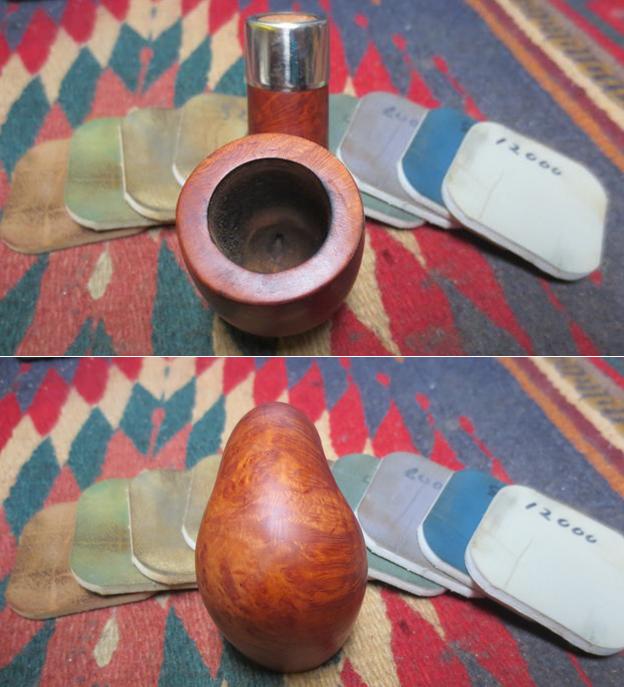
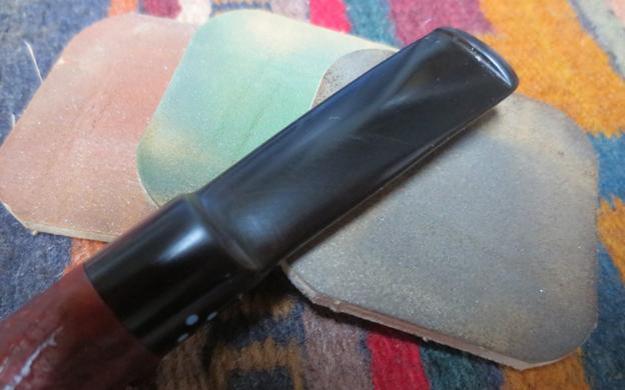
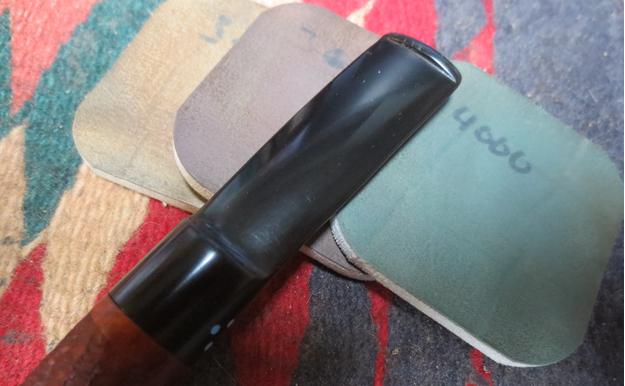
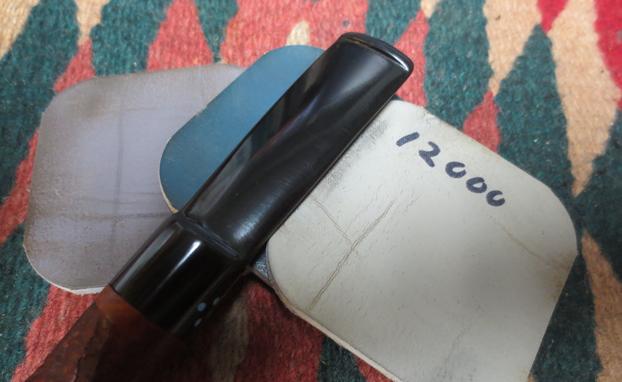
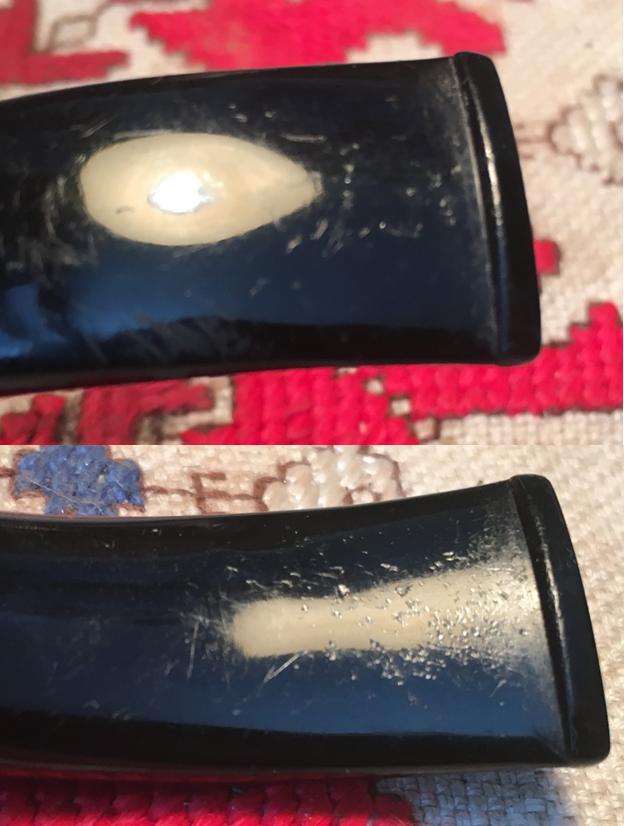
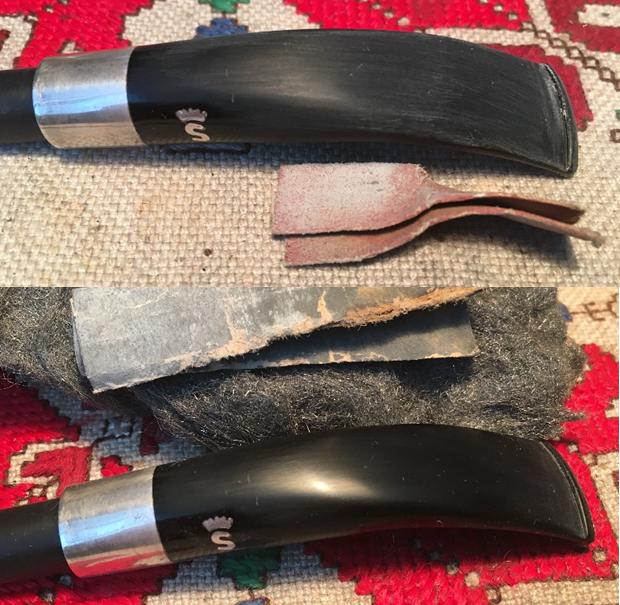
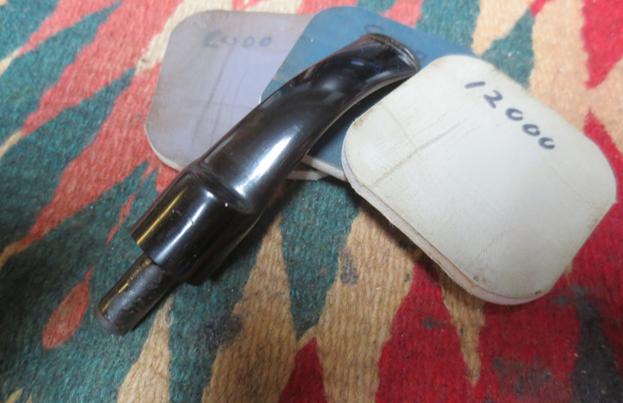
 I move forward with caution with the acrylic stem by protecting both the crowned ‘S’ stem mark and the sterling silver band. I do this by holding my thumb over the areas to keep the sanding instruments at bay. After taking a few ‘before’ pictures to mark progress, I begin addressing the rough scratches in the acrylic with 240 grit paper to do the heavy lifting. I also work out the teeth chatter in the bit area – upper and lower. Following the 240 grit paper, I use 600 grit paper and then 0000 steel wool, taking a picture at each step to mark the progress. Following the steel wool, I run the stem through the complete 1500 to 12000 micromesh pad treatment, taking a picture at the customary sets of 3. In the final set, I also apply Weiman Silver Cream to the sterling silver band to spruce it up. I discovered along the way, that the finer grade micromesh pads were not a problem for either the band or Stanwell stem mark – they shine up quite nicely! I’m pleased with the progress.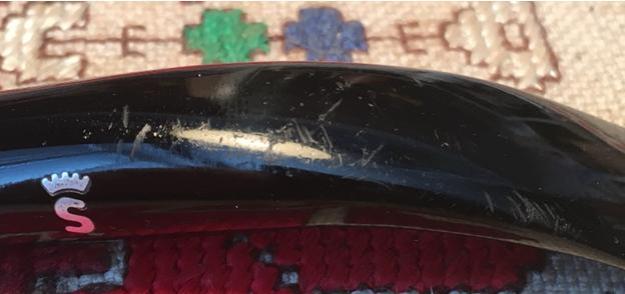
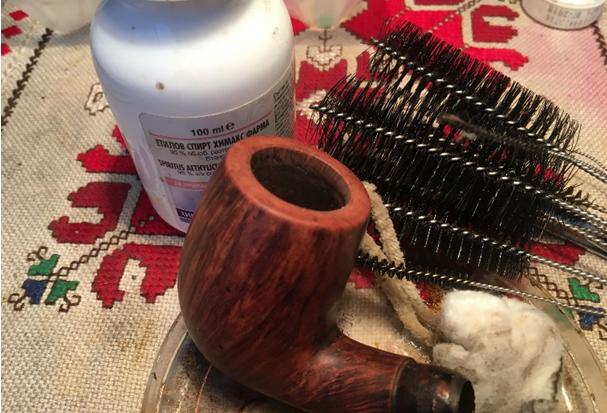
 With stem completed, I again look to the stummel which is benefiting from a Kosher Salt and alcohol soak. The salt has darkened somewhat indicating the success of the process. I dump out the old salt, thumping it on my palm to rid the stummel of the expended salt. I use a paper towel to clean the bowl and I also utilize bristle brushes and pipe cleaners dipped in isopropyl 95% to further clean the airway and mortise.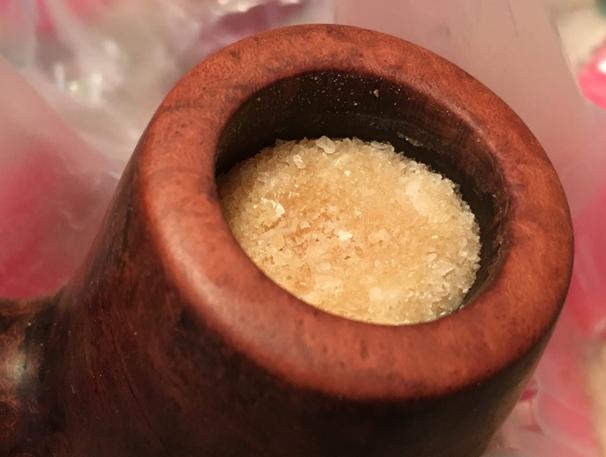
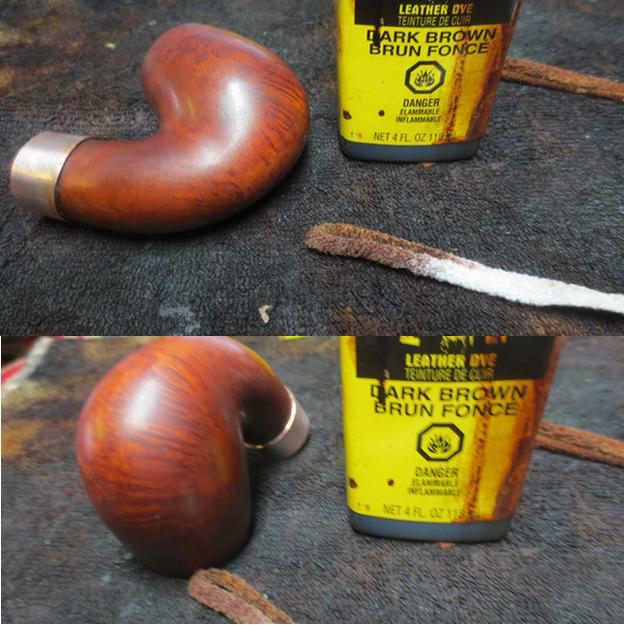
 Time to address the finish of the stummel. I use an Italian stain which is called Wenge’ – it appears to have a black base. After I heat the stummel with my wife’s hair dryer, I liberally apply the stain to the stummel with a folded over pipe cleaner. I fire the dye and the alcohol immediately burns off. After a few minutes, I repeat the process and fire the stain. Then, within a few minutes, I use a cotton pad and wipe the stummel with isopropyl 95% to blend the stain in the wood. After wiping the stummel down with alcohol, I decide to switch and use a black water based dye and mix it 50 to 50 with isopropyl 95%. I apply the mixture to the stummel with a folded over pipe cleaner and fire the stummel again. With this mixture, it did not ‘fire’ the way an aniline dye will but it did evaporate as I passed it over a lit candle. This helped to set the dye in the grain. I set the stummel aside to rest. The pictures show the progression.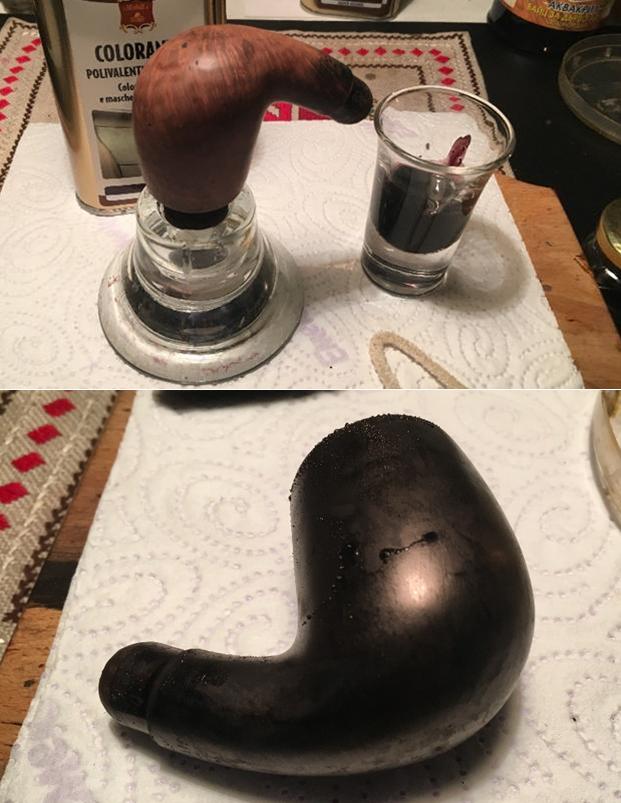
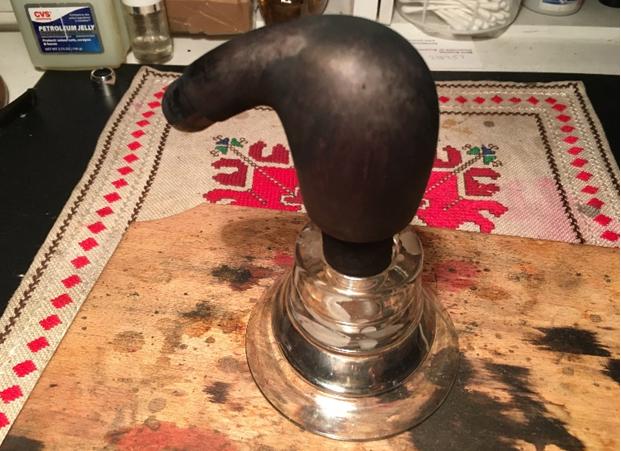 Well, in the interest of full disclosure, what is not pictured are the several iterations of applying ‘black’ stain to this stummel. When I first ‘unwrapped’ the stummel from the fired crust, buffing with my Dremel using Tripoli and then Blue Diamond compounds with a cotton cloth wheel, I was not satisfied with the hue of black I saw emerge. I wanted the finish to be a translucent black, allowing grain to show through, but in black spectrum hues. What I was seeing was the brown of the grain emerging giving more of a dark chocolate brown look. I repeated the staining several times, changing up the black dye content and alcohol, flaming and then wiping the stummel with a cotton pad wetted in isopropyl 95% to blend the stain with the briar and each time repeated buffing with Blue Diamond with the Dremel cotton cloth wheel. I finally started seeing emerge a stummel that correlated with the image in my mind – a black stummel, in keeping with the original Stanwell intent, but with subtle grains showing through. Satisfied finally with the result, I move on and apply several coats of carnauba wax to the stummel and to the acrylic stem with the Dremel’s cotton cloth wheel set to speed 2 (one notch up from the slowest speed). I also attach the sterling shank ferrule with a bit of super glue to keep it in place and finish with a rigorous hand-buffing of stummel, sterling, and stem with a micromesh cloth.
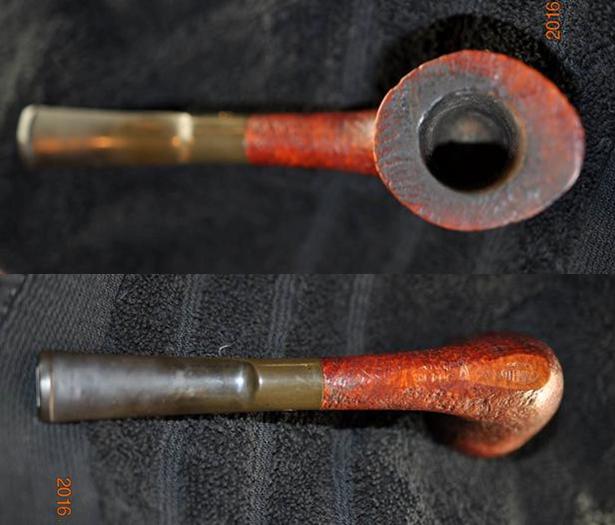
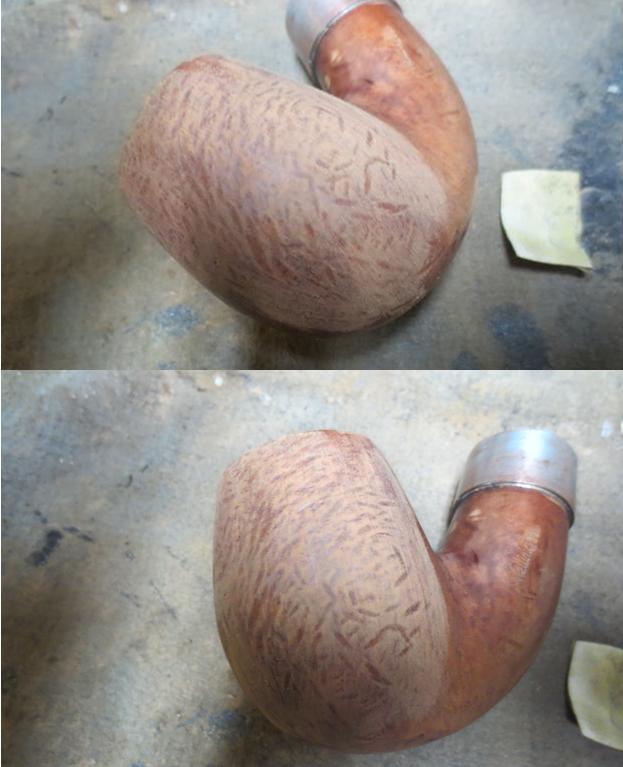
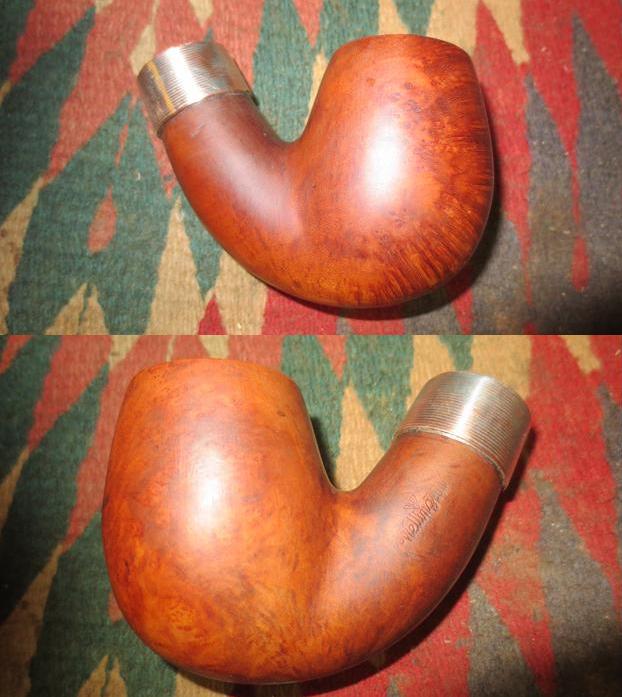
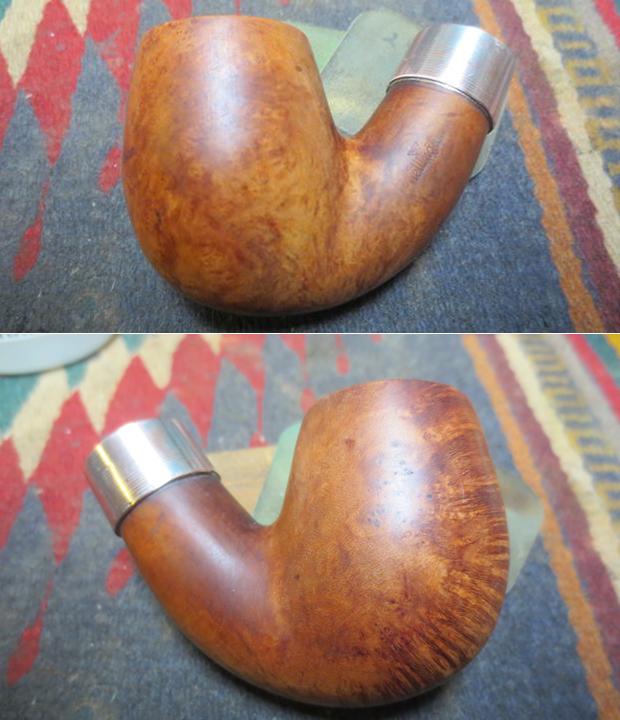
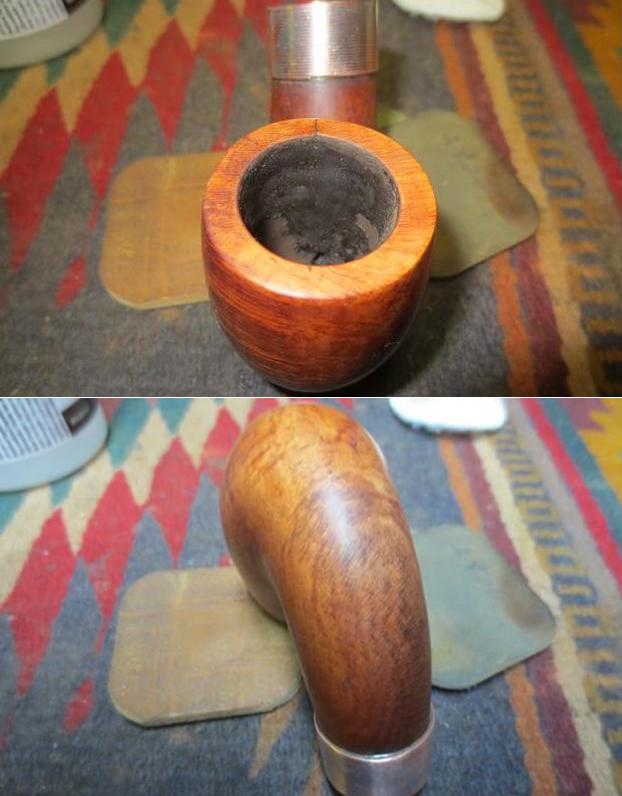
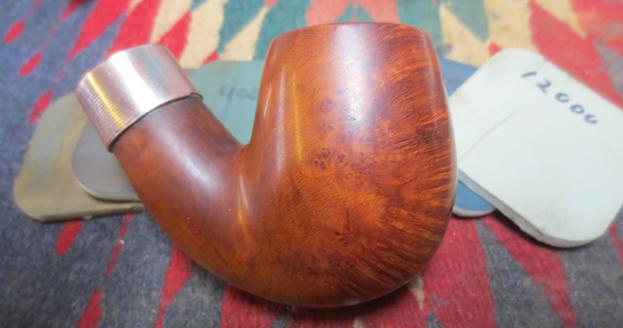
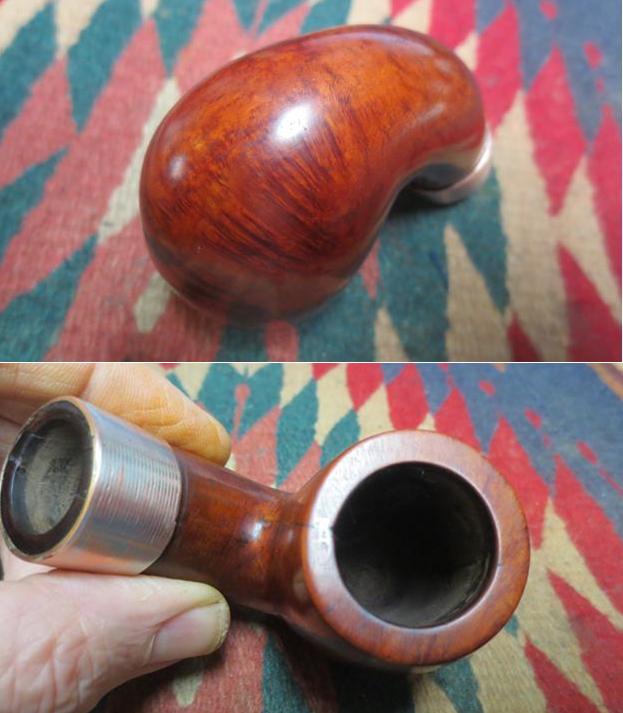
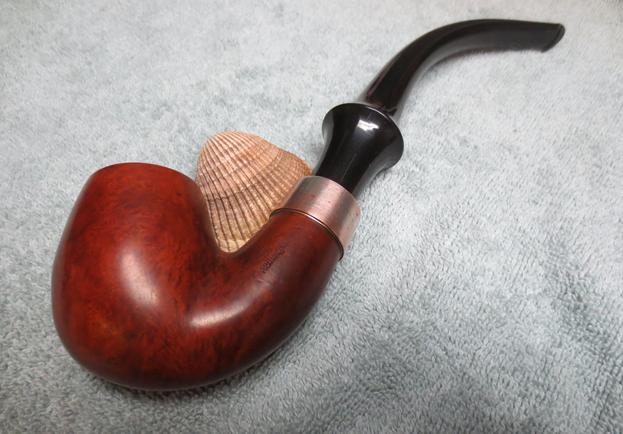
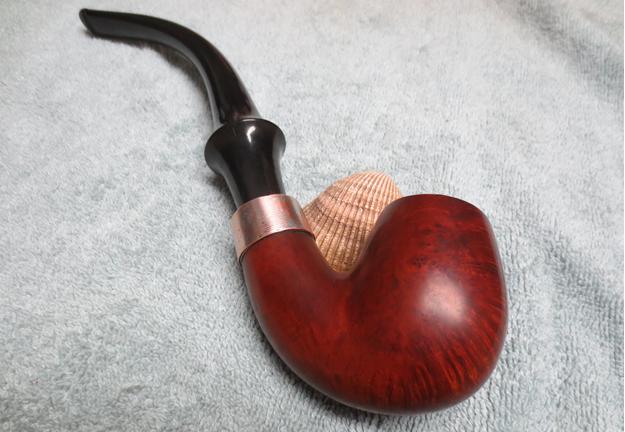
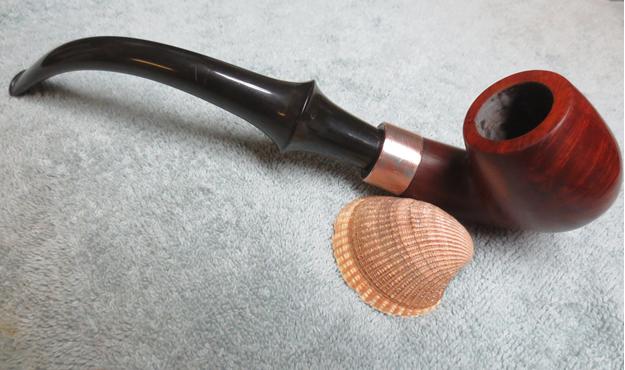
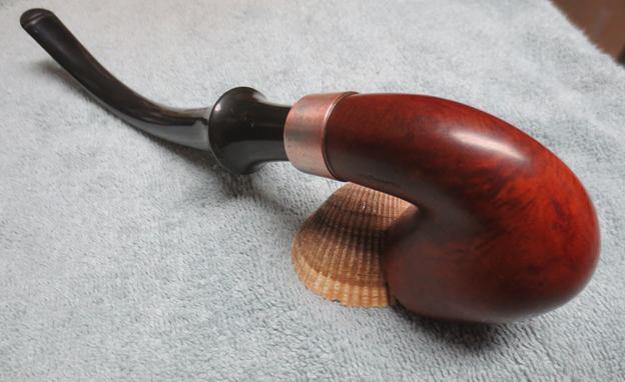
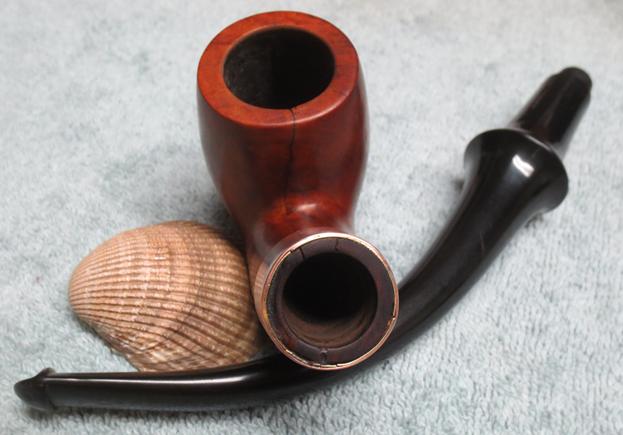
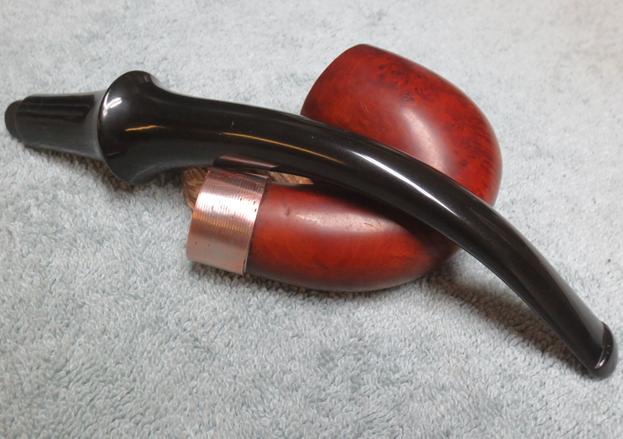
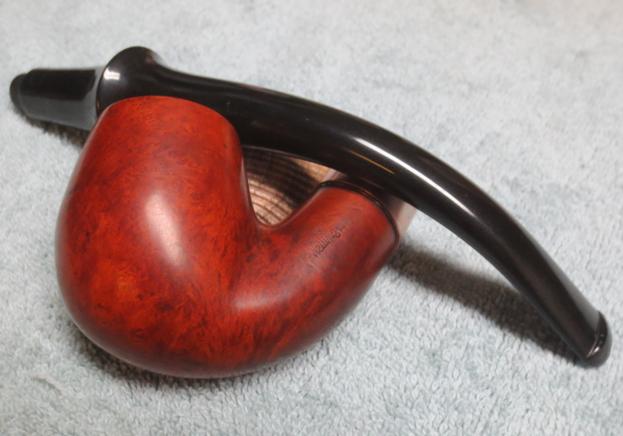
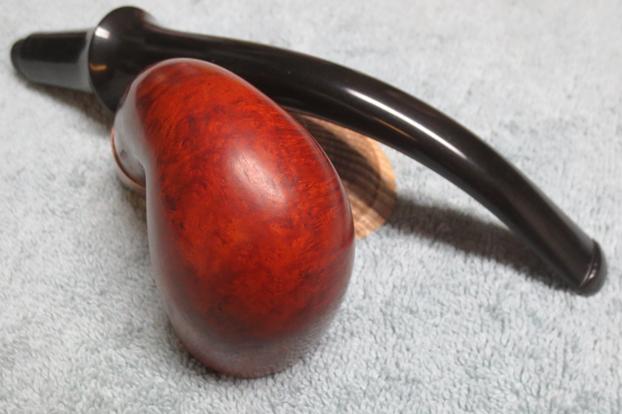
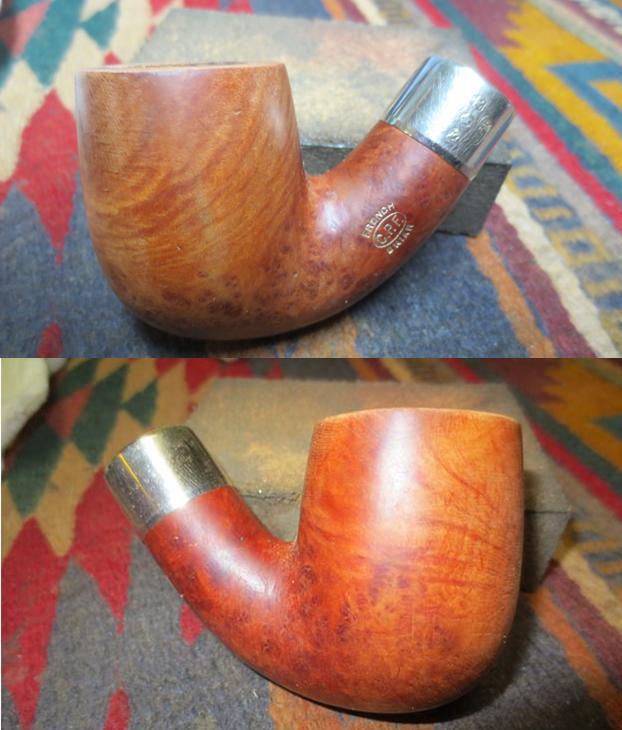
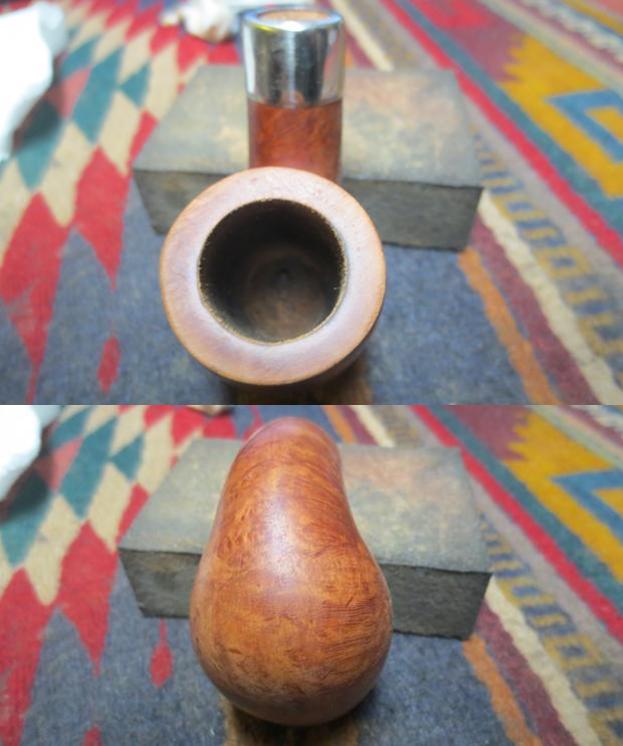
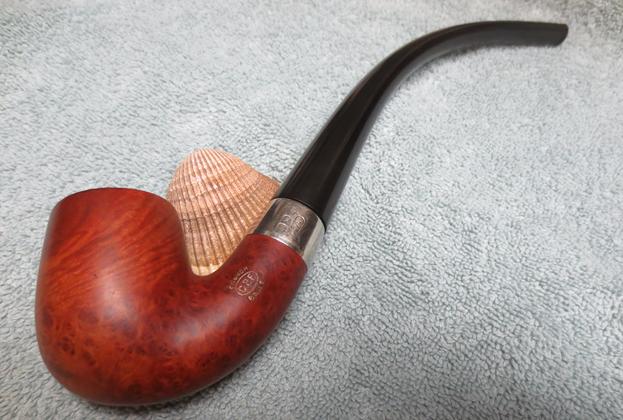
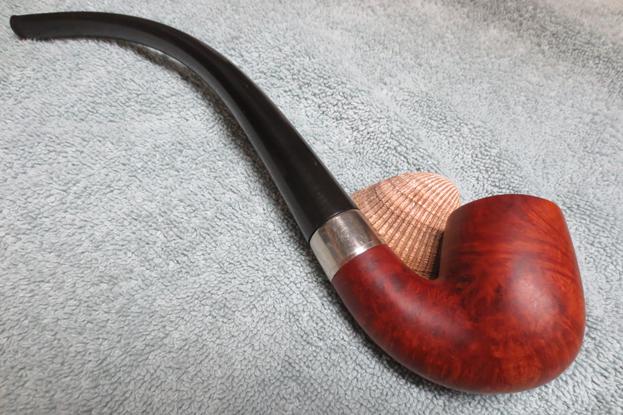
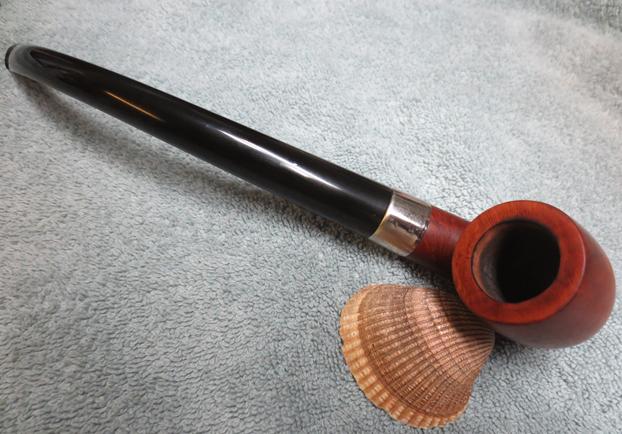
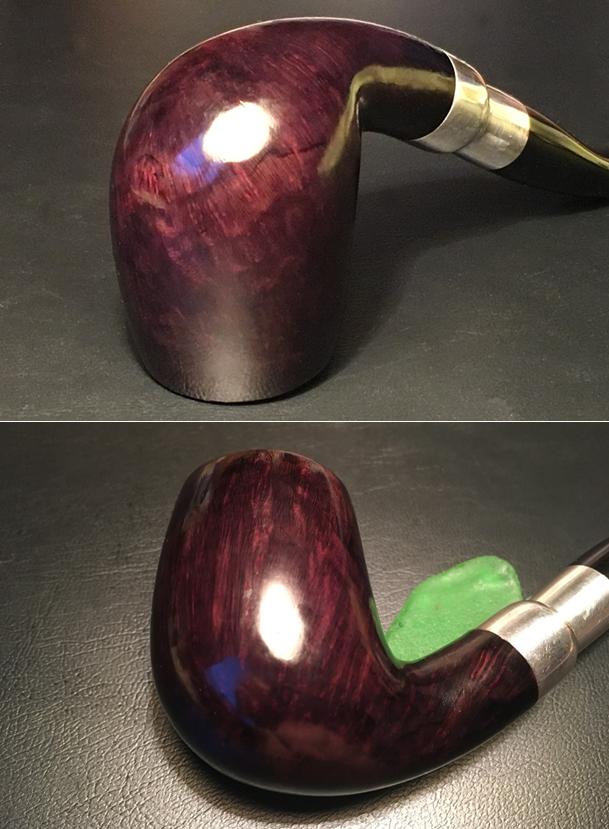
It is true, personal tastes are subjective, but my sense is that I’ve improved this dressy Stanwell Silver Mount bent billiard by transforming the solid black to a translucent finish allowing the natural grains to show through. This presentation of grain pattern is subtle and I believe it is in keeping with this special line of Stanwell pipes, the Silver Mount. You’ll notice at the end of the presentation pictures below, I’ve included two pictures taken on a dark surface which enables the grain to be seen more clearly. Stanwell’s retired shape number 85 is a larger bent billiard with a pleasing feel in the palm. The faux military stem mount brings a rugged look to the pipe but the twin sterling silver adornments, uniting the shank and acrylic stem, places this Stanwell a touch of class. This Stanwell Silver Mount bent billiard is ready to serve a new steward. If you’re interested in this pipe, check out the store at my new site, The Pipe Steward. The profits of all pipe sales go to the Daughters of Bulgaria, an organization my wife and I work with helping women and children who have been sexually exploited and trafficked. Thanks for joining me!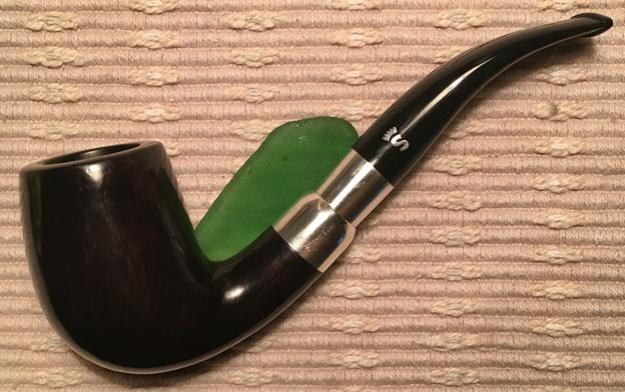


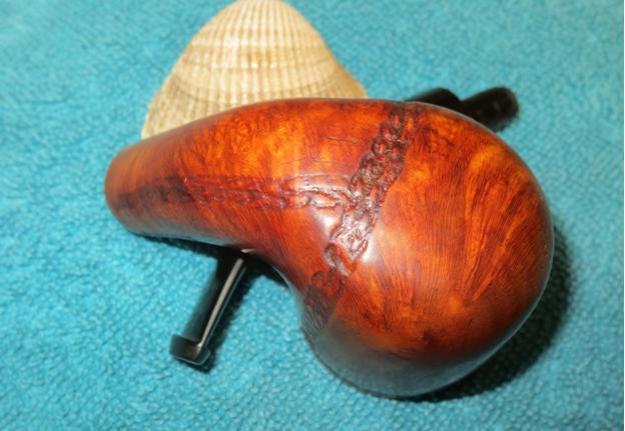
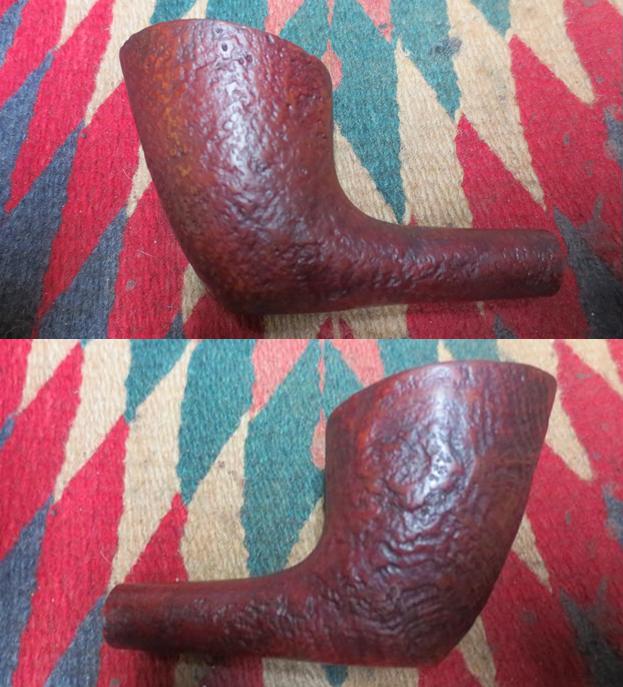
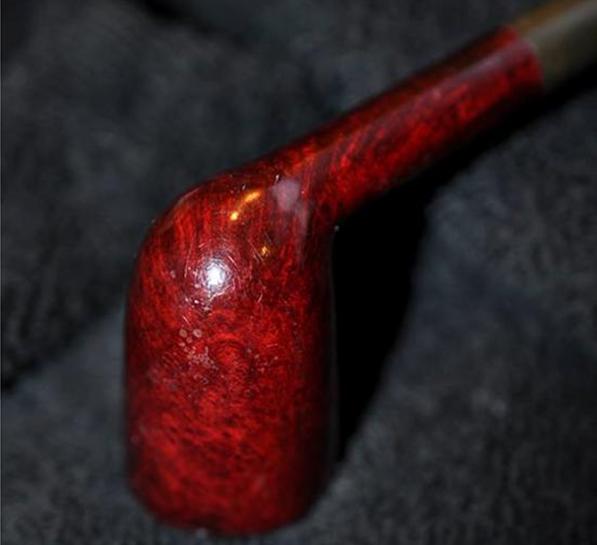
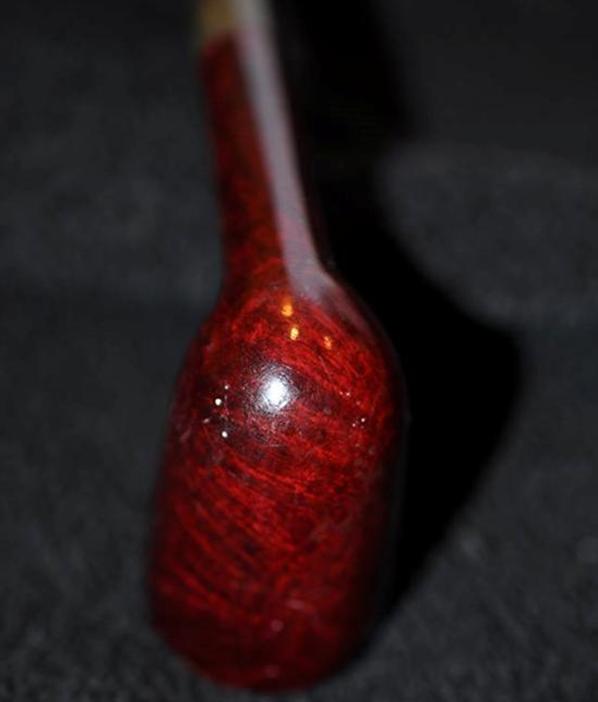
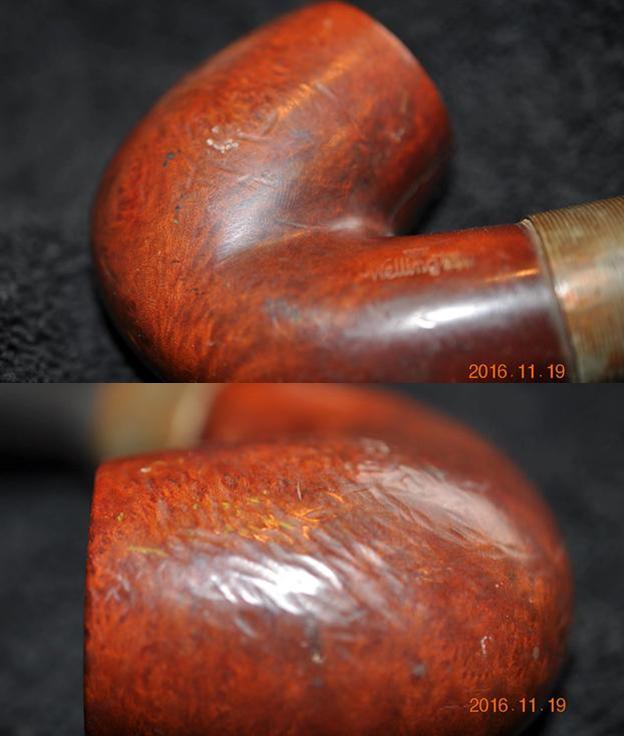
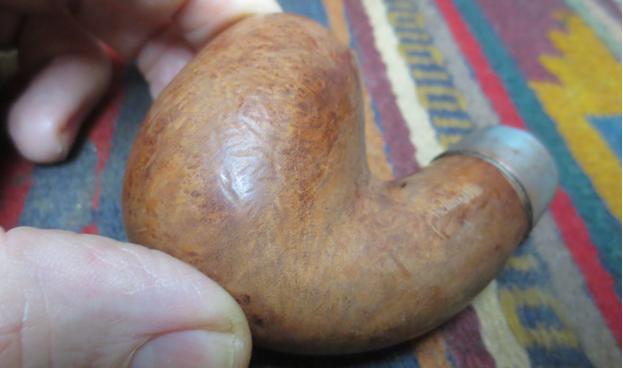
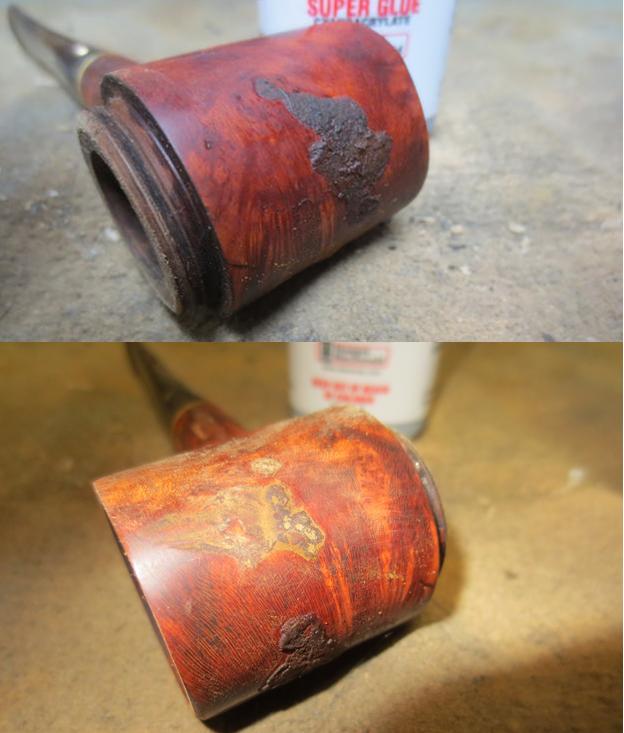
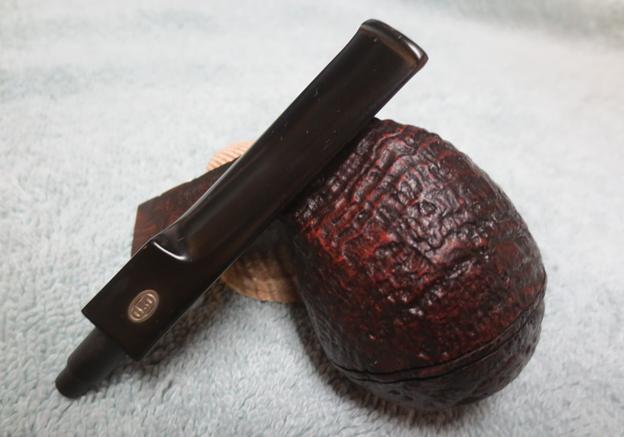
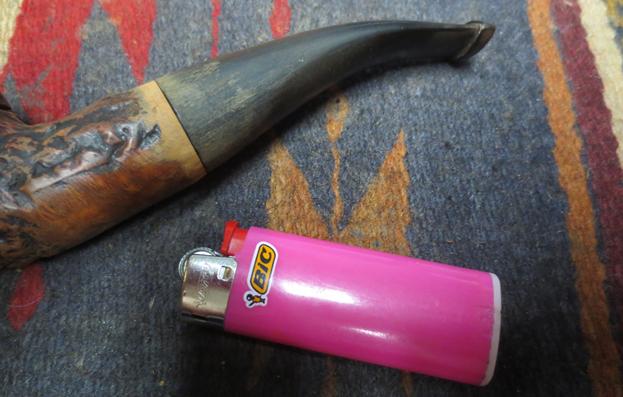
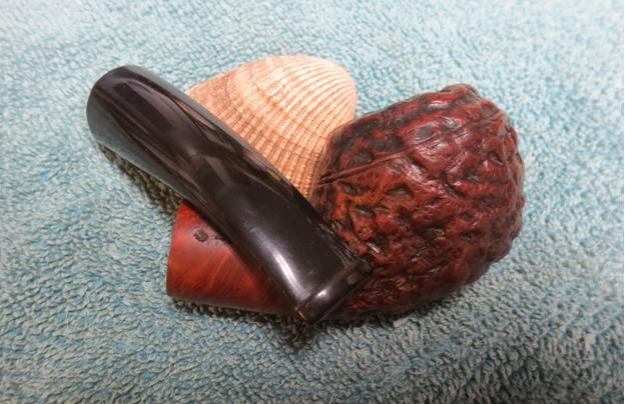
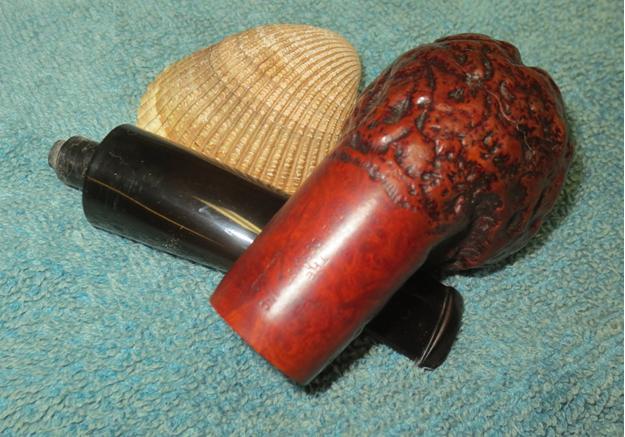
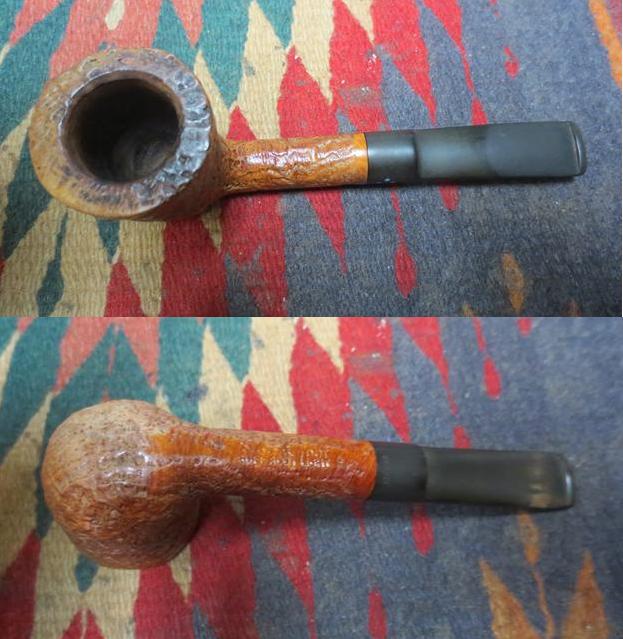
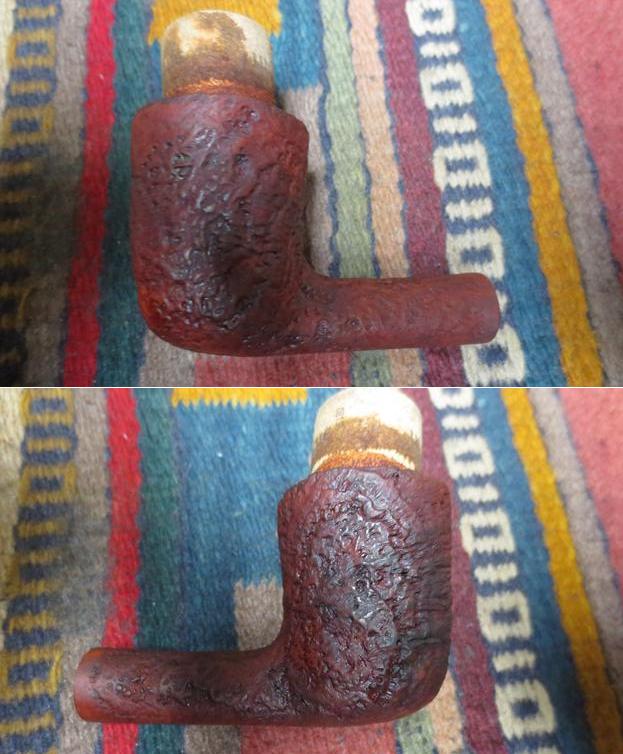
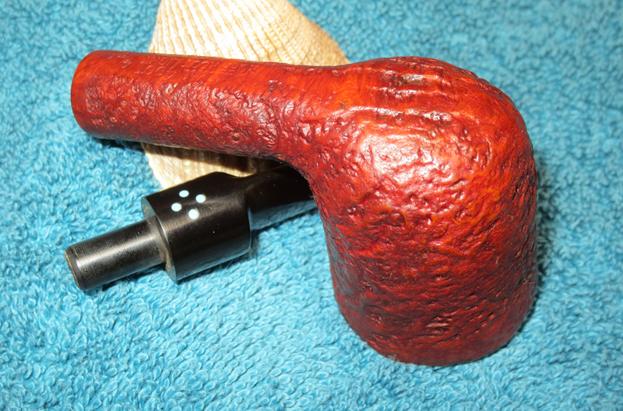
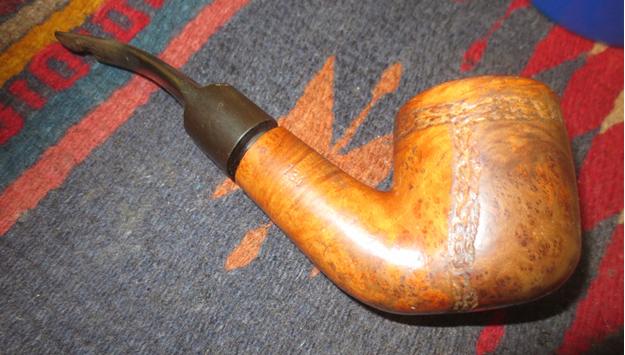 The next photo is out of focus but the road rash on the bowl bottom is visible.
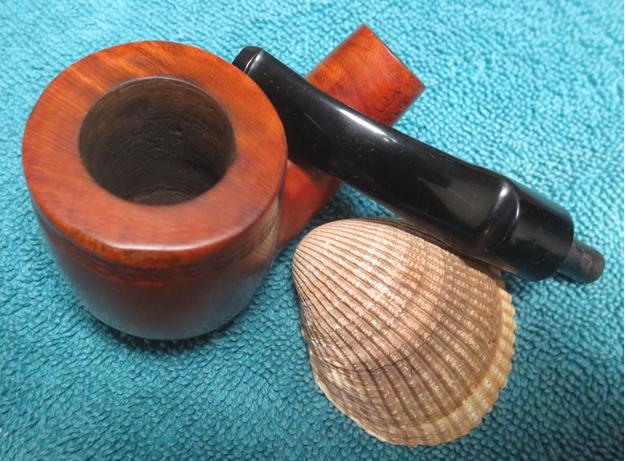
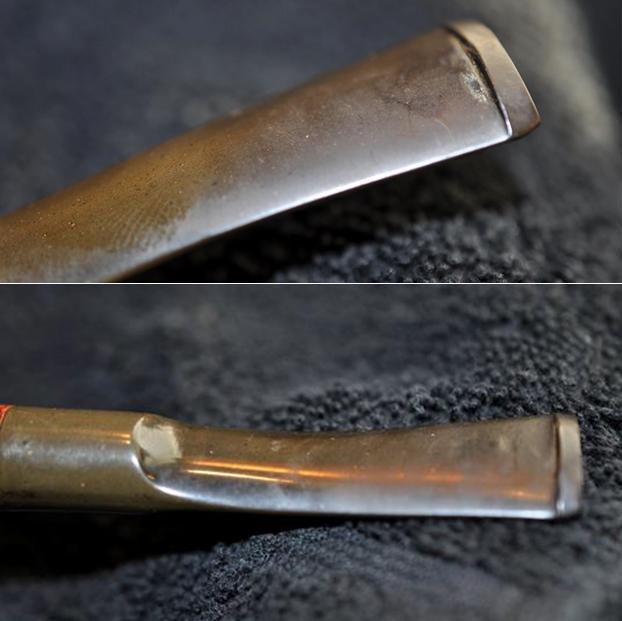
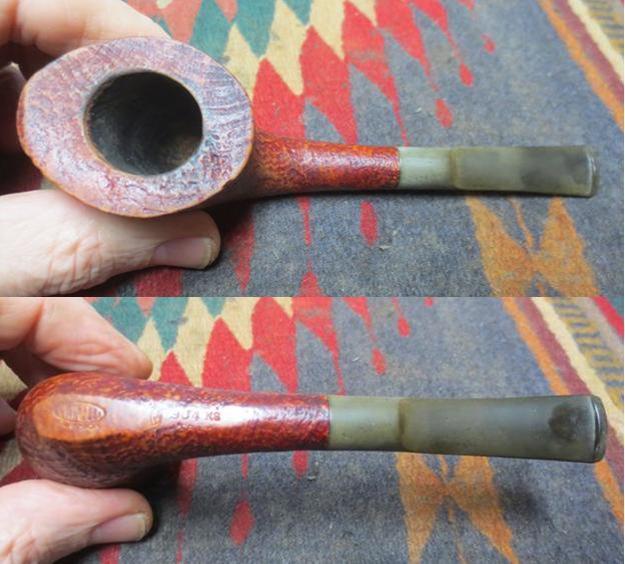
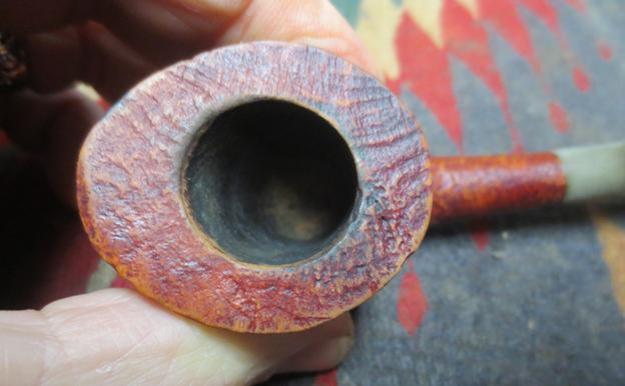
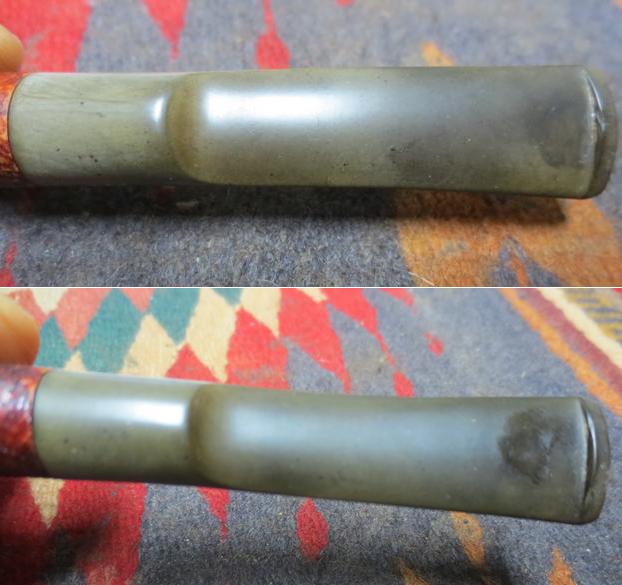
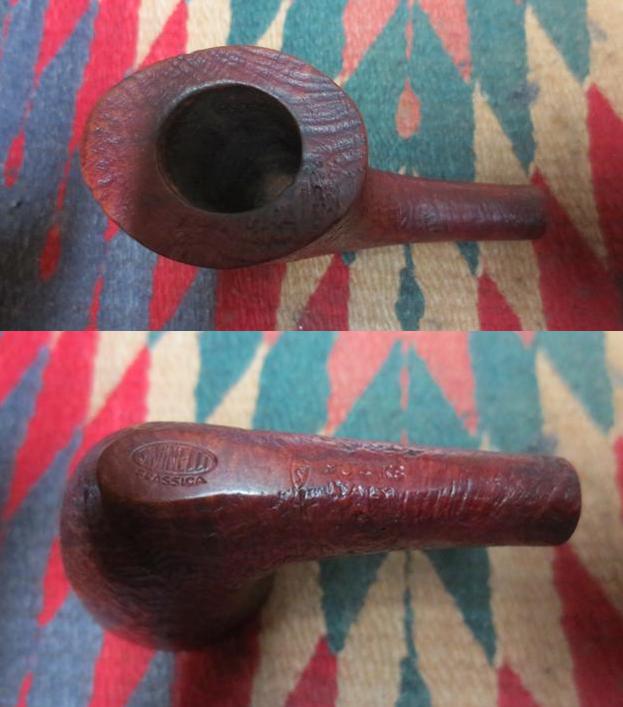
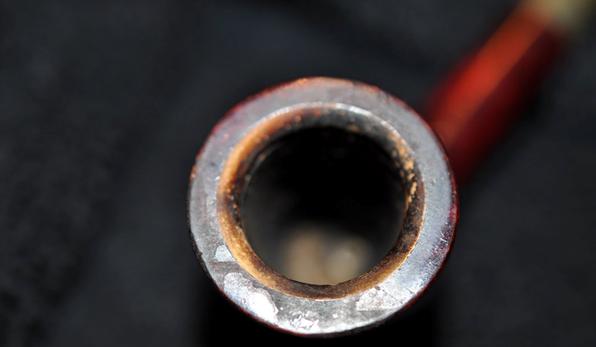
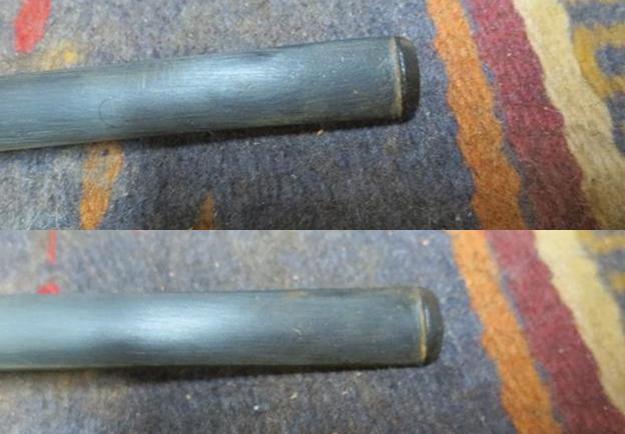
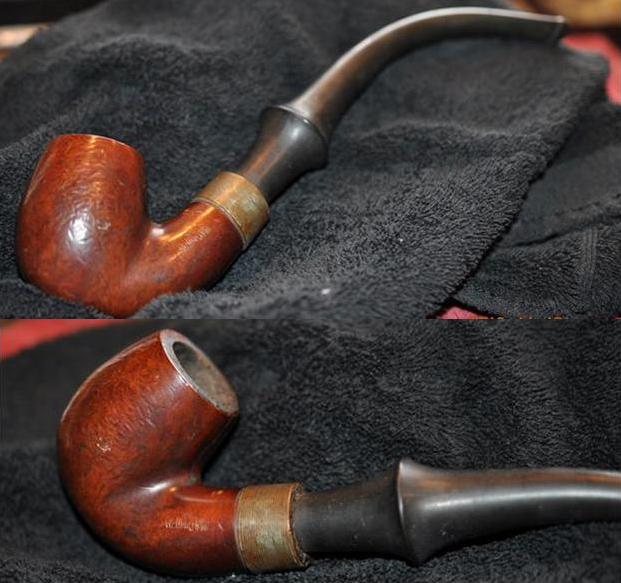
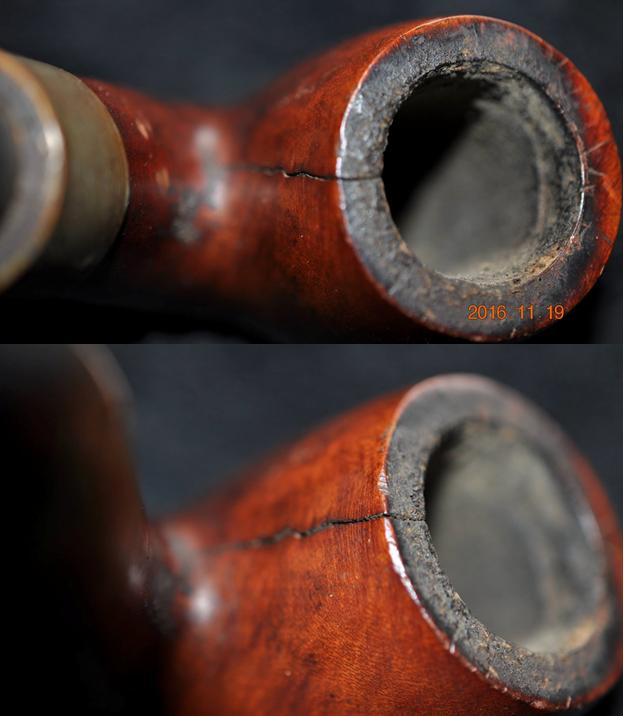
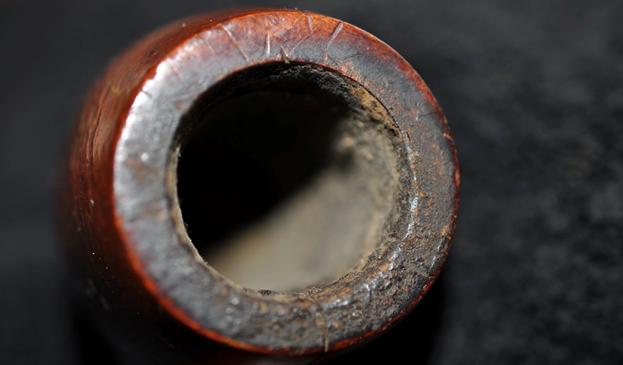
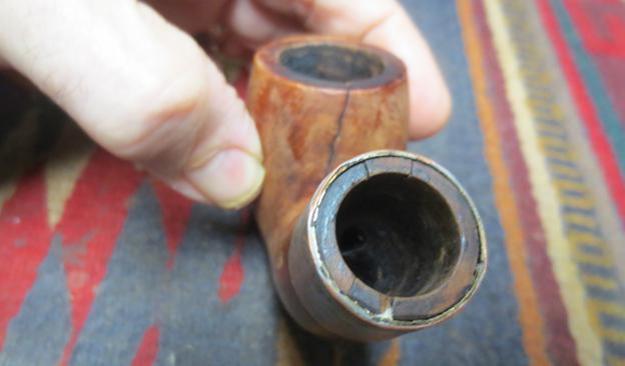
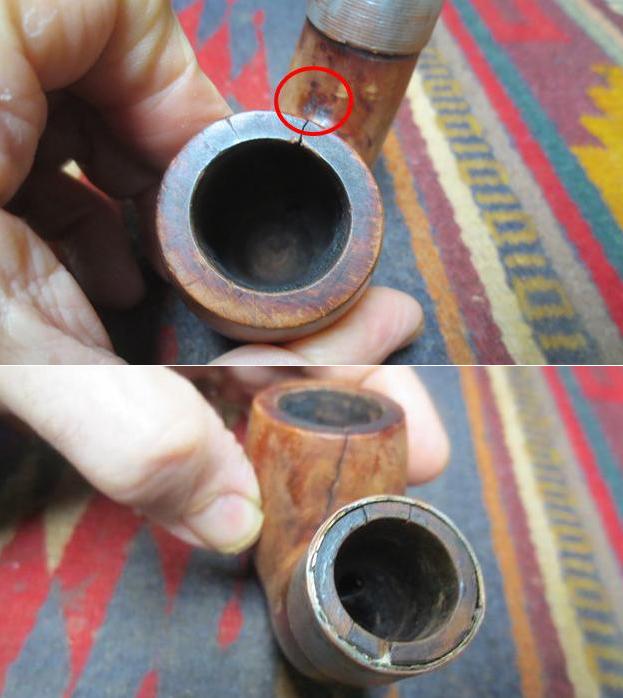
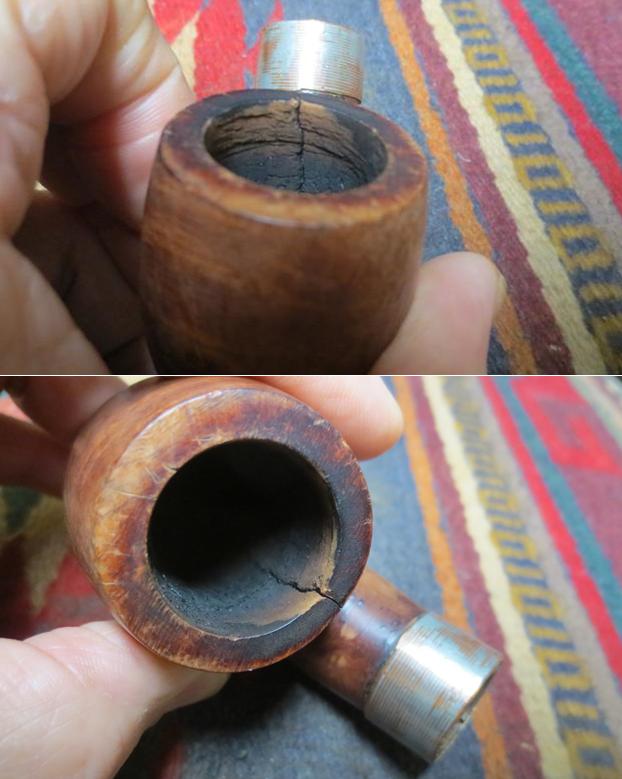
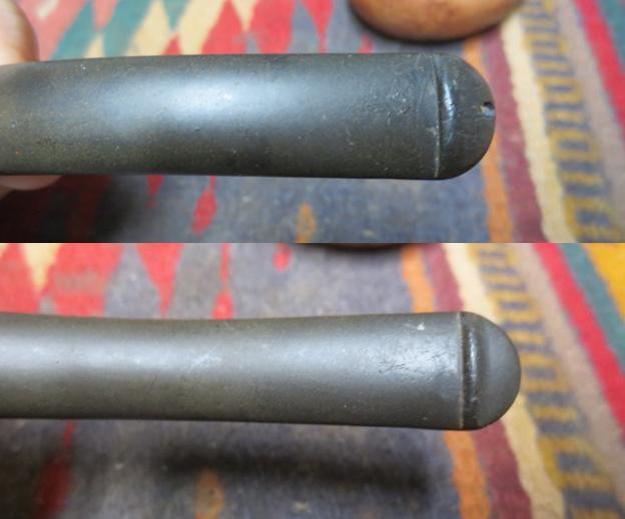
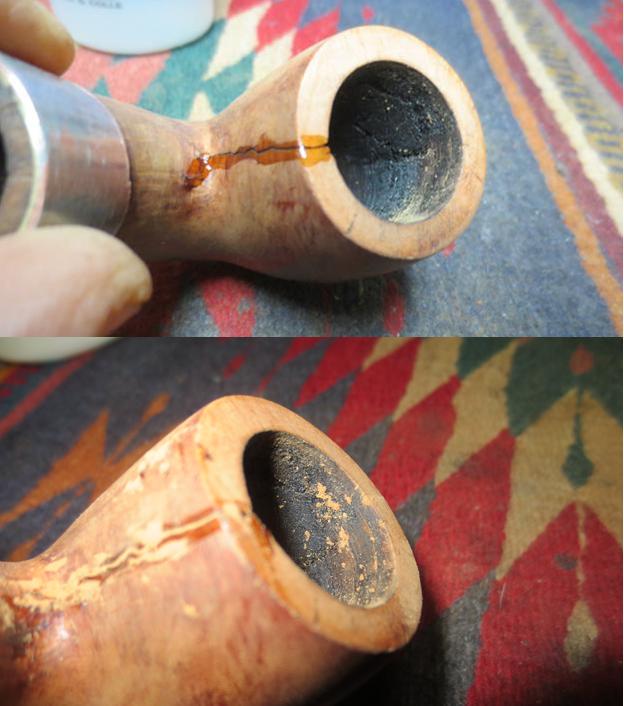
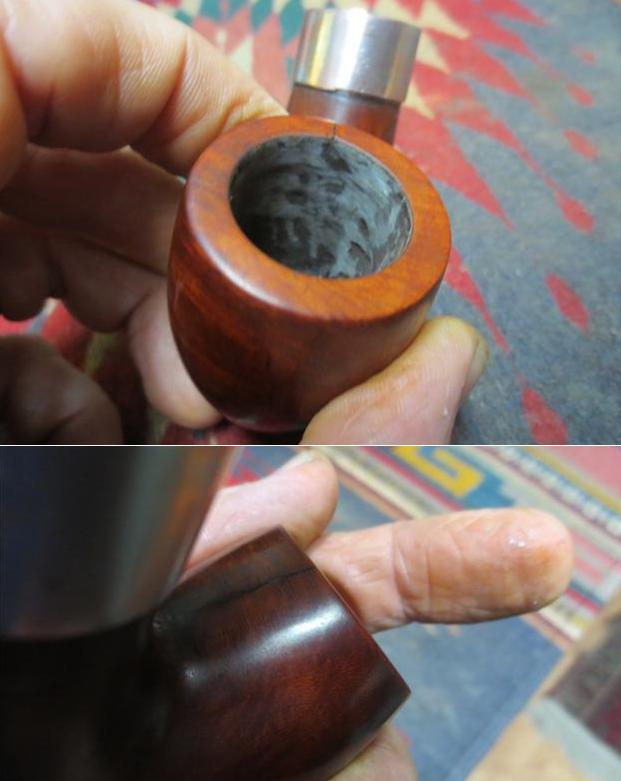
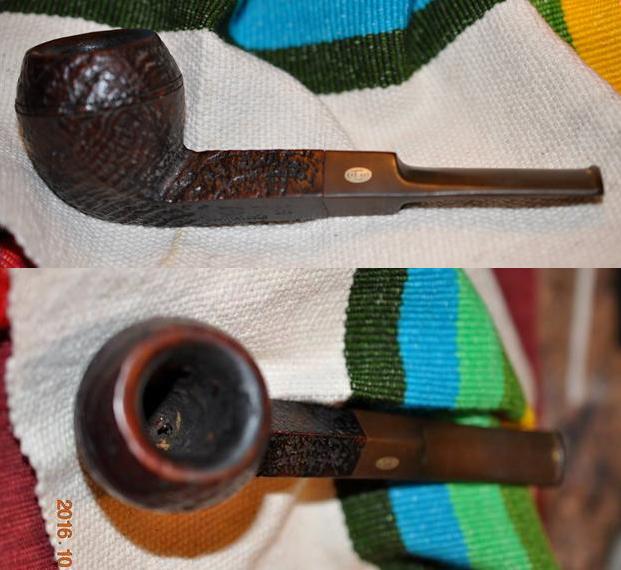
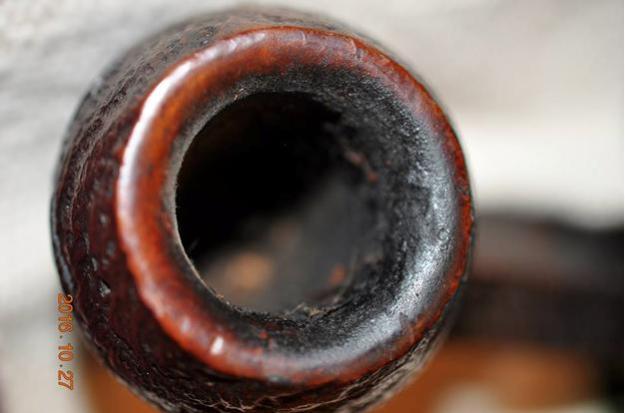
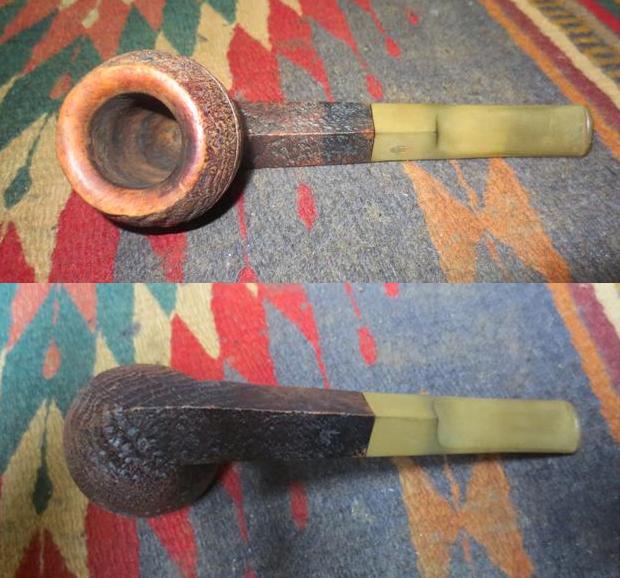
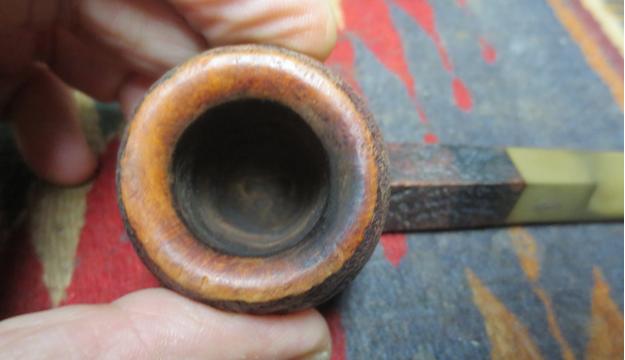
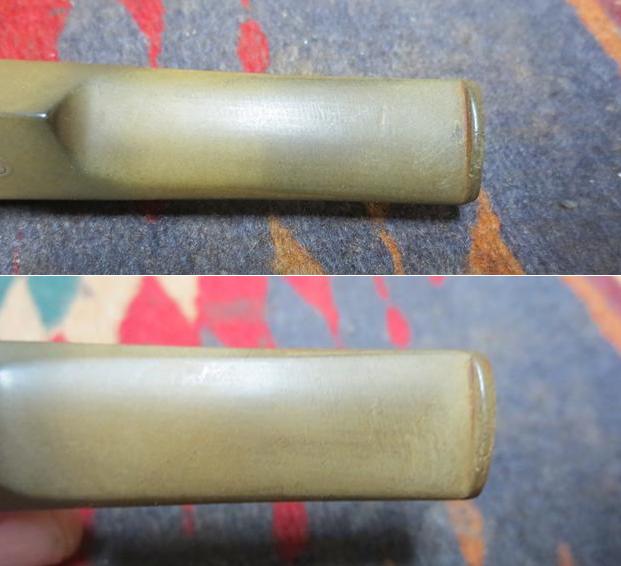
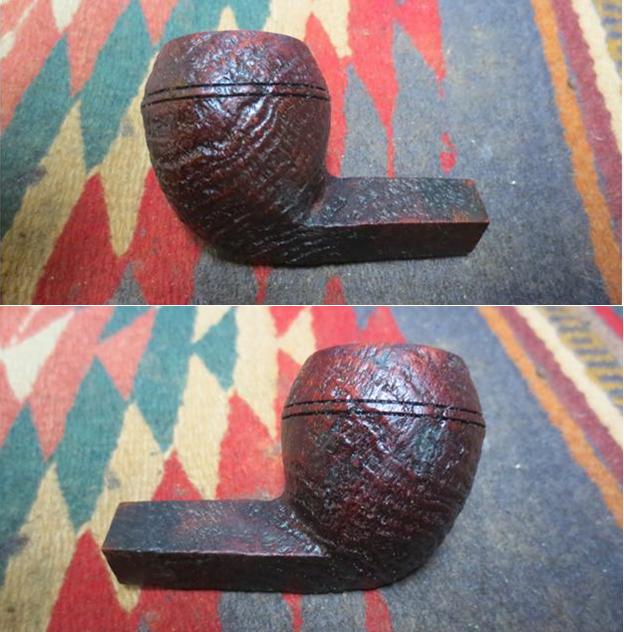
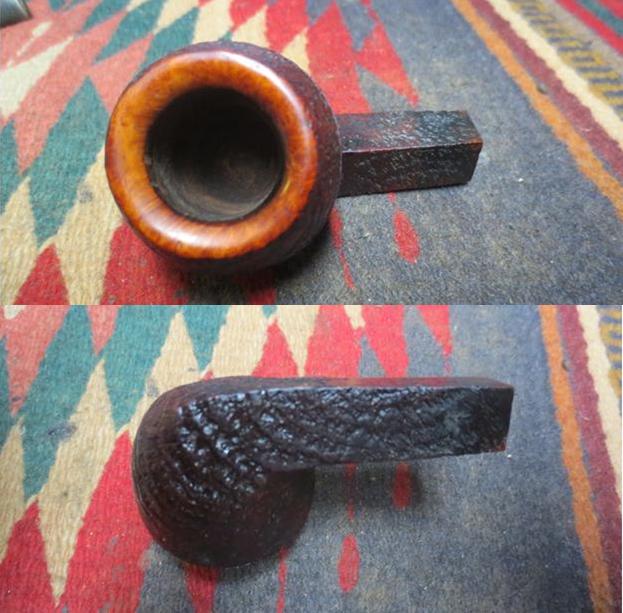
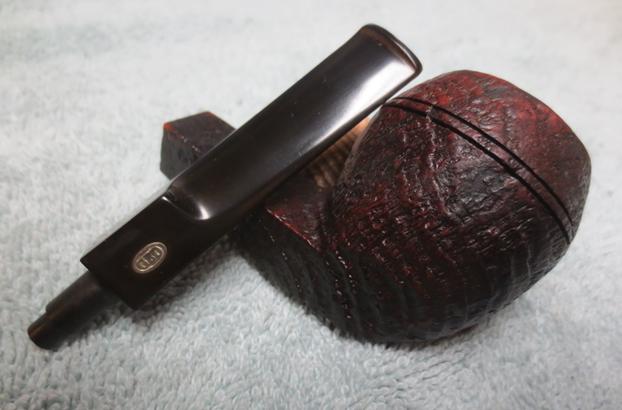
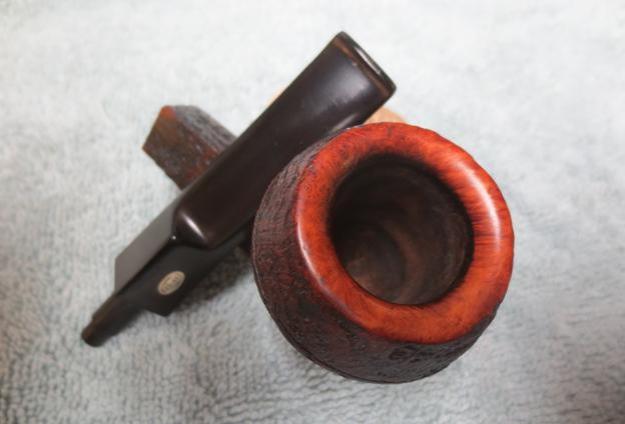
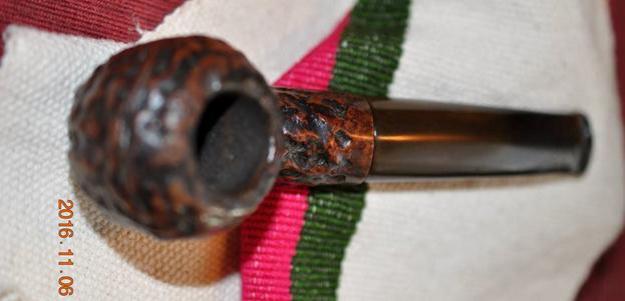
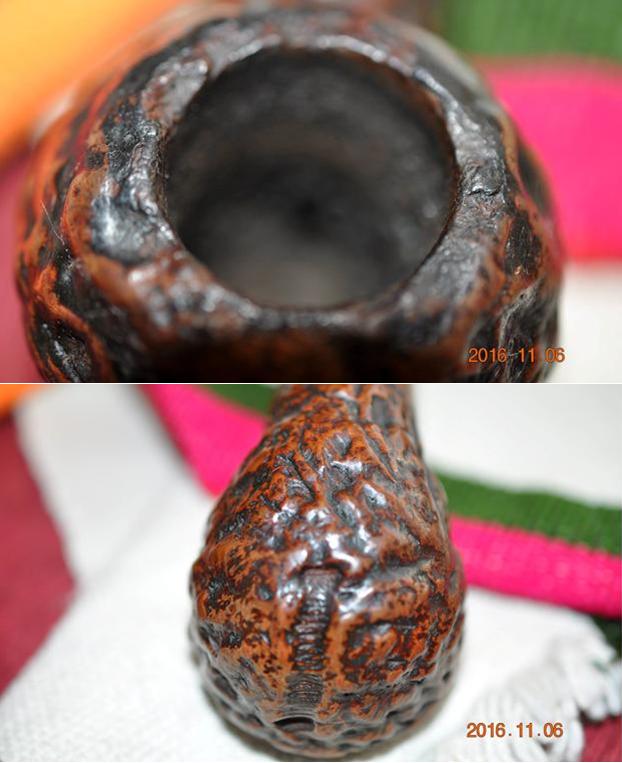
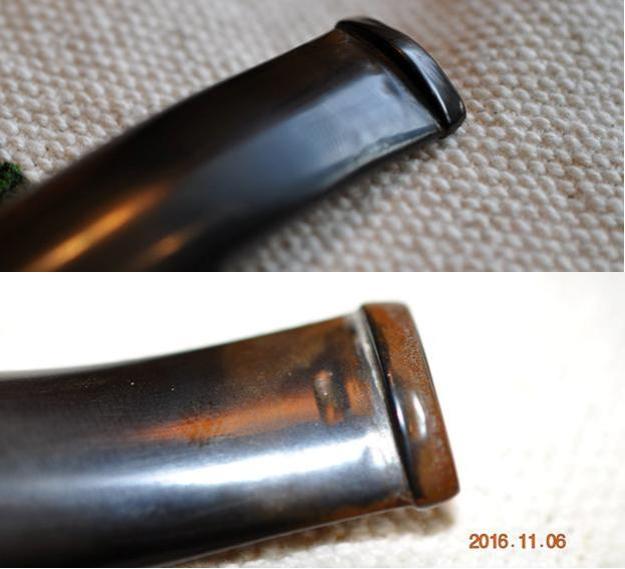
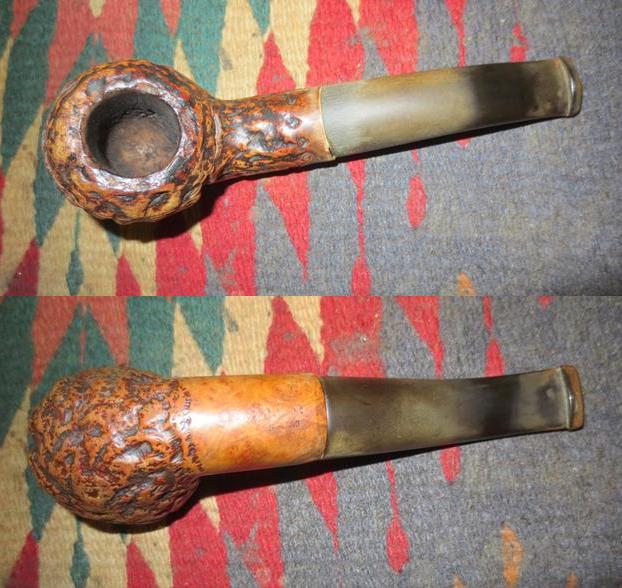
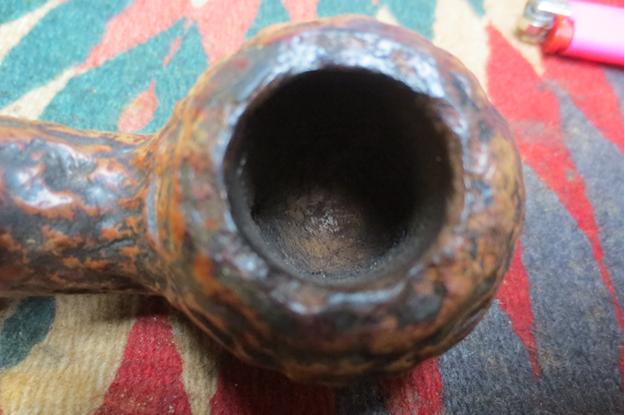
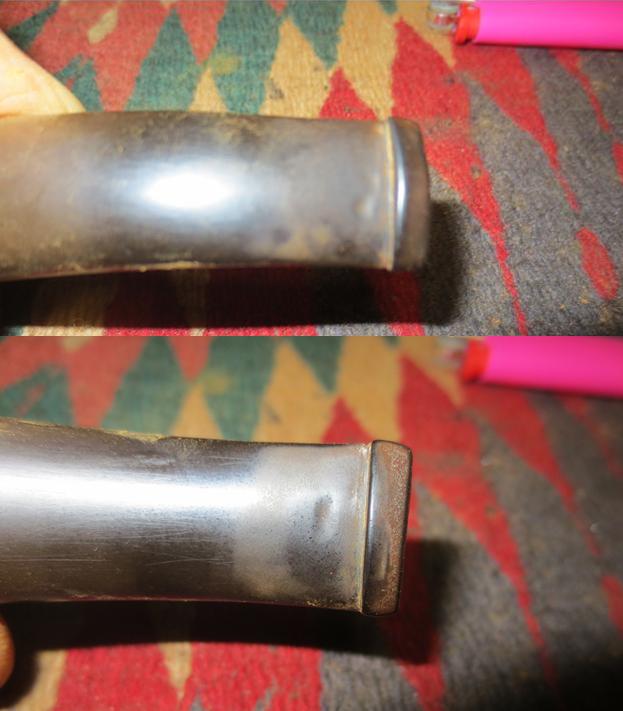
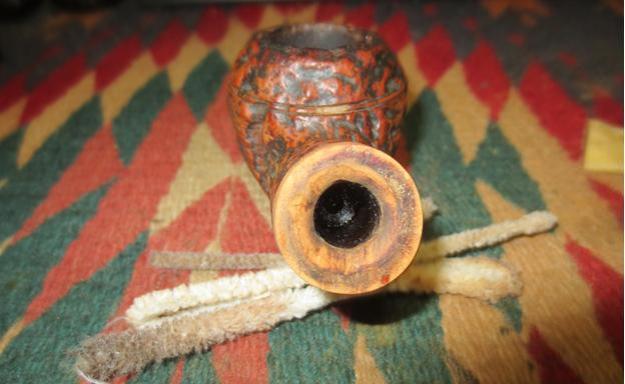
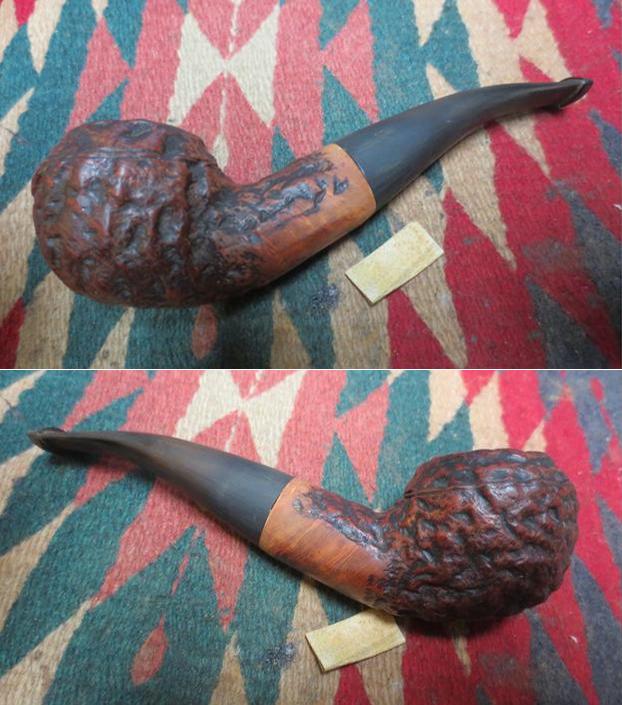
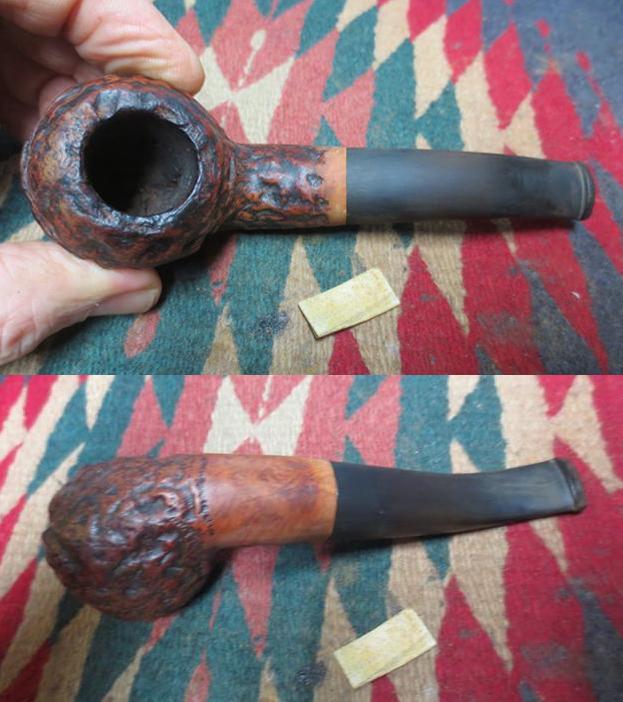
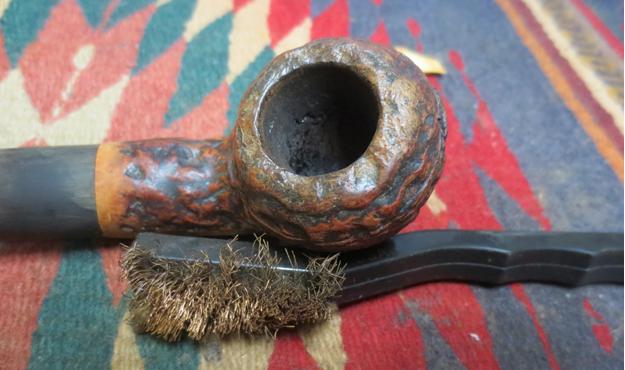
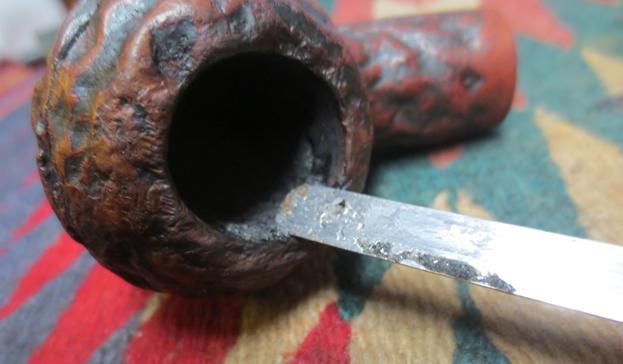
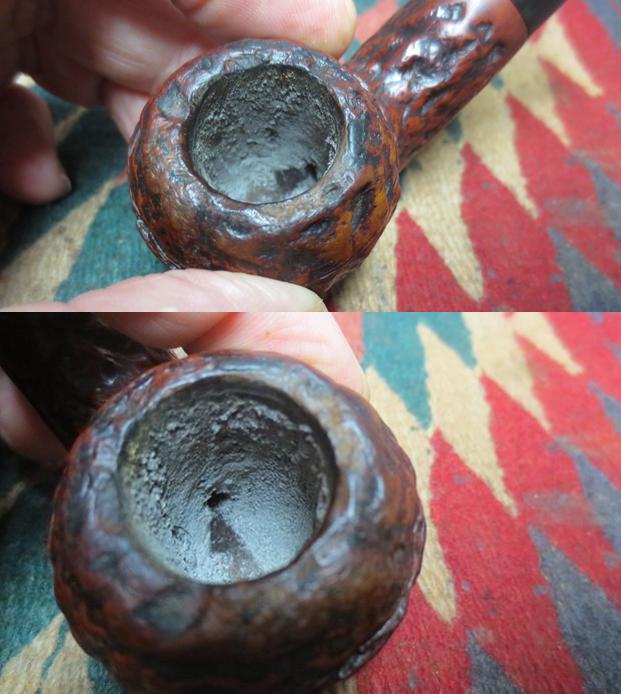
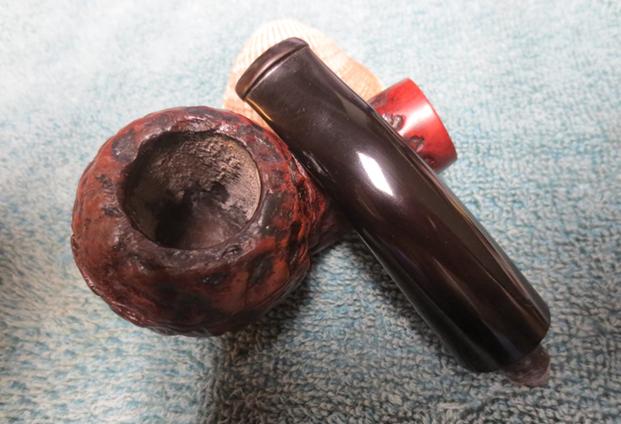
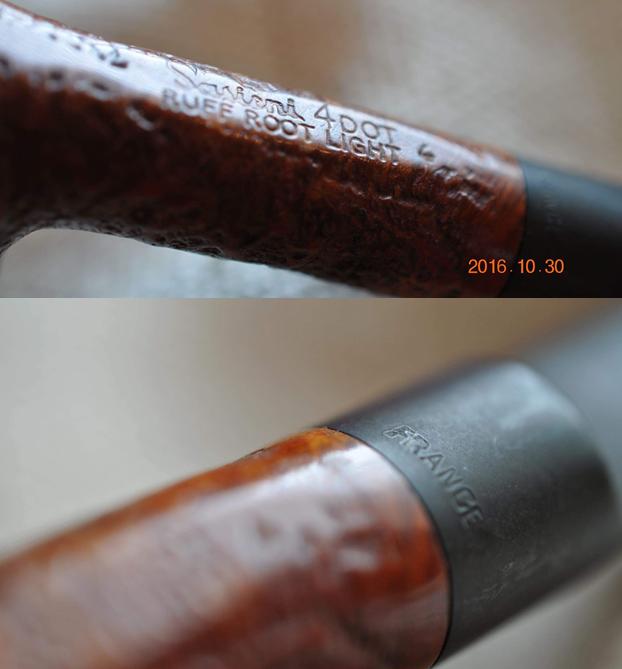
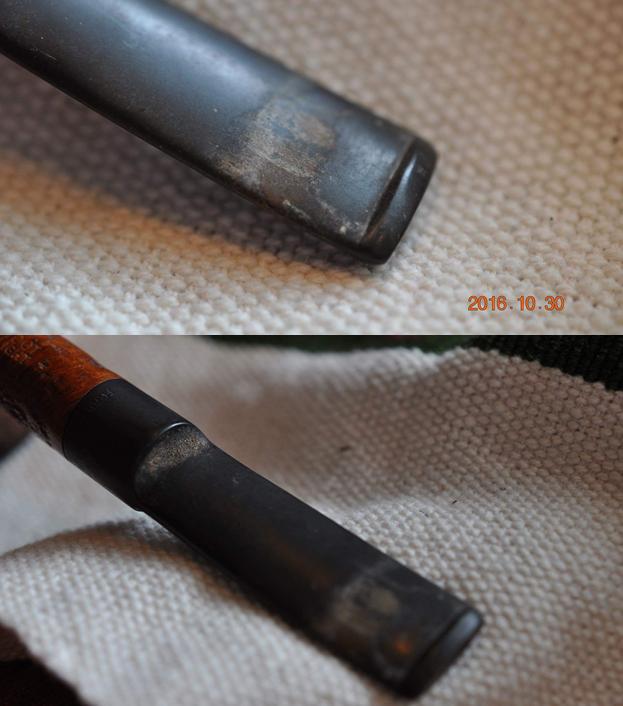
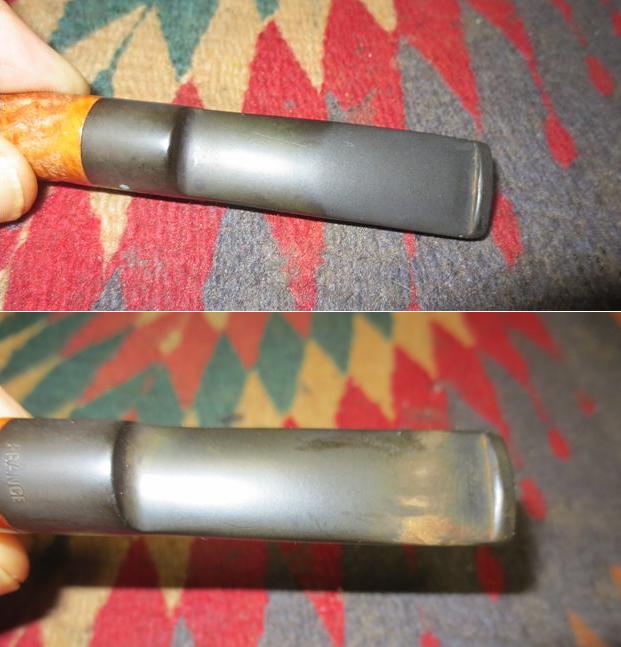
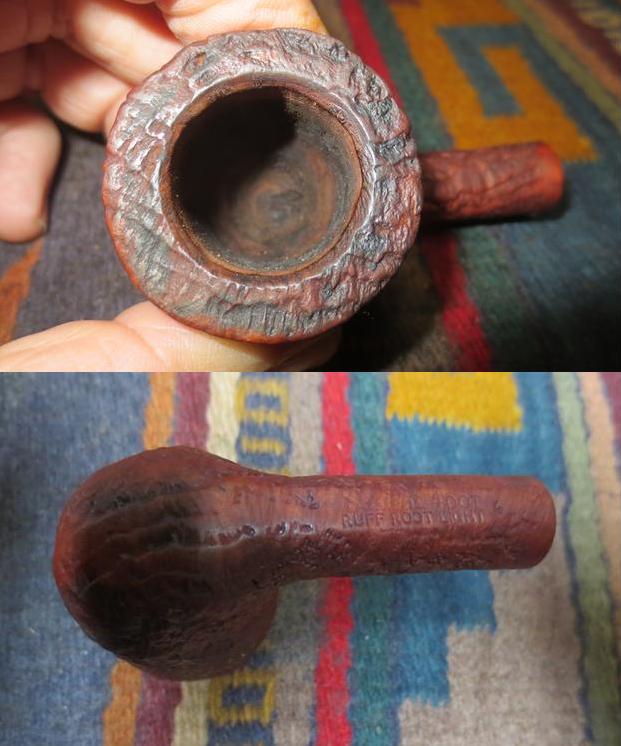
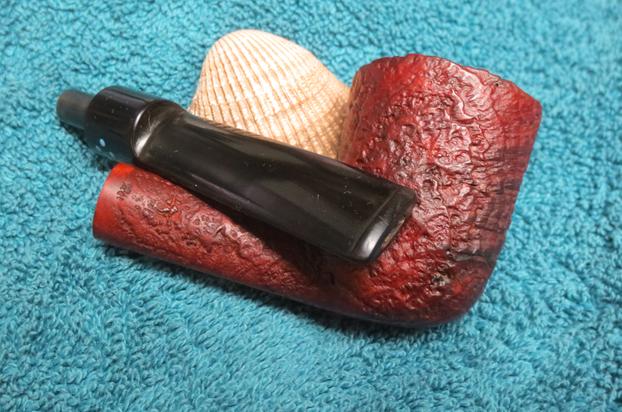
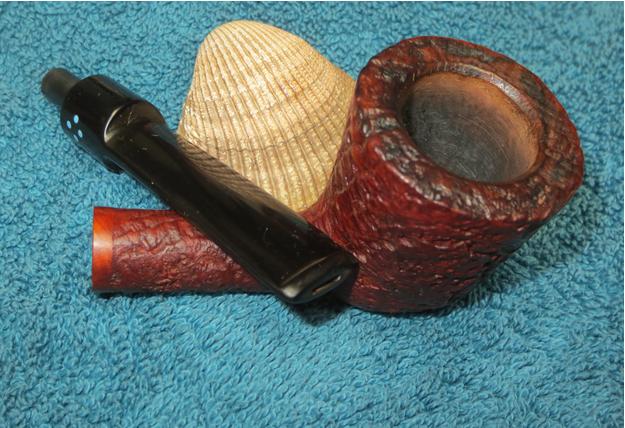
 I took a series of close up photos of the bowl and rim and the stem to show the condition of the pipe when I started. In the first photo you can see the thick crumbly cake and the damage to the rim surface and edges. It was hard to tell if the inner edge of the bowl was damaged and only after reaming would I be able to know for certain. The stem was a write off as the damage was too extensive to repair. The fit against the shank also warranted a new stem.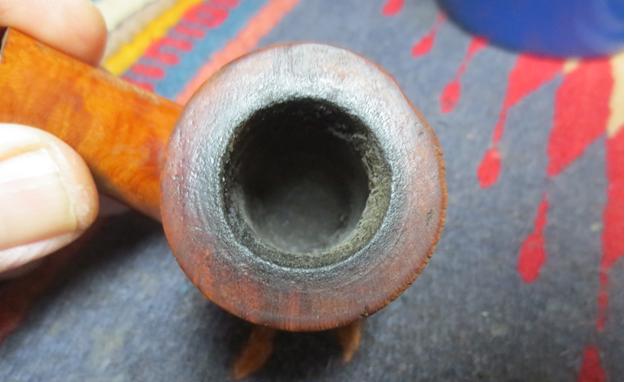
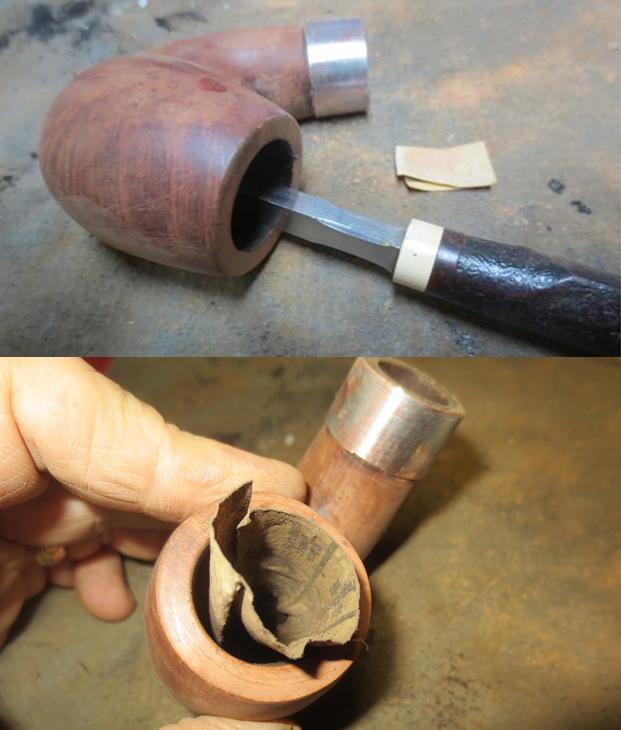
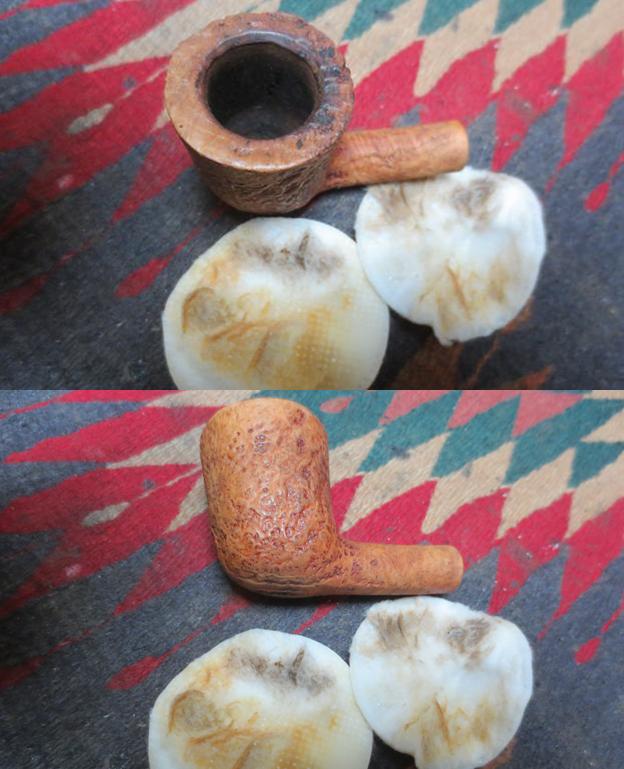
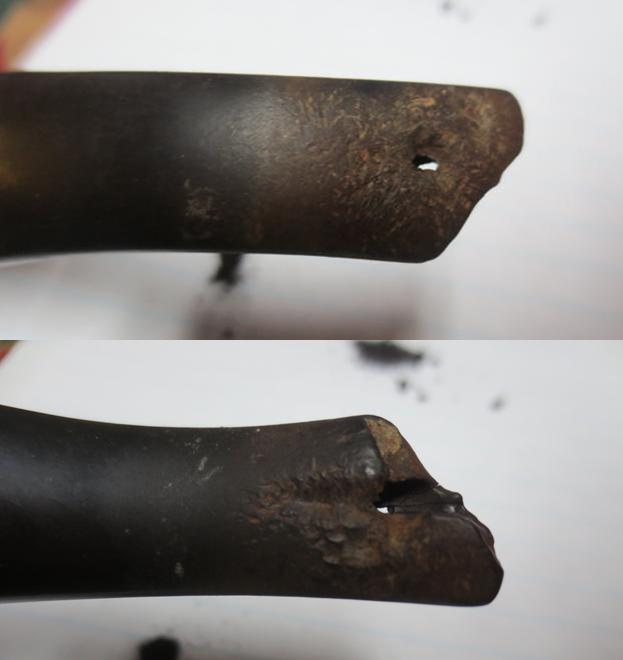 I reamed the bowl with a PipNet reamer and went through the various cutting heads. I cleaned up the remaining cake in the bowl bottom with the Savinelli Pipe Knife. I took the cake completely out of the bowl and reamed it back to bare briar.
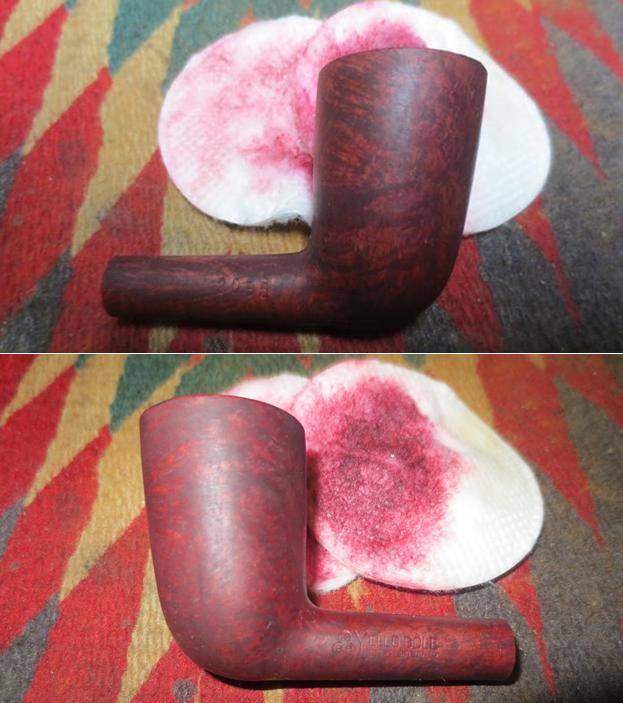
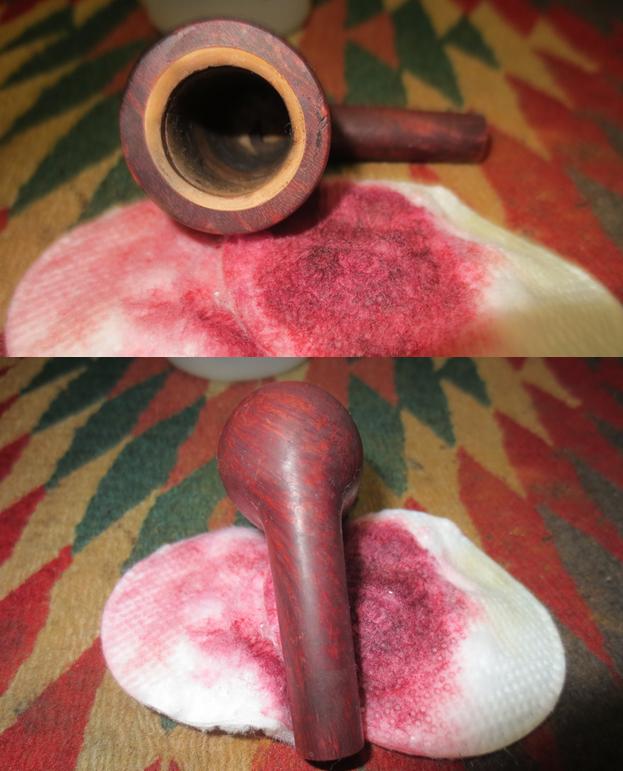
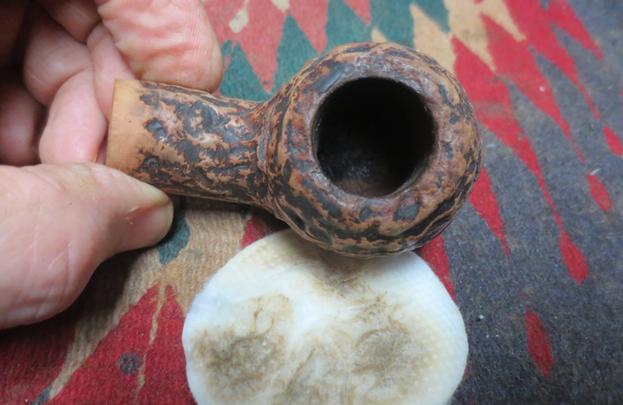
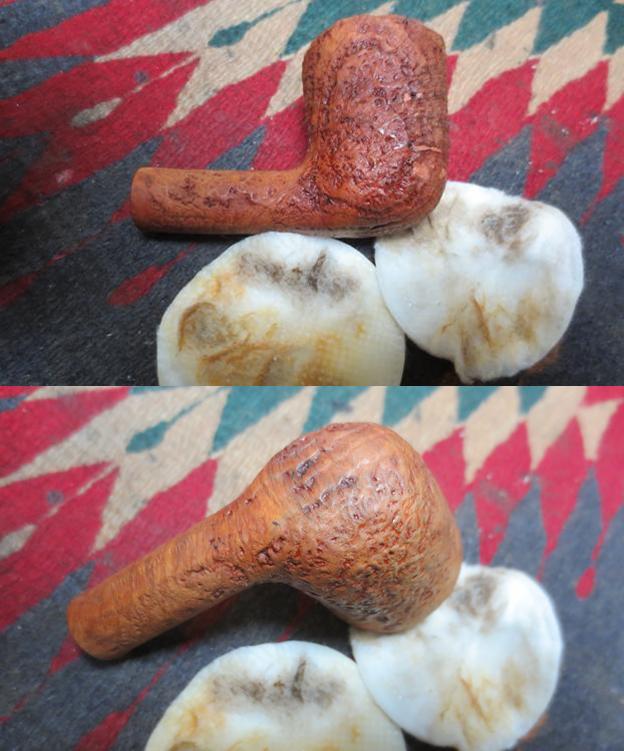
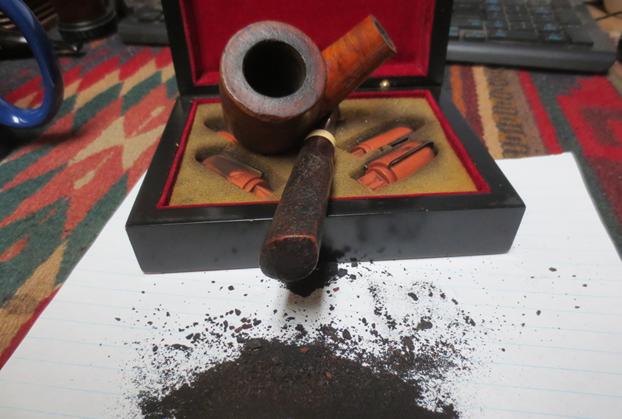 I wiped down the surface of the bowl with acetone on cotton pads to remove the finish. It came off with a bit of scrubbing but there were places where it did not come off with the acetone. It would take some sanding to remove the totality of the finish.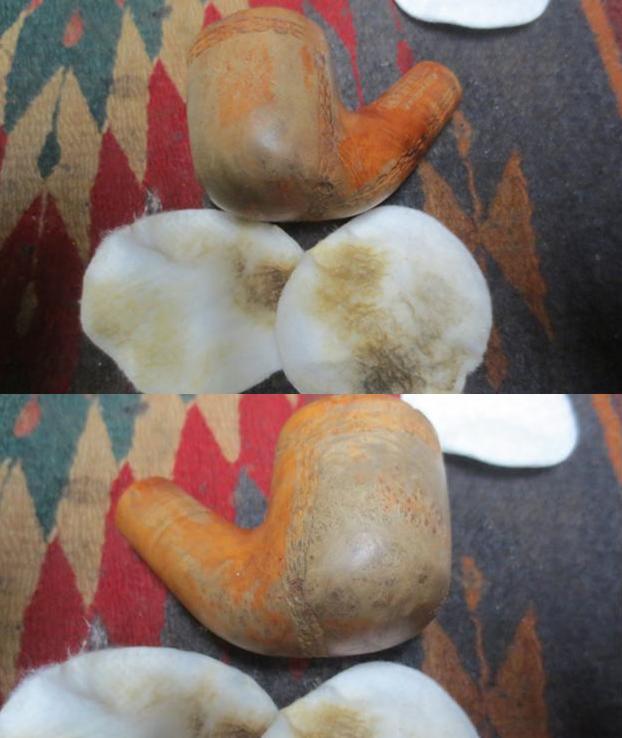
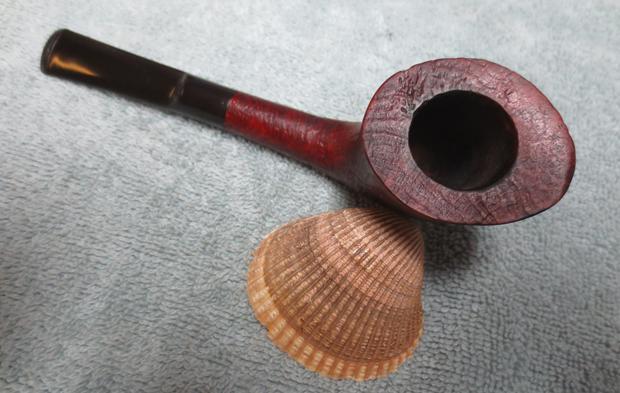
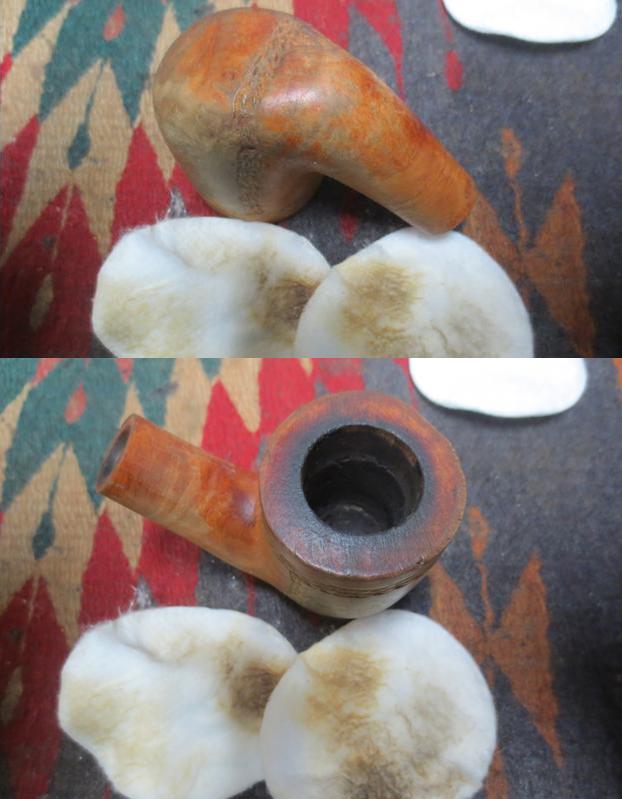 The damage to the bowl top and outer edges required that I top the bowl. I gently topped it on the topping board so as not to remove too much and remove the smooth portion above the rope rustication on the top edge.
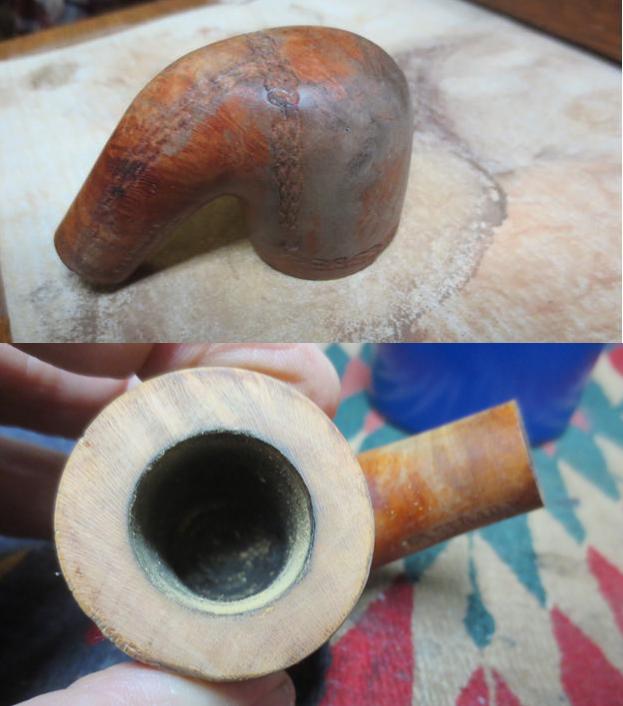 I sanded the bowl and rim top with a medium and a fine grit sanding sponge and took the following photos.
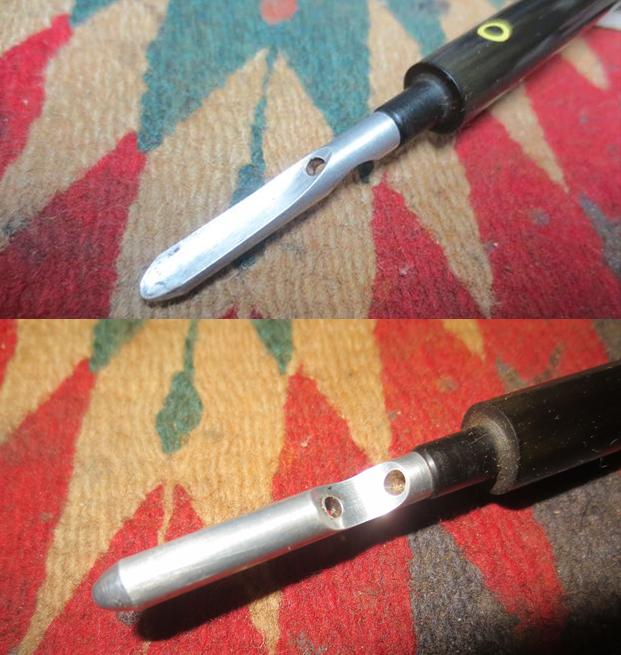
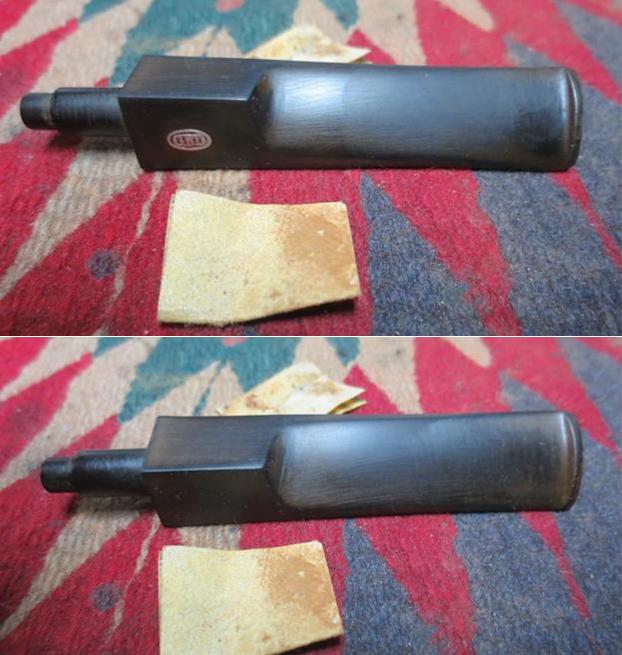
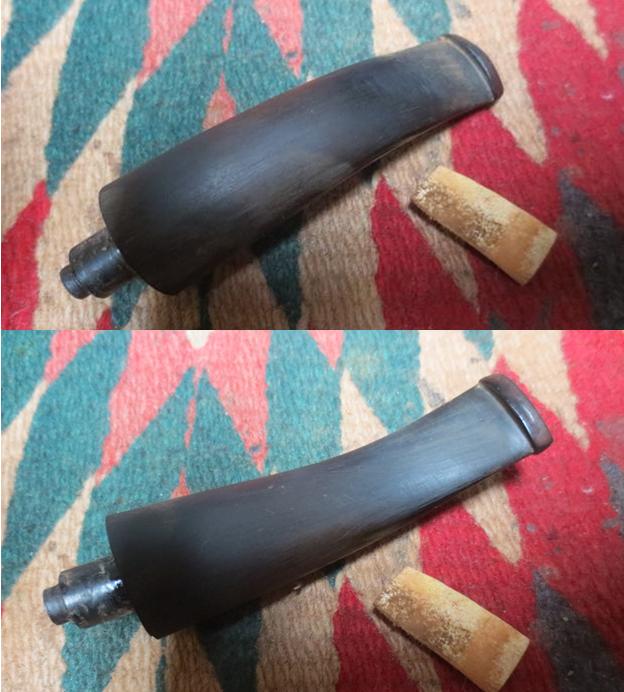
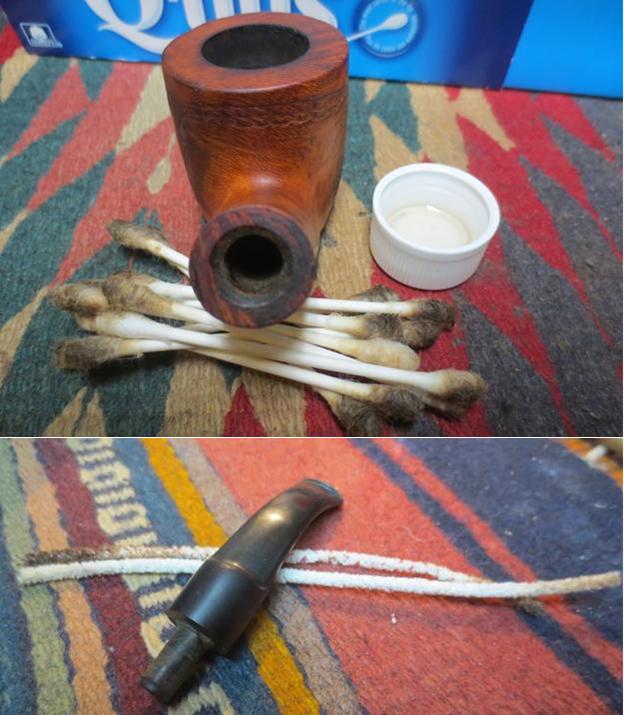
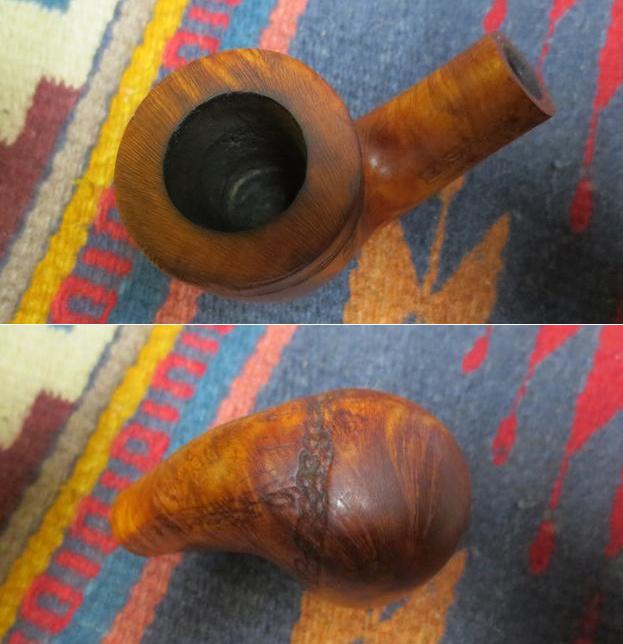 I cleaned out the internals of the shank and the replacement stem that I fit to the shank with alcohol, pipe cleaners and cotton swabs. It took a lot of scrubbing to get the mortise and the airway clean in the shank. The stem was in decent shape so it did not take too much work on it.
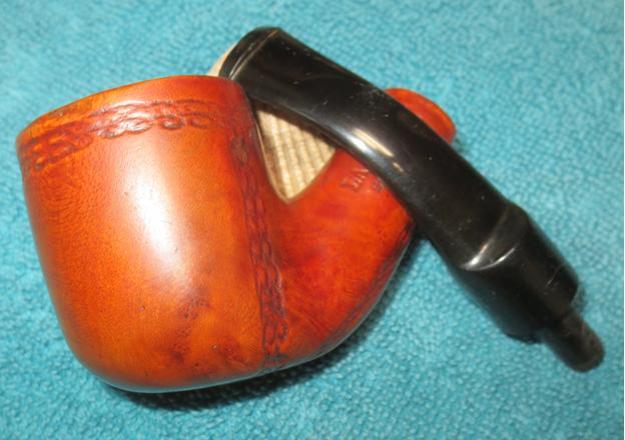
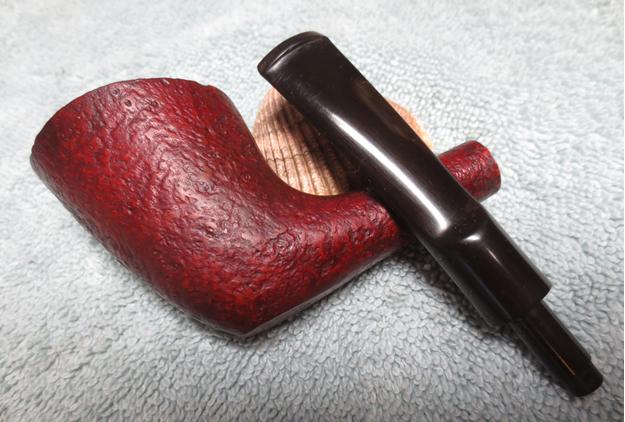
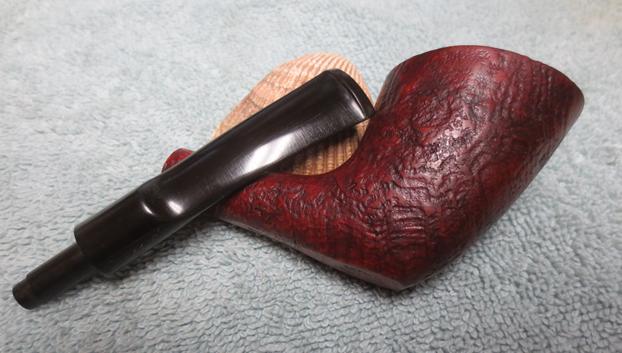
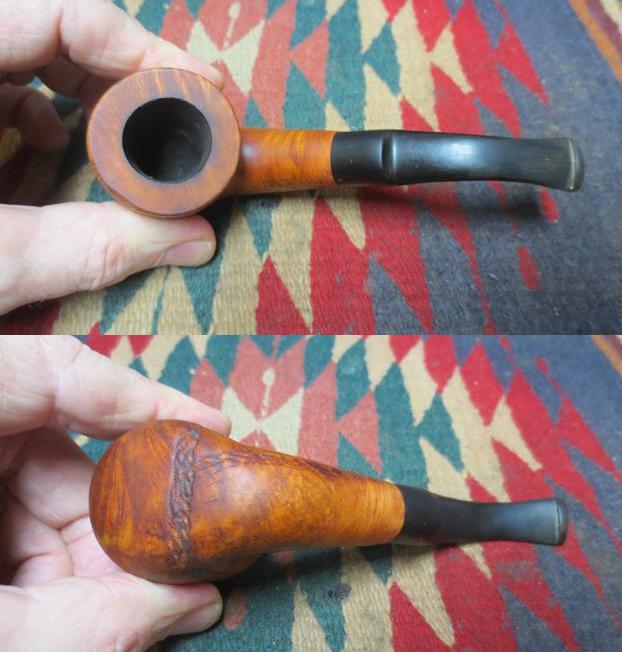
 I took some photos of the pipe at this point to get a feel for the look with the new stem in place.
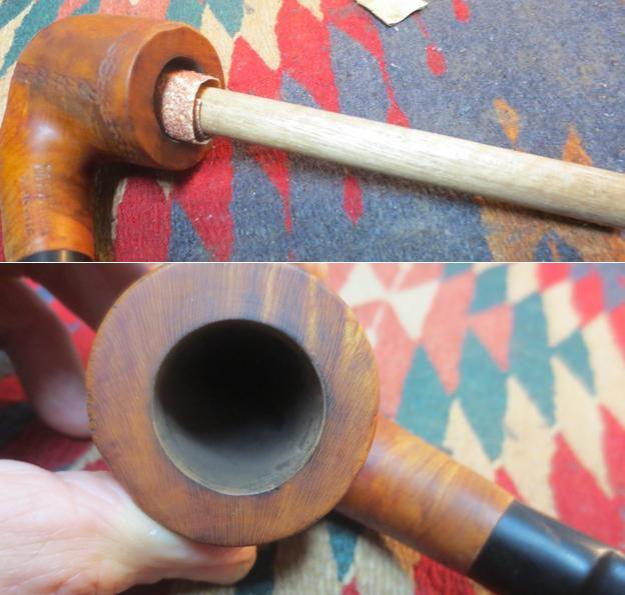
 I wrapped some sandpaper around a dowel and sanded the walls and bottom of the bowl. There was a ring at the bowl bottom that was grooved and needed to be smoothed out. It did not take a lot of sanding before the inside walls were smooth.
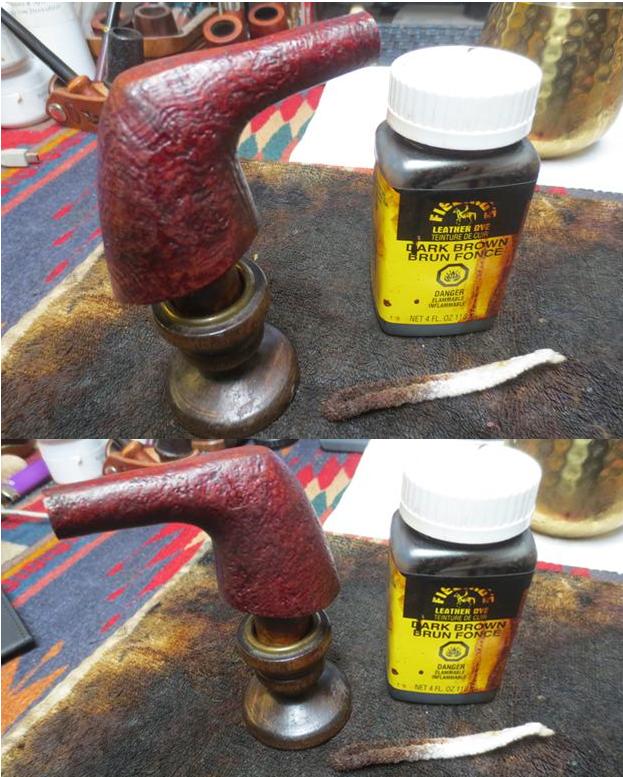
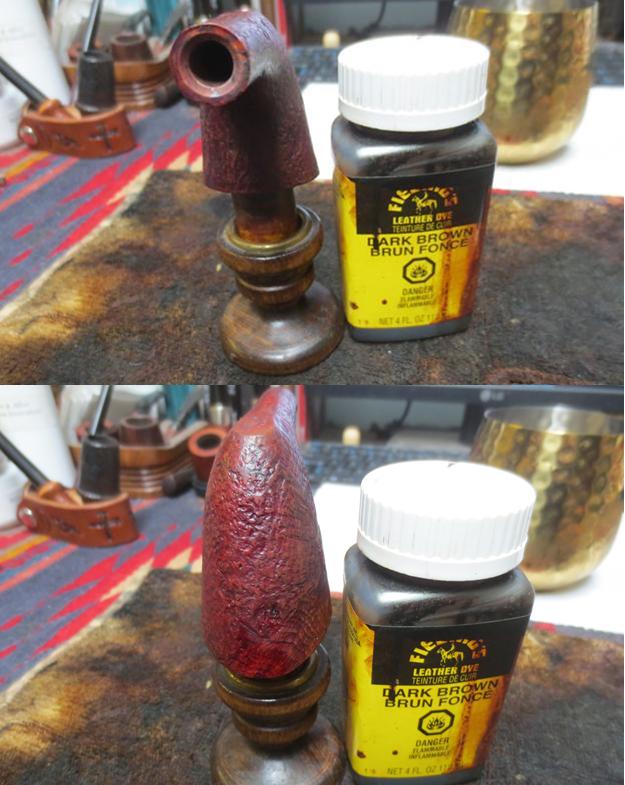
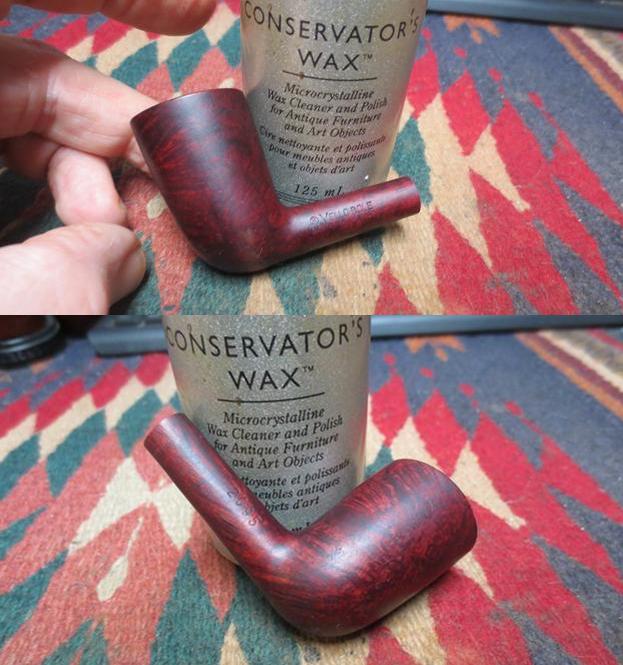
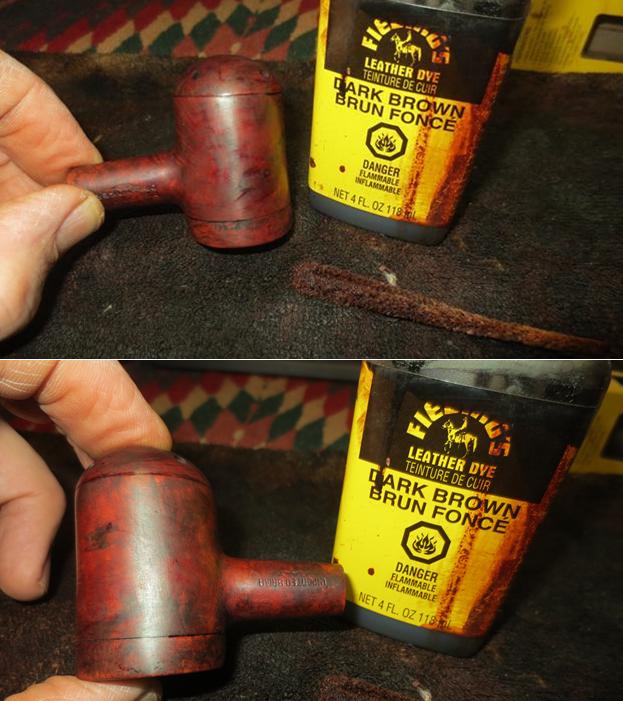
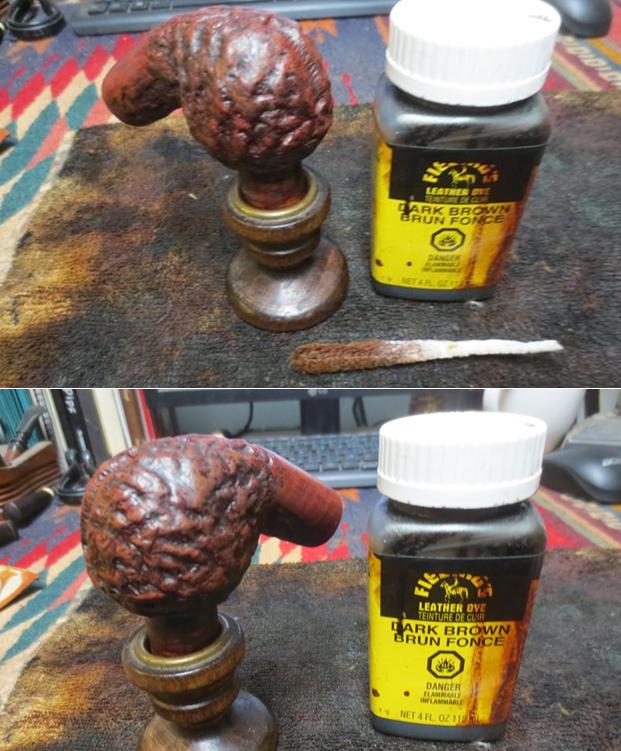
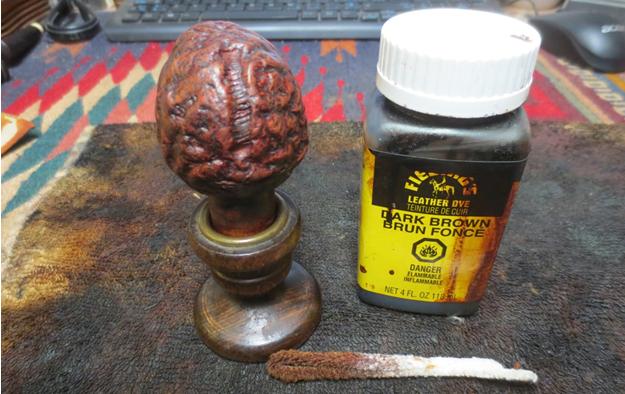
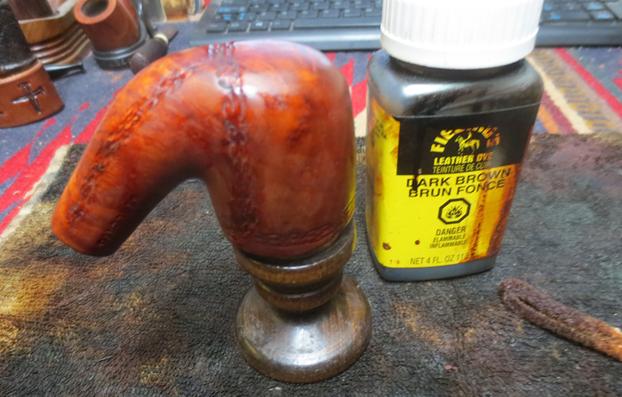
 I restained the bowl with a dark brown aniline stain mixed 50/50 with isopropyl alcohol to approximate the original colour of the pipe and to highlight the grain on the pipe. I flamed the stain and repeated the process until the coverage was even around the bowl and rim.
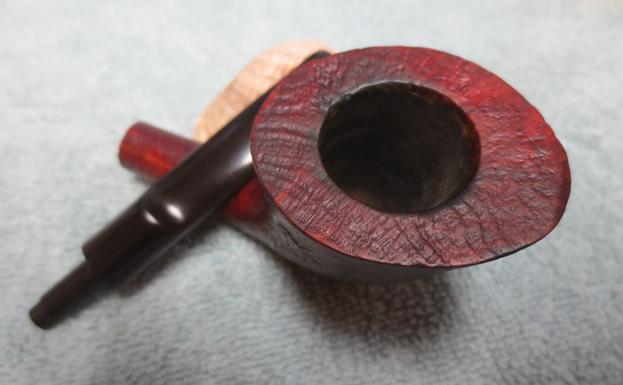
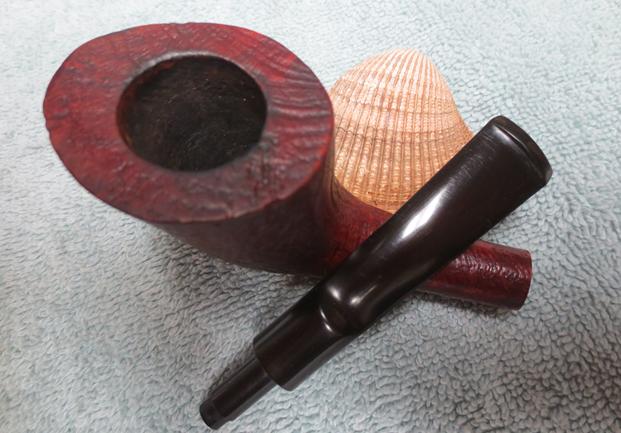
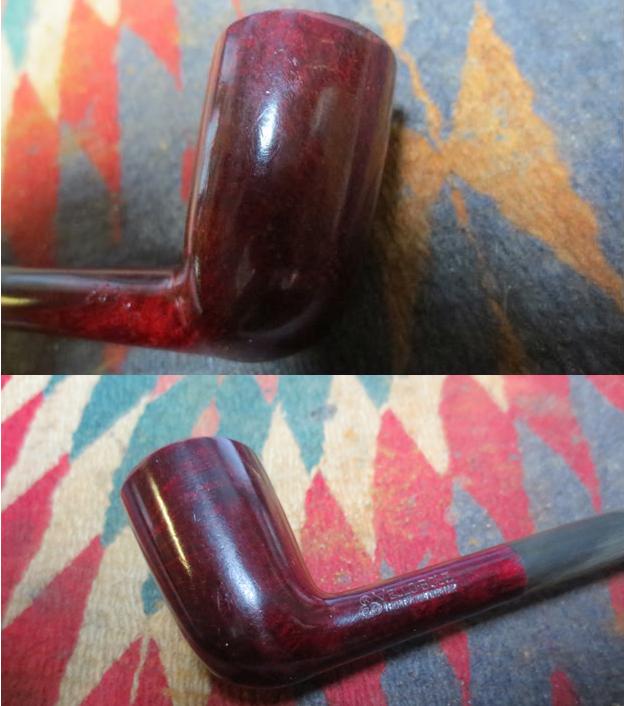
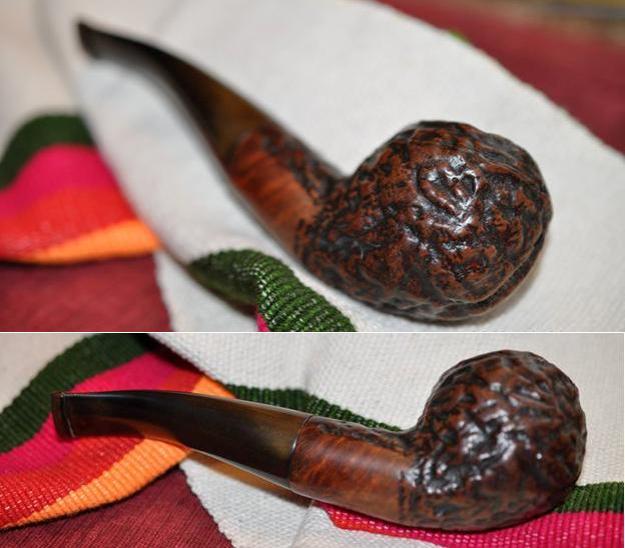
 I buffed the bowl with White Diamond on the buffing wheel to even out the new finish and give it a bit of a shine. I took photos of the bowl at this point to give a clear picture of the new look.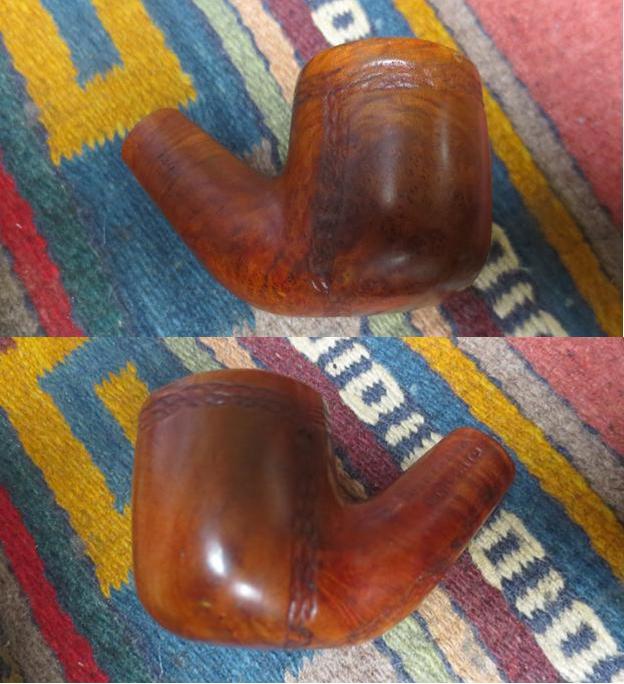
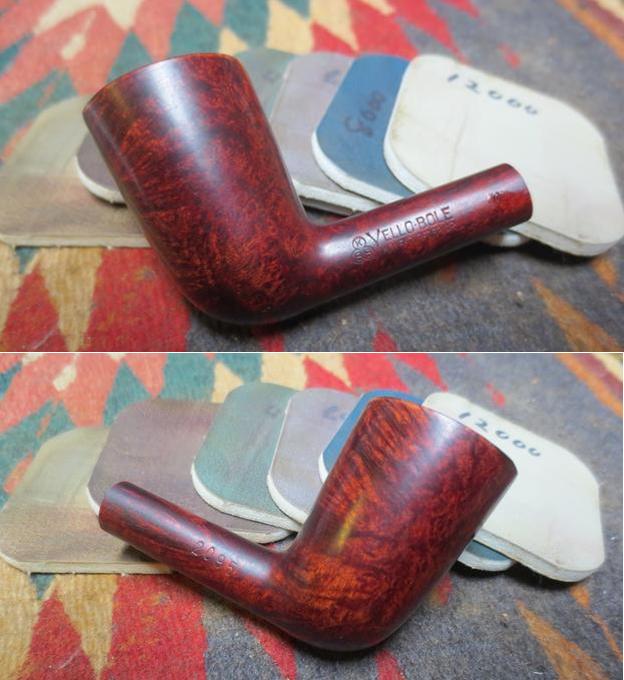
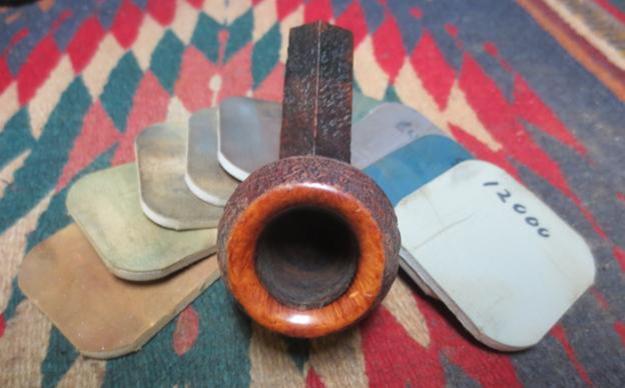
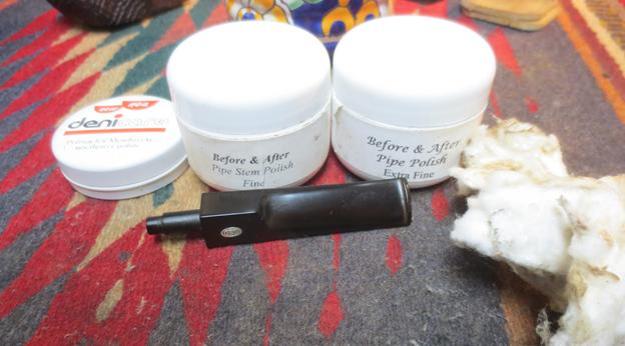
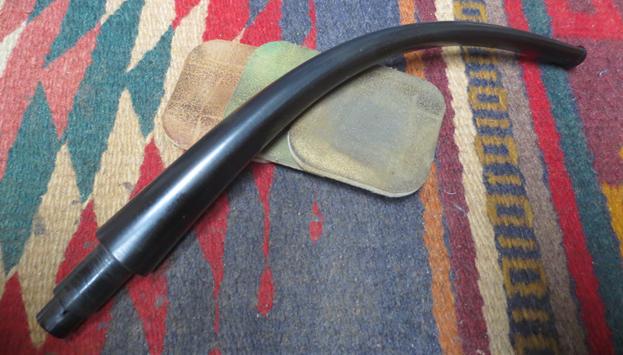
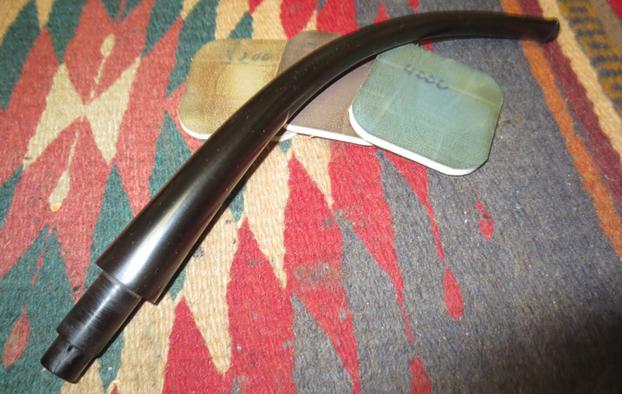
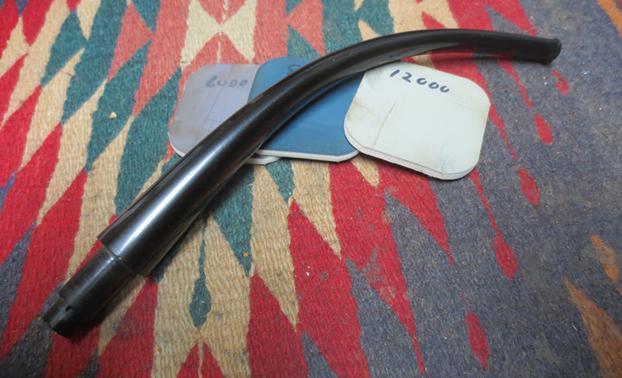
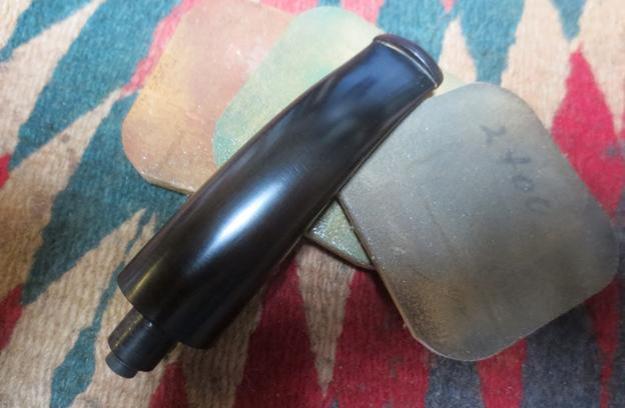
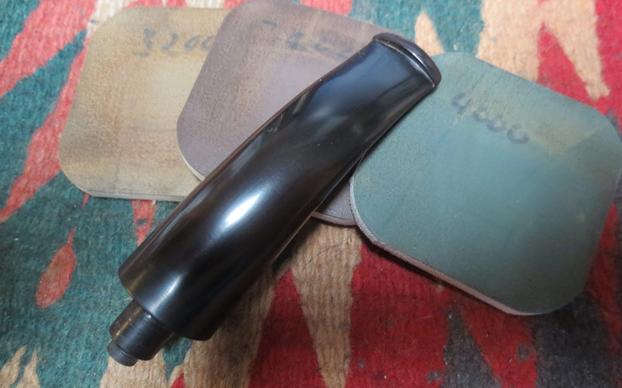
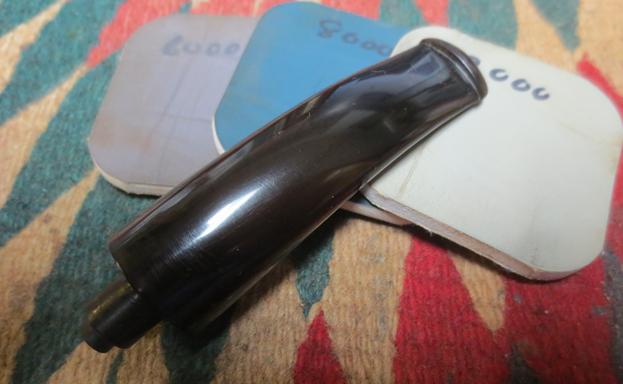
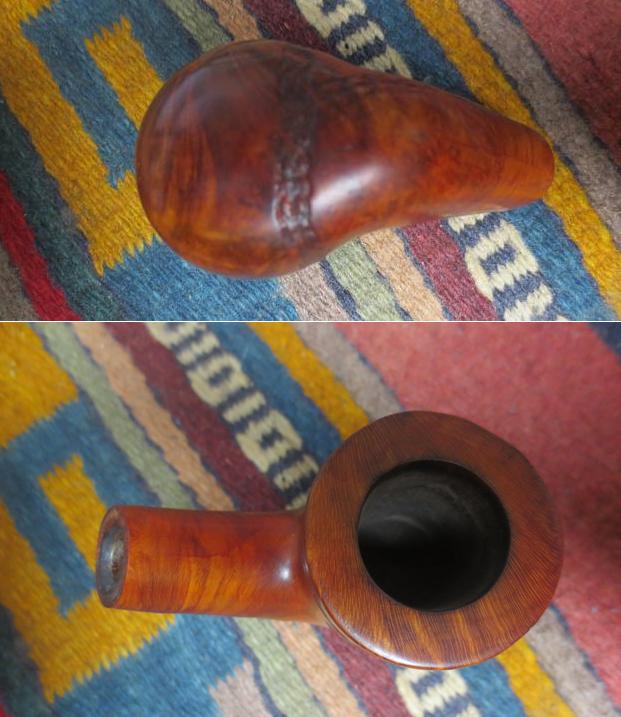 Now all that remained was to finish the fit and polishing of the stem. I sanded it with 220 grit sandpaper until it fit the shank well. It took some adjusting of the diameter of the stem to match the slightly out of round shank. In the end it fit well. I polished the stem with micromesh sanding pads – wet sanding it with 1500-2400 grit pads and dry sanding with 3200-12000 grit pads to give it a deep shine.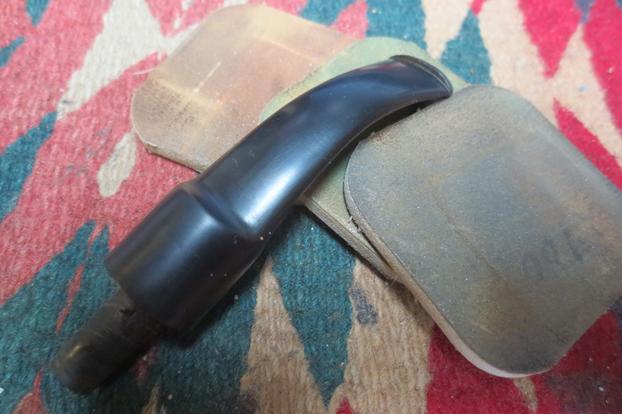
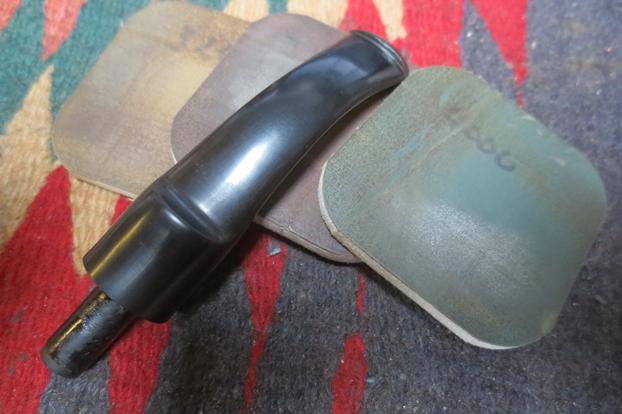
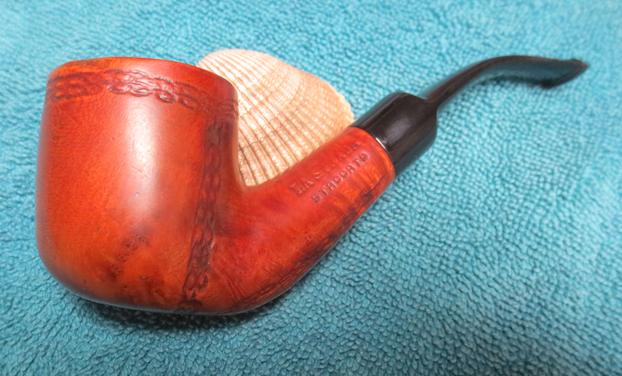
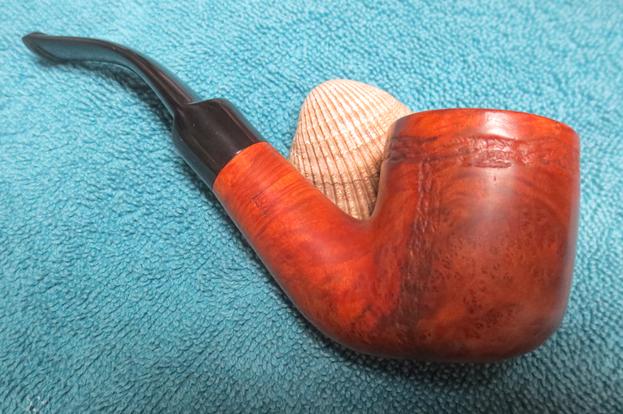
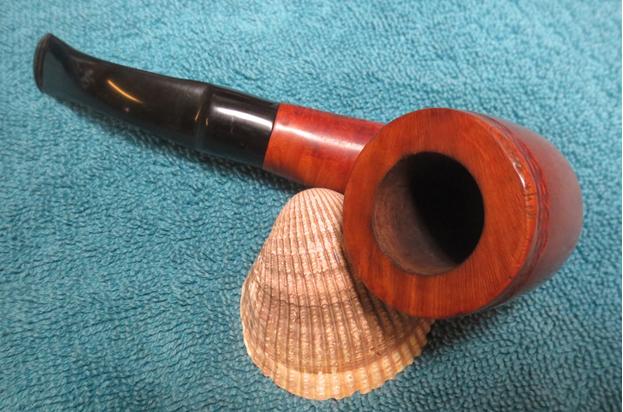
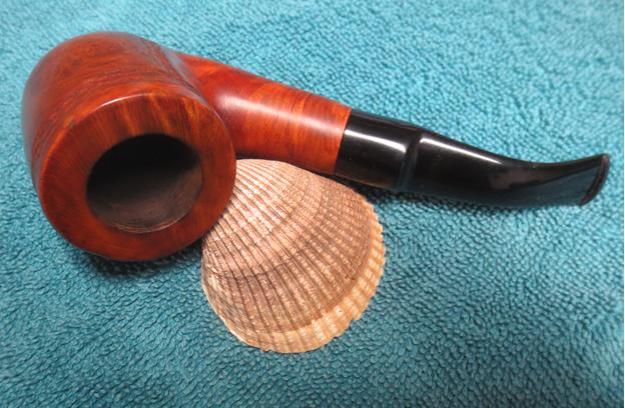
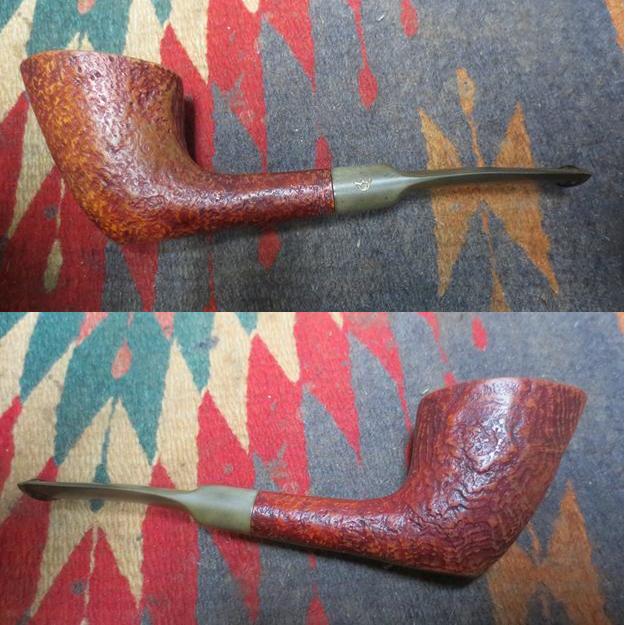
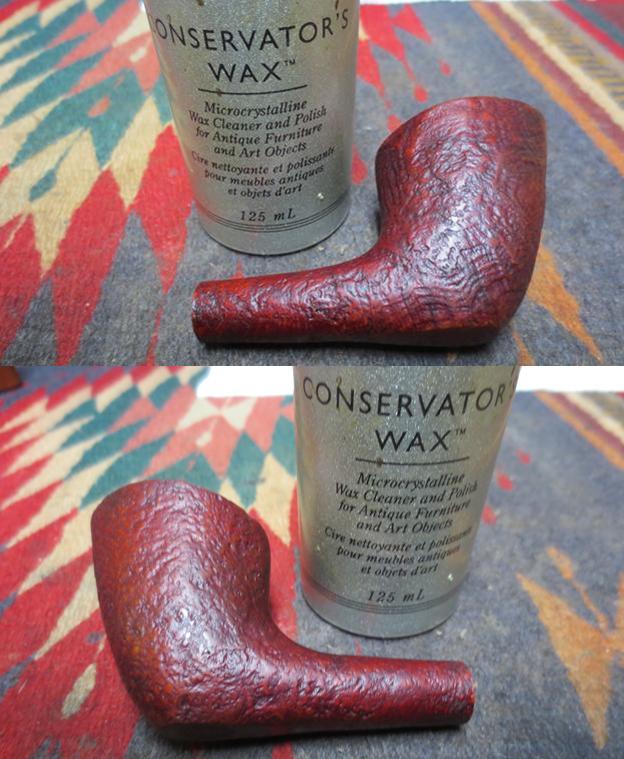
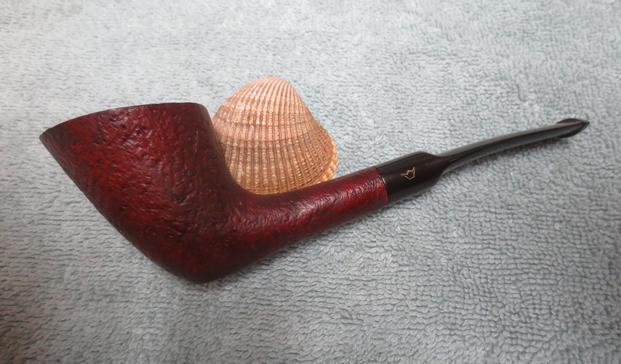
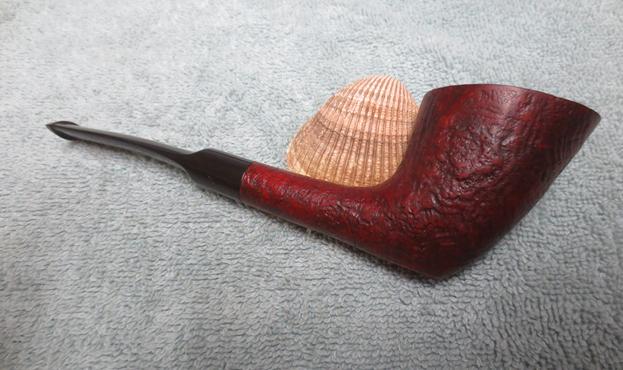
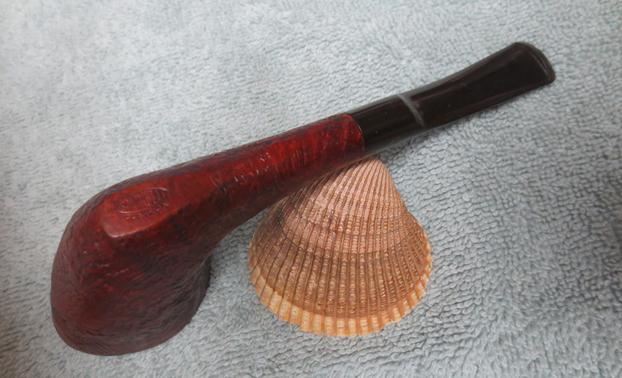
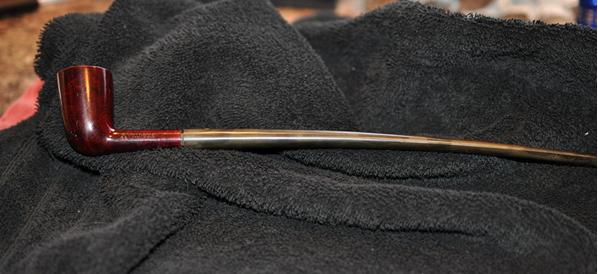
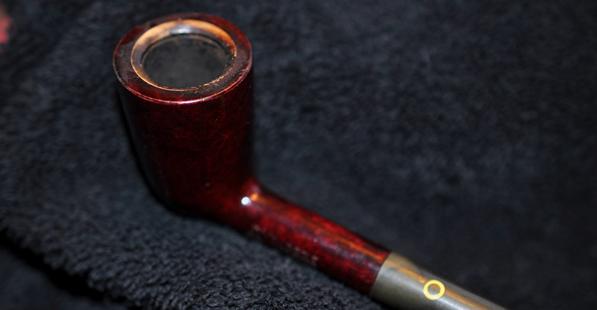
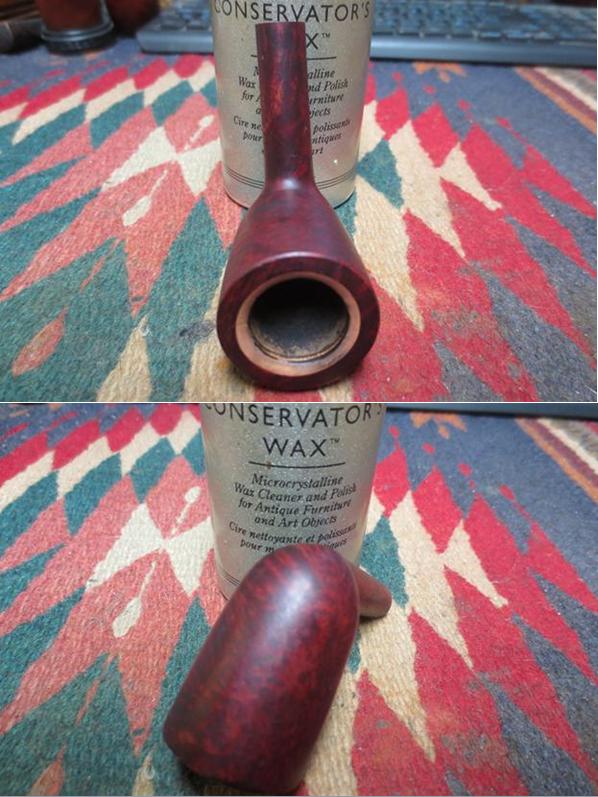
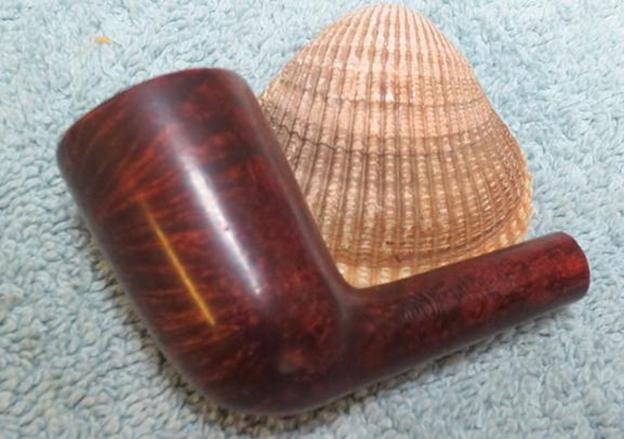
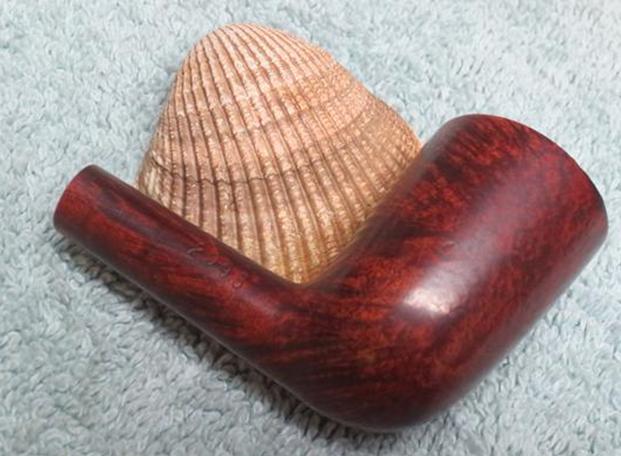
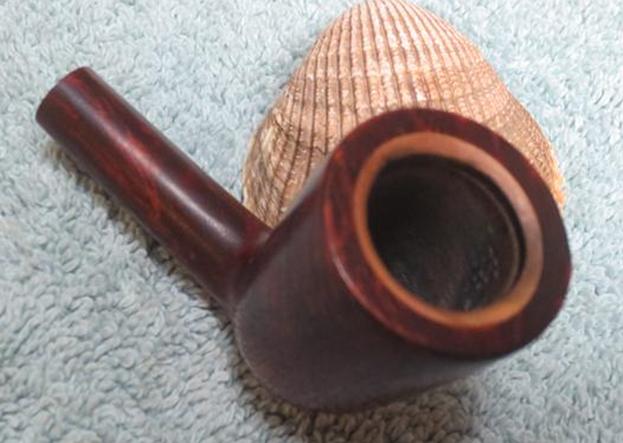
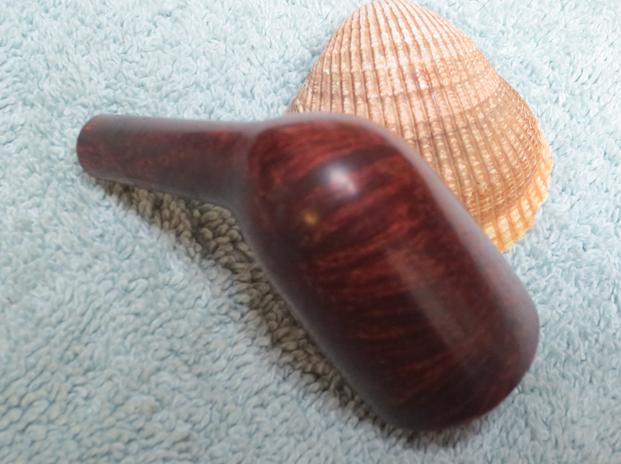
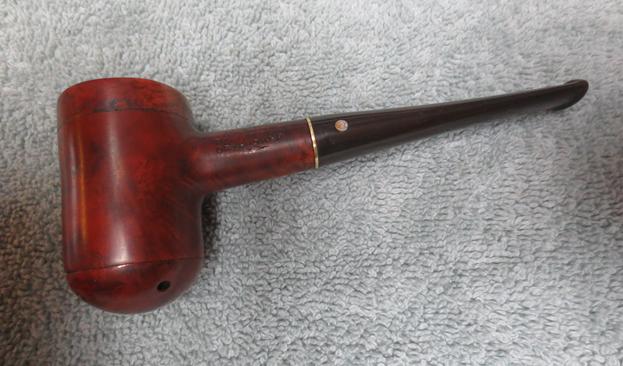
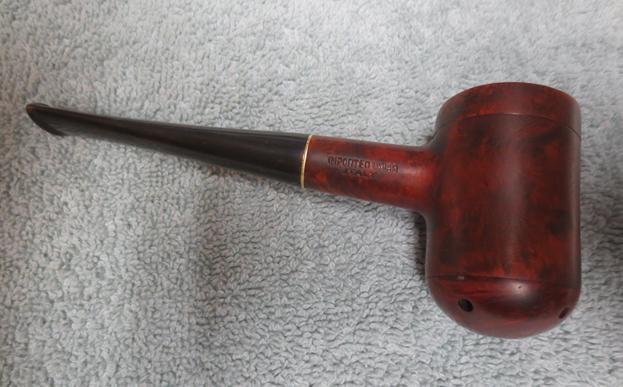
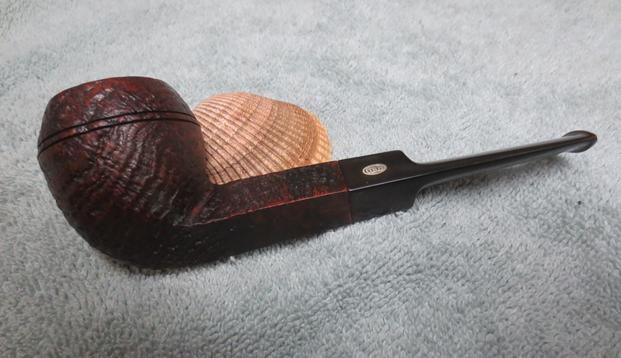
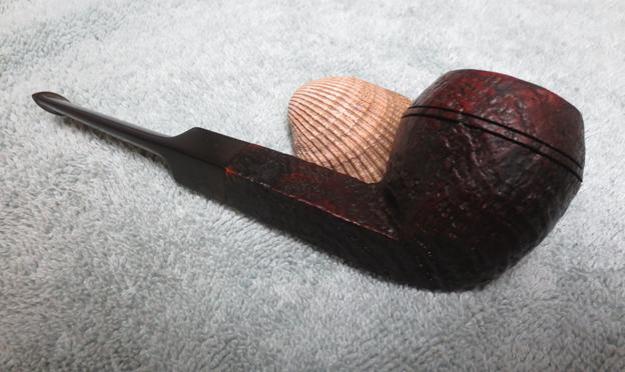
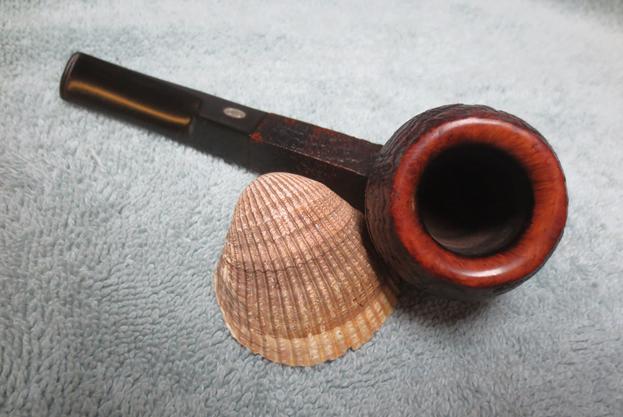
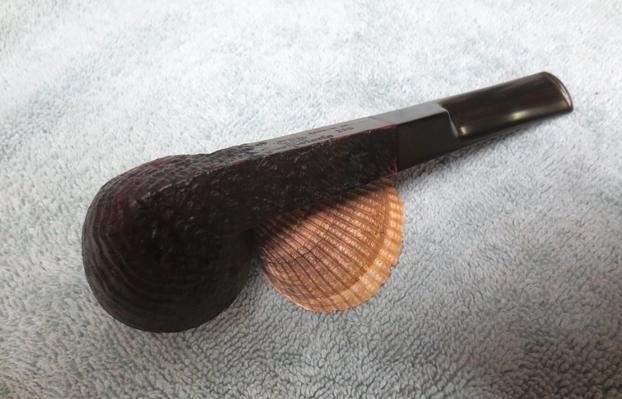
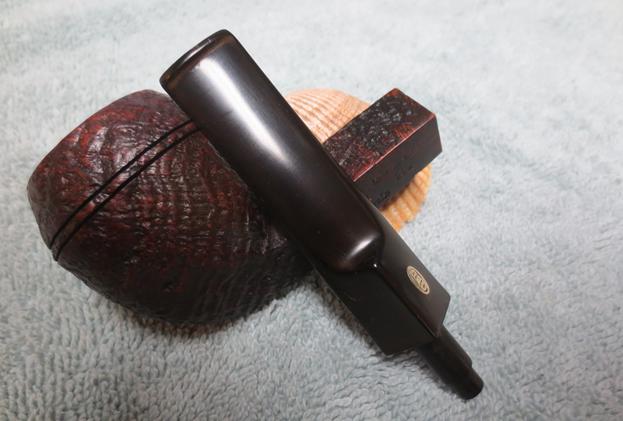
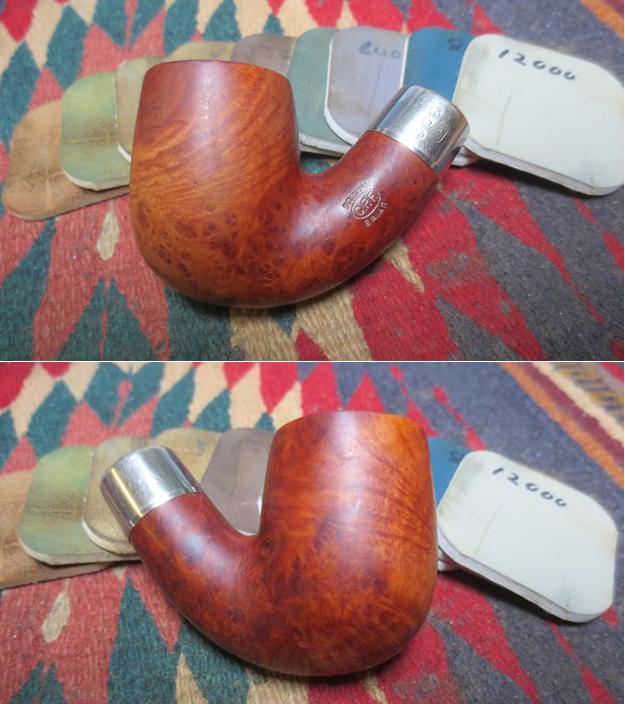
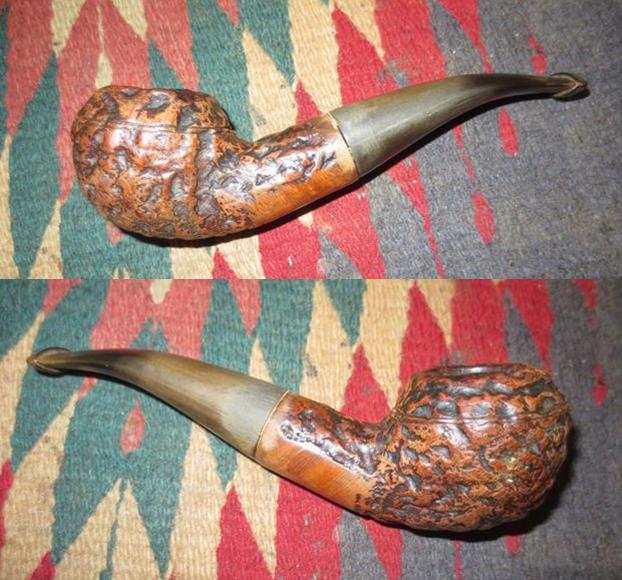
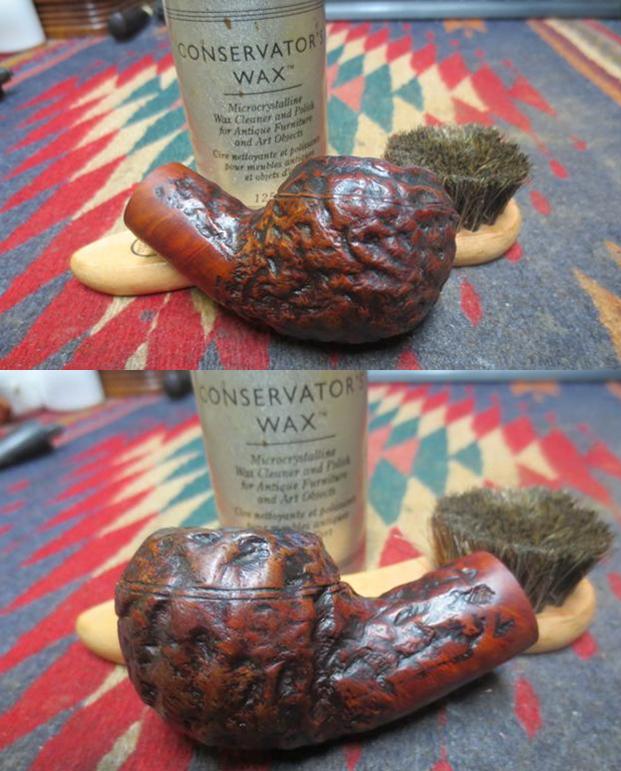
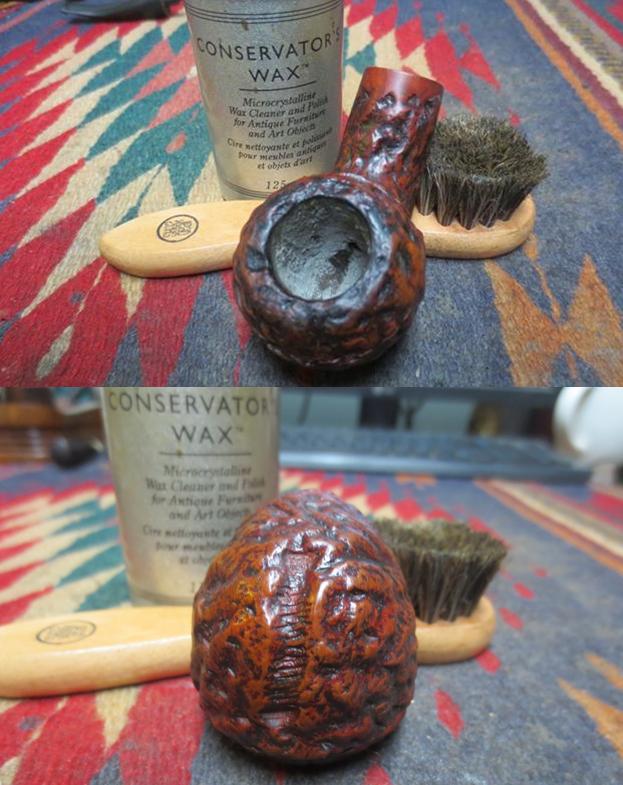
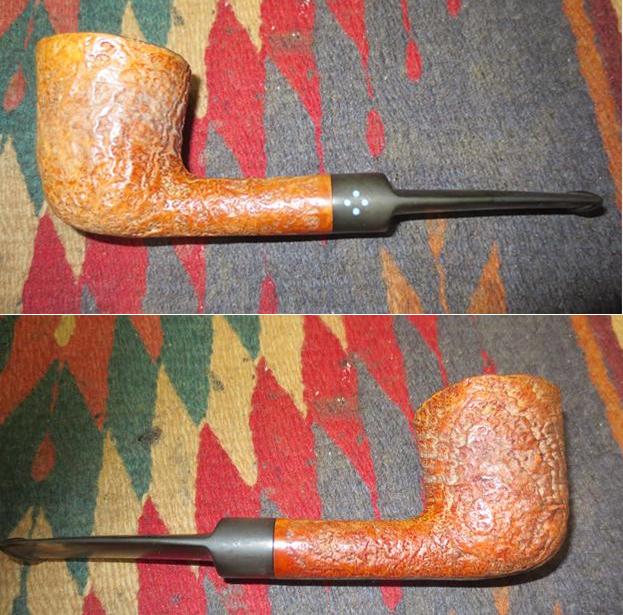
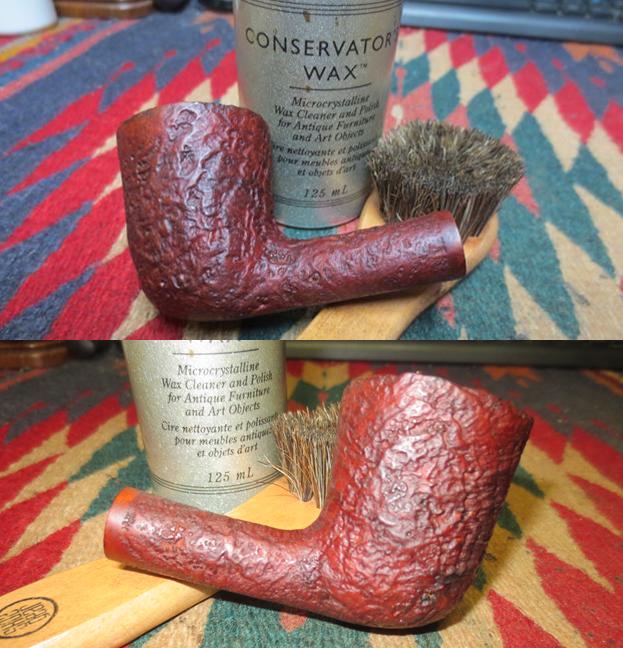
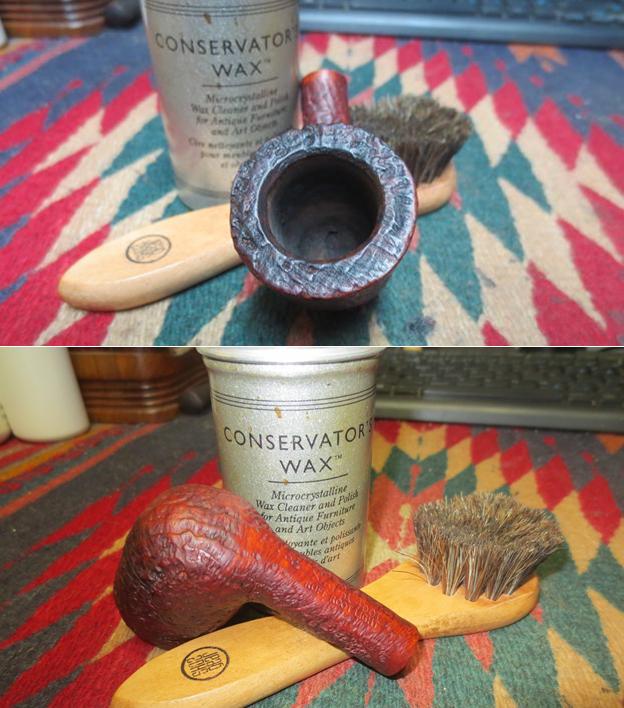
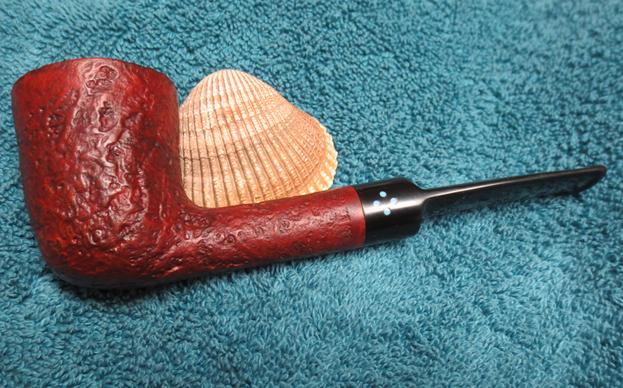
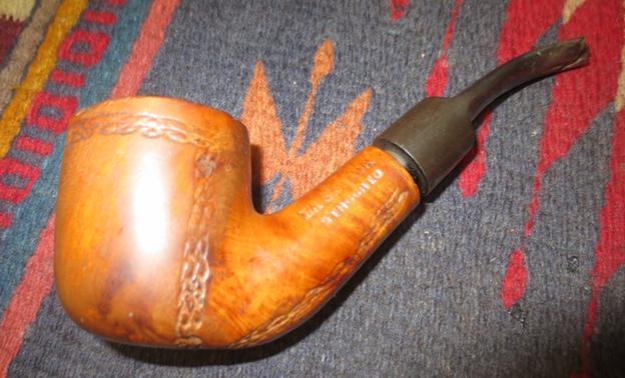
 I buffed the bowl and stem with Blue Diamond on the buffing wheel to polish the minute scratches on the vulcanite and on the briar. I buffed them both until the stem and briar glowed. I gave the bowl and stem multiple coats of carnauba wax. I buffed the bowl and stem with a clean buffing pad to raise the shine. I hand buffed it with a microfibre cloth to deepen the shine. The finished pipe is shown in the photos below. It is ready to go back to the pipe man who sent it to me for restemming and refurbishing. I think he will enjoy it and it will deliver a life time of good smokes to him.