Tag Archives: polishing

Restoring a Unique Motorist Patent Bulldog


Blog by Steve Laug

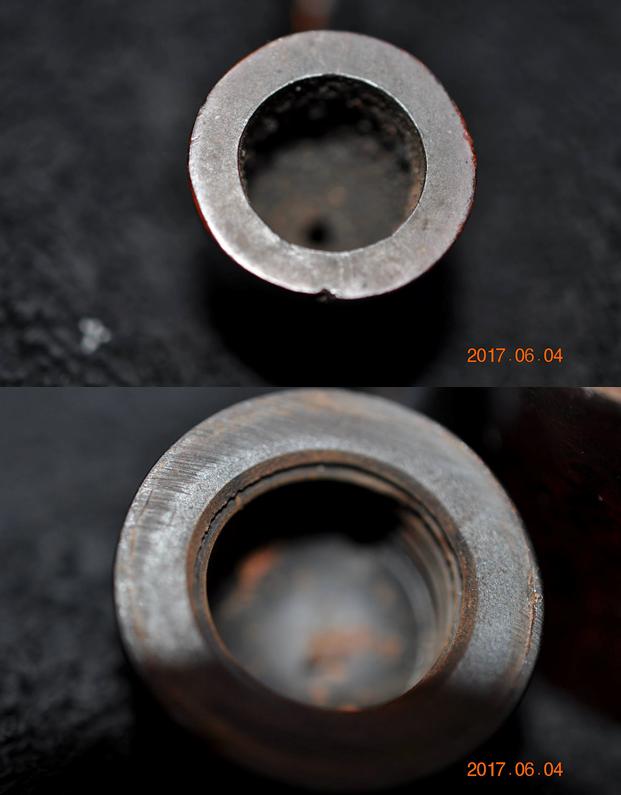
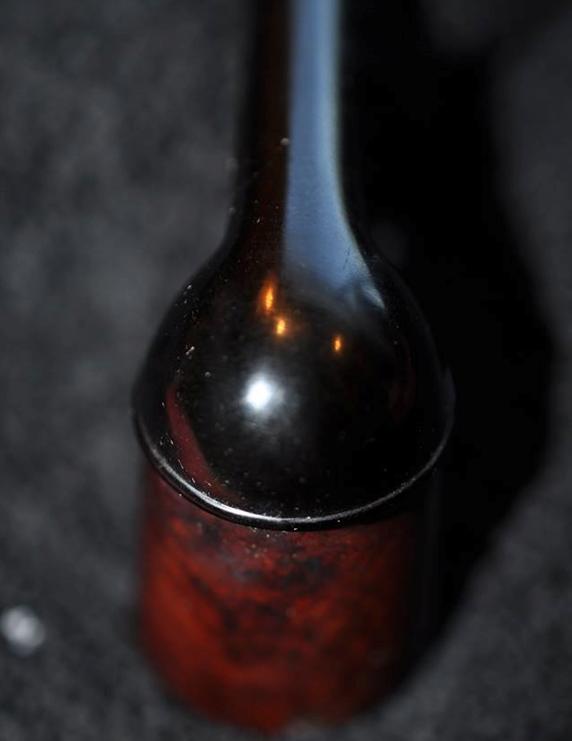
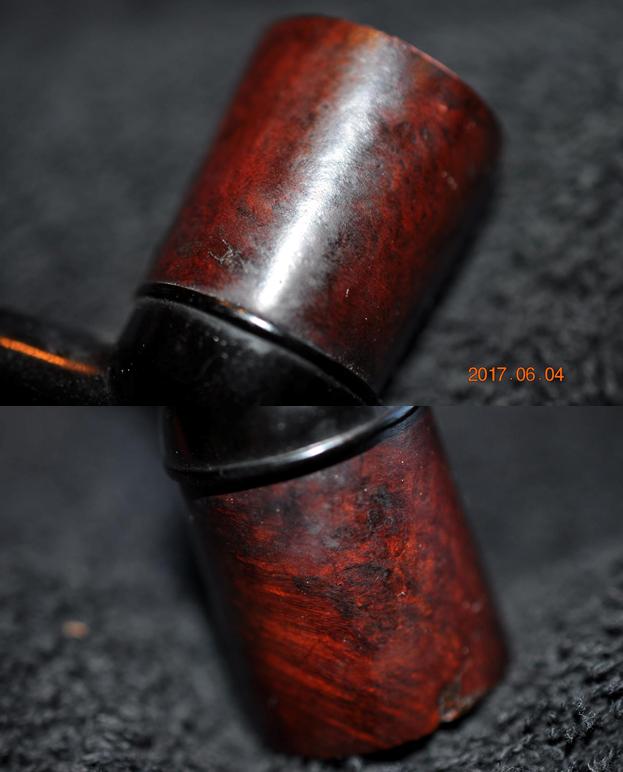
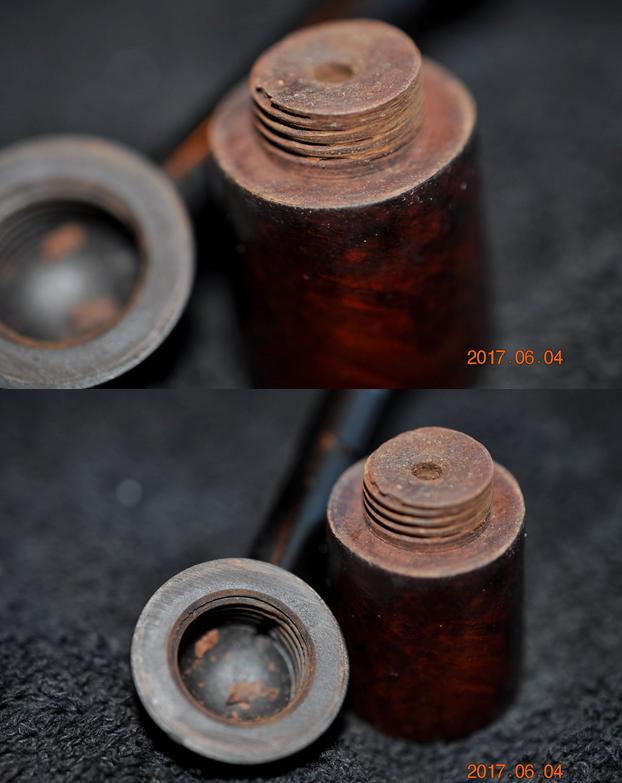
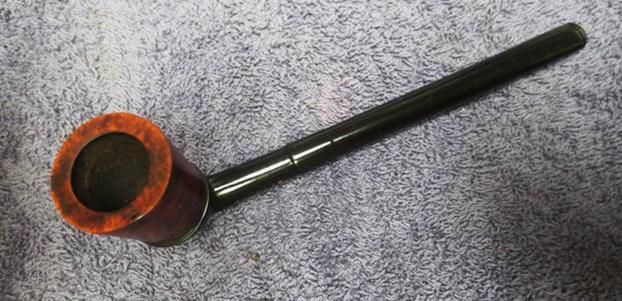
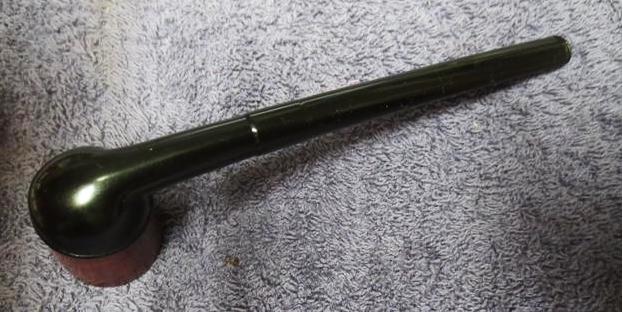
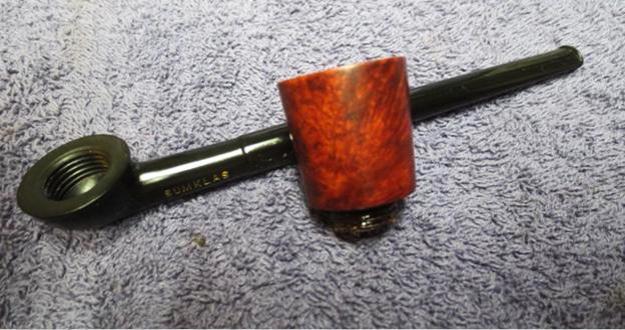
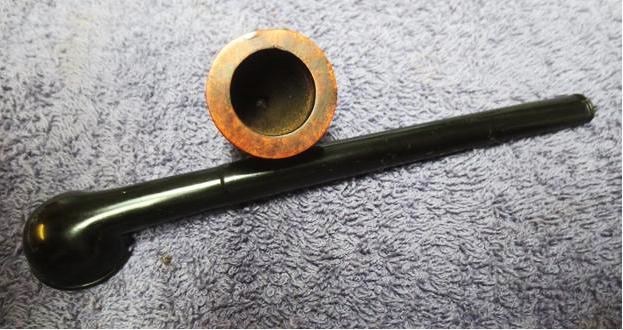
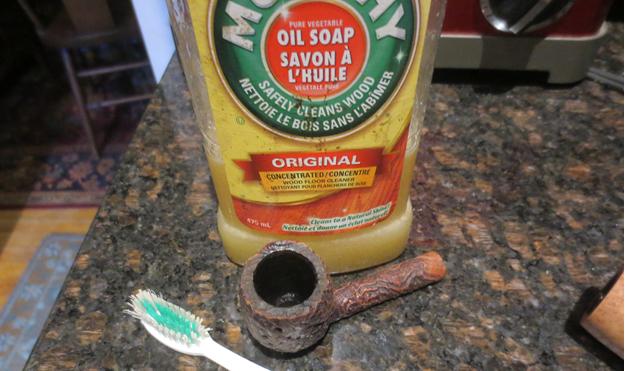
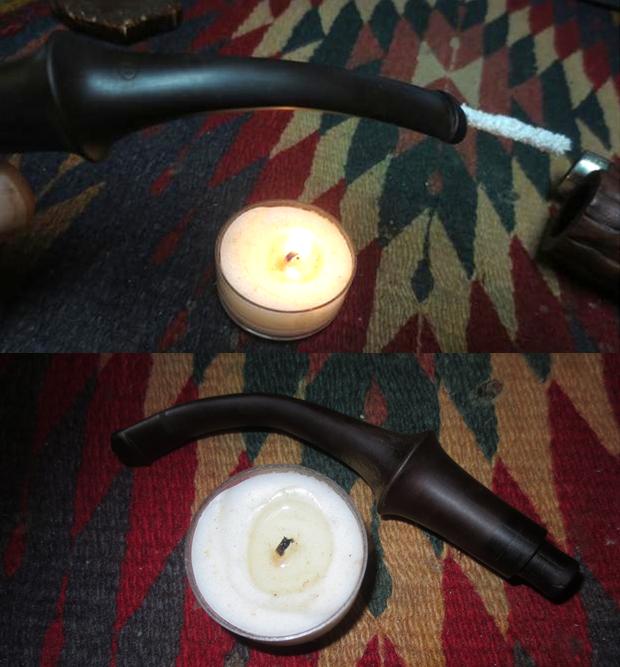
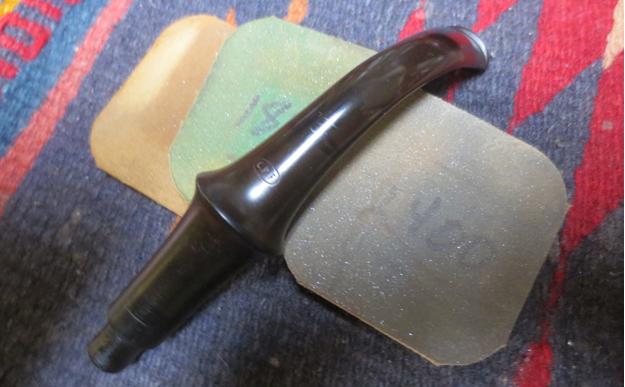
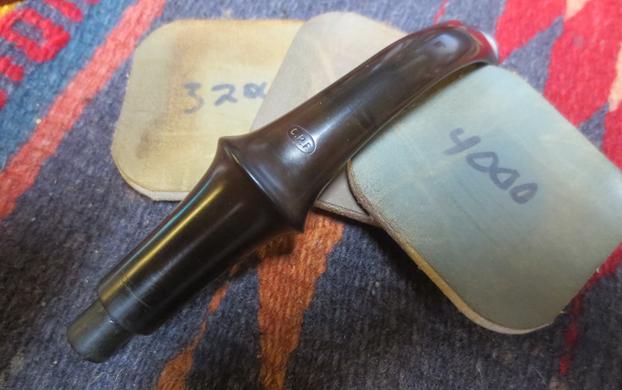
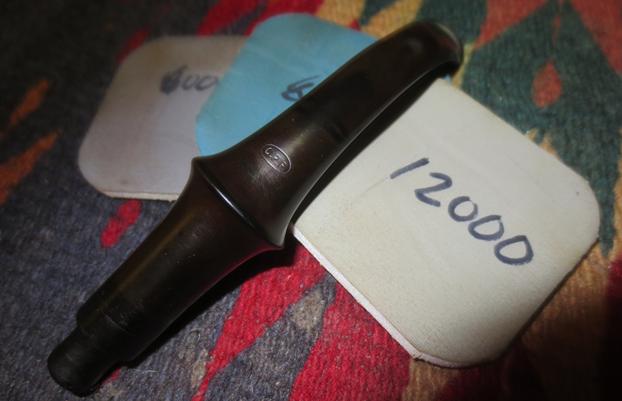
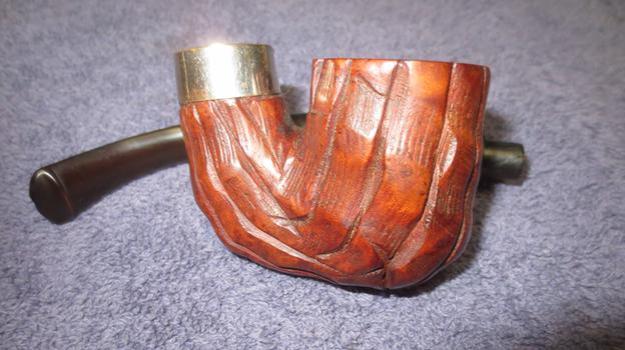
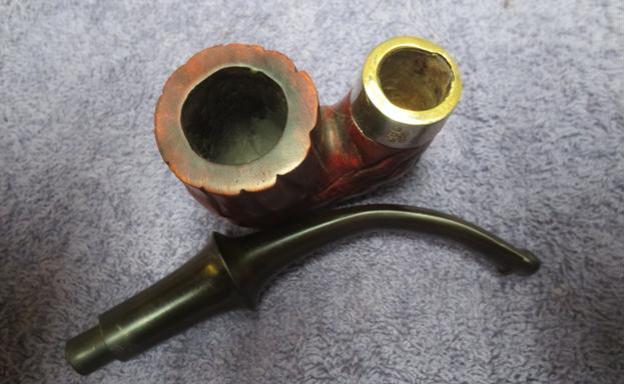
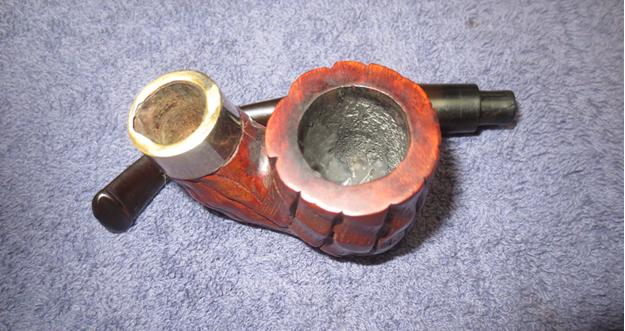
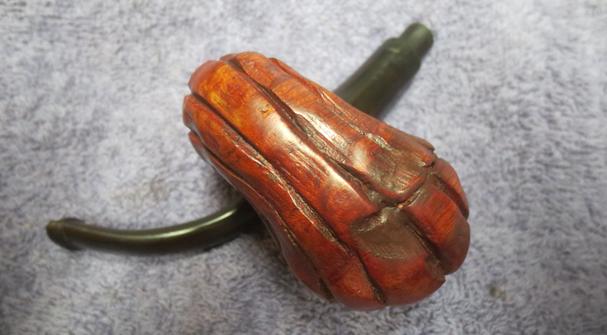
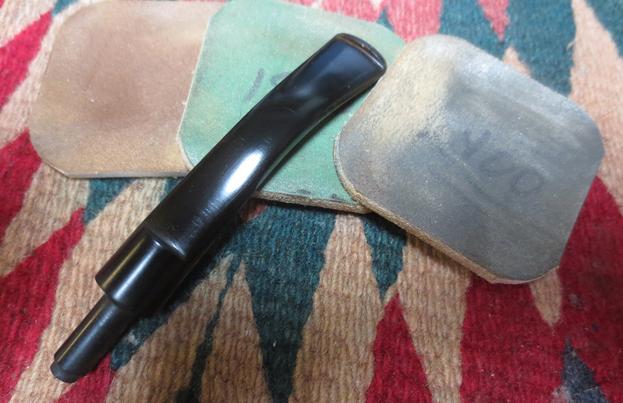
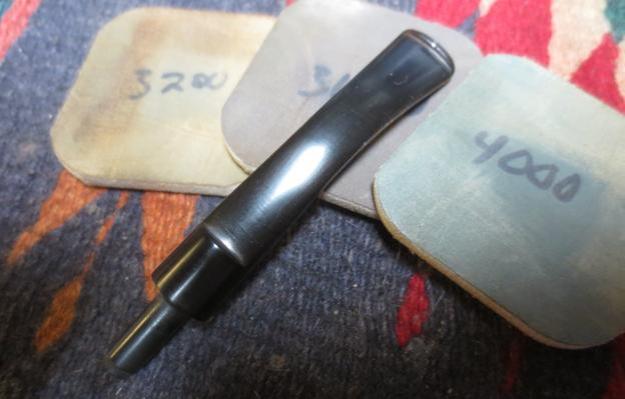
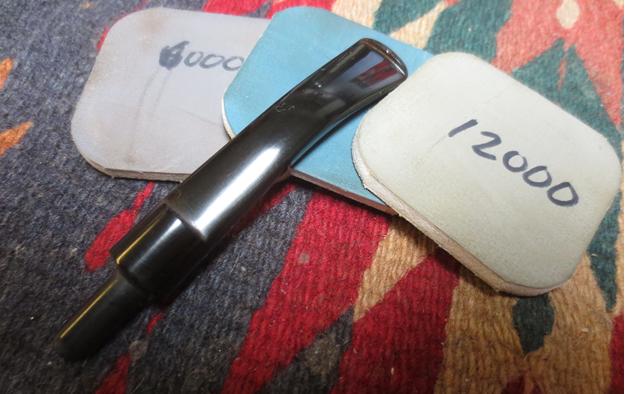
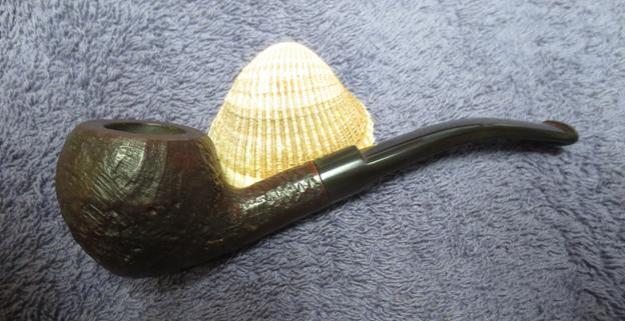
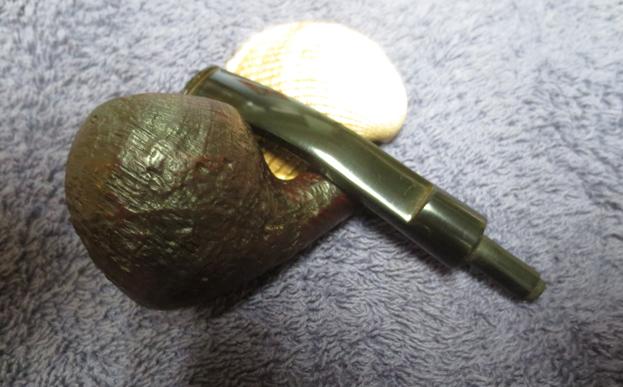
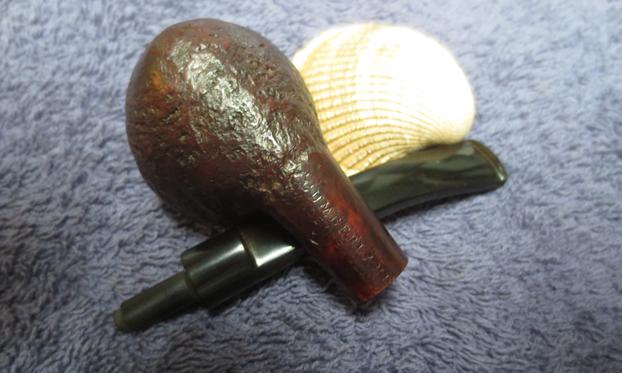
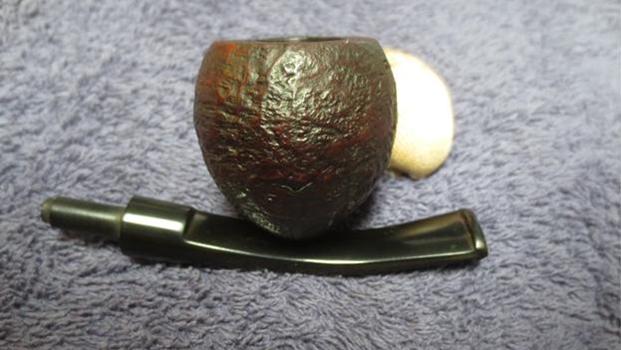
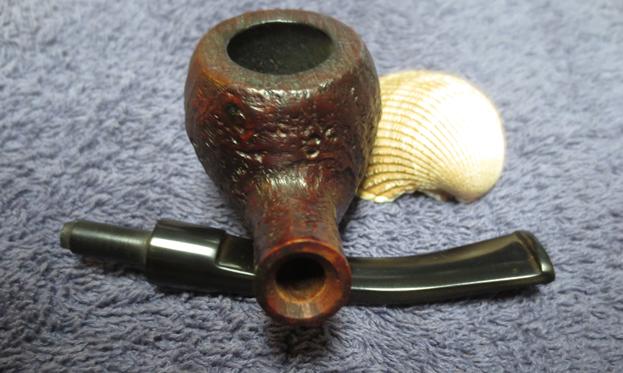
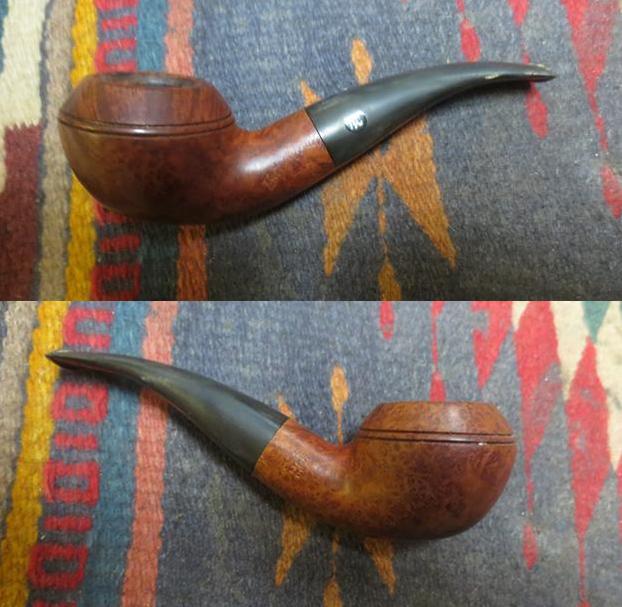
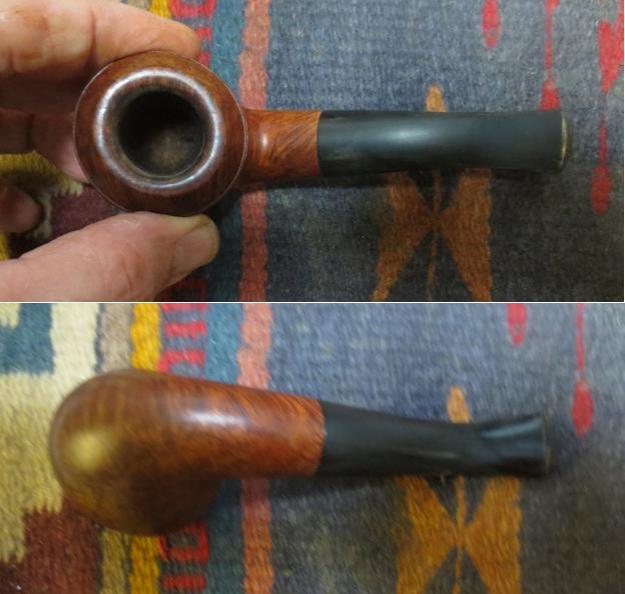
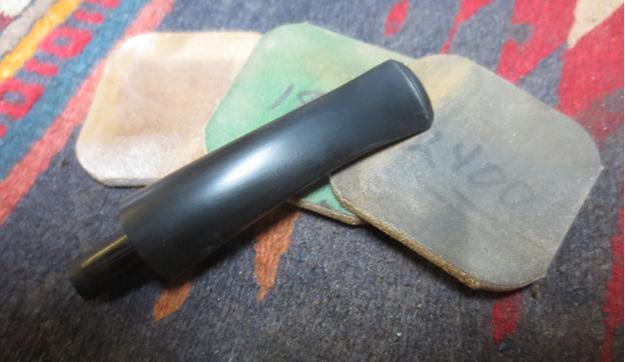
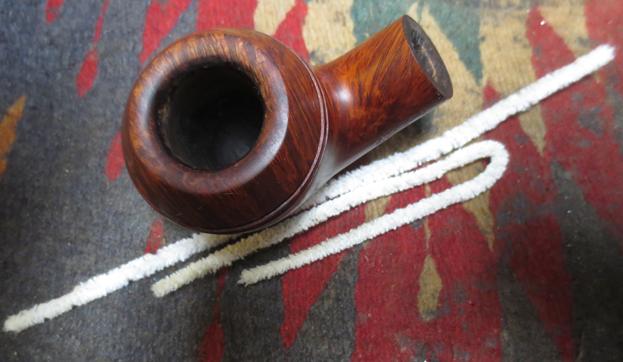
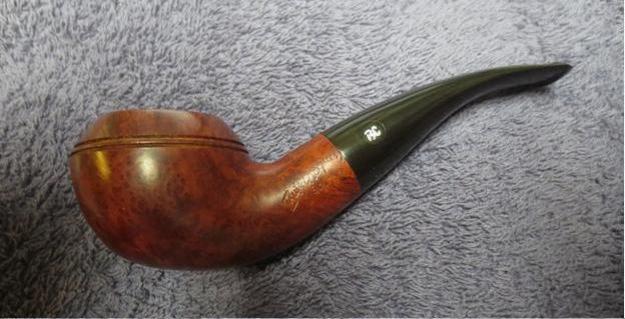
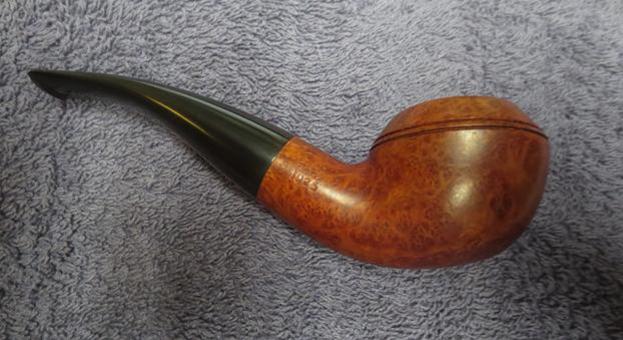
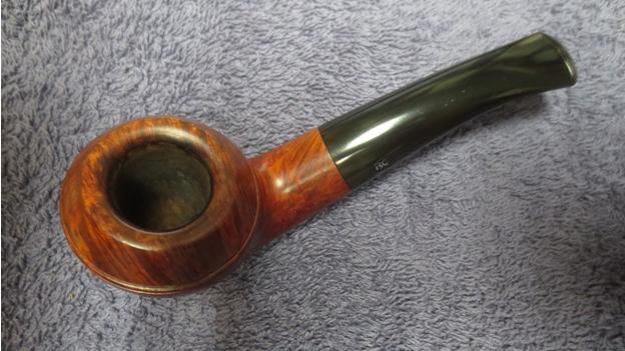
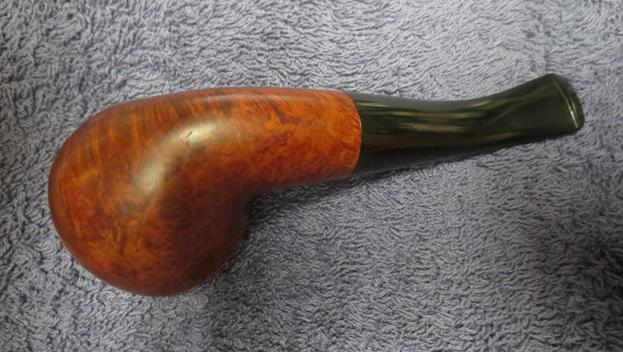
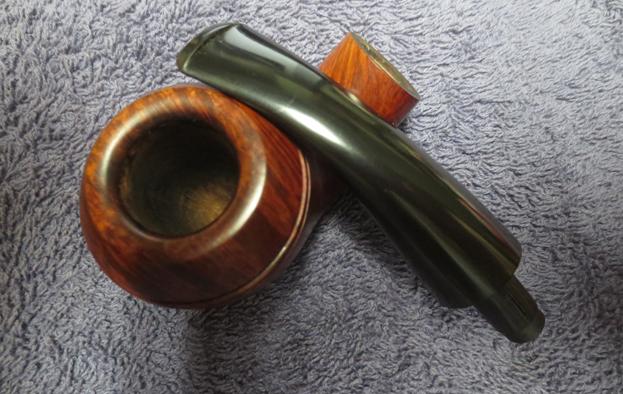
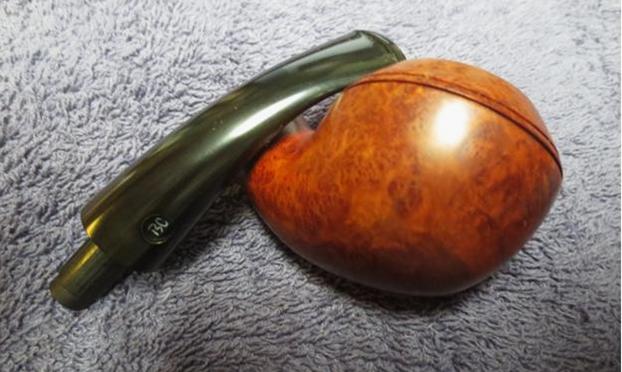
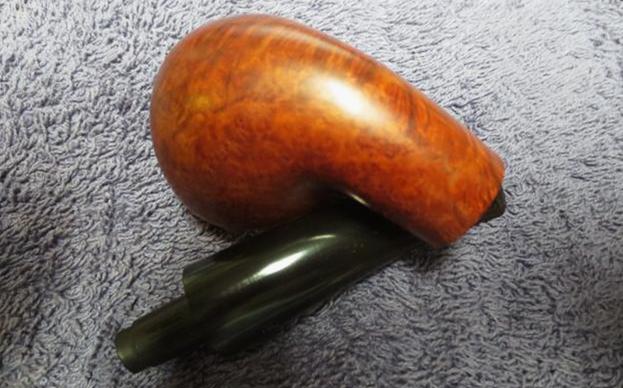
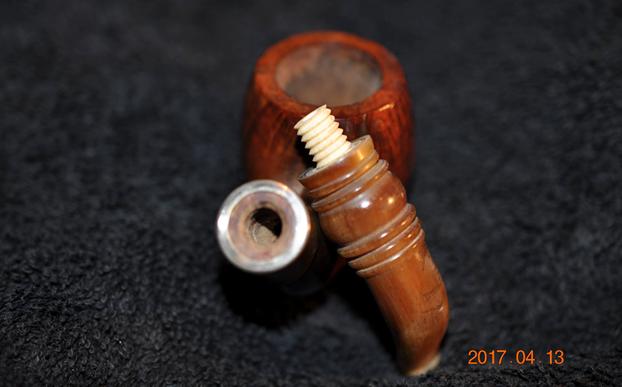
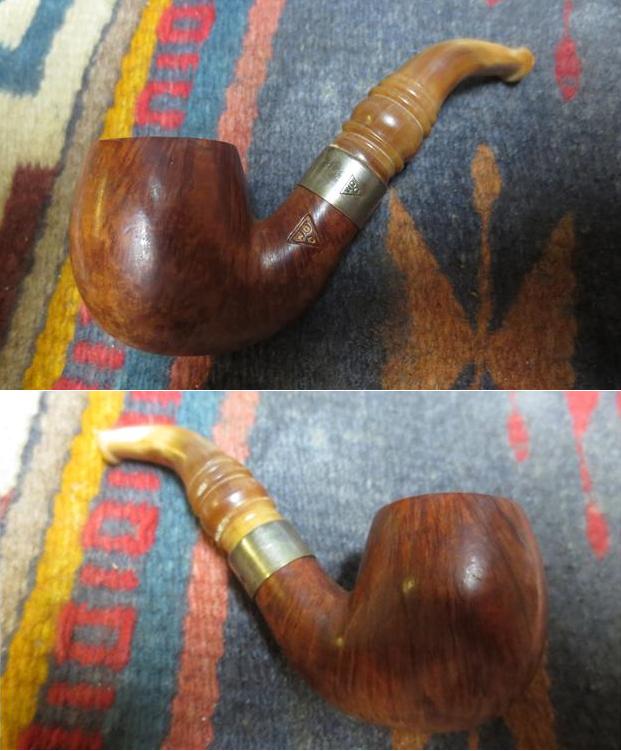
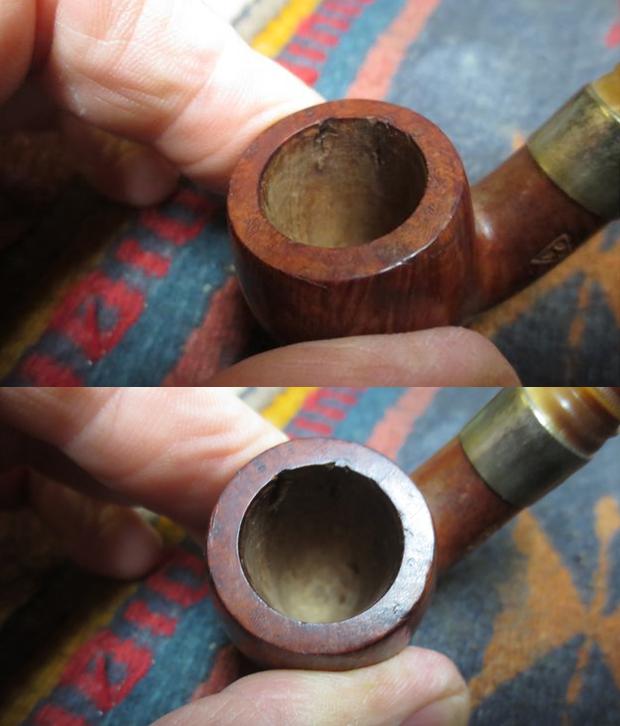
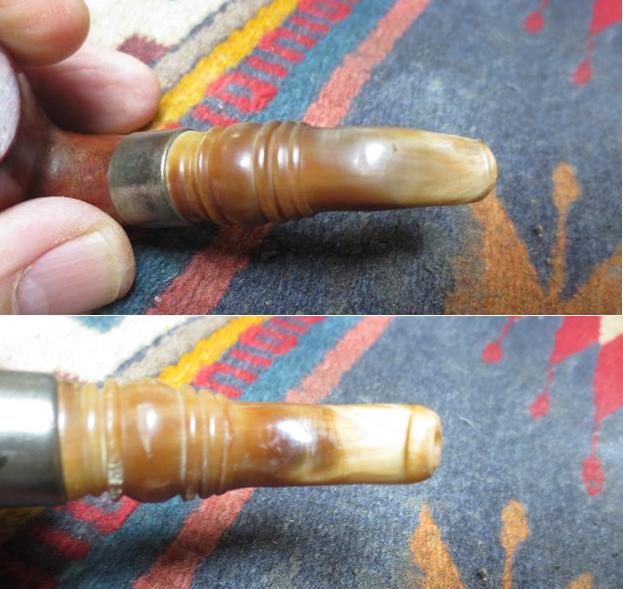
My brother Jeff has an eye for unique pipes. He seems to find more of them than I ever picked up on my own. The next pipe on my work table is classic example of one of his finds. It is a beautiful Bulldog with nice grain around the bowl and when the top cap is in place it looks like it was not drilled. It is stamped Motorist on the left shank in script and Patent on the right shank. On the underside of the right shank it is stamped Italy. I can find no information on the make of the brand but it is possible that it was made in Italy for either Wally Frank or Mastercraft, both had a broad reach of makers that they imported. I am not sure it will ever become clear who made the pipe but it is an interesting piece of pipe history that is well worth restoring. There was a cake in the bowl and lava on top of the bowl once the cap was removed. The inside of the cap was also dirty. The threads on both the cap and the bowl were not damaged. The next set of photos came from the seller’s EBay listing.It has always puzzled me why sellers do not align the stem before they take photos. Often a crooked stem can be a problem but this one appears to have been misaligned. We will know more once it arrives.The finish on the pipe looks to be in pretty good shape underneath the grime and paint specks on the surface.On the top of the rim there were two drilled holes that went through from the rim (first photo below) to the bottom front edge of the bowl (second photo below). I believe they were drilled to draw air into the bowl and help the tobacco burn. The first photo shows the cake in the bowl and the buildup on the rim top. It is a dirty pipe.On the front underside of the bowl you can see the other end of the holes in the rim. They go straight down from the rim and out the front bottom edge. They run between the outer and inner bowl for the airflow into the bowl. I wonder if in some strange way they also cool the bowl.The threaded cap is much the same shape as the cap above the twin rings on a regular bulldog pipe. The cap has threads on the inside that match the threads on the bowl itself. The briar is a pretty piece. There is a small fill on the front edge that blends in very well. The inside of the cap has some tars and carbon on the top portion but there is no burning to the briar.The bowl is stamped Motorist on the left side as shown in the first photo below. The second photo shows the stamping Patent on the right side of the shank.The stem was oxidized and there were some deeper tooth marks and chatter on the underside near the button and chatter on the top side near the button. The edge of the button was worn on the top side.When the pipe arrived in Idaho my brother took some better photos of it to show the finish and the condition of the pipe. You can see the paint flecks on the briar and the general grime that is even in the stamping on the shank sides.His photo of the rim top and the cake in the bowl is clear and shows that the cake is quite thick. The lava overflow on the rim top is also thick and continues onto the shelf that the cap rests on when it is screwed in place.The first two photos below show the sides of the bowl and also show the drilled air holes in the bowl sides on the left and right. The third photo below shows the underside of the bowl and both air holes. The grain on the briar is really nice and follows the flow of the bowl. Jeff took close up photos of the rim top and the inside of the cap to show the carbon buildup on those two areas.The next three photos show the stamping on the pipe as noted above. Notice the debris that is ground into the grooves of the stamping.He took photos to show the condition of the stem. The chatter on the top side was not as bad as I had expected but the marks on the underside were very deep and had sharp edges.Jeff did his usual thorough clean up and when I received the pipe there was little for me to work on in terms of cleaning. He reamed the bowl with a PipNet reamer and cleaned it up with a Savinelli Fitsall Pipe Knife. He scrubbed out the mortise and the airway in the shank and stem with pipe cleaners, cotton swabs and alcohol. He scrubbed the surface of the bowl with Murphy’s Oil Soap and rinsed it with warm water. He soaked the stem in OxiClean to soften the oxidation and bring it to the surface. All that remained was for me to breathe some life into it through the restoration process. I took the following photos to show the condition of the pipe when it arrived in Vancouver. The oxidation on the stem was now on the surface, thanks to the OxiClean soak. The tooth marks were also very clear so now it would not take much to repair them and restore the stem to its original black lustre.The lovely grain on the bowl cap and the bowl are well laid out. There are some small sandpits on the cap that do not detract from the beauty. The twin air holes in the bottom front of the bowl are aligned well and are a distinctive feature of the pipe.When I removed the cap from the top of the bowl I could see how well my brother had cleaned up the inside of the bowl, the rim top and the inside of the cap.I wiped the stem down with Before & After Pipe Stem Deoxidizer to remove some of the oxidation and though it did not work well it did clean up the area around the tooth marks. I “painted” the bite marks with the flame of a Bic lighter to raise them as much as possible. Many of the surface bite marks lifted, but the deeper ones I filled in with Black Super Glue. I sprayed it with an accelerator to dry it and allow me to work on it more quickly. Once it had dried I was ready to clean up the stem and smooth out the repair. I ran a pipe cleaner dipped in isopropyl alcohol through the mortise and the airway in the shank and stem and worked on the slot with a dental pick. It did not take too much work to leave both the bowl and the stem clean.I scrubbed the stem surface with Brebbia Stem Polish and a cotton pad to remove more of the oxidation. While it removed a lot more of the oxidation there was still some in the curves of the saddle stem that needed more work. I worked those over with 220 grit sandpaper to get more of the oxidation off the stem.I polished the curved portion of the saddle on the stem with micromesh sanding pads to remove the oxidation further. I wet sanded it with 1500-2400 grit sanding pads. As I cleaned up the underside of the stem at the saddle there was a small piece of metal embedded in the rubber which pointed to a wartime manufacture date for the pipe (WW2). I have read that they used rubber from old tires to make stems in that era. I rubbed the stem down with Obsidian Oil and let it sit to dry.I polished it more with 3200-4000 grit pads and rubbed it down with Obsidian Oil. There was still some oxidation in the curves on the transition between the saddle and the blade of the stem.I buffed the saddle area with red Tripoli and Blue Diamond on the buffing wheel to remove the last of the oxidation and to polish it. I polished it further with 6000-12000 grit micromesh sanding pads. I finally had conquered the oxidation and the stem shone.I buffed the finished pipe with Blue Diamond once more to polish the pipe and gave it multiple coats of carnauba wax. I buffed it with a clean buffing pad to raise the shine on the pipe. I hand buffed it with a microfiber cloth to deepen the shine. The finished pipe is shown in the photos that follow. It is not only an interesting piece of pipe history it is also a beautifully made pipe. The contrast between the rich reddish, brown stain and the black of the vulcanite stem work really well together. Thanks for walking with me through the restoration process.

Jen’s Trove No. 7 – A Trident Blasted Bent Billiard with a Question of History


Blog by Dal Stanton

This pipe represents the 7th of 8 pipes that Jen rescued from my ‘Help Me!’ baskets.  She’s leaving Bulgaria very soon returning to the US after working with us for a few years.  She is not returning without gifts!  She has chosen a trove of pipes that have garnered her attention to give as gifts to the men in her family.  Each of these gifts has the added benefit of helping the Daughters of Bulgaria, our work here in Bulgaria with women and girls who have been sexually exploited and trafficked in Europe.  My love of restoring pipes as The Pipe Steward is a way of shining a light on the tragedy of those caught in this modern-day slavery.

The ¾ Bent Billiard got Jen’s attention I believe, because of the blasted finish.  The only stamping is under the shank and it is marked, “TRIDENT”.  However, when I saw this pipe from an eBay seller in the UK, my attention was drawn also to the old-style P-Lip military stem and the old vintage feel of the pipe overall.  Here’s what I saw on eBay UK:This seller had other offerings which I also placed bids to take advantage of combined shipping from UK to Bulgaria.  With the Trident, I added a Hardcastle ‘Deluxe’ No. 12, and a Bewlay ‘The General’ to my basket for restoration.  Now, on my work table on the 10th floor apartment of a formerly Communist apartment block, I look at the Trident with the question, ‘Is this pipe actually vintage old or does it just look old?’  I take more pictures to fill in the gap. My first action was to look in my autographed copy of my eBay acquired copy of, ‘Who Made That Pipe?’ by Herb Wilczak & Tom Colwell.  It’s not autographed to me, but still cool!In ‘WMTP?’ the name ‘TRIDENT’ was associated with two names, ‘E Deguingand & Son/ H. Comoy’.  Country of origin, ENGL.  First looking at Pipedia’s article on Comoy’s, I discover that ‘Trident’ is a second made by Comoy’s – one among many!  Looking at PipePhil.eu, I found an example of this Comoy second which still displayed the ‘Comoy’s’ stamping and nomenclature.  The Trident before me carries no other markings and for this reason, I’m dubious of it being from the Comoy’s line of seconds.Then I turn to ‘E Deguingand & Son’ to see what I can find.  Pipedia has a helpful article that collates information about the name.

Deguingand & Son

Emile Deguingand & Son, Ltd. was a briar pipe maker in London at the end of the 19th and beginning of the 20th centuries. Originally they manufactured pipes in London, on Hamsell Street in Cripplegate, but that entire area was destroyed in the fire of 1897. Deguingand began selling at 5 Colonial Avenue, Minories, East London beginning in 1897. That same year Emile Deguingand purchased a pipe factory built by Charles Cayron in 1885 and 1886 at a place called Sur les Etapes in St. Claude, France. The factory in St. Claude was raised and enlarged in 1900 and 1902.

In 1906 Deguingand was granted a patent in France for a pipe consisting of a removable combustion chamber over a lower chamber filled with asbestos into which the airway ran.

In 1910, E. Deguingand & Son, known in France as E. Deguingand et Fils, became S.A. des anciens Etablissements Deguingand et Fils with Francis and Paul Deguingand’s entry into the business. While the plant doubled in size in approximately 1926, it was closed around 1930 and later converted to a commercial warehouse.

One pipe line known to have been sold by Deguingand was the Trident.

The last line is interesting in terms of the exclusivity it seems to imply.  The article is helpful but leaves out much and creates more questions.  When Deguingand opened operation in St. Claude, France, 1897, the same year opening another location in London after the fire of 1897, the assumption I believe, that is true, is that operations continued in both London and St. Claude under the Deguingand name.  The indication is that the operation in France closed in 1930, but there is no indication that operation in London ceased as well.  The challenge I am left with is that I can find precious little about production of Deguingand pipes or ‘Trident’ through the 1900s other than this early century reference by Pipedia.  If theories can be developed from silence, the E. Deguingand & Son Company is NOT listed in the 1949 Tobacco Retailers’ Almanac found at Chris’ Pipe Pages.  Can one deduce from this that pipes were no longer produced under the name?

The only other finding in my research that sheds some light on the E. Deguingand & Son name, comes from ‘Company Search Made Simple’ website. Here I find that E. Deguingand & Sons was incorporated, at least as an English entity, 3/12/1912, and was dissolved 7/30/1996.  The address was listed as 20 VANGUARD WAY, SHOEBURYNESS, SOUTHEND ON SEA, ESSEX, SS3 9RA.  The Director of the corporation was listed a John James Adler, from 8/1/1991 to 7/30/1996 – the same date as the dissolution of the corporation.  Of interest to me, but probably not a surprise for others more informed (!), was when I was trolling around the corporate bones of the corporate umbrellas created to manage sales and acquisitions of pipe names in much of pipedom in England and France – I discovered, Cadogan.  On this site, I compiled this list of well-known names in the pipe world that were started at different times, but all were, 1) dissolved on the same date (7/30/1996, with the exception of Kaywoodie, a few weeks later), 2) who shared the same address (Southend On The Sea) and, 3) had the same Director.  Here’s the list I compiled.What this tells me is that E. Deguingand & Son, Limited, existed at least as a corporate entity in the Cadogan consortium until 1996, but I have no indication that pipes were produced under the corporate name from the 1930s to 1996.  I’m growing in my understanding of the name, but is the Trident before me of a vintage that dates to the early 1900s?  I’m not sure, but one thing about the Trident that creates question – Does the P-Lip Military style stem help place this pipe?  It looks older to me, but my question lingers.

When the well runs dry in my research, I send questions to Steve to help prime the pump.  I share with him some of the research related above and some pictures of the Trident, but my specific question is, “Can a P-Lip stem indicate the age of a pipe – or contribute to its age placement?”  Steve’s first response was helpful in clueing me into the probability that the Trident before me could very well be of an early 1900s vintage.  His response was: “It looks a lot like the Wellington that WDC made in the early 1910-1920s.”  It was not difficult to find these artifacts in Pipedia’s article about the William Demuth Co. and the WDC Wellington – a WDC mainstay over the years. With the uncannily similar Wellington pictured above, courtesy of Doug Valitchka from Pipedia, the Trident lookalike before me could very well be of an early century vintage and a product of E. Deguingand & Son, Limited.

My second inquiry to Steve was how it all worked.  Did WDC make pipes (Wellington styled) for E. Deguingand and E. Deguingand marked them with ‘Trident’ though made by WDC?  Steve’s next response was even more to point questioning the accuracy of attributing the Trident to E. Deguingand.  He said,

I wonder if the E. Deguingand is correct. I wonder if WDC in NYC did not make a Trident pipe. I would do some digging in old WDC catalogues and see if you can’t find it. It has the same style band, same style faux p-lip with the air hole in the end of the button rather than on top. WDC did that I think to avoid issues with Peterson.

I did as Steve recommended and looked at several old WDC catalogs I could find online.  One forum was helpful in providing a WDC Master List.  Unfortunately, no ‘Trident’ listing was evident there or anywhere else I looked indicating a William Demuth Company source. I come up empty finding a direct connection between WDC and the Trident.  If anyone can help solve this mystery, I would be grateful!

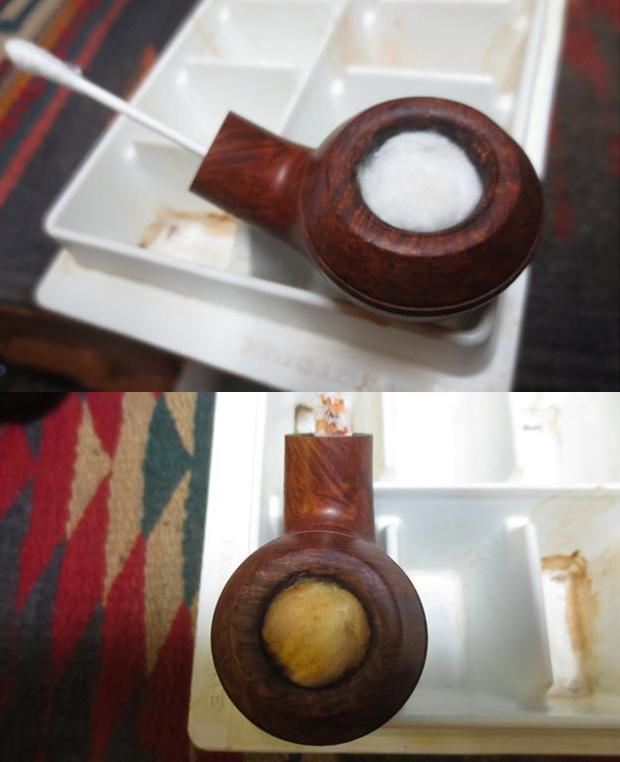
I approach the restoration of this Trident as an early vintage 1900s vintage and will seek to maintain that.   Not knowing at this point if this is an early E. Deguingand Trident or a WDC made Trident, I appreciate the fact that I do have an ‘Ole Timer’ and will handle him with care!  The ‘faux’ P-Lip Military style stem is heavily oxidized and this will be addressed.  The chamber has moderate cake and this will be removed to reveal fresh briar.  The rim has some lava but is in good shape overall.  The stummel needs cleaning of the grime and band polished.  With an appreciation for the Trident before me, I begin the clean-up by putting the P-Lip stem into the OxiClean bath to start dealing with the heavy oxidation. With the stummel in hand, the fire chamber has light carbon cake build up.  I use the Savinelli Pipe Knife to ream the chamber.  It does the job very quickly.  I then wrap 240 grit sanding paper around a Sharpie Pen and sand the chamber wall to remove more residue carbon.  I conclude the chamber clean up by wiping with a cotton pad wetted with alcohol to remove residue carbon dust.  The pictures show the progress. With the chamber reamed and cleaned I turn to the internals.  Using cotton swabs, pipe cleaners dipped in alcohol and needle files to scrape the edge of the mortise, I work on cleaning the internals of the stummel.  The internal architecture of the mortise has two internal holes drilled.  The upper hole is the airway leading to the draft hole.  Underneath this, a hole is drilled to create a reservoir for moisture to collect.  I take a picture of this and include a cut-away of a WDC Wellington from The Briar Files discussion of WDC Wellingtons After some effort working on the gunk removal, and with the growing need to attend to other obligations not having to do with pipes or their restorations, I decide to continue the cleaning job using the kosher salt/alcohol soak.  I fill the chamber with kosher salt that leaves no aftertaste, and twist and stretch a cotton ball to insert into the mortise, acting as a wick to draw out the oil and tar.  I use a large eye dropper and fill the bowl with alcohol until is surfaces over the salt.  I set it aside and let it do it work.Later, I remove the very oxidized P-Lip Military stem from the OxiClean bath and the bath did the job of raising the oxidation to the surface.  The stem is now a light grey color not the usual dark olive green.  I go to work removing the oxidation using a barrage of tools.  I wet sand the stem in warm to hot water for about 30 minutes using 600 grit paper!  Oxidation is very stubborn in the edges of the P-Lip orific button lips.  I utilize hard edges to wedge the sand paper in the corners.  I then use 0000 grade steel wool to work over the entire stem including the hard to reach corners and curves.  Finally, I use Mr. Clean MagicEraser to put the oxidation to rest.  This phase looks good – it didn’t come easily!I go directly to cleaning the internals of the stem with pipe cleaners dipped in isopropyl 95%.  It did the job quickly.After some time, I return to the stummel that is having a salt/alcohol soak. The salt has darkened showing that it has done its part.  I remove the expended salt and cotton wick and clean the stummel with paper towel to remove residue salt.  I return to cotton swabs and pipe cleaners, also using long bristled brushes to finish the job. With internals clean, I take another look at the stummel surface.  I use undiluted Murphy’s Oil Soap to remove the grime in the crevices of the blast and on the rim top.  I utilize cotton pads and a bristled tooth brush.  The rim has mild cake and I use a mild kitchen scrub pad to gently clean it.  I also clean and polish the band while I was at it. Because there was normal wear around the rim, the cleaning leaves lightened areas devoid of finish, though the blasted architecture of the rim is intact.  Using the lightest stain stick I have in the basket (Furniture Repair Marker – Oak), I color in the rim.  I like the way it darkened and complimented the texture of the hues.  I decide to use the stick on the stummel as well to highlight and deepen the peaks of the blasted surface.  I like how it turns out overall – nice.  I set the stummel aside to dry thoroughly. I take the stem to begin the micromesh pad cycles and to my chagrin, I see that the oxidation is peeking through – mainly around the curves leading to the crest of the military stem (I’m not sure if there is a technical name for that part of the stem!).  Ugh!  It’s already late so I elect again to put the stem in the OxiClean bath to see if it will do the job.  I heat the OxiClean solution in the microwave until it’s warm and plop the stem back in and turn out the lights!The next morning, I go straightaway to the stem in the bath, fish it out, wet sand the problem, oxidized areas with 600 grit paper then with 0000 steel wool.  I’m hoping that the oxidation is now removed as much as it can be removed.  I move on to wet sanding using micromesh pad 1500 to 2400, then dry sanding with pads 3200 to 4000 then 6000 to 12000.  I follow each cycle with an application of Obsidian Oil to revitalize the once oxidized Military, Faux P-Lip style stem.  I’m pleased with the pop of the vulcanite – it looks good. I put the stem aside to fully absorb the Obsidian Oil and to dry. Next, I apply Museum Wax to the bowl with a small cotton cloth – working the wax in the blasted surface landscape.  Then, I buff the bowl with a shoe brush to assimilate the Museum Wax into the surface and begin the shining process.  Turning to the Dremel, I mount a clean cotton cloth buffing wheel and set at speed 2 (40% full power) and more fully buff the stummel.  The buffing wheel does a good job working the wax in more thoroughly and bringing out a deep, resonate shine.  The pictures show the progress. With the Dremel already in use, I load the cotton cloth wheel dedicated to applying Blue Diamond compound. Using the wheel, I apply the compound to the nickel-plated band to bring out the shine.  As hoped, the buffing does the job well.  The Trident is dressing up well! Taking the stem, I mount the cotton cloth buffing wheel dedicated to applying carnauba wax.  I apply the wax to the stem to bring out the shine and protect it.  After applying a few coats of carnauba wax, I then reunite the stummel with the Military style stem and give the entire pipe a rigorous hand buffing using a microfiber cloth to raise the shine of the Trident even more.

Only two things leave me a bit wanting with the restoration and recommissioning of this Trident Blasted 3/4 Bent Billiard – the distinguished Military stem still holds some small traces of oxidation around the concave curves of the stem’s crown or horn.  Yet, my, my, it looks good mounted on the blasted stummel with its newly polished band!  The other item was not being able to identify clearly the maker of this Trident – whether E. Deguingand according to Wilczak and Colwell or the Wm. Demuth Co. as Steve suspects because of the preponderance of similarities between the Trident and WDC’s mainstay of the same style pipe, the Wellington.  In whatever way this question is ultimately settled, the Trident’s vintage status seems to place him in the 1910 to 1930 age range.  Truly, an ole timer who is now ready for another lifetime serving a new steward – gifted to one of Jen’s family members as she soon returns to the US from Bulgaria.  Her gifting helps to benefit the Daughters of Bulgaria, our work here in Bulgaria with those women and girls who have been sexually exploited and trafficked in Europe.  For more information about this, and why I do what I do, check out my blog at The Pipe Steward.  Thanks for joining me!

A Messy Cleanup on a Brial System Pipe


Blog by Steve Laug

Over the years, I have always wanted to pick up a Brial system pipe but always have been outbid on them on Ebay. I put in what I think is a fair bid and at the last minute the pipe was always sniped and I lost out. I mentioned it to Jeff one time in a conversation and he snagged one for me to work on. I was excited to get a hold of it when he sent it to me. He took some photos of the pipe to show its condition and to whet my appetite. I have included those in the first part of this blog.The pipe was in surprisingly good shape. The briar was not too bad with a few sandpits on the sides that gave it character. The finish was dirty and worn. The bowl had a thick cake and lava had flowed onto the rim top. There was also damage to the inner edge of the rim leaving the bowl slightly out of round. The damage appeared to be from reaming with a knife to cut back the cake. The alloy body was oxidized and scratched but looked quite sound. The stem was worn and dirty but very restorable.Fortunately the pipe came apart fairly easy. Sometimes these metal pipes get “welded” together with the dried tobacco juices and tobacco making them virtually impossible to take apart. The first photo below shows the shank end of the alloy tube with the mouthpiece coming out at the top. The cap is stamped Brial over Patent Pending.With a little work, my brother was able to remove this end of the tube. Inside the tube was a bent wire and wrapped around that was a lot of tissue paper that acted as a filter. It was dirty by at least it was dry. The next series of photos tell the story of the unraveling of the packing in the tube. It held a lot of tissue paper or as I later found out “toilet” paper. The next photos show bent wire that the toilet paper is wrapped around as well as the end of the tenon sitting in the end cap. It appears to be a nut that is threaded onto the tenon of the stem. The buildup of tars, oil sand dried tobacco “lacquer” is thick in the tube, on the end cap and the tenon nut. Jeff took the bowl off the alloy tube at this point and took the following photos. I appears to have a hollow screw in the bottom of the bowl that turns onto the top of the alloy tube. There is a bump on either side of the base tube to stabilize the bowl when it is in place.The next two photos show the condition of the bowl and the rim top. You can see the cake in the bowl, the lava on the rim top and the damage to the inner edge of the bowl.I remember when I first started looking at getting a Brial pipe I Googled and found a write up on the brand on the Smoking Metal Website. It was that brief description, the photos and printed advertisement that hooked me and set me on the hunt to acquire one of them. I have included that write up for you. If you wish to read it on the website here is the link – http://www.smokingmetal.co.uk/pipe.php?page=70.

The BRIAL pipe is basically an alloy cylinder to which the briar bowl is screwed through the base of the bowl. The front end is permanently sealed with an alloy endpiece. The cylinder is filled with a tissue to act as an absorption media. This can be tamped in or extracted by means of the probe attached to the mouthpiece plate.

To enable the pipe to stay upright on a table, two dimples have been made in the underside of the cylinder to act as ‘feet’ as shown in the photos above (my edit).

Brials were available in natural aluminium, brass anodized finish or black as shown in photo below.

The pipe was patented and manufactured by Salimar Oden in Jefferson Historic District, Muskegon, Michigan. It is believed he continued to market them until his move to Florida in 2000.

Smoking Metal also had a copy of this advertisement sheet on their site. Personally, I love the wording and descriptions on these older advertising flyers. The way they speak of the pipes and what they deliver always gives me cause to laugh. This one is no exception. I include it below. Make sure to give it a read.I posted a note on the Facebook Metal Pipe Smokers Group asking about information on the pipe and potential patent information. One of the members, Cody Easom posted some pictures of a new old stock, unsmoked Brial with the various inserts that came with the pipe. The first photo shows the new pipe with the box and the insert. The second photo shows the insert itself. The third and fourth photos show the inside of the new pipe. Now, the goal is in front of me – to get the old pipe on my table to look like this one. My brother did an amazing job cleaning out the inside of the pipe. He reamed the bowl with a PipNet reamer and took the cake back to bare briar. He cleaned out the inside of the tube/cooling chamber and the airway in the screw in the bottom of the bowl and the stem with pipe cleaners, cotton swabs and alcohol. He scoured out the inside of the chamber with steel wool, cotton swabs and alcohol until the inside shone. When I brought it to my work table I was so intrigued by the pipe that I forgot to take photos and just jumped into the refurbishing of the pipe.

I ran a cotton swab and pipe cleaner through the bowl and the stem and it came out perfectly clean. I wiped out the inside of the bowl with a cotton pad and alcohol and it also was clean. I twisted a cloth into the tube/chamber and it too was very clean.

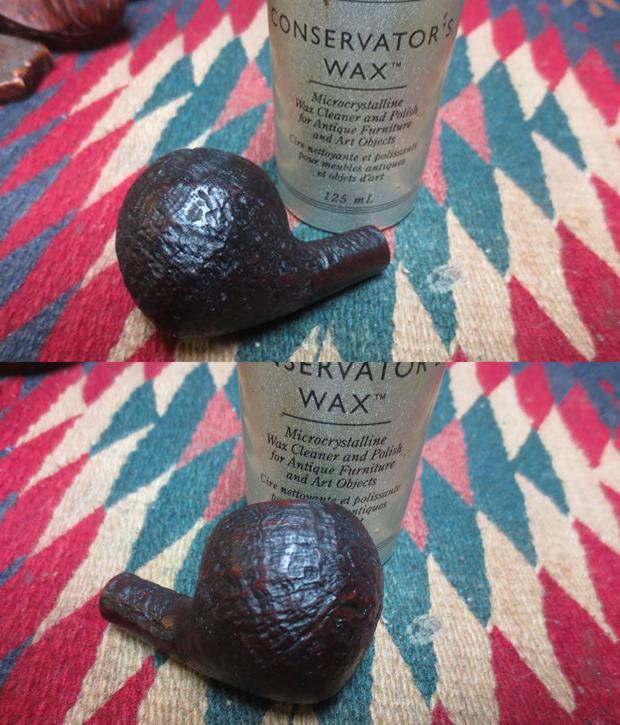
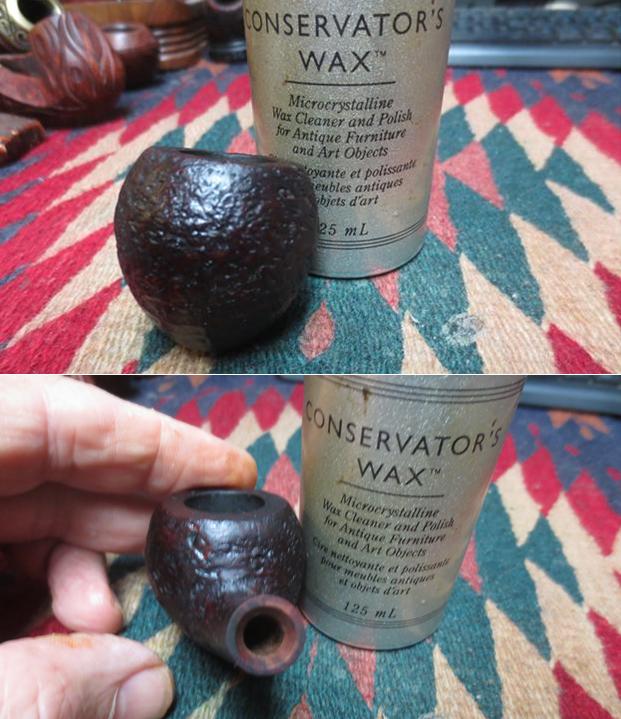
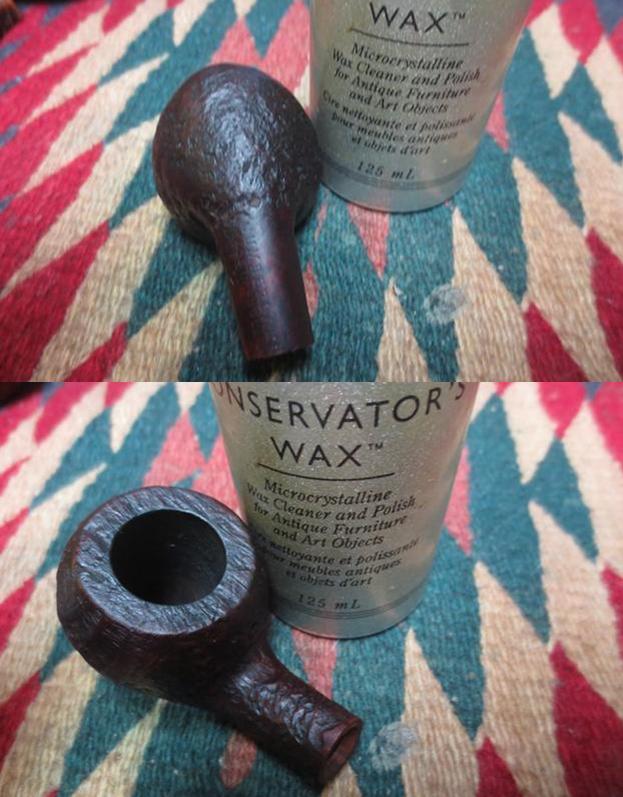
The bowl was out of round when all of the grime and tars had been removed from the rim top and bowl. I used a folded piece of 220 grit sandpaper to smooth out the damage on the inner rim edge. It took some careful sanding with the paper to even out the edges and bring the bowl back into round.Once I had the rim edge cleaned up I worked over the entire bowl with micromesh sanding pads to polish it. I started sanding it with the 1500-2400 grit pads and worked on the rim top and edge as well as the sides and bottom of the bowl. I continued to polish it with 3200-4000 grit pads and finished it with 6000-12000 grit pads. I gave the bowl a coat of Conservator’s Wax and buffed it with a soft cloth. I polished the exterior of the aluminum tube/chamber with micromesh sanding pads. I used worn pads that I have an excess of at present to polish the scratches in the aluminum. I polished it with 1500-12000 grit pads and wiped it down with a jeweler’s polishing cloth after each set of three pads. The photos show the progress. While there are still scratches there is a deep shine to the aluminum that really glows. The stem had some tooth marks and chatter on the top and bottom sides near the button. They were not deep so I sanded the stem with 220 grit sandpaper to remove the marks. I polished the stem with micromesh sanding pads – wet sanding with 1500-2400 grit pads and dry sanding with 3200-12000 grit pads. I rubbed the stem down with Obsidian Oil after each pad. After the 12000 grit pad I gave it a final coat of oil and set it aside to dry. I buffed the bowl and tube with Blue Diamond on the buffing wheel and carefully buffed the stem. The stem appears to be nylon so I wanted to be very careful to not buff it to hard and make work for myself. I gave the entire pipe multiple coats of carnauba wax and buffed it with a clean buffing pad. I hand buffed the pipe with a microfiber cloth to deepen the shine. The finished pipe is shown in the photos below. It is truly a unique piece of pipe history and certainly a pipe that I am going to have to try – I want to see if it delivers what it promises. Thanks for walking with me through this refurb.

Cleaning up an Unusual Petite WDC Monitor Disk Pipe


Blog by Steve Laug

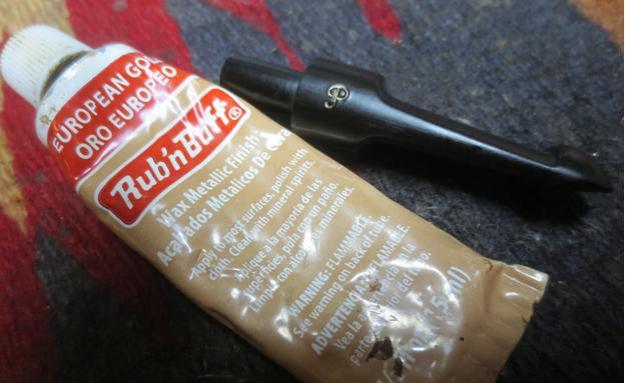
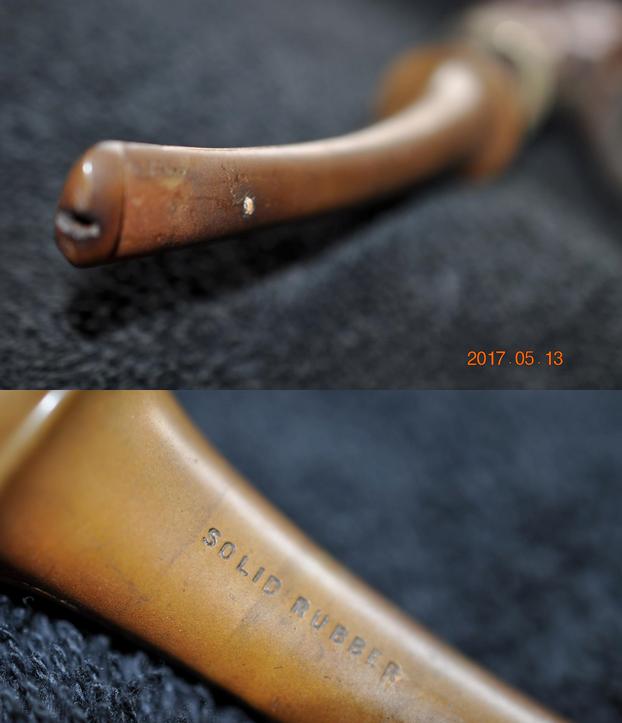
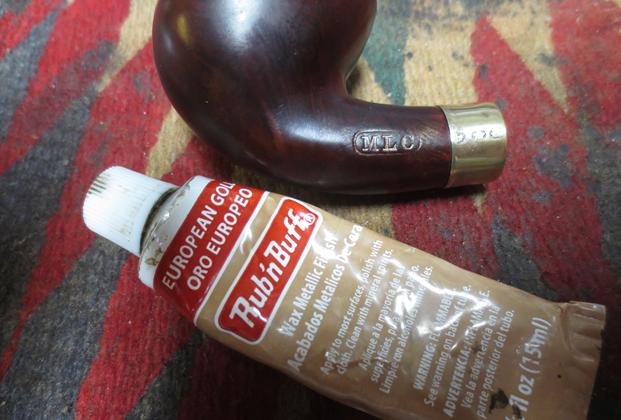
This petite and unusual disk shaped pipe came to me in the lot my brother and I found on our virtual pipe hunt in Montana (https://rebornpipes.com/2017/04/26/a-virtual-pipe-hunt-a-new-way-to-experience-the-joy-of-a-pipe-hunt/). It was in the same lot as the older C.P.F. and WDC pipes that I have been working on. I am guessing it is from the same era as the rest – late 1880s through early 1890s – but I am not positive. I can find nothing on the WDC Monitor in my pamphlets, books or online. The dimensions give you a picture of the size – length 4 ½ inches, height 1 3/8 inches, diameter of the bowl 1 inch, diameter of the chamber ½ inch. I have also included a photo of the pipe next to a Canadian Toonie ($2 coin, same size as the American $2 coin) for you to get an idea of the size of the bowl (the second photo was taken after I had begun the cleanup on the stem and band).The pipe was in decent condition. The finish was worn and dirty. There was a cake in the bowl and the inner edge of the rim was damage slightly on the back edge. There was lava on the top of the rim but it looked like it was not too heavy and it did not appear that there was burn damage. There was one fill/sandpit on the front side of the bowl near the top. The stem was like the WDC Wellington faux P-lip with the airway coming out at the end rather than on top. It was oxidized and dirty. There were some light scratches and chatter on the stem but it was in decent shape. The brass band was oxidized and dirty with some heavy buildup on the edges where it met the briar. It was also loose on the shank. My brother took quite a few photos to show the look of the pipe. It really is an interesting shape and one that I have not seen in this aged pipe before.The stamping on the shank of the pipe had some faded gold leaf and read Monitor in script and underlined on the left side and WDC in a triangle on the right side. The stamping was very sharp with a little shallowness on the capital M of Monitor.The grain on the bowl was very nice and the carver had placed the shape on the grain to highlight the variety of grain – birdseye, cross grain and flame. It is a good looking piece of briar and I could only find the one fill. The next two photos show the bowl. Notice not only the cake and the lava overflow on the rim but also the small nicks on the back, inner edge of the rim in both photos.The stem was oxidized as noted above and had scratching but did not have any tooth marks or chatter. The airway in the button was still round and did not show signs of damage. The WDC triangle logo was stamped on the top side of the stem behind the saddle and on the underside of the stem it was stamped SOLID RUBBER. The Solid Rubber stamping was fainter than the WDC logo on the top side of the stem with the word Rubber fading toward the end.Jeff thoroughly cleaned the pipe before he sent it to me. He reamed the bowl and scrubbed out the mortise and the airway in the shank and stem with alcohol, cotton swabs and pipe cleaners. He scrubbed the externals of the briar with Murphy’s Oil Soap and put the stem in a bath of Oxyclean to bring the oxidation to the surface and soften it. The next photos show what it looked like when it arrived in Vancouver. He did a great job cleaning up the rim and other than the small nicks on the back side of the inner edge it looked flawless.The oxidation on the stem came to the surface after the Oxyclean soak and it had that “wonderful” brown tint that would need to be removed.I wiped the bowl down with a soft cotton pad and a little alcohol to remove any dust or debris left behind by the packing material and dried it off. I used some Rub’n Buff European Gold to touch up the stamping on both sides of the shank. I reglued the band with a white all purpose glue and polished it with micromesh sanding pads.I used a folded piece of 220 grit sandpaper to work over the damage to the rim edge and it did not take too much work to remove it without damaging the shape of the rim or the bowl.I polished the rim top and rim edge with micromesh sanding pads to smooth out the remaining scratch marks from the sandpaper. I hand buffed the bowl a microfiber cloth and took the next four photos to show where I was at with the pipe at this point. I rubbed the stem down with Brebbia Stem Polish to remove as much of the oxidation as I could. I worked on it with 1500-2400 grit micromesh sanding pads. I took the next photo to show the stem at this point. There was still oxidation that shows up under the bright flash.I worked on the stem some more with 400 grit wet dry sandpaper to further remove the oxidation and when I was happy with the result I used some Rub ‘n Buff European Gold to fill in the WDC Triangle logo on the top of the stem behind the saddle. Like its name you put the gold on the place you want it to be and rub it off. The next two photos show the process. The excess gold turned the area around the stamping gold as well. I  would need to buff it off and finish the polishing with micromesh pads.I buffed the stem with red Tripoli to polish it further and remove some of the excess gold on the stem and saddle. I polished it with 3200-4000 grit micromesh pads and rubbed it down with Obsidian Oil.I buffed the pipe and stem with Blue Diamond on the buffing wheel to polish it more. I gave the bowl and stem multiple coats of carnauba wax. I buffed it with a clean buffing pad to raise the shine and hand buffed it with a microfiber cloth to deepen the shine. The finished pipe is shown in the photos below. It is a nice piece of briar and a unique old timer that is over a hundred and twenty years old. In the photos the flash revealed yet more oxidation :(. This would have to be polished out later. Off to work now. Thanks for walking through the process with me.

Jen’s Trove #5: A ‘Savinelli’? Villager Grecian Poker Rescued


Blog by Dal Stanton

When Jenny fished this iconic shaped Poker out of my ‘Help Me!’ basket, her time of consideration was very short.  She added it to her Trove of pipes that she asked me to restore to gift the men her family when she returns to the US at summer’s end.  She has worked here in Bulgaria with us for the past few years and she will be missed!  All her Trove pipes benefit the work we do with the Daughters of Bulgaria, women and girls who have been sexually exploited and trafficked in Europe.  I really like the Poker shape.  It always elicits a ‘down home’ Mark Twain feel for me – I can easily imagine a vintage gathering of card players sitting around a poker table, dealing hands on a riverboat, and one old crust chewing on his ‘Poker’ as he considers his hand.  Taking a puff, then placing the sitter on the table, he changes 2 cards in hope of his fortune changing!  All that by looking at this pipe?  For me, yes!  This Poker got my attention on the eBay auction block and it’s now on my work table here on the 10th floor of our former Communist apartment ‘blok’.  Here is what I see. On the left side of the shank is stamped ‘Villager’ and on the right, ‘Grecian’ in a cursive script. The only reference to a ‘Villager’ in Herb Wilczak and Tom Colwell’s, ‘Who Made That Pipe?’ is to the renown Italian name, Savinelli.  While Savinelli does boast a Poker shape in its Shapes Chart I found in Pipedia, this Villager is lacking some of the usual indicators of the Savinelli brand (Savinelli stamping, stem shield, etc.).  Neither is ‘Villager’ included in the extensive list of Savinelli made sub-brands, seconds & order productions in Pipedia’s Savinelli article.  I’m dubious of the Savinelli origin of this Poker, yet I was not able to find an example of a Savinelli ‘Villager’ line to compare.  The only other marking is on the right side of the shank, ‘Grecian’.  I’m assuming this is pointing to ‘Grecian Briar’ which I’ve seen marked on pipes’ right shank sides.  After searching the ‘Villager Grecian’ together, I come up with nothing that helps to identify or disqualify (Savinelli) the origins of this Poker.  I would welcome any leads!  The one thing I can deduce with great certainty about this Villager Poker, is that it was a well-loved and smoked pipe!  But it needs help!

There is heavy build-up of carbon cake in the chamber and the rim is well-crusted from lava and oils.  The back-left side of the rim appears to have borne the brunt of the former stewards lighting activities – it is burned and the internal rim shape is out of round because of it.  The stummel has normal grime coverage and sports a few small fills which have lightened over time and needing attention. The ‘seat’ of this Poker has been used and shows some wear.  The stem has heavy oxidation and has been chewed on a bit and will need work.  I’m anxious to recommission this Villager Poker for Jenny’s menfolk!

I begin by placing the stem into the OxiClean bath to raise the oxidation.  I let it stew for several hours. Starting on the stummel, I use the Pipnet Reaming Kit to remove the heavy cake from the chamber.  I will not be able to inspect the chamber wall for integrity until this is done.  I take another picture of the chamber to mark the progress. After putting down paper towel to shorten the cleanup, I employ the smallest blade first then use the next two larger sizes.  To fine tune the ream, I then utilize the Savinelli Pipe Knife to remove more carbon.  After this, I roll up a piece of 240 grit paper around a Sharpie Pen and sand the chamber removing more carbon build up seeking a fresh briar surface.  Finally, I wipe the chamber out with a cotton pad wetted with isopropyl 95% to remove the carbon dust.  I do not see any problems with the internal fire chamber’s integrity.  The pictures show the progress. With Murphy’s Oil Soap, I begin working on cleaning the rim and stummel of the grime and oils.  I use cotton pads and a bristled tooth brush to work around the stummel and rim.  Into the scrubbing, I also use a brass bristled brush on the rim – this will not damage the wood.  After rinsing off with warm tap water, I use the flat edge of my Winchester Knife to scrape more carbon off the rim surface.  After rinsing off again with warm tap water, I look at the rim condition.  I am left without any question regarding the need to top this Poker to remove the damaged briar and repair the inner-rim roundness.   Pictures show the progress. Before I move to the external stummel repairs, I turn to the internal cleaning.  I use cotton swabs and pipe cleaners dipped in isopropyl 95% to do the job.  I also utilized needle files and a small flat head screw driver to scrape the sides of the mortise to remove the plethora of tars and oil that have built up.  After some time doing this, and with other commitments with my life on the horizon, I decide to utilize a salt/alcohol soak to continue to wage war even though I’m off doing other things!  I use Kosher Salt, which does not leave an after-taste unlike iodized salt, to fill the bowl and after covering the bowl with my palm, I give the stummel a few shakes to displace and settle the salt.  Then, I stretch and twist a cotton ball to form a wick which is inserted and pushed down into the mortise using a piece of metal coat hanger.  As a wick, it acts to draw out the oils and tars as the alcohol and salt interact.  I then place the stummel in an egg carton to stabilize it and position it at a slight angle and fill the bowl with isopropyl 95% until is surfaces over the salt.  I wait a few minutes as the alcohol is drawn into the mortise and top the alcohol again. The Trojan Horse strategy commences.  Returning several hours later, the salt is discolored and the wick shows the fruit of its labors.  I toss the expended salt in the waste, clean the bowl with paper towel, and use long bristled brushes to rid the mortise of left-over salt crystals.  I return to using cotton swabs and pipe cleaners to complete the internal cleanup job.  Surprisingly, I am still scraping gunk off the mortise walls with small flat edged tools!  This stummel is a nasty little bugger.  Finally, the gunk is removed and cotton swabs are coming out clean.  Mission accomplished!  Pictures show the gunk removal. Turning now to the stem, I remove it from the Oxi-Clean bath and the oxidation has been effectively raised on the vulcanite surface.  Using 600 grade sanding paper, I wet sand the stem removing the mother share of the oxidation.  I follow with 0000 steel wool and then Mr. Clean Magic Eraser to finish the oxidation removal.  Pictures show the process. Using pipe cleaners, I now attack the internals of the stem.  Dipping pipe cleaners in isopropyl 95%, it did not take long before the airway was clean.  The picture shows the results.Turning now to the stummel, I take another closer look at the rim.  The damaged wood needs to be removed and the rim repaired.  I take 240 grit paper and put it on a chopping board to form my topping board.  Inverting the stummel, I rotate it over the paper taking off only as much briar as is needed to refresh the rim.  I check the progress often to make sure I’m not dipping into softer damaged wood – keeping the top true.  I take some pictures to show the progress.  The 4th picture below shows the thinner area at the 2 o’clock section of the rim because of the scorching.  I finish with the 240 grit paper, and I follow by topping it lightly with 600 grit paper.  To shape a more balanced and rounded rim, I create an angled internal bevel of the rim using 120 grit paper.  My aim is to create a bevel that evens out and blends with the angle created by the damaged area as much as possible.  I also create a bevel on the external rim edge to take away damage as well as encourage more balance.  I follow up the 120 grit paper by using 240 and 600 on both the internal and external rim bevels.  I think the beveling looks good and succeeds in masking the problem areas on the rim.  The pictures show the rim restoration. With the rim repair complete, I look to the stummel.  With all the wear nicks and cuts that this loved Poker has endured, I decide to remove the old finish to get down to the natural briar.  To do this I use cotton pads wetted with acetone and work on the surface.  The acetone works very efficiently and the finish comes off easily.  As I inspect the heel of the stummel, I see nicks on the edge.  I decide to lightly ‘top’ the bottom of the stummel with 600 grit paper. I am surprised by how ‘not flat’ the bottom is as I top it.  After finishing the topping of the seat of this sitter, I used rolled-up 240 and 600 grit papers respectively to bevel the bottom edge very lightly.  This removed some remaining dents on the edge that the bevel did not remove.  It looks good.  The pictures show the progress. Next, using a medium grade sanding sponge I sand the stummel removing the nicks and cuts.  I follow using a light grade sanding sponge.  Looking at the fills on the stummel, I dig at them with a sharp dental probe to see if they are solid.  They seem good, but I’ll need to darken them later.  I move directly into the micromesh pad cycles.  Using pads 1500 to 2400 I wet sand the stummel.  Following this, I dry sand with pads 3200 to 4000 then 6000 to 12000.  I take pictures showing the progress of bringing out the briar grain on this venerable Villager Poker.  This part is one of my favorites in restoring pipes – seeing the grain emerge with the hidden beauty displayed! At this point, I take cherry and walnut stain markers and touch up the lighter fills so that they will blend better.  After touching up, I lightly feather dabbed the stained fills with a cotton pad with a lightly wetted with alcohol.  This blended the fills more.  The pictures show the progress. To cover the repairs and to blend increasingly a darkened part of the rim that had been scorched, I decide to go a bit darker in the staining of the stummel.  Yet, I want to keep it lighter.  To do this I mix at a 50% ratio Fiebing’s Dark Brown Leather Dye and alcohol in a shot glass.  I want to start a bit darker, but have the option to lighten it by wiping the finish down with alcohol and cotton pad.  After I mix the dye, I fit a cork in the shank to act as a handle.  I first warm the stummel using a hot air gun to open the grain to receive the dye.  Using a folded over pipe cleaner, I apply dye to the stummel thoroughly, aiming for complete coverage.  I then ‘fire’ the stummel using a lit candle.  This burns off the alcohol in the dye and sets the stain in the grain.  After a few minutes, I repeat the process and then set the stummel aside to rest.With the stained stummel resting, I turn to the stem.  Using micromesh pads, I wet sand the stem using pads 1500 to 2400.  Then I dry sand using pads 3200 to 4000 then 6000 to 12000.  After each cycle, I apply Obsidian Oil to the stem to revitalize the vulcanite.  When completed, I set the stem aside to dry. The pictures show the progress. Turning again to the stummel, it is time to ‘unwrap’ the fire crusting to reveal the grain.  Using a felt buffing wheel mounted on the Dremel, set at the slowest speed, I first purge the wheel using the Dremel’s metal adjustment wrench against the felt surface.  This removes old compound and restores suppleness to the wheel.  Then, I apply the abrasive compound Tripoli to the surface by rotating the buffing wheel methodically over sections at a time, removing the fire crusting.  After completing the Tripoli cycle, I wet a cotton pad with alcohol and wipe down the stummel.  I do this primarily to blend the dye more evenly over the surface. I don’t rub too much because I do not want to lighten the hue – it looks good.  I then mount a cotton cloth buffing wheel on the Dremel, increase the speed a bit, and apply a slightly less abrasive compound to the surface, Blue Diamond. After the Blue Diamond compound, I buff the stummel with a felt cloth to remove the compound dust from the surface.  I also notice that the fills that I had colored earlier had lightened again through the staining process and the alcohol wipe down (see third pictures below).  I touched those up again with a black sharpie pen and a dark stain stick.  The pictures show the progress. I reunite the Villager Poker’s stem and stummel to apply wax.  With the cotton cloth buffing wheel dedicated to applying carnauba wax mounted on the Dremel, I apply several coats over the stummel and stem surface.  I follow this with a clean cotton cloth buffing wheel on the Dremel and then a rigorous hand buffing with a microfiber cloth to raise the shine more.

The only direct identification of the name, ‘Villager’, pointed to a pipe bearing the Italian name, Savinelli.  I was dubious that this Villager Grecian Poker rose to the quality one expects from Savinelli craftsmanship.  Yet, I am very pleased with how this iconic Poker cleaned up.  The rich depth of the briar tones and the variety of grain movement makes this ‘Ole Boy Poker’ a keeper and ready for his next steward, who will enjoy him as much as the last.  Jen’s gifting this Villager Poker to one of her menfolk benefits the work we do with the Daughters of Bulgaria.  For more information about this and my other restorations, take a look at my blog, The Pipe Steward.  Thanks for joining me!

Restoring a Unique Horn Stem W.E. Hooker System Pipe


Blog by Steve Laug

Another one of the pipes found on the Virtual Pipe Hunt in Montana was this interesting old piece. It is an oddity and I was sure when we found it that it was another example of the eternal hunt for the dry, perfect smoke. I joking call it a camel pipe for the humps it has from a side view. This old timer is stamped on the left side of the shank with the words W.E. Hooker and on the right side of the shank it is stamped Patented over May 17, 1910. The pipe was in pretty rough shape at first glance with wear and tear to the finish and the rim caked with lava flowing over to the top. The inner edge of the bowl was out of round and there was some damage to the surface. There were some small sandpits on the right side of the bowl and on the top of the shank. The vulcanite cap in the middle of the shank perplexed me a bit so I was curious what we would find beneath the cap. The stem was horn and it had a lot of tooth damage to the top and underside at the button as well as some significant damage to the button itself and the edges around it. It looked as if someone had taken a knife to it and done some whittling on the horn. It had originally had what looked like a faux P-lip as the airway left the button on the end rather than the top. It was going to be a fun one to clean up.My brother Jeff took quite a few photos of the bow from various angles to give an idea of the overall condition of the pipe.The function of the cap on the top of the shank intrigued me and the overall airflow of the pipe was a mystery. When I put a pipe cleaner in the shank it came out in the sump under the cap. There were two other holes in the sump – one at the top front that connected to the airway as it entered the bowl and one at the top back that went back into the shank and the stem. When I pushed a pipe cleaner through the stem it stopped at the bottom of the sump under the cap. Now I really wanted to know how this worked. I Googled W.E. Hooker tobacco smoking pipe and came up with a patent number 958,398. The inventor was a William E. Hooker of Buffalo, New York. He filed the patent October 13, 1909 and it was patented on May 17, 1910 (just like the stamping on the right side of the shank). I have copied that information below. Note the airflow in the diagram accompanying the patent, I have inserted red arrows how it flowed through the pipe.

I have included the complete text of the patent below. It explains the letters A-H in the above diagram.

W.E. HOOKER- TOBACCO SMOKING PIPE.

APPLICATION FILED OCT. 13, 1909.

Patented May 17, 1910.

PHOTOLITHOGRAPHER: WILLIAM  E. HOOKER, OF BUFFALO, NEW YORK.

TOBACCO-SMOKING- PIPE.


Specification of Letters Patent.

Application filed October 13, 1909. Serial No. 522,496.

To all whom it may concern:

Be it known that I, WILLIAM E. HOOKER, a citizen of the United States, residing at the city of Buffalo, in the county of Erie and State of New York, have invented a new and useful Tobacco-Smoking Pipe, of which the following is a specification.

My invention relates to certain improvements in a tobacco smoking pipe and I do hereby declare the following to be a full, clear, and exact description of my invention such as will enable others skilled in the art to which it appertains to make and use the same, reference being had to the accompanying drawings and to figures and letters of reference marked thereon, which form a part of this specification.

The objects of my improvements are: First: To provide a chamber or receptacle wherein can be collected all the moisture, nicotine and other foul secretions usually present in a tobacco smoking pipe and prevent the said moisture, nicotine and foul secretions from reaching the mouth of the smoker by means of the aforesaid chamber or receptacle and smoke channels, thereby insuring a clean and sanitary smoke. Second: By means of this chamber or receptacle and smoke channels and drainage channels, to prevent all moisture or saliva that might collect in the pipe stem from flowing into the pipe bowl. Third: To provide ample and easy facilities and means for cleaning the pipe. I attain these results by the position and location in which the nicotine receptacle or chamber and the smoke and drainage channels, are constructed or drilled in the pipe bowl, as illustrated in the accompanying drawings and which forms a part of this specification.

The accompanying drawing is a central vertical longitudinal section of my pipe embodying my invention.

A is an ordinary pipe bowl. B is a chamber or receptacle, for the purpose of collecting nicotine, moisture and other foul secretions, situated between the pipe bowl A and the pipe stem H, in a vertical position and parallel with the pipe bowl A, with an opening at the top. I prefer to have said chamber or receptacle in a vertical position as indicated and parallel with the pipe bowl, to insure the best results with my invention, although it is not absolutely essential that the chamber or receptacle aforesaid, should be nearer to the pipe bowl than to the pipe stem, but the vertical position and location of the chamber or receptacle is essential and necessary. This chamber or receptacle in the position or location described, serves as a collector of all moisture, nicotine and foul secretions which might flow through channels D and E and also has for its purpose the conveying of smoke from channel D to channel E. The opening at top of the aforesaid chamber permits of the easy cleaning of the nicotine and moisture chamber B, and the smoke channels D and E.

C is the well or socket, into which the mouth-piece or stem H fits and also serves as a smoke conductor from channel E, to stem H and as a conductor of any moisture or nicotine which might collect in said well, to the bottom of chamber or receptacle B, through channel F.

D is a smoke channel leading from the bottom of pipe bowl A to the top of chamber or receptacle B and serves as a smoke passage to convey the smoke from the bottom of pipe bowl A to the top of chamber B, thence across said chamber B into and through smoke channel E into the well C and thence to the mouth of the smoker through stem H.

E is a smoke channel leading from the top of chamber B into well or socket C and terminating midway between the end of well or socket C and where the pipe stem or mouth piece H enters said well or socket, and is a conductor of smoke from top of chamber B to the well.

F is a drainage channel to convey saliva, moisture, nicotine and foul secretions which might form in the well or socket C, from said well to the bottom of chamber or receptacle B. By the particular position and location of this drainage channel F, any moisture, saliva, nicotine or secretions, which might form and collect in said well or socket C, pass through this drainage channel and into the bottom of the chamber or receptacle B, and a free and unobstructed draft is thus obtained.

G is a cap which can be removed and it screws into the top of chamber B, to close opening of said chamber and can be easily removed for the purpose of cleaning chamber B and smoke channels D and E.

H is a pipe-stem or mouth piece.

I am aware that prior to my invention, Patented May 17, 1910. tobacco smoking pipes have been made with nicotine chambers or receptacles. I therefore do not claim the invention of a nicotine receptacle; but having thus fully described my invention, I claim: In a tobacco smoking pipe, a moisture or nicotine receptacle, situated or located between the pipe bowl and pipe stem

 or mouth piece, in a vertical position and parallel with the pipe bowl, having an opening at the top of said moisture or nicotine receptacle or chamber, with two smoke channels entering said receptacle or chamber at the top and a drainage channel entering said receptacle or chamber at the bottom as substantially set forth herein and for the purposes specified. In testimony whereof, I have hereunto subscribed my name in the presence of two witnesses, this 11th day of October, 1909. WILLIAM E. HOOKER. Witnesses: Himmler BOWEN, CHAUNCY W. ABBOTT.

Now, I had it in the words of the inventor himself – he designed a different kind of sump vertically in line between the bowl and the stem. That made his invention different from the sump in a Peterson System pipe designed to accomplish the same thing. This is truly a complicated piece of tobaciana.

My brother took close up photos of various angles showing the grain of the pipe, the structure and the pipe taken apart. These give a clear picture of what we would have to deal with in the restoration process. The rim top photo shows the cake in the bowl and the overflow of lava on to the rim top. You can also see the damage to the inner edge of the bowl at the back of the pipe.The next series of photos show the hard rubber cap on top of the entrance to the sump on the shank. It is threaded and can be removed by unscrewing it from the briar shank. The horn stem was held onto the shank by a threaded bone tenon that screwed into the threaded mortise in the briar. Both threaded portions were in excellent condition. The second photo below shows the view of the pipe with the three openings showing from the shank to the bowl.The stamping on both sides of the were faint but readable. As mentioned above the left side read W.E. Hooker and the right side read Patented over May 17,1910. I was dealing with an old pipe.The horn stem had tooth chatter and tooth marks as well as some nicks from a knife that had been used to try and reshape the stem. The next photos tell the story. Jeff did a pretty thorough job cleaning this old timer up. The finish was really rough and dirty and the cake in the bowl foretold a very dirty interior. He reamed the bowl with a PipNet reamer and took the cake back to briar. He cleaned the interior of the bowl with alcohol, cotton swabs and pipe cleaners. He worked through the various channels and airways in the shank and the stem until they were clean. I took the photos below to show the condition of the pipe when it arrived in Vancouver, clean and ready for me to work on. I took a close up photo of the bowl with the sump cap on and off. Note the nicks out of the inside edge of the bowl leaving it out of round.I took some photos of the stem to show the cleanness of the horn and the damage to the various parts – sides near the button, the button surface and the stem next to the button on the top and underside.I worked on the inner edge of the bowl to smooth out the damaged areas and even out the rim top. I wanted to work as much as possible to bring the bowl back into round. Once I had sanded the edge I mixed some putty of clear super glue and briar dust to build up the back edge of the rim. Fortunately the damage did not go deep into the bowl but was concentrated at the top.I sanded the repaired area with 180 and 220 grit sandpaper and took the following photo. I still needed to do more sanding but the rim top is taking shape.I wiped down the bowl and rim with cotton pads and alcohol to remove the sanding debris and any remaining finish on the bowl. I did that in preparation for repairing the filled areas on the right side of the bowl and the top of the shank. I put drops of clear super glue in the fills and sandpit areas on the bottom of the bowl and right side. Once they had dried I put some in the sandpits on the top of the shank near the stem shank junction. I sanded the repairs smooth with 220 grit sandpaper and blended them into the surface of the surrounding briar. I wet sanded the areas with 1500-2400 grit micromesh sanding pads. I used the needle file to reshape the stem edges and button and smooth out the damage that had been caused by the knife. I smoothed out the flow of the P-lip style button and recut the ledge on the underside of the stem.I cleaned the airways in of the pipe and stem with pipe cleaners and alcohol. I cleaned out the sump area with cotton swabs and alcohol. There was still some sludge in the bottom of the sump that came out with coaxing. I cleaned out the mortise as well for good measure.I continued to reshape the stem some more with 220 grit sandpaper. I really wanted to have it smooth to touch and closer in appearance to what it must have looked like when it left the factory. When I was done with the sanding the shape was looking much better.I touched up the repaired areas of the bowl and rim with a dark brown aniline stain pen. The colour matched perfectly with the existing stain. I wiped the bowl down with a light coat of olive oil and took the following photos to show where things stood at this point in the process. With the bowl finished I went to work polishing the stem with micromesh sanding pads – I wet sanded with 1500-2400 grit pads and dry sanded with 3200-12000 grit pads. I rubbed the stem down with Obsidian Oil after each pad. It is always amazing to me to see the horn begin to develop a deep glow and shine. I polished the hard rubber sump cap with the micromesh once I finished the stem. I buffed the pipe and stem with Blue Diamond on the buffing wheel to remove any minute scratches that remained in the stem and the briar. I gave the pipe multiple coats of carnauba wax and buffed it with a clean buffing pad to raise a shine. I hand buffed it with a microfiber cloth to deepen the shine on the briar and horn. The finished pipe is shown in the photos below. I am really having a bit of a dilemma with these old pipes – in all of my time refurbishing and restoring old pipe I have never seen pipes like these… I am so tempted to hang on to the lot of the old C.P.F. pipes and the rest that come from that era as I probably will never see them again… ah well definitely a first world problem. Time will tell. Thanks for coming with me on this interesting old restoration. It was a fun one to work on.

Out Damn Spots – a C.P.F. Cromwell Double Vertical Stem Bent Billiard


Blog by Steve Laug

Like other older C.P.F. pipes this one has some real charm. It is on the petite side of things – 4 ½ inches long and 1 ½ inches tall. It is not a bad piece of briar, a mix of grains. The silver collar on the shank is stamped with faux hallmarks and the C.P.F. in an oval logo. It is probably silver or at least plated but I am not sure. The stem is the unusual part of the mix. It has two silver plated spigot tenons that fit into openings in the silver collar. The twin stems merge into one single airway. Looking at it I could not wait to examine it and see what it looked like with the stem removed and what the mortise looked like. The finish was worn but the pipe looked like it still had some life in it. The left side of the shank is stamped in worn gold leaf C.P.F. in an oval over Cromwell in script. There is no other stamping on the bowl. The stem is also stamped on the left side and reads PURE RUBBER on the top stem and C.P.F. in an oval on the lower stem. This pipe is also from the virtual pipe hunt my brother and I did in Montana. He took photos of the pipe from a variety of angles to show the uniqueness and the condition.I did some digging online and found a WDC Marlborough that had a similar configuration though far more boxy. It did not have the elegance that the C.P.F. does in my opinion. Playing around with the mechanics of the smoke and how it flowed through the stem I examined the dual mortise and the way the stem was laid out. I fed a pipe cleaner through the stem and found that natural flow of the cleaner was from the button through the top of the stem and into the top mortise. I could plug the lower tenon and the air was unobstructed from tenon to button. When I plugged the upper tenon and blew air through it I could feel it against my fingertip and then it made its way out the lower tenon. The airflow seems to have flowed against my finger and back a short distance to an opening between the two stems and out. From that I figured out that the smoker draws smoke through the upper mortise and into the airway on the stem. It flows into the bottom stem and mortise (which is a sump like the Peterson System pipes have) where moisture is collected and the smoke exits up the lower stem and into the button and into the mouth of the smoker. In my online search I found a photo of the Marlborough with the airpath drawn out as I conceived it in my words above. I drew the same kind of pattern on the C.P.F. to show how it appeared from my experiments. Here is the link to the Marlborough;  http://pipesmagazine.com/forums/topic/wdc-marlborough-double-airway. I used the drawing on that link to draw in the airflow on the Cromwell that I have. You can see that in the diagram below.I did some more digging on the internet to see if could find any more information on the brand. I found that C.P.F. did a second dual stem pipe called the Lafayette. Both pipes had military style bits so both were pocket pipes. Was it possible that C.P.F. did a line of pipes in honour or military leaders and these were two of those? You had Cromwell – potentially Oliver Cromwell, Lord Protector in England and Jean Lafayette, mercenary during the US Revolutionary War.The finish was very worn and there are a lot of scratches on the briar. I wonder if this little pipe was somebody’s pocket pipe and bumped against coin and whatever else was carried in the pocket of the pipe man who owned it. The bowl was caked and there was a lava overflow onto the rim top. There were some nicks and sandpits on the rim and the bottom of the bowl. My brother took photos of the stem and the mortise of the pipe. It is an unusual set up. The top portion of the twin stems fits in the mortise and the airway into the bowl is high at the bottom of that mortise. The second mortise for the lower portion of the stem is merely a dead space. It appears that the smoke came up the stem and circulated in the lower mortise before being drawn to the mouth of the smoker – perhaps it is a cooling system somewhat like the sump in Peterson System pipes. The twin ends of the stem are covered with a silver end mount and from the looks of the photos the pipe had been sitting for quite a while and cob webs had formed. The stem was oxidized for sure but something about the colour of the stem made me wonder what was happening with it. He did a lot of cleaning and scrubbing on this pipe and in the process we learned some interesting facts about the repair work that had been done on this pipe. The entire stem had been coated with what appeared to be a black paint. It was flaking and bubbling at the button end as can be seen in the photo above. The oxidized stem had some really strange patterns in the oxidation and there seem to be deep staining in spots on both the top and underside surfaces of the stem. On the topside there was a white repair that looked and felt like putty. The black paint had hidden that repair. Jeff had stripped the remaining finish off the dirty bowl, reamed the bowl and cleaned the rim top. The silver band on the shank looked better and the metal tenon ends on the military style tenons looked more brass than silver. He had cleaned out the two mortises and the airway into the bowl and the shank. Note the spotty appearance of the vulcanite stem. I took a close up photo of the rim top to show the condition of the surface and the damage on the right inner edge of the bowl. The bowl was out of round once he had removed the cake and the sandpits in the flat surface stood out.The next two photos I took show the condition of the stem. The stamping on it is very clear – Pure Rubber on the top stem and C.P.F. in an oval on the lower stem. I have not seen this spotty pattern in the oxidation before and I am wondering if in the process of the previous repair the repair guy did not damage the surface of the rubber. Note the putty fill as well. It is quite large.I used a dental pick to remove the putty fill and you can see from the photo below that it was quite large. It covered a large portion of the top and right side of the upper stem. I wiped the surface down with a damp cloth to remove the debris left behind by the putty in preparation for repairing the damage. I greased a pipe cleaner and put it in place in the airway in the stem so that it would not accidentally fill in from leakage of the repair. I mixed a batch of charcoal powder and black super glue putty and filled in the damaged area. I purposely overfilled it on the top to give me room to work. I carefully filled in the right side of the stem so as not to fill in the groove between the two parts of the stem. I put aside the stem so the repair could cure. Once the repair had dried I used a flat file to smooth out the ridges and peaks in the new surface. I sanded the repaired area with 180 and 220 grit sandpaper to further smooth it out and shape it.I wiped the stem down with a damp cloth and checked for air bubbles in the repair and areas that needed to be built up. I applied some more black super glue to the surface of the repair and smoothed it out with a dental spatula to ensure that all of the air bubbles had glue in them. I set the stem aside to dry.While the stem repair was curing I worked on the rim. I used a folded piece of 220 grit sandpaper to work on the damage to the inner edge of the bowl. It took a bit of work to blend in the damaged areas and smooth them out. I filled in the sandpits with clear super glue. It did not take too long to cure so when it had hardened I sanded it smooth and blended it in with the rest of the rim top. I wiped the bowl down with alcohol on a cotton pad to clean off any debris left behind by my rim work and used some European Gold Rub n’ Buff to touch up the gold in the stamping on the shank. I applied the product and rubbed it into the stamping and wiped off the excess with a cotton pad. The next three photos show the fresh shank. By this time the stem repair had hardened and I sanded the surface with 220 grit sandpaper to smooth things out. I used a folded piece to smooth out the grooves between the upper and lower stems. The stem is looking much better but the reddish spots in vulcanite really looked odd to me. I wondered if I would be able to polish them out of if I was going to be stuck with them in the finished pipe. The finish on the bowl was rough and there were a lot of scratches and worn areas on the sides and bottom. I sanded out the ridges and as many of the deep scratches as possible with 320 grit sandpaper. In the photos below you can still see the scratches but the feel in the hand is much better and the bowl is beginning to look smoother. I sanded these marks smoother with 400 grit wet dry sandpaper and then polished the bowl with micromesh sanding pads. I wet sanded with 1500-2400 grit pads and dry sanded with 3200-12000 grit pads. The next sequence of photos show the progress in smoothing and polishing the bowl. The stem still needed a lot of work. I shaped the repaired area and worked the surface over with 220 grit sandpaper to remove as much of the oxidation as I could. While it was definitely looking better the spotty areas were still visible. I still needed to polish the stem with micromesh pads to see how much more of the spotty surface I could clean. I also needed to finish polishing the silver tenon caps. I worked over the surface with 400 grit wet dry sand paper and 1500-2400 grit micromesh sanding pads and still could not remove the stained spots on the rubber. I decided to try something different. I stained those spots of the stem with a black aniline stain to see if that would bring the red spots more in line with the rest of the stem. When the stain dried the spots were definitely better, but they still stood out. Time to go back to the sanding and polishing! I wet sanded it some more with 1500-2400 grit micromesh sanding pads. I still had those obnoxious spots present in the rubber. They were deep and it really appeared that I would not get them out. I sanded the stem some more to try to remove more of the damaged areas. It did not seem to matter how much I sanded the spots remained. I decided to try one more trick. I used a black Sharpie Pen to colour in the spotted areas. I let the ink dry. I was hoping that these Permanent Markers would actually be permanent and cover the spots. Once the ink had dried I lightly sanded it with 3200-12000 grit micromesh sanding pads. The black seemed to stay in the spots better than any of the other methods so far. Maybe I had some success but polishing would tell the story. The more I polished most of the coverage remained but there were still remnants of the spot in the vulcanite. I polished the metal tenon caps with micromesh sanding pads and finished polishing them with a jeweler’s cloth to remove any remaining tarnish.I lightly buffed the stem with carnauba wax and buffed it with a clean buffing pad to raise the shine. I hand buffed it with a microfiber cloth to deepen the shine. I gave the bowl multiple coats of carnauba wax and buffed it with a clean buffing pad to raise a shine. I hand buffed it with a microfiber cloth. I put the parts back together and rebuffed it by hand. The finished pipe is shown in the photos below. The stem looks far better than when I first started but the spots still show through the polish. The pipe as a whole is a beautiful old piece of history. It does not look too bad for its age – over 125 years old. Thanks for walking through this restoration with me. It was a challenge and it was a pleasure to resurrect this old piece of tobacco history.
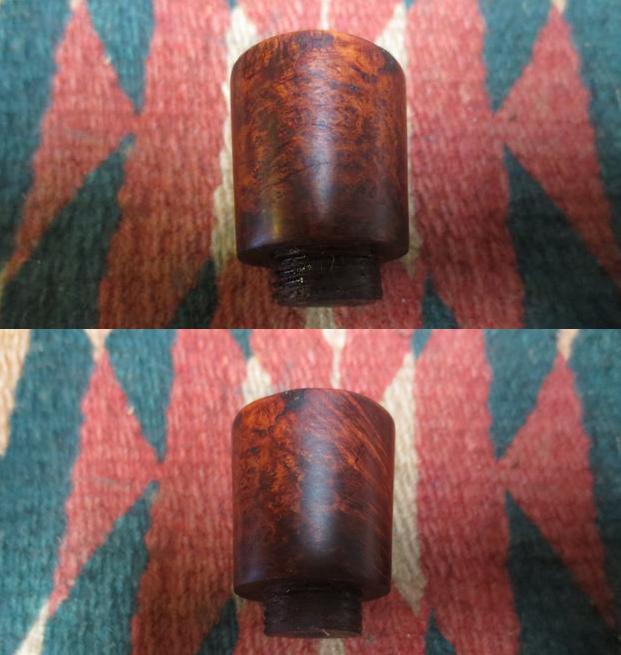
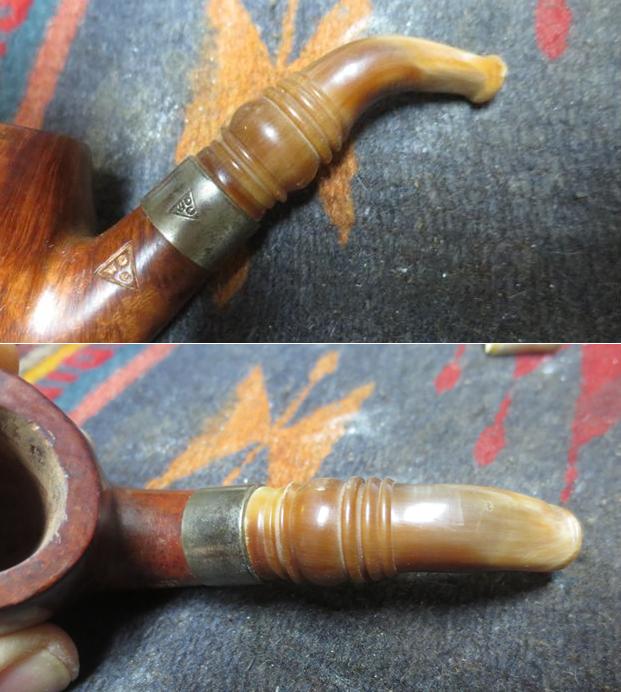
Bringing an older 1890s Era Spiral Shank Horn Stem Billiard back to Life.


Blog by Steve Laug

My brother Jeff visited an antique mall in Montana on one of his recent trips and found a lot of older pipes from the 1890s era. There were CPF, WDC and other older brand pipes with amber and horn stems. I wrote about how we used Apple Facetime so that I could be present on the hunt. It was an amazing time “in the shop” for me. The link to the blog on this hunt follows: https://rebornpipes.com/2017/04/26/a-virtual-pipe-hunt-a-new-way-to-experience-the-joy-of-a-pipe-hunt/. The first pipe that I chose to work on from the hunt was the one picture below. My brother took the following pictures of the pipe before he cleaned it up to send to me for finishing. It is a unique and interesting old pipe. The spiral shank continues through the horn stem. The finish on the bowl was worn and tired but the spiral shank and stem were undamaged. There was one deep “worm hole” in the left side of the stem in the bottom of a spiral that would need to be repaired but otherwise it was in pretty decent shape.The photos show the overall condition and look of the pipe. Whoever carved it remains a mystery as there is no stamping on the shank or bottom of the bowl. It is unmarked so it is one of those unknown pipes. The difference is that this is not a homemade pipe it has the marks of a good pipemaker and the drilling is perfect from the stem forward. The bowl was lightly caked and the rim had a tarry overflow on the top. The inside edge of the bowl was in great shape as far as I could see from the photos. The outer edge of the top had been knocked about enough that there was some damage and wear to it. The next two photos show the rim top and bowl. The finish on the outside of the bowl is worn and there are a lot of dents and dings in the surface of the wood. The photos lead me to wonder what kind of wood the pipe is made of because of the way the damaged rim looks. The next photos show the condition of the stem and the drilling in the button. The spiral continues from the shank through the stem seamlessly. The second photo shows the worm hole in the horn stem. It is deep but clean and the areas around it are undamaged. The junction of the stem and the shank is very tight and clean. The transition from wood to horn is smooth to the touch. The last photo shows the orific button on the end of the stem. It is clean, round and centered in the end of the crowned button. This older style button helps me date this pipe as early as I do above. My brother did his usual job reaming and cleaning the pipe. He reamed the bowl with a PipNet reamer and cleaned it with a Savinell Fitsall Pipe Knife. He scrubbed the internals with alcohol, cotton swabs and pipe cleaners to remove the grime in the mortise, shank and airway in the stem and shank. He scrubbed the exterior with Murphy’s Oil Soap and was able to remove all of the grime on the bowl sides and rim. The pipe came to me in great condition. I took a close up photo of the rim top and stem to show their condition more closely. The rim top was worn and there were some spots on the edges that had slivered. The rim would need to be topped to smooth things out and remove the damage.The stem photos show the tooth damage on the top and underside at the button and the “worm hole” in the left side near the shank.I wiped down the area around the hole in the left side of the stem with a cotton swab and alcohol and dried it off. I layered in several fills of clear super glue into the hole. As each layer dried I added more glue to the top of the hole repair. I continued until the file was slightly overfilled then sanded the areas smooth.Billiard16While waiting for each layer of glue to dry I worked on the rim top. I topped it lightly with 220 grit sandpaper on a topping board to smooth out the damage to the rim. I took enough of the damage off to leave the rim top smooth to the touch.I wiped down the bowl with acetone on a cotton pad to remove all of the finish that remained on the bowl. I kept wiping it down until no more stain would come off and the bowl was clean. I could see once it was clean of the stain that the wood was not briar. I was dealing with what appeared to be walnut. It was extremely light weight and the grain was very different from what I expected once the stain was gone. I restained the pipe with dark brown aniline stain and flamed it to set the stain deep in the grain of the wood. I repeated the process until the coverage is acceptable.I put the stem back on the shank and hand buffed the stain with a soft cloth to show what the pipe looked like at this point in the process. The first photo and the last show the repair to the hole in the stem. It is smooth once again. I polished the bowl with 1500-12000 grit micromesh sanding pads. Each successive grit made the walnut bowl shine more and made the stain more and more transparent. I polished the horn stem with micromesh sanding pads – wet sanding with 1500-2400 grit pads and dry sanding with 3200-12000 grit pads. I rubbed the stem down with Obsidian Oil after each pad and when I finished the last pad I gave it a final coat of oil and let it sit and dry. I turned the bone tenon on the stem into the threaded mortise on the shank. I buffed the pipe with Blue Diamond on the buffing wheel to raise a shine. I gave the bowl and stem multiple coats of carnauba wax and buffed it with a clean buffing pad to raise the shine. I hand buffed the pipe with a microfibre cloth to deepen the shine. In the first photo you can see the repair on the lower portion of the horn stem. It is a slightly darkened spot but it is smooth to the touch. Do any of you recognize the style or work on this old pipe? Can you tell me any information regarding the maker or the era? Do you think I am in the ball park with a late 1890s date? What do you think? Thanks for the help ahead of time and thanks for walking with me through this restoration.

Restoring a Beautiful Parker Super Bruyere Cherrywood 287


Blog by Steve Laug

The next pipe on the work table comes from the estate lot that I received from a local pipe shop. It originally belonged to an old customer whose wife brought them back to the shop after his death. I am cleaning them up and selling them for the shop. This one is a beautiful little Parker Cherrywood. It is significantly more petite than the sandblast version that I restored earlier (https://rebornpipes.com/2017/06/17/parker-super-briarbark-cherrywood-809/). The stamping on the left side of the shank reads Parker over Super in a diamond over Bruyere.To the left of that is the shape number 287. On the right side of the shank the stamping reads Made in London over England and the number 4 in a circle denoting the group size.There is no date stamp next to the D in England.When I brought the pipe to the table it was obviously one of the old pipeman’s favourite smokers. The finish was dull and dirty and the stem oxidized with some calcification and buildup around the button area forward and a few minor tooth marks.I took a close up photo of the rim top and bowl to show the lava overflow onto the rim top and the thickness of the cake in the bowl. I find that the cake in these older pipes is like concrete. It is very hard and takes a lot of effort to break it down when reaming the bowl. I also took some photos of the stem to show the condition of the end near the button before my work began. The hard cake in the bowl demanded a bit different reaming strategy. I needed to use multiple pipe reamers to remove it. I started the reaming process with a PipNet reamer using the smallest head and working my way up to the largest one that could take the cake back to bare briar walls. I finished the reaming with a Savinelli Fitsall pipe knife and a KleenReem pipe reamer. I used the drill bit from the end of the KleenReem reamer to clear out the airway between the mortise and the bowl. It was almost clogged with a buildup of tars and oils that had hardened there. The pipe had been smoked to a point where it must have been like sucking on a coffee stirrer and having a thimble of tobacco in the chamber. It was definitely a favourite and obviously a good smoking pipe.With the bowl reamed, I turned my attention to working on the stem. I sanded the stem to remove the calcification around the button and smooth out some of the tooth marks. I also broke up some of the oxidation on the rest of the stem with the 220 grit sandpaper.I “painted” the stem end with a Bic lighter to raise the tooth dents on the surface of the stem. It did not take too much work to raise all but one of them. What remained of the sole dent was a small divot. I wiped down the stem with alcohol and filled in the divot with a drop of black super glue. I set the stem aside so that the glue would cure.I scrubbed the rim top with cotton pads and saliva to remove the tarry buildup there. It took a lot of elbow grease but I was able to remove all of it. There was some burn damage to the front inner rim edge from consistently lighting it in the same place. I remove the damage by blending it into the rest of the rim bevel with a folded piece of 220 grit sandpaper. I restained the edge and the rim top to blend in with the rest of the bowl using a medium and a dark brown stain pen. I mixed the stains on the rim surface and rubbed it in with a soft cloth. I gave it a light coat of Conservator’s Wax to further blend in the stain on the rim. The photos below show the rim top after the stain and after the waxing.With the pipe’s externals cleaned and polished I turned my attention to the internals of the mortise and airway in the shank and the stem. I scrubbed them with alcohol, cotton swabs and pipe cleaners until they were clean.I decided to work on the oxidation on the stem using a combination of the Before & After Stem Deoxidizer and Polish and Brebbia Mouthpiece Polish. I applied the Deoxidizer and Polishes with cotton pads to scrub the surface of the stem. I was able to remove the oxidation without doing any damage to the Parker Diamond stamp on the top of the stem. I buffed the pipe and stem with Blue Diamond on the buffing wheel and then gave the entire pipe multiple coats of carnauba wax. I buffed it with a clean buffing pad to raise the shine and hand buffed it with a microfibre cloth to deepen the shine. The finished pipe is shown in the photos below. It is a beautiful pipe that fits well in the hand. The dimensions of the pipe are; Length: 5 ½ inches, Height: 1 ¾ inches, Outer diameter of the bowl: 1 ½ inches, Chamber diameter: ¾ inches. It will soon be available on the rebornpipes store. If you are interested in adding it to your collection email me at slaug@uniserve.com or send me a private message on Facebook. Thanks for looking.
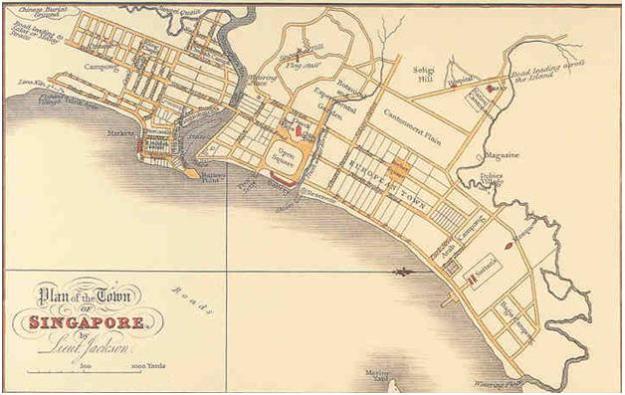
Stem Button TIME SAVER on a 1940’s Dunhill LB


Blog by Henry Ramirez

I was ghosting through Ebay listings looking for a cracked shank to experiment with when this old classic appeared.  The auction was won for a song because in addition to a cracked shank, the year stamping had been buffed off the shank. The usual whole lotta cake and dented stem story.I started with the stem, which was really in great shape.  I have come to love the stumpy profile of the patent LB’s with their constricted contour button.  An Oxyclean bath was followed by an isopropyl alcohol scrubbing with a shank brush and pipe cleaners. I wanted to use heat to raise the bite marks as much as possible to not only decrease my work load but to minimize the inclusion of foreign filler. To this end I also wanted to learn the proper temperature needed to reproduce my results consistently.

Using a heat gun, I took my time and warmed up the vulcanite until my nose told me it was getting close to burning.  If that happens the surface becomes a porous charred stinky mess!  I quickly used a laser temperature gun to obtain a surface reading of 275 degrees F.  Amazing how quickly the surface cooled off once the heat was removed.I was not impressed by the amount of rebound and it looked like filling and filing was in my future.

Having nothing to lose, I pressed my wife’s oven into service, knowing that I could set the temperature substantially higher than previous attempts without fear of ruination. I set the oven temperature at 265 degrees F to have a 10 degree safety zone and watched as the whole stem “stretched out”.  This was more like it! The dents were now depressions that needed the light to shine just so to be seen.  Little CA and polishing was needed.

I should mention that these values are for older Dunhill vulcanite only.  The composition of vulcanite has changed over the years, according to some posts I’ve read, and I’ve noticed it in the depth of polish ability.Now it was the time to clean and evaluate the briar. While I ream the mortise and bowl I am wishing that I had Steve’s magical Savinelli Pipe knife. Boy, those things are rarer than hen’s teeth and this old cake is super hard. That is followed by total immersion in an isopropyl bath with various scrub brushes stripping the briar. I couldn’t save the original finish because the shank crack needed to be clean and open as much as possible for the bonding. One of the perks of the alcohol bath is that after the bowl dries out, if there is any residual cake stuck to the chamber walls, it shrivels up and is easily removed.The shank crack was now very evident but the year stamping was not.Getting back to the stem, I wanted to know if the alcohol retort was worth the hassle.  I had been as meticulous as possible with the pipe cleaners and cold alcohol.  The color of the used alcohol in the distillation flask tells the story, close but no banana! I could now address the cracked shank.  I had previously repaired such a problem using a micro-screw and bonded dental composite resin.  I was concerned that threading the screw into old dry briar could start micro-fractures and crazing.

This time I elected to drill a channel spanning the crack and passively bond a post fabricated from longitudinal glass fibers encompassed in a strong composite resin matrix.  This would also provide some flex in the repair to accommodate the dimensional changes that briar goes through because of temperature changes during smoking.
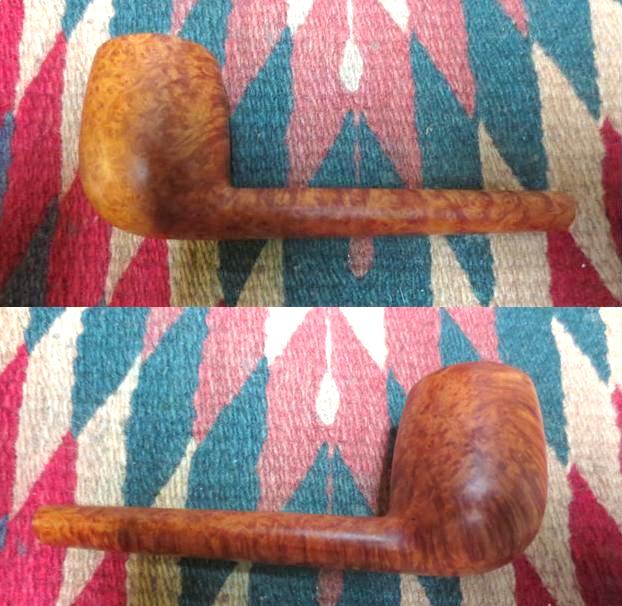
At this time I also drilled a post hole at the end of the crack to prevent further spidering.  Because the crack was significantly wide I made sure to introduce my resin with a size 06 endodontic file.  I had planned to use a C clamp to close the gap but I chickened out when finger pressure did nothing.  Not sure how to make briar temporarily more flexible….
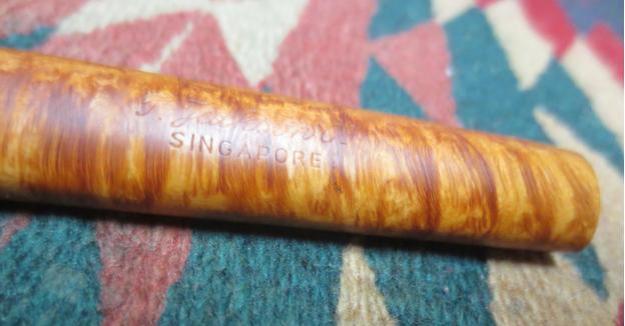
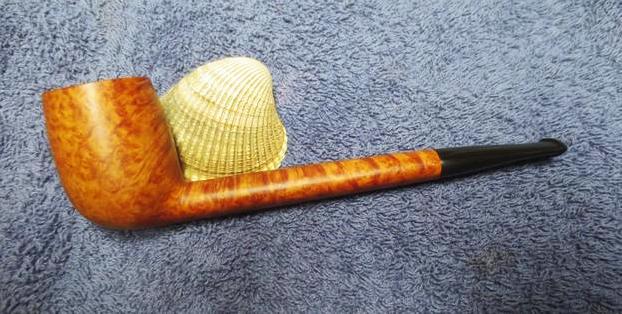
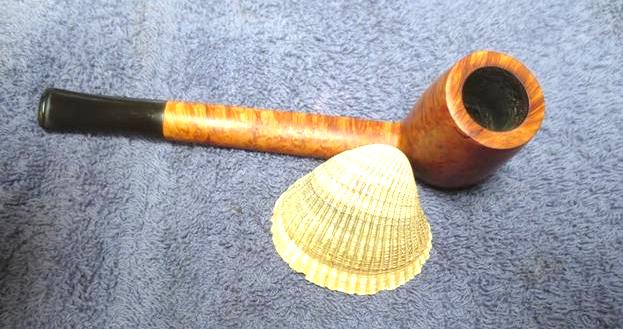
After filling the post hole and cementing the fiber post with dual cure composite resin, I trimmed off the post and blacked out the white resin with black CA.
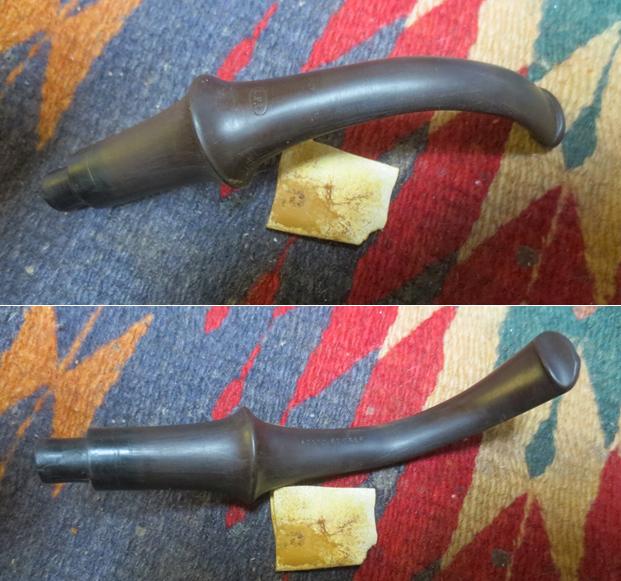
Before beginning to start the staining process I wanted to open the pores of the cellulose to not only gain greater absorption of the dye but also improve the briar’s capacity to absorb tars for a sweeter smoke.  I had noticed such a phenomenon with the Missouri Meerschaum corn cob pipes.

I found that this particular wheel had already been invented by the folks who refinish wooden decks.  I tracked down some relatively non-toxic materials which did the job and whose run off wouldn’t hurt plants.

Sodium percarbonate does the cleaning and oxalic acid removes the smear layer, thus opening up the wood’s pores.  Looking around online for a source I realized that I already had both chemicals in the laundry room!  Oxyclean is the percarbonate and states on the container that it’s great for wood decks, siding and lawn furniture.  Bar Keeper’s Friend has oxalic acid as its active ingredient and states on the container that it works on teak wood.Indeed after scrubbing with both and rinsing with water, I noticed that the chamber’s surface looked and felt less dense.Now it was time to stain the briar with Oxblood diluted 50% with isopropyl alcohol in two coats, both flamed with the micro-torch.I was lucky that the original black stain in the depths of the blast remained.An overlay stain of light brown was applied in 2 coats.After a rub down with an old t-shirt to remove any xs dye, I applied 2 coats of Halcyon wax.  A quick buff on the lathe and then a hand strapping with a shoe bristle brush brought the shine up.  I want to mention that my wife gifted me her silver brush which is narrow and has long soft bristles which easily accesses the crotch of the pipe without fear of collision. This has proved most useful on bent pipes.Another very helpful tip came from a pipe maker’s blog about dead-faced files to add crispness to the button area.  They are the dead faced nut seating file by Stewart MacDonald, a luthier’s supply house and the pillar files which have the dead side on the edge from OttoFrei, a clock makers source.Well I’m now satisfied with the pipe but not finished. They say we abandon these projects because we reach a point where better becomes an enemy of good. Boy that was fun and I hope to share more adventures with these fabulous old pipes!  Regards, Henry