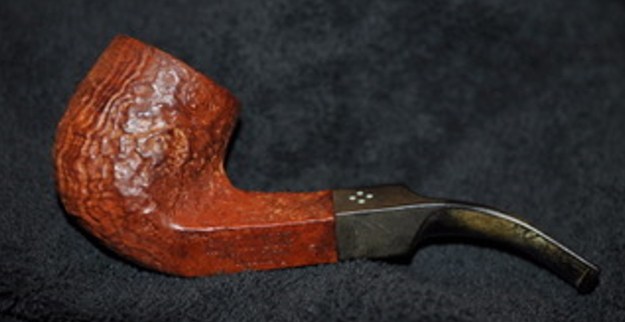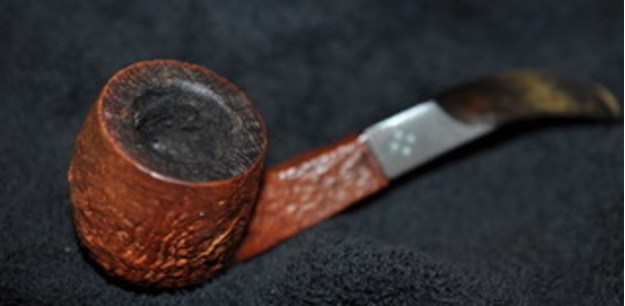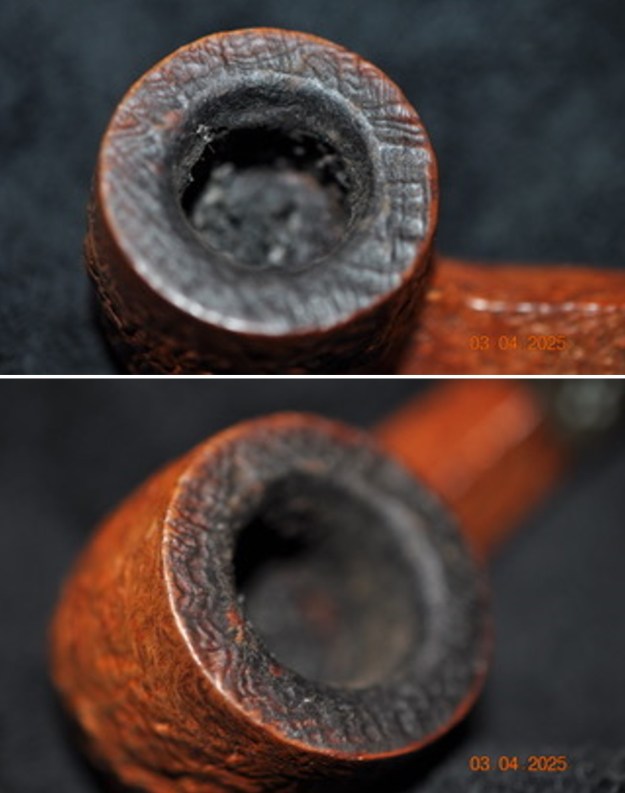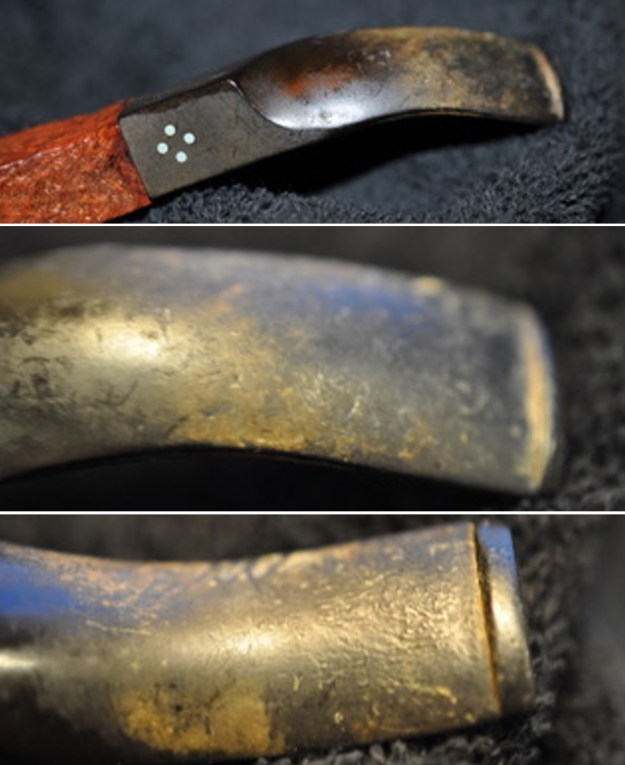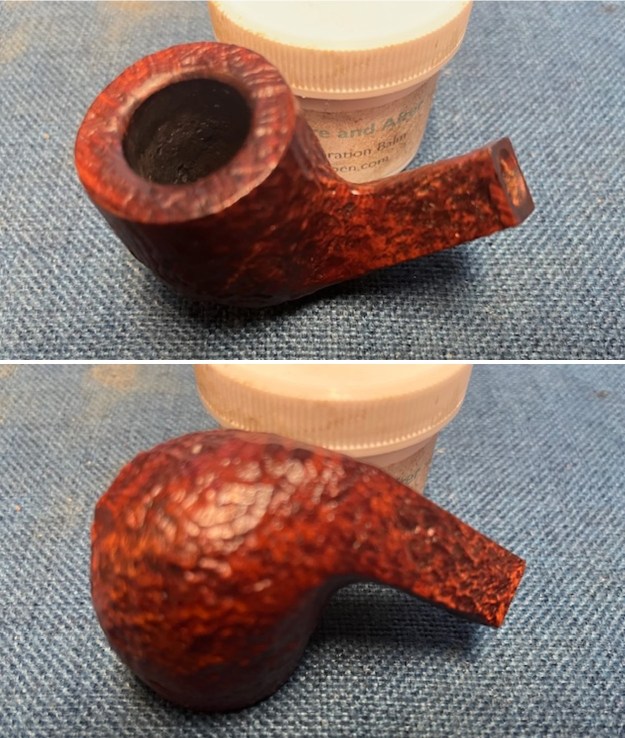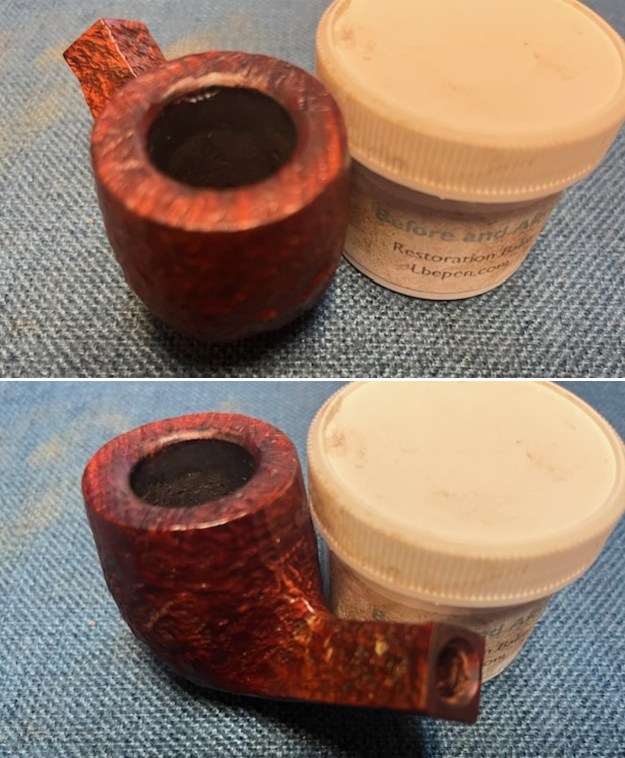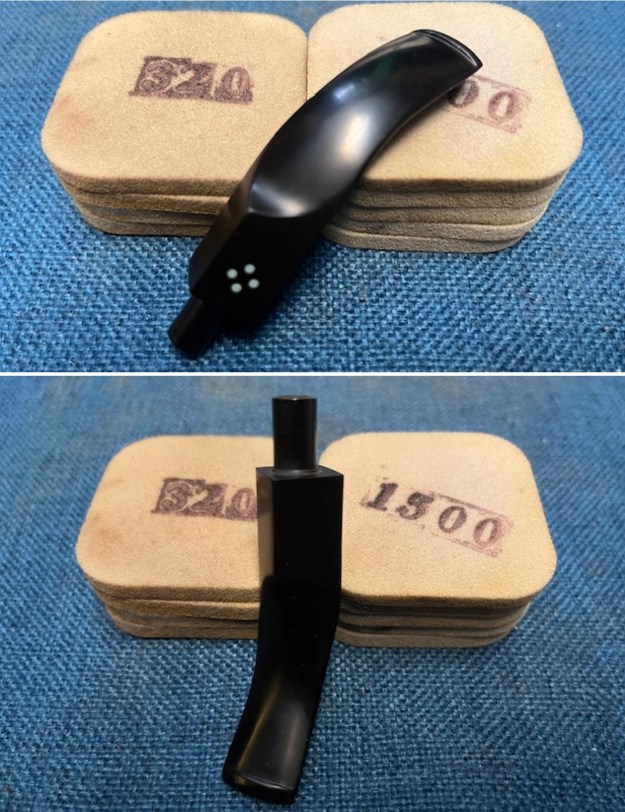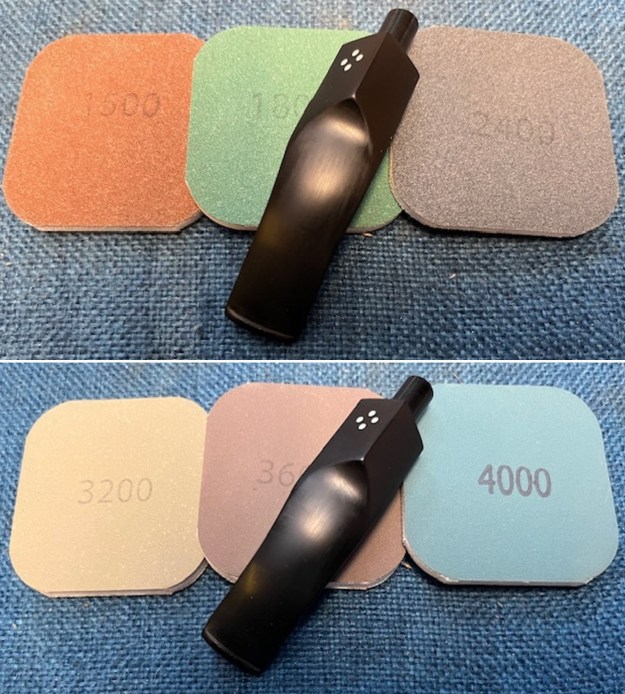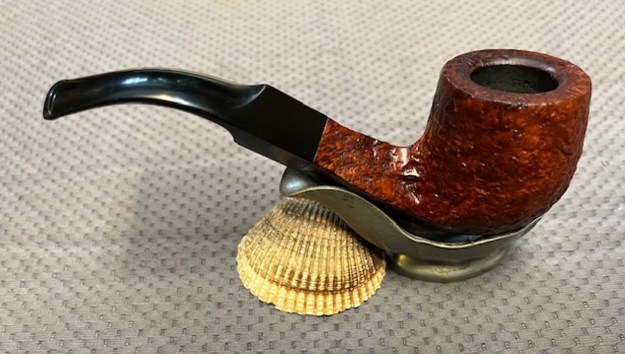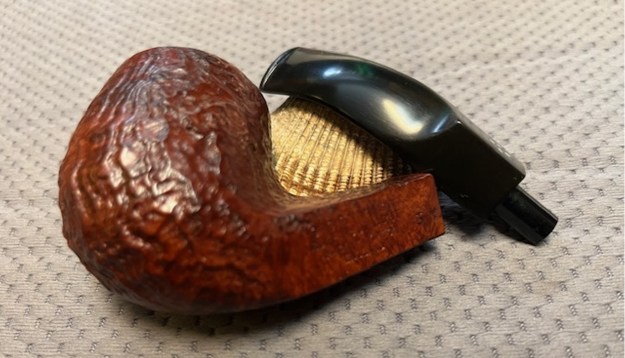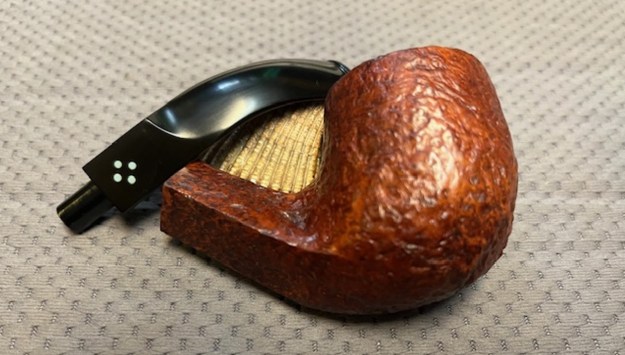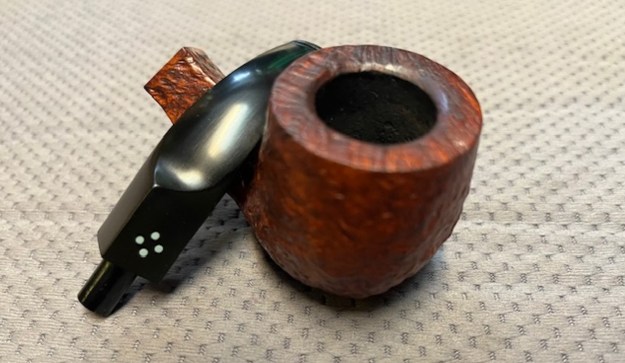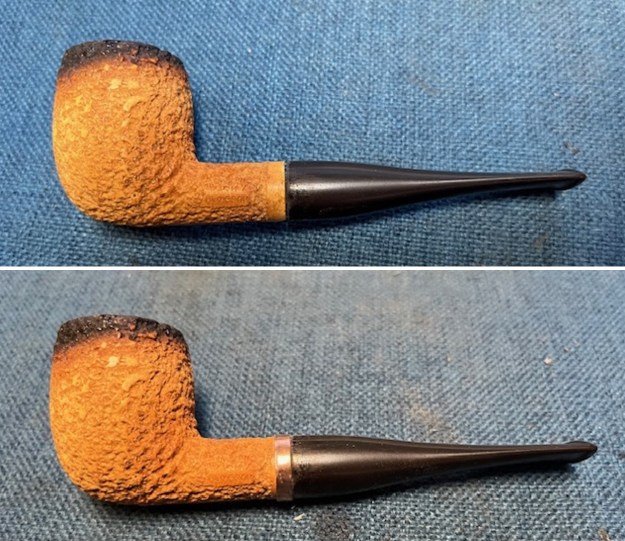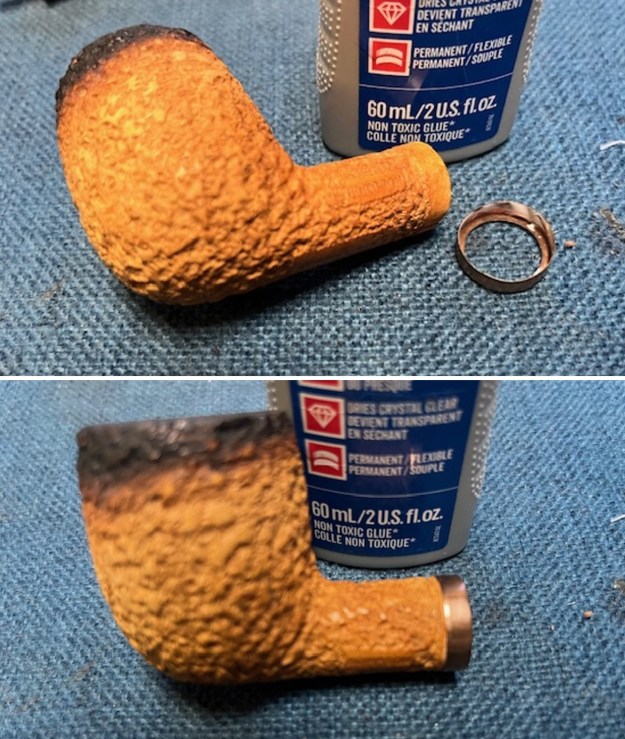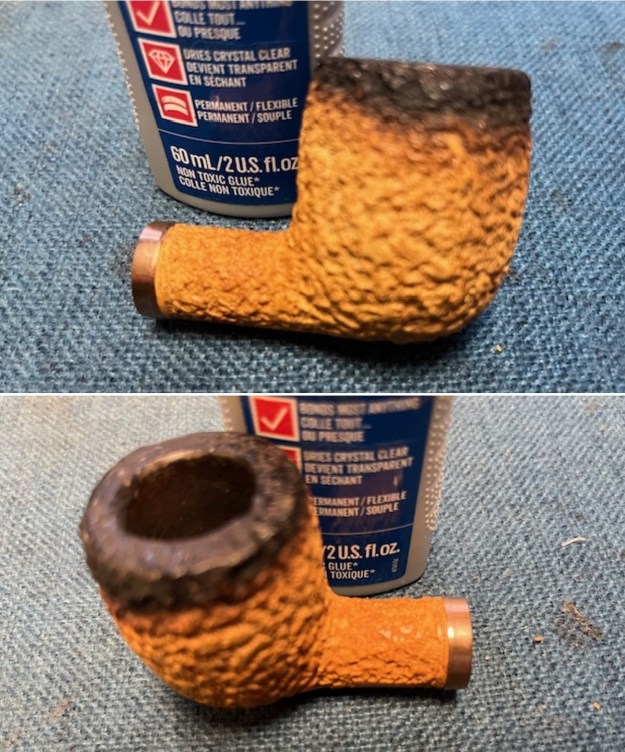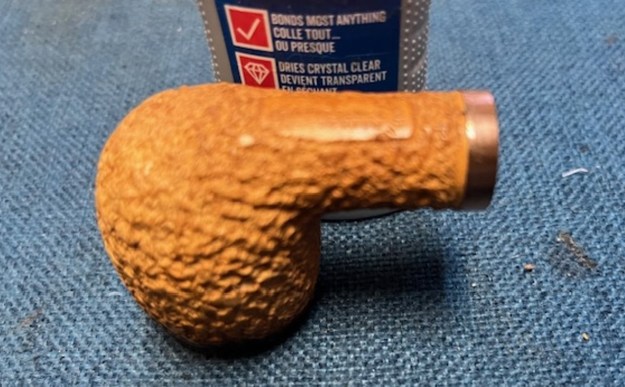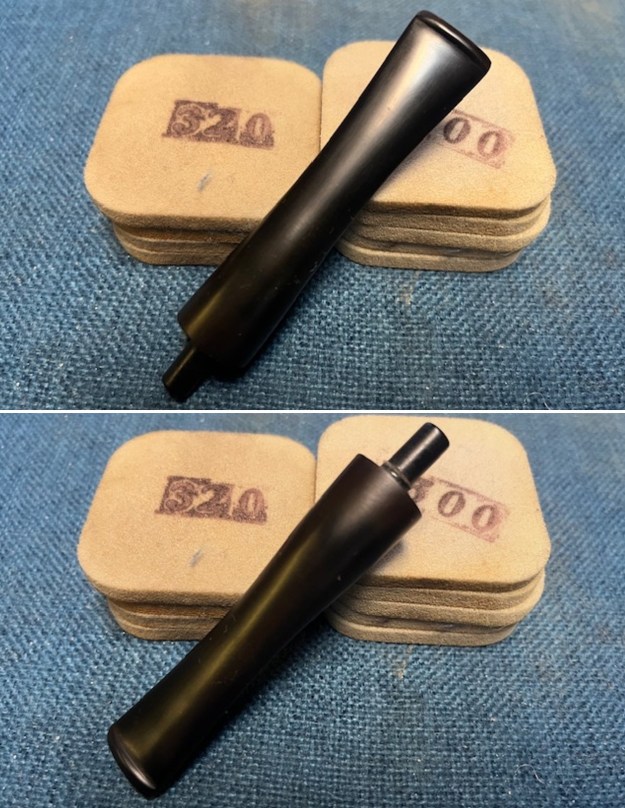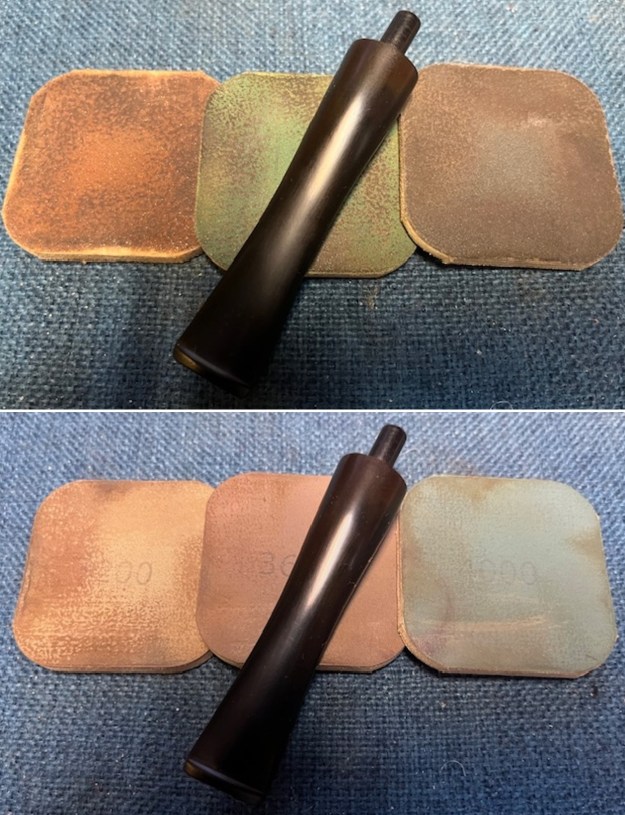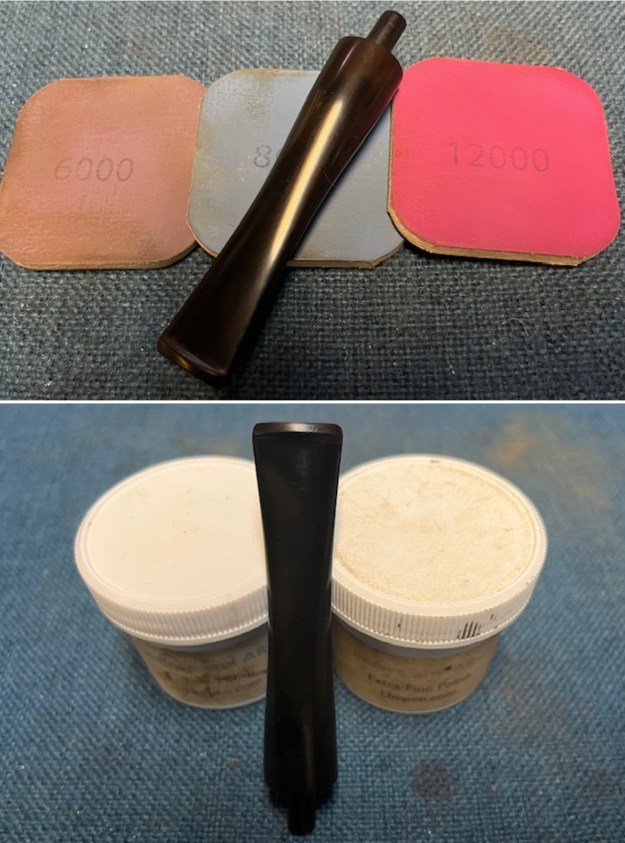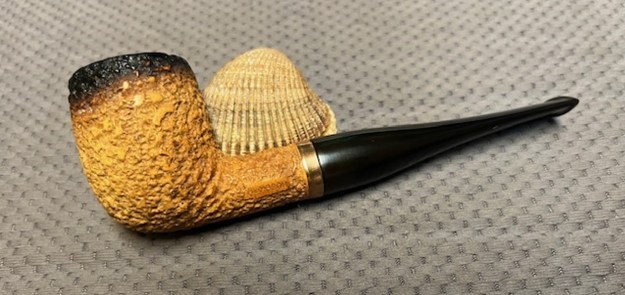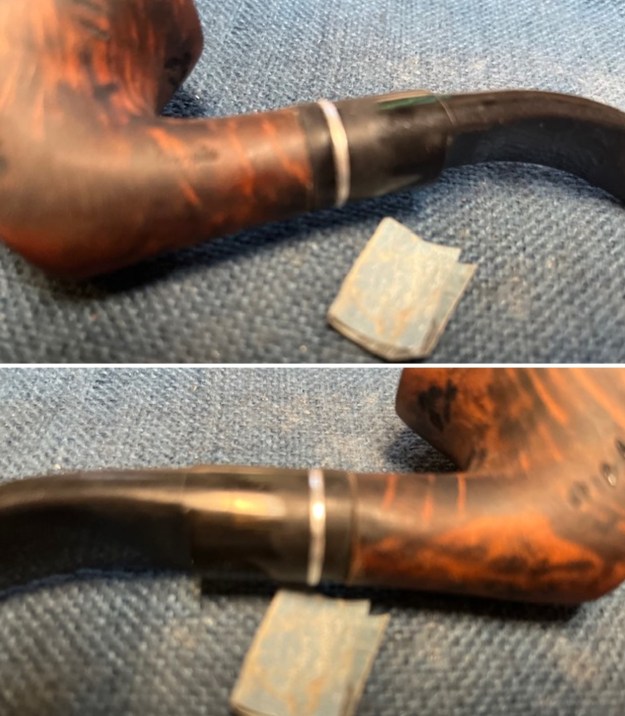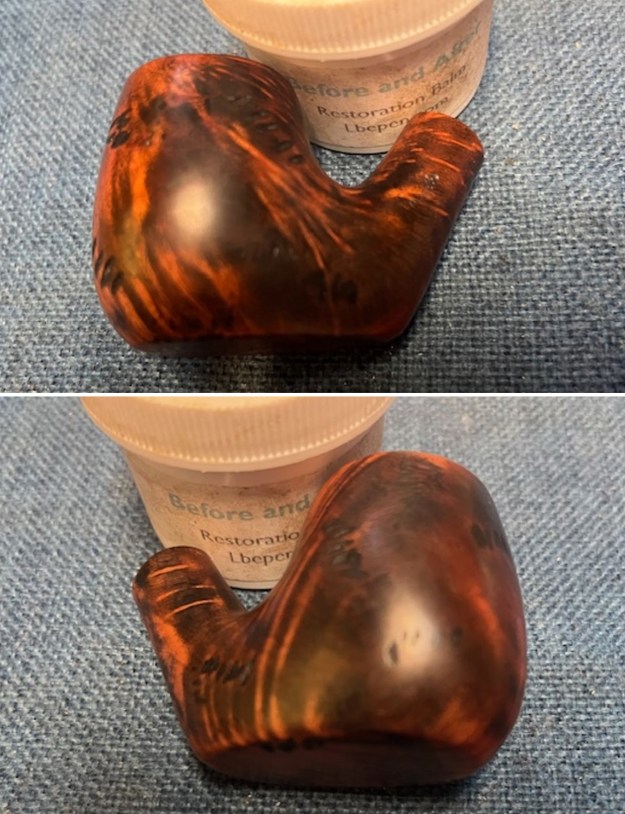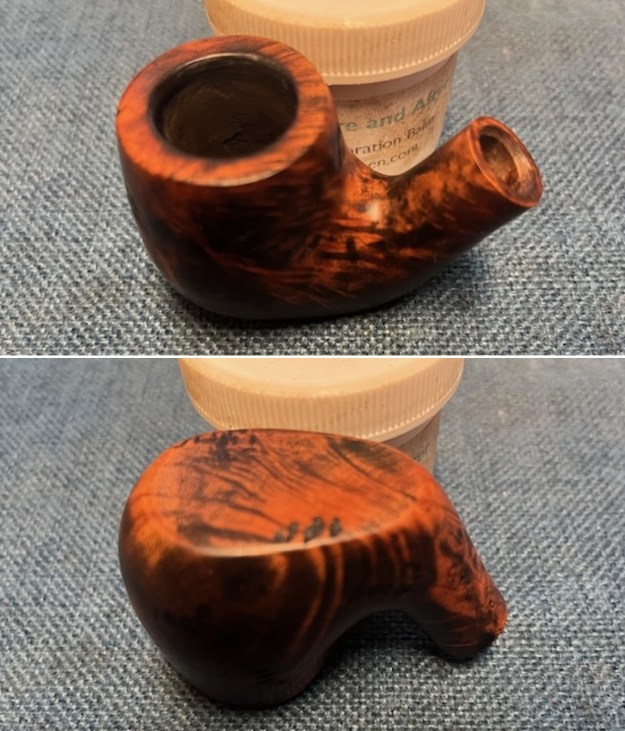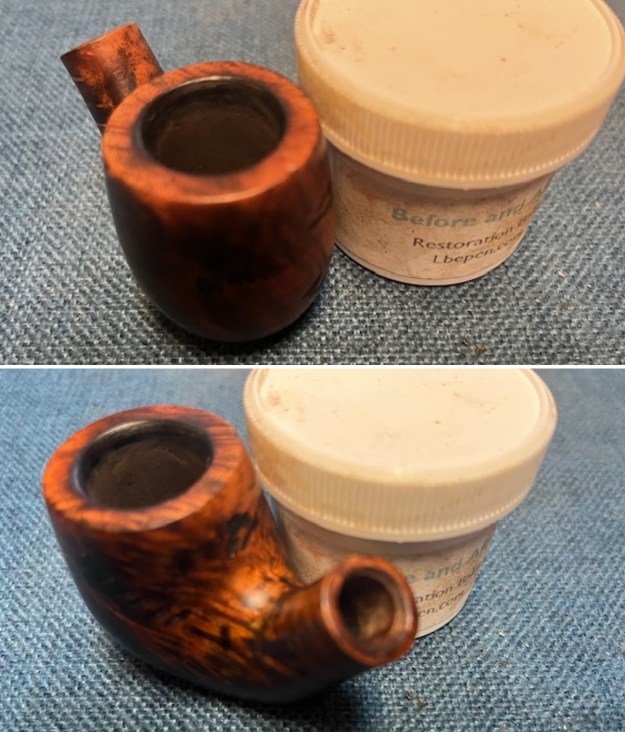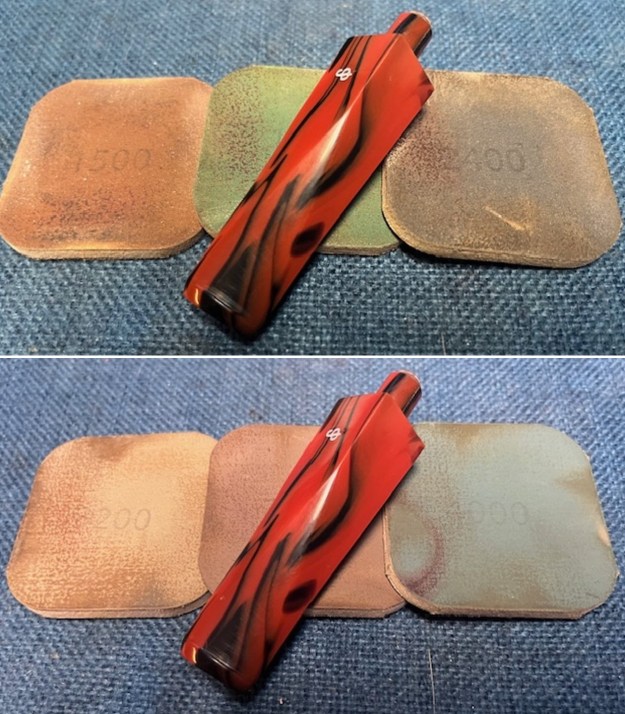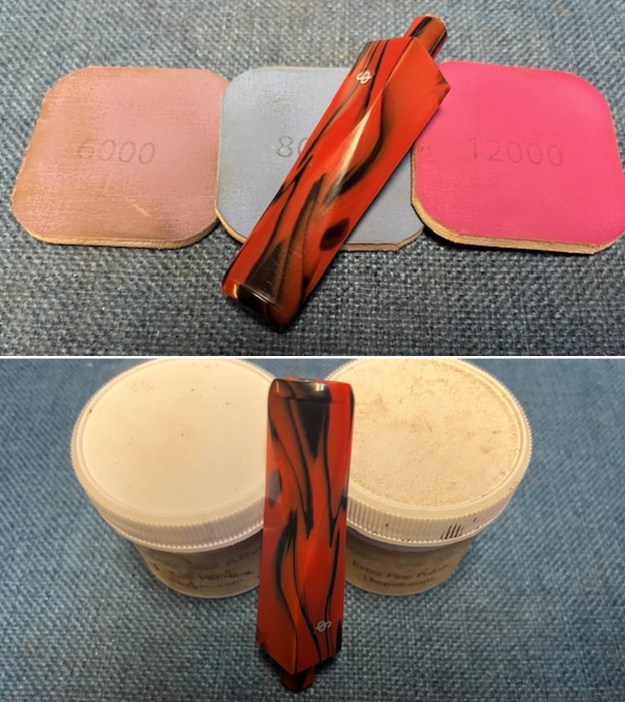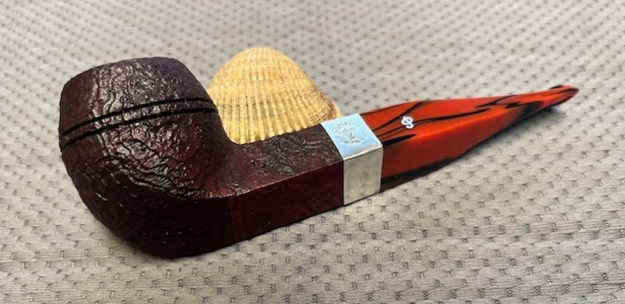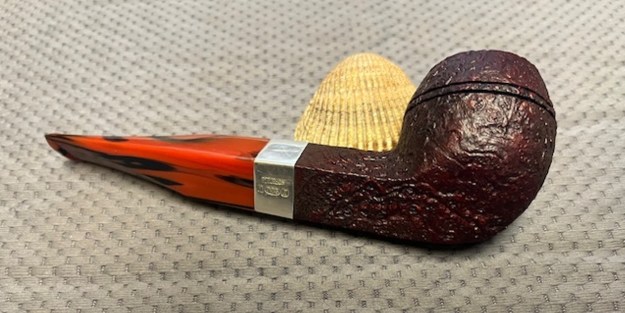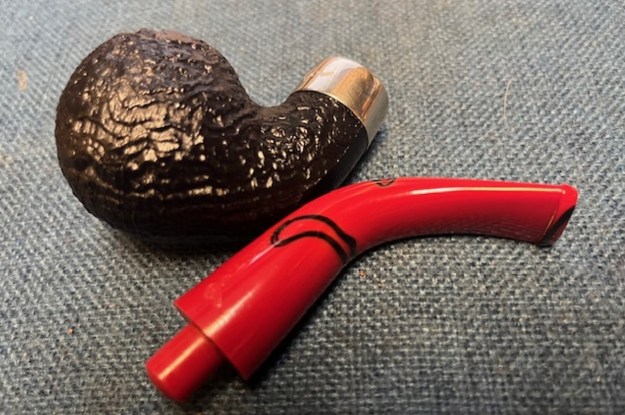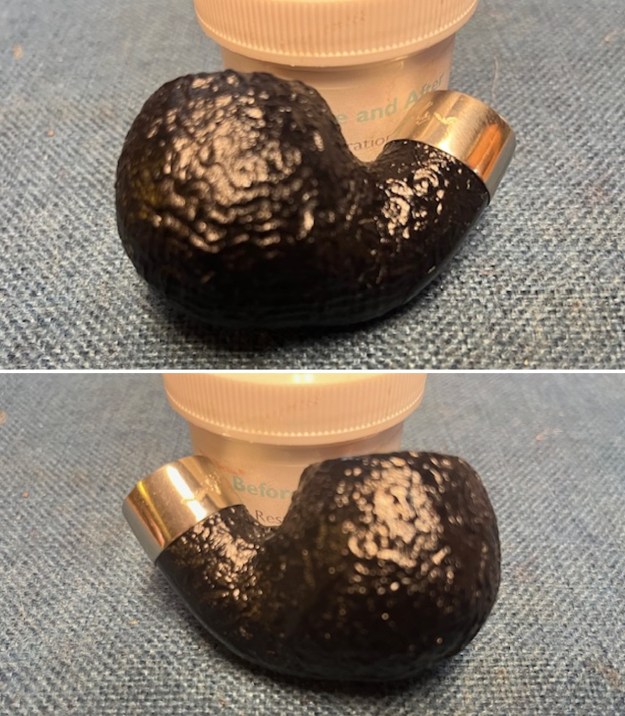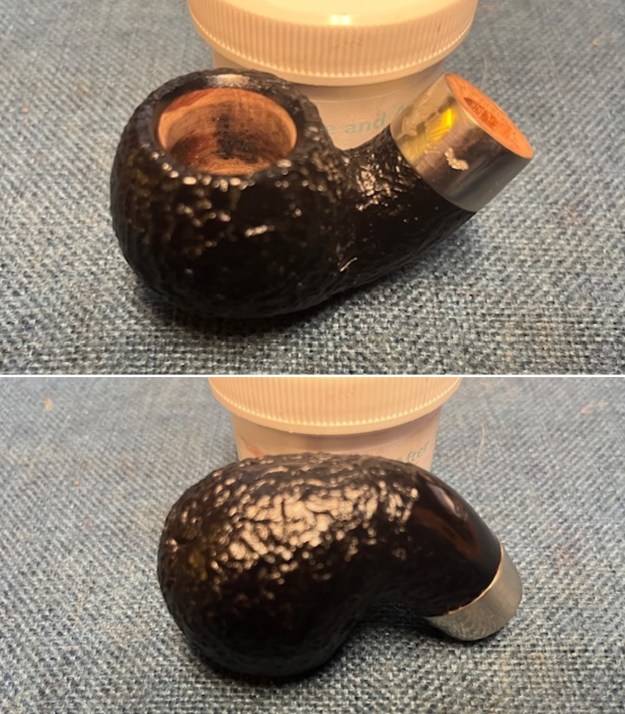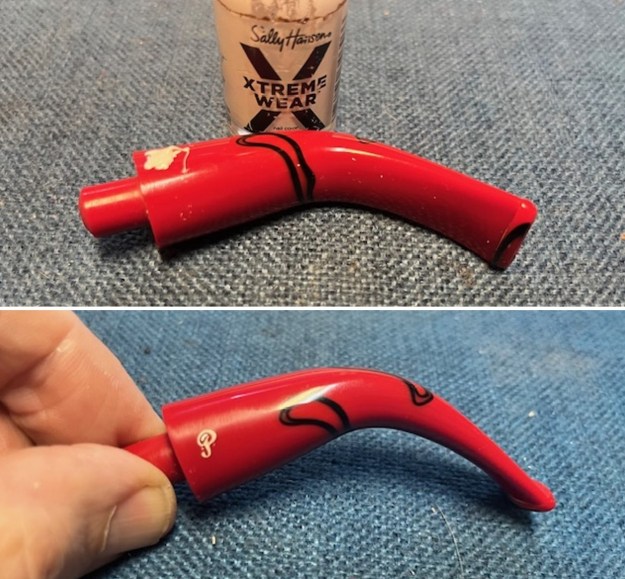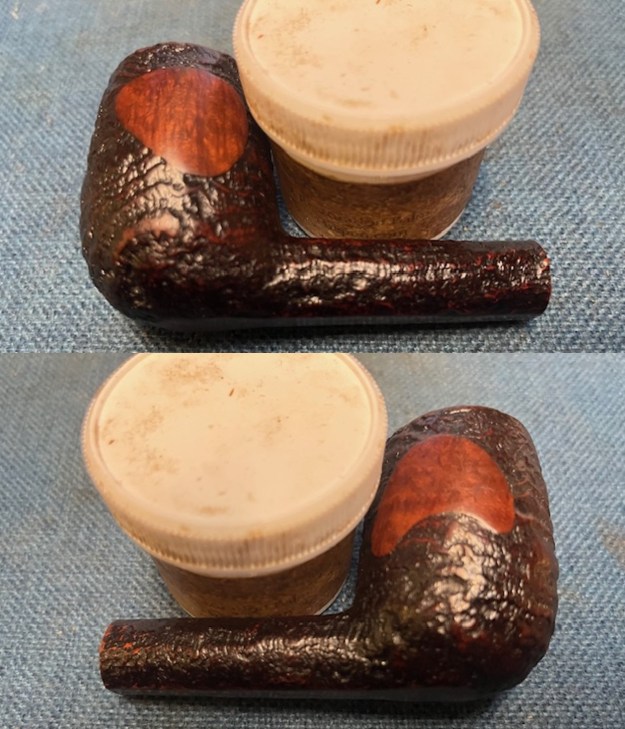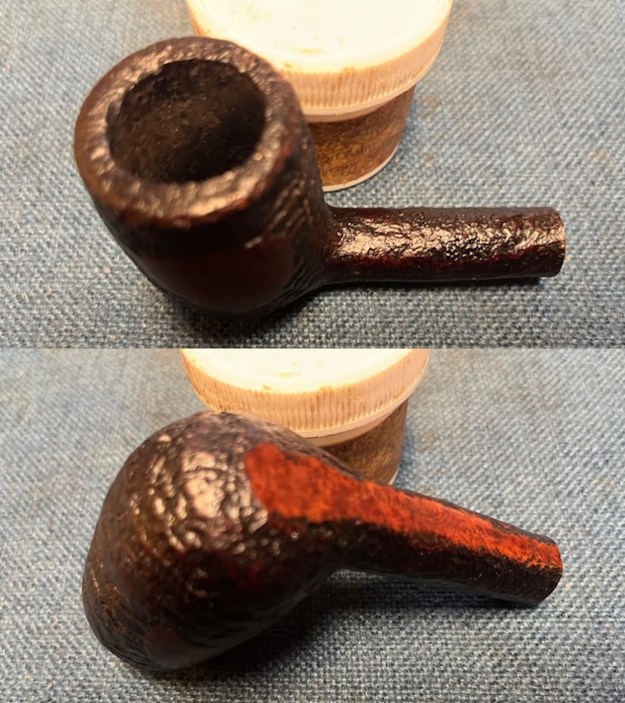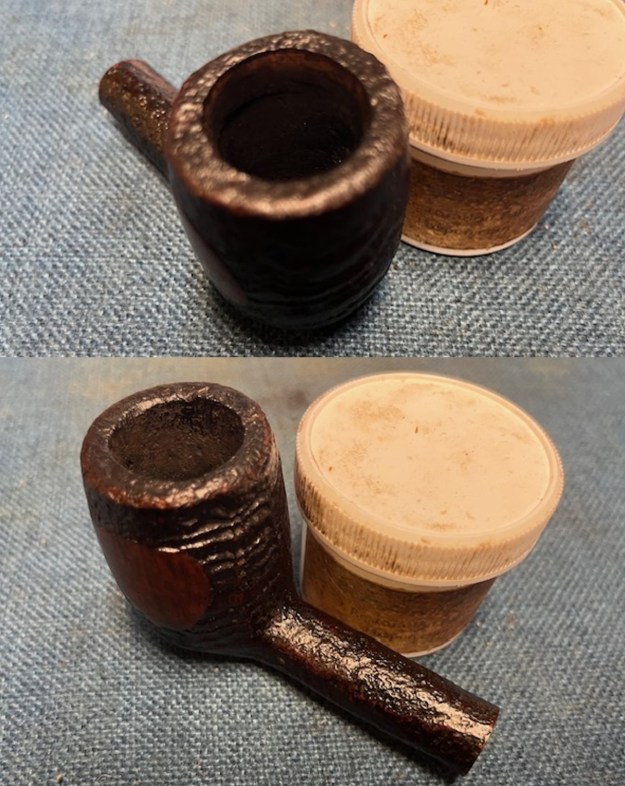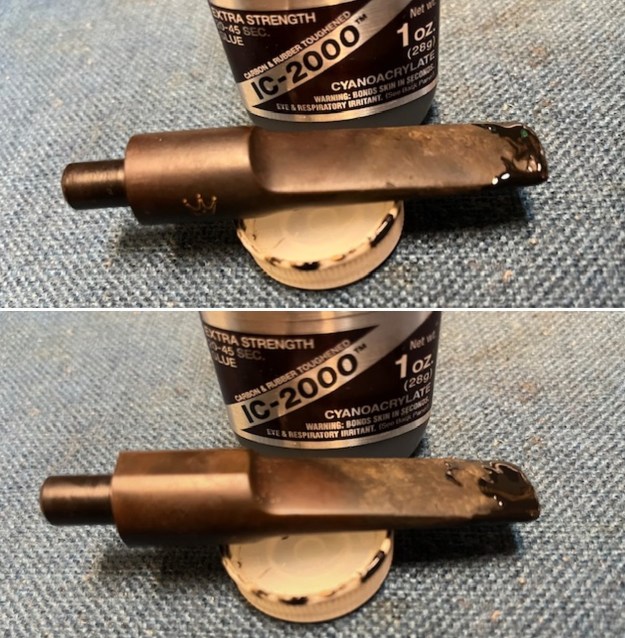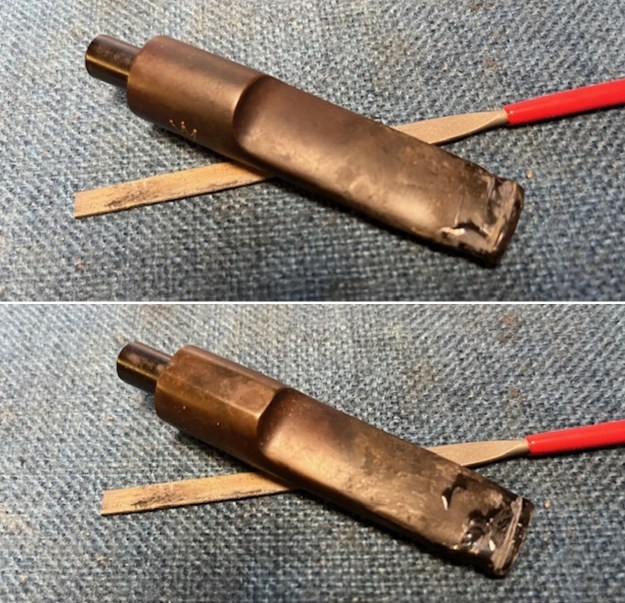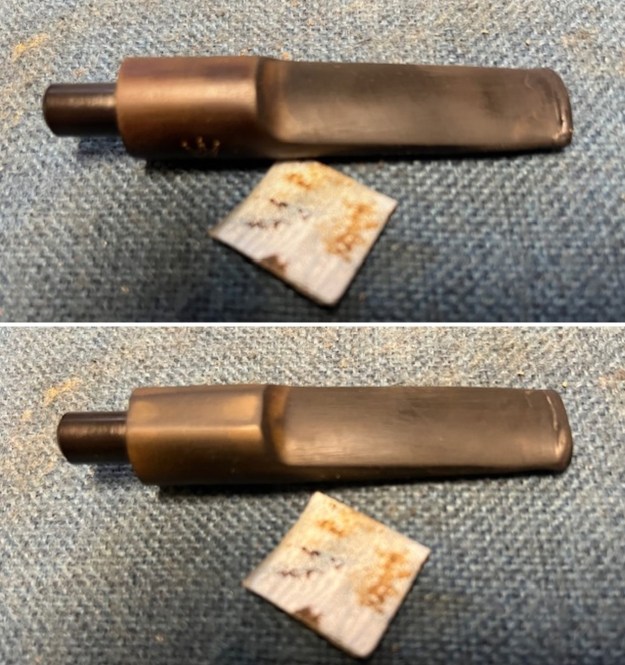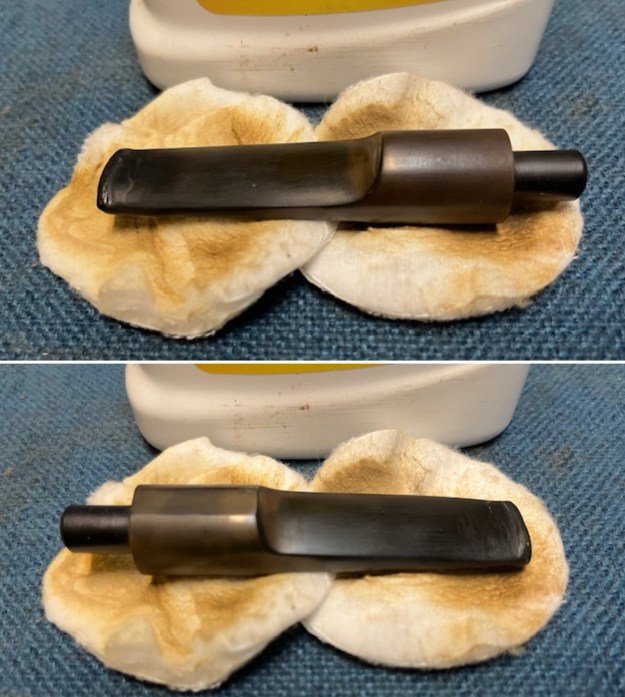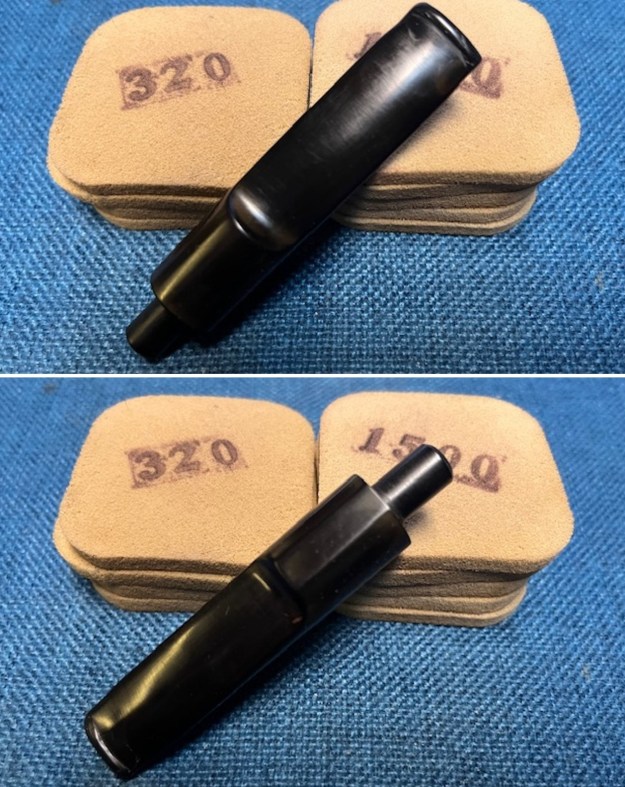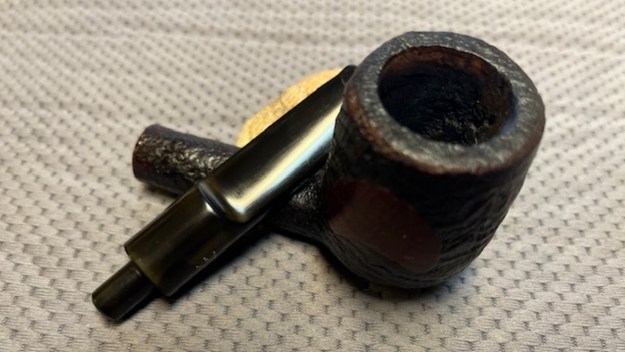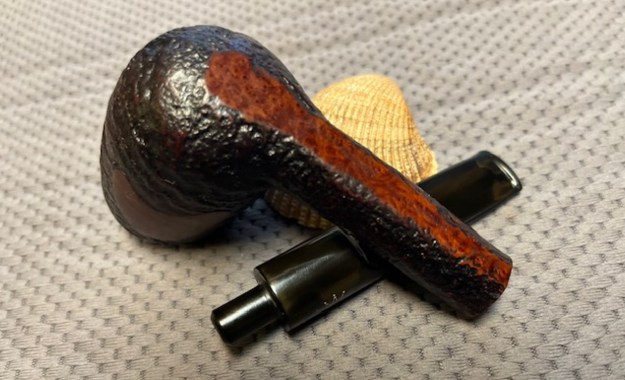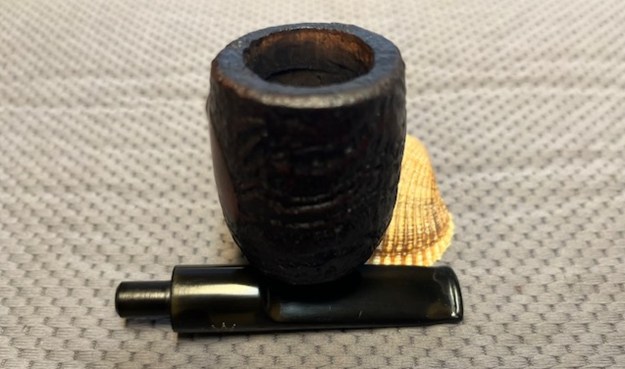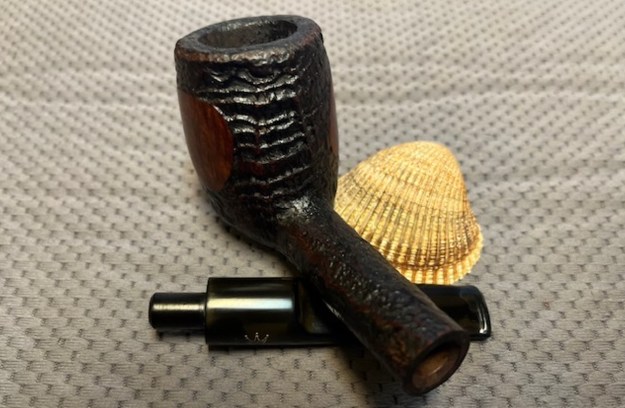
Tag Archives: fitting a stem

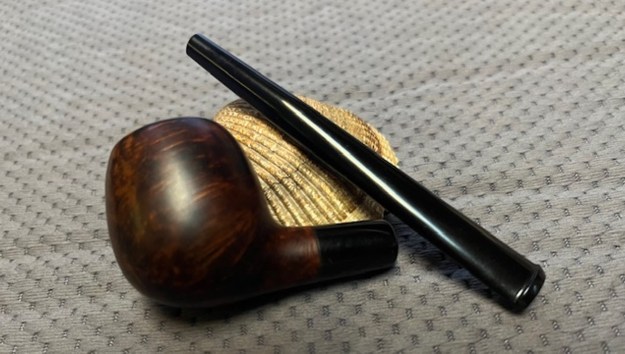
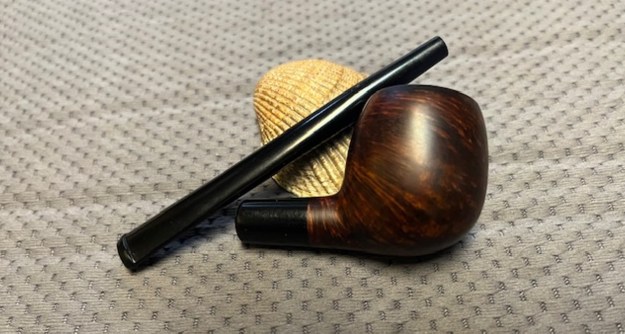
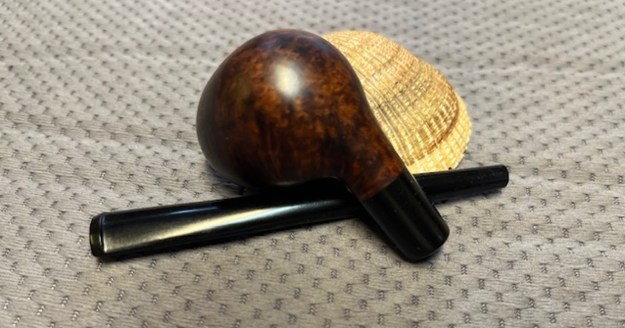
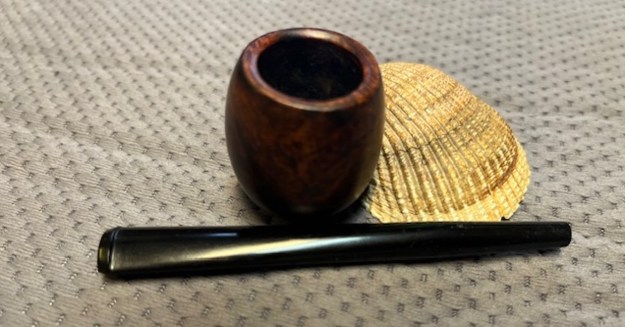
Restoring a sandblast Jarl T.V. Made in Denmark Long Pipe


by Steve Laug

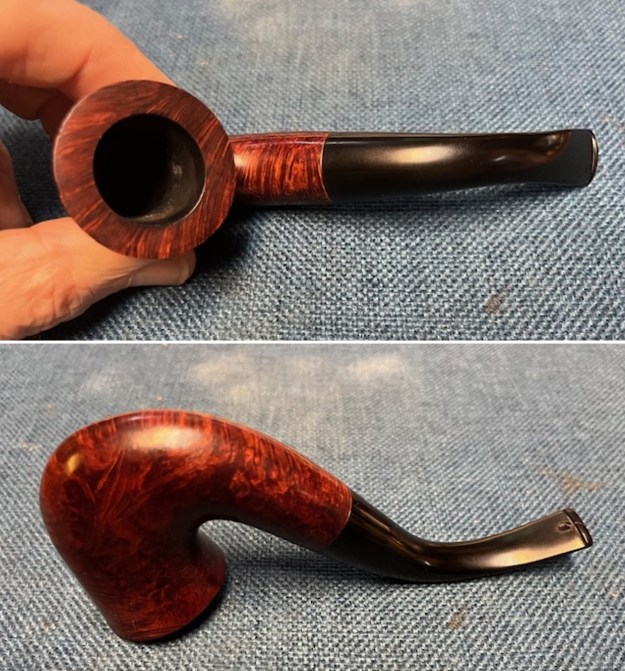
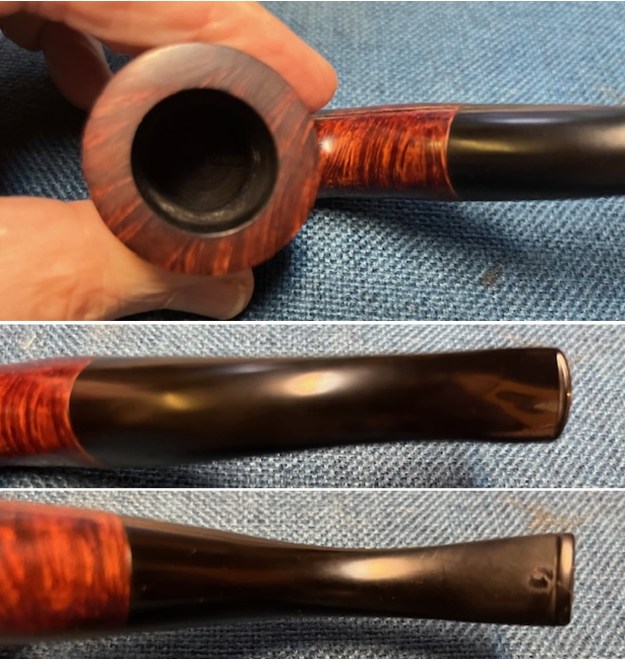
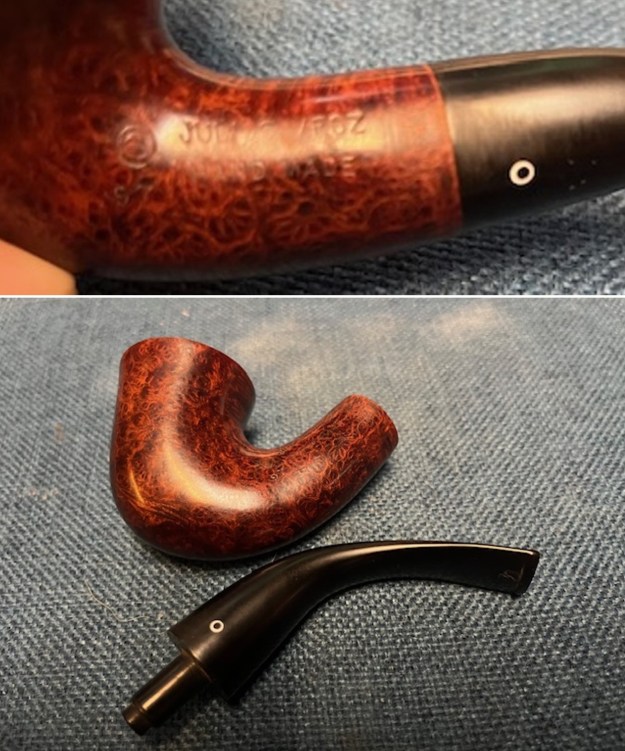
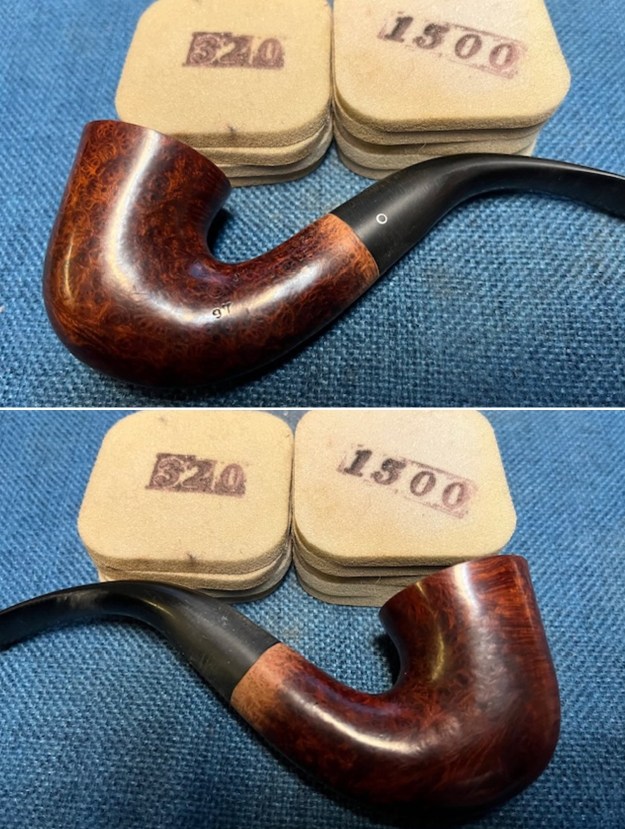
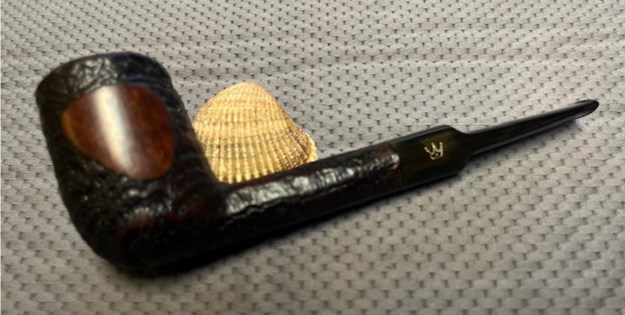
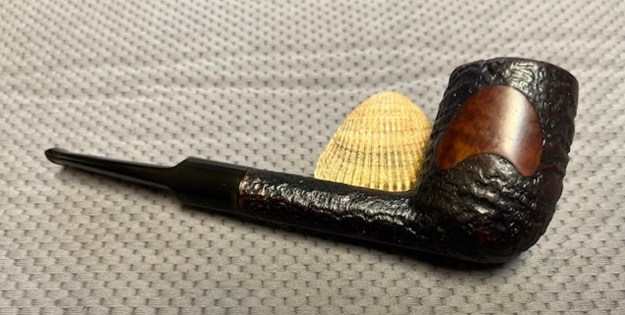
Once again it may seem I have endless choices of pipes to work on. While we do have a lot of pipes that are in the queue to be restored it is far from endless. This next pipe I chose to work on was one that was given to us by a wonderful lady in Flagstaff, Arizona, USA on 01/22/2019. The pipe is stamped on a smooth panel on the underside of the shank and reads Jarl T.V. [over] Made in Denmark. This one is a slightly bent Billiard shape with a sandblast bowl and shank. It has a long churchwarden style stem. There is a smooth briar around the shank end that is a great touch. The exterior of the pipe was dirty, with dust in the sandblast. There was a moderate cake in the bowl and some lava on the rim top. The stem was long and had a slight bend. There was no logo or stamping on the stem.  It was lightly oxidized and had light tooth marks and chatter on both sides ahead of the button. Jeff took photos of the pipe before he started his clean up work. Jeff took photos of the rim top and stem to show the general condition of the pipe. The bowl is heavily caked and there was lava on the rim top and the inner edge. The stem was lightly oxidized, calcified and had some tooth marks and chatter. It should cleanup very well. Jeff took photos of the bowl sides and heel to show the smooth rim top, left and right bowl sides along with the beautiful blast that was around this bowl even though the grime on the finish hides it some. The pipe had obviously been well loved and cared for by the previous pipeman. He took photos of the sides of the shank to show the stamping. The stamping is clear and readable in the photos below as noted above. I turned to Pipephil for a review of the brand (http://www.pipephil.eu/logos/en/logo-j1.html). I did a screen capture of the section of the site that showed the Jarl T.V. pipe. It says that the brand was carved by Jorgen Larsen.I turned to Pipedia for further information regarding the brand (https://pipedia.org/wiki/Jarl). I quote below:

In December of 2010 Ellen Jarl wrote that Jarl pipes were made by her grandfather, Niels Mogens Jørgensen in a little factory in the town of Bramdrupdam, just outside Kolding, Denmark. We have no reason to doubt that Niels Mogens Jørgensen is the maker of these pipes.

There was a difference regarding the maker of the pipes. Pipephil identified the maker as Jorgen Larsen and Pipedia says it is Niels Mogens Jorgensen. It appears that the information on Pipedia has more proof that the maker is Niels Mogens Jorgensen. I am proceeding with that information in this restoration.

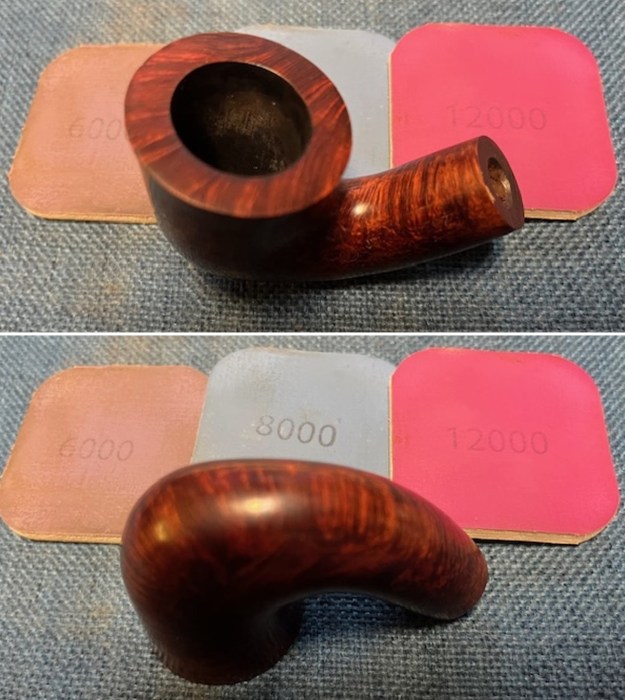
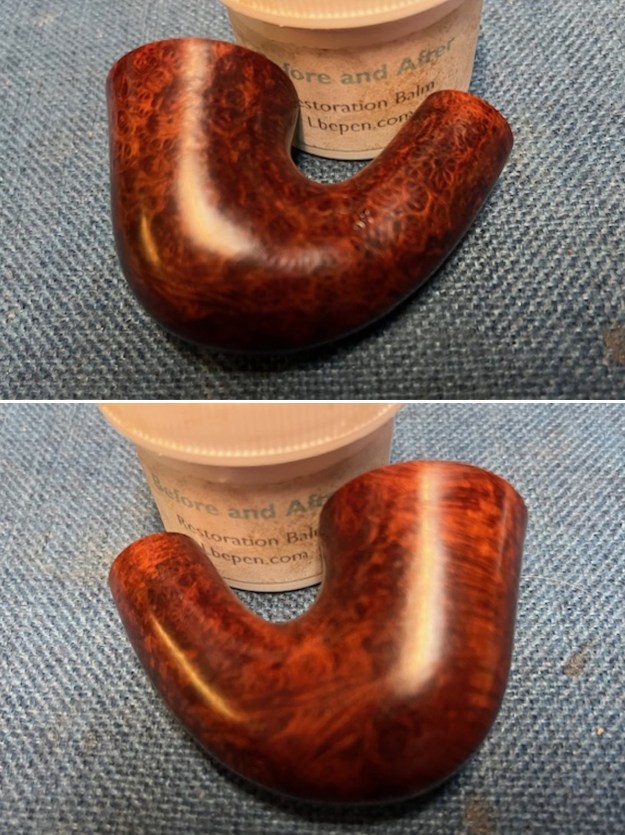
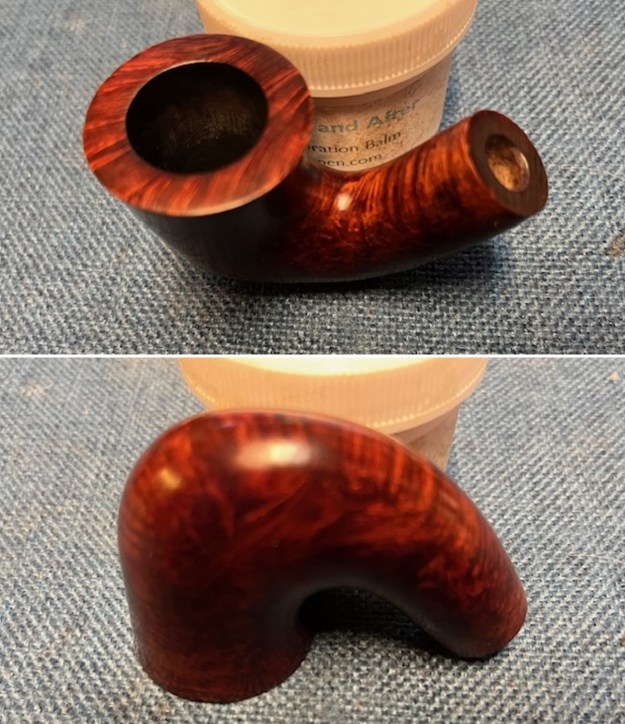
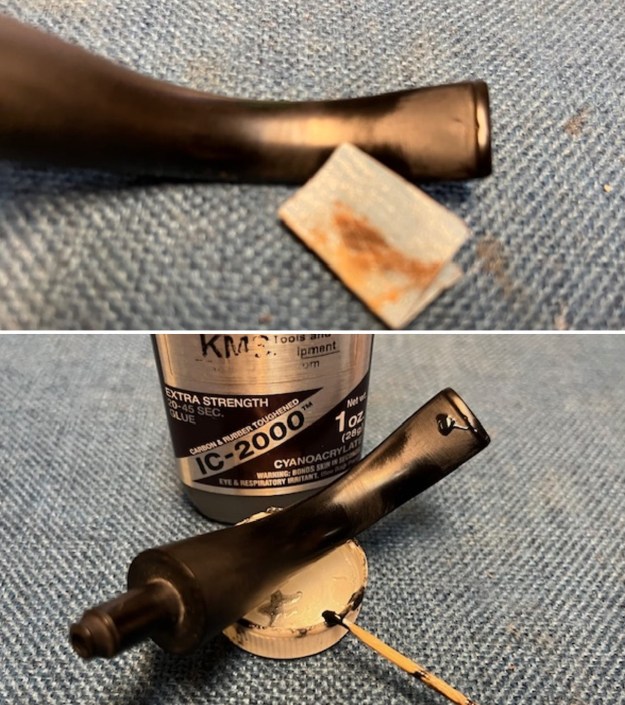
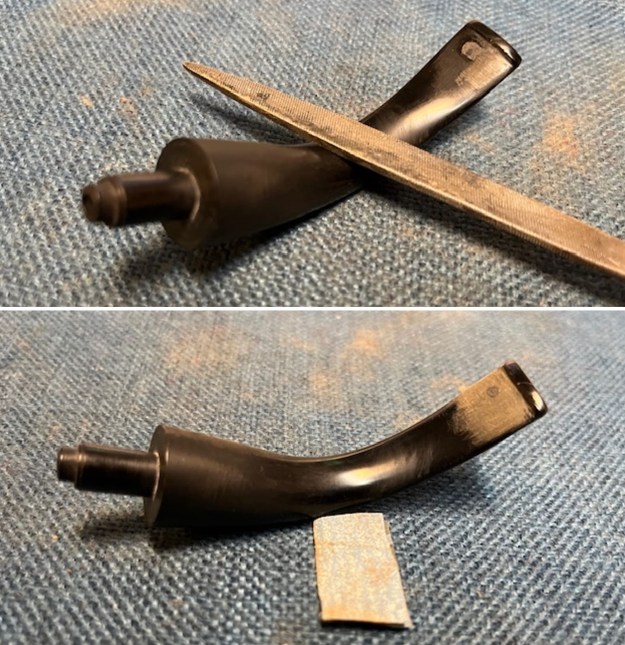
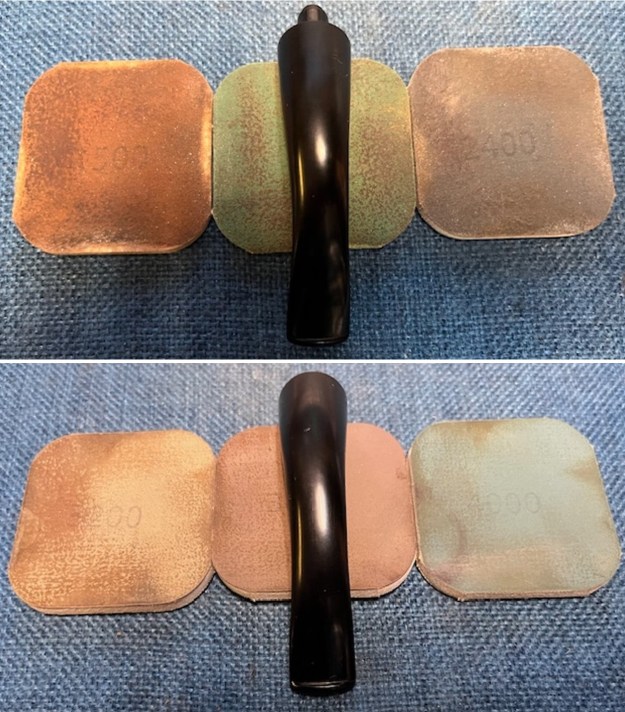
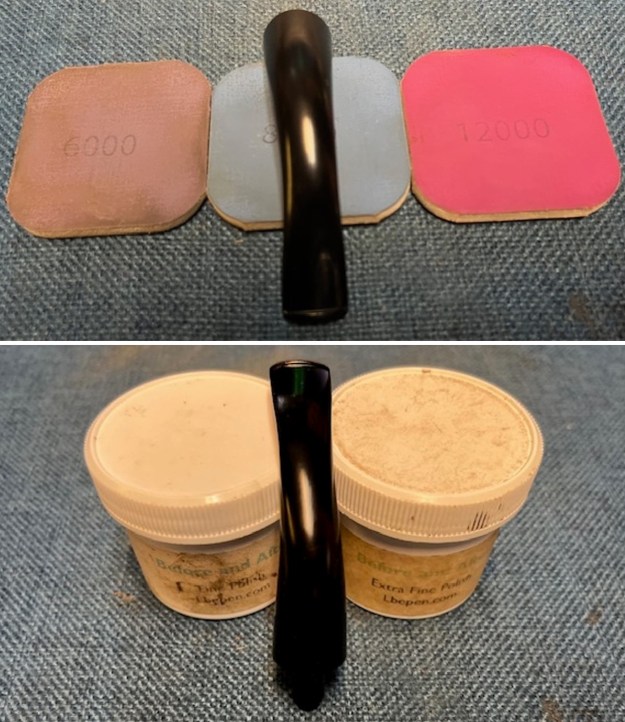
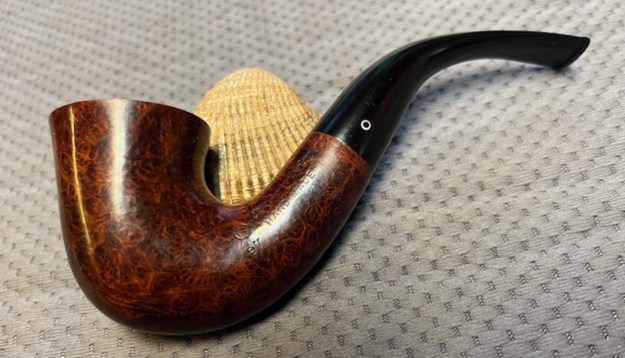
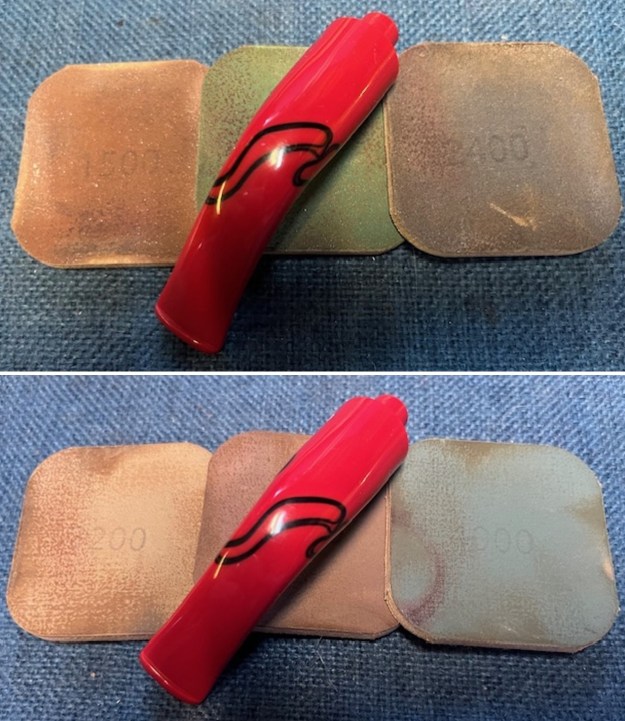
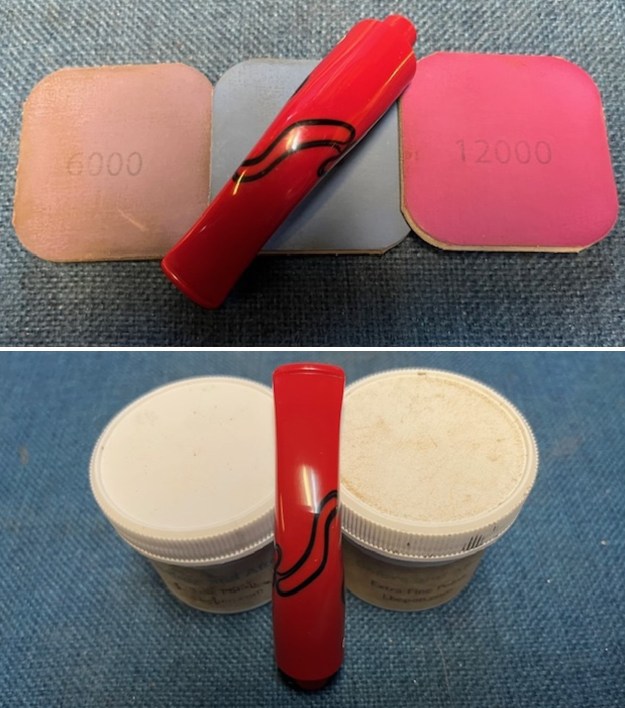
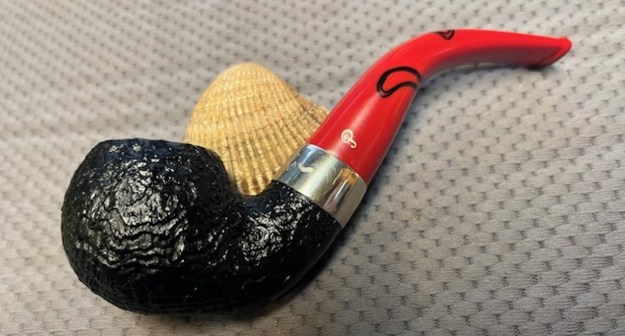
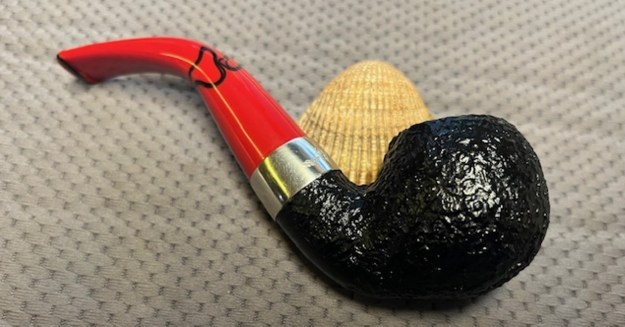
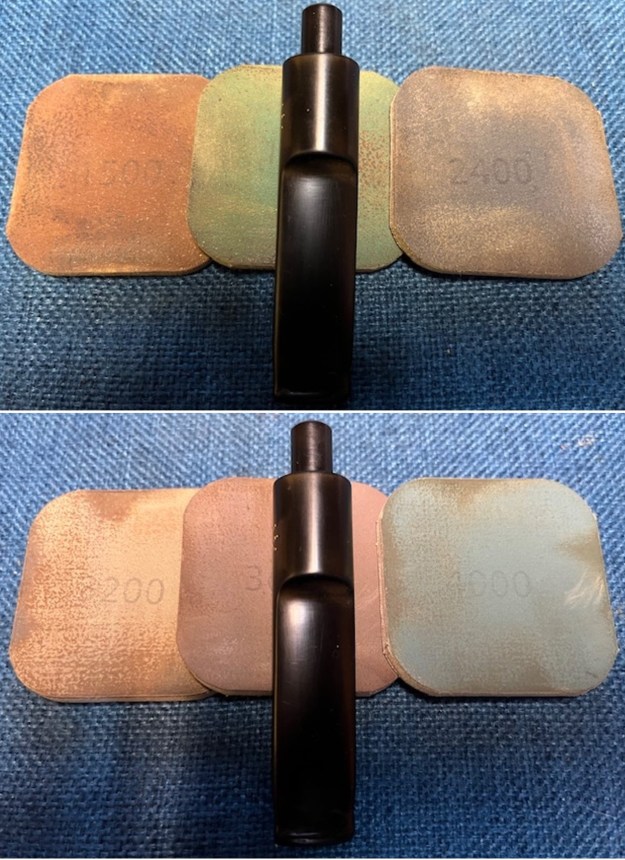
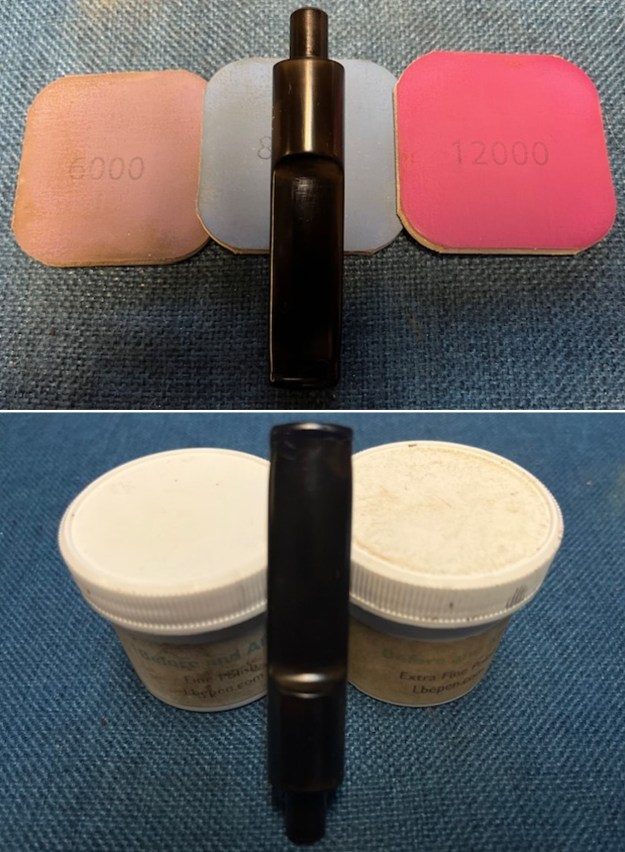
Jeff had thoroughly cleaned up the pipe. He reamed the pipe with a PipNet Pipe Reamer and cleaned up the remnants with a Savinelli Fitsall Pipe Knife. He scrubbed the bowl with undiluted Murphy’s Oil Soap with a tooth brush. He rinsed it under running warm water to remove the soap and grime. There was some darkening on the inner edge of the rim and top that would need to be dealt with. He cleaned out the inside of the shank and the airway in the mortise and the stem with alcohol, cotton swabs, shank brushes and pipe cleaners. He scrubbed the exterior of the stem with Soft Scrub to remove as much of the oxidation as possible. The vulcanite stem was clean but had light tooth marks and chatter on both sides ahead of the button. There was no logo on the stem or stamping of any kind. I took photos of the pipe before I started my work on it. I took photos of the bowl and rim top to show how well it had cleaned up. The edges and top were very clean and in excellent condition. The stem had some tooth chatter and light marks just ahead of the button.I took photos of the stamping on the smooth panel on the underside of the shank. They are readable as noted above. I took the stem out of the shank and took a photo of the overall look of the pipe.I started my work on the pipe by rubbing the bowl down with Before & After Restoration Balm. I worked it into the surface of the bowl sides and shank with my fingertips. The product works to clean, enliven and protect the briar. I let the balm sit for a little while and then buffed with a cotton cloth to raise the shine. I set the bowl aside and turned my attention to the stem. The stem was in good condition and I was able to start sanding out the chatter and marks with 1500-12000 micromesh sanding pads. I wiped the stem down after each pad with an Obsidian Oil impregnated cloth. I polished it with Before & After Pipe Stem Polish – both Fine and Extra Fine and gave it another coat of Obsidian Oil. I always look forward to this part of the restoration when all the pieces are put back together. I put the pipe back together and buffed the bowl and stem with Blue Diamond on the buffing wheel. I gave the bowl multiple coats of Conservator’s Wax and the stem multiple coats of carnauba wax. I buffed the pipe with a clean buffing pad to raise the shine. I hand buffed it with a microfiber cloth to deepen the shine. It is fun to see what the polished bowl looks like with the sandblast standing out clearly and the smooth rounded shank end contrasting well. The black vulcanite stem stands out as a shiny black contrast to the colours of the bowl. This Jarl T.V. pipe or Churchwarden is beautiful and feels great in my hand. It is one that could be clenched and smoked while doing other things as it is very light weight and well balanced. It must have been a fine smoking pipe judging from the condition it was when we received it. Have a look at it with the photos below. The dimensions are Length: 10 inches, Height: 2 inches, Outside diameter of the bowl: 1 1/8 inches, Chamber diameter: ¾ of an inch. The weight of the pipe is 1.09 ounces/32 grams. This is one that will go on the rebornpipes online store in the Danish Pipe Makers Section shortly. If you want to carry on the legacy of the previous pipe man let me know. Thanks to each of you who are reading this blog. Remember we are not pipe owners; we are pipemen and women who hold our pipes in trust until they pass on into the trust of the next pipeman or woman.

Life for a W.O. Larsen Handmade Danish Sandblast Freehand Dublin


by Steve Laug

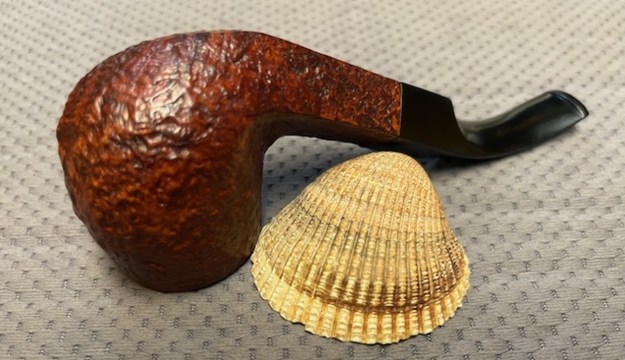
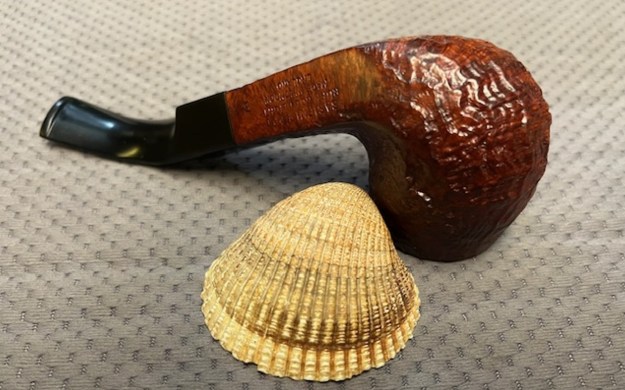
It may seem I have endless choices of pipes to work on. While we do have a lot of pipes that are in the queue to be restored it is far from endless. This next pipe I chose to work on was one that we purchased a few years ago on 10/17/2022 from our contact in Copenhagen, Denmark. The pipe is stamped on the underside of the shank and reads W.O. Larsen [over] Handmade [over] Made in Denmark. This one is a unique beauty with a shallow sandblast on a stylized bent Dublin shape flowing up a curved shank and fancy saddle stem. The briar bowl and shank were sandblasted as was the rim top. The exterior of the pipe had a shiny coat of varnish that covered some of the dust and debris in the blast. There was a moderate cake in the bowl and some lava and darkening on blast of the rim top. The acrylic stem is a fancy turned saddle stem that is comfortable. There is no logo on the stem. As it is acrylic there is no oxidation and had minimal tooth marks and chatter on both sides ahead of the button. Jeff took photos of the pipe before he started his clean up work. Jeff took photos of the rim top and stem to show the general condition of the pipe. The bowl is moderately caked and there was some light lava on the sandblasted rim top. The stem looked good under the dirt and grime. There was light tooth marks and chatter. It should cleanup very well. Jeff took photos of the bowl sides and heel to show the beautiful blast that was around this bowl even though the grime on the finish hides it some. The pipe had obviously been well loved and cared for by the previous pipeman. He took a photo of the underside of the shank to show the stamping. The stamping is clear and readable in the photos below as noted above.I have worked on quite a few W.O. Larsen pipes that are well made Danish takes on classic shapes. Several of them have been Brandy shaped pipes. This sandblast Canadian has a bowl that is almost a Brandy shape. Here is a link to the blog describing the background and history of the brand (https://rebornpipes.com/2021/10/25/restoring-a-sandblast-canadian-hand-made-designed-by-w-o-larsen-super-tan-65/). I quote from that blog in information that follows.

I turned to Pipephil (http://www.pipephil.eu/logos/en/logo-l2.html) to get a quick view of the brand once again. I did a screen capture of the site’s information and have included that below. The pipe I am working on is a W.O. Larsen as it is stamped similarly to the ones in the photos. I quote from the sidebar below:

In the 1960s Ole Larsen, owner of the Copenhagen tobacco store, retails pipes carved by Sixten Ivarsson, Poul Rasmussen, Sven Knudsen or Peter Brakner. Faced with the success and urged by Sven Bang (store manager), Sven Knudsen and Former (Hans Nielsen) are successively hired to carve pipes in the basement of the shop at the beginning and in the old Larsen cigar factory afterwards. Carver like Teddy Knudsen, Tonni Nielsen, Jess Chonowitch, Peter Hedegaard work a while in this context. When Nils, son of Ole Larsen, succeeds his father he acquires the Georg Jensen pipe factory to focus on less expensive pipes. This turns out to be an error ending with the sale of W.O. Larsen trademark to Stanwell. The famous tobacco shop at Strøget, Amagertorv 9 closed down for good on Dec 31, 2004. Do not confuse W.O. Larsen with: Jorgen Larsen

I turned to Pipedia (https://pipedia.org/wiki/W.%C3%98._Larsen) for a quick read. The site is worth reading the history of the shop and the brand and its influence on Danish pipe carving. I quote a portion of the article below:

The workshop of W.Ø.Larsen

W.Ø.Larsen is Denmark’s oldest and probably most famous pipes and tobacco store, placed in the center of Copenhagen on the main pedestrian street, Stroget. If you visit Copenhagen and do a “pipe crawl” this store is a must. In the beginning of the 1960’s the store began to sell Danish hand-made pipes, especially those of Poul Rasmussen. This went very well and Poul Rasmussen could not keep up with the demand. W.Ø.Larsen, with their dynamic business manager Svend Bang (who later started his own pipe business), decided to establish their own workshop in rooms next to the store.

The first manager of the pipe workshop was Sven Knudsen, but he soon left to make pipes under his own name. The next manager was Hans Nielsen, also known as “Former” (named after the late British actor George Formby, whom he was said to resemble. Coincidentally, in Danish, “Former” means “shapes”). Under the management of Former the workshop grew and W.Ø.Larsen pipes became a prominent name abroad. Among the prominent pipemakers educated here were Else Larsen (Denmark’s first female pipemaker),Poul Ilsted, Ph. Vigen, Teddy Knudsen, Tonni Nielsen, and Peter Hedegaard.

Typical for the W.Ø.Larsen School were semi-classic shapes, meaning classic shapes, but with slight differences, often bring a little more full or round. The pipes often had lower center of gravity. A typical billard would have a bowl shaped more like a pear and the connection between the bowl and the shank would be clearly distinguished. Yellow and orange were colors more widely used for the finishes.

What I learned from the research is that the pipe is a W.O. Larsen pipe made by one of the famous carvers who worked in the shop. It is a beautiful pipe in both shape and finish.

Jeff did a great job cleaning up the pipe. He reamed the bowl with a PipNet pipe reamer and cleaned up the cake with a Savinelli Fitsall Pipe Knife. He scrubbed out the mortise and the airway in the shank and the stem with alcohol, shanks brushes, cotton swabs and pipe cleaners. He scrubbed the exterior of the bowl, rim and shank with a tooth brush and Murphy’s Oil Soap to the oils and tars on the bowl, rim and shank. He removed the light lava coat on the top of the rim. He rinsed the bowl under running water. He dried it off with a soft cloth. Once the grime was removed the finish underneath was in good condition. The stain and the look of the finish was very well done. He scrubbed the exterior of the stem with Soft Scrub and rinsed it with warm water. He wiped the bowl and stem down with a light coat of olive oil and buffed it with a soft cloth. The pipe really was quite stunning. I took photos of the pipe to show its condition before I started my work on it. I took a close up photo of the rim top and edges to show how well it had cleaned up and the edges around the bowl. I also took close up photos of the stem to show the light tooth chatter on the surface ahead of the button on both sides.I took a photo of the stamping on the underside of the shank. It is clear and readable as noted above. I removed the stem and took a photo of the pipe to show the proportions of the pipe. It is a beauty.I used a brass bristle wire brush to go over the rim top and knock off the remaining lava and debris in the sandblast. It looked much better. I worked some Before & After Restoration Balm into the surface of the briar with my fingertips and a shoe brush to clean, enliven and protect the briar. I let the balm sit for 15 minutes and then buffed with a cotton cloth to raise the shine. The photos show the bowl at this point in the restoration process. I polished the stem with micromesh sanding pads – dry sanding with 1500-12000 grit sanding pads. I wiped it down after each sanding pad with Obsidian Oil. I polished it with Before & After Pipe Stem Polish – both Fine and Extra Fine. I gave it another coat of Obsidian Oil. I am really happy with the way that this W.O. Larsen Handmade Freehand Dublin turned out. It really is a beautiful looking pipe with a unique shape and shallow sandblast finish. The fancy acrylic saddle stem is really nice. The briar really came alive with the buffing. The rich brown and black stains of the finish gave the pipe a sense of depth with the polishing and waxing. I put the stem back on the bowl and carefully buffed the pipe with Blue Diamond on the buffing wheel using a light touch on the briar. I gave the bowl and the stem multiple coats of carnauba wax on the buffing wheel. I buffed the pipe with a clean buffing pad to raise the shine. I hand buffed the pipe with a microfiber cloth to deepen the shine. The finished W.O. Larsen Handmade Dublin really is a beauty and feels great in the hand and looks very good. Give the finished pipe a look in the photos below. The dimensions of the pipe are Length: 6 ½ inches, Height: 2 ½ inches, Outside diameter of the bowl: 1 ¾ inch, Chamber diameter: ¾ of an inch. The weight of the pipe is 51 grams/1.80 ounces. The pipe will be going on the rebornpipes store in the Danish Pipe Makers Section if you would like to add it to your collection. Thanks for reading this blog and my reflections on the pipe while I worked on it. It was a fun one to work on!

Restemming and restoring a Comoy’s Made Town Hall Made in England 19 Military Bit Billiard


by Steve Laug

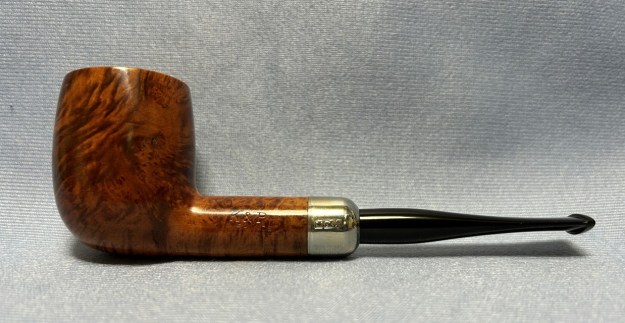
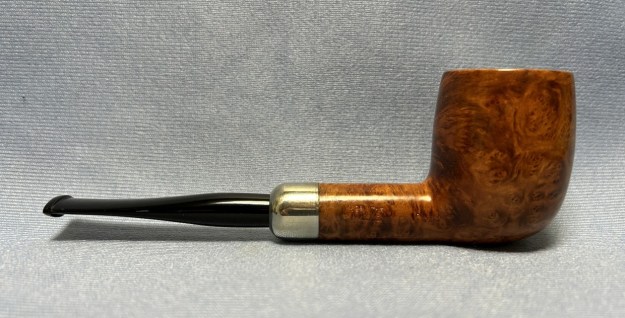
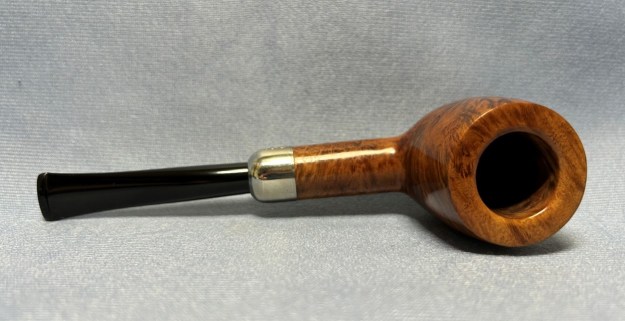
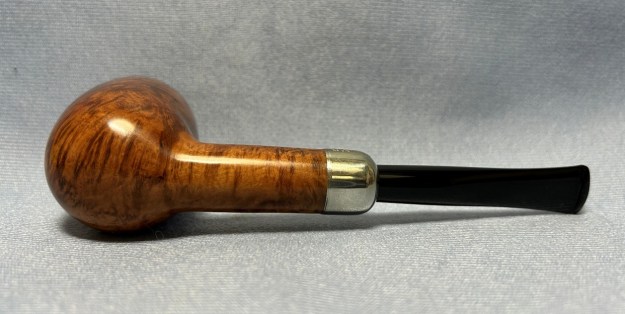
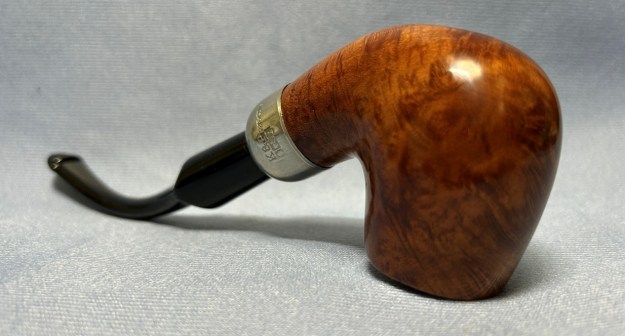
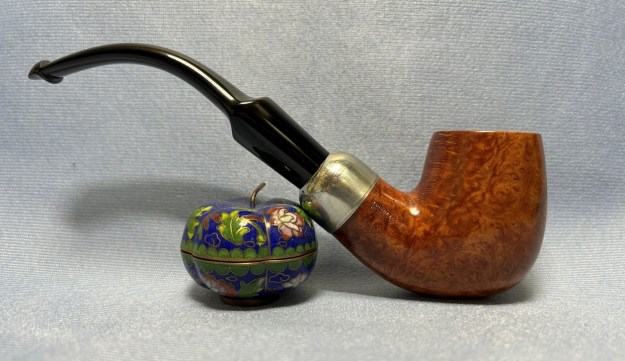
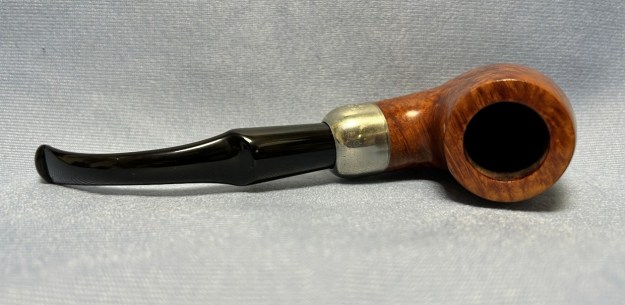
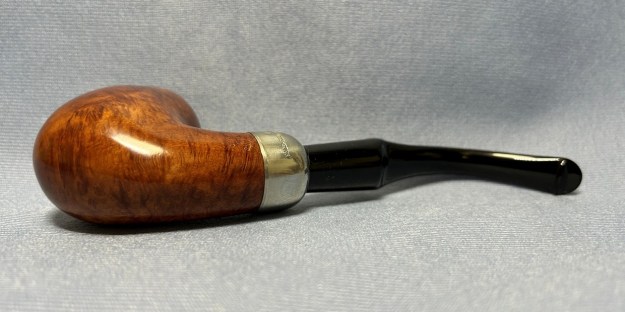
I decided to restem another bowl that I had here in the box. Jeff and I purchased on 11/23/2020 from a seller in Brazil, Indiana, USA. It is a nice bowl with a silver ferrule on the shank end. The left side of the shank is stamped at and angle and reads Town Hall [over] Made in England. The right side has the shape number 19 next to the bowl/shank junction. The ferrule is stamped with an arched Sterling Silver. The bowl is quite clean with no cake and no lava overflow on the rim top or the bevelled inner edge. The briar is dry but clean – just a bit lifeless looking but there is some great grain hidden by the dullness. The silver ferrule is not oxidized but there are some dents on the shank end on the underside. The ferrule is a bit ragged looking around the entrance to the mortise. I took some photos of the pipe before I started my work on restemming and restoring it back to its former glory. I tried to capture the stamping on the shank sides. It is readable but faint in spots. It reads as noted above.The ferrule was loose so I removed it and took a photo to show the dents and the condition of the opening on the ferrule end.I went through my stems and found this partially shaped stem that would work quite well. It would need to be reduced in diameter and cleaned up. There were some gouges on both sides ahead of the button that looked like someone had started shaping a dental bit. Before I started working on the pipe I wanted to get an idea of the maker of the Town Hall brand. Something about the shape and the number reminded me of the Guildhall by Comoy’s but I was not sure. I turned first to Pipephil’s site and found a link that gave a good summary of the information and confirmed the Comoy’s connection (http://www.pipephil.eu/logos/en/logo-t7.html) that I suspected. I have included a screen capture of the pertinent section and the side bar information below the photo.Other Comoy’s seconds with a one bar mouthpiece logo: Carlyle, Charles Cross, St James, The Golden Arrow, Trident,

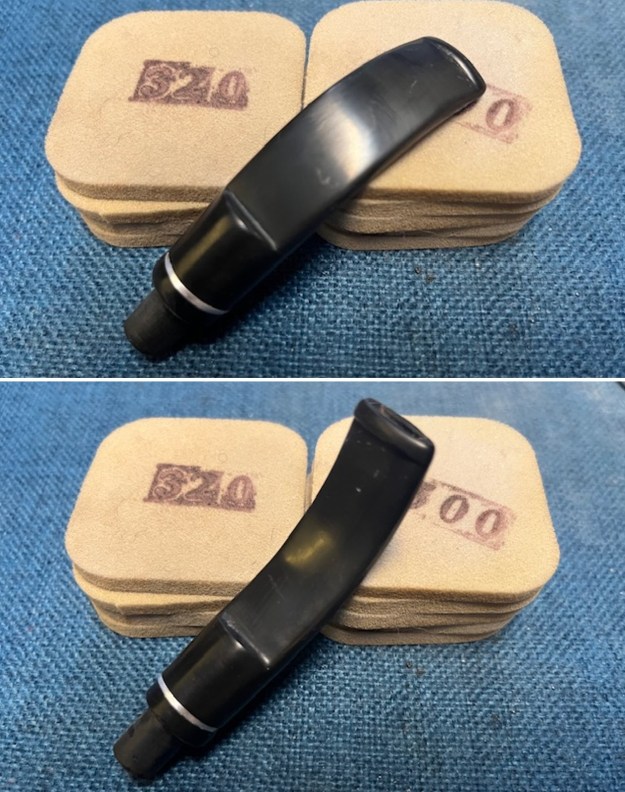
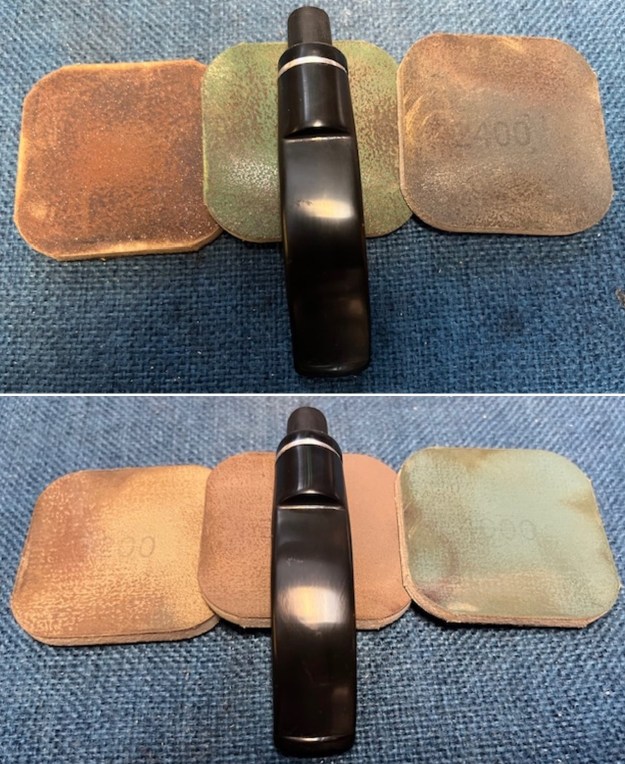
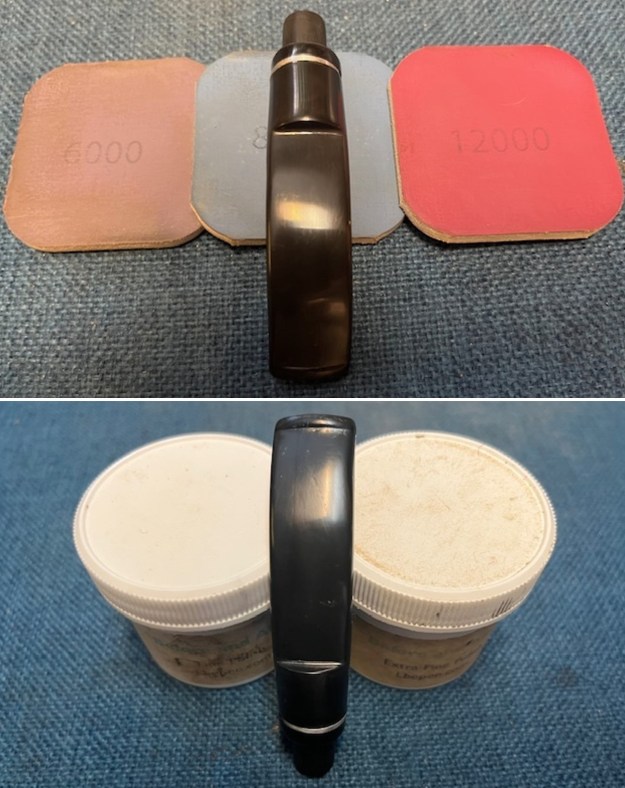
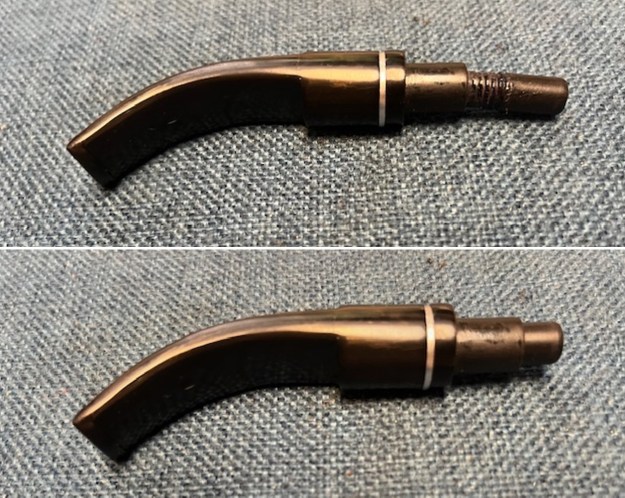
I turned to Pipedia for more information (https://pipedia.org/wiki/Comoy%27s). Other than the great history of the brand there was a note in the section entitled “Seconds made by Comoy’s” that had a listing for Town Hall. I scrolled down the page and found some interesting photos that I have included below including an original box for the pipe. The second and third photos show similar stamping though horizontal on this pipe. At the very bottom of the article I found perhaps to me, the most exciting connection – a Town Hall – same shape, same silver ferrule as the one I was working on. The stamping on it was clearly a Comoy’s Town Hall Pipe, Made in England. The thing I am glad for is that the photos show the type of stem I would need to fit on the pipe. The one I had chosen would work quite well with some shaping.I started my work on this one by fitting the newly chosen stem first. If you have followed me you will note the departure from my normal pattern of working on the bowl first. But in this case, I really wanted to see if I could duplicate the stem shown above for this pipe. I shaped the conical end with my Dremel and a sanding drum to get it close to the look I was shooting for. The rough shape was done but I would need to fine tune it by hand.I carefully sanded the conical portion with a folded piece of 220 grit sandpaper and blended it into the rest of the stem. I reshaped it in the process and sanding out the gouges in the button end on both sides. I was able to remove the roughening left by the Dremel and the shape was beginning to look right. I worked on the silver ferrule to try to smooth out the dents and damage to the opening on the stem end. I was able to remove some of the dents and minimize the others. It looked better. I pressed it onto the shank and fit the stem. I took photos of the stem in place to give a sense of how it was beginning to look. The fit of the stem still needed adjusting and the scratches needed to be sanded out from the surface. It was beginning to look much better. I sanded the stem with 320-3500 grit sanding pads to polish out the scratches in the surface. I wiped the stem down after each sanding pad with a damp cloth to remove the dust and debris on the surface of the stem. It began to take shape and look better.I polished the stem with micromesh sanding pads – dry sanding with 1500-12000 grit sanding pads. I wiped it down after each sanding pad with Obsidian Oil. I polished it with Before & After Pipe Stem Polish – both Fine and Extra Fine. I wiped down again with Obsidian Oil and set it aside while I worked on the stem. I sanded the briar with 320-3500 grit sanding pads to remove the scratching and nicks in the rim edge and the side of the bowl. I wiped the bowl down with a damp cloth after each sanding pad to remove the sanding debris. It is starting to look very good at the end of the process. I polished the briar with micromesh sanding pads – dry sanding with 1500-12000 grit sanding pads. I wiped the bowl down with a damp cloth after each sanding pad. The grain really began to sing. I worked some Before & After Restoration Balm into the surface of the briar with my fingertips to clean, enliven and protect the briar. I let the balm sit for 15 minutes and then buffed with a cotton cloth to raise the shine. The photos show the bowl at this point in the restoration process. This Comoy’s Made Town Hall 19 Military Bit Billiard was one I was looking forward to seeing come together. The brown stains highlight the grain around the bowl – sides, top and heel. The polished silver ferrule and the black vulcanite military bit that I fit to the shank works very well with the look of the pipe. I put the stem back on the bowl and carefully buffed the pipe with Blue Diamond on the buffing wheel. I gave the bowl and stem multiple coats of carnauba wax on the buffing wheel and followed that by buffing the entire pipe with a clean buffing pad. I hand buffed the pipe with a microfiber cloth to deepen the shine. I polished the silver band with a jeweller’s cloth. The finished Town Hall 19 Billiard is quite nice and feels great in the hand. Give the finished pipe a look in the photos below. The dimensions of the pipe are Length: 5 ¾ inches, Height: 1 ¾ inches, Outside diameter of the bowl: 1 ¼ inches, Chamber diameter: ¾ of an inch. The weight of the pipe is 1.20 ounces/34 grams. Thanks for walking through the restoration with me as I worked over another beautiful pipe. This pipe will be added to the British Pipe Makers Section of the rebornpipes store soon. If you want to add it to your collection send me an email or a message! Thanks for your time.

Restoring “A Peterson’s Product” Made in the Rep. of Ireland Shamrock 268 Zulu


by Steve Laug

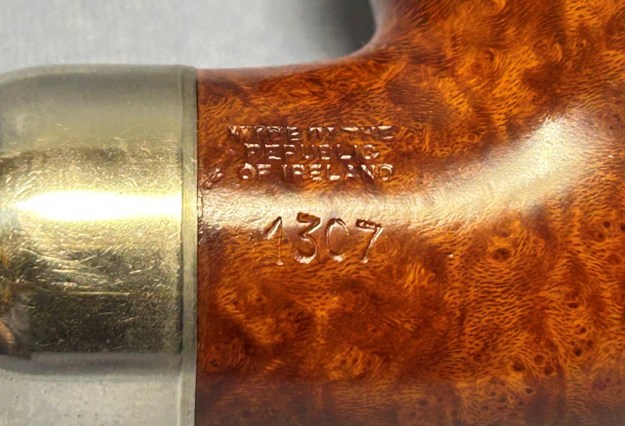
The next pipe was a pipe that was in surprisingly good condition. The finish on the bowl and rim top looked very good other than being dirty. This old pipe is a smooth Zulu that has a rich coloured finish around the bowl sides and shank under the grit and grime of years. It was purchased from our contact in Copenhagen, Denmark on 01/08/2024. It was stamped on the top side of the shank and read SHAMROCK. It was stamped to the underside of the shank and reads “A Peterson’s Product” [over] Made in the Rep. [over] of Ireland. The shape number 268 was on the right side of the shank next to the bowl. It was dirty when Jeff brought it to the table. There was a thick cake in the bowl and the inner edge but there was no lava on the rim top. The taper fishtail vulcanite stem was lightly oxidized and there was tooth chatter ahead of the button. There was also a Shamrock “S” logo on the topside of the stem. Jeff took photos of the pipe before his cleanup work. Jeff took photos of the rim top and stem to show the general condition of the pipe. The bowl is heavily caked so it is hard to know the condition of the edges under the lava overflow. The stem looked surprisingly good. Jeff took photos of the bowl sides and heel to show the grain that was around this bowl. You can see the grime but the grain around the bowl is beautiful. Even so, it is a nice looking pipe. He took photos of the top and underside of the shank to show the stamping. The stamping is clear and readable in the photos below as noted above. He did not capture the shape number stamp on the right side of the shank. The “S” logo on the top of the stem looks very good. I am including the link to the Pipedia’s article on Peterson pipes. It is a great read in terms of the history of the brand (https://pipedia.org/wiki/Peterson).

I turned to “The Peterson Pipe” by Mark Irwin and Gary Malmberg to get some background on the Peterson’s Shamrock Pipe. On page 312 it had the following information.

Shamrock (c1941-2009) Originally stamped SHAMROCK with no brand name, an inexpensive line first described in George Yale (New York) mail order booklet in 1941, imported by Rogers Import. The line was actively promoted beginning in ’45, aggressively promoted in US by Rogers from early ‘50s when they registered the Shamrock logo with US Patent Office, claiming propriety since ’38. Over the years offered with P-lip or fishtail mouthpiece, with or without nickel band, with or without Shamrock logo on the band, with or without S stamped in white or later in gold on mouthpiece. Appearing in 2008 as unstained smooth and rustic, fishtail mouthpiece with gold impressed P on the stem. COMS of MADE IN over IRELAND (C1945-1965), MADE IN IRELAND forming a circle (c1945-1965), “A PETERSON’S PRODUCT” over MADE IN IRELAND (c1945-1965), MADE IN THE over REPUBLIC over OF IRELAND (c1948-1998). Model is always difficult or impossible to date.

Judging from the description above, the pipe I am working on is stamped with the stamp noted in red above. The stamping Made in the Rep. of Ireland narrows the date to approximately 1948-1998. It is just stamped SHAMROCK with no brand name and the S stamping on the stem.

Jeff had done a great job cleaning up the pipe as usual. He reamed the pipe with a PipNet reamer and cut back the cake back to the bare briar. He cleaned up the walls with a Savinelli Fitsall Pipe Knife. Surprisingly the walls looked unscathed from the heavy cake. He scrubbed the interior of the bowl and shank with pipe cleaners, cotton swabs and alcohol to remove the tars and oils. He scrubbed the exterior of the pipe with Murphy’s Oil Soap and a tooth brush to remove the grime from the finish. He scrubbed the inside of the stem with alcohol and pipe cleaners. He scrubbed the exterior of the stem with Soft Scrub and then soaked it in Briarville’s Deoxidizer. He washed it off with warm water to remove the Deoxidizer. When I examined the stem, it looked very good. The pipe looked far better when it arrived. I took some close up photos of the rim top and edges to show how well it had cleaned up and the edges around the bowl. I also took close up photos of the stem to show the light tooth chatter on the surface ahead of the button on both sides. I took photos of the stamping on the sides of the shank. It is clear and readable as noted above. I removed the stem and took a photo of the pipe to have a look at the parts and overall look. I polished the briar with micromesh sanding pads – dry sanding with 1500-12000 grit sanding pads. I wiped the bowl down with a damp cloth after each sanding pad. The grain really began to sing. I worked some Before & After Restoration Balm into the surface of the briar with my fingertips to clean, enliven and protect the briar. I let the balm sit for 15 minutes and then buffed with a cotton cloth to raise the shine. The photos show the bowl at this point in the restoration process. I set the bowl aside and sanded out the chatter on both sides of the stem ahead of the button with 220 grit sandpaper.I sanded the stem surface with 320-3500 grit sanding pads. The chatter was gone on both sides ahead of the button looked very good. The stem began to shine.I polished the stem with micromesh sanding pads – dry sanding with 1500-12000 grit sanding pads. I wiped it down after each sanding pad with Obsidian Oil. I polished it with Before & After Pipe Stem Polish – both Fine and Extra Fine. I am excited to finish this “Peterson’s Product” Made in the Rep. of Ireland Shamrock 268 Zulu. I put the pipe back together and buffed it with Blue Diamond on the buffing wheel. I gave the bowl and the stem multiple coats of carnauba wax. I hand buffed the pipe with a clean buffing pad to raise the shine. It is fun to see what the polished bowl looks like with beautiful mixed grain all around it, looks great with the polished black vulcanite stem. This smooth Classic Shamrock 268 Zulu is great looking and the pipe feels great in my hand. It is light and well balanced. Have a look at it with the photos below. The dimensions are Length: 5 ½ inches, Height: 1 ¾ inches, Outside diameter of the bowl: 1 ¼ inches, Chamber diameter: ¾ of an inch. The weight of the pipe is 32 grams/1.13 ounces. It turned out to be a beautiful pipe. I will be putting on the rebornpipes store in the Irish Pipe Makers Section. Let me know if you are interested in adding it to your collection. Thanks for your time as I walked through the restoration.

Restoring the third of six pipes for a Vancouver Pipeman – No Name Bent Rhodesian


by Steve Laug

Earlier this week I received an email from Stephen regarding a few more pipe projects that he had for me to work on. He dropped them off here yesterday for me to work on. There were six pipes in the lot. Two were his that I had worked on a few years ago – a Mayfair 1005 rusticated tree stump and a Jost Supreme. Both were favourite pipes of his. One was a Savinelli Bent Billiard that he purchased on a trip to Italy. The final three were pipes that belonged to his father who would soon be visiting him in Vancouver – a Brigham full bent four dot 4244, a Savinelli Portofino Bent Pot and a Bent Rhodesian with no name stamped on the shank sides. Stephen texted me this photo of the pipes before he sent them.I decided to work on the second of Stephen’s father’s pipes. It is a smooth Bent Rhodesian. It is a beautiful grained piece of briar that I can appreciate why he chose it. The pipe is unstamped and does not appear to have even the remnants of any stamping. The briar is dirty from use with a moderate cake in the bowl and a lot of chipping and dents in the rim top and the twin rings on Bullcap on the bowl. The stem was oxidized, calcified and had some tooth marks and chatter on the top and underside of the stem ahead of and on the surface of the button. There is no stamping on the side of the stem as it was unmarked. I took photos of the pipe before I started my work and included them below. I took a photo of the stem surfaces and the bowl and rim to give a sense of condition of the pipe. You can see the cake in bowl and the lava overflow and the heavy nicking and denting on the edges and rim top of the bowl. The stem surface is very dirty and you can see the tooth marks and chatter on both sides ahead of the button. There is also a paper wash inserted in the mortise of the pipe to tighten the fit of the stem.I removed the stem from the shank of the pipe and took a photo of the parts to show the flow of the pipe. It has some great grain.I used a dental spatula to scrape out the paper washer from the inside of the shank. It had been glued to the right side of the shank to thicken the wall of the right side. It was not an effective way as the shank was not drilled evenly. It was straight but the shank was not round. The stem turned the same way the stem was.To address the damage on the rim top I topped it with 220 grit sandpaper on a topping board. I took off the rim damage and smoothed out the top of the rim. It looked much better. I reamed the bowl with a PipNet pipe reamer using the second and third cutting head to trim the cake back. I used a Savinelli Fitsall Pipe knife to clean up the remnants leaving bare briar. I sanded the bowl walls with 220 grit sandpaper wrapped around a piece of dowel. The bowl was significantly cleaner. I cleaned out the airway in the shank and mortise as well as the stem with cotton swabs, pipe cleaners and isopropyl alcohol. It was dirty but it cleaned up very well. I cleaned the surface of the briar with a cotton pad and acetone to remove the grime and the remnants of the finish on the briar. It looked much better.There was a large divot on the bottom of the bowl that I decided to repair. I filled it in with some clear CA glue and pressed briar dust into the glue. I repeated the process until the damaged area was filled in. Once the repair cured I sanded it flat to blend it into the surrounding surface of the briar. It looked much better when I was finished. I sanded the bowl with 320-3500 grit sanding pads. I wiped the bowl down after each sanding pad with a damp cloth to remove the sanding debris. I polished the briar with 1500-12000 micromesh sanding pads – dry sanding the bowl with the pads and wiping it down after each sanding pad to remove the sanding debris. It is looking much better. I left the nicks on the twin rings around the top of the Bullcap as they are a part of the pipe’s journey. I rubbed the bowl down with Before & After Restoration Balm. I worked it into the surface of the briar with my fingertips and a shoe brush to work it into the rings around the Bullcap. The product works to clean, restore and preserve the briar. I let it do its magic for 15 minutes then buffed it off with a cotton cloth. The pipe looks very good at this point in the process. I set the bowl aside and turned my attention to the vulcanite taper stem. I scrubbed the surface of the stem with Soft Scrub to break through the oxidation, calcification and clean up the tooth marks.I filled in the tooth marks on the stem surface and on the surface of the button on both sides with black CA glue. The glue I use has both rubber and carbon in the mix that harden as it dries but does not become brittle. Once it cured I flattened the repairs and reshaped the button edge with a flat needle file. I cleaned up the repaired areas with 220 grit sandpaper. I sanded the stem with 320-3500 grit sanding pads. I wiped the stem down after each sanding pad to remove the sanding debris and dust. The stem looked very good. I polished the stem with micromesh sanding pads – 1500-12000 grit pads. I wiped it down with an Obsidian Oil cloth after each sanding pad.  I finished polishing it with Before & After Pipe Stem Polish – both Fine and Extra Fine and buffed it off with a cotton cloth. I gave it a coat of Obsidian Oil to preserve and protect the stem. This No Name Bent Rhodesian is a great looking pipe now that it has been restored. The mix of brown stains really highlight the grain and the polished finish has depth. The nicks in the rings give a bit of character and history to the pipe. I put the vulcanite stem back on the bowl and carefully buffed the pipe with Blue Diamond on the buffing wheel. I gave the bowl and the stem multiple coats of carnauba wax on the buffing wheel and followed that by buffing the entire pipe with a clean buffing pad. I hand buffed the pipe with a microfiber cloth to deepen the shine. The finished Bent Rhodesian fits nicely in the hand and feels great. Give the finished pipe a look in the photos below. The dimensions of the pipe are Length: 5 inches, Height: 1 ½ inches, Outside diameter of the bowl: 1 inch, Chamber diameter: ¾ of an inch. The weight of the pipe is 48 grams /1.69 ounces. I have three more of Stephen’s pipes to work on. Once I have finished I will get them back to him to enjoy with his father. Thanks for reading this blog and my reflections on the pipe while I worked on it.

As always, I encourage your questions and comments as you read the blog. Thanks to each of you who are reading this blog. Remember we are not pipe owners; we are pipe men and women who hold our pipes in trust until they pass on into the trust of those who follow us.
Restoring another of Gene’s pipes – an A. Jason 96 Saddle Filter Stem Billiard


by Steve Laug

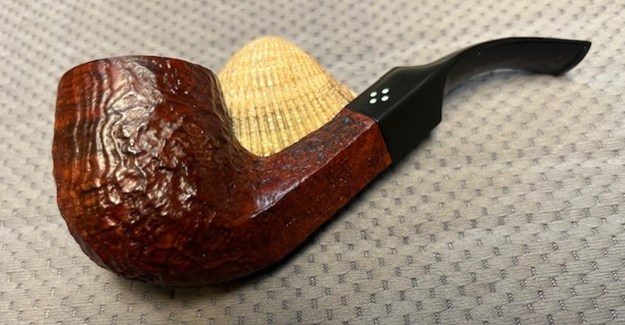
In January Jeff found out about an estate sale in Pocatello, Idaho, USA. It turned out that the sale was for a fellow Jeff and I had purchased pipes from in the past, Gene. He had been the owner of Outwest Tobacco in Pocatello (long closed now) and I bought tobacco and other smoking items from him in the past. As I think about it now, it seems that I had known Gene for over 30 years Jeff and I had been to his home and enjoyed coffee and a few pipes together. I have no idea how many pipes we bought on those visits as well as to the antique shop of his daughter. I know that there were many pipes. When we heard that it was Gene’s personal collection that was for sale and that he had passed away we decided for Jeff to go to the house and have a look. He went on January 25, 2024 to scope it out as we had seen his personal collection of pipes and there were definitely some among those well smoked old warriors that would be great to pick up. Perhaps there would even be one that could join my own collection in memory of Gene.

Jeff went to the house and looked through the racks, pipe bags, tobacco both bulk and tinned as well as a variety of pipes. All the pipes were well smoked and needed serious cleaning. Another one of the pipes he picked up was this A. Jason Billiard with a well fitting vulcanite saddle stem. It was very dirty and was a reddish, brown coloured pipe when it started. The smooth finish around the bowl was dirty and had hand oils ground into the grooves. The bowl had a thick cake that overflowed in lava onto the rim edge and top of the bowl. The stem was vulcanite that was very dirty and had the marks of a rubber Softee Bit on the end. It was also a very dirty 9mm filter stem. It had become discoloured and there was a line where the debris from smoking had accumulated along the edge and under the bit protector. The good news was that there were some deep tooth marks and chatter under the calcification and grime. The rest of the stem was dirty and had lost the characteristic shine. The pipe was stamped on the left side of the shank and read A. Jason in script in an oval. On the underside of the shank it is stamped with the shape number 96. Jeff took photos of the pipe so I could have a sense of what it looked like before he started his work on it.Jeff took photos of the stem surfaces and the bowl and rim to give a sense of condition of the pipe. You can see the thick cake in bowl and the lava overflow on the edges and rim top of the bowl. It is hard to know if there is any damage as the cake and lava is quite thick. The stem surface is very dirty and you can see the area on the end of the stem where the Softee Bit had protected it from chewing though there were some previous deep tooth marks covered by the dirt and debris. He also took photos of the sides of the bowl and the heel to show the interesting grain that went around the bowl. The grain is beautiful and you can see the oils and debris in the surface of the briar. He took photos of the stamping on the sides of the shank. It is clear and readable on all the shank sides as noted above.I did some searching on Google and could not find any pipe makers with the name A. I did a search in Washington and Oregon as well as Idaho and Utah all states within reach for Gene to have either visited or ordered a pipe. There was nothing that I could find in terms of a US pipe maker. I did a search on Google for A. Jason tobacco products and came across a cigar label and cigar cutter with the same stamp as the pipe – A. Jason. Further searching took me to a German tobacco supplier called A. Jason-Hanse Hamburg, Germany. They are a small tobacco shop located at Barmbeker Str. 17-19, 22303 Hamburg, Germany that sells cigars, humidors, cigar cutters, pipes and pipe tobacco. They were some pictures of the label on a humidor and a cigar label with the same stamp.I posted a question about the brand on Facebook pipe groups and Sascha Martens answered and did a bit of research on the brand and sent a link to the Hanse Tobacco Company in Hamburg who was a cigar cutter and tobacconist. Thank you for the information Sascha. Here is the link (https://www.northdata.com/Hanse%20Tobacco%20GmbH,%20Hamburg/HRB%20109995). I have included the information from the link below:

Hanse Tobacco GmbH

Heinrich-Hertz-Str. 139 – 139 a, 22083 Hamburg, Germany

Norderstedt, Germany

Corporate purpose – The object of the undertaking is the trade in goods of all kinds, insofar as they are not subject to authorisation, in particular tobacco products and smoking supplies. In addition, the company is engaged in the operation of catering, beverages and restaurants, with the dispersing of alcoholic beverages.

I knew from the above information that I was working on a German made pipe or at least one made for the German market. I also knew that originally it had come from the A Jason-Hanse shop in Hamburg. How it got to Pocatello, Idaho in the US is truly anyone’s guess. Was it a gift from a customer to Gene or did he pick it up on a trip to Europe? I suppose we will never know. Now it was my turn to work on the pipe.

Jeff had done an amazing cleanup of the pipe. He reamed the cake with a PipNet reamer and cleaned up that with a Savinelli Fitsall Pipe Knife. He scrubbed the internals of the bowl and stem with alcohol, cotton swabs, shank brushes and pipe cleaners. He scrubbed the externals with undiluted Murphy’s Oil Soap and rinsed the bowl off with running water. He soaked the stem in Briarville’s Pipe stem Deoxidizer and once it had soaked, rinsed it off with warm water to remove the residual solution. He dried it off and rubbed it down with Soft Scrub to remove any oxidation that was still on the stem. The pipe looked very good when I received it. I took a photo of the rim top to show the condition. You can see the clean bowl. The bowl is in excellent condition and is clean. The rim top and the inner edge had a few issues. The top had some pitting and nicks and the inner edge had some burn damage toward the front of the bowl. The stem came out looking clean. There were some tooth marks and chatter on both sides.I took photos of the stamping on the shank sides. It is clear and readable as noted above. I removed the stem from the shank and took a photo of the pipe parts to show what I was working with. The first is a side view and the second is showing the 9mm filter tenon on the stem. I worked over the rim top and inner edge with a folded piece of 220 grit sandpaper to minimize the damage. I followed that by using a wooden ball and some 220 grit sandpaper to give the inner edge a light bevel to take care of the burn damage on the front inner edge of the bowl. A benefit of the sanding with a sphere is that it also cleaned up the damage on the rim top. The top looked better. The bowl is a little out of round but it is much better. I sanded the surface of the bowl and rim top with 320-3500 grit sanding pads. They well to remove the surface scratches and nicks in the briar. I wiped it down after each sanding pad with a damp cloth. I polished the briar with micromesh sanding pads. I dry sanded it with 1500-12000 grit sanding pads and wiped the bowl down after each pad with a damp cloth. By the final pads the briar really had a shine. I rubbed the briar down with Before & After Restoration Balm. I worked it into the briar with my fingertips. The product works to clean, enliven and preserve the briar. I let it sit for 10 minutes then I buffed it with a cotton cloth to deepen the shine. The briar really comes alive with the balm. I set the bowl aside and turned my attention to the stem. I “painted” the surface of the stem with the flame of a Bic lighter to lift the tooth marks. I was able to lift many of the marks significantly. I filled in what remained with black CA glue (rubberized and carbonized). It is a great product that has some elasticity and cures hard but not brittle. Once it cured I used a flat file to smooth out the repairs. I finished blending them in with 220 grit sandpaper. I moved on to further smooth out the surface of the repairs to the vulcanite. I sanded them smooth with 320-3500 grit sanding pads to further blend them into the surface of the stem.I polished the vulcanite with micromesh sanding pads – 1500-12000 grit pads. I wiped it down with Obsidian Oil after each sanding pad. I used Before & After Pipe Polish – both Fine and Extra Fine to further polish the stem. It really took on a shine and I knew that once it was buffed it would look amazing. I fit the stem with a 9mm filter. I used some Vauen Dr. Perl Junior Filters when I am replacing 9mm filters. The fit was perfect and the draught very good.I put the stem back on the A. Jason Billiard 96 with a vulcanite saddle 9mm filter stem and took it to the buffer. I worked it over with Blue Diamond to polish out the remaining small scratches. I gave the bowl and the stem several coats of carnauba wax and buffed the pipe with a clean buffing pad to raise the shine. I hand buffed it with a microfiber cloth to deepen the shine. The pipe polished up really well and the rim top looked good. I was happy with the look of the finished pipe. The photos below show what the pipe looks like after the restoration. The German made A. Jason Saddle Stem Billiard 96 is a beautiful and unique take on a classic shape. The polished vulcanite saddle stem looks really good with the browns of the briar. The dimensions of the pipe are Length: 5 ½ inches, Height: 1 ¾ inches, Outside diameter of the bowl: 1 ¼ inches, Chamber diameter: ¾ of an inch. The weight of the pipe is 1.80 ounces/52 grams. This is another pipe that I will be putting it on the rebornpipes store in the Pipes from Various Makers Section shortly, if you are interested in adding it to your collection. The pipe looks and feel great in the hand. This one should be a great smoker. Thanks for walking through the restoration with me on this beauty!

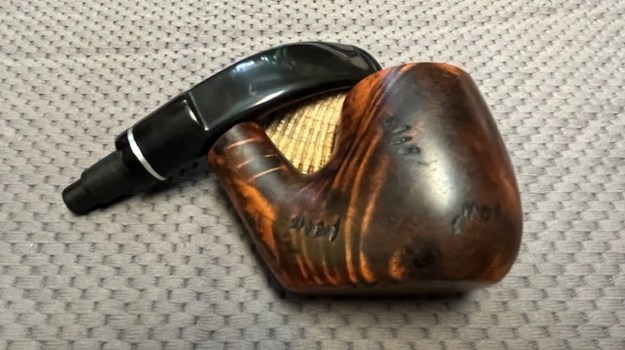
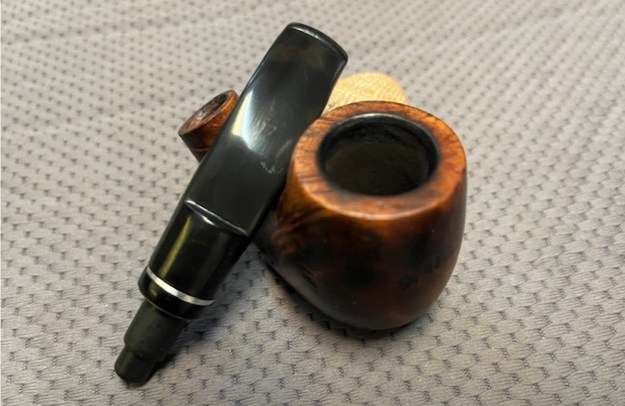
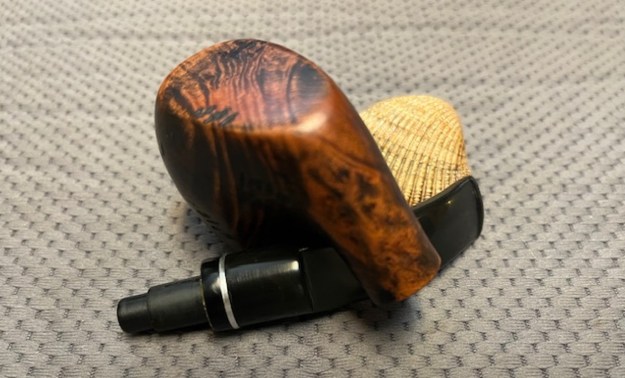
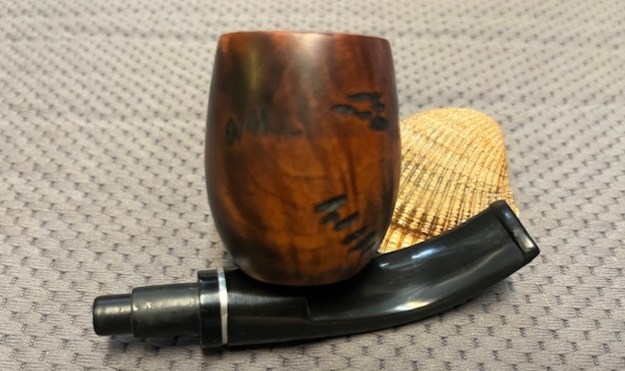
Putting together the pieces to Craft a Gourd Calabash with a Maplewood Bowl


by Steve Laug

One of the things I enjoy doing is putting together varied and assorted pipe parts and crafting a pipe. Sometime the pieces are sitting here for a long time waiting for either the inspiration or the proper parts. This old calabash gourd sitting here for a few years now. It was cleaned and did not have either a cork gasket to hold a bowl or stem to fit the briar shank extension on the shank end. It just languished in a box of old bowls that I have here. (They say confession is good for the soul so I will tell you that box is full of probably over 100 bowls. Did I tell you I have a problem throwing pipe parts away?). In this case I did not have any meerschaum or porcelain cups that would fit the size of the gourd and I had not bothered to look through my stems to find one that fit the shank. So the old gourd just sat here waiting. In October I visited a fellow pipe repairer in Vancouver, Washington, USA and he gifted me a lot of pipe parts. Included in the mix were two turned wooden cups for a gourd calabash and one porcelain cup. Yesterday I remembered them and took them out to try. Like Goldilocks in the childhood fairy tale checking out the beds at the tree bears house I tried each one. The “baby bear” porcelain cup was far too small for the gourd and the “papa bear” cup was too large. But like Goldilocks found, the “mama bear” middle wooden cup one fit just right! While I was at it I also pulled an acrylic stem out from my collection of stems that I thought would work with this pipe. Now it was time to put it all together. Here is a picture of the parts. I decided to work on the gourd portion of the pipe first. I cut some cork to fit a gasket in the inset area around the top of the calabash. I used a white all-purpose glue and coated the gourd edge and pressed the cork against it. It took a bit of holding it in place to get the glue to harden. But it worked well. Once the glue cured is used a knife blade to trim the cork flush with the top of the gourd. I smoothed it out with a Dremel and sanding drum to make for a snug fit for the cup to the cork but not too snug and have it pull away.I greased the cork with Vaseline Petroleum Jelly. I worked it into the surface of the cork before I called it a night last evening and then once again this morning. I find that it softens the cork and make it more pliable when the bowl is pressed into place.While the cork/glue was curing I drilled the airway in the bottom of the wooden insert. It was undrilled. I marked the centre and then drilled the airway in the bottom of the cup. I drilled it with a cordless drill and a small bit from the inside of the bowl rather than the outside. I pressed it against a piece of wood and drilled it through. My concern in doing it from the outside was the pressure on the cup and the potential of cracking it.I started sanding the wood cup (which I think is Maple) with 320-3500 grit sanding pads. I wiped the bowl down with a damp cloth after each sanding pad to remove the sanding debris.I polished the bowl with micromesh sanding pads – dry sanding with 1500-12000 grit pads. I wiped the bowl down after each sanding pad with a damp cloth to remove the debris. I worked on the inner edge of the bowl to smooth that out and the slight bevel on the inner edge. It really began to take on a rich glow. With cup polished and the cork gasket set in the gourd I pressed the cup into the gourd calabash and it went in snugly and looked great. I took photos of the fit to show you all. I sanded the gourd with 320-1500 grit sanding pads to smooth out the nicks in the surface and minimize the two dark spots on the curve of the shank. I also sanded the briar shank extension to reveal the grain. It looked better and the rich grain began to shine through. I polished the gourd with micromesh sanding pads – dry sanding with 1500-12000 sanding pads. I wiped the gourd down with a damp cloth after each sanding pad to remove the sanding debris and dust. It really began to take on a shine. I rubbed the gourd and the maple cup down with Before & After Restoration Balm. I worked it into the surface with my fingertips. The product works to clean, enliven and preserve the pipe. I let it sit for 10 minutes then I buffed it with a cotton cloth to deepen the shine. The gourd came alive with the balm. I set the bowl aside and turned my attention to the stem I had chosen. The acrylic orange/amber stem would look good once I finished.The fit of the stem to the shank was quite good. The briar shank extension on the gourd is canted slightly and the shank extension follows the angles. With that the stem fit tight against the left side of the shank but not on the right side. I had an idea of fitting a brass band/cap on the end of the stem to compensate for the angels on the shank end. It fit very well and the band/cap was snug on the stem. I sanded the tooth chatter on both sides of the stem with 320-3500 grit sanding pads to smooth it out and blend it into the surface of the acrylic. I started the polishing of the brass stem cap on the shank end at the same time. It started looking very good.I polished the Lucite with micromesh sanding pads – 1500-12000 grit pads. I wiped it down with a damp cloth after each sanding pad. I used Before & After Pipe Polish – both Fine and Extra Fine to further polish the stem. It really took on a shine and once buffed it would look amazing. I carefully polished the parts – the cup, the gourd and the stem with Blue Diamond on the buffing wheel. I gave each piece of the pipe multiple coats of Carnauba Wax and buffed it with a clean buffing pad. I hand buffed the parts with a microfibre cloth. Once it was finished I put the parts back together. The Maple cup looked beautiful with the darkened gourd calabash. The polished briar shank extension was deeply shined. The brass stem adornment went well with the orange acrylic stem. The large Gourd Calabash with its wooden cup is beautiful. The dimensions of the pipe are Length: 7 inches, Height: 4 ½ inches, Diameter of the cup: 2 ¾ inches, Diameter of the chamber: 1 ½ inches. The weight of the pipe 95 grams/3.35 ounces. It should be a great smoker once it is loaded with a favourite tobacco and fire is put to the blend. It will definitely be a cool dry smoke. Thanks for walking through this reconstruction with me. I appreciate your patience in reading through the steps.

Really, is this a new Peterson’s Sherlock Holmes Deerstalker?


by Steve Laug

I received a call from a fellow yesterday who was sent to me by our local pipe shop. He had been given a pipe by his girlfriend for Christmas. She had purchased it somewhere other than the shop he went to and they assured her that it was brand new and unsmoked. It was a rusticated Peterson’s Sherlock Holmes Pipe with a silver band. When he opened the pipe sock he took out this gift in expectation. When it came out the pipe was dirty, the silver was tarnish and the stem was yellowed with oxidation. He had put it in his mouth and the oxidation gave a foul taste that almost put him off the pipe. He had taken it to my local shop to have them look at it. The clerk there looked it over and declared that it was a beauty and was definitely used. He cleaned off the silver with some silver cleaner and it shone. He recommended that he bring it to me for a restoration. He called and we chatted for a bit. It turned out he had this pipe and one of his Dad’s pipes that he wanted me to work on as well. He came over late afternoon with the pipes and I looked them over.

The Peterson’s was indeed quite a beauty under the grime. It was stamped on the heel of the bowl and read Peterson’s [over] of Dublin [over] Sherlock [over] Holmes [over] Deerstalker. The silver band was stamped on the topside with the profile of Sherlock Holmes with Peterson’s arched over the top and Sterling Silver arched underneath. On the underside it is stamped Peterson [over] three silver hallmarks. The first is Hibernia seated with an arm on a harp signifying the country of manufacture – Ireland. The second stamp is .925 designating the sterling quality from 2003 on. The third is the date letter mark – in this case an italic uppercase I which designates it as being made in 2019. The finish was dirty with dust and grime, perhaps from sitting and perhaps from use. The bowl reeked of English tobacco and was rough to the touch when I ran a finger down the walls. The silver looked good. The stem was badly oxidized but the silver P on the left side of the taper still shone. As I examined it I was pretty sure that there was a light cake in the bowl over the top of a bowl coating. When I took the stem off the inside of the mortise was stained with a purple stain showing that the pipe had been dip stained. Not unusual, but certainly a pain as it also adds a sour taste to the smoke. He left the pipe for me to work on and I started it last evening. I took these photos before I started my work. I took photos of the bowl and rim top to give you an idea of what I see. You can see inside of the bowl in the photos and the thin cake and perhaps some residue of a bowl lining in the heel of the bowl. The photos of the stem show that it is oxidized and has light tooth marks and chatter on both sides ahead of the button.I took a photo of the stamping on the underside of the shank. It is clear and readable as spelled out above. I captured the stamping on the underside of the silver band in the photo as well. I took a photo of stamp on the topside of the silver band as well. It is clear and readable as noted above.I wanted to know more about the Peterson’s Sherlock Holmes Line so I turned to the Pipedia article on the line and read it carefully to see where this pipe fit in the line of pipes making up the line. (https://pipedia.org/wiki/Peterson#1950_-_1989_The_Republic_Era). I quote what I found out below.

1987 saw the introduction and Issue of the first Sherlock Holmes ‘Original’ Series of pipes. The Sherlock Holmes series is probably the most successful series of pipes ever introduced by Peterson in terms of numbers. It was first issued to honour Sir Arthur Conan Doyle’s famous fictitious detective character, Sherlock Holmes. Holmes is perhaps the most famous pipe smoking character in fiction…

The Sherlock Holmes Series: Probably the most popular and successful series of pipes ever produced by Peterson. Including the Meerschaum version of the seven day sets. Both briar and Meers can be purchased either as individual pipes or complete seven day sets and stands. Expect to pay around $250 for briars and $300 for individual Meerschaums. The Adventures of Sherlock Holmes runs around $1000 for a 4 pipe boxed set. Complete 7 day sets and stands can be up to $1500 – $2000.

At this point I knew that the original line was introduced in 1987. I did not know the sequence of pipes after the Original first pipe. More work was necessary. So, I followed the links included to another article call the Pete Sherlockiana Group. There was photo there of the full collection of various Sherlock Holmes lines that were issue. I have included the link and the information include with the group photo that shown of the collection below.

Here is the link (https://pipedia.org/wiki/File:Pete_SherlockianaGroup.JPG). The description under the photo read as found below:

Sherlockiana Group, which includes: The ‘Original’ 7 day set w/stand, The ‘Return’ 7day set w/stand, The Meerschaum 7 day set w/stand, The ‘Adventures of’ 4 pipe collection, and Various ‘Silver Specials’. I still wanted to know where it fit in the order of release so I did a bit more digging into the pipe. I wanted to know the name of the pipe and what line of the Sherlock Holmes series it was in when it was released. I Googled and came across a link to an advertising brochure on Smokingpipes.com. (https://www.smokingpipes.com/smokingpipesblog/single.cfm/post/closer-look-petersons-sherlock-holmes-pipes-infographic). I have included it below. From that I knew that I was dealing with a Pipe Design from the Original release of the line from 1987, 1989-1991. Interestingly that dating does not match the date stamp of 2019.  Could it be a reissue? It was called a Deerstalker after cap that Sherlock Holmes wore. It was basically a tall, ¼ bent Rhodesian.

I also found a link to a chart on Tobaccopipes.com that was an exploration of the Sherlock Series. Here is the link (https://www.tobaccopipes.com/blog/exploring-the-peterson-sherlock-holmes-series/). Each name on the original list on the site can be clicked on for a description of the pipe that is named.I clicked on the Baker Street name in the chart above and it took me to the following link and information (https://www.tobaccopipes.com/blog/exploring-the-peterson-sherlock-holmes-series/#deerstalker). It states that the pipe was in the Original Collection and came out between 1989-1991. But there is still no explanation for the later date on the one in my hands.The text below the photos reads as follows:

Of course, one of these shapes had to be named for Sherlock’s iconic cap. The double billed, ear flapped headwear originally associated with hunting garb (hence the name) has become so tied to Sherlock, its image is essentially a visual metonym for detective. 

I can see why this shape is apt for the Deerstalker name. The round bowl pulling in above the bead lines gives that cap atop the head image, and the stem with its languid dip of a slight bend calls to mind the subtle downward slant of the deerstalker bill. 

Personally, I place Deerstalker among my favorites in this line. Again, we see the English classic Rhodesian given a twist, not too eccentric but certainly creating an identity of its own. It brings a strong forward weight, the bowl catching the eye and the shank and stem not quite as bold as we get from some of the other Sherlock shapes. Additionally, where much of the Sherlock line has a stoic briskness about the aesthetic, the light wave of the Deerstalker, following from heel to bit, adds a lithe, playful touch to the range.

With that information in hand I knew what I was dealing with in terms of the stamping and the age of this pipe. I knew from the information that the pipe was made during the Republic Era between 1950 and 1989. The Deerstalker pipe originally came out as part of the Original Sherlock Holmes Series and was specifically made between 1989 and 1991. The anomaly for me is that this one is dated 2019! Now, it was time to work on the pipe.

I reamed the bowl with a PipNet pipe reamer using the second and third cutting heads to remove the cake and what turned out to also include a rubbery bowl coating that stank. I used a Savinelli Fitsall Pipe Knife to remove the remnants of cake and bowl coating, only to find that the inside of the bowl was stained with a purple stain. I sanded the walls smooth with some 220 grit sandpaper wrapped around a piece of dowel. The walls were clean but there were still patches of purple stain on them so I would need to do a bit more to remove that along with the purple stain in the airway and the mortise area. I cleaned out the stinky tobacco oils and tars in the shank and the airway in the stem. I used 99% isopropyl alcohol, cotton swabs and pipe cleaners and was able to remove the oils, tars, and purple stain and some of the stench. I scrubbed the externals of the pipe with undiluted Murphy’s Oil Soap and a tooth brush. I was able to remove the debris from the finish of the bowl. I also scrubbed the inside of the bowl out with the soap. I rinsed the pipe with warm water to rinse off the debris and soap. It looked and smelled much cleaner once dried off. I needed to “deghost” the bowl and try to exorcize the smell. I stuffed bowl with cotton bolls and used an ear syringe to fill it with alcohol. I set it aside to let the alcohol do its work and wick the oils into the cotton. I let it sit over night. The next morning when I came back to it the cotton and alcohol had wicked out the oils and tars. The cotton was purple and brown and the bowl smelled much better. Once the bowl dried out, I sanded it once more with 220 grit sandpaper wrapped around a dowel. The bowl was clean but before I sanded it the walls were covered in purple stain. The sanding of the bowl removed the stain. I wiped the bowl down with a cotton pad and isopropyl alcohol. I rubbed the exterior of the bowl and shank down with Before & After Restoration Balm. I worked it into the surface of the briar with my fingertips and a horse hair shoe brush to clean, enliven and protect the briar. I let the balm sit for a little while and then buffed with a cotton cloth to raise the shine. The Balm did its magic and the rustication looked clean and showed real depth in the depths. I set the bowl aside and turned my attention to the stem. I scrubbed it down with Soft Scrub cleanser. I worked over it with cotton pads and the product and was able to remove the oxidation in totality. There was also some purple stain that came off the tenon that is visible on the cotton pads on the photo below. The stem looked very good at this point and only needed to be polished. I cleaned out the inside of the stem once again with alcohol. It looked very good.I polished the stem with micromesh sanding pads – 1500-12000 grit pads. I wiped it down with a damp cloth after each sanding pad. I used Before & After Pipe Polish – both Fine and Extra Fine to further polish the stem. I wiped it down once again with the Obsidian Oil cloth. I am excited to be on the homestretch and look forward to seeing the Republic Era Sherlock Holmes Deerstalker Rhodesian put back together, polished and waxed. I put the bowl and stem back together and lightly polished the bowl and stem with Blue Diamond to polish them. I gave the bowl multiple coats of Conservator’s Wax and the stem multiple coats of carnauba wax. I buffed the pipe on the wheel with a clean buffing pad to raise the shine. I hand buffed it with a microfiber cloth to deepen the shine. The depths of the rustication really pop with the wax and polish. The shiny black vulcanite stem is a beautiful contrast to the red and browns of the bowl, thick shank and Sterling Silver Band. This Peterson’s Sherlock Holmes Deerstalker Rhodesian was a fun pipe to work on. The pipe is tactile in the hand and should feel great as it is warmed up when smoking. The finished pipe is shown in the photos below. The dimensions of the pipe are Length: 6 inches, Height: 2 ¼ inches, Outside diameter of the bowl: 1 ¼ inches, Chamber diameter: ¾ of an inch. The weight of the pipe is 2.50 ounces/ 70 grams. I am sure that the fellow who dropped this off will now enjoy smoking this beauty. It is a lovely gift to be given on Christmas and now looks the part.

As always, I encourage your questions and comments as you read the blog. Thanks to each of you who are reading this blog. Remember we are not pipe owners; we are pipe men and women who hold our pipes in trust until they pass on into the trust of those who follow us.
Restoring a Horn Stemmed Meerschaum Figural


by Steve Laug

In November I received an email from Mario about working on some of his Dad’s pipes. Here is what he wrote to me.
I am desperately seeking help restoring and repairing some of my dad’s smoking pipes. I have tried reaching out to the only two known pipe repair establishments I could find in the entire country but one is not currently taking repair orders and the other said she didn’t want to try to repair these pipes without having even seen them. Would you be willing to take on the repairs or can you recommend anyone? Thank you much!!!—Mario
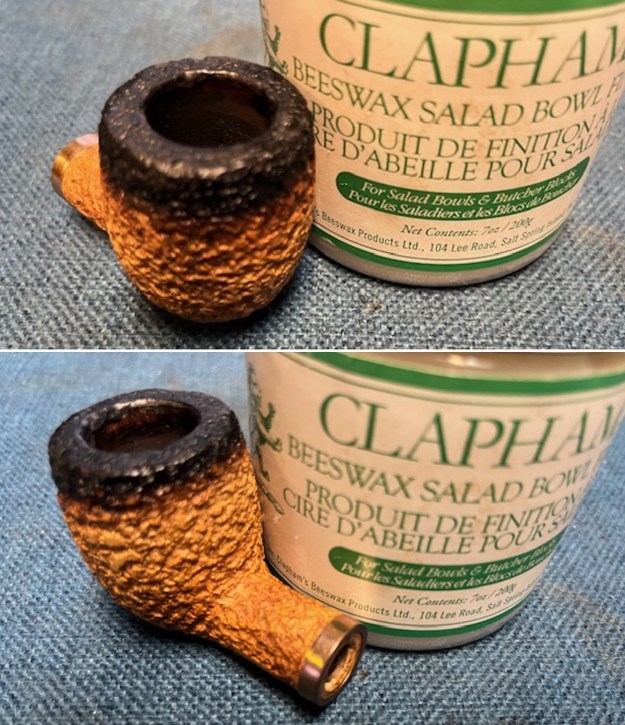
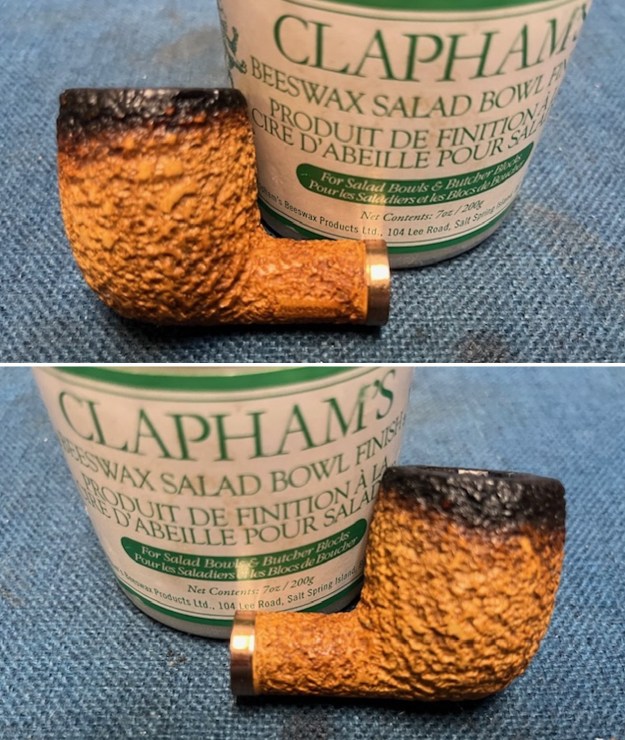
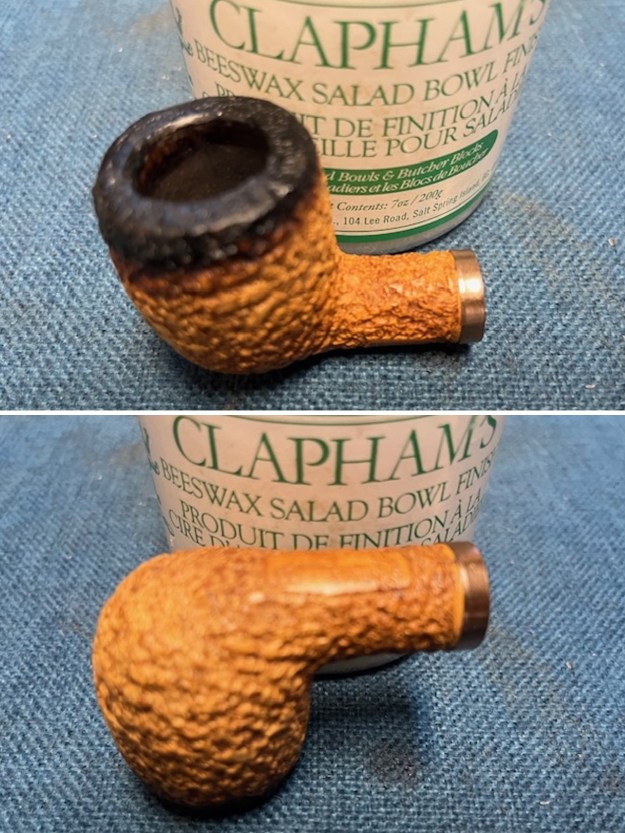
I wrote him back and asked him to send me photos of the pipes. He sent some single photos of the meerschaum bowl and stem, several of the leather clad Canadian and the photo of the rack and six pipes shown below. I looked through the photos and this is what I saw. There were two leather clad pipes a Canadian and a Pot. Both of them were cracked on the shanks and had been self-repaired with wire to hold the cracked shank together. The leather cladding was torn and the stitching was rotten and broken around the bowl. To me they were both irreparable. There was a lovely older Meerschaum figural with a horn stem that needed a good cleaning and repairs to the horn stem. There were two Knute Freehand pipes with original stems that were dirty but fixable. The plateau on the smooth one had a large chunk of briar missing. There was a Wilshire Dublin with a chewed and misfit stem. Finally, there was a billiard that had been restemmed with a fancy GBD saddle stem on it. They were a messy lot but I told him to send them on to me. They arrived yesterday and the condition of the pipes in the photos was confirmed. They were a mess and needed much work. I have included Mario’s group photo below to show the lot.I have also included three of the photos of the meerschaum that Mario sent to me as well. The first of the photos show the bowl top and what is either a metal cup lining the bowl or at least a metal rim top/cap. The meerschaum shows some great colour/patina as well as some chips and scratches and perhaps some repaired cracks in the surface. The horn stem also shows some wear and tear on the horn surface and some roughening. This afternoon I decided to start working on the fifth of the pipes from Mario – a figural carved freehand. It was a figural with a richly carved bearded man wearing a lion’s head as a cap on his head and a metal rim cap. The stem was made of horn that had lots of tooth marks and chatter on both sides near the button. The stem is dry and some of the striations are separating at the button end. The tenon has been wrapped with waxed thread to soften the fit of the stem in the mortise of the meerschaum. The bowl had a thick cake on the walls and a heavy lava coat the metal insert or the rim top. Which one is true will become clearer as I work on it. It was internally a mess. The finish was dirty and had grime ground into the sides of the bowl. That in many ways obscured the beauty of the patina on the bowl. There were nicks and deep scratches in the beard and in the smooth parts of the bowl but otherwise it seemed sound. The carving and filigree as well as scratches and nicks. There was no stamping or identifying marks on the meerschaum shank. I took photos of the pipe when I unpacked it to examine it. I have included those below. I took a photo of the bowl and rim top to show the condition of both. You can see the darkening on the metal insert rim top. There was a heavy cake in the bowl. The grooves in the carved meer are very dirty with debris. I also took photos of the stem showing the tooth marks and chatter on both sides ahead of the button.I took photos of the carving around the bowl. To me it looks like a mountain man wearing a bear’s head hat. The beard and carving are well done. The eyes even have lots of character.  The side profile shows the bear’s head hat or head dress. I removed the stem from the shank and took a photo of the parts. It is a well-proportioned pipe.I noted the tenon on the horn stem was wrapped with thread and then waxed. It would need to be cleaned up but it was interesting. It certainly was a self repair of the fit of the stem.It was now time to clean up the pipe. II checked the metal rim cap and found it was not a bowl insert but rather just a rim cap. It was dirty but easily removed.I scraped the bowl with a Savinelli Fitsall Pipe Knife to remove the thick cake on the walls. I sanded the bowl walls with 220 grit sandpaper wrapped around a dowel to smooth out the bowl walls. The walls were clear of damage and felt smooth to touch. I scrubbed the externals of the bowl and shank with undiluted Murphy’s Oil Soap and a tooth brush. I worked over the bowl, shank and rim top with the soap and then lightly rinsed it off warm water. The bowl looked extremely good. The grime was gone and the existing patina looked very rich and variegated. It is a beautifully carved pipe. I cleaned the metal rim top with 0000 Steel wool and a tooth brush and reset it in the bowl and rim top. It looked much better and smelled cleaned.I cleaned out the internals of the shank and the airway in the stem with pipe cleaners, cotton swabs and alcohol. The shank was quite dirty but the airway in the stem was surprisingly clean. For awhile now I have been using Clapham’s Beeswax Salad bowl finish for waxing meerschaums. It is a combination of Beeswax and Carnauba. I worked it into the grooves with a shoe brush and into the deep grooves with cotton swabs. I let it harden then buffed it with a soft cloth to raise the shine. The patina looked very good. I set the bowl aside and turned my attention to the horn stem. I sanded it with 320-3500 grit sanding pads. I wiped it off between pads with an Obsidian Oil impregnated cloth to remove the debris of the sanding.I polished the stem with micromesh sanding pads – 1500-12000 grit pads. I wiped it down with an Obsidian Oil cloth after each sanding pad. I used Before & After Pipe Polish – both Fine and Extra Fine to further polish the stem. I gave it a final coat of Obsidian Oil. I put the horn stem back on the Figural Carved Mountain Man Meerschaum pipe and buffed the pipe. I gently buffed waxed bowl with a clean microfibre cloth to raise the shine. I gave the stem several coats of carnauba wax and buffed it with a clean buffing pad to raise the shine. I hand buffed the stem with a microfiber cloth to deepen the shine. The pipe polished up really nicely and the patina gave depth to the carving. The finished pipe is shown in the photos below. This is a beautiful Figural Carved Mountain Man Meerschaum – the horn saddle stem and patinaed meer combine to give the pipe a great look. The dimensions of the pipe are Length: 6 ½ inches, Height: 2 ¼ inches, Outside diameter of the bowl: 1 ¾ inches wide x 2 inches long, Chamber diameter: ¾ of an inch. The weight of the pipe is 3.56 ounces/101 grams. This is the fifth of six pipes that am restoring for Mario from his Dad’s collection. I look forward to hearing what he thinks of this newly restored pipe. One more to go then the lot will go back to him. Thanks for reading this blog and my reflections on the pipe while I worked on it!

Restemming and Restoring a Citation 614 Rusticated Meerschaum Lined Oom Paul


by Steve Laug

In November I received an email from Mario about working on some of his Dad’s pipes. Here is what he wrote to me.

I am desperately seeking help restoring and repairing some of my dad’s smoking pipes. I have tried reaching out to the only two known pipe repair establishments I could find in the entire country but one is not currently taking repair orders and the other said she didn’t want to try to repair these pipes without having even seen them. Would you be willing to take on the repairs or can you recommend anyone? Thank you much!!!—Mario

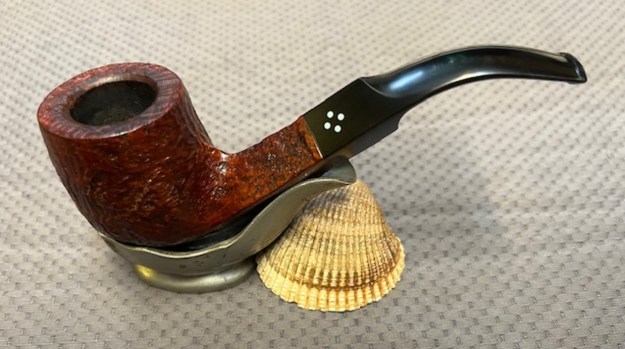
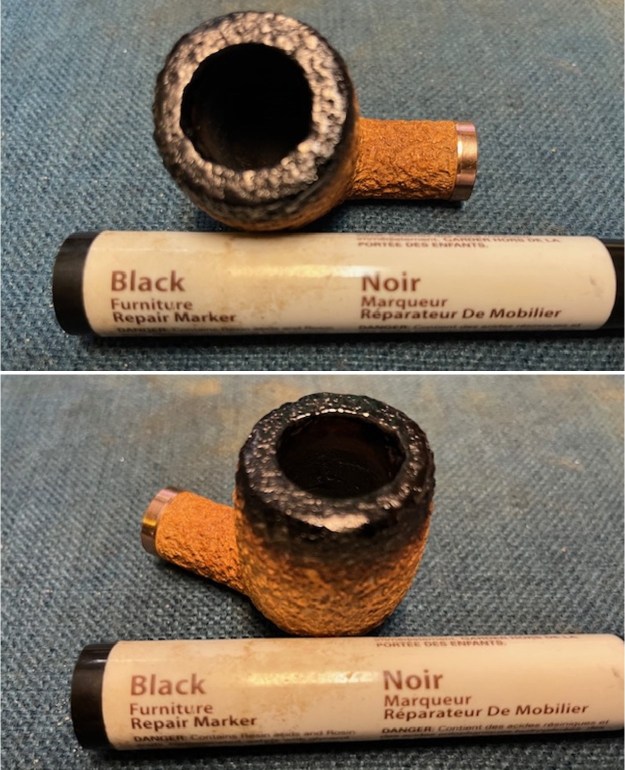
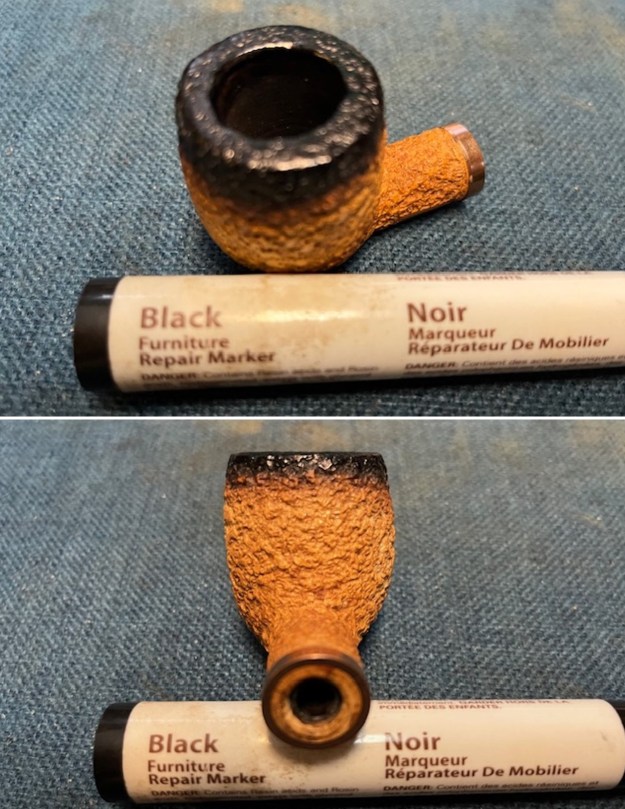
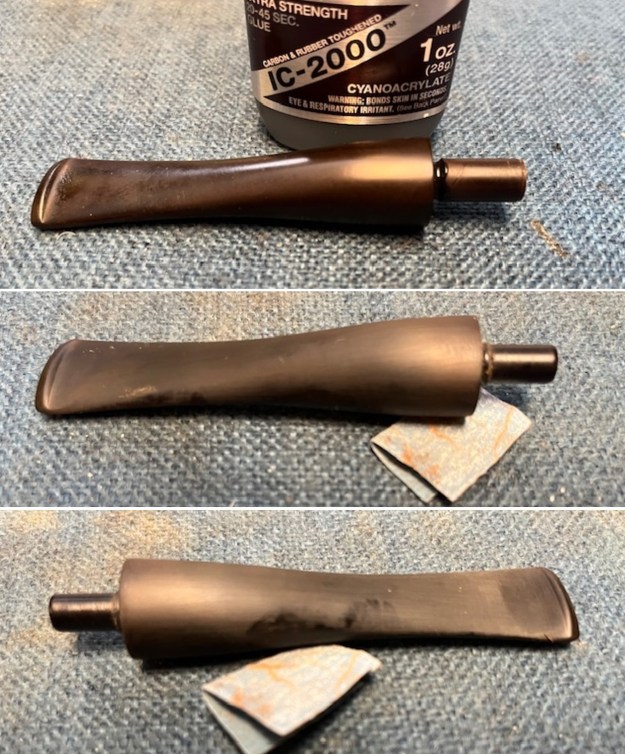
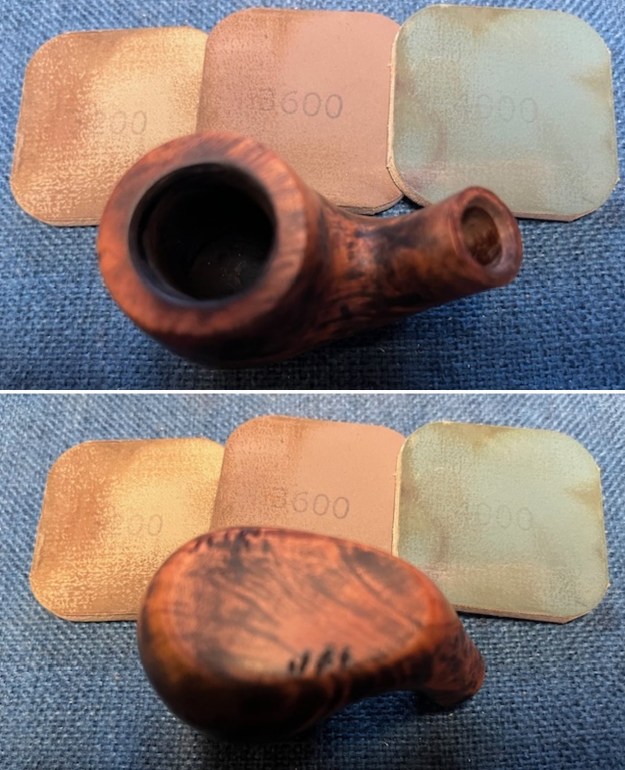
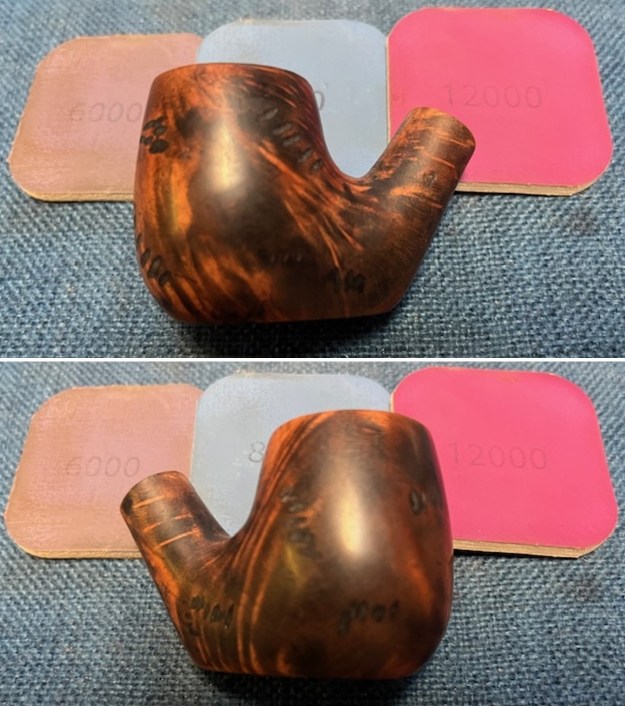
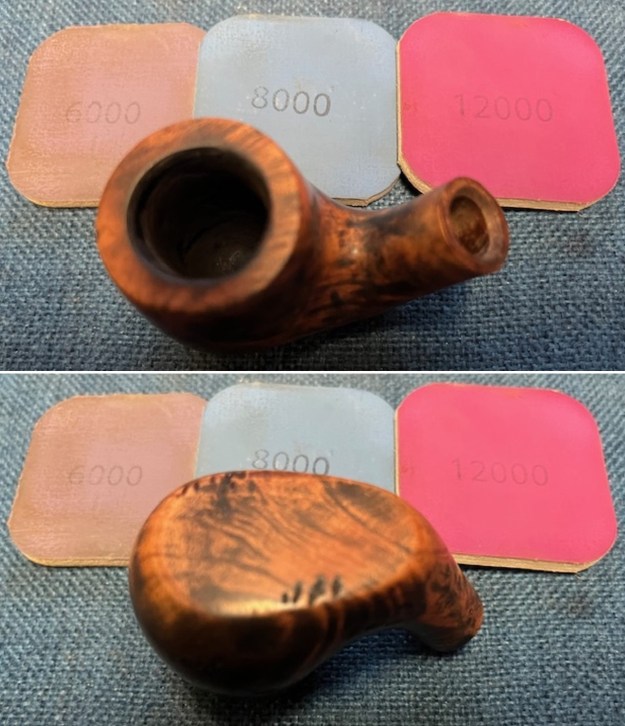
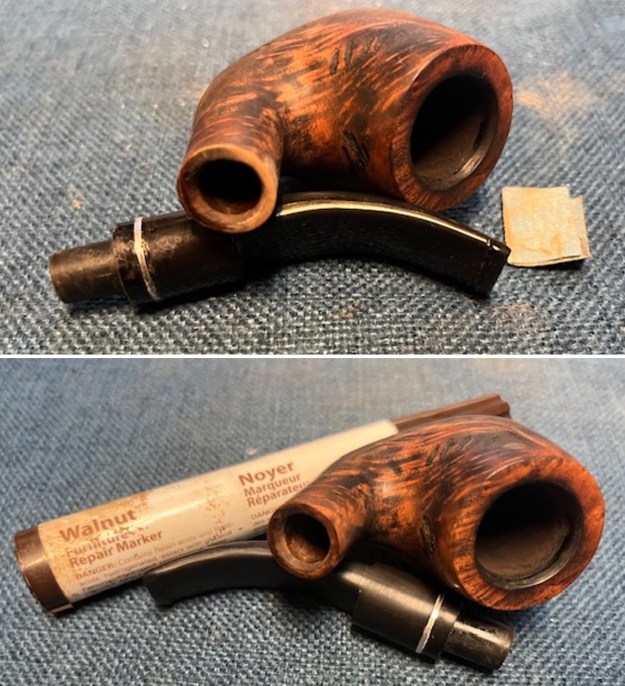
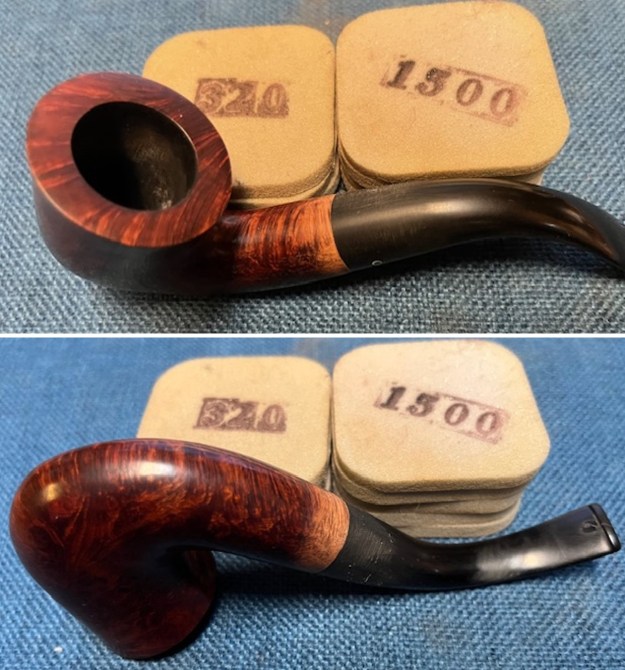
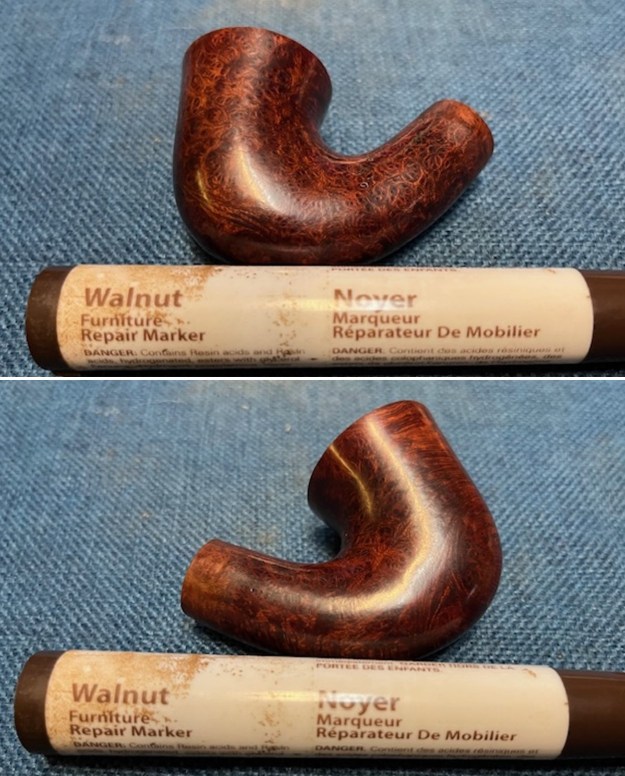
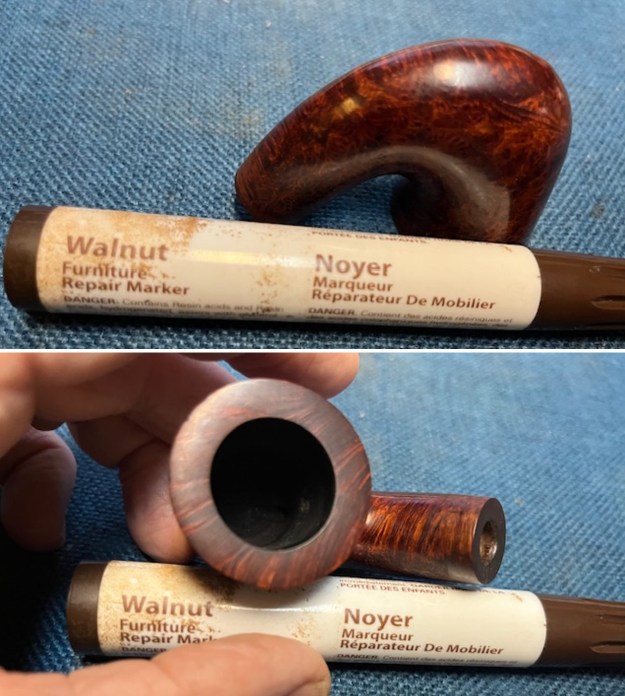
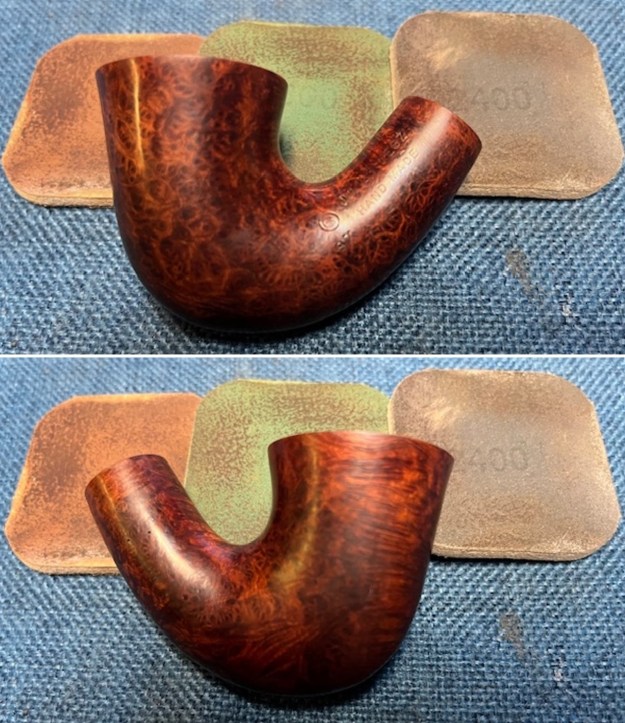
I wrote him back and asked him to send me photos of the pipes. He sent some single photos of the meerschaum bowl and stem, several of the leather clad Canadian and the photo of the rack and six pipes shown below. I looked through the photos and this is what I saw. There were two leather clad pipes a Canadian and a Pot. Both of them were cracked on the shanks and had been self-repaired with wire to hold the cracked shank together. The leather cladding was torn and the stitching was rotten and broken around the bowl. To me they were both irreparable. There was a lovely older Meerschaum with a horn stem that needed a good cleaning and repairs to the horn stem. There were two Knute Freehand pipes with original stems that were dirty but fixable. The plateau on the smooth one had a large chunk of briar missing. There was a Wilshire Dublin with a chewed and misfit stem. Finally, there was a billiard that had been restemmed with a fancy GBD saddle stem on it. They were a messy lot but I told him to send them on to me. They arrived yesterday and the condition of the pipes in the photos was confirmed. They were a mess and needed much work. I have included Mario’s group photo below to show the lot.This afternoon I decided to start working on the Oom Paul next. It was the one on the left centre on the bottom of the rack in the photo above. It was an Oom Paul shape with a bent round shank and the saddle stem had a huge bite through on the topside of it. The bowl had a thick cake on the walls and a heavy lava coat in the rustication on the rim top. It was internally a mess. The finish was dirty and had grime ground into the sides of the bowl. There seemed to be line around the bowl top that hinted at the bowl being lined with meerschaum. The shank was in good shape with no nicks or cracks. The pipe was stamped on the underside of the shank and read Citation in script (followed by) the shape number 614 [over] Italy. The shape number and Italy stamp tell me the pipe was made by Savinelli. There was no other stamping on the shank sides. The stem was correct but chewed beyond repair and would need to be replaced. I took photos of the pipe when I unpacked it to examine it. I have included those below. I took a photo of the rim top to show the condition and the interesting ring on the rim top. I also took photos of the heavily damaged stem. I took a photo of the stamping on the underside of the shank. It is clear and readable as noted above. I took a photo of the bowl with the stem removed to give a sense of the proportion and appearance of the pipe without the stem. You can see the damage on the stem top so it is no question that it needs to be removed.I remember having worked on a Citation before but could not put my finger on what I knew about it. I did a quick search on rebornpipes and found a blog I had restored and restemmed a Citation that had been meerschaum lined (https://rebornpipes.com/2015/12/24/a-surprise-when-working-on-the-citation-812-canadian/). Fortunately, I could see what looks like a smooth ring around the inside of the bowl. As I examined it I found that ring around the inside edge of the bowl was a meerschaum lining. I knew that I was working on a Meerschaum lined Oom Paul.

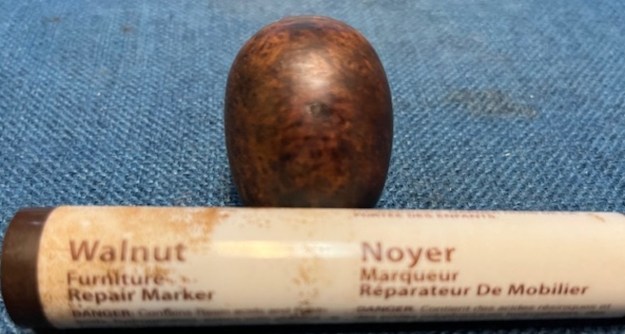
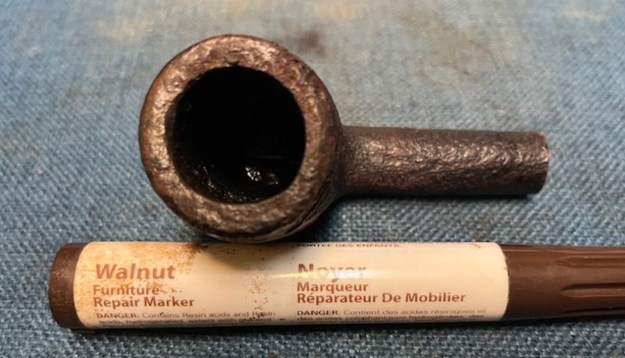
I carefully reamed the bowl with a PipNet Pipe Reamer remove from the bowl leaving bare meerschaum. I cleaned up the remnants of cake with a Savinelli Fitsall Pipe Knife and removed the remaining debris. I sanded the bowl walls smooth with a piece of 220 grit sandpaper wrapped around a piece of dowel. I scraped the lava coat off the rim top – both the rusticated portion and the smooth ring of the meerschaum bowl top with the Savinelli Pipe Knife and removed all of it. I cleaned out the internals of the bowl and shank with pipe cleaners, cotton swabs, shank brushes and 99% isopropyl alcohol. It was very clean and it looked and smelled far better.I scrubbed the externals of the bowl and shank with undiluted Murphy’s Oil Soap and a tooth brush. I worked over the bowl, shank and rim top with the soap and then rinsed it off warm water. The bowl looked extremely good. There were some significant burn marks on the rim top and inner edge but the bowl itself was very clean. Once the bowl had dried I touched up the stain on the rim top to match bowl colour. I used a Walnut Stain Pen to colour the briar and leave the meerschaum rim clear for polishing.I rubbed the bowl and shank down with Before & After Restoration Balm. I worked it into the surface of the bowl sides and shank with my fingertips and a shoe brush to clean, enliven and protect the briar. I let the balm sit for a little while and then buffed with a cotton cloth to raise the shine. The Balm did its magic and the grain stood out. I went through my can of stems and found one that was the right taper for the pipe bowl I was working on. It had the right look and would need shaping. The stem is very similar to the original that came on the pipe and should look very good.I cleaned out the internals of the stem with alcohol and pipe cleaners. There was some tars and oils in the airway and it took some work but it was clean. One of the odd things on this pipe was that the inside of the shank had a piece of black electrical tape stuck in it that had come off the tenon sometime along the way.I sanded the stem with 220 grit sandpaper to reduce the overage in diameter on the top and the left side of the saddle (forgot to take photos). I smoothed out the sanded portions and the sanded tooth marks with 320-3500 grit sanding pads. I wiped the stem down after each pad with an Obsidian Oil cloth. It was beginning to look very good.I polished the stem with micromesh sanding pads – 1500-12000 grit pads. I wiped it down with a damp cloth after each sanding pad. I used Before & After Pipe Polish – both Fine and Extra Fine to further polish the stem. This restored and restemmed Savinelli Made Citation 614 Rusticated Oom Paul with a new vulcanite saddle stem is a great looking pipe now that it has been restored. The beautiful rusticated finish stands out and gives depth to the bowl and shank sides. I put the stem back on the bowl and carefully buffed the pipe with Blue Diamond on the buffing wheel. I gave the bowl and the stem multiple coats of carnauba wax on the buffing wheel and followed that by buffing the entire pipe with a clean buffing pad. I hand buffed the pipe with a microfiber cloth to deepen the shine. The rim top shows Meerschaum Lining and other than darkening it was in great shape. The finished Savinelli Citation 614 Meerlined Oom Paul is a beautiful pipe, but it fits nicely in the hand and feels great. Give the finished pipe a look in the photos below. The dimensions of the pipe are Length: 5 ½ inches, Height: 2 inches, Outside diameter of the bowl: 1 ¼ inches, Chamber diameter: ¾ of an inch. The weight of the pipe is 58 grams /2.01 ounces. This is the third of six pipes that I am restemming and restoring for Mario from his Dad’s collection. I look forward to hearing what he thinks of this newly restemmed pipe. Thanks for reading this blog and my reflections on the pipe while I worked on it.