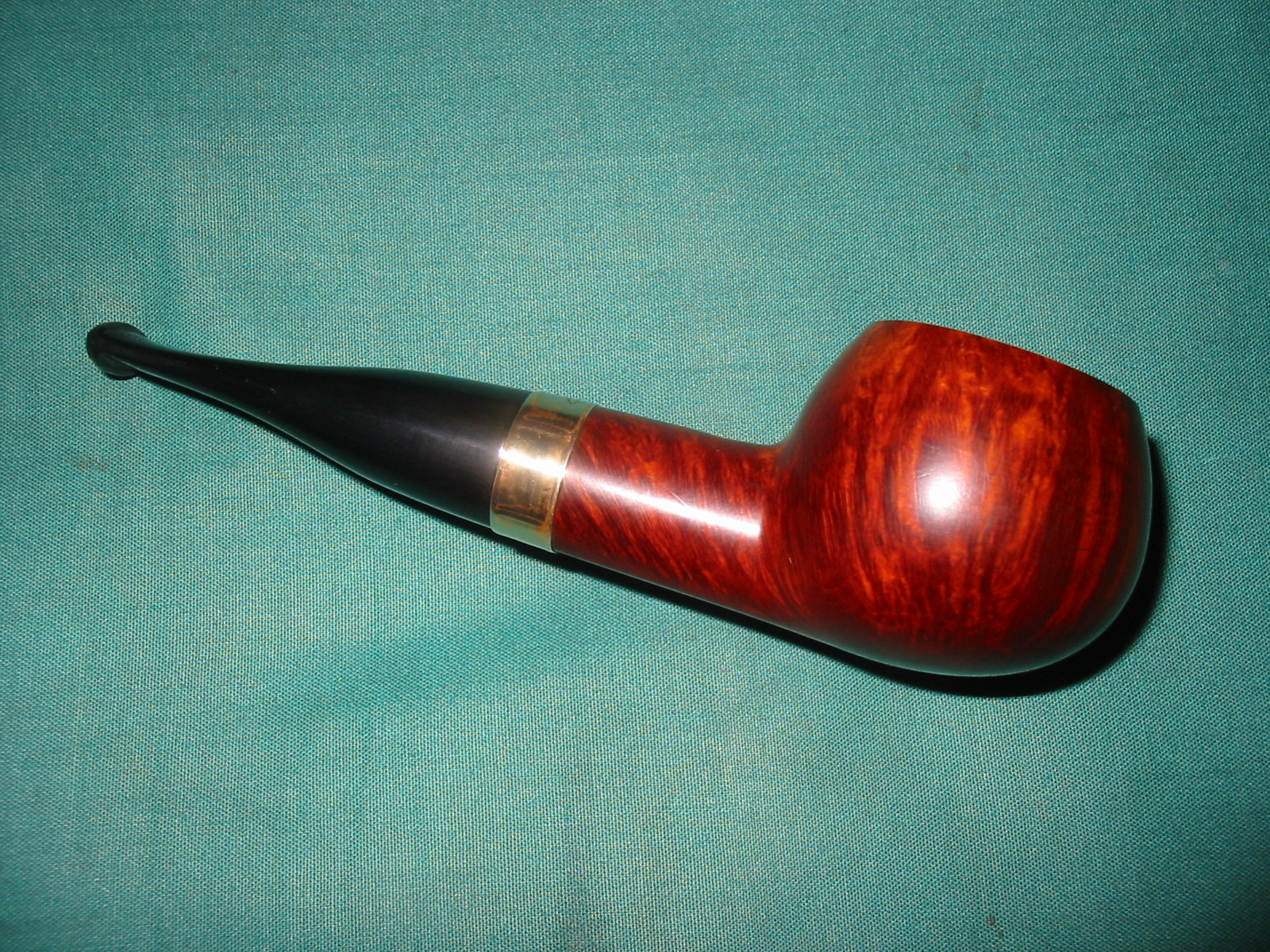
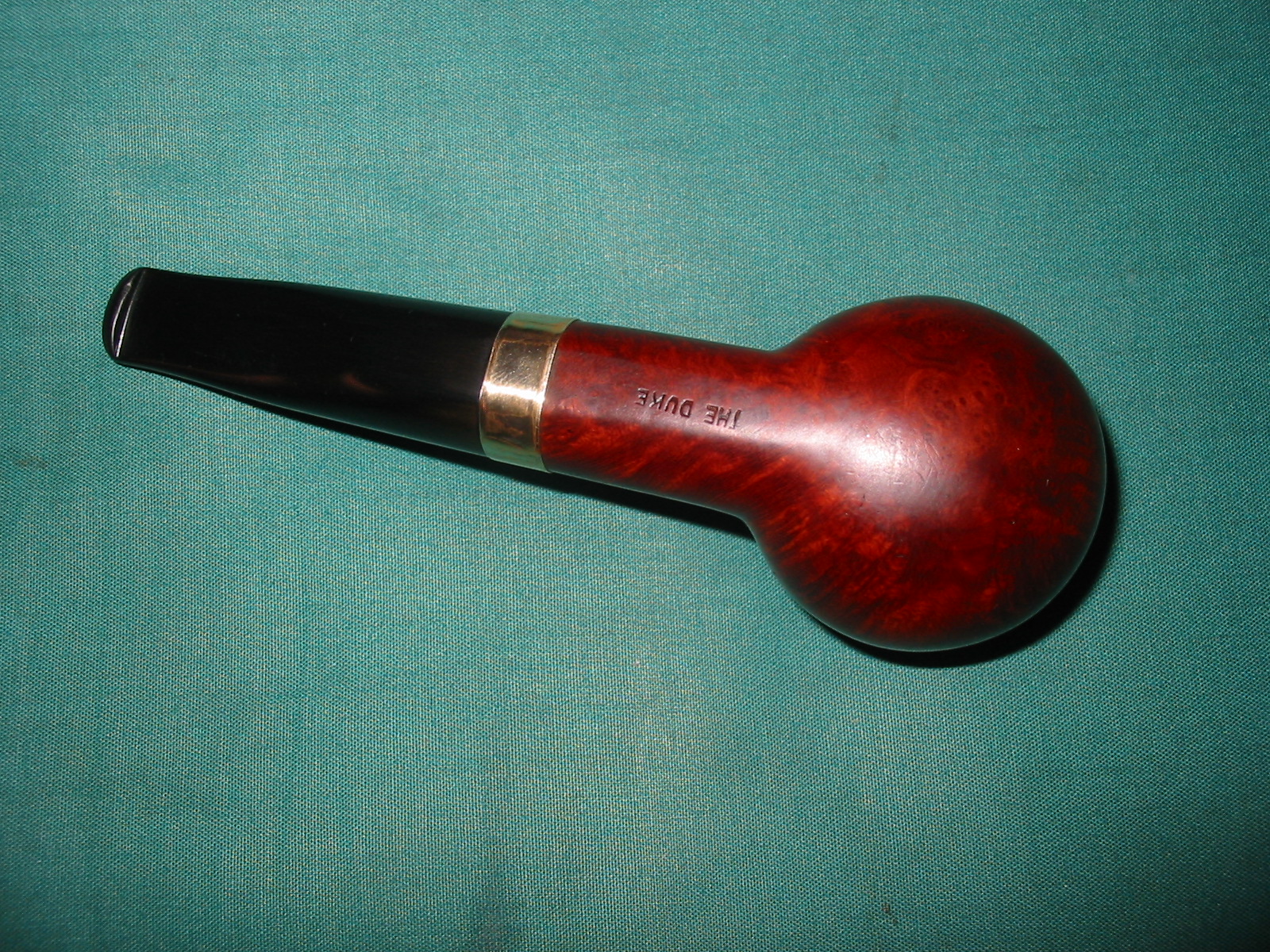
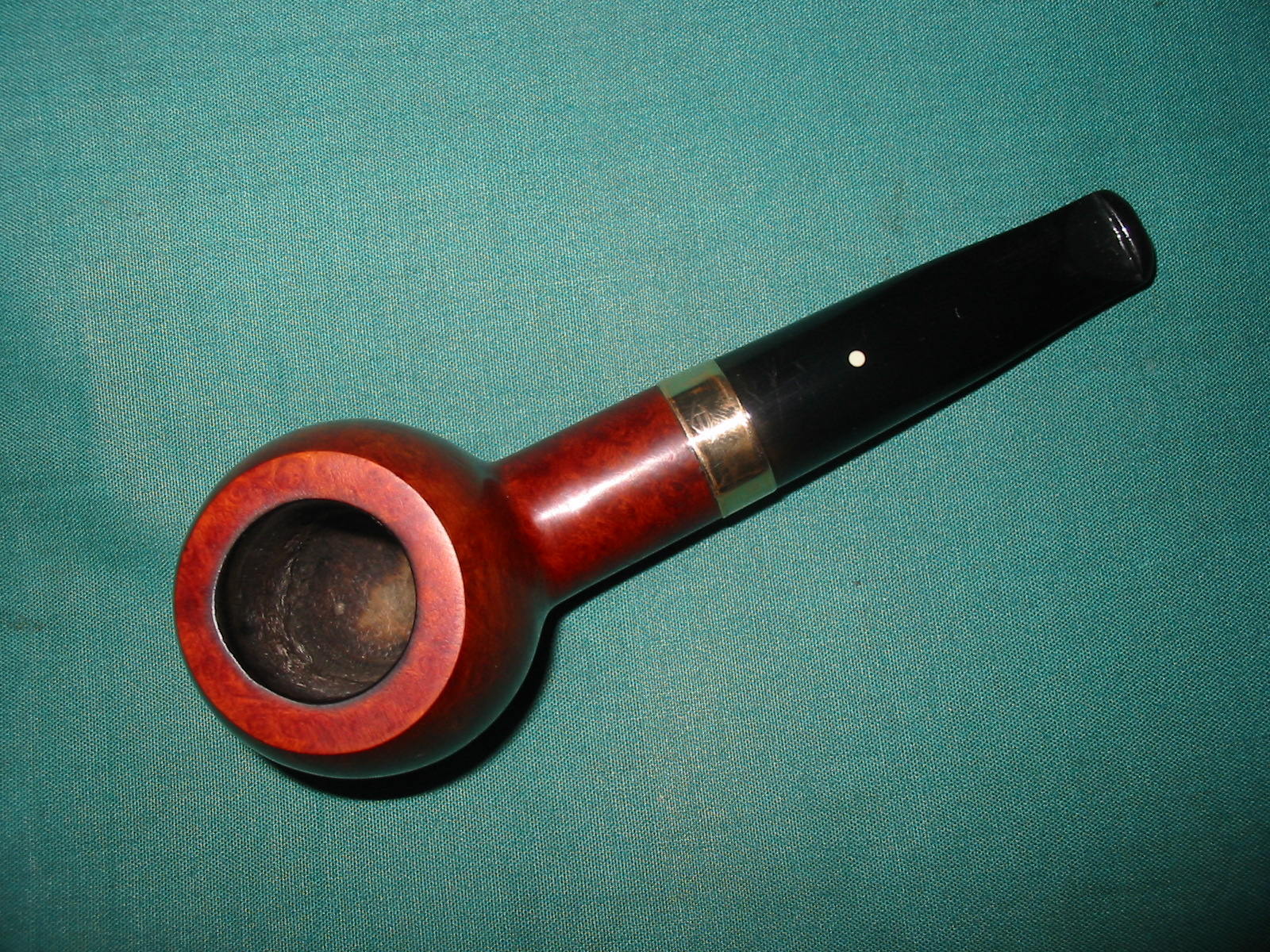
Tag Archives: buffing

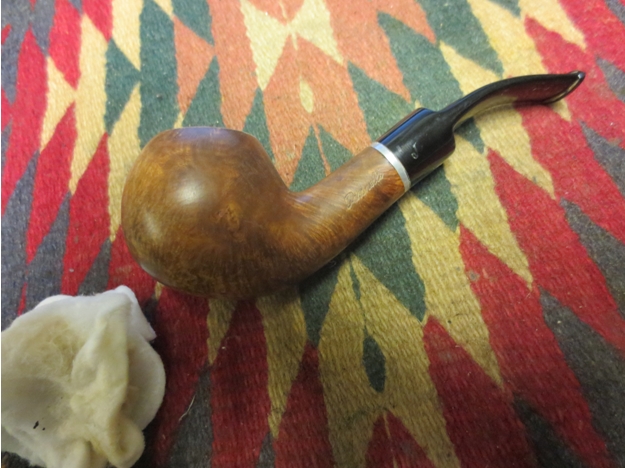
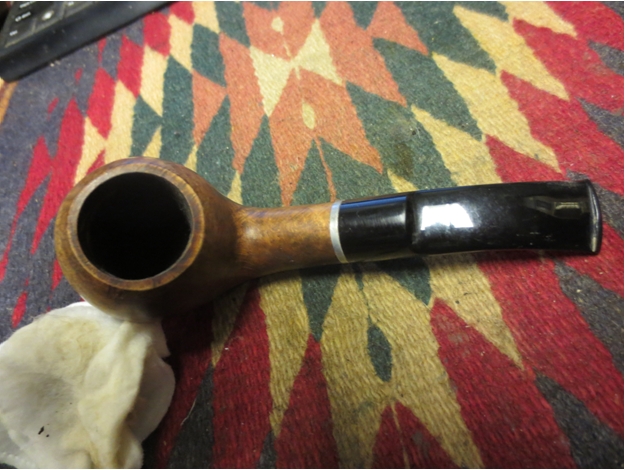
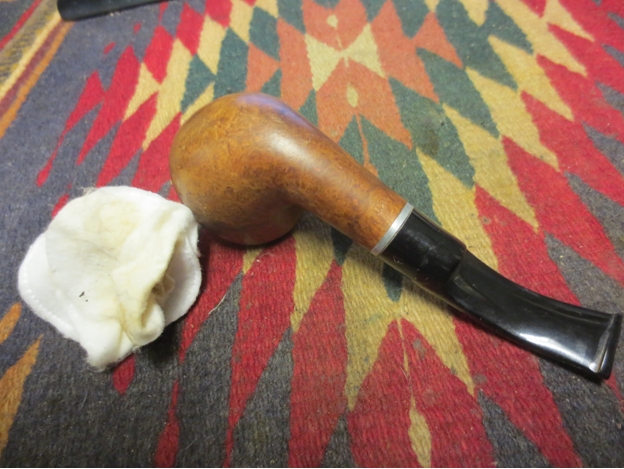
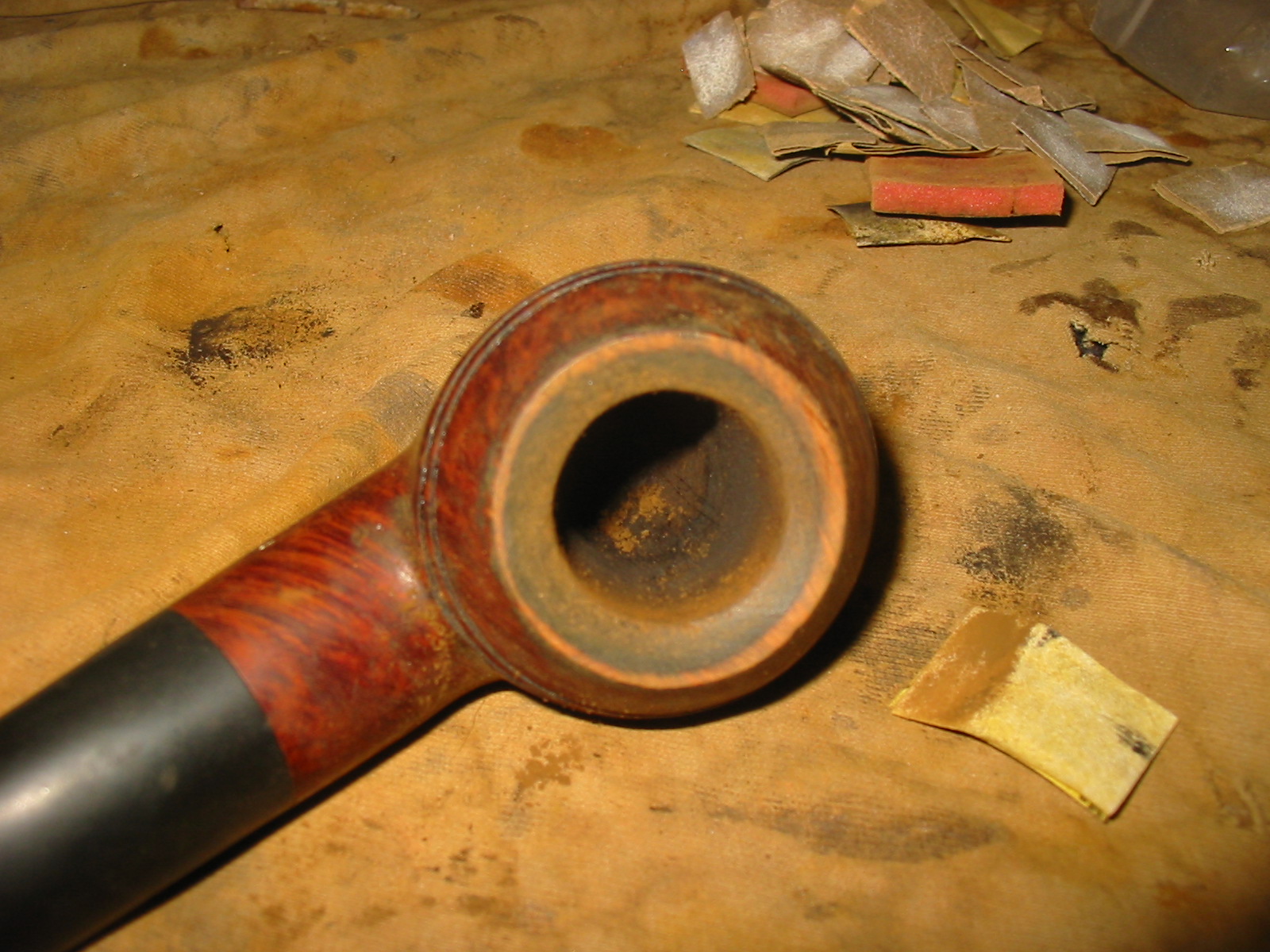
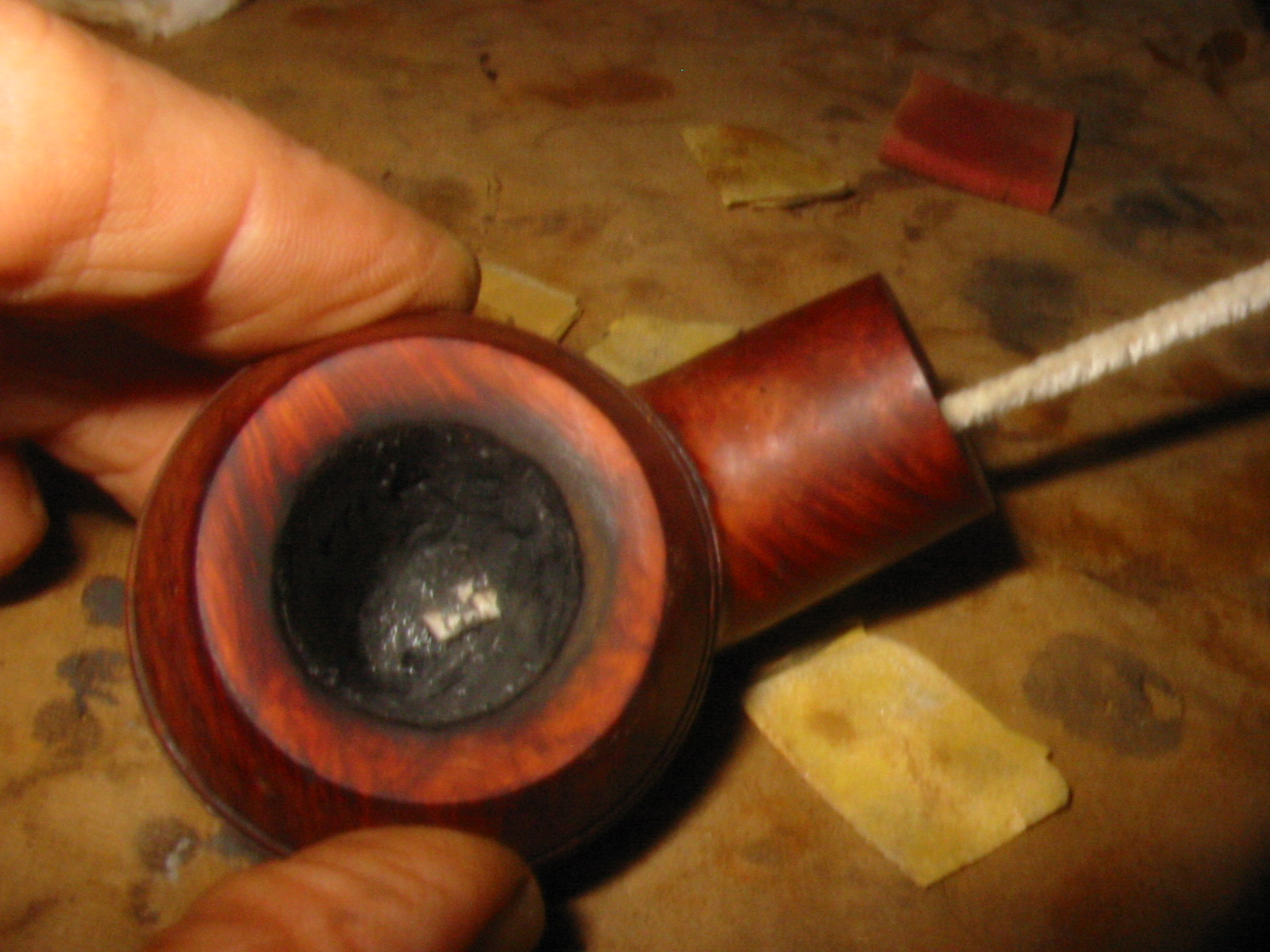
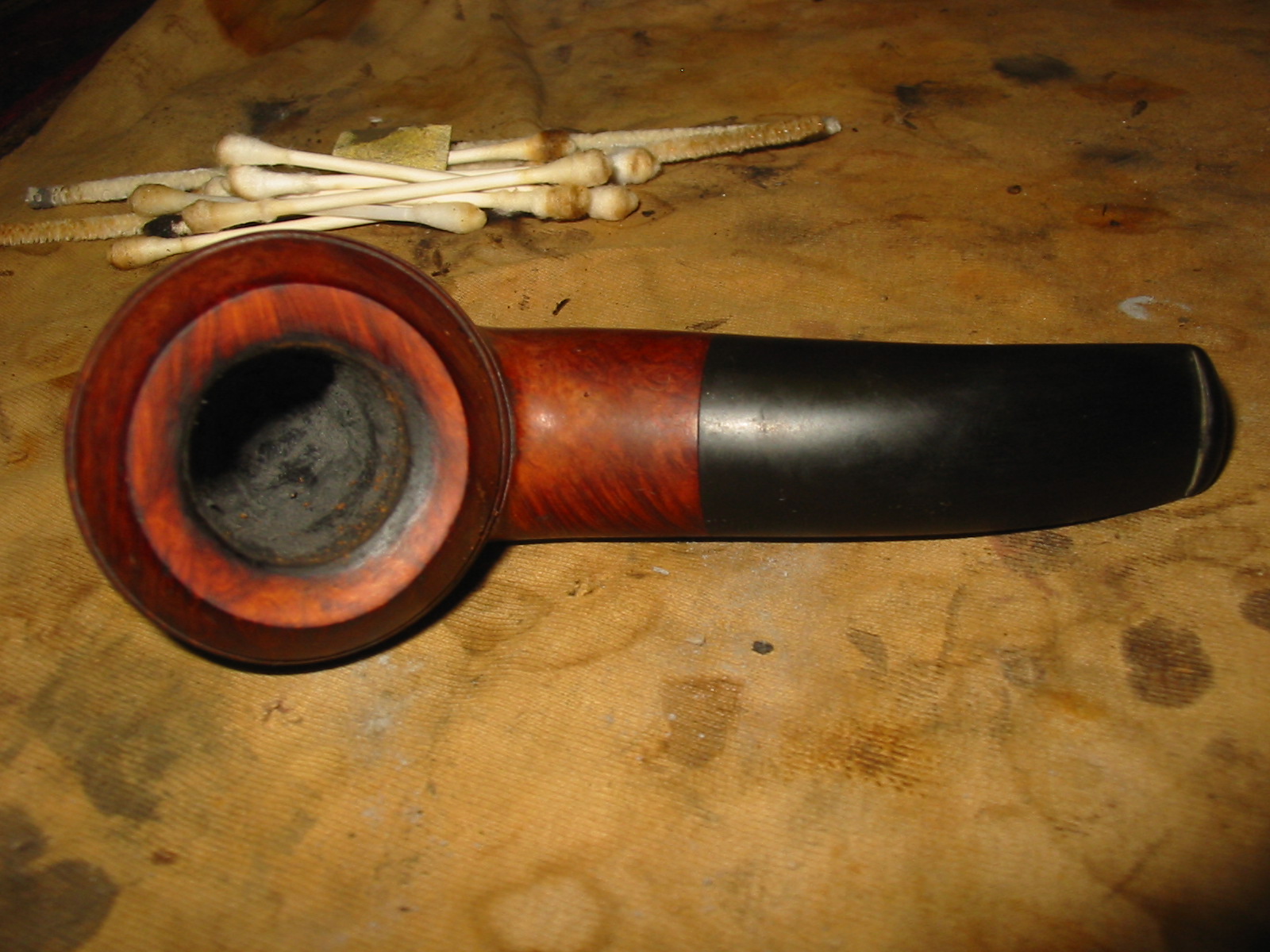
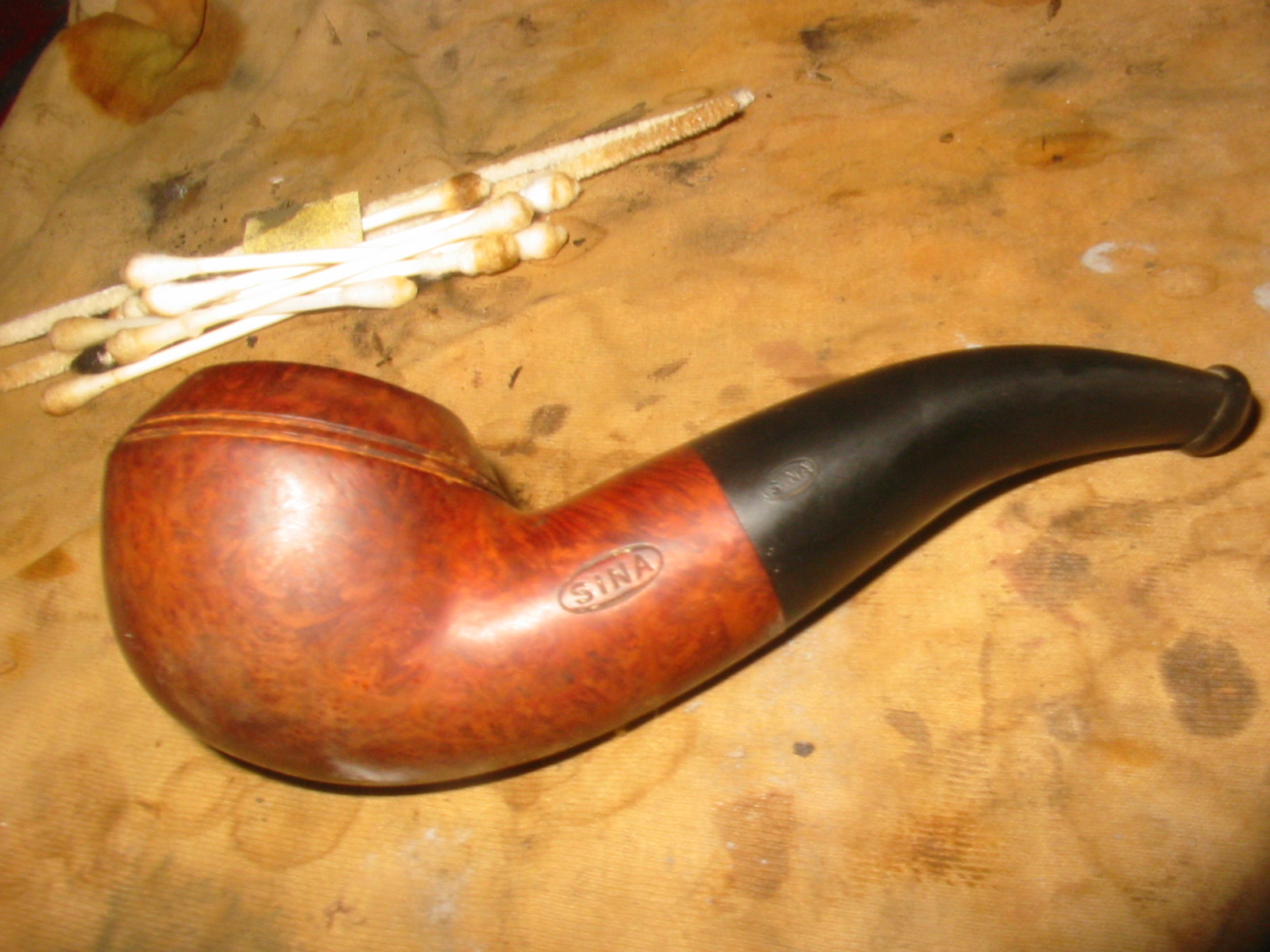
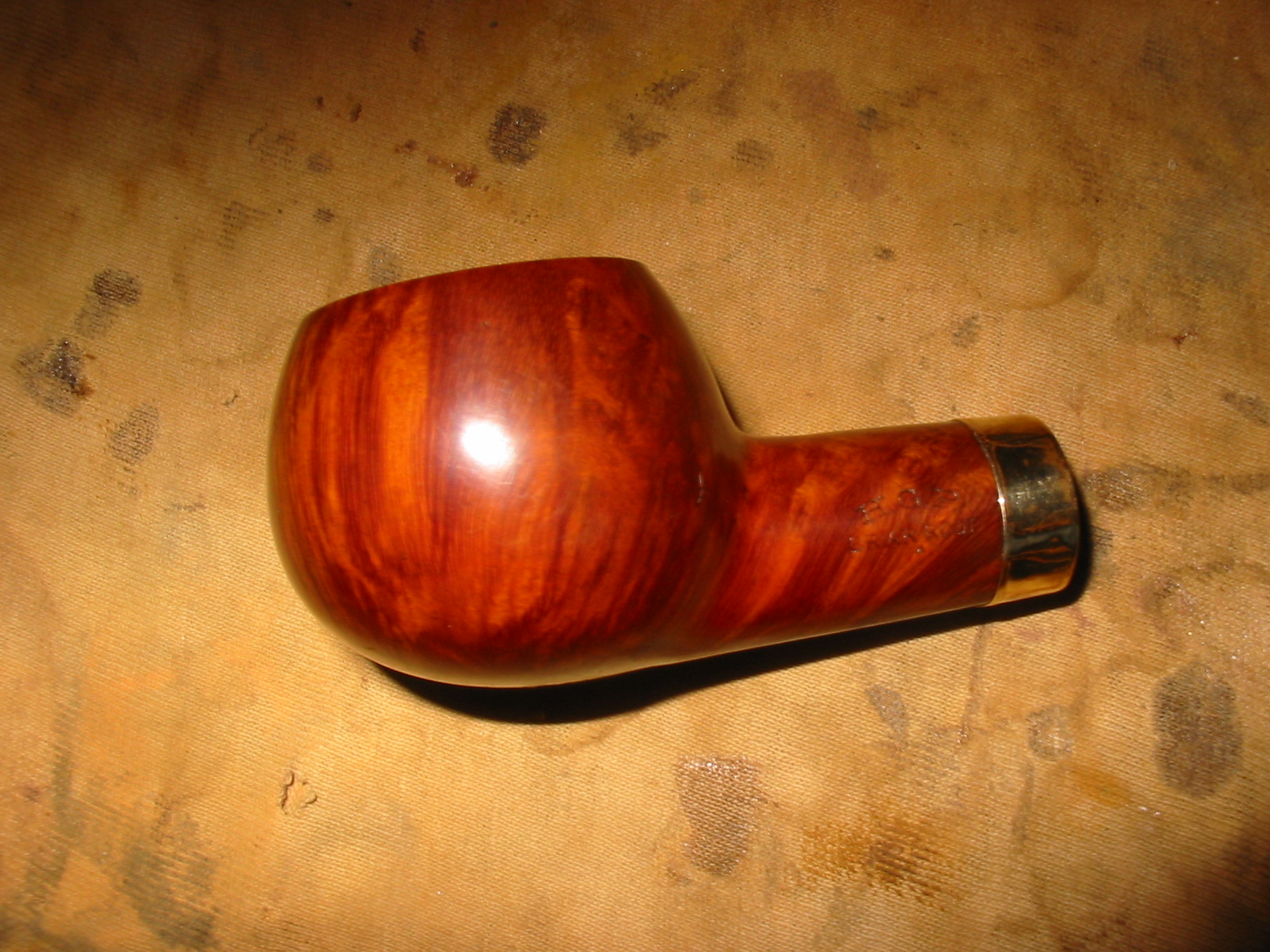
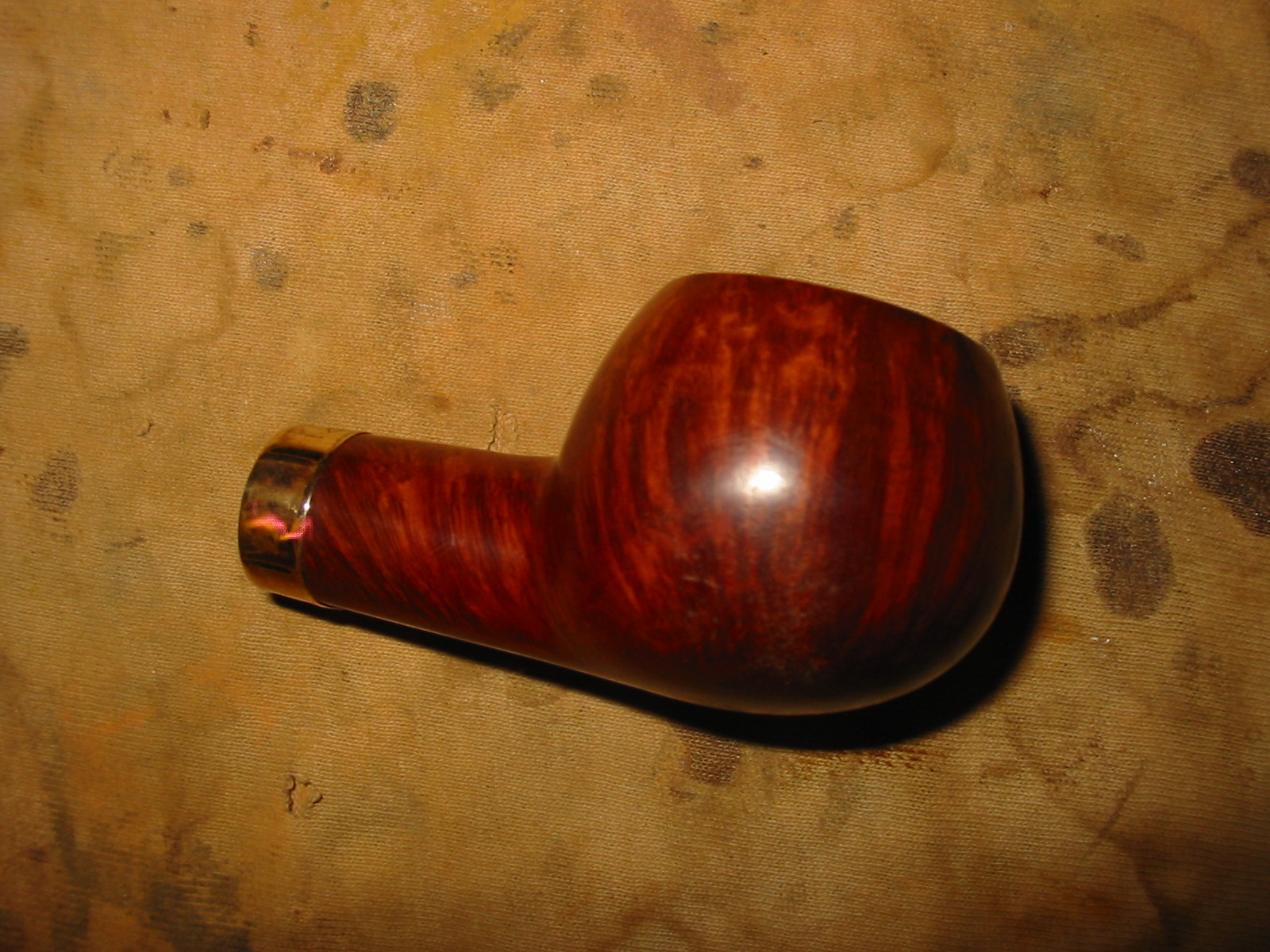
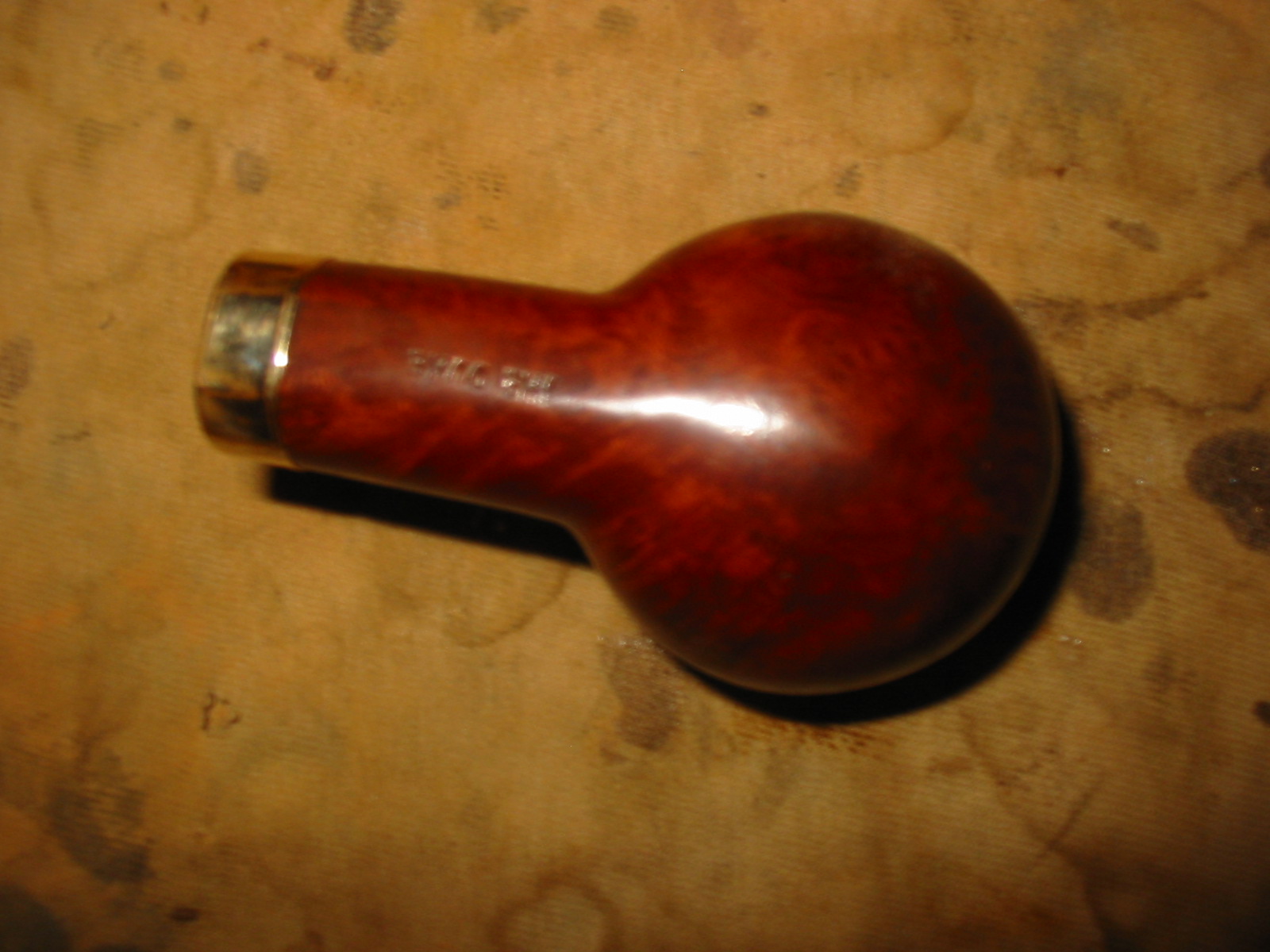
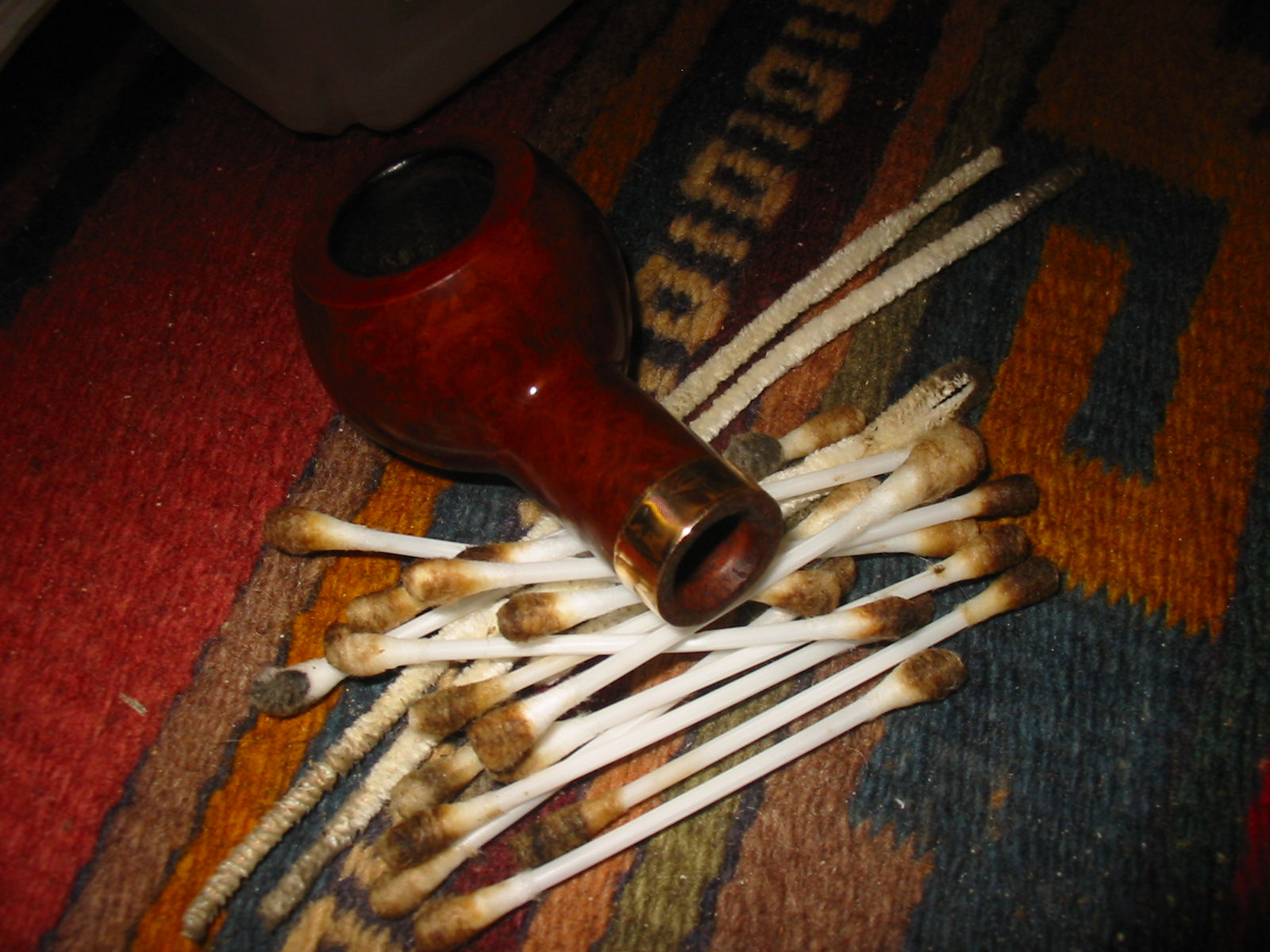
A Renovation of a Good Companion London Made Billiard


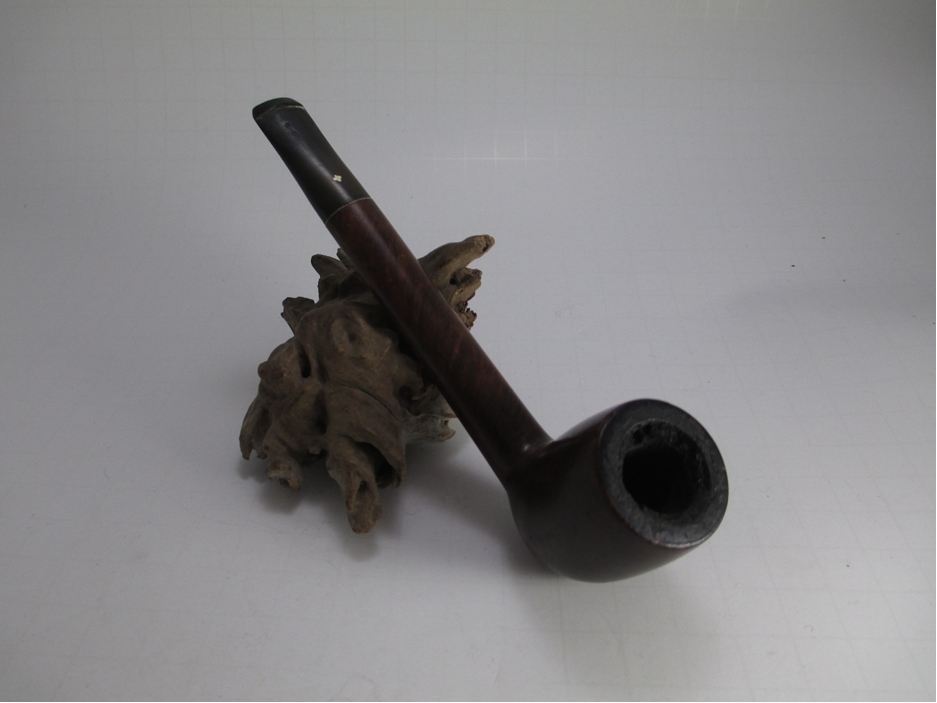
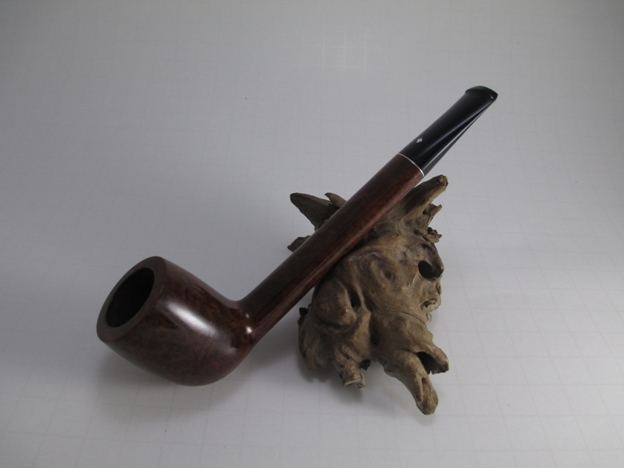
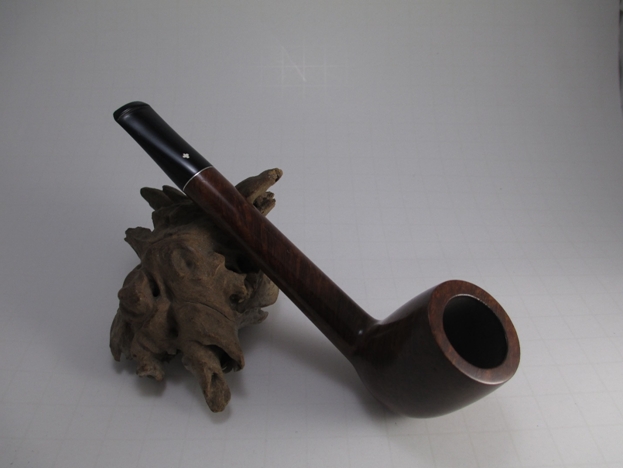
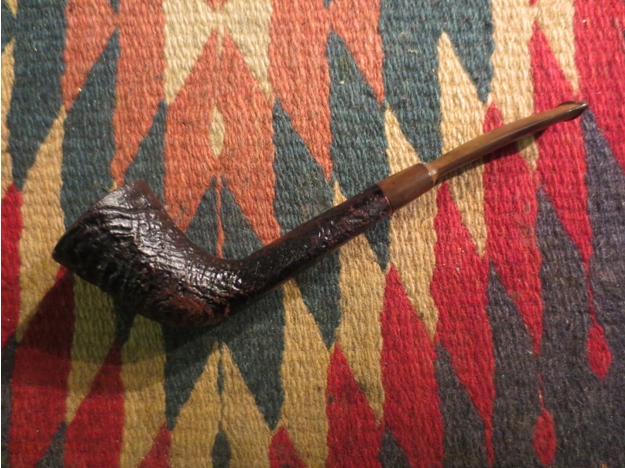
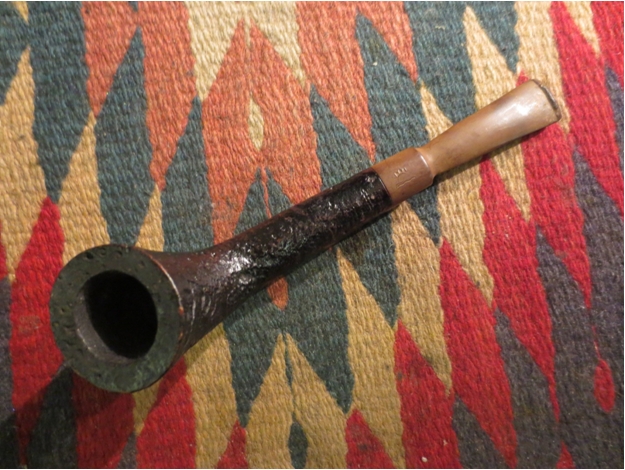
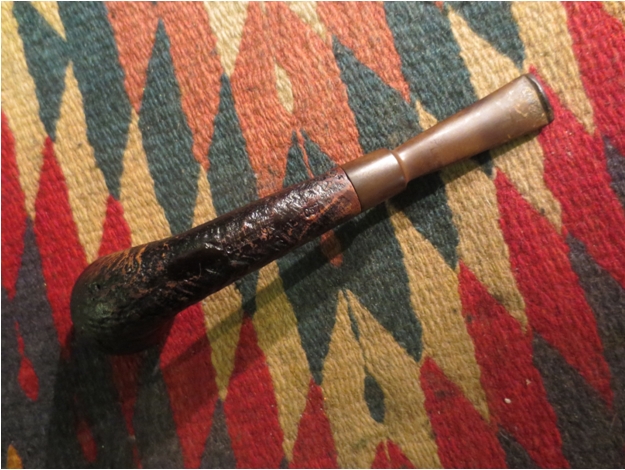
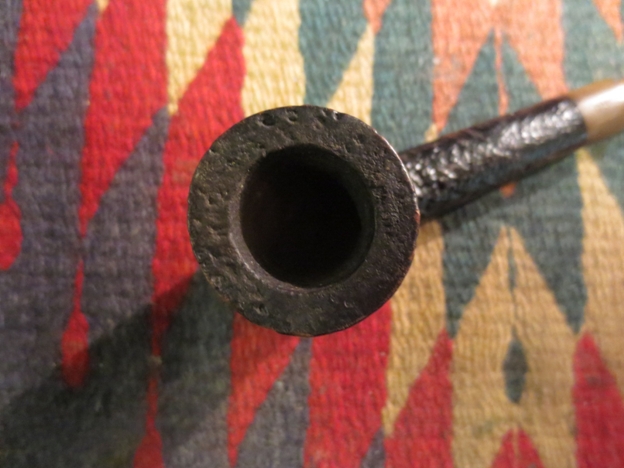
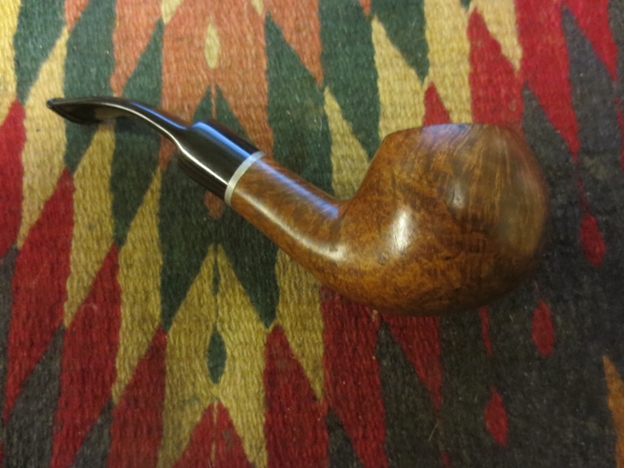
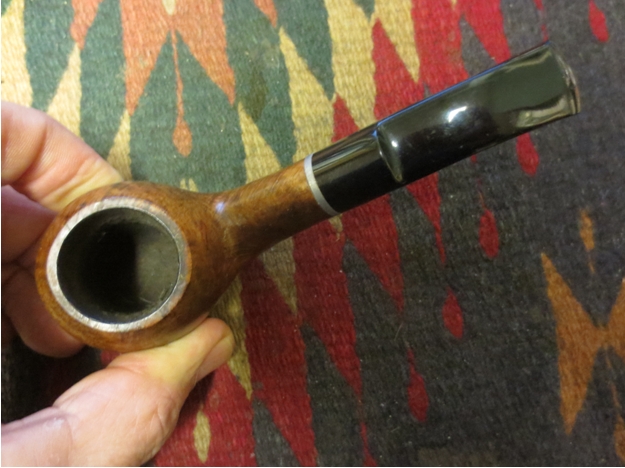
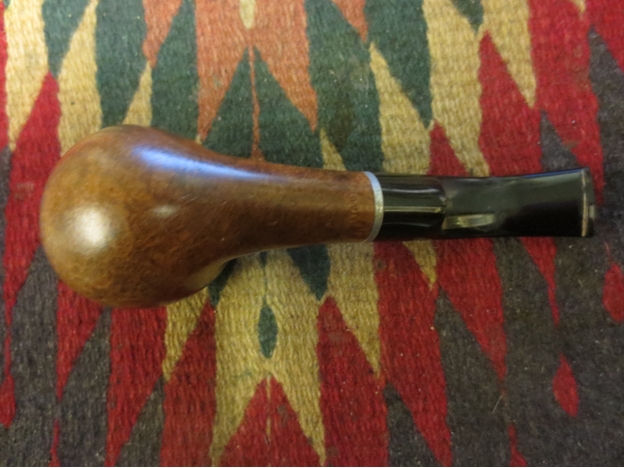
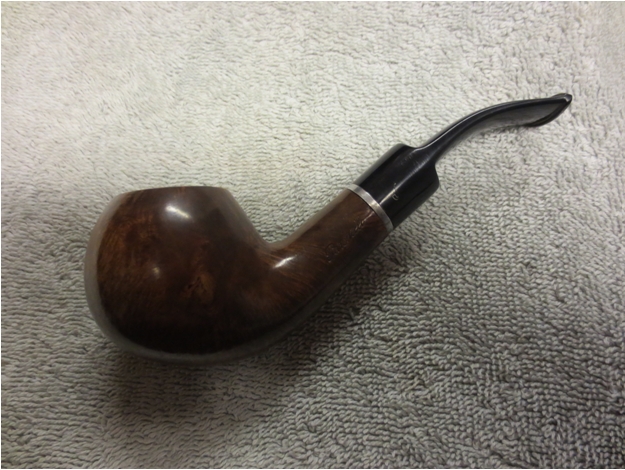
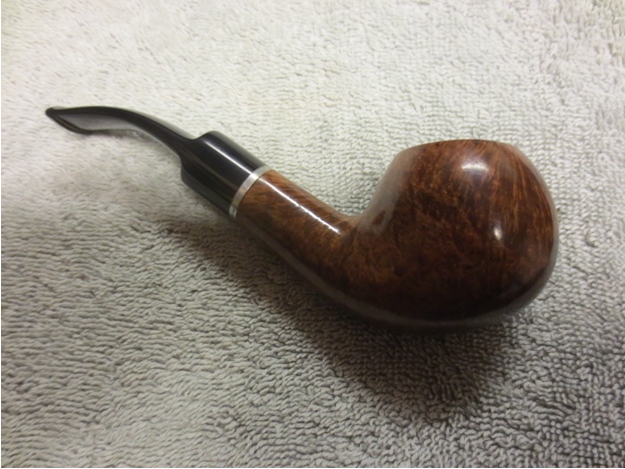
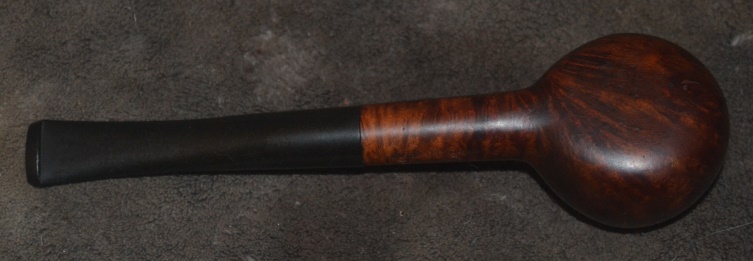
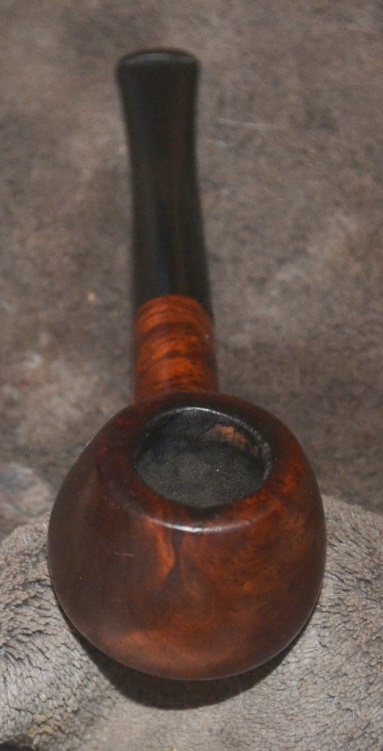
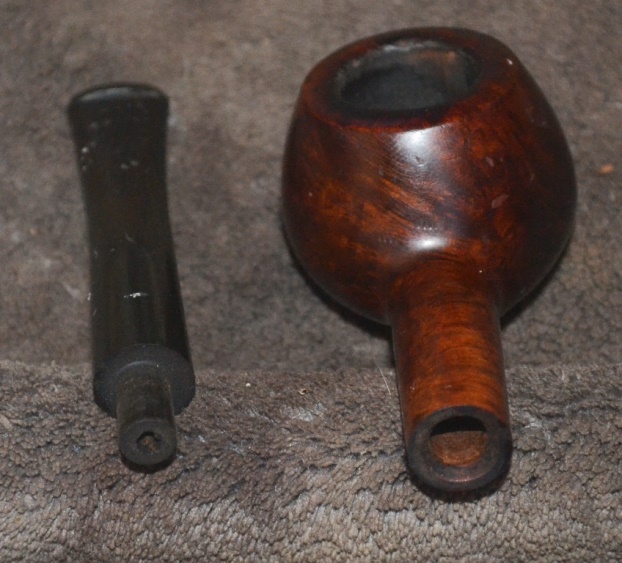
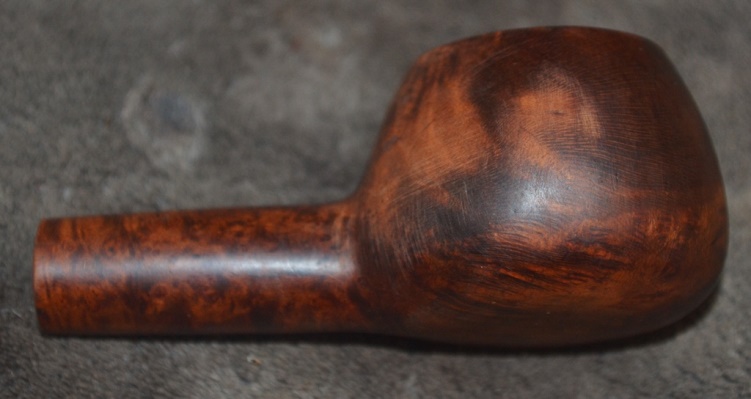
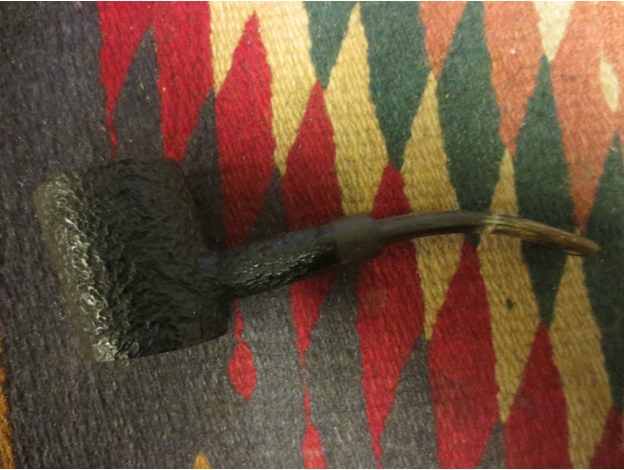
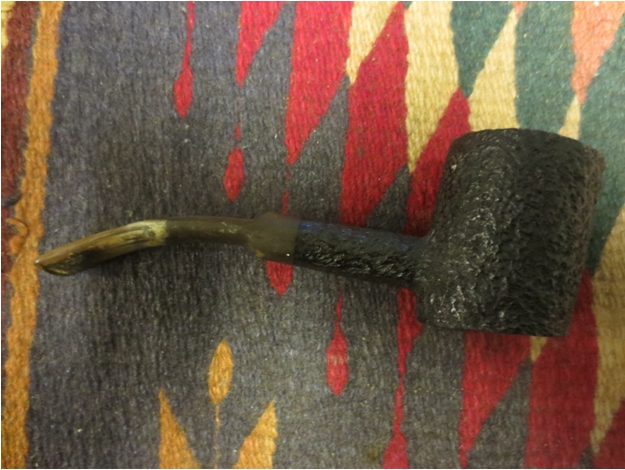
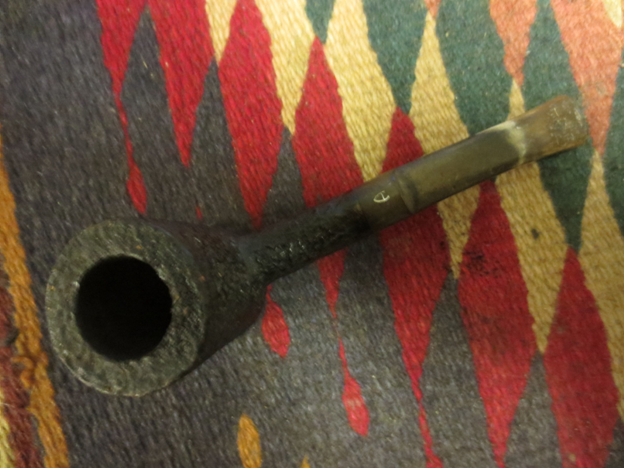
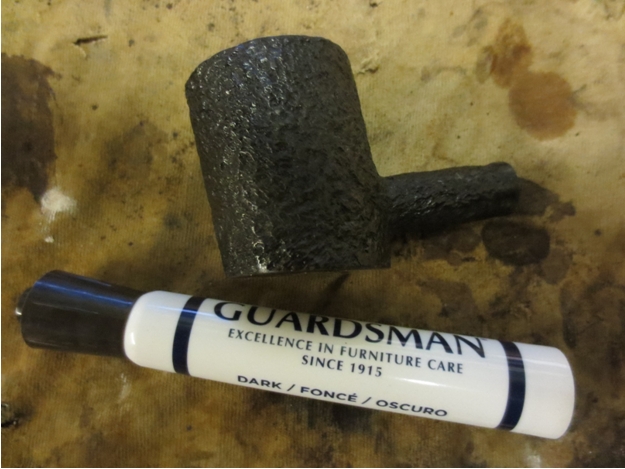
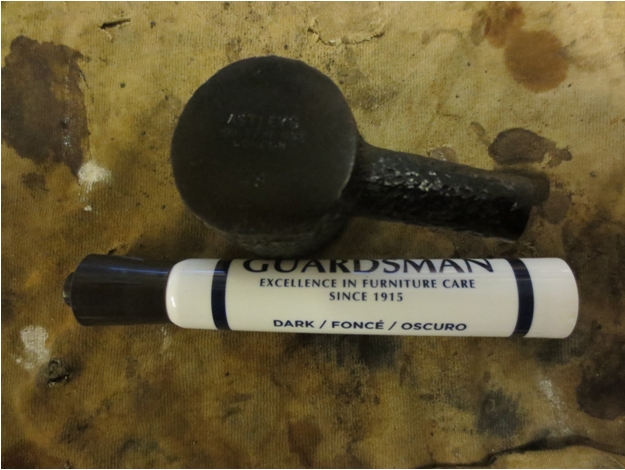
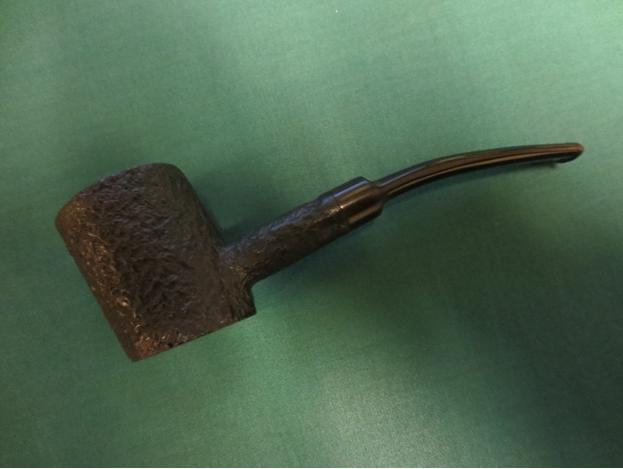
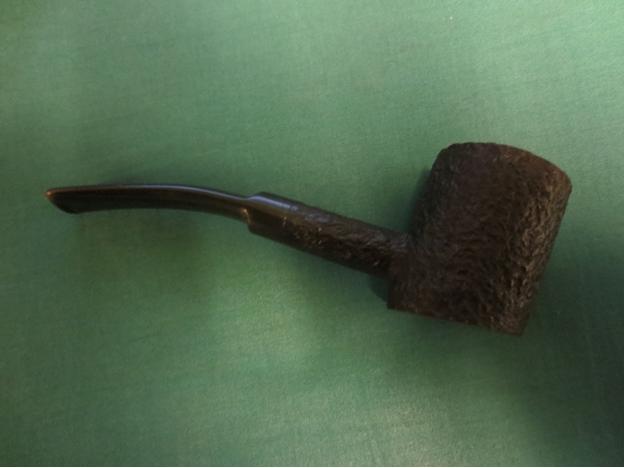
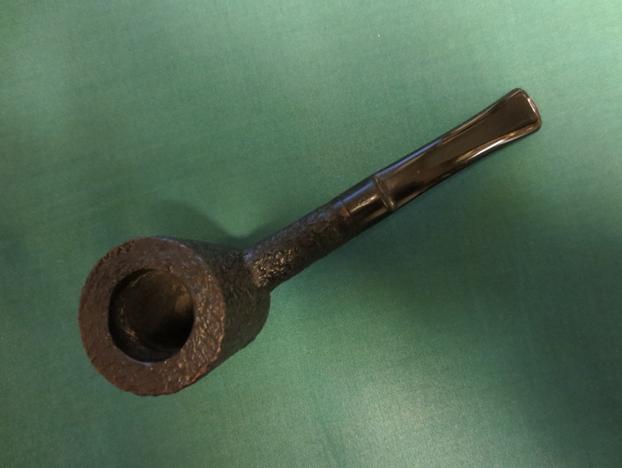
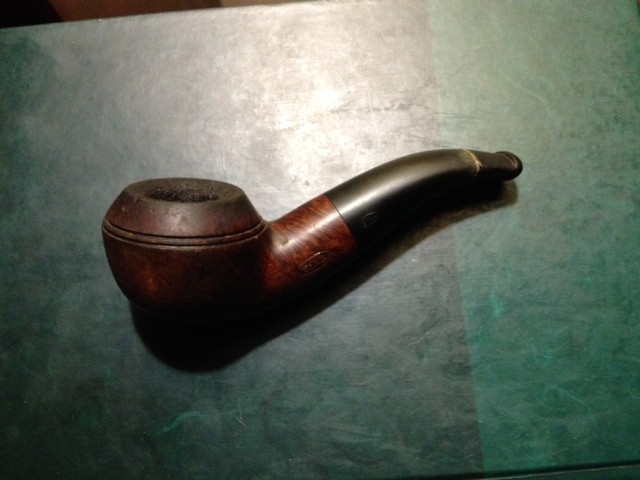
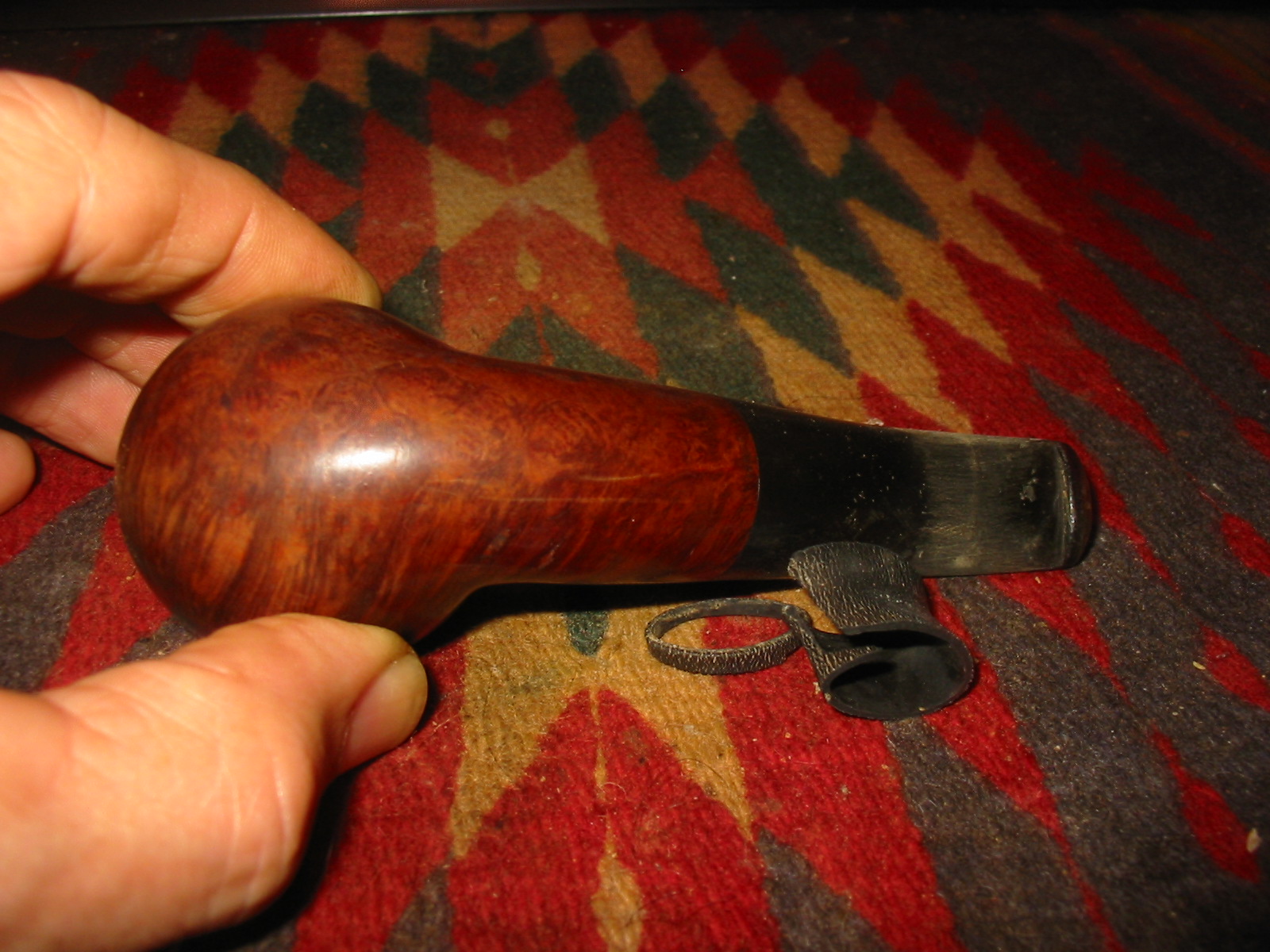
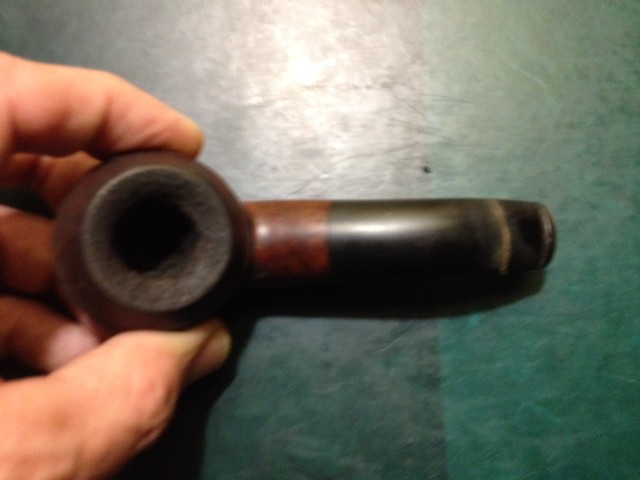
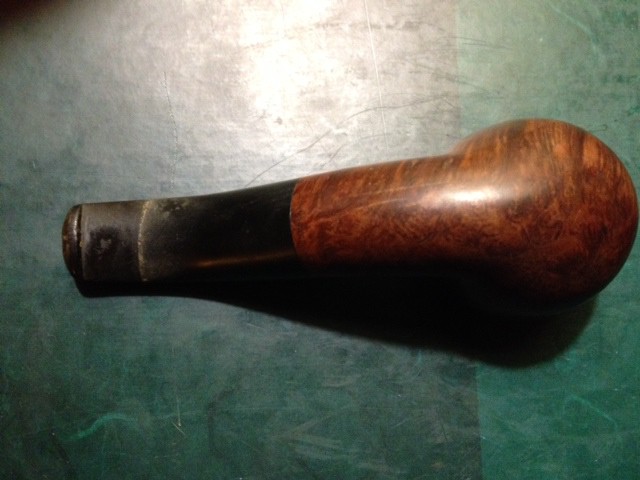
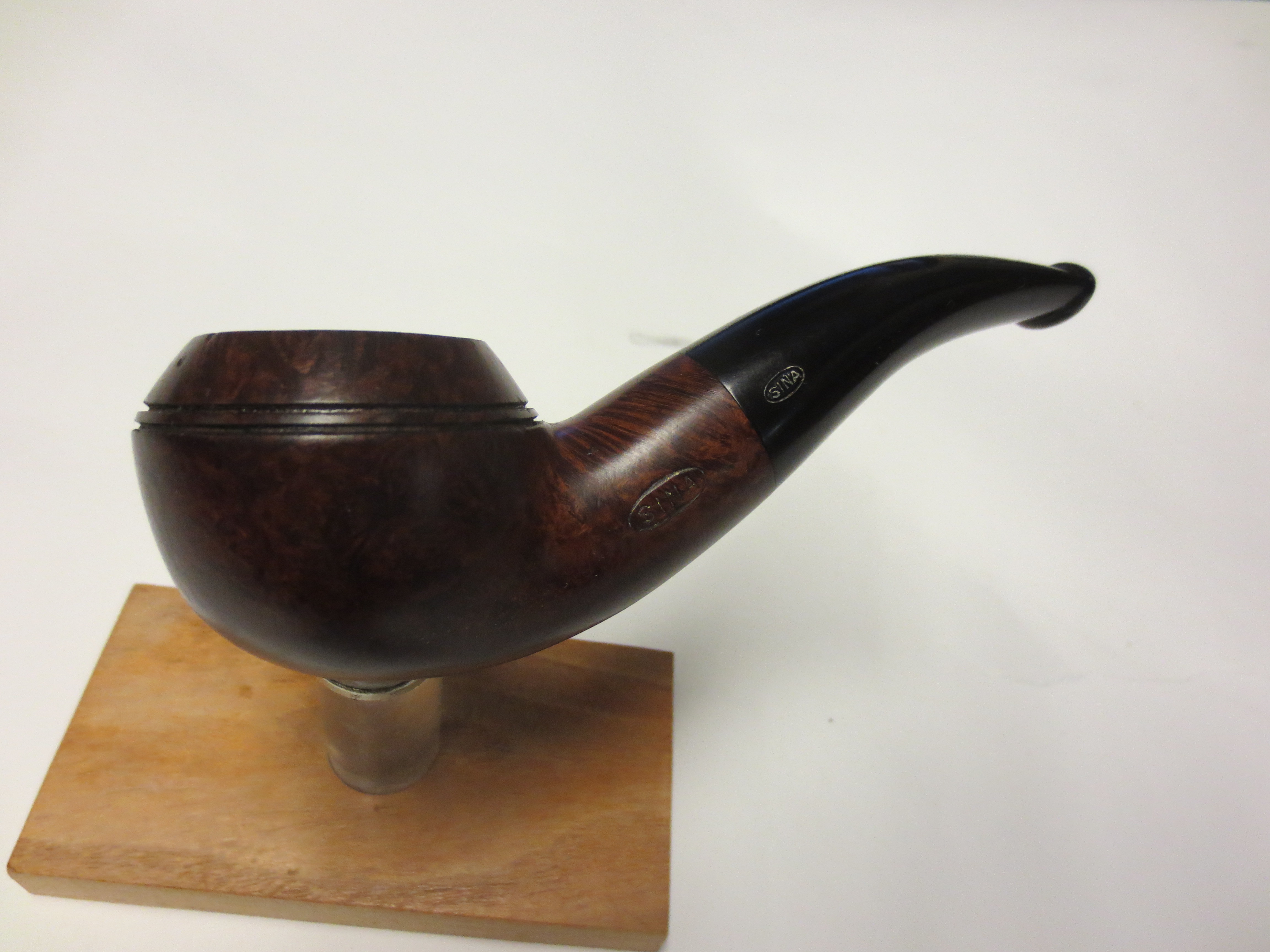
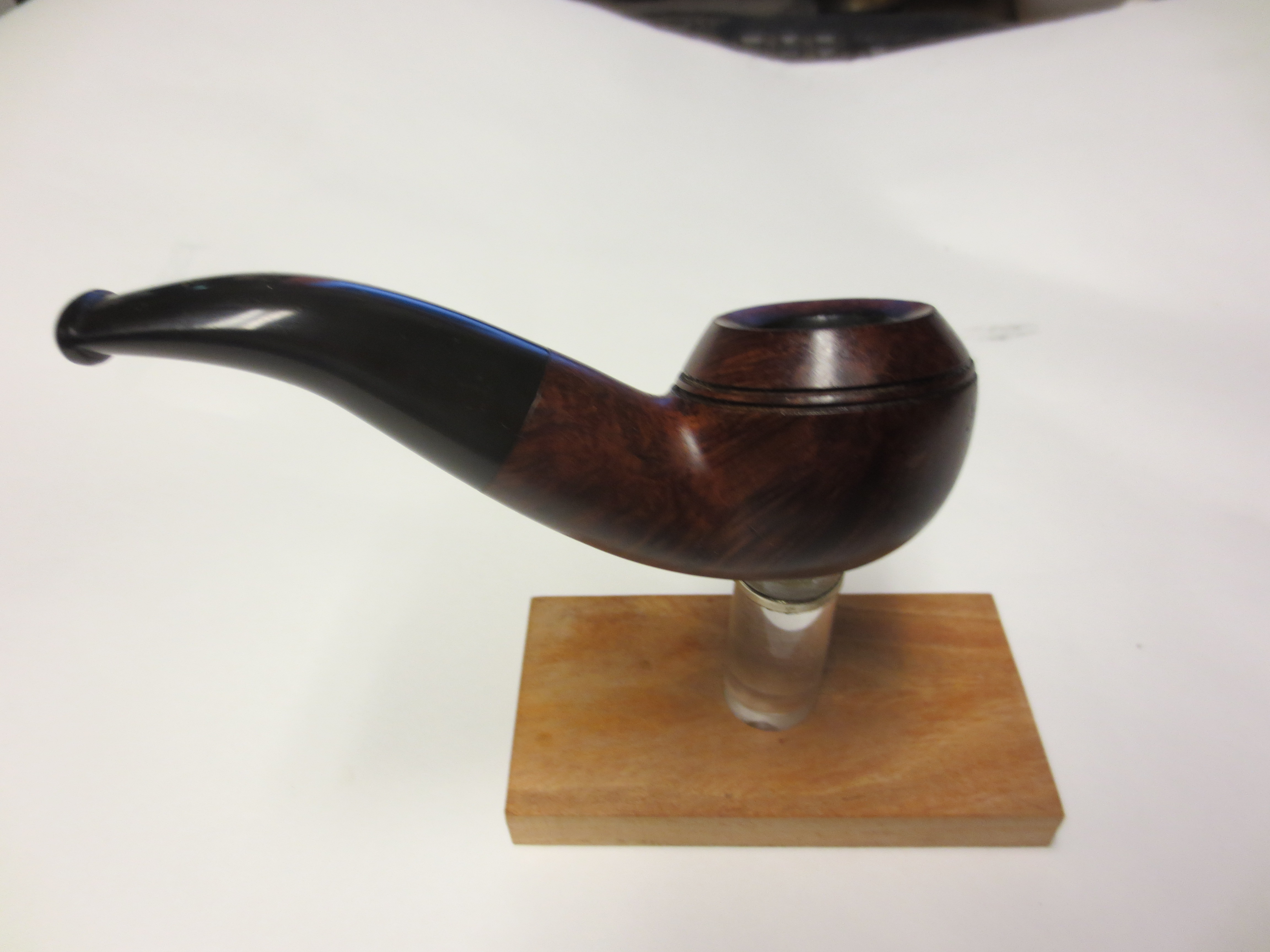
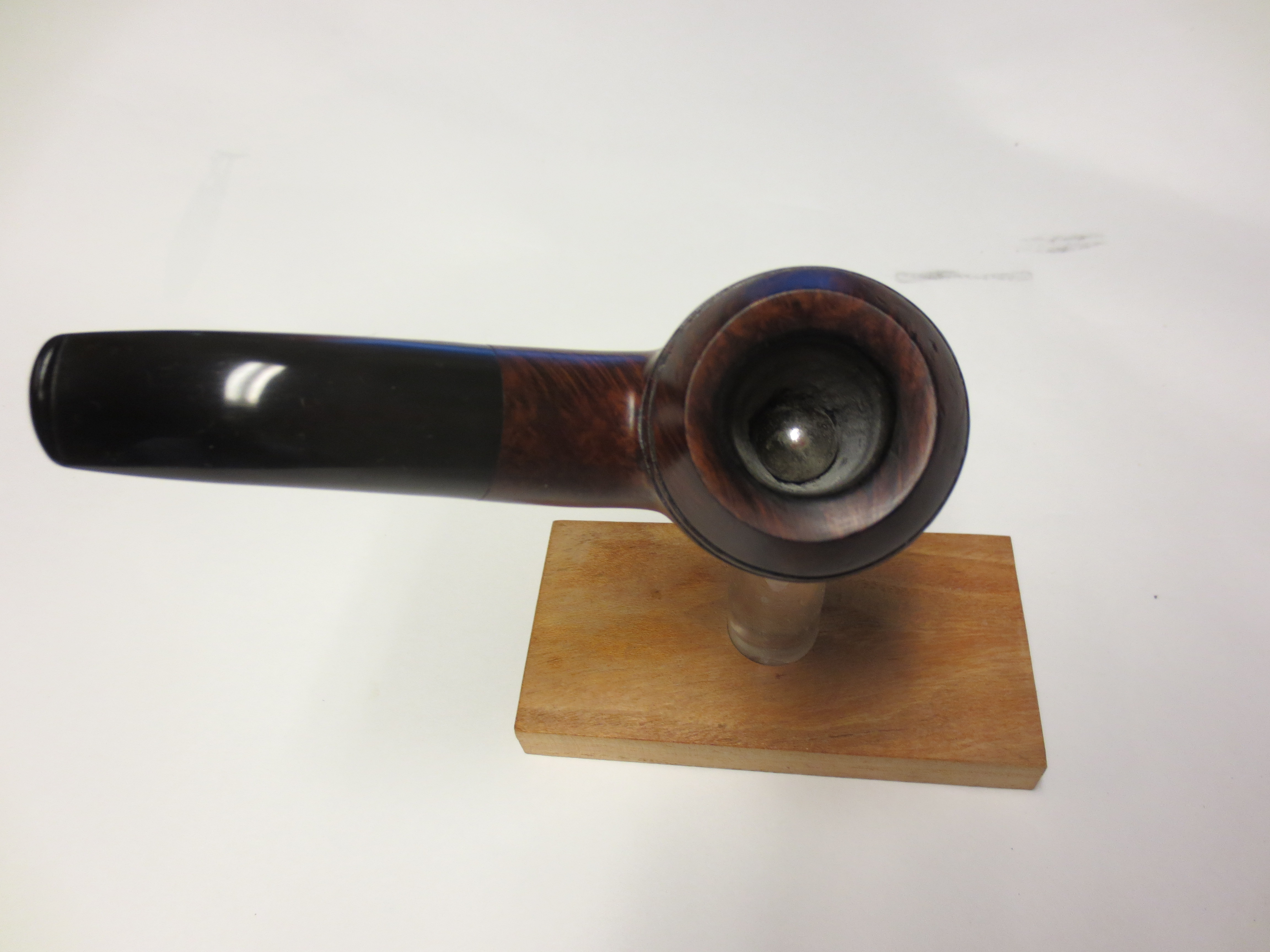
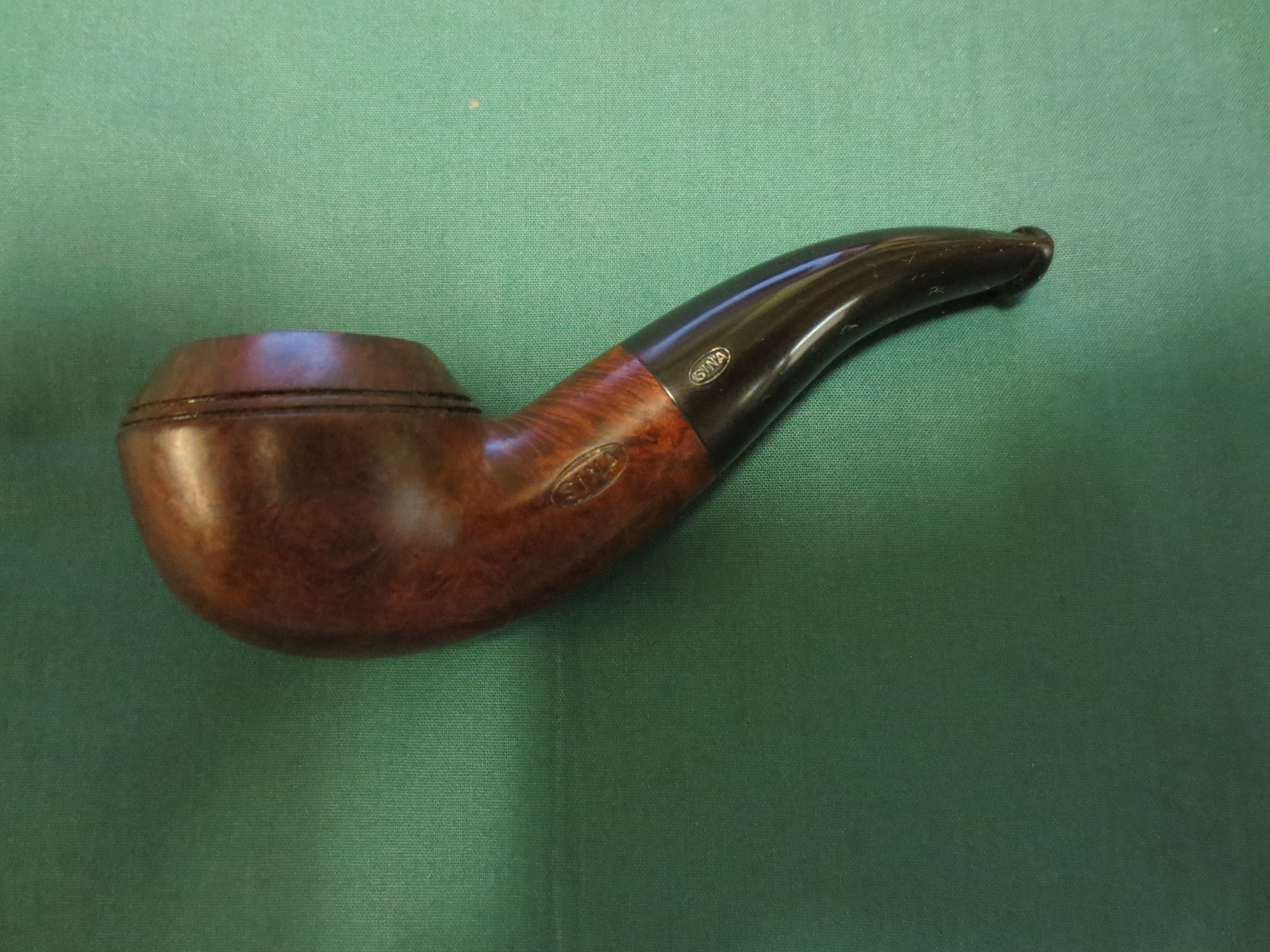
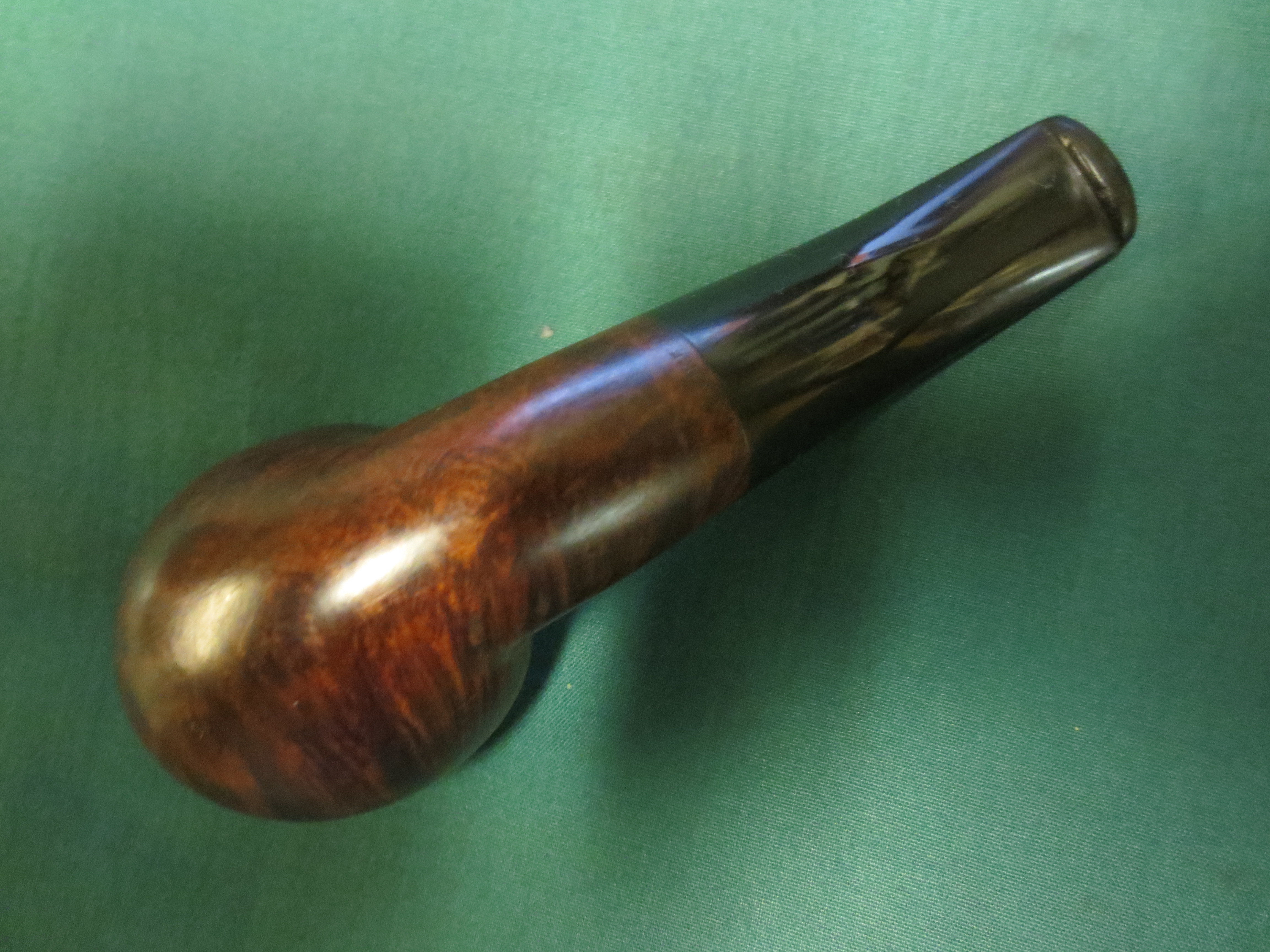
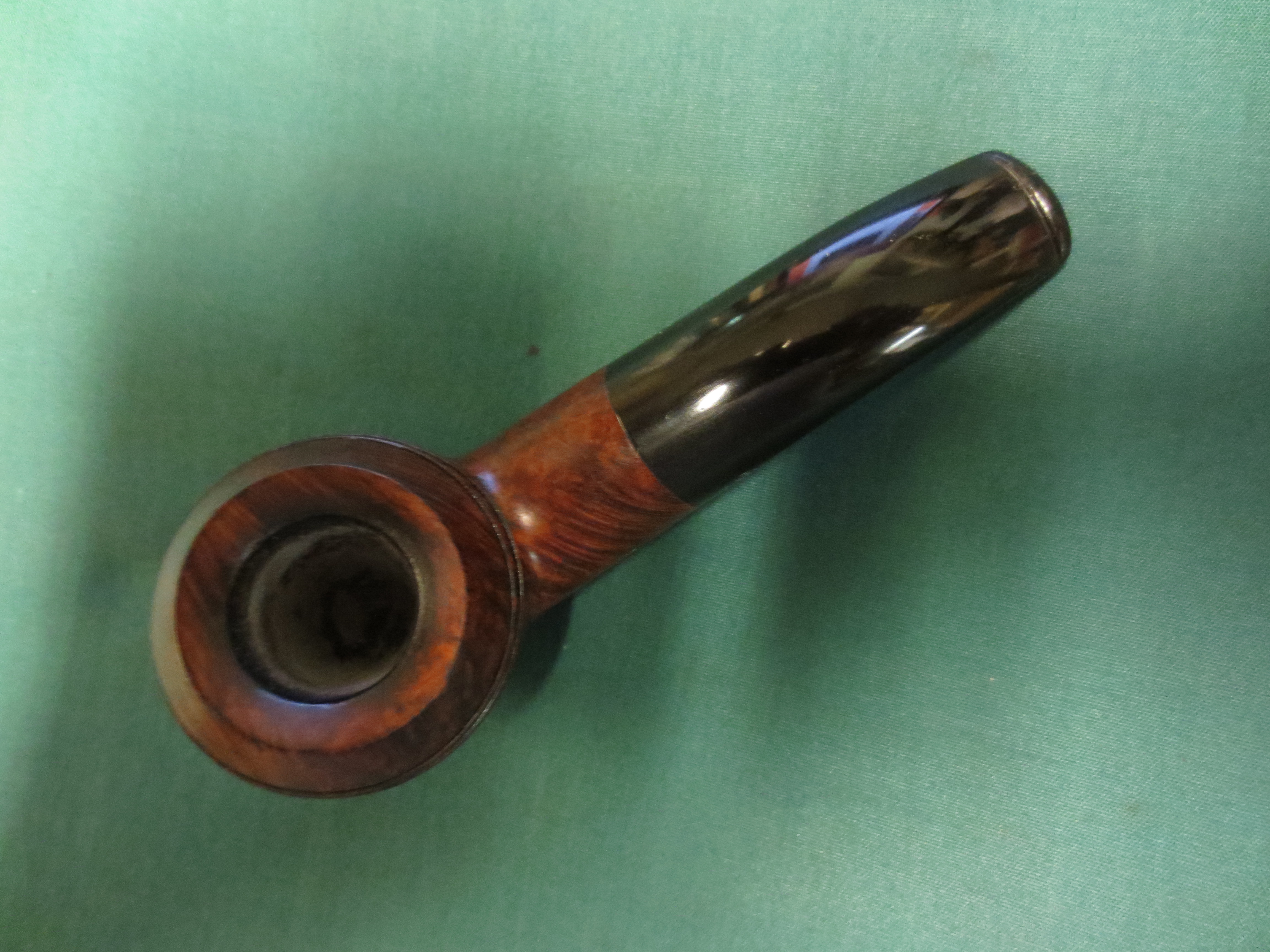
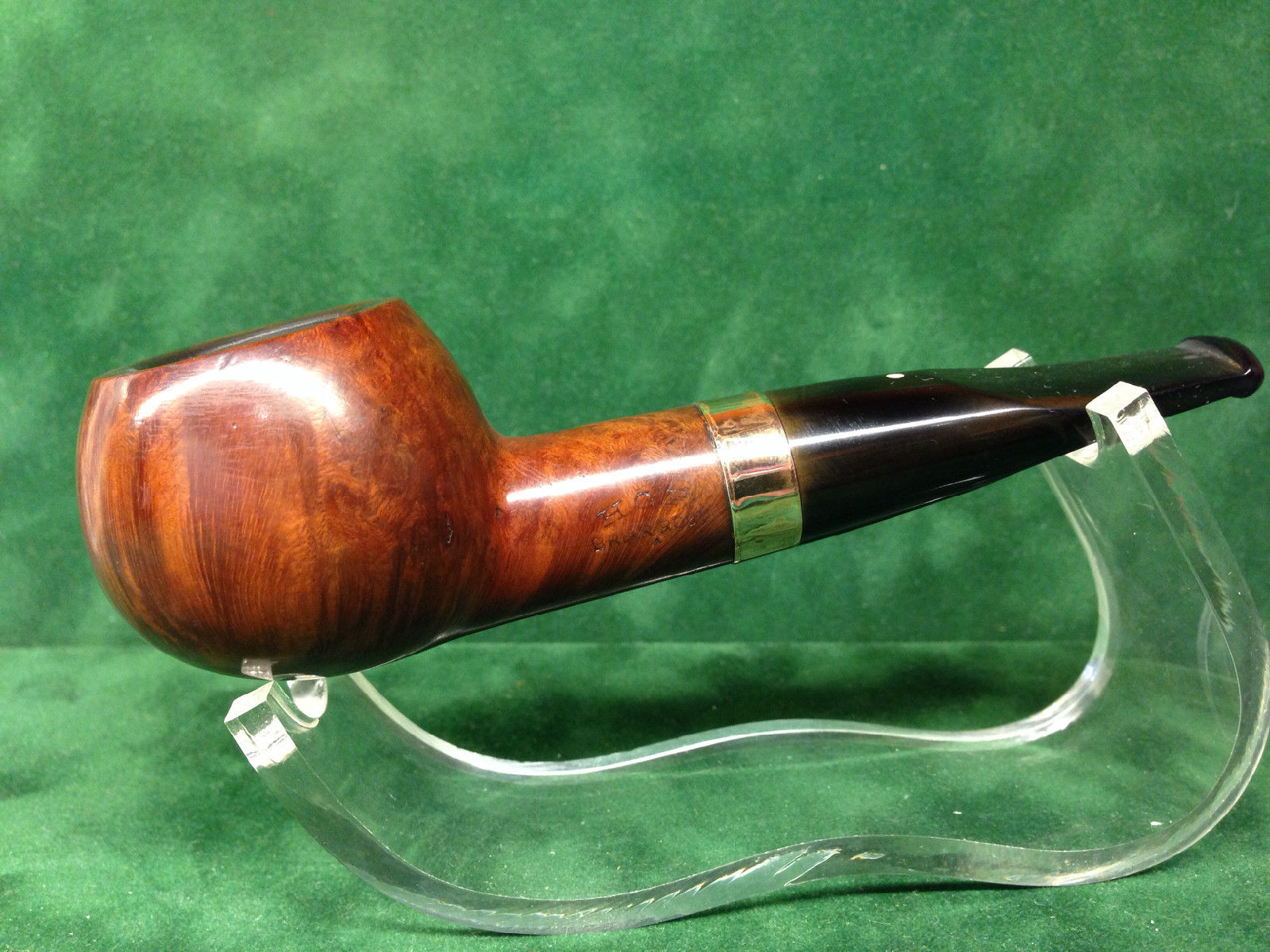
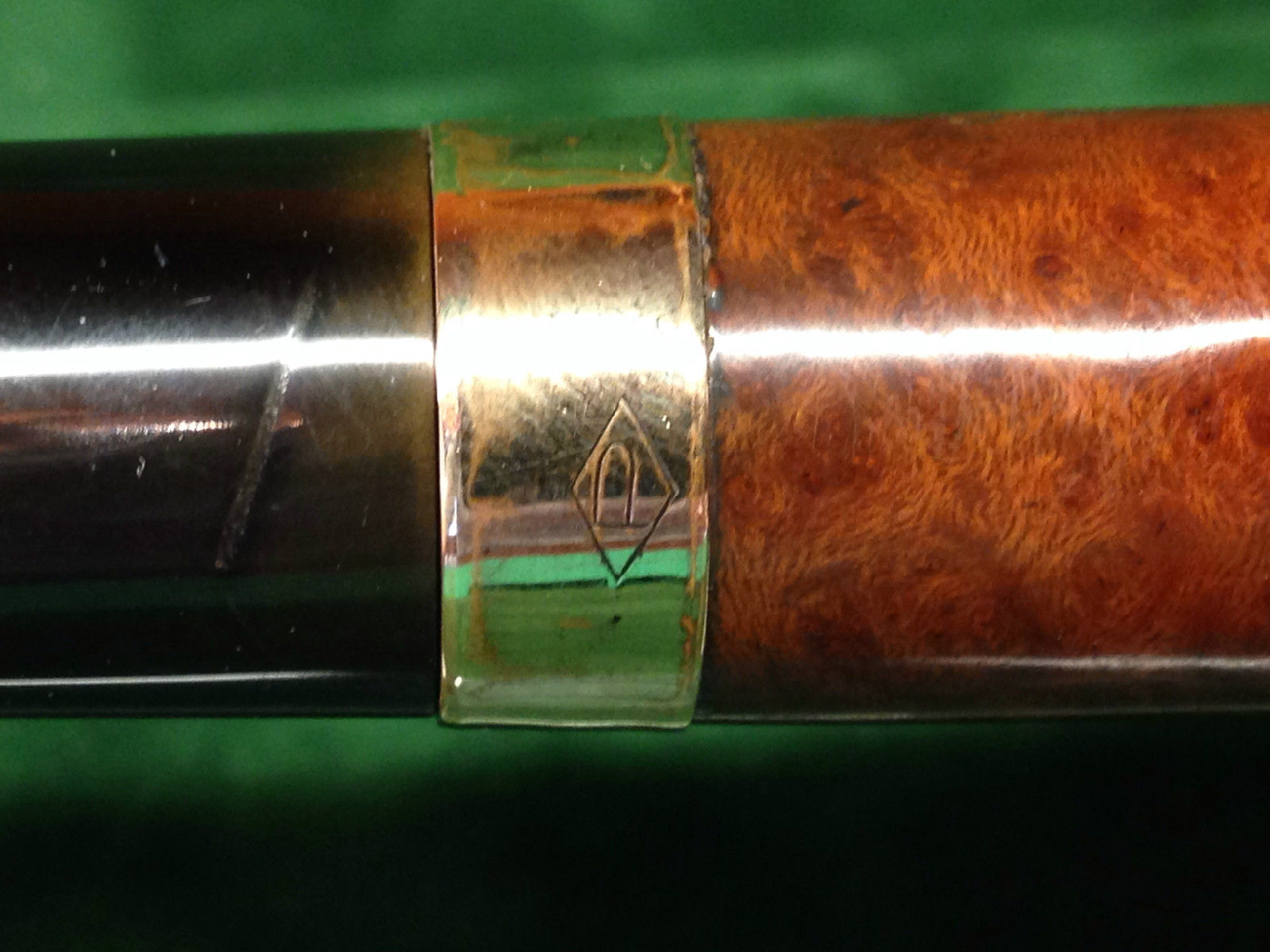
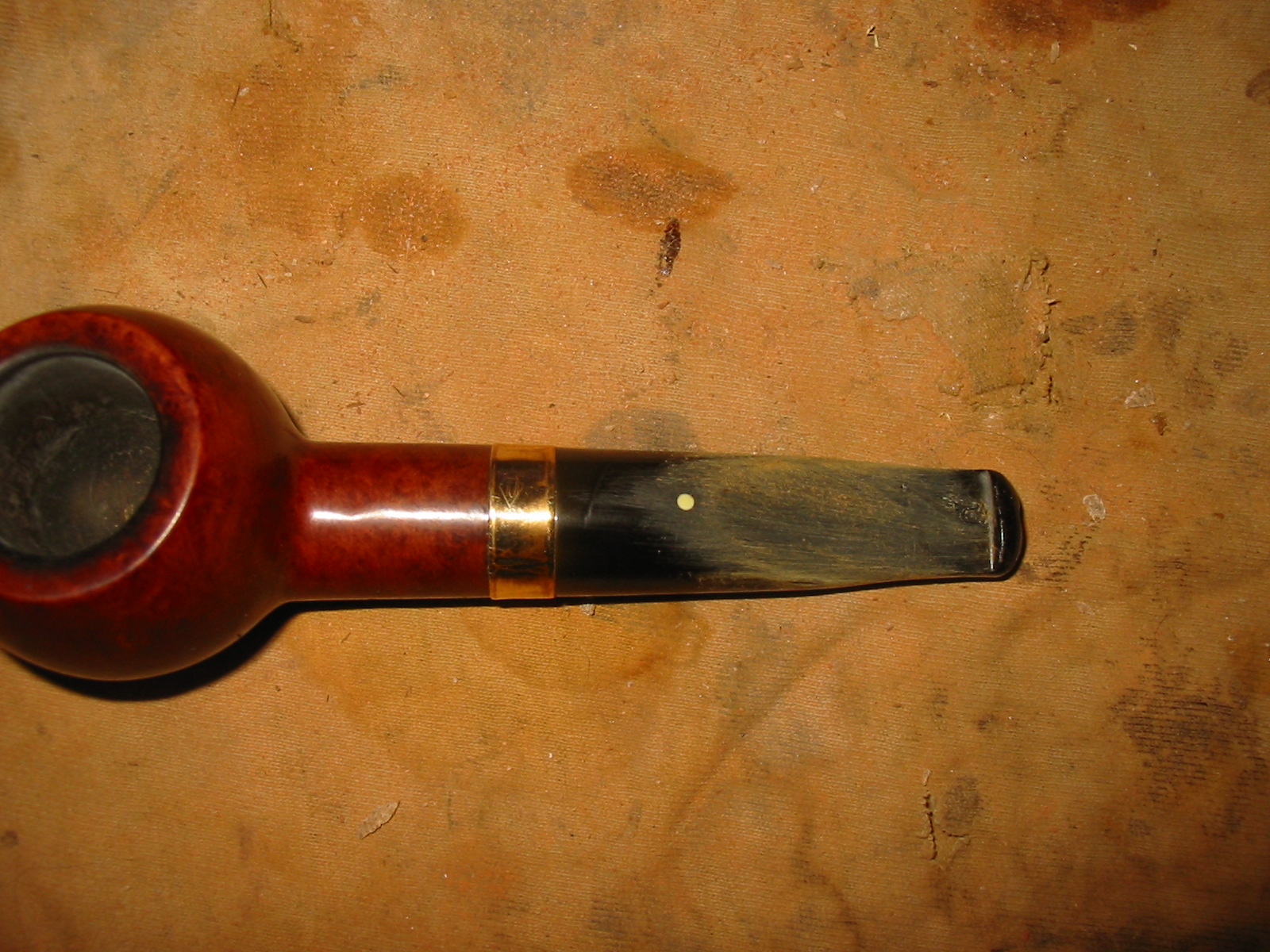
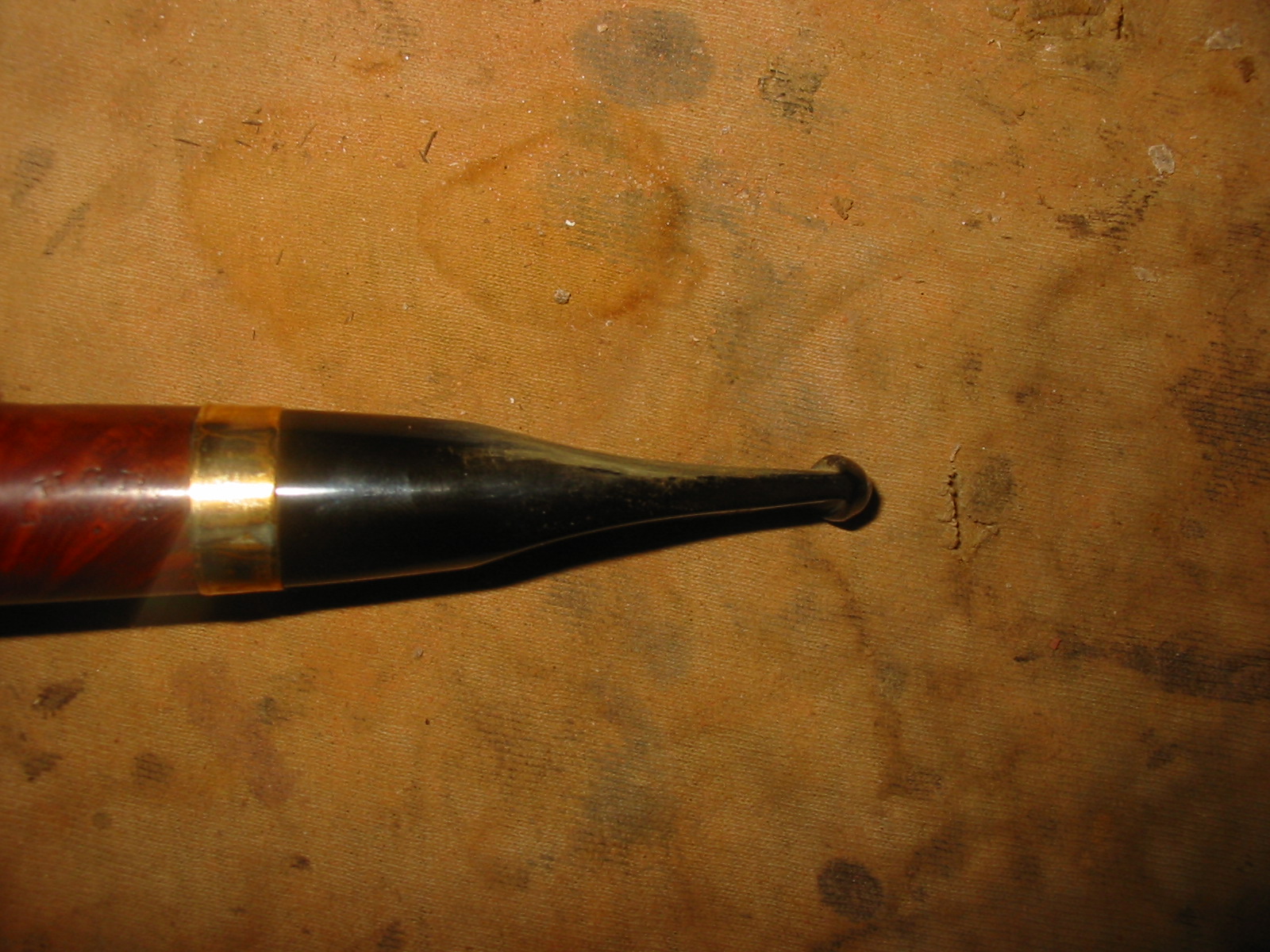
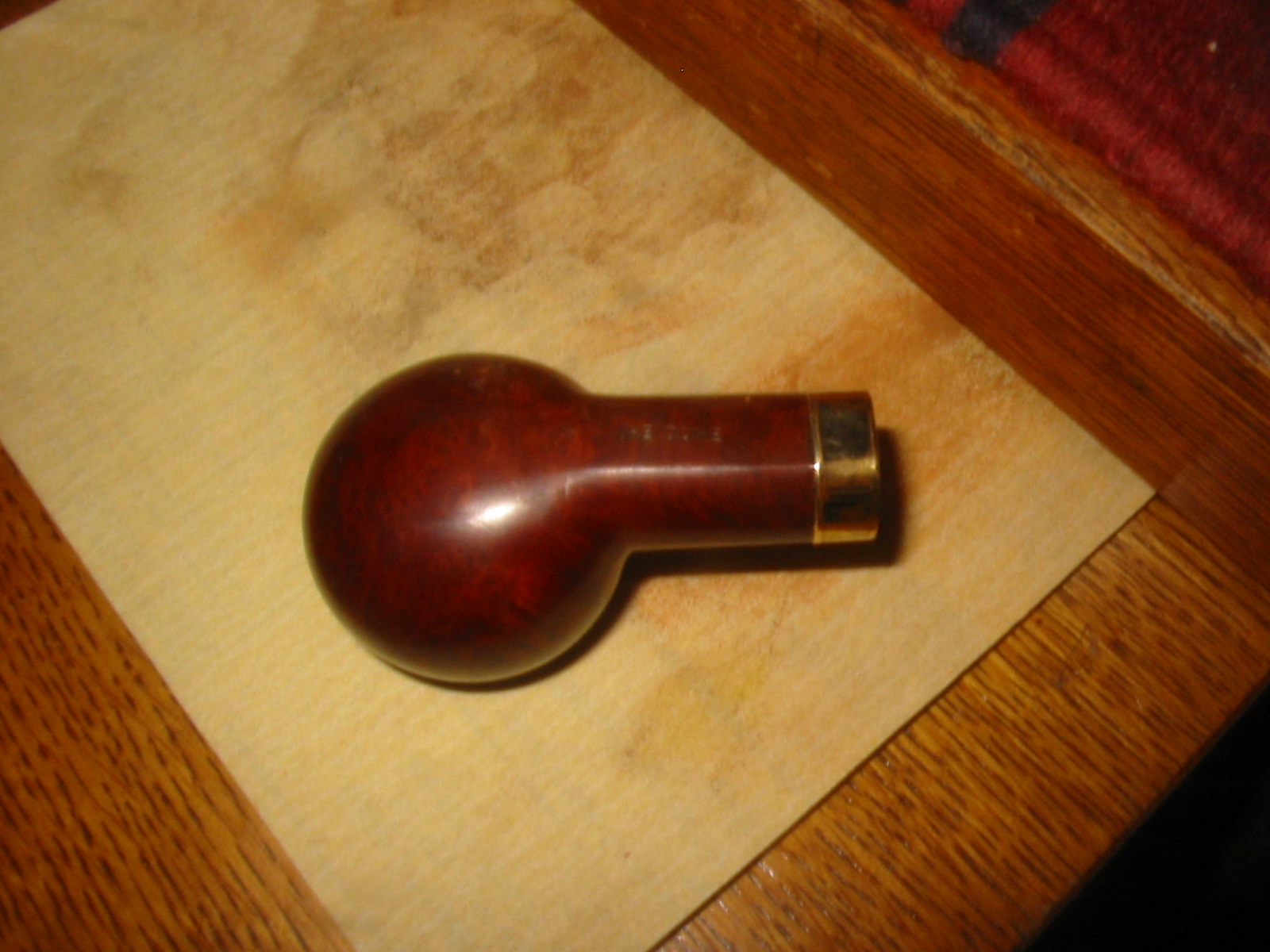
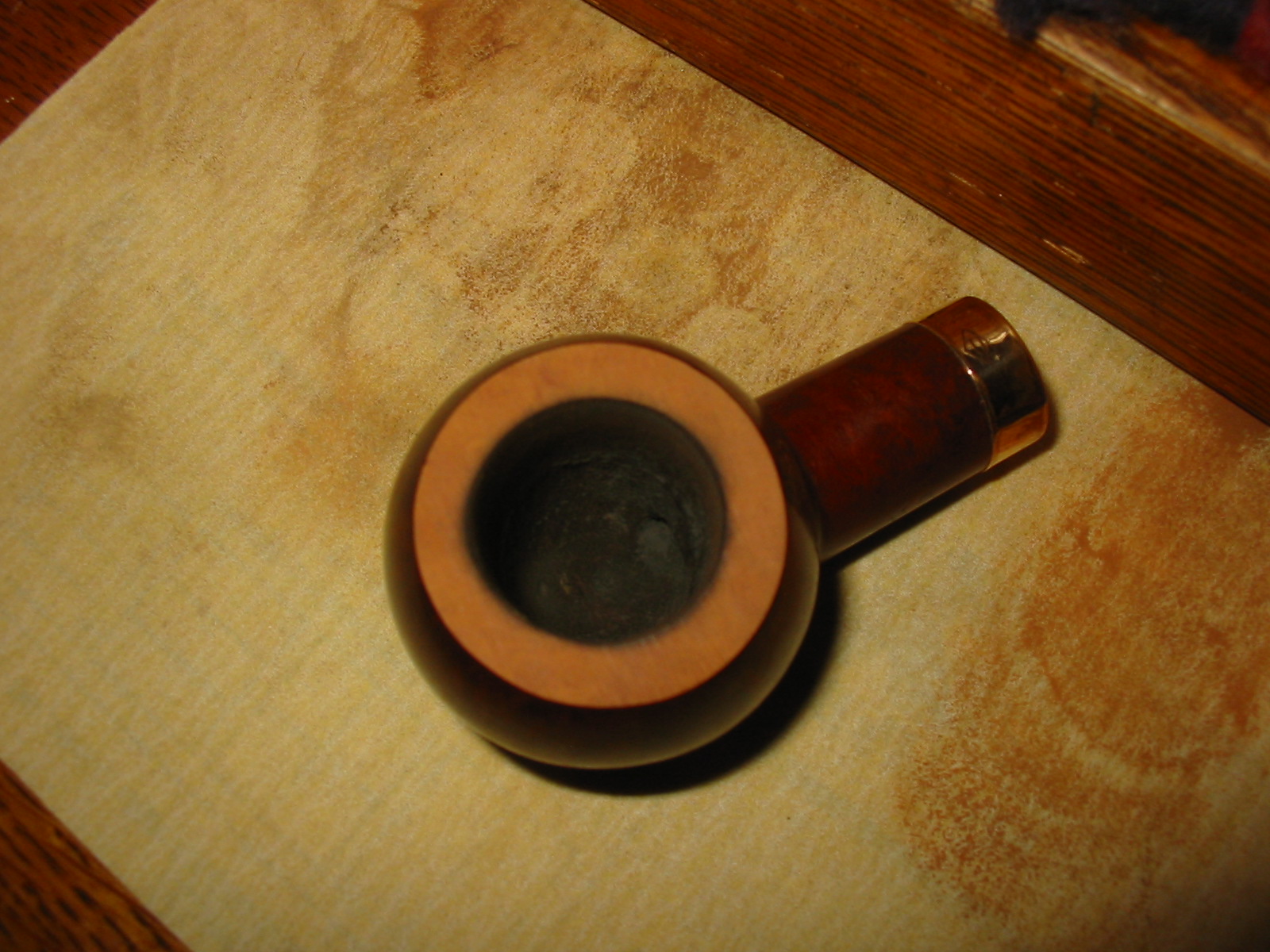
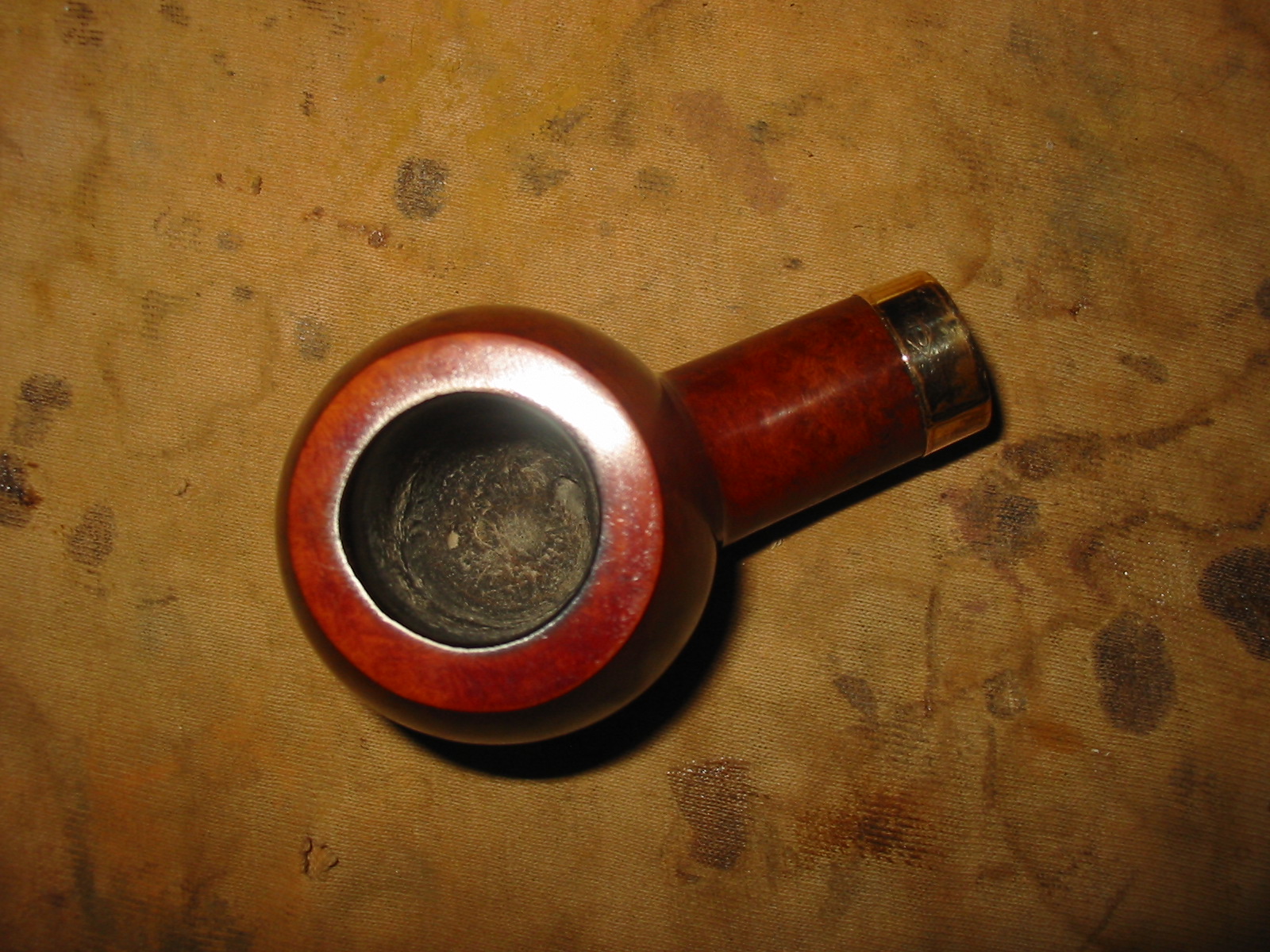
My wife and I went out for lunch on Saturday and there was an antique shop across the street from the restaurant. After eating we brave torrential downpours and ran across the street check out a shop we had not visited before. We looked through the various display cases and I found the pipe below along with a chewed up Yello-Bole billiard. The pipe was a small group 3 sized billiard. The finish was a dark brown stain on a sandblasted pipe. The left side had great grain pattern and showed deep grooves. The right side was a tight birdseye grain and the blast was shallow and close. The shank was rusticated to look like a sandblast. The stem had a slight bend but seemed be from sitting in the heat rather than intention. There was a bite through on the top surface of the stem that was large enough that it could not have been patched. The rim was originally smooth and beveled inward but the bevel had been damaged and needed to be reshaped and cleaned up. The stamping on the pipe is what ultimately made me spend the $10 to make the pipe mine. It read Good Companion over London Made on the underside of the shank. I just finished reading a new book by Mark Irwin called Pipe Companions. In it he wrote of the relationship between the pipe and the pipeman. I think it was a great coincidence to walk into a pipe stamped Good Companion. I wanted to clean it up and make it my own.
IMG_4177

IMG_4178

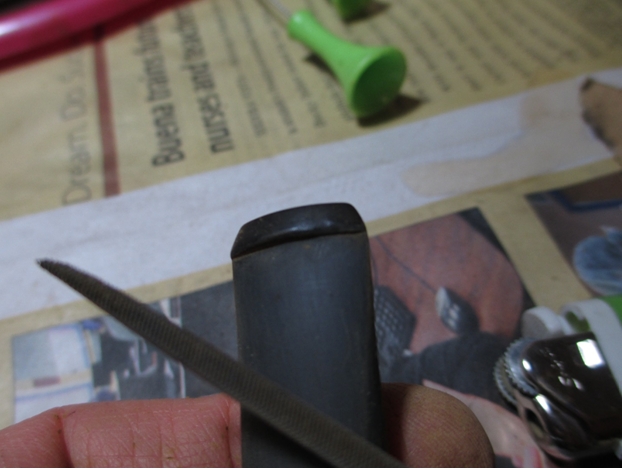
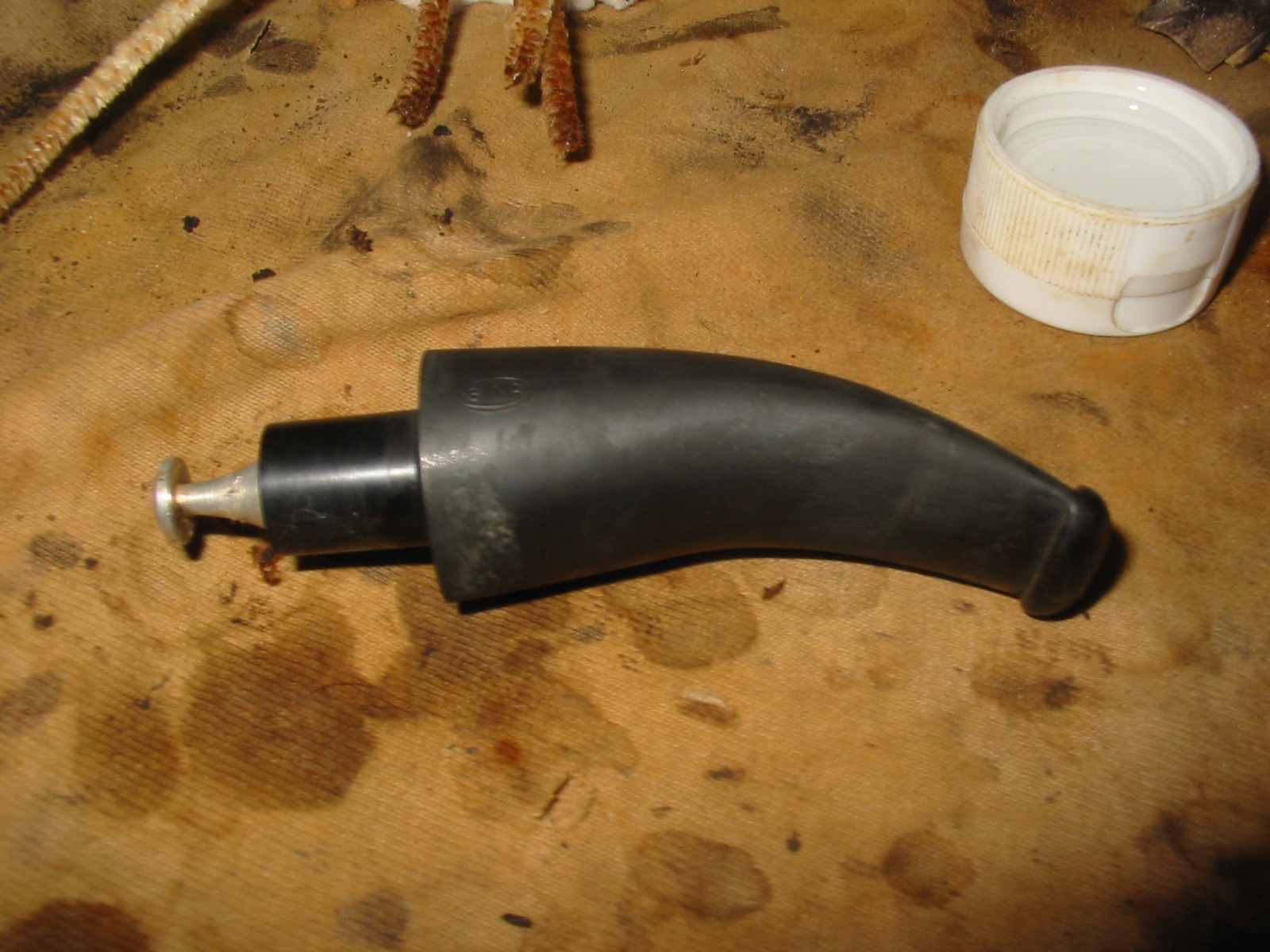
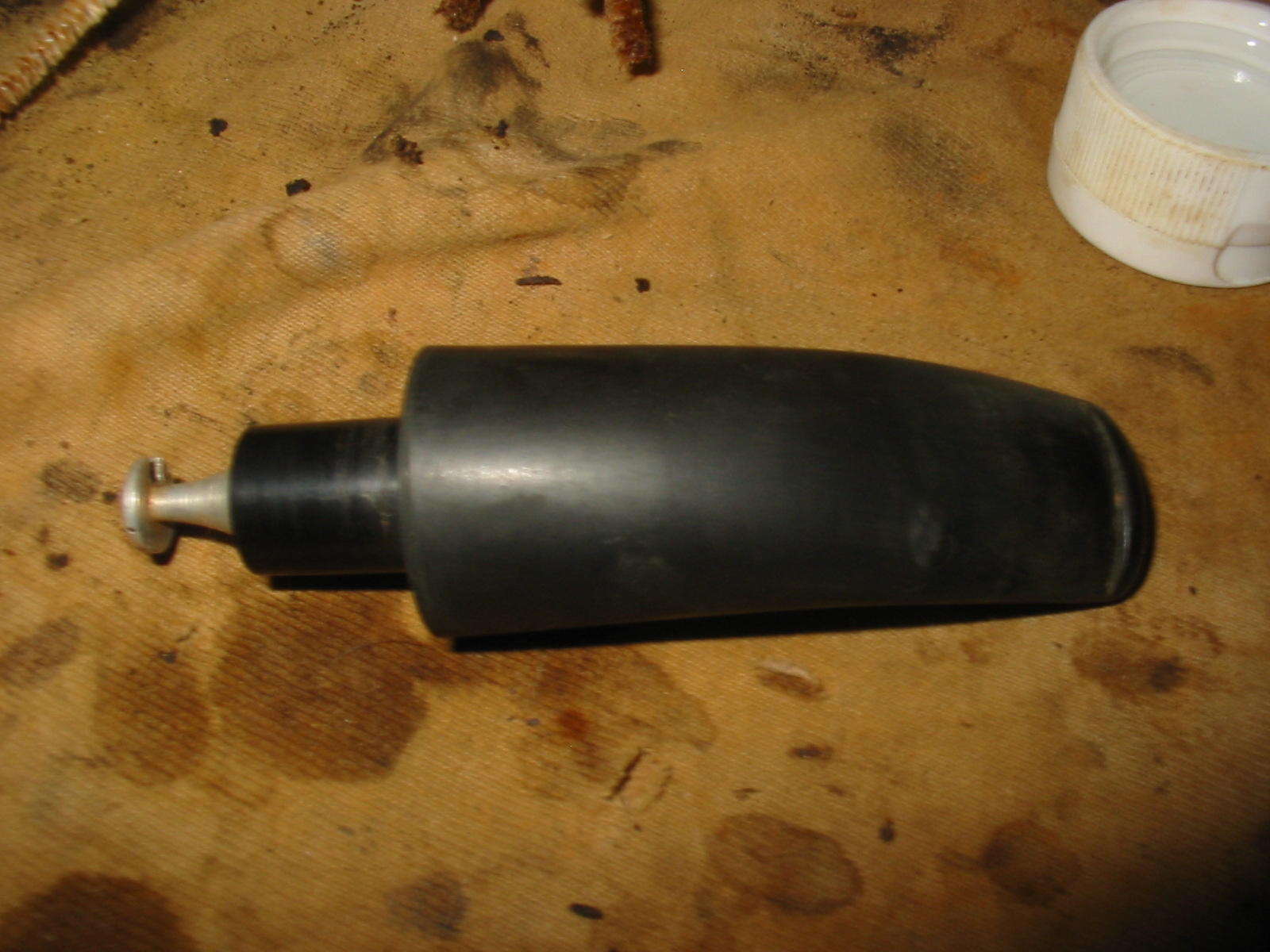
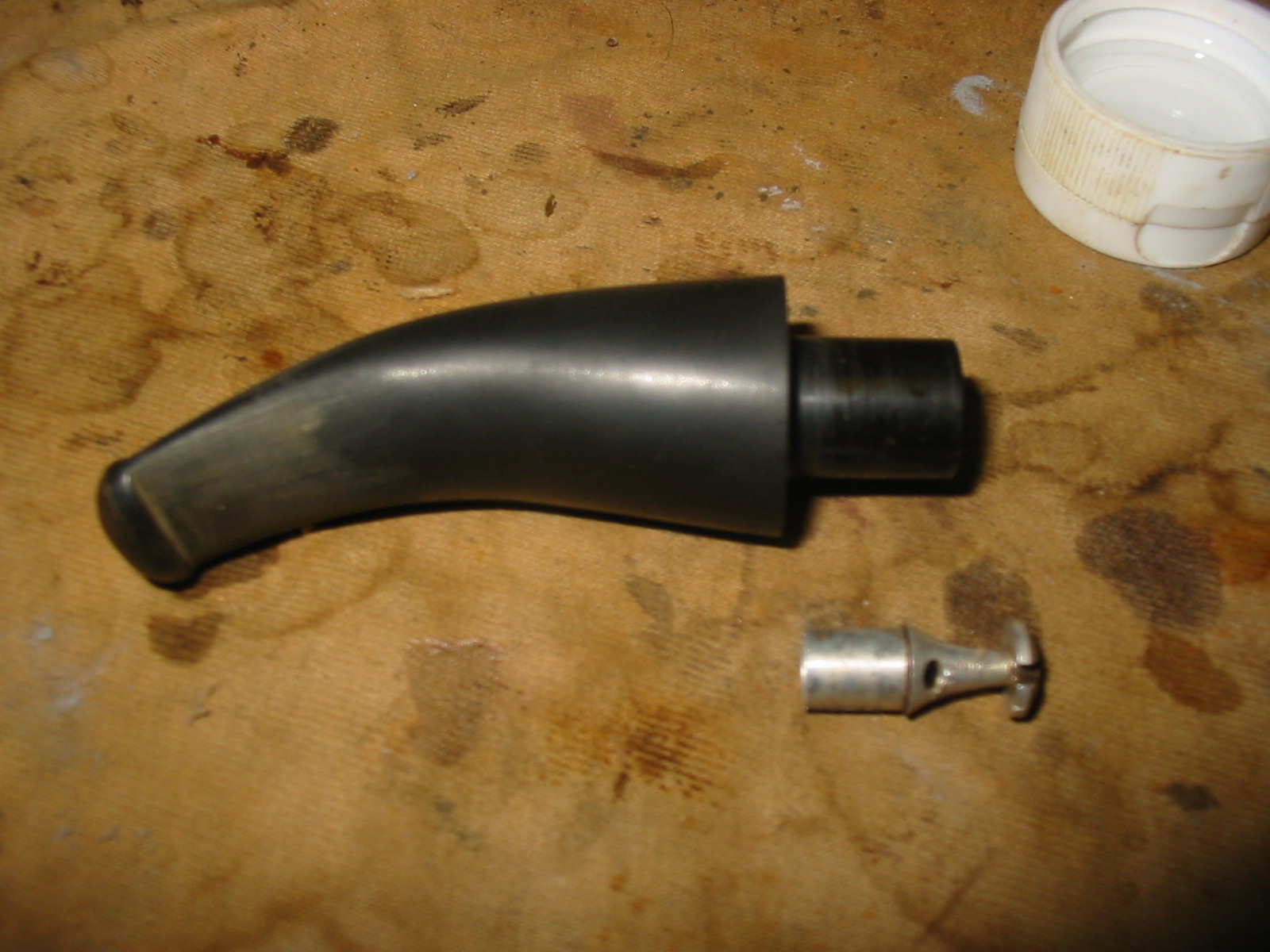
When I got home from the visit to the shop I took the pipe apart. The stem had a large spiral stinger apparatus in the tenon. The stem itself was badly chewed. I found a new stem for the pipe in my can of stems and worked on the tenon to make the tapered stem fit the shank.
IMG_4263

IMG_4264

IMG_4265

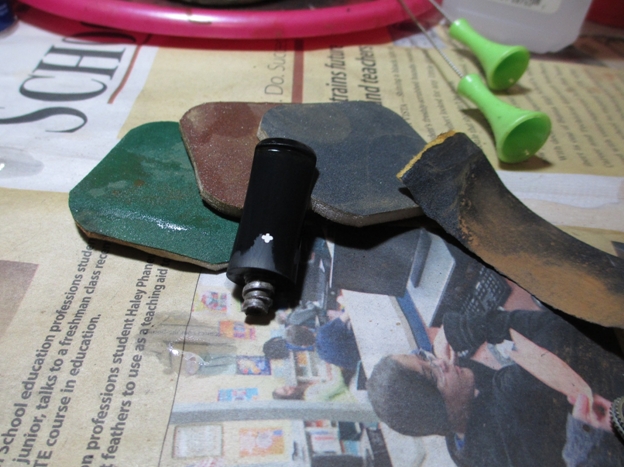
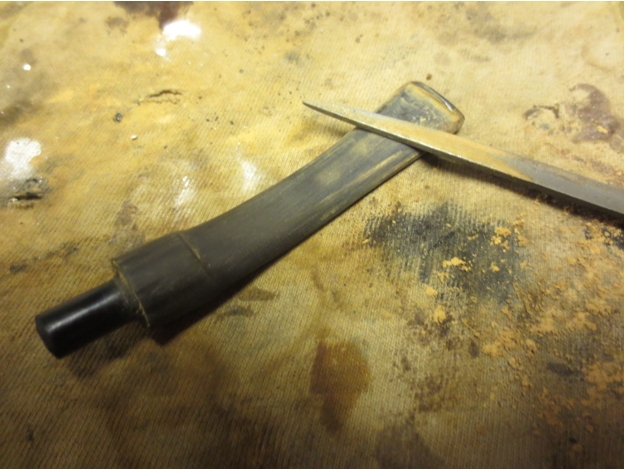
I pushed the newly fitted stem into the shank to have a look at the shape with a taper stem. I liked the overall look of the pipe with the new stem. I sanded the stem to remove the calcification and the oxidation on it. I also worked on the fit of the stem to the shank. I wanted the transition to be smooth and seamless. I took the stem in and out several times while I worked on it. The last time I pushed it into the shank there was a crack! I don’t know if that has happened to you but when it happens there is a sick feeling in the pit of my stomach. Here the pipe was almost ready to refinish and the stem fit well and then crack. The frustration at that moment is high level. I laid the pipe down and had a coffee while I thought about my next steps.
IMG_4266

IMG_4268

IMG_4269

IMG_4270

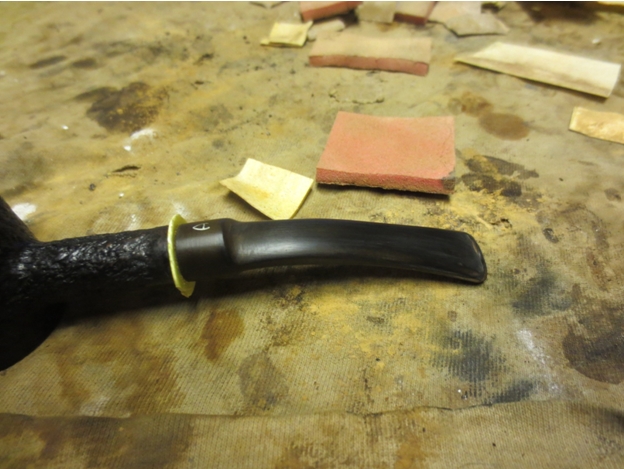
I went through the box of nickel bands that I have here and I did not have any the correct size for the shank. All of them were either too huge or too small. I did remember however that I had some brass plumbing pressure fitting pieces that would make a great band on the pipe and create a totally different look on this old pipe. Before fitting the band I worked on the bevel of the inner edge of the rim. I used a folded piece of sandpaper to smooth out the rim damage and reshape the bevel.
IMG_4271

IMG_4272

I used a Dremel and sanding drum to sand back the shank so that the band could be pressure fit against the cracked shank. I took back the rustication until the finish was gone and the shank area was smooth. When the band fit tightly on the shank I heated the brass band with a heat gun and then pressed it into place on the shank.
IMG_4273

IMG_4274

IMG_4276

IMG_4278

I pressed the band into place on the shank and then hand sanded the area in front of the band smooth so that I could rework the taper of the shank and the finish to match the rest of the pipe.
IMG_4279

IMG_4280

IMG_4281

IMG_4283

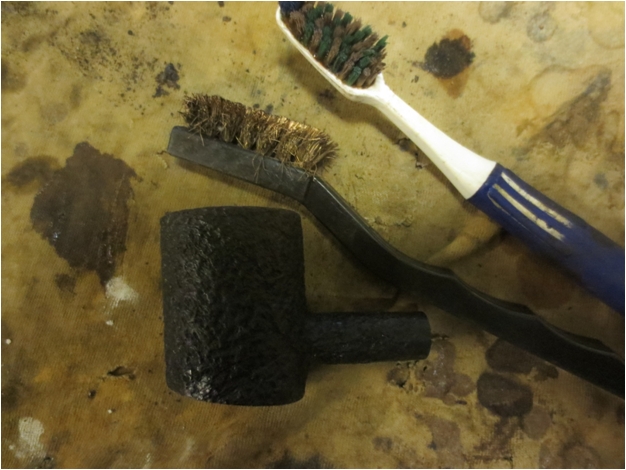
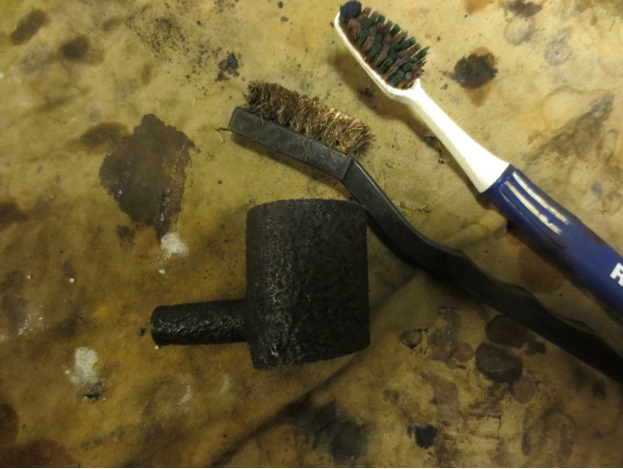
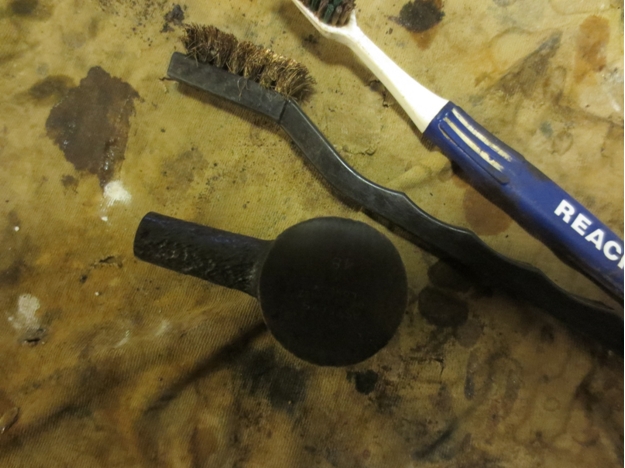
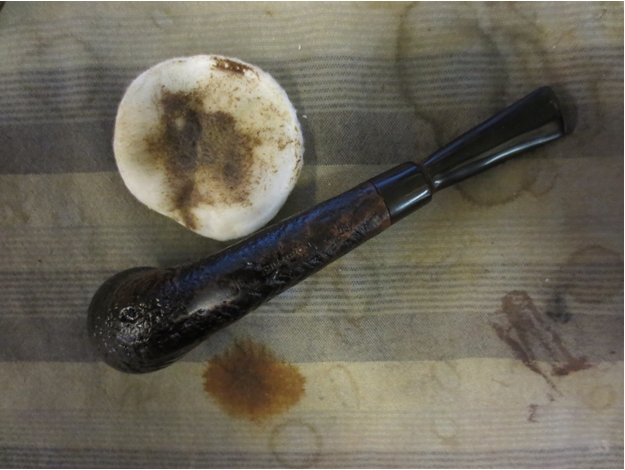
I used the two Dremel diamond cutting heads pictured below to rusticate the finish on the shank. I used the cylinder first and then the ball. I worked it into the briar to make the smooth area match the rest of the bowl.
IMG_4284

IMG_4285

IMG_4287

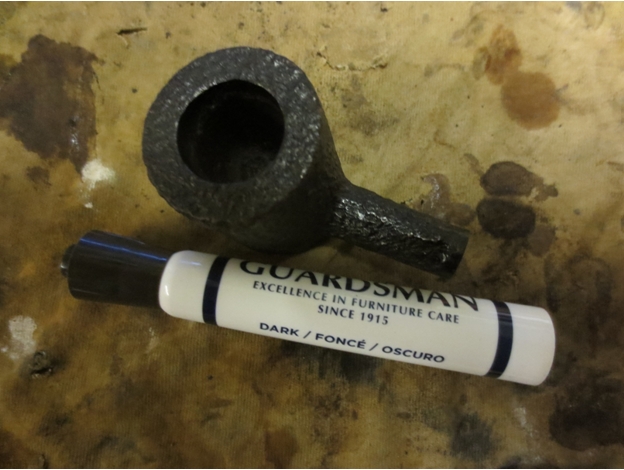
After rusticating the shank I stained it with a dark brown aniline stain and flamed it to set it deep within the grain. I stained the rest of the pipe as well and the rim with multiple coats of the dark brown.
IMG_4288

IMG_4289

IMG_4290

IMG_4291

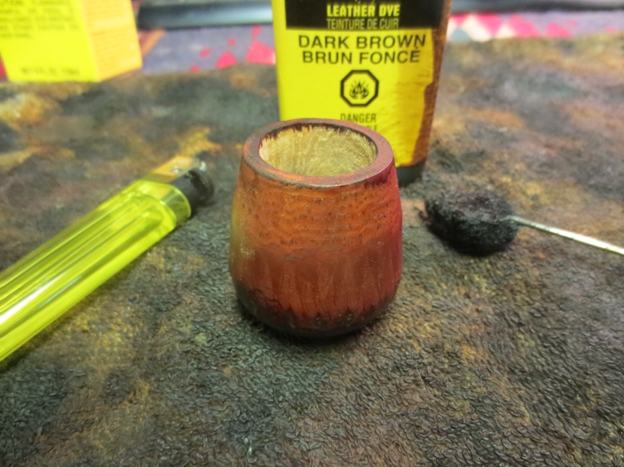
Once the stain was dry on the bowl I hand buffed it with a cotton cloth and then stained it a second time with MinWax Red Mahogany stain. I rubbed it on and then rubbed it off. I repeated the process until I had the colour that I wanted.
IMG_4293

IMG_4294

IMG_4295

IMG_4296

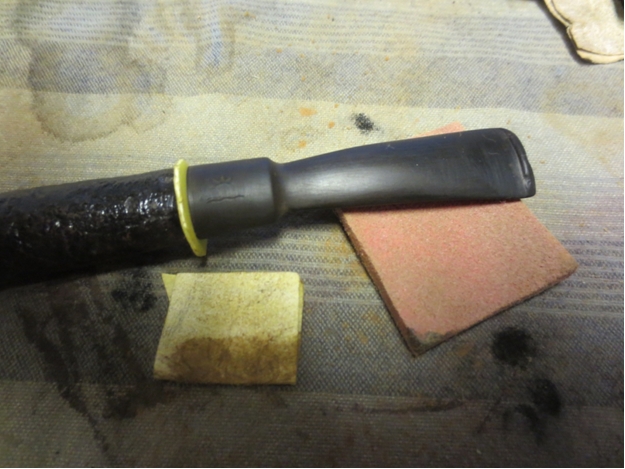
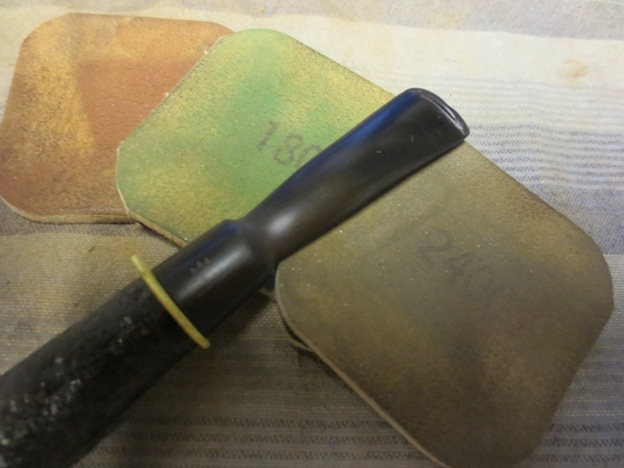
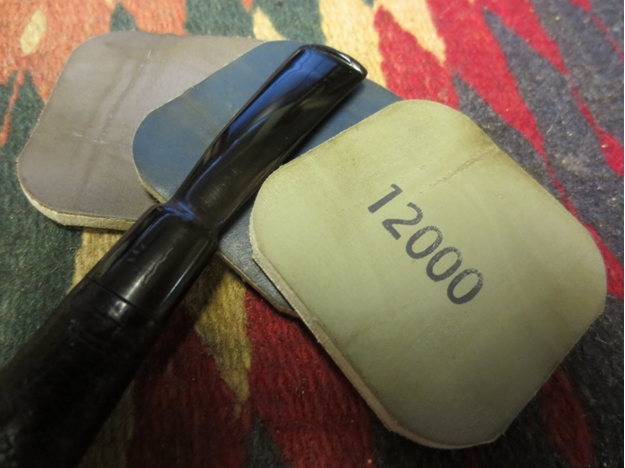
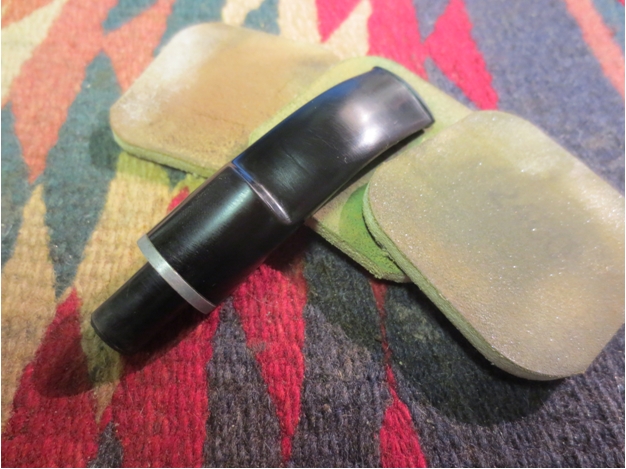
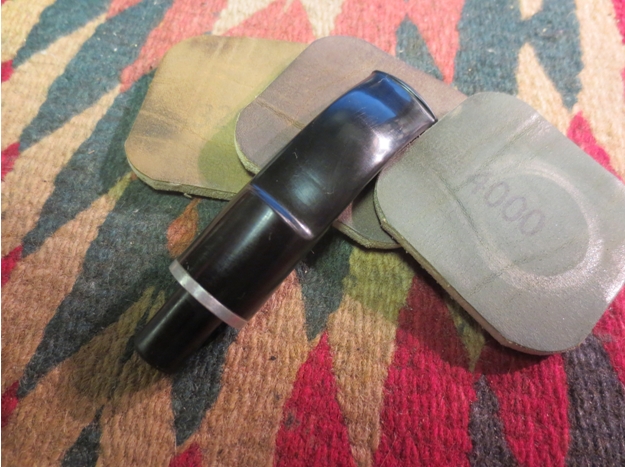
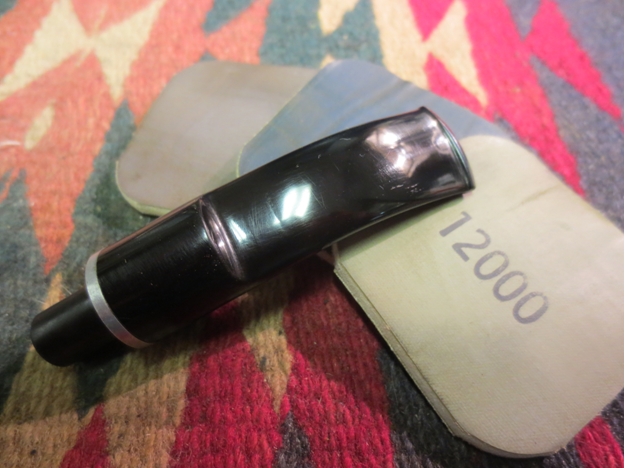
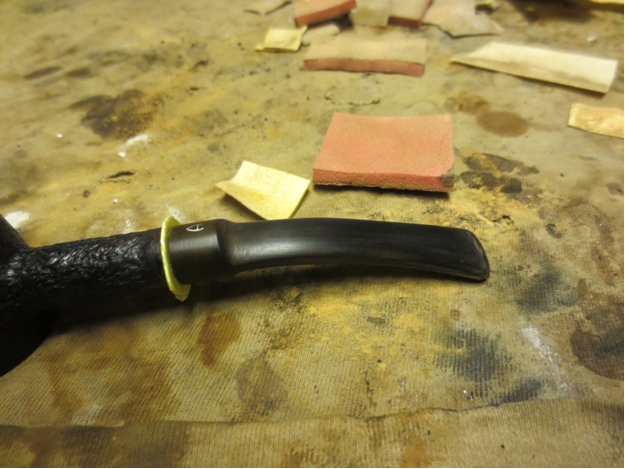
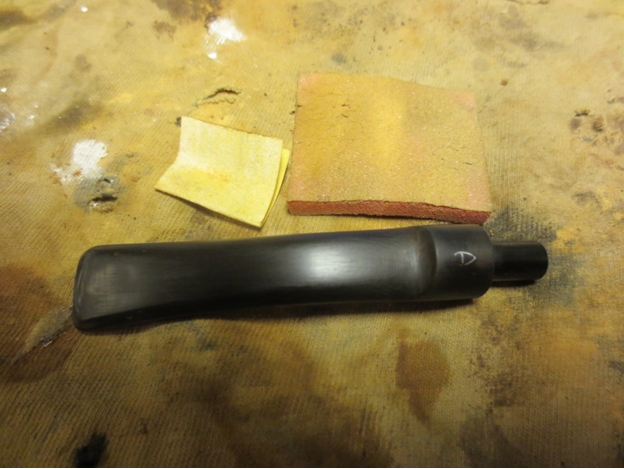
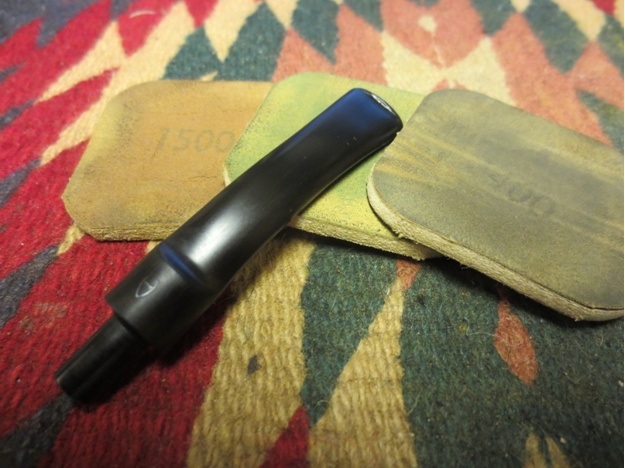
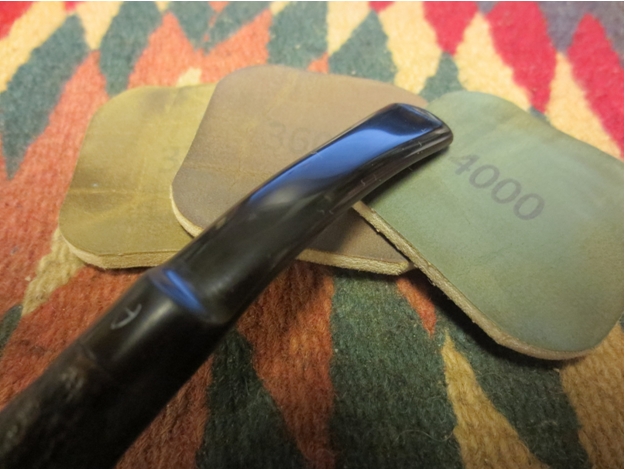
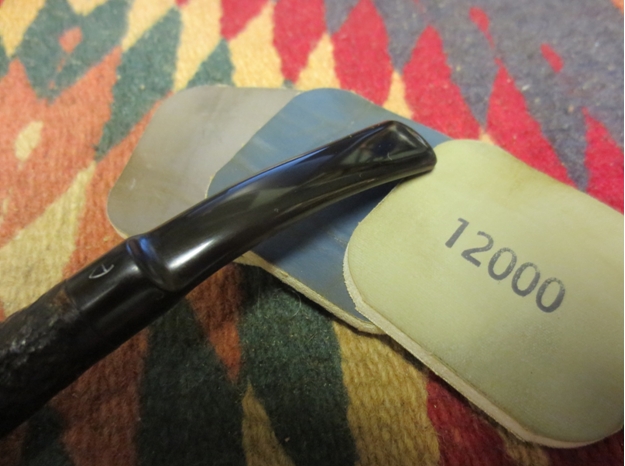
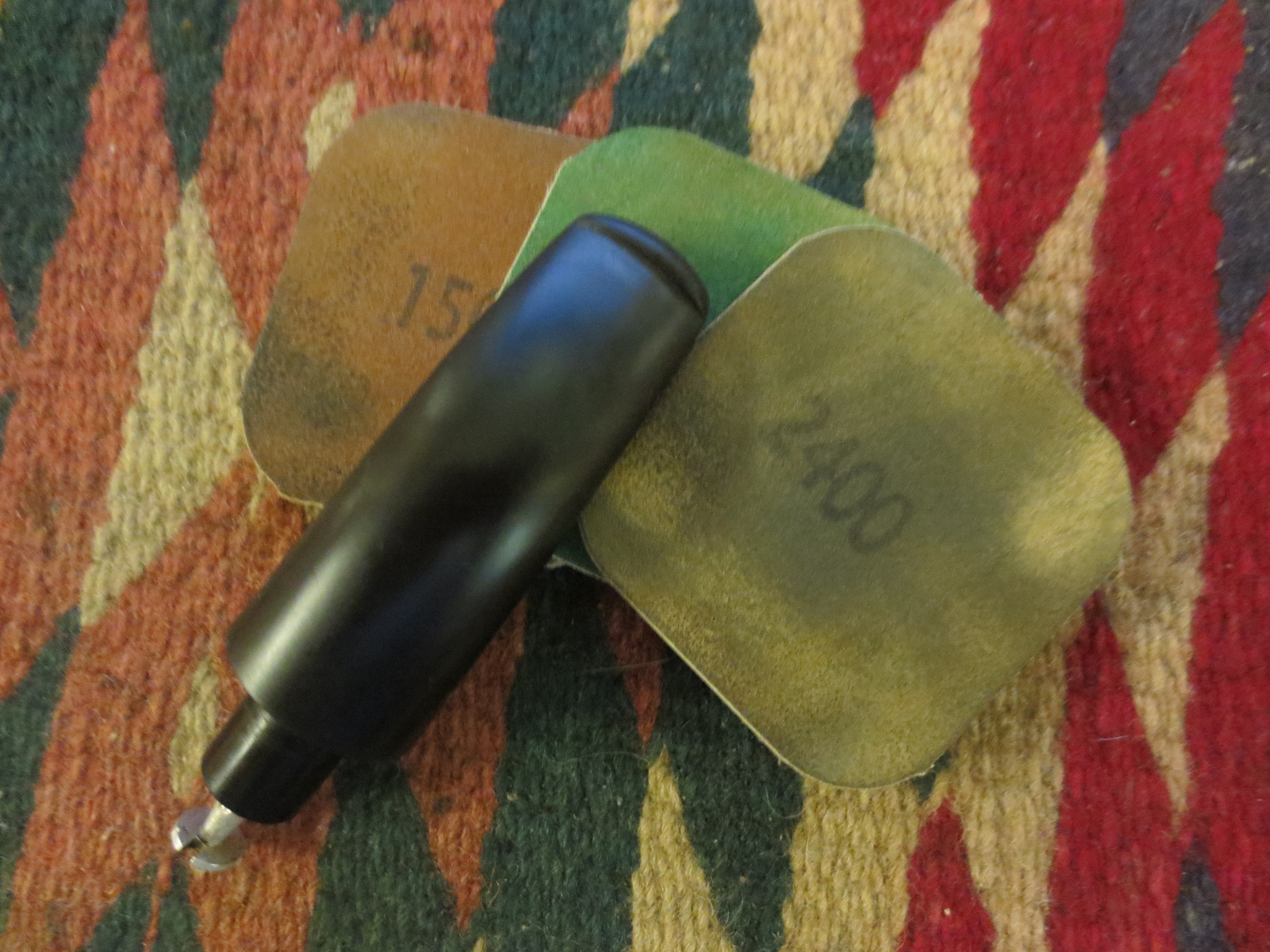
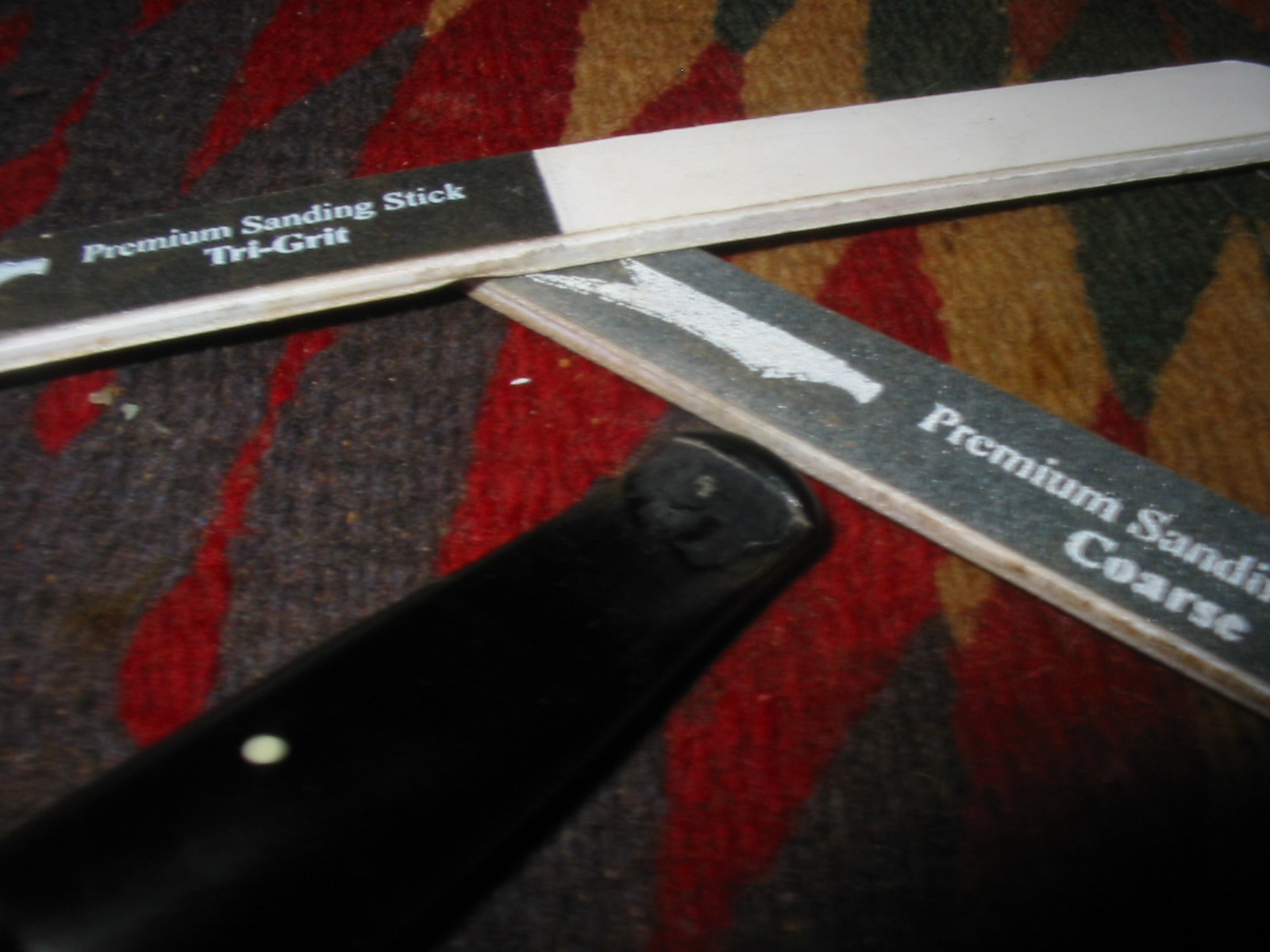
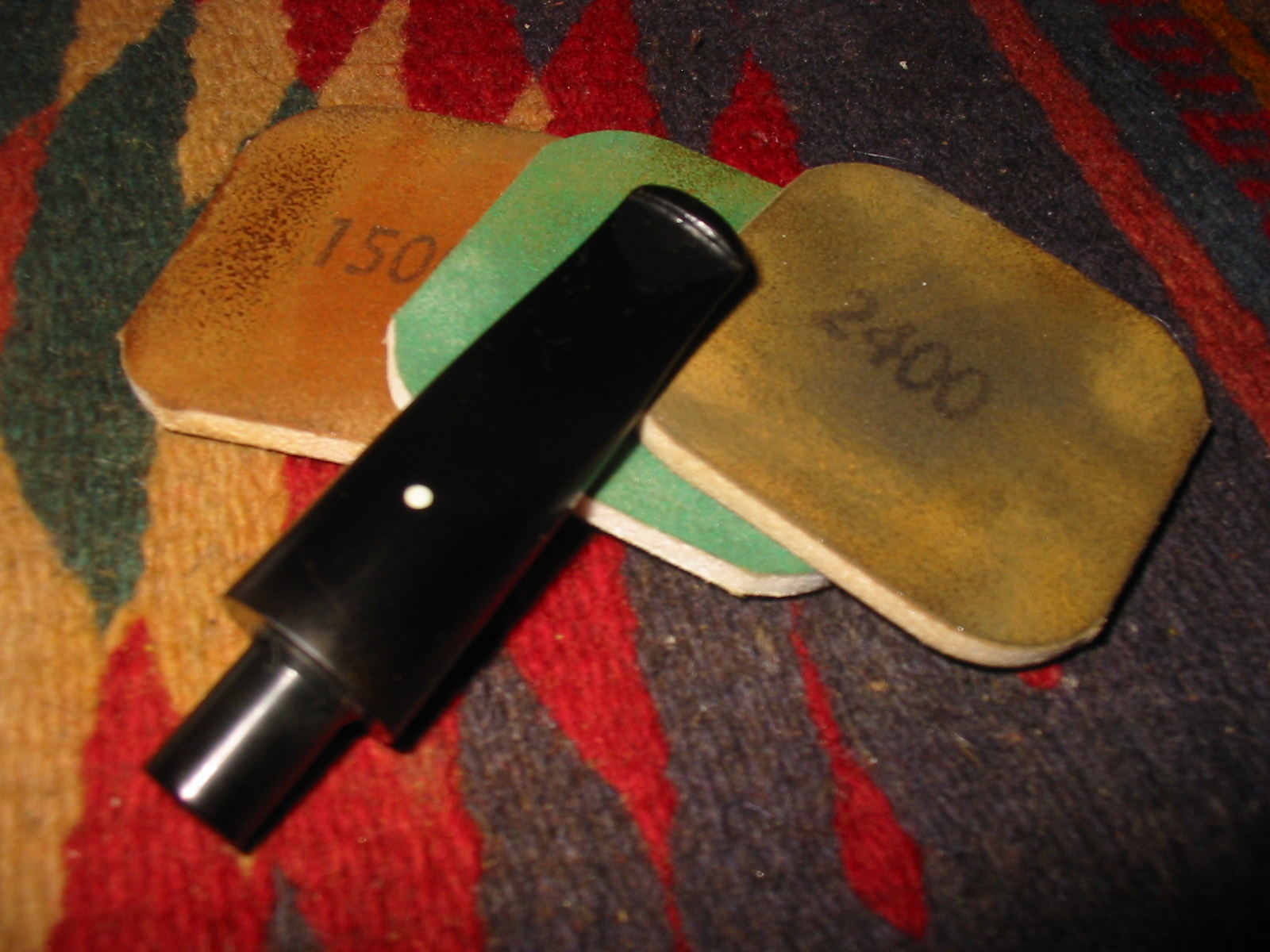
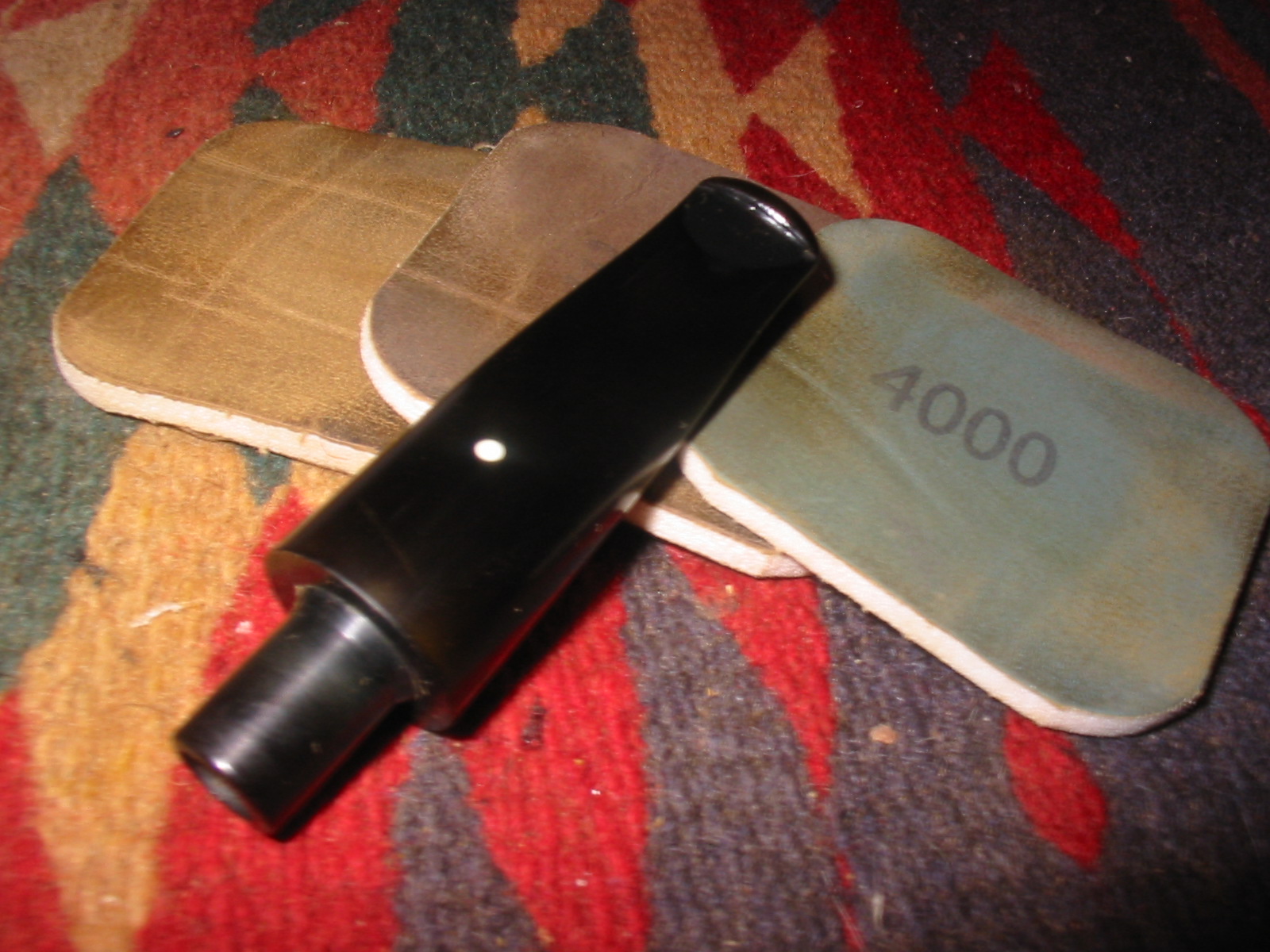
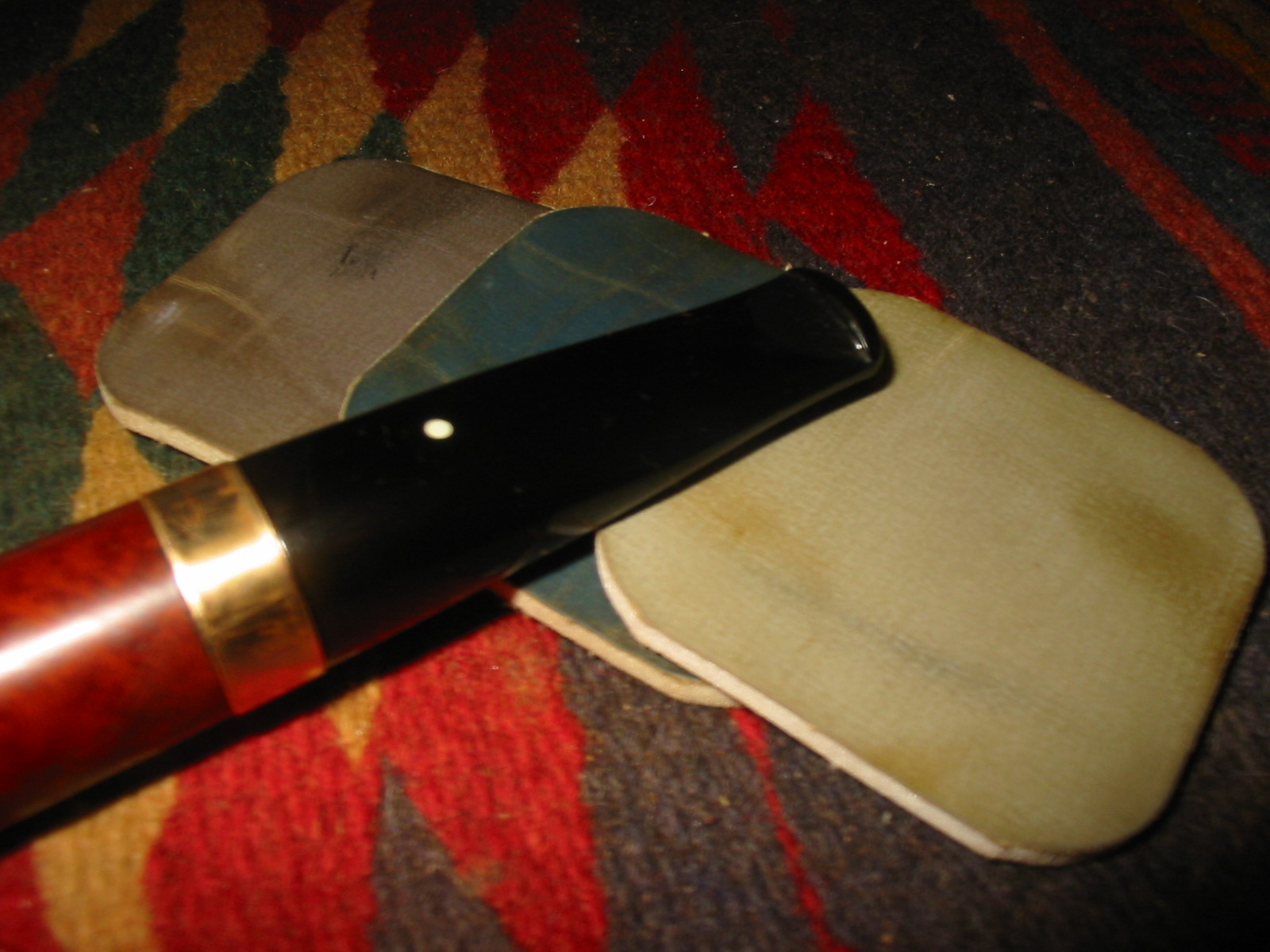
I buffed the bowl on with White Diamond and to evenly distribute the stain coat and give the pipe a rich shine. When I had finished I worked on the stem with 220 grit sandpaper, a medium grit sanding sponge and micromesh sanding pads. I used my usual array – wet sanding with the 1500-2400 grit pads and dry sanding with the 3200-12,000 grit pads. I rubbed down the stem with Obsidian Oil and rubbed it into the vulcanite.
IMG_4297

IMG_4298

IMG_4299

I sanded the bevel on the bowl and the brass band on the shank with the 1500-2400 grit micromesh pads.
IMG_4300

IMG_4301

IMG_4302

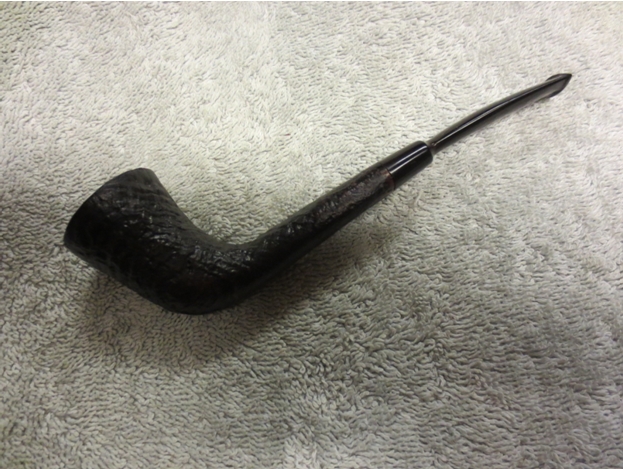
I buffed the pipe with White Diamond and then gave the stem multiple coats of carnauba wax. I used Halcyon II wax on the sandblast finish of the bowl. I buffed the pipe with a clean flannel buff. I have to say though I would have liked to keep the pipe unbanded and pristine, the crack that happened in the shank made me try something a little different. I actually like the finished look of the pipe with the brass band. The combination of the two stains give the blast finish depth that changes with different lighting and the tapered stem adds some panache to this Good Companion.
IMG_4309

IMG_4310

IMG_4311

IMG_4312

IMG_4313

Looking at the photos I decided to do a bit more work shaping the brass band. I sanded the band with 220 grit sandpaper to remove the ridges in the brass. I followed that by sanding with a medium and fine grit sanding sponge. I finished sanding the band with micromesh sanding pads from 1500-3200 grit polish it.
IMG_4314

IMG_4315

IMG_4316

IMG_4317

IMG_4318

IMG_4319

With the band finished I will give the pipe another buff to polish the handling that it received working over the stem.

Topping and Refinishing a No-name Worm Trail Billiard


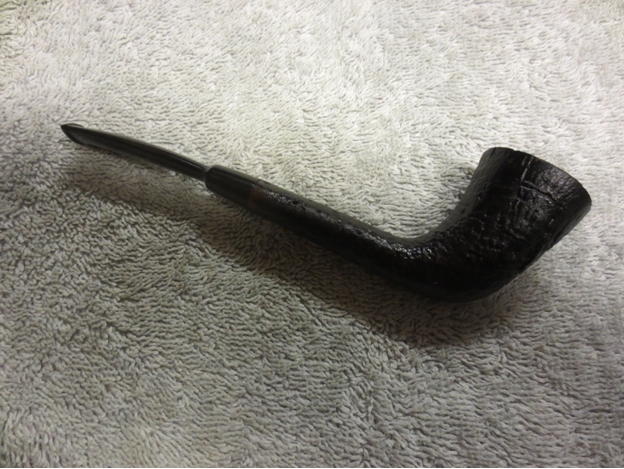
There are a few of the pipes in the Vancouver Pipe Club lot that just don’t do anything for me. One of them was this large billiard – no name. There are several others in the lot that have the same finish and bear the stamping of Partner. It has some nice wedges of smooth grained briar in between the rustication pattern on the bowl. That pattern is what really does not work for me – I call the pattern worm trails because that is what they look like to me. This old pipe has been restemmed somewhere along the way and the person who did the work sanded the shank down to fit the stem – one of my pet peeves! I think there is little that is more irritating in my work of restoration than working on pipes that have been “butchered” to make a stem fit. Why not hack the stem to fit the shank instead of the shank to fit the stem? Hmmm. I will never understand that really. But that is irreparable. The bowl itself had the standard coat of varnish over the bowl and rim – even over the buildup on the rim. The rim was a mess, lots of damage to the outer edge of the bowl and to the top and the bevel in the bowl.
IMG_4239

IMG_4240

IMG_4241

IMG_4242

I took several close-up photos of the damage to the rim to give a general idea of what I was starting with on this old pipe.
IMG_4243

IMG_4244

IMG_4245

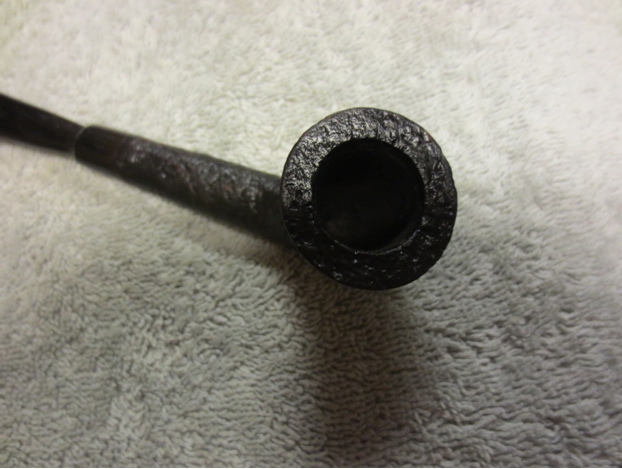
I topped the bowl with my sandpaper and board setup. I sanded until the top was flat and the majority of the damage was minized. I also evened out the bevel on the inner edge of the rim with folded sandpaper to match all the way around the bowl.
IMG_4246

IMG_4247

IMG_4248

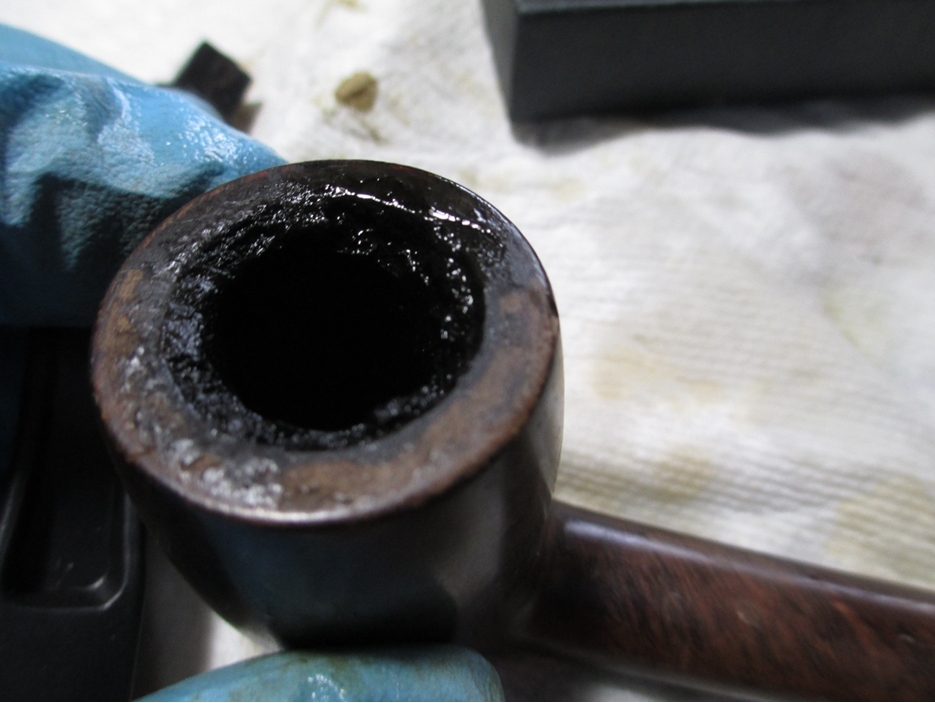
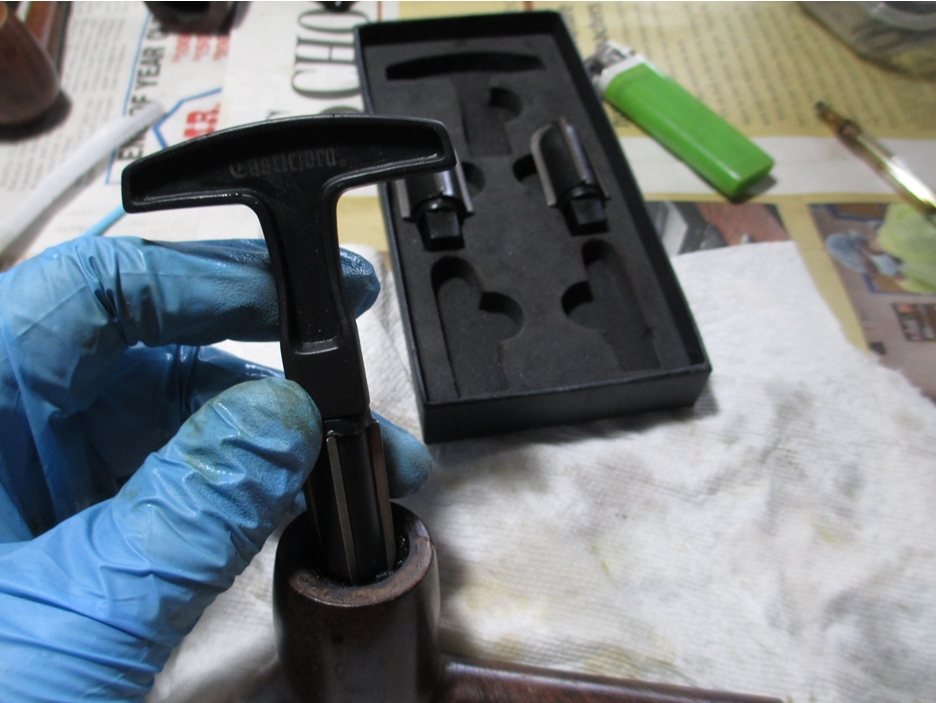
Once I finished with the 220 grit sandpaper I sanded the rim and bevel with a fine grit sanding block to smooth out the scratches. I wiped the bowl down with acetone on cotton pads to remove the varnish and the finish as much as possible. I also reamed the bowl with a PipNet reamer to remove the black rubbery bowl coating.
IMG_4249

IMG_4250

IMG_4252

IMG_4253

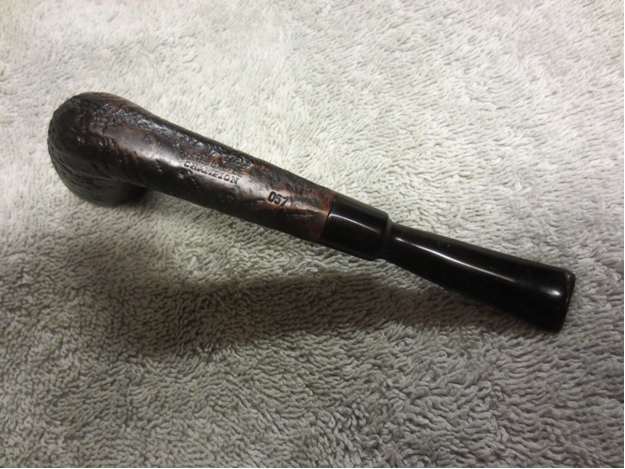
When the finish was gone, I decided to highlight the “worm trails” and give them some character in the finished bowl. I used a cotton swab and some black aniline stain to paint the trails around the bowl. To dull them a bit and lighten them I wiped them down with a cotton pad and Everclear.
IMG_4255

IMG_4257

I stained the bowl with MinWax Red Mahogany and Medium Walnut. I wanted to highlight the reds in the briar but not have it an oxblood colour so I use the two stains. I applied the red first and then the walnut stain.
IMG_4258

When the stain was dry I buffed the pipe with White Diamond on the wheel and then gave it multiple coats of carnauba wax to give it protection and a shine. The finished pipe is shown below. With the addition of this one to the Pipe Club box I am getting closer to finishing this project – I think maybe four or five left that desperately need some work and perhaps a few others that will need a touch up. Hopefully someone will like the “worm trails” more than I do.
IMG_4259

IMG_4260

IMG_4261

IMG_4262

Topped, Reshaped and Restored a Kolding Old Briar 17


This old Kolding Old Briar is also one of the pipes that belong to the Vancouver Pipe Club lot. It is stamped Kolding over Old Briar on the top of the shank and Made in Denmark over 17 on the underside of the shank. I have a very similar pipe to this one made by Stanwell – same overall shape and oval flat saddle stem. Mine is a great smoking pipe. This one appears to have been much-loved as well. As with the others in this lot it was in dire need of attention. The briar had been given the standard coat of varnish that is on all of them. The varnish is put over the top of some buildup on the rim and some significant rim damage to the top and the edges of the bowl. There was a small piece of briar missing from one spot on the left front side of the bowl’s outer rim. The inner rim also was rough. The bowl had been coated with a black rubbery bowl coating. The stem was in very good shape with no tooth marks or damage and no oxidation.
IMG_4204

IMG_4205

IMG_4206

IMG_4207

The close up photo below shows the rim damage – both burning, buildup and marks that went quite deep and broke the grain of the briar. Steaming would not work to lift the damage on this rim as it was compromised.
IMG_4208

Topping this bowl would be far more involved than the previous bowls I had topped. It needed to be topped to remove the damage to the surface, flattened to take care of the deep cuts in the briar, and then the inner edge beveled and the outer edge rounded. I set up my topping board and sandpaper and began to sand the top of the bowl.
IMG_4209

I took it down far enough to remove the damaged portions of the rim and then worked to bevel the inner edge with a folded piece of sandpaper. I sanded the rim and the inner bevel with a medium and then a fine grit sanding block. I also used the block to reshape the curve of the outer edge of the rim into the flow of the bowl.
IMG_4210

IMG_4211

IMG_4212

IMG_4214

I wiped the pipe down with acetone on cotton pads to remove the varnish and the finish on the remainder of the pipe in preparation for the new coat of stain.
IMG_4215

IMG_4216

IMG_4217

IMG_4218

I decided to use two different colours of stain to restain the pipe. The first stain was a MinWax Medium Walnut stain. I rubbed it on and then rubbed it off. I buffed the pipe with White Diamond to polish the briar before giving it the second colour of stain.
IMG_4219

IMG_4220

IMG_4222

IMG_4223

For the second stain I used MinWax Red Mahogany stain. I rubbed it into the bowl and then rubbed it off. I polished the pipe with a soft cloth. I rubbed down the stem with Obsidian Oil and hand buffed the stem.
IMG_4224

IMG_4225

IMG_4227

IMG_4228

I buffed the bowl and stem with White Diamond again and then gave the bowl and stem multiple coats of carnauba wax. I gave it a final buff with a clean flannel buffing pad. The finished pipe is shown below. It will now join the others in the Pipe Club box until I finish those that remain. I love the rounded look of the bowl top and the bevel on the rim as it adds to the feel of the pipe. I think this one will also bring a good return for the club.
IMG_4231

IMG_4232

IMG_4236

IMG_4238

Reworking a No Name Brand Italian Billiard


I am definitely getting to the bottom of the refurbishing box – this pipe and one other left before it is empty and I need to start hunting again for more. This old-timer is only stamped on the left side of the shank with IMPORTED BRIAR over ITALY. There is no other stamping on the right side of the shank. The bowl was in pretty decent shape – no real dents or scratches other than around the rim. The edges of the rim were rounded over. The left side showed some nice birdseye grain and the front and the back of the bowl were cross grain. The right side of the bowl was a mess. There were at least a dozen putty fills in various states of coming out of the briar. There were two on the rim that took a bite out of the outer edge of the rim. The finish was gone and the stain had faded. The bowl did not come with a stem so I hunted through my can of stems and found one that would do the trick. It took very little work to get the tenon to fit into the shank. It was a wide blade stem that previously had been on a George Jensen pipe at sometime in its life but that pipe bowl had long since disappeared. With some minor adjustments to the diameter of the stem it would make a great stem for the Italian billiard.
IMG_3288

IMG_3289

IMG_3290

IMG_3291

IMG_3292

I decided to top the bowl to clean up the rounded edges on the outer rim and to minimize the damage from the two fills on the right edge. I set up my sandpaper on the flat board and turned the bowl top into the sandpaper. I work at this slowly and turn and sand and then tip the briar dust into a container that I have saved for repairs to fills. The first photo below shows the set up as well as the condition of the rim before I worked on it.
IMG_3302

IMG_3303

IMG_3304

I took the top down until the outer edges of the rim were sharp and clean. The damage from the fills is still visible but I stopped before I changed the overall shape of the bowl. I used a Dremel with a sanding drum to reduce the diameter of the stem to match the shank. I take it down as far as possible with the Dremel and then do the finish shaping by hand with sandpaper.
IMG_3305

IMG_3306

IMG_3307

IMG_3308

I sanded the stem with 220 grit sandpaper to remove the oxidation and to finish shaping the area around the shank and stem junction.
IMG_3309

IMG_3310

IMG_3311

IMG_3312

I wiped down the bowl with acetone on a cotton pad to remove the remaining finish.
IMG_3313

IMG_3314

IMG_3315

IMG_3316

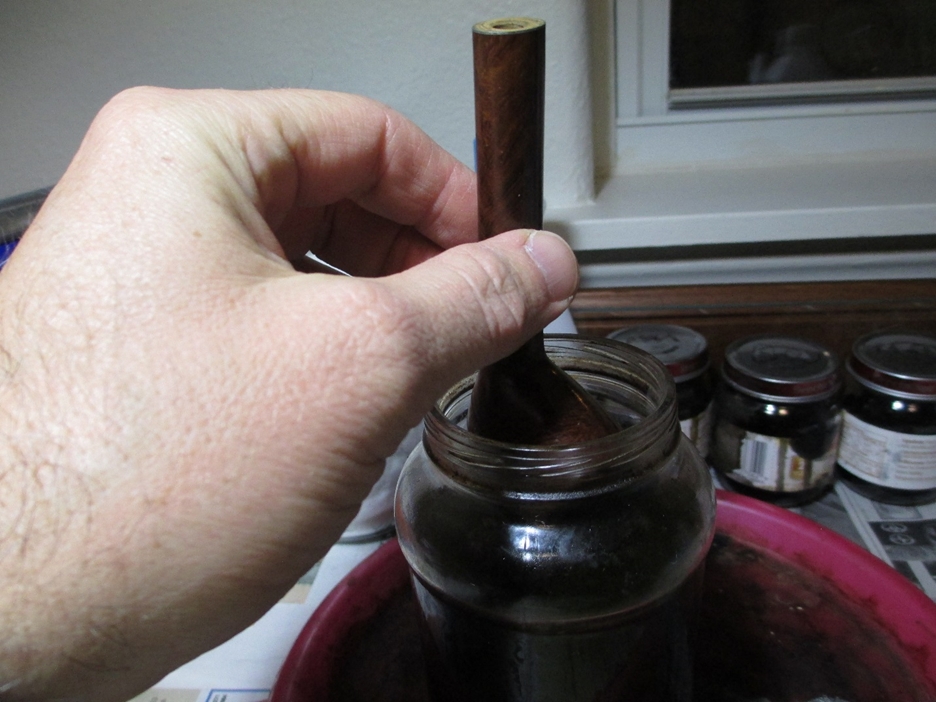
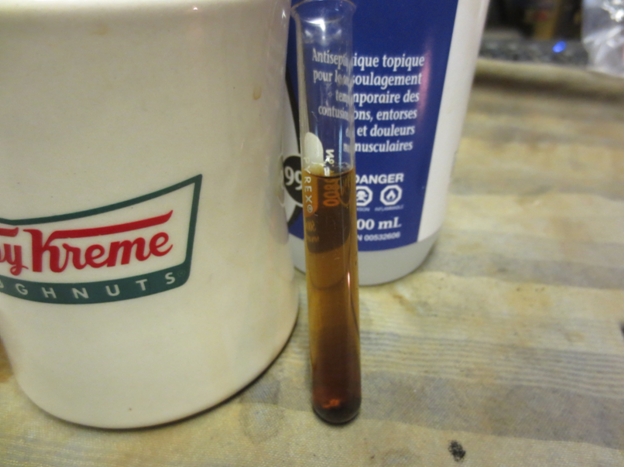
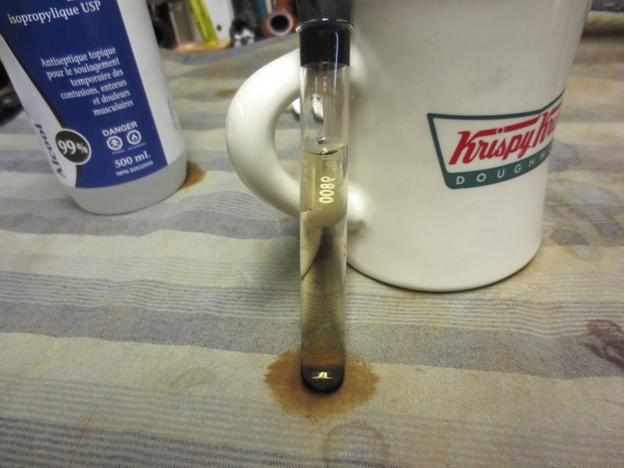
I dropped the bowl in an alcohol bath to soften the putty fills to make them easier to remove. It also removed the remaining finish to the bowl. The dark colour of the alcohol bath adds a patina to the bowl that is something that I appreciate. (I continue to use the bath and filter out the grit and grime from the alcohol every other month. The filtering removes the impurities but leaves the alcohol the colour of the stain that has been removed from the bowl. It is a uniform dark brown colour. I rarely change the bath, just refill it as the alcohol evaporates over time.)
IMG_3317

When I removed it from the bath I picked out the softened putty fills with a dental pick and lightly sanded the bowl and shank with a fine grit sanding sponge.
IMG_3318

IMG_3319

IMG_3320

IMG_3321

I am continuing to experiment with wood glue and briar dust combined to replace the fills. I am finding that the mixture gives virtually the same darkening of the fill as the mixture of briar dust and superglue so I am not convinced. The drawback to using the wood glue is the slow drying time. That probably is not an issue for some of you but if the result is the same I will opt for the quick results of the superglue. I packed in the briar dust, dribbled the glue into the fills and then added more dust to the mixture. When it dried I sanded it with 220 grit sandpaper to remove the buildup and smooth out the surface of the bowl. I then sanded the bowl with a fine grit sanding block to remove the scratches.
IMG_3322

IMG_3323

IMG_3324

IMG_3325

IMG_3326

IMG_3327

IMG_3328

IMG_3329

I am also continuing to experiment with the contrast staining process so I used it again on this bowl. I wanted to highlight the beautiful birdseye grain and cross grain on the bowl and hide the repaired fills as much as possible. I used a black aniline stain for the first coat of stain. I applied it and flamed it and repeated the process until I had good coverage on the bowl.
IMG_3330

IMG_3331

IMG_3332

I wiped down the bowl with Everclear on a cotton pad to remove the heavy black stain from the surface of the bowl while leaving it deep in the grain. I notice in the process that the stain did not soak into the areas around the fills where there was remnant of wood glue on the surface of the briar. It left a shiny spot of unstained briar. To remedy that I would need to sand those areas of the bowl before applying the second coat of stain.
IMG_3333

IMG_3334

IMG_3335

IMG_3336

I sanded the bowl with a fine grit sanding sponge and also with micromesh sanding pads from 1500-2400 grit. I wet sanded with these grits as they work well to remove scratches in the surface and also to remove the remaining glue on the surface. Once I had the bowl sanded smooth I wiped it down with a damp alcohol pad to remove surface dust and then restained the bowl with an oxblood aniline stain. The next series of photos show the freshly stained bowl before I flamed it. The undercoat of black comes through and highlights the grain very nicely. Once the bowl was dry I buffed it lightly with White Diamond.
IMG_3337

IMG_3338

IMG_3339

IMG_3340

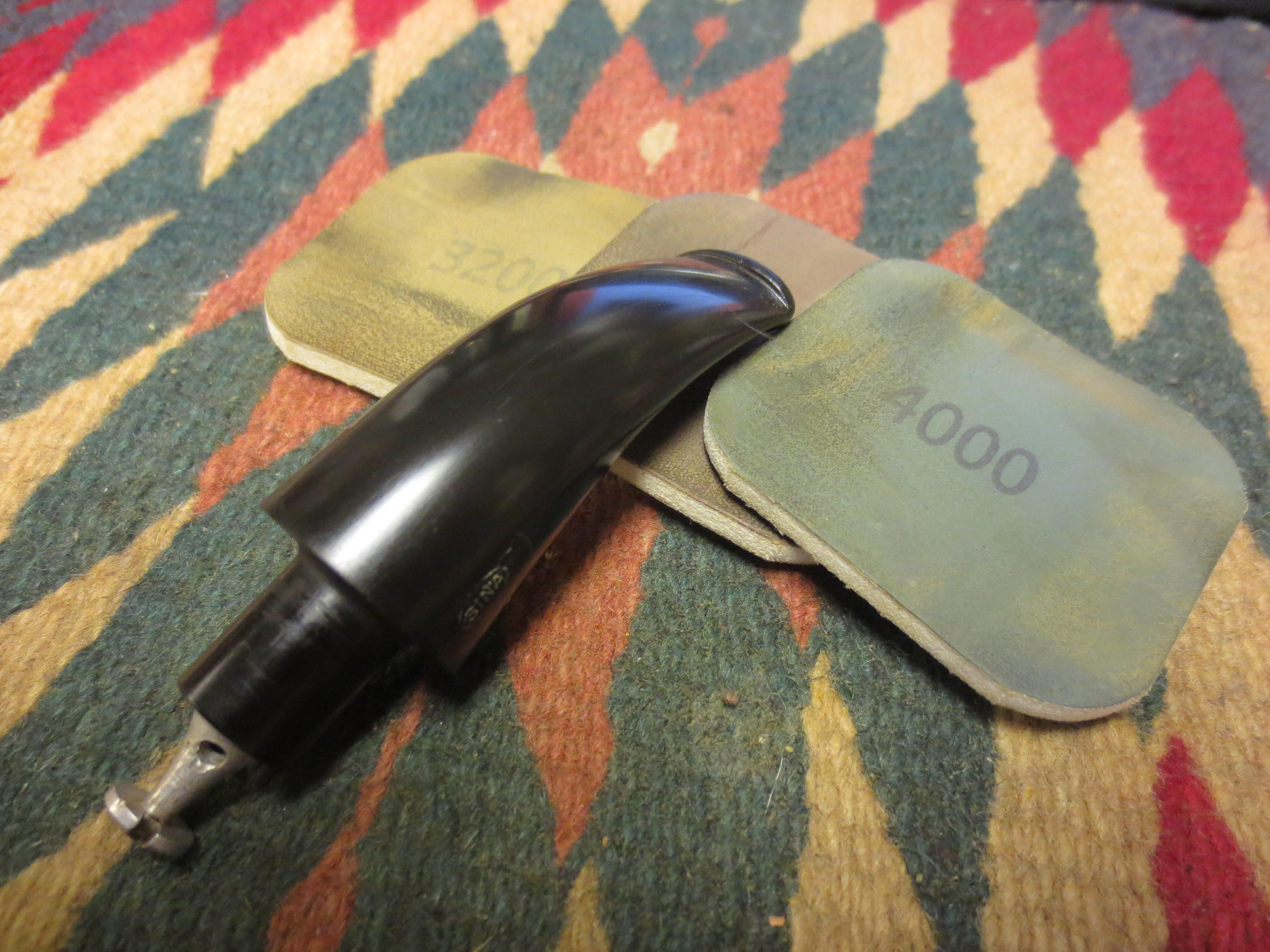
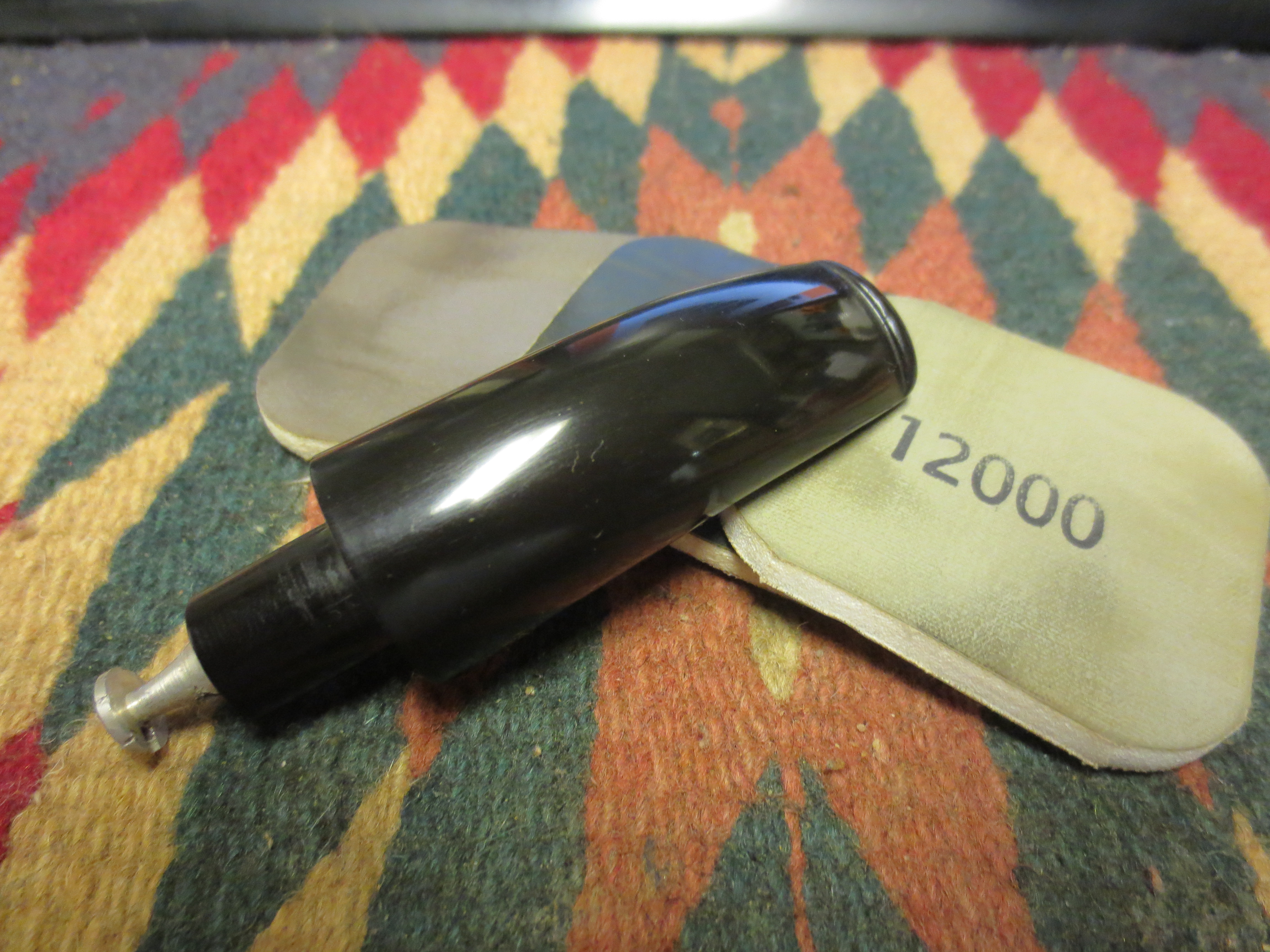
I sanded the bowl and stem with micromesh sanding pads to polish it further. I wet sanded with 1500-2400 grit and then dry sanded with 3200-12,000 grit pads. I find that the higher grit pads add a deeper level of shine with each successive grit. The next three photos show the stem and bowl after polishing with three grits of micromesh. The first photo shows 1500, 1800 and 2400 grit pads. The second photo shows 3200, 3600 and 4000 grit pads. The third photo shows 6000, 8000 and 12,000 grit pads.
IMG_3341

IMG_3342

IMG_3343

I rubbed the stem down with Obsidian Oil and when it was dry I buffed the stem and bowl with White Diamond. I gave the pipe multiple coats of carnauba wax to protect the finish and give it a shine. The contrast stain worked well with this pipe. The birdseye grain really pops and the cross grain is also highlighted. The black undercoat also minimizes the eyesore of the fills on the right side of the bowl and the small one on the left side has virtually disappeared. The final four photos below show the finished pipe. I am happy with the way it turned out – far better than I expected when I took it out of the box to refurbish.
IMG_3348

IMG_3349

IMG_3350

IMG_3351

The Peculiar Particulars of the Pre-formed Pipe, and the Pleasures It Provides – Robert Boughton


Thanks to Robert Boughton for his newest contribution to rebornpipes. It is always a pleasure to read about Robert’s work. He not only reworks old pipes but also does research to provide the historical background of the pipes – something I always have found fascinating.

This subject, that of the little-known unfinished, or pre-formed, pipe having nagged at me for some time to approach but for thinking I lacked suitable samples of previous completed efforts of the same type, which proved erroneous, and for assorted other excuses, all of these being of the good type (as if there were such an animal), at last I find the time to take a holiday, it seems, from my mounting responsibilities, to write it all out.

Guest Blog by Robert M. Boughton
Photos © by the Author

“Who be ye smokers?”
A bewildered crew member in Melville’s Moby Dick (1851), upon
going above-deck to find Ismael and Queequig smoking a peace
pipe (quoted with a nod to our good host, Steve)


Introduction

Let there be no misconception, from the commencement of this essay, as to the precise meaning of the modifier unfinished as I apply it to pipe. To be sure, I do not refer to the stylish, branded varieties sometimes called unfinished pipes in reference to certain fine lines – Savinelli and Baronet, to name a couple – whose pipes of that description are more akin to natural versions of pipe craft, and hence the term natural often applied to them. No, the unfinished, or natural, pipe by any brand name lacks only the final glaze and buffing with waxes with which to complete the process, and also sell for much more than that which I shall discuss with as much brevity as possible. Also, the variation of unfinished pipe of which I will soon find my way to addressing should by no means whatsoever be confused with pipe kits, those more typical introductions to the art of pipe making that involves chunks of briar, in general, with pre-drilled stems that the novice pipe maker then saws, chisels, sands, micro-meshes, buffs, stains, waxes and otherwise lovingly transforms from a veritable lump of wood to a finished mode of partaking of all the world’s smoking tobaccos, the degree of excellence depending on the innate talent of the individual woodworker and maybe some amount of luck.

Therefore, having discussed what I do not mean by unfinished pipe, I will re-name the oddity a pre-formed pipe. In this context, the difference between anything finished by minimum standards and the opposite, the mere basic elements to build one’s own pipe all but from scratch, is easier to comprehend. Thus, my meaning of pre-formed pipe is simply a pre-shaped piece of briar, un-sanded, un-glazed, un-waxed or polished or even showing the grain, in many instances – but with a stem, which may or may not fit as attached. Therein resides the fun and challenge for someone a step or two shy of ready to tackle the difficult enough task presented by even a pipe kit, but prepared to refinish, with considerable detail and elbow work, a pre-formed pipe in the rough.

The owner of my local tobacconist of most frequent choice is good enough to offer a small but ever changing selection of these pre-formed pipes for $12.50 each, with a nice variety of shapes from which to choose, even if those available often defy identification on any official chart of pipe shapes. To me, at least, that is just another part of the charm of these raw pipes in transition from mere rough wood and dull stems to greater things of beauty, regardless of how much or little work is invested by the restorer on the sample. The owner, by the way, tells me her supplier (whom she somewhat enigmatically declines to identify) calls these rough-hewn pipes “stubs,” which in an online search for “smoking pipe stubs” brings up such disparate references as the habit of some pipe smokers to stick a cigar stub in the bowl and puff on it, the usually distasteful dottle of wet, unsmoked tobacco remaining at the bottoms of wet smokers’ bowls, and, yes, Melville’s likeable character in the above quoted novel – which is as massive as the Great White Whale itself – Stubbs (whose greatest sign of character is his large collection of pipes). Again, thanks are due to Steve for pointing this out in an emailed attempt by me to determine the origin of the term stubs in relation to pipes, for upon further thought I recalled the other pipe-smoking characters in Moby Dick adopting the habit of shortening the lengths of their stems, as much as possible in order to tolerate the horrendous stench of rotted fish, through the closer proximity of the pipe smoke to their noses. Perhaps by coincidence, most of the samples of the pre-formed pipes I have seen are indeed on the short side.
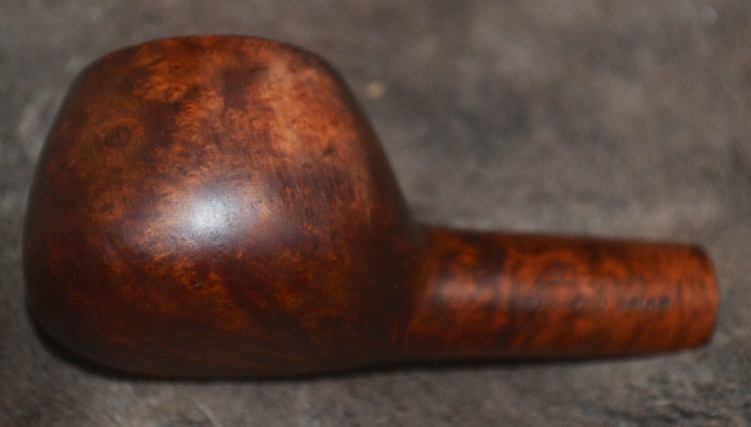
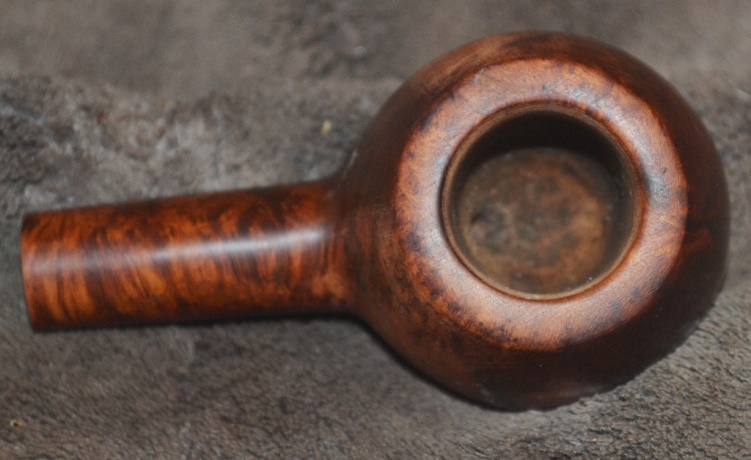
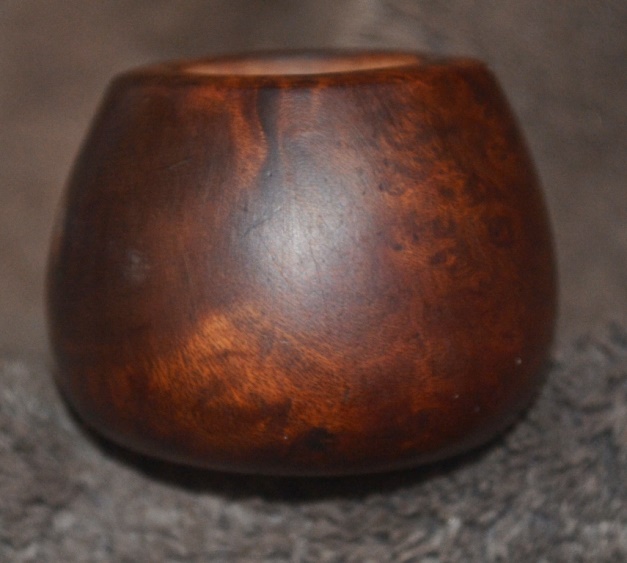
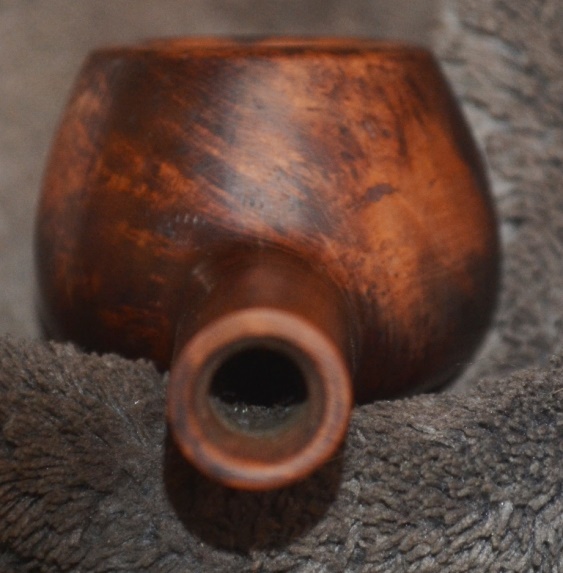
broughton1

broughton2

And so, before our weekly meeting Friday night, I once again plumbed the dædal depths of Chuck Richard’s knowledge of pipe lore, and in so doing learned far more than I had anticipated – indeed, everything but a tag better than unfinished or pre-formed, although those adjectives turn out, in a vaguely sad way, to be far too apt: the unfortunate truth of the matter is that the German factory of their origin had never intended to leave these pipe shapes in any condition but complete to a degree noted to that European country. The factory, it seems, simply went belly-up in the 1970s with thousands of the pre-formed specimens sitting there, where most of them were at some point picked up by a U.S. distributor who continues to market them as-is, but not to individuals. (Aha! Thus, the tobacconist owner’s reluctance to disclose the name of her supplier thickens.) Later, a few German pipe interests procured the remainder of the lot and ever since have been selling them to anyone, for the most part in the European Community, who will bite. All of these unfinished pipes, therefore, were cut from decent briar that has aged in the 40-some years since the end of their official production – and are now perfectly suited for the consummation of the process. Perhaps these pre-formed pipes can, as a result, be compared to a fine wine that is left open to breathe. Based on the four or five of these finish-yourself pipes that I have now practiced the art of restoration, this example being the only one I can now document in full (although I am attempting to leave this latest restore pristine), they smoke wonderfully no doubt with or without any further work. But that would not only take away from the ultimate enjoyment of this likely unique and limited edition of unfinished pre-forms, barring the unlikely enthusiasm of a reader to strike out upon the task of building a finish-yourself pipe business; it would also deprive me of the opportunity to get on with the remainder of my tale.

And Now, for Page Two…
As anyone who has ever restored a pipe knows, there are restores, and then there are restores. In any case involving one of these unusual pre-forms, the only real tasks are choosing one with signs of good grain and lack of flaws such as cracks or fillings. In other words, to re-state a theme common to me, somewhat after the old man in Mrs. Robinson advised a memorably disinterested Dustin Hoffman, I have one word for you: sanding!

Here was my little pre-formed pot as I first saw it.
broughton3 broughton4 broughton5

Unfortunately, I was forced to use my cell phone camera to snap these shots and the others that will follow, and so the clarity of the roughness of the plain briar, with bumps and pits and discolorations a-plenty, is somewhat wanting. But I hope you can see enough to get the general condition of my little pot. Again, I chose it over the assortment of others in more exciting shapes for the beauty of the grain I could hardly make out, and the lack of real blemishes.

Of course, after rigorous sanding – with 80-grit paper followed by 150 – I saw the beautiful grain for which I had purchased this particular pipe, in some places elegantly lined and others more spotted, but overall a clear potential for finishing. Then I used some micro-meshes, starting with 1500, then 2400 and at last 12000.

At that point, I was at a quandary. Should I use a stain, or skip it? The natural beauty of the pale briar attracted me very much. Still, I opted to use an alcohol-based shoe stain of a light brown color, which, as it was almost dry, I held a gentle match flame under the bowl and was gratified with the brief poof of blue as the alcohol in the stain ignited and dissipated.

The next step was an easy buff of Tripoli White Wax. Wow! was my initial thought after my first experience applying Tripoli. The immediate soft luster the preliminary wax bestowed upon the previously smooth but somehow flat bowl and shank gave the wood real dimension.

Again, I pondered long and hard on the idea of adding a coat of Tripoli Red, and during that pause remembered more of Chuck’s words to me before our Friday meeting: “Sometimes a little Red Tripoli on the wood is just what you need, especially to give it deeper color.” Still with more than a little flip-flopping in my stomach, I went for it:
broughton8

broughton7

broughton6

Wow! was my initial thought after my first experience applying Tripoli Wax. The immediate soft luster the preliminary wax of Tripoli White bestowed upon the previously smooth but flat bowl and shank gave the wood real dimension. But my gentle blessing of the Tripoli Red gave the old briar absolute radiance.

Suddenly, all that remained were a buff with my new stick of carnauba and – come to think of it – quite a bit of work yet to go before the stem would be in order. I don’t know about the rest of you (and I know this places me with the troops in the rear as far as experience goes), but I have developed an undeniable case of what might only be apt to call stem loathing, if I may possibly coin a phrase. I just hate the buggers, as my British friend and fellow pipe smoker Leigh might say, if he didn’t have the habit of speaking the Queen’s English, and even in the tone and style of William, or His Royal Highness the Duke of Cambridge KG KT.

At any rate, with no way around the dirty deed, I went all-in, setting about the task of reducing a downright humongous overhang of the stem where it must, I repeat, must at all costs end up smooth and flush with the shank opening. I tried to be patient with the wretched thing, you see, I really did. Nevertheless, after a day of patiently trying the coarsest micromesh in my trusty box, getting nowhere with that approach and wearing my entire left arm, hand, four fingers and thumb into spasms of pain, there began to creep into my mind more direct and effective means of accomplishing the necessary duty. With far more grace and good sense than I in fact felt, I returned to the 80-grit sandpaper for a quick adjustment of the problem…and the approach actually worked!

That was about the time I realized I had another, nice and shiny, short straight stem I had stashed away with my spare pipe parts, assorted bowls needing serious work and assorted detritus. At the same time, I flashed on a diminutive Chinese pipe given to me by a friend as a joke owing to my known appreciation of certain specimens of that origin. That pipe, which had been covered in gaudy varnish and appeared at first touch to be made of balsa, would be a perfect match for the longer, curved stem I had adjusted as already described. Still, I finished repairing the original stem, micro-meshing away the rough surface where I had brutishly employed the bully force of abrasions, and then applying a good buff with Tripoli Red. But there I go again, off on a tangent, and when this initially homely Chinese pipe might be the subject of a forthcoming blog.

Without further delay, therefore, here are the final results:
image002

image003

image004

image005

image006

Conclusions
The more I practice restoration as a fledgling, or novice, the higher level of understanding I acquire as to the years required to achieve anything close to master level. At least I am getting quicker on the uptake of that which I now comprehend is limitless information.

What more can I add, except the usual well-deserved thanks to my mentor, Chuck, and my sometime adviser and friend in pipe appreciation, Steve… and everyone else who holds any stock in my ability to learn.

Refurbishing and Restemming an Unsmoked Small Paneled Rhodesian


I am scraping the bottom of the box for pipes to refurbish. It is clear that I am going to have to go on the hunt again soon. At the bottom of the box I have a few small/tiny pipe bowls that have come to me from a variety of sources. I believe this little one came from Mark Domingues as well. It is unsmoked and stemless. The bowl was in pretty fair shape though the finish coat was varnish of some sort. The stain was spotty under the varnish coat. There was one dominant fill on the left side of the bowl on one of the panels. The drilling is a bit of centre in the bottom of the bowl – slightly to the left of centre. The drilling was wide open and the draught on the bowl was very good. The bowl did not have a ring around the top before the bevel to the rim. It was a smooth transition. I have had several of these older Rhodesian and Bulldogs in the past and they generally had horn stems. This one did not have any stamping on it so I have no idea as to the maker. There was also no stem present. I had a smaller nylon stem in my box of stems that took very little work on the tenon to make for a snug fit in the shank.
IMG_2798

IMG_2799

Once the stem fit well in the shank I sanded the shank and stem to get a good smooth transition between stem and shank. I used 220 grit sandpaper to do the rough work and then used a medium grit sanding sponge to clean up the shank and stem. The stem had casting marks on both sides of the stem and also heavy tobacco stains around the button and in the slot. The airway was virtually clogged and I could barely get a straightened paper clip through before I worked on it with Everclear and bristle pipe cleaners.
IMG_2800

IMG_2801

IMG_2802

I decided to sand the stain off the shank and rework the taper on the pipe from button to bowl. I sanded it with 220 grit sandpaper to remove the excess briar and nylon and smooth out the taper. What I wanted was a clean smooth line from button to bowl. The next four photos show the shank and the stem after sanding with the 220 grit sandpaper. The flow is smooth and even and the lines are very graceful. The casting marks are gone from both sides of the stem and the button is cleaned of the majority of the stains.
IMG_2803

IMG_2804

IMG_2805

IMG_2806

I wiped the bowl and shank down with acetone on a cotton pad to remove the varnish finish and some of the stain on the bowl in order to make it easier to match the stain on the newly sanded shank and the bowl. I also sanded the bowl, shank and stem with a fine grit sanding sponge to remove scratches left behind by the sandpaper and to prepare the stem for sanding with micromesh sanding pads.
IMG_2807

IMG_2808

I sanded the entire pipe and stem with micromesh sanding pads. I wet sanded the stem and the bowl with 1500-2400 grit sanding pads and dry sanded the bowl alone with 3200-12,000 grit pads. I did not want to make the briar to smooth to take a good coat of the stain.
IMG_2809

IMG_2810

IMG_2811

IMG_2812

I stained the bowl with a medium brown aniline stain mixed 2 parts stain with 1 part isopropyl alcohol to get the colour I wanted. I was going for more of a wash than a deep coat. I wanted the grain on the shank and bowl to come through the colour. I used a black permanent mark to draw grain marks on the two fills and to make it easier for the stain coat to blend in and hide the putty marks.
IMG_2813

IMG_2814

IMG_2815

IMG_2816

Once the stain was dry I buffed the bowl with White Diamond to give it a shine and then reinserted the stem and lightly buffed the stem with White Diamond as well. The nylon stems take a very soft touch or they are easily damaged. I gave the bowl and stem several coats of carnauba wax to protect them and then lightly buffed the pipe a soft flannel buffing pad. The finished pipe is pictured below. It is not a big pipe in any sense but should be a great flake pipe. The second photo below gives an idea of proportion by the inclusion of my hand with the pipe. The yellow nylon stem approximates the unique colour and look of the horn stem that must have originally graced this little bowl. The stem is thin and the new taper gives a very delicate look to the new pipe.
IMG_2817

IMG_2818

IMG_2820

IMG_2821

A Canadian Pipe Maker I had never heard of: Leonard Payne Pipes


Blog by Steve Laug

On a Saturday not too long ago I went on a pipe hunt in Vancouver. I began at the Vancouver Flea Market and worked my way back toward my home. I stopped a quite a few antique shops and “malls” in my hunt for old pipes. I found a few at the flea market and several old timers at the shops that I left behind. However, one pipe caught my eye. It was not a brand that I had seen before or heard of.It was a nicely shaped thick shanked apple that needed very little work. It had a bit of tarry build up on the rim, some tooth chatter on the stem and minor oxidation. It grabbed my attention. The stamping was Leonard Payne on the left side of the shank and Made in Canada on the right side. The stem bears a green dot in the centre of a white circle on the left side of the stem. I decided to do a bit of research on the web and found the following advertisement that highlighted the pipes.
Payne Pipes

Further digging with Google came up with this short note from alt.smokers.pipes forum. It was written by Mike Glukler of Briar Blues. I quote it below in full. (https://groups.google.com/forum/#!topic/alt.smokers.pipes/RrICLiVgE2o) “Leonard Payne was based in B.C. for many years. He came to Canada from England. He had shops in Surrey, B.C. and Kelowna, B.C.Interesting fellow. Gruff as the day is long. When you bought a pipe it was handed to you in a paper bag. No sock, no box. Most of his pipes carried a “carburetor” system at the shank / stem junction.Another Payne idea was his shanks. Almost all his pipes were two pieces. He’d turn the bowl and shank, then cut off the shank and reattach with glue (not always with the same piece of briar, so many did not match grains). His thinking was that the shank being the weakest link, if cut and glued would never break and thus “correcting”the weakest link.You may find his pipes on E-Bay on occasion listed as a Len Cayne. The P in his stamping looks more like a fancy upper case C.”

That is the extent of information that I could find on the pipe. It was a Canadian made pipe carved by an eccentric BC pipe carver. The one example I purchase was a single piece of briar without the broken and reglued shank that Mike mentions above. It is a light weight piece of briar and the fit of the stem and shank is very well done. The gap between the end of the tenon and the end of the mortise is very small – just enough to allow for expansion. The finish was very good and the stain well done.

My clean up on the pipe was very simple. I sanded out the tooth chatter on the stem near the button and polished the stem with micromesh sanding pads from 1500-12,000 grit. I then took it to the buffer and used red Tripoli and White Diamond on the buffing wheels to further polish the stem. I reamed the bowl and cleaned the tars off the rim and polished it as well with White Diamond. I am careful when buffing the shank area where the stamping is so that I do not harm the stamping. Once I was finished with the polishing I gave the bowl and the stem several coats of carnauba wax. I polished the pipe with a soft flannel buffing pad. The finished pipe is pictured below.
Payne1

Payne2

Payne3

Fast forward several months to a conversation had with a friend in Ontario via email. She had come across several Leonard Payne pipes and done the same research I did. She found the same information I did and sent me photos of the three pipes she found. We talked for a while and I offered to restem a pipe of hers. She sent me the pipe for work and then also the nice little Leonard Payne Zulu/Dublin pictured below.

She said that it needed some TLC but it was really in quite good shape. The finish was clean, though somewhat spotty. There were very few scratches or dings. There was a scuff mark on the bottom of the shank next to the stem and the stem was slightly scuffed in the same area. The rim was also clean. The bowl was already reamed and relatively clean. The bowl and shank smelled of Latakia but the pipe really seemed to be hardly smoked and certainly not broken in to the bottom of the bowl. The stem had some ripples in the surface near the button and in those were the remnants of tooth marks. The shoulders of the stem at the stem/shank junction were slightly rounded from sanding or buffing with the stem off the pipe. There were two small spots of oxidation around the logo.
IMG_2520

IMG_2521

IMG_2522

IMG_2523

I sanded the stems and shank with a fine grit sanding sponge and used a sanding block to reduce the rounding to the shoulders of the stem. I then sanded the stem with micromesh sanding pads from 1500-12,000 grit to polish the vulcanite. I rubbed stem down with Obsidian Oil and let it soak into the surface. Once it was dry I buffed it with White Diamond and then carnauba wax. The ripples in the stem are gone and the oxidation around the logo is also gone. My Black and Tan Cocker Spaniel decided to sit and “help” me this morning. He has learned that I generally have some dog chews at the work table but he gives me the illusion that he is really interested in what I am doing!
IMG_2524

IMG_2525

IMG_2526

IMG_2527

I set the stem aside and worked on the bowl. I found that though the finish was clean it was faded and spotty in places. I decided to give it a coat of medium walnut aniline stain mixed with linseed oil to even out the finish and give it a shine. I applied the stain with a cotton pad and then buffed it by hand with a cotton cloth when it was dry.
IMG_2528

IMG_2529

IMG_2530

I reinserted the stem and gave the entire pipe a buff with White Diamond and then gave it several coats of carnauba wax. I finished by buffing the entirety with multiple coats of carnauba wax. The finished pipe is pictured below. This nice little pipe is cleaned, restored and ready to smoke. It joins the other Leonard Payne pipe in my collection.
IMG_2531

IMG_2532

IMG_2533

IMG_2534

Restoring a Bryson Metal Pipe with Two Bowls


I picked up this metal pipe with two bowls in an eBay lot recently. The shank shape and the two bowls intrigued me. I had no idea who had made the pipe but I bid on it because of some other items in the lot.
pipes4

pipes5

I decided to do a bit of research on the metal pipe on the great Smoking Metal website. It is a gift to the pipe smoking community looking for information on particular metal pipes that they come across or may have in their collection. The web address is: http://www.smokingmetal.co.uk/pipe.php?page=57
This is what I found out about the metal pipe pictured above: (credit given to the site above)

“This pipe was made by the Briarwood Corporation, Palo Alto, California; the BRYSON has number D120275 under the Bryson name on the pipe stem. There is a crosshead screw to attach the briar bowl to the stem. The end cap attaches to the mouthpiece by means of a rod through the length of the pipe, in which the air hole is close to the mouth piece. The stem is of polished duraluminum and hexagonal in cross-section.

The bowls are unusual in that they are not briar turned on a lathe, but briar wood, ground to a powder and compressed under very high pressure (no glue, heat or plastics are used, just pressure. It is claimed this produces a perfect bowl of aged briar every time with increased porosity. The varnished finish on the smooth bowl however is often very badly crazed.

Two bowls, one smooth and one rusticated, were supplied with the new pipe. The bowl retaining screw is ‘locked’ onto the bowl by a gasket and metal collar, enabling rapid replacement of the bowls without the need of a screwdriver. The corn cob bowl, in centre image, is another version, not sure if this was manufactured by Bryson, or a home workshop job.

The set here shown was available for $3.50 new, but in what year? Below that are pictures of adverts seen from 1946 magazine. The last photograph was of a possible derivative on eBay in 2003, although US patent D122042 seems to be this pipe, invented by Max Bressler, Chicago Ill 1940.

There are also other derivatives without the Bryson name stamped in the metal and variations on the shape and grooving of the stem. The pipe pictured with Pat Pend under the Bryson name has no grooves forward of the bowl and the front end cap is a larger thread than the other models, including my version with no name. 30 April 1940 US patent # D120275 Inventor Charles Rothman, Cleveland Heights, Ohio, assignor Briarwood Corp, also of Cleveland Ohio at that time.”
Bryson1

Bryson2

Bryson3

When the pipe arrived it was in pretty rough shape. The aluminum was oxidized on the barrel and the bowls were both very dirty and filled with cobwebs and built up grit. The rusticated bowl had not been smoked very much so it was clean on the inside underneath the dust and webs. There was no cake or tars. The smooth bowl was the exact opposite. The bowl was caked and the top of the rim was tarred and dented. In examining it I notice that the grain on the smooth one was peeling and fading in places – it was a decal and not truly grain. I could also see the composite make up of the pipe bowl as described above. This was strange looking material – similar to my Medico Brylon but also a lot like particle board that is used in building. This was going to be a fun piece to clean up and restore. The metal barrel was unstamped but the lines on the barrel match the photos above perfectly.

I was able to take it apart, which sounds normal but I have found that on these metal pipes that are in this condition the end cap and bowl are often welded together with tars that make breaking it free and taking it apart virtually impossible. The four photos below show the state of the parts once the pipe was disassembled. The bowl each had a screw in the bottom of the bowl with a hole in the center and a cap on the bottom of the bowl that was inset. The bowls thus could be quickly interchanged. The apparatus on the inside consisted of an end cap, a long pin that was threaded on both ends – into the cap and into the tenon on the stem, a nylon stem and in this case a paper filter slid over the pin. The pin was not hollow but acted as the connection that held the stem in place in the aluminum barrel. The end cap was inserted on one end with the pin extended the length of the barrel and the stem screwed onto the pin and tightening against the barrel. Without the end cap and pin in place the stem did not stay in place.

The inside of the barrel had a dark lacquer of tobacco juices that had hardened on the walls. The pin and inside the cap and tenon the same dark amber lacquer was hardened. This was going to be a challenge to clean up. The pressed briar bowls would also not be easy to clean as I was afraid of using alcohol on them for fear of decompressing the material with moisture.
IMG_2378

IMG_2379

IMG_2380

IMG_2381

I took apart the smooth bowl in order to ream and clean it. The next two photos show the parts of the bowl. You can see the hollow screw, the insert cap and a small washer. From all appearances the washer was an addition to the set up done by the previous owner. I appeared to me that the bowl had been over tightened and the cap pressed to deeply into the bowl for a tight fit. The washer took up the excess space and allowed the bowl to be tightened. In the second photo the top edge of the rim can be seen with the dents and damage visible.
IMG_2383

IMG_2384

I cleaned the screw and the washers with Everclear and cotton swabs to remove the lacquer buildup. I reamed the bowl with the largest cutting head of the PipNet reamer set as the bowl is quite large. In the first photo below the damaged finish is also visible. Once I had reamed the bowl I topped it with my usual method – a piece of sandpaper on a flat board. I twisted the bowl surface against the sandpaper until the damage was removed. Once done the composite nature of the bowl material was very visible.
IMG_2385

IMG_2386

IMG_2388

Cleaning out the barrel and all of the metal internals was labour intensive. It took many pipe cleaners, cotton swabs and Everclear to get the pipe barrel clean. I used cotton bolls that I twisted into plugs, dipped in Everclear and rammed through the barrel – just like cleaning a rifle. In the photos below you can see some of the plugs and swabs that were used. Once I had scrubbed the surfaces clean inside the barrel I worked on the pin, tenon and end cap. I used 0000 steel wool to clean the aluminum surface and brighten it.
IMG_2389

IMG_2391

IMG_2392

The nylon stem had a deep tooth mark on the top and on the underside of the stem. I sanded the stem with 220 grit sandpaper and then a medium grit sanding sponge to remove the tooth chatter and the calcification on the stem. I wiped it clean with Everclear to remove the sanding dust, cleaned the inside with Everclear and picked out the debris in the tooth dents. Once they were clean and dry I patched the dents with a drop of clear superglue. Because the colour of the stem is more of a grey black the black superglue did not match. The clear superglue was transparent and when dried and sanded was invisible.
IMG_2393

IMG_2394

IMG_2395

IMG_2396

IMG_2397

I set the stem aside to let the superglue spot patches to cure before I sanded them smooth. While it was drying I restained the bowls with a dark brown aniline stain applied with a cotton swab. I applied it and flamed it to set it. I was not sure the stain would take on the smooth bowl as it seemed to have a varnish coat on the surface and the grain pattern was a decal. Once it was dry I would give it a light buff and see if it took.
IMG_2399

IMG_2401

I set the bowls aside and worked on the superglue patches on the stem. I sanded them smooth with 220 grit sandpaper and then followed that by sanding with a medium grit sanding sponge. The next series of four photos show the process of blending in the repair.
IMG_2402

IMG_2403

IMG_2404

IMG_2405

Once I had blended the patch into the surface of the stem it was time to sand it with the micromesh sanding pads from 1500-12,000 grit. I decided to sand both the stem and the aluminum barrel at the same time. I wet sanded with the 1500—2400 grit pads to minimize the scratching on both and then dry sanded with the remaining grits. By the end of the process the patch was invisible and both the stem and the barrel shone.
IMG_2406

IMG_2407

IMG_2408

IMG_2409

IMG_2410

IMG_2411

IMG_2412

Once I had finished with the micromesh sanding pads I reassembled the internals, stem and the barrel. I gave it a light buff with White Diamond. A light touch is necessary in order not to turn the buffing pads black with the metal as it is polished. I took it back to the work table and hand applied wax and hand buffed it with a soft towel. The next two photos show the finished barrel and stem.
IMG_2413

IMG_2414

When the bowls had dried I buffed them with White Diamond as well. The rusticated bowl worked well and the shine came up on it with no problem. The smooth bowl was another story altogether. As I buffed it the finish came off in pieces. The varnish coat lifted and along with it the decal. The grain coat disappeared. I then gave it a clean buff with red Tripoli to remove the coat in its entirety. I hand sanded the bowl with the medium grit sanding sponge. Once the surface was clean I wiped it down with an alcohol dampened cotton pad. I then used a permanent black marker to draw grain lines on the surface of the bowl. These looked horrible after I had applied them but with some sanding with micromesh sanding pads and the sanding sponge I was able to lighten them and they began to look more natural. I then restained the bowl with some linseed oil and cherry stain. The photo below shows the finished surface of both bowls.
IMG_2415

When the bowls had dried I tried screwing each bowl to the barrel to make sure they fit well. I coated the rusticated bowl with Halcyon II wax and gave it a light buff with a clean flannel buffing pad. The smooth bowl I coated with carnauba wax and lightly buffed with the flannel buff as well. The finished pipe is pictured below with each of the bowls in place. I am pleased with how it turned out. In evaluating the amount of work to keep it clean, I am not sure I will ever smoke this one. It may well end up in the display cupboard as part of my oddities collection.
IMG_2416

IMG_2417

IMG_2418

IMG_2420

IMG_2421

IMG_2422

IMG_2423

IMG_2424

A National Bent Apple Diamond Shank Restored


A National Bent Apple Diamond Shank Restored
It is stamped NATIONAL in italics over Washington D.C. on the bottom right side of the diamond shank.
Wash11

That portion of the shank is smooth. The remainder of the pipe has a deep, craggy sandblast that is quite nice. The stem has no logo or identifying marks other than being stamped PARA on the top right side of the saddle stem.
Wash12

The two photos above and the series of ten photos below were included in the listing on Ebay. The pipe looked to be in excellent condition. I am uncertain as to the brand of the pipe. The book, Who Made That Pipe identifies the brand as being made by Comoy’s and stamped England. However, this pipe is clearly stamped Washington D.C. The book identifies a brand that is stamped National Mazda as made by LH Stern in the US. The pipe may have been made by LH Stern or possibly it was made for a pipe shop in Washington D.C. and made by Comoy’s. There is also a company called National Briar Pipe Company in Jersey City, New Jersey that could possibly have made the pipe as well. There is something about the stamping that reminds me of the Bertram pipes that also came from Washington D.C. This pipe is a bit of a mystery but I like the diamond shank apple shape and the nice blast on the bowl.
Wash1

Whoever made the pipe, it has a great looking sandblast as can be seen in the photos below.
Wash2

Wash3

Wash4

The bowl was lightly caked with carbon and was quite clean in the shank and stem. It appeared to have been barely broken in.
Wash5

Wash6

Wash7

Wash8

Wash9

The stem seemed to have light tooth chatter on the top and the bottom near the button. There appeared to be light oxidation on the vulcanite.
Wash10

When the pipe arrived, I unpacked it and took it to the worktable. I removed the carefully stem out of the shank because it was very tight and was hard to turn. I was just about ready to put it in the freezer for a few moments to let the contraction and expansion loosen the stem when it turned. I was able to remove it from the shank without damaging either shank or stem. Looking at the tenon I could see a slight buildup of grime that was on the last ¼ inch and looking into the shank the same band of grit was present. Interestingly to me, the shank was dirty but there was not a lot of tar or oils built up inside. There was bare briar clearly visible in the shank other than the band of grit that had held the stem tightly in place. I cleaned out the shank with cotton swabs dipped in Everclear and the inside of the stem with pipe cleaners and the same. It did not take too much work before they both came out clean and white.
IMG_2337

IMG_2338

IMG_2339

IMG_2340

IMG_2341

I reamed the bowl of the pipe with a PipNet pipe reamer to remove the slight cake and the tobacco debris that had built up on the walls. It was quite soft and came easily away from the wall of the pipe.
IMG_2342

I buffed the bowl with White Diamond and then gave it a coating of Halcyon II wax to give the surface a shine. The finish was actually in excellent shape and after hand buffing the Halcyon II the pipe bowl looked as good as new. I set the bowl aside and worked on the stem. I sanded the stem with a medium grit sanding sponge to remove the surface oxidation and the slight tooth chatter at the button. There was also some calcification around the button that I sanded off as well. After the stem was clean of oxidation and debris I sanded it with micromesh sanding pads. I wet sanded with 1500-2400 grit micromesh and the dry sanded with 3200-12,000 grit pads.
IMG_2343

IMG_2348

IMG_2349

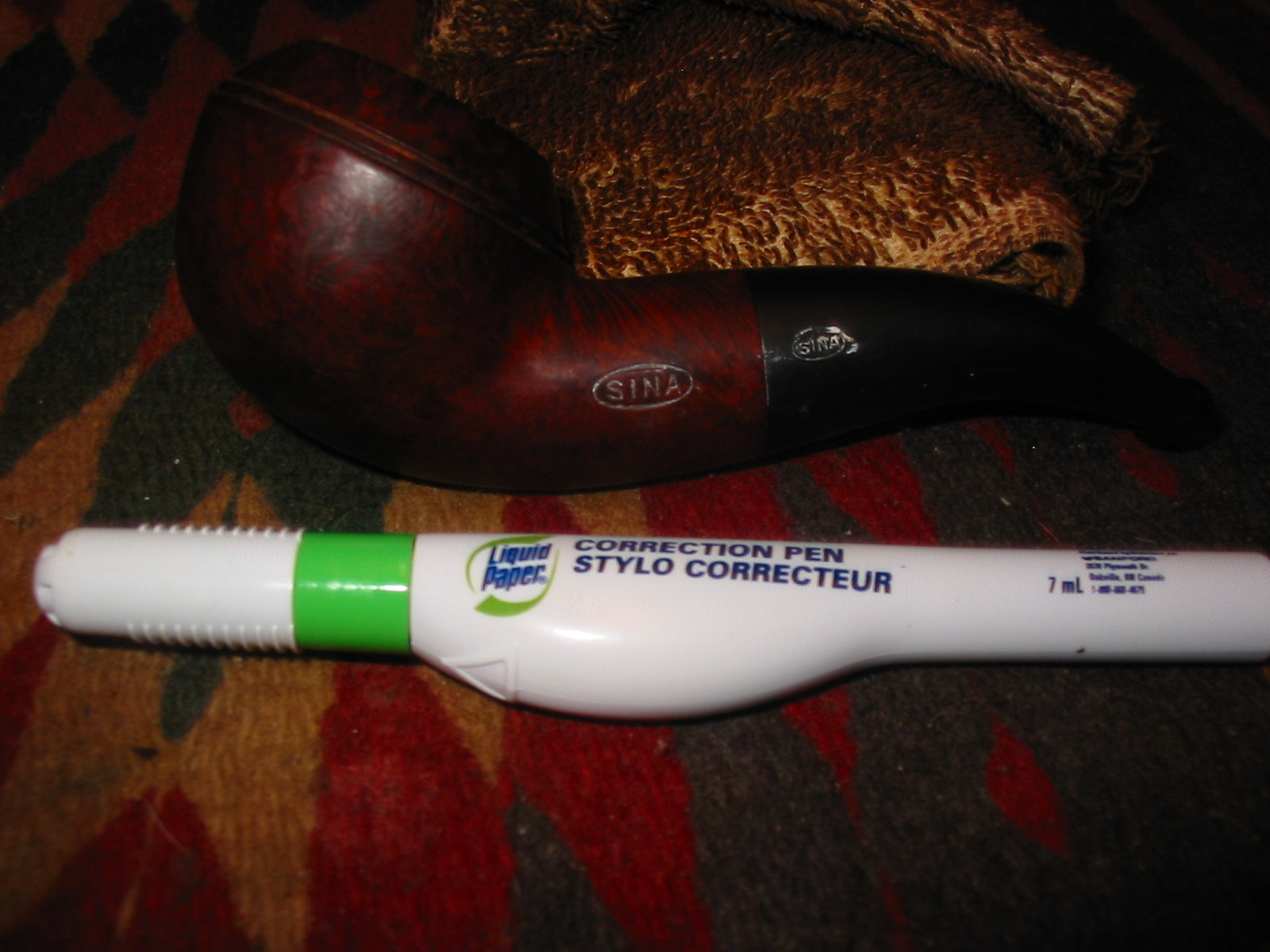
Just after wet sanding with the 1500-2400 micromesh pads I used a white out/correction pen to whiten the stamping on the stem. I applied the white out with the tip of the pen and when it dried sanded off the excess with the 1500-2400 grit pads.
IMG_2350

IMG_2351

IMG_2352

Once the stem was polished with the final grit of micromesh I rubbed the stem down with Obsidian Oil and when it was absorbed I buffed the stem with White Diamond on the wheel. I gave the bowl a light buff with White Diamond as well. I finished by buffing the stem with carnauba wax, giving it several coats and then buffing the entire pipe with a soft flannel buff to raise a shine. The finished pipe is pictured in the last four photos below.
IMG_2358

IMG_2359

IMG_2360

IMG_2361

Royal Falcon Full Bent – Comoy’s Shape 17


I purchased the Royal Falcon along with a Merchant Service pipe from an Ebay lot for a good price. They both looked quite good in the photos provided by the seller below. I was not familiar with the brand so I did some research on it and found that it was a Comoy’s line. The numbering and stamping on the right side of the shank were identical to Comoy’s stamping.
Royal Falcon Merchant1

Royal Falcon Merchant2

Royal Falcon Merchant4

Royal Falcon Merchant5

The pipe is stamped on the left side of the shank, Royal over Falcon as pictured below. On the right side it is stamped Made in London in a Circle over England. Next to that is stamped shape number 17 which is a Comoy’s number. In checking on Pipephil’s site on logos and stampings it is clear that the pipe is definitely a Comoy’s brand. The stem has the same logo as Phil shows on his site (second photo below). The pipe I picked up is exactly the same pipe that Phil shows in his logo list (third photo below).
royal-falcon2b

royal-falcon2a

royal-falcon2y

When the pipe arrived I took the following four photos to give an idea of the condition of the pipe. The finish on the bowl was in excellent shape. The rim was not as good. The bowl itself was gouged inside and the cake had been gouged away with what looked to be a nail. It would need to be reamed and sanded. The bowl was also out of round slightly. The outer edge of the rim toward the right front had a burn that damaged that part of the bowl. On the left back side the rim was dented and chipped from hitting the bowl against something. I would need to address the rim and the inner bowl damage when I worked on the pipe. The stem was in good shape but the white in the logo was gone. The underside of the stem had a gouge in it that at first glance looked like a breakthrough from a pipe cleaner (apparent as a white spot on the stem in the fourth photo below). Under a lens the gouge did not go all the way through the stem and would be easily repaired. The button and the exterior were in good shape with no bite marks or tooth dents. The tenon while dirty and tarry was nonetheless in good shape as well. It was a step down tenon like that used on Comoy’s pipes.
IMG_2305

IMG_2306

IMG_2307

IMG_2308

I reamed the pipe with a PipNet pipe reamer to try to smooth out the gouges that were on the inside of the bowl. I took back the cake to the bare wood to minimize the deep gouges. They still were evident after removing the cake but they were definitely less intrusive. I sanded the inside of the bowl to further smooth out the deep marks and to rework the out of round bowl and inner rim.
IMG_2309

IMG_2310

There was a burn mark on the outer rim right side toward the front of the bowl that damaged the outer roundness of the rim. It is visible in the poor photo below (first photo). There was also damage and chipping to the outer rim on the left side toward the back (second photo below). I could have ignored these in my restoration of the pipe and left them as marks of age but I decided against that given the relative good condition of the remainder of the bowl. It would need to be carefully topped and restained to match the rest of the bowl.
IMG_2311

IMG_2312

I set up my sanding board and topped the bowl. The next series of photos show the process of topping and after the first turn on the board the burn and roughening damage are more evident.
IMG_2314

IMG_2315

After topping the bowl I sanded it with a medium grit sanding sponge and then progressively sanded it with 1500-3600 grit micromesh sanding pads to smooth out the scratches from the topping process. After the surface was smooth I restained it with a dark brown aniline stain that I mixed with two parts isopropyl alcohol until it matched the colour of the bowl. I applied the stain, flamed it and repeated the process until the depth of the colour matched the remainder of the bowl. It took 5 or 6 applications of the stain until I was satisfied with the colour match.
IMG_2325

IMG_2326

I set the bowl aside and worked on the stem. The underside of the stem had a white spot that is visible midstem in the photo below. This spot was actually a gouge or divot. I was unsure whether it went into the airway on the stem. I have seen this kind of thing on pipes with this kind of bend in the stem. It can be caused by the pipe cleaner rubbing through the vulcanite at the bend on either the top or the bottom side of the stem. In this case it did not go all the way into the airway.
IMG_2313

I cleaned it out with Everclear both internally and externally. I picked the white material from the divot and cleaned it a second time with alcohol. I used a small drop of superglue to fill the divot and then sanded it with a medium grit sanding sponge until it was smooth and even.
IMG_2316

Once the stem was cleaned and only needing polishing, I used a correction/white out pen to refill the stamping on the logo. I have found that this works very well. I apply the white out with the pen tip and then let it dry before sanding with a micromesh sanding pad to remove the excess of the filler. I then sanded the entire stem with micromesh sanding pads from 1500-12,000 to polish the vulcanite. When I had finished sanding it I rubbed down the stem with Obsidian Oil and then buffed it with White Diamond.
IMG_2317

IMG_2321

IMG_2322

IMG_2323

IMG_2324

The final four photos show the finished pipe. I buffed the pipe and stem lightly with White Diamond and then gave it several coats of carnauba wax to polish it. The restain of the top is visible in the third photo. The colour is a pretty good match to the bowl and I was able to redeem the out of round inner rim with the sanding and staining. It is ready to smoke.
IMG_2328

IMG_2329

IMG_2330

IMG_2332