Tag Archives: buffing

Restoring an old Harlequin Pipe and Trying to Unravel the Mystery of its Origin


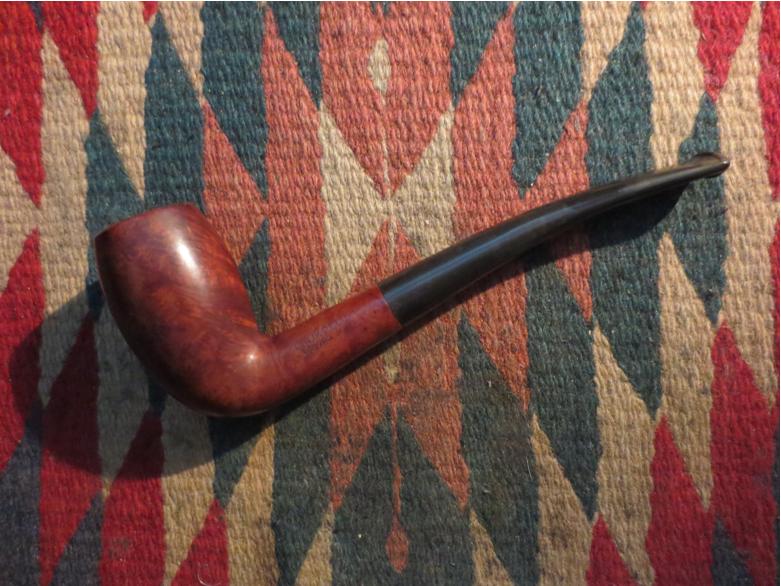
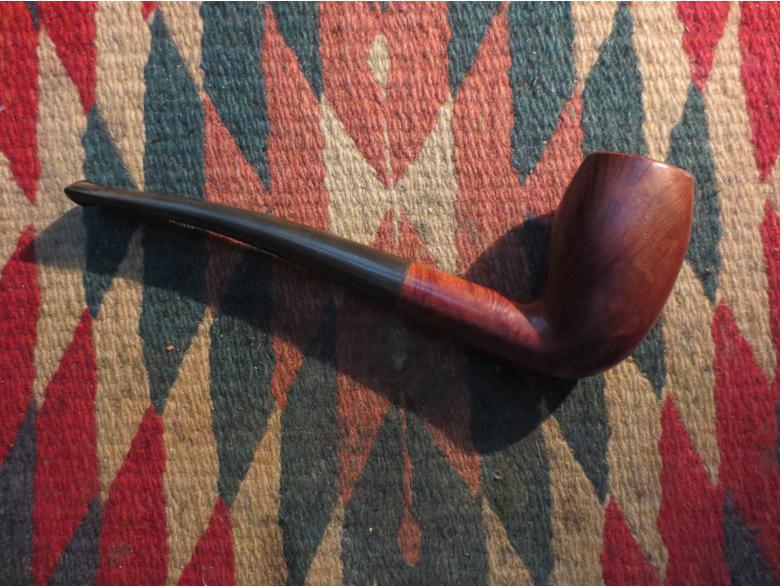
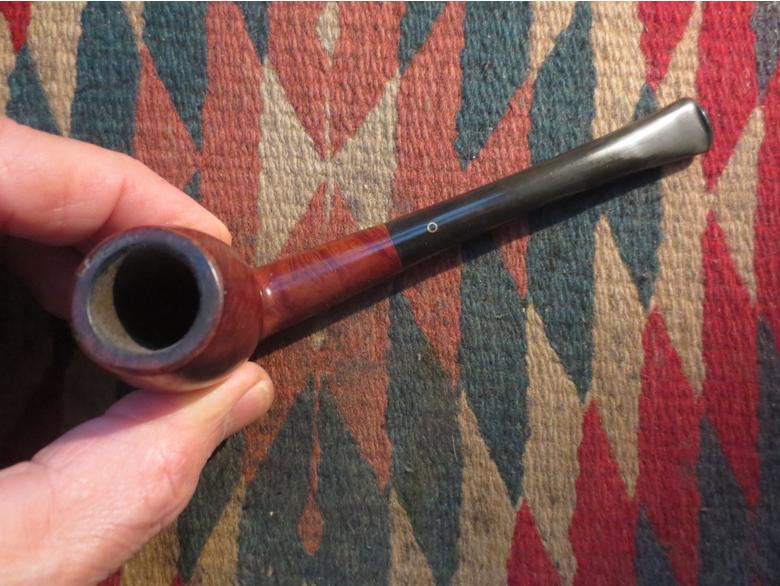
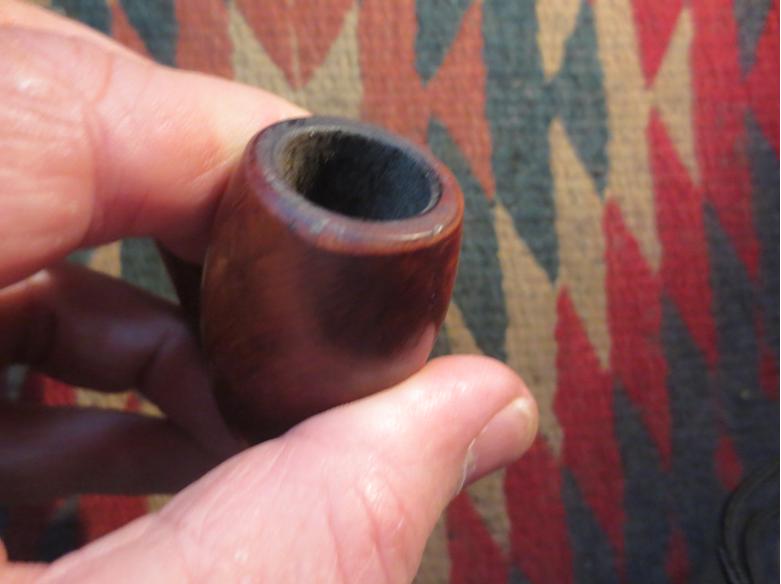
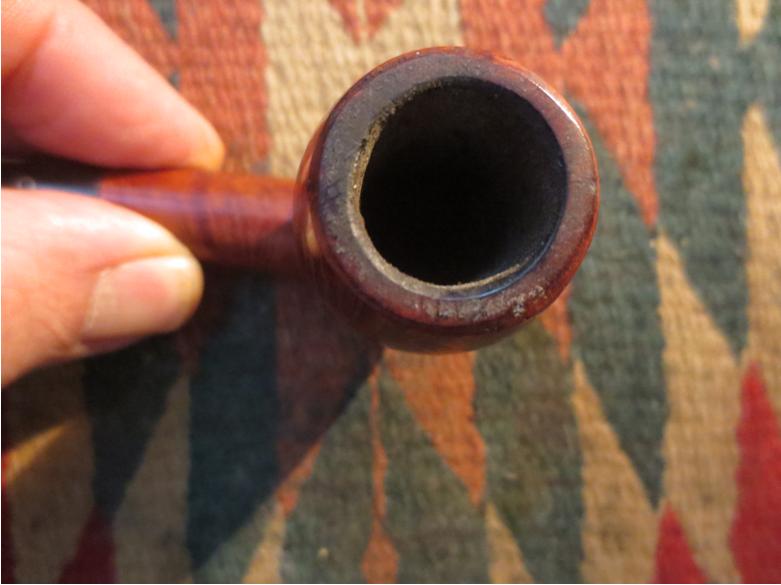
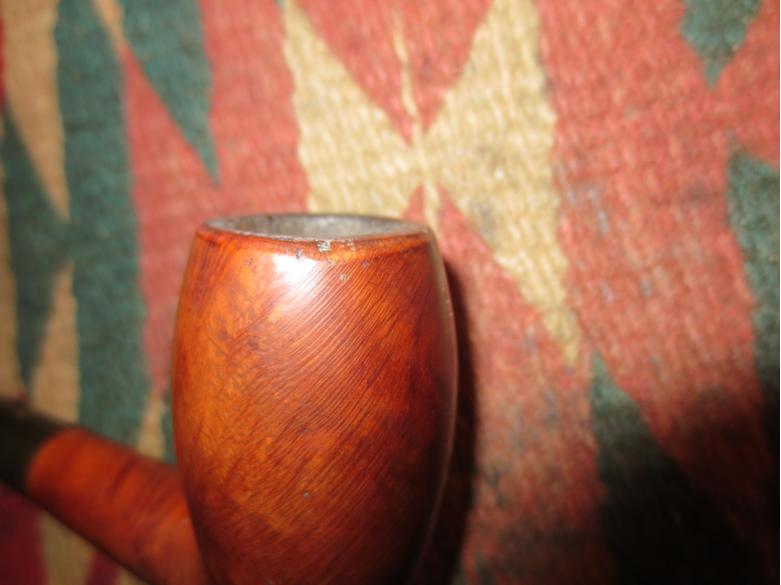
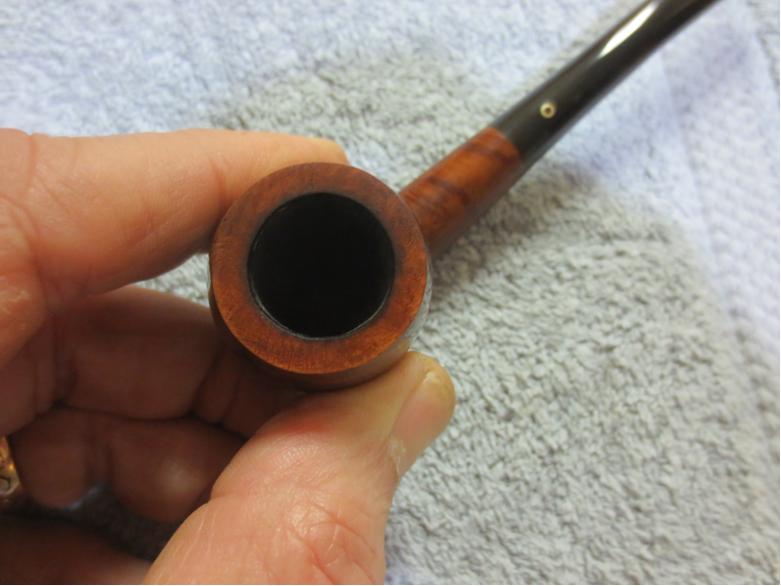
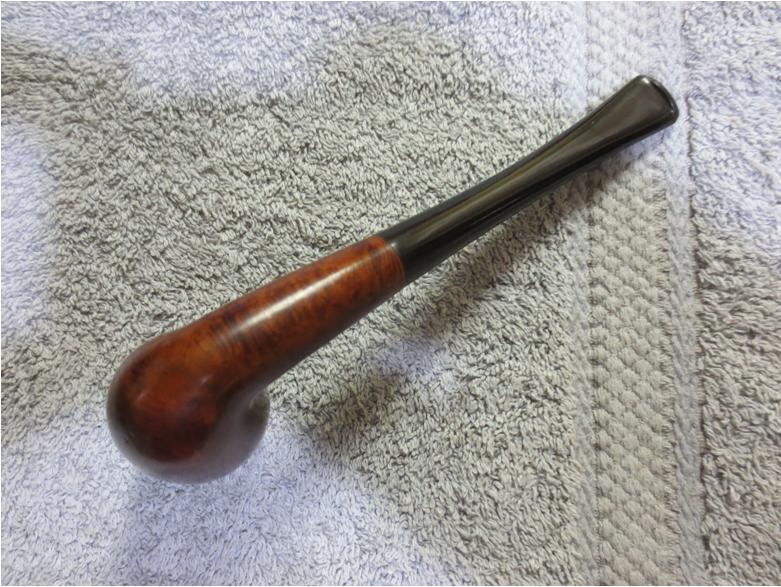
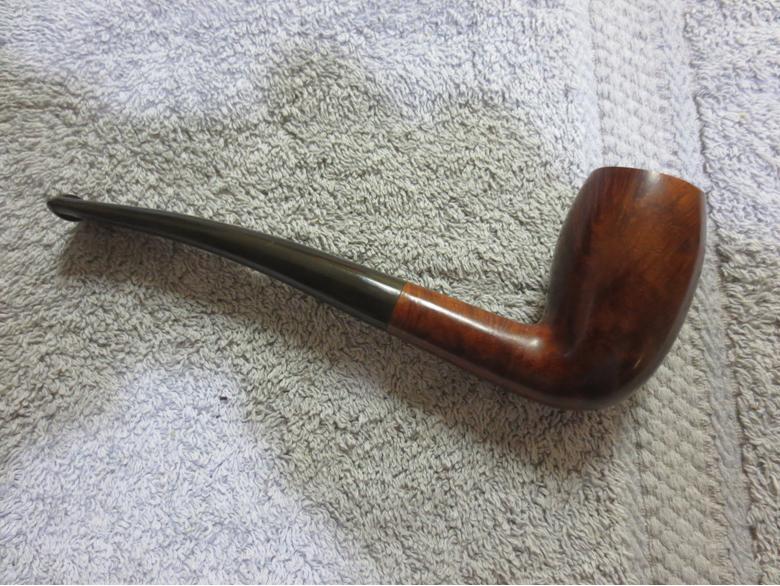
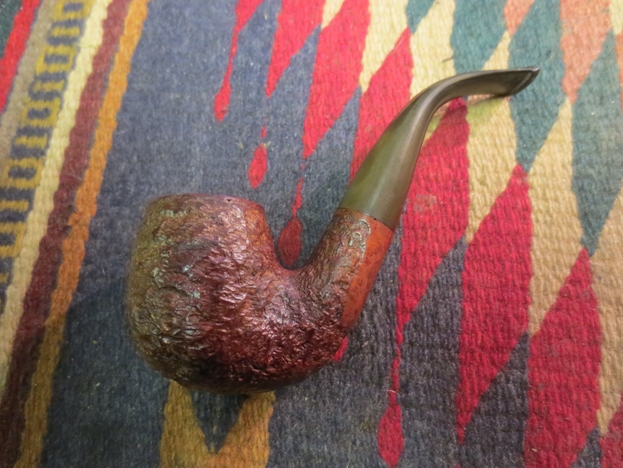
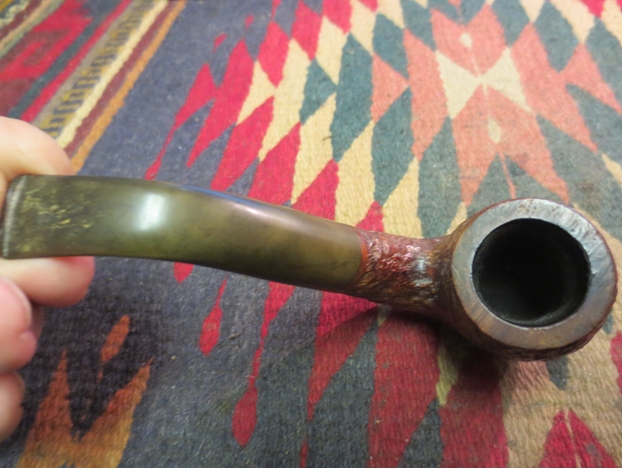
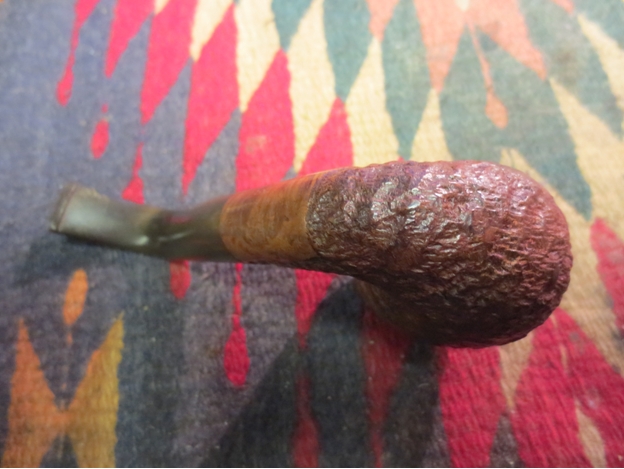
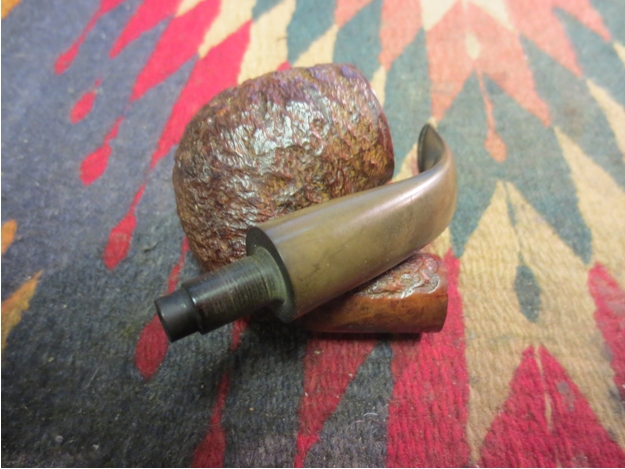
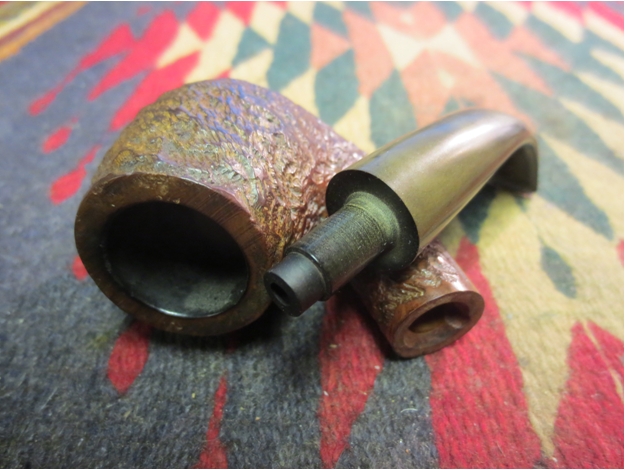
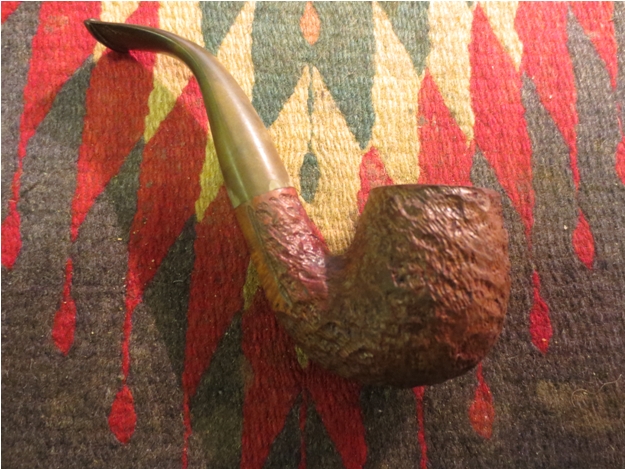
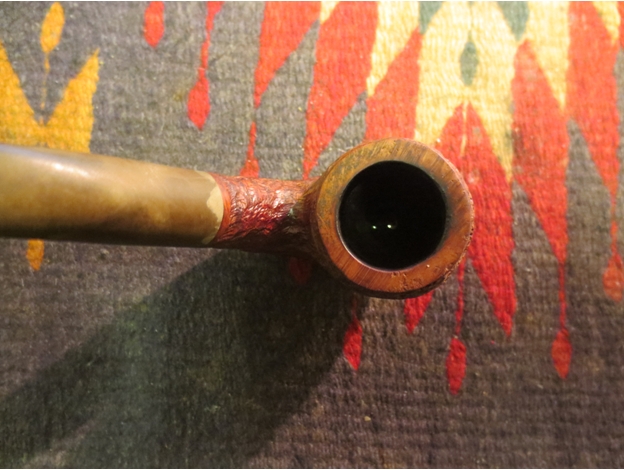
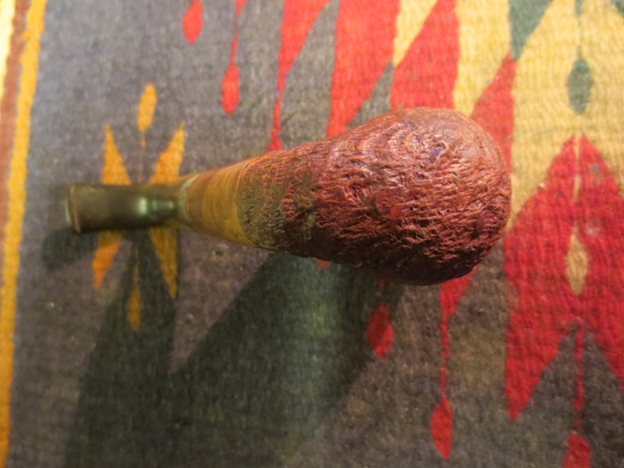
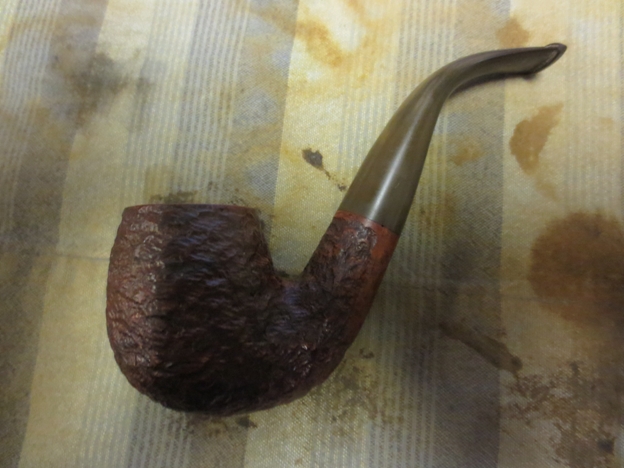
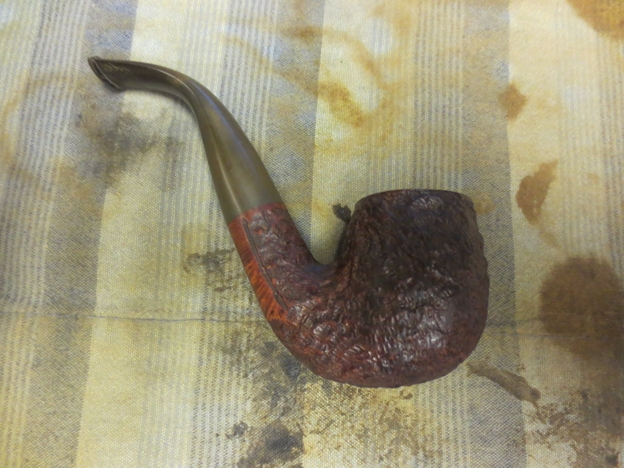
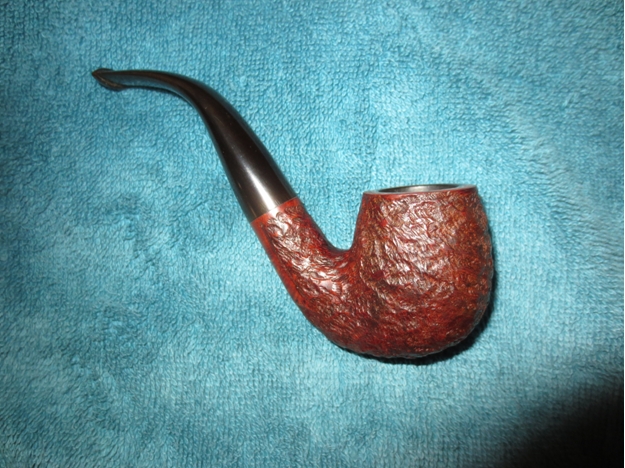
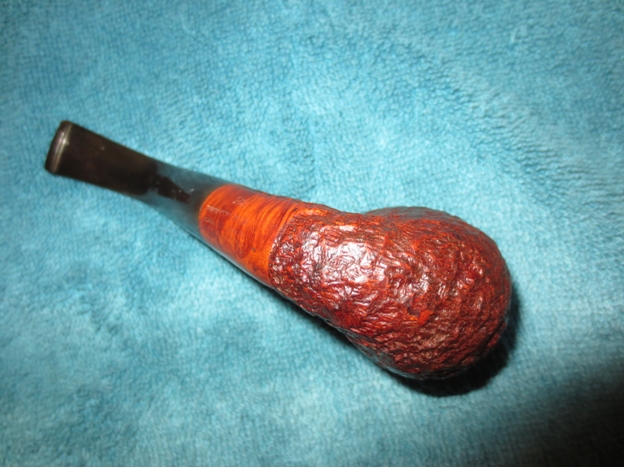
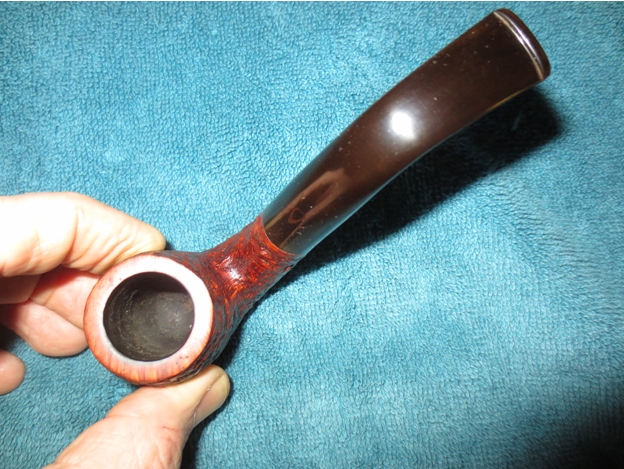
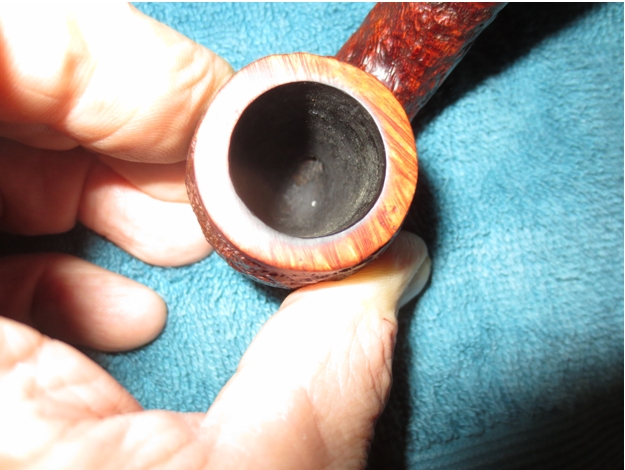
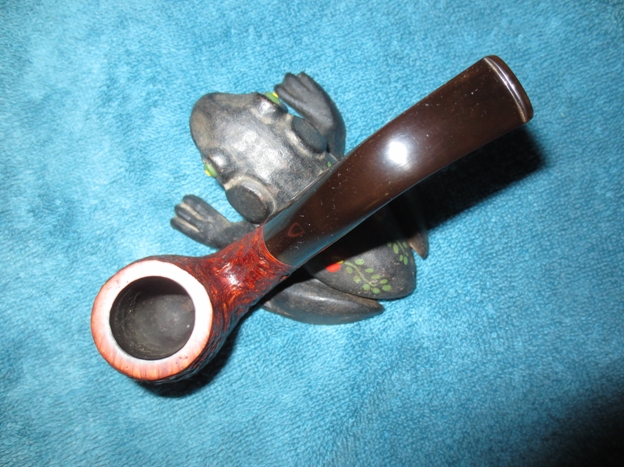
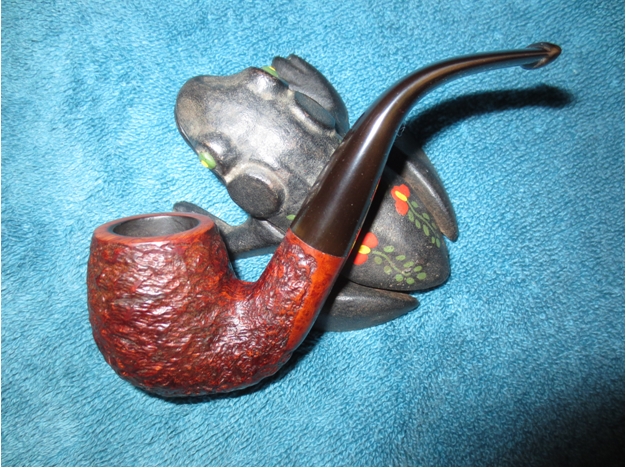
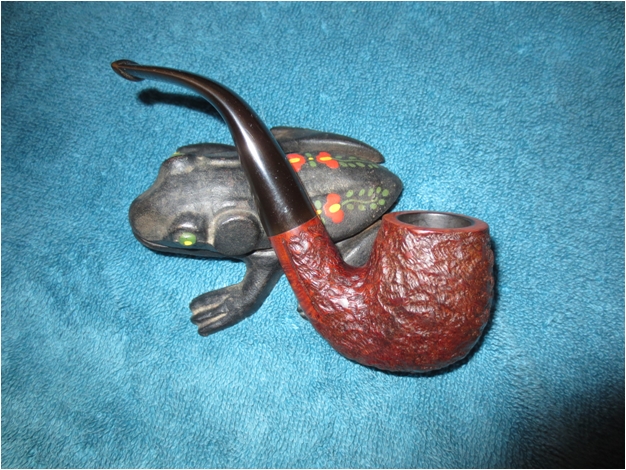
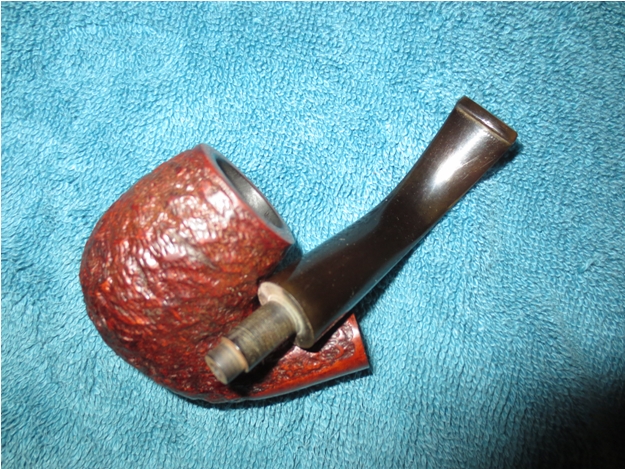
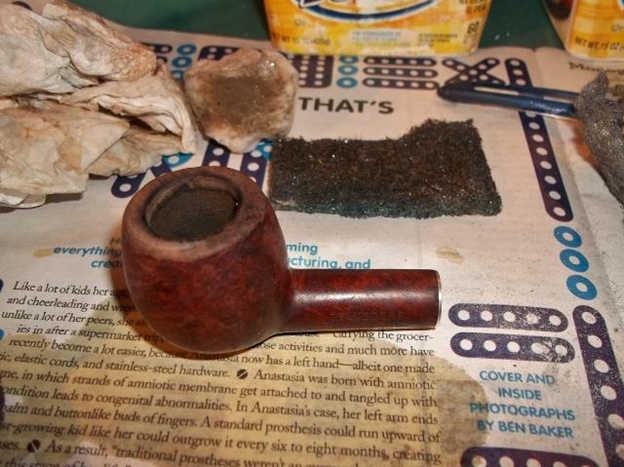
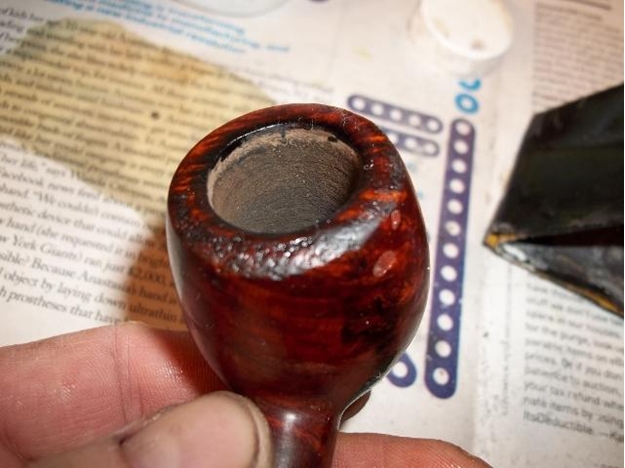
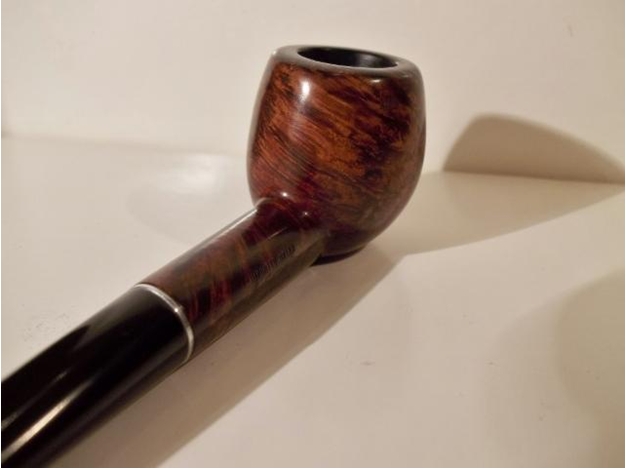
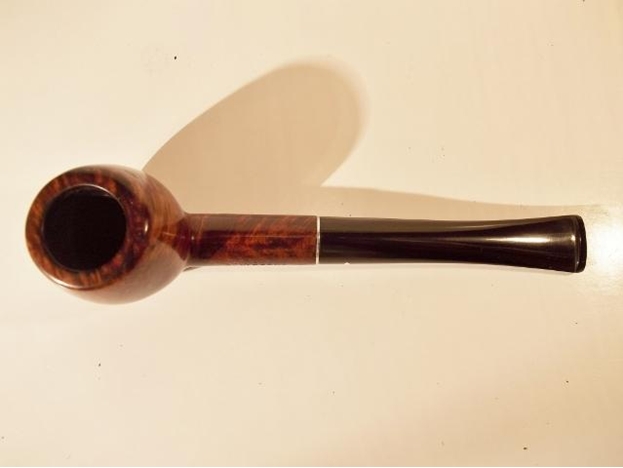
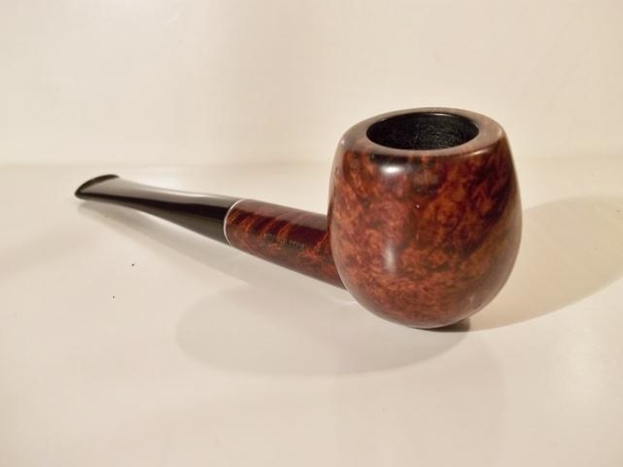
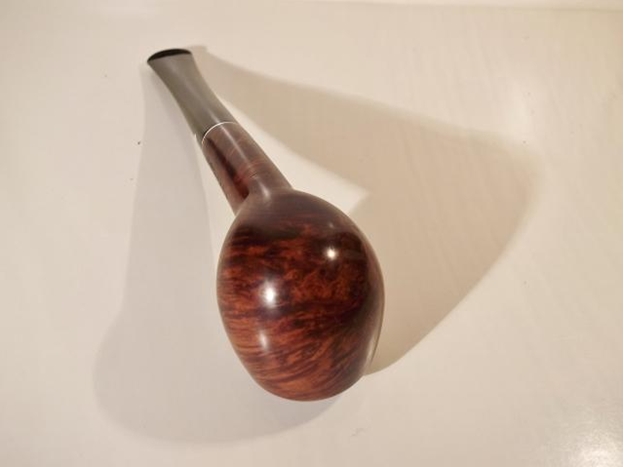
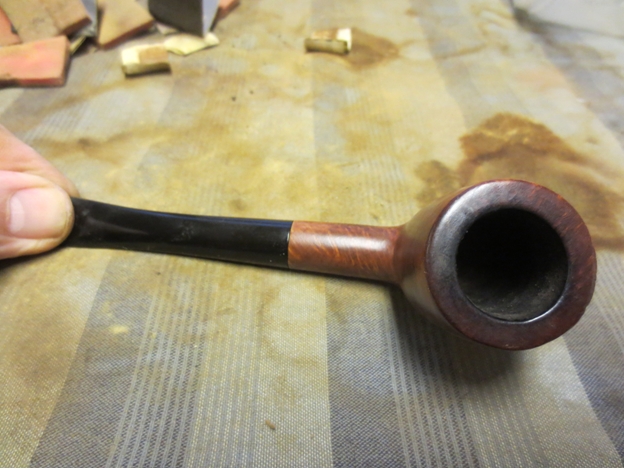
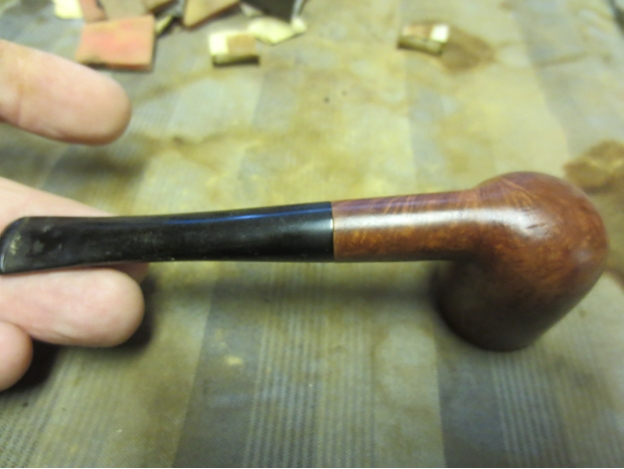
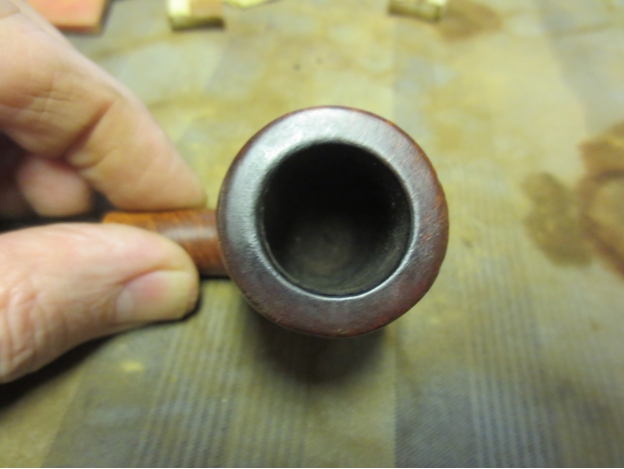
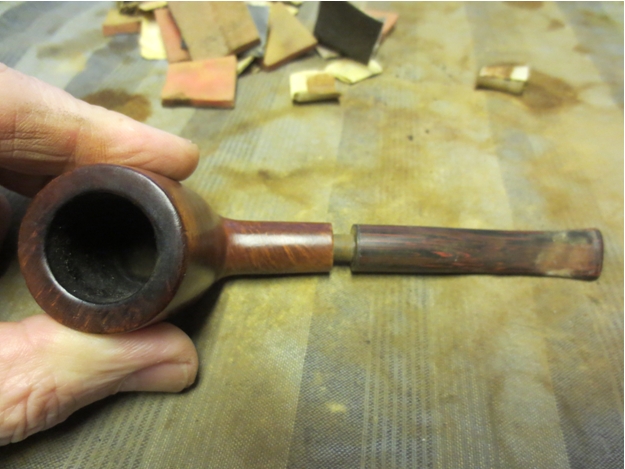
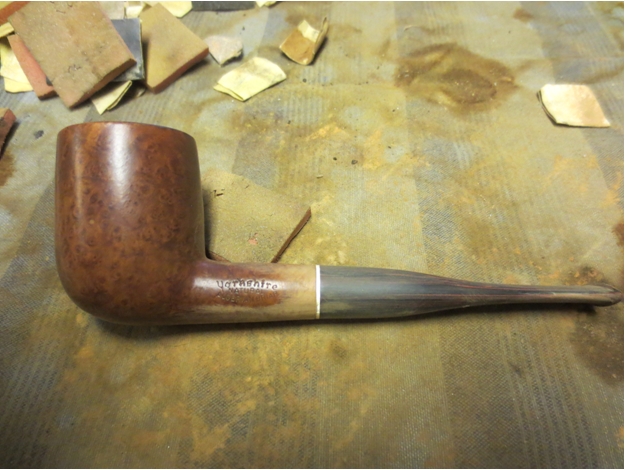
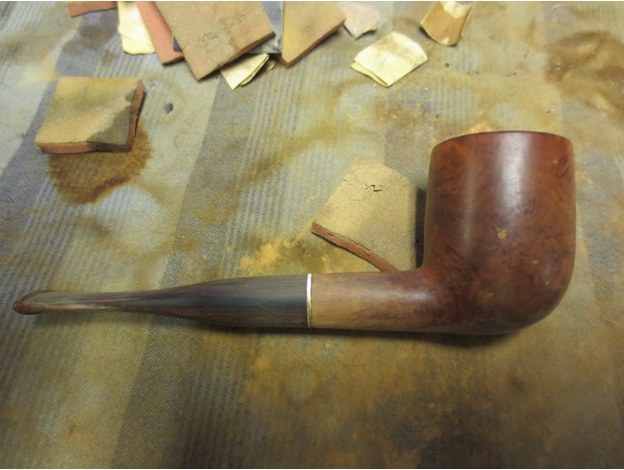
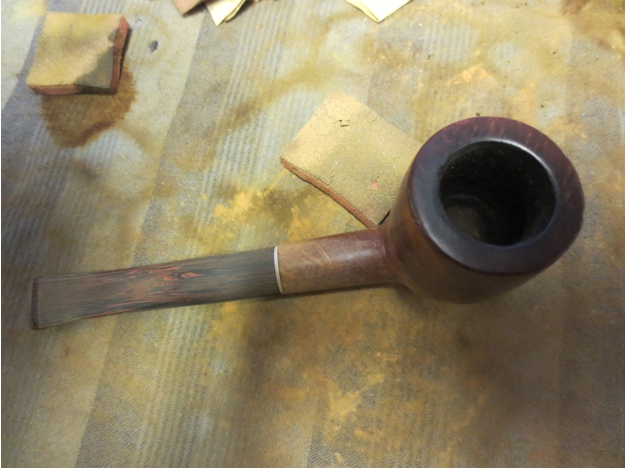
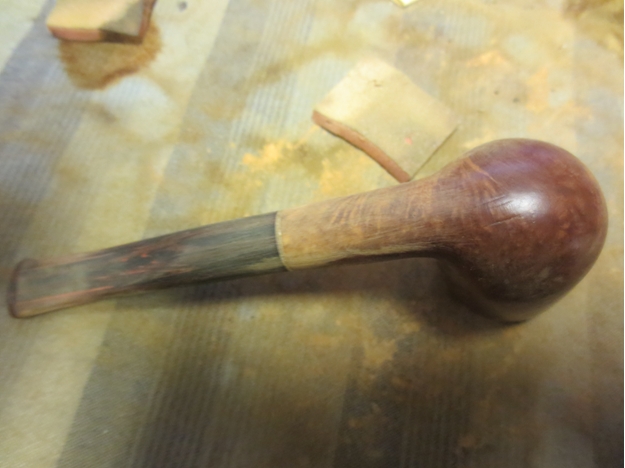
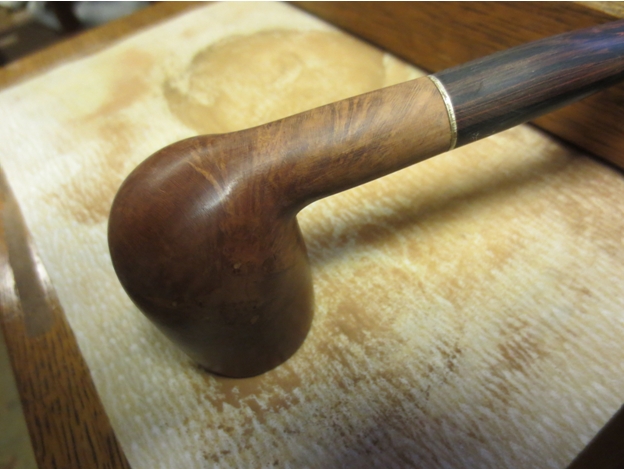
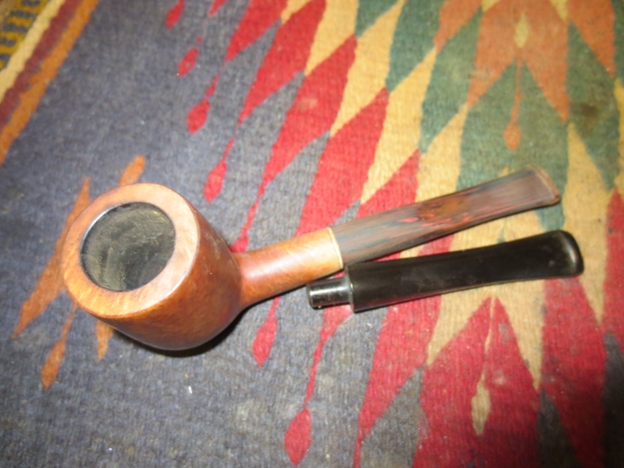
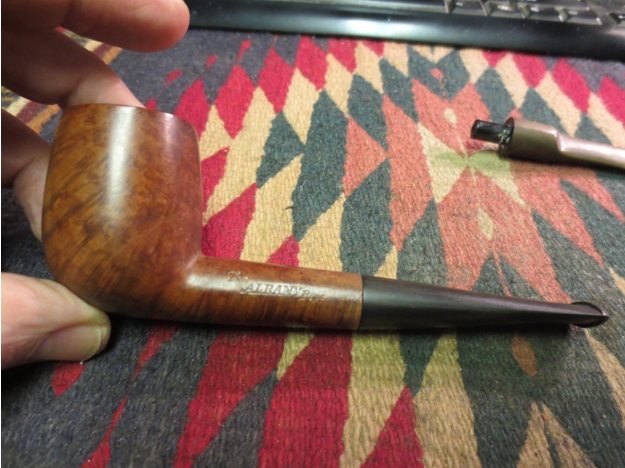
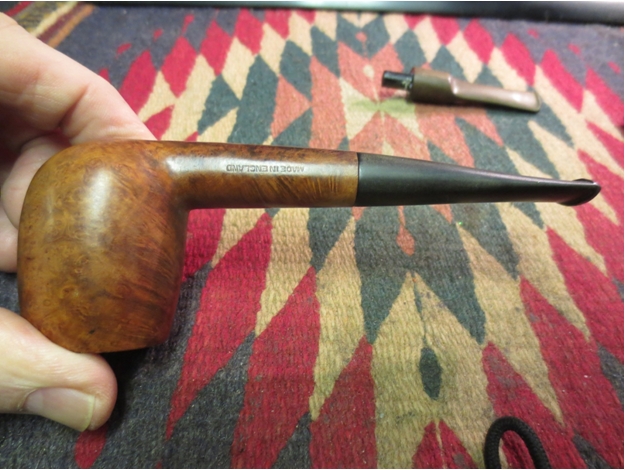
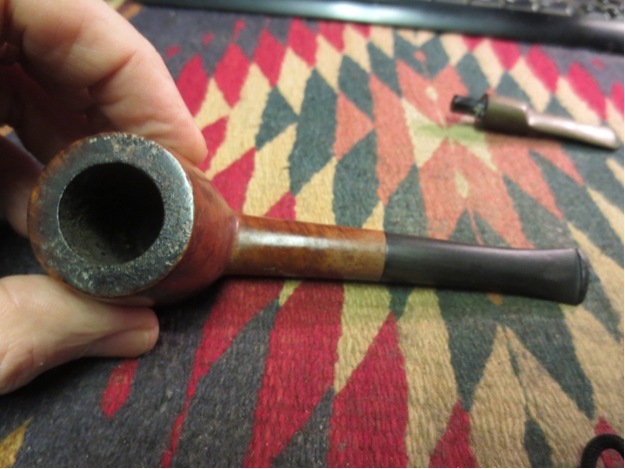
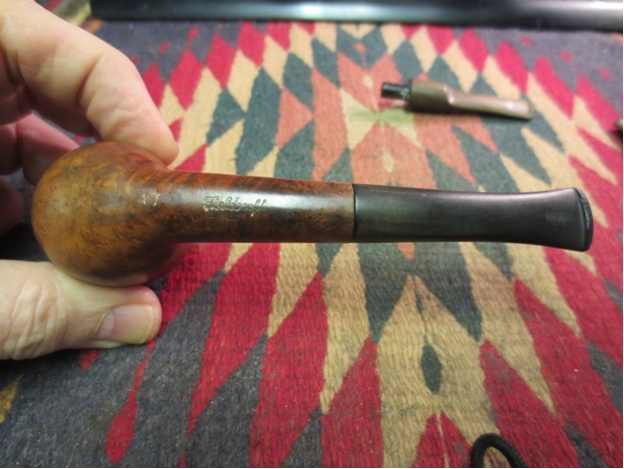
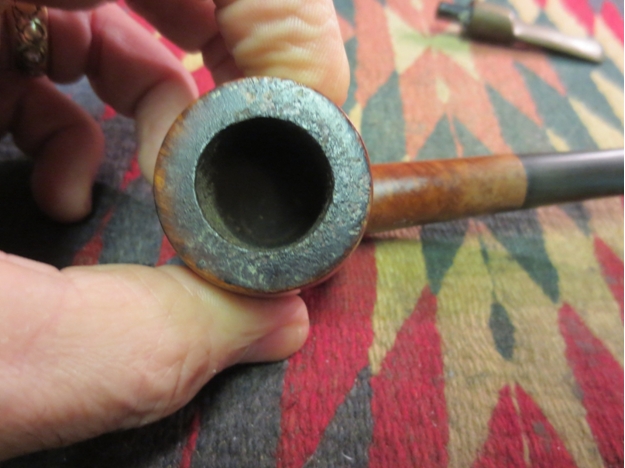
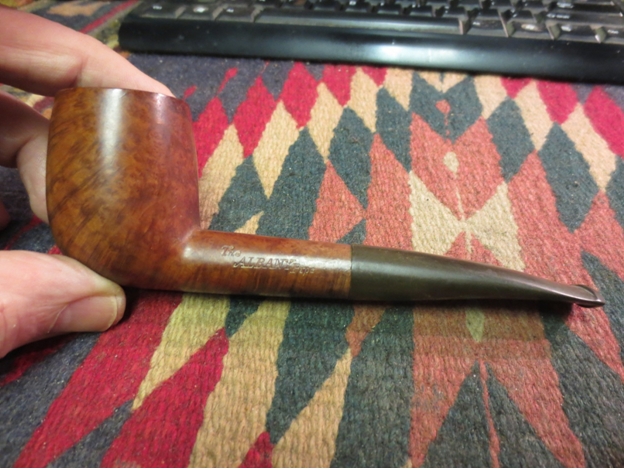
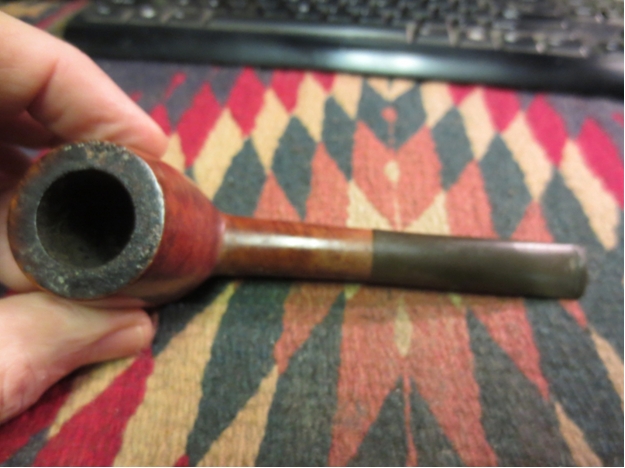
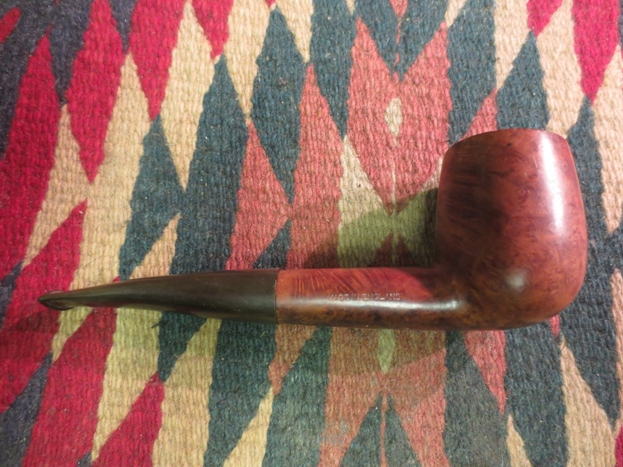
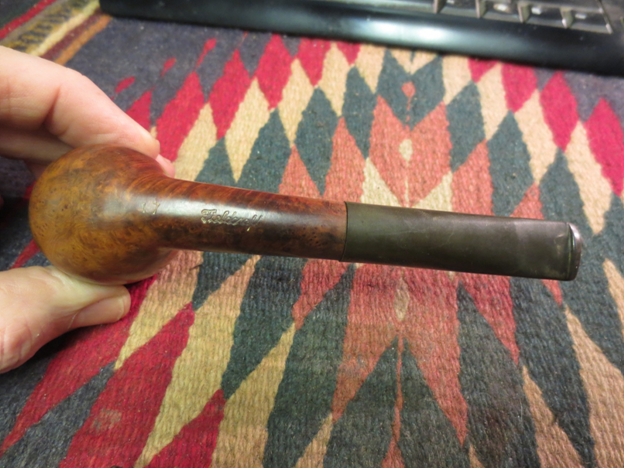
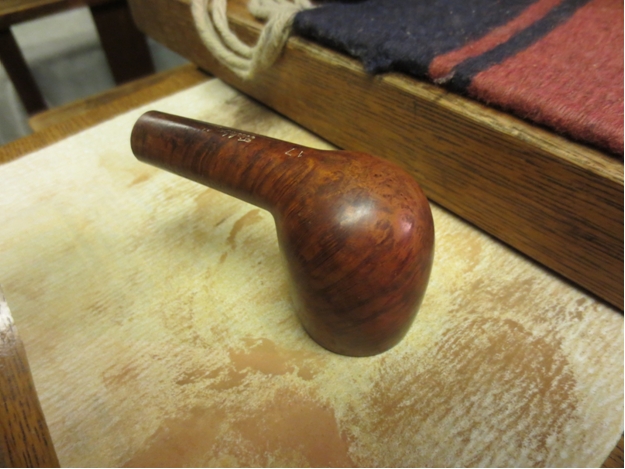
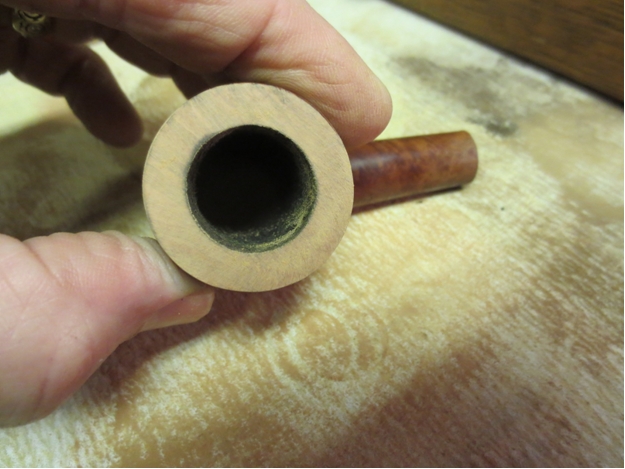
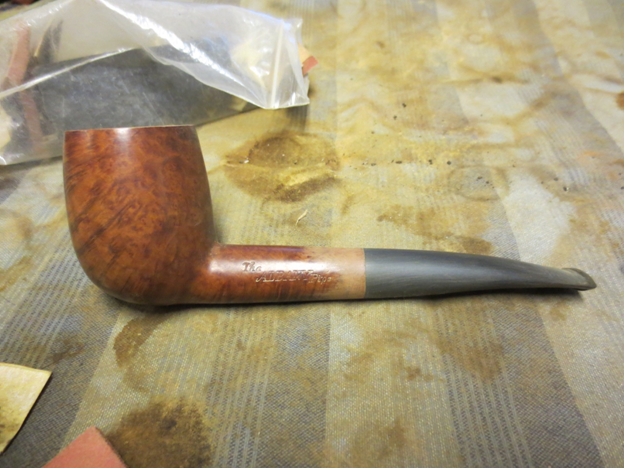
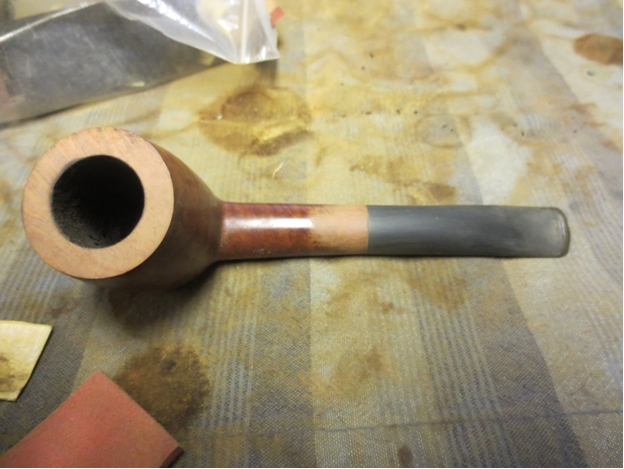
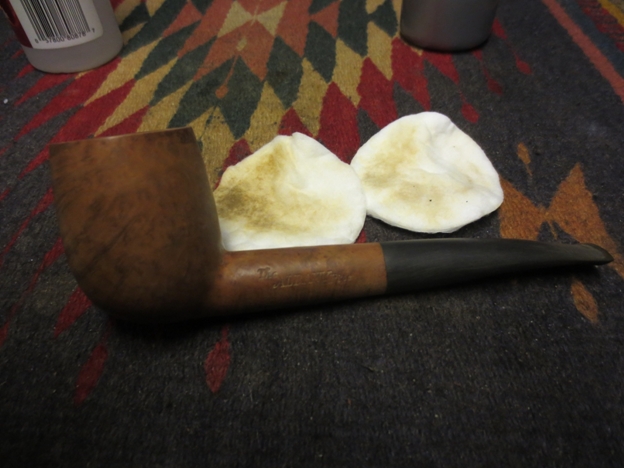
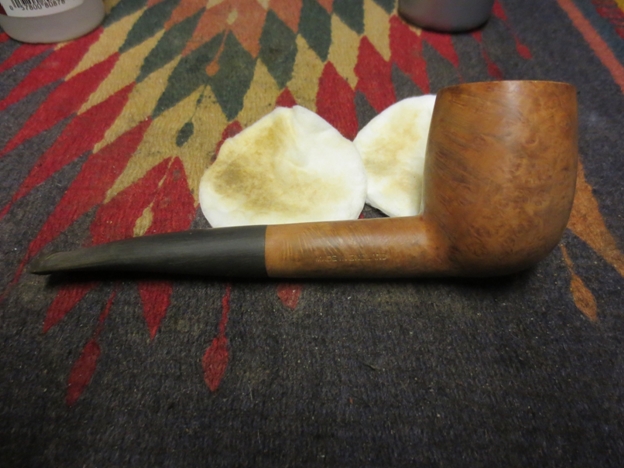
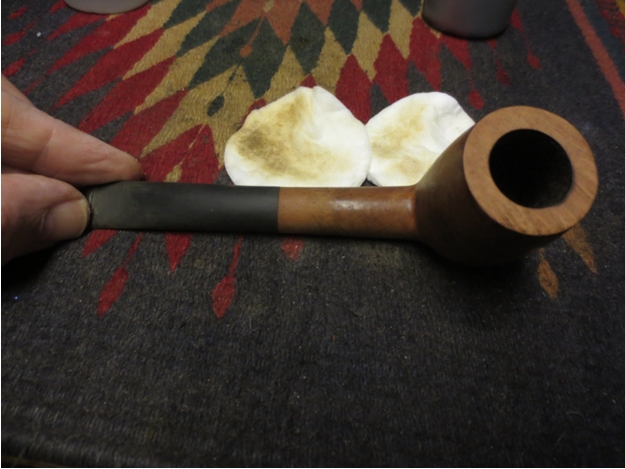
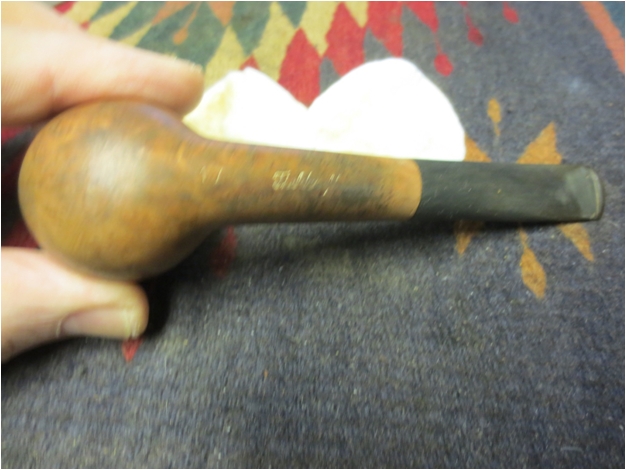
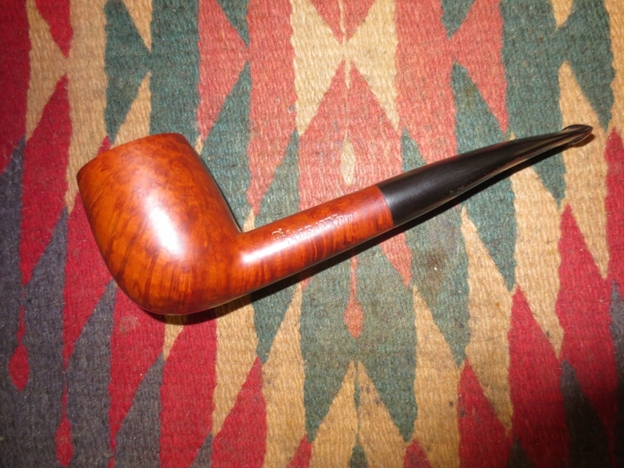
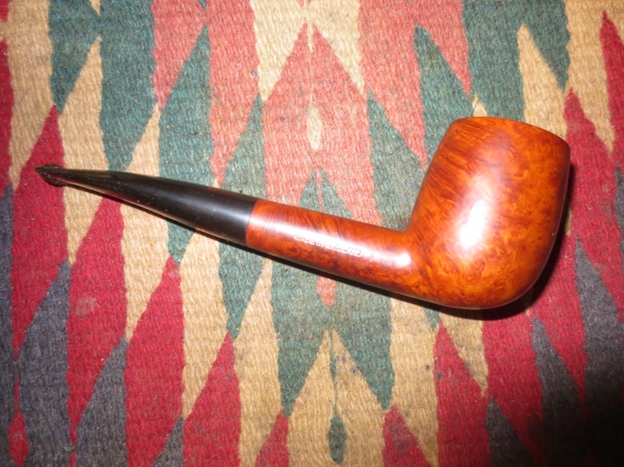
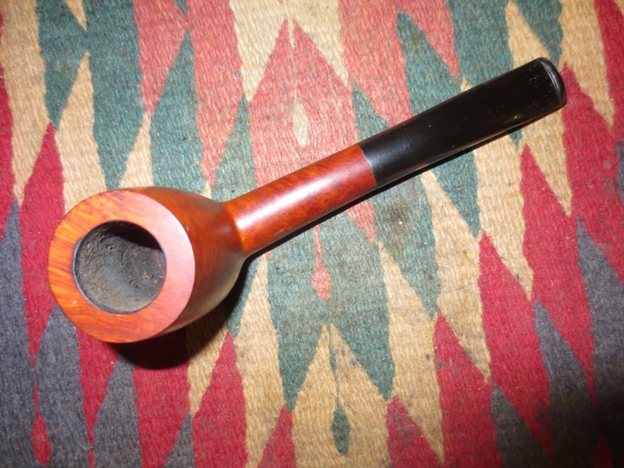
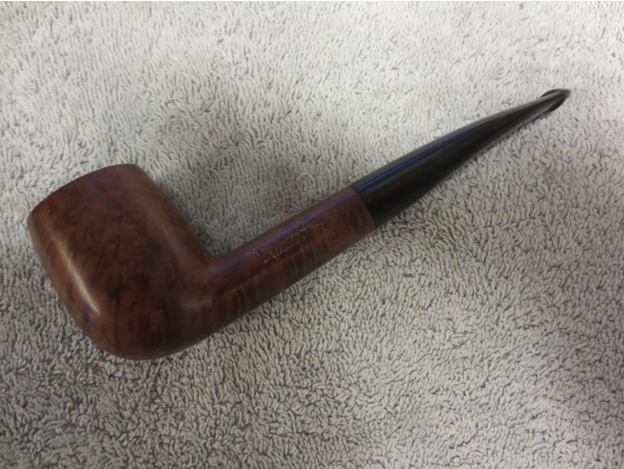
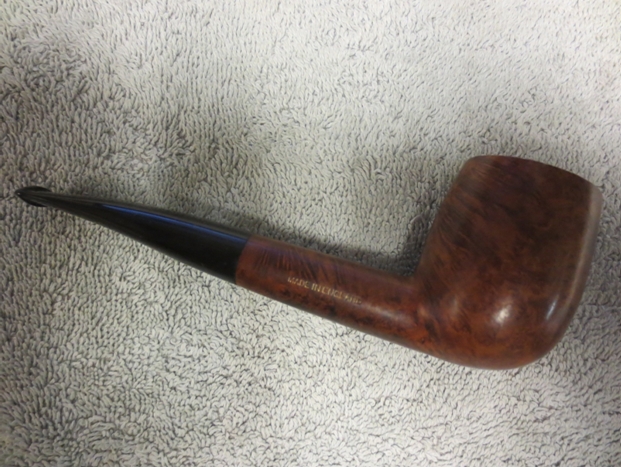
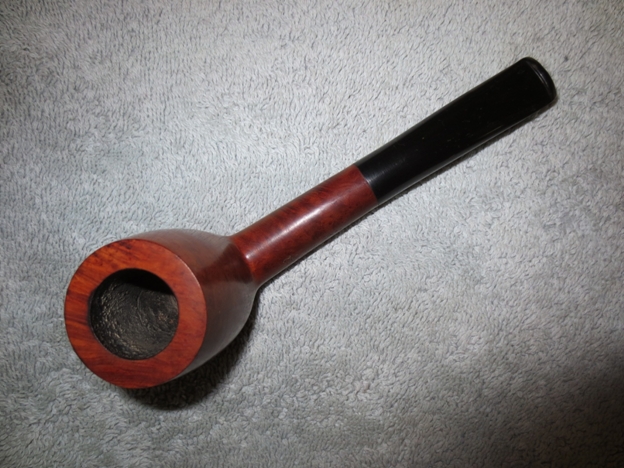
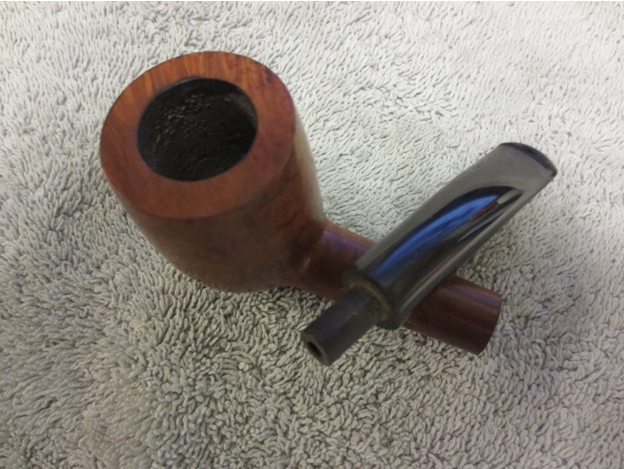
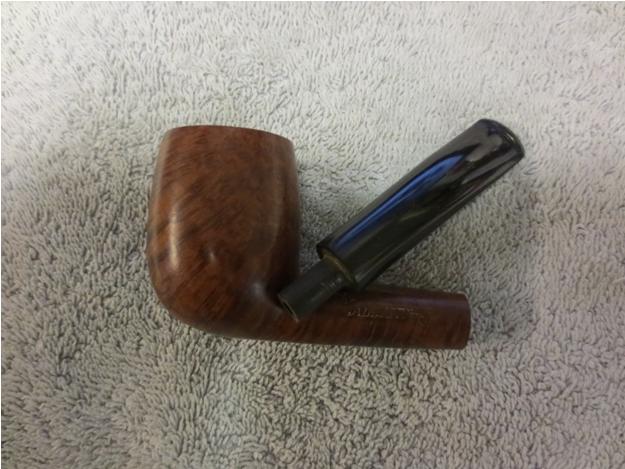
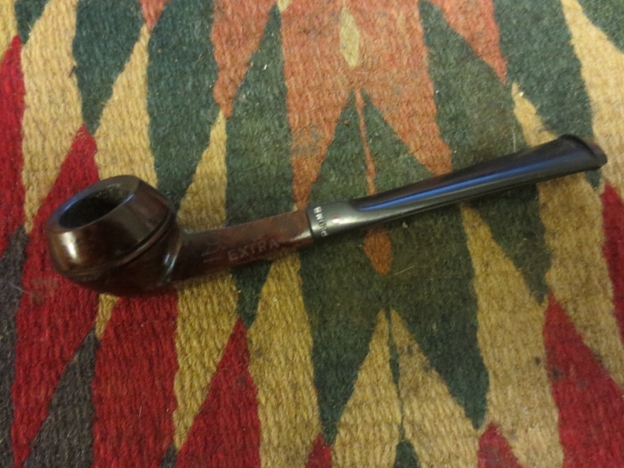
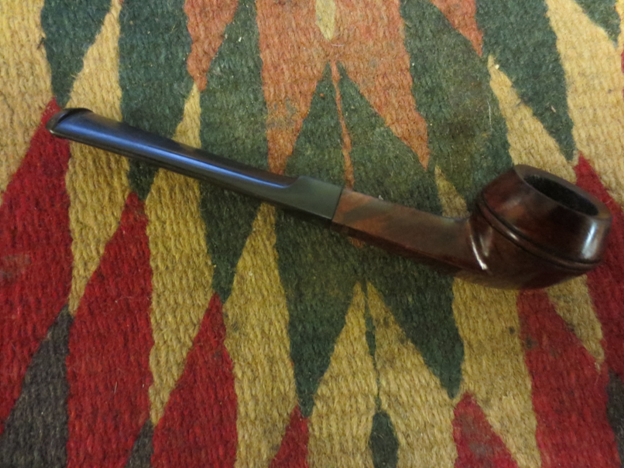
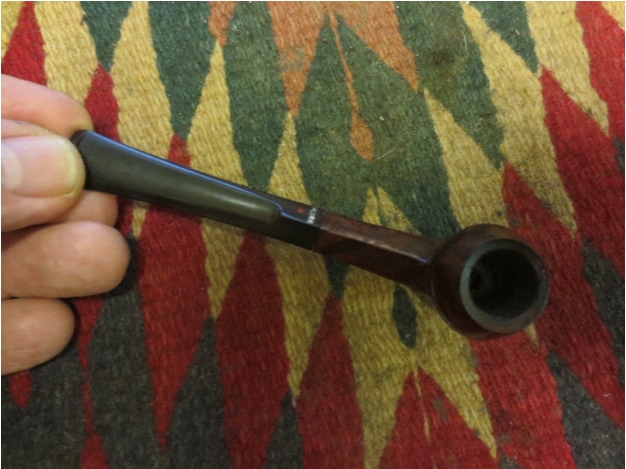
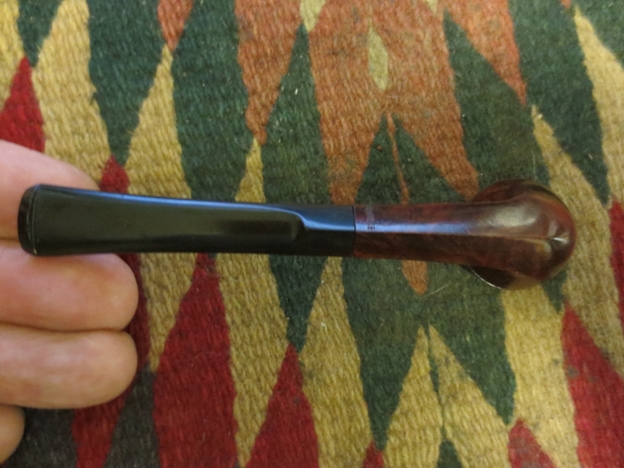
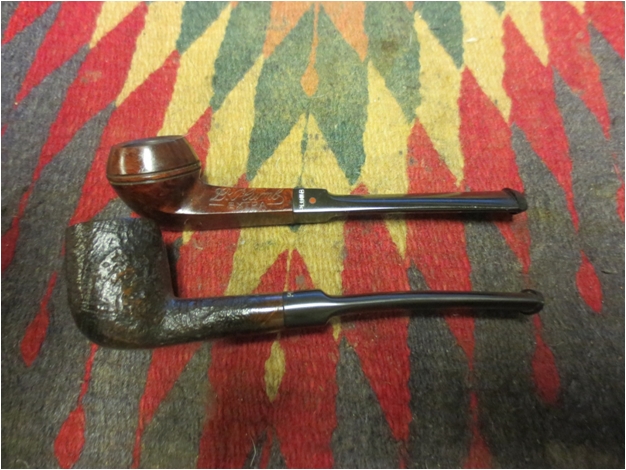
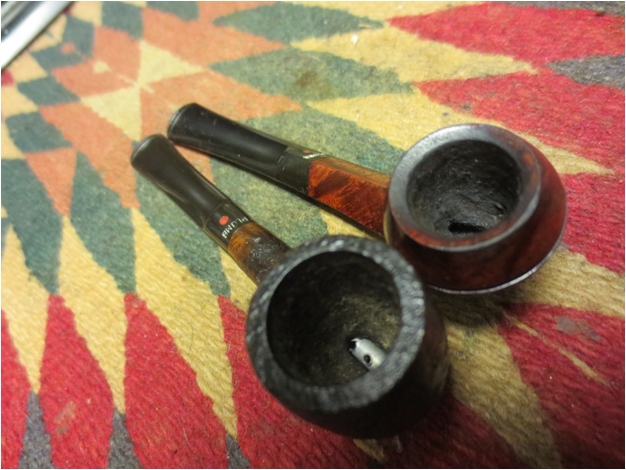
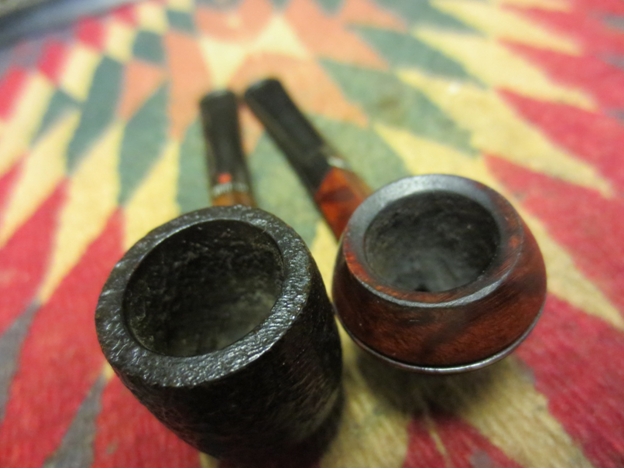
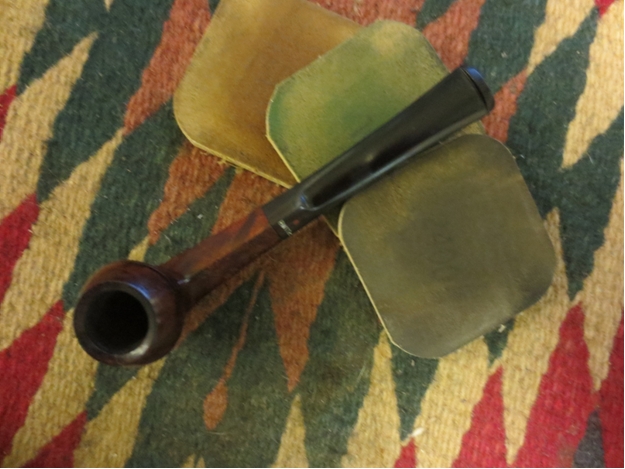
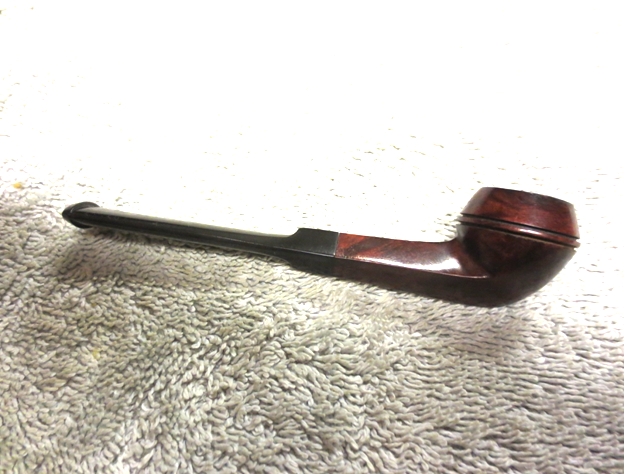
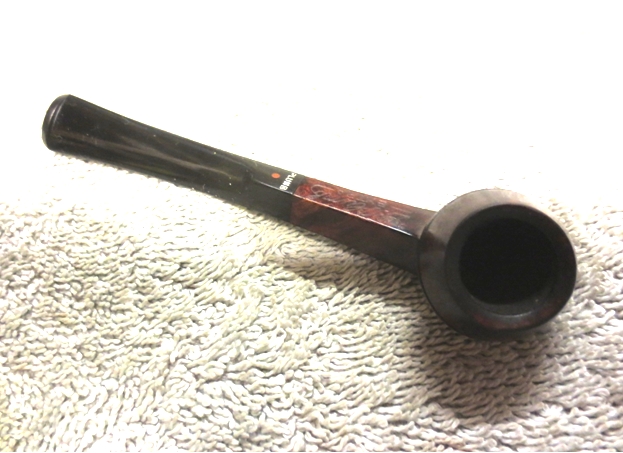
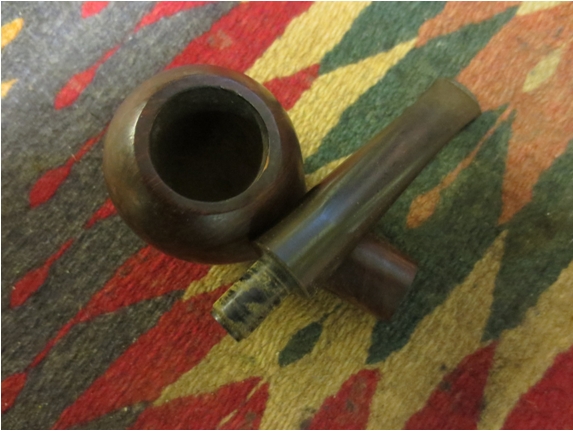
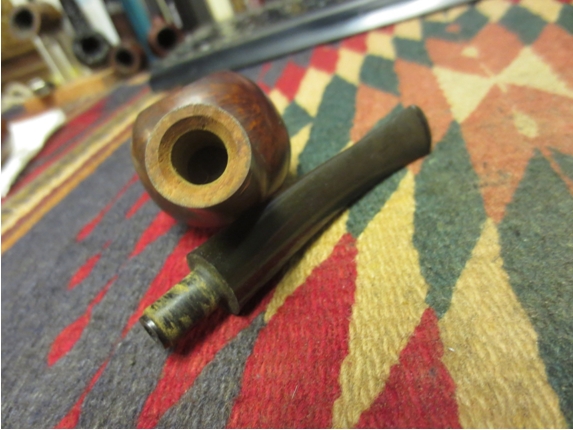
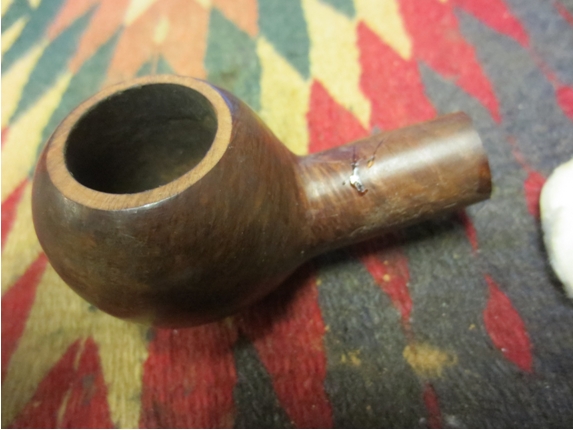
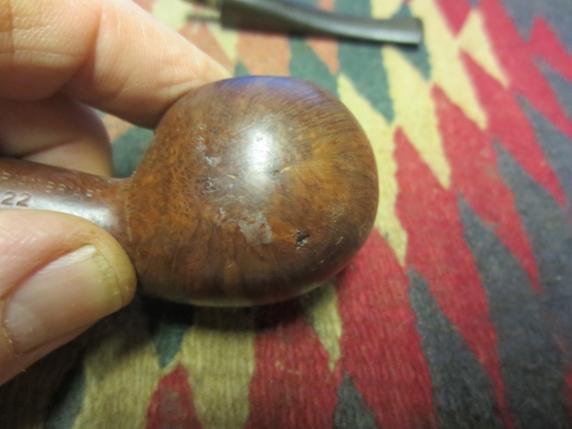
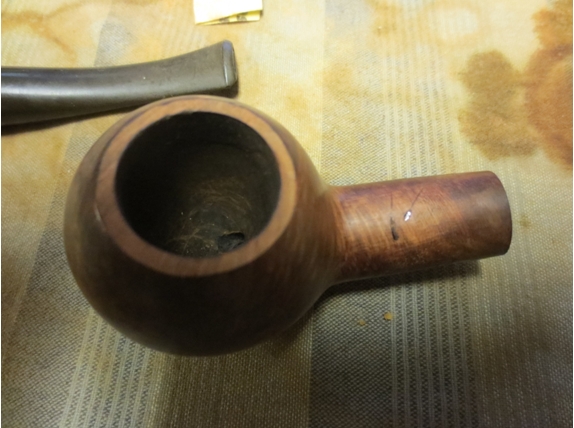
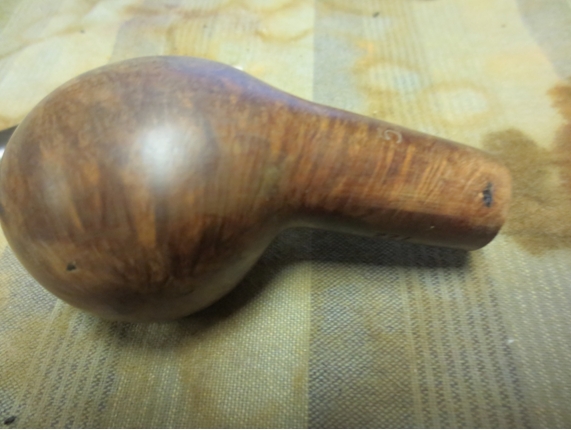
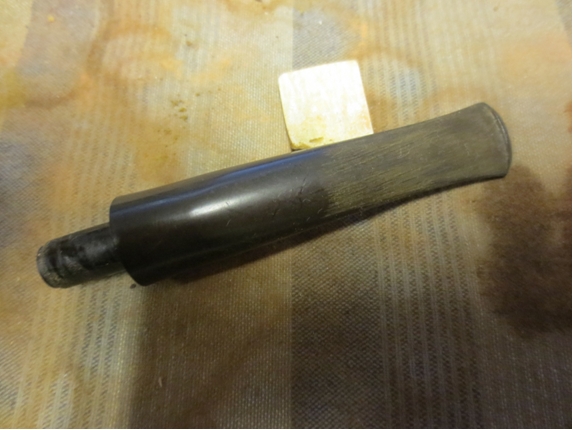
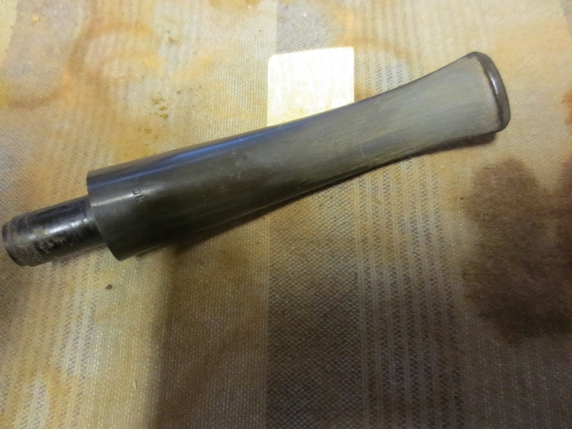
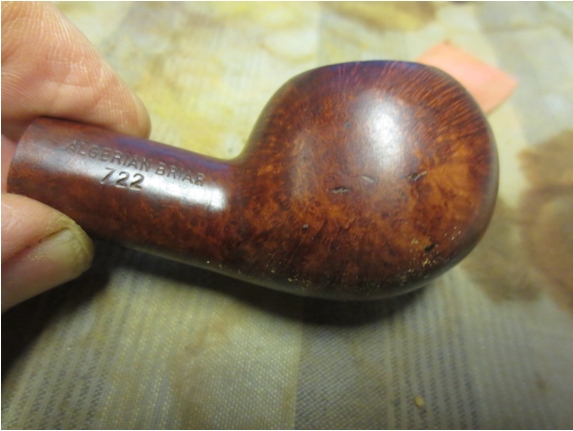
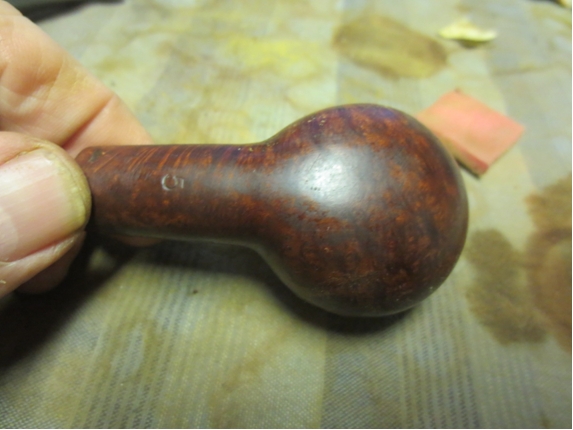
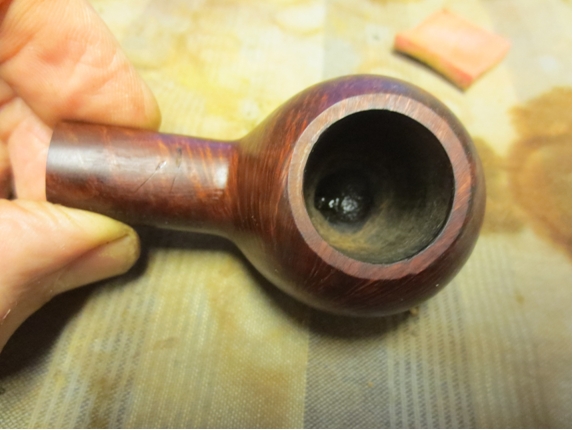
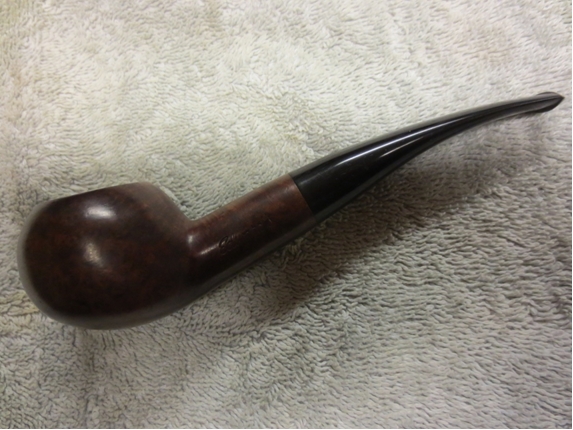
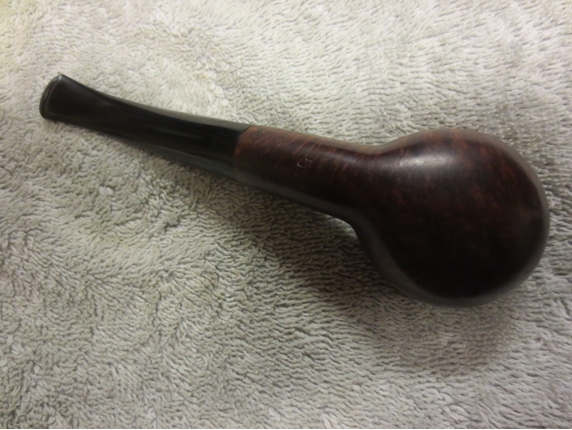
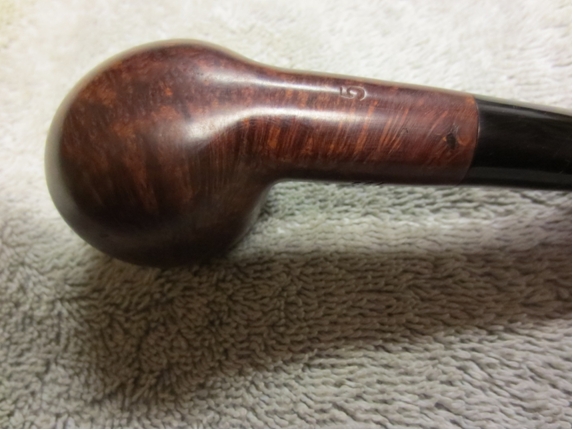
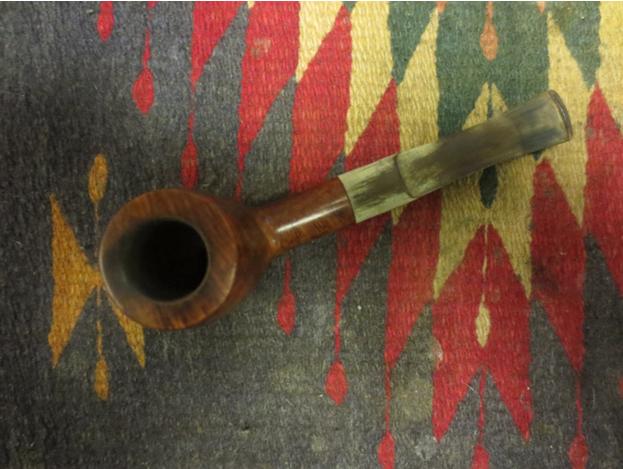
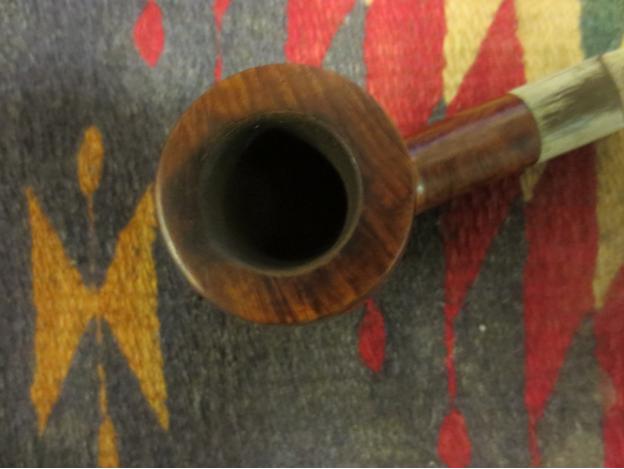
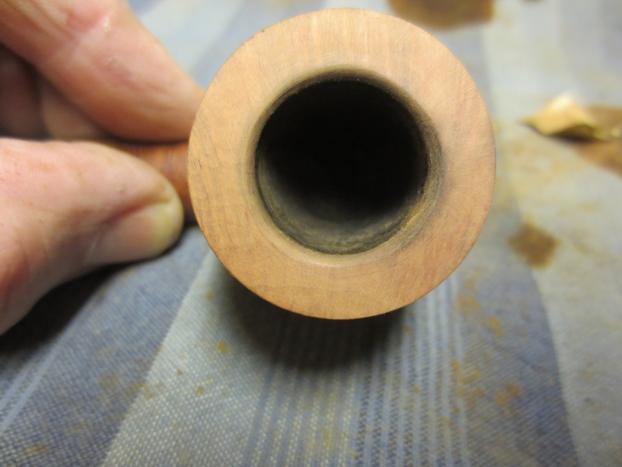
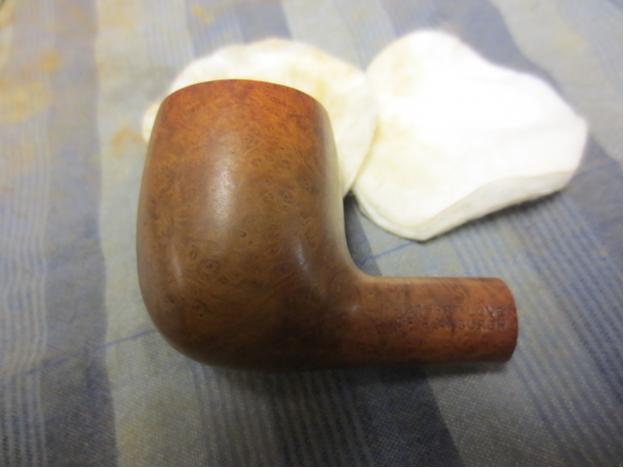
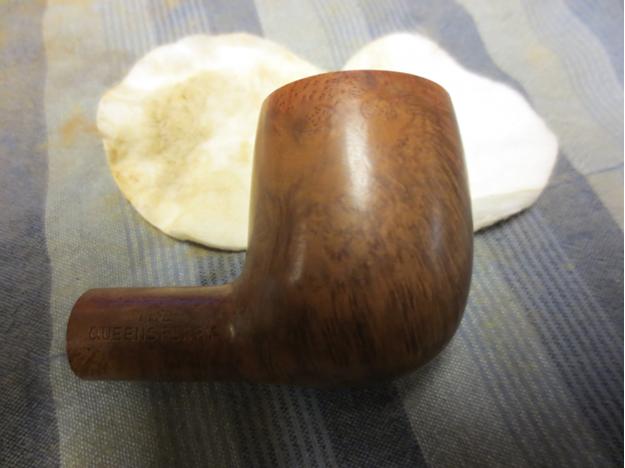
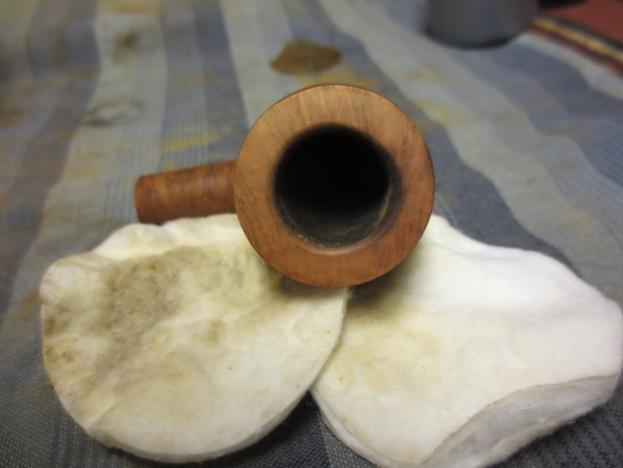
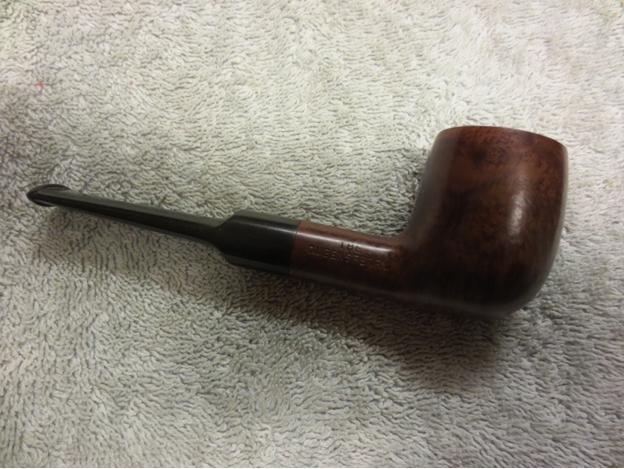
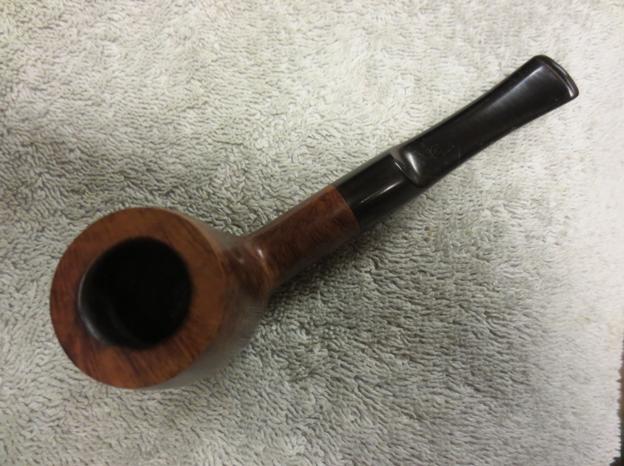
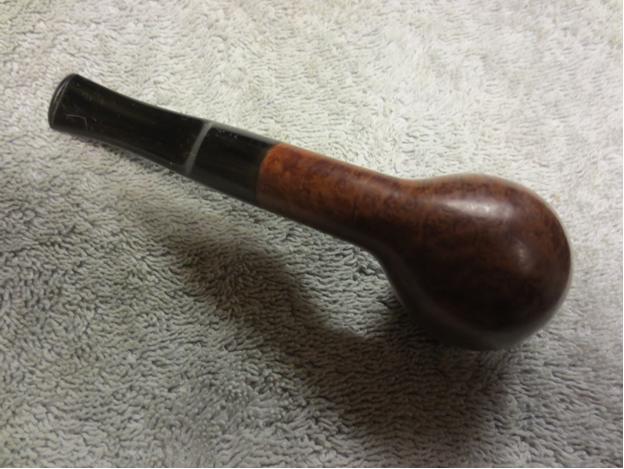
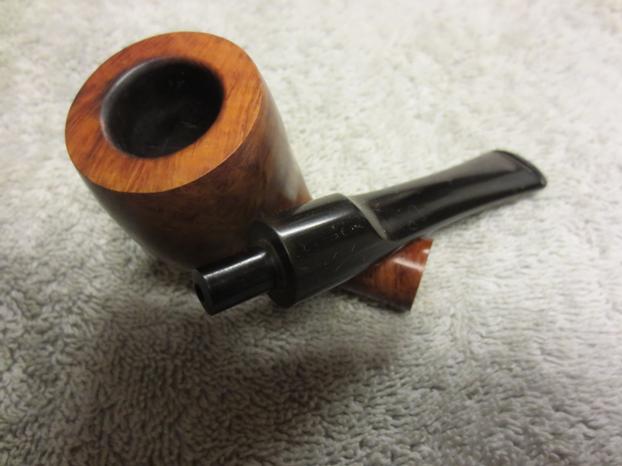
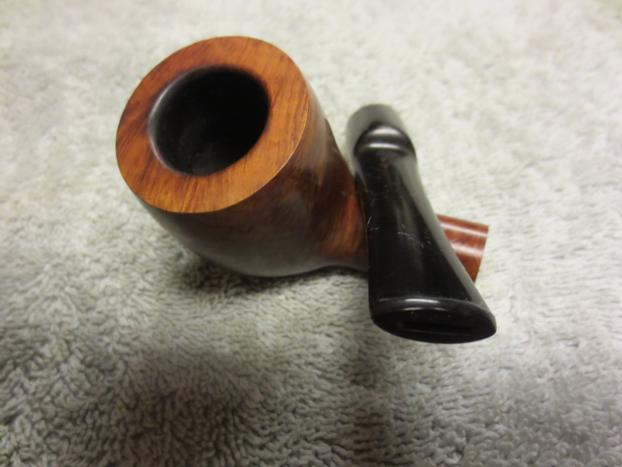
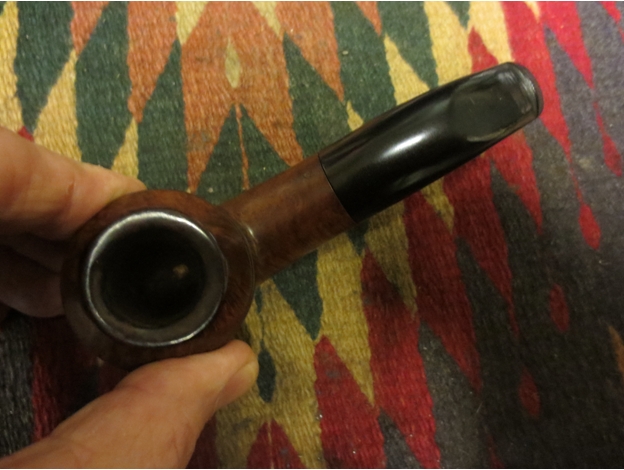
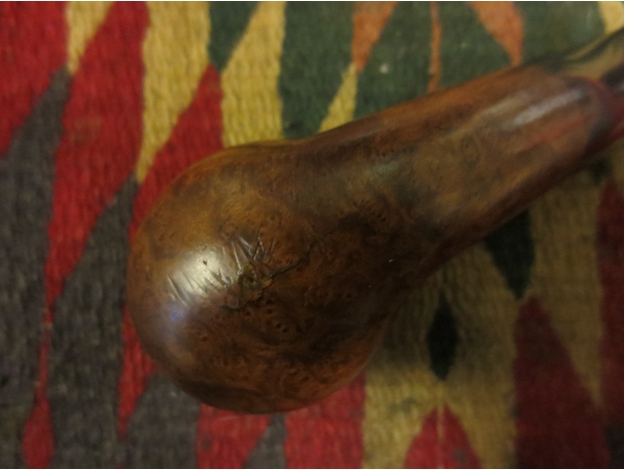
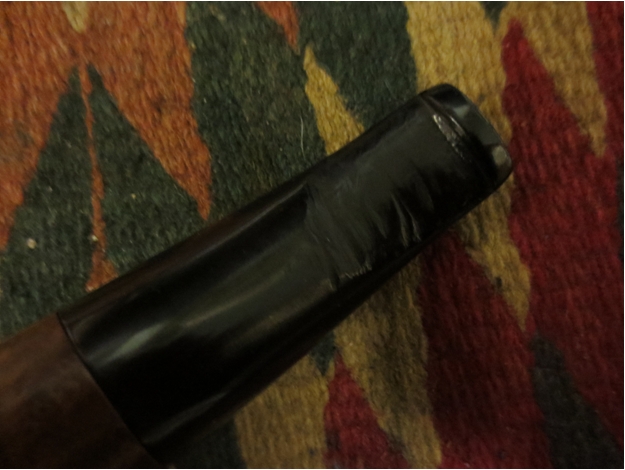
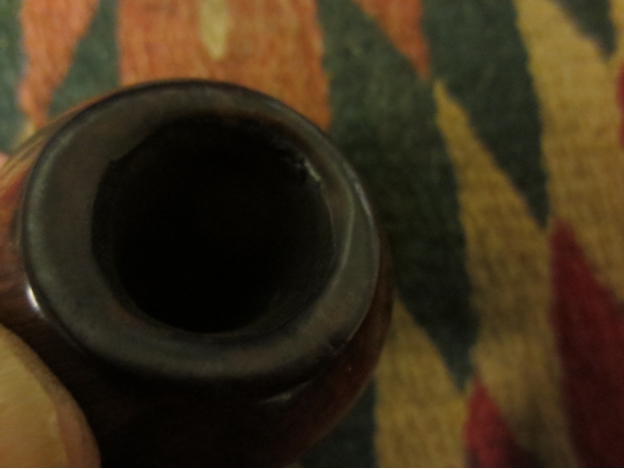
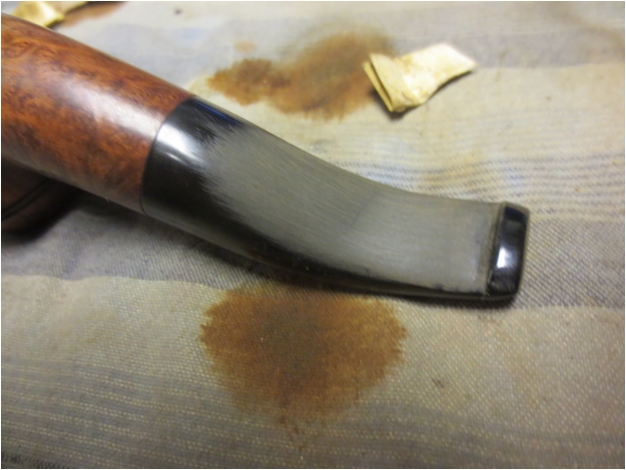
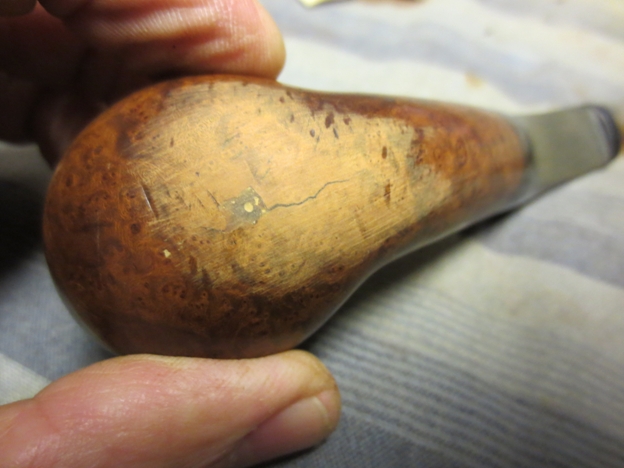
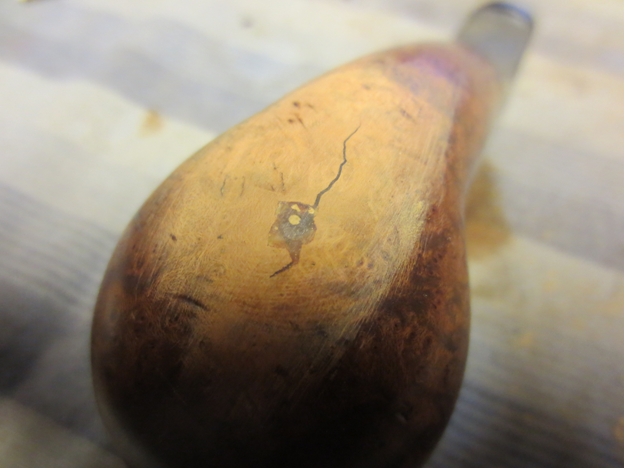
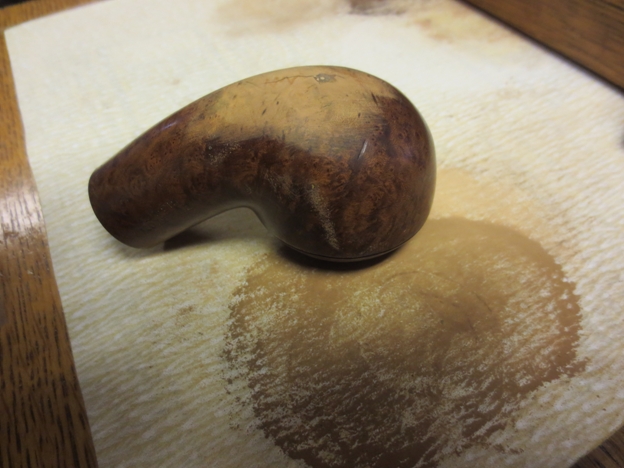
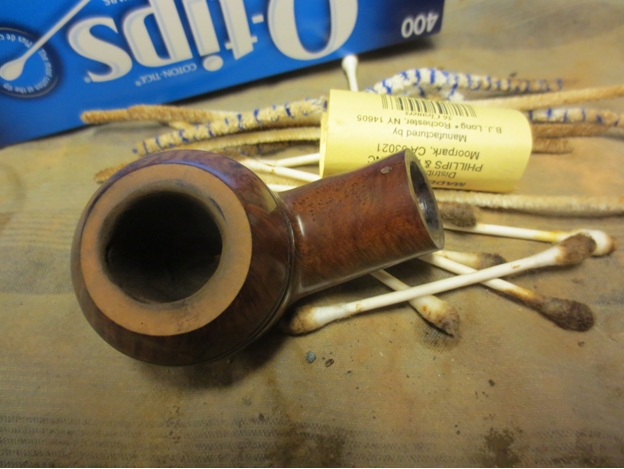
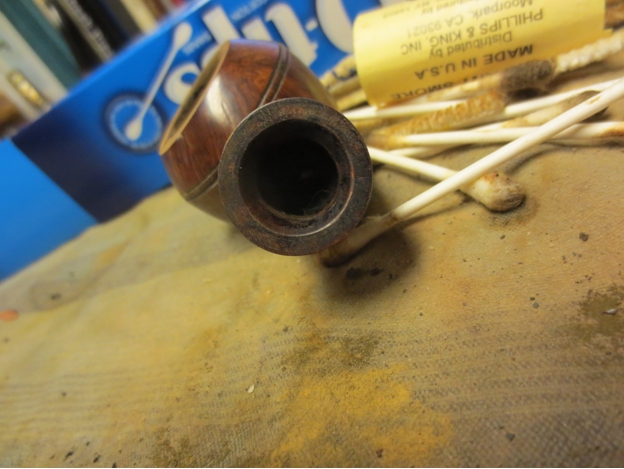
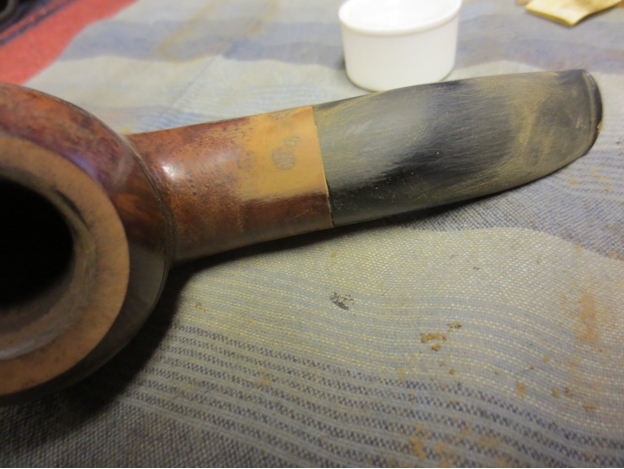
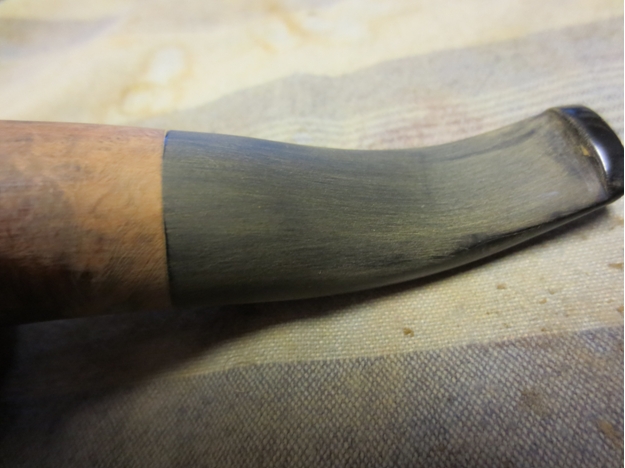
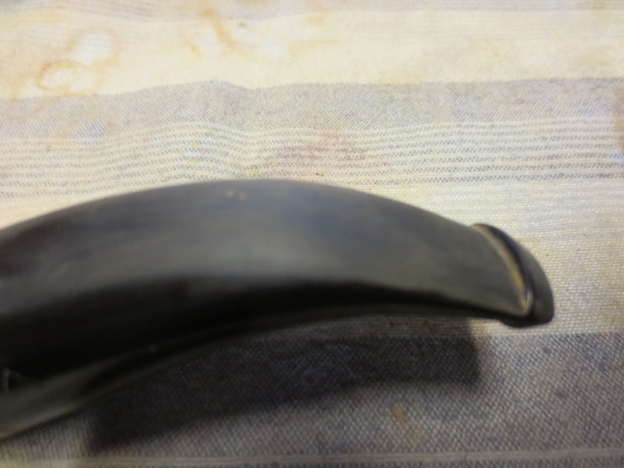
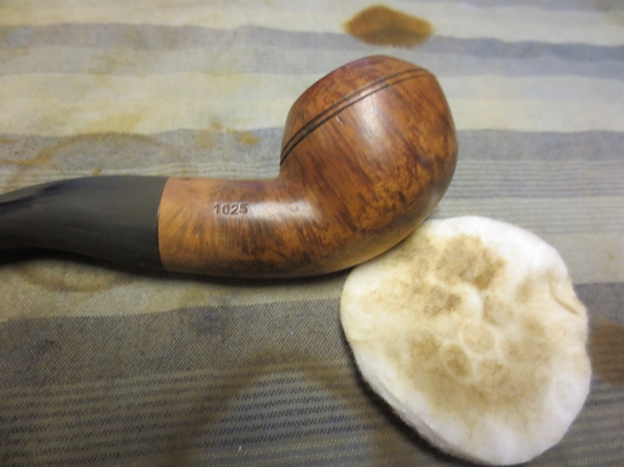
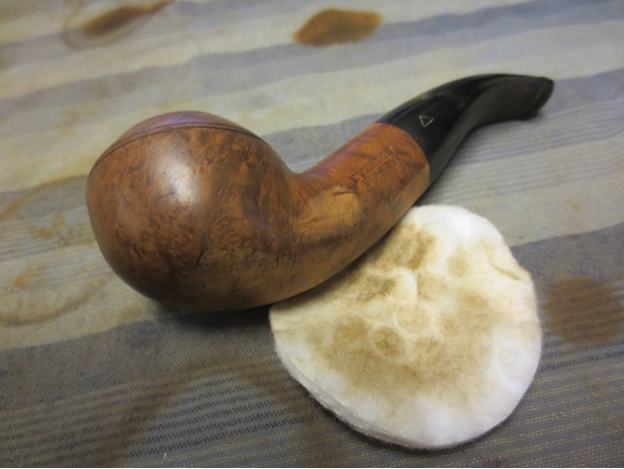
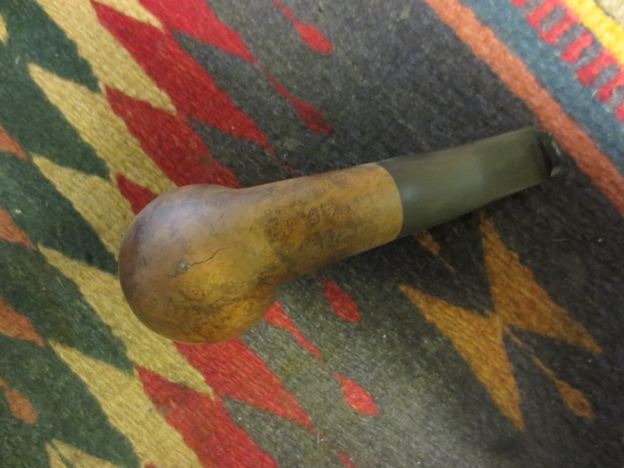
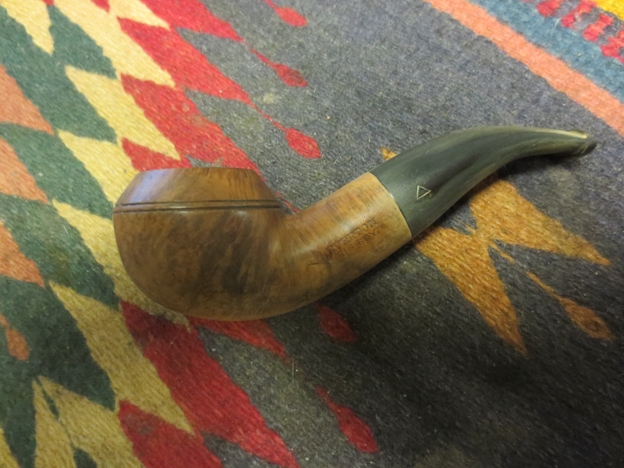
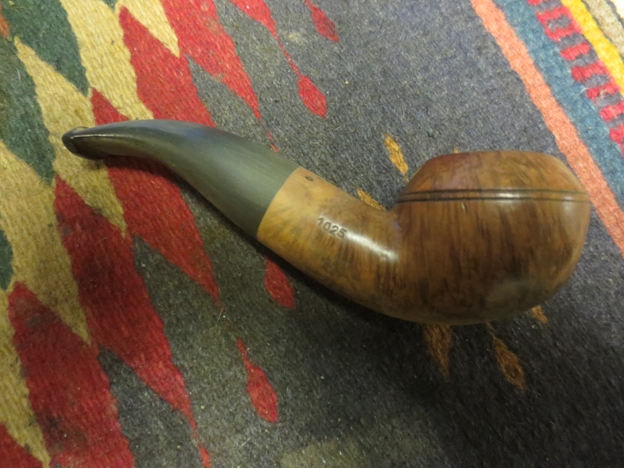
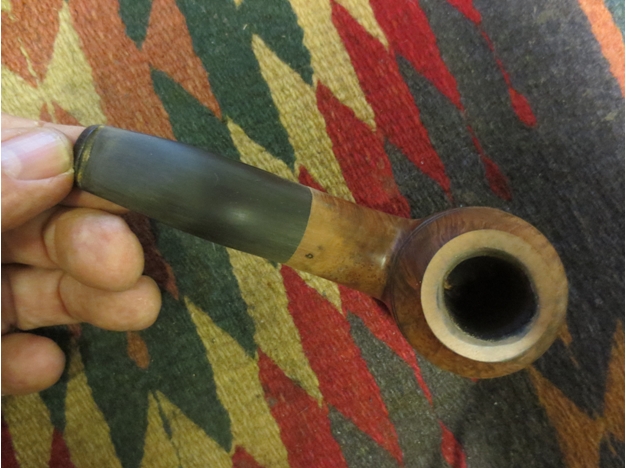
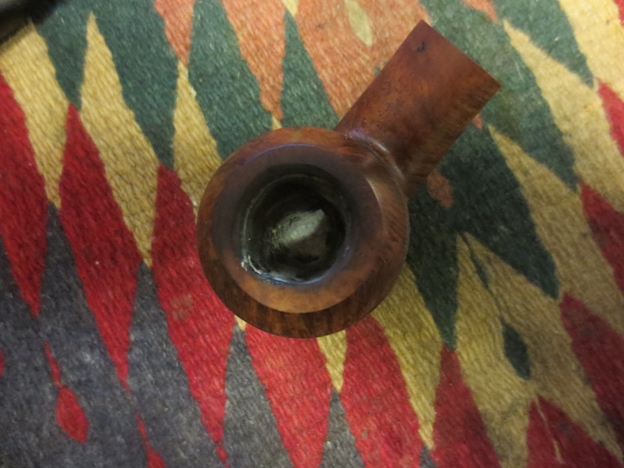
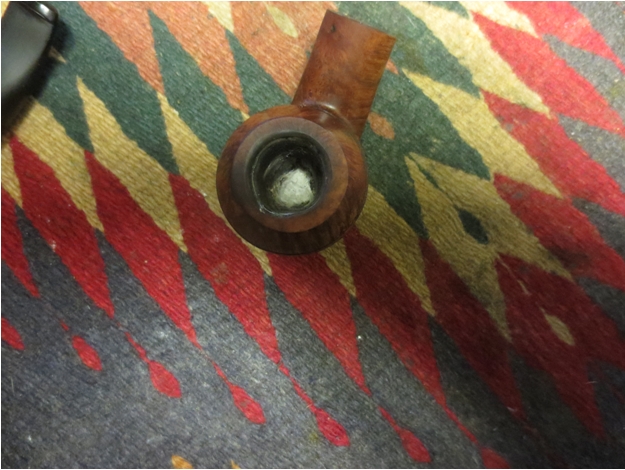
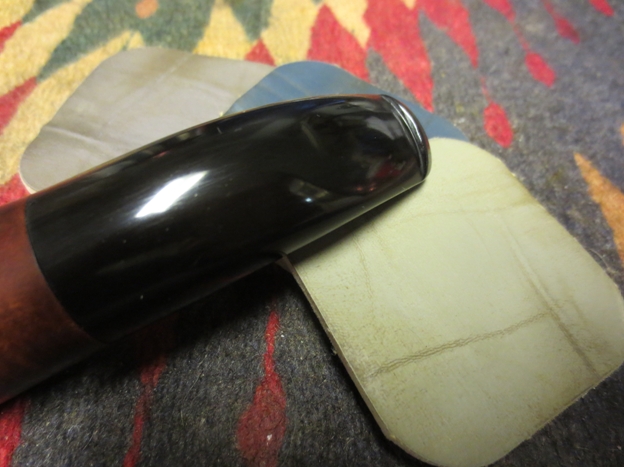
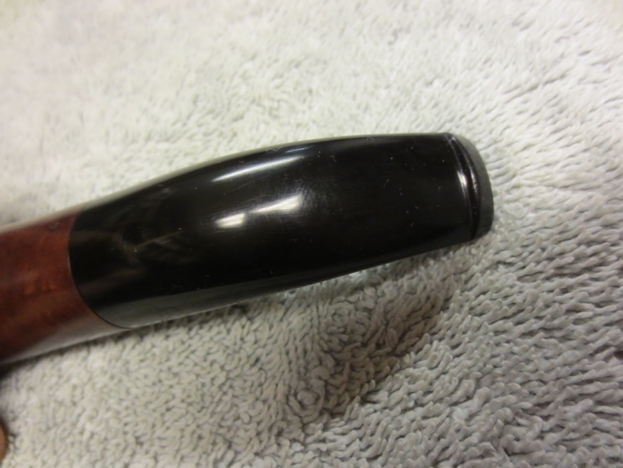
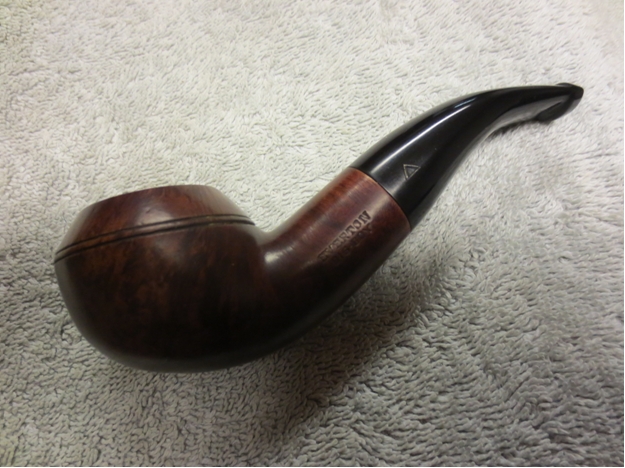
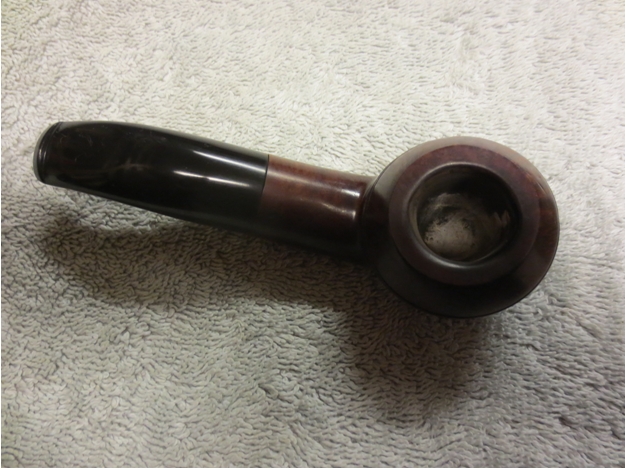
When I saw this old pipe on eBay something about it caught my eye. I could see that it was structurally sound. There were no cracks or significant problems with the bowl or shank. The rim was dirty and the bowl very caked but there did not appear to be any damage to the surface of the rim. The outer edge had been tapped out a few times and showed some minor denting around the bowl. There were some gouges/scratches on the left side of the bowl. It looked as if a sharp instrument had scored the briar. There were some dark stains on the briar that easily could have been burn marks but did not appear to be so from the photos. These stains were on the underside of the shank near the junction of the shank and stem on the left side, on the lower right side of the right side and on the lower left side of the front of the bowl. It looked like stains in the grain rather than burns in the photos so I took a chance on it. The stem looked like it was grey/silver Lucite in the photos and that also intrigued me. The tobacco juices had stained the airway dark. Other than that the stem appeared to be undamaged and would be a pretty easy clean up.
Harlequin1

Harlequin2

Harlequin3
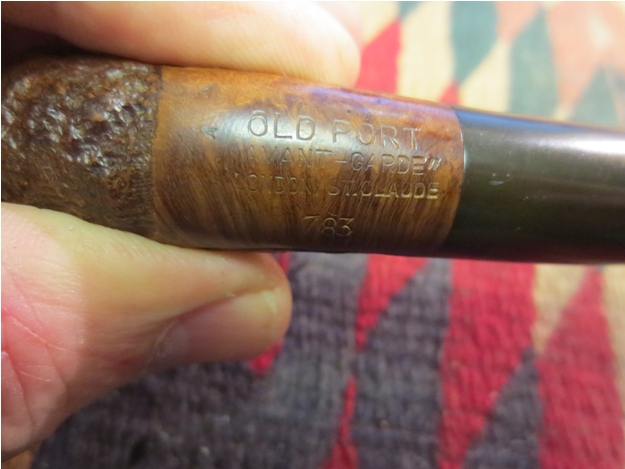
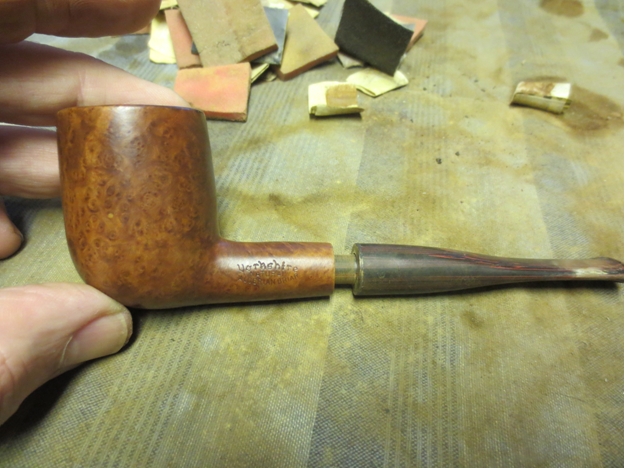
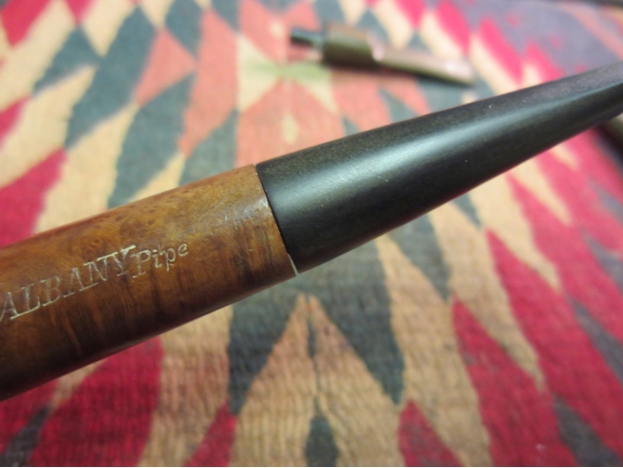
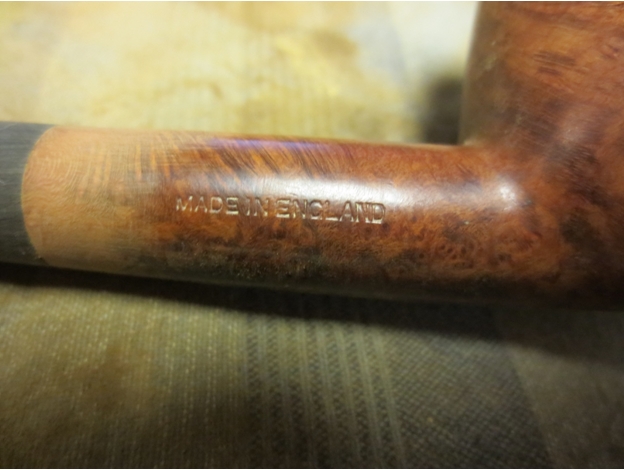
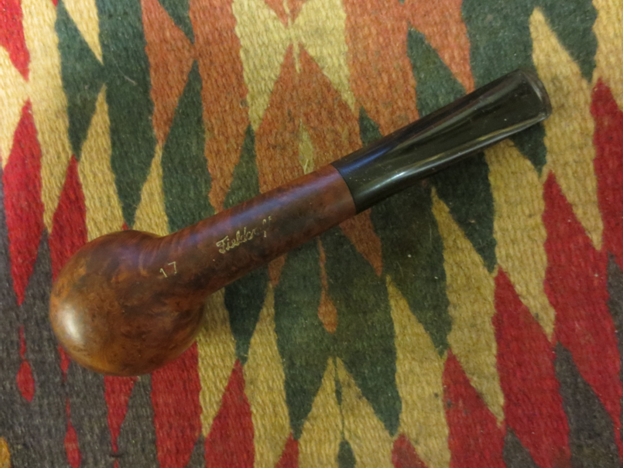
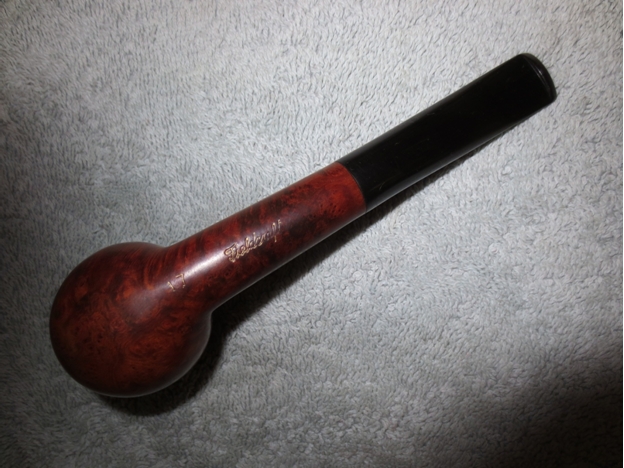
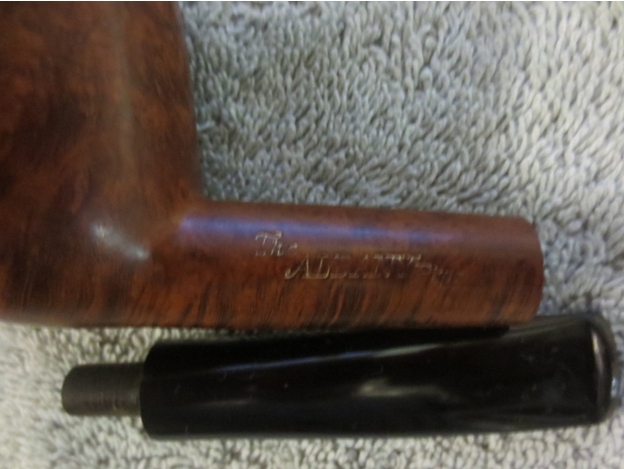
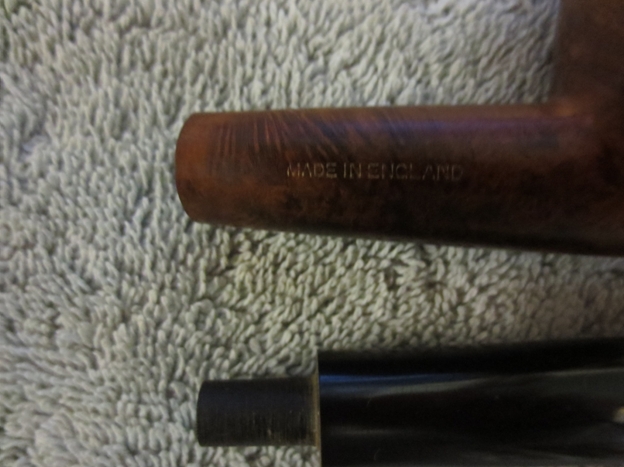
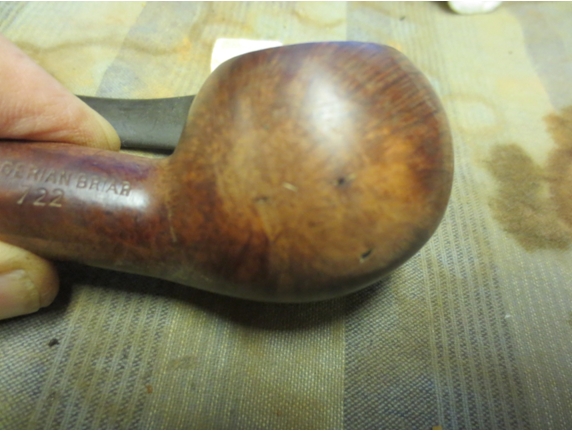
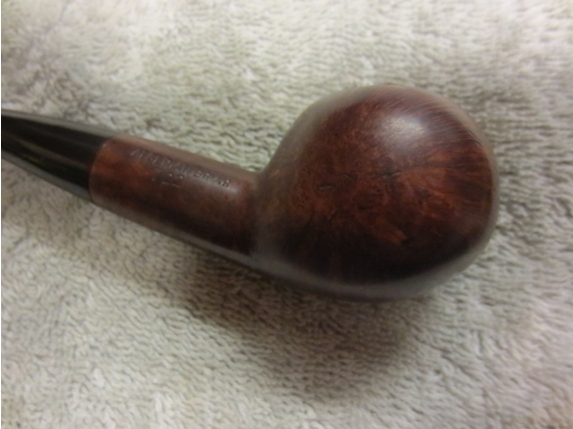
The stamping on the shank was the mystery to me. I had never heard of Harlequin pipes and this one was clearly stamped Harlequin in block letters over Made in England. I wanted to see what I could find out about the brand so I went to my usual sources of information. I checked in “Who made that Pipe” by Wilczak and Colwell and “Pipes Artisans and Trademarks by Lopes to see if either of them identified the maker. Both books had nothing listed for the brand. I went on the British Trademark site and read through many of the listings for Harlequin and found that the name was used by many companies for things from wallpaper to graphics design. There were lines of greeting cards, children’s toys and clothing all bearing that name. I found nothing listed that hinted that the pipes were a registered name. I posted on several online forums that I frequent to see if anyone had any ideas. Several folks on the forums recalled that Gallaher’s Tobacco Limited in Ireland had made a tobacco for years called Harlequin. I did some research to see if they had made pipes.
Harlequin4
As I dug through various sites on the hunt for information I received some responses on the forums. One person responded that several English tobacco brands also sold pipes – St. Bruno for one did that. Another respondent on Smokers Forums, Chris (flatticus) posted a couple of links to Gallaher’s that confirmed that they had not only made tobacco products but had made pipes or had them made. He included this information:

Ok, so Gallaher’s made at least some pipes into the early 70’s. And according to this link: http://books.google.com/books?id=LAO…20pipe&f=false

They made a Balkan Sobranie pipe. Or at least intended to enough to register the trademark, and along with the trademark for the tobacco itself. Certainly adds a bit of credence to the idea of a tobacco and pipe sharing the same brand name and stamp.

I have included the information cited above from the link to Google books – the Kenya Gazette and have posted it below. In correspondence from E.G. Bunyassi, Assistant Registrar of Trade Marks he clearly states under the heading of Balkan Sobranie that Gallaher’s Limited, a company organized under the laws of the UK of Great Britain and Northern Ireland had made cigarettes, pipe tobacco and pipes.
Gallaher pipes
I asked on the forum whether anyone knew whether the company made pipes. Chris (flatticus) responded again with the following information:

Interesting question, I don’t honestly know, but Gallaher’s used that trademark for like 70 years, and they were a big, big company. Actually from Northern Ireland, and had the biggest tobacco factory in the world in 1896 in Belfast, didn’t completely disappear until they were bought out by Japan Tobacco in 2007, but before that had a distribution conglomerate with RJ Reynolds for their cigarettes and were pretty gigantic. But they didn’t let the Harlequin mark until at least after 1963, when they last registered it. If I had to guess, they probably let it die after 1969 when American Brands, who I think owns Lucky Strike and similar brands, bought them out. They let the mark expire in 1980, but I see no record of anyone else buying it, and apparently it’s still available.

So, blindly guessing, I’d be surprised if anyone had the guts to use the same mark in a same or similar industry other than Gallaher’s. At least not in Ireland or the Commonwealth. But, that said, I can’t find a record or advertisement suggesting they ever made a pipe. However, I did find this thread, containing a quote from Gallaher himself talking about making pipes as a possible future avenue to address the “aging” nature of pipe smokers. http://christianpipesmokers.net/modu…wtopic&t=24081

Perhaps this was part of the “pipe renaissance” project he was talking about, made to get new pipe smokers interested. I checked harlequin ads, there a few vintage ones out there in images, but none of them referenced a pipe, just the tobacco. But the idea of a free pipe with tobacco, or at least a cheap or, as he put it, “disposable” pipe does seem to fit nicely with his intention there. Any way you slice it, though, it’s a nice bit of mystery to ponder. One of my favorite things about estate pipes, hands down.

In another link there was information on the Gallaher Company. I copied that information and have posted it below. It makes an interesting read in terms of history of this old brand. I have one chunk of Gallaher’s Irish Roll Cake here that is a good strong smoke. I also have some of their other tobaccos in my cellar but sadly it is no more. I think the likelihood is that the Harlequin pipe was made by them and matched the Harlequin Tobacco blend they sold.
Galahers1

Gallahers2

Gallahers3

Gallahers4
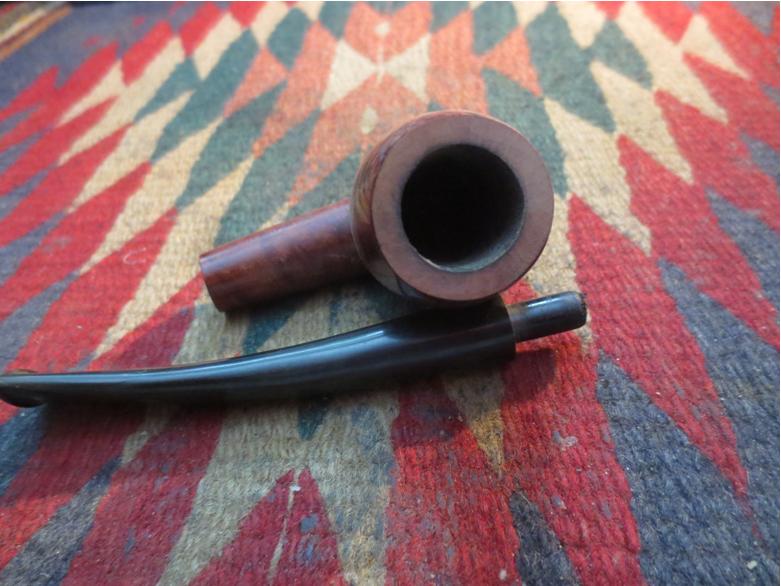
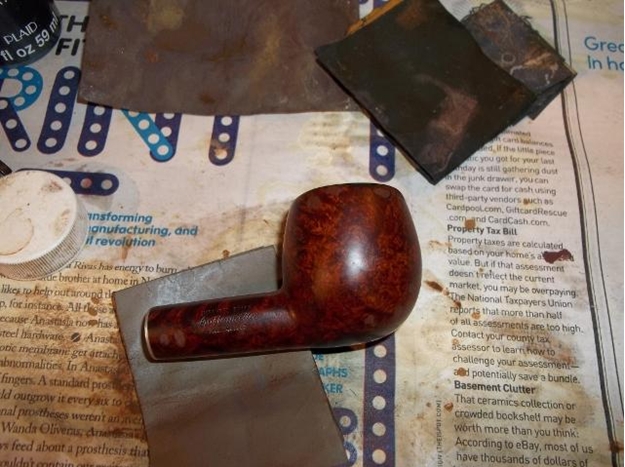
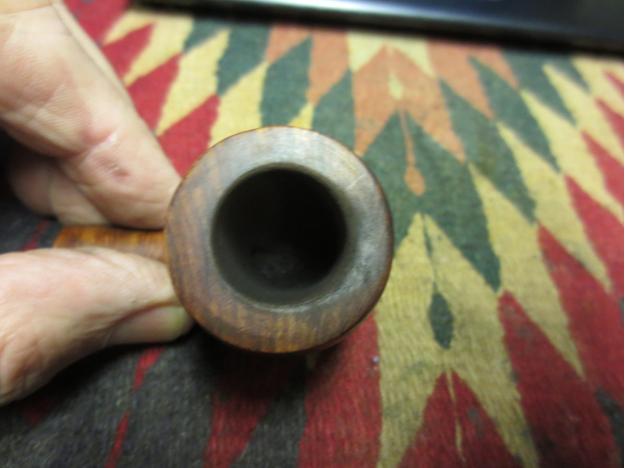
Once the pipe arrived I unpacked it and took it to the work table to begin the clean up. I was surprised that the stem was not grey but in real life almost a light green with heavy black tars in the airway. There were also some tooth marks on the top and bottom of the stem that would need to be repaired. The fit of the stem to the shank was snug and smooth. The bowl was badly caked and the rim covered with thick tar. The bowl had some deep gouges that had appeared in the photos on eBay but they were not as deep as I expected. The grain was far better than I expected. Underneath the dark marks, which appear to be ink stains rather than burn marks was some beautiful cross grain and birdseye as well as mixed grain. It would look beautiful when it was cleaned up and refinished. There were several spots on the briar that had large sticky spots of a glue-like substance.
IMG_6195

IMG_6196

IMG_6197

IMG_6198
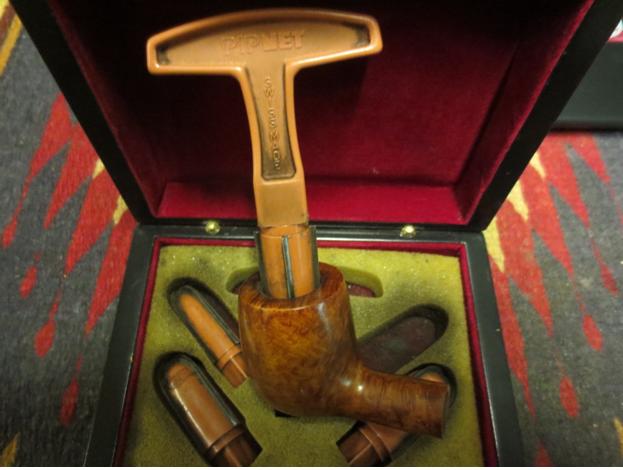
I reamed the bowl with a PipNet reamer to remove the cake. It was surprisingly soft and crumbly. I took it back to a very thin cake to form the base for a new cake.
IMG_6199
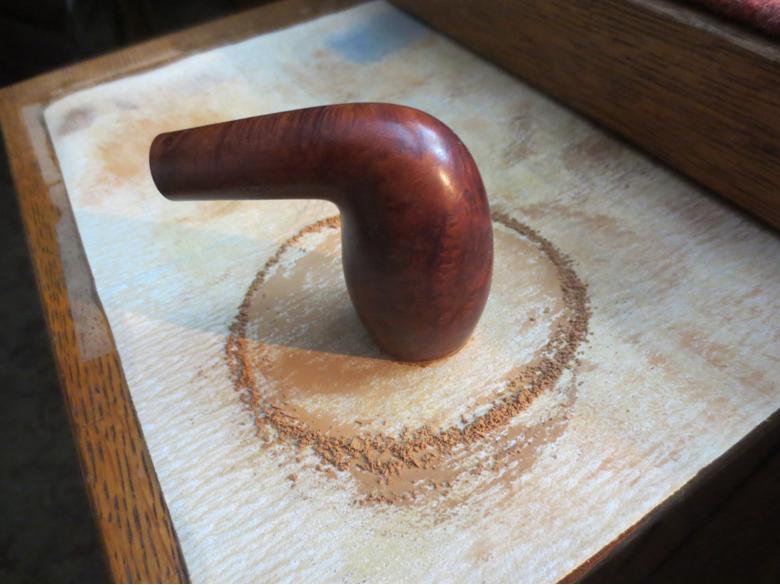
I set up a topping board with 220 grit sandpaper to clean off the build up on the rim. It was hard and no matter how hard I scrubbed it, it would not come off. The outer edges of the rim were also damaged from knocking out the bowl after smoking. The light topping would smooth out the edge damage and minimize the effect without changing the look of the bowl.
IMG_6200

IMG_6203
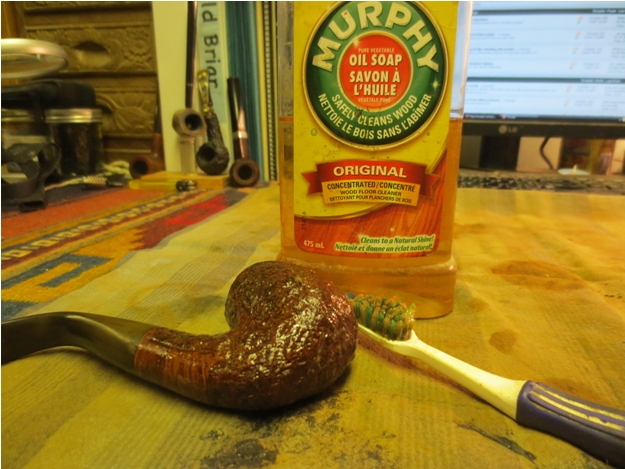
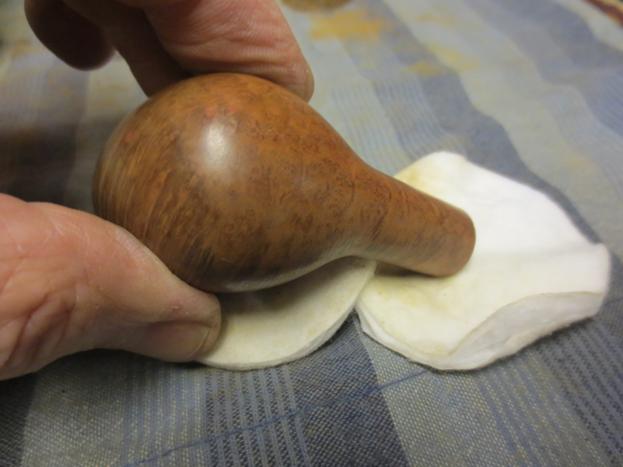
I scrubbed the exterior of the bowl down with acetone on cotton pads to remove the ink and sticky build up on the finish. I also decided to remove the finish so I scrubbed it until the majority of the finish was gone.
IMG_6204

IMG_6205

IMG_6206

IMG_6207
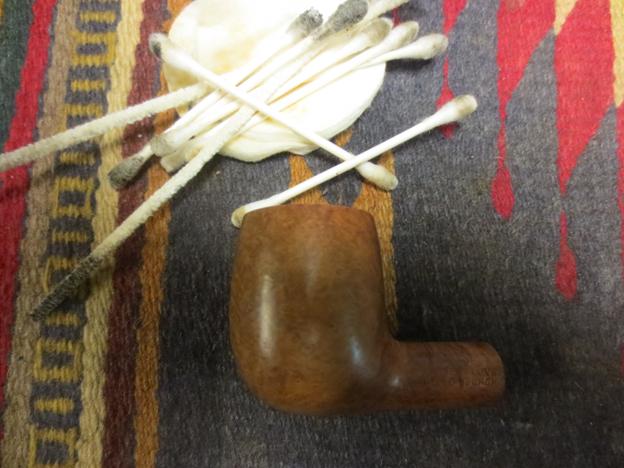
I cleaned the stem with cotton swabs and pipe cleaners and isopropyl alcohol. I was able to scrub out the airway and the slot in the button removing the stains. I also scrubbed the end of the tenon to clean out the staining there. I scrubbed the mortise with alcohol and cotton swabs as well until they came out clean. The internals were cleaned and smelled fresh rather than smelling like old aromatic tobacco.

Once it was clean, I tried to steam out the gouges in the bowl but they would not lift. I could have sanded them out but that would have changed the profile of the bowl so I opted on repairing them with super glue and briar dust.
IMG_6212
I sanded the repairs with 220 grit sandpaper and then followed that by sanding with medium and fine grit sanding sponges to blend the surface of the fill with the rest of the surrounding bowl. After sanding the fills I sanded the entire bowl with the medium and fine grit sanding sponge to remove the rest of the finish on the bowl. I carefully worked around the stamping so as not to damage it.
IMG_6213

IMG_6214

IMG_6215
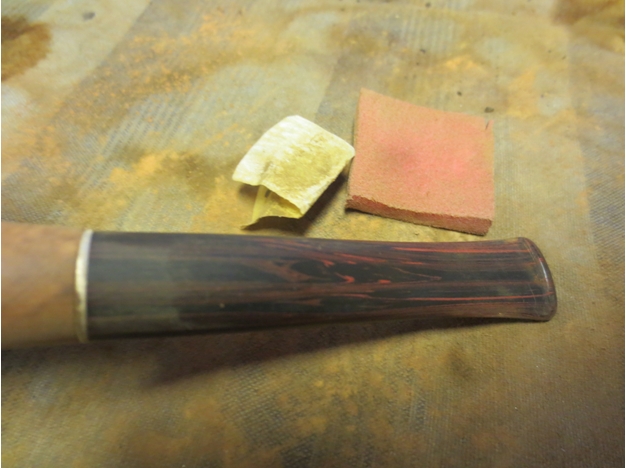
I used clear superglue to repair the deep tooth marks on the top and bottom sides of the stem near the button. The bottom repair can be seen in the photo below. I later sanded it with 220 grit sandpaper and the sanding sponges to blend it into the stem surface.
IMG_6216
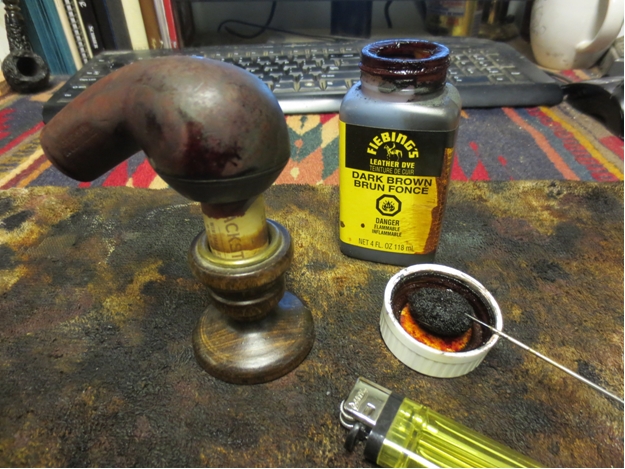
I decided to use the contrast stain process I have been working on to highlight the grain on this beautiful pipe. I gave it an under coat of black aniline stain. I used a Delrin tenon for a handle in the shank to be able to turn the bowl while I was staining. I applied the stain, flamed it, applied it and flamed it again until the coverage was even.
IMG_6217

IMG_6218

IMG_6219

IMG_6220
When the stain had dried I sanded it with a medium grit sanding sponge to remove the surface stain while leaving the grain highlighted with the black. I wiped it down repeatedly with isopropyl alcohol on cotton pads to check and see what the grain was looking like after sanding. This process took far longer than the staining and initial preparation. I sanded and washed, sanded and washed the bowl and shank until the grain stood out against the briar.
IMG_6221

IMG_6222

IMG_6223

IMG_6224
I sanded the bowl with micromesh sanding pads – wet sanding with 1500-2400 grit to further remove the black stain that was stubbornly sticking in the angles of the bowl and shank. I then gave the bowl a top coat of oxblood stain. My thinking was that the contrast between the black in the grain and the red in the other portions of the briar would make the grain stand out.
IMG_6225

IMG_6226

IMG_6227

IMG_6228
When the oxblood stain dried I dry sanded the bowl with micromesh sanding pads to remove some more of the dark stain and make the grain stand out even more. I rubbed the bowl down with olive oil and used it as a medium for the sanding. It worked well to remove the darker areas of the bowl near the shank and along the top edge and rim.
IMG_6229

IMG_6230

IMG_6232
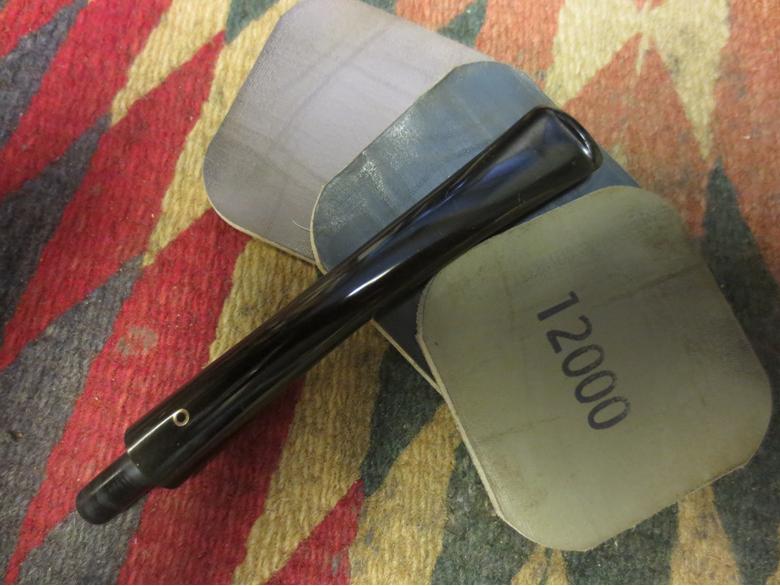
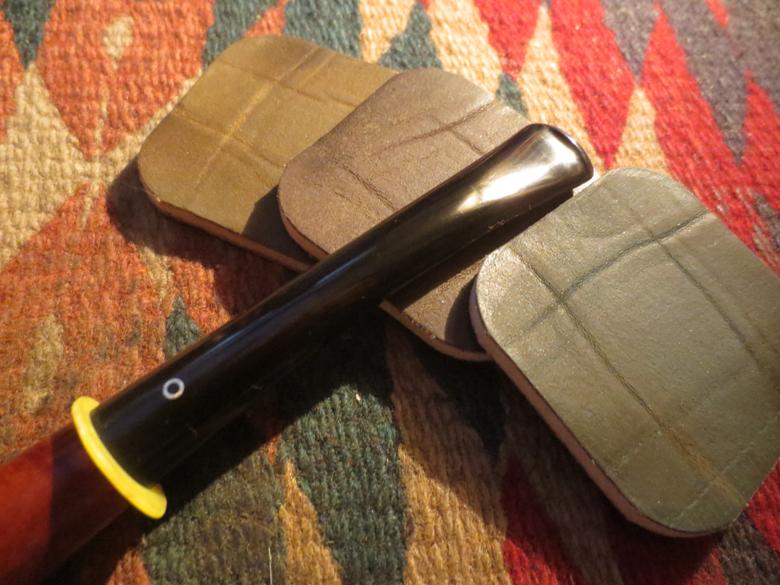
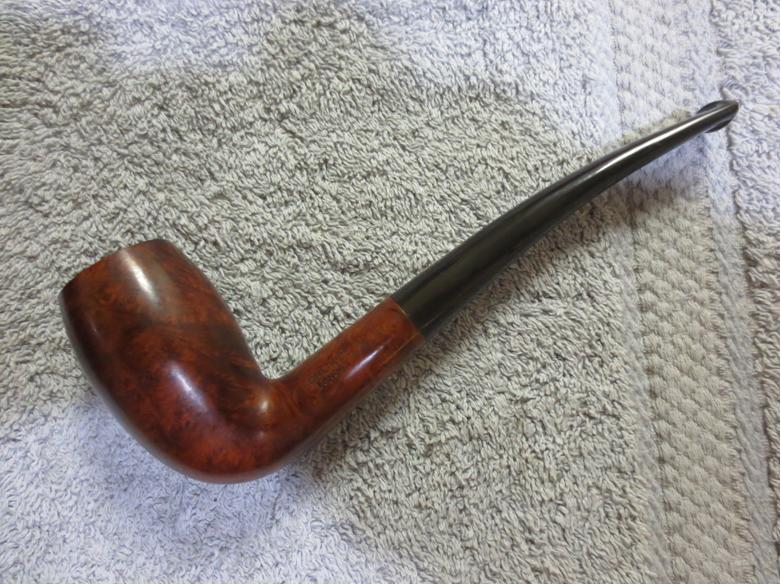
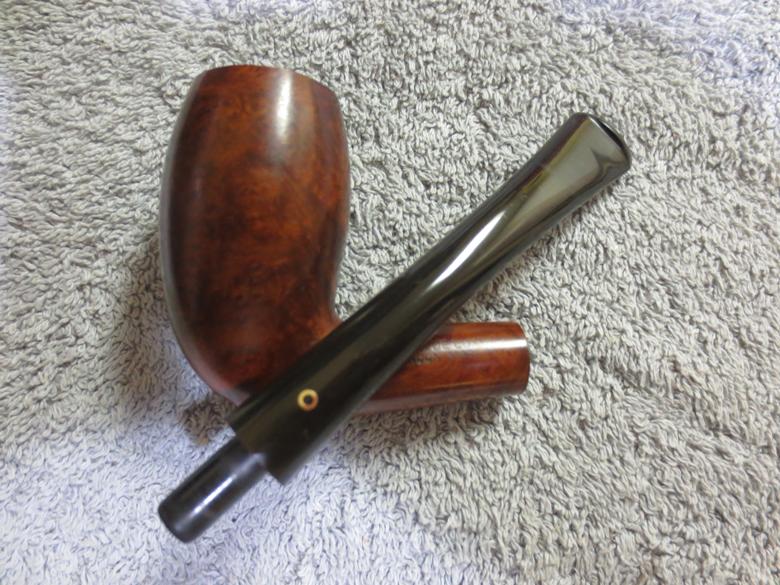
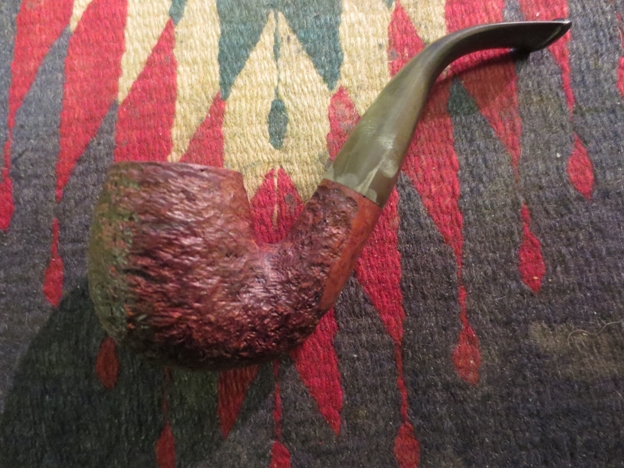
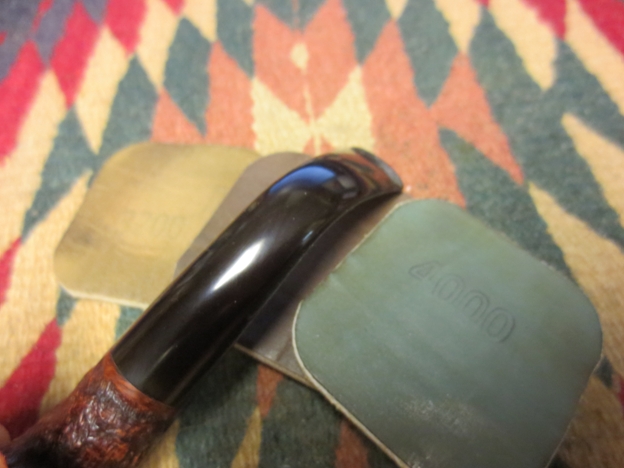
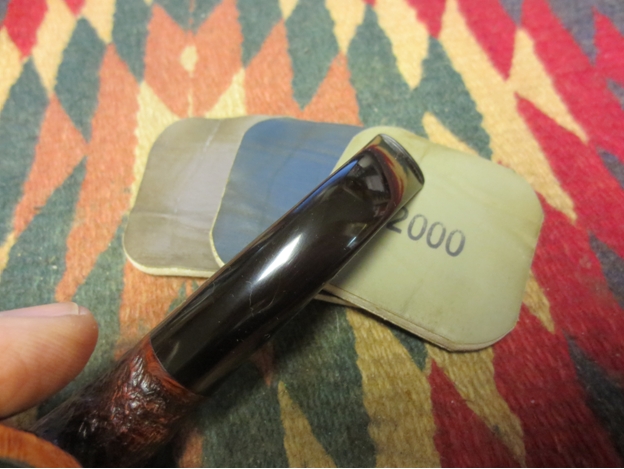
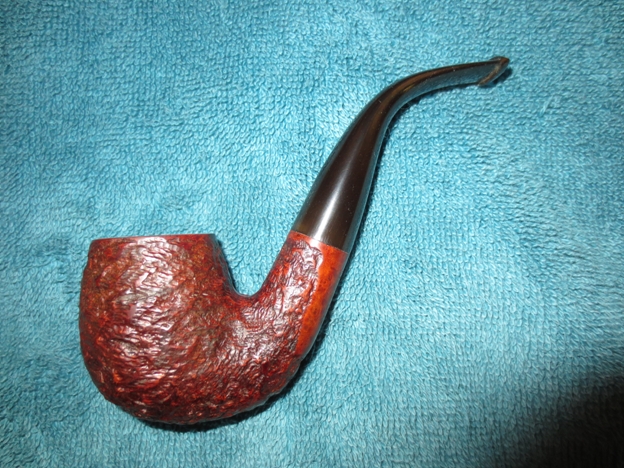
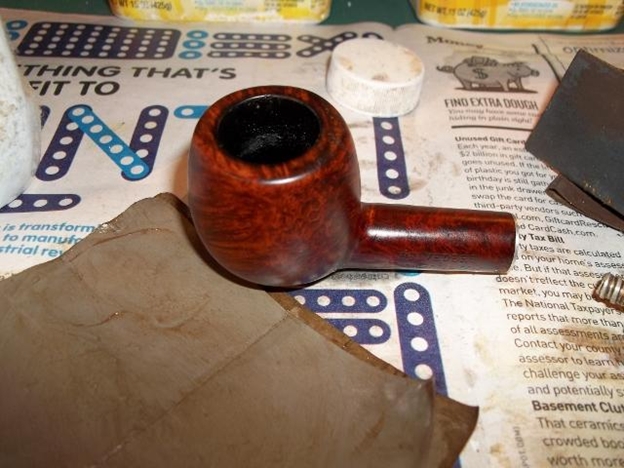
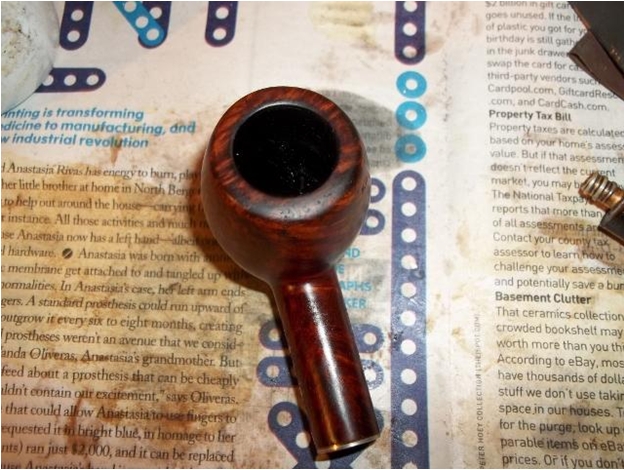
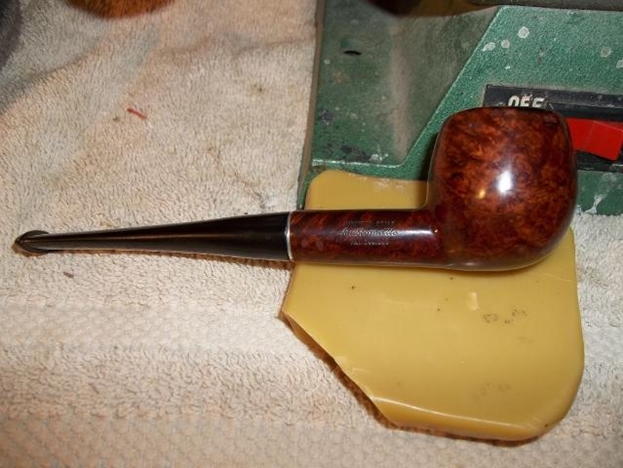
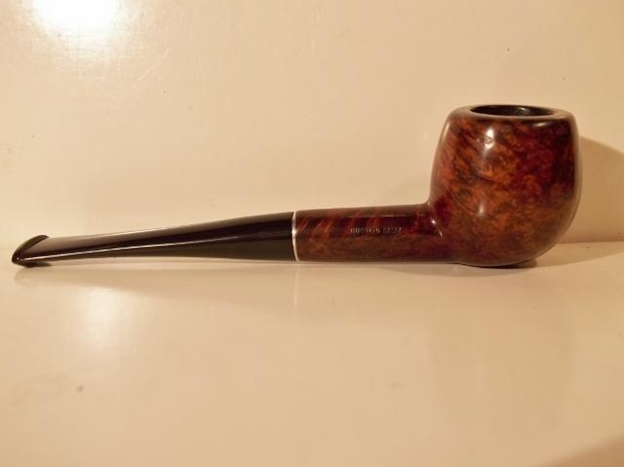
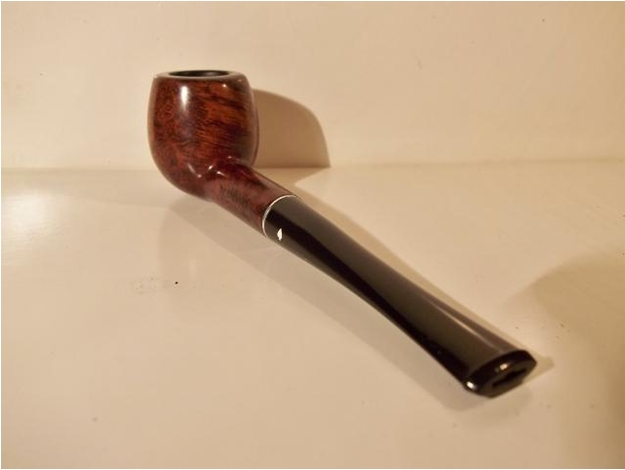
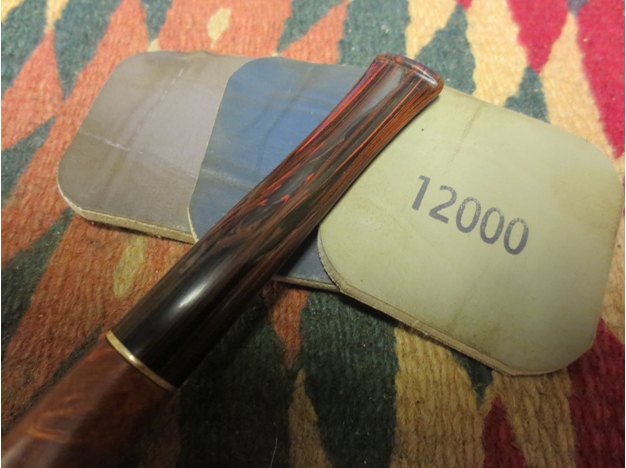
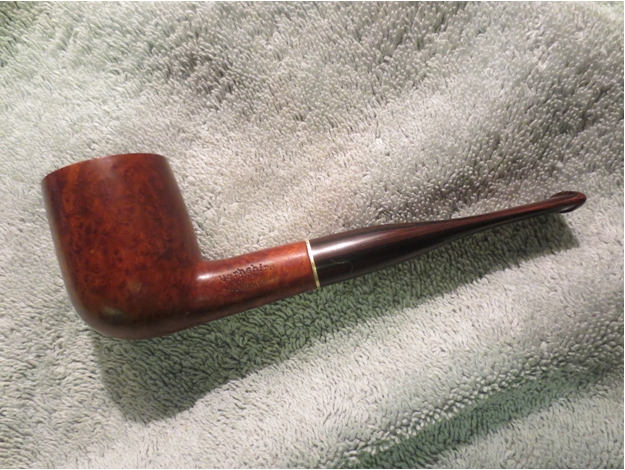
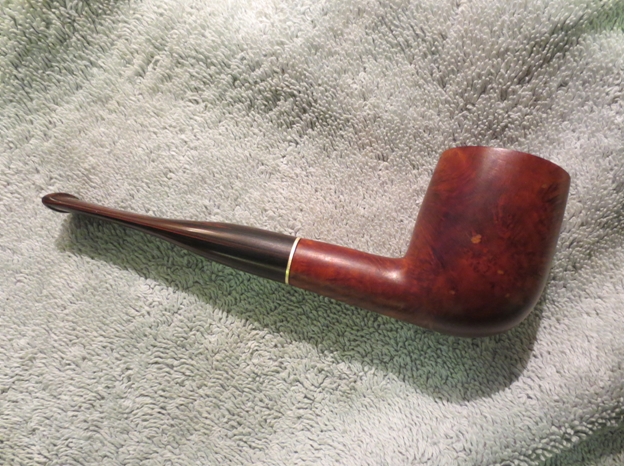
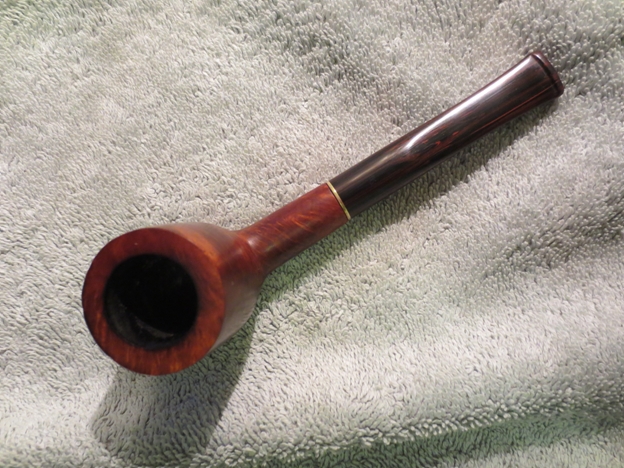
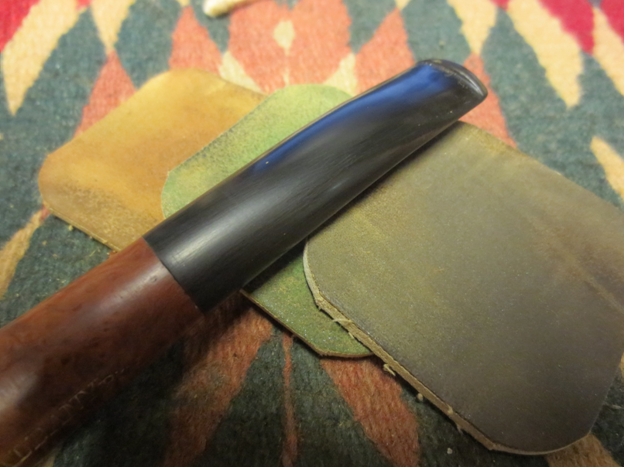
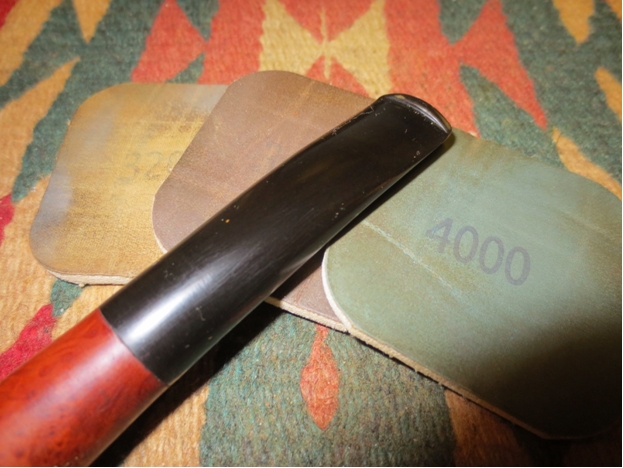
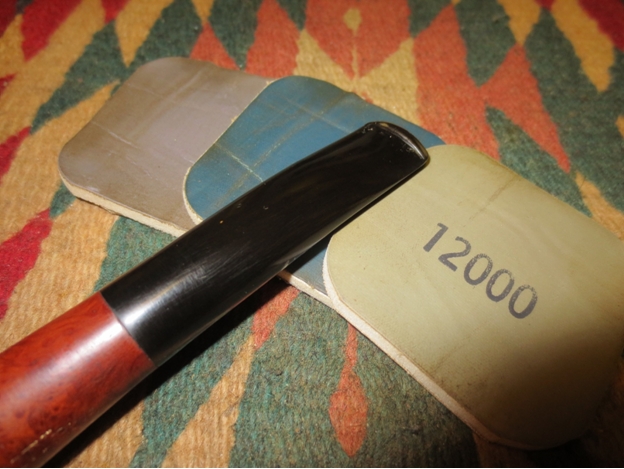
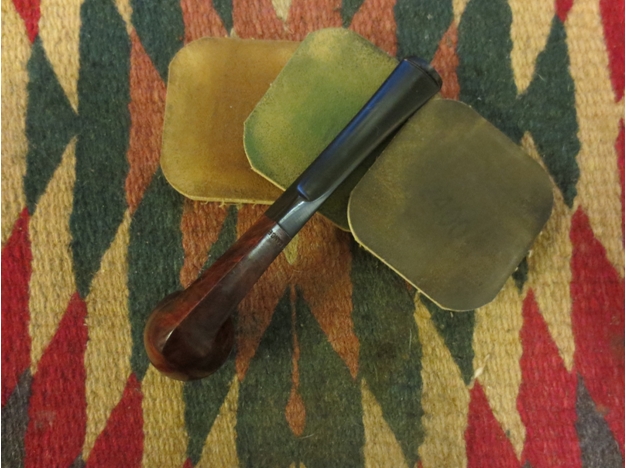
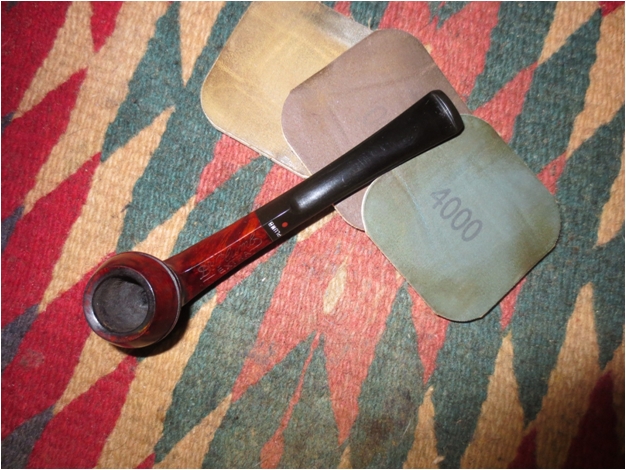
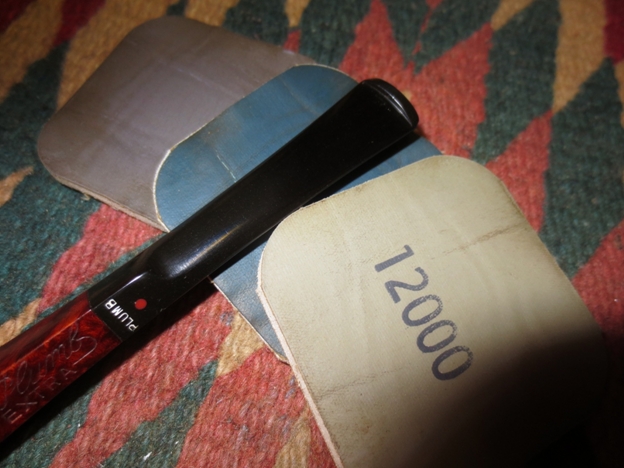
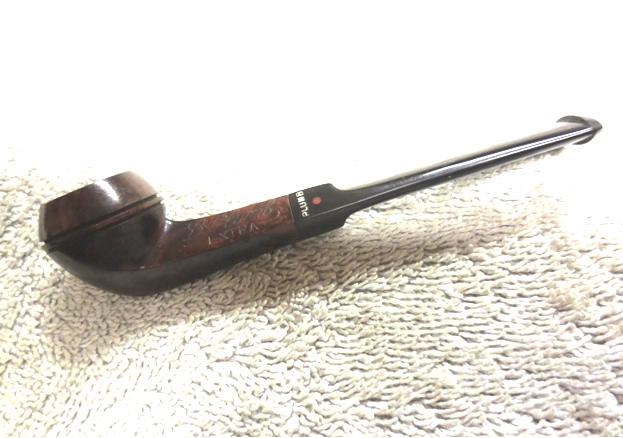
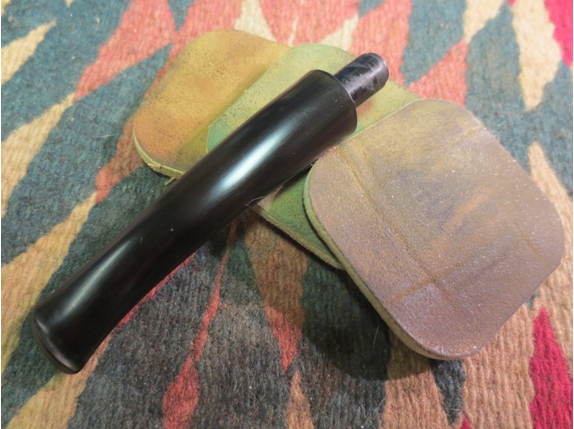
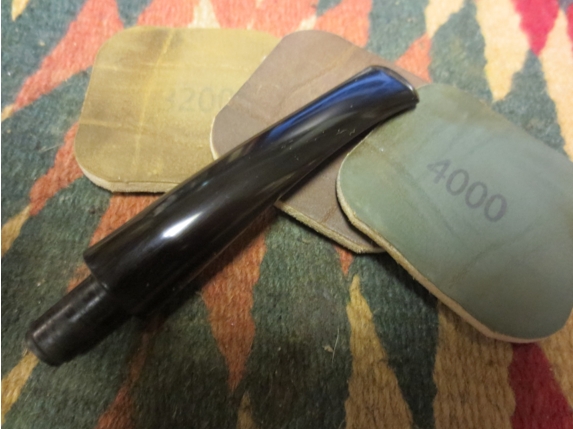
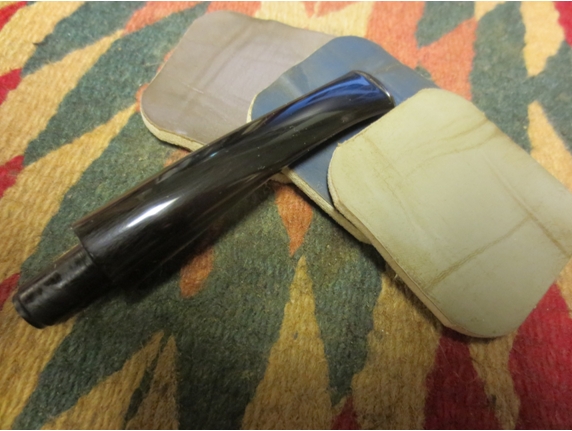
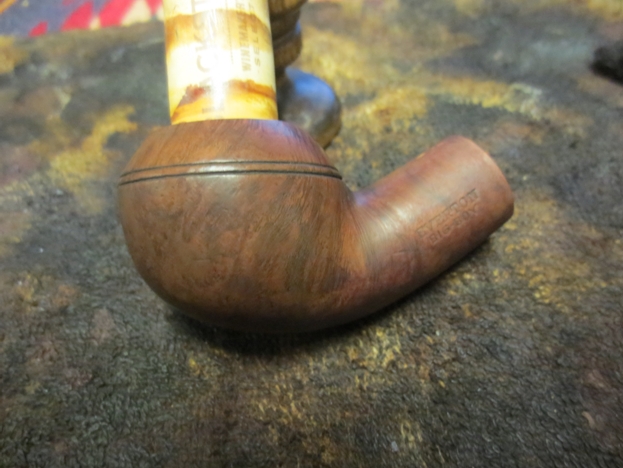
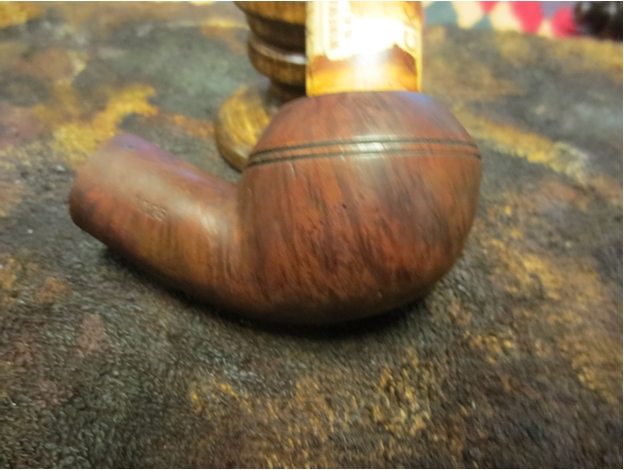
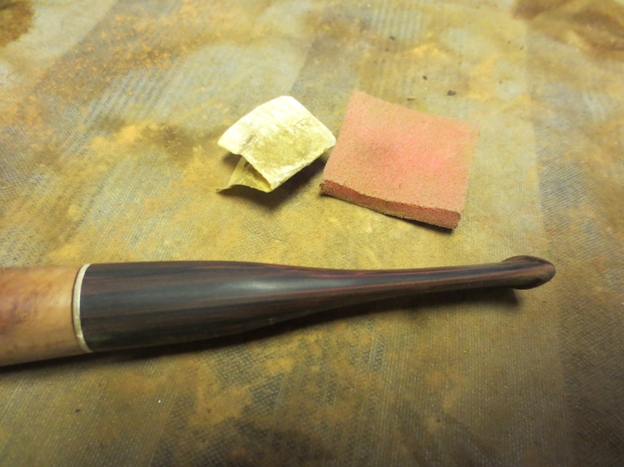
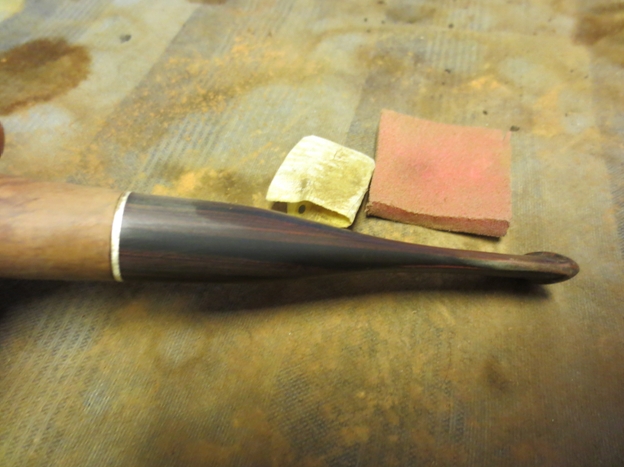
After sanding I took the pipe to the buffer and buffed the bowl and stem with White Diamond to polish the briar and the Lucite stem. I had previously sanded the stem repairs with the sanding sponges to remove the bump of the glue and blend it into the surface. I followed that with sanding the stem with all grits of micromesh from 1500-12000. I wiped the stem down with Obsidian Oil and then gave the bowl and stem multiple coats of carnauba wax to protect and polish it. I finished by buffing the pipe with a clean soft flannel buffing pad. The finished pipe is shown in the photos below. It is cleaned, stained and ready to smoke. I am really pleased with the finished look of the pipe. The yellow mother of pearl looking stem works well with the contrast stain on the bowl.
IMG_6234

IMG_6235

IMG_6236

IMG_6237

IMG_6238

Getting back in the saddle – AJ Verstraten


It is a pleasure to post another article by AJ Verstraten aka Bananabox-Ninja. It has been a while since he has been able to do any refurbs do to some health issues he had to deal with. It is great to know he is back and feeling much better. Glad to hear from you AJ and glad to hear you are healing. Thank you for taking the time to record your work for us to read and enjoy.

Greetings, it’s been a while since I was able to get behind my workstation and get some work done on the huge lot of pipes that are patiently waiting for a fix.
Some of you might remember my earlier piece in which I explained that I was home bound due to a motorcycle accident. Turns out I needed an operation to fix my cruciate ligament in my knee, this left me with a long recovery time but last week I was able to sit down and do four pipes that only needed some minor work to ‘flex my muscles’ so to speak.

A note about the pictures, as I did it outside in the nice spring weather there were still a lot of clouds and this makes some of the pictures quite dark.

These are the pipes I chose for cleaning:

Winsløw Grade E bought on ‘Marktplaats’ the Dutch version of Ebay
001 Winslow E group a
Chacom Silhouette a gift from a family friend who quit smoking years ago.
002 Chacom Silhouette a
Vibro Woodart acquired from a fellow forum-goer at the PRF.
003 Vibro Woodart a
Georg Jensen straight grain from the same friend as the Chacom.
004 Georg Jensen a
The procedure for all was the same.
Firstly I used hard bristled pipe cleaners dipped in 96%-proof alcohol. Afterwards the kettle would be inspected and cleared if necessary. After this I would set them aside and buff them one after the other.

The Winsløw is remarkable as it has only one dot on its mouthpiece instead of the two, I reached out to the Winsløw company about this but they didn’t reply. The pipe rather dull to clean as it was very well kept. I only cleaned the inside with the alcohol and that was it, the rest was nice and clean so I set it aside.
005 Winslow
The Chacom Silhouette was heavily used as was evident from the mouthpiece. It is made from swirling acrylic and you can see through it as they used clear acrylic in it. The black tar buildup took a lot of cleaners and the use of a new tool I acquired at a flea market.
006 Cleaning
The brown of the tar build up sits in the small cracks on the inside of the acrylic. These were formed by the precious owner who bit rather hard on his mouthpieces. I tried the ultrasonic cleaner but it wouldn’t budge. So I decided to keep it as is. (If anyone has a tip for me on that one I would be much obliged.)
007 Mouthpiece
Then it was time for the bowl, it had seen better days but there was no damage on the wood itself. So with the help of spit, a sock and the tool as shown earlier the coal layer was removed and the bowl was reamed with the reamer tool.
008 CS bowl
The Vibro Woodart pipe was the first one with an ebonite mouthpiece, so I set up the motor and abrasive wheel and let loose. It came out nice and black in the end.
009 Mouthpiece and motor
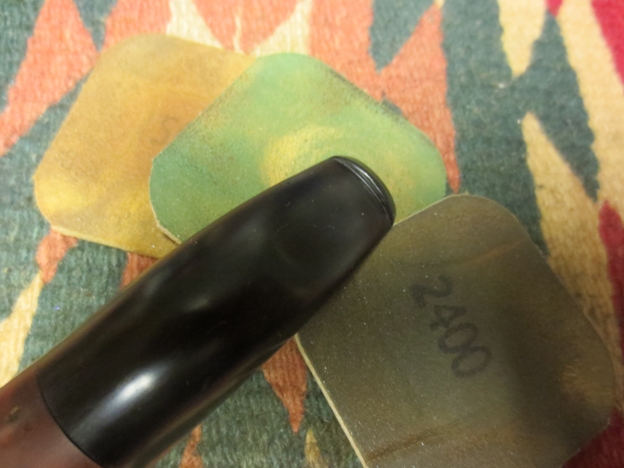
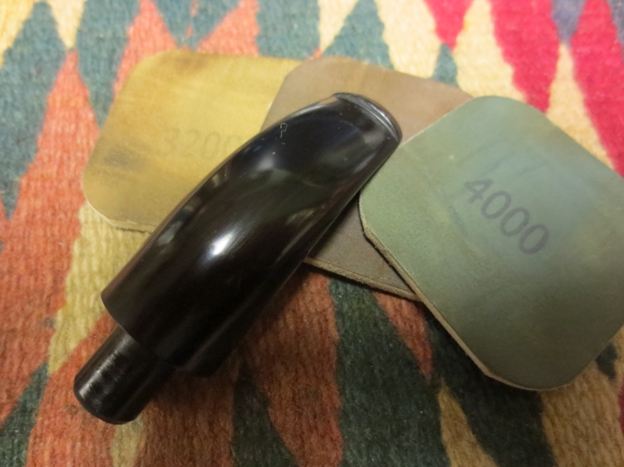
I noticed the mark in the mouthpiece was still visible so I used a correction fluid pen to fill it up and used the abrasive pads (8000 grit) to remove it gently.
010 colouring the letter
(The end result will follow)

I don’t have any pictures of the Jensen pipe as the pictures were all too dark. But I did the same as the Vibro pipe. Using the abrasive wheel and the correction fluid pen to get the logo back out again.

Then it was time for the buffing. Buffing with brown (1), white (2) and then with carnauba wax (3).
011 Buffing
Here are the final results, you can see the W on the Vibro pipe quite clearly and on the group shot the result on the Jensen.
012

013

014

015

016
In the end it was good to sit in the sun and once again get my hands into cleaning a nice pipe.
I always feel quite happy when a dull pipe with a heavily caked bowl turns into a nice shiny one that can be once again hopefully be used for many years to come.

A Hilson Meerlined Tall Dublin Reborn into a Briar Calabash


Blog by Steve Laug

I received this old briar bowl from a friend and decided to see what I could do with it. It was in pretty rough shape. The shank had been damaged and repaired with some kind of epoxy as the gel surface of the crack was hard as rock. The repair was actual the most substantial part of the bowl. The bowl had an amazing deep and craggy blast to it but the finish itself was worn. Fortunately the wear was not deep and the cragginess was not too badly affected. The rim was smooth but the edges were slightly worn. The bottom of the exterior of the bowl showed the most nicks and damage to the finish. There were marks from looked to be a band on the shank. The inside of the bowl was quite clean. Originally it looked as if it had a meerschaum lining and the glue that had held that bowl in place was gone and just a small remnant of the glue was on the interior walls of the bowl. The bottom of the bowl was stained with tobacco so evidently the meerschaum lining must have crack and seepage darkened the bottom of the bowl.
IMG_5393

IMG_5394

IMG_5395

IMG_5396

I cleaned out the inside of the bowl with cotton swabs and isopropyl alcohol. Once I had it clean I worked on the resin on the shank repair. I sanded it until it was flush with the surface of the rest of the shank so that it did not bulge. I continually checked to see if I was weakening the repair but the shank was solid. I used the dental pick and my modified Philips screwdriver rusticator to rusticate the area around the resin repair. I also found a band in my box that fit the shank perfectly and pressed it into place. The band was more for bling than as the shank was not cracked or damaged. I also went through my stem can and found a stem that fit the diameter of the shank, turned it with the PIMO tenon turning tool and fit is in place. It would need to be reduced slightly in diameter to fit well with the band. I wiped down the bowl and shank with isopropyl alcohol on a cotton pad. I did not want to chance acetone as I was worried about it dissolving the resin on the shank repair. As I did not know what was used in the repair I did not want to chance further damage.
IMG_5397

I stained the bowl with a dark brown aniline stain. I applied it, flamed it, applied it again and flamed it again. To get an even coverage on the sandblast finish it would take more than three applications and flamings to make the stain even. The photos below show the bowl after three coats of the stain. It would need to be repeated later in the process to get the rough places stained.
IMG_5398

IMG_5399

IMG_5400

IMG_5401

I sanded the stem with 220 grit sandpaper and with a medium and fine grit sanding sponge to make the fit against the band work well. Once the shape and the fit of the stem were correct I used a heat gun to bend the stem to an angle that worked well with the look of this pipe. For the angle I used the curve of my buffer to press the softened stem over. When I had it bent I held it as it cooled and then set the bend with cool water.
IMG_5402

IMG_5403

IMG_5404

IMG_5406

IMG_5407

After bending I resanded the stem with the sandpaper and sanding sponges. Once the majority of the scratches were gone it would need to be sanded with the micromesh sanding pads but I wanted to do some more work on the bowl and shank before finishing the stem.
IMG_5408

IMG_5409

IMG_5410

IMG_5411

I roughened the shank some more to give it a closer look to the sandblast of the bowl. I heated the bowl with the heat gun to warm up the briar before giving the bowl and shank yet another coat of the aniline stain. I gave it the fourth coat of the stain, flamed it and the coverage was finally what I was looking for on the pipe. The shank and the bowl bottom took the stain this time and matched the rest of the bowl.
IMG_5412

IMG_5413

I hand buffed the bowl with a shoe brush and then gave it a light buff with White Diamond on the buffing wheel. I took it back to the work table and gave it several coats of Halcyon II wax which works well on sandblast and rusticated finishes. I buffed it with the shoe brush to bring up the shine. The next three photos below show the bowl after the final stain and light buff.
IMG_5415

IMG_5416

IMG_5417

At this point in the process I used a cotton swab dipped in stain to touch stain the places on the shank the underside of the bowl that were lighter than the rest of the bowl. I let it dry completely over night and then hand buffed the bowl.

In a phone call with Tim West of J.H. Lowe Pipe Repairs I discussed the possibility of making this pipe a Briar Calabash. I gave Tim the dimensions of the bowl and he happened to have a bowl that was originally made for Pioneer Calabash pipes that was the correct dimensions. He sent along several strips of cork that would be used for making a gasket to give the meerschaum cup a snug fit in the briar bowl.
IMG_5501

I cut a strip of cork and glued it to the bowl with super glue. I used a small piece of the cork to fill the gap between the ends of the strip. Once the glue dried I sanded the cork gasket until it was the proper diameter for the briar bowl.
IMG_5502

IMG_5507

I used some Vaseline and lubricated the cork gasket and then used my finger to coat the inside edge of the briar bowl where the cork would sit. I then pressed the meerschaum cup into place in the briar bowl. The finished Briar Calabash pipe is shown in the photos below. The polished gloss of the white meerschaum bowl looks great against the sandblast dark brown briar bowl. The silver band gives a bit of contrast to the pipe. The draught on the pipe is perfect and the feel of the new Calabash in the hand is great. The pipe is still light in weight and the thin pencil shank and stem work well. Now all that remains is to load it up and have the inaugural smoke.
IMG_5508

IMG_5509

IMG_5510

IMG_5511

Restoring an old Bruyere Extra Chubby Billiard


Yet another gift pipe is on the worktable. It is an interesting bowl. The exterior is carved with what looked like scales. There were several sandpits in the trails surrounding the scales. The shank had several cracks and looked as if it had previously sported a band. By appearances the band that was missing looked like it had been original rather than an addition for repairs. But the repairs were there nonetheless. The bowl was caked and the finish very dirty. It was worn away to a large degree. The fascinating part of the bowl was the drilling of the airway. The end of the mortise, which is quite large, is concave. At the end of the concave mortise there are two holes drilled looking like a colon “:”. The top hole is the airway leading into the bowl and the bottom hole is about a ½ inch deep and ends. With a stem in place the mortise looks to serve as a second chamber for cooling the smoke. The shank is stamped Bruyere over Extra in and oval with the ends flattened. There is no other stamping on the shank.
IMG_5462

IMG_5463

I went through my box of bands and found one that would work well on the cracked and repaired shank of the pipe. I also found a stem in my can of stems that would work well with this pipe. The tenon needed to be quite large in diameter to fit the large mortise. The stem I had was a faux Peterson stem. The airway was directly in the end of the button not on the top. Thus the look was Peterson like but the stem was actually a straight airway from tenon to button.
IMG_5460

IMG_5461

IMG_5464

I added some wood glue to the area of the shank that the band would be pressed on and then heated the band and pressed it onto the shank. I reamed the bowl with a PipNet reamer to take the cake back to bare wood. I also scrubbed the rim down as it had a chamfered inner edge around the bowl.
IMG_5466

IMG_5467

I wiped down the bowl with acetone on cotton pads to remove the remnants of the finish and to clean up the debris and dust in the carved trails between the scales on the bowl and shank. I picked out the debris in the flaws in the trails, scratched the surface surrounding the flawed areas and then packed in briar dust with a dental pick and dripped superglue into the dust. I lightly sanded the areas of the fills and wiped the bowl down again with acetone on the cotton pads.
IMG_5468

IMG_5474

IMG_5476

IMG_5477

IMG_5478

With the repairs completed, the band in place and the stem fitted to the shank it was time to stain the bowl. I wiped it down a final time to remove any remaining dust and debris before staining. I decided to use a dark brown aniline stain and applied it with the dauber that comes with the Feibings Shoe Dyes. The dauber works well on the wider grooves between the carved scales on the finish. I applied the stain, flamed the finish, reapplied the stain and flamed it again until the coverage of the stain was even.
IMG_5479

IMG_5480

I wanted a contrast to the finish – dark stain in the grooves of the trails and a bit more opaque stain on the surface of the scales so I wiped the bowl down with isopropyl alcohol to reduce the stain colour on the smooth surfaces of the finish.
IMG_5481

IMG_5483

IMG_5484

IMG_5485

I buffed the bowl with Red Tripoli and White Diamond on the buffing wheels to polish the bowl and give me an idea of the look of the finish once polished.
IMG_5486

IMG_5487

IMG_5488

IMG_5489

I sanded the smooth surfaces of the bowl with a 1500 grit micromesh sanding pad to further lighten the stain and allow the grain to pop through. The smooth surfaces had birdseye on most of them and I wanted that to stand out on the pipe.
IMG_5490

IMG_5491

IMG_5492

IMG_5493

I sanded the stem with 220 grit sandpaper to make the fit the shank even around the circumference of the saddle portion of the stem. I sanded it with medium and fine grit sanding sponges to remove the deeper scratches on the stem. I then used my normal line of micromesh sanding pads – wet sanding with 1500-2400 grit pads and dry sanding with 3200-12,000 grit pads. I also sanded the nickel band to polish it and remove the small scratches that were present in the finish.
IMG_5494

IMG_5495

IMG_5496

I rubbed the stem down with Obsidian Oil and once it was dry buffed the bowl and stem with White Diamond. I gave the pipe and stem multiple coats of carnauba wax and polished it with a clean flannel buff to finish the process. The old pipe has a new look and a great feel. I look forward to giving it a try to see how the second chamber – the reverse calabash actually works on this pipe. The photos below show the finished pipe ready to use!
IMG_5497

IMG_5498

IMG_5499

IMG_5500

Giving New Life to a no-name Sandblast Apple


I was gifted this old apple bowl. It was a nicely shaped apple with a light sandblast finish. There were some significant problems with flaws and crevices in the bowl. The major flaw was on the right side of the bowl toward the top and on the top of the rim itself. It extended into the bowl for about a ¼ inch. There was no cake or build up and the bowl seemed clean and lightly smoked if smoked at all. It had a rounded shank so it was clear that the original stem had been a stick bit of some sort – though sadly it was lost. I had it sitting in my box of pipes to be refurbed for awhile while I worked on other pipes. Its turn finally came up.
IMG_5419

IMG_5422

IMG_5421

IMG_5420

I went through my can of stems and found the kind of stick bit free hand style stem I thought would look good on this pipe.
IMG_5418

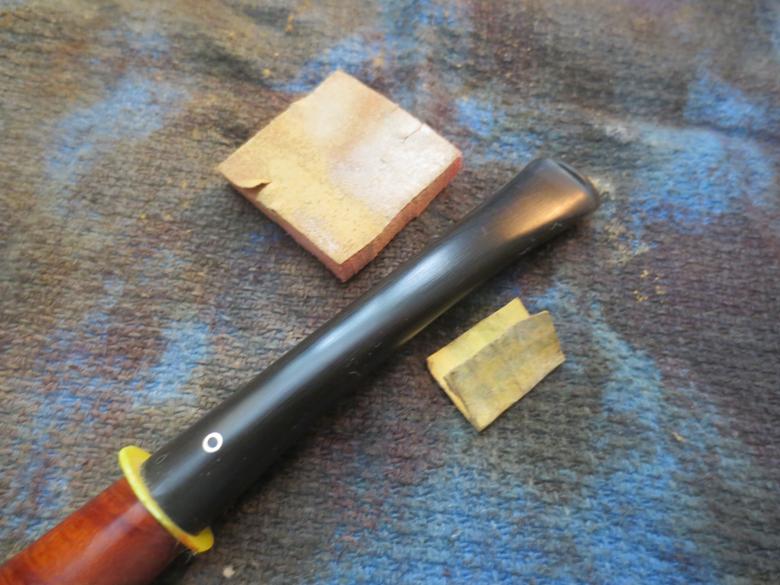
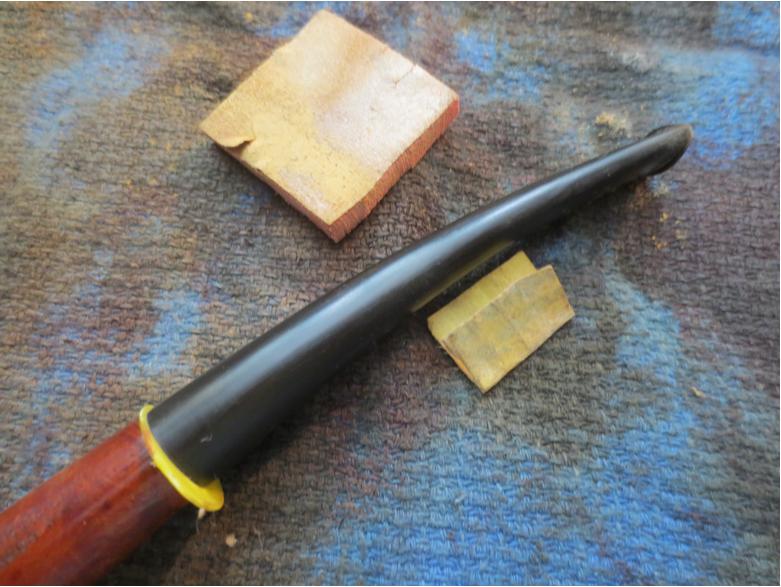
I turned the tenon end of the stem with a PIMO tenon turning tool and then used the Dremel and sanding drum and finally some hand sanding with 220 grit sandpaper to get the stem to fit well in the mortise of the shank. With the fit nice and snug I would need to sand the saddle area and clean up the tenon to make it shine.
IMG_5426

IMG_5427

IMG_5428

IMG_5429

IMG_5430

I cleaned up the crevices with a cotton swab and dental pick and isopropyl alcohol. I then packed some briar dust into the filled crevices and dripped super glue into the briar dust. I repeated the process until the flaws were filled and the surface of the bowl and rim bulged slightly. I sanded the rim and the fill on the side with 220 grit sandpaper to remove the excess fill. I scratched the surface with the dental pick to give it a similar texture to the surround sandblasted bowl. I sanded the saddle on the stem at the same time with 220 grit sandpaper. I finished the repair and the saddle area with a medium and a fine grit sanding sponge.
IMG_5431

IMG_5432

IMG_5433

Once the area was filled and the texture finished it was time to stain the pipe. I decided to use a dark brown aniline stain that I would later wipe down with alcohol to give more transparency and aid in a contrast on the surface of the bowl. I wiped down the surface of the bowl with isopropyl alcohol before staining the bowl to remove the dust. I applied the stain and flamed the bowl and repeated the process until the coverage was even.
IMG_5434

IMG_5435

IMG_5436

IMG_5437

I wiped the bowl down with isopropyl alcohol on cotton pads to give the stain some more transparency and to lighten it.
IMG_5440

IMG_5441

IMG_5442

I buffed the bowl with a light touch on the buffer using White Diamond. I took it back to the work table and hand buffed it with a shoe brush to give it a shine. There were spots on the shank and the bowl where I would need to touch up the stain as it was too light and shiny.
IMG_5443

IMG_5444

IMG_5445

IMG_5446

Once the coverage looked good I gave the bowl a coat of oxblood aniline stain to build a contrast. In the photos below you can see the way it worked to highlight the blast and show the grain. The birdseye grain under the blast on the left side of the bowl showed up with a nice contrast look.
IMG_5447

IMG_5448

IMG_5449

IMG_5450

I worked over the stem with micromesh sanding pads using the 1500-2400 grit pads to sand the surface of the bowl and give it more contrast with the crevices in the blast. I polished the stem with my usual pattern of micromesh pads – wet sanding with the 1500-2400 grit pads and dry sanding with the 3200-12,000 grit pads. I rubbed the stem down with Obsidian Oil and let it soak in. When it had dried I hand buffed the stem.
IMG_5451

IMG_5452

IMG_5453

I buffed the pipe and the stem with White Diamond and then gave it multiple coats of carnauba wax. I buffed it with a clean flannel buff to raise the shine on the bowl. The finished pipe is shown in the photos below.
IMG_5454

IMG_5455

IMG_5456

IMG_5457

In closing I include two photos of the repaired areas of the bowl to show the finished repair. The super glue and briar dust repair worked well and is quite hidden by the stain and finish work. The trick was not to overfill the areas surrounding the crevice so that the filled area would blend into the texture of the bowl. I am pleased with the finished product.
IMG_5458

IMG_5459

Giving New Life to an Old, Tired Unique


I am not sure who the maker of this pipe original was. It has some rustication patterns that remind me of Dr. Grabow. It has a metal screw mount mortise. The flat base that extends from the bottom of the bowl backward toward the stem also has similarities to a Grabow shape. But this one is only stamped Imported Briar on the bottom of the shank. When I received it the bowl was in rough shape. The finish was gone. The stem was gone, the rim was a beaten and worn down mess. I think originally the rim was probably straight across but it was worn and beaten to the point that it was now angled. If indeed it was originally angled then the rim was badly beaten. Either way it was rough. The cake in the bowl was quite thick. The internals of the shank and airway were quite clean – that was a surprise. The briar was solid and relatively thick and sound.
IMG_5281

IMG_5282

IMG_5283

IMG_5284

As I looked at it and studied it there was something about it that drew me to the shape. The wear and tear still did not hide the fact that there was some life still left in this old pipe. I went through my can of stems and found an old screw mount stem. The stinger apparatus on it was slightly different than the old Grabows that I had seen but it would work. The draw on the stem was very constricted anyway so I figured I would end up cutting the stinger off and drilling out the metal tenon. The stem has lots of tooth marks and chatter but was solid. It was a nylon stem and not vulcanite so it was a little trickier to work with. The diameter was also slightly off and the stem was overturned once it was on the shank.
IMG_5285

IMG_5286

IMG_5287

IMG_5288

I heated the metal tenon with a heat gun until the glue softened and then turned it in the shank until it lined up. This type of tenon is actually very easy to realign.
IMG_5290

IMG_5291

IMG_5292

Once the stem was aligned I reamed the bowl with a PipNet reamer and heads taking the bowl back to bare wood. I wanted to see what the shape of the bowl under the cake was like to assess whether I wanted to continue to put time into the pipe. The interior bowl was actually in excellent shape under the cake. This pipe must have been a good smoker – someone’s favourite pipe.
IMG_5300

IMG_5301

I set up a topping board and sanded the rim at the angle of the bowl to even out the top and to minimize the damage. The back edge was very ragged from tapping the pipe out, or using it as a hammer! It took some time to get the top flat and the angle correct from the back of the bowl to the front edge.
IMG_5302

IMG_5303

I wiped the bowl down with acetone on cotton pads to clean up the grime in the grooves of the rustication and to even out the remaining stain coat. There was also some varnish left on the shank that I wanted to remove.
IMG_5304

IMG_5305

IMG_5306

Once the finish was gone I experimented with a metal band. The shank was not cracked or broken. It was solid but I wanted to see what the shiny silver would look like against the rugged rustication. I also wanted to minimize the slight difference in the diameter of the shank and the stem. I decided I liked the look of the band so I heated it with the heat gun and pressed it into place on the shank. I liked the finished look of the nickel band. I feel it gives a bit of bling to a rough looking pipe.
IMG_5307

IMG_5308

I screwed the stem in place to have a look at the fit and finish of the pipe as a whole. I thought to myself that it would work well. I would need to give the stem a bend to make a correct fit to the sitter style of the bowl but it would work.
IMG_5309

IMG_5310

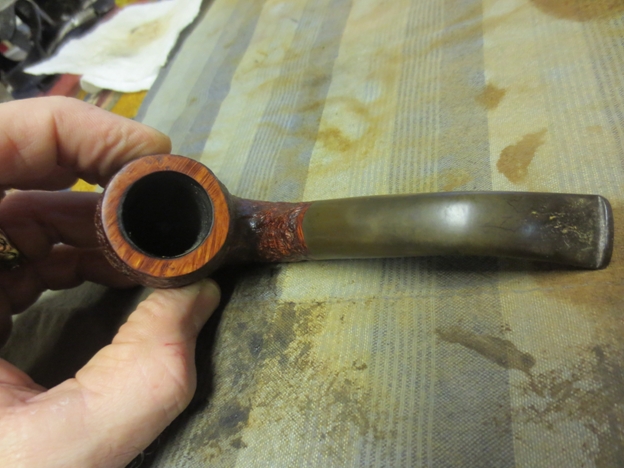
I decided to sand out the tooth marks and chatter as much as possible. I was hoping that the heat would lift the marks a bit. I heated the stem with a heat gun to do the bending. I bent it over a rolling pin. It took awhile for the nylon to be flexible enough to bend. Bending nylon stems is far trickier than vulcanite. It does not seem to have the memory of vulcanite so once bent it remains even if heated and has to be pressed back into shape. It also kinks very easily so you have to be very careful when bending it. I have also found that the wire in a pipe cleaner heats up and the pipe cleaner can stick to the inside of the stem. All of the above make it a pain to bend this type of stem.
IMG_5313

IMG_5314

IMG_5315

I finished the bend and set it with cold water. I was not happy with the overall look and flow of the stem. The bend was correct in terms of allowing the pipe to sit flat on the bottom of the bowl with the tip of the button arching to touch as well but the flow/arch of the stem was not right. I reheated and tried it a second time and still it did not quite work. I decided to stop and revisit that later.
IMG_5316

The draught on the pipe bowl was wide open and easy but the stem itself was very constricted. The stinger apparatus had a slotted entry into the stem. It was very narrow and seemed to extend quite a distance up the stem. A pipe cleaner would not pass through the stem and the stinger. I decided to sacrifice the stinger end so I sawed it off with a hack saw and then drilled out the airway in the metal tenon. As can be seen in the photo below the drill bit went a long ways into the stem before it broke through the slotted airway. Once I had opened the airway in the stem and removed the stinger the draught on the pipe was excellent – open all the way and passing a pipe cleaner with ease.
IMG_5317

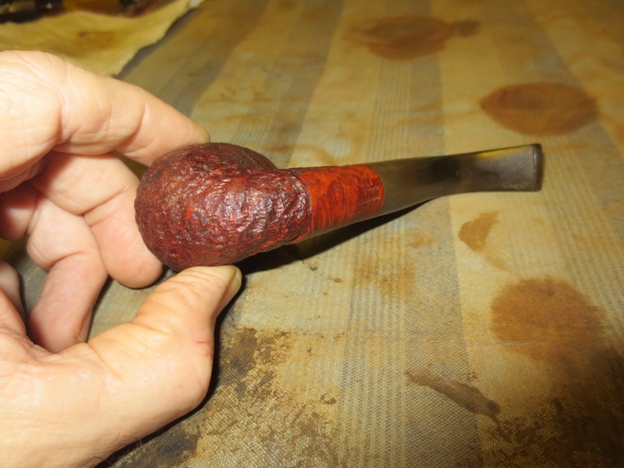
I stained the bowl with an oxblood aniline based stain. I flamed it and restained until it was well covered. I then buffed the bowl with White Diamond on the buffing wheel. The photos below show the bowl after the staining and buffing. The colour of the briar after the stain coat was workable. The black undertones that were deep in the grooves of the rustication worked well with the red of the oxblood stain. The rim colour matched the bowl and the birdseye grain showed nicely on the flat of the rim.
IMG_5318

IMG_5319

IMG_5320

IMG_5321

The stem being nylon required all handwork. I could not use the buffer on it as it would melt and make more work than I desired to do on this pipe. Before I sanded it I used the heat gun to rebend the stem and get the angles and bend correct. Once I had that done I sanded it with 220 grit sandpaper and then with a medium and a fine grit sanding sponge. I then sanded the stem with my usual array of micromesh sanding pads – wet sanding with 1500-2400 grit pads and dry sanding with 3200-12,000 grit pads.
IMG_5325

IMG_5326

IMG_5327

I rubbed the nylon down with Obsidian Oil and once it was soaked in I hand buffed it with Paragon Wax. I gave it multiple coats of the wax to preserve it. I buffed the bowl with White Diamond and then gave it multiple coats of carnauba wax with a light touch to keep the wax from building up deep in the grooves of the rustication. The next series of photos show the finished pipe. The side profile photos show the pipe in the sitter position and also from an angle. The top and bottom view photos show the new finish on the rim and the shape of the bottom of the pipe. This old worn pipe is now freshly reworked and ready to give many more years of service.
IMG_5328

IMG_5333

IMG_5329

IMG_5332

IMG_5330

IMG_5331

Reworking a No Name Pipe Bowl – Adding Rustication and Bling


Blog by Steve Laug

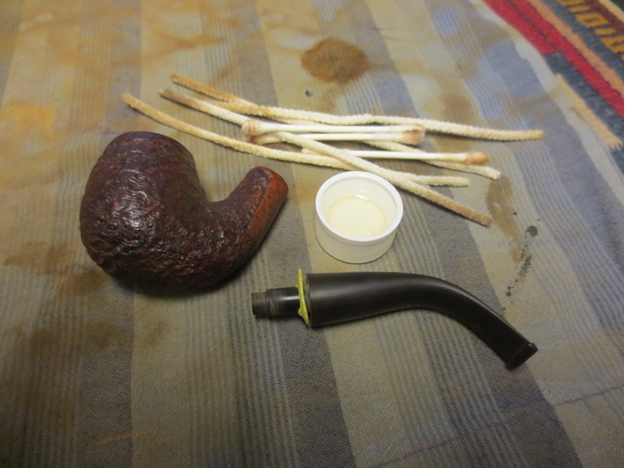
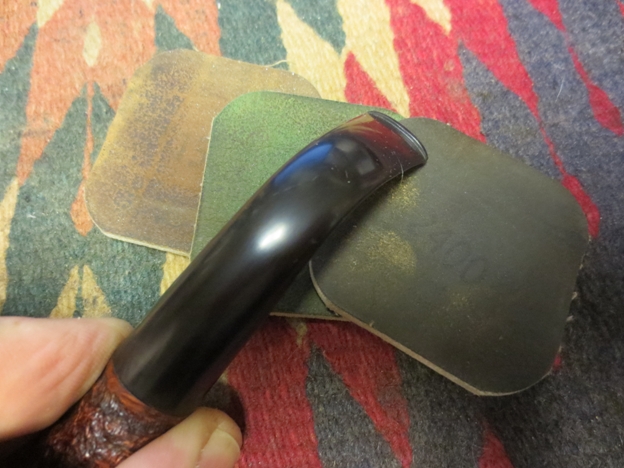
Andrew is turning out to be a great source of older pipe bowls in need of stemming. I received this old bowl in the mail from him not to long ago. It had a look to it that was interesting to me. The shank had been reworked somewhere along the way. I think that originally it may have had a diamond shank. Someone had carved it by hand into an almost round end and flattening as it moved toward the bowl. They had added three bands of coloured tape to the shank to dress it up. The first two bands were thin gold tape and the third was a wide swath of dark brown tape. The bowl was clean and reamed and the inside of the shank was also clean. The underside of the shank and bowl were rough. I think that the person who had reworked this bowl had used a knife to work on it and had not sanded it smooth after his work. There were also some pretty deep dents and grooves on the bottom of the bowl.
IMG_5255

IMG_5256

IMG_5257

IMG_5258

This old pipe bowl provided a challenge to me. The tape had to go but I had no idea what was underneath and hidden by it. The funky shape of the shank also needed to be reworked to give it a more artistic and shapely appearance. The restemming would also be a challenge in that the shank was not round at this point but very oddly shaped with all sides being unequal. I found an old saddle stem in my box of stems and tried that first – to me it was too long and gave the pipe an unbalanced look so I dug through my can of stems and found a saddle stem that was shorter that would look nice on the pipe.
IMG_5259

I peeled off the tape and underneath the two gold tape bands was a small crack in the shank. Underneath the brown tape was a huge fill on the top and underside of the shank. I used a Dremel with a sanding drum to reshape the shank and bowl union and also to reshape the end of the shank. I had a nice sterling silver wedding ring band that would work well on this pipe bowl so I reshaped the end of the shank with 220 grit sandpaper after the Dremel work and then applied all purpose white glue on the shank and pressed the silver band into place. Once it was in place I could see that the end of the shank was not straight but had been cut off at an angle. With the band in place I used the Dremel and sanding drum to straighten up the end of the shank. I finished that work by using the same sanding board set up I use for topping bowls. With all that finished I put the stem in place and sanded the bowl and shank until it was a clean smooth shape. I wiped the surface down with acetone on cotton pads to remove the urethane finish that the previous person put over all the bowl and tape. In the next four photos below the size of the large fill is obvious.
IMG_5260

IMG_5261

IMG_5262

IMG_5263

With the shaping of the bowl and shank finished and looking more balanced I had to make a decision on how to deal with the large fills on the shank. There were also several sand pits on the bottom of the bowl that needed to be addressed. I weighed my options and decided to rusticate the shank. I used the modified Philips screwdriver to rusticate the shank first. At this point I left the bottom of the bowl smooth and just worked on the shank. Once I had rusticated it I used a small brass tire brush to smooth out the roughness of the rustication. I find that the brush knocks off the loose pieces of briar and gives the finish a contrast of highs and lows. The rustication looked good against the wedding band and the smoothness of the vulcanite. I also liked the look of the rustication against the smoothness of the bowl.
IMG_5264

IMG_5265

IMG_5266

IMG_5267

I stained the shank with a black aniline stain. I applied it heavily with a cotton swab and flamed and repeated the process until I had a good matte black finish on the shank. At that point I decided to carry the rustication to the bottom of the bowl and slightly up the sides and curve it into the top of the shank bowl union.
IMG_5268

I stained the bottom of the bowl to match the shank colour. I applied a black aniline stain to the bottom and restained the shank at the same time. I flamed the stain and repeated the process until I had the coverage that I wanted on the bottom of the bowl. I then sanded the rest of the bowl with 200 grit sandpaper and then a medium and a fine grit sanding sponge. I finished by sanding it with 1500-2400 grit micromesh sanding pads. I wanted to have the briar clean and smooth on the upper portion of the bowl. The grain on that part of the bowl was quite nice. I wiped down the bowl with isopropyl on a cotton pad to remove the sanding dust. The state of the bowl at this point is shown in the next four photos below.
IMG_5269

IMG_5270

IMG_5271

IMG_5272

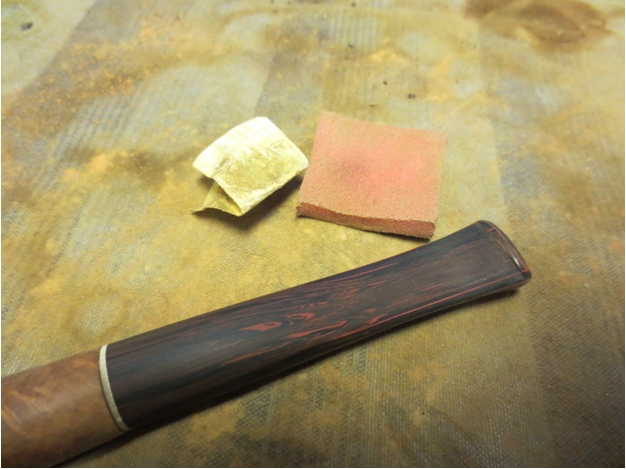
It was time to bend the stem so I heated the stem until it was pliable with a heat gun set on the lowest setting. I bent is over a rolling pin to the angle that I wanted and set the angle with cold water. This particular stem evidently was good quality vulcanite as it did not have any oxidation and the water did not bring any to the surface. That was a real gift in this process as I would have had to work out the oxidation on the stem as well. The next series of photos shows the process and the finished look of the bend.
IMG_5273

IMG_5274

IMG_5276

At this point I reflected on what I wanted to do with the upper part of the bowl. I could stain it with a variety of colours to contrast with the rusticated black portion of the shank and bowl bottom but I was not certain I wanted to do that. I finally decided to rub down the bowl with olive oil to bring out the grain. I rubbed it in by hand and repeated that until it was finished. I gave the bowl a light buff with White Diamond to give it a shine. I will still need to give it several coats of carnauba wax but the look works for me. The grain pops with the oil finish. The next series of four photos show the bowl finish at this point in the process.
IMG_5277

IMG_5278

IMG_5279

IMG_5280

I liked the overall appearance of the pipe. It was certainly significantly different from the bowl that it was before I started. The old bowl had a more elegant look to it now and felt great in the hand. The chunky wedding band contrasts well with the shape and the finish of the bowl. Now it was time to work on the stem. I sanded the stem with 220 grit sandpaper to remove the casting marks on the sides of the saddled and blade of the stem. I followed that by sanding with medium and fine grit sanding sponges to further remove the scratches to the vulcanite. I finished the sanding with my usual list of micromesh sanding pads – wet sanding with 1500-2400 grit pads and dry sanding with 3200-12,000 grit pads. I rubbed the stem down with Obsidian Oil and let it soak in to the stem material.
IMG_5293

IMG_5294

IMG_5295

I buffed the finished pipe and stem with White Diamond and then gave it multiple coats of carnauba wax. I was careful to not get wax on the rusticated portion of the bowl and shank. The finished pipe is pictured below. It seems to me to have a much more dignified appearance than what it started with. I like the tactile feel of the bowl in my hand while at the same time maintaining the beautiful straight and flame grain on the bowl. I think this one will stay in my collection for quite awhile.
IMG_5296

IMG_5297

IMG_5298

IMG_5299

Restoring a Kaywoodie Drinkless Volcano


I was gifted this Kaywoodie Drinkless Volcano with a three hole stinger by Andrew, a reader of the blog. He wrote me an email about the pipe as follows:

Steve, I have this Kaywoodie Volcano shape with a 3 hole stinger, so probably 70’s or newer. It was burned out when I got it. I ended up slopping some fireplace cement in the bottom of it trying to fix it but it didn’t come out well as I was trying to form it with a pipe tool and it is rough. The stem is over turned as well. I figure this might “challenge” you as far as trying to bring it back to life somehow. Is this is something you might be interested in trying to some how to fix? — Andrew

I wrote back that would gladly see what I could do with it so he sent it out to me to work on. When it arrived I saw that he had begun the work on it already and had reamed and cleaned the bowl. He had mentioned that when he bought it there was a small burn out area on the bottom of the bowl. When I got it the inside of the bowl was actually quite alright. His repair looked quite good. A little cleanup of the bowl would bring things in order. The fireplace cement needed to be cleaned off the walls and rounded a bit in the bottom of the bowl but it was not bad.

Besides the obvious damage to the bowl there was some other damage to the pipe as well. The outer edge of the rim was damaged on the front and the inner edge was slightly out of round. The external bottom of the bowl had a half-inch long crack that had been cleaned out and repaired but there was still a slight groove in the crack. The sides of the crack had been joined and repaired so what remained was cosmetic. The stem was overturned and slightly out of round in comparison to the round metal insert in the shank. The stem had a partial stamp of the KW cloverleaf but was in bad shape in terms of appearance.
IMG_4899

IMG_4900

IMG_4901

IMG_4903

I set up my topping board and topped the bowl of the pipe to remove the damaged portion of the inner and outer edge of the rim. I sanded the top of the bowl, pressing it against the board and turning it in a clockwise direction until the damaged briar was removed. I used a PipNet reamer with a cutting head that fit the bowl diameter and turned it against the cement until it was removed from the sides of the bowl and the bottom of the bowl had a slight indentation.
IMG_4904

IMG_4905

IMG_4906

I wiped down the bowl with acetone and cotton pads to remove the remaining finish on the bowl and to clean up the partial repair to the bottom crack. I continued to wipe it down until the briar on the bowl was almost the same colouration as the sanded rim of the pipe.
IMG_4907

IMG_4908

IMG_4909

I scratched out the surface of the crack with a dental pick and packed in some briar dust that I had left from sanding the rim of the pipe. I tamped it and then dripped some superglue into the briar dust until it formed a bubble over the crack. I always overfill the crevices and fills to make sure that when they dry they do not shrink and make a second fill necessary. When the glue had dried I sanded it with 220 grit sandpaper and also with a medium and fine grit sanding sponge to smooth out the bubble and blend it into the surface of the bowl.
IMG_4910

IMG_4915

IMG_4916

On the bottom of the stem there were also two very deep tooth indentations that would not lift when heated with a heat gun. I sanded the area around the dents and dripped clear superglue into the dents. I chose clear superglue as the stem did not appear to be vulcanite. When I sanded it the dust was grey rather than brown. I have found that the clear glue blends very well on this material. When it dries and is sanded it blends in quite well to the surrounding stem material.
IMG_4911

IMG_4913

IMG_4917

I wiped down the bowl again with acetone and sanded the whole bowl with a medium and fine grit sanding sponge.
IMG_4918

IMG_4919

IMG_4920

IMG_4921

IMG_4922

The overturn on the stem is something that is easily corrected. I heated the stinger with a heat gun until the glue holding it in place was softer and then turned it in the metal inserted mortise until it lined up correctly with the bowl. I was almost a quarter turn to the right so I needed to turn it all the way around. Once it was aligned I laid it aside to cool. The final photo gives a clear view of the inside of the bowl. The repaired bowl bottom with the minor adjustments I had made with the PipNet reamer are visible.
IMG_4923

IMG_4924

IMG_4925

IMG_4926

IMG_4927

IMG_4928

With the stem aligned it was evident that the diameter of the stem was different than that of the shank. In looking at the stem from the stinger end I could see that the left side was slightly larger than the right side. There was an overhang passed the metal insert in the shank. The next photos show that the left side would need to be sanded to fit properly.
IMG_4929

IMG_4930

I sanded the stem and shank with 220 grit sandpaper folded and was careful to not sand the stamping on the left side of the shank. I wanted the transition to be perfectly smooth to the touch. I sanded it with medium and fine grit sandpaper to smooth out the scratches left behind by the sandpaper.
IMG_4932

IMG_4933

IMG_4934

IMG_4935

IMG_4936

IMG_4937

I stained the bowl with an aniline oxblood stain. I applied it and flamed it and reapplied it and flamed it again until I had a good even coverage across the bowl. I hand buffed the finish with a soft cloth.
IMG_4938

IMG_4939

IMG_4940

IMG_4941

IMG_4942

I sanded the stem with medium and fine grit sanding sponges and then followed up with my usual array of micromesh sanding pads – wet sanding with 1500-2400 grit pads and dry sanding with 3200-13,000 grit pads.
IMG_4943

IMG_4944

IMG_4945

I rubbed the stem down with Obsidian Oil and then sanded it a final time with the 4000-13,000 grit pads. I lightly buffed the stem with White Diamond. I screwed the stem back into the shank and then buffed the entirety with White Diamond and then gave the pipe multiple coats of carnauba wax. I buffed it with a clean flannel buff for the final shine and protection. The finished pipe is pictured below and is ready for more years of service. The bowl repair done by Andrew provides a solid base in the bowl and the external repair and stem repair makes the pipe cosmetically more pleasing. Thanks Andrew for a good challenge. The pipe is ready for its inaugural smoke. I am sure it will last far longer than I do!
IMG_4946

IMG_4947

IMG_4948

IMG_4949

IMG_4950

IMG_4951

Reworking a Peterson’s Kildare X105


I picked up this old pipe primarily for the shape. It has the chunky look I like in a pipe. The bowl has some nice grain on it and that was attractive as well. The stamping was too faint to read in the shop but when I got home with a bright light and a loupe I was able to see the stamping more clearly – though it is very faint. The left side of the shank says Peterson’s over Kildare and the right side says Made in England and the shape number of X105 (at least that is what the stamping of the number looks like). The pipe was in decent shape and would clean up quite nicely. The finish was not too bad though the previous restorer had given it a coat of varnish or something that was quite heavy. There were finger prints still in the varnish coat. The bowl was reamed and clean and the shank quite clean. The rim had some buildup that had been varnished over which gave it a damaged appearance. The stem seems like a replacement but I cannot be sure as the fit is very well done. It was in great shape with minimal oxidation and slight pitting on the surface of the vulcanite. There were not any tooth marks or chatter.
IMG_4342

IMG_4343

IMG_4344

I decided to remove the varnish coat (it seems like I have had to do that a lot lately with the pipes I am reworking for the pipe club). I wiped down the bowl with acetone and cotton pads until I had removed the varnish and the stain. I scrubbed the rim with the acetone and pads as well to remove the buildup under the varnish. It came of quite easily and turned out to be undamaged. There was a slight darkening of the rim on the left side toward the front but no damage to the area.
IMG_4345

IMG_4346

IMG_4347

IMG_4349

While I was working on it I remembered that I had picked up a Peterson sterling silver band that would probably fit this pipe very well. I dug it out of my box of bands and gave it a try on the shank. It fit perfectly on the shank. I like the look of the bling and the added perk of it being a Peterson stamped sterling silver band was bonus!
IMG_4350

IMG_4351

IMG_4352

I put wood glue on the shank to anchor the band (no repairs were necessary and the band was purely adornment) and pressed the band into place. I rotated it so that the Peterson engraving was on the top of the shank.
IMG_4353

I stained the bowl with MinWax Medium Walnut and Red Mahogany stain to get a reddish brown tint to the briar. I rubbed it on the pipe and then off again. I did the same with both colours. When it was dry I hand buffed it with a soft cotton cloth.
IMG_4357

IMG_4358

IMG_4359

IMG_4360

The stem was lightly oxidized and slightly pitted so I decided to work it over with the micromesh sanding pads. I used the usual method I have developed as a habit over the years and wet sanded with 1500-2400 grit pads and dry sanded with 3200-12,000 grit pads. I buffed the stem with White Diamond and rubbed in some Obsidian Oil to preserve the vulcanite.
IMG_4362

IMG_4363

IMG_4364

When the stem was done I reinserted it into the shank and buffed the entire pipe with White Diamond. I avoided buffing the silver as I find that it darkens the wheels and also the wood and vulcanite on both sides of the band. So once I had finished buffing the pipe I gave it multiple coats of carnauba wax and then buffed it with a clean flannel buff. I took it back to the work table and polished the silver band with a jeweler’s cloth and then applied some wax on the band to slow down the oxidation of the silver. The finished pipe is pictured below. I also have included a picture of the finished rim to show the cleanup results. The pipe is cleaned and ready to be smoked. The addition of the silver band worked well in my opinion and I like the finished look of the old timer quite a bit.
IMG_4365

IMG_4366

IMG_4367

IMG_4368

IMG_4369

A Renovation of a Good Companion London Made Billiard


My wife and I went out for lunch on Saturday and there was an antique shop across the street from the restaurant. After eating we brave torrential downpours and ran across the street check out a shop we had not visited before. We looked through the various display cases and I found the pipe below along with a chewed up Yello-Bole billiard. The pipe was a small group 3 sized billiard. The finish was a dark brown stain on a sandblasted pipe. The left side had great grain pattern and showed deep grooves. The right side was a tight birdseye grain and the blast was shallow and close. The shank was rusticated to look like a sandblast. The stem had a slight bend but seemed be from sitting in the heat rather than intention. There was a bite through on the top surface of the stem that was large enough that it could not have been patched. The rim was originally smooth and beveled inward but the bevel had been damaged and needed to be reshaped and cleaned up. The stamping on the pipe is what ultimately made me spend the $10 to make the pipe mine. It read Good Companion over London Made on the underside of the shank. I just finished reading a new book by Mark Irwin called Pipe Companions. In it he wrote of the relationship between the pipe and the pipeman. I think it was a great coincidence to walk into a pipe stamped Good Companion. I wanted to clean it up and make it my own.
IMG_4177

IMG_4178

When I got home from the visit to the shop I took the pipe apart. The stem had a large spiral stinger apparatus in the tenon. The stem itself was badly chewed. I found a new stem for the pipe in my can of stems and worked on the tenon to make the tapered stem fit the shank.
IMG_4263

IMG_4264

IMG_4265

I pushed the newly fitted stem into the shank to have a look at the shape with a taper stem. I liked the overall look of the pipe with the new stem. I sanded the stem to remove the calcification and the oxidation on it. I also worked on the fit of the stem to the shank. I wanted the transition to be smooth and seamless. I took the stem in and out several times while I worked on it. The last time I pushed it into the shank there was a crack! I don’t know if that has happened to you but when it happens there is a sick feeling in the pit of my stomach. Here the pipe was almost ready to refinish and the stem fit well and then crack. The frustration at that moment is high level. I laid the pipe down and had a coffee while I thought about my next steps.
IMG_4266

IMG_4268

IMG_4269

IMG_4270

I went through the box of nickel bands that I have here and I did not have any the correct size for the shank. All of them were either too huge or too small. I did remember however that I had some brass plumbing pressure fitting pieces that would make a great band on the pipe and create a totally different look on this old pipe. Before fitting the band I worked on the bevel of the inner edge of the rim. I used a folded piece of sandpaper to smooth out the rim damage and reshape the bevel.
IMG_4271

IMG_4272

I used a Dremel and sanding drum to sand back the shank so that the band could be pressure fit against the cracked shank. I took back the rustication until the finish was gone and the shank area was smooth. When the band fit tightly on the shank I heated the brass band with a heat gun and then pressed it into place on the shank.
IMG_4273

IMG_4274

IMG_4276

IMG_4278

I pressed the band into place on the shank and then hand sanded the area in front of the band smooth so that I could rework the taper of the shank and the finish to match the rest of the pipe.
IMG_4279

IMG_4280

IMG_4281

IMG_4283

I used the two Dremel diamond cutting heads pictured below to rusticate the finish on the shank. I used the cylinder first and then the ball. I worked it into the briar to make the smooth area match the rest of the bowl.
IMG_4284

IMG_4285

IMG_4287

After rusticating the shank I stained it with a dark brown aniline stain and flamed it to set it deep within the grain. I stained the rest of the pipe as well and the rim with multiple coats of the dark brown.
IMG_4288

IMG_4289

IMG_4290

IMG_4291

Once the stain was dry on the bowl I hand buffed it with a cotton cloth and then stained it a second time with MinWax Red Mahogany stain. I rubbed it on and then rubbed it off. I repeated the process until I had the colour that I wanted.
IMG_4293

IMG_4294

IMG_4295

IMG_4296

I buffed the bowl on with White Diamond and to evenly distribute the stain coat and give the pipe a rich shine. When I had finished I worked on the stem with 220 grit sandpaper, a medium grit sanding sponge and micromesh sanding pads. I used my usual array – wet sanding with the 1500-2400 grit pads and dry sanding with the 3200-12,000 grit pads. I rubbed down the stem with Obsidian Oil and rubbed it into the vulcanite.
IMG_4297

IMG_4298

IMG_4299

I sanded the bevel on the bowl and the brass band on the shank with the 1500-2400 grit micromesh pads.
IMG_4300

IMG_4301

IMG_4302

I buffed the pipe with White Diamond and then gave the stem multiple coats of carnauba wax. I used Halcyon II wax on the sandblast finish of the bowl. I buffed the pipe with a clean flannel buff. I have to say though I would have liked to keep the pipe unbanded and pristine, the crack that happened in the shank made me try something a little different. I actually like the finished look of the pipe with the brass band. The combination of the two stains give the blast finish depth that changes with different lighting and the tapered stem adds some panache to this Good Companion.
IMG_4309

IMG_4310

IMG_4311

IMG_4312

IMG_4313

Looking at the photos I decided to do a bit more work shaping the brass band. I sanded the band with 220 grit sandpaper to remove the ridges in the brass. I followed that by sanding with a medium and fine grit sanding sponge. I finished sanding the band with micromesh sanding pads from 1500-3200 grit polish it.
IMG_4314

IMG_4315

IMG_4316

IMG_4317

IMG_4318

IMG_4319

With the band finished I will give the pipe another buff to polish the handling that it received working over the stem.