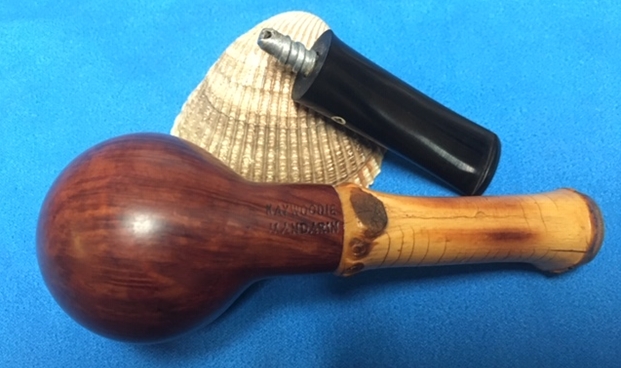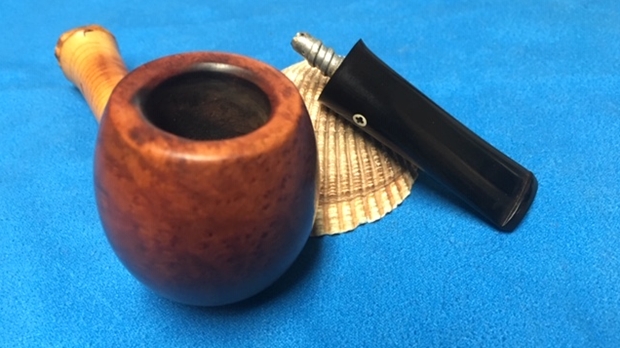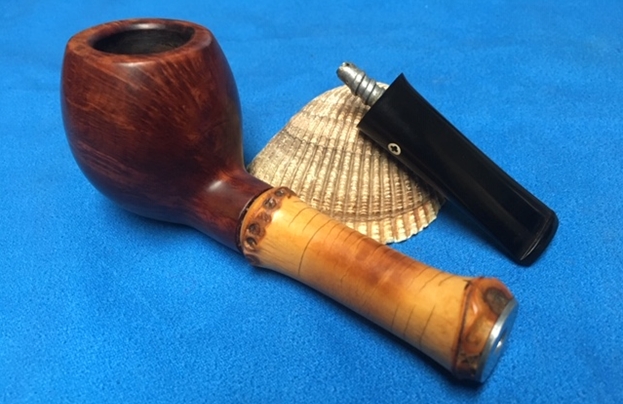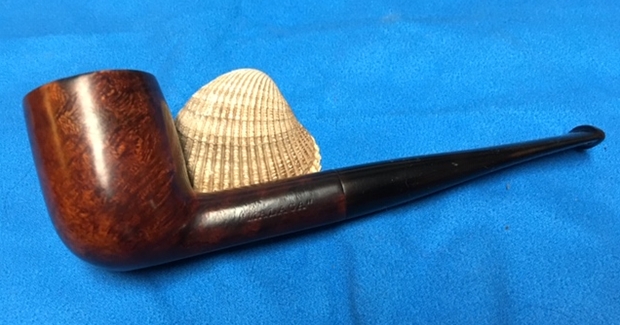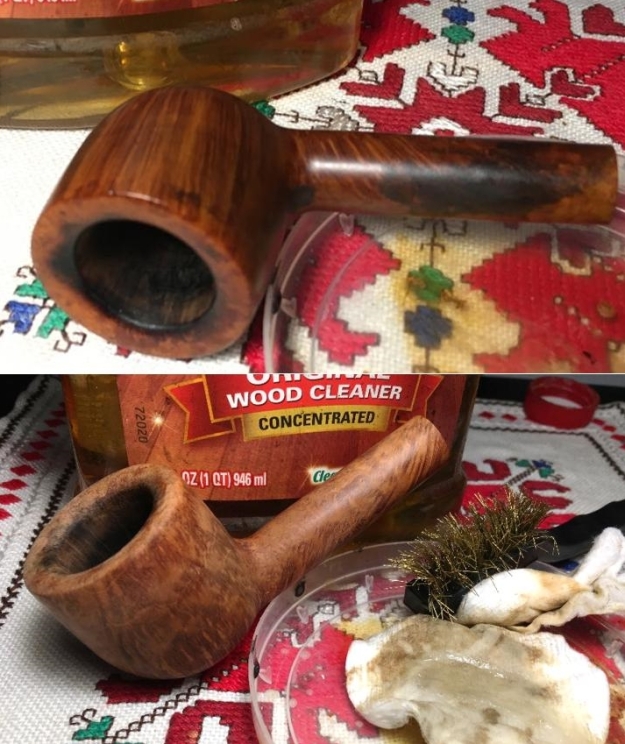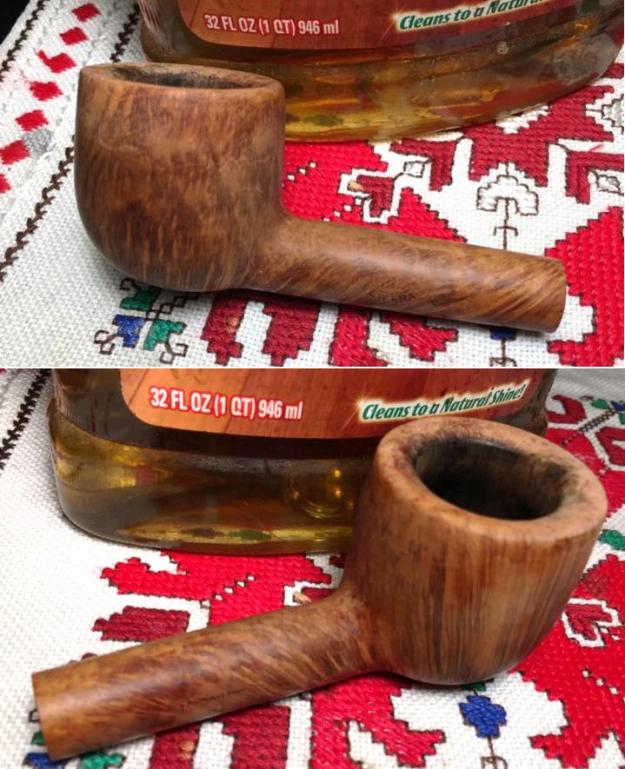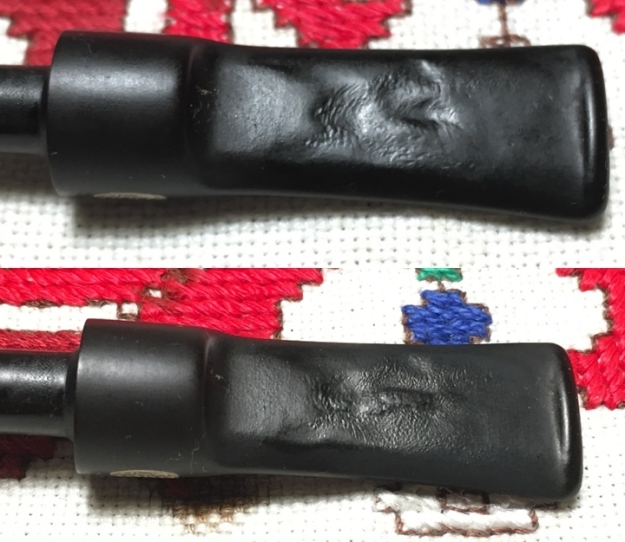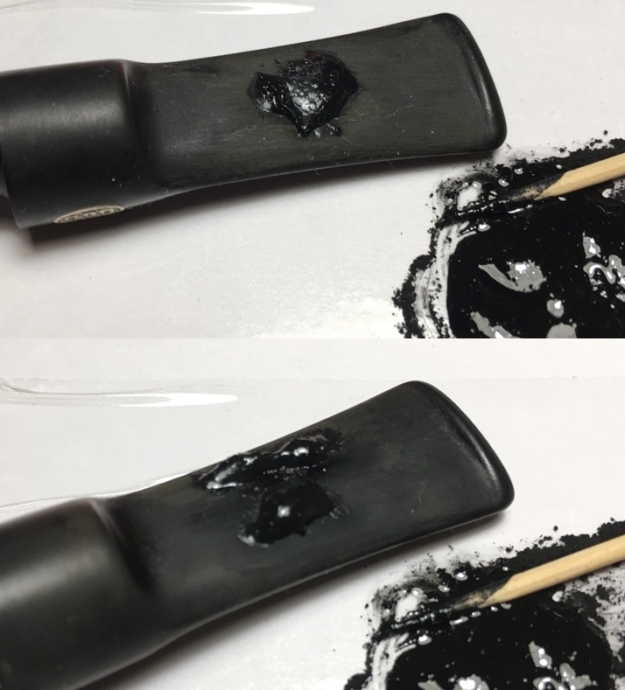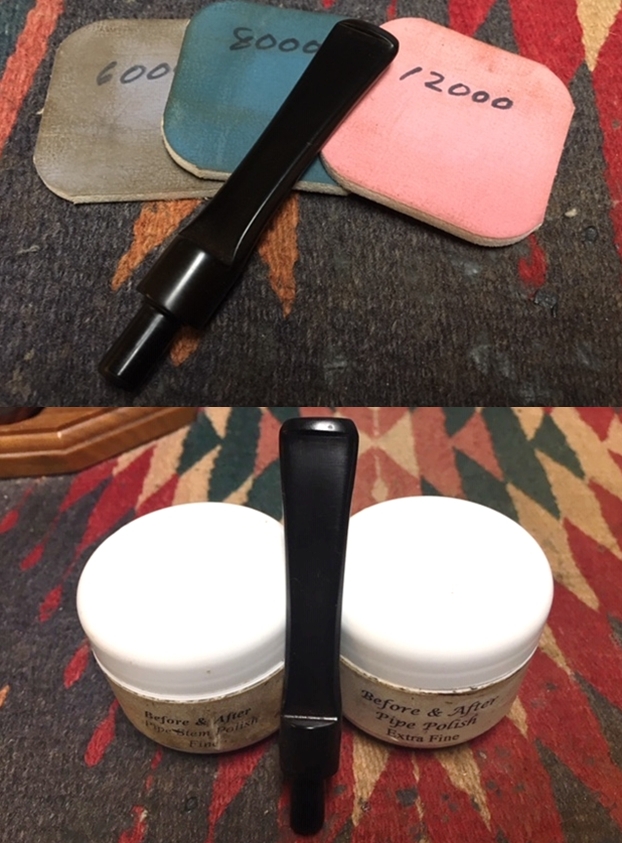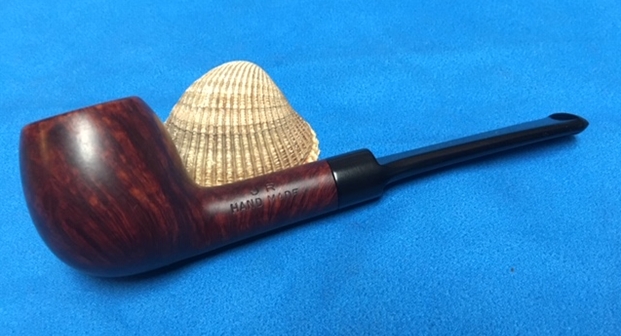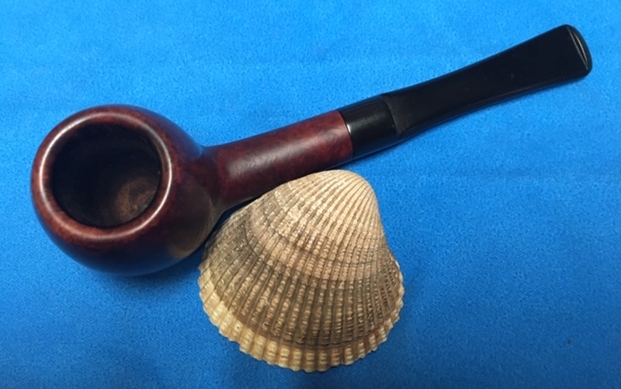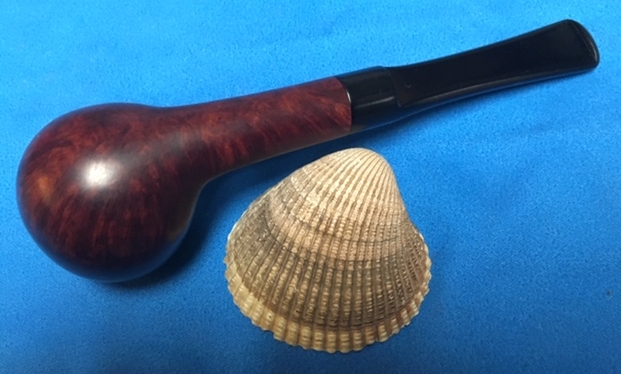
Tag Archives: Bowls – refinishing

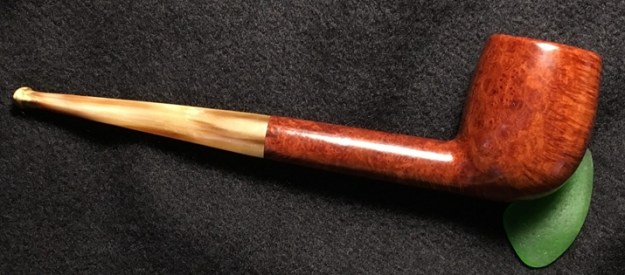
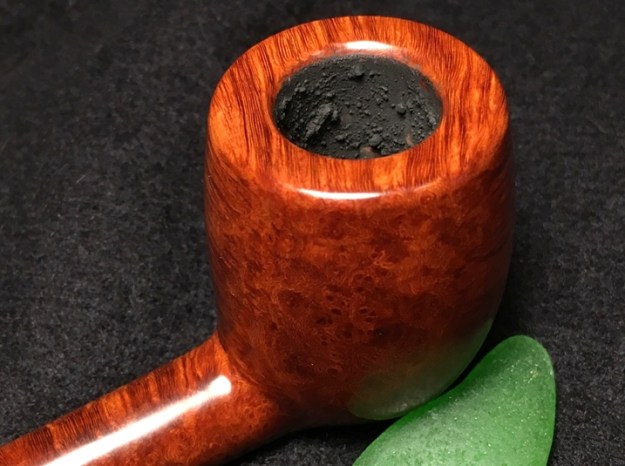
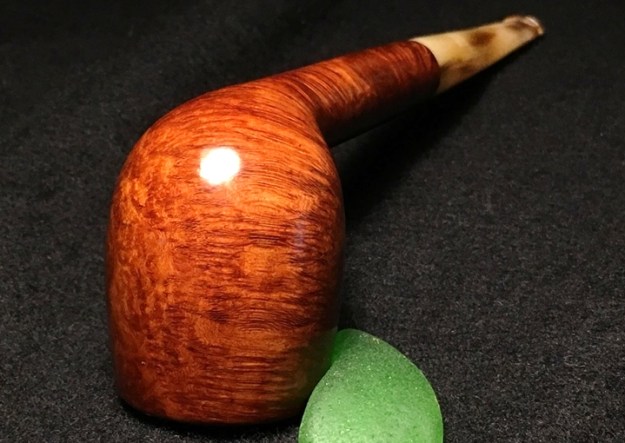
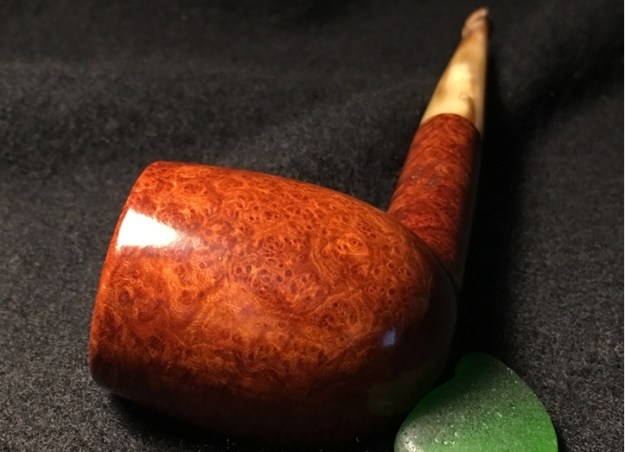
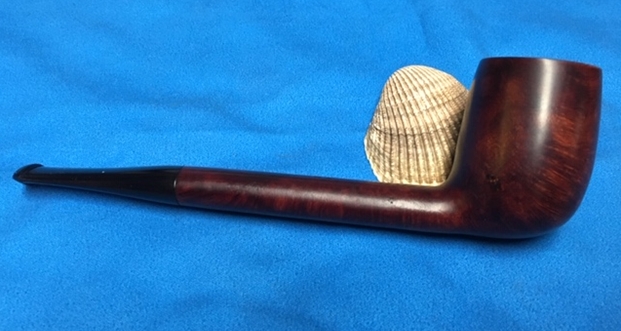
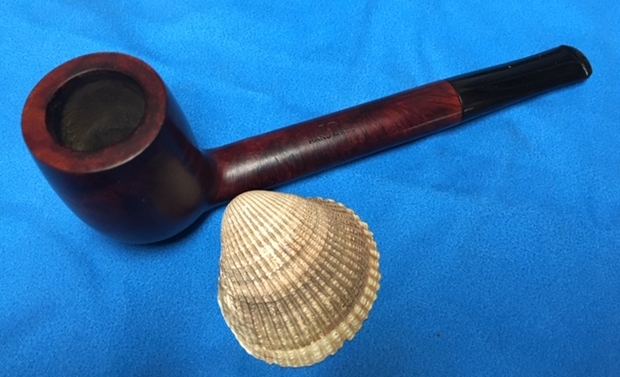
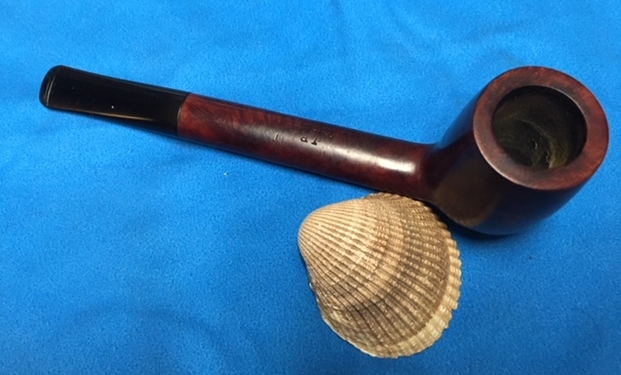
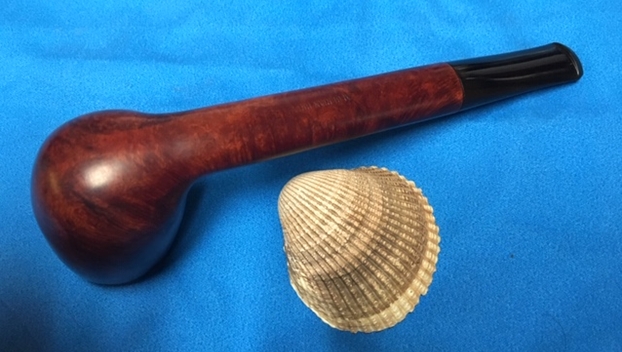
Bringing an old Custombilt Billiard to back to life


Blog by Steve Laug

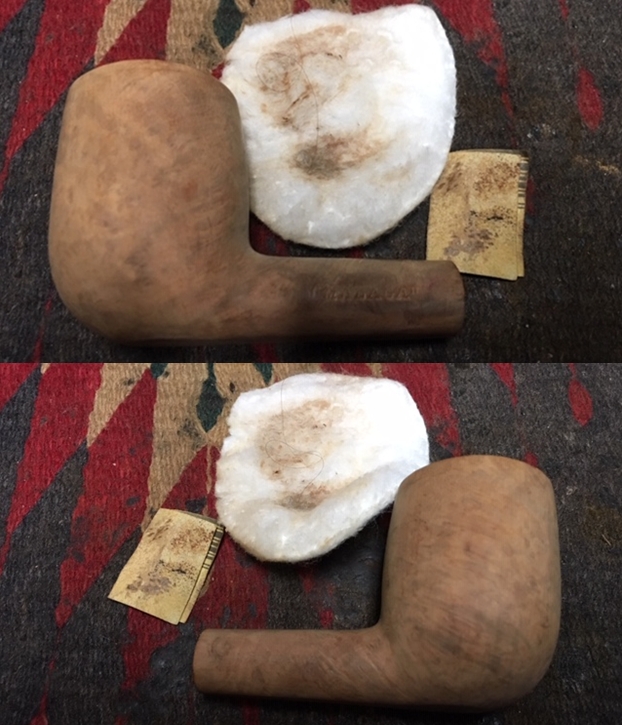
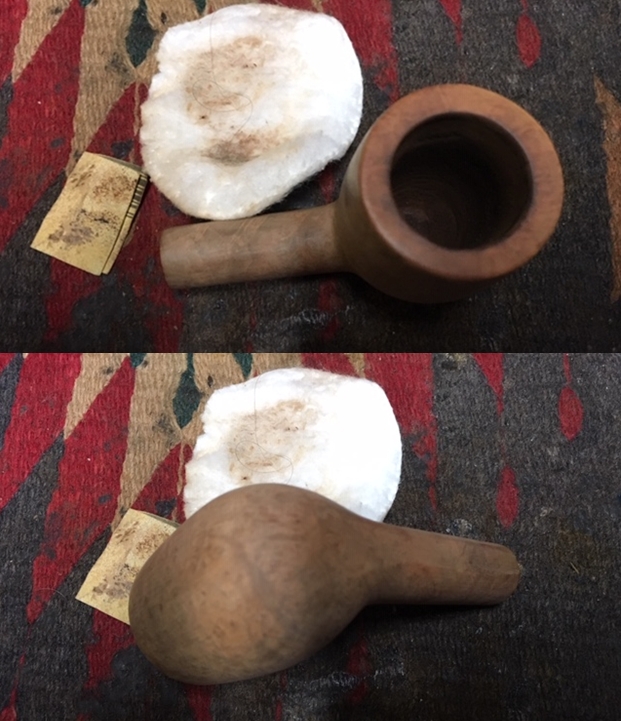
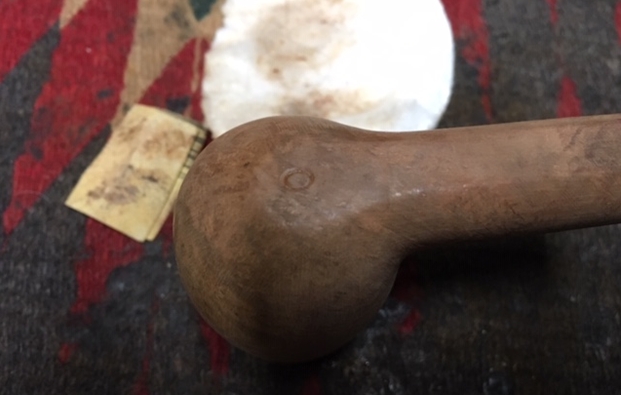
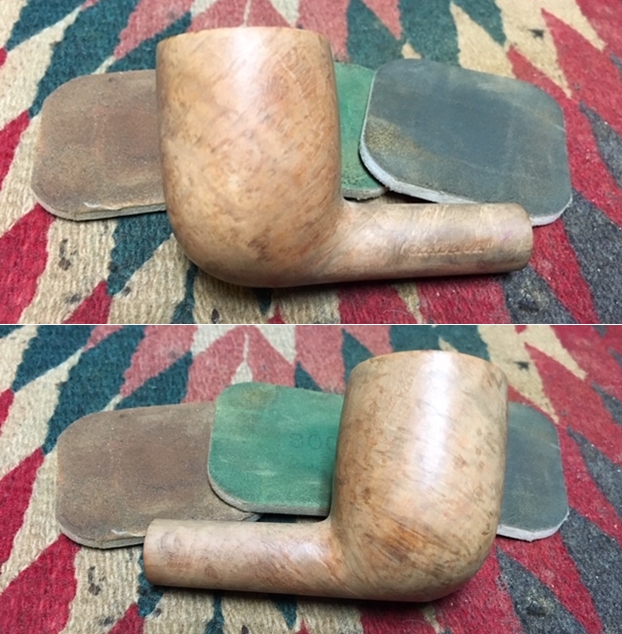
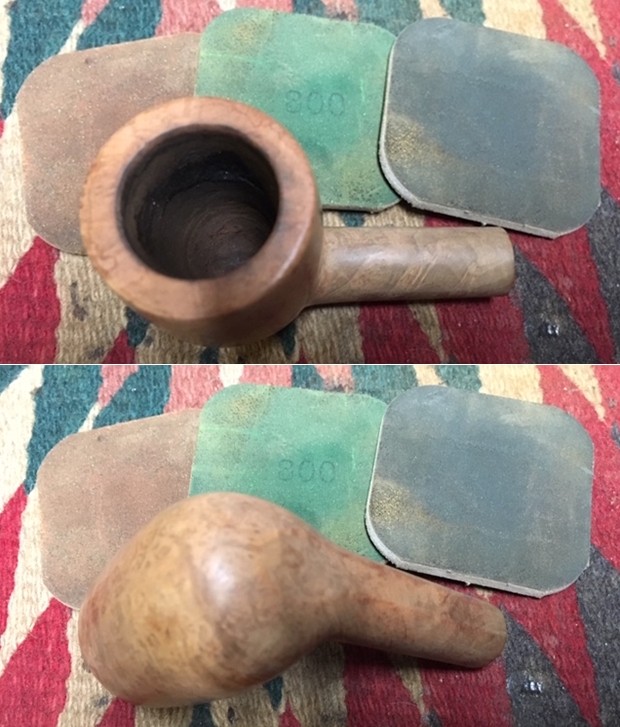
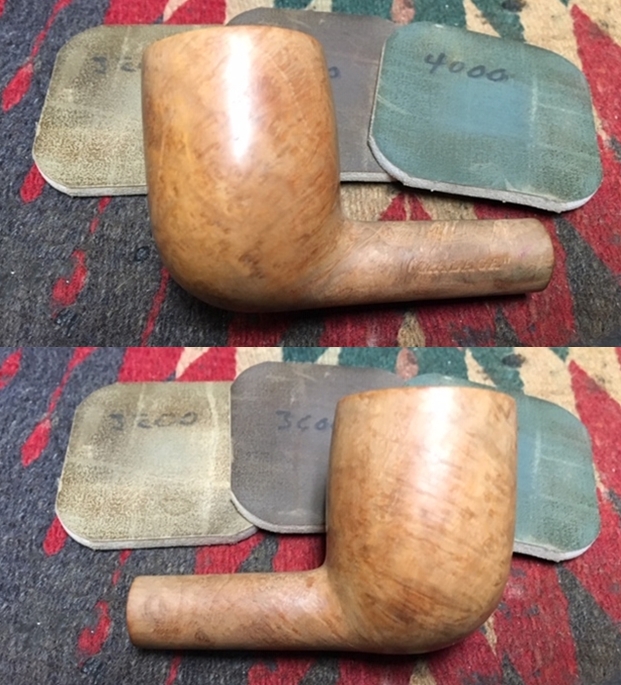
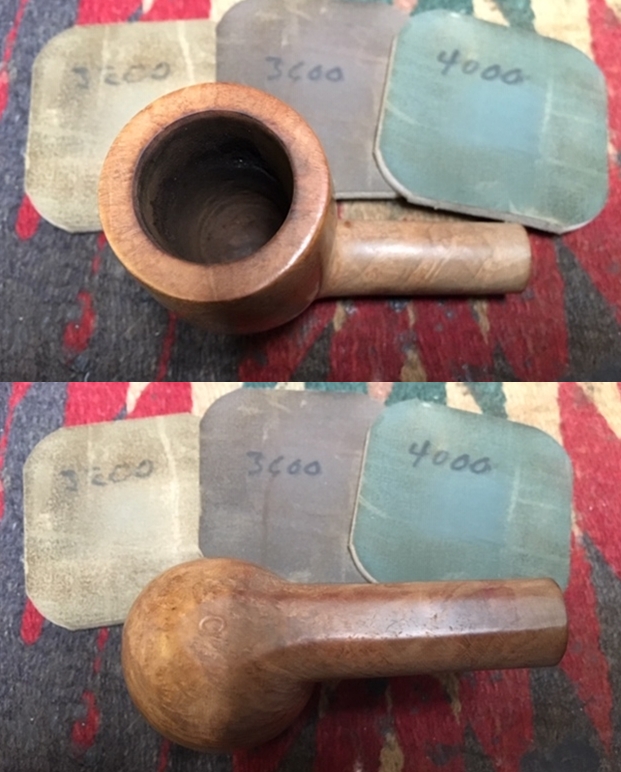
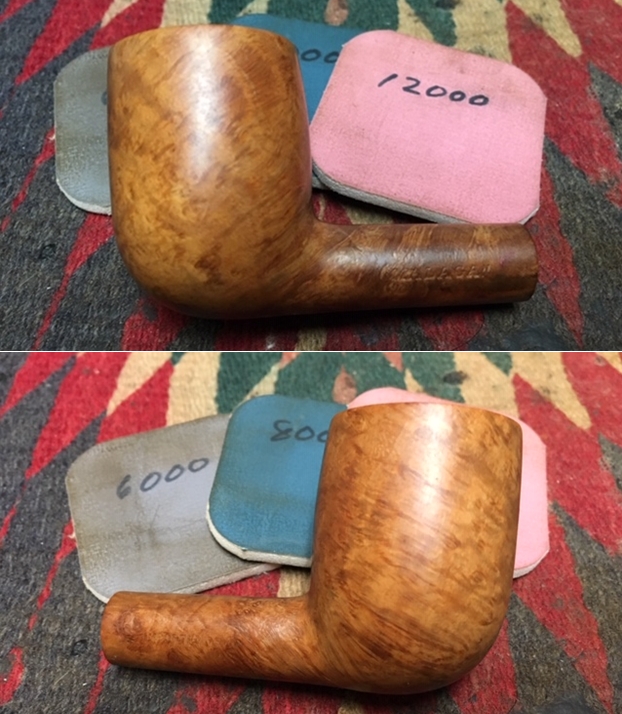
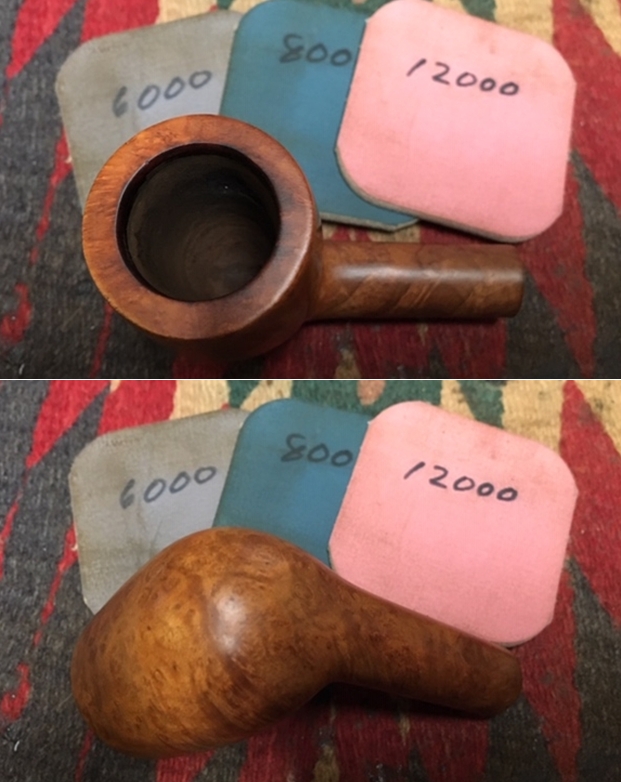
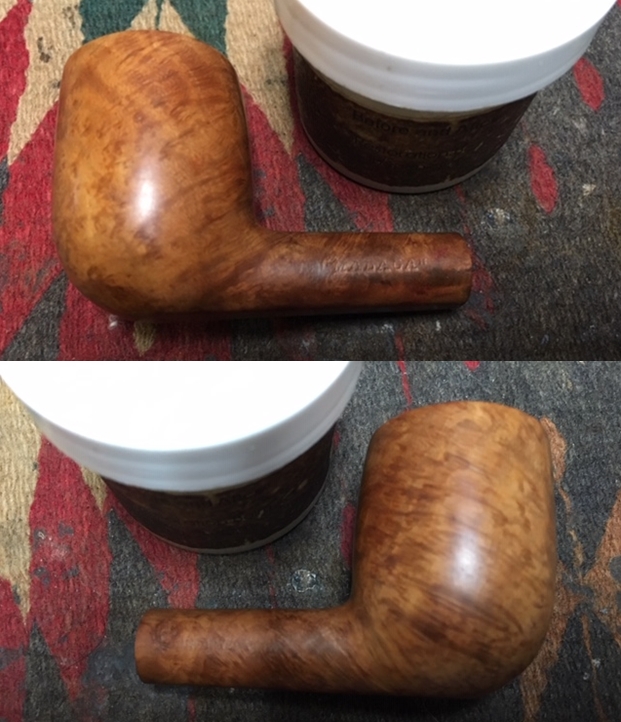
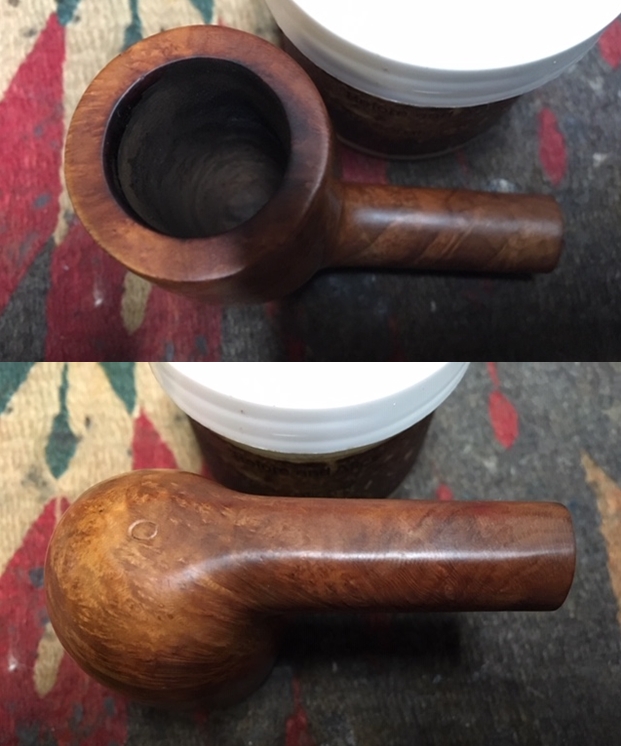
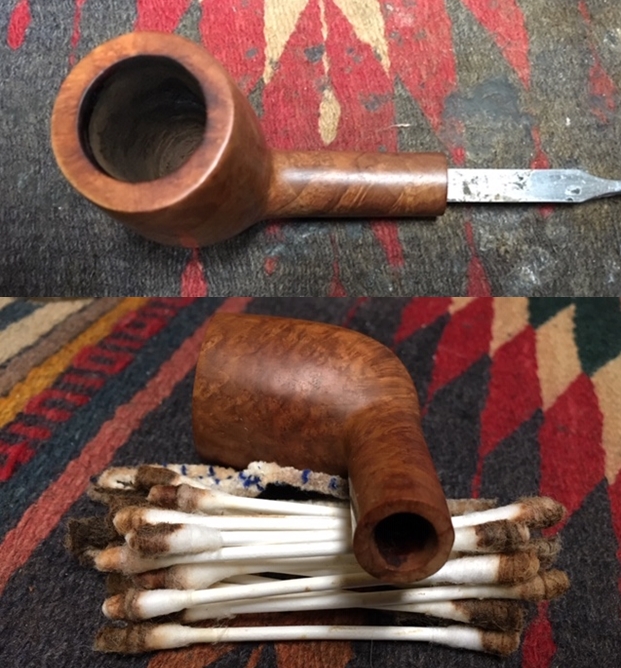
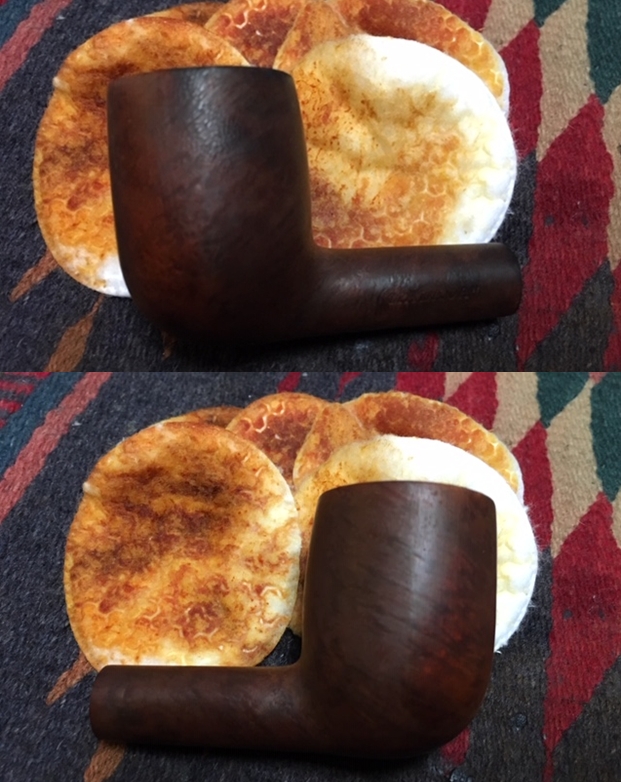
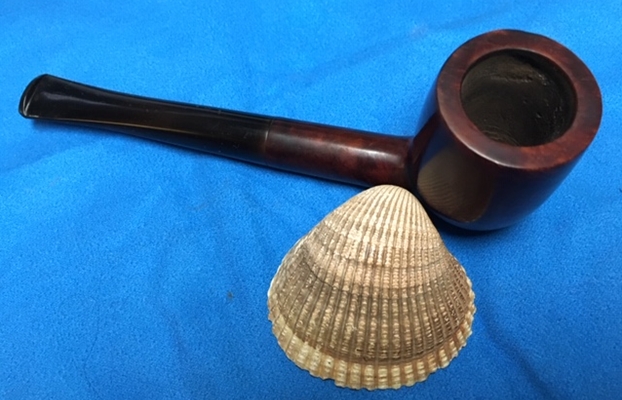
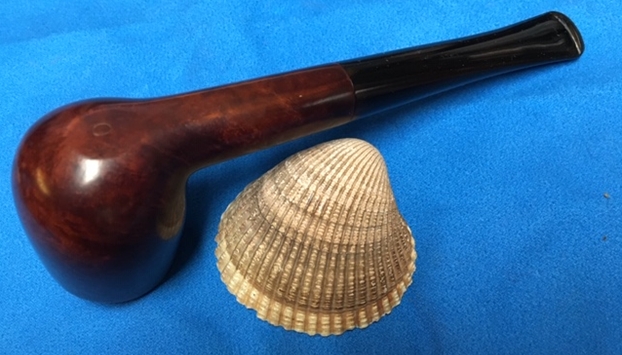
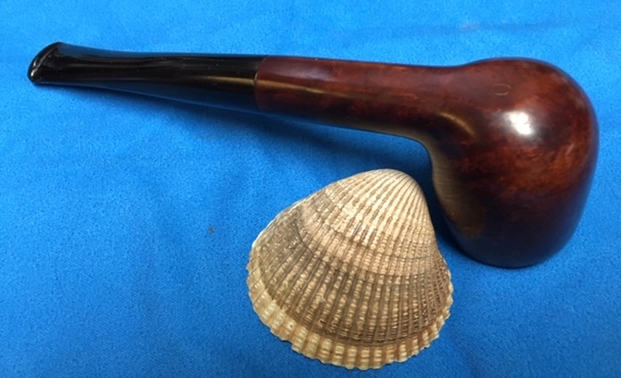
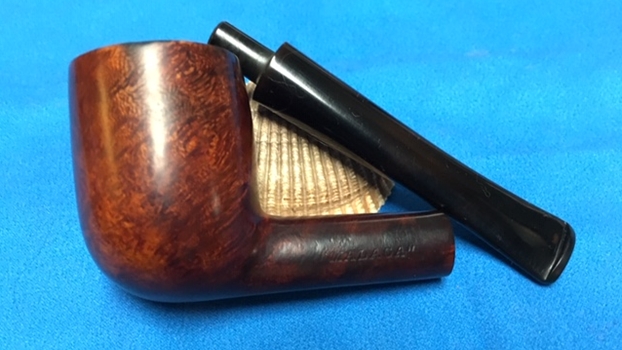
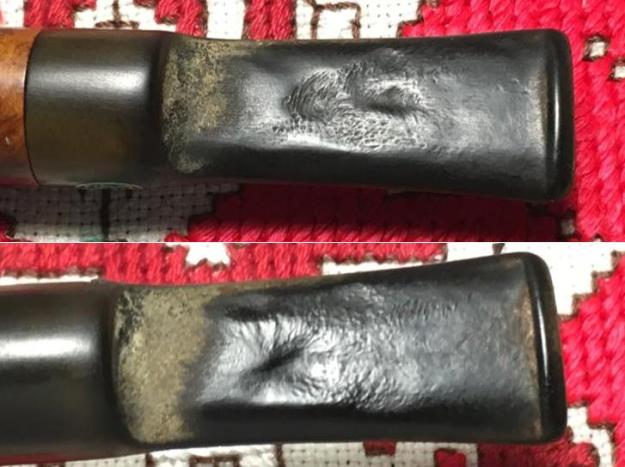
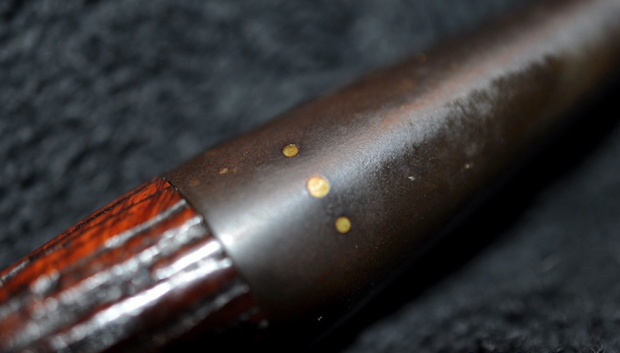
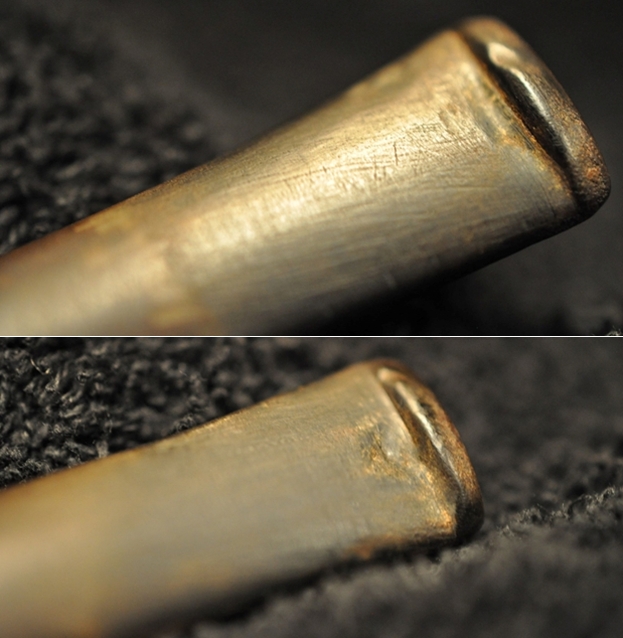
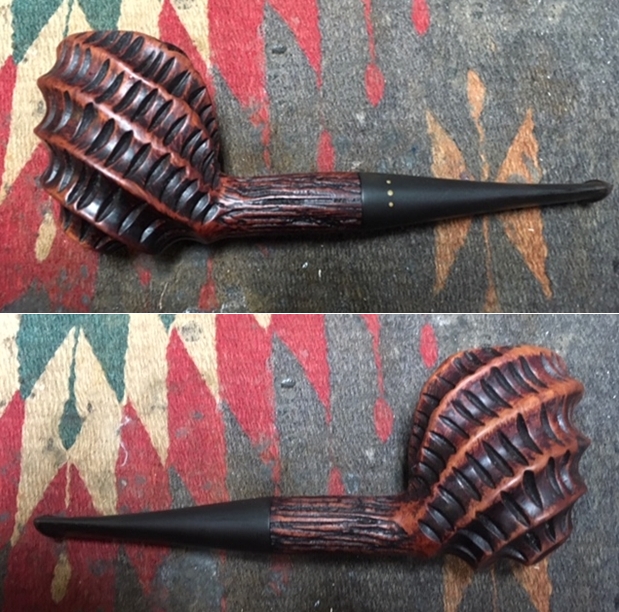
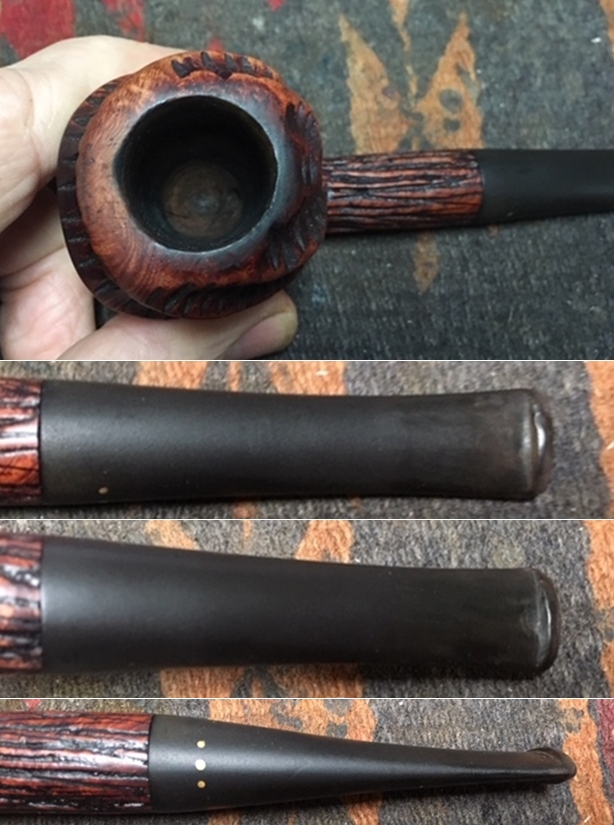
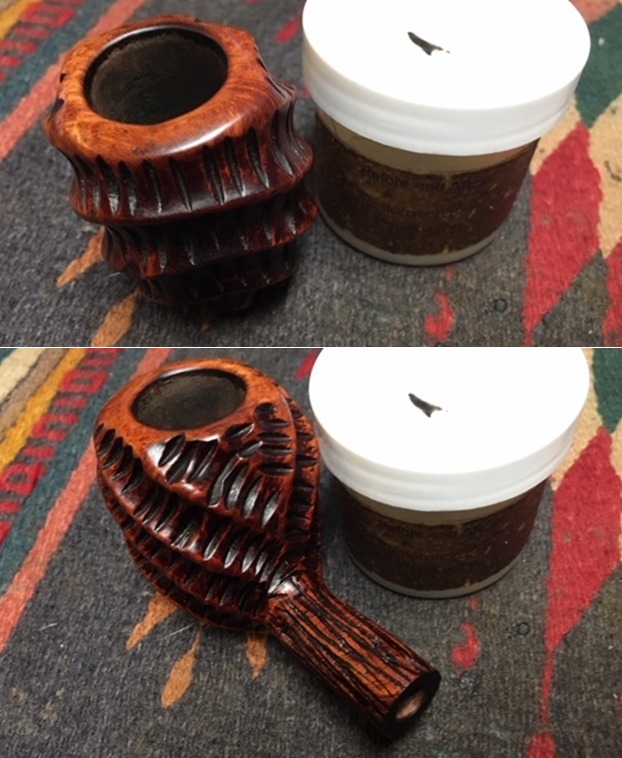
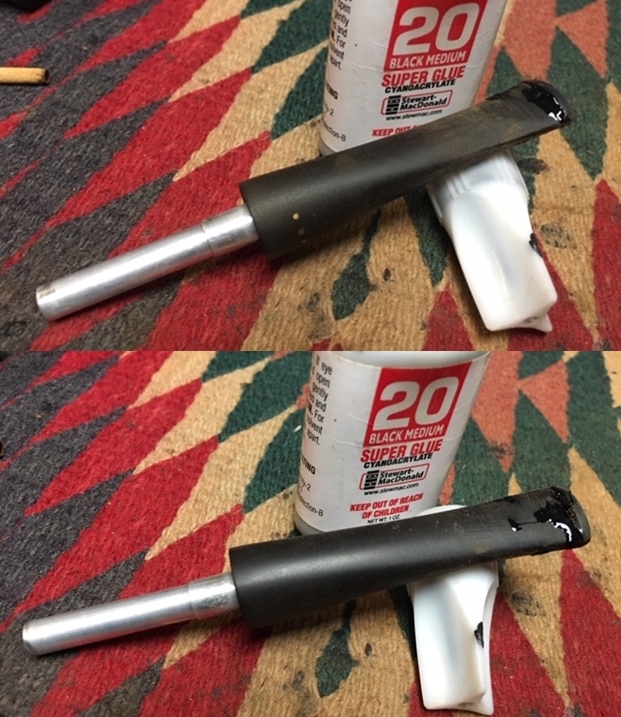
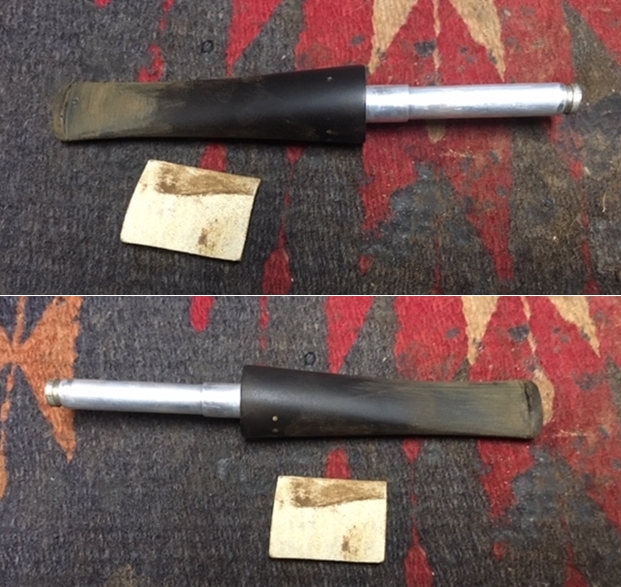
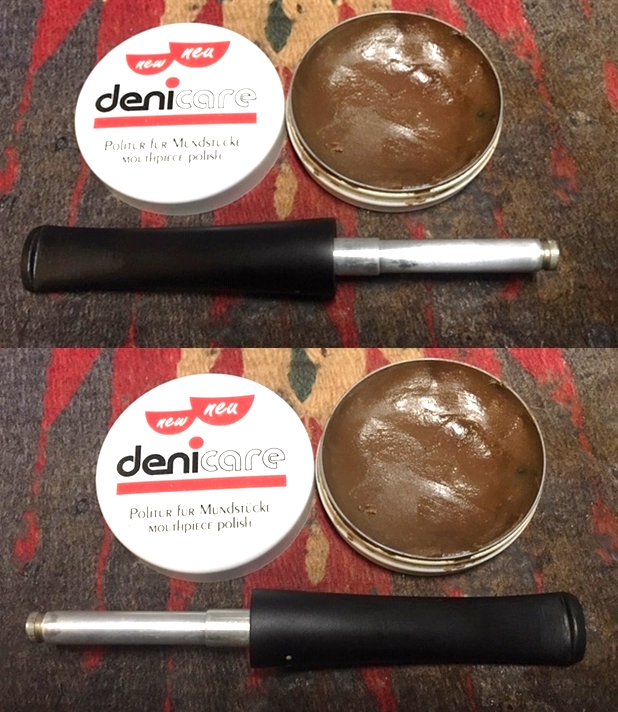
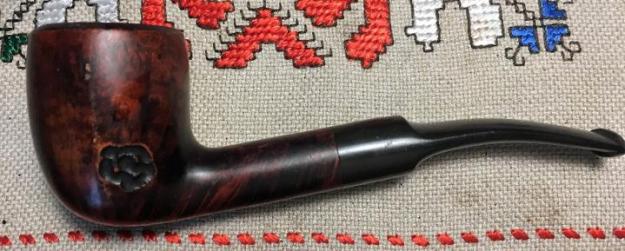
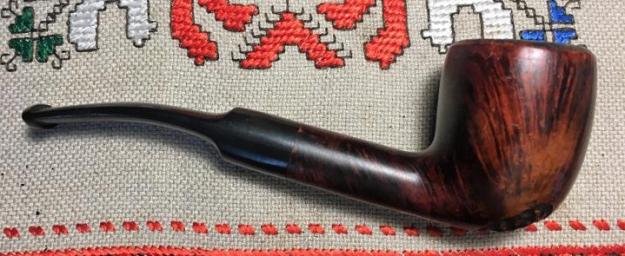
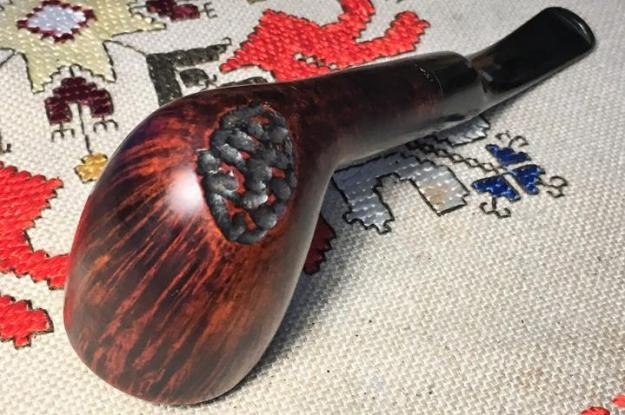
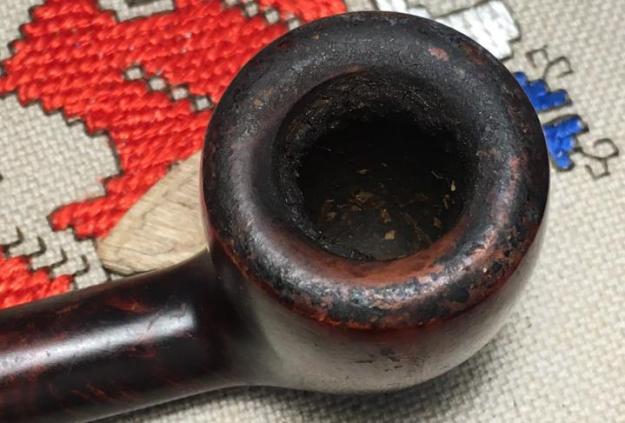
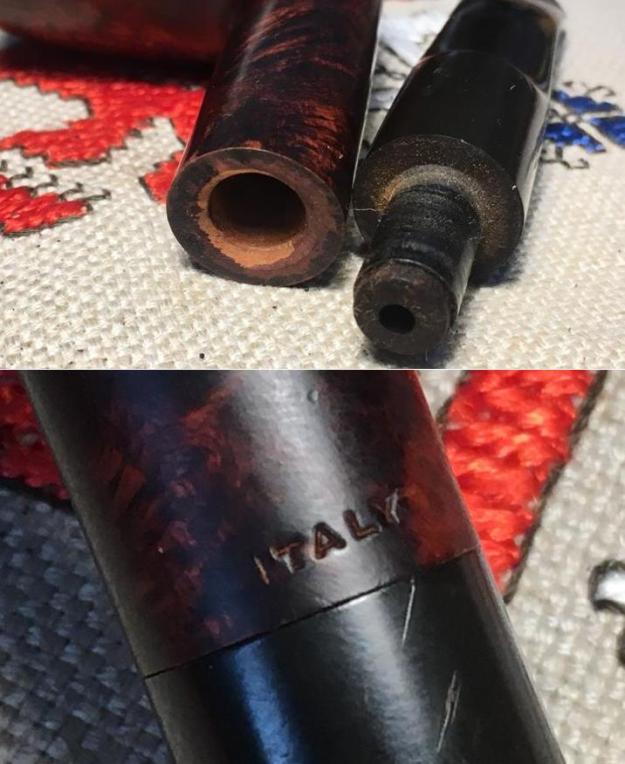
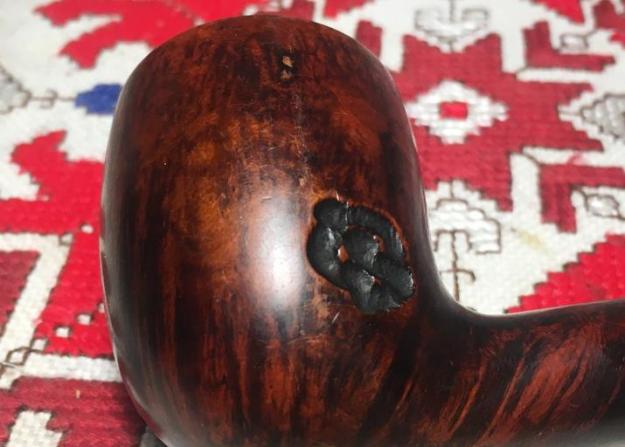
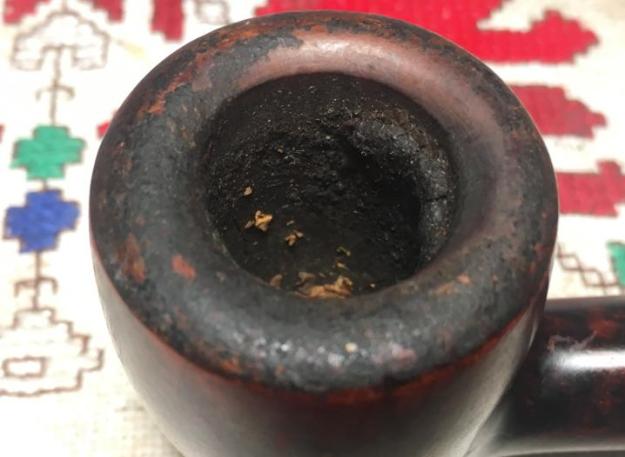
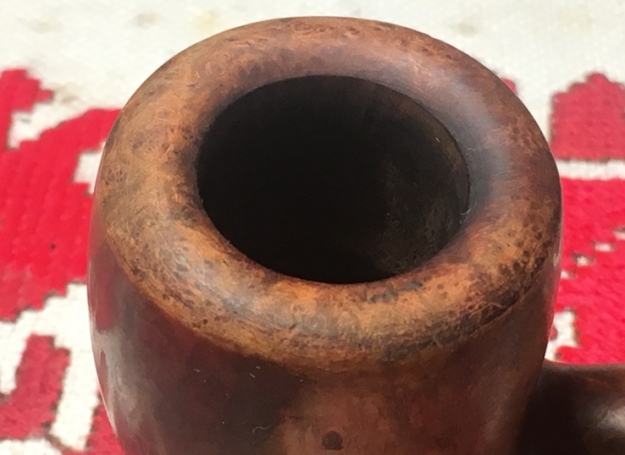
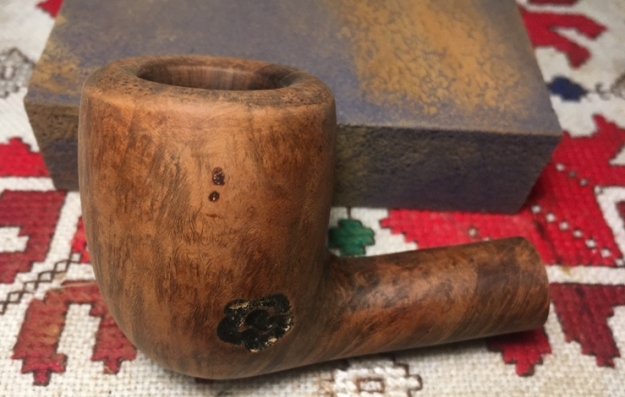
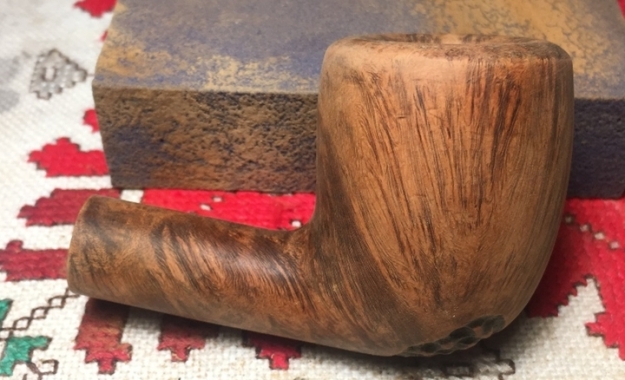
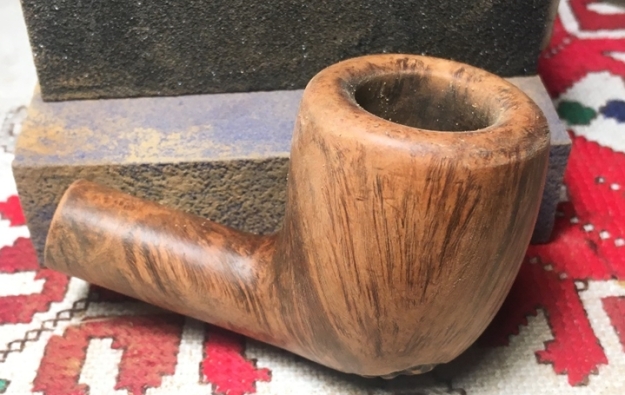
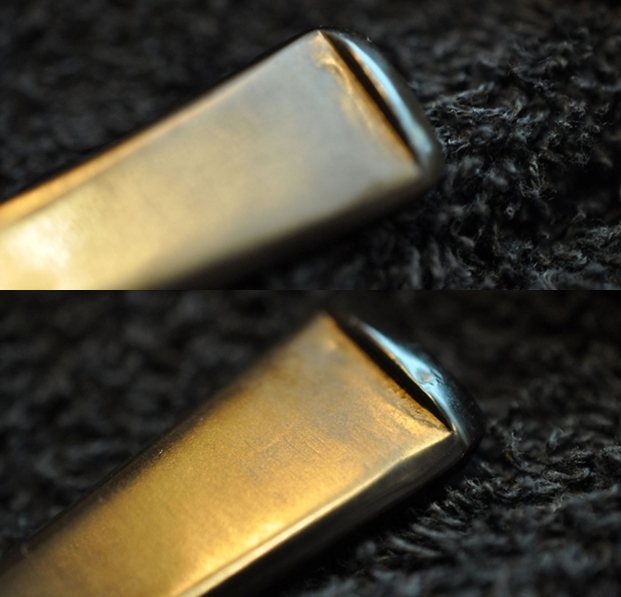
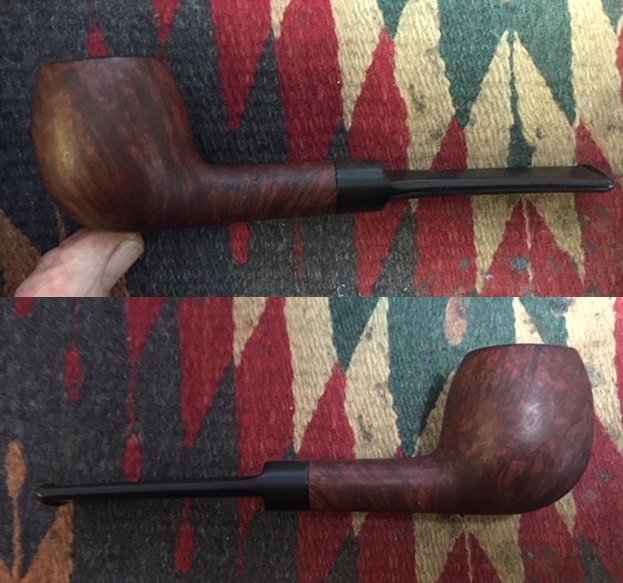
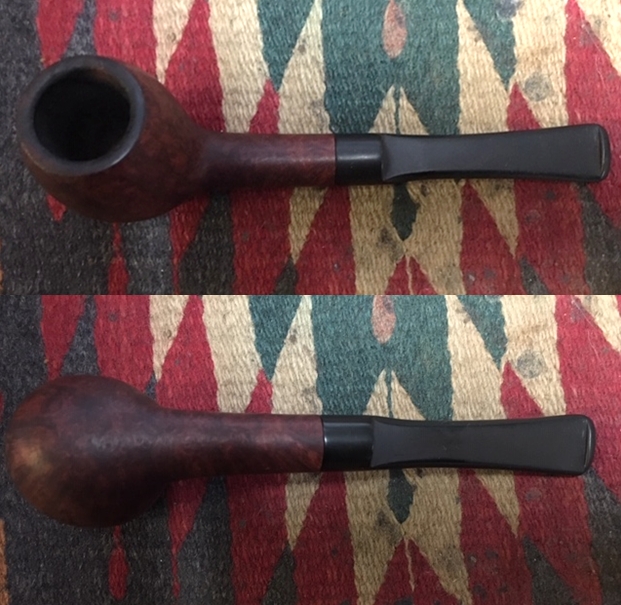
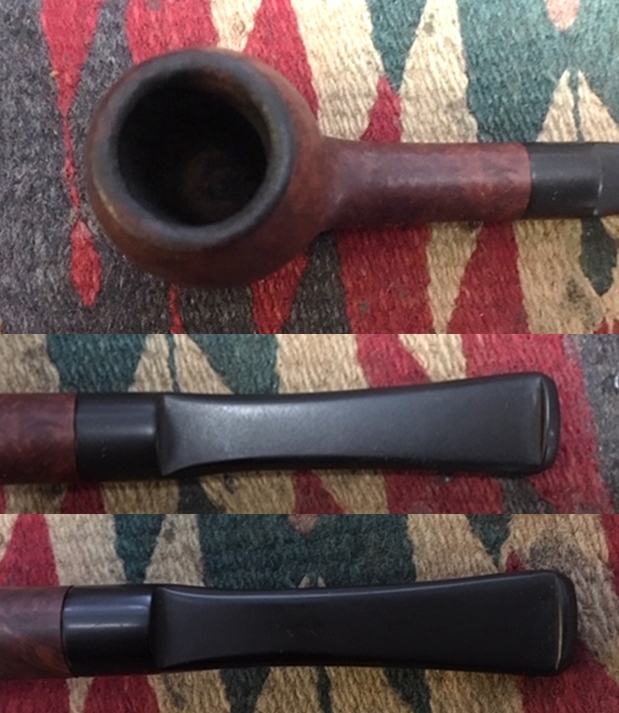
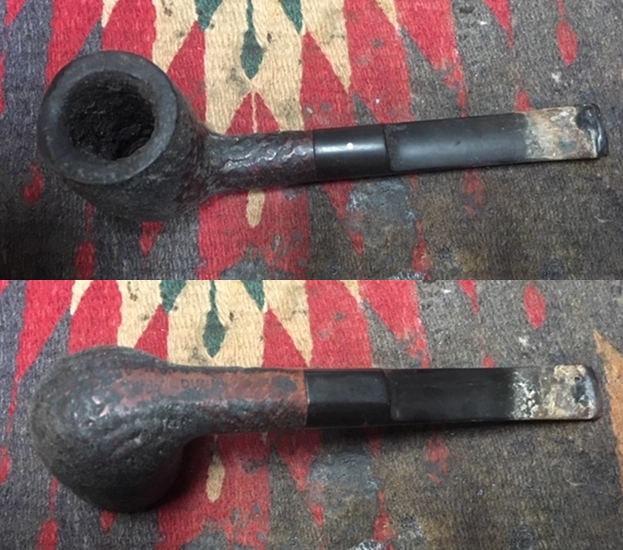
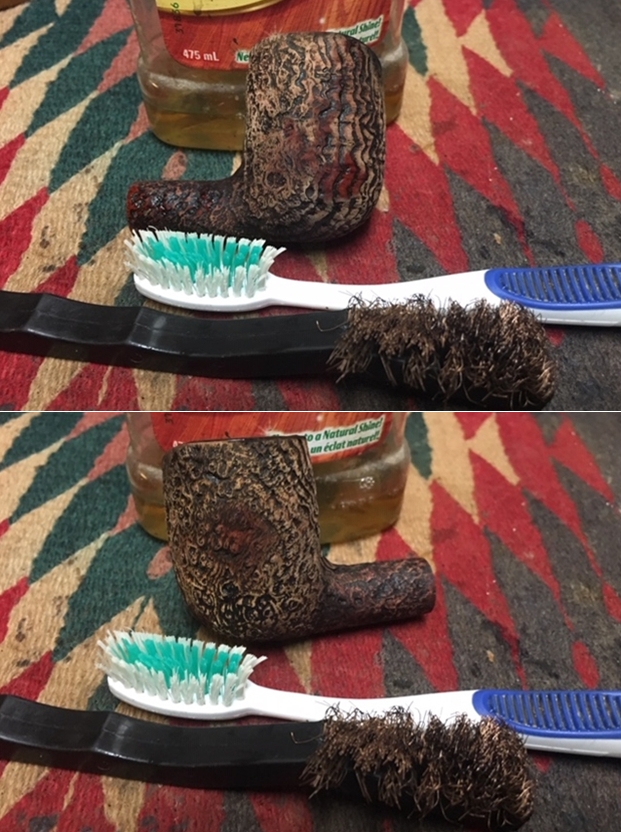
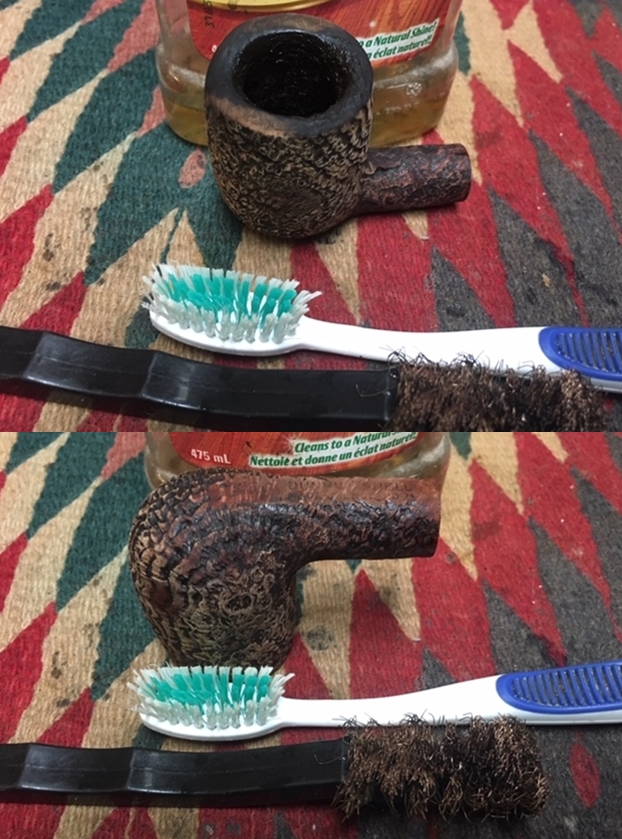
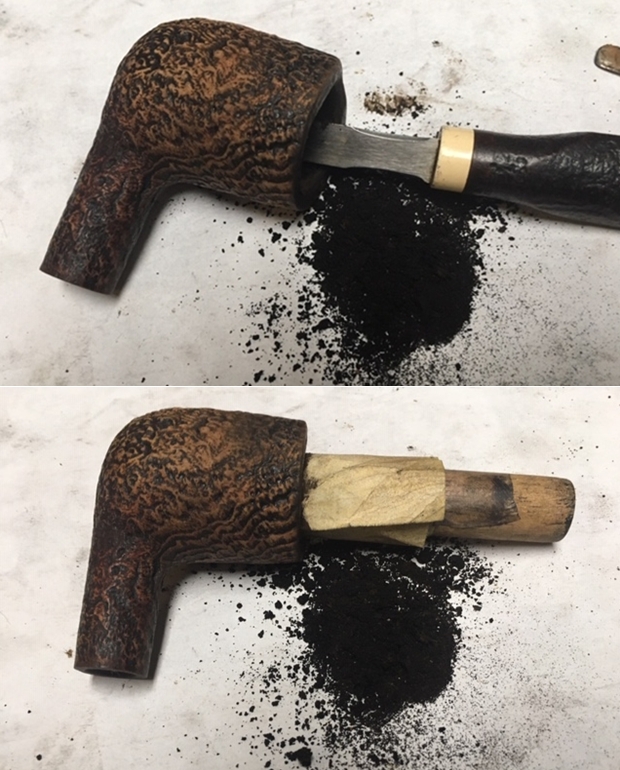
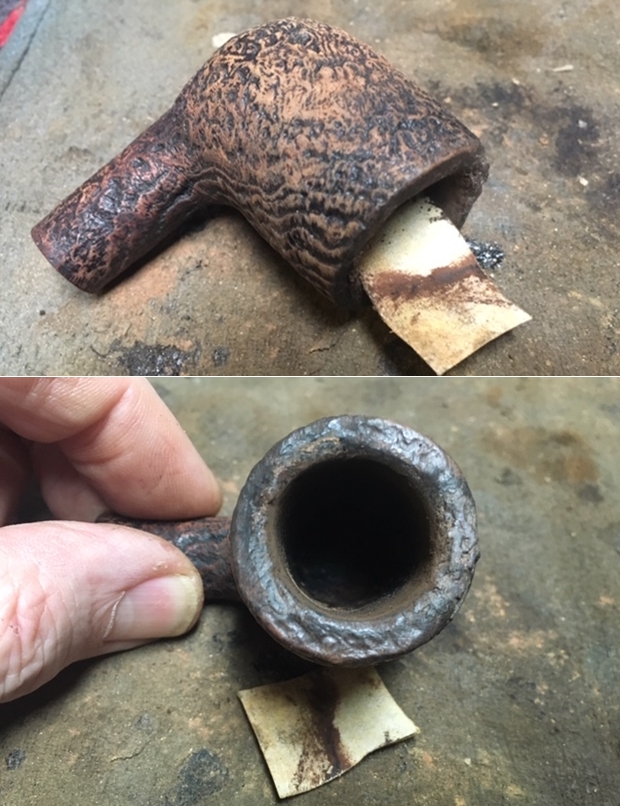
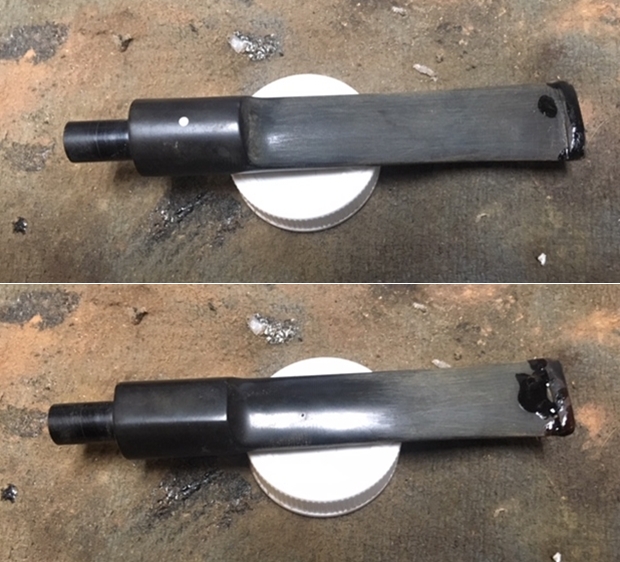
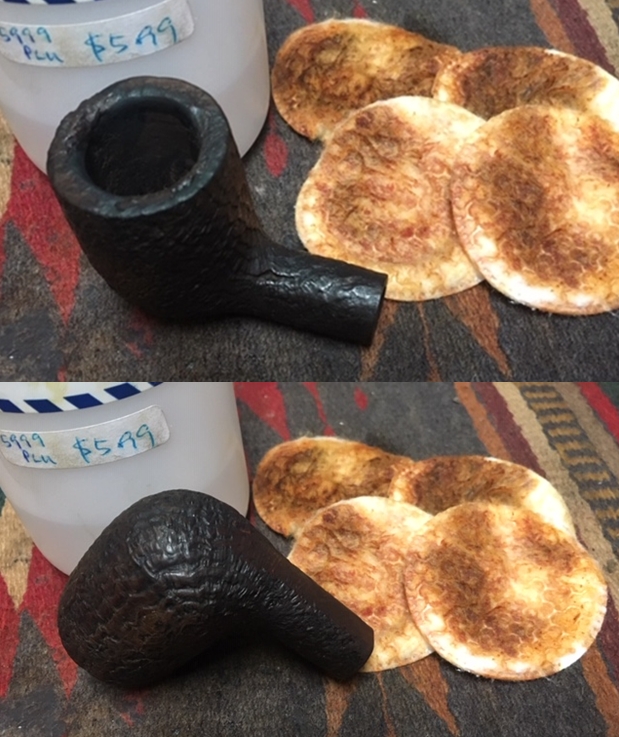
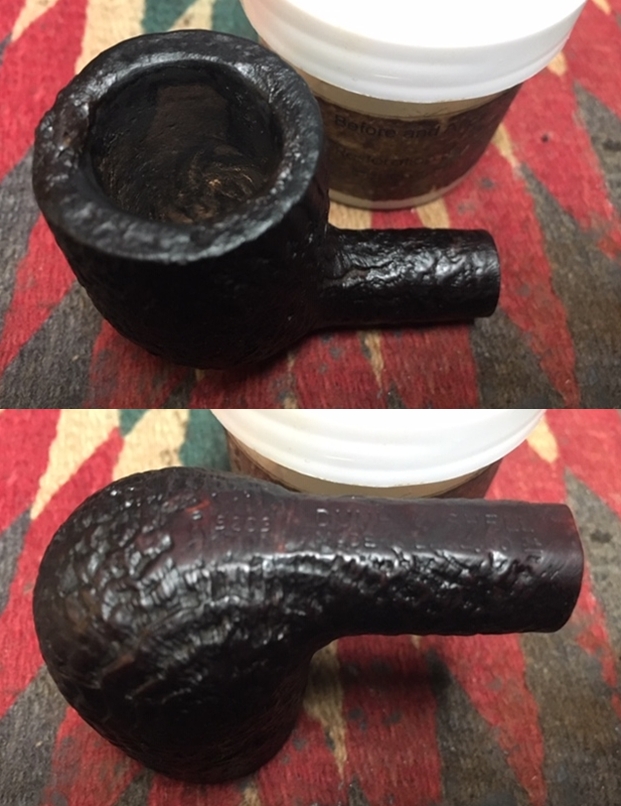
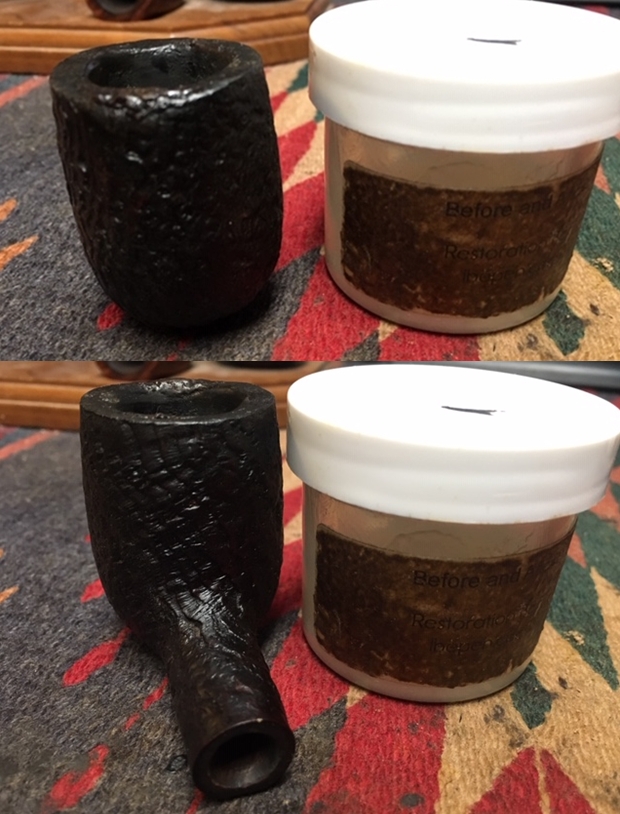
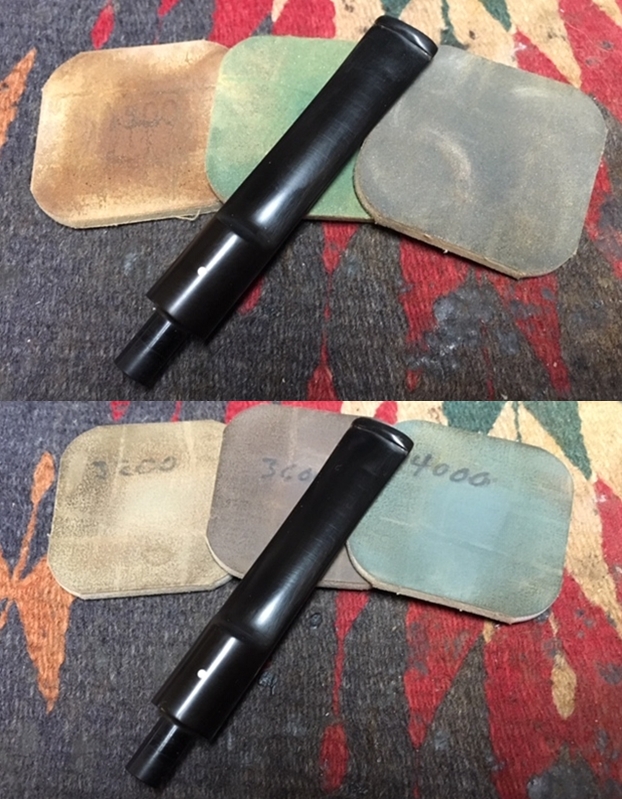
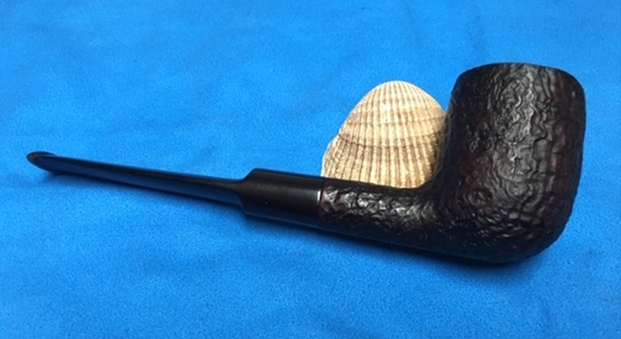
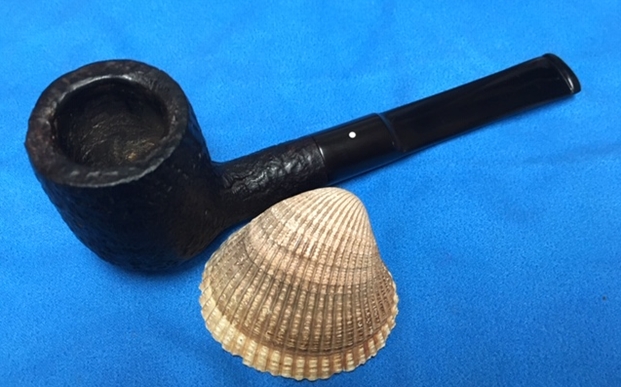
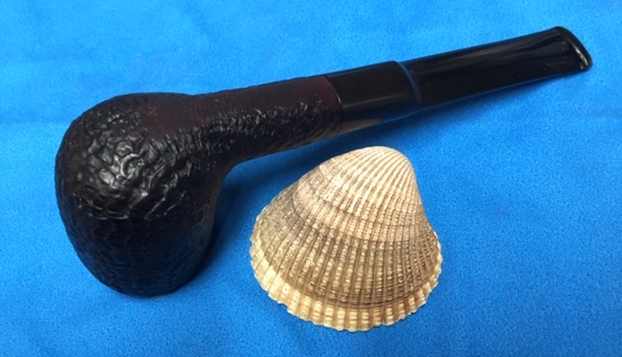
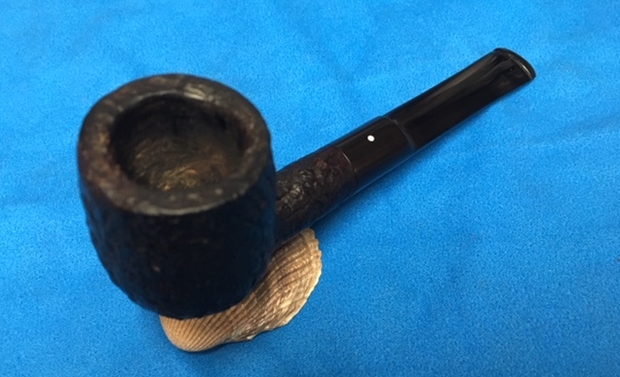
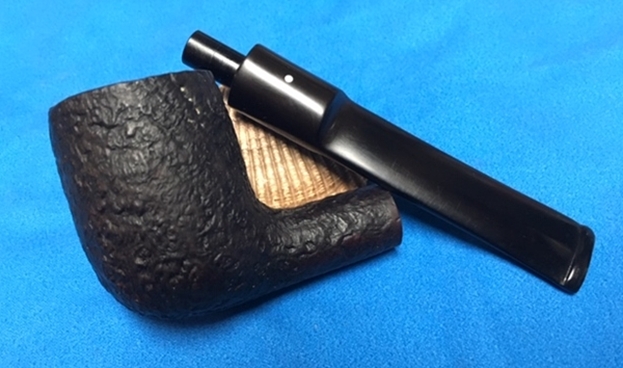
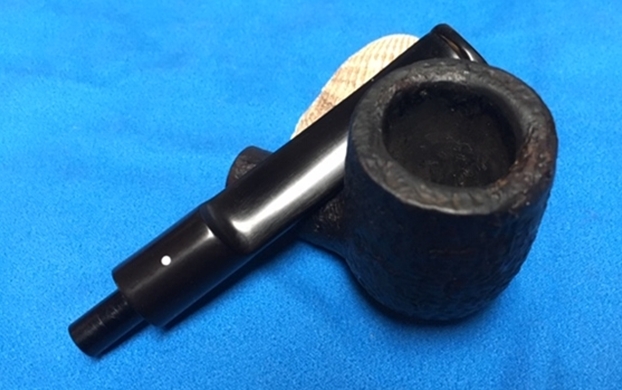
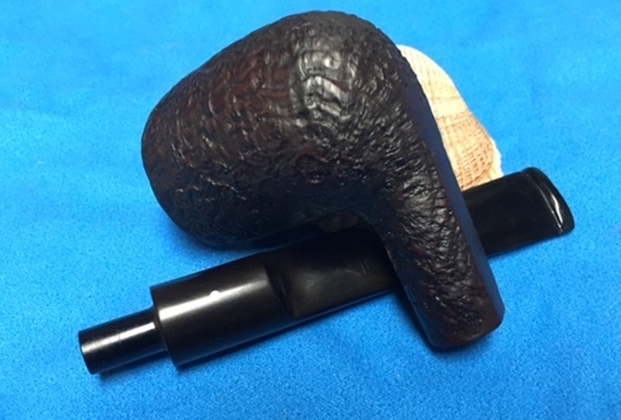
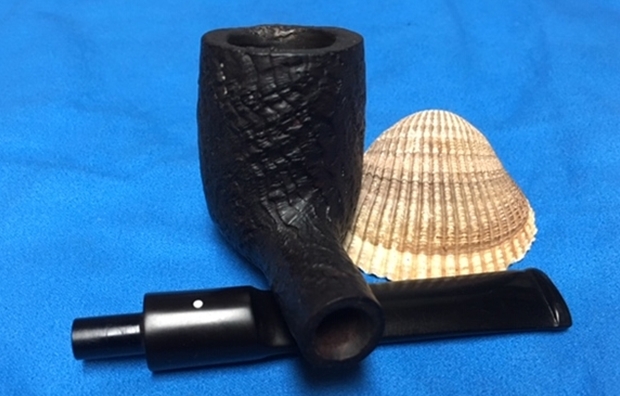
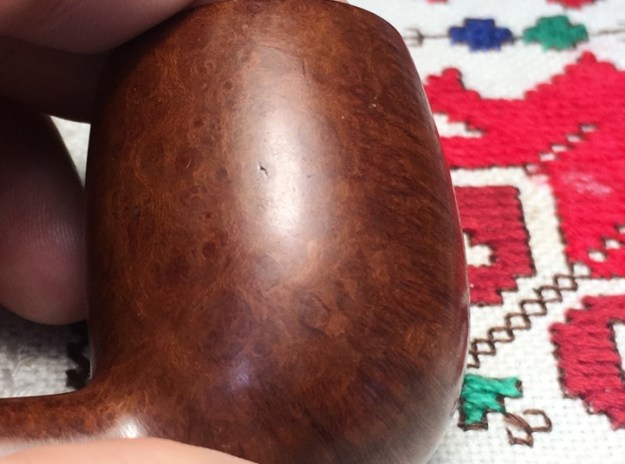
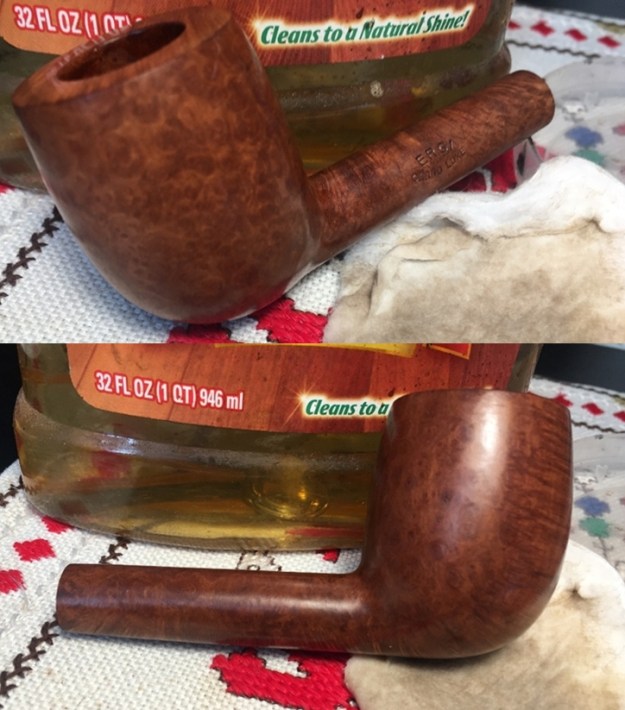
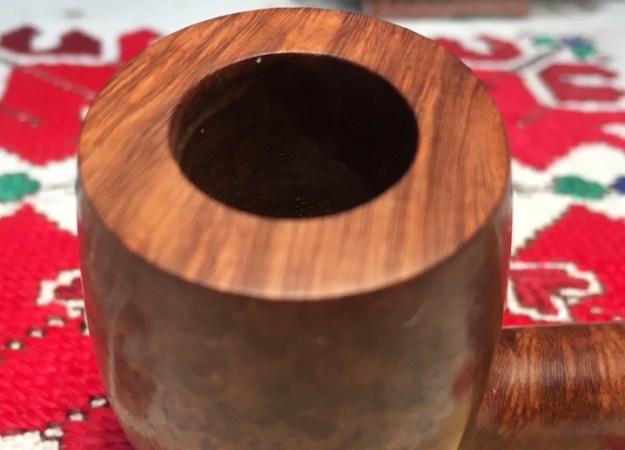
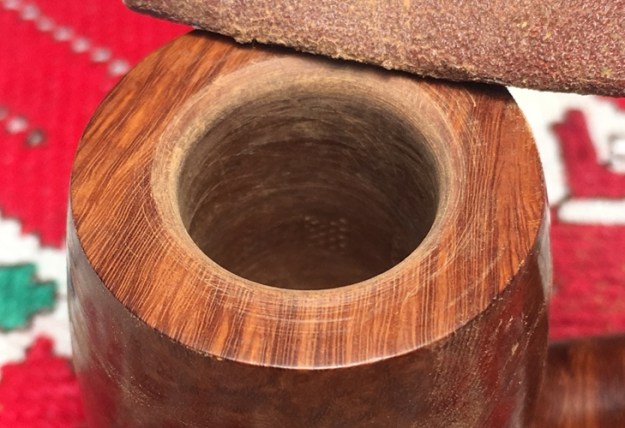
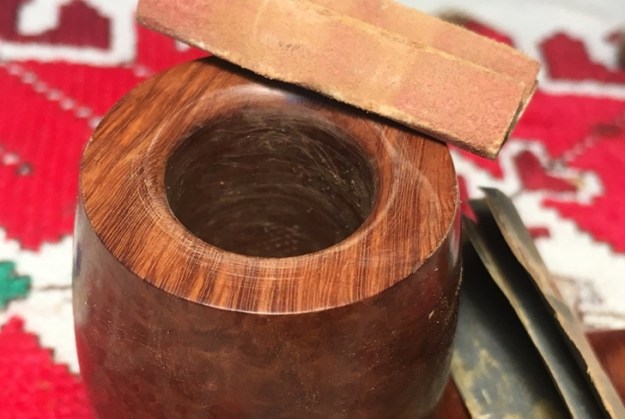
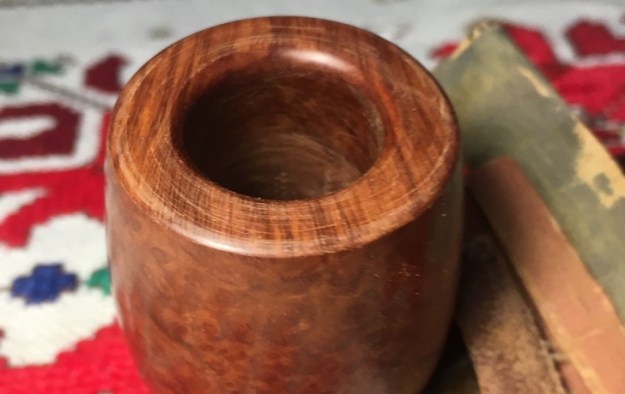
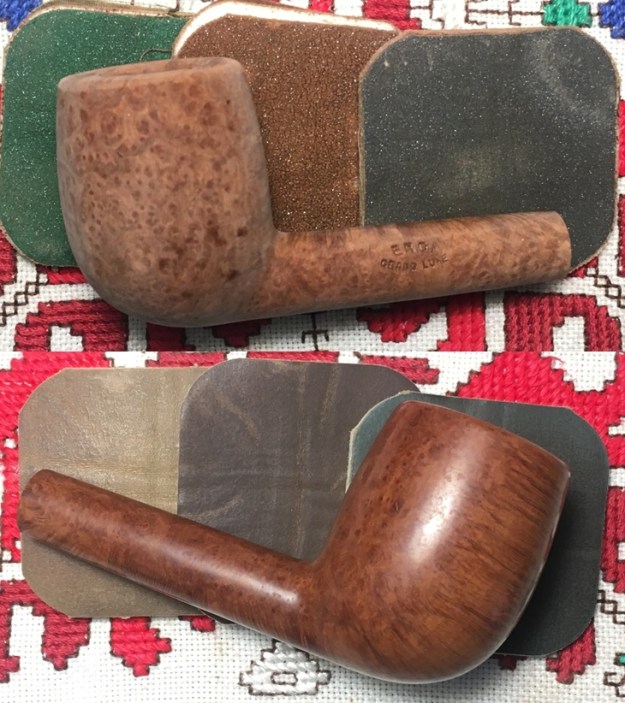
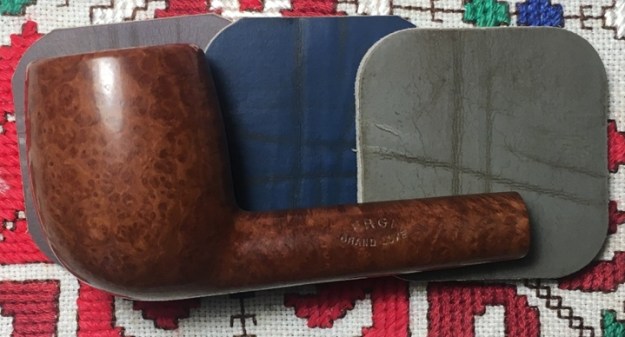
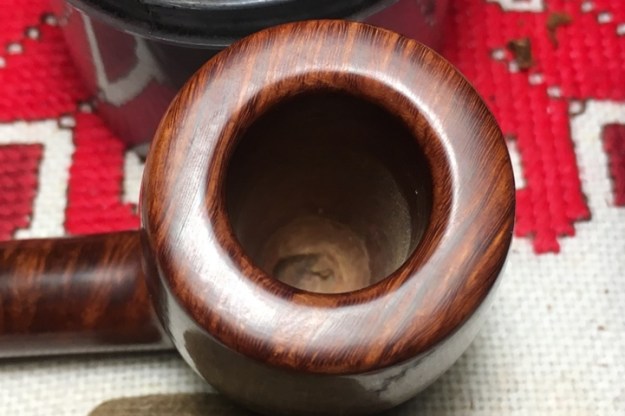
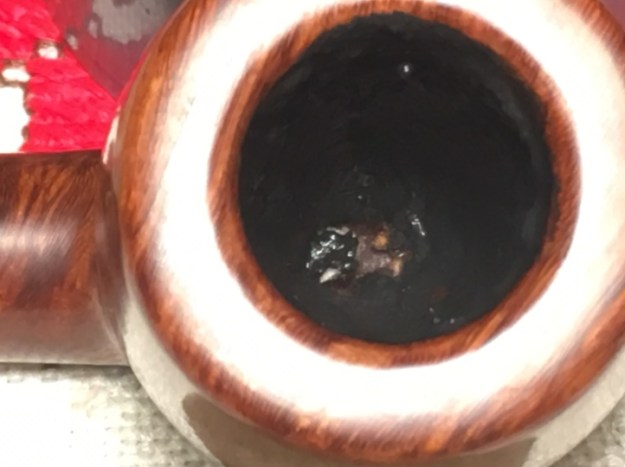
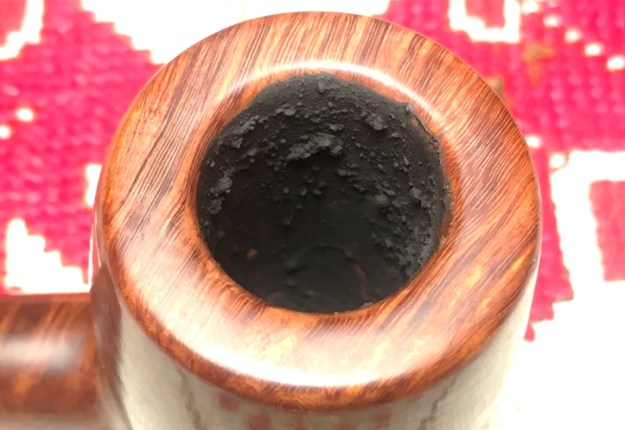
I have always been intrigued by Tracy Mincer and his Custom-Bilt pipes and even his Custombilt pipes like this one. There is something about the rugged carving and appearance of the pipes that gets my attention. I have a few of them in my collection and always enjoy the tactile nature of the pipe when it is being smoked. This old billiard has the Custombilt stamp and I will need to reacquaint myself with the eras of the various spellings of the brand so that I can place it in the hierarchy. The pipe was in pretty decent condition when Jeff received it – dirty but really not too bad. The finish was dusty and dirty in the worm trail carvings. The bowl had a decent cake in it that was lightly flowing over the rim top into the rustication. The inner and outer edge of the bowl appeared to be in great condition. The stem had a chip out of the edge of the button on the topside and tooth marks in the stem just ahead of the button on the underside. The smooth part of the shank, between the worm trails is stamped Custombilt in script on the left side. On a smooth panel on the heel of the bowl it is stamped Imported Briar. Jeff took these pictures of the pipe to show its condition before he started his cleanup work. He took close up photos of the rim top and the side and bottom of the bowl to show the condition of the briar and the bowl. You can see the cake in the bowl and the lava overflowing onto the top of the rim. The worm trail rustication is quite dusty and dirty. The photos of the stem show the tooth chatter and marks as well as the chip out of the topside of the button.When I brought the pipe to my worktable I did some reading on Pipedia to before starting the restoration. I have learned that it is important to keep the variations in spelling of this brand clear in mind when trying to put these on a timeline. The names Custom-Bilt, Custombilt, and other variations help place the pipes in the history of the Company.

There is a great article on Pipedia that helps understand the brand and give a sense of what the various stamping looks like on the pipes (https://pipedia.org/wiki/Custom-Bilt). I cite from that article to give a feel for the brand:

In 1946, the name was changed to Custombilt after Mincer began an association with Eugene J. Rich, Inc. There were some big changes in advertising and distribution. The slogan “AS INDIVIDUAL AS A THUMBPRINT” began at this time as well.

In 1953, Leonard Rodgers bought the company and emphasized tobacco pouches and butane lighters. (However, it appears Mincer was working on his new pipe, the Doodler.) In 1968, Rodgers sold the Company to Consolidated Cigars. In the early 1970s, Wally Frank Co. bought the Custombilt trademark and began to produce their version of the pipe in 1974 or 1975. Hollco Rohr owned the Weber pipe factory, located in New Jersey, and produced the Custombilt pipes there. In 1987, the pipes were made out of the Butz-Choquin factory (France) and then Mexico until the late 1990s. Currently, the Custombilt name is owned by Tobacalera of Spain.
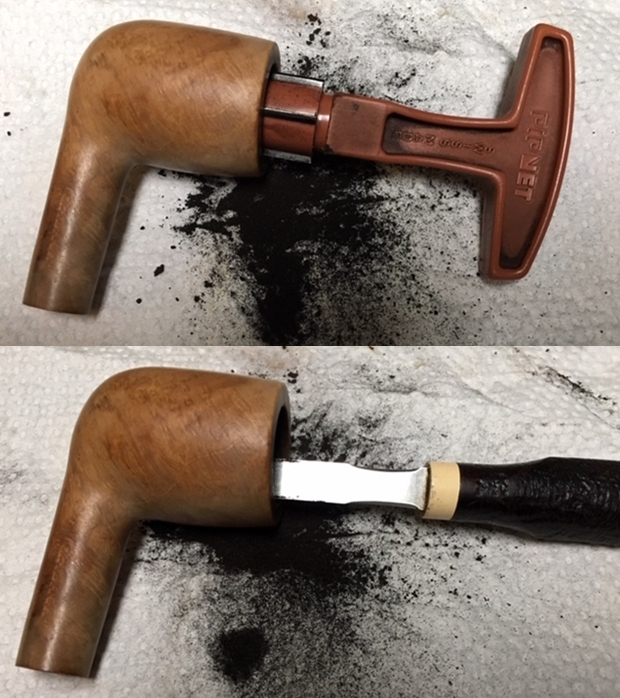
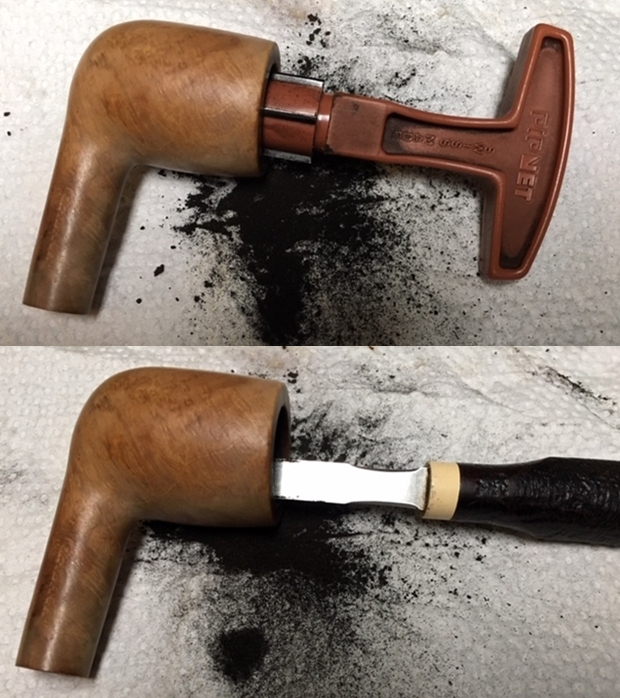
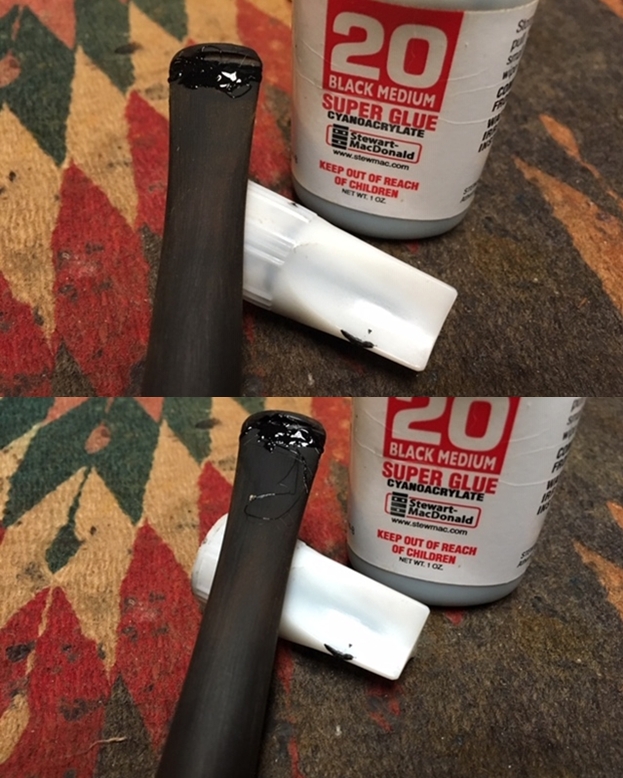
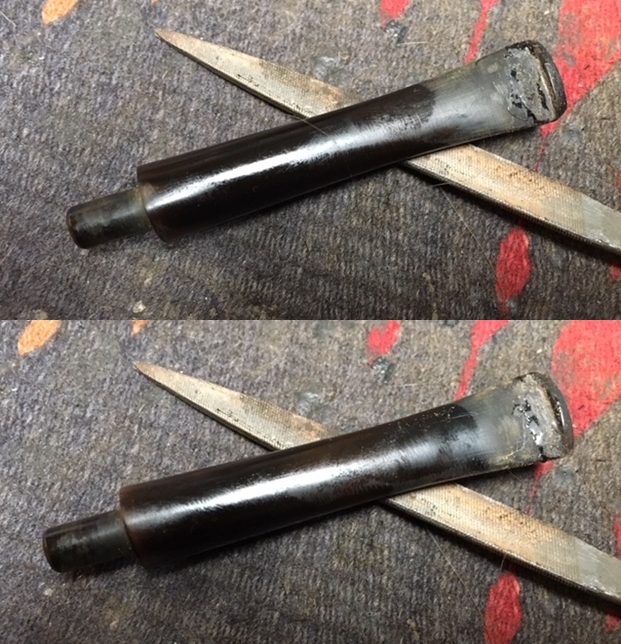
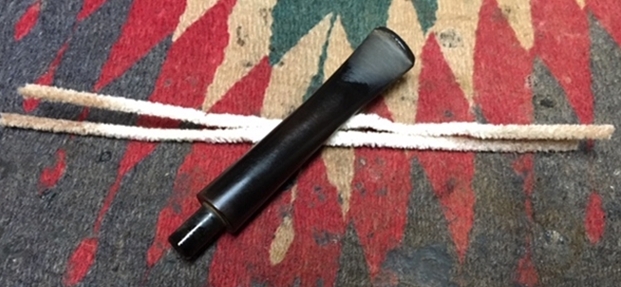
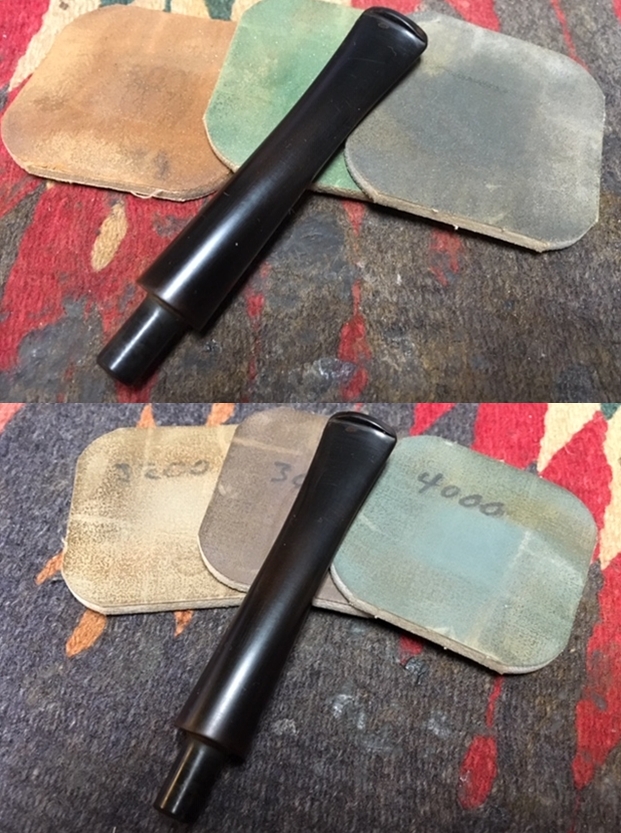
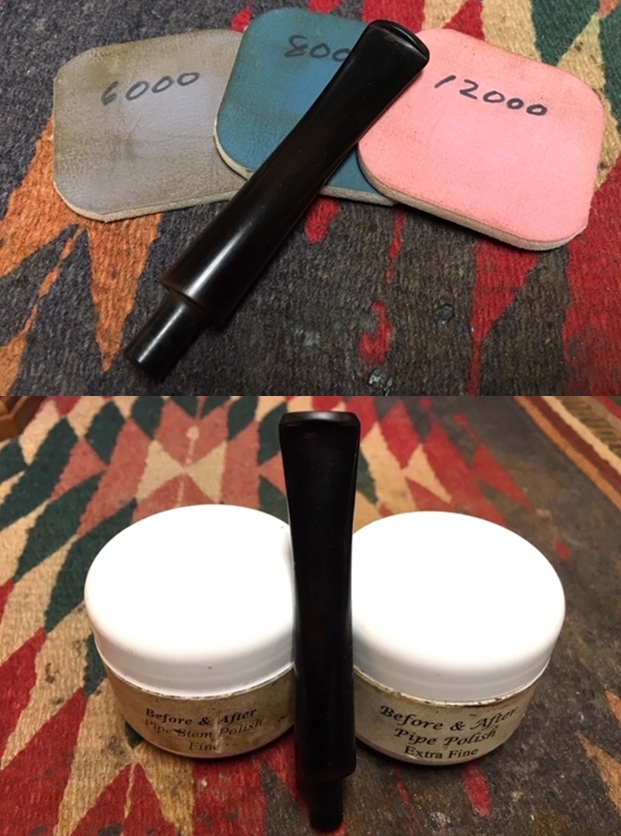
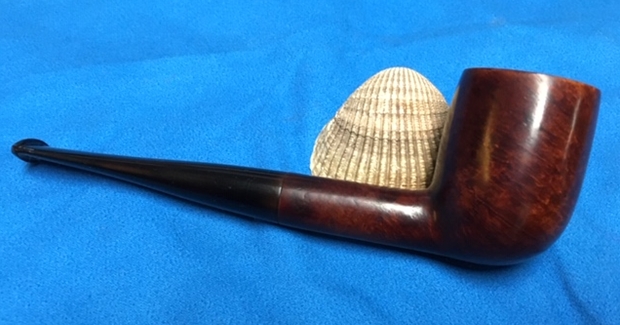
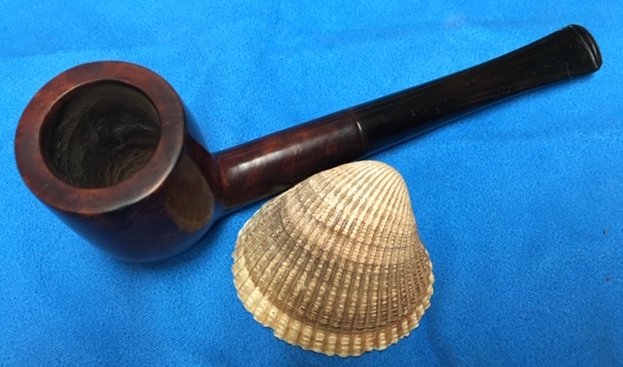
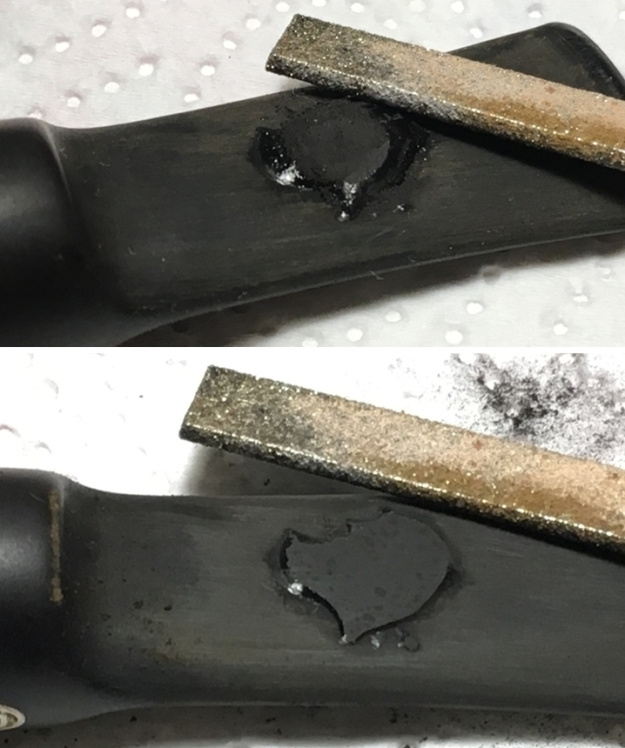
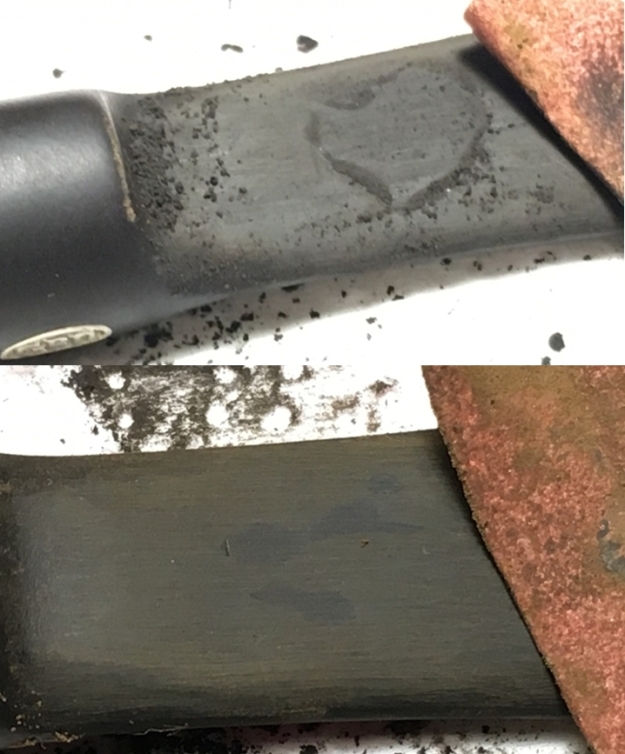
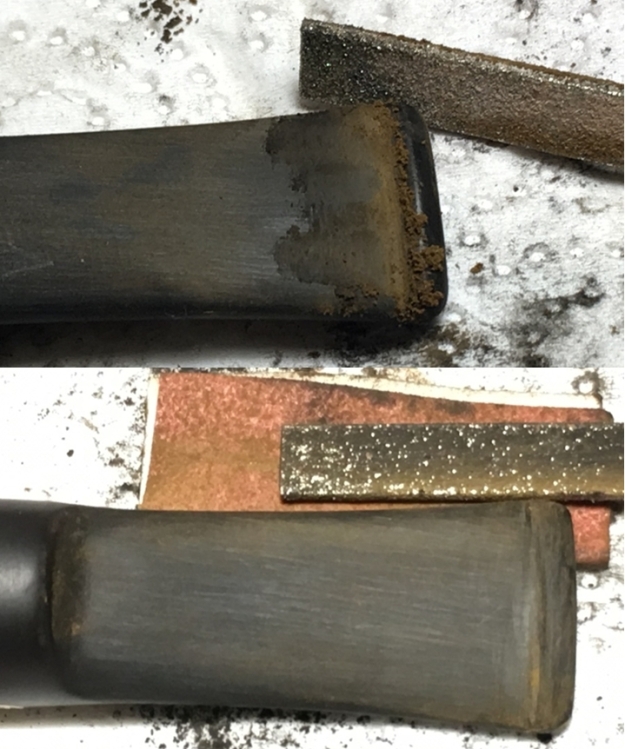
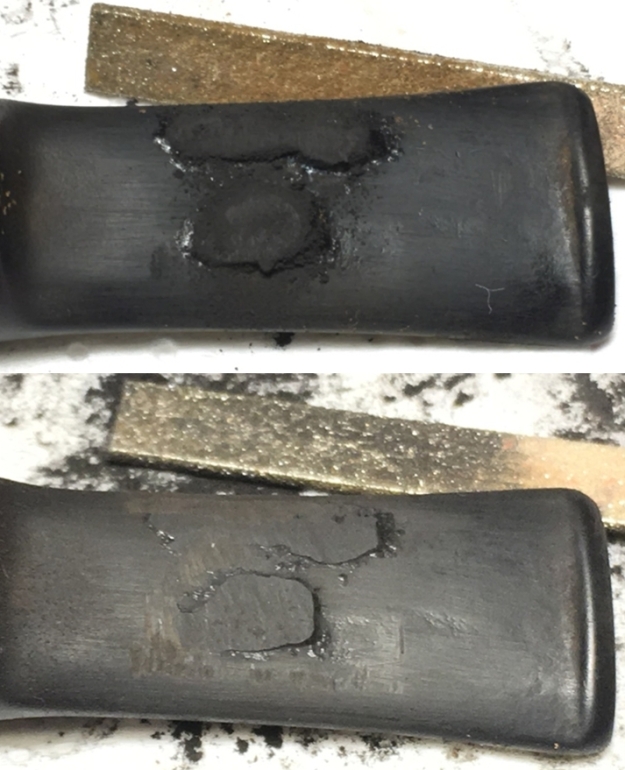
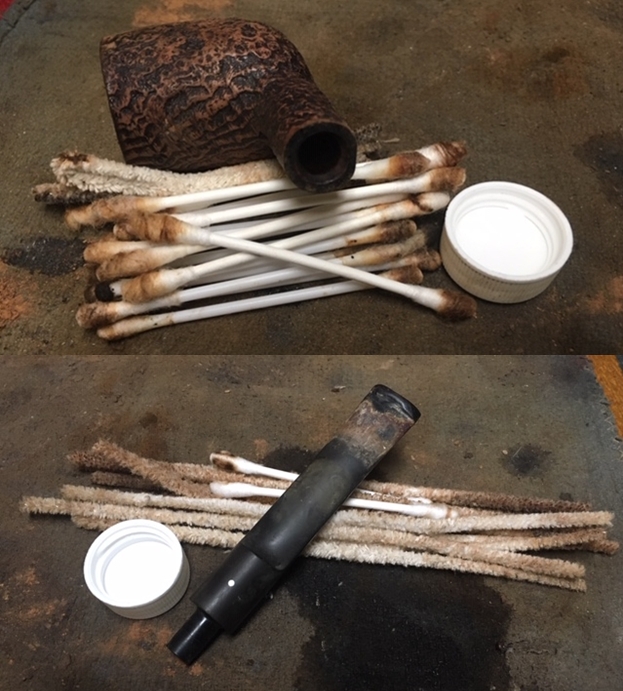
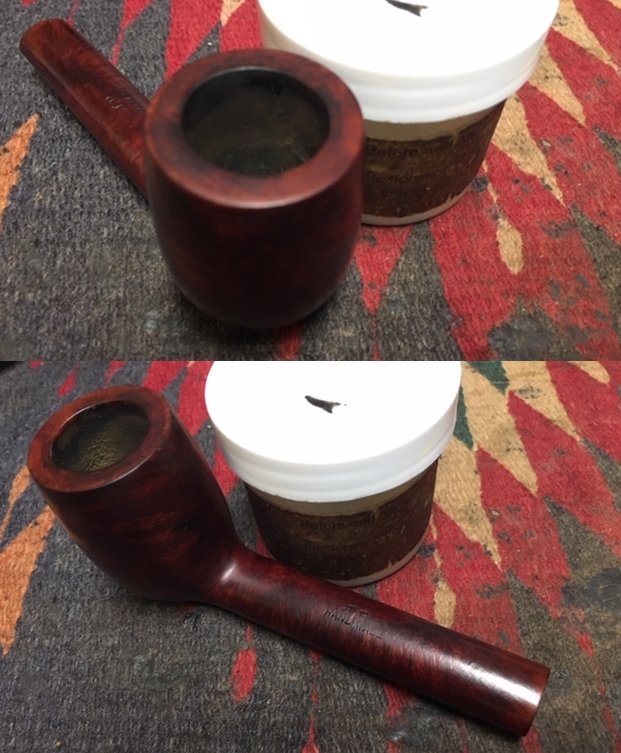
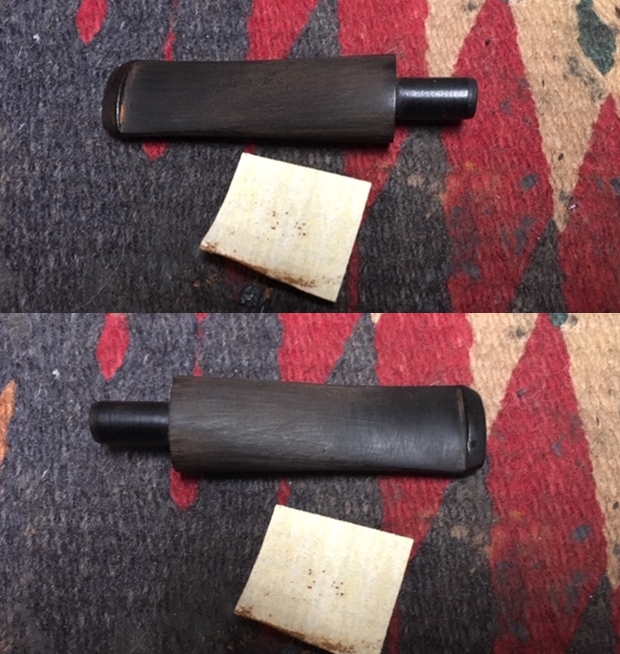
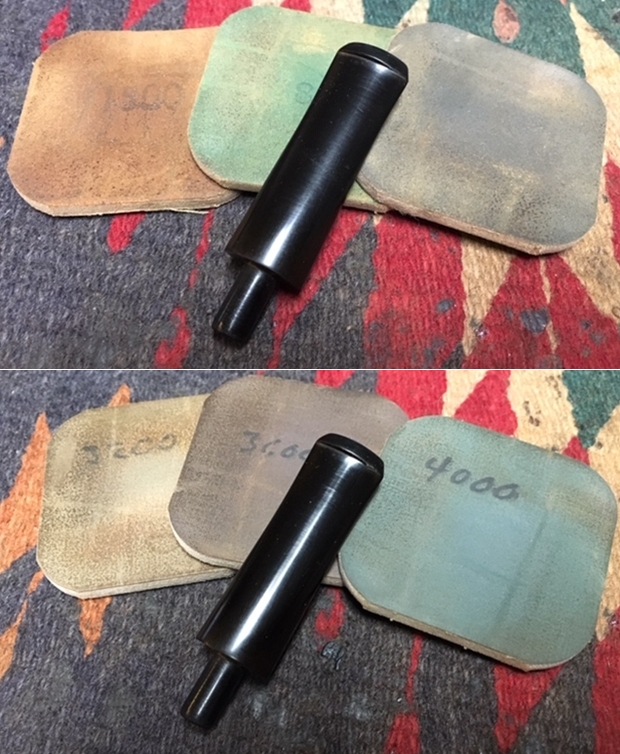
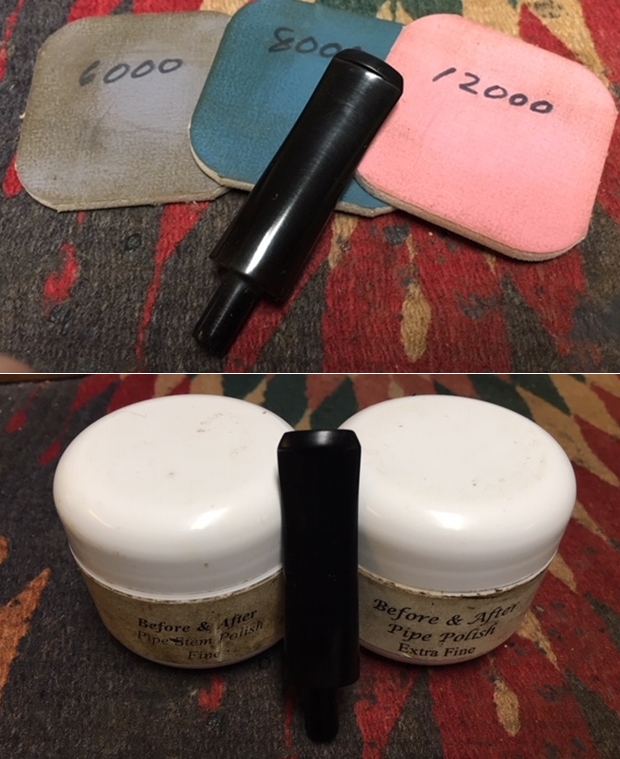
Along with the information above I found that the stamping that is on this pipe is identical to that identified in the article as Stamp Number Five. I have included that graphic because of the information that it included. It brings some of the issues in identifying the maker and the time period of the brand. In my mind the pipe I have in hand is very much like the Rich era pipes that I have seen and the note below says that. Interestingly the author also says he has seen the same stamping on the Wally Frank era pipes. It is a fascinating piece of history and a beautifully made old pipe.Armed with that information I turned to working on the pipe. Jeff had cleaned the pipe with his usual thoroughness – reaming the bowl with a PipNet pipe reamer and cleaning up the remnants with a Savinelli Fitsall Pipe Knife. He scrubbed the internals of the bowl, shank and stem with alcohol, cotton swabs and pipe cleaners. He scrubbed the exterior with Murphy’s Oil Soap to clean off the dust and grime on the finish. The rim top looked very good under the thick lava coat. I love the way the grain of the briar shows through the rustication. There were just a few nicks and scratches to deal with. The inside of the bowl itself looked great. The stem was in great shape other than a bit of tooth marks and the chip out of the top of the button. I took photos of the pipe before I started working on it. I took some close up photos of the rim top, bowl and stem to show what they looked like after Jeff’s cleanup. It is a startling difference. The rim top looked very good and the edges were clean and undamaged. The stem was in good shape other than the chipped button and the tooth marks and chatter on both sides near the button.I took some photos of the stamping which seemed far more visible after Jeff’s cleanup than before.Since the briar was in such good condition I started with rejuvenating the wood. I worked some Before & After Restoration Balm into the rustications and worm trails on the bowl and the rim top. I worked it into the surface of the briar with my fingertips and a shoe brush to clean, enliven and protect the wood. Once the bowl was covered with the balm I let it sit for about 20 minutes and buffed it off with a soft cotton cloth and then polished it with a microfiber cloth. I took photos of the pipe at this point in the process to show what the bowl looked like at this point. I set the bowl aside and turned my attention to the stem. I decided to address the deep tooth mark on the underside of the stem and the chip in the top edge of the button. I filled in the tooth mark on the underside of the stem with a clear super glue (Jeff had already cleaned the stem very well so it was not an issue). I used the clear superglue to fill in the chipped area and build it up. I did this by layering the super glue until the surface was filled in with the glue. The last coat of glue that I applied was black super glue. I set the stem aside to let the repairs cure. Once the repair had cured I used a flat blade needle file to sharpen the edge of the button on both sides of the stem. I also used it to flatten out the repairs. I worked on the remaining repaired areas with 220 grit sandpaper to blend them into the surface of the stem. I smoothed out the slotted edge of the button with 220 grit sandpaper on the topping board. I reworked the edges of the slot with a needle file to clean up the repair. I shaped and polished the button with 400 grit wet dry sandpaper. The repaired area looks very good and will look even better as the stem and repairs are polished with micromesh sanding pads. I polished the stem with Denicare Mouthpiece Polish to take out the oxidation at the button edge and on the end of the mouthpiece. I also worked hard to scrub it from the surface of the stem at the tenon end. I polished repaired areas on the stem, button and blade with micromesh sanding pads – wet sanding with 1500-2400 grit pads and dry sanding with 3200-12000 grit pads. I wiped the stem down after each sanding pad with Obsidian Oil. I polished it with Before & After Pipe Stem Polish – both Fine and Extra Fine. Once I had finished the polishing I gave it a final coat of oil and set it aside to dry. I put the bowl and stem back together. I buffed the bowl and stem with Blue Diamond to polish out the light scratches that remained in the briar and the vulcanite. I gave the bowl and the stem multiple coats of carnauba wax. I buffed the pipe with a clean buffing pad to raise the shine. I hand buffed it with a microfiber cloth to deepen the shine. The pipe polished up pretty nicely. The worm trail rusticated finish on this Rich era Custombilt turned out very nice and shows the grain shining through. It has the kind of rustic beauty that draws collectors to them after all of these years. The contrast of the worm trails with the grain swirling through them looked good with the polished black vulcanite. This Custombilt billiard will soon be joining the other pipes I have on the rebornpipes store. The finished pipe is shown in the photos below. The dimensions of the pipe are Length: 5 3/4 inches, Height: 2 ¼ inches, Outside diameter of the bowl: 1 ½ inches, Chamber diameter: 7/8 of an inch. If you are interested in adding it to your collection let me know. Thanks for reading this blog and my reflections on the pipe while I worked on it.
Restoring a Classic British Billiard, “Loewe & Co.” Pipe


Blog by Paresh Deshpande

I was surprised to find a pipe in my old man’s collection which was nicely reamed, free of any overflowing lava, clean stummel and mortise and only light tooth chatter on either surfaces of the stem. As with many of his pipes, or dare I say a majority, this one too was a billiard. I have also observed that most of his British made pipes are classic billiard shaped (though a few of his Danish made pipes are also billiard shaped!!!!). Well, at first glance itself I had anticipated this pipe to a London made and Boy was I correct! The pipe that I am now working on is an enigmatic British brand “LOEWE & Co”.

The first thing that amazed me was how light weight this pipe felt in my hands! The second aspect that I noticed was the beautiful cross grains, interspersed with tight Bird’s eye grains on either side of the bowl, that cover the entire stummel. It is stamped on the left side of the shank as “L & Co” in an oval over “STANDARD” in capital letters. On the right side of the shank, it is stamped as “LOEWE” over “LONDON W”. The bottom of the shank is stamped “KENTON”. The vulcanite stem is surprisingly black and shining and bears the stamp “L & Co” in an oval. These stampings are crisp and clear. To be very honest, I had never ever heard of Loewe & Co brand of pipes before this. Even while surfing eBay and other sites, I had not come across this brand. Now that I have one, I wanted to know more about this brand and establish the vintage of this pipe, if possible. As usual, I visited rebornpipes.com and Lo and behold, there was a very similar sized and shaped pipe that Mr. Steve had researched and worked on in Feb 2017. The similarities were to the extent that the condition of the chamber, the damage to the rim top and the stem condition were identical and matched to a “T”. Even the stamping matched to a great extent, the only difference being that the pipe I am working on bears the “KENTON” shape name on shank bottom and “STANDARD” below the oval enclosed “L&Co” on the left side. Here is the link to the write up by Mr. Steve  https://rebornpipes.com/2017/02 /22/refreshing-a-tiny-lco-billiard/

INITIAL VISUAL INSPECTION
The briar has taken on a layer of aged patina, through which one can make out the beautiful cross grains all around interspersed with tightly packed Bird’s eye. There are a few minor dents and dings on the stummel surface, probably due to rubbing against other pipes while being stored for more that 40 years. However, there is not a single fill in the entire stummel, signifying very high quality of pipe for which Loewe pipes were famous. In all probability, I shall let these minor dents and dings remain and avoid the process of sanding the stummel with sand paper in order to preserve the beautiful patina. Maybe, micromesh polishing will address a few of these dents and scratches. There is a very thin and even layer of cake in the chamber. I do not envisage any damage to the inner walls of the chamber. The rim top has darkened due to a slight overflow of lava. There is significant damage to both the inner and outer edge of the rim in 1 o’clock direction in the form of being badly scorched, a result of frequent, continuous and prolonged exposure to the flames of a lighter. The bowl is completely out of round, both inside and from outside, due to this damage. In addressing this issue, though I absolutely hate it unfortunately, I would be losing some briar estate, a price I am willing to pay to resurrect this beauty. The shank end of the pipe is clean and so is the mortise. The draw is smooth, full and open. The vulcanite stem has minor tooth chatter on the upper and lower surface. Both upper and lower button has minor tooth chatter. Surprisingly, the stem has minimum oxidation and is an even black. The step tenon is also clean and sits snugly in to the mortise with all the right noises. The air way is clear and draw is easy and smooth.THE PROCESS
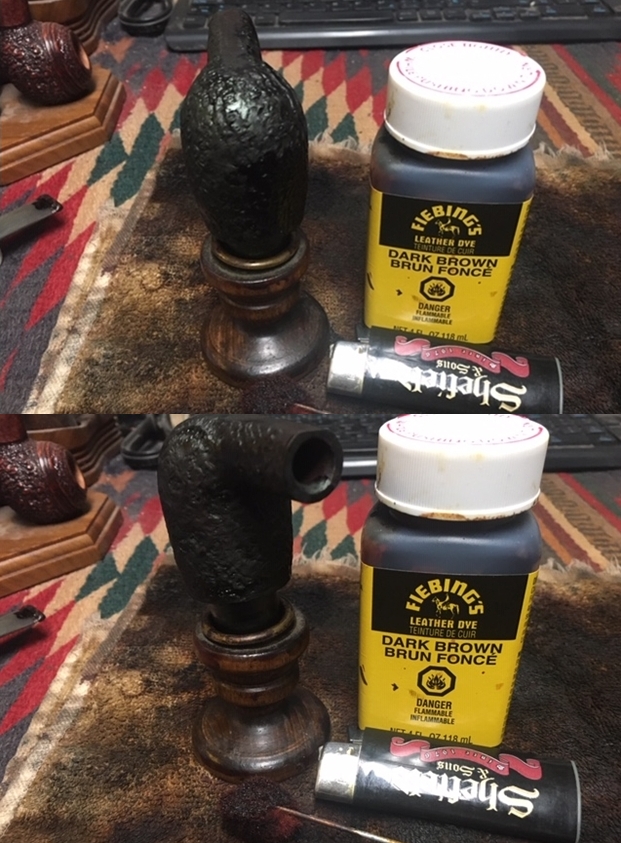
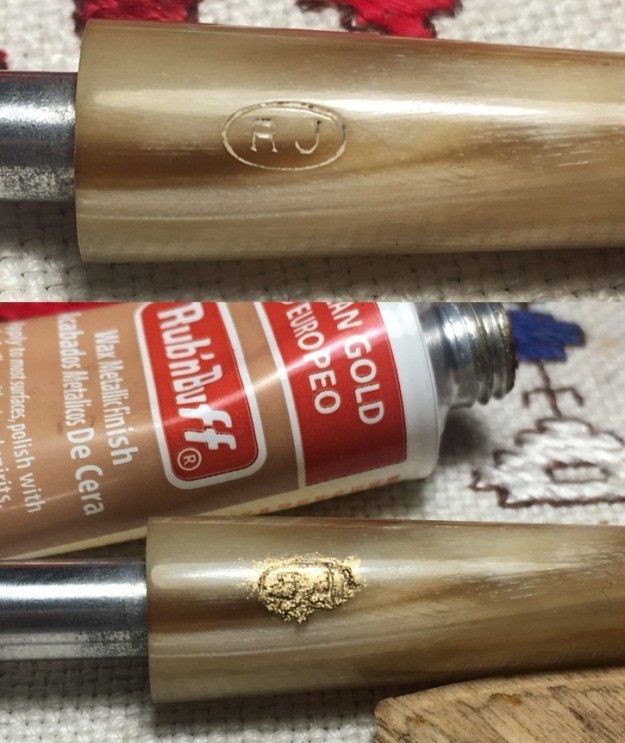
I reamed the bowl with size 2 head of the PipNet reamer and followed it up with my fabricated knife to clean up the chamber of the bowl. The bowl had already been reamed and there were only slight remnants of a cake in the bowl. I gently scrapped away the remnants of lava overflow from the rim top. I used a 220 grit sand paper, pinched between my thumb and forefinger, to sand the inner walls of the chamber of the pipe. Once I had reached the bare briar, I wiped the chamber with a cotton pad dipped in isopropyl alcohol. This removed all the residual carbon dust and also rid the chamber of all ghost smells. The walls of the chamber are nice and solid with no signs of heat fissures or cracks.I followed up the reaming process by cleaning the mortise and air way of the pipe using hard bristled and regular pipe cleaners, q-tips dipped in alcohol. The mortise and the draught hole were given a final clean with shank brushes dipped in alcohol. I dried the mortise with a rolled paper napkin. The shank internals and the draught hole are now nice and freshened up.I cleaned out the internals of the stem using hard bristled and regular pipe cleaners dipped in alcohol. The bite marks on the stem were flamed using a Bic lighter to raise it to the surface. I sand the stem with a folded piece of 220 grit sandpaper to remove the oxidation, tooth marks and chatter. A little bit of sanding smoothed out the damage to the buttons. I polished the stem with micromesh sanding pads – wet sanding with 1500-2400 grit pads and dry sanding with 3200-12000 grit pads. I rubbed the stem down with Extra Virgin Olive Oil after each set of three pads. I set the stem aside to dry. I highlighted the stamping on the stem with a whitener pen. Now, it was the turn of the stummel to get cleaned up. Using a hard bristled tooth brush dipped in undiluted Murphy’s oil soap, I very deliberately scrubbed the stummel, cleaning the surface thoroughly. I was not satisfied with the rim top had cleaned up. I used a Scotch Brite pad and further cleaned the rim top. I dried the stummel with a cotton cloth a paper napkin. At this stage of restoration, there was only one issue remaining to be addressed, that of the charred front rim and one which I did not want to address as I simply detest loosing briar!!!! But as is known in a battle field, sometimes amputation, though painful and traumatic to a soldier as well as the Surgeon, is the only way to save his life. Thus, with a heavy heart, I began the process of topping the rim to reduce the charred surface and bring the bowl back to round. I use a square piece of 220 grit sand paper and firmly hold it with my hand on my work table. I work the rim top on the sand paper in circular motion, frequently checking the progress as I wanted to keep the briar loss to a bare minimum necessity. Once I was satisfied that the charred surface has been reduced and the roundness of the bowl has been restored to the extent possible, I created an inner edge bevel by pinching a folded piece of 180 grid sand paper between my thumb and forefinger and moving along the inner edge with a constant pressure, to minimize the charring on the inner edge of the rim. Similarly, I created a slight bevel on the outer edge of the rim. Thereafter, I moved to the next stage of polishing and revitalizing the entire rim top and the stummel. Before proceeding on to polishing, I steam out all the minor dents and dings by heating my fabricated knife on a candle and placing it on a wet towel covering the dents. The generated steam pulls the dents to the surface. I even out the discoloration and stummel surface by polishing with micromesh pads, wet sanding with 1500 to 2400 grit pads and dry sanding with 3200 to 12000 grit pads. I wiped the stummel with a moist cloth after each wet pad to see the progress. I rub a small quantity of “Before and After Restoration Balm” in to briar and let it rest for a few minutes. I took some extra efforts to work the balm in to the hand carved rustications of the bowl. The balm almost immediately works its magic and the briar now has a nice vibrant appearance. I further buff it with a horse hair shoe brush. After I was through with the polishing and buffing, I realized that the rim top surface was a lighter shade than the rest of the stummel. I used a Chestnut and a Dark Brown stain pen to blend the colors to match the color of the rest of the bowl. The finish turned out to be darker than the stummel!!!! I wiped of excess stain with a pipe cleaner dipped in alcohol to achieve a perfect match. This also helped to further mask the darkened rim surface. I would buff it and blend it in better once the stain dried. To finish, I re-attach the stem with the stummel. I mount a cotton cloth buffing wheel on to my local machine which is similar to a Dremel. I set the speed at about half of the full power and applied White Diamond compound to each of the three pipes. I wiped/ buffed the pipe with a soft cotton cloth to clear it of any leftover compound dust. I then mounted another cotton cloth wheel on to the polishing machine and applied several coats of carnauba wax over the stummel and the stem. I finished the restoration by giving the pipe a rigorous hand buffing using a microfiber cloth to raise the shine further. The completed pipe, with the beautiful grains on the stummel contrasting with the shiny black stem, looks lovely, fresh and vibrant; the photographs speak for themselves. If only the pipe could tell some of my grand Old man’s stories and why was it so clean as compared to other pipes in his collection.…………… Cheers!!

Refreshing a Mastersen Burl Briar Made in France Freehand


Blog by Dal Stanton

My first restoration project of the new year is on my work table!  After visiting family in the US for the holidays, and putting in some overdue ‘Grandpa time’, I’m glad to be back to Sofia, Bulgaria, in our 10th floor flat of a formerly Communist Block apartment building.  I acquired the Mastersen Freehand before me in the Lot of 66 some time ago – an acquisition off eBay that has produced many newly commissioned pipes for stewards around the globe.  And what’s great about this is not only that these pipes were placed in the hands of stewards but that each pipe has benefited the work we do here in Bulgaria with the foundation, Daughters of Bulgaria – helping women and girls who have been trafficked and sexually exploited.  I’m thankful for those pipe men and women who have commissioned the restoration of these pipes from the For ‘’Pipe Dreamers” Only! collection on the ThePipeSteward website.  This is where Paul debated over 4 pipes and in the end commissioned two pipes, this Mastersen Freehand and a very nice Kaywoodie Prime Grain Imported Briar ‘Fancy’ Bulldog, which will be next in the queue.  Now on my worktable, this is what got Paul’s attention. The nomenclature situated on the underside of the shank is worn and thin.  The stamp is MASTERSEN [over] BURL BRIAR [over] MADE IN FRANCE.  Pipedia’s information about Mastersen shows that it was a name originally belonging to the Shalom Pipe Co. of Israel.  The Pipedia article goes on to say, “Shalom was taken over by Robert L. Marx of New York City, later Sparta, NC, then of Mastercraft.”  Mastersen is mentioned also in the Pipedia description of Mastercraft, which was cited from a very interesting 2008 thread devoted to Dr. Grabow pipes from Tapatalk.com – the specific thread was named, Mastercraft Pipes, Grabow Parallel Universe.  The main contributor was Ted, who from 1974 till 1984 had several positions with Mastercraft including Executive Vice President.  Ted’s reminiscences were fun to read, but my main interest was to understand better what happened with the name Mastersen.  Mastersen’s original stamping with the Shalom Pipe Co., would be marked with Israel as the Country of Manufacturing (COM).  Yet, the Mastersen on my table shows a French COM.  Ted’s reflections on those years with the relationship of Mastercraft, the subsequent owner of the Mastersen name, gave some clues.  This short statement was helpful describing Mastercraft’s acquisition of pipes for sale:

It doesn’t appear it was ever a manufacturer and bought pipes from multiple factories — mostly French and English…. Freehand, For M/C Andersen and (a few Mastersen) ….

My guess based upon this scant information is that the original Shalom Mastersen Freehand style was later manufactured in France under Mastercraft ownership (1970s to 1980s?).  The style of the pipe before me is consistent with Pipephil’s example of the Mastersen Freehand produced in Israel.An interesting characteristic of this Freehand is it size.  For a Freehand it could be described as diminutive.  The length is 5 inches, height: 2 inches at the crest, plateau width: 1 1/2 inches, chamber width: 1 inch and chamber depth: 1 1/2 inches (at the middle of the slanted plateau).  I found this description of a similar Mastersen with an Israel COM described for sale on SmokingPipes.com.  Christophor Huff’s description nailed the Mastersen on my worktable as well regarding it size yet plenty of room for tobacco:The condition of the Mastersen on my worktable is good but needs the normal cleaning.  The plateau has minor darkening and the chamber has a very light cake.  I detect one small divot on the right side of the shank that needs attention.  Minor tooth chatter is evident on the bit and some oxidation in the stem.  Perhaps the most noticeable issue is the fancy stem fit – it is quite loose.  The tenon will need to be expanded to make the army style pressure fit snugger.

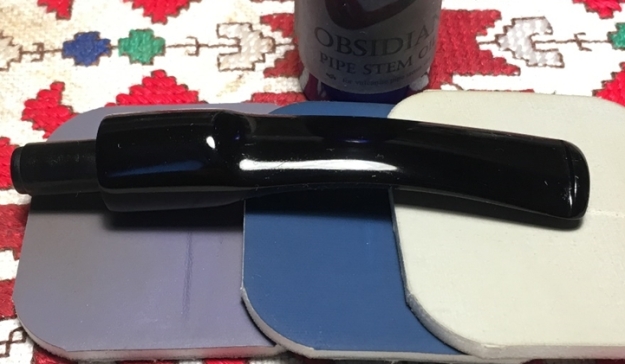
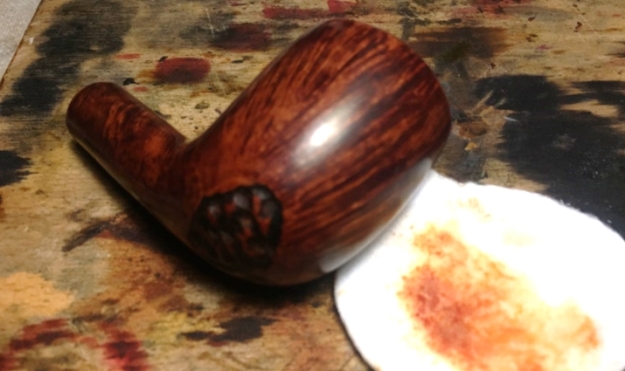
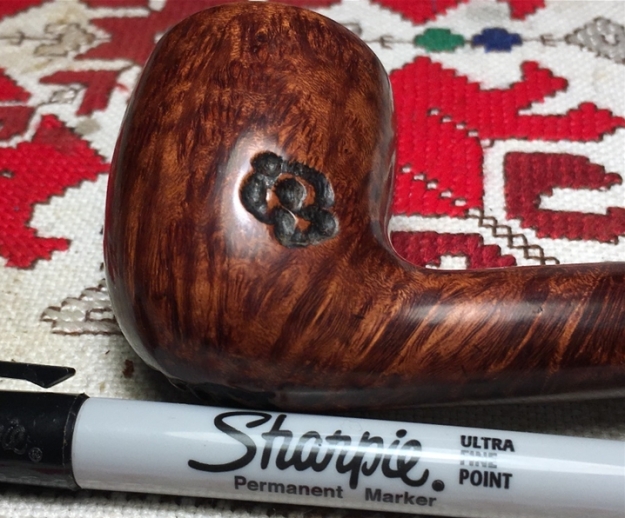
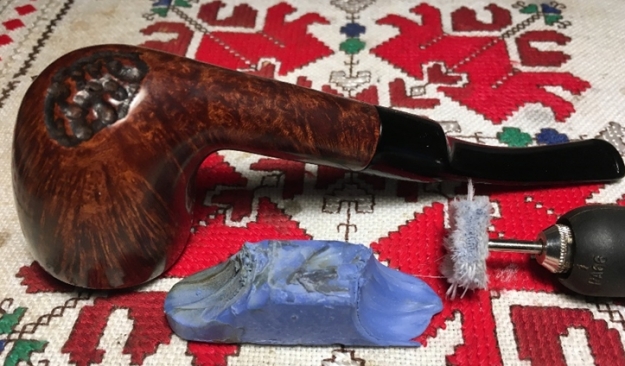
To begin the restoration of the Mastersen, I run some pipe cleaners wetted with isopropyl 95% through the fancy bent stem to clean the airway and then place it in a bath of Before & After Deoxidizer.  It joins a few other pipes and their stems that are in queue for restoration.  After several hours soaking, I fish out the Mastersen’s stem and drain the Deoxidizer fluid.  I then wipe off the stem removing much oxidation using a cotton pad wetted with alcohol.  I also run pipe cleaners through the airway to remove Deoxidizer from the internals.  After wiping with alcohol, I then apply paraffin oil (a mineral oil) to condition the vulcanite and set the stem aside.  The Before & After did a good job with the oxidation. The pictures show the progress. Turning now to the Freehand bowl, I begin the cleaning process my reaming the chamber using the Pipnet Reaming Kit.  I use the two smaller blade heads of four and then quickly remove the remaining carbon using the Savinelli Fitsall Tool.  I sand the chamber wrapping 240 grit paper around a Sharpie pen and then wipe the chamber with a cotton pad wetted with isopropyl 95% to clear out the remaining carbon dust.  The chamber looks good except that I detect a pit near the top of the chamber – just below the plateau.  I take a couple pictures to get a close look.  My thoughts are that this blemish in the briar is too high to be impacted in a large way by the fire in the chamber.  Just to be on the safe side of things, I will fill it, but will CA do the job, or do I need to apply a touch of the heat resistant J-B Weld putty since it is in the chamber?  I’ll give some thought to this and I decide to send a note to Steve with all his rebornpipes experience to get his input.  The pictures show the progress. From the chamber, I now clean the externals using undiluted Murphy’s Soap.  I scrub with cotton pads on the smooth briar and utilize a bristled tooth brush to clean the plateau – getting into the crevices. The cleaning reveals a very nice piece of briar.  The dimple on the bowl’s left side is attractive as it is in relief to the smooth briar.  Three pictures before and two after the cleaning showing the lightening of the surface. Now to the internals using pipe cleaners and cotton buds dipped in isopropyl 95%.  It did not take too much, and buds and pipe cleaners were coming out clean.Turning now to the stem, the Before & After Deoxidation soak did a good job.  The upper bit has some bite compressions and chatter on both upper and lower.  The button lip has some biting as well.  I start passively by using the heating method to expand the vulcanite compressions.  Using a Bic lighter, I paint the upper- and lower-bit areas.  As the vulcanite heats, physics takes over – it expands and naturally reclaims its original shaping – or at least partially.  This method works well, and I follow easily with sanding out the remaining tooth damage using 240 and then 470 grit papers.  I took before and after pictures and I’ll let you be the judge how effective the heating method often is.

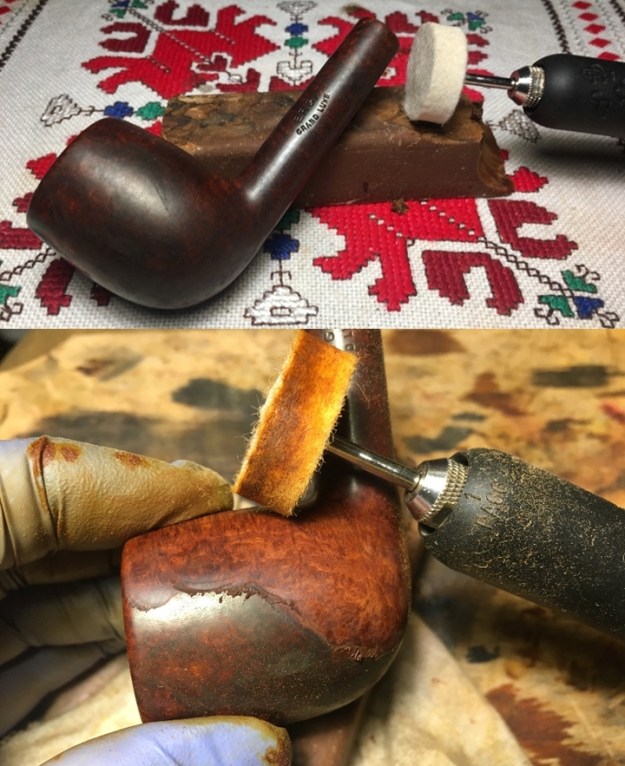
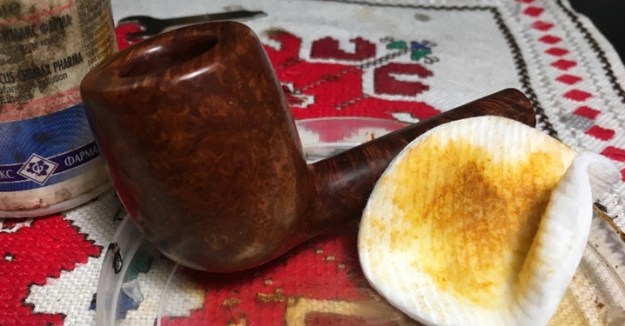
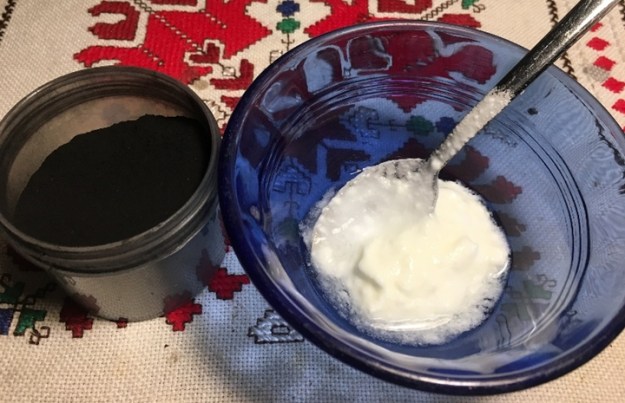
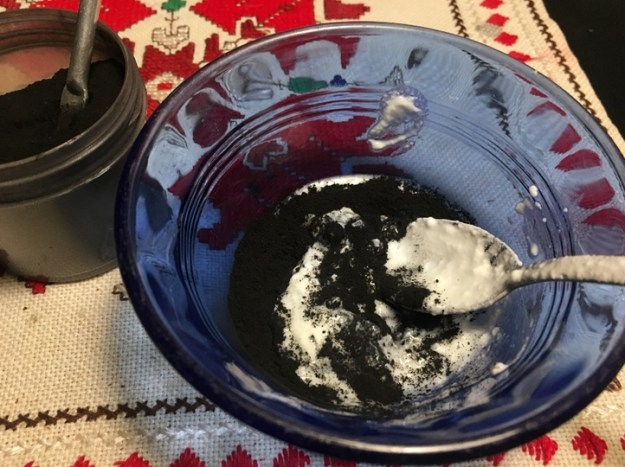
Upper, before and after: I follow the bit sanding by wet sanding the entire stem with 600 grit paper followed by 0000 steel wool.Giving the stem a respite, I look again to the pits that need repair on the stummel.  A very small pit on the right side of the stummel and the larger pit on the upper area of the chamber – just under the edge of the plateau.  After getting a note back from Steve with his input, I will use briar dust and CA glue putty to fill the pits in both places.  With the upper chamber fill, I will follow this later by applying a coat of activated charcoal and sour cream mix to the entire chamber.  This will protect the fill as well as encourage the growth of a new protective cake.  I take a few pictures to get a close-up of each pit and then I mix a batch of briar dust and CA glue.  I mix it gradually until the mixture reaches a thickness or viscosity like molasses.  I then use a tooth pick as a trowel and apply the filler to the pits.  For the upper chamber pit, I give the area an extra tamping to assure that the cavity is filled.  I put the stummel aside for the night, allowing the briar dust putty to fully cure.  The pictures show the process. The next morning, before the demands of the day come, I return to the stummel with the briar dust patches fully cured.  I use a flat needle file and begin removing the excess filler on the smaller patch.  I use the file until nearly to the briar surface then I switch to sanding with a piece of 240 grit paper bringing the patch down flush with the briar surface.  I do the same with the larger fill in the upper chamber, except using a half-rounded needle file I’m able to sand with the contour of the chamber.  I then finish the upper chamber sanding by using 240 grit paper wrapped around a Sharpie pen.  I like the results. With the stummel repair completed, I turn to the revitalization of the fancy stem by wet sanding with micromesh pads 1500 to 2400 and then dry sanding with pads 3200 to 4000 and 6000 to 12000.  I apply Obsidian Oil to the stem between each set of three pads to enrich the vulcanite.  I love the pop of that freshly sanded vulcanite – it looks great! Now we’re close to the homestretch.  Using micromesh pads 1500 to 2400 I wet sand the stummel.  Following this I dry sand using pads 3200 to 4000 and 6000 to 12000.  I enjoy watching the grain surfacing through the micromesh process. I had written Steve before to get his input regarding the chamber pit repair.  The other question I asked was regarding darkening the plateau or leaving it natural and allowing the natural forces of burning tobacco and lava to color the rim surface? His advice was good and something I try to do when restoring pipes that have nomenclature and historical markers.  It is good to restore pipes according to the original intent when the pipe was manufactured.  Most of the examples of Mastersen pipes I have seen online predate the acquisition of the Shalom Pipe Co., by Mastercraft which were manufactured in Israel.  I’ve seen both natural and darkened plateaus – here are a few examples I found.It is difficult to tell by looking at the original picture I took of the plateau before starting the restoration to know what the original was – yet, if I had to guess, originally the inner part of the plateau was darkened some, but not fully.  That is, much natural briar was exposed.  The second picture is the current status of the plateau during this restoration process. Well, decision time has come and gone.  Using a black Sharpie Pen I introduce highlights to the plateau by coloring the crevices.  I start conservatively to get a feel for how it’s looking.  I begin with a fine point Sharpie to draw down the narrow crevices then I use a larger one to stroke the larger areas. After applying what looks like an adequate amount of black, I then fan wipe the rim surface with a cotton pad with only a hint of alcohol.  This has the effect of blending and soften the black hues over the contours of the landscape.Finally, I start with about a mid-range grit micromesh pad, 3600, and I proceed to sand the plateau.  I move from 3600 to the finest grit pad, 12000.  This serves to further blend and to uncover the ridges of the briar.  This gives the look more contrast which I like – the black and the brown briar.  Overall, I think it looks good.Before moving on, I need to take care of the stem fit that I noticed earlier was too loose.  I retry the fit and it remains too loose for comfort.  To remedy this, I find a drill bit that is just the next size larger than what will fit in the airway.  Using a Bic lighter, I fan a flame around the end of the tenon to heat the vulcanite to make it pliable.  My first attempt to push the smooth end of the bit into the hole was not successful – it was still too tight.  I then use a pointed Dremel sculpting bit to help open the hole a bit so that the larger drill bit could be inserted into the airway.  I heated the tenon again and press the pointed Dremel tool into the hole to expand it slightly – which is enough.  I heat the tenon again and when it becomes supple I gradually and gently insert the bit in the airway as far as it will go without great effort.  Leaving the bit in the tenon, I again reheat the tenon as well as the metal of the bit to help the internal movement.  Again, when the vulcanite softens, I push the bit in a little further into the airway.  With this movement of the bit, the tenon is gradually expanding to close the gap making the fit with the shank snugger.  With the last heating and movement of the tenon, without withdrawing the bit, I run the tenon under cool tap water to set the vulcanite to assure that it will remain expanded.  I then heat only the metal of the bit to loosen the vulcanite’s grip on it and withdraw it with the help of pliers.  I try the stem fit again and success!  A very nice, comfortable, snug fit with the tenon inserted into the shank.Next, before moving to the Dremel polishing and waxing phases, I apply Before & After Restoration Balm to the Freehand stummel that is looking very nice.  I like this Restoration Balm because it subtly brings out deeper, richer tones of the natural briar presentation.  I squirt a little of the Balm on my finger and then simply work it into the briar grain.  It starts as a thinner texture and then thickens as the Balm works into the surface.  I apply the Balm on the rim as well.  After letting it set for several minutes to absorb the Balm, I wipe/buff the excess Balm with a microfiber cloth.  I like it. The pictures I take, I’m not sure are able to pick up on the subtle deepening that I perceive with the naked eye.  The pictures are before, during Balm absorbing and then after buffed off. Next, I reunite stem and stummel and mount a cotton cloth buffing wheel to the Dremel and set the speed to about 40%.  I then apply Blue Diamond compound to the entire pipe. To remove compound dust from the surface, I buff the pipe with a flannel rag.  I then mount another cotton cloth wheel to the Dremel, remaining at the same speed, and apply carnauba wax to the entire pipe – stummel and stem.  Completing this, I give the pipe a good hand buffing with a microfiber cloth to raise the shine.  Yet, one more task and this Mastersen Burl Briar Freehand will be completed.  To protect the upper chamber patch and to introduce a starter for the development of a cake to protect the briar surface, I mix a batch of sour cream, or in this case, natural yogurt, and activated charcoal to spread on the chamber walls.  I don’t mix too much sour cream, so the mixture isn’t too liquid and runny.  I insert a pipe cleaner through the draft hole to keep the airway open.  After spreading the mixture over the chamber with a flat dental spatula, I set it aside allowing the charcoal/yogurt mixture to cure and harden.  With this chamber surface, the new steward should not scrape the chamber after use, but use a doubled over pipe cleaner to ‘rub’ the chamber walls to remove ash and remains until a cake develops.   The pictures show this final task.Wow!  This Mastersen Burl Briar Freehand – Made in France is a keeper!  I’m pleased with the presentation of the plateau and the blending of the natural and darkened briar hues.  The flame grain is beautiful as it encompasses the conical Freehand stummel.  As a smaller Freehand, it is light enough to function easily as a ‘hands free’ pipe which is nice – but please use a rubber bite guard! This Mastersen caught Paul’s eye and since he commissioned it, he has the first opportunity to acquire the Mastersen Freehand from The Pipe Steward Store.  This pipe benefits the Daughters of Bulgaria – women and girls who have been trafficked and sexually exploited.  Thanks for joining me!

Pipe #19 from Bob Kerr’s Estate – The Guildhall London Pipe 214 Bent Billiard


Blog by Steve Laug

The fourth pipe, #19 of Bob Kerr’s Estate is part of my continuing desire to change things up a bit with my restoration of the pipes in the estate. This pipe is a well-made “The Guildhall London Pipe” bent billiard. I think this one was one of Bob’s favourite shop pipes. It is the perfect shape to have hanging out of your mouth while your hands are busy with something else – like wood carving. It was one of the dirtiest pipes I have worked on from the estate but underneath the grime and the lava on the rim there was something redeeming about it. I will be going back to Bob’s Dunhill collection eventually. I wanted to continue the change and nice bent Comoy’s Made Guildhall pipe fit the bill for me. It is stamped with The Guildhall over London Pipe on the left side of the shank. On the right side of the shank it is stamped with the familiar Comoy’s COM stamp Made in London in a circle over England. The shape number is at the bowl shank union and reads 214. The stem is a tapered bent with the three silver bars on the right side. These are often on The Guildhall pipes and the Everyman pipes. The grain looks good under the dirt and shape on this one is well done. I took photos of the pipe before I started my cleanup on it. I turned to Pipephil’s site to get a quick summary of the brand. The photo of the stamping on the pipe and the three bars on the stem came from that site (http://www.pipephil.eu/logos/en/logo-g6.html#guildhall). It confirmed what I already knew regarding the Comoy’s connection on the brand. The shape number on the pipe in the photo above is different from the one on my table but the placement of the stamp is the same.

I turned to Pipedia to gather some background on the pipe and to see if I could possibly arrive at a date for its crafting (https://pipedia.org/wiki/Comoy’s). The site states clearly that The Guildhall London Pipe was a seconds line made by Comoy’s. The picture below comes from the site and gives a good sense of what this pipe looked like when it left the factory as well as linking it to the Comoy’s brand.I took some close up photos of the rim top and the stem to show what I was dealing with. It appeared to me that the Guildhall London Pipe was actually in pretty good condition underneath all of the grime and lava. The photo shows the cake in the bowl and the thick buildup of lava on the back side of the rim top. You can see the cake in the bowl in the first photo below. The stem was dirty and oxidized with tooth mark and chatter on the top and underside for about an inch ahead of the button. There is also calcification up the stem about an inch.I took a photo of the stamping on both sides of the shank so you can see what it looked like when I examined it. It is clearer and more readable on the left side than the right but with a light the stamping is visible.With the identification of the pipe as a Comoy’s made second I was not going to get any help dating it. My guess is that it came from the same era as the rest of Bob’s pipes – sometime  in the 60s or 70s.. I thought it would be good to read about Bob again just to keep his memory alive as you read about his pipes.

I asked his son in law, Brian if he or his wife would like to write a brief biographical tribute to her father, Bob. His daughter wrote the following tribute to her Dad and it really goes well with the belief of rebornpipes that we carry on the trust of the pipe man who first bought the pipe we hold in our hands as we use it and when it is new we hold it in trust for the next person who will enjoy the beauty and functionality of the pipe.

Brian and his wife included the great photo of Bob with a pipe in his mouth. Thank you Bob for the great collection of pipes you provided for me to work on and get out to other pipemen and women who can enjoy them And thank you Brian and your wife for not only this fitting tribute but also for entrusting us with the pipes. Here is his daughter’s tribute to her Dad.

I am delighted to pass on these beloved pipes of my father’s. I hope each user gets many hours of contemplative pleasure as he did. I remember the aroma of tobacco in the rec room, as he put up his feet on his lazy boy. He’d be first at the paper then, no one could touch it before him. Maybe there would be a movie on with an actor smoking a pipe. He would have very definite opinions on whether the performer was a ‘real’ smoker or not, a distinction which I could never see but it would be very clear to him. He worked by day as a sales manager of a paper products company, a job he hated. What he longed for was the life of an artist, so on the weekends and sometimes mid-week evenings he would journey to his workshop and come out with wood sculptures, all of which he declared as crap but every one of them treasured by my sister and myself. Enjoy the pipes, and maybe a little of his creative spirit will enter you!

I reamed the bowl to remove the cake on the walls and the debris that still remained in the bowl. I used a PipNet pipe reamer to start the process. I followed that with a Savinelli Fitsall Pipe Knife to clean up the remaining cake in the U-shaped bottom of the bowl. I sanded the bowl with 220 grit sandpaper wrapped around a piece of dowel. It smooths out the walls and also helps deal with slight damage to the inner edges of the bowl. I cleaned up the rim top and removed the thick lava coat on the back top side of the rim. I used a pen knife blade the edge of the Savinelli Fitsall knife to scrape away the high spots of lava. I used a Scotch-Brite sponge pad to scrub off the remaining lava on the top of the bowl. I used a folded piece of 220 grit sandpaper to take off a stubborn spot on the left side of the rim top toward the front.I polished the rim top with micromesh sanding pads – wet sanding with 1500-2400 grit pads and dry sanding with 3200-12000 grit pads. Each successive pad brought more shine to the rim top. I wiped the rim down with a damp cotton pad after each sanding pad. The shine develops through the polishing. I scrubbed the bowl and rim with some undiluted Murphy’s Oil soap and cotton pads. I rinsed it under running water to remove the grime and soap. The bowl looked significantly different when I had finished scrubbing it. The rim pretty well matched the rest of the pipe after scrubbing. I worked some Before & After Restoration Balm into the finish of the bowl and shank as well as the surface of the rim top. I worked it into the surface with my fingertips to clean, enliven and protect the wood. I let the balm sit for about 20 minutes and buffed it off with a soft cotton cloth to polish the bowl. I took photos of the pipe at this point in the process to show what the bowl looked like at this point. I cleaned out the internals of the bowl, shank and found that the bowl had a Peterson style sump that was absolutely filthy with tars and oils. I cleaned the airway into the bowl and the one in the stem with alcohol, pipe cleaners and cotton swabs until they came out clean. I set the bowl aside and turned my attention to the stem. I sanded out the light tooth chatter on the surface of the vulcanite with a folded piece of 220 grit sandpaper and worked on the spotted oxidation on the surface. I followed the 220 grit sandpaper with 400 grit wet dry sandpaper to minimize the scratching. The two papers combined did a pretty decent job of getting rid of the tooth marks and chatter as well as the oxidation.I polished the stem with Denicare Mouthpiece Polish to take out the oxidation at the button edge and on the end of the mouthpiece. I also worked hard to scrub it from the surface of the stem at the tenon end. I polished out the scratches with micromesh sanding pads – wet sanding with 1500-2400 grit pads and dry sanding with 3200-12000 grit pads. I wiped the stem down after each sanding pad with Obsidian Oil. I polished it with Before & After Pipe Stem Polish – both Fine and Extra Fine. Once I had finished the polishing I gave it a final coat of oil and set it aside to dry. I put the bowl and stem back together. I buffed the bowl and stem with Blue Diamond to polish out the scratches in the briar and the vulcanite. I gave the bowl and the stem multiple coats of carnauba wax. I buffed the pipe with a clean buffing pad to raise the shine. I hand buffed it with a microfiber cloth to deepen the shine. The pipe polished up pretty nicely. The smooth finish on this ¾ Bent The Guildhall London Pipe 214 is very nice and I can only find a few very small fills in the surface of the briar. They blend in very well. It is quite beautiful and it has some amazing grain around the bowl – a mix of cross grain, birdseye and flame. The contrast of swirling grain looked good with the polished black vulcanite. This Guildhall will soon be joining the other pipes that are heading off to India to join Paresh’s rotation. The finished pipe is shown in the photos below. The dimensions of the pipe are Length: 5 1/2 inches, Height: 2 inches, Outside diameter of the bowl: 1 1/4 inches, Chamber diameter: 3/4 of an inch. This is the 19th pipe from the many pipes that will be coming onto the work table from the Bob’s estate. There are a lot more pipes to work on from the Estate so keep an eye on the blog to see forthcoming restorations. Thanks for reading this blog and my reflections on the pipe while I worked on it. I am having fun working on this estate.


Restoring Pipe #16 from Bob Kerr’s Estate – A Brigham 3 Dot Canadian 691


Blog by Steve Laug

Changing things up a bit with Bob Kerr’s estate clean up I decided to work on a beautiful Brigham 3 Dot Canadian. Up until this pipe I have focused entirely upon Bob’s Dunhill collection and I will be going back to it eventually. I wanted a little change and was feeling very Canadian this morning. Bob had a few Brighams in his collection so I decided to work on the first of those – A Canadian. This Brigham Canadian is stamped on a flat portion on the heel and shank and reads 691 MADE IN CANADA Brigham. There are three dots on the left side of the oval tapered stem. I took photos of the pipe before I started my cleanup on it. The next best thing to talking with Charles Lemon of Dad’s Pipes is to read the article he wrote on dating Brigham pipes on Pipedia. Charles has done a magnificent job of collating the material on the brand into this article and giving a historical flow of the eras of the Brigham pipe since its beginning in 1906. Thank you Charles for you work on this as it is a one of a kind resource. (https://pipedia.org/wiki/Brigham_Pipes_%E2%80%93_A_Closer_Look_at_Dots,_Dates_and_Markings).

I wanted to get a rough feel for when the pipe was made and the article help me pin down the era. I quote in part from Charles’ article:

…The patent on the Brigham filter system expired in 1955, ushering in the Post-Patent Era (1956 – roughly 1969). The “CAN PAT” stamp was replaced by a “Made in Canada” stamp in block letters. The 1960s saw the introduction of new product lines, including the Norsemen and Valhalla series of rusticated and smooth (respectively) freehand-style pipes created to capitalize on the growing demand for Danish pipe shapes.

From the article a pipe stamped MADE IN CANADA in block letters followed by Brigham was made in the Post-Patent Era (1956-1969). With that information I can place the pipe from Bob’s collection in this time frame. The long oval shank flows into a vulcanite tapered stem that is oxidized and has light tooth marks and chatter near the button. The finish on the smooth long shank Canadian is in excellent condition other than the overall dust and grime from time. I think that this particular Brigham is quite beautiful and the finish is really well done. The bowl had a thick cake some thick lava overflowed onto the rim top.

While I was writing this I heard back from Charles about the pipe. I had written him prior to reading his article and he was kind enough to send the following reply. Thanks Charles.

So this is interesting, Steve. Your Brigham is stamped “691” then “MADE IN CANADA” then “Brigham”. The shape # indicates a 600-series shape 91. The Linear “Made in Canada” stamp was used in what I’ve called the Post-Patent Era, approximately late 1950s through to late 1960’s, so the period just after the CAN PAT stamp was dropped.

The stem carries the vertical 3-Dot pattern of the Brigham Executive grade, which pairs with the 600-series shape number. This usually indicates an original stem, barring evidence of a replacement stem (rounded shoulders or other mismatch at the shank face, etc).

The interesting thing for me here is that Shape 91 is a Lumberman, not a Canadian (which is Shape 90). A 691 should be fitted with a saddle stem instead of the taper stem in the pic. The stem fit, however, looks very good; I don’t see any obvious sign of a replacement stem, at least in these pics. So either the shape # stamp is incorrect or the taper stem was either accidentally factory fit or is a very good replacement.

Based on my experiences with Brigham stamps, I’m leaning towards an incorrect shape # stamp, as the stem would have been fitted during final carving and the stamps done after the pipe was complete – call this a bit of human error on the production floor to give Brigham geeks like me something to talk about! 😁

Hope that helps!

Charles

With Charles response I knew I had a bit of an anomaly – a Canadian shaped pipe bearing the shape stamp for a Lumberman. But I also learned that the shape number put it in the 600 series and the three vertical dots make it a Brigham Executive grade. From my examination and experience working with restemmed pipes I agree with Charles in his conclusion regarding human error giving the pipe the incorrect shape number. This will be a fun one to work on and really a unique piece of Brigham history.

I took some close up photos of the rim top and the stem to show what I was dealing with. This Brigham Canadian was in pretty good condition considering its age and use. The photo shows the cake in the bowl and the thick buildup of lava on the back side of the rim top. You can see the cake in the bowl in the first photo below. The stem was dirty and oxidized with very light tooth chatter on the top and underside for about an inch ahead of the button. I am also including the photo of the stamping that I sent to Charles so you can see what we are discussing in our correspondence. It is clear and readable.With the background information on the pipe itself I think it is also helpful to remind ourselves of the uniqueness of a particular brand. I am including a bit of information that I have used in a recent post on Brigham pipes because it gives a good summary of the “Distillator” system that Brigham patented and includes in all of their pipes to this day.

Brigham pipe used to be made in their entirety in Canada and sported an airplane grade aluminum shank extension that held their patented Rock Maple Distillator system (https://www.brighampipes.com/our-system/). I quote in part from their website about the Distillator.

The Brigham distillator system, developed in the 1930s, was created in response to a common complaint of pipe smokers – tongue bite. Eliminating this burning sensation created by the tars and acids of the burning tobacco (especially in wet and aromatic blends) became a consuming passion of ours. We found the perfect taste-neutral and effective material in natural, untreated Rock Maple…

By design, the Brigham system extends into the stem, providing an extra inch of wood through which the smoke passes. Consider that in most other pipes, smoke spends half of its time passing along a plastic or rubber channel which can add negative flavour to the smoke while providing no benefit of its own.

This combination of reduced exposure to plastic and rubber, drastic reduction in tongue bite, elimination of gurgle and flow-back as well as the ease of use has made Brigham Canada’s pipe of choice for generations.

With the identification of the pipe as a 50-60s era Brigham with an interesting mis-stamping of shape number and the background on the brand itself I thought it would be good to remind you of the pipeman who held this pipe in trust. This is another pipe from the estate of Bob Kerr. I asked his son in law, Brian if he or his wife would like to write a brief biographical tribute to her father, Bob. His daughter wrote the following tribute to her Dad and it really goes well with the belief of rebornpipes that we carry on the trust of the pipe man who first bought the pipe we hold in our hands as we use it and when it is new we hold it in trust for the next person who will enjoy the beauty and functionality of the pipe.

Brian and his wife included the great photo of Bob with a pipe in his mouth. Thank you Bob for the great collection of pipes you provided for me to work on and get out to other pipemen and women who can enjoy them And thank you Brian and your wife for not only this fitting tribute but also for entrusting us with the pipes. Here is his daughter’s tribute to her Dad.

I am delighted to pass on these beloved pipes of my father’s. I hope each user gets many hours of contemplative pleasure as he did. I remember the aroma of tobacco in the rec room, as he put up his feet on his lazy boy. He’d be first at the paper then, no one could touch it before him. Maybe there would be a movie on with an actor smoking a pipe. He would have very definite opinions on whether the performer was a ‘real’ smoker or not, a distinction which I could never see but it would be very clear to him. He worked by day as a sales manager of a paper products company, a job he hated. What he longed for was the life of an artist, so on the weekends and sometimes mid-week evenings he would journey to his workshop and come out with wood sculptures, all of which he declared as crap but every one of them treasured by my sister and myself. Enjoy the pipes, and maybe a little of his creative spirit will enter you!

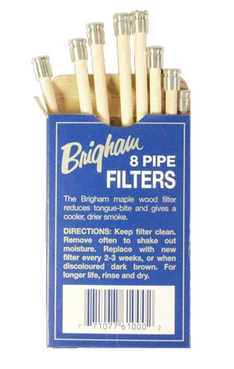
I took the stem off the shank and took photos of the aluminum Distillator system. The photo shows it without the Rock Maple filter tube in place. It appears that Bob either smoked the pipe without the Rock Maple tube (which many do by the way) or he removed the tube when he put the pipe in the rack for the final time.I reamed the bowl to remove the cake on the walls and the debris that still remained in the bowl. I used a PipNet pipe reamer to start the process. I followed that with a Savinelli Fitsall Pipe Knife to clean up the remaining cake in the U-shaped bottom of the bowl. I sanded the bowl with 220 grit sandpaper wrapped around a piece of dowel. It smooths out the walls and also helps deal with slight damage to the inner edges of the bowl. I cleaned up the rim top and removed the thick lava coat on the back top side of the rim. I used a pen knife blade the edge of the Savinelli Fitsall knife to scrape away the high spots of lava. I used a Scotch-Brite sponge pad to scrub off the remaining lava on the top of the bowl and wiped it down with a bit of saliva on a cotton pad. I polished the rim top with micromesh sanding pads – wet sanding with 1500-2400 grit pads and dry sanding with 3200-12000 grit pads. Each successive pad brought more shine to the rim top. I wiped the rim down with a damp cotton pad after each sanding pad. The shine develops through the polishing. I cleaned out the internals of the bowl, shank and the airway in the shank and the stem with alcohol, pipe cleaners and cotton swabs until they came out clean. The shank was initially dirty with the black residue that comes from aluminum and moisture. The shank cleaned up more easily than I expected. The stem was another matter altogether – my assumptions about it having been smoked without the Distillator tube were correct and the aluminum tube was full of tars and oils that needed to be removed. But amazingly I have cleaned up far worse Brigham pipes. Because of the length of the tube I had to strategically fold the pipe cleaners to scrub the tube. Shining a light through it now shows it just shines… whew.I worked some Before & After Restoration Balm into the finish of the bowl and shank as well as the surface of the rim top. I worked it into the surface with my fingertips to clean, enliven and protect the wood. I let the balm sit for about 20 minutes and buffed it off with a soft cotton cloth to polish the bowl. I took photos of the pipe at this point in the process to show what the bowl looked like at this point. I set the bowl aside and turned my attention to the stem. I sanded out the light tooth chatter on the surface of the vulcanite with a folded piece of 220 grit sandpaper and worked on the spotted oxidation on the surface. I followed the 220 grit sandpaper with 400 grit wet dry sandpaper to minimize the scratching. The two papers combined did a pretty decent job of getting rid of the tooth marks and chatter as well as the oxidation.I polished the stem with Denicare Mouthpiece Polish to take out the oxidation at the button edge and on the end of the mouthpiece. I also worked hard to scrub it from the surface of the stem at the tenon end.  I polished out the scratches with micromesh sanding pads – wet sanding with 1500-2400 grit pads and dry sanding with 3200-12000 grit pads. I wiped the stem down after each sanding pad with Obsidian Oil. I polished it with Before & After Pipe Stem Polish – both Fine and Extra Fine. Once I had finished the polishing I gave it a final coat of oil and set it aside to dry. I found my box of Brigham Rock Maple Distillators and took a clean one from the box to replace the one that came in the pipe when I received it from Alex. The beauty of these is that they can easily be rinsed out with alcohol or warm water to remove the tars and oils and reused.I put the bowl and stem back together. I buffed the bowl and stem with Blue Diamond to polish out the scratches in the briar and the vulcanite. I gave the bowl and the stem multiple coats of carnauba wax. I buffed the pipe with a clean buffing pad to raise the shine. I hand buffed it with a microfiber cloth to deepen the shine. The pipe polished up pretty nicely. The Brigham smooth finish on this Canadian is quite beautiful and it has some beautiful grain around the bowl – a mix of cross grain, birdseye and flame. The contrast of swirling grain looked good with the polished black vulcanite. This Brigham Canadian 691 will soon be heading off to India to join Paresh’s rotation. The finished pipe is shown in the photos below. The dimensions of the pipe are Length: 6 inches, Height: 2 inches, Outside diameter of the bowl: 1 1/2 inches, Chamber diameter: 3/4 of an inch. This is the 16th pipe from the many pipes that will be coming onto the work table from the Bob’s estate. There are a lot more pipes to work on from the Estate so keep an eye on the blog to see forthcoming restorations. Thanks for reading this blog and my reflections on the pipe while I worked on it. I am having fun working on this estate.

Restoring Pipe #15 from Bob Kerr’s Estate – A Dunhill Root Briar 51021 Bent Billiard


Blog by Steve Laug

With this Dunhill Root Briar my ongoing work on Bob Kerr’s is taking a turn to the smooth finished pipes in the collection. This is the first of the smooth pipes in his Dunhill Collection. I am cleaning them for the family and moving them out into the hands of pipemen and women who will carry on the trust that began with Bob and in some pipes was carried on by Bob. In the collection along with the Dunhills are a good bevy of Petersons, some Comoy’s and Barlings as well as a lot of other pipes – a total of 125 pipes along with a box of parts. This is the largest estate that I have had the opportunity to work on. I put together a spread sheet of the pipes and stampings to create an invoice. I was taking on what would take me a fair amount of time to clean up. I could not pass up the opportunity to work on these pipes though. They were just too tempting.

I sorted the pipes into groups of the various brands and had a box of 25 different Dunhill pipes in different shapes, styles and sizes. I decided to work on the Dunhills first. It was a great chance to see the shape variety up close and personal. The photo below shows the box of Dunhill pipes.With the completion of the restoration on this one there are only 11 more Dunhills of the original 25 left to work on – all smooth finished pipes in a variety of shapes. I went through the box of the remaining smooth Dunhills shown above and chose the 15th and first smooth finish pipe to work on – a smooth Root Briar Bent Billiard. It is stamped on the left side of the shank with the shape number 51021 followed by Dunhill over Root Briar. On the right side of the shank it is stamped Made in England 21 which tells me it is made in 1982. The 5 digit stamping gives a lot of pertinent information about the pipe. The first digit, 5 says that the size of the pipe is a Group 5. The second digit 1 identifies the pipe as having a tapered stem. The 02 identifies it as a bent pipe and the final 1 says it is a billiard. The bent round shank flows into a tapered stem that is oxidized and has tooth marks and chatter near the button. There is some calcification on the first inch of the stem ahead of the button and there is some light damage to the top of the button. The smooth Root Briar finish is dirty but like the other pipes in Bob’s collection there is something quite beautiful about the cross grain on the pipe. The bowl had a thick cake and thick lava overflow on the rim top. The bowl appears to be a little out of round with slight damage on the front inner edge of the rim. After cleaning I will know more. I took pictures of the pipe before I started working on it. I took some close up photos of the rim top and the stem to show what I was dealing with. This Root Briar Bent Billiard had some damage on the inner edge of the bowl toward the front as can be seen in the photo. The cake in the bowl was quite thick and the lava on the rim top was also thick. You can see the cake and tobacco in the bowl. The stem was dirty, oxidized, calcified and had a lot of tooth chatter on the top and underside for about an inch ahead of the button.I took a photo of the stamping on both sides of the shank. Part of the stamping was very sharp and readable and other parts were fainter and needed bright light.Since this is the 15th pipe from Bob’s estate I am sure you have read at least some of the other restoration work that has been done on the 14 previous pipes. You have also read what I have included about Bob Kerr, the pipeman who held these pipes in trust before I came to work on them. Also, if you have followed the blog for long you will already know that I like to include background information on the pipeman whose pipes I am restoring. For me, when I am working on an estate I really like to have a sense of the person who held the pipes in trust before I worked on them. It gives me another dimension of the restoration work. I asked Brian if he or his wife would like to write a brief biographical tribute to her father, Bob. His daughter worked on it and I received the following short write up on him and some pictures to go along with the words. Once again I thank you Brian and tell your wife thank you as well.

I am delighted to pass on these beloved pipes of my father’s. I hope each user gets many hours of contemplative pleasure as he did. I remember the aroma of tobacco in the rec room, as he put up his feet on his lazy boy. He’d be first at the paper then, no one could touch it before him. Maybe there would be a movie on with an actor smoking a pipe. He would have very definite opinions on whether the performer was a ‘real’ smoker or not, a distinction which I could never see but it would be very clear to him. He worked by day as a sales manager of a paper products company, a job he hated. What he longed for was the life of an artist, so on the weekends and sometimes mid-week evenings he would journey to his workshop and come out with wood sculptures, all of which he declared as crap but every one of them treasured by my sister and myself. Enjoy the pipes, and maybe a little of his creative spirit will enter you!

I have included one of Bob’s wood carvings to give you an idea of what he daughter wrote about above. You can see his artistry in the carving that is patterned after British Columbia’s Coastal First Nations people. To me this is a sea otter but perhaps a reader may enlighten us.

Having already worked on 15 other pipes from Bob’s estate I think I understood how he used and viewed his pipes. I am just starting my work on the smooth finished pipes with this Root Briar. I had learned to tell which pipes were his favoured ones and which were his work horses. He really loved his billiards. I could get a sense of the ones that accompanied him into his carving shop. I think this would have been one of his resting pipes – not a shop pipe. In many ways it was as if he was standing over my shoulder while I cleaned up his pipes.

With that in mind I turned to work on the 15th pipe. I reamed the bowl to remove the cake on the walls and the debris of tobacco shards that still remained. I used a PipNet pipe reamer to start the process. I followed that with a Savinelli Fitsall Pipe Knife to clean up the remaining cake in the conical bottom of the bowl. I sanded the bowl with 220 grit sandpaper wrapped around a piece of dowel. It smooths out the walls and also helps bring the inner edges back to round. I cleaned up the rim top and removed the thick lava coat in the rim. I used the Savinelli Fitsall knife to scrape away the high spots of lava and some worn 220 grit sandpaper and a 1500 grit micromesh pad to work on the rim top and remove the buildup there. I worked over the damaged inner edge of the rim with 220 grit sandpaper to bring the bowl back to round and remove the damage. I polished the rim top with micromesh sanding pads – wet sanding with 1500-2400 grit pads and dry sanding with 3200-12000 grit pads. Each successive pad brought more shine to the rim top. I wiped the rim down with a damp cotton pad after each sanding pad. I used an Oak coloured stain pen to blend the polished rim top into the rest of the briar. The oak colour was a perfect match for the colour of the bowl.I worked some Before & After Restoration Balm into the finish of the bowl and the rim top. I worked it into the surface with my fingertips to clean, enliven and protect the wood. I let the balm sit for about 20 minutes and buffed it off with a soft cotton cloth. I took photos of the pipe at this point in the process to show what the bowl looked like at this point. I scraped out the inside of the mortise with a dental spatula to break away the tarry buildup on the walls of the shank. (Sometimes I use a pen knife and sometimes a dental spatula depending on the diameter of the mortise.) I cleaned out the internals of the bowl, shank and the airway in the shank and the stem with alcohol, pipe cleaners and cotton swabs until they came out clean. It was very dirty in the shank and stem but now it not only looks clean but smells clean.  I set the bowl aside and turned my attention to the stem. I cleaned off the stem with a light sanding to remove the oxidation near the tooth marks. I filled in the deep tooth marks on the topside next to the button and the one on the underside as well with black super glue and set the stem aside so the glue could cure.When the repair had cured I used a needle file to redefine the sharp edge of the button and flatten out the patches. I sanded the repaired areas to blend them into the surface of the stem. I also sanded out the tooth marks and chatter on the surface of the vulcanite with a folded piece of 220 grit sandpaper. I followed the 220 grit sandpaper with 400 grit wet dry sandpaper to minimize the scratching. The two papers combined did a pretty decent job of getting rid of the tooth marks and chatter as well as the oxidation and calcification. I polished the stem with Denicare Mouthpiece Polish to take out the oxidation at the button edge and on the end of the mouthpiece. I also worked hard to scrub it from the surface of the stem at the tenon end.  I polished out the scratches with micromesh sanding pads – wet sanding with 1500-2400 grit pads and dry sanding with 3200-12000 grit pads. I wiped the stem down after each sanding pad with Obsidian Oil. I polished it with Before & After Pipe Stem Polish – both Fine and Extra Fine. Once I had finished the polishing I gave it a final coat of oil and set it aside to dry. I put the bowl and stem back together. I polished the bowl and stem with Blue Diamond to polish out the scratches in the briar and the vulcanite. I gave the bowl and the stem multiple coats of carnauba wax. I buffed the pipe with a clean buffing pad to raise the shine. I hand buffed it with a microfiber cloth to deepen the shine. The pipe polished up pretty nicely. The cross grain and birdseye grain that show up in the polished bowl looked good with the polished black vulcanite. This Dunhill Root Briar 51021 Bent Billiard will soon heading off to India to join Paresh’s rotation. It really has that classic Dunhill Bent Billiard look that catches the eye. The finished pipe is shown in the photos below. The dimensions of the pipe are Length: 6 1/2 inches, Height: 2 1/8 inches, Outside diameter of the bowl: 1 ¼ inches, Chamber diameter: 3/4 of an inch. This is the 15th Dunhill Briar from the many pipes that will be coming onto the work table from the estate. With this one I have begun my work on the smooth Dunhill Pipes. What will follow is 10 more smooth finished Dunhills – Root Briar, Bruyere etc. Thanks for reading this blog and my reflections on the pipe while I worked on it. I am having fun working on this estate.

Renewing a “Malaga” Algerian Briar Apple


Blog by Steve Laug

I seem to have passed on my love of Malaga pipes to my friend Alex here in Vancouver. He is moving out a lot of his previous rotation and adding more Malagas to his pipe rack. He has been scouring eBay and has found some real beauties. The fun part of his hunts is that I get to see them and restore many of them. On the work table today is a beautifully grained Malaga Apple with a straight shank. (Here is a link to some history of the Malaga Brand for those of you who may be interested in learning more: https://rebornpipes.com/tag/malaga-pipes/ and another link to the maker George Khoubesser and an old catalogue that I have scanned: https://rebornpipes.com/2013/02/09/george-khoubesser-and-malaga-pipes/.)

Malaga Briar Pipe Company was in Royal Oak, Michigan, USA. They billed themselves as “devoted to the greater and true enjoyment of pipe smoking”. There pipes have a unique curing process that makes them a sweet smoking, light weight smoking machine. They are beautifully carved and shaped and quite unique as an American made pipe. They were made in both classic and freehand shapes. I am including a couple of photos of George Khoubesser the pipe maker to give some colour to the pipe that I am working on.  

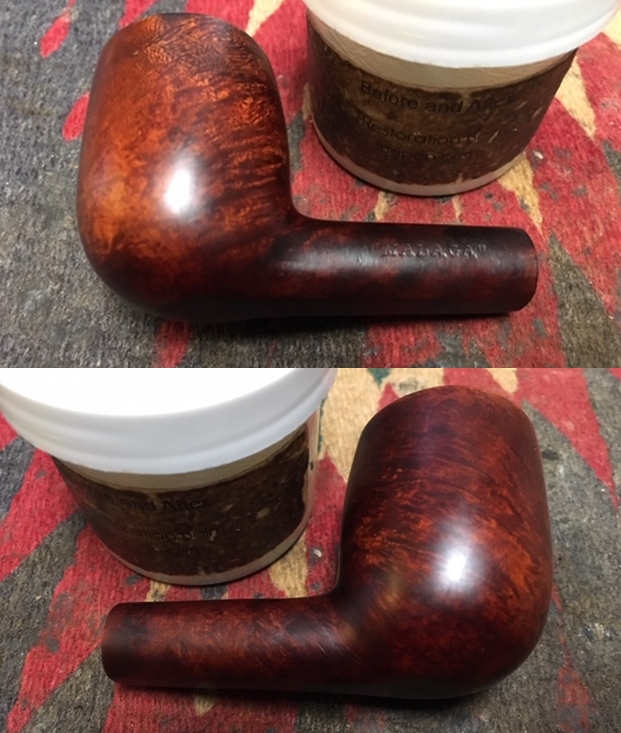
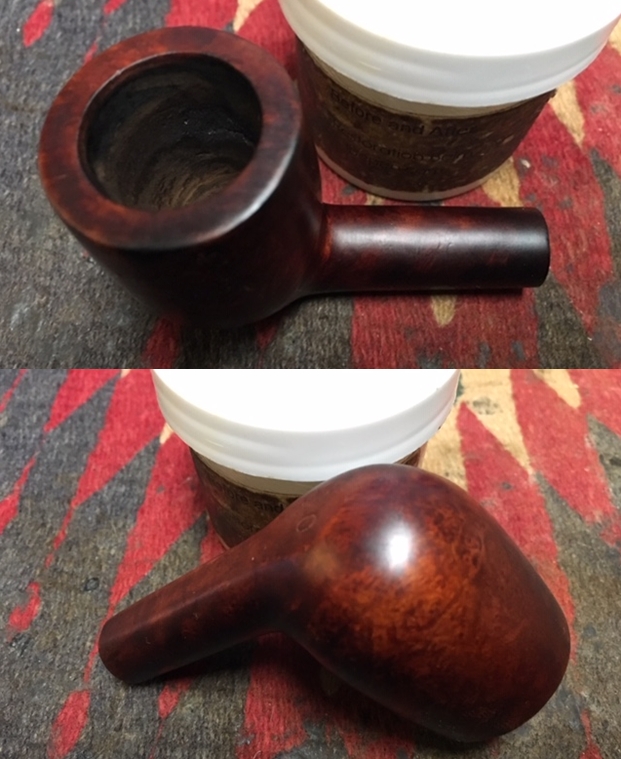
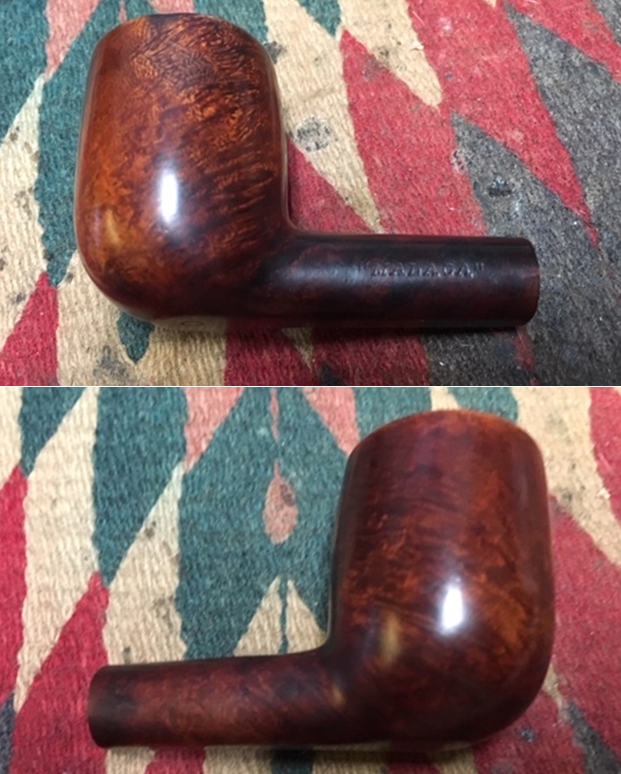
With the image of George puffing his pipe and standing at his lathe crafting a Malaga pipe I turned my attention to this interesting Malaga Apple shaped pipe. It is stamped on the left side of the shank “MALAGA” and on the right side of the shank Algerian Briar. The grain on the pipe is quite stunning and is a mix of straight, flame and birdseye. The round shank flows into a vulcanite tapered stem that is oxidized and has light tooth marks and chatter near the button. The stem is spotted and speckled from sitting in a display case or on a pipe rack somewhere. The smooth finished briar is dirty but even under the grime there is something quite beautiful about the pipe. There is grime and tars on the surface of the bowl and shank. The bowl had a thick cake part way down the bowl and some lava overflowed onto the back of the rim top. The bottom part of the bowl still showed raw briar so it had not been smoked too much. I took pictures of the pipe before I started working on it. I took some close up photos of the rim top and the stem to show what I was dealing with. This Malaga Apple was in decent shape all things considered. The cake in the bowl was thick on the top half of the bowl while the bottom of the bowl was raw briar. There was lava on backside of the rim top. You can see the cake in the bowl in the first photo below. The stem was dirty, oxidized, almost mottled looking. There was some light tooth chatter on the top and underside for about an inch ahead of the button.I took a photo of the stamping on the left and right side of the shank. It was very sharp and readable. The photos also show some of the dark spots of sticky grime on the shank and bowl.I reamed the bowl to remove the cake on the walls and the debris that still remained in the bowl. I used a PipNet pipe reamer to start the process. I followed that with a Savinelli Fitsall Pipe Knife to clean up the remaining cake in the conical bottom of the bowl. I sanded the bowl with 220 grit sandpaper wrapped around a piece of dowel. It smooths out the walls and also helps bring the inner edges back to round. I cleaned up the rim top and removed the thick lava coat on the back top side of the rim. I used the Savinelli Fitsall knife to scrape away the high spots of lava and sanded it lightly with a well-used piece of 220 grit sandpaper.I polished the rim top and the rest of the bowl and shank with micromesh sanding pads. I wet sanded it with 1500-2400 grit pads and dry sanded it with 3200-12000 grit pads. I wiped it down with a damp cloth after each sanding pad. The pictures tell the story and show the increasing shine of the briar after each set of pads. I cleaned out the internals of the bowl, shank and the airway in the shank and the stem with alcohol, pipe cleaners and cotton swabs until they came out clean. It was dirtier than I expected in the shank and stem but now it not only looks clean but smells clean.I worked some Before & After Restoration Balm into the smooth finish of the bowl, rim top and shank. I worked it into the surface with my fingertips to clean, enliven and protect the wood. I let the balm sit for about 20 minutes and buffed it off with a soft cotton cloth to polish the bowl. I took photos of the pipe at this point in the process to show what the bowl looked like at this point. I set the bowl aside and turned my attention to the stem. I sanded out the tooth marks and chatter on the surface of the vulcanite with a folded piece of 220 grit sandpaper. I followed the 220 grit sandpaper with 400 grit wet dry sandpaper to minimize the scratching. The two papers combined did a pretty decent job of getting rid of the tooth marks and chatter as well as the oxidation.I polished the stem with Denicare Mouthpiece Polish to take out the oxidation at the button edge and on the end of the mouthpiece. I also worked hard to scrub it from the surface of the stem at the tenon end.  I polished out the scratches with micromesh sanding pads – wet sanding with 1500-2400 grit pads and dry sanding with 3200-12000 grit pads. I wiped the stem down after each sanding pad with Obsidian Oil. I polished it with Before & After Pipe Stem Polish – both Fine and Extra Fine. Once I had finished the polishing I gave it a final coat of oil and set it aside to dry. I put the bowl and stem back together. I polished the bowl and stem with Blue Diamond to polish out the scratches in the briar and the vulcanite. I gave the bowl and the stem multiple coats of carnauba wax. I buffed the pipe with a clean buffing pad to raise the shine. I hand buffed it with a microfiber cloth to deepen the shine. The pipe polished up pretty nicely. The grain really stands out on this beautiful Malaga. The contrast of swirling grain looked good with the polished black vulcanite. This Malaga Apple is one of three pipes that I am working on for Alex. Once I am finished with the other two it go back to him to enjoy. The finished pipe is shown in the photos below. The dimensions of the pipe are Length: 6 inches, Height: 1 3/4 inches, Outside diameter of the bowl: 1 1/8 inches, Chamber diameter: 3/4 of an inch. Alex, I am looking forward to your thoughts on this one! Thanks for reading this blog and my reflections on the pipe while I worked on it.

Refurbishing my Inherited Large “Soren” Pickaxe Freehand


Blog by Paresh Deshpande

It’s been two months since I had worked on a free hand pipe that was made in Denmark, the last being a “Soren” sitter. The next pipe that I decided to work on from my grandfather’s collection is again a “SOREN”, but this pipe is a monster sized Pick Axe with a humongous bowl!!

The large pick axe stummel has a combination of smooth and rusticated surface covering the bowl. The cascading water flow like hand carved rustication extends from the front left side of the bowl to the back while the smooth surface covers most of the front and complete right side of the bowl. Beautiful swirls of grains can be seen on the smooth surface interspersed with flame grains extending upwards from half way of the front of the bowl. The plateau shank end is flared towards the shank end and boasts of lovely flame grains on the right side of the shank. The flared shank end bears the only stamping seen on this pipe. It is stamped as “Soren”, name of the carver in script hand over “HAND-CARVED” over “MADE IN DENMARK” in block capital letters. The fancy vulcanite stem is devoid of any stampings.

While working on my Soren sitter free hand, I had referred to pipedia.com for information on this famous pipe carver from Denmark. I reproduce the information available on pipedia.com for a quick read.

 “Søren Refbjerg Rasmussen founded a company in 1969, which employed an average of 8 – 12 craftsmen in the 1970’s. The semi-freehands they produced were traded under his prename Søren. Rasmussen himself finished only the very best pipes. So his way of pipemaking closely resembled the ways of Preben Holm, Karl Erik Ottendahl or Erik Nørding. Altogether more than 1,000,000 pipes were sold.

Today he works alone as Refbjerg and manufactures only a small number of pipes in his workshop in DK-2860 Søborg, which are considered to be tremendously precisely executed. The dimensions mostly range from small to medium sized, corresponding to his personal preferences. The shapes adhere to the classical models, but often he gives them a touch of Danish flair. Refbjerg accepts minor faults but never uses any fillings. “Straight Grain” is the only grading, used for his very best pieces. He likes stem decorations made of exotic woods or metal rings.

As Rainer Barbi once stated “Refbjerg uses only briar from Corsica and more than that, he’s the one and only to import it from there, at least in Europe. He’s supplier to the vast majority of the Danish makers”.

From the above, it can be safely assumed that this pipe was made in the 1970’s as it bears the stamp of the carver’s prename “Soren”!!

INITIAL VISUAL INSPECTION
There is a thick layer of cake in the bowl. The external surface of the stummel feels solid to the touch and I think there are no issues with the condition of the chamber. However, there are always surprises when you least expect them!!! I have learnt my lessons!!! Thus, condition of the inner walls of the chamber will be ascertained once the chamber has been reamed and the cake is taken back to the bare briar. There is a strong sweet smell of tobacco which may reduce once the cake has been reamed out and chamber has been cleaned with isopropyl alcohol.The plateau rim top and shank end is covered in the overflow of lava, dirt and grime. This will have to be cleaned. The condition of the inner edge will be determined only after removing the cake. The air way in the shank is clogged with oils and tars and will require a thorough cleaning. The stummel is covered in a thick layer of dust, dirt, oils and grime. The stummel looks dull and lackluster. The grains on the smooth surface and the sandblast rustications are all covered in tars, oils and grime. To be able to appreciate these grains and rustications, the stummel will have to be cleaned. However, there is not a single fill to be seen on this large briar estate. A few minor dents and dings are seen on the stummel surface, a result of uncared for storage over a prolonged period. This issue can be sorted out by sanding the stummel surface with a sand paper, followed by micromesh sanding and polishing. The fancy quarter bent vulcanite stem is heavily oxidized and two deep bite marks can be seen on the lower surface of the stem. The lips on both upper and lower surface show significant damage due to bite marks and are out of shape. I hope to address these issues by simple heating of the stem with the flame of a Bic lighter. The air way in the stem appears to be clogged and the air flow is laborious to say the least. This will be addressed by thorough internal stem cleaning with pipe cleaners and alcohol. There is calcification seen on either surface about an inch from the button end. The bottom of lip edge shows significant deposition of dirt and oxidation. This will have to be cleaned.THE PROCESS
I started this project by reaming the chamber with size 2 and followed it up to size 4 head of PipNet reamer. I used a 220 grit sand paper, pinched between my thumb and forefinger, to sand the inner walls of the chamber of the pipe. Once I had reached the bare briar, I wiped the chamber with a cotton pad dipped in isopropyl alcohol. This removed all the residual carbon dust but this time not the ghost smells. This cleaning revealed the first (and pray it to be the last!!) surprise. There are a few very thin webs of line seen along the front and left side of the chamber walls and one slightly larger gash on the left side. This gash is highlighted in a red circle. I shall address this issue at the end of the restoration by coating the walls with a mixture of activated charcoal and yogurt. This coating will aid in quicker formation of a fresh cake.I followed up the reaming by cleaning the mortise and air way of the pipe using hard bristled, regular pipe cleaners and q-tips dipped in alcohol. The mortise and the draught hole was so chock-a- block with all the dried tars, oils and gunk that I had to use my fabricated spatula to scrape out all the muck from the mortise and the draught hole!!!! I gave a final clean with shank brushes dipped in alcohol and dried the mortise with a rolled paper napkin. The shank internals and the draught hole are now nice and clean with an open and full draw. The issue of sweet smells of old tobacco was also reduced to a very large extent.I cleaned out the internals of the stem using hard bristled and regular pipe cleaners dipped in alcohol. I scraped the dried oils and tars from the tenon with the sharp edge of my fabricated dental spatula. The deep bite marks on the stem and lip edges were flamed with the flame of a Bic lighter.  This helps to raise the bite marks to the surface. However, this did not work. From my experience, I have learnt that getting rid of the oxidation from and around the surface to be filled helps in subsequent better blending of the fill with the stem surface. With a folded piece of used 150 grit sand paper, I sand the area that is required to be filled. I cleaned the sanded portion of the stem with cotton pad dipped in alcohol and spot filled the damaged area with a mixture of activated charcoal and clear superglue. I set the stem aside for the fill to cure. Now, it was the turn of the stummel of the pipe to get cleaned up. Using a hard bristled tooth brush dipped in undiluted Murphy’s oil soap, I very deliberately scrubbed the stummel, cleaning the surface thoroughly. Special attention was paid to scrub out all the dirt and dust from the crevices in the rustication on the sides and front of the stummel as well as the plateau rim top and shank end. I was surprised to note that while rinsing the pipe under tap water, the water ran a bright orange color. Residual orange color can be seen on the stummel, probably due to a coating of shellac!!! I do not like it and will have to get rid of it, period. The stummel, plateau shank end and rim top were dried using paper napkins and soft cotton cloth. The cleaning of the stummel revealed the second surprise!! There was a sticky and soft spot present in the rusticated portion on the stummel; this has been marked in a red circle below. When I scrubbed the stummel, it was revealed that this fill had gone soft. I dug out the old and soft fill with my fabricated sharp knife. The alignment of this fill roughly matched with that of the larger gash observed on the left side of the chamber wall. I discussed this issue with my guru, Mr. Steve, after he had seen the pictures of the damage. It was decided that the fill would be refreshed and the inner walls of the chamber should be coated with a layer of activated charcoal and yogurt. There were three other very minor fills; two on the shank end and one in the rusticated portion of the stummel at the back of the bowl. These have been circled in red. Before progressing ahead with any further restoration, I decided to address the issues of “fills” in the stummel!!!!! I completely removed the old fills using a sharp, pointed and thin fabricated knife. I press a little briar dust and realizing what a precious commodity it is, I was very careful not to waste even a microgram. I packed it in to the gouges on the stummel, pressing it tightly with the back of a toothpick and spot applied CA superglue over it with the pointed end of the toothpick. I spot filled the shank end fills with only CA superglue as they were not large and deep. With this, I set the stummel aside for the fresh fills to cure.After the fills had cured, I sand these fills using a flat head and a round needle file to achieve a rough match with the surrounding surface. With a folded piece of 180 grit sand paper, I sand the fills in the rusticated portion to match it with the worm trails in the rustication. I wiped the entire stummel with a cotton swab soaked in acetone to remove the coating of shellac, but without the expected results. The stummel still has that orange coloration. I further sand the entire smooth surface of the stummel with a piece of folded 150, 220, 440, 600 and 1000 grit sand paper to perfectly match the fills with the rest of the stummel surface and also to achieve my aim of completely removing the shellac coating, but the coloration still persists. Hopefully, remnants of the shellac coat will be addressed during the micromesh sanding and polishing process. This use of sand paper, however, addressed all issues of the dents and dings from the stummel surface!! I wanted to remove the coating of shellac while highlighting the grains seen on the smooth portion of the stummel. To achieve this aim, I sand down the stummel using micromesh pads, wet sanding with 1500 to 2400 grit pads and dry sanding with 3200 to 12000 grit pads. I wiped the stummel with a moist cloth to clean the surface of all the dust after wet sanding. The orange coloration on the stummel can be gauged by the color of my hand. I was still not happy with the results of the micromesh sanding. Using a dark brown stain pen, I darkened the worm trails in an attempt highlight and add contrast against the raised portions in the rustication. I was not satisfied with the way the pipe looked at this stage. It was still “loud” and appeared gaudy. I rub a small quantity of “Before and After Restoration Balm” in to the briar and let it rest for a few minutes. I took some extra efforts to work the balm in to the hand carved rustications on the bowl. I hand buffed it with a horse hair brush to a deep shine. I had assumed that this would help improve the look of the stummel. Alas!! That was not to be the result. The bowl still appeared ugly and definitely did not measure up to my standards. I was lost for ideas when I shared pictures of the stummel with my guru, Mr. Steve. This is what he saw. In his characteristic style, Mr. Steve suggested that “I would first get rid of the dark stain in the worm trails by wiping the entire stummel and then re-staining it”. This is exactly what I did. I wiped the stummel with a cotton swab dipped in isopropyl alcohol and removed all the stain. Mr. Steve had sent me sachets of easy-to-use stain powder which just needed to be mixed in isopropyl alcohol and applied to the stummel surface. I chose the Walnut stain. Since this was the first time that I would be using a stain, I was a bit apprehensive. I mixed a little quantity of the stain powder and mixed it with a little quantity of 99.9% pure isopropyl alcohol to a liquid consistency. I have purposely not mentioned any specific quantity of each as I had mixed the two just by relying on feel and visual confirmation. I was fortunate that I got the mix spot on in the first attempt. There is a lot of leeway in this process in that if the stain appears too dark after application, desired transparency could be achieved by wiping the stummel with a cotton swab dipped in alcohol!!!! I folded a pipe cleaner and evenly applied the stain over the complete stummel, plateau rim and shank end. This was followed by burning excess of alcohol with the flame of a Bic lighter. This also helps the stain to set on the stummel surface. Just a word of caution to all first timers like me, please wear either plastic or latex rubber gloves if you wish to avoid the struggle of removing the stains from your hands later!!! I wiped the stummel surface with a cotton swab dipped in isopropyl alcohol as the stain was slightly darker and unevenly applied than I would have liked. This helped in bringing more transparency and evenness in the stain application. Once the stain had set, I mount a cotton cloth buffing wheel on to my local machine which is similar to a Dremel.  I set the speed at about half of the full power and applied White Diamond compound to stummel of the pipe. I wiped/ buffed the pipe with another clean cotton cloth buffing wheel to clear it of any leftover compound dust. I then mounted another cotton cloth wheel on to the polishing machine and applied several coats of carnauba wax over the stummel. I finished by giving the stummel a rigorous hand buffing using a microfiber cloth to raise the shine further. The grains on the stummel now look beautiful and peek through the stain. I shared the pictures of the stummel with Mr. Steve who appreciated the look of the stummel at this stage. With the stummel nice and clean and attractive, I worked the stem of the pipe. The fill on the stem had cured nicely and I sand it down with a flat head needle file. I sharpened the lip edges using a needle file and sand the entire stem with 220 followed by 400, 800 and 1000 grit sand paper. This helps to reduce the sanding marks left behind by the more abrasive 220 grit paper, while this process eliminated the deep oxidation seen on the vulcanite stem of the pipe. To bring a deep shine to the vulcanite stem, I went through the complete set of micromesh pads, wet sanding with 1500 to 2400 grit pads and dry sanding with 3200 to 12000 grit pads. I wiped the stem with alcohol after each pad and rubbed it down with Extra Virgin Olive oil. The internals of the stem was cleaned out using alcohol and pipe cleaners. The pictures of the process and final results are shown below. The only issue remaining to be addressed, before I could proceed with the final polish, was the deeper gash seen in the walls of the chamber. I mixed activated charcoal and yogurt to a consistency which would enable an even spread and applied it on the inner walls of the chamber and set it aside to cure it overnight.To finish, I re-attach the stem with the stummel. I mount a cotton cloth buffing wheel on to my local machine which is similar to a Dremel. I set the speed at about half of the full power and applied White Diamond compound to stummel of the pipe. I wiped/ buffed the pipe with a soft cotton cloth to clear it of any leftover compound dust. I then mounted another cotton cloth wheel on to the polishing machine and applied several coats of carnauba wax over the stummel and the stem. I finished the restoration by giving the pipe a rigorous hand buffing using a microfiber cloth to raise the shine further. The completed pipe, with the dark brown hues of the stummel contrasting with the shiny black stem, looks lovely, fresh and vibrant; the photographs speak for themselves. The beauty, size and shape of this pipe make it one of my favorite and will find a place of pride in my modest collection. If only the pipe could tell some of the stories and incidents that it has witnessed while my grand old man puffed away.…………… Cheers!!! PS: The oversized and shape of the stummel coupled with an equally proportionately long stem, posed a challenge while taking pictures of the complete finished pipe!!!! This is one of the many areas where I need to make a lot of progress. If I am unable to capture the beauty of the finished pipe and present it in an attractive manner, I feel my efforts are in vain.


A Fresh Lease on Life For a Tired Looking “Count”!


Blog by Paresh Deshpande

A few months back I had restored two Kriswill pipes from my grandfather’s collection; a “CHIEF” and a “GOLDEN CLIPPER”. Both these pipes were a big challenge to restore and took considerable time and effort. However, the end results on both these pipes were highly satisfying!! To those interested in reading the write up on both these pipes, here are the links; https://rebornpipes.com/2018/08/04/breathing-new-life-into-a-kriswill-chief-20/

https://rebornpipes.com/2018/08/11/restoring-a-kriswill-golden-clipper/

This is the third Kriswill from my grandfather’s collection, a sandblasted KRISWILL “COUNT” in an impressive Oom Paul shape. The sandblast follows the beautiful grain pattern on the stummel surface and on the steeply raking shank, save for the smooth portion on the left side of the shank which bears the only stamping visible on the pipe and is stamped as “KRISWILL” over “COUNT” over “HANDMADE IN DENMARK”. This smooth surface extends to the shank end and forms a smooth ring all around. When polished and revitalized, this ring will contrast beautifully against the glossy black of the vulcanite stem. The full bent vulcanite stem is devoid of any stamping.

While working on the Kriswill Chief and Golden Clipper, I had researched the brand and detailed information can be referred to on the links provided above.

INITIAL VISUAL INSPECTION
Age definitely shows on the stummel surface!!! The briar is dull and lifeless and has taken on a layer of aged patina, through which one can make out the beautiful sandblast patterns all around which follow the grains. There is a slight overflow of lava on to the stummel surface. A thorough cleaning of the stummel followed by polish will accentuate the sandblast pattern on the stummel. There is an uneven buildup of cake in the chamber with a thicker layer seen at the bottom half of the chamber. The condition of the inner walls of the chamber can be ascertained only after the cake has been removed completely and taken down to bare briar. The bowl feels robust and solid to the touch from the outside. This issue should be a breeze to address.The rim top has darkened on the due to a slight overflow of lava. This can be seen in pictures above. The condition of the inner and outer edge and rim top is pristine. The shank end of the pipe is clean. However, the mortise does show signs of accumulated dried oils, tars and remnants of ash, greatly restricting the air flow.The vulcanite stem has tooth indentations and minor tooth chatter on the upper and lower surface. It is heavily oxidized. The air flow through the stems is laborious to say the least. The fit of the stem in to the mortise is very loose, which will loosen further after the mortise and tenon have been cleaned. These issues will need to be addressed.THE PROCESS
I started this project by reaming the chamber with size 2 and followed it up with size 3 head of PipNet reamer. I used a 220 grit sand paper, pinched between my thumb and forefinger, to sand the inner walls of the chamber of the pipe. Once I had reached the bare briar, I wiped the chamber with a cotton pad dipped in isopropyl alcohol. This removed all the residual carbon dust and also rid the chamber of all ghost smells. The walls of the chamber are nice and solid with no signs of heat fissures or cracks. I followed up the reaming by cleaning the mortise and air way of the pipe using hard bristled and regular pipe cleaners, q-tips dipped in alcohol. The mortise and the draught hole were given a final clean with shank brushes dipped in alcohol. I dried the mortise with a rolled paper napkin. The shank internals and the draught hole are now nice and clean with an open and full draw.I cleaned out the internals of the stem using hard bristled and regular pipe cleaners dipped in alcohol. I scraped the dried oils and tars from the tenon with the sharp edge of my fabricated dental spatula. The deep bite marks on the stem were flamed using a Bic lighter. However, this did not work. From my experience, I have learnt that getting rid of the oxidation from and around the surface to be filled helps in subsequent better blending of the fill with the stem surface. With a folded piece of used 150 grit sand paper, I sand the area that is required to be filled. I cleaned the sanded portion of the stem with cotton pad dipped in alcohol and spot filled the damaged area with a mixture of activated charcoal and clear superglue. I set the stem aside for the fill to cure.Now, it was the turn of the stummel to get cleaned up. Using a hard bristled tooth brush dipped in undiluted Murphy’s oil soap, I very deliberately scrubbed the stummel, cleaning the surface thoroughly. Special attention was paid to scrub out all the dirt and dust from the crevices in the sandblast on the stummel and shank. I cleaned the plateau rim and shank end too. The stummel, plateau shank end and rim top were dried using paper napkins and soft cotton cloth. I rub a small quantity of “Before and After Restoration Balm” in to briar and let it rest for a few minutes. I took some extra efforts to work the balm in to the sandblast finish of the bowl. The balm almost immediately works its magic and the briar now has a nice vibrant appearance. I further buff it with a horse hair shoe brush. With the stummel nice and clean and attractive, I worked the stem of the “COUNT”. I sharpened the lip edges using a needle file and sand the entire stem with 220 followed by 400, 800 and 1000 grit sand paper. This helps to reduce the sanding marks left behind by the more abrasive 220 grit paper. By mere sanding itself, the minor tooth marks seen on stem surfaces were completely addressed. This process also eliminated the deep oxidation seen on the vulcanite stem. To bring a deep shine to the vulcanite stem, I went through the complete set of micromesh pads, wet sanding with 1500 to 2400 grit pads and dry sanding with 3200 to 12000 grit pads. I wiped the stem with alcohol after each pad and rubbed it down with Extra Virgin Olive oil. The internals of the stem was cleaned out using alcohol and pipe cleaners. The pictures of the process and final results are shown below. To finish, I re-attach the stem with the stummel. I mount a cotton cloth buffing wheel on to my local machine which is similar to a Dremel.  I set the speed at about half of the full power and applied White Diamond compound to each of the three pipes. I wiped/ buffed the pipe with a soft cotton cloth to clear it of any leftover compound dust. I then mounted another cotton cloth wheel on to the polishing machine and applied several coats of carnauba wax over the stummel and the stem. I finished the restoration by giving the pipe a rigorous hand buffing using a microfiber cloth to raise the shine further. The completed pipe, with the dark brown hues of the sandblast stummel contrasting with the shiny black stem, looks lovely, fresh and vibrant; the photographs speak for themselves. If only the pipe could tell some of my grand Old man’s stories and recount incidents witnessed while being smoked.…………… Cheers!!

Restoring a Second Savinelli Autograph 3 Bent Billiard


Blog by Steve Laug

It is the last day of my Christmas/New Year holidays. Tomorrow I go back to work so I am taking some time today to work on more pipes. My wife and kids are convinced it is an illness but at least it keeps me out of their way! I am taking another break from the Bob Kerr estates since I have already finished 14 of them. They are piled in boxes around my basement shop and need to look at something different from the Dunhills of his estate. Though this picture is not from today the posture today remains the same, I am still working under the watchful eye of my buddy and Shop Foreman, Spencer. He has seriously enjoyed having me at home with him the past two weeks. His life is pretty much laying on a blanket by my feet while I am fiddling with pipes. At 14+ years old my fiddling does not faze him much him, he just wants to make sure I stay put with him in the basement. He snoozes, comes over to me now and then to smack my leg and beg for a treat and then retreats to nap again. He really is company in the shop and keeps me mindful to get up and move around now and then.As you might have figured out from the title I am working on another pipe from Italy. This is the second Savinelli Autograph 3 (the second pipe down in the photo below). It reads Savinelli over Autograph on the left side of the shank. On the right side of the shank it is stamped Italy. The underside shank is sandblasted while the rest of the pipe is smooth. The vulcante stem is stamped with the autograph. The pipe came to me in a lot of five pipes that I bought from a pipeman in Florida. The other pipes in the lot were the two Mastro de Paja that I have worked on already, these two Savinelli Autographs and a Bacchus Carved and Cased Meerschaum. I decided to work on the second Autograph next as it was different from the last run of straight billiards that I have been working on these past weeks. I had the fellow in Florida send the pipes to my brother Jeff in Idaho for the cleanup work. He does a great job and expedites my restoration process a lot. He took the following photos of the pipe before he worked his magic on them. Like his other pipes this second Savinelli Autograph 3 pipe must also have been a terrific smoker because the bowl was pretty clogged up with cake and lava flowing over the rim top. It really was a mess and the cake was hard from sitting. The Florida pipeman had laid aside his pipe some 15-20 years earlier and it had been in storage. It was going to take some work to clean out that bowl and be able to see what the rim looked like underneath the layer of lava. The rest of the bowl looked dirty but the amazing grain shone through. Jeff included photos of the side and bottom of the bowl to give a good idea of what it looked like. The last photo shows the sandblast finish on the bottom of the bowl and shank. Jeff also included some photos of the stamping on the shank sides. The stamping on the left side of the shank was quite clear though the 3 stamp was fainter. The stamping on the right side – Italy was readable but quite faint.The vulcanite stem was in excellent condition. It was made for the Savinelli Balsa filter system or for their 9mm filter. It was dirty and had light tooth chatter but no deep tooth marks in the stem surface. The button also looks pretty good but I would know more once it arrived in Vancouver.The Autograph stamp on the left side of the taper stem was in pretty decent condition.Jeff cleaned the pipe with his usual thoroughness – reaming the bowl with a PipNet pipe reamer and cleaning up the remnants with a Savinelli Fitsall Pipe Knife. He scrubbed the internals of the bowl, shank and stem with alcohol, cotton swabs and pipe cleaners. He scrubbed the exterior with Murphy’s Oil Soap to clean off the dust and grime on the finish. The rim top looked very good under the thick lava coat. There were just a few nicks and scratches to deal with. The inside of the bowl itself looked great. The stem was in great shape other than a bit of tooth chatter. I took photos of the pipe when it arrived here. I was a bit surprised when I took of the stem and had a closer look at it. Turns out that this stem is also a filter stem and made for a 9mm filter or for a Savinelli Balsa Filter system. I found photos of the system online and have included them here. If you choose not to use a filter there is an adapter that can be purchased to fill in the tenon in place of the filter. I took some close up photos of the rim top, bowl and stem to show what they looked like after Jeff’s cleanup. It is a startling difference. The rim top will take some work to take care of the damage. There is some rim darkening along the beveled inner edge and on the top of the bowl. There were also nicks and scratches on the smooth surface of the rim top. The stem was oxidized and there were tooth marks and chatter on both sides near the button.I have included the information I included on the previous Autograph blog so that you can do a quick review on this line of Savinelli pipes.

I turned first to the Pipephil website (http://www.pipephil.eu/logos/en/logo-savinelli1.html) to get a brief overview of the Autograph line. There I found out that the Autographs were hand made and unique. The Autograph Grading system is ascending: 3, 4, … 8, 0, 00, 000.

I turned then to Pipedia to get a more background on the Autograph line. I had the outline I needed from pipephil for the pipe but wanted more (https://pipedia.org/wiki/Savinelli). I quote in part from the article on that site.

While Savinelli’s serially produced pipes account for around 98% of annual production, the marque also creates a number of artisanal, handmade pieces as well. The Autographs, the Creativity line, and the Mr. A. line are all the result of Savinelli’s unique handmade process, with the Autographs reflecting the larger Freehand aesthetic, the Creativity line delving into more complex hand carving, and the Mr. A. line sidestepping the standard shape chart for remarkable and unusual pipes.

All of the briar for Savinelli’s Autographs and other freehand pipes is sourced specifically for those pieces. While the majority of the marque’s serial production is made from extra grade ebauchon blocks, Savinelli keeps a separate supply of Extra Extra plateau blocks for Freehands. This variety of briar is much larger, and of a higher quality, which explains why so many Autographs and Savinelli handmades are naturally larger designs.

These handmade pieces are shaped much like traditional Danish Freehands: they are shaped first and drilled second. Using this method, Savinelli’s team of artisans is able to showcase their own creativity, as it maximizes flexibility and facilitates a more grain-centric approach to shaping. The resulting Freehand designs are at once both a departure from the marque’s classical standard shapes, yet very much still “Savinelli” in their nature—i.e. proportioned so that the bowl is the visual focus when viewed from the profile, juxtaposed by the comparatively trim lines of the shank and stem. To provide a little more insight into the differences between Savinelli’s standard production and freehand lines, Luisa Bozzetti comments:

“When we choose to make Freehand pipes we must stop production on the standard shapes. The process for Freehands is much more involved and takes much more time. Finding the best people from the production line and pulling them to make Freehands is challenging since it’s not an assembly line, but rather a one or two man operation.

 After the rough shaping of the stummel, we must get together and brainstorm which style of stem will be paired before the pipe can be finished since we do not use pre-shaped stems. All accents and stems for the Freehands are cut from rod here in the factory. A lot of care goes into the few pieces lucky enough to make the cut; to end up with a certain number of Autographs, for instance, means that many, many more will be made, and only the few will be selected.”

The quality control process for Savinelli handmades is even more rigorous than that employed in the standard lineup. Many blocks are started and later discarded because of pits or defects. While Savinelli’s briar sourcing is a constant process, working with some of Italy’s top cutters to ensure only the finest and most suitable blocks make their way to the factory, it’s impossible to source plateau briar that’s completely free from flaws. That’s just nature. Savinelli creates the standard for quality by working through the rough (a very high-quality rough, mind you) to find that shining diamond with the potential to become a Savinelli handmade.

It looks like the Autograph 3 I am working is pretty high in the hierarchy of the line. This Autograph is more typical of the ones that I have worked on in the past though it does not have the unique twist to the vulcanite stem. The pipe is a nice straight grain all around the bowl sides with birdseye on the top of the rim. The bottom of the shank is sandblasted and looks very good in that location.

Armed with that information on the brand it was time to work on the pipe. I decided to begin by addressing the damage to the rim top and inner edge. I sanded it with 220 grit sandpaper to remove the darkening and the damage to the rim surface. The rim really needed to have the damaged areas smoothed out and blended into the rest of the briar. I polished the freshly sanded rim top and the rest of the briar with micromesh sanding pads to remove the scratches and to try to lighten the finish a bit – wet sanding with 1500-2400 grit pads and dry sanding with 3200-12000 grit pads. I wiped the briar down after each pad to remove the sanding dust and get a sense of the how the finish was developing. The photos show the progress. I worked some Before & After Restoration Balm into the briar on the bowl and the rim top. I worked it into the surface of the briar with my fingertips to clean, enliven and protect the wood. I kept it clear of building up in the twin groove around the bowl below the bowl cap. Once the bowl was covered with the balm I let it sit for about 20 minutes and buffed it off with a soft cotton cloth and then polished it with a microfiber cloth. I took photos of the pipe at this point in the process to show what the bowl looked like at this point. I used an Oak stain pen to blend the colour of the rim top to match the rest of the bowl. I rubbed it down with some of the Restoration Balm to even out the finish.I set the bowl aside and worked on the stem. I sanded out the tooth marks and worked on removing the oxidation on the stem with 220 grit sandpaper. I carefully avoided sanding the autograph stamp on the left side of the stem.I polished the stem with Denicare Mouthpiece Polish to take out the oxidation at the button edge and on the end of the mouthpiece. I also worked hard to scrub it from the surface of the stem at the tenon end and around the stamping on the left side of the shank.I wet sanded the stem with 1500-2400 grit micromesh sanding pads. I was able to remove it. I dry sanded it with 3200-12000 grit pads to polish it further. I wiped it down with a damp cloth after each sanding pad. I finished polishing the stem with Before & After Pipe Polish – both Fine and Extra Fine polishes. I wiped the stem down with a damp cotton pad afterwards and buffed it with a soft microfiber cloth. I touched up the stamping on the stem side using a white out pen. I let it dry and buffed it off with a micromesh sanding pad. The photos tell the story. The stamping is still visible with some places that are quite weak. I put the bowl and stem back together. I polished the bowl and stem with Blue Diamond to polish out the scratches in the briar and the Lucite. I gave the bowl and stem multiple coats of carnauba wax. I buffed the pipe with a clean buffing pad to raise the shine. I hand buffed it with a microfiber cloth to deepen the shine. The pipe polished up pretty nicely. The contrast of the beautiful dark and medium browns of the briar with the polished black vulcanite Savinelli Balsa Filter system stem is quite stunning. The mix of straight grain and flame grain around the bowl and shank combined with the birdseye on the rim is quite remarkable. This is another beautiful pipe that is for sure. The finished pipe is shown in the photos below. The dimensions of the pipe are Length: 5 1/2 inches, Height: 2 1/4 inches, Outside diameter of the bowl: 1 3/4 inches, Chamber diameter: 7/8 of an inch. I have restored quite a few Autographs over the years and this estate is another rare beauty. I will be putting it on the rebornpipes store shortly. Thanks for walking through the restoration with me. It was a great break away from the estates that await me. Cheers.