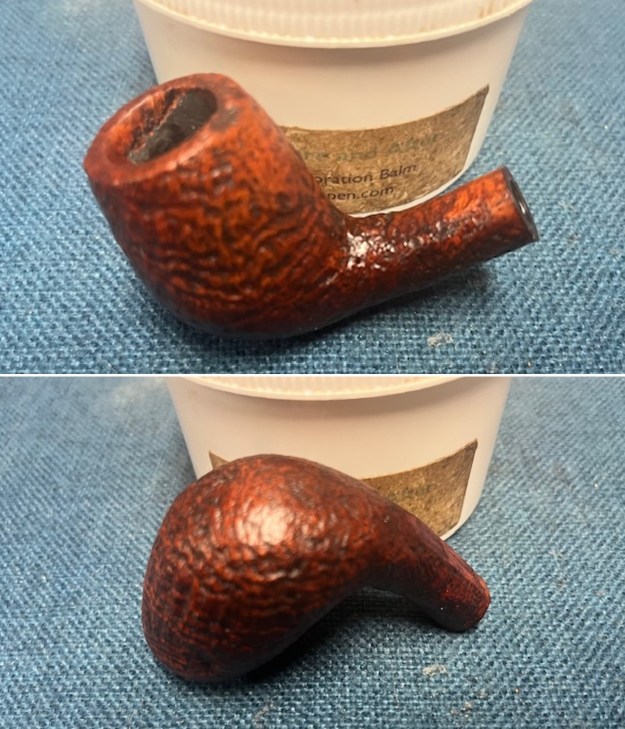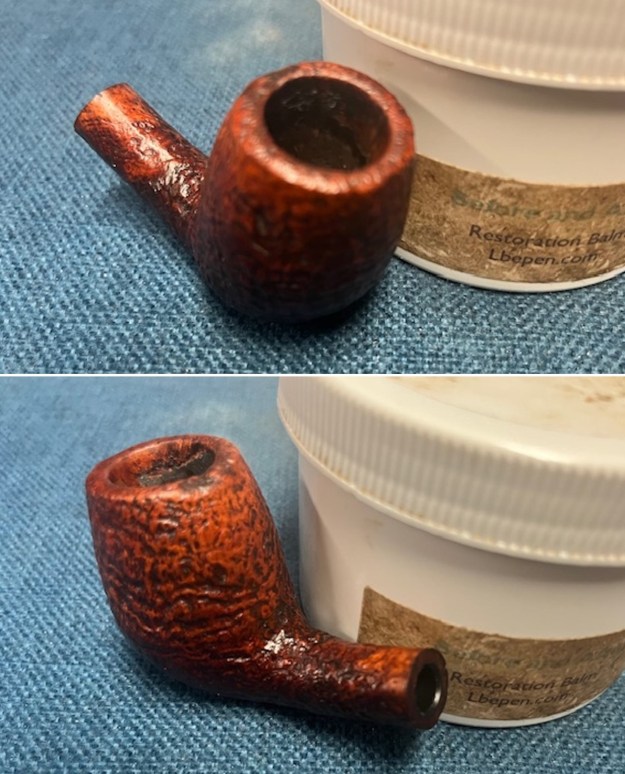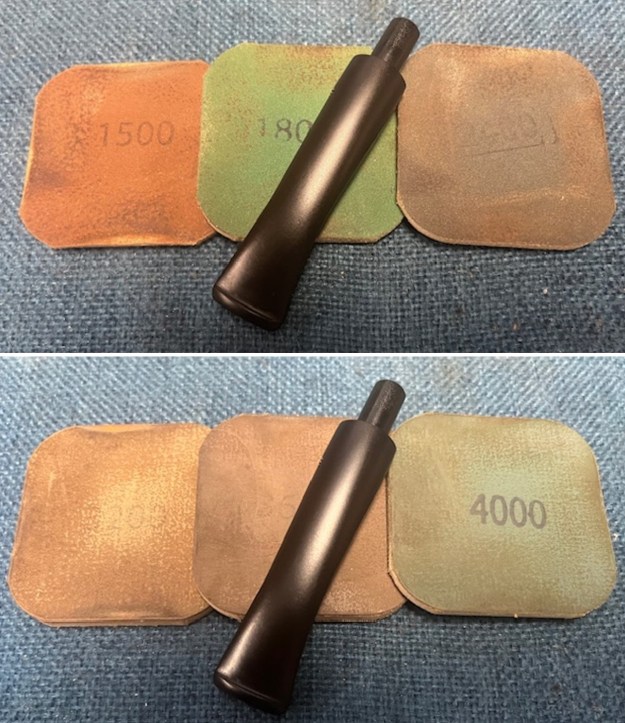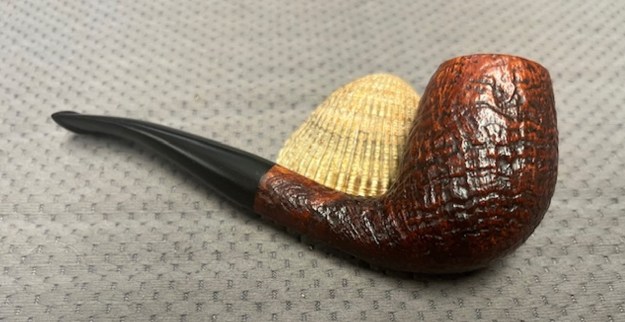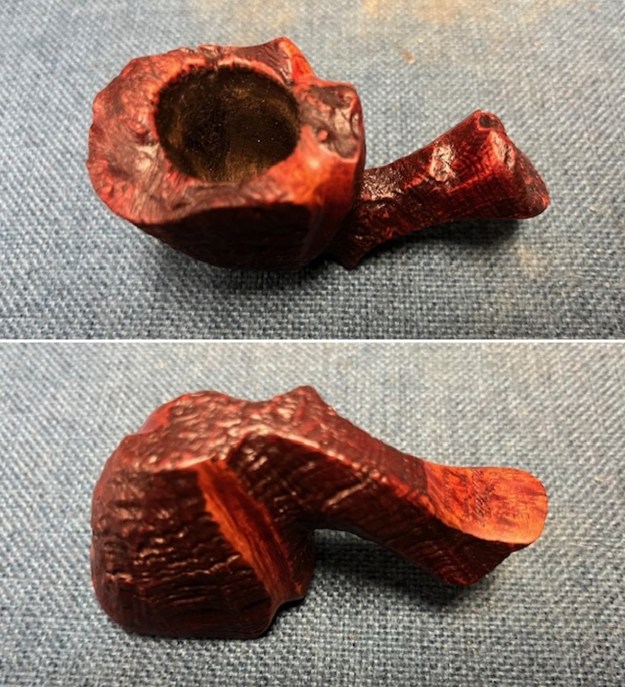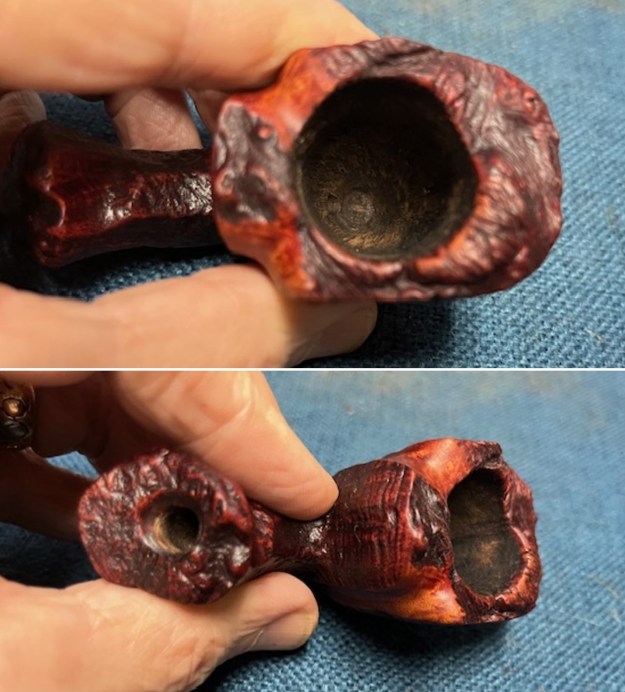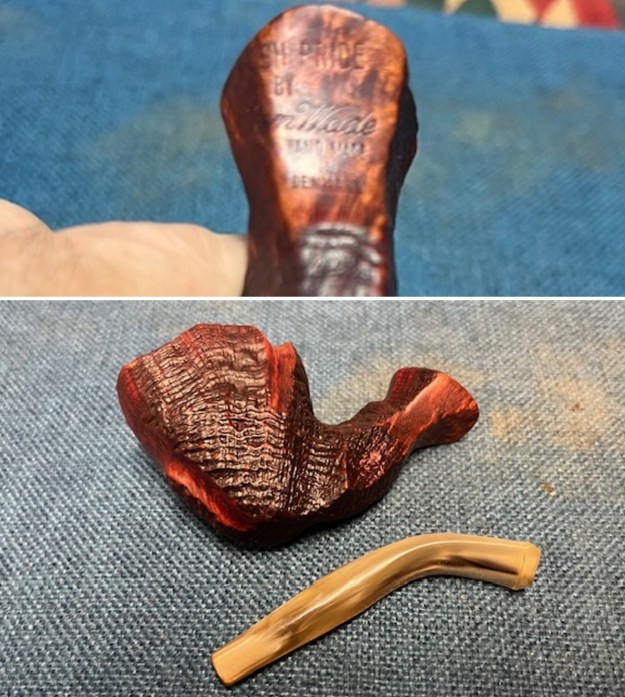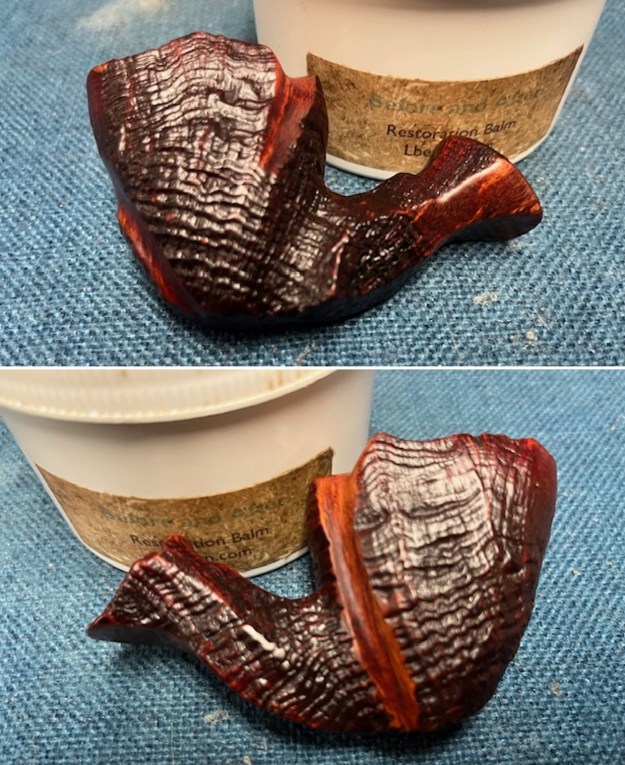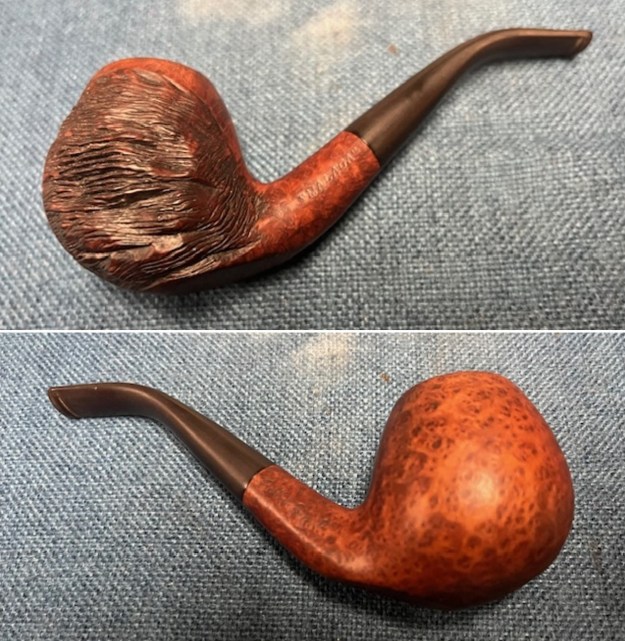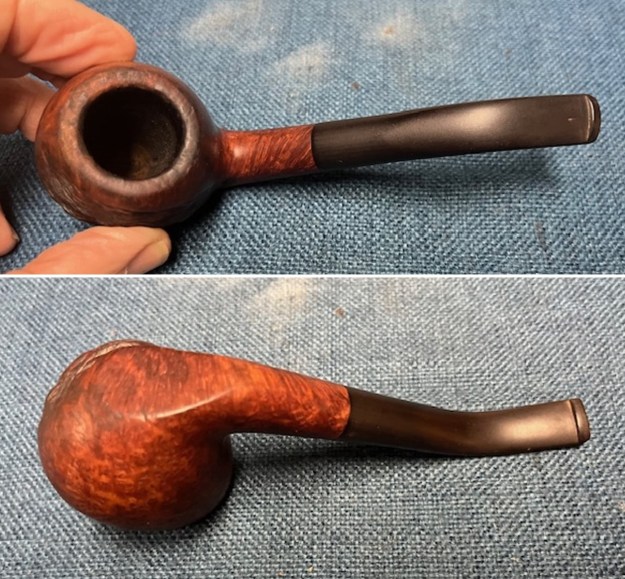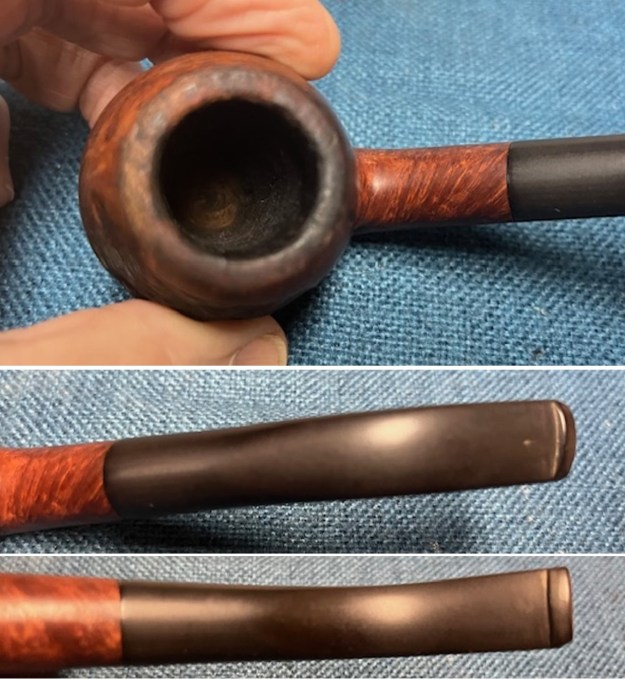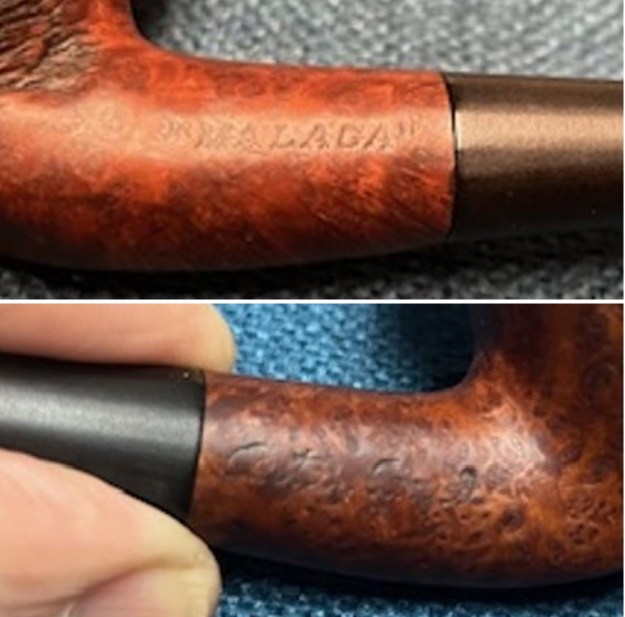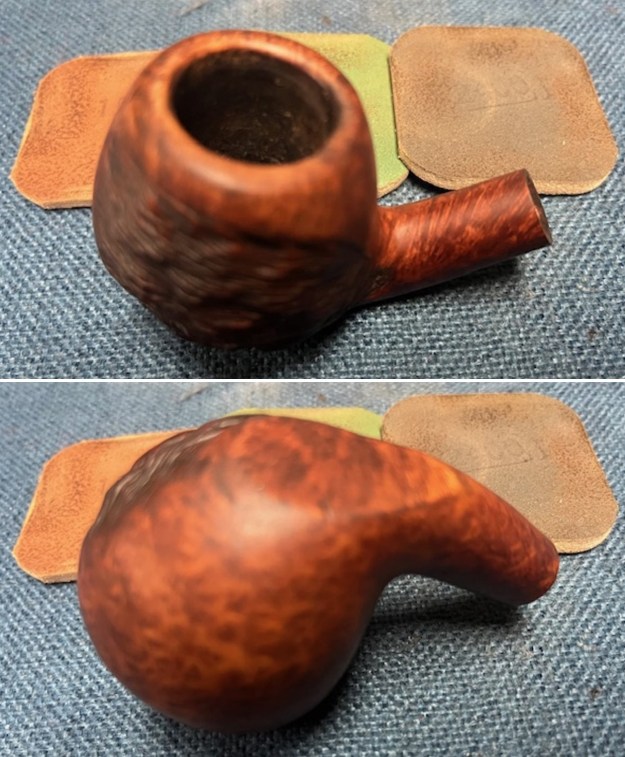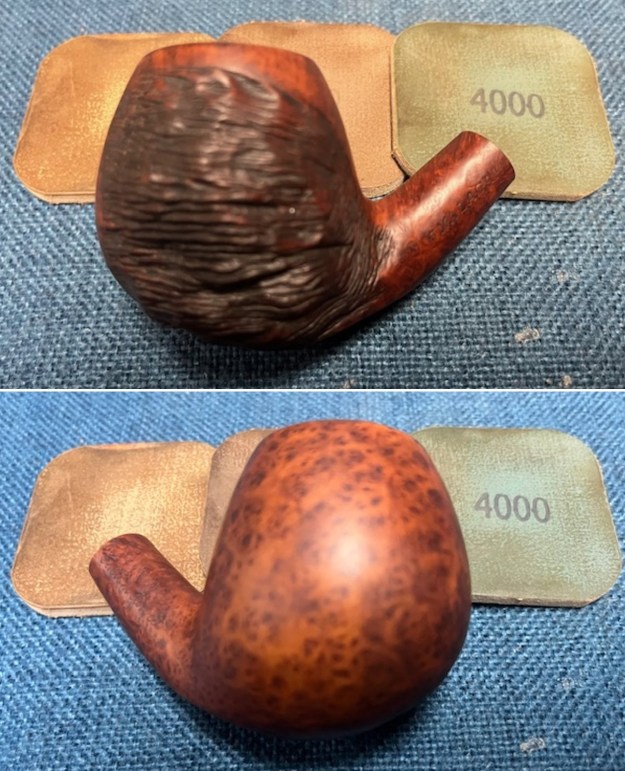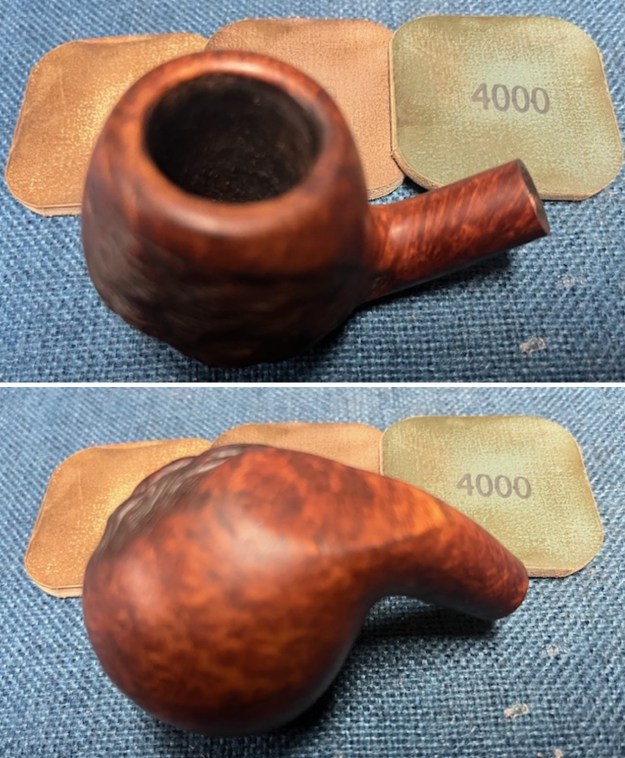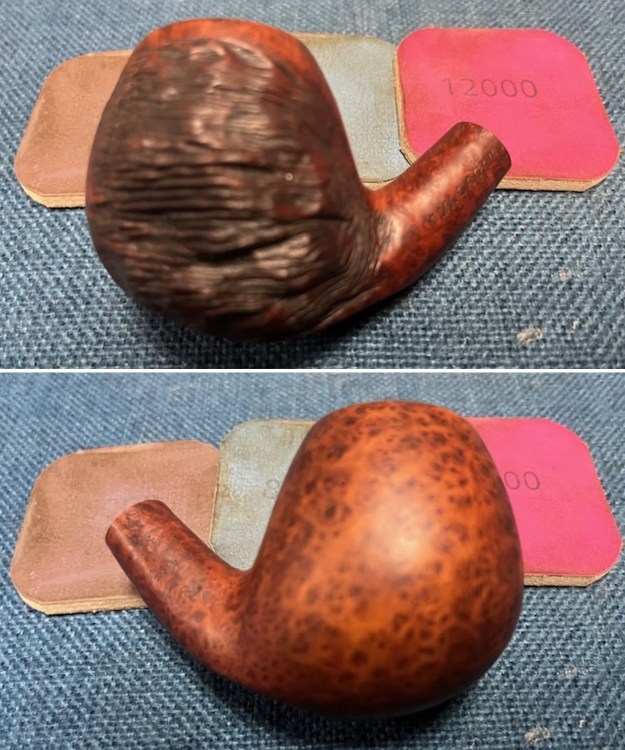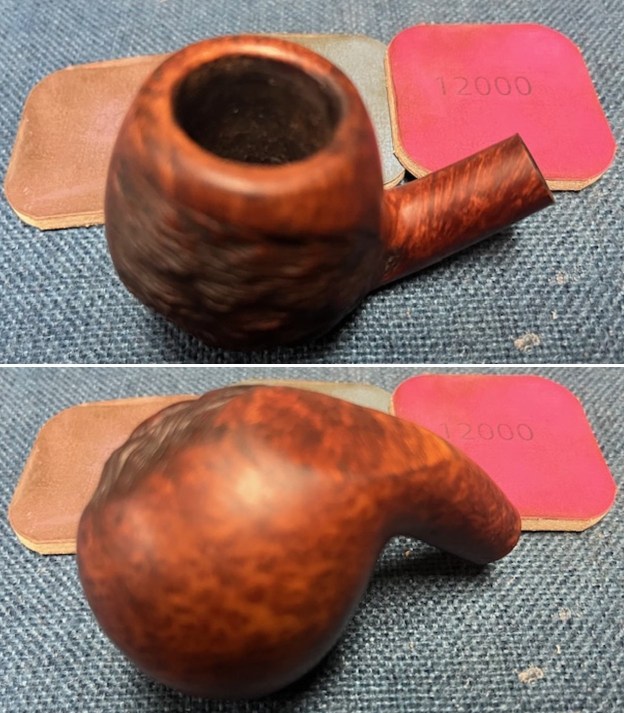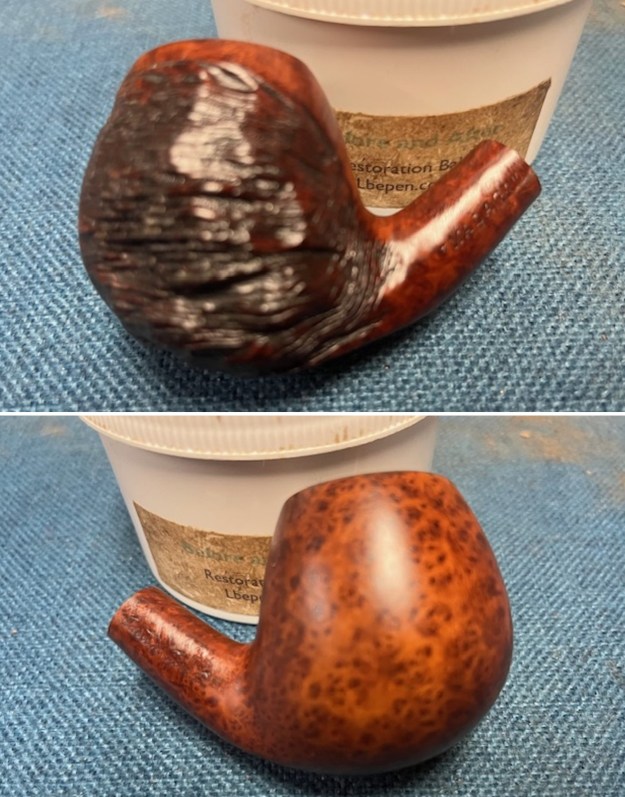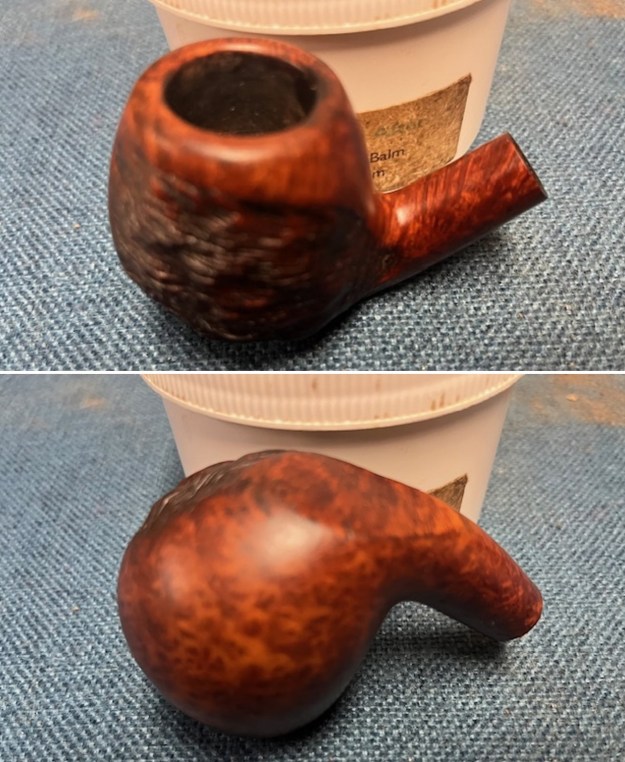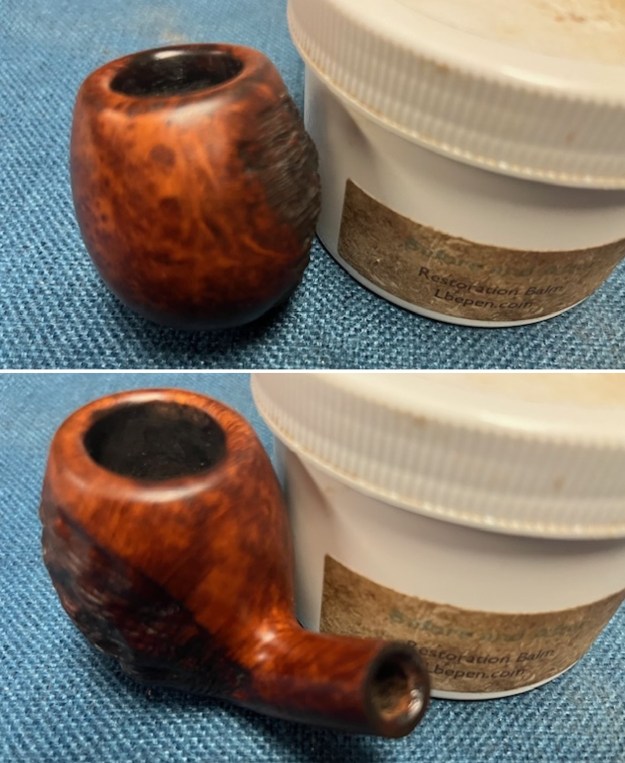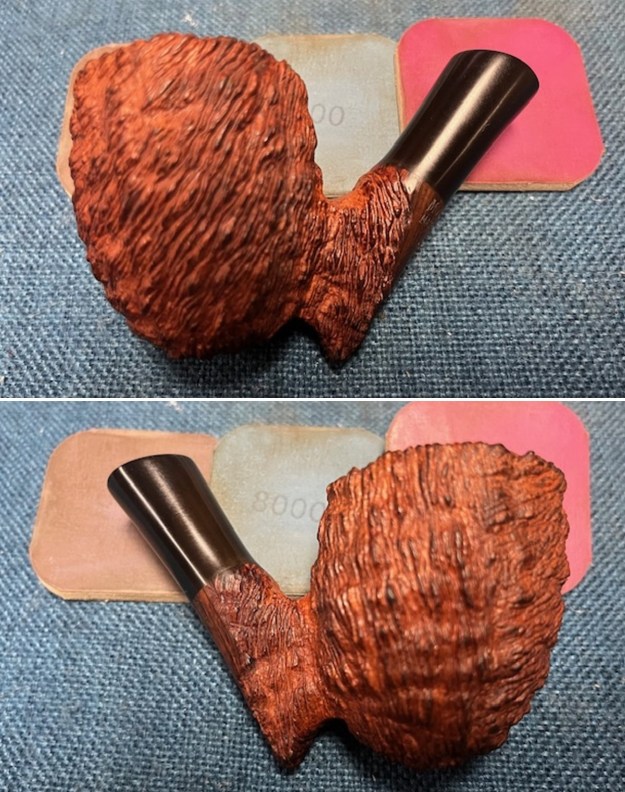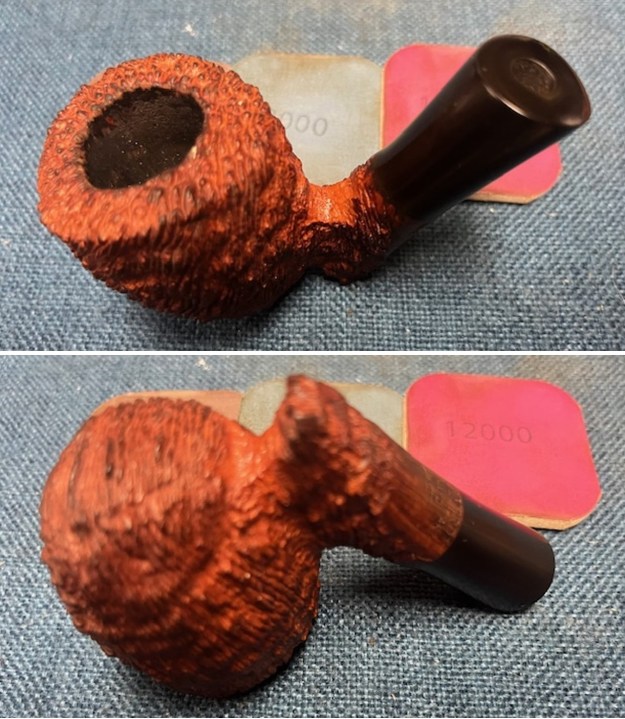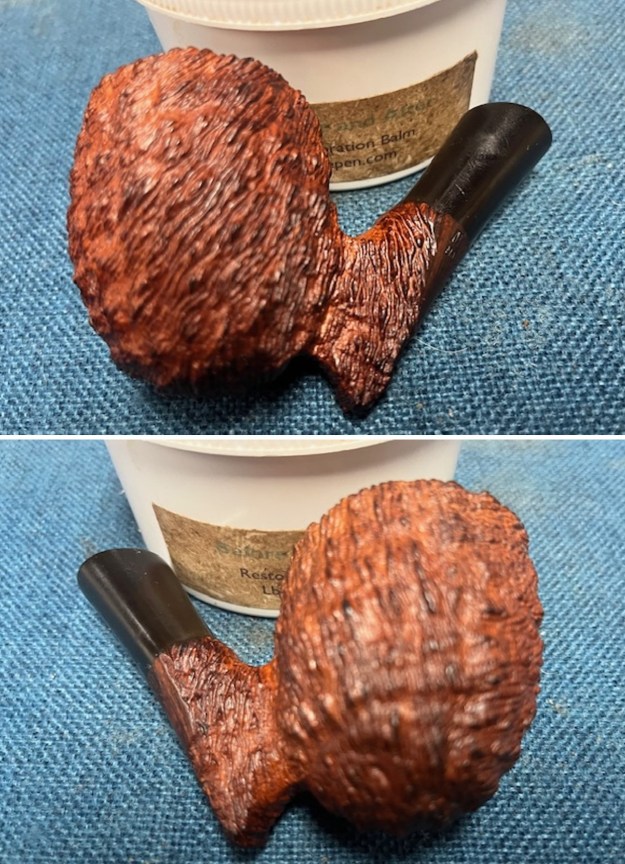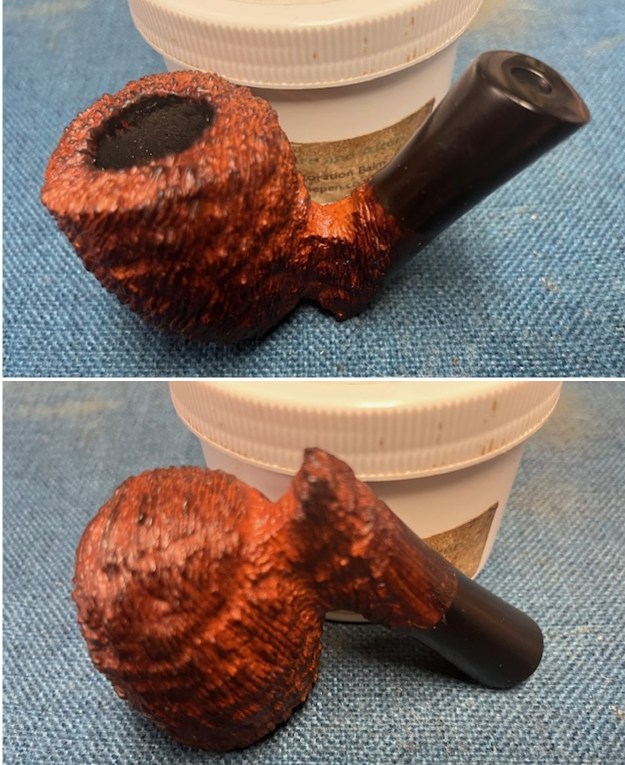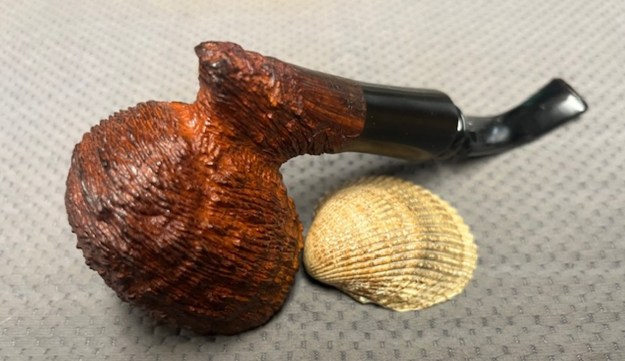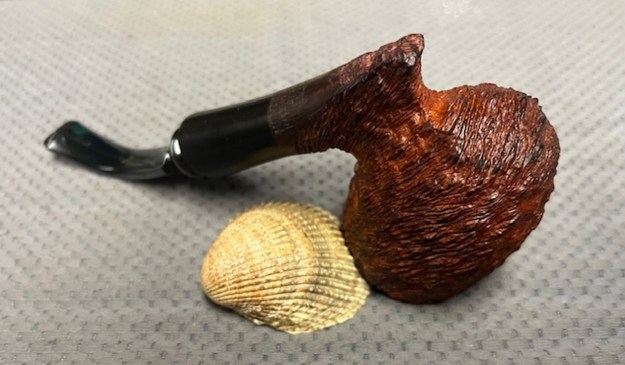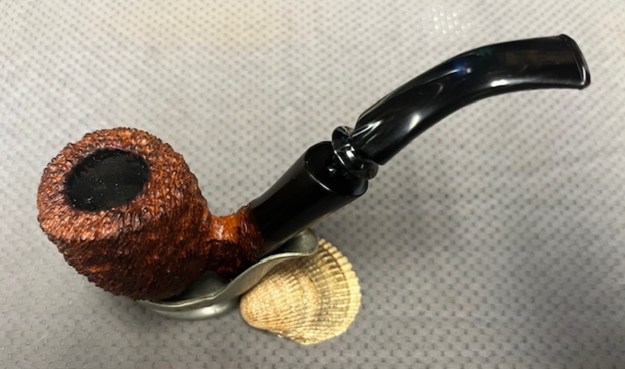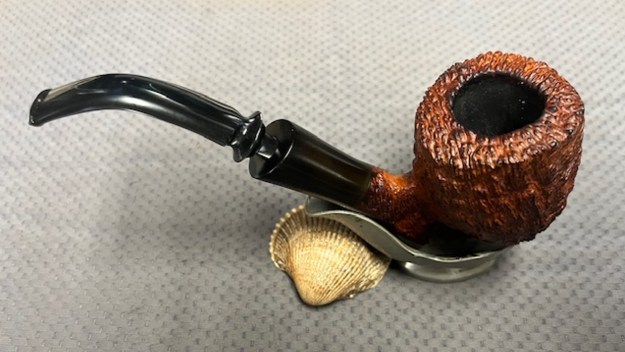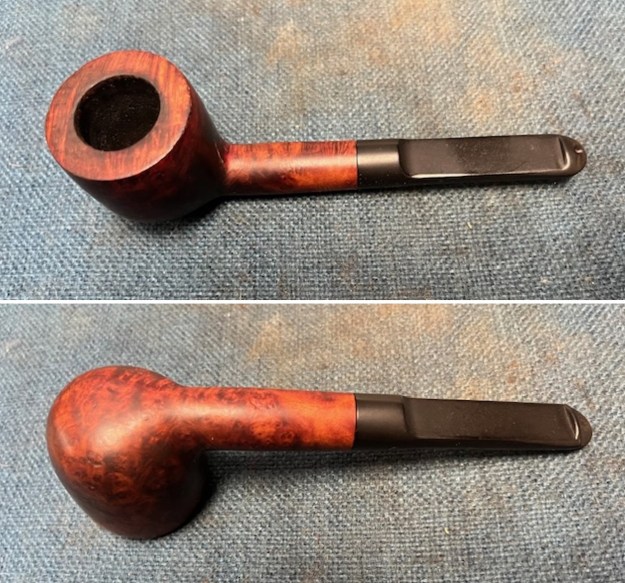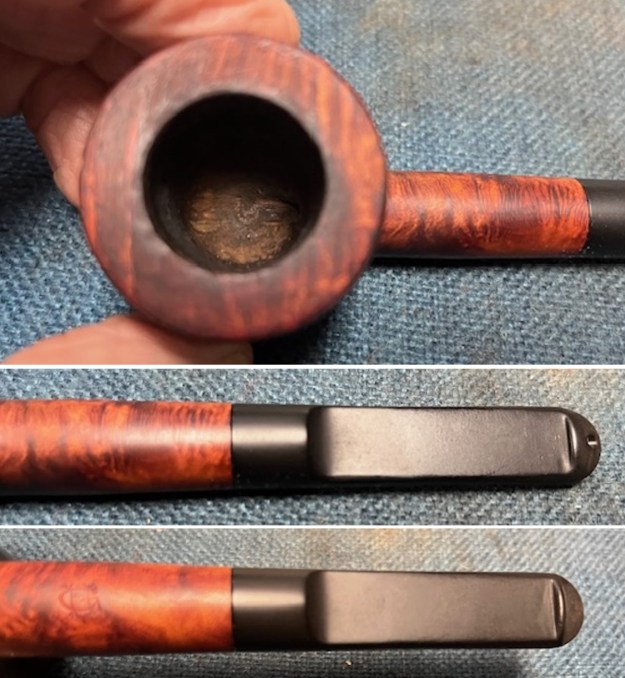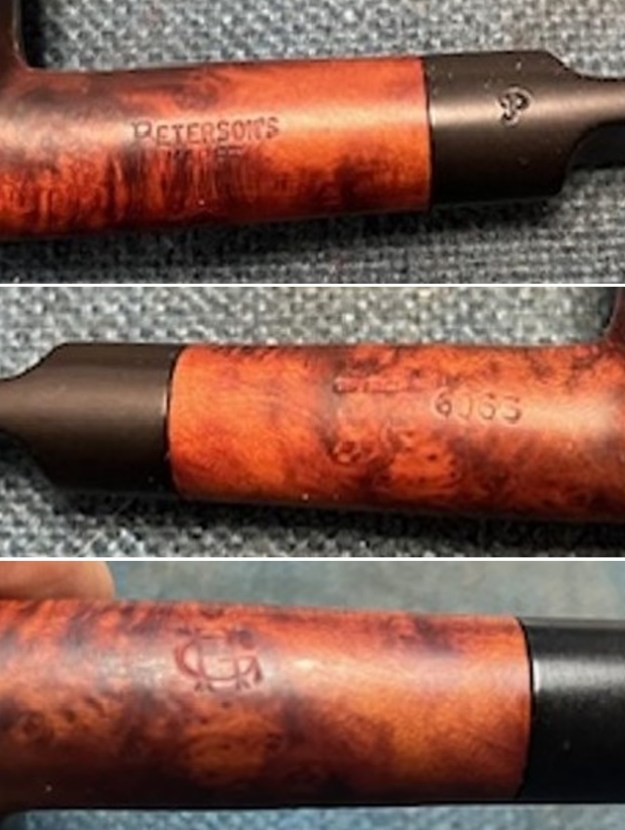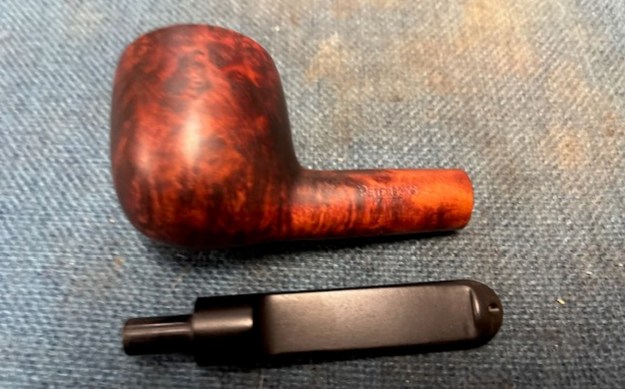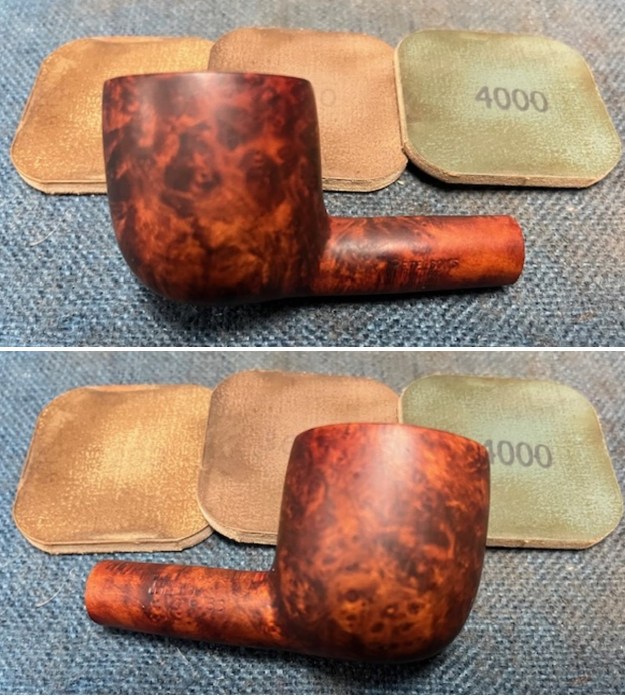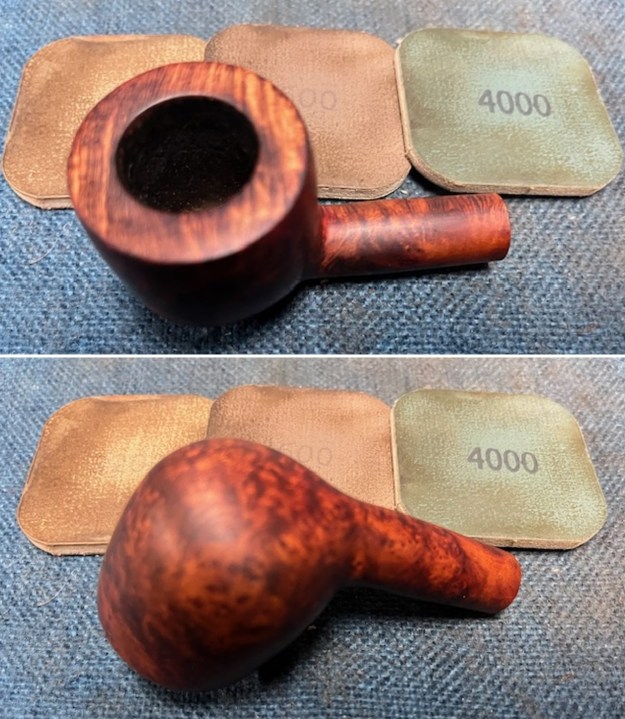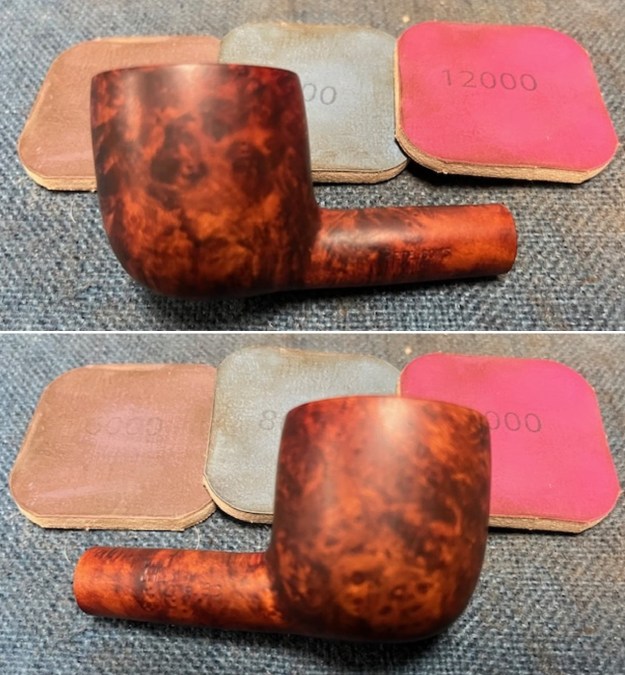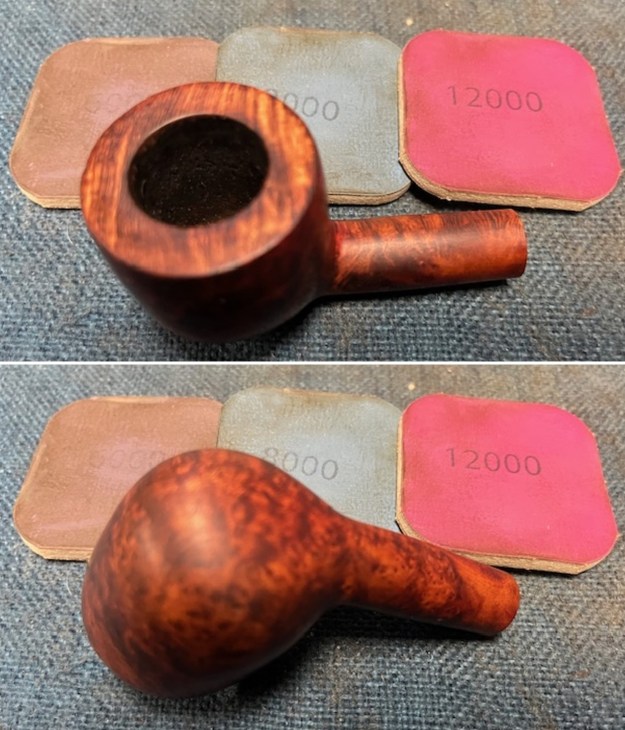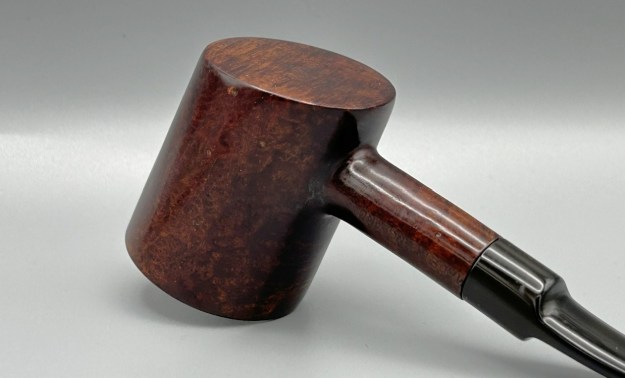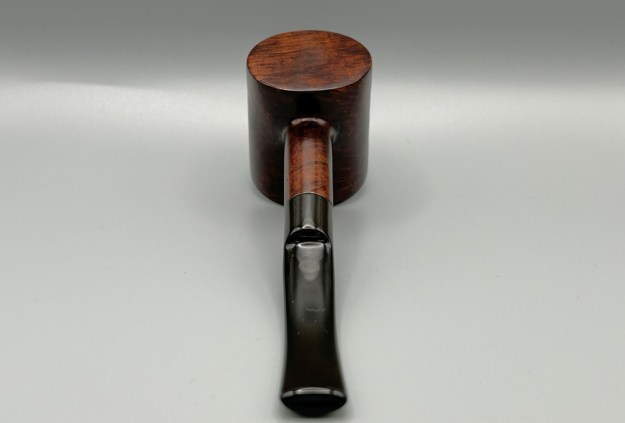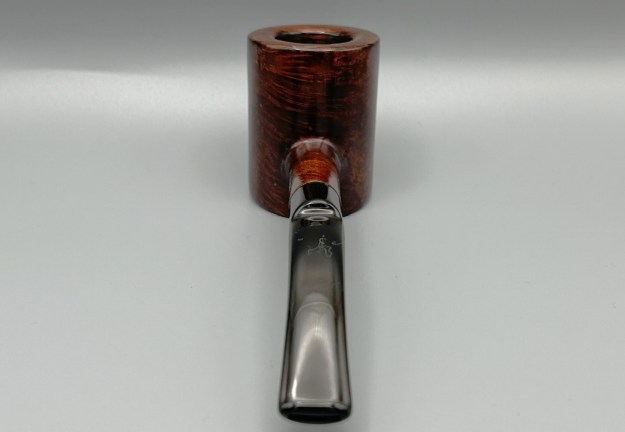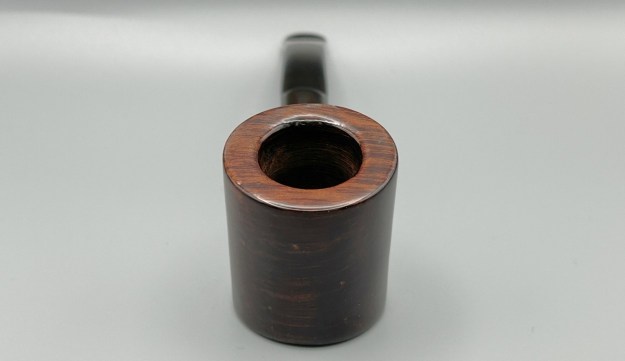
Tag Archives: Bowls – refinishing

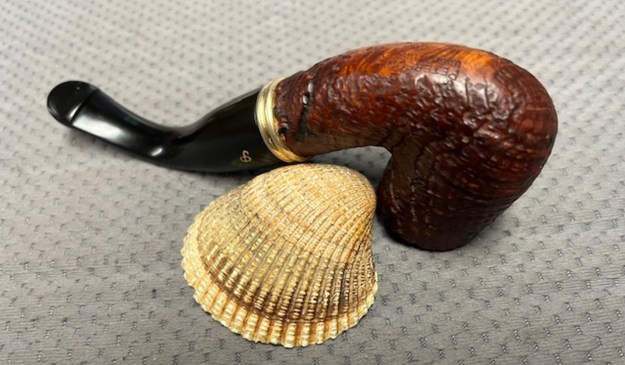
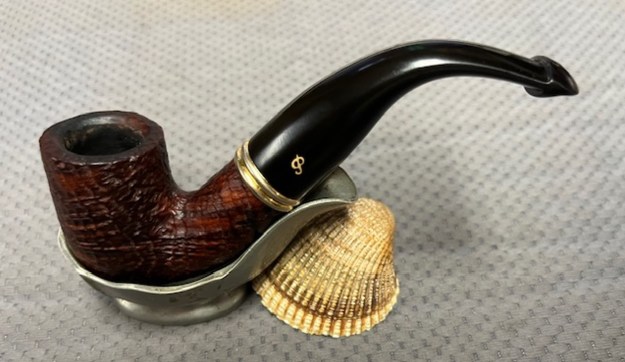
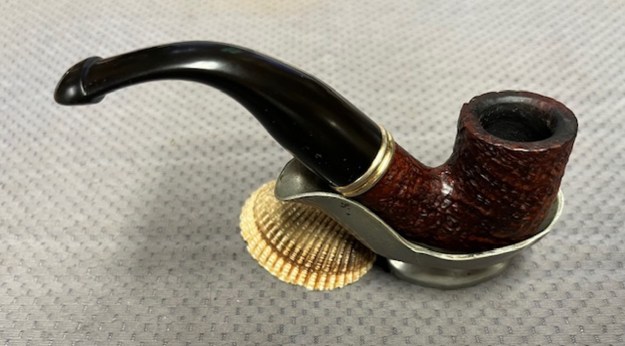
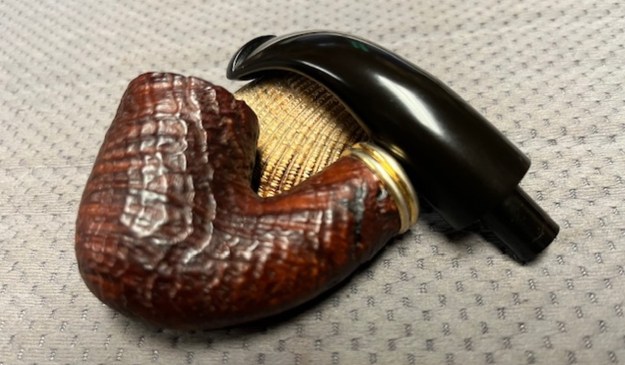
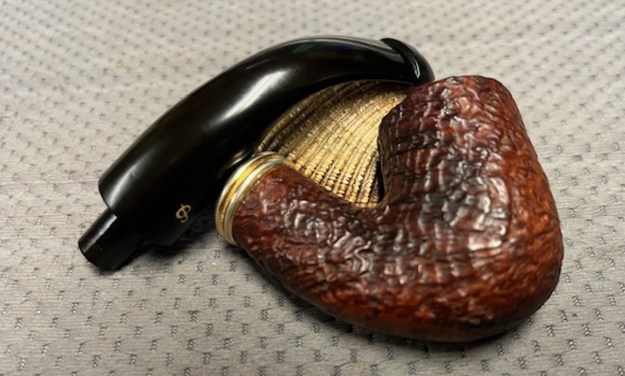
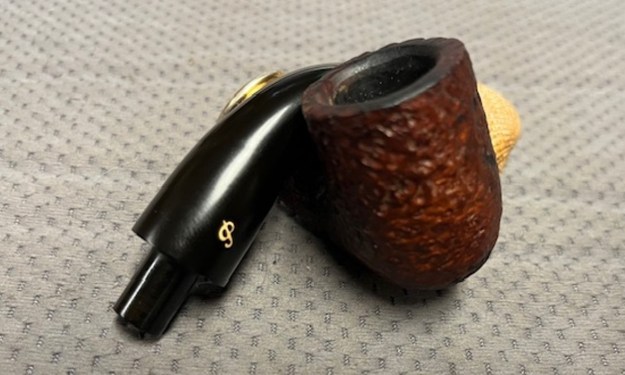
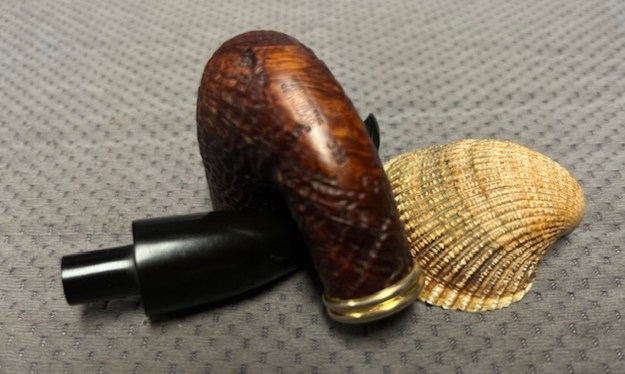
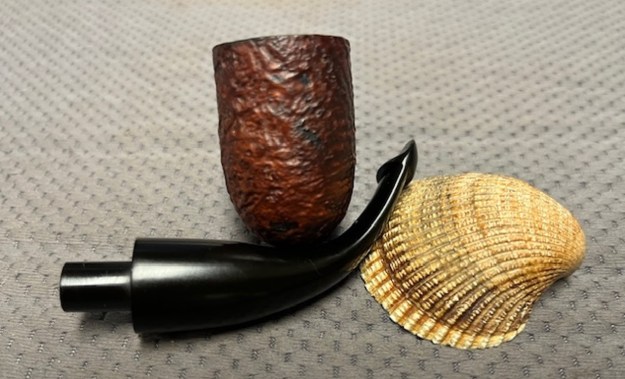
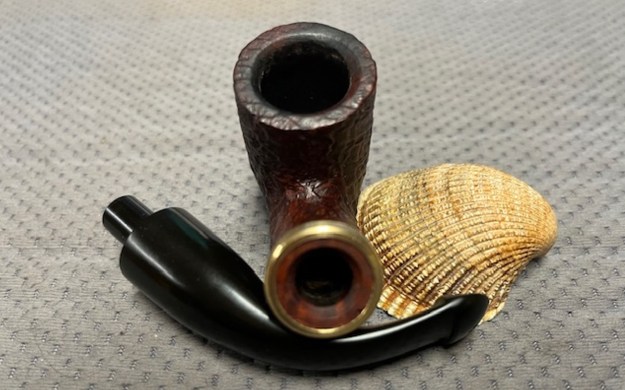
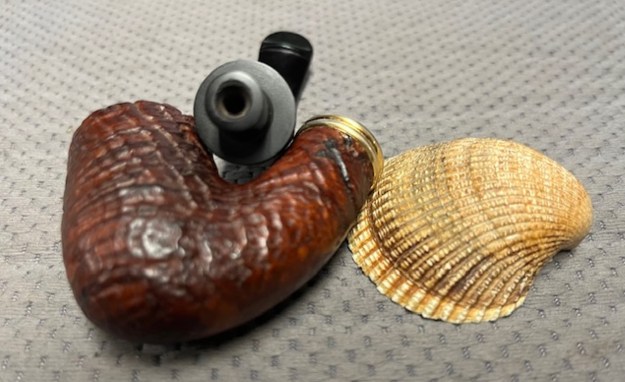
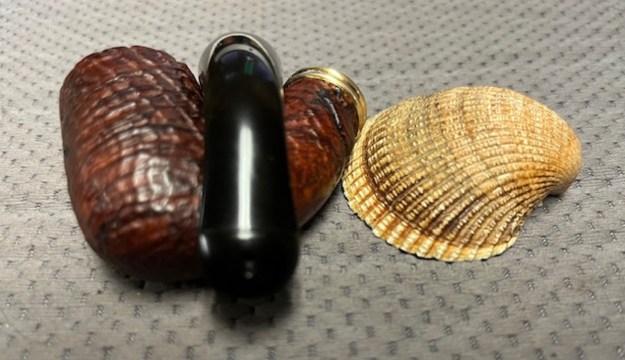
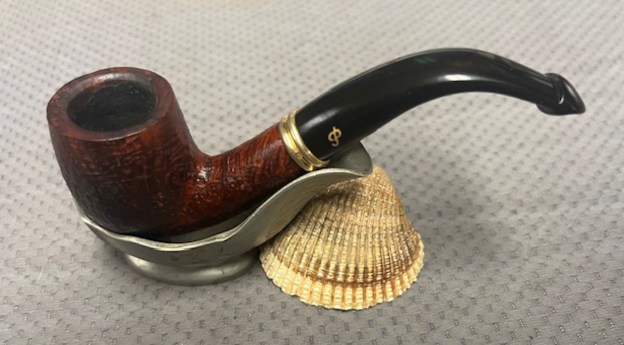
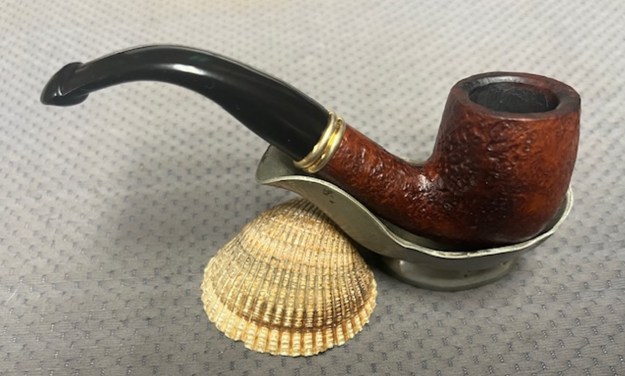
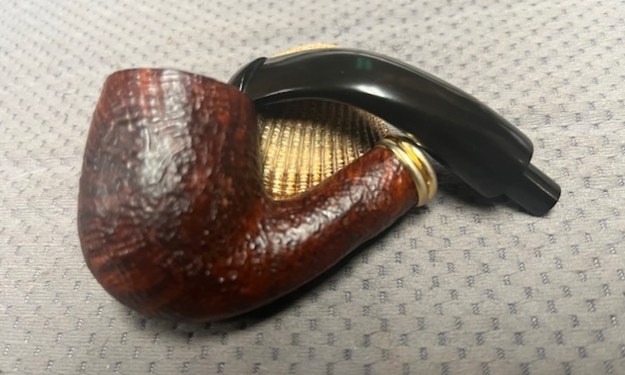
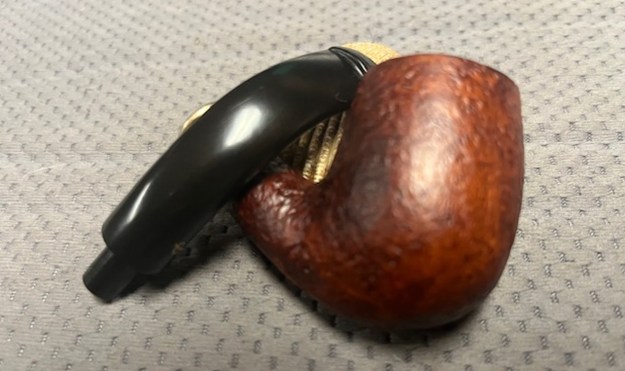
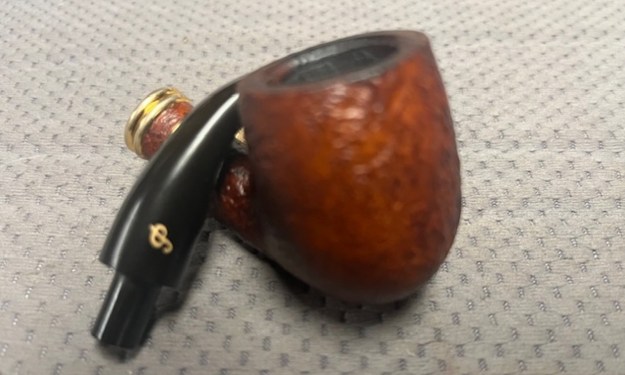
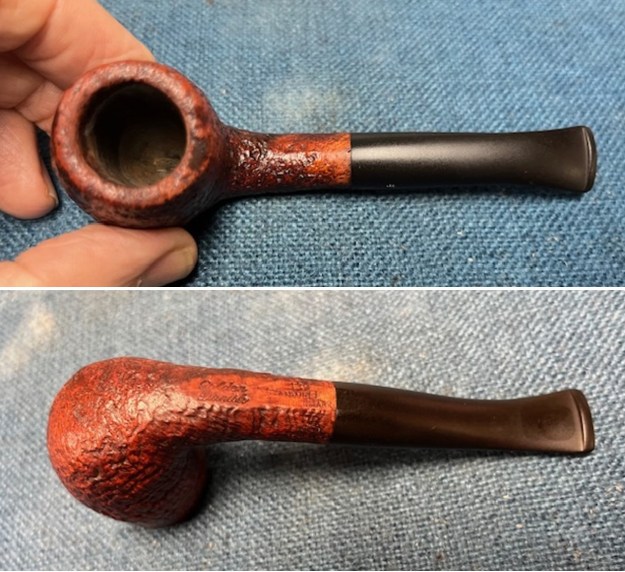
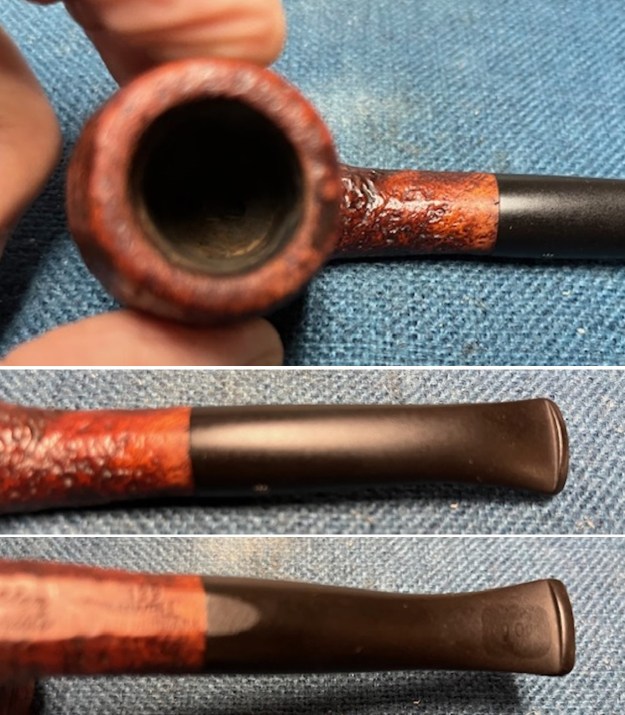
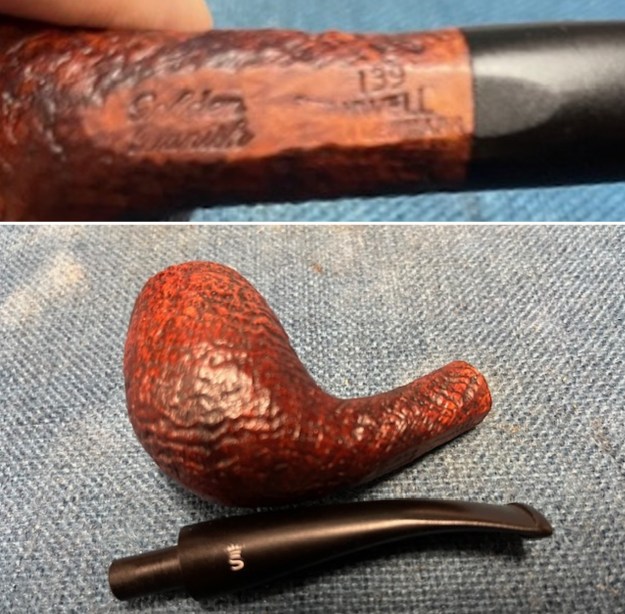
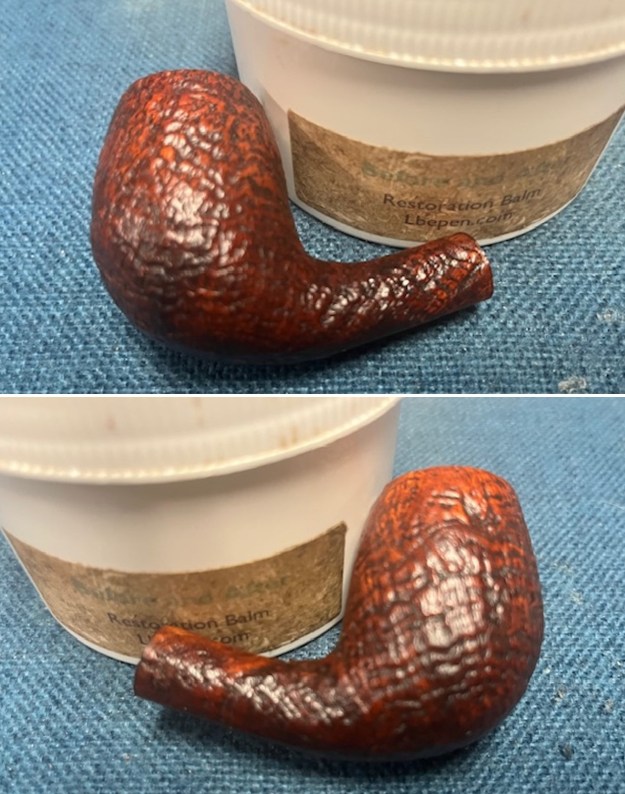
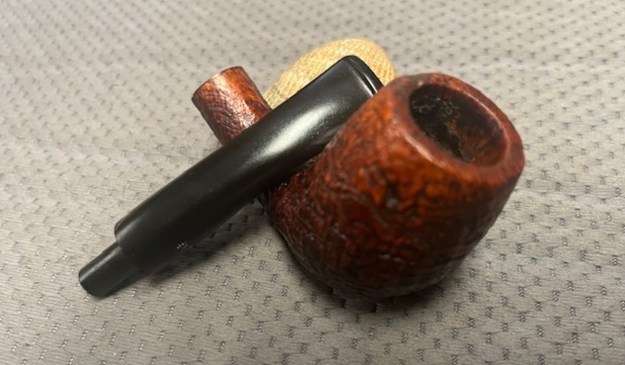
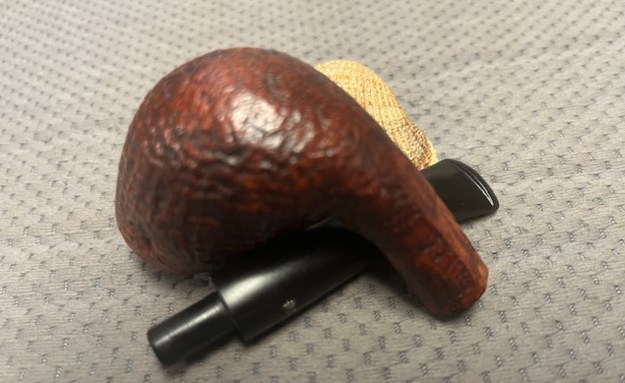
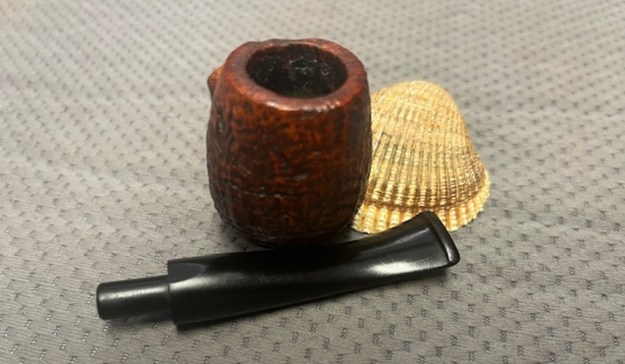
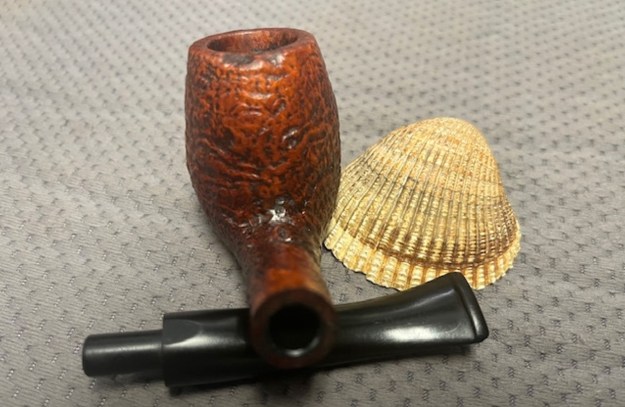
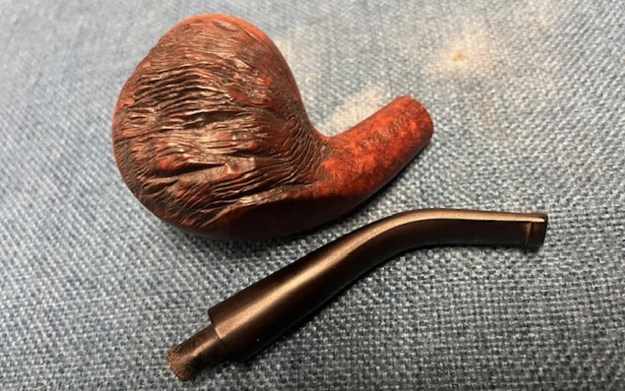
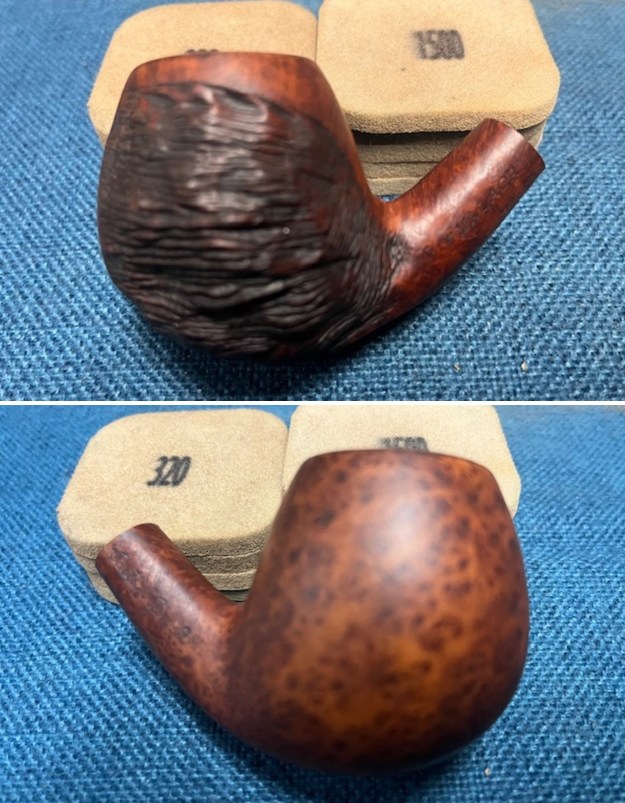
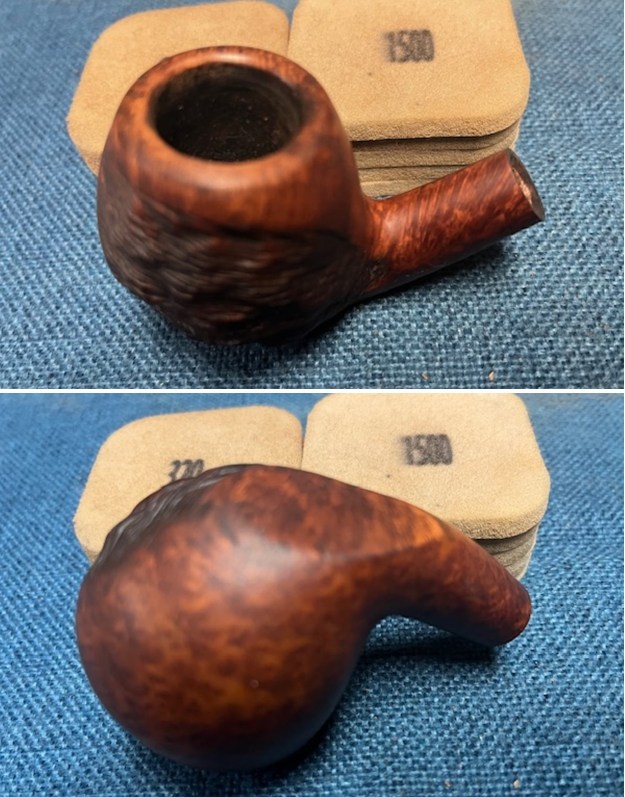
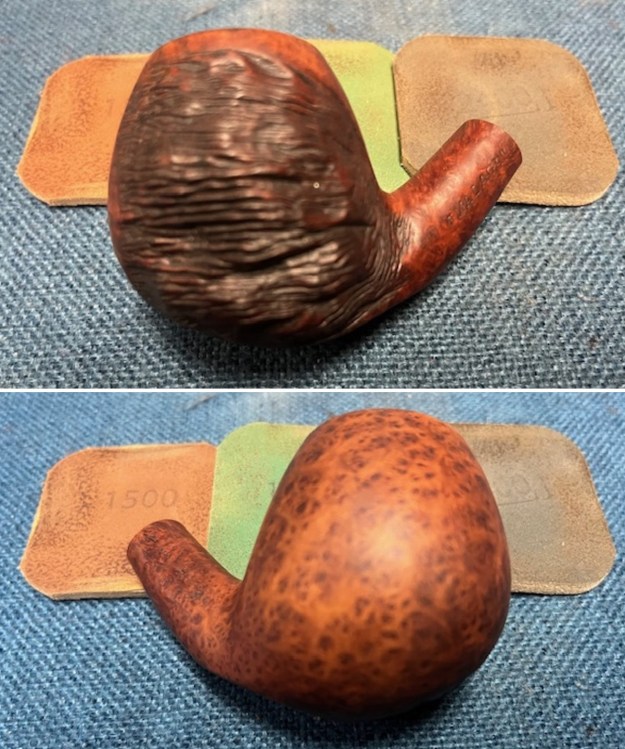
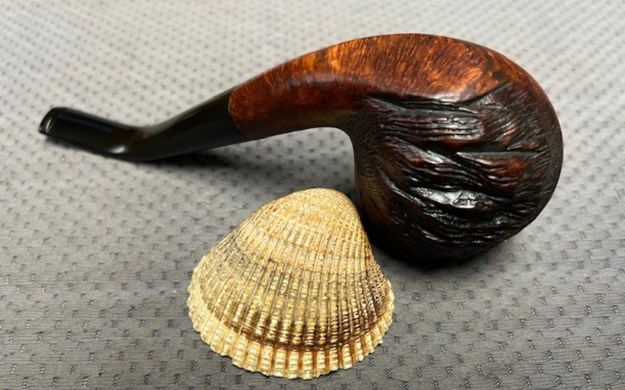
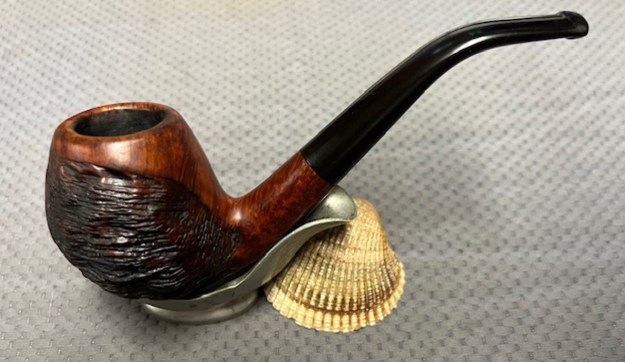
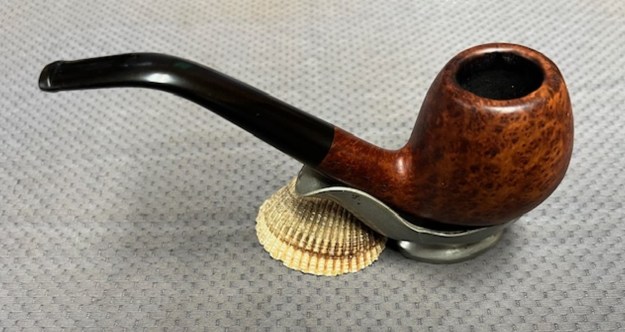
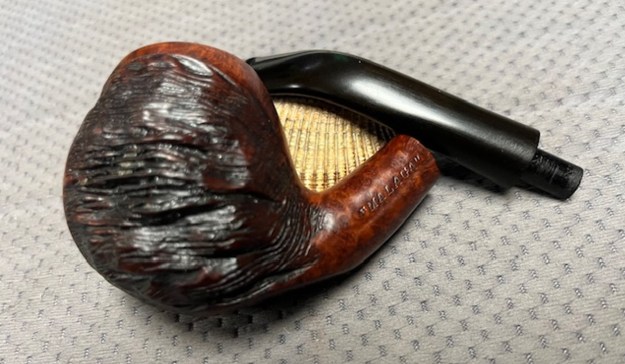
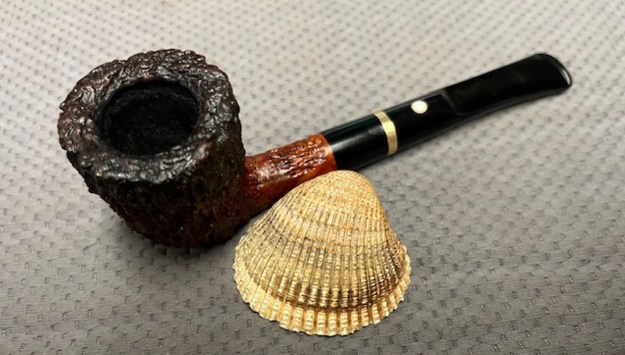
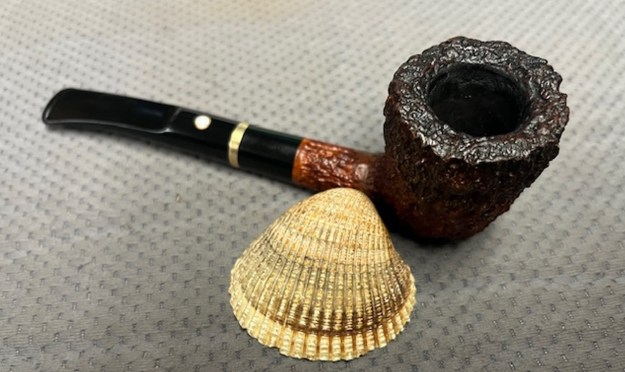
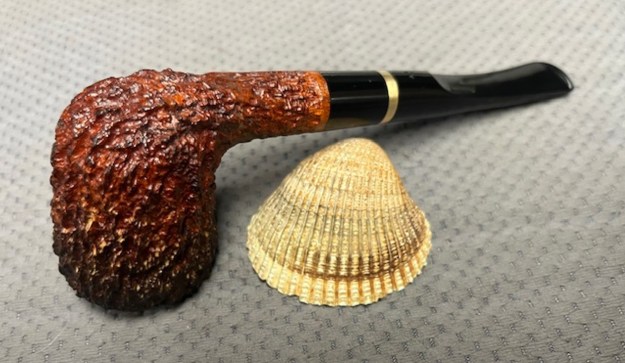
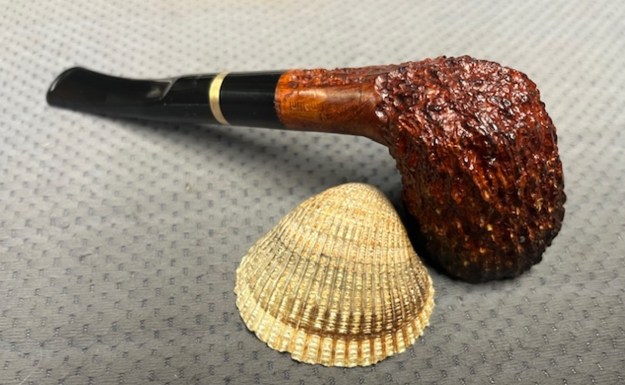
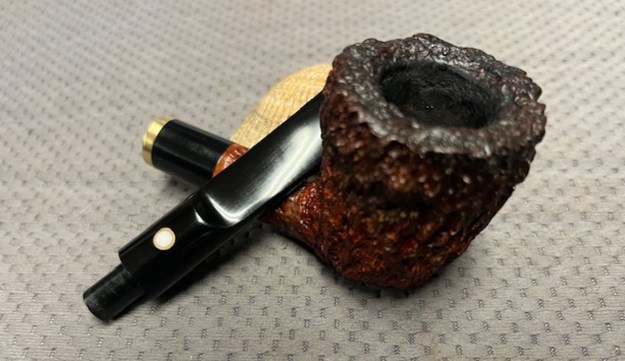
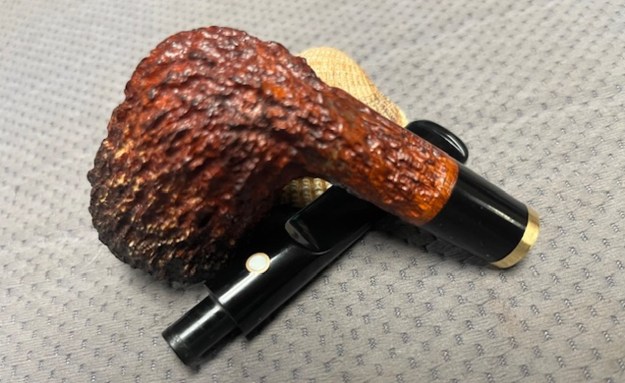
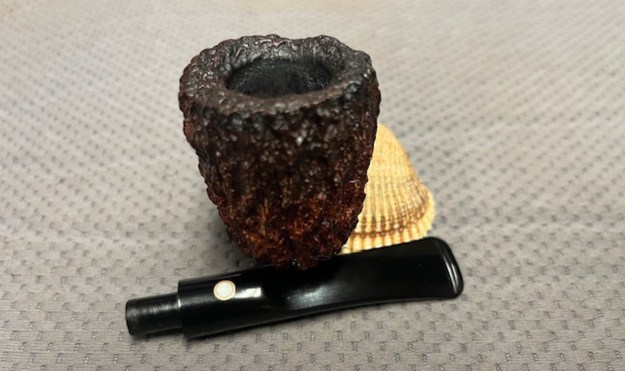
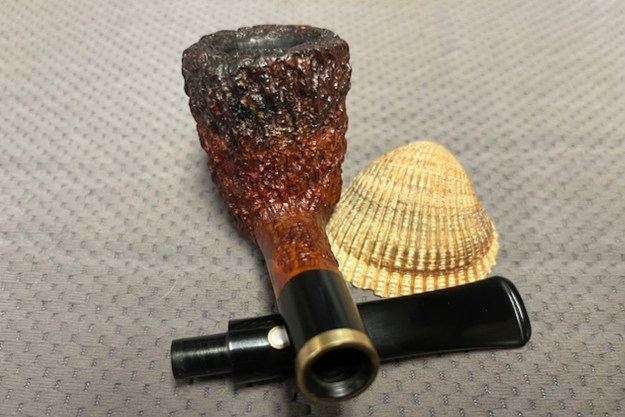
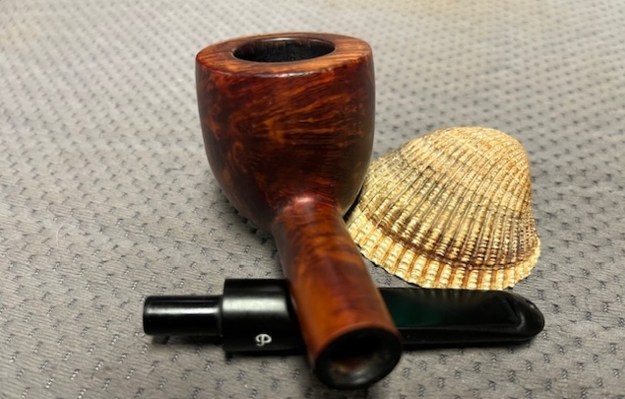
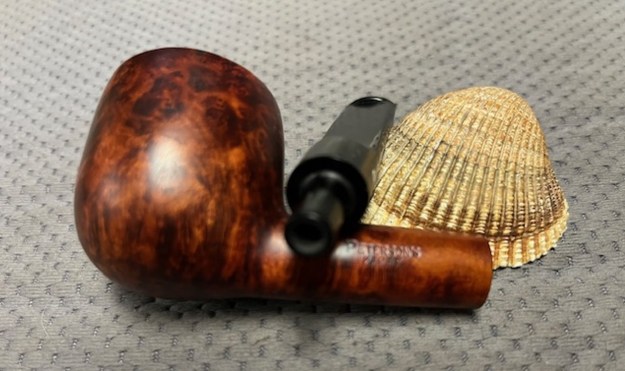
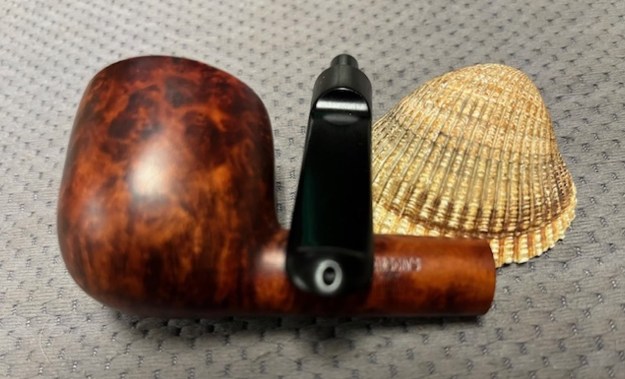
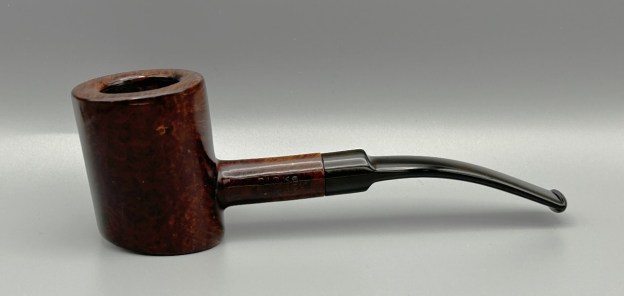
New Life for a Castello Old Antiquari KK 32 Hand Made Canadian


by Steve LaugView post

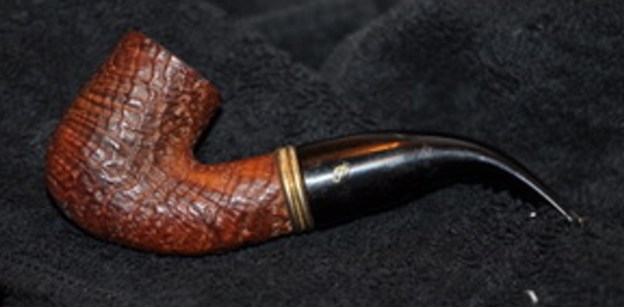
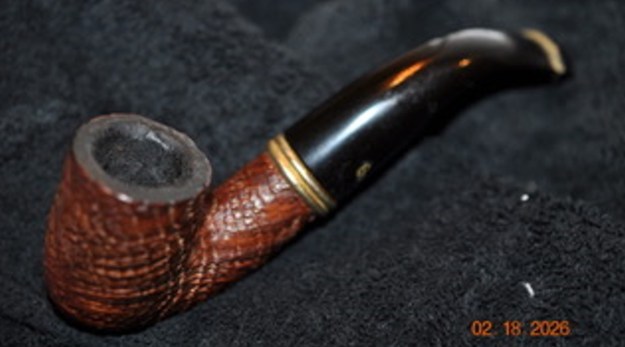
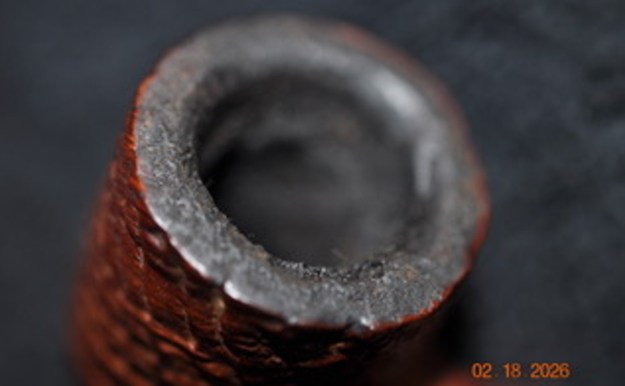
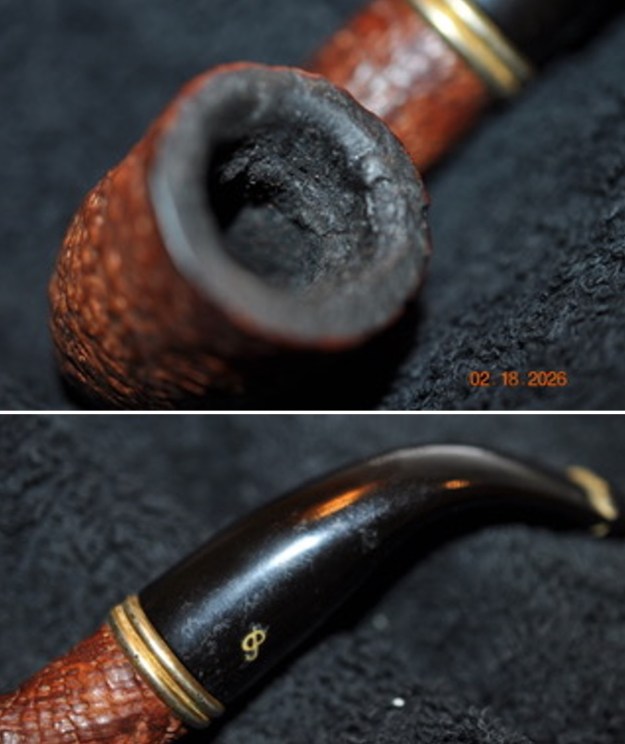
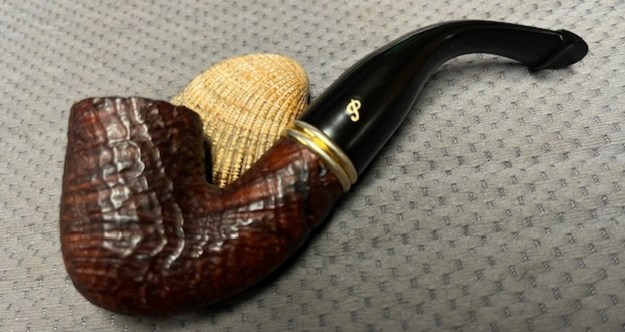
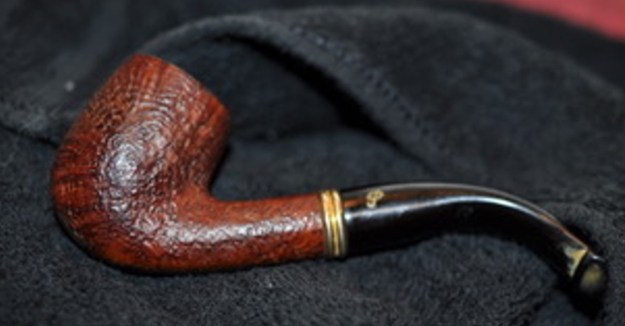
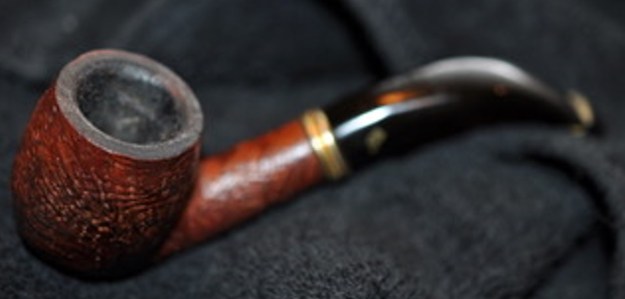
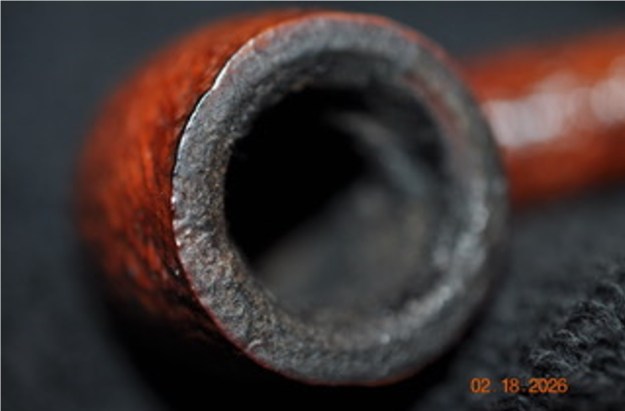
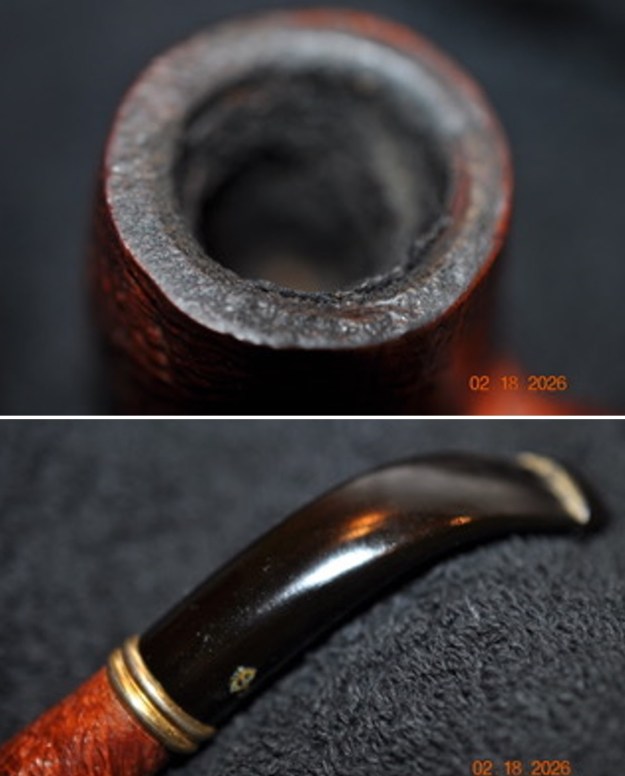
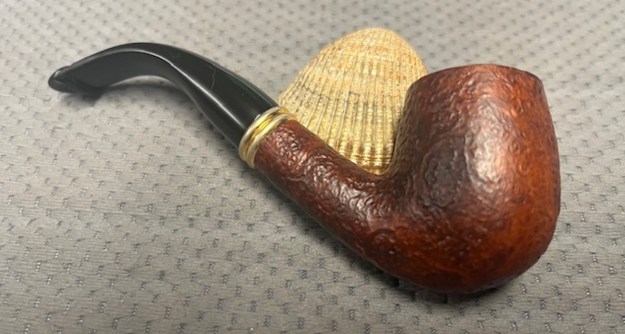
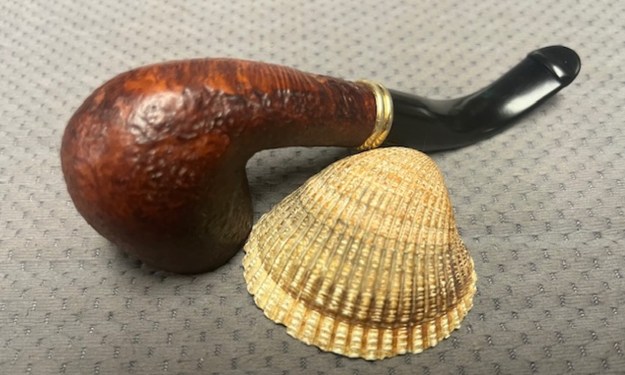
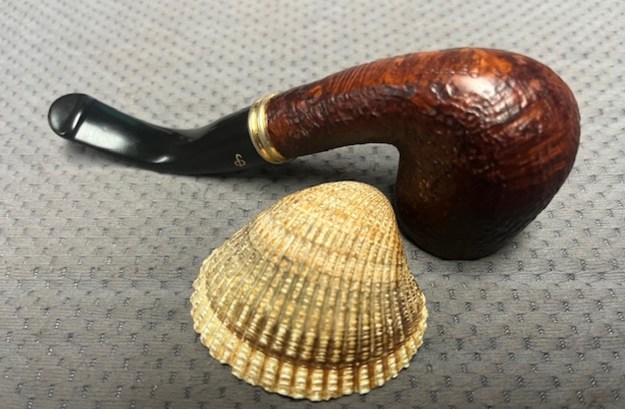
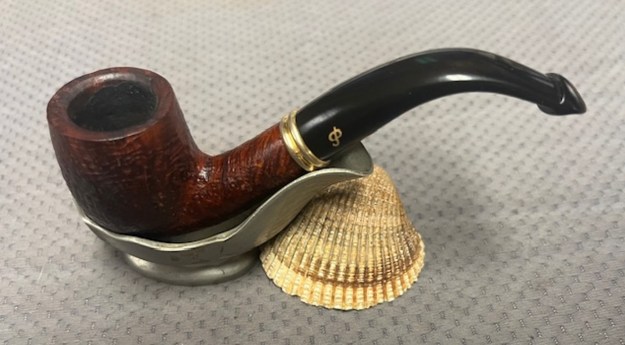
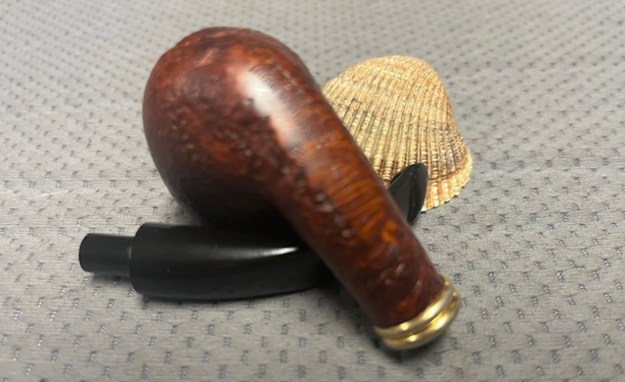
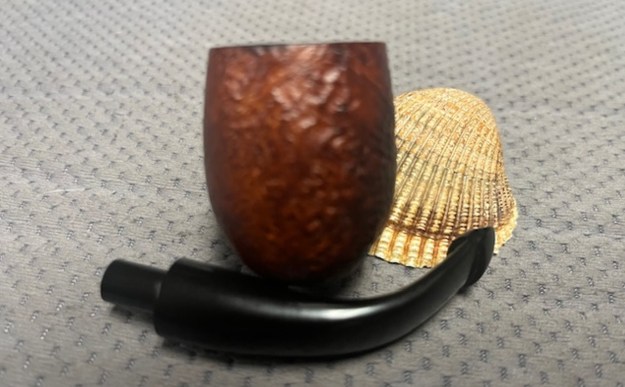
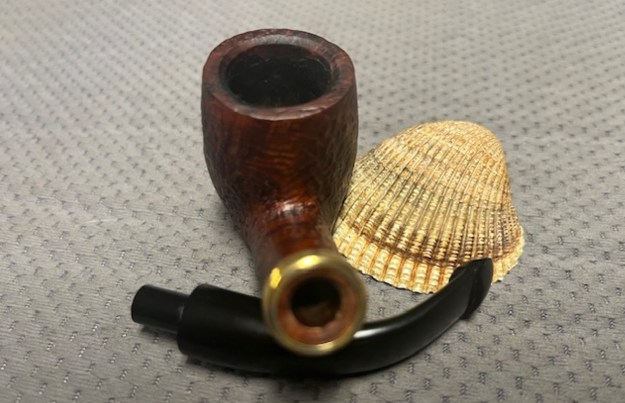
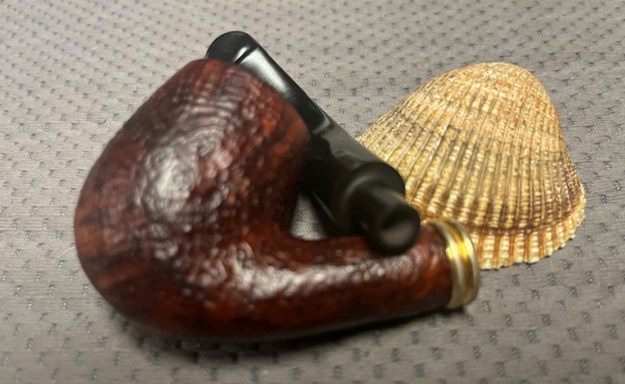
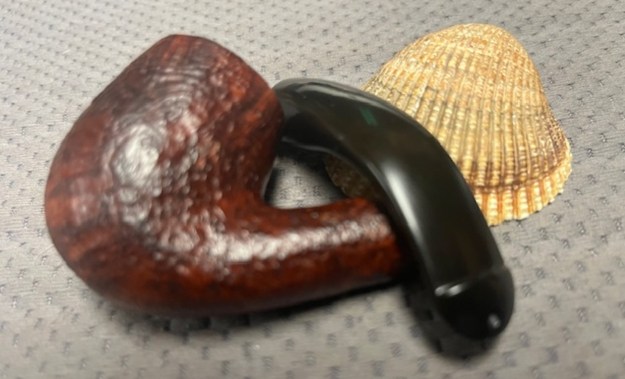
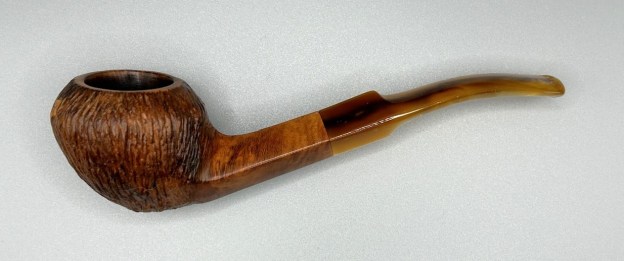
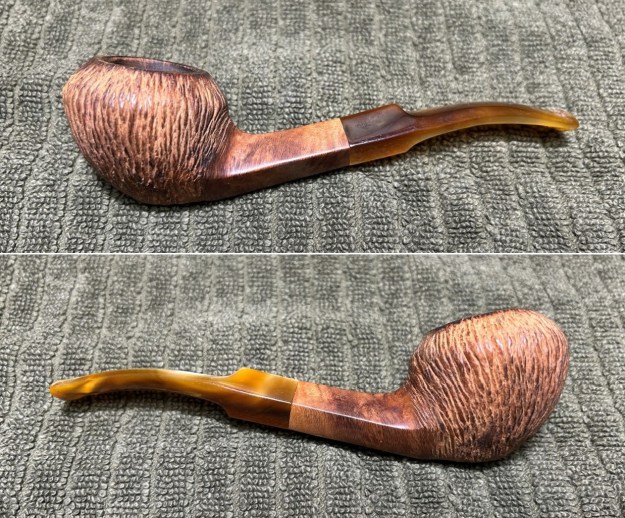
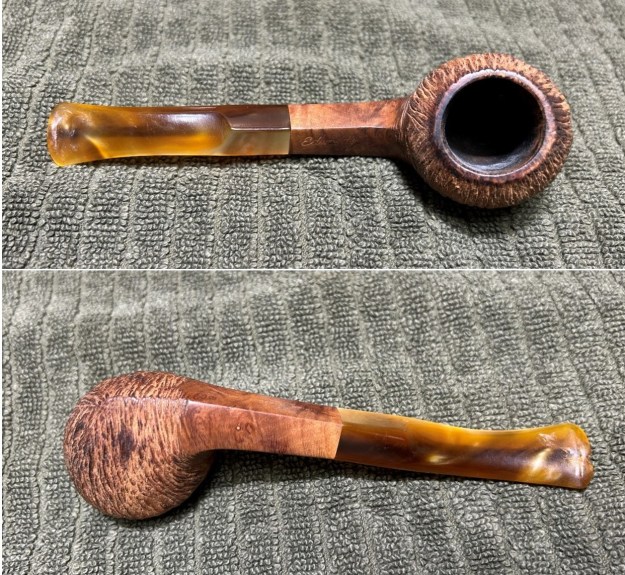
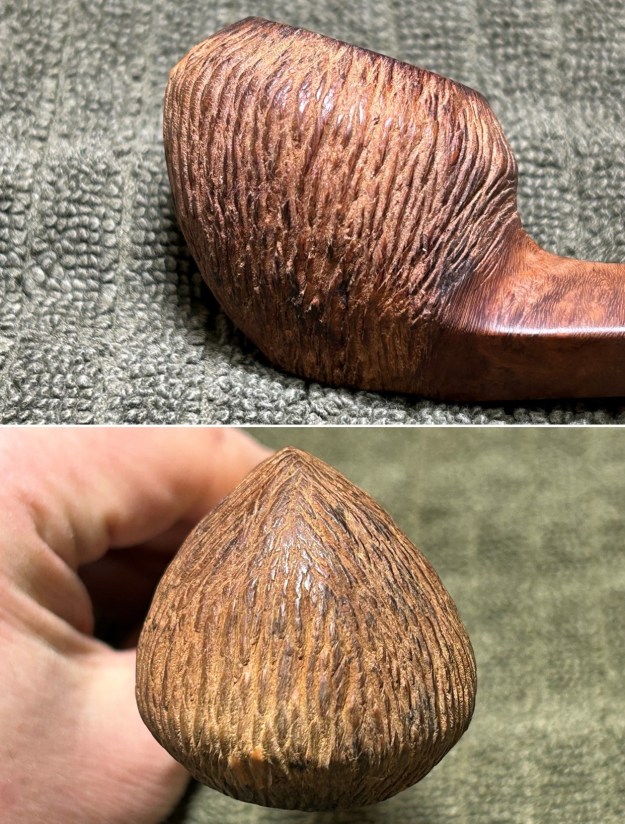
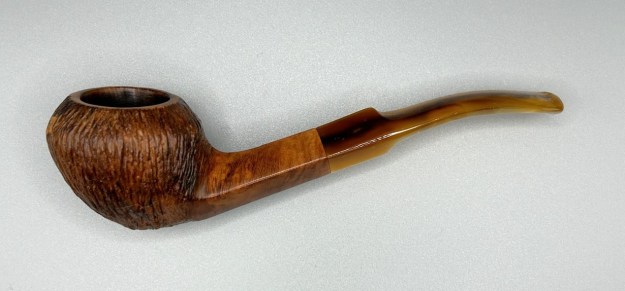
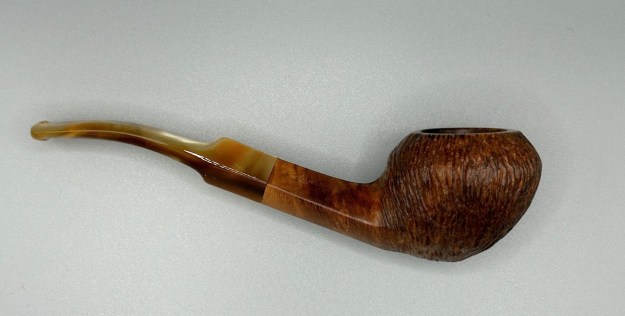
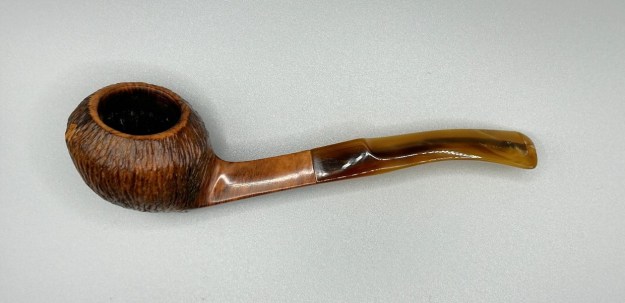
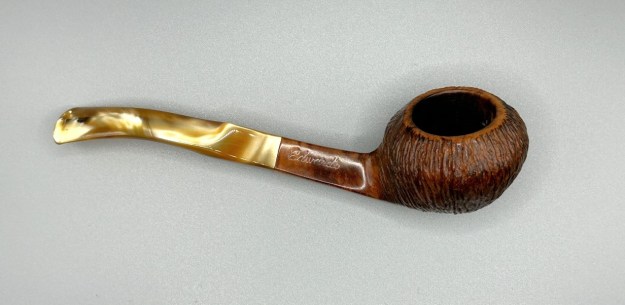
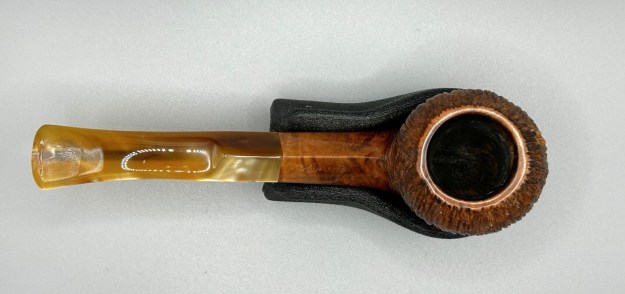
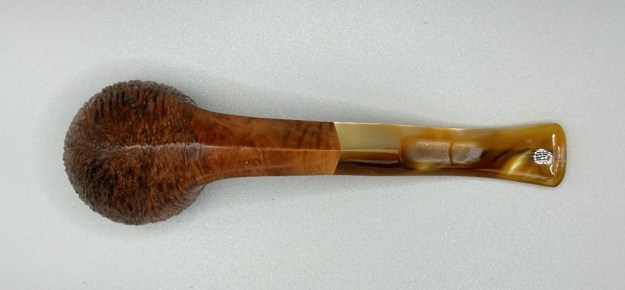
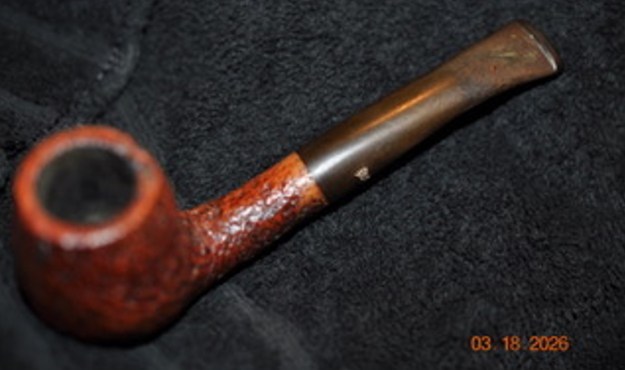
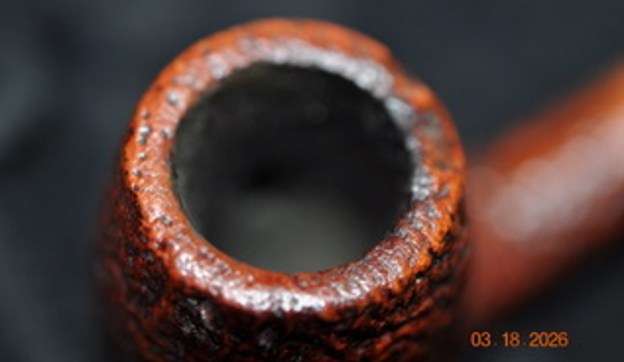
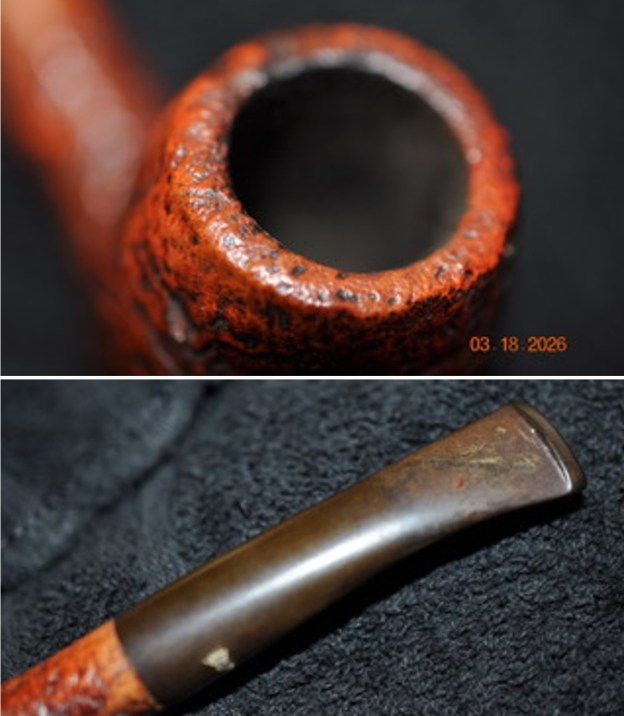
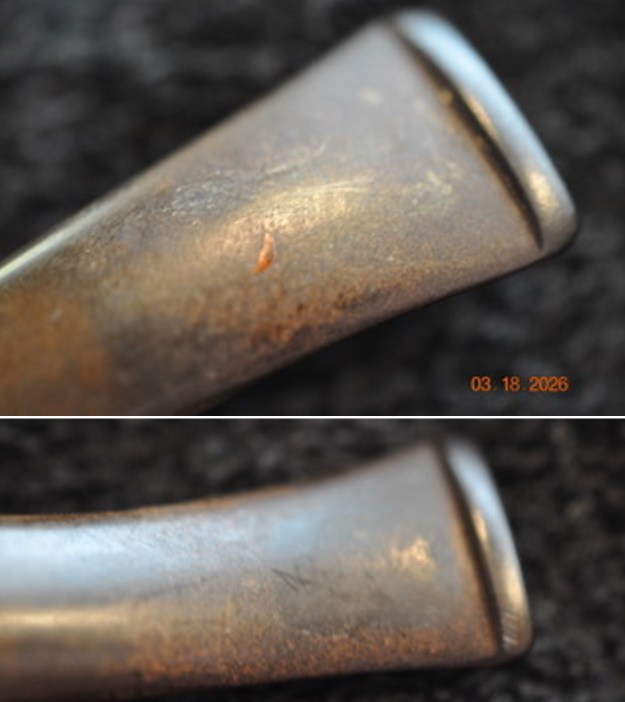
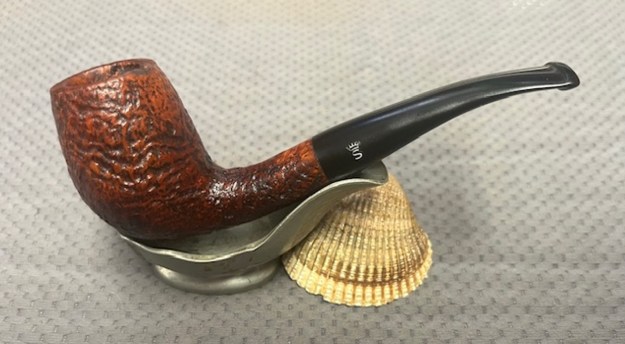
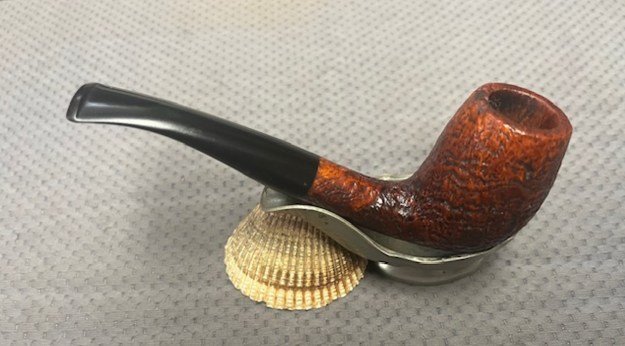
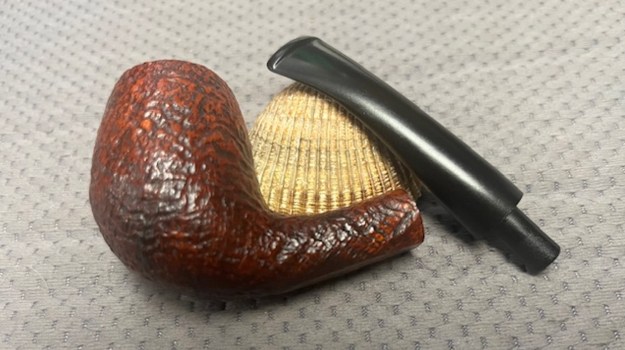
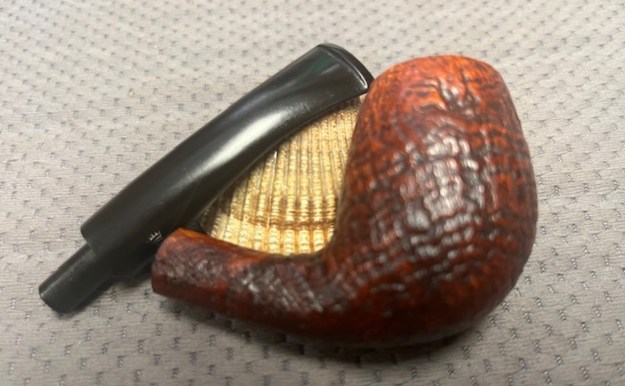
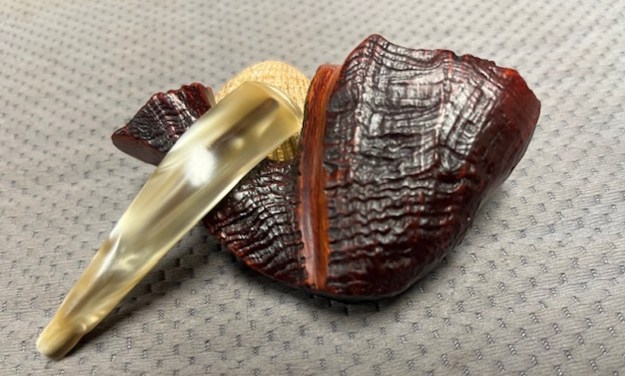
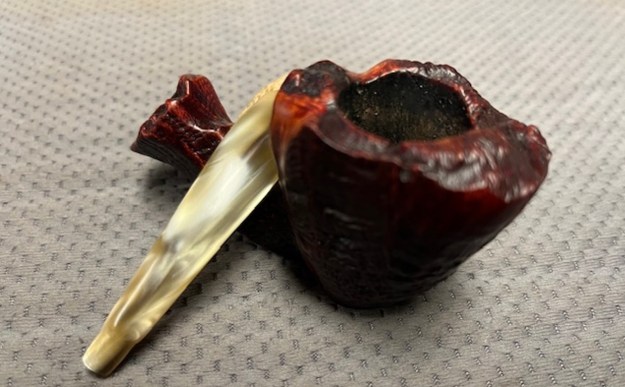
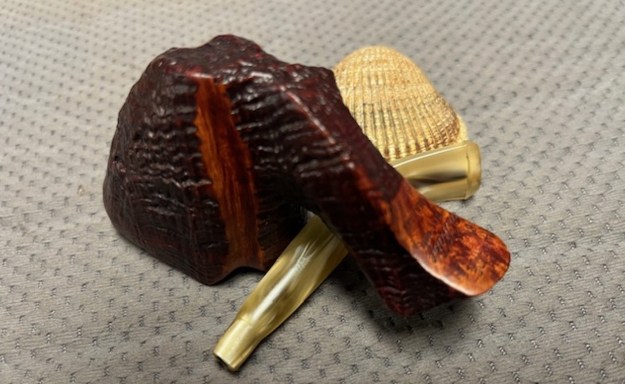
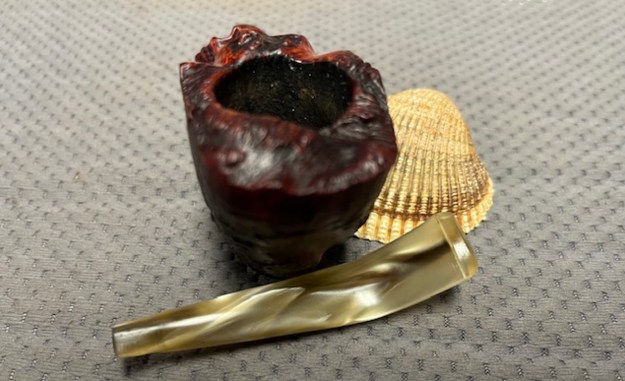
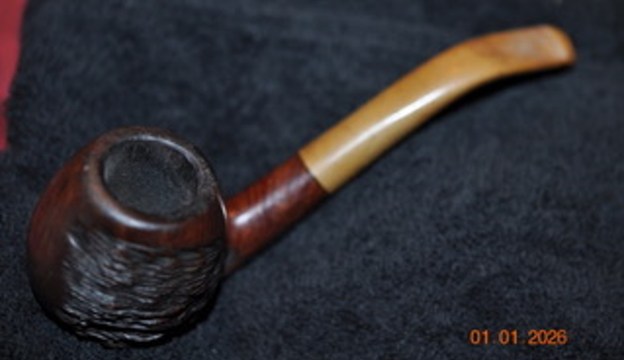
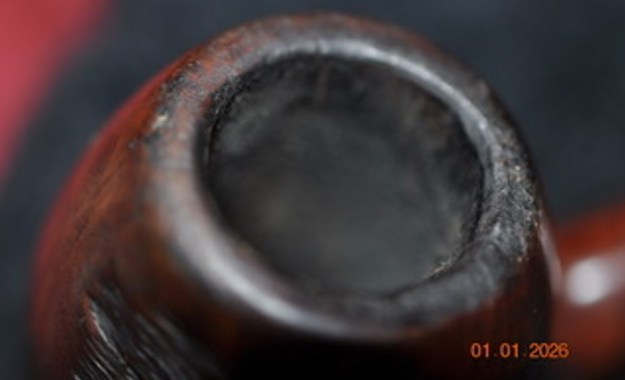
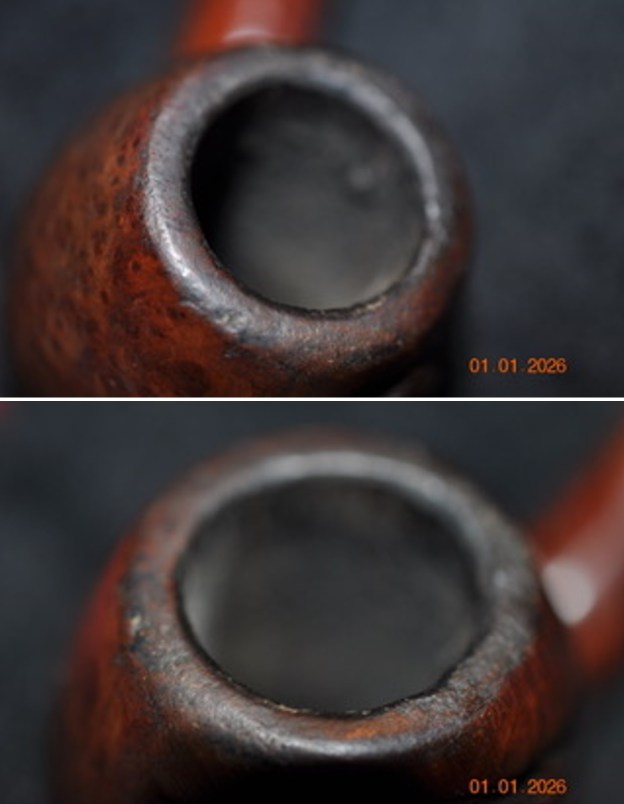
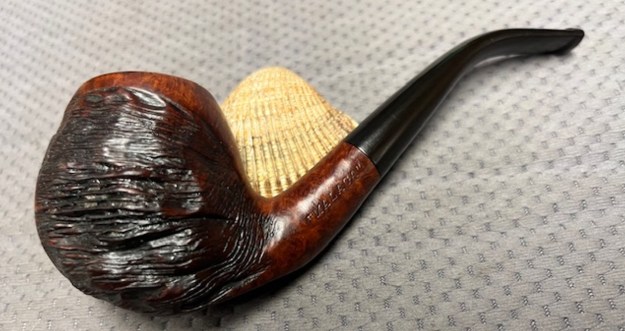
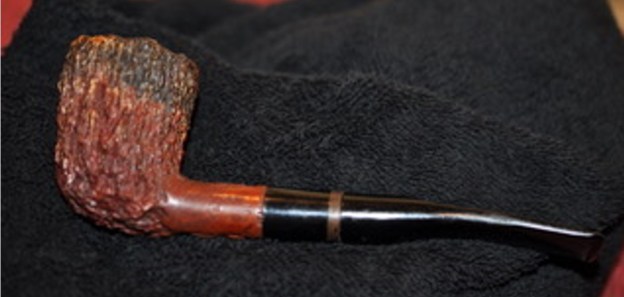
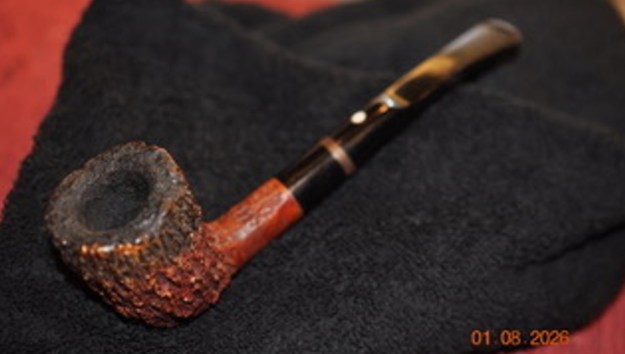
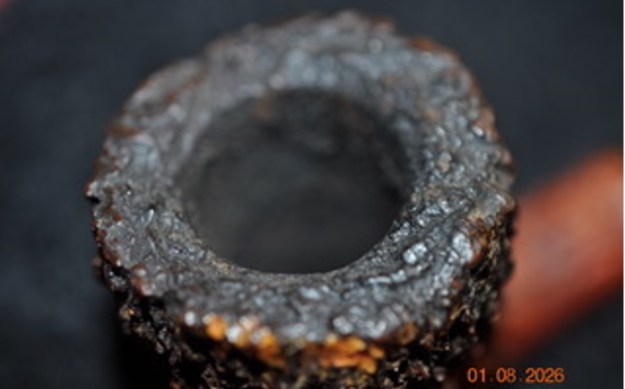
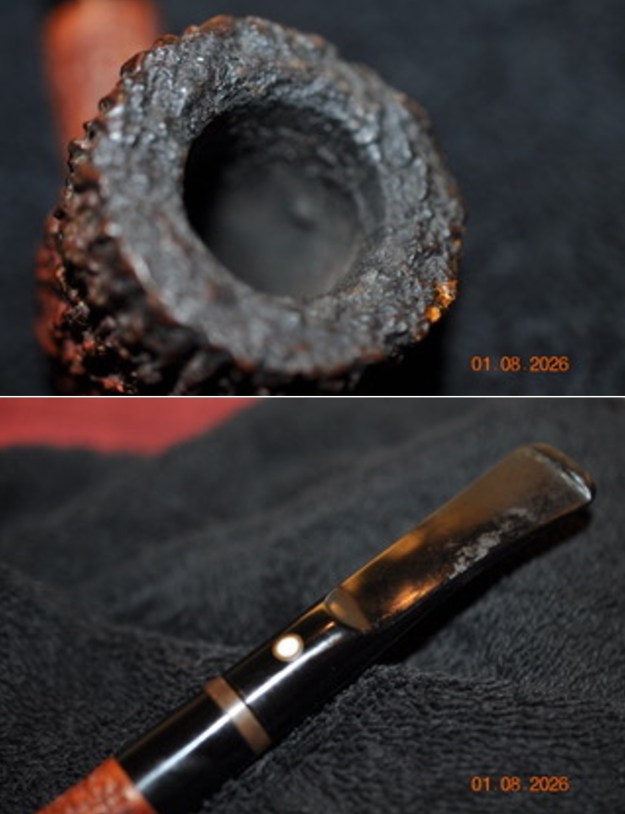
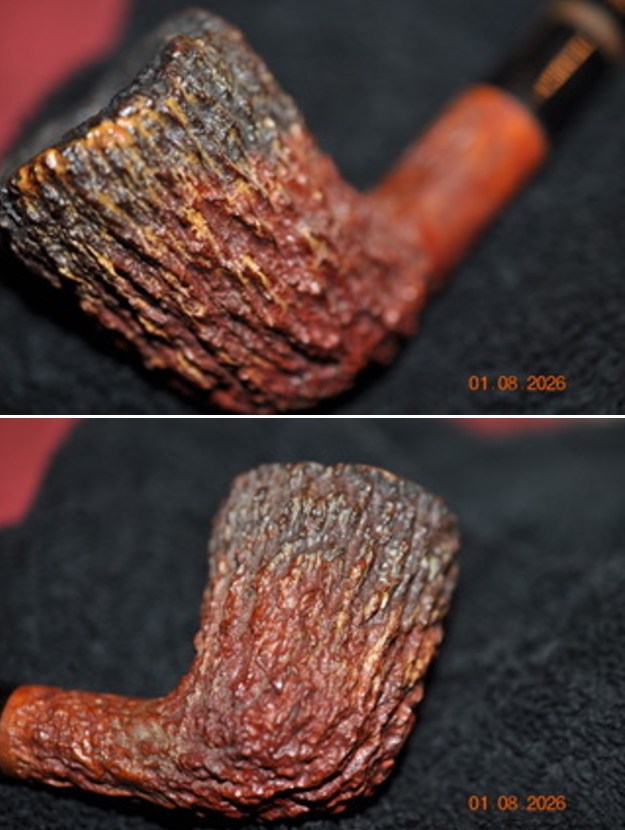
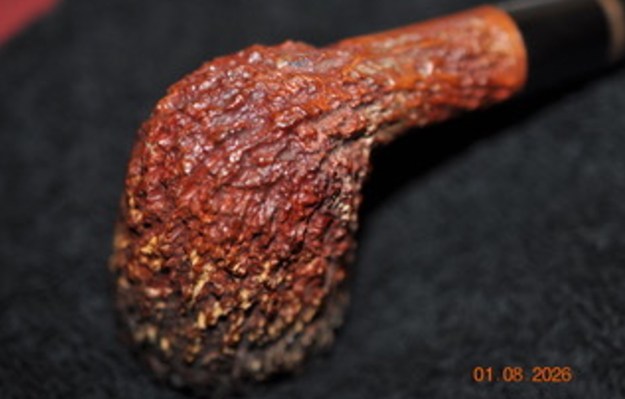
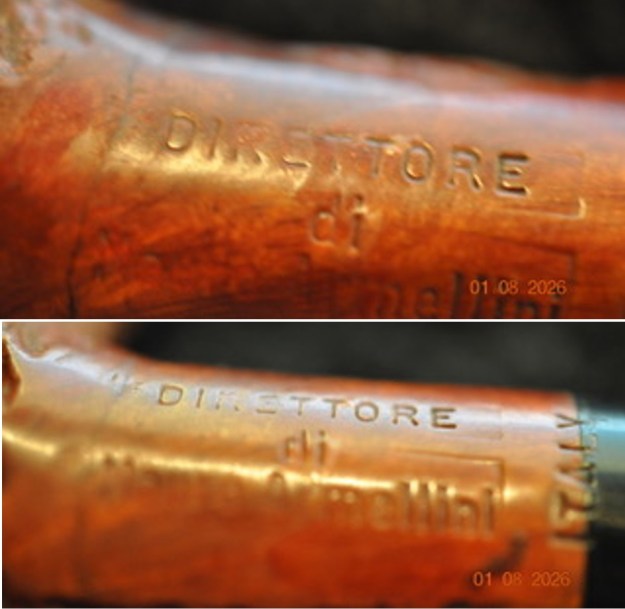
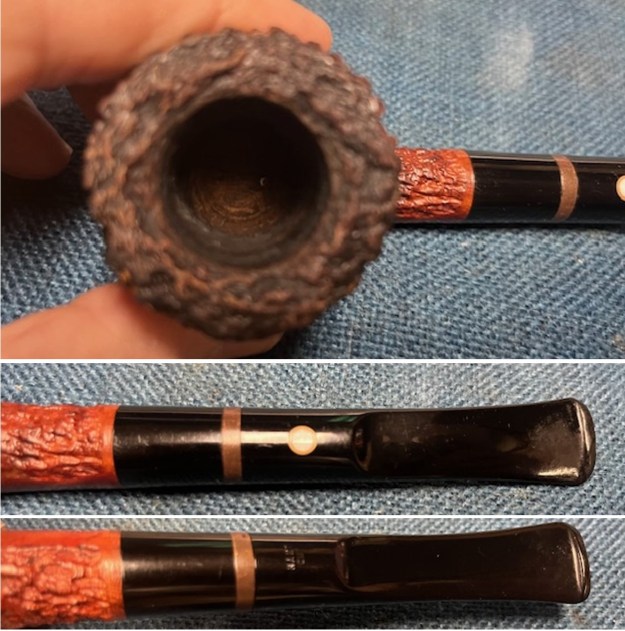
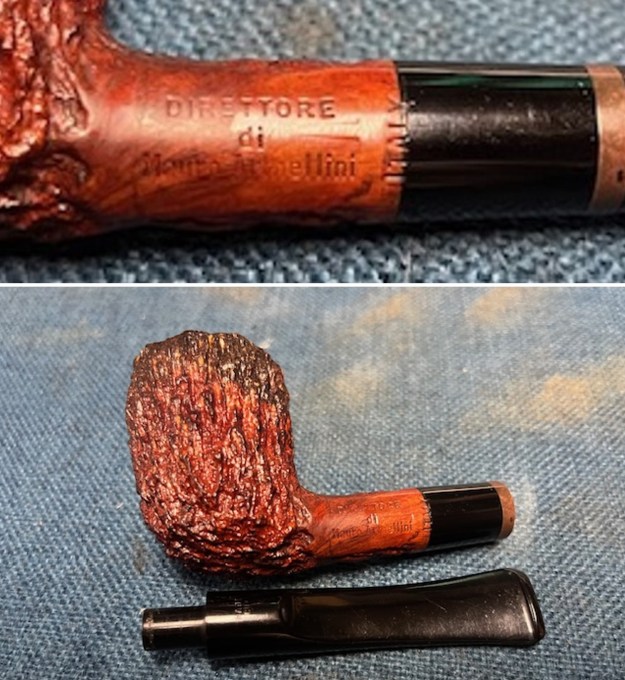
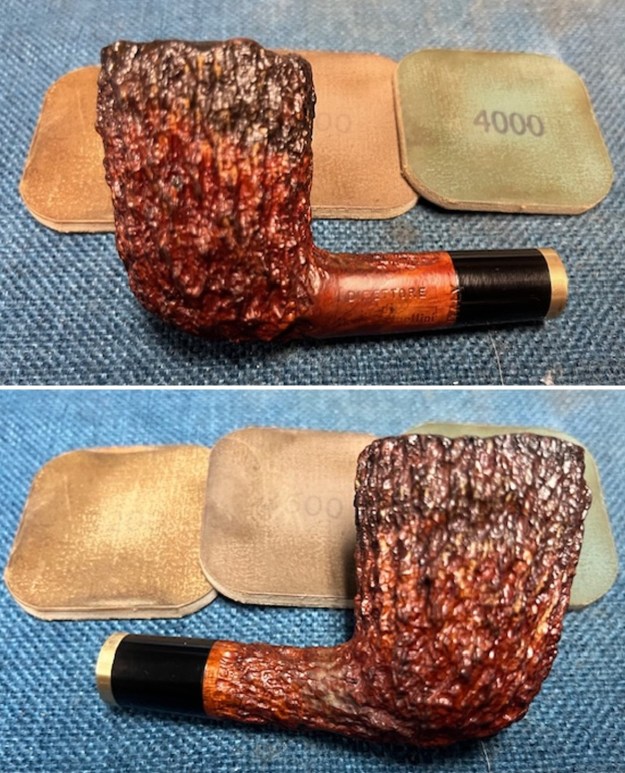
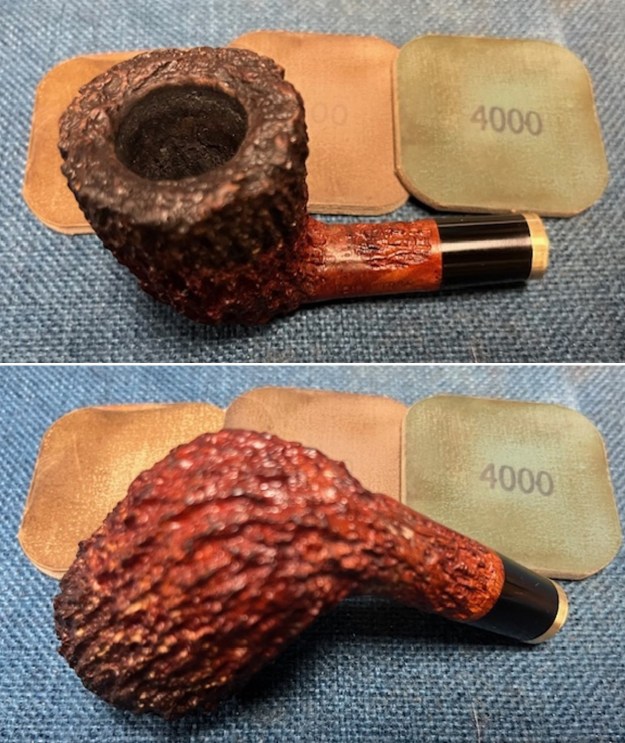
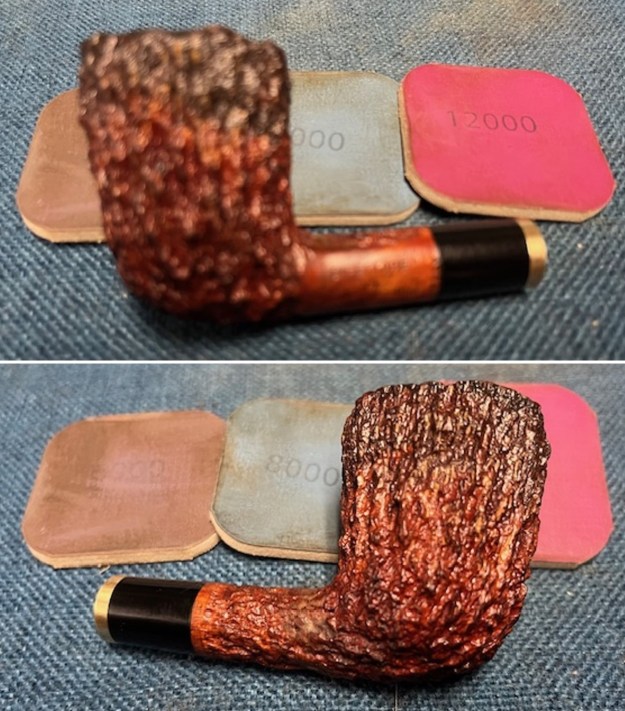
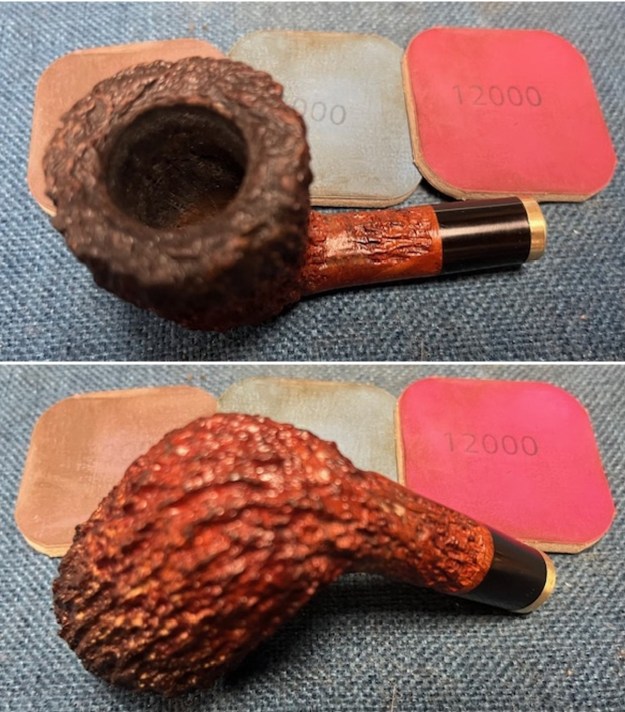
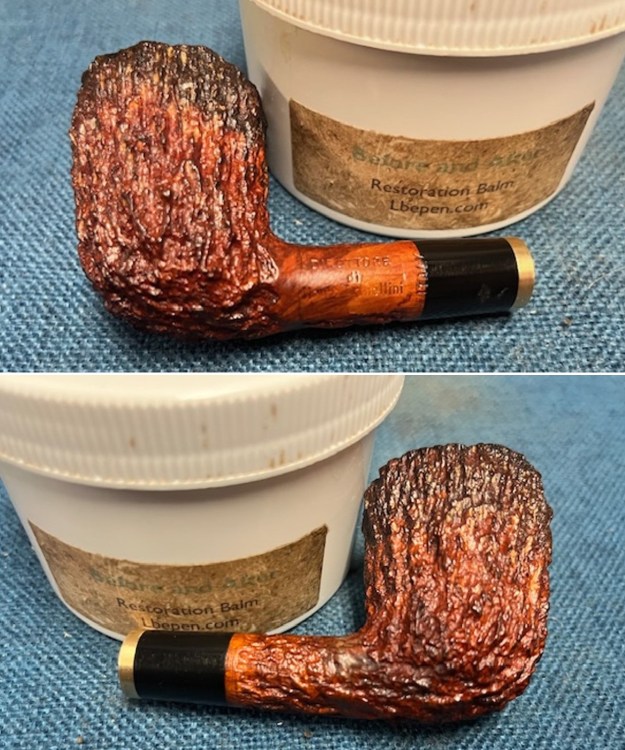
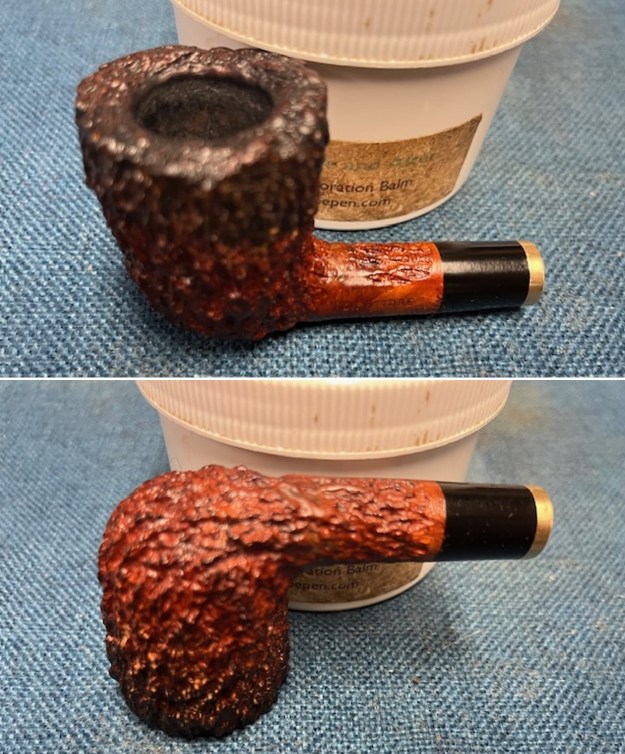
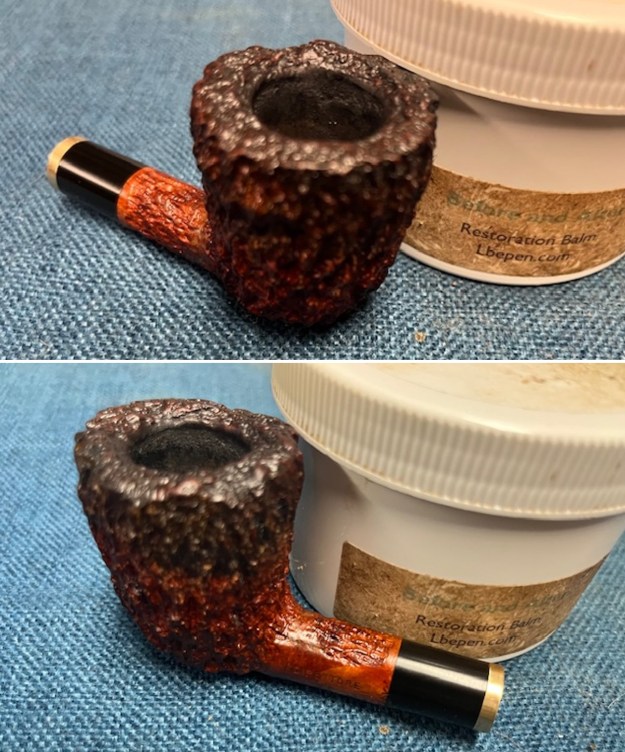
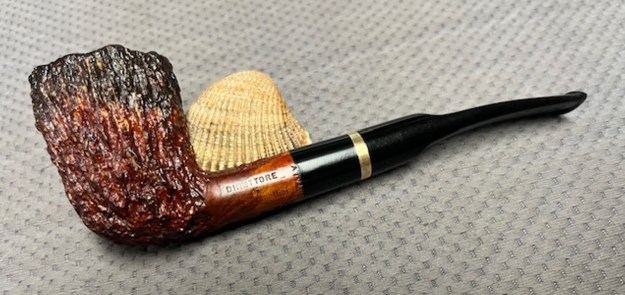
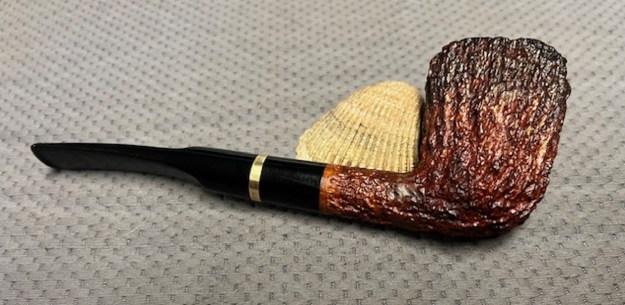
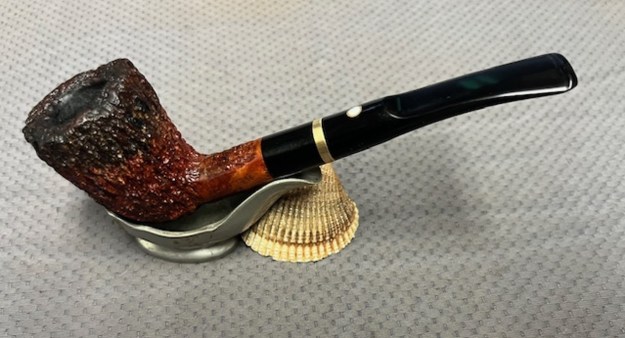
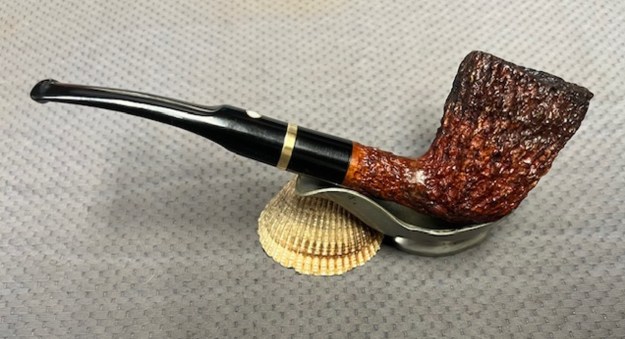
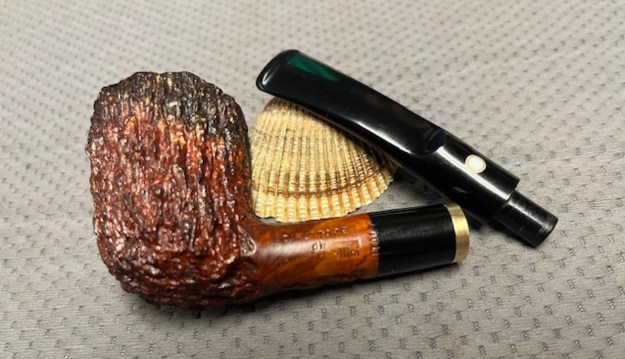
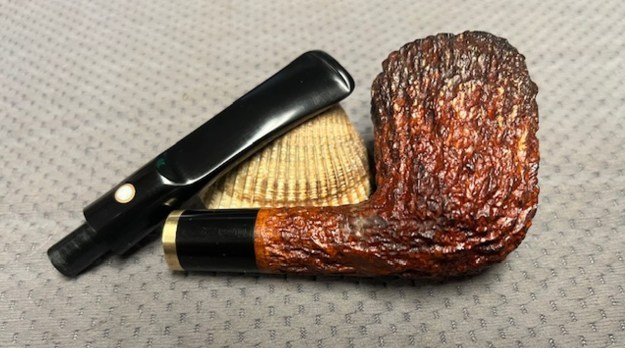
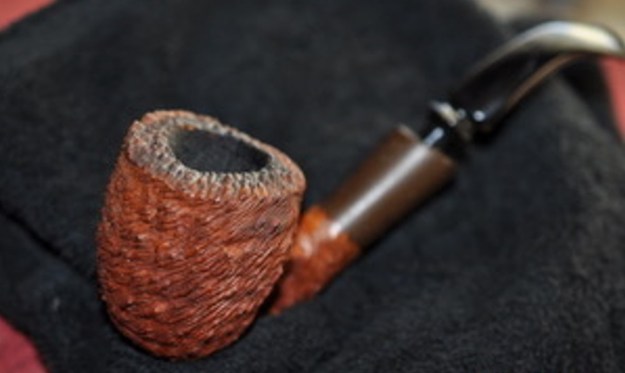
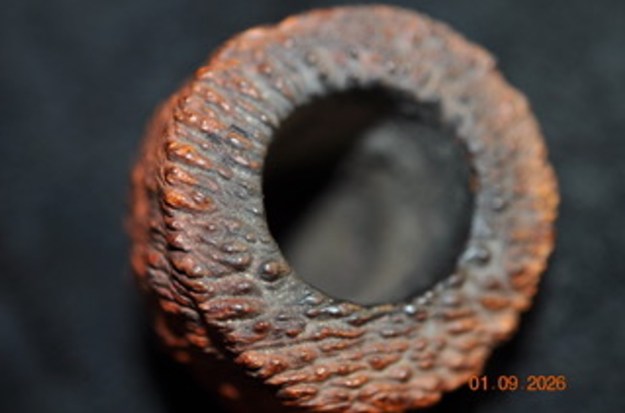
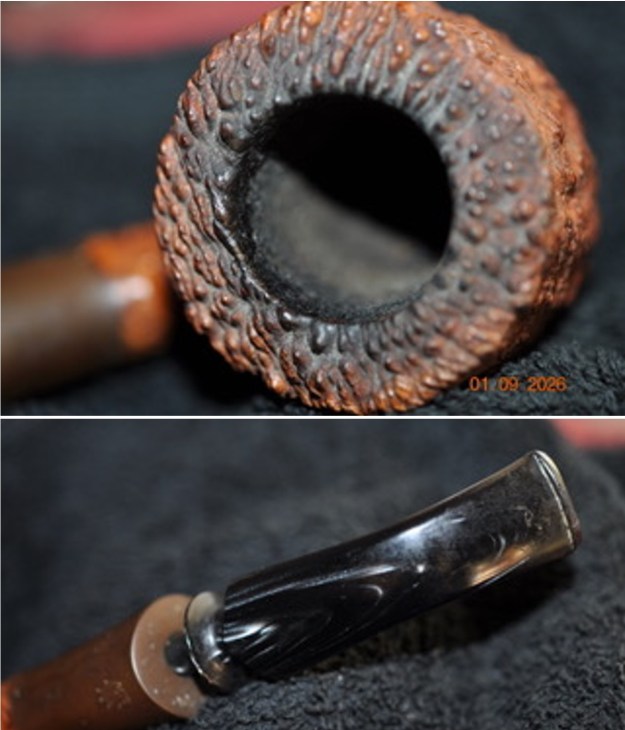
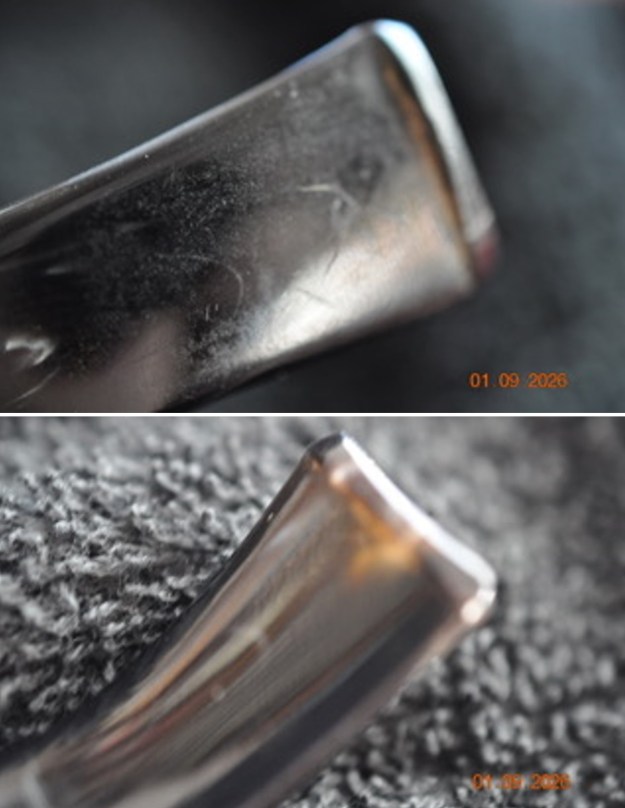
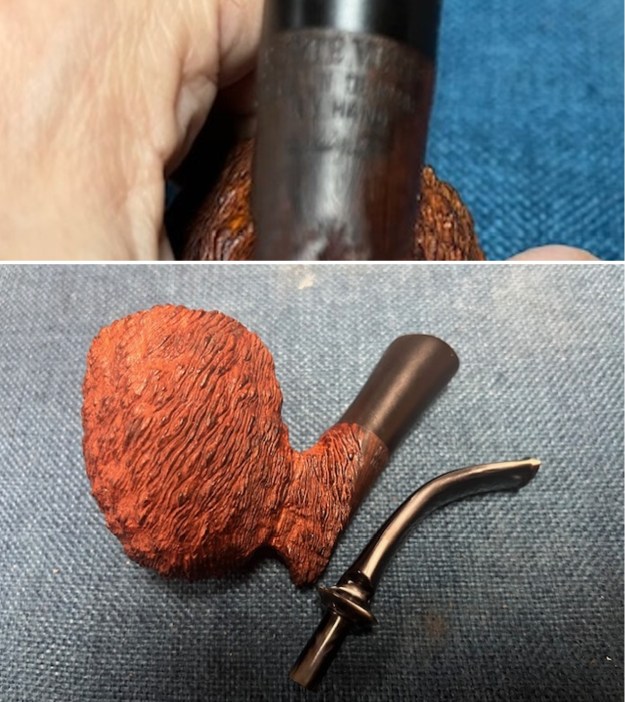
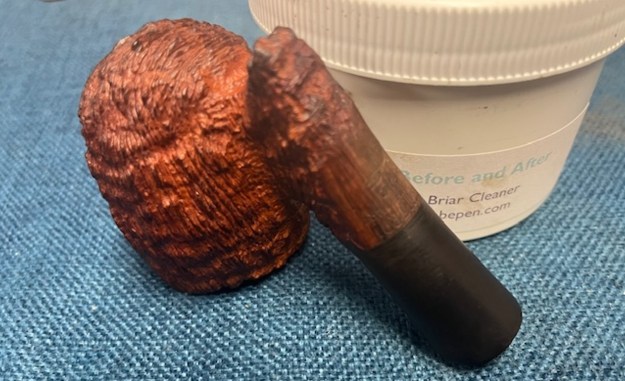
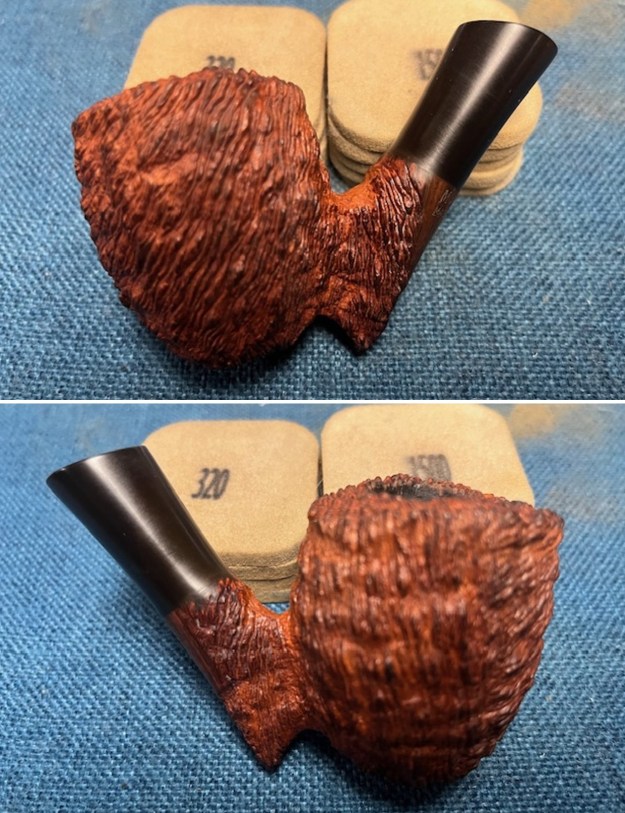
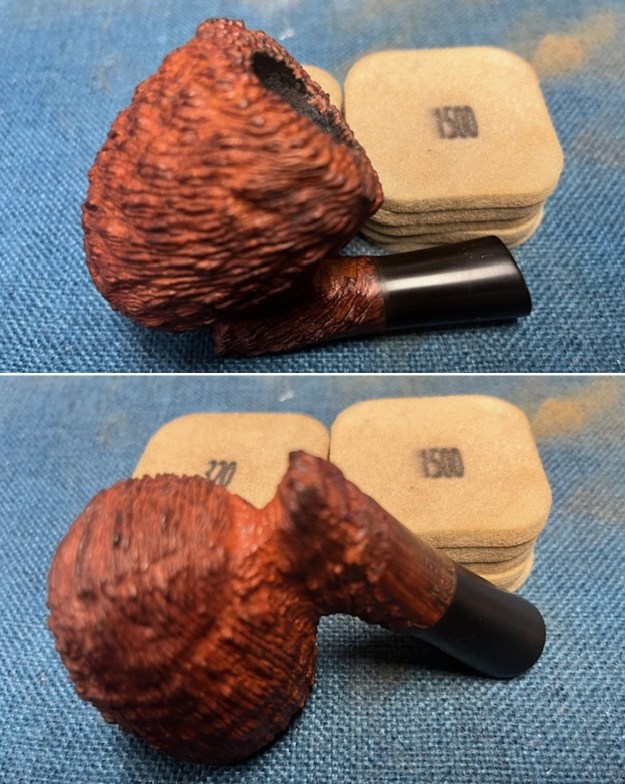
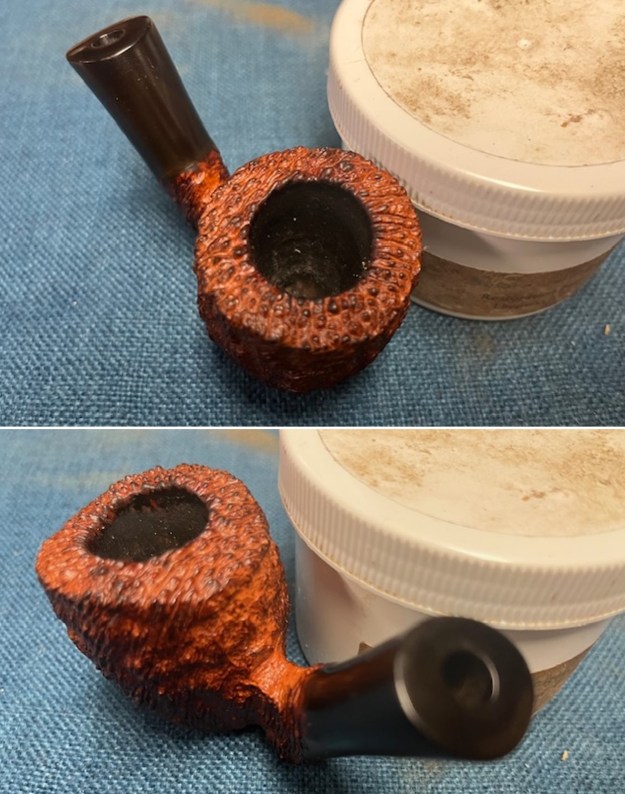
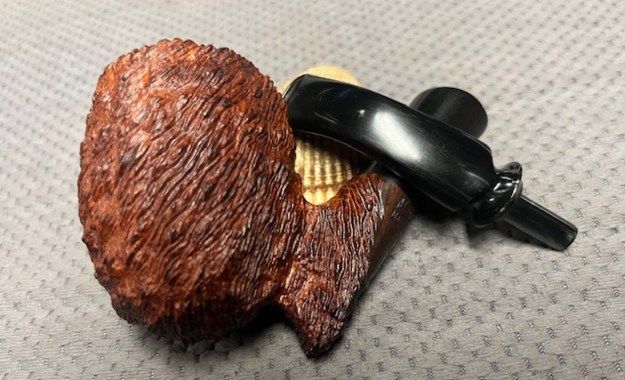
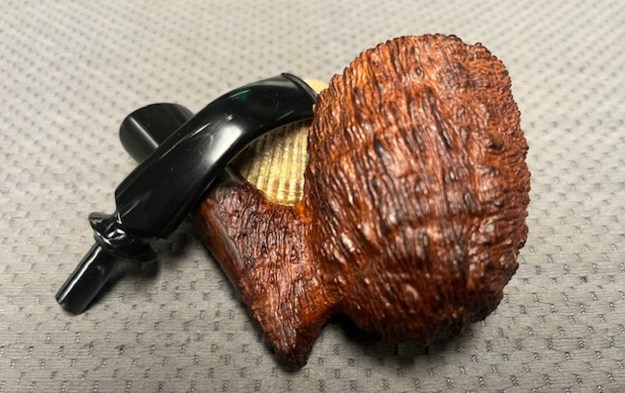
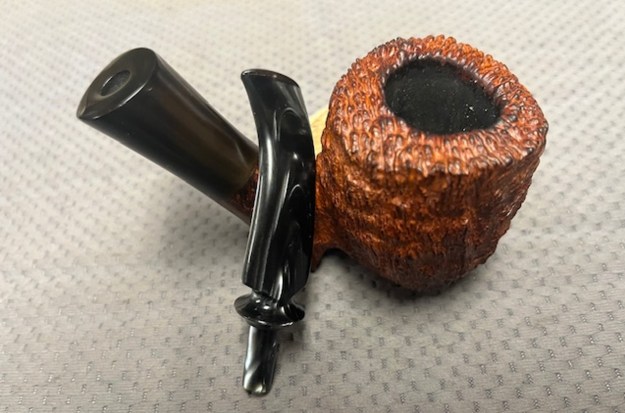
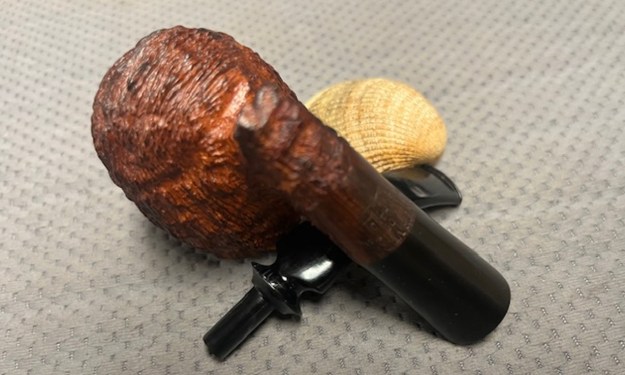
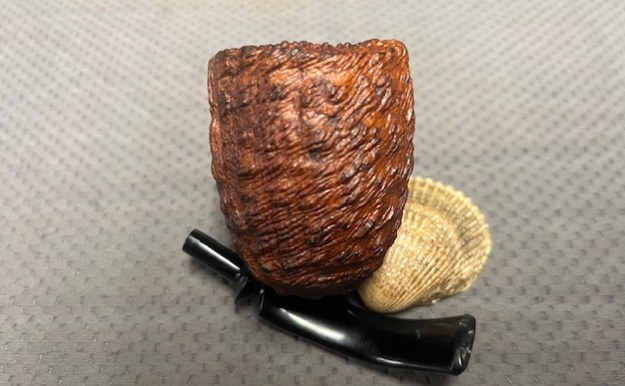
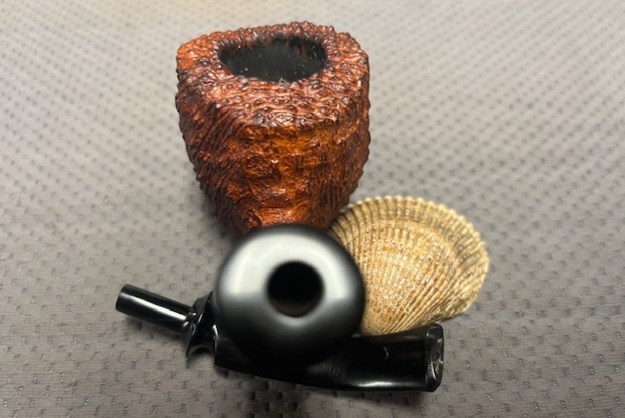
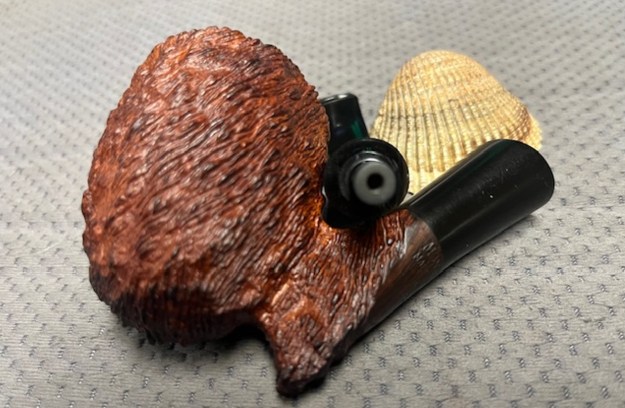
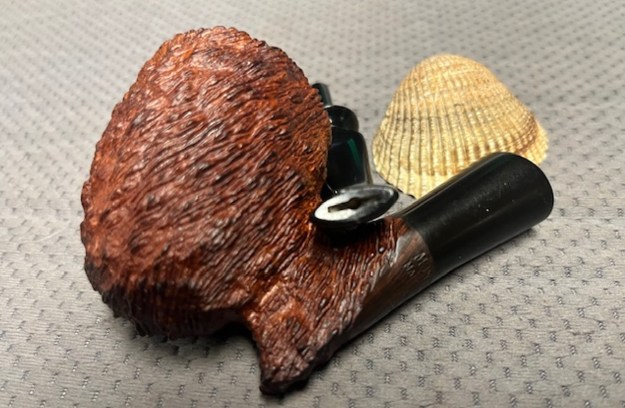
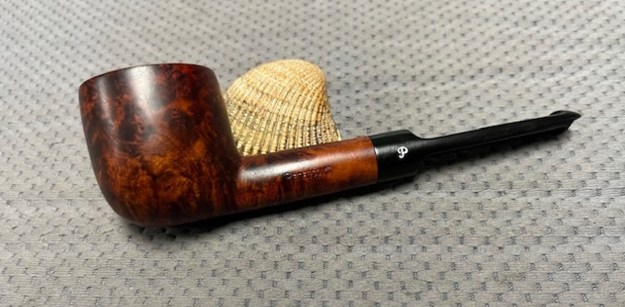
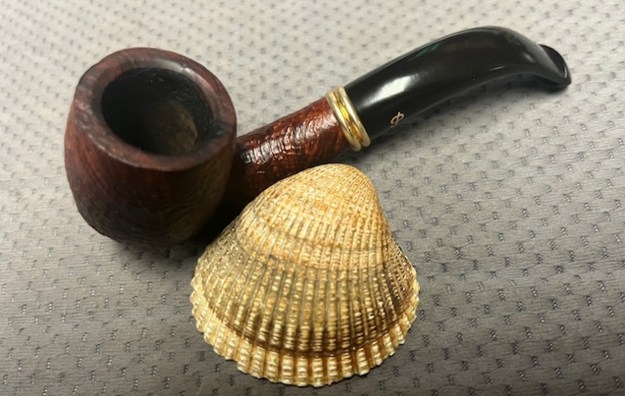
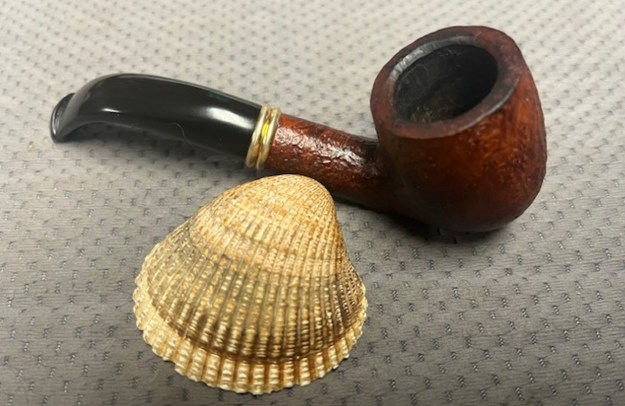
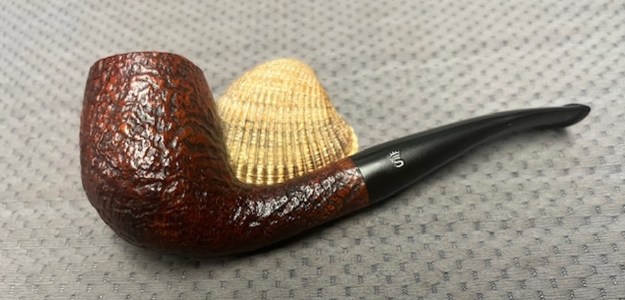
The next pipe on the table is another one that came to us from the seller in Caldwell, Idaho, USA on 07/12/2025. It is a Castello Rusticated Canadian with an acrylic taper stem with the faux diamond on the left side of the stem. It is in dirty but in good condition as can be seen in the photos below. It is stamped on a smooth panel on the underside of the shank and reads Castello [over] Old Antiquari [followed by] KK 32 [followed by] Hand Made [followed by] Made in Cantu [over] Italy [followed by] Carlo arched over Scotti in an oval. The stamping is clear and readable. The pipe has rich Tan and Brown stains on a deep rusticated finish and a dark stain flume around the rim top and down the bowl sides about ¼ inch. The finish was dusty and lightly dirty with grime in the nooks and crannies of the rugged, deep sandblast. The bowl had a moderate cake and there was tobacco debris in the bowl. The rim top had a thick lava coat in the sandblast rim top and edges. The original taper stem is dirty and oxidized. It has the crumpled diamond look to the logo. I took photos of the pipe before I started working on it. I took photos of the bowl and rim top to show the thickness of the cake and the lava coat on the rim top. There was some tobacco debris in the bottom of the bowl. The stem photos show the condition of the taper stem ahead of the button. The stamping on the heel of the bowl is clear and readable as noted above. I took a photo of the pipe with the stem removed to give a sense of the proportions of the pipe. It is a real beauty. Interestingly, there was a clean foil inner tube in the tenon.
As usual I cannot seem to retain the details on Castello pipes in my head for long for some reason. The stamping on this one – Castello and the Carlo Scotti stamp left me with some questions that I need to answer before I began to work on the pipe. I turned first to the Pipephil site (http://www.pipephil.eu/logos/en/logo-castello.html) because of the general quick summary of information I get there along with a screen capture.Castello PIPA CASTELLO di Carlo Scotti & C. was founded in 1947 by Carlo Scotti († 1988). Franco Coppo (AKA “Kino”) who married Carlo Scotti’s daughter Savina, manages (2012) the corporate since 1985.

The site also gave a good summary of the grading and sizes of the pipes. I quote that in full.
Sizes (ascending):

1K to 4K, G (Giant) and GG (Extra large)

Rusticated grading: SEA ROCK, OLD SEA ROCK, NATURAL VERGIN,

Sandblasted grading: ANTIQUARI, OLD ANTIQUARI

Smooth grading (ascending): TRADEMARK, CASTELLO, COLLECTION

Other stampings: Great Line (Non-standard or freestyle) Fiammata (Straight grain)

Production (2012): ~4000 pipes / year

I also found a note on the page that the Rhinestone logo was originally on pipes for the US market. It is occasionally used now.

I turned then to Pipedia for more information on the brand (https://pipedia.org/wiki/Castello). The majority of the information was what was already quoted above in abbreviated form.

…All carved Castello pipes are graded by the number of K’s that are stamped on each piece and are K-graded by SIZE.  1K is the smallest and fairly rare, 2K is small to medium, with 3K or 4K being the most common and ranges from medium to medium large. Large pieces are stamped “G” for giant and extra-large pieces are stamped “GG” for double giant.  In addition to the number of K’s on a carved Sea Rock piece the shape number is almost always added. As a rule a Sea Rock Castello is stained Black, although recently there have been quite a few coming in stained deep brown and still stamped “Sea Rock”. American Logo’d Sea Rocks are all priced the same to the consumer, although most are 2 or 3 K’ed models. G/GG models are charged at a higher price on American pieces and are basically the same as their European counterparts.

The Castello Old Antiquari Briar KK 32 I was working on was definitely one made for the American Market with the Rhinestone in the stem. It had a brown or tan finish with a black flume around the top and the outer edge of the bowl. The Castello Old Antiquari in my hands was 2K graded. That told me that it is a mid-sized pipe. The number 32 makes it a short Canadian shape.

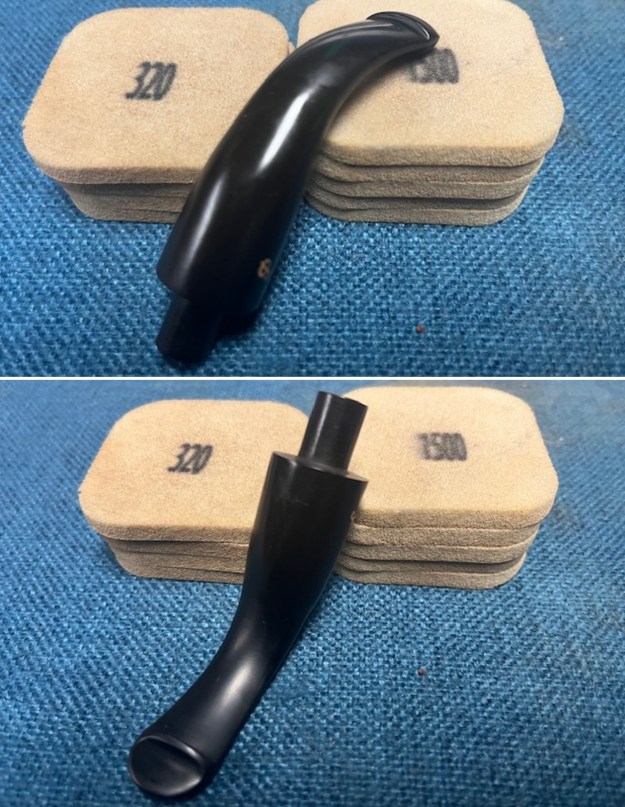
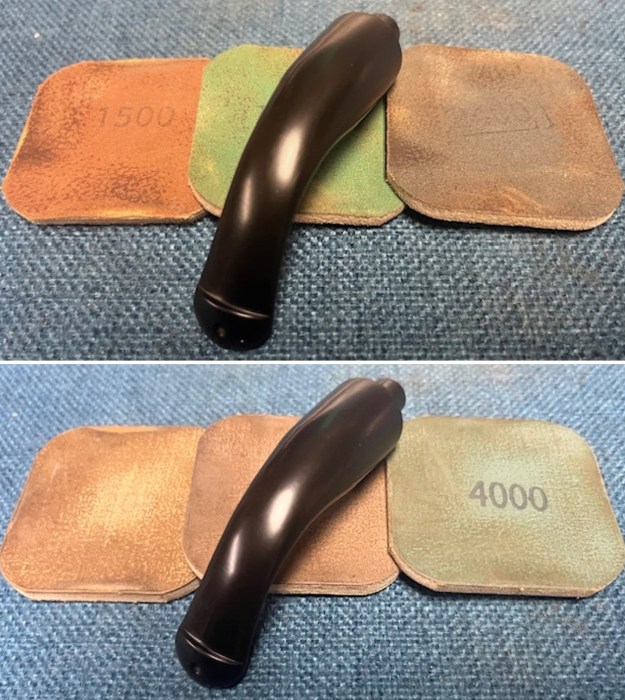
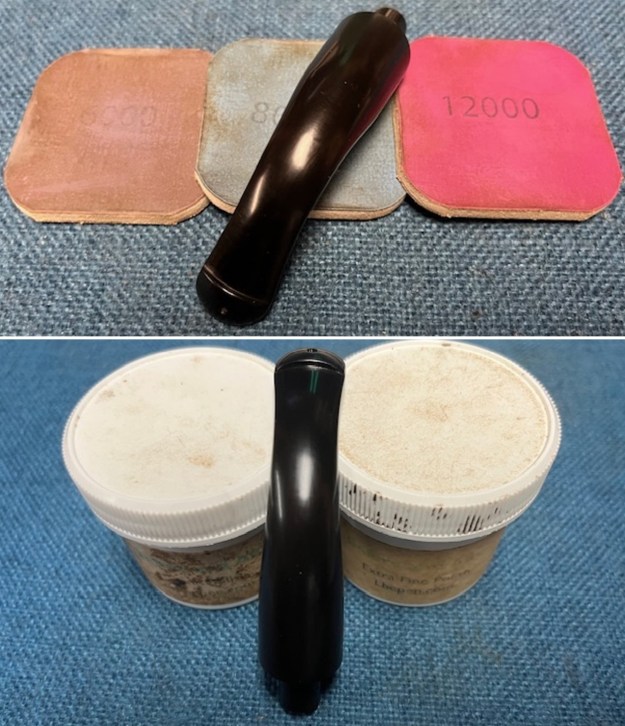
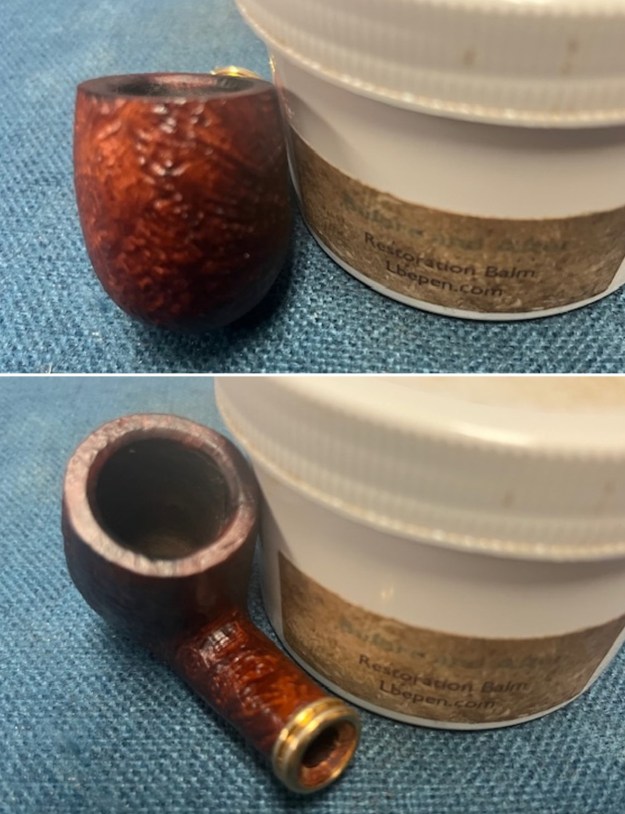
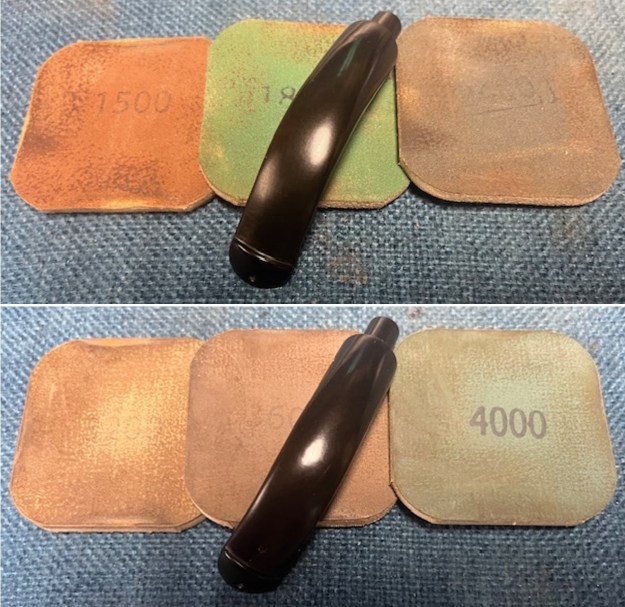
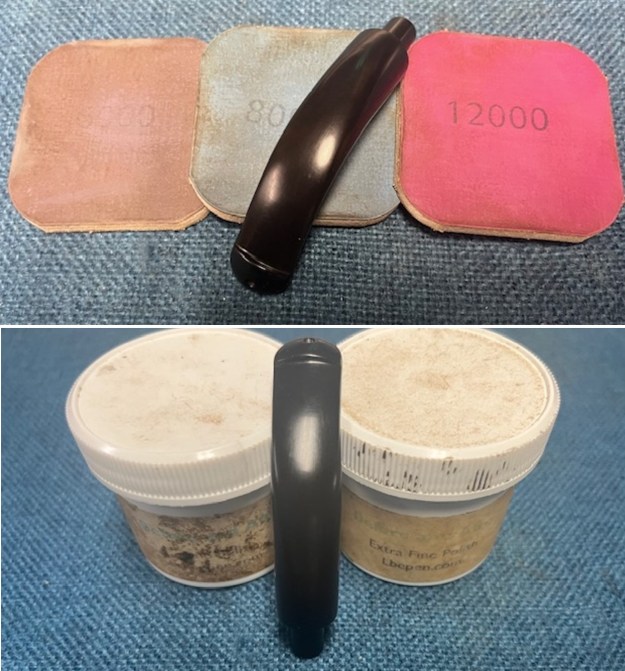
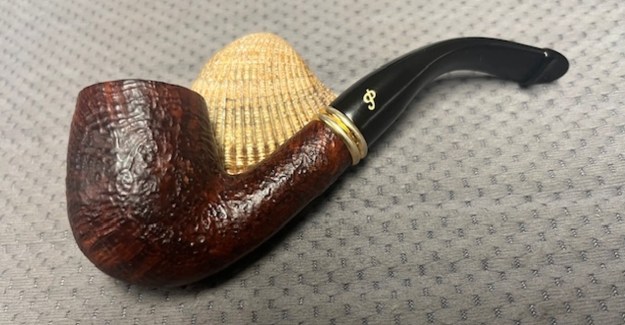
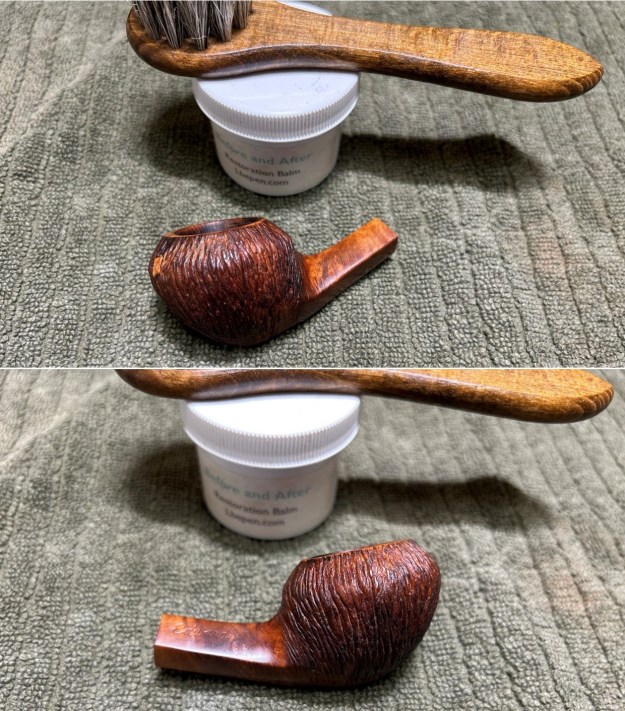
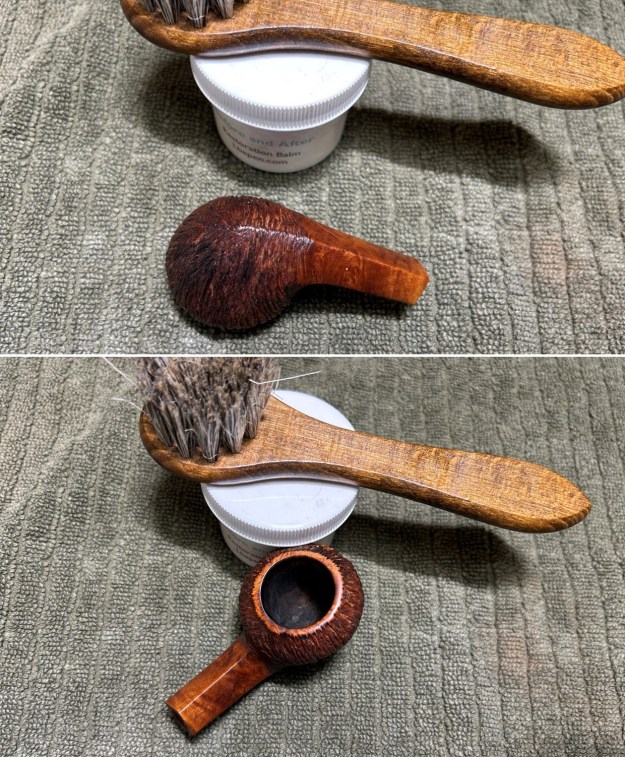
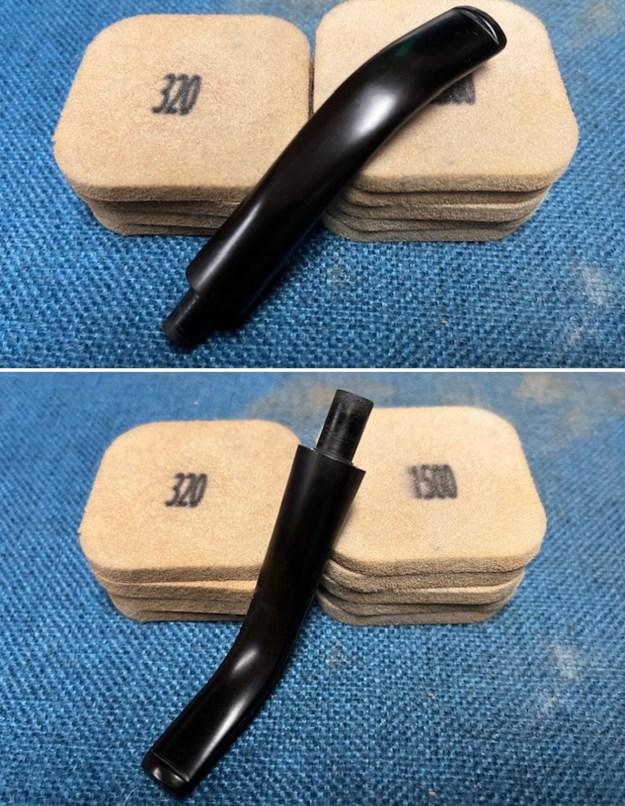
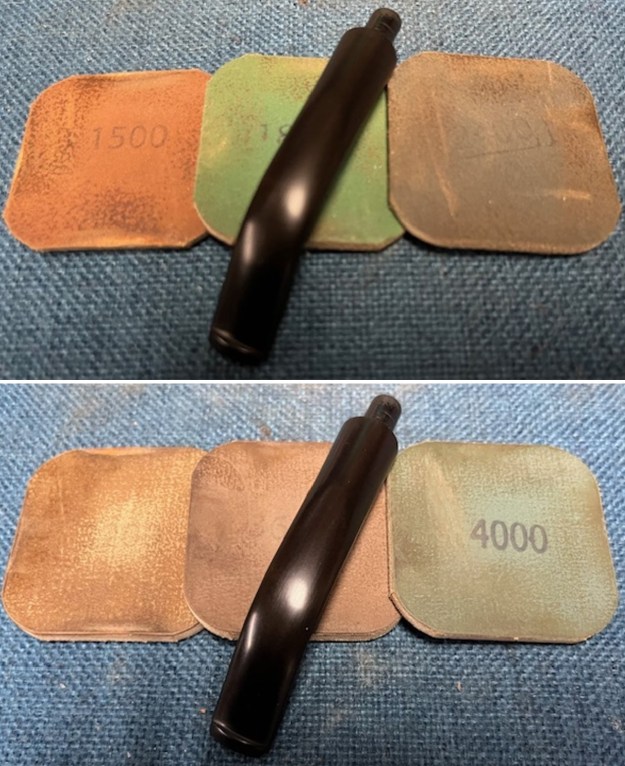
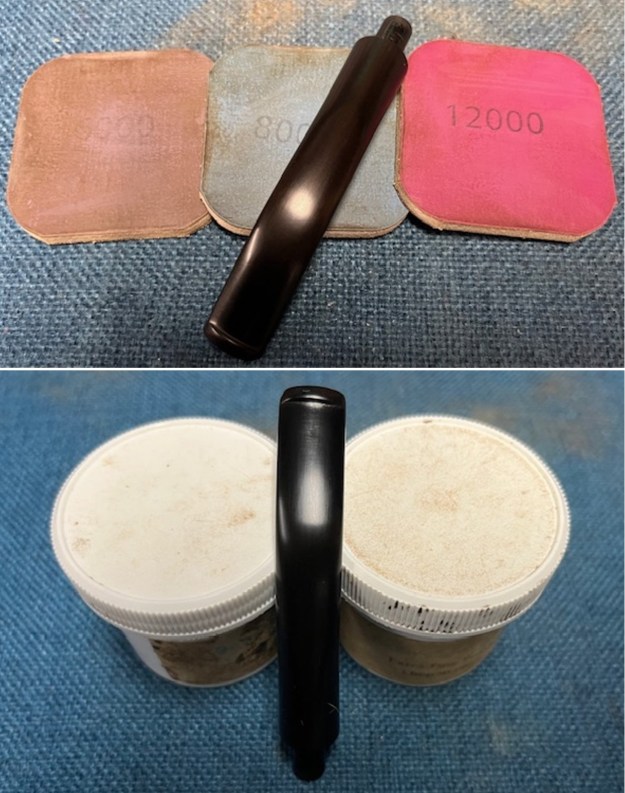
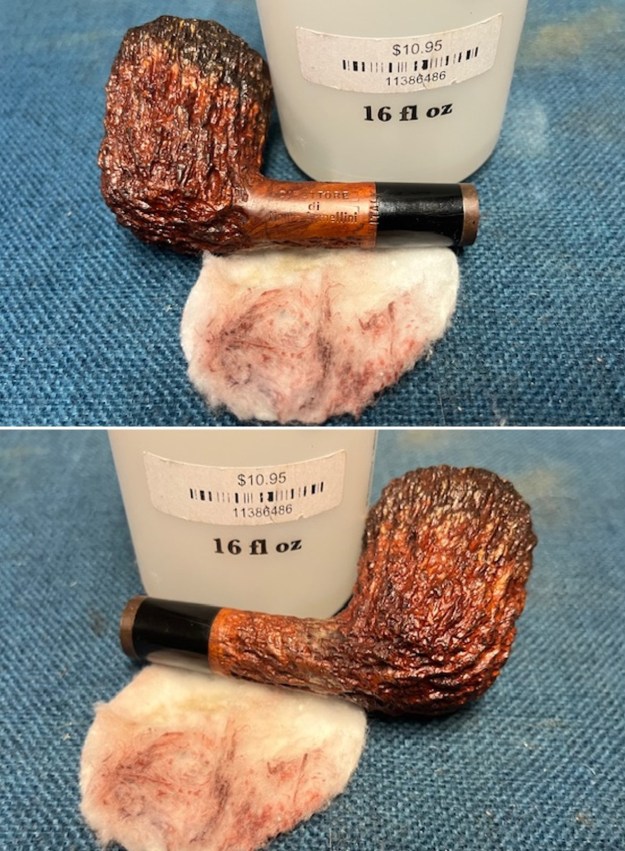
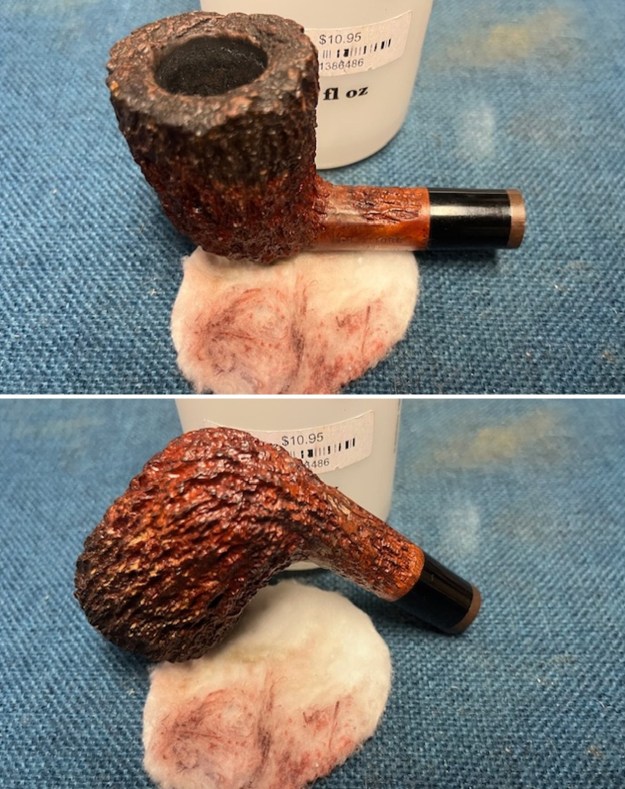
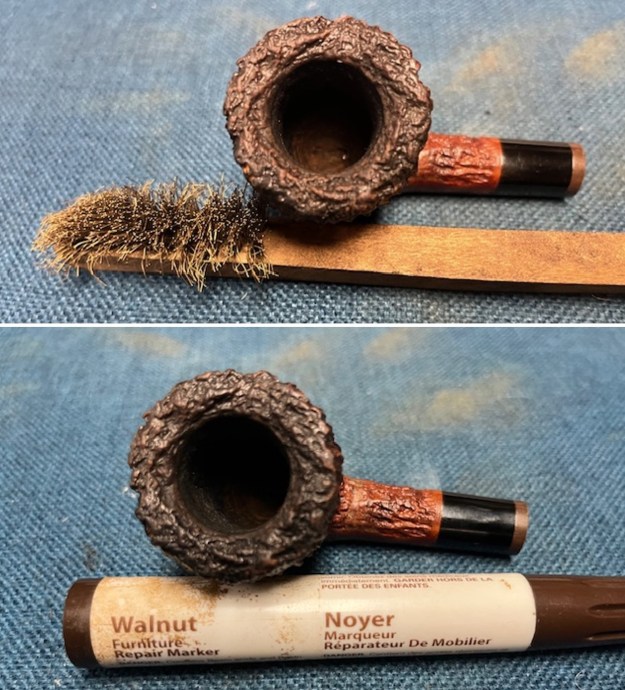
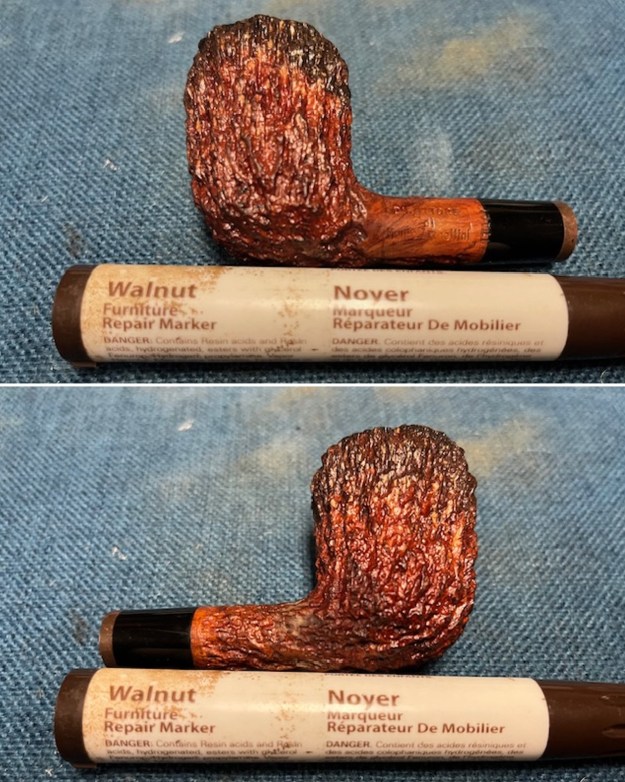
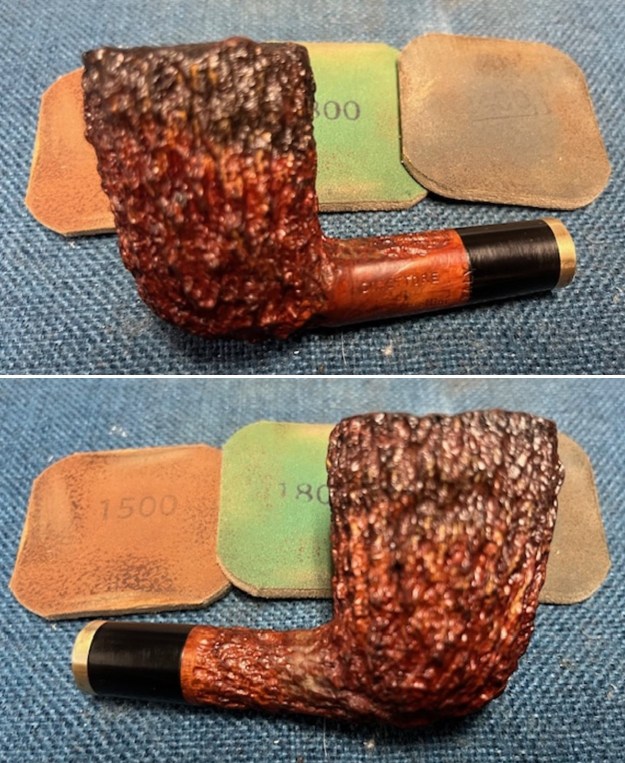
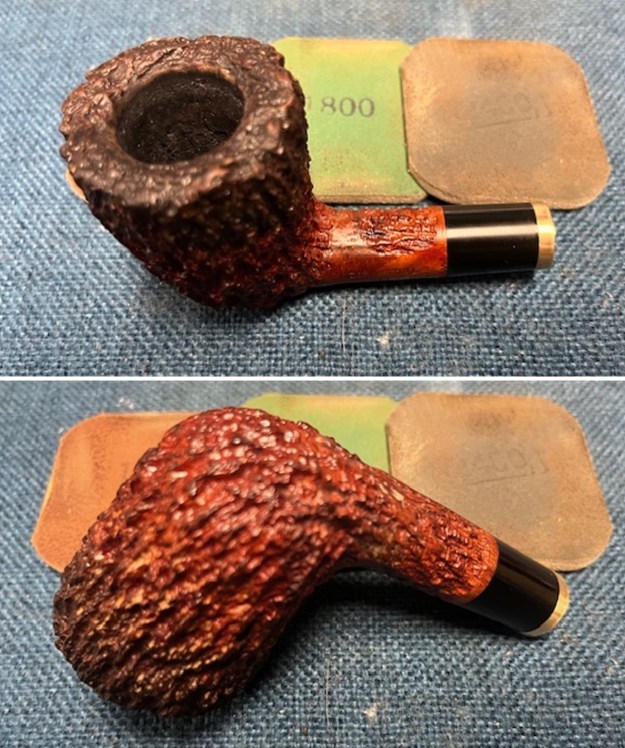
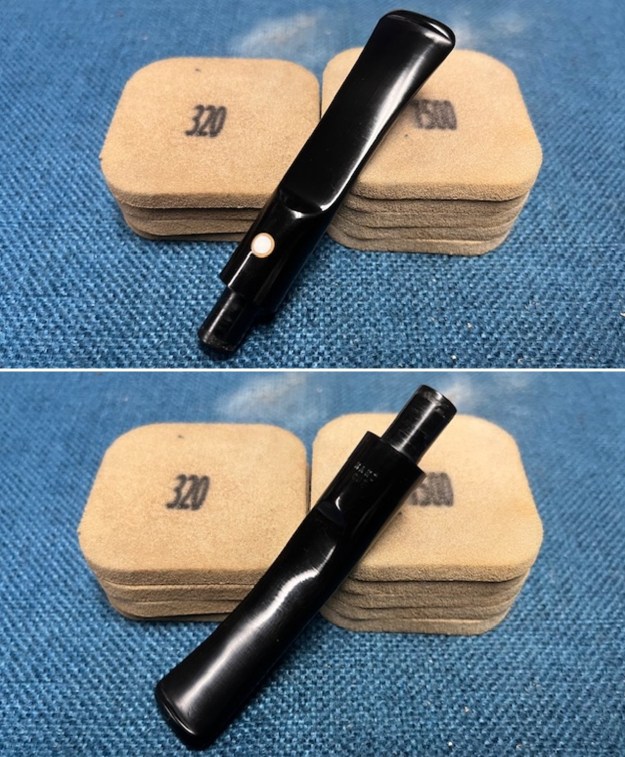
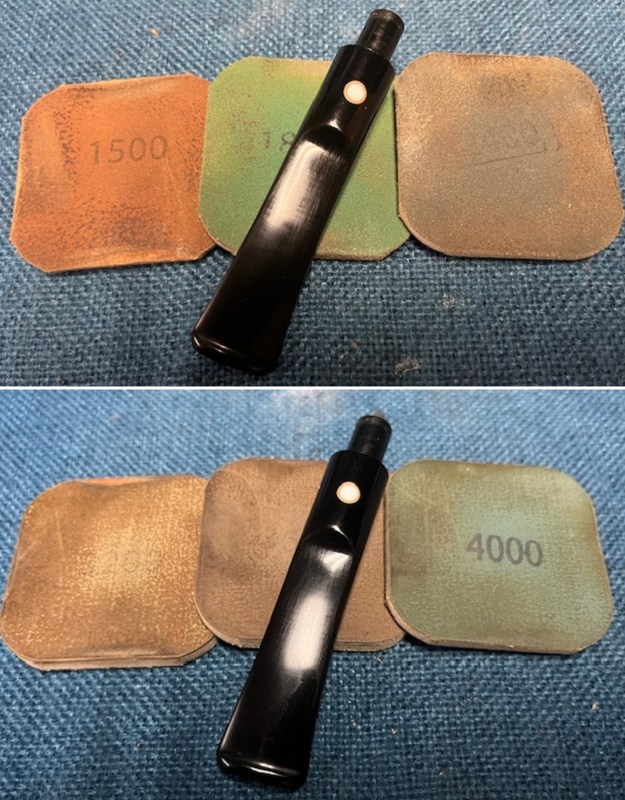
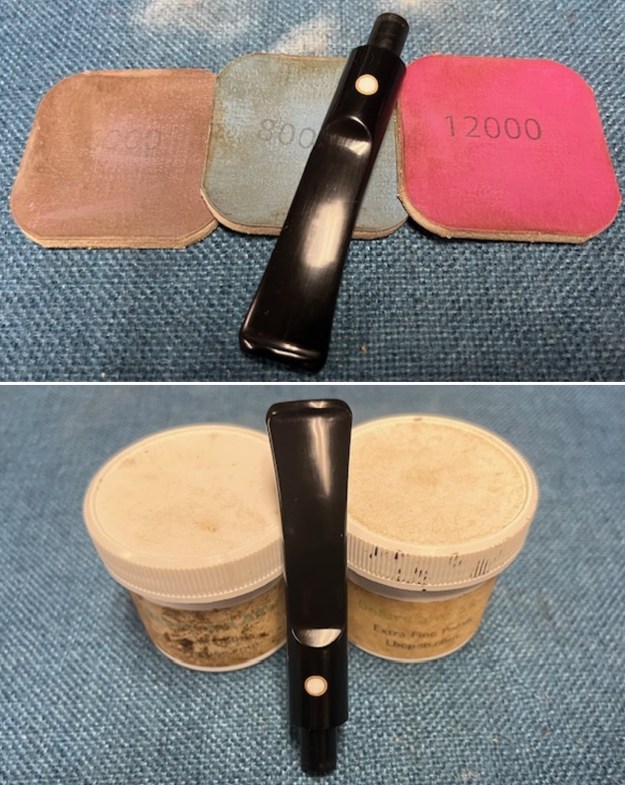
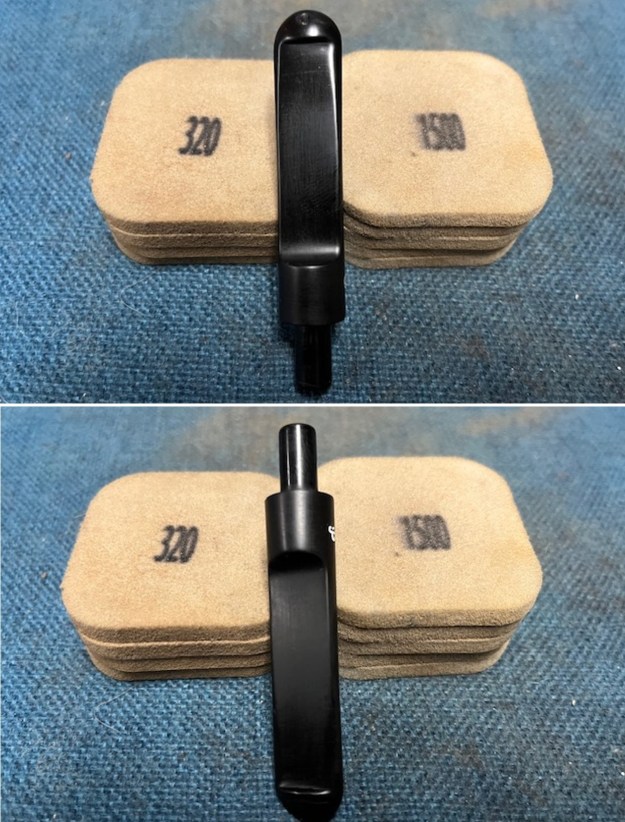
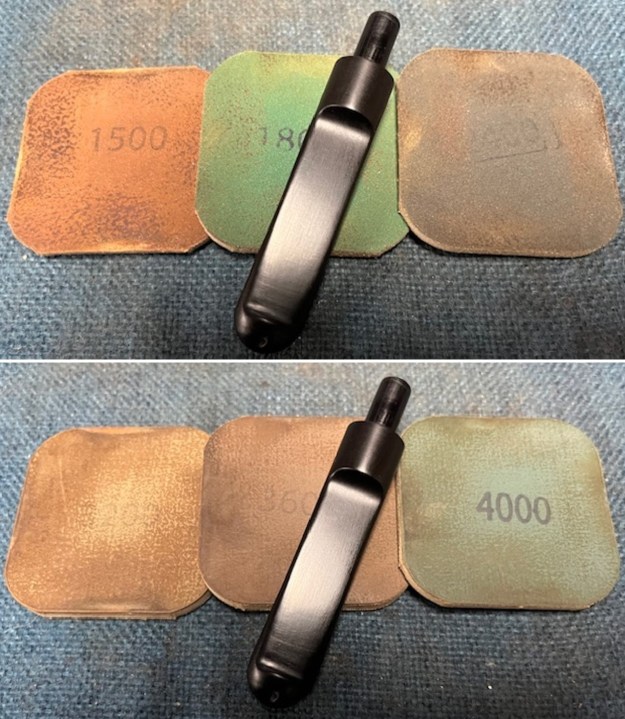
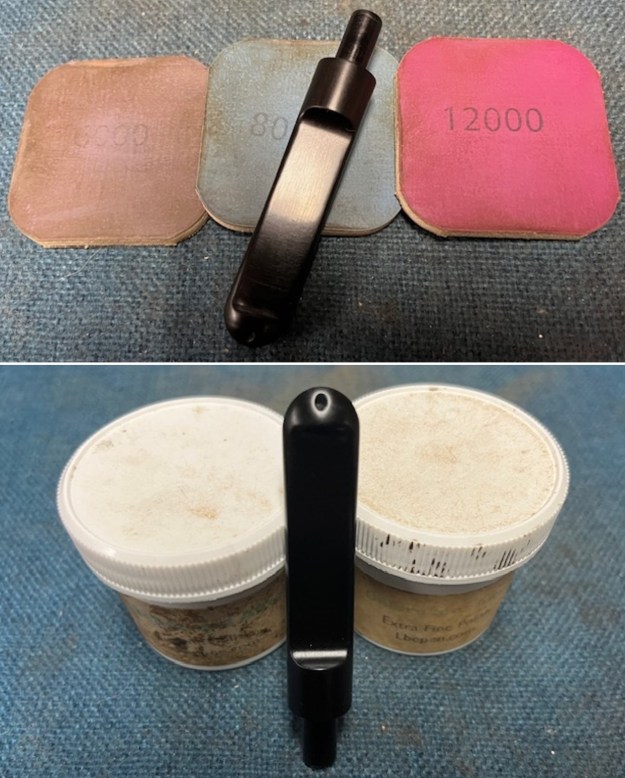
Now it was time to work on the pipe. I started my work by reaming the pipe. I scraped out the light cake with a Savinelli Fitsall Pipe Knife. I took the cake back to bare briar. I sanded the walls smooth with 220 grit sandpaper wrapped around a piece of dowel. The bowl walls looked very good with no burn damage or checking on the walls. I worked over the rugged rustication on the rim top to remove the tars and lava on the rim top with a brass bristle wire brush.I cleaned out the inside of the shank and the airway in the stem with alcohol, cotton swabs and both bristle and regular pipe cleaners. I scrubbed the bowl and shank with a tooth brush and some undiluted Murphy’s Oil Soap. I rinsed it off with warm water to remove the dust and soap from the finish. I dried it off with a soft cloth. The rim top was still darkened in the grooves of the sandblast. I touched up the black of the flume finish on the rim top and outer edge of the bowl with a black stain pen. It looked much better at this point with the finish cleaned of the dust and debris in the finish. It is a rich and rugged rustication.I rubbed the briar down with Before & After Restoration Balm. I worked it into the briar with my fingertips and a horsehair shoe brush to work it into the nooks and crannies of the sandblast finish. The product works to clean, enliven and preserve the briar. I let it sit for 10 minutes then I buffed it with a cotton cloth to deepen the shine. The briar really comes alive with the balm. I set the bowl aside and worked on the stem. The stem was stamped on the underside and read TRADE MARK [over] CASTELLO [over] 7. I sanded the oxidation and the tooth marks and chatter with 220 grit sandpaper. I was able to remove all of the light tooth damage on the stem and the majority of the oxidation. I sanded the stem and tenon surface with 320-3500 grit 2×2 inch pads. I wiped the stem down with an Obsidian Oil cloth after each sanding pad.I polished the vulcanite with micromesh sanding pads – 1500-12000 grit pads. I wiped it down with Obsidian Oil after each sanding pad. I used Before & After Pipe Polish – both Fine and Extra Fine to further polish the stem. This beautiful Castello Old Antiquari Rusticated Flumed Top KK 32 Short Canadian with a taper acrylic stem looks amazing after the work on it. The briar is clean and the deep rustication really came alive. The rich brown stains gave the finish a sense of depth with the polishing and waxing. The flumed black rim top and edges were a great contrast. The finish really popped. I put the stem back on the bowl and buffed the pipe with Blue Diamond on the buffing wheel using a light touch on the briar. I gave the bowl and the stem multiple coats of carnauba wax on the buffing wheel. I buffed the pipe with a clean buffing pad to raise the shine. I hand buffed the pipe with a microfiber cloth to deepen the shine. The finished Castello Old Antiquari Rusticated KK 32 Canadian really is a beauty and feels great in the hand and looks very good. Give the finished pipe a look in the photos below. The dimensions of the pipe are Length: 6 inches, Height: 2 inches, Outside diameter of the bowl: 1 1/2 inches, Chamber diameter: 7/8 of an inch. The weight of the pipe is 47 grams/1.66 ounces. I will soon be putting this pipe on the rebornpipes store in the Italian Pipe Makers section. It should make a great smoker that the next steward will enjoy. Thanks for reading this blog and my reflections on the pipe while I worked on it. It was a fun one to work on.

Restoring a 1955 Dunhill Tanshell ES Long Canadian


by Steve Laug

The next pipe on the table is another one that came to us from the seller in Caldwell, Idaho, USA on 07/12/2025. It is a Dunhill Tanshell Canadian with a vulcanite taper stem. It is in dirty but in good condition as can be seen in the photos below. It is stamped on a smooth panel on the underside of the shank and reads ES [followed by] Dunhill [over] Tanshell [followed by] Made in [over] England5 [followed by] circle 4T. The stamping is clear and readable. The pipe has rich Tan and Brown stains on a deep sandblast finish and some amazing grain that the shape follows well. The finish was dusty and lightly dirty with grime in the nooks and crannies of the rugged, deep sandblast. The bowl had a moderate cake and there was tobacco debris in the bowl. The rim top had a thick lava coat in the sandblast rim top and edges. The original white spot short taper stem is dirty and oxidized. I took photos of the pipe to show what it looked like before I started working on it. I took photos of the bowl and rim top to show the thickness of the cake and the lava coat on the rim top. There was some tobacco debris in the bottom of the bowl. The stem photos show the condition of the short taper stem ahead of the button. The stamping on the heel of the bowl is clear and readable as noted above. I took a photo of the pipe with the stem removed to give a sense of the proportions of the pipe. It is a real beauty.One of the first things I like to do is to unpack the stamping and understand each element in it. I turned to Pipephill helpful site (http://pipephil.eu/logos/en/dunhill/shell-briar1.html). The stamping is interpreted as follows: The ES is the shape of the pipe which I assume is a Canadian. The Dunhill Tanshell is the finish. Following the Made In England5 gives the year that the pipe was made. The circle 4 T is the stamp for a Tanshell finish.
I turned to Pipedia’s shape charts on Dunhills (https://pipedia.org/wiki/Dunhill_Shape_Chart). I have included the shape charts from the site. The first is the chart as a whole and the second is a larger version of the centre column.
From the above information I could see that I was working on a Canadian shaped pipe. The chart shows that the ES is the stamping for Canadian.

From there I wanted to pin down the date stamp 5. I have included the chart below for you to follow (http://www.pipephil.eu/logos/en/dunhill/cledat-en1a.html). The third column is where the 5-year suffix fits. Because the date code was a raised suffix, the suffix 5 is added to 1950 making the pipe a 1955 Tanshell long Canadian.I turned to work on the pipe itself. I reamed the bowl with a PipNet pipe reamer using the cutting heads 2 and 3. I finished the reaming with a Savinelli Fitsall Pipe Knife. I sanded the walls of the bowl with 220 grit sandpaper wrapped around a piece of dowel. I cleaned out the inside of the shank and the airway in the stem with alcohol, cotton swabs and both bristle and regular pipe cleaners.I scrubbed the bowl and shank with a tooth brush and some undiluted Murphy’s Oil Soap. I rinsed it off with warm water to remove the dust and soap from the finish. I dried it off with a soft cloth. The rim top was still darkened in the grooves of the sandblast.I scrubbed it further with Before & After Briar Cleaner and a brass bristle brush to work the cleaner into the grooves. I rinsed it off and repeated the process until it became cleaner. There is still some darkening in the sandblast that will not come out but it is clean and significantly better.I rubbed the briar down with Before & After Restoration Balm. I worked it into the briar with my fingertips and a horsehair shoe brush to work it into the nooks and crannies of the sandblast finish. The product works to clean, enliven and preserve the briar. I let it sit for 10 minutes then I buffed it with a cotton cloth to deepen the shine. The briar really comes alive with the balm. I set the bowl aside and worked on the stem. I sanded the oxidation and the tooth marks and chatter with 220 grit sandpaper. I was able to remove all of the light tooth damage on the stem and the majority of the oxidation.I sanded the stem and tenon surface with 320-3500 grit 2×2 inch pads. I wiped the stem down with an Obsidian Oil cloth after each sanding pad.I polished the vulcanite with micromesh sanding pads – 1500-12000 grit pads. I wiped it down with Obsidian Oil after each sanding pad. I used Before & After Pipe Polish – both Fine and Extra Fine to further polish the stem. I the polished stem and lightly buffed the sandblast bowl and shank with Blue Diamond to polish out the remaining small scratches and raise the shine. I gave the stem several coats of carnauba wax and the bowl several coats of Conservator’s Wax then buffed the pipe with a clean buffing pad to raise the shine. I hand buffed it with a microfiber cloth to deepen the shine. The pipe polished up pretty nicely. This turned out to be a beautiful 1955 Dunhill Tanshell CS Canadian. Even the darkening on the rim top does not detract from the beauty of the pipe. The finished pipe is shown in the photos below. The dimensions are Length: 6 ½ inches, Height: 1 ¾ inches, Outside diameter of the bowl: 1 ¼ inches, Chamber diameter: ¾ of an inch. The weight of the pipe is 1.16 ounces/33 grams. Thanks for walking through the restoration with me as I worked this beautiful little Dunhill sandblast. I will be putting it on the rebornpipes store in the British Pipe Maker Section soon. If you are interested in adding it to your collection let me know. Thanks for looking.

Restoring an Unlisted Brigham 3-Dot Scoop


by Kenneth Lieblich

What a charming pipe this is! I got it in auction with a few other pipes, and I liked the shape of it immediately. This is a Brigham 3-dot scoop, with a handsome and rugged rustication. It really feels good in the hand. It has that look – no one could mistake it for anything but a Brigham. The tenon (which holds the maple distillator) on this pipe is made of aluminum – so it’s an older one. Curiously, it doesn’t have any shape number marked on it, nor is it listed in the book on Brigham pipes. Let’s examine what marks it does have. On the underside of the stummel, we read Brigham [over] Made in Canada. Of course, how those words are marked is what matters in dating Brigham pipes. I’ll get back to that. To the left of the aforementioned markings is the solitary digit 3. I can only assume that this refers to the three brass pins found on the stem. Thanks to Charles Lemon’s book, Brigham Pipes: A Century of Canadian Briar, dating this pipe was quite straightforward. On page 40, Lemon writes,

The Brigham Country of Manufacture (COM) stamp was modernized in about 1970 to consist of an upwardly-slanted Brigham logo over “Made in Canada” in small block letters. This stamp was used until approximately 1980.

I can confidently date this pipe to the 1970s. I looked thoroughly in the book’s Unofficial Brigham Shape Chart and this pipe was nowhere to be found. I know that Brigham experimented with many shapes over the years, so this must have been one of those. Charles, if you’re reading this, please let us know in the comments below!I read through the article on Pipedia on Brigham Pipes. You can read it here. It’s a good article and contains lots of helpful information. I have included the chart below from the site as it shows the Brigham System and how it works.This is a beautiful pipe, but it did have some issues. The stem, however, was in good shape. Very dirty, to be sure, but not damaged. The stummel looks great – a bit dirty, some cake in the bowl and quite a bit of lava on the rim. I didn’t know it yet, but the lava hid some damage to the rim. This would be revealed later. I used a disposable lighter and ‘painted’ the stem with its flame. The gentle heat of the flame can cause the dents in the vulcanite of the stem to expand back into shape. In this case, the vulcanite did move – which was great – but it didn’t move fully. No problem.I used isopropyl alcohol on a few cotton rounds and wiped down the stem to provide an initial cleaning of filth before moving on to the next steps. The primary cleaning came next. I disinfected the inside of the stem with both pipe cleaners and cotton swabs dipped in lemon-infused 99% isopropyl alcohol. I scrubbed thoroughly to make sure the interior was very clean. I used a lot of pipe cleaners and cotton swabs – it was surprisingly dirty in there.The goal of the next step is the removal (or minimization) of oxidation. Going to my sink, I used cream cleanser, cotton rounds, and a toothbrush, and scoured the stem to remove as much surface oxidation as possible. As the photos show, the result was a hideous, ochre-coloured mess – but better off the stem than on it.Once the stem was reasonably clean, I soaked it overnight in some Briarville Stem Oxidation Remover. This solution works to draw oxidation in the stem to the surface of the vulcanite. This is a major aid and an important step in ensuring a clean stem. The following day, I drew out the stem from its bath and scrubbed the lingering fluid with a toothbrush.As the stem was now clean and dry, I set about fixing the marks and dents in the vulcanite. This was done by filling those divots with black cyanoacrylate adhesive, impregnated with carbon and rubber. I left this to cure and moved on.The penultimate step for the stem is sanding. First, with my set of needle files, I reduced the bulk of the cyanoacrylate repairs. I removed the excess adhesive as near to the surface as possible, without cutting into the vulcanite. Following that, I used all nine of the micromesh sanding pads (1,500 through 12,000 grit) to sand out flaws, even out the vulcanite, and provide gentle polishing of the finished surface. I also applied pipe-stem oil while using the last five micromesh pads. There was a wonderful, deep black shine to the stem when I was done.As the stem was (nearly) complete, I moved on to the stummel. The first step was to ream out the bowl – that is to say, remove all the cake inside the bowl. This accomplished a couple of things. First (and most obviously), it cleaned the bowl and provided a refurbished chamber for future smoking. Second, when the old cake was removed, I could inspect the interior walls of the bowl and determine if there was damage or not. I used a reamer, a pipe knife, and a piece of sandpaper taped to a wooden dowel. Collectively, these ensured that all the debris was removed.Similar to the stem, I then cleaned the stummel with both pipe cleaners and cotton swabs dipped in lemon-infused 99% isopropyl alcohol. With a pipe this dirty, it took quite a while and much cotton to clean. It was very dirty.My next step was to remove the lava on the rim. For this, I took a piece of machine steel and gently scraped the lava away. The metal’s edge is sharp enough to remove what I need, but not so sharp that it damages the rim. This work revealed some significant burn damage to the rim. Unfortunate and annoying, but not catastrophic. I then decided to ‘de-ghost’ the pipe – that is to say, exorcize the remaining filth from the briar. I filled the bowl and the shank with cotton balls, then saturated them with 99% isopropyl alcohol. I let the stummel sit overnight. This caused the remaining oils, tars and smells to leach out into the cotton.To tidy up the briar, I wiped down the outside, using a solution of a pH-neutral detergent and some distilled water, with cotton rounds. I also used a toothbrush in the crevices. This did a good job of cleaning any latent dirt on the surface of the briar. The last step of the cleaning process was to scour the inside of the stummel with the same mild detergent and tube brushes. This was the culmination of a lot of hard work in getting the pipe clean.In order to lessen the burns damage on the rim, I ‘topped’ the pipe – that is to say, I gently and evenly sanded the rim on a piece of 400-grit sandpaper. This effectively minimized the damage, without altering the look of the pipe. Fortunately, this required only minimal topping.I took a solid wooden sphere, wrapped with my micromesh pads, and lightly sanded the inner edge of the rim. This achieved two things: first, it removed some of the burn marks; and second (and more importantly), the circular shape and motion of the sphere gradually returned the edge to a circle shape.I used all nine micromesh pads (1,500 through 12,000 grit) to sand the rim and the underside of the shank. This sanding minimizes flaws in the briar and provides a beautiful smoothness to the wood. I rubbed some LBE Before & After Restoration Balm into the briar and let it sit for 30 minutes or so. The balm moisturizes the wood and gives a beautiful depth to the briar. I then buffed the stummel with a microfibre cloth. For the final step, I took the pipe to my bench polisher and carefully buffed it – first with a blue diamond compound, then with three coats of conservator’s wax. This procedure makes the pipe look its best – the stummel sings and the stem glows.All done! This unlisted Brigham 3-dot scoop looks fantastic again and is ready to be enjoyed by its next owner. I am pleased to announce that this pipe is for sale! If you are interested in acquiring it for your collection, please have a look in the ‘Canadian’ section of the store here on Steve’s website. You can also email me directly at kenneth@knightsofthepipe.com. The approximate dimensions of the pipe are as follows: length 6⅛ in. (155 mm); height 1¾ in. (45 mm); bowl diameter 1⅓ in. (34 mm); chamber diameter ¾ in. (20 mm). The weight of the pipe is ⅞ oz. (27 g). I hope you enjoyed reading the story of this pipe’s restoration as much as I enjoyed restoring it. If you are interested in more of my work, please follow me here on Steve’s website or send me an email. Thank you very much for reading and, as always, I welcome and encourage your comments.

Restoring a 1962 Dunhill Shell F/T Full Bent Cavalier


by Steve Laug

The next pipe on the table is another one that came to us from the seller in Caldwell, Idaho, USA on 07/12/2025. It is a Dunhill Shell Briar Cavalier with a briar bowl, a stainless tube that fit snugly in the bowl, a vulcanite bullet that fit on the tube and a knurled cap that fit on the bottom of the bullet with a wool filter pad inserted in it. The thin bent vulcanite stem fit in the top of the bullet and then bullet fit on the tube. It is in good condition as can be seen in the photos below. It is stamped on a smooth heel of the bowl. On the heel of the bowl it is stamped with the shape F/T [over] Dunhill Shell [over] Made in England2 [over] circle 4S. The stamping is clear and readable. The pipe has a mix of black, cordovan and brown stains on a Shell sandblast finish and some amazing grain that the shape follows well. The finish was dusty and lightly dirty with grime in the nooks and crannies of the sandblast. The bowl had a moderate cake and there was lava and dust in the sandblasted rim top and edges. The vulcanite bullet piece was oxidized but otherwise looks good. The original white spot stem is on the pipe and is dirty and oxidized. I took photos of the pipe to show what it looked like before I started working on it. I took photos of the bowl and rim top to show the thickness of the cake and the lava coat on the rim top. There was some tobacco debris in the bottom of the bowl. The oxidized bullet shaped vulcanite filter shank is visible in the photos. The stem photos show the condition of the stem ahead of the button. I took the stem off the bowl and bullet and took photos of the pipe parts. It is an interesting pipe to look at. The deep sandblast really makes the grain stand out on the bowl sides.I took apart the bullet shank and showed the parts below. The knurled base cap on the bullet unscrewed from the bullet itself. It had a round wool filter pellet that filled the base. The stem and bullet itself are heavily oxidized. The stamping on the heel of the bowl is clear and readable as noted above. The gold ferrule on the shank and cap on the stem looks good. I took a photo of the pipe with the stem removed to give a sense of the proportions of the pipe. It is a real beauty.One of the first things I like to do is to unpack the stamping and understand each element in it. I turned to Pipephill helpful site (http://pipephil.eu/logos/en/dunhill/shell-briar1.html). The stamping is interpreted as follows: The F/T is the stamp for a fishtail type stem. The Dunhill Shell is the finish. Following the Made In England2 gives the year that the pipe was made.

The dating chart helped me understand the date stamp 2. I have included the chart below for you to follow (http://www.pipephil.eu/logos/en/dunhill/cledat-en1a.html). The second column is where the 2-year suffix fits. To arrive at the date the suffix is added to 1960 making the pipe a 1962 Shell Cavalier.I googled Dunhill Shell Cavalier and found some great information on the line on the site below (https://www.falkum.de/en/dunhill-cavalier-pfeife.html). I quote below:

Dunhill Cavalier pipe, size 4, in full bent shape with Shell Briar finishing.

The Cavalier pipe was especially designed by Dunhill for British officers of the West-Indian and African-corps. The pipe could be taken apart in its pieces quickly (removable bowl, middle part and mouthpiece) so they would fit easily into the breast pocket of a field jacket. In the hot and humid tropics the removable, so called ”watersack“ at the bottom of the basic part proved as a simple, but brilliant solution against the built-up of humidity and condensate.

For many years this special model has been the most much sought-after pipe by Dunhill collectors. Only within the last years Dunhill increased slightly the production of this unusual pipe which is still hard to find.

I turned to work on the pipe itself. I reamed the bowl with a PipNet pipe reamer using the cutting heads 2 and 3. I finished the reaming with a Savinelli Fitsall Pipe Knife. I sanded the walls of the bowl with 220 grit sandpaper wrapped around a piece of dowel. I used a brass bristle wire brush to clean off the debris in the sandblast on the rim top. The sandblast was clean and dry with no debris in the valleys of the sandblast.I scrubbed the bowl and shank with a tooth brush and some undiluted Murphy’s Oil Soap. I rinsed it off with warm water to remove the dust and soap from the finish. I dried it off with a soft cloth and it looked much better. I cleaned out the inside of the shank, the bullet with the catchment base and the stem with alcohol, cotton swabs and both bristle and regular pipe cleaners. I rubbed the briar down with Before & After Restoration Balm. I worked it into the briar with my fingertips and a horsehair shoe brush to work it into the nooks and crannies of the sandblast finish. The product works to clean, enliven and preserve the briar. I let it sit for 10 minutes then I buffed it with a cotton cloth to deepen the shine. The briar really comes alive with the balm. I set the bowl aside and turned my attention to the Bullet shank on the pipe. I sanded the bullet with 320-3500 grit 2×2 inch sanding pads. I wiped the bullet down each time with a cloth impregnated with Obsidian Oil. It is looking much better at this point.I polished the bullet with 1500-12000 grit sanding pads. I wiped it down after each sanding pad with a cloth impregnated with Obsidian Oil. It really began to take on a shine. I set the bullet aside and turned to address the stem. I sanded the stem surface with 320-3500 grit 2×2 inch pads. I wiped the stem down with an Obsidian Oil cloth after each sanding pad.I polished the vulcanite with micromesh sanding pads – 1500-12000 grit pads. I wiped it down with Obsidian Oil after each sanding pad. I used Before & After Pipe Polish – both Fine and Extra Fine to further polish the stem. This 1962 Dunhill Shell F/T Cavalier has a beautiful, unique Dunhill Sandblast finish. The rich Shell finish that is identified with some great grain around the bowl and shank. It has some great rugged sandblast that Dunhill specialized in making. The polished vulcanite bullet and moisture trap look very good. The polished black vulcanite bent taper stem adds to the mix. I put the stem back on the bowl and buffed the pipe with Blue Diamond on the buffing wheel being careful to not buff the stamping. I gave the bowl and the stem multiple coats of carnauba wax on the buffing wheel and followed that by buffing it with a clean buffing pad. I hand buffed the pipe with a microfiber cloth to deepen the shine. The finished Dunhill Shell F/T Cavalier is quite nice and feels great in the hand. Give the finished pipe a look in the photos below. The dimensions of the pipe are Length: 6 inches, Height: 1 ¾ inches, Outside diameter of the bowl: 1 ¼ inches, Chamber diameter: ¾ of an inch. The weight of the pipe is 35 grams/1.20 ounces. This one will be going into my own personal collection. Thanks for walking through the restoration with me as I worked over another beautiful pipe Thanks for your time.

Restoring an old VFSH Meerschaum lined Carved Fox and Chicken Briar Long Canadian


by Steve Laug

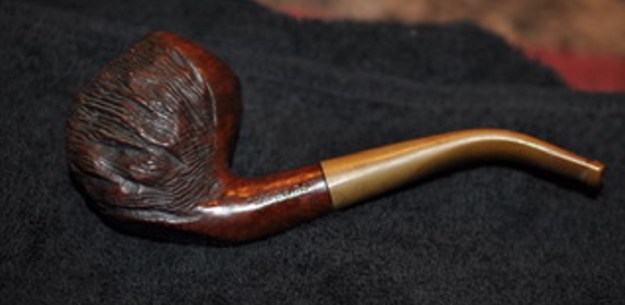
On to the next pipe on the table. This one is carved Briar with a meerschaum lined bowl. It came to us from a Facebook auction from a seller in Old Lyme, Connecticut, USA on 04/29/2020. It is long and Canadian shaped with a carved fox capturing a chicken in the grass and branches on the top of the shank. The briar bowl is lined with meerschaum that is in good condition though sporting a thin cake in the bowl. The briar outside bowl has a crack on the left outside running from the rim top to the bottom of the bowl, ending just short of the heel. The exterior of the bowl is dirty and dusty but otherwise the carving is very detailed. The fur on the fox and the feathers on the chicken are well done. The grass, plants and branches with vines are well executed. The last inch of the shank is smooth. The stem is a short tapered Canadian style made of amber. It has some small nicks and chips at the shank/stem junction but otherwise is quite smooth. The black leather case is made to fit the carved pipe. The case is worn in spots but is solid. The inside of the base is lined with a velour that is brown and padded. The top of the case is more satin and is stamped V.F.S.H. The same four initials are stamped on the left and right side of the shank below the carving. I took photos of the case and the pipe it held before I started my work on it. . I took a photo of the V.F.S.H. embossed stamp on the inside of the inside of the case.I removed it from the case and took photos of the pipe to show the carving from the sides and the top and underside of the stem. I also captured the condition of the rim top and crack in the side of the bowl. The amber stem is also shown in the photos below. I took photos of the rim top to show the meerschaum lining in the bowl and the condition of the amber taper stem. It is a beauty.I removed the stem from the shank and took a photo of the parts. It is a well shaped carved pipe and the amber stem works well with the pipe.I took some photos of the carving on the shank that clearly showed the fox and hen as well as the fence on the back of the bowl and the grass and greens trampled under the feet of the fox and the hen. The feathers on the bird and the fur on the fox are very well done.There is a VFSH in an oval stamp on the underside of the shank just ahead of the bowl. It is on both the left and right side of the shank.The briar bowl that held the meerschaum liner had a large crack running down the right front of the bowl from the rim top down to the heel of the bowl. The inner meerschaum bowl is snug in the briar outer bowl and should be a reasonably easy repair.I reamed the bowl with a Savinelli Fitsall Pipe Knife to carefully scrape the cake from the bowl. I took the cake back to smooth walls. I sanded the bowl with 220 grit sandpaper wrapped around a dowel to smooth out the walls of the meerschaum. I used a medium grit sanding block to remove the build up on the rim top of the outer briar bowl and the meerschaum liner.I repaired the crack with clear CA glue and briar dust. I filled in the crack with clear CA glue and then pressed briar dust into the crack with a flat dental file. I sanded the repaired area with 220 grit sandpaper to smooth out the repair. I scrubbed the carved bowl and shank with a tooth brush and undiluted Murphy’s Oil Soap and warm water. I worked over the nooks and crannies with the brush and the soap. I rinsed the pipe off with warm water to remove the soap and debris on the surface. I dried the briar with a soft cloth. I rubbed the briar down with Before & After Restoration Balm and worked it into the carving as much as possible with a horse hair shoe brush and qtip cotton swabs. The intricate carving on parts of the fox and hen were slow and tedious work but it made a difference to the briar once it was thoroughly worked into the surface. I set the bowl aside and turned my attention to the stem. The amber stem had some chips in the surface on the top right side. I filled them in with clear CA glue. Once the repair cured I sanded the stem smooth with 220 grit sandpaper.I sanded the stem with 320-3500 grit 2×2 inch sanding pads. I worked over the repaired areas and the entirety of the amber stem with the pad – dry sanding with each pad. I wiped the stem down after each sanding pad with a cloth and Obsidian Oil. It really began to look better. I polished the stem with 1500-12000 grit micromesh sanding pads. I dry sanded it and after each sanding pad I wiped it down with an Obsidian Oil cloth. Once finished it took on a rich shine and glowed with the warmth of amber. This Hand Carved Meerschaum Lined Fox and Chicken Canadian has a beautiful, unique carved finish on a smooth bowl and shank. The large smooth meerlined pipe has some great grain around the bowl and shank. The well done carving is almost alive looking with the fox shaking the hen in his mouth. The polished reddish amber stem adds to the mix. I put the stem back on the bowl and hand buffed the pipe with a soft cloth. I gave the stem multiple coats of Clapham’s beeswax/carnauba wax mixture with my finger tips and a qtip. I followed that by buffing it with a microfiber cloth to deepen the shine. The finished Fox and Chicken Hand Carved Canadian is quite nice and feels great in the hand. Give the finished pipe a look in the photos below. The dimensions of the pipe are Length: 10 inches, Height: 2 ¼ inches, Outside diameter of the bowl: 1 ½ inches, Chamber diameter: 1 inch. The weight of the pipe is 104 grams/3.77 ounces. This one will be going into my own personal collection. Thanks for walking through the restoration with me as I worked over another beautiful pipe Thanks for your time.

Restoring a Dunhill Shell Briar 60 F/T Gold Spigot Billiard


by Steve Laug

The next pipe on the table came to us from a seller in Caldwell, Idaho, USA on 07/12/2025. It is a Dunhill Shell Briar Billiard with a gold ferrule and gold capped spigot stem that looked very good. It is in good condition as can be seen in the photos below. It is stamped on a smooth panel on the underside of the shank. On the heel of the bowl it is stamped with the shape number 60 F/T followed by Dunhill [over] Shell Briar [followed by] Made in England12. The stamping is clear and readable. The pipe has a mix of black, cordovan and brown stains on a Shell sandblast finish and some amazing grain that the shape follows well. The finish was dusty and lightly dirty with grime in the nooks and crannies of the sandblast. The bowl had a moderate cake and there was lava in the sandblasted rim top and edges. The gold ferrule and stem cap are tarnished but otherwise looks good. The ferrule is stamped 14K with makers mark. The original stem is on the pipe and it is dirty and has spots of grime stuck on the surface of the vulcanite. I took photos of the pipe to show what it looked like before I started working on it. I took photos of the bowl and rim top to show the thickness of the cake and the lava coat on the rim top. There was some tobacco debris in the bottom of the bowl. The gold ferrule on the shank is shown and is slightly tarnished. The stem photos show the condition of the spigot cap and the top and underside of the stem ahead of the button. The photos of the sides and heel of the bowl show the deep sandblast grain on the pipe along with the contrasting gold ferrule and stem cap. There was a lot of grime ground into the bowl sides. But it still did not obscure the beauty of the pipe. The stamping on the heel of the bowl and shank was clear and readable as noted above. The gold ferrule on the shank and cap on the stem looks good. I took a photo of the pipe with the stem removed to give a sense of the proportions of the pipe. It is a real beauty.One of the first things I like to do is to unpack the stamping and understand each element in it. I turned to Pipephill helpful site (http://pipephil.eu/logos/en/dunhill/shell-briar1.html). The stamping is interpreted as follows: The 60 is the shape for a taper stem Billiard. The F/T is the stamp for a fishtail type stem. The Dunhill Shell Briar is the finish. Following the Made In England12 gives the year that the pipe was made.

The dating chart helped me understand the date stamp 12.. I have included the chart below for you to follow (http://www.pipephil.eu/logos/en/dunhill/cledat-en1a.html). The second column is where the 12 year suffix fits. To arrive at the date the suffix is added to 1960 making the pipe a 1972 Shell Briar Spigot.I googled Dunhill Gold Spigot pipes and the search came up with this AI description of the brand and design.

Dunhill Gold Spigot pipes are high-end, collectible briar pipes featuring an 18k or 14k gold tube (spigot) inserted into the mouthpiece, signifying luxury, superior craftsmanship, and excellent smoking quality, often appearing as vintage estate pipes or special editions with distinct markings and rare, ornate designs, like those from the ’70s and ’80s. They represent the pinnacle of Dunhill’s luxury offerings, blending traditional pipe-making with precious metals for a distinctive, refined smoking experience.

I turned to work on the pipe itself. I reamed the bowl with a PipNet pipe reamer using the cutting heads 2 and 3. I finished the reaming with a Savinelli Fitsall Pipe Knife. I sanded the walls of the bowl with 220 grit sandpaper wrapped around a piece of dowel. I used a brass bristle wire brush to clean off the debris in the sandblast on the rim top. The sandblast was clean and dry with no debris in the valleys of the sandblast.I cleaned out the inside of the shank and the stem with alcohol, cotton swabs and both bristle and regular pipe cleaners.I scrubbed the bowl with undiluted Murphy’s Oil Soap and a tooth brush. I worked over the finish with the brush and then rinsed it off with warm water. I dried it off with a soft cloth. I polished the gold ferrule and the stem cap with a jeweller’s cloth to remove the oxidation and to protect the gold from further oxidation. The shine looks very good at this point. I rubbed the briar down with Before & After Restoration Balm. I worked it into the briar with my fingertips and a horsehair shoe brush to work it into the nooks and crannies of the sandblast finish. The product works to clean, enliven and preserve the briar. I let it sit for 10 minutes then I buffed it with a cotton cloth to deepen the shine. The briar really comes alive with the balm. I set the bowl aside and turned to address the stem. I sanded the stem surface with 320-3500 grit 2×2 inch pads. I wiped the stem down with an Obsidian Oil cloth after each sanding pad.I polished the vulcanite with micromesh sanding pads – 1500-12000 grit pads. I wiped it down with Obsidian Oil after each sanding pad. I used Before & After Pipe Polish – both Fine and Extra Fine to further polish the stem. This 1972 Dunhill Shell Briar 60F/T Gold Spigot Billiard has a beautiful, unique Dunhill Sandblast finish made in 1972. The rich Shell Briar finish that is identified with some great grain around the bowl and shank. It has some great rugged sandblast that Dunhill specialized in making. The polished 14K gold ferrule and stem cap look very good. The polished black vulcanite spigot stem adds to the mix. I put the stem back on the bowl and buffed the pipe with Blue Diamond on the buffing wheel being careful to not buff the stamping. I gave the bowl and the stem multiple coats of carnauba wax on the buffing wheel and followed that by buffing it with a clean buffing pad. I hand buffed the pipe with a microfiber cloth to deepen the shine. The finished Dunhill Shell Briar 60F/T Gold Spigot Billiard is quite nice and feels great in the hand. Give the finished pipe a look in the photos below. The dimensions of the pipe are Length: 5 ¾ inches, Height: 1 ¾ inches, Outside diameter of the bowl: 1 ¼ inches, Chamber diameter: ¾ of an inch. The weight of the pipe is 33 grams/1.16 ounces. This one will be going into my own personal collection. Thanks for walking through the restoration with me as I worked over another beautiful pipe Thanks for your time.

Breathing New Life into a Millard Imported Briar System Straight Pot


by Steve Laug

The next pipe on the table was one I received from a reader of the blog, Emil who wanted me to fit it with a new stem and clean and restore it for him. I asked Emil for photos of the pipe before he sent it to me so I could have a look at it. Emil gladly sent the following photos. The pipe was in rough shape with a nicked outer edge, thick cake and heavy lava coat. The aluminum shank end/mortise was oxidized and very dirty. The stem was oxidized, calcified and chipped on the underside of the button forward. Once I saw them I was ready to take on the pipe. From the photos and now that I have it in hand I have to say that it reminds me of a Keyser Hygienic pipe in terms of the tubes and plumbing in the stem and mortise. This one has some nice grain around the bowl and what I can see showing through on the inwardly beveled rim top. The rim top is thick with lava and the outer edge has some damage. The bowl has a thick cake and is very dirty. The shank end is polished aluminum and has a tube in the center of what acts as a condenser compartment. The aluminum has been damaged by what appears to be marks from pliers. The vulcanite stem is inserted in the shank end and also has a tube in the center. The swirling smoke in the chamber leaves the moisture on the sides of the aluminum shank extension. The stem was oxidized and calcified and has a large chunk of vulcanite out of the button on what appears to be the top but easily could be the bottom. I took photos of the pipe before I started his cleanup work. I took photos of the bowl and rim top and both the top and underside of the stem. You can see the thickness of the cake in the bowl and the lava on the rim top. The outer edges of the bowl show some damage but the inner edge seems protected by the lava coat. The stem photos show the missing damage to the button and stem surface.The pipe was stamped on the left side of the shank and it read Millard [over] Imported Briar. There was no stamping on the right side of the shank. I took a photo of the bowl with the stem removed to give a sense of the shape of the pipe.As I studied it, I also remembered that I have worked on several Millard pipes over the past years. I turned to one of the write ups on rebornpipes on a pair of Millard pipes. Here is the link https://rebornpipes.com/2015/12/11/a-pair-of-millard-perfect-pipes-a-sandblast-apple-and-dublin/. I am including a picture of a flyer that I showed in the blog and I am quoting the section that gives the background on the brand. I quote:

When I came across the Millard – the Perfect Pipe coupon in the two boxes of Kentucky Club that I found I was fascinated with the look of the pipe. It reminded me of the Keyser Hygienic pipes that I had restored over the years. The stem that fit into the metal mortise shank insert and the tubes on the inside of the stem and the shank were similar. While the Keyser tubing in the shank looked identical the one in the stem was different. Keyser was directed downward while the Millard was two straight tubes that met in the mortise. They did not touch but the metal chamber became a condensing chamber, or as they call it an Action Trap, for the smoke and collected the moisture before it continued through the tube in the stem. I looked up the brand online and found the following advertisement postcard that shows the way the system works. I found that the stems were interchangeable between the shapes that the pipe came in. The straight stems could be easily transferred from pipe to pipe. In fact the pipe originally came with an extra or replacement stem. The pipe came in a sandblast and a smooth finish in six shapes – apple, Dublin, billiard, pear, pot and bent. It came in two sizes: medium or large. In the advertisement below you can see that the pipe cost $3. I also found that Mastercraft supplied the pipes through the coupon sales. Knowing a bit of history about the company I know that they did not make pipe so they were sourced from the original manufacturer.

Before I worked on the pipe I took the box of Kentucky Club that I had on the shelf and opened it and took out the coupon. It actually was a coupon for The Millard pipe. It read as follows:

Looking for the Ideal Pipe? The Millard is often regarded as the answer. Its complete action trap keeps the pipe dry in any position and prevents mouth flow back. Se it in our new Premium Catalog. It will delight and intrigue you. We feel sure.Now it was time to work on the pipe. I went through my can of stems and found one that would work quite well with a bit of work reshaping the shank end of the stem and opening the airway to slip over the tube in the mortise of the shank. The shape was correct and it had a couple of light tooth mark on the top and underside of the stem ahead of the button. I used a drill to open the airway in the stem to slide over the tube in the shank. I started with a bit slightly smaller than the airway and worked up to the correct dimensions.I worked on giving the shank end of the stem the same diameter and taper as the inside of the aluminum mortise. I used 220 grit sandpaper to shape and fit it to the shank.I set the stem aside and worked on the bowl. I reamed the bowl with a PipNet Pipe Reamer using the 2nd and 3rd cutting heads. I cleaned up the reaming with a Savinelli Fitsall Pipe Knife and took the cake back to bare briar. I sanded the inside bowl walls with a piece of dowel wrapped in 220 grit sandpaper. I cleaned out the airway into the bowl – and the inside of the aluminum mortise and plumbing with pipe cleaners – both bristle and regular with alcohol. I was able to remove the grime and the tars in the shank and mortise area. I repeated the process on the new stem. It looked much better and smelled great.I scrubbed the bowl and rim with undiluted Murphy’s Oil Soap and a tooth brush to remove the debris and grime on the bowl sides. It looked much better. I set the bowl aside and went back to the stem. I filled in the tooth dents in the stem on the top and underside ahead of the button with rubberized black CA glue. Once the repairs cured I used small files to flatten the repairs. I sanded it with 220 grit sandpaper to smooth out the repairs. I dry sanded the stem with 320-3500 grit 2×2 inch sanding pads. I was able to clean up the scratches in the vulcanite and give the new stem a proper shape. It was looking very good.I polished the stem with micromesh sanding pads – dry sanding it with 1500-12000 grit pads. I wiped the stem down after each pad with a cloth and Obsidian Oil. I finished the polishing with Before & After Pipe Stem Polish – both Fine and Extra Fine. I gave it a final coat of Obsidian Oil. I set the stem aside and used some clear CA glue and briar dust to fill in the deep chips in the right side of the rim top.I sanded the bowl and aluminum shank with 320-3500 grit 2×2 inch sanding pads. I polished out the scratches in the aluminum as much as possible and the scratches and repairs in the briar. The bowl and shank began to look much better. I polished the briar and aluminum with micromesh sanding pads – dry sanding with 1500-12000 grit pads. I wiped the bowl down with a damp cloth after each sanding pad. It really began to take on a rich shine. I rubbed the briar down with Before & After Restoration Balm. I worked it into the briar with my fingertips. The product works to clean, enliven and preserve the briar. I let it sit for 10 minutes then I buffed it with a cotton cloth to deepen the shine. The briar really comes alive with the balm. I put the pipe back together – the bowl with its new stem. This restored Millard Imported Briar System Straight Pot is a real beauty and I think the polished aluminum shank extension (condensation chamber) and the new black vulcanite stem work well together. The grain on the bowl came alive with the buffing. I used Blue Diamond on the buffing wheel on both the bowl and stem. I gave both multiple coats of carnauba wax on the wheel then buffed it with a clean buffing pad to raise the shine. I hand buffed it with a microfibre cloth to deepen the shine. The Millard Straight Pot feels great in the hand. It is lightweight and the contrast in the browns of the briar, the polished aluminum and the vulcanite stem is quite amazing. The dimensions of the pipe are Length: 6 inches, Height: 1 ½ inches, Outer diameter of the bowl: 1 ¼ inches, Chamber diameter: 7/8 of an inch. The weight of the pipe is 1.34 ounces/38 grams. It really is a beauty. I will be sending it back to Emil this week. I am hoping that he enjoys it as much as I enjoyed working on it. Thanks for walking through the restemming and the restoration with me. Cheers.

Restoring a 1985 Dunhill Shell Briar 52033Billiard and Rebuilding a Saddle Stem


by Steve Laug

The next pipe on the table came to us from a seller in Cleveland, Ohio, USA on 04/26/2022. It is a Dunhill Shell Briar Billiard with a saddle stem that has been “ridden hard”. It is in rough shape as can be seen in the photos below. It is stamped on a smooth panel on the underside of the shank. On the heel of the bowl it is stamped with the shape number 52033 followed by Dunhill Shell Briar [over] Made in England25. The stamping is faint in spots but still readable. The date number is a bit faint and worn. The pipe has a mix of black, cordovan and brown stains on a Shell sandblast finish and some amazing grain that the shape follows well. The finish was dusty and dirty with grime ground into the nooks and crannies of the sandblast. The bowl had a thick cake and there was heavy lava in the sandblasted rim top and edges. The original stem is on the pipe and it is a mess. The button has a crack on the top side and the underside is missing a huge chunk from the button forward about ¾ of an inch or more. Jeff took photos of the pipe to show what it looked like before he started working on it. He took photos of the bowl and rim top to show the thickness of the cake and the lava coat on the rim top. The bowl is a bit of a mess. The stem photos show the damage on the top and underside of the stem ahead of the button. The photos of the sides and heel of the bowl show the deep sandblast grain on the pipe. There was a lot of grime ground into the bowl sides. But it still did not obscure the beauty of the pipe. The stamping on the heel of the bowl and shank read as noted above. It was faint in spots but it is readable in good light.One of the first things I like to do is to unpack the stamping and understand each element in it. I turned to Pipephill helpful site (http://pipephil.eu/logos/en/dunhill/shell-briar1.html). The stamping is interpreted as follows: The 52033 is the shape for a saddle stem Billiard. The Dunhill Shell Briar is the finish. Following the Made In England25 gives the year that the pipe was made. I did a little more work on the five-digit shape number. On Pipephil’s site I found some information (http://www.pipephil.eu/logos/en/dunhill/cumber1.html#52031). I have included the information below to help interpret the number 52033.

Dunhill pipes are stamped with a four-digit code.
Digit 1: (from 1 to 6) denotes the size of the pipe (the group). In this case it is size 5 pipe.
Digit 2: denotes the style of the mouthpiece (0,1=tapered, 2=saddle). The second digit 2, says that it is a saddle stem which it is.
Digit 3 and 4: denote the generic pipe shape (in yellow in the chart on top). This 03 says it is a billiard. 

When 5 digits occur, the meaning of the 4 first remain the same.

The dating chart helped me understand the date stamp 25. I have included the chart below for you to follow (http://www.pipephil.eu/logos/en/dunhill/cledat-en1a.html). The second column is where the 25 year suffix fits. To arrive at the date the suffix is added to 1960 making the pipe a 1985 Shell Briar.I turned to work on the pipe itself. Jeff had carried out his usual thorough cleanup of the pipe. He reamed the bowl with a PipNet reamer and cleaned up the reaming with a Savinelli Fitsall Pipe Knife. He scrubbed the internals of the bowl, shank and stem with alcohol, cotton swabs, shank brushes and pipe cleaners. He scrubbed the externals with undiluted Murphy’s Oil Soap and a tooth brush. He rinsed the bowl off with running water and dried it off with a soft cloth. He soaked the stem in Briarville’s Pipe Stem Deoxidizer and once it had soaked rinsed it off with warm water to remove the residual solution. He dried it off and rubbed it down to remove any oxidation that was still on the stem. The pipe looked very good when I received it. The bowl and rim top were in excellent condition. The saddle stem had a small crack in the top of the button and a large piece of vulcanite missing on the underside from the button forward. I took a photo of the rim top to show the condition. You can see the clean bowl and fading of the stain on the rim top. The stem came out looking clean. The issues noted above are visible in the photos below.I took a photo of the underside of the shank to show the stamping. It is clear, though faint toward the stem and readable as noted above. I removed the stem from the shank and took a photo of the pipe parts to show what I was working with. It is a nice looking pipe.I decided to start my work on the pipe by addressing the significant damage to the stem service. I measured the length of the stem and chose to cut off the damaged portion of the stem. I would lose about ¾ of and inch to an inch in length. I used a Dremel and sanding drum to remove the damaged portion of the stem. I would rebuild a button on the end of the stem.I smoothed out the end of the button on a topping board. I top of the stem had a lot of room to recut the button. The bottom edge was thin. I rebuilt the button on the top and underside of the stem with black rubberized CA glue. Once it cured I would reshape it into a standard button.I set the stem aside to let the rebuilt button cure. I would leave it overnight to get a deep cure. I turned my attention to the bowl. I started by working over the debris in the valleys of the rim top sandblast surface with a brass bristle wire brush. It looked significantly better. I used a black stain pen to touch up the rim top and the top of the shank.I rubbed the briar down with Before & After Restoration Balm. I worked it into the briar with my fingertips and a horsehair shoe brush to work it into the nooks and crannies of the sandblast finish. The product works to clean, enliven and preserve the briar. I let it sit for 10 minutes then I buffed it with a cotton cloth to deepen the shine. The briar really comes alive with the balm. I reshaped the rebuilt button on the stem and shaped the slot in the button with a button saw and small files. I smooth out the shape of the newly formed button and slot with 220 grit sandpaper. It looked very good at this point.I sanded the stem surface with 320-3500 grit 2×2 inch pads. I wiped the stem down with an Obsidian Oil cloth after each sanding pad. I polished the vulcanite with micromesh sanding pads – 1500-12000 grit pads. I wiped it down with Obsidian Oil after each sanding pad. I used Before & After Pipe Polish – both Fine and Extra Fine to further polish the stem. This 1985 Dunhill Shell Briar 52033 Saddle Stem Billiard has a beautiful, unique Dunhill Sandblast finish made in 1985. The rich Shell Briar finish that is identified with some great grain around the bowl and shank. It has some great rugged sandblast that Dunhill specialized in making. The polished black vulcanite saddle stem adds to the mix. I put the stem back on the bowl and buffed the pipe with Blue Diamond on the buffing wheel being careful to not buff the stamping. I gave the bowl and the stem multiple coats of carnauba wax on the buffing wheel and followed that by buffing it with a clean buffing pad. I hand buffed the pipe with a microfiber cloth to deepen the shine. The finished Dunhill Shell Briar 52033 Billiard is quite nice and feels great in the hand. Give the finished pipe a look in the photos below. The dimensions of the pipe are Length: 5 ½ inches, Height: 2 inches, Outside diameter of the bowl: 1 ½ inches, Chamber diameter: ¾ of an inch. The weight of the pipe is 48 grams/1.69 ounces. This one will be going on the rebornpipes store in the British Pipemakers Section. The shortened, reshaped stem looks good to me. The price is a good entry level Dunhill for the interested Group 5 Billiard. Thanks for walking through the restoration with me as I worked over another beautiful pipe Thanks for your time.

A Peterson Donegal 264 Canadian with an Unusual History


by Kenneth Lieblich

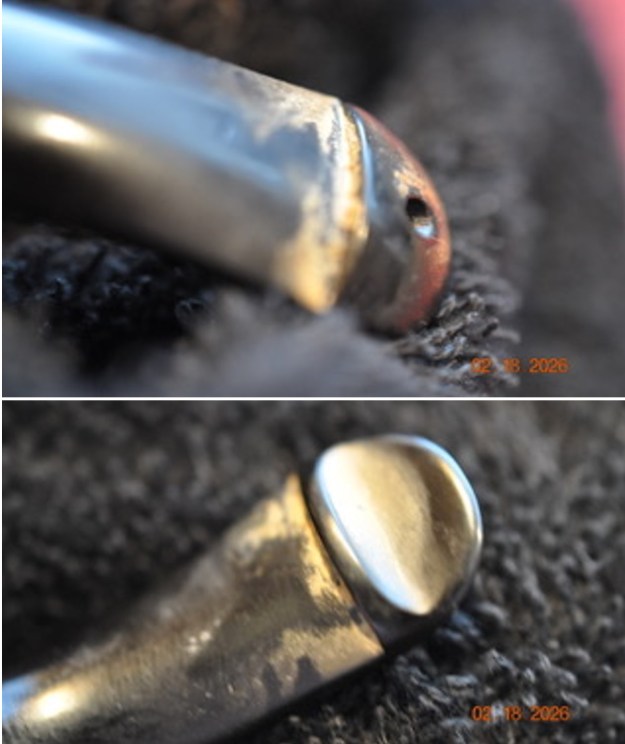
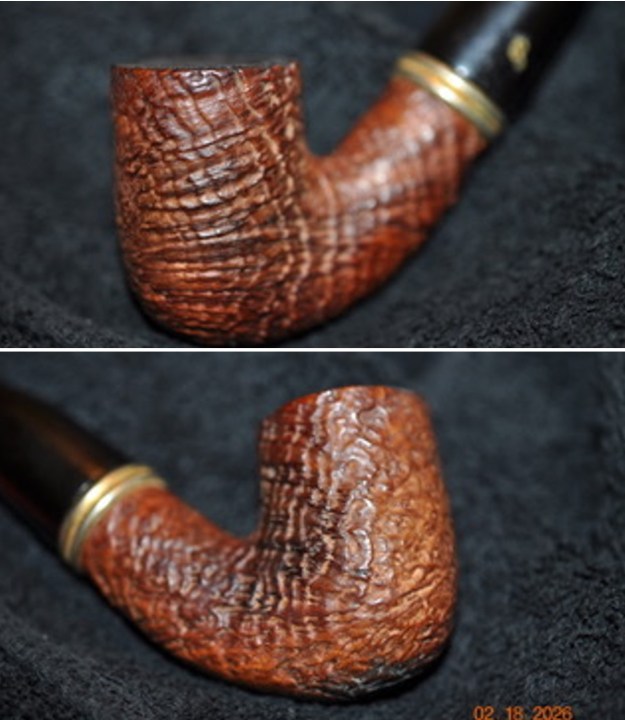
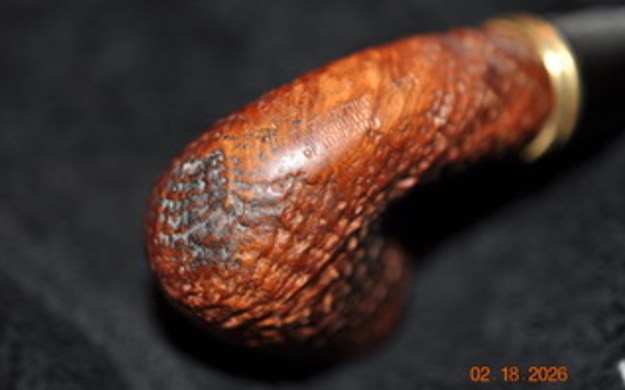
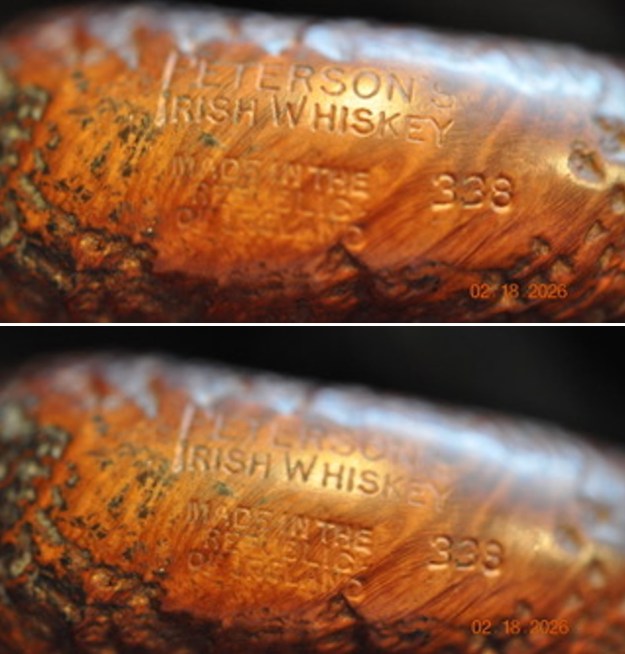
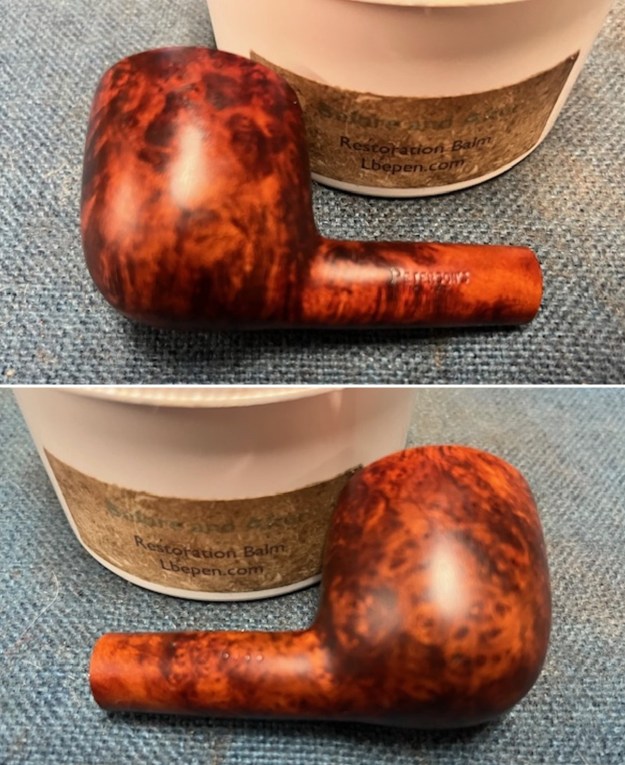
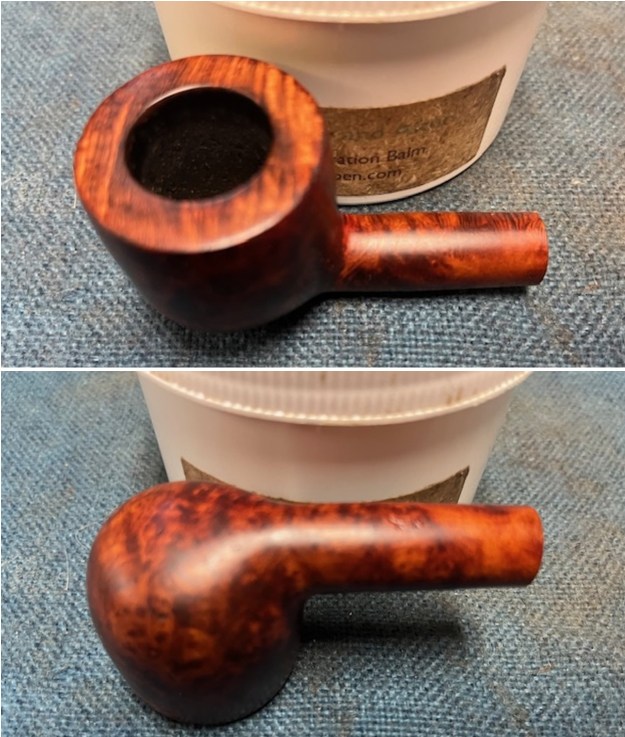
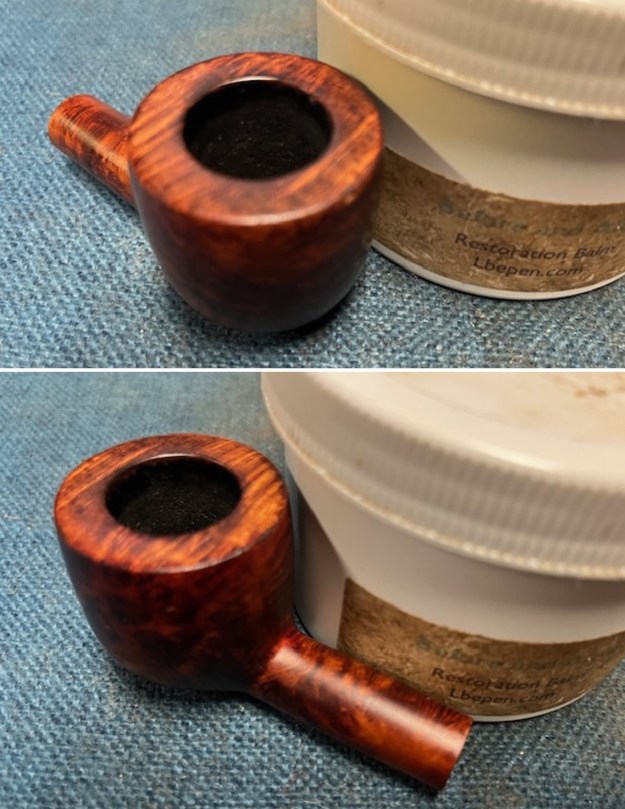
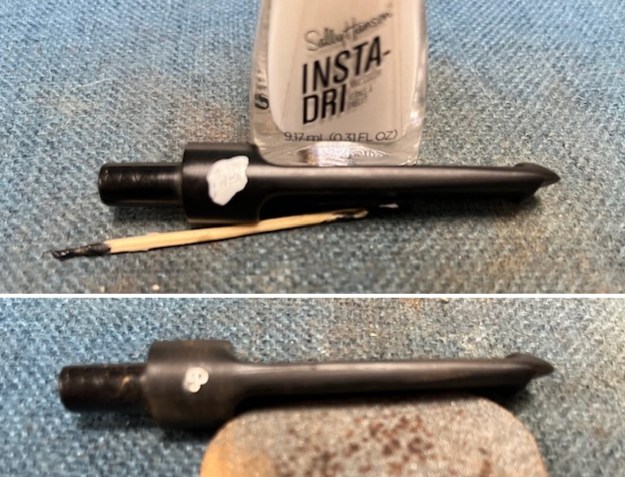
If you’re interested in acquiring a Peterson unlike any other, have I got the pipe for you! I unearthed this pipe a couple of years ago at an antique fair and I found it quite peculiar. The shape seemed perfectly normal, the components were in good (albeit, used) condition – but the finish was something I’d never seen before from an old Pete. I was definitely curious about what it might be. The pipe turned out very well, all things considered, and, like I said, if you want a pipe that no one else has – this is your pipe. I’m sure it’ll be a good smoker. Neither Steve nor I were clear on how this pipe ended up the way it did. I initially wondered if this was an odd finish that Peterson tried years ago – but that didn’t seem likely. I had another theory, but Steve suggested that I contact Peterson expert, Mark Irwin, to ask him about it. Mark basically confirmed what I suspected: this Donegal has had its rustication (mostly) removed. In other words, it’s been sanded down. This is strange, but there’s no way of determining why this was done. Thanks for your help, Mark. Regardless, we’ve ended up with an interesting finish and a pipe that I need to make beautiful.The markings on this pipe were a problem, since they had suffered a bit during the sanding process. However, I did manage to figure them out. On the underside of the shank, we can see the word Peterson’s. There is something marked underneath that, but I’ll come back to that as it’s somewhat unreadable. Next to Peterson’s is the shape number, 264. And next to that are the words Made in the [over] Republic [over] of Ireland. It took me quite a while to determine what was marked underneath of Peterson’s, but, of course, it is the word Donegal. This is the Peterson line. You will have noticed that the stem is the traditional Peterson P-lip, and it has the classic letter P. Most importantly, there is a sterling silver band on the end of the shank. On the sterling silver band is displayed three shields each containing the three marks K&P [over] Sterling [over] Silver. These are not silver hallmarks – they are simply Peterson’s marks. However, it does have a set of proper hallmarks (which are very difficult to see): Hibernia, which indicated that it was made in Dublin. Next is the Harp Crowned, which indicates sterling silver. Third is the date letter. In this case, it’s a stylized M. Checking the Irish hallmarks chart tells me that this pipe dates from 1978. So, what is the state of the pipe? Well, it’s a mixed bag, as these things tend to be. The stem is in surprisingly good shape – not too dirty or oxidized. It does have a notable cut into the vulcanite, near the tenon end, but that’s not a problem to repair. The stummel is, for the most part, also quite nice. It has a few unsurprising scratches, but it’s fairly clean inside. The silver band is heavily tarnished and has a few bumps and knocks. On with the restoration! This pipe had an inner tube, so I cleaned that first. I wiped it with some alcohol and ran a pipe cleaner or two through it. Much improved.The primary cleaning came next. I disinfected the inside of the stem with both pipe cleaners and cotton swabs dipped in lemon-infused 99% isopropyl alcohol. I scrubbed thoroughly to make sure the interior was very clean.The goal of the next step is the removal (or minimization) of oxidation. Going to my sink, I used cream cleanser, cotton rounds, and a toothbrush, and scoured the stem to remove as much surface oxidation as possible. This one wasn’t too bad at all.Once the stem was reasonably clean, I soaked it overnight in some Briarville Stem Oxidation Remover. This solution works to draw oxidation in the stem to the surface of the vulcanite. This is a major aid and an important step in ensuring a clean stem. The following day, I drew out the stem from its bath and scrubbed the lingering fluid with a toothbrush.As the stem was now clean and dry, I set about fixing the nasty cut in the vulcanite. This was done by filling it with black cyanoacrylate adhesive, impregnated with carbon and rubber. I left this to cure and moved on.After this, I painted the logo on the stem with some enamel nail polish. I restored the logo carefully and let it fully set before proceeding. Most of the logo has gone with the passage of time, but at least a bit of it still shows.The penultimate step for the stem is sanding. First, with my set of needle files, I reduced the bulk of the cyanoacrylate repairs. I removed the excess adhesive as near to the surface as possible, without cutting into the vulcanite. Following that, I used all nine of the micromesh sanding pads (1,500 through 12,000 grit) to sand out flaws, even out the vulcanite, and provide gentle polishing of the finished surface. I also applied pipe-stem oil while using the last five micromesh pads. There was a wonderful, deep black shine to the stem when I was done.As the stem was (nearly) complete, I moved on to the stummel. The first step was to clean out the bowl – that is to say, remove all the cake inside the bowl. This accomplished a couple of things. First (and most obviously), it cleaned the bowl and provided a refurbished chamber for future smoking. Second, when the old cake was removed, I could inspect the interior walls of the bowl and determine if there was damage or not. I didn’t need a reamer this time, so a pipe knife and a piece of sandpaper taped to a wooden dowel did the trick. Collectively, these ensured that all the debris was removed.Similar to the stem, I then cleaned the stummel with both pipe cleaners and cotton swabs dipped in lemon-infused 99% isopropyl alcohol. Since the pipe wasn’t too dirty, it didn’t take long to clean it.I then decided to ‘de-ghost’ the pipe – that is to say, exorcize the remaining filth from the briar. I filled the bowl and the shank with cotton balls, then saturated them with 99% isopropyl alcohol. I let the stummel sit overnight. This caused the remaining oils, tars and smells to leach out into the cotton.To tidy up the briar, I wiped down the outside, using a solution of a pH-neutral detergent and some distilled water, with cotton rounds. I also used a toothbrush in the crevices. This did a good job of cleaning any latent dirt on the surface of the briar. The last step of the cleaning process was to scour the inside of the stummel with the same mild detergent and tube brushes.I used all nine micromesh pads (1,500 through 12,000 grit) to sand the outside of the stummel and finish it off. This sanding minimizes flaws in the briar and provides a beautiful smoothness to the wood. I had to be especially careful this time, to avoid losing any more of the markings on the underside of the shank. To clean the silver band, I gently removed the tarnish with a soak in a bath of aluminum foil, baking soda, and hot water. Worked like a charm! I polished it up and glued it back in place. There are still some bumps and bashes, but it looks so much better. I rubbed some LBE Before & After Restoration Balm into the briar and let it sit for 30 minutes or so. The balm moisturizes the wood and gives a beautiful depth to the briar. I then buffed the stummel with a microfibre cloth. For the final step, I took the pipe to my bench polisher and carefully buffed it – first with a blue diamond compound, then with three coats of conservator’s wax. This procedure makes the pipe look its best – the stummel sings and the stem glows.

This Peterson Donegal 264 Canadian looks fantastic again and is ready to be enjoyed by its next owner. I am pleased to announce that this pipe is for sale! If you are interested in acquiring it for your collection, please have a look in the ‘Irish’ pipe section of the store here on Steve’s website. You can also email me directly at kenneth@knightsofthepipe.com. The approximate dimensions of the pipe are as follows: length 5½ in. (138 mm); height 1¾ in. (45 mm); bowl diameter 1¼ in. (33 mm); chamber diameter ¾ in. (20 mm). The weight of the pipe is 1 oz. (32 g). I hope you enjoyed reading the story of this pipe’s restoration as much as I did restoring it. If you are interested in more of my work, please follow me here on Steve’s website or send me an email. Thank you very much for reading and, as always, I welcome and encourage your comments.

A Lovely Republic Era Peterson’s Sterling Filter 69 Stirling Bent Billiard


by Steve Laug

The next pipe I have chosen is smooth finished Peterson’s “Sterling Silver” pipe. The pipe came to us from our contact in Copenhagen, Denmark. This one is a Peterson’s Bent Billiard pipe with a taper fishtail stem. It has a rich brown coloured finish with interesting grain around the bowl sides and shank. It is very dirty. This Bent Billiard has a silver band on the shank that was oxidized. The grime on the finish was ground into the briar. The brown stains make the grain really pop. It was stamped on the left side of the shank and reads Peterson’s [over] “Sterling Filter”. On the right side it is stamped with the three line Made in the Republic of Ireland stamp followed by the shape number 69. The tarnished band is stamped with Peterson’s [over] Dublin followed by Sterling [over] Silver. To the right that it has three hallmarks – Hibernia seated arm on a harp (signifies country of manufacture), a crowned harp designating Sterling quality and finally a Date Letter mark – in this case an italic “I” (1976). It was in filthy condition when Jeff brought it to the table. There was a thick cake in the bowl and spots of lava on the rim top and inner edge of the bowl. The stem was oxidized, calcified and had light tooth marks and chatter on the top and underside near the button. Jeff took photos of the pipe before his cleanup work before he started on the pipe. Jeff took photos of the rim top and stem to show the general condition of the pipe. The bowl is lightly caked and the rim top and edges look very good. The stem is oxidized and has light tooth marks on the top and underside near the button. Jeff took some photos of the bowl sides and heel to show the grain that was around this bowl. It is a nice looking pipe. He took photos of the sides of the shank to show the stamping. The stamping is readable in the photos below and is as noted above. The stamping on the Sterling Silver band is also readable through the oxidation. I am including the information from Pipedia’s article on Peterson pipes. It is a great read in terms of the history of the brand (https://pipedia.org/wiki/Peterson).

I turned to “The Peterson Pipe” by Mark Irwin and Gary Malmberg to get some background on the Sterling Pipe. On page 314 it had the following information on the line.

Sterling (1949-c1957; 1978-) – Higher grade line with sterling band. Early example, 1949-57, with COM of Made in Ireland forming a circle, were offered to the US market through Rogers Imports and have no hallmark, although until recent years the line carried Peterson’s maker’s mark, the K&P is in separate shields. Models beginning in ’78 with hallmarked dates and a COM stamp of Made in [over] the Republic [over] of Ireland.

I knew that I was dealing with a pipe made between 1949-1957 as shown by the Made in the Republic of Ireland three-line format stamp. Now it was time to work on the pipe.

Jeff had done a great job cleaning up the pipe as usual. He reamed the pipe with a PipNet reamer and cut back the cake back to the bare briar. He cleaned up the walls with a Savinelli Fitsall Pipe Knife. He scrubbed the interior of the bowl and shank with pipe cleaners, shank brushes, cotton swabs and alcohol to remove the tars and oils. He scrubbed the exterior of the pipe with undiluted Murphy’s Oil Soap and a tooth brush to remove the grime from the finish. He worked on the rim top lava with the soap and tooth brush. He scrubbed the inside of the stem with alcohol, shank brushes and pipe cleaners. He scrubbed the exterior with Soft Scrub and then soaked it in Briarville’s Pipe Stem Deoxidizer. He washed it off with warm water to remove the deoxidizer. The pipe looked very good when it arrived here. I took some close-up photos of the rim top and also of the stem surface. The rim top and the inner edge looked very good. The silver cleaned up well on the band, though it needed more work. The stem was clean and the tooth marks and chatter were minimal.I took photos of the stamping on the top and underside of the shank. You can see that it is stamped as noted above. It is faint and readable. I took the pipe apart and took a photo of the pipe. It is a good looking pipe and has some nice looking grain around the bowl. I sanded the briar with 320-3500 grit 2×2 inch sanding pads to remove the scratches and marks in the finish. I wiped the bowl down with a damp cloth after each sanding pad to remove the sanding debris. It really looks much better. I polished the briar with 1500-12000 grit micromesh pads – dry sanding it with each pad and wiped down the bowl after each pad. I gave it a final wiped with a Briar Wipe cloth to polish the finish. The briar looked very good at this point. I began my work on it by working some Before & After Restoration Balm into the surface of the briar with my fingertips to clean, enliven and protect the briar. I let the balm sit for 15 minutes and then buffed with a cotton cloth to raise the shine. The photos show the bowl at this point in the restoration process. I polished the Sterling Silver band on the shank with a jeweller’s cloth to remove the tarnish and polish it. I set the bowl aside and turned my attention to the stem. I sanded the stem with 320-3500 grit 2×2 inch sanding pads and wiped it down with an Obsidian Oil cloth after each sanding pad. The stem began to take on a shine.I touched up the P stamp on the left side of the stem with white acrylic fingernail polish. I worked it into the P stamp with a tooth pick. Once it dried I scraped off the excess of the acrylic with my fingernail. I sanded the stem area with a worn 1500 grit micromesh sanding pad. It looked very good. I fit the stem with a Vauen Dr. Perl Junior 9mm filter in the filter tenon of the pipe. It is a great fit and that it fit very well.I polished the stem with micromesh sanding pads – wet sanding with 1500-12000 grit sanding pads. I wiped it down after each sanding pad with Obsidian Oil. I polished it with Before & After Pipe Stem Polish – both Fine and Extra Fine. I am excited to finish this smooth Peterson’s “Sterling Filter” 69 Bent Billiard. I put the pipe back together and lightly buffed it with Blue Diamond on the buffing wheel. I gave the bowl and the stem multiple coats of carnauba wax. I hand buffed the pipe with a clean buffing pad to raise the shine. It is fun to see what the polished bowl looks like with the depths of the sandblast taking on a rich glow. Added to that the polished Sterling Silver band and the black vulcanite taper P-lip stem was beautiful. This smooth Classic Peterson’s “Sterling Filter” 69 Bent Billiard is nice looking and the pipe feels great in my hand. It is light and well balanced. Have a look at it with the photos below. The dimensions are Length: 5 ½ inches, Height: 2 inches, Outside diameter of the bowl: 1 ¼ inches, Chamber diameter: ¾ of an inch. The weight of the pipe is 59 grams/2.08 ounces. It is a beautiful pipe and one that will be on the Irish Pipe Makers Section of the rebornpipes store soon. If you are interested in adding it to your collection let me know. Thanks for walking through the restoration with me as I worked over this pipe. Thanks to each of you who are reading this blog.