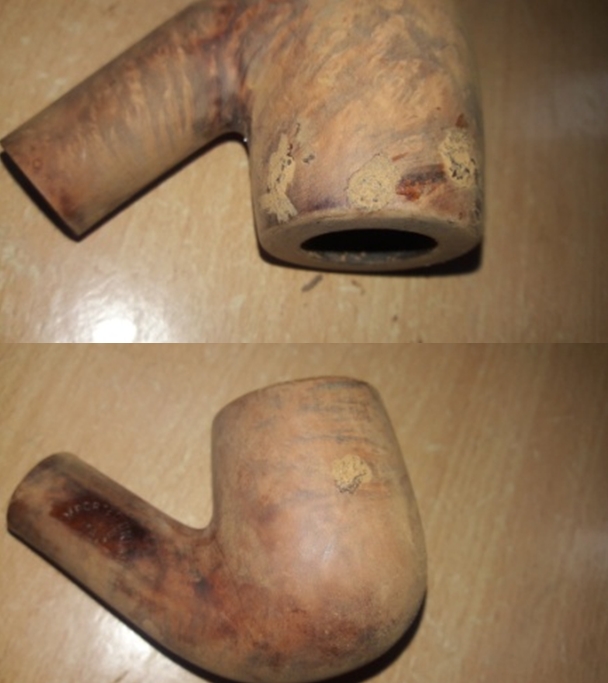
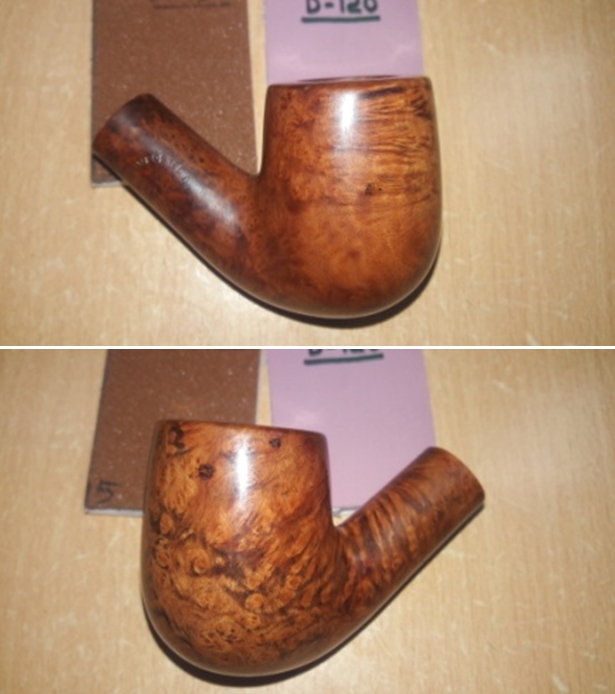
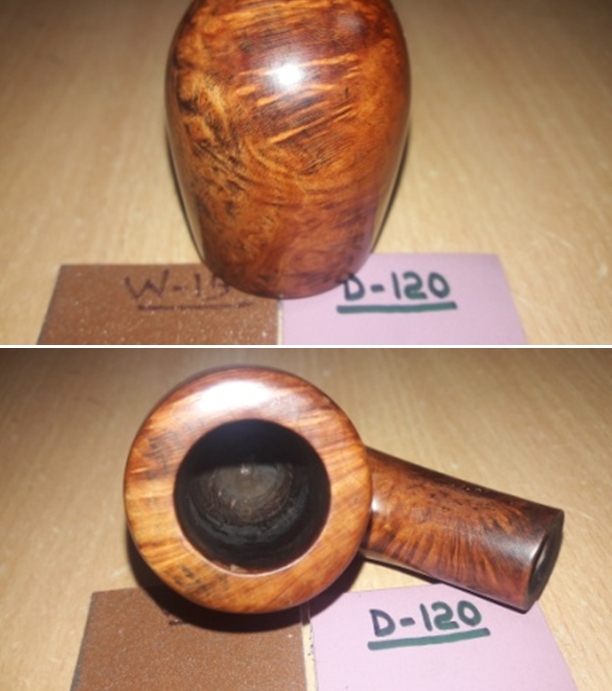
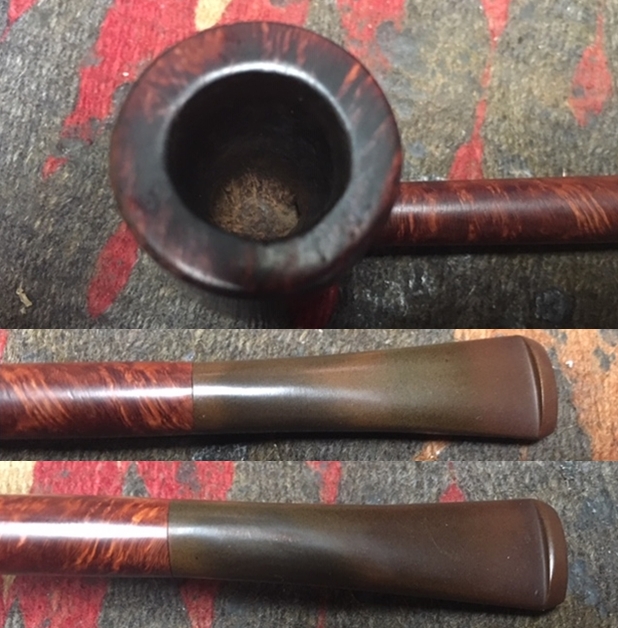
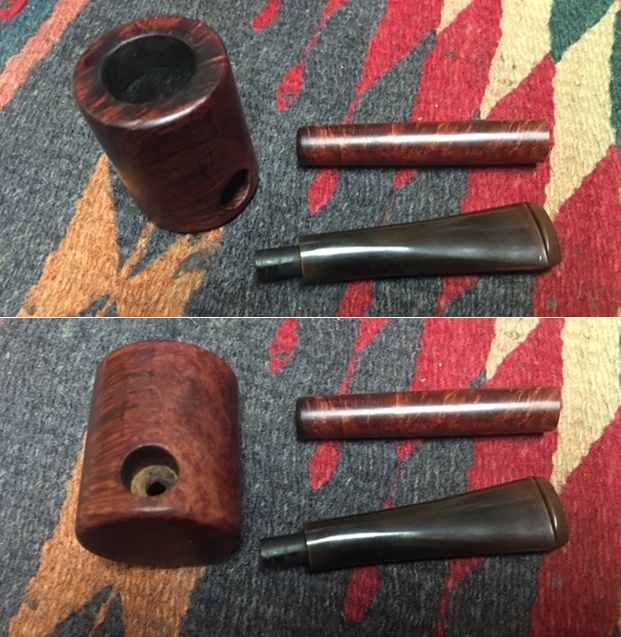
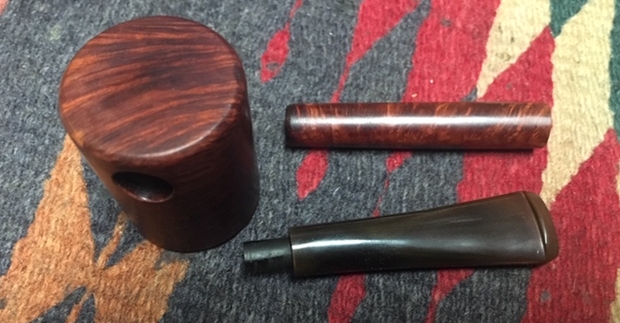
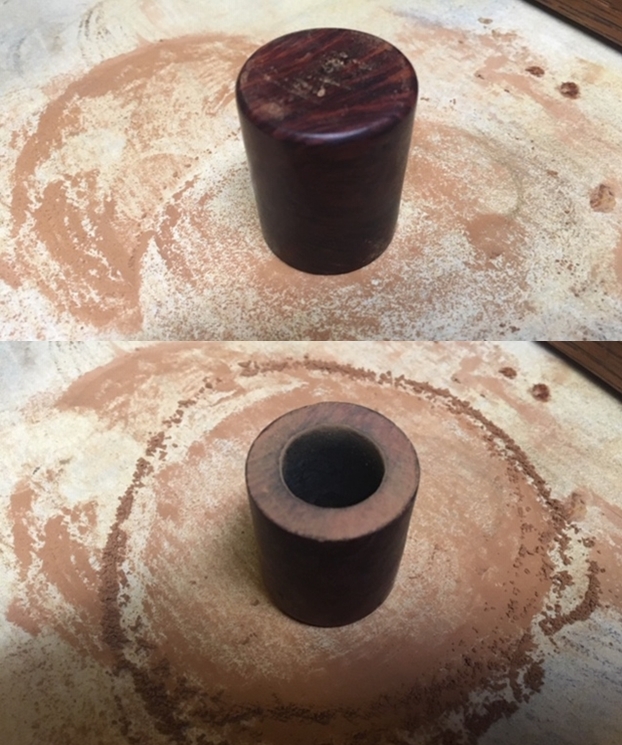
Tag Archives: bowl topping

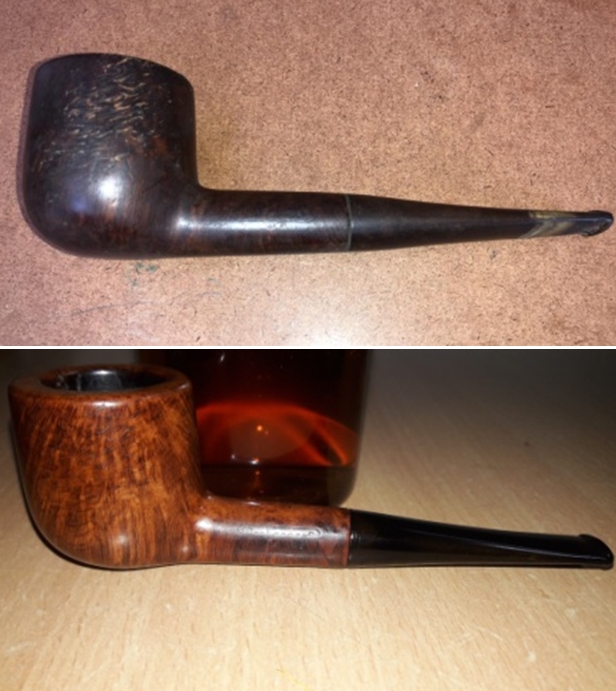
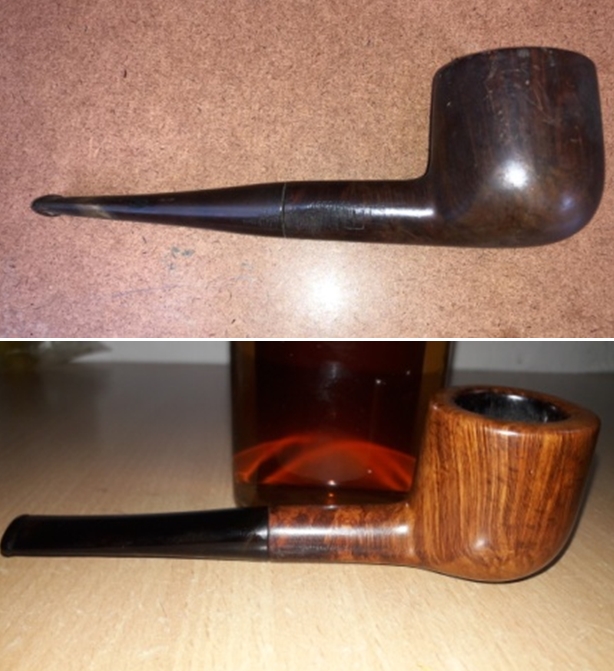
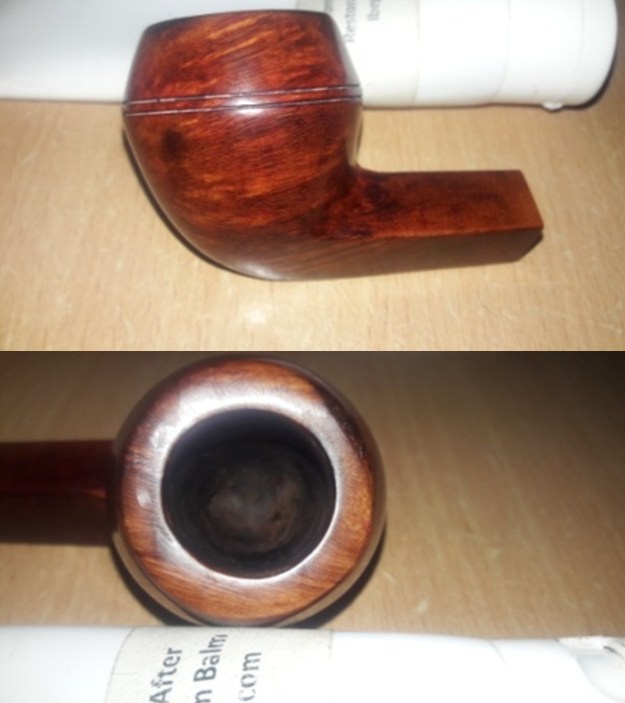
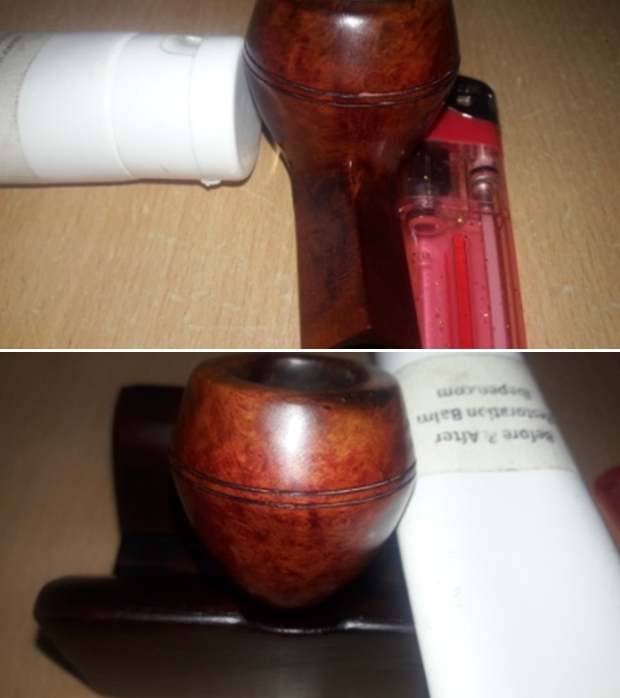
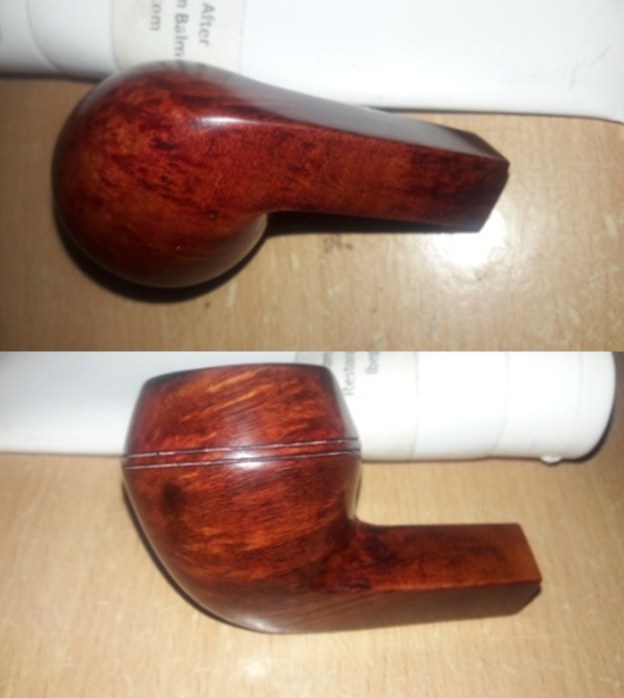
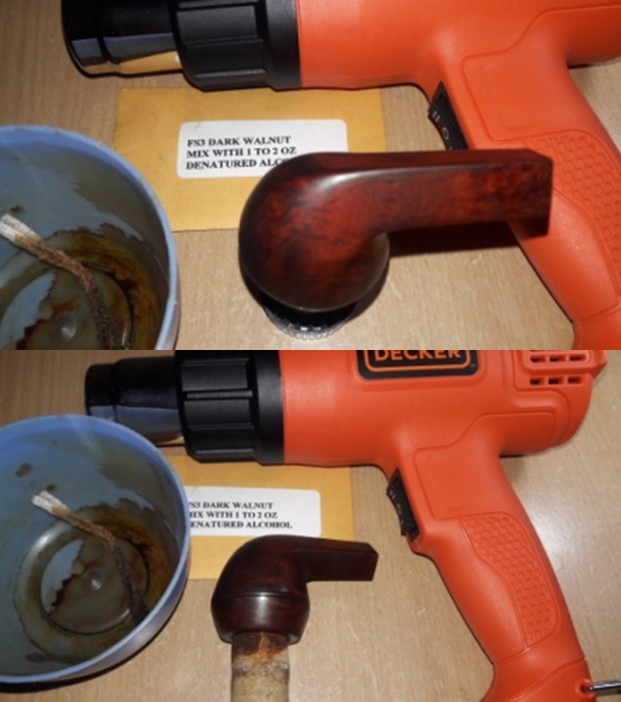
Restoration of an Unbranded Bulldog


Blog by Paresh Deshpande

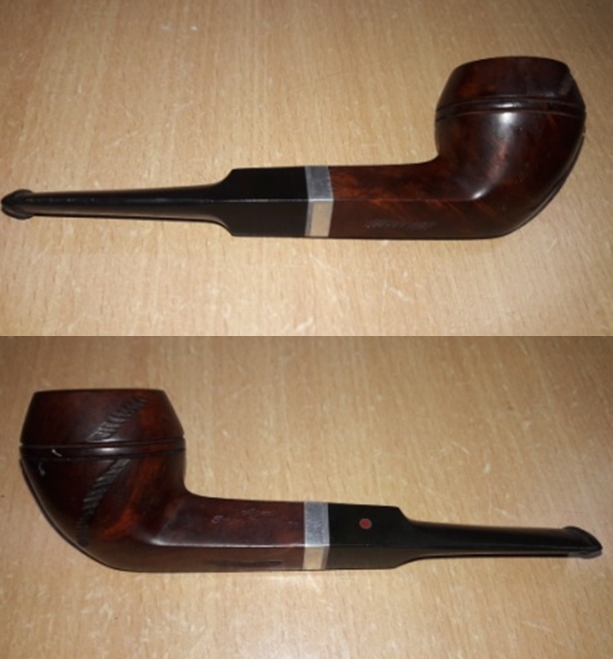
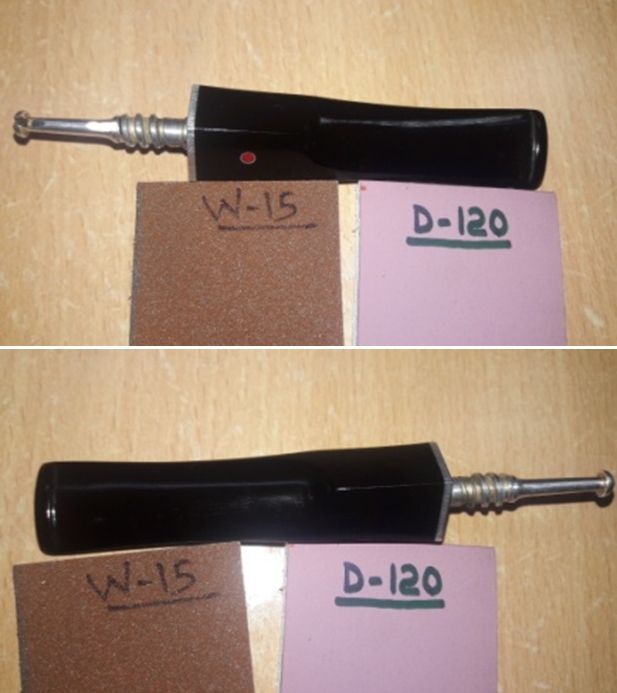
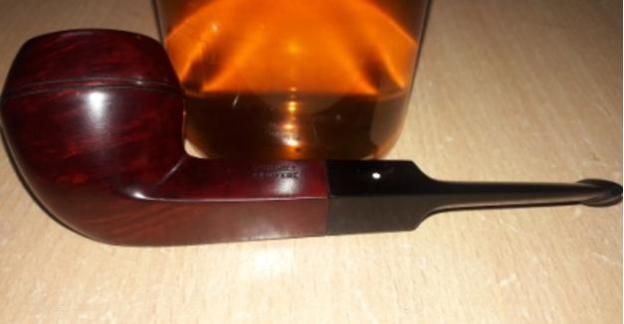
To date, I have completed the restorations of six Dunhill, a Stefano “Exclusive” and a no-name, but handsomely crafted, Italian bent billiards from my “Mumbai Bonanza” lot. Continuing with this lot, the pipe on my work table now is a straight Bulldog, again without any brand or COM stamping. However, the presence of a Red Dot on the stem may offer some clue about its origin. However, I must admit that unlike the previous unbranded bent billiard, this pipe does have minor quality issues. Let’s see if I am able to fix a few of them during the refurbishing process.

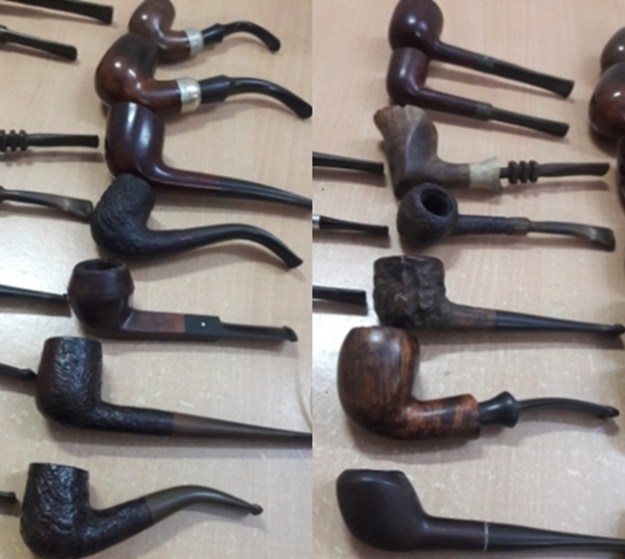
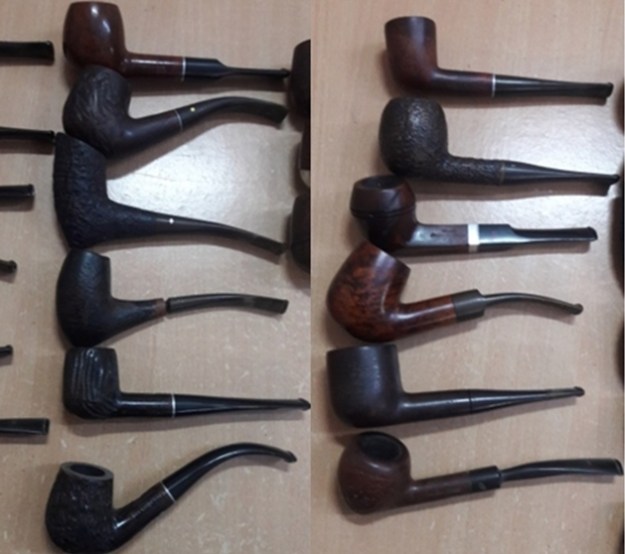
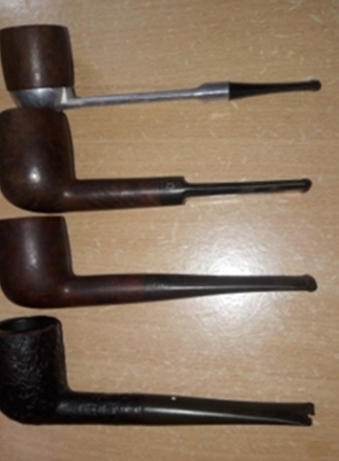
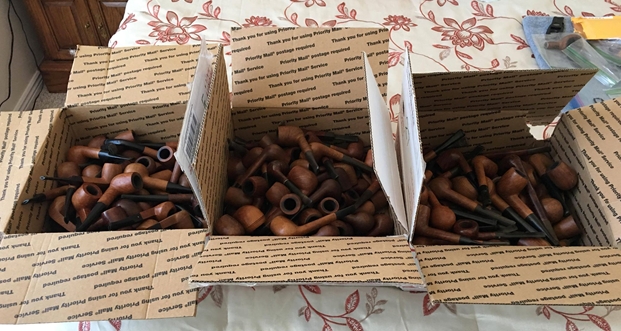
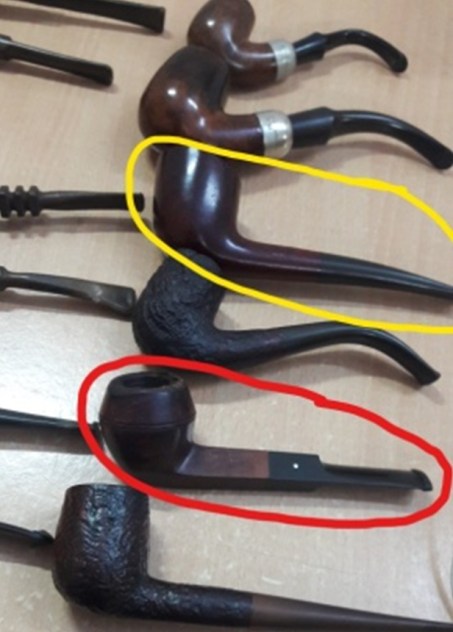
For those readers who haven’t been following my faltering and baby steps on this journey, I was fortunate enough to have heeded the advice of my dear friend and mentor, Mr. Steve, and struck a deal with a trash collector from Mumbai. He did not know what he was selling and I did not know what I was buying as we reside in different cities!! The argument that Mr. Steve presented was that if not anything, I shall at least have some spares and this was logical. I struck a deal and here are pictures of the pipes that I received in this lot. This lot contains some very nice collectible pipes, a few well known brands and some mediocre brands. Overall, with seven Dunhill pipes, a Preben Holm #1, a couple of “Made in England” Pete System pipes, a couple of  Charatan’s Belvedere, Custom-Bilt, Stanwell and other assorted pipes, I would say that I had struck a decent haul!!! This is indeed my “Mumbai Bonanza”.

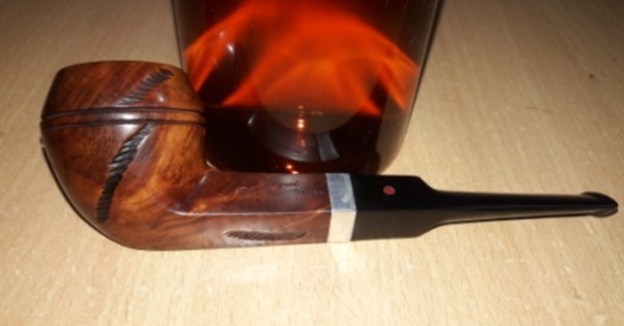
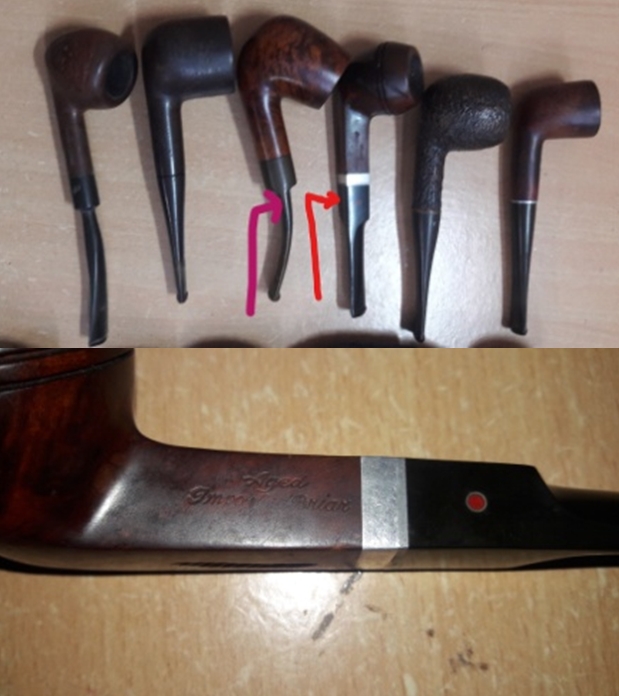
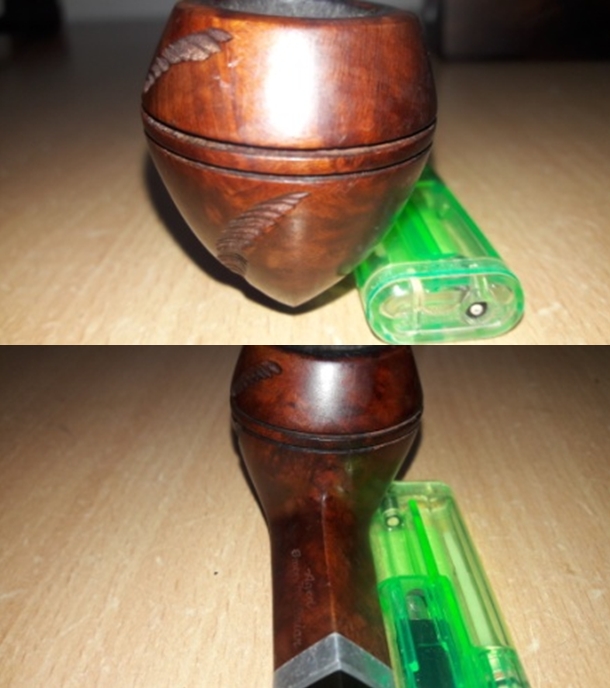
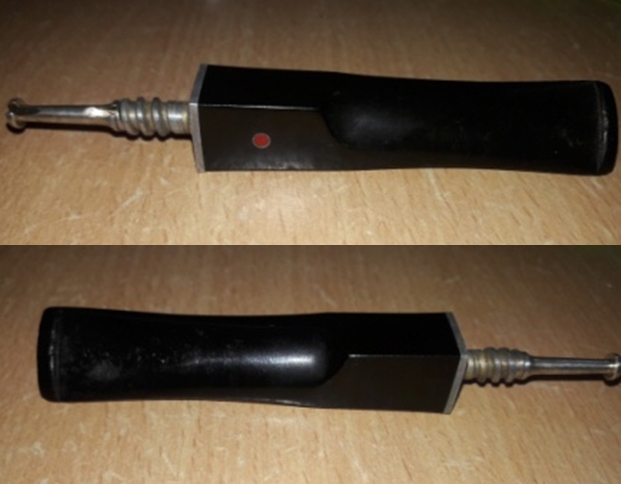
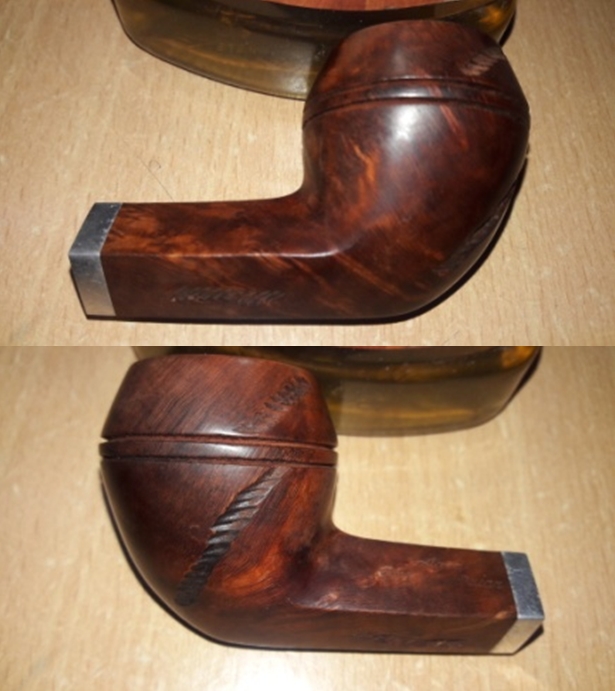
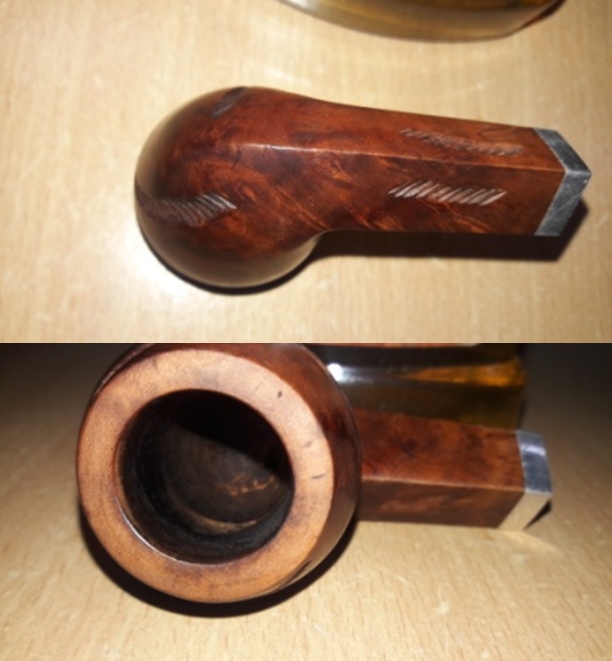
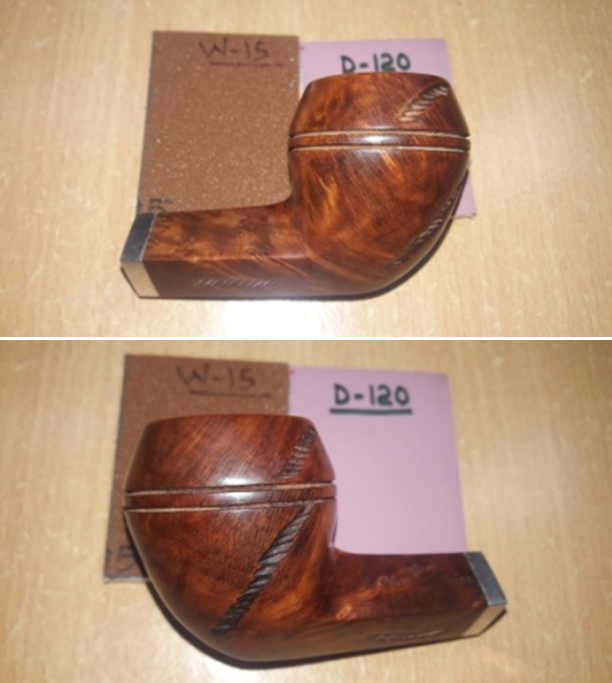
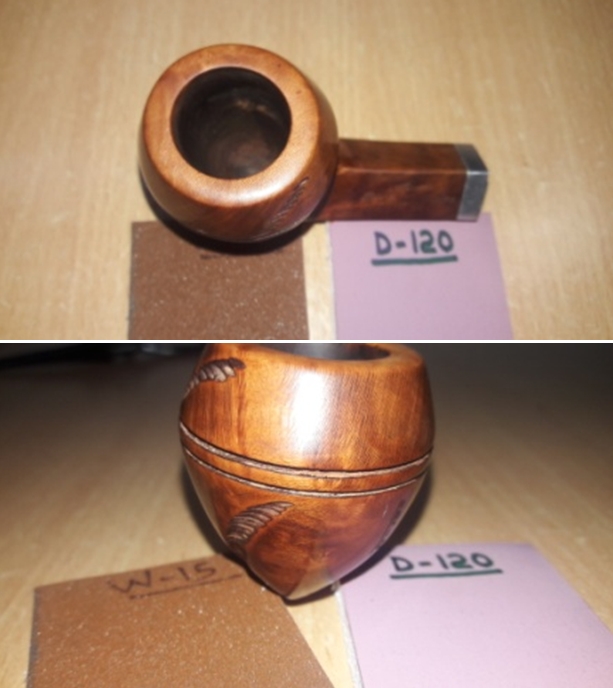
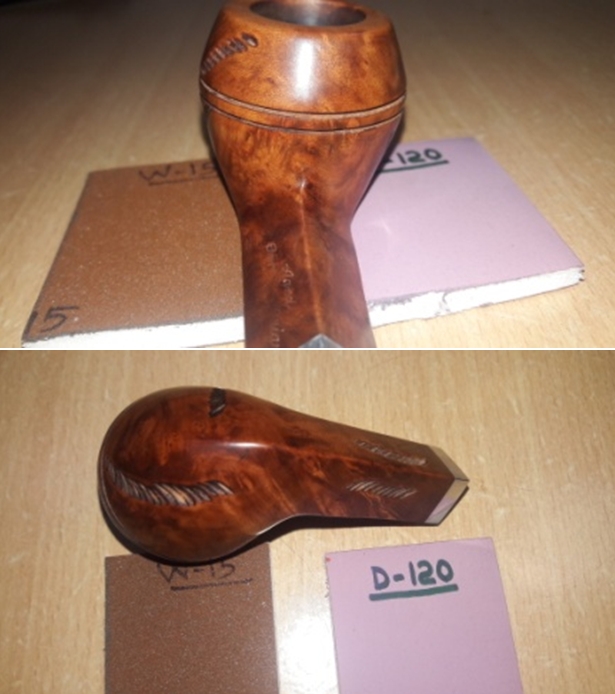
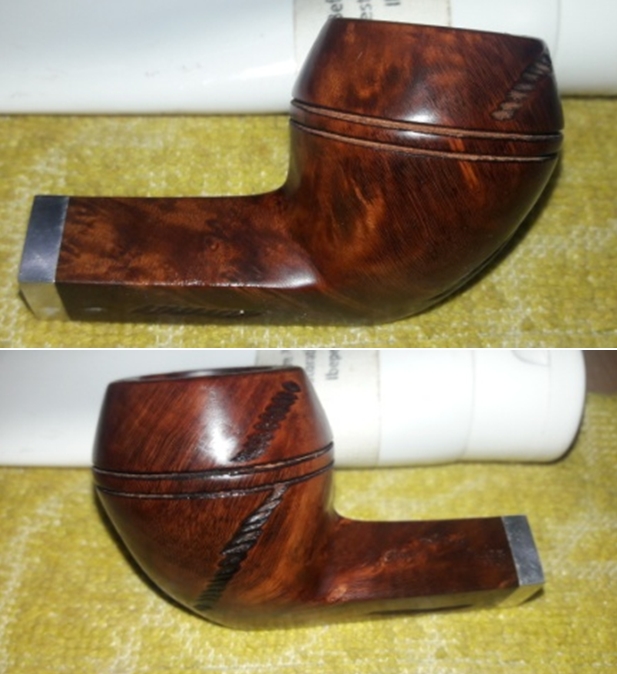
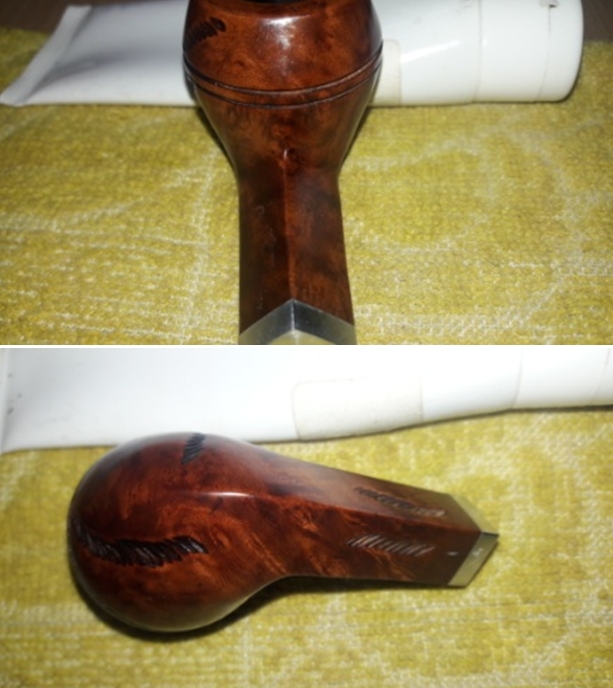
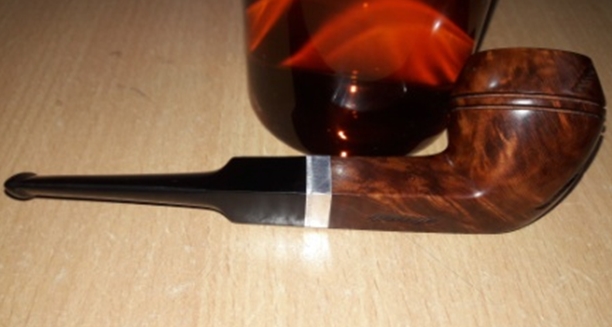
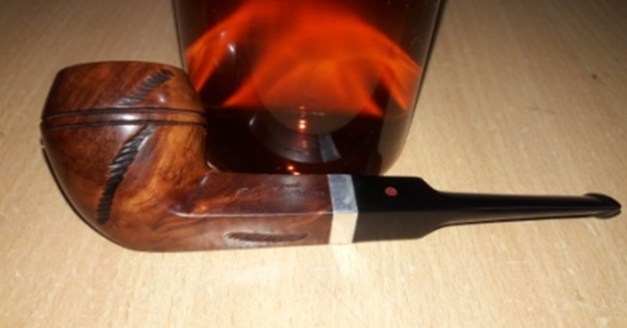
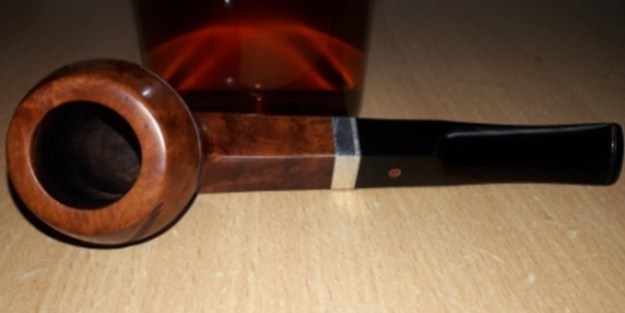
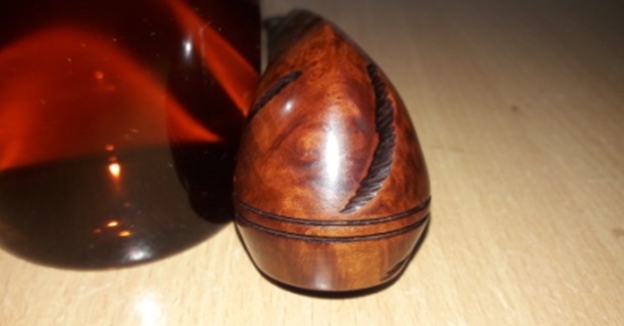
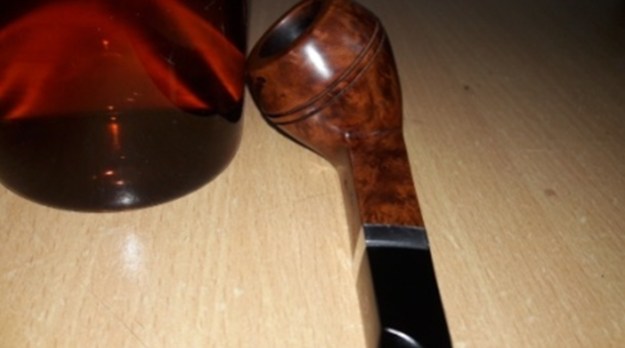
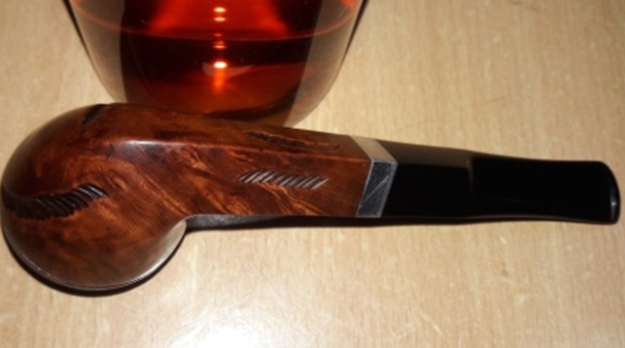
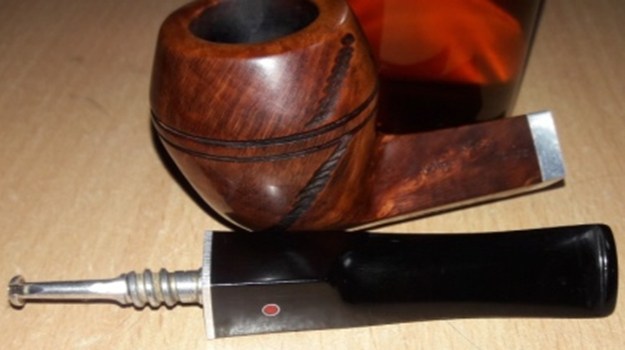
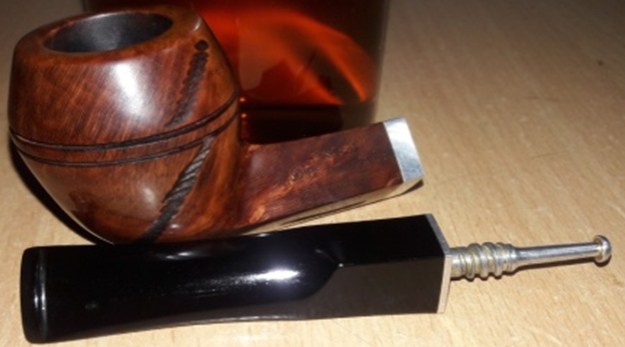
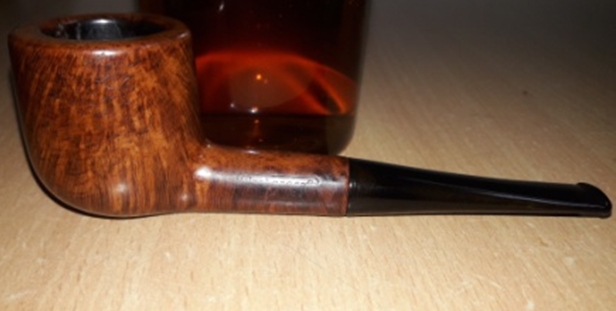
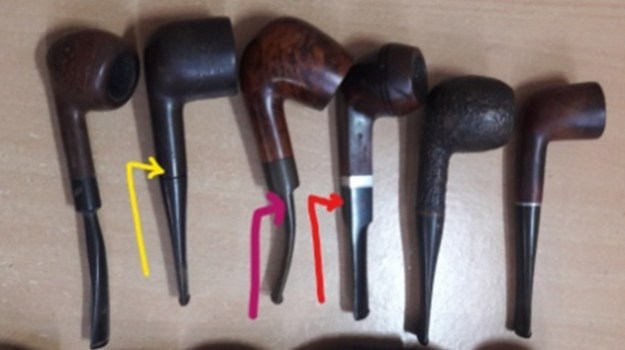
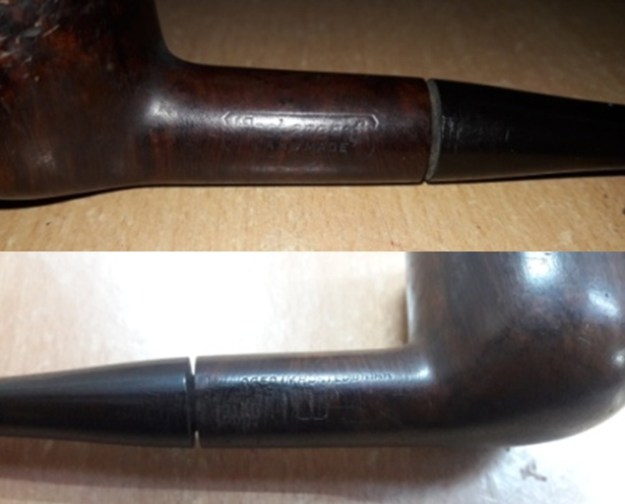
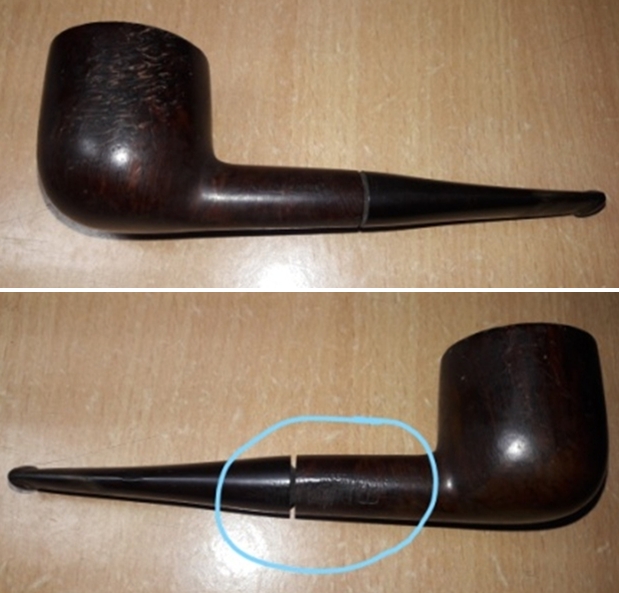
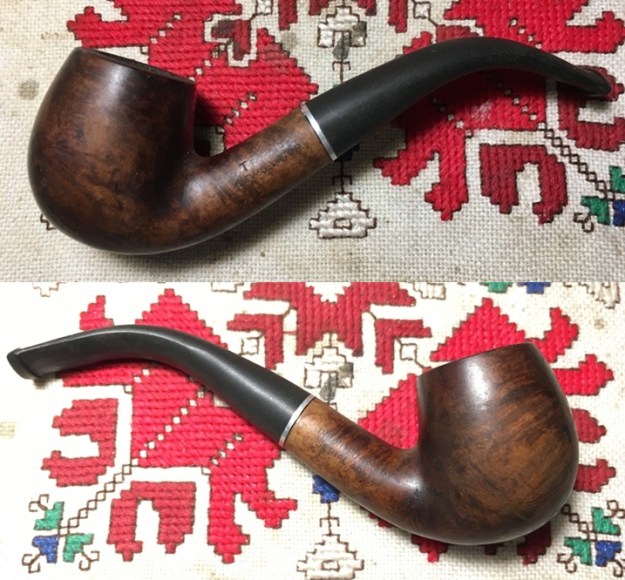
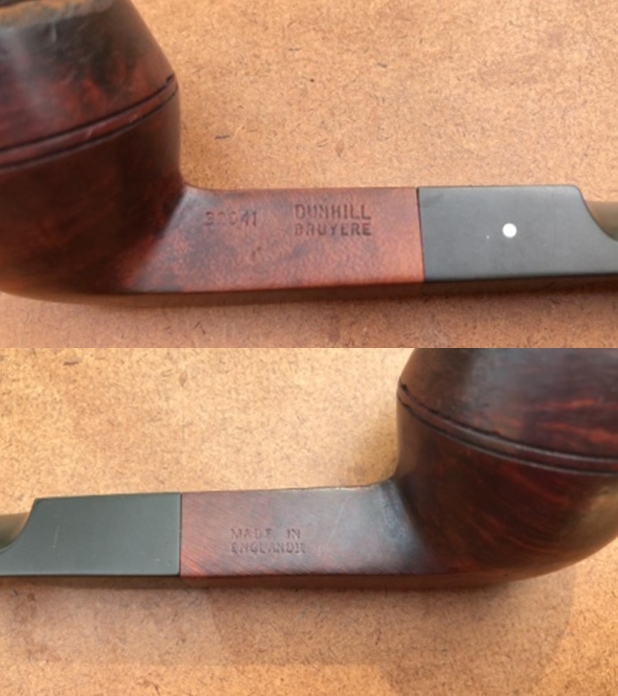
The pipe that I decided to work on from this find is an unbranded straight Bulldog with a diamond saddle stem, and is indicated in red colored arrow in the picture below. It is stamped on the left side of the shank as Aged over Imported Briar, in italics. The stummel is devoid of any other stampings. The only clue which may help in tracing the origins of this pipe is in the form of a Red Dot on the left surface of the diamond saddle stem. The bowl surface show four worm like rustications, which are akin to the ones seen on Wally Frank era Custombilt pipes, two each on either side roughly where one would hold the pipe while smoking. Similarly, one each worm rustication is seen on either side of the bottom surface of the diamond shank. I searched pipephil.eu for any information on this pipe by visiting their “Logos with dots & spots” link, however, without any success. My next attempt to identify the maker of this pipe was by visiting pipedia.org and again I came to a naught. However, the IMPORTED BRIAR stampings are generally associated with pipes designated for American markets and this is where the trail (if at all there was any!!!) ends. If any of the readers has any viable input on this pipe, you are most welcome to share it with the community in form of comments on rebornpipes.com.

INITIAL VISUAL INSPECTION
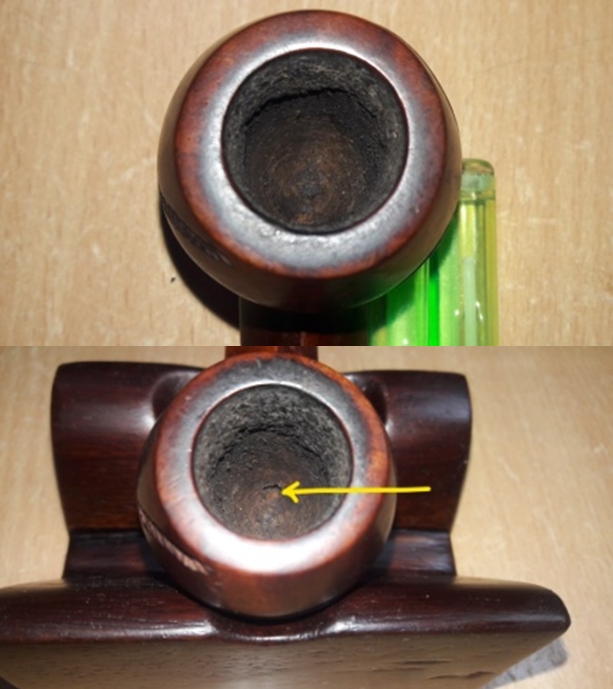
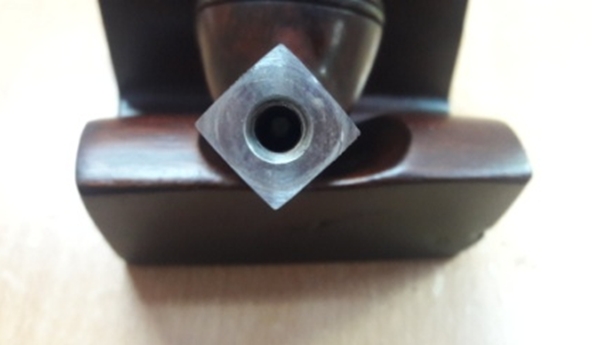
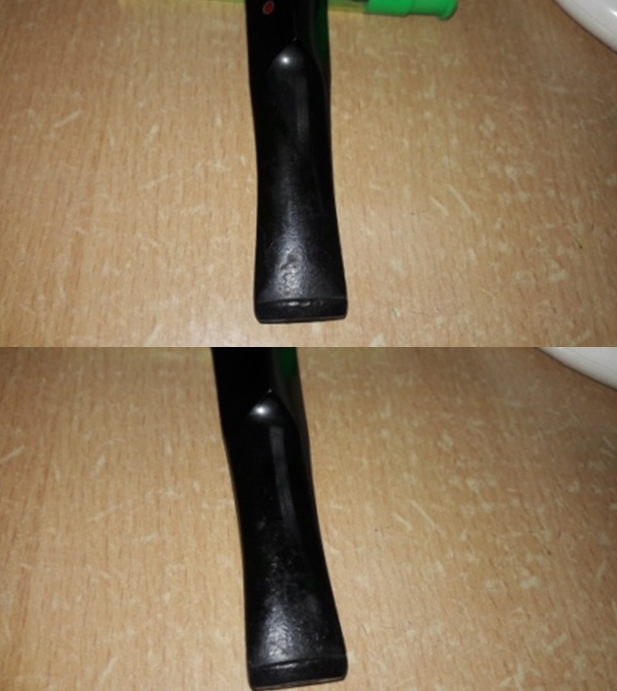
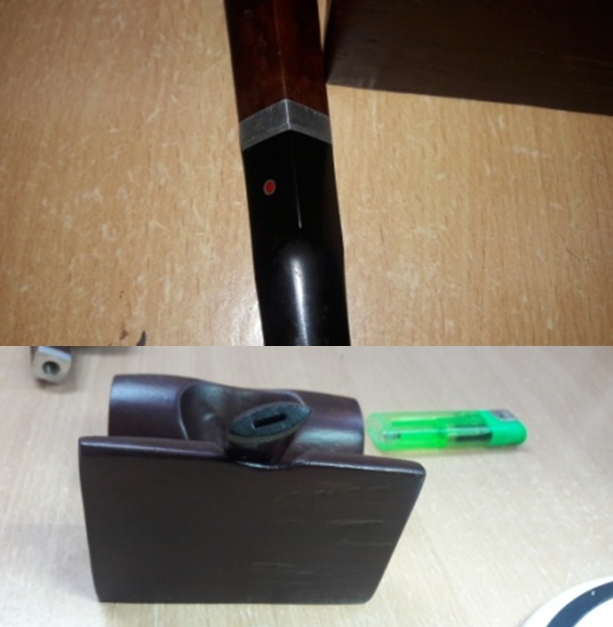
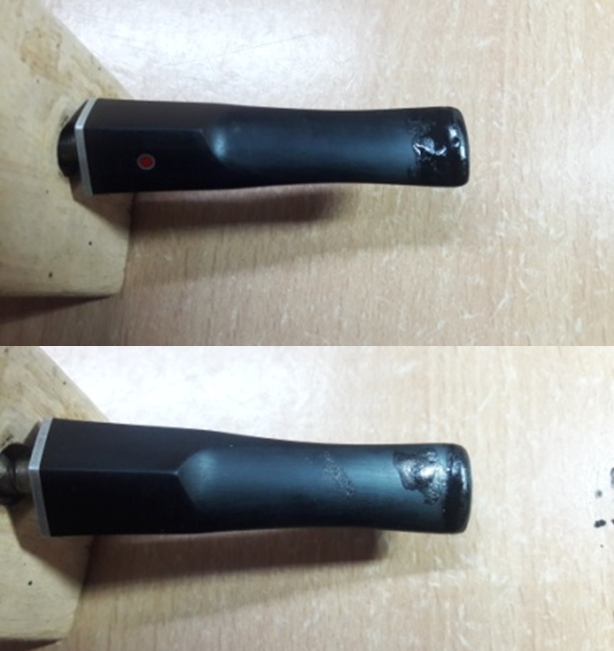
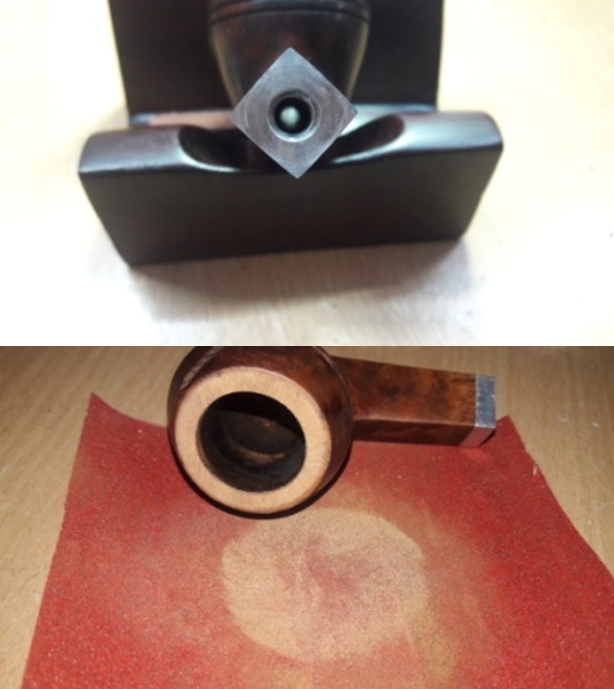
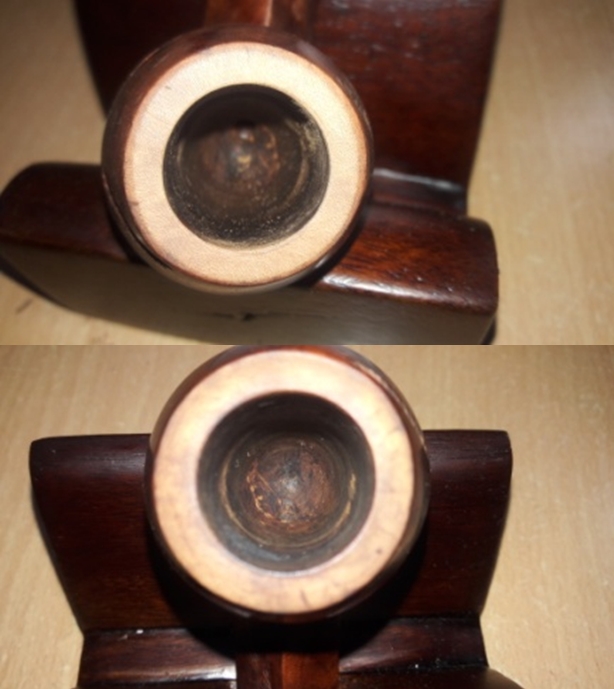
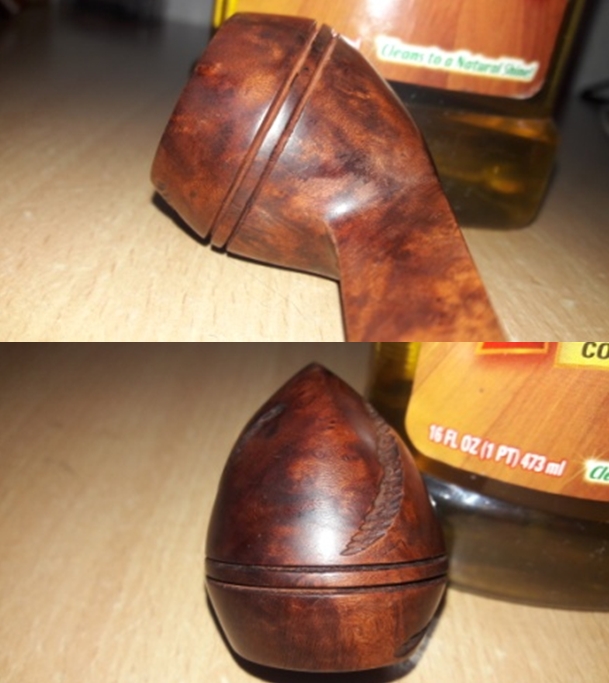
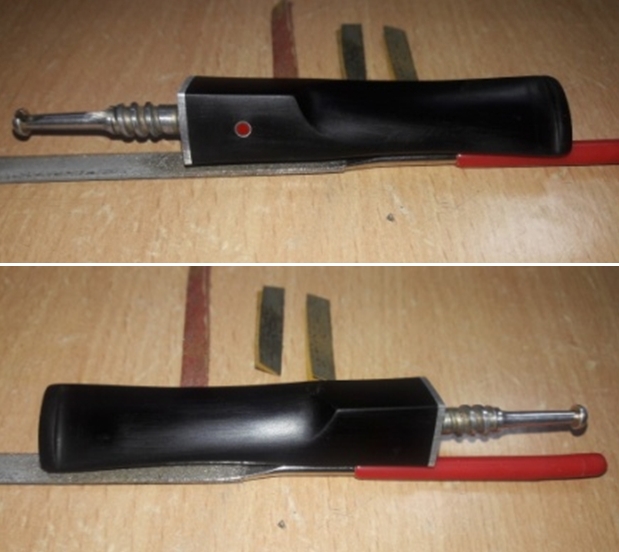
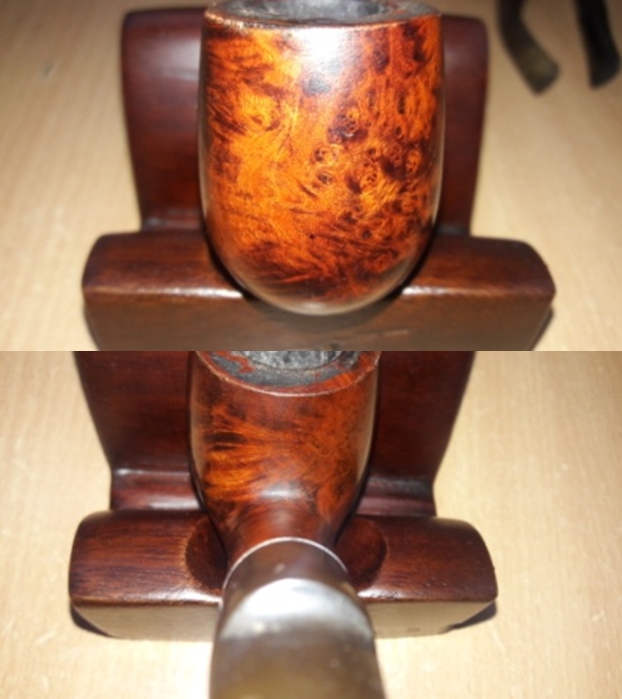
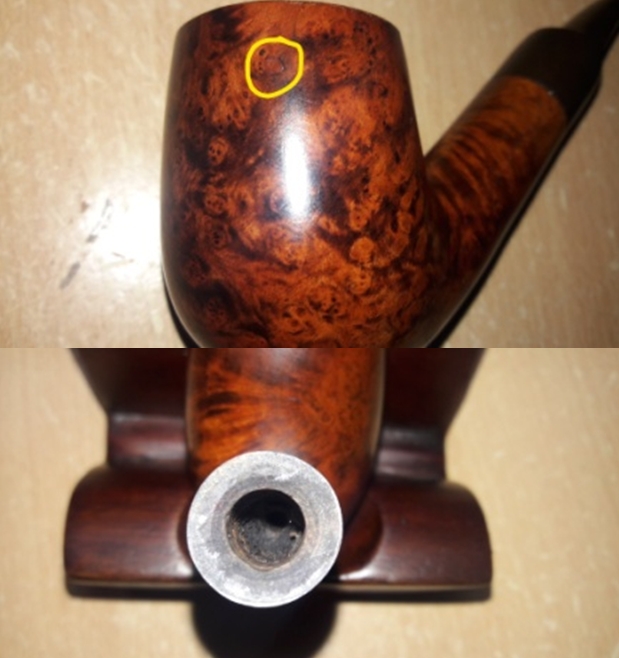
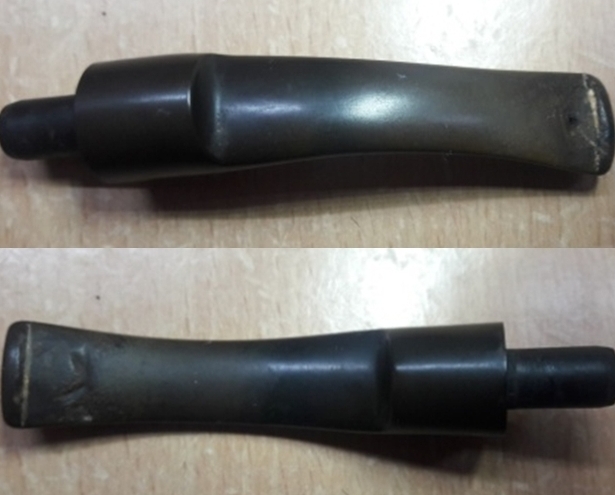
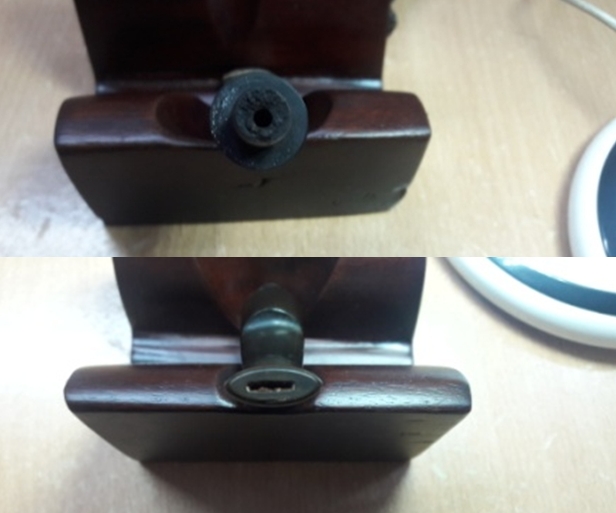
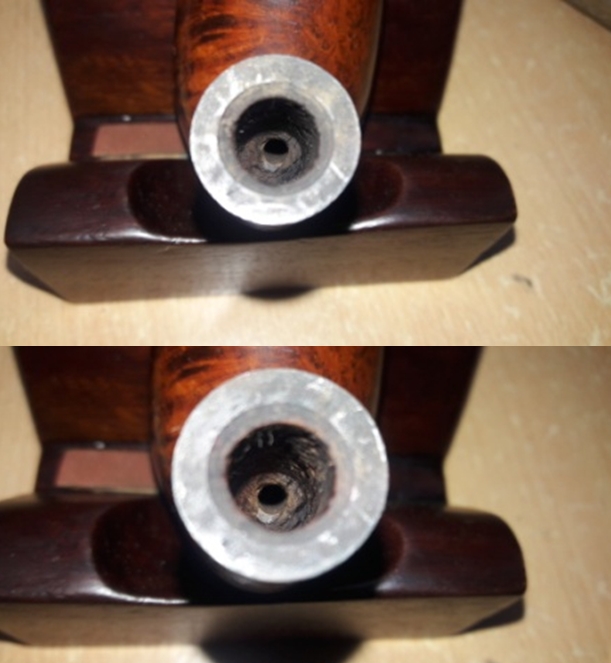
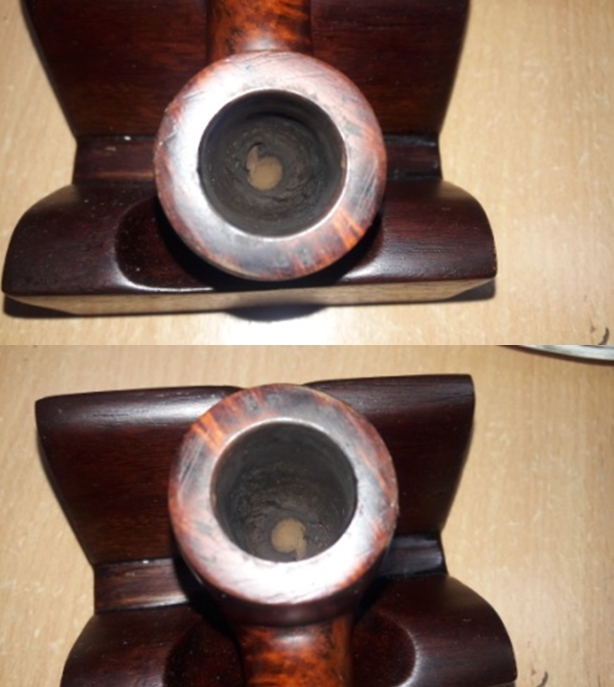
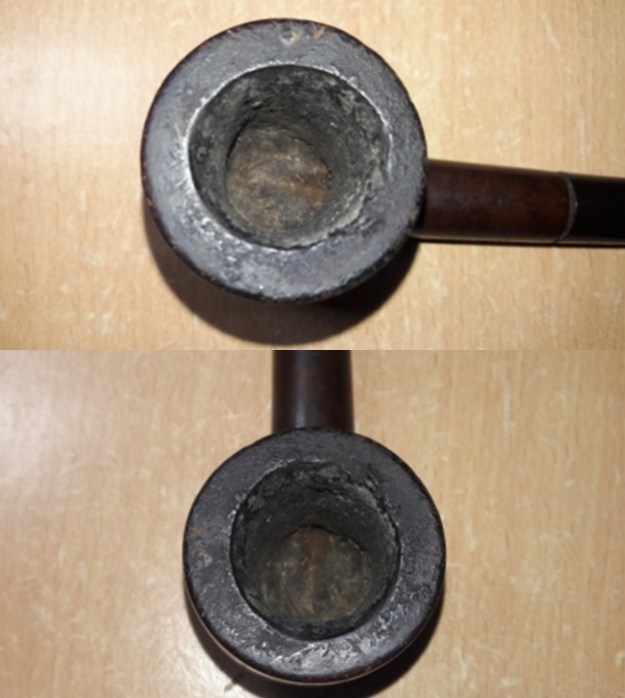
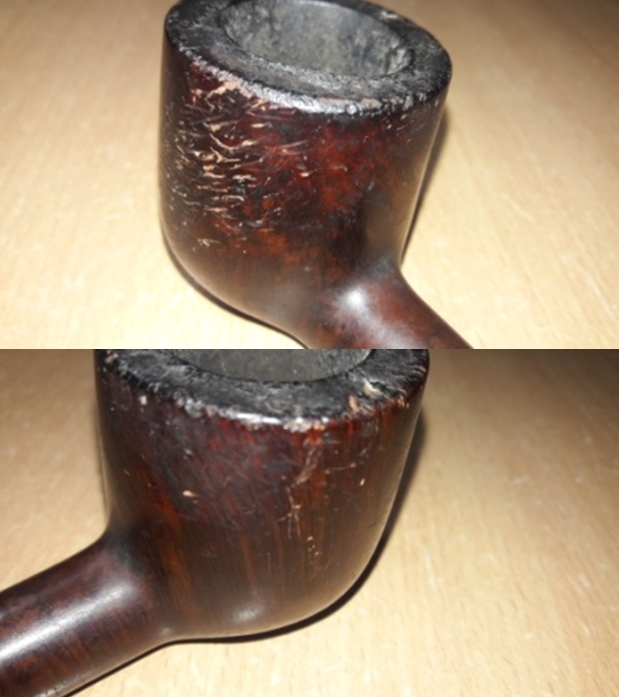
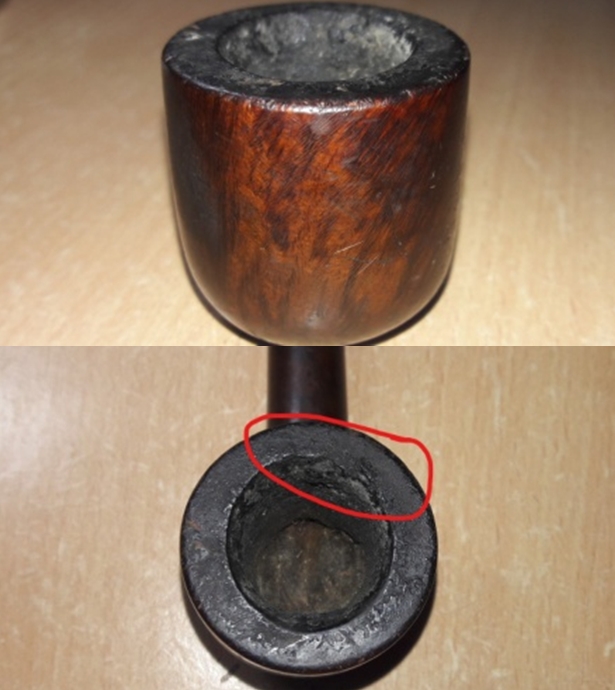
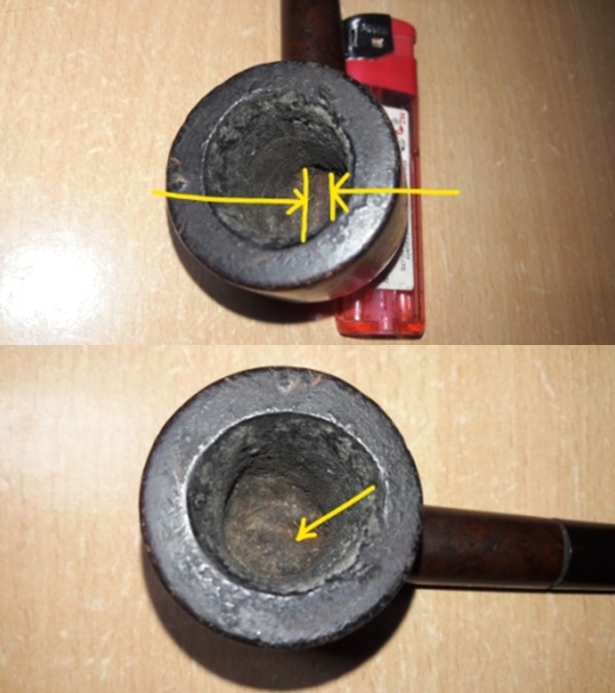
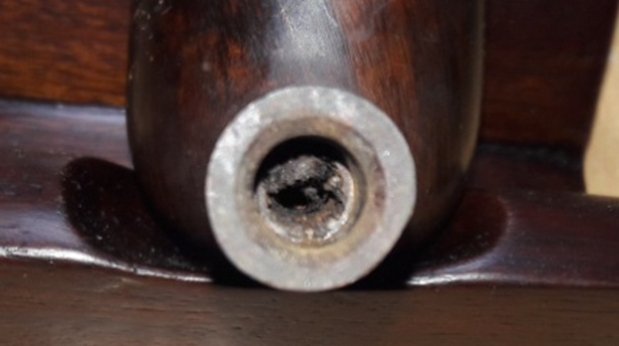
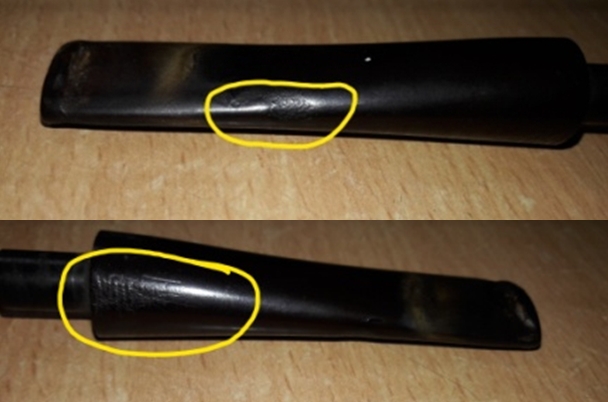
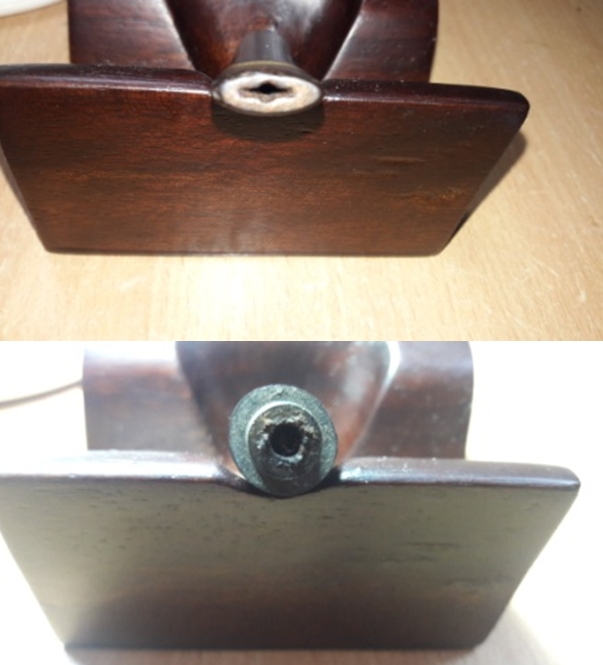
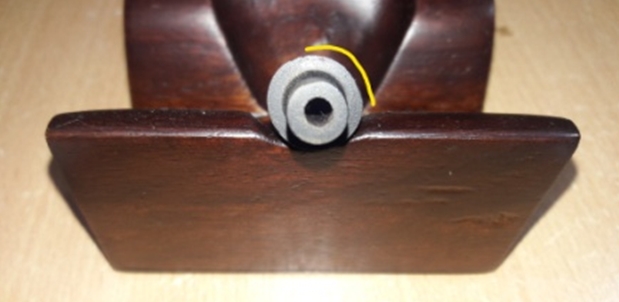
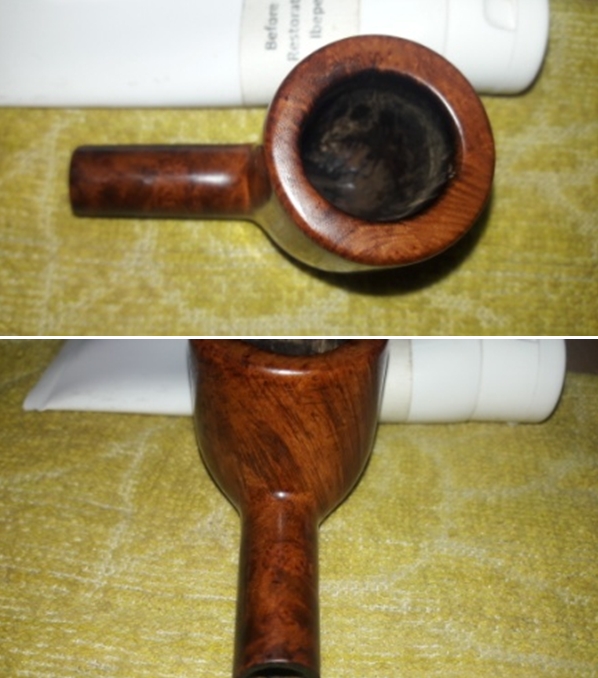
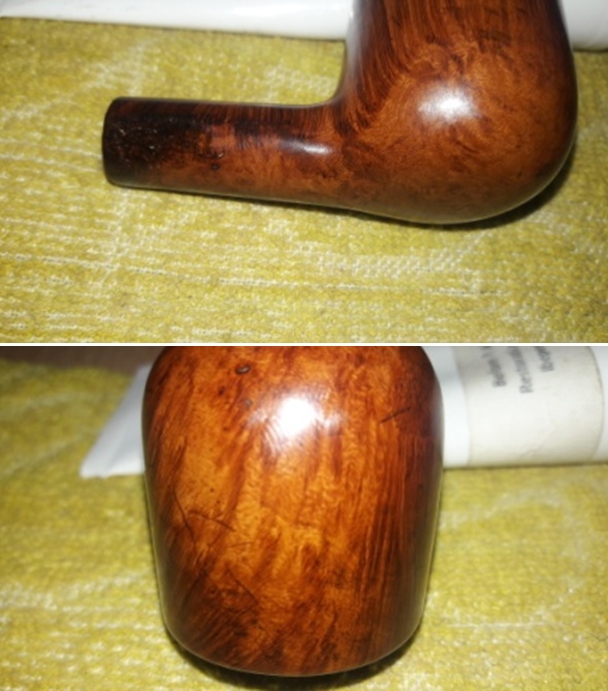
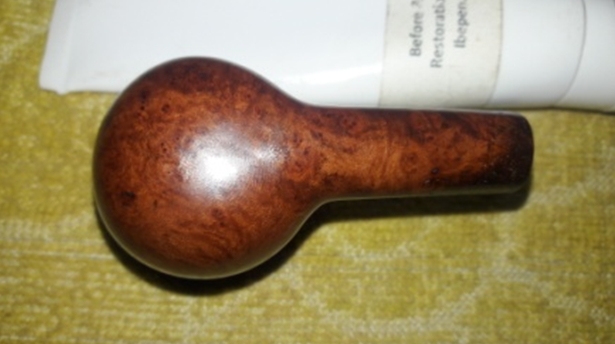
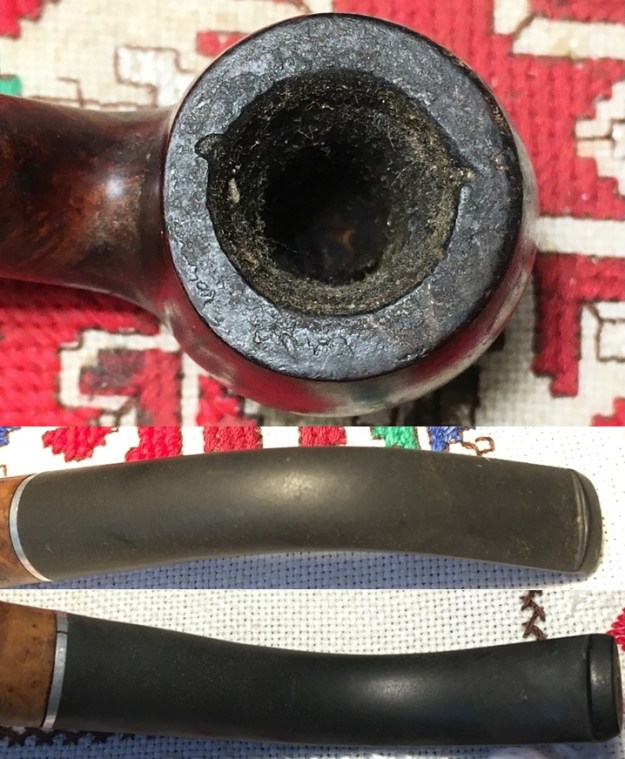
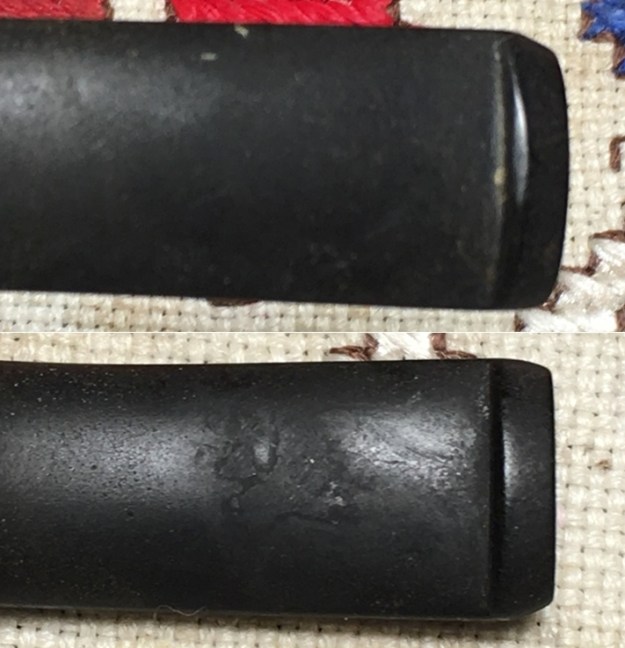
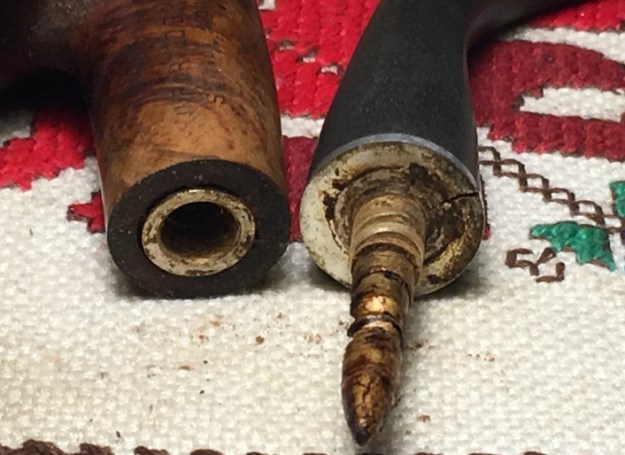
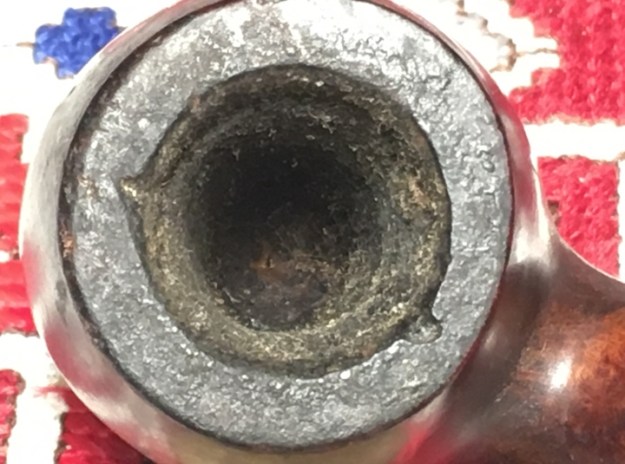
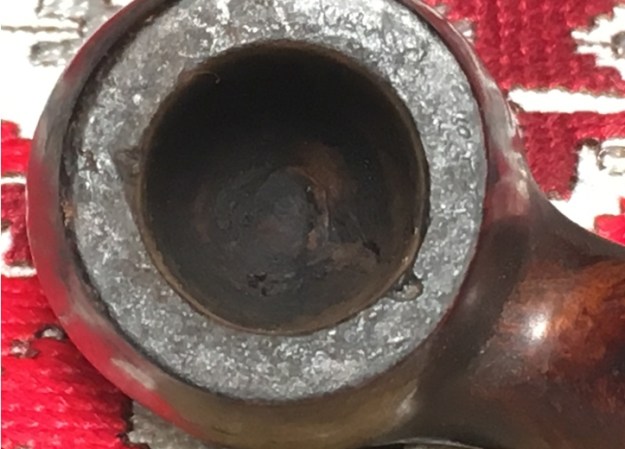
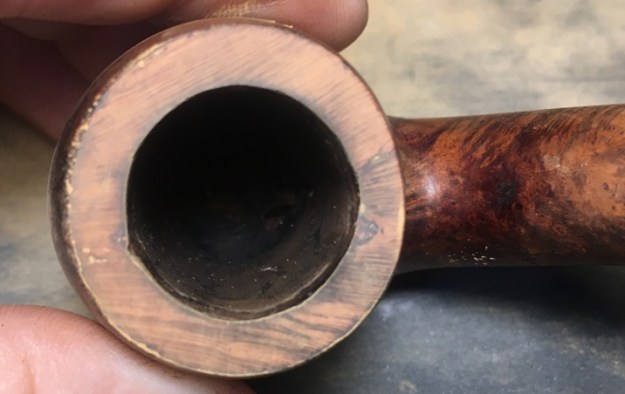
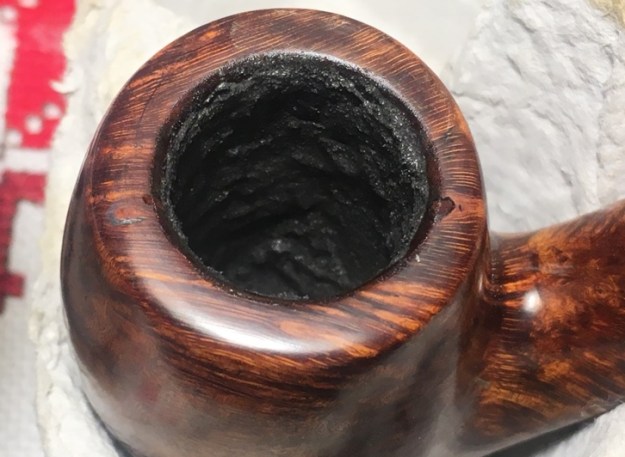
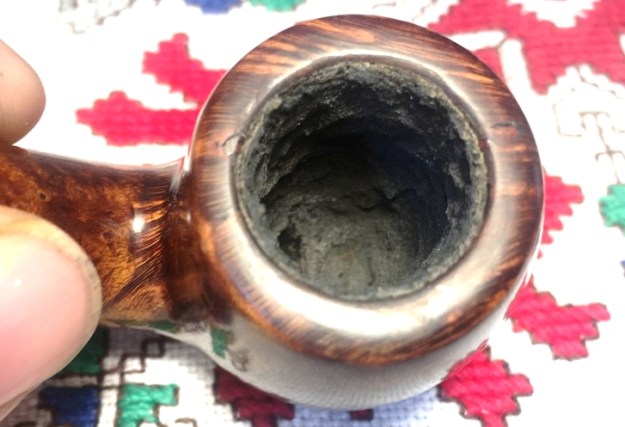
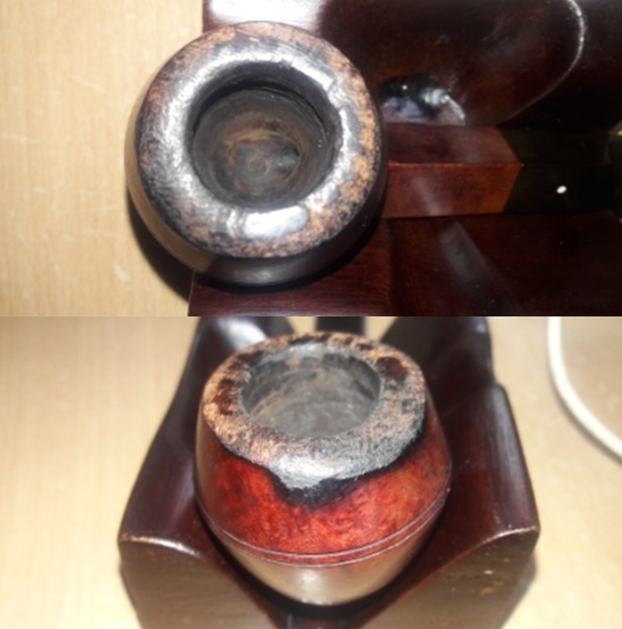
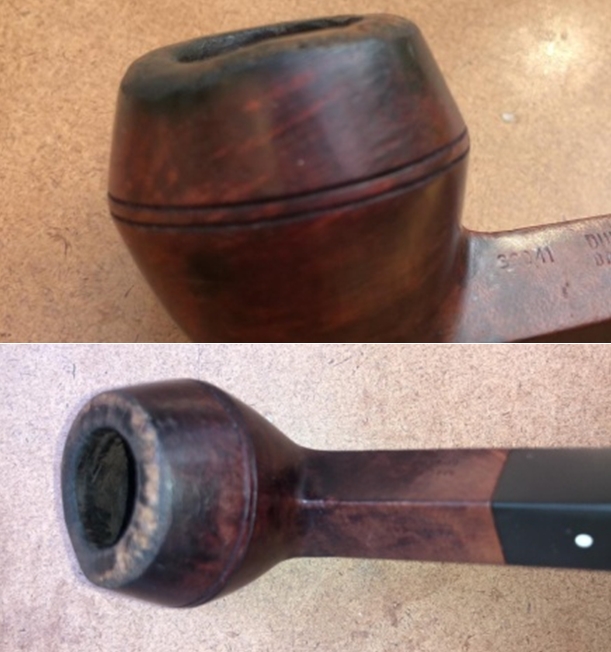
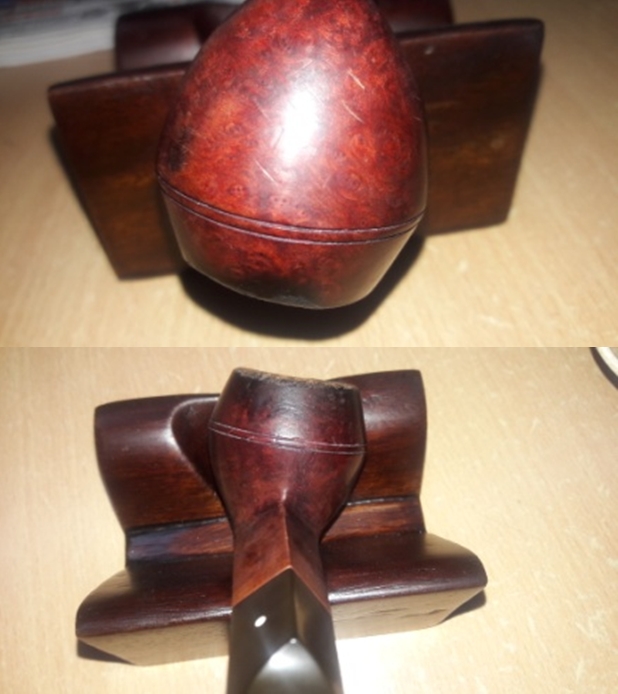
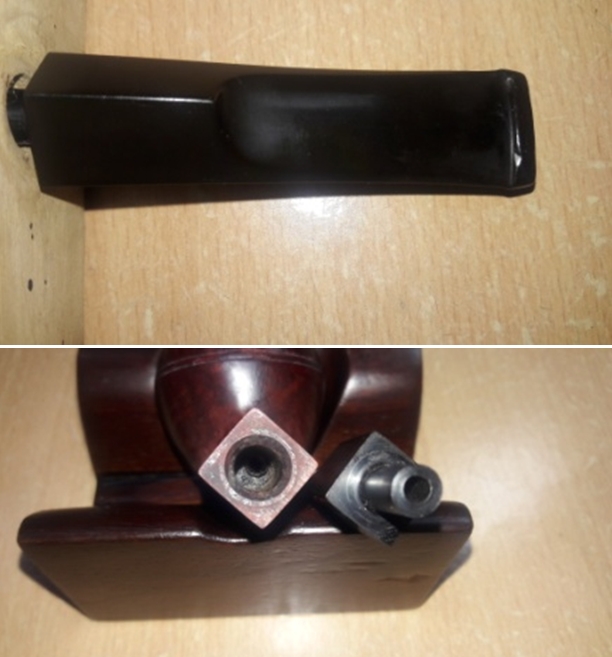
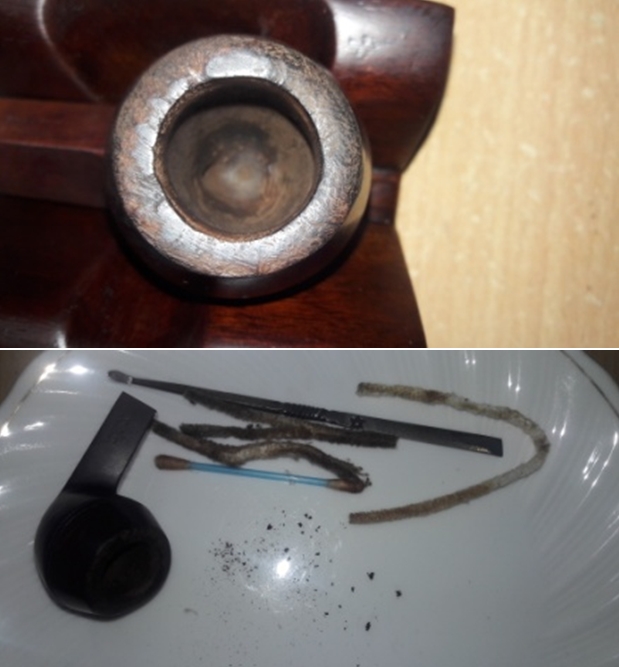
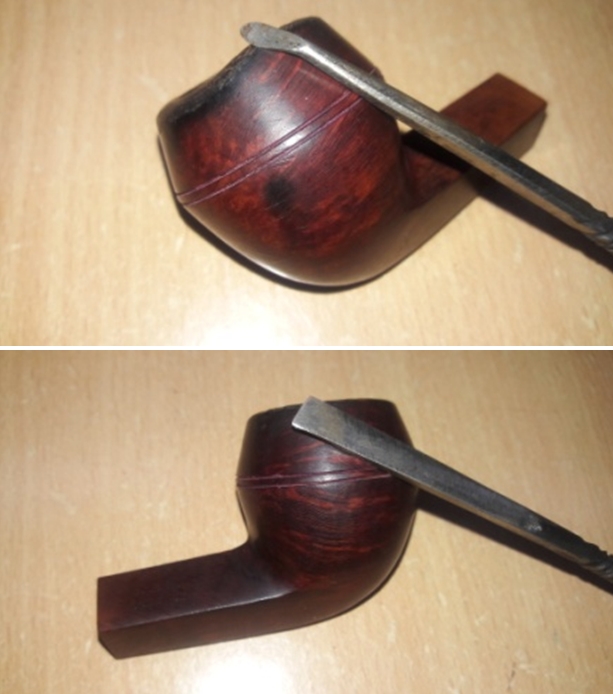
There is a thin layer of cake in the chamber. In order to comment on the condition of the walls of the chamber, I need to ream the cake down to the bare briar. The rim top surface is covered with a minor overflow of lava through which the inner rim edge looks intact. A few minor dents and dings are visible on the rim top surface. The outer edge of the rim, again, is in pristine condition. There is a sweet odor to the chamber. It is here within the chamber that the first quality issue is seen; the draught hole is ever so slightly off-center towards the right side, indicated by yellow arrow.The stummel boasts of some beautiful mixed pattern of straight and cross grain all around. It is dirty with grime, oils and tars covering the stummel surface and added to this are a few dents and dings to the sides and front of the stummel. The worm rustications are filled with dust and dirt and can be seen in the pictures below. The double ring separating the cap from the rest of the stummel is intact and crisp. The end of the shank has an aluminum band which is threaded and extends in to mortise in to which fits the threaded tenon stinger. The band and internal threaded extension is nice and clean with a ‘like new’ shine. Coming to the stem, this is where the second quality issue is seen; the stem appears and feels to be made of plastic (not very sure, as I have seen such shiny vulcanite stems before). The upper and lower surfaces shows heavy tooth chatter in the bite zone, including bite marks to the button. The button on either surface will have to be sharpened and made crisp. The threaded stinger tenon is clean, with no signs of accumulated oils and tars. The condition of the stem airway can be ascertained once it is being cleaned with alcohol and pipe cleaners. The aluminum spacer, that houses the stinger, is clean. The alignment of the diamond shank end with that of the saddle stem is perfect. The third quality issue is that the shoulders around the horizontal slot appear to be sawed off. It is uneven with heavy scratches. THE PROCESS
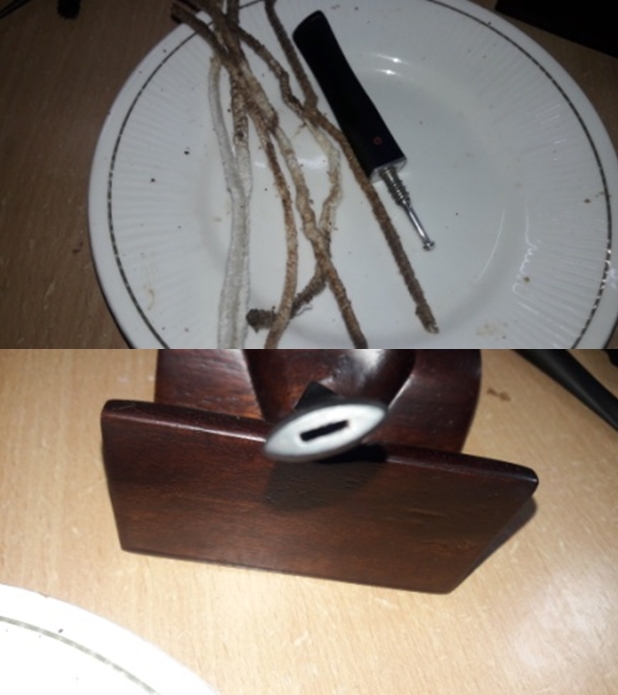
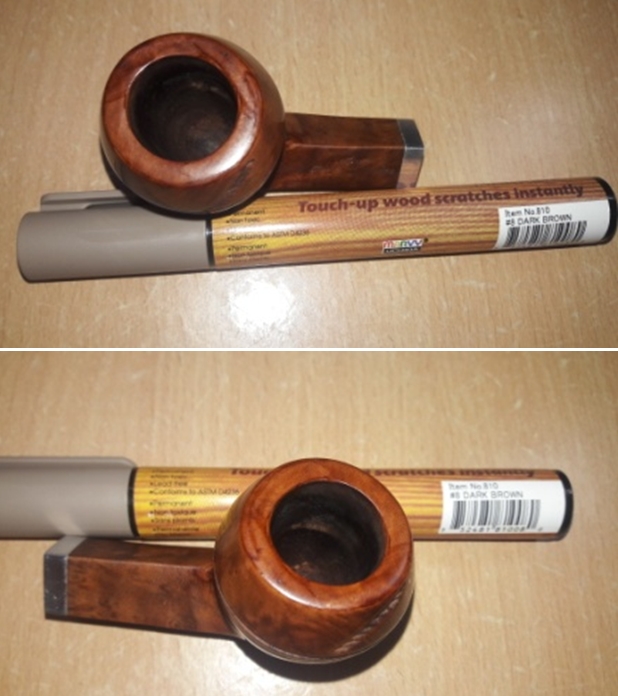
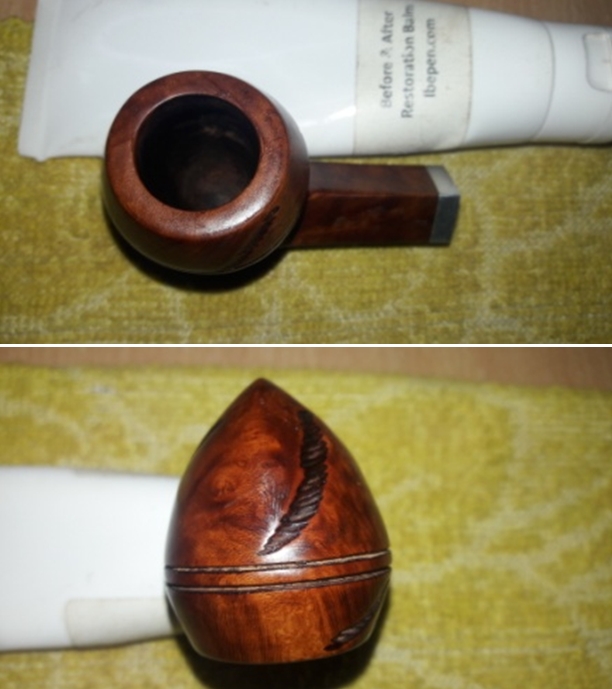
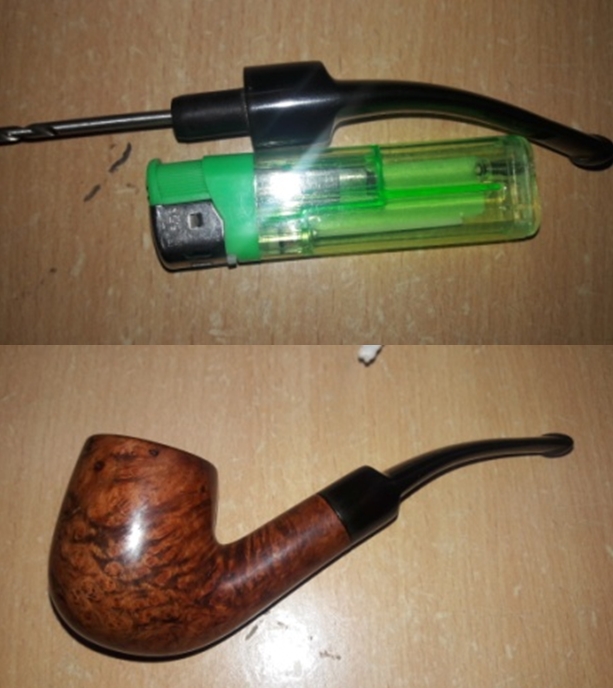
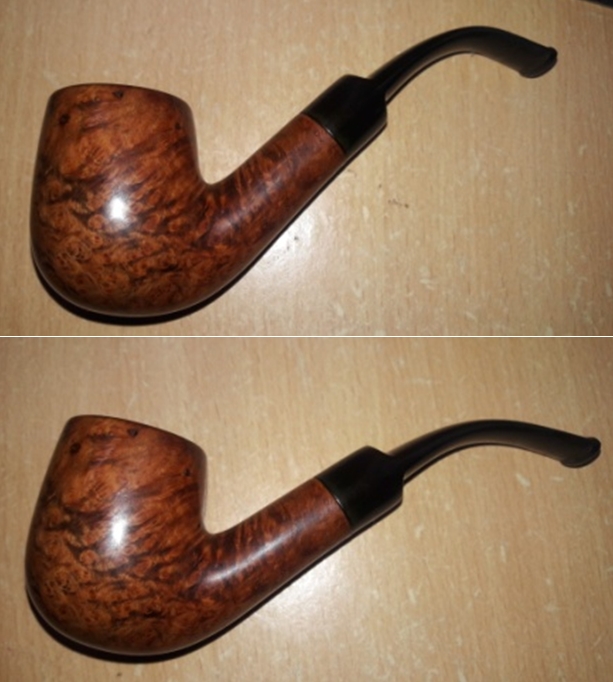
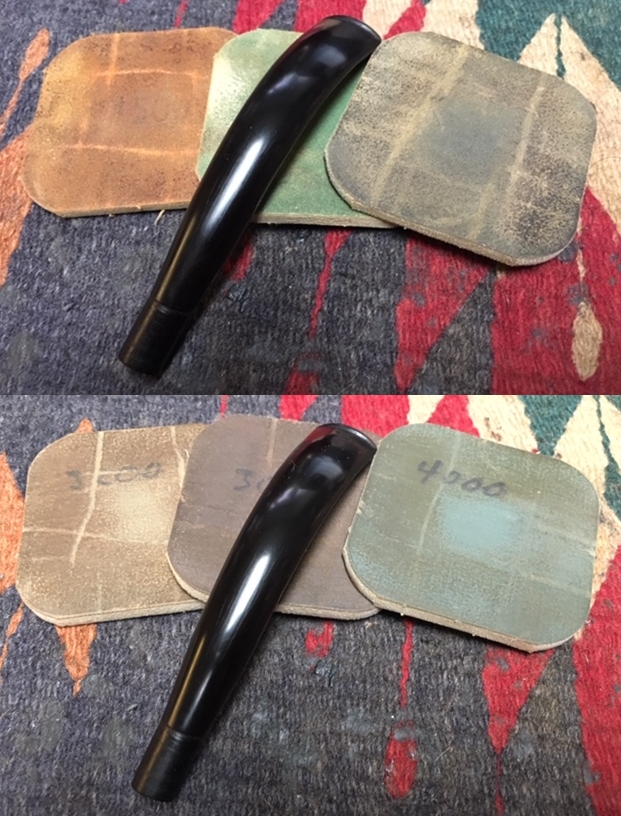
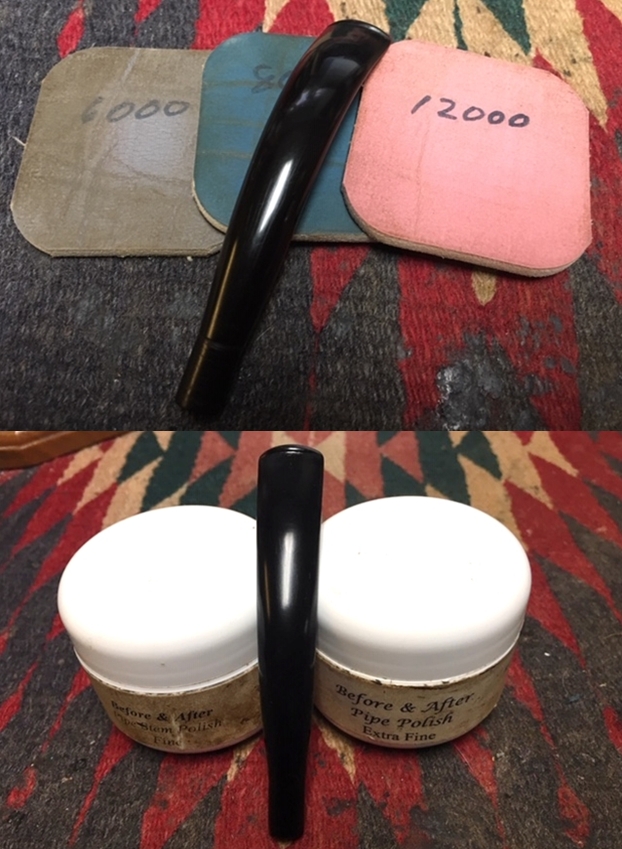
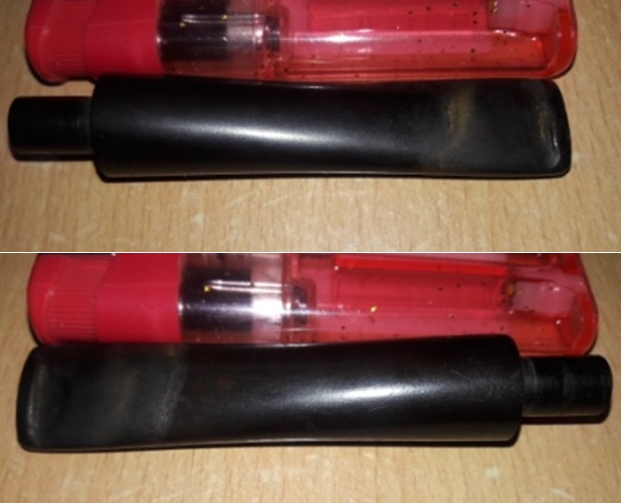
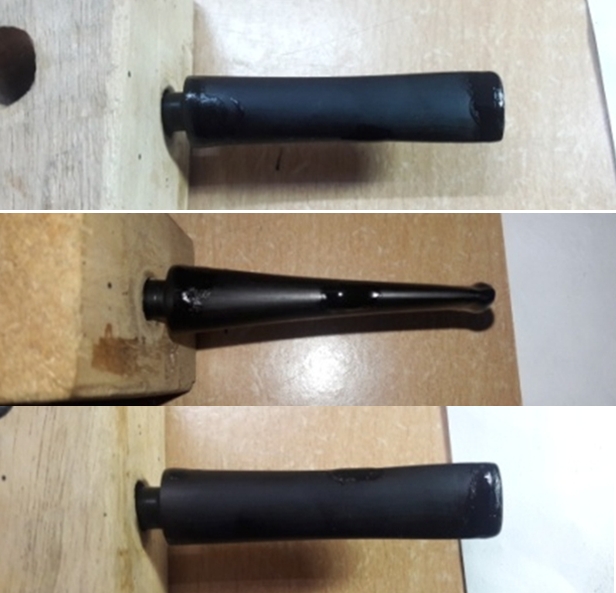
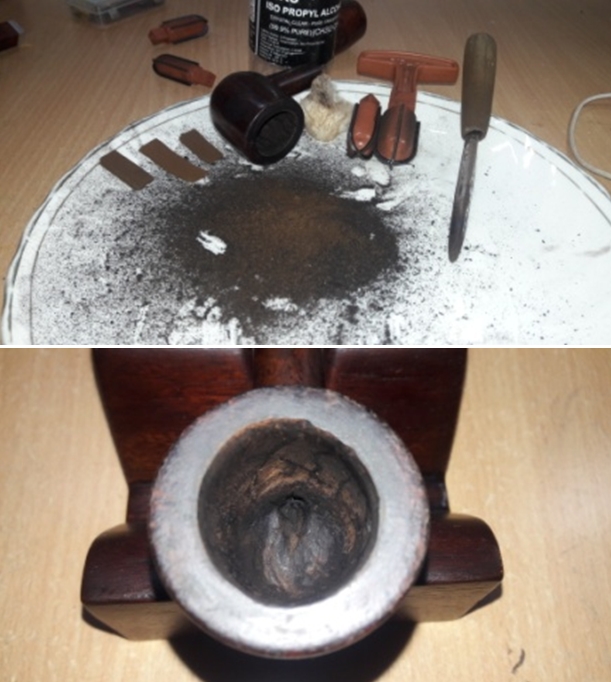
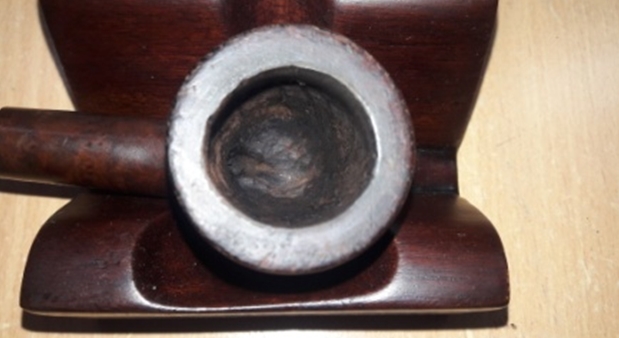
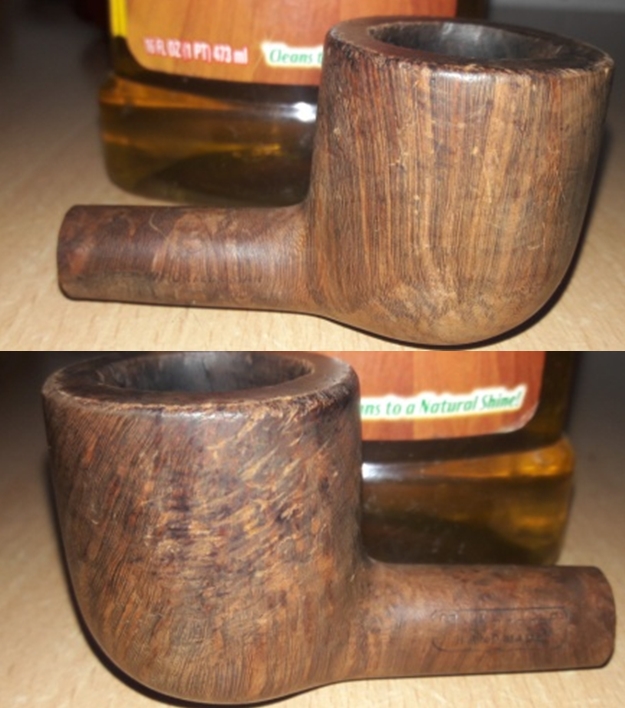
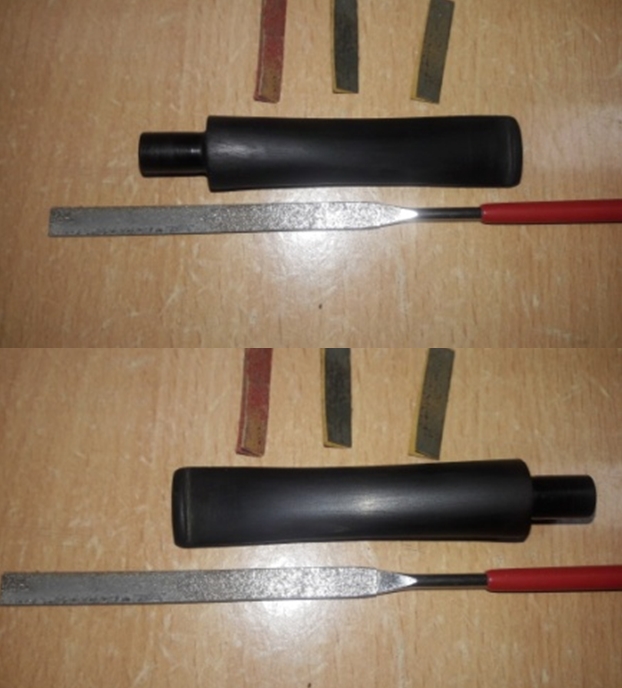
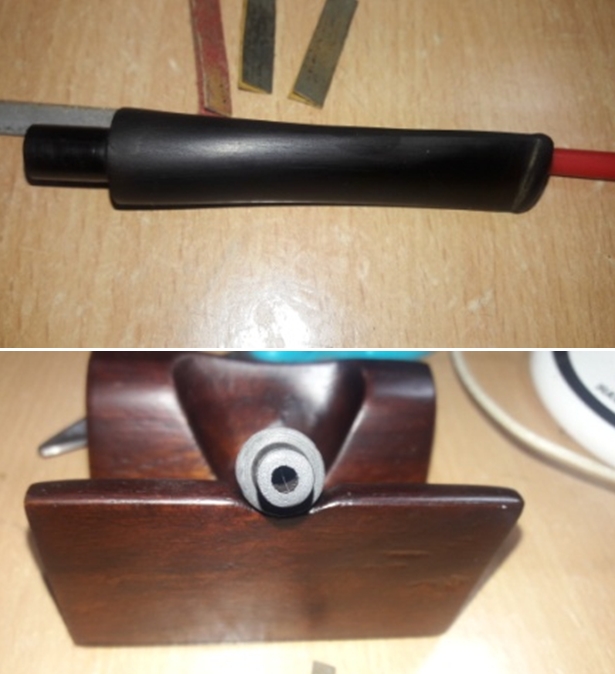
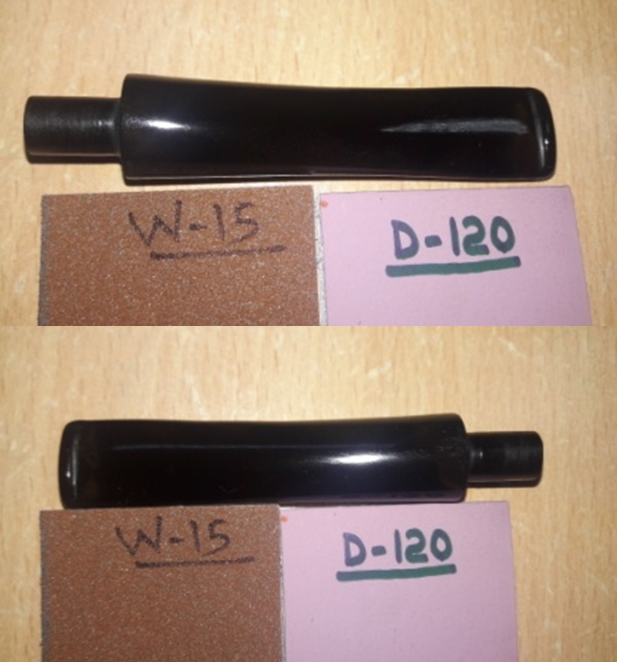
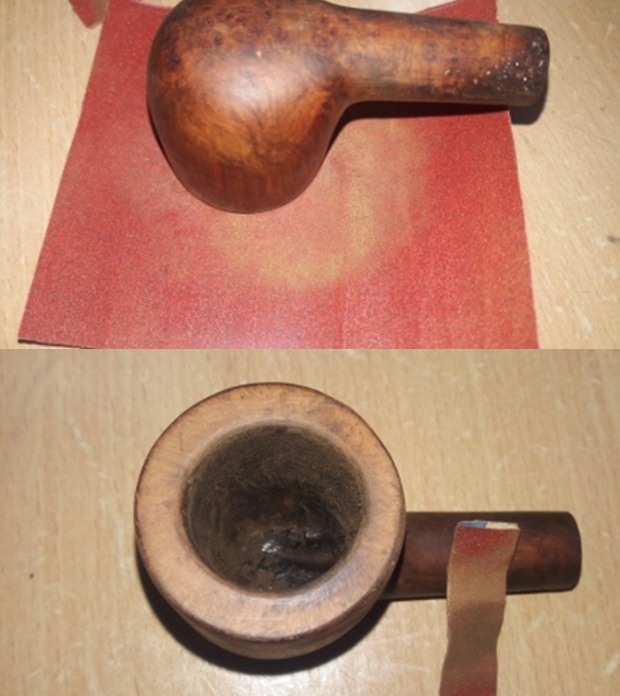
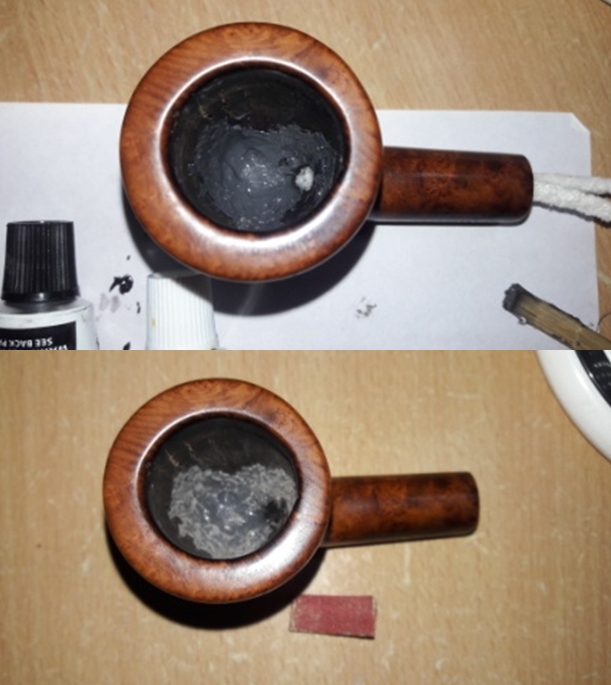
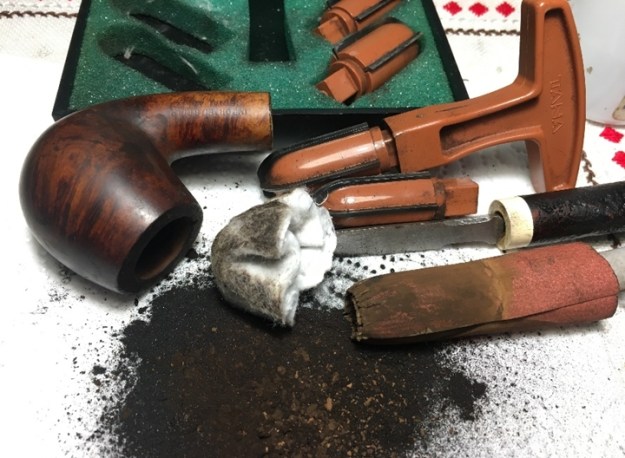
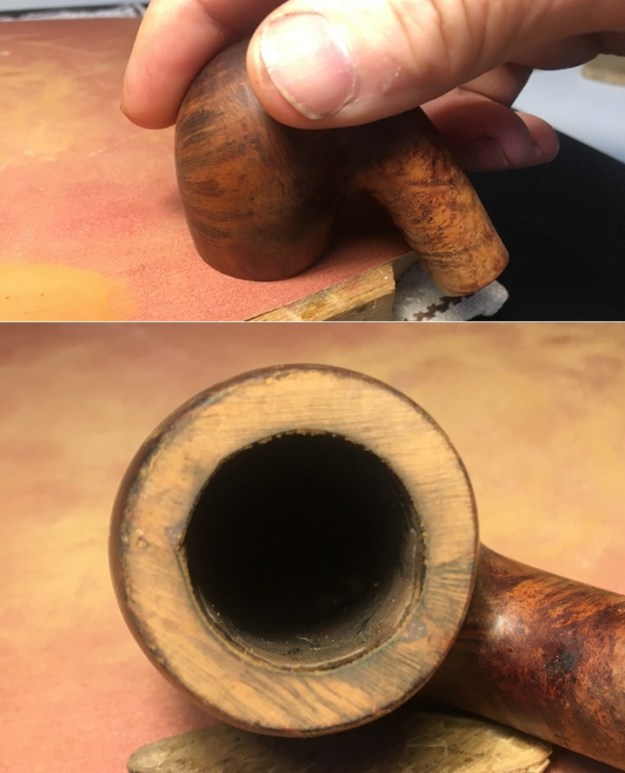
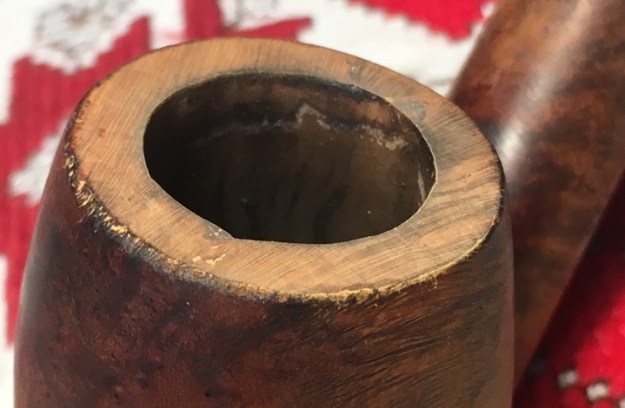
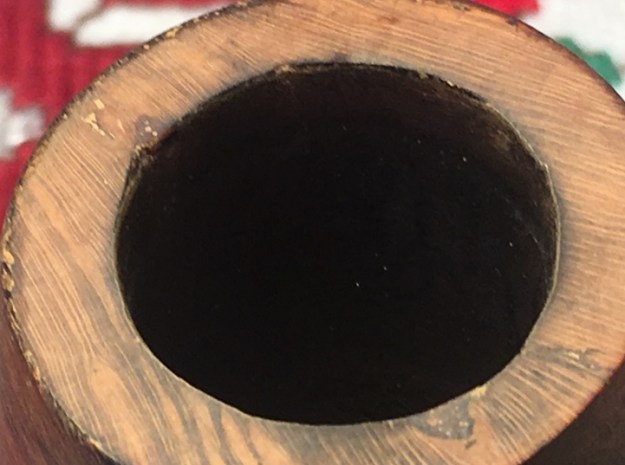
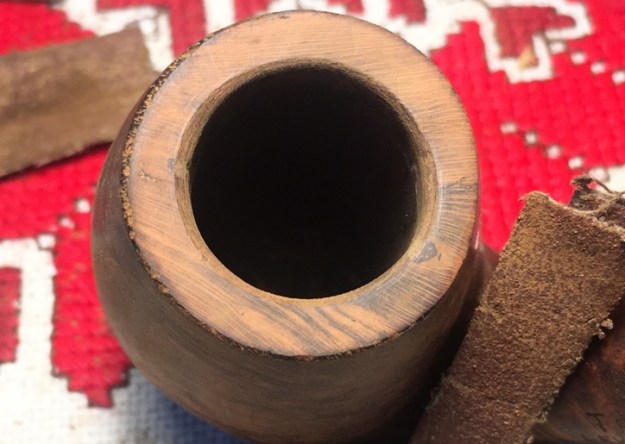
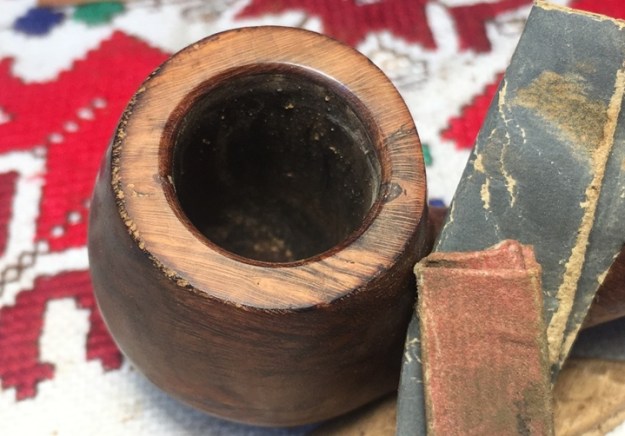
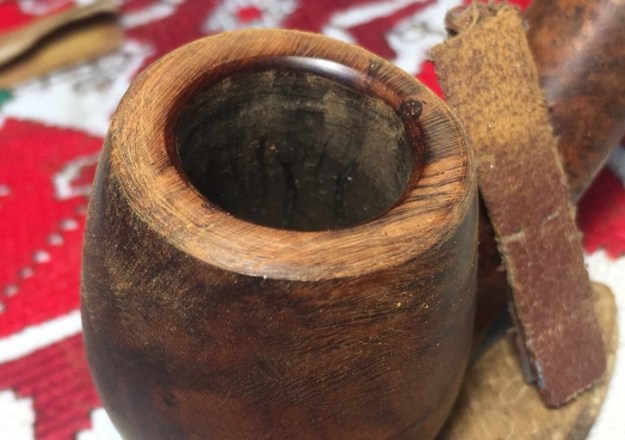
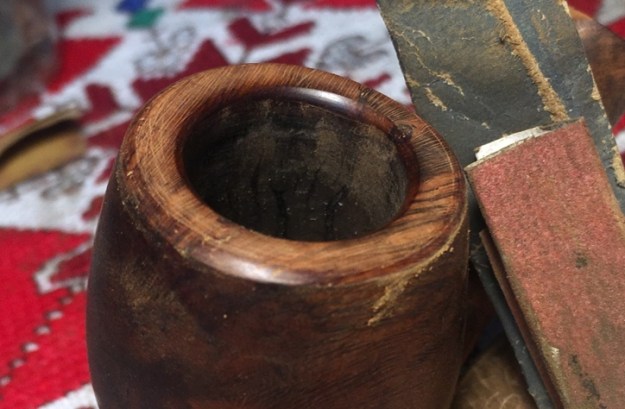
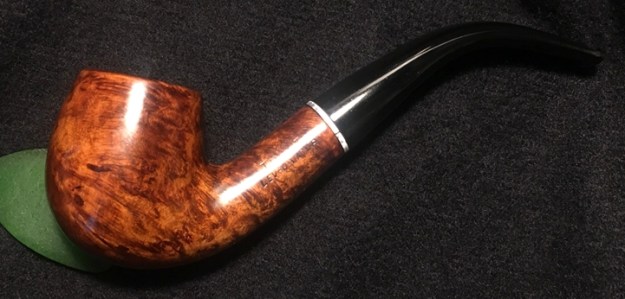
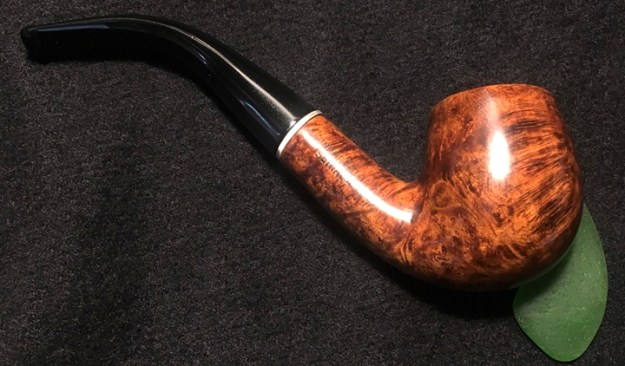
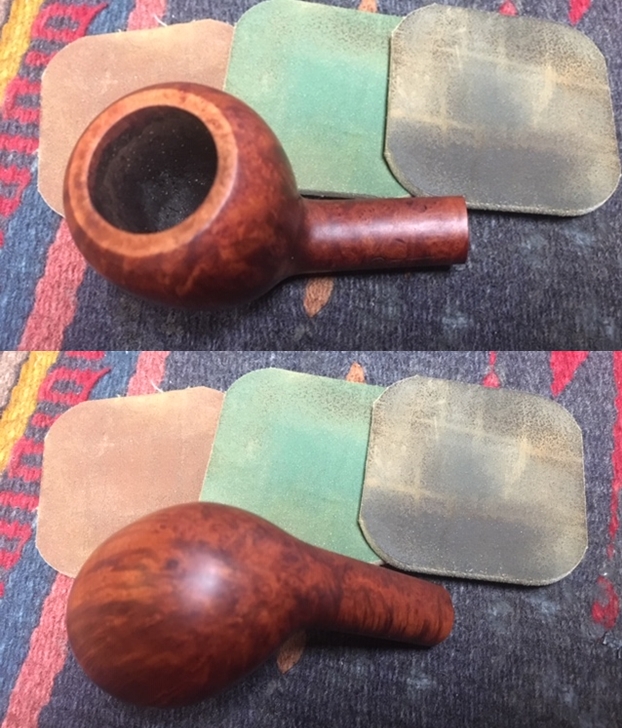
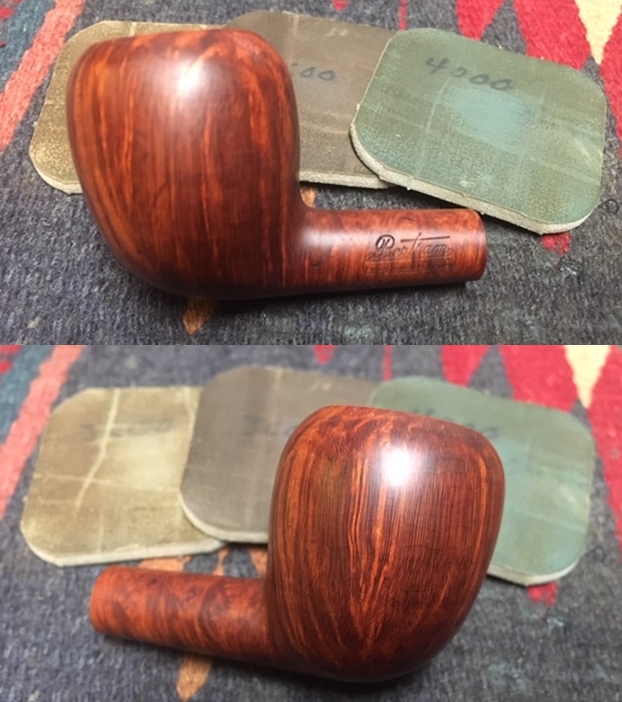
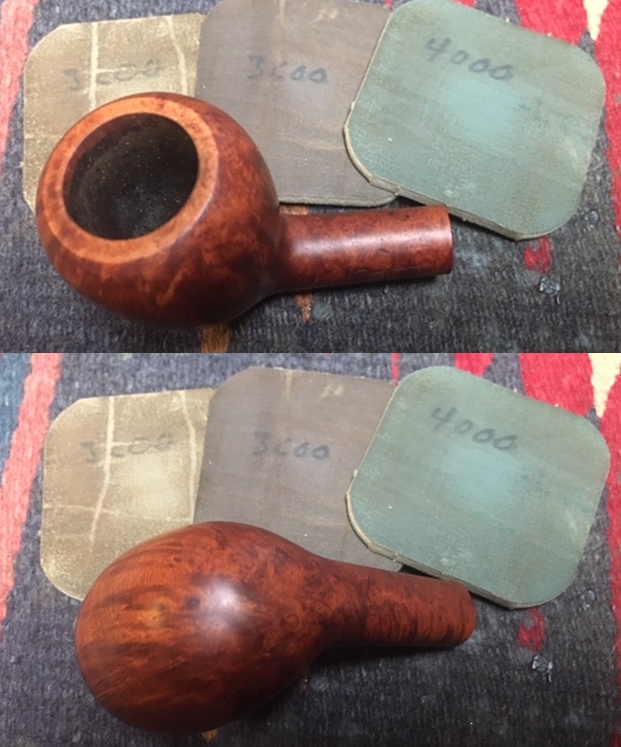
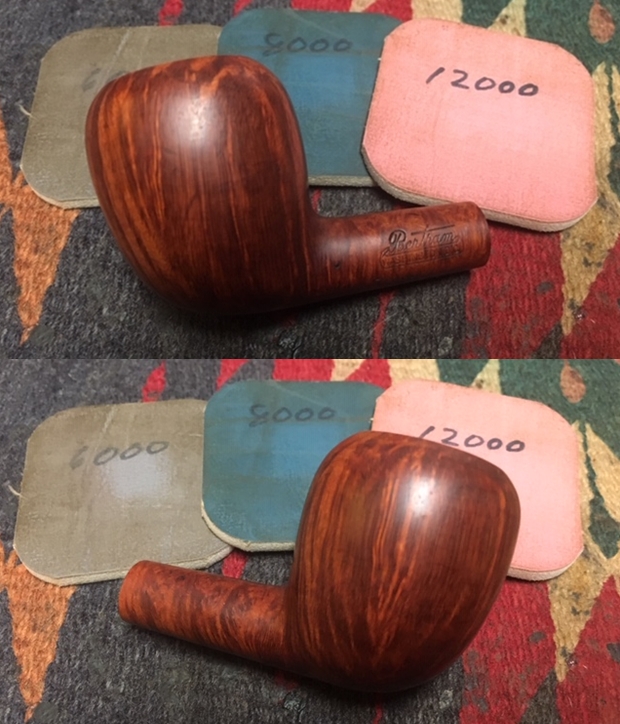
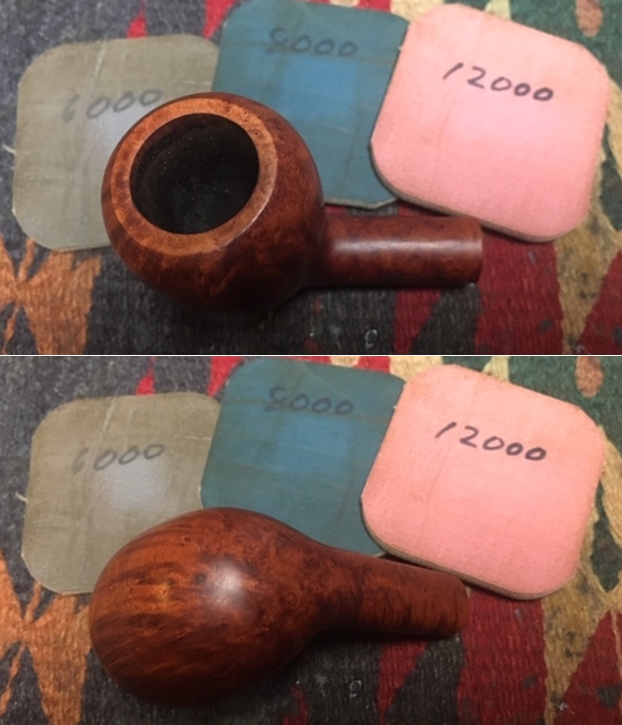
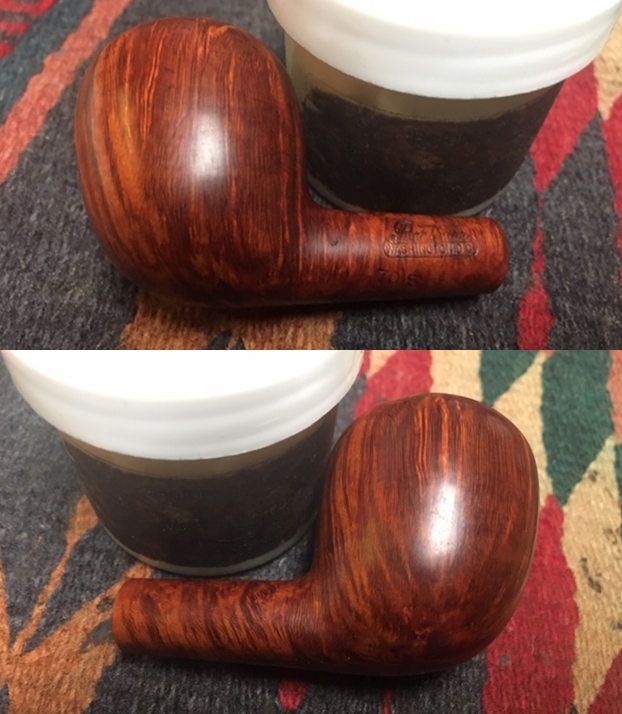
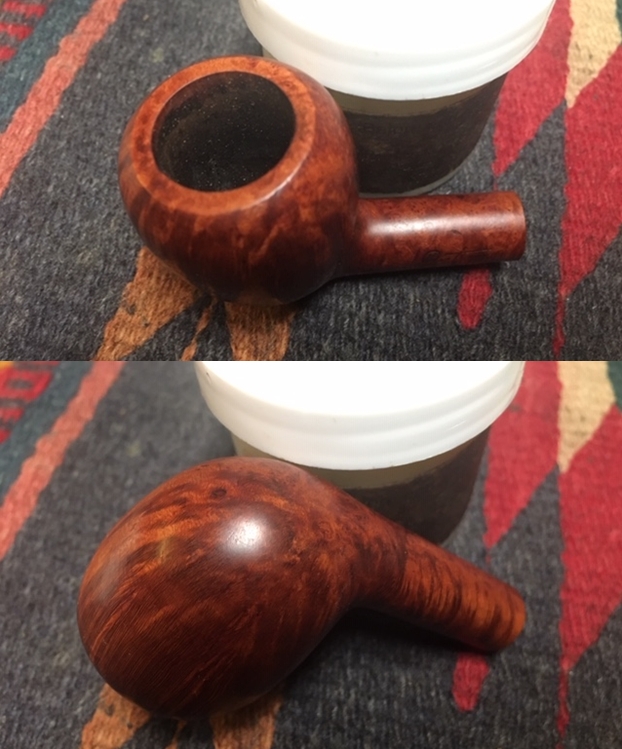
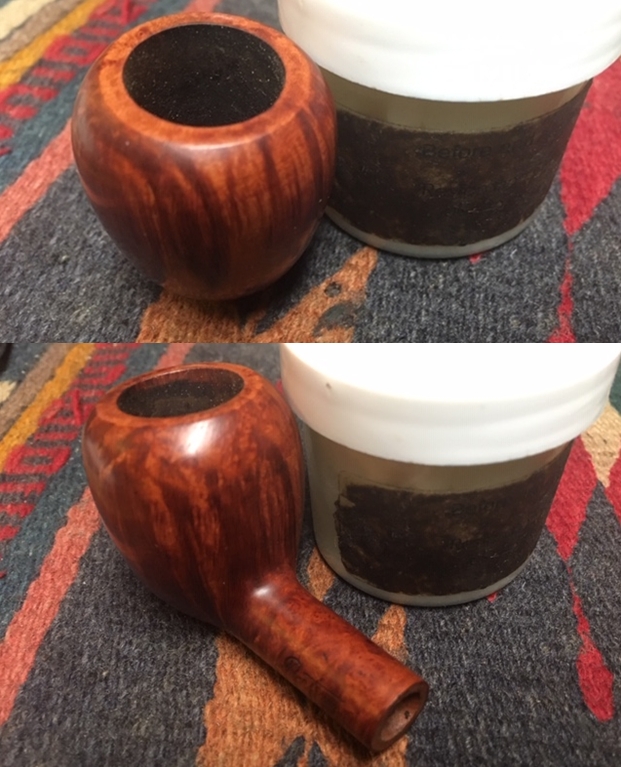
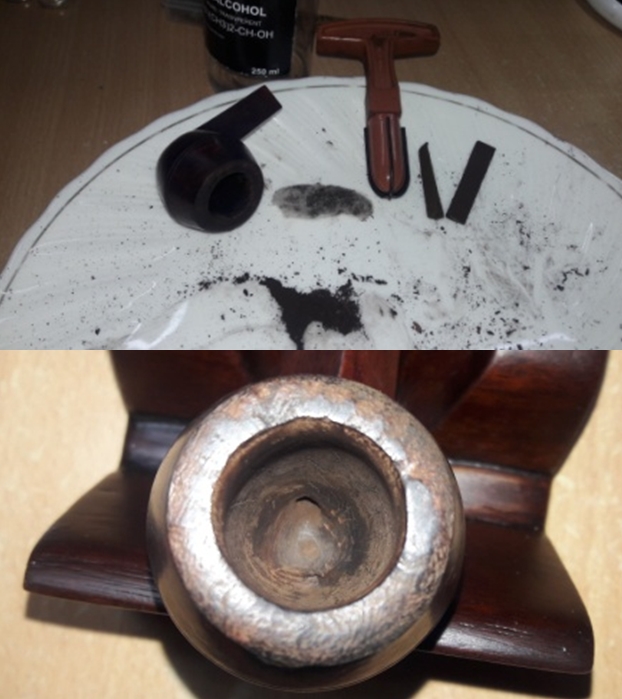
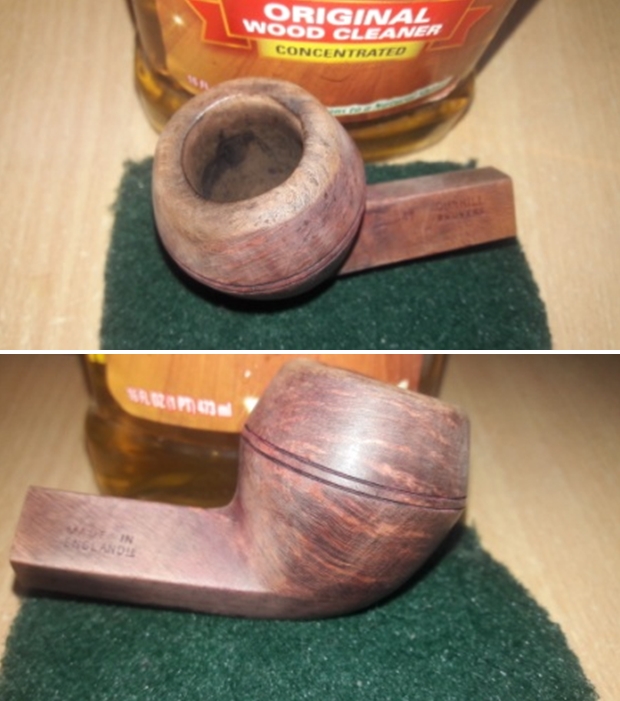
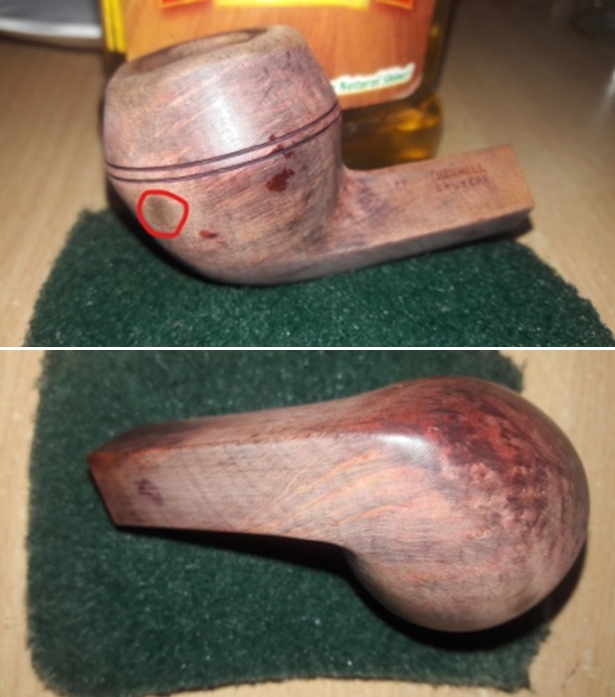
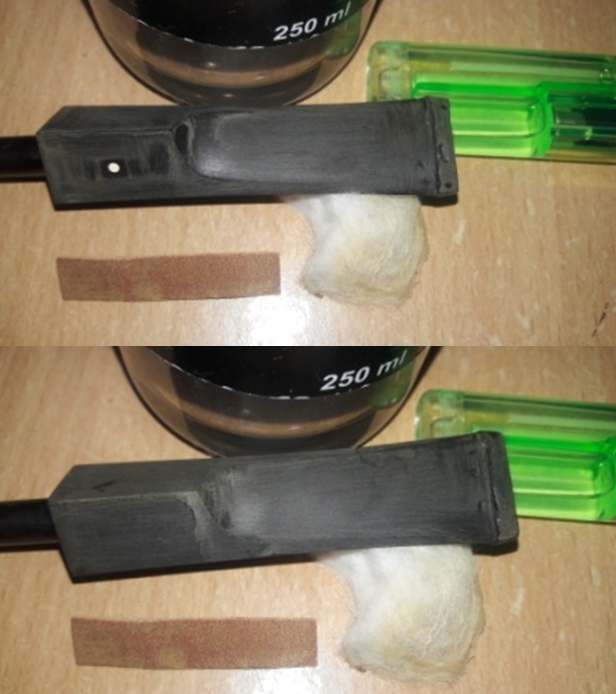
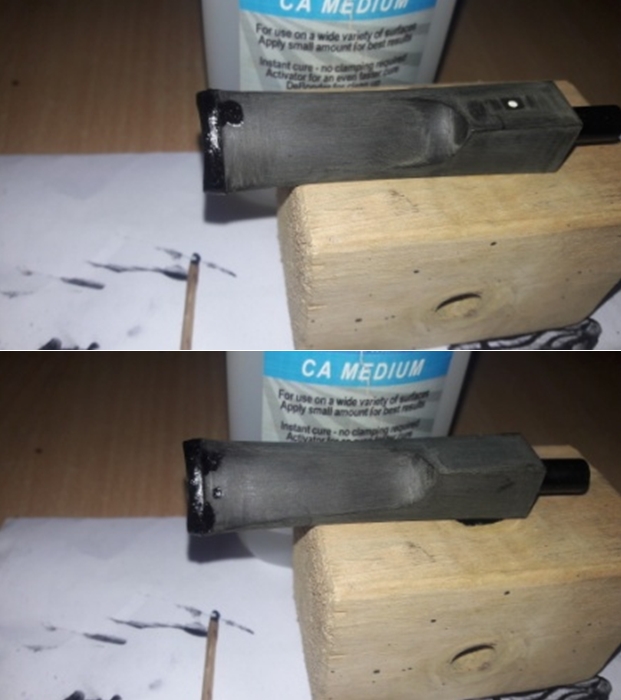
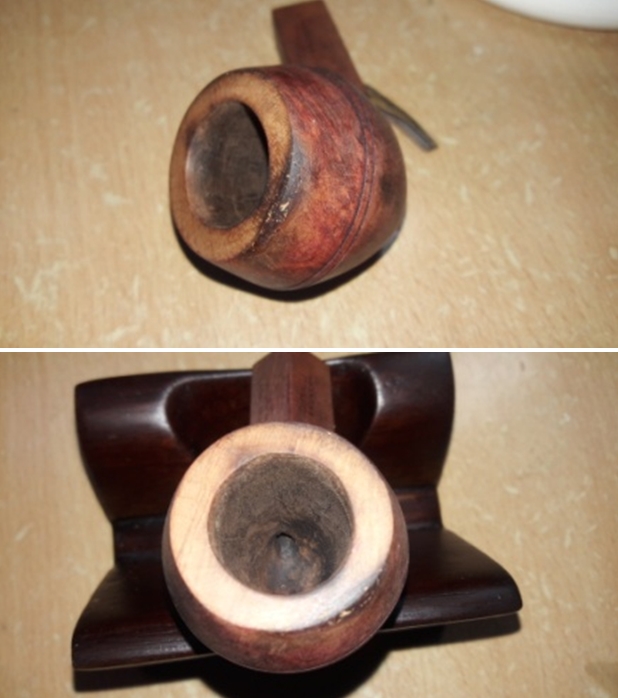
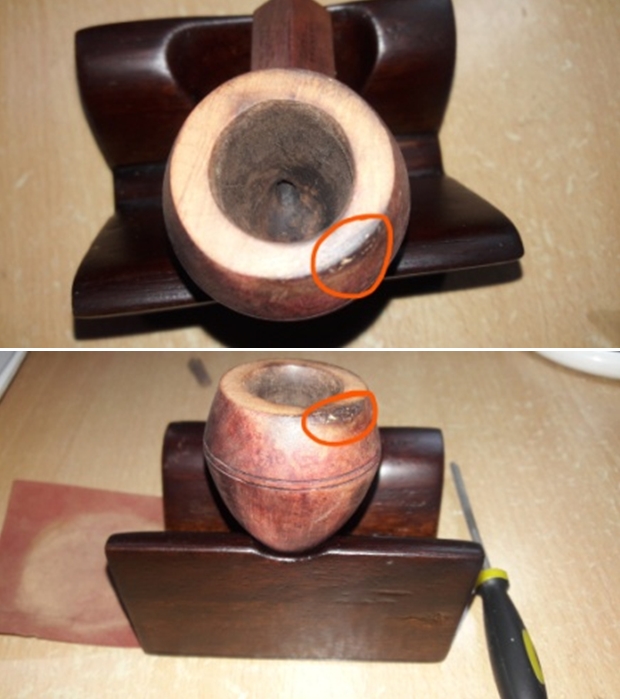
As decided during my initial appreciation of the condition of the pipe, I start this project by tackling the stem first. I avoid flaming the stem surface with the flame of a Bic lighter to raise the tooth indentation as I am not very sure about the stem material being of plastic or vulcanite. I play it safe and sand the stem with a folded piece of 220 grit sand paper. This helps in getting rid of the oxidation while providing a smooth surface for the intended fills to reconstruct the damaged bite zone on both surfaces and also the button edges. I wiped the stem surface with a cotton swab dipped in Isopropyl alcohol. I thereafter, rub a small quantity of EVO oil to hydrate the stem and it was then that I was assured that the stem is vulcanite and my appreciation was incorrect. I cleaned out the tenon and the internals of the stem with hard bristled and regular pipe cleaners dipped in isopropyl alcohol. Once I was satisfied with the internal cleaning, I again wiped the stem surface, particularly the damaged button end, with a cotton pad and alcohol to remove any traces of dirt and grime. This was followed by sanding the horizontal slot shoulders on a piece of 220 grit sand paper to level the surface and even out the deep scratches. I shall further smooth it out during polishing the stem. I prepared a mix of CA superglue and activated charcoal and carefully applied it over the damaged bite zone on both surfaces and lip and set it aside for curing over night. Before moving ahead, I would like to mention here that I had applied this mix in sufficient thickness which would help during the filing and sanding to match the fills with the stem surface and shaping the button.While the stem repair was set aside to cure, I moved ahead to deal with the stummel cleaning. With size 3 head of a PipNet reamer, I took the cake down to bare briar. Using a folded piece of 180 grit sand paper, I sand out the last traces of cake and expose the walls of the chamber to ascertain that there are no cracks/ heat fissures. I wiped the chamber with a cotton pad dipped in isopropyl alcohol to remove the carbon dust left behind by all the reaming and sanding process. The walls of the chamber were solid with no damage. This was followed by gently scraping away the lava overflow from the rim top surface with my fabricated knife. I cleaned the mortise by using cue tips, pipe cleaners and shank brush dipped in isopropyl alcohol. This eliminated all traces of old smells from previous usage. The minor dents and dings to the rim top surface were addressed by topping it over 220 grit sandpaper. I followed up the internal cleaning with external refreshing of the stummel surface. Using a hard bristled tooth brush dipped in undiluted Murphy’s oil soap, I very deliberately scrubbed the stummel and the rim top to remove the overflow of lava from these surfaces. The stummel and rim top was dried using paper napkins and soft cotton cloth and set it aside to dry out naturally. The stummel looks clean, but the rim top surface is considerably lighter than the surrounding stummel surface.  I set the stummel aside and turned my attention to the stem repair. The fill had cured nicely and I moved ahead and began the process of filing and shaping the button end with a flat head needle file. For a better blending, I further sand the entire stem with 220 followed by 400, 600 and 800 grit sand paper. This helps to reduce the sanding marks left behind by the more abrasive 220 grit paper. To bring a deep shine to the vulcanite stem, I went through the complete set of micromesh pads, wet sanding with 1500 to 2400 grit pads and dry sanding with 3200 to 12000 grit pads. I wiped the stem with alcohol after each pad and rubbed it down with Extra Virgin Olive oil to rehydrate the vulcanite. The repairs have blended in very well and the stem now looks shiny black and beautiful. The internals of the stem was once again cleaned out using alcohol and pipe cleaners to clear the airway of all the debris resulting due to the sanding. The finished stem is shown below. By the time I was through with the stem restoration, the stummel had dried out nicely. Using the micromesh pads, I complete the polishing cycle by wet sanding the surface with 1500 to 2400 grit pads and dry sanding with 3200 to 12000 girt pads. I paid special attention to the topped rim top surface during the polishing. The stummel looks great with the grains showing themselves in great splendor, though the rim top surface continues to look a shade lighter. I really like this natural finish to the briar!! I stained the rim top with a dark brown stain pen, applying it in layers and set it aside to set overnight. I deliberately stained it a bit darker as this lightens out subsequently during the buffing and polishing process.  Next, I rub a small quantity of “Before and After Restoration Balm” in to the briar with my finger tips and let it rest for about 20 minutes. The balm almost immediately works its magic and the briar now has a nice vibrant appearance with the beautiful mixed bird’s eye and cross grains on full display. I further buff it with a horse hair shoe brush. To complete the restoration, I re-attach the stem with the stummel. I mounted a cotton cloth buffing wheel to my local machine which is similar to the Dremel.  I set the speed at about half of the full power and applied White Diamond compound to the entire pipe. I wiped/ buffed the pipe with a soft cotton cloth to clear it of any leftover compound dust. With a cotton buffing wheel earmarked for Red Tripoli, which has a finer grit than White compound, I buffed the stem to a fine glossy finish. I then re-attach the stem to the stummel, mounted another cotton cloth wheel on to the polishing machine and applied several coats of carnauba wax. I finished the restoration by giving the entire pipe a rigorous hand buffing using a microfiber cloth to raise the shine further. The completed pipe looks lovely, fresh and vibrant. If only this handsome pipe could share the secret of its birth, carver and its past life with all of us……if only!! Cheers.

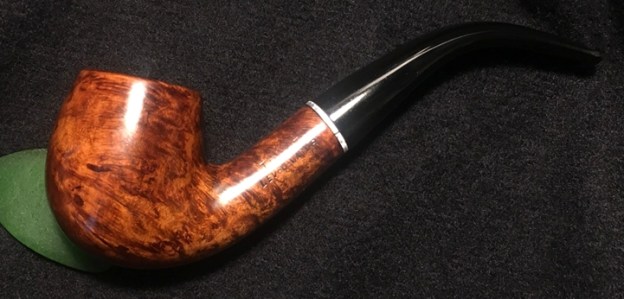
Restoring an Unbranded Italian Bent Billiard # 908


Blog by Paresh Deshpande

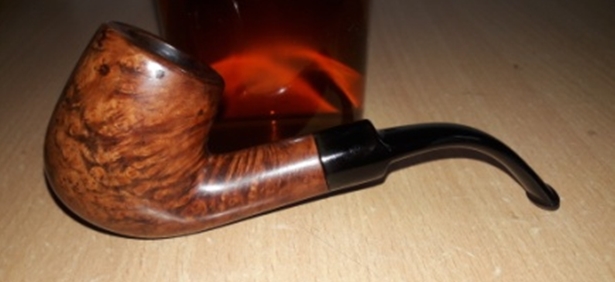
I had just finished restoring the sixth Dunhill from my Mumbai Bonanza find, a 1965 DUNHILL SHELL #56 F/T and now this is a no name smooth ¼ bent Billiard from the same lot. This may be a ‘no name’ pipe, but something about the pipe, like the feel in hand, quality of grain and the finish screams of quality and added to that the design elements, are all pointers to a pipe made by a reputed pipe maker.

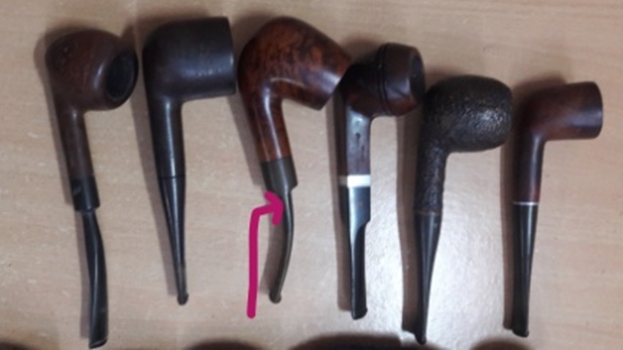
I was fortunate enough to have heeded to the advice of my dear friend and mentor, Mr. Steve, and struck a deal with a trash collector from Mumbai. He did not know what he was selling and I did not know what I was buying as we reside in different cities!!!!! The argument that Mr. Steve presented was that if not anything, I shall at least have some spares and this was logical. I struck a deal and here are pictures of the pipes that I received in this lot.        This lot contains some very nice collectible pipes, a few well known brands and some mediocre brands. Overall, with seven Dunhill pipes, a Preben Holm #1, a couple of “Made in England” Pete System pipes, Charatan’s, Custom-Bilt, Stanwell and other assorted pipes, I would say that I had hit a huge jack pot!!! Hence, I like to call this find as “Mumbai Bonanza”.

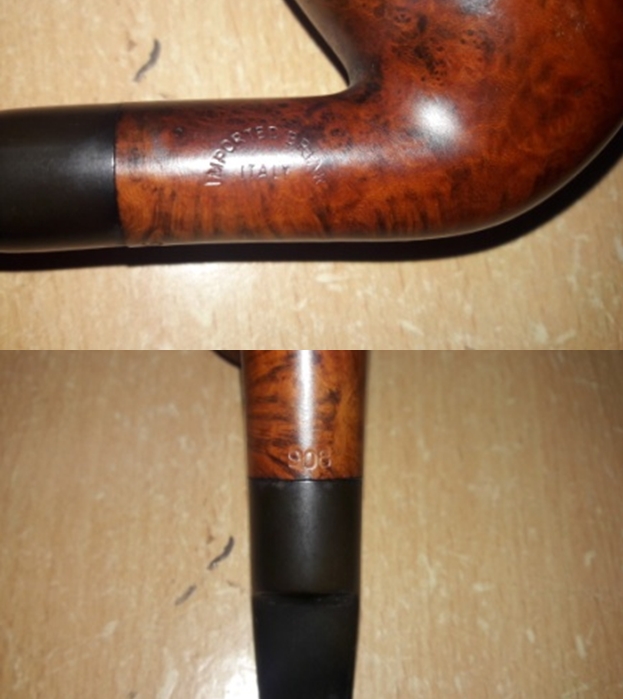
The pipe that I decided to work on from this find is an unbranded slightly bent billiard, and is indicated in magenta colored arrow in the picture below. It is stamped on the underside of the shank with the shape number 908 at the end of the shank and stem junction. On the right side of the shank it is stamped as IMPORTED BRIAR in a semi circle over ITALY in the center. There is no other stamping anywhere on the stummel. Even the stem is devoid of any stamping. My attempts to identify, with pinpoint accuracy, the maker of this pipe have come to a naught due to lack of any tell tale stampings hinting at the carver. However, the IMPORTED BRIAR stampings are generally associated with pipes designated for American markets and the COM stamp ITALY, is self explanatory. My appreciation is that this pipe was made by an Italian firm as a Basket pipe for an American pipe shop. If any of the readers has any viable input on this pipe, you are most welcome to share it with the community in form of comments on rebornpipes.com.

INITIAL VISUAL INSPECTION
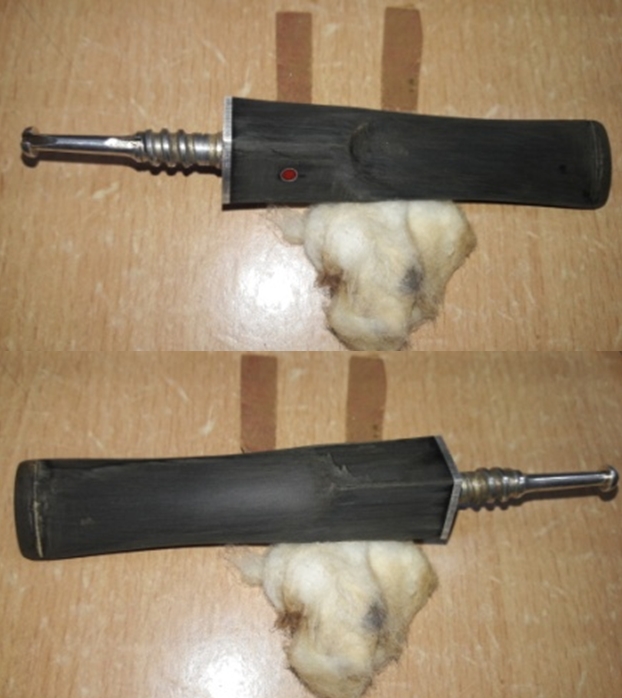
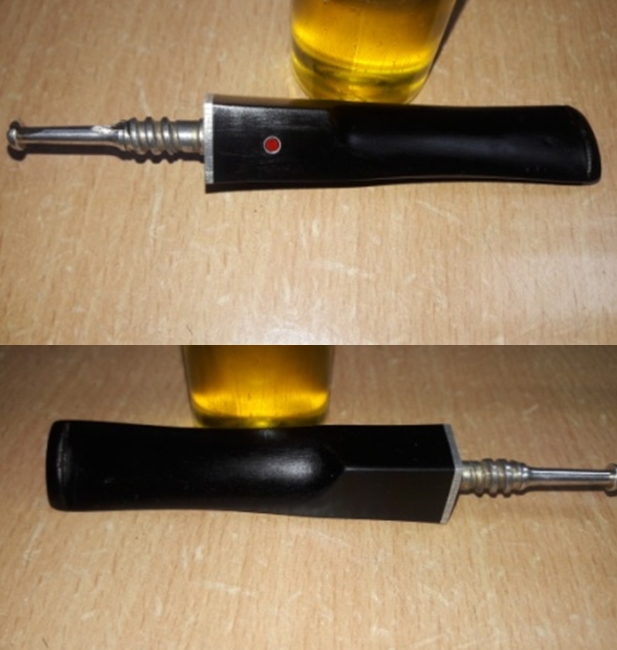
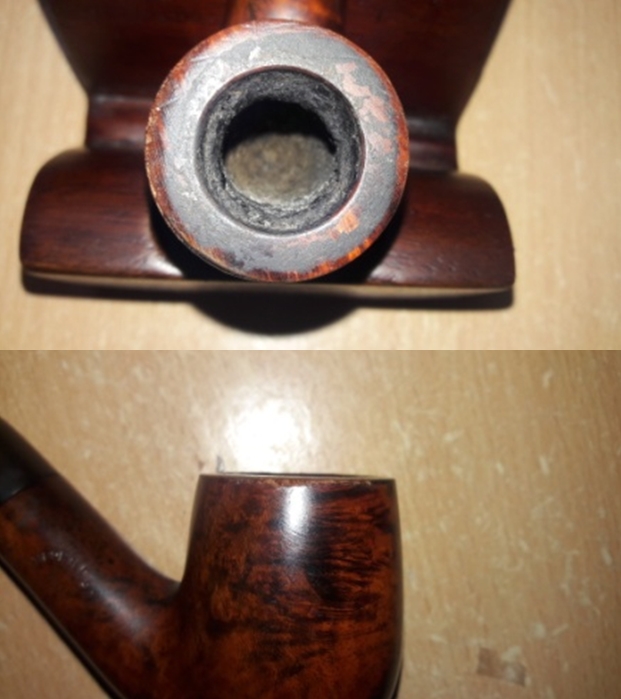
There is a thick layer of cake in the chamber which has been reamed and maintained at a thickness of a dime!!! This indicates that this pipe has seen heavy usage but has also been well cared for. In order to comment on the condition of the walls of the chamber, I need to ream the cake down to the bare briar. The rim top surface is covered with overflowing lava through which the inner rim edge appears to be intact. Also through the overflow of lava, a few dents and dings are visible towards the right and back of the rim. Similarly, the outer edge of the rim is slightly damaged on the right side in 4 ‘O’ clock direction. There is a sweet odor to the chamber.The stummel boasts of some beautiful mixed pattern of bird’s eye and cross grain all around. It is dirty with grime, oils and tars covering the stummel surface and added to this are a few dents and dings to the sides and front of the stummel. Surprisingly (because being an unbranded pipe, I expected more!), I could see only one fill (circled in yellow) on the left side of the stummel, another indicator to the fact that this is a quality pipe made by a quality conscious Italian carver. The stummel has an orange hued stain and appears to be coated with lacquer, both of which are not my favorite finish. These will have to go, period! I have the experience of working on a Dr. Grabow, OMEGA and it was not easy to get rid of the lacquer coating. The mortise shows heavy accumulation of dried tars mixed with ash and remnants of tobacco, making the flow of air through the mortise laborious. This will have to be cleaned and refreshed. The vulcanite stem shows major damage to the button end on both upper and lower surface. The upper surface has a through hole in the bite zone, including bite marks to the button while deep tooth marks are visible in the bite zone and button. The button on either surface will have to be sharpened and made crisp. The tenon end is crusted with dried out tars and grime. The horizontal slot shows accumulation of remnants of dried out oils and tars, blocking the air flow through the stem airway. The fit of the stem in to the mortise is loose and will need to be tightened for a nice snug fit. The stem is heavily oxidized; however, the quality of vulcanite is good. The bend on the stem does not match with the plane of the stummel and profile of the pipe. This will have to be addressed. The stem repair, then, will be a major issue to address and I shall begin this project by addressing the stem repairs first. THE PROCESS
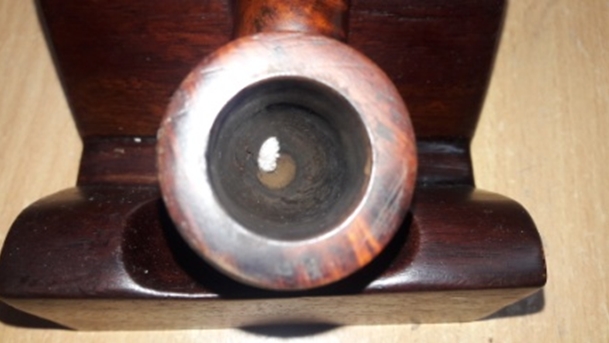
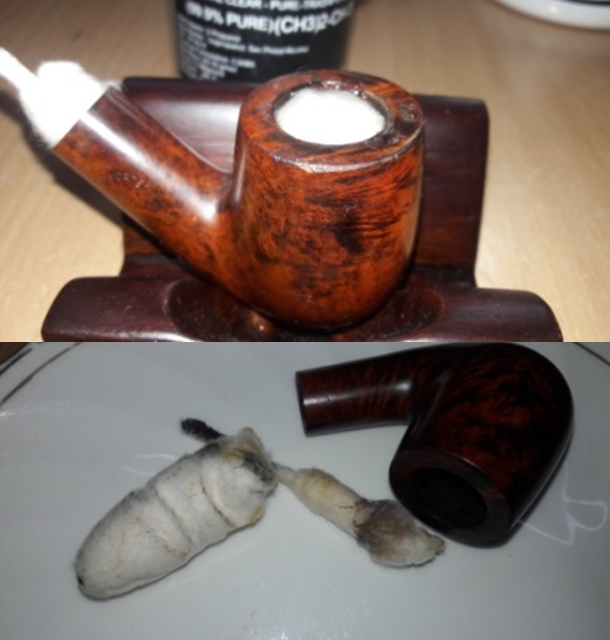
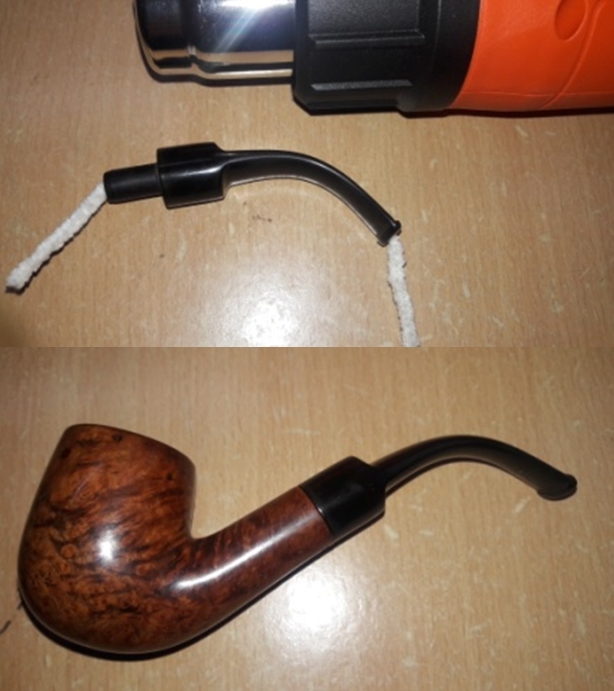
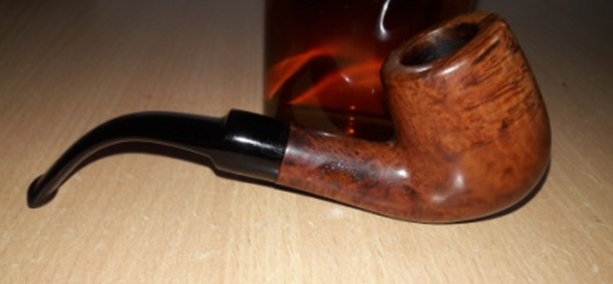
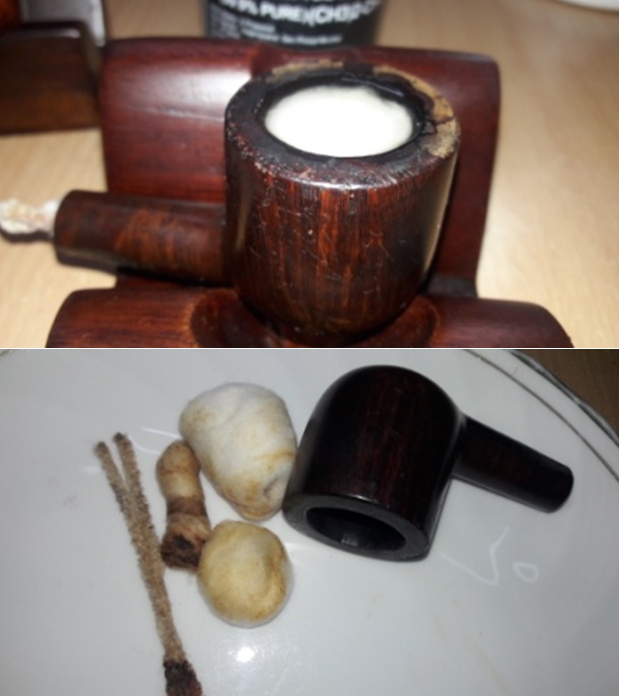
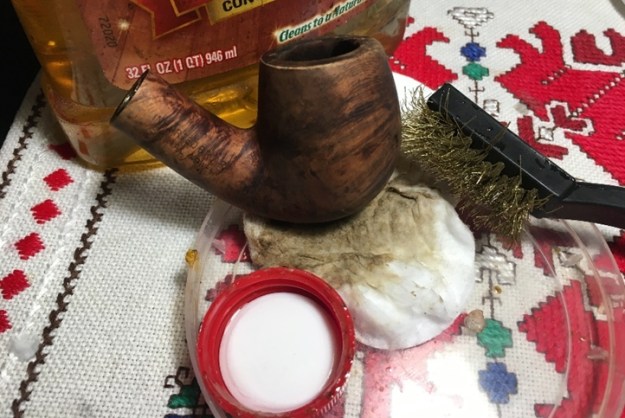
As decided during my initial appreciation of the condition of the pipe, I start this project by tackling the stem first. I flame the stem surface with the flame of a Bic lighter to raise the tooth indentation to the surface and follow it up with sanding the stem with a folded piece of 220 grit sand paper. This helps in getting rid of the oxidation while providing a smooth surface for the intended fills to reconstruct the damaged bite zone on both surfaces and also the button edges. I cleaned out the tenon and the internals of the stem with hard bristled and regular pipe cleaners dipped in isopropyl alcohol. The grunge had hardened to such an extent that I had to use the dental spatula to dig out the dried out oils and tars. Once I was satisfied with the internal cleaning, I wiped the stem surface, particularly the damaged button end, with a cotton pad and alcohol to remove any traces of dirt and grime. I wiped the stem with a little Extra virgin olive oil to hydrate the stem surface. Firstly, I inserted a pipe cleaner smeared in Vaseline in to the stem air way. This prevents the mix of CA superglue and activated charcoal from permeating in to the air way and blocking it subsequently. I prepared a mix of CA superglue and activated charcoal and carefully applied it over the damaged bite zone on both surfaces and lip and set it aside for curing over night. Before moving ahead, I would like to mention here that I had applied this mix in sufficient thickness which would help during the filing and sanding to match the fills with the stem surface and shaping the button.While the stem repair was set aside to cure, I moved ahead to deal with the stummel cleaning. With size 1 and 2 head of a PipNet reamer, I took the cake down to bare briar. Using a folded piece of 180 grit sand paper, I sand out the last traces of cake and expose the walls of the chamber to ascertain that there are no cracks/ heat fissures. I wiped the chamber with a cotton pad dipped in isopropyl alcohol to remove the carbon dust left behind by all the reaming and sanding process. It is always a big relief to find the walls of the chamber to be solid with no damage. This was followed by gently scraping away the lava overflow from the rim top surface with my fabricated knife. I cleaned the mortise by scraping away at the dried gunk with my fabricated spatula and followed it up with further cleaning using cue tips, pipe cleaners and shank brush dipped in isopropyl alcohol. Even though the internals were nice and clean, the sweet smell in the chamber was all pervading. I shall address this issue with an alcohol bath before cleaning the external surface of the stummel. Once the cake was removed and the chamber walls cleaned, I noticed that the draught hole was not aligned to the center of the chamber, but skewed towards the right as you hold the pipe while smoking. I was in two minds; should I correct this alignment by re-drilling the air way through the mortise or let it be. The thick cake indicates that this was a fantastic smoker and a favorite of the previous steward, so should I tamper with its smoking characteristics? Well, once I am through with refurbishing, I shall load a bowl and test it for myself before deciding further course of action. Here are pictures of what I have been discussing above. It was now time for me to address the issue of the sweet smell in the pipe. I stuffed the chamber with a cotton ball. I made a wick out of one cotton ball, wound it around a folded pipe cleaner and inserted it tightly in to the mortise. Using a syringe, I topped the chamber with 99.9% pure isopropyl alcohol and set it aside on a pipe stand for the alcohol to draw out all the residual oils and tars from the mortise and the chamber. About half an hour later, I refilled the chamber with alcohol and set it over night. By next evening, the alcohol had drawn all the stubborn oils and tars from the mortise and chamber and these were trapped in the cotton ball and wick. I gave a final cleaning to the mortise using pipe cleaners and q-tips dipped in alcohol. The old smells are history and the pipe now is fresh and clean.I followed up the internal cleaning with external refreshing of the stummel surface. Using a hard bristled tooth brush dipped in undiluted Murphy’s oil soap, I very deliberately scrubbed the stummel and the rim top to remove the overflow of lava from these surfaces. The stummel and rim top was dried using paper napkins and soft cotton cloth and set it aside to dry out naturally. The stummel looks clean, but the orange stain now stands out prominently and so does the single fill which I had observed earlier has now increased to four!!!!!!! I checked the fills and realized that it had gone soft and would have to be filled afresh. But before that, I need to remove the orange stain and lacquer coating to let the natural briar shine through and breathe freely. Using a folded piece of 180 grit sandpaper, I sand the entire stummel surface to first remove the lacquer coating and thence the orange stain. It took a considerable time to remove the lacquer coat. At the end, I still observed a few patches on the stummel surface where the old stain was still visible. I cleaned up all these patches by wiping the entire stummel with a cotton swab dipped in pure acetone. The stummel is now completely rid of the lacquer coating and the obnoxious orange stain and beautiful swirls of bird’s eye and cross grains now peek through the rough surface. This clean up made the dents and dings to the rim top surface and the outer edge all the more prominent and these are the issues which I tackle next. On a piece of 220 grit piece of sand paper, I top the rim surface, checking frequently the progress that was being made. Once I was satisfied that the dings and dents to the rim surface has been addressed, I worked the outer rim edge to address the dents and dings visible. With a folded piece of 220 grit sand paper pinched between my thumb and index finger, I created a light bevel on the outer rim edge which masked the dents nicely. I am very pleased with the progress made so far; the stummel has been rid of the orange stain and lacquer, the internals of the stummel are clean and fresh, the dents and dings to the rim top and outer edge has been taken care of and the stem fill has hardened solid. The next issue that I tackled was the issue of newly discovered fills which hitherto fore were hidden under all the stain and lacquer coating. Using the sharp point of my fabricated knife, I gouge out the old fill and replace it with a fresh fill of CA super glue and briar dust. I always over fill the holes so that when I sand them down they are smooth and I can feather in the fills with the rest of the briar. I set the stummel aside to cure. Once the glue dried (very quickly by the way), I resorted to sanding the entire stummel surface using a folded piece of 180 grit sand paper and follow it up by further sanding with 320, 600 and 800 grit sand papers. This step addressed three issues; firstly matching and blending the fill with the rest of the surface, secondly, the dents and dings on the stummel were evened out and lastly, the annoying orange stain and lacquer coating was completely eliminated. Using the micromesh pads, I complete the polishing cycle by wet sanding the surface with 1500 to 2400 grit pads and dry sanding with 3200 to 12000 girt pads. The stummel looks great with the grains showing themselves in great splendor. I really like this natural finish to the briar!!!! This is how the stummel appears at this stage. Next, I rub a small quantity of ‘Before and After Restoration Balm’ in to the briar with my finger tips and let it rest for a few minutes. The balm almost immediately works its magic and the briar now has a nice vibrant appearance with the beautiful bird’s eye and cross grains on full display. I further buff it with a horse hair shoe brush. I was contemplating if at all I should stain this stummel or let the fills be seen as part of its past life; a friend of mine who has taken up to enjoying a pipe, dropped in and saw this pipe. He loved the grains, the shape and heft of this beauty and immediately requested it to be passed on to him. I discussed with him about the stain and he was keen to keep with the natural finish! Since this pipe was being passed on to him, his desire prevailed. This look to the stummel attracted him the most. I am sure that after the final polish and waxing, the grains will be further accentuated. I set the stummel aside and turned my attention to the stem repair. The fill had cured nicely and I moved ahead and began the process of filing and shaping the button end with a flat head needle file. For a better blending, I further sand the entire stem with 220 followed by 400, 600 and 800 grit sand paper. This helps to reduce the sanding marks left behind by the more abrasive 220 grit paper. To bring a deep shine to the vulcanite stem, I went through the complete set of micromesh pads, wet sanding with 1500 to 2400 grit pads and dry sanding with 3200 to 12000 grit pads. I wiped the stem with alcohol after each pad and rubbed it down with Extra Virgin Olive oil to rehydrate the vulcanite. The repairs have blended in very well and the stem now looks shiny black and beautiful. The internals of the stem was once again cleaned out using alcohol and pipe cleaners to clear the airway of all the debris resulting due to the sanding. The finished stem is shown below. The next stem issue that I addressed was the loose fit of the tenon in to the mortise. To address this issue, I heated the tenon with the flame of a Bic lighter; moving the flame constantly, till the tenon was pliable. I had pre-selected a drill bit which was a tad larger than the tenon hole and gradually inserted it in to the tenon and set it aside to cool down. Once the tenon had cooled down, I removed the drill bit and tried the seating of the tenon in to the mortise. The fit was perfect.Before moving on to the final polishing and wax coating, I had to address the issue of the bend to the stem. Somehow, the existing bend does not suit the profile of the stummel. I exchanged pictures of the stem and pipe with Mr. Steve and he suggested that the stem needs to bend more. I inserted a pipe cleaner through the stem’s air way and heated the stem with a hot air gun till pliable. Using the slot end of the pipe cleaner, I bend the stem eyeballing it in to desired shape. The two precautionary measures which are required to be ensured; firstly, inserting a pipe cleaner in to the stem’s airway prevents the surface from collapsing inwards. Secondly, while bending the stem, heat only up to the place from where the bending is intended. I did try two different bend angles, but that did not seem correct. Third try was successful and the stem now has a nice bend to it and the pipe feels very comfortable in the mouth. To complete the restoration, I re-attach the stem with the stummel. I mounted a cotton cloth buffing wheel to my local machine which is similar to the Dremel.  I set the speed at about half of the full power and applied White Diamond compound to the entire pipe. I wiped/ buffed the pipe with a soft cotton cloth to clear it of any leftover compound dust. With a cotton buffing wheel earmarked for Red Tripoli, which has a finer grit than White compound, I buffed the stem to a fine glossy finish. I then re-attach the stem to the stummel, mounted another cotton cloth wheel on to the polishing machine and applied several coats of carnauba wax. I finished the restoration by giving the entire pipe a rigorous hand buffing using a microfiber cloth to raise the shine further. The completed pipe looks lovely, fresh and vibrant; the pictures speak for themselves. I really enjoyed working on this pipe and hope that readers too enjoyed walking with me through this restoration. If only this handsome pipe could share the secret of its birth and its past life with all of us…if only!! Cheers.

PS: The freshly refurbished pipe was handed over to the new Steward (to use the term coined by my friend, Mr. Dal Stanton) who immediately loaded his favorite tobacco, LANE 1Q, and smoked it with me. He was very happy with the way it smoked and appreciated the easy and smooth draw. This reconfirmed my appreciation that I should not tamper with the alignment of the shank air way.

Restoring a French Made Butz Choquin Camargue 1310 Bent Billiard


Blog by Steve Laug

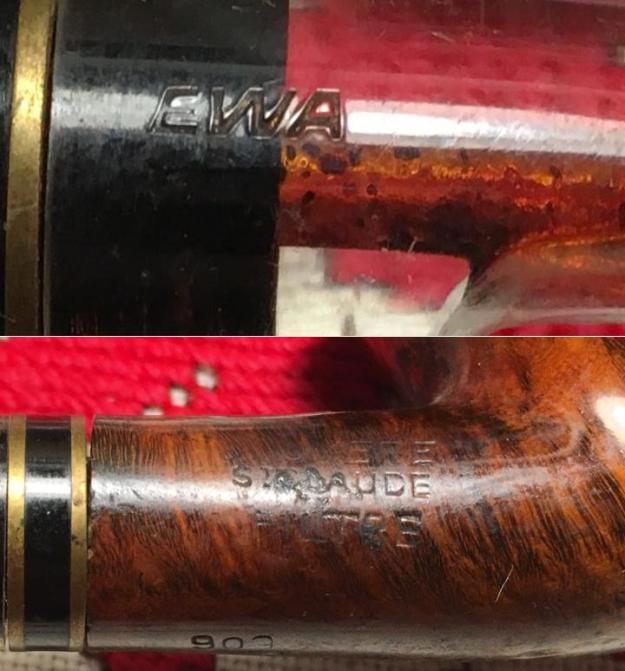
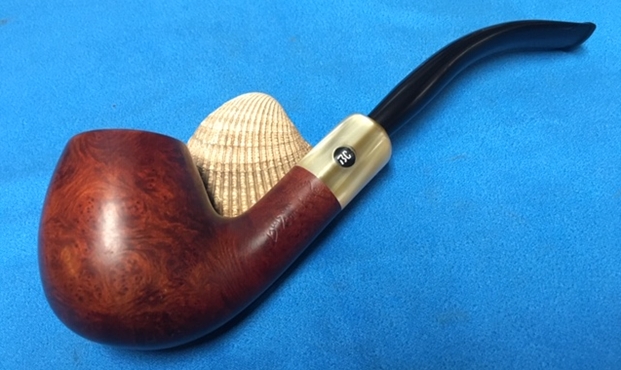
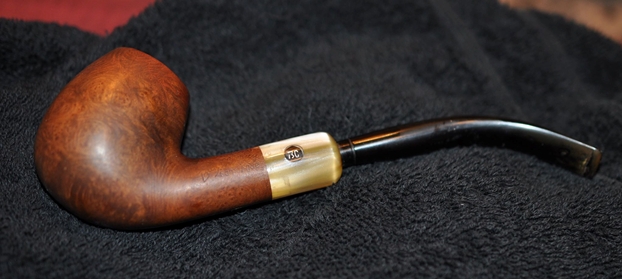
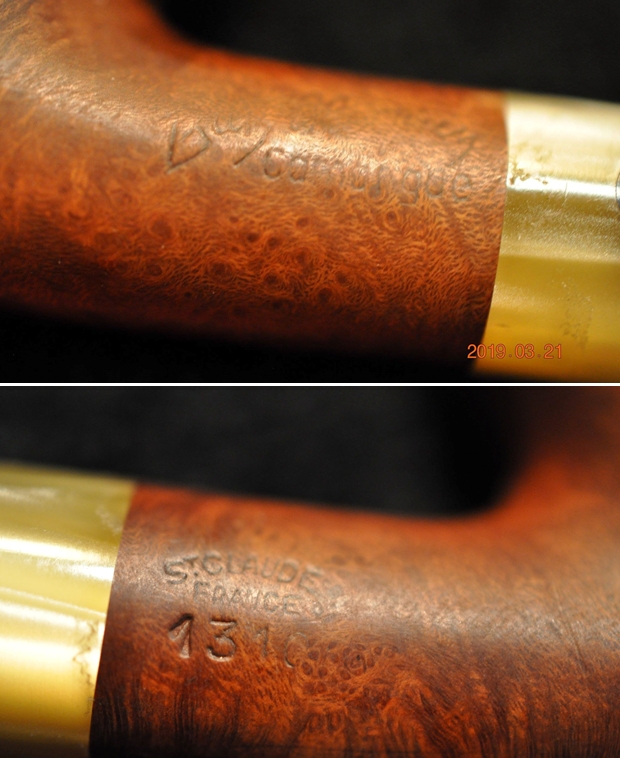
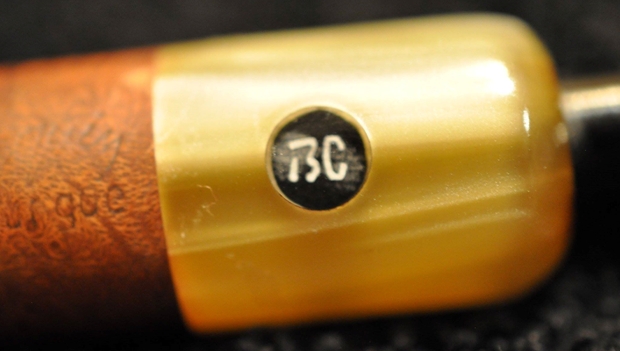
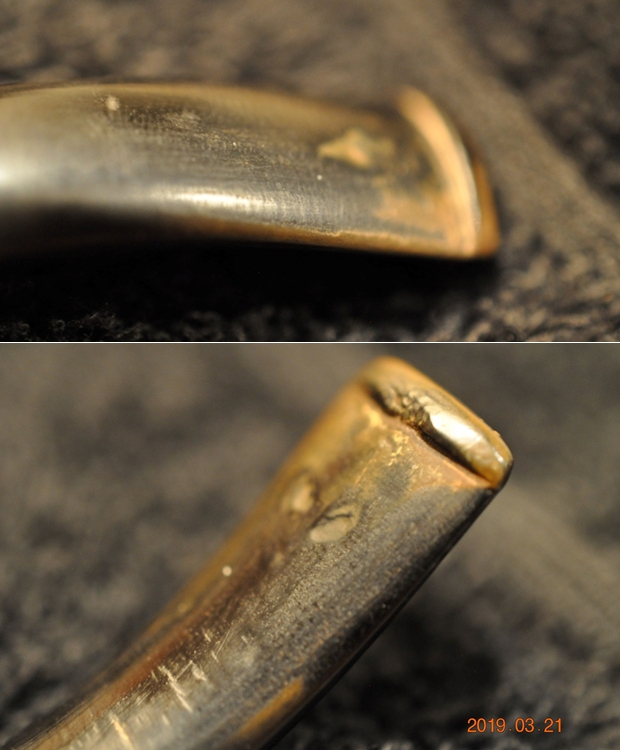
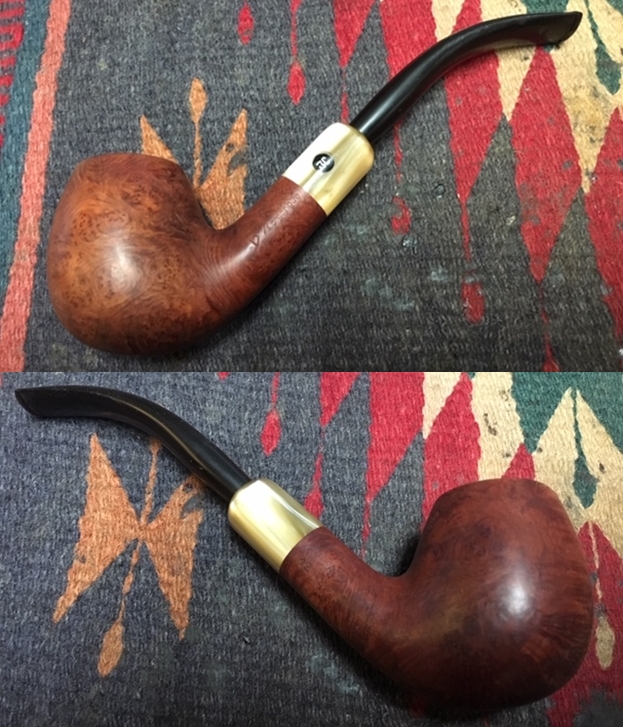
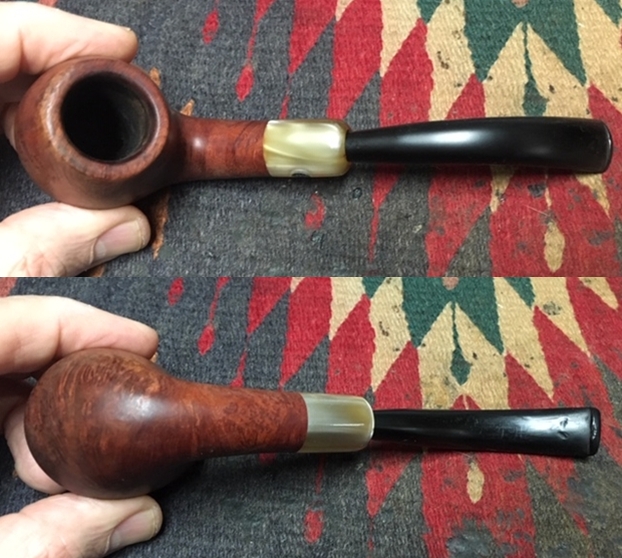
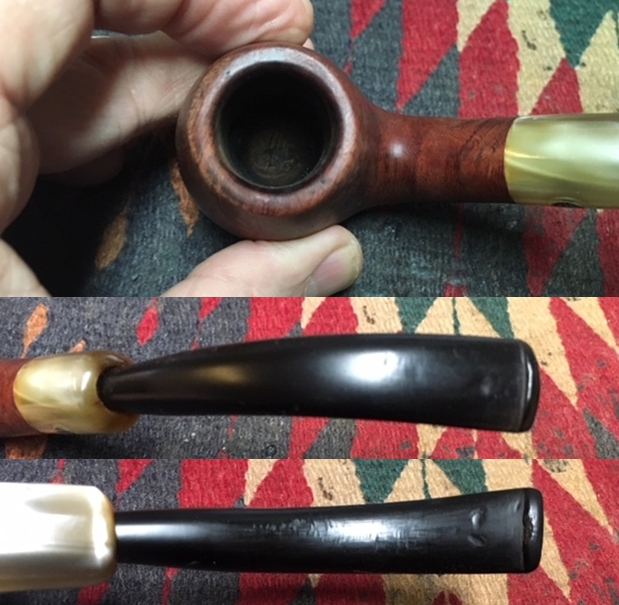
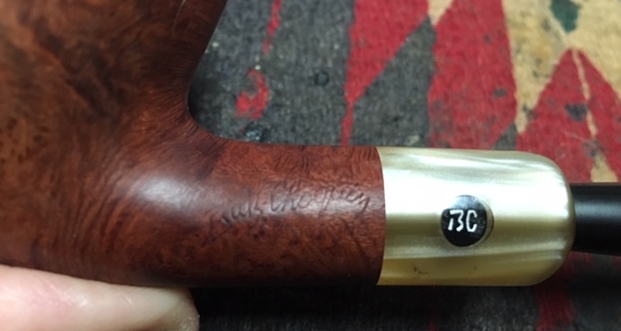
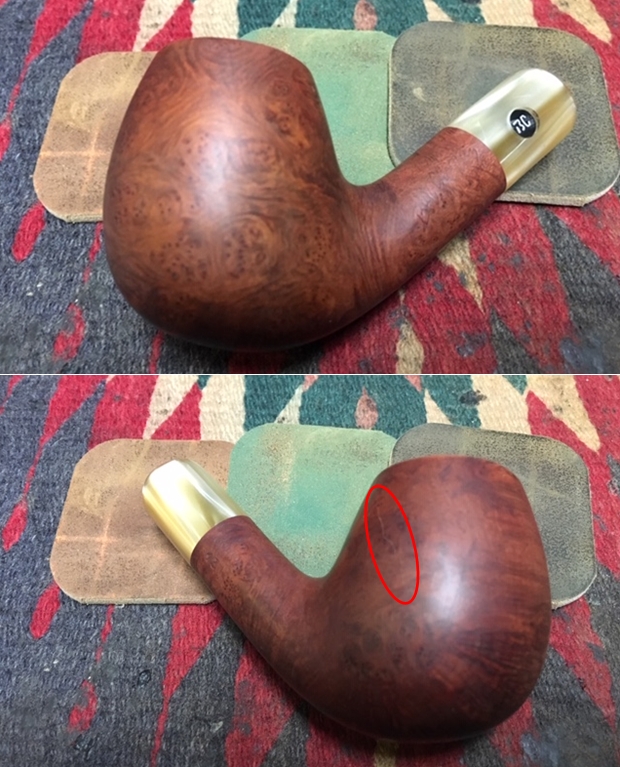
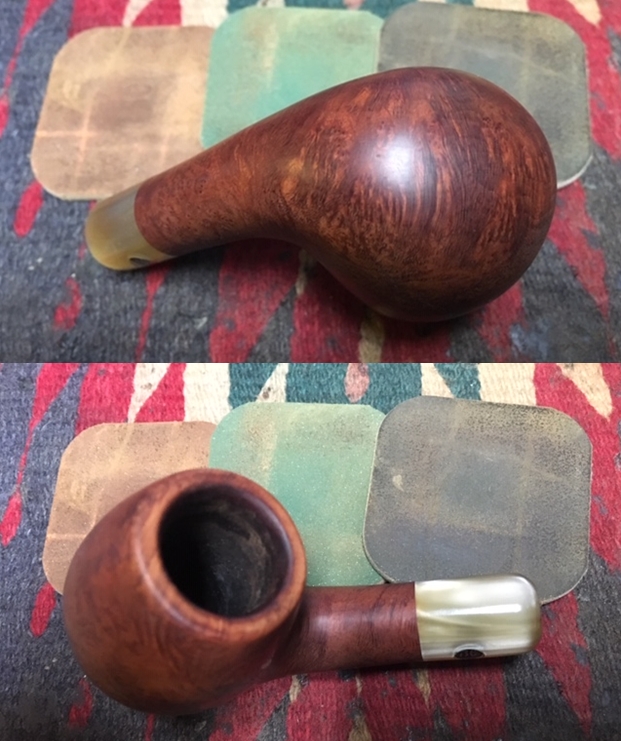
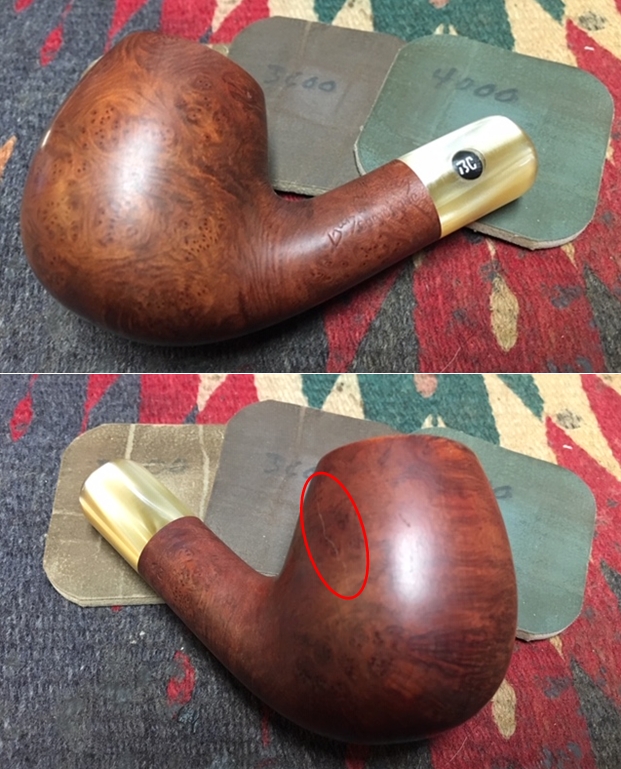
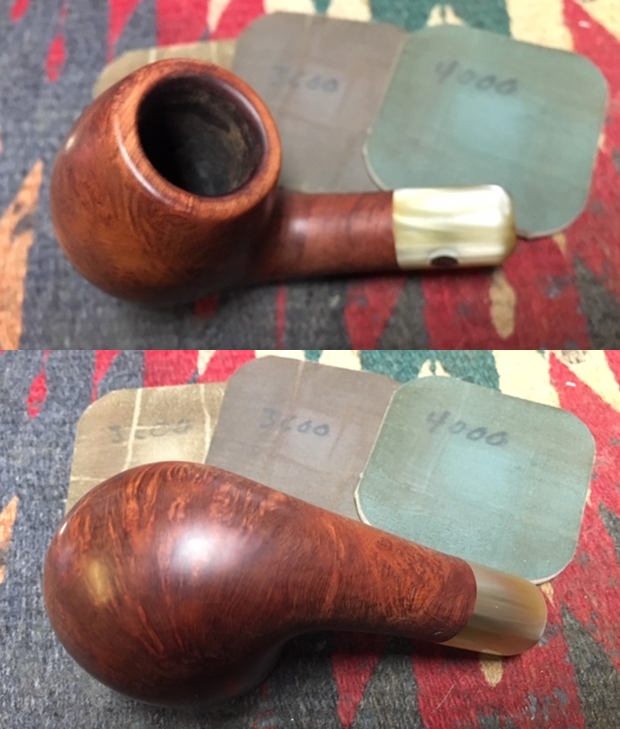
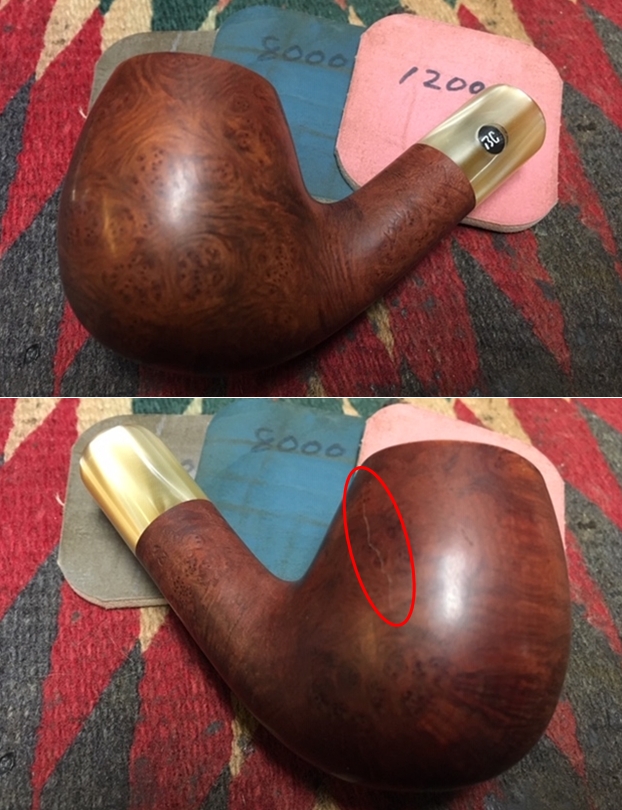
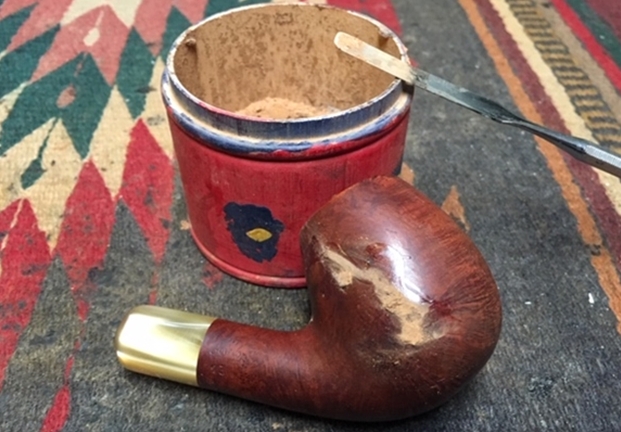
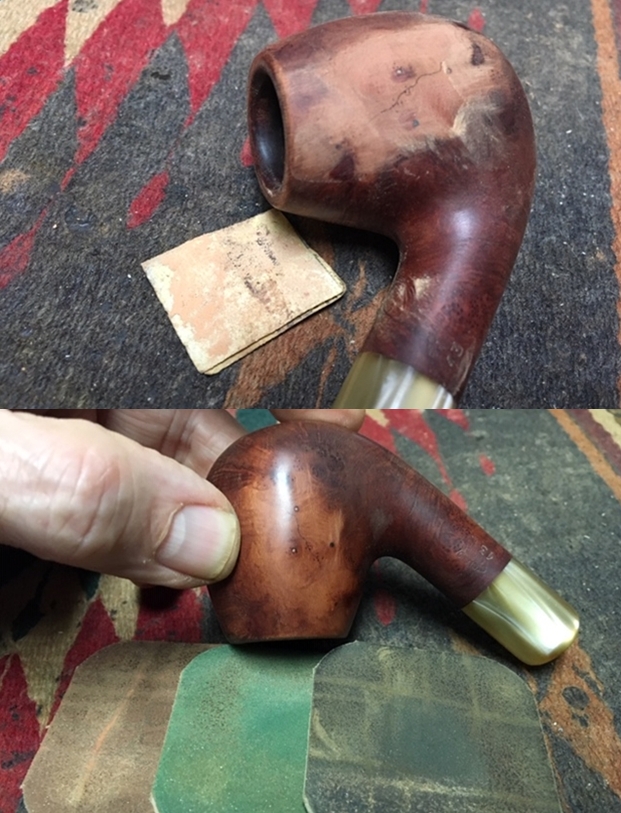
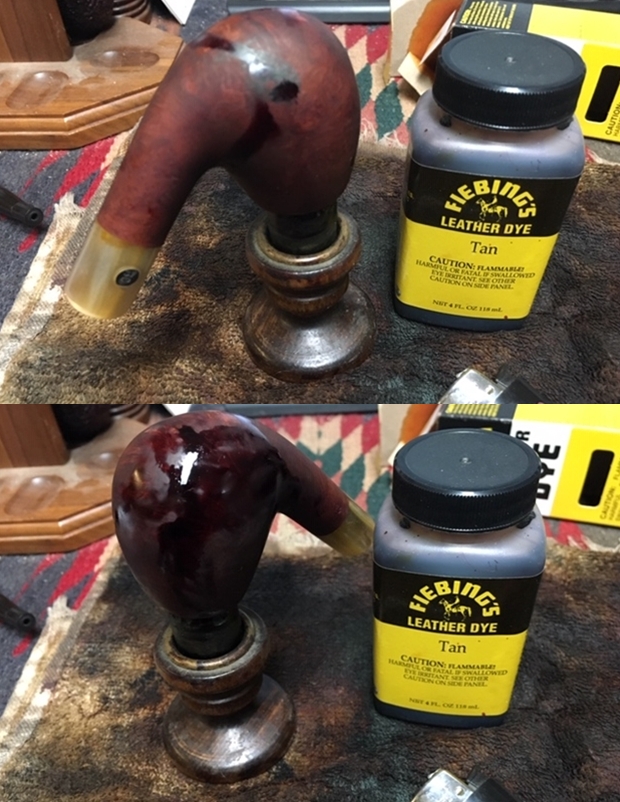
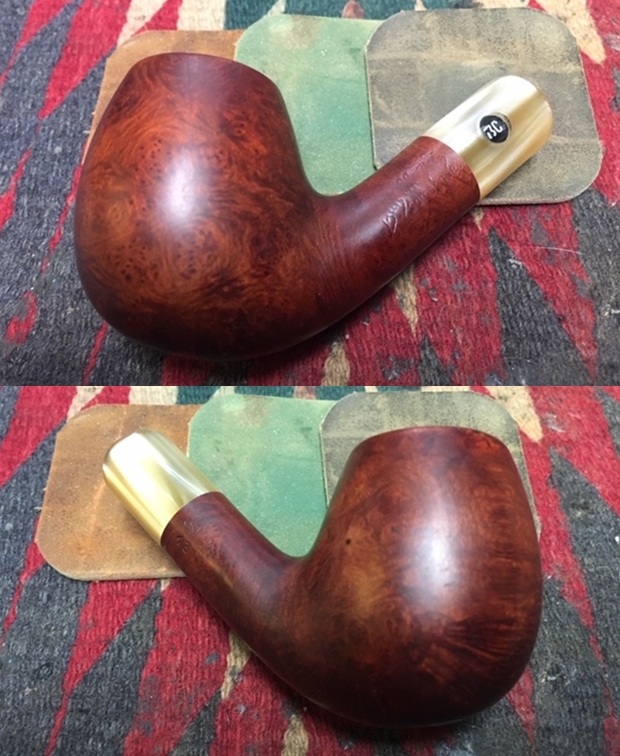
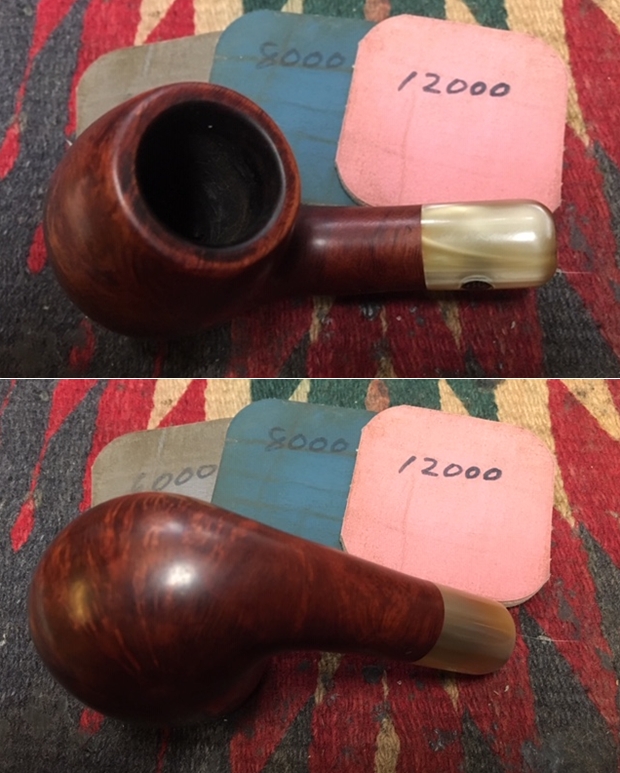
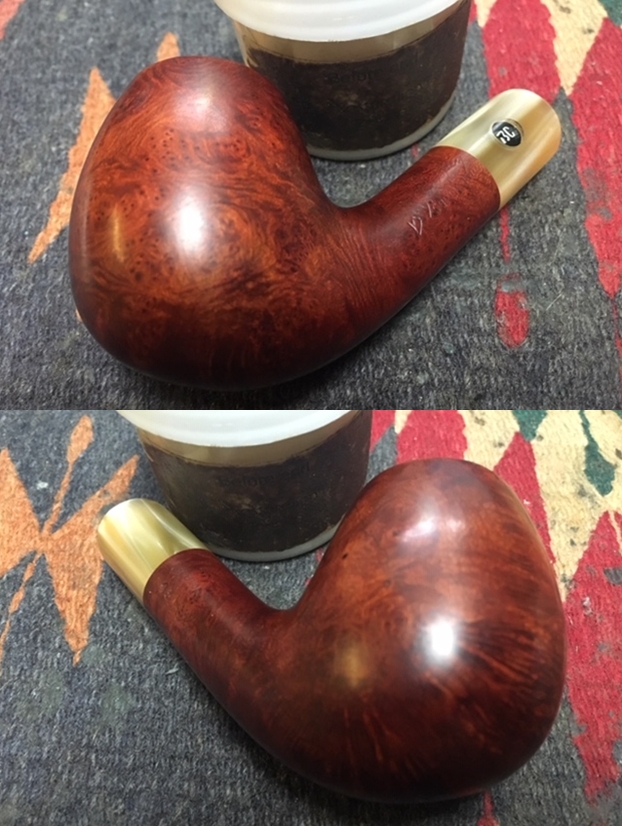
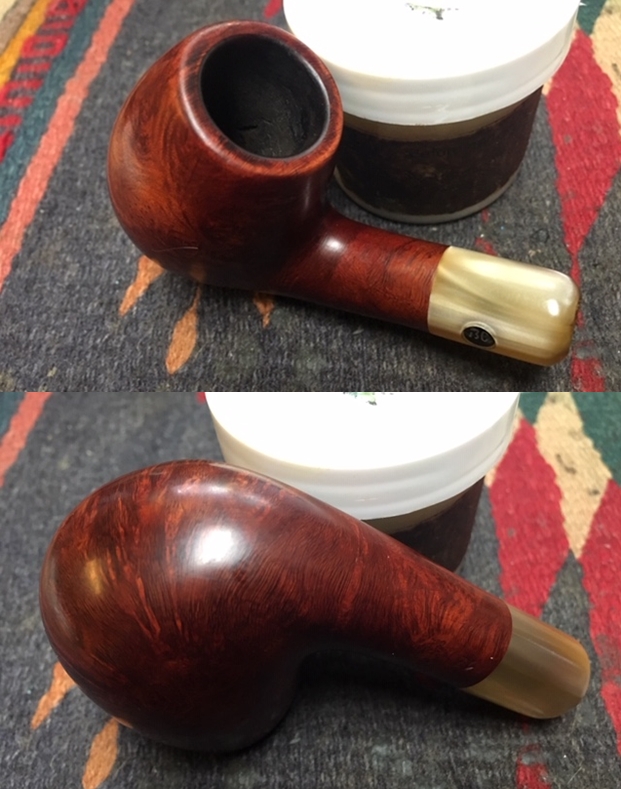
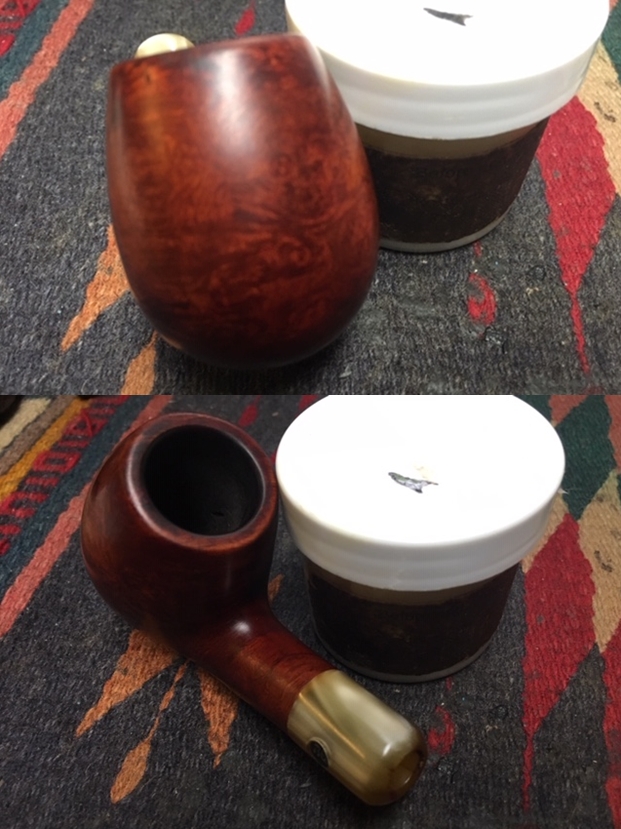
The next pipe on the table Jeff picked up at an antique shop near his home in Idaho. It is a Butz Choquin Made in France pipe. On one side is written Butz Choquin over Camargue. On the other side St. Claude is arched over France with the shape number 1310 under that. On the horn coloured Lucite shank extension are the initials BC in a clear acrylic insert. The military bit stem is vulcanite and has a slight bend in it. It is lightly oxidized and there are deep tooth marks on both sides of the stem near the button and wear on the button on the underside. There are also some dents on the top and underside near the bend. The smooth finish is very dirty and dusty. The rim top has a thin coat of lava near the back side. The bowl has a thick cake that flows onto the back of the bowl rim. It is hard to know if the inner edge of the rim is in good condition because of the lava and cake. The outer edge looks very good. Jeff took the following photos before he started his clean up. Jeff took a photo of the rim top and bowl. You can see the lava on the back side of the rim that obscures the condition of the rim edge. You can see the condition of the bowl as well in the photo.He took photos of the heel and the sides of the bowl to give a clear picture of the remarkable grain on this beautiful pipe.The next photo is a bit of a mystery to me… there is clearly a crack shown in the photo of the somewhere on the bowl. The problem is that it is not clear where it is on the bowl in the photo. Is it the heel or a side or…? I will have to go over the bowl with a light and a lens to hunt for it as I restore the pipe. It should be easy to repair once I find it!The next two photos capture the stamping on the left and right side of the shank. The third photo shows the BC logo on the horn coloured Lucite shank extension. The stamping on the left side reads Butz Choquin at an angle up the shank toward the shank end and underneath it is stamped Camargue. The other side is stamped with the St. Claude, France stamp and the shape number 1310. The last two before photos show the condition of the stem. You can see the tooth marks on both sides of the stem along the length of the stem. You can also see the calcification and oxidation on the stem. It is dirty but very repairable.When the pipe arrived it was my turn to do my part of the restoration work. Jeff had reamed the bowl with a PipNet pipe reamer and followed up with a Savinelli Fitsall pipe knife to remove the cake. He scrubbed out the mortise and the airway in the shank and the stem with alcohol, cotton swabs and pipe cleaners. He scrubbed the exterior of the bowl, rim, shank and stem with a tooth brush and Murphy’s Oil Soap to remove the oils and tars on the rim and the grime on the finish of the bowl. He rinsed it under running water. He dried it off with a soft cloth. He was able to remove lava build up on the rim top and you could see the great condition of the bowl top and edges of the rim. There was still some darkening to the rim top toward the back of the bowl. He soaked the stem in Before & After Deoxidizer to remove the oxidation. I took photos of the pipe before I started my work on it. I took a close up photo of the rim top to show the condition of the bowl and rim after Jeff had cleaned up the grime and lava. Both the inner edge of the rim look good. There was some damage on the front outer edge. The stem photos show that the oxidation is gone. The light tooth chatter is hard to see but I should be able to sand it out quite easily. The tooth marks on the top and underside and the scratching and gouges will take a little more work to remove. The damage to the button top on the underside is also going to take some work.I also took a photo of the stamping on the left side of the shank showing how the stamping was laid out. The Camargue stamp is quite faint. To clean up the rim top damage and minimize the roughness on the front outer edge I lightly topped the bowl with 220 grit sandpaper on a topping board. I did not have to do too much topping as the damage was not too extreme.I polished the bowl and rim top with micromesh sanding pads – wet sanding with 1500-2400 grit pads and dry sanding with 3200-12000 grit pads. I wiped the bowl down with a damp cloth after each sanding pad to remove the sanding dust. It was during this process that I found the crack. It is on the right side of the bowl toward the back. I have circled it in red to highlight it. Now that I had found the crack and checked that it was not deep and not on the inside of the bowl it was time to address it. I drilled the ends of the crack with a microdrill bit to stop the crack from spreading. I filled in the pin holes and the crack surface with clear super glue. I spread some briar dust on the top of the repaired areas and pressed it into the drill holes with a dental spatula. I set it aside to cure. Once the repair cured I sanded it smooth with a piece of 220 grit sandpaper to blend it into the surface of the briar. I started the polishing process with 400 grit sandpaper. I polished the area with 1500-2400 grit micromesh pads and wiped the area down with alcohol.I restained the pipe with a Tan aniline stain to blend the repaired areas into the rest of the finish. Sometimes it pays to stain the entirety of a bowl rather than fuss with trying to match an area this large into the rest of the surrounding briar. I flamed and stained and repeated the process until I was happy with the coverage. I set the bowl aside to dry.I buffed the bowl with red Tripoli on the buffing wheel to remove thick overcoat of stain. I sanded it with a medium and a fine grit sanding sponge to smooth out the stain coat coverage. I followed that by wet sanding it with a 1500 grit micromesh sanding pad to even out the coverage of stain across the bowl sides and over the repaired crack. I have really come to appreciate many of Mark Hoover’s Before & After Products. One of my favourites is his Restoration Balm. I worked some of the Balm into the finish of the briar with my fingertips to clean, enliven and protect it. I let it sit for a short time and buffed it off with a cotton cloth to raise the shine. The Restoration Balm really makes the pipe take on a rich glow. I set the finished bowl aside and turned to address the issues with the stem. I filled in the deep tooth marks and nicks in the stem surface and button with clear super glue. I set it aside to cure. Once the repairs had cured I used a needle file to smooth out the repairs and then a folded piece of 240 grit sandpaper to blend the tooth marks and chatter into the surface of the stem. After the surface was smooth I sanded out the scratch marks and started the polishing of the stem with a folded piece of 400 grit sandpaper. I wiped the stem down with Obsidian Oil. I polished the stem with micromesh sanding pads – wet sanding it with 1500-2400 grit pads and dry sanding it with 3200-12000 grit pads. I wiped the stem down with Obsidian Oil after each pad. I polished it with Before & After Pipe Polish – both Fine and Extra Fine and gave it a final coat and set it aside to dry.  I put the stem and bowl back together and buffed the stem with Blue Diamond on the buffing wheel. I gave the bowl and the stem with multiple coats of Carnauba Wax. I buffed the bowl and stem with a clean buffing pad until there was a rich shine then hand buffed it with a microfiber cloth to deepen the shine. This Butz Choquin Camargue Bent Billiard with a faux horn acrylic shank extension is a beautiful pipe. The grain really stands out with a combination of birdseye, cross grain and swirls surrounding the bowl give it a rich look. The rich contrasting brown stains makes the grain stand out while hiding the repaired cracks. It is a proportionally well carved pipe. The polished black vulcanite stem had a rich glow. The finished pipe is a beautiful bent billiard that feels good in the hand and the mouth. Have a look at it with the photos below. The dimensions are Length: 6 1/2 inches, Height: 2 inches, Outside diameter of the bowl: 1 1/4 inches, Chamber diameter: ¾ of an inch. I will be putting this beauty on the rebornpipes online store soon. If you are interested let me know. Thanks for walking through the restoration with me as it was a pleasure to work on.

Reclaiming a Mastercraft “Hand Made” Pipe


Blog by Paresh Deshpande

To date, I have completed the restoration of nine pipes from my “Mumbai Bonanza” lot. In this lot, I found one pipe that was pretty battered up and in a very sorry state. It reminded me of an “Imperial Yello-Bole Carburetor” from my grandfather’s collection that I had restored some time back. Here is the link to the write up that was posted on rebornpipes.com; https://rebornpipes.com/2018/11/12/reclaiming-a-yello-bole-imperial-carburator-vest-pipe/

If at that point in time I felt that the Imperial was in a bad shape, holding and looking at this Mastercraft pipe in my hand was gut wrenching to say the least!!!! Believe you me readers, every time I selected a pipe from the Mumbai lot to work on, the first pipe that I would always pick was this pipe!!!!! I was in love with the shape of the pipe, the feel in my hand (which are quite large by Asian standards), the grains peeking out at me from under all that grime, the heft …I could go on singing praises about this pipe. But in spite of all these eulogizing, I always ended up returning it to the box as a future project. Why? Well, the answer lay in the condition of the pipe and the colossal investment of time required restoring it. I knew that this project would test all that I had learned till date and then some more, without the certainties of the end result!! But now I decided to complete this project, however long it may take and whatever the end results.

For those readers who have missed out on my previous work, I was fortunate enough to have heeded to the advice of my dear friend and mentor, Mr. Steve, and struck a deal with a junk collector from Mumbai. He did not know what he was selling and I did not know what I was buying as we reside in different cities!! The argument that Mr. Steve presented was that if not anything, I shall at least have some spares and this was logical. I struck a deal and here are pictures of the pipes that I received in this lot. This lot contains some very nice collectible pipes, a few well known brands and some mediocre brands. Overall, with seven Dunhill pipes, a Preben Holm #1 FH, a couple of “Made in England” Pete System pipes, a couple of  Charatan’s Belvedere, Custom-Bilt, Stanwell and other assorted pipes, I would say that I had struck a decent haul! This is indeed my “Mumbai Bonanza”.

The tenth pipe that I decided to work on from this find is a straight pot and is indicated in yellow colored arrow in the picture below. It is stamped on the left side of the shank in a shield as Mastercraft in sentence form over HAND MADE in block capital letter. The right side of the shank is stamped in a straight line as AGED IMPORTED BRIAR in block capital letter. If at all there was any other stamping on the right side, it has been consigned to history due to severe damage further down the shank. The stem is apparently devoid of any logo stamp as I see it now. If at all there ever was a logo, it has completely worn out/ obliterated. Now coming to the research of this brand, which is my first, I referred to rebornpipes.com and as expected, Mr. Steve has extensively researched this pipe and has even posted some interesting old catalogs and hierarchy of the pipe lines from this brand. Here is the link;

https://rebornpipes.com/2014/06/23/a-mastercraft-pipe-lines-hierarchy/

I surfed further and found an interesting post on restoration of a Mastercraft Executive Choice by the master restorer himself, which amongst other details, included two photos from the 1969 RTDA Almanac which show a list of various MC pipe lines. The pipe currently on my work table is the very first one in the list and was the top most in MC hierarchy of pipe lines and also the most expensive of all MC pipes retailing for $ 10!!!!! Here is the link for the essay and I urge all readers to give it a read.

https://rebornpipes.com/2014/06/22/learned-a-bit-of-american-pipe-history-mastercraft-executive-choice-pot-restored/

Thus, I can now safely conclude that this pipe is from the late 1960s, had been a top-of-the-line product for MC and retailed as the most expensive pipe in its inventory!!!! Well, after this search, I feel the additional pressure in doing complete justice to this pipe to the best of my abilities and that I will have to up my game a notch higher.

INITIAL VISUAL INSPECTION
I really do not understand where I should start from, which damaged inch of the pipe I should describe first, let alone tackle and about which I am not even thinking at this point in time!!!!! But to finish, I have to make a beginning and let me just start with the chamber and the rim.

A thick layer of cake can be seen in the chamber. The rim top surface is covered in thick overflow of lava, okay; consider that as VERY thick, which has bubbled on to the rim top and further oozed over on to the stummel surface. The condition of the inner walls of the chamber and rim top surface will be known once the cake has been taken down to bare briar and the rim top crud has been scraped off completely (thankfully readers cannot see or hear me muttering silent prayers!). The less I speak about the edges of the rim, the better it will be for my morale. Every millimeter of the outer edge has been damaged by striking against table end by the previous steward, however I must thank the previous steward for ensuring an even all round damage…lol. The inner rim condition does not look too promising either! I suspect a charred rim in 7 o’clock direction (when held from the stem end) and is marked in red circle. However, once the cake has been removed, I shall be certain about the extent of this charring and any other damage (praying again, in fact I haven’t stopped praying since I began and unlikely to stop till I finish!). Another issue which I have noticed is that the briar in the heel around the draught hole has formed a valley of sort (marked by yellow arrows), probably caused due to repeated and rigorous thrusting of a pipe cleaner through and beyond the draught hole over the years. Why would you clean the mortise and airway in this fashion??The most significant damage is seen to the stummel. It appears that this pipe has seen active duty and has been extensively and actively used against Viet Cong by the previous steward with great success…..LOL!! Every inch of the stummel surface is peppered with a large number of deep scratches, dents and dings. The entire left side of the stummel has prominent nicks extending from the rim top right down to the foot of the bowl. There are deep road rash marks on the right side of the shank just below the stamping, extends over to the underside and towards the shank end and further extends over to the stem for about an inch from the tenon end towards the button end (marked in pastel blue circle). The damage to the shank end and stem is so perfectly aligned that it appears that the damage was sustained while the stem was attached to the shank. In short, the stummel has sustained massive damage over the years due to both, rough usage and subsequent careless storage. It is covered in oils, dirt and grime of all these years of smoking and subsequent uncared for storage. The stummel surface is sticky to the touch, giving the stummel a dull, lifeless and lackluster appearance. However through all this dirt, tar, oil, grime and damage, lovely densely packed straight grains can be seen on the sides and shank. It will be a challenge to address these issues and make the grains to reveal themselves in all glory. The mortise is blocked with dried gunk, adversely affecting both the airflow and the seating of the tenon in to the mortise. The stem is also an equal disaster like the stummel with road rash marks on the right towards the tenon end. There is a round patch nearer to the button which appears to be a result of melting of the vulcanite. In all probability it had come in close contact with either a burning cigarette or some sort of a flame. It seems that the previous Steward used softie bit on his pipes as heavy oxidation can be seen where the bit was used. The bite zone, including the button edges shows dental compressions on both upper and lower surfaces. The button edges will have to be reconstructed and sharpened. The stem does not sit flush with the shank end and also the stem diameter around the road rash area has scrapped off resulting in a mismatch. This stem diameter will have to be rebuilt and I expect that once the mortise has been cleaned up, seating of the stem in the mortise would improve. The horizontal slot with a round center shows accumulated oils and tars. The stem surface shows signs of heavy oxidation. THE PROCESS
As decided during my initial appreciation of the condition of the pipe, I start this project by tackling the stem first. I flame the stem surface with the flame of a Bic lighter to raise the tooth indentation to the surface and follow it up with sanding the stem with a folded piece of 220 grit sand paper. This helps in getting rid of the oxidation while providing a smooth surface for the intended fills to reconstruct the damaged bite zone on both surfaces and also the button edges. I wiped the stem surface, particularly the damaged button end, with a cotton pad and alcohol to remove any traces of dirt and grime. I cleaned out the tenon and the internals of the stem with hard bristled and regular pipe cleaners dipped in isopropyl alcohol. Once I was satisfied with the internal cleaning, to revitalize the vulcanite and to have a fair idea of the progress made, I wiped the stem with a little Extra Virgin Olive oil. When I looked at the tenon end of the stem, I realized the right portion of the stem, as seen from above, was not as round as the left and would need a fill so as to bring it flush with the shank end. However, I would have to fine tune the sanding of the fills on both shank end as well as the stem simultaneously in order to achieve a perfect flush fit. The portion that would require a fill is marked in yellow.I prepared a mix of CA superglue and activated charcoal and carefully applied it over the damaged bite zone on both surfaces, the side and lip and set it aside for curing over night. The mix was applied along the circumference of the tenon end stem which had been scrapped. I had applied this mix in sufficient thickness which would help during the filing and sanding to match the fills with the stem surface and shaping the button.While the stem repair was set aside to cure, I moved ahead to deal with the stummel cleaning. With size 3 and 4 head of a PipNet reamer, I took the cake down to bare briar. Using a folded piece of 180 grit sand paper, I sand out the last traces of cake and expose the walls of the chamber to ascertain that there are no cracks/ heat fissures. I wiped the chamber with a cotton pad dipped in isopropyl alcohol to remove the carbon dust left behind by all the reaming and sanding process. The walls of the chamber show a few heat lines, nothing serious, but they are present. These heat lines and the ridges on the bottom surface of the heel will be addressed later. This was followed by gently scraping away the lava overflow from the rim top surface with my fabricated knife. I cleaned the mortise by scraping away at the dried gunk with my fabricated spatula and followed it up with further cleaning using cue tips, pipe cleaners and shank brush dipped in isopropyl alcohol. The suspected charring that I had appreciated early on is now confirmed. The rim has thinned out considerably above the draught hole. The inner rim edge is also uneven. I shall be addressing these issues too subsequently.

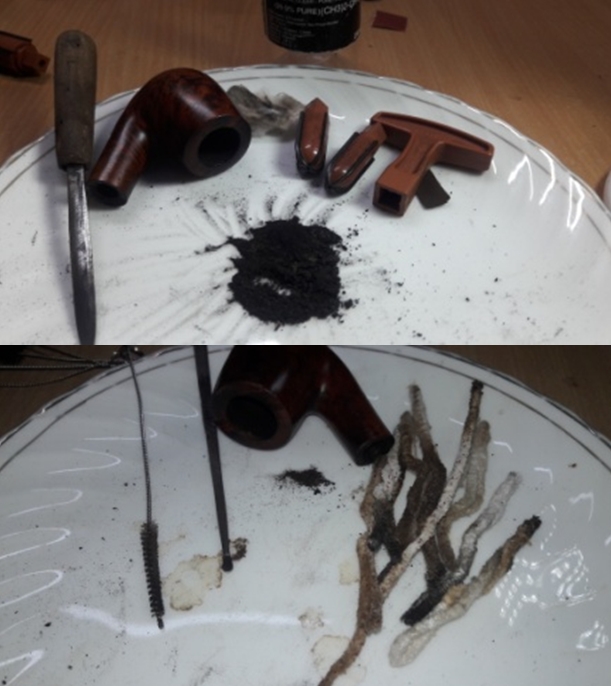
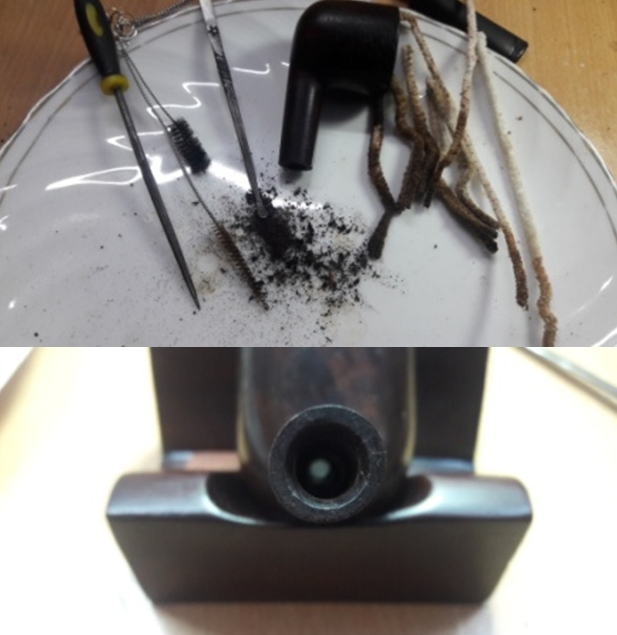
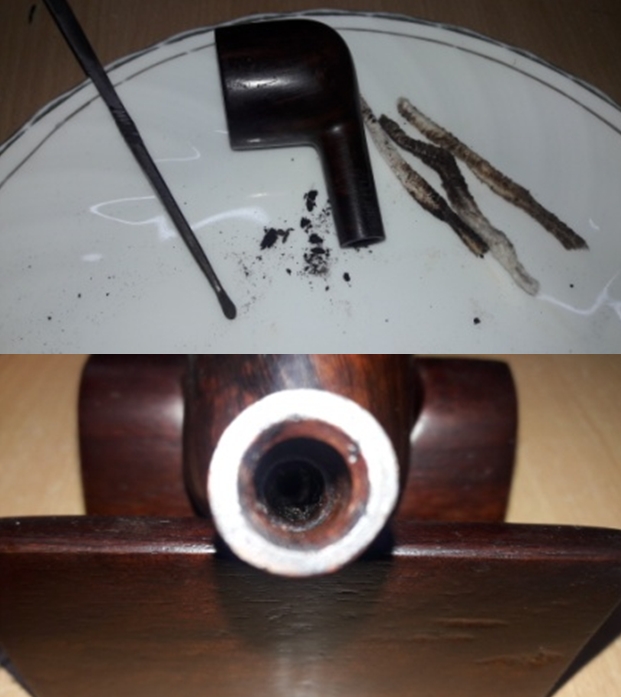
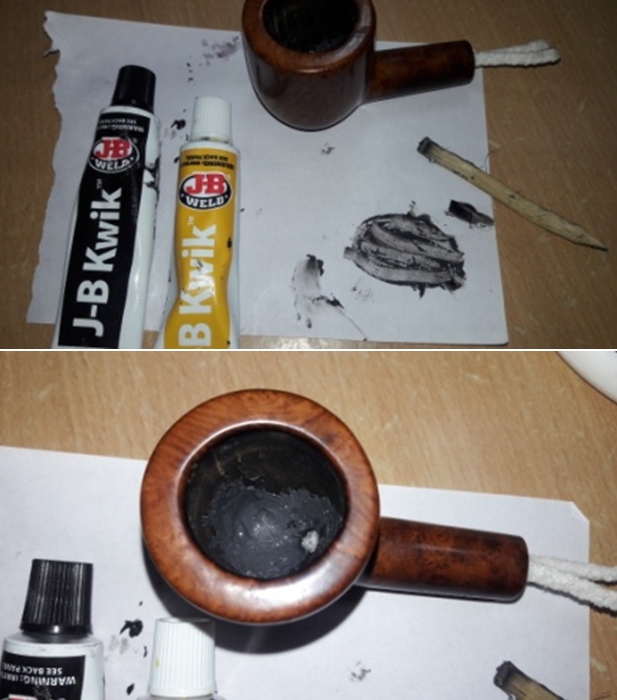
I followed the cleaning of the chamber with the cleaning up of the shank, mortise and the air way. Using hard bristled pipe cleaners dipped in isopropyl alcohol, I ran a few through the mortise. This moistened the hardened grungy depositions of all the oils and tars in the mortise. Thereafter, using my fabricated dental spatula, I scraped out all the accumulated oils and tars from the shank. The following picture hints at the degree of the grunge deposition that I was dealing with. I continued the mortise cleaning regime with shank brushes dipped in alcohol. However, the pipe cleaners continued to come out dirty and soiled unabated. This would need application of some serious cleaning process using salt and alcohol treatment.I rolled some cotton in to a wick and wound it around a pipe cleaner and inserted it inside the mortise up to and through the draught hole. Next, I packed some cotton in to the chamber and topped it with 99.9% pure isopropyl alcohol and set it aside for the time being. About twenty minutes later, I topped it again with alcohol and set it aside overnight for the alcohol to draw out all the tars and oils from the chamber walls and the cotton to trap the drawn out gunk. I must clarify here that even though it is recommended to use ‘Kosher Salt’, plain cotton and alcohol works with exactly the same effectiveness, but at nearly ¼ the cost of Kosher Salt!! So, in case someone else is paying, go ahead with using Kosher salt, otherwise cotton and alcohol works just fine! By next day evening, the alcohol and cotton had fulfilled its intended task. I ran a pipe cleaner through the mortise for a final clean and it came out……well, soiled black and dirty! The gunk and grime in this pipe was stubborn, indeed. I again went through the entire regime followed earlier to clean the mortise and was surprised to find the amount of grunge that was scraped out again. The crud that was extracted and the number of pipe cleaners used after the alcohol bath, as can be seen in the photographs, bears testimony to the extent of apathy the pipe was subjected to by the previous steward. I followed up the internal cleaning with external refreshing of the stummel surface. Using a hard bristled tooth brush dipped in undiluted Murphy’s oil soap, I very deliberately scrubbed the stummel and the rim top to remove the overflow of lava from these surfaces. The stummel and rim top was dried using paper napkins and soft cotton cloth and set it aside to dry out naturally. The stummel looks clean, but the road rash, dents and dings to the stummel and rim edges/ top now stands out prominently. I followed it up with sanding the entire stummel with a folded piece of 220 grit sand paper. This serves three purposes; firstly, it removes all the stubborn dust and grime from the surface, secondly, it evens out, to a great extent, any minor dents and dings from the surface and thirdly, it provides a smooth and clean surface for intended fills. With the road rash evened out to the extent possible, I repaired the road rash with a mix of briar dust and CA superglue. I always over fill the holes/ surfaces so that when I sand them down they are smooth and I can feather in the fills with the rest of the briar. I also build up the shank end, which was damaged due to the road rash, with this mix. I set the stummel aside to cure.Once the glue dried (very quickly by the way), I attached the stem to the shank end carefully aligning the stem fill with that of the shank end fill. I sand the entire stummel surface and the stem using a folded piece of 180 grit sand paper and matched the shank end with the stem fill. Once I had achieved a match, I detach the stem from the shank end. On close observation, I found that the shank end repairs had several tiny air pockets. I again filled up these air pockets with clear superglue and set it aside for curing, while I worked the stem. Using a flat head needle file, I reshaped the button and follow it up by further sanding the stem with 320, 600 and 800 grit sand papers. Using the micromesh pads, I complete the polishing cycle by wet sanding the surface with 1500 to 2400 grit pads and dry sanding with 3200 to 12000 girt pads. The stem looks great with the fills nicely matched with the rest of the surface. I rub a little quantity of Extra Virgin Olive oil in to the stem surface. With the stem repairs completed, I turn my attention back to the stummel repairs. The second fill to the road rash portion had cured and I sand it with a folded piece of 180 grit sand paper. However, I realized that the air pockets were still visible. I discussed this with my mentor, Mr. Steve, who suggested that I should first go through the micromesh polishing cycle and then decide if a refill is required or otherwise. With this advise, I move ahead to complete the stummel repairs. I top the rim on a piece of 220 grit sand paper to even out the rim surface dents and dings and also to reduce the charred rim surface. I addressed the out of round inner edge and the dents and dings to the outer rim edge by creating a bevel on both these edges with a folded piece of 220 grit sand paper pinched between my thumb and index finger. The numerous scratches, dents and dings to the stummel surface was beginning to concern me as it was a conflict between my innate desire not to lose briar through sanding and the necessity to do just that if I desired to completely rid the stummel of all these evidences of its past and thin out the walls in the process. Readers, believe you me, these damages were deeper than you normally expect. I shall take a fresh call on this issue after I am through with the micromesh polish cycle.

However, no sooner than I was through with wet sanding using 1500 to 2400 grit micromesh pads, the air pockets in the fill to the road rash stood out like sore thumb. I repeated the process of freshly filling it with a mix of CA superglue and briar dust. I set the stummel aside for the fill to cure.After the fill had cured sufficiently, I sand and match the fill with rest of the surface using a 220 grit sand paper. This was followed by polishing the stummel with micromesh pads, wet sanding with 1500 to 2400 pads and dry sanding with 3200 to 12000 grit micromesh pads. I wipe the surface with a moist cloth to remove the resulting dust. The stummel, at this stage, looks absolutely stunning with beautiful straight grain popping out from every inch. The dents, dings and scratches, though visible, are no longer an eye sore. In fact, it lends the pipe an aura of being a survivor and invincible. I decide to let the marks be! Next, I rub a small quantity of “Before and After Restoration Balm” in to the briar with my finger tips and let it rest for a few minutes. The balm almost immediately works its magic and the briar now has a nice vibrant appearance with the beautiful straight grains on full display. I further buff it with a horse hair shoe brush. The only stummel issue that needs to be addressed is that of the ridges at the heel near the draught hole. The first thing I do is insert Vaseline smeared folded pipe cleaner in to the mortise right up to the draught hole and slightly beyond. This prevents the draught hole from getting clogged. I begin by wiping the heel with a cotton pad wetted with alcohol to clean it. I make a mix of the two components of JB weld; hardener and steel in equal measures. The mix remains pliable for 6 minutes, which is adequate to spread it evenly and fill the worn out heel surface. I also covered the indentation formed on the front wall. Once I had achieved a satisfactory spread, I set the stummel aside for 4-6 hours for the weld to cure. The weld has hardened and I sand the fill to a nice smooth and even surface with a 180 grit sand paper. It was not an easy task as I had to do it manually with the sand paper pinched between my thumb and index finger. But I managed with satisfactory results. I shall be coating the inner walls of the chamber with a mix of activated charcoal and yogurt. This will not only help in faster build up of the cake but also isolates the weld from coming in to direct contact with the burning tobacco. To complete the restoration, I re-attach the stem with the stummel. I mounted a cotton cloth buffing wheel to my local machine which is similar to the Dremel.  I set the speed at about half of the full power and applied White Diamond compound to the entire pipe. I wiped/ buffed the pipe with a soft cotton cloth to clear it of any leftover compound dust. With a cotton buffing wheel earmarked for Red Tripoli, which has a finer grit than White compound, I buffed the stem to a fine glossy finish. I then re-attach the stem to the stummel, mounted another cotton cloth wheel on to the polishing machine and applied several coats of carnauba wax. I finished the restoration by giving the entire pipe a rigorous hand buffing using a microfiber cloth to raise the shine further. The completed pipe looks lovely, fresh and vibrant; the pictures speak for themselves. I really enjoyed working on this pipe and hope that readers too enjoyed walking with me through this restoration. If only this handsome pipe could share the secret of its past life with all of us… if only!! Cheers.

PS: After I was done with all the polishing and buffing, I gave the walls of the chamber, a nice and even coat of activated charcoal and yogurt. I am very happy that this pipe has gone to a war veteran Officer who loved the scars and the grains on this pipe, not to mention my figment of imagination that this pipe appears to have seen action against the Viet Cong and survived!! It was at his request that I did not stain this pipe to mask the fills. This fighter has indeed come a long way as can be seen from the pictures below.


Recommissioning an Interesting Trent Lev-O-Lator Bent Billiard


Blog by Dal Stanton

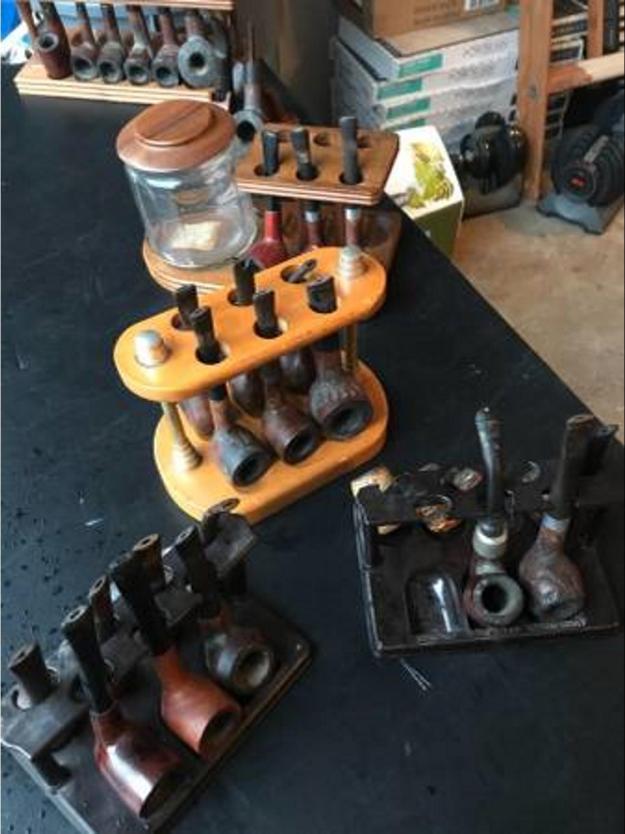
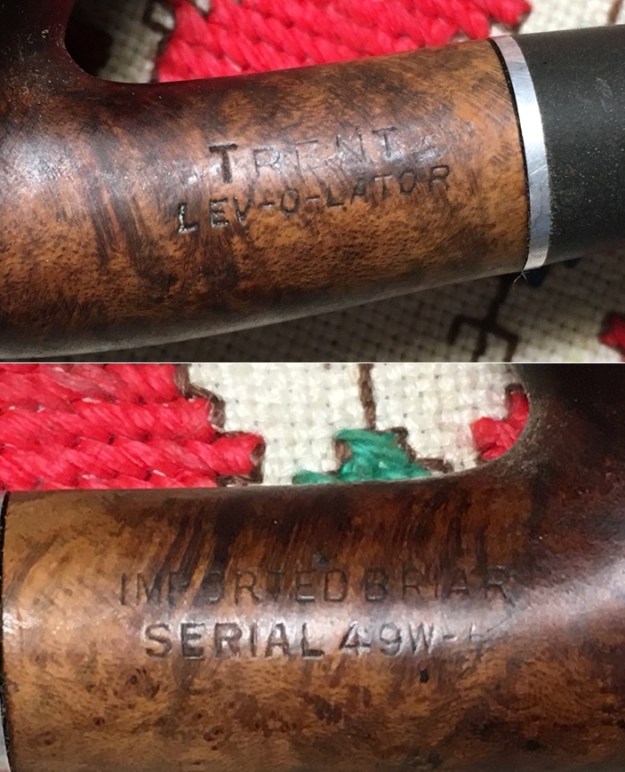
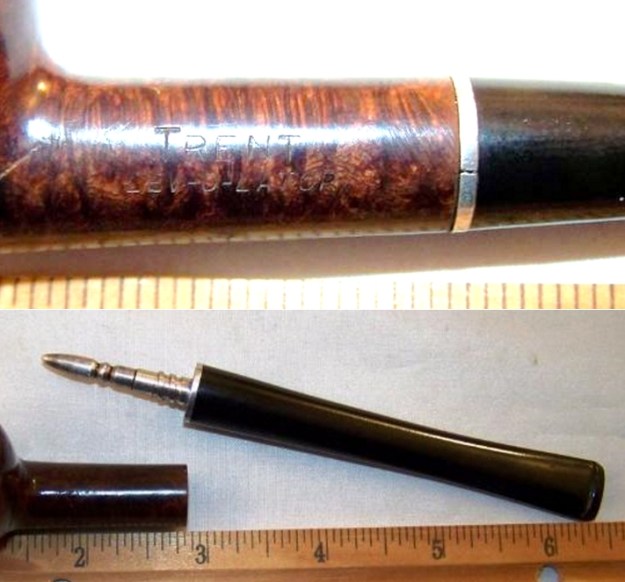
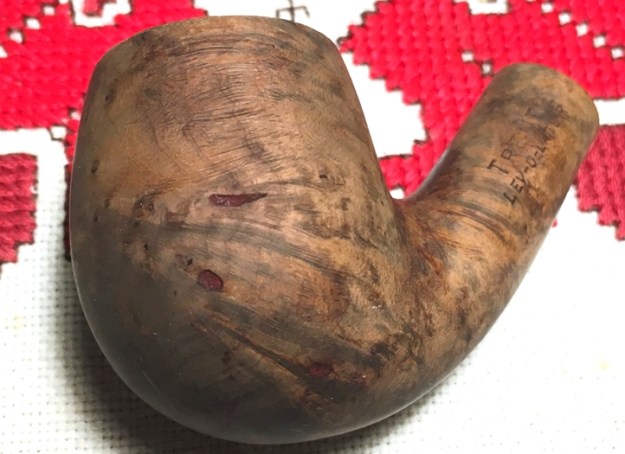
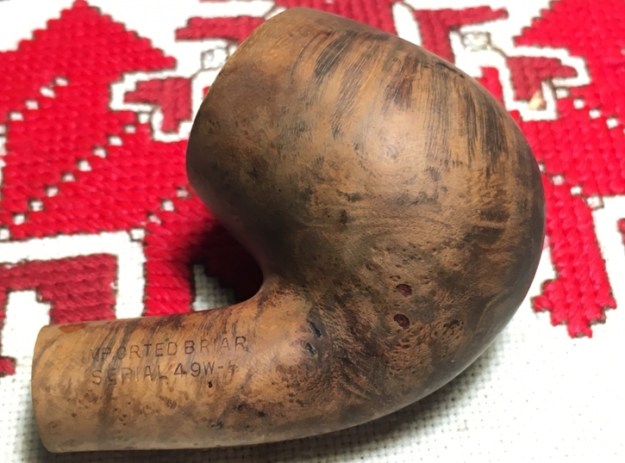
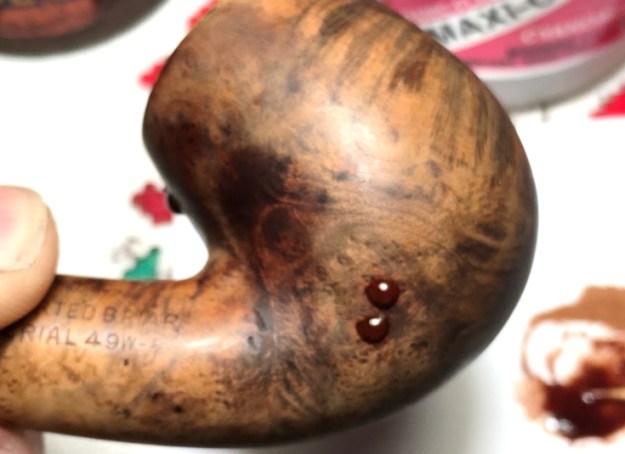
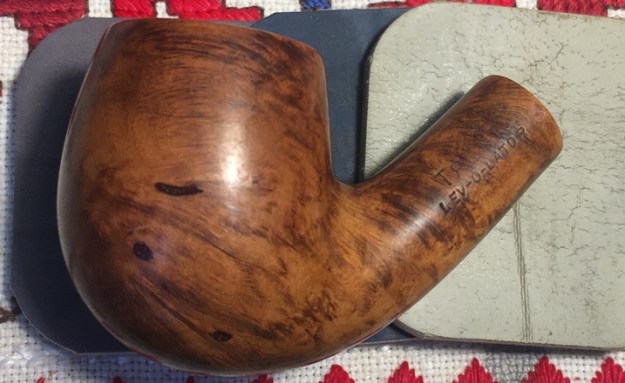
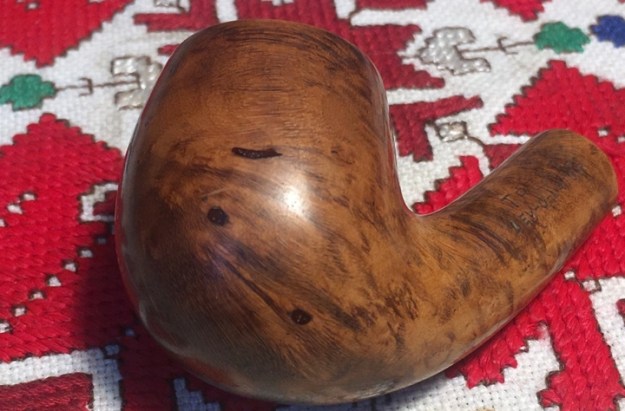
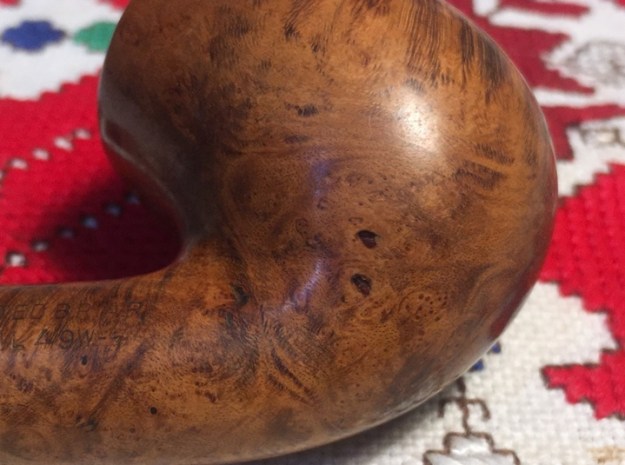
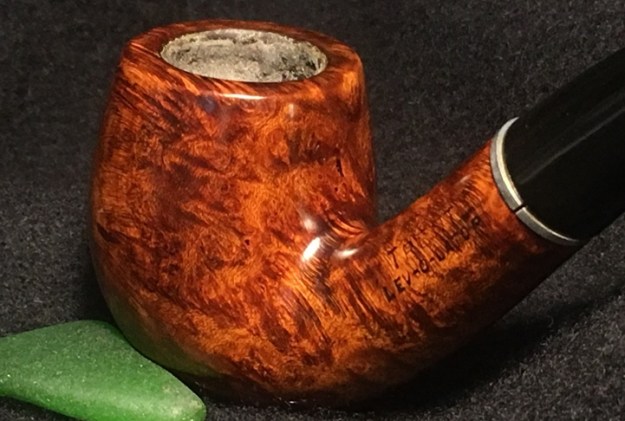
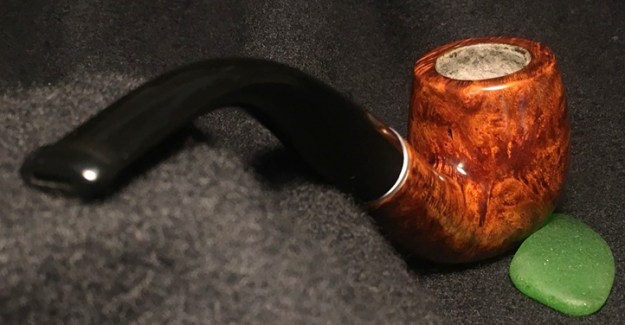
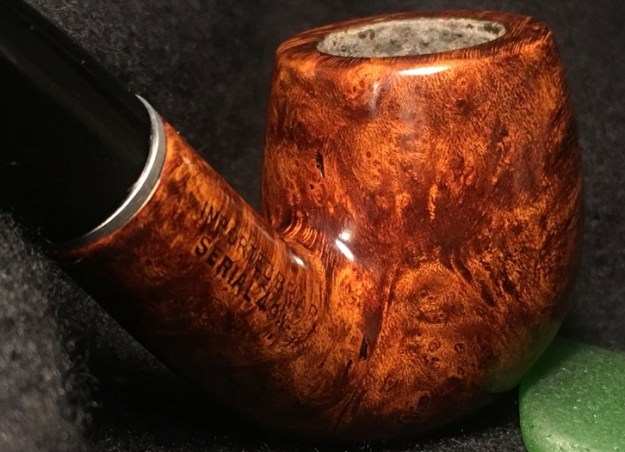
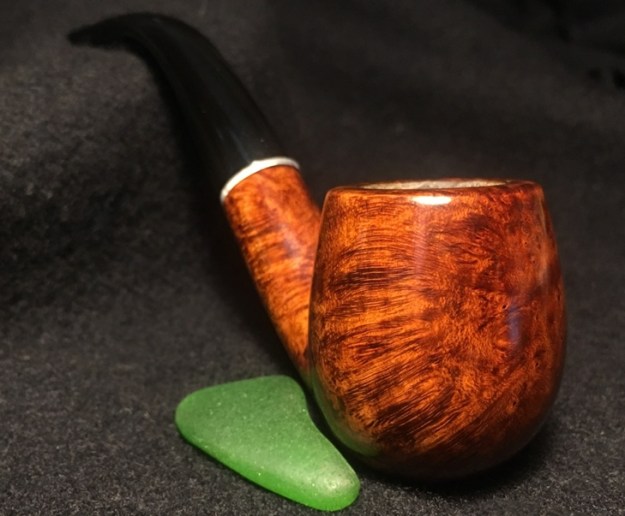
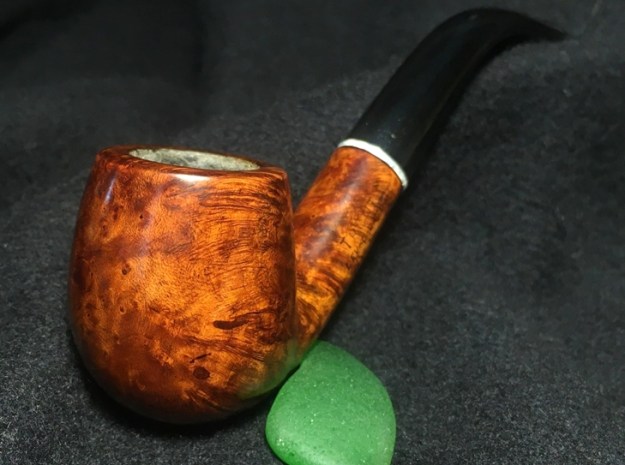
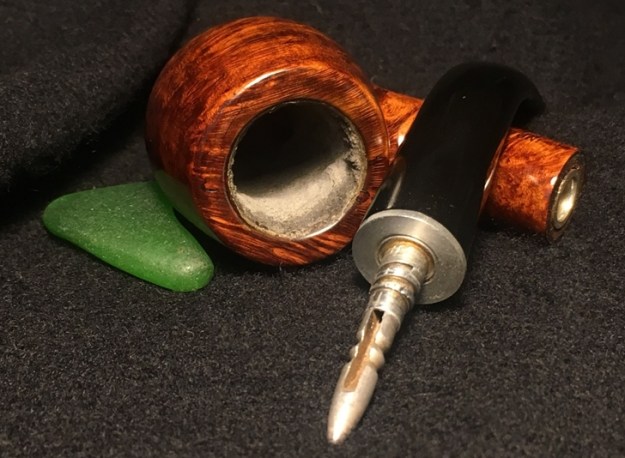
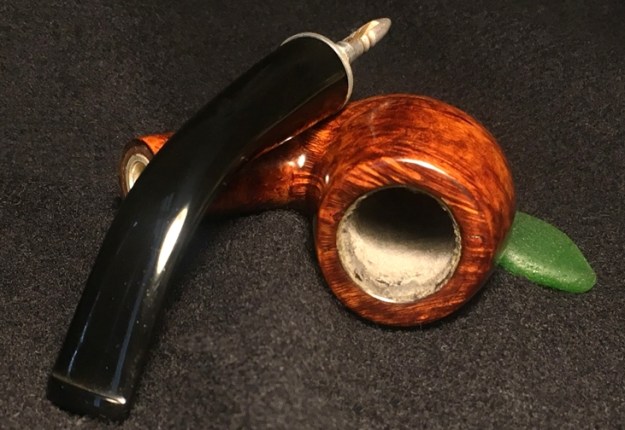
This interesting Trent Lev-O-Lator came to me in a lot from Craig’s list.  One of the great things about friends and family knowing that I restore pipes for the Daughters of Bulgaria is that I have eyes all over the world watching for pipes!  Jon, a colleague working in the same organization, was in the US for a time of furlough after working in Ukraine and was in the Philadelphia area.  This lot of several pipes came up on Craig’s List in his locality and he sent me an email concerning them.  He went to look at them and gave me some descriptions, and many of the pipes were beyond a state of being restored, but for the price being asked, the remaining pipes would make it worthwhile.  Here is picture of the Craig’s List Lot that Jon acquired for me.  As a bonus, the pipe racks would be nice to have here in Bulgaria!They finally made it to Bulgaria where I sorted them and posted many of them online in my For “Pipe Dreamers” Only! collection where pipe men and women can commission a pipe to be restored that ‘speaks’ to them.  Andy has commissioned pipes before and is a return patron of The Pipe Steward.  Before my wife and I moved to Europe with our family over 25 years ago, Andy and his wife, were part of a church in Maryland that I helped start.  Previously, I restored a very nice Monarch Pat. 1989069 – 1074H Bent Ball for Andy as well as create a Churchwarden from a repurposed bowl and had fun with the write-up calling it, Fashioning a Churchwarden from a Forlorn, Throw away Billiard – a story of the Phoenix.  Andy returned to the ‘Dreamers!’ collection and another pipe spoke to him, a Trent Lev-O-Lator, part of the Craig’s List Lot from Jon.  Here are pictures of the pipe that got Andy’s attention. The nomenclature stamped on the left flank of the shank is ‘TRENT’ [over] ‘LEV-O-LATOR’.  The right side of the shank is stamped ‘IMPORTED BRIAR’ [over] ‘SERIAL 49W-5’.I had never seen this name on a pipe, and I had no idea was a ‘Lev-O-Lator’ was.  My first queries to Pipedia and Pipephil.eu, my regular first stops for information and research, came up empty.  A quick look in my copy of ‘Who Made That Pipe?’ by Wilczak & Colwell, also came up empty.  When I searched more broadly in Google, I came up with two helpful threads.  The first was from Pipes Magazine Forums where another person was asking the same question in 2015 – had anyone any information about a pipe marked ‘Trent Lev-O-Lator’?  He had acquired a Zulu with this nomenclature and was hoping to understand better its provenance.  One helpful response in the thread from ‘eJames’ started to build a road map:

Bruce Peters pipes (and a couple of others) were made by HLT for the Penn Tobacco Co. If this is a Bruce Peters it was most likely made before HLT bought Grabow, probably in the 1940’s.

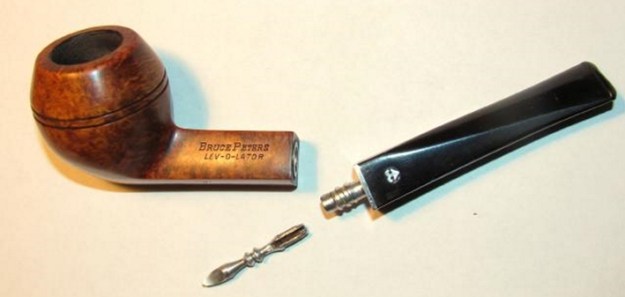
Taking this information, I returned to Pipedia and found ‘Bruce Peters’ listed among American pipe makers:To understand more about the Henry Leonard & Thomas Inc., I look at the Pipedia article about HLT:

Henry Leonard & Thomas, Inc. (HLT) was founded in Ozone Park, Queens, New York by Henry J. Lavietes and two partners on May 31, 1938. The company patented a stem design for pipes and cigarette holders designed by Henry on March 9, 1943. Henry was the son of David Lavietes, who moved to Sparta, North Carolina in the early 1940s to purchase laurel and rhododendron burl to ship back to his son and HLT. Lavietes decided to stay in Sparta and founded the D&P Pipe Works with his other son Paul, originally as a 15-person operation. David Lavietes was the inventor of the Ajustomatic feature incorporated into Dr. Grabow pipes even today.

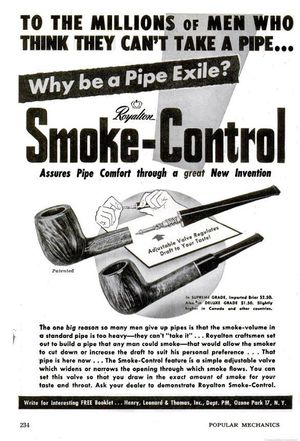
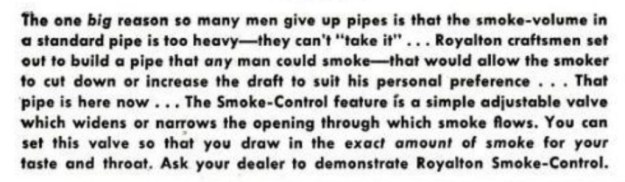
There is no mention of “Trent” or “Lev-O-Lator” but there is mention above of David Lavietes’ invention called the ‘Ajustomatic’ which later became a feature of Dr. Grabow pipes when in 1953 (same article) HLT acquired Dr. Grabow.  In the same article, the Popular Mechanics advertisement (LEFT – Courtesy of Doug Valitchka) describes the ‘Ajustomatic’ technology which looks much like the Lev-O-Later.  Here is the text enlarged:I continue to search for more leads and I find one additional thread that shed more light on the path.  This time the thread was from Tapatalk.com, in the “Dr. Grabow Pipes” Thread.  The thread started in 2017 when ‘SpadeFan’ asked:

Found this nice 86 from HL&T stamped BRUCE PETERS and LEV-O-LATOR.  Anyone know what the term LEV-O-LATOR means? Sound like I should plug it in and make coffee or something.Responses in this thread speculated that the ‘Ajustomatic’ and ‘Lev-O-Lator’ were one and the same:

JoeMan: That fitment sure looks a lot like an ajusto…and the cleaner may be identical to that of a Van Roy…and that logo looks a LOT like the Van Roy logo too.  I wonder if it’s a Van Roy production pipe which was then branded as a Bruce Peters.  If so…and if it is Ajusto…then I bet Lev-o-lator is their fancy name for the ajusto function.  

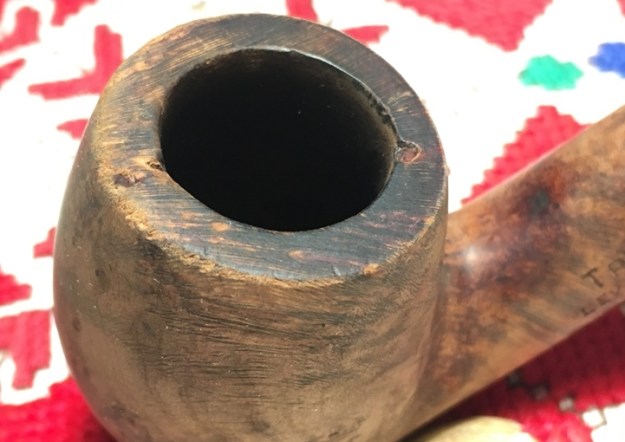
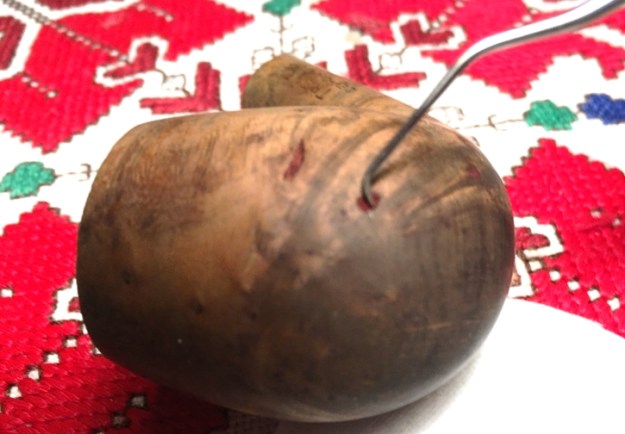
Pipesbywhitney:  I sold one a while back and here are my notes on it; This is a Trent Lev-O-Lator “Serial 49W-5” longer stem pear also stamped “Imported Briar.”  I can find no provenance for Trent pipes but the Import Briar stamping tells us it was most likely American made. The Lev-O-Lator system seems to be a metal drinkless mechanism attached to the tenon similar to many used in various American pipes during the mid-20th Century. I can find a Trend pipe similar to this one made around the same time by the Wm. Demuth Co. in New York so there could be a connect.I could find no additional information specifically placing the ‘Trent’ name in a time-line, but what I can deduce is that the ‘Trent Lev-O-Lator’ is the same ‘Ajustomatic’ internal technology that is traced back to before Dr. Grabow was acquired by HLT in 1953.  Without any specific reference to ‘Trent’, it’s difficult to say much more with certainty.  The Trent Lev-O-Lator on my worktable has the feel of being dated from the 40s to the 60s but this is only speculation.  I would need to find the Trent in a catalog to place it more specifically.Looking at the pipe itself, it’s a very nice half-bent Billiard.  The chamber has some thick cake build-up with the rim showing thick lava flow.  The rim also has two dents on the forward and rear internal edge. The stummel is darkened from grime and age.  I can see a few fills and dents on the briar surface which will require some work.  The stem has oxidation, which is moderate, but the good news is that the bit has little tooth chatter.

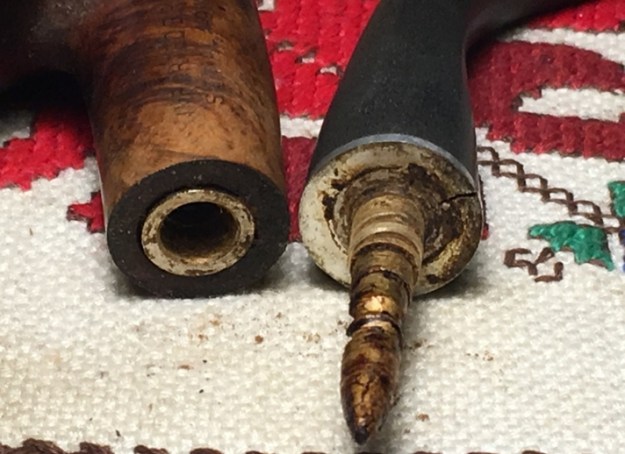
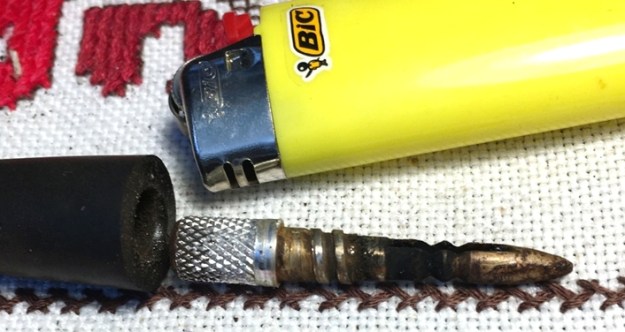
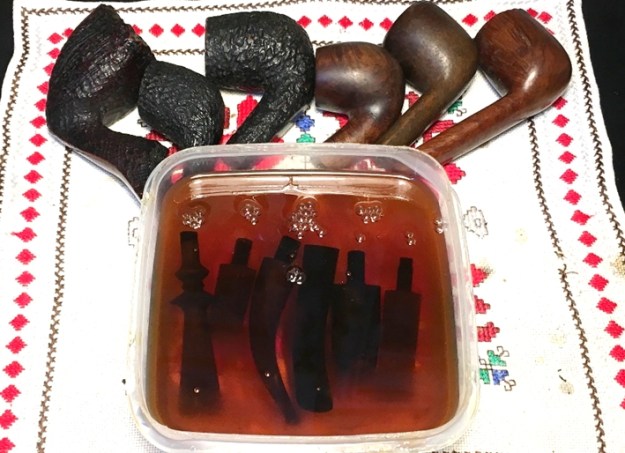
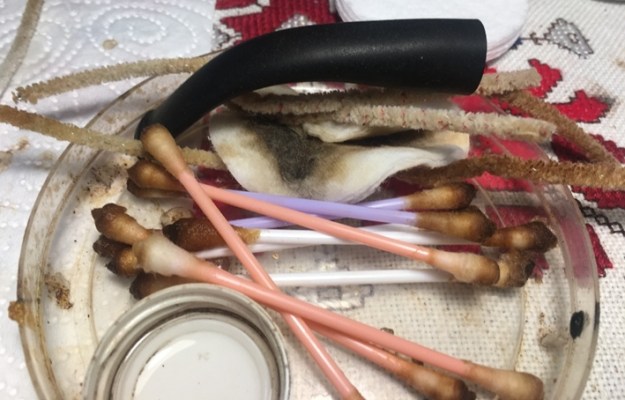
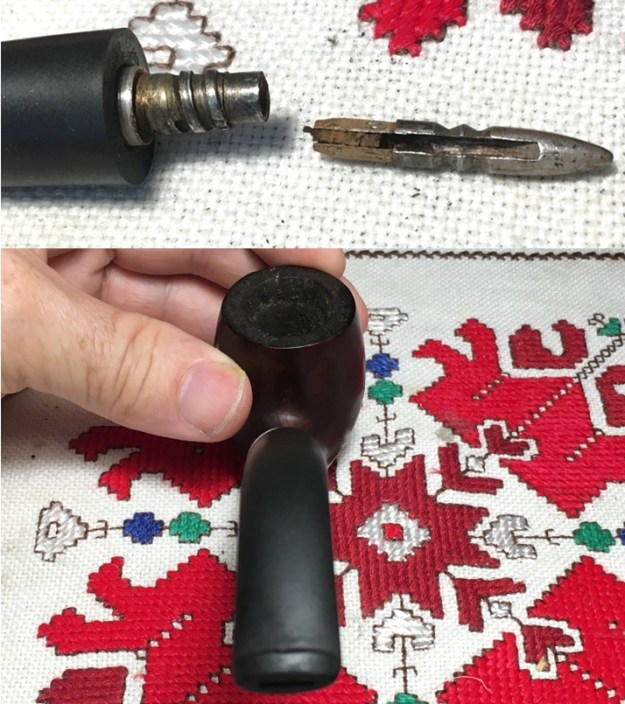
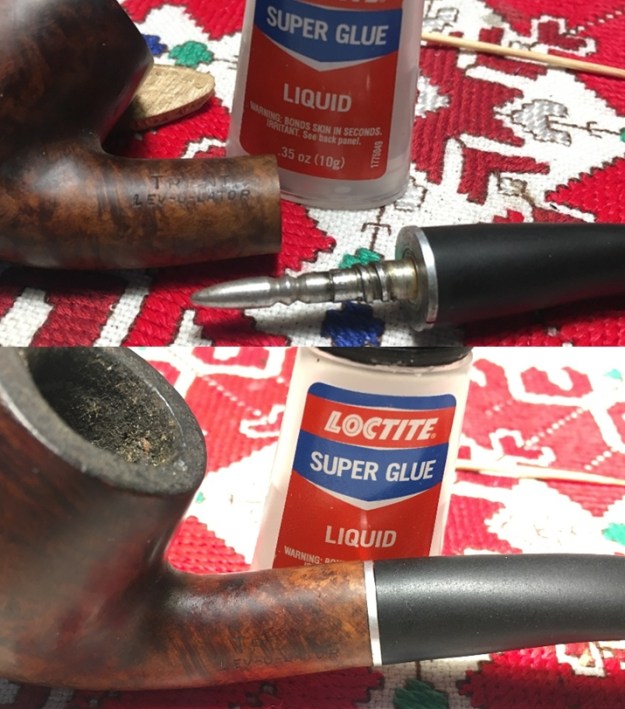
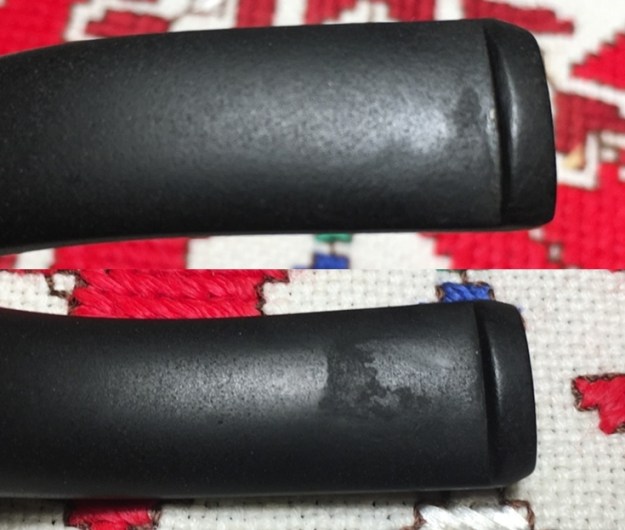
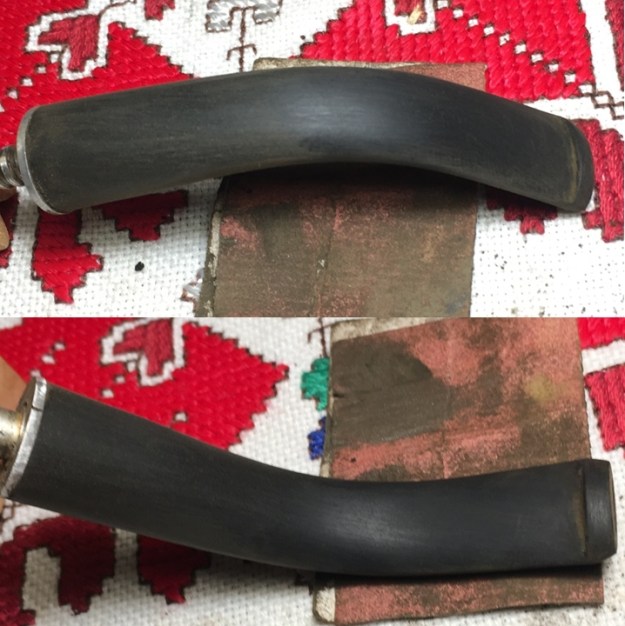
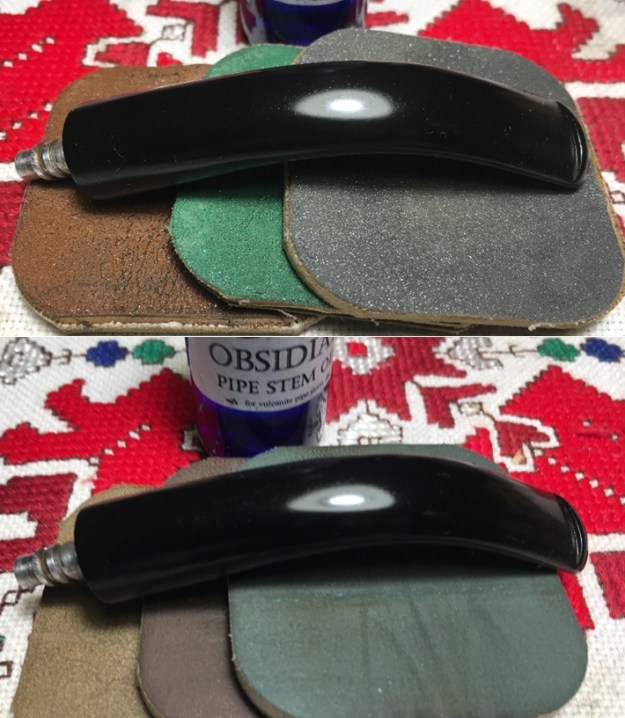
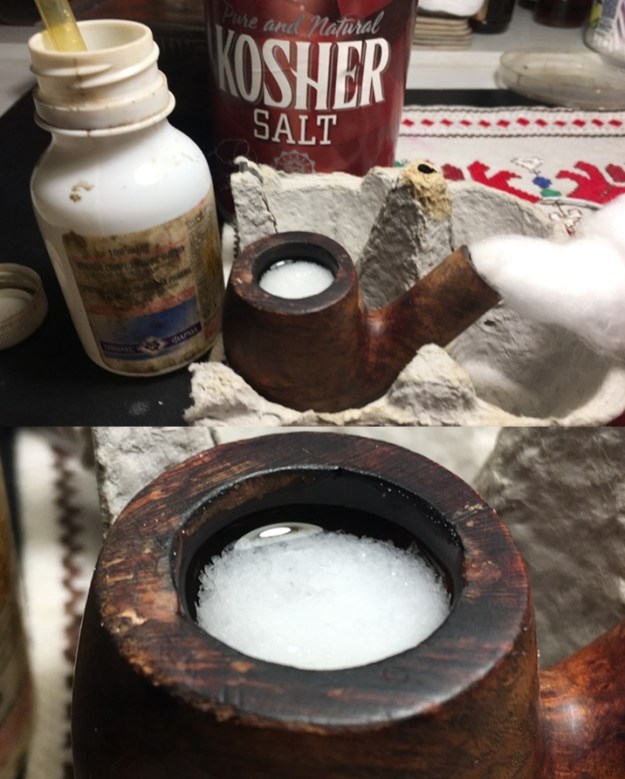
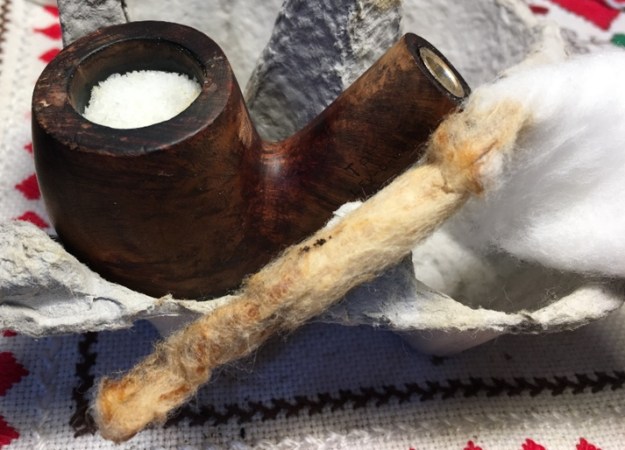
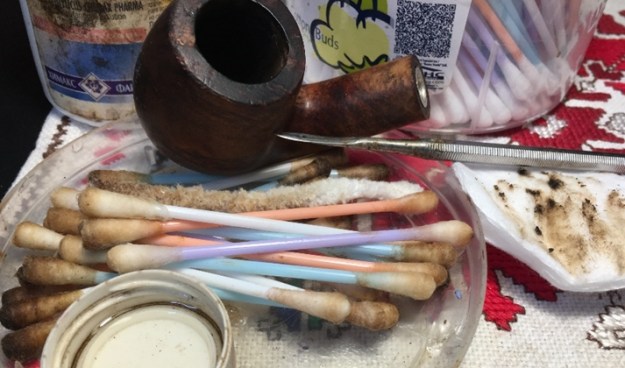
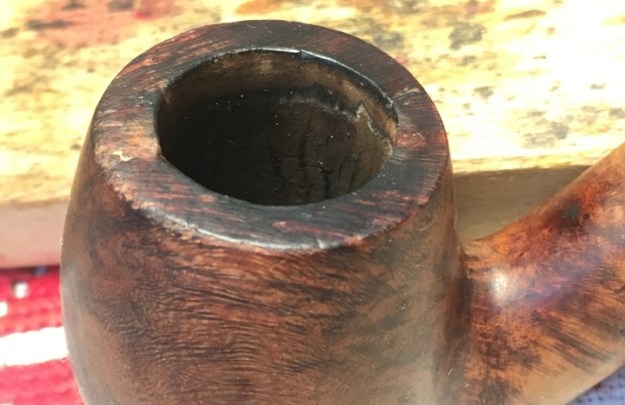
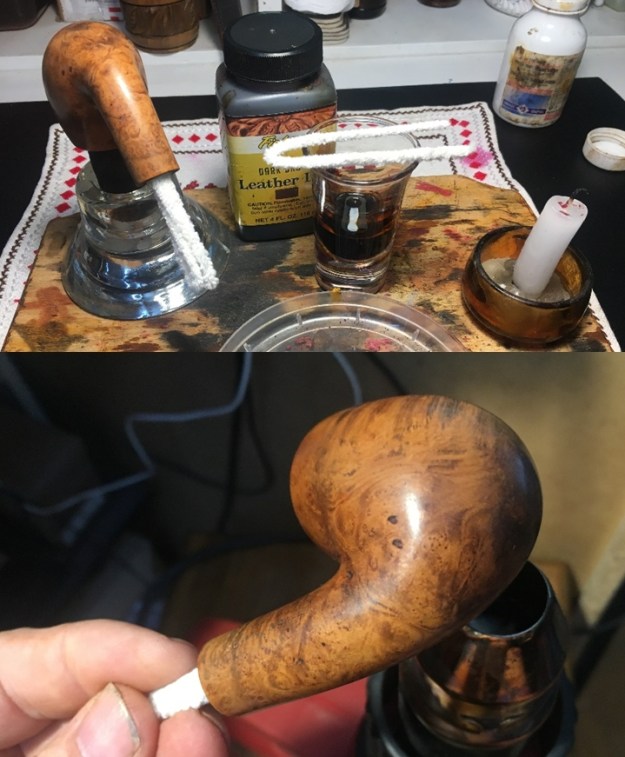
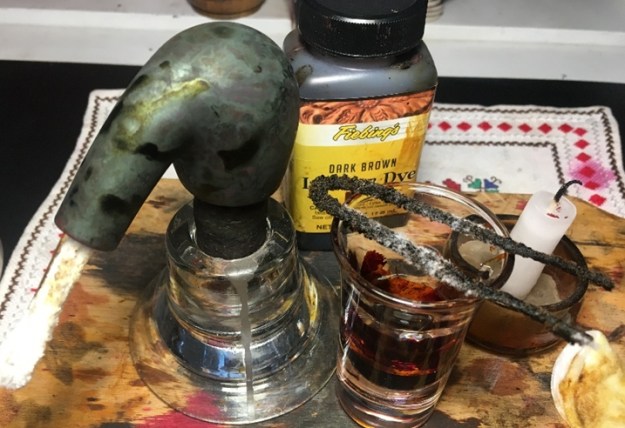
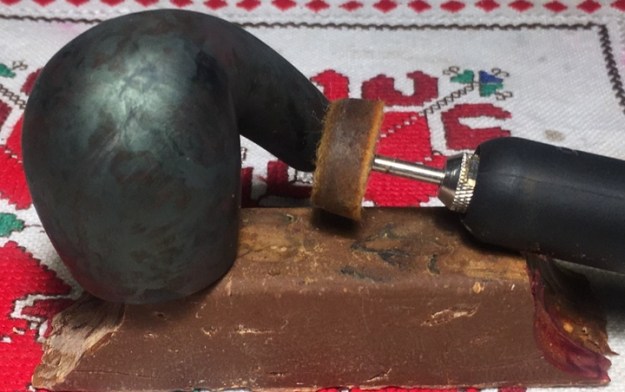
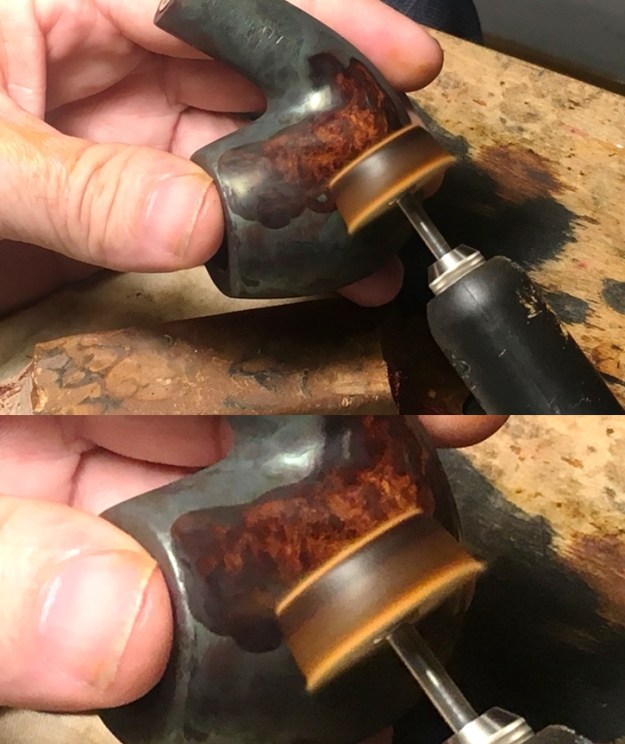
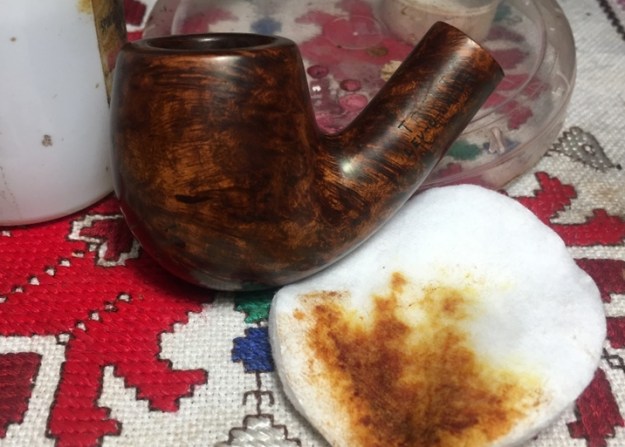
True confession is good for the soul: The research that I have just completed examining the ‘Ajustomatic’ technology was done AFTER I started working on the restoration!  With my practice of putting a batch of stems in the Before & After Deoxidizer soak to remove oxidation, I started on this before doing the research.  Unfortunately, I did not realize that the tip of the ‘Lev-O-Lator’ would come off.  This fitment serves as an air regulator which is cool.  Without realizing that it would come off making my attempt to clean the airway with a pipe cleaner wetted with isopropyl 95% much easier, I decided to remove it.  The shank ring was already loose, and I felt I could remount the metal ‘stinger’ the same way I took it off.I heated the entire metal tenon with a Bic lighter.  After it heated up, I wrapped a cotton pad around the tenon and gently applied a little torque with a pair of plyers and voila!  The vulcanite loosened its grip and the Lev-O-Lator came out.  I still didn’t realize the end regulator could be removed.Along with other pipes in queue, I clean the Trent’s stem with pipe cleaners wetted with isopropyl 95% before placing the stems in the soak with Before & After Deoxidizer. After some hours, I fish the Trent’s stem out of the Deoxidizer and let it drain. I then use a cotton pad wetted with alcohol to wipe off the oxidation that had surfaced.  I also work on the cavity of the vacated metal Lev-O-Lator with cotton buds wetted with isopropyl 95% as well with pipe cleaners clearing the airway of the Deoxidizer.I then apply paraffin oil, a mineral oil, to the stem to begin the revitalization of the vulcanite.Now, with an understanding of the research I did previously, I remove the air adjustor of the Lev-O-Lator after I reheat the tenon, insert it into the cavity and then screw the stem to the right to tighten it in the mortise.  When it tightens, I’m able to continue rotating the stem to the right because the metal is still hot.  I rotate the stem clockwise until aligned and then let it cool. The ajusto air regulator is totally clogged with what looks like mud.  I use a dental probe to clean it and wipe it down with a cotton pad and alcohol.I apply a few drops of CA glue to the inside facing of the shank ring and attach it to the stem.  This should hold it in place.Next, I use the Pipnet Reaming Kit and starting with the smallest blade I go to work on the thick cake.  This was the hardest cake build up I think I’ve experienced in any of my previous restorations!  Oh my, it took a good bit of time for the smallest blade head to work through the brick hard cake.  I was careful not to force the blade too aggressively for fear of breaking the blade head.  The blade head finally broke through to the floor of the chamber and I switch to the next larger blade.  I use only 2 blade heads of the 4 available in the Kit and then transition to scraping the chamber using the Savinelli Fitsall Tool which fine tunes reaching to the areas that the blades would not.  Finally, I sand the chamber using 240 grade paper wrapped around a Sharpie Pen and then clean the chamber using a cotton pad wetted with isopropyl 95%.  After completing the chamber inspection, I detect some small heating cracks running on the chamber wall.  To remedy this, later I’ll coat the chamber wall with pipe mud to provide a layer that will help restart a healthy protective cake.Next, to clean the external surface and work on the lava flow over the rim, I use undiluted Murphy’s Oil Soap on a cotton pad.  I also use a brass wire brush to work on the thick lava flow on the rim.  The grime is thick, and the rim does a good job coming clean, but it’s in pretty rough shape.  I take some pictures to inventory the issues I see on the bowl and rim.  The rim is beat up.  There are divots out of the briar on opposite sides of the rim.  The outer edge of the rim is also dinged and skinned.There are several old fills that are soft and drawn up.  Often this happens after the cleaning and the stummel is wet. I move methodically to each of the fills and excavate the old fill material using a sharp dental probe. To fill these holes, I use briar dust mixed with a thick CA glue.  I put a small mound of briar dust on an index card and I put some CA glue next to the mound.  Using a toothpick, I gradually pull briar dust into the CA glue mixing as I do.  I continue to create the putty until it reaches the thickness of molasses and then I apply small amounts of the briar dust putty to each of the holes including on the rim.  After doing this, I set the stummel aside allowing the patches to cure. Now, turning to the stem, I take some additional pictures to get a closer look.  The upper and lower bit has very little tooth chatter and the button is in relatively good shape.  What stands out about the stem is the very rough surface that remains over the entire stem after the soaking in the Before & After Deoxidizer. To remove any remaining oxidation and to address the rough surface texture, I sand using 240 grade paper.  I also focus on the sharpening and freshening the button area.I then transition to the sink with 600 grade paper and wet sand the entire surface.  Well, during this process, the shank ring that I had attached with CA glue popped off and went down the drain.  Fortunately, after immediately turning off the water, I was able to unattach the trap underneath the sink and retrieve the ring!  I follow wet sanding using 000 grade steel wool.  The stem looks great.On a roll with the stem, I apply the full regimen of micromesh pads to the stem.  First, I wet sand with pads 1500 to 2400 then dry sand with pads 3200 to 4000 and 6000 to 12000.  Between each set of 3 pads, I apply Obsidian Oil to rejuvenate the vulcanite and record that phase with a picture to show that newly polished vulcanite pop!  I then put the stem aside allowing it to dry. With the stem on the sidelines, I look back to the stummel.  The briar dust putty filling the several holes on the rim and stummel surface has cured.  I begin to file each fill mound down with a flat needle file – bringing the mounds down almost to flush with the briar surface.After the filing is complete, I transition to sanding each fill site with 240 grade paper to bring the patches flush with the briar surface and removing all the excess fill material. My normal process order is a little out of order but the grime on the inside of the mortise and airway is patiently waiting.  Using many cotton buds and pipe cleaners dipped in isopropyl 95%, I attack the internals.  I also employ the full arsenal of dental probes, spoons and shank brushes.  At the end of the carnage pictured below, I have yet to come to a place of declaring the internals clean enough to satisfy me. With the frontal assault paused, I use the slower, more passive approach to continue the cleaning through the night.  Using kosher salt and isopropyl 95% I let it soak and work on the internals.  I first pull and twist a cotton ball to form a wick that I stuff down the mortise and airway with the help of a stiff wire.  The cotton wick serves to draw out the tars and oils.  I then fill the bowl with kosher salt and set the stummel in an egg crate to stabilize it.  I then fill the chamber with isopropyl 95% until it surfaces over the salt.  I wait a few minutes as the alcohol recedes and then top it off once more.  I set the stummel aside to soak.The next morning, the salt is not soiled in a great way, but the wick is what is what I want to see.I follow again with a renewed frontal attack using cotton buds and pipe cleaners wetted with alcohol as well as additional scraping the mortise walls with a dental spoon.  Eventually, the buds start surfacing lighter and I call it, ‘Cleaned!’ and move on.With the internals clean, I now focus on the external surface restoration.  I start from the top with the rim by topping the rim using 240 grade sanding paper on the chopping board.  With the damage on the rim, and the briar dust fills on the rim, the topping will give the rim a fresh start with new lines and surface.The half-bent shank reach extends beyond the parallel plane of the rim, so I need to hang the shank over the edge of the board while I top.  With the stummel inverted on the 240 grade paper, I do a tight rotation of the stummel on the corner of the topping board.  I check after a few rotations until it looks clean.I then switch the 240 grade paper with 600 grade paper and rotate the stummel several more times.  I like what I see. Even after the topping, there remains some roughness on the external edge of the rim.  The former divots in the internal rim edge are all but gone, but there are still some slight indents where the briar dust patches are. To remedy this, I create an internal rim bevel.  I start on the internal rim edge using a coarse rolled piece of 120 paper to cut the initial bevel.  I follow this by using 240 and 600 grade papers tightly rolled.  My method of creating the bevel is to pinch the paper against the internal rim edge with my thumb pressing the paper while my index finger puts consistent counter pressure on the external side of the rim and then rotate consistently around the circumference of the rim.  This usually provides a consistent result. I do the same with the external rim edge, but not with the same intent of creating a bevel.  My goal is simply to clean the rim as much as needed.  The result is not only to clean the rim, but to soften the rim presentation. With the rim repair and initial sanding complete, I use sanding sponges for the next phase.  I use coarse, then medium and light grade sponges in that order.  I’m careful to guard the nomenclature during the sanding phases. After completing the sponge sanding, I go directly to sanding with the full regimen of micromesh pads.  I begin by wet sanding with pads 1500 to 2400 then follow by dry sanding with pads 3200 to 4000 and 6000 to 12000. I love the way the grain emerges during the micromesh process. I now reach a decision point which is not in limbo too long.  I decide to apply a darker brown dye to the Trent stummel primarily to aid in masking the fills which are dark on the briar landscape.  I will use Fiebing’s Dark Brown Leather Dye with the flexibility to lighten the aniline dye if I choose. I assemble my desktop staining tools with the Dark Brown Leather Dye in a shot glass to apply with a bent over pipe cleaner.  I begin by wiping the stummel with a cotton pad wetted with alcohol to clean.  I then warm the stummel using a hot air gun.  This heats the briar and expands the grain allowing the dye pigment to have a better reception.When heated, I use the pipe cleaner applicator to paint the stummel with the Dark Brown Leather Dye in sections and then with each painted section I flame the wet aniline dye with the lit candle.  This immediately combusts the alcohol in the dye which flames off with a ‘poof’ and the dye pigment sets in the grain.  I do this methodically around the stummel until the entire stummel is thoroughly covered with the fire crusted dye.  When it’s completed, I set the stummel aside for at least 6 hours to allow the new dye to settle.  This ‘rest’ helps guard against the dye later coming off on the steward’s hands after the first few uses of the pipe when the stummel is heated.  I put the stummel aside and wait.After several hours, I’m ready to unwrap the fired stummel.I mount the felt cloth buffing wheel to the Dremel and set the speed at the lowest RPMs.  This is to reduce the heat generated by the coarser felt wheel as I apply the coarser Tripoli compound.With my wife’s assistance, she takes a few pictures as I ‘unwrap’ the stummel revealing the results of applying Fiebing’s Dark Brown Leather Dye to the stummel.  After completing the first round applying Tripoli compound with the felt buffing wheel, I change to a cotton cloth buffing wheel and increase the speed to about 40% full power.  I again apply Tripoli using the cotton cloth wheel which can reach into the crook of the bowl and shank which is not possible with the felt wheel.  After doing this, I go over the entire stummel once more with the cotton cloth wheel using Tripoli compound. This pass using the cotton cloth wheel sharpens the grain lines – making them very distinctive and almost seeming to be luminescent. After completing the application of Tripoli compound, I wipe the stummel with a cotton pad wetted with alcohol not so much to lighten it, because I like the dark shade of the briar, but to blend the new dye and to dissipate possible dye clumps that collected on the surface.After reuniting the Trent stummel and stem once more, I mount the Dremel with another cotton cloth pad, maintaining 40% full power, and apply the finer Blue Diamond compound to the pipe – stem and stummel.  When finished, I buff the pipe with a felt cloth to remove the compound dust from the surface.  Before applying the wax, I have one project left to accomplish.  Earlier I noted that there were some heating cracks in the chamber which were not severe enough to warrant the use of J-B Weld but could be addressed though applying a pipe mud. Pipe mud is the mixture of cigar ash and water to form a ‘mud’ that provides a hard, protective coating over the chamber walls and serves as a starter layer to develop a healthy dime width protective cake.  With gratitude to my colleague, Gary, living in the nearby city of Plovdiv, I have cigar ash that he provides me periodically from his passion of smoking Romeo cigars.  I clean the ash through a sifter and it works very well.I mix small amounts of ash and water until I get a mud-like texture.  After putting a pipe cleaner in the airway to block the draft hole from closing, I use a small dental spoon to scoop the mud and deposit it on the chamber wall.  I also use the spoon to spread the mud so that it disperses evenly. After applying the pipe mud, I set the stummel in an egg carton and let the mud dry and harden through the night. The next morning, the mud transformed into the hardened protective layer as hoped.  If Andy is the next steward of this Trent, he should know not to use a metal tool to clean the chamber during the initial stages of use.  After using the pipe, stir the resulting ash carefully and after dumping it, take a folded over pipe cleaner and rub the chamber wall to loosen the debris.  This avoids scraping the new protective layer which will help encourage a new protective cake to develop.Now the homestretch.  I mount another cotton cloth buffing wheel on the Dremel, maintain about 40% full power speed, and apply a few coats of carnauba wax to the Trent Lev-O-Lator Bent Billiard – stem and stummel.  After application of the wax, I give the pipe a hearty hand buffing with a microfiber cloth to disperse any collected wax and to raise the shine.

When I started this restoration, I had never heard of the ‘Lev-O-Lator’ adjustment fitment.  It would be interesting to play with the movable adjuster valve to see what the difference in the experience would be.  The grain on the Trent half-bent Billiard came out very well with the thick, dark grains masking well the fill repairs.  I did not re-glue the shank ring in place – I will leave that to the new steward to determine according to his preferences.  Andy commissioned this Trent Lev-O-Lator Half Bent Billiard from the For “Pipe Dreamers” Only! collection and will have the first opportunity to acquire it at The Pipe Steward Store.  This pipe benefits the Daughters of Bulgaria, our work here in Bulgaria among women and girls who have been trafficked and sexually exploited.  Thank you for joining me!


The Final Restoration while in Pune, India – a no name Cavalier


Blog by Steve Laug, Jeff Laug, Paresh, Abha and Pavni Deshpande

The final restoration project with Paresh and his family was this tired and worn Cavalier pipe. When we looked at it together we were all pretty certain that it was never going to amount to much no matter how much we worked on it. We purposely saved this pipe to the end of the visit to use it to pull together all that we had learned over the week together. The only sad part of the restoration was that Dal Stanton had already left to go back to Bulgaria. It was yet another East and West adventure in pipe restoration. As I mentioned in the previous blog on the Preben Holm, my brother Jeff and I had traveled to Pune, India where we met Dal Stanton of Pipe Steward and had an incredible visit with Paresh Deshpande, his wife Abha and his daughters Mudra and Pavni. With that cast of players – from the US, Canada, Bulgaria and India it was a special and memorable week of fellowship and pipe restoration. Each of us (minus Dal) played a role in this restoration. I will try to include the contribution of each in the story as it unfolds.

Lest you might think that all we did was work on pipes, I must remind you you that while staying in Pune we enjoyed the sights of the city, fellowship and great food along with working on pipes together even after Dal left. Paresh and his family did a magnificent job of hosting the event and making us all feel like we were part of his family. The hospitality, the amazing food provided by Abha and the joy and laughter of Mudra and Pavni were all part of making this an unforgettable visit. In the next weeks there will be several blogs written about the pipes that we worked on. Dal is working on a blog about the restoration of a BBB bent billiard that had belonged to Paresh’s grandfather that was a real group effort. Both Paresh and I will also be posting blogs on some of the other pipes that we worked on together including meerschaums and briars. We thoroughly enjoyed the time together while smoking our pipes and sharing beer and scotch to celebrate each restoration and to close each day. We exchanged tips and processes that we used. It was a time of sharing and learning for all of us.

The blog I am writing now was on the restoration of a worn and tired Cavalier that came from Paresh’s Grandfather’s collection. Like the rest of the pipes in his Grandfather’s collection the pipe was very dirty but to me it showed some promise. I had never seen a pipe like this with detachable briar parts, a metal shank and a horn stem. It was an interesting piece that showed an interesting grain under the grime. The stain colour was a contrast of browns and the brass band on the top of the shank was a nice addition. The rim top was almost destroyed. There were cracks and a portion of the top was burned away. The bowl was out of round and had a thick cake. The inner and outer edge of the bowl showed the damage of burning and poor reaming. The exterior of the bowl and shank showed a lot of wear and dirt. There was a metal tube pinched on between the bowl and the upright shank. It was hard to know what the tube was and if it matched the brass band. There was also a bone ball cap on the end of the shank in front of the bowl that was worn but still whole. The horn stem had some tooth marks and chatter on the top and underside and some wear on the button edge but otherwise it should clean up nicely. Paresh, Abha, Pavni and Jeff and I all turned the pipe over in our hands wondering what we were going to do with it. It needed a lot of work and would never be flawless. But we decided to go ahead with the restoration anyway and see what we would get. We took photos of the pipe at this point in the process to show the parts and the condition. I took a photo of the top of the bowl to capture the damage to the rim top and the cracks in the bowl radiating down the sides. I took photos of the shank extension and the horn stem on the end to show its condition as well. The shank extension and stem were in decent condition so that was a blessing to be thankful for at this point in the process. I took photos of the sides of the bowl to show the cracks that surrounded the pipe – both width and depth. We took the pipe apart and took photos of all of the parts. It later became clear that the cap on the bottom of the shank also was removable but at this point it was solidly in place and could not be removed.I started the cleanup process by topping the bowl on this old timer before Paresh and his family arrived at the apartment for the day. I topped it on topping board with 220 grit sandpaper. I scrubbed the exterior of bowl with undiluted Murphy’s Oil Soap and a cotton pad to remove the grime. I rinsed it off with warm water to remove the soap and grime. About that time Paresh and his family arrived for the day’s work. He and Abha looked the bowl over and Pavni agreed to sand it out on the inside. But before any of that could happen we needed to drill small holes at the end of each crack. Paresh used his magnifying glass and a black permanent marker to put spots on the end of each of the holes. These would guide us as we drilled each of them. It turned out that each crack had several branches radiating from them and would require a lot of drilling. After marking each crack Paresh drilled a small hole in the end of each one. I wiped the holes down with a cotton swab and alcohol to remove the debris. We filled in each of the holes and the cracks with clear super glue and briar dust. We packed the glue into the holes, repeated the glue and added more dust as necessary to build up the repairs. When the repaired areas had dried I used a needle file to smooth out the repair and blend it into the surface of the briar. I sanded the repaired areas with a folded piece of 220 grit sandpaper to further blend them into the surface of the surrounding briar. Overall the patches and repairs were looking pretty good. I was surprised by how good the pipe looked.

While I was working on the bowl Paresh addressed the issues with the stem. He cleaned the interior with pipe cleaners and alcohol and scraped the buildup on the stem surface with the blade of an exacto knife. He cleaned up the straight edges of the button with a needle file and reshaped the surface of the button at the same time. He followed that by sanding it with a folded piece of 220 grit sandpaper to smooth out the file marks. He filled in the deep tooth marks on the stem surface and on the button top with clear super glue. When the repair had dried he sanded it with 220 grit sandpaper to smooth it out. While Paresh was working on the stem, I finished the repairs and sanding on the bowl. Then I turned my attention to the shank piece. I cleaned it out with alcohol, cotton swabs and pipe cleaners. I wiped down the outside of the shank with Murphy’s on cotton pads. I finished this section about the same time that he finished the stem work.I worked on that and simultaneously to Paresh and my work, Jeff was working on the shank portion. He scrubbed the briar and the metal with oil soap. He worked over the metal shank piece with 0000 steel wool and we were all surprised with the copper that was under the oxidation. The shank band was also loose so he cleaned that as well. It was brass. Abha and Jeff went to work on cleaning the inside of the parts of the shank. Many pipe cleaners, cotton swabs and alcohol later the interior was pretty clean. They tried to remove the knob at the end of the shank but it did not come loose at all. No matter how much they worked on it the knob was still tightly in place.Paresh decided to give the knob a try. He painted the edges around the know with alcohol and scraped the crud that was built up around the joint between the two parts. He kept at it and then low and behold the knob turned and came off in his hands. What was revealed was a lot more of the crud that Jeff and Abha had been removing. Abha cleaned out the inside of the cap and the threads with cotton swabs and alcohol. Once the inside was cleaned and the threads were cleaned they were able to finish cleaning out the inside of the shank.I put the shank pieces together and glued the clean brass band on the top of the shank. The pipe shank and parts were looking pretty good at this point. There was still a lot of polishing to go but the  Cavalier was going to look very good. We took the pipe apart and began the process of polishing the briar and stem. I worked on the shank and stem. For ease of sanding I put the stem on the shank and  polished the stem and shank with micromesh sanding pads – wet sanding with 1500-12000 grit pads and wiping it down with a cloth after each pad. Paresh carefully reamed the bowl with a Castleford Reamer. We worried as he turned the cutting heads that the bowl would split but all remained intact as he cleaned it out. Pavni polished the inside of the bowl with 220 grit sandpaper to smooth out the walls and give them a shine. Paresh polished the bowl with micromesh sanding pads – wet sanding with 1500-12000 grit pads. He wiped it down with a cloth after each set of pads. The photos show the growing shine of  the bowl. I polished the cleaned knob with micromesh sanding pads – wet sanding with 1500-12000 grit sanding pads. Paresh polished the shank  parts with micromesh sanding pads – wetsanding with  1500-12000 grit pads. The briar began to come alive again. With all the parts polished it was time to take the next step. We rubbed down all of the parts with Before & After Restoration Balm. We buffed it by hand with a microfibre cloth. We put all the polished and “balmed” pieces together on a background and showed what the pipe looked like now.We put the pieces back together and took photos of the pipe at this point. We called it a day and Paresh took the pipe home with him. He wanted to polish it and wax it with his Dremel. He buffed it with White Diamond and gave it multiple coats of carnauba wax. When he brought it back the next morning it was a beauty. We took pictures of the finished pipe to show its beauty. The pipe really looked more alive, with the grain popping through. We decided not to stain it but left it as it stood after using the balm. The polished wax made the grain stand out. What started out as a possibility now became a reality. Paresh could now smoke and enjoy both the history of the pipe and carry on its legacy. The photos below tell the story. Thanks for looking.

Restoring an Unusual Barling’s Make S-M Poker


Blog by Steve Laug

Jeff picked up this unusual poker from an auctioneer in Los Angeles, California. He picked it up and also an old Surbrug Best Make bent billiard. This one turns out to be a Barling’s Make Poker. It is unusual in that the shank is not attached to the bowl. It is a friction fit shank that is removable. The tapered vulcanite stem is long and makes the look of the pipe unique and is also removable. The pipe breaks down into three parts. The pipe is stamped on the left side of the shank with Barling’s arched over Make and the right side is stamped S-M near the bowl shank union. The stamping is light but readable with a light and lens. The S-M stamp may refer to the size of the pipe. Early Barlings had a size stamp of S, S-M, M, L which would make the S-M a small medium which fits the size of this petite pipe. The bowl had a thick cake lining the walls and some light lava on the rim top. The inner edge of the bowl appears to be slightly damaged I will know more once it is reamed and cleaned. The outer edge looks good and the top of the rim has some nicks and dings in it. The finish on the bowl and shank is very dirty. The removable shank end is also blackened and will need to be cleaned up. The stem is oxidized and has some light tooth chatter but otherwise no tooth marks. Jeff took some photos of the pipe when it arrived to give a clear picture of its condition. Jeff took 2 close-up photos of the bowl and rim at different exposures to capture the condition of the pipe when it arrived. The rim top had some light lava and some darkening on the back rim top. The bowl had a cake that was quite thick and tobacco debris stuck to the walls.He also took a photo of the right and underside of the bowl to show the shape and the grain on the bowl and heel. The finish is very dirty but this grain is quite stunning.He took the shank off the bowl to show the nature of the connection. Note that the shank had not been glued in place in the bowl. The second photo shows the stamping on the left side of the shank. It is clear but faint.The next two photos show the stem surface. They show the oxidation and the chatter on both sides near the button. There is also some wear on the button edges. Jeff reamed the bowl with a PipNet pipe reamer and followed up with a Savinelli Fitsall pipe knife to remove the cake. He scrubbed out the mortise and the airway in the shank and the stem with alcohol, cotton swabs and pipe cleaners. He scrubbed the exterior of the bowl, rim, shank and stem with a tooth brush and Murphy’s Oil Soap to remove the oils and tars on the rim and the grime on the finish of the bowl. He rinsed it under running water. He dried it off with a soft cloth. He was able to remove light lava build up on the back of the rim top and you could see the great condition of the bowl top and edges of the rim. He soaked the stem in Before & After Deoxidizer to remove the oxidation. I took photos of the pipe before I started my work on it. I took a close up photo of the rim top to show the condition of the bowl and rim after Jeff had cleaned and reamed the bowl. The rim top had some deep nicks toward the rear left and there was some damage to the inner edge. The outer edge of the rim had some damage as well with some nicks and dings. The stem photos show that the oxidation is stubbornly present even after the soak in Before & After Deoxidizer. There are not any tooth marks and the stem surface is in good condition.I took the pipe apart and took pictures of it from various angles to give a clear picture of the uniqueness of this old Barling’s Make. To start the restoration work on this one I decided to gently top the bowl to deal with the damage to the rim top and edges. I used a piece of 220 grit sandpaper on a hard board and worked the rim on it in a circular motion until I had removed the damage.There were still some shiny spots on the sides of the bowl that looked like the remnants of a spray lacquer finish. I wiped the bowl and shank down with isopropyl alcohol and spot wiped the shiny spots with acetone. I was able to remove all of the spots and the finish looked better.I used a folded piece of 220 grit sandpaper to smooth out the inner edge of the rim. When I finished the rough spots were smoothed out and the rim had a very slight bevel.I polished the bowl and rim top with micromesh sanding pads – wet sanding it with 1500-2400 grit pads and dry sanding it with 3200-12000 grit pads. I wiped it down with a damp cloth after each pad to remove the dust. To finish, I hand buffed it with a cotton cloth to raise a shine. I worked some Before & After Restoration Balm into the surface of the briar bowl and the shank piece with my fingertips to clean, enliven and protect it. I let the balm sit for a little while and then buffed with a cotton cloth to raise the shine.The following photos show the bowl and shank at this point in the restoration process. The bowl, rim top and shank look very good with rich grain patterns. With the bowl finished I set it aside and turned my attention to the stem. I sanded the stem surface with 220 grit sandpaper to remove the oxidation on the surface of the button. I am happy with the stem surface once that was done. I started the polishing of the surface with 400 grit wet dry sandpaper.I polished the stem with micromesh sanding pads – wet sanding it with 1500-2400 grit pads and dry sanding it with 3200-12000 grit pads. I wiped the stem down with a damp cloth after each pad. I further polished it with Before & After Pipe Polish – both Fine and Extra Fine. I wiped it down with a coat of Obsidian Oil and set it aside to dry. Once I have all the parts of a given pipe finished I follow the same finishing routine. I polished the bowl, shank and the stem with Blue Diamond polish on the buffing wheel. I gave the bowl and the stem multiple coats of carnauba wax. I buffed the pipe with a clean buffing pad to raise the shine. I hand buffed it with a microfiber cloth to deepen the shine. The pipe polished up pretty nicely. The rich Barling stained finish shone through and the grain came alive with the buffing. The brown stains on the briar work well with the polished black vulcanite stem. The finished pipe is a beautifully laid out poker that is proportionally well made. Have a look at it with the photos below. The dimensions are Length: 5 inches, Height: 1 1/2 inches, Outside diameter of the bowl: 1 1/8 inches, Chamber diameter: 5/8 of an inch. I think I will hang on to this one as it is a Barling’s Make style that I have never seen before and probably will never see again. It was an interesting pipe to work on and I love the finished product. Thanks for reading.

The 6th of a collection of Bertrams – a Bertram 70S Acorn


Blog by Steve Laug

You will probably get tired of this introduction if you are following the blog but I will keep it here at least for a while for those who have not read the previous blogs on the pipes in this collection… As I mentioned before, once in a while I get emails through the blog about pipes that someone wants to sell. These can be estates or they can be a collection that an older pipeman has decided to get rid of by passing it on to someone who can work on them and see that they get into the hands of another pipe smoker. In this case I received an email from a fellow who wanted to sell me a collection of Bertram pipes. We met over FaceTime and he showed the pipe collection to both Jeff and me. We discussed their condition and arrived at a price for the pipes. The majority of the pipes in the collection were Bertrams but there were also some other brands that were known to me. We struck a deal on the lot and he shipped them to Jeff. Jeff took some photos of the collection when it arrived in Idaho. He unwrapped each of the 200+ pipes and filled the three boxes that they were mailed in, and then took a photo to show the size of the collection we had purchased. To be honest it was a bit overwhelming to see all of the collection in boxes. We were looking at a lot of work to bring these back to life.I am glad that Jeff is working through the clean up on this lot as there are many! I am leaving it to choose which pipes to work on. So far he is choosing the higher grade pipes and the more interesting shaped ones. As he finishes a batch of them he boxes them up and sends them to me. From that box, I chose another one of the Bertrams from the lot to be the sixth pipe that I would work on. As with the rest of the collection this one was dirty! The smooth finish was grimy and dusty but the grain shone through showing me that this was a beautiful pipe. It was an Acorn shaped pipe with a straight tapered stem. There was a cake in the bowl and light lava overflowing on to the rim top. The rim top also had dents and dings and a slight darkening on the rear inner edge. The stem showed some light oxidation and some chatter on the top and underside. The photos below tell the story and give a glimpse of this interesting pipe. Jeff took 2 close-up photos of the bowl and rim to capture the condition of the pipe when it arrived. The rim top had some light lava and some darkening on the front and the back rim top. The bowl had a cake that was quite thick but also a lot of tobacco debris stuck to the walls.He also took a photo of the right and left side of the bowl and shank to show the interesting straight grain on the bowl and heel. The finish is very dirty but this is another interesting pipe.Jeff took a photo to capture the stamping on the left side of the shank. The first photo shows stamping which read Bertram over Washington, D.C. The stamping on this pipe is clear and readable. The second photo shows the grade number stamping lower on the left side at the shank bowl junction. It read number 70S which shows the quality of the pipe. I believe the S is the designation for a straight grain pipe but I cannot find verification of that yet.The next two photos show the stem surface. They show the oxidation and the chatter on both sides near the button. This stem showed the least number of tooth marks on any of the Bertram lot that I have worked on so far.If you have read the previous five blogs I have posted on the Bertram pipes that I have cleaned up so far you can skip the next bit. But if you have not, then I include the link to Bertram history and information. I would recommend that if you don’t know much about them do some research on them. I include a link to the write up on Pipedia (http://pipedia.org/wiki/Bertram). Bertram pipes were based out of Washington DC. They were popular among famous politicians and celebrities of the time. They made many products for them from FDR’s cigarette holders to Joseph Stalin’s favorite pipe. They were considered some of the best America had to offer till they finally closed their doors in the 70s. They graded their pipes by 10s, the higher the grade the better. Above 60s are uncommon and 80-90s are quite rare. I’ve never heard of or seen a 100 grade. I have several blogs that I have written on rebornpipes that give some history and background to Bertram pipes. (https://rebornpipes.com/2015/06/16/an-easy-restoration-of-a-bertram-grade-60-217-poker/).

I have included the following link to give a bit of historical information on the pipe company. It is a well written article that gives a glimpse of the heart of the company. http://www.streetsofwashington.com/2012/01/bertrams-pipe-shop-on-14th-street.html#

I am also including this photo of the shop in Washington D.C. and a post card of the shop.

From this information I have learned that the shape and grade Bertram I have in front of me now was made before the closure of the shop in the 1970s. This Bertram Acorn is a grade 70S pipe so it is above the mid-range mark and one of the rarer Bertrams.

Jeff reamed the bowl with a PipNet pipe reamer and followed up with a Savinelli Fitsall pipe knife to remove the cake. He scrubbed out the mortise and the airway in the shank and the stem with alcohol, cotton swabs and pipe cleaners. He scrubbed the exterior of the bowl, rim, shank and stem with a tooth brush and Murphy’s Oil Soap to remove the oils and tars on the rim and the grime on the finish of the bowl. He rinsed it under running water. He dried it off with a soft cloth. He was able to remove the lava build up on the rim top and you could see the great condition of the bowl top and edges of the rim. He soaked the stem in Before & After Deoxidizer to remove the oxidation. I took photos of the pipe before I started my work on it. I took a close up photo of the rim top to show the condition of the bowl and rim after Jeff had cleaned up the darkening at the front and rear of the rim. It looked really good though there was still some darkening at the rear of the rim. Both the inner edge and the outer edge of the rim look really good. The stem photos show that the oxidation is gone. The light tooth chatter is hard to see but I should be able to sand it out quite easily.I also took a photo of the stamping on the top of the left side and the underside of the shank showing how the stamping was laid out.I started my part of the restoration by sanding out the dark spots on the front and back of the rim top with 220 grit sandpaper and then polishing it with 400 grit wet dry sandpaper. It did not too much work to remove the damage to the rim top.I polished the bowl and rim top with micromesh sanding pads – wetsanding it with 1500-2400 grit pads and dry sanding it with 3200-12000 grit pads. I wiped the bowl down with a damp cloth after each pad to remove the sanding debris. After the final sanding pad I hand buffed it with a cotton cloth to raise a shine. I worked some Before & After Restoration Balm into finish of the briar with my fingertips to clean, enliven and protect it. I let the balm sit for a little while and then buffed with a cotton cloth to raise the shine. The Restoration Balm really makes the grain stands out beautifully. I set the bowl aside and turned my attention to the stem. I used a folded piece of 240 grit sandpaper to address the tooth chatter and oxidation on the surface of the stem. Once the surface was smooth I sanded out the scratch marks and started the polishing of the stem with a folded piece of 400 grit sandpaper. I wiped the stem down with Obsidian Oil and took the following photos.I polished the stem with micromesh sanding pads – wetsanding it with 1500-2400 grit pads and dry sanding it with 3200-12000 grit pads. I wiped the stem down with Obsidian Oil after each pad. I polished it with Before & After Pipe Polish – both Fine and Extra Fine and gave it a final coat and set it aside to dry. I put the stem and bowl back together and buffed the pipe with Blue Diamond on the buffing wheel. I polished the briar and the minute scratches still in the vulcanite of the stem until there was a rich shine. This Bertram has a bit of a Danish flair to it. Once I buffed the pipe the briar came alive and the mixture of grain – straight, flame and birdseye popped with polishing. The black vulcanite stem had a rich glow. The finished pipe is a beautiful grained Acorn shaped pipe. Like the other Bertrams I have worked on this one fits well in the hand and sits right in the mouth. Have a look at it with the photos below. The dimensions are Length: 5 1/2 inches, Height: 1 3/4 inches, Outside diameter of the bowl: 1 3/8 inches, Chamber diameter: ¾ of an inch. Since I am traveling for a bit for the next three weeks this one will go on the store once I return. If you are interested let me know. Thanks for walking through the restoration with me as it was a pleasure to work on.


Rejuvenating the Amazing Grain of an EWA Trophee of St. Claude, France 909


Blog by Dal Stanton

Next on my worktable is another pipe I acquired from a ‘Lot of Treasures’ I found on French eBay.  This French Lot of 50 has rendered some real keepers with historic interest and collectability.  The EWA Trophee I’m now looking at is a classic Bent Billiard with a flare – the acrylic stem, banding and picturesque briar holds out great potential, but it come with some challenges as well.  Pipe man, Scott, commissioned the EWA – a friend on FB and regular contributor on different Face Book Groups, and a former US Navy man who I appreciate very much.  Scott reached out to me on FB Messenger and had been looking at the pipes available for commission in my For “Pipe Dreamers” Only! collection and there were 5 pipes he was dreaming about that he had seen, but settled on one, the EWA Trophee.  I appreciate Scott’s patience in the speed of my pipe restoration production line!  His patience is now paying off, and his commission benefits the Daughters of Bulgaria – our work here in Bulgaria helping women and girls who have been trafficked and sexually exploited.  Here are the pictures that drew Scott’s attention. I can see why this pipe got Scott’s attention.  I have worked on several French named pipes, and this was the first with ‘EWA’ stamped on the left shank flank.  Underneath and at an angle is stamped ‘TROPHEE’.  The acrylic stem also is stamped with a distinct EWA.  The right side of the shank is stamped ‘BRUYERE’ [over] ‘ST. CLAUDE’ [over] ‘FILTRE’.  Tucked on the lower side of the shank is stamped the shape number, ‘909’.  Information about this nomenclature was readily available in the Pipedia article on EWA pipes and with this being my first look at the EWA name of St. Claude, I include more of this article.
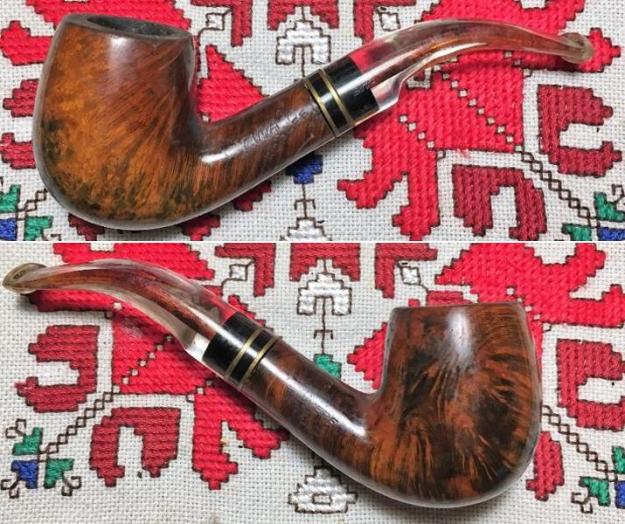
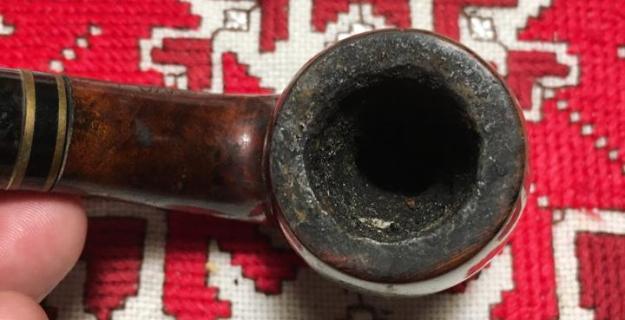
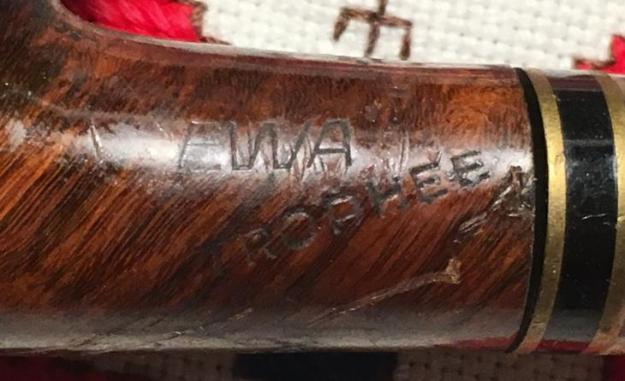
From Pipes, Artisans and Trademarks, by José Manuel Lopes

EWA is a French brand of Pipe EWA-Ets. Waille SARL. Launched in the 1970s by Michel Waille, the brand began in the Waille factory founded in 1860 by Horace Waille., and has been passed down from generation to generation ever since. He was succeeded by his son, René (1902-1932), his grandson Adré — who obtained the rank of ‘CAP de Pipier’ in 1926 and was in the company from 1920 to 1974 — and his great grandson, Michel Waille.

Michel, ‘Meilleur Ourrier de France’ but retired today, is currently President of the Pipe Club de Saint-Claude. He joined his father in 1968 and was at the head of the firm until 2002, when the brand was sold, first to Mr. Gigandet, and later to Denis Blanc, of Ad Hoc Pipe. [link is dead]

The company specialises in the production of horn, acrylic and cumberland stems, and today is the only maker in Saint-Claude producing horn and Lucite stems. It also makes the Terminus system pipes, employs half a dozen people and export 25% of its production. From site Ad Hoc Pipe [link is dead]

Horace Waille, the great-grandfather was a pioneer in the history of Pipe story of Saint Claude and created in 1860 a pipe workshop.  Rene Waille, his son, has continued the activity from 1902 to 1932 and was specialized in the initial shaping.

Andre Waille, son of Rene, obtained a “CAP de pipier” (Pipe maker degree) in 1926 and has pursued the activity of the familial company from 1932 to 1974. He is the only pipe maker, who obtained a Pipe maker degree. In 1968 Michel, son of Rene, actual Manager of EWA pipe joint the familial company and transform in 1974 the company in SARL PIPE EWA.

The information I gain from Pipedia that is useful – the Waille name is long-standing in France’s pipe center of Saint Claude.  I’m especially interested in the information that the company has historically specialized in the production and use of horn, acrylic and Cumberland stems which is relevant for the pipe on the worktable.  Pipephil.eu was my next stop and information there clarified the age of this EWA Trophee and the meaning of EWA.  The name was changed in 1979 from simply Waille to EWA from “Etablissement WAille” (English: Establishment).  So, the acrylic stemmed Billiard on my table dates at the earliest starting at 1979 with the genesis of the EWA stamp.With a better appreciation of the heritage and age of this EWA Trophee of St. Claude, I look more closely at the pipe itself.  The grain and classy acrylic stem and banding/shank ring shows promise, but there are also some issues and challenges in bringing this pipe back to a more presentable state.  I take several more pictures to catalogue the issues I see.  The fittings of the pipe have come apart.  As I disengage the stem and stummel, the 8mm filter sleeve is unattached to the stem and needs to be reattached.  The shank ring is also loose. The pipe has been heavily smoked and loved and the cake in the chamber is substantial.  By lightening the picture, you can see how the cake expands as it descends into the chamber.  There is no way to assess the health of the chamber wall until this cake is removed to allow the briar a fresh start and to inspect the wall for heat fissures or cracks.The rim corresponds to the lack of maintenance and cleaning of the chamber.  Thick lava has flowed over the rim and must be removed and cleaned to liberate the briar rim presentation.I like the grain on the stummel – very expressive.  What I don’t care for is the thick shellac finish that was used on this stummel – my classic ‘candy apple’ finish.  I love shine, but briar shine not chemical shine!  I will need to strip this stummel down to the raw briar to allow the grain I see to breathe again.There is a deep gouge on the left side of the shank that creeps toward the shank end where there is another dent next to the edge. The heel of the stummel has seen better days!  There are a few good-sized dents and divots that must be addressed.Probably the most fun will be cleaning the acrylic stem.  The external acrylic surface will not be difficult, but the discolored airway is another thing altogether coupled with the issue of not being able to use the normal cleaning attack with the use of alcohol.On close examination, my concern grows for the cleaning of the airway as I can see microscopic veins splaying from the airway – mainly at the bend of the stem. This next picture is looking into the mouth of the stem that the 8mm filter sleeve has vacated.  This needs to be cleaned thoroughly making way to reattach the filter and afterwards, the ring.We have work to do!  To begin the restoration of Scott’s choice of this EWA Trophee Bent Billiard of St. Claude, I start with the cleaning of the stummel by reaming the chamber which is nearly closed by the growth of the cake.  I take another picture to mark the start and then, starting with the smallest of the blade heads of the Pipnet Reaming Kit, I begin the cleaning process.  To help in the cleanup I first put down paper towel. The cake is hard and stubborn and takes some time and effort for the smallest blade to penetrate to the floor of the chamber.  I take a picture about three quarters of the way down the chamber. I use 3 of the 4 blades available and then switch to using the Savinelli Fitsall Tool to scrape chamber walls.  Finally, I sand the chamber with 240 grit paper wrapped around a Sharpie Pen.  To clean the chamber of the carbon dust, I wipe it thoroughly with a cotton pad wetted with isopropyl 95%.  The picture below shows the huge pile of carbon that was removed from the chamber. After inspection, the chamber appears to be in good shape.  What I notice after the reaming is complete is the rim width imbalance that is now evident after the cake was removed.  The left side of the rim (bottom in the picture) is thinning where fire was drawn over the rim during the lighting. Next, to clean the exterior surface of the stummel, I use undiluted Murphy’s Oil Soap on a cotton pad to scrub.  I also use a brass wire brush to work on the lava crusted on the rim as well as gently scraping it with a knife edge.  The cleaning helps, but the rim remains darkened from the lava and the ‘candy apple’ finish is still very much in place. To complete the stummel cleaning regimen, I use pipe cleaners and cotton buds wetted with isopropyl 95% to clean the internals. After many pipe cleaners and cotton buds, and scraping the mortise walls with a dental spatula, the color of the buds started coming out less soiled.  I decide to stop at this point – the internals were clean enough at this point.In order to strip the ‘candy apple’ finish I put the stummel in a soak of acetone. This should strip the stummel of all the old finish.  I leave it in the soak overnight. Turning to the acrylic stem, before I started on the restoration and as I was thinking about my approach, something in the recesses of my memory was ringing a warning concerning the approach to cleaning the clear, acrylic stem, but I wasn’t sure what it was. I decided to send Steve an email with the stem’s picture and my questions.  With his vast rebornpipes experience, as always, his response was helpful to help chart a course:
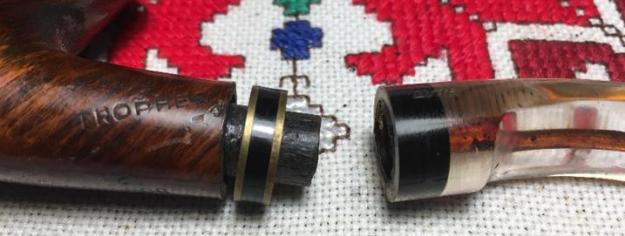
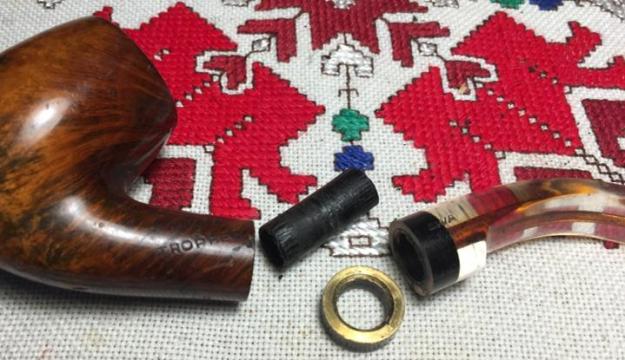
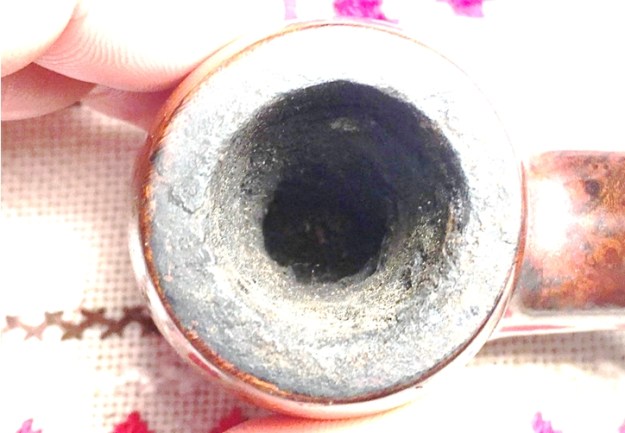
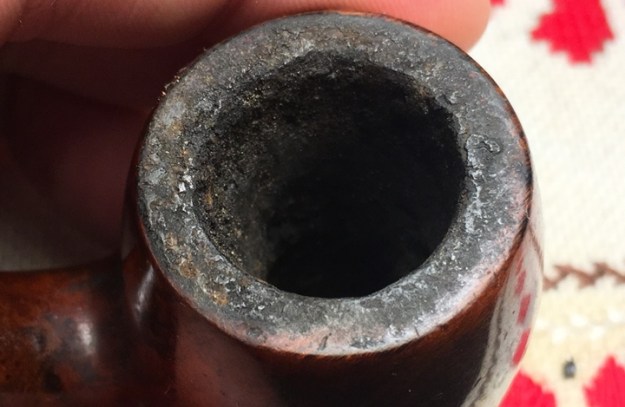
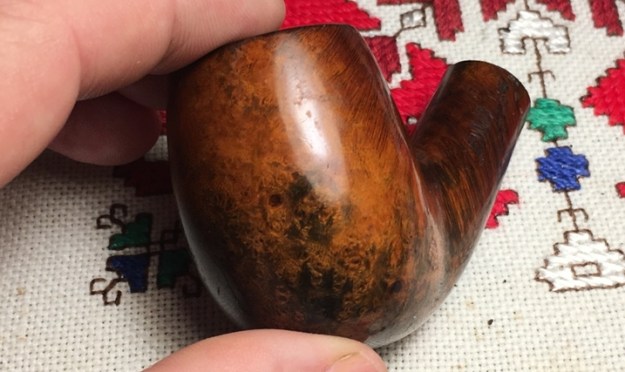
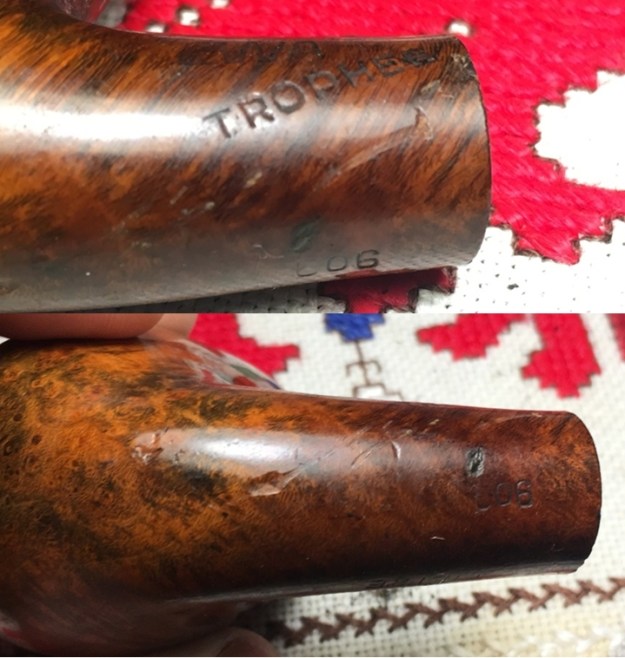
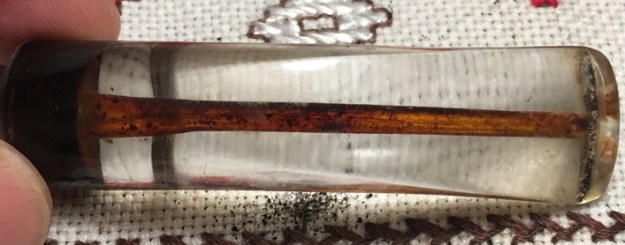
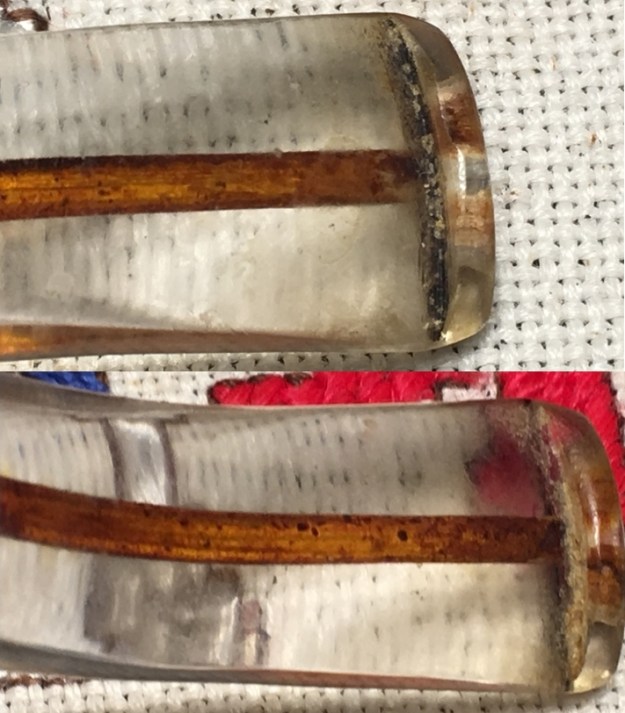
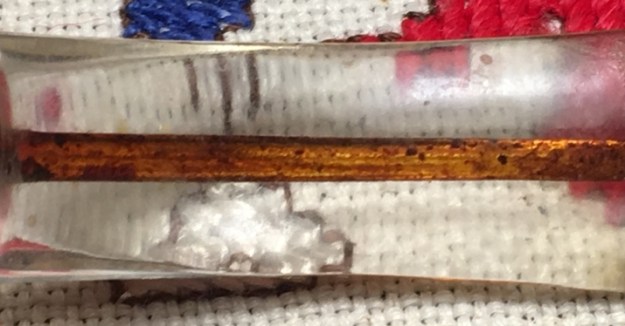
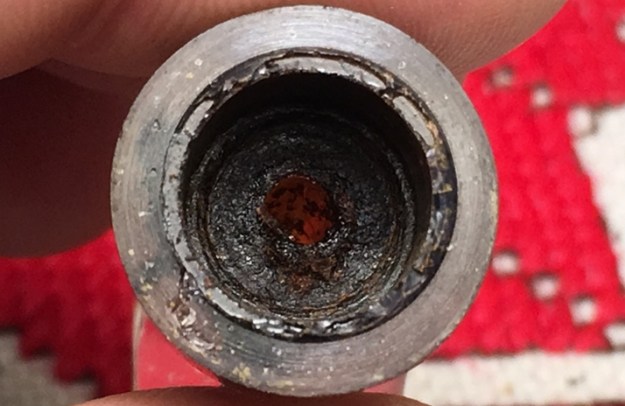
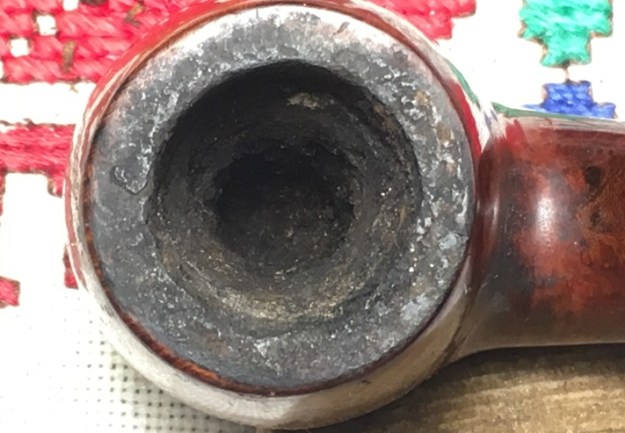
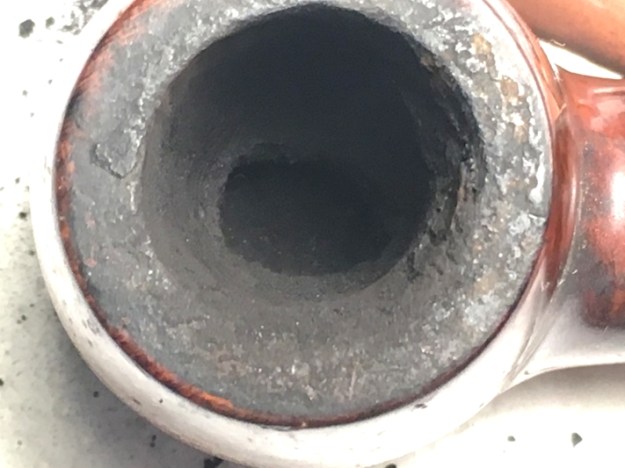
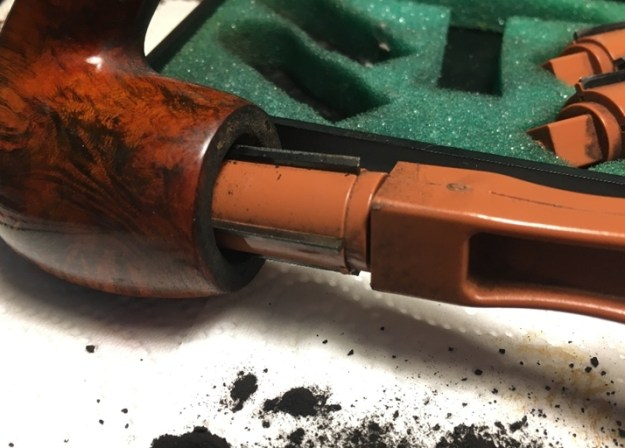
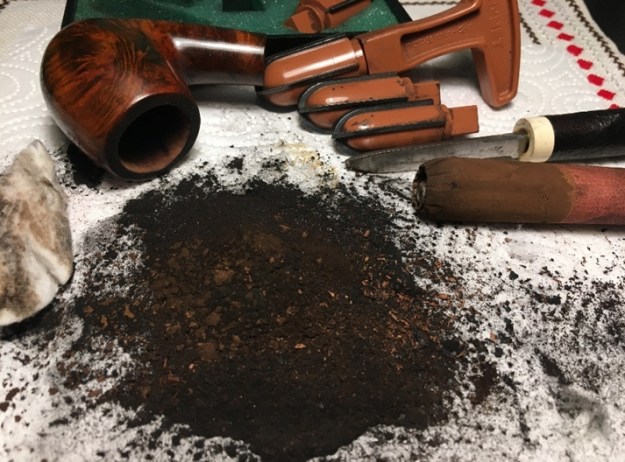
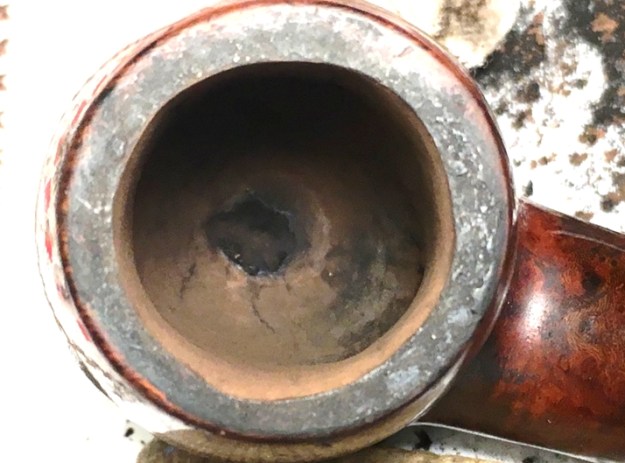
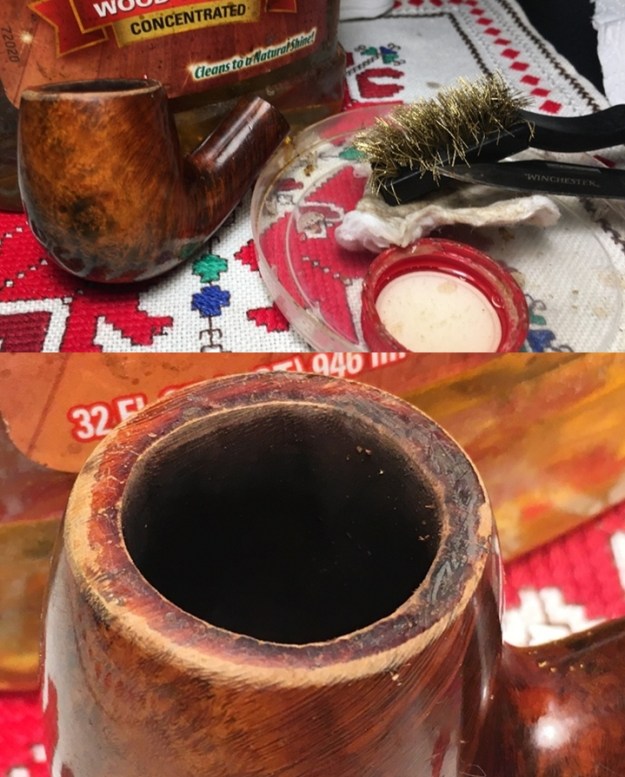
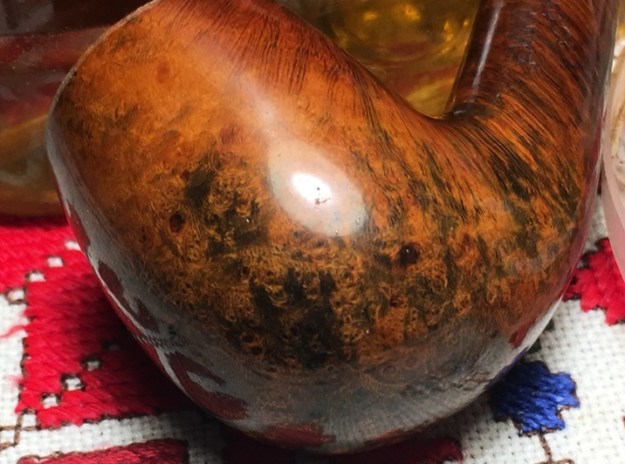
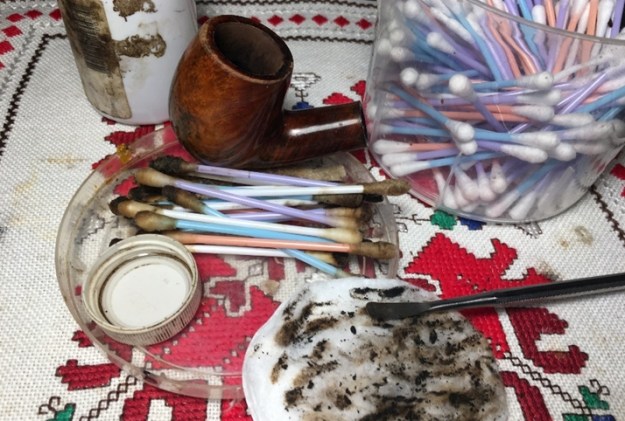
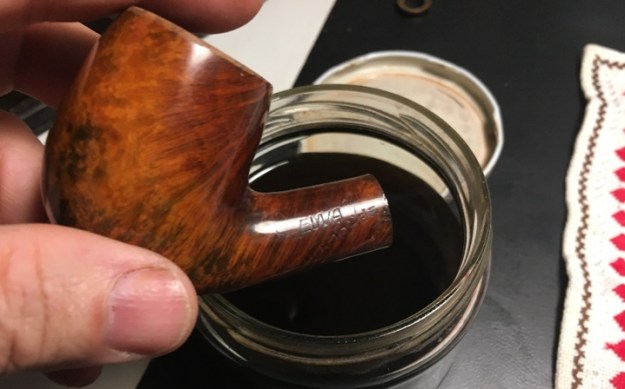
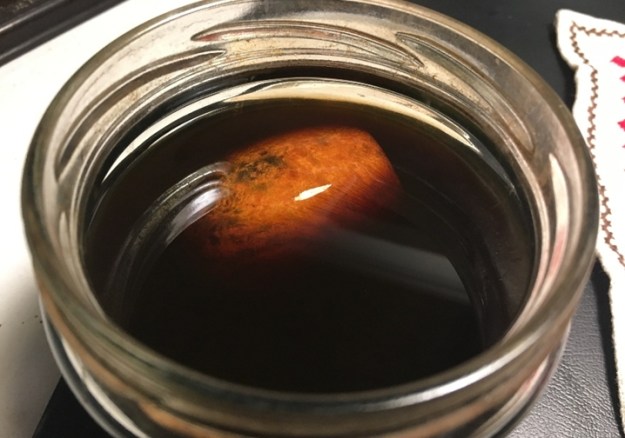
Hey Dal

The clear stems like that (if on a GBD are Perspex and early acrylic) are not resistant to alcohol. They can shatter or at least craze. I will often use lemon juice to start with and also liquid cleanser or soft scrub with bristle pipe cleaners or shank brushes. Sometimes you can use a needle file to work the insides. The airways are often rough inside so they need to be smoothed out. It is pretty labour intensive to clean out the stains as originally the airways were clear…

Steve

In a subsequent note he also added this:

Ok… the GBD brand was originally a ST Claude Brand. Perspex is an early acrylic. It was on GBD Prehistoric pipes… Lucite is another brand name for acrylic… both are acrylic.

I have soaked the stems and it does help some, but I have also put the cleanser on a pipe cleaner and let it soak as well. I have even used comet cleanser… big thing is no alcohol if at all possible. Too risky.

I have read of guys chucking a pipe cleaner in their drill like a drill bit and spinning it in the stem but have not tried that myself…  Anyway..,

 Enjoy

Steve

To begin the ‘enjoyment’ in tackling what proves to be a very stubborn project, I take a picture to mark the starting block.Using a sharp dental spoon, I work on digging gunk out of the slot cavity and scraping the hard stain buildup there.In Bulgaria we do not have ‘Soft Scrub’ but we have a product in the same genre called CIF that I next use to begin addressing the rough stains in the bent stem airway.  I use a bristled pipe cleaner and dip it in the cleanser and go to work.  With the pipe cleaner serving as a back drop I can see that microscopic veins are already evident in the airway lining. This is the ‘crazing’ effect that Steve mentioned in his note.  Removing stain from these will be an effort.  The veins are concentrated at the bend of the stem.To up the ante a bit, I decide to try the technique that Steve described that others had tried – to chock a pipe cleaner in a hand drill and utilize the high-speed rotation to enhance the cleaning process of the acrylic airway.  In order to increase the diameter of the pipe cleaner ‘bit’ I twist and wrap an additional pipe cleaner that I had already used.  I then insert this into the chuck and tighten it down.  I use another bristled pipe cleaner as the ‘drill’ and dip it in CIF cleanser.  I then insert the end of the pipe cleaner into the shank side of the stem and start the drill rotation gradually as I slowly insert the pipe cleaner into the airway – I haven’t done this before so I’m watching to see what happens!  It works like a charm.  As I insert the pipe cleaner, I increase the speed of the rotation and there is no wobble at all.  With the drill speed rotation engaged, I then push and draw the stem back and forth to create more cleaning movement.  I do this also with a soft pipe cleaner and cleanser.  The pictures show the pipe cleaner drilling.Well, I hoped for perfect results, but as feared, the stains in the veins remain visible and these are concentrated at the outer bend of the stem.  Because of this, it is evident that these veins have been here a while.  The rest of the airway is looking good.Next, from Steve’s suggested assault options, I squeeze lemon juice into a dish.  I will use the natural acids of the lemon to work on the airway.  I use the pipe cleaner too, but since the night is late, I settle at this point to put the stem into the lemon juice to soak through the night.  With the stummel soaking in the acetone and the stem in the lemon juice, I turn off the lights and end another day. The next morning, I use a pipe cleaner on the stem again.  The lemon soak through the night did seem to work, but the veins and the discoloration in the veins remain.  A reminder that we live in a fallen world where perfect pipes and restorations do not exist.  I accept this and decide to move on, but I decide to leave a pipe cleaner wet with CIF cleanser in the airway to continue to work on the stains while I turn to the stummel.The stummel has been soaking in acetone through the night to remove the ‘candy apple’ finish.  I fish it out of the acetone and the first appearance is that it still has the sheen showing that old finish was still present.  The finish has been greatly softened through the soak and with the gentle help of 0 grade steel wool I remove the finish without difficulty.  With the old thick finish removed, I examine the shank and the heel areas again where I saw significant dents and pits and discover that these are not as pervasive as they appeared before.  Most of the visible damage was to the thick finish and not to the briar.  Well, that’s one argument in favor of thick finishes!  The second picture below of the close-up of the grain – the bird’s eye grain is fantastic! Looking at the rim, it is thinner on the left side (bottom in the picture) and that edge is deteriorated.  The entire rim presentation needs freshening and to try to improve the width balance some. To address this, I take out the chopping board and put 240 grade sanding paper on it.  I give the stummel a minimal topping to give the rim a fresh start.After taking as much briar off the rim as will be helpful, I switch the board to 600 grade paper and rotate the stummel a few more times to smooth and blend.After the topping, the thinning on the left side of the stummel (bottom in picture above) remains thinner and more topping will not improve this because the stummel width descending in the chamber is thinned because of burning and lighting on that side.  To top until the rim width starts evening out would require too much briar real estate.  The way to mitigate against this, but not fully remove it, is to create an internal rim lip bevel.  On the ‘fatter’ side of the rim I increase the amount of bevel somewhat to help even out the round of the chamber.  I use a coarse 120 grade paper to begin, then follow with 240 and 600 grade papers.  The results I believe have improved the rounding, but again as with the stem airway, perfection is not achieved but it is looking very good none the less! Again, looking at the dent on the stummel heel and on the shank, just below the Trophee stamping, I examine the dents and how to repair them.  I go out on our 10th floor balcony, which is my ‘Man Cave’, and use the steaming method to raise the dent that’s on the heel of the stummel.  I wet a cotton cloth with water, and using my wife’s iron, I apply heat to the wet cloth.  When I do this, the moisture in the cloth evaporates and creates steam which is forced into the area of the briar compression.  The porous composition of wood expands with the forced heat and moisture and the result is the dent hopefully shrinks as the wood reclaims its original state.I apply the hot iron to the wet cloth over the dent.The results are excellent.  If I look hard at the place, I can still see an imprint but there is no longer a compression of the wood.I do the same to the small compression on the edge of the shank and the results are equally as good. To clean the entire stummel of the minor nicks and scratches, I utilize the less invasive approach of sanding sponges.  I use a coarse grade, then follow with a medium and light grade sponges.  I like using sponges because they can find the hard to get places as sponges, but they help remove the small nicks and pits in the briar surface.  The grain on this stummel is amazing – the dark grains appear almost cloudy as they cluster. Next, I take out the micromesh pads and wet sand utilizing pads 1500 to 2400. After finishing the wet sanding, I notice a fill on the underside of the shank next to the shape number that doesn’t look solid. Using a sharp dental probe, I test it and it doesn’t take much to remove it.  Before continuing with the micromesh process, I need to refill the pit left behind.I wipe the area with a cotton pad wetted with alcohol and mix a small amount of thick CA glue and briar dust.  I place a small amount of briar dust on an index card then drop some CA glue next to it.  Using a toothpick, I gradually pull briar dust into the CA glue until it thickens to the consistency of molasses. I then apply a small amount of the putty over the patch area, careful not to go over the shape number.  I put the stummel aside for the putty to cure.Several hours later, the patch has cured, and I begin the process of filing the patch down with a flat needle file.I’m careful to remain on the patch as I file avoiding collateral damage with nearby briar.After bringing the patch mound down almost to flush with the briar surface, I switch to using the sharp edge of a piece of 240 grade sanding paper to bring the patch down to the briar surface.  Again, keeping the sanding process tightly confined to the patch area.When the patch is smooth to touch, I then switch to 600 grade paper to smooth the patch and blend further.When the 600 grade has finished its work, I catch up the patch area in the micromesh process utilizing pads 1500 to 2400.With the patch completed, I continue by dry sanding using pads 3200 to 4000 and 6000 to 12000.  I love the thick grain on this stummel!There is no question in my mind about whether this grain can stand on its own!  At this point I apply Before & After Restoration Balm to the briar surface.  The B&A Restoration Balm does a great job simply deepening the richness of the natural briar.  I apply some to my fingers and rub it into the briar surface.  As I rub it in, it thickens to a wax-like consistency.  After I apply it thoroughly, I let it stand and absorb for about 20 minutes then I wipe off the excess and buff up the surface with a microfiber cloth.  I’m loving the grain!With the stummel on the side, I now turn to the clear Lucite stem. I begin by washing the stem with dish soap and warm water.  Looking closely at the bit area, the top lip of the button is compressed.  I take a picture of it but it’s not easy to see!  There is also roughness from tooth chatter.The lower bit has a tooth compression as well as tooth chatter.I apply clear CA glue to the lower tooth compression and spray the CA glue with an accelerator to hold the glue in place and to quicken the curing process.To deal with the compression on the top button lip, I simply sand it out using 240 grad paper.  I smooth out the tooth chatter as well.I then use 240 grade paper to sand and smooth the patch on the lower side as well as to remove the tooth chatter and roughness of the bit and button.  I follow the 240 sanding by wet sanding the entire stem with 600 grade paper to take out the small nicks and scratches.Following the 600 grade paper, I sand/buff the entire stem with 0000 steel wool.Following the steel would I wet sand the stem using micromesh pads 1500 to 2400 and then dry sand with pads 3200 to 4000 and 6000 to 12000.  After each set of three pads I apply a coat of Obsidian Oil to the stem. The stem is ready to go.  I take the nickel shank ring and clean it with Tarn-X.  It does a great job shining up. Now it’s time to reattach the 8mm filter sleeve.  I want to make sure its straight and seats accurately in the mortise.  I first slip the ring over the sleeve without attaching it with CA glue.  I want to simply use it as a spacer for the first step of reattaching the sleeve.  With the ring over the sleeve, I apply CA glue around the end of the sleeve that is inserted into the stem cavity. After I insert the sleeve into the cavity, before the CA glue sets up, I quickly seat the filter sleeve into the mortise with the ring compressed between the shank and stem.  I hold the stem firmly in place with proper orientation until the CA glue sets.With the sleeve properly seated, I then apply a few drops to the stem side of the ring and then reattach it, again seating the stem into the mortise.  It looks good – no gaps and a straight snug fit.To spruce up the EWA stem stamping, I apply Rub ‘n Buff European Gold.  I apply a little over the stamping and simply wipe it lightly off with a cotton pad.  The stamp is a little thin, but the Rub ‘n Buff holds well, and it looks good.Now the home stretch.  I mount a cotton cloth buffing wheel to the Dremel set at about 40% of full speed and apply Blue Diamond compound to the stem and stummel. I then separate the stem and change to another cotton cloth wheel dedicated to applying Blue Diamond to nickel and I buff up more shine on the shank ring.  After reuniting the stem and stummel again, I then wipe the pipe with a felt cloth to clean off the compound dust in preparation of the application of the wax.  I then change to another cotton cloth wheel with the same speed and apply a few coats of carnauba wax to stem and stummel and then finish with a rigorous hand buffing to raise the shine.
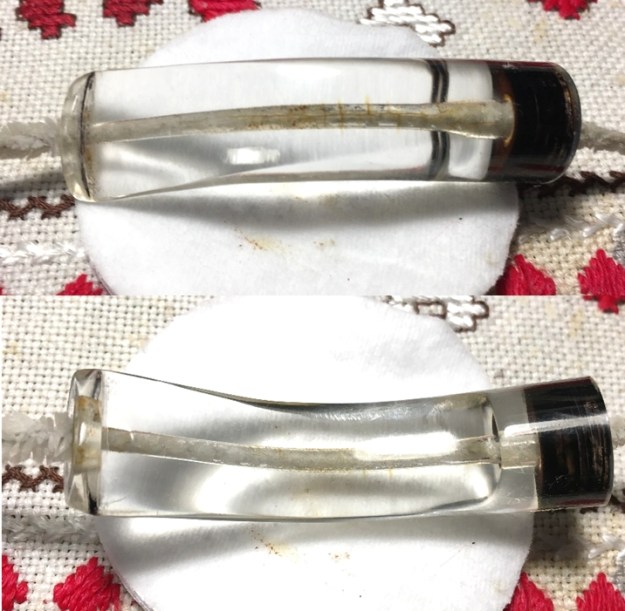
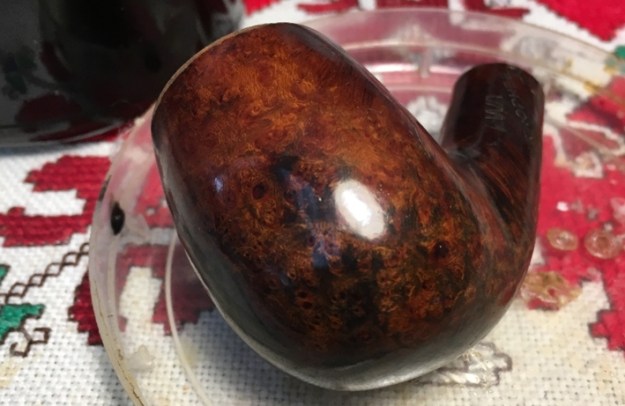
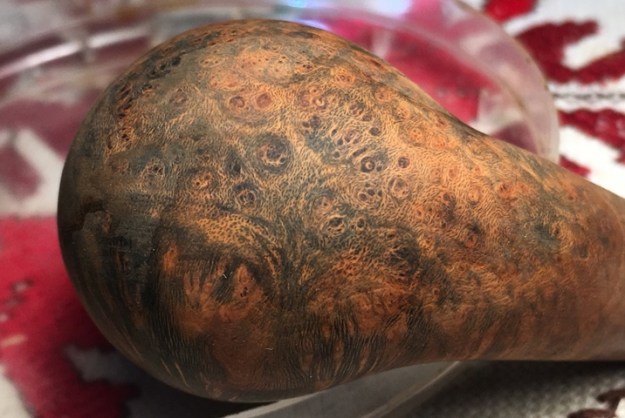
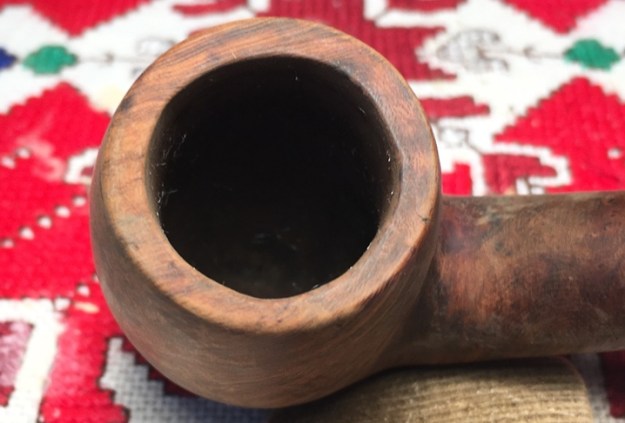
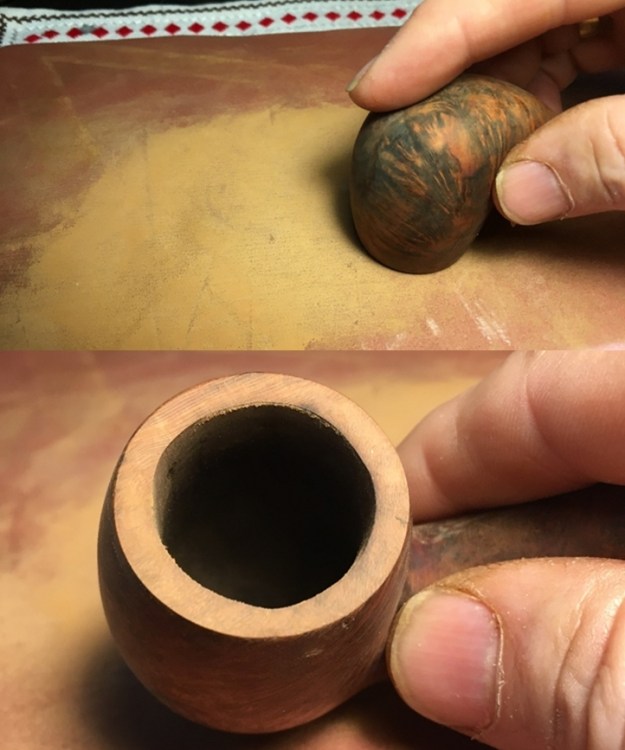
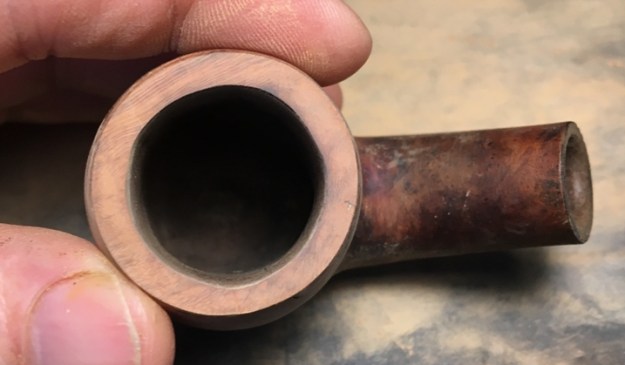
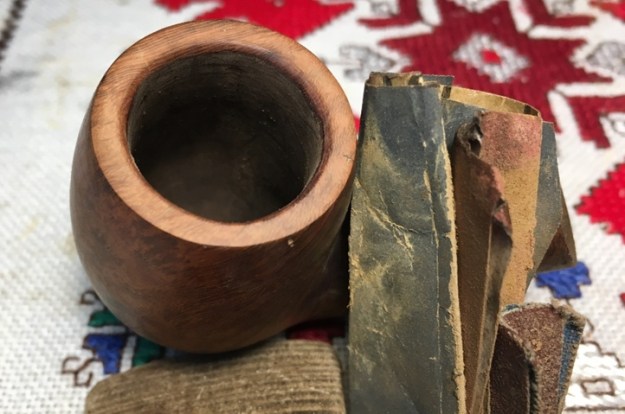
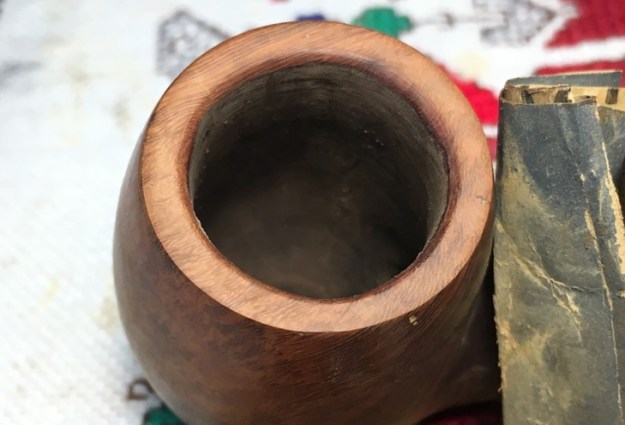
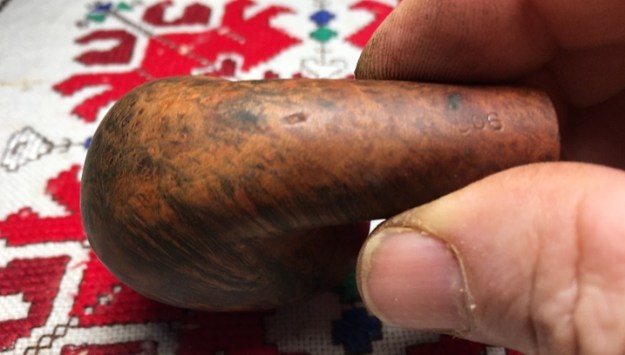
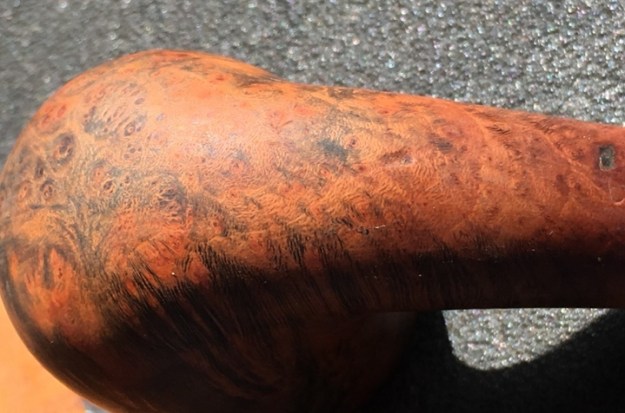
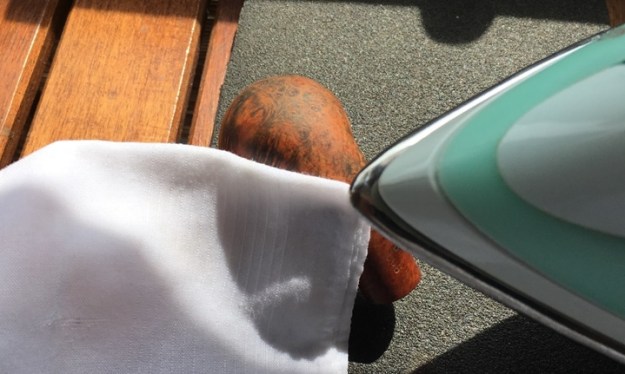
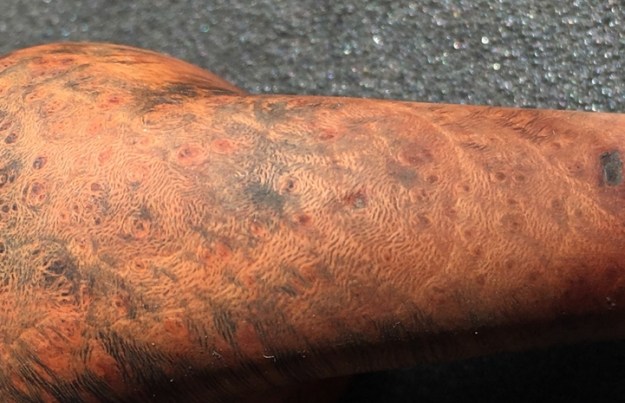
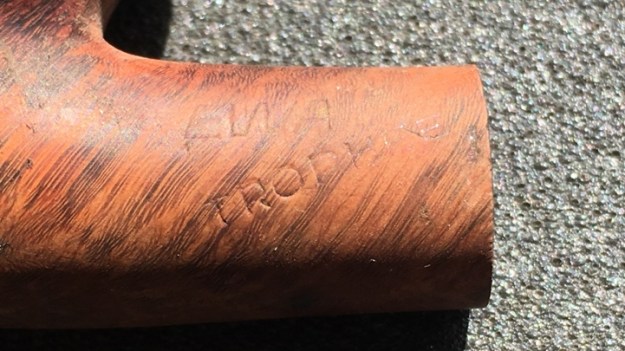
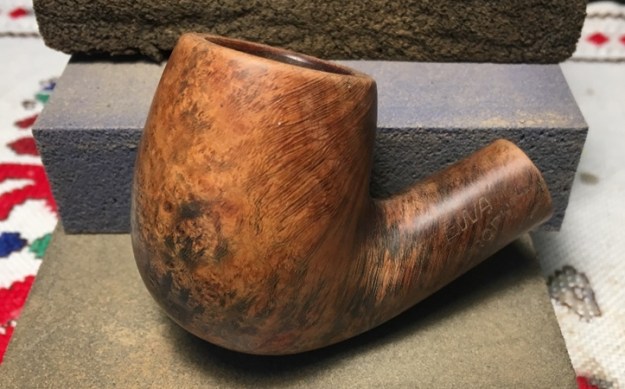
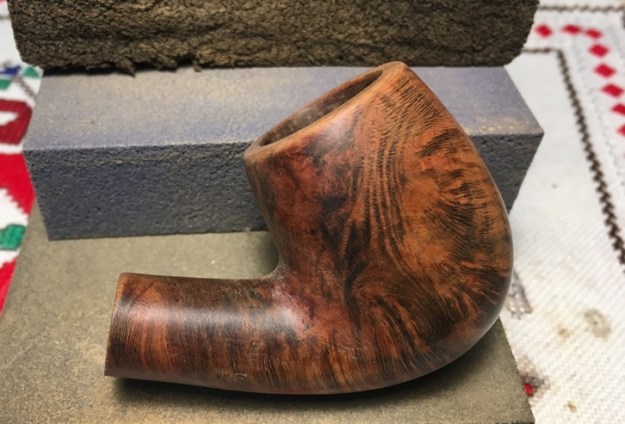
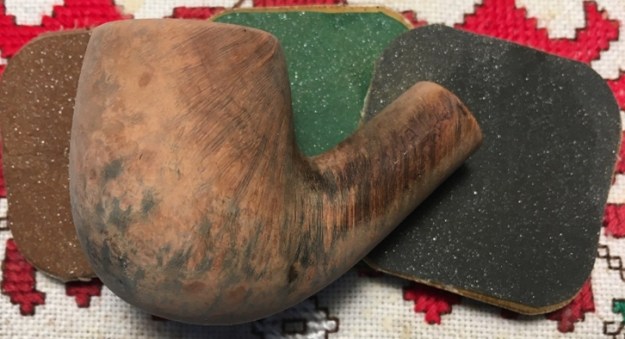
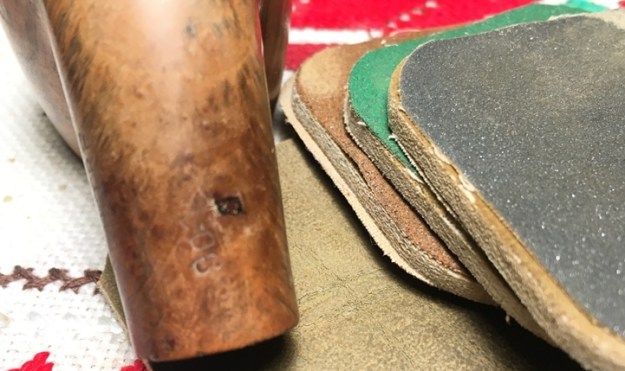
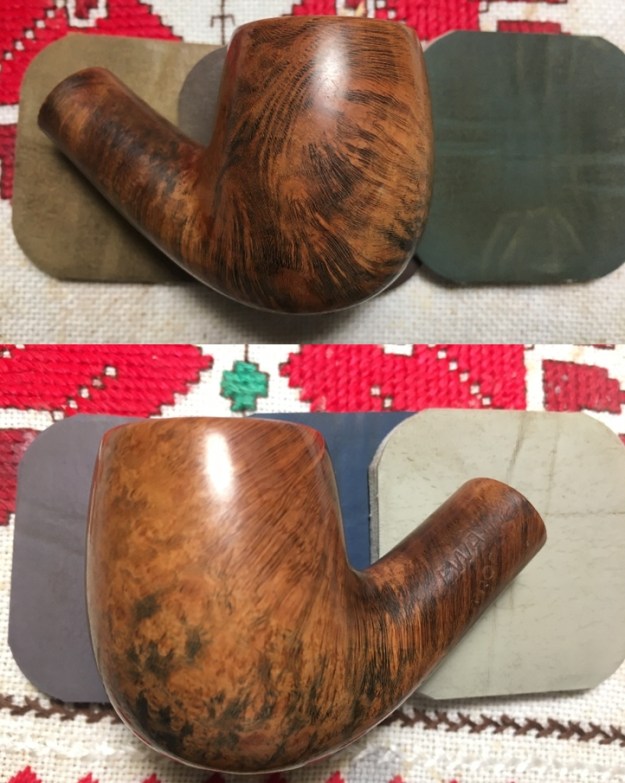
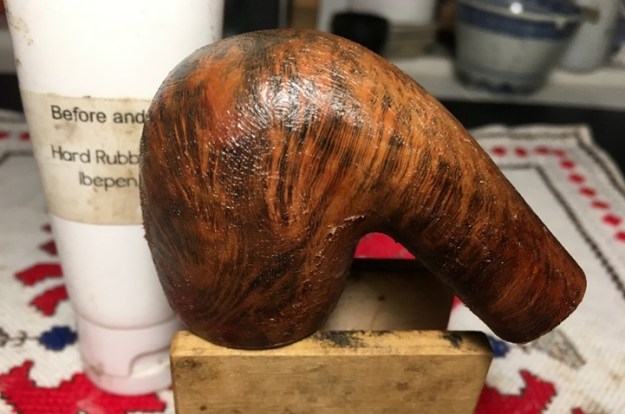
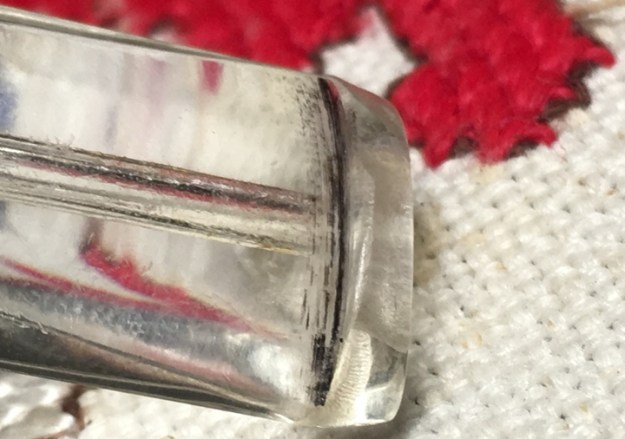
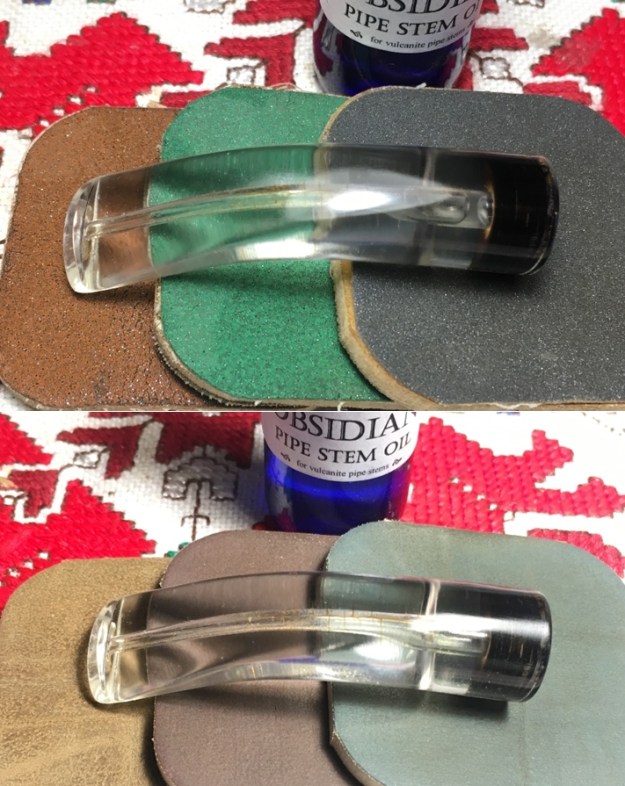
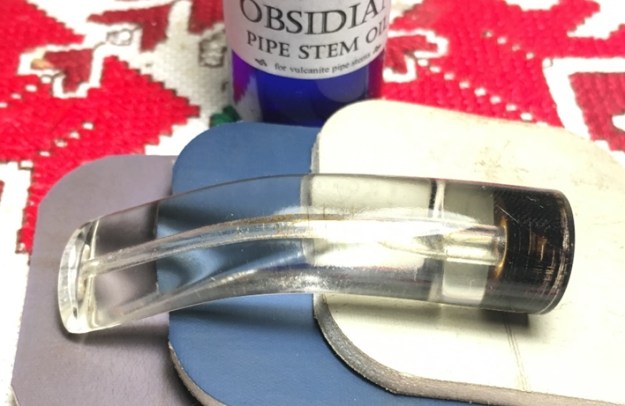
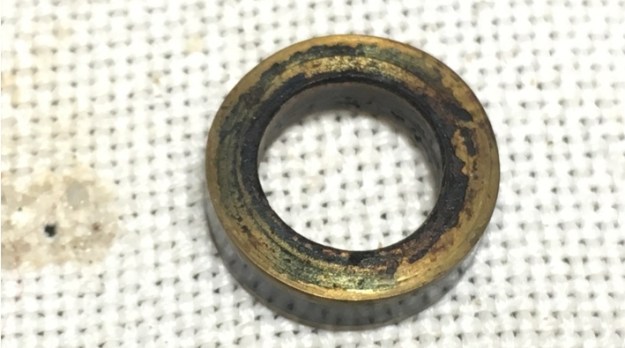
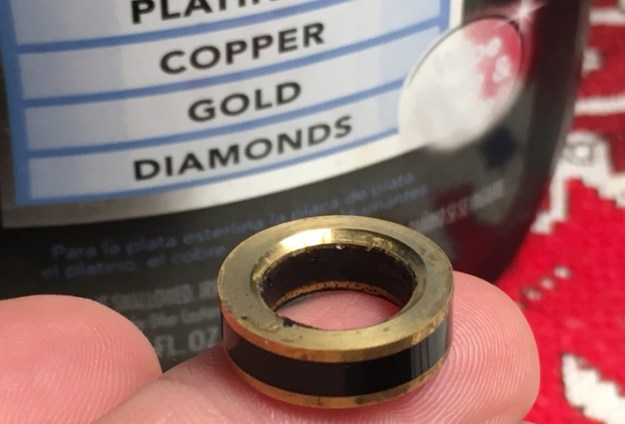
The unique grain cluster constellation that I see in the EWA Trophee is amazing.  The heel grain pattern shows color, swirls and vortexes that remind me of pictures of the planet Jupiter.  It is truly amazing and mesmerizing to look at.  The Lucite stem came out well – it is classy with the complimentary gold and black band ring providing a nice transition.  My only wish is that I could have purged the stem airway totally of the discoloration in the crazed veins that will remain as a reminder of this pipes battle scars from its past!  Even so, the EWA Trophee of St. Claude, is a beautiful Bent Billiard and Scott did well in seeing the potential of this pipe when he commissioned it.  As the commissioner, he has the first opportunity to acquire it in ThePipeSteward Store.  This pipe benefits the Daughters of Bulgaria – women and girls who have been trafficked and sexually exploited.  Thank you for joining me!

Refurbishing a Battered Dunhill Bruyere #32041


Blog by Paresh Deshpande

I had just finished restoring three pipes from my inheritance; a WDC Stratford, The Doodler and a Barling # 2639. Save for the WDC, these were easy projects and it helped that Abha, my wife, had done all the initial cleaning. I finished these pipes in real quick time.

Now I turned my attention once again to the pipes from my “Mumbai Bonanza”. I have restored three pipes; two Dunhill and a Stefano Exclusive from this lot of 30 and each one has been, well, to put it mildly a royal pain where you wouldn’t like it!!  How did I land up with this lot makes for an interesting read and about one which I have written in the restoration of the Stefano Exclusive (https://rebornpipes.com/2019/03/11/mumbai-bonanza-stefano-exclusive-restorationa-month-long-project/).

Here are pictures of the pipes that I received in this lot. This lot contains some very nice collectible pipes, a few well known brand pipes and some mediocre pipe brands. Overall, with seven Dunhills, a Preben Holm #1, a couple of “Made in England” Pete System pipes, Charatan’s and other assorted pipes, I would say that I had hit a huge jack pot!!! Hence, I like to call this find as “Mumbai Bonanza”.

The pipe that I decided to work on is from this find and is marked in a red circle in the picture below. It’s the third Dunhill from this lot, a Bruyere in a classic bulldog shape. The stummel surface boasts of some beautiful densely packed cross grain on the stummel, cap and also the shank top, bottom and side surfaces. It is stamped with “# 32041” towards the bowl and followed by “DUNHILL” over “BRUYERE” on the left side of the shank while the right side bears the COM stamp “MADE IN” over “ENGLAND” followed by underlined numeral “18”. Dunhill White Dot adorns the top of the vulcanite stem. The stampings on either side is deep, crisp and clear.The dating of this pipe is very straight forward and dates to 1978 (1960+18). Deciphering the shape code, “32041” is equally straight forward with the first digit 3 identifying this pipe as being Group size 3, second numeral, 2, identifies the style of mouthpiece as being a saddle stem and the digits 04 indicates Bulldog shape. With this information, I proceed ahead with the restoration of this handsome pipe.

INITIAL VISUAL INSPECTION
The chamber is clean with a thin layer of cake which indicates that the pipe has been kept clean by its previous Steward; however, the reaming has been done unevenly. From what I can see, the chamber walls appear to be without any damage. The chamber is odorless. It is the rim top, including the outer and inner rim edge that shows significant damage on the left side in 11 o’clock and 7 o’clock directions. This must have been caused due to hammering of the edge against a hard surface to remove dottle!! There is not even a millimeter of surface on the rim top surface which does not show signs of severe damage. All in all, it appears like this pipe’s rim top was used by the previous Steward as a hammer while giving vent to his/ her anger, and if this is true by any stretch of imagination, HE/ SHE SHOULD ENROLL FOR ANGER MANAGEMENT TREATMENT!! Darkening of the outer rim edge is also seen all along the left half of the rim top, most significantly in 11 o’clock and 7 o’clock directions. I just hope that it does not go deep in to the briar!!  Being a Dunhill, any issue of fills is never to be expected and hold true for this pipe too. However, there are a number of scratches and dents that can be seen on the stummel surface. These dents and ding are probably caused due to uncared for storage by the previous Steward and further contributed to by the trash collector who had sold the pipes to me. The stummel is covered in dirt and grime. The briar looks lifeless and dull which is nothing serious to address.I am very pleased with the condition of the stem. The diamond saddle type vulcanite stem shows minor damage to the button end and the lip edges. Light scratches can be seen extending upwards from the button end towards the saddle. The quality of vulcanite is good. These issues should be an easy fix. The mortise is clogged and will have to be cleaned. In this project, repairs to the damaged outer edge and rim top surface will be a major challenge. While restoring the Dunhill Bruyere # 51671 (https://rebornpipes.com/2019/03/13/reconstructing-a-broken-stem-on-dunhill-bruyere-51671/), I had faced difficulties in blending the repairs to the outer rim edges and these could be seen even after I had stained the stummel. Similar set of difficulties are envisaged on this pipe too!!!! I have learned my lesson and will follow the advice and suggestion received from readers of rebornpipes.com.

THE PROCESS
Since the stummel has significant damage, I start this project by tackling the stummel repairs first. I reamed the chamber with size 2 head of a PipNet reamer. The cake was thicker at the bottom and using my fabricated knife, I scraped out all the remaining cake. I further used one folded piece of 180 grit sand paper to sand out the last traces of remaining cake and expose the walls of the chamber to ascertain that there are no cracks/ heat fissures. I wiped the chamber with a cotton pad dipped in isopropyl alcohol to remove the carbon dust left behind by all the reaming and sanding process. The walls of the chamber were solid with just very fine superficial web of lines seen on one side. This was followed by cleaning the mortise by scraping away at the dried gunk with my fabricated spatula and followed it up with further cleaning using cue tips, pipe cleaners and shank brush dipped in isopropyl alcohol. With the thin sharp edge of my fabricated spatula, I cleaned in between the edges of the cap ring separating the cap from the rest of the stummel. Continuing with the cleaning regime, using a hard bristled tooth brush dipped in undiluted Murphy’s oil soap, I very deliberately scrubbed the surface of the stummel and the rim top. The original reddish dye was also washed away to some extent. The dirt and grime on the stummel surface was so stubborn that I had to resort to using a scotch-brite pad to get rid of it. While scrubbing the stummel, I paid special attention to areas where significant darkening was seen just below the rim outer edge. Thankfully, the burn marks were superficial and cleaned out nicely. However, a dark spot was revealed just below the cap ring and is marked in a red circle. The damages to the outer rim edge, uneven inner rim edge and stummel dents and dings are now clearly visible in the above pictures after the cleaning. I had a close, hard look at the darkened spot seen and marked in red. The briar on and around the spot was hard and solid with no deep heat fissures on the corresponding inner surface of the chamber. This ruled out the possibility of a burn out!!!! Phew, what a relief this was!!!! This external darkening, most probably, appears to have been caused when the pipe was placed in an ash tray alongside a smoldering cigarette butt, just a hypothesis!!! This will be addressed (hopefully!) when I sand the stummel surface to get rid of all the scratches and dents.

With the stummel now dried out, I got around to address the rim top and outer rim damage. The extent of the dip or trough caused due to banging the rim edge against a hard surface was deep and would necessitate heavy topping off of the rim surface, and I for one, absolutely wish to avoid any loss of briar!!!!! So, I decided to try out something different. I planned on first filling up the deep troughs on the rim edge using briar dust and superglue to roughly match the rim surface and some more and then topping it to achieve a smooth surface. Theoretically, this sounded logical.

I resorted to the layering method again; first I layered superglue over the damaged surfaces on the front and back outer rim edges, followed by sprinkling of briar dust, another layer of superglue followed by a final layer of briar dust. This final layer of briar dust reduces the probability of air pockets. In the last picture, you can see that the layering has been done to the level of the rim surface so that it sits evenly on a flat surface without showing any gaps. I set the stummel aside to cure. While the stummel fill was being set aside to cure, I tackled the stem repairs by first flaming the surface with a Bic lighter flame to raise the bite marks to the surface. This was followed by sanding the stem surface with a folded piece of 220 grit sand paper. This step has a twofold purpose; firstly, it helps to roughly blend the raised bite marks with the rest of the stem surface and brings to fore the spots which require filling and secondly, it helps to rid the oxidation from the stem surface which helps subsequently in better finish after polishing. I cleaned out the surface with a cotton pad dipped in alcohol to remove all the dirt and grime. Once the surface was clean, the lip edges and the bite marks were filled with a superglue and activated charcoal mix and set aside to cure overnight. The fill repair to the outer rim edges had cured by this time and with a flat head needle file, I roughly sand the fills to match the surrounding surface. Using a folded piece of a 220 grit sand paper, I further blended the outer filled edges with the rest of the edge and created a slight bevel to mask the uneven inner rim edges. The rim top surface was topped on a piece of 220 grit sand paper to further blend and even out the rim top, checking frequently the progress being made. Personally, I prefer to avoid topping as I do not appreciate loosing even one mm of briar estate, but in this instance, I was left with no recourse but to top the rim. I lightly top it on 600 grit sand paper to reduce the sanding marks left behind by the 220. However, a few air pockets revealed themselves (marked in red-orange circle) at this stage which necessitated reapplication of briar dust and super glue. Sorry, missed out taking pictures of this stage!! While the second fill to the rim outer edge was curing, I turned my attention to work on the cured stem fills. Using a flat head needle file, I roughly matched the fills with the rest of the stem surface. For a better blending, I further sanded the entire stem with 220 followed by 400, 600 and 800 grit sand paper. This helps to reduce the sanding marks left behind by the more abrasive 220 grit paper. To bring a deep shine to the vulcanite stem, I went through the complete set of micromesh pads, wet sanding with 1500 to 2400 grit pads and dry sanding with 3200 to 12000 grit pads. I wiped the stem with alcohol after each pad and rubbed it down with Extra Virgin Olive oil to rehydrate the vulcanite. The repairs have blended in very well and the stem now looks a shiny black and beautiful. The internals of the stem was cleaned out using alcohol and pipe cleaners. The finished stem is shown below. The next evening, the repairs to the edge had completely cured and I move ahead by filing and rough shaping with a flat head needle file. I further fine tune the blending by sanding it down with 220, 320, 600 and 800 grit sand papers. Here is how the repaired area appears at this stage. I am very pleased with the way this repair progressed. I sand the entire stummel using 220, 400, 600 and 800 grit sand papers. The little dents and dings that remained on the stummel and outer rim edge were also evened out under this sanding process. This was followed by polishing with micromesh pads. I wet sand the stummel with 1500 to 2400 grit pads and follow it up by dry sanding with 3200 to 12000 grit pads. I wiped the surface with a moist cotton cloth after every wet pad to check the progress. The repaired rim edge appears, in picture, as though it is patchy with air pockets. However, that is not the case. The fill is smooth and solid and should get masked after I have stained it. I rub a small quantity of “Before and After Restoration Balm” in to the briar with my finger tips and let it rest for a few minutes. The balm almost immediately works its magic and the briar now has a nice vibrant appearance. I further buff it with a horse hair shoe brush. I had hoped that the balm would work its magic on the filled area and help in blending it a bit, and that did happen!! I am very pleased with the way these repairs have turned out. And now on to staining and polishing… After Mr. Steve had uploaded my write up on the Dunhill Bruyere Horn shaped pipe (https://rebornpipes.com/2019/03/13/reconstructing-a-broken-stem-on-dunhill-bruyere-51671/), the feedback and responses were very educative and I had decided to incorporate these suggestions while working this project. Mr. Roland Borchers brought out that the original color of Bruyere was achieved by first staining with Dark Brown stain followed by Cherry red stain. Mr. Steve also concurred and then there was no turning back!! I stained the stummel in DB stain first. I use the powder variety of stain and mix it with 99% isopropyl alcohol. I heated the stummel surface with a heat gun and applied the stain with a folded pipe cleaner. As I paint the stummel with stain over sections at a time, I burn the dye using a Bic lighter that combusts the alcohol in the aniline dye and sets the dye pigmentation in the wood.  After fully saturating the stummel and covering the whole surface, including the rim top, I set the stummel aside to rest for several hours. By next evening, the stain had set nicely. I mount a cotton cloth buffing wheel (because I do not have felt cloth buffing wheels!!) on the Dremel and set the speed at about 40% of full RPM and apply white compound to the stummel. This does help in revealing the grains gradually. This time around, the repaired area had blended very nicely in to the rest of the stummel surface. Here is another lesson that I have learned; it is advisable to use white compound after staining and not red Tripoli as I used to, for the reason that the red Tripoli compound is more abrasive and does not make sense to use after polishing by 12000 grit micromesh pad!! I followed this polish by re-staining the stummel with Cherry red stain. I set it aside to let the briar pores absorb the stain pigments. To finish, I re-attach the stem with the stummel. I mounted a cotton cloth buffing wheel to my local machine which is similar to a Dremel, set the speed at about half of the full power and applied White Diamond compound to the entire pipe. I wiped/ buffed the pipe with a soft cotton cloth to clear it of any leftover compound dust. I then mounted another cotton cloth wheel on to the polishing machine and applied several coats of carnauba wax. I finished the restoration by giving the entire pipe a rigorous hand buffing using a microfiber cloth to raise the shine further. The completed pipe looks lovely, fresh and vibrant; the photographs in this case, do not do justice to the appearance of this beautiful pipe. I cannot thank enough my friends and gentlemen who painstakingly identified my mistakes and suggested remedial measures after reading the write up for helping me to hone my skills while gaining experience.