Tag Archives: bowl topping

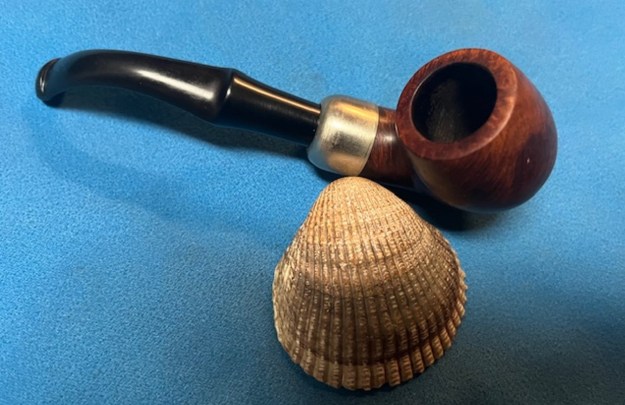
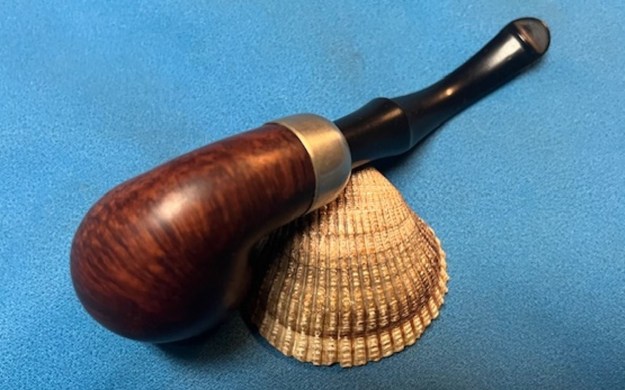
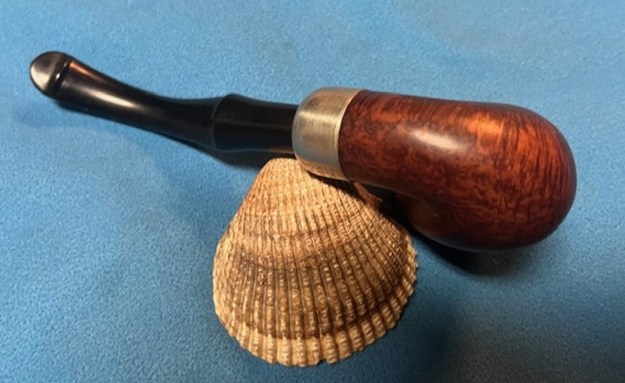
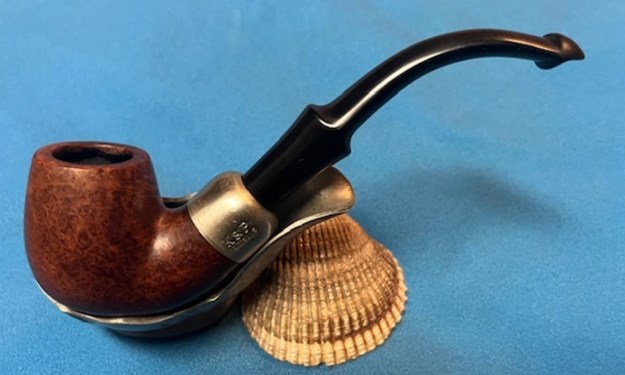
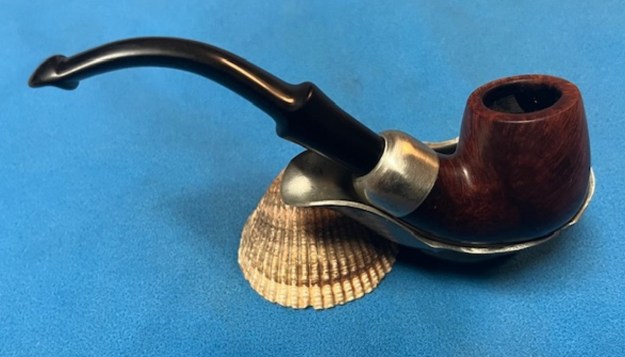
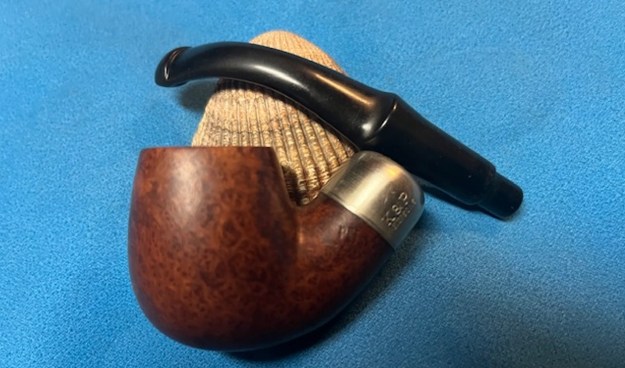
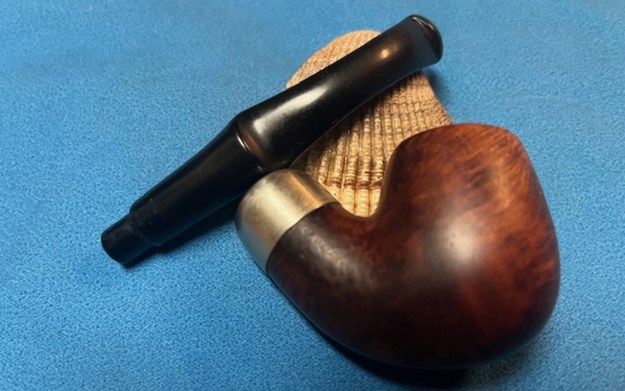
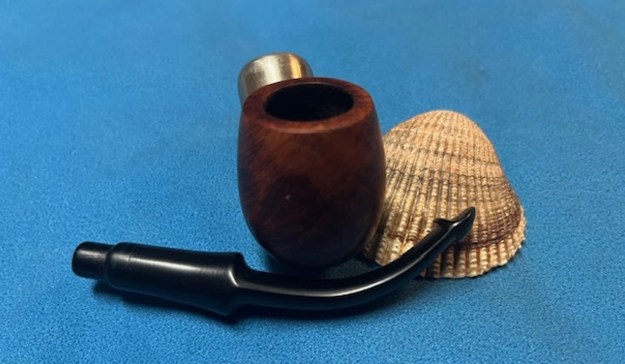
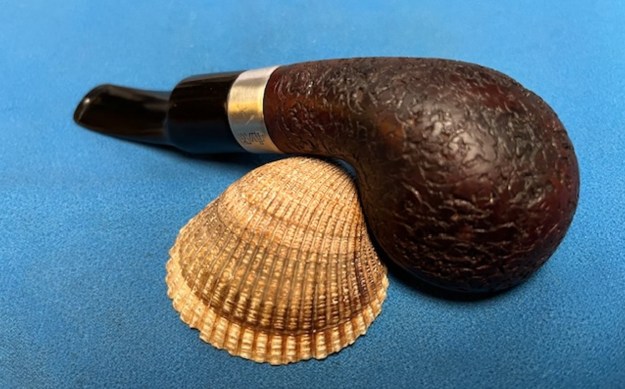
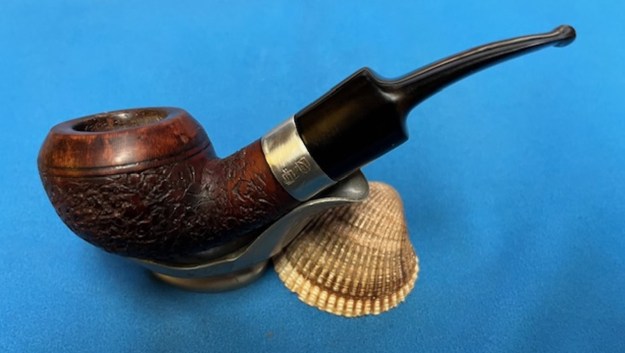
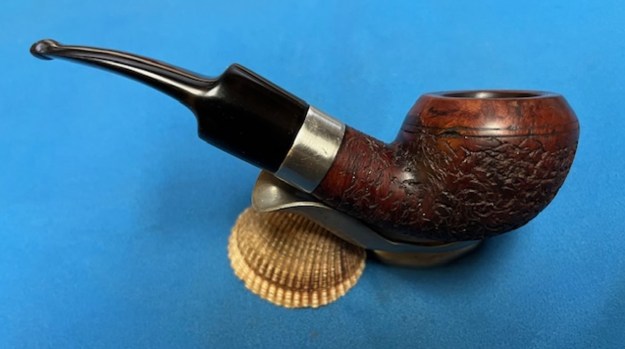
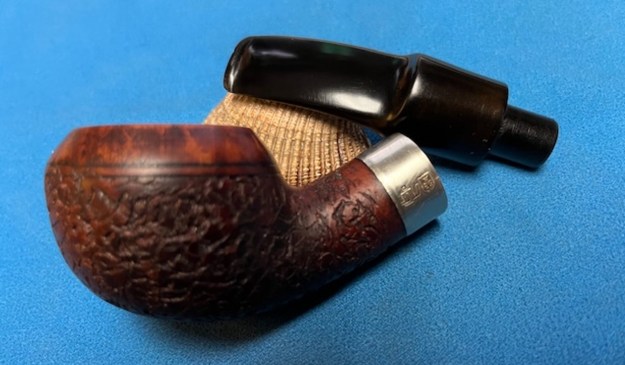
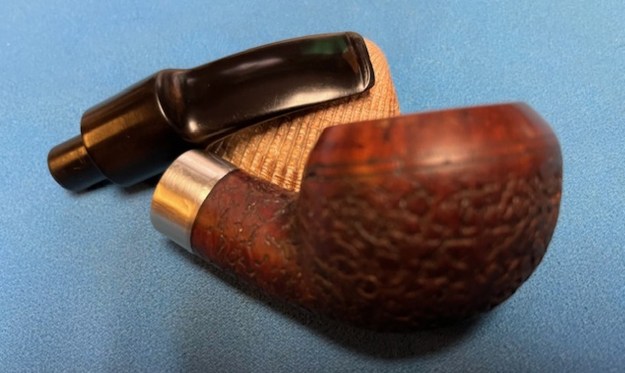
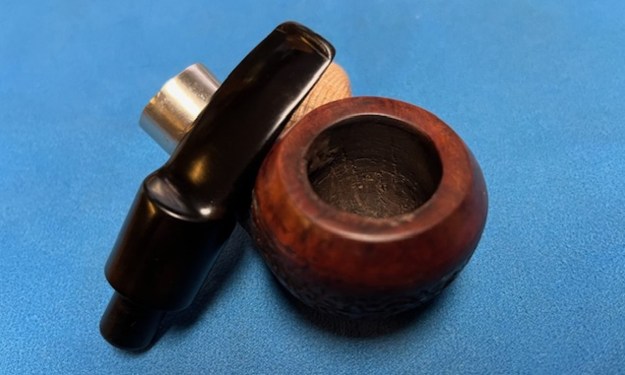
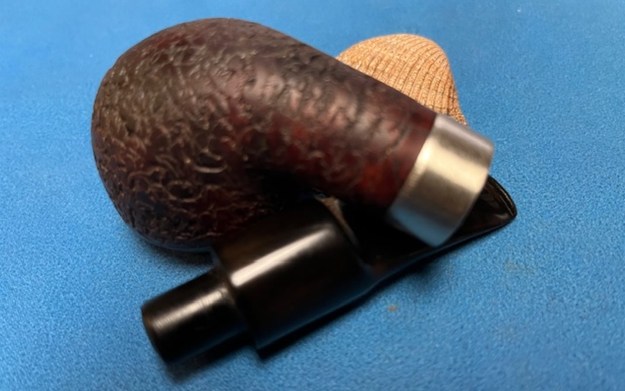
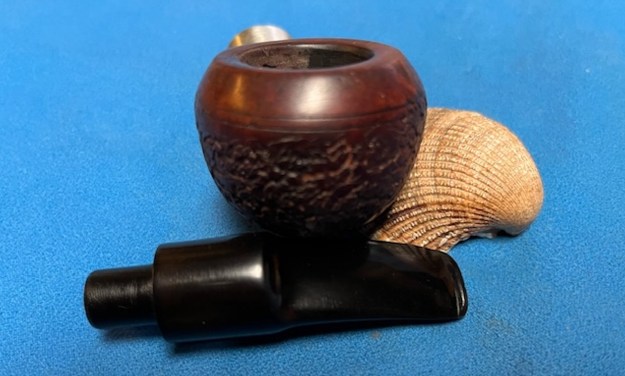
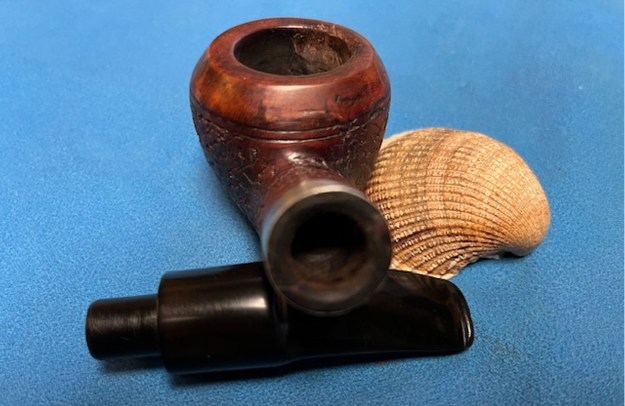
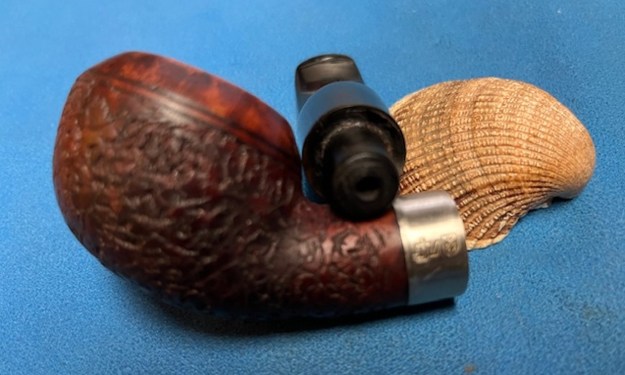
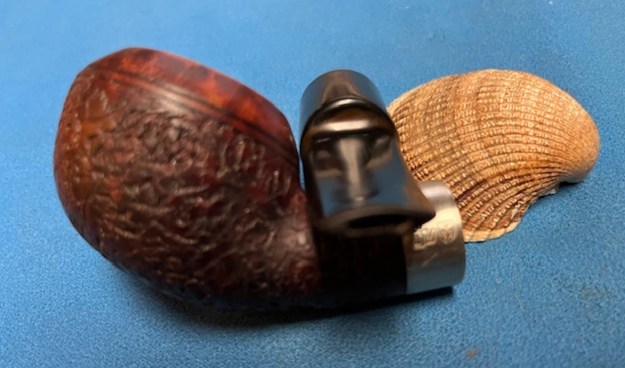
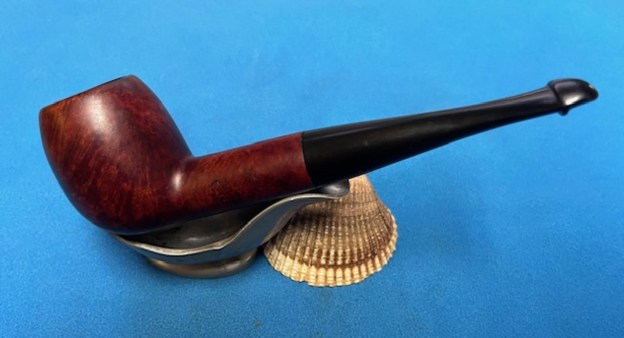
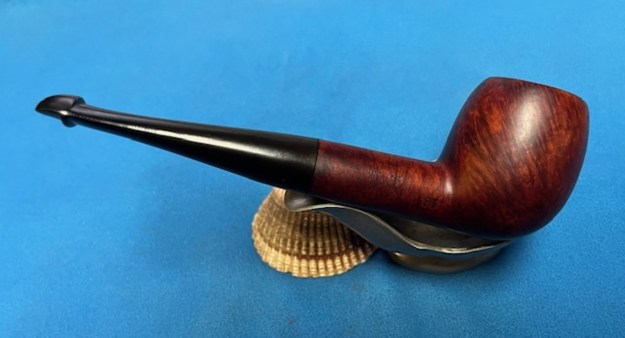
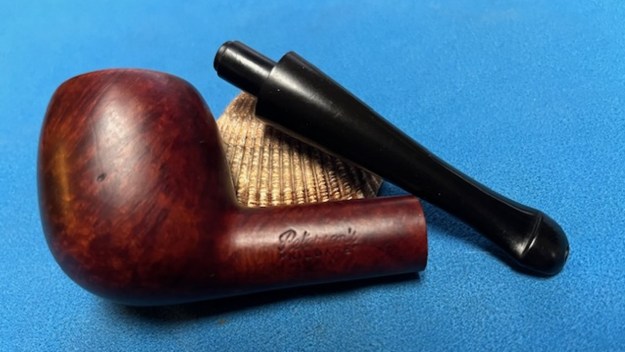
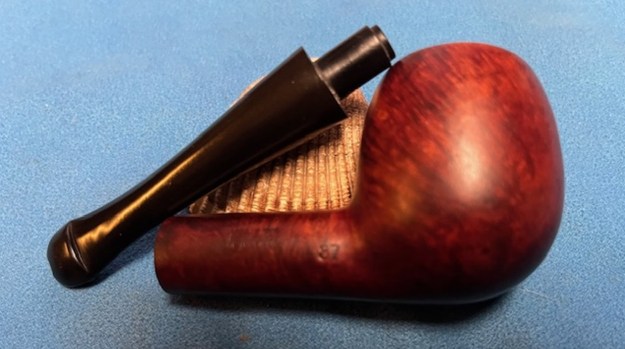
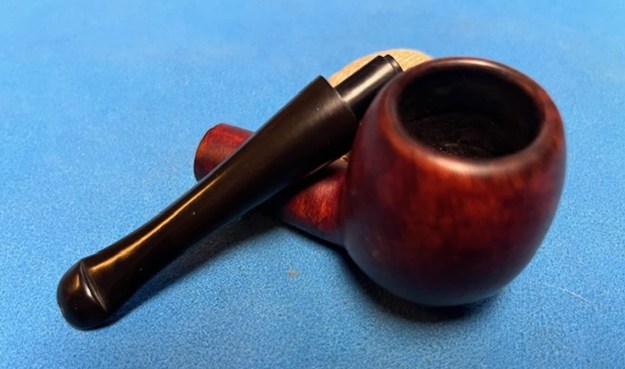
New Life for a Peterson’s London & Dublin 86 Apple


Blog by Steve Laug

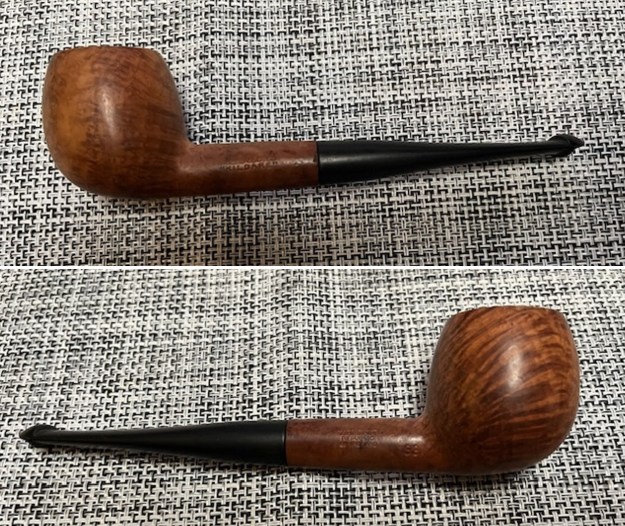
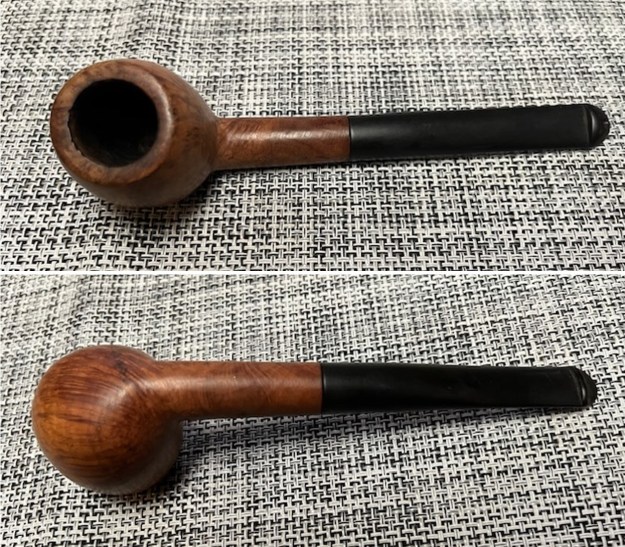
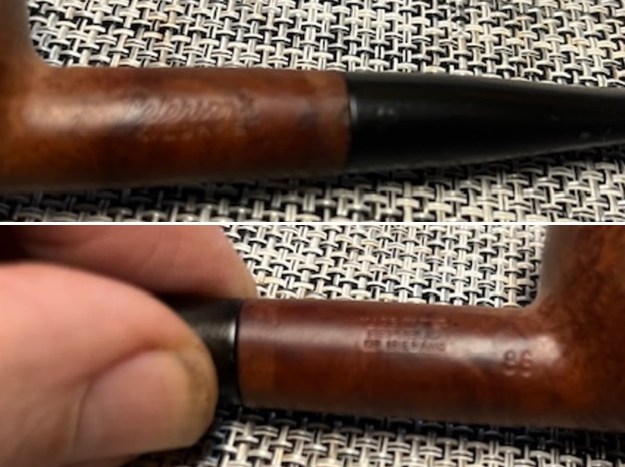
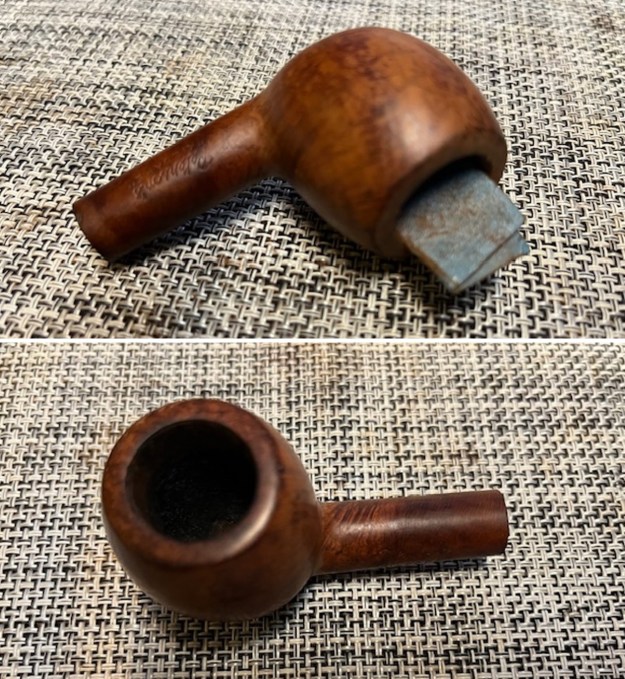
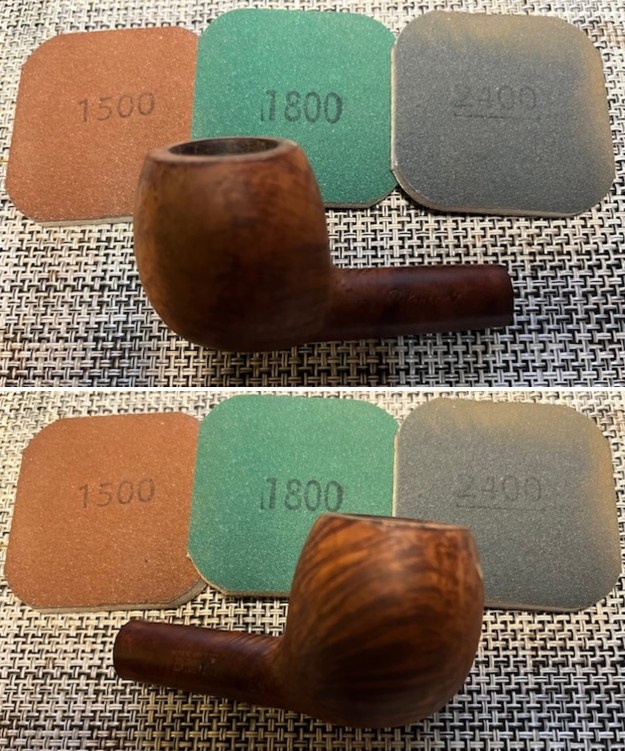
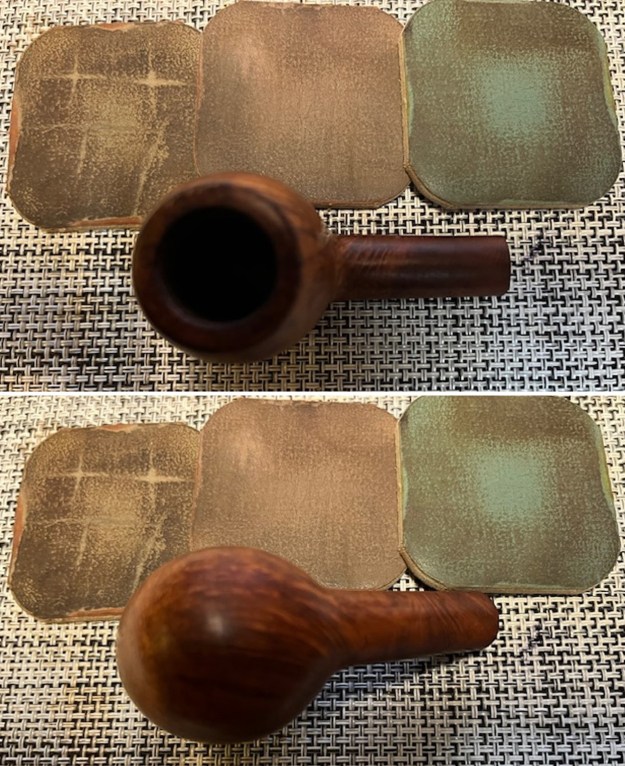
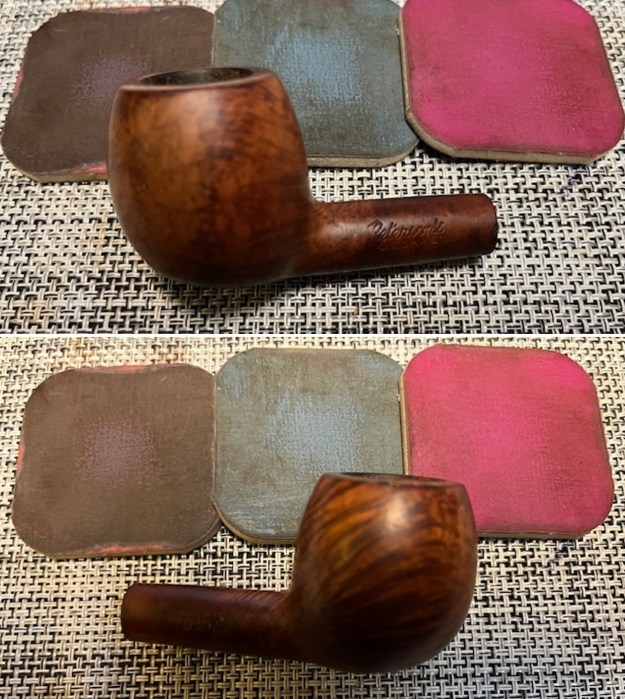
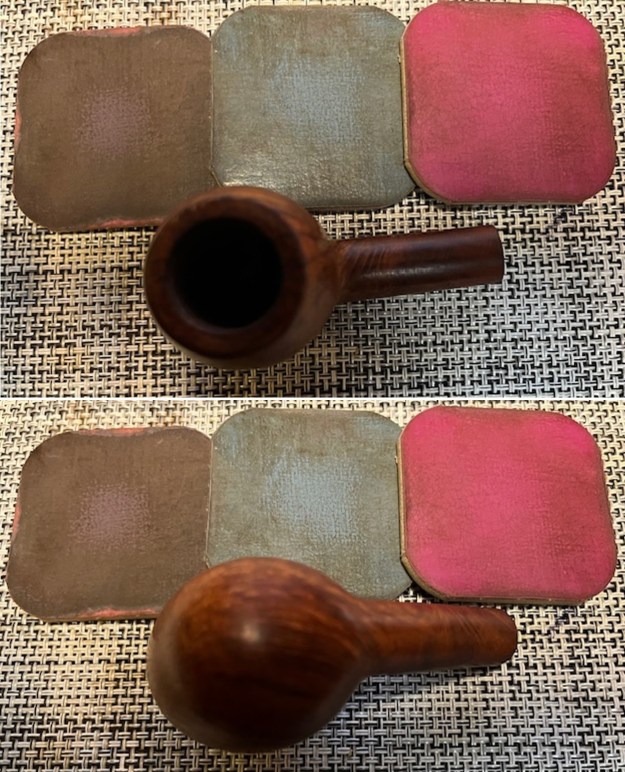
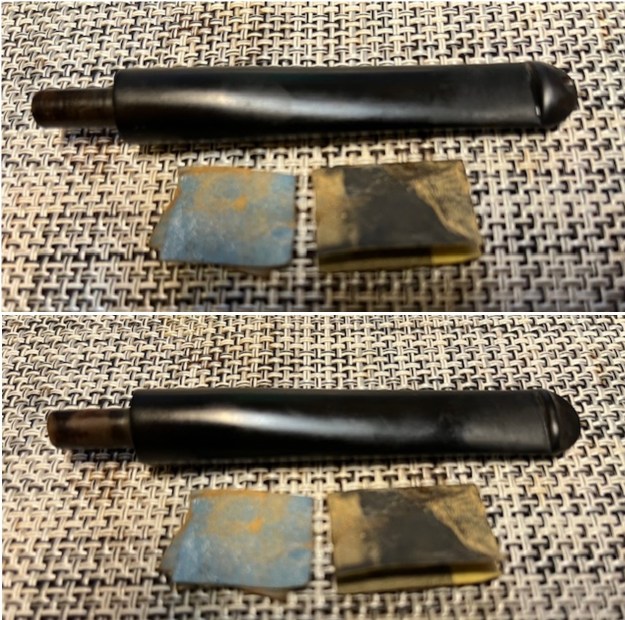
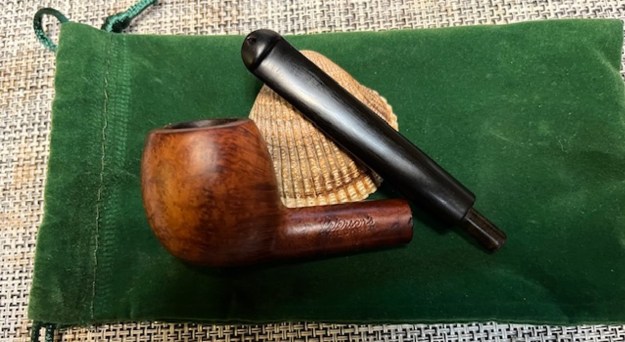
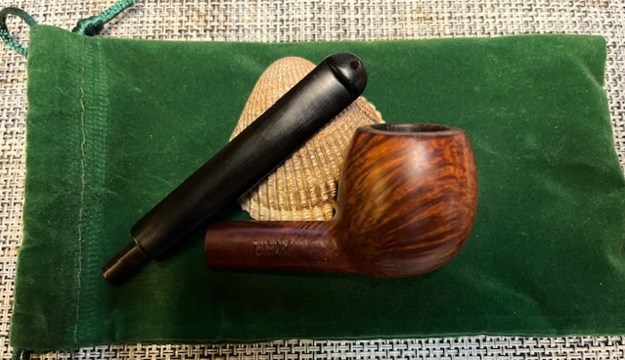
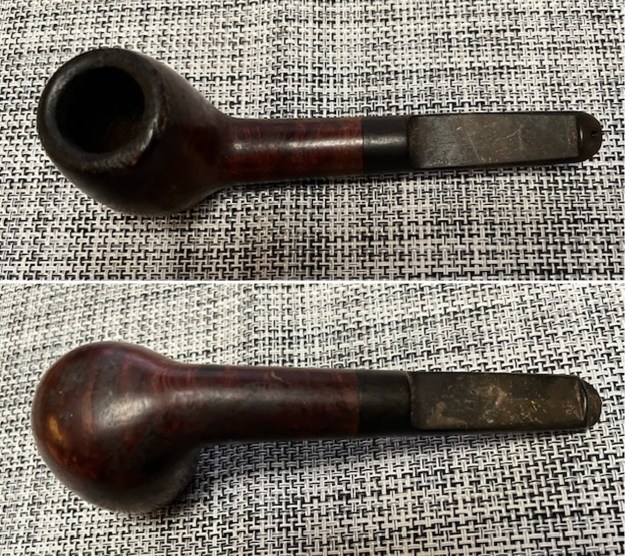
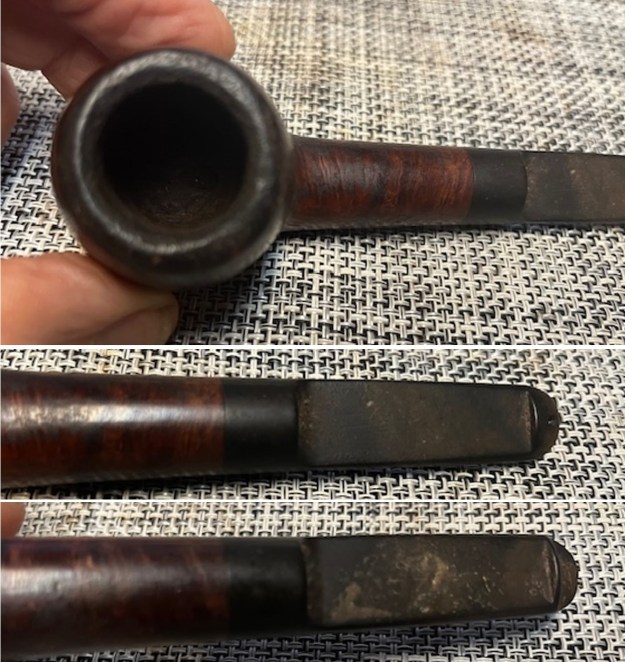
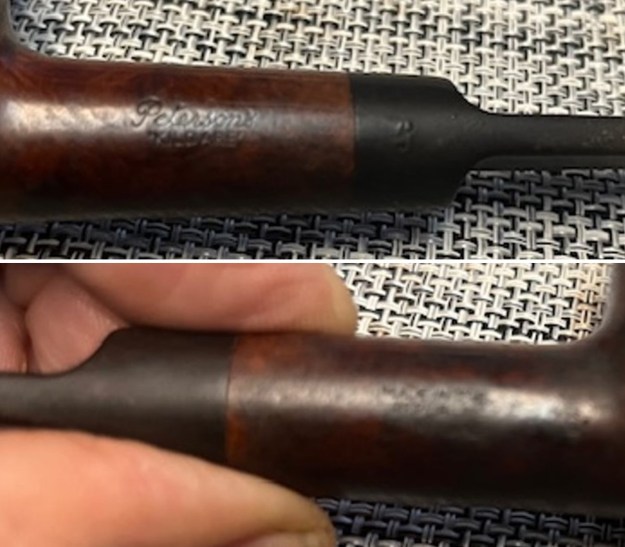
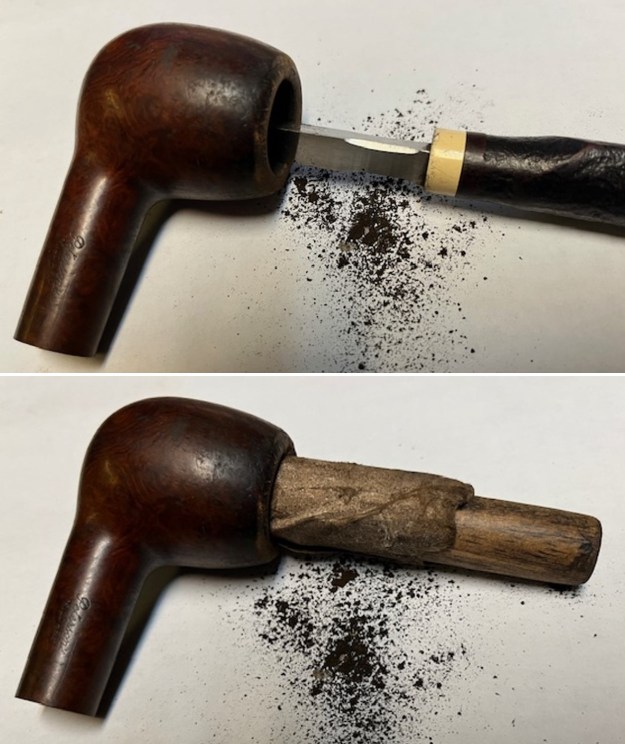
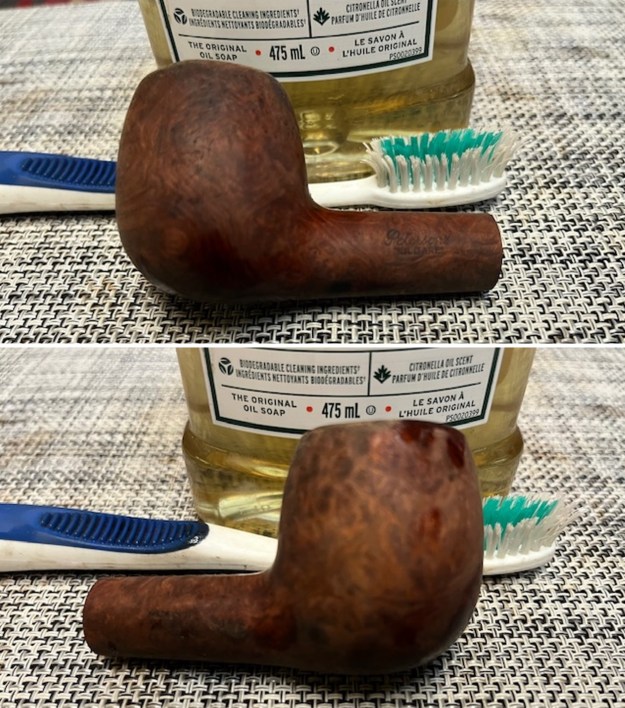
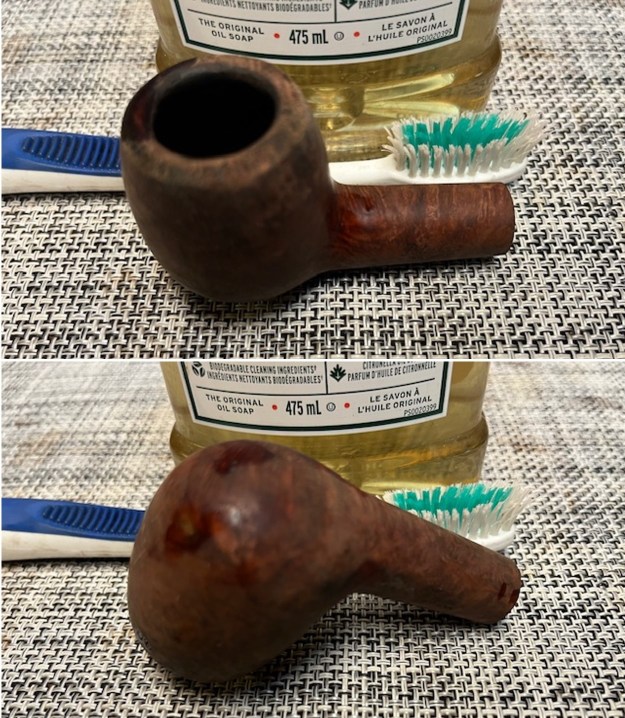
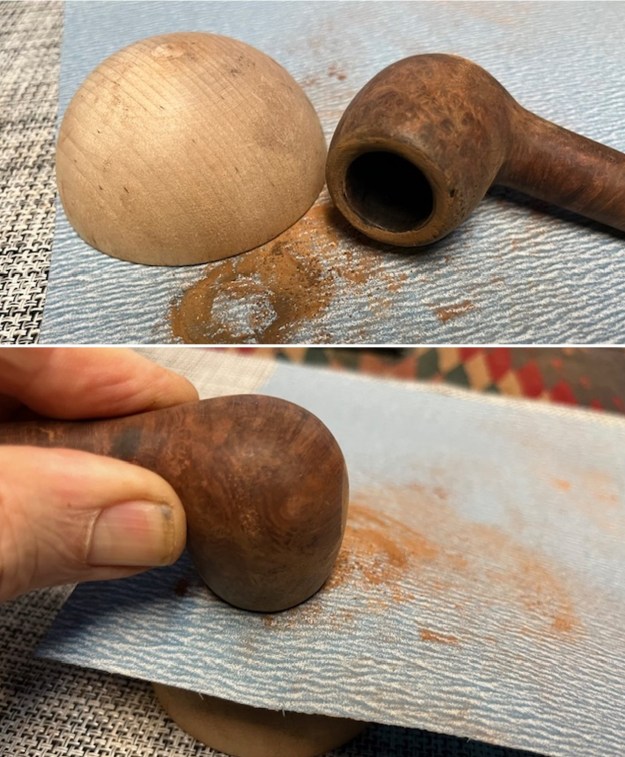
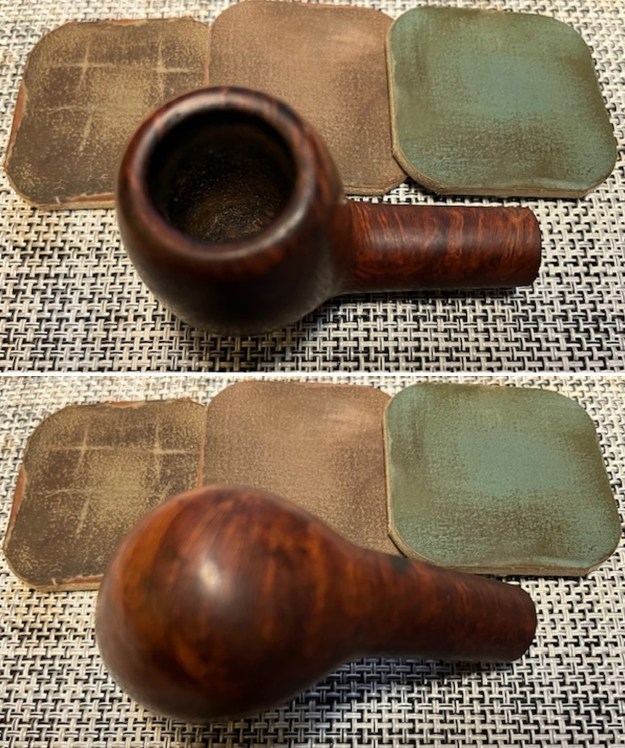
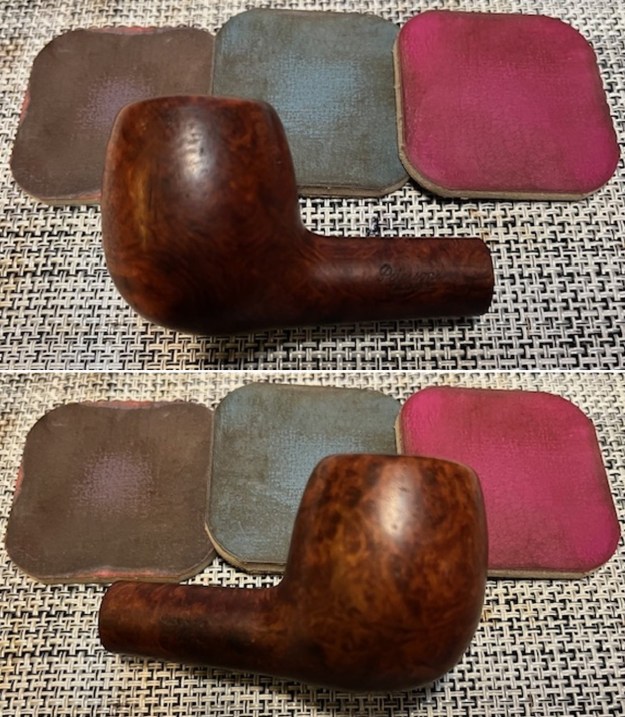
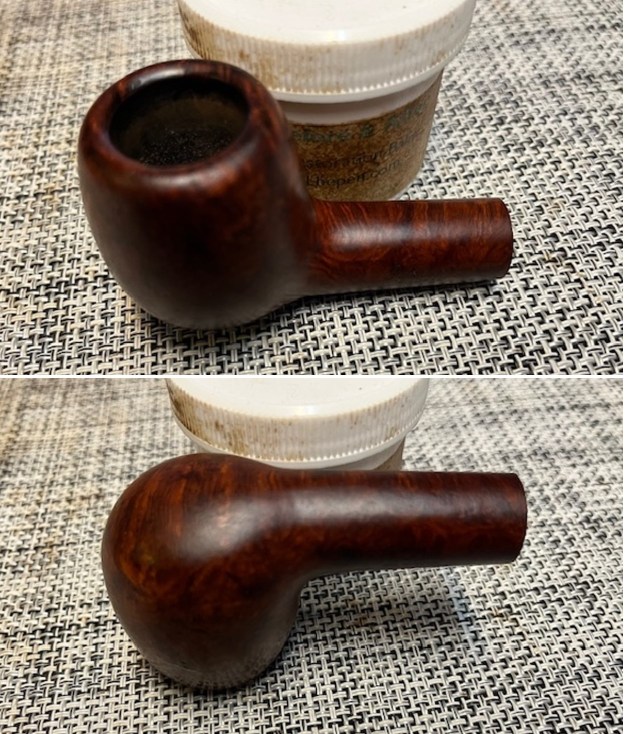
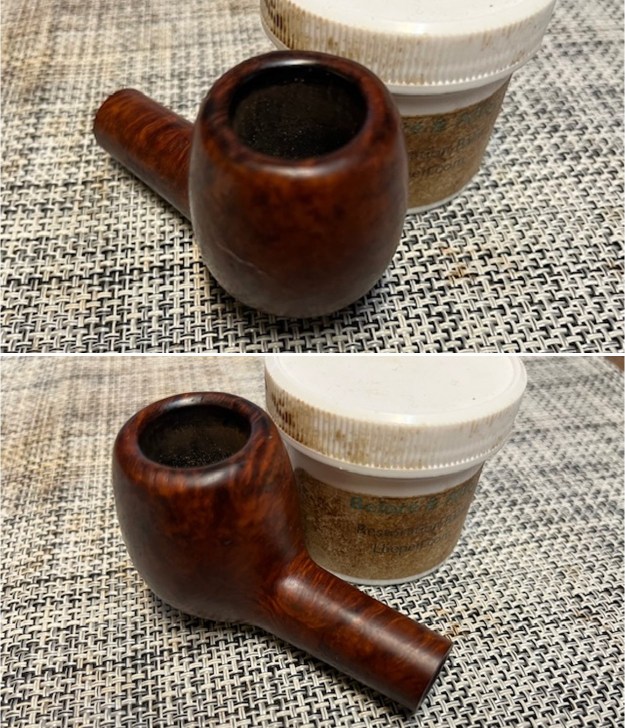
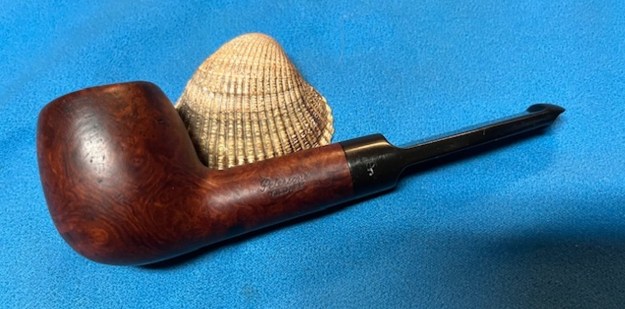
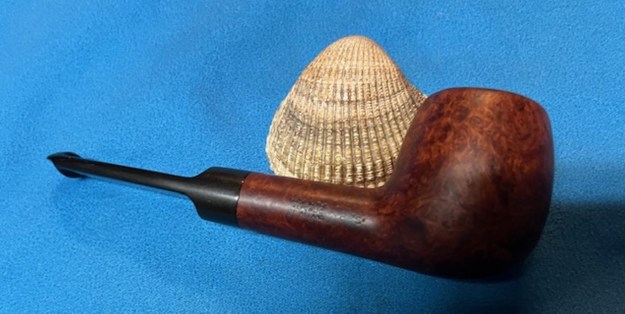
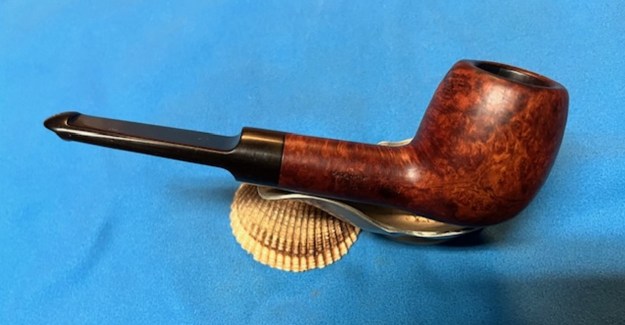
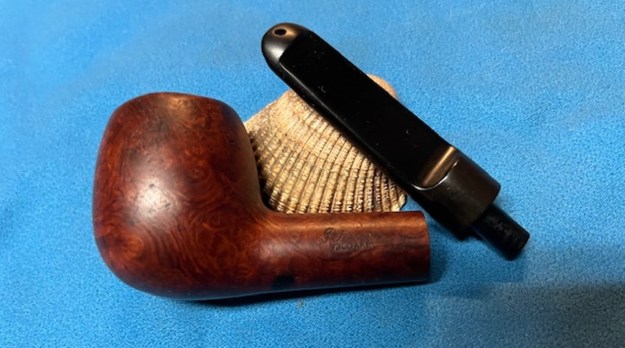
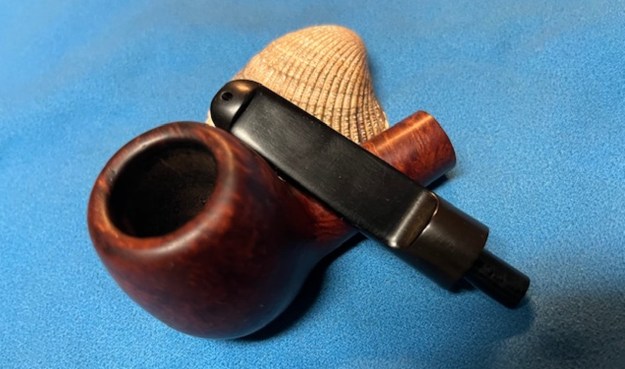
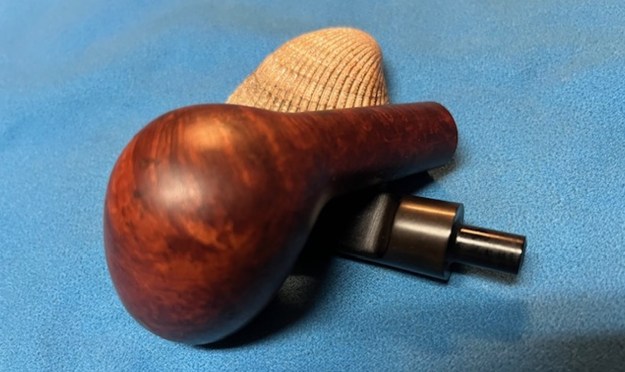
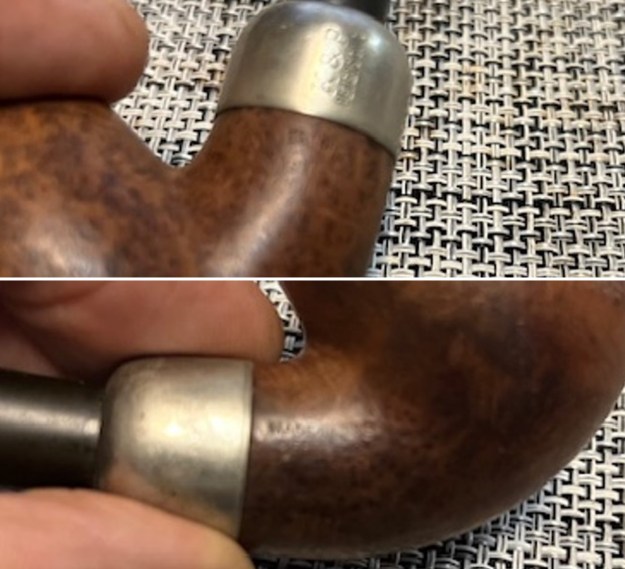
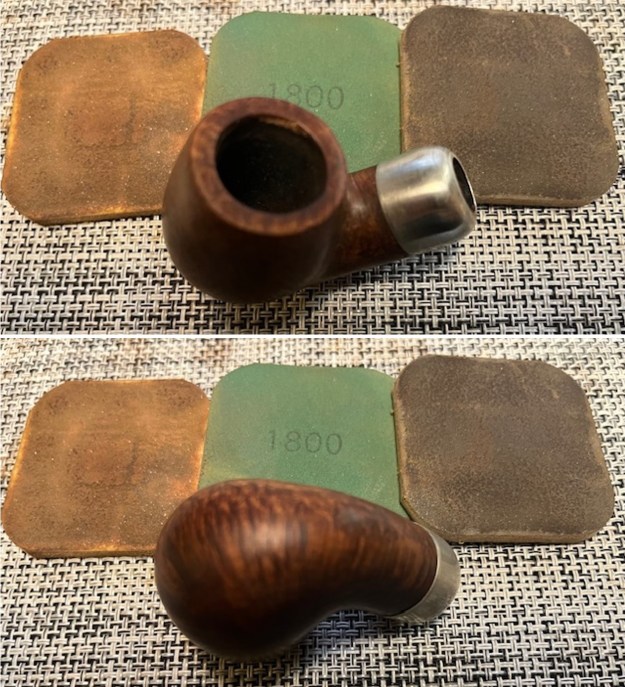
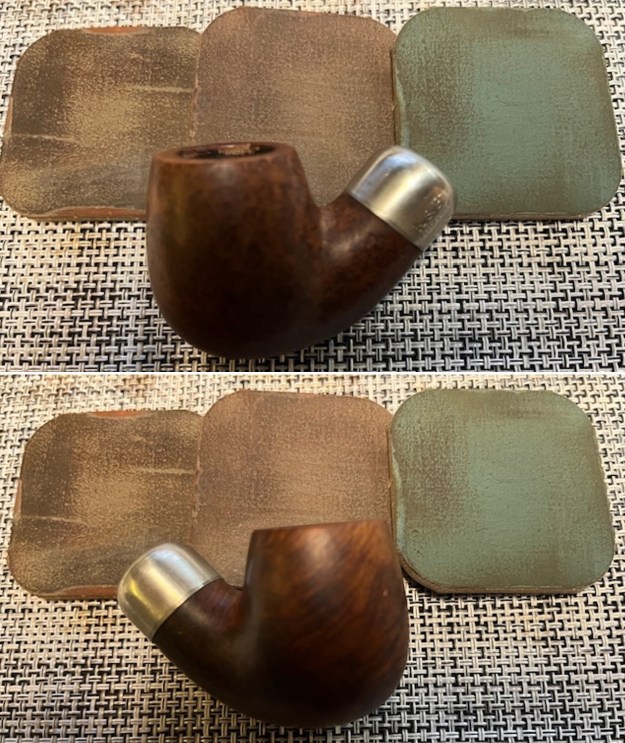
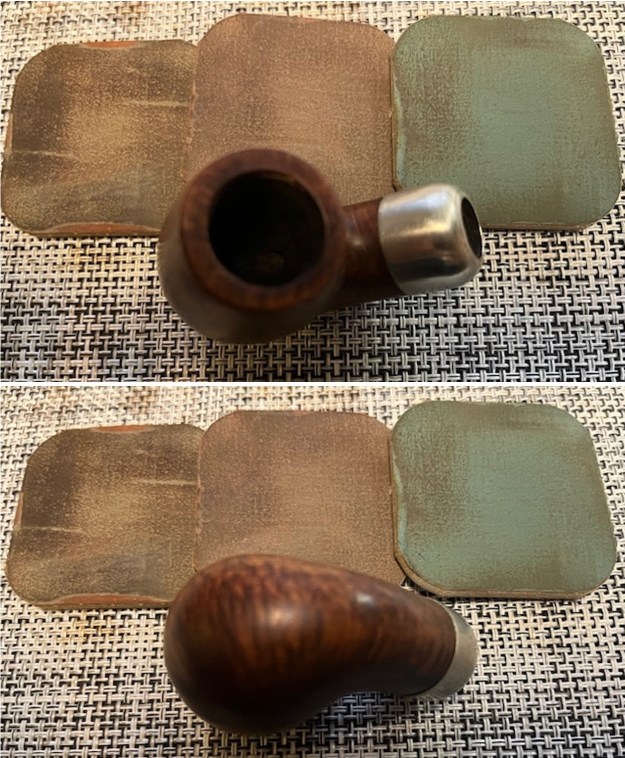
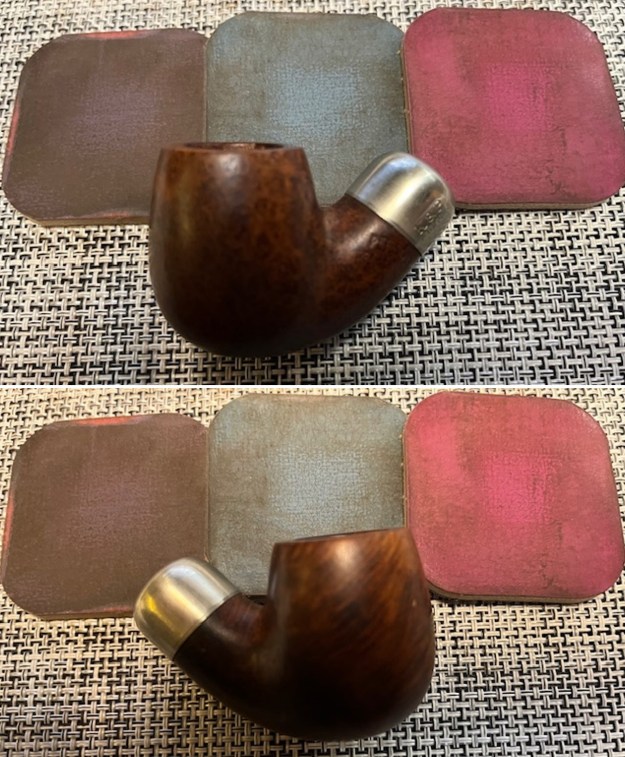
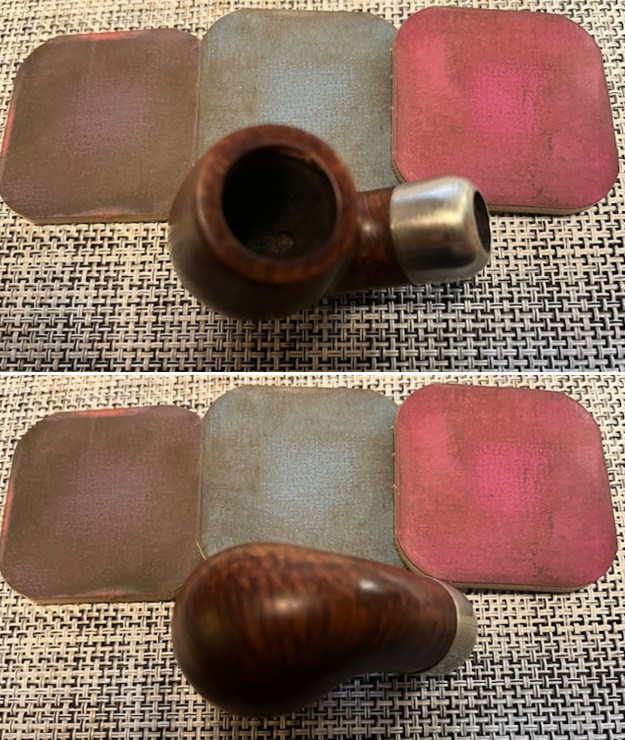
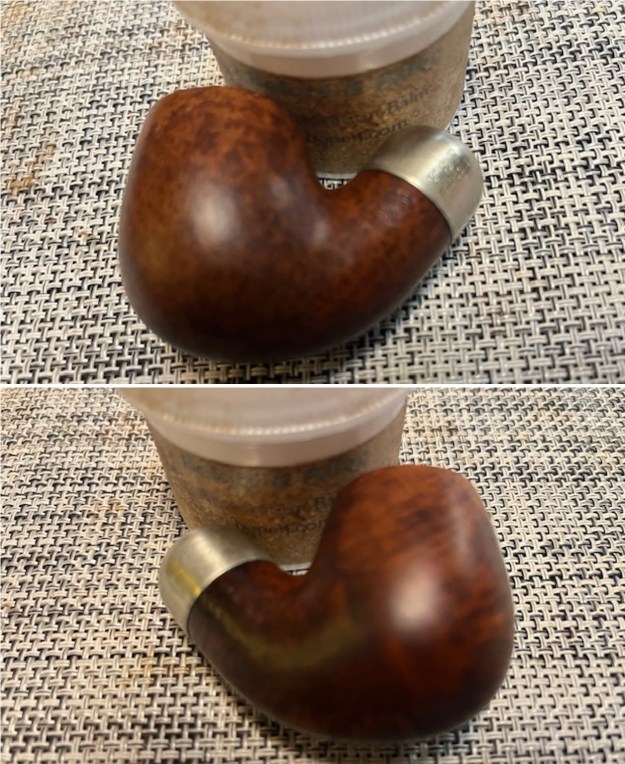
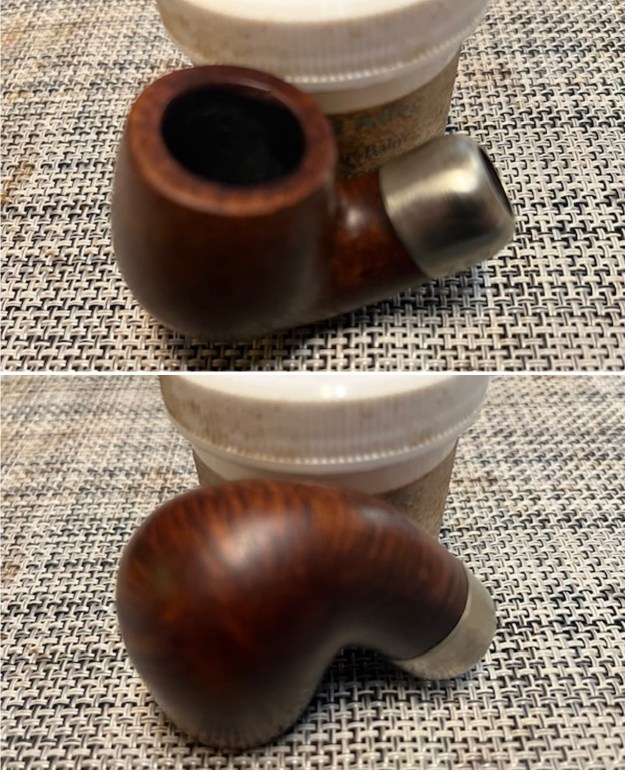
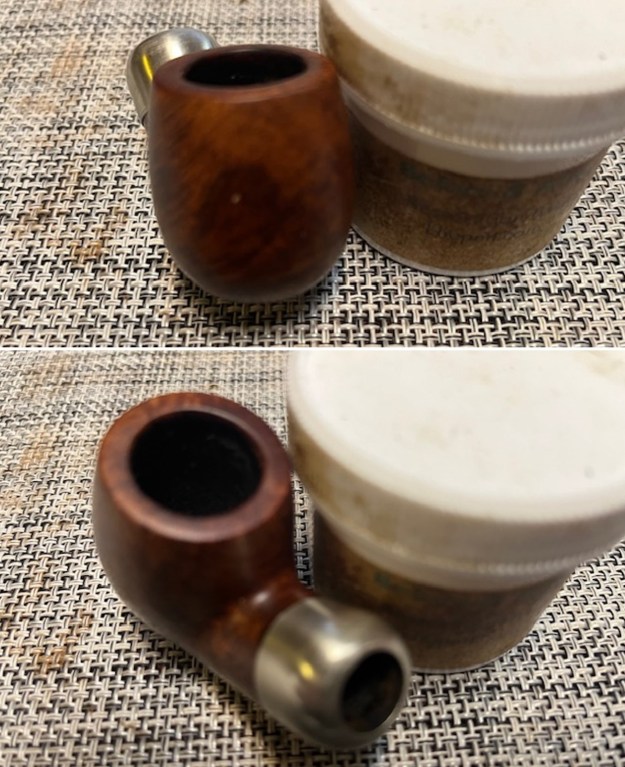
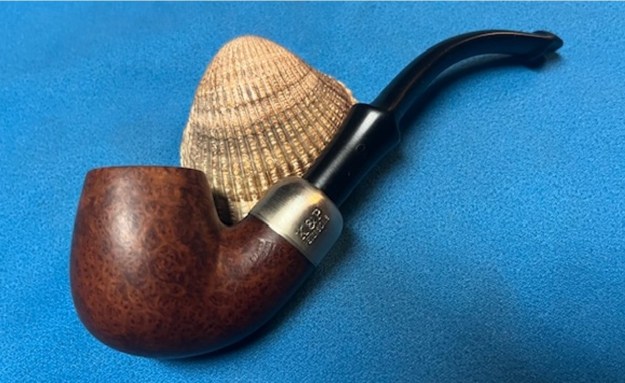
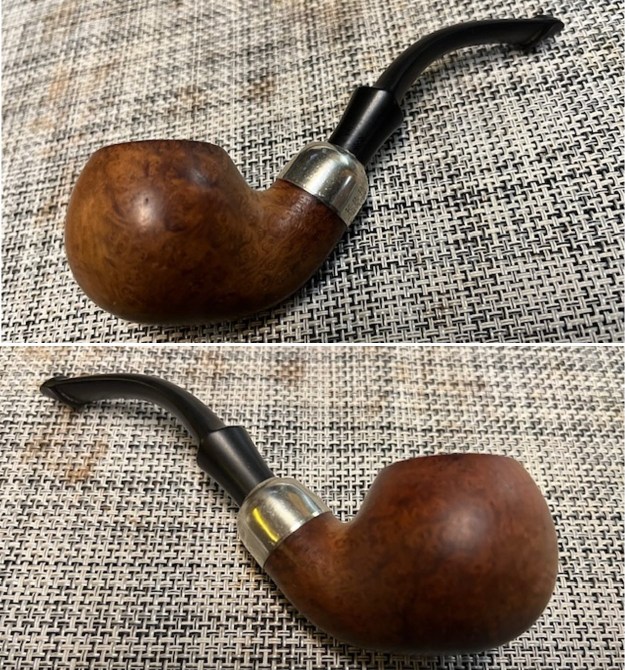
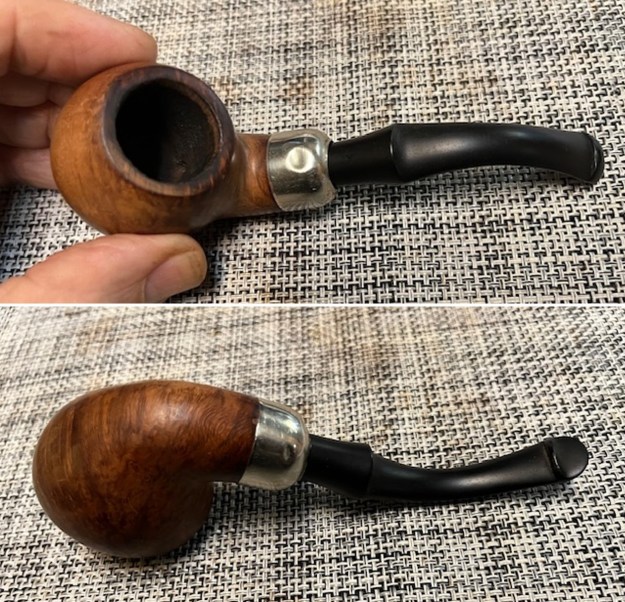
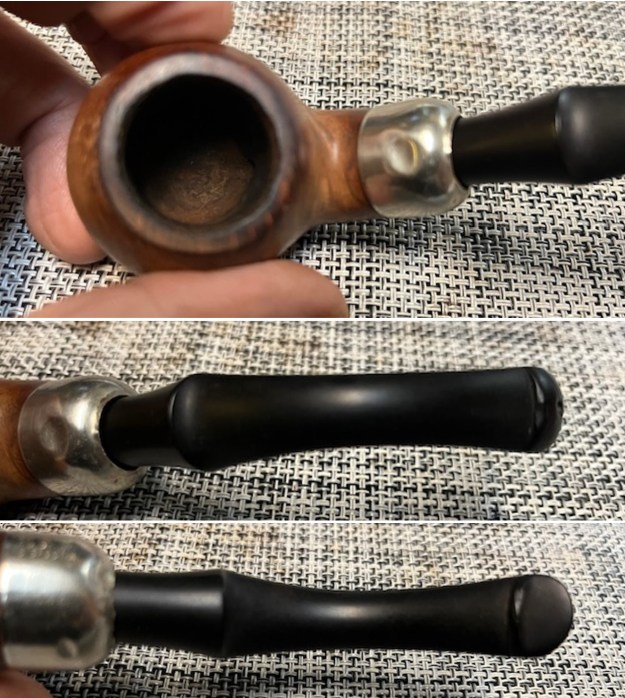
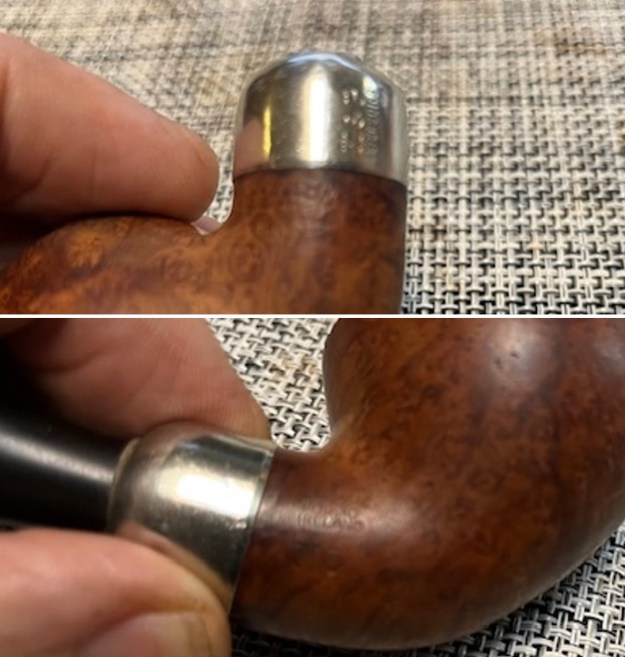
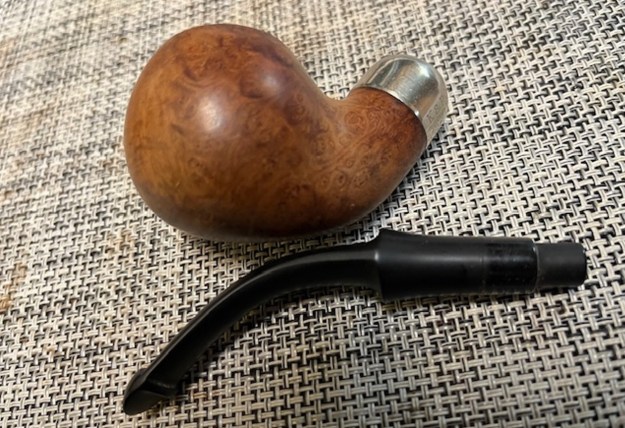
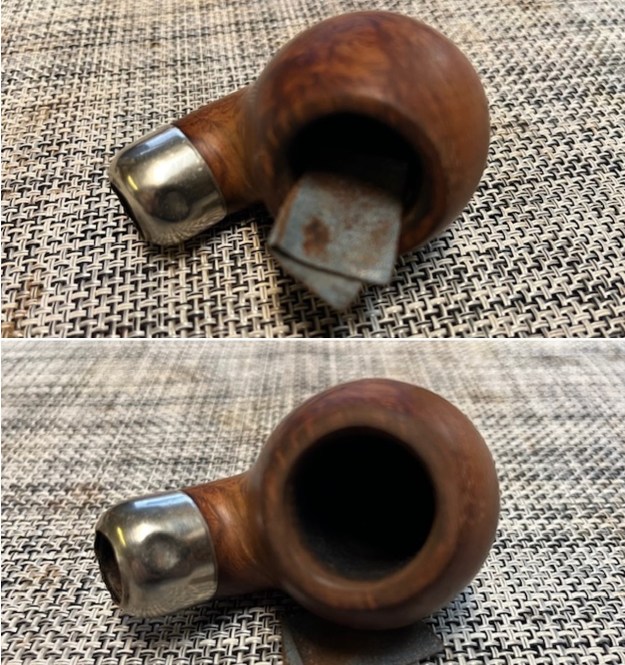
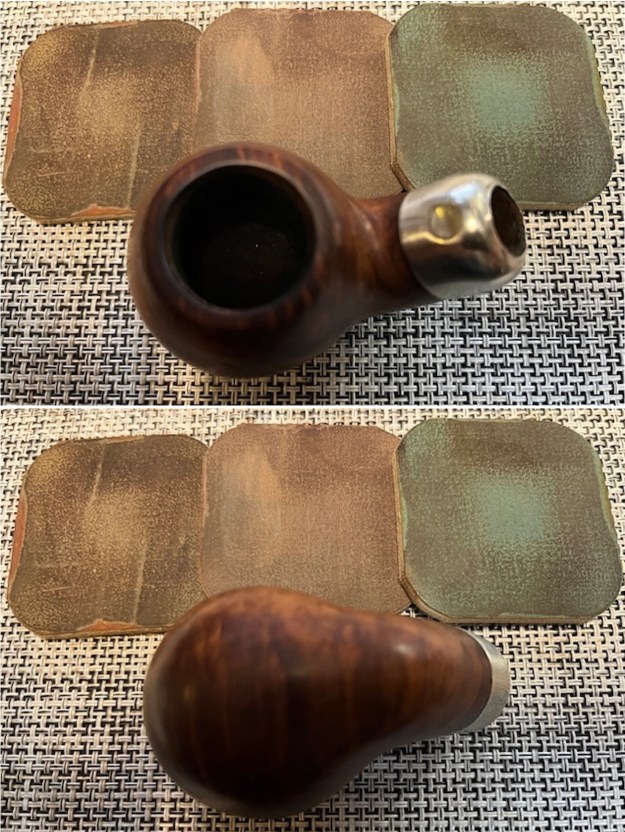
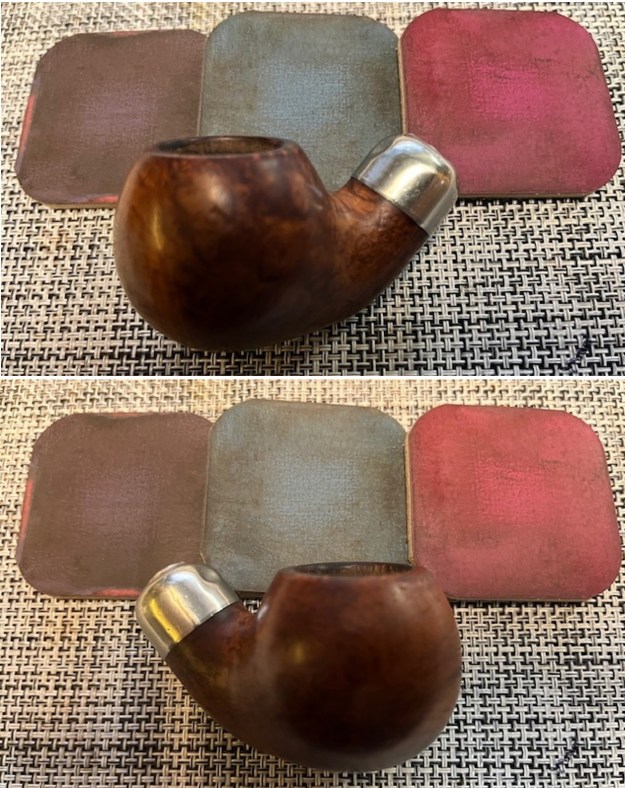
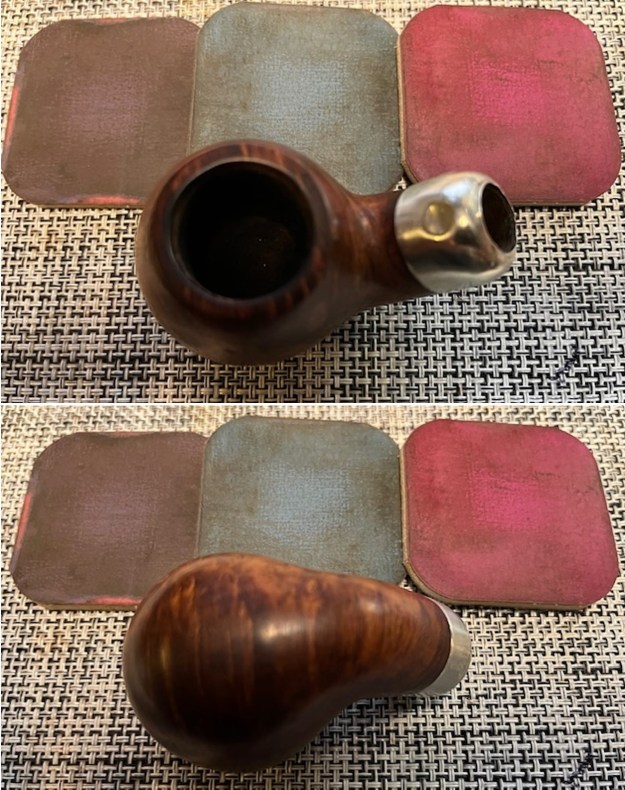
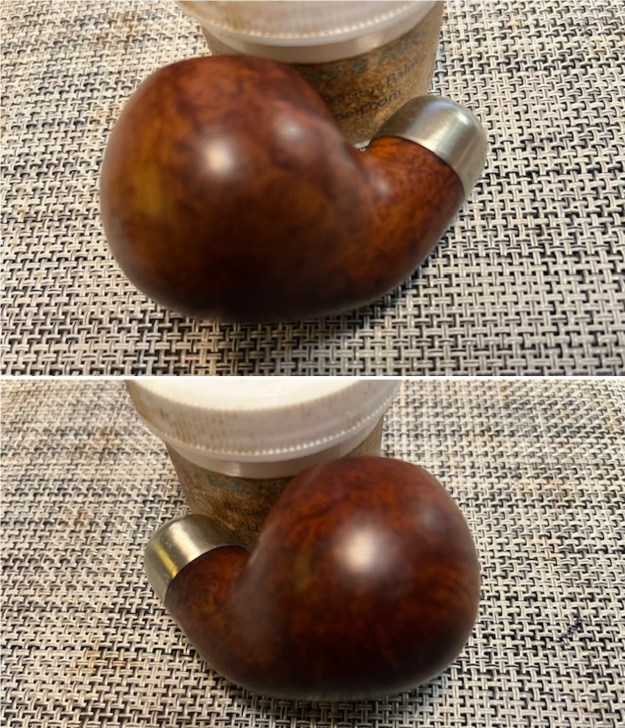
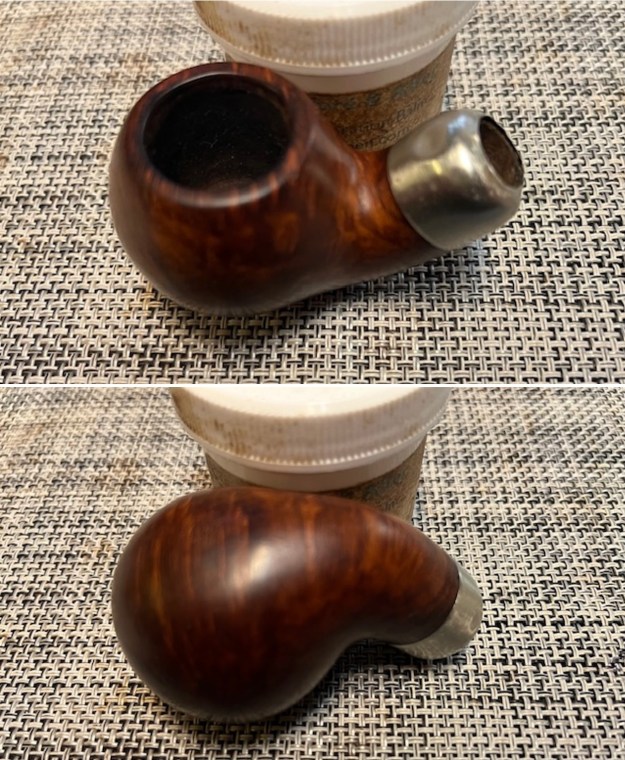
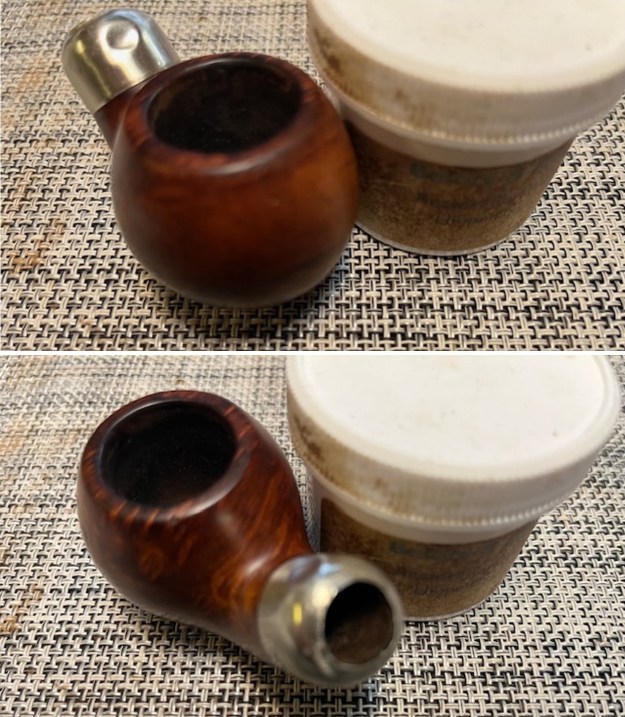
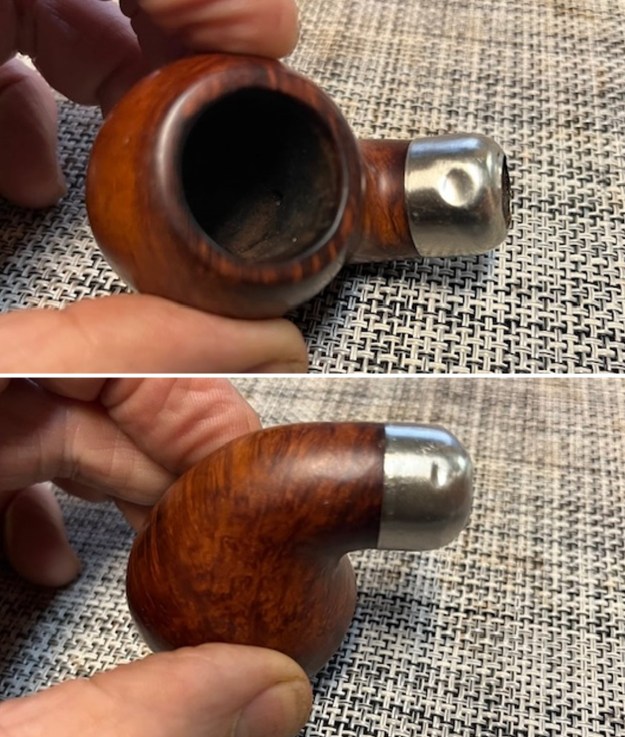
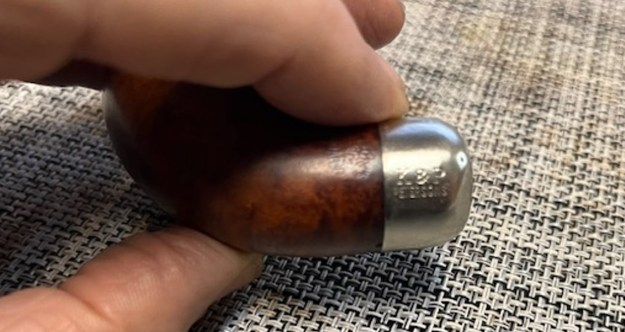
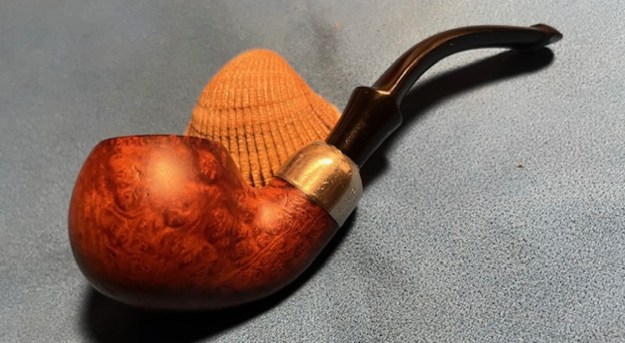
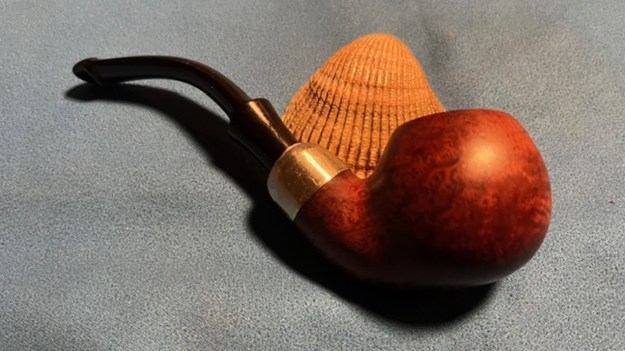
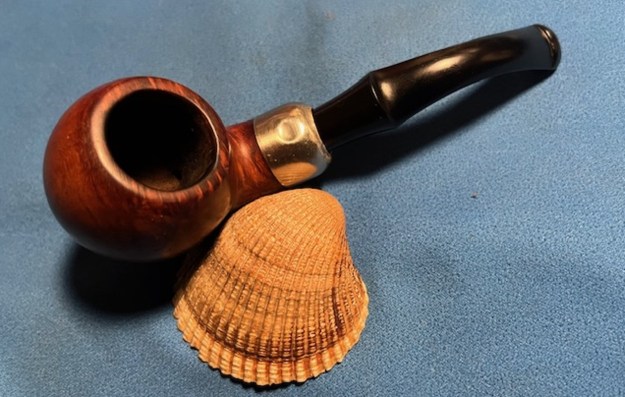
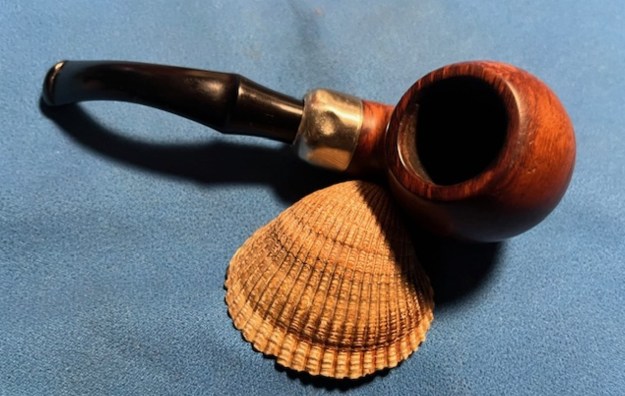
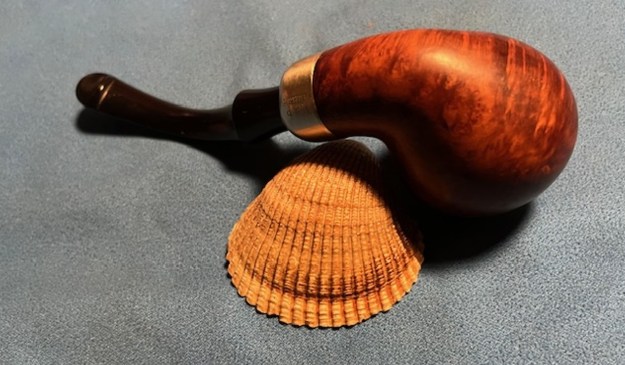
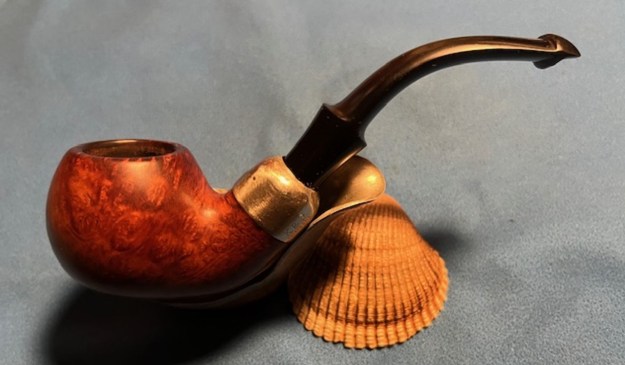
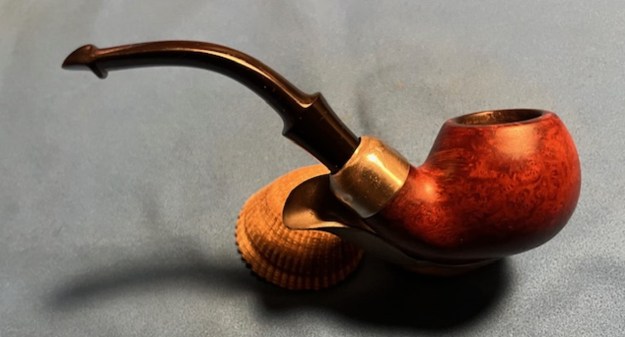
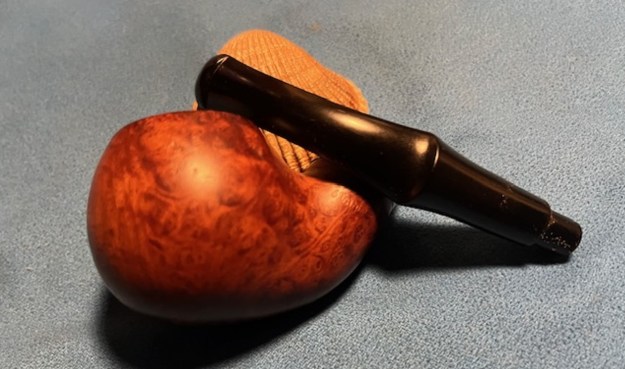
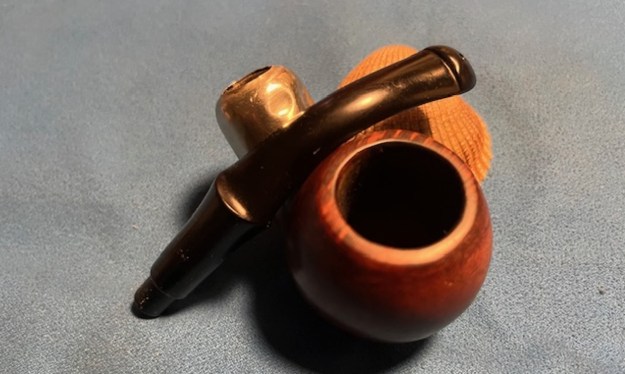
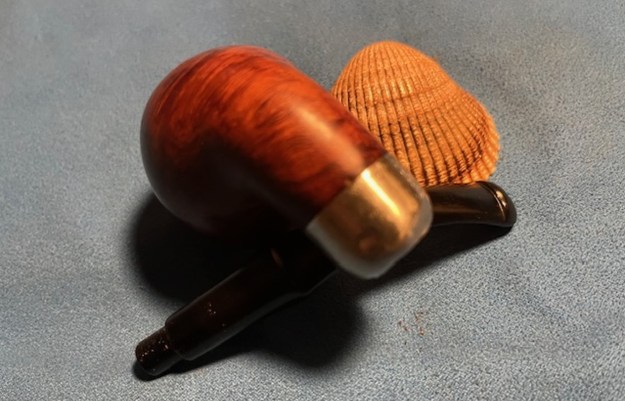
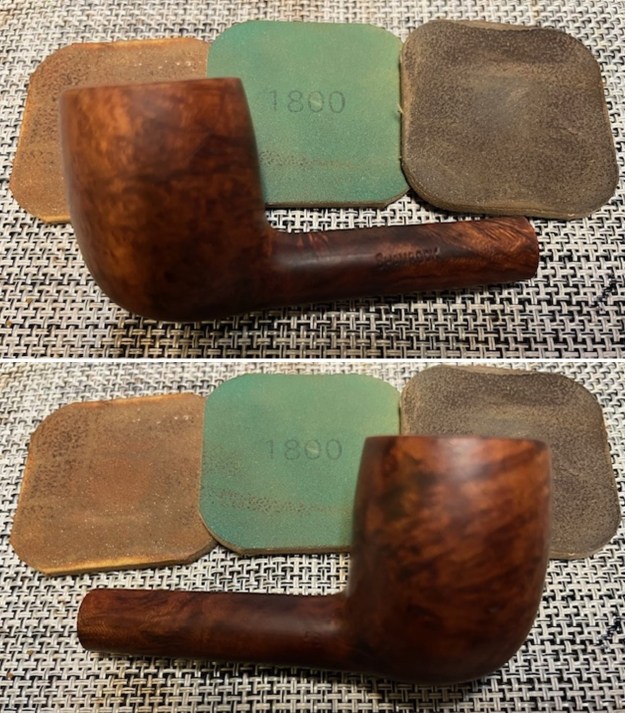
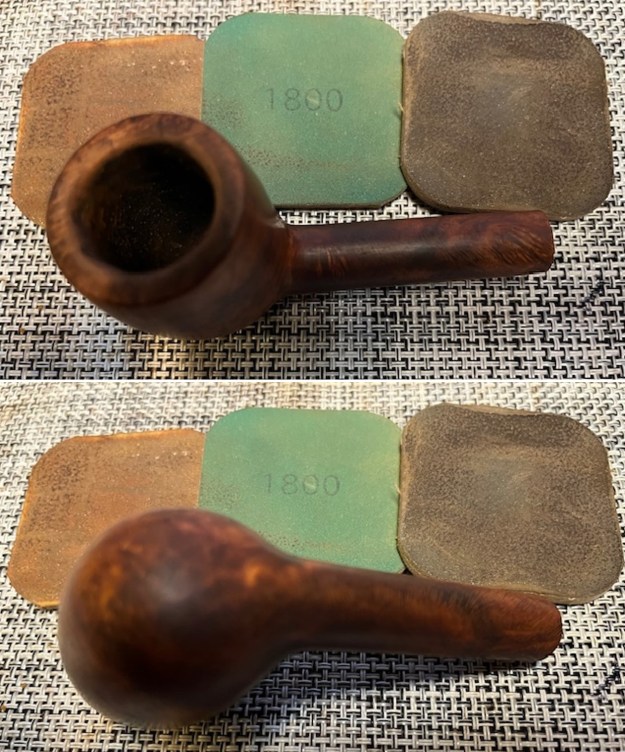
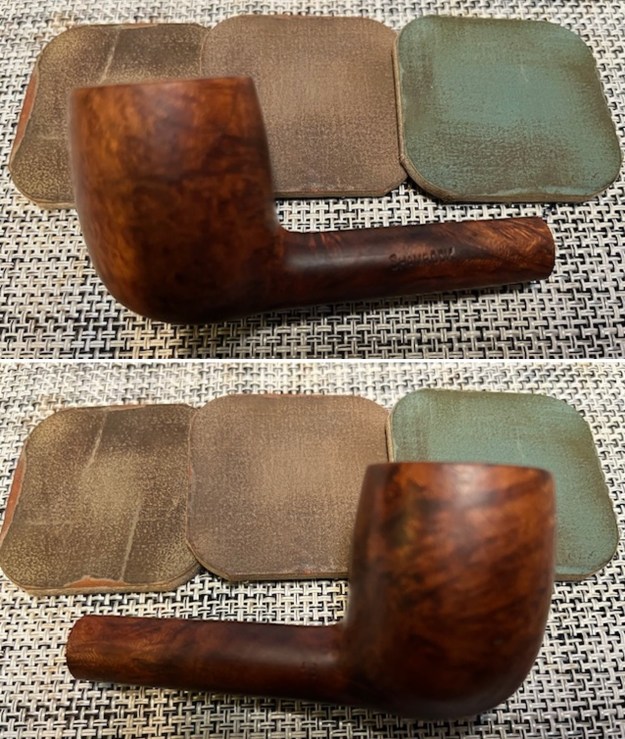
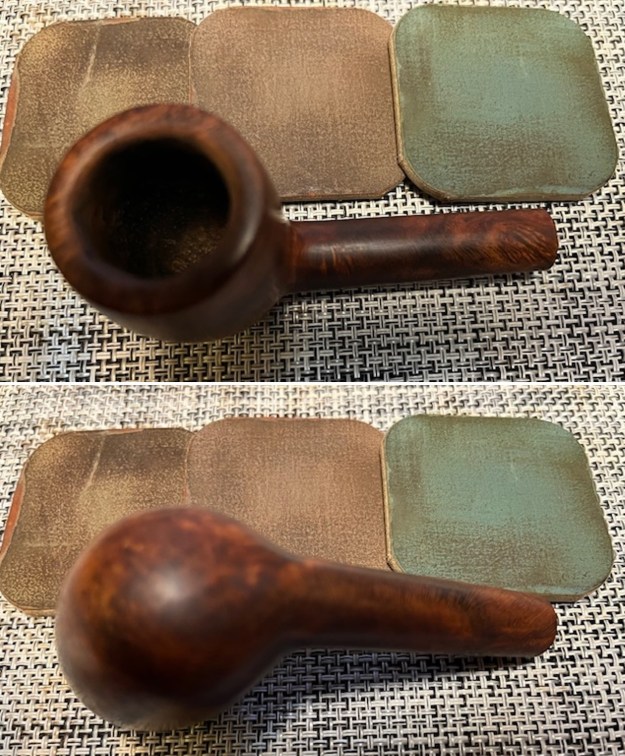
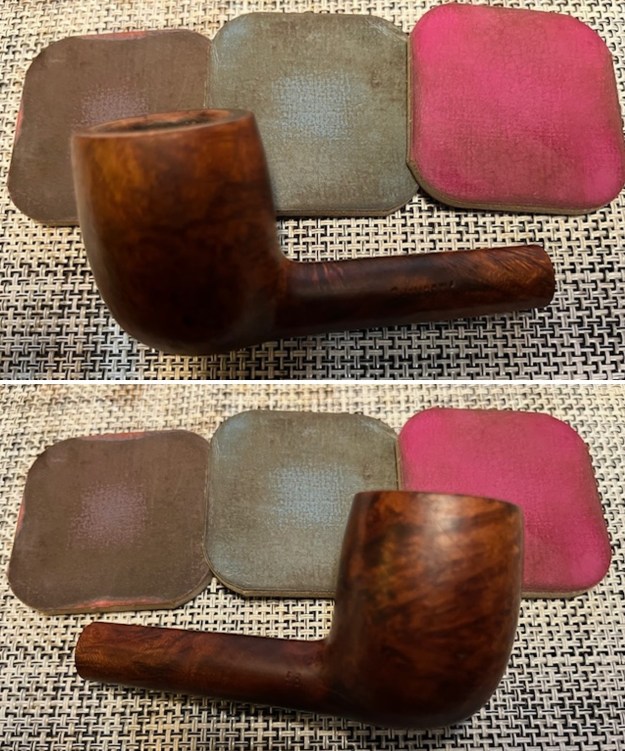
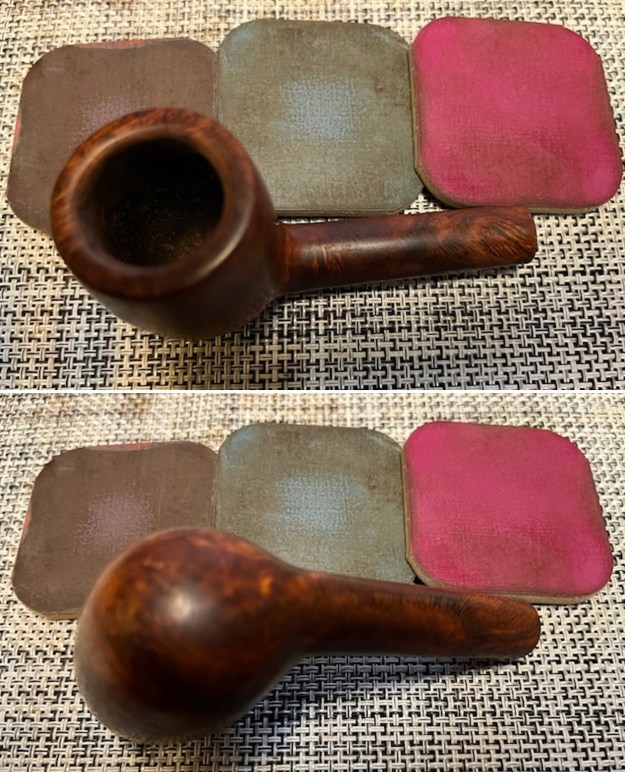
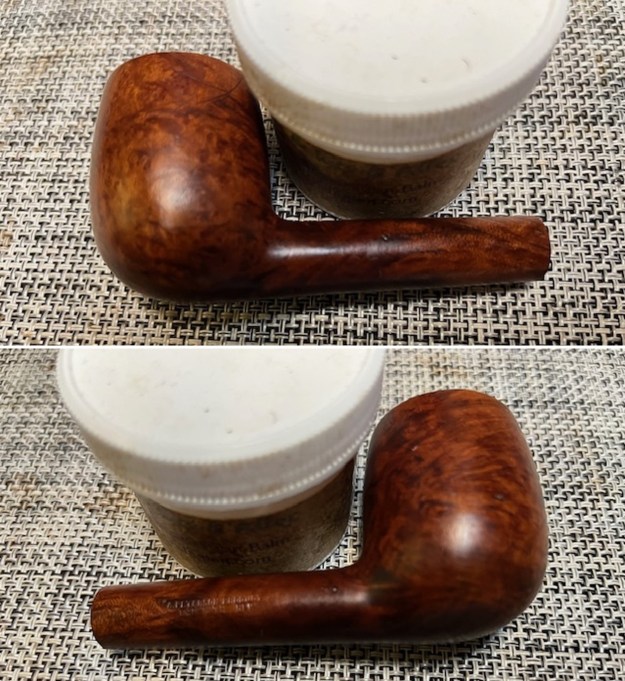
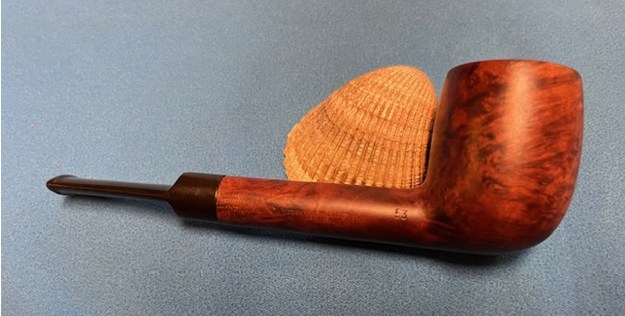
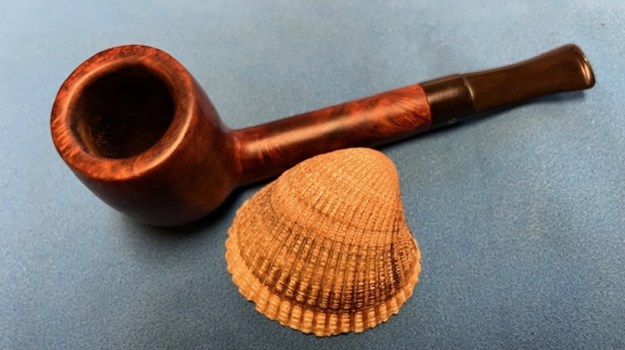
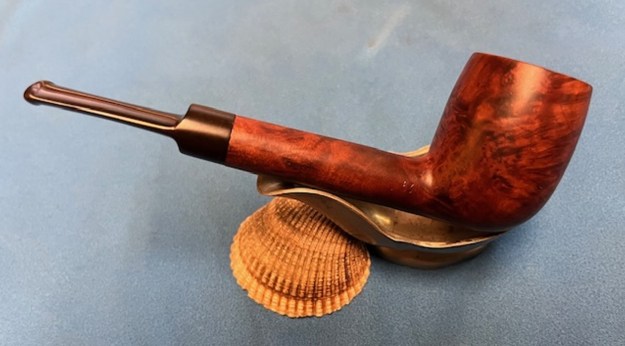
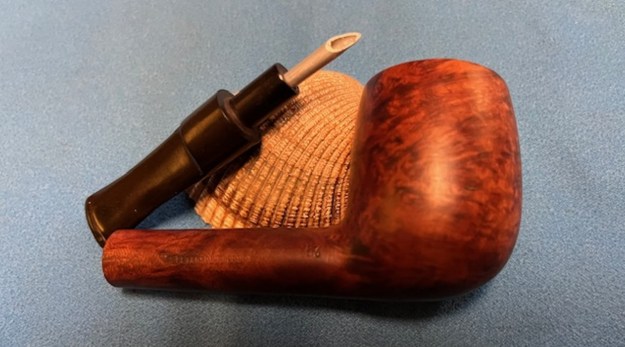
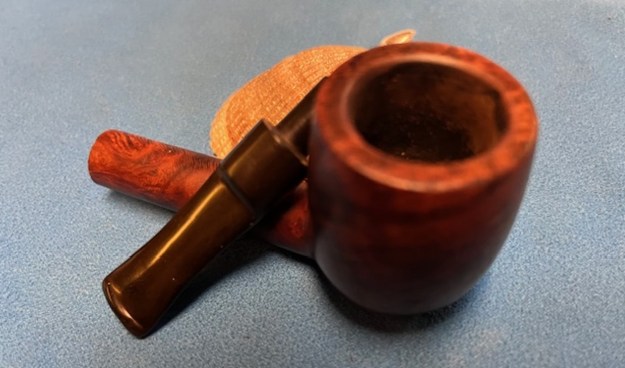
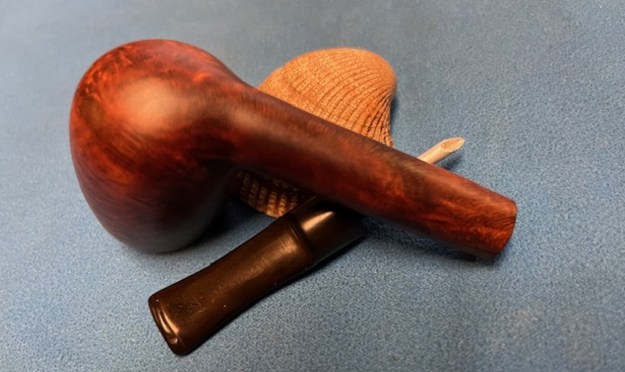
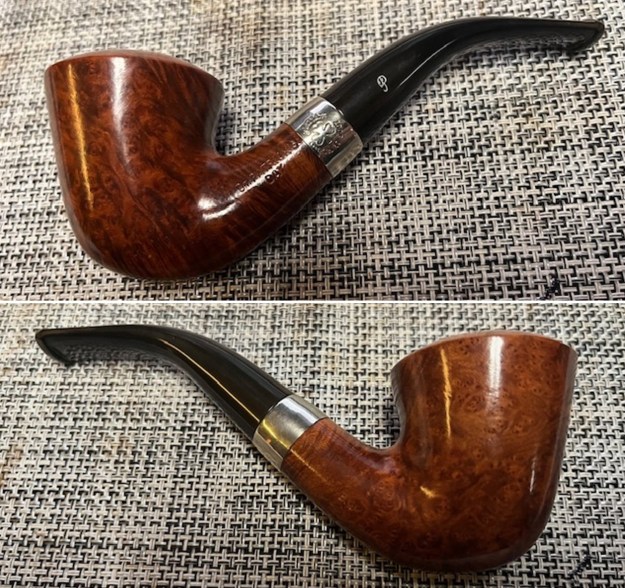
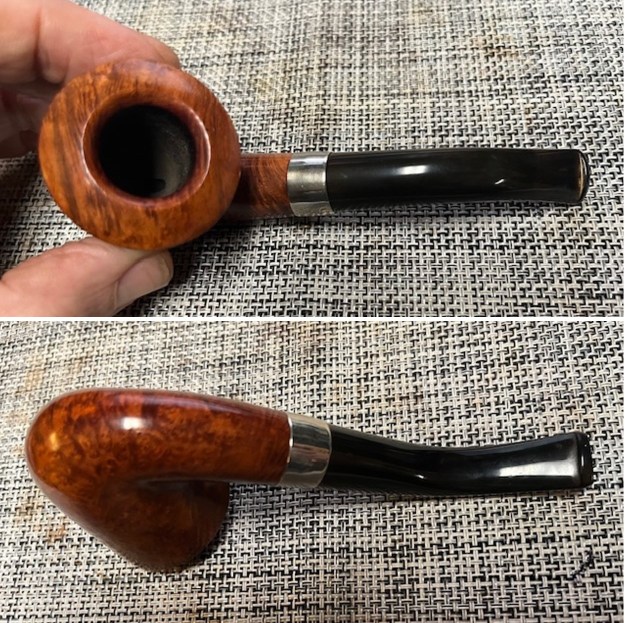
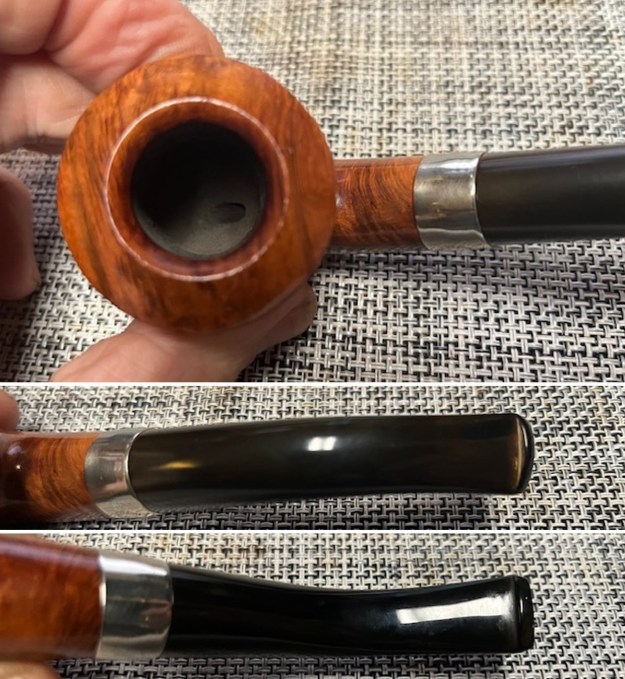
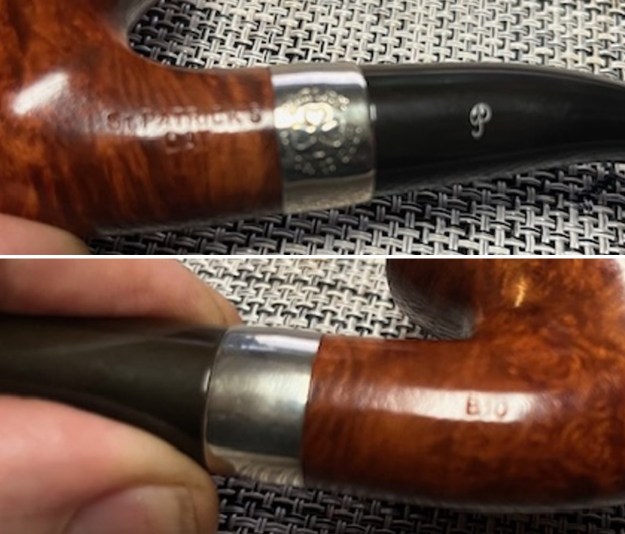
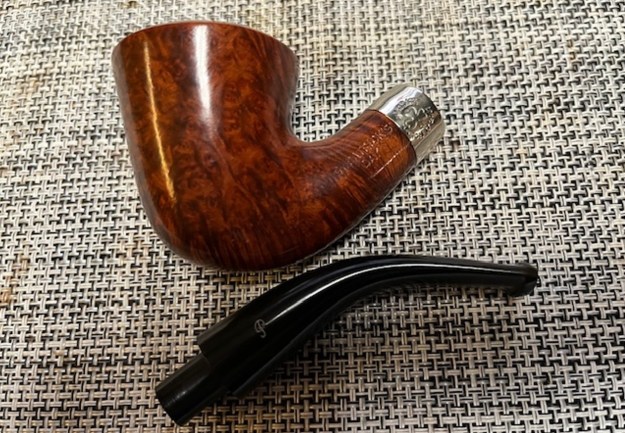
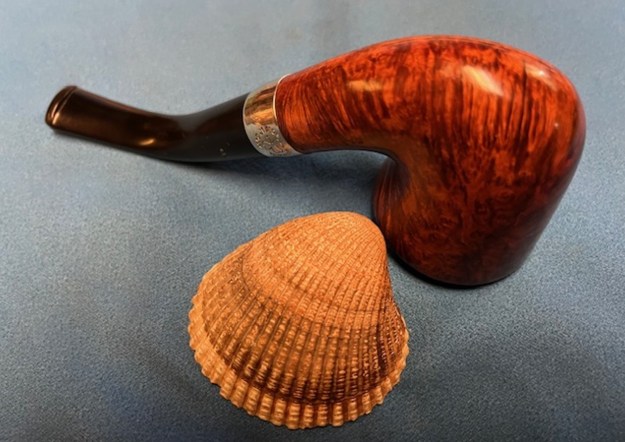
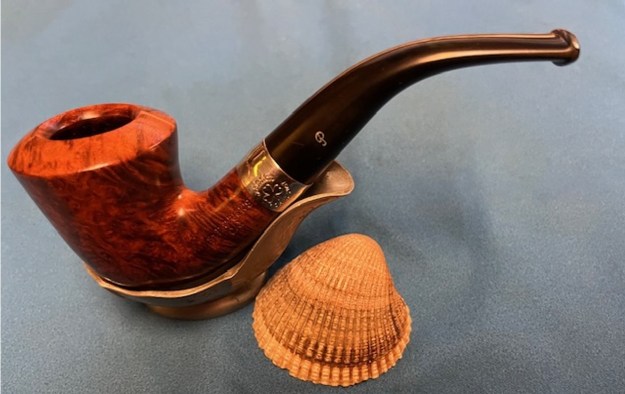
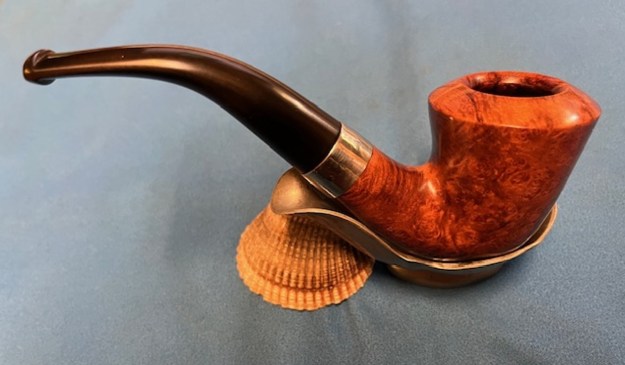
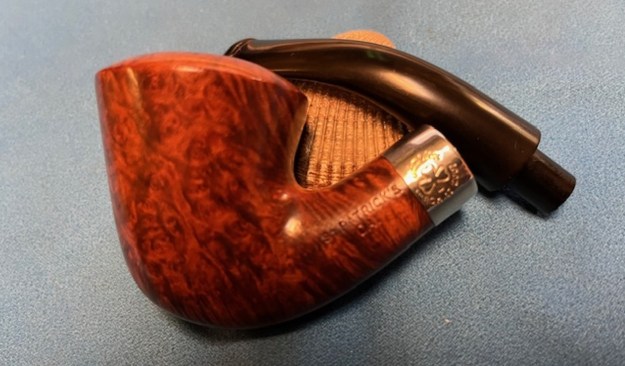
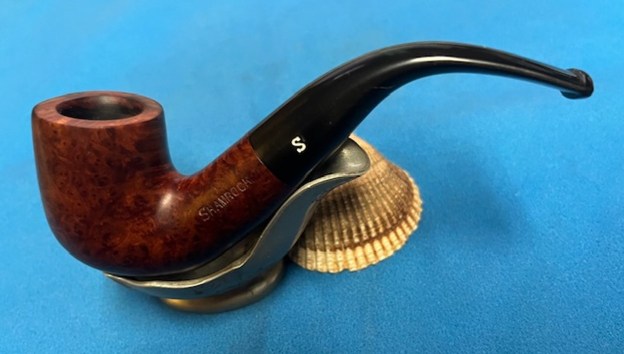
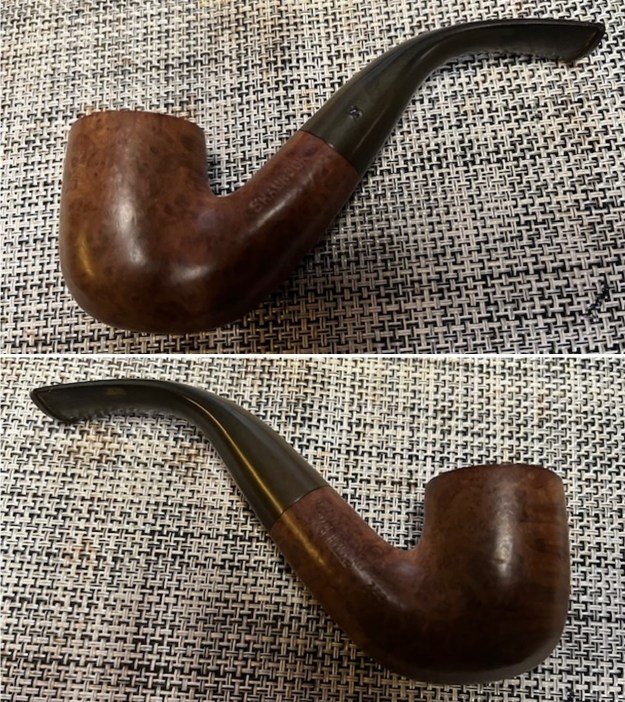
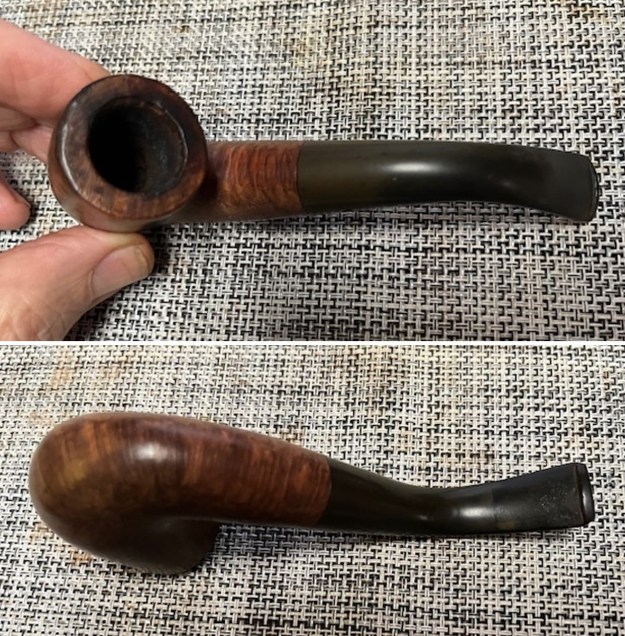
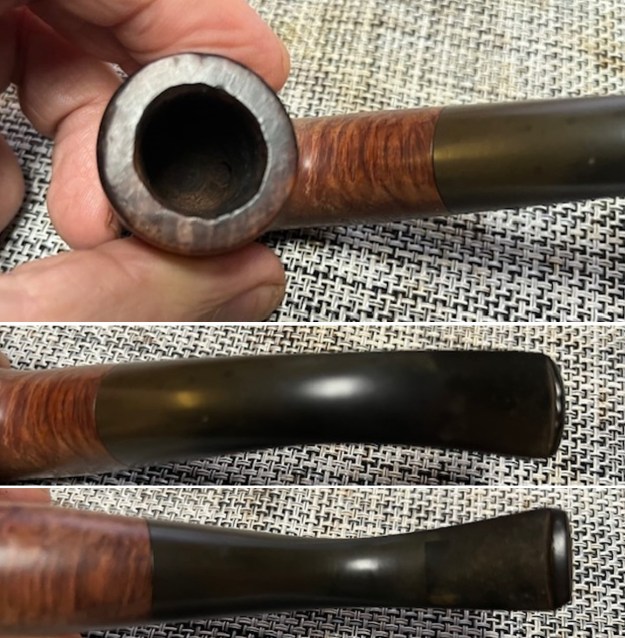
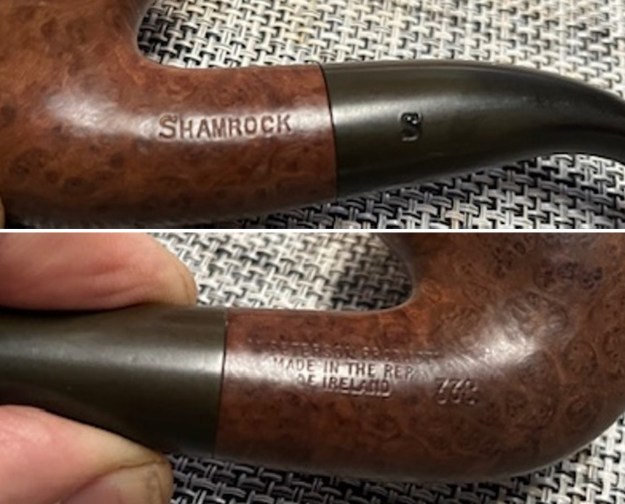
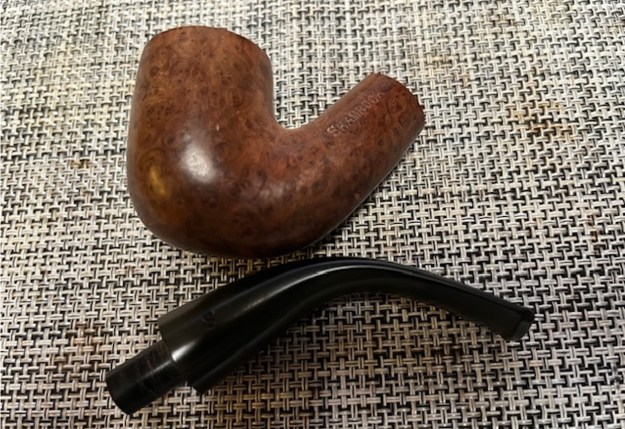
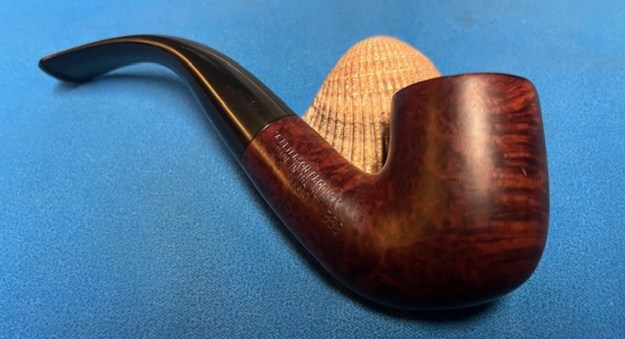
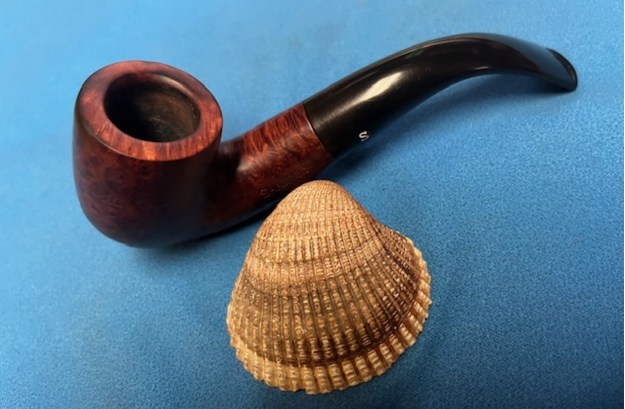
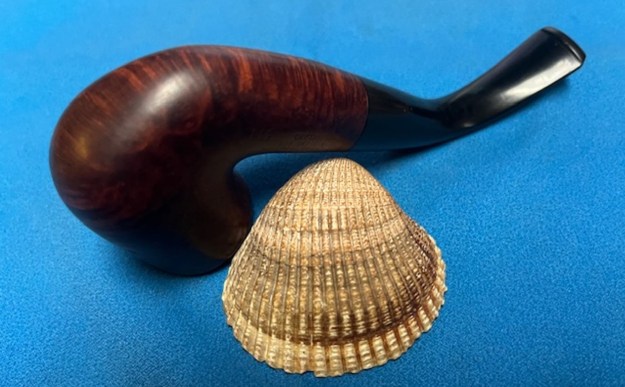
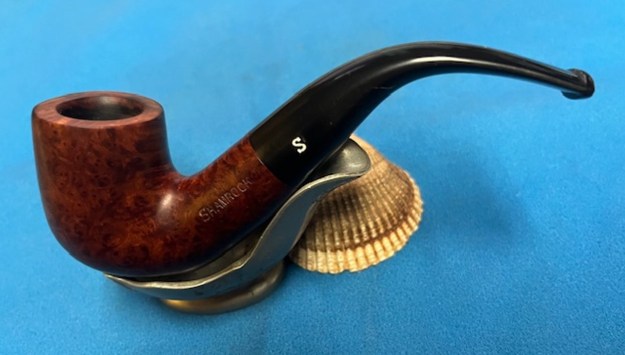
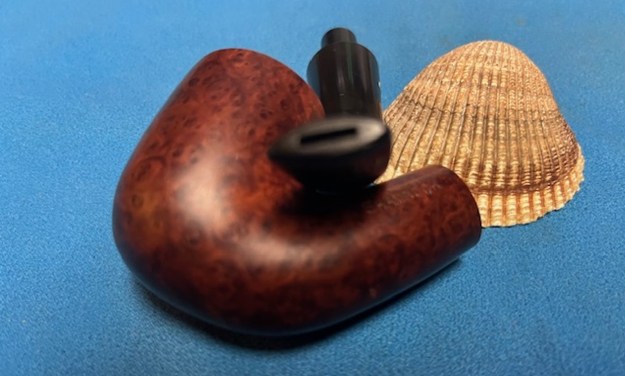
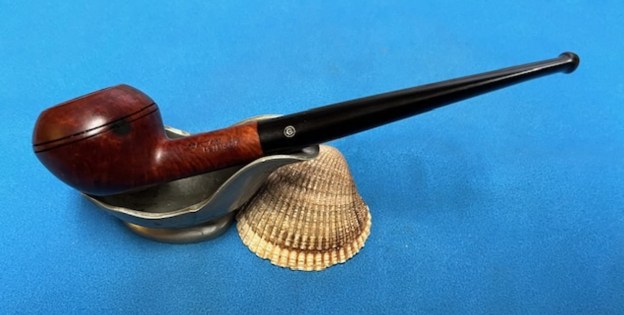
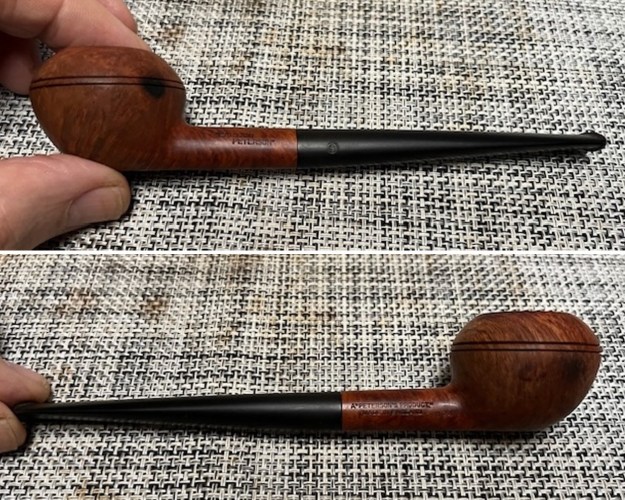
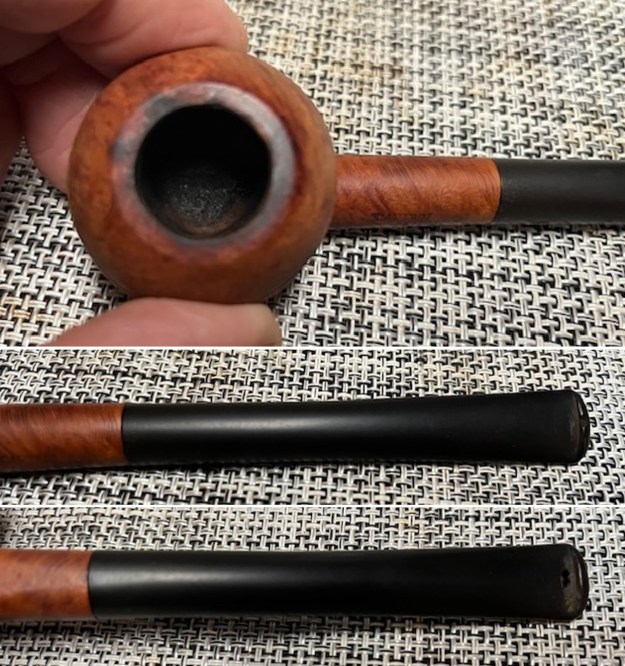
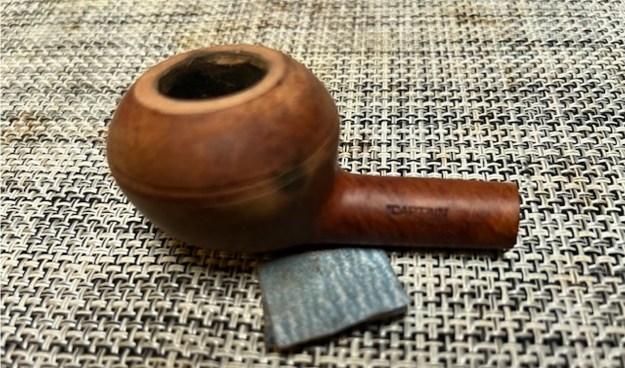
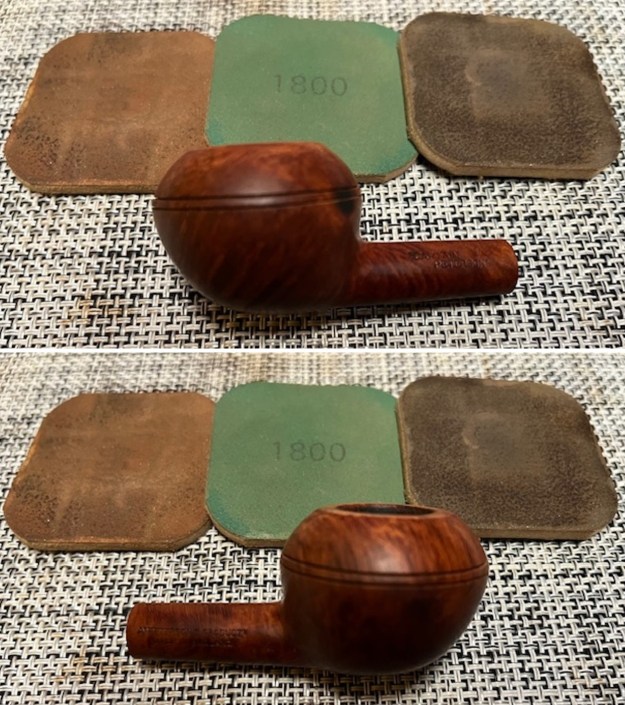
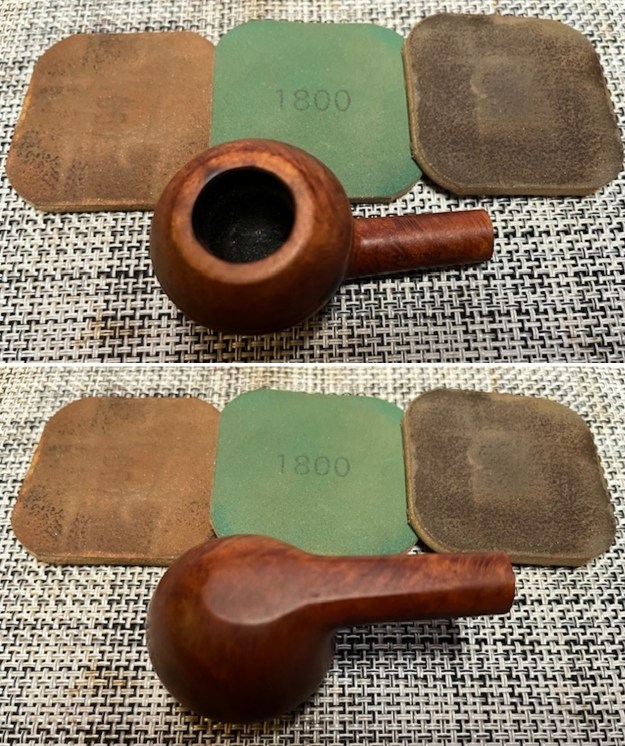
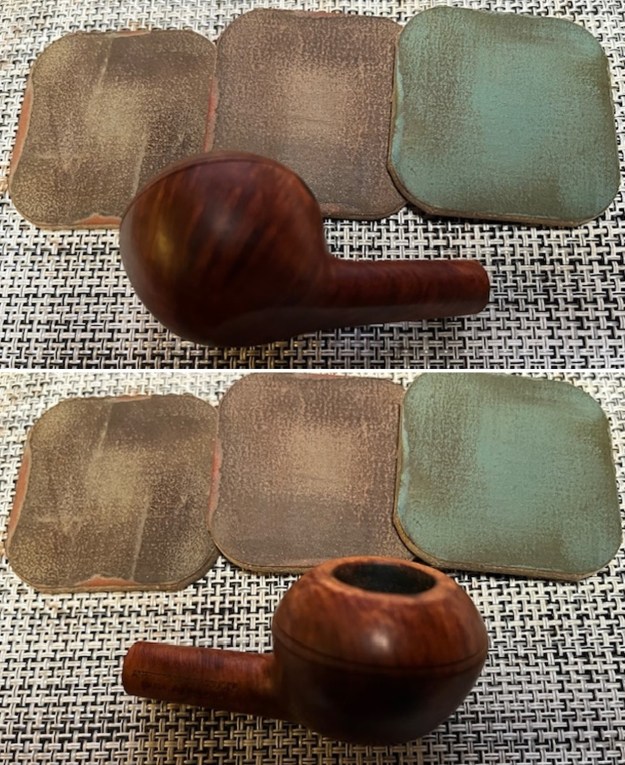
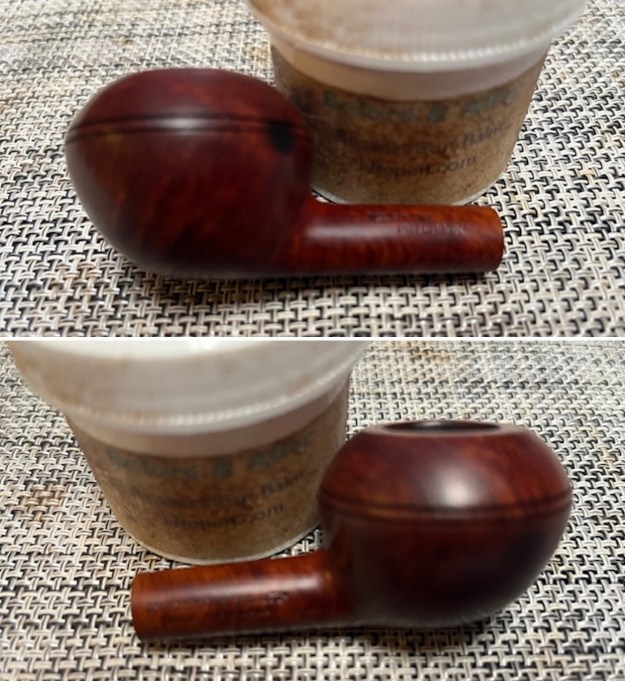
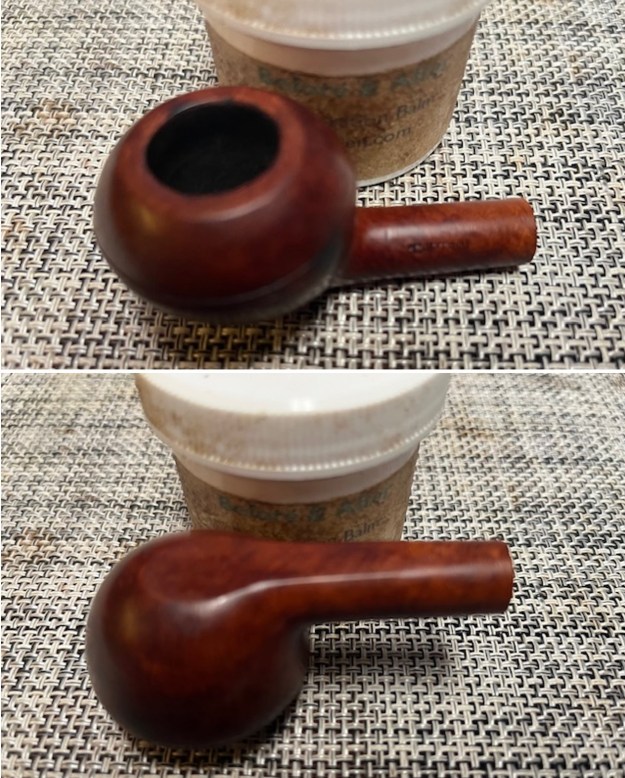
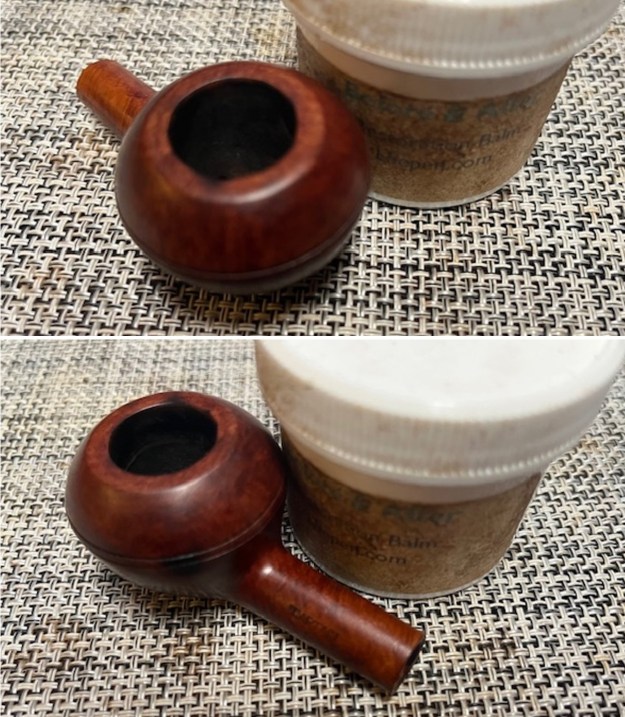
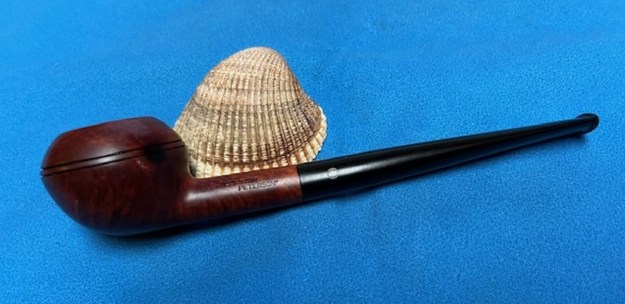
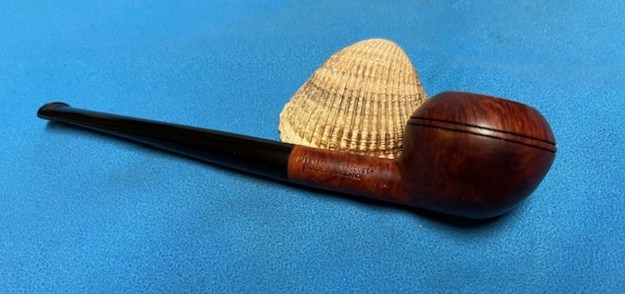
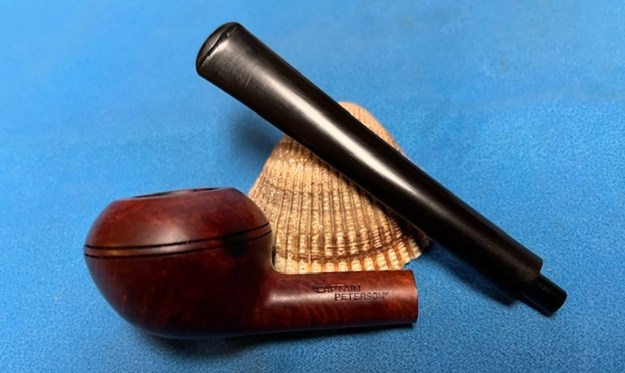
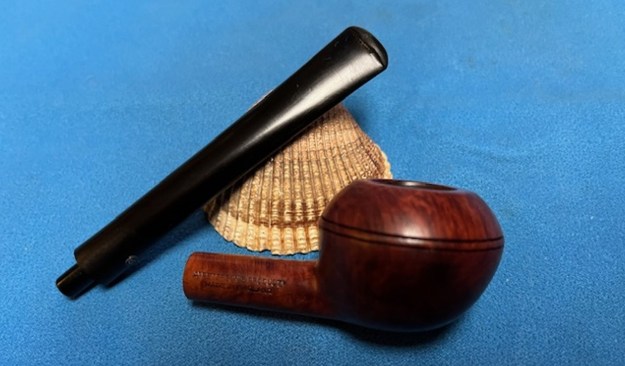
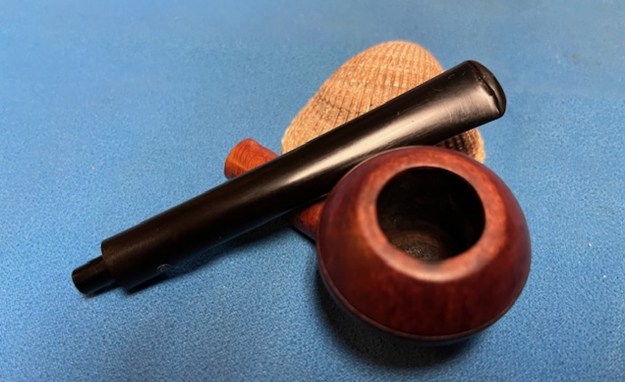
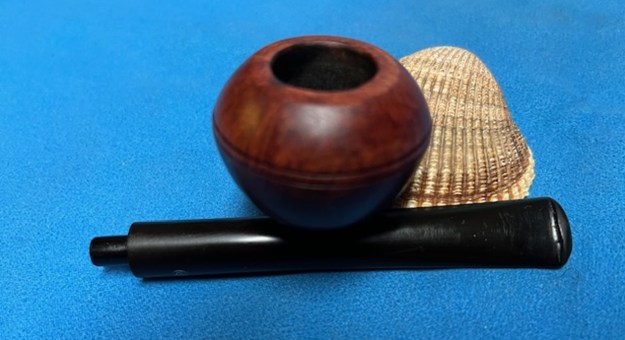
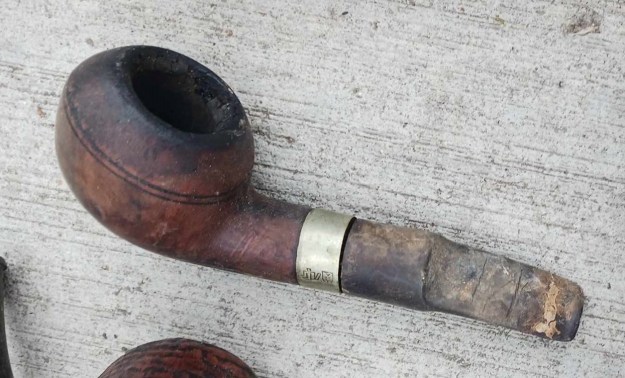
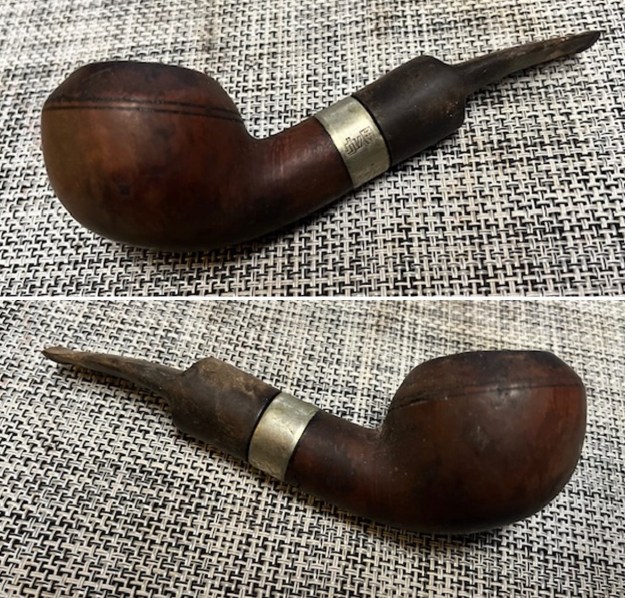
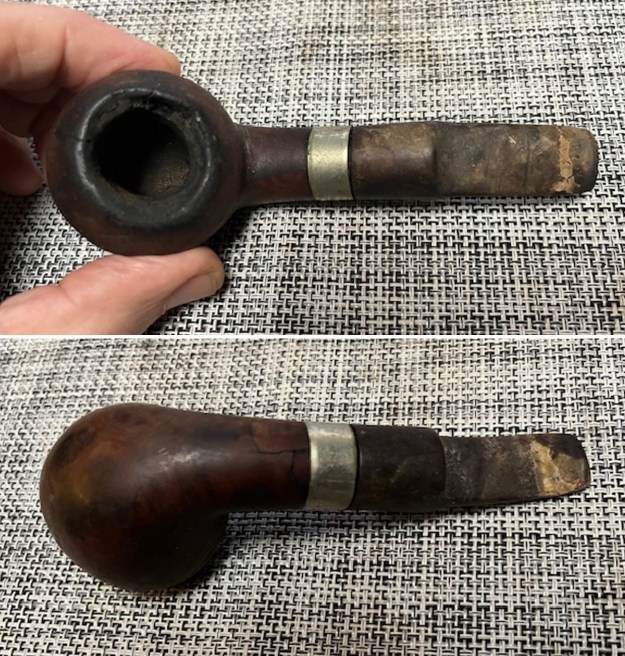
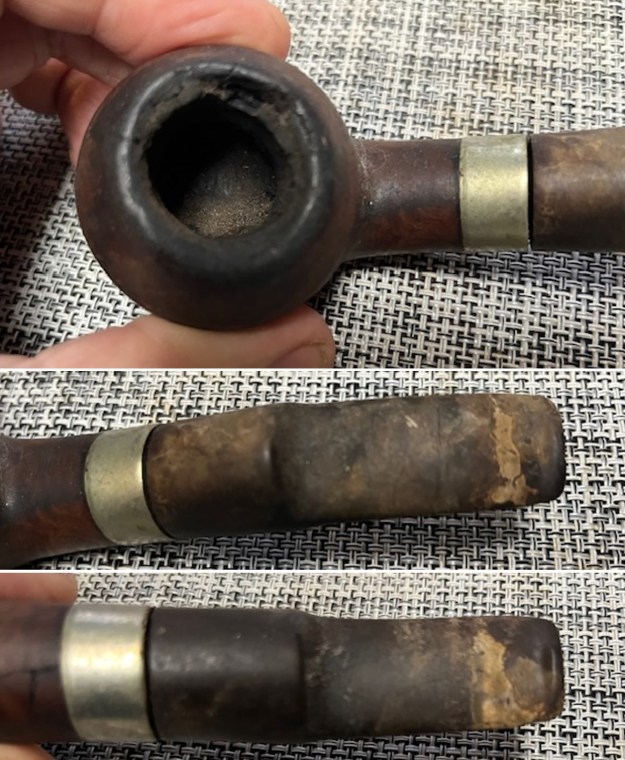
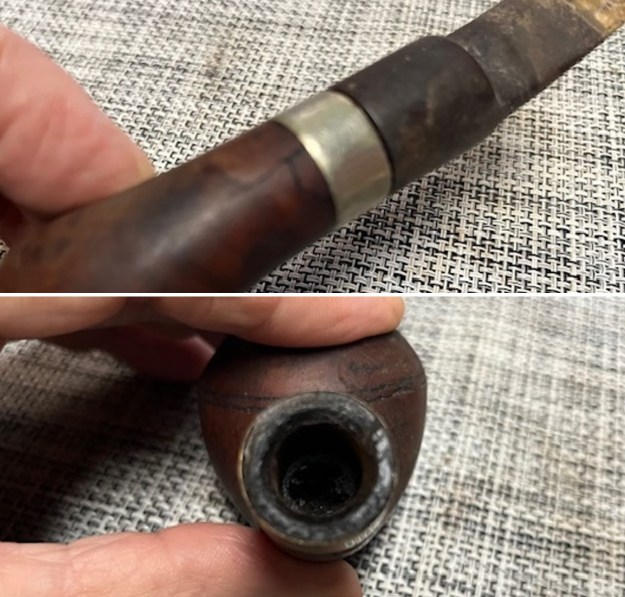
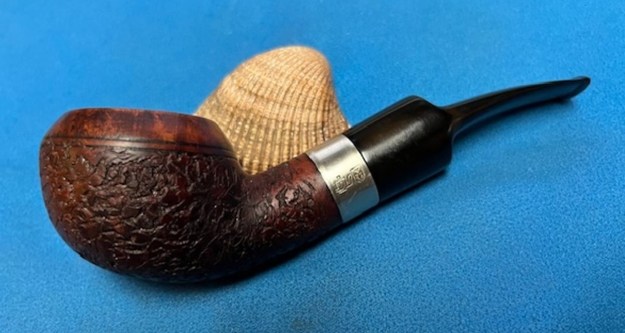
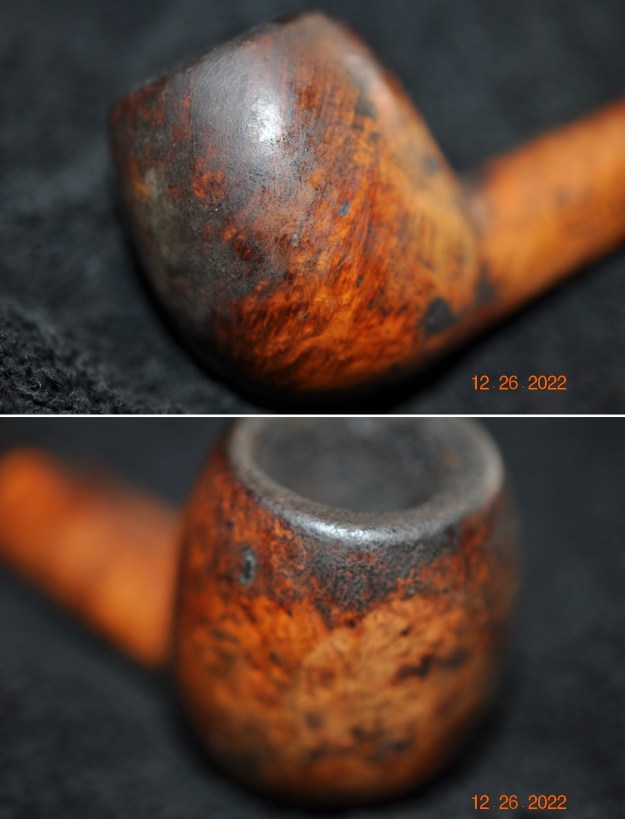
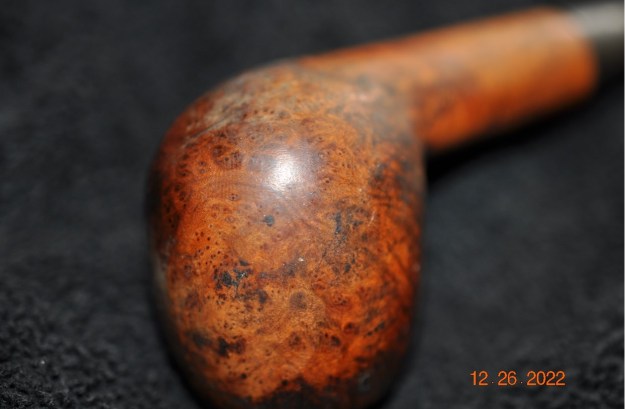
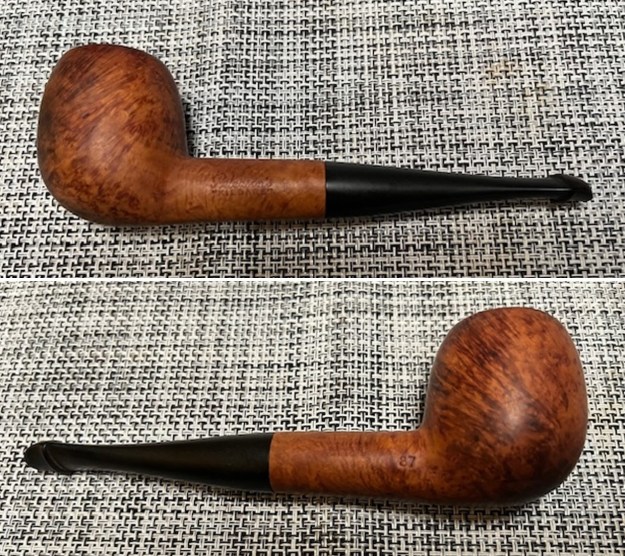
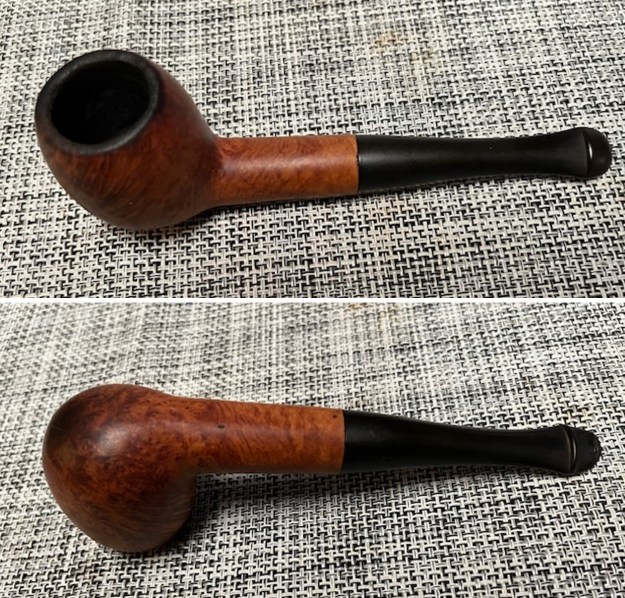
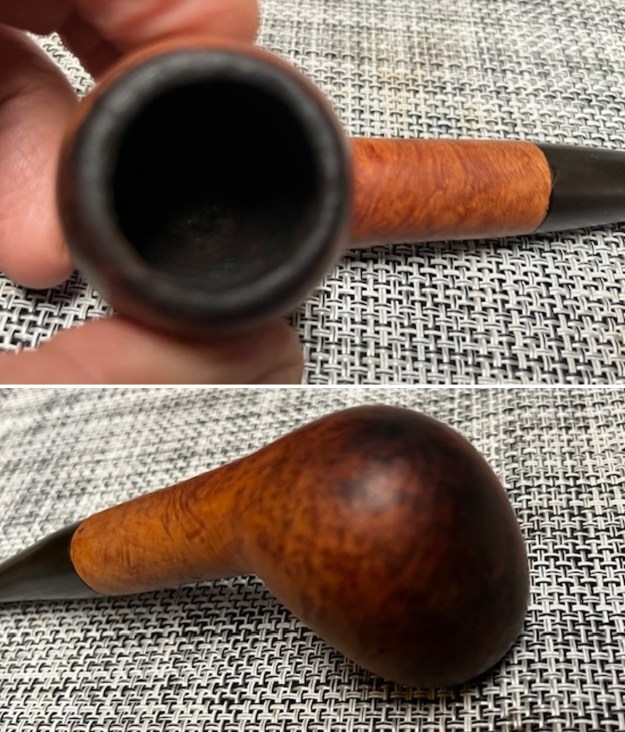
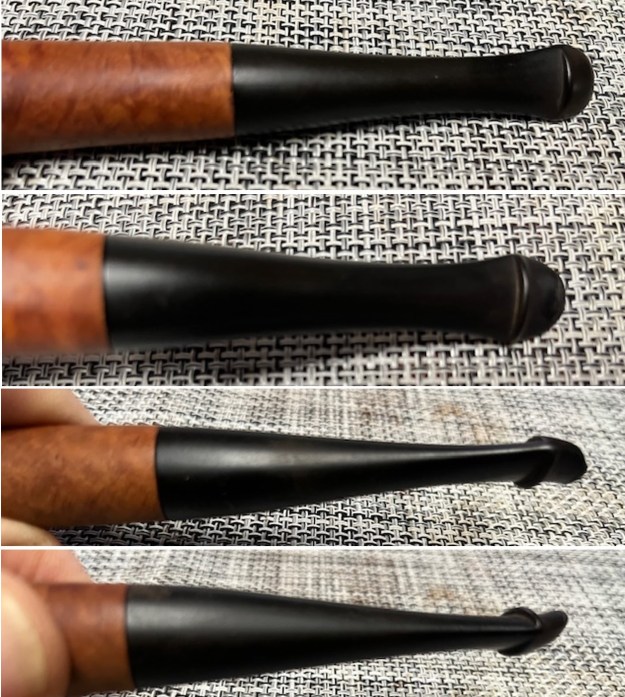
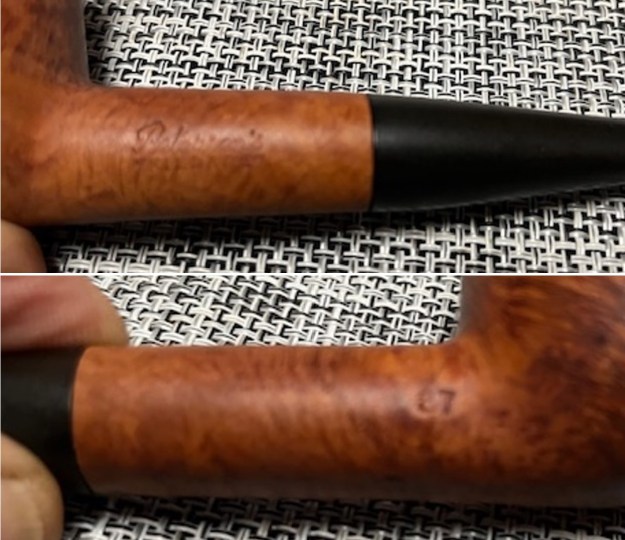
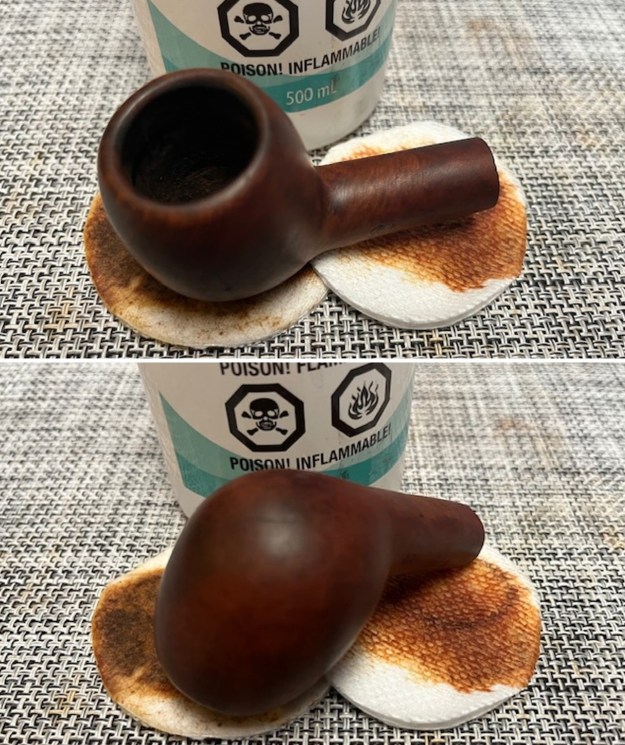
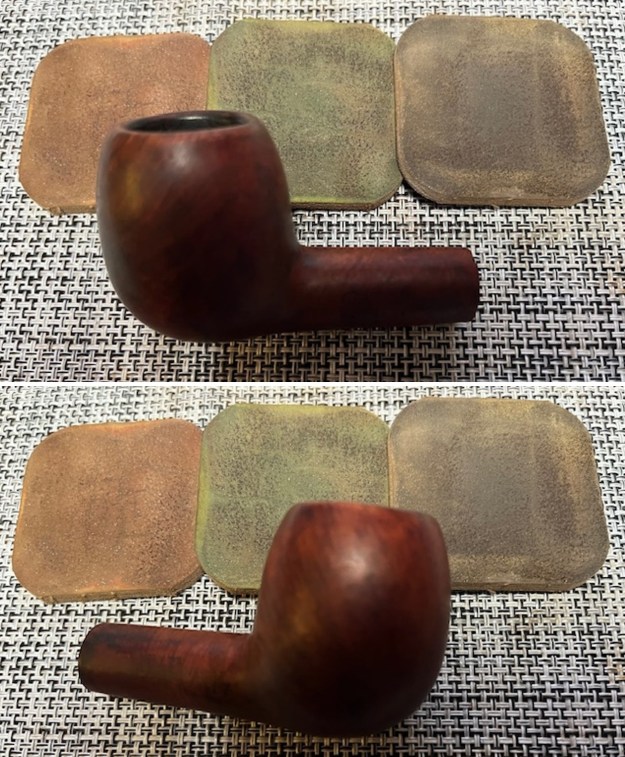
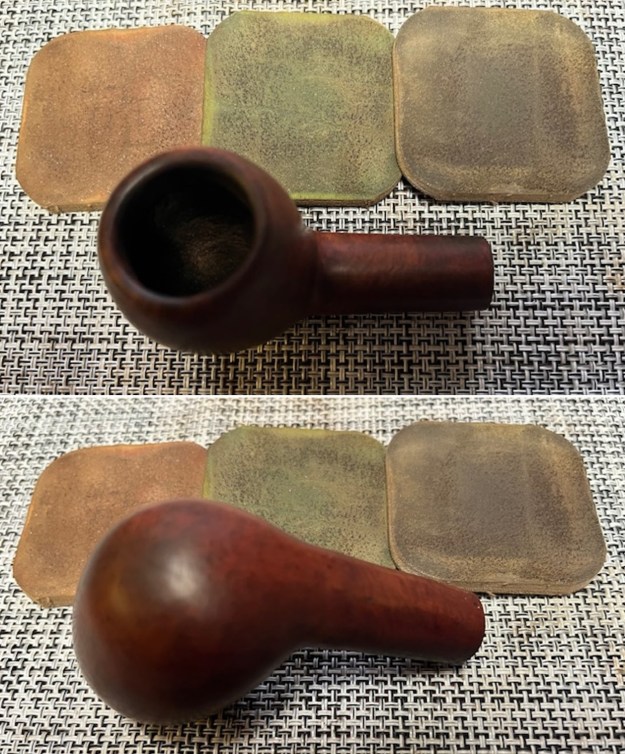
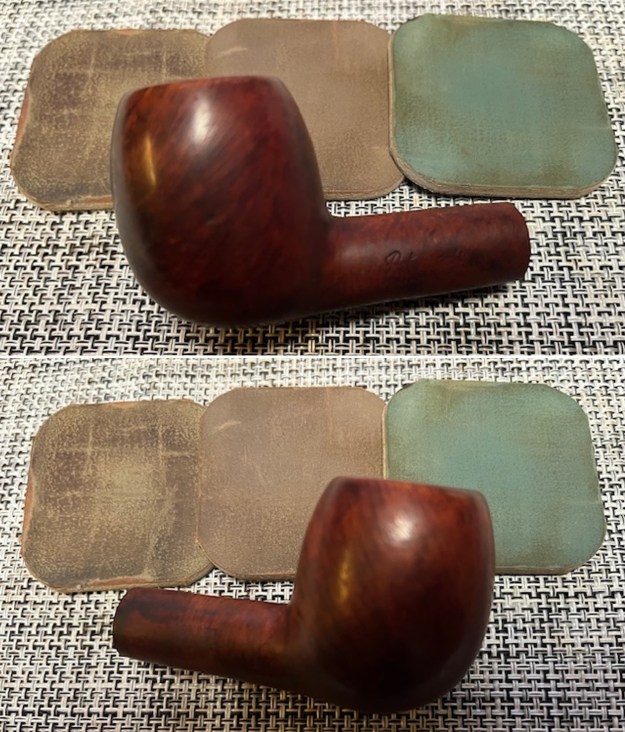
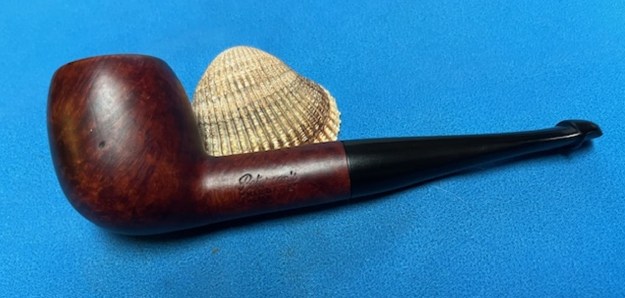
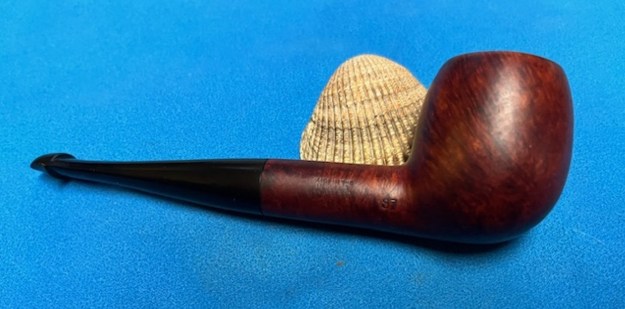
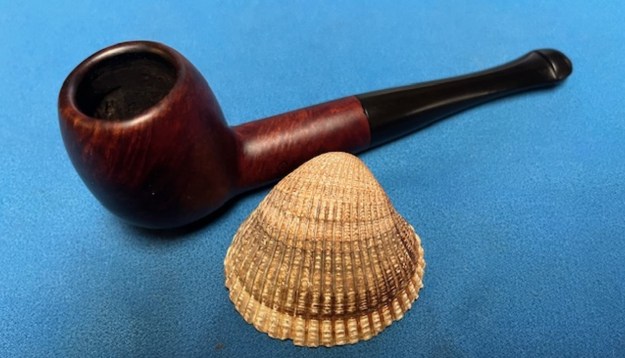
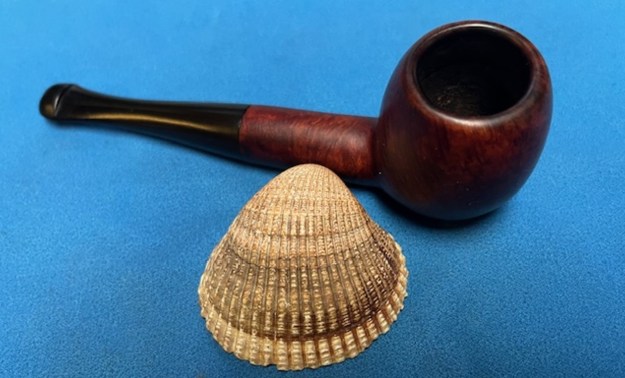
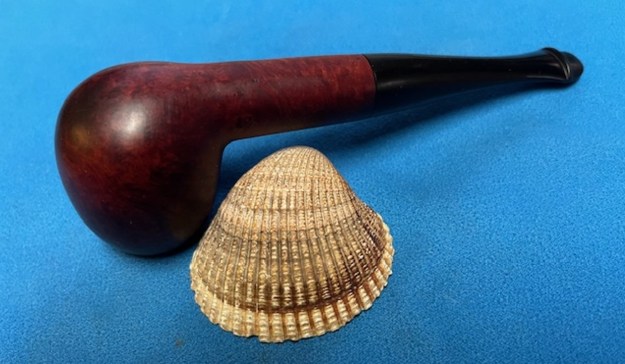
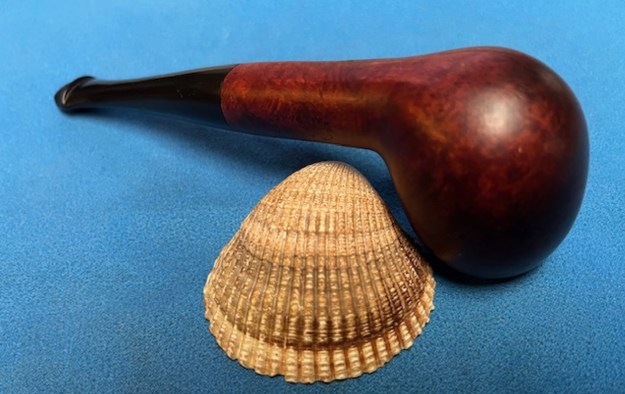
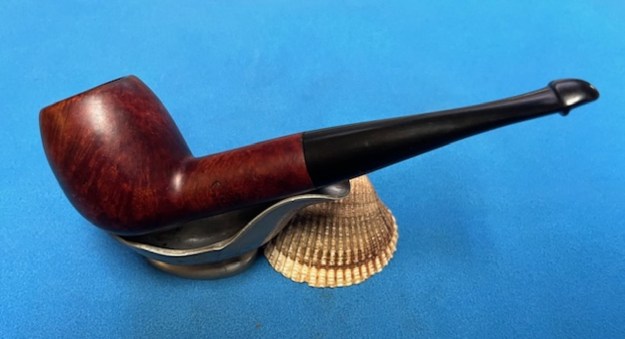
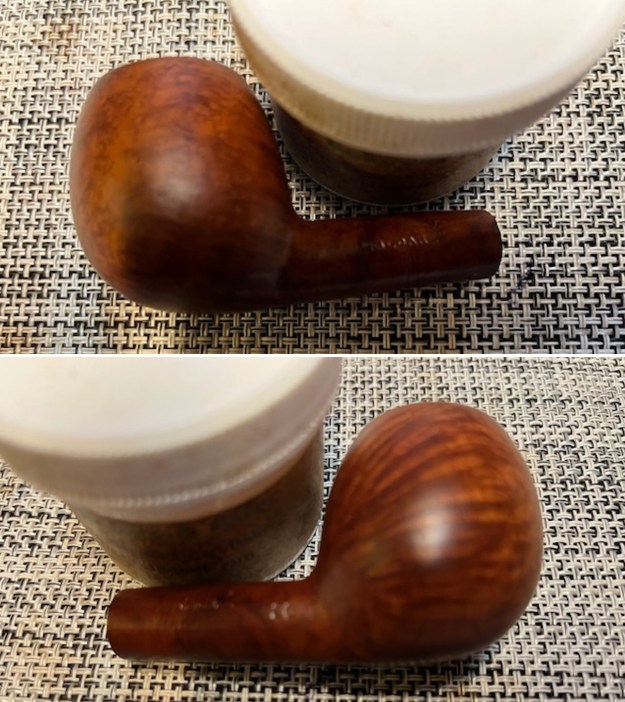
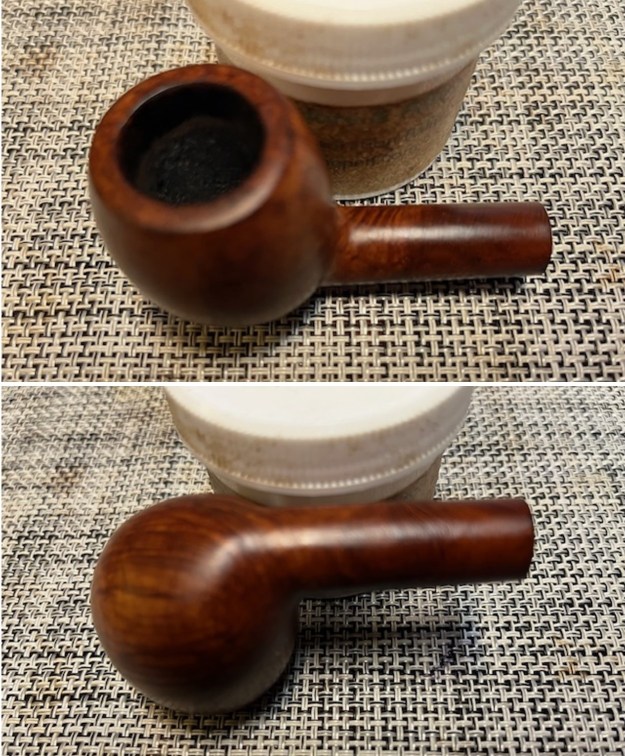
The next pipe I have chosen is smooth finished Peterson’s London& Dublin Apple shaped pipe that had a very dirty/grimy finish but had some good looking grain around the bowl sides and shank. It came to us from an Antique Store on 10/20/2022 in Vancouver, Washington, USA. This Lightweight Apple was stamped on the left side of the shank and read Peterson’s [over] London & Dublin. It was stamped on the right side near the shank/stem junction it is stamped with the shape number 86. The pipe was in filthy condition when he brought it to the table. The finish was dirty with grime ground into the briar sides and rim. There was a thick cake in the bowl and a coat of lava on the rim top but the edges of the bowl. The inner edge of the bowl was thickly coated in lava and it was hard to know how the rim top and edges looked underneath. The stem was dirty with oxidation and calcification on it. There were tooth marks and chatter on the top and underside on and near the button and on the button edges as well. There was no “P” stamp logo on the taper stem. Jeff took photos of the pipe before his cleanup work. They tell the story and give a glimpse of the promise that we see in this pipe. Jeff took photos of the rim top and stem to show the general condition of the pipe. The bowl is caked and the rim top has a lava coat and the inner edge of the bowl is rough and shows knife damage. The photos of the stem show tooth marks and chatter on both sides near the button. Jeff took some photos of the bowl sides and heel to show the amazing grain that was around this bowl. It is a nice looking pipe. He took photos of the sides of the shank to show the stamping. The stamping is readable in the photos below and is as noted above.I have restored a few Peterson’s Dublin & London in the past so I turned to my blog to have a look at the background information that I included in those blogs. I found the following link to a one of those pipes (https://rebornpipes.com/2021/02/24/restoring-a-made-in-ireland-petersons-dublin-london-999-rhodesian/). I also am including the background information I had gathered on the line from the previous blog. I quote:

I am including the link to the Pipedia’s article on Peterson pipes. It is a great read in terms of the history of the brand (https://pipedia.org/wiki/Peterson).

I turned to “The Peterson Pipe” by Mark Irwin and Gary Malmberg to get some background on the Peterson’s Dublin & London Pipe. On page 298 it had the following information.

Dublin & London (c1940-97, 2016-) First mentioned in a 1940 brochure, but probably not widely distributed until ’45, Dublin & London was the highest quality line (aside from the Supreme, introduced in ’53) until about ’86. P-lip or fishtail mouthpiece, polished finish, although sandblast described in ’70 Iwan Ries & Co. catalog. COMs include MADE IN over IRELAND (1940-80) and MADE IN THE over REPUBLIC over OF IRELAND (c1980-97)…

…London & Dublin – English made version of the Dublin & London, made in Peterson’s English factory until it closed in 1962. Classic Range shapes were not as a rule banded and no genuinely hallmarked specimens of the pipes with this model name have been documentd. Rare examples may be additionally stamped Natural. COM on all pipes is LONDON MADE over ENGLAND. Mouthpiece maybe stamped P.

Judging from the description above, the pipe I am working on is stamped with the stamp noted in red above. It does not have a COM stamp or if it did it has been buffed out. The London & Dublin stamp identifies the pipe as an English made version of the Dublin & London. Now it was time to work on the pipe.

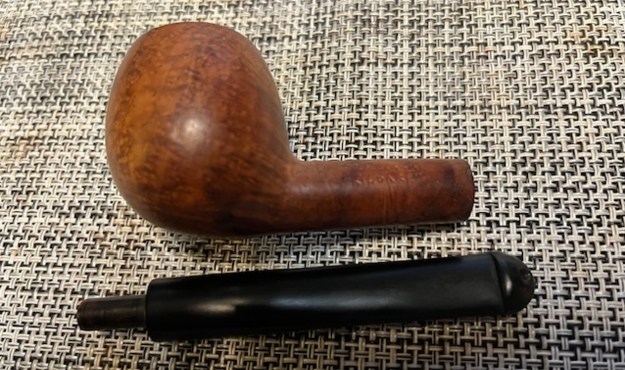
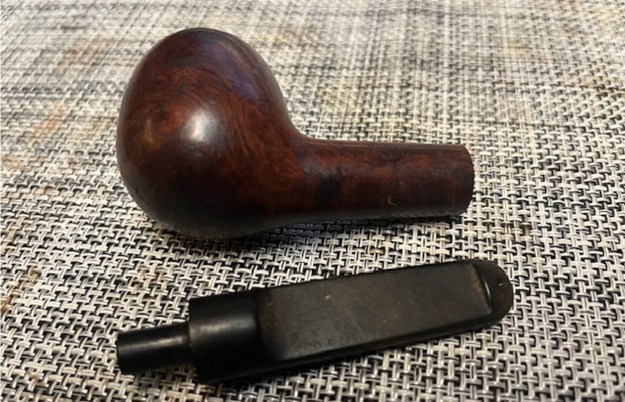
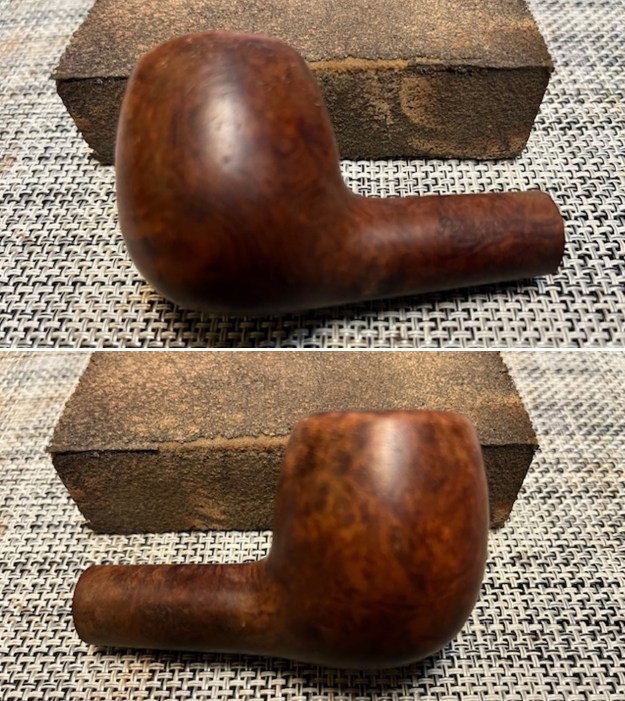
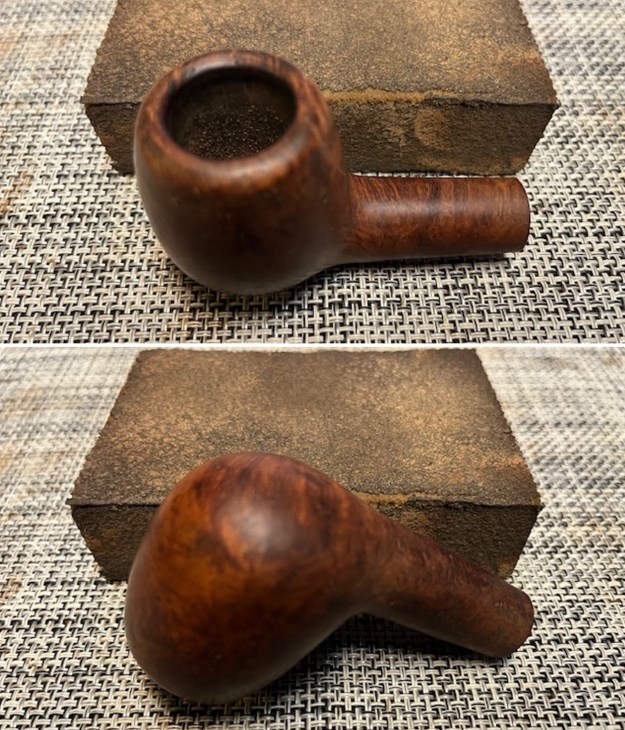
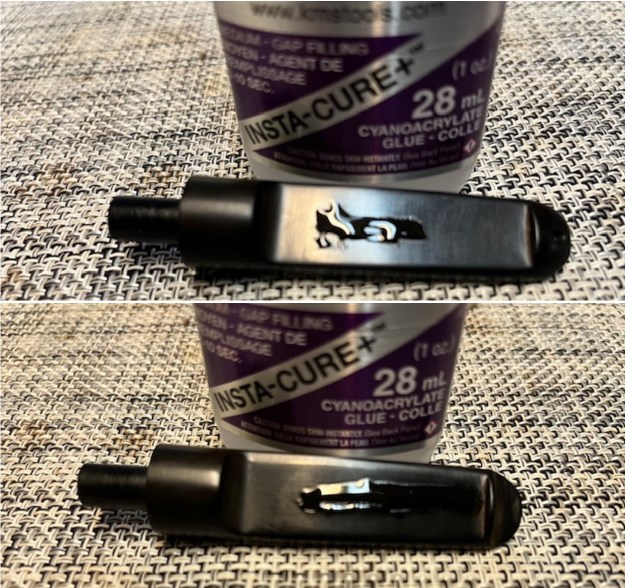
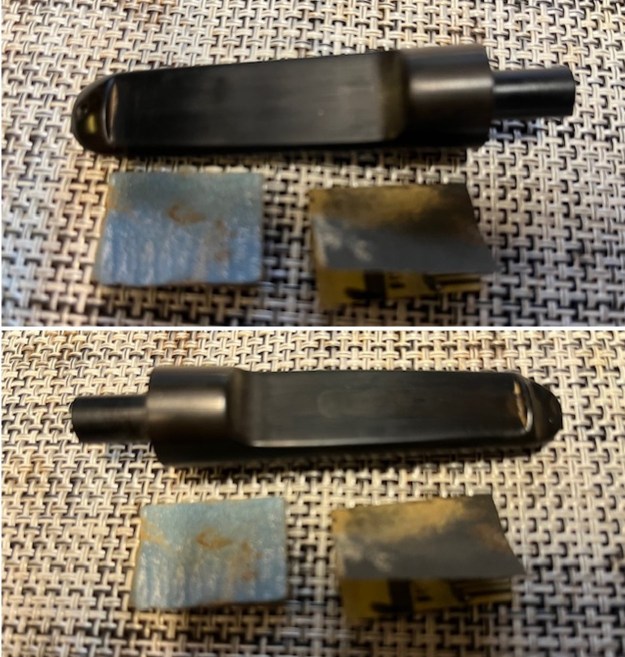
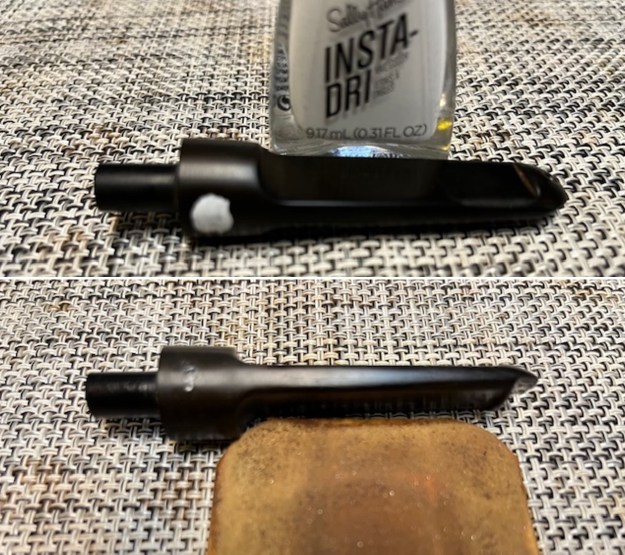
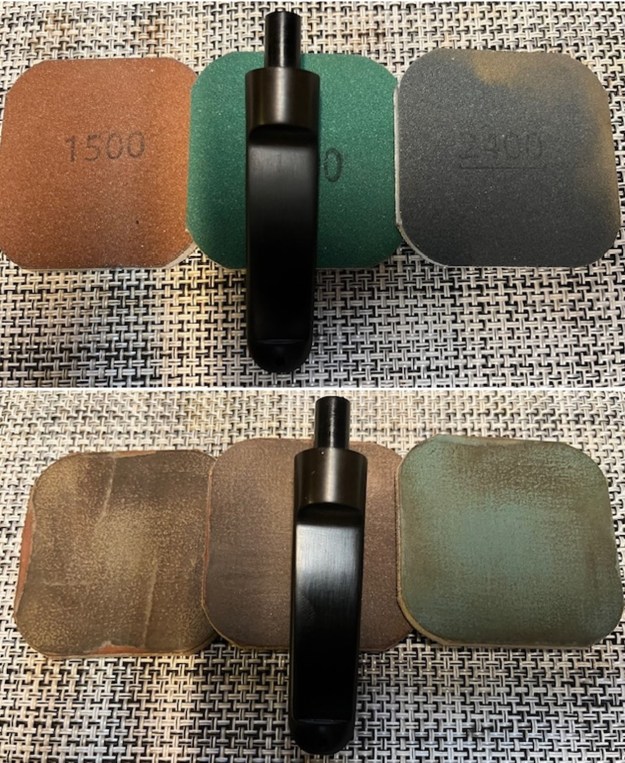
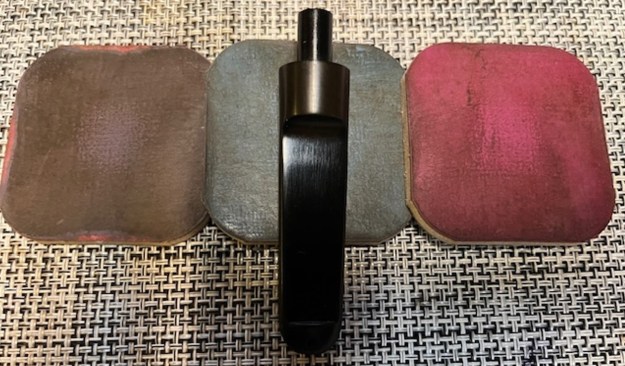
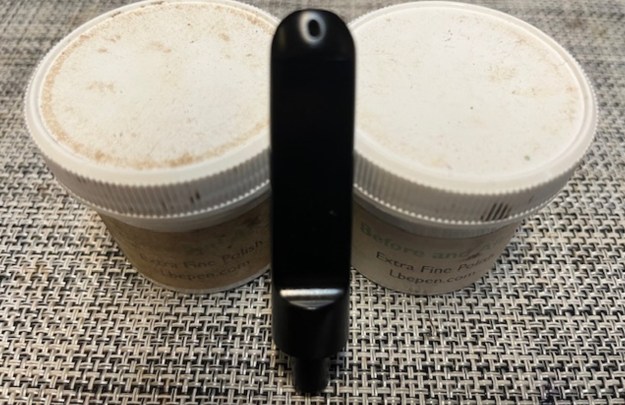
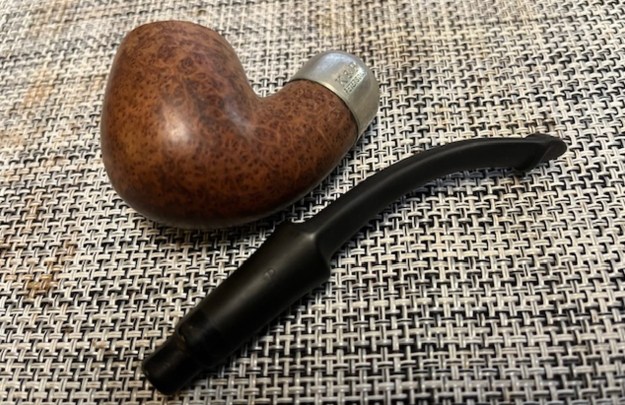
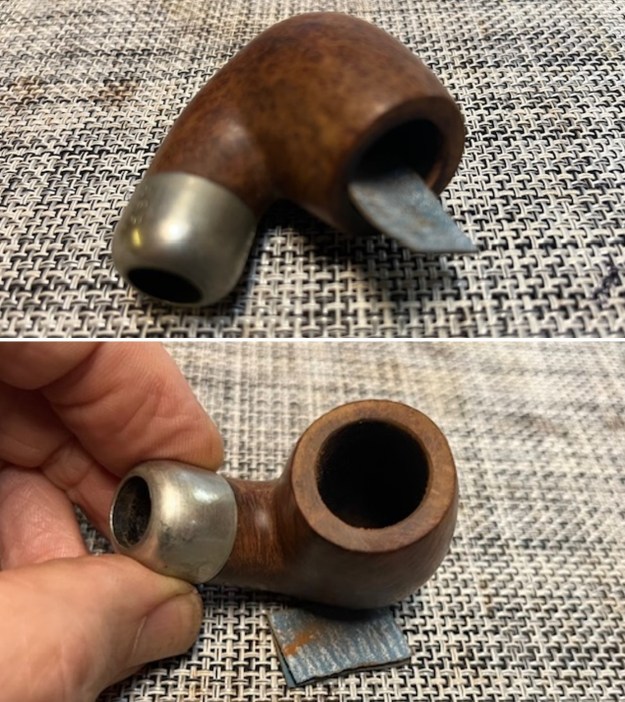
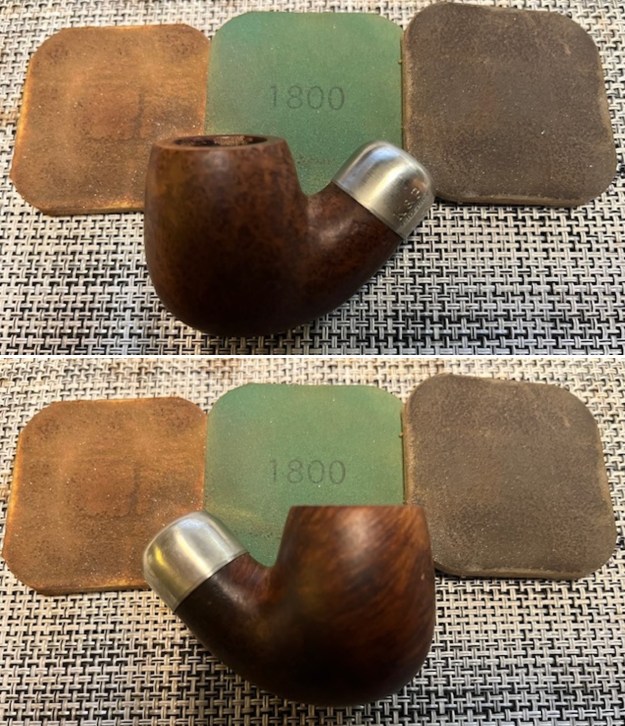
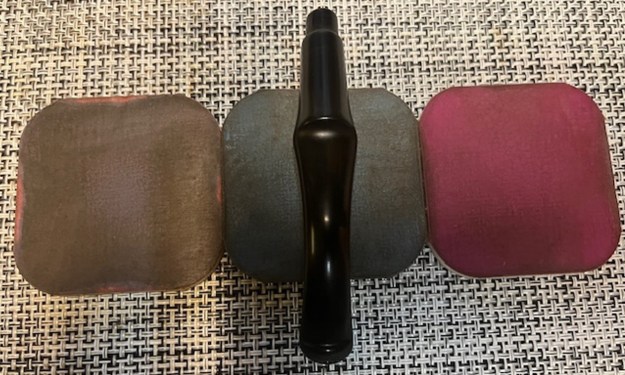
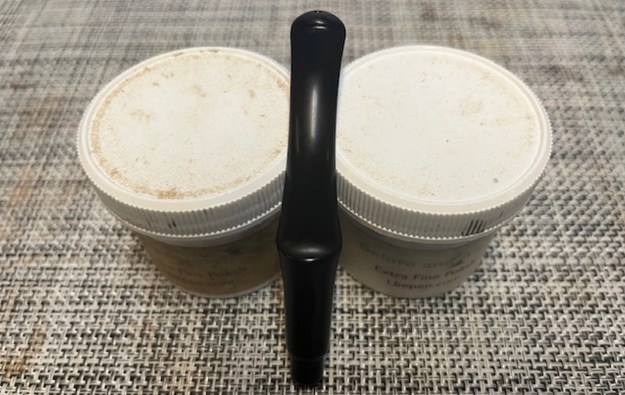
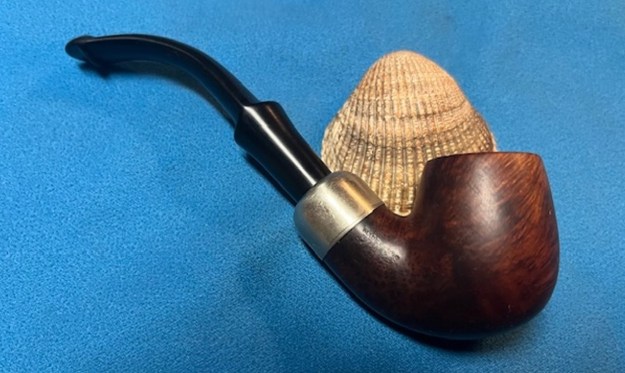
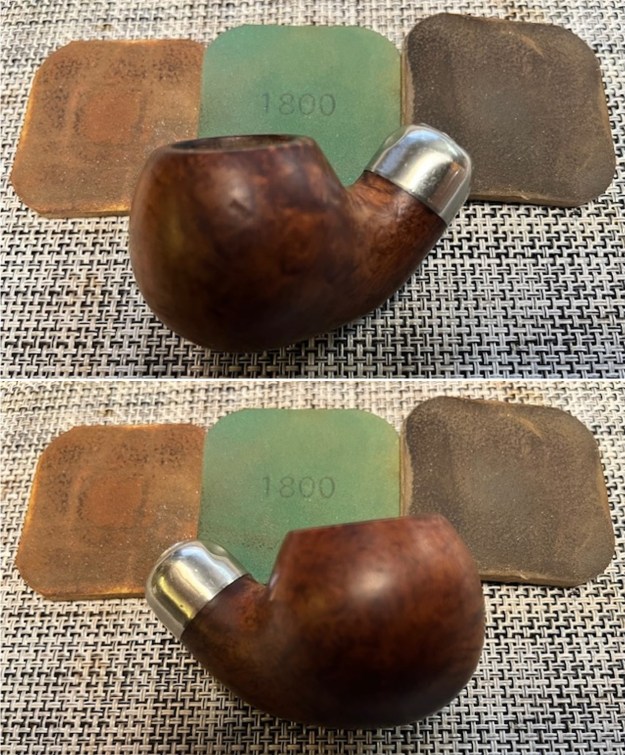
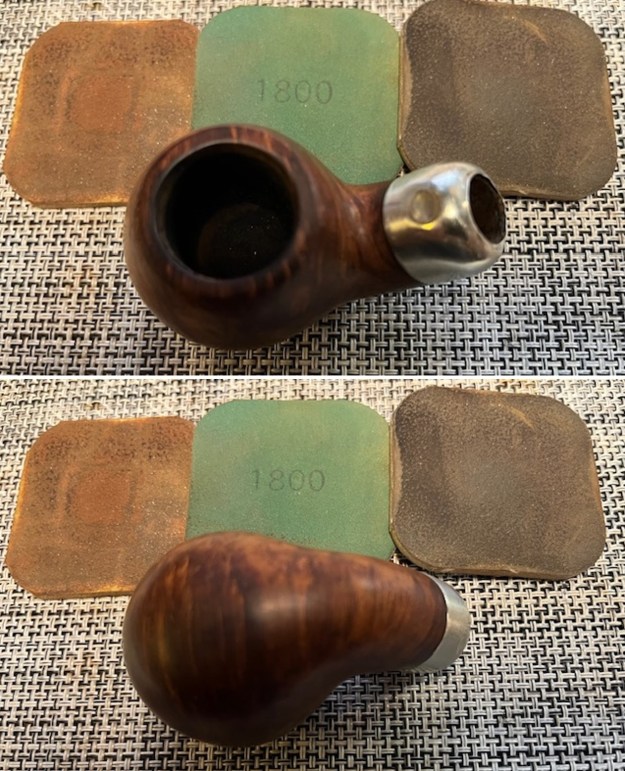
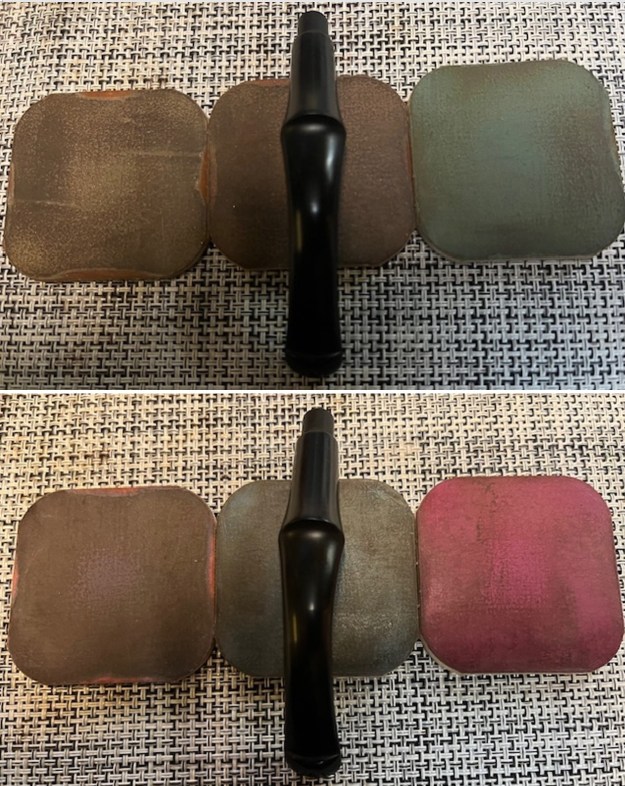
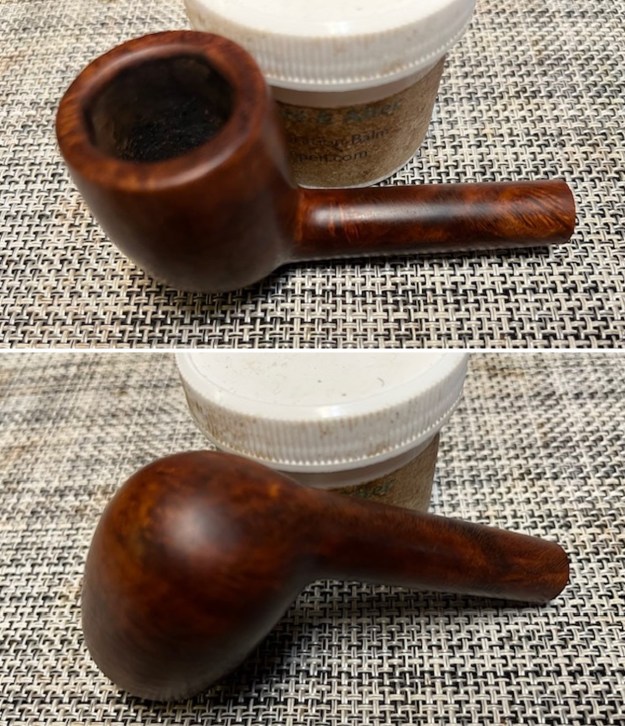
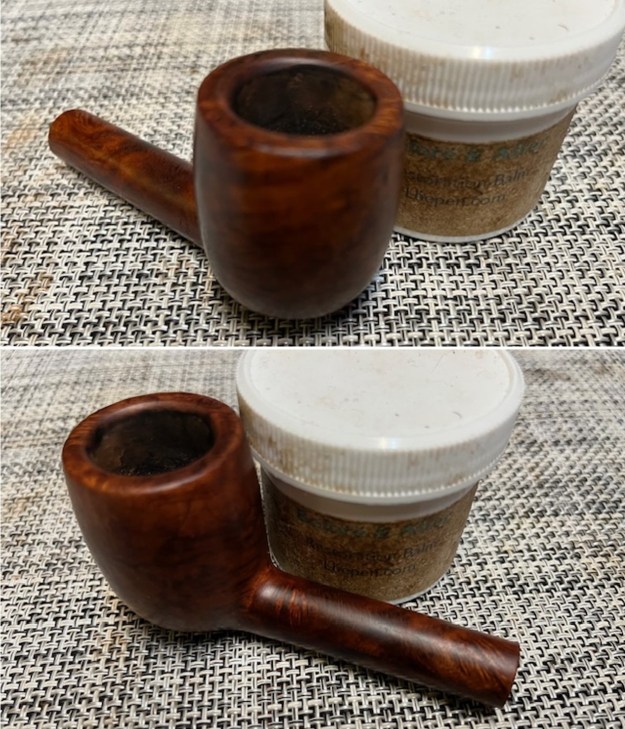
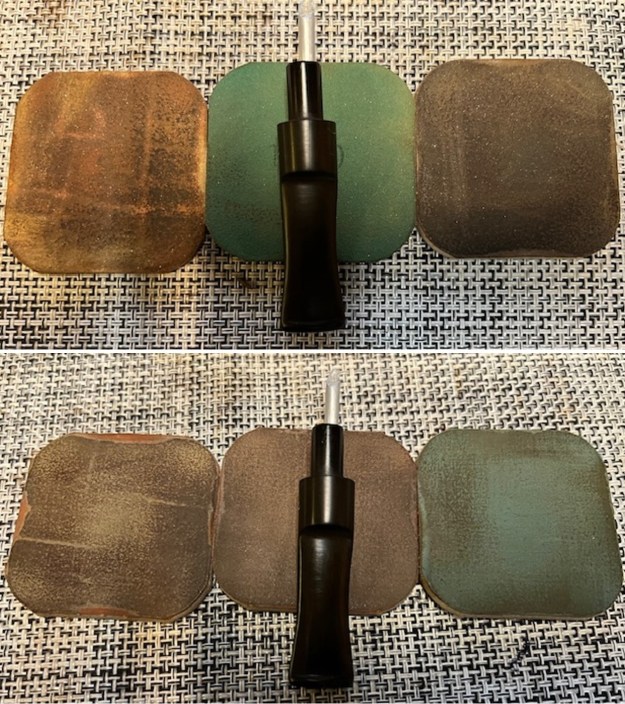
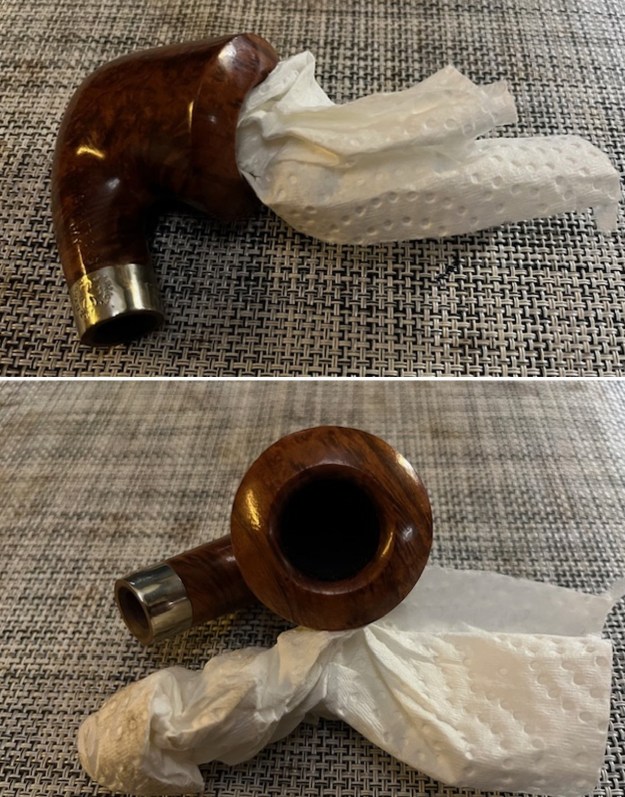
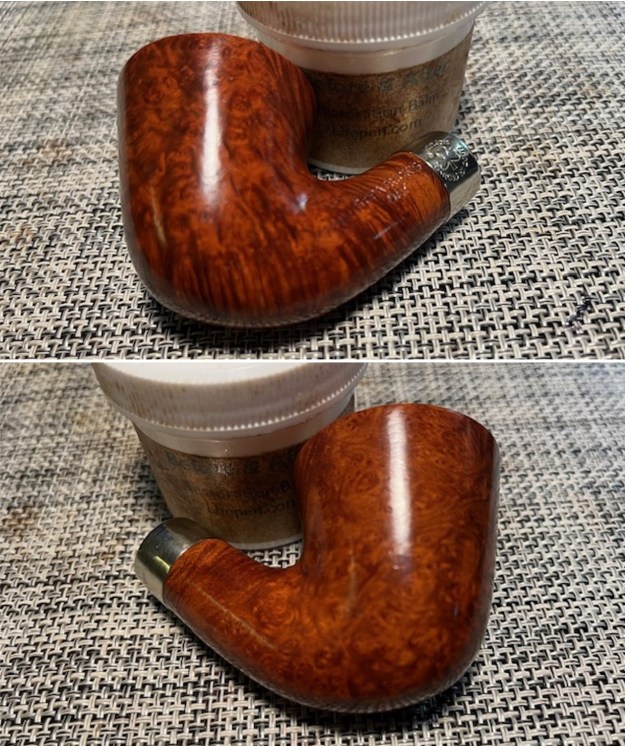
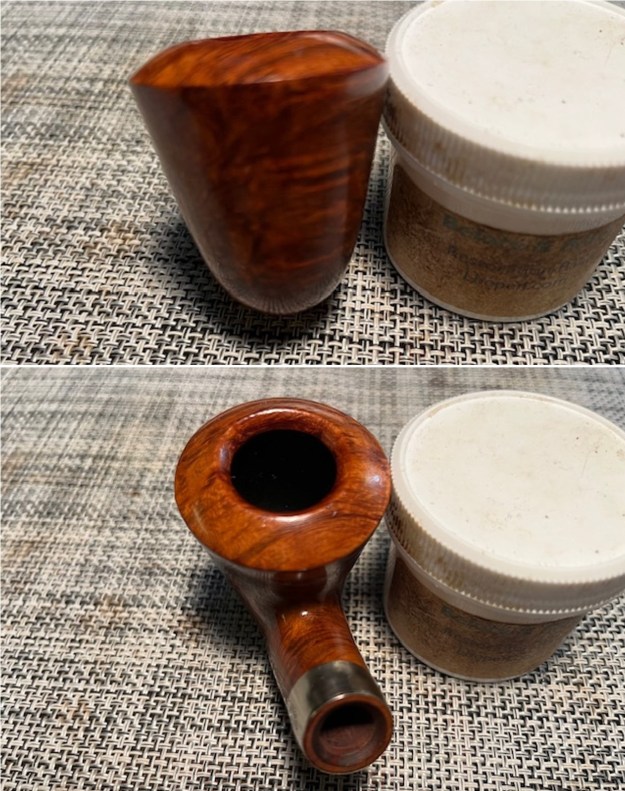
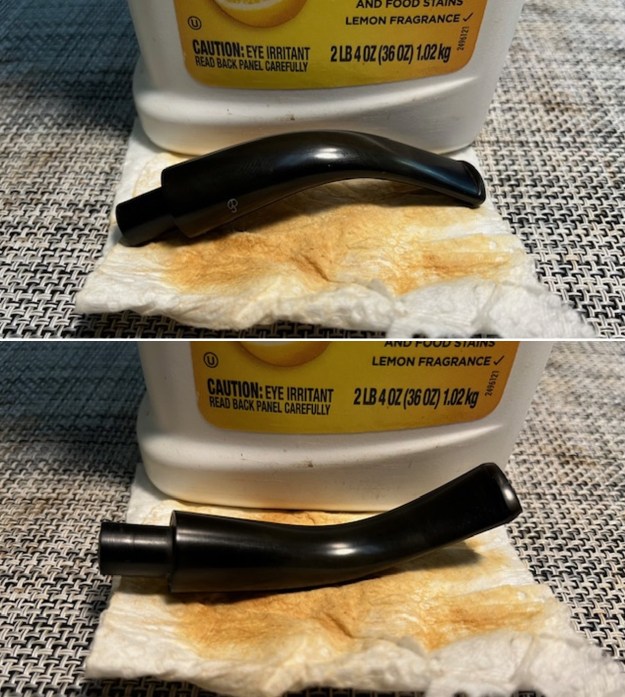
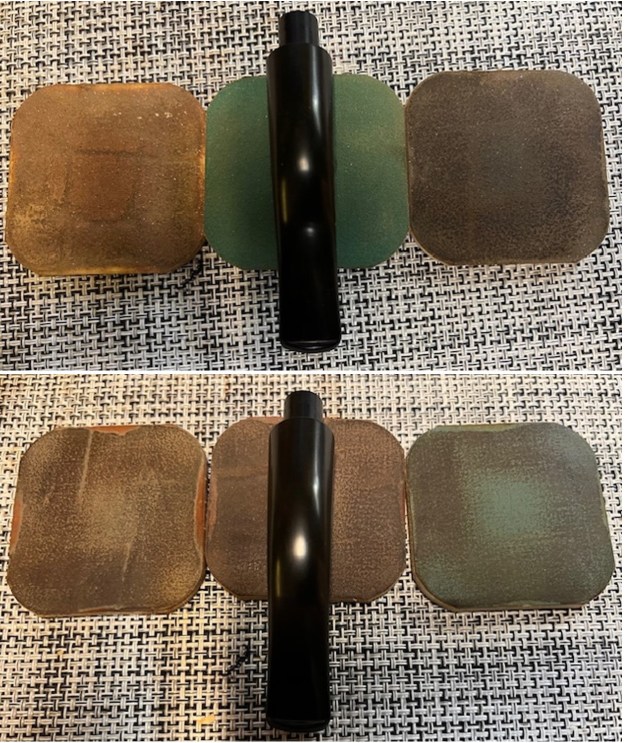
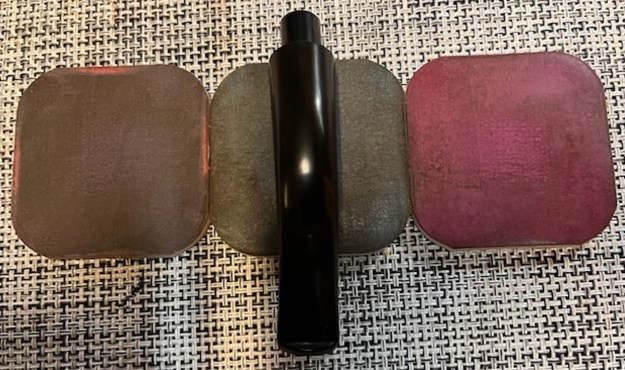
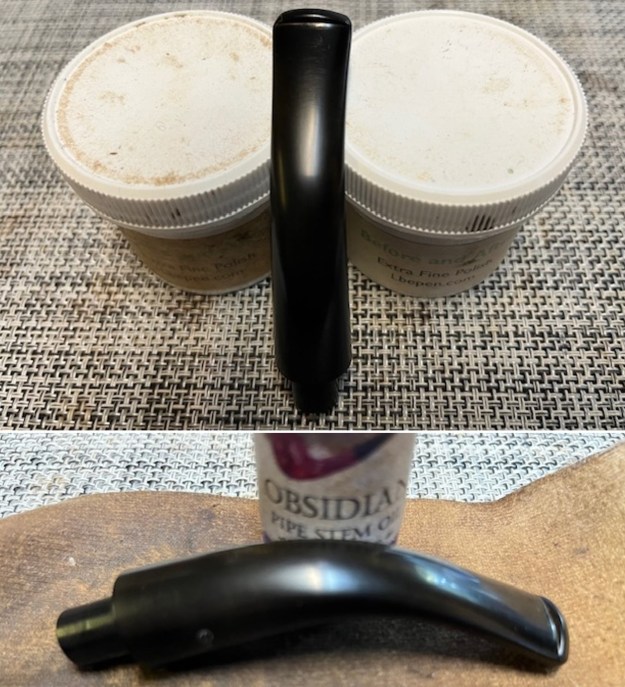
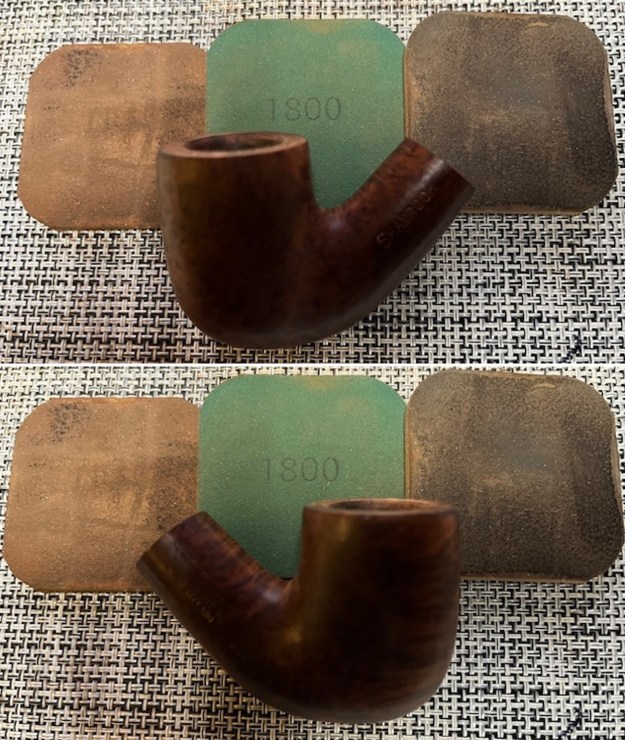
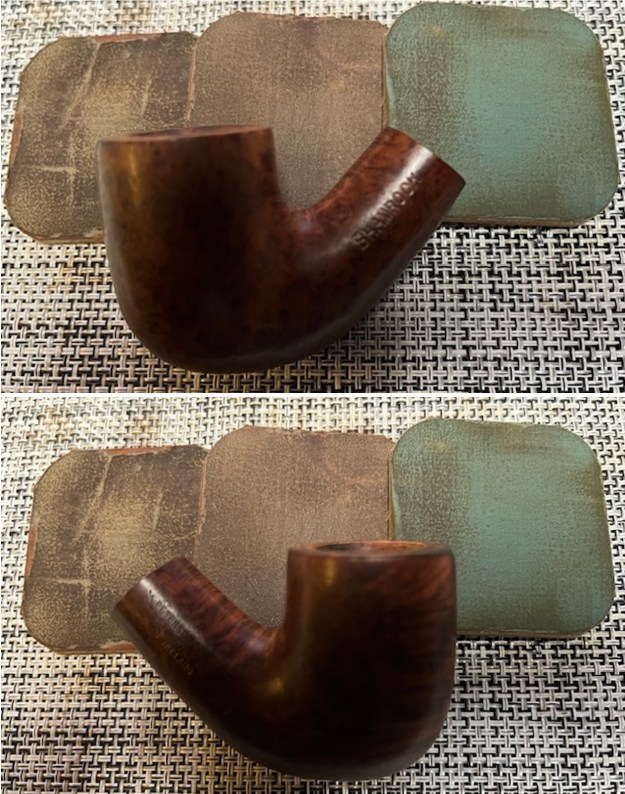
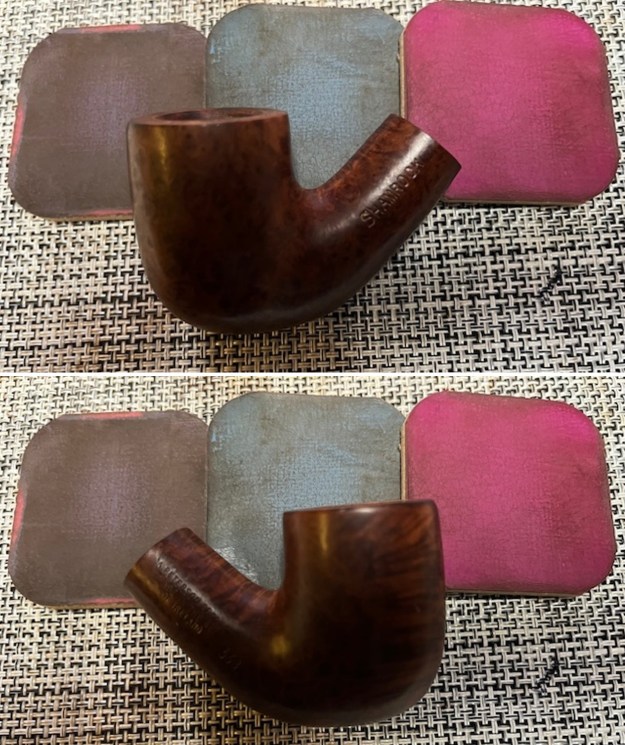
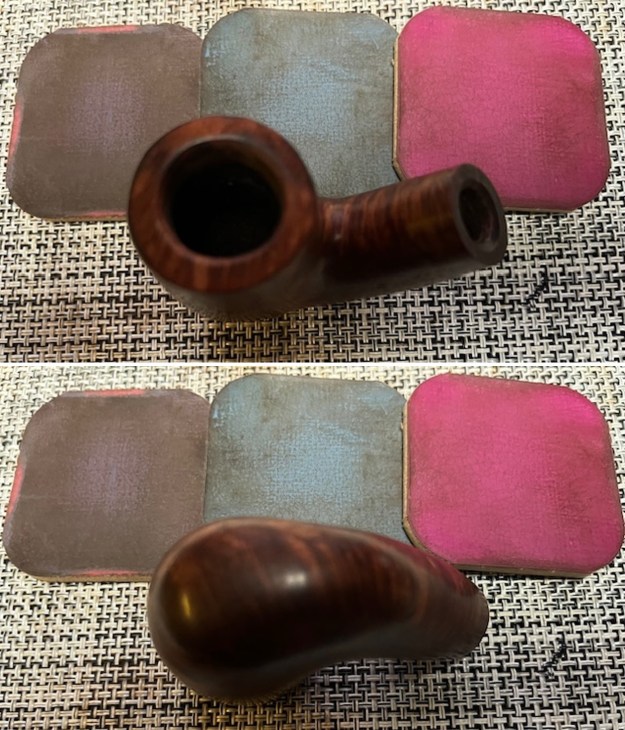
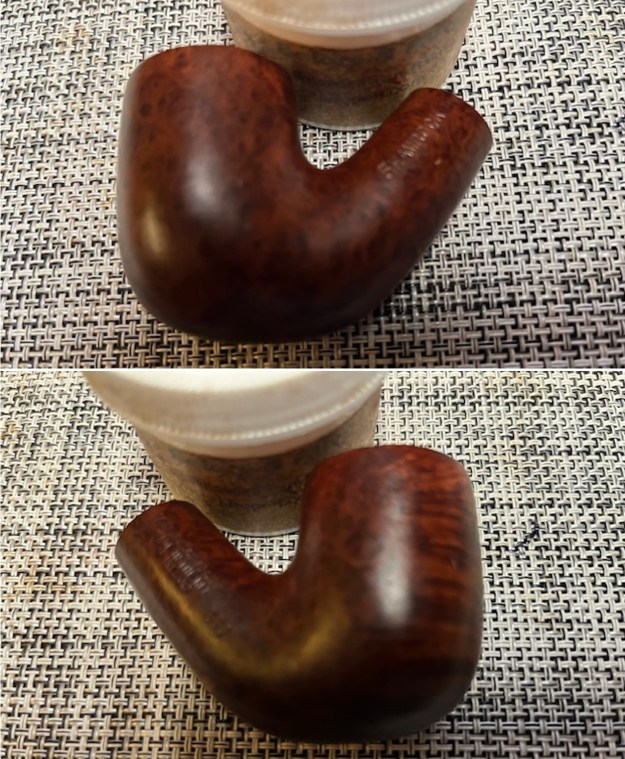
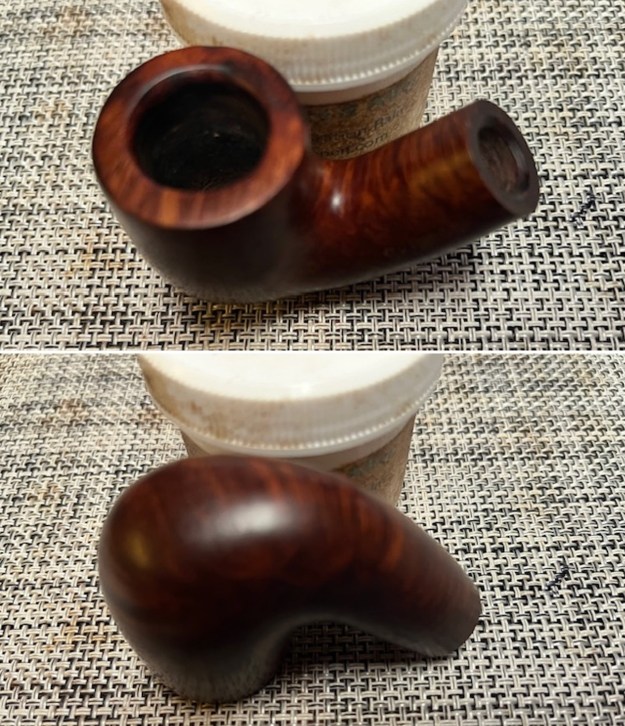
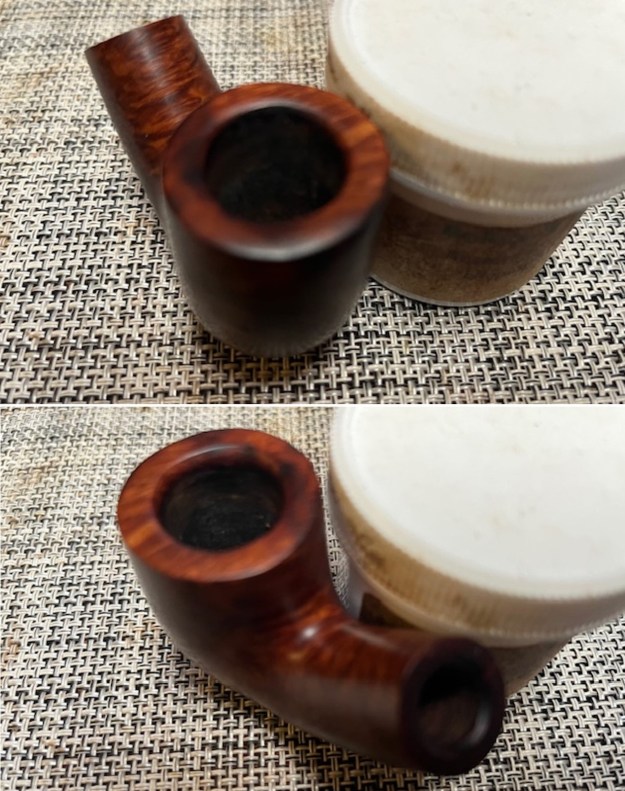
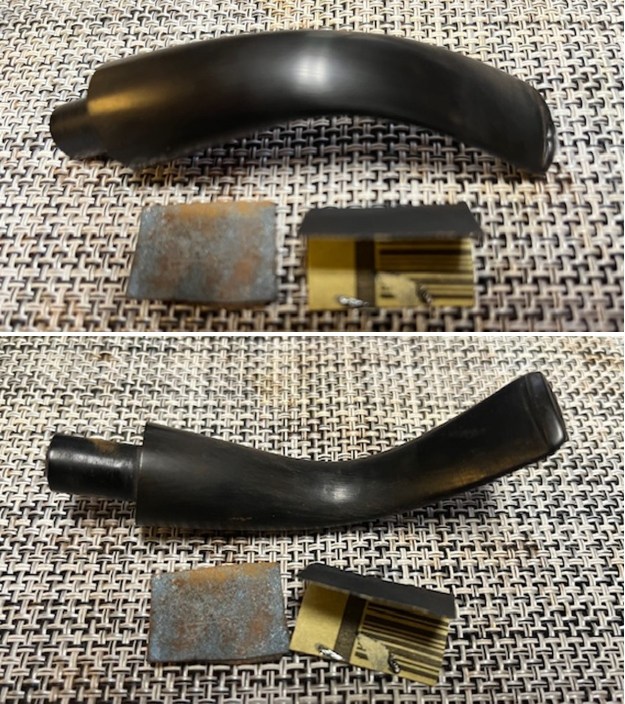
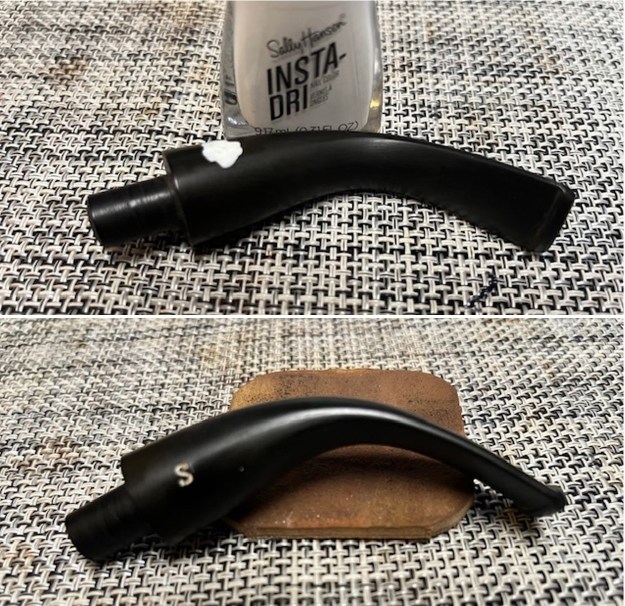
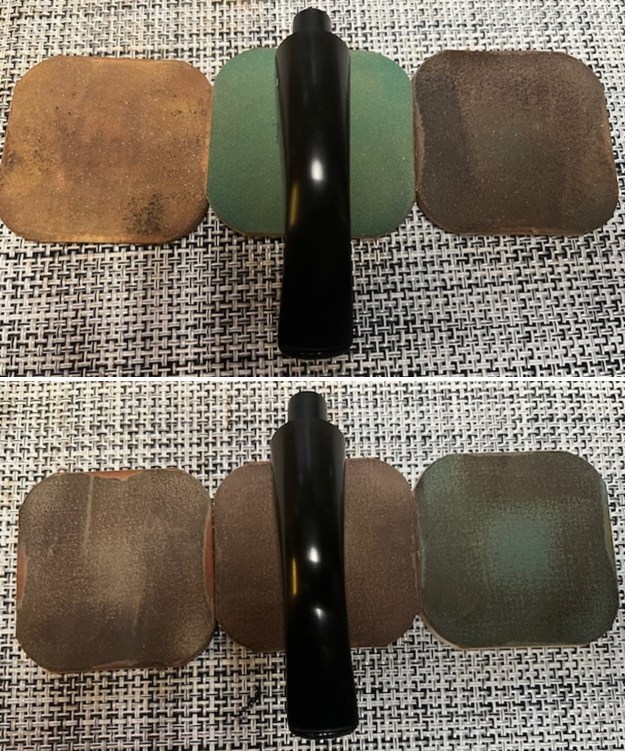
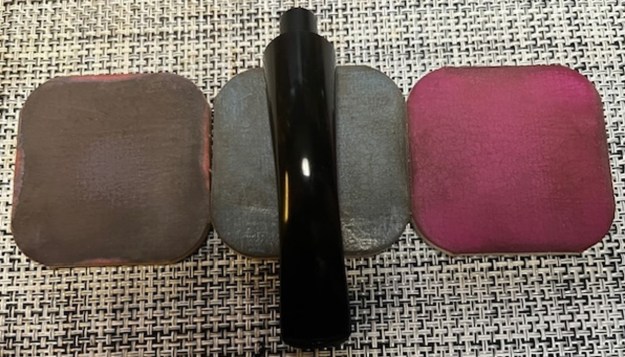
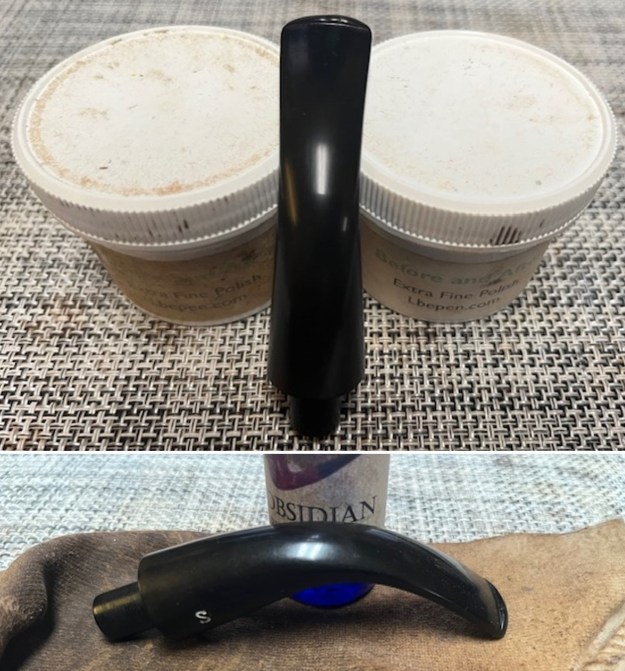
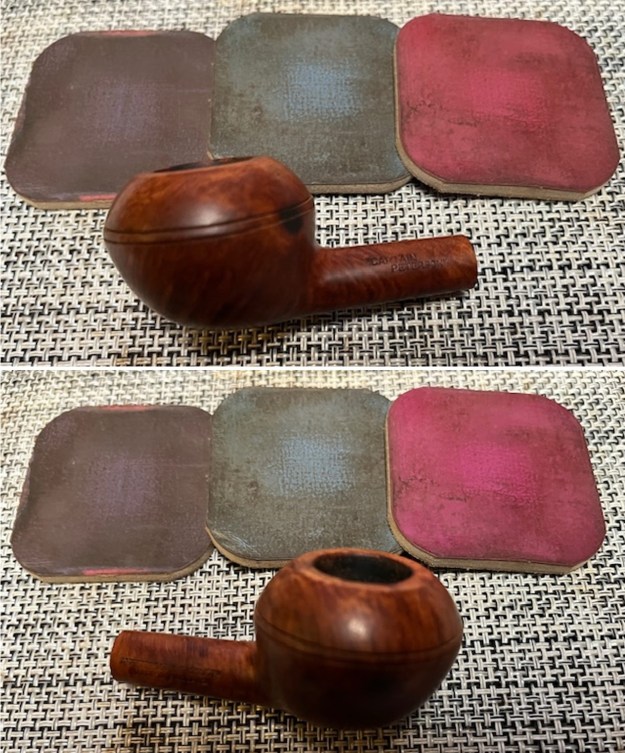
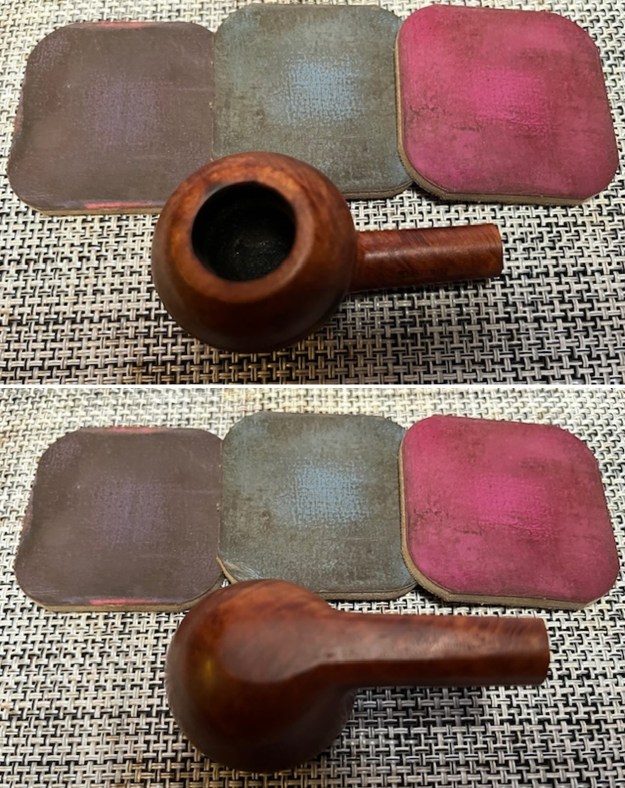
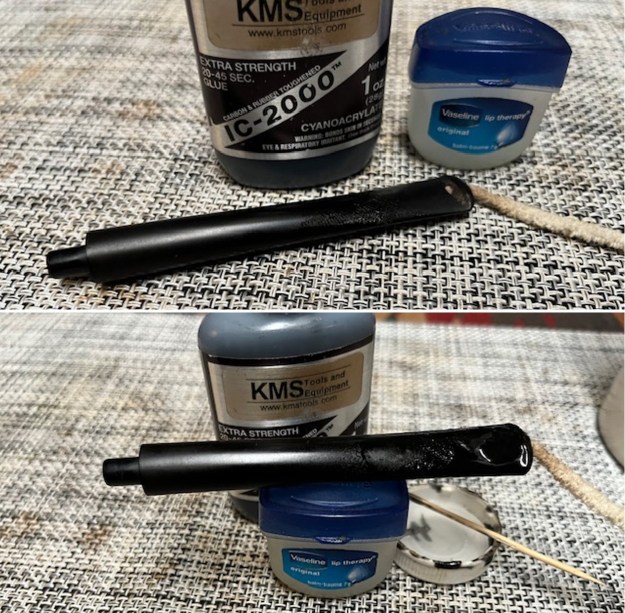
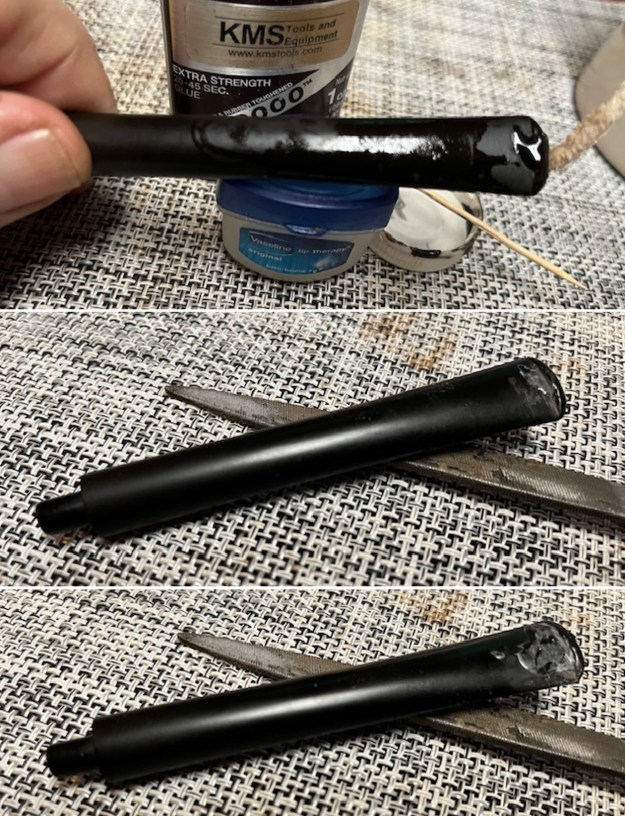
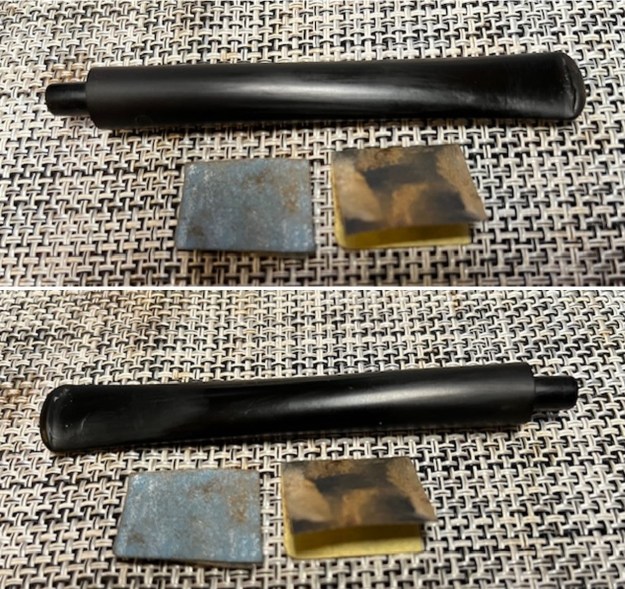
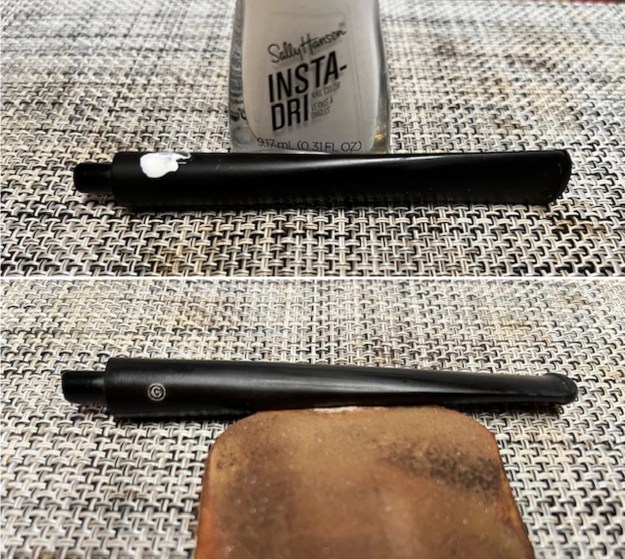
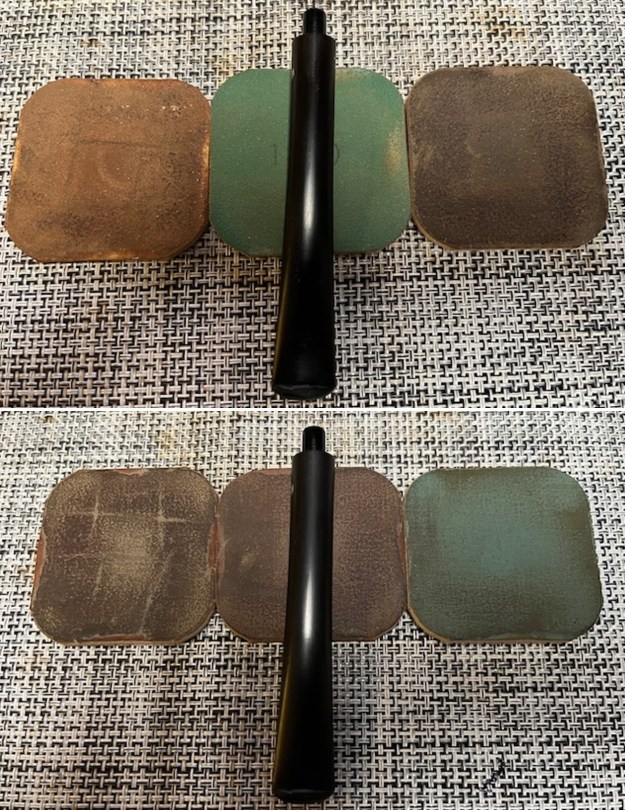
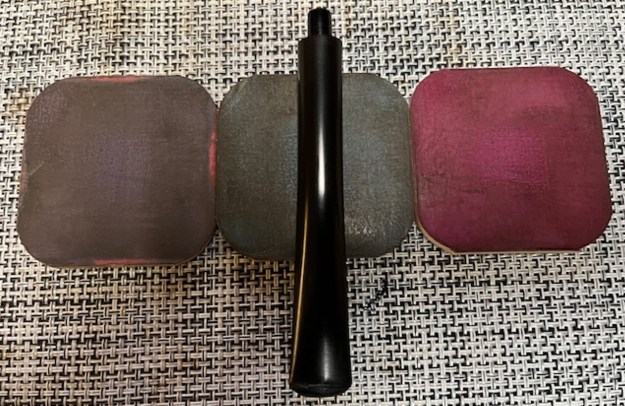
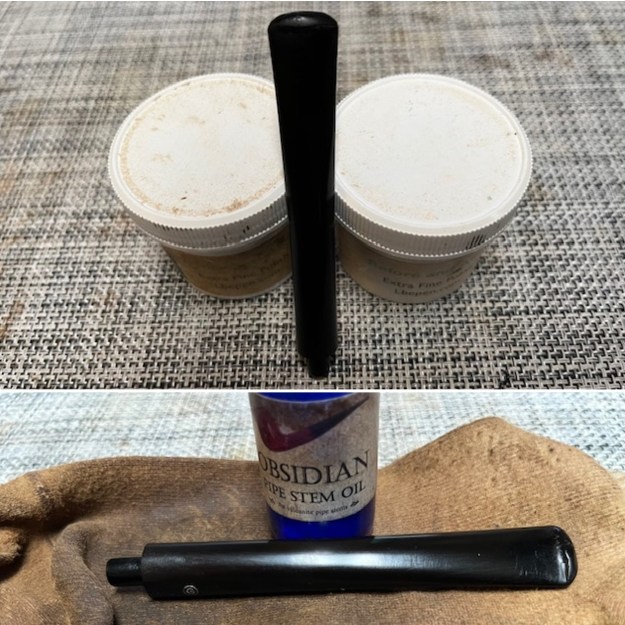
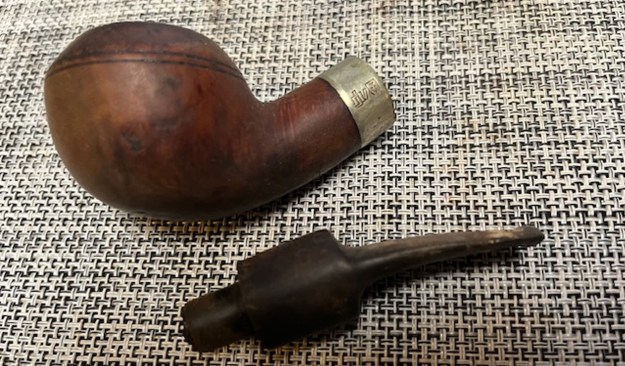
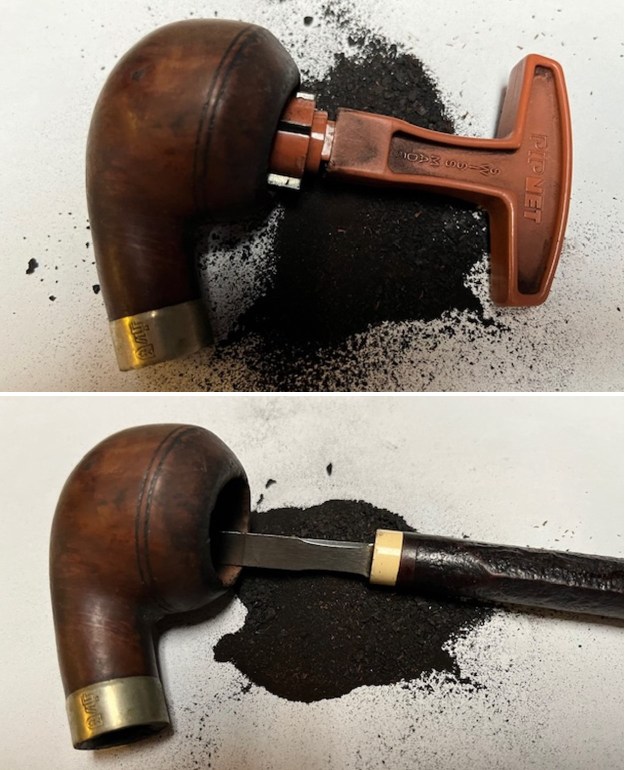
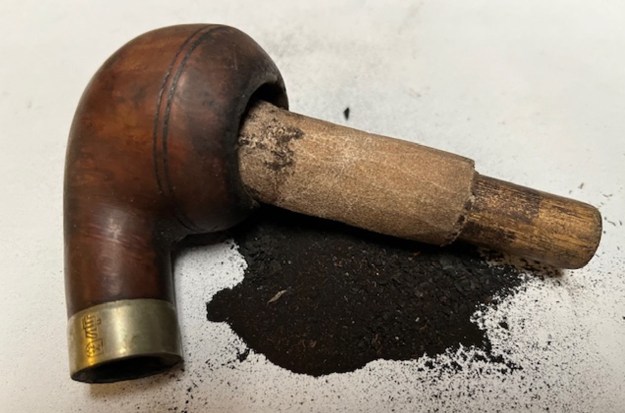
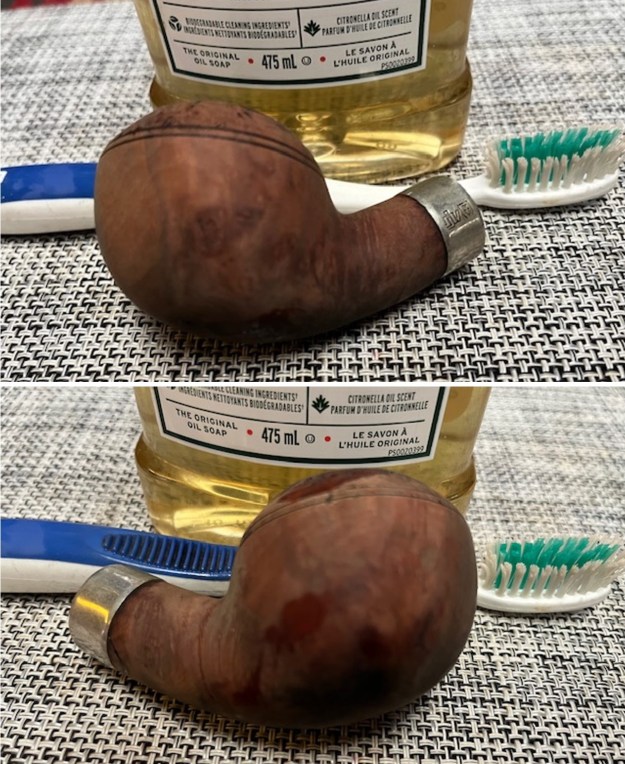
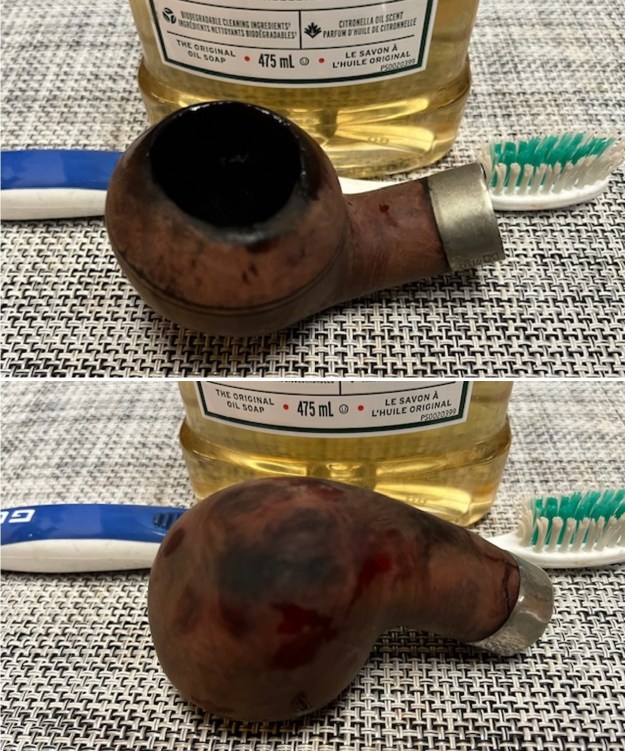
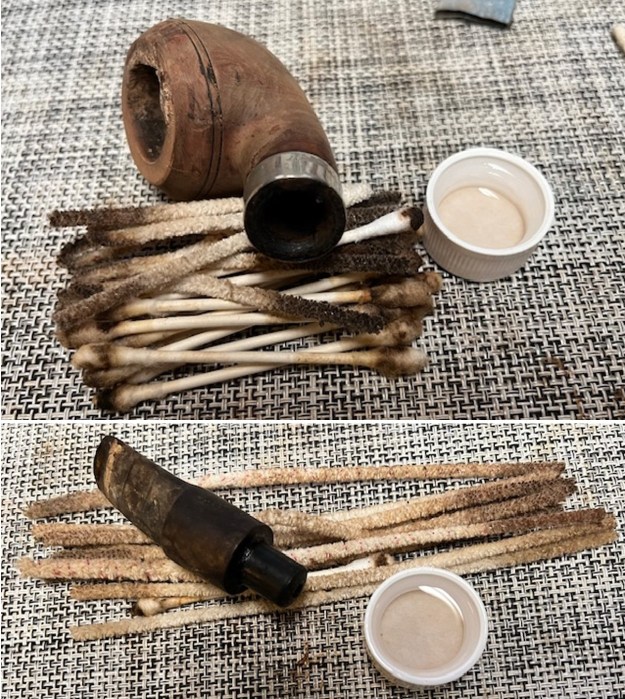
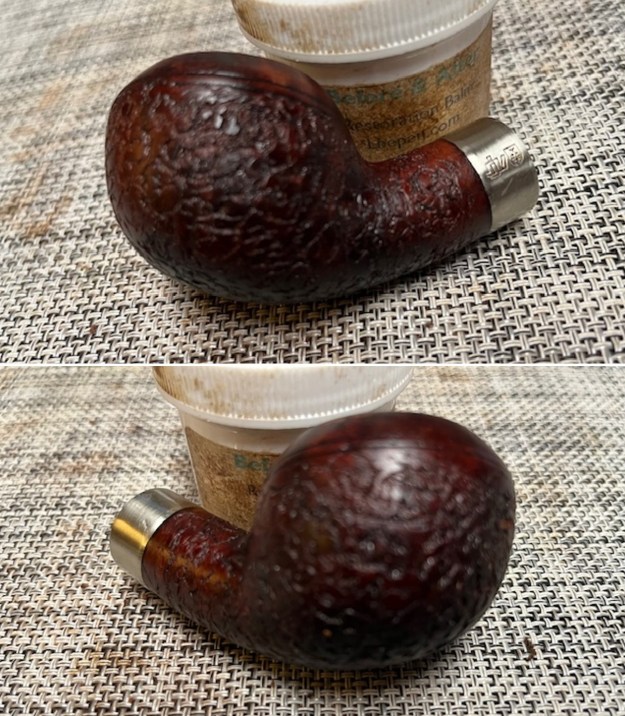
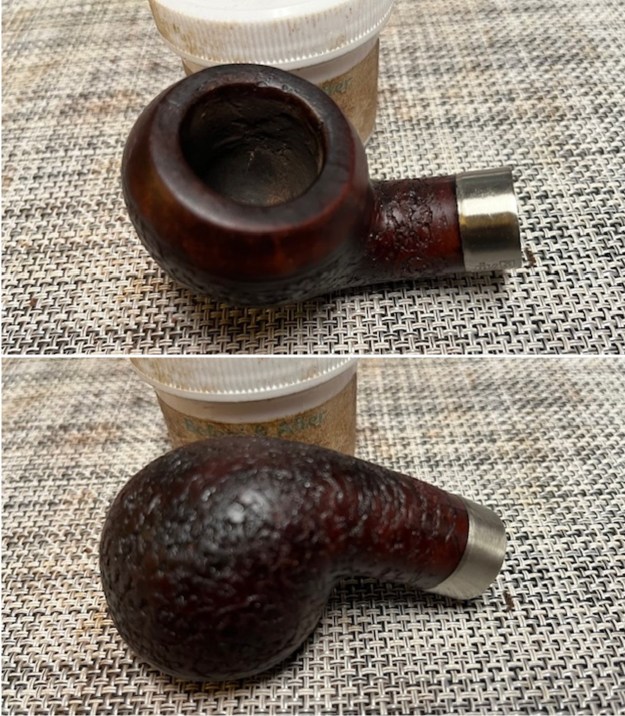
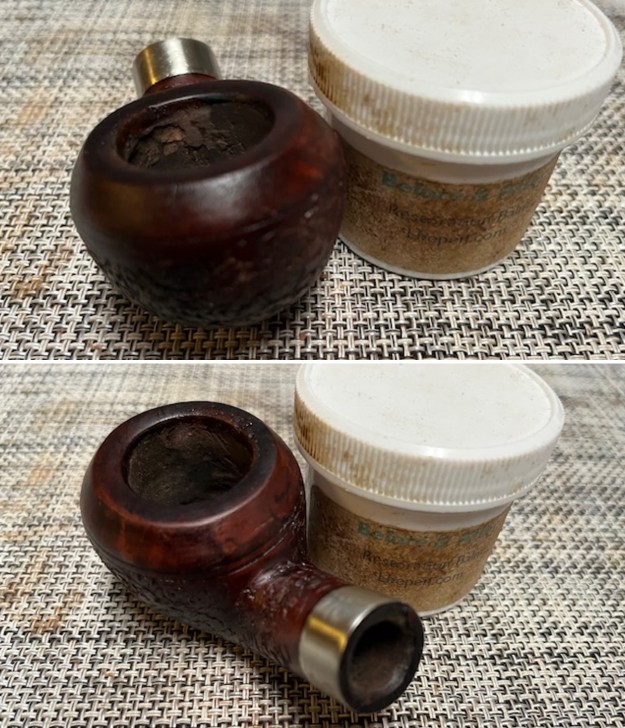
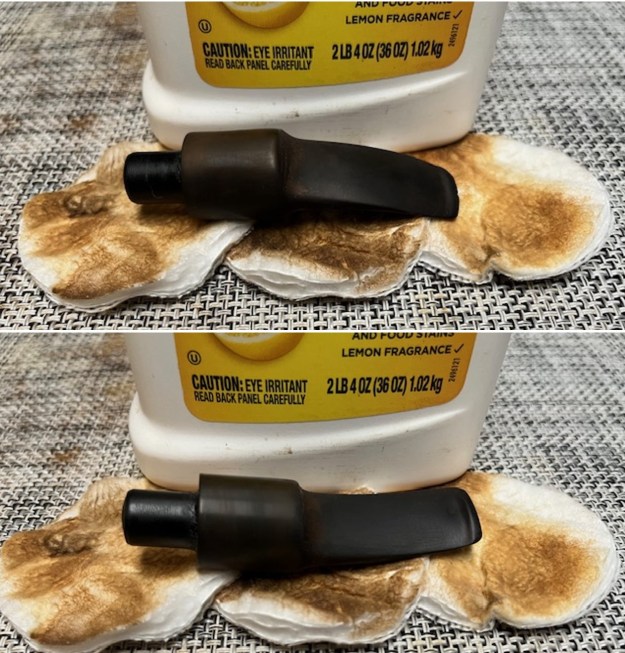
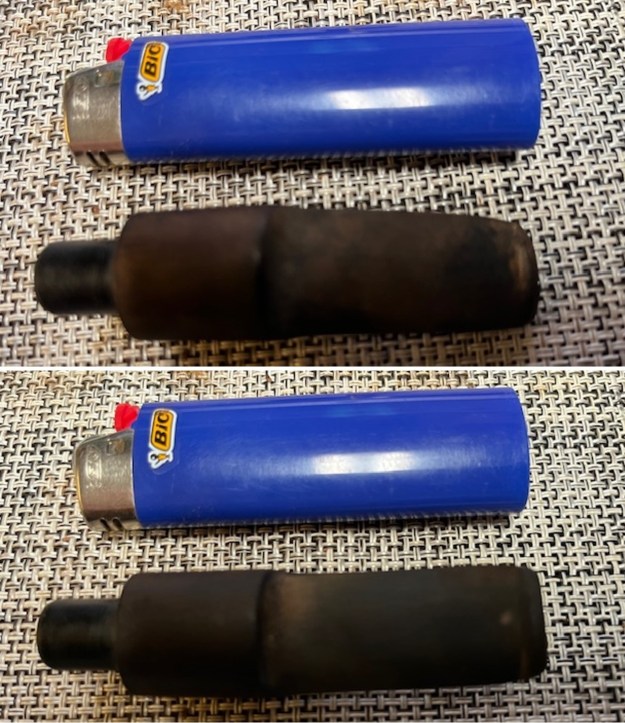
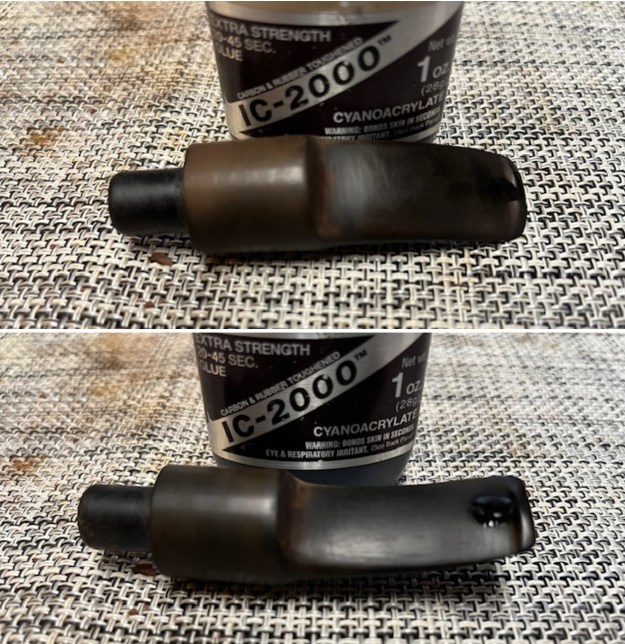
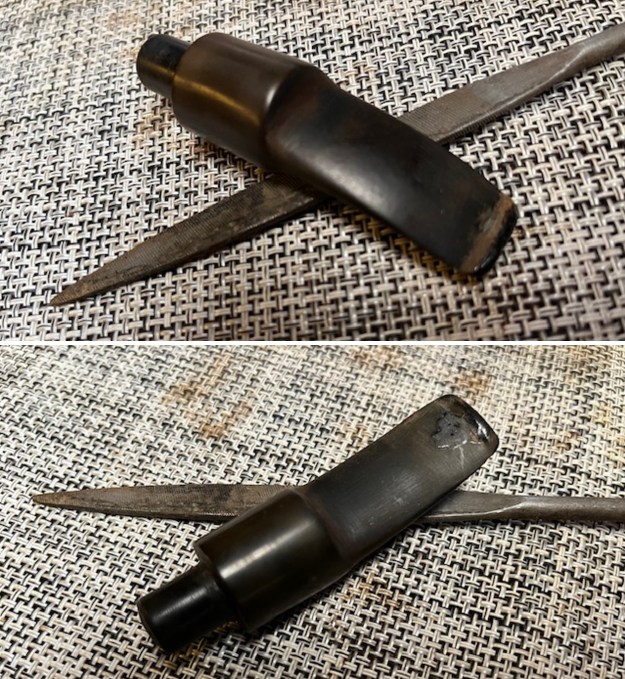
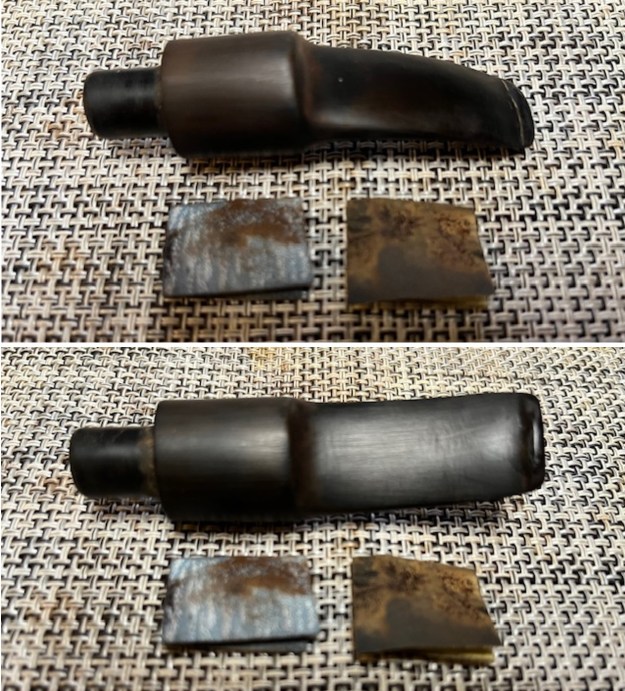
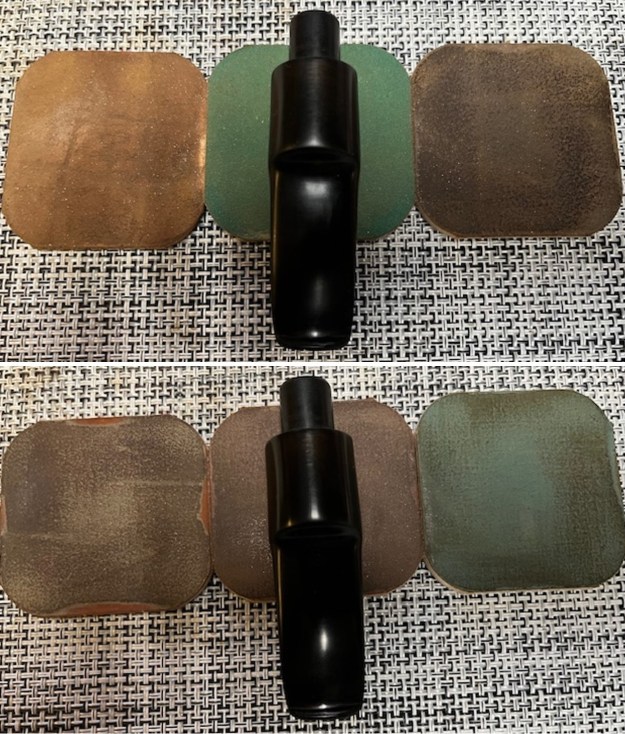
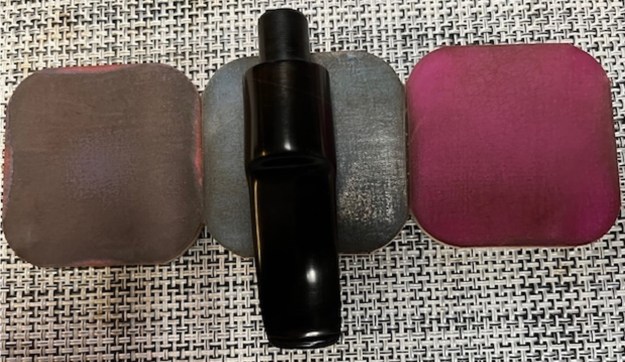
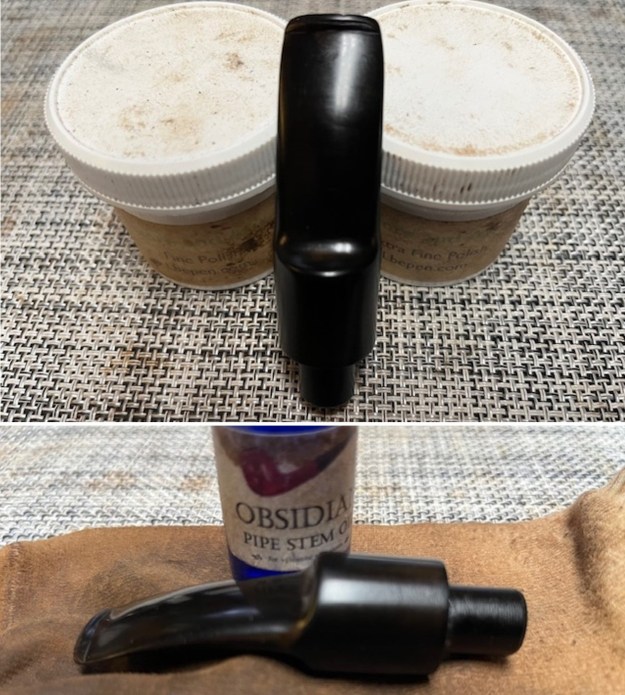
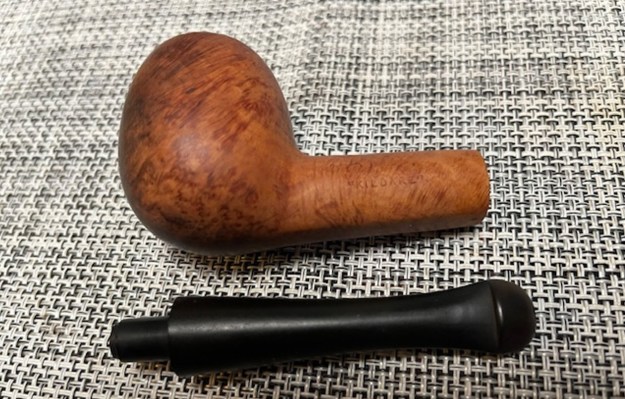
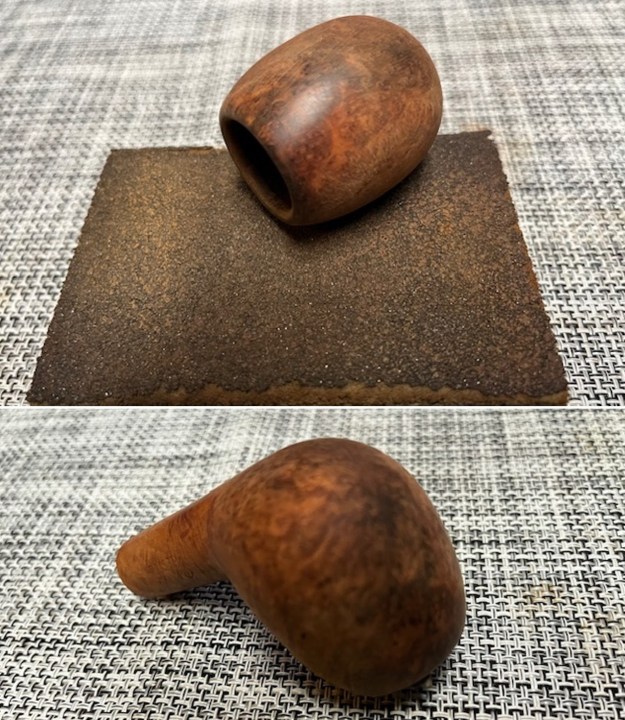
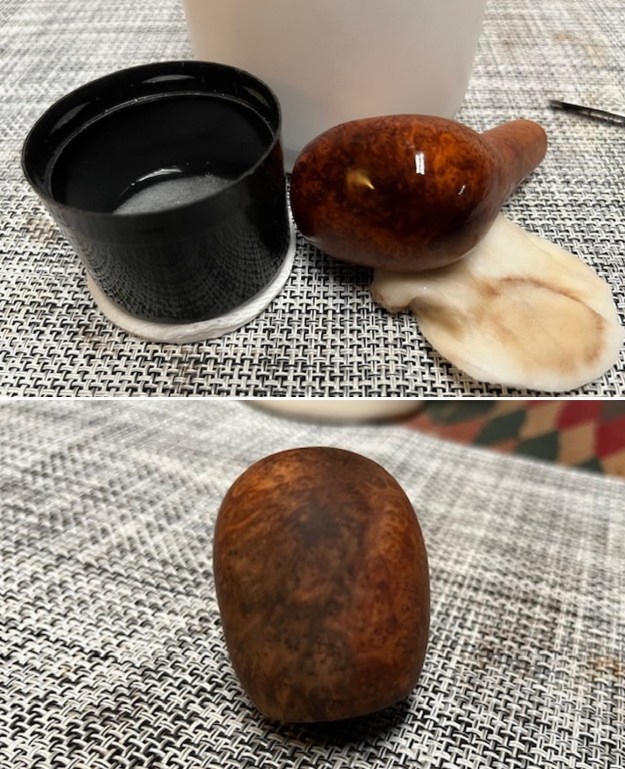
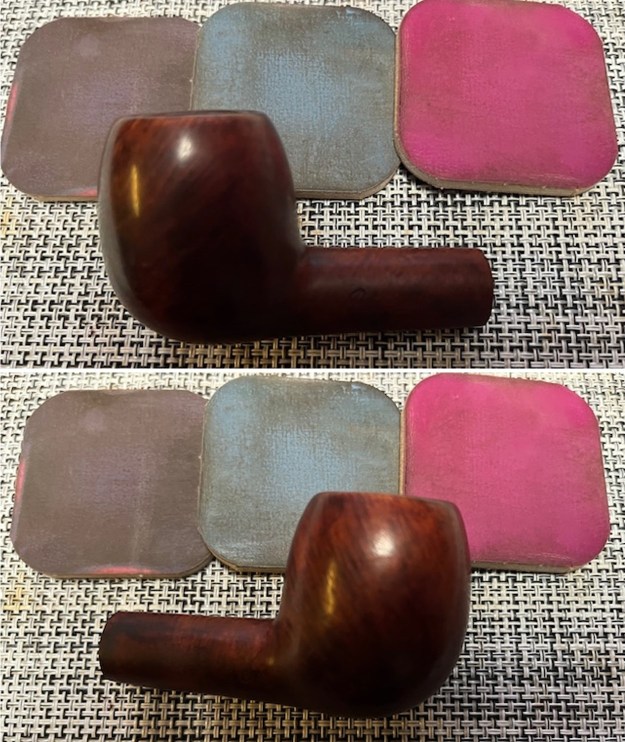
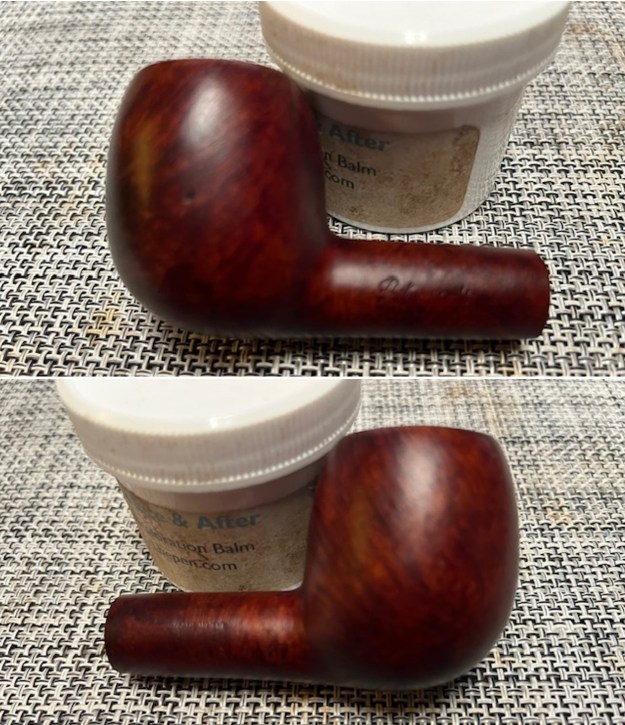
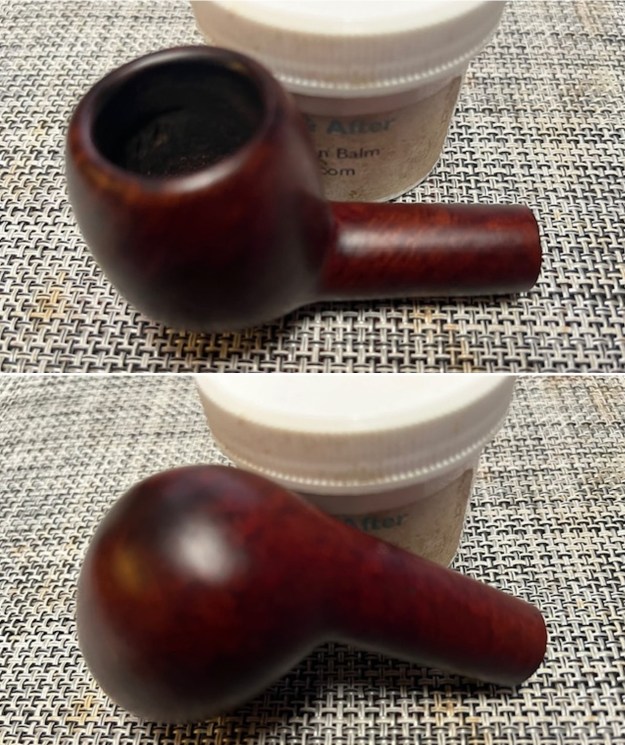
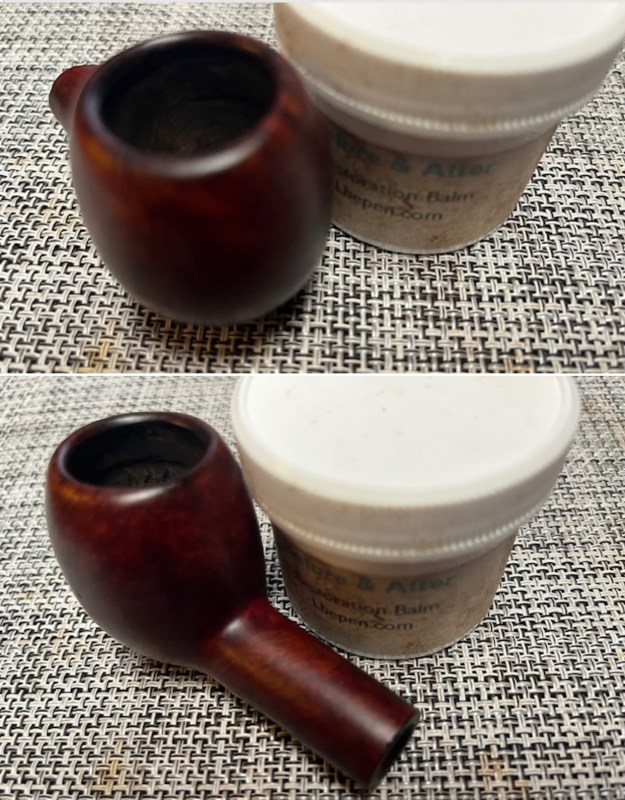
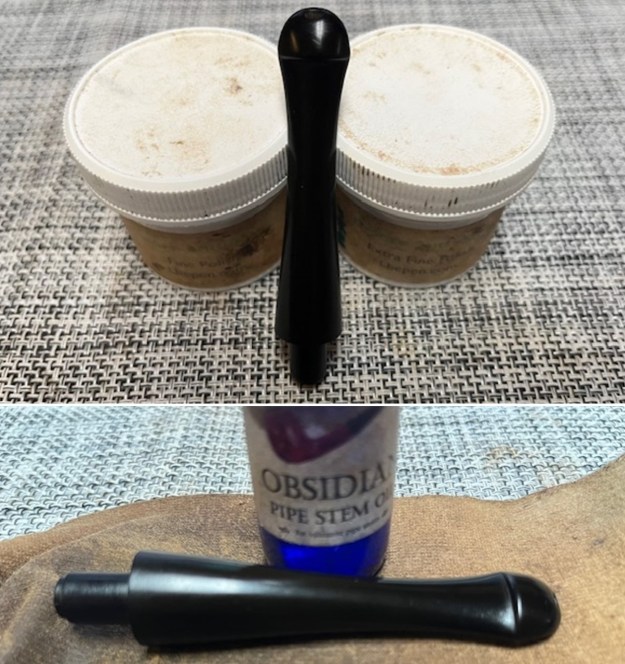
Jeff had done a great job cleaning up the pipe as usual. He reamed the pipe with a PipNet reamer and cut back the cake back to the bare briar. He cleaned up the walls with a Savinelli Fitsall Pipe Knife. He scrubbed the interior of the bowl and shank with pipe cleaners, cotton swabs and alcohol to remove the tars and oils. He scrubbed the exterior of the pipe with Murphy’s Oil Soap and a tooth brush to remove the grime from the finish. He worked on the rim top lava and the darkened spots with the soap and tooth brush. He scrubbed the inside of the stem with alcohol and pipe cleaners. He scrubbed the exterior with Soft Scrub and then soaked it in Briarville Pipe Stem Deoxidizer. He washed it off with warm water to remove the Deoxidizer. The pipe looked far better when it arrived. I took close up photos of the rim top and also of the stem surface. I wanted to show how well it had cleaned up. The rim top had some looked quite good and the inner edge had some darkening and damage. It should clean up really well. I also took close up photos of the stem to show the tooth marks on the surface near the button on both sides and on the button itself.I took photos of the stamping on the sides of the shank. You can see that it is stamped as noted above. It is clear and readable. I removed the stem and took a photo of the pipe to have a look at the parts and overall look. I decided to address the damage on the rim top and the inner edge of the bowl first. I used a folded piece of 220 grit sandpaper to smooth out the damage and bring the bowl back to round. I polished the bowl and shank with micromesh sanding pads – dry sanding with 1500-12000 grit pads. I wiped down the bowl after each pad with a damp cloth to remove the sanding debris. I worked some Before & After Restoration Balm into the surface of the bowl and shank with my fingertips to clean, enliven and protect the briar. I let the balm sit for 15 minutes and then buffed with a cotton cloth to raise the shine. The photos show the bowl at this point in the restoration process. I set the bowl aside and “painted” the stem surface with the flame of a “Bic” lighter to lift the tooth marks. I was able to raise them some but not completely. I filled in the remaining marks on the button edge and the surface with black CA glue. Once it cured I used a file to shape the button edge and also smooth out the fill. I sanded the remaining marks with 220 grit sandpaper to blend them into the surface of the surrounding vulcanite. I started polishing the stem surface with 600 grit wet dry sandpaper. I polished the stem with micromesh sanding pads – wet sanding with 1500-12000 grit sanding pads. I wiped it down after each sanding pad with Obsidian Oil. I finished polishing it with Before & After Pipe Stem Polish – both Fine and Extra Fine and buffed it off with a cotton cloth. I gave it a coat of Obsidian Oil to preserve and protect the stem.I am excited to finish this English Peterson’s London & Dublin, Apple 86. I put the pipe back together and buffed it with Blue Diamond on the buffing wheel. I gave the bowl and the stem multiple coats of carnauba wax. I hand buffed the pipe with a clean buffing pad to raise the shine. It is fun to see what the polished bowl looks like with beautiful mixed grain all around it. Added to that the polished black vulcanite stem combined with the bowl and brass band on the shank and made a stunning pipe. This smooth Classic Older Peterson’s London & Dublin English Made Apple 86 is great looking and the pipe feels great in my hand. It is light and well balanced. Have a look at it with the photos below. The dimensions are Length: 5 ¼ inches, Height: 1 ½ inches, Outside diameter of the bowl: 1 inch, Chamber diameter: ¾ of an inch. The weight of the pipe is 34grams/1.20oz. It is a beautiful pipe that I will soon be putting on the rebornpipes store in the Irish Pipe Makers Section. If you are interested in adding it to your collection send me an email or a message. Thanks for walking through the restoration with me as I worked over this pipe. Thanks to each of you who are reading this blog.
As always, I encourage your questions and comments as you read the blog. Thanks to each of you who are reading this blog. Remember we are not pipe owners; we are pipe men and women who hold our pipes in trust until they pass on into the trust of those who follow us.

Restoring a Budapest Purchase – A Tatu Pipe 1126 Freehand


Blog by Steve Laug

When I was traveling for work I was in Budapest, Hungary I visited the Gallwitz Pipe Shop. It is a shop I have visited several times in the past. I wrote about my first visit to various Budapest Pipe shops including Gallwitz back in 2015 (https://rebornpipes.com/2015/09/30/my-how-things-change-reflections-on-pipe-smoking-while-visiting-budapest/). When I visited it this time I spent time with the current owner and proprietor of the shop, Viktor Zollner (the grandson of the last Gallwitz owner). We had a great visit talking about the current state of pipes and pipe repair in Hungary since I had visited in 2015. Viktor had carved many pipes but was currently focusing his attention on pipe repair and estate pipes. He said that he loves the challenge of pipe and stem repair more than pipe carving – just as I do. He brought out some boxes and bags of estate pipes for me to look over and there were some real beauties that I have not seen before among them. We talked about repairs and cleaning of pipes and stems. One of the pipes that he had not worked on yet was a freehand that he said was a Tatu Pipe. It caught my attention enough that I laid it aside while looking at the others he brought out. It was stamped with two pipes toward the front of the smooth panel on the underside. That was followed by the stamping 1126 [over] Tatu Pipe. It was a large freehand pipe in a mushroom shape. It had a smooth rim and a sandblast bowl finish. There was a bit of plateau on the rim top toward the front of the bowl. There as also what looked like a boxwood shank extension. It was light and a contrast with the briar. The shank end had a brass circle to re-enforce the mortise of end of the shank. There was what appeared to be a burn mark on the bottom front of the bowl toward the bottom. I examined it but it was not clear if it was a burn mark on the briar or the beginning of a burn through. The bowl had a thick cake around the bowl and some lava overflow and darkening on the inner edge, heavier toward the back of the bowl. The stem was lightly oxidized and had light tooth marks and chatter on both sides ahead of the button. I took photos of the pipe when I got back to the flat we had rented in Budapest. I took some photos of the bowl, rim top and the stem. The details of the rim top and inner edge were as noted in the description above. The stem also shows the condition as noted in the above.I took a photo of the stamping. It was faint but readable with a lens and read as noted above.I also took a photo of the burn damage on the front lower part of the bowl. It was hard to tell whether it was the beginning of a burn out or burn damage on the briar from setting it in an ashtray.  I decided to take a calculated risk and purchase the pipe. I would more once I had cleaned it up.Before I started my work on the pipe I really wanted to know about the brand. It was a brand I was not overly familiar with and wanted to gather background information. I did a Google search to see if there was anything under the Tatu Pipe stamp. The first site that came up was for a pipe for sale on smokingpipes.com. I quote from there below as it pointed toward more information for me (https://www.smokingpipes.com/pipes/estate/japan/moreinfo.cfm?product_id=143673). It was description of a particular freehand pipe but the background information included was very helpful in giving me clues to move ahead.

Japanese Estates: Tatu Pipe by Tetsuo Tajima (Unsmoked) Tobacco Pipe

Tajima-san made his US debut at the 2011 CPCC, and his work impressed enough, that both European and American dealers were all but slapping each other’s hands, in an effort to acquire his briars. Up until the end of 2004, Tatsuo worked as film and graphic designer, but 2005 found him committing his time to learning pipe carving and his mentor was none other than Shizuo Arita. If memory serves, this Tajima oceanic denizen was carved in 2012, and it remains unsmoked to this very minute. Novel shape, solid grain, and best held with the ever-reliable finger-crook method.

From that clue I turned to the Tatu pipe information on Pipephil’s site to get some more history and background on the brand (http://www.pipephil.eu/logos/en/logo-t2.html#tatupipe). I have included a screen capture of the information that was included there along with a photo of the pipe maker, Tatsuo Tajima and some sidebar information below. It also helped give me information on the stamping on the pipe. Artisan: Tatsuo Tajima (born 1955) formerly was a film and graphic designer. He started making pipes in 2005.

Since the pipe I had bore the stamp 1126 which I could now interpret to refer to the year the pipe was made (11=2011) and the 26 indicates the manufacture rank in that year (rank 26). That was a significant piece of information on the pipe. I now knew the date of the carving was 2011 and that this was the 26th pipe of the year.

I turned then to Pipepedia and looked in the Japanese Pipe Makers section under the name Tajima (https://pipedia.org/wiki/Tajima) and found some more information as well as other pipes that he had carved with similar design features. I quote below.

Tatsuo Tajima, born in 1955, native of Tokyo. His previous life was a well decorated Film and Graphic Designer. Since 2007, as fate says under the guidance of Shizuo Arita and Shigeyoshi Yanagihara embark on pipe crafting as a second career.

Drawing from other genre of smoking culture such as shisha and similar paraphernalia he makes you wonder and reconsider what smoking pipe actually is about. At most part, he would say the experience, the quality of smoke (moisture, flavour, and temperature) while using something that we can appreciate aesthetically. His work set boundaries free and invite smokers to be more universal and uniting at one point: on the flavour of tobacco and the experience of drawing a smoke.

For inspiration, he goes to the same park most of the time. He picks up elements of nature that he saw interesting. “Nature is different everytime we visit.” says Tatsuo-san. It is alive. Some days, even hours, leaning more towards the sun. It might be blooming, or fallen to the ground. There are movement.

Not only a naturalist in approach but artificial landscape and man-made creation also inspire him. NASA space shuttle to construction site digging gave him inspiration. I just called it simply being a Japanese and their fascination of robots and mechanical wonders. If his pipe is a painting, his expression would be Dali kind of surrealism.

Capturing nature in his own way, it could often be more realistic as a result.

Often you will see his combination of modernism and retro being executed with Wabi-sabi aesthetic. Also, behind that artistic styling and unique structure, he is always on the exploration on the new experience of smoking, when possible contribute to the health aspect. Such as the use of reverse calabash and longer shank to decrease moisture and cool down the smoke due to longer travel.

In life, he drinks tea throughout the year, warm Oolong Tea in winter and cold Mugicha in summer. He drinks no alcohol. By all means, I have tried with both tea or alcohol, and his pipes still smokes like a dream. He is also in touch almost on a daily basis with a retired senior pipemaker, Shigeyoshi Yanagihara.

Tatsuo Tajima, currently resides in Tokyo, lives quite close with his teacher and friend, Yanagihara-san. His current pipe production is about 60 pipes a year.

I then turned to Pipes2smoke where Maxim Engel currently sells Tatsuo Tajima’s pipes for further information (https://pipes2smoke.com/collections/tatsuo-tajima). I quote from that site below.

Tatsuo Tajima, (“Tatu”) was born in 1955 in Tokyo. He originally worked as a film and graphic designer and contributed large-scale image displays mainly for feature films and for such events as Tsukuba Expo ’85, Nara Silk Road Expo ’87, and Design Expo Nagoya ’89 as well as for museums such as Edo-Tokyo Museum. From ’93 onwards, with the general shift to digital media, he focused on multimedia titles and graphics as a graphic designer. He has received numerous awards from such competitions as Opel Design Contests, Epson Imaging Contests, and Victor Video Festivals.

From 2005 onward, Tatu committed himself to pipe making under the guidance of Shizuo Arita and Shigeyoshi Yanagihara. In 2009 he made his debut as a full time pipe artist at Amanoya in Setagaya, Tokyo. 

He had his first US exposure in 2011 at the Chicago Pipe Show. Every Tatu pipe shows the Japanese pipe aesthetic with its mix of curved and straight lines & at times asymmetry flowing into a harmonious whole. And always with the famous Japanese attention to detail.

If you would like to see more of Tatsuo Tajima’s work have a look at his Instagram site (https://www.instagram.com/tatupipe/). He does some fascinating work.

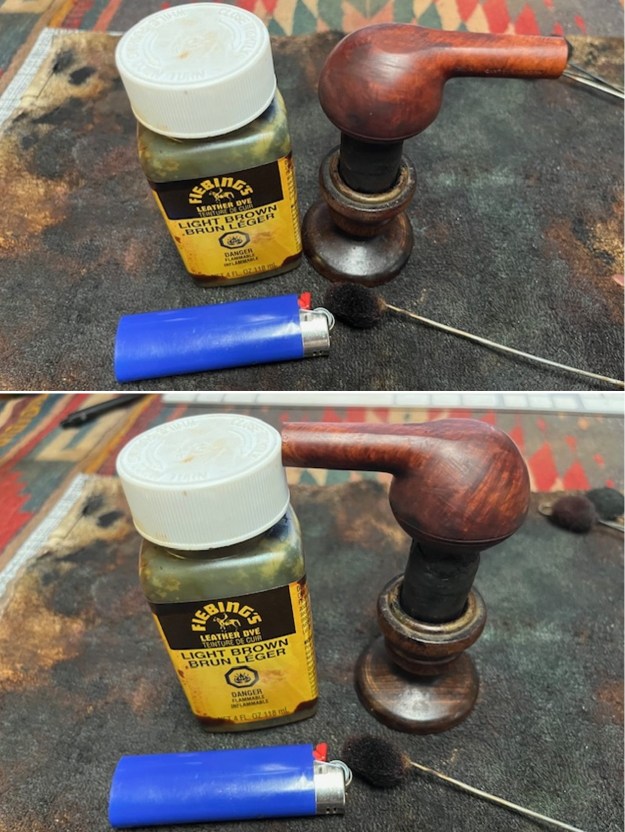
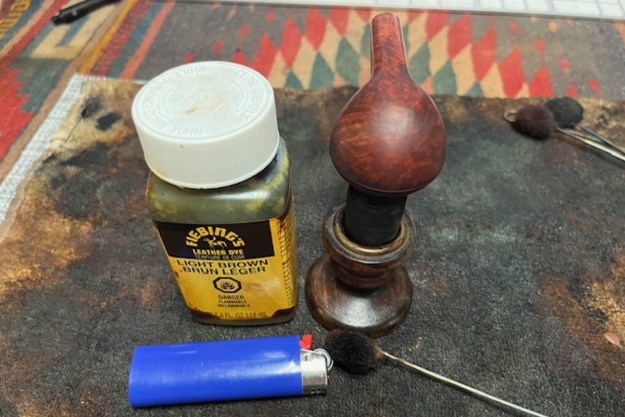
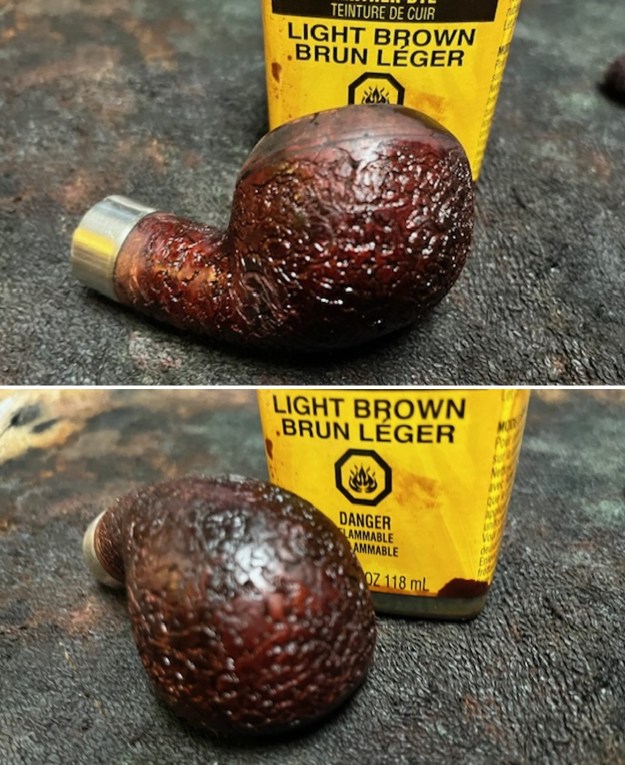
Now it was time to work on restoring this interesting Japanese Freehand. I decided to evaluate the damage to the front of the sandblast bowl. I wanted to know if it was the beginning of a burn out in the briar or if it had come from it having been set on a live coat in an ash tray. I examined the interior of the bowl and could find no obvious damage on the walls. I would know more once I had reamed and cleaned the bowl. I worked on the exterior of the finish with a brass bristle wire brush. I wanted to know if the damage was surface or only on the top of the finish. The brass brush revealed that it was not too deep. It appears that there was a flaw in the briar – a sandpit in blast. I circled the area with a red line in the second photo below.I filled in the sandpit with briar dust and clear CA glue. I used the brass bristle wire brush after the repair had cured to remove the excess repair and also rework the sandblast finish. It looks very good though there is some darkening around the spot. Once I knew that there was a sandpit/flaw and had repaired it I turned to more deeply examine the walls of the bowl to see if there were any checking or burns on the bowl walls or heel in the surrounding interior area behind the flaw. I reamed the bowl with a PipNet piper reamer to remove the thick cake on the walls. I cleaned up the reaming with a Savinelli Fitsall Pipe knife to remove the remaining cake on the walls. I sanded the bowl walls with 220 grit sandpaper wrapped around a dowel. I wiped the bowl out with a damp cloth to remove the dust and debris. I examined the bowl walls and they were smooth and wihtout checking or burn damage on the wall behind the mark on the outside of the bowl. I cleaned up the darkening and the burn damage to the rim edge and the top with a folded piece of 220 grit sandpaper. Once I had finished it looked much better.I scrubbed the exterior of the bowl with a tooth brush and undiluted Murphy’s Oil Soap and warm water to remove the grime in the sandblast finish. When I cleaned it the shank extension was loose but the pipe looked much better. I cleaned out the inside of the shank extension, shank and the stem with pipe cleaners, cotton swabs and 99% isopropyl alcohol. It was really filthy so with a bit of work the pipe smelled much better.I reglued the shank extension to the shank with Weld Bond all purpose glue. I applied it to both smooth ends of the shank and extension with a tooth pick and pressed it onto the tube that held it in place on the shank. I aligned the sharp edge of the extension with the sharp edges of the shank and press it in place until the glue cured. I stained the bowl with a light brown aniline stain to blend in the burn marks on the exterior of the front lower sandblast bowl. I felt that it would blend in the damaged area with the rest of the sandblast on the bowl. I applied it with a dauber and then flamed it to set it in the finish. Once the stain had cured I worked some Before & After Restoration Balm into the briar with my fingertips and a horsehair shoe brush. I wanted to make sure that it was in the deep grooves of the sandblast. I also worked it into the smooth shank extension with my fingertips. I let it sit and do its magic for 15 minutes then buffed it off with a soft cotton cloth. The pipe looked much better and the burn marks were blended into the surface with the stem. I set the bowl aside and “painted” the stem surface with the flame of a “Bic” lighter to lift the tooth marks. I was able to raise them some but not completely. I filled in the remaining marks on the button edge and the surface with black CA glue. Once it cured, I used a file to shape the button edge and also smooth out the fill. I sanded the remaining marks with 220 grit sandpaper to blend them into the surface of the surrounding vulcanite. I started polishing the stem surface with 600 grit wet dry sandpaper. I polished the stem with micromesh sanding pads – wet sanding with 1500-12000 grit sanding pads. I wiped it down after each sanding pad with Obsidian Oil. I finished polishing it with Before & After Pipe Stem Polish – both Fine and Extra Fine and buffed it off with a cotton cloth. I gave it a coat of Obsidian Oil to preserve and protect the stem. I am excited to finish this Japanese Tatu Pipe by Tetsuo Tajima. I put the pipe back together and buffed it with Blue Diamond on the buffing wheel. I gave the bowl multiple coats of Conservator’s Wax and the stem multiple coats of carnauba wax. I hand buffed the pipe with a clean buffing pad to raise the shine. It is fun to see what the polished bowl looks like with beautiful mixed grain all around it. The polished black vulcanite stem combined with the bowl made a stunning pipe. This smooth Japanese Made Tatu Pipe 1126 Freehand is great looking and the pipe feels great in my hand. It is light and well balanced. Have a look at it with the photos below. The dimensions are Length: 6 ½ inches, Height: 1 ¾ inches, Outside diameter of the bowl: 2 ¼ inches wide x 2 ¾ inches long, Chamber diameter: ¾ of an inch. The weight of the pipe is 57 grams/2.01 ounces. It is a beautiful pipe that I will hang onto for awhile to enjoy. One day I may add it to the rebornpipes store. Thanks for walking through the restoration with me as I worked over this pipe. Thanks to each of you who are reading this blog.

As always, I encourage your questions and comments as you read the blog. Thanks to each of you who are reading this blog. Remember we are not pipe owners; we are pipe men and women who hold our pipes in trust until they pass on into the trust of those who follow us.

Refreshing a Peterson’s System Standard Smooth Made in the Republic of Ireland 312


Blog by Steve Laug

The next pipe on the work table is Rusticated Peterson’s System pipe that we purchased from and estate in Plano, Texas, USA on 03/30/2022. It was stamped Peterson’s System Standard on left side of the shank and reads Peterson’s [over] System [over] Standard. On the right side it reads Made in the Republic of Ireland (in three lines) [over] the shape number 312. It has nice grain around the bowl and shank that has oils, debris and grime ground into the finish. There was a thick cake in the bowl with remnants of tobacco stuck on the walls. There was a lava overflow on the rim top that was heavier toward the back side. The top and edges of the rim were well hidden under the tars and lava. There was a very beautiful pipe underneath all of the buildup of years of use. The nickel ferrule on the shank end was oxidized and is stamped on the top and left side K&P [over] three hallmarks – a harp, a wolf hound and a tower. That is followed by Petersons. It small dents in the nickel ferrule on the right side. The vulcanite stem is a Peterson’s style P-Lip with a “P” logo on the left side of the saddle stem. It was oxidized and calcified toward the end with some tooth chatter. There were also some tooth marks on both sides of the stem ahead of the button. Jeff took photos of the pipe before he started his cleanup work on it. Jeff took photos of the bowl and rim top to show the thick, hard cake in the bowl with remnants of tobacco stuck on the walls of the bowl. There was a lava build up on the top of the rim and the edges of the bowl. The rim top looked pretty good but it was hard to know for sure if there was damage under the thick lava. Only clean up would tell the full story. Jeff took photos of the top and underside of the stem showing the tooth chatter, scratching and oxidation on the stem surface and wear on the edges of the button. Jeff took photos of the sides and heel of the bowl to show the condition of the finish. You can see the grime in finish around the sides of the bowl and shank. Even under the dirt and debris of the years it looked very good. Jeff took photos of the stamping on the sides of shank. The stamping was readable as you can see from the photos. It read as noted above. The nickel ferrule on the shank end is stamped on the top and left side K&P Peterson’s over three Peterson marks. I have included the information on the shape number on this pipe that I picked up on researching the previous pipes. This is the second of two Peterson’s System Standard pipes in Bob’s collection marked with the 312 shape number. I have included a page from a Petersons Catalogue that I have on rebornpipes (https://rebornpipes.com/tag/peterson-hallmark-chart/). I have put a red box around the 312 shown in the catalogue page shown below. That should give a clear picture of the size and shape of the pipe. I am also including the information from Pipedia’s article on Peterson pipes. It is a great read in terms of the history of the brand (https://pipedia.org/wiki/Peterson). I have included a bit of the pertinent history here.

1950 – 1989 The Republic Era  – From 1950 to the present time, the stamp for this era is “Made in the Republic of Ireland” in a block format generally in three lines but two lines have been used with or without Republic being abbreviated.

During the 1950’s and 60’s the Kapp & Peterson company was still in the ownership of the Kapp family. However 1964 saw the retiral of the company Managing Director Frederick Henry(Harry) Kapp.

Pipedia also included a section of information on the System pipes including a diagram of the systems look (https://pipedia.org/wiki/Peterson#Republic_Era_Pipes). I quote a section of the article in part and include a link to another article on Pipedia on the System pipe.

The Peterson System pipes are the standard bearers of the Peterson pipe family, famous for the excellent smoking pleasure they provide. Often imitated but never equaled, the Peterson System smokes dry, cool and sweet, thanks to the scientific effectiveness of the original design. The heart of the System is the unique graduated bore in the mouthpiece. This makes the suction applied by the smoker 15 times weaker by the time it reaches the tobacco chamber. The result is that all the moisture flows into the reservoir and, thus cannot reach the smoker’s mouth. The Peterson Lip further enhances the effectiveness of the graduated bore by directing the flow of smoke upwards and away from the tongue. This achieves a uniquely even distribution of smoke and virtually eliminates any chance of tonguebite or bitterness. Furthermore, the shape is contoured so that the tongue rests comfortably in the depression under the opening. Each “PLip” mouthpiece is made from Vulcanite. For the Peterson System pipes to work properly, the stem/tenon has to have an extension, the tip of which will pass by the draft hole from the bowl and into the sump. Upon the smoker drawing in smoke, this extension then directs the smoke down and around the sump to dispense a lot of the moisture before the smoke enters the extension and stem. On the System Standards and other less expensive systems, this extension with be made of Vulcanite turned integrally with the stem. On the more expensive System pipes this extension will be made of metal which screws into the Vulcanite stem. This extension on the earlier pipes will be of brass and the newer pipes will be of aluminium. Most smokers not knowing this function of the metal extension, assumes that it is a condenser/stinger and will remove it as they do with the metal condensers of Kaywoodie, etc. Should you have a System pipe with this metal extension, do not remove it for it will make the System function properly and give you a dryer smoke (https://pipedia.org/wiki/A_closer_look_at_the_famous_Peterson_Standard_System_Pipe).

With that information in hand I knew what I was dealing with in terms of the stamping and the age of this pipe. I knew from the information that the pipe was made during the Republic Era between 1950 and 1989. My guess is that the pipes is a 1960s era System pipe. Now it was time to work on the pipe.

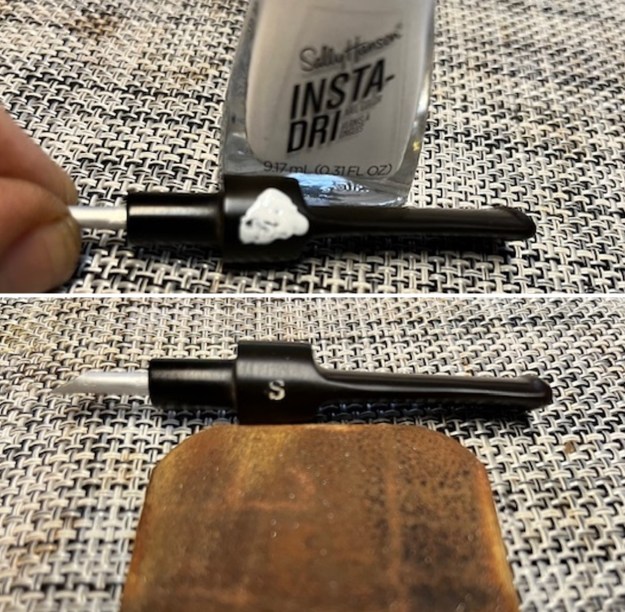
Jeff cleaned this filthy pipe with his usual clean up process. This one was a real mess and I did not know what to expect when I unwrapped it from his box. He reamed it with a PipNet pipe reamer and cleaned up the reaming with a Savinelli Fitsall Pipe Knife. He scrubbed out the internals with alcohol, pipe cleaners and cotton swabs until the pipe was clean. He scrubbed the exterior of the bowl with Murphy’s Oil Soap and a tooth brush to remove the grime and grit on the briar and the lava on the rim top. The finish looks very good with great looking grain around the bowl and shank. Jeff soaked the stem in Briarville’s Pipe Stem Deoxidizer to remove the oxidation on the vulcanite. When the pipe arrived here in Vancouver for the second stop of its restoration tour I was amazed it looked so good. The stem showed some damage on the button edge and surface. The bonus was that the tenon had a brass chimney in the end that was correct for this pipe. I took some close-up photos of the rim top and also of the stem surface. I wanted to show what an amazing job Jeff did in the cleanup of the rim top. The rim top and inner edge had darkening and damage. There was damage to the inner edge on the back of the bowl. I also took close up photos of the stem to show the condition of the vulcanite. It was quite clean and the tooth marks and damage to the button edge and stem surface is visible in the photos below.One of the things I appreciate about Jeff’s cleanup is that he works to protect and preserve the nomenclature on the shank of the pipes that he works on. He was able to preserve and maintain its condition in the process. I took some photos to show the clarity of the stamping. I have noticed that many restorers are not careful to protect the stamping in their cleaning process and often by the end of the restoration the nomenclature is almost destroyed. I would like to encourage all of us to be careful in our work to preserve this as it is a critical piece of pipe restoration! I took the stem off the shank and took a photo of the pipe. I decided to start my work on the pipe by cleaning up the rim top and inner edge of the bowl. I started by working over the edge and the rim top with a folded piece of 220 grit sandpaper. I minimized the damage on the inner edge and rim top. It looked significantly better. I polished the briar with micromesh sanding pads – dry sanding it with 1500-12000 grit sanding pads. I wiped it down with a damp cloth after each sanding pad to remove the dust. The briar was really shining by the final pad. I rubbed the bowl and rim down with Before & After Restoration Balm. I worked it into the surface of the briar with my fingertips to clean, enliven and protect it. I let the balm sit for 10 minutes and then buffed with a cotton cloth to raise the shine. I really like watching the Balm do its magic and bring the briar alive. I polished the nickel ferrule with a jewellers cloth to remove the remaining tarnish and to protect the surface from further tarnishing. The shine was quite nice. I set the bowl aside and turned my attention to the stem. There were several issues that I needed to deal with to secure a good fit. The brass chimney was stuck in the tenon and I could not remove it. I heated the chimney with a lighter and was finally able to unscrew it from the stem end. I cleaned out the threaded area on the stem and the threads on the chimney and greased it with Vaseline. I screwed it back in the stem.The fit of the stem in the shank was canted to the left and the brass chimney hit against the wall of the mortise. As I examined it I saw that the drilling in the shank was more worn on the right side than the left. I smoothed out the walls of the left side of the shank with small half circle needle files. I also sanded the right side of the stem to adjust the seat in the shank. Once I had completed the process the fit was perfect in the shank.I fit the stem in the shank and the adjustments straightened out the cant of the stem. I took photos of it to show the new fit in the shank.I rebuilt the top edge of the button with black CA glue. I filled in the tooth marks on the top and underside of the stem. Once the repair hardened/cured I used a small file to reshape the edge of the button and flatten the repairs. I reshaped the top of the button with the file at the same time. I sanded the repairs with 220 grit sandpaper to blend them into the surface of the vulcanite. I started polishing the stem with 600 grit wet dry sandpaper to further smooth it out. I touched up the “P” logo on the left side of the saddle stem with white acrylic fingernail polish. I let it dry then I polished off the excess with a worn 1500 grit micromesh sanding pad. Once the excess was removed the stamp looked much better. There were some weak spots on the leg and tail of the “P” stamp.I polished the stem with micromesh sanding pads – wet sanding with 1500-12000 grit pads. I wiped the stem down after each sanding pad with Obsidian Oil. I polished it with Before & After Pipe Stem Polish – both Fine and Extra Fine. I gave it a coat of Obsidian Pipe Stem Oil. It works to protect the stem from oxidizing. I set it aside to dry. Once again at this point in the restoration process I am excited to be on the homestretch. I look forward to the final look when the Republic Era Peterson’s System Standard 312 is put back together, polished and waxed. I put the bowl and stem back together. I lightly polished the bowl and the stem with Blue Diamond. I gave the bowl and the stem multiple coats of carnauba wax. I buffed the pipe with a clean buffing pad to raise the shine. I hand buffed it with a microfiber cloth to deepen the shine. The pipe polished up pretty nicely. The grain really pops with the wax and polish. The shiny black vulcanite stem is a beautiful contrast to the browns of the bowl and thick shank and nickel ferrule. This Republic Era Peterson’s System Standard 312 Bent Billiard was another fun pipe to work on. It really is a quite stunning piece of briar whose shape follows the flow of the briar. The pipe feels great in the hand will be better when warmed up while smoking. The finished pipe is shown in the photos below. The dimensions of the pipe are Length: 5 ½ inches, Height: 1 ¾ inches, Outside diameter of the bowl: 1 ¼ inches, Chamber diameter: ¾ of an inch. The weight of the pipe is 2.01 ounces/57 grams. I will be putting it on the rebornpipes store in the Irish Pipemakers Section if you would like to add it to your rack and carry on the previous pipeman’s legacy. This is an interesting estate to bring back to life.
As always, I encourage your questions and comments as you read the blog. Thanks to each of you who are reading this blog. Remember we are not pipe owners; we are pipe men and women who hold our pipes in trust until they pass on into the trust of those who follow us.
A Resurrection of a 1920 Dunhill Patent Ao Bruyere 52 Bent Billiard


Blog by Eric Fleming

Eric and I have chatted about pipe restoration for some time now and when he picked up this Dunhill I asked him to keep me posted on his work on it. I have to say, he went far beyond anything I have done and really, what I expected when I saw the pipe. It is a very creative and innovative restoration that I thought you might all enjoy! Without further introduction or discussion, Eric will walk us through his process in the following pages. Thanks Eric for allowing me to post it on rebornpipes!

As a student of history and all things of antiquity I am a sucker for an old Tobacco Pipe. And as a result, when I ran into this poor old and somewhat disabled Patent era Dunhill I couldn’t resist the temptation to “try” to rehabilitate it. Configuring a plan of attack based solely on pictures is usually riddled with surprises and this plan was the usual. The damage was as adequately represented as an image can be but holding a thing in one’s own hands and soaking in the magnitude of it is another thing entirely. Upon unboxing, it was obvious that my plan was slightly premature.

The moment I concluded my purchase I moved straight on to Pipedia to confirm some of what I already knew (Dunhill Bruyere – Pipedia.html). This old boy was a Dunhill (shape 52) Inner Tube patent# 1130806/15 (1924-1926) Ao Bruyere. The history of the early Bruyere is interesting. By 1920 Dunhill was making all of their stummels in house and the Bruyere of this time was “usually” made of Calabrian briar due to its physical traits and ability to take on a deep red stain (Pipedia Dunhill Dating Guide – Pipedia.html).

Here are the Before pics. The Dunhill had some things going for it. The original Vulcanite stem had already been polished and exhibited very little external wear. There are a few indentations near the tenon that a previous owner decided, rightly, to leave alone rather than reduce the diameter where it matches up to the stummel. This pipe is almost 100 years old. A little original wear is, in my opinion, a mark of character. Proof of a past existence if you will. The tenon to mortice fit was surprisingly tight. Extreme care was taken to remove it. This will have to be remedied before it is re-inserted. The stem’s draft hole was heavily caked in tar. The stummel was in reasonably good shape everywhere but the rim. This poor old boy survived many violent blows over the years, Severe mushrooming and on one side it chipped out at some point. A crude epoxy fill was employed to fill the damage. The rest of the stummel had almost no original finish and was clean internally and sooty externally. The factory stampings were difficult to read, rather thin but enough to make out. I was hopeful that cleaning would bring them back some. The bottom of the bowl was hard to make out since a very thick bowl coating had been applied. Shining a light into the bowl revealed that the bottom of the bowl was eroded below the draft hole. This pipe might have been someone’s favorite. It has been smoked heavily. It was now time for deep cleaning. Aiming towards the low hanging fruit, I decided to deal with the stem first. The draft hole had an impressive build up. The first alcohol soaked bristle cleaner was tough to push through and many were employed to finish the job. Toward the end I couldn’t help but wonder if I was removing the end result of a fine smoke that took place nearly 100 years ago.Now on to the stummel. Because it was quite clean already I decided to skip the soapy water scrub and just scrub the outside with Murphy’s oil soap concentrate and a toothbrush. This action effectively revealed the briar under the grime and I was quite happy to see that the stampings were clearer and more visible. Still light but legible.

Next was the issues with the inside of the bowl. The coating was hiding much of the real condition of the pipe. Cotton balls were inserted into the bowl and wadded up tissue pressed into the mortice. 99% alcohol then poured in to perform its overnight magic. The next morning the coating had been dissolved, easily removed with a wipe. Now the real condition is revealed and it wasn’t all that good. The epoxy fill was deep and the side of the bowl had light erosion from the many smokes this pipe had delivered. The erosion at the bottom of the bowl was deeper than originally perceived. Not near burnout, but about 1/8” below the draft hole. At this point a decision had to be made as to how to proceed. The epoxy fill was poorly done and would likely cause future problems if left alone. The mushrooming of the rim was unlikely to be steamed out and the height of the rim was obviously below it’s original state. After a day of rolling it around in my mind I decided that there was no other acceptable option but to remove the offending rim and replace it. The erosion would also need to addressed.

For me the easiest way to remove the top of the rim is with my old manual knee mill. Using the disc sander an even flat is ground on the top of the rim. The stummel is then placed in the machine vise with protective strips of leather. The leather not only protects the briar from indentation but it also adds some traction for the jaws to grip. A dial indicator is then used to indicate the flat on the top of the rim. This operation could have been done with the disc sander alone but I am partial to the control allowed by the mill. After the mill the refreshed rim is lightly sanded by hand to 400 grit on a sanding block. To fabricate a new rim a small piece is cut from a chunk of briar left over from another build and sanded flat on one side then milled flat and parallel on the knee mill. The only references I had to estimate the correct height of the bowl were the measurements taken before the rim removal and an image found online of a 52 shape Dunhill.

By the way, The shape 52 is listed as a Bent Low Pot. My measured estimation is that once the rim was removed there needed to be .200 added back. This is not an exact science. The .200 thick block of briar then has two diameters marked with a compass for outside diameter and inside diameter, leaving a little extra on each of course, and taken to the scroll saw to be roughed out. Glue up comes next. All briar surfaces to be bonded are wiped with alcohol to remove dust and or oil residue. The epoxy I have grown fond of is West Systems G Flex 2 part epoxy. It is incredibly durable, neutral when cured and easy to work with. Since it is undesirable to have an epoxy filled bowl, I have found it advantageous to mix the epoxy, wait 45 minutes (the listed pot life) and then apply to both briar surfaces. At this point the epoxy is gel like and will not run. The stummel is clamped in a vise and remains for 24 hours. Once the rim replacement has cured the tedious hand work begins. Extra material is removed with aggressive hand files. Then small needle files are used to bring the profile close to finished. To match and blend the two surfaces at the end a ¾” wood dowel wrapped in 150 grit sandpaper is used to mate the inside diameters while a small thin sanding block with 150 grit is used to mate the outside diameter. The entire stummel (except for the stampings) are at this point sanded from 250 grit thru 2400 grit micro mesh. The stamped parts of the stummel sanded 1500 thru 2400 grit micro mesh only. The erosion damage to the bottom of the bowl is the next focus. I have used “pipe Mud” with success in the past but it can be precarious and doesn’t always stay put long term. I wanted a more permanent fix and didn’t feel the need to bore a hole through the bottom of the stummel for a plug. So, I shot a call to my pipe making and repair mentor Mark Tinsky of American Smoking Pipe Co. Mark has been making Artisan Pipes longer than I have been alive, tolerates my frequent calls and emails, and is an all around great guy and wealth of knowledge. Upon presenting my Dunhill issue he shared with me one of his bowl bottom repair tricks. A mixture of Elmer’s multi purpose glue, Briar dust and Charcoal dust mixed into a black paste. This was a new one to me. When I asked Mark “why not Pipe Mud”? He replied… “I don’t smoke Cigars”. Apparently, Elmer’s glue is an organic material and when mixed with both briar and charcoal holds up to the temperature and general abuse well. The Briar dust was left over from the rim removal and the charcoal dust was made from Willow Charcoal sticks easily found at an art store. The mixture is easy to adjust for texture and also easy to apply. The draft hole of the stummel was plugged with a pipe cleaner and the mixture slowly scooped in to the desired level which was almost to the top of the cleaner. The stummel was then set aside to cure for 24 hrs.  The next day I had a high and flat surface at the bottom of the bowl. A ¾” wood dowel was taken to the disc sander and slowly profiled to my desired radiused bowl bottom. This took several attempts. Then a small diameter was cut from a sheet of 80grit sandpaper and glued to the radius of the dowel. I used super glue for it’s fast adhesion. The bottom of the bowl was then sanded with the abrasive dowel until the desired depth was achieved. The result was surprisingly good. The shiny dark color was noticeable but very uniform to the bowl.  All that was then necessary to complete the repairs to the inside of the bowl was to address the light erosion to the sides. Since they were shallow It was decided that Pipe Mud would be a good solution. A nice Maduro was sacrificed to fulfill my pipe repair needs. You owe it to yourself to employ a “good” cigar for this purpose. Not only is it a nice change of pace but a fine cigar actually produces a higher quality ash. Using a dropper, I slowly added water to the ash. This can easily be overdone. If the mixture becomes shiny, you have added too much water and need to add more ash. If the mixture is too dry it wont stay put. I experimented before using it the first time. I am glad I did. The Pipe Mud was then scooped into the bowl, not allowing it to settle in the bottom and then worked into the erosion with a finger. The Dunhill was again set aside for the day. With the Dunhill repaired, sanded and ready for dye I had reached a point of concern. How do I blend this light colored briar to the rest of the stummel without it looking like a repair? I had previously researched the old Bruyere finish used in this era Dunhill. Apparently, it consisted of a light brown dye under a dark red dye. A few examples were found online and saved for comparison. The light briar of the repair then received 6 coats of dark brown dye lightly polishing each back until it was darker than the original briar color. The rest of the original stummel received one coat of light brown dye and polished back. At this point I tried to blend the light into the dark for a seamless look. Then the dark red was lightly received and polished back. The result was not great. The original part of the stummel looked nearly identical to the sample images I had found but the repair was still obvious. With no other option I gave the repair many coats of dark red overlapping onto the original briar to try to create a pure dark red blending into the lighter dark red. This took several tries and applications. In the end, I was not able to perfectly match my sample images due to the very dark rim, but I think it’s better than having a obvious mismatch that would surely stand out. Indoors the repair is almost invisible. Outside in sunlight it can be faintly seen. Because I was a little hesitant to mess with this time consuming and difficult dye job, it was decided to take the light-handed approach to waxing the stummel. Crystal Clear Paste Wax was lightly rubbed on with a soft clean cloth and polished off. Letting it sit for 30 minutes, polished again and re-applied 3 times. This approach is probably not as durable as pure carnuba wax applied with a buffer but I was not willing to risk spoiling the hard won appearance. Normally I would call this repair complete but there had been so much work done to the inner bowl I was uneasy to leave it as is. There are many versions of Bowl Coatings but from what I have read and heard they all server the same purpose. To protect the inner bowl from heat damage. At this point I had a glue concoction for a bottom and pipe mud lightly coating the sides and epoxy joint. That is worth protecting. I decided to go with another of Mark Tinsky’s suggestions and use the honey/charcoal version of the bowl coating. A couple drops of honey were placed in a small bowl. Water was mixed in with it 1 part honey to 3 parts water to create a very thin yet sticky liquid. I still had charcoal dust laying around from earlier. Using a pipe cleaner bent in half It was dipped into the honey water and lightly swabbed on the entire inside of the bowl. The charcoal then dumped into the bowl, a piece of cardboard held over the rim and a good blow into the draft hole to scatter the charcoal and clear the draft hole. It was then let sit for a few hours and the charcoal dumped and blown out. This Old Dunhill has been rehabilitated and is ready for a few more years of service.I learned a lot from this project. It is the most involved pipe repair I have attempted to date and has opened my eyes to the possibilities from this point on.  Because I know this project could not have been a success without the incredible depth of knowledge that was shared with me I would like to thank those individuals for their giving nature.

I have been reading rebornpipes for years and have structured much of my method after Steve Laug’s style of pipe repair. I don’t think I would have started refurbishing pipes if it were not for this Blog and am honored to be a part of it.

A shout out to Mark Tinsky as well. I doubt there is any aspect of pipe repair or pipe making that this man has not experienced. His patience with me has been instrumental and is greatly appreciated.

Eric Fleming

Boise Idaho

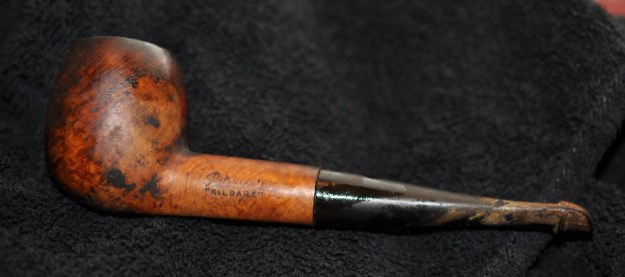
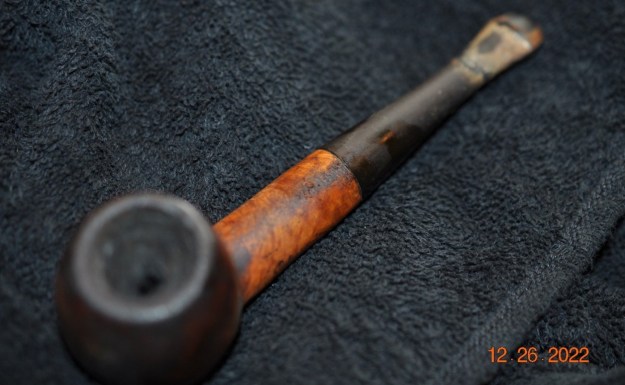
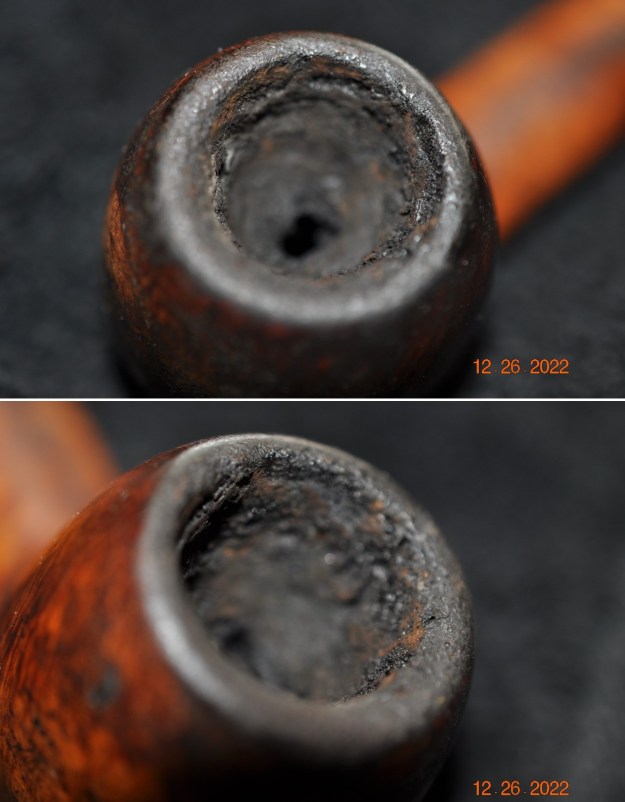
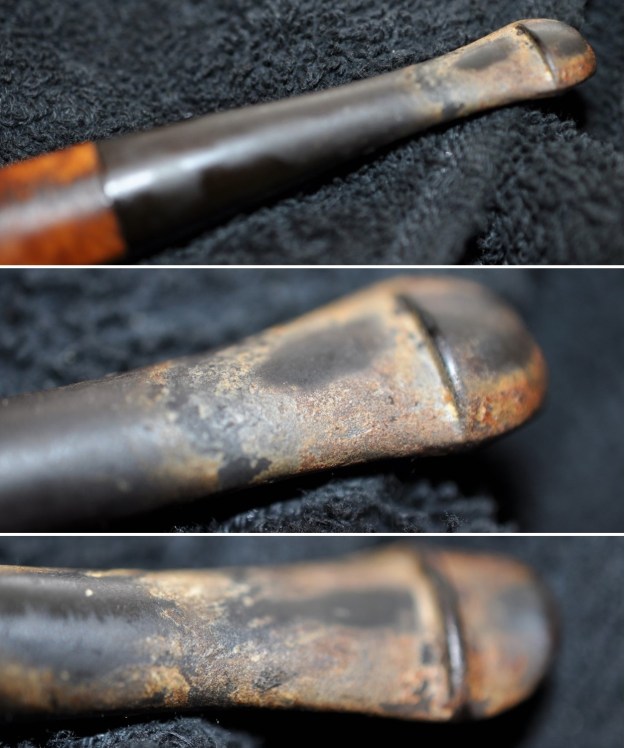
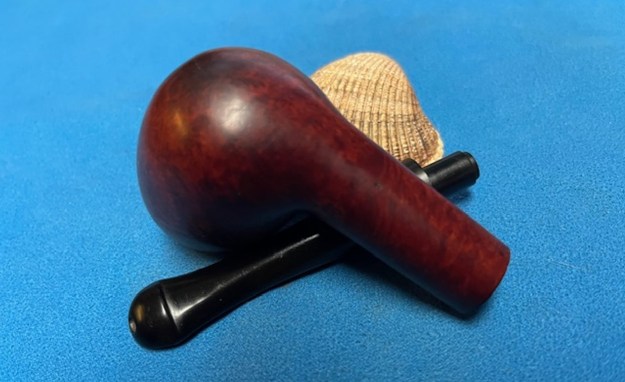
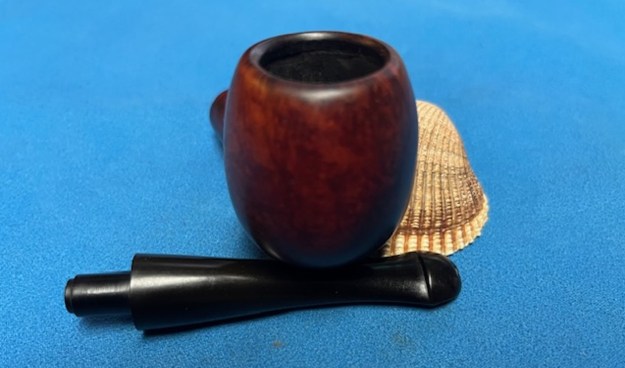
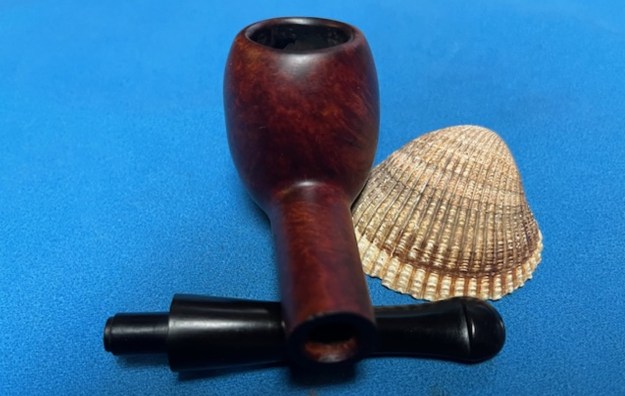
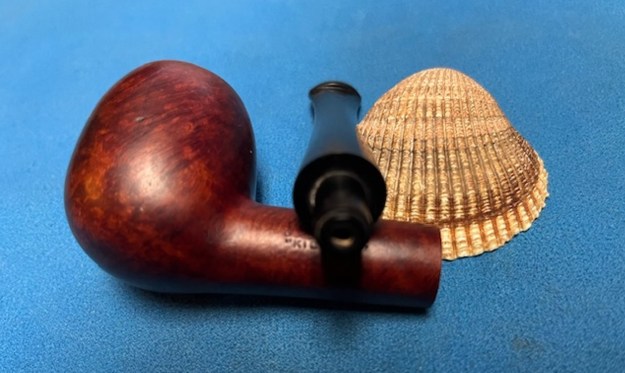
Peterson’s “Kildare” Special HG Republic of Ireland 10 Canadian


Blog by Steve Laug

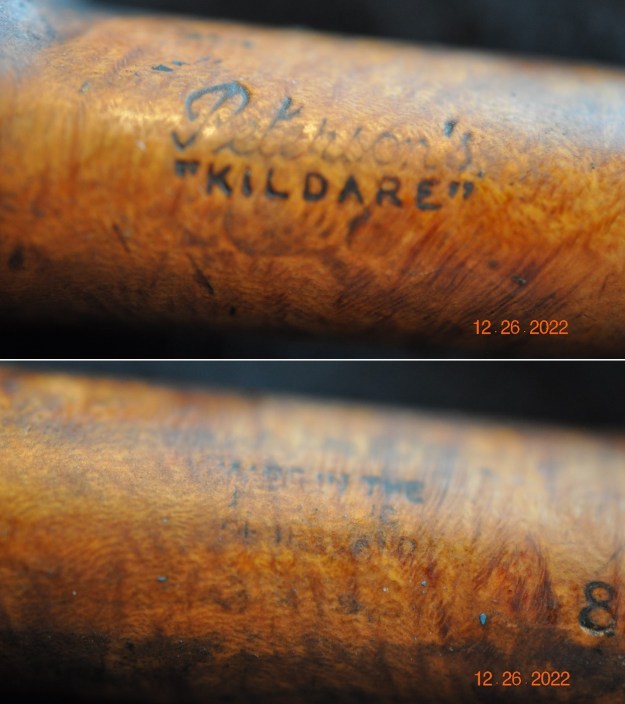
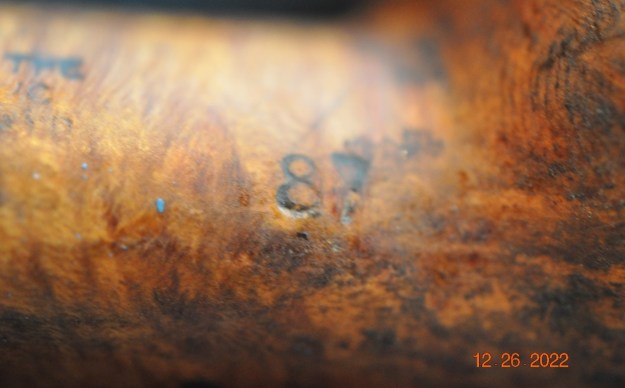
The next pipe on the work table is Peterson’s Large Canadian pipe that we purchased from and our connection in Copenhagen, Denmark on 03/30/2022. It was stamped Peterson’s [over] “Kildare”[over] Special on the topside of the shank. On the right it is stamped with the shape number 10. On the underside it is stamped with a large interlocked HG [followed by] Made in the Republic of Ireland (in three lines). It is a large Canadian that has a smooth finish with great grain around the bowl and shank that is covered with a lot of oils, debris and grime. There was a thick cake in the bowl with remnants of tobacco stuck on the walls. There was a heavy lava overflow on the rim top and edges. The top and edges of the rim were well hidden under the tars and lava. There was a very beautiful pipe underneath all of the buildup of years of use. The stem was a Peterson’s style Fishtail stem. It was oxidized and calcified toward the end with some deep tooth marks and chatter. There was wear on the edge of the button that would need to be dealt with. Jeff took photos of the pipe before he started his cleanup work on it. Jeff took photos of the bowl and rim top to show the thick, hard cake in the bowl with remnants of tobacco stuck on the walls of the bowl. There was a lava build up on the top of the rim and the edges of the bowl. The rim top looked pretty good but it was hard to know for sure if there was damage under the thick lava. Only clean up would tell the full story. Jeff took photos of the top and underside of the stem showing the tooth chatter, scratching, calcification and oxidation on the stem surface and wear on the edges of the button. Jeff took photos of the sides and heel of the bowl to show the condition of the finish. You can see the grime around the sides of the bowl and shank. Even under the dirt and debris of the years it looked very good. Jeff took photos of the stamping on the sides of the shank. The stamping was readable as you can see from the photos. It read as noted above. I turned first to “The Peterson’s Pipe” by Mark Irwin and Gary Malmberg to see what it had to say on the “Kildare” line. On page 306 it says:

Kildare (1965-) First issue of the line with matte-finish in Classic Range shapes. P-lip and fishtail mouthpiece. Second issue c.1979 as Kildare Patch, with rusticated patches on the pipe surface. Third issue 2010, matte brown, P-lip or fishtail mouthpiece, no band. Fourth issue 2011-burgundy sandblast finish, nickel army mount, fishtail mouthpiece, exclusive to Smokingpipes.com.

I wrote to Mark Irwin and asked where I could find information on the GH stamp on this particular pipe. I quote his response below.

Hi Steve, the answer is on p. 300 of your Peterson book: “GH Retailer’s Monogram.” The SPECIAL stamp indicates that this pipe was made specially for George Huber of Munich, who had other Peterson pipes made expressly for their shop. Best, Mark

I turned to page 300 of  “The Peterson’s Pipe” by Mark Irwin and Gary Malmberg as noted by him and found a great paragraph on the stamping. I quote in full.

GH Retailer’s Monogram (c. 1960s) George Huber of Munich, Germany, a Peterson distributor and retailer for decades, stamped their monogram on pipes sold in their store, G overlaid on H. Peterson shared in the 1988 commemoration of Huber’s 125th year in business by producing a special pipe with a sterling rim cap, stamped HUBER over CELEBRATION.

The pipe I have is one that bears that monogram but does not appear to have ever had the sterling rim cap and was not stamped HUBER over CELEBRATION. With that information I turned my attention to working on the pipe.

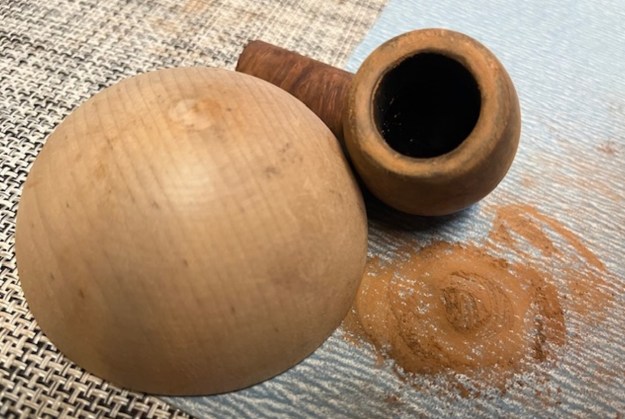
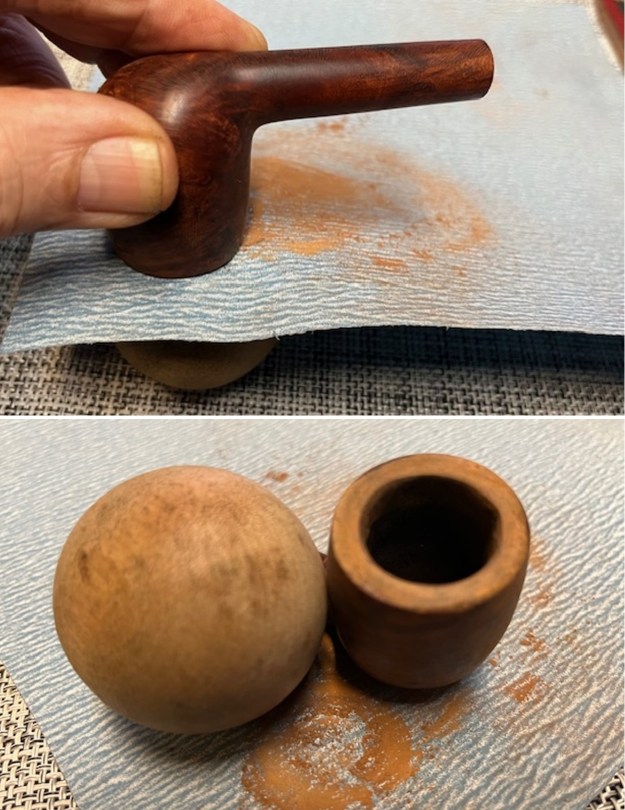
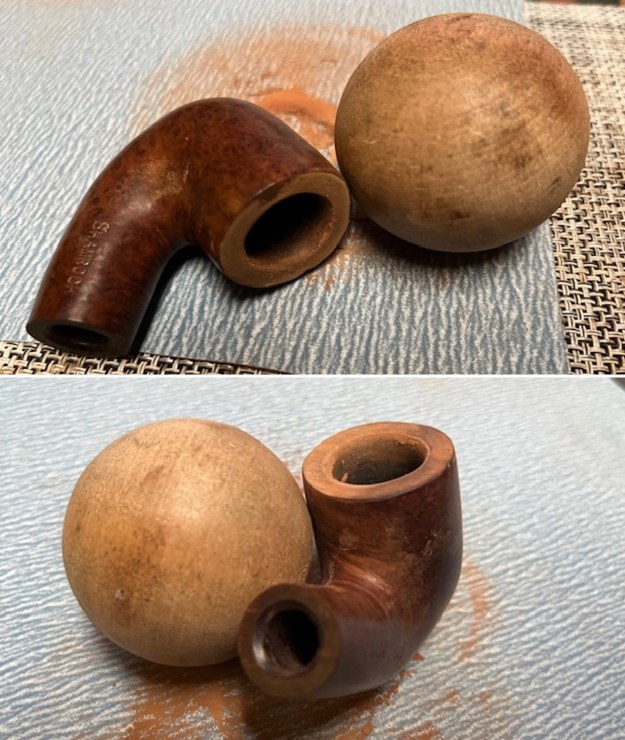
Jeff had cleaned it thoroughly. He had reamed it with a PipNet reamer and cleaned that up with a Savinelli Fitsall Pipe Knife. He had scrubbed the exterior of the briar with undiluted Murphy’s Oil Soap. He removed the shiny coat on the briar with acetone on cotton pads. He cleaned out the interior of the shank, sump and airway in the shank and stem with alcohol, pipe cleaners and cotton swabs. He scrubbed the stem with Soft Scrub to remove the oxidation and calcification on the surface. He soaked it in Briarville’s Pipe Stem Deoxidizer to remove the oxidation. He removed it from the Deoxidizer and rinsed it off with warm water. I took some photos of the pipe before I started my part of the work. I took some close up photos of the rim top and also of the stem surface. I wanted to show what an amazing job Jeff did in the cleanup of the rim top. The rim top and inner edge had darkening and damage. There was damage to the inner edge on the front and back of the bowl. The rim top is clean but in rough condition. I also took close up photos of the stem to show the condition of the vulcanite. It was quite clean and the large and deep tooth marks on the button and on the stem ahead of the button were very visible in the photos.One of the things I appreciate about Jeff’s cleanup is that he works to protect and preserve the nomenclature on the shank of the pipes that he works on. The stamping on this one was very faint to start with so I was worried that it would disappear altogether with the cleanup. He was not only able to preserve and maintain its condition in the process. I took some photos to show the clarity of the stamping. I have noticed that many restorers are not careful to protect the stamping in their cleaning process and often by the end of the restoration the nomenclature is almost destroyed. I would like to encourage all of us to be careful in our work to preserve this as it is a critical piece of pipe restoration! I took the stem off the shank and took a photo of the pipe. I decided to start my work on the pipe by cleaning up the rim top and inner edge of the bowl. I started by working over the edge with a folded piece of 220 grit sandpaper. I then topped the bowl on a topping board with 220 grit sandpaper. I finished the work with a wooden ball and sandpaper to give the inner edge a slight bevel. Using these methods, I minimized the damage on the inner edge and rim top. It looked significantly better. I touched up the stain on the rim top with a Cherry stain pen. It matched the stain on the rest of the bowl perfectly and once buffed it would blend in very well.I polished the briar with micromesh sanding pads – dry sanding it with 1500-12000 grit sanding pads. I wiped it down with a damp cloth after each sanding pad to remove the dust. The briar was really shining by the final pad. I rubbed the bowl and rim down with Before & After Restoration Balm. I worked it into the surface of the briar with my fingertips to clean, enliven and protect it. I let the balm sit for 10 minutes and then buffed with a cotton cloth to raise the shine. I really like watching the Balm do its magic and bring the briar alive. I set the bowl aside and turned my attention to the stem. I “painted” the tooth marks with the flame of a Bic lighter to try and lift the marks. I was able to lift them slightly. I filled in the deep marks on the stem with Black Rubberized CA glue and set it aside to cure. Once cured I used a file to flattened the repairs and redefine the button edge. I sanded the stem with 220 grit sandpaper to further blend in the repairs. I polished it with 600 grit wet dry sandpaper. I touched up the “P” logo on the left side of the saddle stem with white acrylic fingernail polish. I let it dry then I polished off the excess with a worn 1500 grit micromesh sanding pad. Once the excess was removed the stamp looked much better. There were some weak spots on the leg and tail of the “P” stamp.I polished the stem with micromesh sanding pads – wet sanding with 1500-12000 grit pads. I wiped the stem down after each sanding pad with Obsidian Oil. I polished it with Before & After Pipe Stem Polish – both Fine and Extra Fine. I gave it a coat of Obsidian Pipe Stem Oil. It works to protect the stem from oxidizing. I set it aside to dry.  Once again at this point in the restoration process I am excited to be on the homestretch. I look forward to the final look when the Peterson’s “Kildare” Special 10 Canadian with a taper stem is put back together, polished and waxed. I put the bowl and stem back together. I lightly polished the bowl and stem with Blue Diamond to polish out the scratches in the briar and the vulcanite. I gave the bowl and the stem multiple coats of carnauba wax. I buffed the pipe with a clean buffing pad to raise the shine. I hand buffed it with a microfiber cloth to deepen the shine. The pipe polished up pretty nicely. The depths of the rustication really pop with the wax and polish. The shiny black vulcanite stem is a beautiful contrast to the browns of the bowl and thick shank. This Republic Era Peterson’s “Kildare” 10 Canadian was another fun pipe to work on. It really is a quite stunning piece of briar whose shape follows the flow of the briar. The pipe feels great in the hand will be better when warmed up while smoking. The finished pipe is shown in the photos below. The dimensions of the pipe are Length: 6 inches, Height: 2 inches, Outside diameter of the bowl: 1 3/8 inches, Chamber diameter: 7/8 of an inch. The weight of the pipe is 1.80 ounces/51 grams. I will be putting it on the rebornpipes store in the Irish Pipemakers Section if you would like to add it to your rack and carry on the previous pipeman’s legacy. This is an interesting estate to bring back to life.

As always, I encourage your questions and comments as you read the blog. Thanks to each of you who are reading this blog. Remember we are not pipe owners; we are pipe men and women who hold our pipes in trust until they pass on into the trust of those who follow us.
Restoring a Republic Era Peterson’s System Standard 305


Blog by Steve Laug

The next pipe on the work table is Peterson’s System pipe that we purchased from and estate in Plano, Texas, USA on 03/30/2022. It was stamped Peterson’s [over] System [over] Standard on the left side of the shank vertically below the nickel ferrule. On the right it is stamped Made in the Republic of Ireland (in three lines) [over] the shape number 305. The nickel ferrule on the shank end was oxidized and is stamped on the top and left side K&P Peterson’s [over] the three common hallmarks on System pipes with Nickel ferrules – a shamrock, a wolf hound, and a tower. It has a smooth finish with great grain around the bowl and shank that is covered with a lot of oils, debris and grime. There was a thick cake in the bowl with remnants of tobacco stuck on the walls. There was a heavy lava overflow on the rim top and edges. The top and edges of the rim were well hidden under the tars and lava. There was a very beautiful pipe underneath all of the buildup of years of use. The stem was a Peterson’s style P-Lip. It was oxidized and calcified toward the end with some tooth marks and chatter. There was wear on the edge of the button that would need to bed dealt with. Jeff took photos of the pipe before he started his cleanup work on it. Jeff took photos of the bowl and rim top to show the thick, hard cake in the bowl with remnants of tobacco stuck on the walls of the bowl. There was a lava build up on the top of the rim and the edges of the bowl. The rim top looked pretty good but it was hard to know for sure if there was damage under the thick lava. Only clean up would tell the full story. Jeff took photos of the top and underside of the stem showing the tooth chatter, scratching, calcification and oxidation on the stem surface and wear on the edges of the button. Jeff took photos of the sides and heel of the bowl to show the condition of the finish. You can see the grime around the sides of the bowl and shank. Even under the dirt and debris of the years it looked very good. Jeff took photos of the stamping on the sides of the shank. The stamping was readable as you can see from the photos. It read as noted above. The Nickle Ferrule is actually clearly stamped and readable. I am including the information from Pipedia’s article on Peterson pipes. It is a great read in terms of the history of the brand (https://pipedia.org/wiki/Peterson). I have included a bit of the pertinent history here.

1950 – 1989 The Republic Era – From 1950 to the present time, the stamp for this era is “Made in the Republic of Ireland” in a block format generally in three lines but two lines have been used with or without Republic being abbreviated.

During the 1950’s and 60’s the Kapp & Peterson company was still in the ownership of the Kapp family. However 1964 saw the retiral of the company Managing Director Frederick Henry(Harry) Kapp.

Pipedia also included a section of information on the System pipes including a diagram of the systems look (https://pipedia.org/wiki/Peterson#Republic_Era_Pipes). I quote a section of the article in part and include a link to another article on Pipedia on the System pipe.

The Peterson System pipes are the standard bearers of the Peterson pipe family, famous for the excellent smoking pleasure they provide. Often imitated but never equaled, the Peterson System smokes dry, cool and sweet, thanks to the scientific effectiveness of the original design. The heart of the System is the unique graduated bore in the mouthpiece. This makes the suction applied by the smoker 15 times weaker by the time it reaches the tobacco chamber. The result is that all the moisture flows into the reservoir and, thus cannot reach the smoker’s mouth. The Peterson Lip further enhances the effectiveness of the graduated bore by directing the flow of smoke upwards and away from the tongue. This achieves a uniquely even distribution of smoke and virtually eliminates any chance of tonguebite or bitterness. Furthermore, the shape is contoured so that the tongue rests comfortably in the depression under the opening. Each “PLip” mouthpiece is made from Vulcanite. For the Peterson System pipes to work properly, the stem/tenon has to have an extension, the tip of which will pass by the draft hole from the bowl and into the sump. Upon the smoker drawing in smoke, this extension then directs the smoke down and around the sump to dispense a lot of the moisture before the smoke enters the extension and stem. On the System Standards and other less expensive systems, this extension with be made of Vulcanite turned integrally with the stem. On the more expensive System pipes this extension will be made of metal which screws into the Vulcanite stem. This extension on the earlier pipes will be of brass and the newer pipes will be of aluminum. Most smokers not knowing this function of the metal extension, assumes that it is a condenser/stinger and will remove it as they do with the metal condensers of Kaywoodie, etc. Should you have a System pipe with this metal extension, do not remove it for it will make the System function properly and give you a dryer smoke (https://pipedia.org/wiki/A_closer_look_at_the_famous_Peterson_Standard_System_Pipe).

I have included the information on the shape number on this pipe that I picked up on researching the previous pipes. I have included a page from a Petersons Catalogue that I have on rebornpipes (https://rebornpipes.com/tag/peterson-hallmark-chart/). I have put a red oval around the 305 shown in the catalogue page shown below. That should give a clear picture of the size and shape of the pipe. I knew that I was dealing with a Republic Era pipe made between 1950-1989. It was a Smooth Peterson’s System Standard 305 Bent Dublin with great grain. The bowl was stained with a combination of reddish-brown stains. Now it was time to work on the pipe.

Jeff had cleaned it thoroughly. He had reamed it with a PipNet reamer and cleaned that up with a Savinelli Fitsall Pipe Knife. He had scrubbed the exterior of the briar with undiluted Murphy’s Oil Soap. He removed the shiny coat on the briar with acetone on cotton pads. He cleaned out the interior of the shank, sump and airway in the shank and stem with alcohol, pipe cleaners and cotton swabs. He scrubbed the stem with Soft Scrub to remove the oxidation and calcification on the surface. He soaked it in Briarville’s Pipe Stem Deoxidizer to remove the oxidation. He removed it from the Deoxidizer and rinsed it off with warm water. I took some photos of the pipe before I started my part of the work. I took some close up photos of the rim top and also of the stem surface. I wanted to show what an amazing job Jeff did in the cleanup of the rim top. The rim top was and inner edge were in good condition. There was some darkening and slight damage to the inner edge. The rim top also had some nicks and marks. I also took close up photos of the stem to show the condition of the vulcanite. It was quite clean and the tooth marks on the button and on the stem ahead of the button were very visible in the photos.One of the things I appreciate about Jeff’s cleanup is that he works to protect and preserve the nomenclature on the shank of the pipes that he works on. The stamping on this one was very faint to start with so I was worried that it would disappear altogether with the cleanup. He was not only able to preserve and maintain its condition in the process. I took some photos to show the clarity of the stamping. I have noticed that many restorers are not careful to protect the stamping in their cleaning process and often by the end of the restoration the nomenclature is almost destroyed. I would like to encourage all of us to be careful in our work to preserve this as it is a critical piece of pipe restoration! I took the stem off the shank and took a photo of the pipe.I decided to start my work on the pipe by cleaning up the rim top and inner edge of the bowl with a folded piece of 220 grit sandpaper. I removed the damage on the inner edge and the nicks on the rim top. It looked significantly better. I polished the briar with micromesh sanding pads – dry sanding it with 1500-12000 grit sanding pads. I wiped it down with a damp cloth after each sanding pad to remove the dust. The briar was really shining by the final pad. I rubbed the bowl and rim down with Before & After Restoration Balm. I worked it into the surface of the briar with my fingertips to clean, enliven and protect it. I let the balm sit for 10 minutes and then buffed with a cotton cloth to raise the shine. I really like watching the Balm do its magic and bring the briar alive. With briar polished with the Restoration Balm I moved onto the metal. I polished the nickel ferrule with a jewellers cloth to raise the shine and to protect it from further oxidation. I built up the rounded edge of the button on the top side with black, rubberized CA glue. I filled in the deep marks on the stem with black CA glue and set it aside to cure. Once it cured I used a file to flattened the repairs and redefine the button edge. I sanded the stem with 220 grit sandpaper to further blend in the repairs. I started polishing it with 400 grit wet dry sandpaper. I touched up the “P” logo on the left side of the saddle stem with white acrylic fingernail polish. I let it dry then I polished off the excess with a worn 1500 grit micromesh sanding pad. Once the excess was removed the stamp looked much better.I polished the stem with micromesh sanding pads – wet sanding with 1500-12000 grit pads. I wiped the stem down after each sanding pad with Obsidian Oil. I polished it with Before & After Pipe Stem Polish – both Fine and Extra Fine. I gave it a coat of Obsidian Pipe Stem Oil. It works to protect the stem from oxidizing. I set it aside to dry.  Once again at this point in the restoration process I am excited to be on the homestretch. I look forward to the final look when the Peterson System Standard 305 is put back together, polished and waxed. I put the bowl and stem back together. I lightly polished the bowl and stem with Blue Diamond to polish out the scratches in the briar and the vulcanite. I gave the bowl and the stem multiple coats of carnauba wax. I buffed the pipe with a clean buffing pad to raise the shine. I hand buffed it with a microfiber cloth to deepen the shine. The pipe polished up pretty nicely. The depths of the rustication really pop with the wax and polish. The shiny black vulcanite stem is a beautiful contrast to the browns of the bowl and thick shank and Sterling Silver ferrule. This Republic Era Peterson’s System Standard 305 Bent Dublin was another fun pipe to work on. It really is a quite stunning piece of briar whose shape follows the flow of the briar. The pipe feels great in the hand will be better when warmed up while smoking. The finished pipe is shown in the photos below. The dimensions of the pipe are Length: 5 ½ inches, Height: 2 inches, Outside diameter of the bowl: 1 3/8 inches, Chamber diameter: ¾ of an inch. The weight of the pipe is 1.45 ounces/41 grams. I will be putting it on the rebornpipes store in the Irish Pipemakers Section if you would like to add it to your rack and carry on the previous pipeman’s legacy. This is an interesting estate to bring back to life.

As always, I encourage your questions and comments as you read the blog. Thanks to each of you who are reading this blog. Remember we are not pipe owners; we are pipe men and women who hold our pipes in trust until they pass on into the trust of those who follow us.
New Life for a Kirsten Companion K with a Rusticated Bowl


Blog by Steve Laug

The next pipe I am working on is a nice looking was purchased from an antique store in Bozeman, Montana, USA on 07/22/17. Kirsten pipes have always been a bit of an enigma to me. The combination of briar and aluminum is unique. It is a pipe that is not really fish or fowl in terms of briar or metal. It is a pipe with an aluminum radiator with a bowl attached to it. The vulcanite stem is attached to an aluminum metal pin that extends the length of the radiator. On the end is a valve that controls the flow of air to bowl and is adjustable. In this case it is not frozen which is a blessing. On the left side of the radiator it is stamped with Companion in script. On the underside of the polished aluminum barrel it is stamped Made in U.S.A. followed by K. It is a straight pipe with large rusticated Dublin bowl. The metal base is actually in good condition. The pipe has gaskets on the valve on the front and on the stem insert. Stem is oxidized, tooth marks, chatter near the button. There was a thick cake in the bowl and heavy lava overflow on the rim top and edges. The rusticated bowl is filthy with grime and dusty ground into the bowl sides. The bowl has a metal cup on the base and a screw runs through the bowl and screws into the top of the radiator. The knurled valve has some light damage from what looks like marks left behind by pliers. The pipe is very dirty.  Jeff took photos of the pipe to show its general condition before he did his cleanup. The exterior of the pipe was very dirty – grime and grit ground in from years of use and sitting. The rim top was covered with a coat of thick lava that overflowed the thickly caked bowl. It was hard to know the condition of the rim top or edges due to the thick lava and cake. Only a clean up would make that known. The stem was dirty, oxidized, calcified and had light tooth marks and chatter on both sides ahead of the button. Jeff took a photo of the sides of the bowl to give a better feel for the condition of the bowl. You can see the heavy grime ground into the rusticated finish in the photos. It is a mess.He took a photo of the knurled valve on the radiator end. You can see the light pliers marks on the knurled edges.The next photos show the stamping on the sides of the aluminum radiator and it is very readable. It reads as noted above.I turned to Pipedia (https://pipedia.org/wiki/Kirsten_Pipe_Company) to do a bit of research on the history of this particular pipe. I have included pertinent portions of the article below.

The first and only Kirsten I had, had to be an old Companion model that came from one of the Kirsten cards you found in those days in some smoke shops. It might even have been in some small-town drugstore. If I recall correctly, it did not even have the Kirsten name on it – just “Companion”.

It would be another four decades before I ran into the Kirstens again as I began buying and restoring old pipes. I had accumulated about a half dozen Kirstens from several lots I acquired and they lay around in my work area for several months before I decided to see what I could do with them.

Old Kirstens are a problem. When bought in lots of other pipes, and many times when bought used individually, they are a mess. By the very nature of the pipe, which is made up of five basic components – mouthpiece, radiator body, valve, bowl and bowl screw (a sixth component, the bowl ring, is found in many Kirstens) – there is a lot of room for problems. For the most part, used Kirstens have set for some time, usually in an uncleaned state, and the old tobacco juices have created a sort of binder that holds them tightly together.

My experience has been that only about three or four out of every five used Kirstens I buy are completely restorable. The remainder furnish parts for those that are restored.

By the time I had completely restored my first half dozen Kirstens I came to realize there are many variations in the pipe, designed in 1936 by Professor Frederick Kirsten – the man who invented Boeing’s first wind tunnel – after he has been advised by his physician to stop smoking. Kirsten was looking for a way to trap the tars and moisture from tobacco and the Kirsten pipe was his solution.

Some Kirstens had “O” rings on the valve and mouthpiece and others had none. Some had an “O” ring on the valve and not on the stem. Some had bowl rings and others not. Some came with shiny finishes, others were a rough Parkerized-like finish called “Heritage.” Some were silver, some were gold, some were black, and yet another was a gold-tone finish with an overlay of what looked like tarnish made from “Eternalum” and referred to as Kirsten’s “Traditional” finish.

There were straight Kirstens, quarter bents and full bents. Some sat flat on their radiator body, others stood tall on a special valve with a flat plate on the bottom.

From collector’s standpoint, there were more variations than one could hope to acquire.

It dawned on me that there had to be some way to classify Kirstens. An e-mail or two to the Kirsten factory in Seattle, Wash., showed the company had not kept exacting records as to their years and types of production. So I borrowed from the Colt Peacemaker collectors and decided to try to classify Kirstens by generations, including some transitional models and some non-traditional Kirstens.

Since the pipe was invented in 1936 and some of the early pipes were stamped “PAT APPLIED FOR” it was easy to establish these as the Generation 1 pipes. But, although the basic pipe models offered in that generation – S for Standard, M for Medium and L for Large – continued to be produced after the stamping was changed to “PATS & PATS PENDING” it appeared there would be some divisions even within the generations.

It was determined that the ‘PAT APPLIED FOR” stamp was only used for a couple of years so I concluded that those pipes were probably produced in 1936 and were produced until 1938 and the ones stamped “PATS & PATS PENDING” were most probably made from around 1938 until about 1958 – a somewhat hypothetical date albeit maybe more accurate than we think when it comes to dividing the Kirstens into generations.

Lynn Kirsten, granddaughter of the founder and daughter of Gene Kirsten who ran the factory for many years, said the biggest change in models and pipemaking techniques took place around 1958 when the company was incorporated. She confirmed that clear records of year of manufacture, model types and styles, and other basic information about the Kirsten pipes had not been kept by the company.

However, she made one statement to the effect that during the transition period between what I have classified as Generation 1 anf Generation 2, Kirsten used up a lot of miscellaneous parts. Therefore, I have found many pipes that do not clearly fit the generation classifications I have developed but are clearly what I call “transition” pipes or Generation 1.5.

Altogether, there are three distinct Kirsten generations, 1, 2 and 3 by numerical order. Generation 1 runs from 1936 to roughly 1958. Generation 2 runs from 1958 to about 1985. Generation 3 runs from 1985 to the present with possibly some backward overlap. And, the pipes from the transitional period, or Generation 1.5, can be grouped in the mid-to-late ’50s.

The biggest thing that separates the Generation 1 from the Generation 2 pipes are the “O” rings, actually rubber rings on both the valve and mouthpiece that help provide a tighter seal as they are inserted into the radiator stem. Instead of “O” rings, the machining of the Generation 1 pipes was so precise the fit was exact. Hence the difficulty in dismanteling many of the older pipes because residue left in them for years has bonded the two metals.

There are, of course, exceptions to every rule. Take for instance what is referred to as the Kirsten “Thrifty,” the only pipe I have run across that actually bears the Kirsten shield logo. Most Kirstens, with the exception of some of the Companions – as noted above – bear the Kirsten stamped script logo. The “Thrifty” has not just an “O” on only the valve but a black offset valve that works in reverse of all other Kirsten valves I have run across. Traditionally the valve on a Kirsten has a flat spot on one wide of its outer rim. When the flat spot is lined up with the bowl, an opening in the inner valve tube is aligned with the air hole in the bottom of the bowl and the pipe is ready to smoke. Adversely, when the flat spot is in any other position about the pipe, the hole is closed and no trapped liquids can run back into the bowl. But the “Thrifty’s” flat spot, when lined up with the bowl, indicates the valve is closed so no trapped liquids can run back into the bowl and when it is in any other position the passageway to the bowl is open and the pipe can be smoked.

I turned to a catalogue for Kirsten pipes that I have in my files and found this pipe in the catalogue. It is shown in the photo below. The K stamp identifies it as a Companion pipe.

There is also some great history on the brand on Pipedia that is well worth a read. It gives clear information on the development of the brand (https://pipedia.org/wiki/Kirsten_Pipe_Company).

Jeff hates cleaning Kirstens probably as much as I do. However, he cleaned the pipes with his usual thoroughness that I really appreciate. He had reamed it with a PipNet pipe reamer and cleaned up the remaining cake in the bowl with a Savinelli Fitsall Pipe Knife. He scrubbed out the internals with alcohol, pipe cleaners and cotton swabs until the pipe was clean. He scrubbed the exterior of the bowl with Murphy’s Oil Soap and a tooth brush to remove the grime and grit on the briar and the lava on the rim top. The finish looks very good with good looking grain around the bowl and shank. Jeff took the pipe apart and cleaned the radiator, the adjustable valve and the stem with alcohol, pipe cleaners and cotton swabs. He scrubbed the stem with Soft Scrub and soaked it in Before & After Deoxidizer to remove the oxidation on the rubber. When the pipe arrived here in Vancouver for the second stop of its restoration tour it looked a lot better. It has been sitting in my drawer here since 2018 so the stem has taken on some more oxidation during its rest in my bin of metal pipes. I took photos before I started my part of the work. I took some close up photos of the rim top and also of the stem surface. I wanted to show what cleaned bowl and rim top looked like. The rim top and edges of the bowl looked very good. The screw in the bottom of the bowl looks very good with no damage to the slots. I also took close up photos of the stem to show the light tooth marks and the remaining oxidation on the stem.I took photos of the tamping on the radiator sides. The left side is stamped Companion in script and on the underside it is stamped with the words Made in the U.S.A. followed by the letter K.I took the pipe apart and took photos of the parts of the pipe to give a picture of what it looked like. Now, on to my part of the restoration of this Kirsten Companion K pipe. The rim top was in looked quite good. The rim top was smooth with two rusticated portions on the sides of the top. I decided to begin my work by polishing the bowl and rim top with micromesh sanding pads – dry sanding with 1500-12000 grit pads and wiping the briar down with a damp cloth after each sanding pad. With the polishing finished it was time to put the bowl back together. I greased the screw threads with Vaseline and dropped it through the hole in the bowl bottom. I screwed the base plate back on the bowl and took photos. I rubbed the bowl down with Before & After Restoration Balm. I worked it into the surface of the bark on the bowl sides and shank with my fingertips to clean, enliven and protect it. I let the balm sit for a little while and then buffed with a cotton cloth to raise the shine. I screwed the bowl back onto the radiator and took photos of the pipe as it looked at this point in the process. I rubbed down the valve and o-ring with Vaseline and then inserted it in the end of the radiator. The pipe was coming together very well at this point. I set the bowl and metal barrel aside and turned my attention to the stem. I scrubbed the oxidized stem with SoftScrub on cotton pads to break down the oxidation. Once finished it looked much better.I sanded out the stem surface with 220 grit sandpaper to remove the remaining oxidation and the light tooth marks and chatter. I started to polish it with 400 grit wet dry sandpaper.I polished the vulcanite with micromesh sanding pads – 1500-12000 grit pads. I wiped it down with a damp cloth after each sanding pad. I polished it with Before & After Pipe Stem Polish – both Fine and Extra Fine. I gave it a coat of Obsidian Pipe Stem Oil. It works to keep the stem from oxidizing as quickly. I set it aside to dry. This Kirsten Companion Made in USA K Generation 2 pipe turned out to be another great looking pipe. The finish on the pipe is in excellent condition and works well with the polished vulcanite saddle stem. I put the pipe back together and carefully buffed it with Blue Diamond on the buffing wheel. I gave the bowl and stem multiple coats of carnauba wax on the buffing wheel and followed that by buffing the entire pipe with a clean buffing pad. I hand buffed the pipe with a microfiber cloth to deepen the shine. Give the finished Kirsten Companion K pipe a look in the photos below. The dimensions of the pipe are Length: 5 ½ inches, Height: 2 inches, Outside diameter of the bowl: 1 ½ inches, Chamber diameter: 1 inch. The weight of the pipe is 1.66 ounces/47 grams. This beauty is already spoken for and it will soon be heading south to the new steward. Thanks for reading this blog and my reflections on the pipe while I worked on it. This is an interesting estate to bring back to life.

As always, I encourage your questions and comments as you read the blog. Thanks to each of you who are reading this blog. Remember we are not pipe owners; we are pipe men and women who hold our pipes in trust until they pass on into the trust of those who follow us.

New Life Sandblast Republic Era Peterson’s System Standard 312


Blog by Steve Laug

The next pipe on the work table is a sandblast Peterson’s System pipe that we purchased from our connection in Copenhagen, Denmark on 01/26/2023. It was stamped Peterson’s [over] System [over] Standard on the underside of the shank followed by Made in the Republic of Ireland (in three lines) [over] the shape number 312. It has a sandblast finish around the bowl and shank that is covered with a shiny coat of varnish it appears over a lot of oils, debris and grime. There was a moderate cake in the bowl and a light lava overflow in the sandblast on the rim top. The top and edges of the rim looked good under the tars and lava. There was a very beautiful pipe underneath all of the buildup of years of use. The nickel ferrule on the shank end was oxidized and is stamped on the top and left side K&P Peterson’s [over] the three common hallmarks on System pipes – a shamrock, a wolf hound, and a tower. The stem was a Peterson’s style P-Lip. It was well polished and shiny with light tooth marks and chatter. Jeff took photos of the pipe before he started his cleanup work on it. Jeff took photos of the bowl and rim top to show the moderate cake in the bowl and the light lava build up on the sandblast rim top and the edges of the bowl. The rim top and edges looked pretty good and a proper clean up would tell the full story. Jeff took photos of the top and underside of the stem showing the tooth chatter, scratching, calcification and oxidation on the stem surface and wear on the edges of the button. The stem looks far better in the photos than it does in person. The button edge was very worn and was in tough condition. The edges were damaged enough for me to want to replace this stem. More would be visible once Jeff cleaned it up. Check the later photos. Jeff took photos of the sides and heel of the bowl to show the condition of the finish. You can see the grime around the sides of the bowl and shank under the spotty looking shiny coat on the finish. It seems to fill in the grooves in the blast. Jeff took photos of the stamping on the underside of the bowl and shank. The stamping was faint but readable as you can see from the photos. It read as noted above. The Nickel Ferrule is actually clearly stamped and readable. The hallmarks are light but readable. I am including the information from Pipedia’s article on Peterson pipes. It is a great read in terms of the history of the brand (https://pipedia.org/wiki/Peterson). I have included a bit of the pertinent history here.

1950 – 1989 The Republic Era – From 1950 to the present time, the stamp for this era is “Made in the Republic of Ireland” in a block format generally in three lines but two lines have been used with or without Republic being abbreviated.

During the 1950’s and 60’s the Kapp & Peterson company was still in the ownership of the Kapp family. However 1964 saw the retiral of the company Managing Director Frederick Henry(Harry) Kapp.

Pipedia also included a section of information on the System pipes including a diagram of the systems look (https://pipedia.org/wiki/Peterson#Republic_Era_Pipes). I quote a section of the article in part and include a link to another article on Pipedia on the System pipe.

The Peterson System pipes are the standard bearers of the Peterson pipe family, famous for the excellent smoking pleasure they provide. Often imitated but never equaled, the Peterson System smokes dry, cool and sweet, thanks to the scientific effectiveness of the original design. The heart of the System is the unique graduated bore in the mouthpiece. This makes the suction applied by the smoker 15 times weaker by the time it reaches the tobacco chamber. The result is that all the moisture flows into the reservoir and, thus cannot reach the smoker’s mouth. The Peterson Lip further enhances the effectiveness of the graduated bore by directing the flow of smoke upwards and away from the tongue. This achieves a uniquely even distribution of smoke and virtually eliminates any chance of tonguebite or bitterness. Furthermore, the shape is contoured so that the tongue rests comfortably in the depression under the opening. Each “PLip” mouthpiece is made from Vulcanite. For the Peterson System pipes to work properly, the stem/tenon has to have an extension, the tip of which will pass by the draft hole from the bowl and into the sump. Upon the smoker drawing in smoke, this extension then directs the smoke down and around the sump to dispense a lot of the moisture before the smoke enters the extension and stem. On the System Standards and other less expensive systems, this extension with be made of Vulcanite turned integrally with the stem. On the more expensive System pipes this extension will be made of metal which screws into the Vulcanite stem. This extension on the earlier pipes will be of brass and the newer pipes will be of aluminum. Most smokers not knowing this function of the metal extension, assumes that it is a condenser/stinger and will remove it as they do with the metal condensers of Kaywoodie, etc. Should you have a System pipe with this metal extension, do not remove it for it will make the System function properly and give you a dryer smoke (https://pipedia.org/wiki/A_closer_look_at_the_famous_Peterson_Standard_System_Pipe).

I have included the information on the shape number on this pipe that I picked up on researching the previous pipes. This is the second of two Peterson’s System pipes marked with the 312 shape number that I have worked on in the past few days. I have included a page from a Petersons Catalogue that I have on rebornpipes (https://rebornpipes.com/tag/peterson-hallmark-chart/). I have put a red oval around the 312 shown in the catalogue page shown below. That should give a clear picture of the size and shape of the pipe.I knew that I was dealing with a Republic Era pipe made between 1950-1989. It was a Sandblast Peterson’s System Standard 312 Billiard with an interesting blast finish. The bowl was stained with a combination of brown stains. Now it was time to work on the pipe.

Jeff had cleaned it thoroughly. He had reamed it with a PipNet reamer and cleaned that up with a Savinelli Fitsall Pipe Knife. He had scrubbed the exterior of the briar with undiluted Murphy’s Oil Soap. He removed the shiny coat on the briar with acetone on cotton pads. He cleaned out the interior of the shank, sump and airway in the shank and stem with alcohol, pipe cleaners and cotton swabs. He scrubbed the stem with Soft Scrub to remove the oxidation and calcification on the surface. He soaked it in Before & After Deoxidizer to remove the oxidation. He removed it from the Deoxidizer and rinsed it off with warm water. I took some photos of the pipe before I started my part of the work. I took some close up photos of the rim top and also of the stem surface. I wanted to show what an amazing job Jeff did in the cleanup of the rim top. The rim top was and inner edge were in good condition. I also took close up photos of the stem to show the condition of the vulcanite. It was still oxidized and the tooth marks on the button and on the stem ahead of the button were very visible in the photos. The button edge of the stem was worn down to almost nothing on both sides.One of the things I appreciate about Jeff’s cleanup is that he works to protect and preserve the nomenclature on the shank of the pipes that he works on. The stamping on this one was very faint to start with so I was worried that it would disappear altogether with the cleanup. He was not only able to preserve and maintain its condition in the process. I took some photos to show the clarity of the stamping. I have noticed that many restorers are not careful to protect the stamping in their cleaning process and often by the end of the restoration the nomenclature is almost destroyed. I would like to encourage all of us to be careful in our work to preserve this as it is a critical piece of pipe restoration! I took the stem off the shank and took a photo of the pipe to capture the look of the pipe as a whole. The pipe bowl was very clean and the sandblast looked great. I rubbed the bowl and rim down with Before & After Restoration Balm. I worked it into the sandblast surface of the briar with my fingertips and a horse hair shoe brush to clean, enliven and protect it. I let the balm sit for 10 minutes and then buffed with a cotton cloth to raise the shine. I really like watching the Balm do its magic and bring the briar alive. With briar polished with the Restoration Balm I moved onto the metal. I polished the Nickel Ferrule with a jewellers cloth to raise the shine and to protect it from further oxidation. I set the bowl aside and turned my attention to the stem. I went through my stems and found a perfect unused replacement that I had picked in a batch I stems I received from a local pipe shop. It was the exact shape, and length as the original but the diameter of the tenon end would need to be reduced by sanding.    I worked on the diameter of the tenon with a folded piece of 220 grit sandpaper. I would not need to remove much but just enough to make the fit snug in the shank. Once finished the fit in the shank was perfect.I polished the stem with micromesh sanding pads – wet sanding with 1500-12000 grit pads. I wiped the stem down after each sanding pad with Obsidian Oil. I polished it with Before & After Pipe Stem Polish – both Fine and Extra Fine. I gave it a coat of Obsidian Pipe Stem Oil. It works to protect the stem from oxidizing. I set it aside to dry. Once again at this point in the restoration process I am excited to be on the homestretch. I look forward to the final look when the Republic Era Sandblast Peterson’s System Standard 312 is put back together, polished and waxed. I put the bowl and stem back together. I lightly polished the bowl and the replacement stem with Blue Diamond. I gave the bowl and the newly fit stem multiple coats of carnauba wax. I buffed the pipe with a clean buffing pad to raise the shine. I hand buffed it with a microfiber cloth to deepen the shine. The pipe polished up pretty nicely. The depths of the sandblast really pop with the wax and polish. The shiny new black vulcanite stem is a beautiful contrast to the browns of the bowl and thick shank and Nickel ferrule. This Republic Era Peterson’s Sandblast System Standard 312 Bent Billiard was another fun pipe to work on. It really is a quite stunning piece of briar whose shape follows the flow of the briar. The pipe feels great in the hand will be better when warmed up while smoking. The finished pipe is shown in the photos below. The dimensions of the pipe are Length: 6 ½ inches, Height: 1 ¾ inches, Outside diameter of the bowl: 1 ¼ inches, Chamber diameter: ¾ of an inch. The weight of the pipe is 1.76 ounces/49 grams. I will be putting it on the rebornpipes store in the Irish Pipemakers Section if you would like to add it to your rack and carry on the previous pipeman’s legacy. This is an interesting estate to bring back to life.

As always, I encourage your questions and comments as you read the blog. Thanks to each of you who are reading this blog. Remember we are not pipe owners; we are pipe men and women who hold our pipes in trust until they pass on into the trust of those who follow us.
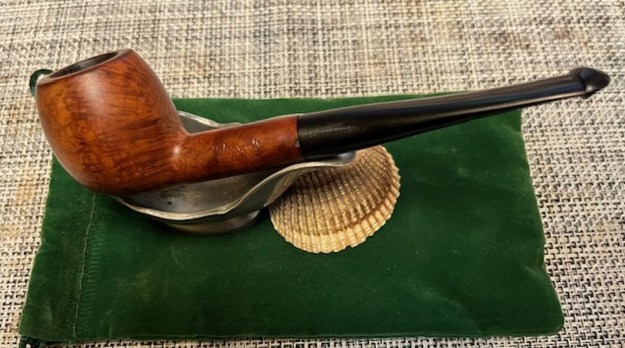
Restoring a Smooth, Republic Era Peterson’s System Star 307 Sterling Silver Ferrule


Blog by Steve Laug

The next pipe on the work table is Peterson’s System pipe that we purchased from and estate in Plano, Texas, USA on 03/30/2022. It was stamped Peterson’s [over] System [over] Star on the left side of the shank vertically below the silver ferrule. On the right it is stamped Made in the Republic of Ireland (in three lines) [over] the shape number 307. It has a smooth finish around the bowl and shank that is covered with a lot of oils, debris and grime. There was a thick cake in the bowl with remnants of tobacco stuck on the walls. There was a lava overflow on the rim top that was heavier toward the back side. The top and edges of the rim were well hidden under the tars and lava. There was a very beautiful pipe underneath all of the buildup of years of use. The ferrule on the shank end was oxidized and is stamped on the top and left side Peterson [over] Dublin. That is followed by Sterling [over] Silver. On the underside there are three hallmarks – Hibernia seated, Crowned Harp for country of manufacture and a date letter in this case a lower case “m”. There is a small dent on the underside of the ferrule. The stem was a Peterson’s style P-Lip. It was oxidized and calcified toward the end with some tooth marks and chatter. There were tooth marks on the button itself as well. Jeff took photos of the pipe before he started his cleanup work on it. Jeff took photos of the bowl and rim top to show the thick, hard cake in the bowl with remnants of tobacco stuck on the walls of the bowl. There was a lava build up on the top of the rim and the edges of the bowl. The rim top looked pretty good but it was hard to know for sure if there was damage under the thick lava. Only clean up would tell the full story. Jeff took photos of the top and underside of the stem showing the tooth chatter, scratching, calcification and oxidation on the stem surface and wear on the edges of the button. Jeff took photos of the sides and heel of the bowl to show the condition of the finish. You can see the grime around the sides of the bowl and shank. Even under the dirt and debris of the years it looked very good. Jeff took photos of the stamping on the underside of the bowl and shank. The stamping was faint but readable as you can see from the photos. It read as noted above. The Sterling Silver Ferrule is actually clearly stamped and readable. The hallmarks are light but readable. I have not seen the System Star stamp before so this new stamping made me once again turn to The Peterson Pipe by Mark Irwin & Gary Malmberg. I looked up the System Star in the book and on page 315 it includes this information:

Peterson’s over System over Star (c1979-c.1985, 2010) A high-quality line between the De Luxe and Premier, in smooth burgundy finish with sterling domed mount.

I have included the information on the shape number on this pipe that I picked up on researching the previous pipes. This is the second of two Peterson’s System pipes marked with the 307 shape number that I have worked on in the past few days. I have included a page from a Petersons Catalogue that I have on rebornpipes (https://rebornpipes.com/tag/peterson-hallmark-chart/). I have put a red box around the 307 shown in the catalogue page shown below. That should give a clear picture of the size and shape of the pipe. I am also including the information from Pipedia’s article on Peterson pipes. It is a great read in terms of the history of the brand (https://pipedia.org/wiki/Peterson). I have included a bit of the pertinent history here.

1950 – 1989 The Republic Era  – From 1950 to the present time, the stamp for this era is “Made in the Republic of Ireland” in a block format generally in three lines but two lines have been used with or without Republic being abbreviated.

During the 1950’s and 60’s the Kapp & Peterson company was still in the ownership of the Kapp family. However 1964 saw the retiral of the company Managing Director Frederick Henry(Harry) Kapp.

Pipedia also included a section of information on the System pipes including a diagram of the systems look (https://pipedia.org/wiki/Peterson#Republic_Era_Pipes). I quote a section of the article in part and include a link to another article on Pipedia on the System pipe.

The Peterson System pipes are the standard bearers of the Peterson pipe family, famous for the excellent smoking pleasure they provide. Often imitated but never equalled, the Peterson System smokes dry, cool and sweet, thanks to the scientific effectiveness of the original design. The heart of the System is the unique graduated bore in the mouthpiece. This makes the suction applied by the smoker 15 times weaker by the time it reaches the tobacco chamber. The result is that all the moisture flows into the reservoir and, thus cannot reach the smoker’s mouth. The Peterson Lip further enhances the effectiveness of the graduated bore by directing the flow of smoke upwards and away from the tongue. This achieves a uniquely even distribution of smoke and virtually eliminates any chance of tonguebite or bitterness. Furthermore, the shape is contoured so that the tongue rests comfortably in the depression under the opening. Each “PLip” mouthpiece is made from Vulcanite. For the Peterson System pipes to work properly, the stem/tenon has to have an extension, the tip of which will pass by the draft hole from the bowl and into the sump. Upon the smoker drawing in smoke, this extension then directs the smoke down and around the sump to dispense a lot of the moisture before the smoke enters the extension and stem. On the System Standards and other less expensive systems, this extension with be made of Vulcanite turned integrally with the stem. On the more expensive System pipes this extension will be made of metal which screws into the Vulcanite stem. This extension on the earlier pipes will be of brass and the newer pipes will be of aluminium. Most smokers not knowing this function of the metal extension, assumes that it is a condenser/stinger and will remove it as they do with the metal condensers of Kaywoodie, etc. Should you have a System pipe with this metal extension, do not remove it for it will make the System function properly and give you a dryer smoke (https://pipedia.org/wiki/A_closer_look_at_the_famous_Peterson_Standard_System_Pipe).

I have written many times about the hallmarks on Peterson’s Pipes and have included date charts in the past. Here is another date chart (https://rebornpipes.com/wp-content/uploads/2015/04/peterson-hallmark-chart.jpg). I spelled out the details of the hallmarks in the opening paragraph above but now want to specifically address the date of the pipe. It has a lower case “m” in the cartouche on the silver. Using the chart below the lower case “m” dates the pipe as being made in 1978. I have drawn a red box around the pertinent letter in the screen capture below. With that information in hand I knew what I was dealing with in terms of the stamping and the age of this pipe. I knew from the information that the System Star pipe was made during the Republic Era in 1978. Now it was time to work on the pipe.

Jeff cleaned this filthy pipe with his usual clean up process. This one was a real mess and I did not know what to expect when I unwrapped it from his box. He reamed it with a PipNet pipe reamer and cleaned up the reaming with a Savinelli Fitsall Pipe Knife. He scrubbed out the internals with alcohol, pipe cleaners and cotton swabs until the pipe was clean. He scrubbed the exterior of the bowl with Murphy’s Oil Soap and a tooth brush to remove the grime and grit on the briar and the lava on the rim top. The finish looks very good with great looking grain around the bowl and shank. Jeff soaked the stem in Briarville’s Pipe Stem Deoxidizer to remove the oxidation on the vulcanite. When the pipe arrived here in Vancouver for the second stop of its restoration tour I was amazed it looked so good. I removed the incorrect stem and replaced it with a correct P-Lip stem for a 307 that I had here in my box of stems. The bonus was that the tenon had a brass chimney in the end that was correct for this pipe. I took some close up photos of the rim top and also of the stem surface. I wanted to show what an amazing job Jeff did in the cleanup of the rim top. The rim top was and inner edge were in good condition. There was some darkening and slight damage to the inner edge. The rim top also had some nicks and marks. I also took close up photos of the stem to show the condition of the vulcanite. It was quite clean  and the tooth marks on the button and on the stem ahead of the button were very visible in the photos.One of the things I appreciate about Jeff’s cleanup is that he works to protect and preserve the nomenclature on the shank of the pipes that he works on. The stamping on this one was very faint to start with so I was worried that it would disappear altogether with the cleanup. He was not only able to preserve and maintain its condition in the process. I took some photos to show the clarity of the stamping. I have noticed that many restorers are not careful to protect the stamping in their cleaning process and often by the end of the restoration the nomenclature is almost destroyed. I would like to encourage all of us to be careful in our work to preserve this as it is a critical piece of pipe restoration! I took the stem off the shank and took a photo of the pipe. I decided to start my work on the pipe by cleaning up the rim top and inner edge of the bowl with a folded piece of 220 grit sandpaper. I removed the damage on the inner edge and the nicks on the rim top. It looked significantly better.  I polished the briar with micromesh sanding pads – dry sanding it with 1500-12000 grit sanding pads. I wiped it down with a damp cloth after each sanding pad to remove the dust. The briar was really shining by the final pad. I rubbed the bowl and rim down with Before & After Restoration Balm. I worked it into the surface of the briar with my fingertips to clean, enliven and protect it. I let the balm sit for 10 minutes and then buffed with a cotton cloth to raise the shine. I really like watching the Balm do its magic and bring the briar alive. With briar polished with the Restoration Balm I moved onto the metal. I polished the Sterling Silver ferrule with a jewellers cloth to raise the shine and to protect it from further oxidation. I “painted” the stem surface with the flame of a Bic lighter to lift the tooth marks. I was able to lift them a bit but not totally. I filled in the deep marks that remained with clear CA glue and sit it aside to cure. Once it cured I used a file to flattened the repairs and redefine the button edge. I sanded the stem with 220 grit sandpaper to further blend in the repairs. I started polishing it with 400 grit wet dry sandpaper. I scrubbed the stem with SoftScrub to remove the oxidization left in the vulcanite of the saddle stem. I was able to remove a significant amount of oxidation that was on the saddle portion of the stem. It looked significantly better at this point.I touched up the “P” logo on the left side of the saddle stem with white acrylic fingernail polish. I let it dry then I polished off the excess with a worn 1500 grit micromesh sanding pad. Once the excess was removed the stamp looked much better.I polished the stem with micromesh sanding pads – wet sanding with 1500-12000 grit pads. I wiped the stem down after each sanding pad with Obsidian Oil. I polished it with Before & After Pipe Stem Polish – both Fine and Extra Fine. I gave it a coat of Obsidian Pipe Stem Oil. It works to protect the stem from oxidizing. I set it aside to dry. Once again at this point in the restoration process I am excited to be on the homestretch. I look forward to the final look when the Peterson System Star 307 is put back together, polished and waxed. I put the bowl and stem back together. I lightly polished the bowl and stem with Blue Diamond to polish out the scratches in the briar and the vulcanite. I gave the bowl and the stem multiple coats of carnauba wax. I buffed the pipe with a clean buffing pad to raise the shine. I hand buffed it with a microfiber cloth to deepen the shine. The pipe polished up pretty nicely. The depths of the rustication really pop with the wax and polish. The shiny black vulcanite stem is a beautiful contrast to the browns of the bowl and thick shank and Sterling Silver ferrule. This Republic Era Peterson’s System Star 307 Bent Billiard was another fun pipe to work on. It really is a quite stunning piece of briar whose shape follows the flow of the briar. The pipe feels great in the hand will be better when warmed up while smoking. The finished pipe is shown in the photos below. The dimensions of the pipe are Length: 6 ½ inches, Height: 2 inches, Outside diameter of the bowl: 1 ¼ inches, Chamber diameter: ¾ of an inch. The weight of the pipe is 2.43 ounces/70 grams. I will be putting it on the rebornpipes store in the Irish Pipemakers Section if you would like to add it to your rack and carry on the previous pipeman’s legacy. This is an interesting estate to bring back to life.

As always, I encourage your questions and comments as you read the blog. Thanks to each of you who are reading this blog. Remember we are not pipe owners; we are pipe men and women who hold our pipes in trust until they pass on into the trust of those who follow us.
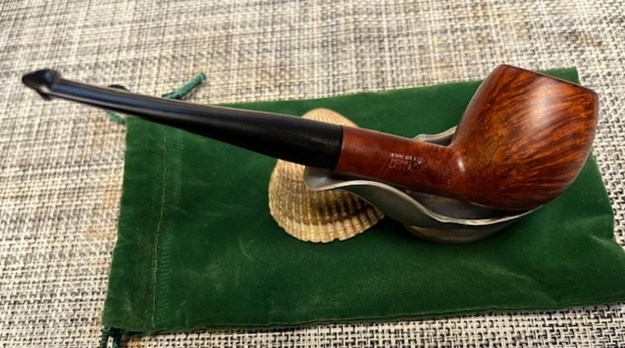
Peterson’s System Standard XL307 Made in the Republic of Ireland Rusticated Bent


Blog by Steve Laug

The next pipe on the work table is Rusticated Peterson’s System pipe that we purchased from and estate in Plano, Texas, USA on 03/30/2022. It was stamped Peterson’s System Standard on the underside side of the shank in a smooth panel. It was stamped Peterson’s [over] System [over] Standard. That is followed by the shape number XL307 [over] Made in the Republic of Ireland (in three lines). It has a rugged, tactile rustication around the bowl and shank that is fill with a lot of oils, debris and grime. There was a thick cake in the bowl with remnants of tobacco stuck on the walls. There was a lava overflow on the rim top that was heavier toward the back side. The top and edges of the rim were well hidden under the tars and lava. There was a very beautiful pipe underneath all of the buildup of years of use. The nickel ferrule on the shank end was oxidized and is stamped on the top and left side K&P [over] three faux hallmarks. That is followed by Petersons. It is not dented or damaged. The stem was the wrong stem for the pipe. It was not a Peterson’s style P-Lip but rather a Wellington style with the airway exiting on the end of the stem. It was oxidized and calcified toward the end with some tooth chatter. There were also some tooth marks on both sides of the stem ahead of the button. I would need to restem it with a proper stem once I received it in Vancouver. Jeff took photos of the pipe before he started his cleanup work on it. Jeff took photos of the bowl and rim top to show the thick, hard cake in the bowl with remnants of tobacco stuck on the walls of the bowl. There was a lava build up on the top of the rim and the edges of the bowl. The rim top looked pretty good but it was hard to know for sure if there was damage under the thick lava. Only clean up would tell the full story. Jeff took photos of the top and underside of the stem showing the tooth chatter, scratching and oxidation on the stem surface and wear on the edges of the button. You can also see the exit of the airway on the stem end rather than the to of the P-lip. Jeff took photos of the sides and heel of the bowl to show the condition of the finish. You can see the grime in the rustication around the sides of the bowl and shank. Even under the dirt and debris of the years it looked very good. Jeff took photos of the stamping on the underside of the bowl and shank. The stamping was faint but readable as you can see from the photos. It read as noted above. The nickel ferrule on the shank end is stamped on the top and left side K&P Peterson’s over three Peterson marks used on nickel ferrules. I have included the information on the shape number on this pipe that I picked up on researching the previous pipes. This is the second of two Peterson’s System Standard pipes in Bob’s collection marked with the 307 shape number. I have included a page from a Petersons Catalogue that I have on rebornpipes (https://rebornpipes.com/tag/peterson-hallmark-chart/). I have put a red box around the 307 shown in the catalogue page shown below. That should give a clear picture of the size and shape of the pipe. I am also including the information from Pipedia’s article on Peterson pipes. It is a great read in terms of the history of the brand (https://pipedia.org/wiki/Peterson). I have included a bit of the pertinent history here.
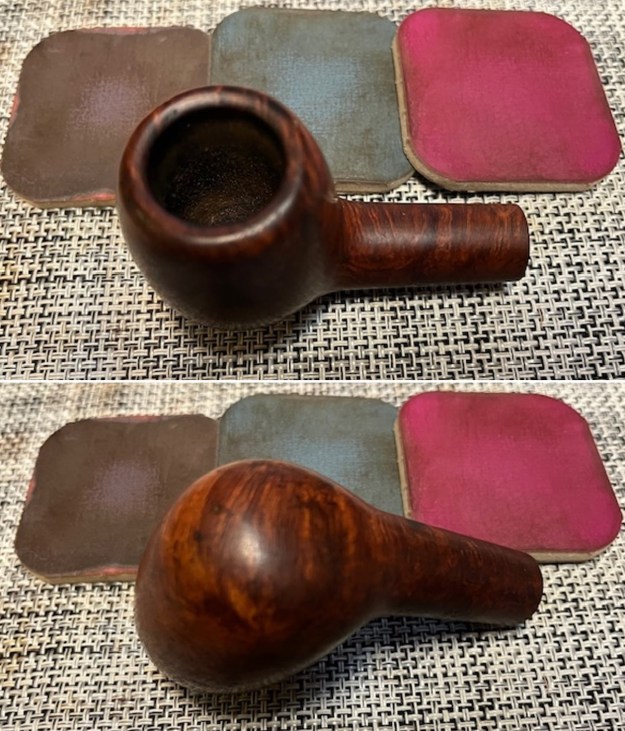
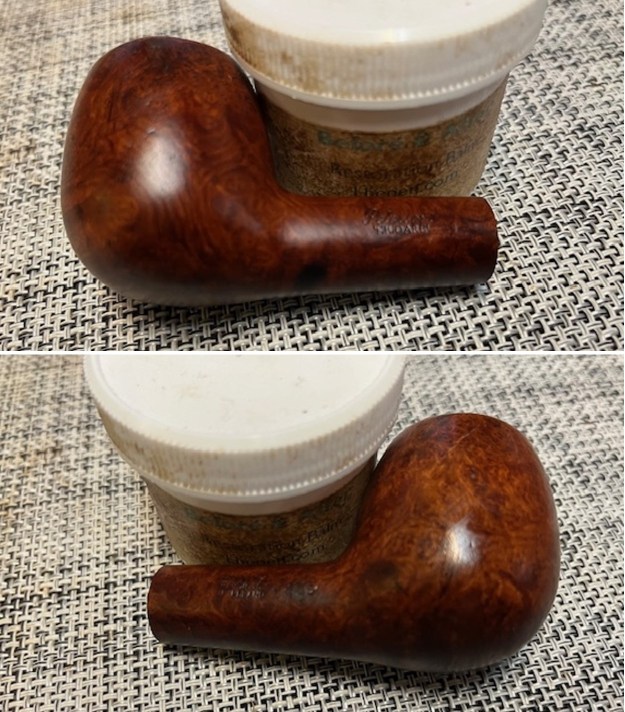
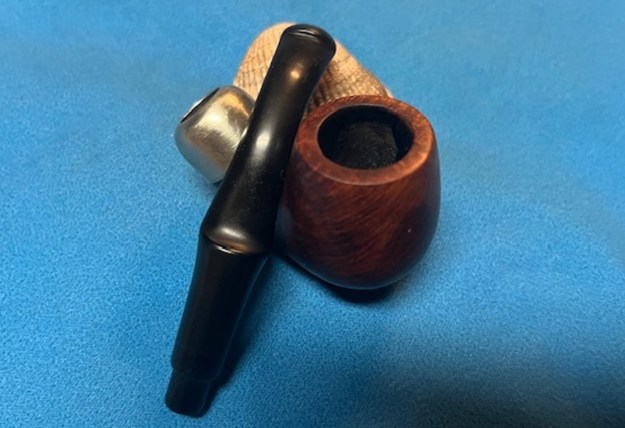
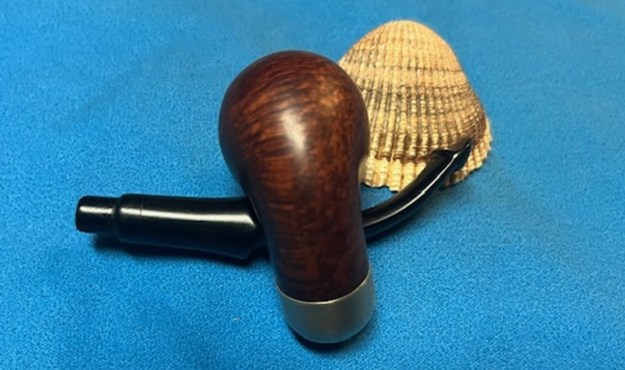
1950 – 1989 The Republic Era  – From 1950 to the present time, the stamp for this era is “Made in the Republic of Ireland” in a block format generally in three lines but two lines have been used with or without Republic being abbreviated.

During the 1950’s and 60’s the Kapp & Peterson company was still in the ownership of the Kapp family. However 1964 saw the retiral of the company Managing Director Frederick Henry(Harry) Kapp.

Pipedia also included a section of information on the System pipes including a diagram of the systems look (https://pipedia.org/wiki/Peterson#Republic_Era_Pipes). I quote a section of the article in part and include a link to another article on Pipedia on the System pipe.

The Peterson System pipes are the standard bearers of the Peterson pipe family, famous for the excellent smoking pleasure they provide. Often imitated but never equaled, the Peterson System smokes dry, cool and sweet, thanks to the scientific effectiveness of the original design. The heart of the System is the unique graduated bore in the mouthpiece. This makes the suction applied by the smoker 15 times weaker by the time it reaches the tobacco chamber. The result is that all the moisture flows into the reservoir and, thus cannot reach the smoker’s mouth. The Peterson Lip further enhances the effectiveness of the graduated bore by directing the flow of smoke upwards and away from the tongue. This achieves a uniquely even distribution of smoke and virtually eliminates any chance of tonguebite or bitterness. Furthermore, the shape is contoured so that the tongue rests comfortably in the depression under the opening. Each “PLip” mouthpiece is made from Vulcanite. For the Peterson System pipes to work properly, the stem/tenon has to have an extension, the tip of which will pass by the draft hole from the bowl and into the sump. Upon the smoker drawing in smoke, this extension then directs the smoke down and around the sump to dispense a lot of the moisture before the smoke enters the extension and stem. On the System Standards and other less expensive systems, this extension with be made of Vulcanite turned integrally with the stem. On the more expensive System pipes this extension will be made of metal which screws into the Vulcanite stem. This extension on the earlier pipes will be of brass and the newer pipes will be of aluminium. Most smokers not knowing this function of the metal extension, assumes that it is a condenser/stinger and will remove it as they do with the metal condensers of Kaywoodie, etc. Should you have a System pipe with this metal extension, do not remove it for it will make the System function properly and give you a dryer smoke (https://pipedia.org/wiki/A_closer_look_at_the_famous_Peterson_Standard_System_Pipe).

With that information in hand I knew what I was dealing with in terms of the stamping and the age of this pipe. I knew from the information that the pipe was made during the Republic Era between 1950 and 1989. My guess is that the pipes is a 1960s era System pipe. Now it was time to work on the pipe.

Jeff cleaned this filthy pipe with his usual clean up process. This one was a real mess and I did not know what to expect when I unwrapped it from his box. He reamed it with a PipNet pipe reamer and cleaned up the reaming with a Savinelli Fitsall Pipe Knife. He scrubbed out the internals with alcohol, pipe cleaners and cotton swabs until the pipe was clean. He scrubbed the exterior of the bowl with Murphy’s Oil Soap and a tooth brush to remove the grime and grit on the briar and the lava on the rim top. The finish looks very good with great looking grain around the bowl and shank. Jeff soaked the stem in Briarville’s Pipe Stem Deoxidizer to remove the oxidation on the vulcanite. When the pipe arrived here in Vancouver for the second stop of its restoration tour I was amazed it looked so good. I removed the incorrect stem and replaced it with a correct P-Lip stem for a 307 that I had here in my box of stems. The bonus was that the tenon had a brass chimney in the end that was correct for this pipe.I put the stem in the pipe and took photos of it with the correct stem. I liked the look of the pipe at this point in the process. I took some close up photos of the rim top and also of the stem surface. I wanted to show what an amazing job Jeff did in the cleanup of the rim top. The rim top was and inner edge were in excellent condition. I also took close up photos of the replacement stem I put in the shank to show the condition of the vulcanite. It was quite clean other than some slight oxidation at the edges of the button. There were no tooth marks or chatter on the stem surface.One of the things I appreciate about Jeff’s cleanup is that he works to protect and preserve the nomenclature on the shank of the pipes that he works on. The stamping on this one was very faint to start with so I was worried that it would disappear altogether with the cleanup. He was not only able to preserve and maintain its condition in the process. I took some photos to show the clarity of the stamping. I have noticed that many restorers are not careful to protect the stamping in their cleaning process and often by the end of the restoration the nomenclature is almost destroyed. I would like to encourage all of us to be careful in our work to preserve this as it is a critical piece of pipe restoration! I took the stem off the shank and took a photo of the pipe. I decided to start my work on the pipe by cleaning up some of the polishing compound left in the rustication ahead shank rustication ahead of the ferrule. I worked the end over with a brass bristle wire brush to remove the crud in the finish. The photos show the progress.  I rubbed the bowl and rim down with Before & After Restoration Balm. I worked it into the rusticated surface of the briar with my fingertips and a horse hair shoe brush to clean, enliven and protect it. I let the balm sit for 10 minutes and then buffed with a cotton cloth to raise the shine. I really like watching the Balm do its magic and bring the briar alive. With briar polished with the Restoration Balm I moved onto the metal. I polished the nickel ferrule with a jewellers cloth to raise the shine and to protect the ferrule from further oxidation. I sanded the stem with 220 grit sandpaper to remove the oxidation that remained in the vulcanite and also the light tooth marks on the top and underside near the button. I started polishing it with 400 grit wet dry sandpaper.I touched up the “P” logo on the left side of the saddle stem with white acrylic fingernail polish. I let it dry then I polished off the excess with a worn 1500 grit micromesh sanding pad. Once the excess was removed the stamp looked much better even though there was some faintness on the curve of the P.I polished the stem with micromesh sanding pads – wet sanding with 1500-12000 grit pads. I wiped the stem down after each sanding pad with Obsidian Oil. I polished it with Before & After Pipe Stem Polish – both Fine and Extra Fine. I gave it a coat of Obsidian Pipe Stem Oil. It works to protect the stem from oxidizing. I set it aside to dry.  Once again at this point in the restoration process I am excited to be on the homestretch. I look forward to the final look when the Rusticated Peterson System XL307 is put back together, polished and waxed. I put the bowl and stem back together. I lightly polished the bowl and stem with Blue Diamond to polish out the scratches in the briar and the vulcanite. I gave the bowl multiple coats of Conservator’s Wax and the stem multiple coats of carnauba wax. I buffed the pipe with a clean buffing pad to raise the shine. I hand buffed it with a microfiber cloth to deepen the shine. The pipe polished up pretty nicely. The depths of the rustication really pop with the wax and polish. The shiny black vulcanite stem is a beautiful contrast to the browns of the bowl and thick shank and nickel ferrule. This Peterson’s System Standard XL307 Bent Billiard was another fun pipe to work on. It really is a quite stunning piece of briar whose shape follows the flow of the briar. The pipe is tactile in the hand and should feel great as it is warmed up when smoking. The finished pipe is shown in the photos below. The dimensions of the pipe are Length: 6 ½ inches, Height: 2 inches, Outside diameter of the bowl: 1 ¼ inches, Chamber diameter: ¾ of an inch. The weight of the pipe is 2.26 ounces/64 grams. I will be putting it on the rebornpipes store in the Irish Pipemakers Section if you would like to add it to your rack and carry on the previous pipeman’s legacy. This is an interesting estate to bring back to life.

As always, I encourage your questions and comments as you read the blog. Thanks to each of you who are reading this blog. Remember we are not pipe owners; we are pipe men and women who hold our pipes in trust until they pass on into the trust of those who follow us.