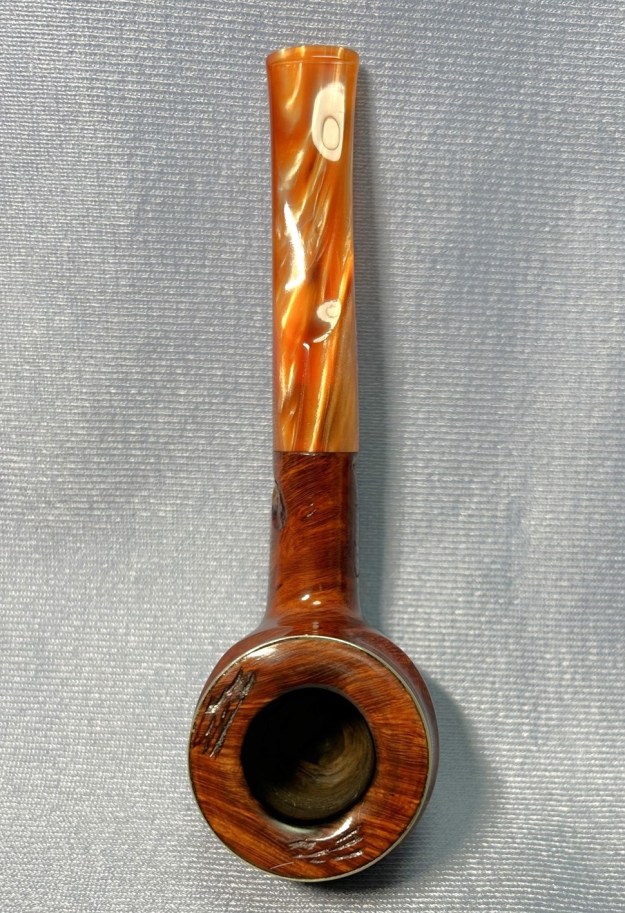
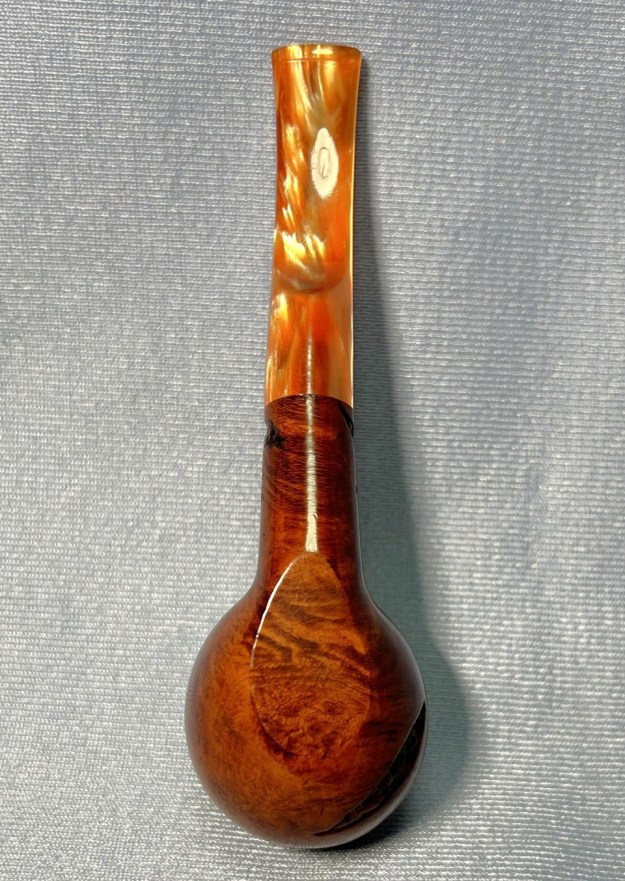
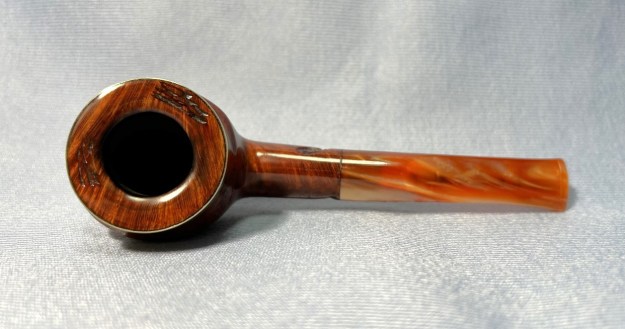
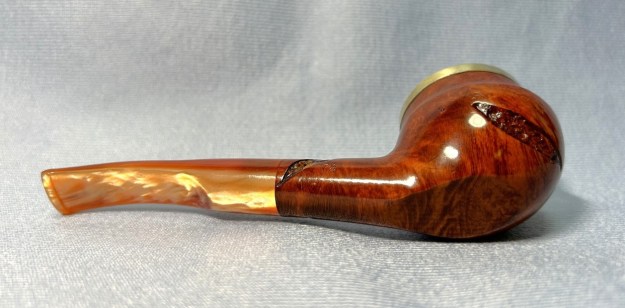
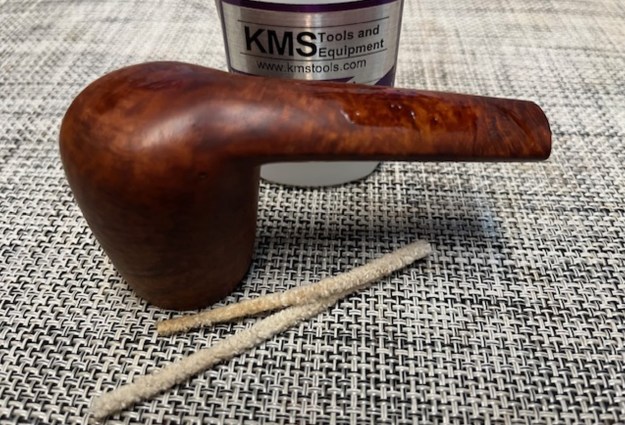
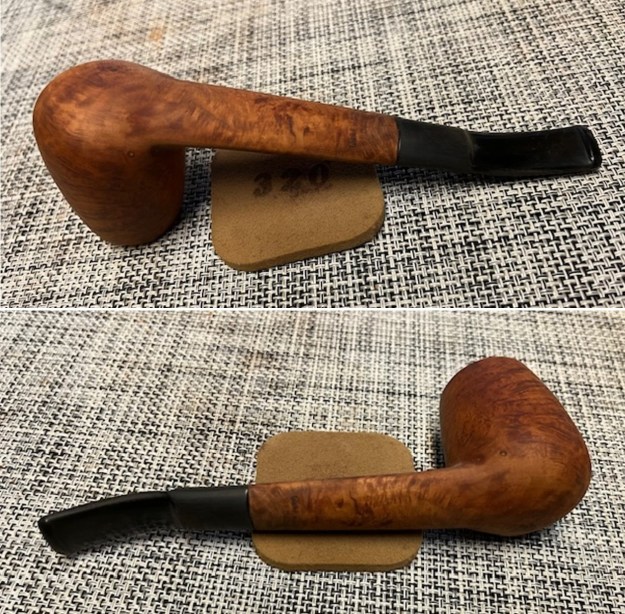
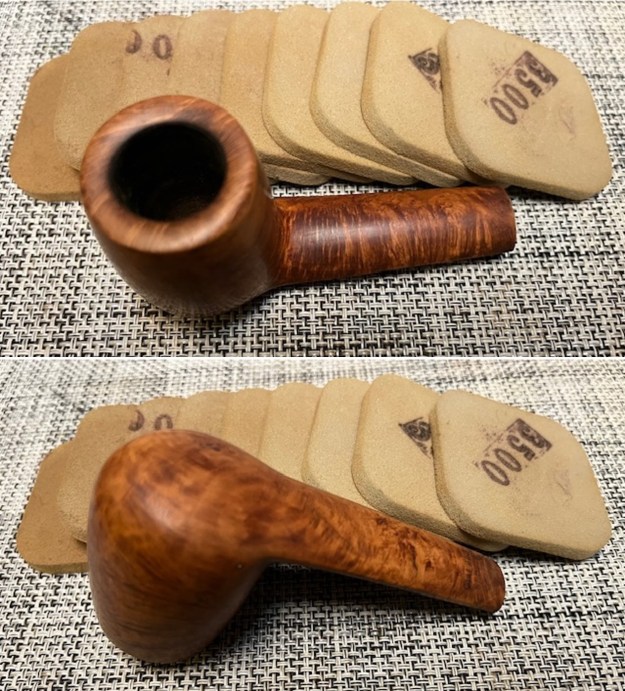
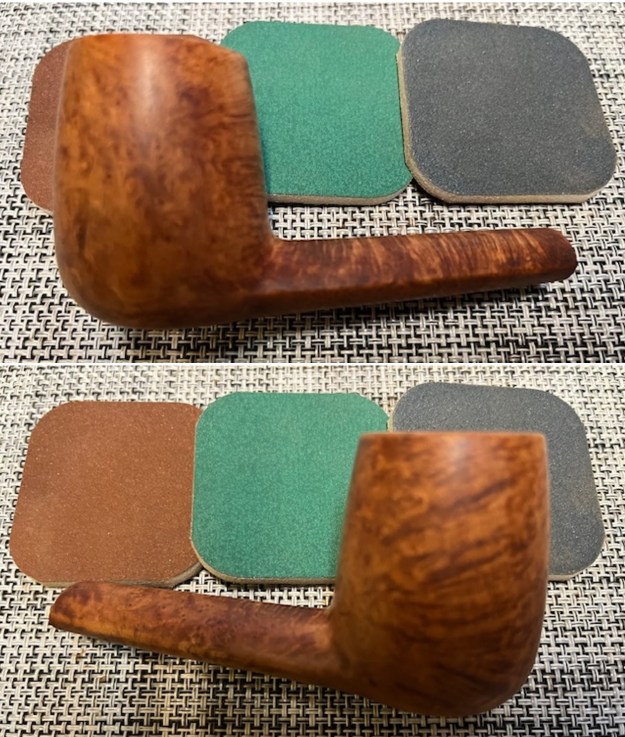
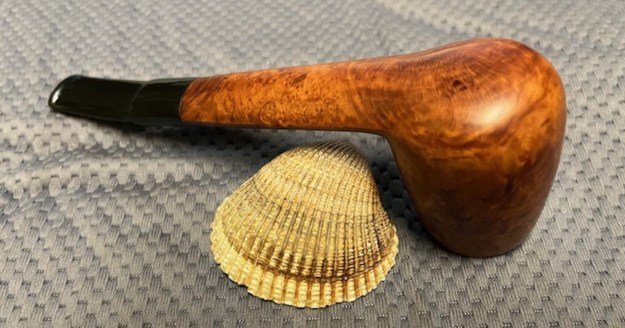
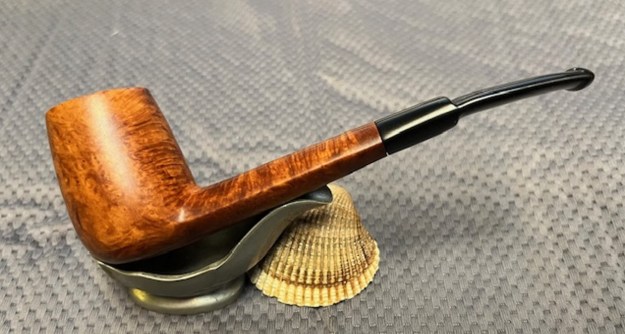
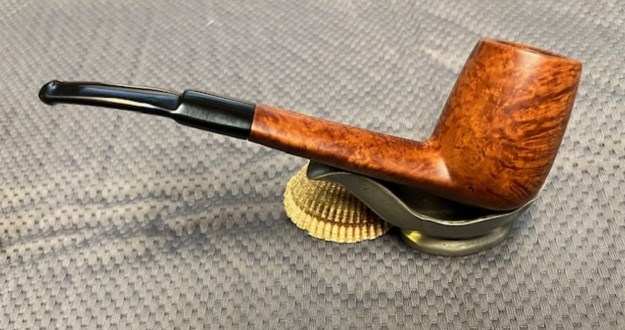
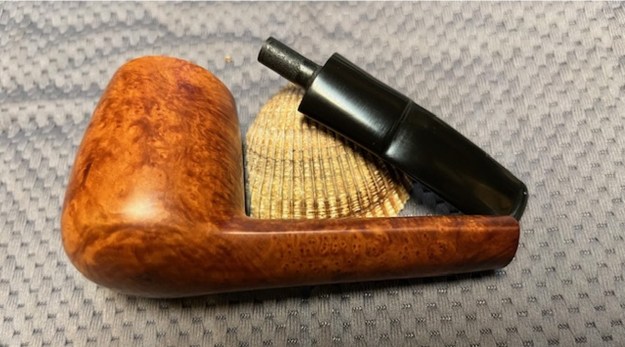
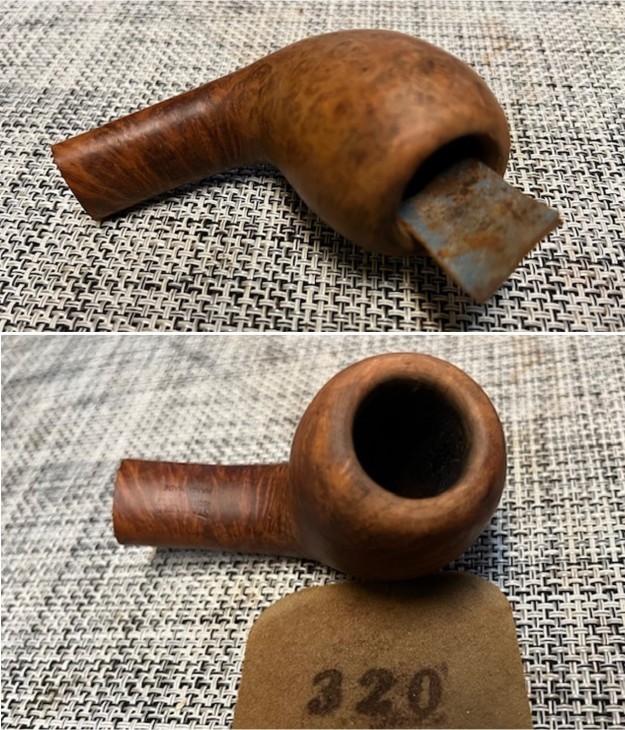
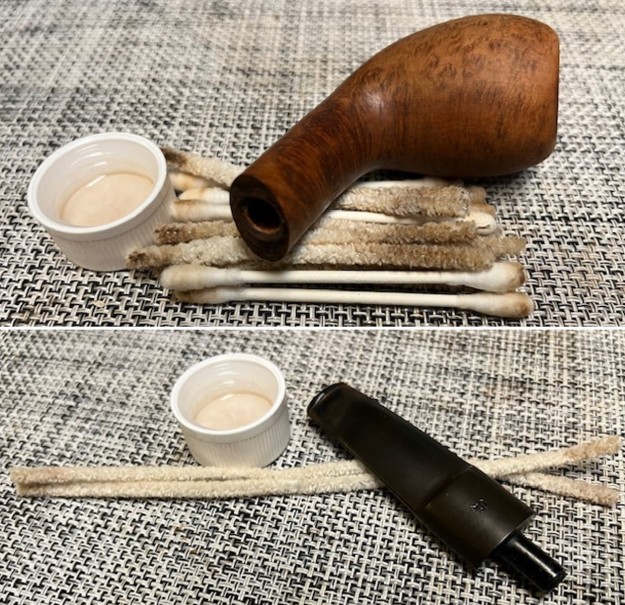
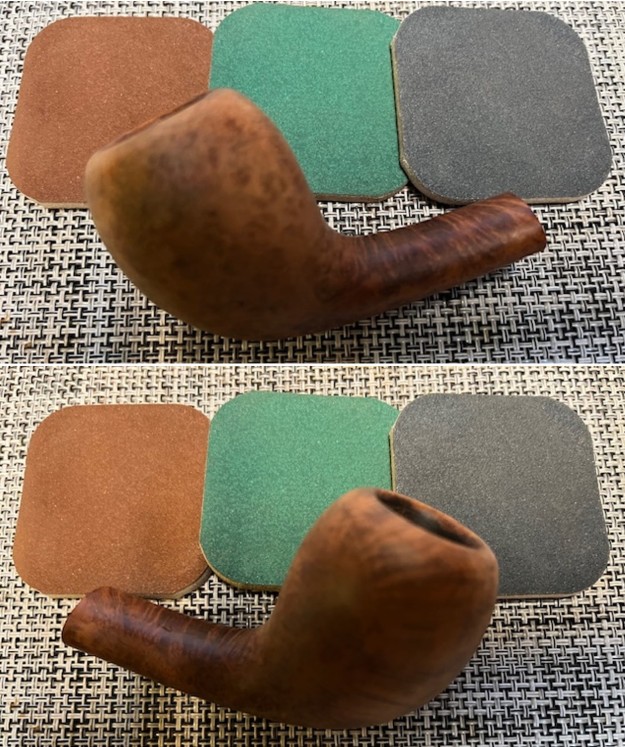
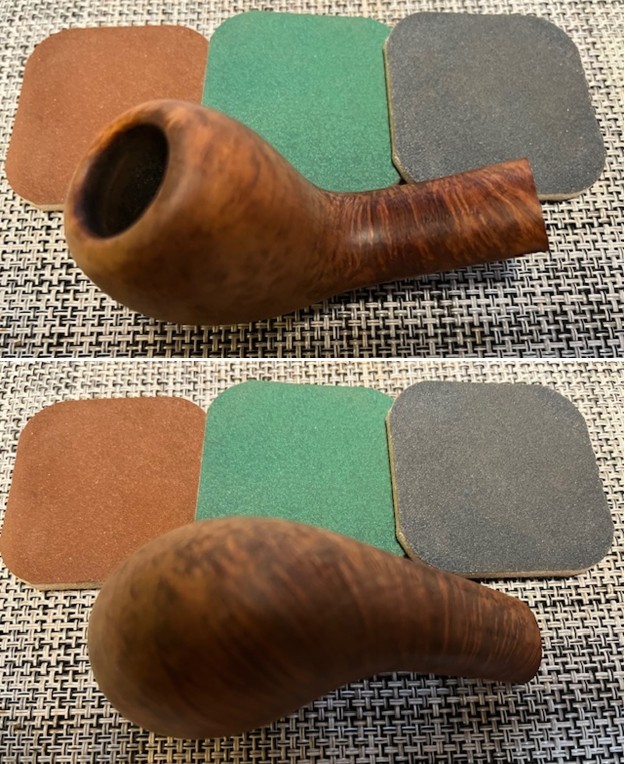
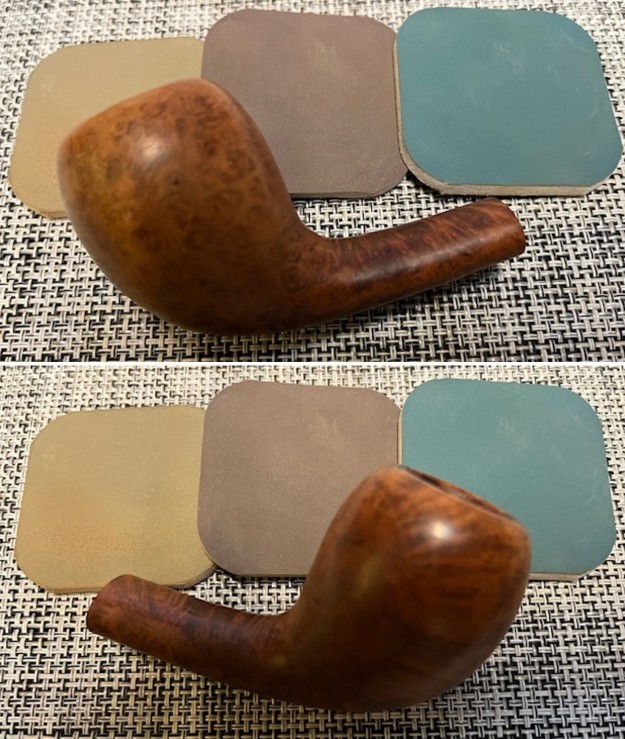
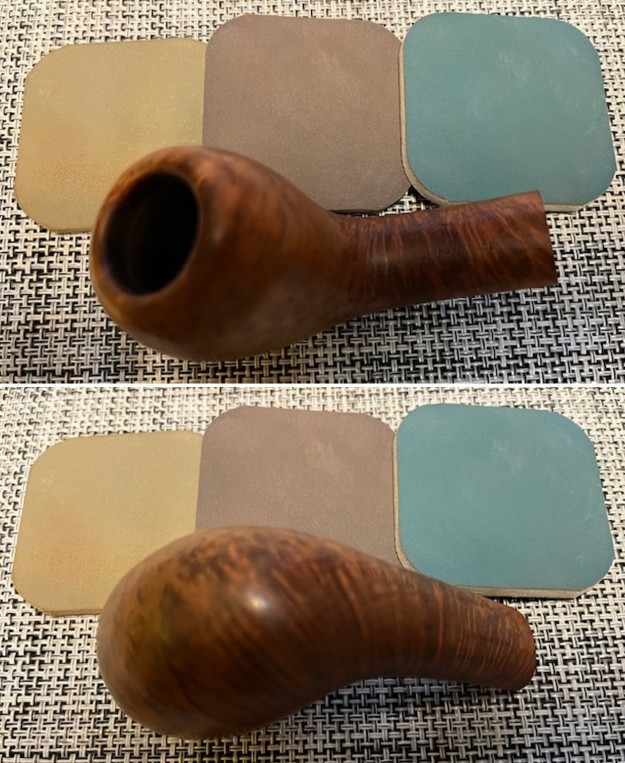
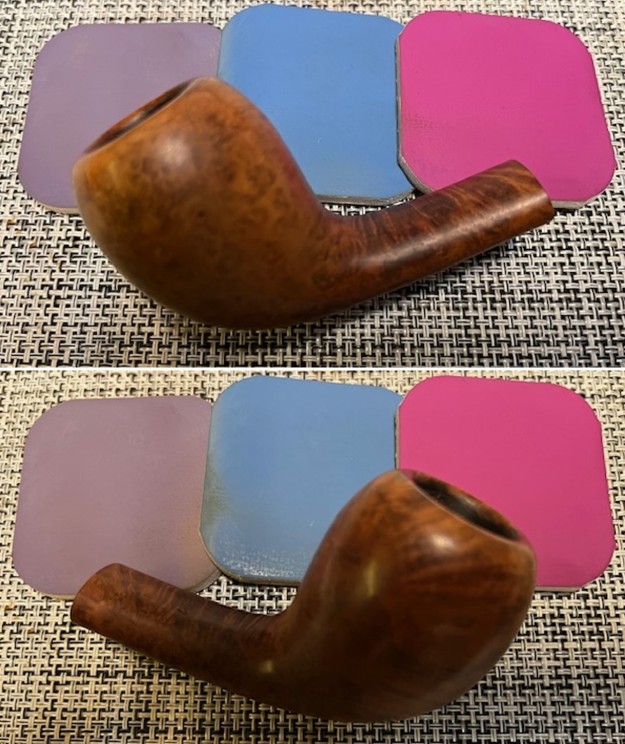
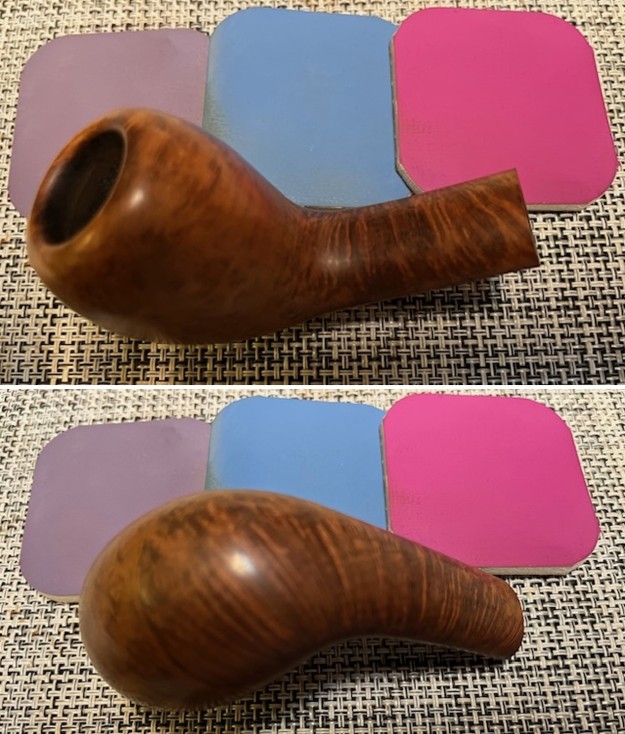
Tag Archives: bowl topping

Restoring a Modified K&P Irish Made


Blog by Kenneth Lieblich

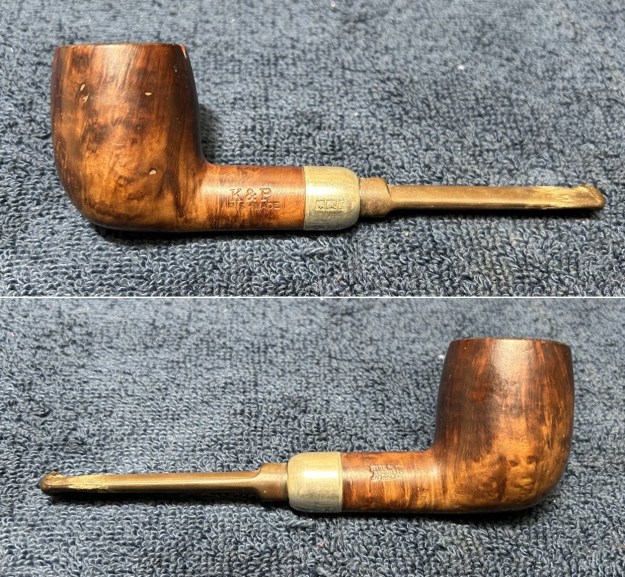
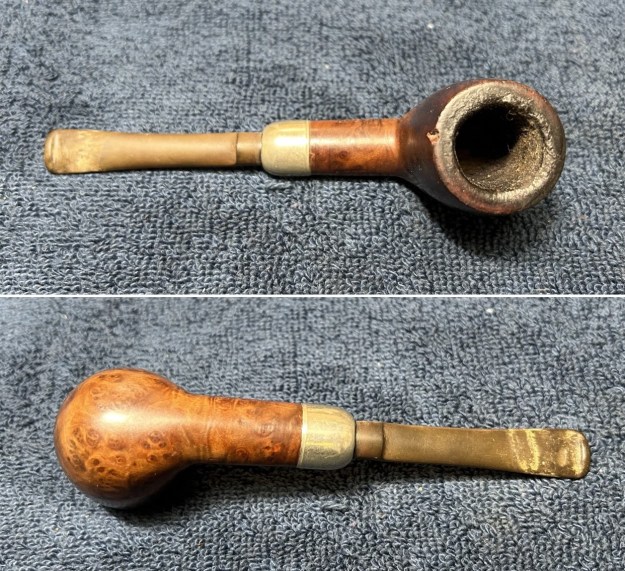
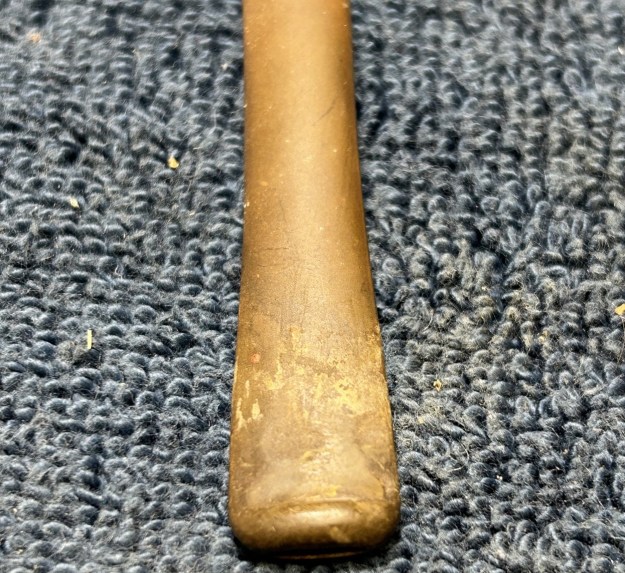
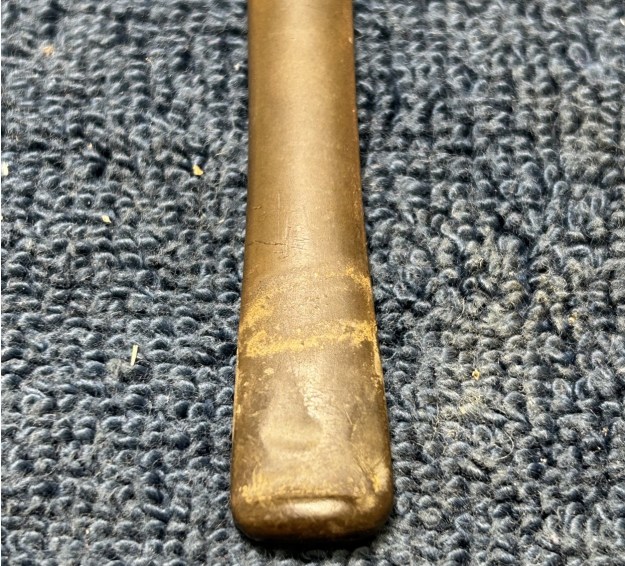
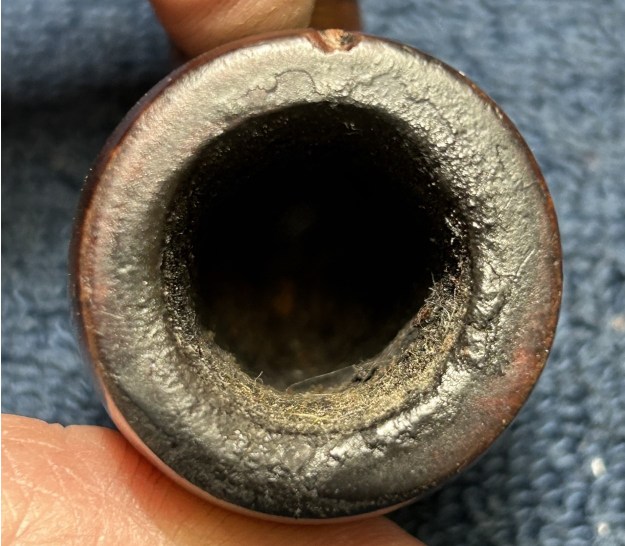
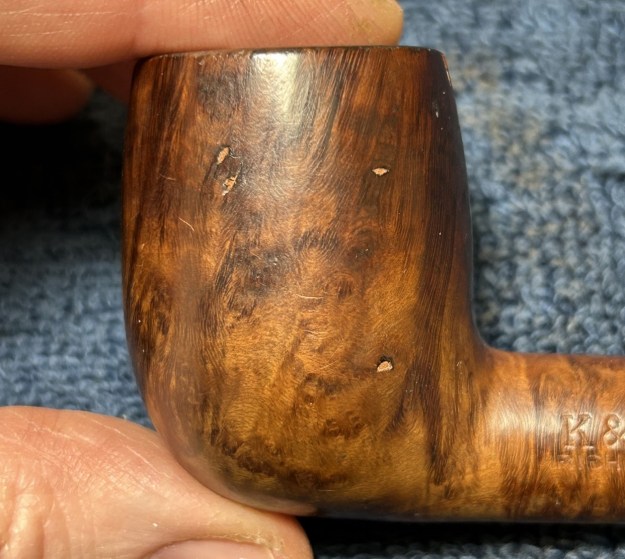
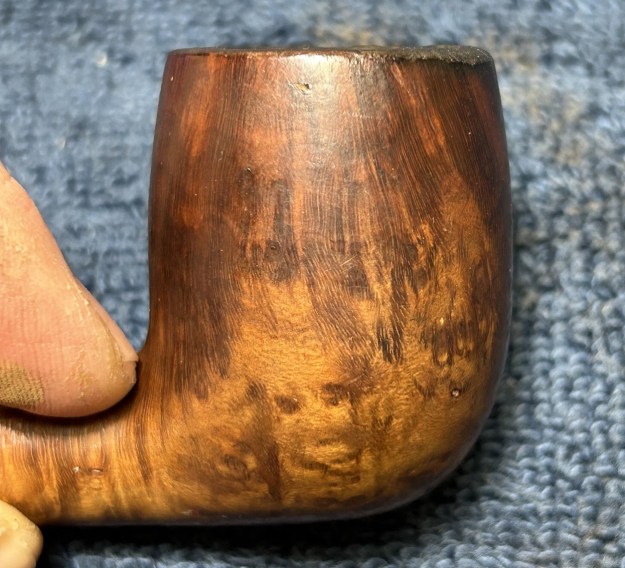
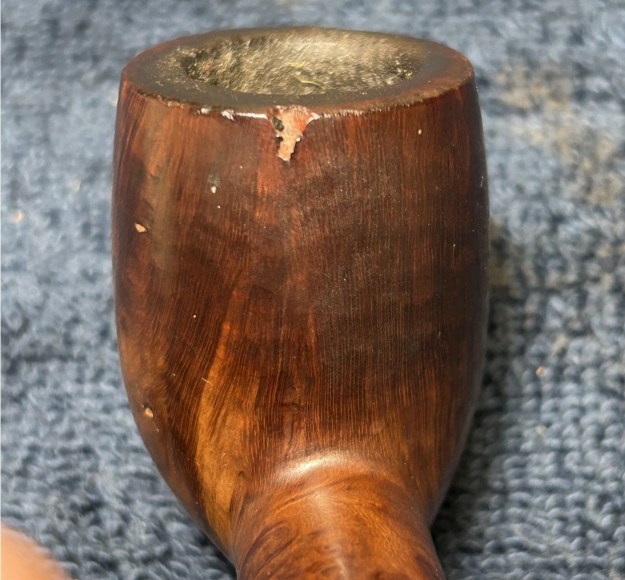
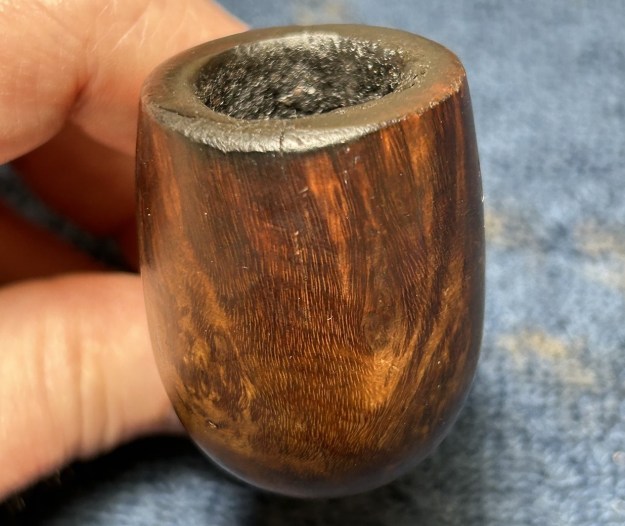
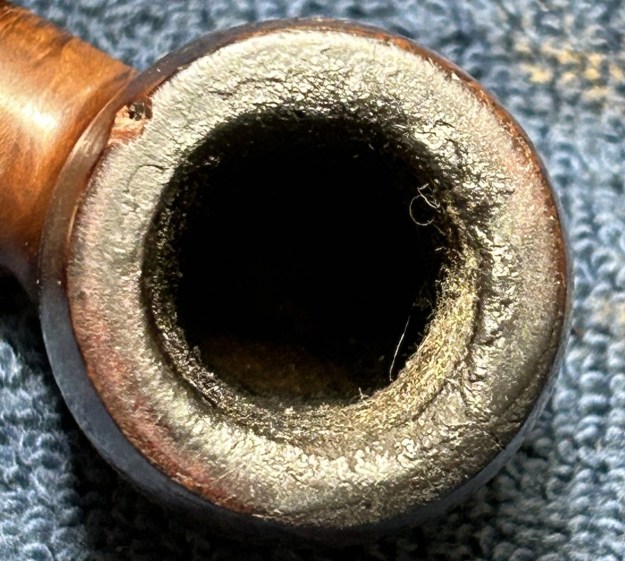
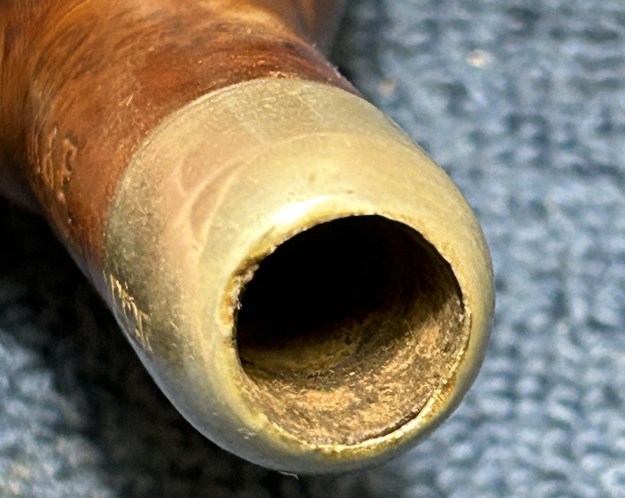
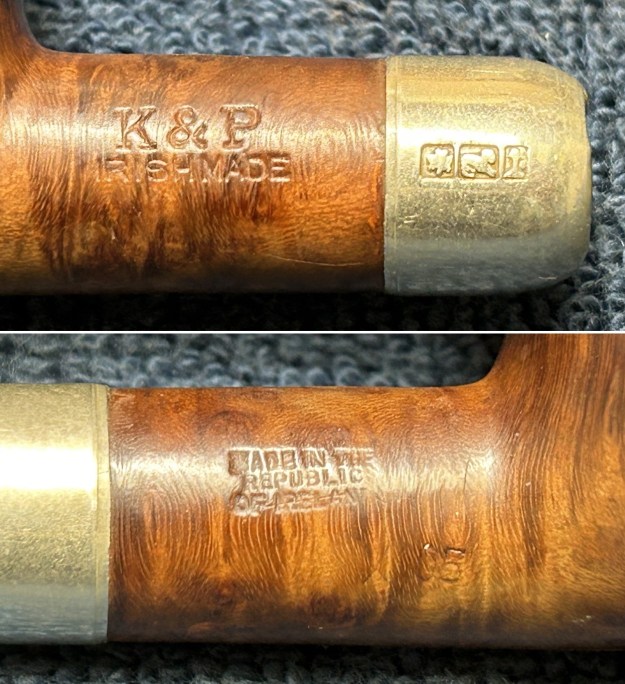
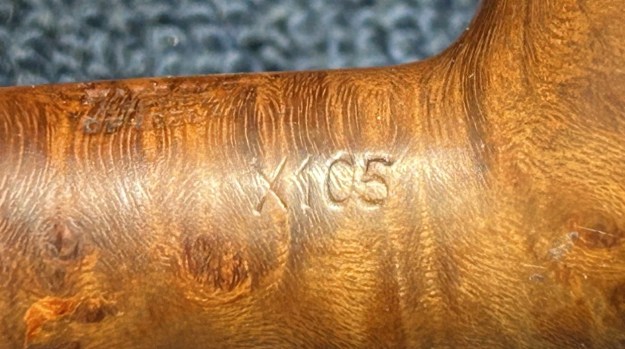
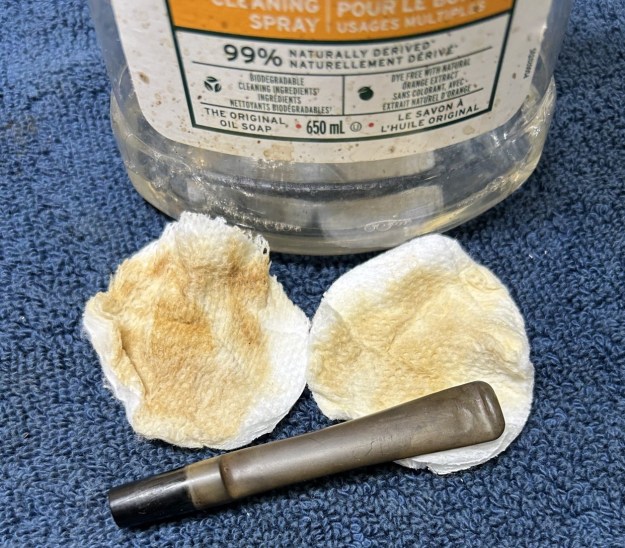
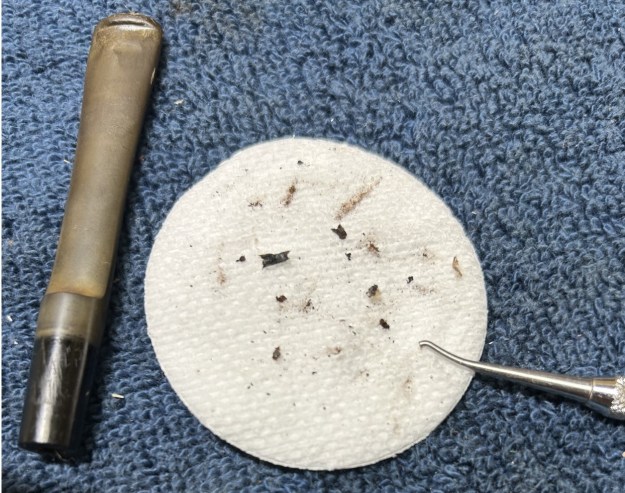
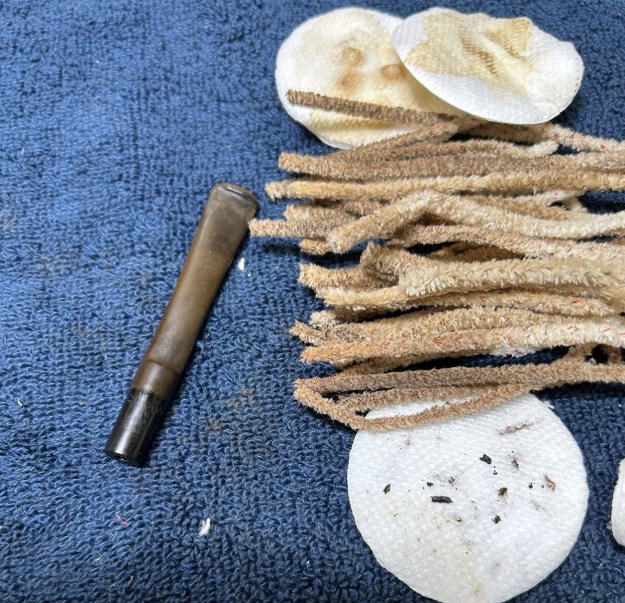
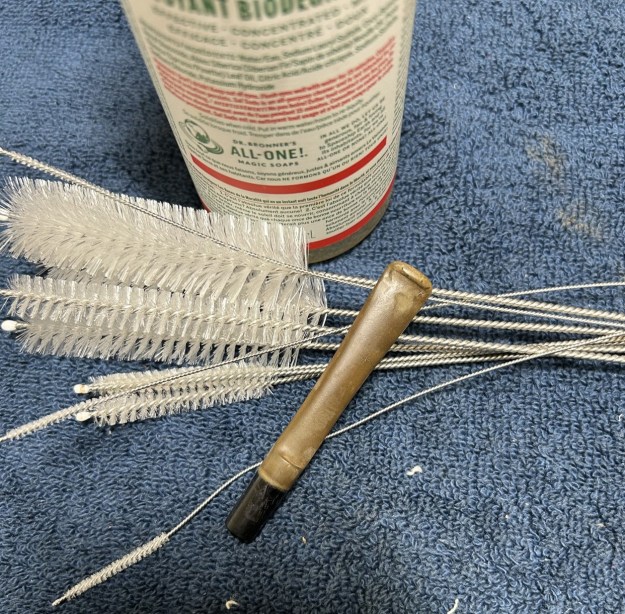
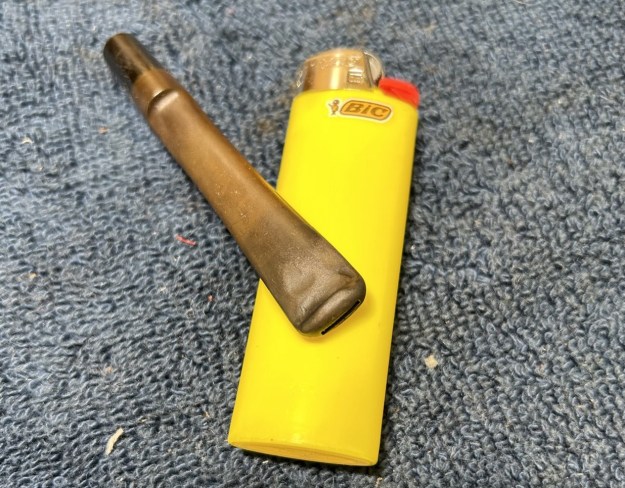
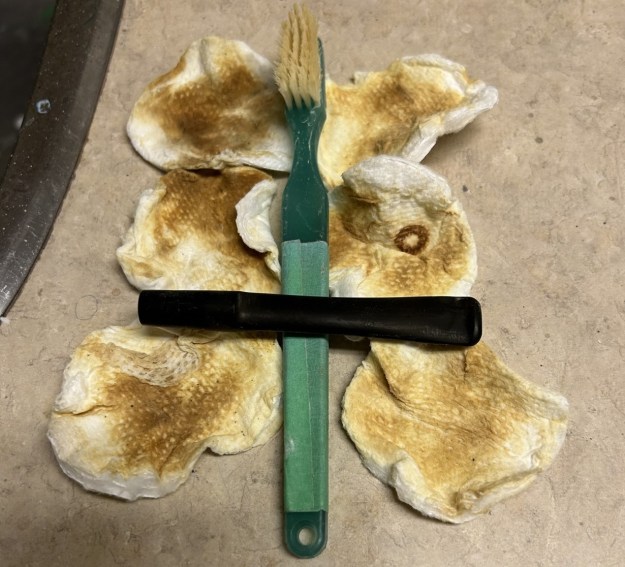
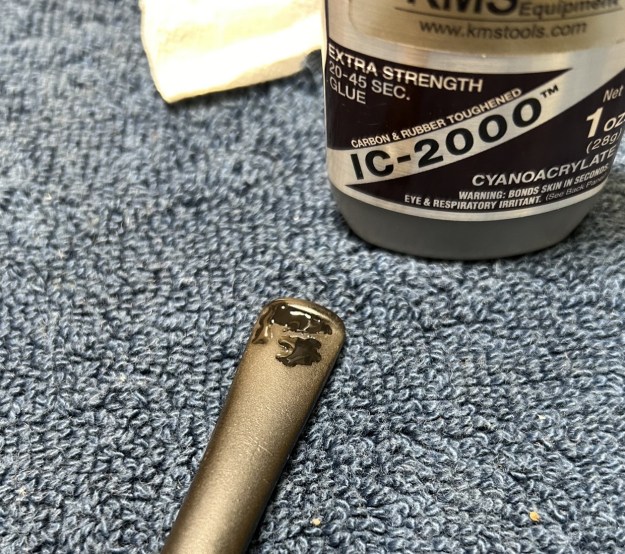
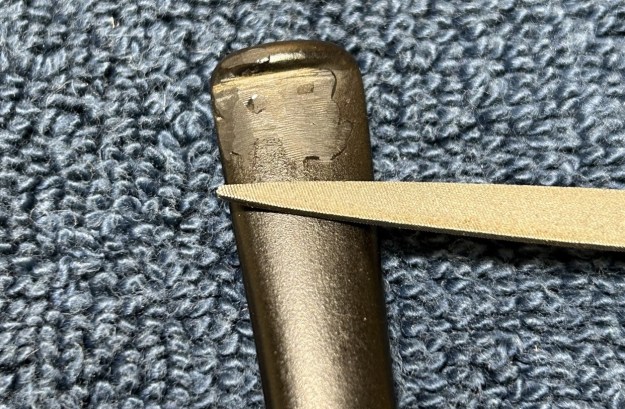
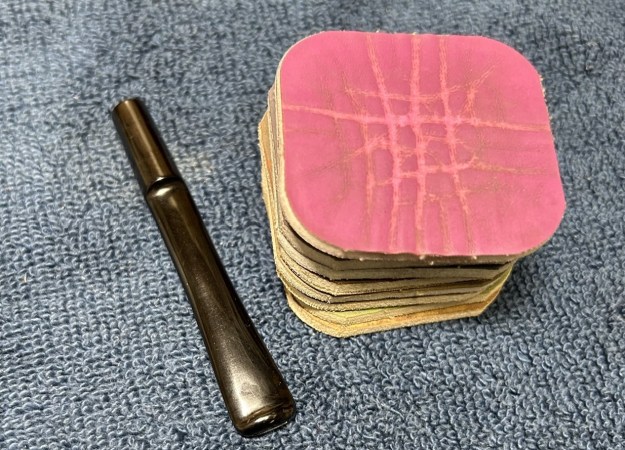
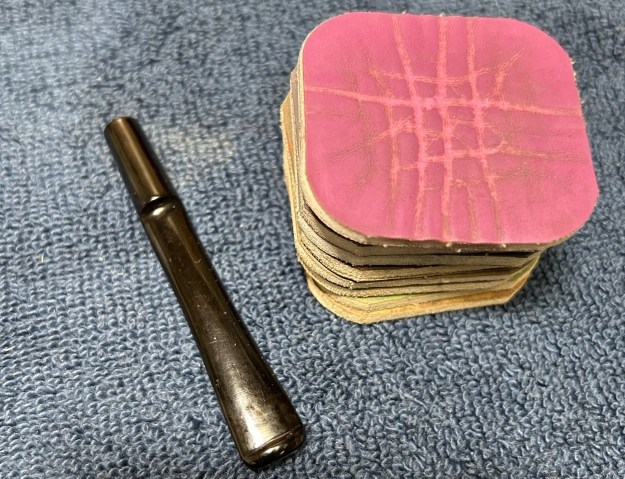
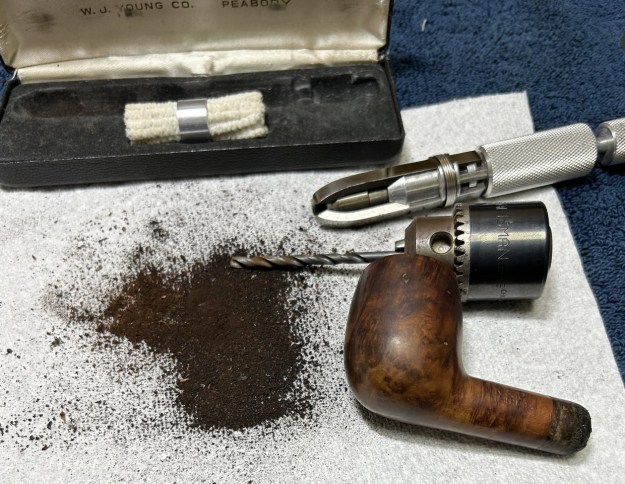
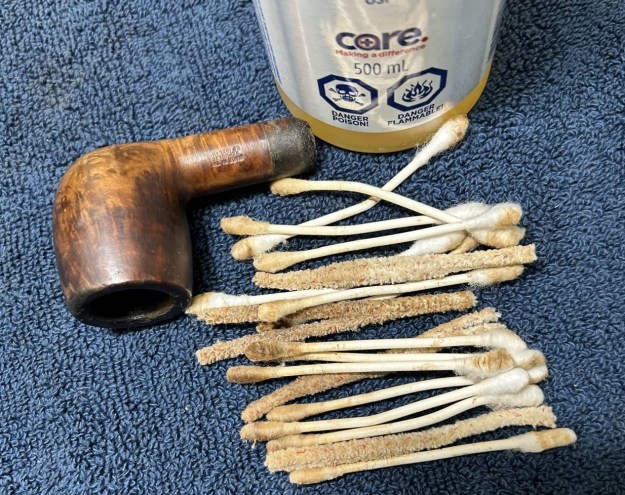
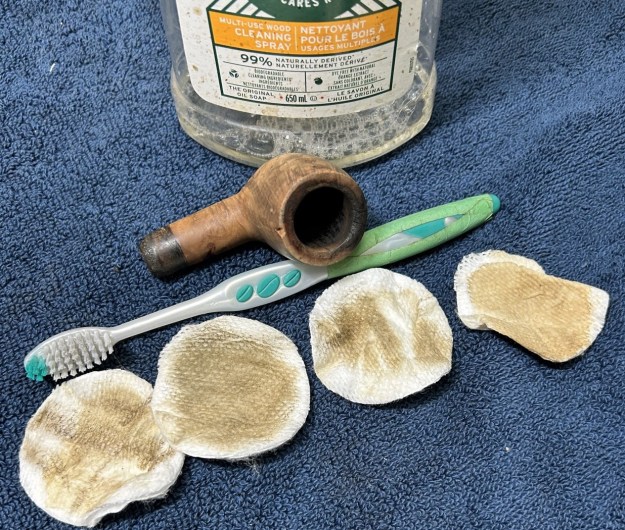
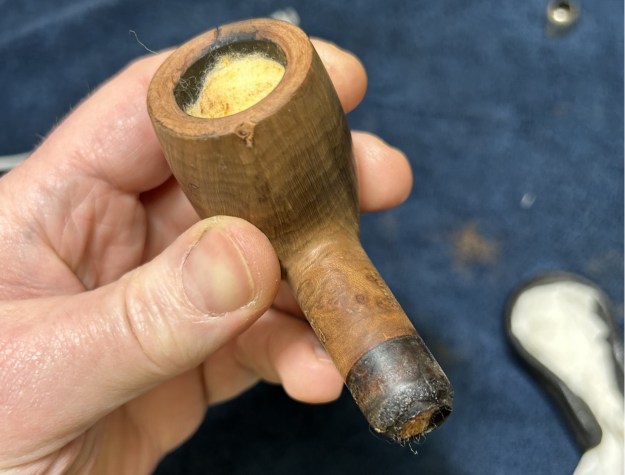
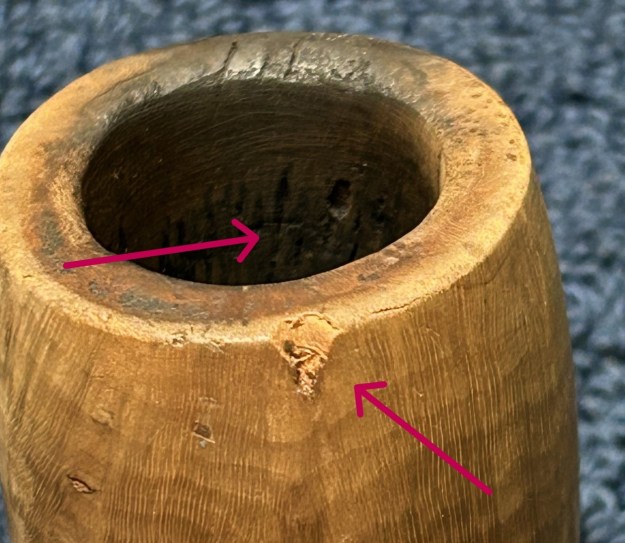
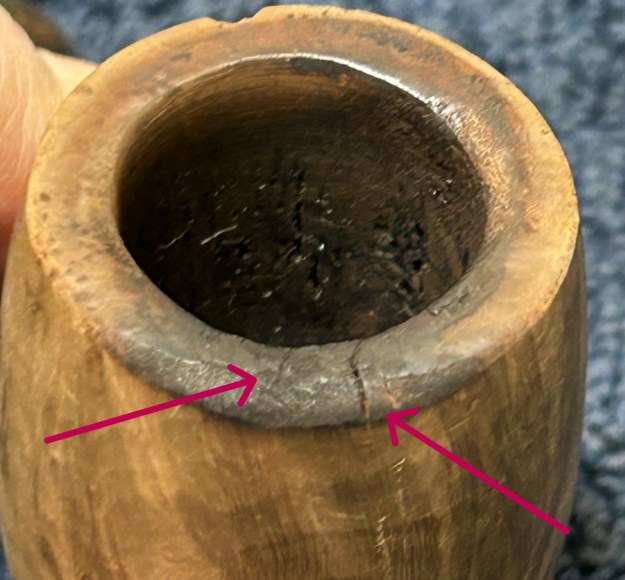
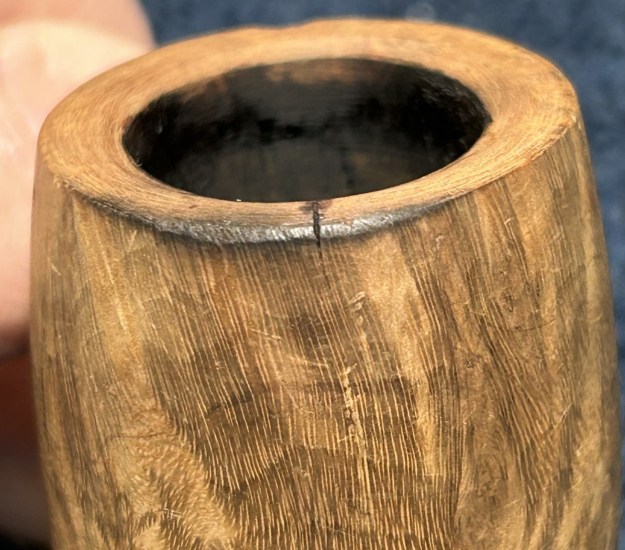
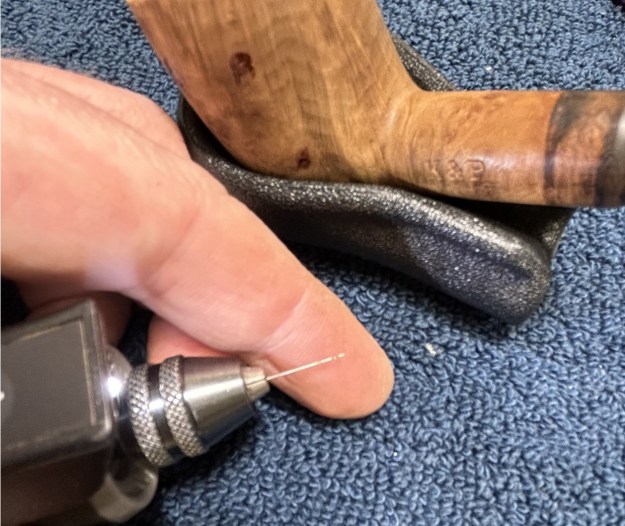
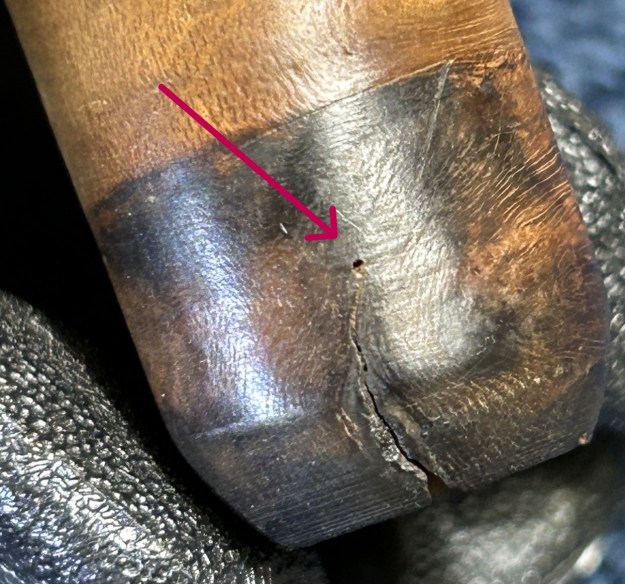
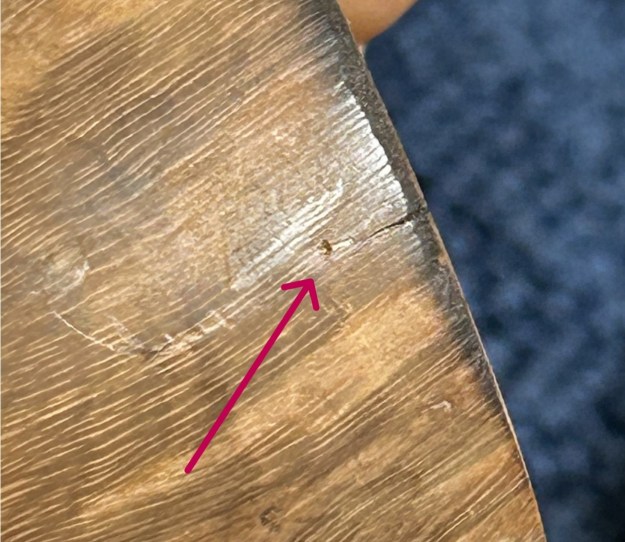
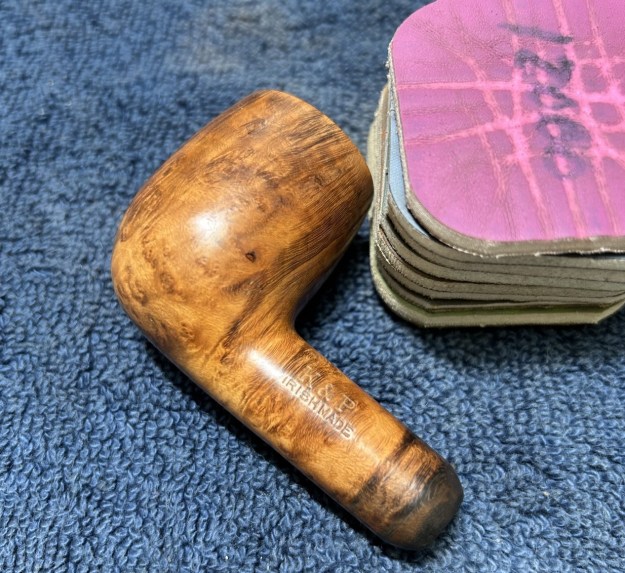
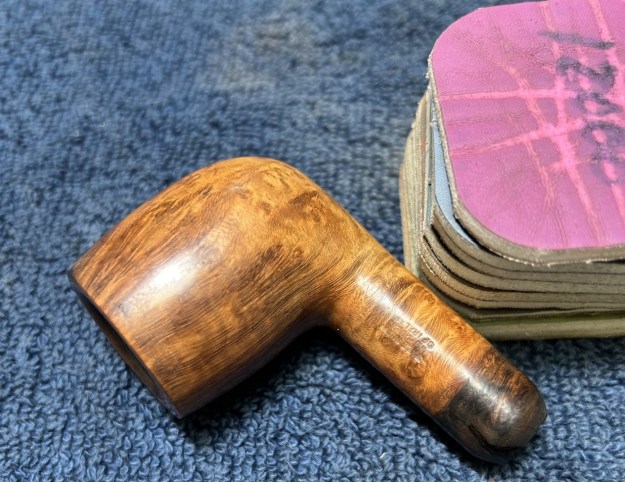
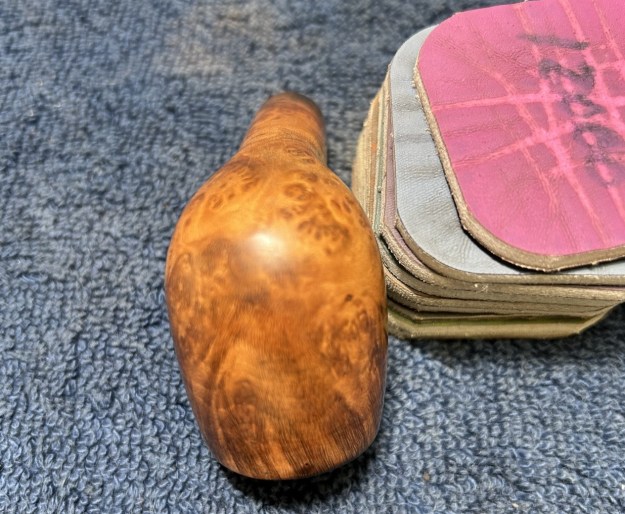
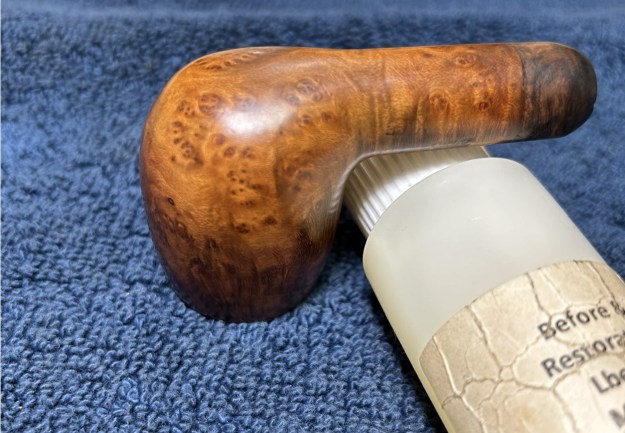
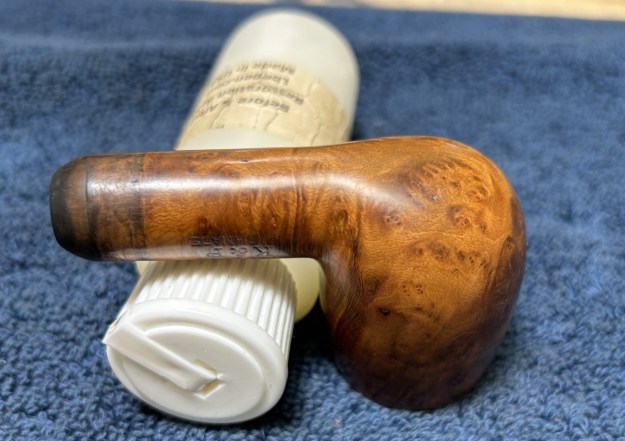
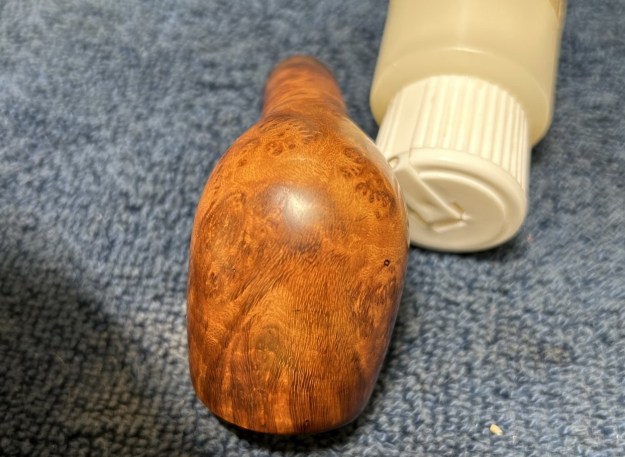
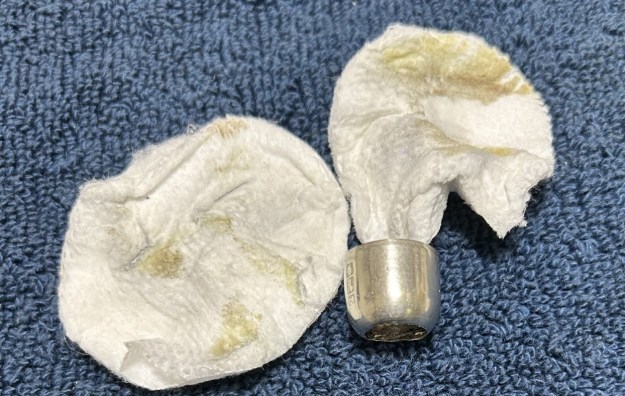
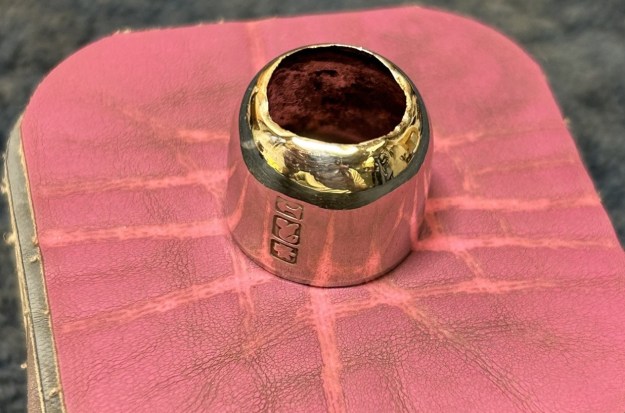
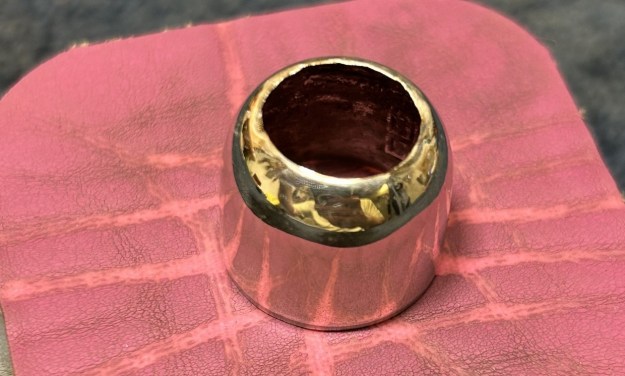
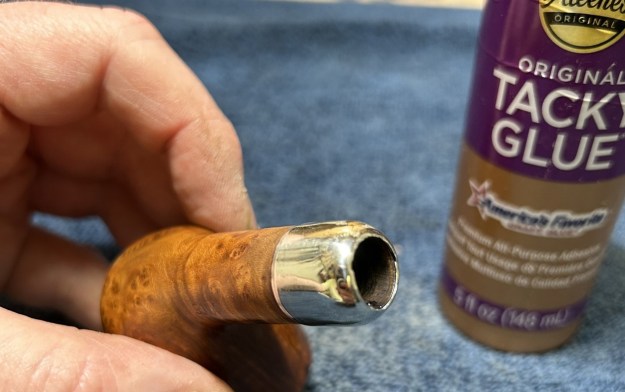
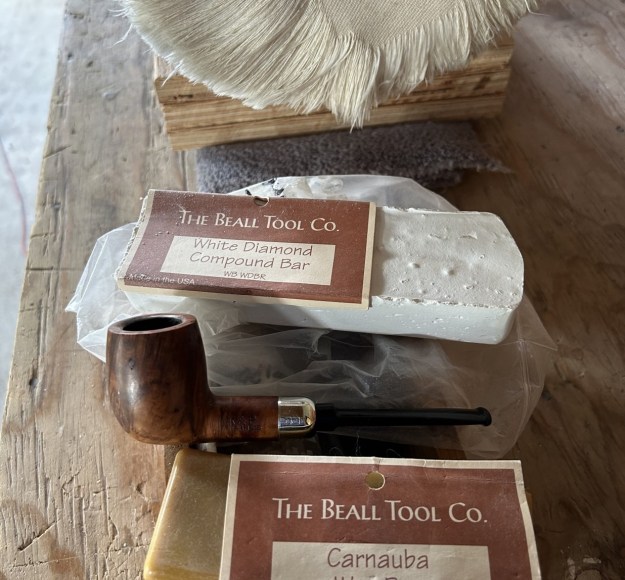
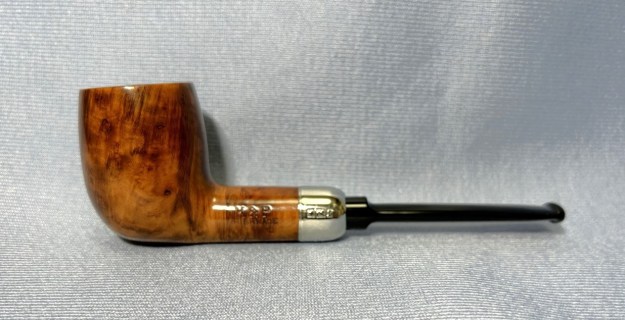
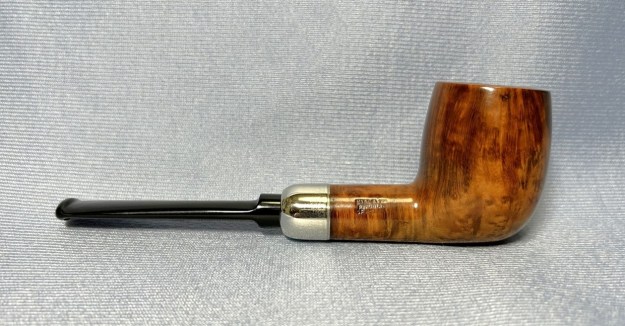
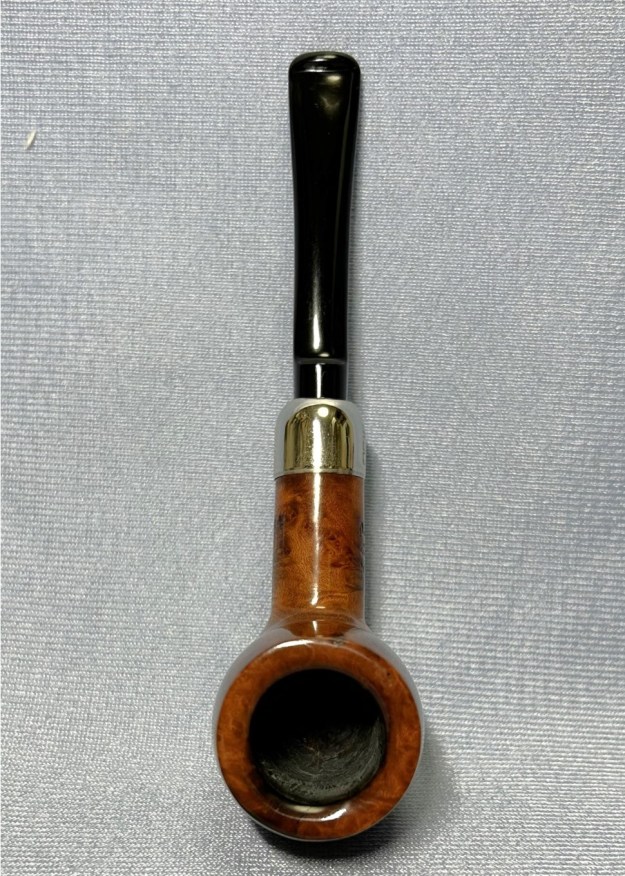
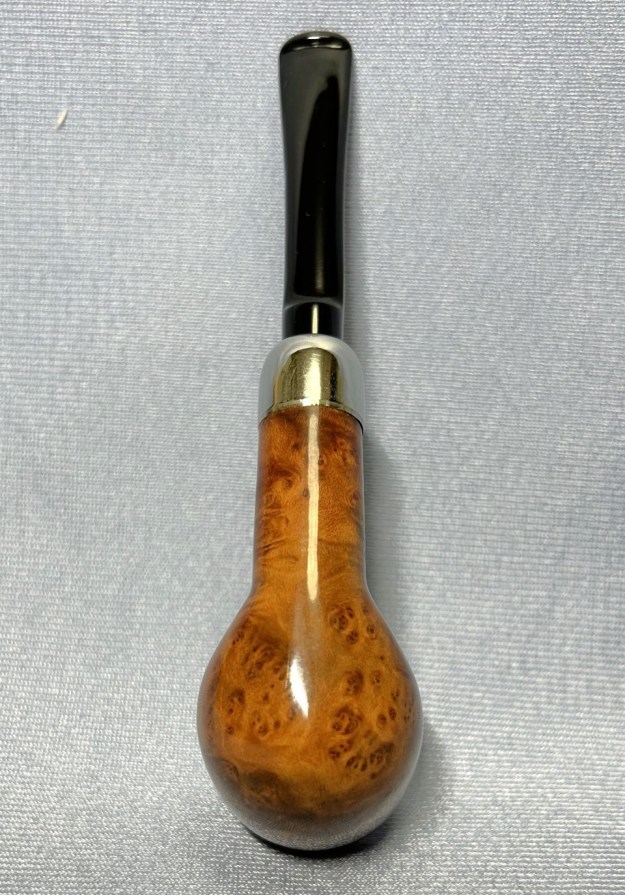
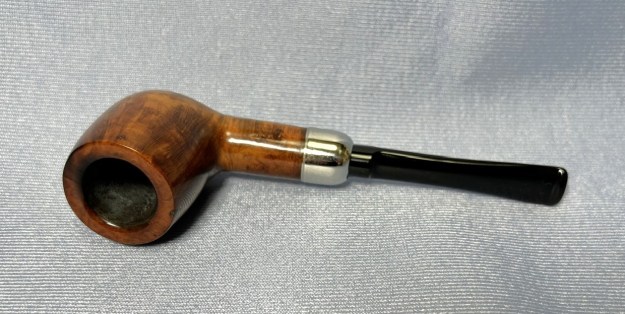
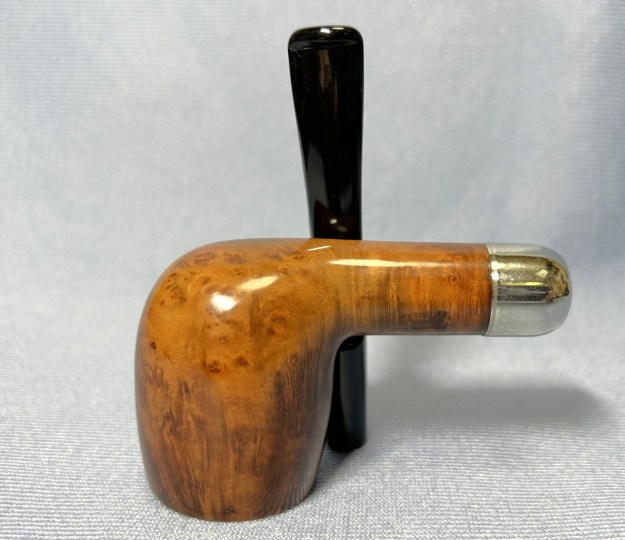
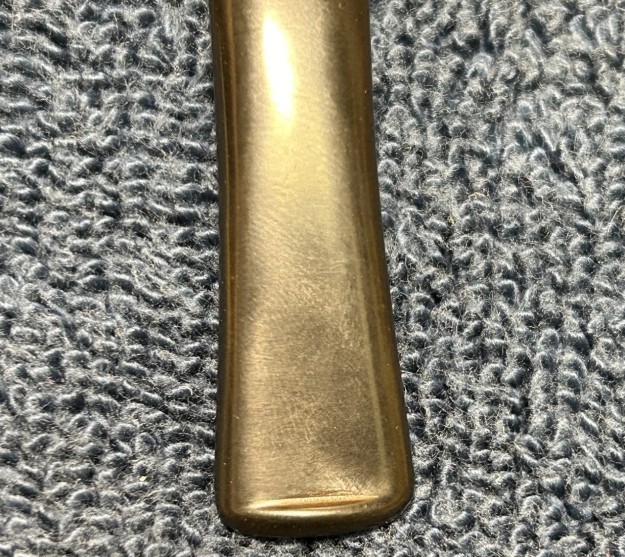
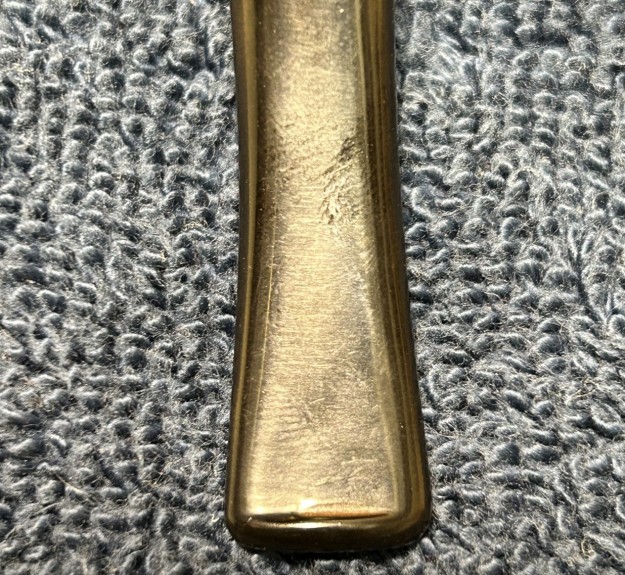
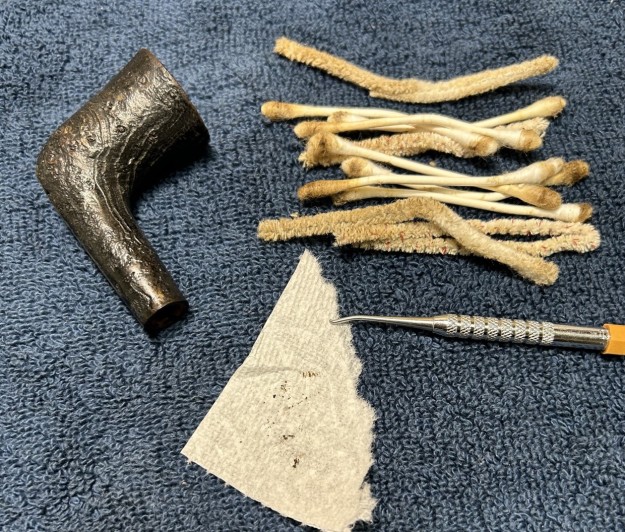
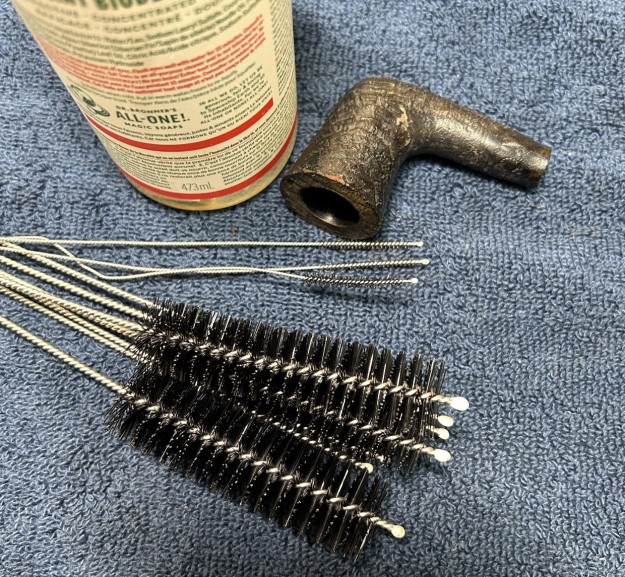
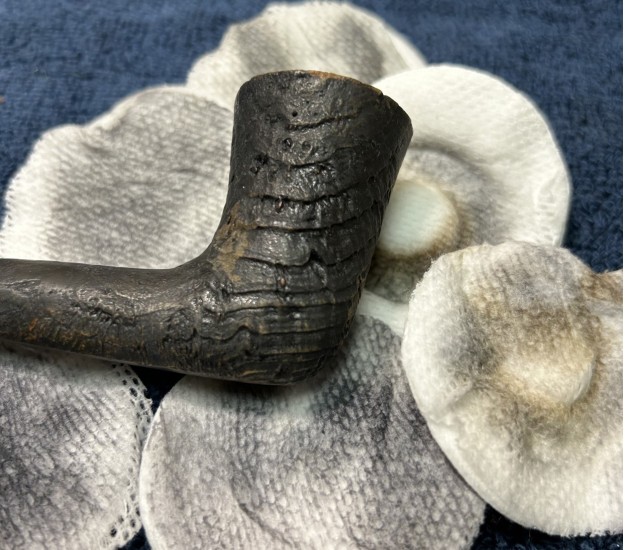
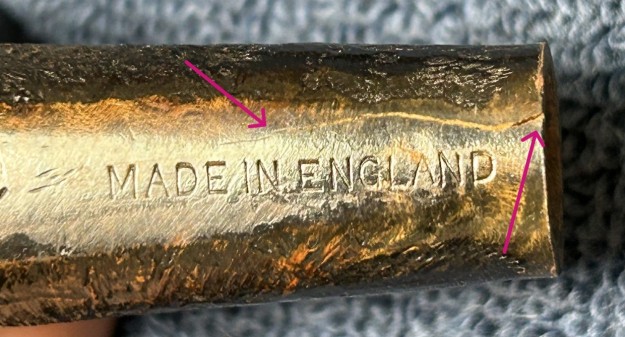
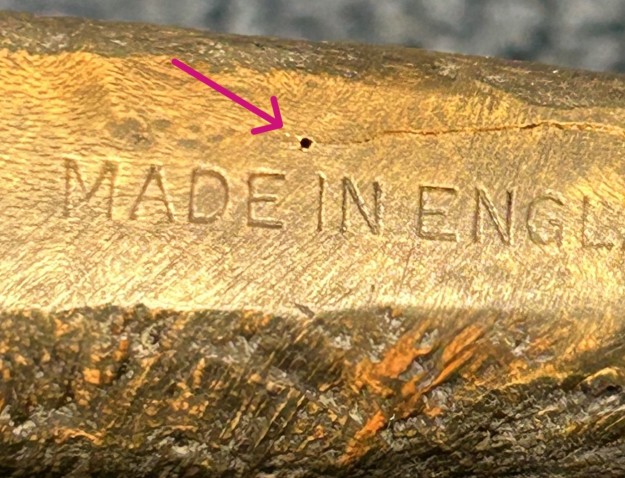
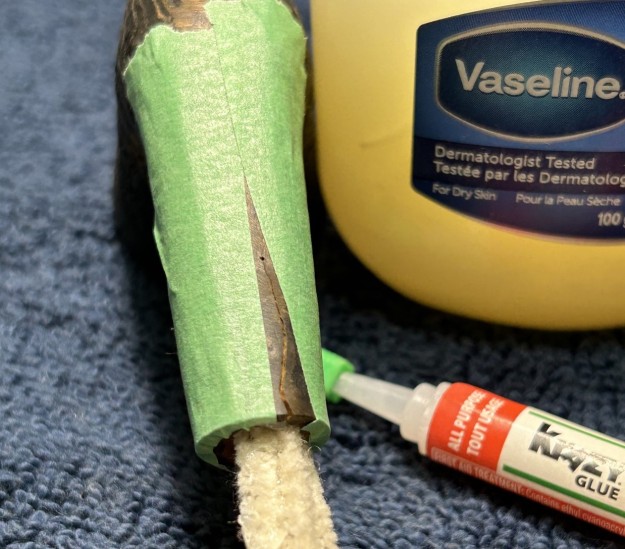
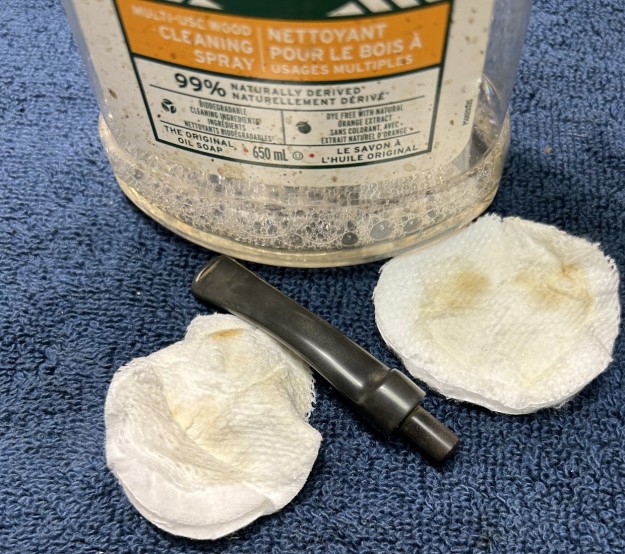
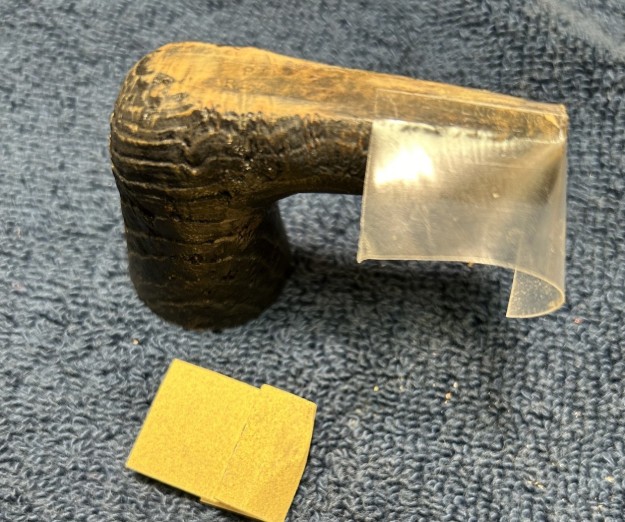
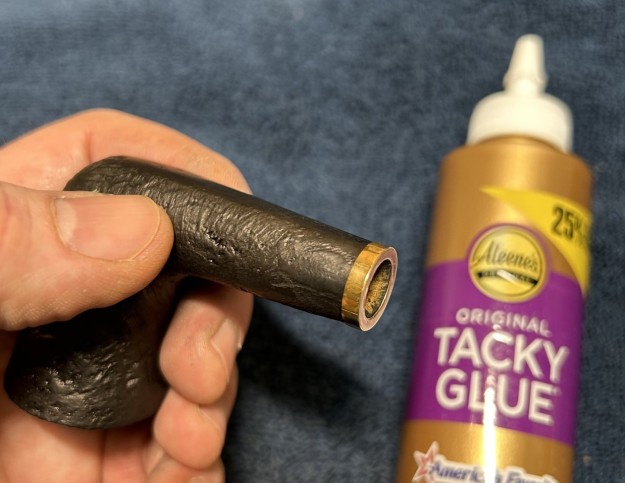
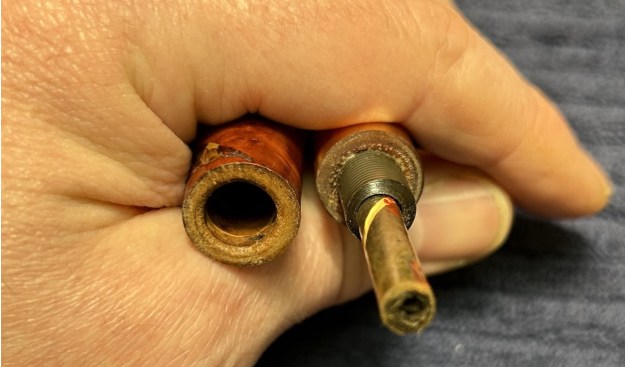
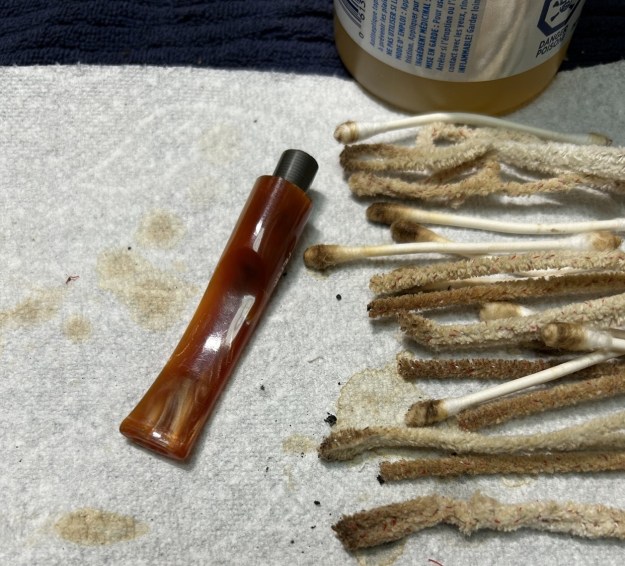
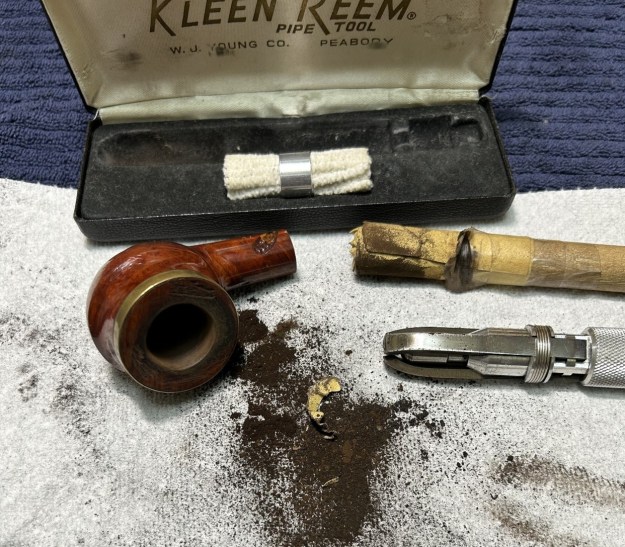
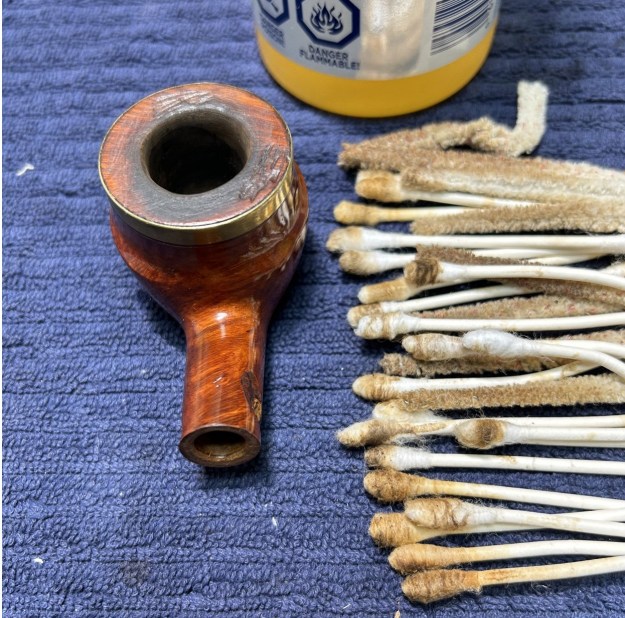
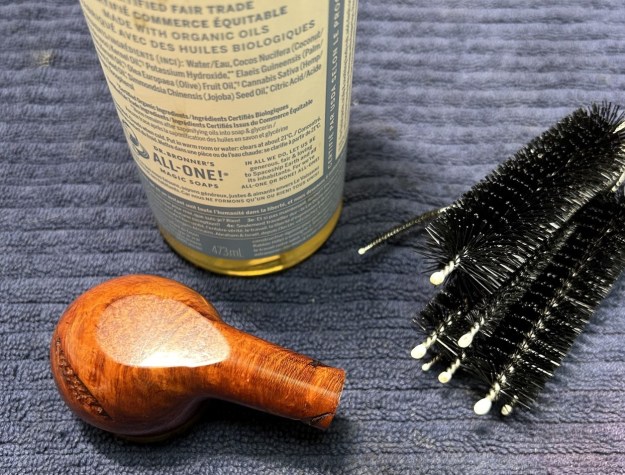
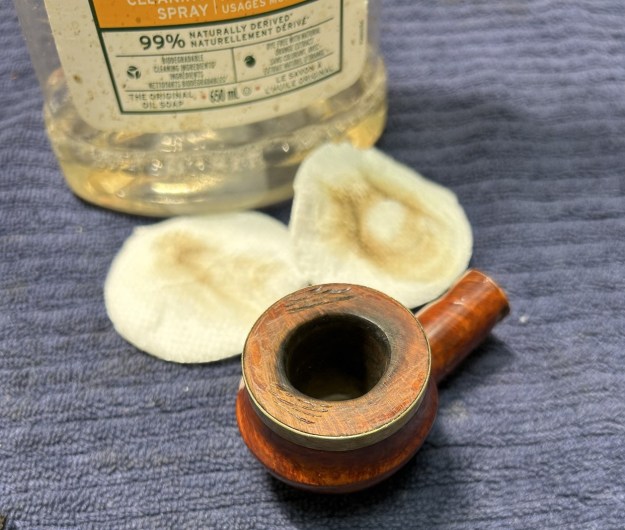
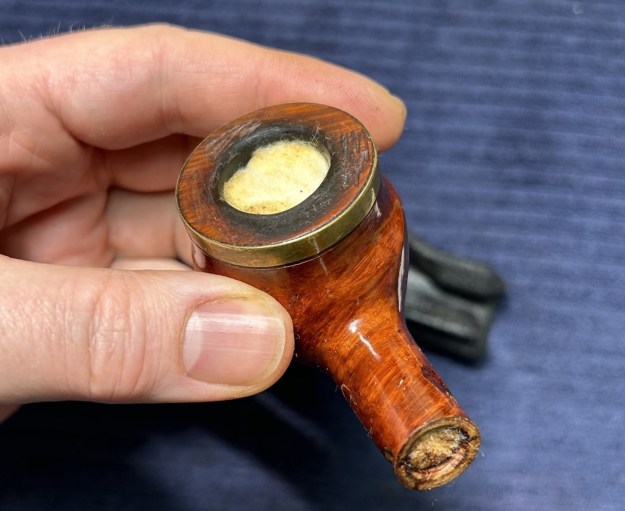
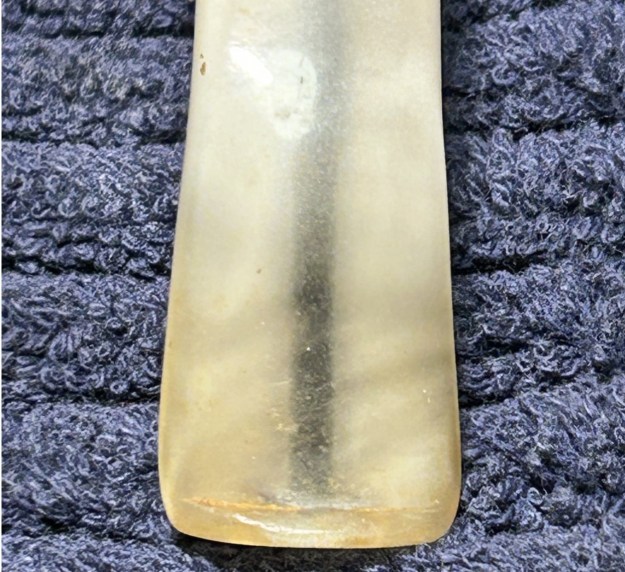
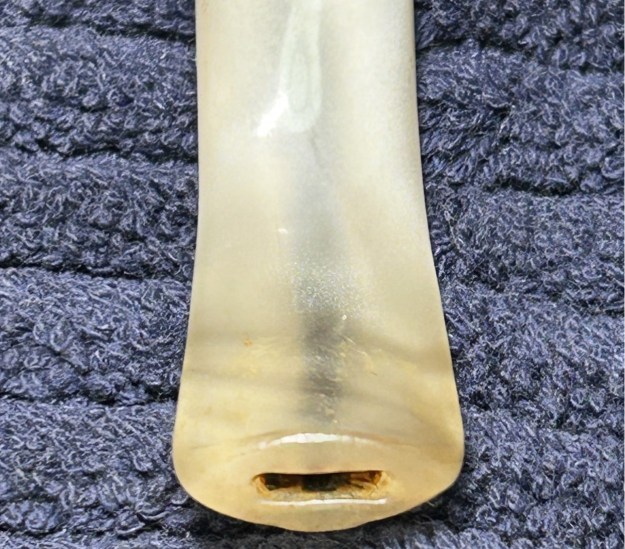
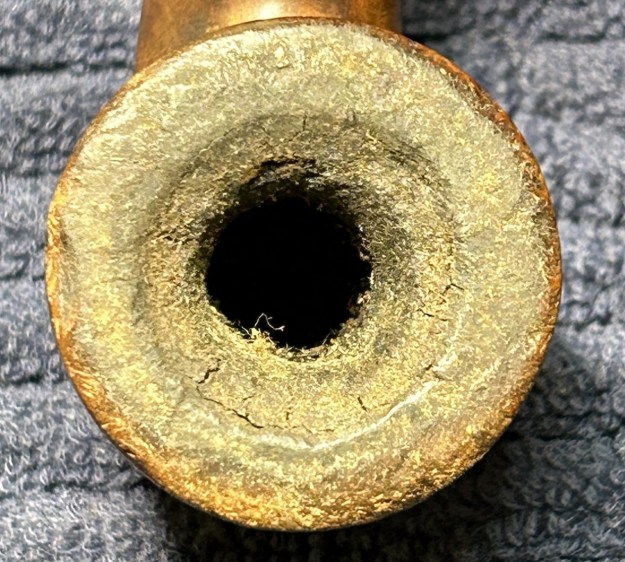
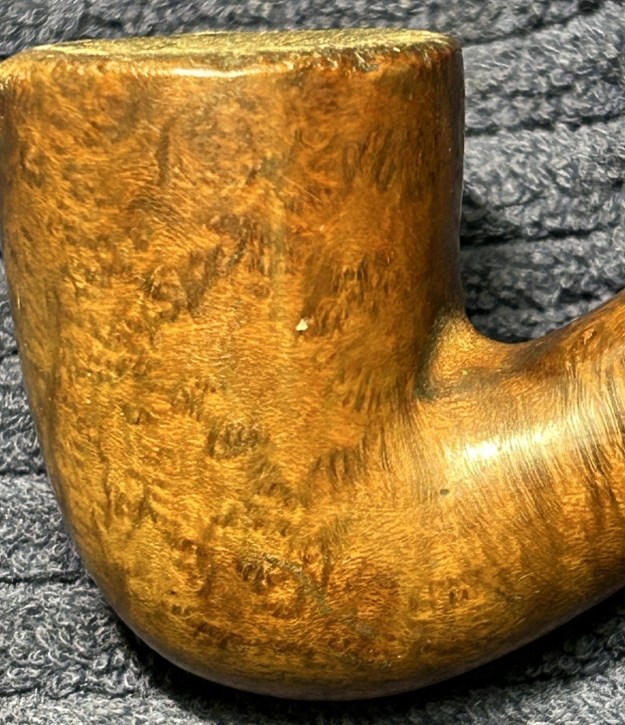
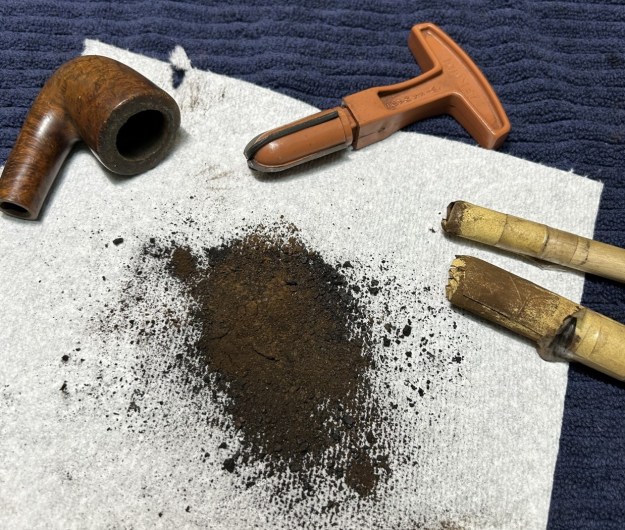
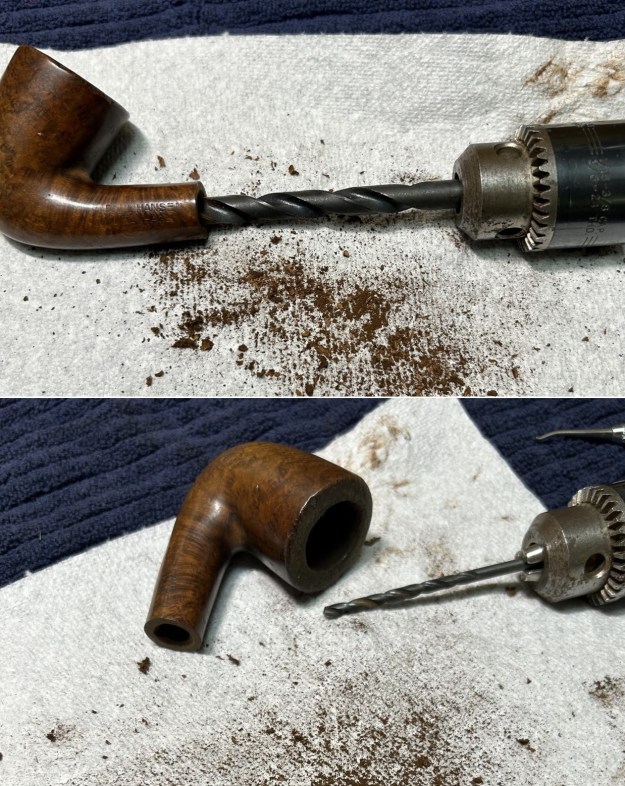
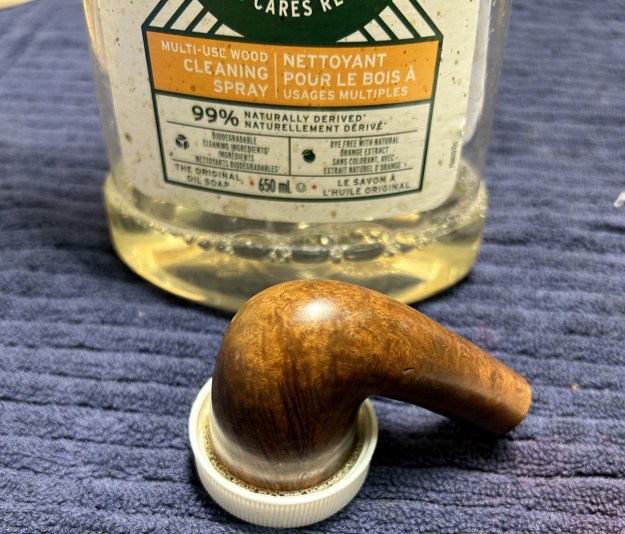
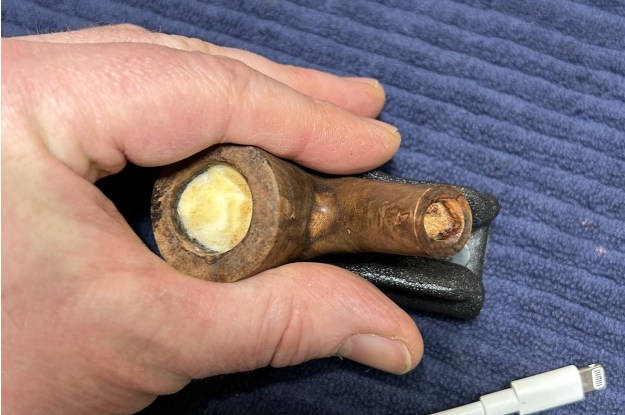
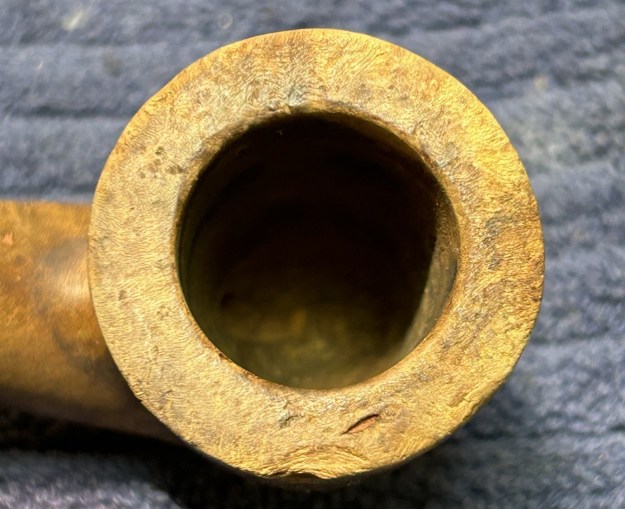
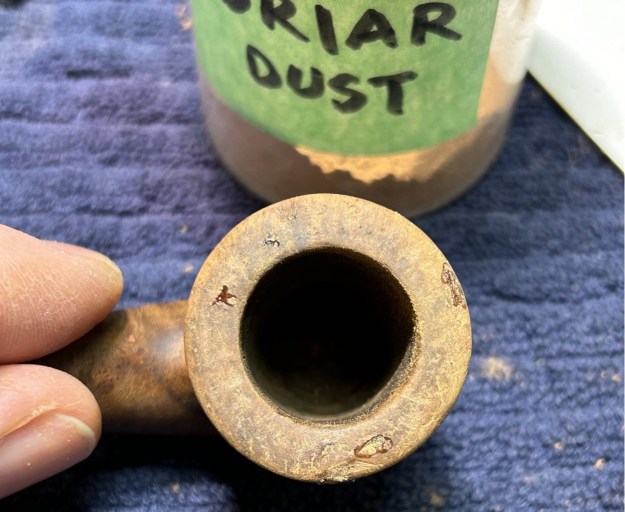
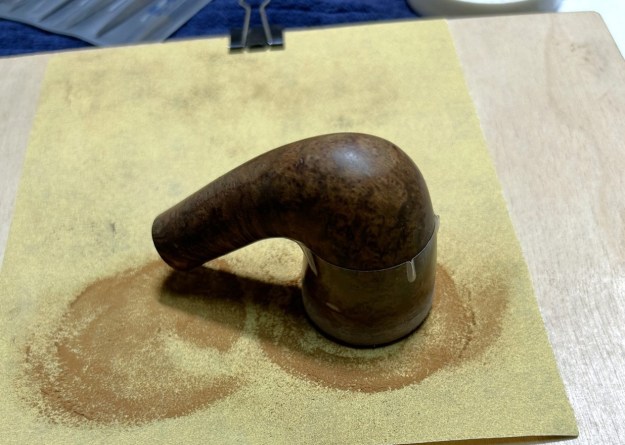
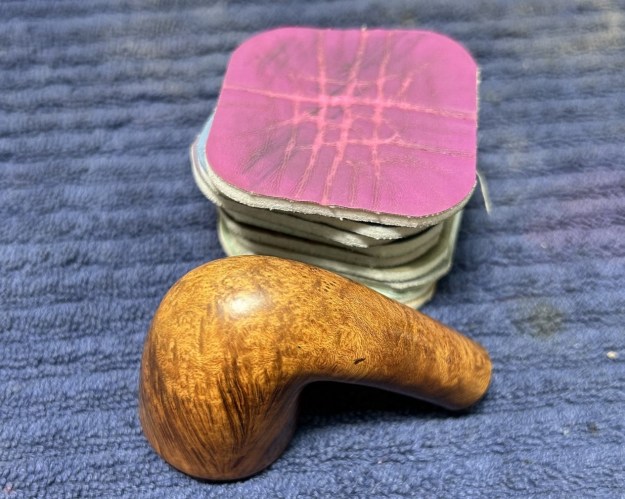
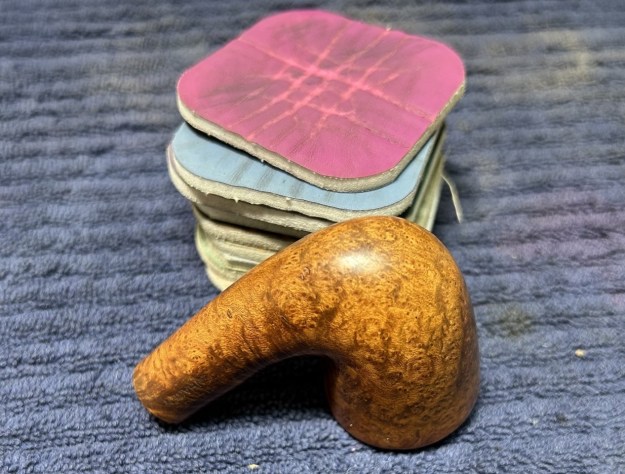
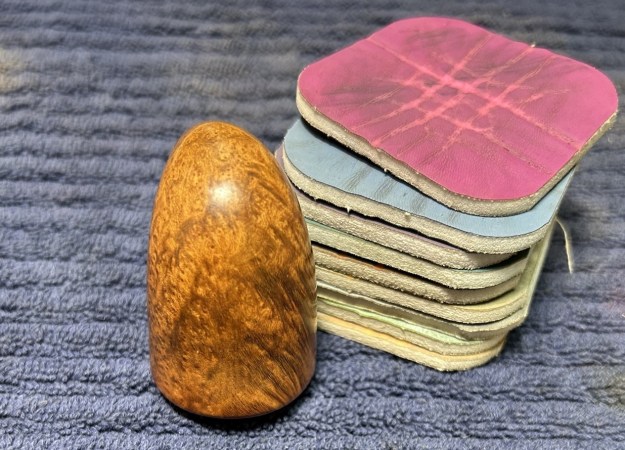
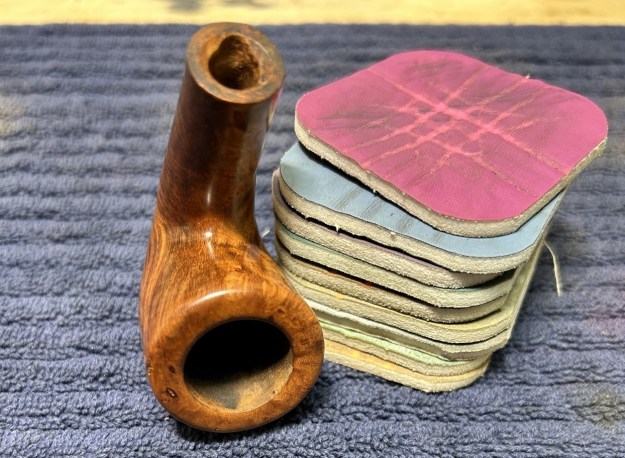
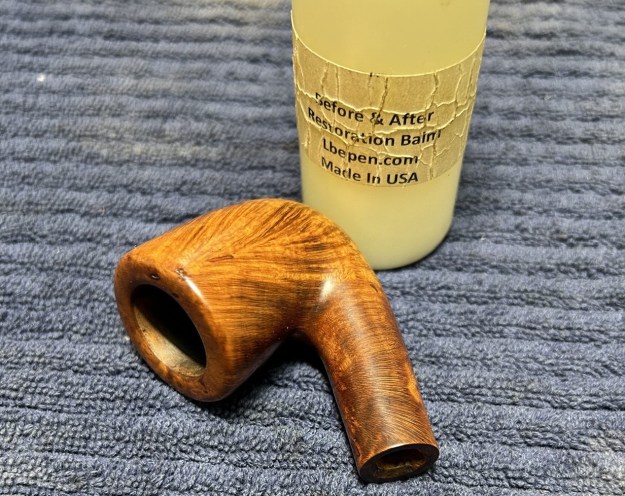
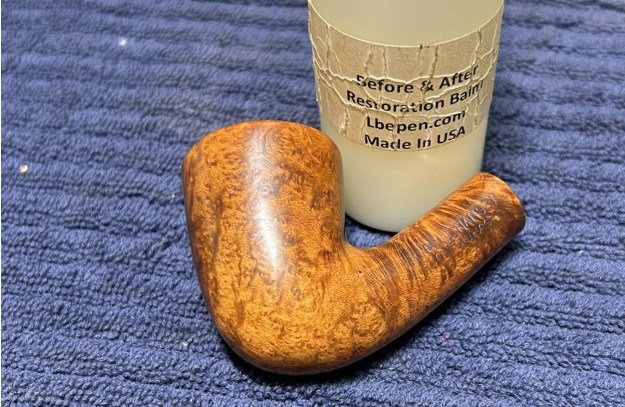
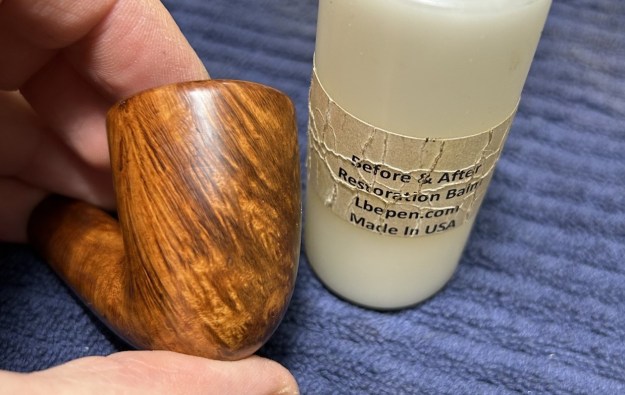
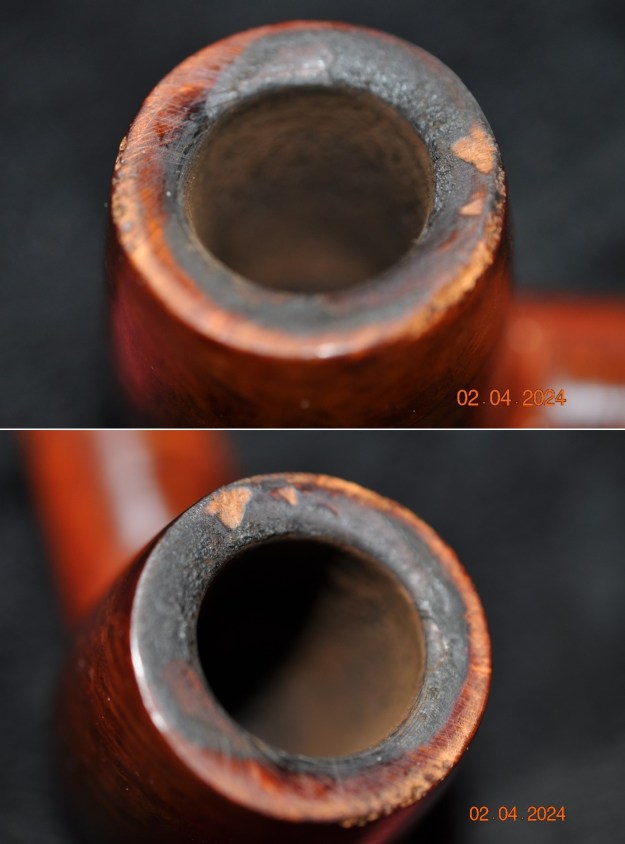
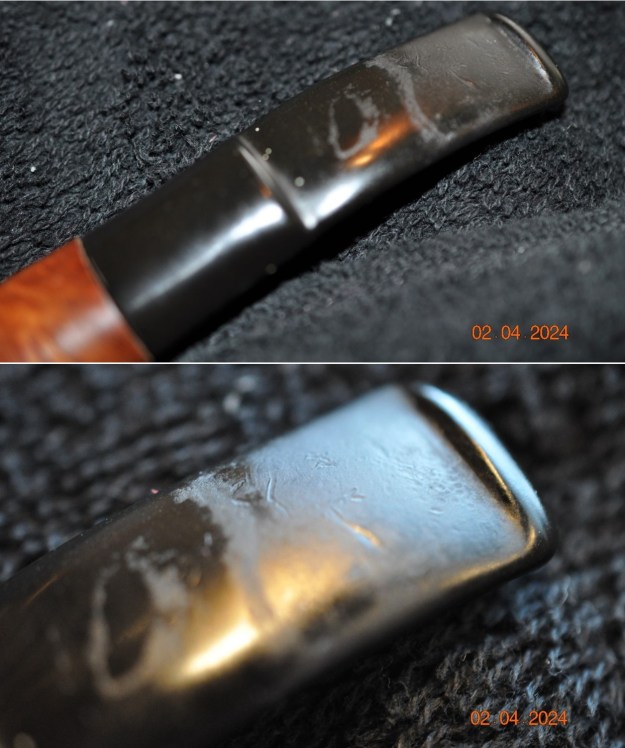
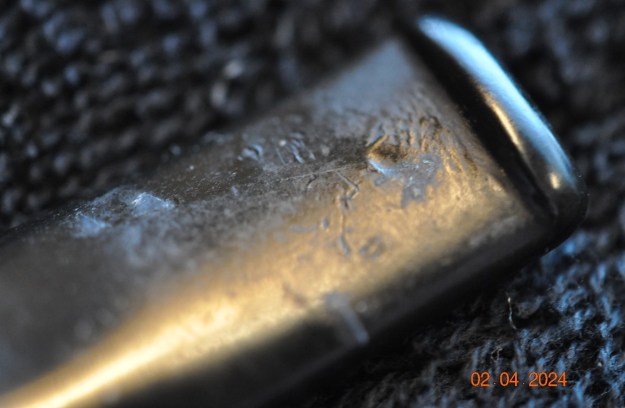
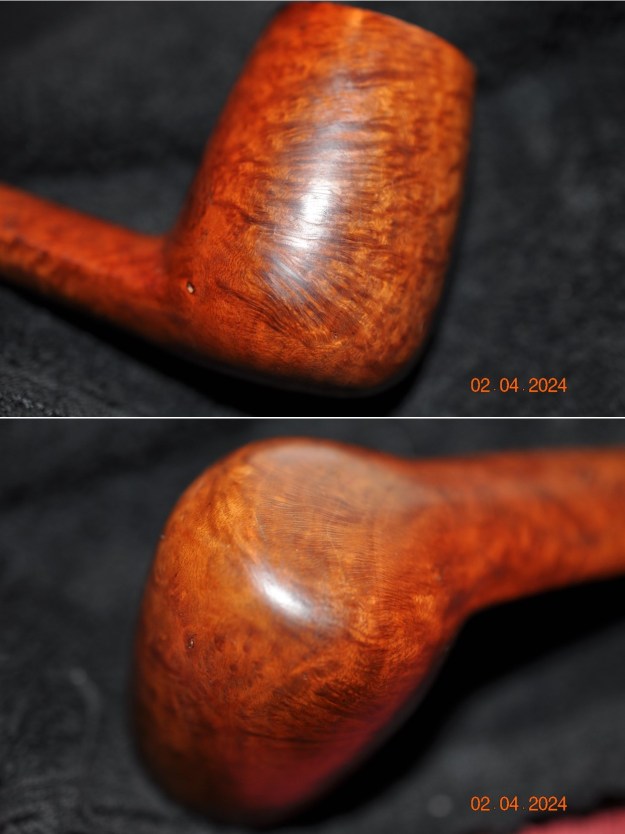
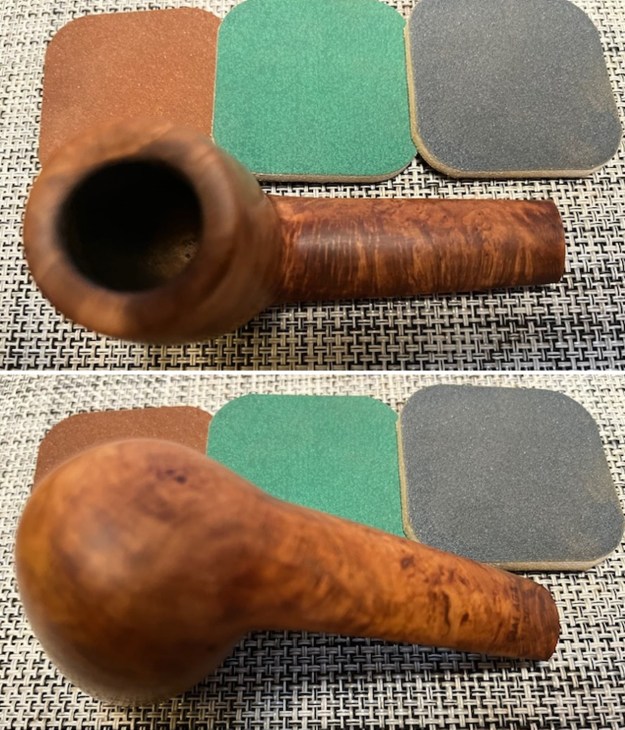
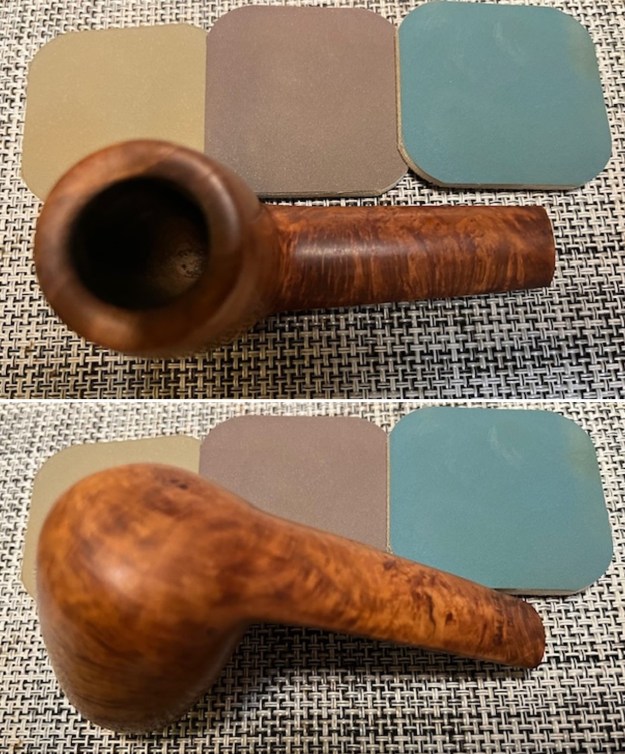
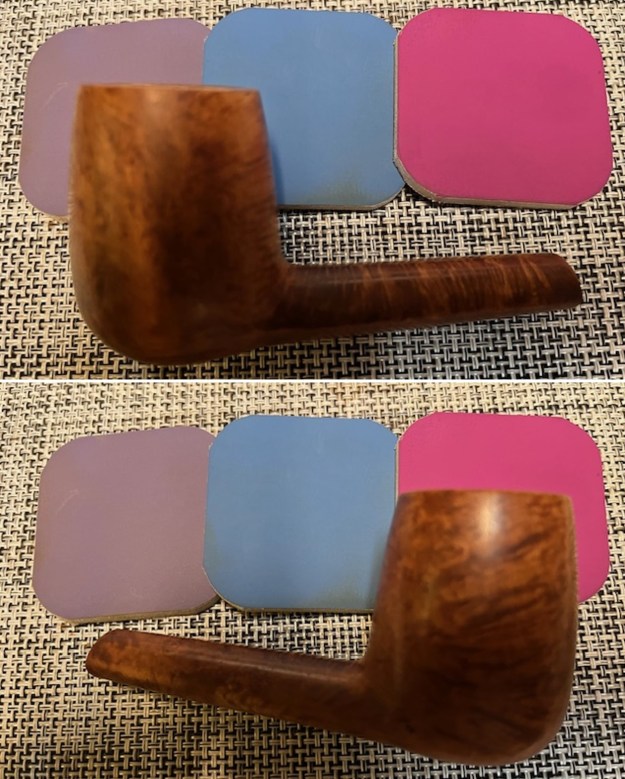
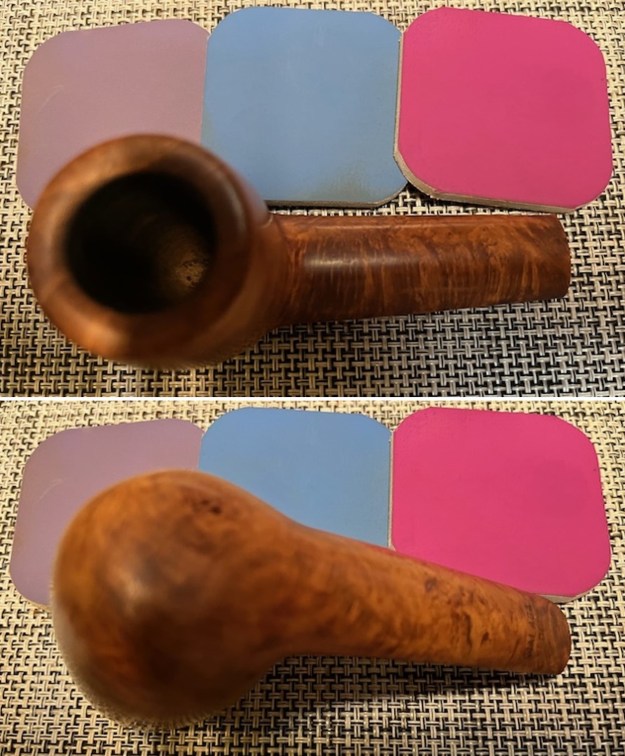
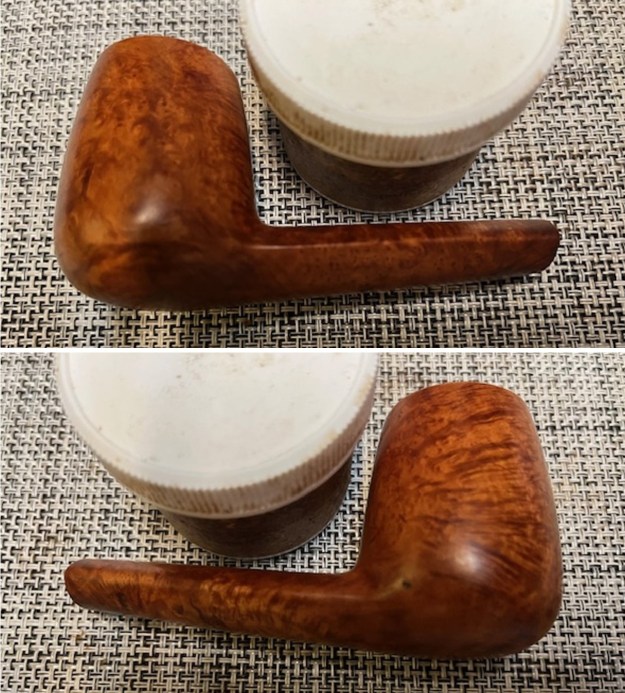
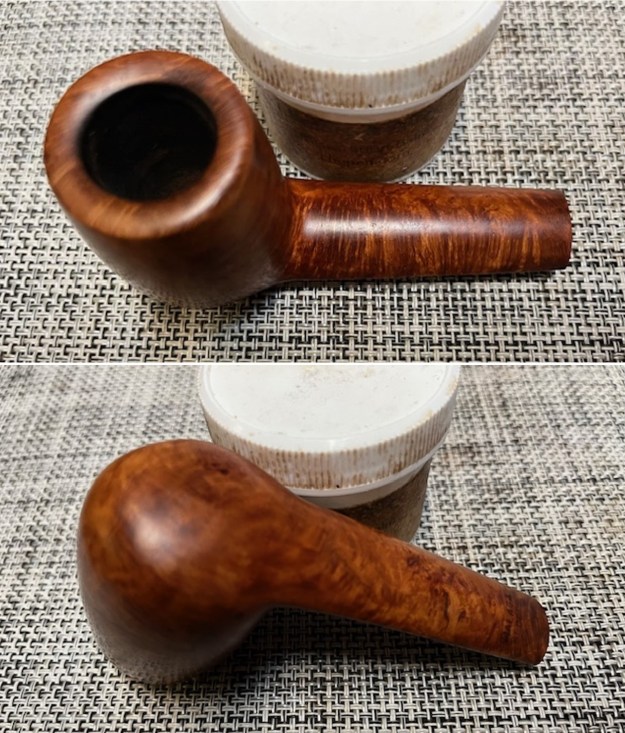
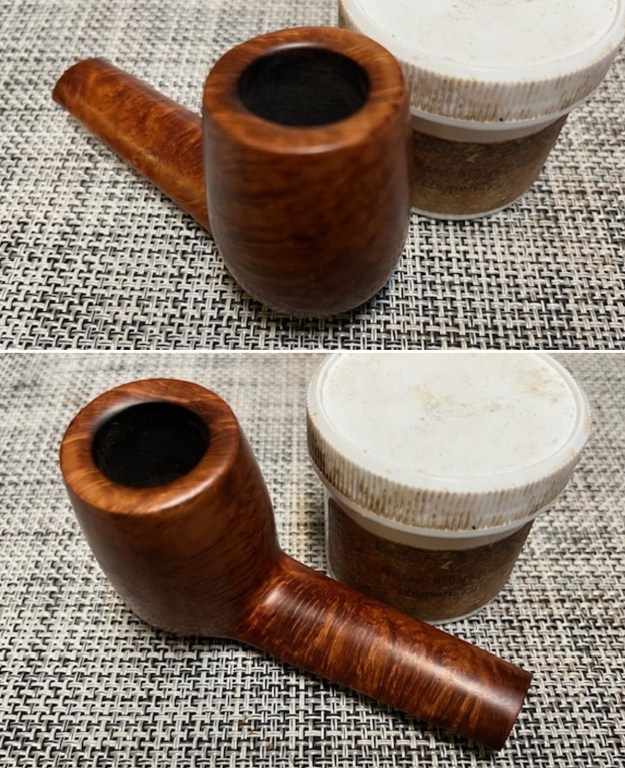
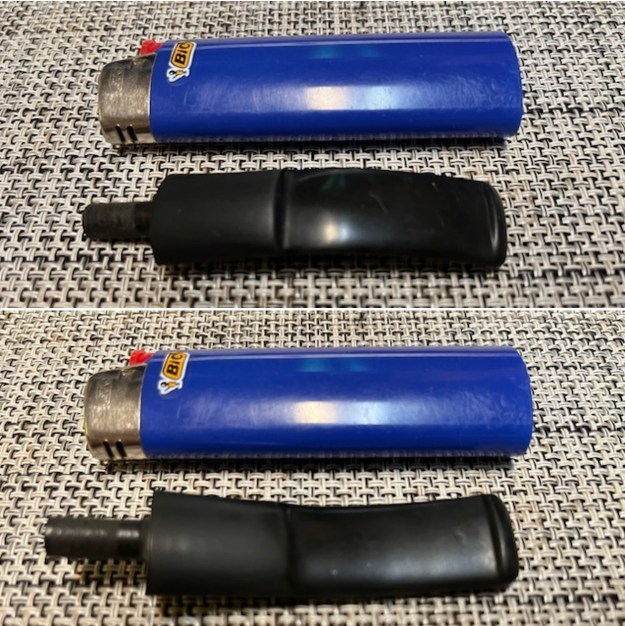
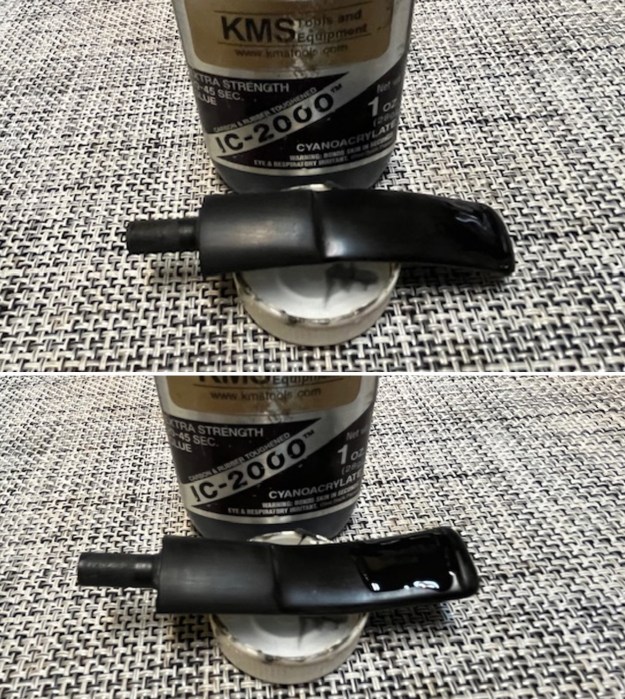
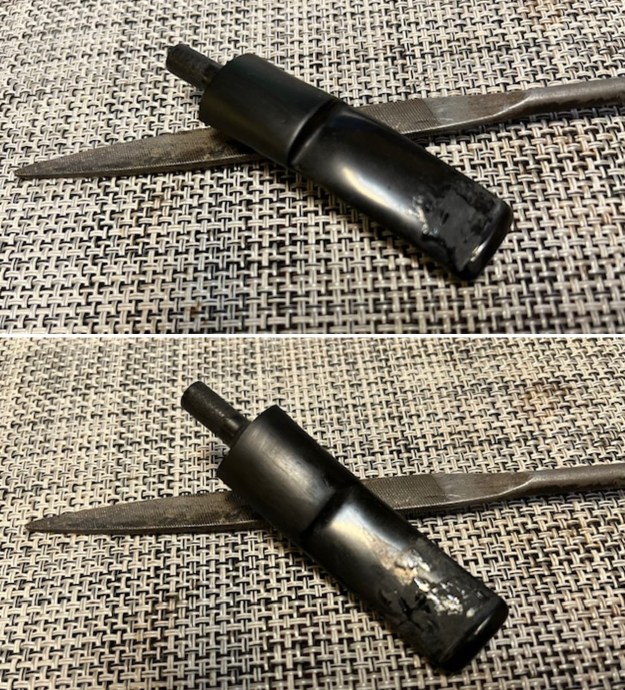
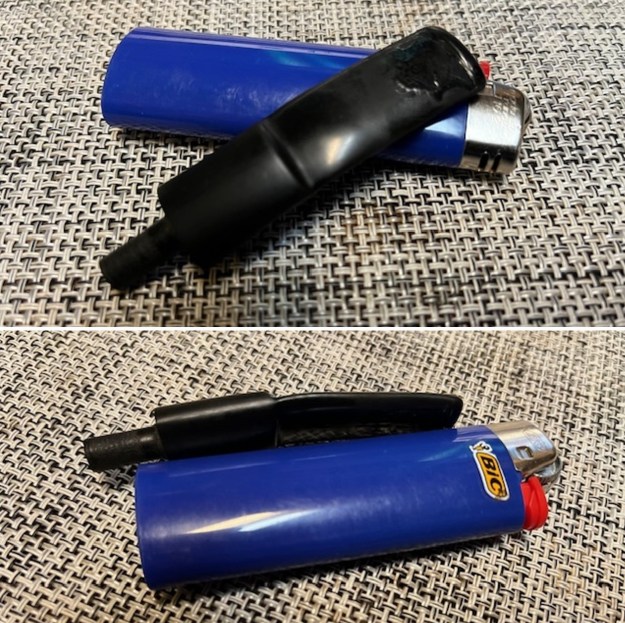
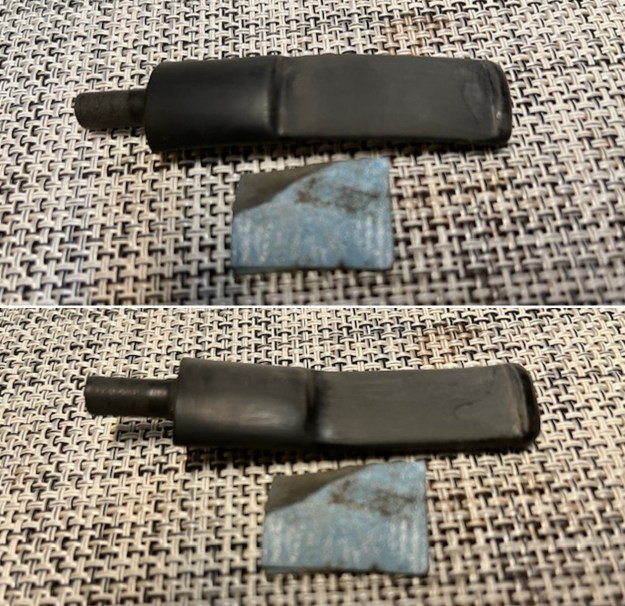
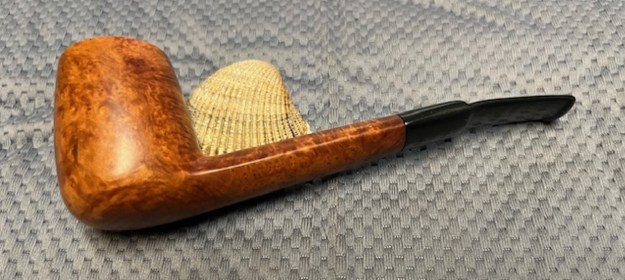
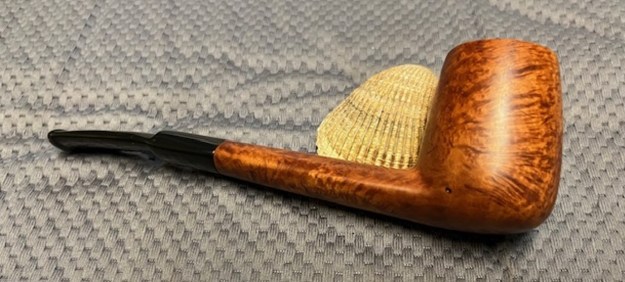
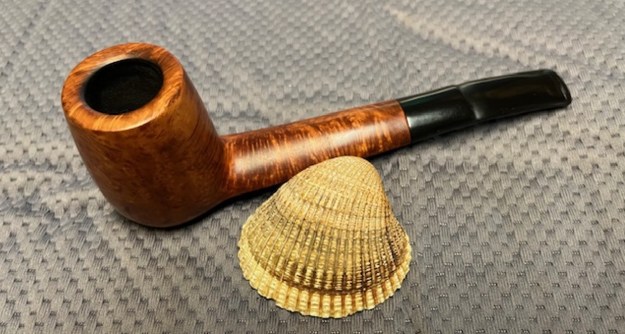
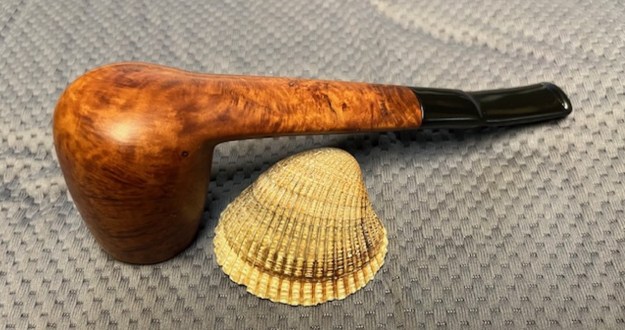
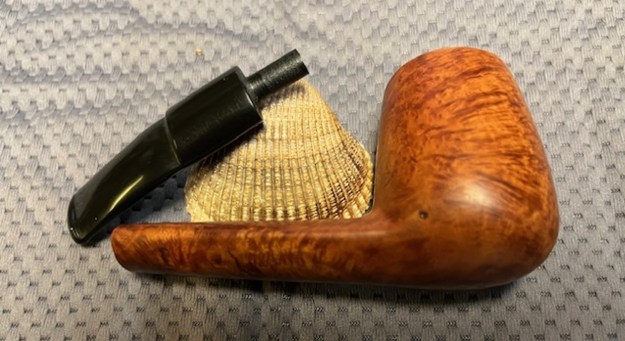
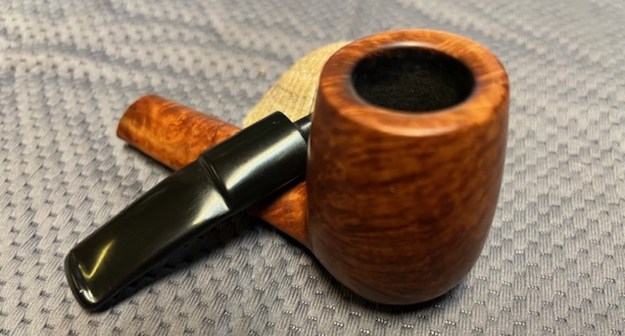
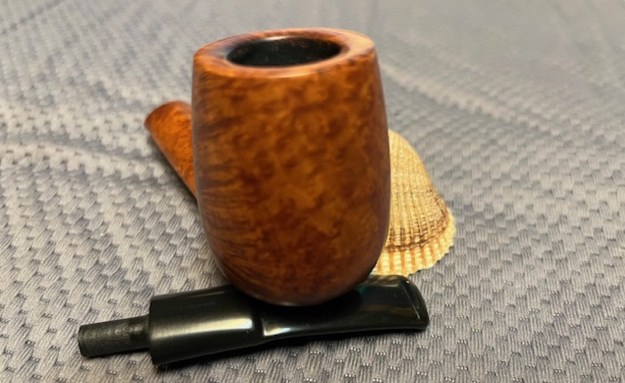
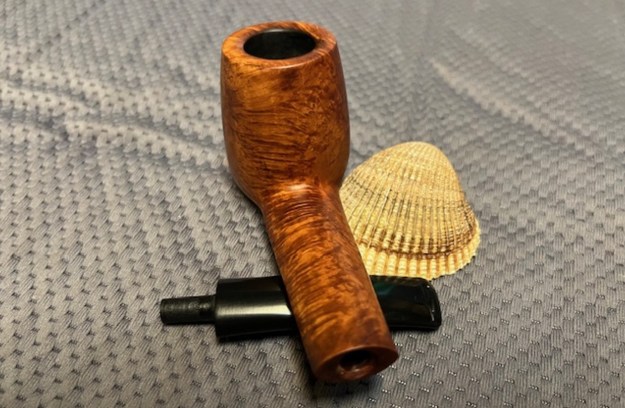
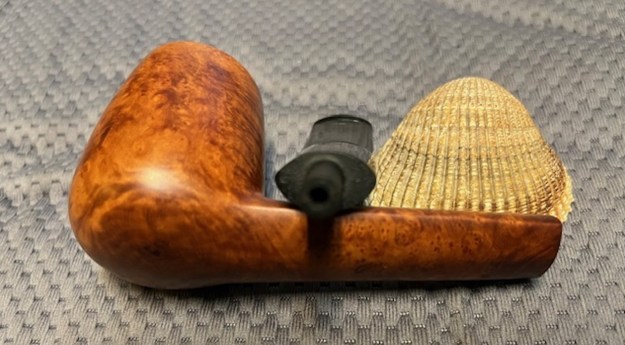
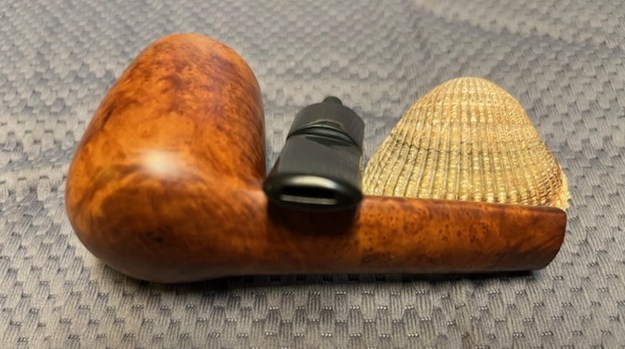
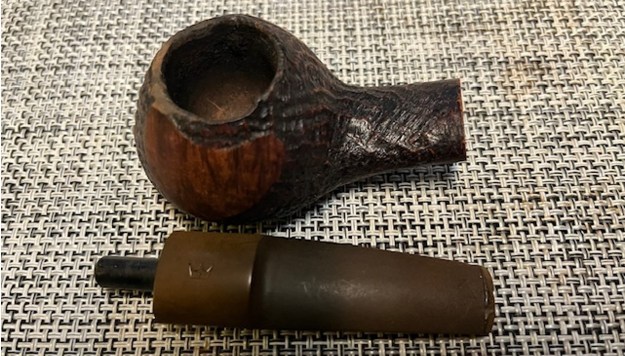
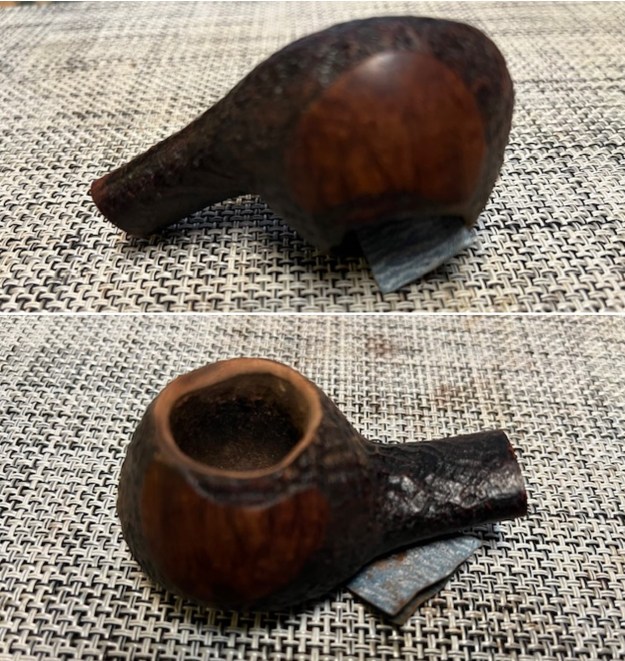
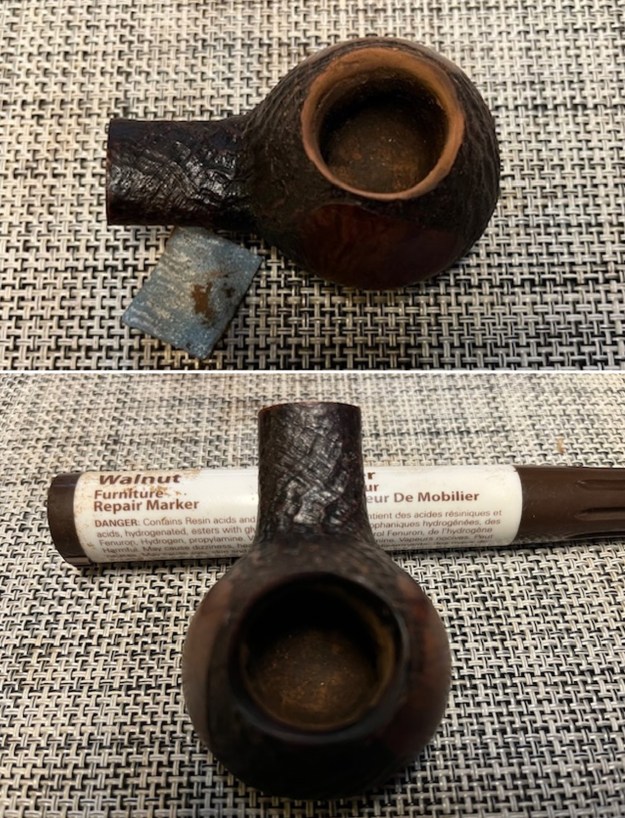
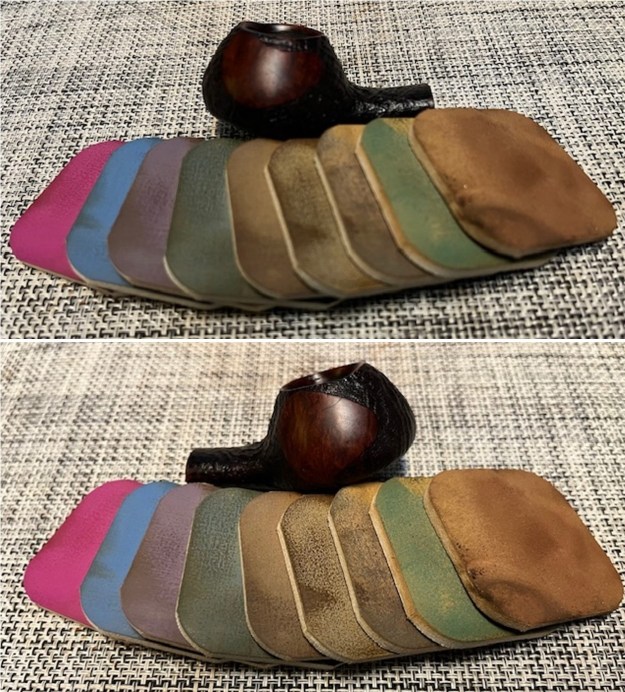
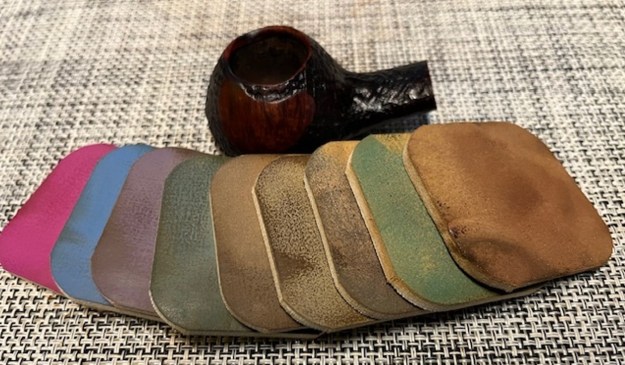
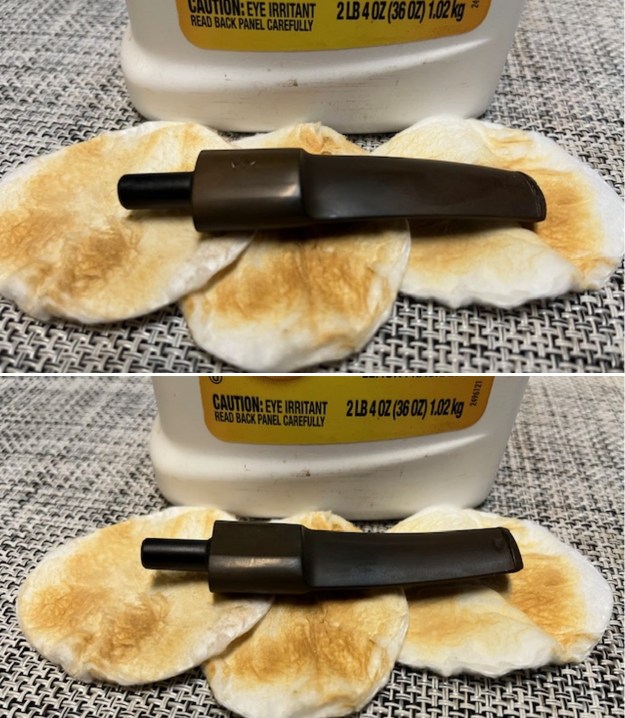
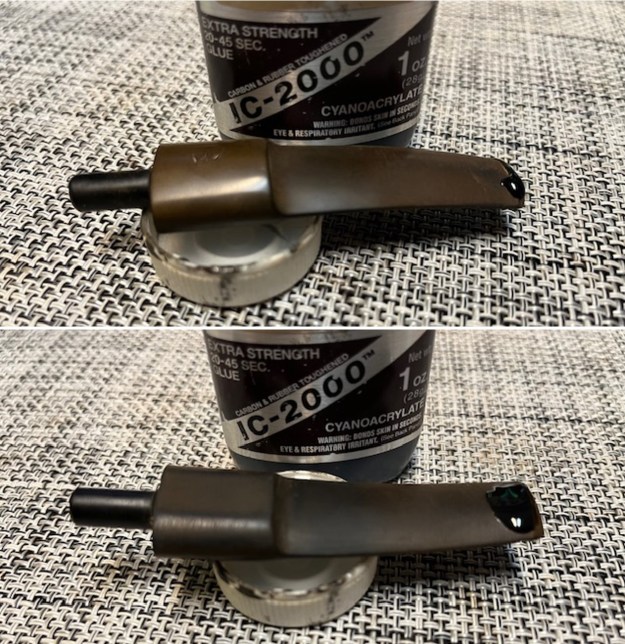
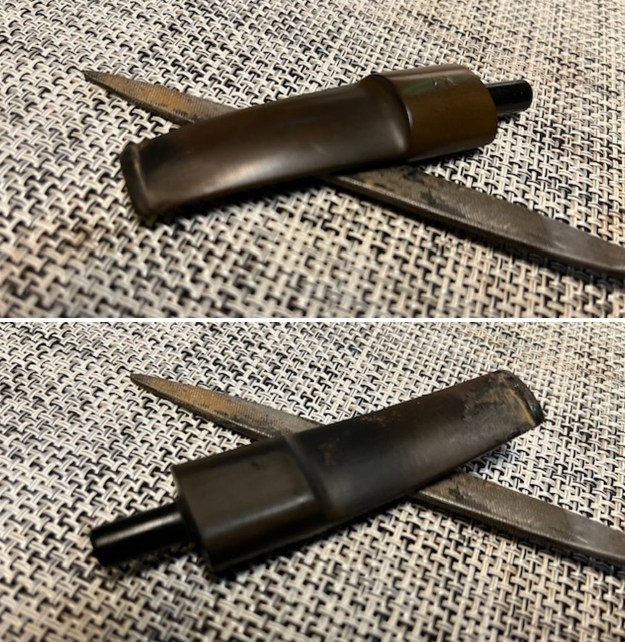
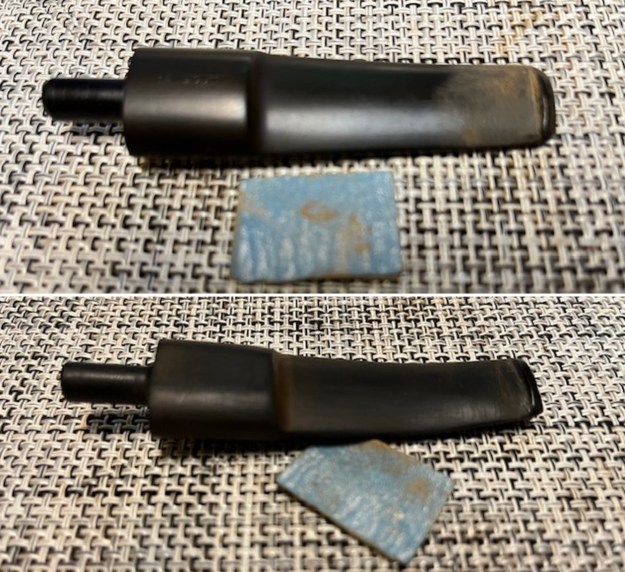
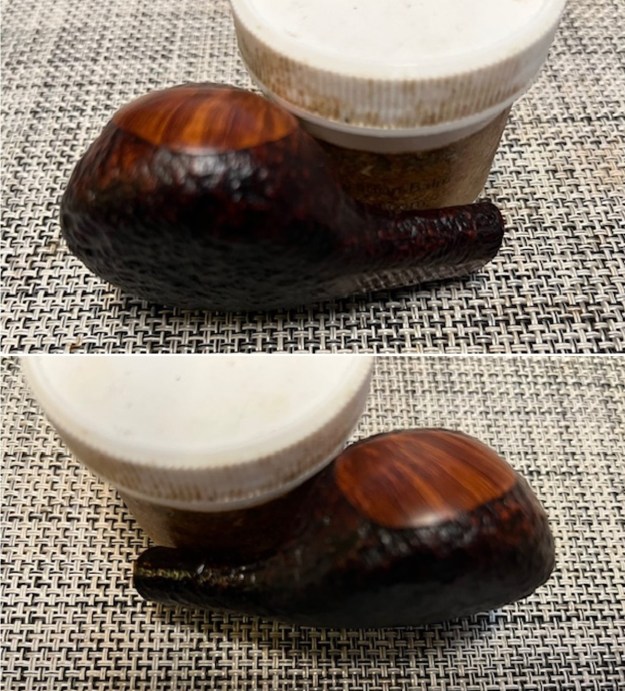
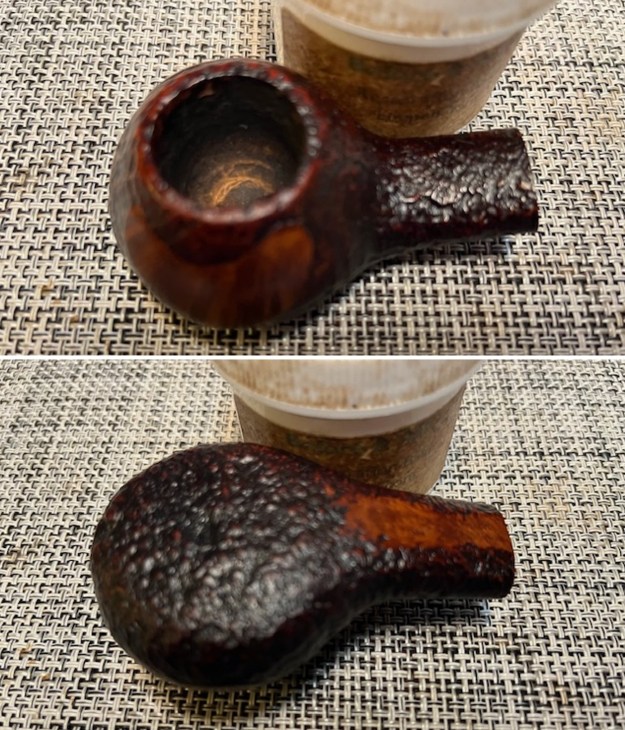
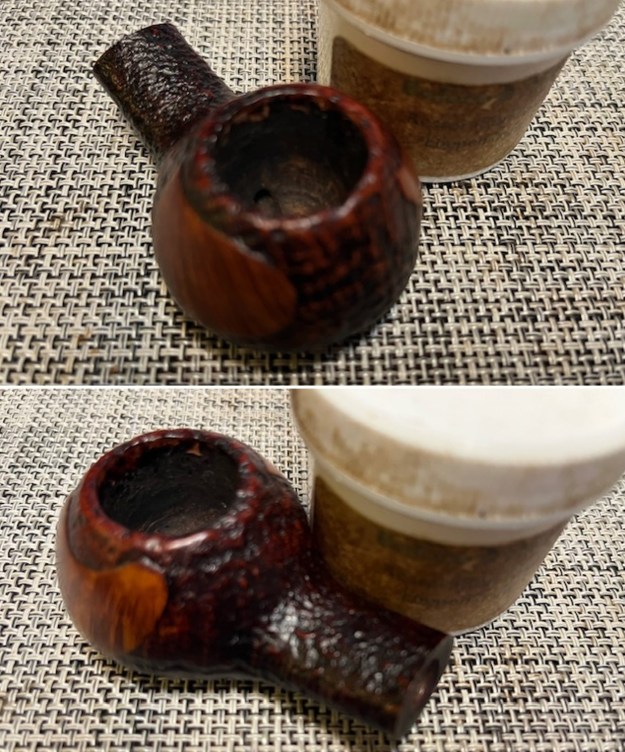
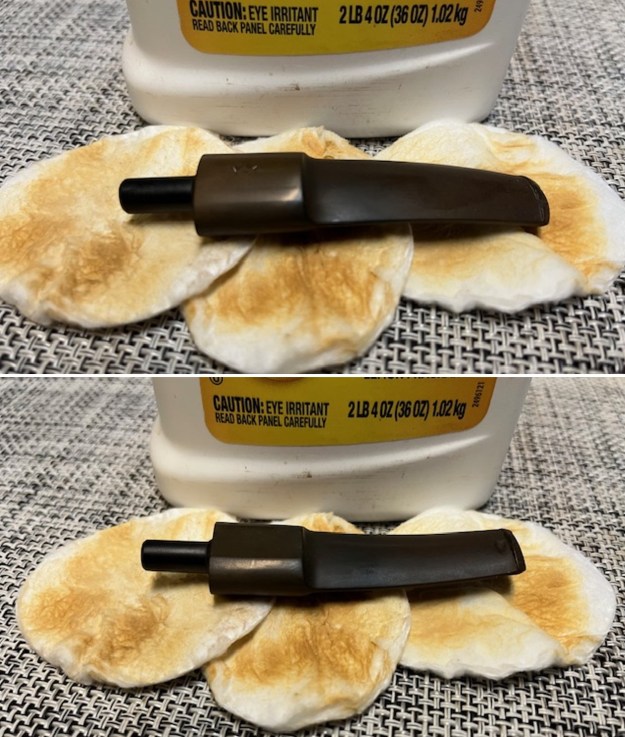
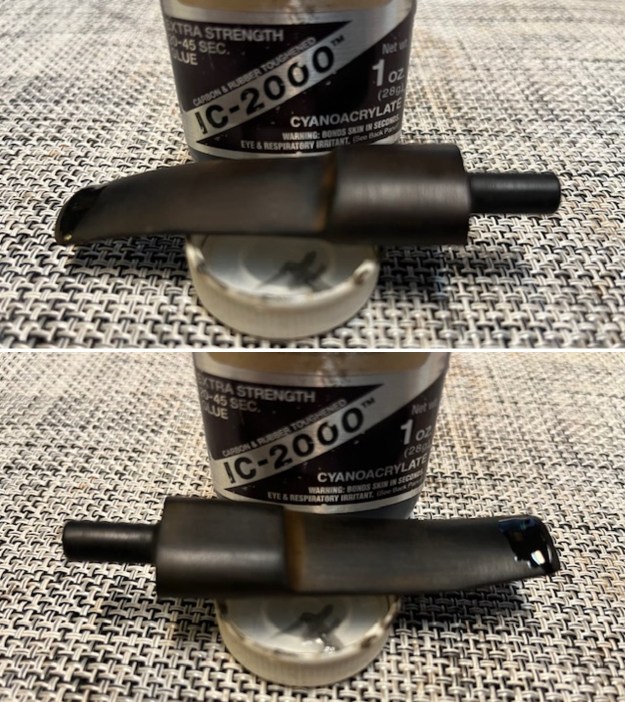
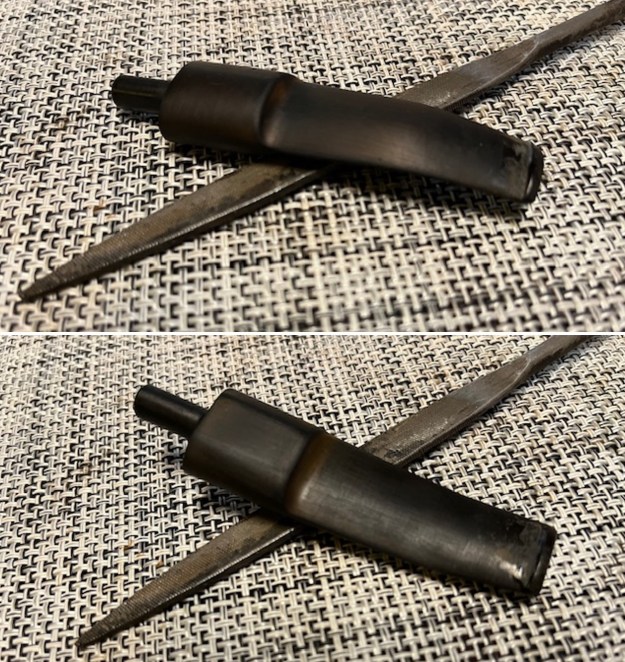
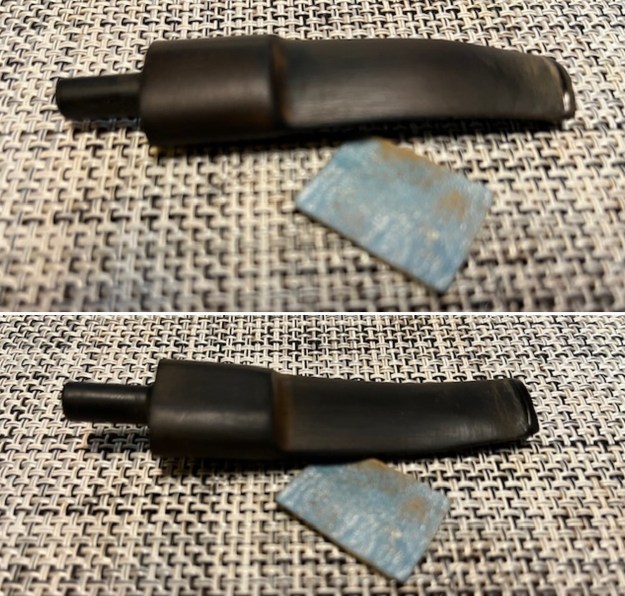
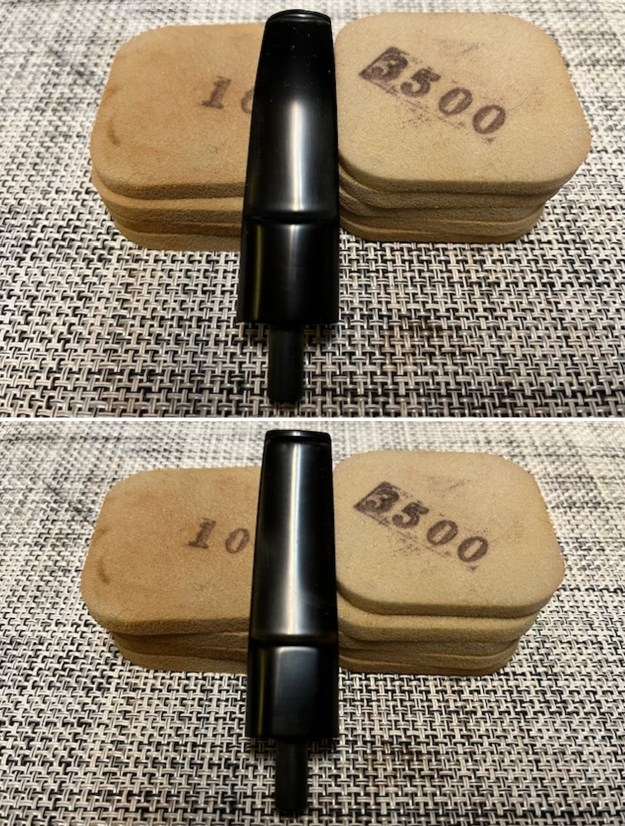
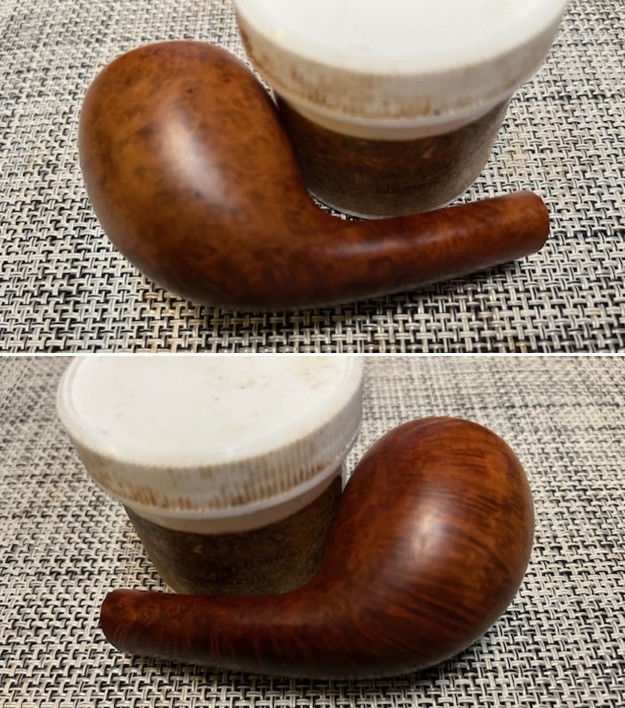
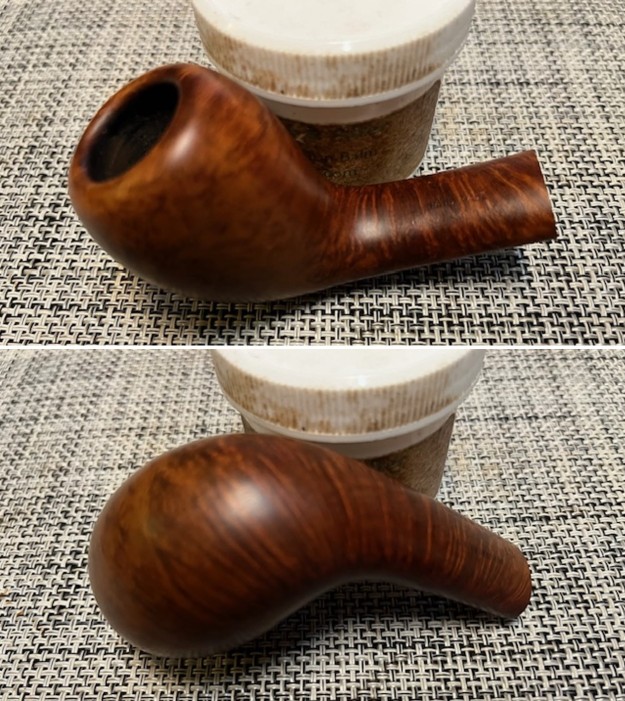
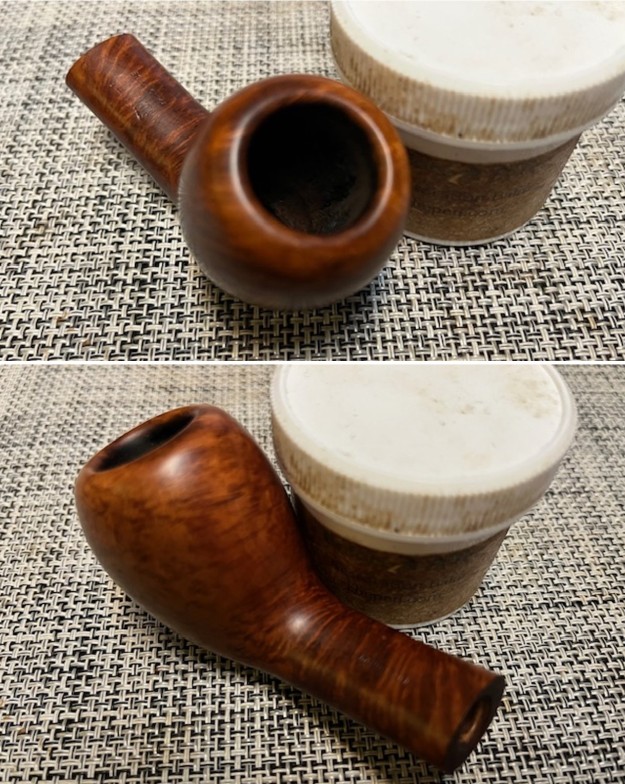
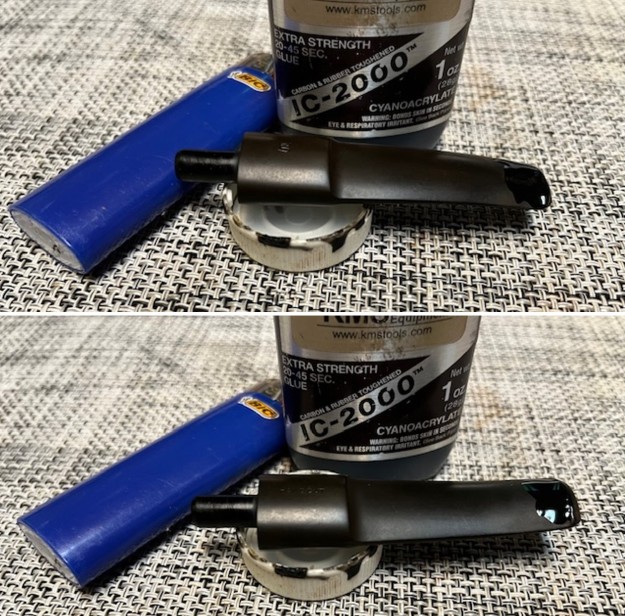
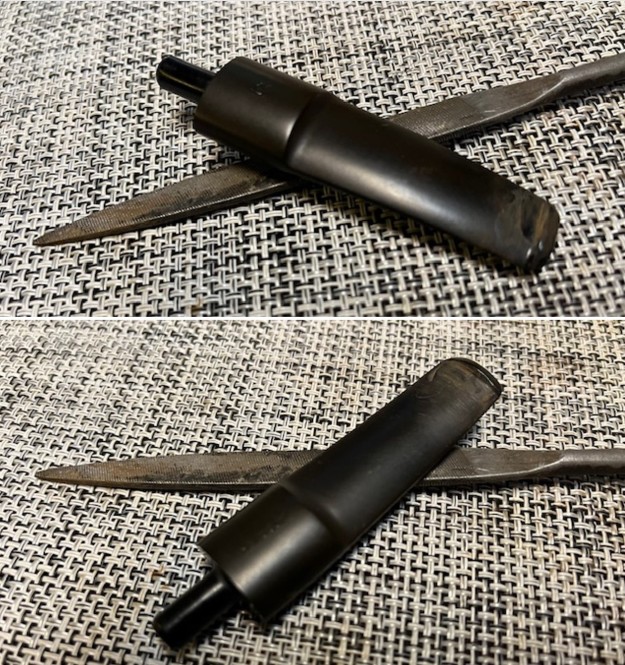
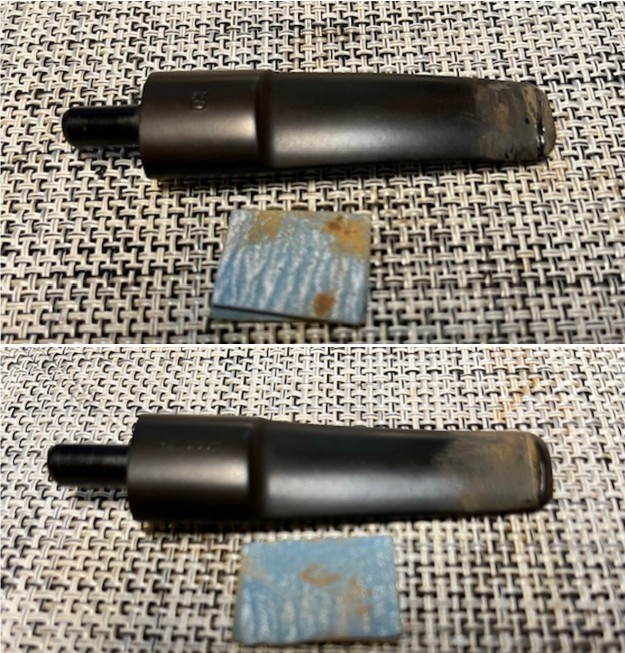
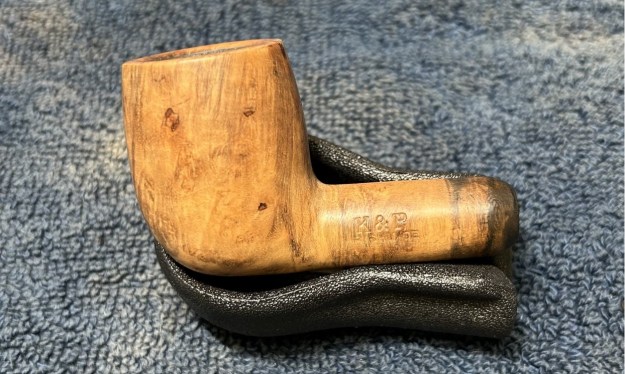
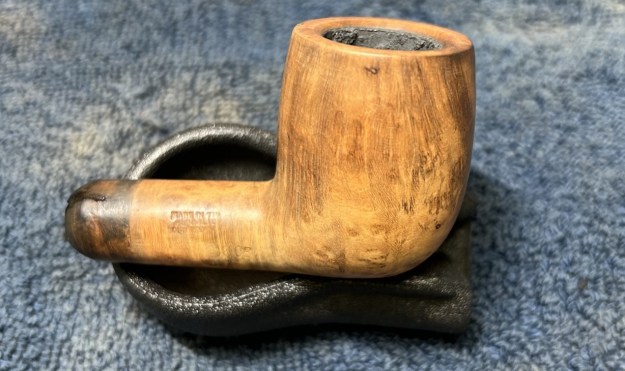
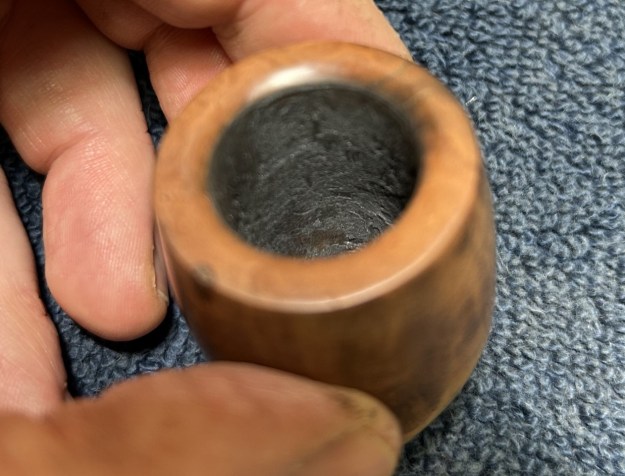
This is the second pipe in a series of three that I was given by my cousin to clean up and bring back to life. This is a republic era K&P Irish Made X105 straight billiard from Peterson. It’s a handsome pipe, for sure, but there are lots of fills all over the bowl and it was in rough shape. It is important to note that this stem is not the original, but, after some back-and-forth with my cousin, we decided to leave the stem as it is. The markings are clear enough. On the left side of the shank, it reads K & P [over] Irish Made. On the right side of the shank, it reads Made in the [over] Republic [over] of Ireland. Near to that is the shape number, X105. There are also some maker’s marks on the ferrule. Quoting from a previous blog of Steve’s, regarding an Irish Made, “There is a nickel ferrule on the shank that is stamped with three symbols – a shamrock. a wolf hound and a tower. These makers marks put the pipe as pre-circa 1963.” That helps! On to the pipe work… It turns out that this stem is the dirtiest stem I’ve dealt with for quite a while. I don’t think it’s ever seen a pipe cleaner in its life until I got a hold of it. The thing was absolutely filthy inside, and it took ages and ages to clean out with pipe cleaners and lemon infused 99% isopropyl alcohol. In fact, it was dirty enough that I actually used some tube brushes as well (along with some detergent) to scrub out the insides and finally got it vaguely clean. Another thing you’ll notice is how badly chomped the button and bit are. It looked pretty bad, but I took my BIC lighter and tried to raise those dents with its flame. This didn’t work very well, if at all.The oxidization on the stem was pretty brutal, so I used some SoftScrub on some cotton rounds and scrubbed the dickens out of it for quite a while. The photo shows how much came off the initial scrubbing. I then threw it into the deoxidizing solution to sit overnight. The next day, with the stem nice and clean, I needed to address those dents on the stem. I applied a type of black cyanoacrylate adhesive (impregnated with carbon and rubber) to the damaged area. I sprayed these areas with an accelerant to cure the adhesive immediately.I then had to shape these repairs so that they would look great! I began by taking a needle file and shaping the hardened adhesive. Continuing, I used 200- and 400-grit sandpapers on the repairs to smooth them out. I finished up by using all nine of my MicroMesh pads to sand the entire stem. I also used some pipe stem oil to assist with the sanding and protect the vulcanite. The stummel was also pretty nasty. I begin by reaming it out. First, I took a drill bit and hand cranked (never with a drill) it into the shank to break up the incredibly hardened debris in there. Of course, I followed that up with cotton swabs and pipe cleaners and isopropyl alcohol. It took a lot of scrubbing to get it clean. I also used some soap and tube brushes to make it extra clean. I cleaned the outside wood with some Murphy’s and then I set the stummel up for a de-ghosting session. I took a couple of cotton balls, gently stuffed them into the bowl and into the shank, and saturated them with 99% isopropyl alcohol. I let that sit overnight, and the alcohol did its thing, leaching out more of the filth from the stummel. As the photos have shown, this pipe had a lot of fills, so I dealt with them, with a mixture of cyanoacrylate adhesive and briar dust. There was also a chunk missing from the rim, and I filled that up with the same. There was a lot of burning and damage to the rim which I addressed with my topping board and some sandpaper. This is always a balancing act: you want to make it look better, but you don’t want to take off too much. There was a crack in the shank, and a crack at the rim. Both of those required drilling before I could repair them. I took my micro drill bit and delicately drilled a hole through the briar right at the very end of the crack. This tiny hole – almost too difficult to see – serves as an endpoint for the crack, ensuring that it will not grow any further. I then carefully laid a thin bead of CA, glue along both cracks and let it cure. This pipe had obviously had a hard life, and one thing I noticed was that the bowl had quite a few craze lines on the inside. I wanted to fix them to make sure they weren’t a problem in future. Recently, I learned about a new mixture for a pipe mortar that I wanted to try inside this bowl. I found the mix on an old YouTube video, but I honestly can’t remember who the fellow was, otherwise I would credit him here. If anybody remembers who that was, please let me know. Anyway, I mixed up a combination of plaster of Paris, table salt, and activated charcoal. Once blended, I added a few drops of water to make a very thick paste. I then put a thin layer on the inside of the bowl and let it set overnight. It worked like a charm.The next step was to sand everything down. I started with some 220-grit sandpaper and sanded the repairs down so that they were level with the briar. I then took my nine micromesh pads and sanded the whole thing. Despite its fills, the pipe will be much improved once I’m done with it. Of course, I used my restoration balm and rubbed that into the wood to have its nourishing properties work on the wood. I left it set for 20 minutes or so and, while I was waiting, I decided to fix up the nickel ferrule that goes at the end of the shank. I used most of my micromesh pads to polish it up and it came out beautifully. I glued it back on and set the stummel aside. Off to my bench polisher! As usual, I used white diamond as my first compound and followed that with a few coats of carnauba wax. It provides just the sort of glam this pipe needs to pop!This K&P Irish Made X105 straight billiard so much improved that I’m delighted and I’m sure my cousin will be too. I hope you enjoyed reading the story of this pipe as much I as I did restoring it. If you are interested in more of my work, please follow me here on Steve’s website or email me directly at kenneth@knightsofthepipe.com. Thank you very much for reading and, as always, I welcome and encourage your comments.

Clearing Up Some Birks Confusion


Blog by Kenneth Lieblich

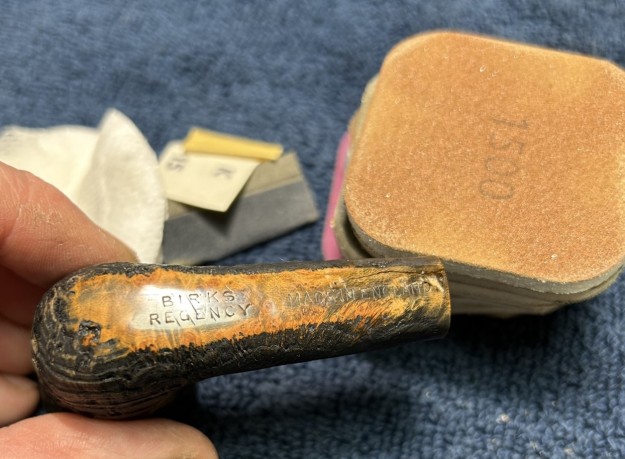
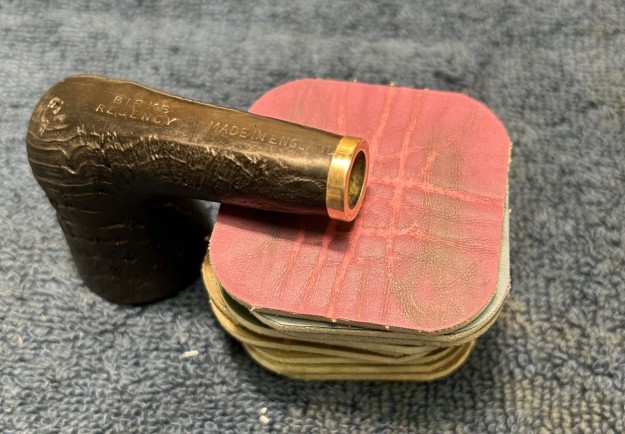
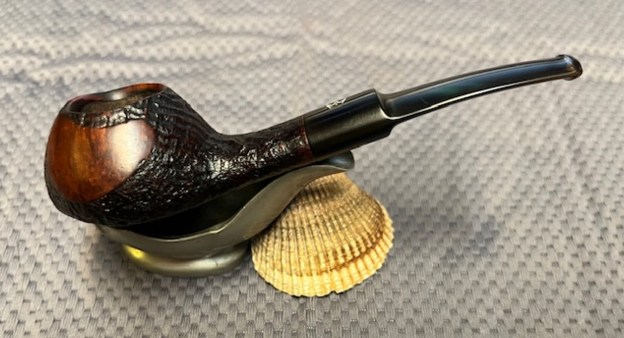
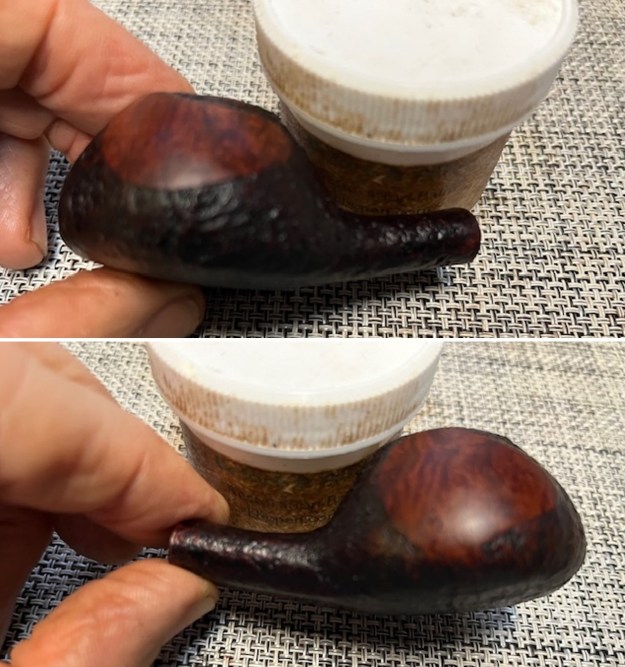
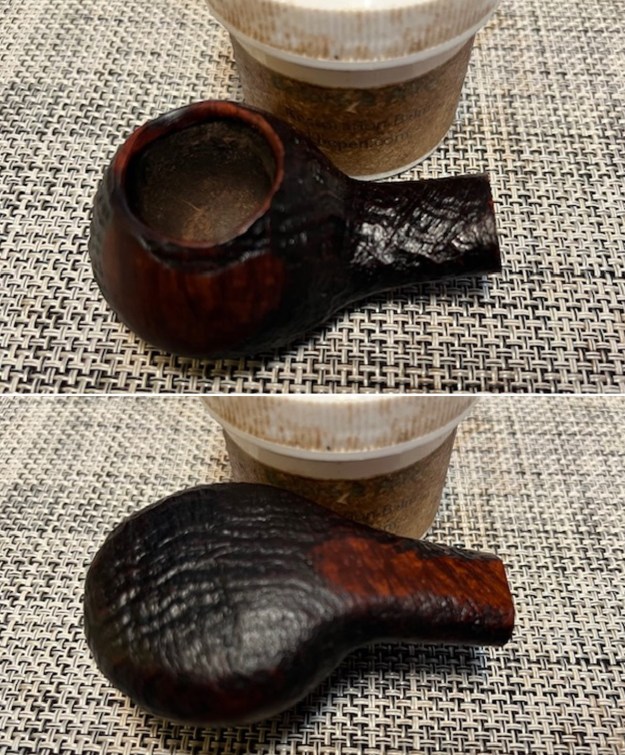
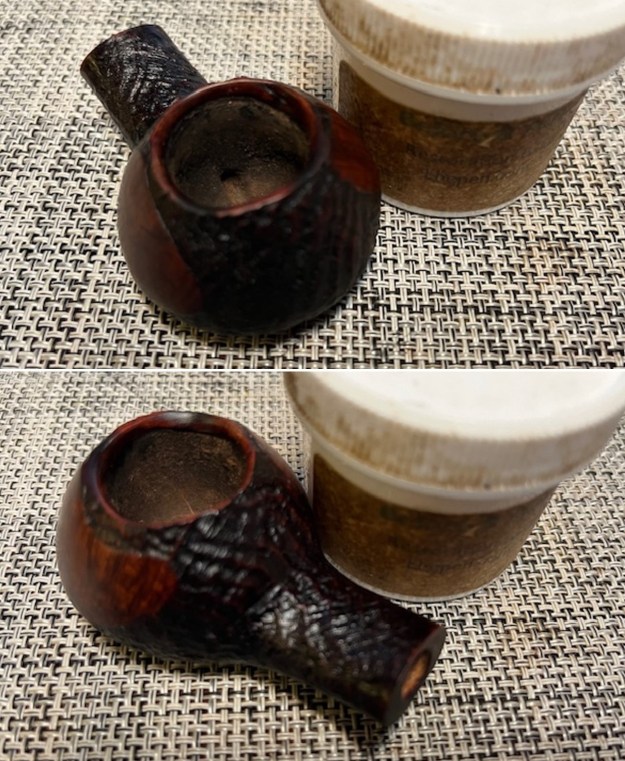
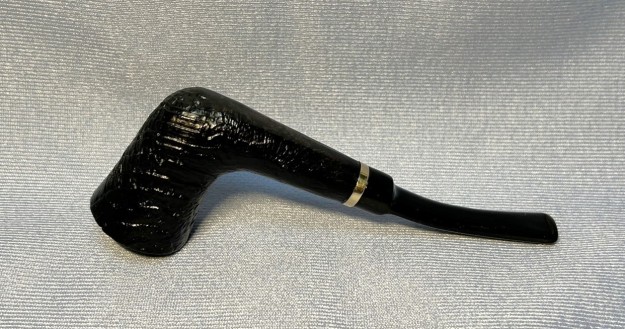
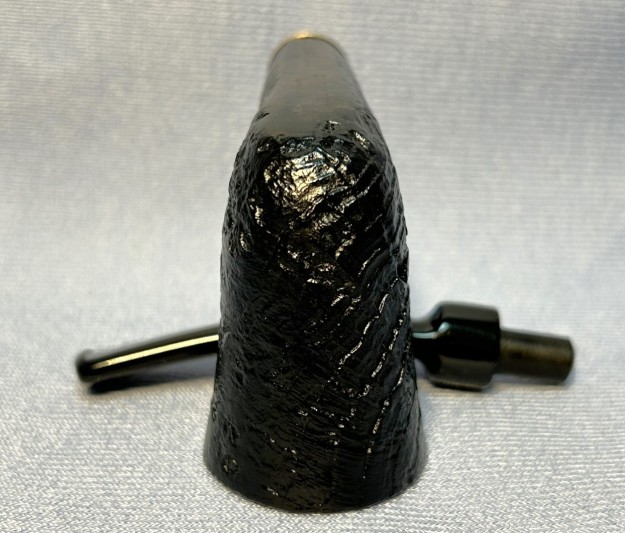
This happy little fellow is a sandblasted, stylized bent Zulu by Birks. My cousin gave me three pipes to repair – this is the first one I grabbed. I was interested in it for two reasons. First there was a cracked shank, and I always like giving life back to a pipe with a cracked shank. Second, the pipe comes with the name of the famous Canadian jewellery house, Birks. I’m interested in this because I have several Birks pipes in my workshop and they’re all a little different. More on that in a moment. The markings on the pipe don’t tell us much – but they tell us enough. The only markings are on the underside of the stummel and they read Birks [over] Regency. To the left of that are the words Made in England. Allow me to explain some of this.Birks refers to Henry Birks & Sons, a venerable and well-known luxury store based in Canada (now known as Maison Birks). It has focused primarily on jewellery throughout its history, but also other luxury items like watches, silverware, etc. There has been some discussion in pipe circles about whether Birks sold pipes or not – and whether Birks actually refers to an English company (as Wilczak and Colwell suggested in Who Made That Pipe?). I can say definitively that Henry Birks & Sons sold pipes. They did not manufacture their own, but had others make them for sale at Birks’ stores. Steve has already restored some Birks-branded pipes made by Savinelli. I have Birks-branded pipes made in England and in Denmark.Two further points about this. First, I wonder if Wilczak and Colwell were thinking of an English razor company (also called Birks) that frequently used a maker’s mark that was in the shape of a pipe (rather unhelpfully). For more on that, click here. Second (as I mentioned earlier), this particular pipe has the word Regency on it. Regency specifically refers to a Henry Birks line of silverware, china, etc. – so that makes sense.

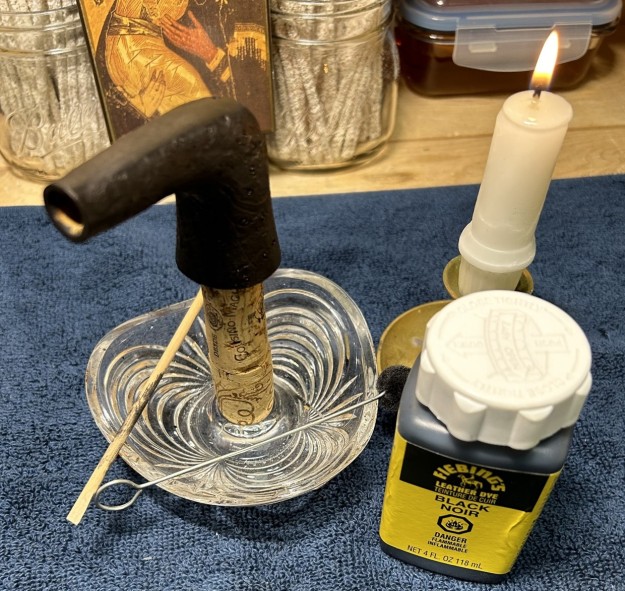
The stummel was surprisingly clean when I took hold of it. I did use a few cotton swabs and pipe, cleaners, along with isopropyl alcohol, but it didn’t take much to finish it. I followed that up with some Castile soap, and tube brushes to really scrub the insides. Came out beautifully. I’ve then took some Murphy’s, and a toothbrush and gently scrubbed the years of filth and oil, etc. off of the sandblast. It certainly looked much cleaner after that, albeit much more faded. A new coat of stain will be required, I think. As a result, I took the opportunity to wipe down the stummel, with alcohol to remove some excess old stain, and make sure everything was clean for the repair to the crack in the shank. Let’s move onto the primary repair to this pipe: that crack in the shank. First of all, I took the most micro of micro drill bits and drilled a hole with my Dremel right through the shank wall into the airway. This is an important step as it stops the crack from extending later on in life. The drill bit is so thin that it’s always a bit nerve-racking, because I fear snapping the bit through such hardwood. Fortunately, it worked like a charm this time. I also stuffed the mortice with pipe cleaners coated in Vaseline, so that if – God forbid – any cyanoacrylate adhesive drip into the mortise, it can be easily removed by the petroleum jelly. I ran a thin bead of cyanoacrylate adhesive along the length of the crack, and then held the two sides of the crack together with some vice grips. I let it sit for a few hours to cure. Moving along to the stem. Like the stummel, it was also quite clean, but needed a few more pipe cleaners to finish the job. Of course, I used isopropyl alcohol with them. I then wiped down the stem with Murphy’s on a cotton round. Once done, I put the stem in the deoxidizing fluid, even though there wasn’t much oxidation to speak of. It can’t hurt, and it’ll remove what little there is. After the adhesive cured on the shank, I set about sanding the underside of the stummel because there were a lot of scratches there. I also needed to sand down the bead of adhesive that I put there. It was tricky, because there wasn’t much room to move, with the markings so nearby. I started out by masking those markings with hockey tape, which is a perfect masking material as it is extremely scratch resistant. However, it ended up being more trouble than it was worth given the tight spaces to work in. Instead, I just sanded the area down, freehand, so to speak. It was time to stain the pipe, so I took out my Fiebling’s black leather dye. I thoroughly coated the stummel with a dauber, then flamed it with my BIC lighter to set the color. I repeated this process three more times to ensure a really deep, rich, black colour. it worked a treat.In order to ensure the crack in the shank doesn’t open up again, I decided to add a band to the shank to secure everything in place. The bands always look a little dull when they come out of my drawer, so I polished it up with my micromesh sanding pads. Naturally, I did the same to the stem. Came out beautifully. The next step, of course, was adding the restoration balm to the wood. This not only enriches and enlivens the briar, but helps add a protective layer to the dye in the wood. Off to my bench polisher! As usual, I used white diamond as my first compound, but instead of the regular conservator’s wax that I would use on sandblasted or rusticated pipes, I opted to use Halcyon II this time. It also gives a nice polish to the pipe, but slightly less shiny than normal – which is what I was aiming for.This Birks Bent Zulu looks beautiful once again. I’m sure my cousin will love it. I hope you enjoyed reading the story of this pipe as much I as I did restoring it. If you are interested in more of my work, please follow me here on Steve’s website or email me directly at kenneth@knightsofthepipe.com. Thank you very much for reading and, as always, I welcome and encourage your comments.
Cleaning Up an Interesting Paradis Star Freehand Pot


Blog by Kenneth Lieblich

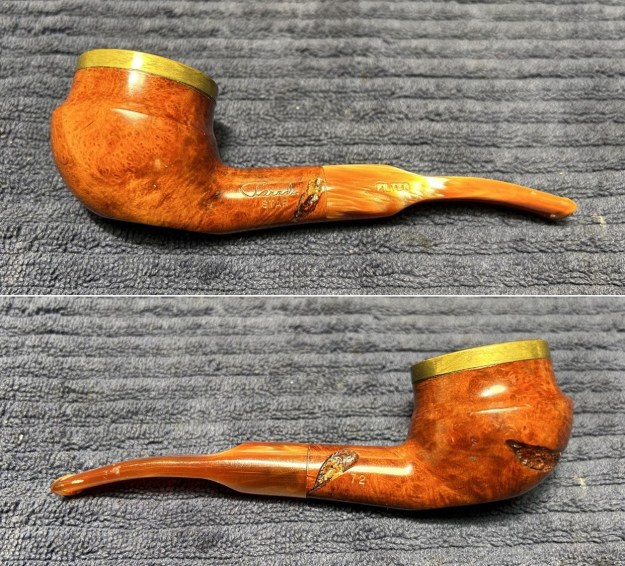
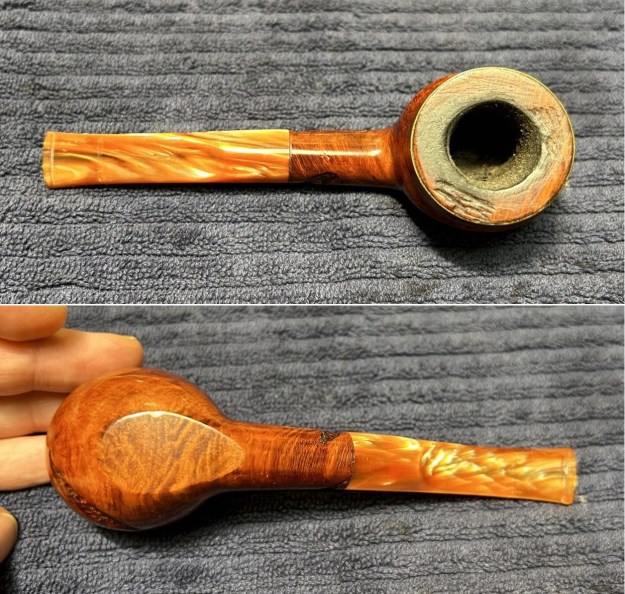
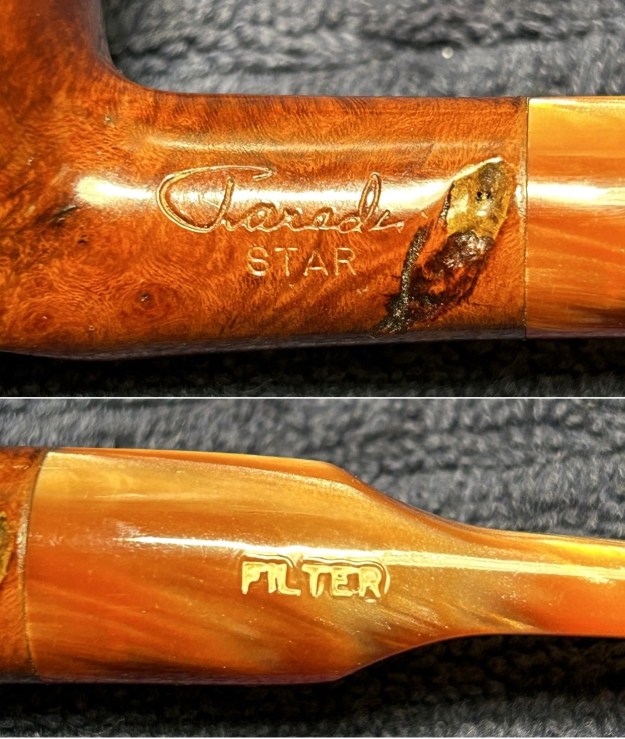
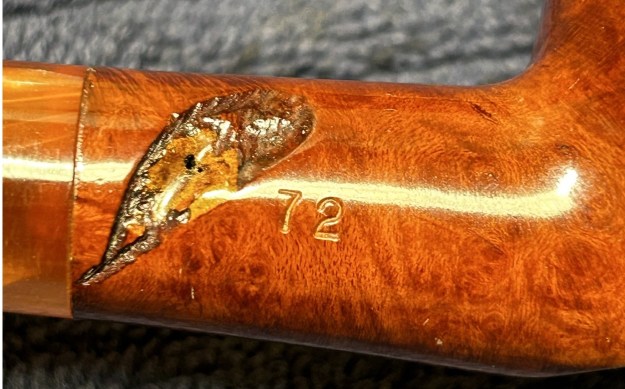
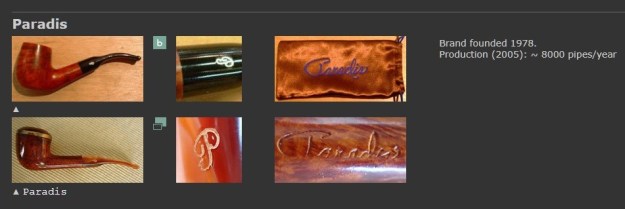
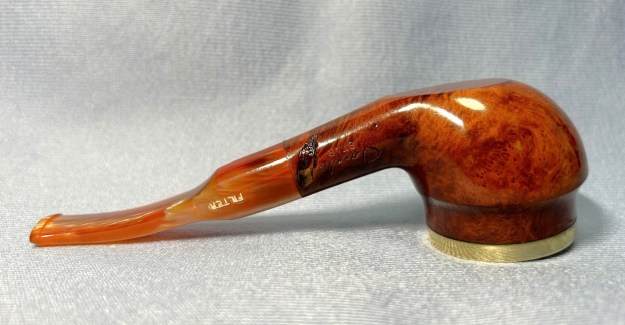
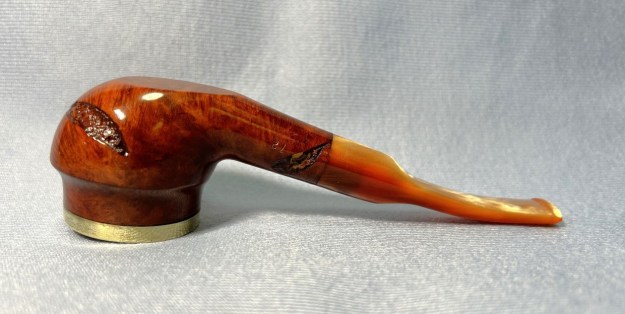
A fine gentleman from out east contacted me asking for this pipe to be restored. Naturally, I obliged and managed a relatively quick job on it. This is just a quick-and-dirty report because it was really more of a cleaning job than a repair job – and I missed out on a few photos. This pipe is a Paradis Star 72 Freehand Pot. The markings on the pipe are as follows: the left side of the shank read Paradis [over] Star; on the right side of the shank read the number 72 – the shape number; and on the left side of the stem was the word Filter. This pipe did indeed have a 6 mm filter and so that makes sense. I knew Paradis Pipes to be a Canadian pipe company, based in Montréal, but I went over to Pipedia and Pipephil to seek out more information. Here’s some of what I found (after correcting the many spelling errors):

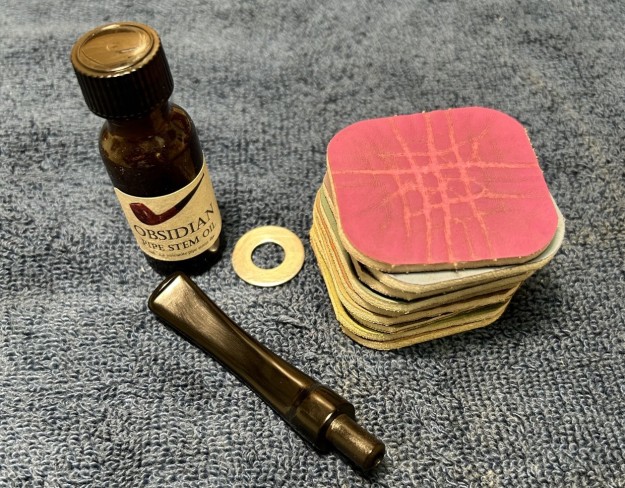
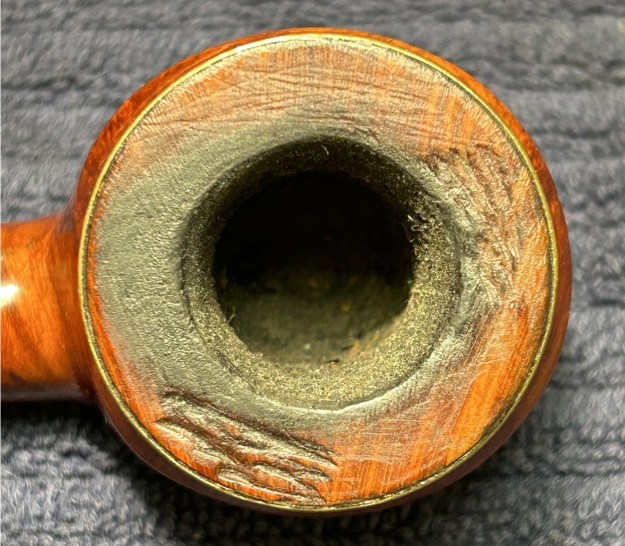
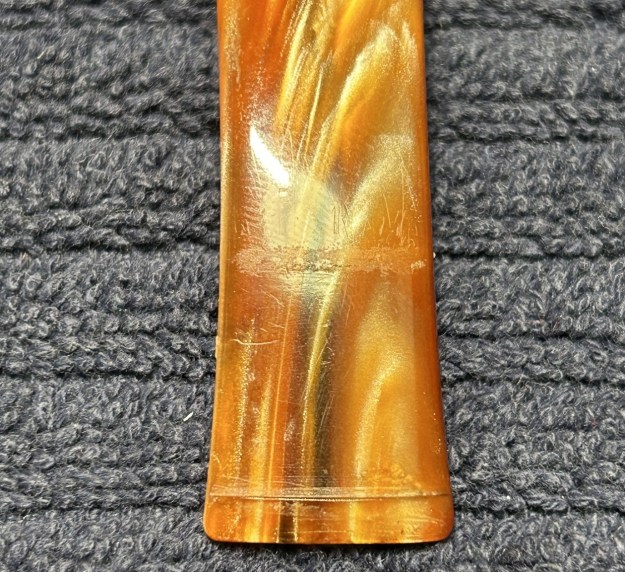
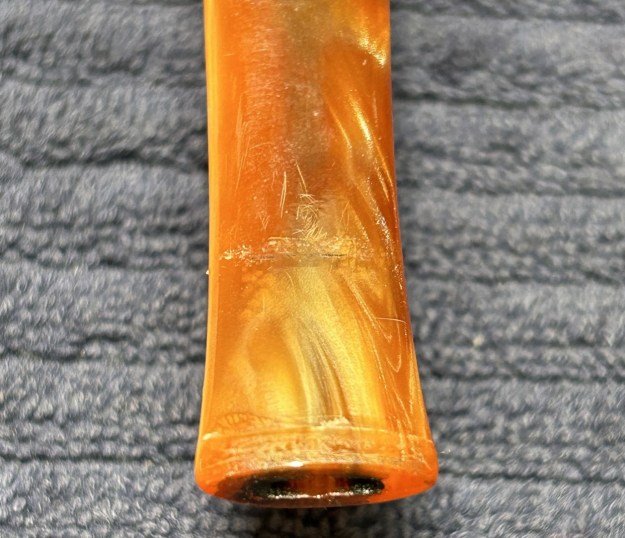
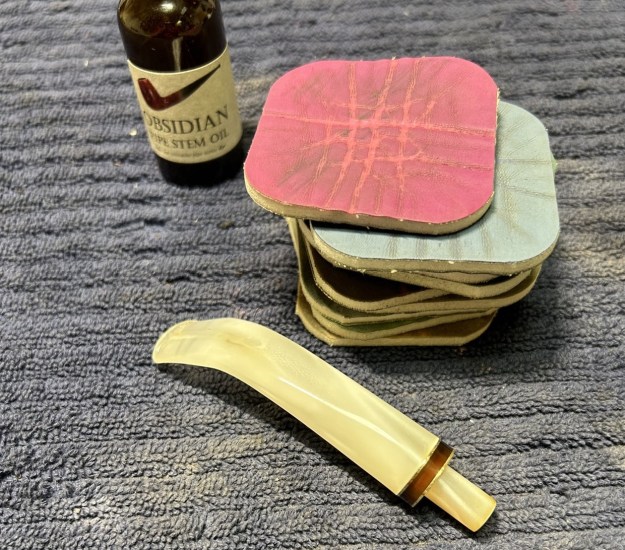
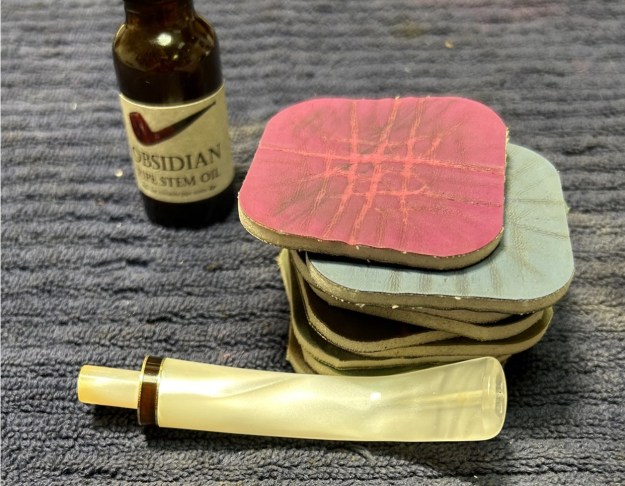
Paradis Pipes is the Canadian brand of the brothers Gilles and Fernand Paradis. In 1922 the Paradis family moved to the USA, when Lucien Paradis (1906-1979) was 16 years old. It was at this age that he started as an apprentice at his uncle’s pipe factory: Joseph B. Desjardins, maker of (JD) pipes, in Fall River, MA. Joseph Desjardins was issued two patents during this period, one for a new machine for making pipe stems and another for a new design of pipe reamer. The company employed 60 workers at one stage. In 1930, due to the Great Depressions, Lucien lost his job and returned to Quebec to work in the agricultural machine industry. In his spare time, be made pipes, selling them door to door. Three years later the rest of the family joined him, and Lucien founded a pipe factory with two of his brothers. The company eventually employed 18 workers and in the 1960s produced over 50,000 pipes a year, under brads like JBL, Dr. Thomas, Fernand Gignac, S.C. Pipes, New London Golfer, and Jo Thomassin. Paradis was founded in 1978, at the Salon of Quebec Artisans, and is available in tobacconists all over the country today. The brand produces 8,000 pipes a year (400 “handmade”), with Greek briar.The pipe was in decent condition. It had been well-smoked, and the bowl and shank were fairly dirty. The bowl had some cake on the inside and a bit of lava on the rim. But there was clearly some burning there too. The brass ring around the bowl was in good condition, just a bit scratched up. Meanwhile, the stem was relatively dirty. It was made of acrylic, so no oxidation to speak of, but there were what I would describe as “typical” tooth scratches on the bit. Fortunately, no dents – but someone did leave a heavily used filter behind. Delicious. The stem was first on my list. I wiped the outside down with Murphy’s Oil Soap on some cotton pads. I cleaned out the insides with lemon-infused isopropyl alcohol and some pipe cleaners and cotton swabs.I then used all nine Micromesh pads (1,500 through 12,000 grit) to make the swirling colours of the stem’s acrylic shine again. I also used Obsidian Pipe Stem Oil in between each pad scrubbing (from 3,600 onward).

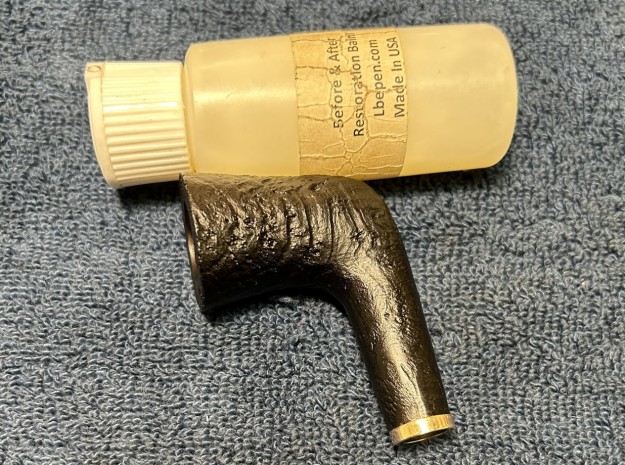
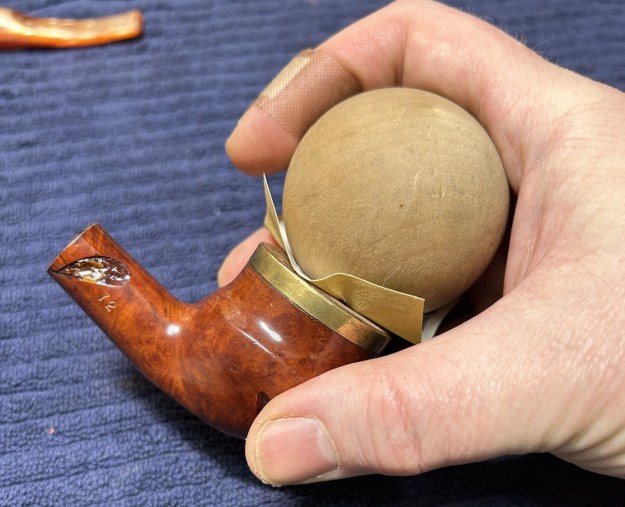
Now for the stummel. I reamed out the bowl to remove the built-up cake and followed that with 220-grit sandpaper taped to a dowel to eliminate as much as I could. I took the chamber down to bare briar, as I wanted to ensure there were no hidden flaws in the wall. Fortunately, there were none.I then proceeded to clean out the insides of the shank with Q-tips, pipe cleaners, and lemon-infused isopropyl alcohol. There was quite a bit of filth inside this stummel and it took a fair amount of cotton to get it clean. I used cotton rounds and some Murphy’s Oil Soap to wipe the outside of the stummel. I also used my toothbrush on the rim to see if I could lift some the burn marks there. Only so much was cleaned up. I followed that up by cleaning the insides of the stummel with some Castile soap and tube brushes. Next, I decided to de-ghost the pipe in order to remove any lingering smells of the past. I thrust cotton balls into the bowl and the shank and saturated them with 99% isopropyl alcohol. I let the stummel sit overnight. This caused any remaining oils, tars and smells to leach out into the cotton. The bowl was nice and clean after this.In order to safely remove the damage on the rim, I used a piece of 220-grit sandpaper wrapped round a wooden sphere. This effectively removed the damage, without altering the look of the pipe. This worked very well and I was pleased with the results. I tidied up some of the lost colour with one of my furniture pens. Then I sanded the rim down with all nine Micromesh pads (1,500 through 12,000 grit). I also made sure to use the Micromesh pads on the brass ring, in order to remove some scratches and bring back its shine. Finally, I applied some Before & After Restoration Balm and buffed it with a microfiber cloth. I then took the pipe to my bench polisher and buffed it with White Diamond and a few coats of carnauba wax. Wow – the pipe looks much improved.This unusual Paradis Star 72 Freehand Pot will suit the buyer very well and I’m sure that he will enjoy smoking it for many years to come. I hope you enjoyed reading the story of this pipe as much I as I did restoring it. If you are interested in more of my work, please follow me here on Steve’s website or email me directly at kenneth@knightsofthepipe.com. Thank you very much for reading and, as always, I welcome and encourage your comments.

Bringing Back a Lovely Poul Hansen Bent Dublin


Blog by Kenneth Lieblich

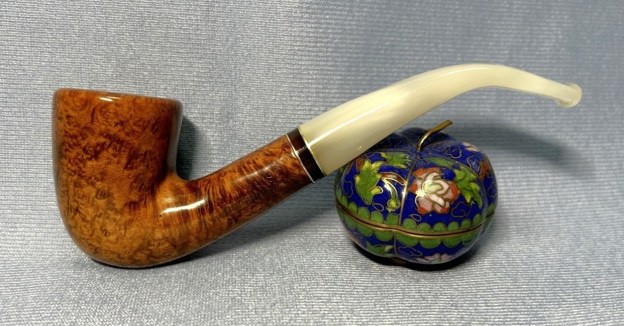
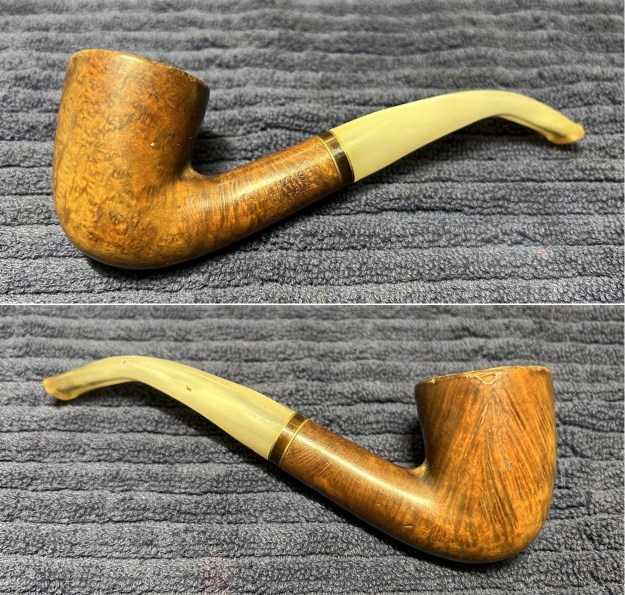
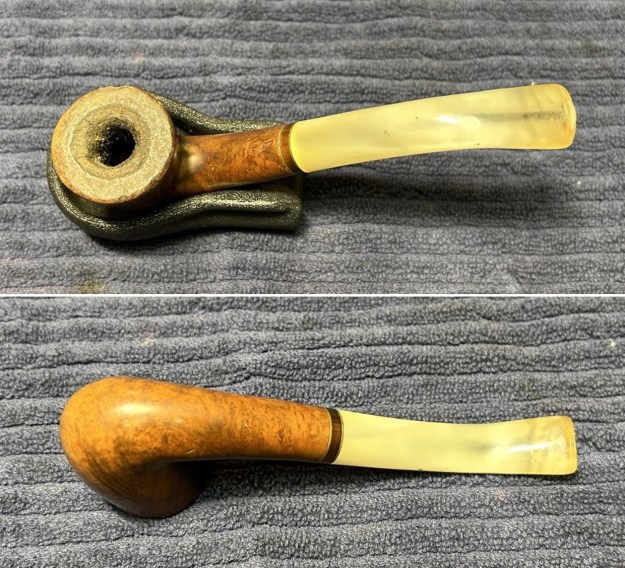
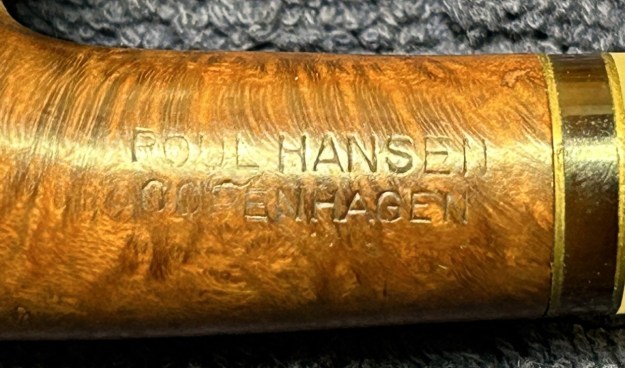
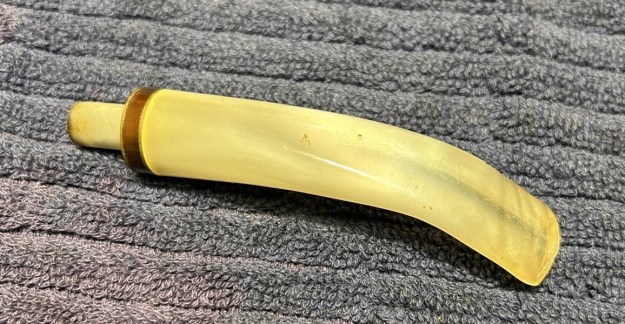
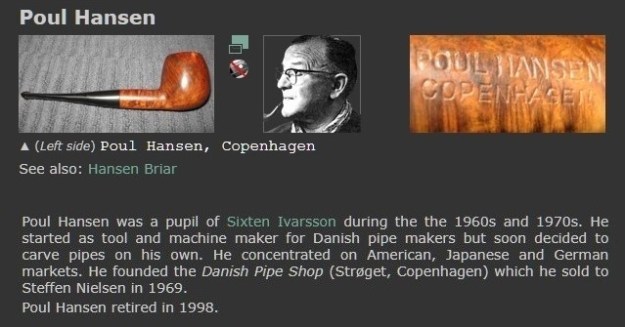
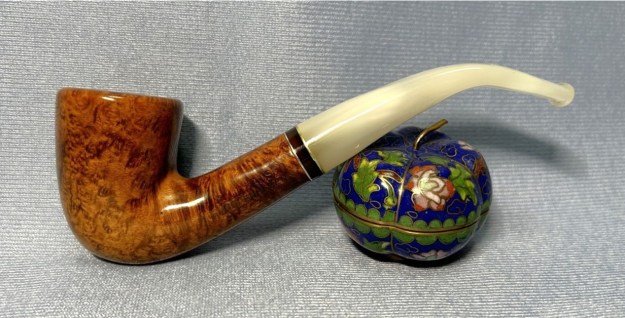
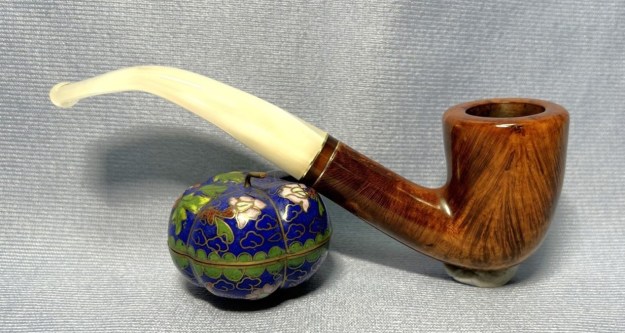
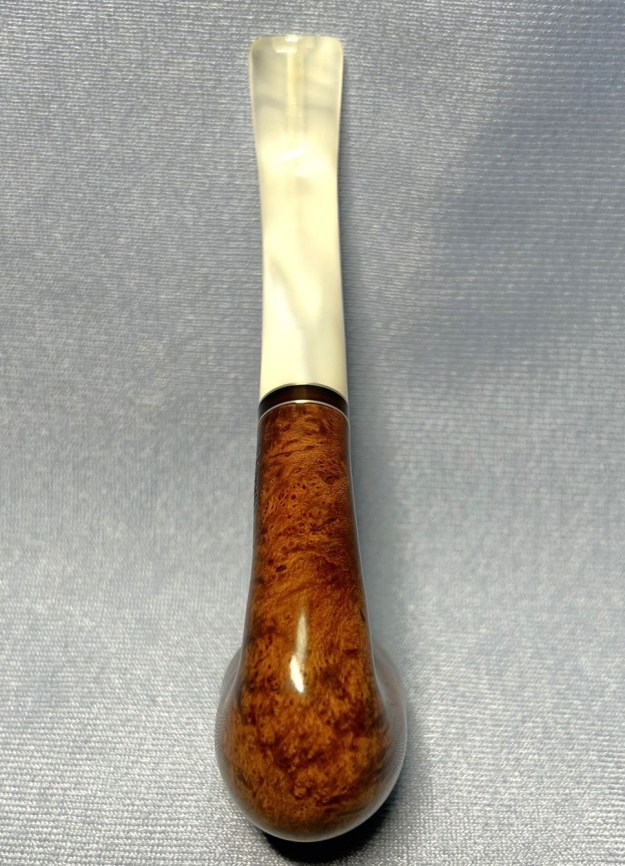
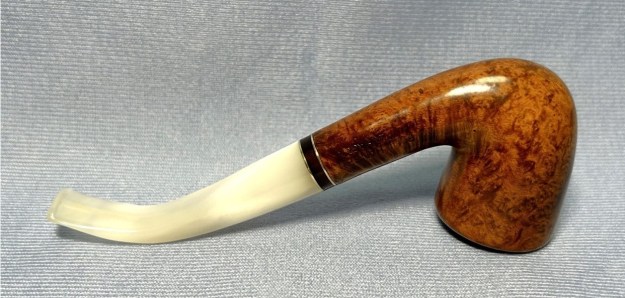
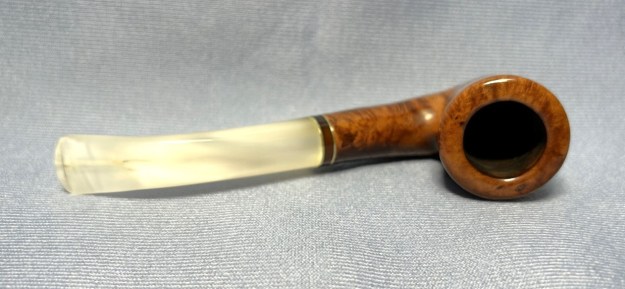
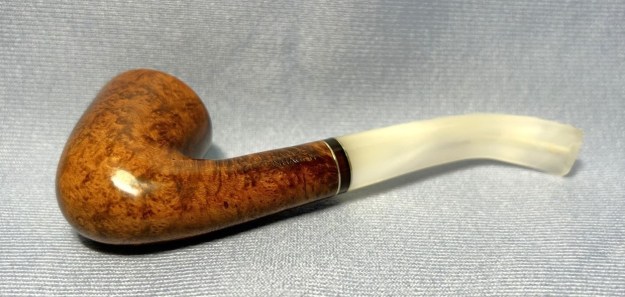
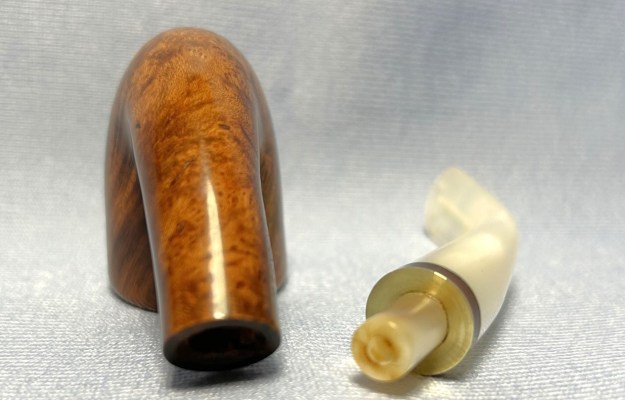
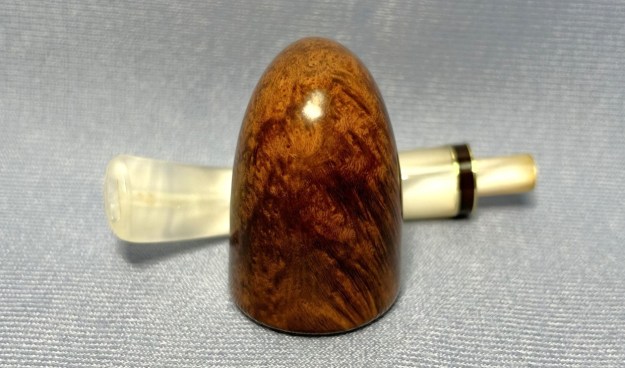
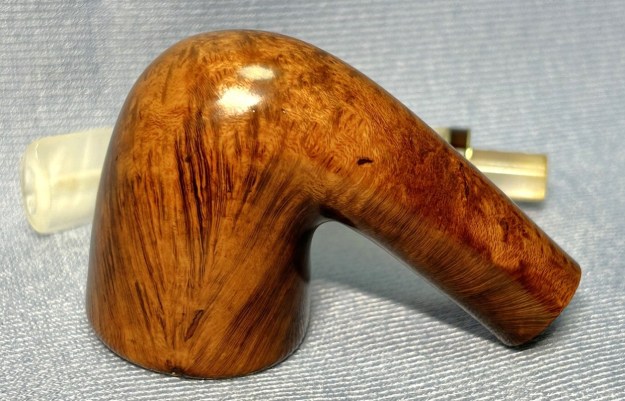
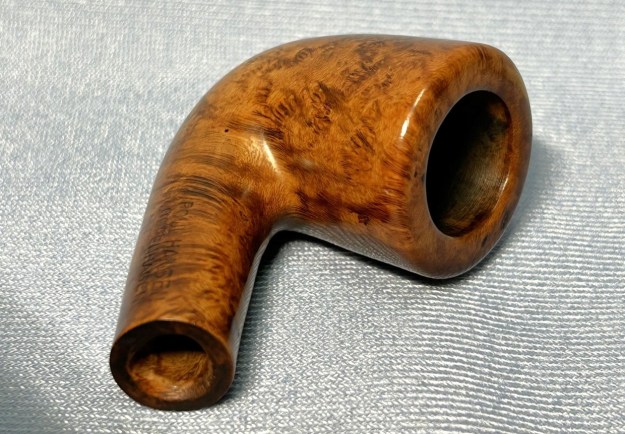
This charming pipe came across my workbench recently and, despite its rough appearance, I could tell there was a beautiful and well-made pipe in there. It was a very attractive shape and felt very good in my hand. Given the amount of abuse heaped on this pipe, it was clearly someone’s favourite. Let’s have a closer look. This pipe is a bent Dublin, made by Poul Hansen. It’s a lovely briar bowl and a white acrylic stem with a brass and wood band. That band is really attractive. The markings on the left side of the shank are Poul Hansen [over] Copenhagen. No other markings were found. I checked the usual sources for information about Poul Hansen. I knew that his pipes were mostly from the 1960s and 70s and commanded the same prices as Preben Holm, Rasmussen and other high-end Danish carvers. Pipephil offered this lovely little tidbit about the man:Over to Pipedia – they had a bit more information, and I include some, but not all, of it below:

Poul Hansen was a very skilled toolmaker and builder of machine tools. Around 1960 he got in contact with the workshops of Pibe-Dan, W.Ø. Larsen and others. So he began to make a lot of special tools and machines for a large number of the Danish pipemakers in the early 60’s. He was inspired by the many beautiful pipes he saw when he visited the pipemakers and soon he decided to try out the art himself. Poul Hansen was basically “self taught” and his early attempts suffered from kind of awkward shapes and finishing. Things turned for the better significantly when Sixten Ivarsson, appreciating the talent, began to tutor Hansen for a while and taught him the vital “tricks” of pipemaking. Soon after Hansen was in business fine. Right from the start he avoided the competition at home and concentrated on the American, Japanese and German markets. Hansen carved the bulk of his pipes during the 1960’s and 1970’s. Around the midst of the 1970’s he took over a small Copenhagen tobacconist’s shop from it’s retiring owner. Now, operating the shop took a lot of his time but vice versa secured a steady income, and Hansen reduced his output considerably. BTW In Denmark he only sold a very limited amount of pipes – but some of his very best. Poul Hansen is little known in today’s circles, those collectors (especially in the States) who have his pipes, tend not to sell them.

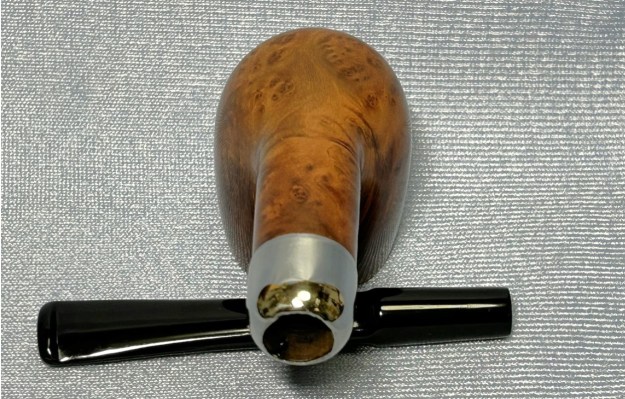
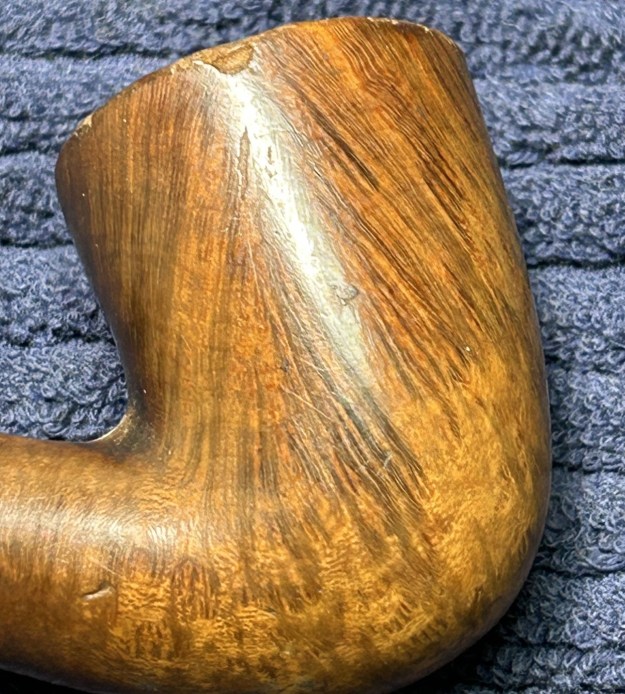
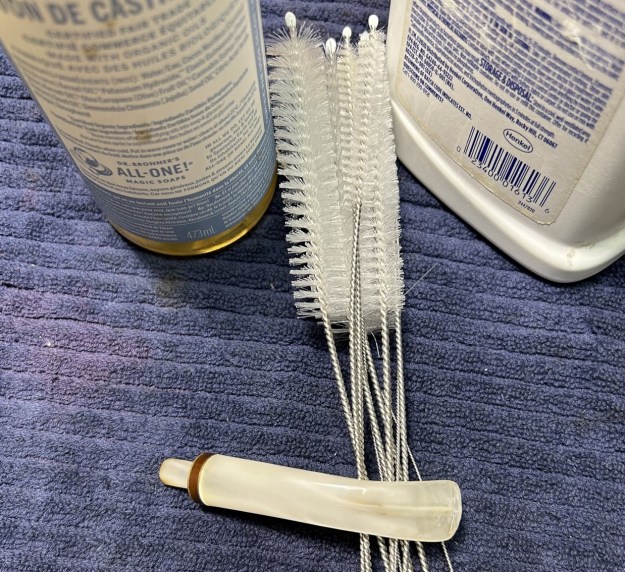
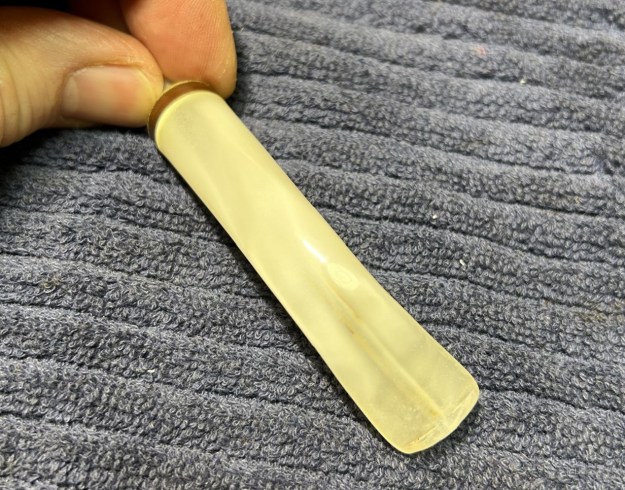
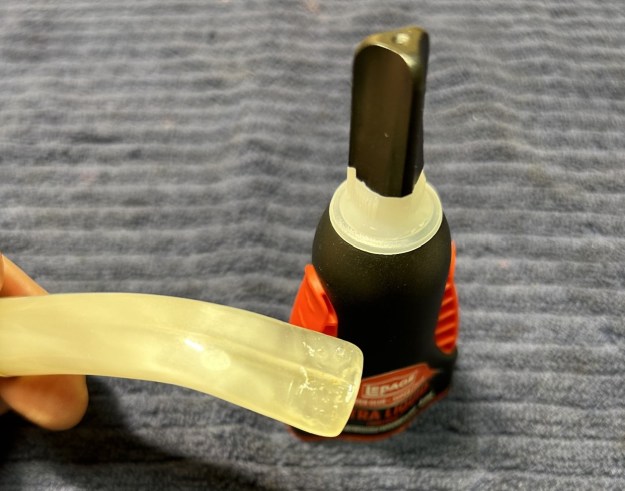
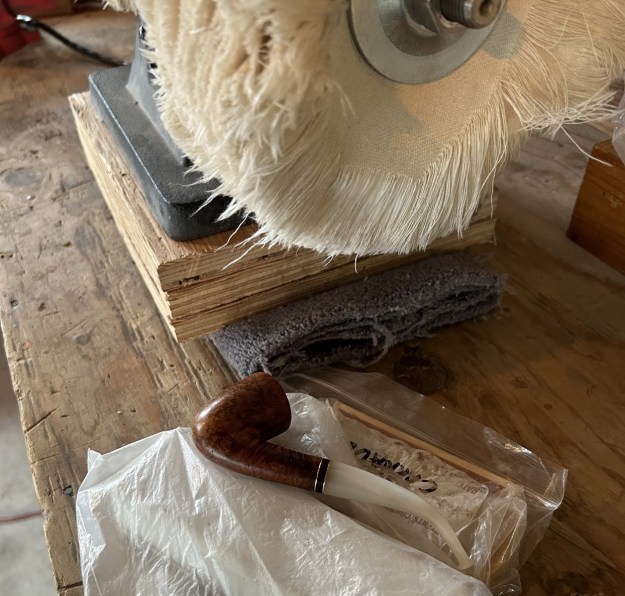
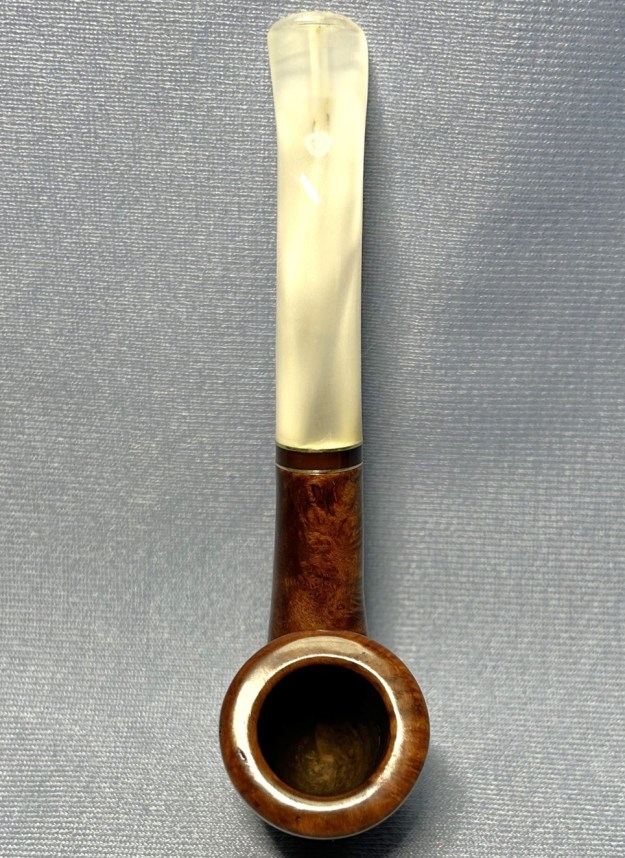
On to the pipe itself: it was very dirty and harshly treated. The bowl was filthy and had quite a bit of lava and plenty of cake – just look at the photos! The rim had been heavily bashed in – presumably from banging out dottle etc. The outside of the bowl had some small fills and some minor scratches. The stem was in better shape, but still needed help. It had some tooth dents and it was dirty on the inside – through the draught hole. To work! The stem was first on my list. I wiped the outside down with Murphy’s Oil Soap on some cotton pads. Then I cleaned out the inside with pipe cleaners and isopropyl alcohol. These acrylic stems are so frustrating to clean and it took a lot of elbow grease. In fact, I also used my tube brushes and Castile soap to get out as much filth as I could. Fortunately, these acrylic stems don’t require deoxidizing, so I moved on. I built up the dents on the stem with clear cyanoacrylate adhesive and let them cure. I then sanded the adhesive down with 220- and 400-grit sandpapers to meld seamlessly into the stem. I then used all nine Micromesh pads (1,500 through 12,000 grit) to polish it and highlight the pearl-like colouring on the stem. I also used Obsidian Pipe Stem Oil in between each pad scrubbing. Moving on to the stummel, I first decided to ream out the bowl. It was unbelievably occluded with cake. I used the PipNet Reamer to remove the built-up cake and followed that with 220-grit sandpaper taped to a couple of dowels to eliminate as much as possible. I took the chamber down to bare briar to ensure there were no hidden flaws in the wall. Fortunately, there were none.The stummel’s insides were absolutely clogged with filth. The previous owner must not have been a fan of cleaning his pipe! I actually used two drill bits (by hand – not in a drill) to break into the encrusted gunk in the stem.Then, I started cleaning the inside with lemon-infused isopropyl alcohol, Q-tips, and pipe cleaners. This took a long while. The inside was terribly dirty and it took an awful lot of cotton. As usual, I followed that up by cleaning the insides with some Castile soap and tube brushes.I soaked the rim of the pipe in some Murphy’s Oil Soap to loosen up the hardened stuff and, after about ten minutes, used a toothbrush to help that process along. I then used cotton rounds and some Murphy’s to scrub the outside of the stummel. I decided to de-ghost the pipe in order to remove any lingering smells of the past. I thrust cotton balls into the bowl and the shank and saturated them with 99% isopropyl alcohol. I let the stummel sit overnight. This caused any remaining oils, tars and smells to leach out into the cotton. The bowl was nice and clean after this.Then I was able to address the small nicks on the rim and the bowl. I dug out my iron and a damp cloth to try to raise the nicks. The hot and moist steam can often cause the wood to swell slightly and return to shape. This worked very well and many of the scratches were corrected with this method. Now it was time to address the remaining fills on the bowl. I repaired them with a mixture of briar dust and cyanoacrylate adhesive. This ensures a strong repair and one that looks similar to the surrounding wood. I sanded the repairs down with 200- and 400-grit sandpaper until they were level with the surrounding briar. Now I could address the roughness on the rim. I “topped” the pipe – that is, I gently and evenly sanded the rim on a piece of 220-grit sandpaper. But I didn’t go as far as I usually do – this rim originally had fillet edges on both the inside and outside of the rim. I wanted to keep this shape and so I did most of the shaping by hand.Then, I used all nine Micromesh pads (1,500 through 12,000 grit) on the stummel to finish it off and make it lovely and smooth. At this point, I rubbed some Before & After Restoration Balm into the briar and left it to sit for 20 minutes or so. I polished it with a microfibre cloth. The B&ARB does wonderful things to the wood, and I really like the natural colour of the briar. I also polished up the bit of brass on the stem’s band. Off to the bench polisher to put the final touches on this pipe. I first gave it a thorough going-over with White Diamond compound. Following that, several coats of carnauba wax created a beautiful, glossy seal on the pipe.And that’s that! This Poul Hansen Bent Dublin looks fantastic and is ready to be enjoyed again by the next owner. I am pleased to announce that this pipe is for sale! If you are interested in acquiring it for your collection, please have a look in the “Danish” section of the store here on Steve’s website. You can also email me directly at kenneth@knightsofthepipe.com. The approximate dimensions of the pipe are as follows: length 5⅓ in. (135 mm); height 2⅛ in. (55 mm); bowl diameter 1¼ in. (32 mm); chamber diameter ¾ in. (20 mm). The weight of the pipe is 1¼ oz. (37 g). I hope you enjoyed reading the story of this pipe’s restoration as much as I did restoring it. If you are interested in more of my work, please follow me here on Steve’s website or send me an email. Thank you very much for reading and, as always, I welcome and encourage your comments.

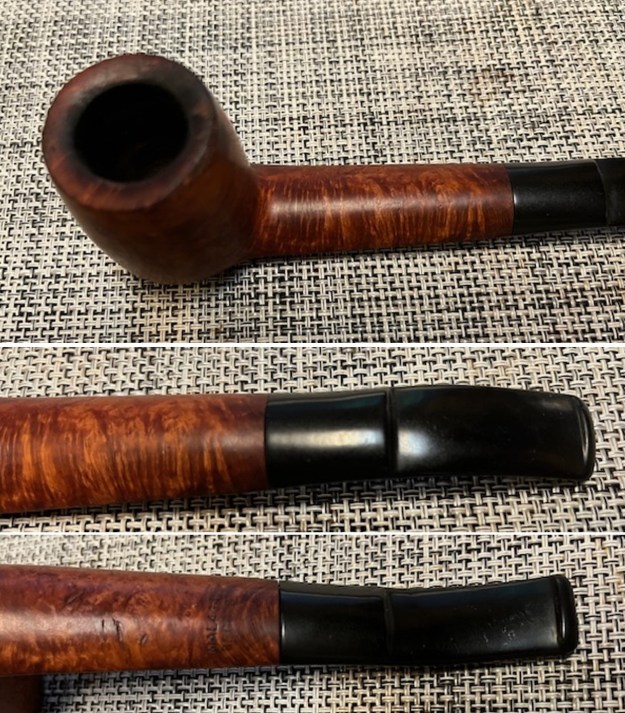
I was not hoping for much with this poor Malaga Second Oval Shank Brandy


Blog by Steve Laug

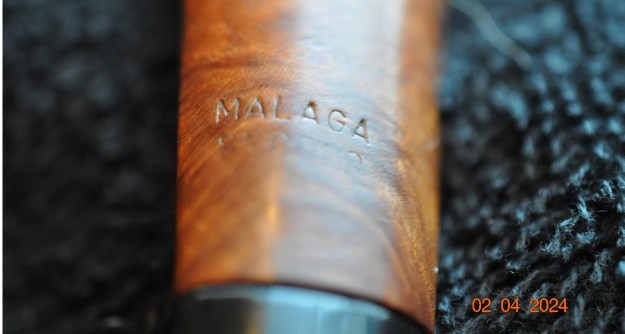
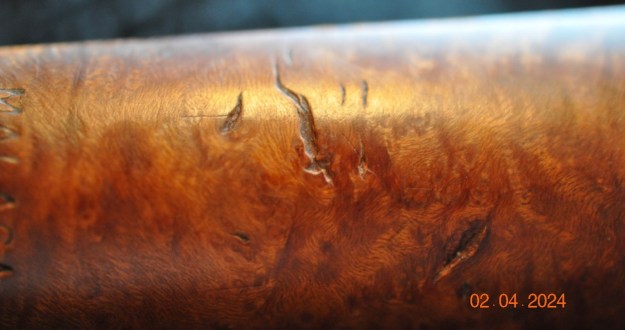
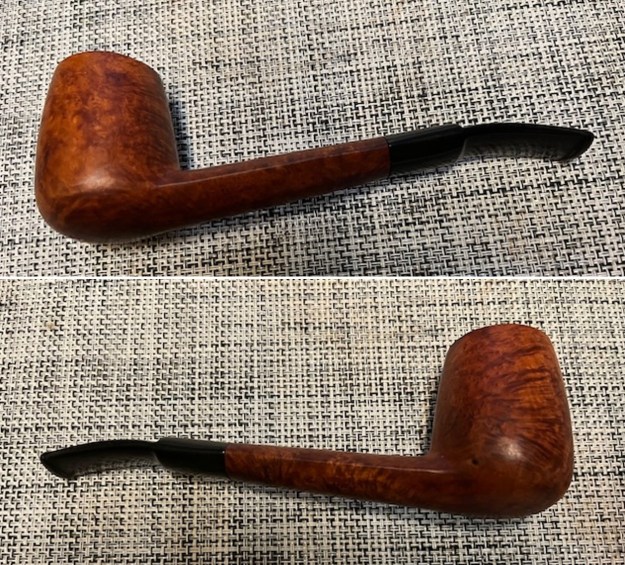
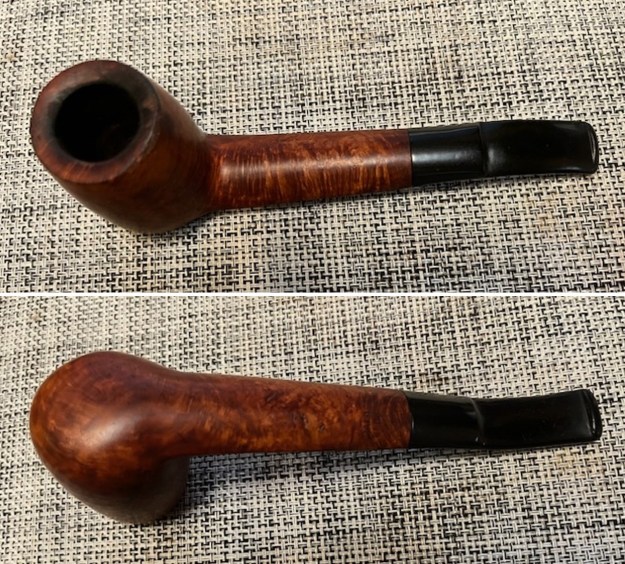
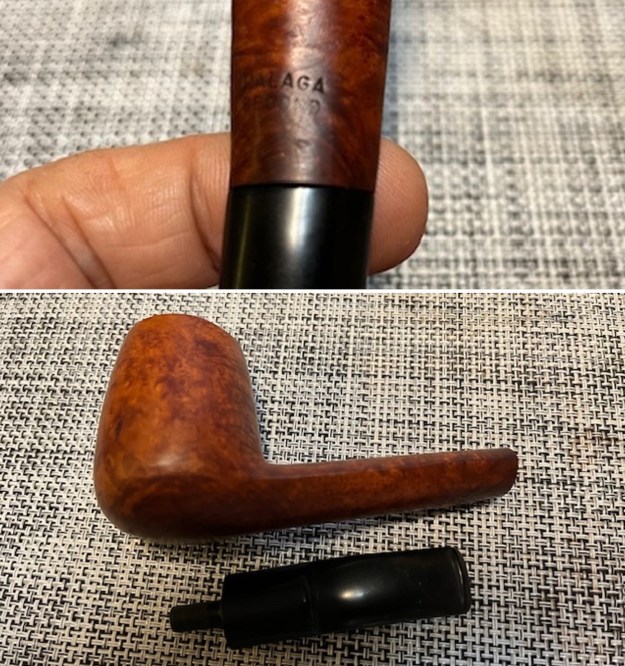
For the next little while I am working on some Malaga Pipes. I have several in queue to work on so I tend to pick them by what catches my eye. The next pipe is the last of the latest batch of Malaga Pipes. This one is a Oval Shank Brandy with a ¼ bent vulcanite stem. Jeff saw it on eBay and purchased it on 09/30/2023 from a seller in Cape Fair, Missouri, USA. The grain on this pipe is quite nice. Once again it was obviously someone’s favourite smoker. The pipe is stamped on the underside of the shank and reads MALAGA [over] Second. The smooth briar bowl and shank were dirty and worn. There were tars and oils ground into the surface of the briar. The bowl had a very thick cake that flowed over the top of the inwardly bevelled rim in a thick lava coat. The cake in the bowl was thick right up to the top of the rim. It was hard to fully assess the condition of the inner edge. It looked like the rim top had some burn marks and chips on the back and the front side. The inner edge was also damaged. The condition of the rim edge and top would become clear in the cleaning process. The outer edge also had some damage. The saddle stem was vulcanite and had light tooth marks on the top and the underside of the stem ahead of the button. Jeff took photos of the pipes before he started his clean up work. Jeff took photos of the rim and bowl to show the heavy cake and lava on the rim top and edges. You can also see the damage on the rim top. The back top and outer edges appear to have been knocked against some hard surface given the amount of damage. The inner edge of the rim showed thick cake coming up to the top and flowing over the edge. It was a dirty pipe but still a beauty. The vulcanite saddle stem had tooth marks and chatter on the top and underside of the stem ahead of the button. The photos of the sides and heel of the bowl show some stunning and unique grain all around the pipe. The oil curing/finish makes the grain really stand out on the bowl and shank. Jeff took a photo of the stamping on the underside of the shank. It read “Malaga” [over] Second. The stamping was clear and readable as noted above.Jeff took photos of the flaws in the briar on the underside of the shank. There are fills in place in the shank but they are shrunken and are quite tactile. I am sure that this is what made the pipe a Malaga Second.For those of you who are unfamiliar with the brand, I am also including the link to a blog that I wrote that gives some of the history of the Malaga brand and the Malaga Pipe Shop in Royal Oak, Michigan in the USA. Here is the link – https://rebornpipes.com/2013/02/09/george-khoubesser-and-malaga-pipes/. That blog also includes links to a catalogue and the history of the pipemaker George Khoubesser. If you are interested to learn more then I invite you to follow the link to get a feel for the brand and the pipemaker.
I am also am including a link to some printed material on the Malaga brand that came to me from the daughter of George Koch (we purchased George’s pipes from his daughter) to help identify the particular stamping on the pipe. The link takes you to the entire collection of materials that were sent to me (https://rebornpipes.com/2019/02/27/malaga-pipes-catalogue-of-pipes-and-tobaccos/).

This particular pipe was a second and it is not listed in the catalogue.

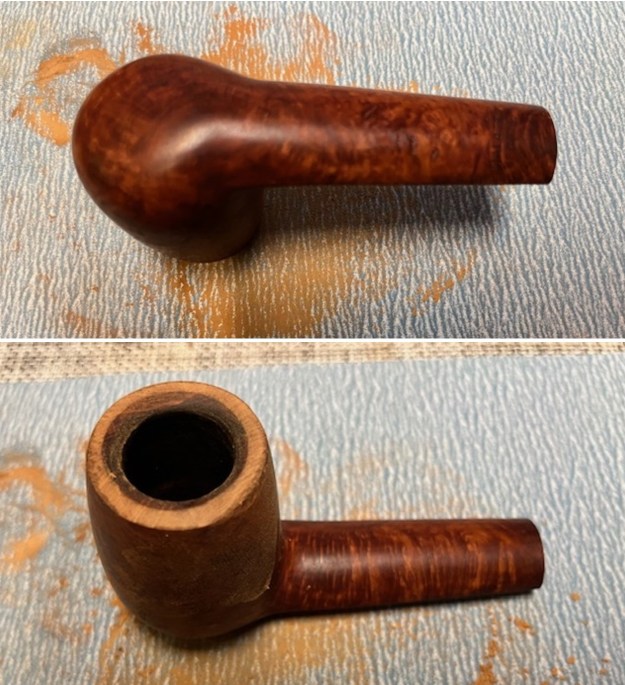
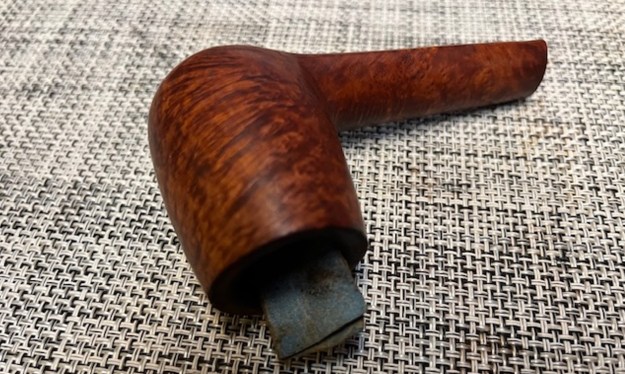
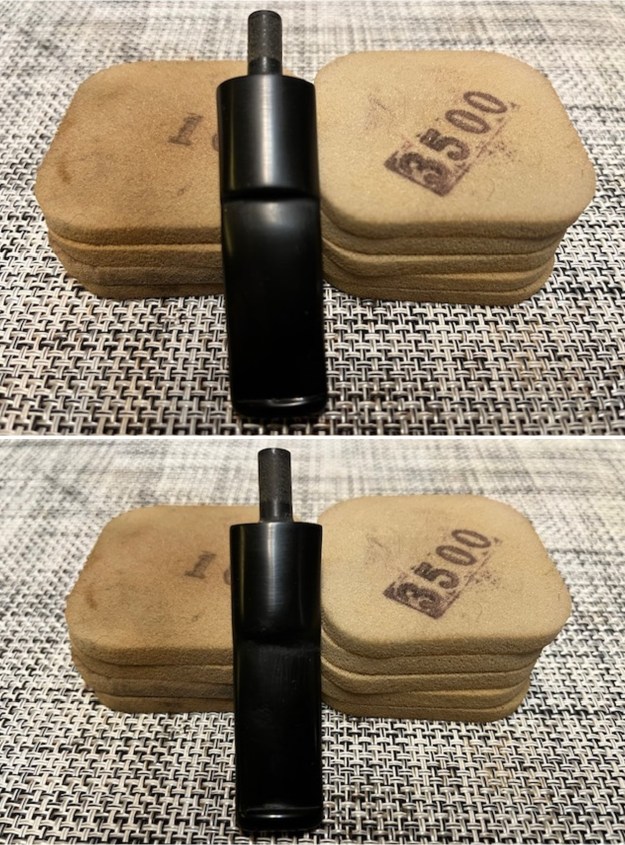
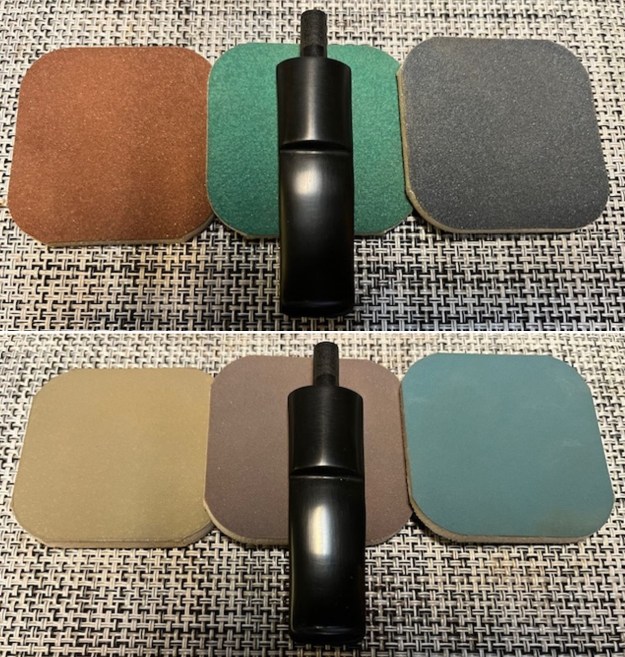
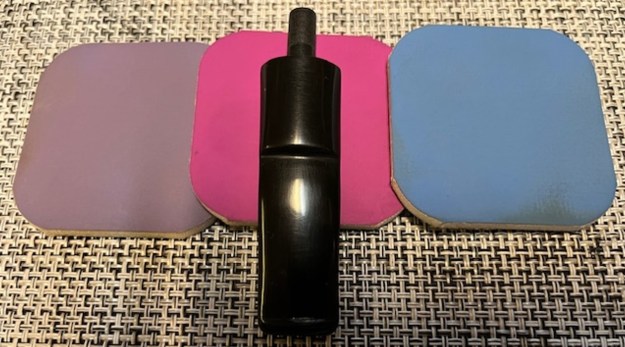
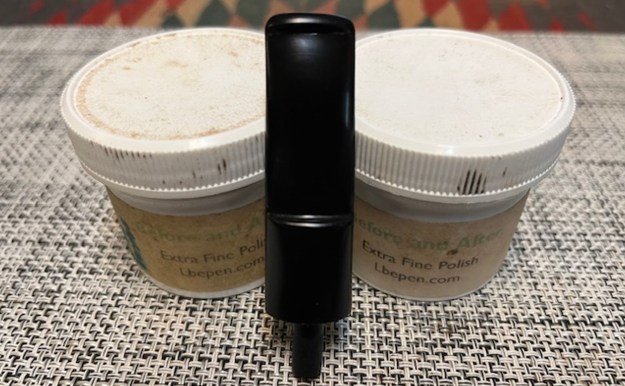
Jeff had cleaned up the pipe using his usual procedure. He reamed the pipe with a PipNet pipe reamer and removed the rest of it with a Savinelli Fitsall Pipe Knife. He scrubbed the bowl with undiluted Murphy’s Oil Soap with a tooth brush. He rinsed it under running warm water to remove the soap and grime from around the bowl sides. It looked much better. He cleaned out the inside of the shank and the airway with alcohol, cotton swabs and pipe cleaners. The stem looked much better and the light tooth marks on both sides were still visible and would need a little work. I took photos of the pipe once I received it.  I took a photo of the rim top and the stem to show their condition. Jeff was able to clean up the cake and the lava overflow that was shown in the rim and bowl photos above. The rim top was clean but there were chips, nicks burned areas around the rim top and the edges of the bowl. There was also some darkening on the flat surface of the rim and the edges. It is visible in the first photo below. The stem looked better, though there were tooth marks and chatter on both sides ahead of the button. I took a photo of the stamping on the underside of the shank. It is quite readable as noted above. I removed the stem from the shank and took a photo of the parts to give a sense of what the pipe looks like.I started my work on the pipe by addressing the damage to the rim top and outer edge of the bowl. I topped it with a topping board and 220 grit sandpaper. I cleaned up the inward bevel on the bowl edge with a folded piece of 220 grit sandpaper. I brought it back to the same inward bevel that it had before I topped it. I turned my attention to the flaws and fills in the heel and the underside of the shank. I filled these in with clear CA glue. I smooth out the repairs with a folded pipe cleaner to smooth them out.I sanded the bowl top and the repaired fills on the shank and heel with a 320 grit sanding pad to blend them into the surrounding briar. They looked significantly better. From there I chose to sand the entire bowl and shank with 320-3500 grit sanding pads. This removed the darker areas and blended the repairs into the bowl and shank. It also took care of the roughness to the finish and some of the marks on the outside of the bowl and shank. The grain really began to stand out on the pipe. From there I went on to polish the briar with micromesh sanding pads – dry sanding with 1500-12000 grit pads. I wiped the bowl down after each pad. The pipe really began to have a rich shine and some beautiful grain that minimized the repaired fills. I rubbed the bowl and shank down with Before & After Restoration Balm to deep clean the finish on the bowl and shank. The product works to clean, enliven and protect the briar. I worked it in with my fingers to get it into the briar. I let it sit for 10 minutes then I wiped it off and buffed it with a soft cloth. The briar really began to have a rich shine. I took some photos of the bowl at this point to mark the progress in the restoration, it is a beautiful bowl. I set the bowl aside and turned my attention to the stem. I “painted” the tooth marks with the flame of a lighter and was able to lift them significantly. I filled in what remained with a black CA glue. Once it cured I used a small file to flatten the repairs and start the process of blending them into the surrounding vulcanite. Once the repairs cured I straightened out the stem a bit to give it a more gentle bend. To me the previous bend was to abrupt and made the stem hang from the mouth poorly. I adjusted it so that in the mouth it sits comfortably.Once the bend was corrected I sanded the repairs smooth with a folded piece of 220 grit sandpaper. I was able to further blend it into the surrounding vulcanite.I started the polishing of the stem with 2 x 2 inch sanding pads – dry sanding with 320-3500 grit pads and wiping it down after each pad. I was able to remove the light tooth marks and chatter on the stem surface on both sides. I polished the stem with micromesh sanding pads – dry sanding with 1500-12000 grit pads. I wiped the stem down after each sanding pad with Obsidian Oil.  I did a final hand polish of the stem with Before & After Pipe Stem Polish – both Fine and Extra Fine. I gave it a coat of Obsidian Pipe Stem Oil. It works to protect the stem from oxidizing. I set it aside to dry. I put the pipe back together – the bowl with its new stem. This restored Malaga Second Long Shank Brandy turned out surprisingly to be a real beauty. I did not hold out much hope for it when I started on it but boy was I surprised. The grain on the bowl is quite beautiful came alive with the buffing. I used Blue Diamond on the buffing wheel on both the bowl and stem. I gave both multiple coats of carnauba wax on the wheel then buffed it with a clean buffing pad to raise the shine. I hand buffed it with a microfibre cloth to deepen the shine. The Malaga Second Brandy feels great in the hand. It is lightweight and the contrast in the browns of the briar and the polished vulcanite stem is quite amazing. The dimensions of the pipe are Length: 6 inches, Height: 2 inches, Outer diameter of the bowl: 1 ¼ inches, Chamber diameter: ¾ of an inch. The weight of the pipe is 1.90 ounces/54 grams. It really is a beauty. I will be putting it on the rebornpipes store in the American (US) Pipe Makers section shortly if you are interested in adding it to your collection. Thanks for walking through the restemming and the restoration with me. Cheers.

This Rare and Beautiful “Malaga” Raskassa Cutty cleaned up extremely well


Blog by Steve Laug

For the next little while I am working on some Malaga Pipes. I have several in queue to work on so I tend to pick them by what catches my eye. The next pipe on the table is an interesting Malaga Raskassa Large Cutty. Jeff saw it on eBay and purchased it on 10/05/2023 from a seller in Pomona, Missouri, USA. The grain on this pipe is very stunning. It was obviously someone’s favourite smoker. The pipe is stamped on the left side of the shank and reads RASKASSA. The smooth bowl and shank were dirty and worn. There were tars and oils ground into the surface of the briar. The bowl had a very thick cake that flowed over the top of the smooth rim in a spotty lava coat. The cake in the bowl was thick right up to the top of the rim. It was hard to fully assess the condition of the inner edge. The rim top and inner edge of the bowl appeared to have some damage but more would become clear in the cleaning process. The outer edge had chips and dents from knocking the pipe against a hard surface. The taper stem appeared to be either vulcanite or hard rubber. There were tooth marks on the top and the underside ahead of the button. Jeff took photos of the pipes before he started his clean up work.Jeff took photos of the rim and bowl to show the heavy cake and lava spots on the rim top and edges. The bevelled inner edge of the rim showed some darkening and had some cake on it. The grain on the rim top is quite stunning. It was a dirty pipe but still a beauty. The hard rubber stem had tooth marks and chatter on the top and underside of the stem ahead of the button. The photos of the sides and heel of the bowl show some stunning and unique grain all around the pipe. The oil curing/finish makes the grain really stand out on the bowl and shank. Jeff took a photo of the stamping on the left side it read Raskassa as noted above. It was clear and readable.For those of you who are unfamiliar with the brand, I am also including the link to a blog that I wrote that gives some of the history of the Malaga brand and the Malaga Pipe Shop in Royal Oak, Michigan in the USA. Here is the link – https://rebornpipes.com/2013/02/09/george-khoubesser-and-malaga-pipes/. That blog also includes links to a catalogue and the history of the pipemaker George Khoubesser. If you are interested to learn more then I invite you to follow the link to get a feel for the brand and the pipemaker.

I am also am including a link to some printed material on the Malaga brand that came to me from the daughter of George Koch (we purchased George’s pipes from his daughter) to help identify the particular stamping on the pipe. The link takes you to the entire collection of materials that were sent to me. I have included a screen capture of one particular page that helps identify the RAS KASSA stamping on the pipe (https://rebornpipes.com/2019/02/27/malaga-pipes-catalogue-of-pipes-and-tobaccos/). I have enclosed the section on the brand in a red box in the picture above. To summarize, it basically says that the stamping is applied to pipes with special rare grain patterns in the briar. These appear to be straight grain, birdseye, swirled grains etc. that are tight patterns. They are rare – 1 or 2 in every hundred pipes. This pipe is one of those. You can read the description in the detailed explanation below.

Jeff had cleaned up the pipe using his usual procedure. He reamed the pipe with a PipNet pipe reamer and removed the rest of it with a Savinelli Fitsall Pipe Knife. He scrubbed the bowl with undiluted Murphy’s Oil Soap with a tooth brush. He rinsed it under running warm water to remove the soap and grime. He cleaned out the inside of the shank and the airway with alcohol, cotton swabs and pipe cleaners. The shank had an inset to take in the tenon and the end of the stem so I would need to fit a stem to sit in the shank. I took photos of the pipe once I received it. I took a photo of the rim top and the stem to show their condition. Jeff was able to clean up the cake and the lava overflow that was shown in the rim and bowl photos above. The rim top was clean but there were chips and nicks around the inner edge of the bowl and nicks on the outer edge. There was also some darkening on the flat surface of the rim. It is visible in the first photo below. The stem looked better, though there were tooth marks and chatter on both sides near the button and on the button surface itself.I took a photo of the stamping on the left side of the shank to show that it was readable and undamaged by the cleanup work. I removed the stem from the shank and took a photo of the parts to give a sense of what the pipe looks like.It was time to start my work on the pipe. I started with the rim top and edges of the bowl. I sanded the inner and the outer edge of the bowl. I used a topping board and 220 grit sandpaper to clean up the rim top and darkening. Once I was finished with the light topping the grain on the rim top looked very good. I polished the smooth panels on the bowl sides and the smooth rim top with micromesh sanding pads. I dry sanded it with 1500-2400 grit sanding pads and wiped the bowl down with a damp cloth after each sanding pad. I touched up the clean rim top with a Maple Stain Pen. After the staining I continued sanding the rim top and bowl with 3200-12000 grit micromesh pads. I wiped it down after each pad. It really began to be beautiful. I rubbed the bowl and shank down with Before & After Restoration Balm to deep clean the finish on the bowl and shank. The product works to clean, enliven and protect the briar. I worked it in with my fingers to get it into the briar. I let it sit for 10 minutes then I wiped it off and buffed it with a soft cloth. The briar really began to have a rich shine. I took some photos of the bowl at this point to mark the progress in the restoration. It is a beautiful bowl. I set the bowl aside and turned my attention to the stem. I filled in the tooth marks on both sides with black CA glue. I set it aside to cure. Once the repairs hardened I used a small needle file to flatten out the repairs. I smoothed them out with 220 grit sandpaper to blend them into the rest of the surrounding vulcanite. I set the finished bowl aside and we back to the stem. I started the polishing of the stem with 2 x 2 inch sanding pads – dry sanding with 320-3500 grit pads and wiping it down after each pad.I polished the stem with micromesh sanding pads – dry sanding with 1500-12000 grit pads. I wiped the stem down after each sanding pad with Obsidian Oil. I did a final hand polish of the stem with Before & After Pipe Stem Polish – both Fine and Extra Fine. I gave it a coat of Obsidian Pipe Stem Oil. It works to protect the stem from oxidizing. I set it aside to dry.I put the stem back on the “Malaga” Beautifully Grained Raskassa Large Cutty and took it to the buffer. I buffed the bowl and stem with Blue Diamond to polish the briar and the vulcanite. Blue Diamond does a great job on the smaller scratches that remain in both. I gave the bowl and the stem several coats of carnauba wax and buffed the pipe with a clean buffing pad to raise the shine. I hand buffed it with a microfiber cloth to deepen the shine. I am amazed at how well it turned out. The finished pipe is shown in the photos below. This is a beautiful “Malaga” Large Raskassa Cutty and the hard rubber taper stem and smooth finish combine to give the pipe a great look. I honestly have no idea why it is labeled a second as there are no fills or flaws in the briar. The dimensions of the pipe are Length: 7 inches, Height: 2 ¼ inches, Outside diameter of the bowl: 1 ½ inches, Chamber diameter: 7/8 of an inch. The weight of the pipe is 1.98 ounces/56 grams. This is another pipe that I will be putting on the rebornpipes online store in the American Pipe Makers and Pipemaking Companies Section shortly, if you are interested in adding it to your collection. Thanks for walking through the restoration with me on this beauty!

As always, I encourage your questions and comments as you read the blog. Thanks to each of you who are reading this blog. Remember we are not pipe owners; we are pipe men and women who hold our pipes in trust until they pass on into the trust of those who follow us.

Still Some Wow Factor Left in this Royal Danish 992 Ukulele Sitter


Blog by Steve Laug

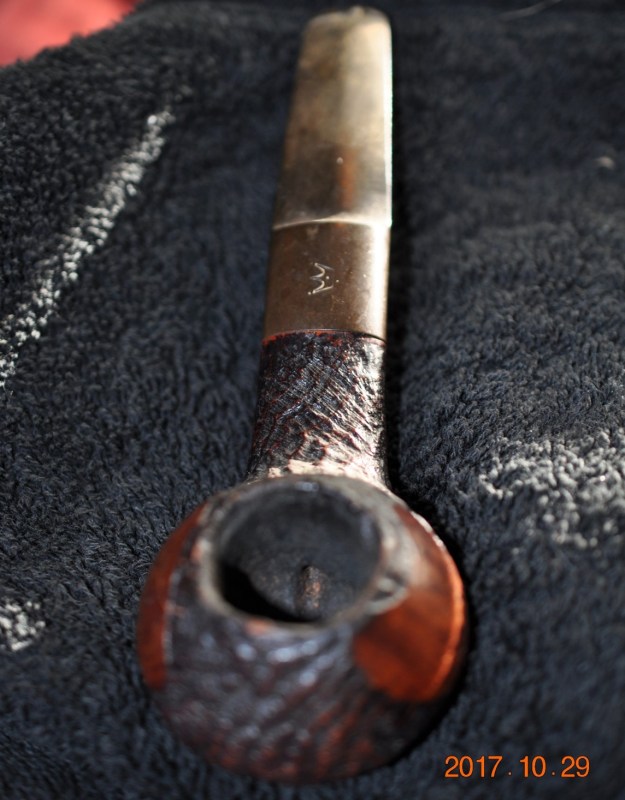
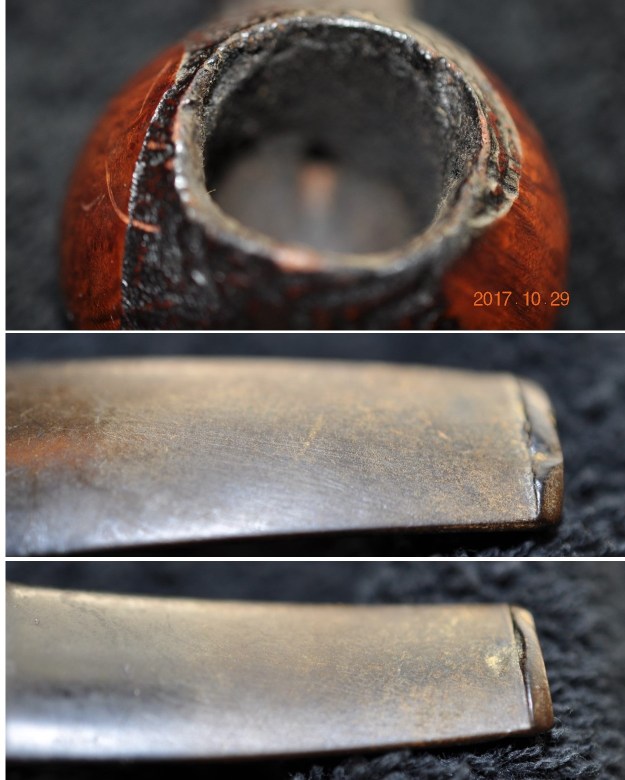
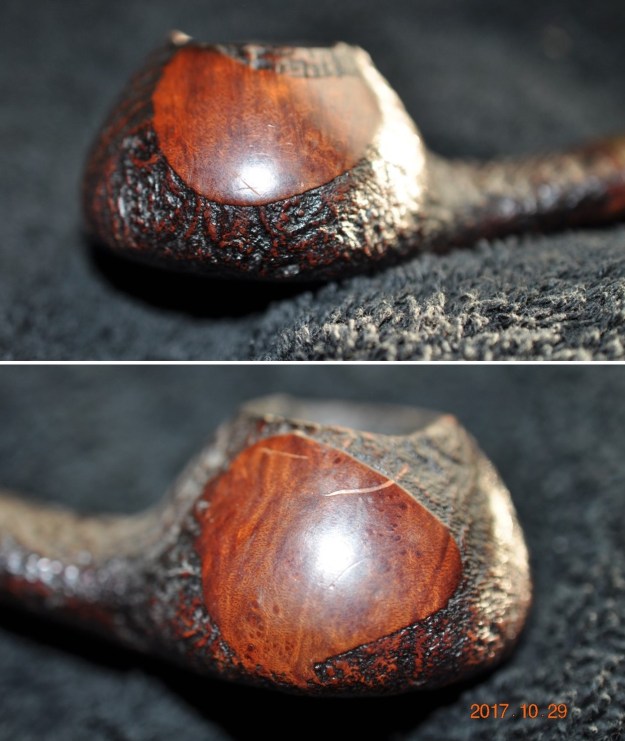
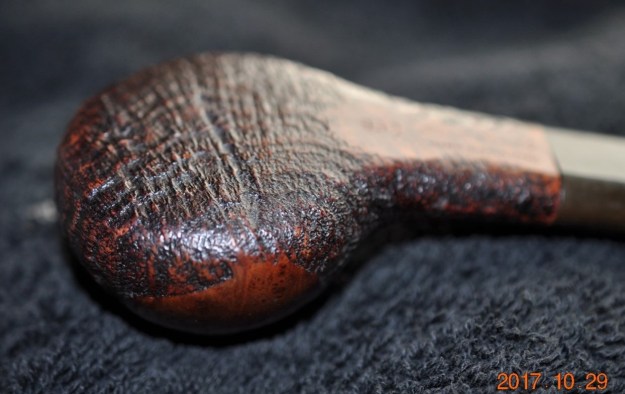
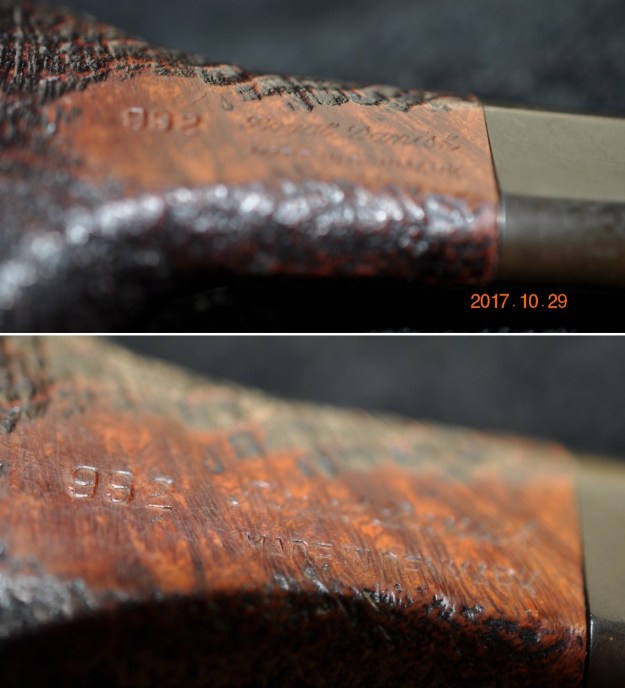
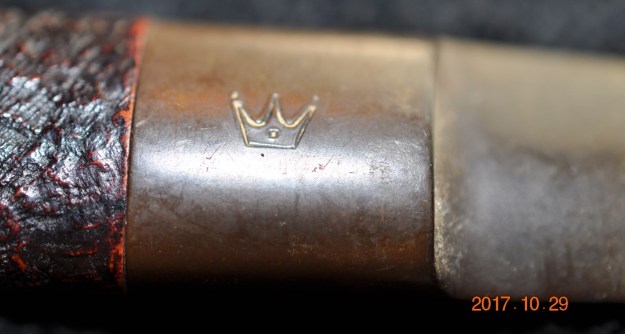
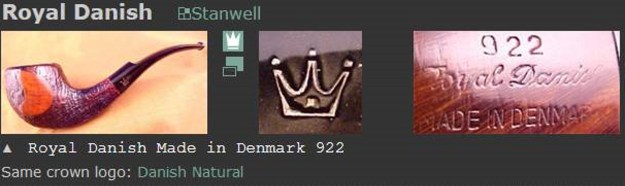
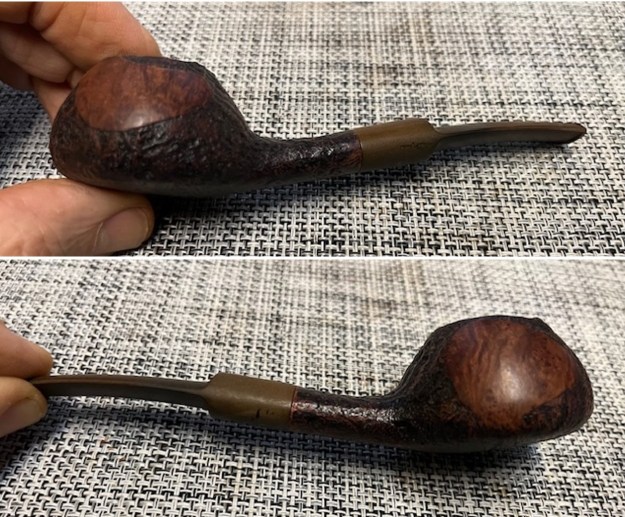
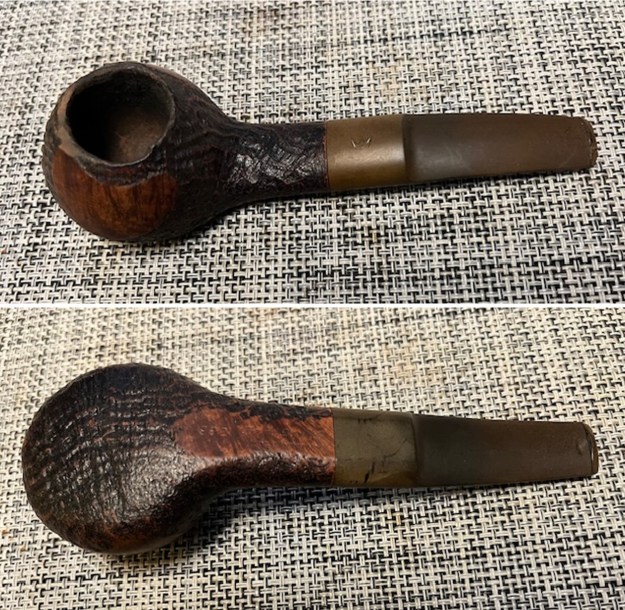
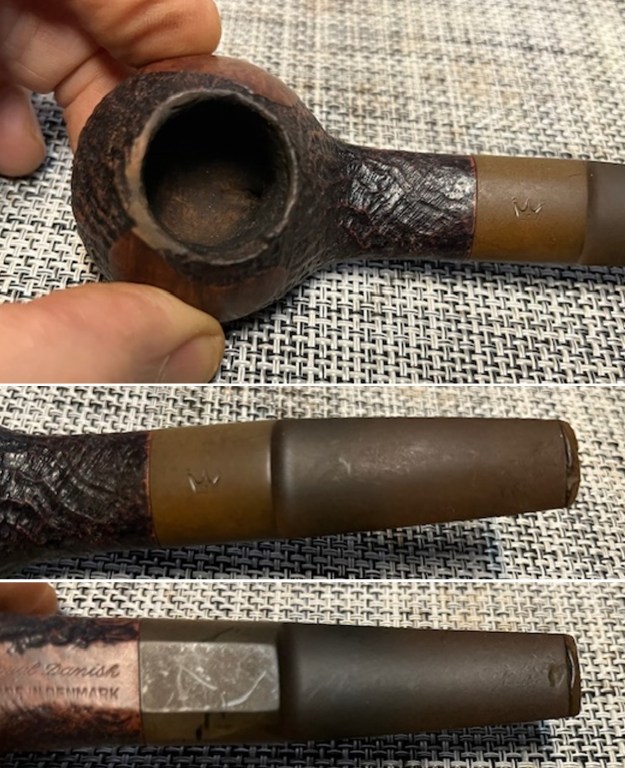
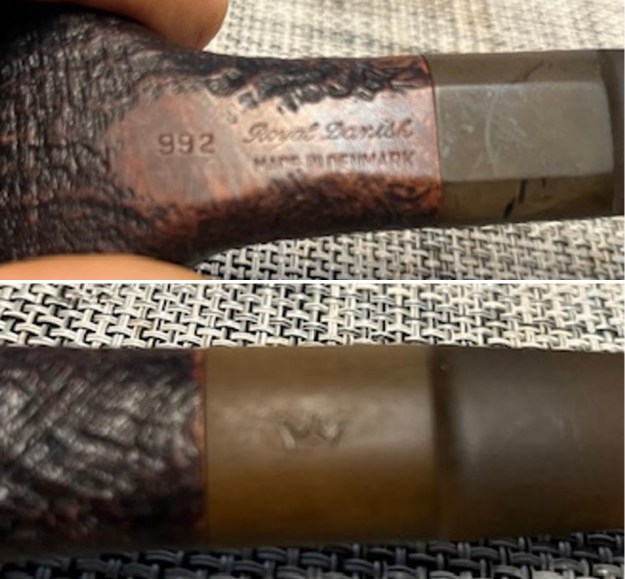
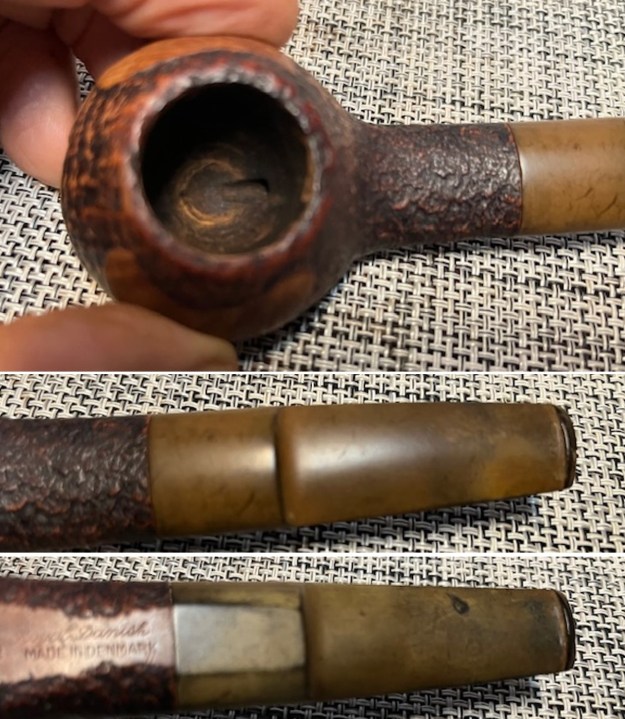
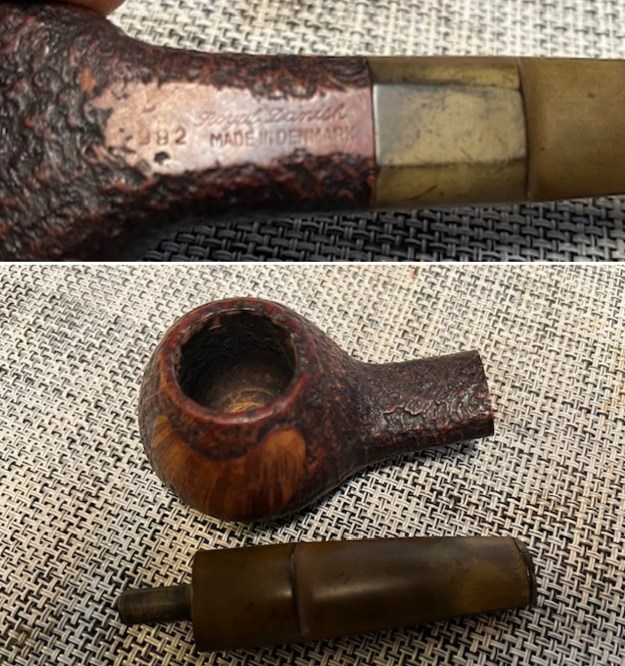
The next pipe is one that Jeff and I picked up at an antique shop in Bozeman, Montana, USD on 10/28/2017. It is another pipe that has been in my box of pipes to work on for a very long time. The pipe was similar to the Stanwell Vario Finish with sandblast finish around the bowl and shank and a smooth panel on the left and right sides of the bowl and a smooth inner edge on the mixed finish rim top. The stamping on the bowl is readable. On the underside of the shank it reads 992, the shape number [followed by] Royal Danish in script [over] Made in Denmark. The shape is quite unique and beautiful with great grain on the smooth panels and deep sandblast grooves around the bowl sides. The briar is very dirty with grime and oils in the grooves of the sandblast and on the smooth panels. The rim top and inner and outer edges showed darkening and wear.  The vulcanite saddle stem was stamped with a Royal Danish Crown logo on the topside. The stem was oxidized and had some deep tooth marks on the top and underside and on the button surface itself. Jeff took photos of the pipe to show you what it looked like before he started his cleanup. Jeff took photos of the bowl and stem. The bowl had a thick cake on the walls and overflowing onto the rim top and edges. It was thickly caked as well and hard to assess its condition. The airway in the shank and stem were dirty with tars and oils. The vulcanite stem was oxidized and calcified on both sides of the stem. There were deep tooth marks and chatter on both sides ahead of the button and on the button surface itself.He took photos of the grain on the smooth panels and the depth of the blast around the bowl and the shank. The grain was quite beautiful and the ruggedness of the blast is quite stunning. He took photos of the stamping on the underside of the shank and it was clear and readable as noted above. He also took a photo of the logo stamp on the top of the stem. Regardless of when this specific briar was made, the shape is very much a 1960s Danish one. I turned to Pipephil’s site and quickly scanned the article on Stanwell getting a great overview of the history. I went through the photos and did not find the shape of the pipe that I was working on (http://pipephil.eu/logos/en/logo-r6.html). There was one that showed the mixed finish of the Royal Danish line – sandblast with smooth patches on each side of the bowl. I have included a screen capture of that section below.I then turned to Pipedia and found that the Royal Danish was also listed as a second or a sub-brand made by Stanwell (https://pipedia.org/wiki/Stanwell#Sub-brands_.2F_Seconds). I have included the list of seconds from the site below. I have highlighted the Royal Danish in blue in the text.

Sub-brands / Seconds – Bijou (discontinued), Danish Quaint, Danish Sovereign, Danske Club,    Henley (discontinued), Kong Christian (discontinued), Majestic, Reddish (discontinued),  Royal Danish, Royal Guard, Royal Sovereign, Sailor (discontinued), Scandia, Sorn (discontinued), Svendson.

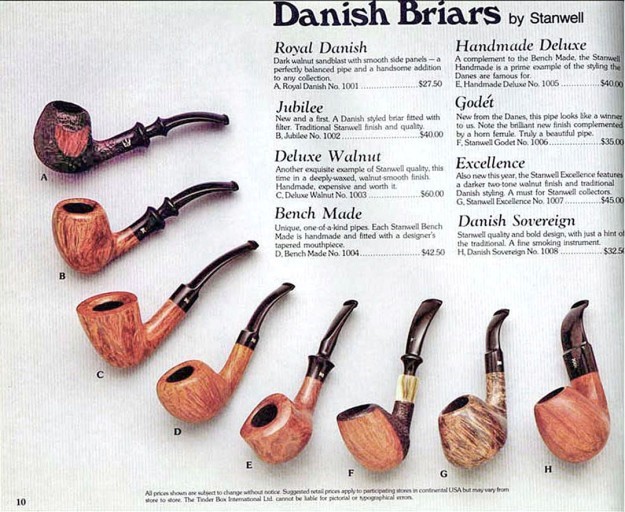
There was also an interesting advertising page on the Danish Briars by Stanwell. The first one on the list was the Royal Danish. The description of the line is clear and concise, be sure to read it below.

I followed one of the links at the end of the site to an article on rebornpipes written by Bas Stevens on the shape numbers and the designers who originally carved those shapes for Stanwell (https://pipedia.org/wiki/Stanwell_Shape_Numbers_and_Designers). The Royal Danish line adds a 9 before the 92 making the number 992. I quote from it as it specifically refers to the shape 92 as being a design by Sixten Ivarsson.

  • 92. Same as shape 91 but smaller by Sixten Ivarsson.

I have also included the information on the shape 91 and 91 R as referred to in the quote above.

  • 91. Slightly bent wide, flattened volcano with an oval shank and a short, standard saddle, trapezoidal saddle, or tapered stem, by Sixten Ivarsson. Nicknamed the ‘Ukulele’ (pictured, left, in its reissued design).
  • Sixten Ivarsson’s shape 91 ‘Ukulele’ for Stanwell, seen here in its reissued form as the 91R. Another signature design in the Danish style from Ivarsson, and a pioneering exploration of the limits of horizontality. Image courtesy Mike at Pipes Pens and More.
  • 91R. A reissue of the shape 91 ‘Ukulele,’ marketed as part of Stanwell’s ‘Giants’ line (see 1960s catalog below; pictured, right).

I now knew that the shape 992 was another Sixteen Ivarsson design. It was a flattened volcano that was nicknamed the Ukulele. It is an interesting shape. Now it was time to work on the pipe.

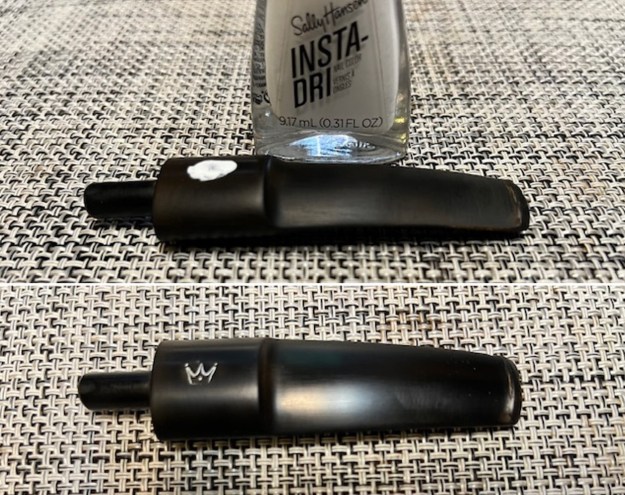
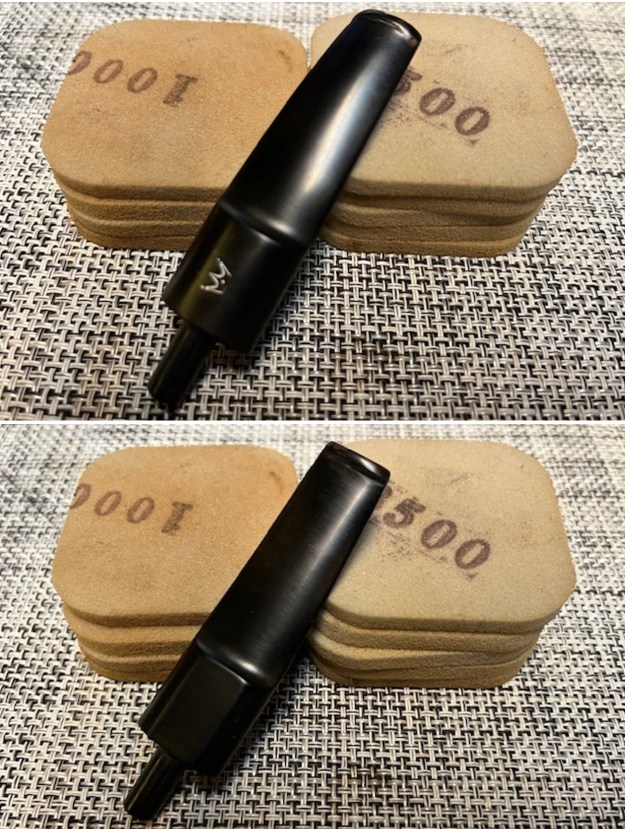
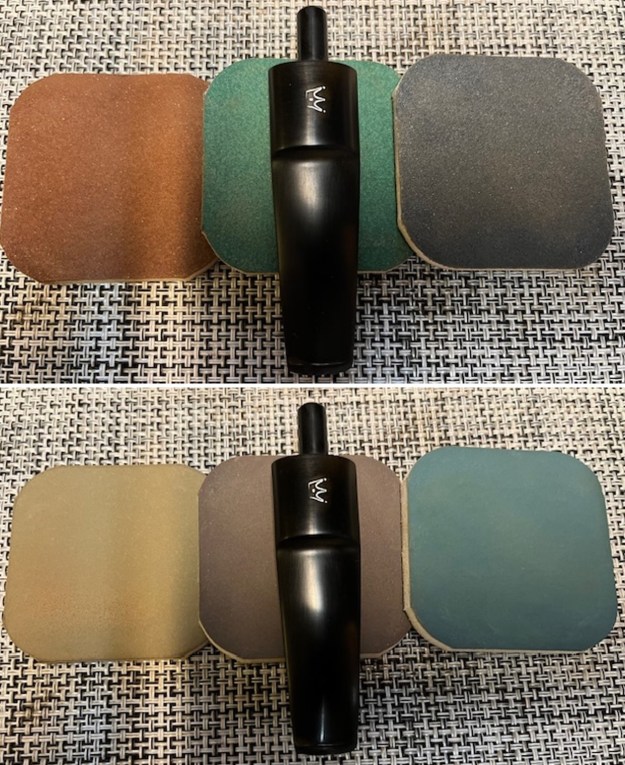
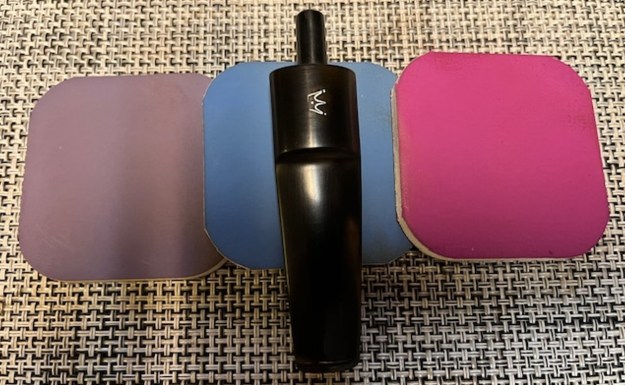
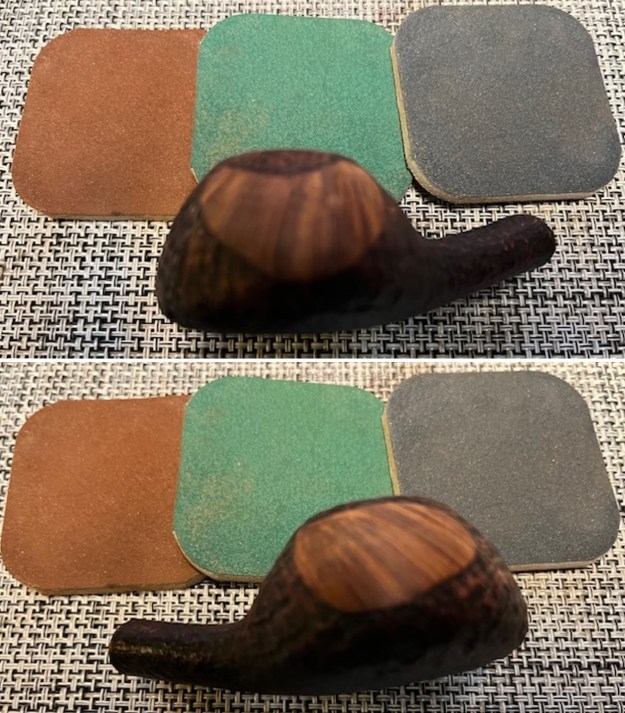
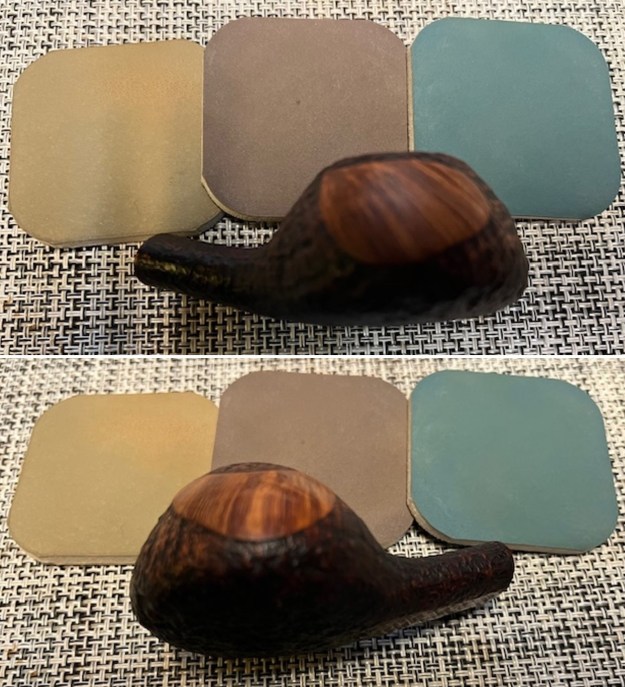
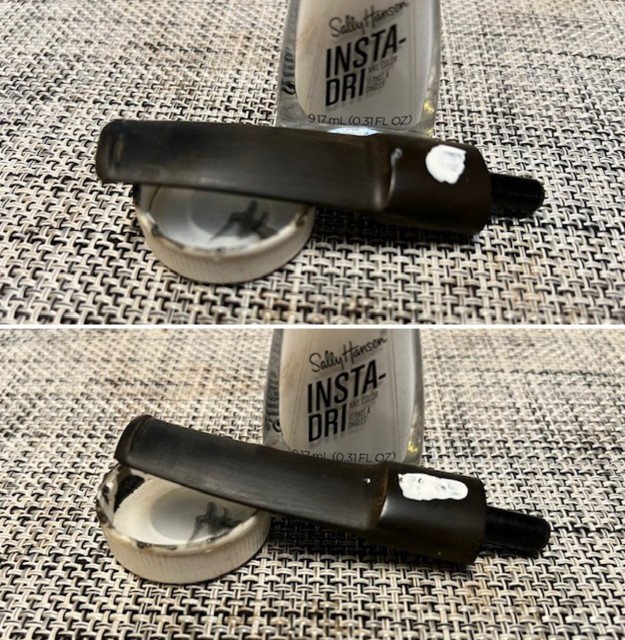
Jeff had cleaned up the pipe following his normal cleaning process. In short, he reamed the bowl with a PipNet pipe reamer and cleaned up the reaming with a Savinelli Fitsall Pipe Knife.  He scrubbed the smooth bowl with undiluted Murphy’s Oil Soap with a tooth brush. He worked over the lava and debris on the rim top and was able to remove it. He rinsed it under running warm water to remove the soap and grime. He cleaned out the inside of the shank and the airway in the stem with alcohol, cotton swabs and pipe cleaners. He scrubbed the stem with Soft Scrub and cotton pads to remove the debris and oils on the stem. He soaked it in a bath of Before & After Pipe Stem Deoxidizer to remove the oxidation. He rinsed it with warm water and dried it off. I took photos of the pipe once I received it. It really looked good. I took a close up photo of the rim top and stem surface to show the condition after the clean up. The bowl was in good condition though the rim top showed some damage toward the front of the bowl. It was worn and had some darkening at the front. The stem surface showed the tooth marks on both sides. They were quite deep on the surface and on the button edge itself.The stamping on the shank was readable as noted above. The stem had a Danish Royal Crown logo on the top of the saddle. I took the stem off the pipe and took a photo of the pipe in proportion. It is a beautiful pipe. Now it was time to work on the pipe. I started by using a folded piece of 220 grit sandpaper to smooth out the inwardly bevelled edge and clean up the darkening and damage to both. It was significantly better when I started. I used a Walnut stain pen to touch up the sanded rim top and inner edge of the bowl. I polished the smooth portion of the bowl sides and the inner edge of the rim with micromesh sanding pads – dry sanding with 1500-12000 grit sanding pads. I wiped it down after each sanding pad to remove the sanding debris. The smooth portions and bevelled inner edge looked much better at this point. I rubbed the bowl down with Before & After Restoration Balm working it into the briar with my fingertips and a horsehair shoe brush to clean, enliven and protect it. I let the balm sit for 15 minutes and then buffed with a cotton cloth to raise the shine. Mark Hoover’s Balm is a product that I have come to appreciate and one I use on every pipe I have been working on. I set the bowl aside and turned my attention to the stem. I scrubbed the surface down with Soft Scrub to remove the oxidation from the surface and particularly from the deep tooth marks on the stem.I “painted” the tooth marks on both sides ahead of the button with the flame of the lighter. I was able to lift them significantly but there were still tooth marks left in the edge of the button and on the surface. I filled in the remaining marks with black CA glue. I set it aside to cure overnight.In the morning I used a small file to recut the edge of the button and to flatten the repairs on the surface of the stem. I smoothed out the repairs further with a folded piece of 220 grit sandpaper. It was starting to look better. I touched up the stamping in the vulcanite on the top of the saddle portion of the stem. I used white acrylic fingernail polish to rewhiten the Crown on the top of the saddle. Once it hardened I sanded it with 320 grit sanding pads. I wiped it down with Obisidian Oil and set it aside.I used the sanding pads I purchased recently – 320-3500 grit regular pads to smooth out the finish and remove the light tooth and chatter marks in the stem. I wiped the stem down with Obsidian Oil to finish the preliminary work after the 3500 grit pad.I polished the stem with micromesh sanding pads – dry sanding with 1500-12000 grit pads. I wiped the stem down after each sanding pad with Obsidian Oil. I finished polishing it with Before & After Pipe Stem Polish – both Fine and Extra Fine. Once I had finished the polishing I gave it final coat of oil and set it aside to dry. As usual at this point in the restoration process I am excited to be on the homestretch. I look forward to the final look when it is put back together, polished and waxed. I put the Sixten Ivarsson design Stanwell Royal Danish Made in Denmark 992 Ukulele back together and it is a beauty. I polished the bowl and stem with Blue Diamond to polish the briar and the vulcanite. I gave the bowl and the stem multiple coats of carnauba wax. I buffed the pipe with a clean buffing pad to raise the shine. I hand buffed it with a microfiber cloth to deepen the shine. The pipe polished up pretty nicely. The grain really pops with the wax and polish. The shiny black vulcanite stem is a beautiful contrast to the browns of the bowl. This Royal Danish 992 Ukulele/ Volcano was a great pipe to spruce up. It is a very comfortable pipe to hold in the hand. The finished pipe is shown in the photos below. The dimensions of the pipe are Length: 5 ½ inches, Height: 1 ¼ inches, Outside diameter of the bowl: 1 ¼ inches, Chamber diameter: 7/8 of an inch. The weight of the pipe is 38 grams/1.34 ounces. I will be putting this pipe on the Danish Pipe Making Companies Section of the rebornpipes store. If you are interested in adding it to your collection let me know by email or message. Thanks for reading this blog and my reflections on the pipe while I worked on it. This is an interesting estate to bring back to life.

Now I know that this Royal Danish 992 is a Ukulele Design by Ivarsson


Blog by Steve Laug

The next pipe is one that Jeff and I picked up off eBay way back on 04/19/2016. It is another pipe that has been in my box of pipes to work on for a very long time. The pipe, like the previous 992 was similar to the Stanwell Vario Finish with sandblast finish around the bowl and shank and a smooth panel on the left and right sides of the bowl. The stamping on the bowl is readable. On the underside of the shank it reads 992, the shape number [followed by] Royal Danish in script [over] Made in Denmark. The shape is quite unique and beautiful with great grain on the smooth panels and deep sandblast grooves around the bowl sides. The sandblast and on the smooth panels looked very good. The rim top and inner edges were in great condition. The vulcanite saddle stem was lacking the Royal Danish logo on the topside. The stem was heavily oxidized and had some tooth marks on the top and underside of the stem. Jeff took very few photos of the pipe in these early days but the one below shows you what it looked like before he started his cleanup.Jeff took a photo of the bowl and rim top. The bowl had been reamed somewhere along the way and the bowl was quite clean. It also seemed to be quite clean on the finish as well. The vulcanite stem was heavily oxidized on both sides of the stem. There were tooth marks and chatter on both sides ahead of the button. Jeff took a close up of the rim and bowl and the topside of the stem.Regardless of when this specific briar was made, the shape is very much a 1960s Danish one. I turned to Pipephil’s site and quickly scanned the article on Stanwell getting a great overview of the history. I went through the photos and did not find the shape of the pipe that I was working on (http://pipephil.eu/logos/en/logo-r6.html). There was one that showed the mixed finish of the Royal Danish line – sandblast with smooth patches on each side of the bowl. I have included a screen capture of that section below.I then turned to Pipedia and found that the Royal Danish was also listed as a second or a sub-brand made by Stanwell (https://pipedia.org/wiki/Stanwell#Sub-brands_.2F_Seconds). I have included the list of seconds from the site below. I have highlighted the Royal Danish in blue in the text.

Sub-brands / Seconds – Bijou (discontinued), Danish Quaint, Danish Sovereign, Danske Club, Henley (discontinued), Kong Christian (discontinued), Majestic, Reddish (discontinued),  Royal Danish, Royal Guard, Royal Sovereign, Sailor (discontinued), Scandia, Sorn (discontinued), Svendson.

There was also an interesting advertising page on the Danish Briars by Stanwell. The first one on the list was the Royal Danish. The description of the line is clear and concise, be sure to read it below.I followed one of the links at the end of the site to an article on rebornpipes written by Bas Stevens on the shape numbers and the designers who originally carved those shapes for Stanwell (https://pipedia.org/wiki/Stanwell_Shape_Numbers_and_Designers). The Royal Danish line adds a 9 before the 92 making the number 992. I quote from it as it specifically refers to the shape 92 as being a design by Sixten Ivarsson.

  • 92. Same as shape 91 but smaller by Sixten Ivarsson.

I have also included the information on the shape 91 and 91 R as referred to in the quote above.

  • 91. Slightly bent wide, flattened volcano with an oval shank and a short, standard saddle, trapezoidal saddle, or tapered stem, by Sixten Ivarsson. Nicknamed the ‘Ukulele’ (pictured, leftt, in its reissued design).
  • Sixten Ivarsson’s shape 91 ‘Ukulele’ for Stanwell, seen here in its reissued form as the 91R. Another signature design in the Danish style from Ivarsson, and a pioneering exploration of the limits of horizontality. Image courtesy Mike at Pipes Pens and More.
  • 91R. A reissue of the shape 91 ‘Ukulele,’ marketed as part of Stanwell’s ‘Giants’ line (see 1960s catalog on the site link above).

I now knew that the shape 992 was another Sixteen Ivarsson design. It was a flattened volcano that was nicknamed the Ukulele. It is an interesting shape. Now it was time to work on the pipe.

Jeff had cleaned up the bowl with a PipNet pipe reamer and cleaned up the reaming with a Savinelli Fitsall Pipe Knife. He scrubbed the bowl with undiluted Murphy’s Oil Soap with a tooth brush. He worked over the lava and debris on the rim top and was able to remove it. He rinsed it under running warm water to remove the soap and grime. He cleaned out the inside of the shank and the airway in the stem with alcohol, cotton swabs and pipe cleaners. This was in the early years when Jeff did not do his now very thorough clean up. The stem was still very oxidized. I took photos of the pipe when it arrived. I took a close up photo of the rim top and stem surface to show the condition when I started my work on it. The bowl was in good condition though the rim top showed some damage toward the front of the bowl. It was worn and had some darkening at the front. The stem surface showed the tooth marks on both sides. They were quite deep on the surface and on the button edge itself.The stamping on the shank was readable as noted above. The stem did not have the Danish Royal Crown logo on the top of the saddle. I took the stem off the pipe and took a photo of the pipe in proportion. It is a beautiful pipe.Now it was time to work on the pipe. I polished the smooth panels on the bowl sides with micromesh sanding pads – dry sanding with 1500-12000 grit sanding pads. I wiped it down after each sanding pad to remove the sanding debris. I rubbed the bowl down with Before & After Restoration Balm working it into the briar with my fingertips and a horsehair shoe brush to clean, enliven and protect it. I let the balm sit for 15 minutes and then buffed with a cotton cloth to raise the shine. Mark Hoover’s Balm is a product that I have come to appreciate and one I use on every pipe I have been working on. I set the bowl aside and turned my attention to the stem. I scrubbed the surface down with Soft Scrub to remove the oxidation from the surface and particularly from the deep tooth marks on the stem.I “painted” the tooth marks on both sides ahead of the button with the flame of the lighter. I was able to lift them significantly but there were still tooth marks left in the edge of the button and on the surface. I filled in the remaining marks with black CA glue. I set it aside to cure overnight.In the morning I used a small file to recut the edge of the button and to flatten the repairs on the surface of the stem. I smoothed out the repairs further with a folded piece of 220 grit sandpaper. It was starting to look better. I used the sanding pads I purchased recently – 320-3500 grit regular pads to smooth out the finish and remove the light tooth and chatter marks in the stem. I wiped the stem down with Obsidian Oil to finish the preliminary work after the 3500 grit pad.I polished the stem with micromesh sanding pads – dry sanding with 1500-12000 grit pads. I wiped the stem down after each sanding pad with Obsidian Oil. I finished polishing it with Before & After Pipe Stem Polish – both Fine and Extra Fine. Once I had finished the polishing I gave it final coat of oil and set it aside to dry.As usual at this point in the restoration process I am excited to be on the homestretch. I look forward to the final look when it is put back together, polished and waxed. I put the Sixten Ivarsson design Stanwell Royal Danish Made in Denmark 992 Ukulele back together and it is a beauty. I polished the bowl and stem with Blue Diamond to polish the briar and the vulcanite. I gave the bowl and the stem multiple coats of carnauba wax. I buffed the pipe with a clean buffing pad to raise the shine. I hand buffed it with a microfiber cloth to deepen the shine. The pipe polished up pretty nicely. The grain really pops with the wax and polish. The shiny black vulcanite stem is a beautiful contrast to the browns of the bowl. This Royal Danish 992 Ukulele was a great pipe to spruce up. It is a very comfortable pipe to hold in the hand. The finished pipe is shown in the photos below. The dimensions of the pipe are Length: 5 ½ inches, Height: 1 ¼ inches, Outside diameter of the bowl: 1 ¼ inches, Chamber diameter: 7/8 of an inch. The weight of the pipe is 40 grams/1.41 ounces. I will be putting this pipe on the Danish Pipe Making Companies Section of the rebornpipes store. If you are interested in adding it to your collection let me know by email or message. Thanks for reading this blog and my reflections on the pipe while I worked on it. This is an interesting estate to bring back to life.

Cleaning Up a Unique Stanwell Selected Briar Hand Made 13 Bent Pear


Blog by Steve Laug

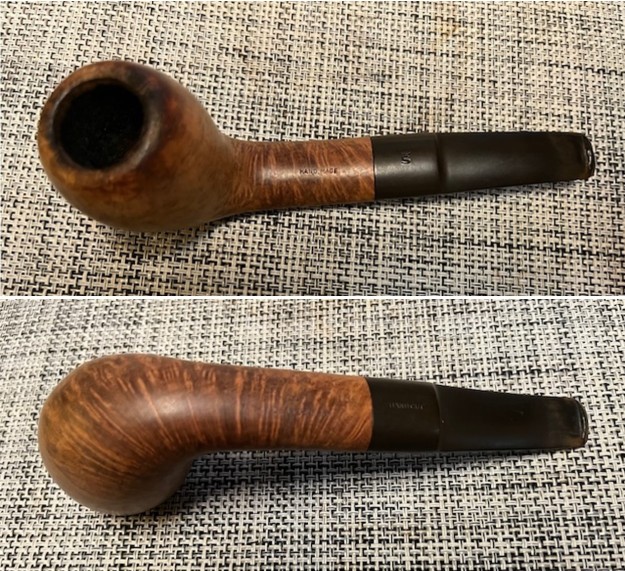
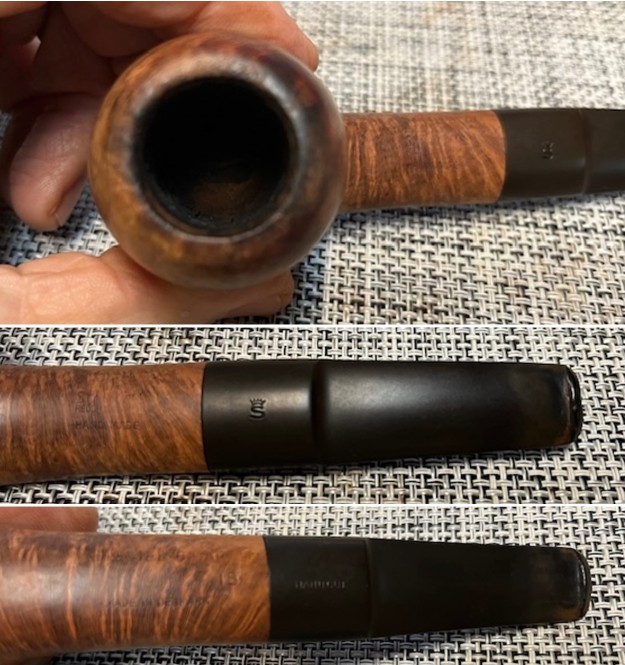
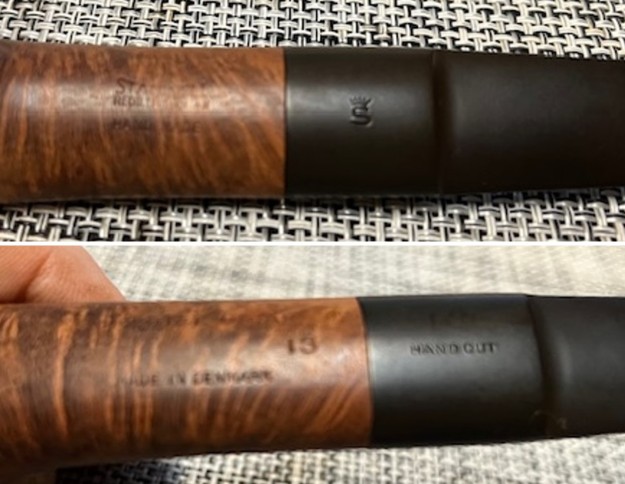
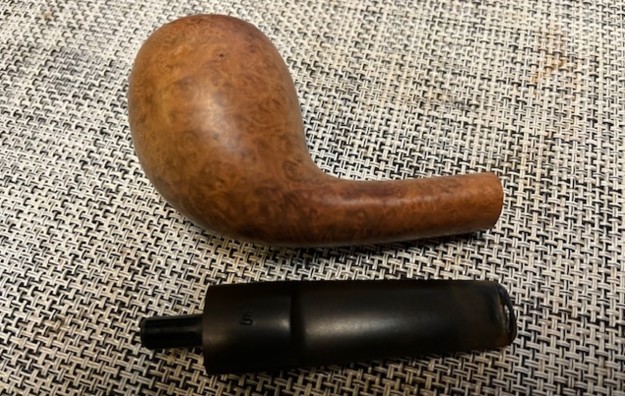
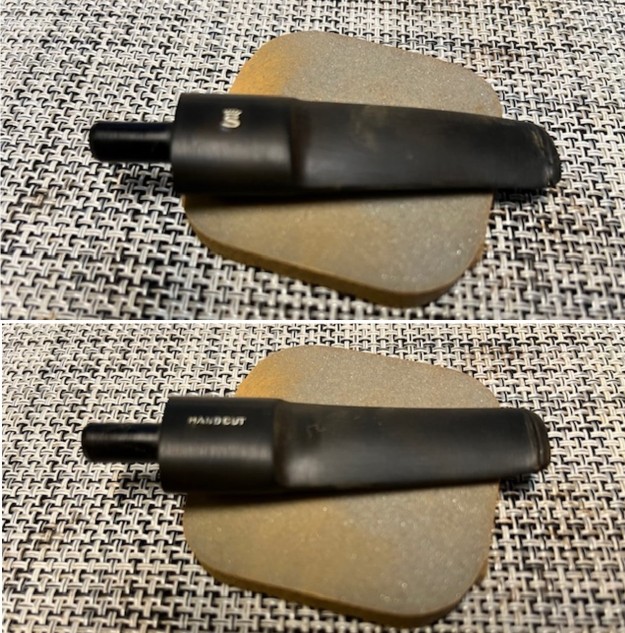
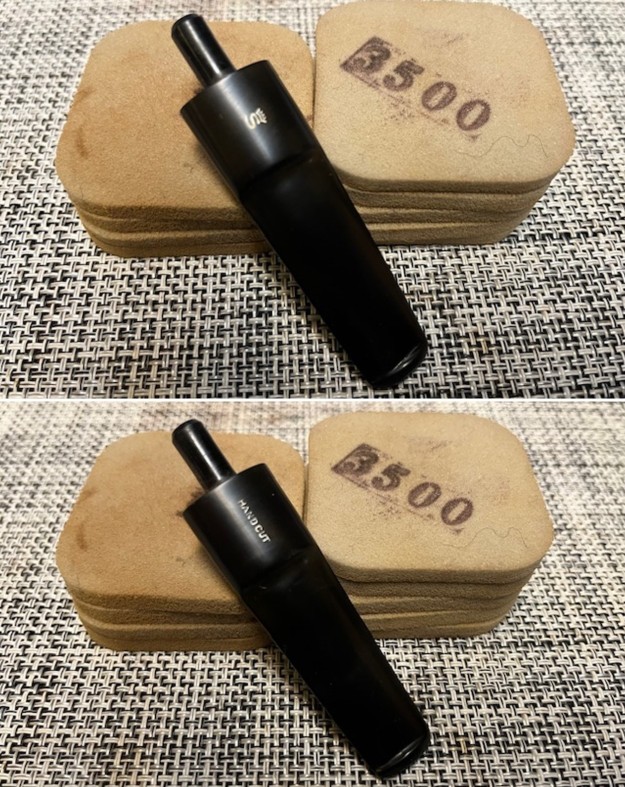
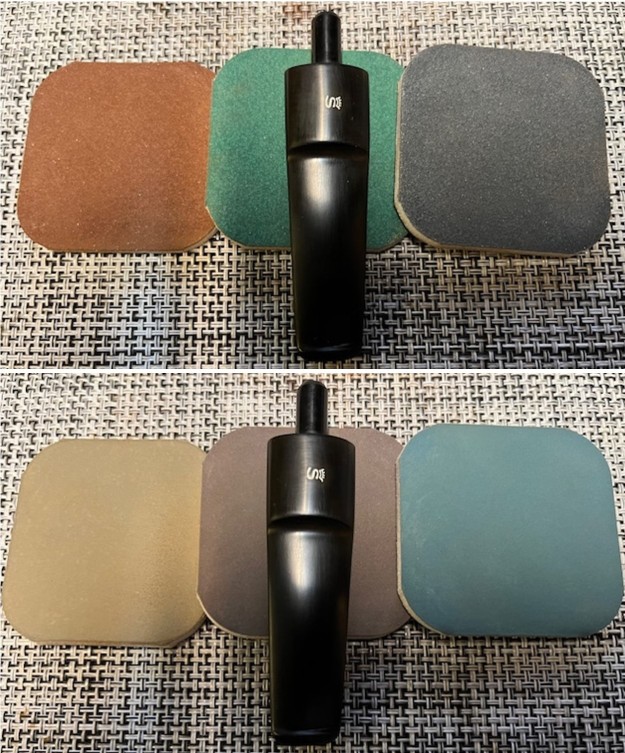
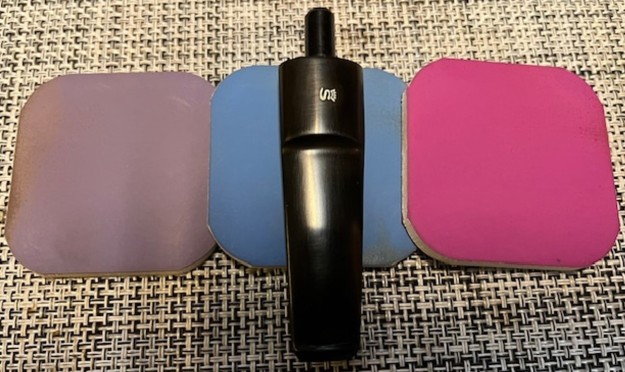
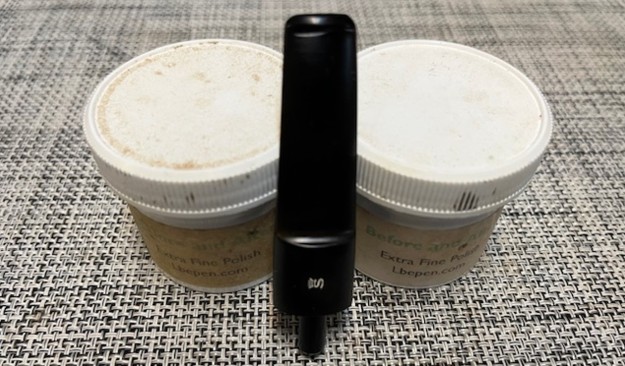
The next pipe is one that is another intriguing one to me for multiple reasons. Neither Jeff or I have any memory of finding it or trading for it. It has been in my box of pipes to work on for a very long time but I have no sense of when or where I got it. It had been reamed but not cleaned or sanitized. The stamping on it is readable. On the topside of the shank it reads Stanwell [over] Regd. No. 969-48 [over] Hand Made. On the underside of the shank it is stamped Selected Briar [over] the shape number 13 [over] Made in Denmark. The shape is quite unique and beautiful with great grain around the bowl sides. The shape 13 was a Sixten Ivarsson design called a Pear. The briar is very dirty and faded. The rim top and inner and outer edges are covered with darkening and tars. The vulcanite saddle stem was stamped with a Crown S logo on the topside and on the underside with the words Hand Cut. The stem was oxidized and has some tooth marks on the top and underside and on the button surface itself. I took photos of the pipe to show you what I saw. The bowl had been reamed recently but it had not been cleaned. The airway in the shank and stem were dirty with tars and oils. The mortise had tars and oils on the walls and the pipe smelled heavily of English tobacco. The vulcanite stem is also dirty on the inside as well as oxidized on both sides of the stem. There were tooth marks and chatter on both sides ahead of the button and on the button surface itself.I took a photo of the stamping on the top and the underside of the shank. It was stamped as noted above and was clear and readable on both sides. I took the stem off the shank and took a photo of the parts. At this point I started my cleanup on it. I worked over the top and the inner and outer edges of the bowl with a 320 grit sanding pad. I worked to remove the darkening and lava on the bowl surfaces. It was looking much better.I cleaned out the internals of the mortise and the airway in the shank and the stem with isopropyl alcohol, cotton swabs and pipe cleaners. I was able to remove the tars and oils and once finished the smell of the pipe was much cleaner.I polished the briar with micromesh sanding pads. I used 1500-12000 grit pads to dry sand the briar around the bowl and shank. I wiped it down after each sanding pad with a damp cloth. By the end the briar began to take on a real shine. I rubbed the bowl down with Before & After Restoration Balm. I worked it into the surface of the briar with my fingertips and a horse hair shoe brush to clean, enliven and protect it. I let the balm sit for 15 minutes and then buffed with a cotton cloth to raise the shine. Mark Hoover’s Balm is a product that I have come to appreciate and one I use on every pipe I have been working on. I set the bowl aside and turned my attention to the stem. I “painted” the tooth marks on both sides ahead of the button with the flame of the lighter. I was able to lift them significantly but there were still tooth marks left in the edge of the button and on the surface. I filled in the remaining marks with black CA glue. I set it aside to cure overnight. In the morning I used a small file to recut the edge of the button and to flatten the repairs on the surface of the stem. I smoothed out the repairs further with a folded piece of 220 grit sandpaper. It was starting to look better. I paused in the polishing process to touch up the stamping in the vulcanite on the top and underside of the saddle portion of the stem. I used white acrylic fingernail polish to rewhiten the Crown S on the top and the Hand Cut on the underside. Once it hardened I sanded it with 320 grit sanding pads. I wiped it down with Obisidian Oil and set it aside. I used the sanding pads I purchased recently – 320-3500 grit regular pads to smooth out the finish and remove the light tooth and chatter marks in the stem. I wiped the stem down with Obsidian Oil to finish the preliminary work after the 3500 grit pad.I polished the stem with micromesh sanding pads – dry sanding with 1500-12000 grit pads. I wiped the stem down after each sanding pad with Obsidian Oil. I finished polishing it with Before & After Pipe Stem Polish – both Fine and Extra Fine. Once I had finished the polishing I gave it final coat of oil and set it aside to dry. As usual at this point in the restoration process I am excited to be on the homestretch. I look forward to the final look when it is put back together, polished and waxed. I put the Sixten Ivarsson design Stanwell Selected Briar Hand Made in Denmark 13 Pear with a Regd. No. back together and it is a beauty. I polished the bowl and stem with Blue Diamond to polish the briar and the vulcanite. I gave the bowl and the stem multiple coats of carnauba wax. I buffed the pipe with a clean buffing pad to raise the shine. I hand buffed it with a microfiber cloth to deepen the shine. The pipe polished up pretty nicely. The grain really pops with the wax and polish. The shiny black vulcanite stem is a beautiful contrast to the browns of the bowl. This Stanwell Select Briar 13 Pear was a great pipe to spruce up. It is a very comfortable pipe to hold in the hand. The finished pipe is shown in the photos below. The dimensions of the pipe are Length: 5 ½ inches, Height: 2 inches, Outside diameter of the bowl: 1 ¼ inches, Chamber diameter: ¾ of an inch. The weight of the pipe is 44 grams/1.59 ounces. I will be putting this pipe on the Danish Pipe Making Companies Section of the rebornpipes store. If you are interested in adding it to your collection let me know by email or message. Thanks for reading this blog and my reflections on the pipe while I worked on it. This is an interesting estate to bring back to life.

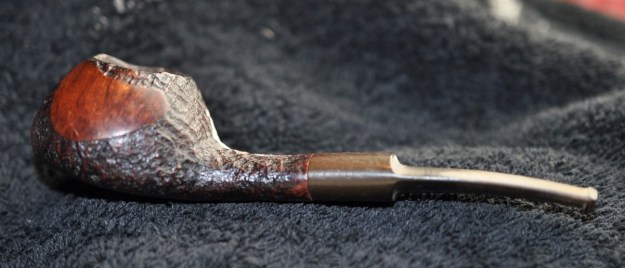
An Intriguing Sandblast Danish Oval Shank Bulldog


Blog by Steve Laug

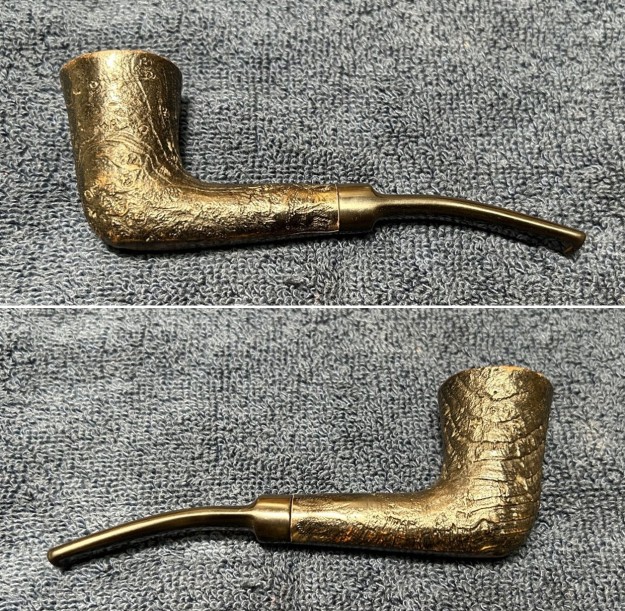
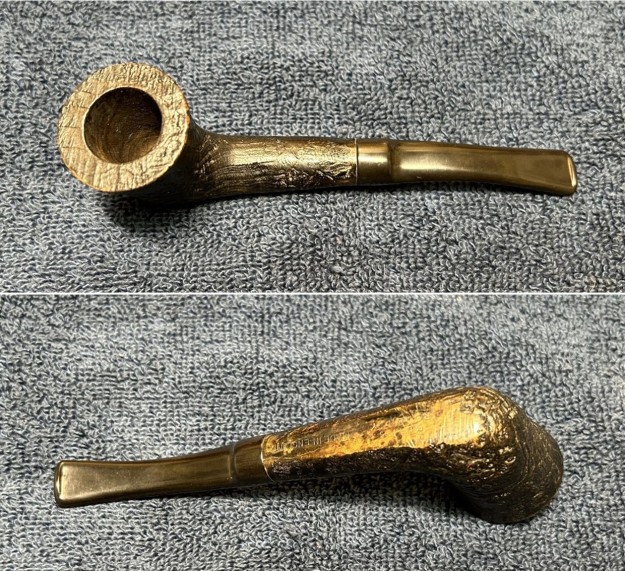
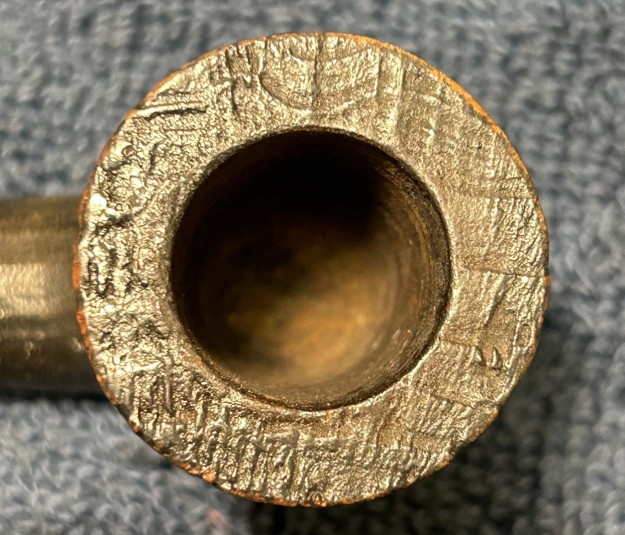
The next pipe is one that is very intriguing to me for multiple reasons. First, neither Jeff or I have any memory of finding it or trading for it. It has been in my box of pipes to work on for a very long time but I have no sense of when or where I got it. It had been reamed but not cleaned or sanitized. Second, the stamping on it was strange in that all it said was MADE IN DENMARK. There were no other marks, faint or otherwise on either the stem or the shank. So, we had no hint as to the maker. I do know that I have worked on a few other pipes with the same stamping. Third, the shape which I call a Danish Bulldog or Rhodesian is different. It has some smooth panels (almost smooth) on both sides of the shank above the carved band. The sandblast is quite deep and rugged and it is a pretty looking pipe. I took photos of the pipe to show you what I saw. I mentioned above the pipe had been reamed recently but it had not been cleaned. The airway in the shank and stem were dirty with tars and oils. The mortise had tars and oils on the walls and the pipe smelled heavily of English tobacco. The vulcanite stem is also dirty on the inside as well as oxidized on both sides of the stem. There was light tooth chatter on both sides but the top and underside were unmarked by tooth damage.I took a photo of the stamping on the underside of the shank. It was stamped Made in Denmark as noted above and there was no other stamping visible on the shank or stem. I took the stem off the shank and took a photo of the parts.At this point I started at the beginning of the cleanup on it. I worked over the sandblast rim top with a brass bristle wire brush to knock off the grime in blast. It looked better but there was more to do on this one.I cleaned out the internals of the mortise and the airway in the shank and the stem with isopropyl alcohol, cotton swabs and pipe cleaners. I was able to remove the tars and oils and once finished the smell of the pipe was much cleaner. I scrubbed the externals of the bowl with undiluted Murphy’s Oil Soap and a tooth brush. I was able to clean out the grime in the sandblast finish and the oils left from the pipe smoker’s hands. I cleaned out the ring around the bowl at the same time as it was a fairly deep groove. I rinsed off the pipe with warm water to remove the debris in the soap. I rubbed the bowl down with Before & After Restoration Balm. I worked it into the surface of the briar with my fingertips and a horse hair shoe brush to clean, enliven and protect it. I let the balm sit for 15 minutes and then buffed with a cotton cloth to raise the shine. Mark Hoover’s Balm is a product that I have come to appreciate and one I use on every pipe I have been working on. I set the bowl aside and turned my attention to the stem. I used the sanding pads I purchased recently – 320-3500 grit regular pads to smooth out the finish and remove the light tooth and chatter marks in the stem. I wiped the stem down with Obsidian Oil to finish the preliminary work after the 3500 grit pad.I polished the stem with micromesh sanding pads – dry sanding with 1500-12000 grit pads. I wiped the stem down after each sanding pad with Obsidian Oil. I finished polishing it with Before & After Pipe Stem Polish – both Fine and Extra Fine. Once I had finished the polishing I gave it final coat of oil and set it aside to dry.As usual at this point in the restoration process I am excited to be on the homestretch. I look forward to the final look when it is put back together, polished and waxed. I put the Made in Denmark Bulldog back together. I polished the bowl and stem with Blue Diamond to polish the briar and the vulcanite. I gave the bowl and the stem multiple coats of carnauba wax. I buffed the pipe with a clean buffing pad to raise the shine. I hand buffed it with a microfiber cloth to deepen the shine. The pipe polished up pretty nicely. The grain really pops with the wax and polish. The shiny black vulcanite stem is a beautiful contrast to the browns of the bowl. This Made in Denmark Bulldog was a great pipe to spruce up. It is a very comfortable pipe to hold in the hand. The finished pipe is shown in the photos below. The dimensions of the pipe are Length: 5 ½ inches, Height: 1 ¾ inches, Outside diameter of the bowl: 1 ¼ inches, Chamber diameter: ¾ of an inch. The weight of the pipe is 41 grams/1.45 ounces. I will be putting this pipe on the Danish Pipe Making Companies Section of the rebornpipes store. If you are interested in adding it to your collection let me know by email or message. Thanks for reading this blog and my reflections on the pipe while I worked on it. This is an interesting estate to bring back to life.