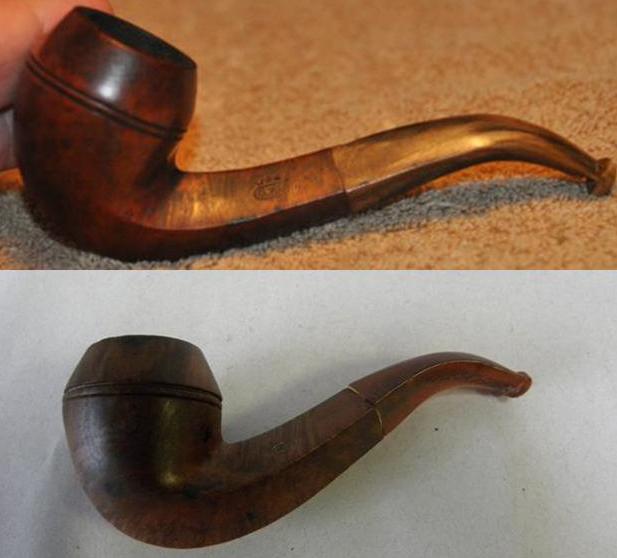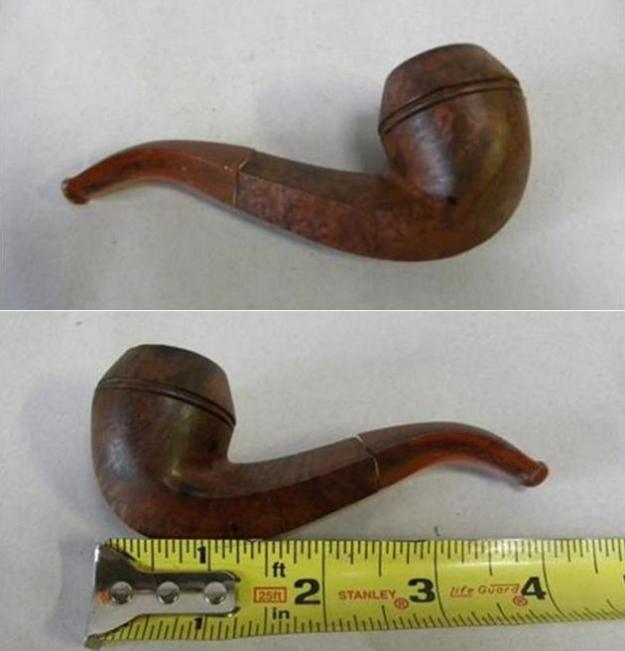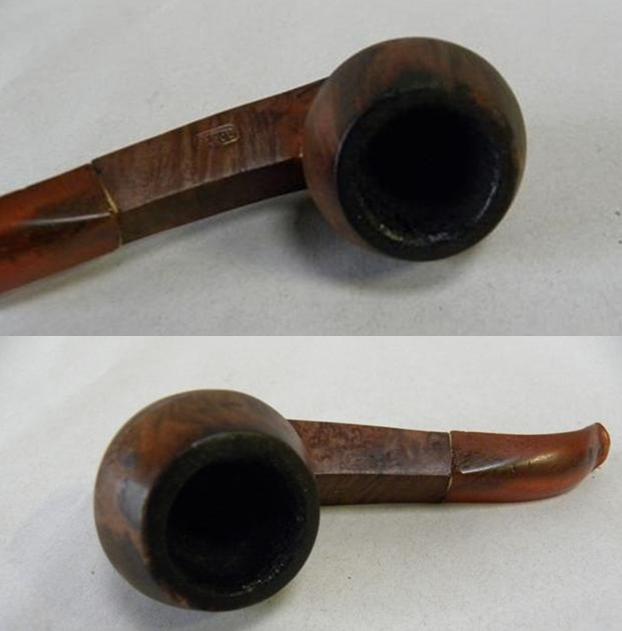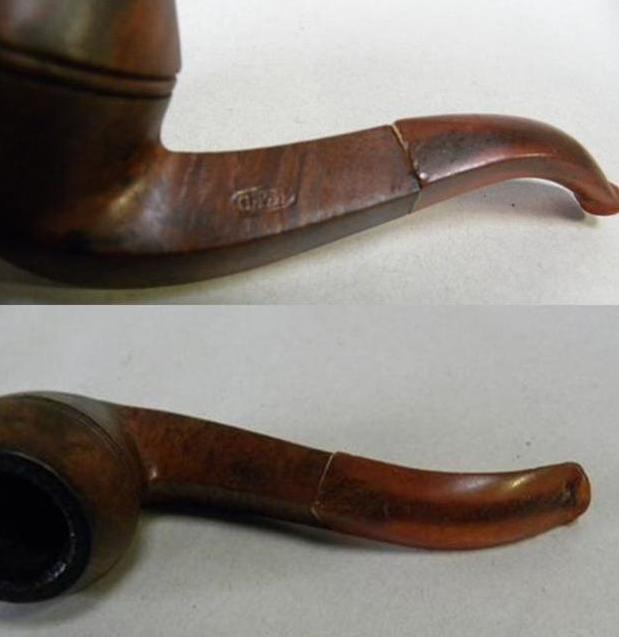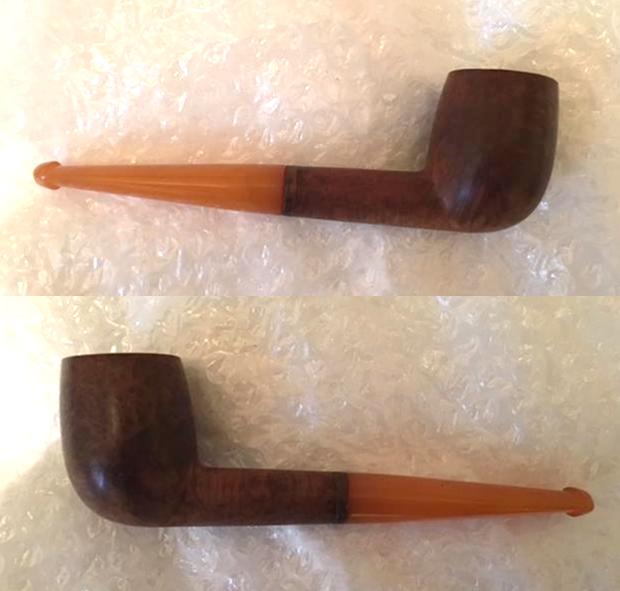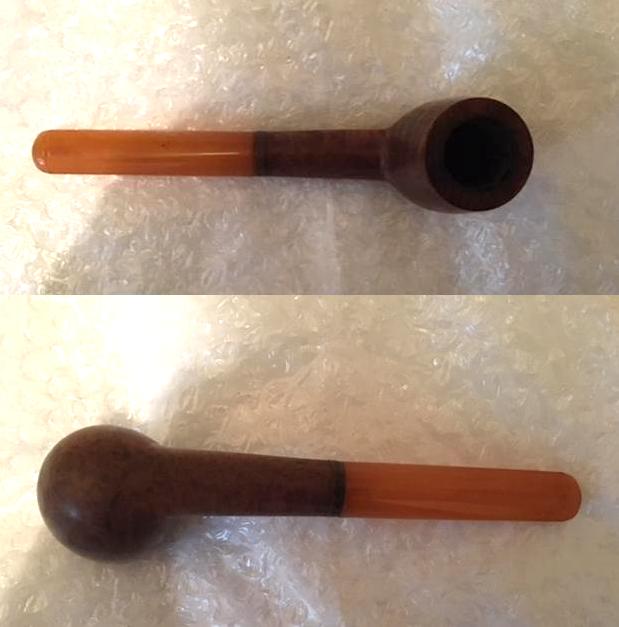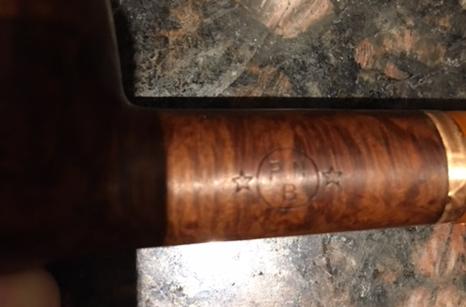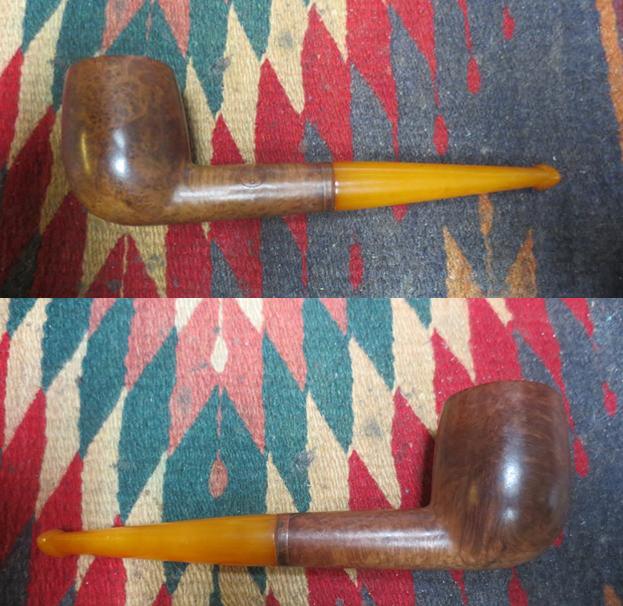
Tag Archives: Bowl – refinishing

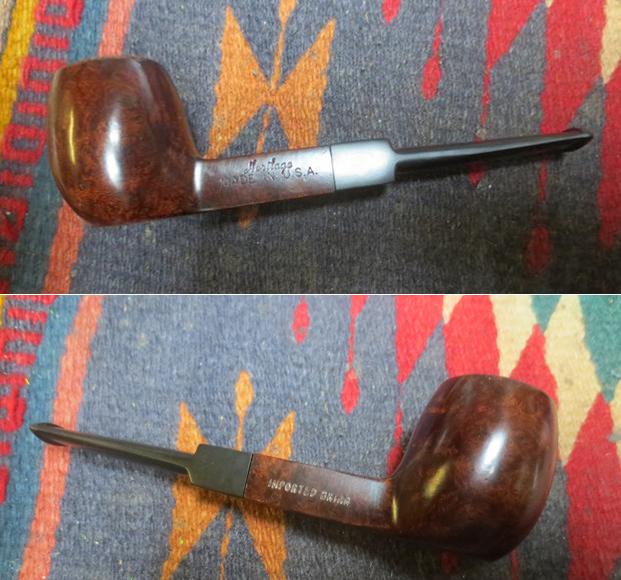
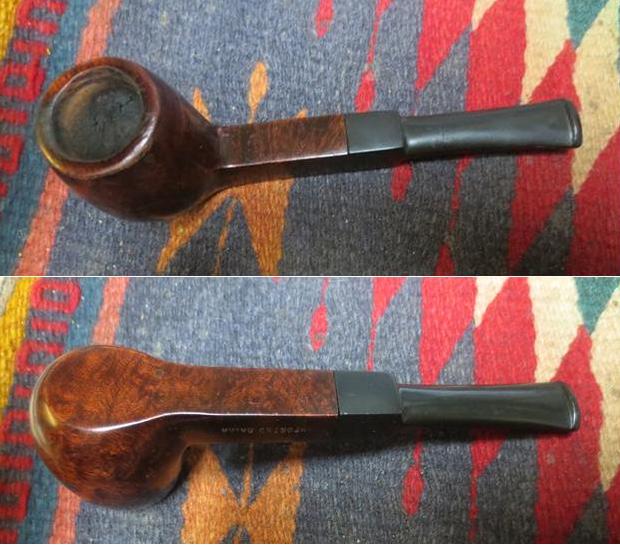
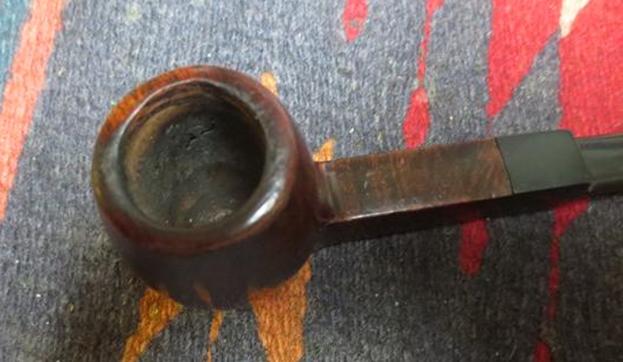
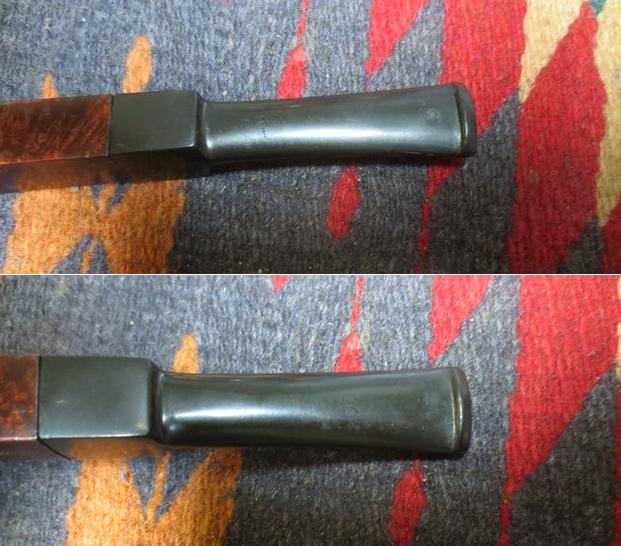
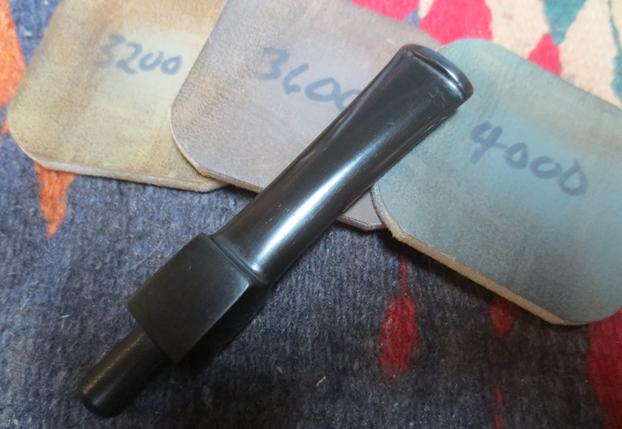
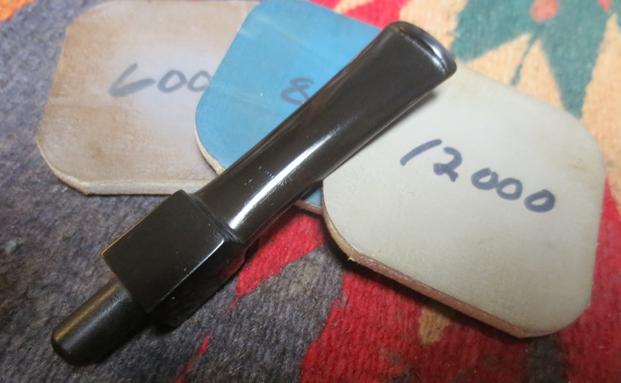
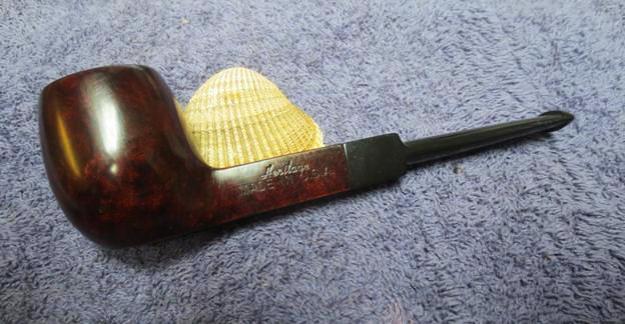
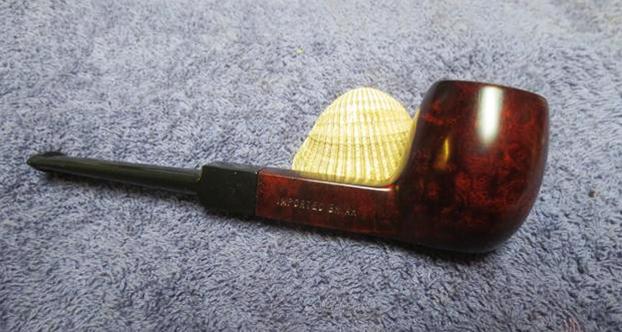
There is Life in this Apple Shaped Pencil Shank Jost’s Thames Pipe


Blog by Steve Laug

This little apple shaped Jost’s pipe also came from Josh (misterzippo), a reader of the blog earlier this year. He sent me an email and photos some pipes that he thought I might want. As usual when you have incurable PAD there is always something that catches my eye. We fired some emails back and forth about the pipes and it did not take long to make a deal. I bought a Malaga Bulldog, a pair of Wally Frank Sandblast Filter pipes and this little Jost’s. In the photos that Josh sent were a few photos of the Jost’s pipe. The first one below shows the overall condition and appearance of the pipe. The pipe was dirty but that is never really a problem. The tape measure in the photo shows that the apple is about 6 inches long with a taper stem. The stem was in good shape with light oxidation and some tooth marks on both sides near the button.The bowl had a thick cake with overflow of tars on the rim top. The bowl looked to be slightly out of round but I would know for sure once it was cleaned and reamed. Josh sent some pictures of the stamping on the shank and the grain on the side of the bowl along with the above photos. I was hooked. This one would join the other three in its trip north.Over the past few years I have worked on and restored several Jost’s pipes and have written about the restorations and the brand itself. I reread the blog I had done on a Jost’s Olde English Deluxe/Supreme and read through the history of the brand. I learned once again that Jost’s  Pipe Shop was owned and operated by Mrs. Henry A. Jost. She not only owned and operated the shop but she was a pipesmoker. There was a resident pipe carver employed by Mrs. Jost named Harvey Raspberry. I also reread the blog and was reminded that Jost’s pipes are closely tied to Comoy’s. I did not think this was one of the pipes linked to Comoy’s as it was missing the shape number and the COM stamp that usually shows up on Comoy’s made Jost’s. I read that the sure fire way to tell the difference between a regular Jost’s pipe and a Comoy’s made one was quite simple – if the Jost’s pipe doesn’t have the “Made in England” stamp it is probably made by Harvey Raspberry. There are always exceptions to the rule but 95% of the time, this is accurate.

I went back to the Pipephil website to see if there was a listing there for the Jost’s Thames Pipe. There indeed was one that matched the stamping on the pipe that I am working on. The shape of the one pictured below was different and the one I had in hand did not have the J on the stem. Otherwise the stamp on the shank is identical.

In the blog on the Olde English I had found a blog that did a great write up on Jost’s Pipe Shop in St. Louis, Missouri and gave some definitive information on the brand and grades of the pipes. Click on the word link to access that site. It includes well written history of the brand and also some interesting details about shop blends of tobacco.

In the blog the author included a list of the different Jost’s pipes that were offered. I have included the section of the blog on the pipes. It covers a lot of information regarding the source of the pipes and the levels/grades of pipes. I quote that section in total. (I have drawn a box around the pipe that I am working on.)

Many different levels of pipes were offered by Jost’s Pipe Shop.  From a 1950s catalog I have the following available:

Jost Old English De Luxe: $85.00 – These were typically of the highest… Grain is stunning and the briar is flawless.  These are the grade you should look out for as they are great smokers.

Jost Old English Supreme: (no pricing available) The majority of the Old English version pipes you see are marked Supreme.  These are stained in a darker color and are presumably from the same Algerian aged Briar as the De Luxe brothers.  These are also of the highest quality available.

Jost Virgin Briar Supreme: $35.00 Don’t see too many marked as Virgin Briar Supreme but you will often find “Supreme” Jost pipes on the second hand market (see above).  Excellent quality briar and displays the lighter toned finish of the De Luxe above.  Grain is not as flashy or desirable as the De Luxe model.

Jost Sandblast Briars: $25.00 These are a great value.  The shop made sand-blasted pipes are usually quite large and snapped up very quickly by collectors.  The Comoy’s versions (with J shape #s) are of excellent quality and typically rather small compared to the shop-made variety.

Dukes Briars: $15.00 These come up very rarely.  The two I’ve seen in recent years are rather small in size.  Smooth finish with light / honey stain color.  Not sure what the story is behind these.

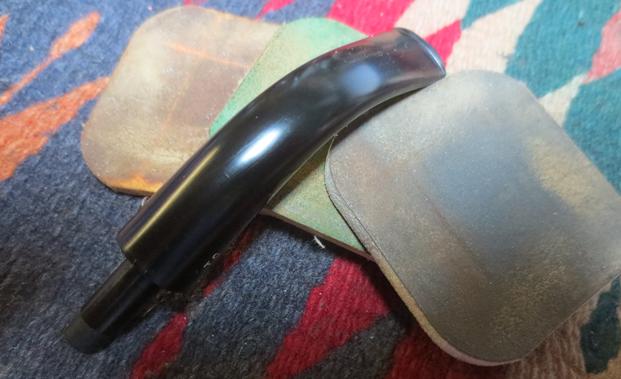
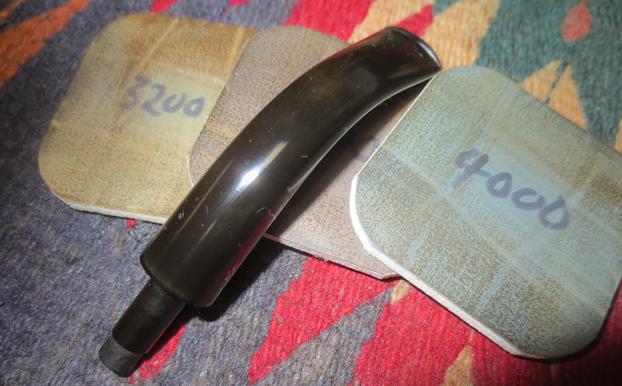
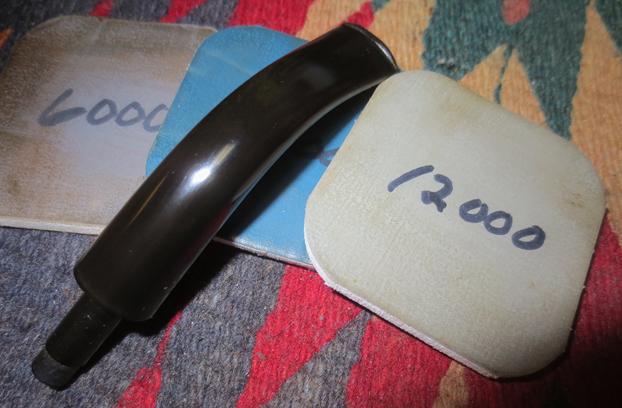
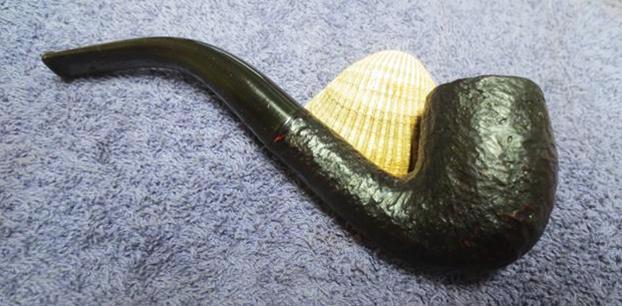
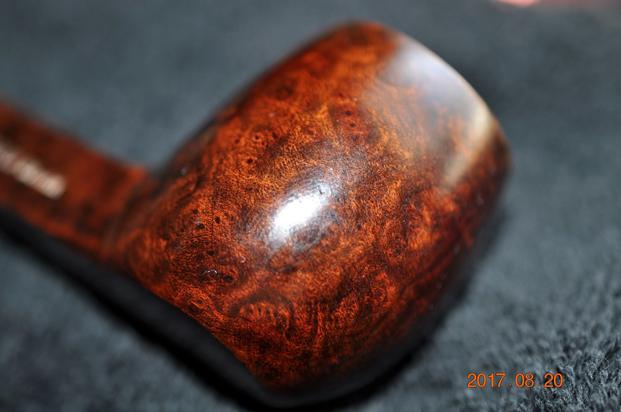
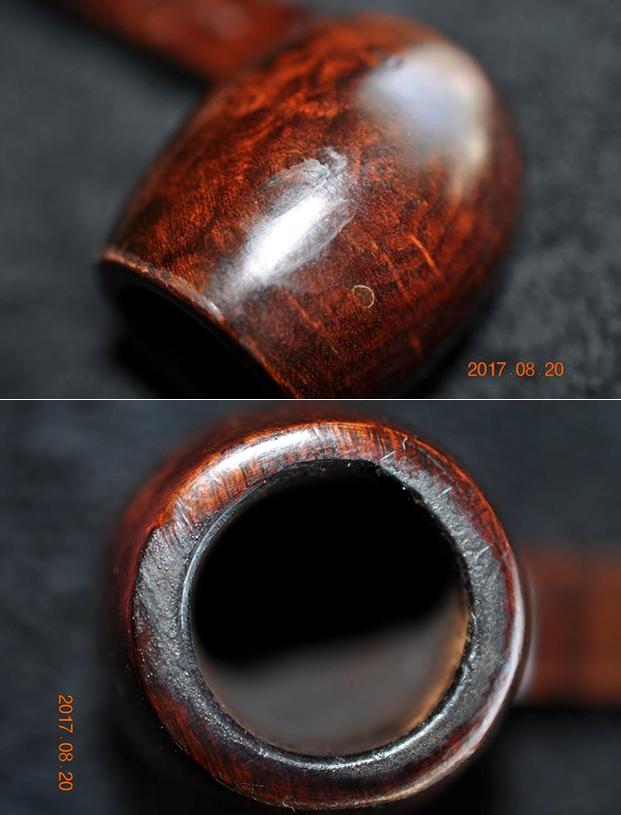
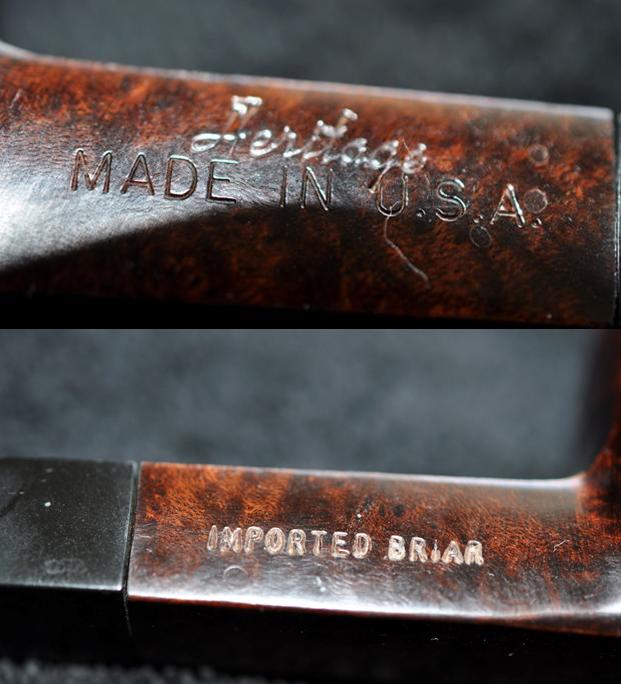
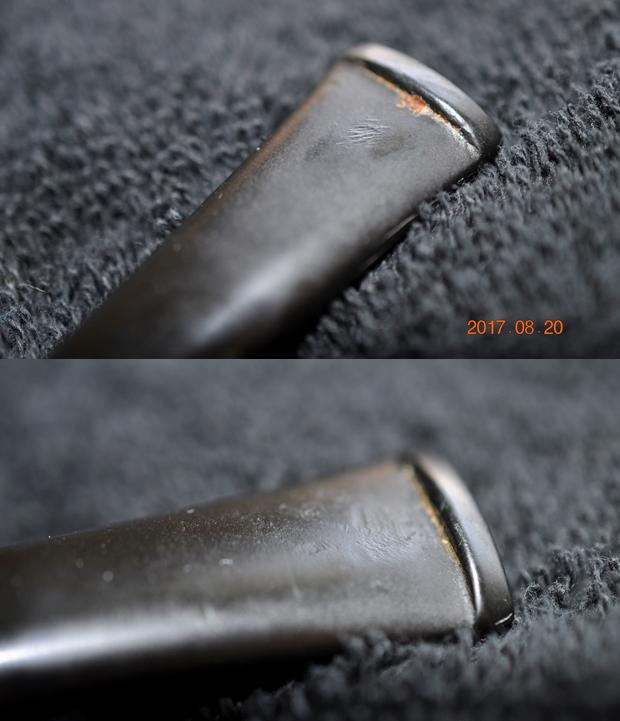
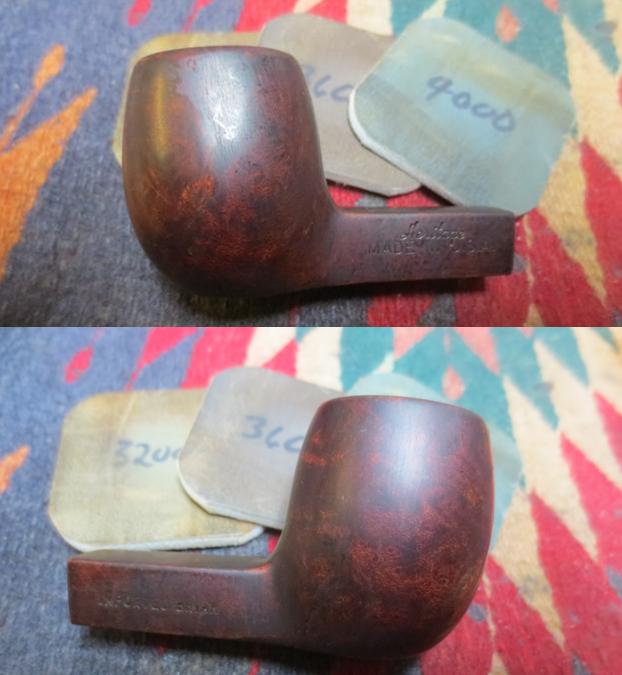
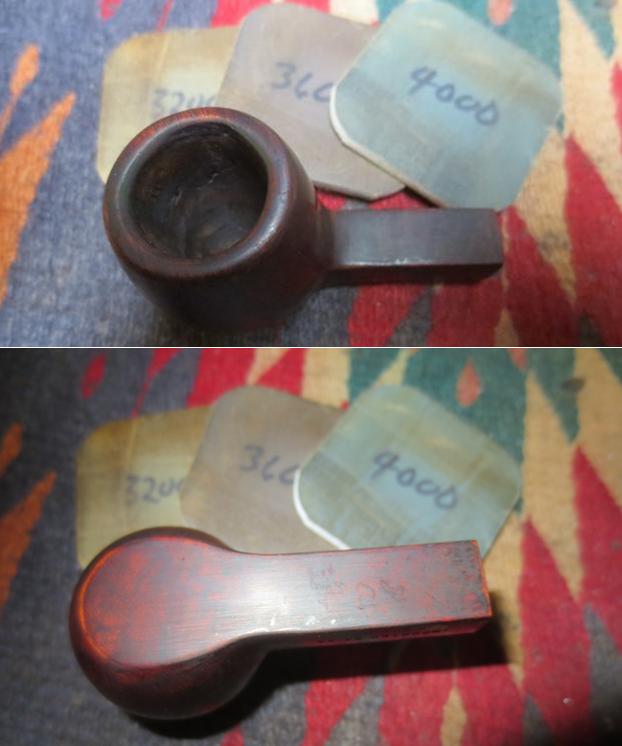
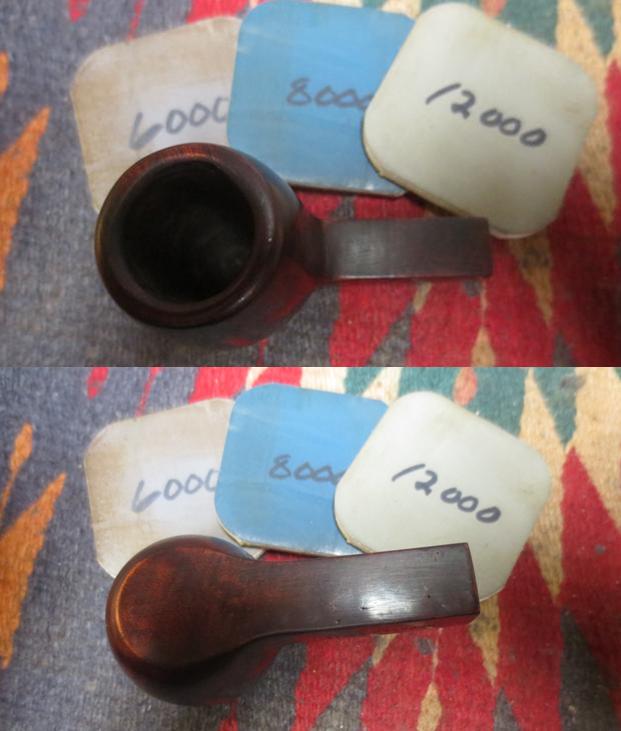
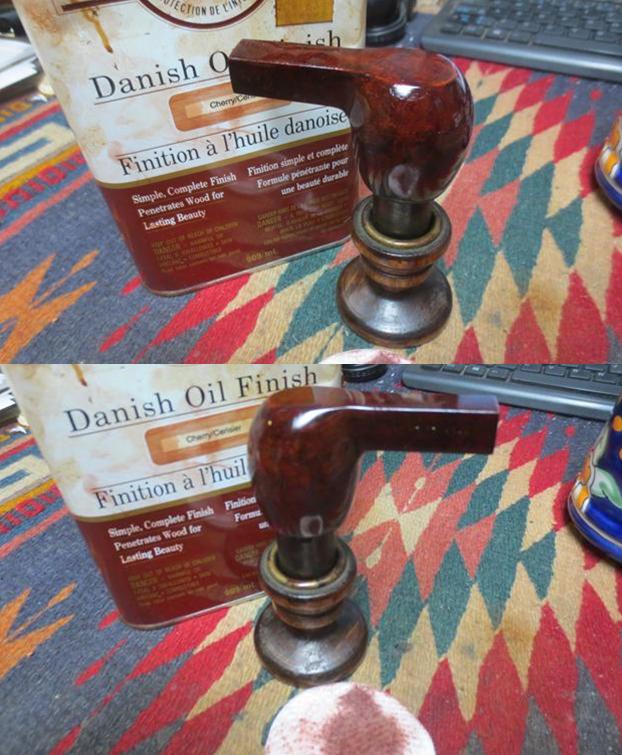
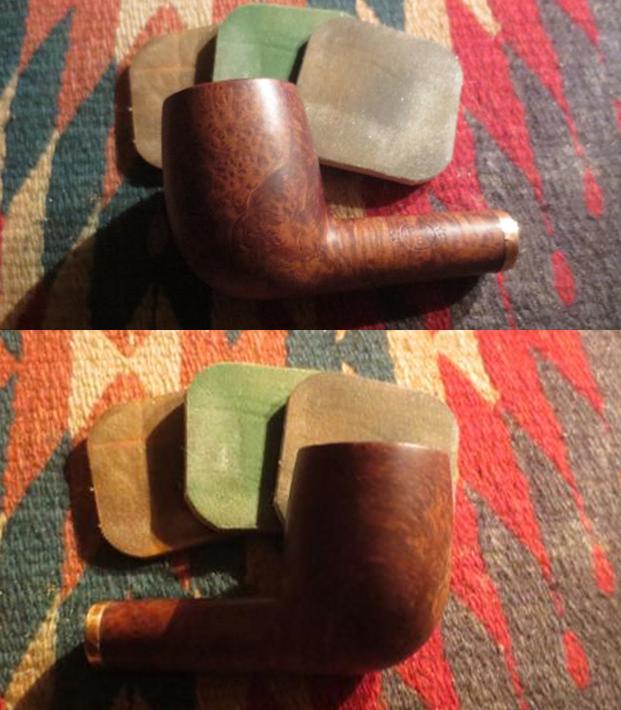
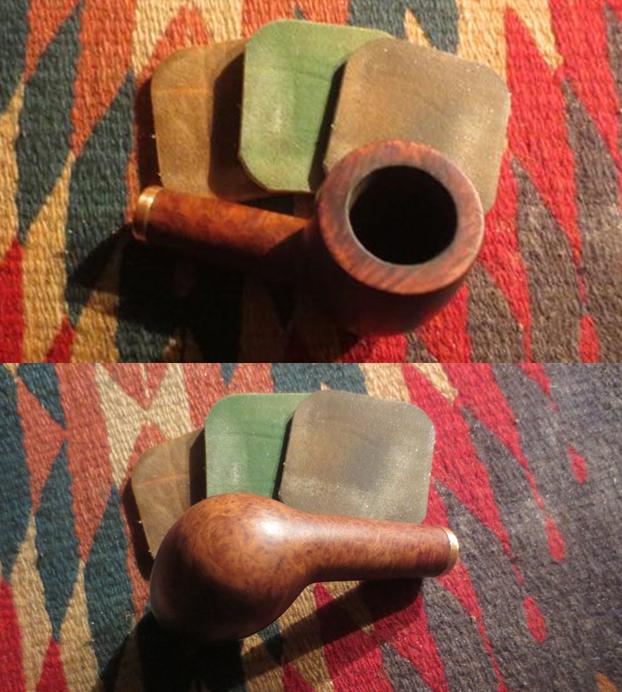
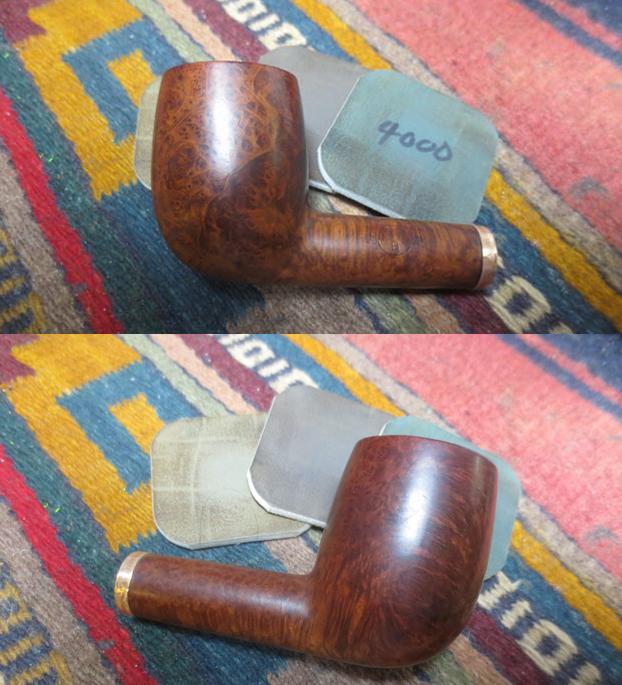
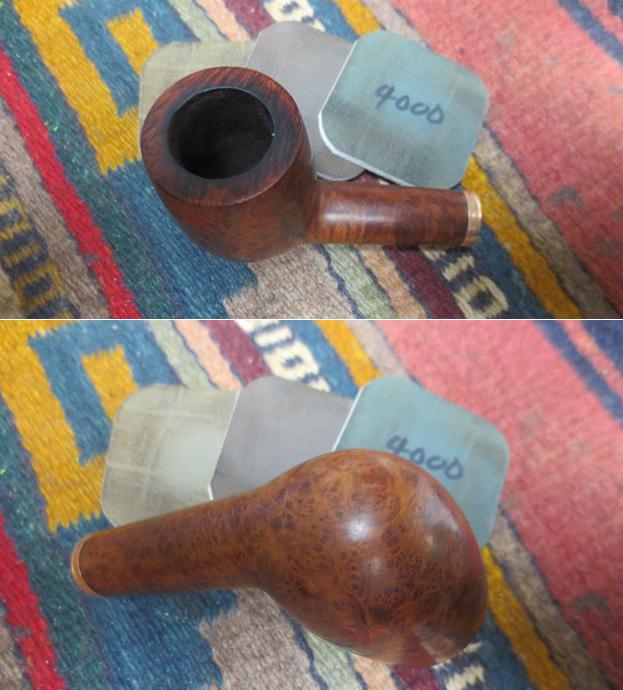
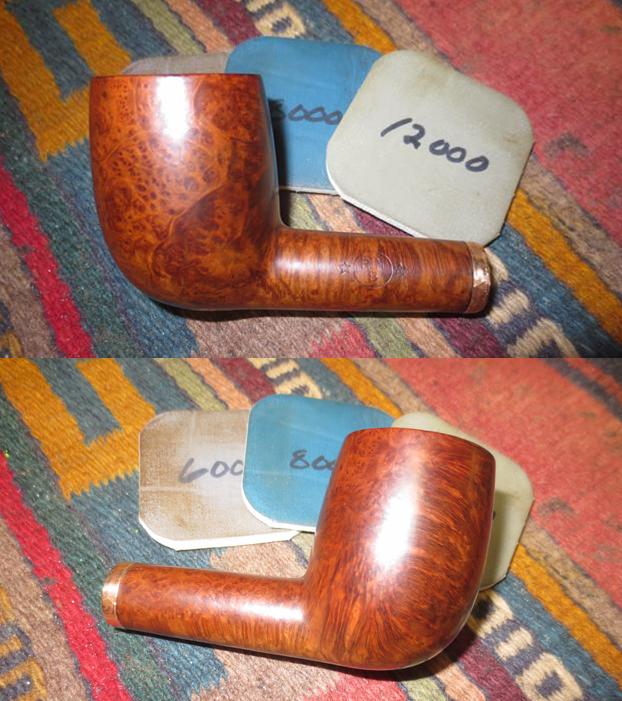
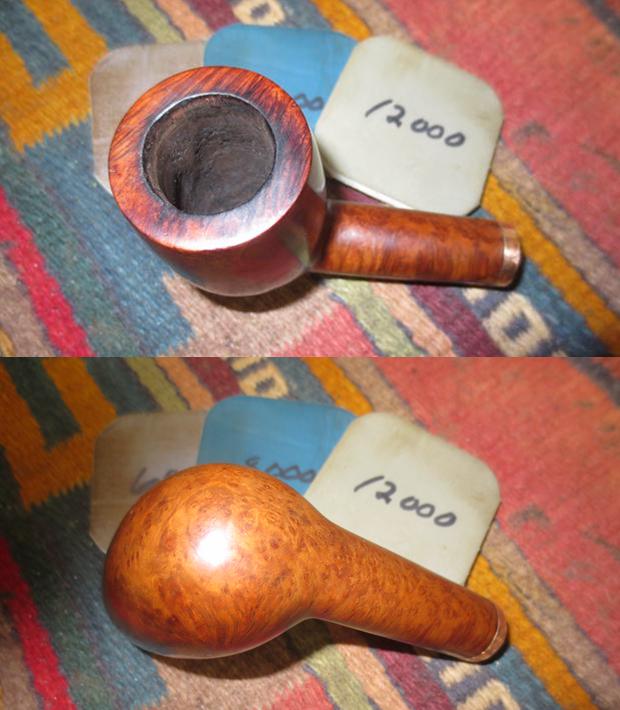
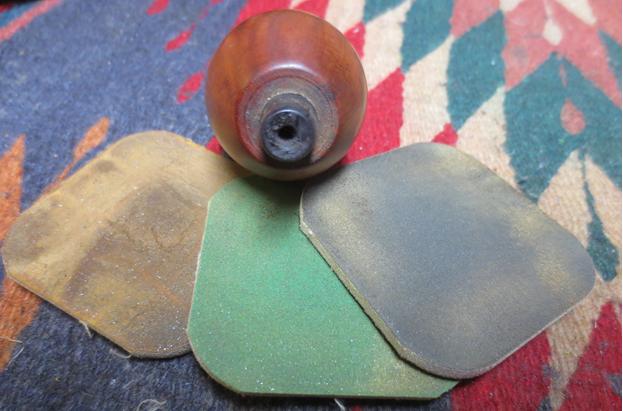
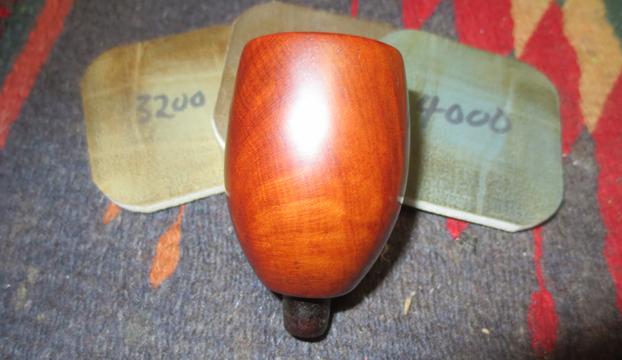
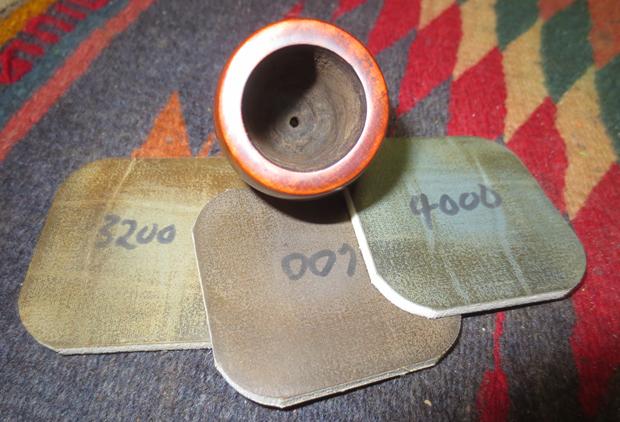
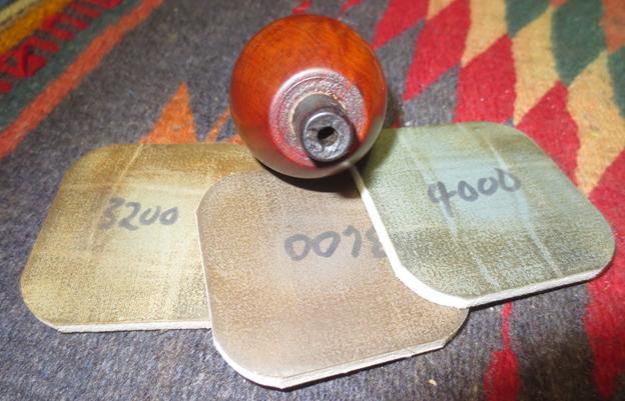
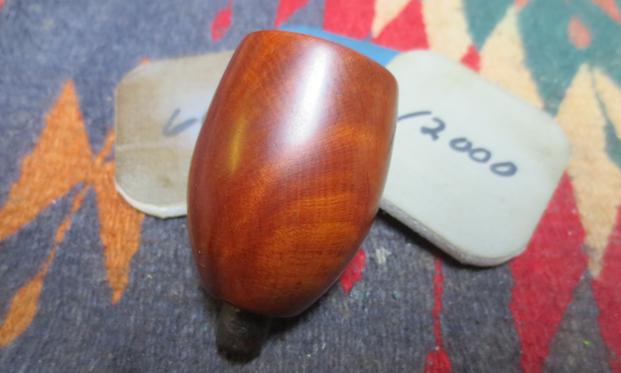
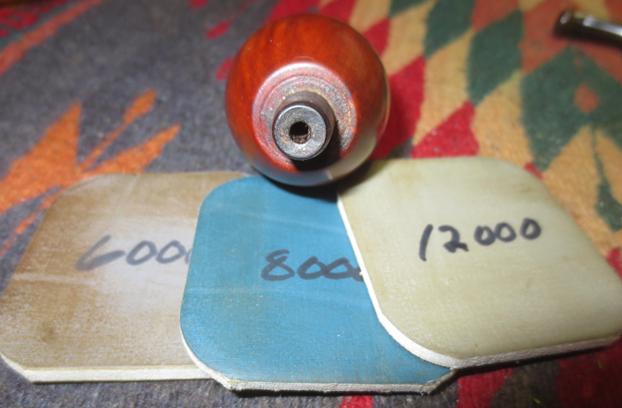
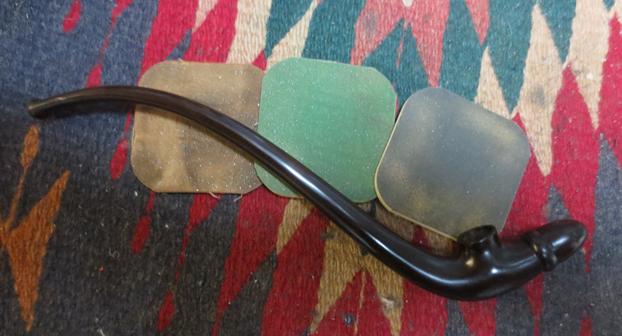
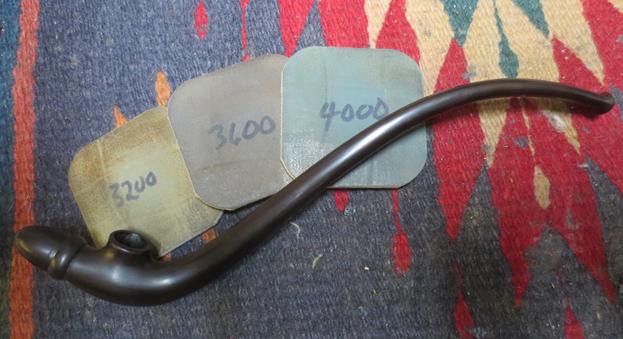
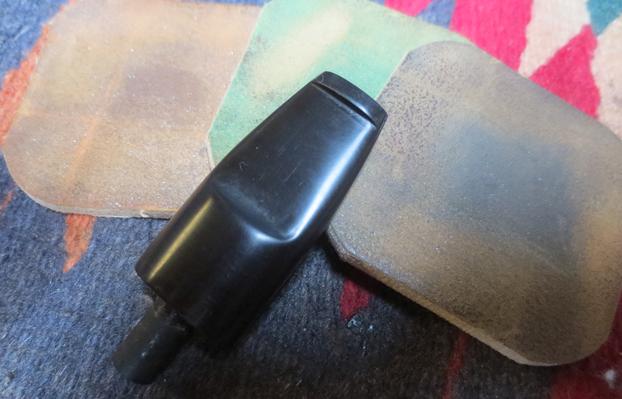
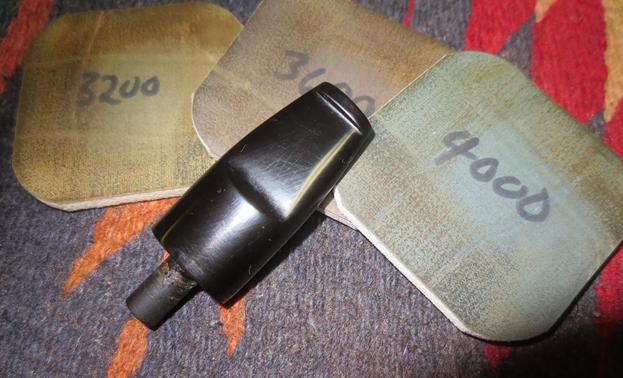
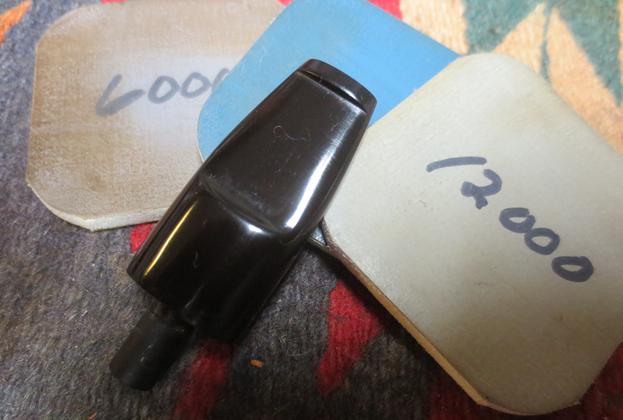
Putting together the information I had gleaned from the various sources, I concluded that the pipe I had was four grades down the list and that it was carved by Harvey Raspberry. I also could see that I had something of a rare Thames Pipe in that it was smooth and did not have any noticeable fills in the briar. When it arrived in Idaho, my brother took some photos of the pipe before he cleaned it. Jeff took some close up photos of the rim top and bowl to show the thickness of the cake and the buildup on the rim. It was a thickly cake pipe and I am sure glad that he is the one who is going to ream and clean it. The next two photos show the sides of the bowl and the kind of grain that was hidden under the dirt and grime of the finish. I was pretty certain that this particular pipe had never been stained but that it had a simple oil finish.The stamping was very clean on the shank. The left side read Jost’s over Thames in an arch over Pipe. The right side read Imported Briar.The stem looked badly oxidized and there was a lot of flaking calcification on the top and underside. There were some bite marks visible on the underside but once it was clean I would know how deep they were.My brother cleaned the pipe with his usual thoroughness – reamed the bowl and cleaned out the internals. He scrubbed the exterior with Murphy’s Oil Soap. He soaked the stem in OxyClean to deal with the oxidation and bring it to the surface. When it arrived in Vancouver it was in clean shape and ready to be restored. I took some photos of the before I started to work on it to show how its condition. The pipe looked really good. The finish was clean and other than one dark spot on the front of the bowl it was flawless. The spot looked like a burn mark but it did not appear to go deep in the surface of the briar. The rim was clean but the inner edge was out of round. There was some damage on the back side of the bowl were it had a gouge out of the edge.I took the stem off and worked on the inner edge of the bowl with a folded piece of 220 grit sandpaper. I was able to remove much of the damage around the inner edge and minimize the badly damaged area. I used some clear super glue and briar dust to fill in the damaged area. I mixed briar dust putty and applied it to the edge with a dental spatula. I used a folded piece of sandpaper to bevel the inner edge and blend it in with the rest of the rim. The pictures below tell the story. The stem was oxidized evenly and had tooth marks and chatter on the top and underside near the button and on edges of the button. I soaked the it in a tray of Before & After Pipe Stem Deoxidizer and let it do its work overnight. At that point I decided to call it a night and check back on things in the morning.When I took the stem out of the bath in the morning and wiped it down it was pretty clean. The photos below show the mild oxidation in the vulcanite and the tooth marks and chatter on the top and underside of the stem.I “painted” the tooth marks on the stem with the flame of a Bic lighter and was able to raise them significantly. Many of the ones on the topside disappeared and what was left a light sanding would remove. The ones on the underside were a little deeper but they too were raised enough that I could sand them smooth.I sanded the surface of the stem to smooth out the remaining dents with 220 grit sandpaper. It did not take too much sanding to remove all of them. The stem surface was ready to be polished.I polished the stem with micromesh sanding pads – wet sanding with 1500-2400 grit pads and dry sanding with 3200-12000 grit pads. I rubbed the stem down with Obsidian Oil after each pad and after the 12000 grit pad I set it aside to dry. I polished the bowl with micromesh sanding pads – wet sanding with 1500-2400 grit pads. I wiped the bowl down with a light coat of olive oil after the 2400 grit pad. I dry sanded with 3200-12000 grit pads. After each grit of micromesh I wiped the bowl down with a damp cotton pad. The photos tell the story of the progressive shine in the briar. I put the stem back on the pipe and buffed it with Blue Diamond on the buffing wheel. Blue Diamond polish takes out the minute scratches in the vulcanite and the briar and leaves behind a great shine. I gave the bowl and stem multiple coats of carnauba wax to protect it. I buffed it with a clean buffing pad to raise the shine. I hand buffed it with a microfiber cloth to deepen the shine. The dimensions of this pipe are Length: 6 inches, Height: 1 7/8inches, Bowl diameter: 1 ½ inches, Chamber diameter: 7/8 inches. The finished pipe is shown in the photos below. It is a beautiful pipe. I will be adding it to the rebornpipes store shortly so if you are interested in adding it to your collection, send me an email to slaug@uniserve.com or send me a message on Facebook. Thanks for looking.

Restoring an older Wally Frank Sandblast Bent Billiard


Blog by Steve Laug

In the late spring I received and email from Josh (misterzippo), a reader of the blog that he had some pipes that he thought I might be interested in. He sent me photos of the pipes so I could have a look at them. A few caught my eye so it did not take long to make a deal. The first of them that I liked was the Malaga Bulldog with a twist in the carving and a scoop in the top of the bowl that I restored earlier. The next two pipes that caught my eye were a pair of sandblast Wally Frank pipes shown in the photo below. Josh sent this photo and it shows the overall condition and appearance of both pipes. The shapes and the deep ridges of the sandblast finishes intrigued me. The pipes were dirty but had good bones. The grooves in the sandblast on both were filled in with grit and grime and almost sticky to touch. The rims were caked with overflow of tars from the bowl and the grooves were filled in to the point that they almost were invisible. The stem on the bent billiard was in good shape with light oxidation and some tooth marks on both sides near the button. The stem on the Lovat was missing a large chunk out of the underside that would need repairing. The tape measure in the photo shows that the billiard is about 5 ½ inches long with a taper stem and the Lovat is 5 inches long with a saddle stem.I chose to work on the bent billiard first as it was in relatively good shape. The Lovat would take more work and will be dealt with on the weekend. I took some more time to evaluate the condition of the little bent billiard. It was very dirty and the cake and lava overflow were thick. The finish was worn around the outside edge of the bowl while it looked like the thick cake had protected the inner edge. The rim top covering also protected it from damage to the flat portion. The shank was in good shape, the deep sandblast on the bowl sides was stunning, and the tactile feel of it would be very good when the bowl heated during smoking. The stem was stamped with the WF in a circle logo that was on all of the pipes. The stem was a good quality vulcanite and the oxidation on the surface was minimal. The stem had tooth marks and chatter on the top and underside near the button and there was wear to the surface of the button as well. My brother took the next photos of the pipe before he started his clean up work. The slightly different angles of the first two photos really show the depth and contours of the sandblast finish on the left side of the bowl. The next two photos give a contrasting view of the two sides of the bowl and the difference in grain pattern on both. It is a really interesting looking pipe.The top of the rim is very dirty and the thick coat of lava will need to be removed to assess the inner and outer edges completely.The shank is stamped on the right side with the faint words Wally Frank over Filter. The circle WF stamp on the left side of the stem is very readable at this point. The aluminum band that separates the shank and the stem is an integral part of the stem. The tenon on the stem is aluminum and looks comparable to those found on Medico pipes. It was designed for a disposable paper filter.The tooth marks on the button and the chatter on the surface of the stem are very visible. They do not appear to be too deep in the surface of the rubber so I am hoping that will be easy to deal with.I quickly Googled Wally Frank, Ltd. online to refresh my knowledge of the history of the brand. I found information in multiple spots from Pipedia, to PipePhil, and in several of the books that I have on my desk. I confirmed that the company was one of America’s oldest and most respected names in pipes and tobaccos, beginning in the early 1930’s. Wally Frank operated a chain of tobacco stores in New York City (the flagship store was in Lexington Avenue) and had a vast catalog business for pipes and pipe tobaccos. Their numerous private-label pipes were made by many makers, including Charatan, Sasieni, Weber, and many others. Wally Frank, Ltd. also owned the Pioneer brand of meerschaum pipes, made from both Turkish and African meerschaum. In addition to importing pipes, they had many pipes made with the Wally Frank name and also employed pipemakers like Peter Stokkebye, Svend Bang, and Ed Burak (who later became the owner of Connoisseur). As a result, each Wally Frank pipe must be individually evaluated on its own merit. They also ran “The Pipe of the Month Club” where each member received a new pipe in the mail once a month.

Being reminded that various companies and individuals made Wally Frank pipes was helpful. As I turn the pipe over in my hands, I wonder if this pipe and the Lovat were made by Weber because of the similarity to the sandblast on the Weber Blackthorn. Or maybe there were made by S.M. Frank because of the split metal tenon that looks like the one on S.M. Frank made Medico filter pipes. I don’t know if I will ever be certain but they are an interesting pair of pipes that are well worth the effort of restoration.

I can’t begin to tell you how nice it to have the pipes I work on reamed, cleaned and ready for the refurbishing process that follows that. My brother does a seriously great job preparing the majority of the pipes I work on. In fact, on a recent trip to visit him I took along a box of pipes for him to process for me. I know I am spoiled but it is great to have him willing and able to help me with this part of the process. He cleaned up this pipe with his usual methodical thoroughness. He generally uses a PipNet and a Savinelli Fitsall reamer to ream the pipes he works on. He reamed the bowl clean with the two reamers. He scrubbed internals with alcohol, pipe cleaners and cotton swabs leaving the airways in the shank, mortise and stem very clean. He scrubbed the externals with Murphy’s Oil Soap to remove the grime and the old waxes on the bowl and rim. He soaked the stem in OxyClean to bring the oxidation to the surface of the vulcanite. When the pipe arrives in Vancouver it is ready for me to do my part. I brought the pipe to the work table and took the following photos. The rim top looked very good after the cleanup. Both the inner and outer edges of the rim were undamaged. The finish was spotty on the flat surface and around the edges.The soak in OxyClean did not bring much oxidation to the surface. The little that was there before was now on the surface. The tooth marks and chatter were clearly visible now and needed work.I decided to start with the stem and bring it back to a shine. I sanded the tooth marks and chatter on both sides of the stem with 220 grit sandpaper and was able to remove all of them. I reshaped the button with the sandpaper at the same time and removed the damage on the button surfaces.The stem was loose in the shank so I inserted a thin blade I the slot in the tenon and wiggled it to expand the tenon slightly. It did not take too much expansion for the stem to fit snug in the shank.I polished the stem with micromesh sanding pads – wet sanding with 1500-2400 grit pads and dry sanding with 3200-12000 grit pads. I rubbed the stem down with Obsidian Oil after each sanding pad. After the 12000 grit pad I gave it a final rubdown with the oil and set it aside to dry. I touched up the logo stamp on the left side of the stem with acrylic white paint applied with a small brush. I put the paint on the logo and let it dry then wiped and rubbed the excess paint off.I buffed the pipe with Blue Diamond on the buffing wheel to polish the last of the minute scratches on the vulcanite and lightly buffed the briar. I gave the stem multiple coats of carnauba wax and buffed it with a clean buffing pad. The stem really shone after the buffing. I hand waxed the bowl with Conservator’s Wax and buffed the bowl with a shoe brush to raise the shine. The contrast in browns on the briar and the black stem really give the pipe a classic look. I hand buffed the entirety with a microfibre cloth to deepen the shine. The aluminum tenon is cleaned and polished. The dimensions of the pipe are Length: 5 ½ inches, Height: 1 ¾ inches, Bowl diameter: 1 ¼ inches, Chamber diameter: ¾ inches. The pipe is ready for the next steward to carry on the trust. I will be putting it on the rebornpipes store soon. If you are interested in adding it to your collection send me an email to slaug@uniserve.com or a message on Facebook. Thanks for looking.


A Goliath Among Giants – Releasing a Savinelli Goliath 619EX Italy


Blog by Dal Stanton

Have you ever trolled through the 1000s of “Vintage Estate Pipe” offerings on eBay’s auction block and then, one pipe seizes your attention, and you know that you will be bringing it home?  When I saw the Savinelli Goliath, I saw the pipe – not the Savinelli name, nor the condition information offered by the seller.  I could tell it was a huge pipe – I like big pipes not just sitting in my palm, but occupying it.  I also saw the rustification beautifully textured across the paneled (octagon shaped) Billiard landscape.  Lastly, but not with waning attention, I saw the Cumberland vulcanite swirl – not just the stem but also the shank extension.  The Cumberland display was like frosting on the cake.  Here are a few pictures I saw from the seller in California.This Savinelli Goliath 619EX of Italy may represent my last restoration for several months as my wife and I return to the US from Bulgaria to reconnect with family and friends. Our organization here in Bulgaria, is a ‘not-for-profit’ so we also spend time reconnecting with the generous, dedicated people who provide their resources to enable our efforts in Bulgaria to happen.  Before my wife and I head to the US, we will spend one last bit of time on the Black Sea coast enjoying the sun and sand, and I wanted to restore a pipe from my own personal collection’s “Help Me!” basket.  So, this big boy will not be going into The Pipe Steward’s Store Front for a new steward to adopt and hence, benefiting the Daughters of Bulgaria, one of our important activities, helping women and girls who have been sexually exploited and often trafficked.

The Savinelli name needs almost no introduction as one of the most well-known Italian pipe houses and whose pipes are highly sought after (See the TobaccoPipes Link for Savinelli’s History).    The Goliath line is no longer produced by Savinelli.  Eric Squires, from SmokingPipes.com, observes,

I’ve only seen a few Savinelli Goliaths, but between the name and the fact that those few I’ve seen have all been “EX” sized pipes, I would presume the entire series was all-EX. Finish-wise they look much like the Hercules line, with the significant difference being the presence of Cumberland ferrules and stems.

The Savinelli Hercules line is still produced and examples of the differences between the former Goliaths and current Hercules offerings can be seen in the Hercules shape 619EX also from Smoking Pipes.  It looks like my Goliath without the Cumberland stem and shank extension.The following now defunct Smoking Pipes ad for the Savinelli Goliath 619EX does all the work for me regarding description of this massive pipe.  I find Andrew Wike’s description spot on.

Savinelli’s Goliath line is aptly named, presented some of their classic shapes in extra-large, EX proportions and topped them with Cumberland mounts and stems. Here we see the “619” bent Foursquare rendered positively massive. It’s finished in a crisp, uniform rustication, offering plenty of texture in hand, without compromising the paneled shape’s clean lines. Length: 6.19 in./157.23 mm.

Weight: 2.50 oz./70.87 g.

Bowl Height: 2.12 in./53.85 mm.

Chamber Depth: 1.80 in./45.72 mm.

Chamber Diameter: 0.89 in./22.61 mm.

Outside Diameter: 1.65 in./41.91 mm.

Stem Material: Vulcanite

Filter: 9mm

Shape: Panel

Finish: Rusticated

Material: Briar

Country: Italy

These pictures that I take of the Savinelli Goliath 619EX from the worktable here in Sofia, Bulgaria, form the starting planks of rebuilding the bridge from where this massive pipe is now and the pristine picture depicted above.  I don’t have huge hands, but just to give a sense of the size of the stummel, I conclude with a ‘palm shot’ where I’m imagining this Goliath in my rotation! The nomenclature is located on the underside of the shank.  To the left is stamped ‘SAVINELLI’ [over] GOLIATH.  To the right of this, is stamped the Savinelli logo followed by ‘619EX’.  Without success, I look through several catalogues featuring Savinelli lines and I am unable to unearth the Goliath to try to date the production history.  I sent the question to Savinelli’s current ‘Contact’ page in their website to see if someone might fill in those details – I’m not holding my breath.  I find this nice example of a Goliath, slightly different shape, at Chris’ Pipe Pages and I discover something that I had totally overlooked.This example provides pictures of a stem stamping on the topside of the Cumberland stem!  Looking more closely at my Goliath’s stem, I discover the faintest shadows of the stamping.  Now that I know it’s there, I’ll do my utmost to protect it!  I take a picture of the phantom.I’m anxious to recommission this Savinelli Goliath and introduce him to the other pipes in my rotation!  He needs some work.  The stummel has plenty of grime in the rustified surface.  The cake in the chamber is thick and it needs to be removed to expose fresh briar.  The rim has lava flow and crusting.  The Cumberland stem has heavy oxidation and the former steward of this Goliath was a definite clencher – the bit/button area is pocketed with chatter and dents.  The button lip also has damage.  We have some goliath challenges, but I’m glad to start the restoration.  The first thing I do is cover the phantom stem mark with petroleum jelly and put the Cumberland stem in the OxiClean bath to soak and to raise the oxidation. With stummel in hand, the first thing is to ream the ample chamber removing the thick accumulation of cake on the chamber wall.  Using the Pipnet Reaming Kit, I use the full array of 4 blades available to me, starting with the smallest blade. After putting paper towel down to minimize clean up I go to work.  The cake is hard as a brick and it takes more effort than normal.  I wonder if this bowl has ever seen the likes of a reaming blade before.  As I continue to work with the first, smallest blade, images of oil drilling come to my mind….  I’ve never taken a progress picture of a reaming project before, but I do drilling down into the deep recesses of this Goliath.  The first picture shows the starting point.  The second picture shows the shape of the smaller blade as it makes progress down the throat of the carbon cake – maybe just past the halfway point.  The cavern beyond is visible.  The last picture shows the break-through to the floor of the chamber.  Now, the next larger blade, blade number 2.  That blade worked through to the floor and then to blade #3, the next larger. I was just thinking that I seldom worked on a pipe requiring blade #3, let alone #4.  I was also just thinking, “Let the blade do the work, and don’t put a lot of torque on it.  The Pipnet system is made of heavy duty plastic.  Not long after those fleeting thoughts, blade #3 had a major failure and the extending blade part broke off from the insert part, stuck in the hand turning tool.  Ugh!  I gently coax the parts out of the stummel and tool, and put them aside for potential repair! Unyielding, I mount blade #4 and coax it gently down the chamber, overtaking the short-comings of blade #3.  I record the completion of the Pipnet progress, clean the carbon dust which is much.  The chamber looks good, but I’ve yet to finish. I finish up the reaming, which is no perfunctory job this time, using the Savinelli Pipe Knife, which more accurately is the Savinelli Fitsall Pipe Reamer (See: Savinelli site).  I found it on eBay sometime back after Steve bragged so much about his during many of his restorations on Reborn Pipes!  It did not come cheap, but I have enjoyed its talent to finetune a reaming project. After using the Fitsall Pipe Reamer to remove more carbon in hard to reach places, I take 240 grit paper, wrap it around a Sharpie Pen and sand the chamber wall clearing out the last remaining deposits of carbon cake and presenting fresh briar for a new start.  To finish the internal cleanup, I use cotton swabs and pipe cleaners wetted with alcohol to clean the mortise.  I also employ the long, wired bristle brushes for the cleaning.  The mortise is cleaning up well.  Later, I will give the bowl a Kosher Salt/alcohol soak to clean further and freshen it. I let the stem soak overnight in the OxiClean bath.  I take it out and with thumb firmly over the phantom stem stamp, I work on removing the oxidation by wet sanding with 600 grit paper then with a buffing with 0000 grade steel wool. I like working on clean stems.  I use pipe cleaners dipped in isopropyl 95% to work on the internal airway of the stem. I use cotton swabs to clean the filter bay. With the condition of the chamber, bit and grime on the stummel, I expected some gunk deposits in the stem and filter bay.  I was not disappointed, but after several courses of pipe cleaners and cotton swabs and alcohol, the gunk gave way to a state of cleanliness.Turning now to the rustified surface of the Goliath, I use undiluted Murphy’s Oil Soap with cotton pads and a bristled tooth brush to scrub the grime off the surface as well as the rim.  After scrubbing, I rinse the stummel with warm tap water without flooding the inside with water.  The grime has come off, but the finish has as well for the most part.  The rim is still a bit dark, but that’s not a problem.  I want to reestablish a very smooth and perhaps a bit lightened rim, as I’ve seen exemplified with newer Goliaths and the Hercules series.  To reestablish a crisp rim and remove the dings, scratches and darkened briar, I will lightly top it.  There is already an internal rim bevel which will be re-sharpened as well.  With the chopping block serving as my topping board, I put a sheet of 240 grit paper on it and rotate the stummel in circles over the paper.  I don’t need to remove much – my goal is cleaning and crisper lines and to remove the scorched briar on the internal ring.  After the 240 grit paper, I put 600 grit paper down and repeat the process.  The rim plateau looks good, but the black ring is now more distinct.  To address the blackened ring, I use a piece of rolled 120 grit paper and recut the bevel.  After this, I smooth the bevel more with 240 grit paper rolled tightly and then with 600 grit paper.  After the beveling, I again put the stummel on the topping board with 600 grit paper to give a finishing touch to the bevel lines.  I still see a hint of the dark ring but I’m satisfied with where the rim is.Switching from the rim, I now want to work on the Cumberland shank extension.  To break up oxidation and remove scratching, I lightly sand the surface with 240 grit sanding paper.  I follow this using 600 grit paper then 0000 grade steel wool.  The Cumberland shank extension looks good. Now, back to the stem and to address the bit repairs needed.  Up to this point, I’ve only dealt with the oxidation in the stem.  Next, I will use the heating method to expand the vulcanite to minimize the dents on the upper and lower bit.  There are dent compressions on the button lips as well.  I take fresh pictures of the upper and lower bit area to mark the starting point.  It is apparent, based upon how far forward the tooth dents are on the stem, the former steward smoked the Goliath without hands at times.  To counter the weight of the stummel, one would have to clench the stem toward the center. Using a butane lighter, I pass the stem through the flame, ‘painting’ the damaged areas with the heat.  I do this several times until it appears that I’ve reached maximum benefit of the heating method.  The deepest dents and compression points remain, but are tighter and more defined by the expansion of the vulcanite. Now, I use 240 grit paper and a flat needle file to sand down the area more.  I work primarily on the lower button lip area with the flat needle file to redefine the edge of the lip.  After sanding and filing, I’m left with the areas needing patching. I wipe and clean the bit, upper and lower, with a cotton pad and alcohol to prepare it for the drop-filling with CA Glue.  I use transparent Hot Stuff Special ‘T’ to do the filling, by applying it with a toothpick. For the deep fills on the lower bit, I allow ample glue to fill the area. I spray the patches with an accelerator to shorten the curing time.  Starting with a flat needle file I remove the excess CA glue to bring the mounds down close to the stem surface as well as shape the buttons working off the excess glue.  After the file, I use 240 grit paper to sand the patch mounds down to the vulcanite surface, removing the excess CA and blending as much as 240 paper allows.  Then, I follow the 240 with 600 grit paper which fine tunes the patch surfaces and blends further.  At this point, I used a method for the first time.  Note the first picture below – this is the upper bit and what transpired which I didn’t picture, I’ve pictured in the second picture, of the lower bit.  As often is the case, CA glue patches after curing will have air pockets which are addressed by painting the patch area with thin CA glue which fills the small pocket holes and after dried, removing the film of excess glue with sanding.  I notice that the patch areas, where the air pockets emerge, were whiteish.  Often this is vulcanite dust lodged in the pockets.  I wipe off the patch areas with a cotton pad and alcohol but pockets remained white as in the second picture.  The white is the cured CA glue itself which I’ve seen before.  What I also have seen before is that if you paint the white again with CA to fill the air pockets, the white spot is also sealed by the transparent CA glue and will show.  What I do, for both the upper (which is not shown above) and the lower bit (which is shown below) is to darken the whitened patch material using a black fine point Sharpie Pen.  After this, I paint with the thin CA glue to fill the pockets.  Black blends much better than white does on vulcanite – or in this case, a black/red swirl of a Cumberland stem.  After the CA glue cures, I will file/sand it down in the same manner as the upper bit.Turning again to the stummel, before I stain the stummel, I continue sanding the rim plateau with the full array (9) of micromesh pads 1500 to 12000.  Since I forgot to take a start picture, I brought this picture forward again for comparison.Now, also using the micromesh pads, I work on the Cumberland shank extension first using pads 1500 to 2400, then 3200 to 4000, then finally, 6000 to 12000.  After each set of 3, I apply Obsidian Oil to the shank to revitalize the vulcanite.  What can I say?  I love Cumberland vulcanite!  With each iteration of micromesh pads and Obsidian Oil, my anticipation of recommissioning this Savinelli Goliath with a bowl full of my favorite blend, Lane BC, is growing!  For the last 6 micromesh pads, I also polished the smooth briar on the lower shank that holds the Savinelli nomenclature – pictured below.  Since I cleaned the stummel with Murphy’s Oil Soap (a few days ago!) and the finish dulled significantly, I have been thinking about how to finish this Savinelli Goliath keeping it within the original Savinelli framework when it was initially commissioned.  For a ‘tenderfoot’ (former Boy Scouts will understand) restorer, here are the questions that come to my mind.  The color – there is a subtle reddish lean to the rustified surface.  How do I emulate it?  The rustification – the texture of the rustification in the picture below shows the rising and falling definition of the color tones over the contoured rustified landscape.  How do I emulate this so that the stummel color doesn’t turn out one dimensional?  And finally, the Rim Plateau.  I call it a plateau – it’s too massive simply to be a rim!  Goliath’s Plateau!  I’ve seen pictures of Goliaths and the cousin series, Hercules, that leave the rim ‘plateau’ lighter or perhaps, left natural – leaving a striking relief between stummel and rim.  An example from Worth Point in pictures 2 and 3 below – though the rounded rim is not wanted for the Goliath.  Should I stain the plateau or leave it as is?  Questions. Question 1 – Color of stain. After consulting with my wife, and a lot of going back and forth, I’ve settled on a dye mixture of 3 to 1 – 3-parts Fiebing’s Light Brown Leather Dye to 1-part Fiebing’s Oxblood.  Question 2 – Rustification contouring.  After I apply the stain and unwrap it after firing, I will experiment with lightly applying a 1500 grit micromesh pad to the ‘peaks’ of the rustification which creates the different tones in the color – peaks and valleys.  I did this once before when I restored another Italian – a rustified Lorenzo Rialto full bent Egg.  And, question 3: Goliath’s Plateau.  I’ve decided to leave as is initially but TRYING to avoid applying dye to the rim.  I’ll look at the results and then decide whether to go ahead and apply the dye afterwards.  Thinking done – time for action!

The first thing I do to prepare the stummel is to clean it thoroughly with isopropyl 95% and a cotton pad.  Then, to protect the vulcanite Cumberland shank extension from the dye, I tape off the shank with masking tape.  I mix the dyes, 1-part Oxblood to 3-parts Light Brown.  I use a large eye dropper to do the mixing.  At the last minute, before I added the Oxblood to the Light Brown, I decide to add a small bit of alcohol to the Light Brown – to lighten it.  We’ll see how that works!  Using the hot air gun, I warm the stummel to expand the briar to help its receptivity to the dye.  After warmed, I use a folded over pipe cleaner to apply the dye mixture.  Instead of covering the whole stummel and then firing it, I did a portion of the stummel at a time – panel by panel, firing it, and moving on.  This seems to have worked well for this large stummel and for the fact that the rustified surface was absorbing the dye quickly.  After applying 2 coats of dye, I set the stummel aside to rest.  The pictures show the progress. With the stummel resting, I finish the repairs to the Cumberland stem.  Now on the lower bit, I file down the patch mounds with a flat needle file, further sanding with 240 grit paper to bring the patch flush with the vulcanite surface.  Then finally, I finish the sanding and blending with 600 grit paper and 0000 grade steel wool over the entire surface (but protecting the Savinelli stem logo). The patches on the lower bit are still visible to the informed eye, but I’m hoping that micromesh process will continue to blend and hide the patches.  I finish by cleaning up the slot with 600 grit paper. With my day closing, while the stummel is resting, I’ll give it a bath, or rather a kosher salt and alcohol soak.  The work order of this soak is not ideal with the new stain, but I’m careful to pour the salt into the bowl, and insert into the shank a stretched and twisted cotton ball to act as a wick to draw the oils out of the mortise. I then add isopropyl 95% to the bowl with a large eye dropper until it surfaces over the kosher salt.  I then put the stummel aside to continue its rest and soak for several hours.  Again, careful not to disturb the externals, the next morning, I dump the expended salt and wick which had darkened somewhat, and finish cleaning the mortise with cotton swabs and pipe cleaners dipped in alcohol.  The internals are now declared cleansed! Time to continue work on the Cumberland stem.  I begin by wet sanding using micromesh pads 1500 to 2400, then dry sand with pads 3200 to 4000 and 6000 to 12000.  After each set of 3 I apply Obsidian Oil which revitalizes the vulcanite.  The swirling colors of the Cumberland stem are revitalized!  I’m liking what I see! I’m now ready to unwrap the fired crust on the rustified stummel to see what we have.  I mount a cotton cloth buffing wheel on the Dremel, speed set at 40%, and apply Tripoli compound, a more abrasive compound, to the surface.  The cotton cloth buffing wheel is better able to work the crevices of the rustification than the felt wheel, which I use for smooth briar during the Tripoli phase. After unwrapping the stummel with the Tripoli compound, I want to lighten the stain some so I use a cotton pad and alcohol and wipe it down.  After wiping the stummel with alcohol, I load another cotton cloth buffing wheel on the Dremel, at the same speed, and apply Blue Diamond compound not only to the stummel, but to the Cumberland shank extension and stem.  I attempt to rejoin the stem but discover that during the restoration process, the stem loosened up a bit and I’ll need to tighten the fit with the mortise.  After I complete the application of the Blue Diamond compound, I give the stummel, stem and shank extension a buffing with a felt cloth to remove the compound dust from it. At this point, as I mentioned before, I hope to create more color texture in the rustified surface.  I do this by using a 1500 grit micromesh pad and rubbing it gently over the surface of the rustification – aiming to nip the peaks of the contoured rustified briar.  This will remove the finish on the peaks and lighten them.  After I do a few runs at gently applying the micromesh pad to the peaks, I then do a follow-up buffing with the Blue Diamond wheel on the Dremel.  I am very pleased with what I’m seeing emerge.  I’m seeing the color texturing but what I didn’t anticipate, but has happened, is that the lightened peaks are tying in the unstained rim – I had decided to leave the rim plateau the bare, natural briar to form (I had hoped) an appealing, eye catching, contrast with the rustified stummel.  With the smooth grain-showing rim plateau and the rustified bowl – the best of both worlds is captured.  I’m liking the decision not to stain the rim so I will leave it the natural briar.  As I look at the rim, I notice just a few places where the staining did veer a very small bit onto the rim plateau.  I remedy this by wetting a cotton pad with acetone and carefully wiping the rim and removing the stain.  It looks good – no, looks great!My day is coming to an end, but I want to do one more thing.  To tighten the tenon insert in the Cumberland shank extension, I paint the tenon/filter sleeve with thick CA glue applying it around the base of the tenon with a manicure brush.  I let it cure overnight and I will see how it fits tomorrow.  Tomorrow arrived and I work further on fitting the stem.  I sand the CA glue that I painted around the base of the tenon with 240 grit paper.  I follow with 600 to smooth and blend it.  I try the fit several times, sanding slowly – not wanting to sand too much.  With patience, the stem is fitting much more snugly and the repair is invisible! For the final push, I mount a cotton cloth buffing wheel on the Dremel dedicated to carnauba wax and I apply several coats of the wax to the rustified stummel, rim plateau, Cumberland shank extension and stem.  After applying the wax, I give the entire pipe a rigorous hand buffing with a microfiber cloth to bring out the shine even more.

What can I say?  I am proud of the results of this Savinelli Goliath 619EX.  The interplay of the natural briar of the rim plateau with the rustification flecks on the peaks and the deep red tones of the briar pulling at the swirls in the Cumberland shank extension and stem – all coalescing together are striking.  Then, when one adds the staggering size and presence of the bowl….  Oh my.  I can say that this Pipe Steward is happy that this Sav is going to the Black Sea coast in a few weeks to enjoy the sand, surf and yes, a few bowls of my favorite blend!  Even though this Savinelli Goliath will be joining my personal collection, check out my blog, The Pipe Steward for other pipes available in the store.  These pipes benefit the Daughters of Bulgaria, our work with women and girls who have been sexually exploited and trafficked.  Thanks for joining me!

Refreshing a Beautiful, Danish Made Stanwell Majestic 64 Freehand


Blog by Steve Laug

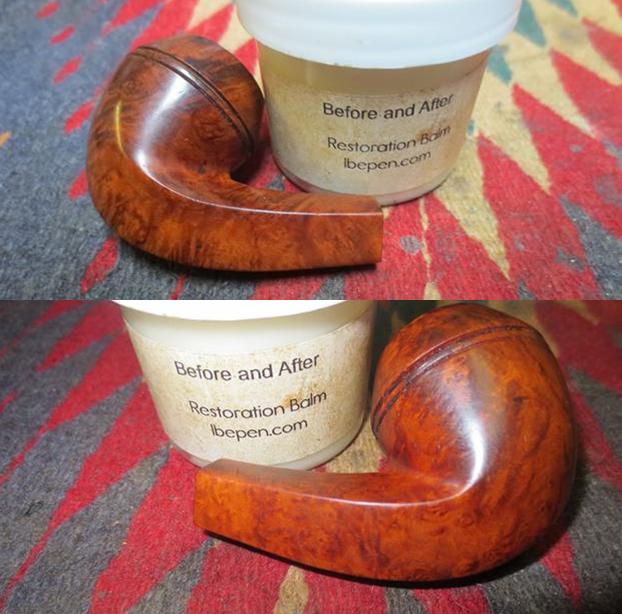
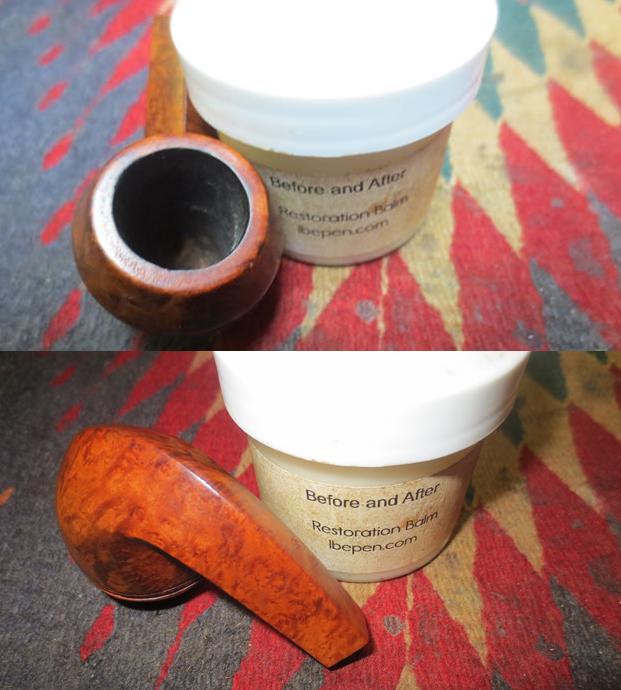
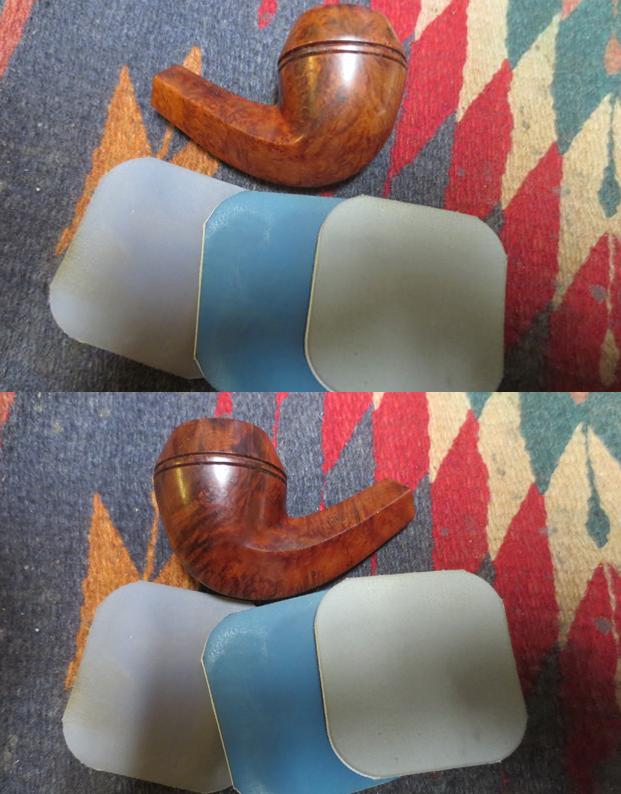
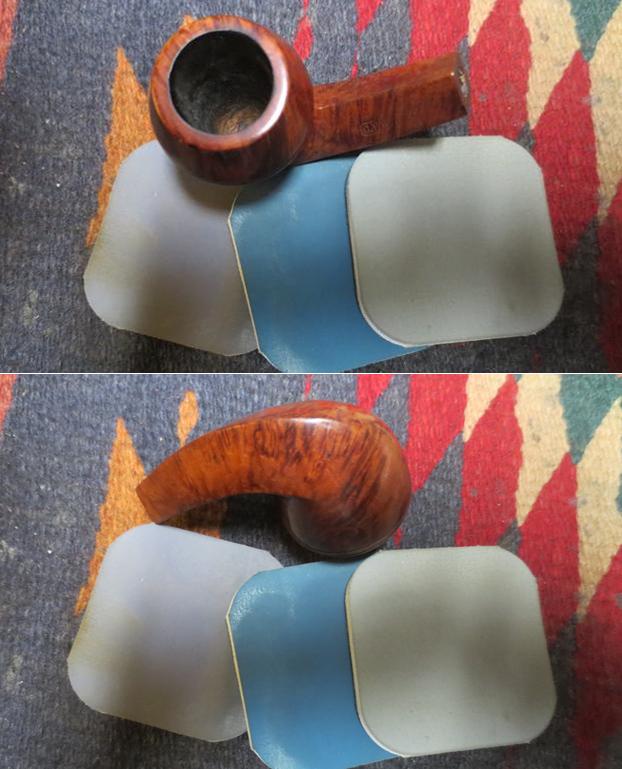
Today was a good day in the shop. I brought the third pipe to the work table today. It is a Stanwell Majestic shape 64 with a nice plateau top. The briar itself was in good shape. There were a lot of small nicks and dents in the sides of the briar. Other than being faded, the finish was in great shape. The plateau on the rim was faded and you could see remnants of tars and oils in the nooks and crannies of the rim top. The inner and outer edges of the bowl were undamaged. The pipe was stamped on the left side of the stem with the words Stanwell Made in Denmark over Majestic. On the right side it was stamped with the shape number 64. There was no other stamping on the pipe. The stem was oxidized and there was tooth chatter on the top and underside near the button. Jeff sent me these photos of the pipe before he started his cleanup process.The late Bas Stevens was the master at identifying Stanwell shapes tying the shape number to the designer. The shape 64 came in two variations – a Freehand with a saddle stem and a bent billiard with a full taper stem. This one is clearly the Freehand variation having a plateau top and a saddle mouthpiece. It was designed by Sixten Ivarsson (https://rebornpipes.com/tag/shape-numbers-and-designers-of-stanwell-pipes/).The stamping on the pipe is very readable. The left side of the shank is stamped Stanwell over Made in Denmark over Majestic. The Stanwell Crown S is stamped on the left side of the saddle stem. The right side of the shank bears the 64 shape number stamp.The rim top looked to be in good shape – dirty but sound.The lightly oxidized stem had tooth chatter on the top and underside. It did not appear to be deep in the vulcanite and should clean up easily.Jeff cleaned up this beautiful pipe with his usual methodical thoroughness. He reamed the bowl clean with a PipNet reamer and touched it up with a Savinelli Fitsall pipe knife. He scrubbed internals with alcohol, pipe cleaners and cotton swabs leaving the airways in the shank, mortise and stem very clean. He scrubbed the externals with Murphy’s Oil Soap to remove the grime and the old waxes on the bowl and rim. He soaked the stem in OxyClean to bring the oxidation to the surface of the vulcanite. When the pipe arrived in Vancouver I took the following photos. The rim was very clean and faded. They were generally black or at least dark with the high spots on the plateau showing through with the same brown as the rest of the stummel. The nooks and crannies were black and the high spots brown. The inner and outer edge of the bowl were in perfect condition.The stem was lightly oxidized and surface of the vulcanite on the topside was pitted with small holes and nicks. It was hard to capture that issue with the photos but it was there and would need to be addressed if I was to polish the stem to a rich shine. I put the stem in the Before & After Pipe Stem Deoxidizer and left it to soak overnight. I keep the mixture in a flat plastic tray with a cover. I dropped the stem into the mixture and made sure that it was completely covered with the mixture. I put the lid on the tray and set it aside to soak. I have referred to the latest use of this product in the past three blogs because I am putting it through its paces to see how the product delivers. I was skeptical when I first started using it but I have to admit that I am becoming less skeptical the more I use it. If you are interested in trying the product, I purchased the Deoxidizer from a guy on Facebook. His name is Mark Hoover and he is on the Gentlemen’s Pipe Smoking Society Group on Facebook. He has a pen making site where you can email and order the deoxidizer and the polishes (http://www.lbepen.com/). While the stem soaked I began my work on the bowl. I restained the plateau top on the bowl with a black aniline stain that I applied with a cotton swab making sure to get the stain deep in the grooves. I use a cotton swab because it enables me to keep the stain off of the sides of the bowl. I let the stain dry for a few moments and sipped a hot coffee.Once it had basically dried I polished the bowl with micromesh sanding pads – wet sanding with 1500-2400 grit pads and dry sanding with 3200-12000 grit pads. I wiped the bowl down with damp cotton pads after each sanding pad. When I finished with the 12000 grit pad I wiped the bowl down with olive oil on a paper towel to enliven the briar and highlight the colour. The next morning I removed the stem from the Deoxidizer and dried it off with a paper towel. I let the excess deoxidizer drip off into the tray before wiping it down. The oxidation came off and stained the paper a dark brown. The top surface of the stem was pitted near the button. I filled in the pits with clear super glue. Once it had dried I sanded it with 220 grit sandpaper to blend in the repair to the surface of the stem. Once I had smoothed out the repairs it was time to polish the stem. I polished it with micromesh sanding pads – wet sanding with 1500-2400 grit pads and dry sanding with 3200-12000 grit pads. I rubbed the stem down with Obsidian Oil after each sanding pad. After sanding with the 12000 grit pad I gave it a final coat of oil and set it aside to dry. I buffed the pipe with Blue Diamond polish on the buffing wheel. I worked over the bowl sides and the stem to polish out the last of the scratches in the surface of both. I gave the bowl and stem with multiple coats of carnauba wax to protect the briar and the vulcanite. I buffed it with a clean buffing pad to raise the shine on the pipe. I used a microfiber cloth to hand buff it and give it a deeper shine. The finished pipe is shown in the photos below. It is a beautiful example of the Stanwell Freehand shape 64. The dimensions of the pipe are Length: 5 ½ inches, Height: 2 inches, Outer diameter: 1 ¾ inches, Chamber diameter: ¾ inches. I will be posting this on the rebornpipes store so if you would like to add it to your collection you can wait until I add it or you can email me at slaug@uniserve.com or message me on Facebook. Thanks for walking with me through this restoration.
Repairing, Renewing and Rejuvenating a Removable Bowl C.P.F. Pullman Bent Billiard


Blog by Steve Laug

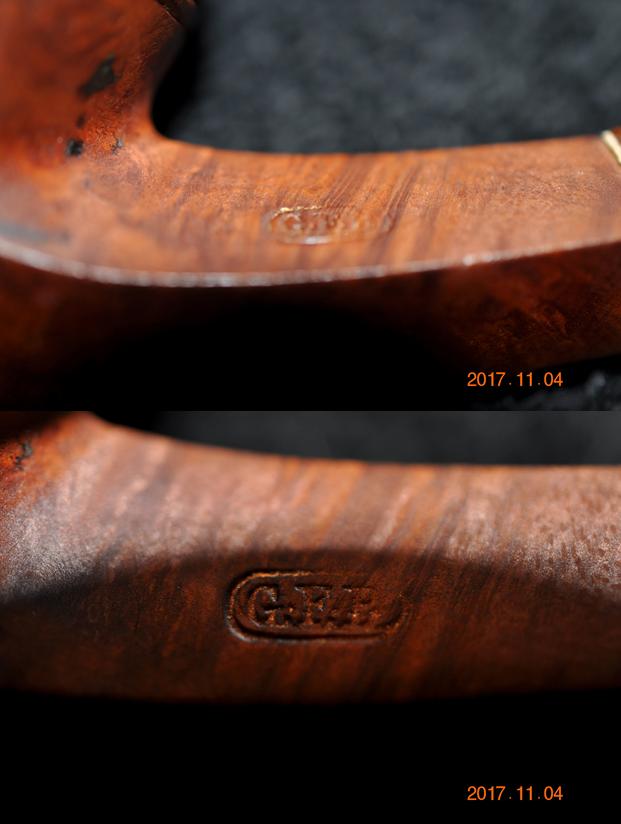
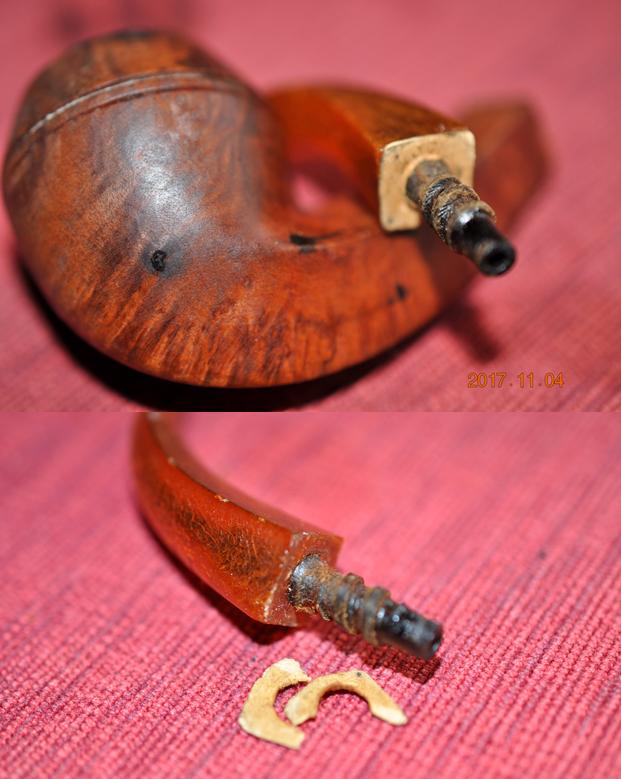
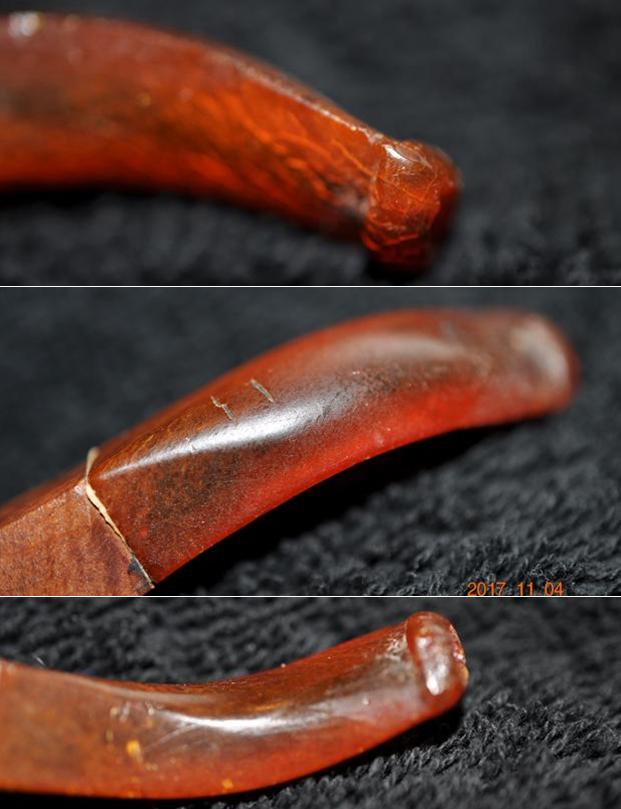
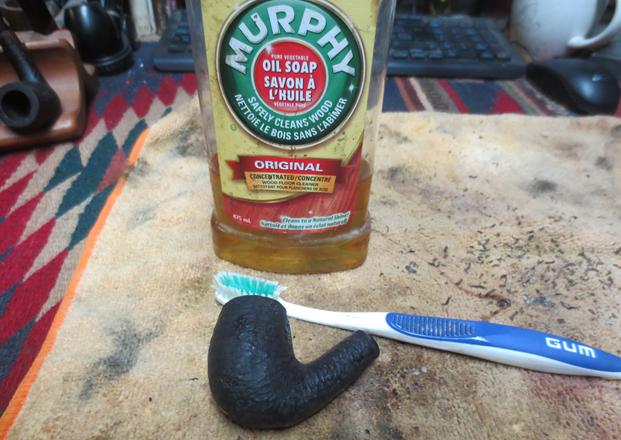
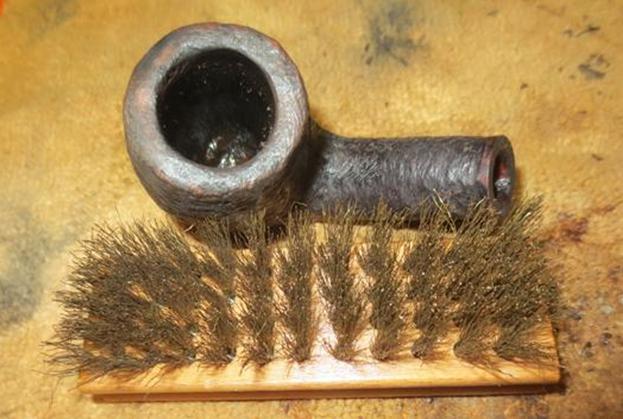
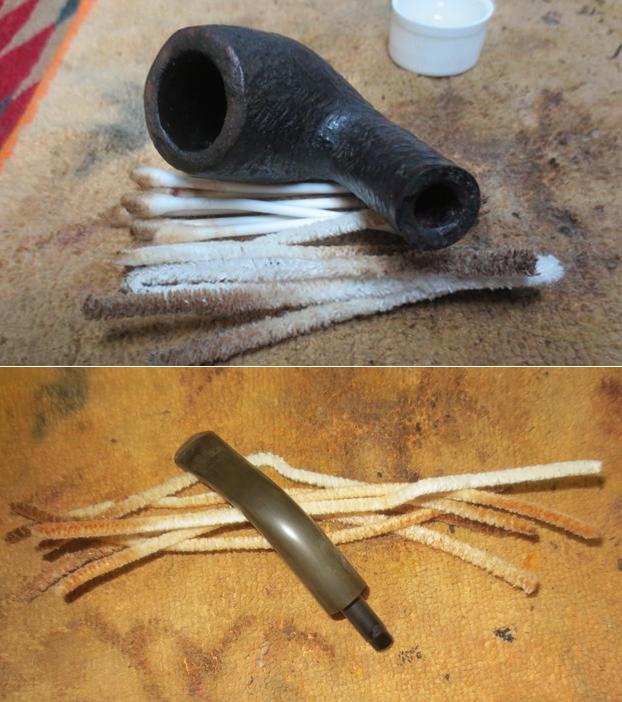
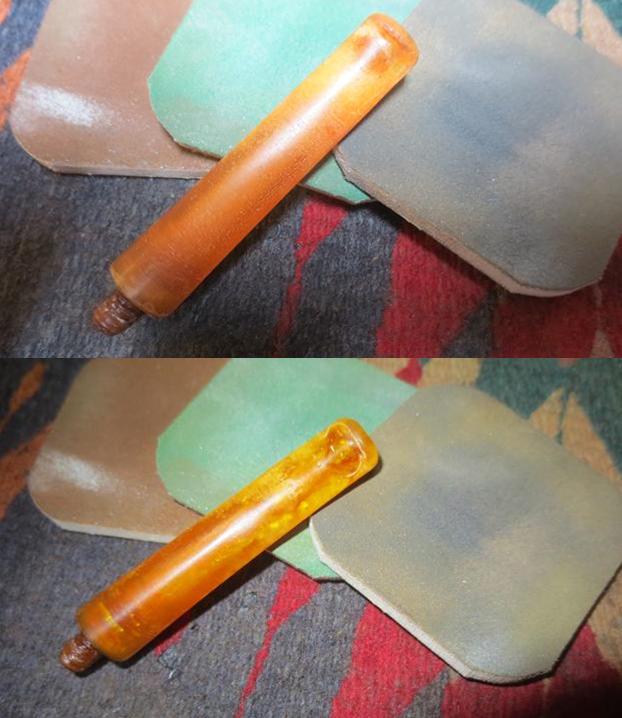
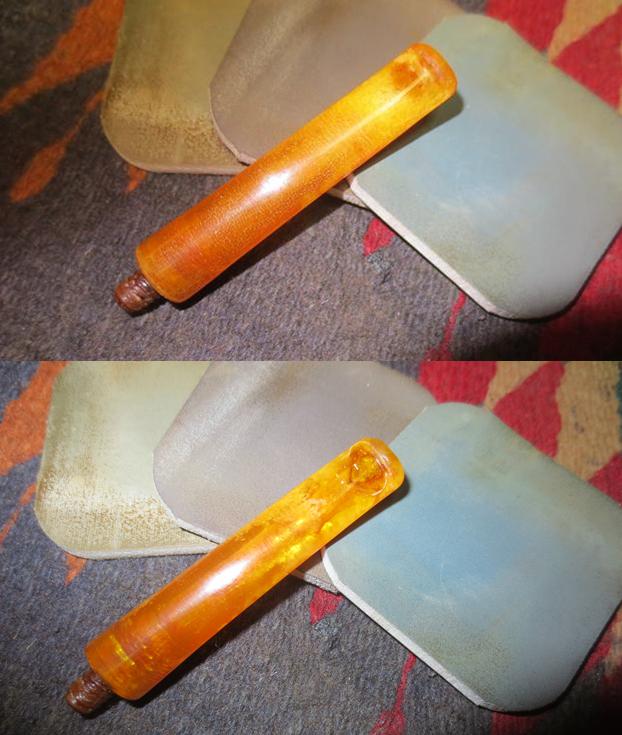
I decided to go back to the older pipes that my brother and I picked up on our virtual pipe hunt in Montana. This old timer was a briar base with a removable bowl pipe. It had a brass separator between the bowl and the base. It had a brass band on the shank and horn stem. It is stamped Pullman in a Germanic Script over C.P.F. in an oval on the left side of the shank. This one is a classic bent billiard shaped pipe but the removable bowl on the briar base is unique. I have had other C.P.F. pipes that had a Bakelite base with a briar bowl but never one with a briar base. It is delicate in terms of size (5 inches long and 1 7/8 inches tall) and feels light weight in hand. Like the other banded pipes in this lot the band on the shank is loose and the same faux hall marks over the C.P.F. oval logo. The finish is very dirty and the rim is damaged around the inner and outer edges of the bowl. The threads on the bowl bottom and the base were worn and the bowl no longer stayed in place. The horn stem is worn and there is tooth chatter on the top and underside of the stem near the button. The stem is underturned in the shank. The photos below show what it looked like before my brother did his clean up on it. If you would like to read about some of the other C.P.F. pipes I have restored I have written about them in individual blogs. They include a C.P.F. French Briar Horn, C.P.F. horn stem bulldog, a C.P.F. French Briar bent billiard, a C.P.F. Remington French Briar military mount billiard and a C.P.F. French Briar Rhodesian. Just a reminder – C.P.F. stands for Colossus Pipe Factory. The pipe was made during the same time period as the other pipes of this brand that I have been working on – the late 1880s and 1890s.Jeff took some close up photos base and the bowl sides and bottom. It shows the crack in the base and the cracked and damaged brass separator plate between the bowl and base. The bowl has a lot of deep nicks and scratches in the outer rim edge and the base has some deep nicks around the crack. The bowl had a thick cake that had run over the top of the rim and formed a thick cake on the rim top. It was rock hard and very thick.The next photos show the faux hallmarks on the ferrule and the C.P.F. oval on the left side of the metal. It was oxidized and worn. The stamping on the shank read Pullman over the C.P.F. oval and both were filled in with gold leaf.Once the bowl was removed from the base you can see the cord that is wrapped around the threads on the bottom of the bowl. The brass separator plate was split and was missing a piece of the folded over portion of the plate. There was a thick cake of tars and oils on the bottom of the bowl and in the base. The threads were worn in the base as well. The ferrule was loose and came off when the stem was removed. The bone tenon was threaded into the shank and was not removable. The stem was underturned and with the grime and build up in the shank as well as the stem it would not align. I had a hunch that the loose ferrule also contributed to that. The dried glue did not allow the ferrule to sit snug and against the end of the shank. The horn stem was in good shape other than the tooth chatter and marks on both the top and underside at the button. When we looked at this pipe during our pipe hunt I wondered if it would even hold together once Jeff had cleaned the briar. The cracked spacer looked delicate as well. I was really curious what it would look like when it arrived in Vancouver. Jeff did his usual regimen of cleaning but proceeded carefully through each step. He reamed bowl with a PipNet Reamer and took the cake back to bare briar. He cleaned up the little remnants of cake with a Savinelli Fitsall Pipe Knife. He scrubbed out the inside of the base and the threads on the bottom of the bowl. He removed all of the cord that had been used to attach the bowl to the base. He cleaned out the internals of the pipe – the airways in the shank, mortise and stem using alcohol, pipe cleaners and cotton swabs. He scrubbed the exterior of the bowl and base with Murphy’s Oil Soap and a tooth brush to remove all of the thick grime. He scrubbed the overflow of lava on the rim top and edges with the soap and tooth brush. He rinsed the pieces under tap water and dried them off with a towel. He scrubbed the exterior of the horn stem with the oil soap and tooth brush as well as it works well with horn.

When the pipe arrived I was excited to have a look at it. Here is what I saw once it arrived. It was clean and everything was loose – the separator plate, the bowl and the ferrule all moved freely. The cracks and the sandpits in the base were visible and the nicks and damage to the outer edge of the bowl were also very visible. I took photos of the pieces before I began to work on the pipe. The horn stem looked really good and the striations that run the length of the stem will polish up well giving the stem a unique appearance. The variations in horn stems are part of the allure to me and keep me looking for them.The next photo shows the missing piece of the separator plate and the damage to the rim top and the outer edge of the bowl.I put the pieces together enough to take a picture of what the pipe would look like as a whole. Nothing was permanent in these photos as just picking the pipe up would cause a jumble of parts on the work table. I took a close up photo of the rim top to show the condition of the edge of the bowl. Interestingly the photo does not show the damage to the outer edge. It does show the nicks and scratches on the inner edge of the bowl and some of the nicks in the rim top.The next series of photos show the process of the repairs of the sandpits and the nicks on the base. I also scratched out the crack with a dental pick and filled it in with super glue while I did the same with the sandpits. Once I had sanded the repaired areas on both sides of the base I reglued the brass plate on the top with the cracked and damaged portion facing the back side toward the bend in the shank. It would not show as much once the bowl was in place. Once the repairs had been done on the base I used clear fingernail polish to build up the threads in both the base and on the bottom of the bowl. It took several coats to build it up enough to give them enough material to connect.I removed the ferrule from the shank and cleaned the dried glue on the shank and inside the ferrule with acetone on a cotton swab. I sanded the area under the band with 220 grit sandpaper to smooth out the surface so that the ferrule would seat correctly on the shank. I painted the shank end with a folded pipe cleaner and all-purpose glue. I aligned the faux hallmarks and the C.P.F. oval with the stamping on the side of the shank and pressed the ferrule in place on the shank. I screwed the stem on the shank to check if things aligned now and everything was perfect. The repair to the ferrule had taken care of the underturned stem.I set the base aside to let the glue harden. I turned my attention to the bowl itself. I cleaned off the damaged outer edge of the rim with acetone on a cotton pad. I circled the damaged area in the photo below for ease of reference. I filled the damaged area in with clear super glue and let it dry. Once the glue had cured I sanded it with 220 grit sandpaper to blend it into the surrounding briar.I topped the bowl with 220 grit sandpaper on a hard board to remove the damage to the rim top, inner and outer edge from the top view. It did not take too much to get things smooth again. I polished the bowl sides and top with micromesh sanding pads – wet sanding with 1500-2400 grit pads and dry sanding with 3200-12000 grit pads. The bowl began to show some very nice grain patterns as the polishing made them stand out. I wiped the bowl down with a damp cotton pad after each micromesh sanding pad and hand buffed it with a microfiber cloth before moving on to the next step of the refurb. I polished the brass separator plate between the bowl and base and the ferrule with micromesh sanding pads and wiped them down with a jeweler’s cloth to bring out a smooth shine.I polished the briar base with micromesh sanding pads – wet sanding with 1500-2400 grit pads and dry sanding with 3200-12000 grit pads. I wiped the base down with a damp cotton pad after each micromesh pad. With the work on the bowl and base finished I set them aside and turned my attention to the stem. I sanded out the tooth marks on the surface of the stem on both sides at the button with 220 grit sandpaper. I polished the horn with micromesh sanding pads – we wet sanding with 1500-2400 grit pads and dry sanding with 3200-12000 grit pads. I rubbed the stem with Obsidian Oil after each micromesh pad and after the final rubdown I set it aside to dry. I polished each part of the pipe separately with Blue Diamond polish on the buffing wheel. I gave each part multiple coats of carnauba wax to protect the briar and the horn and help the brass from oxidizing. With all the parts cleaned and polished it was time to put the pipe back together again. I thread the bowl onto the base and screwed the stem onto the shank. I aligned everything and carefully hand buffed the pipe with a microfiber cloth to deepen the shine. The finished pipe is shown in the photos below. For a pipe over 125 years old it looks pretty good. It is cleaned and ready for its first smoke post restoration. It should work well and should last a lot longer than this old refurbisher will. It will pass on into the hands of another pipeman who enjoys the unique qualities of old briar and horn stems. Thanks for looking.


Restoring an Unusual Malaga Carved Bulldog


Blog by Steve Laug

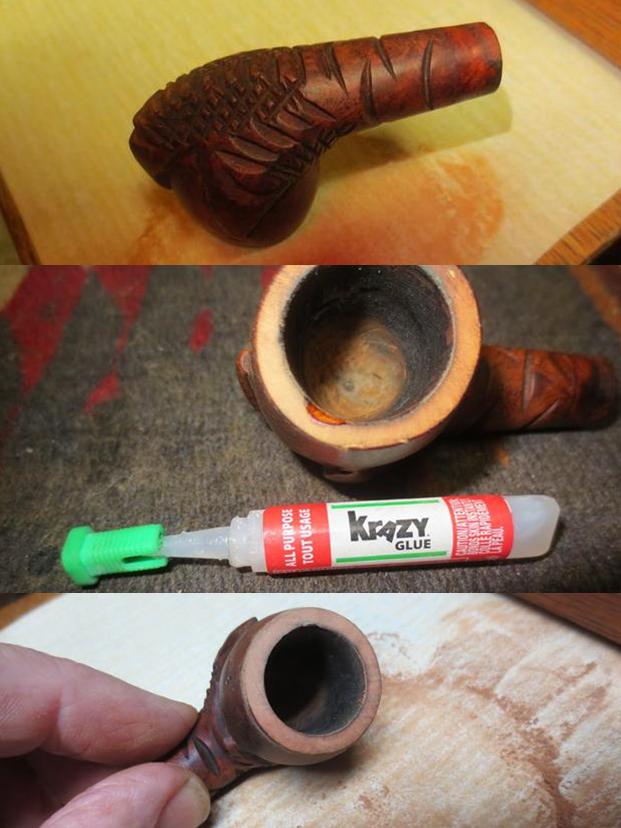
In the late spring I received and email from Josh (misterzippo), a reader of the blog that he had some pipes that he thought I might be interested in. He sent me photos of the pipes so I could have a look at them. One of the pipes that interested me was a Malaga Bulldog with a twist in the carving and a scoop in the top of the bowl. The first picture he sent shows the overall condition and appearance of the pipe. The shape intrigued me – the diamond shank and stem with twists carved in the bowl, shank and down the stem as well. The pipe was dirty with the finish having thick sticky build up around the bowl and shank in all of the carved areas. The groove around the cap of the bowl was very dirty. The stem had oxidation and some heavy calcification. All of that was visible in the first picture. The tape measure in the photo shows that the pipe is about 5 ½ inches long with a saddle stem.That first picture set the hook for me, but it did not prepare me for what the next photos would reveal. The briar had white paint flecks all over the bowl sides. Under the dirt and sticky grime there appeared to be some nice grain on the pipe. There was a large burn mark on rear left side of the cap where it looked like the pipe had been set in an ashtray and a cigarette had burned a spot. There were also some burn marks along the outer edge of the bowl on the front and the rear.The cake in the bowl was incredibly thick and it was hard as a rock. The cake had overflowed the bowl onto the rim leaving behind a thick hard lava coat. Looking at the bowl I have no idea how the previous owner had ever been able to smoke it in this condition – maybe he smoked it until it hit this spot and then laid it aside. Looking to the bowl is like looking down into a dirty chimney that needed the attention of a chimney sweep.The stamping on the left side of the shank read “MALAGA” and looked like it had either a burn mark on the MAL or possibly just a lot of tarry build up. Only having in hand would I be able to really know what I was dealing with.

We struck a deal and I picked up a few of Josh’s pipes to work on. I was really intrigued with the shape of that little Malaga as I have worked on a few of them over the years but never one with this kind of shape. Here is a link to a blog I wrote on a beautiful little Malaga Lovat (https://rebornpipes.com/2016/02/27/a-beautiful-malaga-lovat-came-my-way/).

George Khoubesser (picture to the left) started Malaga Briar Pipe Company and located it in Royal Oak, Michigan in the USA in 1939. It closed its doors for the last time in 1999 after 60 years in business. I have an old Malaga Catalogue that I scanned and put on the blog (https://rebornpipes.com/2013/02/09/george-khoubesser-and-malaga-pipes/). The catalogue describes the manufacture of the pipes as follows:

Painstaking caution is exercised in selecting flawless, perfect briar wood for the purpose of making and Curing of the “Malaga.” You can be certain of this fact, because none other than the choicest and finest select briarwood will withstand the “Malaga” Curing process. Other than the choicest quality and grain, will split wide open in the Curing vats… The Curing method renders all “Malaga” pipes, light in weight… Most all “Malaga” Senior pipes are left in their natural state; except for a skillful waxing which brings out the rich beauty of the virgin grain. No artificial polishing stain, shellac or varnishes are added.

Malaga closed in 1999 after 60 years in business.

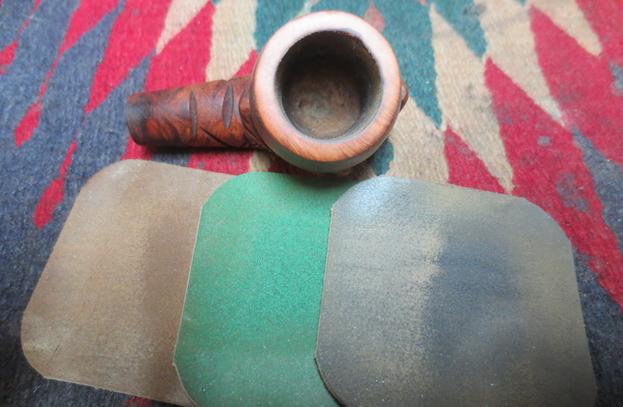
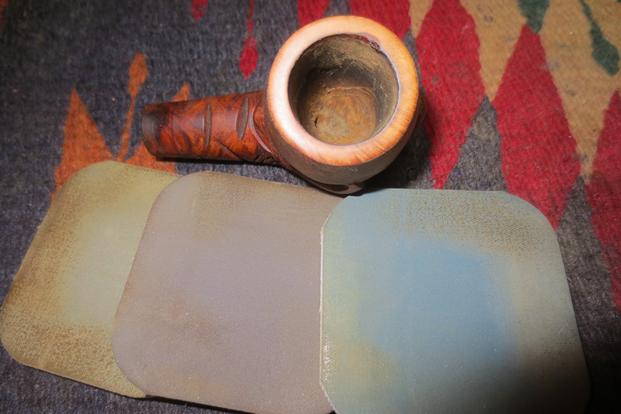
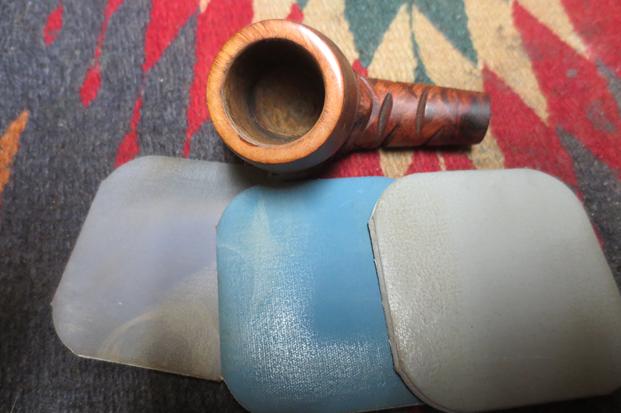
I had Josh ship it to my brother Jeff. I figured he would have a good time cleaning it up. I could not wait to hear what he thought of it. When it came he showed it to me over Facetime. The condition was dirty for sure – exactly like the photos Josh sent me. But it was in decent shape so it would be a fun one to bring it back to life. The finish was dirty and had some stickiness to the sides of the bowl and shank. The stem fit far better than the photos showed. The bowl indeed was as thickly caked as the photos Josh sent had shown but it was softer than I expected. The lava on the rim was thick but it was flaky so it would come off easier than I thought. The stamping on it read “MALAGA” on the left side of the shank as noted above but it also was stamped Imported Briar on the right side of the shank. Jeff took the follow photos of the pipe before he worked his magic doing the cleanup.The close up photos Jeff took of the rim top and bowl show just how thick and dirty this pipe was when he received it in Idaho. Looking at it I am glad that he did the cleanup work because it looked like a bear to work on.The next photos show the grain poking through the grimy finish on the sides of the bowl. It really was hard to see what was grime and what might be burn marks on the briar of the bowl and shank.The next photos show the stamping on the top left and right angle of the carved diamond shank of the pipe. You can still read the stamping. You can see the marks on the first letters of Malaga on the shank and it is not clear if it is damage or grime. The stem appeared to be in rough shape. Not only was it heavily oxidized and had thick clacification around the first inch of the stem from the button forward, but the button was worn and had tooth marks in the top and underside. The calcification and the tooth marks on the button made me wonder if the pipe had sported a Softee Bit before coming to me. I was looking forward to what the pipe would look like when Jeff had finished putting it through his cleaning process. He reamed it with a PipNet Reamer and took the cake back to bare briar. He cleaned up the little remnants of cake with a Savinelli Fitsall Pipe Knife. He scrubbed out the internals of the pipe – the airways in the shank, mortise and stem using alcohol, pipe cleaners and cotton swabs. He scrubbed the exterior of the briar and stem with Murphy’s Oil Soap and a tooth brush to remove all of the thick grime. He rinsed it under tap water and dried it off with a towel. He soaked the stem in OxiClean to bring the oxidation to the surface and soften it. The burn marks on the front outer edge of the bowl and the back left inner and outer edge – both moving onto the rim top. There was a burn spot on the left side on the cap where the bowl had been set in an ashtray and burned. I was not sure that I would be able to remove that. When the pipe arrived I was excited to have a look at it. Here is what I saw once it arrived. I took a close up photo of the rim top to show the burn damage to that part of the bowl and also of the left side of the bowl. I would need to see what I could do to minimize these marks without changing the profile of the bowl. Jeff had gotten the thick cake cleaned out and the inner edge of the bowl look to be in good shape.The oxidation on the stem was pretty heavy but it was on the surface. The calcification was gone. Underneath where it had been there were tooth marks and chatter that had been hidden.I decided to use the Before & After Pipe Deoxidizer again. I keep it in a flat plastic tray with a cover. I put the stem in the mixture and made sure that the stem was completely covered with the mixture. I put the lid on the tray and set it aside to soak for the day. I purchased the Deoxidizer from a guy on Facebook. His name is Mark Hoover and he is on the Gentlemen’s Pipe Smoking Society Group on Facebook. He has a pen making site where you can email and order the deoxidizer and the polishes (http://www.lbepen.com/). I have to admit I becoming less skeptical than I was at the beginning.I set the tray aside to let it soak for the day and turned my attention to the bowl. I took some photos of the bowl to capture the grain and the interesting shape of the carving. The photos also clearly show the damage to the side of the bowl and the rim top. I sanded the burned areas on the left side of the bowl and the rim top with 220 grit sandpaper. I was careful to sand all the way around the cap and the rim to keep things smooth. I wanted to remove the damaged areas on the edges of the bowl and rim as well as some of the nicks on the rim top. I wiped down the bowl with acetone on cotton pads to remove the grime from the sanding and the debris from around the damaged areas. I was able to remove much of the damage on the rim top and edges. The burn mark on the left side of the cap looked better but I would not be able to remove it much more than I already had. I laid the pipe aside and my daughter Sarah and I decided to go out for lunch. We caught the bus and headed down town to try a new place. We were gone for three hours including lunch and transit. When I returned I took the stem out of the Deoxidizer and wiped off the excess mixture. I dried off the stem with a clean rag. I took the following photos to show how well the soak had worked to remove the oxidation.I took some photos of the tooth marks on the top and underside of the stem near the button.I sanded the surface of both sides of the stem with 220 grit sandpaper to remove the tooth marks and reshape the button.The stem was loose in the mortise so I heated and awl with a Bic lighter and inserted it in the airway in the tenon. This caused the tenon to expand and correct the looseness in the shank.I polished the stem with micromesh sanding pads – wet sanding it with 1500-2400 grit pads and wiping the stem down after each pad with Obsidian Oil. I dry sanded the stem with 3200-12000 grit pads and repeated the rub down with oil. After the final coat of oil following the 12000 grit pad I set the stem aside to dry. I then polished the briar with micromesh sanding pads – wet sanding it with 1500-2400 grit pads and wiping it down after each pad with a damp cotton pad. I dry sanded the briar with 3200-12000 grit pads and wiped it down after each pad with a damp cotton pad. The dark spot of the burn mark really bugged me. I have been hunting for ways to minimize it without doing damage to the integrity of the briar. I googled and found a recipe that was supposed to remove burn marks or heat marks. I thought I would try it and see what happened. Here is the recipe.

Mix a generic baking soda and a non-gel variety of toothpaste in a small bowl until it is a sticky paste. Put the paste over the heat mark and give it a few minutes to set. After about five minutes, the heat mark should wipe away with a clean rag. Be sure to wipe away any remaining residue from the paste as well.

I took photos of bowl with the mixture on the burn marks. I applied the paste with my finger and rubbed it into the burned areas. I repeated the treatment twice this morning. It worked to some degree as shown in the photos below. It definitely removed the lighter burn marks on the rim top and took out a small spot on the front of the cap. It also lightened the burn mark on the front outer edge of the rim and the large mark on the left side. On advice from Mark Domingues I also tried to spot dab the darkest part of the burn with bleach, being careful to not get it on the rest of the surrounding area. It lightened it a little more but did not completely remove it. I think that probably the burn was too deep to actually remove all of it.I wiped the bowl down with a little olive oil on a paper towel and hand buffed it so that the oil would be absorbed. I buffed the pipe with Blue Diamond on the buffing wheel and then gave it multiple coats of carnauba wax. I buffed it with a clean buffing pad (many people do not do this step but it is critical to get a good shine). I hand buffed it with a microfiber cloth to deepen the shine. The finished pipe is shown in the photos below. Even though the burn mark bugs me it does give the pipe character and reflects on its previous history. I have to always remember that we hold our pipes in trust – we are stewards as Dal Stanton calls it. Our task is to take good care of the pipe while it is in our hands and to leave it in good condition to pass on to the next steward. Thanks for looking.
A Simple Refresh on a Belgian Made Hilson Bolero Oval Shank Billiard


Blog by Steve Laug

Sometimes it seems like I get lucky and get a pipe from my brother that needs very little work. After Jeff has reamed and cleaned it, I receive it and a simple refresh brings it back to a new looking pipe. It does not happen very often and when I look at them in the pre-clean photos it is somewhat unpredictable what lies beneath the sheer filth and ugliness. You can guess a little bit from the condition of the edges of the bowl and the stem. You can get a feel from the thickness and composition of the cake what kind of tobacco had been smoked in the bowl and the smell of the pipe usually confirms the feeling. In this case the pipe that surprised me was a Hilson Bolero oval shank Billiard. In the photos it appeared to be in far worse condition that it was once Jeff cleaned it up. The photos below show what the pipe looked like when Jeff brought it home from our virtual pipe hunt in Montana.It was definitely newer than many of the pipes we found that day. The photos tell the story of its condition but I will summarize it here. The bowl had a fairly thick cake with lava overflowing onto the rim. It had a nice sandblast finish that makes me think of Stanwell pipes that must be from the same time period. The finish appeared to be in good shape other than the dirt and grime of the years in the grooves and grain of the blast. The stem was slightly oxidized and there was tooth chatter on both the top and underside of the stem near the button. The next two close up photos of the bowl show the cake and the lava buildup on the rim top. It appeared that the inner and outer edges of the bowl were in good condition. No glaring damage to those spots showed in the pictures. The pipe has some nice grain that is highlighted by the sandblast. There are two smooth panels – one on each side of the bowl providing a nice contrast. The difference adds a visual and tactile variation on the pipe.The pipe is stamped in a smooth section on the underside of the oval shank. On the left end it reads 8 which is the shape number. That is followed by the brand name Hilson over the line name Bolero. To the right end of the shank near the shank/stem junction it reads made in Belgium. The photos below show that the stamping is very clean and readable. The sandblast cuts through portions of the stamping but does not ruin it.The stem was rough to the touch but the issue was mainly oxidation on the surfaces. There was some visible tooth chatter on the stem, but it is quite easy to address. I was very glad that it was in good condition.Before I started the refresh of the pipe, I did a quick review of the history of the brand because I like having that information in mind when I work on a pipe. I remembered at some point Hilson had been sold to Gubbels who made the Big Ben pipe. At that time, it moved from being a Belgian made pipe to being made in the Netherlands. I turned to Pipedia and read the entry on Hilson there (https://pipedia.org/wiki/Hilson) and to Pipephil’s site to read what he had for information (http://www.pipephil.eu/logos/en/logo-h3.html). I have combined and summarized the pertinent information from the two sites.

In 1846 a German named Jean Knödgen started to produce clay pipe in Belgium. In the late 19th century Jean Hillen who married into the Knödgen family took over the company and changed the firm in order to manufacture briar pipes. Jean Hillen had 2 sons: Jos Hillen was responsible for sales and Albert Hillen was responsible for the production. After WWII Albert founded the HILSON brand (Hillen and Son) and exported his pipes all over the world.

In the 1960’s and still throughout the 1970’s the brand Hilson of Broers Hillen B.V. (Hillen Bros. Co.) was quite successful in many European countries. They produced large numbers of machine made pipes covering the whole range of shapes and finishes. The pipes were well respected for good quality and craftsmenship at very moderate prices.

…in 1980 Hillen faced major financial problems. After having gone bankrupt, the Belgian brand from Bree (Limburg) was taken over by the Royal Dutch Pipe Factory. The owner, Elbert Gubbels used the favour of the hour and bought the company…The Hillen plant in Bree was closed down shortly after and ever since then Hilson pipes are manufactured in Roermond, NL.

Given that the plant in Bree, Belgium closed around 1980 after Gubbels had purchased the company, I knew that the pipe I was working on had been made prior to that time. The Made in Belgium stamp on the underside of the shank gave that information. I am not sure that I can get any closer in terms of a date for the pipe.

On this pipe, my brother’s cleanup work was the lion’s share of what needed to be done to revitalize it. He reamed the bowl with a PipNet reamer to remove the cake and cleaned up after the reaming with a Savinelli Fitsall pipe knife. He scrubbed the finish with a tooth brush and Murphy’s Oil Soap to remove the grit and grime. He scrubbed the rim top and was able to loosen the debris that had built up there. He rinsed the bowl under running water and dried it off. He soaked the stem in OxiClean to raise the oxidation to the surface. He scrubbed out the airway in the bowl, shank and stem with pipe cleaners, cotton swabs and alcohol. When I received the pipe I was amazed at how good it looked. The stem would need some attention but that was about it. The bowl could be waxed and buffed with little other work. Jeff had done a great job. I took photos of what the pipe looked like when it arrived in Vancouver. I took a close up photo of the rim to show the condition. There was a spot on the inner edge of the back portion of the rim that looked damaged. I would need to work that spot over to ensure that it was cleaned up. I also took a photo of the underside of the shank to show the stamping on that portion of the pipe. You can see how the stamping that I mentioned above was laid out on the shank bottom.I took photos of the stem to show its general condition as well. The stem was oxidized but there were no tooth marks on either side. It was clean other than the oxidation.I put the stem in the Before & After Pipe Stem Deoxidizer solution that I spoke of in the previous blog on the Borlum pipe. I purchased the Deoxidizer from a guy on Facebook. His name is Mark Hoover and he is on the Gentlemen’s Pipe Smoking Society Group on Facebook. He has a pen making site where you can email and order the deoxidizer and the polishes (http://www.lbepen.com/). This is the second time that I have used like Mark suggested. I immersed the stem in the Deoxidizer to soak. The Deoxidizer will do its work and leave the stem oxidation free. I have to admit I was a little less skeptical than I was before set the stem in the container of solution to soak overnight.I turned my attention to the bowl. I used a small piece of sandpaper and a brass bristle brush to clean off the charred build up on the back inner edge of the rim. I then rubbed the bowl down with some olive oil on a paper towel and set it aside to soak in overnight. I called it an evening and went to bed. In the morning I took the stem out of the Before & After Pipe Stem Deoxidizer soak and wiped off the excess fluid. It is quite sticky so it is a bit of work to wipe it free and dry off the stem. Once I got it dried off I rubbed it down with Obsidian Oil and let it dry for a few moments.Once it had dried I began the polishing of the stem with micromesh sanding pads. I wet sanded it with 1500-2400 grit pads and rubbed it down with Obsidian Oil. I dry sanded it with 3200-12000 grit pads and wiped it down after each micromesh sanding pad. I buffed the pipe with Blue Diamond on the buffing wheel to polish out the scratches in the vulcanite and give a shine to the sandblast finish. I worked on the inner edge with the buffer and the Blue Diamond and cleaned up the damaged area to blend it in more with the rest of the rim edge. I gave the bowl and stem multiple coats of carnauba wax and buffed it with a clean buffing pad to raise the shine. I hand buffed it with a microfiber cloth to deepen the shine. The finished pipe is shown in the photos below. The dimensions of the pipe are length: 6 inches, height: 2 inches, bowl diameter: 1 3/8 inches, chamber diameter: ¾ inches. I will be posting it on the rebornpipes store if you are interested in adding this beauty to your rack. You can email me at slaug@uniserve.com or send me a message on Facebook. Thanks for looking.


Giving New Life to a KBB Yello Bole Imperial 3068C


Blog by Mike Rochford

In the last two weeks, I have been corresponding with Mike about a pipe he had. He wrote and sent photos of it and asked if I thought it was repairable. Those of you who have been reading the blog for a while know that I rarely put a pipe in the bin to burn. We wrote back and forth as he did the work and he sent photos along the way. I asked if he would mind doing a blog on the refurb job he did. He sent me the following. Without further introduction, I will let Mike tell you about himself and then share his work with us. Welcome Mike.

First a bit about me. I am a retired FBI Special Agent of 30 years. My grandfather had a wood pattern shop in downtown Chicago. I always enjoyed woodworking projects, but never had much time for complicated projects. This project was pretty easy as long as I did not hurry each step. Patience and your guidance helped me a lot. I am now pretty confident that I can handle another project if one comes along. – Mike

My brother Tim bought me a very worn out KBB YELLO Bole Imperial 3068C pipe. He knew I loved its look. But its issues were many: gaping hole in bowl, rotting wood on ferrule, bite marks on stem, and a slight tool mark on the crowned our area of the stem below the Yellow circle.

I was prepared to throw the pipe out or just relegate it to a shelf. But I found Steve Laug on rebornpipes. He advised me step by step how to restore and make my pipe smokeable again.

First, I completely cleaned out the inside of bowl down to the briar in order to relieve pressure on the crack in the bowl. Then I used a 1/32 drill bit to drill out the bottom of the crack.  I stripped and cleaned the outside of the pipe and combined briar dust with super glue and filled in the crack on the outside of the bowl. I was surprised that the chemical reaction caused a flash fire on my first try. But I worked through that. The paste dries very fast so I had to apply it to the crack quickly, using a Popsicle stick.  I then let it set. Then I applied JBWeld for wood to the cracked area inside of the bowl. I put a pipe cleaner inside the opening to ensure no weld found its way into the airway blocking up my smoking end of the bowl. I let that dry and set it aside for the evening. Then I used 500 grit sand paper on the outside and inside of my bowl. Once I was satisfied, I applied Aniline dye stain to the outside of the bowl and painted the inside of my bowl with a charcoal powder/ sour cream paste.Next, I worked on the cracked and damaged shank end using the 1/32nd inch bit on the end of the cracks in wood and my super glue briar dust paste to fix the damaged areas. Sanding it after it set.I then used the charcoal powder and super glue paste to patch up the bite marks on my stem, using a pipe cleaner with Vaseline on it to ensure it did not super glue my stem closed. I used some 800 grit sand paper to buff the entire stem clean of oxidation and to clean off excess super glue charcoal powder once it dried. I also used the 800 grit sand paper to clean up the tool marks on my stem below the Yellow circle. I did not have any obsidian oil, so I used some sesame seed oil on my stem to slick it up. I also super glued the silver metal ferrule on the end of the shank as it was much too loose. I then resanded and repasted the inside of my pipe bowl.

I sent before and after pictures to Steve. I am very pleased and thankful to Steve Laug for guiding me through this process. My pipe is truly “Reborn!” Thanks!

Reclaiming a Hard Smoked KB&B Borlum Unbreakable Stem Billiard


Blog by Steve Laug

The next restoration on my worktable was a Borlum Bent Billiard. It came to me in the lot of older pipes that my brother brought home from our virtual pipe hunt in Montana. It was in rough condition with the finish very worn and almost non-existent. The bowl had a thick cake that had overflowed the bowl onto the rim top. The previous owner had obviously loved this pipe and the condition was testimony to it being a great smoker. He also seemed to have a very utilitarian view of his pipes. This one appeared to have never been cleaned – a veritable stranger to the aid of a pipe cleaner. The outer edge of the bowl had been knocked about a lot and there was lots of damage to the edge – it was broken down and rounded all the way around. He had obviously knocked the pipe out on a fence, a rock or his boot heel when finishing a bowl. There were dings and nicks in the sides and bottom of the bowl. The stem was oxidized and had some tooth marks on the top and underside near the button. Jeff took the next photos of the pipe before he started to work on cleaning it.From an earlier Borlum pipe that I had refurbished back in 2014, I had learned a lot about the background of the manufacturer of the brand. I quote from that blog to summarize the historical background of the pipe (https://rebornpipes.com/tag/kbb-borlum-pipes/). The italicized portions of the text come from the blog with minor edits.

I already knew that Kaufmann Brothers and Bondy was the oldest pipe company in the USA, established in 1851. The Club Logo predated Kaywoodie with the “KB&B” lettering stamped within the Club, and a multitude of KB&B lines were in production long before “Kaywoodie” first appeared in 1919. Therefore, I knew that the pipe I had was a pre-1919, pre-Kaywoodie KB&B Made BORLUM.

This particular pipe is stamped on the left side of the shank with the words BORLUM in an arc over KB&B in a cloverleaf. The cloverleaf is faintly stamped but still readable with a bright light and lens. Underneath that it is stamped ITALIAN BRIAR in a reverse arc. On the right side of the shank it is stamped UNBREAKABLE BIT. As stated above it was made before Kaywoodie became the flagship name for pipes from Kaufman Brothers & Bondy (KB&B). It was made before the Kaywoodie invention of the “Stinger” was added, and even before shank logos, model stamps and other features invented by Kaywoodie came to be standards of the pipe making industry. It comes from a time when names like Ambassador, Heatherby, Melrose, Suez, Rivoli, Cadillac and Kamello dominated the pre-Kaywoodie scene. Borlum is one of those names.

I learned while researching for that blog and rediscovered while working on this one that the Borlum pipe featured some innovations that were new for the time but commonplace to us. These included (1) a solid rubber bit (vulcanite, ebonite), (2) an aluminum inner-tube construction in the stem that stabilized and strengthened the stem explaining the stamping of “Unbreakable Bit” on the right side of the shank, (3) a standard nickel-plated band (marked KB&B) to strengthen the shank connection for the stem. (This particular pipe does not have the nickel-plated band and does not appear to have had one).The stem features the older style more rounded bit tip/orific button, and you can see the aluminum inner-tube fitting just inside the tip.

I have included several pictures that I found on the internet that show the unique stem tube in the Borlum that gives rise to the claim that it has an Unbreakable Bit. The first photo shows the bent stem, third from the left with the same metal tube showing at the button. The second photo shows the other end of the tube in the tenon in the Borlum stem. That told me that the pipe I had was made after 1851 and before 1919. I am guessing that because of the other pipes in this lot dating in the late 1890s to about 1905 this one is probably from that same era. Not too bad for a 100+ year old pipe. During the hunt for information, I also found the next photo of a Borlum display and sales card. What is particularly interesting to me is the diagram at the top of the card showing the interior of the stem in place in the shank. It also includes the claim, “Guaranteed against Breakage”. I love the advertisements and sales brochures of these old pipes. The descriptive language that promises so much and the prices the pipes sold for are a nostalgic journey to the past. Note the $1 and up price tag on the sales card.

The pipe that I am working on presently is identical to the bottom pipe on the right side of the photo. I have circled it in red. It has the identical shape, curved shank and lack of a nickel-plated band as mine. It has the hard rubber stem with an orific button. It is more rounded than the modern flat stem but it is still a comfortable feeling stem in the mouth.

Jeff took some close up photos of the pipe bowl to give an idea of the condition of the pipe before we started to work on it. The first two photos show the sides of the bowl. You can see from those photos that the bowl is in rough shape. The outer rim has a lot of damage to it and the finish is worn and tired.The next two photos show the rim top and the clean bowl. Note how beat up the edge of the rim is in both photos. The third photo below shows the heel of the bowl and all of nicks and dents in the surface of the briar. The stamping on the left side of the shank and the right side of the shank is readable in the next two photos.The next photos show the condition of the stem. It is oxidized and there is a dark line across the top of the stem that looks like a crack. Under a bright light there is no crack visible, it is merely a mark on the vulcanite.Jeff rarely varies his established process for thoroughly cleaning the pipes he sends to me. He reamed the bowl with a PipNet reamer and touched it up with a Savinelli Fitsall Pipe Knife. He scrubbed out the mortise and the airway in the shank and the stem with pipe cleaners, cotton swabs and alcohol. He scrubbed the exterior of the pipe with Murphy’s Oil Soap to remove the grime and grit on the bowl. He worked over the rim and removed the lava overflow. He scrubbed it with a tooth brush and the oil soap until he removed the buildup and clean up the damaged edges of the rim. The grain on this pipe is quite stunning. He soaked the stem in an Oxiclean bath to bring out the oxidation and scrubbed the debris from the exterior of the stem. I took photos of the pipe to show the condition it was in when it arrived in Vancouver. I took a close up of the rim to show the damaged condition of the edges. It really is a mess and will be an interesting restoration. The idea is to get it back to a smooth condition without changing the profile of the pipe.A lot of the grime and grit on the stem disappeared in the OxiClean soak. The dark line on the top left of the stem disappeared and showed that there were no cracks in the “Unbreakable Bit”. There were some tooth marks on both sides of the stem near the button. The ones on the underside were definitely deeper. The last photo below shows the inner tube from the button end view.I decided to try something a little different this time around on the removal of the oxidation. Months ago I had purchased some Before & After Pipe Stem Deoxidizer from a guy on Facebook. His name is Mark Hoover and he is on the Gentlemen’s Pipe Smoking Society Group on Facebook. He has a pen making site where you can email and order the deoxidizer and the polishes (http://www.lbepen.com/). I have actually never used it according to the directions. I have sponged it on and scrubbed it off. In talking with Mark the concept was simple – put the stem in the Deoxidizer to soak. The Deoxidizer will do its work and leave the stem oxidation free. With a bit of skepticism I poured the mixture into a tray and set the stem in it to soak overnight.I worked on the bowl for a while that evening before calling it a day. I lightly topped the bowl to remove some of the damage on the top surface of the rim and leave a flat, smooth surface. I wiped down the bowl with alcohol on a cotton pad to remove the dust. I carefully filled in the outer rim edge with clear super glue to build up the chipped and damaged areas. I think that this is the first time that I have worked on a pipe with this much damage and chipping all the way around the outer rim. It did not take too long for the glue to dry and when it did I sanded the outer edge of the rim smooth blending the fills into the surface of the briar and ‘sharpening’ the edge itself. The photos that follow tell the story. When I finished smoothing out the fills I wiped the bowl down with alcohol on a cotton pad to remove the sanding dust and check to make sure I had sanded the rim edge enough. If any spots are still too large and not blended they will show up glaringly when the bowl is stained. I stained the bowl with a dark brown aniline stain mixed 50/50 with isopropyl alcohol. I flamed the stain on the bowl and repeated the process until the coverage was even. I set the bowl aside for the evening. In the morning I “unwrapped” the bowl (borrowing one of Dal Stanton’s terms) to see what the stain had done. I wiped it down with alcohol on cotton pads to make it more transparent. Once I finished it was still too dark to my liking and obscured the grain too much. I sanded the bowl with micromesh sanding pads to remove more of the stain. After sanding with 1500-2400 grit pads I wiped it down with a bit of alcohol on a cotton pad and I was pleased with what I was seeing. I polished it some more with 3200-12000 grit pads and finished by giving it a light buff with a microfiber cloth. Now the colour was what I was aiming for – a reddish brown that highlighted the grain and muted the repairs and some of the imperfections.  I buffed the bowl on the buffing wheel using Blue Diamond polish and hand buffed it with a cloth. The following photos show what the finish looked like after the buffing. I still needed to wax it but I really liked what I saw. I took the stem out of the deoxidizer bath and wiped it down with cotton pads. The bath definitely had removed much of the oxidation and wiping it down afterward it was clear to see how much had come off the brown looking stem. I ran a pipe cleaner through the airway to remove the deoxidizer from the inside of the pipe. The stem clearly looked better than when I had started. The surface was dull and there was still some stubborn oxidation on the curve. The tooth marks in the surface are very visible in the photo of the underside of the stem.I painted the tooth marks with the flame of a lighter to lift them as much as possible and filled in the remaining tooth marks with clear superglue. I chose to use the clear super glue rather than black as I have found it blends better with the hard rubber stems on these older pipes. When the repair had dried I sanded the stem with 220 grit sandpaper to smooth out the area on the underside and used a needle file to sharpen the edge of the button on the top and underside.I polished the stem with micromesh sanding pads – wet sanding with 1500-2400 grit pads and dry sanding with 3200-12000 grit pads. I wiped the stem down after each pad with Obsidian Oil and after the final pad gave it a last coat and set it aside to dry. I buffed the stem with Blue Diamond and then gave the pipe mulitple coats of carnauba wax. I buffed it with a clean buffing pad to raise the shine and hand buffed it with a microfibre cloth to deepen the shine. The finished pipe is shown in the photos below. I am not a 100% happy with the stem – the flash seems to reveal some more oxidation in it but to my eye it looks fine. I will do some more polishing and buffing to get it do the rich black that my eye sees but the camera does not at this point. Ah well, the refurbisher’s work is never finished. Thanks for looking.
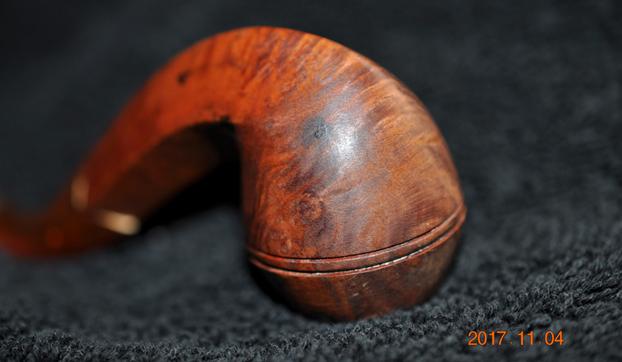


Refreshing a French Jeantet D’Orsay Billiard Found in Burgas


Blog by Dal Stanton

The first time I saw the Jeantet D’Orsay was looking at a picture of it on my iPhone 6s.  My fellow colleague, Gary, who also lives and works here in Bulgaria, was with his wife on the Black Sea coast strolling down the main walking street of Burgas.  Gary has previously culled pipes for me during his travels as he keeps his eyes open and sends pictures of possibilities.  Gary also is my main supplier of ‘quality’ cigar ash which is the main ingredient in making ‘Pipe Mud’ to coat the inside of bowls.  The picture he sent was of two pipes, the Jeantet (top in picture below) and a nice hefty bent Billiard marked only with Bruyere [over] Garantie.  My primary interest was the product of Saint Claude, France, the Jeantet, but I encouraged him to do a bundle deal which landed both in my ‘Help Me!’ basket.  Thank you, Gary!I’ve not been restoring pipes long, but among my earliest restorations were French made and I enjoyed those initial forages of discovery of a pipe’s heritage and the geopolitical significance of the name.  My first restoration of a Jeantet was a Fleuron and it was discovered at my favorite antique shop, dubbed, The Hole in the Wall, here in Sofia.  It was then I discovered the historical importance of Saint Claude, the pipe production center in Europe for much of the 1800 and in the 1900s until pipe production peaked in the 1960s, causing many corporate closings and consolidations (See Pipedia’s article on Jeantet).  Saint Claude became the a center for pipe production and the place many prominent pipe houses called home, not because of the accessibility of briar, but it was where industrious monks and artisans turned their abilities from making toys and religious paraphernalia to pipe making after briar pipes first started being mass produced (See: fumerchic.com) when briar was discovered to have heat resistant qualities.   The Jeantet D’Orsay now on my worktable enjoys a part of this heritage, though most likely produced toward the closing chapters of Jeantet’s history.  On my worktable, I take more pictures of the Jeantet D’Orsay to fill in the gaps. The nomenclature is stamped on the left side of the shank, with ‘Jeantet’ (in fancy script) [over] ‘BRUYERE’, and to the right of this is ‘D’Orsay’ (in diagonal fancy script).  The stem bears the ‘J’ ensconced in a heptagon.  As I research the D’Orsay line, I have found a dearth of information as I’ve looked for and through catalogues trying not only to ID the D’Orsay, but even finding any systematic information on Jeantet pipes in general is a challenge.  If there is any clue in the name ‘D’Orsay’, I’m not sure what it is.  Today, Orsay is a smaller suburb of Paris, primarily known as a center in the development of technology with different educational institutions based there.  Historically, this Wiki article is informative:

There has been a village called Orsay on this site since 999, and the first church there was consecrated in 1157. From the sixteenth century, the town and surrounding area were owned by the Boucher family, and it was in honour of this family that Louis XIV gave the quai d’Orsay its name. This is the reason that the Musée d’Orsay is not in Orsay. In the eighteenth century, the family of Grimod du Fort bought the land and received the title of comte d’Orsay. In 1870, during the Franco-Prussian war, Orsay was occupied by the Prussian army. 88 young “Orcéens” were killed in the First World War.

Interesting, but not too helpful regarding the heritage of this French made pipe.  Generally, the pipe is in great condition.  The chamber has moderate cake.  The rim has trace amounts of lava and grime – not too much to clean.  The stummel has nice grain, but many very small fills to be examined. Not much in the way of oxidation or tooth chatter on the stem.  Of interest to me is the long stinger system which reaches all the way to the draft hole – visible looking down the chamber.  I will keep the stinger since it’s such a goliath.  Perhaps it does help deliver the dryer, cooler smoke which has been the holy grail in pipe technological innovations.  The cleanup and recommissioning of this Jeantet begins with placing the stem in the OxiClean bath after covering the ‘J’ stamp with petroleum jelly to protect it.  Even though it has little oxidation, I’ll let it soak.  I also easily remove the stinger as I discover that it is threaded and unscrews with a little help.  The nickel divider band also comes off. I use the Pipnet Reaming Kit to address the moderate cake.  Starting with the smallest blade, I remove the cake, bringing the fire chamber to fresh briar.  I use two of the four blades available.  To fine tune the reaming, I switch to the Savinelli Pipe Knife and scrape the chamber wall further.  Then, wrapping a piece of 240 grit paper around a Sharpie Pen, I sand the bowl removing the vestiges of carbon.  Finally, I wipe the chamber with a cotton pad wetted with alcohol.  The chamber looks good – no problems that I see. Next, using undiluted Murphy’s Oil Soap and a cotton pad, I scrub the external briar surface and rim.  I also use my pin knife to scrape the crusting on the rim.  I do this by dragging the blade over the surface rather than pushing the blade to not cut into the briar.  Afterwards, I rinse the stummel in tap water.  Examining the stummel more closely, the cleaning reveals a gouge on the internal rim lip.  I also picture several of the small fills in the surface.  I use a sharp dental probe to test the strength of the fills to see if they need replacing.  What I discover is mixed news – some need more attention than others.  I dig out the weaker fills and will need to refill them.  I will simply use clear CA glue to fill them, but first I will darken the pits with a dye pen to improve blending.  I use Special ‘T’ CA glue and spot drop on each pitted fill using a toothpick.  I place a bit of glue on the toothpick and gravity pulls it to the tip and I apply it to the pit.  I spray them with an accelerator to quicken the curing time.  In all, 6 fills were patched.  The pictures show the progress. Using a flat needle file, I bring each of the CA glue patches down near to the briar surface.  Then I use 240 grit sanding paper to bring the patch flush with the briar surface.  I try as much as possible with both the file and sand paper to file/sand only on the patch footprint.  The second picture below shows a ‘slip’ off the footprint by the lower patch – ugh.  The pictures show the progress. Turning now to the rim gouge mentioned earlier.  There was already an internal bevel on the rim.  To erase the damage, using 240 grit paper then 600 grit paper, I recut the bevel.  That does the job. With the stummel repairs completed, I take a medium grade sanding sponge and apply it to the surface to remove surface nicks and to start blending the fill patches.  I follow with a light grade sponge.Before I proceed further on the external surface, I need to address the internal unpleasantness.  I’m curious what collects in the mortise with the tenon extending right to the draft hole?  Unless, its design is to bypass all the sludge.  Well, it didn’t take long to discern the latter to be the case!  With cotton swabs, alcohol and a bit of scraping the edge with a needle file the mortise started cleaning up.  Later, I will still utilize a Salt/Alcohol soak to clean and freshen further for the new steward of this classic Billiard.The stem has been soaking in the OxiClean bath and I take it out to start removing the light oxidation on the vulcanite.  After reattaching the stem with the stummel, divided by my separation disk, I wet sand using 600 grit paper followed by 0000 grade steel wool.  I’m not sure how I did it but it looks like I nicked the Jeantet ‘J’ circle during the sanding – that is a grand bummer.  I’ll try to fix it later.  The tooth chatter was removed by the 600 grit and steel wool.  The pictures tell the story. Before moving further on the external sanding, I need to clean the internals.  Using bristled and smooth pipe cleaners and isopropyl 95%, I do the job – the internals take more effort than I was expecting.  I also use a long, wired, bristled brush to work on the stinger.  In the end, I soak it in alcohol to make sure it’s clean. Turning back to the stummel, I plunge into the micromesh sanding by wet sanding with pads 1500 to 2400, then dry sanding with 3200 to 4000, finishing with 6000 to 12000.  With the completion of the micromesh process on the stummel, my work-day here in Bulgaria will soon demand my full attention.  Before heading out the door, I want to give the bowl a Salt/Alcohol soak through the day.  I pour kosher salt, leaving no aftertaste, into the bowl until almost full.  Then I twist and stretch a cotton ball to act as a wick in the mortise – drawing out the remaining tars and oils.  I palm the top of the bowl and shake it causing the salt to settle into the internals and set the stummel in the egg carton.  Then, with a large eye dropper I fill the bowl with isopropyl 95% until it surfaces over the kosher salt.  I wait a few minutes as alcohol is absorbed, and then I top the bowl off again.  I set the egg carton aside and let the alcohol and salt do their thing – off to work!  Back from work!  The salt has darkened a bit, but not much.  This means that the job of cleaning was well along the way. After cleaning away the expended salt with paper towel and a bristled bush in the mortise, I put a cotton swab into the mortise to make sure and it came out clean.  Clean as a whistle – nice! After the salt/alcohol soak, I see a fill on the inner rim lip that I did not see earlier.  After digging it a bit with a dental probe, I drop fill it with ‘T’ CA glue, let it cure, file it down with a half-circle needle file, sand it with 240, 600 and then the full spectrum of micromesh pads – all these focused on bringing this patch up to the speed with the rest of the stummel! The Jeantet D’Orsay Billiard’s stinger was soaking in alcohol.  I take it out and the alcohol had cleaned it up.  I buff it with 0000 grade steel wool.  While I was at it with the steel wool, I also buffed up the nickel band divider to clean and shine it.I love the classic leather brown look on work-horse Billiards.  To blend the fills overall, I use Fiebing’s Light Brown Leather Dye to do the job.  I set up my staining workstation and take a picture of it.  I wipe the stummel down with a cotton pad wetted with alcohol to clean dust off the surface.  I use a whittled cork in the stummel as a handle and I warm the stummel using a hot air gun to expand the grain helping it to be more receptive to the dye.  When warm, I use a folded-over pipe cleaner to apply liberally the dye to the stummel – I want full coverage.  Then, with a lit candle, I fire the stummel – burning off the alcohol in the dye which sets the pigment in the grain.  I repeat this process after a few minutes, then I put the fired stummel aside to rest for several hours. With the dyed stummel resting, I turn to the stem.  Earlier, I was using MagicEraser on the Jeantet’s ‘J’ stem stamp and I noted then that the paint was readily coming off because of it.  I decide to go ahead and remove the paint and clean the stamp with the MagicEraser with the view to refreshing the ‘J’ stamp later.  I then wet sand the stem – mindful of the ‘J’ stem stamp, with micromesh pads 1500 to 2400.  Then I follow successively with pads 3200 to 4000 and 6000 to 12000, and applying Obsidian Oil after each set to revitalize the vulcanite stem.  I’m hoping that there is enough tread left in the Jeantet ‘J’ stem stamp to hold new paint.  Using white acrylic paint, I dab paint onto the area of the stamp.  Instead of waiting for it to dry, I gently wipe the excess off while wet.  Then I dab a little more wet where it is thin, and gently wipe off the excess. After some time has elapsed, it’s time to ‘unwrap’ the fired, dyed stummel.  After mounting the felt buffing wheel on the Dremel, setting the speed to slow – 20%, I buff off the crust by applying Tripoli compound.  The second picture below shows the contrast and progress. After the application of the more abrasive, Tripoli compound is completed (1st picture), I wipe down the stummel using a cotton pad and isopropyl 95% to both lighten the stain and blend it.  The alcohol wipe leaves a cloudy film on the stummel.  I remove this by going to the next compound, Blue Diamond.  I mount a cotton cloth buffing wheel on the Dremel and increase the speed to 40% and buff the briar surface.  During this buffing, the grain starts to come out more distinctly and I like the deep rivers of grain that divide the stummel like a watermelon rind. I use a little CA glue and reattach the nickel band divider to the shank.  I then use the Blue Diamond compound on the stem and band as well.  The pictures show the progress. After completing the Blue Diamond buffing, I hand buff the stummel and stem with a felt cloth to remove the compound dust before waxing.  I mount a cotton cloth buffing wheel on the Dremel, also at 40% speed, and apply a few coats of carnauba wax to both the bowl and stem.  Completing the restoration, I give the pipe a rigorous hand buffing with a microfiber cloth to heighten the shine and distinctiveness of the briar grain.
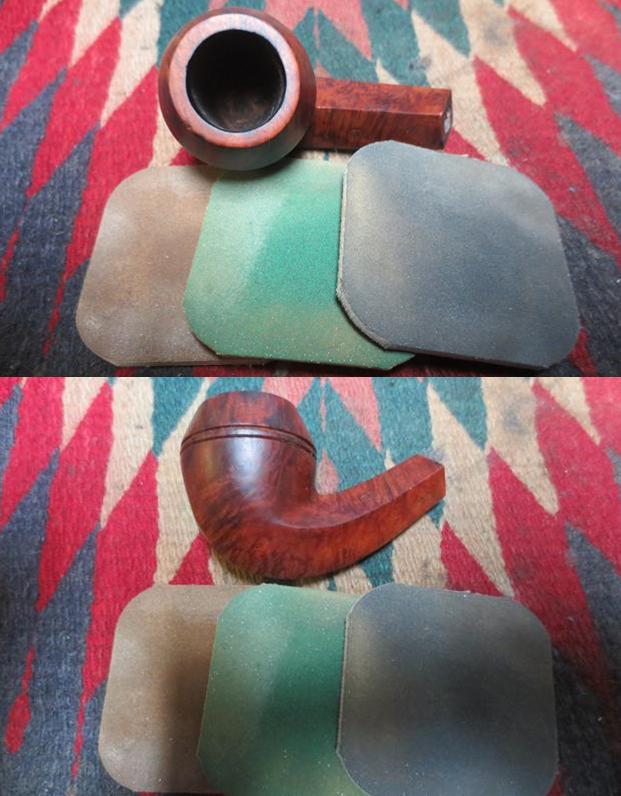
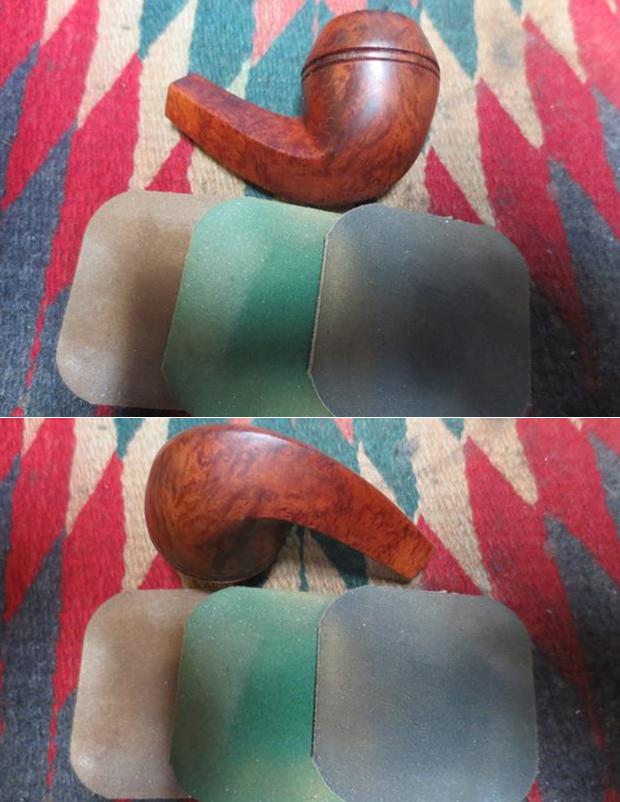
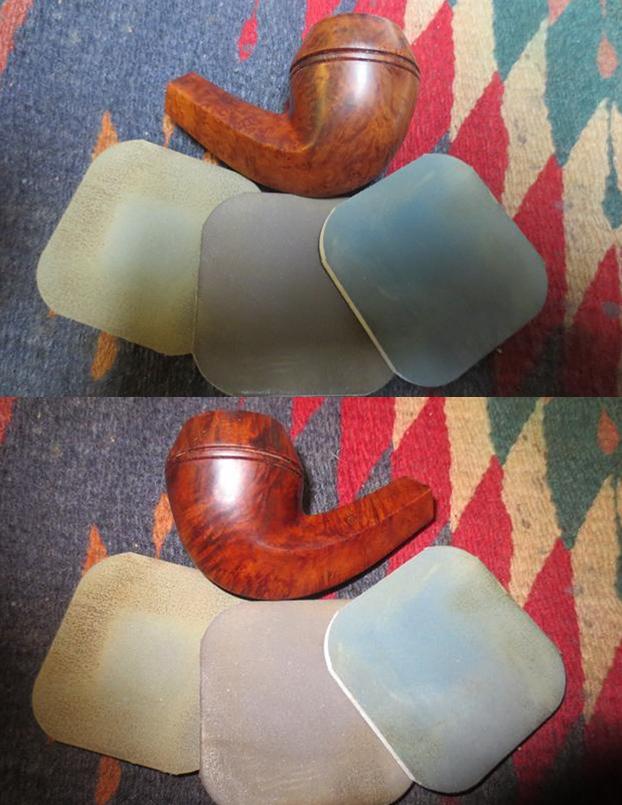
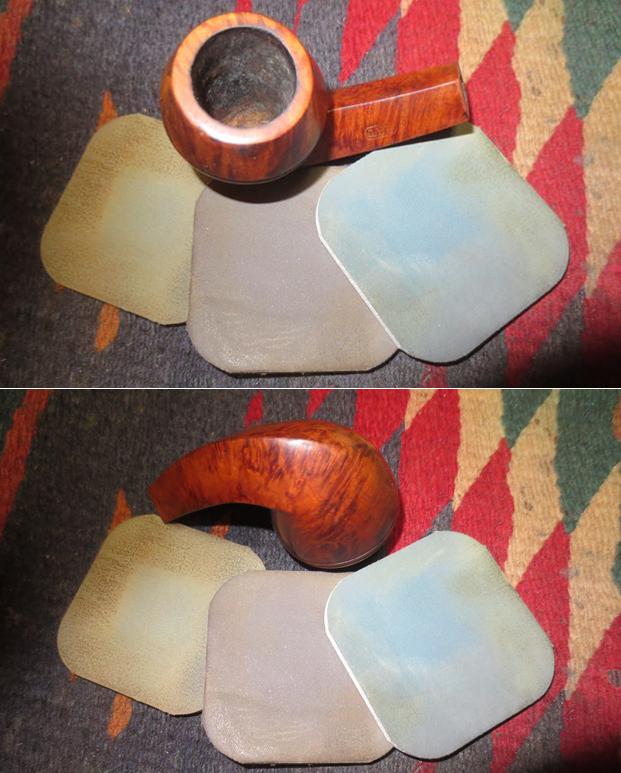
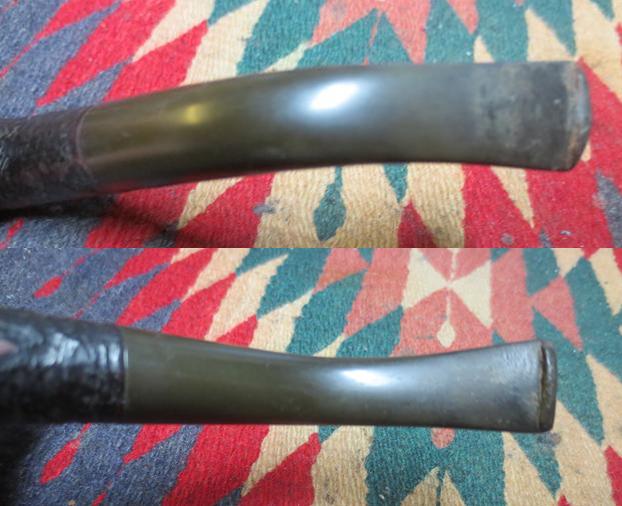
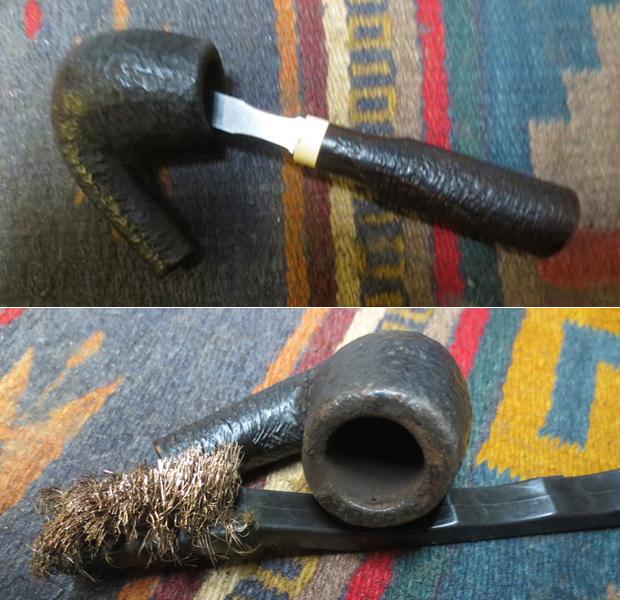
When I started this restoration, I saw a classic straight Billiard that had potential.  The Jeantet D’Orsay that Gary found for me in the antique store in Burgas, on the Black Sea, has proven to be a very attractive pipe with the light brown leather-look finish.  The grain pops.  I like the band divider – it’s not a precious metal but it provides a nice accent.  This Jeantet D’Orsay is ready for a new steward!  If you are interested in adding this pipe to your collection you can check it out in The Pipe Steward ‘Store Front’.  All the pipes I restore benefit the Daughters of Bulgaria – women and girls we work with here in Bulgaria who have been trafficked and sexually exploited.  Thanks for joining me!