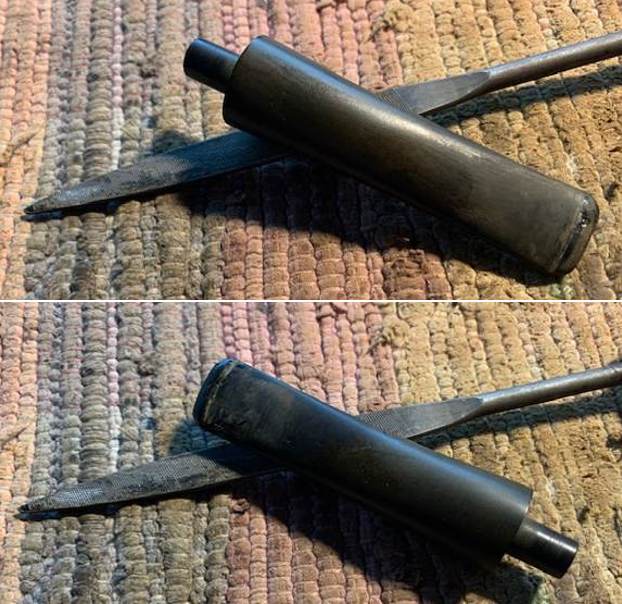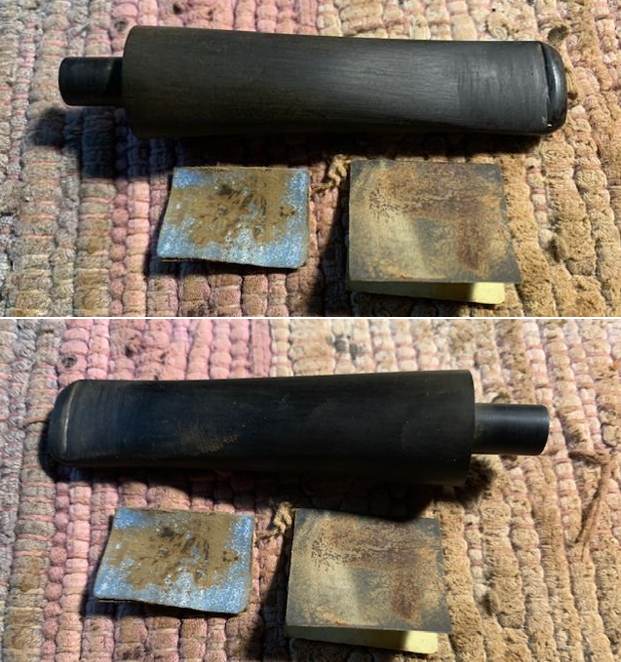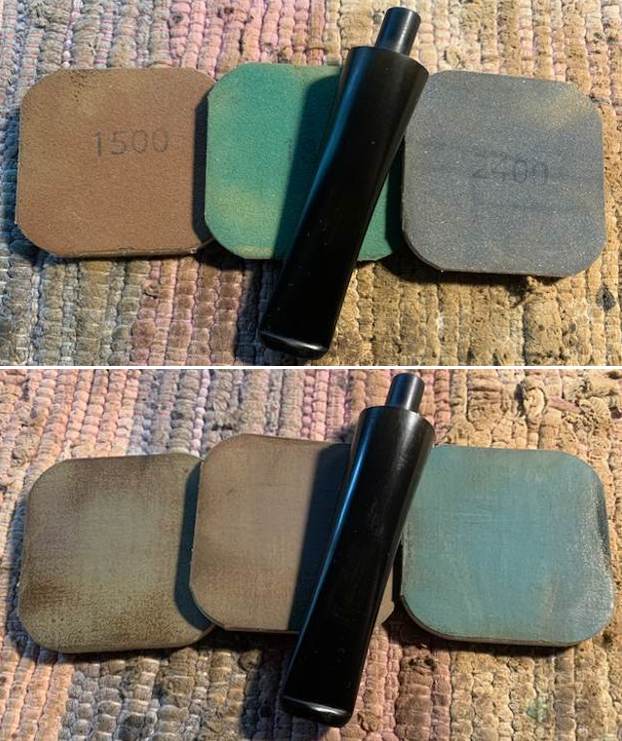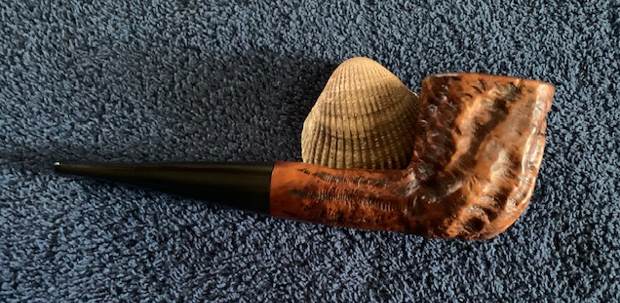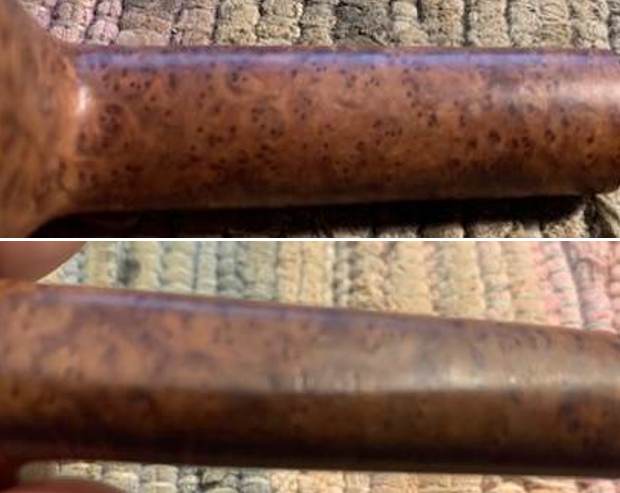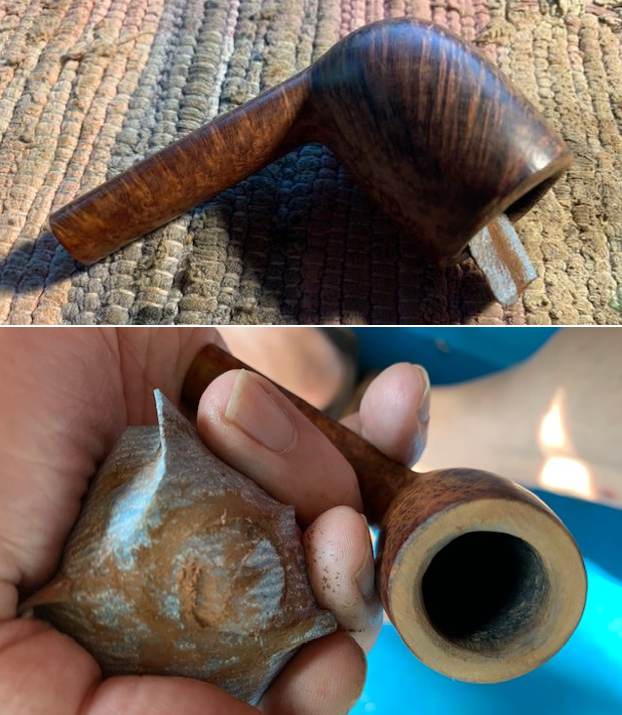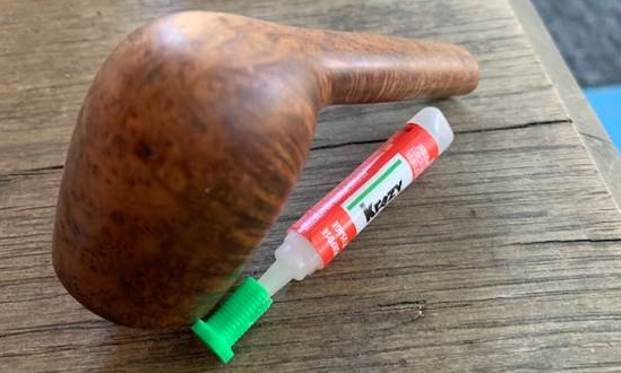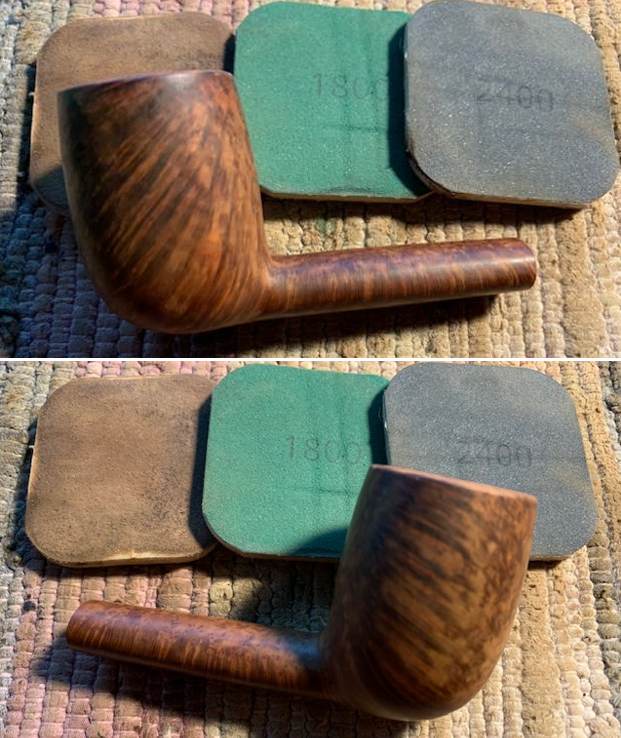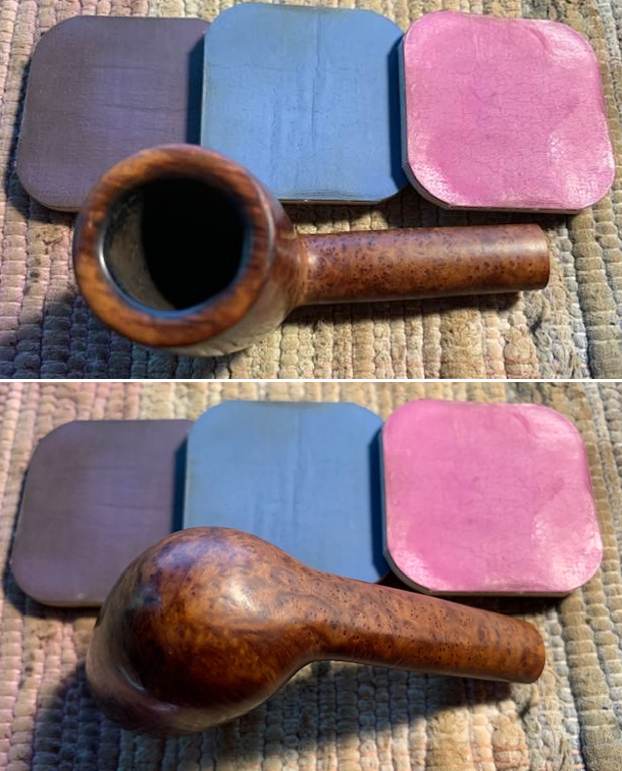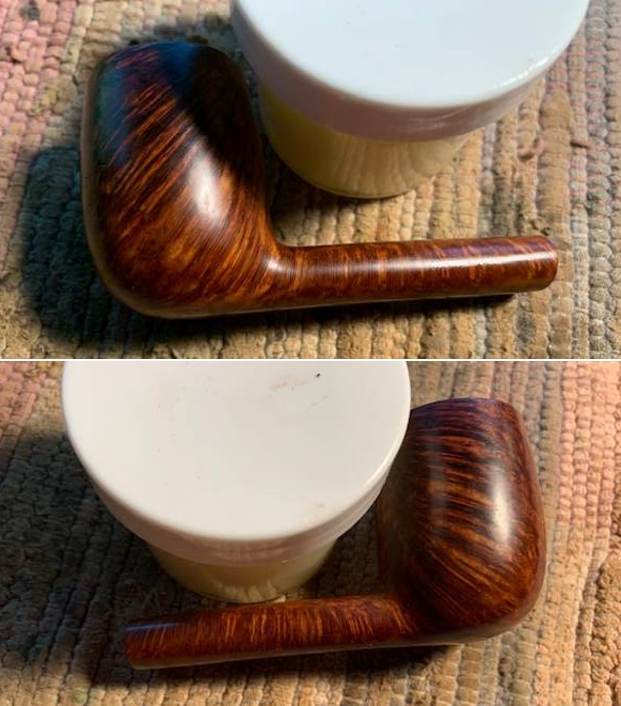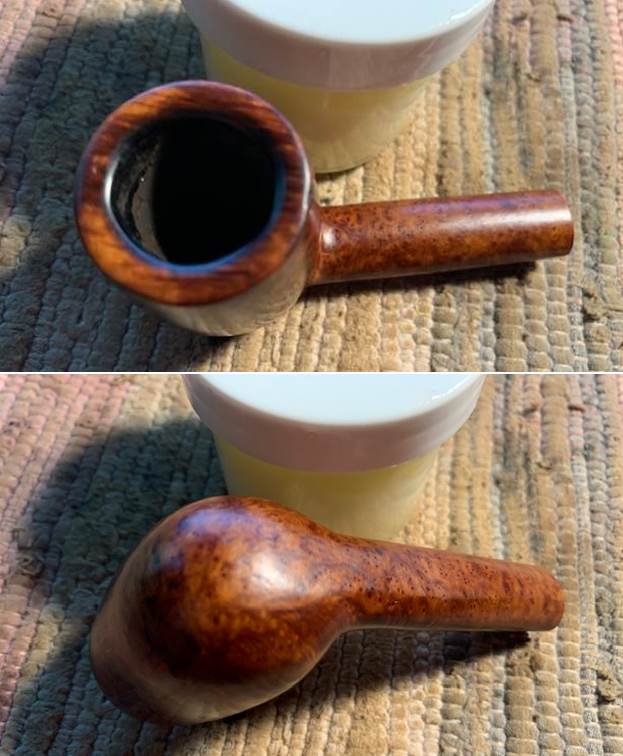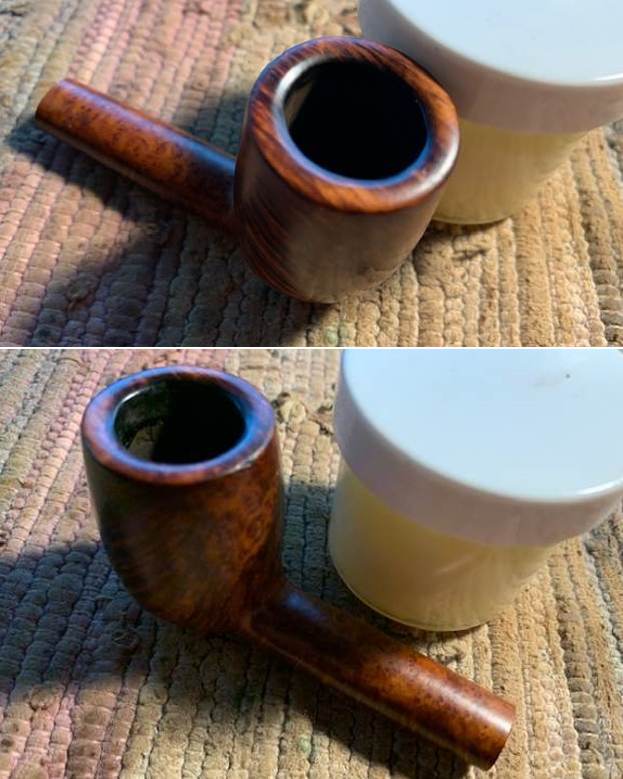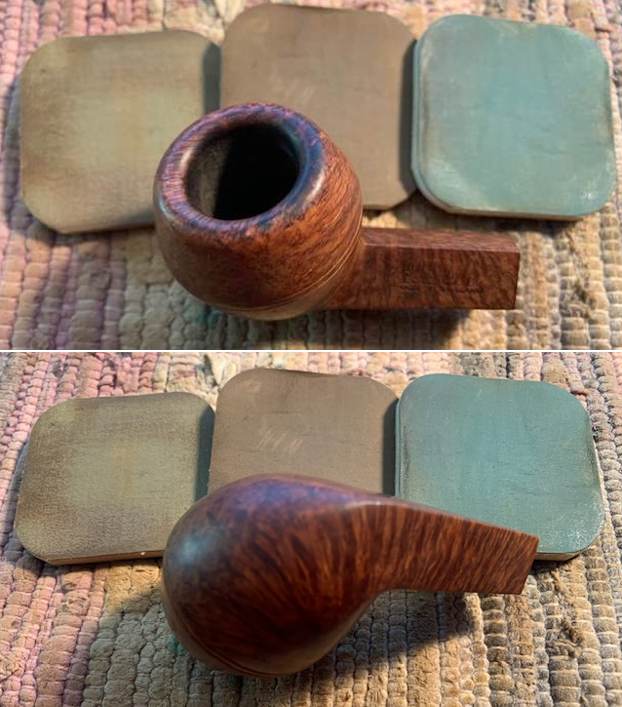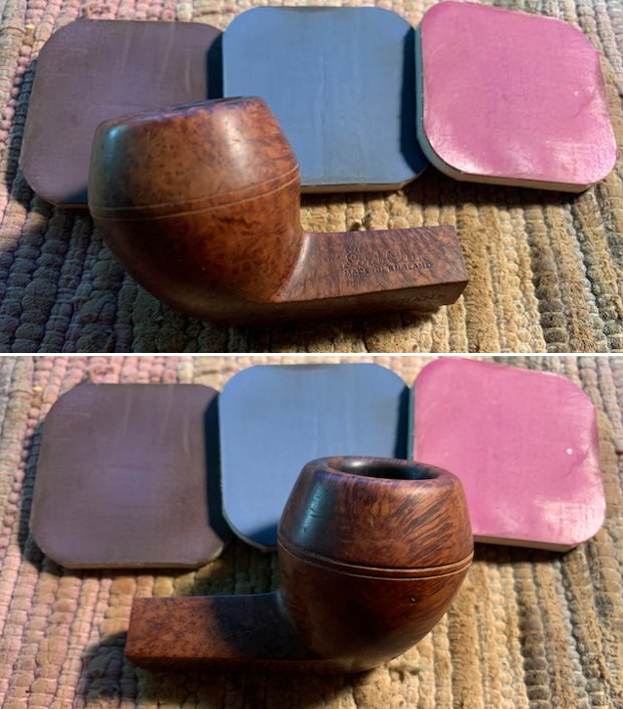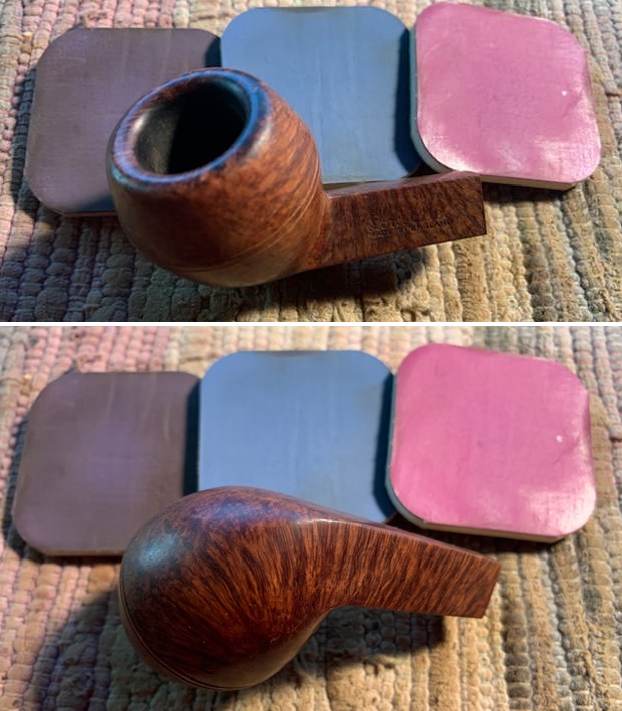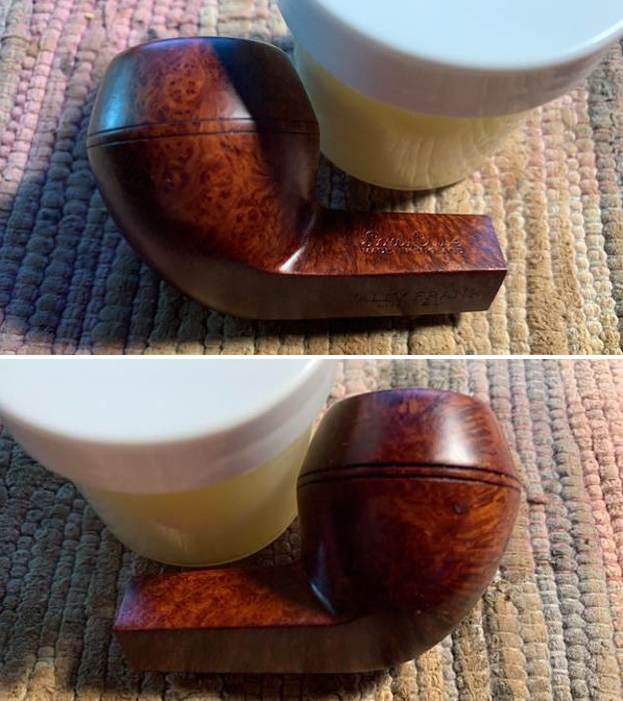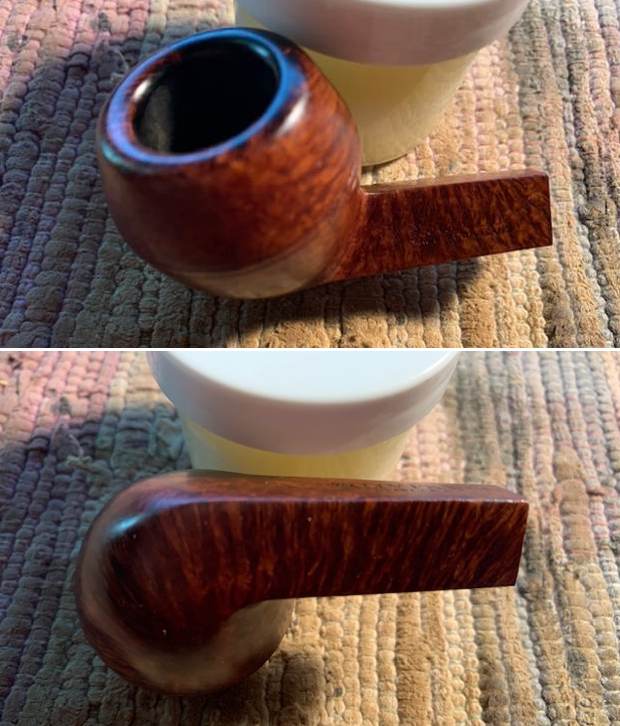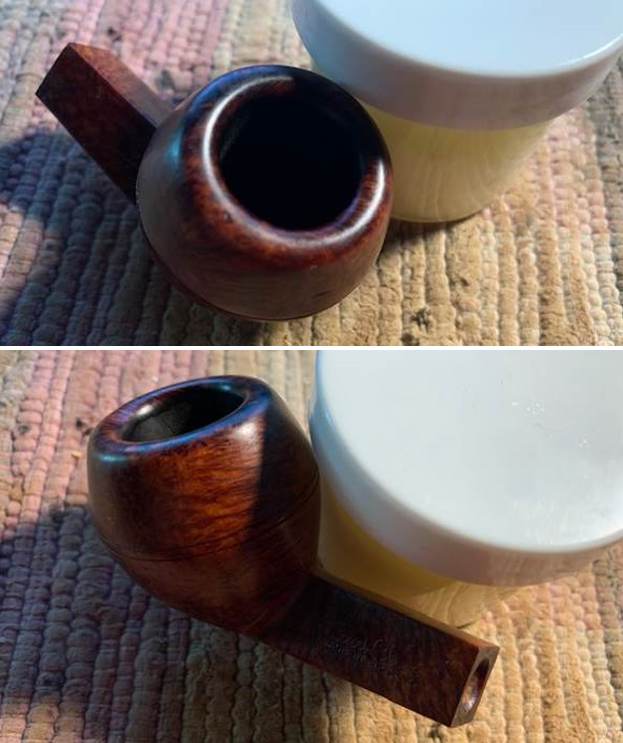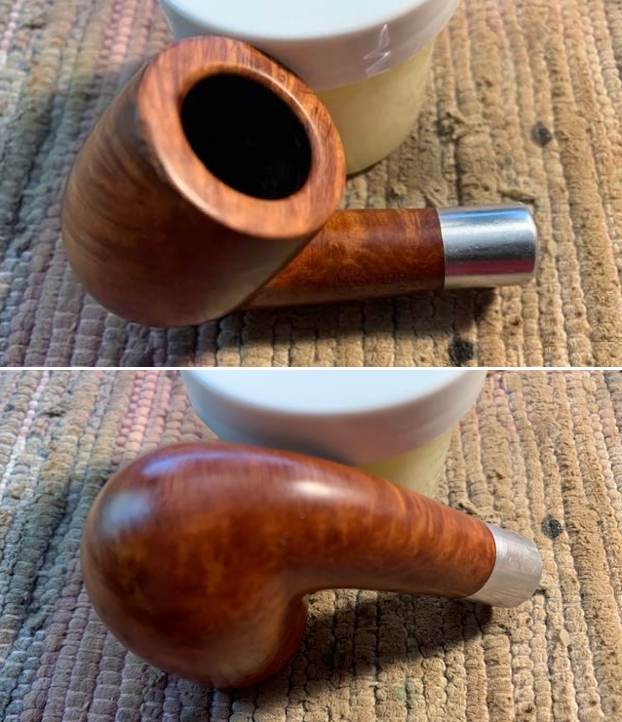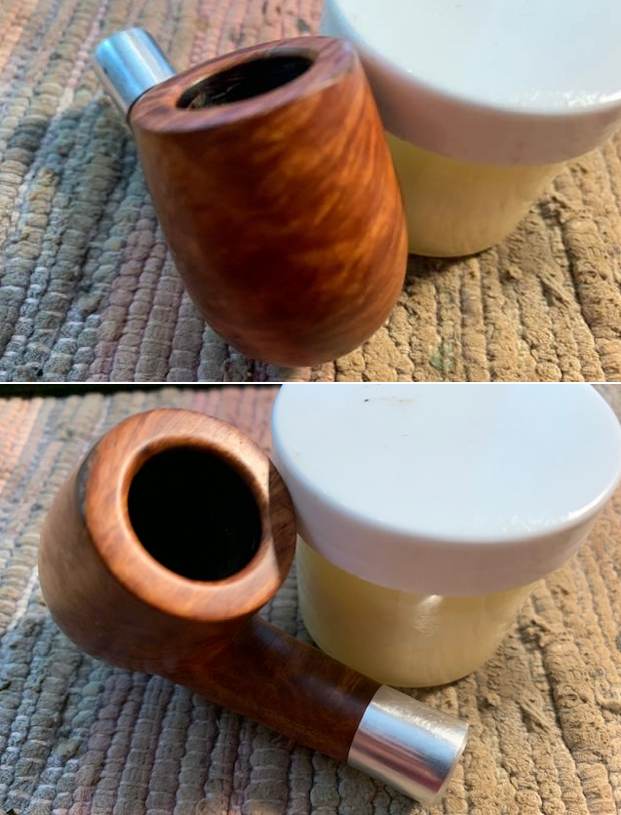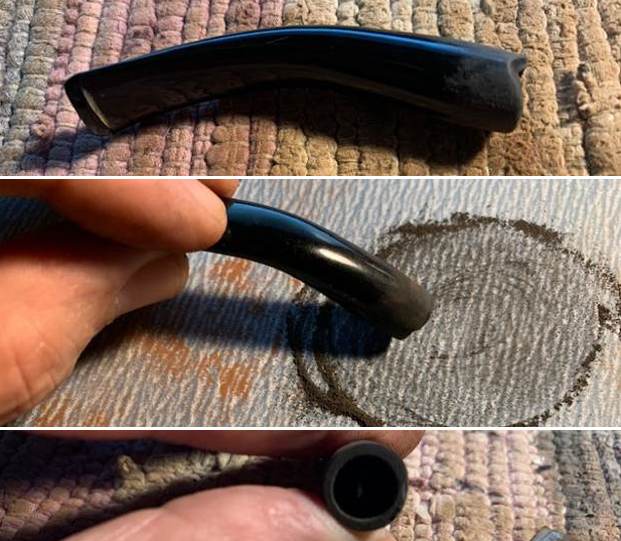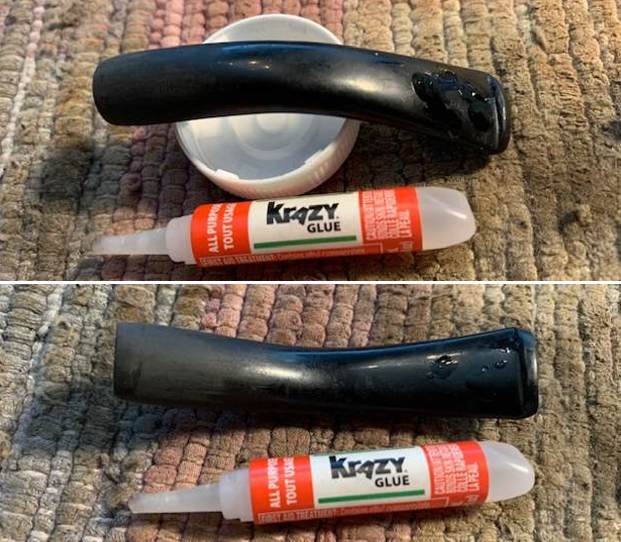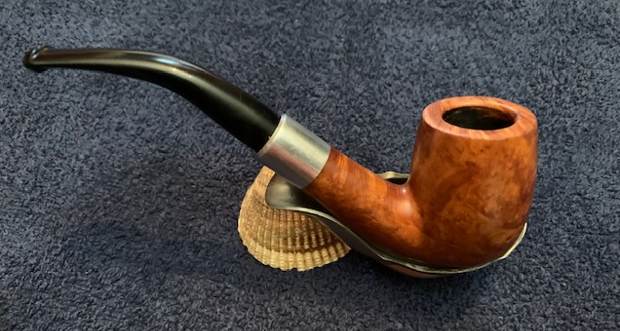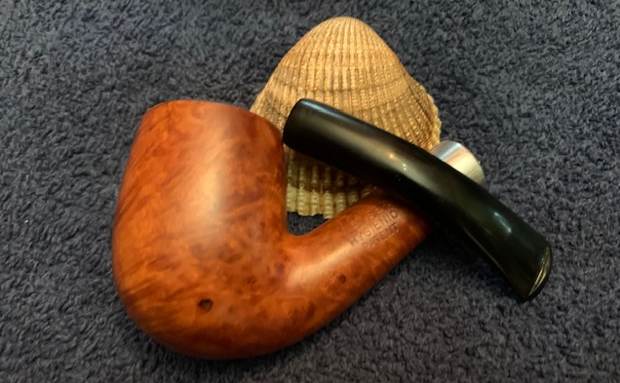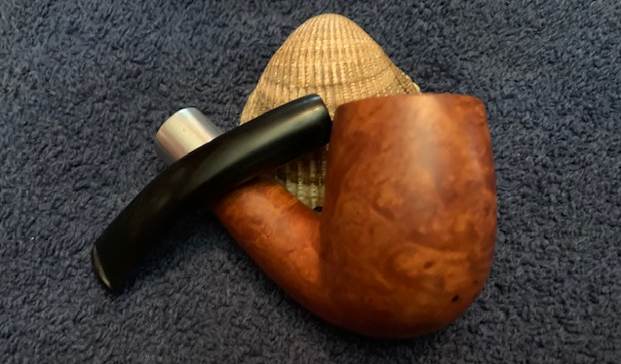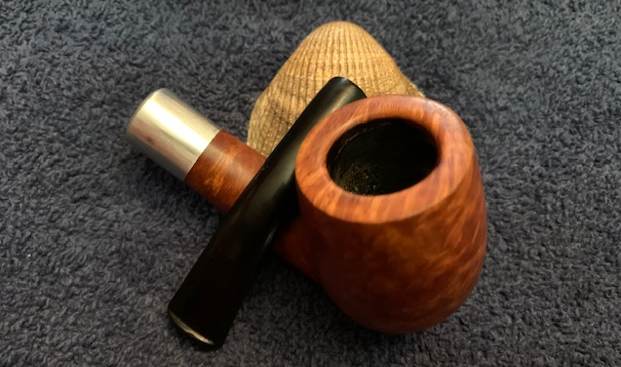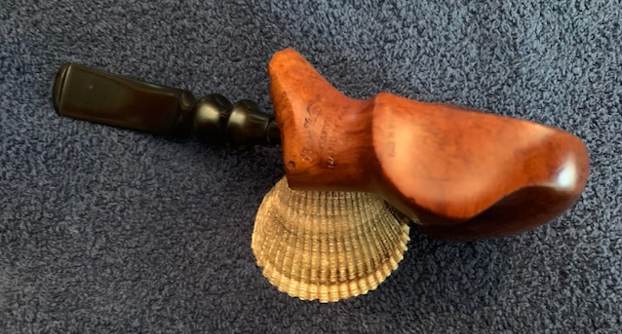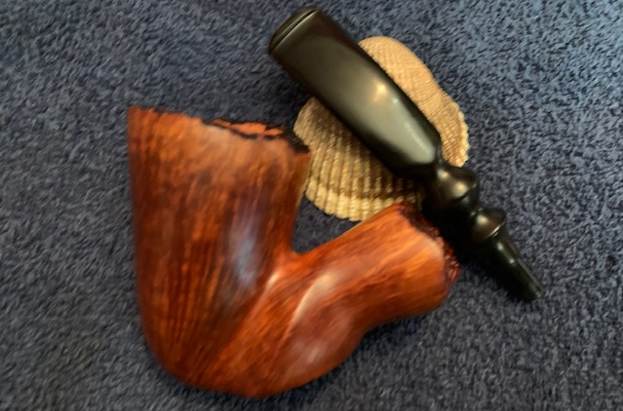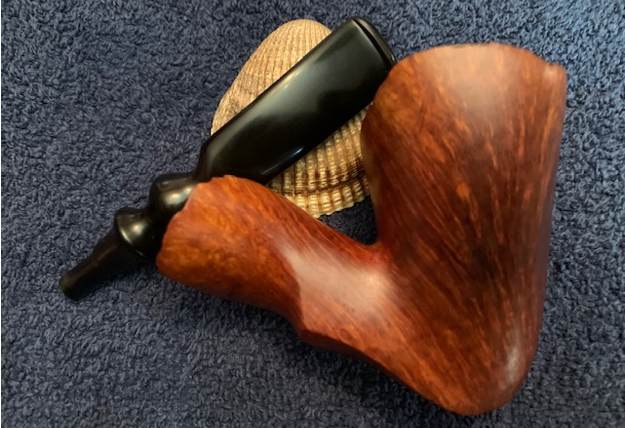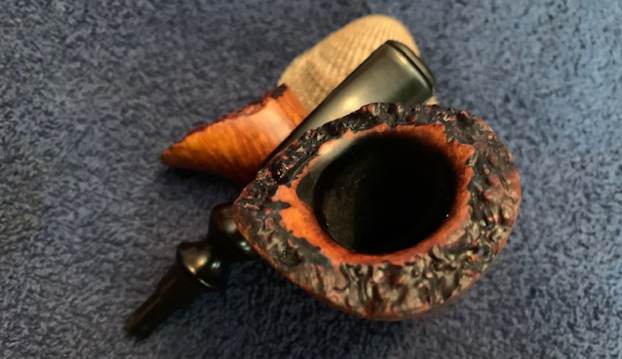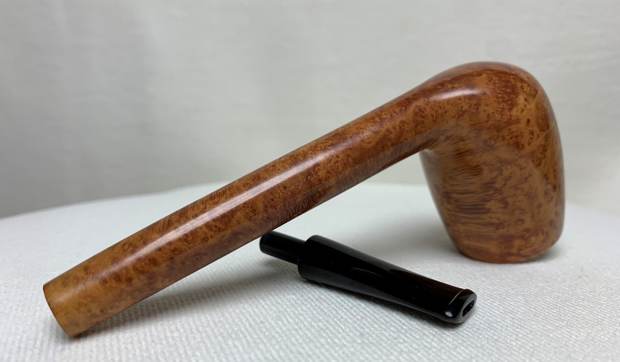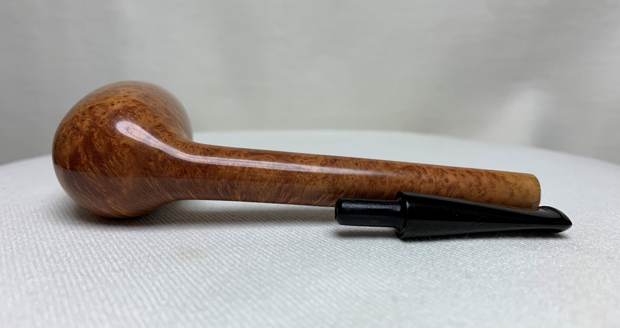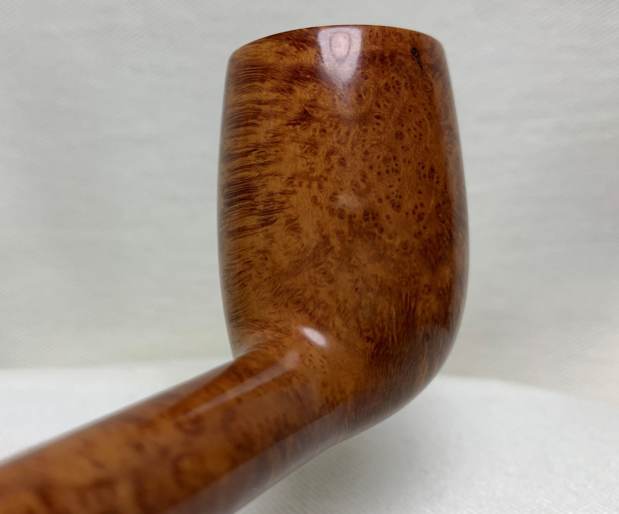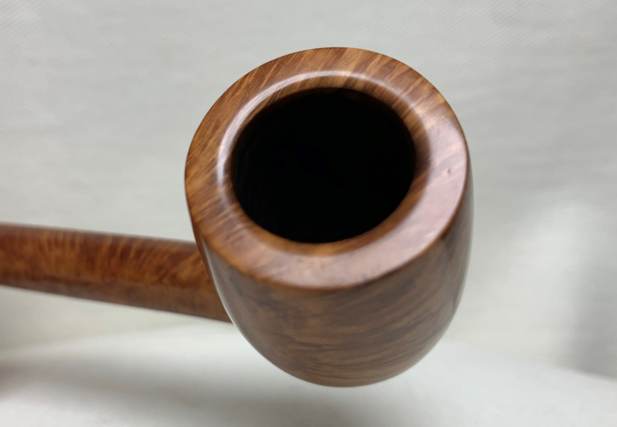
Tag Archives: Bowl – refinishing

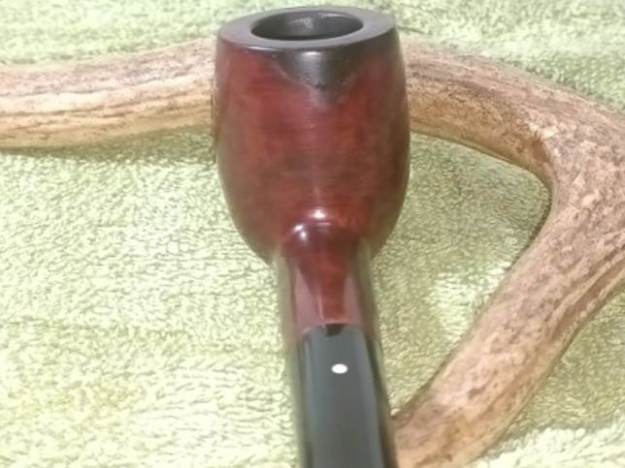
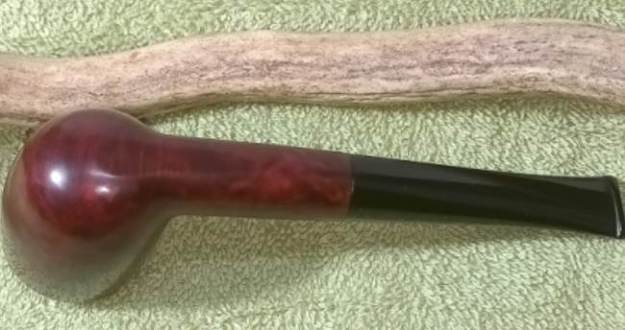
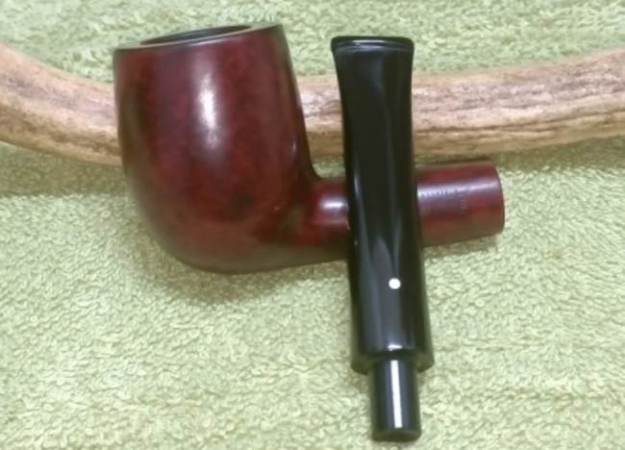
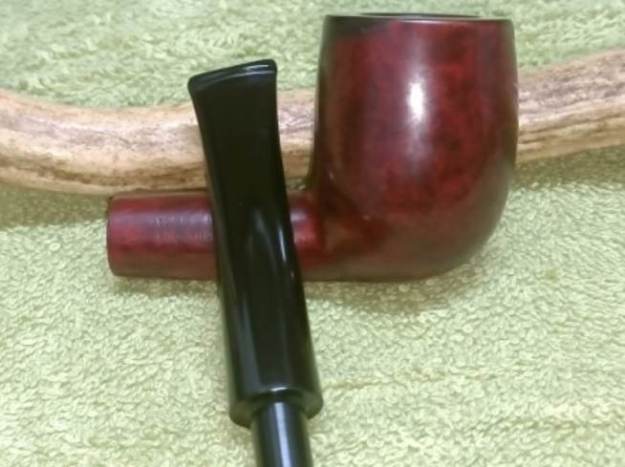
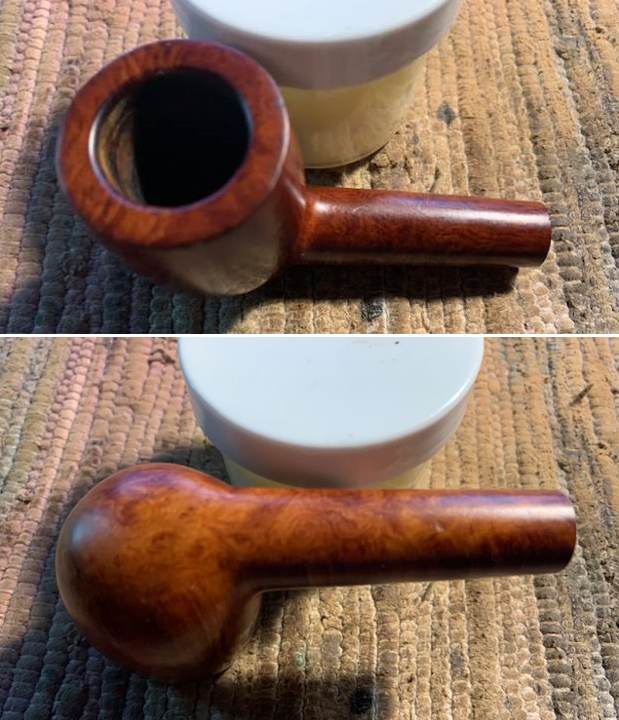
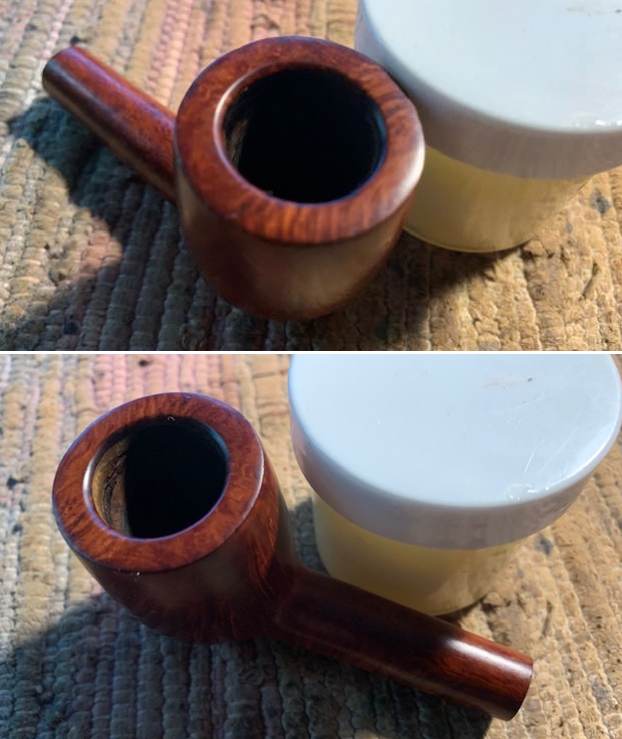
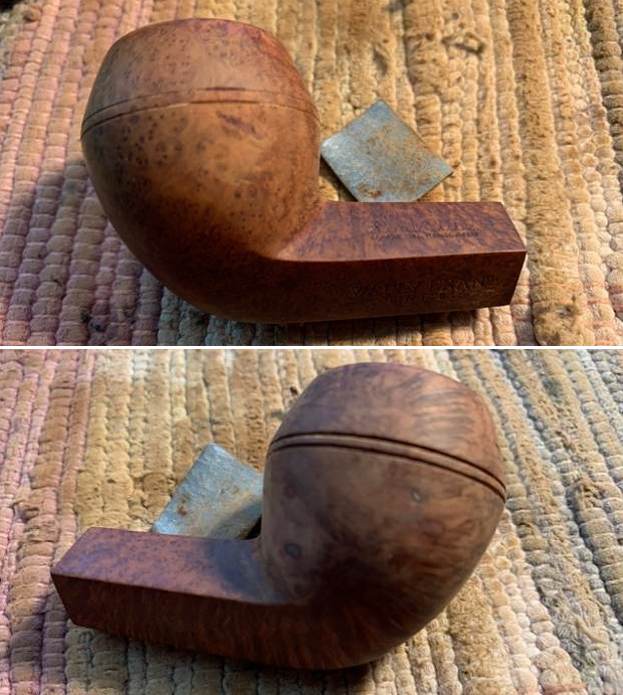
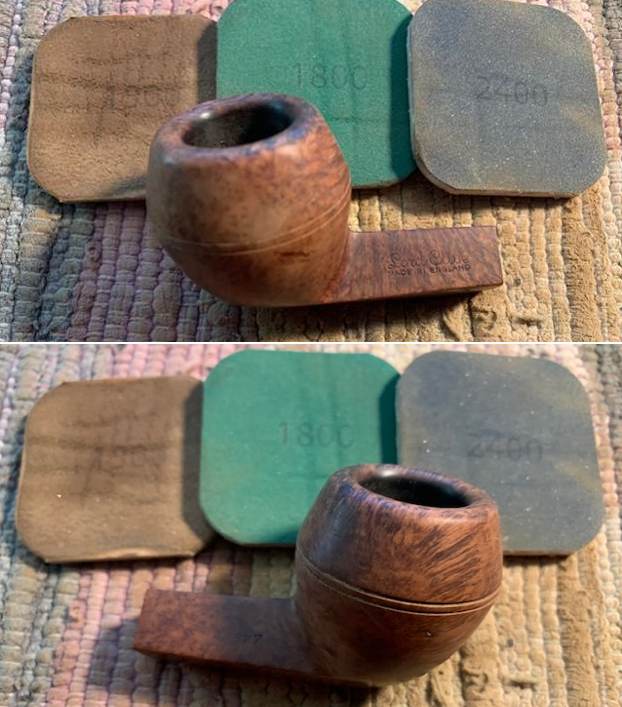
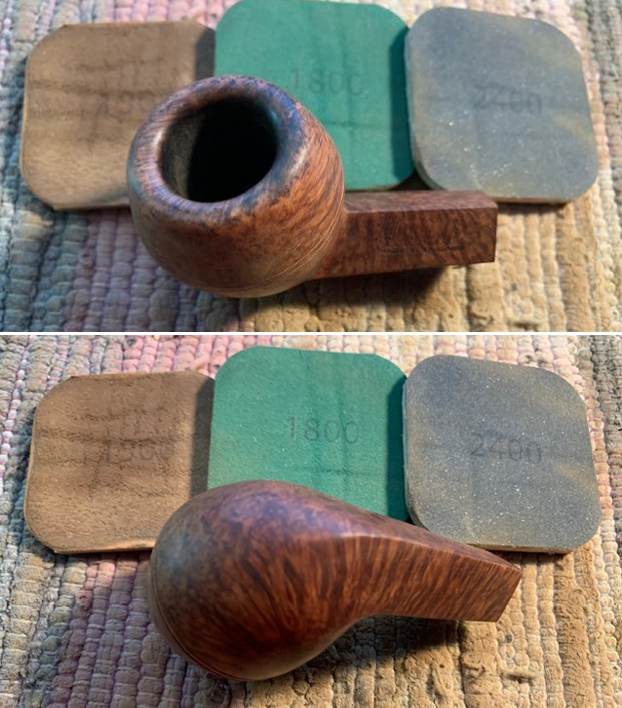
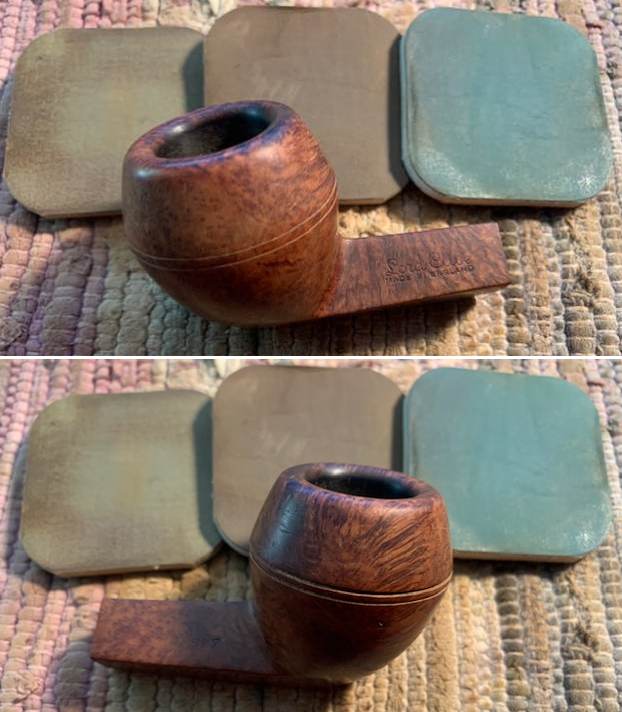
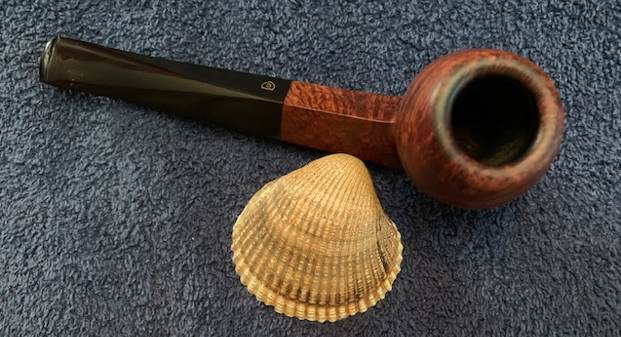
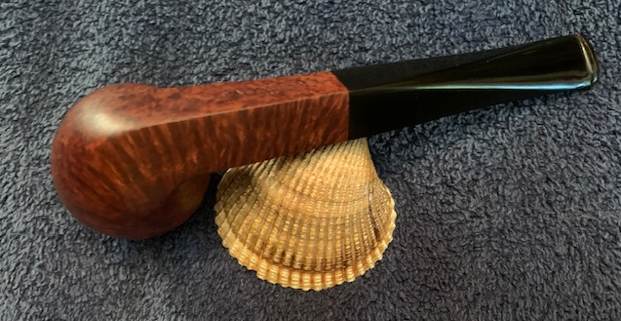
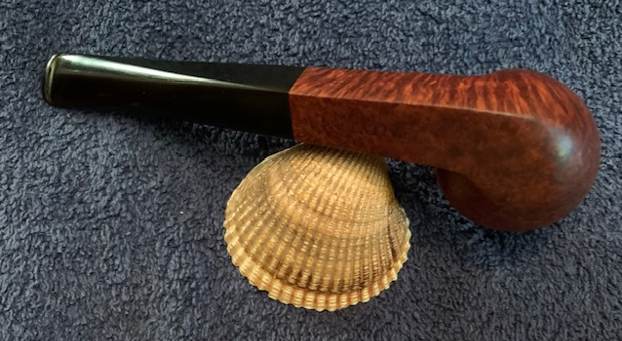
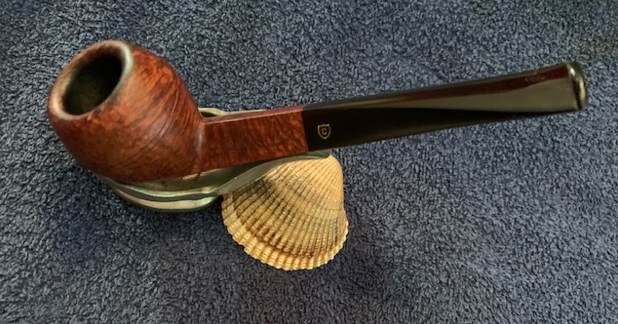
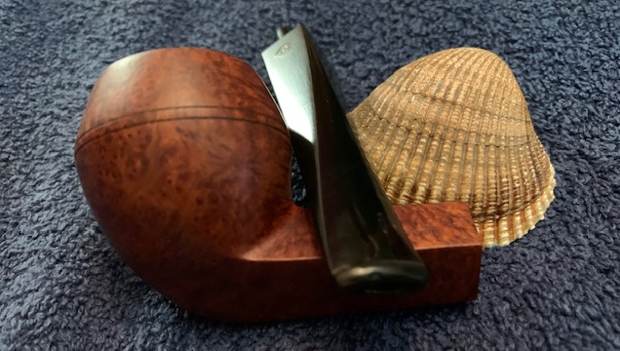
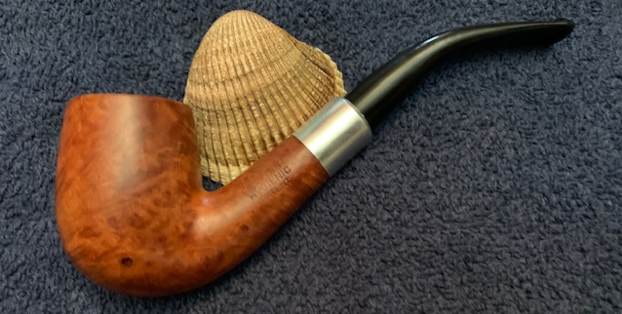
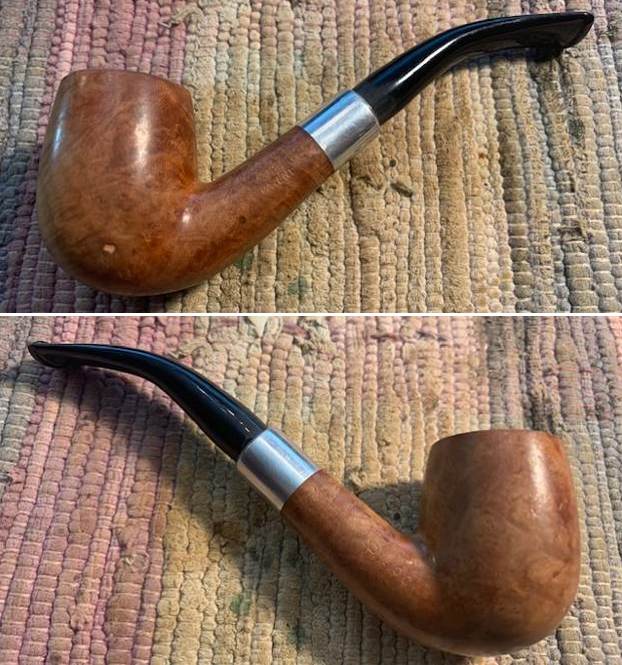
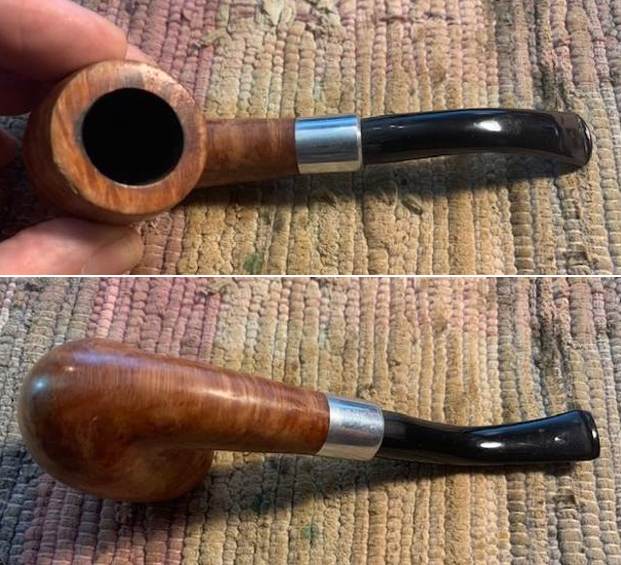
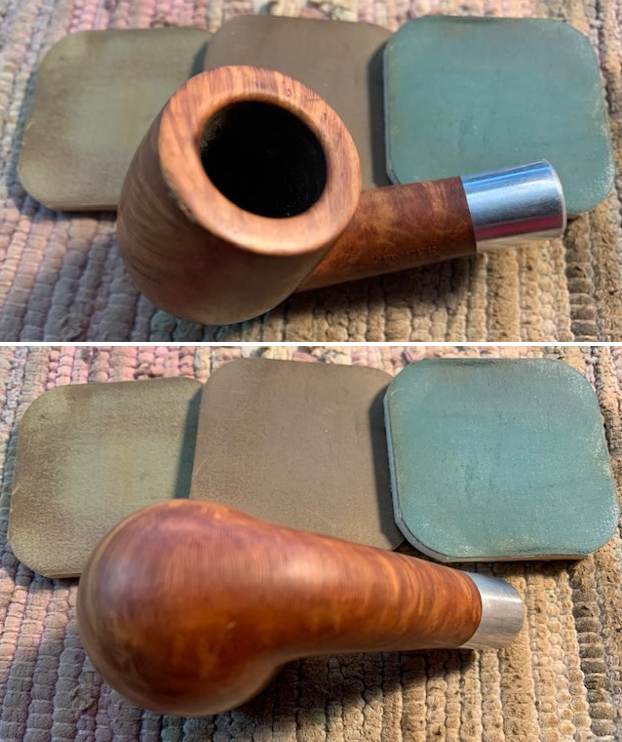
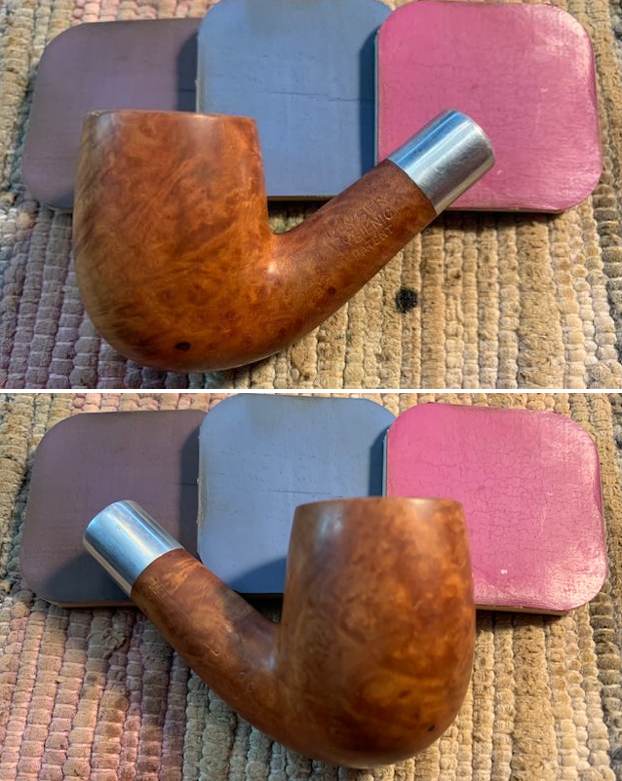
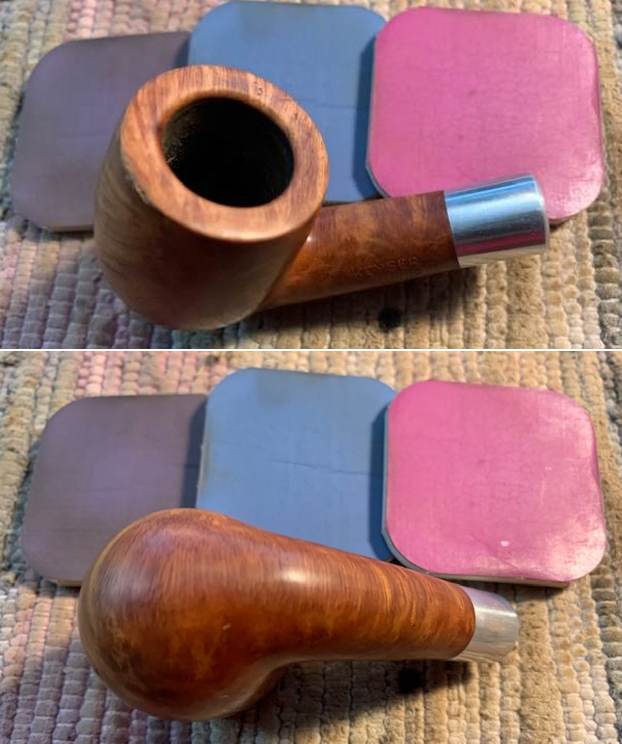
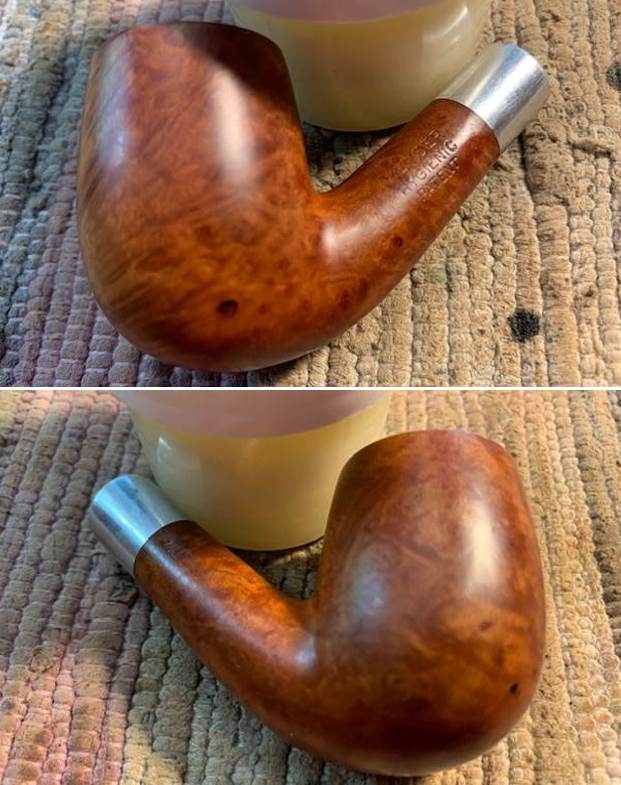
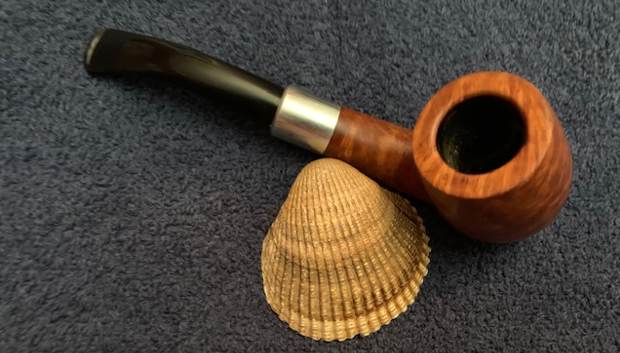
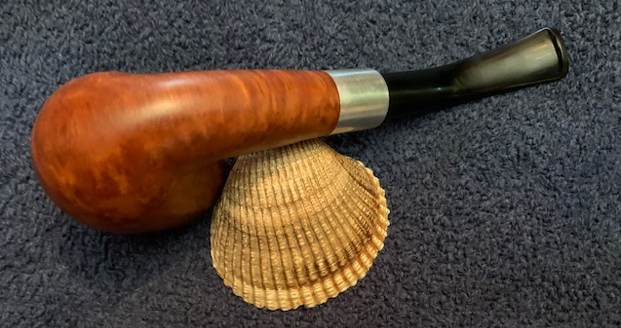
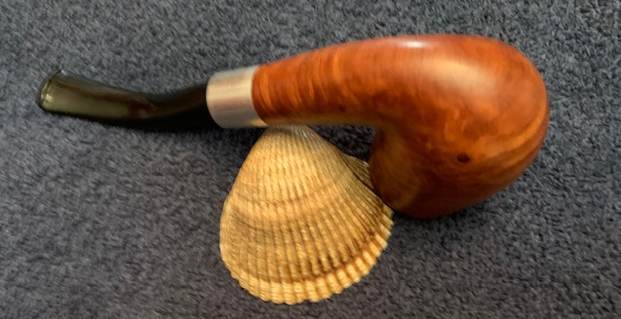
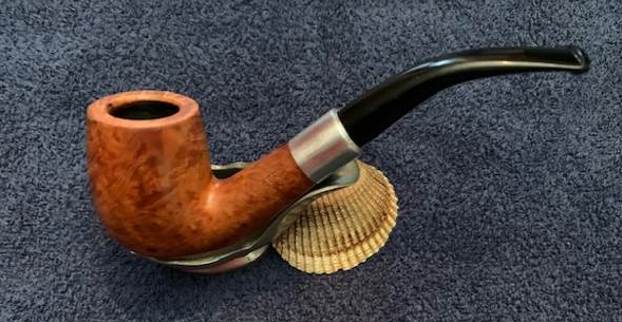
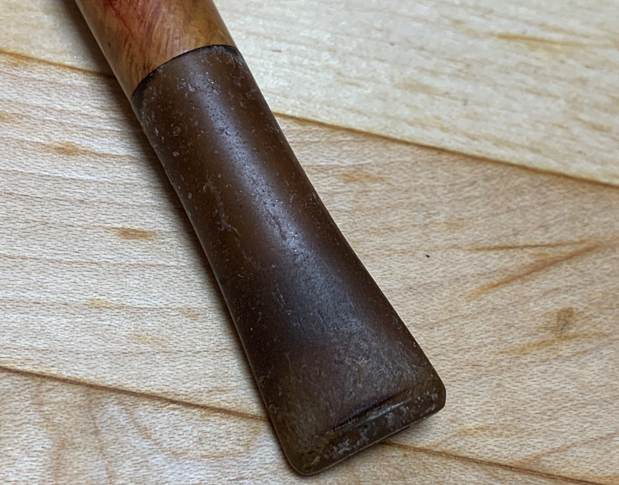
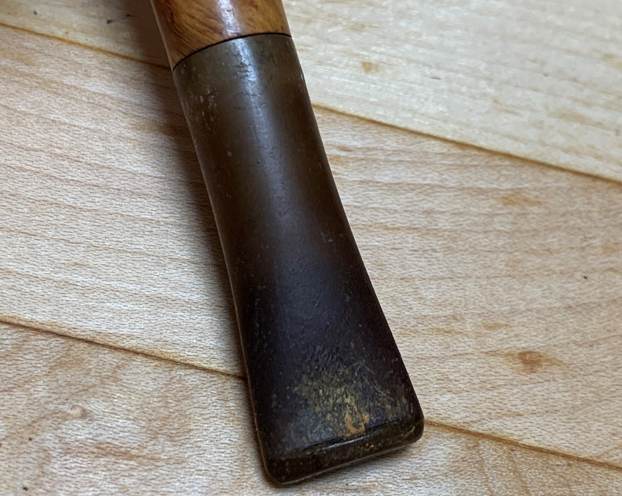
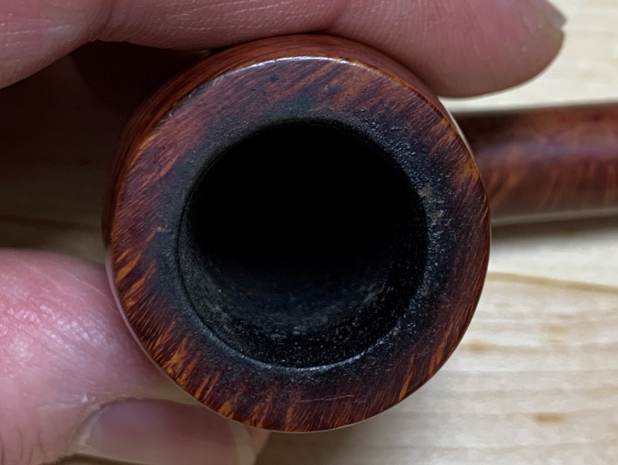
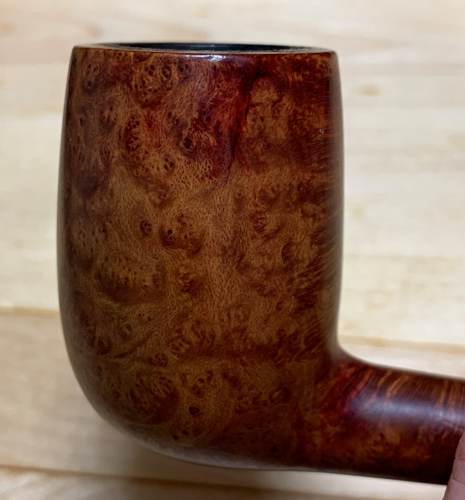
Reconstructing The Rim And Sprucing Up a 1961 Dunhill Bruyere Billiard


Blog by Paresh Deshpande

It’s been a long while since I have posted any write ups here and the primary reason is my laziness. I know and accept that these are very useful as references and as records of the work done till date and yet I enjoy restoring pipes more than doing the write ups.

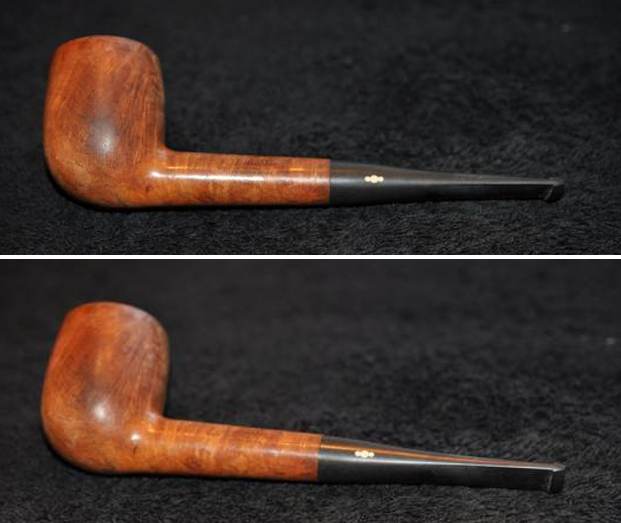
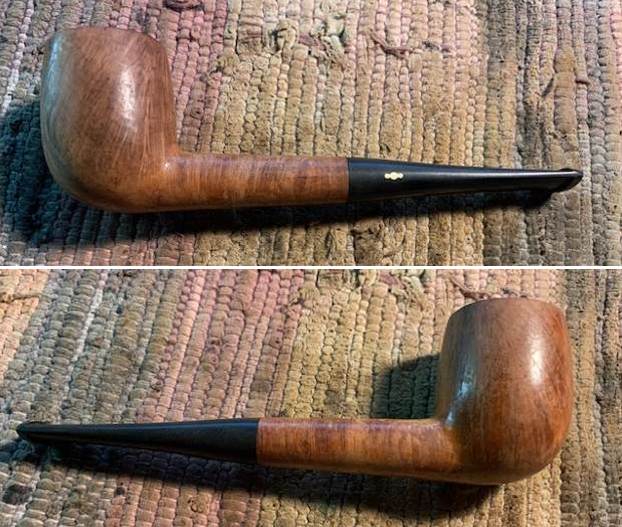
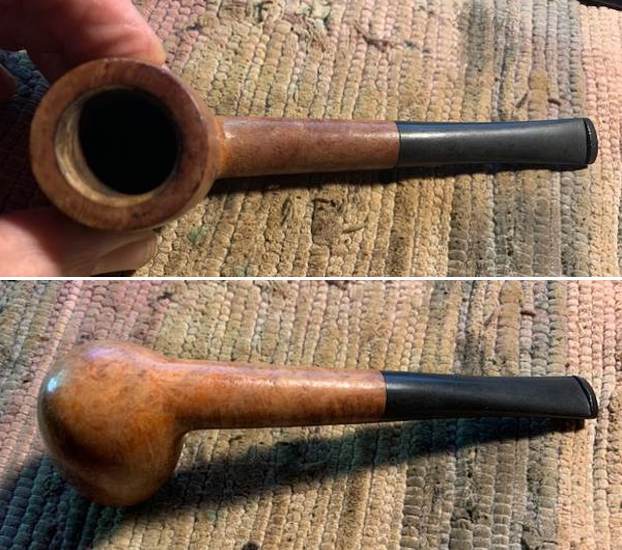
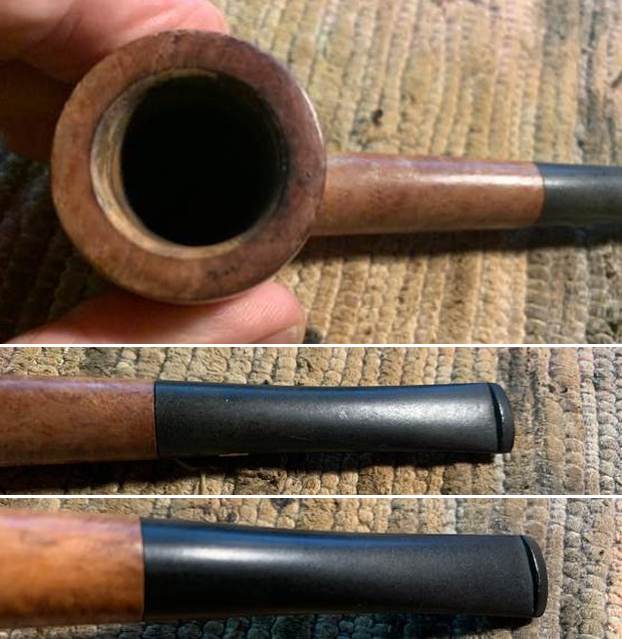
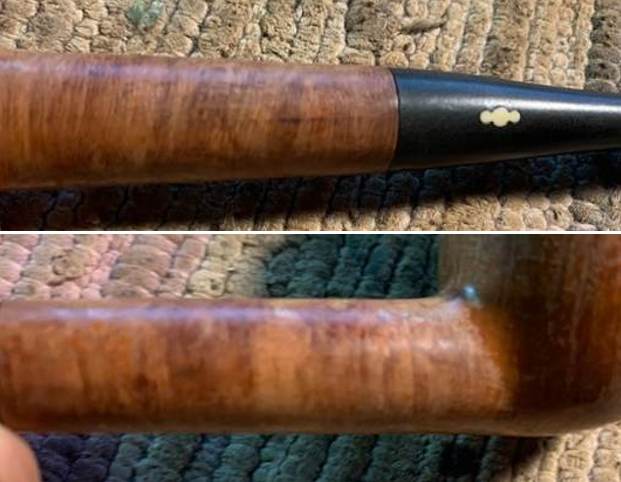
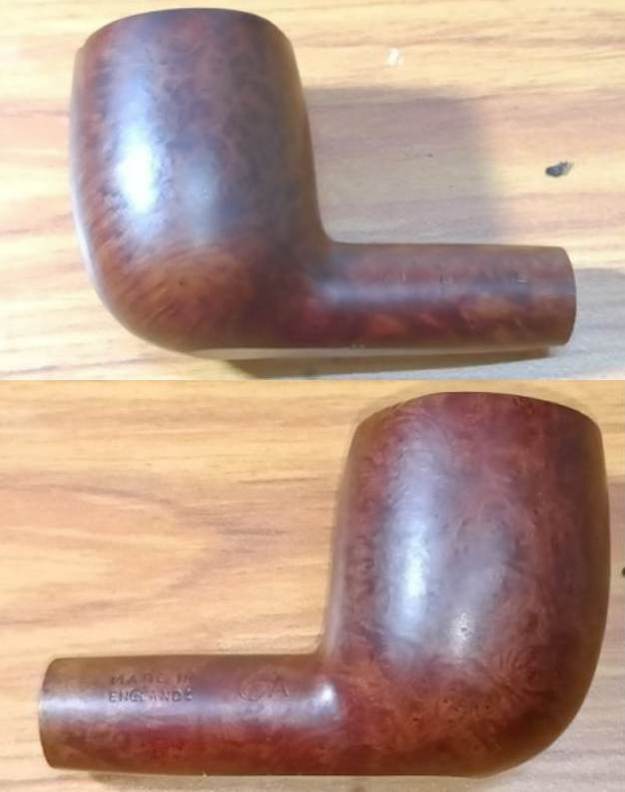
One of my friends here is an avid collector of pipes and he expressed a desire to expand his collection restricted only to English made pipes. He wanted a Dunhill with crisp stampings (that is always a challenge!) and so began my hunt for one. I found one on eBay Germany, which had a seriously damaged rim edge but otherwise in great condition for a 61 year old pipe. I discussed this piece with my friend and soon the pipe made its way to India and is now on my work table. It’s a classic Billiard with a fishtail stem and a flat bottom that makes it a sitter. The briar is flawless and without any fills or imperfections as expected from Dunhill. The pipe is stamped on the left near the bowl and shank junction as “59” followed by “F/T” followed by “DUNHILL” over “BRUYERE”, all in capital letters, towards the shank end. The right side of the shank is stamped as “MADE IN” over “ENGLAND” with suffix 1 after letter D and followed by an encircled “4” and letter “A”. The upper surface of the stem bears the trademark White Dot of the brand.    The brand Dunhill is well researched and documented and pipedia.eu has reams of information on the same. However, of interest to me here is the dating of this pipe, which is fairly straight forward. The shape code 59 denotes Dunhill’s Billiards shape with tapered stem while F/T denotes fish tail style stem. The suffix numeral 1 after letter D denotes 1961 as the make year because firstly, the numeral is not underscored; secondly, it is the same size as the preceding letter D and finally, the letter ‘A’ denoting the finish is slightly larger than the circle enclosing the group size. The encircled letter 4 denotes the group size as 4 and the letter ‘A’ points to the Bruyere finish on this pipe.

With the dating conclusively established, I moved ahead with the initial inspection of the pipe.

Initial Visual Inspection
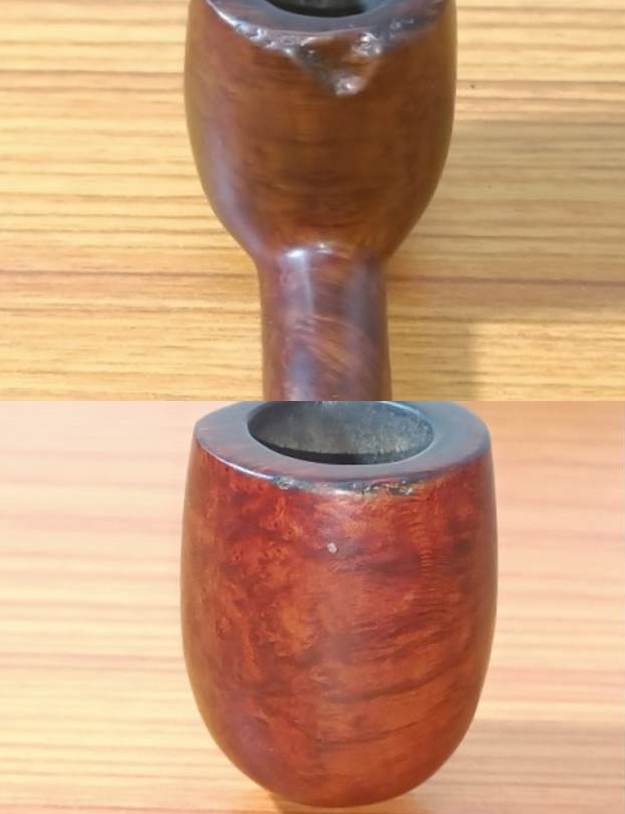
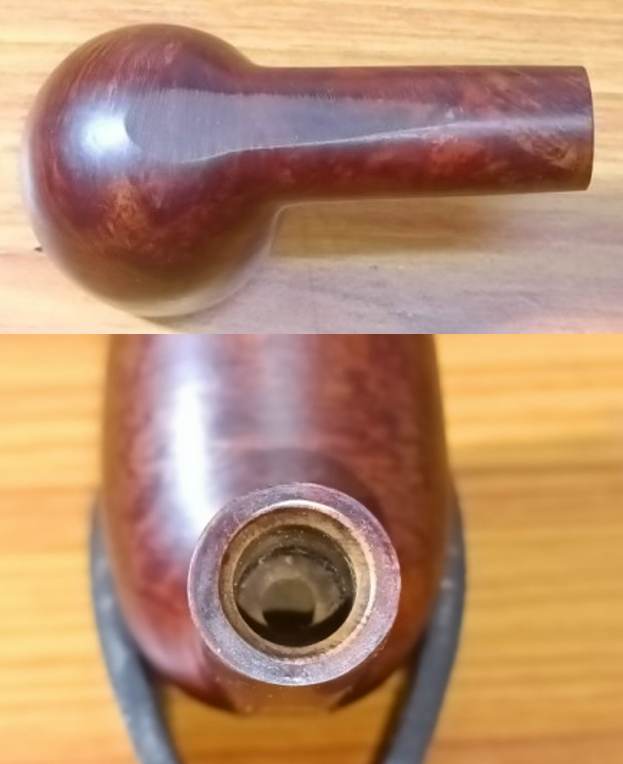
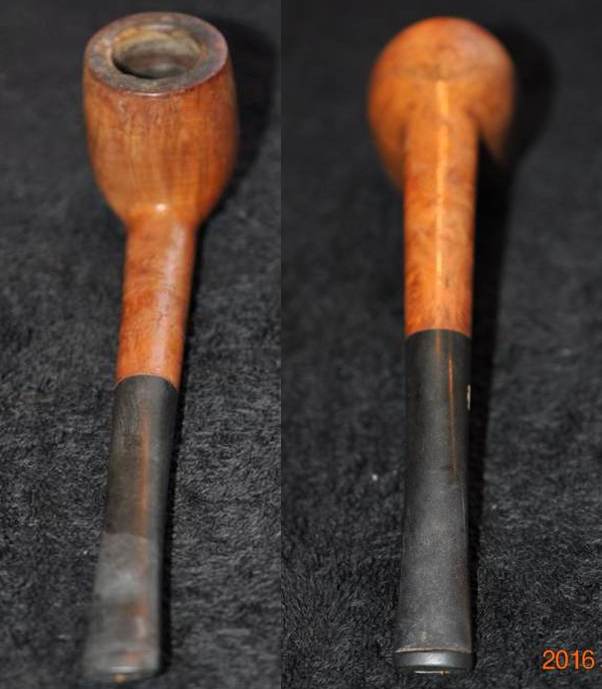
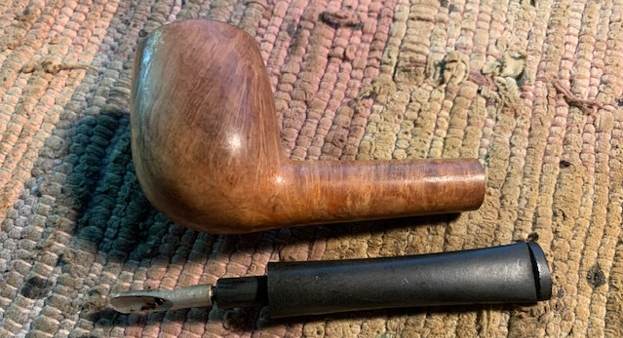
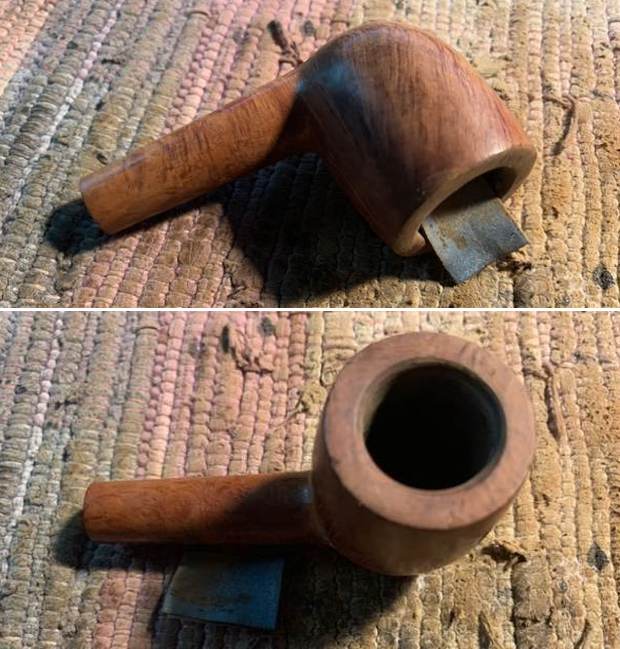
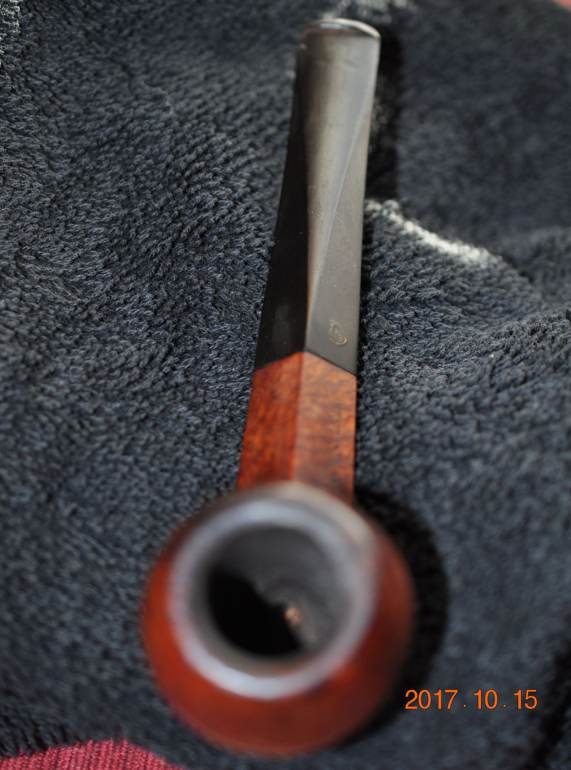
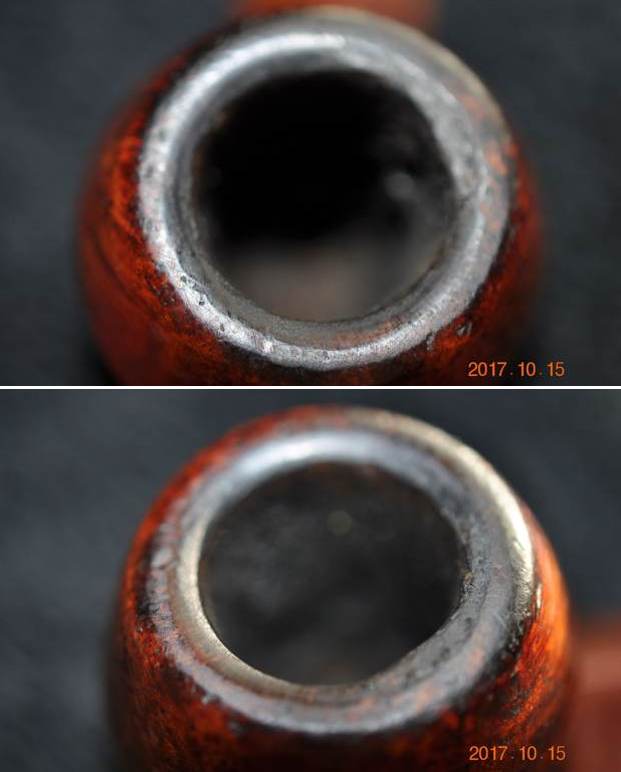
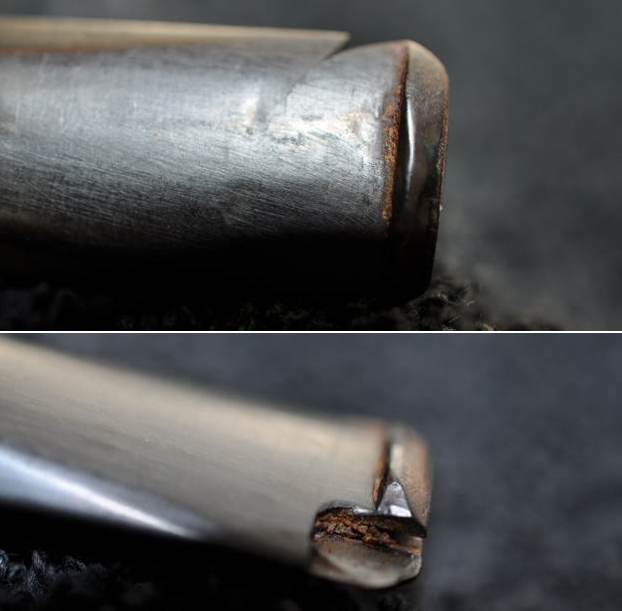
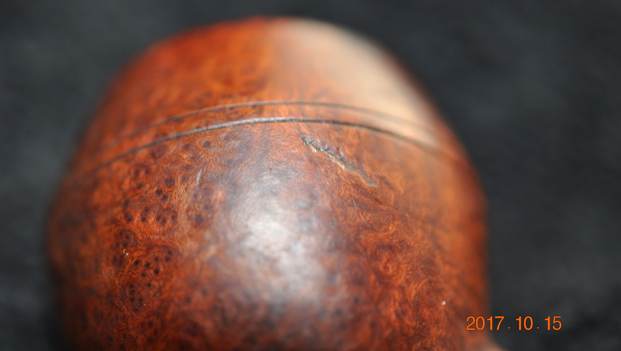
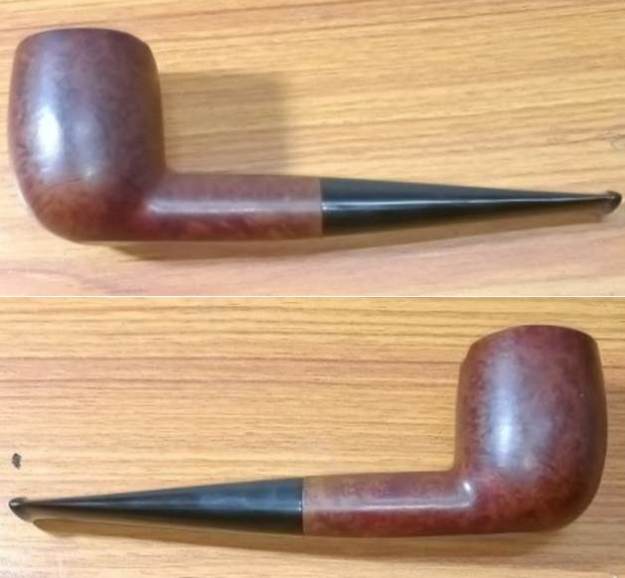
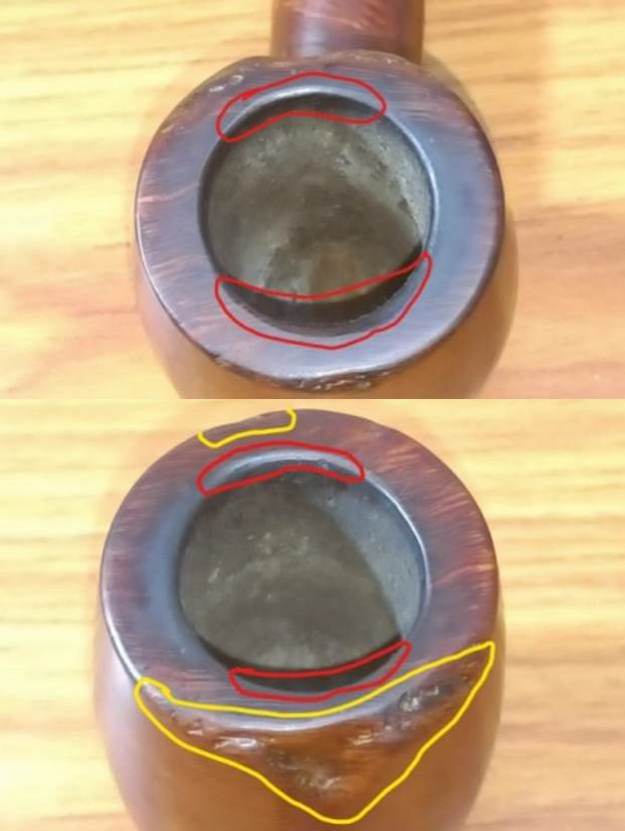
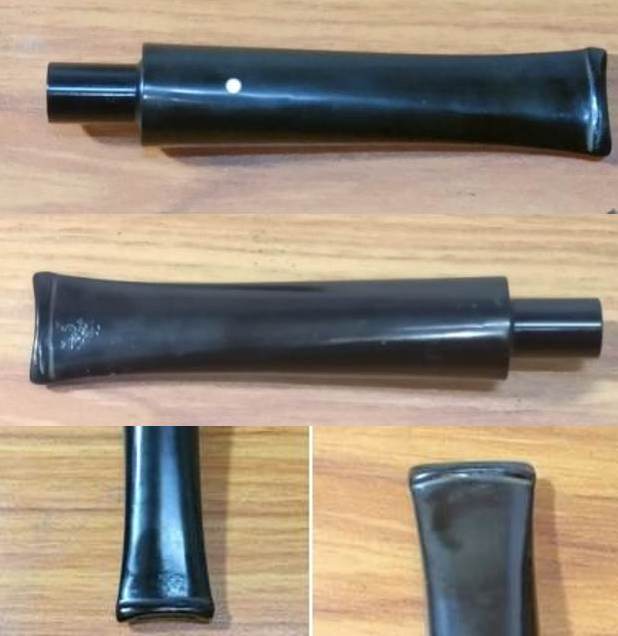
The first thing that one notices is the damaged rim edge, both aft and at the front. The chamber appears to have been reamed and is sans any cake. There is no lava overflow atop the rim surface. The stummel surface is dull, dirty and lackluster. Being a Bruyere finish, the stummel does not boast of excellent grains but it does prove its quality by being a flawless piece of briar without having a single fill or imperfection. There is a slight ghosting smell and would need to be addressed. The shank bottom is flattened making it a sitter. The stem is in fairly great condition with only a few bite marks over the button edges and some minor tooth chatter in the bite zone. Overall, it’s a very decent pipe and I hope to repair and restore this pipe to its former glory. Detailed Inspection
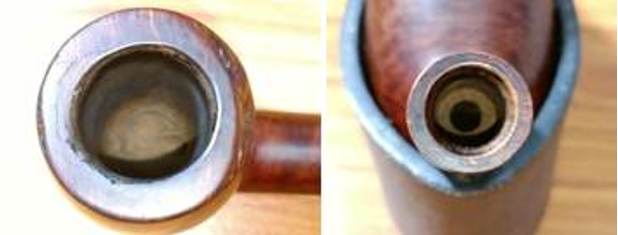
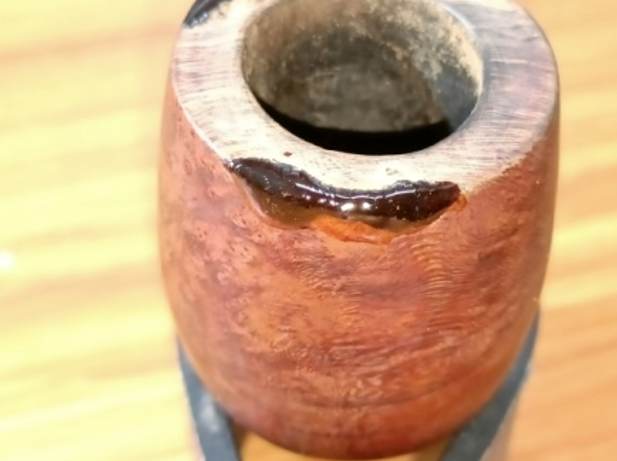
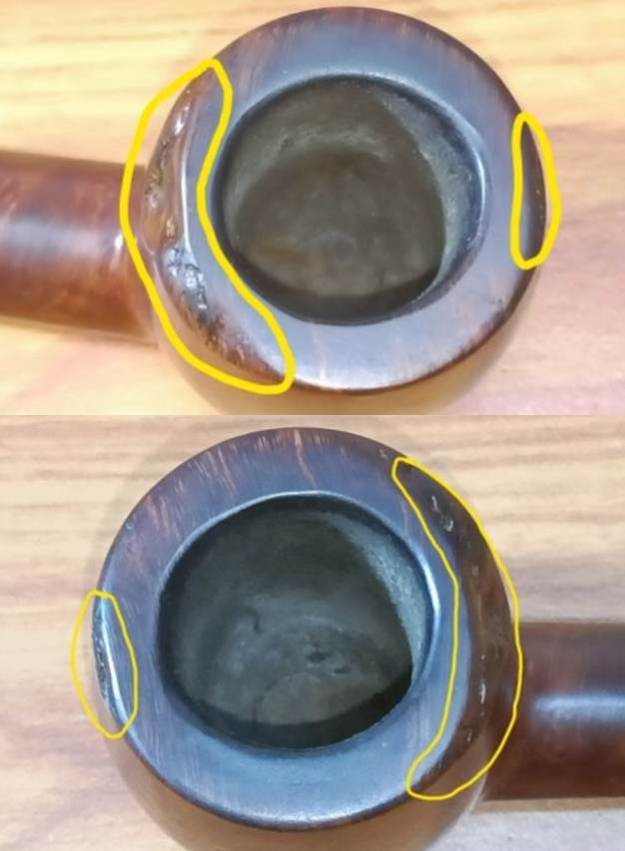
The chamber appears to have been reamed before the pipe was designated for sale by the previous owner and thus the chamber is devoid of any cake. All that remains is some dust and fine carbon particle accumulation along the walls of the chamber. The rim top is darkened but without any overflowing carbon. However, it’s all together a different ball game when it comes to the rim edges. The most significant damage is to the aft outer rim edge where a large chunk of briar has chipped away, most likely the result of a fall from some height. Similarly, the front of the rim outer edge too has a small chunk of briar missing and appears to be the result of knocking against a hard edge. Both these damages are encircled in yellow. The inner rim edge shows signs of charring in the 6 o’clock and 12 o’clock directions. These areas have been encircled in red. The chamber odor is light but present and would need to be completely eliminated. The stummel feels solid in the hand and the surface is sans any dents and dings. However, the surface is dull and dirty with the finish fading out from over the surface. A nice cleaning and polish of the stummel should make things interesting. The mortise and shank walls are clean. The tapered fishtail vulcanite stem is in good condition. There are some tooth indentations on the button edge on the upper surface with tooth chatter in the bite zone on either surface. The stem surface shows some minor oxidation that would be easily addressed. The stem airway is open but would benefit from a thorough internal cleaning.   The Process
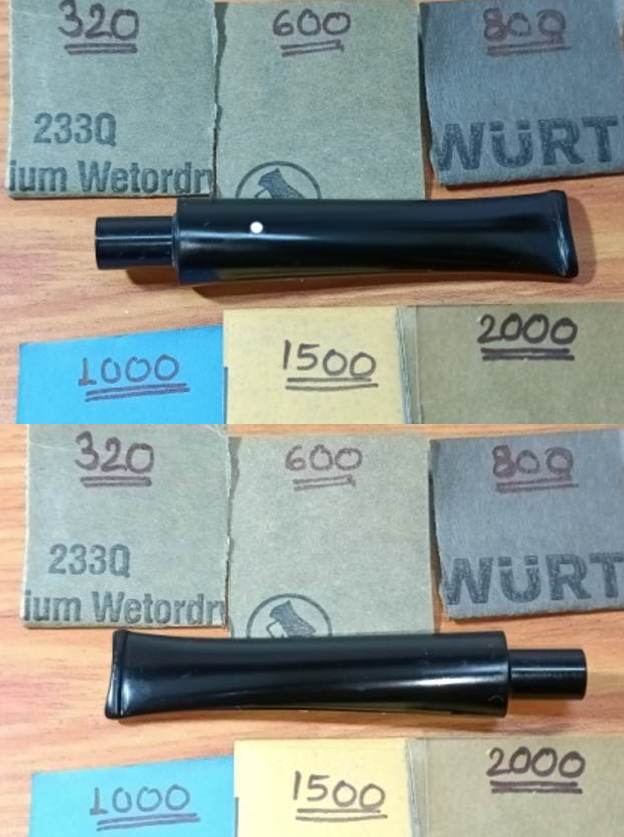
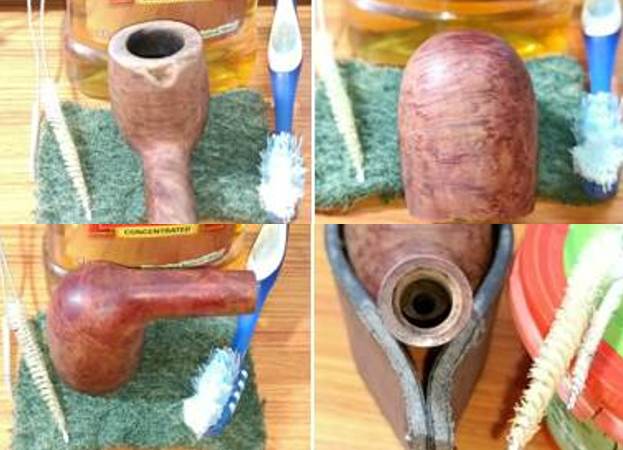
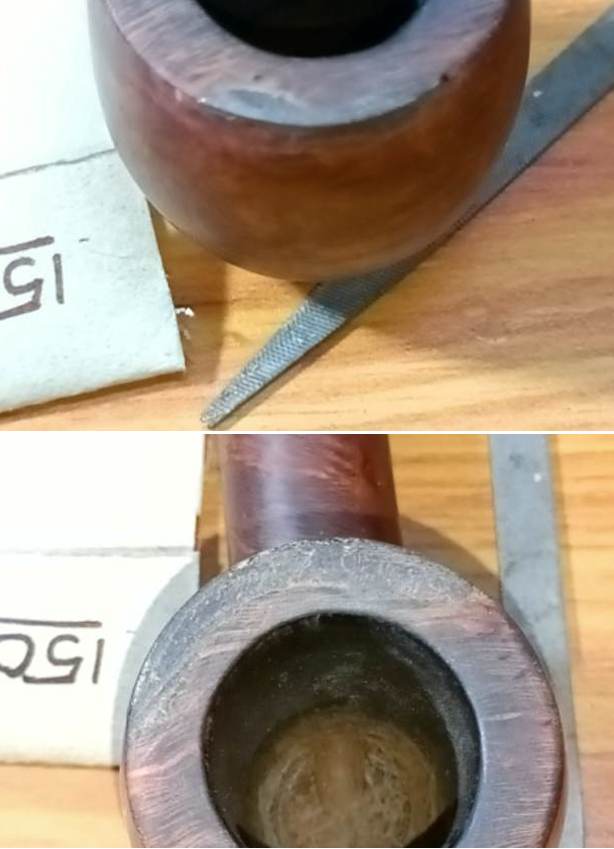
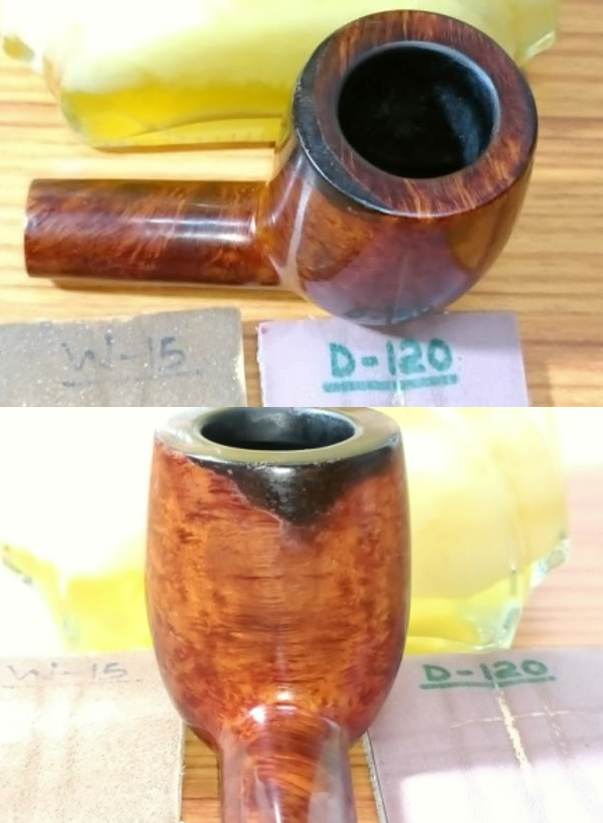
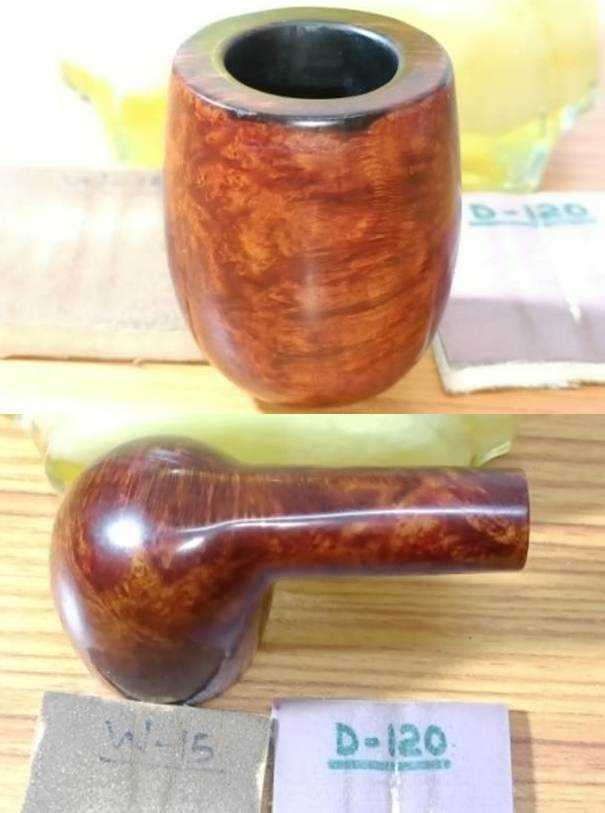
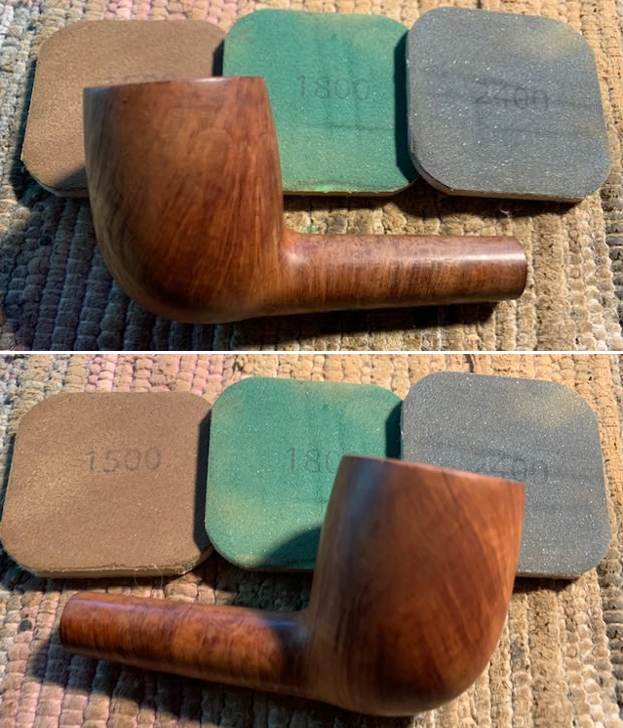
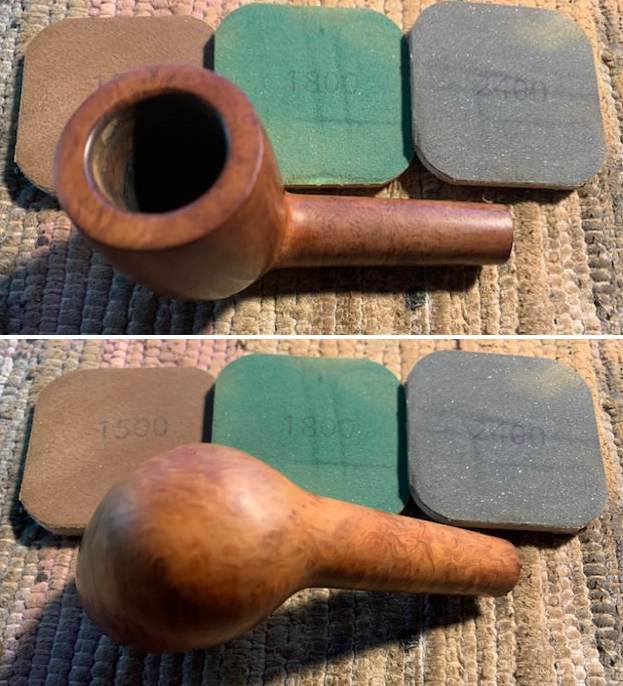
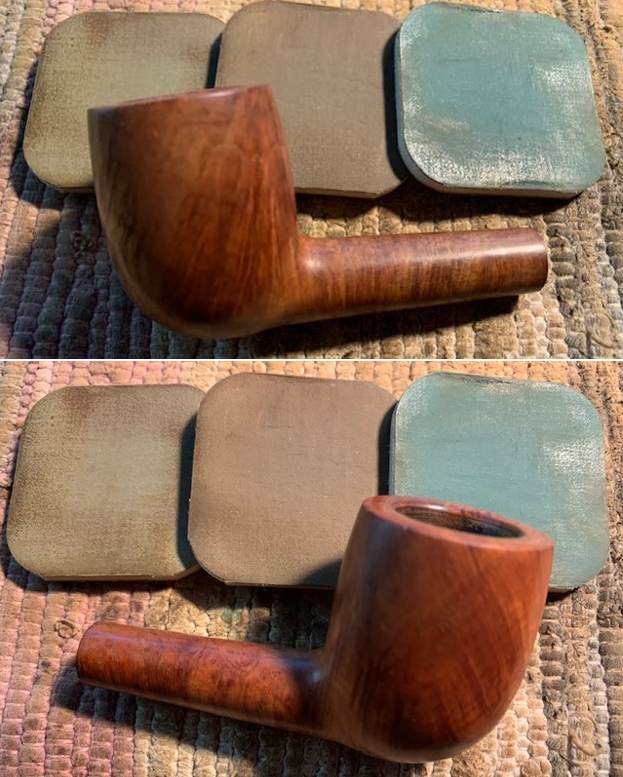
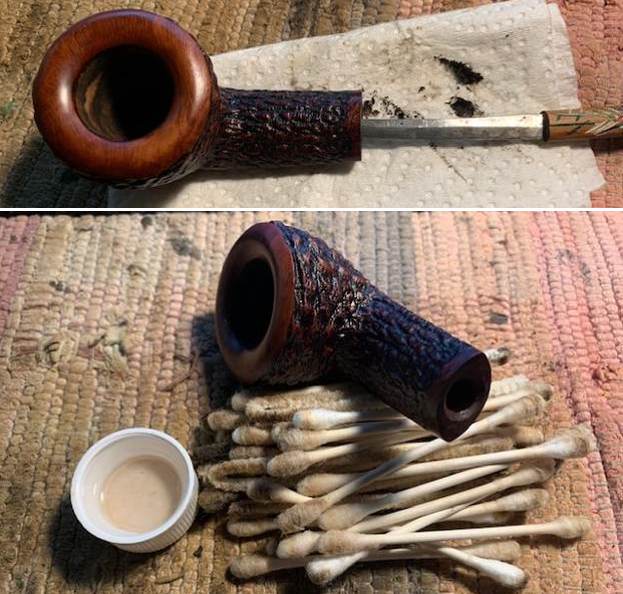
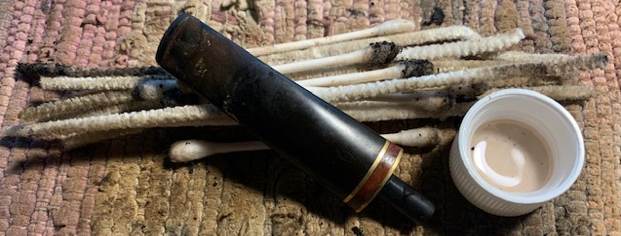
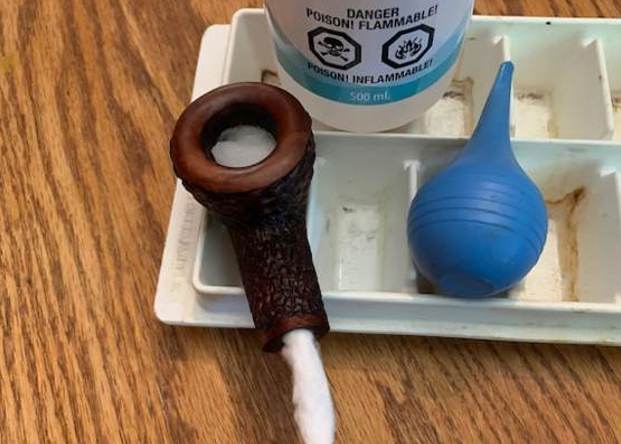
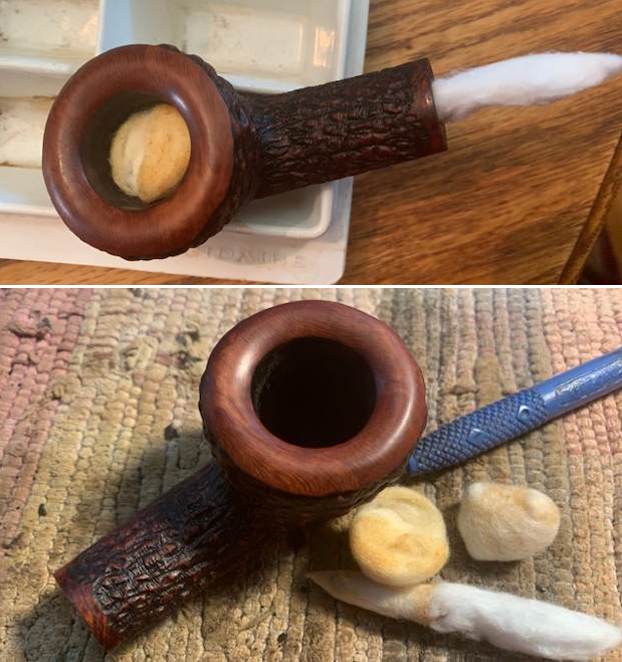
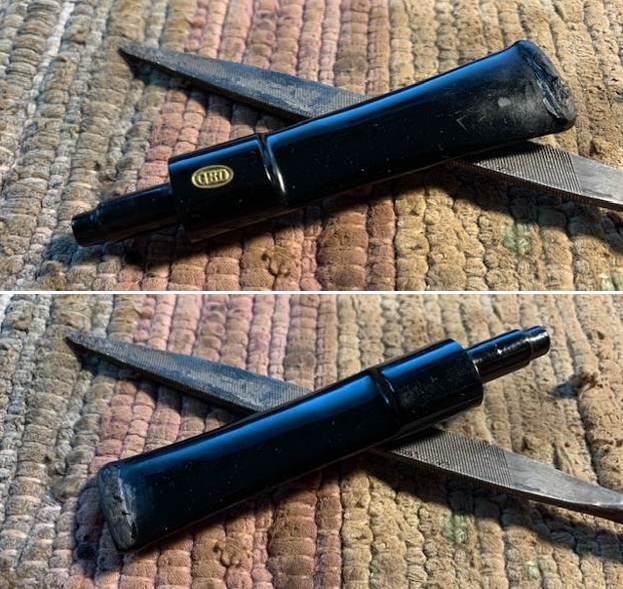
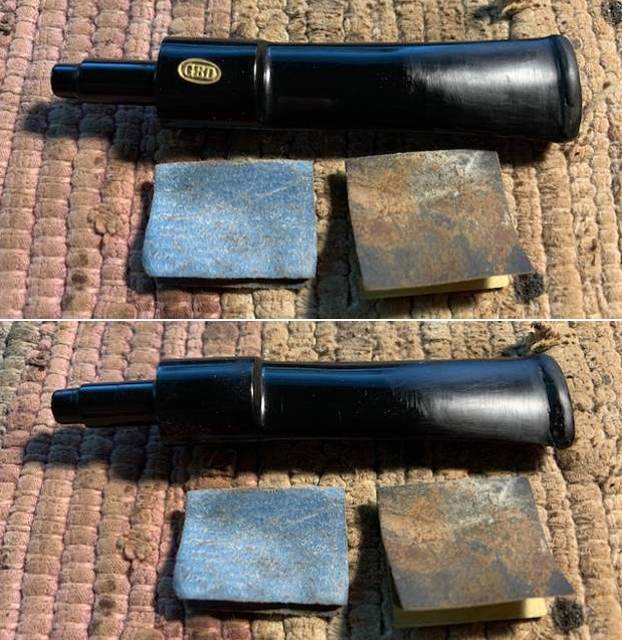
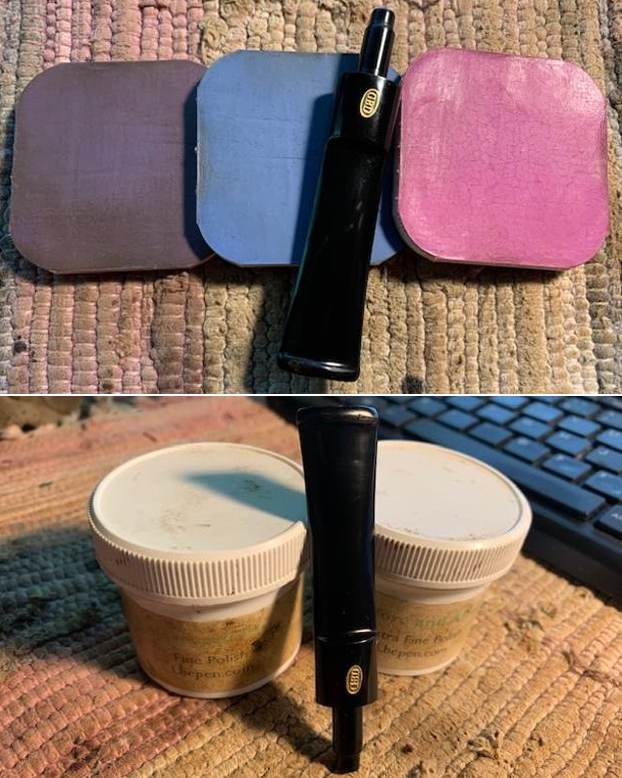
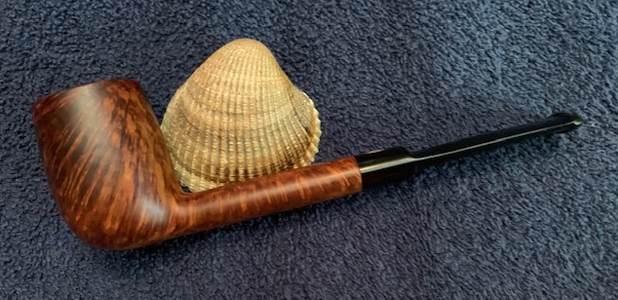
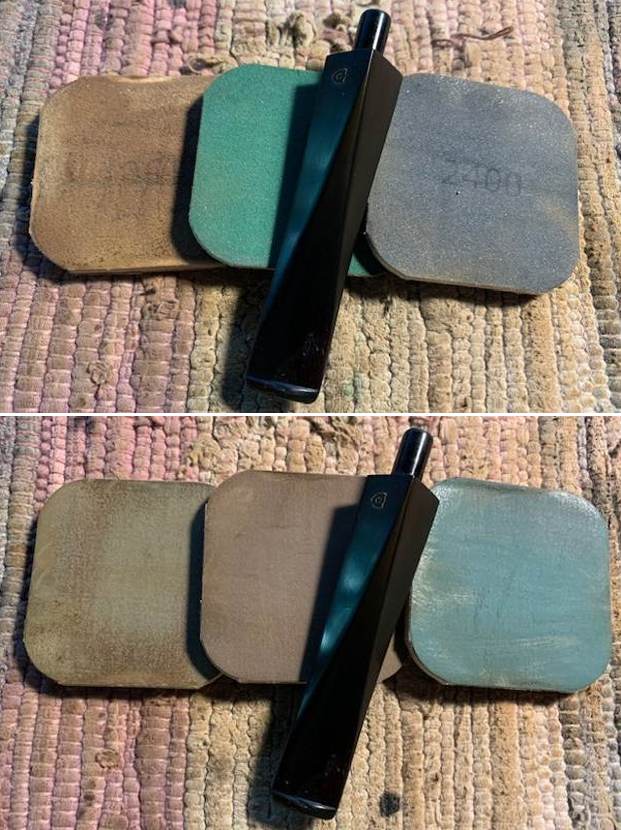
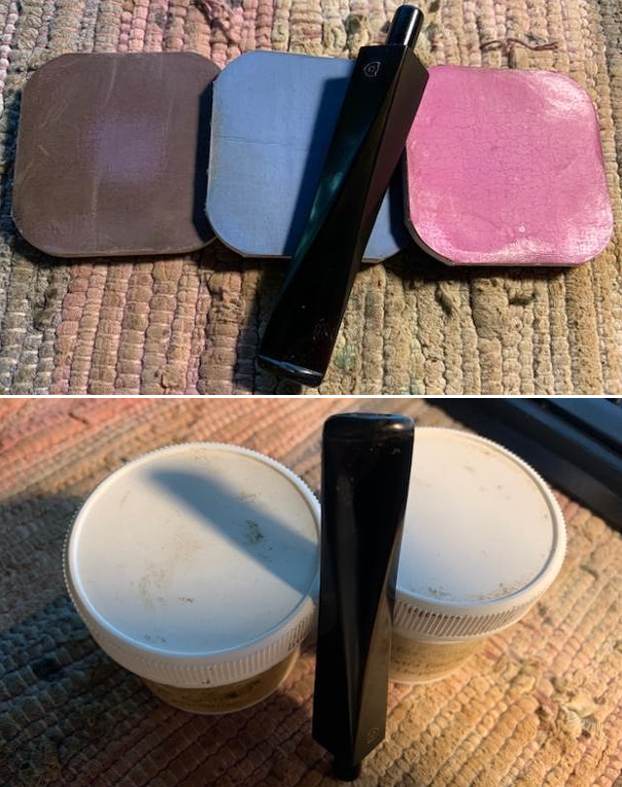
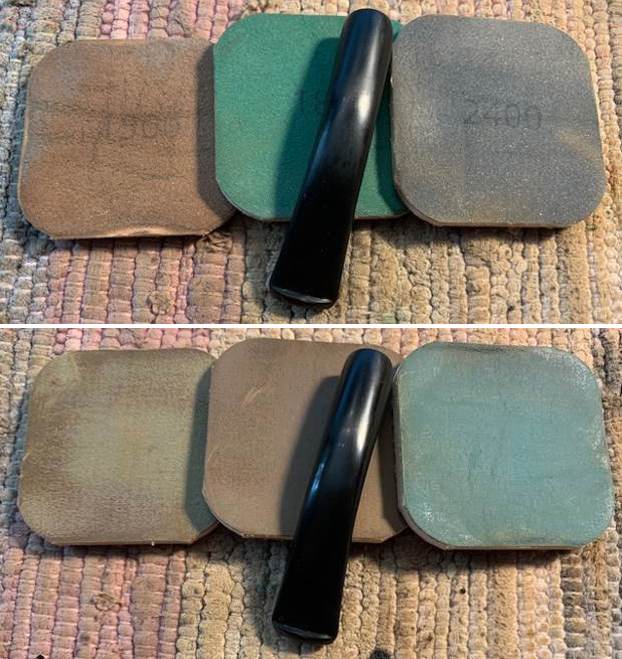
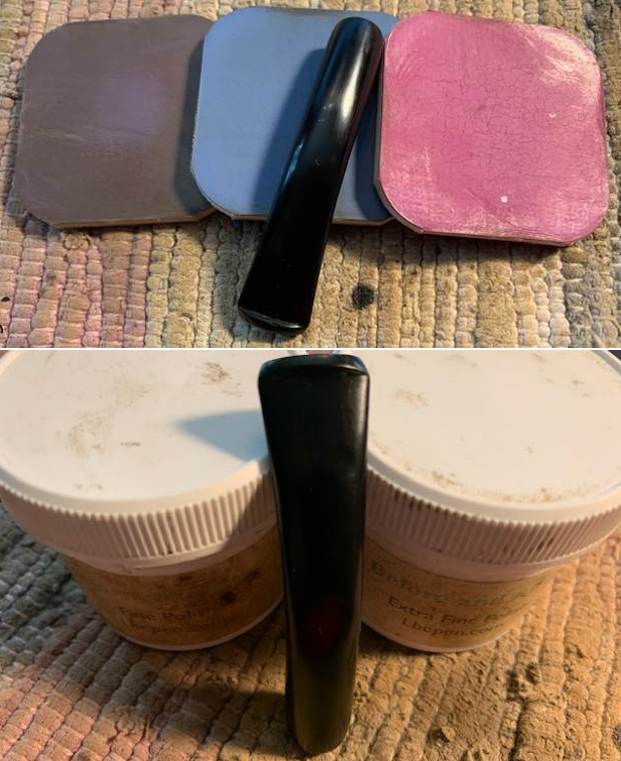
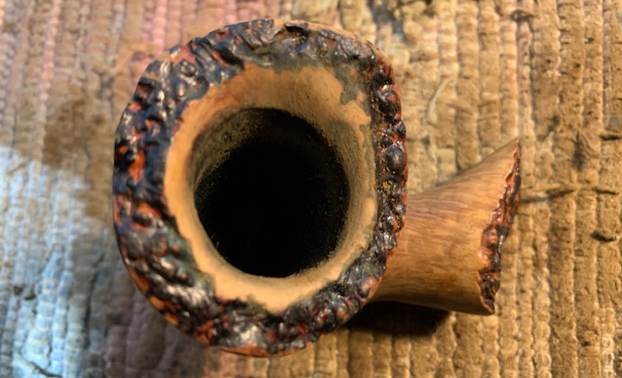
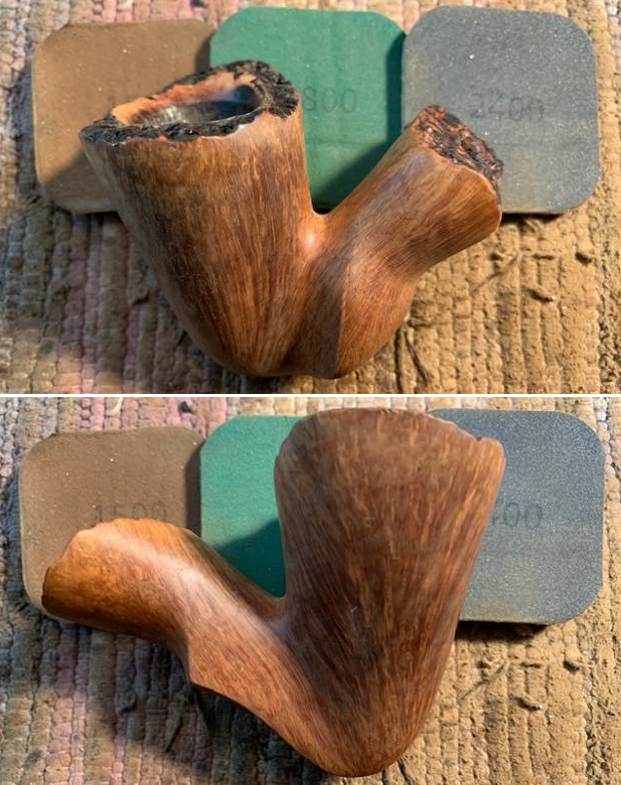
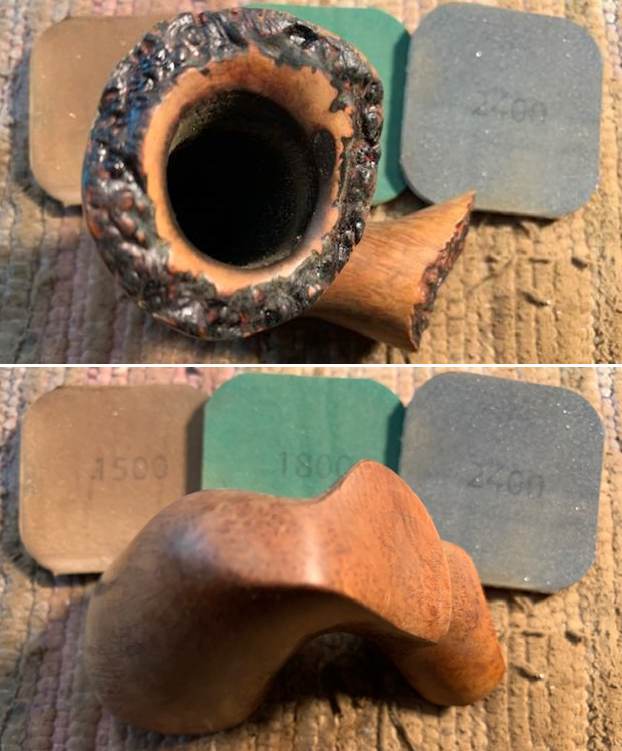
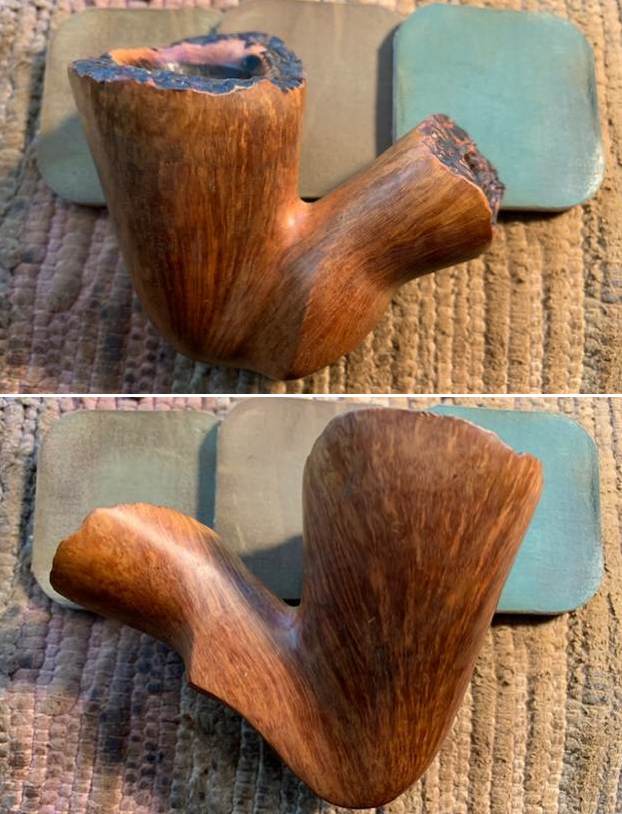
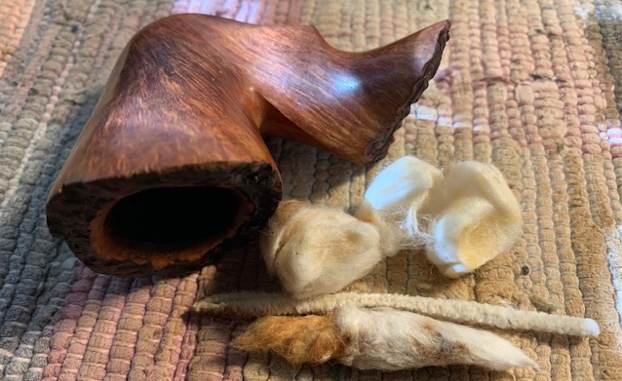
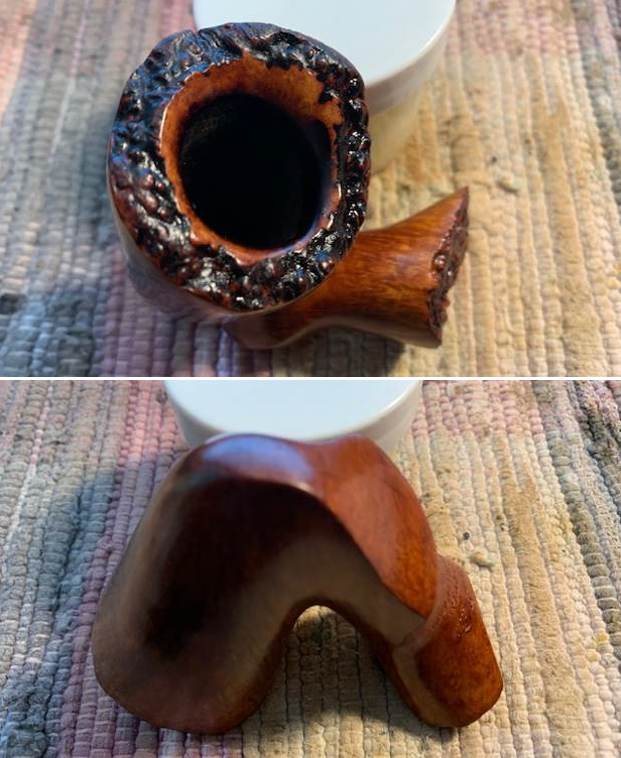
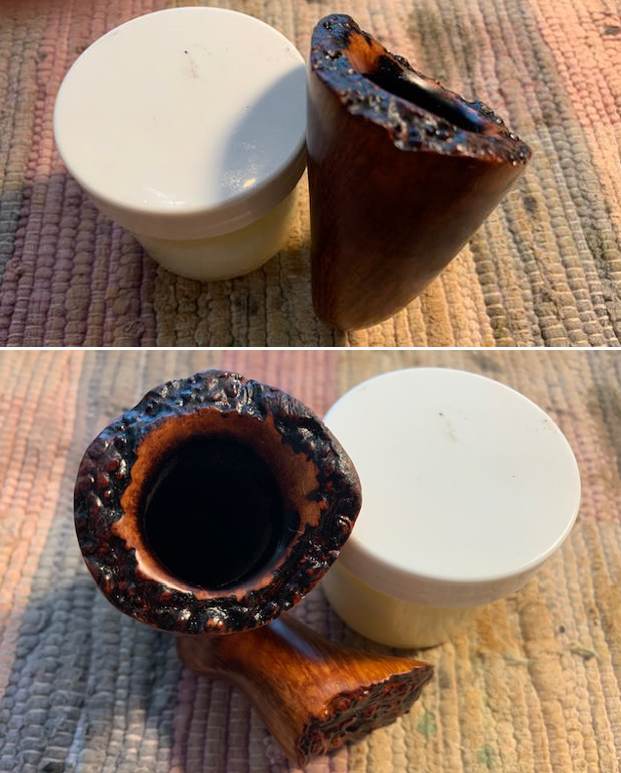
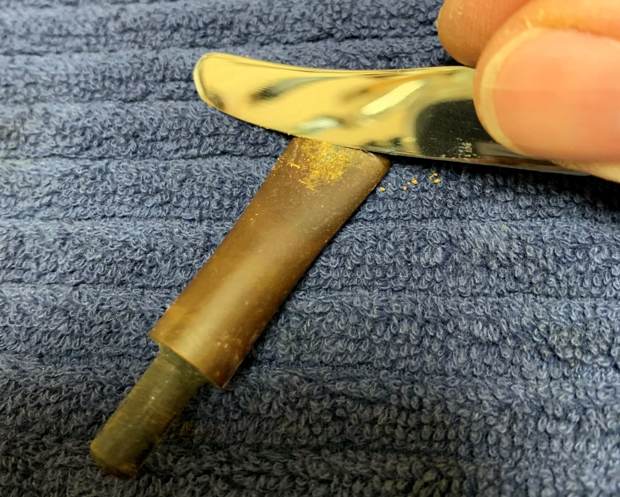
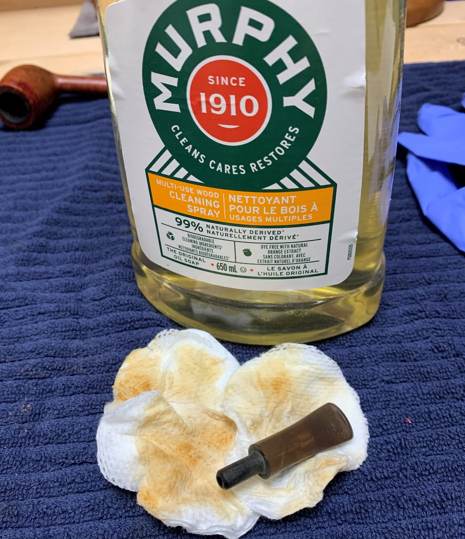
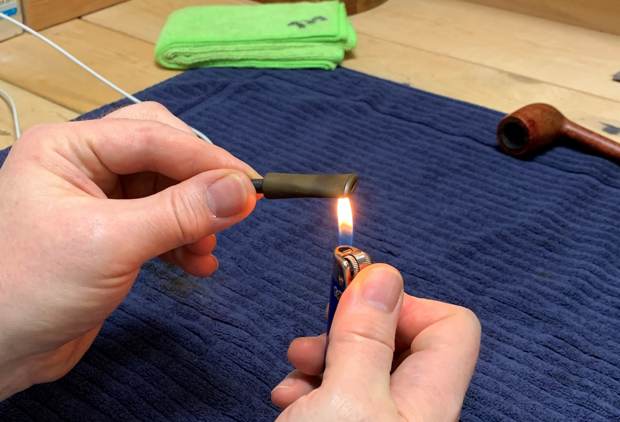
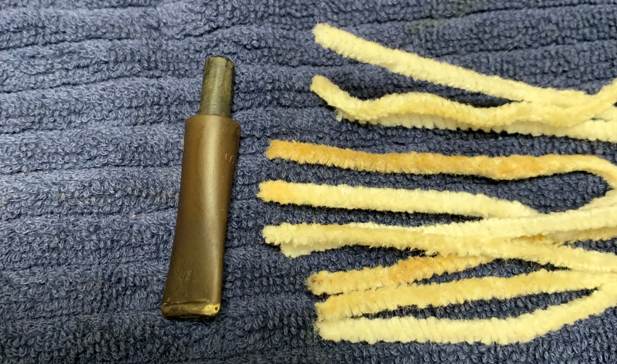
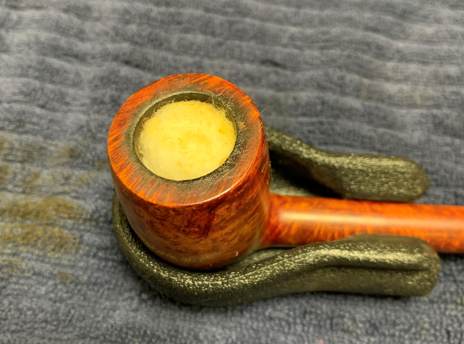
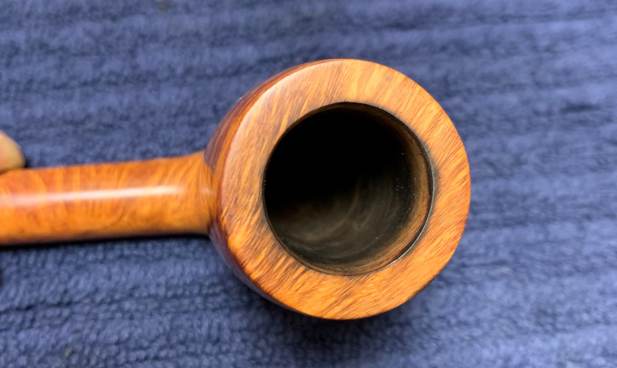
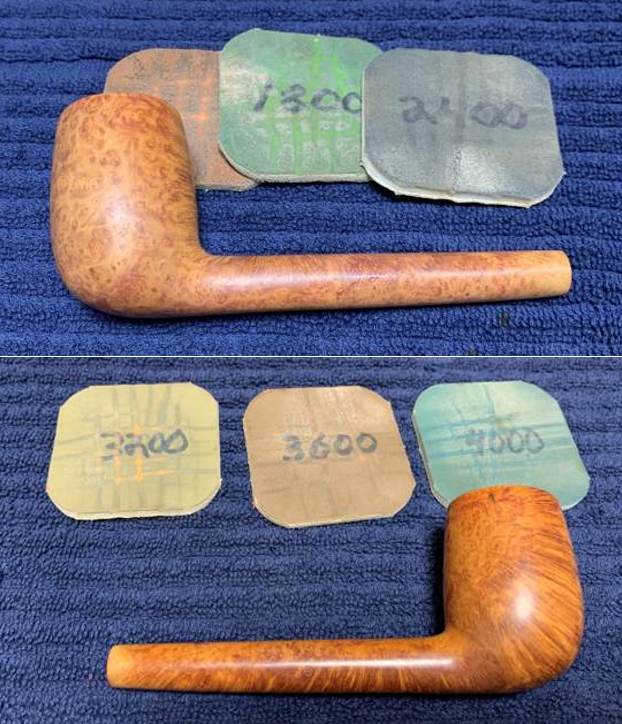
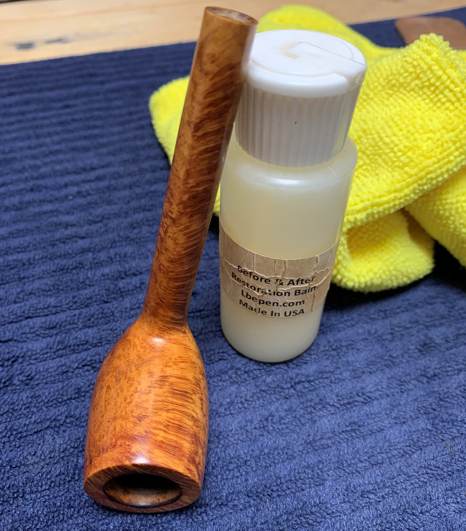
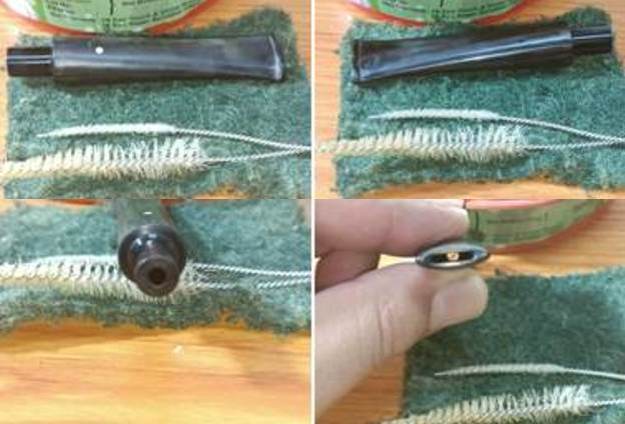
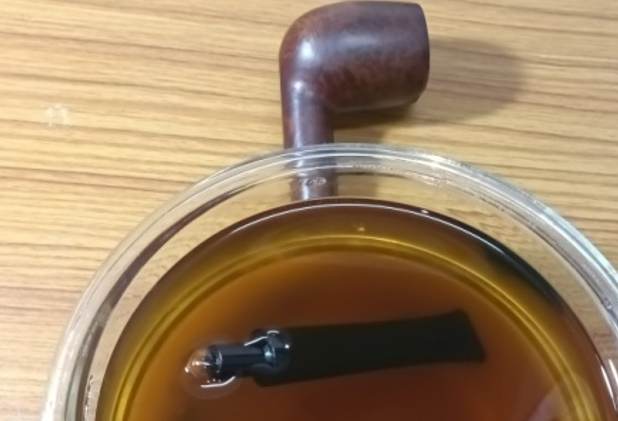
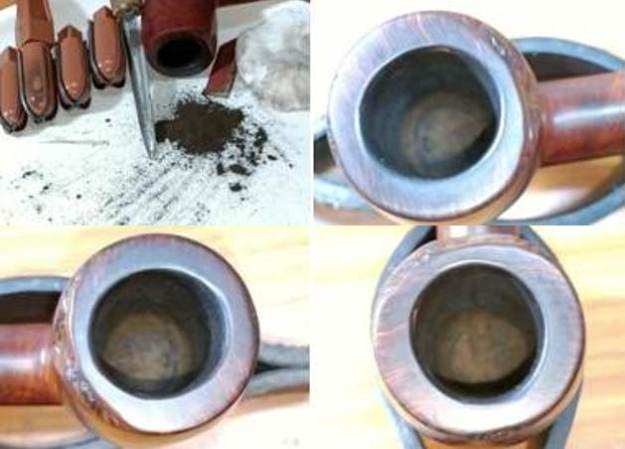
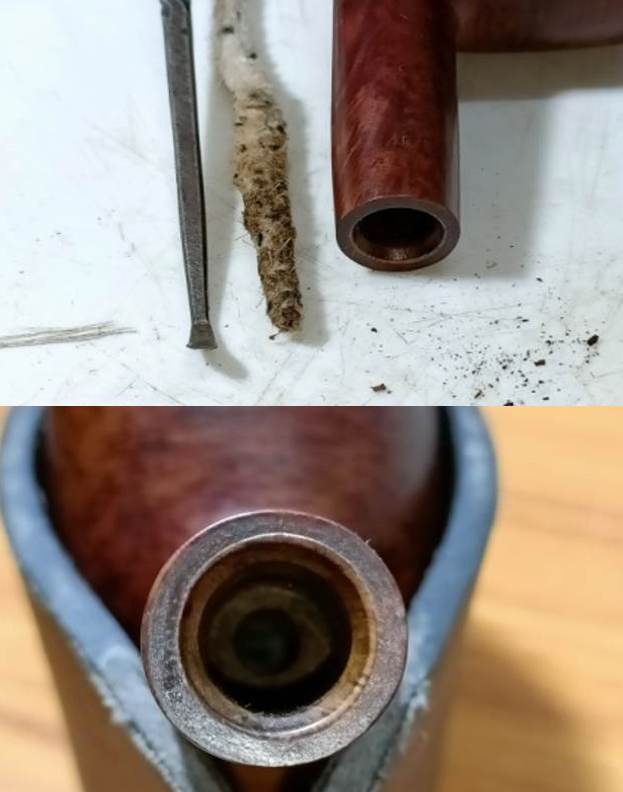
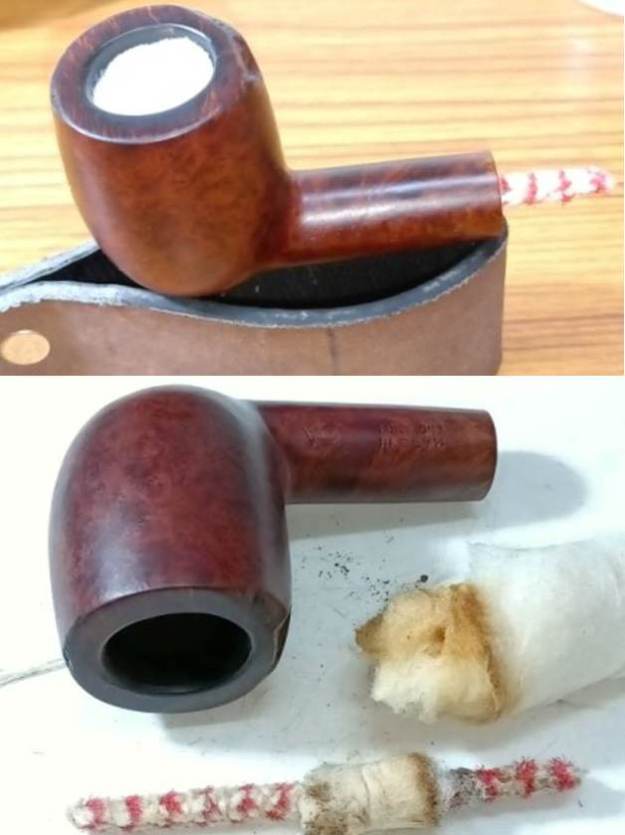
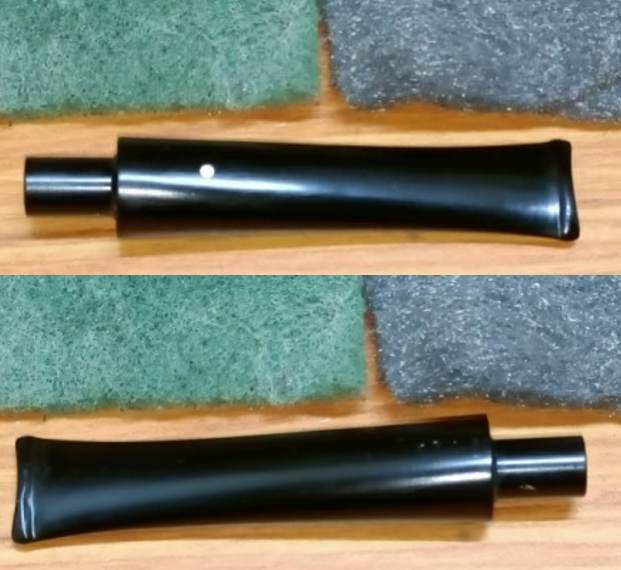
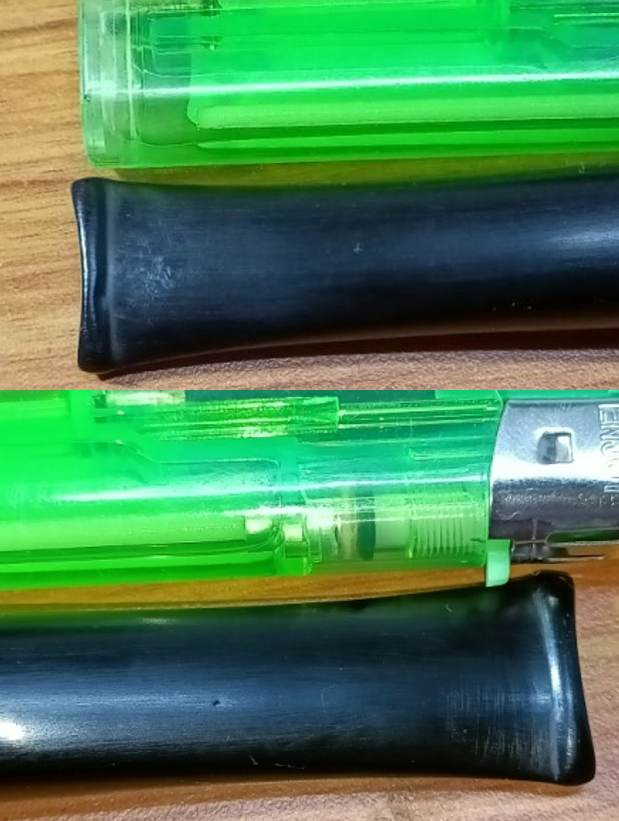
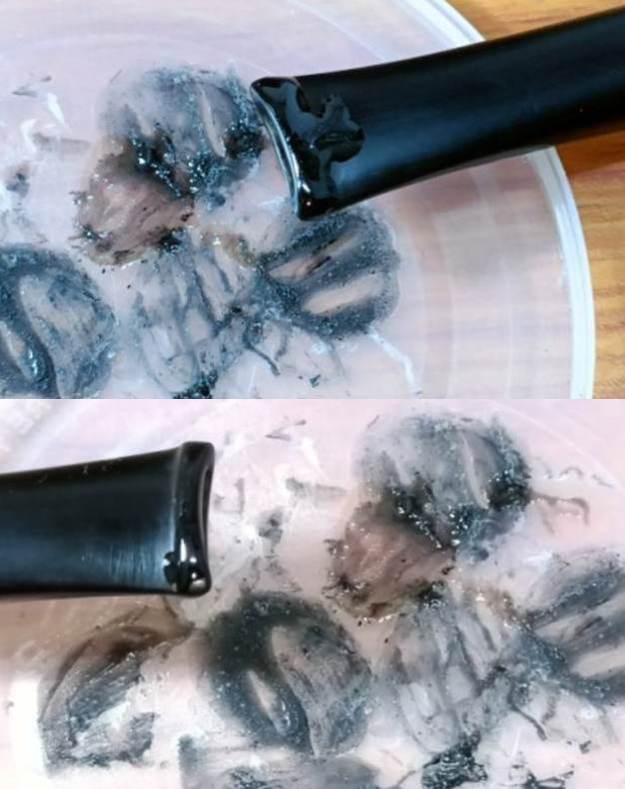
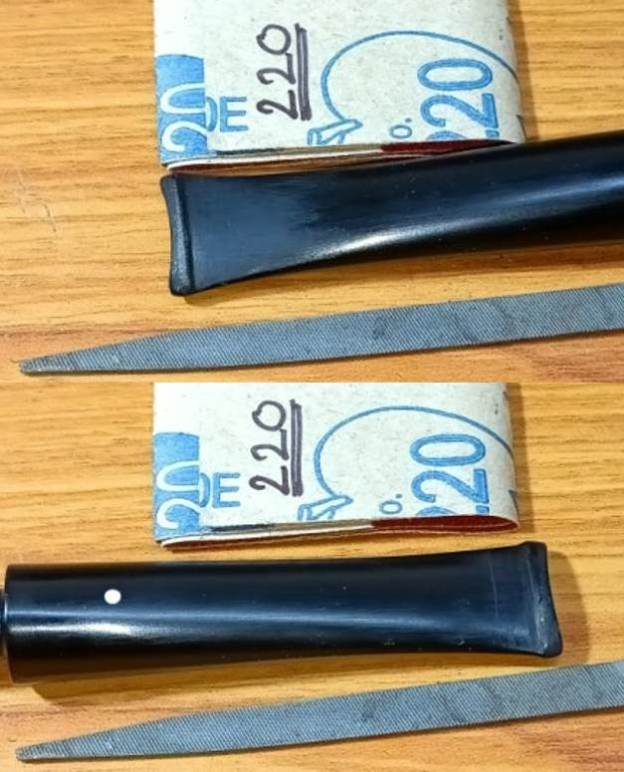
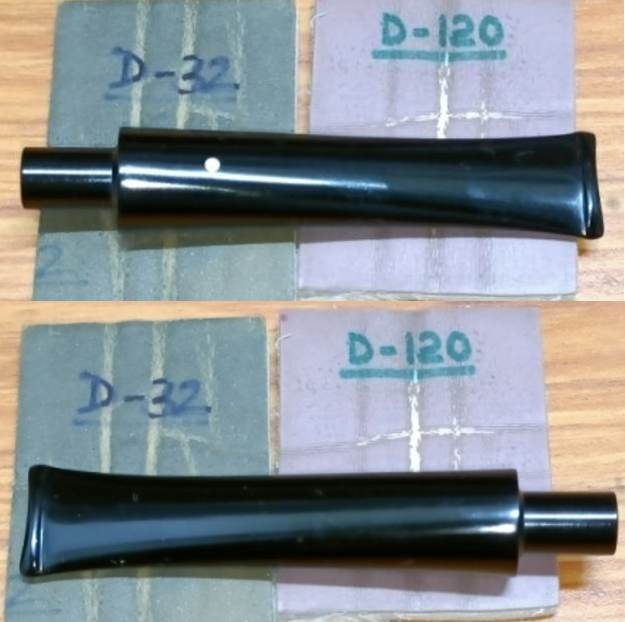
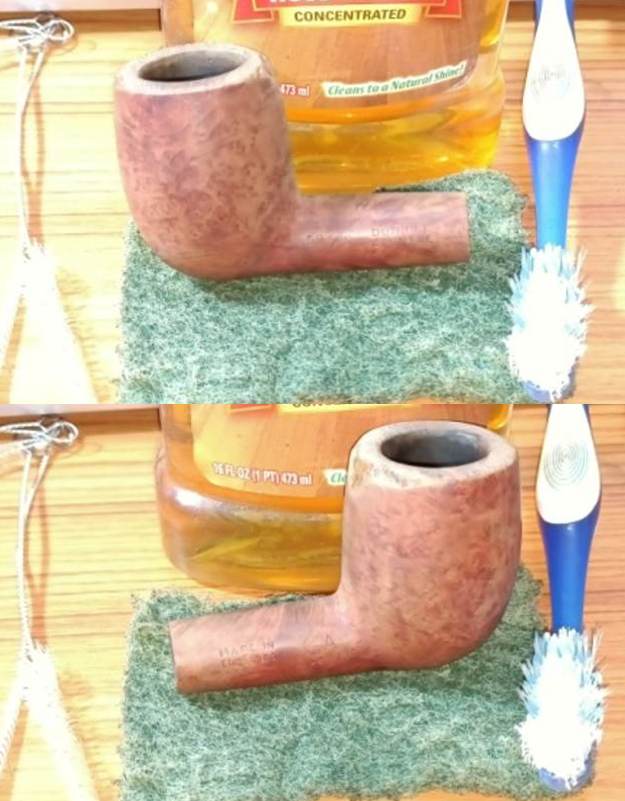
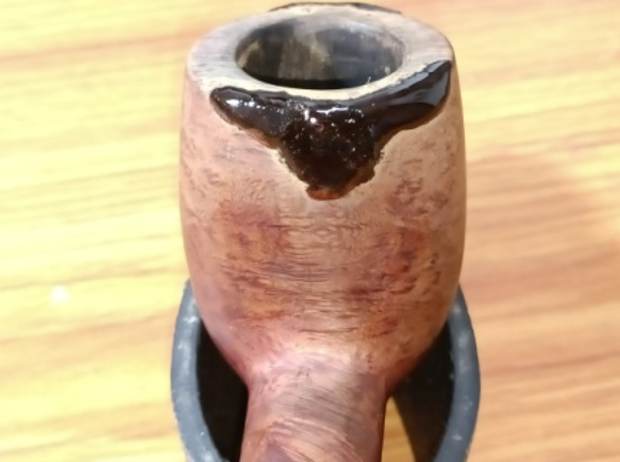
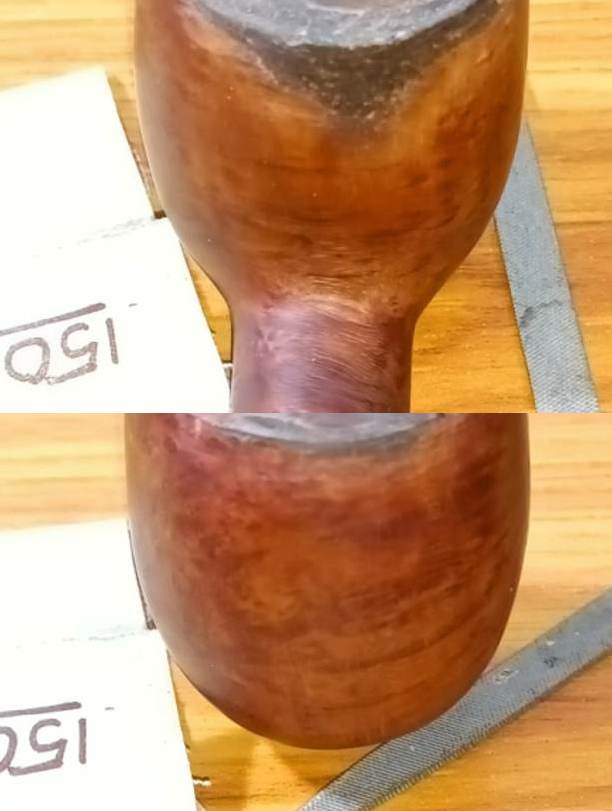
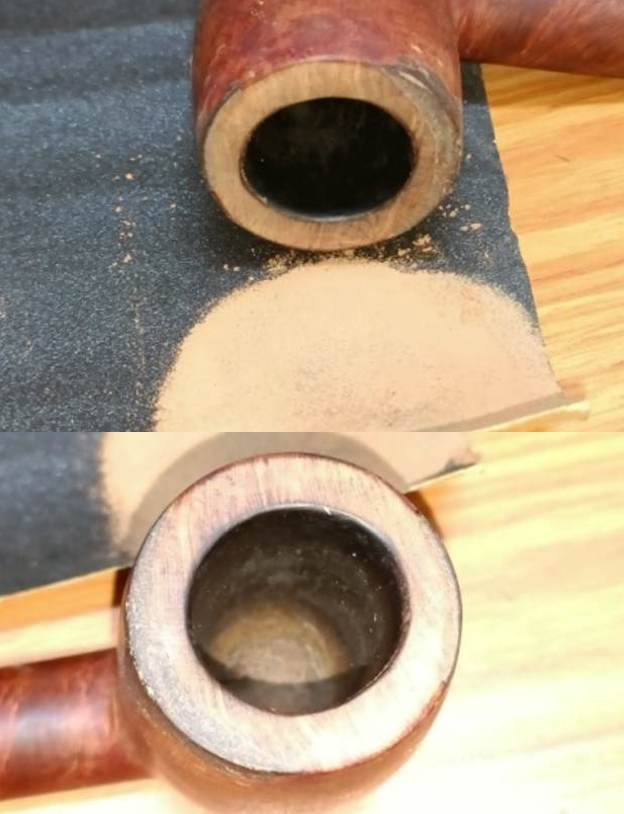
I started the process of restoration by first cleaning the stem internals with anti-oil dish cleaning soap and thin shank brushes. I scrubbed the stem surface with the soap using a ScotchBrite pad, firstly to rid the surface of old oils and gunk and secondly to remove the loose surface oxidation.I dunked the stem into the deoxidizer solution overnight for the oxidation to be pulled out to the surface. I generally allow the stem to soak in the deoxidizer solution overnight. While the stem was sat aside in the deoxidizer solution, I moved ahead to deal with the stummel repairs. I started with reaming the chamber with a size 1 head of the PipNet reamer and progressed to size 2 head. Using my fabricated knife, I gently scrapped away the cake which could not be reached by the reamer head. I further cleaned the chamber with a folded piece of 180 grits sand paper to sand out the remaining traces of cake and expose the walls of the chamber to ascertain that there were no cracks/ heat fissures. I wiped the chamber with a cotton pad dipped in isopropyl alcohol to remove the carbon dust left behind by all the reaming and sanding process. This also reduced traces of old smells from previous usage. The walls of the chamber were solid with no damage.I cleaned the shank walls and mortise with a hard bristled pipe cleaner dipped in alcohol. I used a specifically fabricated scoop to scrape out the gunk from the shank walls and face of the mortise wall. There was not much to clean though!  Prior to moving ahead with the rim repairs, I decided to address the strong ghost smells from the chamber. To eliminate the ghost smells from the pipe, I decided to treat it with salt and alcohol. I used cotton balls which is an at par substitute to Kosher salt as I have realized over the years. I drew out a wick from the cotton and along with a folded regular pipe cleaner; inserted it into the mortise and through the draught hole in the chamber. Thereafter, I packed the chamber with cotton balls to about quarter of an inch below the inner rim edge. I soaked the cotton balls with isopropyl alcohol up to the brim. About half an hour later, the level of alcohol had gone down, having being absorbed by the cotton. I topped it up once again and set it aside overnight. By next afternoon, the cotton and alcohol has drawn out all the remaining oils and tars from the chamber and mortise and the cotton and alcohol had fulfilled its intended task. I removed the cotton balls and ran pipe cleaners through the mortise to clean out all the loosened tars and gunk. The chamber now smelled clean and fresh. I set the stummel to dry out naturally. The next day, I fished out the stem and cleaned it under running warm water and scrubbed the raised oxidation from the stem surface using ScotchBrite pad. I further removed the oxidation by scrubbing the stems with 0000 grade steel wool and applied a little olive oil to rehydrate the stems and set the stem aside for the oil to be absorbed.  I heated the surface of the stem with the flame of a lighter to raise the tooth indentations to the surface and followed it up by sanding with a piece of folded 220 grit sand paper. This helps to even out the raised surface, address minor tooth chatter and also remove the deep seated oxidation. I wiped the stem with a cotton swab and alcohol to remove the raised oxidation and the resulting sanding dust. The tooth indentations over the button edge, though greatly reduced, were still prominent and would need to be addressed.    Next I filled these tooth indentations with a mix of organic charcoal and clear superglue and set the stem aside for the fills to cure.   Once the fills had cured nicely, I moved ahead and began the process of filing and shaping the button end with a flat head needle file followed by further sanding the repair with a piece of 220 grit sandpaper.  To achieve a better blending of the repaired surface with rest of the stem as well as to polish the stem, I dry sanded the entire stem with 320, 600 and 800 grit sand papers followed by wet sanding using 1000, 1500 and 2000 grit sand papers. This progressive use of higher grit sandpapers helps to reduce the sanding marks left behind by the more abrasive ones while completely eliminating the oxidation and imparting a clean shine to the stem surface.  To bring a deep shine to the vulcanite stem, I went through the dry sanding with 3200 to 12000 grit micromesh pads, and wiped the stem with Extra Virgin Olive oil to rehydrate the vulcanite. The repairs have blended in very well and the stem now looks shiny black and beautiful. The finished stem is shown below.  With the stem repairs and polishing now completed, I turned my attention to the stummel repairs and refurbishment. Using a hard bristled tooth brush dipped in undiluted Murphy’s Oil Soap; I very deliberately scrubbed the surface of the stummel and the rim top. I also cleaned the mortise and shank internals using anti-oil dish washing soap and shank brush. I rinsed the stummel under warm running water and dried it using paper napkins and soft cotton cloth. The original reddish dye was also washed away to some extent, but that was not worrisome as I would be re-staining it after repairs. Next, I filled up the large areas of missing briar from the front and back of the outer rim edges with CA superglue and briar dust using the layering method. The only disadvantage of this method is the presence of large number of air pockets which necessitates repeated refilling with glue and briar dust. Once I was satisfied with the repairs, I set the stummel aside for the mix to cure completely.  The next evening, the repairs to the edge had completely cured and I moved ahead by filing and rough shaping with a flat head needle file. I further fine tuned the blending by sanding it down with a 150 grit sand paper. Here is how the repaired area appears at this stage. I am very pleased with the way this repair has progressed.    Thereafter, I took the stummel to the topping board with the aim of making the rim top surface smooth and even as the rim top was also rebuilt along with the edge. I topped the rim surface on 220 grit sandpaper with even circular rotations and frequently checked the progress being made. This step also helped to minimize the charring to the inner rim edge. I shall further mask the damage by creating a slight bevel to the inner edge. I am very pleased with the progress being made thus far. Once the repairs to the stummel were completed, it was time to polish and stain the stummel. I dry sanded the entire stummel with 1500 to 12000 grit micromesh pads, wiping the stummel with a moist cloth after every pad. I massaged a small quantity of “Before and After Restoration Balm” into the briar with my finger tips and let it rest for a few minutes. The balm almost immediately works it’s magic and the briar now has a nice vibrant appearance. I further buffed it with a microfiber cloth. I had hoped that the balm would work it’s magic on the filled area and help in blending it a bit, but unfortunately that did not happen. Well, moving on to the staining process after this step… While refreshing my readings about Dunhill lines, I remember having read that Dunhill achieved the trademark Bruyere color by having an undercoat of dark brown stain followed by deep red color stain. And that’s exactly what I decided to follow with a slight modification. I would first stain wash the stummel with DB stain and thereafter stain it deep red.
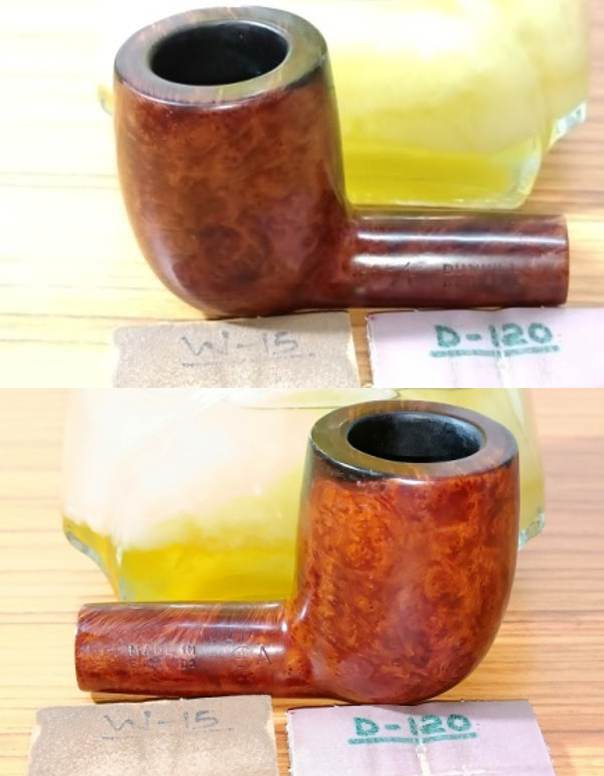
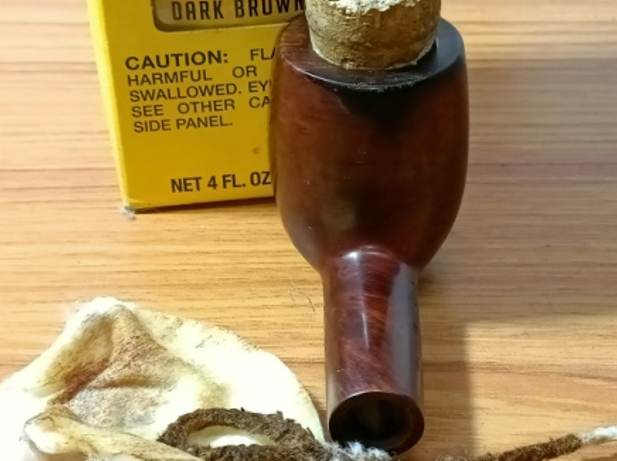
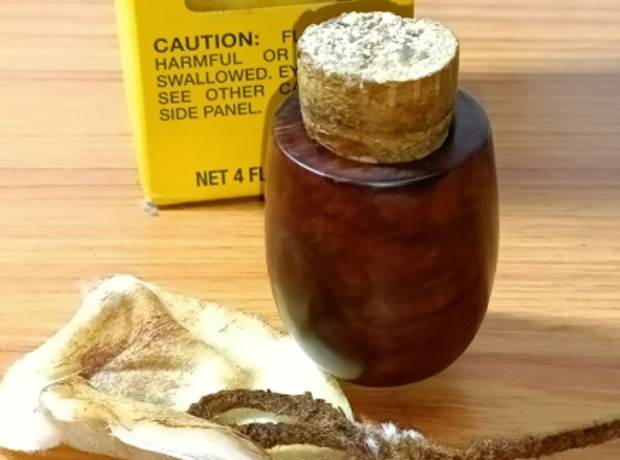
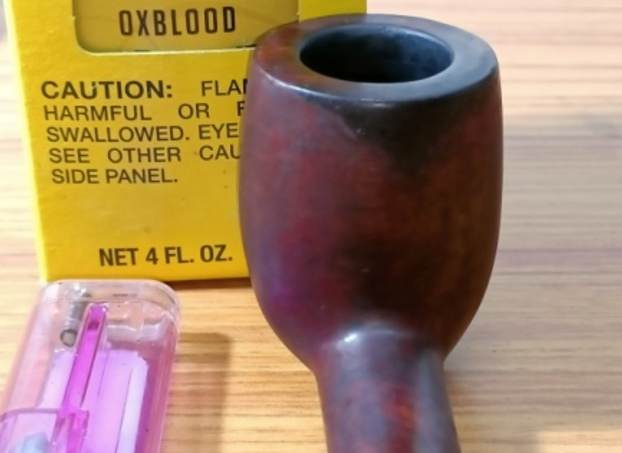
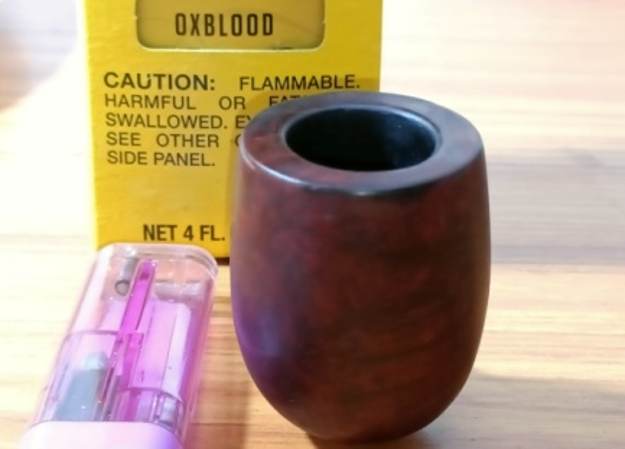
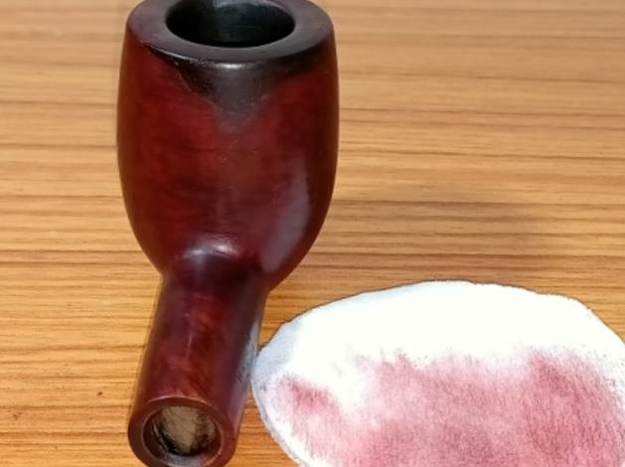
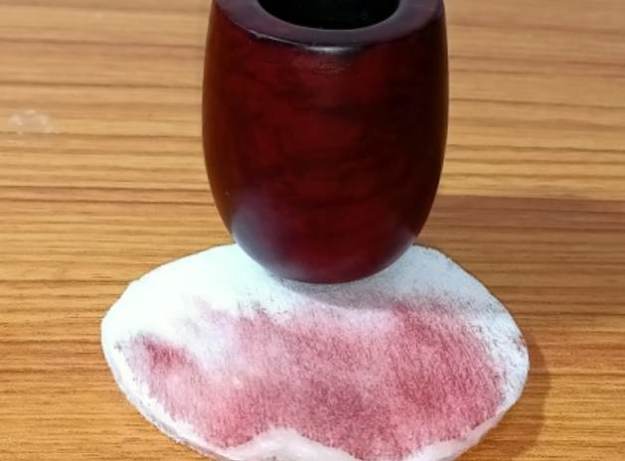
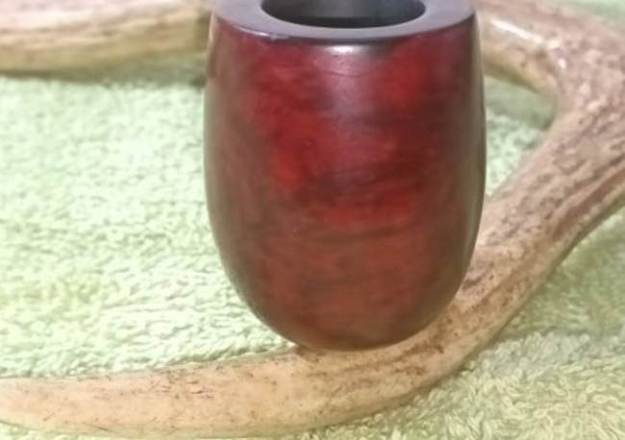
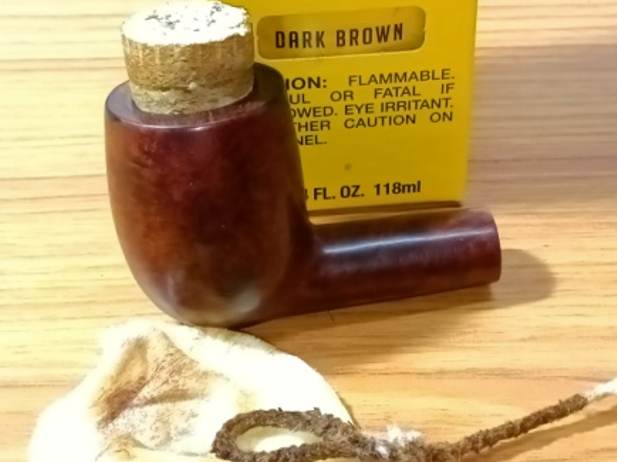
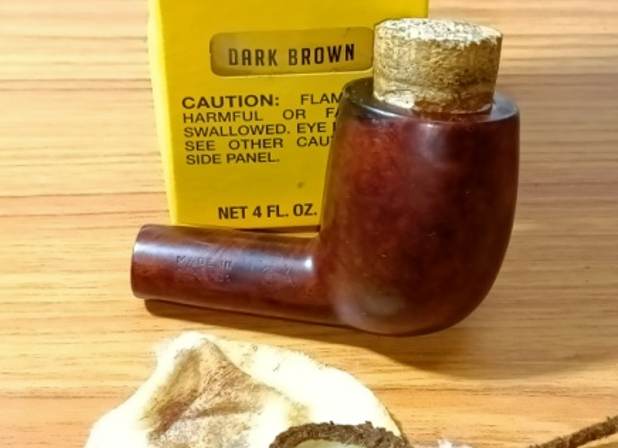
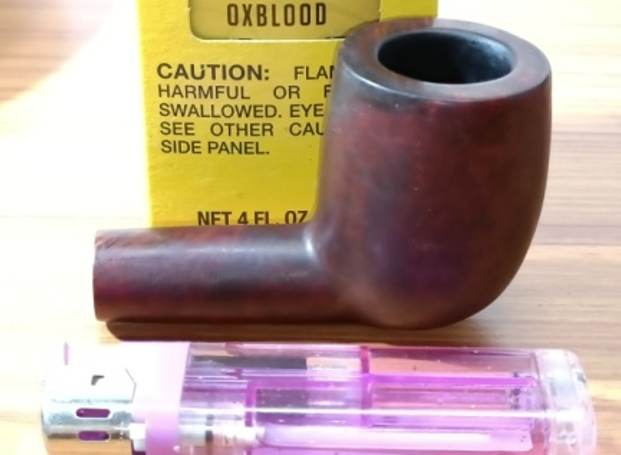
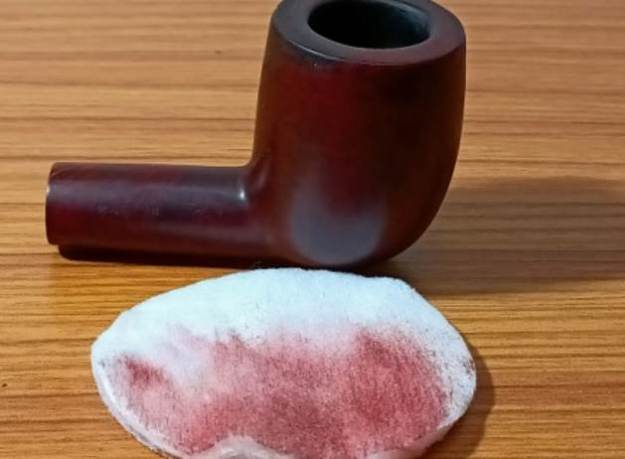
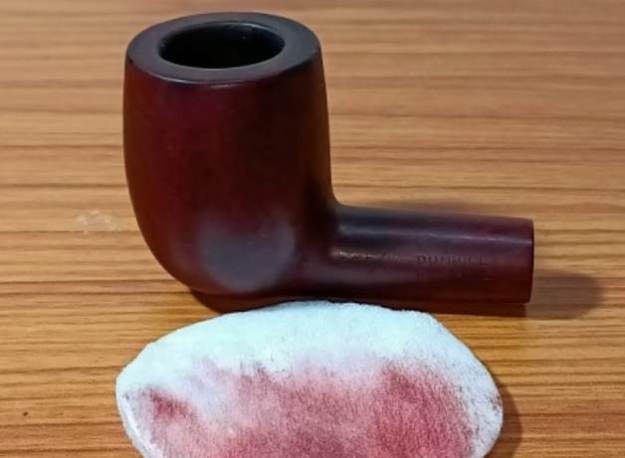
I mixed a small quantity of Fiebing’s Dark Brown Leather Dye with isopropyl alcohol to dilute it and applied it to the stummel with a folded pipe cleaner after heating the stummel with a heat gun. I let this stain wash set for a few minutes and vigorously wiped it down with a clean cotton swab. I repeated this process a couple of times till I was satisfied with coloration of the stummel. The next afternoon, I again heated the stummel surface with a heat gun and applied Fiebing’s Oxblood stain with a folded pipe cleaner. As I painted the stummel with stain over sections at a time, I lit the dye using a lighter which burns the alcohol in the aniline dye and sets the dye pigmentation in the wood. After fully saturating the stummel and covering the whole surface, including the rim top, I set the stummel aside to rest for several hours for the stain to set. A few hours later, I wiped the stummel with a cotton pad wetted with isopropyl alcohol to remove any excess stain from the stummel surface and dry polished the stummel with 3200 to 12000 grit micromesh pads. The repairs seem to have blended in pretty well to the naked eye, but under a camera, the repairs mark their presence. Yeah, I am pretty happy with the end result. This now gets me to that part of the process where I get to savor the fruits of my labor until this point, that being the final polishing with Blue Diamond and Carnauba wax!
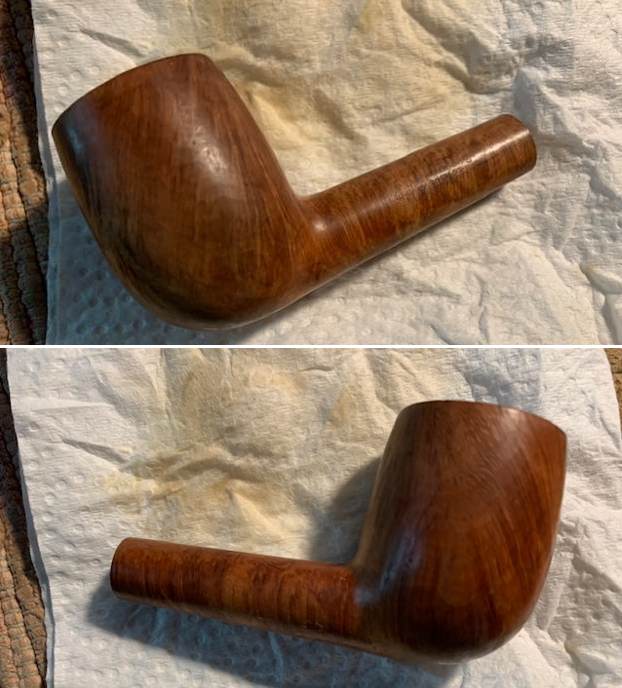
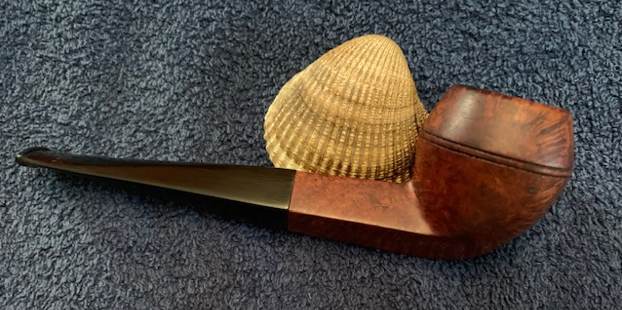
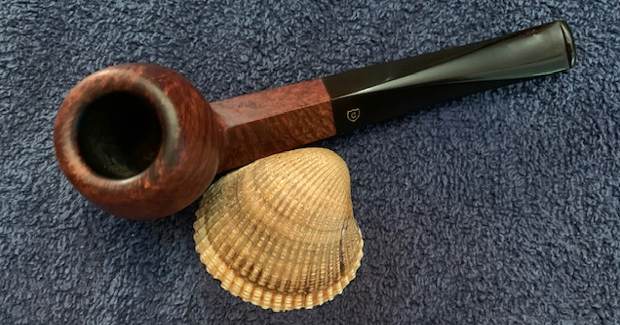
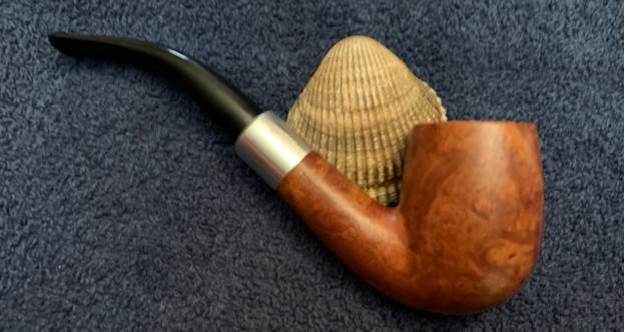
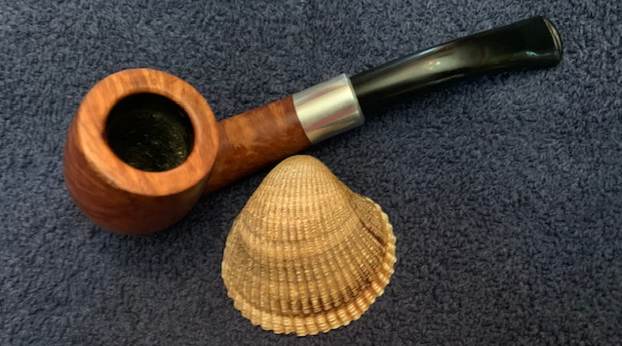
I began the final polishing cycle by mounting a cotton cloth buffing wheel onto my hand held rotary tool and applied a coat of Blue Diamond to the stummel and the stem to polish out the minor scratches. With a cotton buffing wheel that I use for carnauba wax, I applied a coat of carnauba wax and continued to work on it till the complete coat of wax had been polished out. I mounted a clean cotton cloth buffing wheel and gave the pipe a once over buff. I finished the restoration by giving the entire pipe a rigorous hand buff using a microfiber cloth to raise the shine further. The finished pipe is as shown below and will soon make it’s way to my friend here for many more years of happy smokes. Thank you for reaching thus far with the write up and really appreciate you being part of my journey in the world of pipe repairs.
Cleaning up a Fascinating KBB Yello-Bole Premier Billiard


Blog by Steve Laug

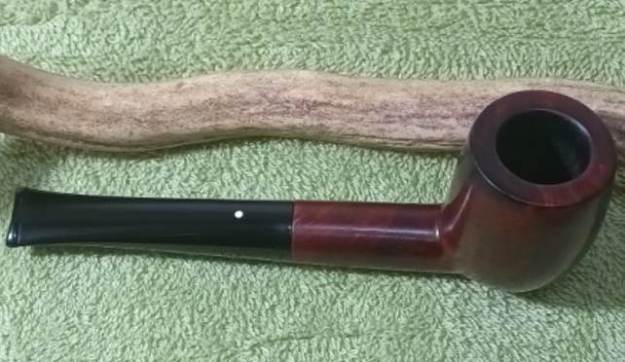
Jeff purchased this pipe off eBay on 05/27/2016 from a seller in Strasburg, Ohio, USA. Once again he showed that he has an eye for old and unique pipes. This one is a straight Billiard with a classic almost British look to it. The grain around the bowl and shank was quite nice and shone through the grime ground into the finish. The bowl was coated with peeling varnish or some shine coat that was worn off around parts of the bowl and shank. The rim top had a lot of dents and damage but that will become evident in the following photos. The bowl had a thick cake and a lava overflow on the inner edge of the bowl. It was stamped on the left side of the shank and has the KBB in a cloverleaf and next to that it reads Yello-Bole over Cured with Real Honey. Next to that is the symbol for a registered trademark ® (R in a circle). Underneath it reads Premier over Imported Briar. On the right side of the shank the stamping very worn but illegible. It may be a shape number but I am not sure. On the stem is the propeller inset logo that appeared on older Yello-Bole pipes. Jeff took photos of the pipe before he started his cleanup work. Jeff took some photos of the rim top and the heel of the bowl to show the condition of the bowl, rim top and finish around the bowl. The bowl interestingly, still had some of the Yello-Bole Honey Cured coating on the top edge and the bottom of the bowl. The rim had been knocked hard on surfaces to empty the bowl. There was some lava and dirt on the rim top and there was a moderate cake in the bowl. There appeared to be issues with the inner edge of the bowl but the outer edge looked to be in good condition. The stem was in decent condition. It was oxidized on both sides of the stem. There were some nicks and tooth marks on both sides near the button and on the top and underside of the button itself. I went back to a previous blog about the various Yello-Bole logos in my collection of these pipes. I reread that blog to try to narrow down a date for the pipe. Here is the link to the post and the comments on the blog: https://rebornpipes.com/2013/01/25/yello-bole-logos-from-my-collection-of-old-yello-bole-pipes/. There was a comment on that blog that came from Troy who I consider my “go to guy” for Yello-Bole information (he has written on rebornpipes and also has a blog of his own). Troy wrote as follows on dating Yello-Bole pipes by the stamping and logos.

“I have a large KBB Yello-Bole collection. They are some of my most favorite pipes and the best smokers for the money (briar wise) you can find in my opinion. I have restored and researched them quite a bit. I have several listed on my blog that I have cleaned or restored. I own about 30-40 KBB Yello-Boles now.”

“Here is a little guide to dating KBB Yello-Boles. If it has the KBB stamped in the clover leaf it was made 1955 or earlier as they stopped the stamping after being acquired by S.M. Frank. From 1933-1936 they were stamped Honey Cured Briar. Pipes stems stamped with the propeller logo they were made in the 30s or 40s no propellers were used after the 40s. Yello-Bole also used a 4 digit code stamped on the pipe in the 30s. If the pipe had the Yello-Bole circle stamped on the shank it was made in the 30s this stopped after 1939. If the pipe was stamped BRUYERE rather than briar it was made in the 30s.” (NB. The portions above in bold and underlined were highlighted as they pertain to the present pipe.)

From that information I ascertained the following. The nicely grained Premier Billiard I had was stamped with KBB in the cloverleaf on the left underside of the shank which told me that the pipe was made before 1955. It had a propeller logo on the stem which further placed it in the period of the 30s and 40s. With all of that collected I knew the pipe was made between 1930 and 1949 which means that this old Billiard has seen a lot of life. I wish it could tell its story.

Ah well… I don’t know for sure where it came from or what previous pipeman carried the trust of this pipe before it came to me. I still needed to do my part of the restoration. I turned my attention to the restoration of the Billiard.

Jeff had worked his magic in cleaning up this pipe. It is nice to work on pipes that he has cleaned up instead of cleaning them myself. He reamed it with a PipNet reamer and smoothed the walls of the bowl with a Savinelli Fitsall pipe knife. He scrubbed out the mortise and the airway in the shank and the stem with alcohol, cotton swabs and pipe cleaners. He scrubbed the exterior of the bowl, rim and shank with a tooth brush and Murphy’s Oil Soap to the oils and tars on the bowl, rim and shank. He rinsed it under running water. He dried it off with a soft cloth. He was able to remove much of the crackling varnish and the briar beneath was in good condition. The cleaning of the stem left a light oxidation in the vulcanite. The tooth marks were clean but visible. I took photos of the pipe to show its condition before I started my work on it.  I took some photos of the rim top and cap to show what it looked like after Jeff had cleaned off the grime and tars. The briar was in good condition but there were some scratches in the flat top and darkening around the inner edge. The bowl was slightly out of round. The stem showed light tooth chatter and wear but it was otherwise in good condition. There were no deep tooth marks. I took photos of the shank sides. The stamping on the left side of the shank is faint but readable. The stamping on the right side is very faint and I am not able to make it out clearly.I removed the stem from the shank and took a photo of the overall look of the pipe. You can see the shovel stinger apparatus in the tenon.I started my work on this pipe by wiping the bowl down with acetone on a paper towel to remove the varnish that remained. Once I was finished the finish was clean and the grain looked really good on the bowl and the rim top. I used a folded piece of 220 grit sandpaper to clean up the damage and darkening there. I also smoothed out the damage on the rim top. It worked amazingly well and the finished edge and top looked much better.  I polished the bowl and the rim top with micromesh sanding pads – wet sanding with 1500-2400 grit pads and dry sanding with 3200-12000 grit pads. I wiped the bowl down after each pad with a damp cloth.    I rubbed some Before & After Restoration Balm into the surface of the briar to enliven, clean and preserve it. I rubbed it in with my fingertips working it into the briar. I set it aside for 15 minutes to let the balm do its work. I buffed it off with a cotton cloth and then buffed it with a microfiber cloth. The photos below show the pipe at this point in the restoration process.  I set aside the bowl and turned my attention to the stem. I polished the aluminum shovel stinger apparatus with a 1500 grit micromesh sanding pad. It took on a rich shine.I polished the stem using micromesh sanding pads – wet sanding with 1500-12000 grit pads to further polish it. After each pad I wiped it down with Obsidian Oil to protect and enliven the stem. I polished it further with Before & After Pipe Polish – both Fine and Extra Fine. When I finished with the polish I gave it a final coat of Obsidian Oil and set it aside to dry. This older rusticated KBB Cured With Real Honey ® Yello-Bole Premier Billiard is an interesting and unusual piece. It has a classic English looking Billiard shape. The smooth finish around the bowl and shank has some nice straight and flame grain around the sides. The rim top and heel have some nice looking birdseye grain. The reddish brown of the bowl and the black of taper vulcanite stem contrast well together. I buffed the bowl and the stem with Blue Diamond polish to raise the shine on the briar and the vulcanite. I lightly buffed the rim top and shank end as well. I was careful to not buff the stamping and damage it. I gave the bowl and the stem multiple coats of carnauba wax. I buffed the entire pipe with a clean buffing pad to raise the shine. I hand buffed it with a microfiber cloth to deepen the shine. The finished pipe is shown in the photos below. The dimensions of the pipe are: Length: 6 inches, Height: 1 ¾ inches, Outside Diameter: 1 ¼ inches, Diameter of the chamber: ¾ of an inch. The weight of the pipe is 1.62 ounces/46 grams. It is an interesting old pipe and should make a great collectible piece for lovers of old Americana Pipe Making Companies. I will be adding it to the American Pipemakers Section on the rebornpipes store very soon if you would like to add it to your collection. Thanks for walking through the restoration with me.

Breathing Life into a Custom-Bilt Panel Billiard


Blog by Steve Laug

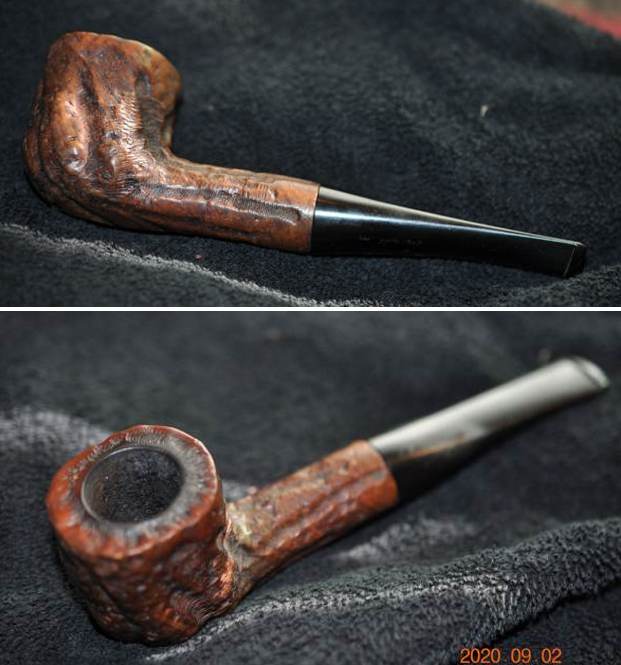
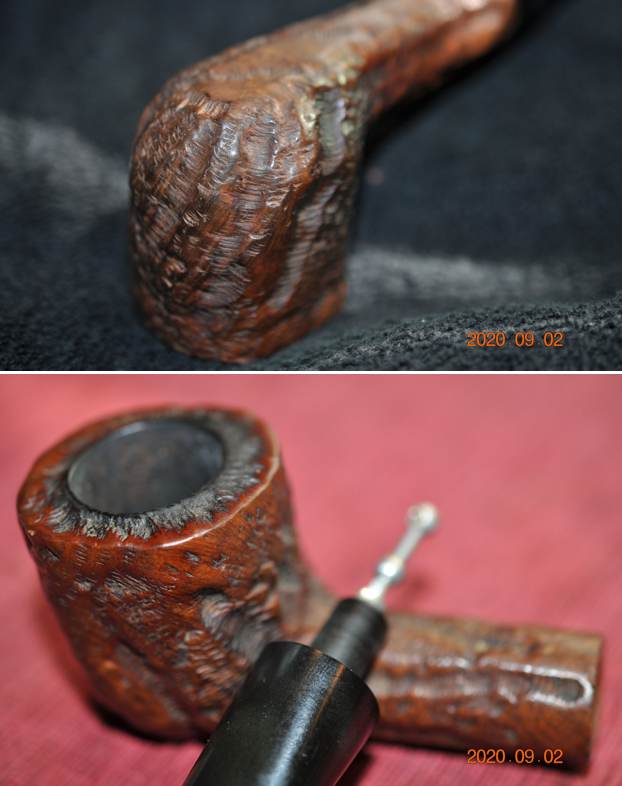
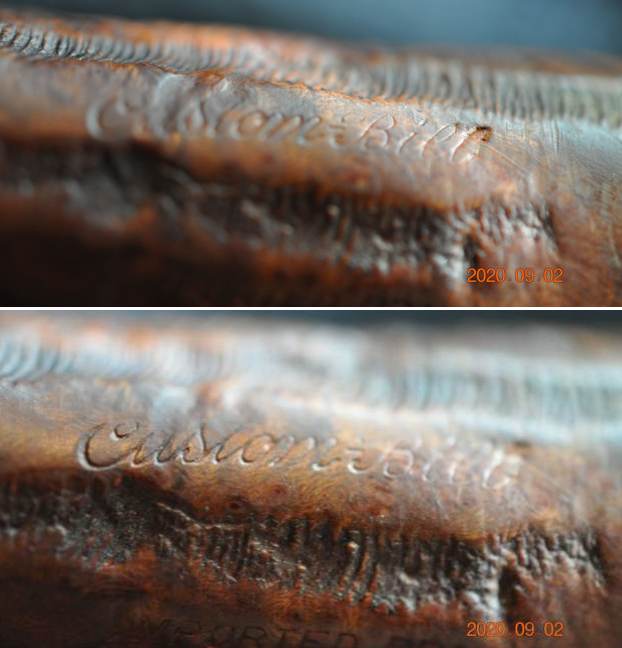
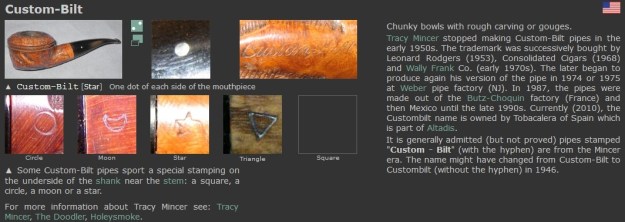
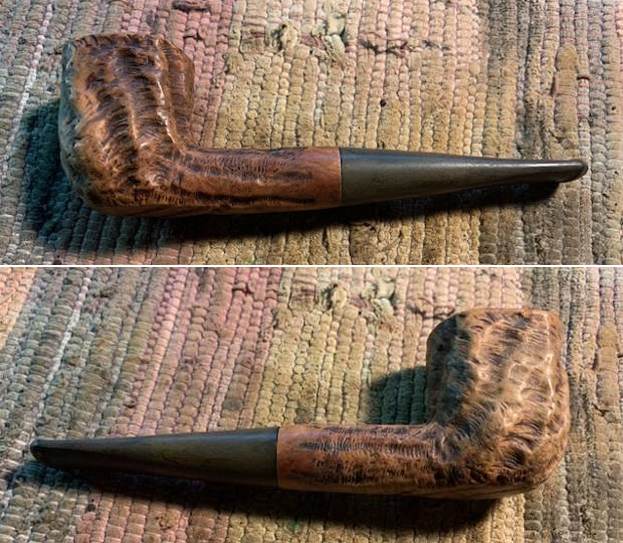
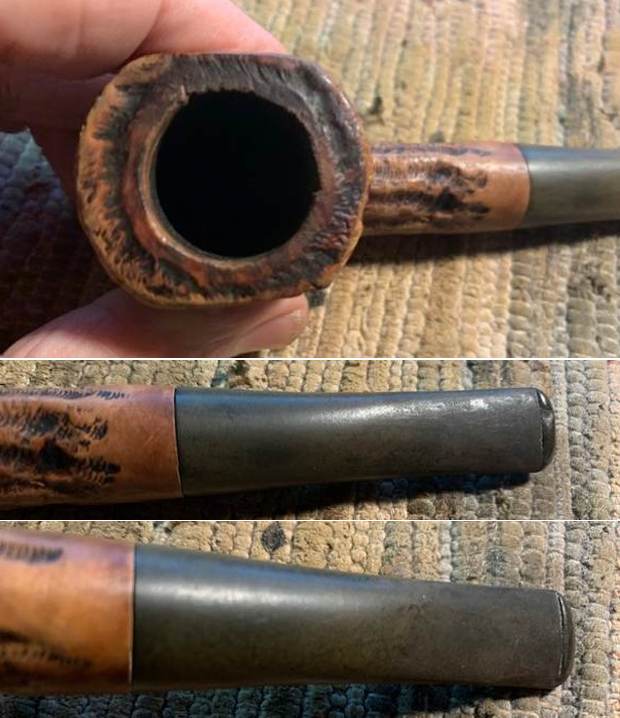
The next pipe on the work table came to us from an antique store on 08/27/20 in Murray, Utah, USA. The pipe is a classic Custom-Bilt piece – a rusticated Panel Billiard shaped pipe with some deep carving around the bowl. The pipe is stamped on the left underside of the shank and reads Custom-Bilt and on the heel of the bowl it is stamped Imported Briar. The bowl was heavily caked with an overflow of lava on the rusticated rim top toward the back and on the inner edge. The inside edges looked to be in good condition. The finish was dirty but the pipe still has a sense of charm. The stem was dirty and lightly oxidized. It had tooth chatter and marks on the top and underside ahead of the button and on the button surface itself. There were no markings or a logo on the taper stem. It had promise but it was very dirty. Jeff took some photos of the pipe before he started his cleanup work.    He took photos of the rim top and bowl to give a clear picture of the thickness of the cake and tobacco debris as well as the lava on the smooth rim top. He also took photos of the top and underside of the stem to show the oxidation and the chatter and tooth marks. Jeff took photos of the sides and the heel of the bowl to give a picture of what the briar looked like. The rustication pattern around the bowl is instantly recognizable as done by Custom-Bilt. The last photos shows a stinger in the tenon but is has disappeared since it arrived here. The stamping on the left underside of the shank and the right underside at the shank/stem joint is clear and readable and read as noted above.     I turned to Pipephil (http://www.pipephil.eu/logos/en/logo-c8.html) to get a quick view of the brand once again. I knew that I was working with one of the older pipes and probably made by Tracy Mincer himself. He stopped making the Custom-Bilt pipes in the early 1950s. The screen capture I included below shows a brief history of the brand. It also has a comment on the symbols stamped on the shank near the stem including the square that is stamped on this one. I turned to Pipedia (https://pipedia.org/wiki/File:CustomBilt_Stamp1.jpg) for a quick read. The majority of the information there included two book reviews of the “Custom-Bilt Story” by Bill Unger.

The one line I captured was the following: “Tracy Mincer started the original Custom-Bilt pipes it appears in 1934”.

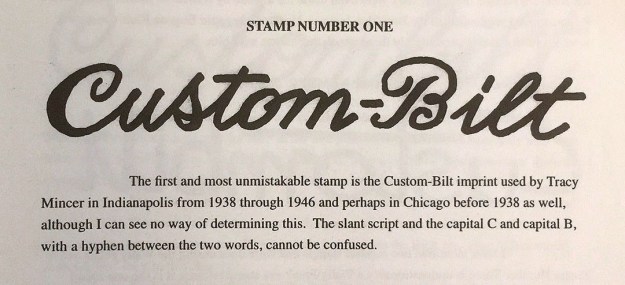
I did a screen capture of the stamping that matched the stamping on the pipe that I am working on. What I learned from that is that the stamp was used by Tracy Mincer in Indianapolis in the US from 1938-1946 and possibly in Chicago before 1938 as well. So now I had a possible date for this pipe. It was an old timer and it was well worth working on.Armed with that information I turned to work on the pipe itself. Jeff had cleaned up the pipe as usual. He reamed the pipe with a PipNet pipe reamer and removed the rest of it with a Savinelli Fitsall Pipe Knife. He scrubbed the bowl with undiluted Murphy’s Oil Soap with a tooth brush. He rinsed it under running warm water to remove the soap and grime. He cleaned out the inside of the shank and the airway in the stem with alcohol, cotton swabs and pipe cleaners. He scrubbed the stem with Soft Scrub and a tooth brush and rinsed it off with warm water. I took photos of the pipe before I started my part of the restoration work. The rim top and the inner edge had some darkening and wear that would need to be addressed. The outer edge of the bowl look very good. The stem surface looked good with a few small tooth marks and chatter on both sides near the button. The stamping on left and underside of the shank are faint but readable. It is stamped as noted above. I removed the stem and took a photo of the pipe to give a sense of the whole. It is a good looking pipe.I started my work on the pipe by addressing the darkening on the rim top and cleaning up the damage to the inner edge of the rim. I used a folded piece of 220 grit sandpaper to reshape the inner edge. The finished rim top and edge looks better. I worked over the rim top with a brass bristle brush to clean up the debris and darkening in the grooves of the rim top.The bowl looked good at this point so I rubbed it down with Before & After Restoration Balm. I worked it into the surface of the bowl sides and shank with my fingertips and a horsehair shoe brush to clean, enliven and protect the briar. I let the balm sit for about 10-15 minutes and buffed with a cotton cloth to raise the shine.    I set the bowl aside and turned to work on the stem. I used clear CA glue to fill in the tooth marks on the button surface and on the surface of the stem. I flattened the repair on the topside and shaped the button edge on both sides with a small flat file. It is starting to look very good. I sanded the button edges and the repairs on the stem with 220 grit sandpaper to blend them into the surface of the vulcanite. I started polishing it with 400 grit wet dry sandpaper.  I polished the vulcanite stem with micromesh sanding pads – 1500-12000 grit pads. I wiped it down with Obsidian Oil after each sanding pad. I used Before & After Pipe Polish – both Fine and Extra Fine to further polish the stem. I gave the stem a final coat of Obsidian Oil and set it aside to dry.   This Custom-Bilt Panel Billiard is a great looking pipe now that it has been restored. The style of rustication that is used around the bowl is quite beautiful and works well with both the shape and the polished vulcanite taper stem. I put the stem back on the bowl and carefully buffed the pipe with Blue Diamond on the buffing wheel using a light touch on the briar. I gave the bowl multiple coats of Conservator’s Wax and the stem multiple coats of carnauba wax on the buffing wheel and followed that by buffing the entire pipe with a clean buffing pad. I hand buffed the pipe with a microfiber cloth to deepen the shine. The finished Custom-Bilt is another pipe that fits nicely in the hand and feels great. Give the finished pipe a look in the photos below. The dimensions of the pipe are Length: 6 inches, Height: 2 inches, Outside diameter of the bowl: 1 ¼ inches x 1 ½ inches, Chamber diameter: ¾ of an inch. The weight of the pipe is 54 grams/ 1.90 ounces. I will be putting it on the rebornpipes store shortly. If you are interested in adding this pipe to your collection send me a message or an email. Thanks for reading this blog and my reflections on the pipe while I worked on it. There are many more to come!

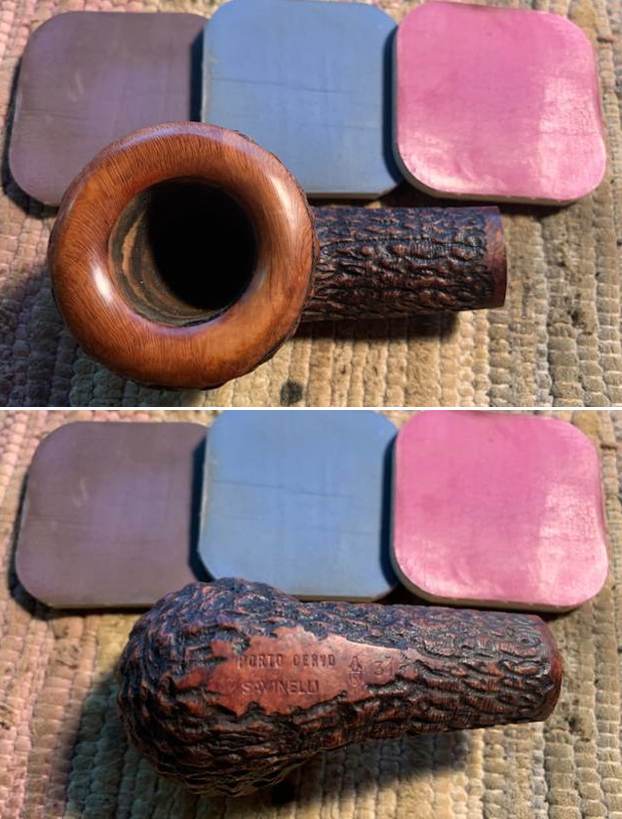
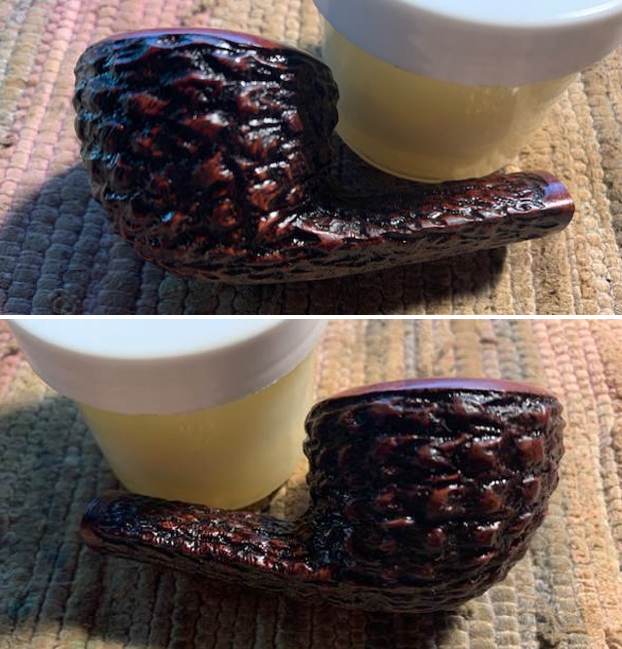
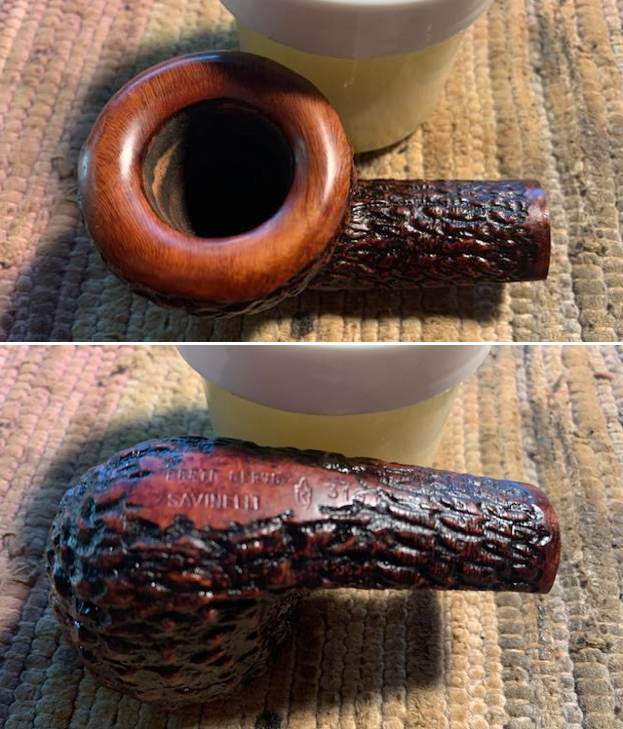
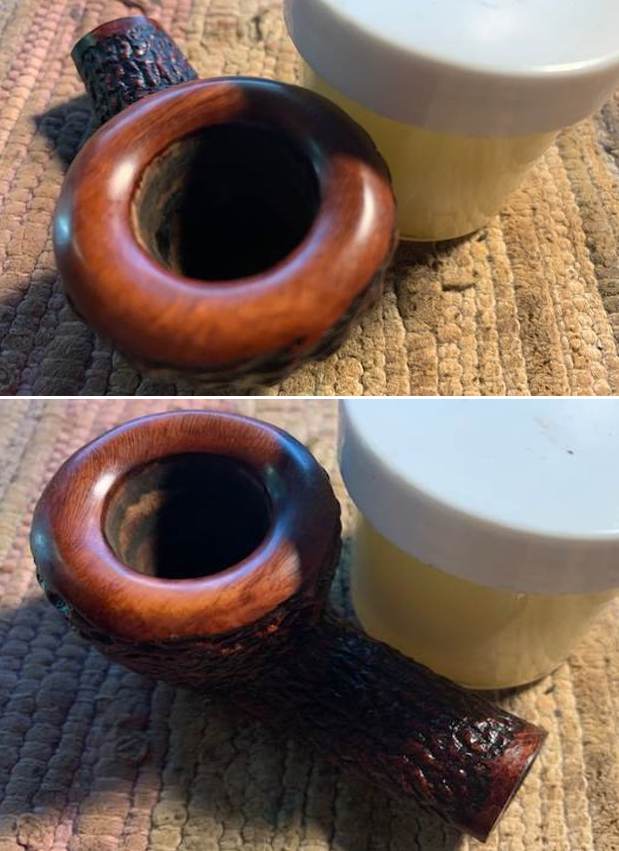
New Life for a Very Savinelli looking Porto Cervo 316KS


Blog by Steve Laug

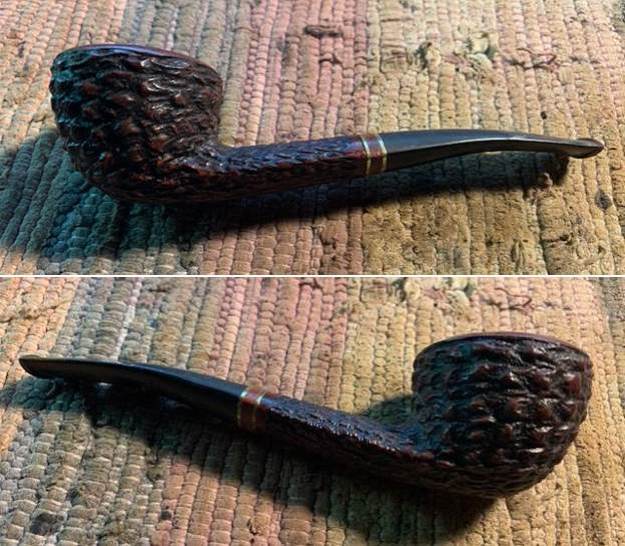
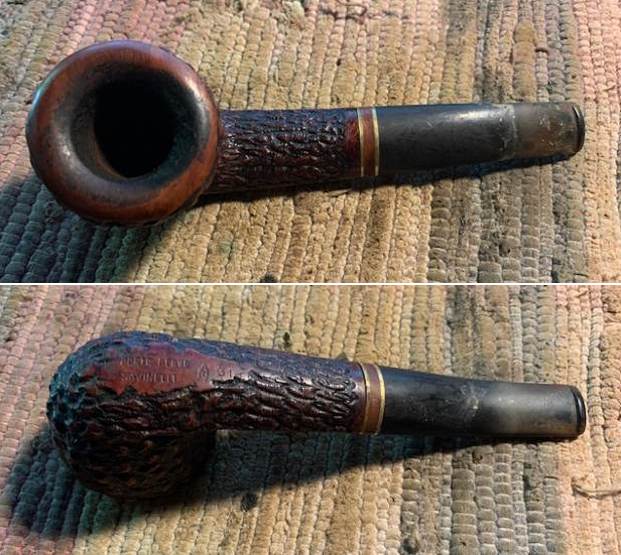
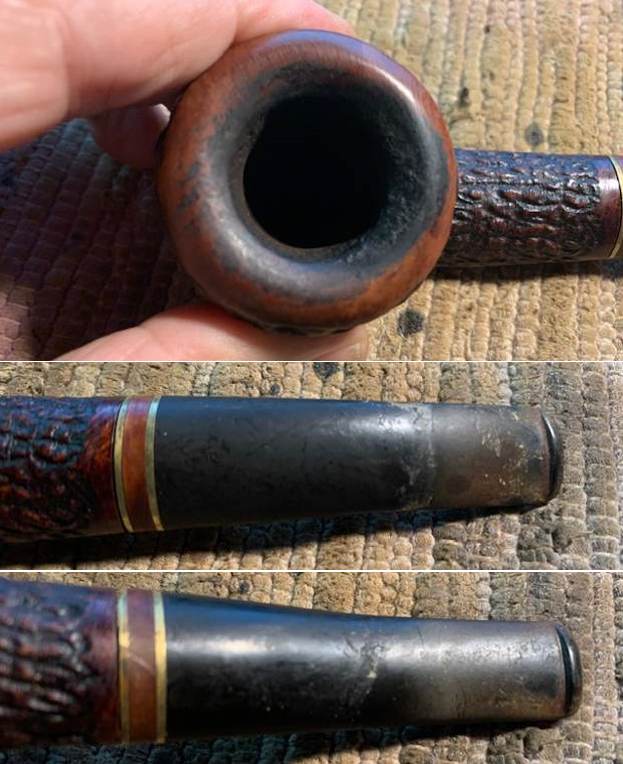
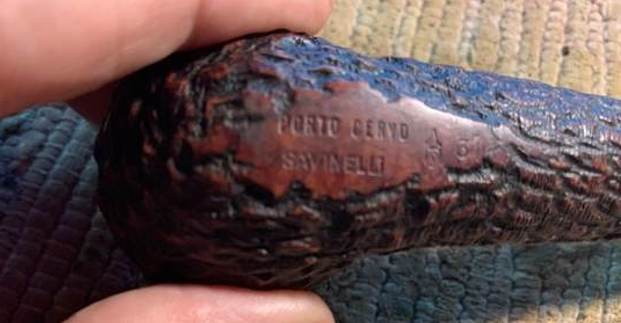
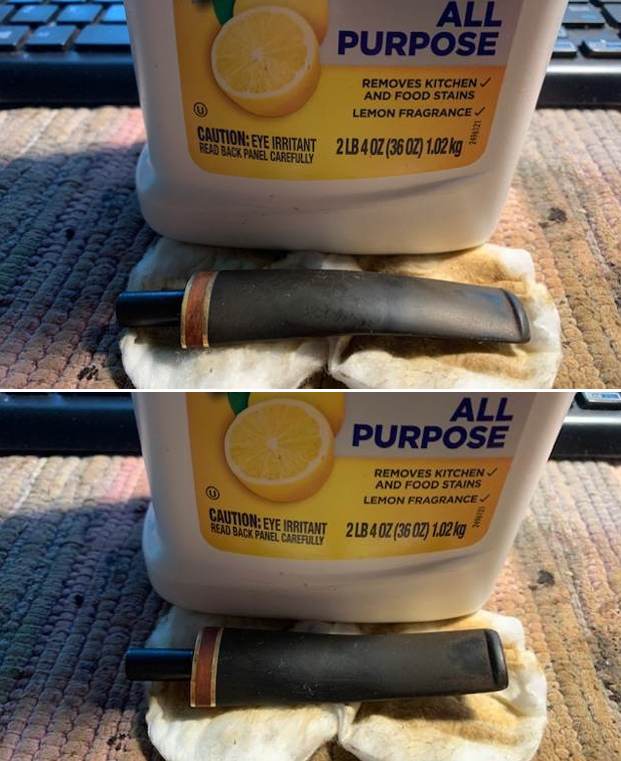
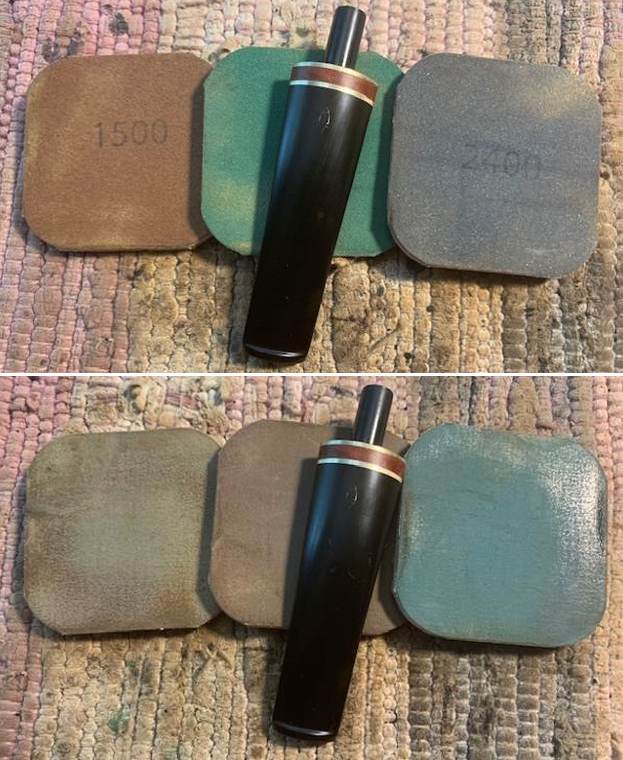
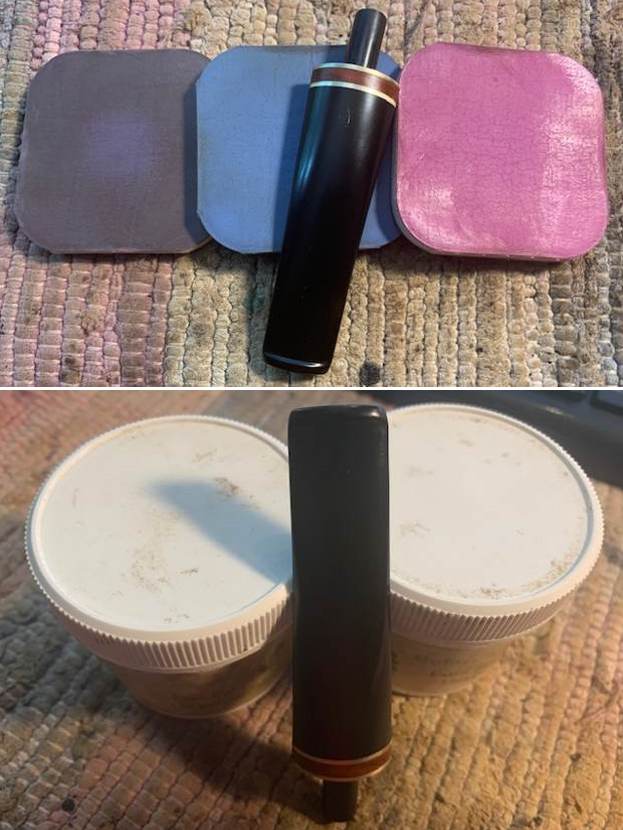
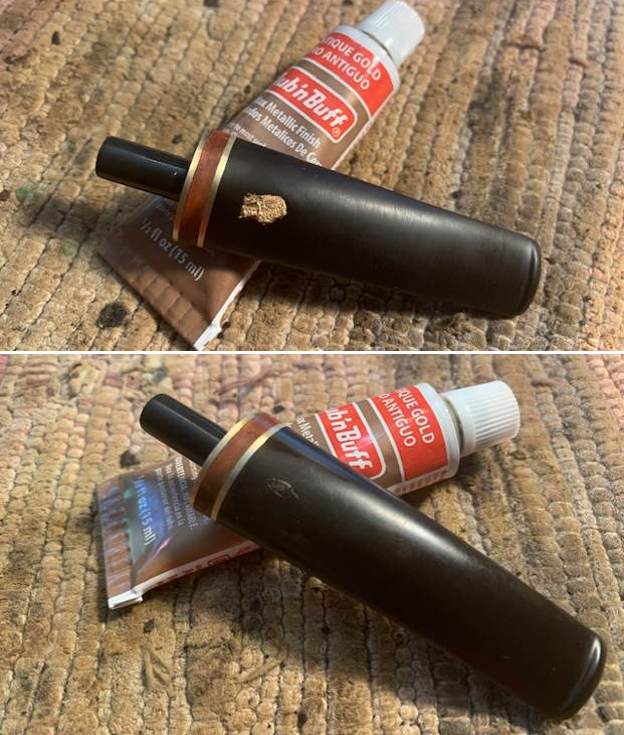
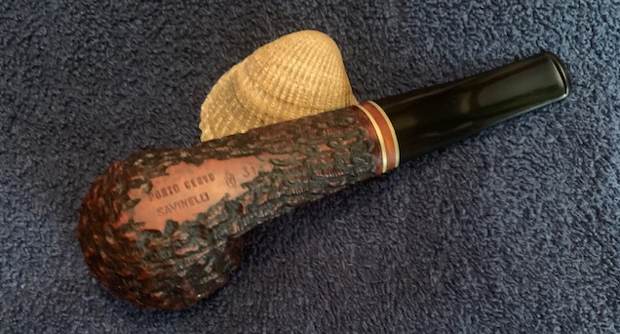
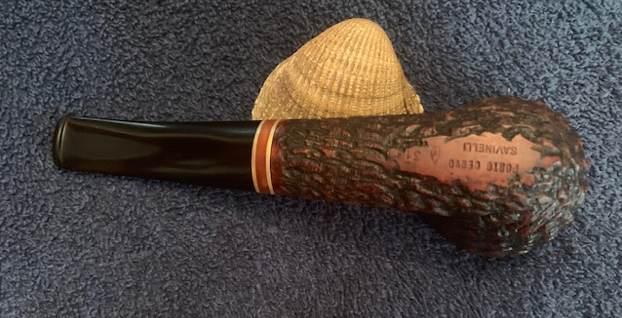
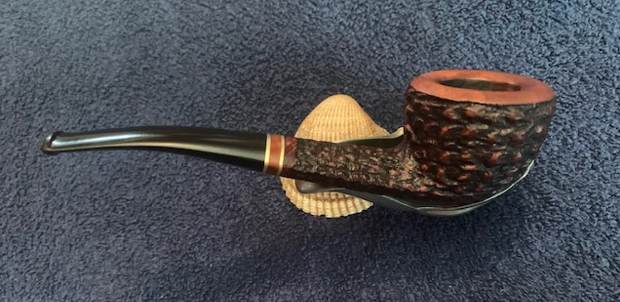
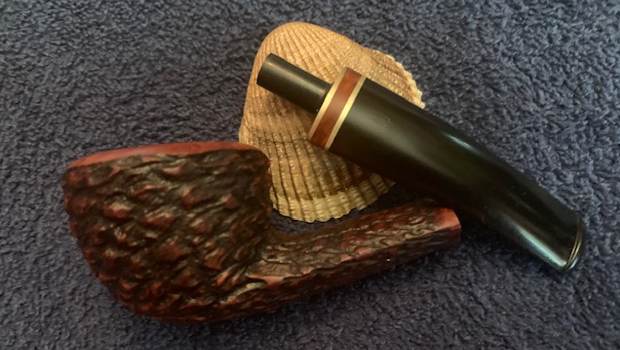
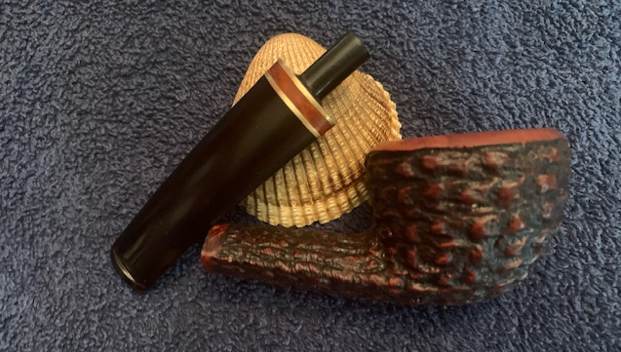
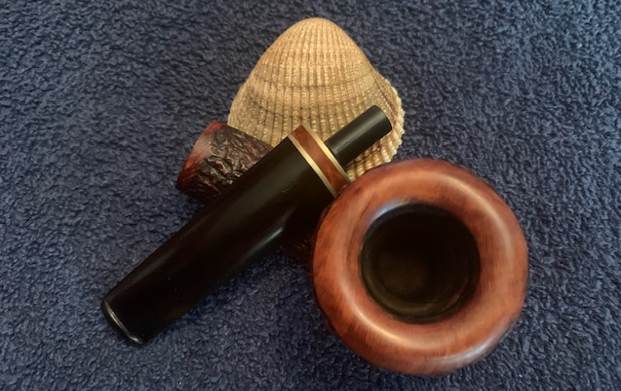
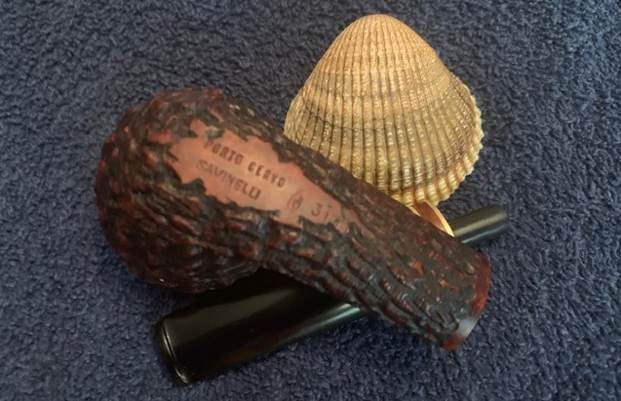
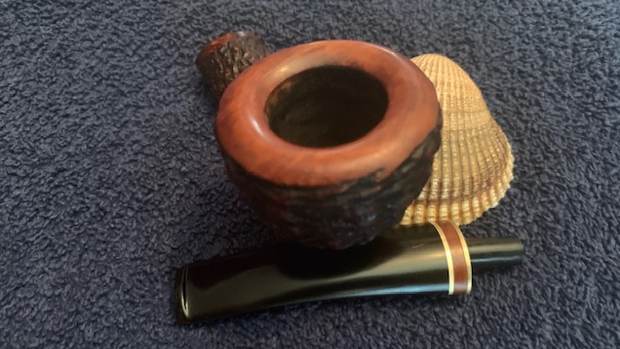
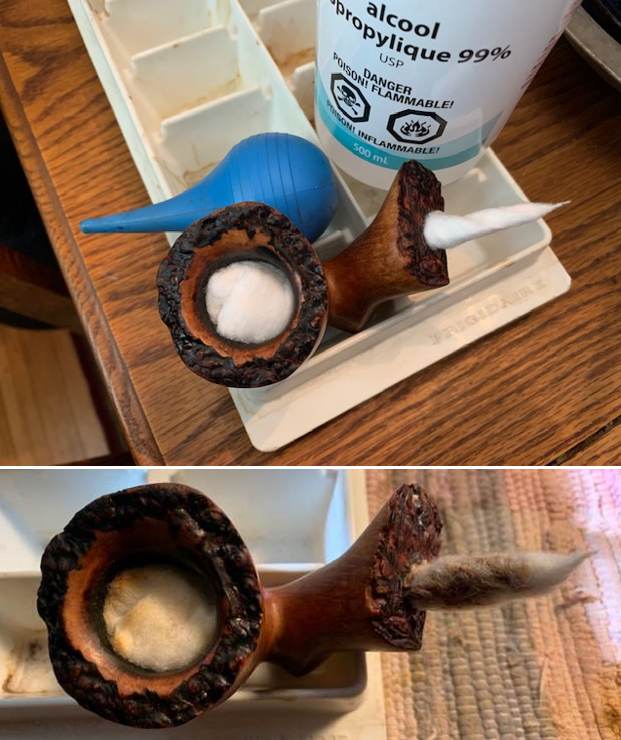
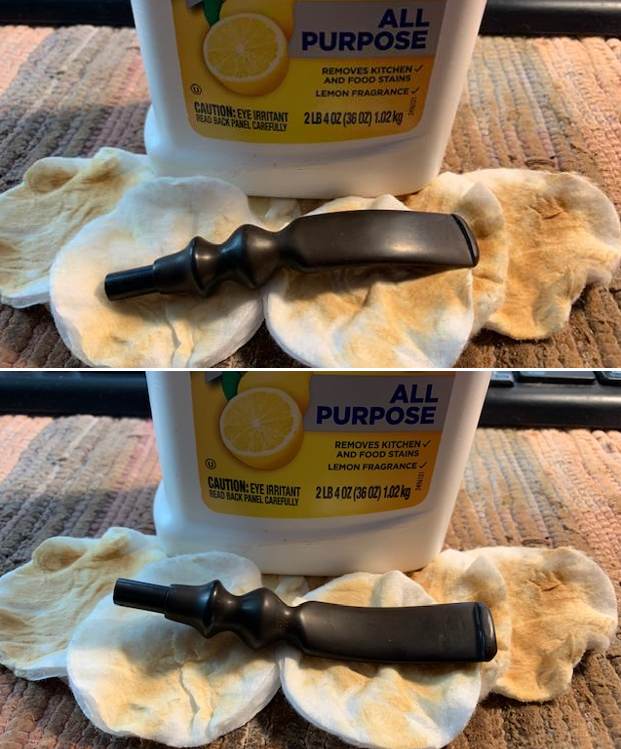
This is another one of those pipes that has been here for a long time and I have no memory where it came from. I had not been cleaned so it is not one that ever went to Jeff for clean up. It was a mess. The bowl has a moderate cake (mainly in the top half of the bowl) and a heavy lava overflow on the smooth, crowned rim top. The edges look very good. The rusticated finish is rugged and deep and is nice in the hand. It is dirty with grime and grit deep in the rustication. The pipe stinks like heavily cased aromatics. The brass band is part of the stem and is dull and oxidized. The stem is oxidized, calcified and has tooth marks and chatter on both sides ahead of the button. It looks like the stem had a Softee Bit at some point as the discolouration gives that sense. The tenon is drilled for a 6mm filter or a Balsa Filter. I took some photos of the pipe before I started my work on it. I took close up photos of the bowl and the stem. You can see the thick lava build up on the rim top and down into the bowl. It is really a mess. The stem surface has the mark from a Softee Rubber Bit Guard that is clear and there is calcification and oxidation on the stem. There are also tooth marks and chatter on both sides ahead of the button.I took a photo of the stamping on the underside of the bowl and shank. It is clear and readable as noted above.I removed the stem from the shank and took a photo to give a sense of the proportions of the pipe. It is really quite nice looking.I reamed the bowl with a PipNet pipe reamer using all four cutting heads. I cleaned up the reaming with a Savinelli Fitsall Pipe Knife to remove all debris. I sanded the bowl with 220 grit sandpaper wrapped around a piece of dowel to smooth out the wall of the bowl. The bowl was in excellent condition with no fissures or checking.  I scrubbed the exterior of the bowl with a tooth brush and undiluted Murphy’s Oil Soap to remove the debris from the grooves and to soften and try to remove the lava overflow on the rim top. Once it was finished it looked much better. Polishing with micromesh would remove the rest of the debris and raise a shine. I dried it off with a towel and decided to address the remaining lava and darkening on the crowned rim top. I used a folded piece of 220 grit sandpaper to work on the top and inner edge until it was clean.   I polished the rim top and edges with micromesh sanding pads – dry sanding with 1500-12000 grit pads to raise a shine. I wiped it down with a damp cotton pad to wipe off the debris after each sanding pad.   I worked some Before & After Restoration Balm into the surface of the rusticated briar with my fingertips. I worked it over with a shoe brush to get it deep into the grooves and crannies of finish. I let it sit for 15 minutes then buffed it off with a soft cloth and raised the shine. The bowl looks great at this point.   I cleaned out the inside of the shank and the airway into the bowl and the stem. I scraped the shank out with a small pen knife to remove the thick tars. I then cleaned it with a isopropyl alcohol, cotton swabs and pipe cleaners until it was clean. To rid the bowl of the tars and oils that made the bowl still stink I stuffed it with cotton bolls and twisted a boll into a wick that I threaded into the shank. I used an ear syringe to fill the bowl with isopropyl alcohol and set it in an old ice tray over night  to let it wick out the tars and oils.This morning when I went back to the pipe to work on it I took a photo of the cotton to show how the tars and oils had wicked into the pipe. I removed it from the bowl and took photos of the cotton to show how dirty it was.  To begin the process of removing the oxidation from the stem surface I scrubbed it with Soft Scrub All Purpose cleanser. It worked quite well to remove a large part of the oxidation.I polished the stem with micromesh sanding pads – dry sanding it with 1500-12000 grit pads. I wiped the stem down with Obsidian Oil after each pad. I polished it with Before & After Pipe Polish – both Fine and Extra Fine and gave it a final coat and set it aside to dry.    I touched up the Savinelli Shield S on the stem top with Rub’n Buff Antique Gold. I worked it into the stamping with a tooth pick. I buffed it off with a cotton pad and then rubbed it down with some Obsidian Oil.I put the stem back on the Savinelli Porto Cervo 316KS Oval Shank Rusticated Dublin and buffed the pipe with Blue Diamond on the buffing wheel. I polished the briar and the vulcanite of the stem until there was a rich shine. This classic Savinelli shape and finish really highlights a proportionally well carved pipe. Once I buffed the pipe the briar came alive and the variety of colours in the nooks and crannies of the rustication popped with polishing. The black vulcanite stem with the twin brass bands had a rich glow. This Porto Cervo 316KS fits well in the hand and sits right in the mouth. Have a look at it with the photos below. The dimensions are Length: 6 inches, Height: 1 ½ inches, Outside diameter of the bowl: 1 ¾ inches, Chamber diameter: 7/8 of and inch. The weight of the pipe is 1.45 ounces/41 grams. This beauty will be going on the rebornpipes online store in the Italian Pipemakers Section. If you are interested let me know. Thanks for walking through the restoration with me as it was a pleasure to work on.

Restoring a 1950s Era Comoy’s Patina 495 Pot


Blog by Steve Laug

This nice looking Comoy’s Pot shaped pipe has some nice grain around the bowl. We purchased it on 04/20/18 from an estate pipe collection in Sterling Heights, Michigan, USA. It was a filthy pipe with a lot of grime ground into the surface of the briar. The stamping on the shank was clear and readable. On the left side it reads Comoy’s [over] Patina. On the right side it is stamped 495 next to the joint of the shank and bowl. Near the stem joint it is stamped with the characteristic Made in London in a circle over England. The C on the saddle side of the stem is a three part C so that helps date it as an older pipe. There was a thick cake in the bowl that overflows as thick lava on the rim top. The bevel on the inner edge of the rim looked to be in good condition but had some thick lava on it. The outer edge actually appeared to be in good condition. The stem was oxidized and has some deep tooth marks and chatter on both sides ahead of the button. There was a lot of promise in the pipe but it was going to take some work. Jeff took the following photos before he started his clean up work on the pipe. He captured the thick cake in the bowl and the heavy lava cake on the rim top. It really was a mess. I thought the rim top would be okay under the lava. There inner bevel on the rim top looked pretty good under the grime. The photos of the stem show the oxidation and the tooth marks and chatter on the top and underside ahead of the button. He took a photo of the briar from the heel and right side of the bowl. The grain is quite nice.He took photos of the stamping on the shank sides. It is clear and readable as noted above. You can also see the 3 part C in the photo of the stem side.   I decided to do a bit of research on the Comoy’s Patina line before I worked on it. I could not find any listing for the Comoy’s Patina line on either Pipephil’s site or Pipedia. I decided however to move forward and try to pin down the shape number and the date of the pipe. I found a shape list on Pipedia (https://pipedia.org/wiki/Comoy%27s_Shape_Number_Chart). I did a screen capture of the shape 495-496 and included it below.I then turned to another shape number chart that had pictures of the various shapes that made up the Comoy’s lines (https://pipedia.org/wiki/Comoy%27s_Shape_Number_Chart/en). I have included a chart below and drawn a red box around the shape of the pipe I am working on.From there I turned to look for information on the stamping on the pipe that would help nail down a date for this pipe. I turned to Pipedia’s article “A Guide Toward Dating the Pipes –  https://pipedia.org/wiki/A_History_Of_Comoy%27s_and_A_Guide_Toward_Dating_the_Pipes. I quote from the article below. I have highlighted the pertinent sections in red for ease of reference.

Comoy’s Name

1900 to about 1919. Normally, the Comoy’s name will be found in a joined flowing script canted forward, with a long tail running backwards from under the “S” to below the “C.” There are, however, 2 pipes in the 1909 catalogue where Comoy’s does not have a tail at all. I also have examples between 1913 to 1919 where the Comoy’s name is still in the same joined flowing script, canted forward but with a short tail running forwards from the bottom of the “Y” to under the “S.”

From about 1917 to the end of the 1930s, the slightly fancy “Comoy’s” can be found stamped in a curve, in upper case script with serifs, apostrophe before the “S,” and the “C” larger than the other letters. The arched Comoy’s with serifs and apostrophe may have been continued for a short time after the war. I have an “Old Bruyere” stamped this way that is just post-war. Pipes can also be found with the name stamped across the top of the stem as apposed to along the side.

During the 1940s, not many pipes were made, but just after WW II, in 1945 or slightly later, the “Comoy’s” stamp was changed from the curve to a straight line.

From the 1950s, the Comoy’s stamp can be found in three variants: (1) A simple block-letter style without serifs but with the C larger than the other letters and the apostrophe before the “s.” (2) A return to the slightly more fancy block letters with serifs and the apostrophe. My 1959/60 gold-banded example falls into this category. (3) A simple block-letter style without serifs and without the apostrophe and with the “C” the same size as the rest of the letters. I don’t think that this stamp was used for very long.

“Made In” Stamp

London Made. Comoy’s were the first London pipe maker to use this phrase. It is the earliest stamp to be used and can be found from 1902 or perhaps earlier and on into the 1930s . At this time, it can appear as “London” over “Made” or in a straight line.

Made in London. I have only seen this stamp on two Old Bruyere pipes dated 1921, and it appears in a straight line under the arched “Comoy’s.”

Made in England. This is stamped in a circle with “Made” at the top, “in” in the middle, and “England” forming the bottom of the circle. I call this the football shape or F/B for short. I have seen this stamp on a Cecil dated as early as 1910 and on an Old Bruyere of 1921 and then only on pipes from the 1930s.

Made in London England. This is again stamped in a circle with “Made” at the top, “In” in the middle, and “London” at the bottom, with “England in a straight line beneath the F/B. I believe this stamp was first used in the export drive in the early 1950s, and I have not seen any pre-WW II Comoy’s stamped in this way.

Inlaid “C”

“C” was first inlaid in the side of the mouthpiece around 1919. This was a complex inlay needing three drillings. First, a round white inlay was inserted, then the centre of the white was drilled out, and a smaller round black inlay was inserted. Finally, another drilling was made to remove the open part of the “C,” and an even smaller black inlay was inserted. This inlaid “C,” known as the “three-piece C,” was continued until the Cadogan era in the 1980s. However, the “C” in the 1920s and early 30s is much thinner and more delicate than the one post-war. Cadogan first changed the “C” to a single drilling with an inlay that had the “C” in the centre, and more recently it became a laser imprint. I have a cased pair of early 1920’ “Par Excellence” where the “C” is on top of the mouthpiece. Finish

Now it was time to work on the pipe itself. Jeff reamed the bowl with a PipNet pipe reamer and followed up with a Savinelli Fitsall pipe knife to remove the cake. He scrubbed out the mortise and the airway in the shank and the stem with alcohol, cotton swabs and pipe cleaners. He scrubbed the exterior of the bowl, rim, shank and stem with a tooth brush and undiluted Murphy’s Oil Soap to remove the lava, oils and tars on the rim and the grime on the finish of the bowl. He rinsed it under running water. He dried it off with a soft cloth. He was able to remove lava build up on the rim top and you could see the great condition of the bowl top and edges of the rim. There was still some darkening to the rim top toward the back of the bowl. He soaked the stem in Before & After Deoxidizer to remove the oxidation. I took photos of the pipe before I started my work on it.  I took a close up photo of the rim top to show the condition of the bowl and rim after Jeff had cleaned up the grime and lava. The beveled rim edge and top looked very good. The stem photos show light oxidation and the tooth marks and chatter on the stem and the button surface. I took photos of the stamping on the shank sides and the C logo on the stem. The stamping was clear and read as noted above.   I removed the stem from the shank and took a photo. You can see the small fill toward the top of the left side.The bowl was in good condition so I did not need to do any extra work on the rim or edges. It looked great so I polished the bowl and rim top with micromesh sanding pads – dry sanding it with 1500-12000 grit pads. I wiped the bowl down with a damp cloth after each pad to remove the sanding debris. After the final sanding pad I hand buffed it with a cotton cloth to raise a shine. I worked some Before & After Restoration Balm into finish of the briar with my fingertips to clean, enliven and protect it. I let the balm sit for a little while and then buffed with a cotton cloth to raise the shine. The Restoration Balm really makes the grain stands out beautifully.   I set the bowl aside and turned my attention to the stem. I “painted” the tooth marks with the flame of a Bic lighter. I was able to lift them a lot. The small spots that remained I filled in with clear CA glue.   I used a folded piece of 220 grit sandpaper to blend the repairs into the surface of the stem. I started polishing the stem with a folded piece of 400 grit sandpaper. I wiped the stem down with Obsidian Oil.    I polished the stem with micromesh sanding pads – dry sanding it with 1500-12000 grit pads. I wiped the stem down with Obsidian Oil after each pad. I polished it with Before & After Pipe Polish – both Fine and Extra Fine and gave it a final coat and set it aside to dry.     I put the stem back on the Comoy’s Patina  Made in London England 495 Pot and buffed the pipe with Blue Diamond on the buffing wheel. I polished the briar and the vulcanite of the stem until there was a rich shine. This classic Comoy’s Pot shape and finish really highlights some amazing grain on a proportionally well carved pipe. Once I buffed the pipe the briar came alive and the mixture of grain – straight, flame and birdseye – popped with polishing. The repaired black vulcanite stem had a rich glow. This Comoy’s Patina 495 Pot fits well in the hand and sits right in the mouth. Have a look at it with the photos below. The dimensions are Length: 5 ½ inches, Height: 1 ¾ inches, Outside diameter of the bowl: 1 ½ inch, Chamber diameter: 1 inch. The weight of the pipe is 1.48 ounces/41 grams. This beauty will be going on the rebornpipes online store in the English Pipemakers Section. If you are interested let me know. Thanks for walking through the restoration with me as it was a pleasure to work on.

A GBD Mystery Pipe – Unreadable Shape Number and Line Information


Blog by Steve Laug

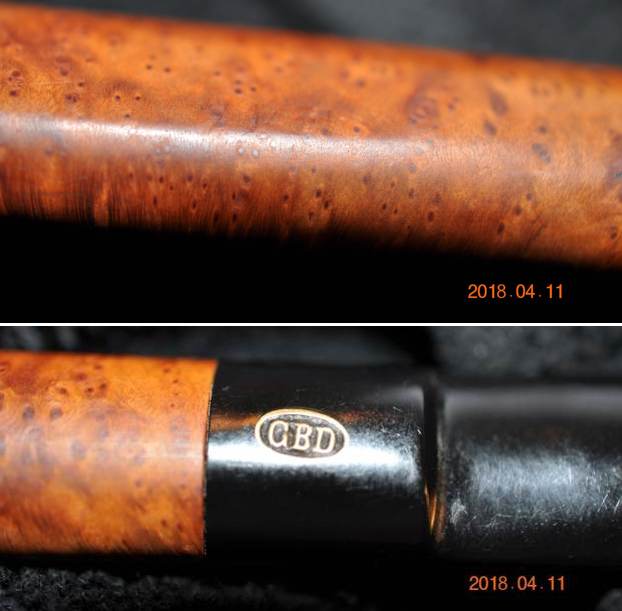
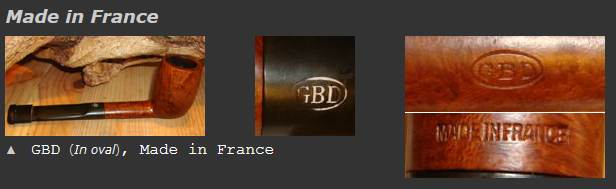
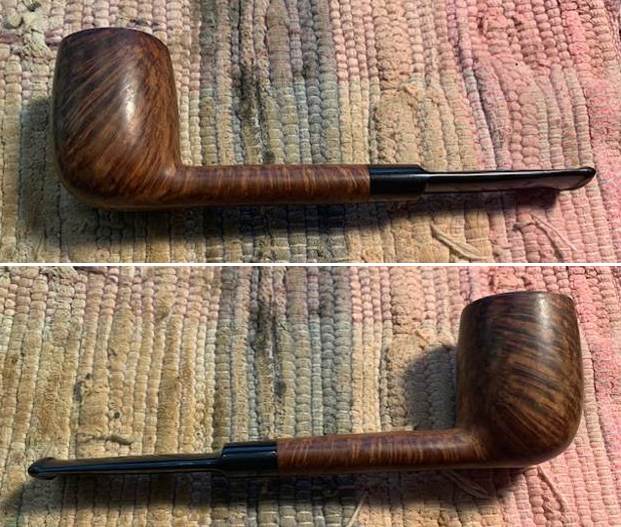
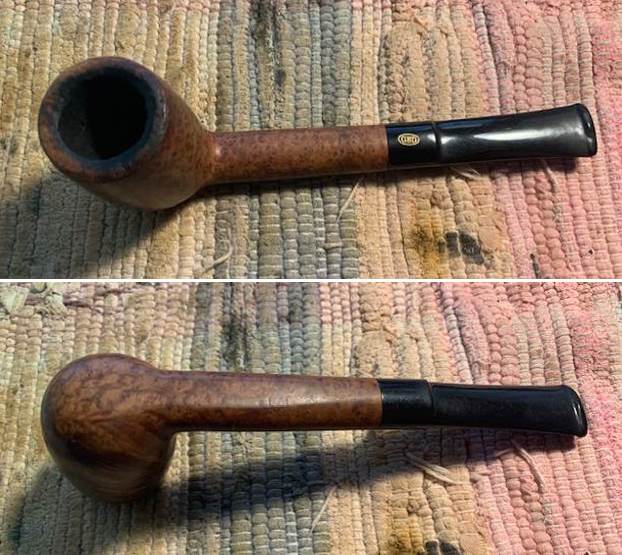
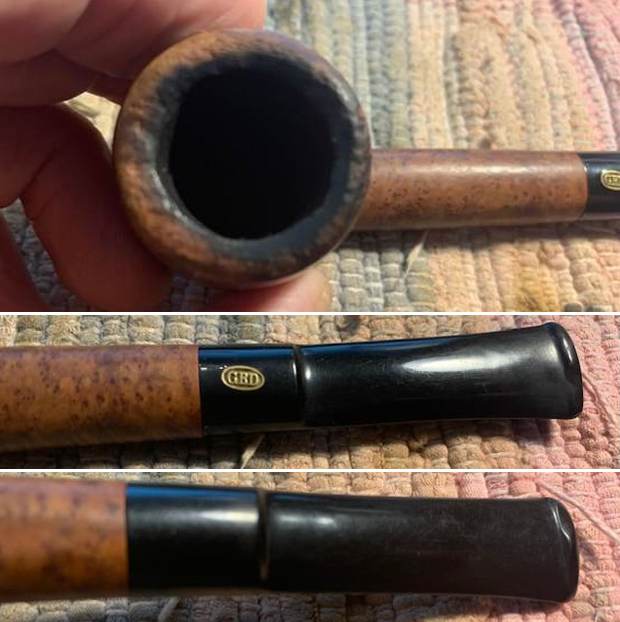
The next pipe on the table is a nice looking oval shank Billiard with an oval saddle stem. The shape number and line information is worn off with buffing. The stem has the GBD brass rondelle in the top of the saddle. There is a very faint GBD stamp in a logo on the top of the shank and some very faint stamping on the top and underside. This pipe was purchased from a antique seller on 04/07/18 in Pocatello, Idaho, USA. The finish was very dirty but the briar shows some beautiful grain on the bowl and shank sides. The bowl had a thick cake and heavy lava overflow onto the rim top. It looked like the edges and top were damaged but we would know more once it was cleaned. The stem did not show oxidation but had bite marks on the top and underside of the stem surface of the button. Jeff took photos of the pipe to show what it looked like before he cleaned it up. He captured the thick cake in the bowl and the heavy lava cake on the rim top. It really was a mess. I really wondered what the rim would look like under that. There appeared to be an inner bevel on the rim top. The photos of the stem show the tooth marks on the top and underside of the button surface. He captured the grain around the bowl sides and heel in the next photos. You can see the grime in the finish and a flaw in the briar on the lower front of the bowl. The stamping on the shank is very faint. It appears that there is a GBD in an oval and the faint numbers on the shank that are not clear. The brass oval on the stem top is in good condition. I did some digging on Pipephil and found that a French made GBD that was shown on the site was the same shape as the one I am working on (http://pipephil.eu/logos/en/logo-gbd.html). I have included a screen capture of the section below. The stamping on the one in hand is unreadable so I cannot be certain but it certainly looks like the same pipe. I turned to Pipedia to read about the French made GBD (https://pipedia.org/wiki/GBD). I have included the following information on the French made GBD. It gives me a possible date for the making of this pipe if it is indeed a French made pipe. That date is somewhere between early 1950s and the time the pipes moved to be made in England (1981). I quote:

The Paris factory moved to Saint-Claude in 1952. Since 1981 the majority of GBD pipes come from the English factory. At about that same time GBD merged with Comoys, since then all production for both GBD and Comoy comes from a single factory.

I then turned to a section on Pipedia (https://pipedia.org/wiki/GBD_Shapes/Numbers) where the shape numbers are listed. I went through the list and looked for an oval shank Billiard. I found the following listing that fits the pipe.

Now it was time to work on the pipe itself. Jeff reamed the bowl with a PipNet pipe reamer and followed up with a Savinelli Fitsall pipe knife to remove the cake. He scrubbed out the mortise and the airway in the shank and the stem with alcohol, cotton swabs and pipe cleaners. He scrubbed the exterior of the bowl, rim, shank and stem with a tooth brush and undiluted Murphy’s Oil Soap to remove the lava, oils and tars on the rim and the grime on the finish of the bowl. He rinsed it under running water. He dried it off with a soft cloth. He was able to remove lava build up on the rim top and you could see the great condition of the bowl top and edges of the rim. There was still some darkening to the rim top toward the back of the bowl. He soaked the stem in Before & After Deoxidizer to remove the oxidation. I took photos of the pipe before I started my work on it.  I took a close up photo of the rim top to show the condition of the bowl and rim after Jeff had cleaned up the grime and lava. The beveled rim top had some darkening on the whole rim top though darker on the backside of the rim and there were cuts, dings and nicks in the surface. The stem photos show the tooth marks and chatter on the stem and the button surface. It appears that the brass GBD rondelle is slightly crooked.I took photos of the faint stamping on the top and underside of the shank. The GBD oval is barely visible on the top of the shank. There are also remnants of the shape number on the underside.  I decided to address the damage on the rim top and edges. To begin I sanded the top of the rim on a topping board to smooth out all the cuts and ridges on the rim top.    I used a folded piece of 220 grit sandpaper to start the bevel on the inner edge of the rim. The goal would be to restore the original one. I then used a wooden ball wrapped with 220 grit sandpaper to work over the rim top and give the inner edge a bevel.  I filled in the flaw in the briar on the front of the bowl heel with clear CA glue. I set it aside to cure. I carefully filled it so I could polish it off with 1500 grit micromesh once it cured.I polished the bowl and rim top with micromesh sanding pads – dry sanding it with 1500-12000 grit pads. I wiped the bowl down with a damp cloth after each pad to remove the sanding debris. After the final sanding pad I hand buffed it with a cotton cloth to raise a shine.   I worked some Before & After Restoration Balm into finish of the briar with my fingertips to clean, enliven and protect it. I let the balm sit for a little while and then buffed with a cotton cloth to raise the shine. The Restoration Balm really makes the grain stands out beautifully.   I set the bowl aside and turned my attention to the stem. I used some black CA glue to rebuild the button top and bottom. I set it aside to let it cure.  Once it cured I used a small file to redefine the button edge and flatten out the surface of the stem. Once I had removed the largest part of the fills I used clear CA glue to fill in the air bubbles and work on the repaired edge shape.  I then used the file to flatten and reshape those repairs.  I used a folded piece of 220 grit sandpaper to blend the repairs into the surface of the stem. I started polishing the stem with a folded piece of 400 grit sandpaper. I wiped the stem down with Obsidian Oil.    I polished the stem with micromesh sanding pads – dry sanding it with 1500-12000 grit pads. I wiped the stem down with Obsidian Oil after each pad. I polished it with Before & After Pipe Polish – both Fine and Extra Fine and gave it a final coat and set it aside to dry.     I put the stem back on the GBD Mystery Oval Shank Saddle Billiard and buffed the pipe with Blue Diamond on the buffing wheel. I polished the briar and the vulcanite of the stem until there was a rich shine. This classic oval shank Billiard shape and finish really highlights some amazing grain on a proportionally well carved pipe. Once I buffed the pipe the briar came alive and the mixture of grain – straight, flame and birdseye – popped with polishing. The repaired black vulcanite stem had a rich glow. This GBD Oval Shank Billiard fits well in the hand and sits right in the mouth. Have a look at it with the photos below. The dimensions are Length: 6 inches, Height: 1 ¾ inches, Outside diameter of the bowl: 1 1/8 inch, Chamber diameter: ¾ of an inch. The weight of the pipe is 1.23 ounces/35 grams. This beauty will be going on the rebornpipes online store in the French Pipemakers Section. If you are interested let me know. Thanks for walking through the restoration with me as it was a pleasure to work on.
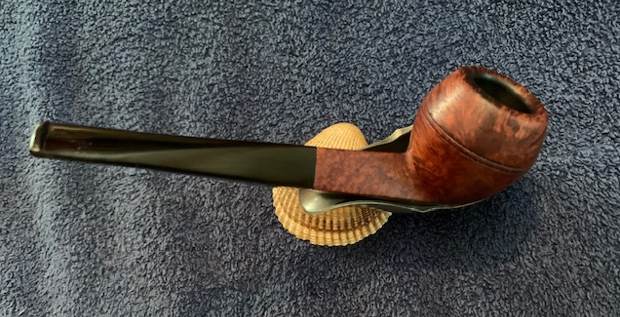
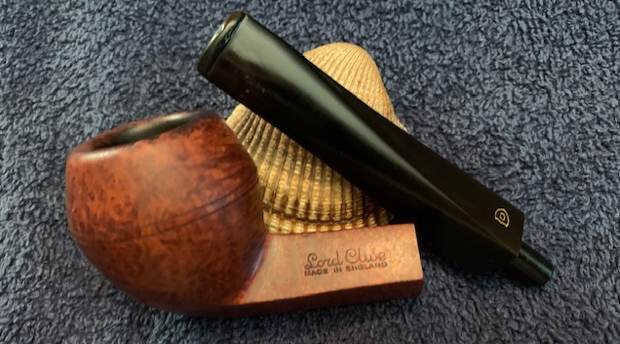
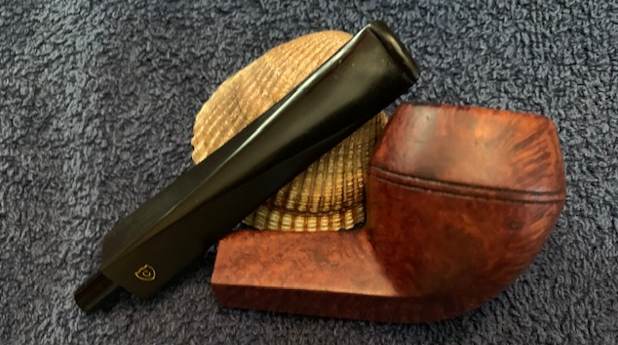
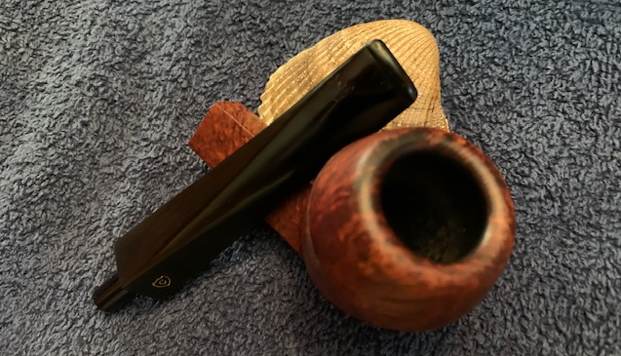
Comoy’s Made Lord Clive 827 Bulldog (made for Wally Frank Ltd.)


Blog by Steve Laug

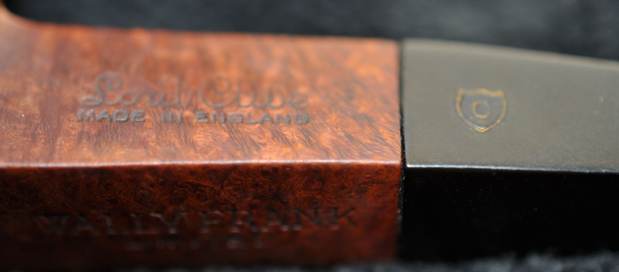
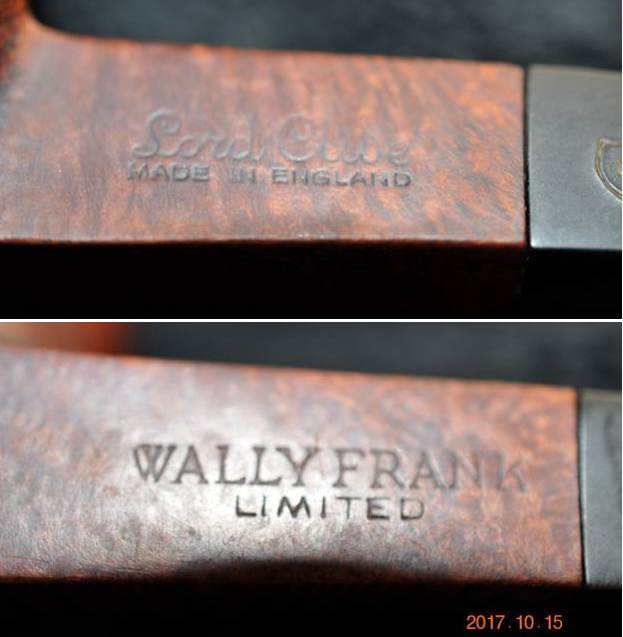
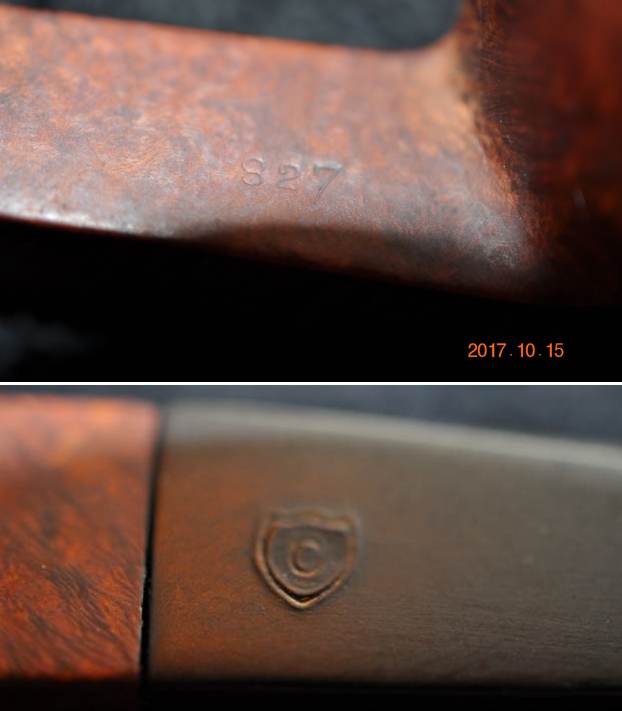
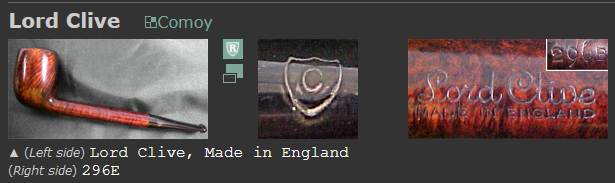
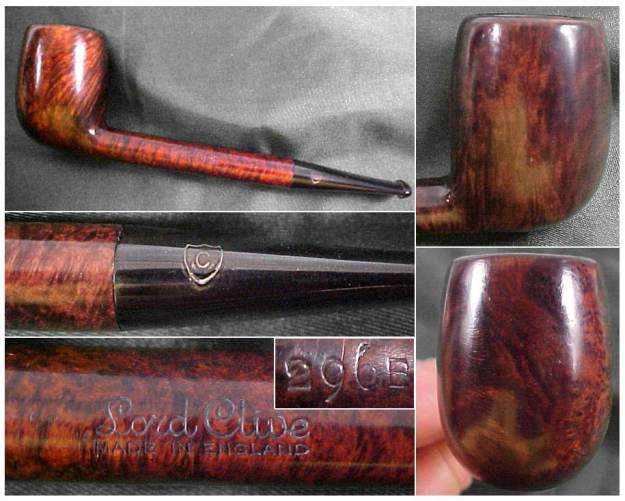
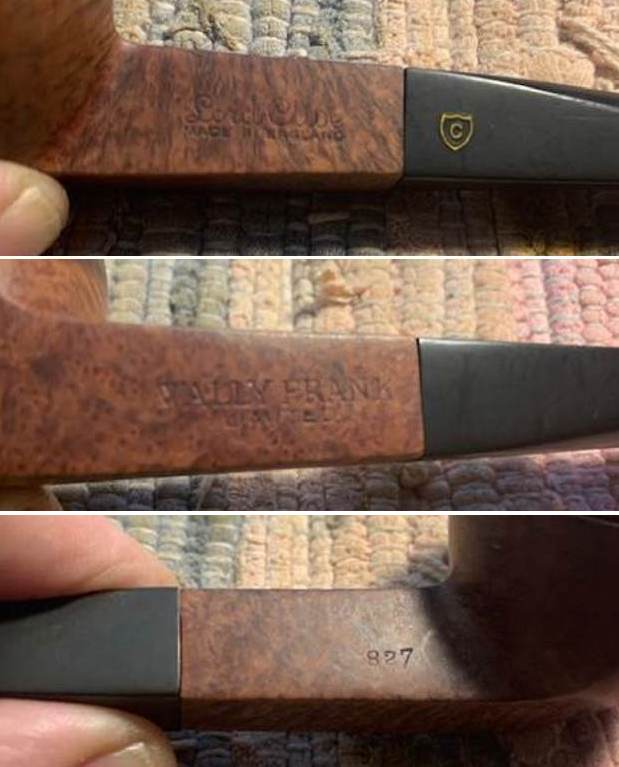
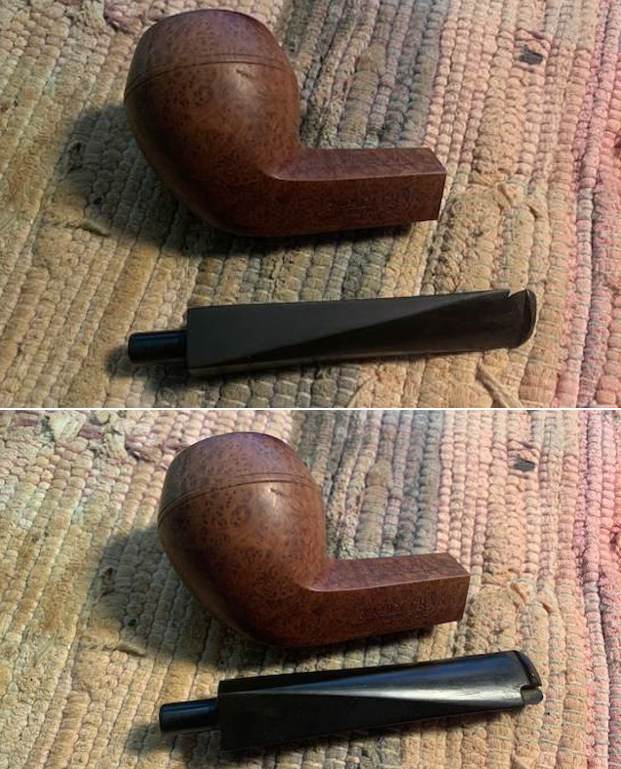
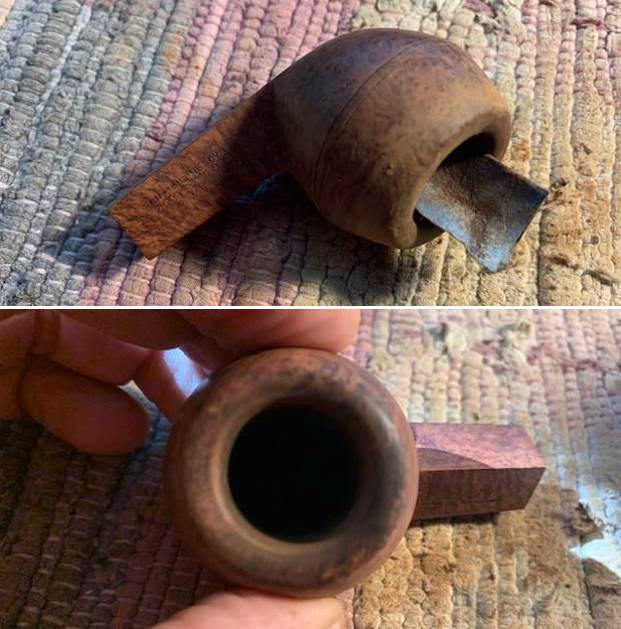
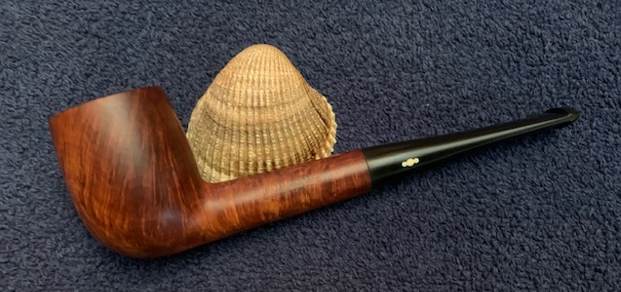
The next pipe is one that Jeff picked up from an antique store on 10/14/17 in Pocatello, Idaho, USA. The store is no longer there so it is a memory that we both share having bought pipes from them over the years. This one is a very English looking straight Bulldog with a taper stem. It is stamped on the top left of the diamond shank and reads Lord Clive in script [over] MADE IN ENGLAND. On the left underside of the shank it is stamped WALLY FRANK [over] LIMITED. On the top right side of the diamond shank it is stamped with the shape number 827. The finish is very dirty with a thick cake and lava overflow on the rim top. There are some nicks in the surface of the briar as well. The twin rings around the cap are in good condition which is a blessing as these are often chipped and damaged. The stem has shield with a C in the middle stamped in gold on the left top side of the diamond taper. It is lightly oxidized and has tooth marks and chatter on both sides ahead of the button. There is also a chip on the right underside of the button that will need to be addressed. It is a proportionally pleasing looking pipe with some interesting grain poking through the grime. Jeff took photos of the pipe before he started his cleanup and I have included them below. Jeff took photos of the rim top and stem to give a clear picture of the condition of the bowl, rim top and stem. You can see the thick cake in the bowl and the lava build up on the crowned rim top. There are some nicks and damage but it is hard to know what is under the lava coat and cake. The photos of the stem show the damage on the right underside button and the area ahead of it. It almost makes the tooth marks and chatter in the stem invisible. But believe me they are very present. He captured the grain on the side of the bowl as well as the deep gouge in the next photo. It is a nice piece of briar. Jeff took a few photos of the stamping on the shank and stem to capture it for me. The photos show the stamp on the left upper and lower diamond shank and stem as well as the upper right side of the shank. It is clear and readable as noted above. The look of the pipe, the shape number and the Made in England stamp all reminded me of Comoy’s made pipes. I turned to Pipephil to see what I could learn there about the brand and its  provenance (http://pipephil.eu/logos/en/logo-l6.html). Sure enough the site had a listing which I have captured in the next two photos. All of the stamping looks precisely the way the one I am working on looks minus the Wally Frank LTD stamp. Sure enough the pipe is made by Comoy’s so my guess was not wrong. I then turned to Pipedia for more information. There was nothing listed under Lord Clive so I turned to the section on Comoy’s (https://pipedia.org/wiki/Comoy%27s). I scrolled through the great historical information sections of the wiki until I came the section I have included below. In the list of names I found Lord Clive and have marked it in red.

Seconds made by Comoy’s – Academy Award, Ace of spades, Ancestor, Astor, Ayres, Britannia, Canadian Club, Carlyle, Charles Cross, Claridge, Coronet?, Cromwell, Damman?, Dorchester, Dunbar, Drury Lane, Emerson, Everyman, Festival of Britain, Golden Arrow, Grand Master, Gresham, Guildhall, Hamilton (according to Who Made That Pipe), Kingsway, Lion’s Head, Lord Clive, Lumberman, Hyde Park, Lloyds, Mc Gahey, Moorgate, Newcastle, Oxford, O’Gorman, Rosebery Extra, Royal Falcon, Royal Guard, Royal Lane, Scotland Yard, St James, Sunrise, Super Sports, Sussex, The Academy Award, The Golden Arrow, The Mansion House, The Exmoor Pipe, Treaty Bond, Throgmorton, Tinder Box Royal Coachman, Townhall, Trident, Trocadero, Westminster, Wilshire

I now knew I was dealing a pipe that Comoy’s had made for Wally Frank Ltd. It was classic shaped Comoy’s 827 straight Bulldog with a taper stem. But I still wanted to know “Who is Lord Clive?”.

So I continued my exploration of the web and turned to Wikipedia to see what I could learn about the person (https://en.wikipedia.org › wiki › Robert_Clive). I quote a summary below and also include a photo.

Robert Clive – Wikipedia

Major-General Robert Clive, 1st Baron Clive, KB, FRS (29 September 1725 – 22 November 1774), also known as Clive of India, was the first British Governor of the Bengal Presidency. Clive has been widely credited for laying the foundation of the British East India Company rule in Bengal.

That short summary told me what I needed to know. It also said more than was written. To the British he was a hero and to the people of India he was an oppressor. But it is interesting to know a bit about him.

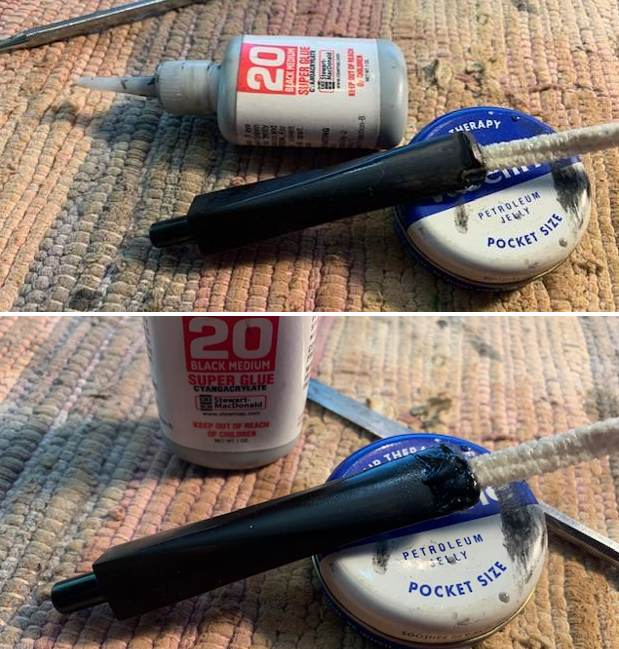
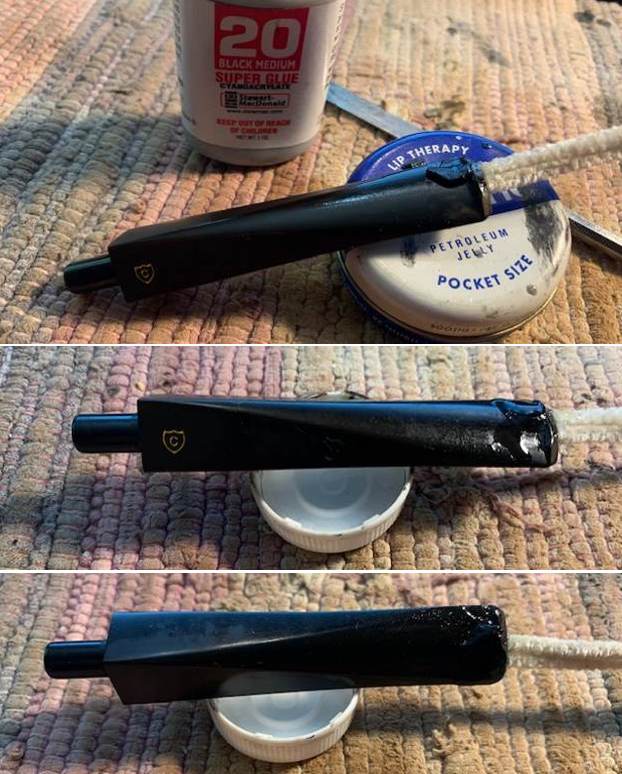
Jeff reamed the bowl with a PipNet pipe reamer and followed up with a Savinelli Fitsall pipe knife to remove the cake. He scrubbed out the mortise and the airway in the shank and the stem with alcohol, cotton swabs and pipe cleaners. He scrubbed the exterior of the bowl, rim, shank and stem with a tooth brush and undiluted Murphy’s Oil Soap to remove the lava, oils and tars on the rim and the grime on the finish of the bowl. He rinsed it under running water. He dried it off with a soft cloth. He was able to remove lava build up on the rim top and you could see the great condition of the bowl top and edges of the rim. There was still some darkening to the rim top toward the back of the bowl. He soaked the stem in Before & After Deoxidizer to remove the oxidation. I took photos of the pipe before I started my work on it.  I took a close up photo of the rim top to show the condition of the bowl and rim after Jeff had cleaned up the grime and lava. The crowned rim top had some darkening on the whole rim top though darker on the backside of the rim and there were dings and nicks in the surface. The stem photos show that the oxidation is gone. The tooth marks and chatter are eclipsed by the missing chunk of the stem on the right edge of the button and up the stem. I took photos of the stamping on the sides of the diamond shank showing how it was laid out. I was also able to capture the C in the shield on the left topside of the taper stem. I removed the stem from the shank and took a photo of the pipe to show the proportions and the look of the grain on the bowl. I also show the damage to the side of the stem in both photos. The first one shows the top right and the second the bottom right. The pipe really is a beauty!  I sanded the top of the rim with a folded piece of 220 grit sandpaper to remove the damage and the darkening. I would polish it later and think it would look very good. The photo shows how the rim looked at this point.    I repaired the deep gouges on the bowl sides with clear CA glue. Once they cured I sanded them smooth with 220 grit sandpaper to blend them in and reduce the shininess of the repair. I am happy with how it looks. I polished the bowl and rim top with micromesh sanding pads – dry sanding it with 1500-12000 grit pads. I wiped the bowl down with a damp cloth after each pad to remove the sanding debris. After the final sanding pad I hand buffed it with a cotton cloth to raise a shine.   I worked some Before & After Restoration Balm into finish of the briar with my fingertips to clean, enliven and protect it. I let the balm sit for a little while and then buffed with a cotton cloth to raise the shine. The Restoration Balm really makes the grain stands out beautifully. I set the bowl aside and turned my attention to the stem. I greased a pipe cleaner with Vaseline and inserted it in the slot. I used some very thick black CA glue and worked it into the damaged area on the button and stem using a dental spatula. I set it aside to let it cure.  Once it cured I used a small file to redefine the button edge and flatten out the surface of the stem. Once I had removed the largest part of the fills I used clear CA glue to fill in the air bubbles and work on the repaired edge shape.  I then used the file to flatten and reshape those repairs. I used a folded piece of 220 grit sandpaper to blend the repairs into the surface of the stem. I started polishing the stem with a folded piece of 400 grit sandpaper. I wiped the stem down with Obsidian Oil.   I polished the stem with micromesh sanding pads – dry sanding it with 1500-12000 grit pads. I wiped the stem down with Obsidian Oil after each pad. I polished it with Before & After Pipe Polish – both Fine and Extra Fine and gave it a final coat and set it aside to dry.    I put the stem back on the Comoy’s Made Lord Clive 827 Bulldog  and buffed the pipe with Blue Diamond on the buffing wheel. I polished the briar and the vulcanite of the stem until there was a rich shine. This classic English straight Bulldog shape and finish really highlights some amazing grain on a proportionally well carved pipe. Once I buffed the pipe the briar came alive and the mixture of grain – straight, flame and birdseye – popped with polishing. The repaired black vulcanite stem had a rich glow. This Lord Clive 827 Bulldog fits well in the hand and sits right in the mouth. Have a look at it with the photos below. The dimensions are Length: 5 ¾ inches, Height: 1 ¾ inches, Outside diameter of the bowl: 1 ¼ inch, Chamber diameter: ¾ of an inch. The weight of the pipe is 1.45 ounces/41 grams. This beauty will be going on the rebornpipes online store in the English Pipemakers Section. If you are interested let me know. Thanks for walking through the restoration with me as it was a pleasure to work on.
This Interesting Old Keyser Hygienic Patent Bent Billiard Was Clogged and Unsmokeable


Blog by Steve Laug

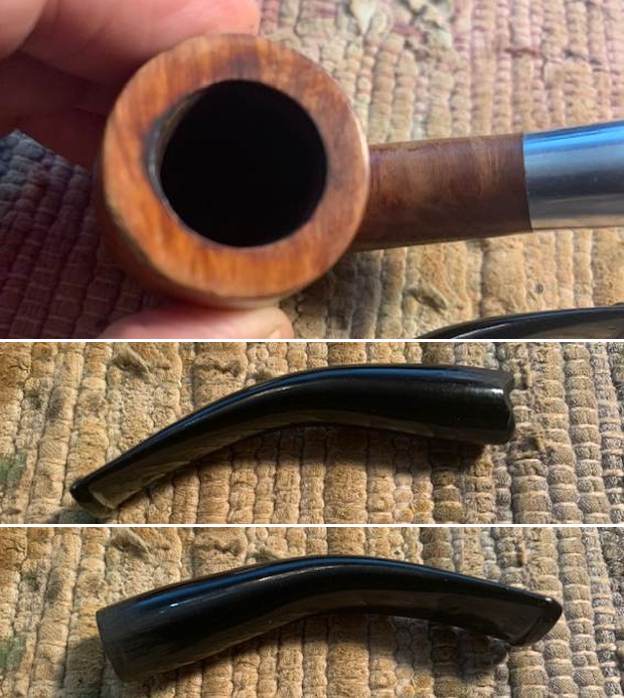
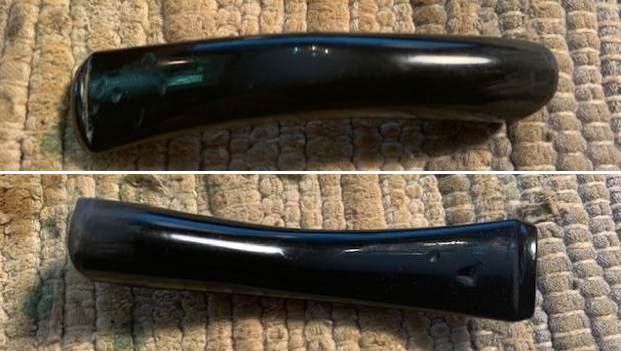
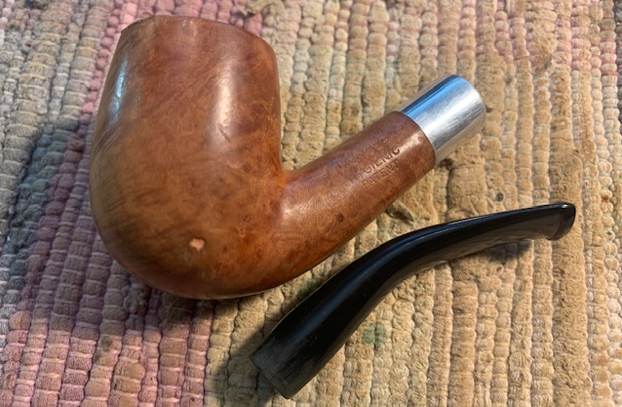
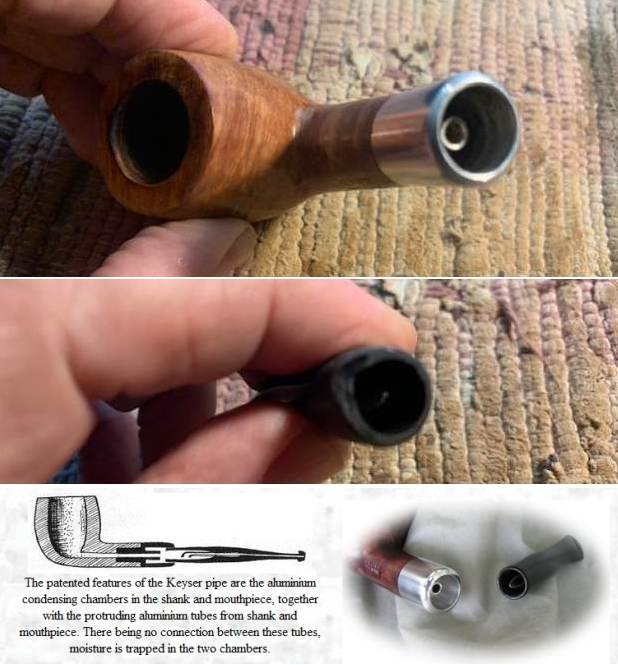
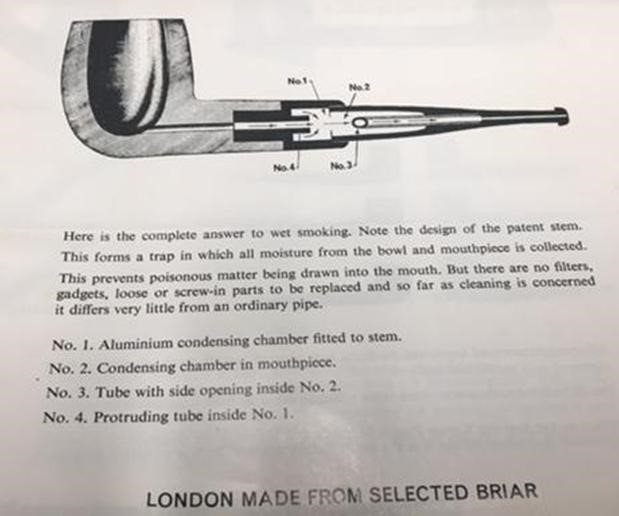
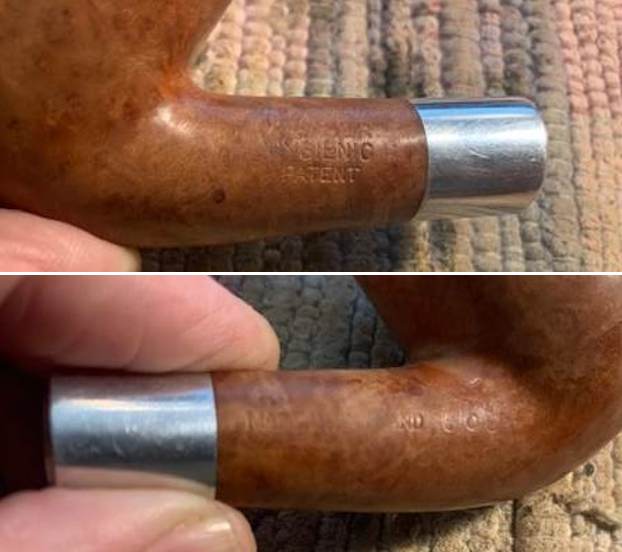
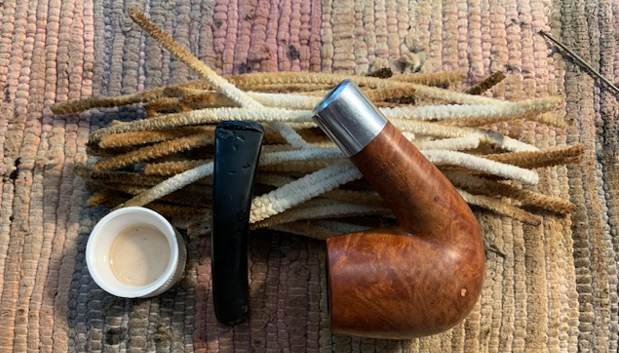
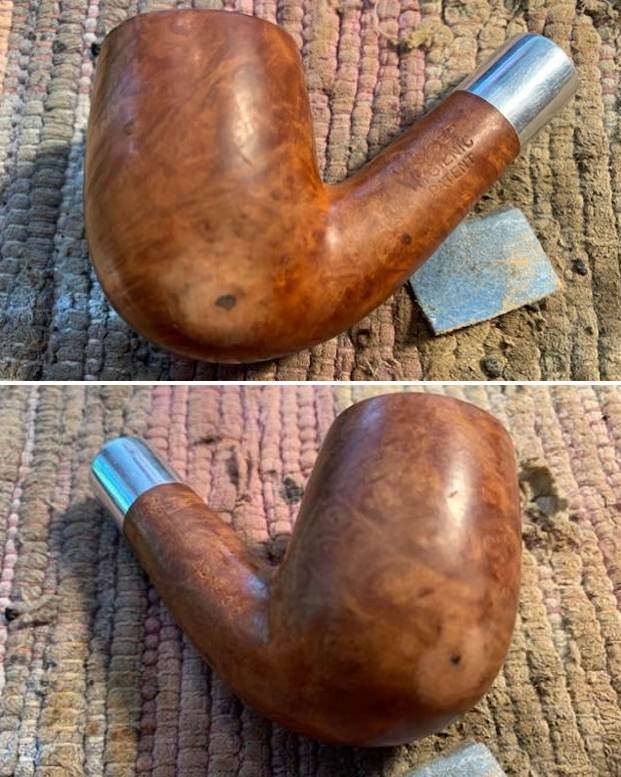
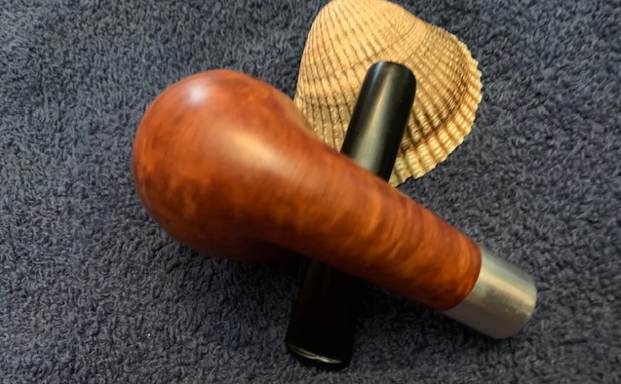
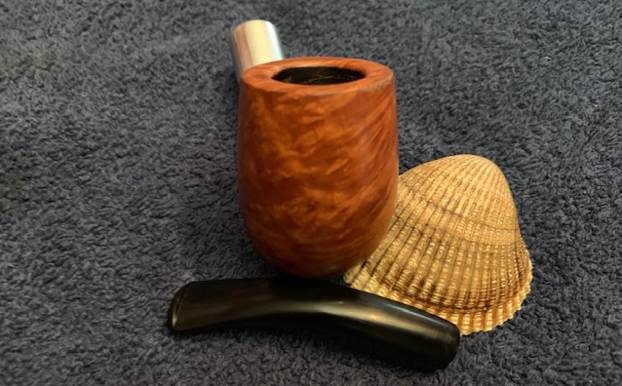
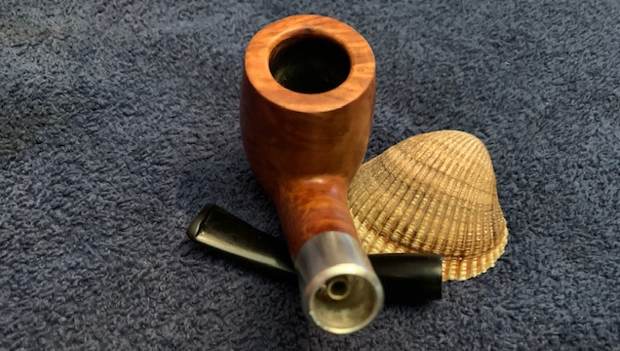
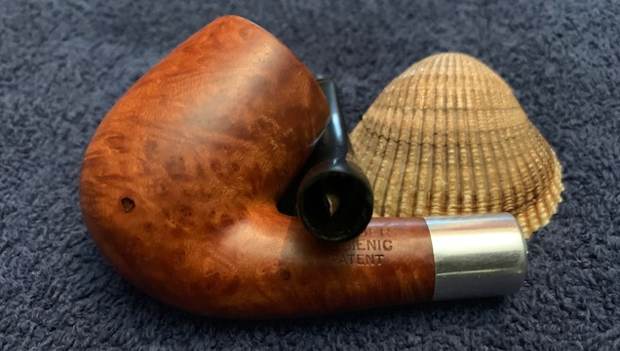
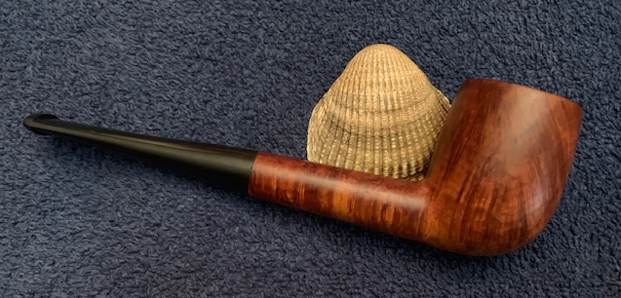
This next pipe is another that has been here for a very long time. I have no idea where I purchased it or whether it came to me in a trade for labour. I don’t remember. I have worked on quite a few of these English made Keyser Hygienic Pipes over the years and know that they were made for the South African market. They were unique in that one stem pretty much fit all of their models. They have a unique system in the shank end – a tube that aligns with a tube in the stem. The aluminum mortise acts as a cooling chamber. This  particular pipe has some nice grain and a few fills in the heel area. There is a shiny top coat on the pipe – varnish I think. The aluminum was dull. The bowl had been reamed but the pipe otherwise was filthy. I could blow air through the stem but not through the bowl and shank. It was clogged and unsmokeable. The rim top was quite clean and the inner edge was damaged on the front with darkening and burn marks. The stem was chipped on the end that fit in the shank and was missing a small chunk. The top and underside of the stem was covered with deep tooth marks. Internally it was filthy with build up in and around the tube inside. The pipe smelled like older English tobacco. I took some photos of the pipe to give a sense of what I saw before I started.   I took photos of the rim top and inner edge of the bowl to show the burn damage and darkening there. I also tried to capture the chipped end at the place it inserts in the shank and the tooth marks in the stem on the top and underside of the stem just ahead of the button. I removed the stem from the shank and took a photo of the pipe to give a sense of the proportion. I tried to capture the “plumbing” in the shank and in the stem. The inner tube in the shank was straight and the tube in the stem was aimed downward. The mortise acted as a cooling chamber. You can also see the chip missing from the end of the stem. I also had some saved advertisements on the system that I have included below to show how it works. It is a unique pipe.It is stamped on the left side of the shank and reads Keyser [over] Hygienic [over] Patent. On the right side it is stamped Made in England. There was also  long patent number stamp in the inside of the aluminum shank extension. I am including two links below. The first is to a blog I wrote on a Keyser Bent Billiard that is very similar to the one on the table now. It is a good read in terms of history and detail on the brand (https://rebornpipes.com/2018/09/27/restoring-a-keyser-hygienic-patent-from-a-garden-shed-in-england/). The second one is to a pamphlet that I have on rebornpipes about the brand. It is a classic piece of old advertising (https://rebornpipes.com/2018/10/01/keyser-hygienic-pipes-pamphlet/). Give it a read.

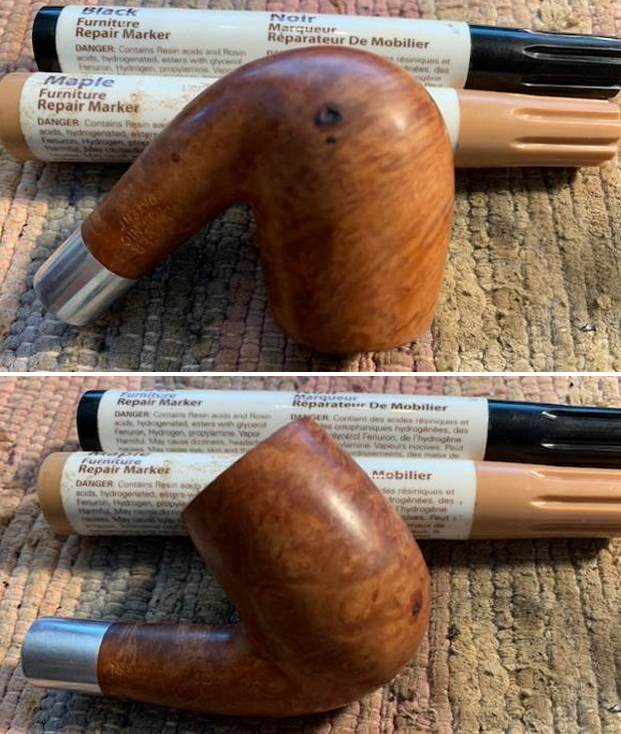
Now it was time to work on the pipe. I decided to address the blockage in the airway from the shank to the bowl. I worked many pipe cleaners through but was not able to break through at all. I finally used a straightened paper clip and carefully worked it into and around the inside of the airway and was able to break the clog. It took quite a bit of probing with the clip to finally remove the blockage and give the bowl good draught but once it was open it was great. I cleaned out the chamber in the shank and in the stem as well as the airways in both with pipe cleaners, cotton swabs and Isopropyl 99% alcohol. Many pipe cleaners and much time passed and the draught was clean and open in both the stem and the shank. With the bowl and shank clean I moved on to repair the shrunken fills in the heel. I used the tip of a Maple and black stain pen to darken the putty spots before putting a drop of clear CA glue on top to fill them in. Once the repairs cured I sanded them smooth with 220 grit sandpaper to blend them into the surface of the bowl. While they are dark spots and look quite large at this point once I work them over with micromesh they will be smaller and a bit lighter.   With that done I worked on the burn damage and darkening on the inner edge of the rim. I used a folded piece of 220 grit sandpaper to give the edge a light bevel to minimize the damage and bring the bowl back to round.   I polished the bowl and rim top with micromesh sanding pads – dry sanding it with 1500-12000 grit pads. I wiped the bowl down with a damp cloth after each pad to remove the sanding debris. After the final sanding pad I hand buffed it with a cotton cloth to raise a shine.   I worked some Before & After Restoration Balm into finish of the briar with my fingertips to clean, enliven and protect it. I let the balm sit for a little while and then buffed with a cotton cloth to raise the shine. The Restoration Balm really makes the grain stands out beautifully.   I set the bowl aside and turned my attention to the stem. I used a topping board to smooth out the chip on the right side of the stem. To do that I flattened the end and reduced the diameter of the stem to fit more smoothly into the shank of the pipe.   I filled in the tooth marks on both sides of the stem with clear CA glue. Once it cured I flattened out the repairs with 220 grit sandpaper (I forgot to take photos of this step).  I polished the stem with micromesh sanding pads – wet sanding with 1500-2400 grit pads and dry sanding with 3200-12000 grit pads. I wiped the stem down after each pad with Obsidian Oil. I polished it with Before & After Pipe Stem Polish – both fine and extra fine and buffed it with a cotton pad. I gave it a final coat of Obsidian Oil and set it aside to dry.  I carefully polished stem with Blue Diamond to polish out the remaining small scratches. I used a very light touch so as not to damage the stem. I buffed the bowl with Blue Diamond as well – a bit more vigorously. I gave the bowl and the stem multiple coats of carnauba wax. I buffed the pipe with a clean buffing pad to raise the shine. I hand buffed it with a microfiber cloth to deepen the shine. The pipe polished up pretty nicely. The grain came alive with the buffing and works well with the polished aluminum ferrule and the polished black vulcanite stem. Altogether the pipe has a rich look. The finished pipe is shown in the photos below. The shape, finish and flow of the pipe and stem are very well done. The dimensions are Length: 5 ½ inches, Height: 1 ¾ inches, Outside diameter of the bowl: 1 ¼ inches, Chamber diameter: ¾ of an inch. The weight of the pipe is 1.55 ounces/44 grams. I will be gifting this pipe to a good friend of mine who I think will appreciate cool smoke the pipe delivers. Thanks for walking through the restoration with me as I worked over this well-made Keyser Hygienic Bent Billiard Patent pipe.
Where did I get this Ben Wade Danish Hand Model 200 Freehand?


Blog by Steve Laug

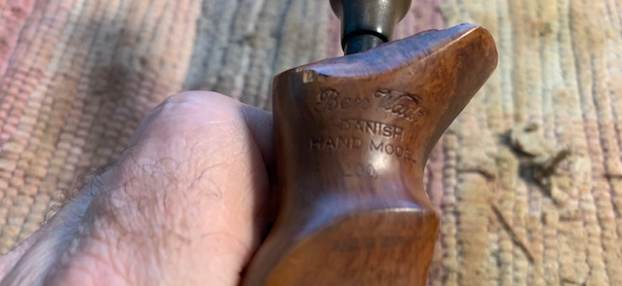
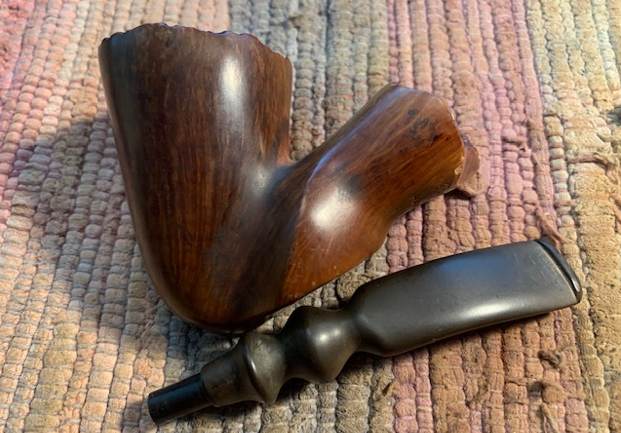
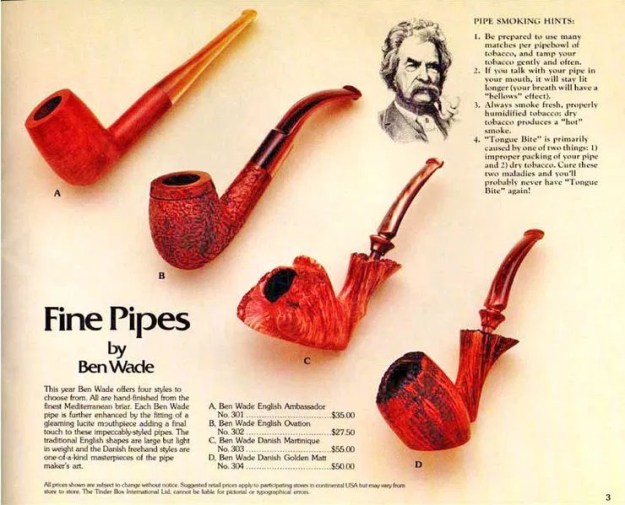
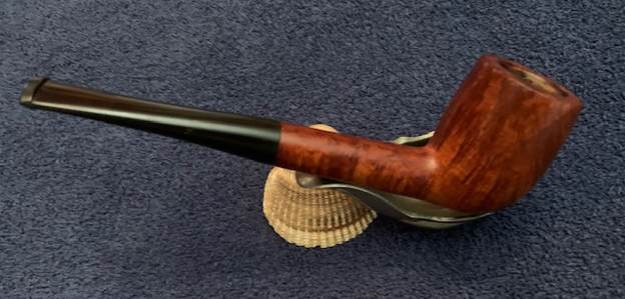
Jeff and I no longer remember where or when we purchased this pipe. It is a large attractive Freehand that has all the signs of being a Ben Wade. Sure enough it is stamped on the underside of the shank and reads Ben Wade [over] Danish [over] Hand Model [over] 200 [over] Made in Denmark. The stamping was clear and readable. Even though the finish was dull and lifeless it showed promise under the grit and grime of the years. The finish is filthy with grime and oils ground into the smooth briar of the bowl and shank sides. The bowl had a thick cake that overflowed in heavy lava onto the plateau rim top filling in the grooves and valleys of the finish. The plateau shank end was also dirty with dust and debris in the grooves and valleys of the shank. The vulcanite stem was oxidized, dirty and had some tooth marks and chatter on both sides ahead of the button. I took photos of the pipe before I started working on it. I took photos of the bowl and rim top to give a clear picture of the thickness of the cake and the lava on the plateau finish of the rim top. There is dust and debris stuck to the walls of the bowl clearly visible in the photos. I also took photos of the top and underside of the stem to show the chatter and tooth marks. I took a photo of the stamping on the underside of the shank. It is clear and readable.I removed the stem from the shank and took a photo of the pipe. It is proportionally pleasing and quite an eye catching pipe.I knew that the Preben Holm pipes were marketed under the Ben Wade label in the US and imported through Lane Ltd. I turned to Pipedia and read the listing on the brand to flesh out the knowledge of the brand (https://pipedia.org/wiki/Ben_Wade). I have included a photo from that site that was taken from a Tinderbox advertisement. I quote the portion of the article that summarizes the Danish period of the history of the brand:
Young Copenhagen master pipemaker Preben Holm had made a meteoric career heading a pipe manufacture employing 45 people at the age of 22! But around the turn of 1970/71 he was in major financial difficulties. His US distributor, Snug Harbour Ltd. in New York City, left him in the lurch. Holm had three unpaid invoices on his desk and another large shipment was ready for the USA, when Snug Harbour’s manager told him on the phone that there was no money at all on the account to pay him.

So the Dane went to New York for an almost desperate search for a new distribution partner. He made contacts with Lane Ltd. and met Herman G. Lane in February 1971. Lane Ltd. had no interest in Holm’s serial pipes produced at that time but so much the more in the hand-carved freehands because the hype for Danish freehands and fancies in the States was still on its way to the climax then. The meeting resulted in an agreement to start a cooperation. Lane insisted to improve the quality considerably and in return he assured to be able to sell essentially larger quantities.

Holm went back home to work on new samples with all-new designs and altered finishes for Lane. Both, Lane and Holm, agreed that it would be unwise to sell the pipes under Preben Holm’s name as long as Snug Harbour had a considerable stock of Preben Holm pipes and might sell them pipes at very low prices just to bring in some money.

So on Mr. Lane’s proposal it was determined to use the name Ben Wade belonging to Lane Ltd. Lane spent considerable amounts of money for advertising the new brand in the big magazines– the centerpiece being whole-page ads showing a very exclusive Seven Day’s Set.

The cooperation with Lane Ltd. proved to be an eminent business success for both partners. Within a very short time Ben Wade Handmade Denmark sold in much larger quantities and at higher prices than they had ever dreamed of. And the hype these freehands and fancy pipes caused went on unbroken long after Herman G. Lane deceased. Preben Holm – obviously much more brilliant in pipe making than in pipe business – was in major troubles again in 1986 and had to sack most of his staff. The Ben Wade production was significantly lowered but continued until his untimely death in June of 1989.
Up to now Preben Holm made Ben Wade pipes are cult and highly sought for on the estate markets.
With that information my initial thoughts were confirmed. This pipe was a Preben Holm made Freehand distributed in the US by Lane Ltd under the name Ben Wade. The freehand rage occurred in the late 70s and the pipes were made until Preben’s death in 1989. My guess would be that this pipe was made sometime during that time period and potentially in the late 70s.

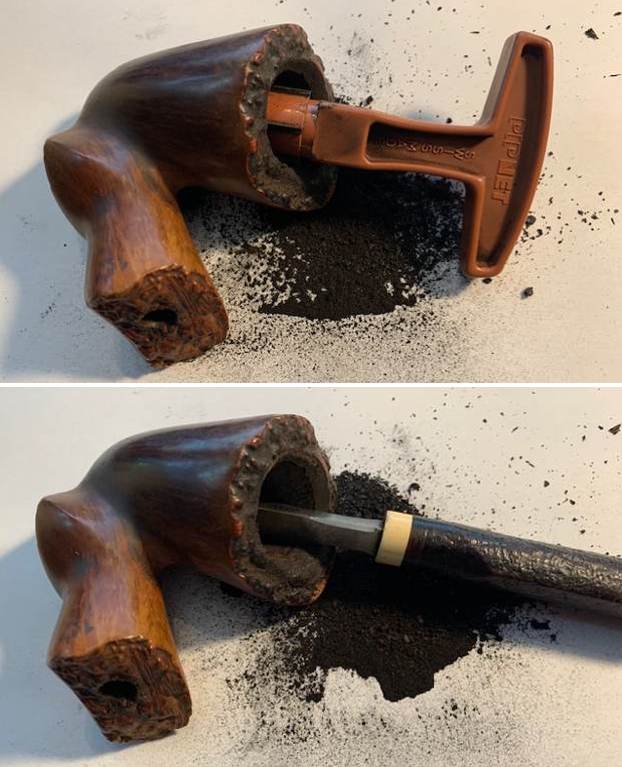
I started my work on the pipe reaming the thick cake out of the bowl with a PipNet pipe reamer using all four reaming heads. I cleaned up the reaming with a Savinelli Fitsall Pipe Knife and then sanded it with 220 grit sandpaper wrapped around a piece of dowel. I sanded until the walls of the bowl were smooth and clear. It was getting cleaner but the plateau and rim top still have a lot of lava on the top that needs to be cleaned off.   I worked on the rim top with a brass bristle wire brush to remove as much of the lava buildup there. I was able to remove some of it and loosen it so that when I scrubbed it it would look better. I worked on the smooth inner edge with 220 grit sandpaper. I worked to remove as much of the darkening and tars as I could possible with the sandpaper. I loosened the  debris with the sandpaper so that when I scrubbed it with the soap it would look better.Now it was time to let the Murphy’s Oil Soap do its magic. I scrubbed the bowl and shank with undiluted soap and a tooth brush and rinsed it off with running water. I worked on the plateau rim top and smooth briar to clean up the dust and debris in the finish. While the rim top looked better it still needed some more work to remove the darkening on the top and edges of the bowl. I touched up the black in the valleys of the plateau on the top and the end of the shank with a Black Sharpie Pen. It matched the existing black in the crevices/valleys. When finished it definitely looked good.I lightly sanded it with 220 grit sandpaper to remove the remaining darkening and it looked very good.   I cleaned out the inside of the shank and the stem with 99% isopropyl alcohol, cotton swabs and pipe cleaners. It was quite dirty inside the shank and airway in the stem. It came out very clean and looks very good.   I polished the briar with micromesh sanding pads – dry sanding it with 1500-12000 grit pads. I wiped the briar down with a damp cloth to remove the sanding dust. The briar really took on a rich shine with the polishing.   With the bowl and shank clean there was still a strong ghost of aromatics wafting from the clean bowl. I decided to deghost it with cotton bolls and isopropyl alcohol. I stuffed the bowl with the cotton bolls and used an ear syringe to fill it with alcohol. I twisted a cotton boll and made a wick to insert in the shank. In the morning when I checked it the cotton was brown in the bowl and the wick in the shank is dark with oils. The alcohol had done its job. I rubbed the bowl down with some Before & After Restoration Balm. I worked it into the briar with my finger tips to clean, revive and preserve the wood. It really brings the grain alive once again. I let it sit for 15 minutes then buffed it off with a soft cloth. The grain really pops at this point in the process. I set the bowl aside and turned my attention to the stem. I scrubbed it with Soft Scrub and cotton pads to remove the oxidation as much as possible. It took a bit of elbow grease but it was significantly cleaner when I was finished.  I sanded the tooth marks and chatter out around the button with 220 grit sandpaper and started the polishing with 400 grit wet dry sandpaper.  I polished the stem with micromesh sanding pads – 1500-12000 grit pads. I wiped the stem down after each pad with a cloth impregnated with Obsidian Oil. I finished the polishing with some Before & After Pipe Stem Polish – both Fine and Extra Fine. I wiped it down a final time with Obsidian Oil. The stem looked very good. As always I am excited to finish a pipe that I am working on. I put the Ben Wade Hand Model 400 Made in Denmark Freehand back together and buffed it with Blue Diamond on the buffing wheel. I gave the bowl and the stem multiple coats of carnauba wax. I buffed the pipe with a clean buffing pad and hand buffed it to raise the shine. It is fun to see what the polished bowl looks like with the grain popping through on the smooth portions and the variety of colour in the rustication. Added to that the polished vulcanite fancy saddle stem was a beautiful touch. It is light and well balanced. Have a look at it with the photos below. The dimensions are Length: 6 ½ inches, Height: 2 ¾ inches, Outside diameter of the bowl: 1 ¾ inches, Chamber diameter: 1inch. The weight of the pipe is 65 grams/2.26 ounces. It is a beautiful pipe and one that will be on the rebornpipes store in the Danish  Pipe Makers section. If you are interested in adding it to your collection let me know. Thanks for walking through the restoration with me as I worked over this pipe. Thanks to each of you who are reading this blog. I remind us all of the fact that we are not pipe owners; we are pipemen and women who hold our pipes in trust until they pass on into the trust of the next pipeman or woman.

Reviving a Lovely Stanwell Liverpool


by Kenneth Lieblich

Next on the chopping block is beautiful Danish pipe from Stanwell. I acquired it locally from the estate of an old boy who kept a lovely collection of pipes. The shape of this pipe is a Liverpool – a member of the Canadian pipe family. For some reason, the Liverpool is far less common than the Canadian. Both types have a shank length 1½ to 2 times the height of the bowl. The difference between the two is as follows: the Canadian has an oval-shaped shank whereas the Liverpool has a round-shaped shank. This Stanwell Liverpool is so charming that I was tempted to keep for myself, but, as a life-long Manchester United fan, I cannot have anything named Liverpool in my home!   As I mentioned, this is a Stanwell de Luxe 298 Liverpool. It has beautiful briar from the bowl all the way down the long shank to a short-but-elegant stem. The left side of the shank reads Stanwell [over] Regd. No. 969-48 [over] de Luxe. The right side of the shank reads Fine Briar [over] 298. Finally, the stem’s left side also has the trademark S of the Stanwell company. Of course, 298 refers to the model number and I went to check the list of Stanwell shapes, here on Reborn Pipes. There was no 298 on this list. Hmm. Well, I did find some images from an old Stanwell catalogue (rather vaguely dated as 1960-70). The image below does not mention a shape “298”, but it does show a “98” which looks very similar to the pipe I have. I am assuming that there is a connection.I know from information at Pipephil that the pipe I have is certainly more than 50 years old – and this corresponds to the catalogue above. My pipe has both the “Regd. No.” and the S logo without a crown. This screen capture explains that clearly.Meanwhile, Pipedia has a good amount of information on the Stanwell brand and its history. I certainly recommend looking it over: https://pipedia.org/wiki/Stanwell.

Anyway, this really is a good-looking pipe. No major issues to resolve – just a few minor ones. The stem was dirty, though not too beat up. There were some small scratches and a couple of bite marks, as well as some oxidation and calcification on the vulcanite. The rim on the stummel was blackened and a bit burnt – that would need to be addressed. The insides were fairly dirty and would need some work to clean out. In addition, there was a strange colour to the wood that just wasn’t right. The stem was first on my list. I wiped down the outside of the stem with Murphy’s Oil Soap on some cotton pads. There was enough calcification on the stem that I decided to take a blade and gently scrape it off. I also took a BIC lighter and ‘painted’ the stem with its flame in order to lift the bite marks and dents. Unfortunately, this didn’t really work, but I have ways of sorting this out. Then, I cleaned out the inside with pipe cleaners and isopropyl alcohol. It wasn’t too dirty and only required a few pipe cleaners.I then wiped down the stem with SoftScrub cleaner to remove some surface oxidation. Once this process was done, the stem went for an overnight soak in the Pipe Stem Oxidation Remover. As the name suggests, this liquid removes oxidation, but, more than anything, it helps draw oxidation to the surface of the vulcanite. This allows me to clean the oxidation off in a couple of ways: both by applying a mild abrasive cleaner to the surface, then by sanding the stem.  The next day, I used SoftScrub again with some cotton rounds and, as you can see, more revolting colour came off the stem.The bite marks on and around the button had to be dealt with, so I whipped out my black cyanoacrylate adhesive to fill those in and let them fully cure. After curing, I used some nail polish to restore the letter S on the stem. I painted the area carefully and let it fully set before proceeding.For sanding the adhesive, I used 220- and 400-grit sandpapers to meld seamlessly into the stem.  Then I used a set of nine Micromesh pads (1,500 through 12,000 grit) which gradually erased the ravages of time and brought out the stem’s lovely black lustre. For the last five pads, I also lightly coated the stem with Obsidian Pipe Stem Oil in between each scrubbing. At last, I set the finished stem aside.    Off to work on the stummel! The bowl needed a bit of reaming, so I used the PipNet Reamer to scrape off the built-up cake and I followed that with 220-grit sandpaper taped to a dowel to eliminate as much as possible. Generally, I prefer to sand the chamber down to bare briar. When restoring, it is important to ensure that there is no damage to the briar in the bowl, under the cake. Fortunately, there were no hidden flaws to the briar on this pipe.   I then proceeded to clean out the insides of the shank with Q-tips, pipe cleaners, and lemon-infused isopropyl alcohol. There was a bit of filth inside this stummel and it took a fair amount of cotton to get it clean. I followed that up by cleaning the insides with some dish soap and tube brushes.    I decided to de-ghost the pipe in order to remove any lingering smells of the past. I thrust cotton balls into the bowl and the shank and saturated them with 99% isopropyl alcohol. I let the stummel sit overnight. This caused any remaining oils, tars and smells to leach out into the cotton. The bowl was nice and clean after this. I used cotton rounds and some Murphy’s Oil Soap to scrub the outside of the stummel and a toothbrush with Murphy’s for the lava on the rim of the pipe. With the lava on the rim removed, I could see that the burn marks remained (see the photo below).In order to remove the remaining burns, I “topped” the pipe – that is to say, I gently and evenly sanded down the rim on a piece of 220-grit sandpaper. I enhanced this further by running the same sandpaper along the inside edge of the rim and creating a very subtle (and beautiful) chamfer. This effectively removed the damage, without altering the look of the pipe. This is always a tricky business – I want to find the balance between removing old burns and maintaining as much of the pipe as possible. But I believe that the photos at the end of this blog show that I got the balance right.

As I mentioned earlier, there were some remnants of an oxblood-like stain on the wood. I’m not sure if this was the original colour of the pipe or if it was added later, but – regardless – it didn’t look good at all. I hoped (and expected) that sanding would help this problem. I used all nine Micromesh pads (1,500 through 12,000 grit) on the stummel to make it lovely and smooth.  However, not all of the colour was gone, so I removed it with 99% isopropyl alcohol and other stuff I had on hand. It looked so much better with that colour gone.

At this point, I rubbed some Before & After Restoration Balm into the briar and left it to sit for 10 or 15 minutes. I brushed it with a horsehair brush and buffed it with a microfibre cloth. The BARB does wonderful things to the wood, and I really like the natural colour of the briar.   Finally, it was off for a trip to the bench polisher. A dose of White Diamond and a few coats of carnauba wax were the perfect complement to the briar. The lovely shine made the wood look absolutely beautiful. This pipe is elegant, light, and incredibly comfortable to hold. I thoroughly enjoyed bringing this Stanwell de Luxe 298 Liverpool back to life and I am pleased to announce that this pipe is for sale! If you are interested in acquiring it for your collection, please have a look in the “Danish” pipe section of the store here on Steve’s website. You can also email me directly at kenneth@knightsofthepipe.com. The approximate dimensions of the Stanwell are as follows: length 6 in. (152 mm); height 2 in. (50 mm); bowl diameter 1⅛ in. (29 mm); chamber diameter ¾ in. (19 mm). The weight of the pipe is 1⅛ oz. (33 g). I hope you enjoyed reading the story of this restoration as much as I enjoyed restoring it. If you are interested in more of my work, please follow me here on Steve’s website or send me an email. Thank you very much for reading and, as always, I welcome and encourage your comments.