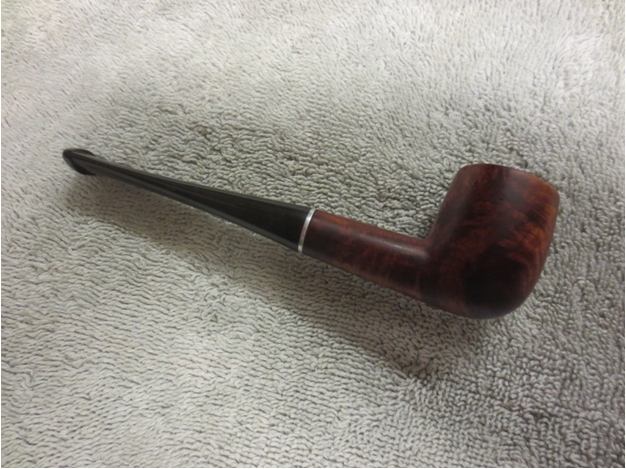
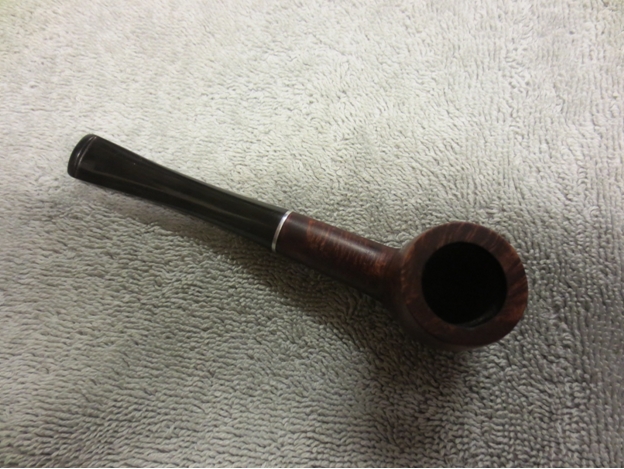
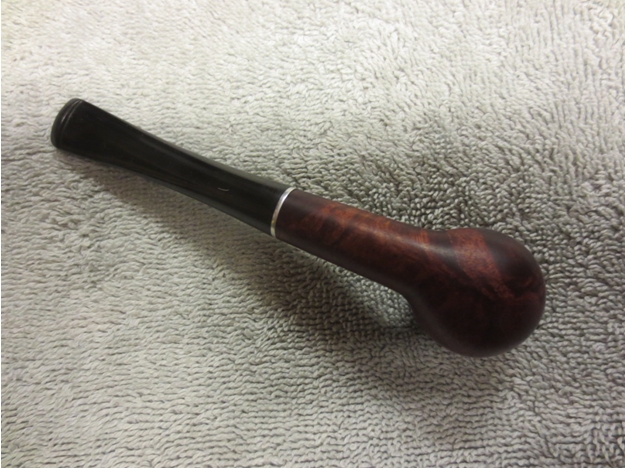
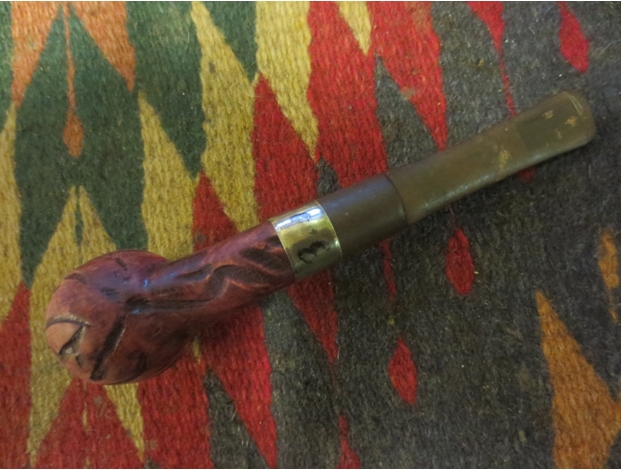
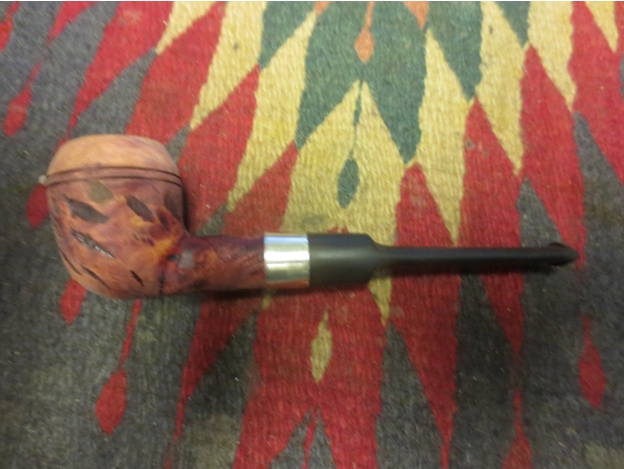
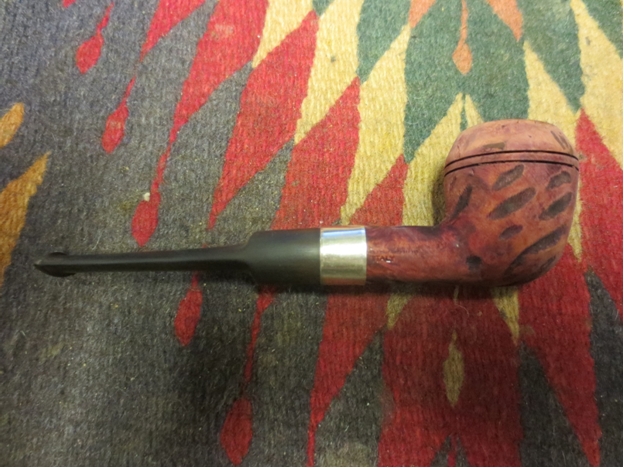
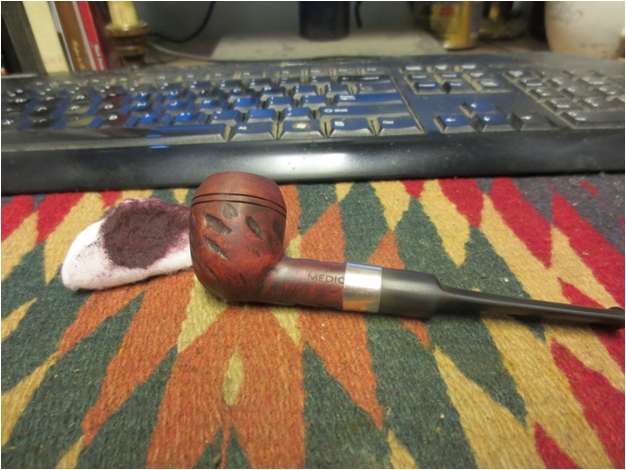
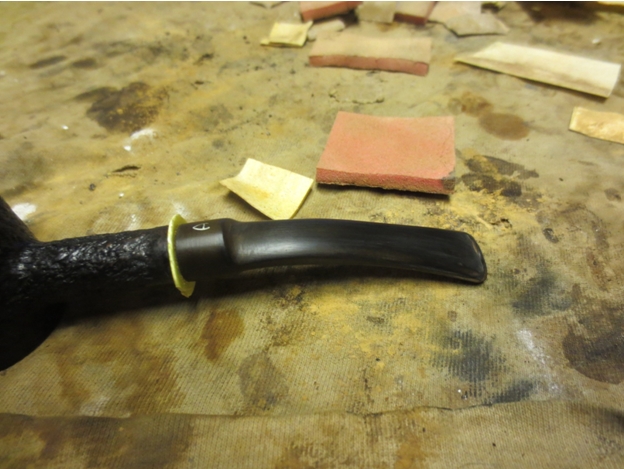
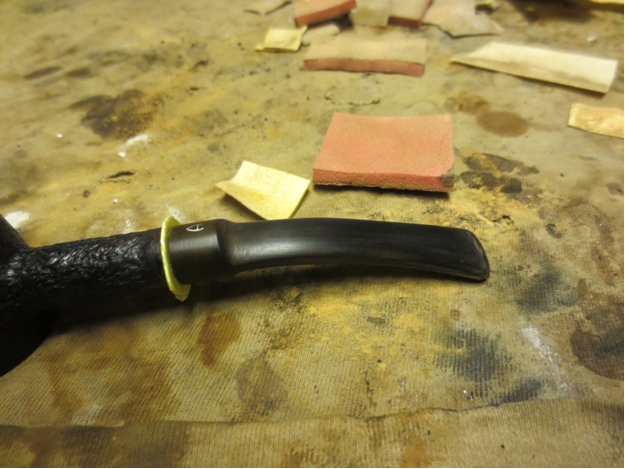
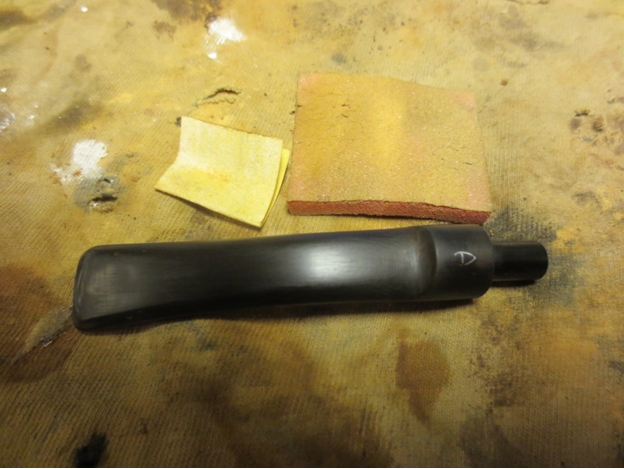
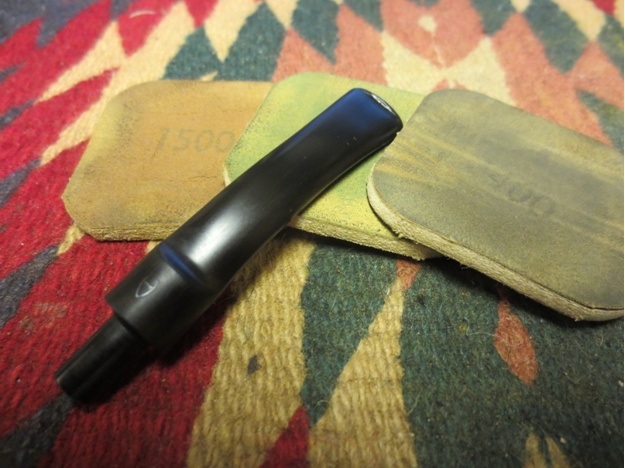
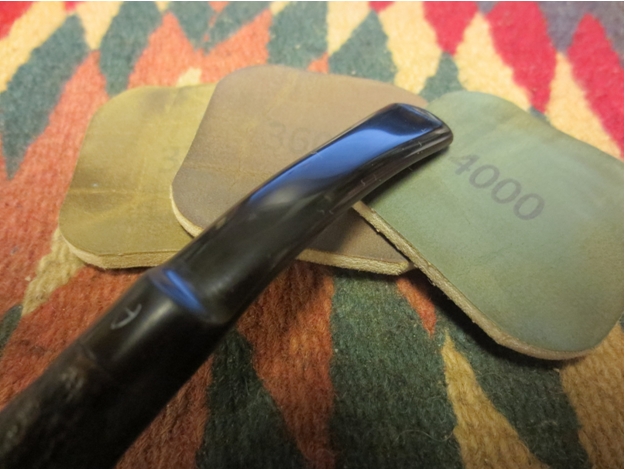
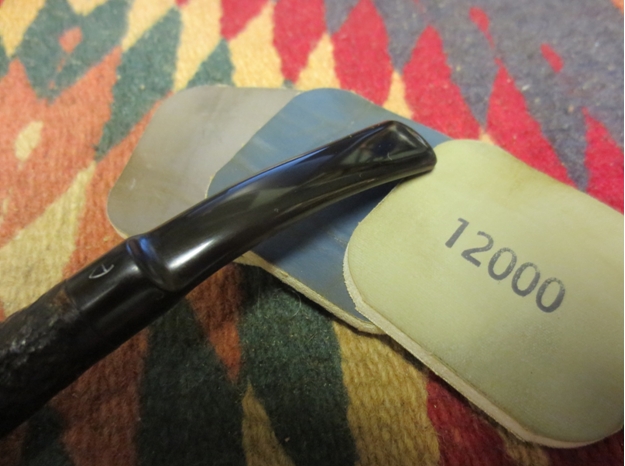
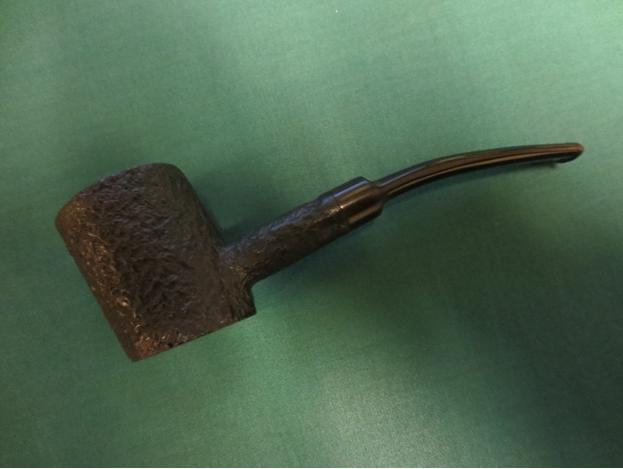
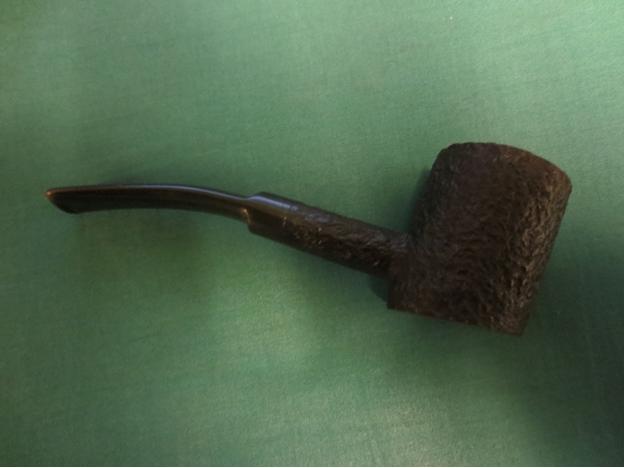
Tag Archives: Bowl – finishing

The One That Got Away – Robert M. Boughton


Guest Blog by Robert M. Boughton
Member, North American Society of Pipe Collectors
http://www.roadrunnerpipes.com
http://about.me/boughtonrobert
Photos © the Author

“Love bravely, live bravely, be courageous, there’s really nothing to lose.”
— Jewel (Jewel Kilcher), singer-songwriter, guitarist, actress, author and poet

INTRODUCTION
Indeed, I endeavor to live life to the fullest and take calculated risks. But be advised, the good lady, Jewel, is not altogether correct. This, therefore, is a cautionary account of a wonderful Gilpin, being the product of a maker called Salisbury.

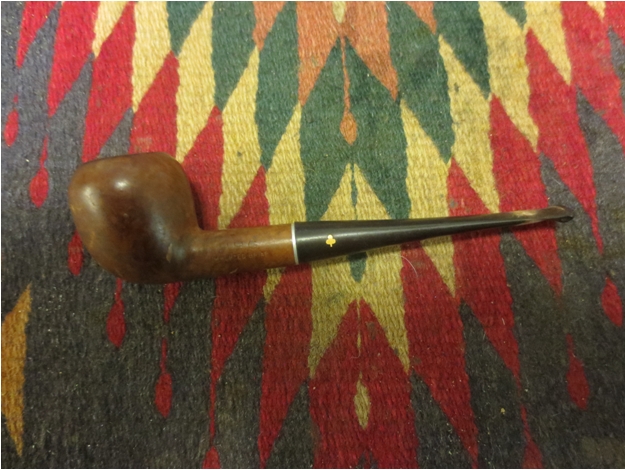
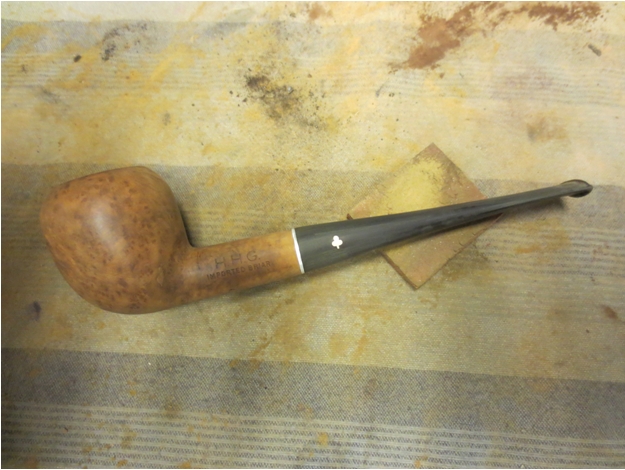
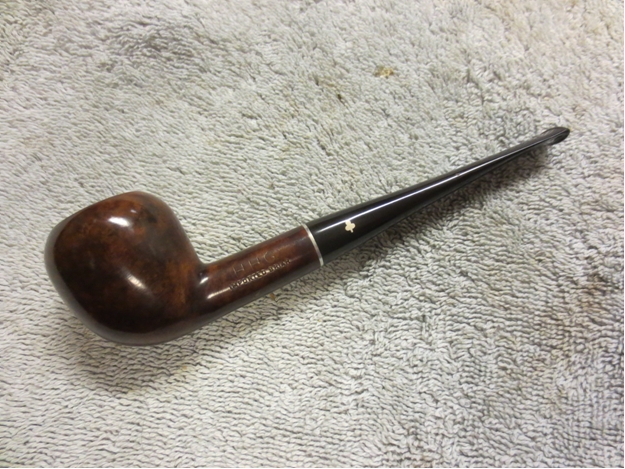
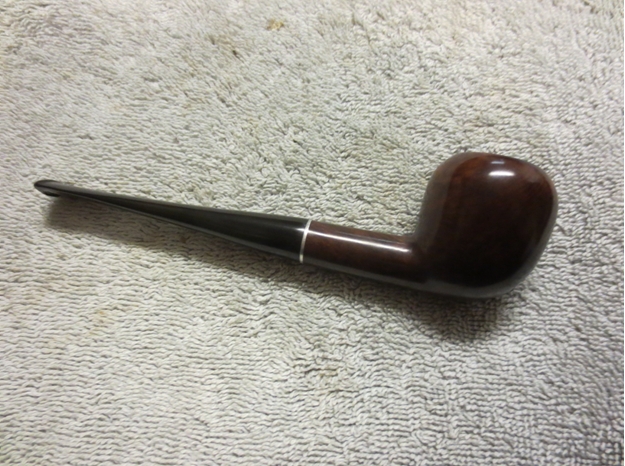
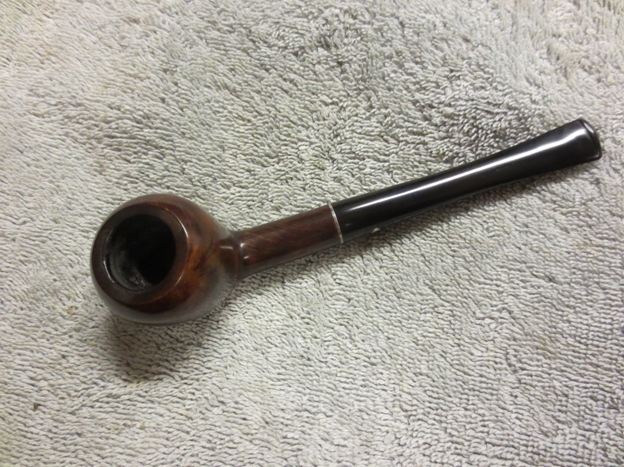
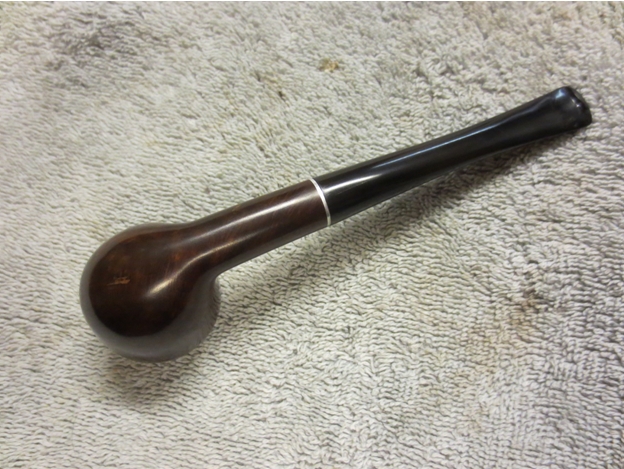
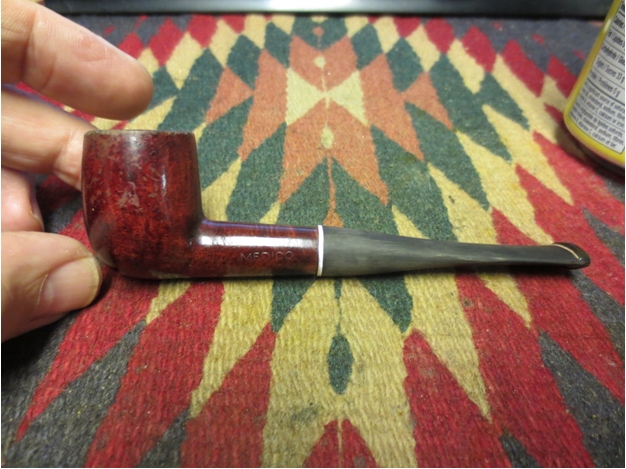
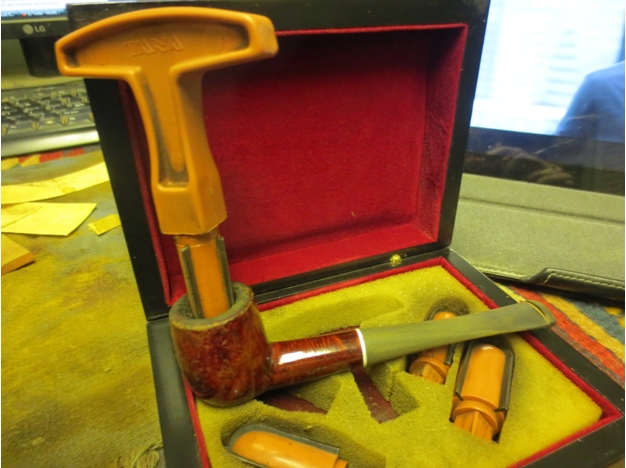
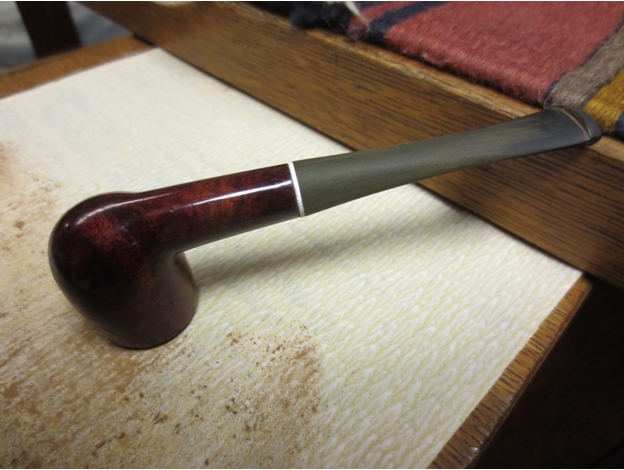
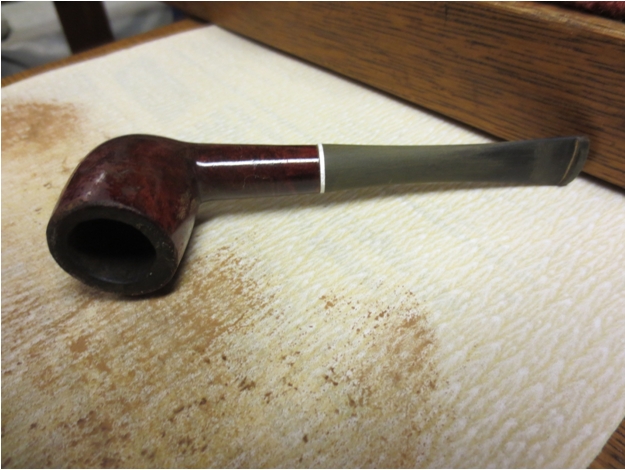
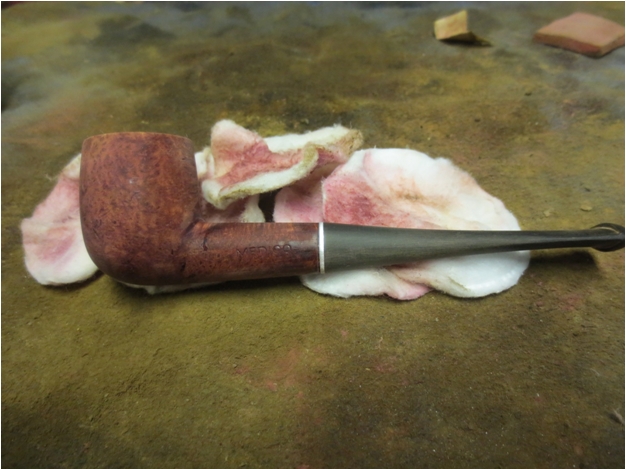
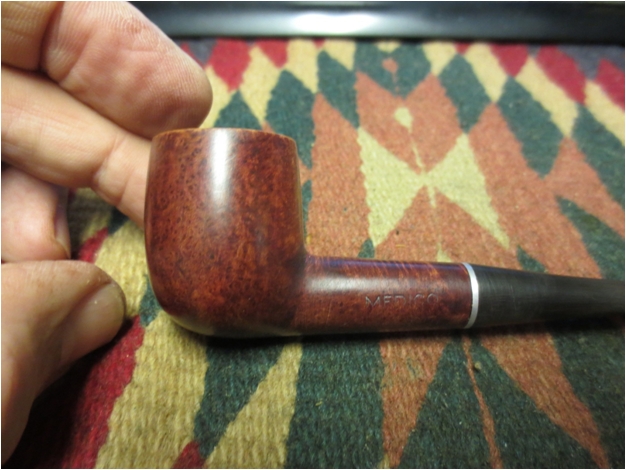
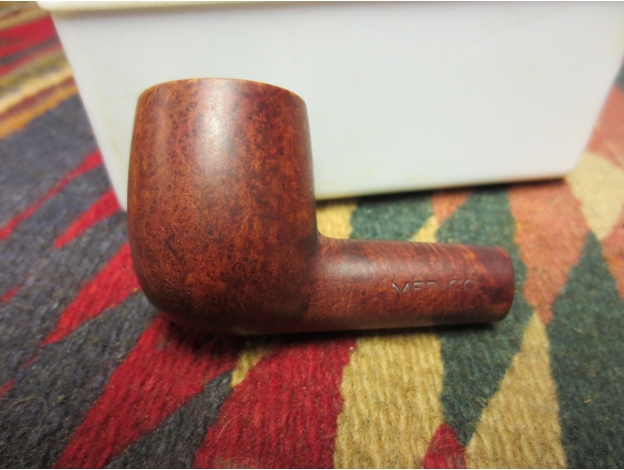
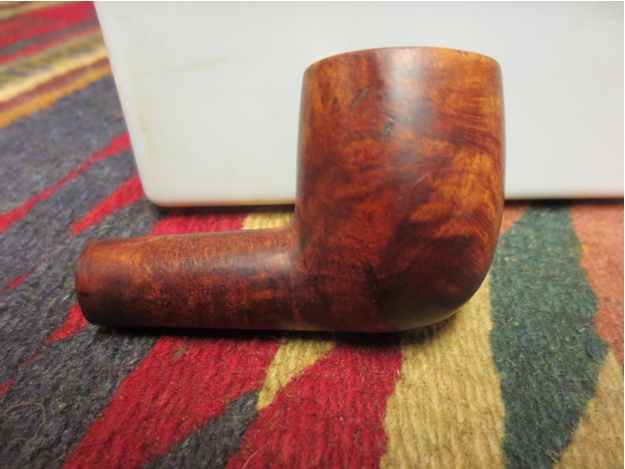
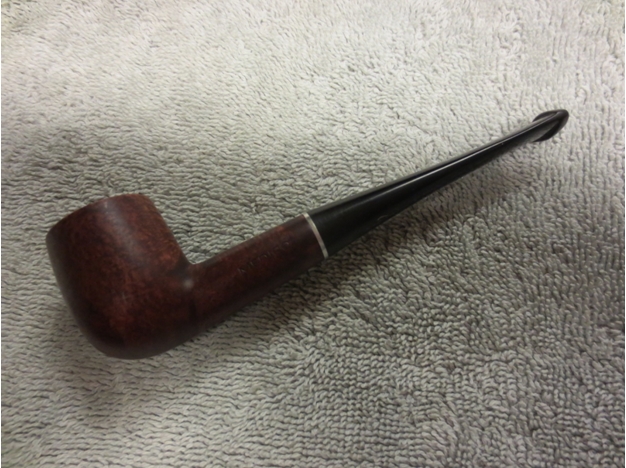
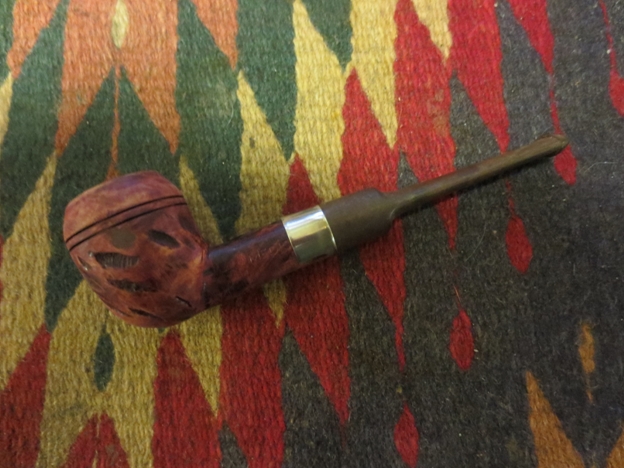
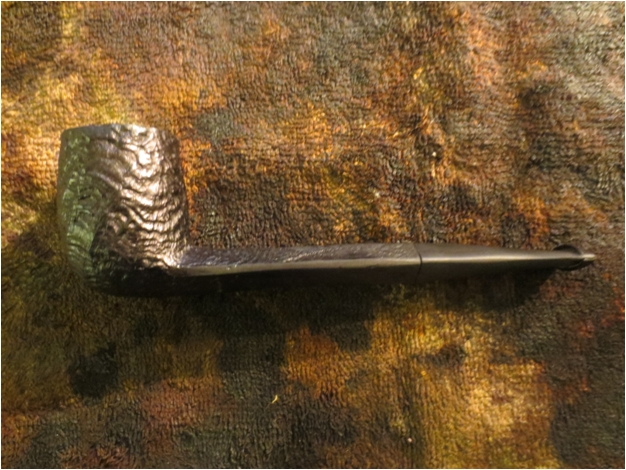
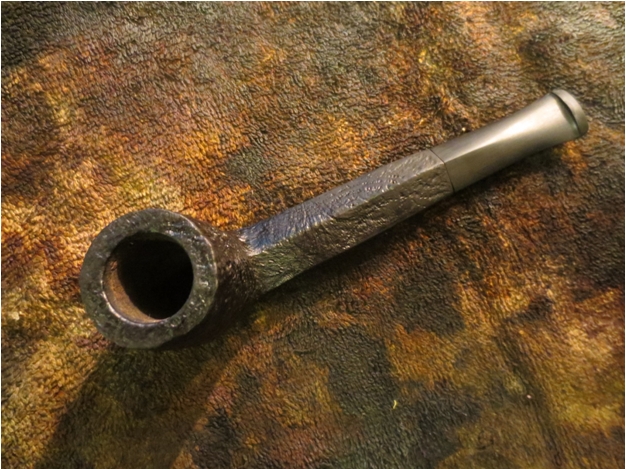
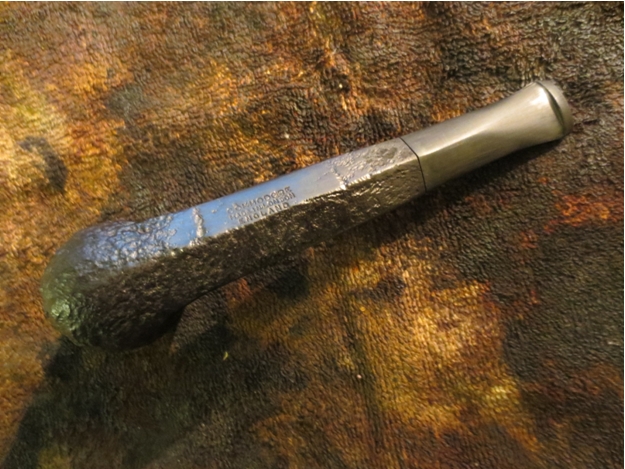
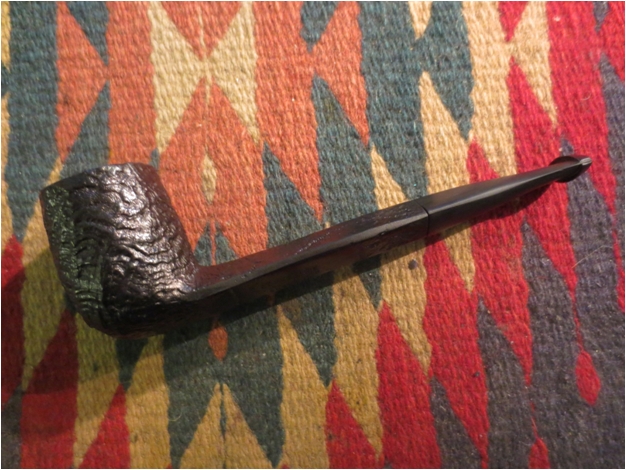
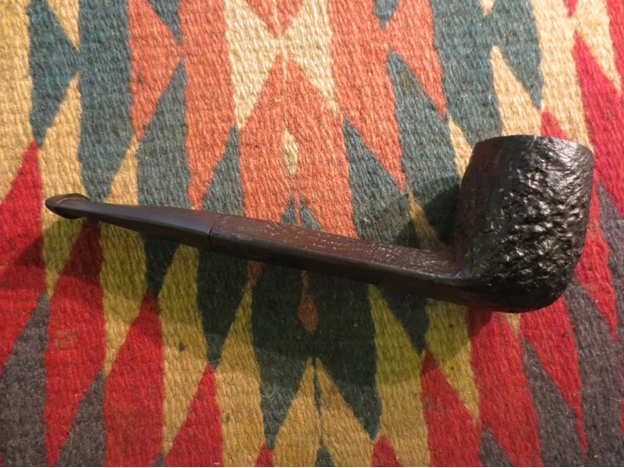
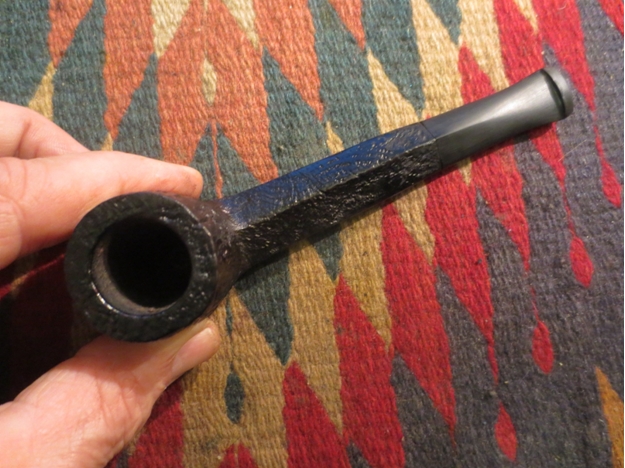
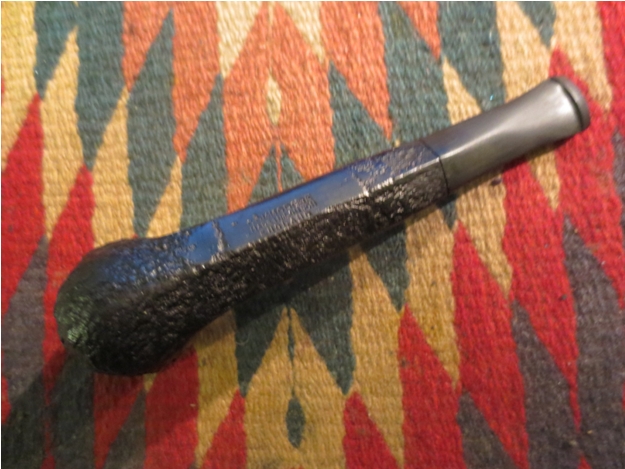
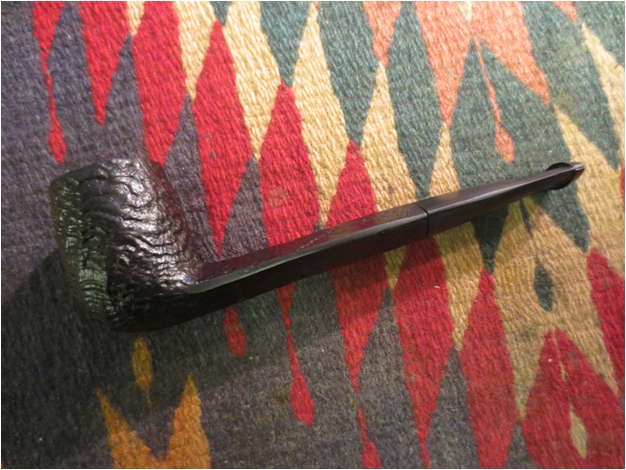
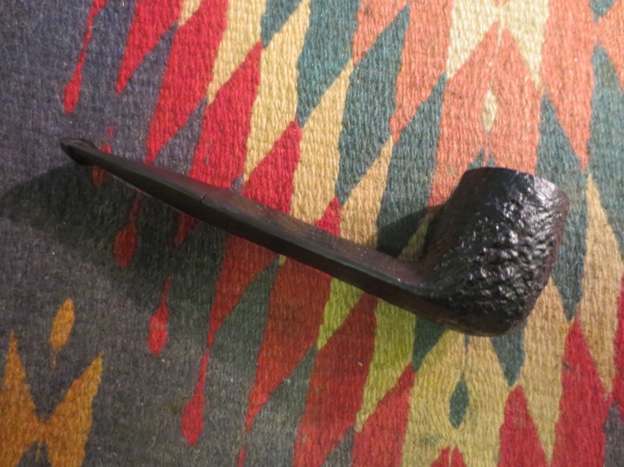
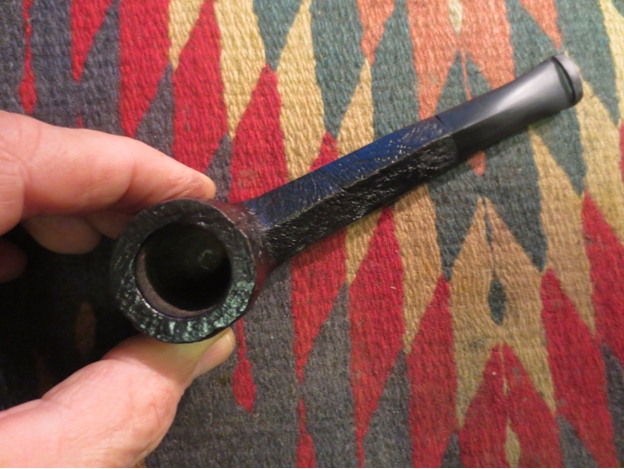
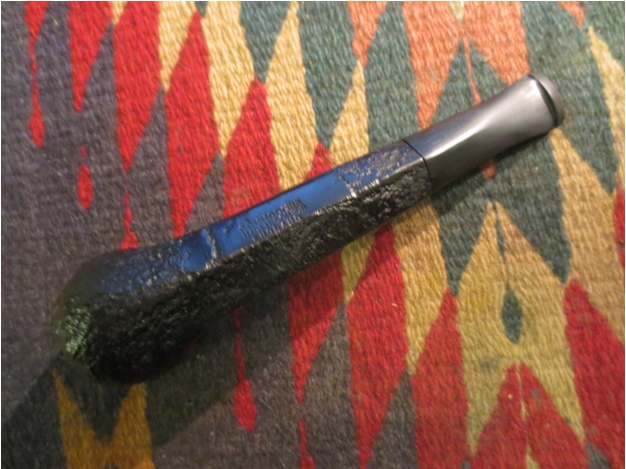
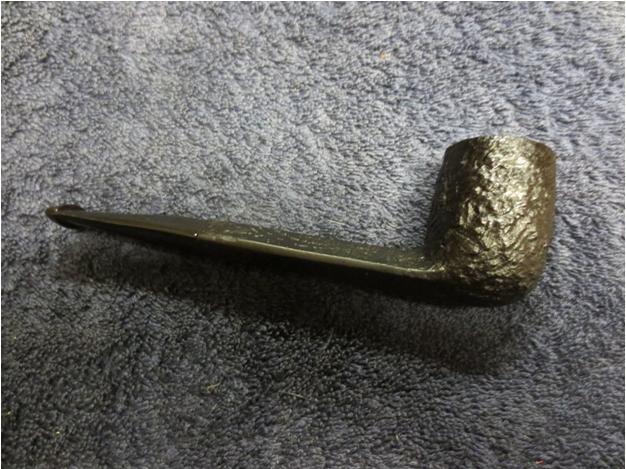
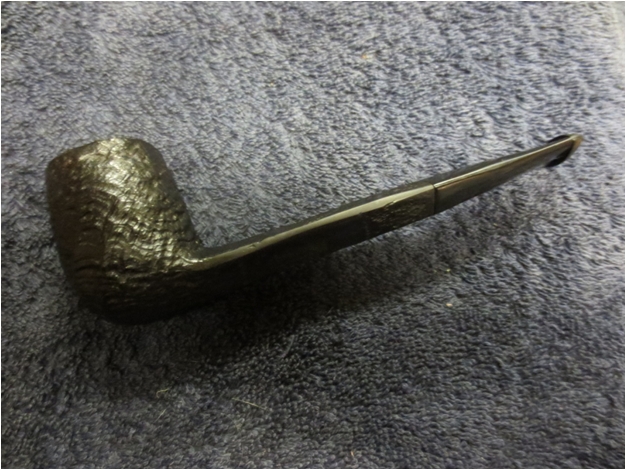
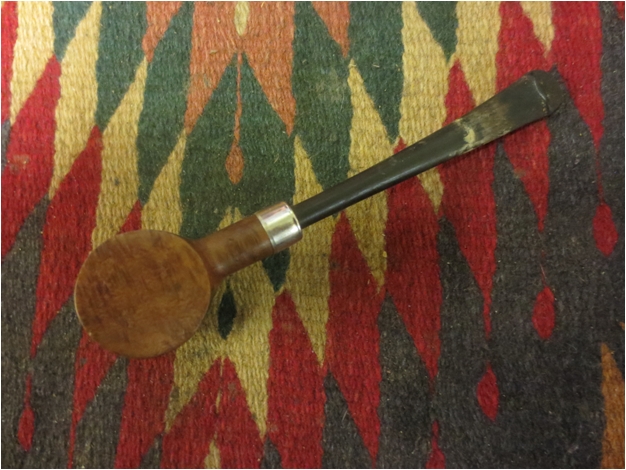
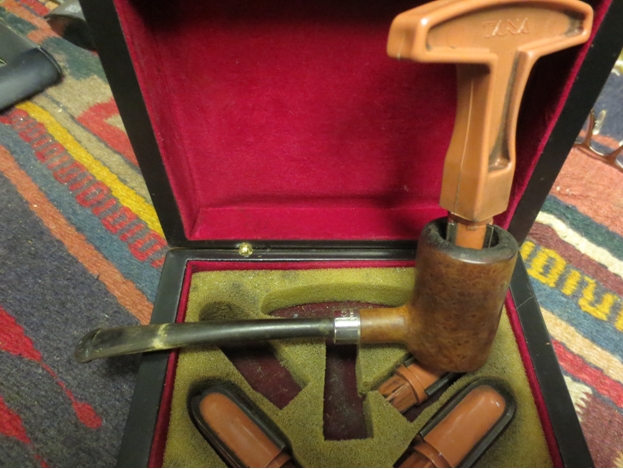
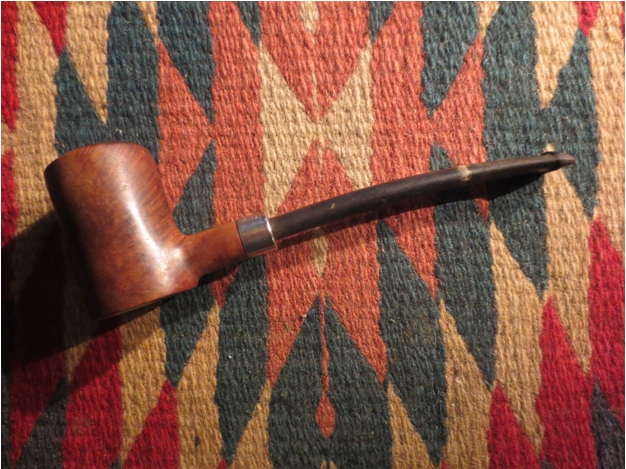
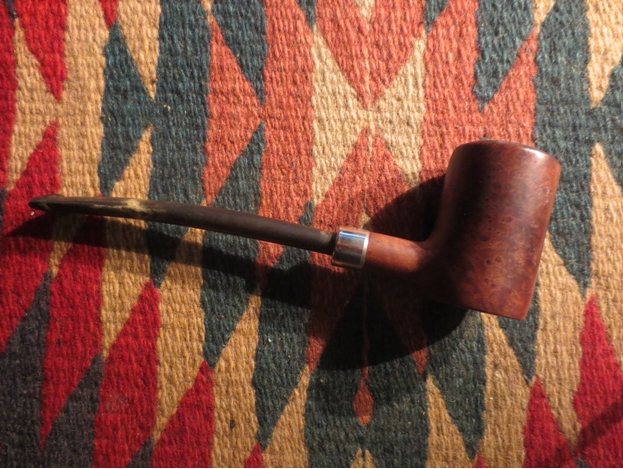
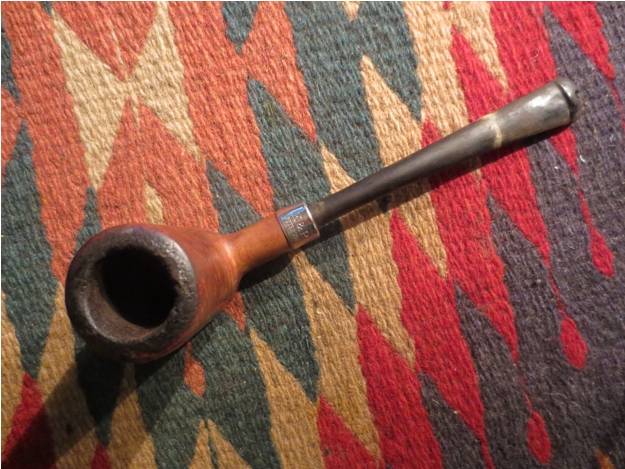
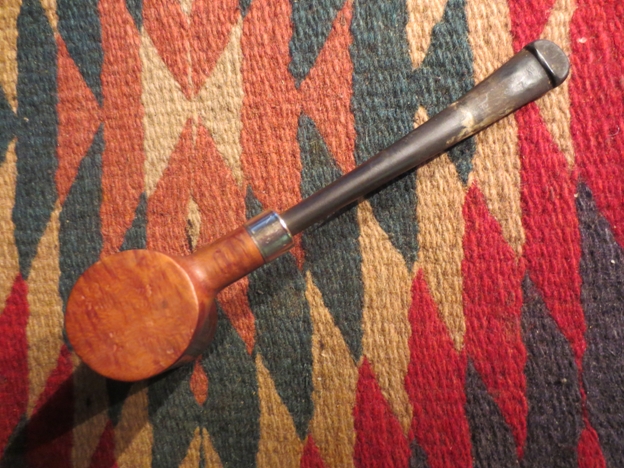
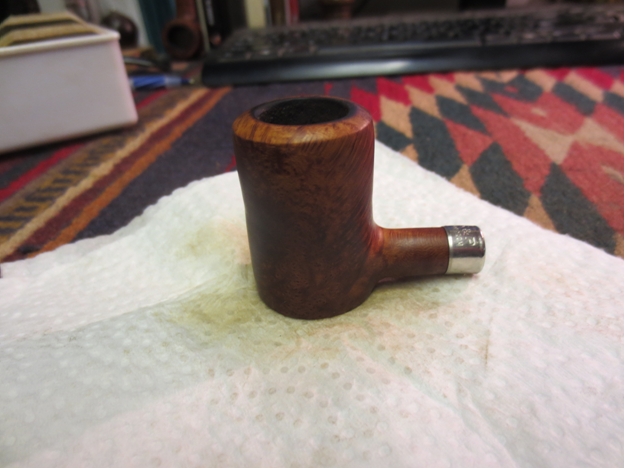
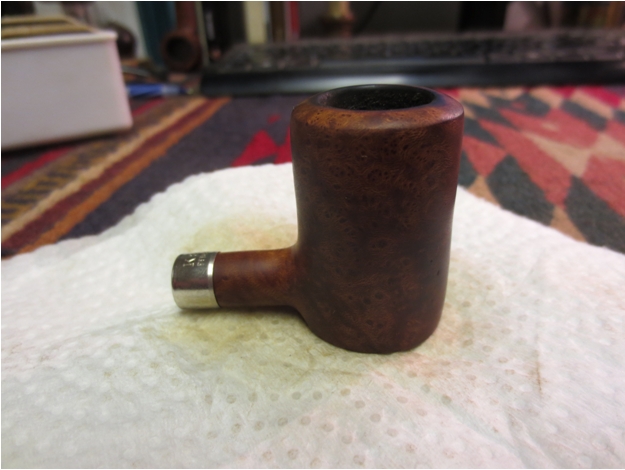
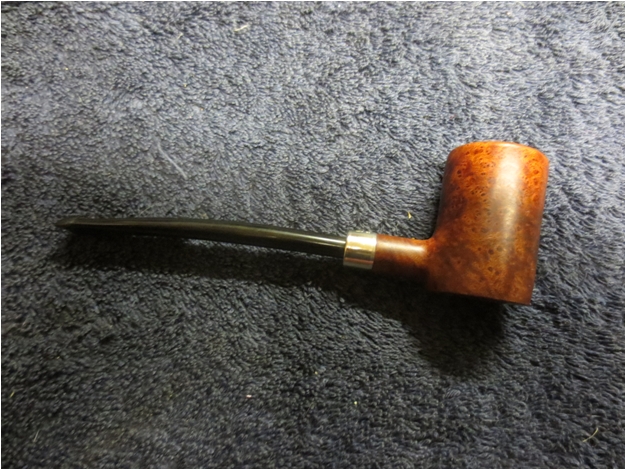
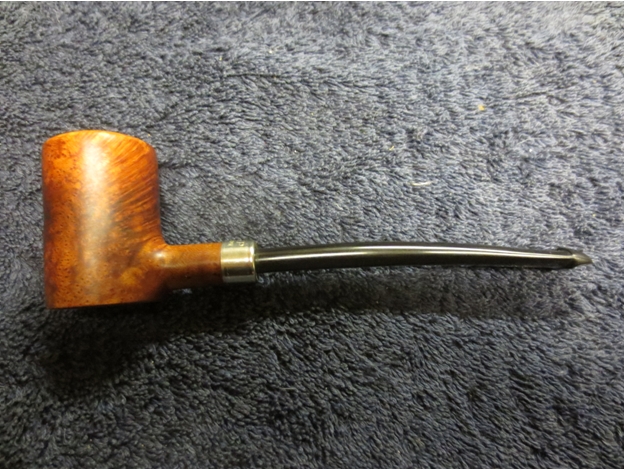
Because of its humble background that defies my concerted attempts to trace the brand even to a country of origin, the 5-1/2″ long pipe (from the front of the small, flat, rounded base to the lip of the stem) with a 1-7/8″ bowl height, though an uneven mix of birds-eye and erratic lines, is nevertheless a fine example of engineering, briar quality and the ultimate smoking pleasure that results. I believe Salisbury is or was a small, independent pipe shop, or perhaps just the name of the town where a modest craftsman who created the Gilpin lived.

RESTORATION
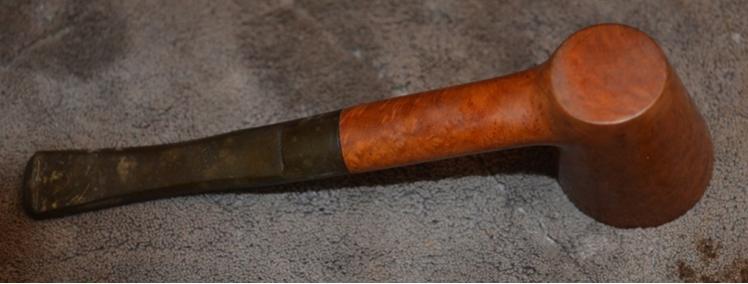
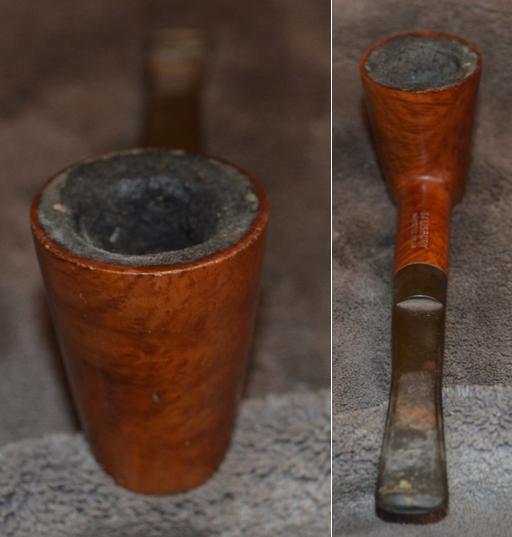
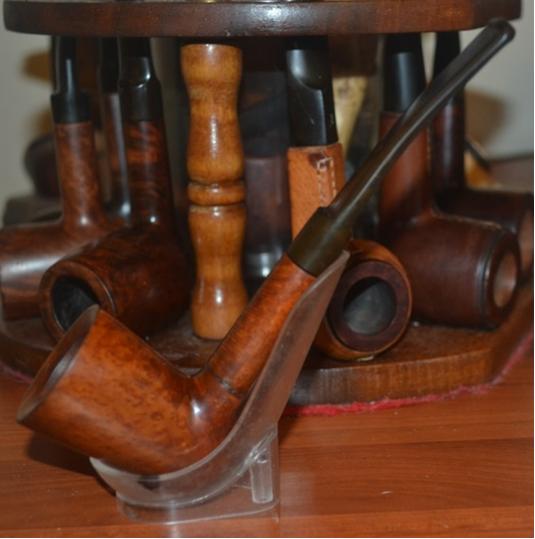
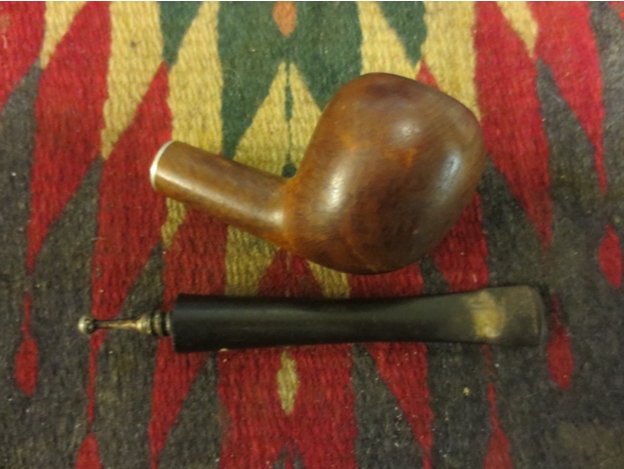
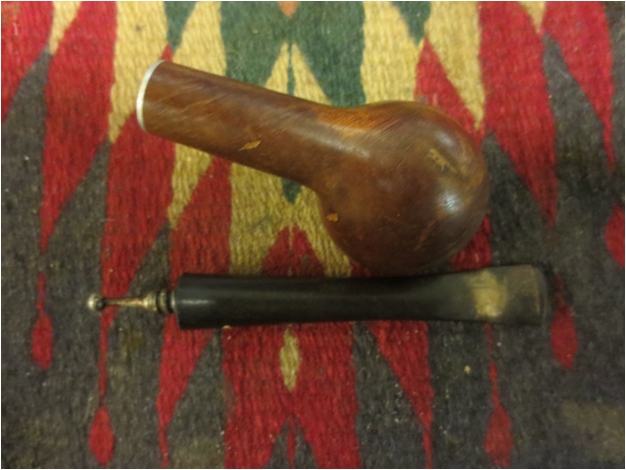
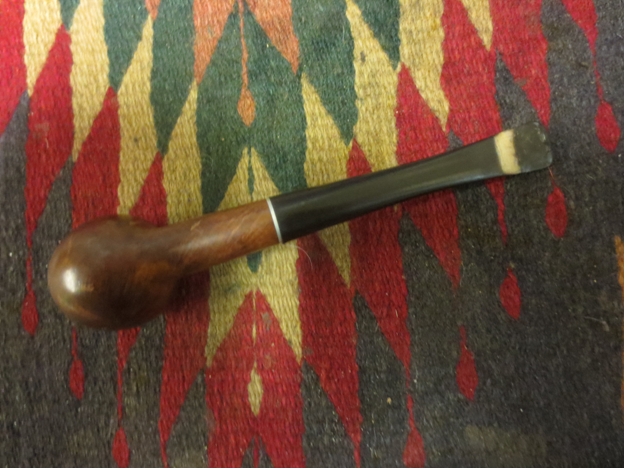
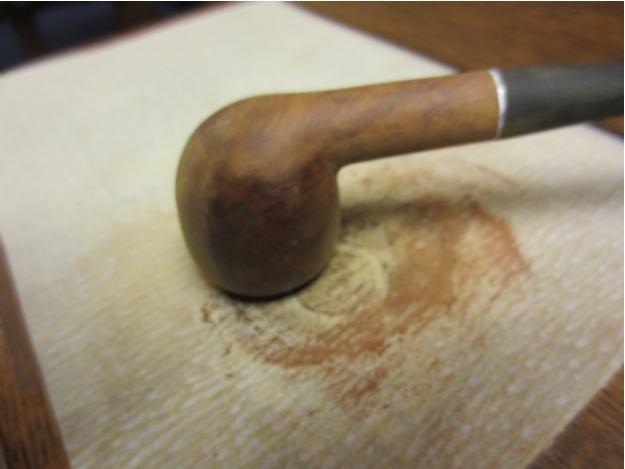
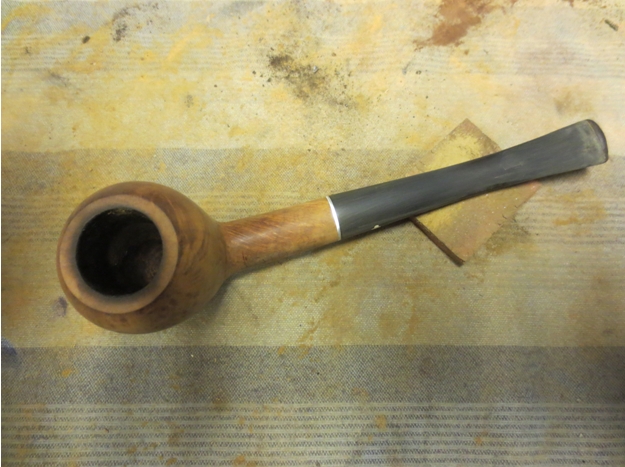
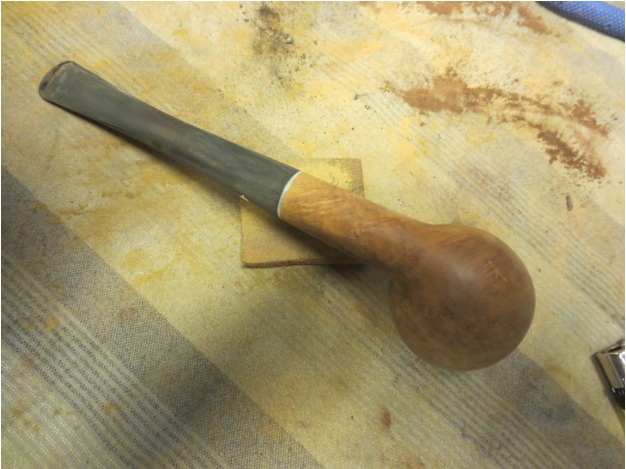
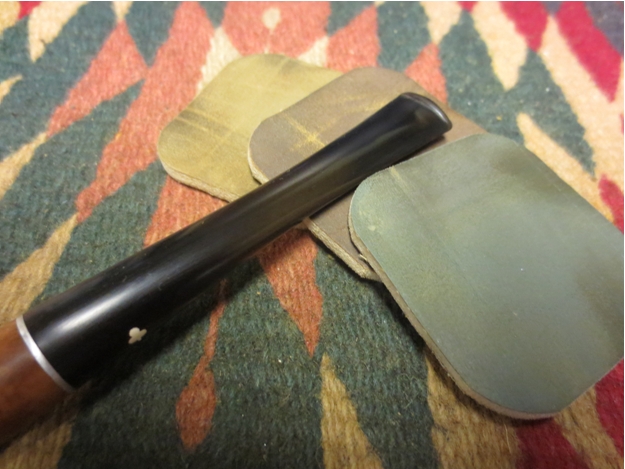
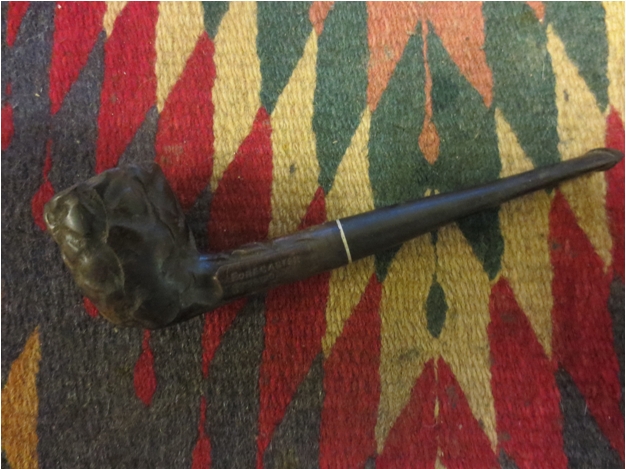
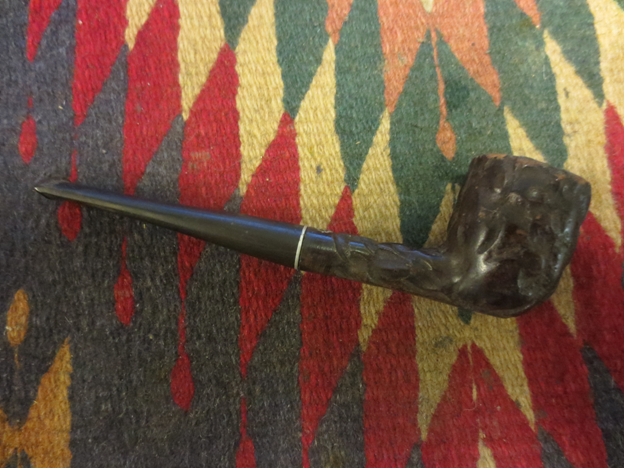
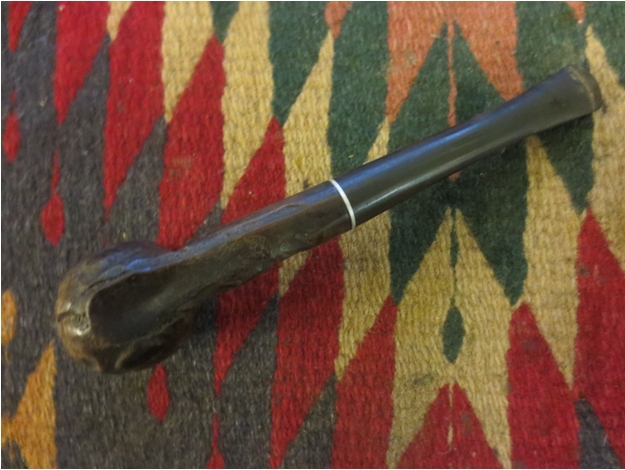
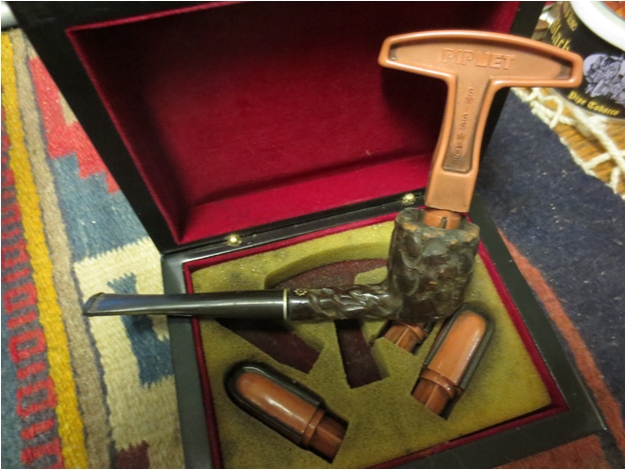
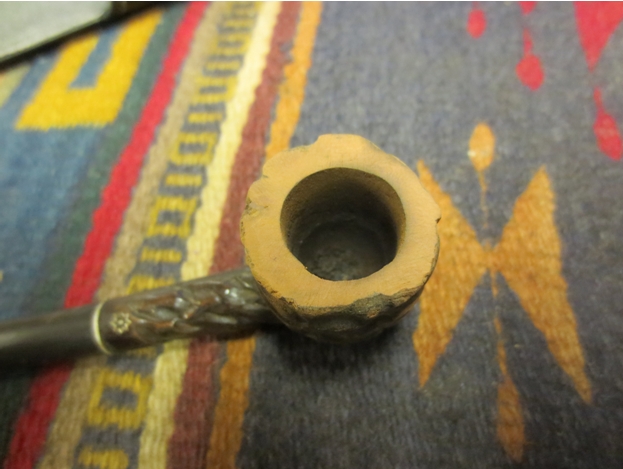
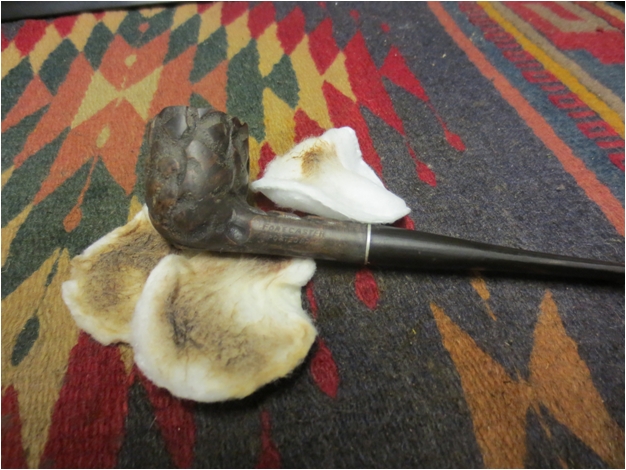
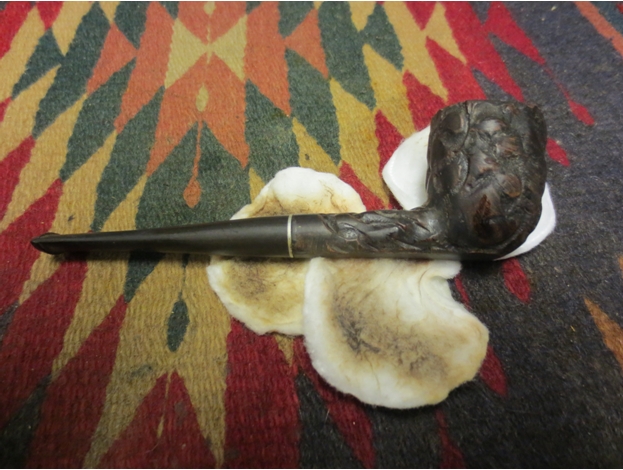
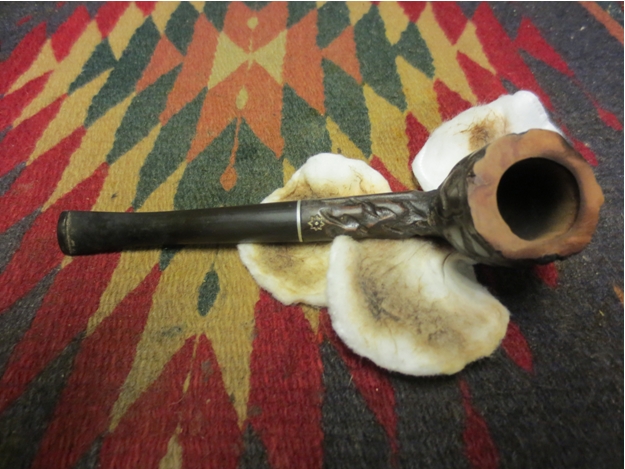
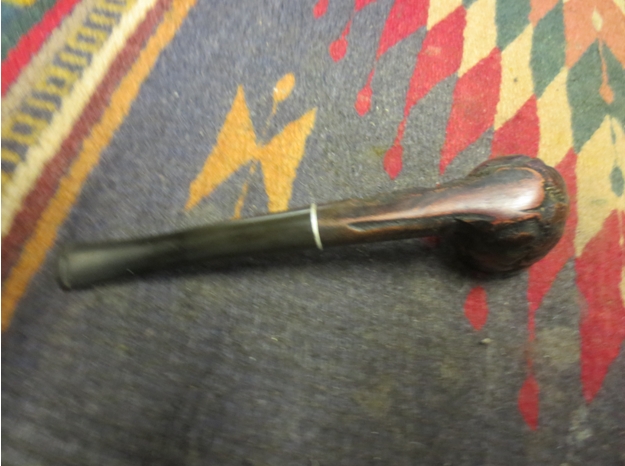
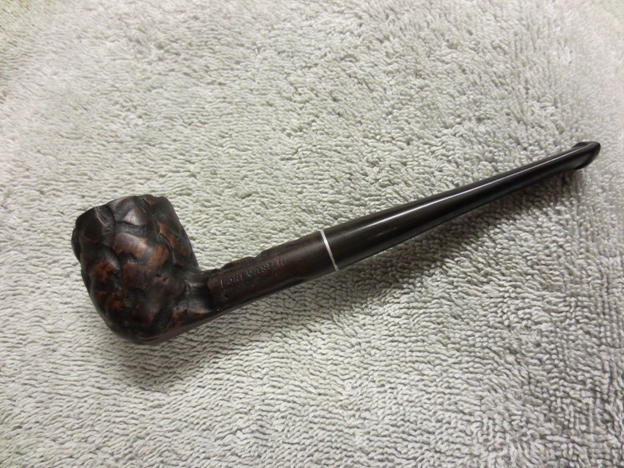
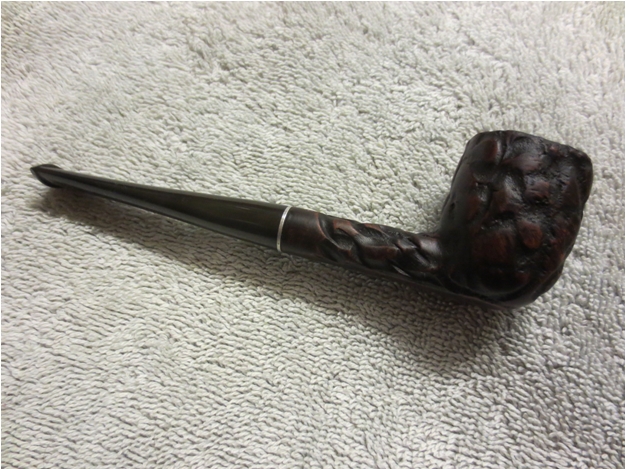
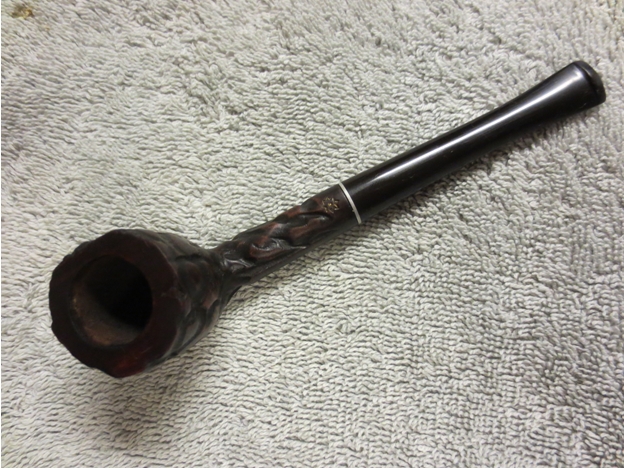
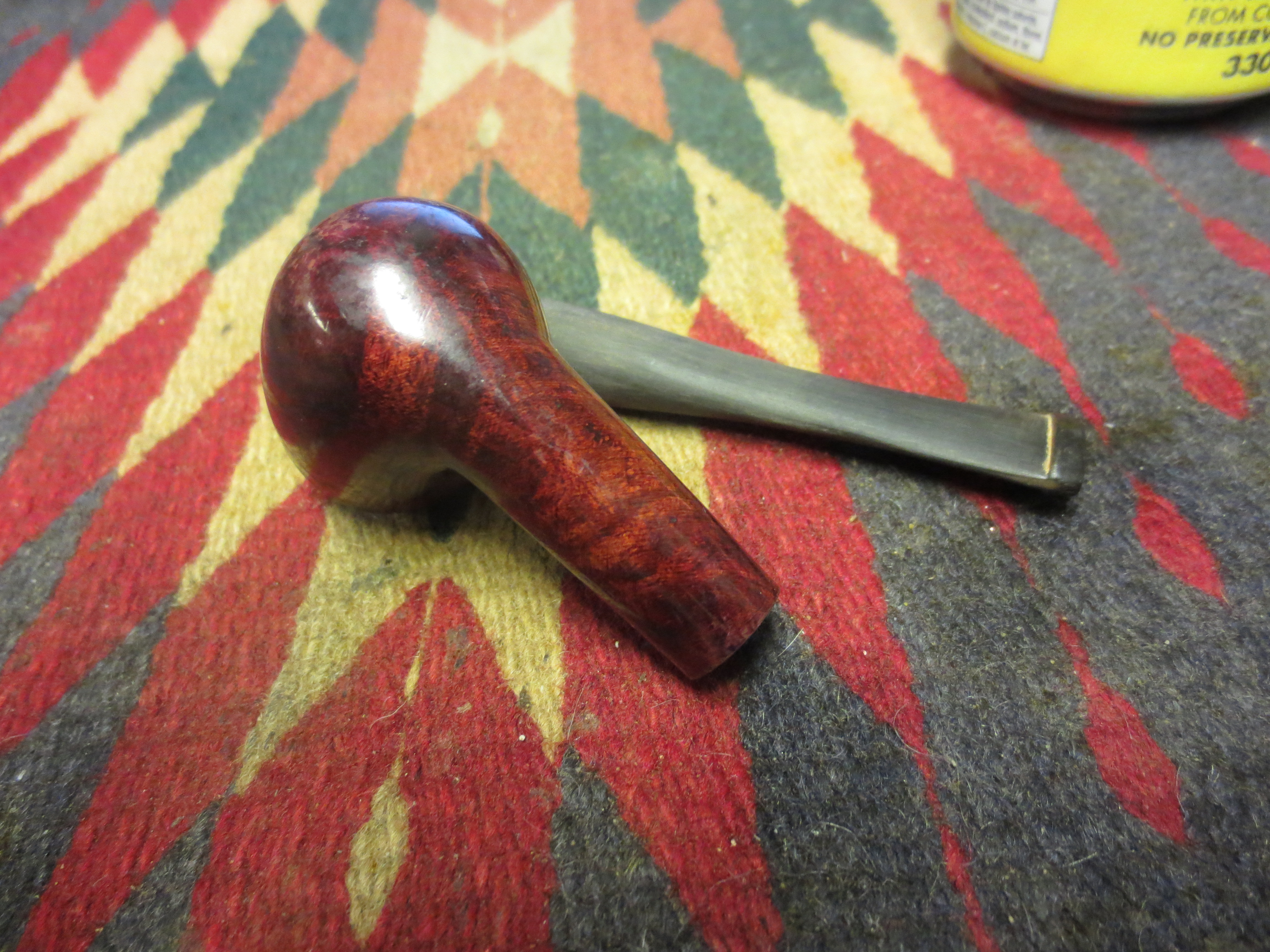
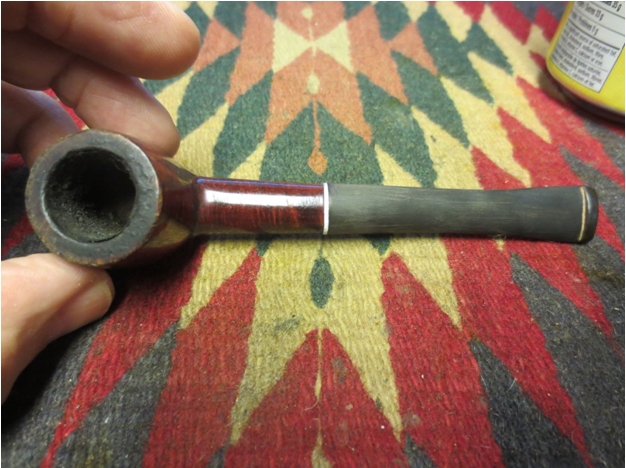
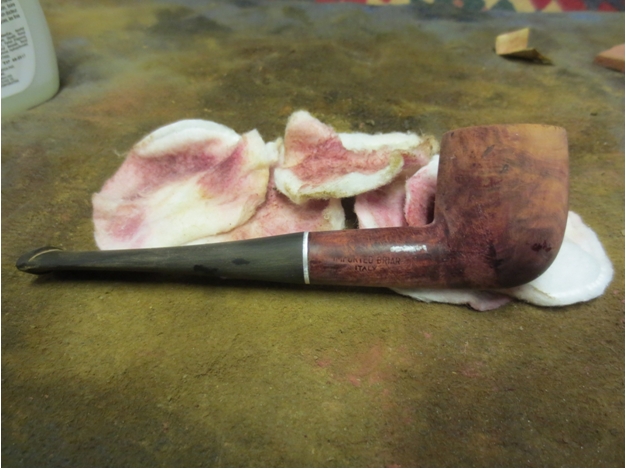
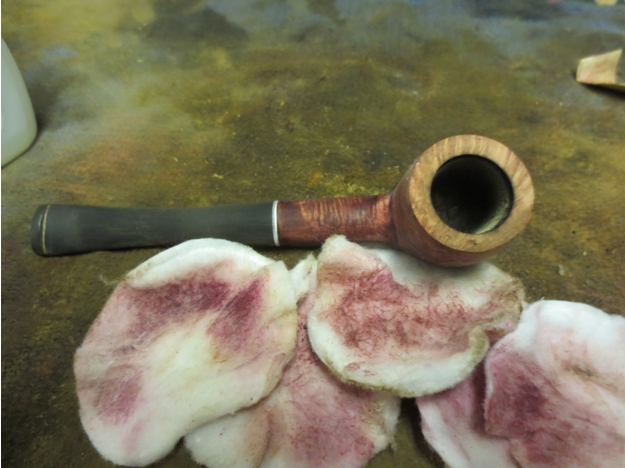
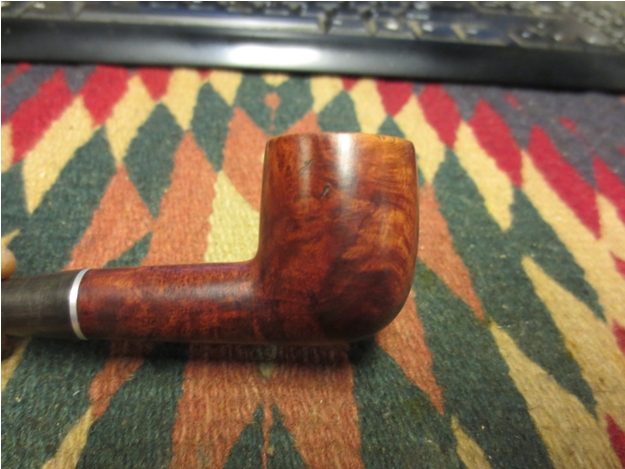
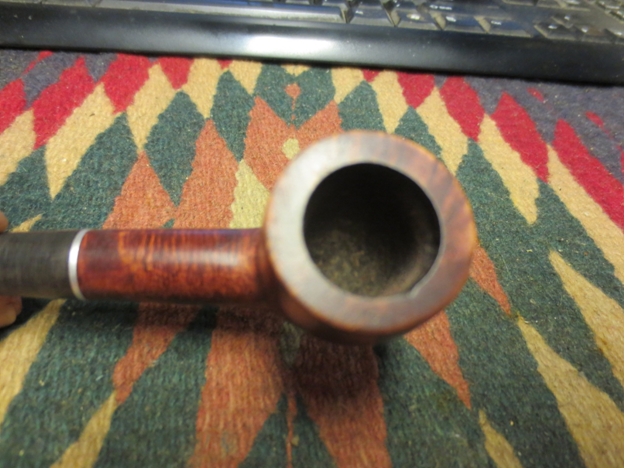
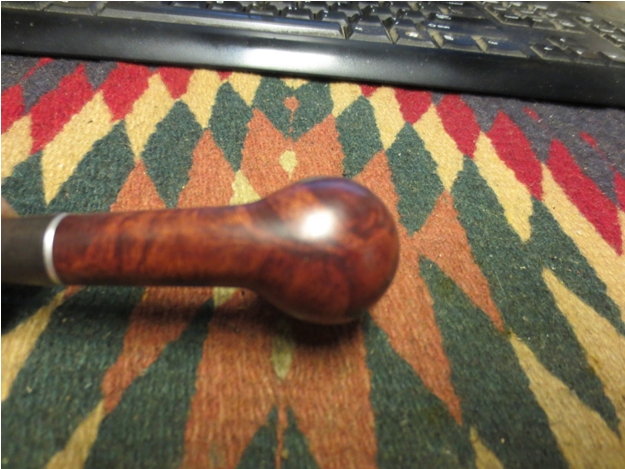
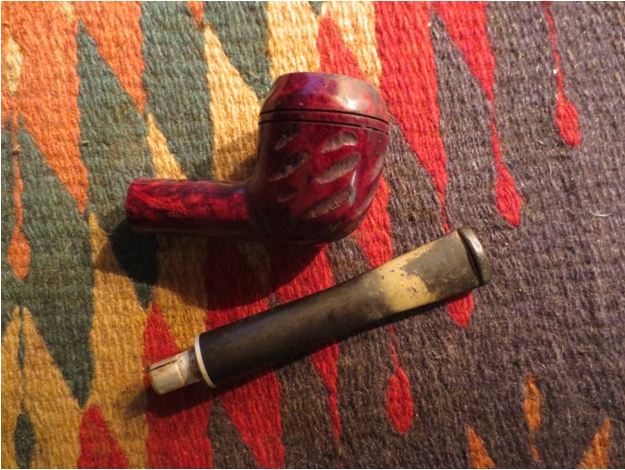
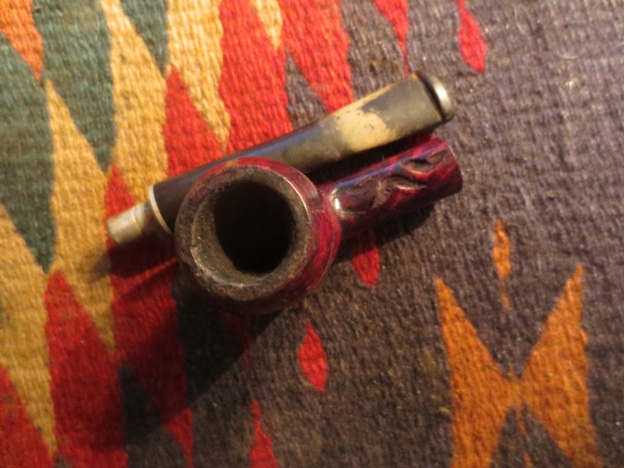
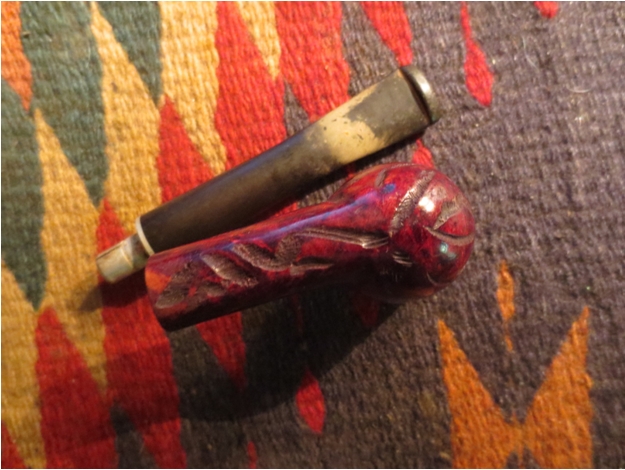
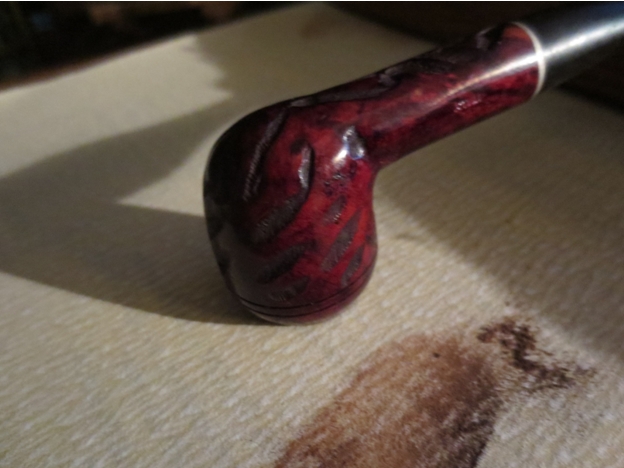
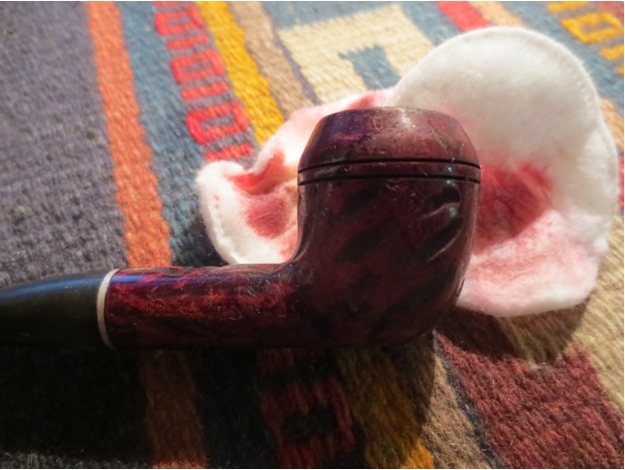
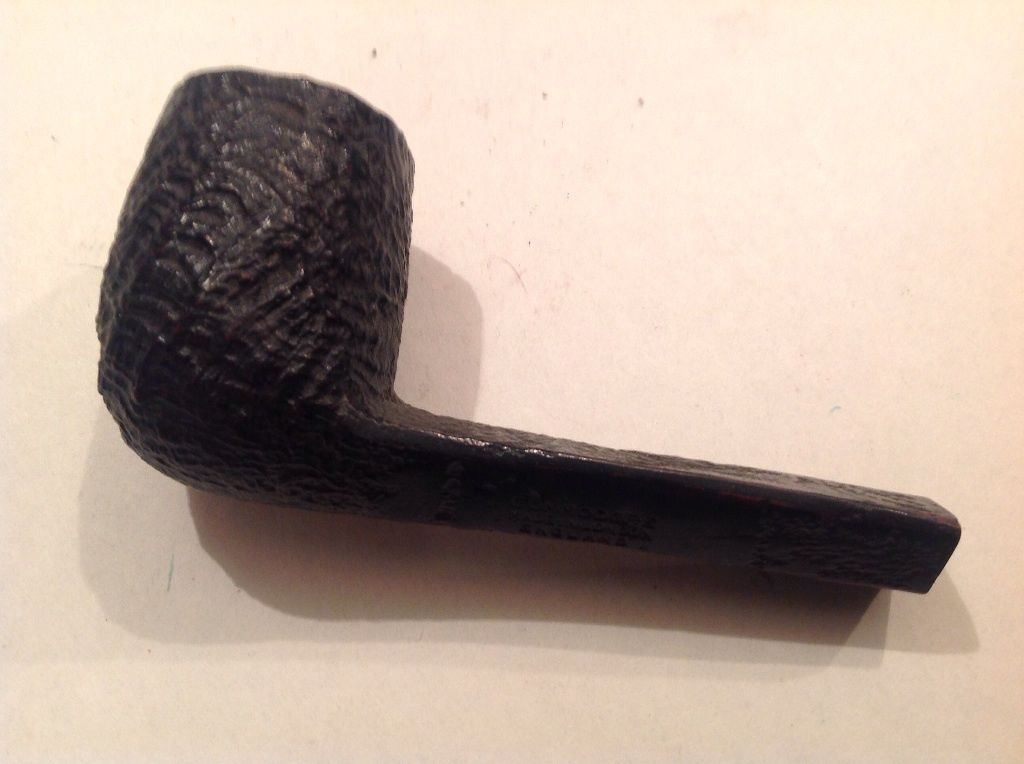
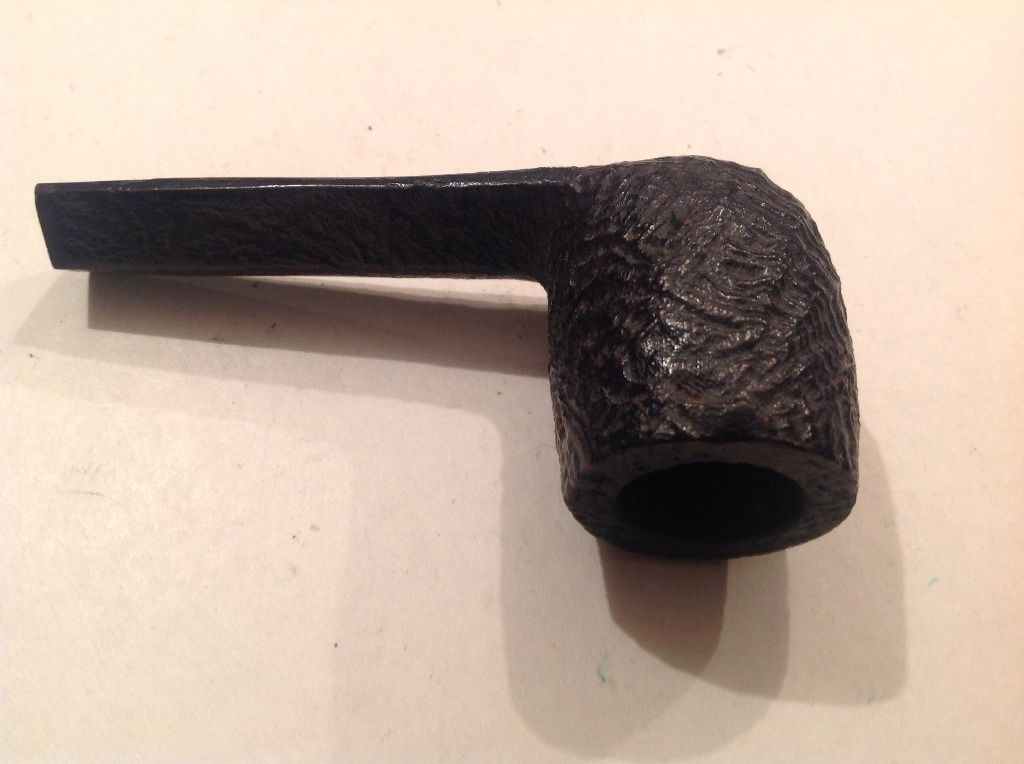
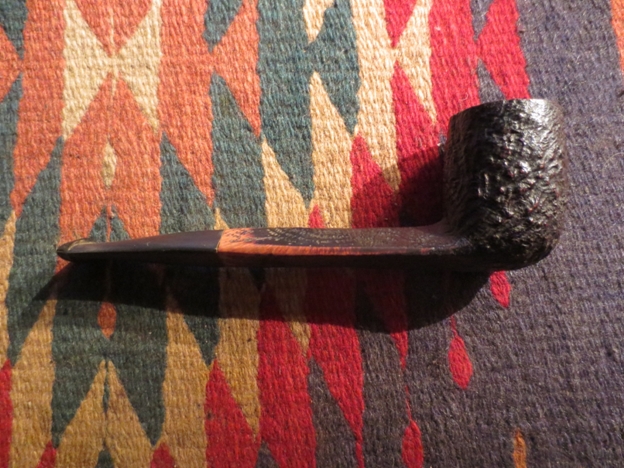
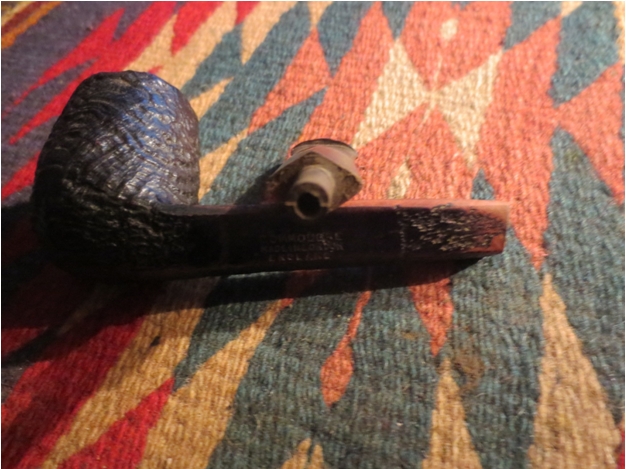
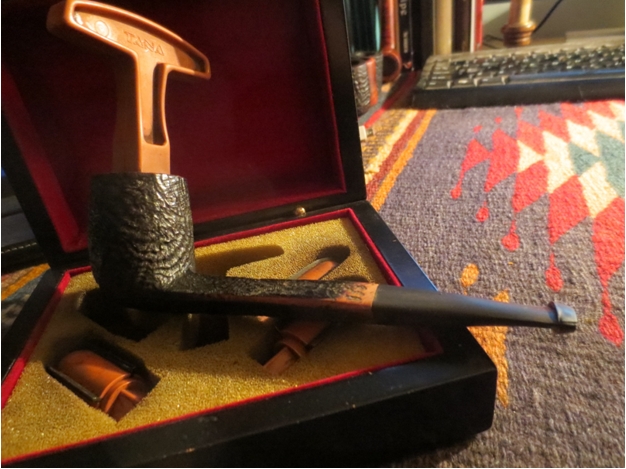
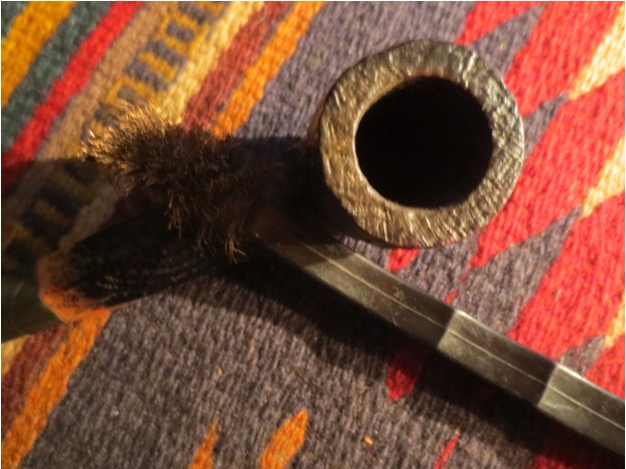
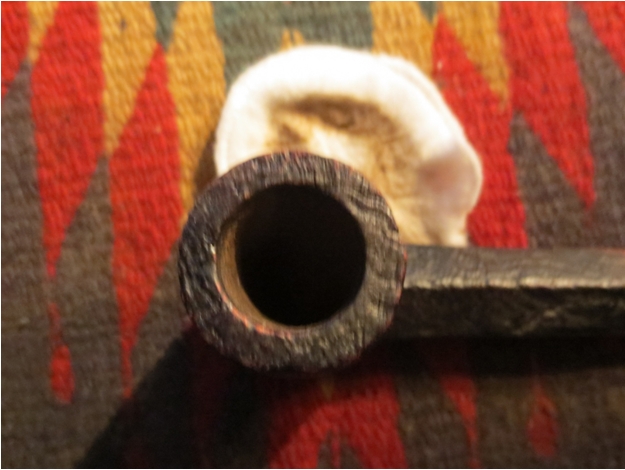
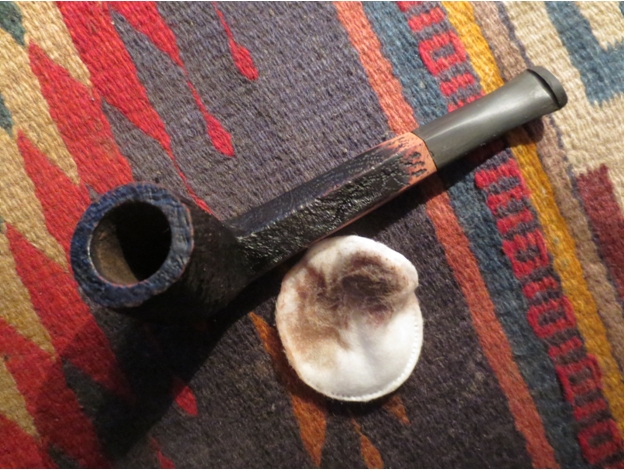
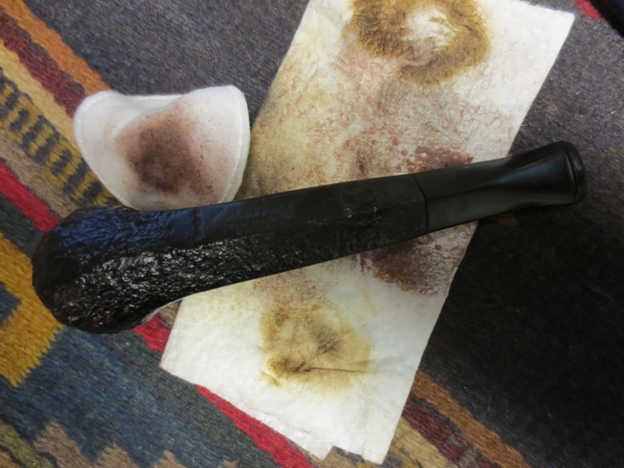
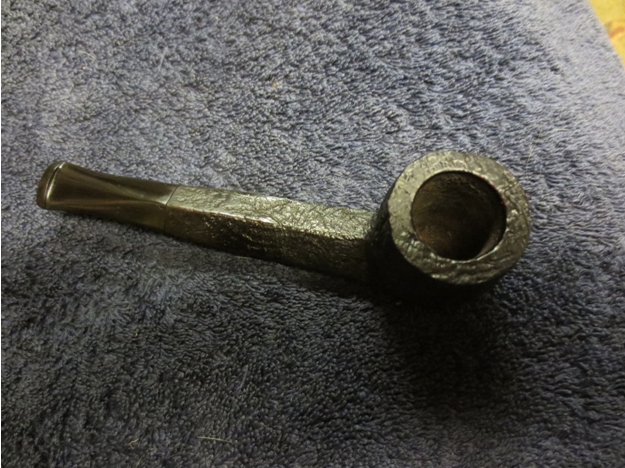
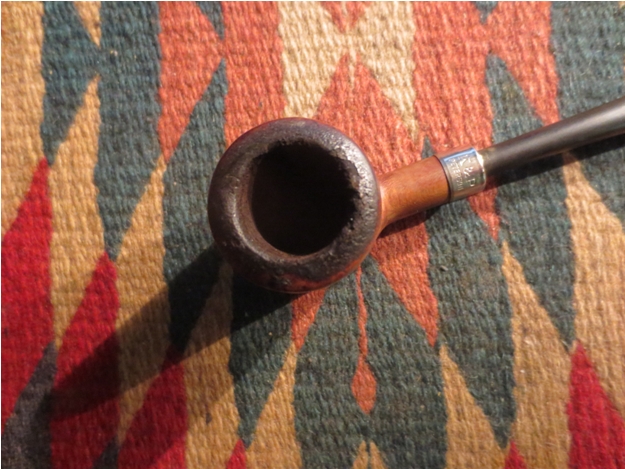
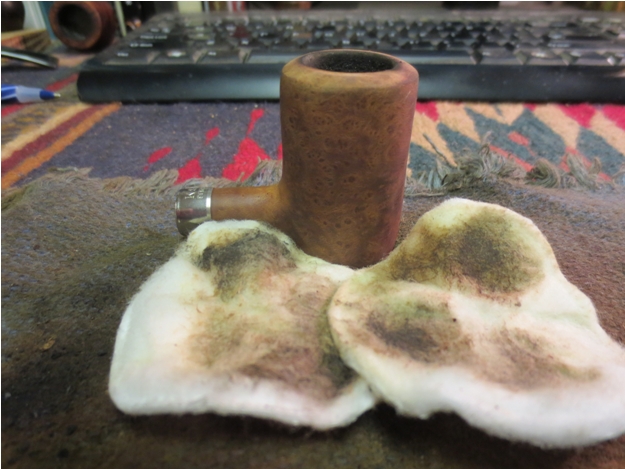
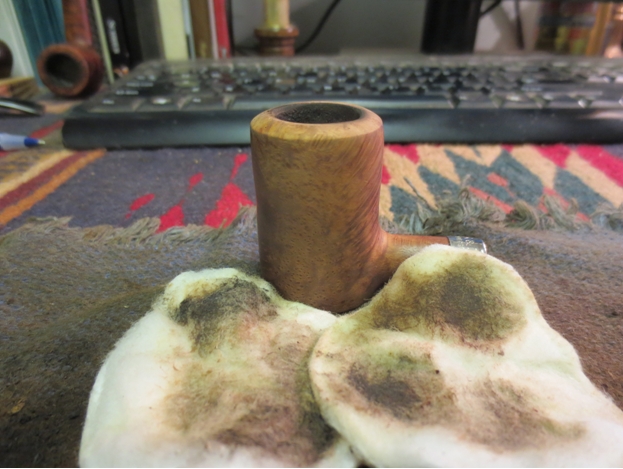
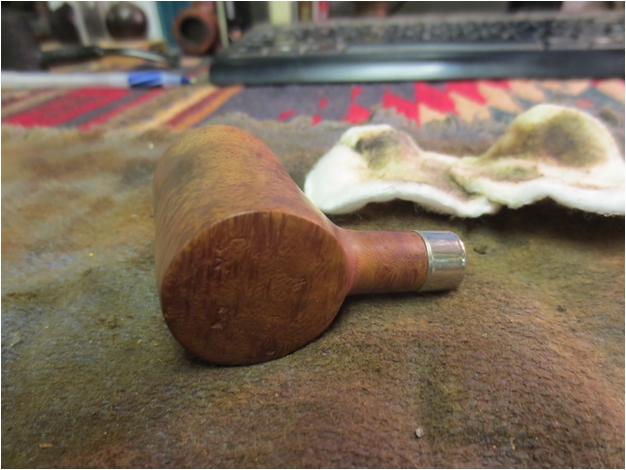
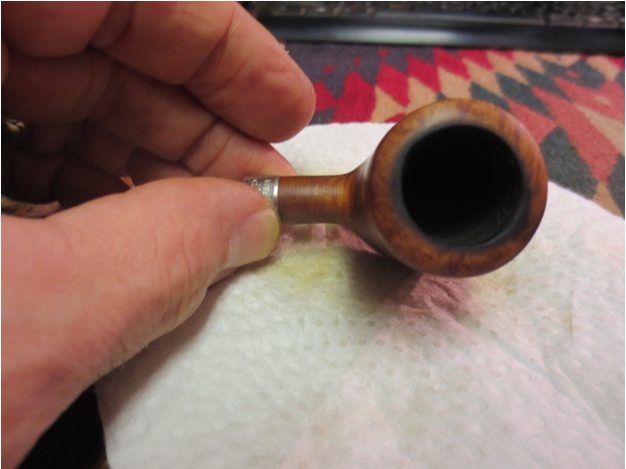
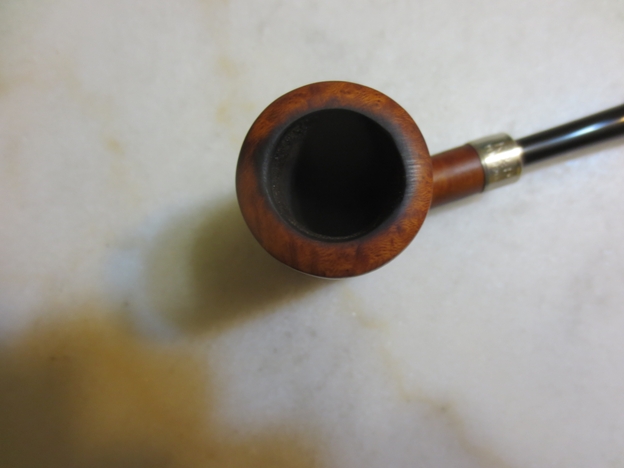
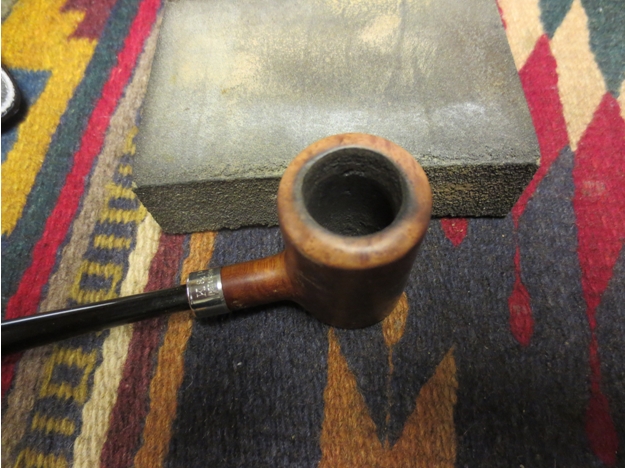
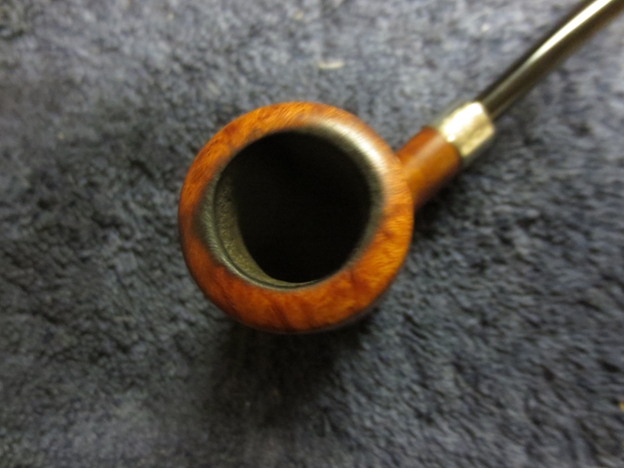
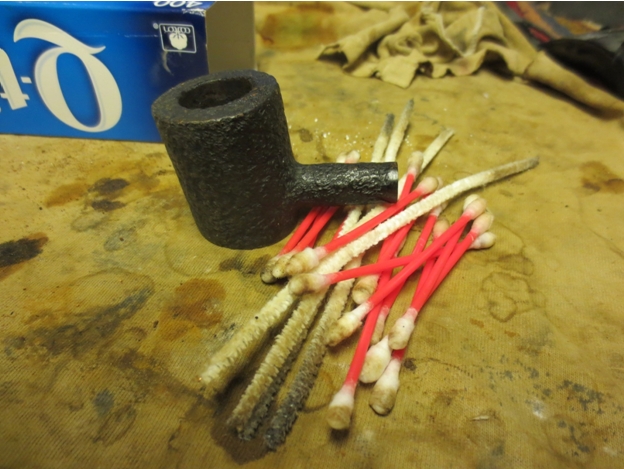
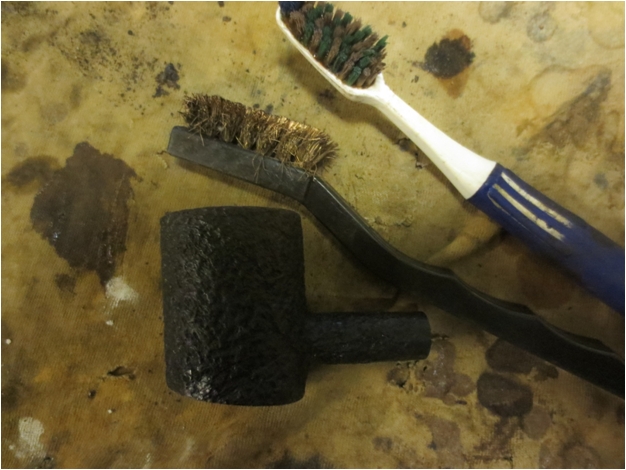
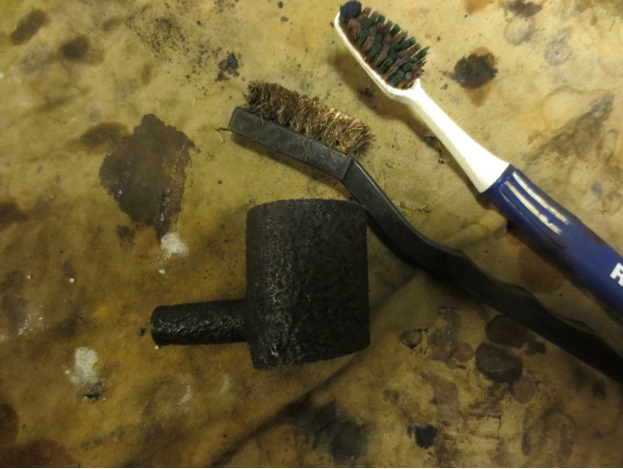
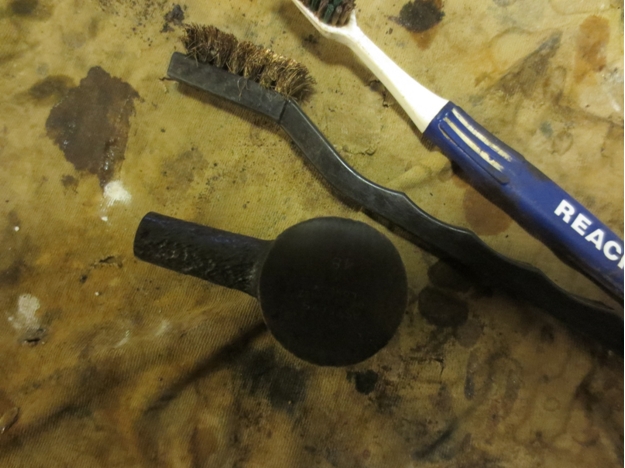
For anyone who has read my other recent blogs, the beginning of this part will come as a given. More for the benefit of others, I have to say this unfortunate pipe, which came as part of a lot I purchased online because I could see through the beast to the beauty inside, was not treated well by its former owner. Exercising the utmost restraint, I will forego any judgment calls as to the personality of that ignorant individual and just get to proof of where I started. The only redeeming factor is that there was nothing wrong with the interior structural character of the Gilpin.Robert1 Robert2 Robert3 Robert4Needless to say, the pipe was as thrashed as the others in its lot, to my benefit since, taken as a whole, the collection did not appear to be worth my overbid that succeeded in scaring off the other contenders, and I won for next to nothing.
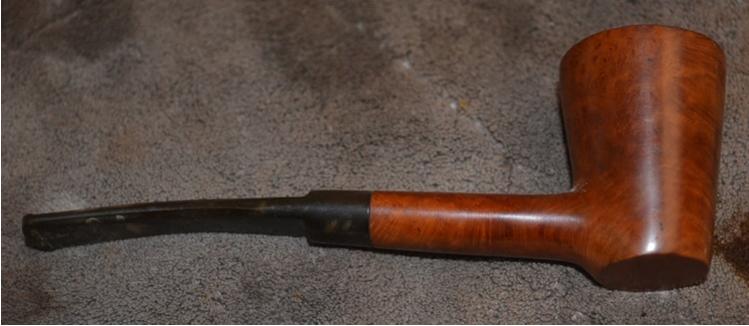
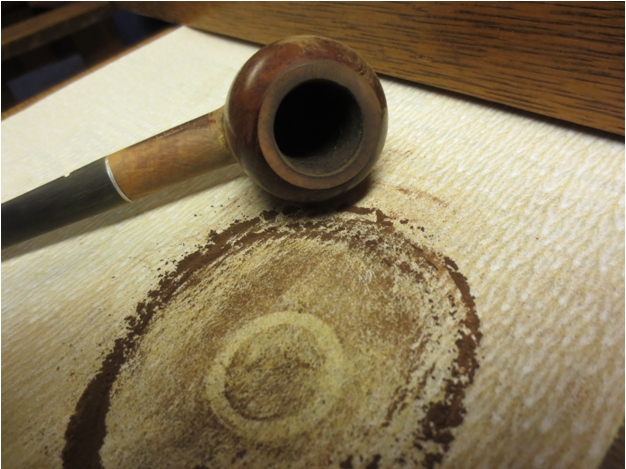
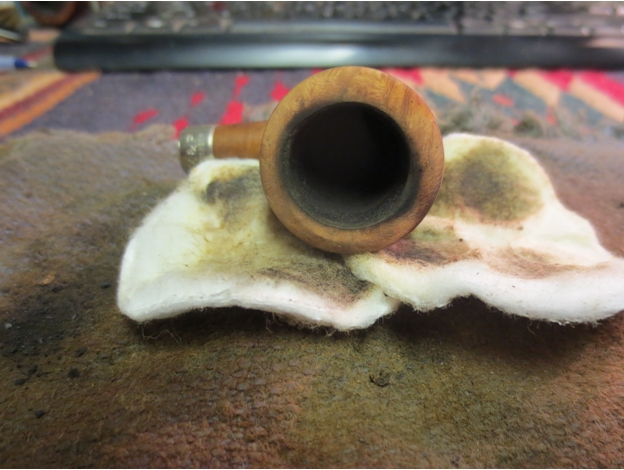
When I finished with my reamer and 150-grit paper on the chamber, I had removed enough cake both to fill three bowls and to rest my softened case against the previous individual who had possession of this pipe.
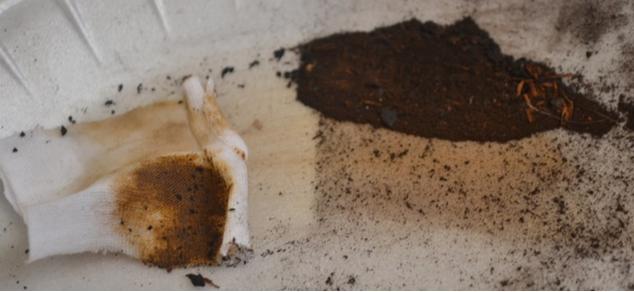
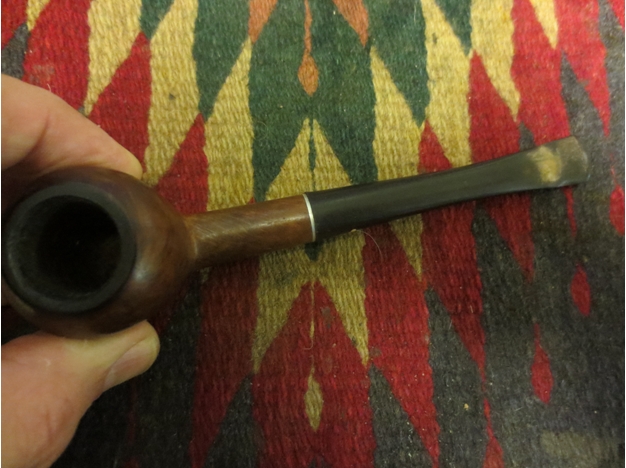
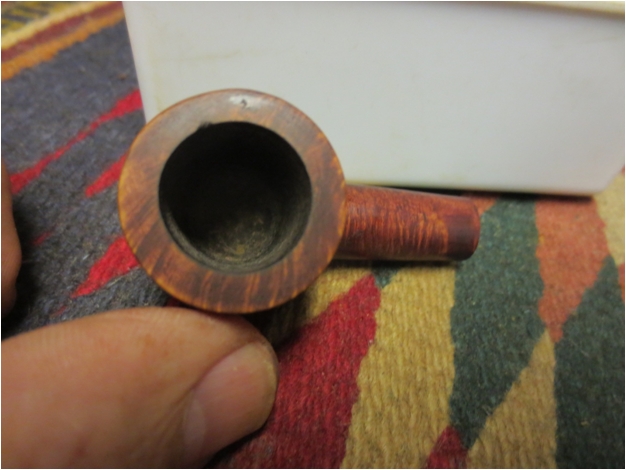
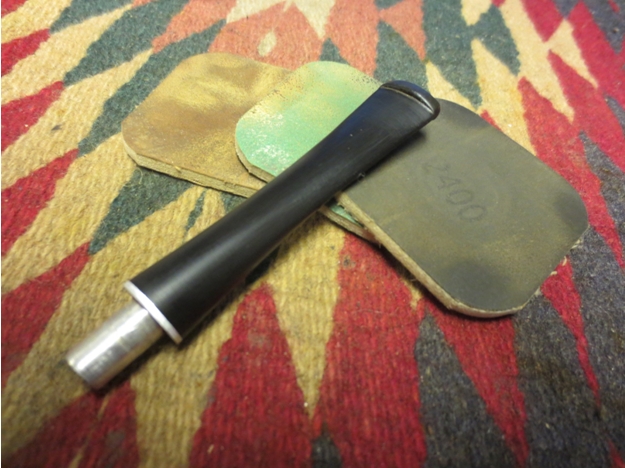
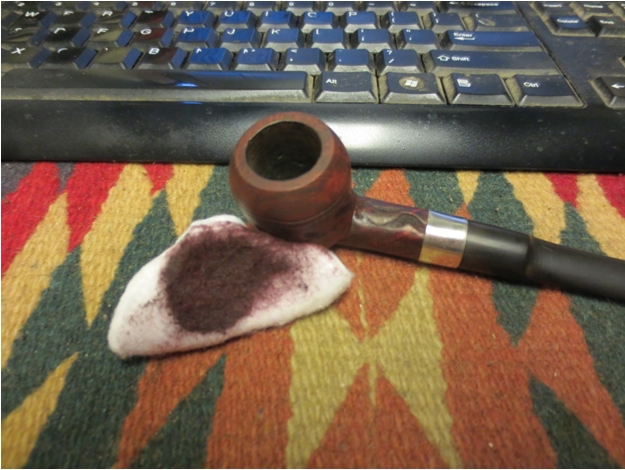
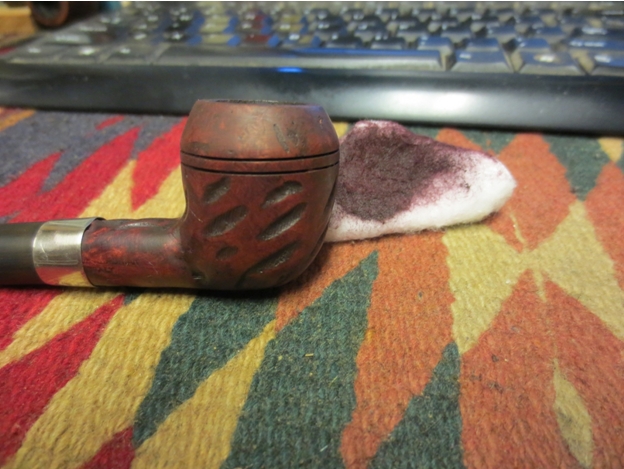
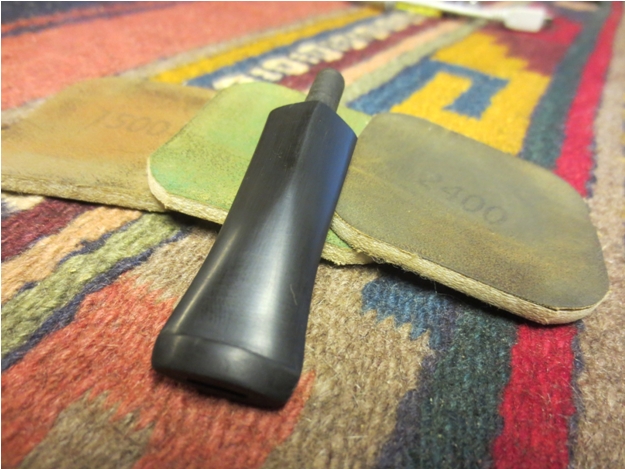
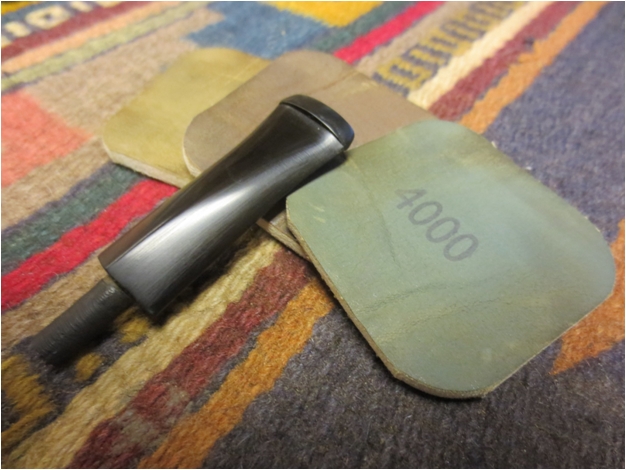
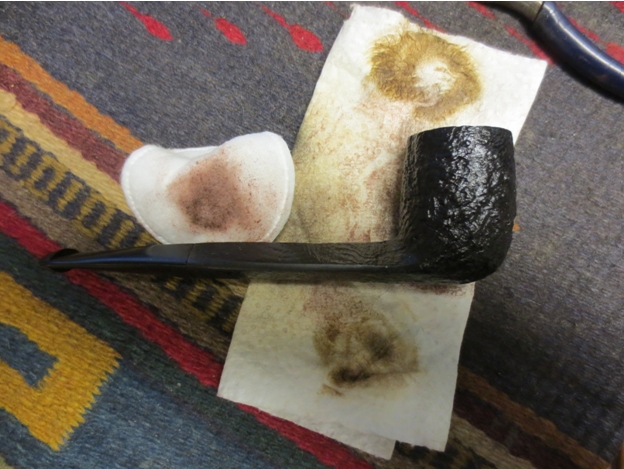
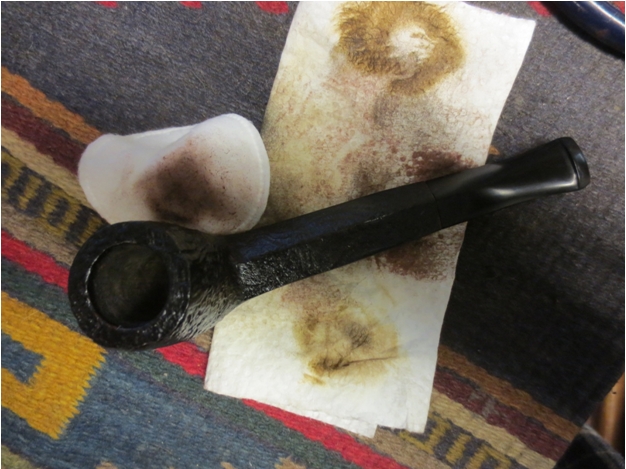
Robert5For the rim I started with 220-grit paper and then, as the wood began to peek through, finished the removal of the serious burning with 1500 micromesh.Robert6The uniform scratches all around the rim indicated a need for slow work with 400-grit paper and 2400 micromesh to achieve smoothness.Robert7I re-stained the rim a light brown and hand-buffed it with 2400 micromesh.
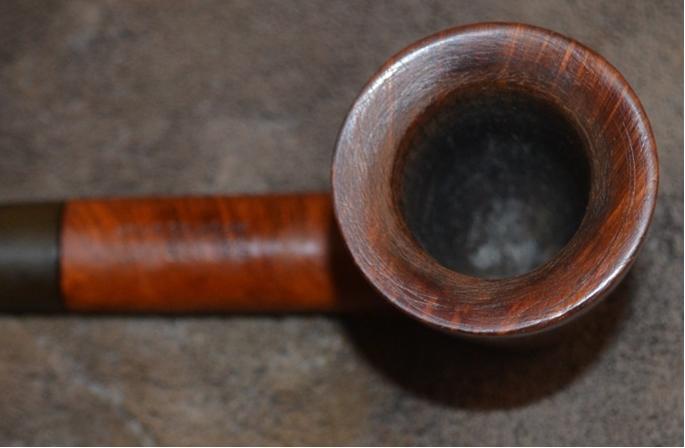
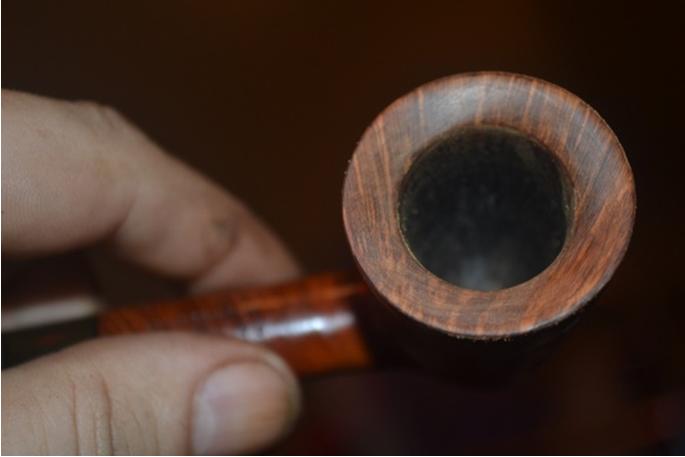
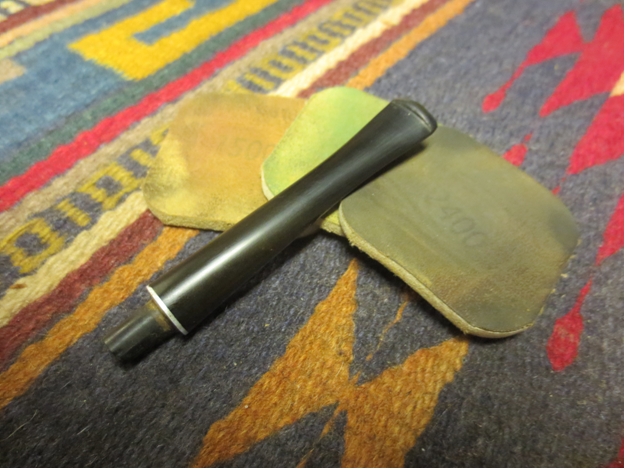
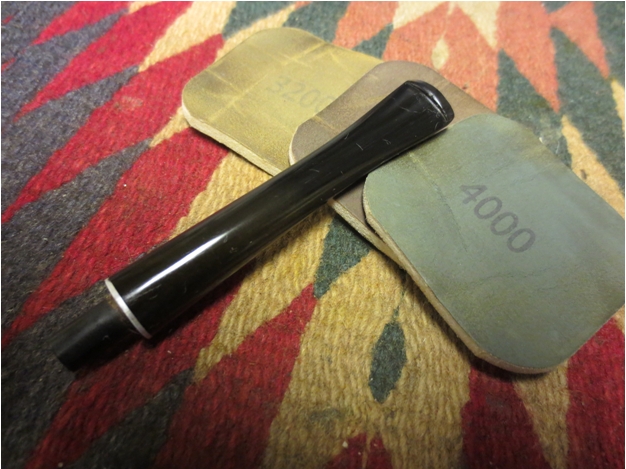
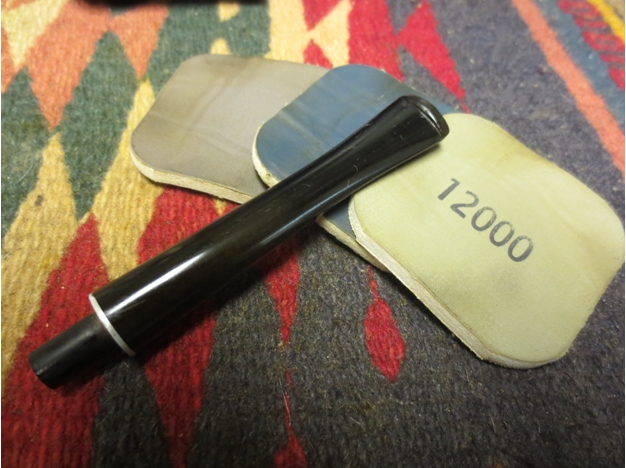
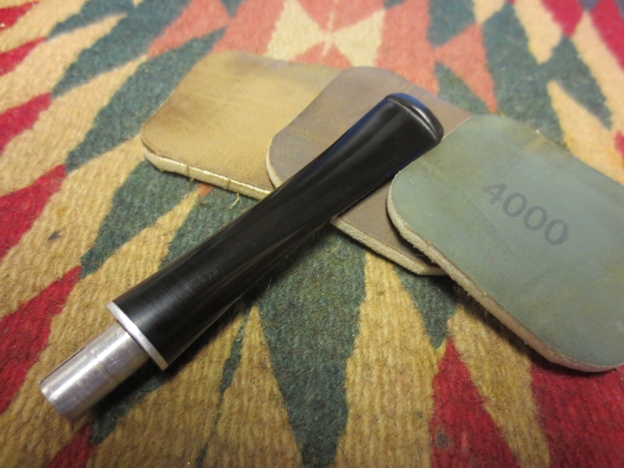
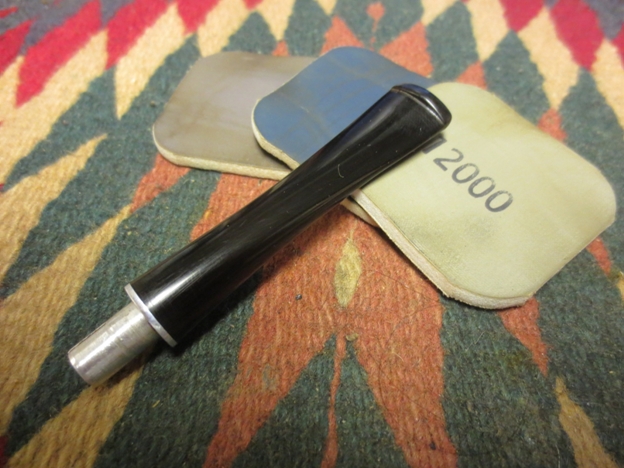
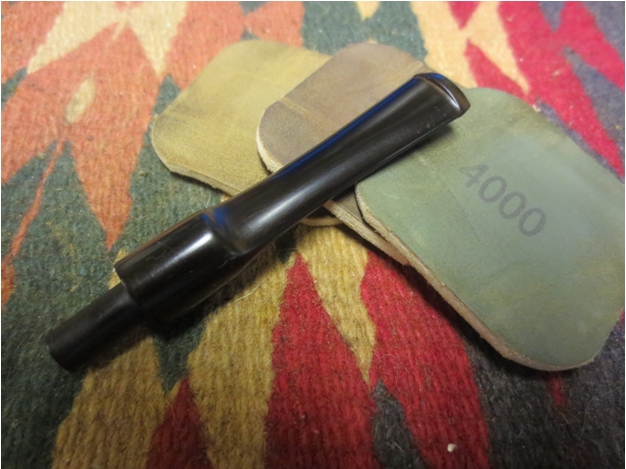
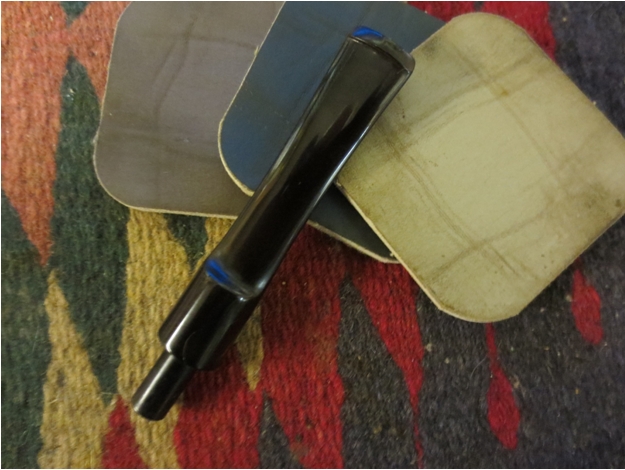
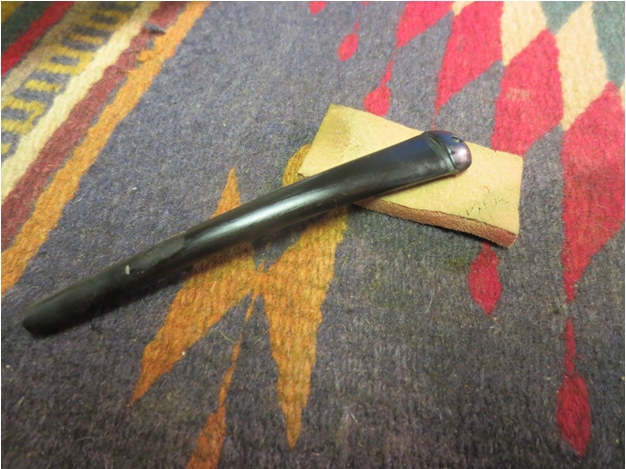
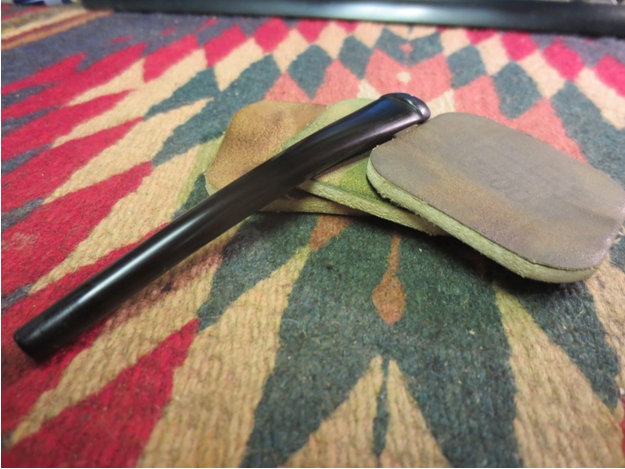
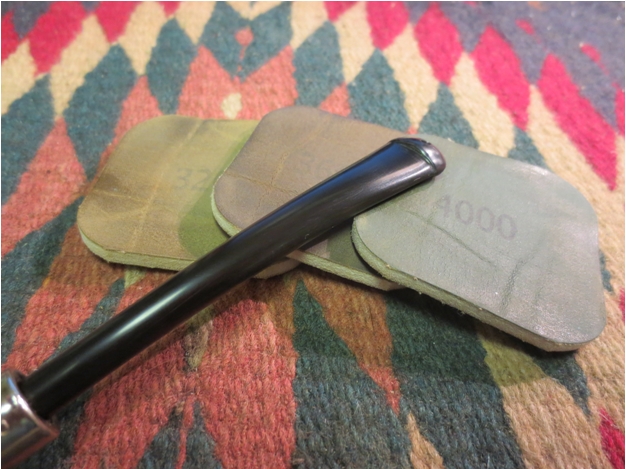
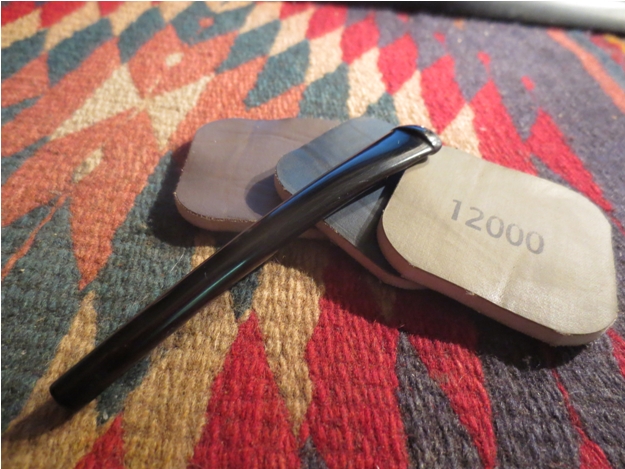
The stem on the Gilpin was so roughed-up and discolored that it proved to be the most difficult part of the restoration. Beginning with vigorous sanding using more 220-grit paper, I spent close to a half-hour removing the blemishes that must have contributed to the collectors who also bid on this lot giving up after my one max offer of $40. I paid $22.50 for the four pipes. I finished my labor on the stem with 1500 micromesh, then 3200.

THE FATAL CRISIS
After cleaning and sanitizing the near-finished Gilpin, I had only to polish the stem and wood on my twin fixed-speed buffers. I know, I know! I can’t count the times my friend and mentor, Chuck Richards, and other restorers more experienced than I have admonished me to have a firm grip on the material being buffed when using this type of inexpensive tool. And I swear to all that is holy to me that I did just that. Read on, and I shall tell you the tale.

Starting with the stem, using red Tripoli and White Diamond, the result was perfect. I moved on to the bowl and shank, buffing them to a beautiful sheen with white Tripoli, White Diamond and the last touch of carnauba. I was, in fact, in the act of removing the beautiful briar from the carnauba wheel.

And that was when…

Well, that was when the unthinkable happened. You know by now where this is going. The precious piece of wood got away from me and, thanks to my not having set up a soft net for such contingencies, flew at warp speed straight into the wall a mere few inches behind the buffer.

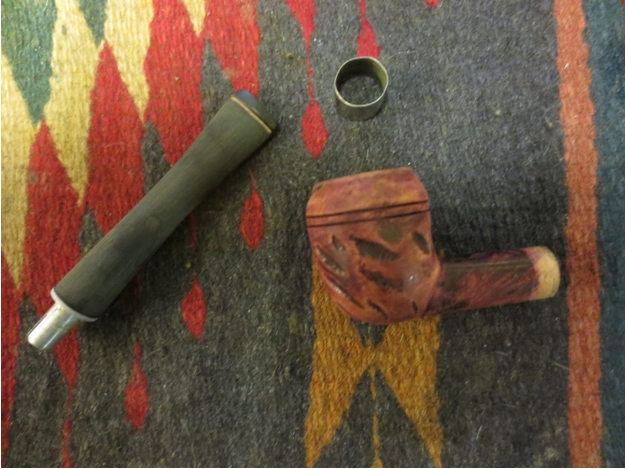
I actually heard the sound of the snap, although I could not see where the consequence of my mistake came to rest. As a nauseating, heartbroken sickness spread from my stomach to the rest of my body and mind in one breathless heartbeat, I switched off the second buffer and leaned over the edge of the stand and spotted the bowl on the carpet – with a jagged break in the shank near the draught hole.

Of all the accursed luck! Right before the frigging draught hole! (That, for your information, was not the adjective I in fact shouted out loud in a maelstrom of horror and self-flagellation.) Even through the mental fog that swirled inside my addled head and made my sight blur, I had a good idea of the significance of that location, more or less the hottest place on a pipe, as opposed to the stem end, where I might have had a fighting chance to Super Glue it back together and band the sorry, mortally wounded Gilpin.

But where was the other piece? I grew frantic in a way I had not experienced in years. Standing there where I had frozen, without moving my feet, I searched everywhere around the stand until at last, turning only my head, I found the missing piece of the shank. It was behind me by a box near the middle of the room.Robert8And so it came to pass, the next day at my tobacconist, that I took the all but ruined pipe, in its three clean and sparkling pieces that seemed to mock me, and at least having calmed down enough to smile for Chuck as I handed him the violated parts said:
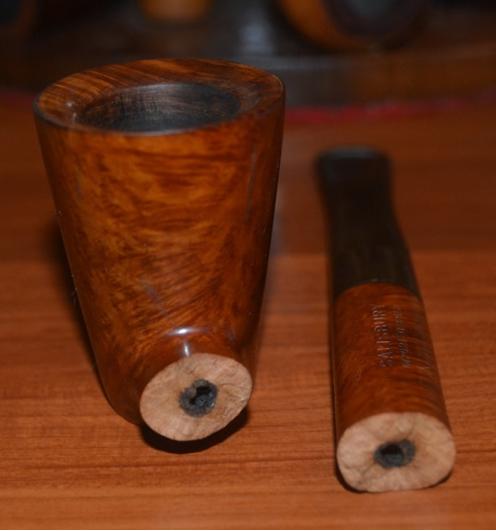
“The one that got away.”

“What’s this?” Chuck said with his grin of curious amusement.

“The one that got away,” I said again. “You know how often you’ve told me to be extra careful holding pipes on the buffers I have. Well, one finally got away.”

Recounting my story to him, I saw his big, warm smile emerge and felt so much better, even though I knew in my heart that he would confirm that the hapless Gilpin was beyond repair for purposes of selling.
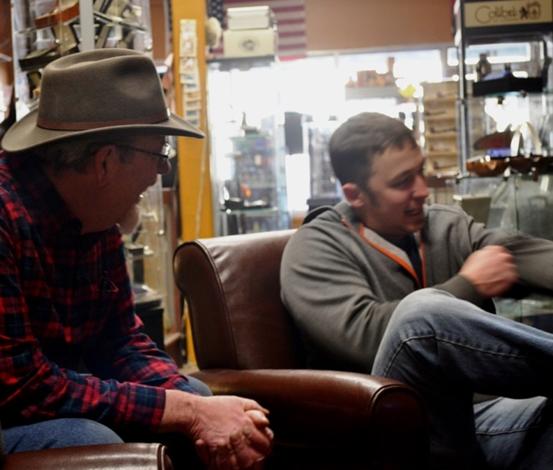
Chuck and Chad

Chuck and Chad

As luck would have it, though, if such a phrase could even be conceived to apply to this calamity, the fractured pipe was not beyond repair for what Chuck called a shop pipe, or one to be enjoyed by myself while restoring others. All I needed to do was find some sort of short rod to anchor the two parts of the shank in place and Super Glue them together without letting any of the glue seep inside.

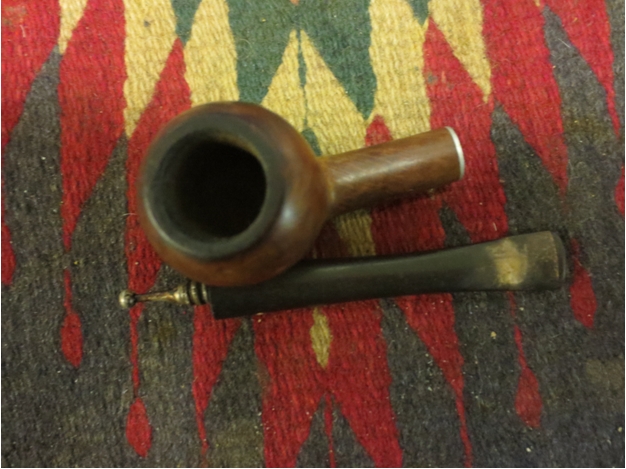
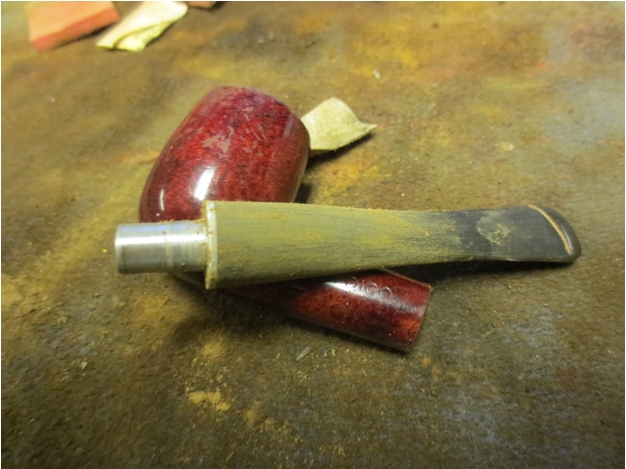
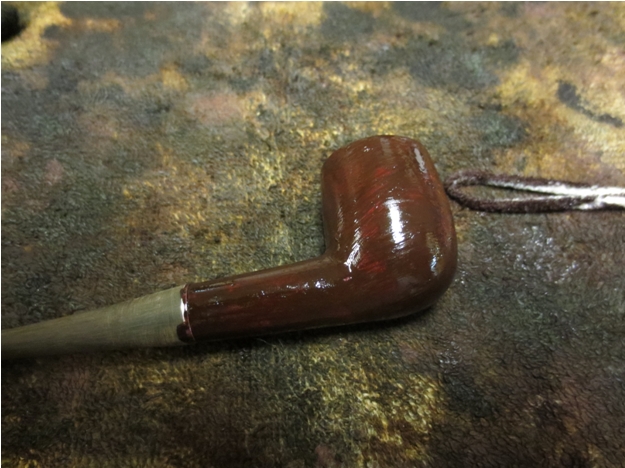
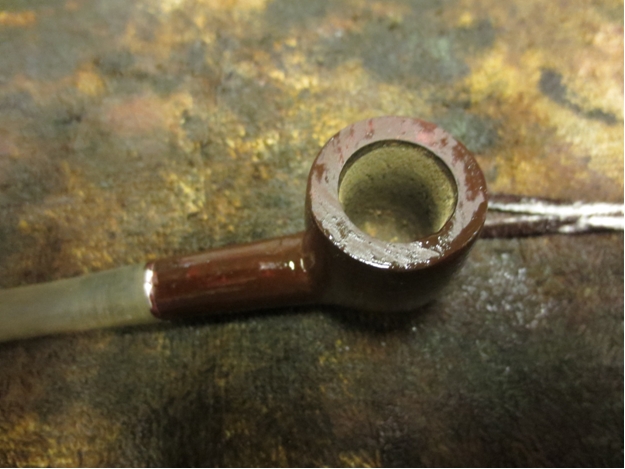
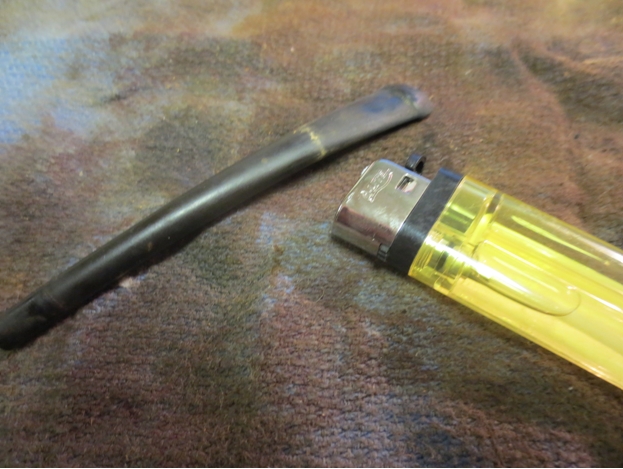
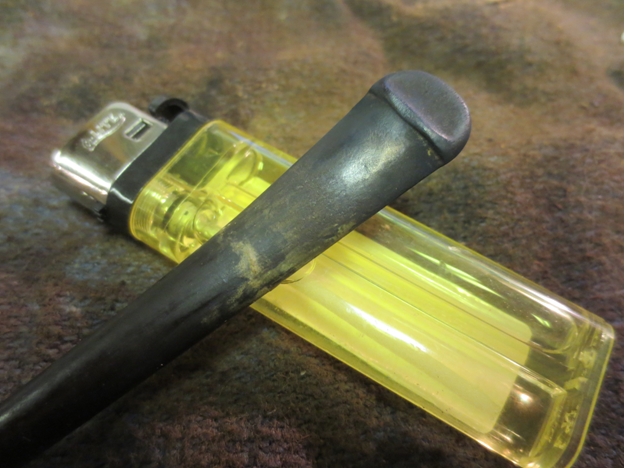
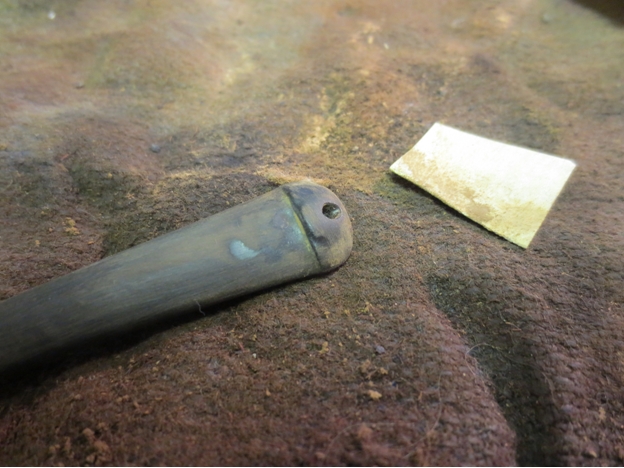
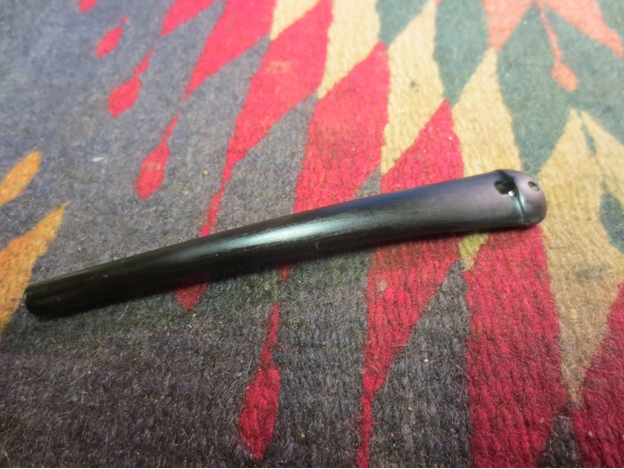
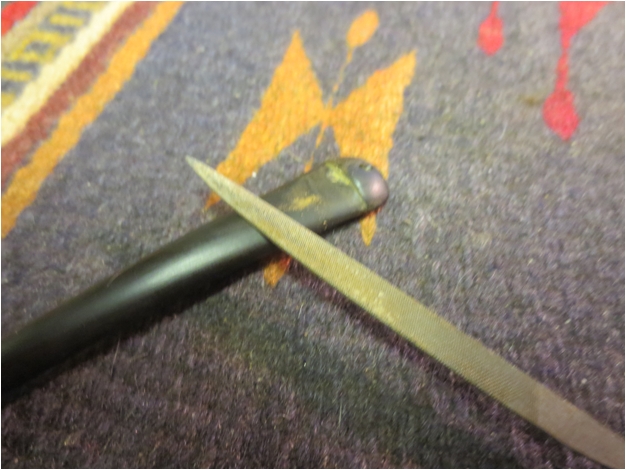
I can do that, I thought, and a local hardware store where I could find such a thing came to mind. The next day I visited the store and searched through the limited possibilities. I spotted a 315-piece box of assorted sizes of spring steel, black oxidized roll pins, and after much thought decided what the heck. One of the two smallest pins, I concluded, would fit the bill.Robert10Choosing the smallest, which was 1/16×3/16″ in size, I inserted one end of the roll pin into the bowl end of the shank, as is obvious in the photo above. With great care, I applied Super Glue around the exposed wood of the same end and fitted the other piece of the shank, without the stem, over the pin and into place, lined up in a perfect match.Robert11The next step I chose, after letting the glue set, was to use 400-grit paper to smooth the dried scab of glue as well as I could. In the process, of course, some of the finish came with it, but that was easy to fix with a small amount of brown boot stain around the lighter area.
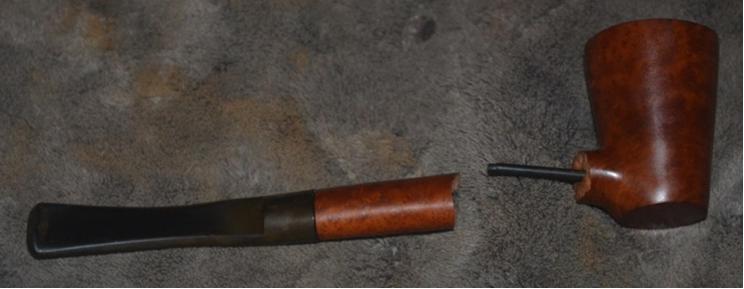
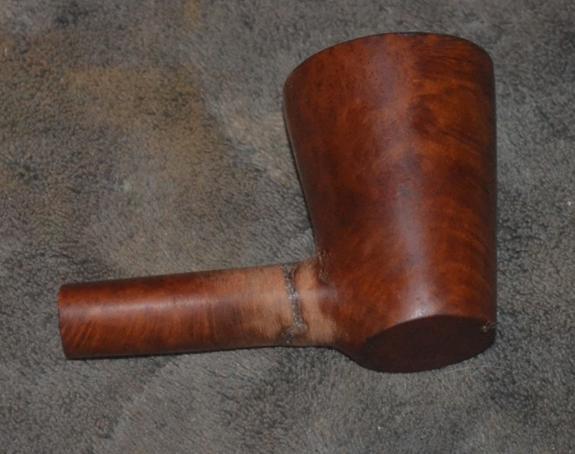
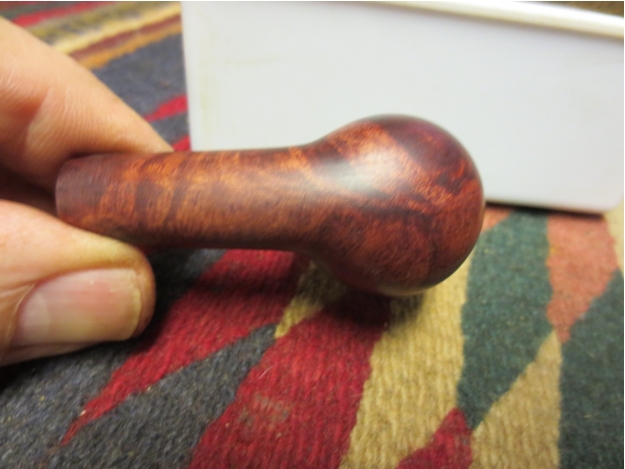
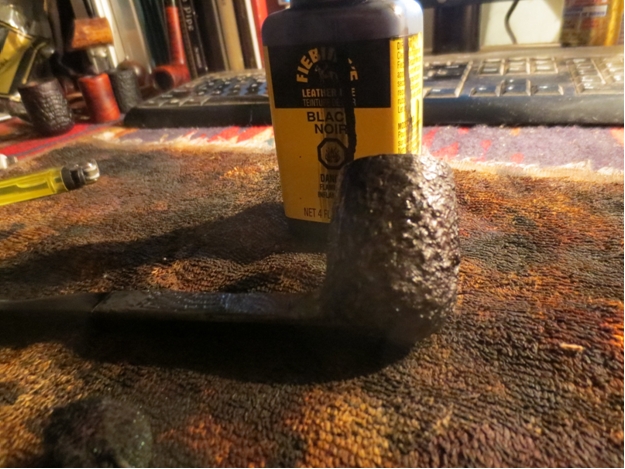
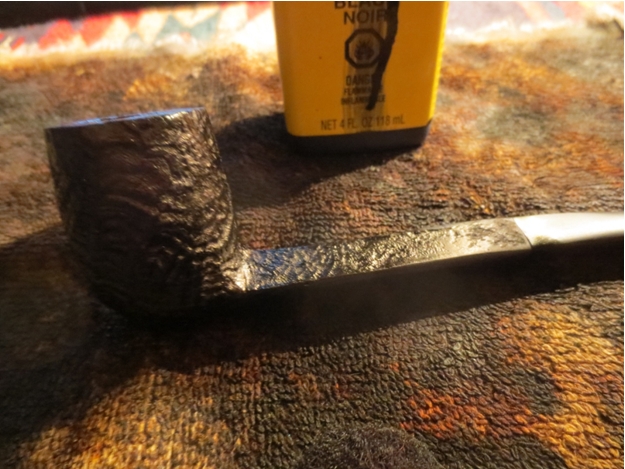
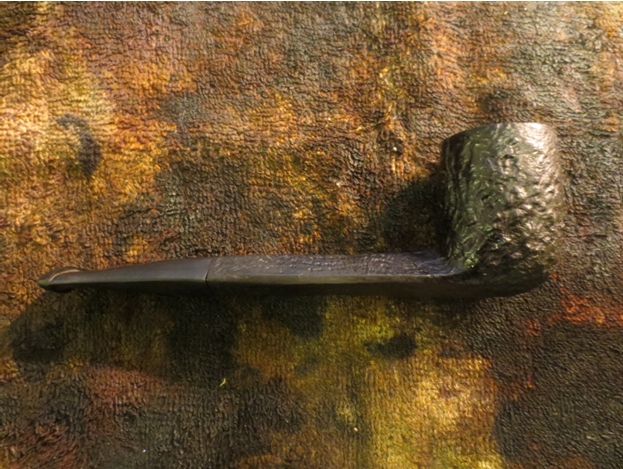
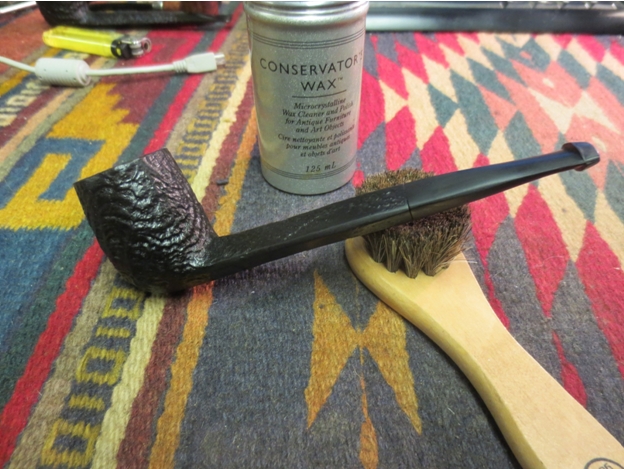
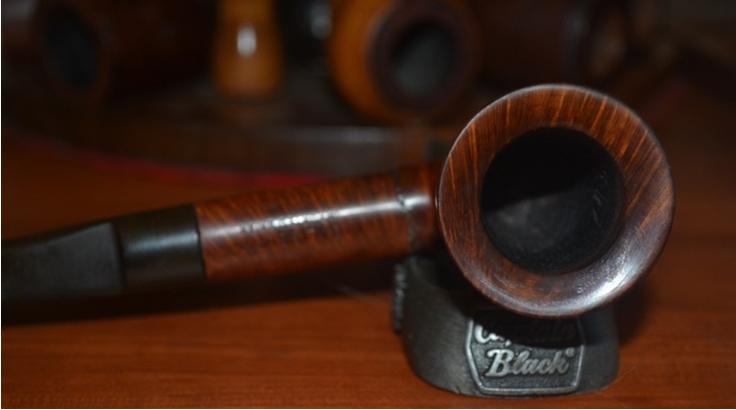
I flamed it and used 2400 micromesh to remove the char. At that point, the dreaded time to return to the buffers had arrived, and so there I went. Taking a deep breath and telling myself whatever happened was okay, I felt a calmness come over me. I turned on the two buffers and re-did the entire bowl and shank with red and white Tripoli, White Diamond and carnaubaRobert12 Robert13 Robert14Only the knowledge that I would be smoking the finished pipe alone in my little shop and thinking of this black experience every time consoled me.
CONCLUSION
I have been smoking a bowl of Cornell & Diehl Sunday Picnic in my new shop pipe as I finish up this most excellent example of how not to restore a pipe. The Gilpin is every bit as good as I expected, but of course I remain unhappy with the end. I would much rather have concluded on a happy note with the Salisbury whole and rejuvenated and ready to sell, but life sometimes takes cruel turns.

Then again, maybe the beautiful, aptly named Jewel had it right.

Bringing an acorn shaped bowl back to life – wondering if there was a point to this exercise.


Blog by Steve Laug

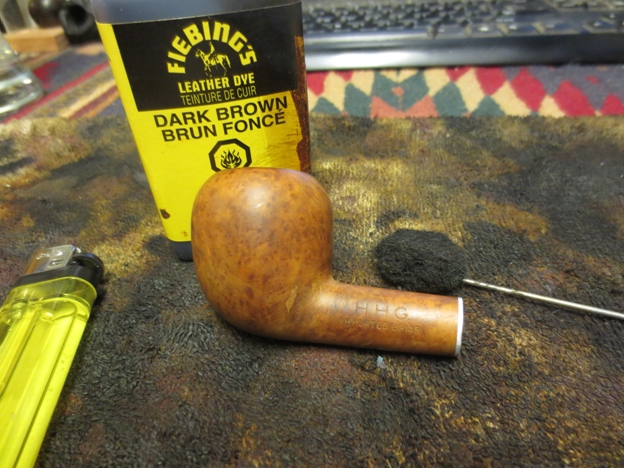
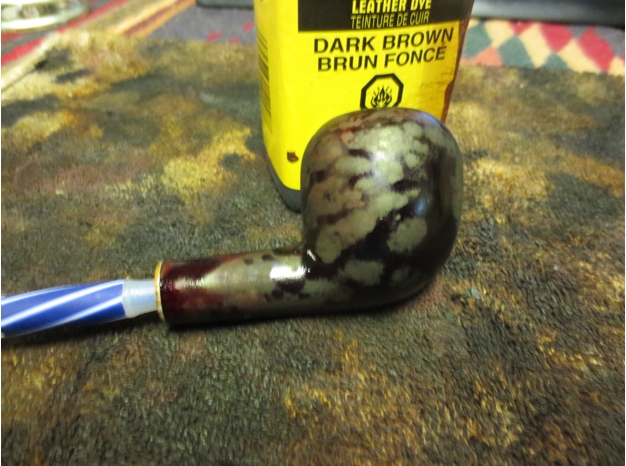
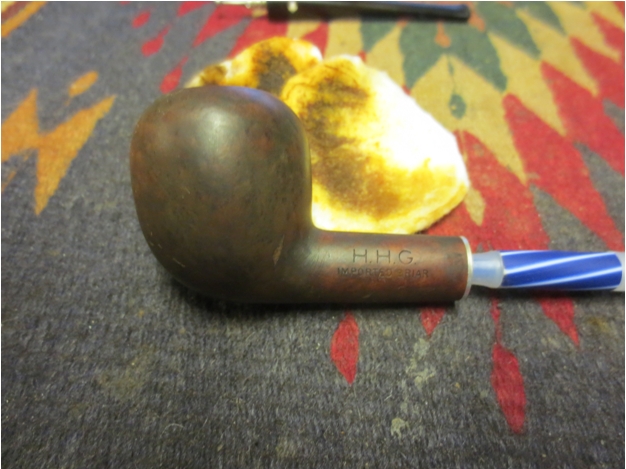
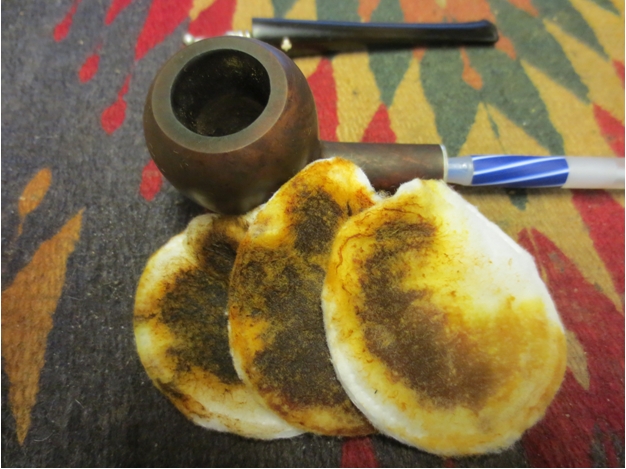
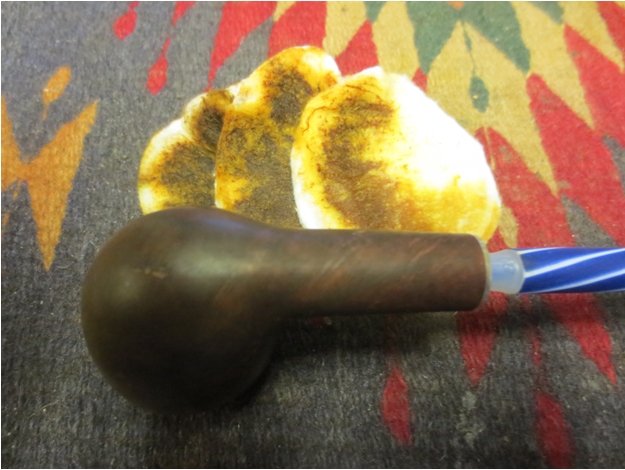
When I took this old bowl out of the box – last of two pipes to refurbish in my box – I looked at it and wondered what the point would be to clean it up. It had three large and visible fills on the bowl back left side and bottom of the shank and bowl. The finish was shot and it did not have a stem. I sorted through my can of stem and found a threaded Kaywoodie stem that had a short stinger and some scored threads. I tried it in the metal mortis on this pipe and it actually fit perfectly with no overage. The stamping on the old bowl remains a mystery to me – it is stamped on the left side of the shank as follows: HHG over Imported Briar. There is no other stamping at all on the pipe. So far I am unable to find any information on it at all. Who Made That Pipe has the listing but says maker unknown. I do know that the Imported Briar stamping makes it likely that the pipe is an American made pipe post WWII. Other than that I am at a loss. The two fills were solid and undamaged and the putty was a light brown. The finish was shot and opaque. It was hard to see what the grain looked like underneath. The rim was darkened but undamaged.IMG_2484 IMG_2485 IMG_2486The photo below shows the three fills that were very present on the bowl. The potential grain shows through on the bottom of the shank and led me to have a little hope that underneath the opaque ruined finish would be some nice grain.IMG_2487I screwed the stem in place on the shank to have a look at the shape and fit with the pipe. It actually looked quite good with the long, slender stem. The stem had oxidation and calcium build ups on the top and bottom but would clean up nicely.IMG_2488 IMG_2489 IMG_2490I wiped down the bowl with alcohol (ran out of acetone) and scrubbed the surface to remove the finish. Without the acetone I would need to sand the bowl. I set up a topping board and used 220 grit sandpaper to remove the thick darkening on the rim. I lightly topped it so as not to change the profile or look of the pipe.IMG_2492 IMG_2493 IMG_2494I sanded the bowl and stem with 220 grit sandpaper and then with a medium and fine grit sanding sponge to remove the remnants of the old finish on the bowl and the buildup of calcium on the stem. Some nice birdseye grain was underneath the finish on the right and left sides of the bowl.IMG_2495 IMG_2496 IMG_2497 IMG_2498I cleaned the metal tenon with alcohol and then sanded the rough areas on the threads to clean up the aluminum damage. I sanded the stem with 220 grit sandpaper and medium and fine grit sanding sponges to remove the tooth indentations that were underneath the calcified buildup. I used a Bic lighter to paint the surface of the stem and lift the tooth dents. Once they had lifted I redefined the crease of the button with needle files. I sanded it with micromesh sanding pads – wet sanding with 1500-2400 grit pads and dry sanding with 3200-12,000 grit pads. I rubbed it down with Obsidian Oil between each set of three sanding pads. When I finished sanding with the 12,000 grit pad I buffed it lightly with White Diamond and gave it another coat of Obsidian Oil. I set it aside while I worked on the bowl.IMG_2499 IMG_2500 IMG_2501I wiped down the bowl one final time with alcohol before staining it with a dark brown aniline stain. I applied the stain and flamed it and repeated the process until the coverage was even.IMG_2502 IMG_2503I wiped down the bowl with alcohol on cotton pads to remove some of the dark heavy colour of the brown stain and to make it more transparent. Once I had it to the point where I could see through the stain to the grain I quit wiping it down. The trick was to make the stain transparent enough to highlight the grain but at the same time minimize the three fills.IMG_2504 IMG_2505 IMG_2506 IMG_2507Once I had the stain at the place I wanted I put the stem back on the pipe and took it to the buffer. I buffed the bowl with red Tripoli to polish and buff through the dark areas that remained on the stain coat. I buffed the bowl until it met the look I was aiming for. I then buffed the bowl and stem with White Diamond and gave them multiple coats of carnauba wax. I buffed it finally with a soft flannel buff to raise the shine. The finished pipe is shown below. It actually came out quite well and should provide a great yard pipe for someone down the line. I expect this will be another pipe that I gift to a pipeman I meet along the way.IMG_2508 IMG_2509 IMG_2510 IMG_2511If anyone has some clues as to the maker of this pipe let me know. It turned out to be worth working on after all. I am pleased with what came out of an otherwise ignoble old pipe bowl without a stem that had been sitting in my box for quite awhile as I ignored it and worked on other bowls and stems.

There was nothing redeeming about this ugly old pipe…


Blog by Steve Laug

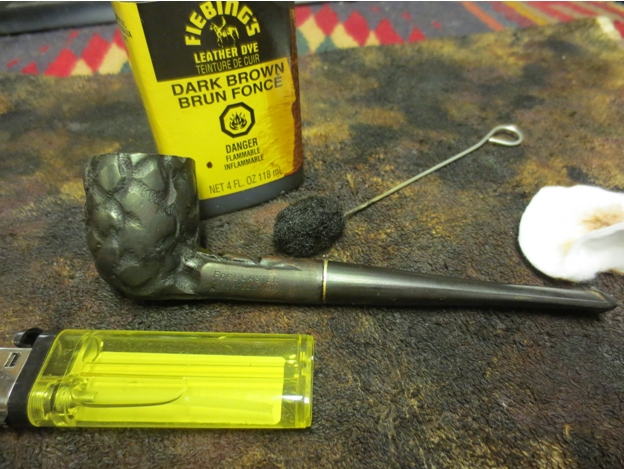
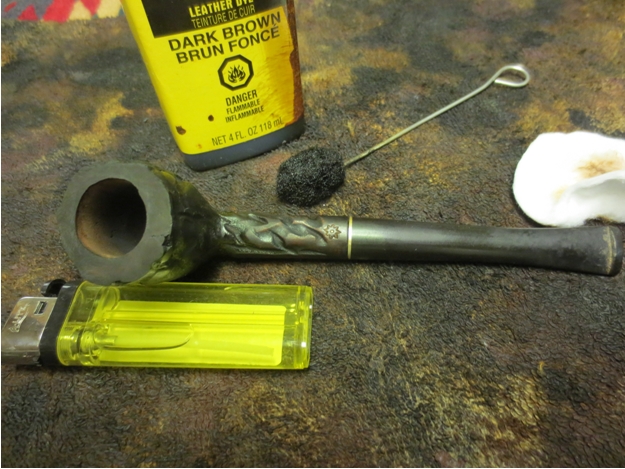
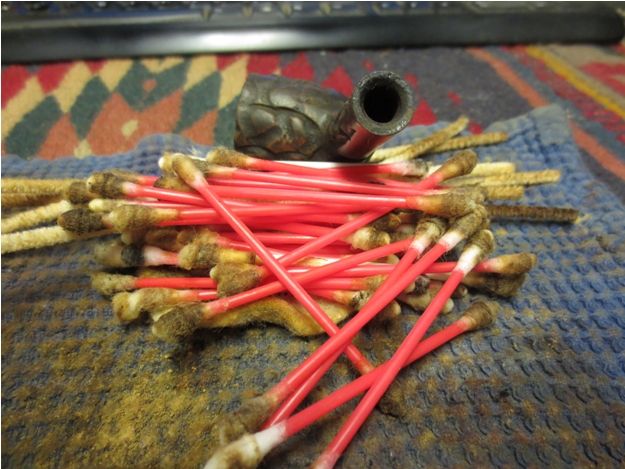
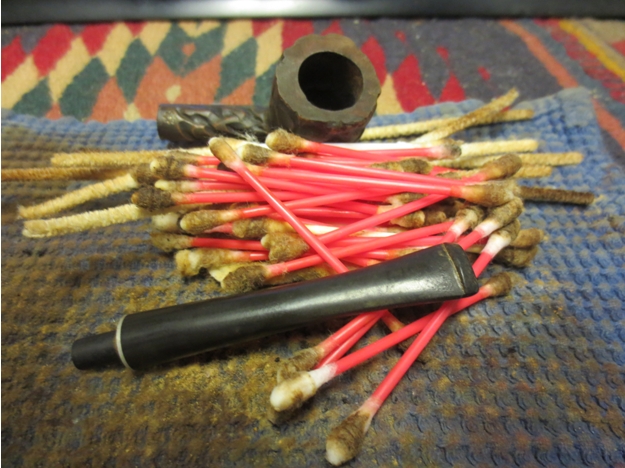
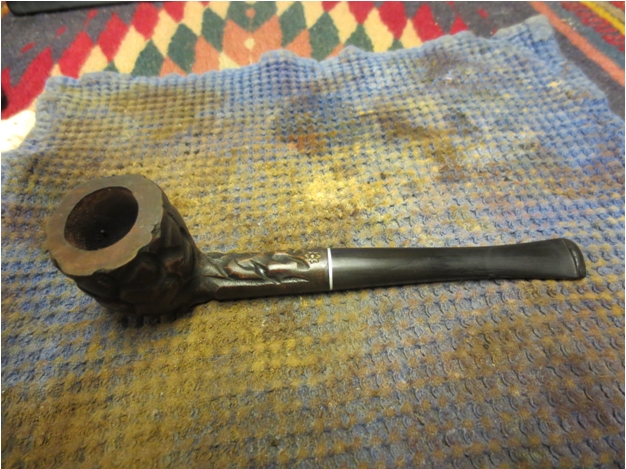
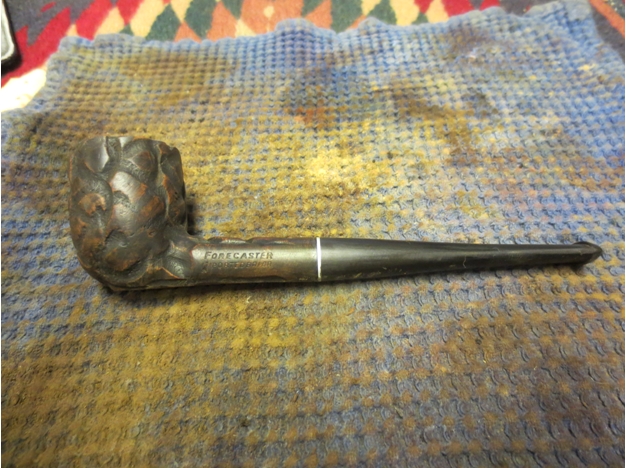
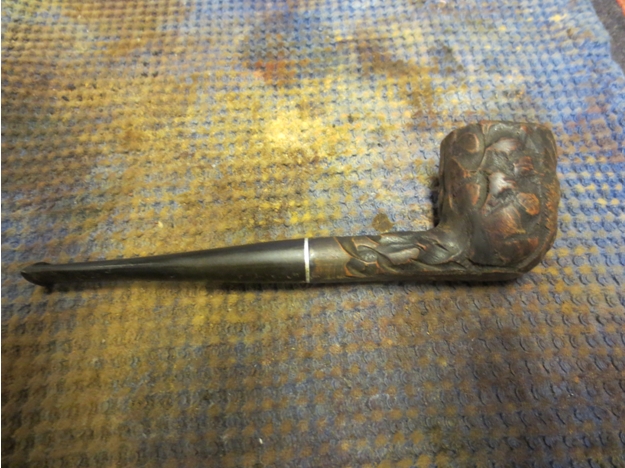
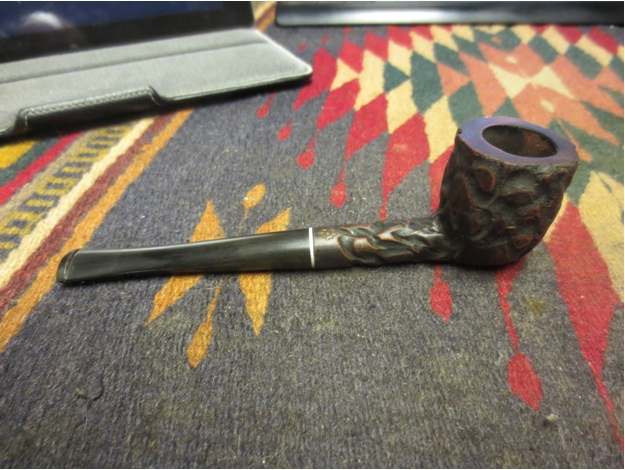
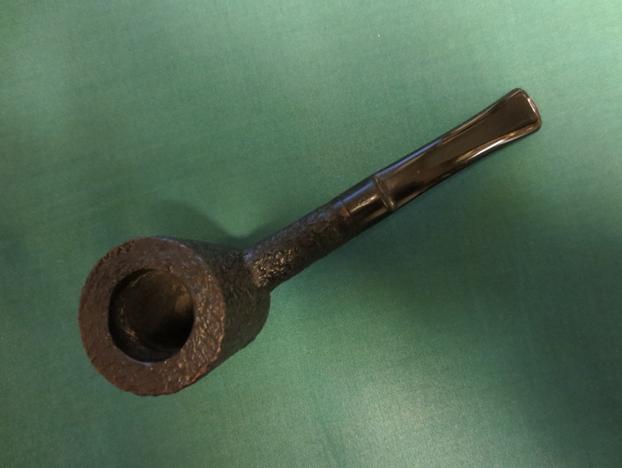
I am getting down to the bottom of my refurbishing box yet again. This is one of three pipes that are left to work on. It is one ugly old pipe to my tastes. Certainly it is one that I have left until there are few to choose from to work on. There truly was nothing redeeming about the look of it. The rough cut billiard with a bark like rustication pattern did nothing for me. The left side of the shank is stamped Forecaster over Imported Briar. The bottom of the bowl had been flattened to make the pipe a sitter. But even that was done poorly as it was to one side and the pipe sat with a list. The finish was worn out but appeared to have been a dark thick stain that was opaque enough to hide all the briar. The outer rim of the bowl had been badly beaten up from hitting against some hard surface and left to be a ragged rough edge around the bowl. One thing that gave this tired old pipe a unique, eye-catching touch was that the top of the shank had been stamped with an eight point star and then inlaid with gold paint. The bowl had a thick soft cake all the way down reducing the diameter of the bowl by almost half. The stem had a metal spacer that gave the appearance of a stem with a metal tenon as well. But when I removed the stem I found that it had a vulcanite tenon. The stem was badly oxidized and had some deep scratches in the surface.IMG_2440 IMG_2441 IMG_2442 IMG_2443I reamed the bowl with a PipNet reamer using the smallest cutting head and worked my way up to the head that would take the cake back to the bare wall of the pipe.IMG_2444The top was so damaged that it needed to be topped. In looking it over I was not sure how much of the rim I could remove without dramatically changing the look of this pipe so I would proceed slowly. I set up a topping board with 220 grit sandpaper and slowly topped the bowl. I sanded it until I had removed as much of the damaged portion of the rim as I could without changing the shape. The rustication made the bowl look out of round but is actually still round. The right side is more rusticated at the top edge than the left so it looks unusual from the top down photo below.IMG_2445IMG_2446I wiped down the finish with acetone on cotton pads until I had removed the heavy dark finish. It took a lot of scrubbing to get through the grime and then the varnish coat. Underneath the dark top coat it appeared that there was a walnut stain that highlighted the grain on the high spots of the bowl. The grooves and valleys were dark with a black stain. The contrast had some potential.IMG_2447 IMG_2448 IMG_2449 IMG_2450I sanded the smooth parts of the bowl and rim with medium and a fine grit sanding sponges to smooth out the scratches in the bowl and on the topped rim. I wiped it down with isopropyl alcohol and then stained it with a dark brown aniline stain. I applied it and flamed it and repeated the process until the coverage was even.IMG_2451 IMG_2453 IMG_2454The bowl was very dark brown but it was at least evenly stained. I would have to do some more work on it to get the contrast that I wanted between the rustication and the smooth parts of the briar. I cleaned out the shank and bowl with isopropyl alcohol, cotton swabs and pipe cleaners until they came out clean. I cleaned the stem at the same time until it also was clean.IMG_2455 IMG_2457I wiped the bowl down with isopropyl alcohol to remove some of the heavy dark brown stain and make it more transparent. I then sanded the bowl with a fine grit sanding sponge to remove some more of the stain on the high spots and to match the colour of the stain on the rim. I sanded the stem with the sanding sponges at the same time to minimize the scratches on the vulcanite.IMG_2458 IMG_2459 IMG_2460I buffed it with White Diamond and took it back to the worktable to work on the stem and bowl some more. I wanted the stain to be a bit more transparent and the contrast between the high spots and the crevices to show clearly.IMG_2461 IMG_2462 IMG_2463I still needed to deal with the list to one side when I set the pipe down on a flat surface. I probably should have done this before I stained the bowl but forgot to do so in cleaning up the mess. I decided it was better late than never so I dealt with it next. In examining it I found that it was not centered on the bottom of the bowl and shank but was off to one side. I sanded flat portion to take down the higher side and even out the flat bottom. I used 220 grit sandpaper and then a medium and fine grit sanding sponge to flatten it out and remove the list. When I was satisfied with the way the bowl sat I refinished it with a stain pen to darken it and blend it into the stain of the rest of the bowl.IMG_2464I sanded the stem with micromesh sanding sponges – wet sanding with 1500-2400 grit pads and dry sanding with 3200-12,000 grit pads. Between each set of three pads I rubbed the stem down with Obsidian Oil and let it soak into the vulcanite before proceeding with the next set of pads. When I finished I gave it a final coat of oil and then buffed it with White Diamond to a shine.IMG_2474 IMG_2475 IMG_2476I buffed the entire pipe with White Diamond and then gave it several coats of carnauba wax and buffed it with a soft flannel buff. The finished pipe is shown below. It is still an ugly pipe in my opinion but there is something redeeming about the ugliness. I suspect it will make a great yard pipe for someone and will deliver a good smoke. It must have been a good smoking pipe in its day – otherwise why would its previous owner have smoked it to the point of near death!IMG_2477 IMG_2478 IMG_2479 IMG_2480

The Sentimental Journey Continued – Restoring a Second Medico, a Smooth Billiard


Blog by Steve Laug

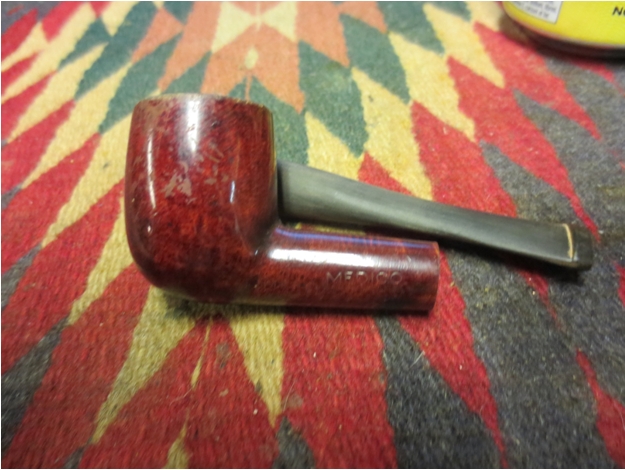
In a previous post called a Sentimental Journey I wrote of why Medico’s always get attention when they cross my desk. Last evening I reached into my box of pipes to be refurbished and pulled out the next pipe to clean up and it too was Medico – this time it was a smooth billiard. The finish was worn and the varnish was peeling off the bowl. The rim was badly knocked around so there was damage on the outer edge at the front of the bowl and the back. There was a heavy build up on top of the damage and the bowl had a thick cake at mid bowl – not much at the top or bottom. The stamping was the same as the previous pipe – MEDICO on the left side of the shank and Imported Briar Italy on the right side. A bonus for me was that the stem I had work on for the little Rhodesian fit this one and only needed adjustment in the diameter of the stem. It had the metal tenon that was generally on Medico pipes and would hold the Medico paper filter as per design. The rest of the stem was vulcanite not nylon which was a bonus.IMG_2408 IMG_2409 IMG_2410 IMG_2411I cleaned out the shank and fit the stem in place to see how much sanding I would need to do to match the diameter of the shank. It did not look like it would take very much to bring it in line. I would need to sand the aluminum band on the stem at the same time so I would need to be careful to not create dips or valleys next to it on the softer vulcanite when sanding.IMG_2412 IMG_2413I sanded the stem with 150 grit sandpaper to reduce the diameter of the stem.IMG_2414I reamed the bowl with a PipNet reamer using the smallest cutting head to clean it out.IMG_2415To clean up the rim damage I topped the bowl with 220 grit sandpaper to take down the rim and reduce the rough pitting on the outer edge. I also sanded around the edge of the rim to smooth out the remaining roughness.IMG_2416IMG_2417IMG_2418I wanted to get rid of the peeling varnish on the bowl so I wiped it down with acetone on cotton pads to remove it. It took a lot of scrubbing as the varnish was very stubborn.IMG_2419IMG_2420IMG_2421I sanded the bowl and the rim with 220 grit sandpaper and then with medium and fine grit sanding sponges to remove more of the finish and reduce the scratching on the bowl. I sanded it with a medium and fine grit sanding sponge before wiping it down one last time with alcohol. I decided to stain it with an aniline based oxblood stain. I applied it and then flamed it to set it in the grain.IMG_2422 IMG_2423I rubbed the excess stain off with an alcohol dampened cloth and then hand buffed it with a shoe brush. This old Medico had some really nice grain and was a far better piece of briar than I had expected.IMG_2424 IMG_2425 IMG_2426 IMG_2427 IMG_2428I sanded the bowl with 1500-2400 grit micromesh sanding pads and then buffed it with White Diamond to smooth out the bowl further. I gave it a coat of carnauba wax and buffed it lightly.IMG_2429 IMG_2430 IMG_2431 IMG_2432I finished the work on the stem fit and then sanded it with micromesh sanding pads – wet sanding with 1500-2400 grit pads and dry sanding with 3200-12,000 grit pads. I rubbed it down with Obsidian Oil and moved through each successive set of three pads. Once I had finished sanding it I rubbed it down a final time with the oil and gave it a buff with White Diamond.IMG_2433 IMG_2434 IMG_2435I put the pipe back together and gave it a final buff with White Diamond and then multiple coats of carnauba wax. I buffed it with a soft flannel buff to finish and polish the wax. The finished pipe is shown in the next series of photos. It is a small light weight billiard with fairly decent grain and a few character marks. The new stem fits well and it looks better than it did when it left the factory. It should provide a great smoke to another pipeman. This is one that I will inevitably gift to someone along the way.IMG_2436 IMG_2437 IMG_2438 IMG_2439

A Sentimental Journey – the Restemming and Restoration of a Medico Rhodesian


Blog by Steve Laug

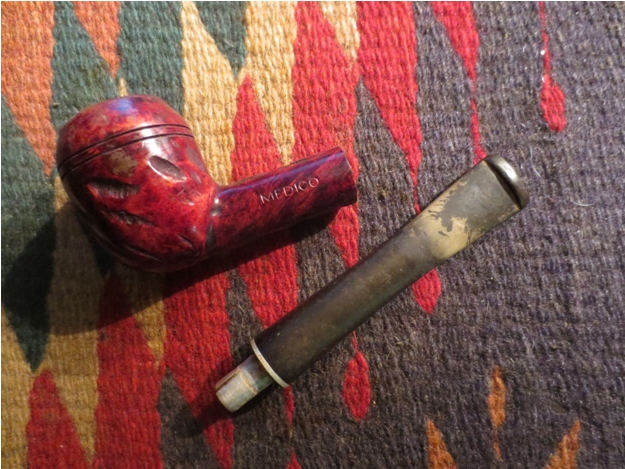
For years now I have had a special spot in my heart for Medico pipes. I don’t like the paper filter system, or the cheap stems with the split aluminum tenon, or the heavy varnish on the briar, or the fills that are hidden below the thick varnish, or any endless number of complaints that come to the surface with these old US made briar pipes. But I can’t get past the fact that the first pipe I ever owned was a Medico – paper filter and all, and that the first pipe I picked up when my first daughter was born years later was a Medico as well. Because of that whenever I am given an old Medico bowl I restem it and restore it. I strip away the varnish and rework the fills, make a new stem and bring it back to life in even better condition that it was when it was first sent out.

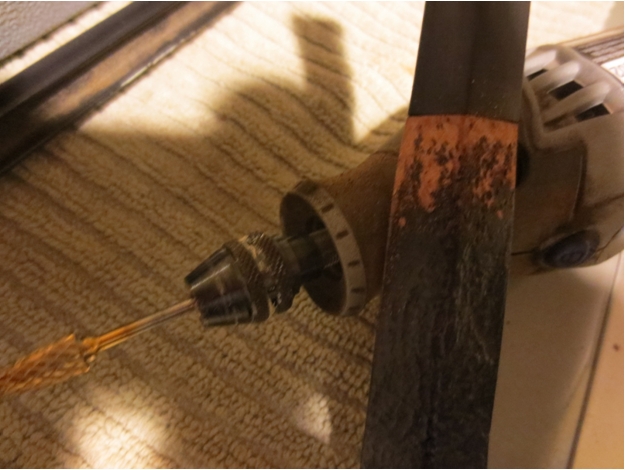
The Medico that I worked on in this restoration was a straight shank Rhodesian that came to me in a gift box of bowls. It was stemless and I had two potential stems that would work for it. There truly was nothing particularly redeemable that I saw in the bowl so the reason was as stated above solely sentimental. The bowl was dirty and worn with a thick cake. The rim had been battered and had deep nicks on the outer edge. There was a thick dark red varnish on the briar. It was stamped MEDICO on the left side of the shank and Imported Briar Italy on the right side. On the left side of the bowl was a large brown putty fill that stood out like a sore thumb. The first stem I tried was a split metal tenon Medico style stem. It was worn but usable.Med1 Med2 Med3 Med4 It fit the shank perfectly and looked good on the pipe. I thought for sure this would be a simple and quick restoration. I should have learned by now that whenever I think that problems would pop up on the way to the finish. I cleaned the shank with cotton swabs, pipe cleaners and isopropyl alcohol.Med5The top of the bowl was badly damaged with large dents and missing chunks on the outer edge of the rim so I decided to top the bowl. I used the topping board with 220 grit sandpaper and worked on the rim until it was smooth and clean. There were still several places on the outer front edge that would need to be worked on but the finished look of the topped bowl was far better than when I had started.Med6 Med7I wiped down the bowl with acetone on cotton pads to remove the thick varnish coat and clean up the finish on the bowl. I wanted to remove it back to the briar. In the process the dark red stain coat also was removed from the bowl.Med8Once the stain coat and varnish were removed I could see several problems that I would need to address. The front edge of the bowl needed to be sanded and the slope on the cap would need to be modified by hand sanding to remove the damage on the front edge and face of the cap. There was also a fine crack that had seeped tobacco oils on the top right edge of the shank. It had been hidden by the dark stain. When I move the stem it was not visible and did not open or spread but it was definitely present. I would need to clean up the shank, band it and with the band a different stem would need to be fit to the shank. The stem I had previously chosen had a metal face that would not work against the band. I scrubbed the bowl and shank until all the red stain that I could remove was gone.Med9 Med10 Med11I used a Dremel with a sanding drum to sand back the shank so that I could fit a band on the shank. I also wanted to smooth out the surface of the rustication pattern and clean up the crack so that I could glue and clamp it before banding.Med12I put the band around the end of the shank and then heated the metal band with a Bic lighter until I could press it into place on the shank. It took several reheats with the lighter before I had a flush fit on the band. At that point I took the second stem I had chosen and lightly sanded the tenon to get a good tight fit in the shank and pushed it in place.Med13 Med14 Med15 Med16I reamed the bowl with my PipNet reamer and the smallest cutting head until I had taken the cake back to bare wood. I wanted the bowl to be clean so that I could see if there was any damage to the interior of the bowl.Med17Once I had reamed the bowl I reshaped the angle on the cap with 220 grit sandpaper and medium and fine grit sanding sponges. Once I had the angle correct around the entire rim and had removed the damage on the front of the cap I sanded the entire bowl with the sanding sponges. I also sanded the stem with the same sandpaper and sanding sponge combination to remove the oxidation and tooth chatter near the button. The newly shaped bowl and freshly sanded stem is shown in the next series of four photos below.Med18 Med19 Med20 Med21I stained the bowl with some oxblood aniline stain and flamed it. I wanted the red colour of the stain but I did not want it to be as opaque as the original stain had been. The aniline stain seems to be more transparent. It did however, do a great job in hiding the big fill on the left side of the bowl.Med22 Med23 Med24I sanded the stem with 220 grit sandpaper, then a medium and fine grit 3M sanding sponge. I followed that with my usual array of micromesh sanding pads – wet sanding with 1500-2400 grit pads and dry sanding with 3200-12,000 grit pads. I rubbed the stem down between each set of three pads with Obsidian Oil before moving on to the next three pads. I finished by giving it a final rubdown with the oil before taking it to the buffer.Med25 Med26 Med27I buffed the entire pipe with White Diamond and then gave it multiple coats of carnauba wax to protect and polish both bowl and stem. With that completed my sentimental journey with this old Medico was complete and it was ready to go back into service. I am sure I will gift this pipe to some new pipeman somewhere along the way as it should smoke very well and give many years of service. It is not a thing of beauty and never will be but it is a good serviceable pipe that will deliver a good smoke. The finished pipe is pictured in the photos below.Med28 Med29 Med30 Med31

Restemming and Restoring a Diamond Shank Commodore Canadian


Blog by Steve Laug

This pipe bowl came up on eBay and I bid on it. I really liked the diamond-shaped shank and the pipe looked to be in great condition. I did a bit of research and found that the brand was either made by Comoy’s or Charatan. The style of the stamping, which read Made in London over England, made me more inclined to think it was a Charatan made pipe. The diamond shank and the overall style of the pipe also seemed to point to it being Charatan made. The photos below were the ones included by the seller. Commodore1 Commodore2 Commodore3 Commodore4The sandblast was very rugged and craggy. The rim had a lighter blast and the shank had a blast about 2/3 of the way back from the bowl toward the stem. The last 1/3 was rusticated to match the blast of the first portion of the bowl. The diamond shank was flattened – it was wider from side to side than it was tall. The sides of the shank were sanded smooth and the bottom left side of the shank was smooth and stamped COMMODORE over Made in London over England. The bowl had a light cake and some shards of tobacco still in the bowl. The finish was in very good shape other than the sides next to the shank end – it was worn and the stain was worn. The rim had some tars on it and a light build up. There was not a stem with this bowl.

The first steps I took in this process I forgot to document with my camera. The battery was dead when I did remember so I will have to describe it with words. I went through my can of stems to see if any of the diamond-shaped stems would fit this shank. None of them were wide enough for the width of the shank. I had several oval stems that were close in width and height. I looked through the stems until I found one that was the right height and width for the shank. I turned the tenon on a PIMO Tenon Turning Tool until it was a close fit and then sanded it by hand until it fit snuggly in place. The end of the shank was not quite square so there was a slight gap on the side corners. Filing and shaping the stem would help with the fit. I shaped it with a Dremel and sanding drum as well as hand sanded until it was a flattened diamond. I sanded the stem in place on the shank to make the transition smooth between the shank and stem. It took a lot of sanding to shape it correctly.IMG_2324 IMG_2325 IMG_2326 IMG_2327The photo below shows the shape of the finished stem. There was still a lot of work to do to smooth out the end of the tenon to remove the casting marks and to smooth out the diamond shape of the stem but the diamond shape was basically finished.IMG_2328I reamed the bowl with a PipNet reamer to remove the slight cake and the tobacco shards that were stuck to the sides of the bowl.IMG_2131I used a brass bristle tire brush to clean the rim top and remove the overflow of cake on the top. I wiped it down with a cotton pad and alcohol to remove the dust and clean out the grooves in the blasted rim.IMG_2333 IMG_2334I wiped down the bowl and shank with cotton pads and alcohol to remove the dirt in the finish and prepare it for working on the shank.IMG_2335 IMG_2336I used a dental burr in the Dremel to re-rusticate the shank area where I had sanded it smooth. I ran the Dremel at a slow speed to match the pattern on the rest of the shank.IMG_2337 IMG_2338 IMG_2339 IMG_2340I wiped down the rusticated shank area and wiped down the dust on the rest of the bowl to prepare it for the new stain coat. I used a black aniline stain for the stain on the newly rusticated areas and also gave the entire bowl a coat of the black stain to cover the worn areas. I applied the stain, flamed it and repeated the process until the coverage was even on the bowl.IMG_2341 IMG_2342I hand buffed the pipe with a rag I use for that purpose. It picks up the stain coat and evenly spreads it across the bowl and rim.IMG_2343 IMG_2344 IMG_2345 IMG_2346I buffed the pipe with White Diamond to polish the new stain and to blend it better with the rest of the bowl colour. The next series of four photos below show the pipe after this initial buffing.IMG_2351 IMG_2352 IMG_2353 IMG_2354I decided to give the bowl a coat of wax to see what black looked like when polished. I wanted to see if I would need to give it another coat of stain to highlight the higher spots on the sandblast. I applied it by hand and then buffed it with a shoe brush.IMG_2355 IMG_2356 IMG_2357 IMG_2358 IMG_2359 IMG_2360I set the bowl aside to work on the stem. I sanded it some more with the 220 grit sandpaper and then with the medium and fine grit sanding sponges. I followed those up by sanding with my usual array of micromesh sanding pads. I wet sanded with 1500-2400 grit pads and dry sanded with 3200-12,000 grit pads. I rubbed the stem down with Obsidian Oil between each group of three pads. I buffed the stem with White Diamond to polish it.IMG_2361 IMG_2362 IMG_2363I decided to give the pipe a second coat of stain to highlight the black. I used a oxblood stain to give it the contrast that I was looking for. I applied the topcoat of stain and wiped it off. I buffed the pipe and stem with White Diamond again to polish the stain coat and stem.IMG_2364 IMG_2365 IMG_2366 IMG_2367I waxed it with several light coats of carnauba wax. I use a light touch so as not to gum up the wax in the sandblast. At the same time I want the shine that a good coat of wax gives the bowl and stem. The finished pipe is shown below. The new stem works well with the shape of the shank and gives the pipe a quiet, understated elegance. I hope to load up a bowl and give it an inaugural smoke tomorrow out on the front porch and relax with a good bowl of aged Virginia.IMG_2370 IMG_2371 IMG_2372 IMG_2373 IMG_2374

Renewing a Savinelli Punto Oro Canadian 804


Blog by Steve Laug

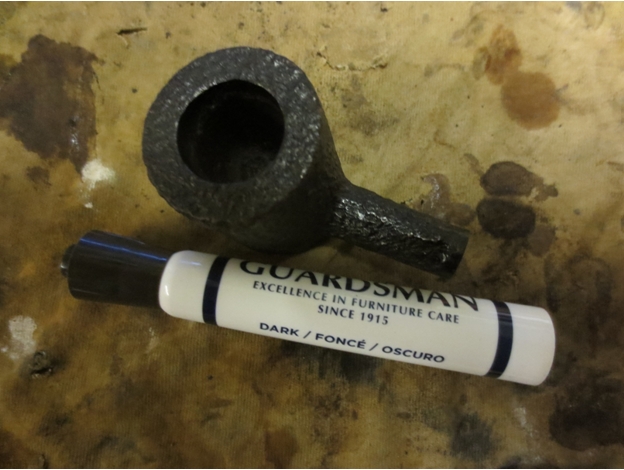
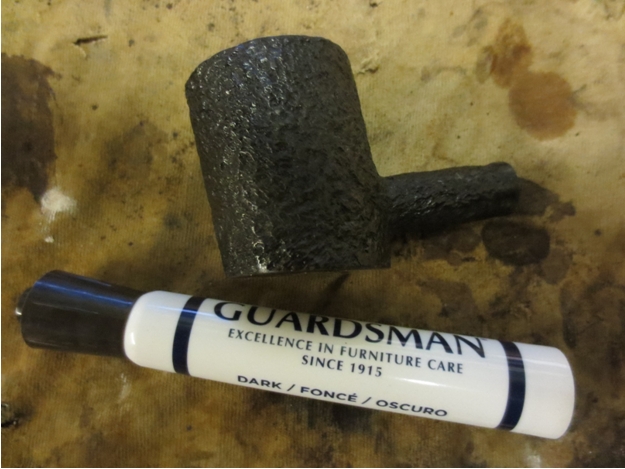
This is the last of the lot of pipes I picked up on my recent pipe hunt. It is pictured as the second photo down from the top in the photo below. It is stamped on the smooth underside of the shank Savinelli Punto Oro and next to that is the Savinelli shield next to 804 over Italy. The blast on this one is rugged and very clean. The shape is a tall bowl with an oval long shank – the sides of the oval are sharp on both sides and the curve of the top and the bottom of the shank a subtle oval shape.IMG_2049The finish on the bowl is in excellent shape. There are no dents or scratches in the bowl. The bowl had a thick cake that was crumbling toward the bottom of the bowl. The rim had a buildup of cake that had spilled over on to the top. The edges of the rim on both the inside and outside were crisp and sharp. The stem was oxidized and had a line of calcium around the stem about 2/3 of the way up the stem. I wonder if the pipe did not have a softie bit at some time during its life. There was light tooth chatter by the button. The inside of the stem and shank were dirty and there was a buildup of dark tars.Sav1 Sav2 Sav3 Sav4I reamed back the cake to bare wood using a PipNet reamer. I know that others who restore pipes don’t do that drastic a reaming but that is the method I use as I find that once cleaned the bare wood minimizes ghosting in the bowl.IMG_2131I cleaned out the stem and shank with pipe cleaners, cotton swabs and isopropyl alcohol (99%). I cleaned them until the cleaners came out white and no more oils remained.Sav5 Sav6I wiped down the rim with alcohol to wet the overflow of cake and then used a brass bristle brush to scrub the rim.Sav7 Sav7a Sav8 Sav9I sanded the stem with 220 grit sandpaper and with medium and fine grit sanding sponges to remove the oxidation and calcium deposits. I also sanded until the tooth chatter was removed from the top and bottom sides of the stem.Sav10Sav11Sav12I used the Guardsman stain pens from Greg to touch up the rim and the edges of the rim and the shank.Sav13I buffed the bowl and shank with White Diamond to polish and blend in the new stain on the rim and shank.Sav14 Sav15 Sav16 Sav17I sanded the stem with my usual list of micromesh sanding pads – wet sanding with 1500-2400 grit pads and dry sanding with 3200-12,000 grit pads. I rubbed it down after each set of three pads with Obsidian Oil and then gave it a buff with White Diamond.Sav18 Sav19 Sav20I put the stem in place and then buffed the entire pipe with White Diamond, lightly on the briar and a little heavier on the stem. I gave it multiple coats of carnauba wax and buffed it with a soft flannel buff to polish and raise the shine on the pipe. The photos below show the finished pipe – cleaned and ready to be smoked.Sav21 Sav22 Sav23 Sav24

A Reborn Peterson Tankard


Blog by Steve Laug

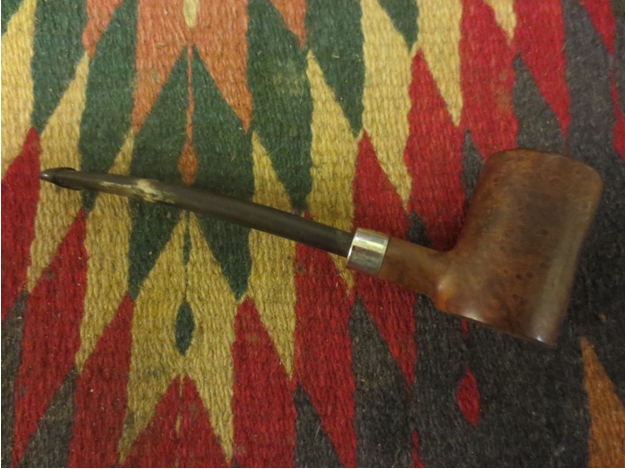
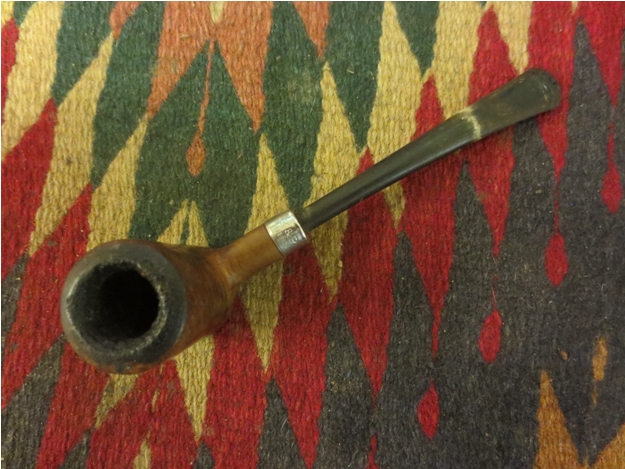
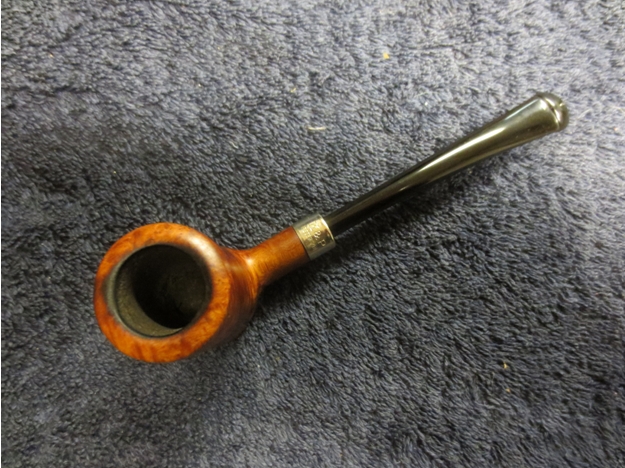
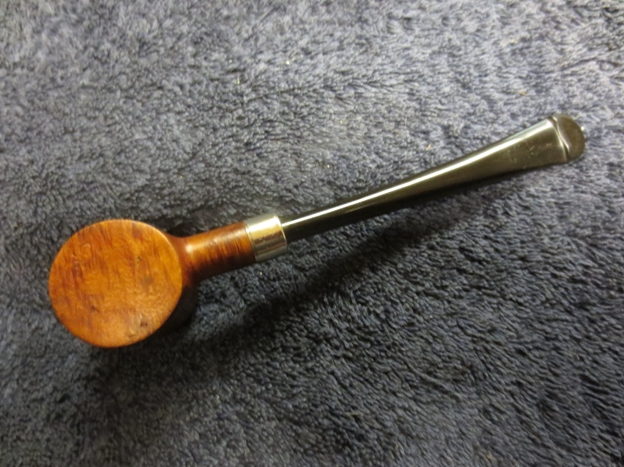
I have looked for one of these little Peterson Tankards for a long time. I have always liked the delicate simplicity of the pipe. The bowl is a round tankard and the pencil shank with the silver Peterson collar looks elegant. The rim is rounded and crowned. The stem has a gentle bend that allows the pipe to sit plat on the base. It is stamped on its base Peterson Tankard, Made in the Republic of Ireland. The pipe is pictured in the photo below, the third pipe down. It was one of the five I found on my recent pipe hunt.IMG_2049The Tankard was in worn but decent shape. The finish was dirty and there was darkening around the bowl middle from the hands of the previous owner. The rim had a thick buildup of tars and oils that had hardened. There were burn marks around the inner edge of the rim at the back of the pipe and the right front. The burn on the front of the bowl was more extensive that then one on the back inner rim. The bowl had a thick cake in it and the shank was dirty. The stamping was readable but faint. The stem had tooth marks on the top and bottom sides of the stem near the crease on the P-lip. It was badly oxidized and there was a heavy calcification around the stem about an inch in from the button. The silver ferrule was clean and would shine up easily.IMG_2123 IMG_2124 IMG_2125 IMG_2126I reamed the bowl with a PipNet reamer to remove the cake back to bare wood. I scrubbed down the exterior with Murphy’s Oil Soap on a cotton cloth and wiped it off to clean the briar.IMG_2128 IMG_2260 IMG_2261 IMG_2262 IMG_2263The next photo shows the reamed bowl and the caked rim top. It was very thick so it would take some work with sandpapers and oil soap to remove the tars. I scrubbed it with the soap and then with alcohol to remove as much of the tars as possible. I then sanded it with 220 grit sandpaper and a medium grit sanding sponge. I wiped it down with acetone once I had finished sanding it. The extent of the rim damage can be seen in the second photo.IMG_2264 IMG_2265I wiped down the finish with acetone on cotton pads to completely remove the wax and the finish from the outside of the bowl.IMG_2266 IMG_2267 IMG_2268I set the bowl aside to work on the stem. I used a Bic style lighter to “paint” the surface of the stem and lift the tooth marks. Doing this I was able to remove many of the tooth dents and lessen the depth of the remaining ones.IMG_2269 IMG_2270 IMG_2271I sanded the stem with 220 grit sandpaper to remove the rest of the dents and the oxidation and calcification. I reshaped the button and the crease to sharpen them. There was one tooth mark that I could not minimize further without damaging the thickness of the stem at the crease. I used a clear super glue to fill that spot. Once the glue had dried I sanded it and then used a needle file to reshape the crease and smooth things out. I sanded the repair with 220 grit sandpaper and then with medium and fine grit sanding sponges until I had blended it into the surface of the vulcanite.IMG_2272 IMG_2273 IMG_2274 IMG_2275 IMG_2276I sanded the stem with my usual array of micromesh sanding pads to polish and finish it. I wet sanded with 1500-2400 grit sanding pads and dry sanded with 3200-12,000 grit pads. I wiped it down with Obsidian Oil between each set of three grits. Once I finished with the micromesh pads I buffed the stem with White Diamond and then gave it several coats of carnauba wax to protect it and give it a deep shine.IMG_2281 IMG_2282 IMG_2283I decided to leave the finish natural and not stain it. I rubbed it down with a light coat of olive oil to enhance the redness of the briar.IMG_2277 IMG_2278 IMG_2279 IMG_2280I took a close up photo of the rim to see if the scratches were still visible. At the back side of the rim there were still some scratches that I needed to work on more to remove. I also wanted to see if I could also remove some more of the rim damage from the burn marks.IMG_2288I sanded the rim with a medium and a fine grit sanding sponge to work on the scratches and the burn marks. Working on the surface with the sanding sponge I was able to remove the scratches and some more of the burn marks from the surface.IMG_2289 IMG_2294I sanded the bowl with the same fine grit sanding sponge and then buffed it with White Diamond. I took special care around the stamping to make sure that I did not damage the light stamping. I gave it multiple coats of carnauba wax and lightly buffed it to a shine with a soft flannel buffing pad. The finished pipe is shown below. The birdseye grain on the sides and the cross grain on the ends both work really well. It is a beautiful pipe and I think it will be a great smoking pipe as well. It should provide many more years of service and certainly live beyond my lifetime to be passed on to a new generation of pipemen.IMG_2290 IMG_2291 IMG_2292 IMG_2293

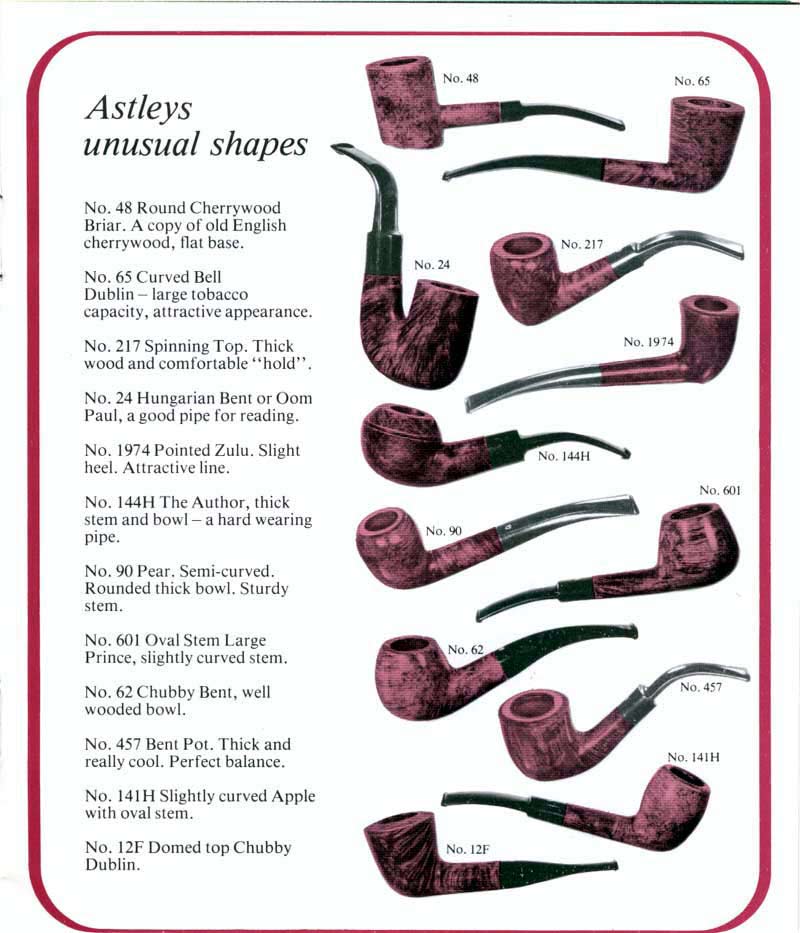
Breathing New Life into an Astleys 48 Cherrywood


Blog by Steve Laug

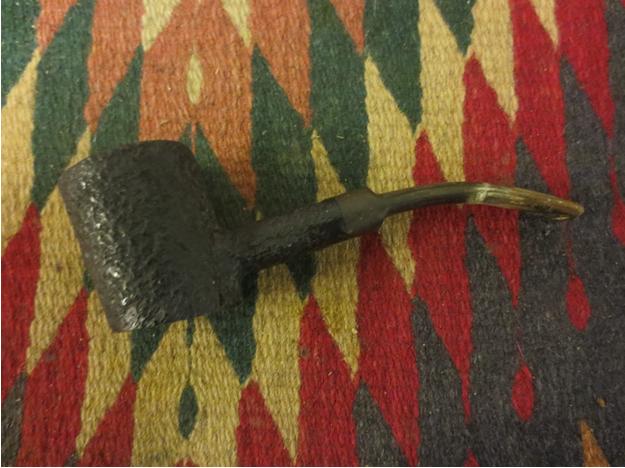
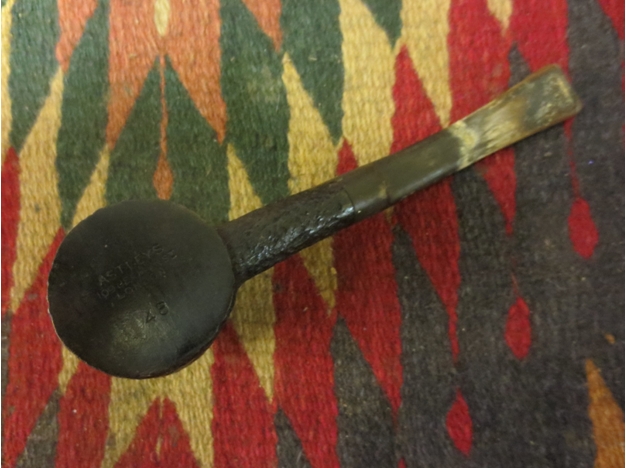
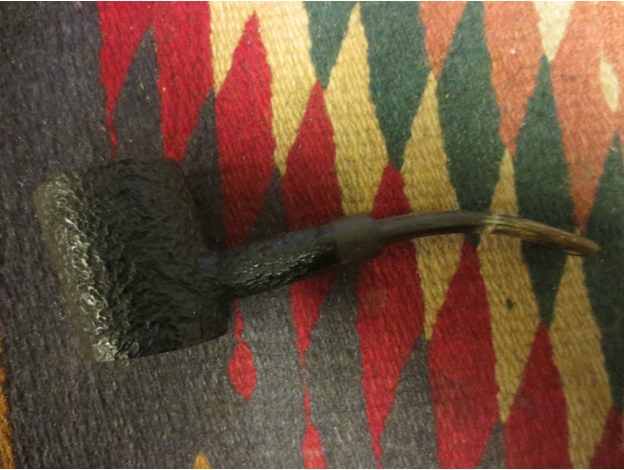
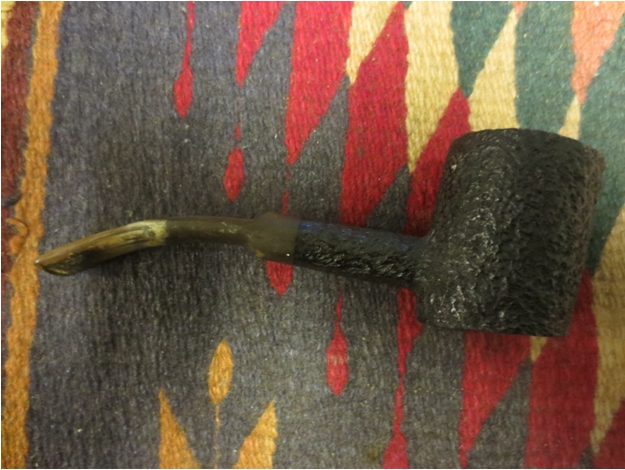
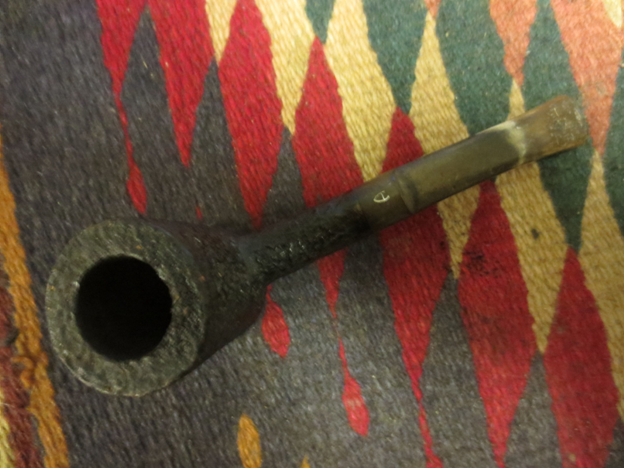
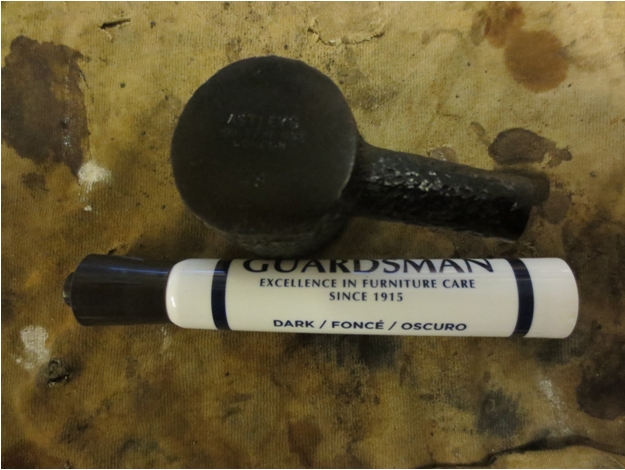
The third pipe from my recent pipe hunt that I chose to restore was the last one pictured below. It is a rusticated Astleys Cherrywood style pipe with a tight rustication pattern resembling a sandblast. I think the process may have been to rusticate and then to sand down the high spots until they were smooth. The texture is really well done and comfortable to hold. The pipe is a light weight with a classic look.IMG_2049The finish was in pretty good shape with a few worn spots where the stain was rubbed off on both the bowl and shank. The rim had a buildup of tars and oils that had hardened and formed a scale on the rim. The bowl had a thick cake that choked out the diameter of the bowl. The stem had been over bent to the point it hung oddly in the mouth rather than the way the original bend had made it hang. It was also oxidized and had a buildup of calcium around the button end of the stem that covered several deep tooth marks on both the top and bottom sides of the stem.IMG_2115 IMG_2116 IMG_2117 IMG_2118As shown in the photo above the bowl had been stamped on the smooth bottom of the bowl. It read Astleys over 109 Jermyn St.Under that was stamped London over 48. I looked up the shape in an old Astleys catalogue (page pictured below) and found the 48 was round Cherrywood Briar. The description stated that it was a copy of an old English cherrywood with a flat base. The correct bend can also be seen in the photo below from the catalogue.astleys-booklet_page_07I reamed the bowl with a PipNet reamer and took the cake back to bare wood. The oily, sweet, aromatic smell was more than I wanted to deal with in terms of ghosting.IMG_2231IMG_2232IMG_2233IMG_2234I cleaned out the internals with isopropyl alcohol and cotton swabs and pipe cleaners until they came out clean. I scrubbed the pipe with undiluted Murphy’s Oil Soap and a soft tooth brush for the sides and shank. I used a brass bristle tire brush to clean off the buildup on the rim. I then scrubbed the rim again with soap. When the scrubbing was finished I rinsed it with running water and dried it off with a cotton towel.IMG_2238IMG_2239IMG_2240IMG_2241IMG_2242I used the stain pens from Greg to touch up the worn spots on the finish of the bowl and shank. I buffed the bowl with a shoe brush once the stain was dry.IMG_2243IMG_2244IMG_2245IMG_2246Once the bowl was cleaned and buffed I turned to work on the stem. I used a needle file to give better definition to the crease on the button and clean up the bit marks on top of the button on both sides. I heated the tooth marks with a Bic lighter to raise them and then sanded the stem with 220 grit sandpaper to remove the small marks left behind. I also sanded to remove the calcium and oxidation on the stem.IMG_2247IMG_2248Up to this point I worked on the stem off the pipe. I avoided the area on the saddle where it sat against the shank so as not to round the shoulders. I cut a plastic washer and put it between the stem and the shank to allow me to work on the shoulders without damaging them when I sanded. I lightly reworked that area with the 220 grit sandpaper and then sanded the entire stem with medium and fine grit sanding sponges.IMG_2249IMG_2250There were still some small divots in the top of the stem so I removed it from the pipe and sanded them once more with the 220 grit sandpaper and the sanding sponges.IMG_2251I sanded the stem with the usual battery of micromesh sanding pads – wet sanding with 1500-2400 grit pads and dry sanding with 3200-12,000 grit pads. I rubbed the stem down with Obsidian Oil between each set of three pads. As the stem absorbs the oil the oxidation comes to the surface and the oil makes sanding much simpler. When I finished with the 12,000 grit pad I gave it a light buff with White Diamond.IMG_2252IMG_2253IMG_2255I gave the light spot on the shank shown in the above photo a touch up of stain and then put the stem back on the pipe and buffed the whole pipe lightly. I gave the bowl several coats of Halcyon II wax and then buffed the stem with more carnauba. I gave the entire pipe a light buff with a soft flannel wheel. The finished pipe is shown below.IMG_2256IMG_2257IMG_2258IMG_2259

A Face Lift for a Battered Old Meerschaum Bulldog – Robert M. Boughton


Guest Blog by Robert M. Boughton
Member, North American Society of Pipe Collectors
http://www.roadrunnerpipes.com
http://about.me/boughtonrobert
Photos © the Author

“Age should not have its face lifted, but it should rather teach the world to admire wrinkles as the etchings of experience and the firm line of character.”
— U.S. author Clarence Day, 1874-1937

INTRODUCTION
I agree that facelifts in most cases are attempts, nothing more than vain at best and narcissistic at worst, by those with money to burn to avoid the inevitable, and often enough have undesired effects the recipients deserve. However, in the case of a very battered and generally abused meerschaum pipe, as with some people who have suffered at the hands of others, at least a bit of a makeover is in order. This holds true with a bulldog, the animal breed of which many coarse or misguided folks think lacks beauty in the first place.

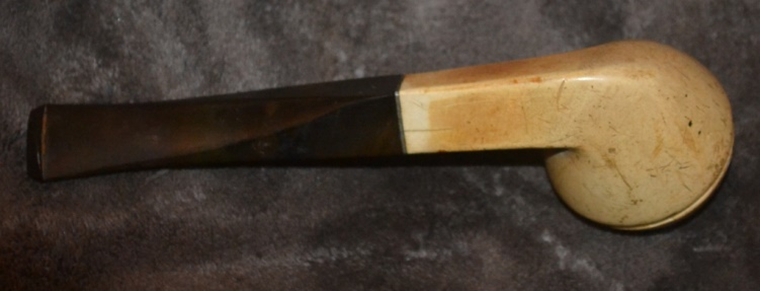
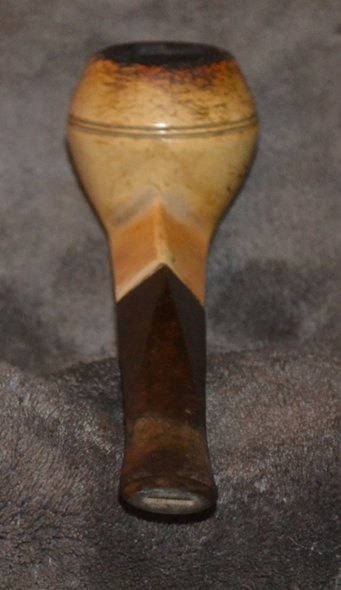
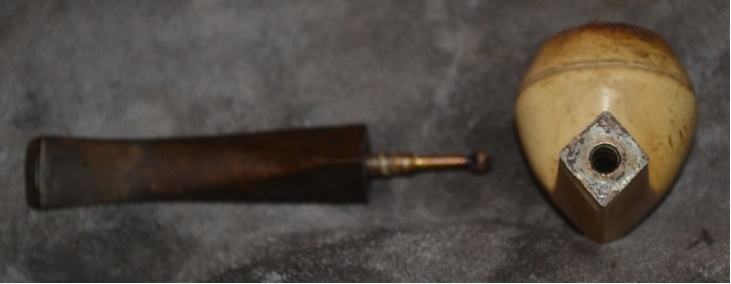
The unknown brand I will discuss, clearly a fine Turkish block example, is one of those exceptions. For reasons which will be obvious it resembled a dog that had been in a fight. I received it as part of a lot of eight from eBay that I purchased in large part because I saw the poor bulldog alone among all of the briars, and upon closer scrutiny with the magnifier observed it was filthy and somewhat oddly colored and had horrible scratches all over its once smooth, white, pristine body. Some unknown carver trying to eke out a living as his father and generations before him had done likely made it without even a signature of any sort, as is unfortunately all too common among Turkish crafters due to the central nature of humility in Islamic beliefs.

THE RESTORATION
This unfortunate meerschaum was in about as bad shape as I had ever seen any pipe I still wanted to buy. I thought, if not I, then who? There were others of more merit in the lot, but that one cried out to me. Then again, I do have a sizable collection of meerschaums and knew I would be more than happy to keep that one if things didn’t work out restoration-wise. A former roommate told me many years ago that I am attracted to strays, and although he said it with sarcasm I told him he was right. I see nothing wrong with that trait. By the way, I also tend to root for the underdog – although not as often in organized sports– such as the bull versus the matador. Nothing pleases me more than seeing a jerk in a pompous outfit, with all kinds of helpers, gang up on a bull and find himself gored and bleeding out. But that’s just a dark part of me.
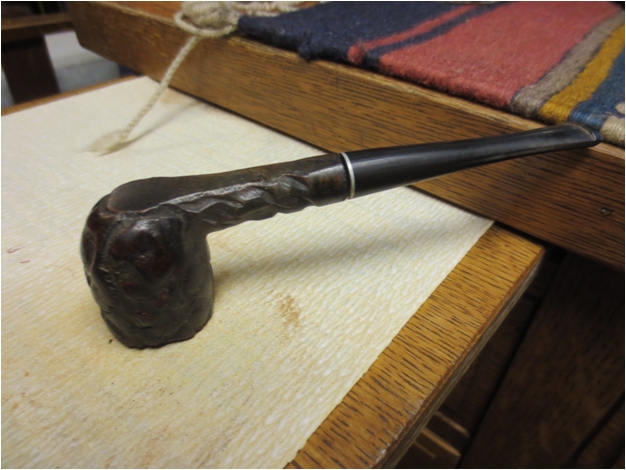
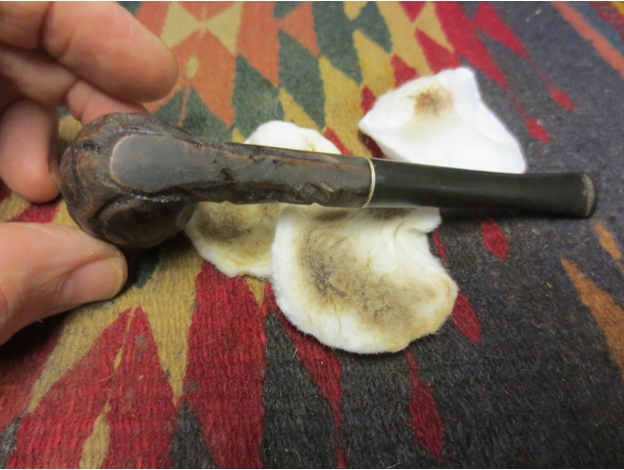
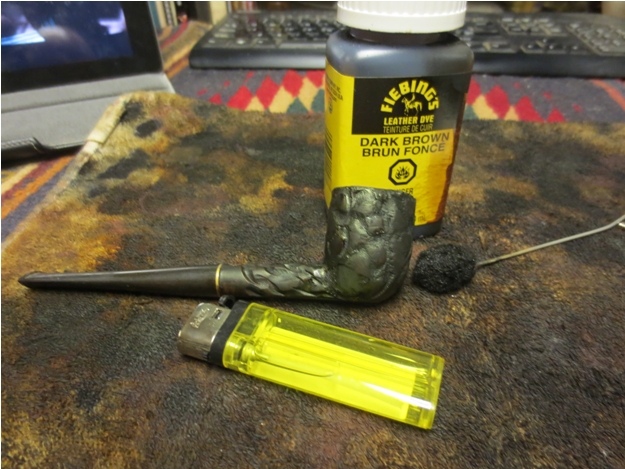
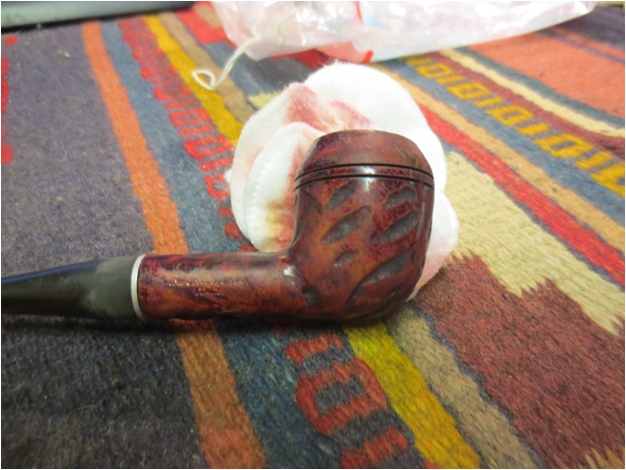
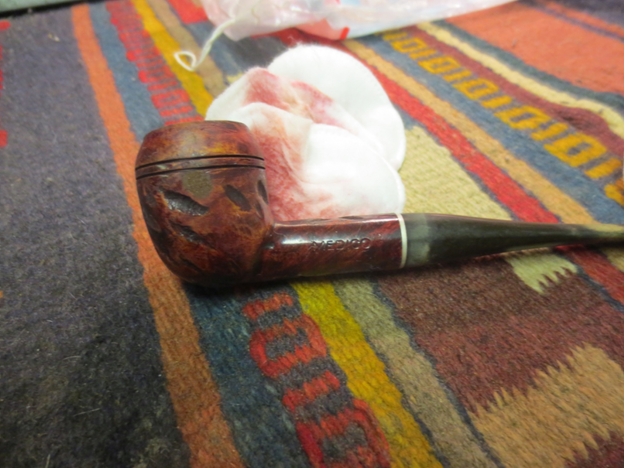
THE PIPE RESTORATION

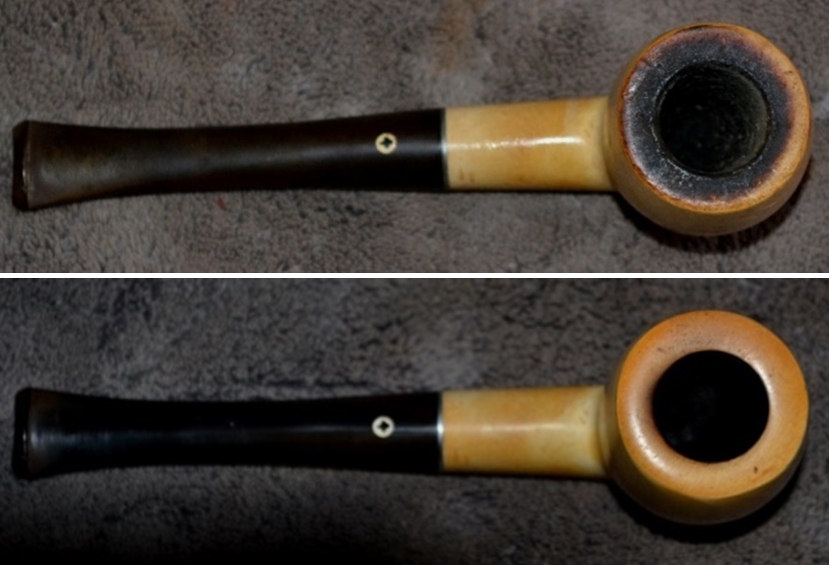
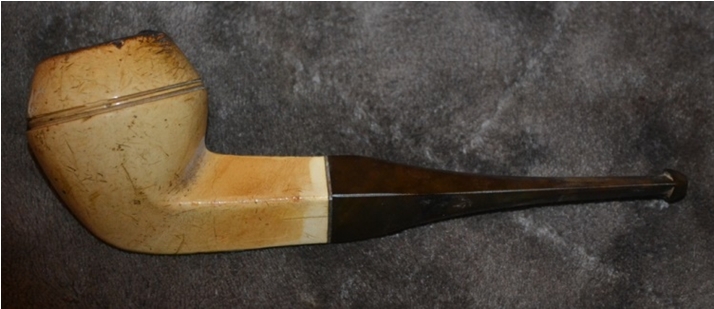
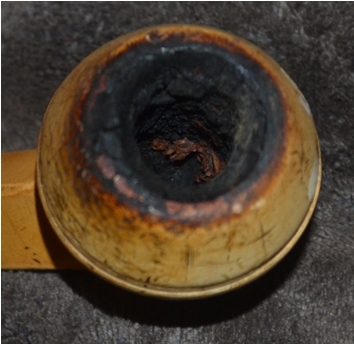
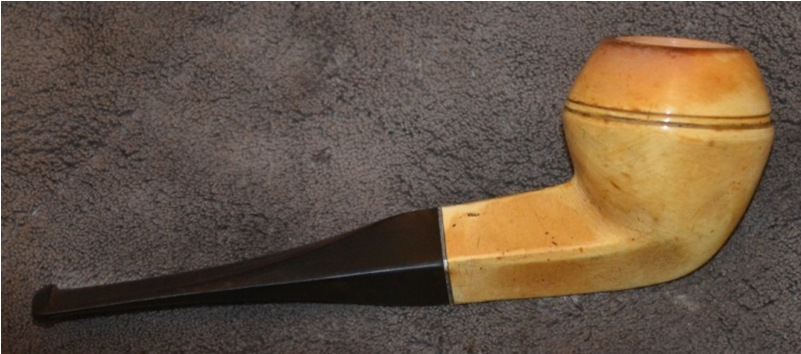
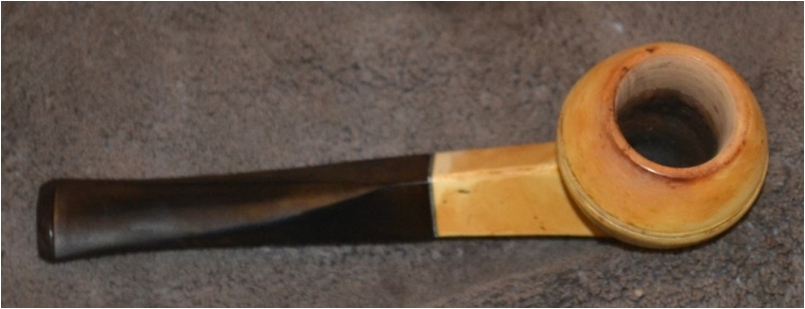
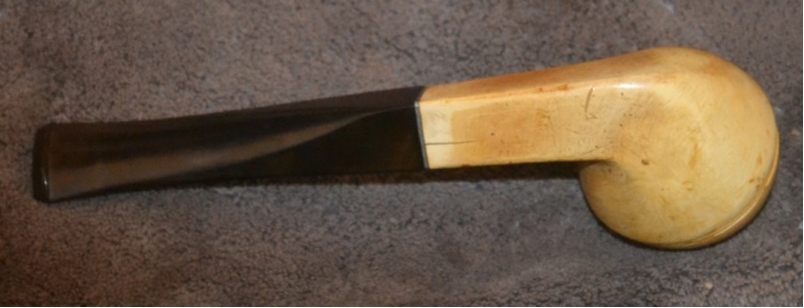
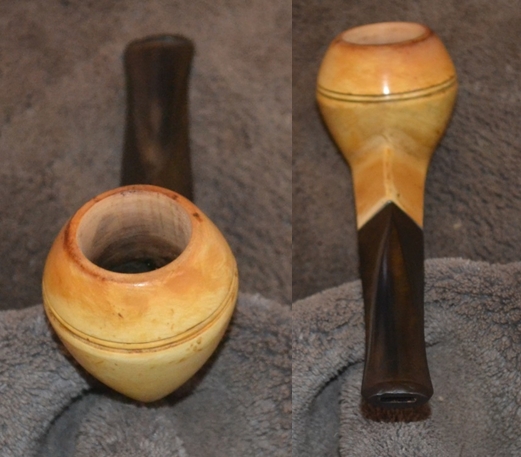
I have had fair success restoring meerschaums, including the following befores and afters: Robert1 Robert2 Robert3 Robert4And so I figured I would give this poor ol’ dog a shot:Robert5 Robert6 Robert7 Robert8 Robert9 Robert10 Robert11Despite the deplorable condition of the bowl and rim, I knew from the past that they would be the easy part of this job, so I tackled them first. I reamed the bowl and then used #800 micromesh to smooth it out. Surprisingly, with a light touch and a piece of 400-grit paper, I took the blackness right off of the rim and didn’t hurt the coloring at all. There were a few dings that rubbed out easily with #1000 micromesh.

The hard part, I knew and remember already indicating, but it bears repeating, was to remove as many of the scratches and other blemishes as I could with a minimum of damage to the nice if oddly distributed color on the outside of the bowl and shank. The spread of yellow and orange, not to mention the lack of any shine to the meerschaum, suggested over-hot smoking of this delicate if strongly shaped and named pipe. That conclusion would seem to be a no-brainer given horrendous caking within the bowl and cooking of the rim. And somehow I doubt the maker never treated it with beeswax or something else, yet it was as flat as could be.

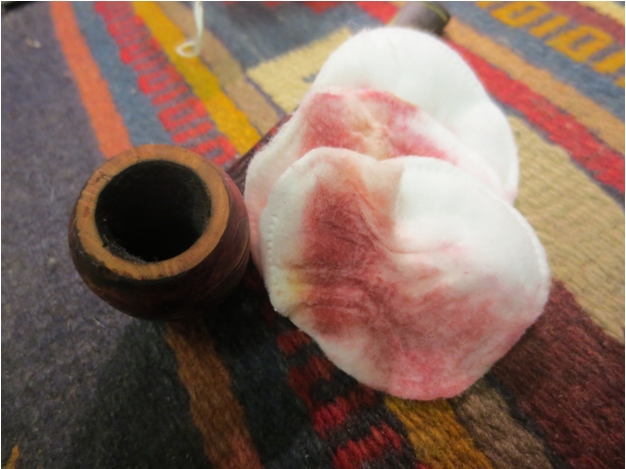
My experience with washing the outside of a pipe with distilled water in general is that it seems to give a brighter light on the job at hand by removing all of the filth that has built up over time smoking any pipe. I could see this one was going to be worse than most, but nothing prepared me for the indefensible groping with dirty hands by whatever anti-aficionado of pipe smoking who had abused the bulldog with apparent joyful perversity. Why, I even had to scrub the muck out of the trademark groove beneath the rim! The result was not one or two, but three small pieces of cotton cloth spent and blackened with the physical dirtiness of some variety of pipe lecher.

Therefore, with the highest care, I applied stronger use of the #1000 micromesh to the seemingly endless scratches and other stray marks, like signs of skin cancer, that were everywhere. When I had stopped and resumed again time after time, finding more and more marks upon this wonderful pipe, I was at last as satisfied with the results as I knew I would ever be.

Then I used more stem cleaners and pipe freshener than I had ever expended on a single pipe, let me just say that, to sanitize the stem, shank and bowl, and by the end of it I have to admit only the stem came out perfectly clean. But I knew it was sanitized and ready to smoke one good bowl of tobacco, so I chose my own blend of burleys, Oriental, perique, a touch of Cavendishes and a bit of Virginias including red cake that I call Sneaky Rabbit (and which will soon be a house blend at my favorite tobacconist) to smoke the pipe once.
True enough, I wanted to know how this unusual bulldog smoked, but my main reason for lighting up a pipe I intend to sell and therefore knew I would have to give another quick clean was to heat the meerschaum enough to melt beeswax from a bar evenly over the outer area. I swear to it! I had researched online different processes for accomplishing this necessary completion for previous restorations, and the method I described had worked before so I knew it would again.

And so, once the smoking enjoyment had reached a high enough degree, I began applying the beeswax as described, and it worked just as well as I was certain it would. I took my last puffs of the pipe and cleared out the ash with care quickly before rubbing the beeswax vigorously into the meerschaum with a big soft cotton cloth.

The stem, despite the awful damage inflicted on the meerschaum, to my great surprise was in okay shape and only need some sanding and micro-meshing to prep it for a spin on the wax wheels.

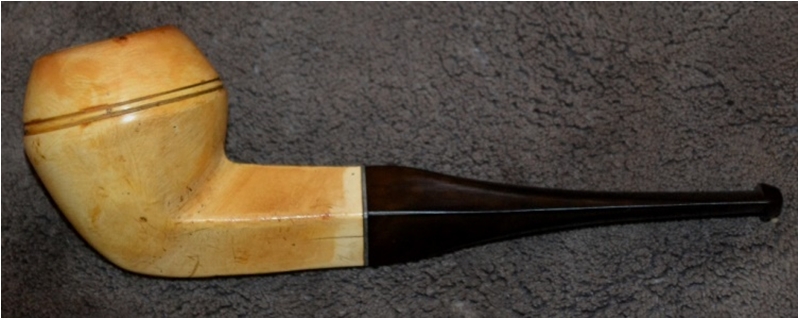
Here are the final results:Robert12 Robert13 Robert14 Robert15 Robert16 Robert17 Robert18CONCLUSION
This was a work of love, and I know the results are a little rough around the edges. But I was determined throughout the process to assure that no more damage than had already been perpetrated against this pipe be made. It is already up for sale, but if nobody ever buys it, I know it is safe in my possession.