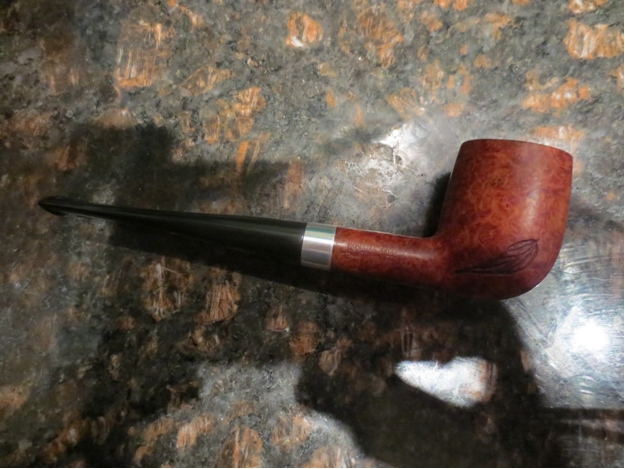
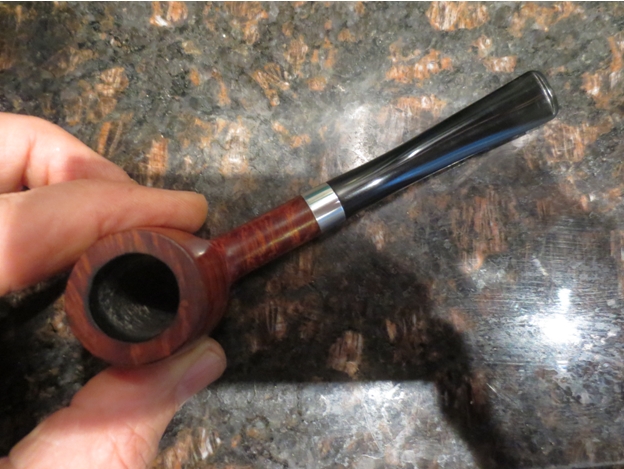
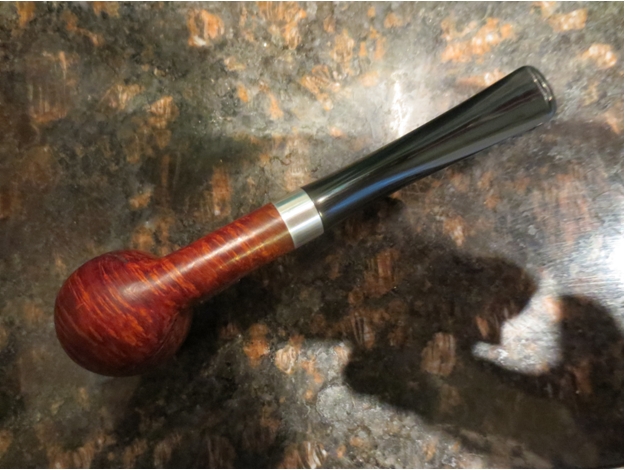
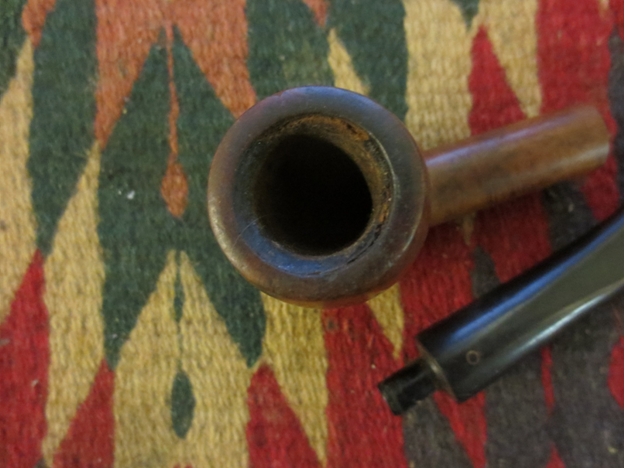
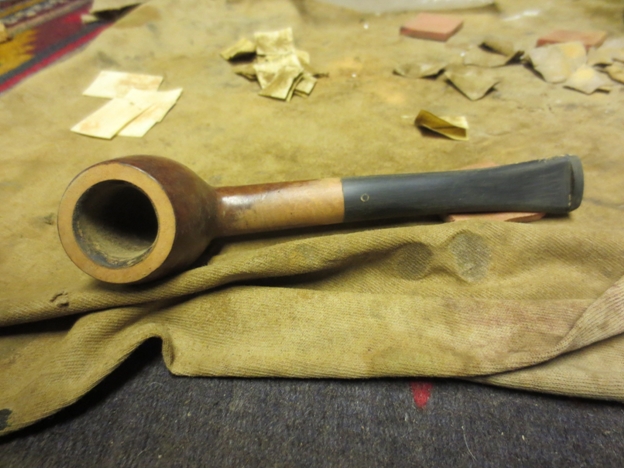
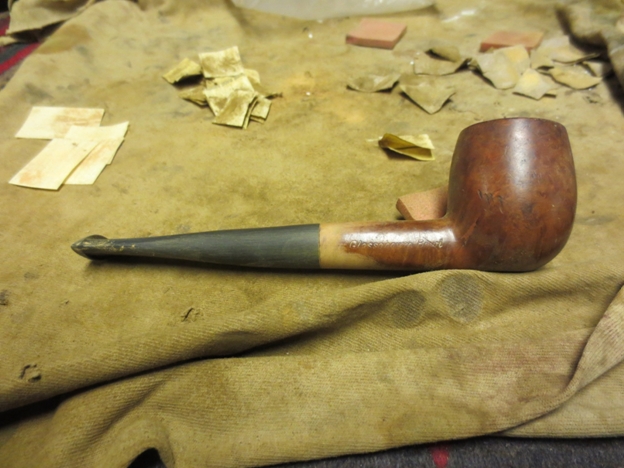
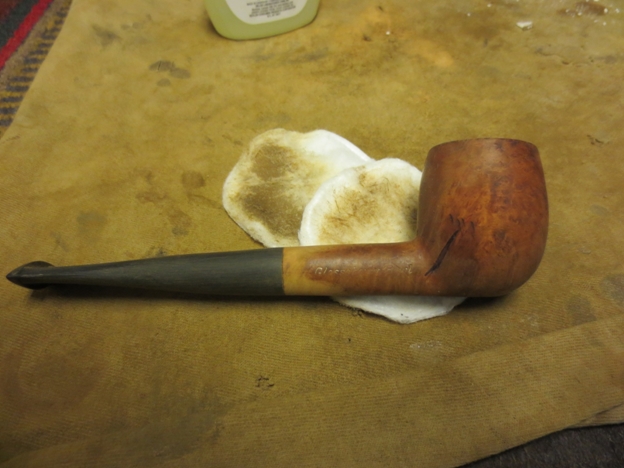
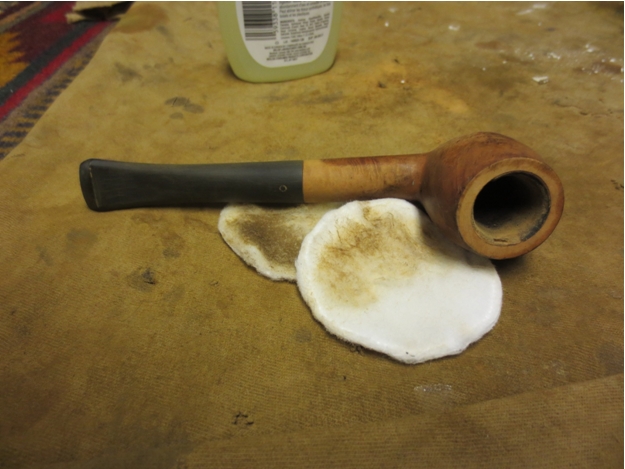
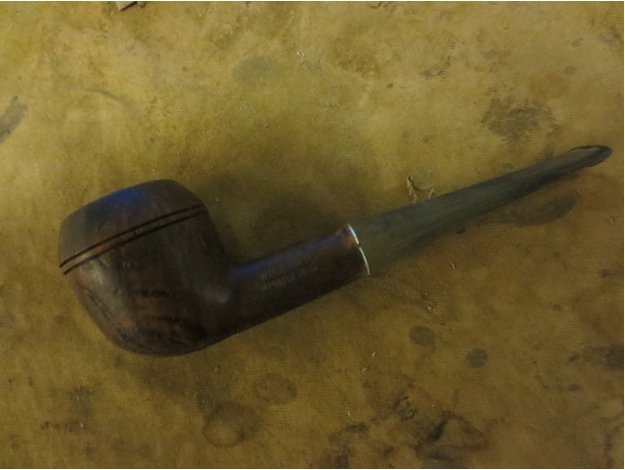
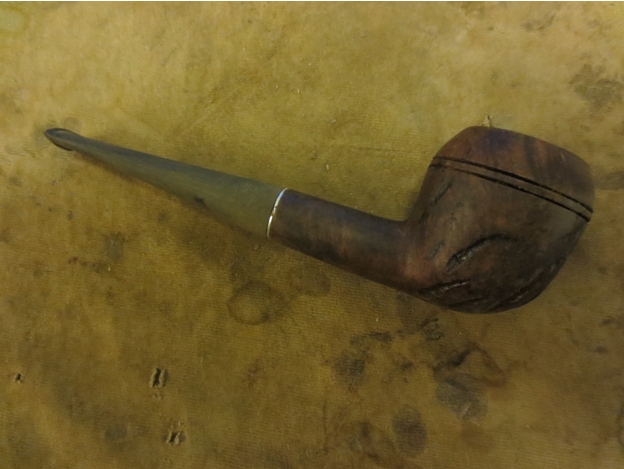
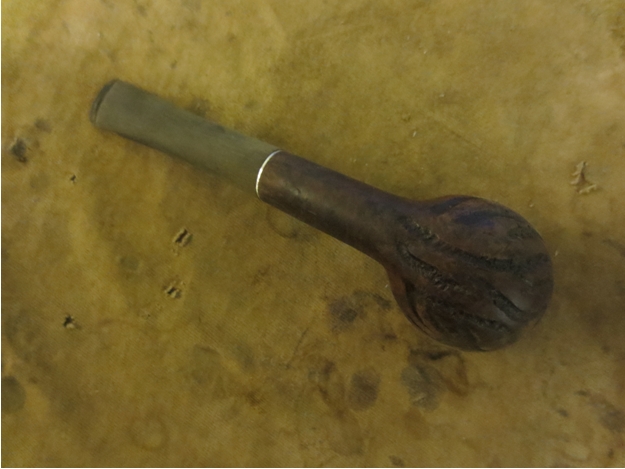
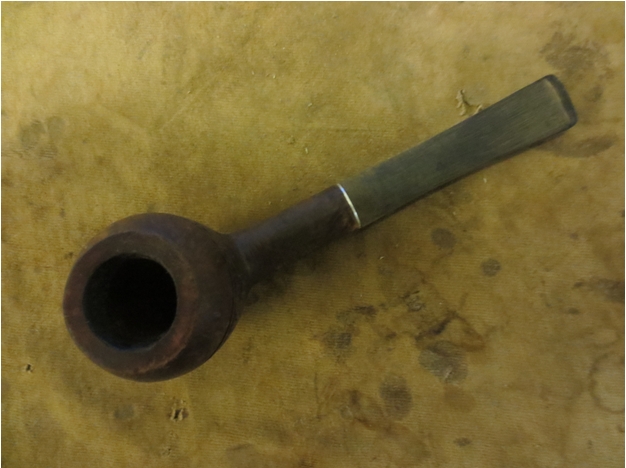
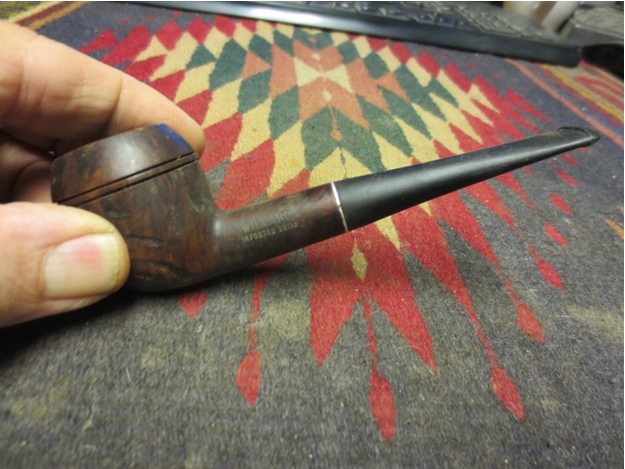
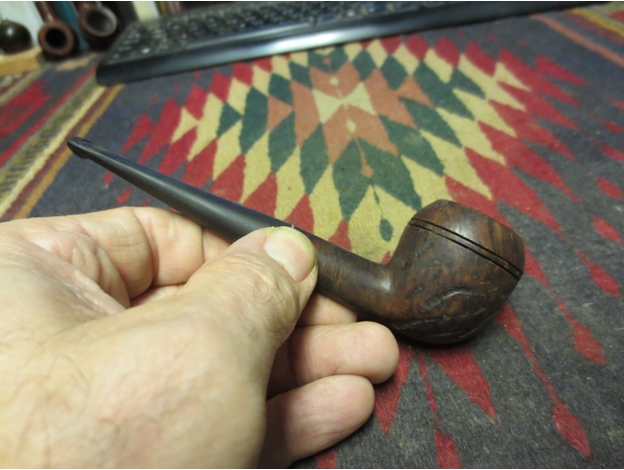
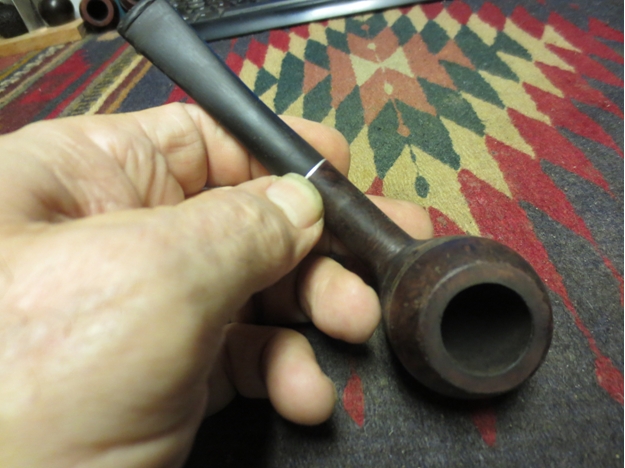
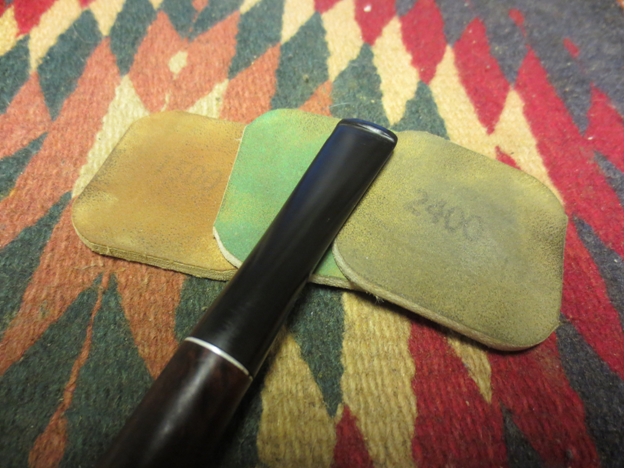
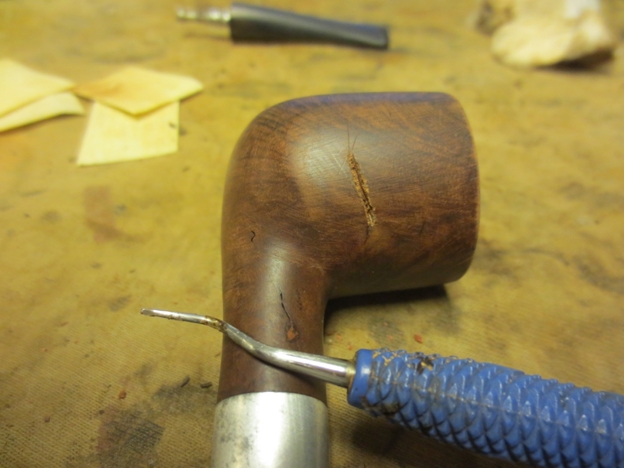
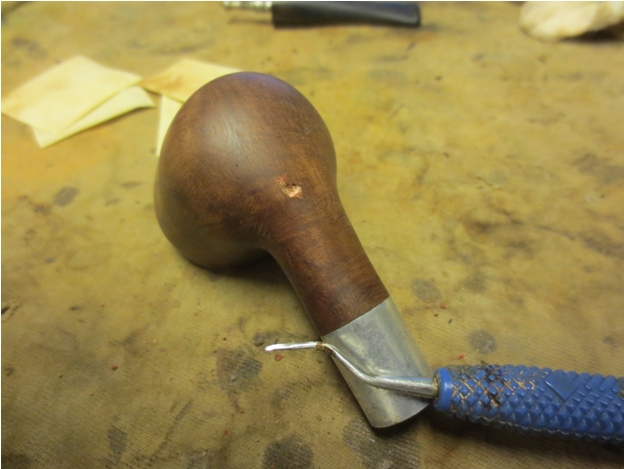
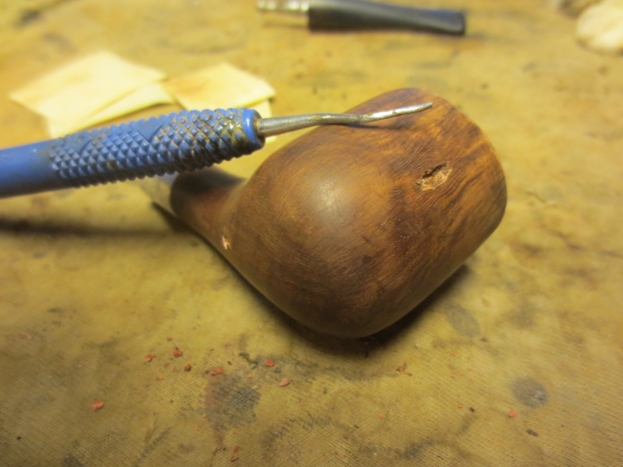
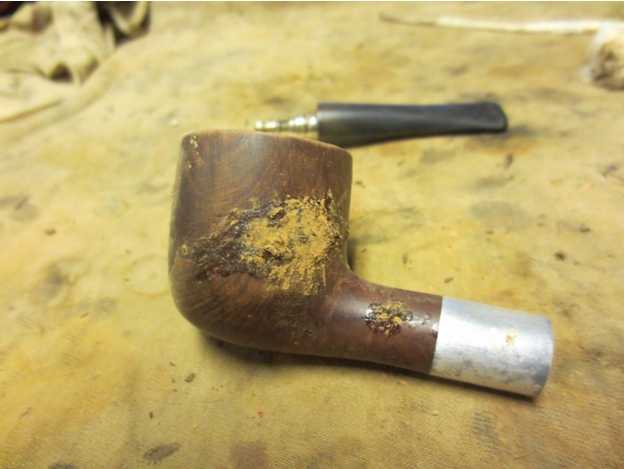
Tag Archives: Bowl – finishing

Restoring a Dunhill Shell Billiard 42121


Blog by Steve Laug

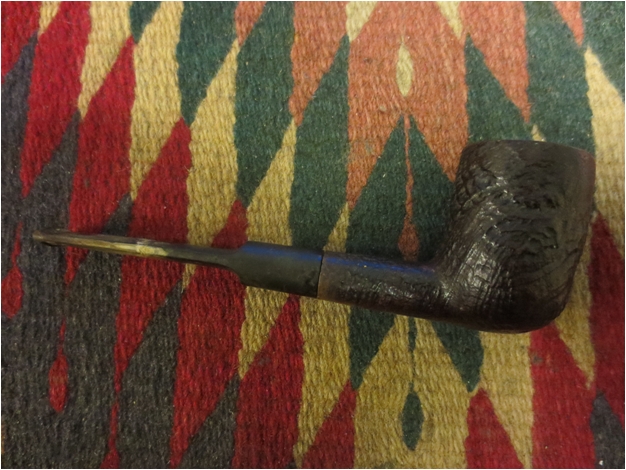
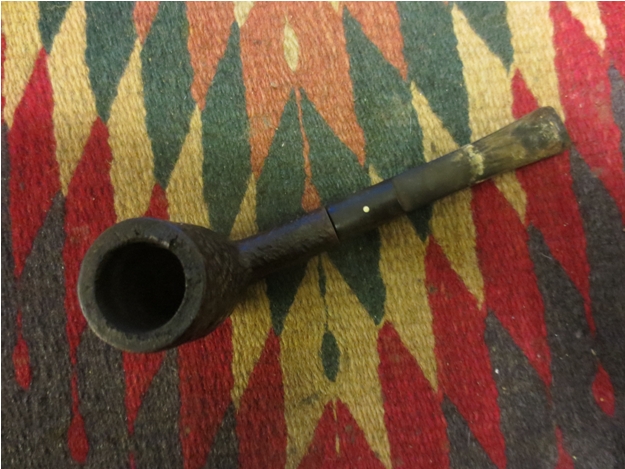
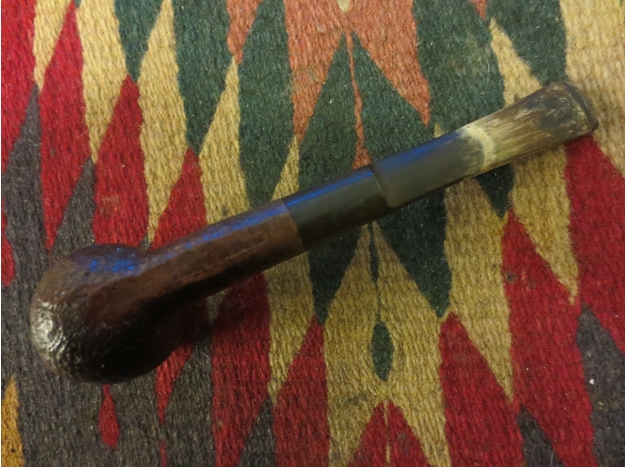
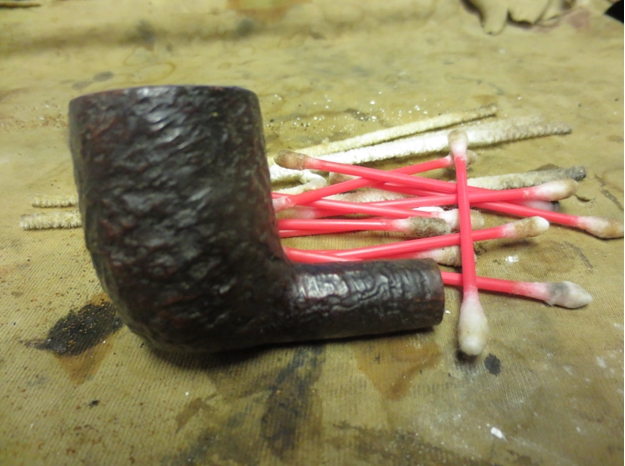
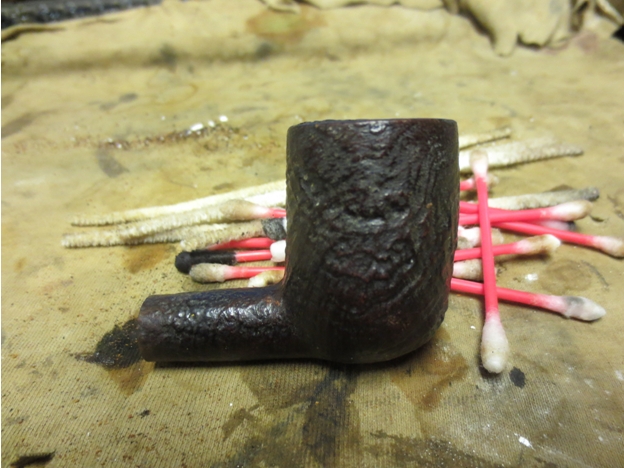
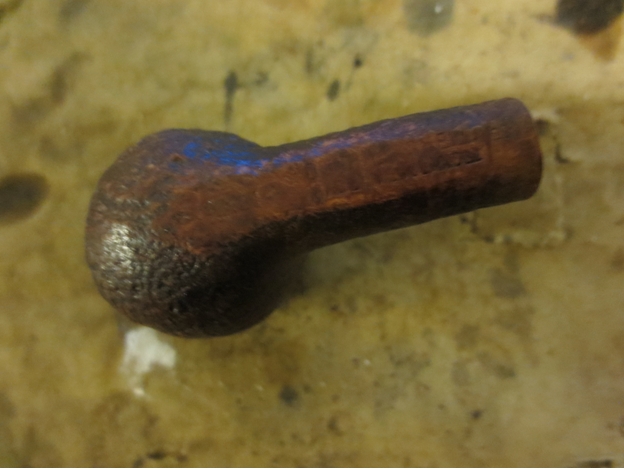
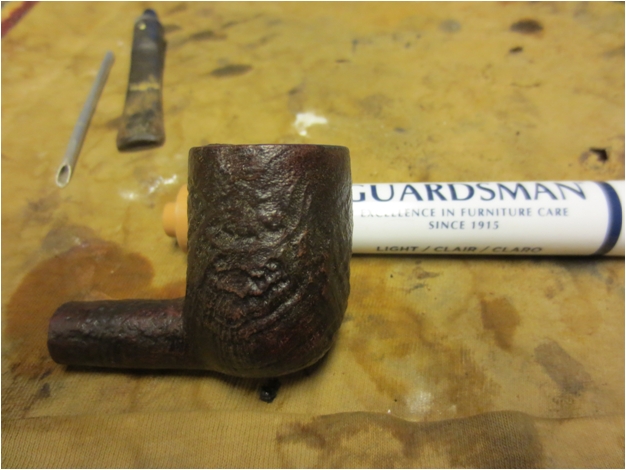
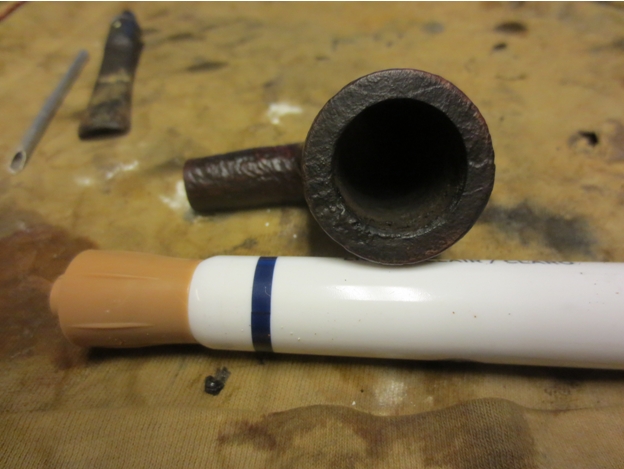
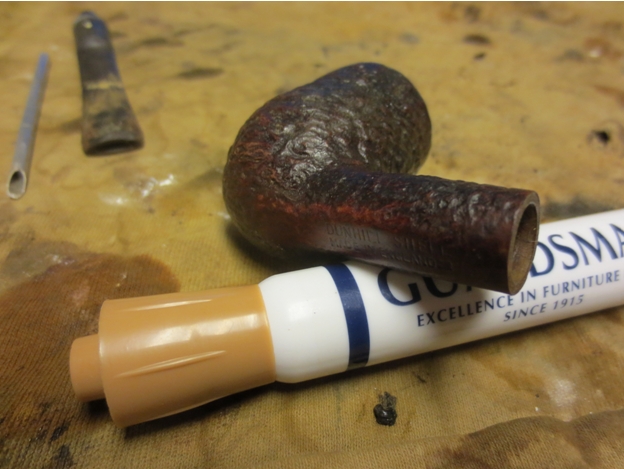
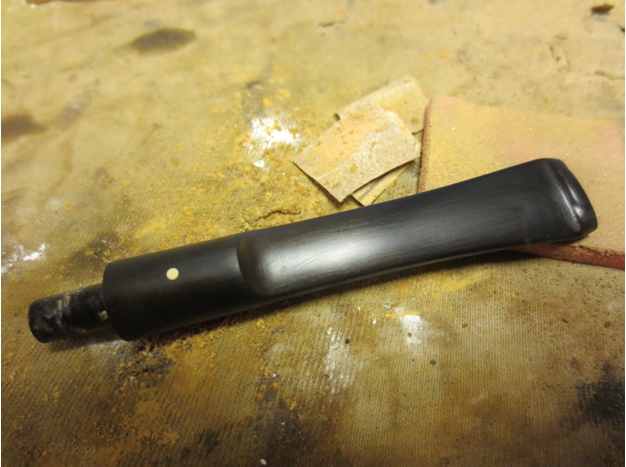
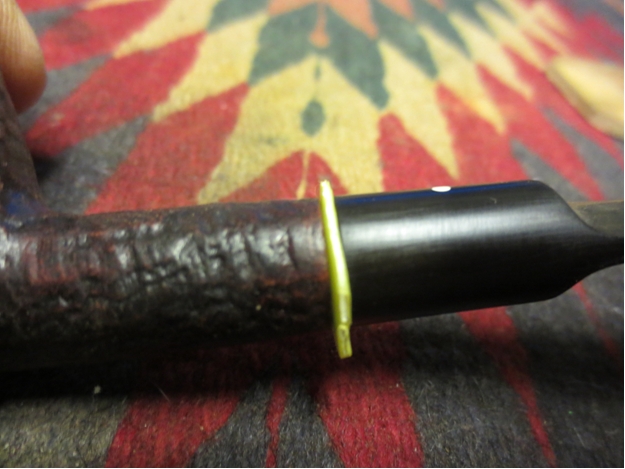
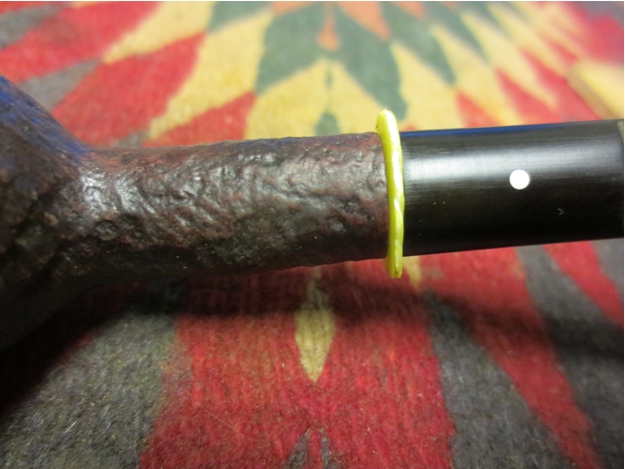
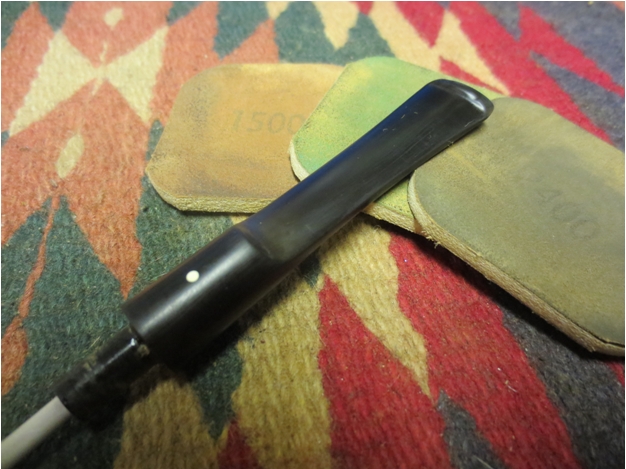
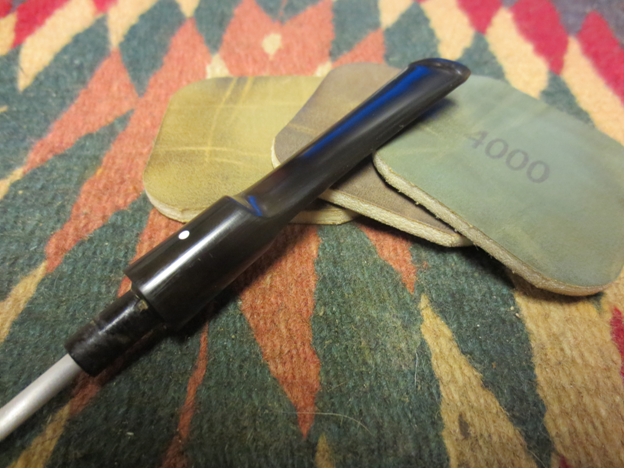
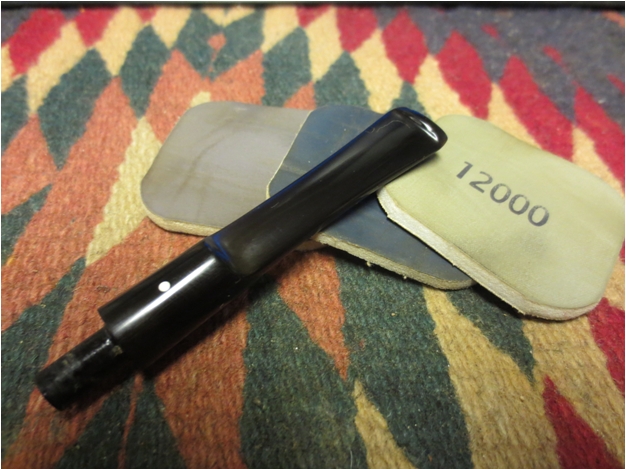
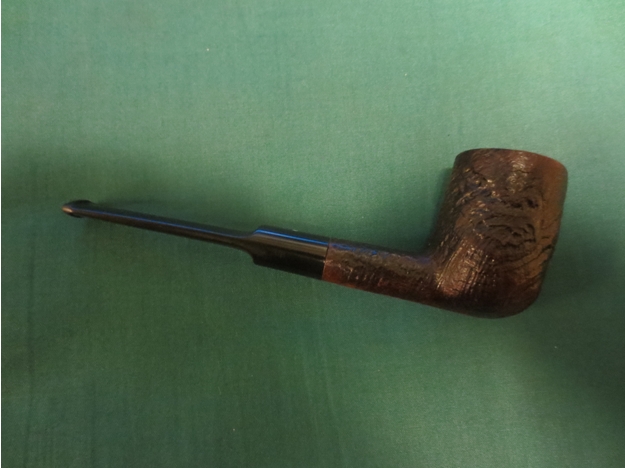
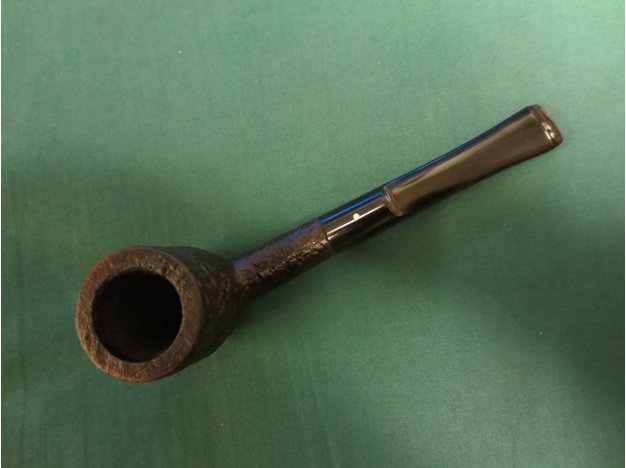
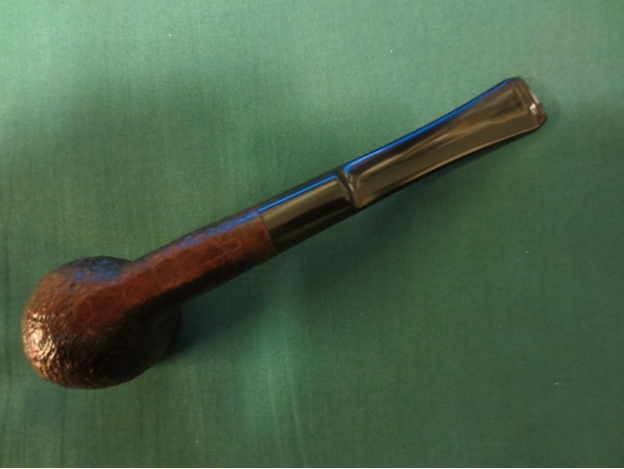
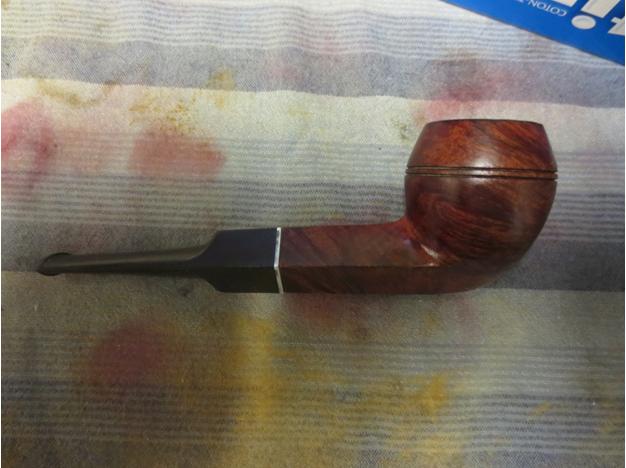
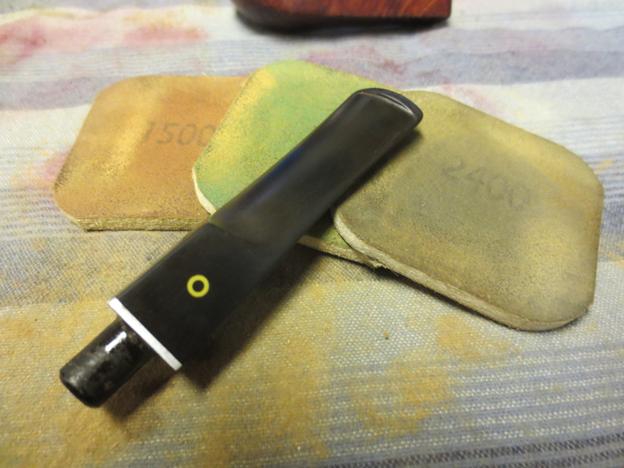
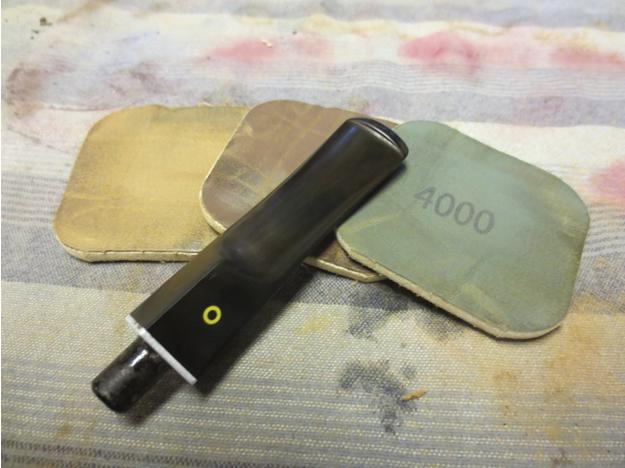
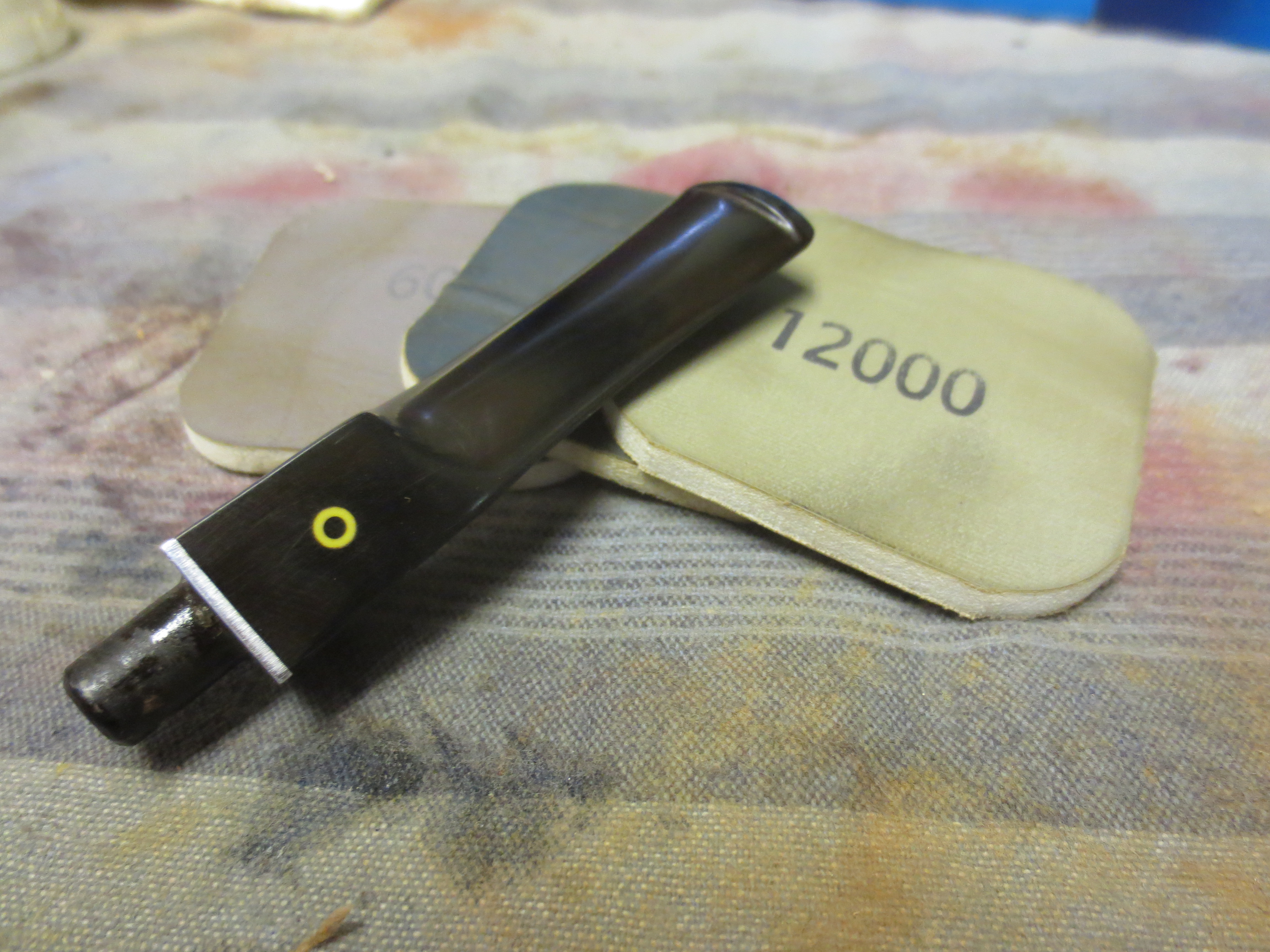
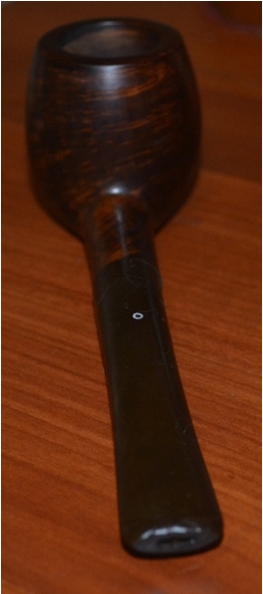
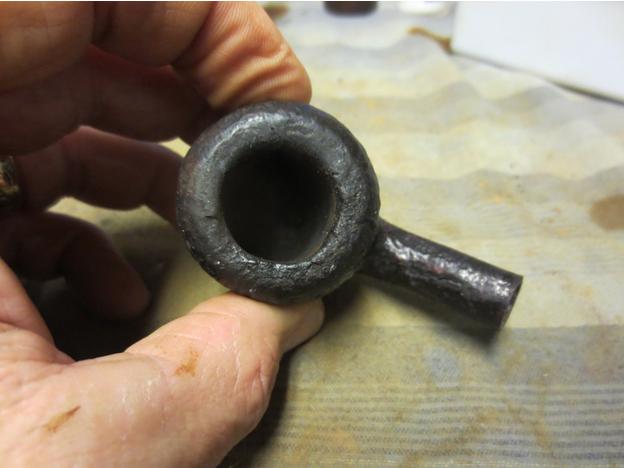
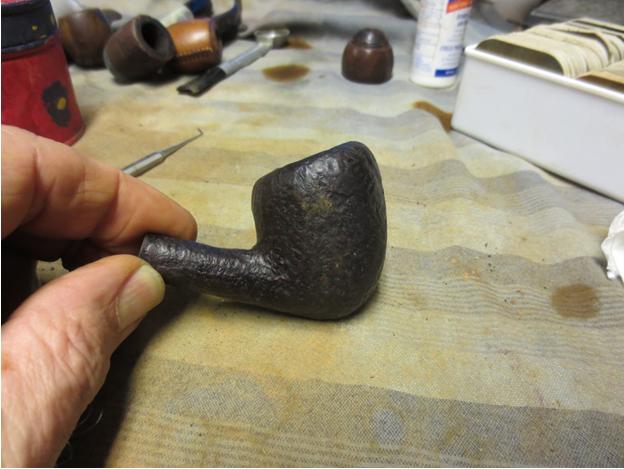
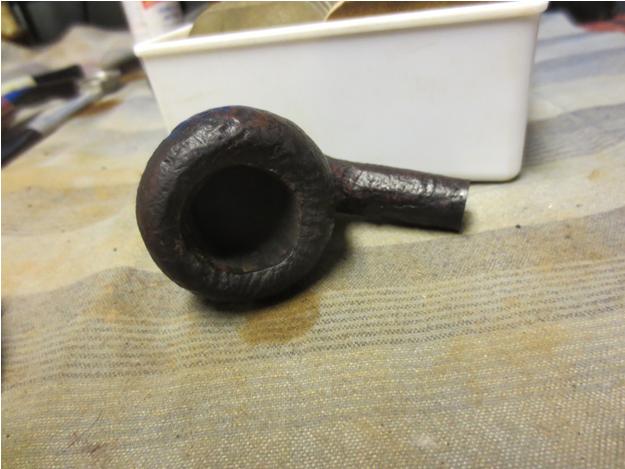
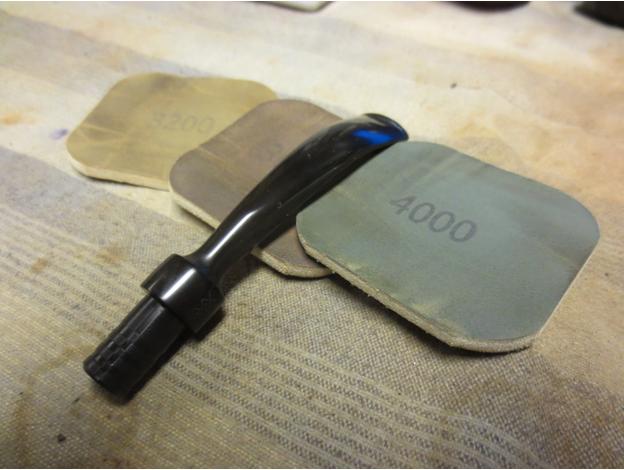
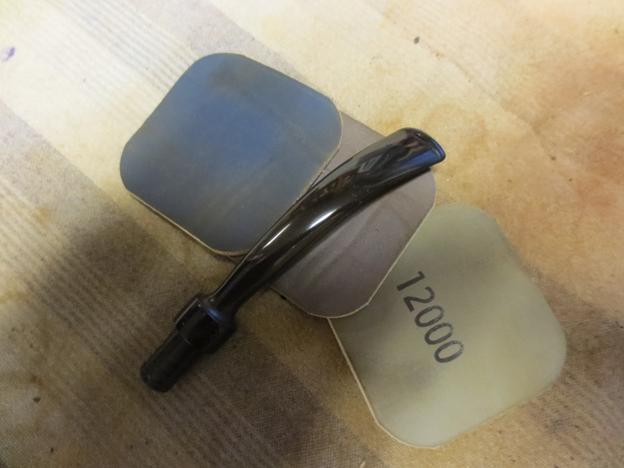
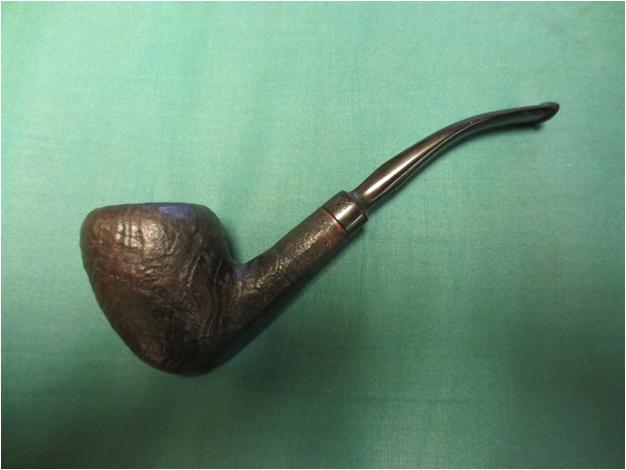
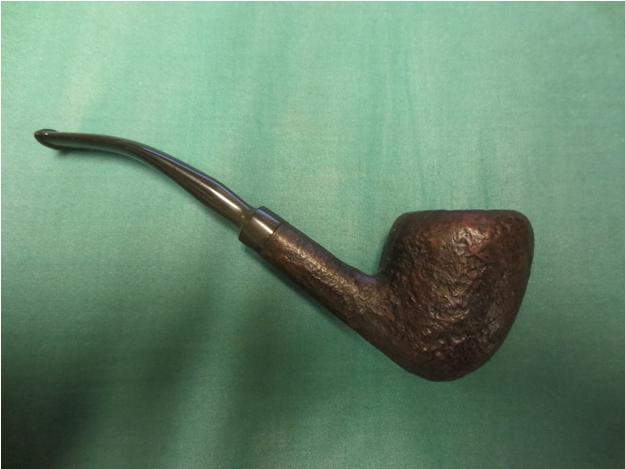
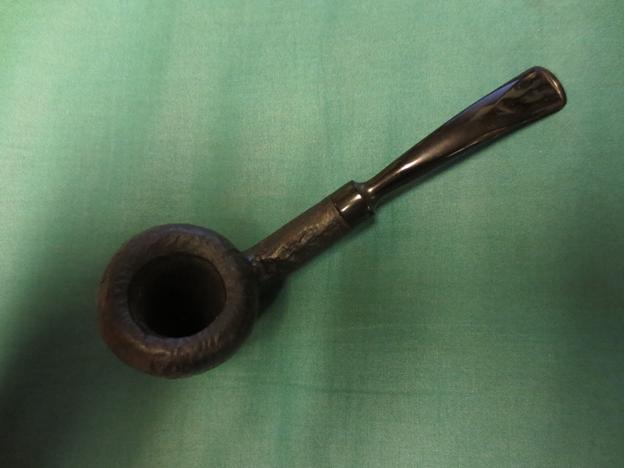
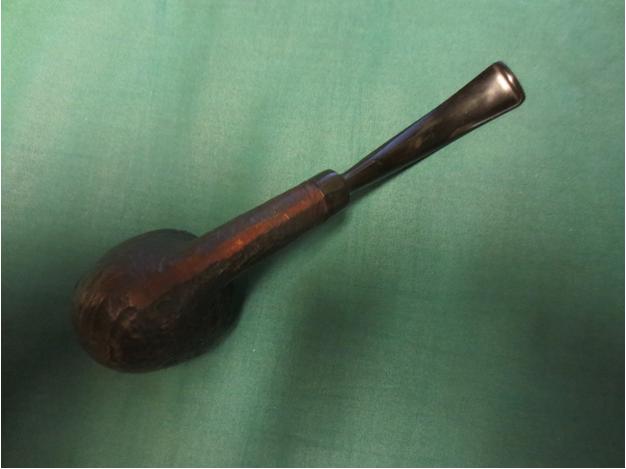
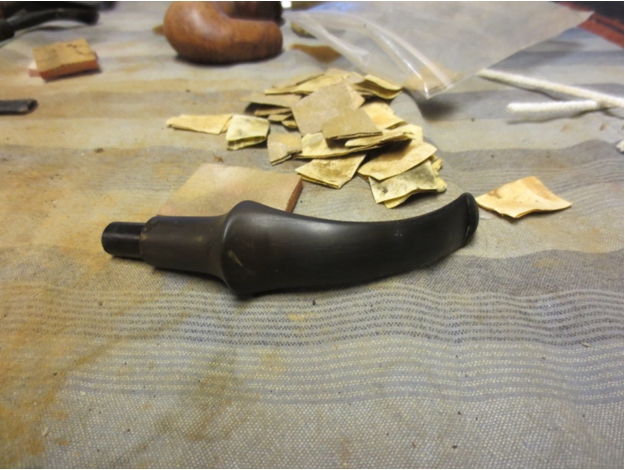
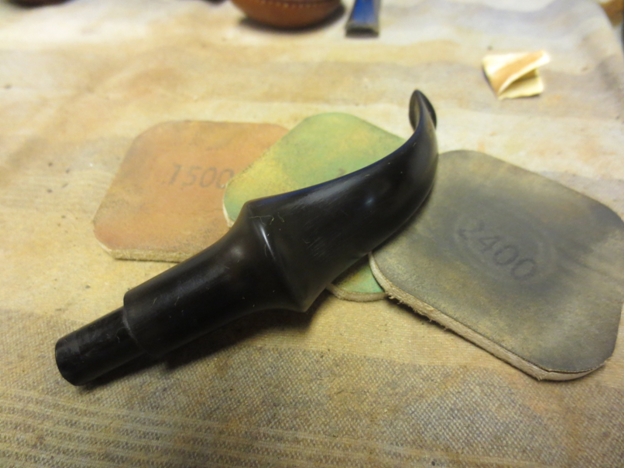
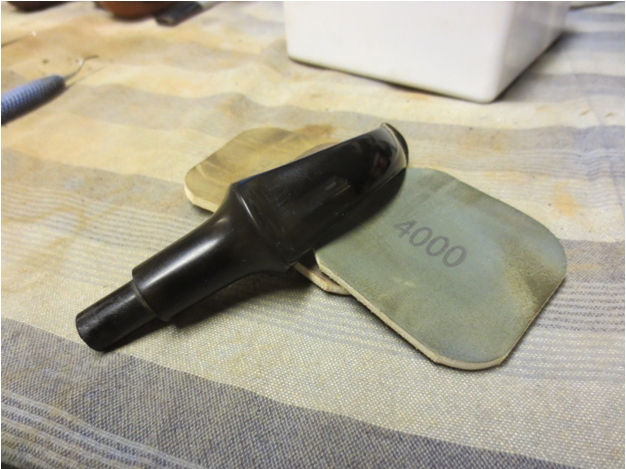
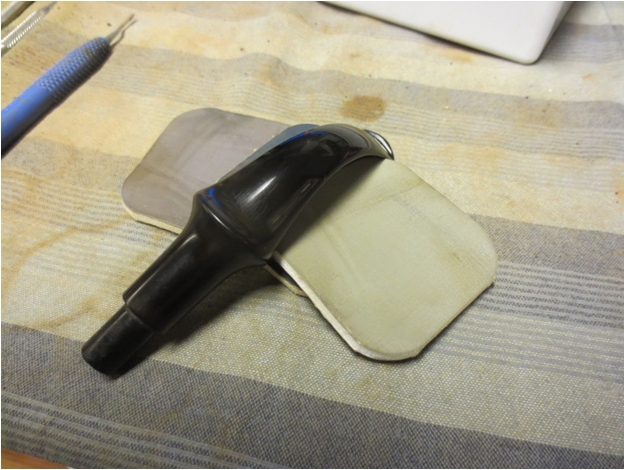
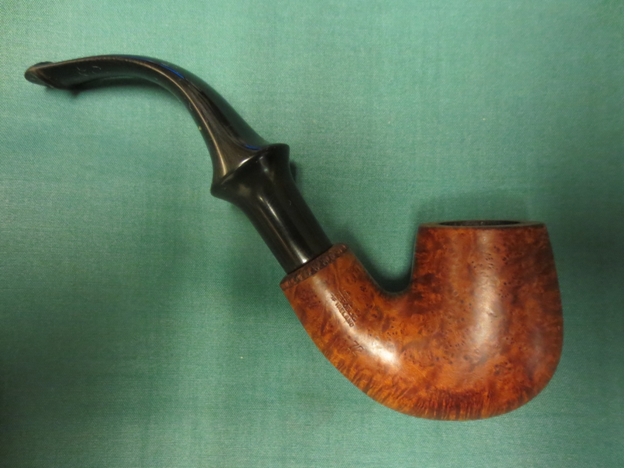
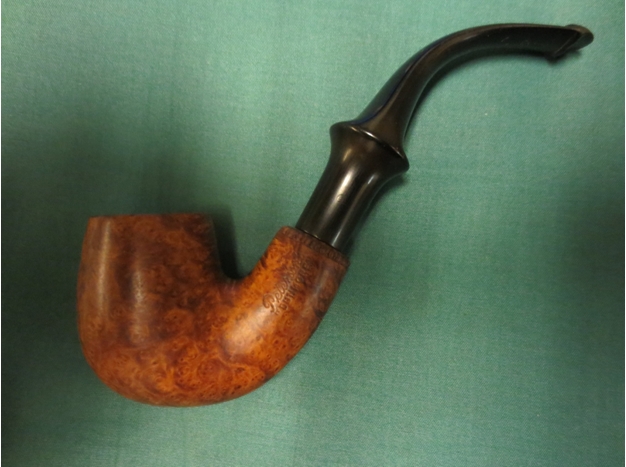
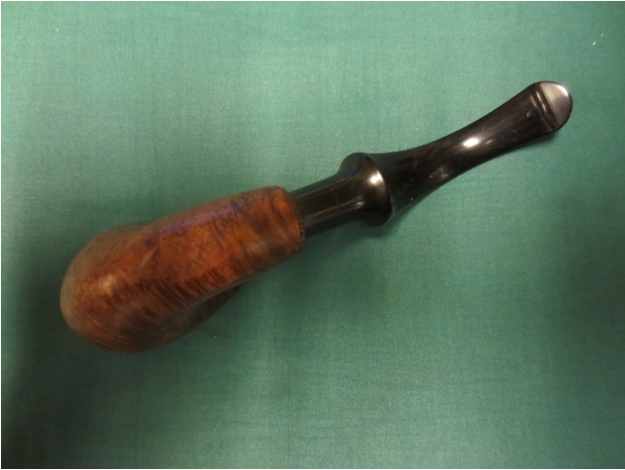
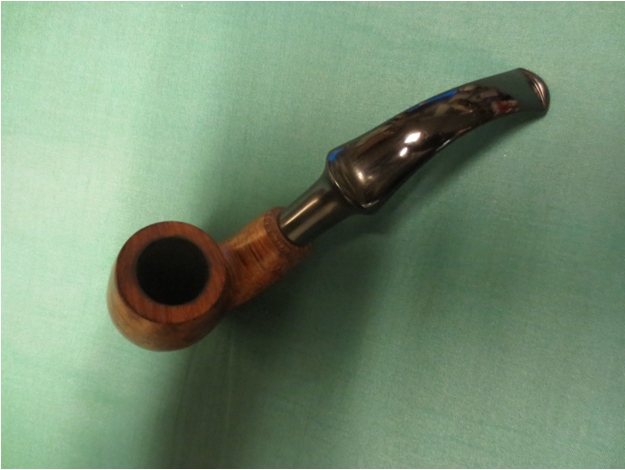
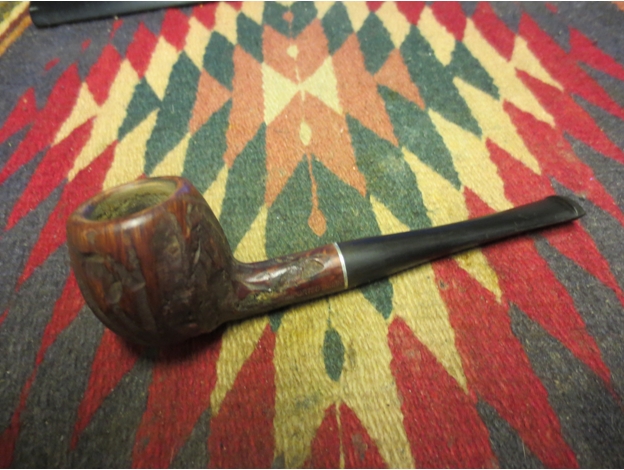
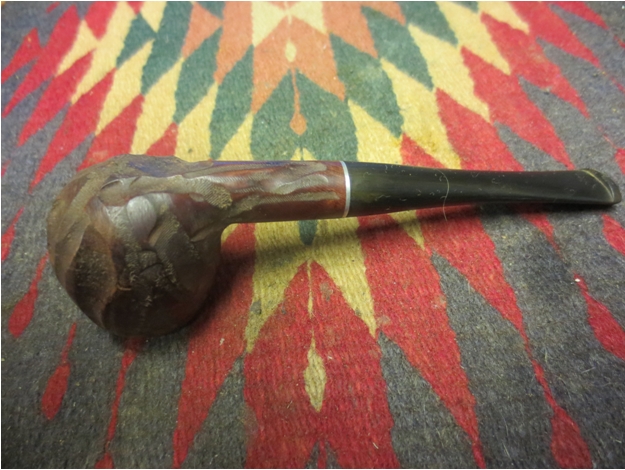
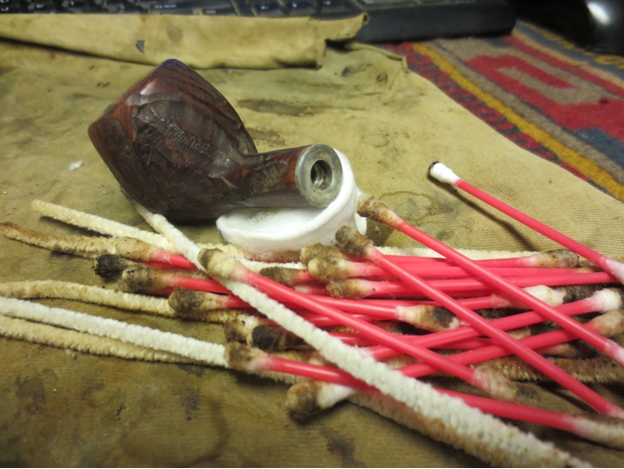
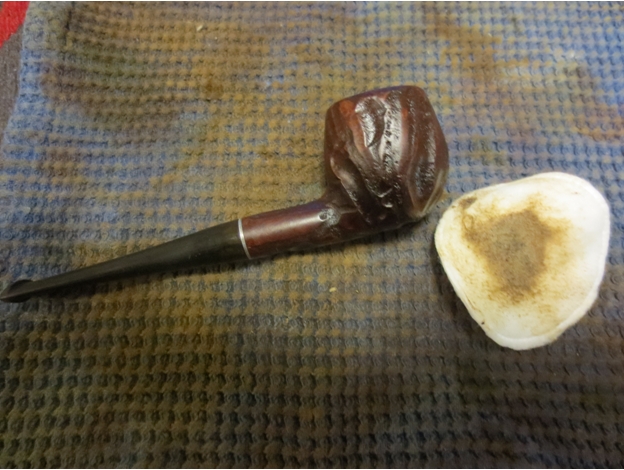
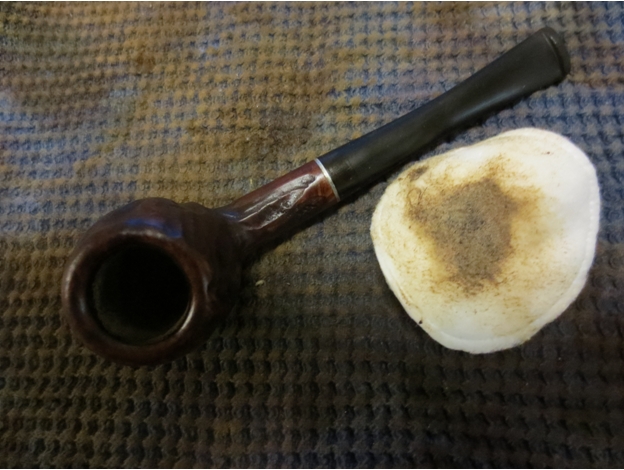
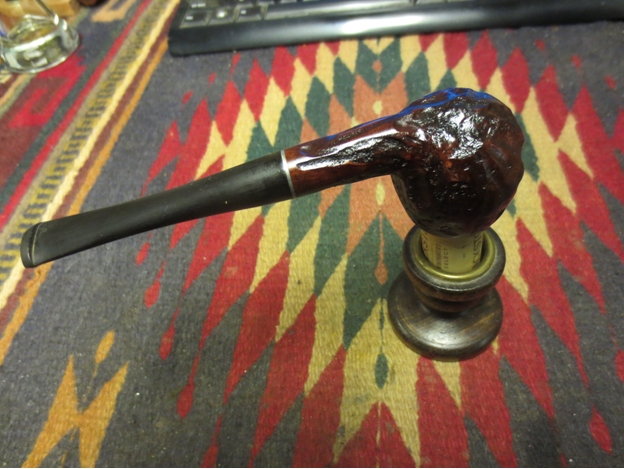
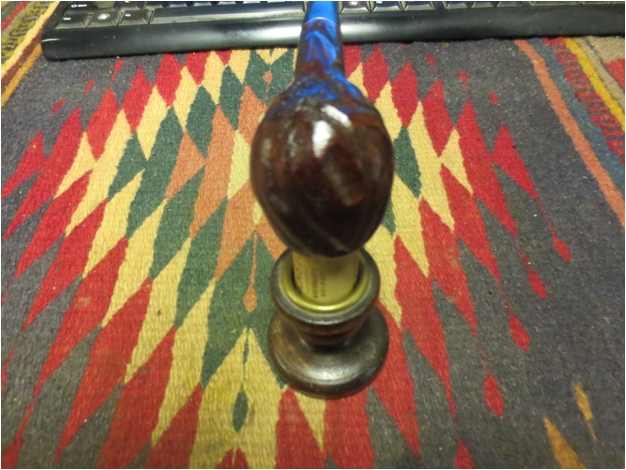
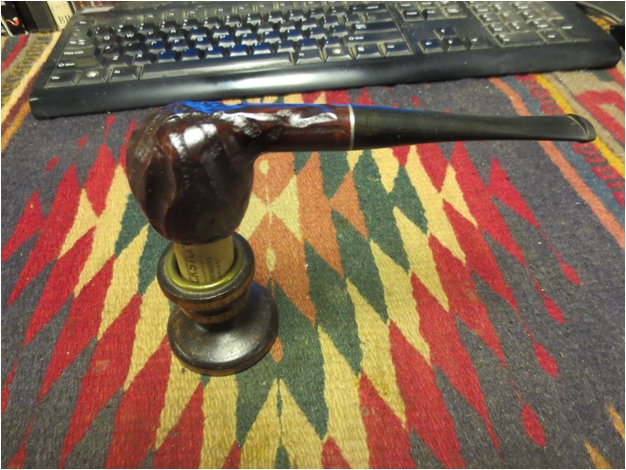
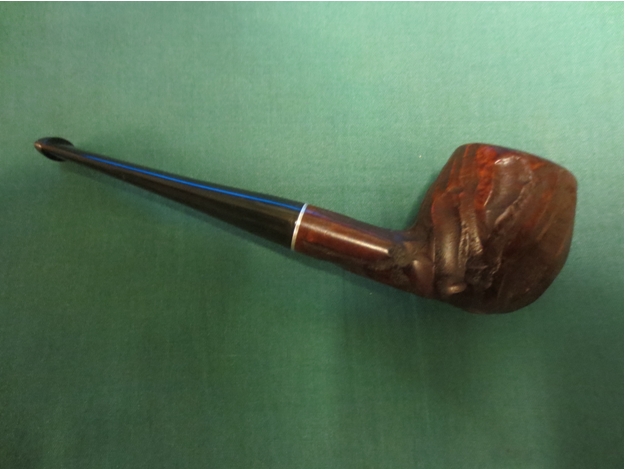
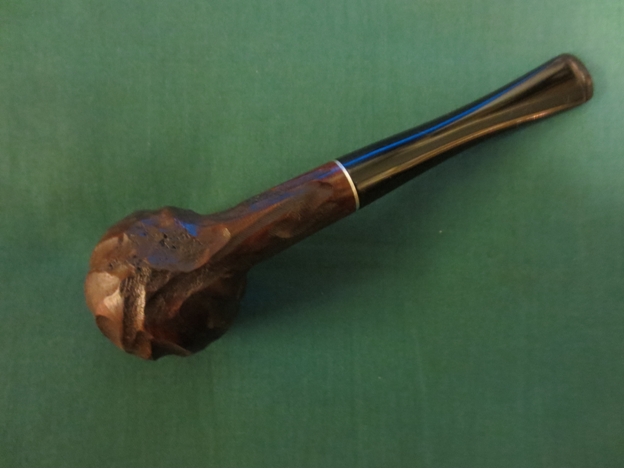
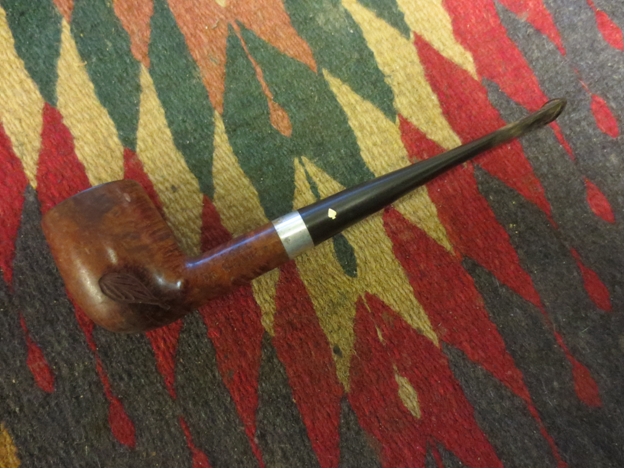
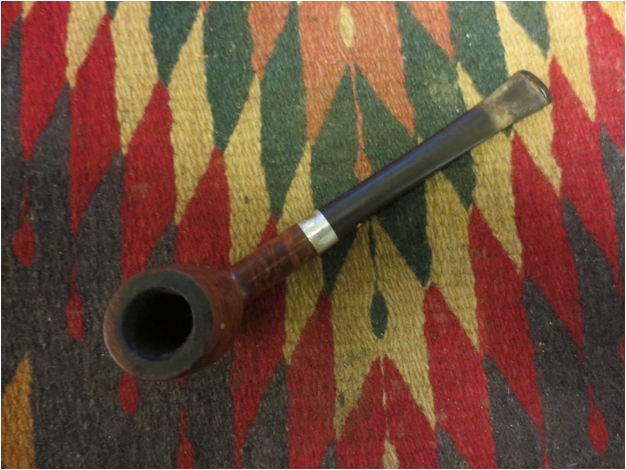
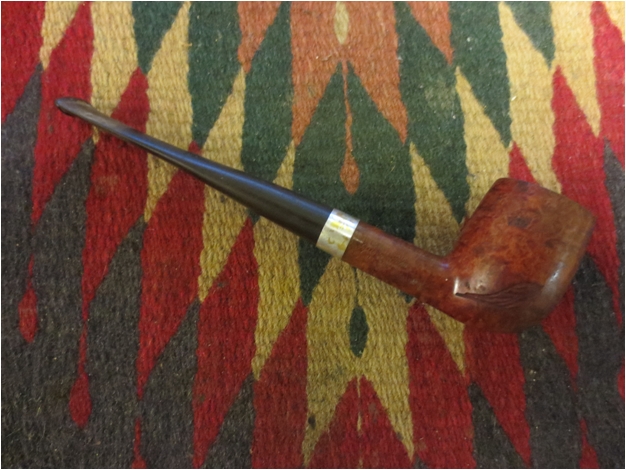
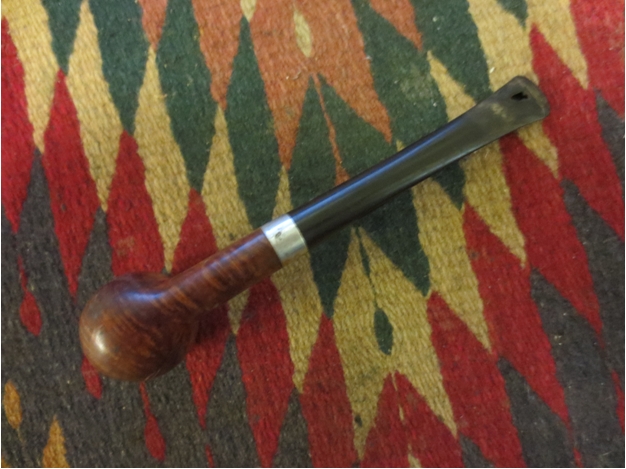
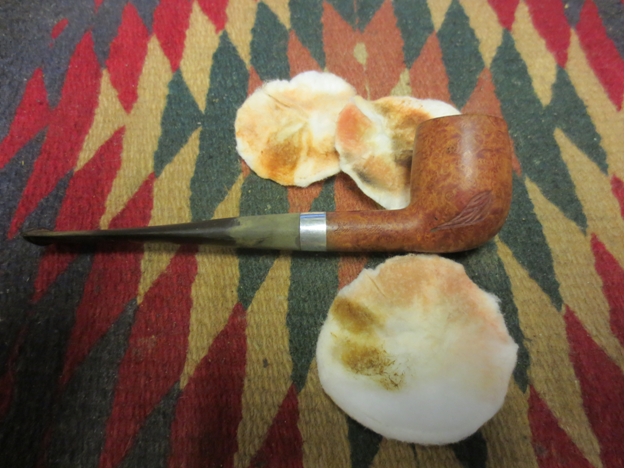
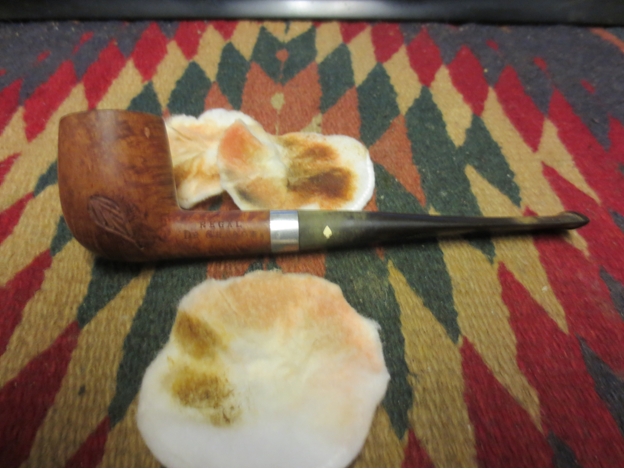
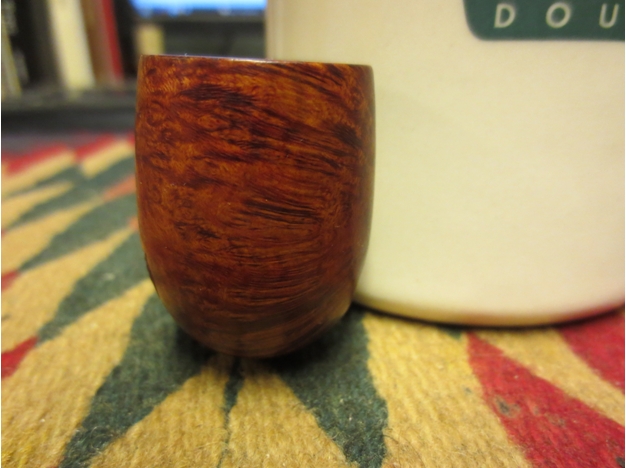
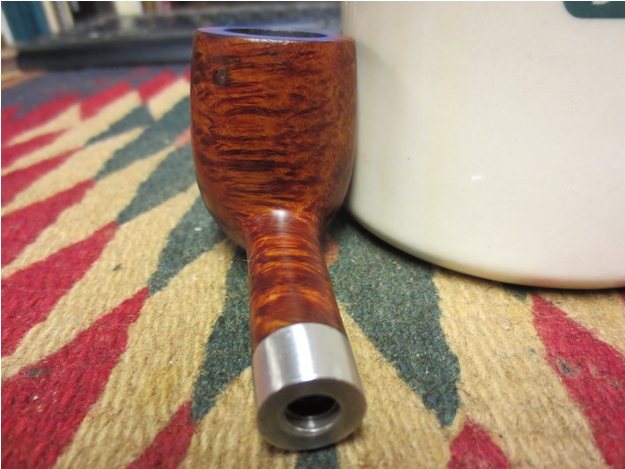
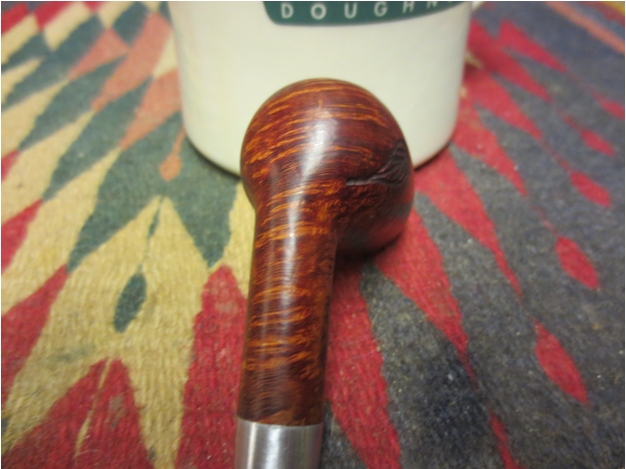
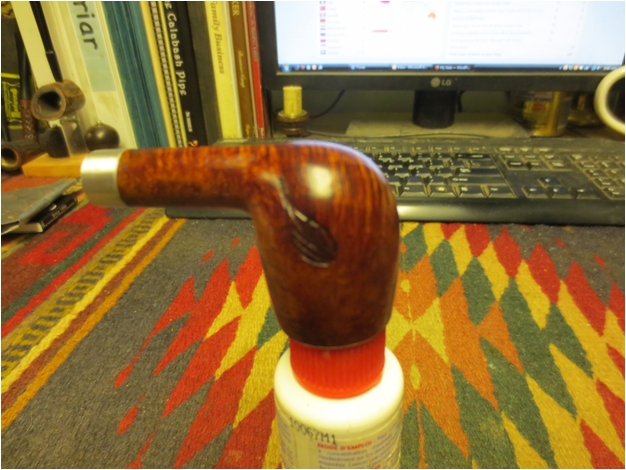
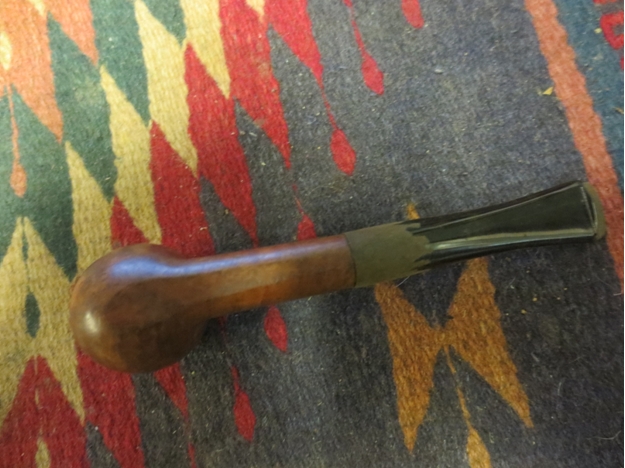
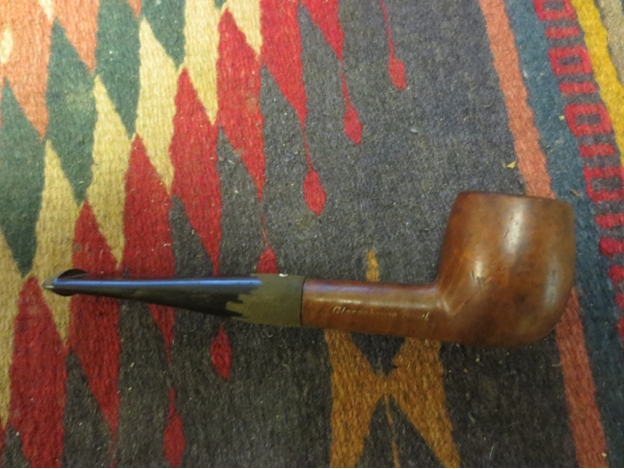
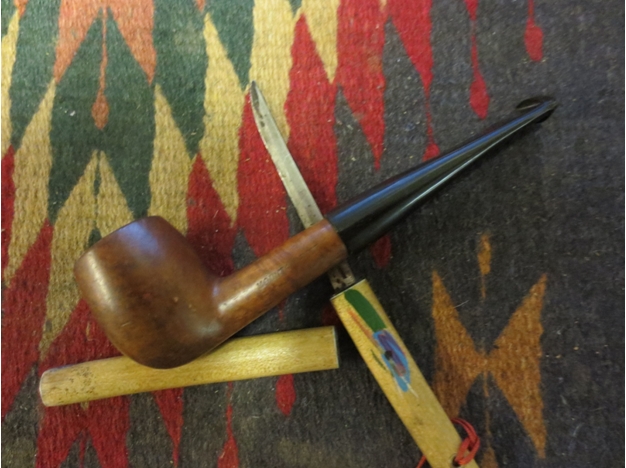
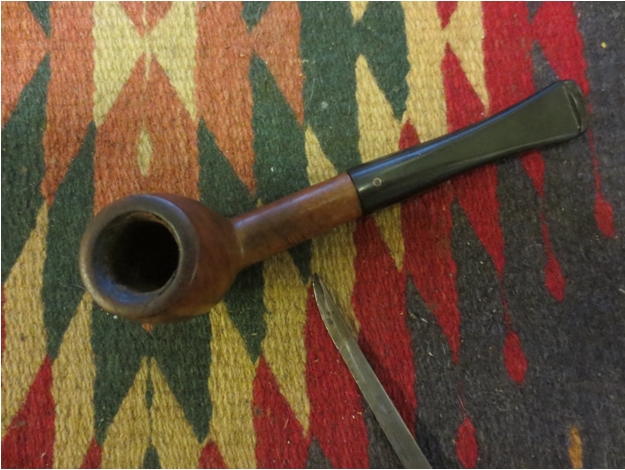
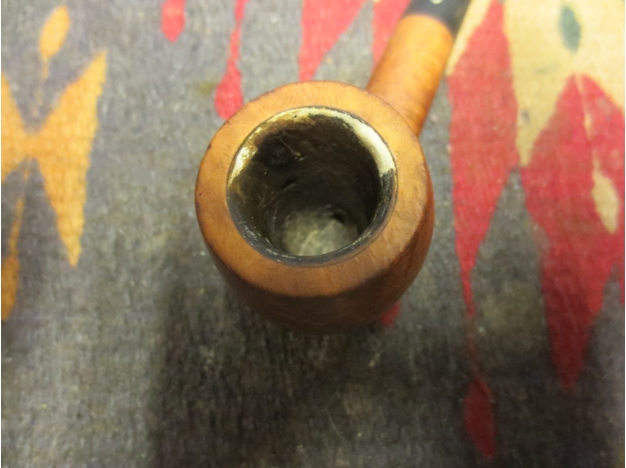
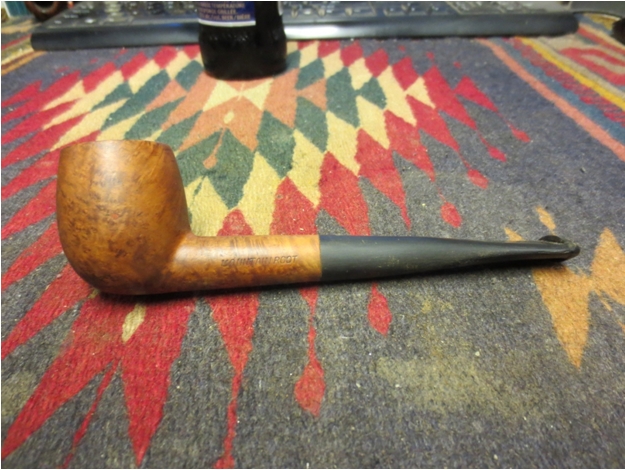
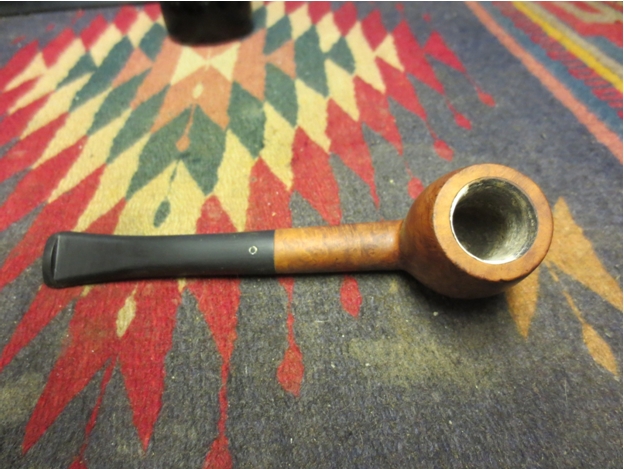
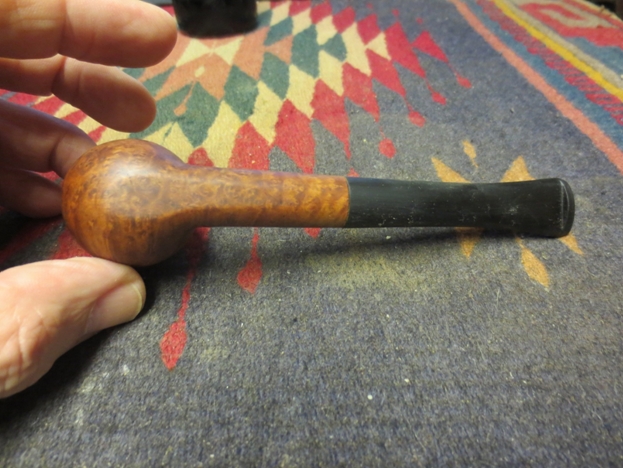
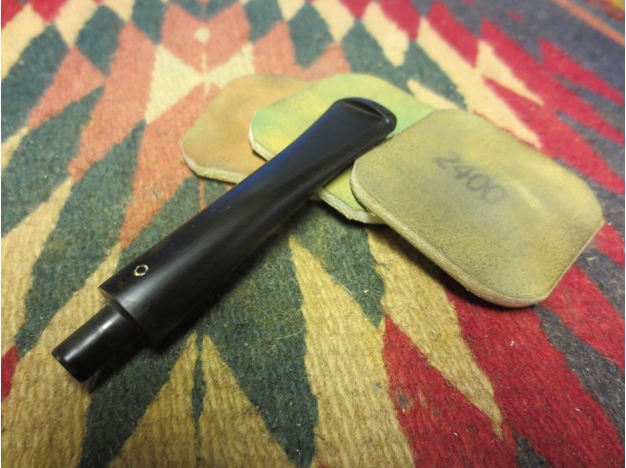
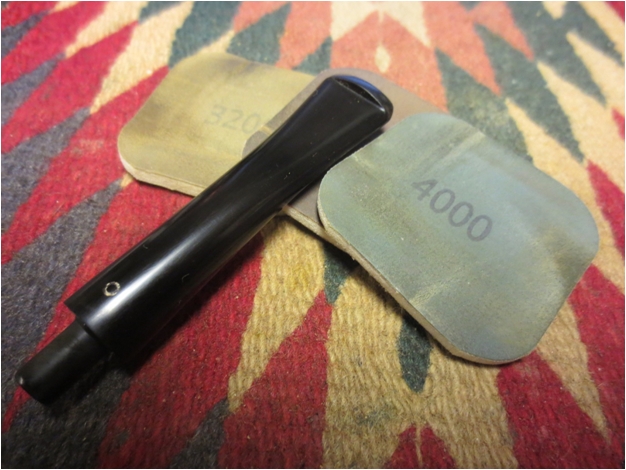
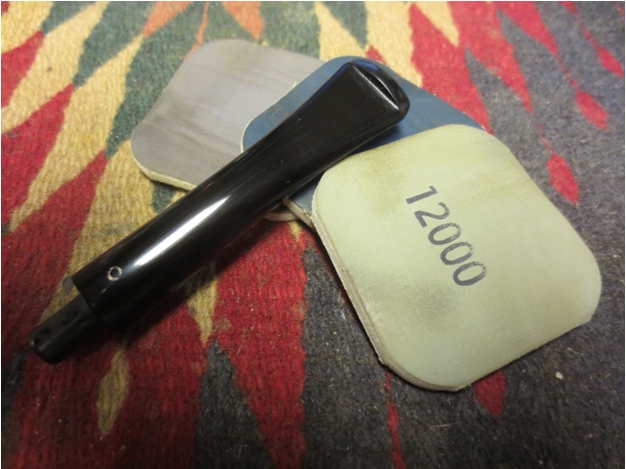
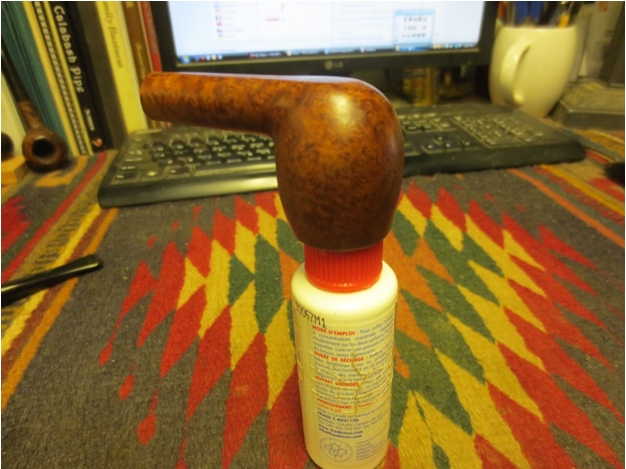
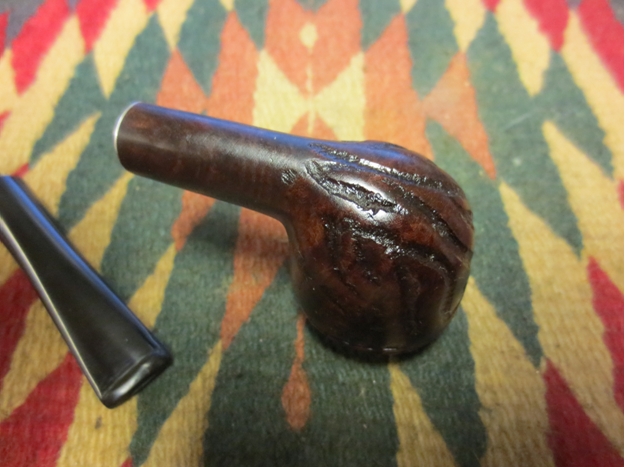
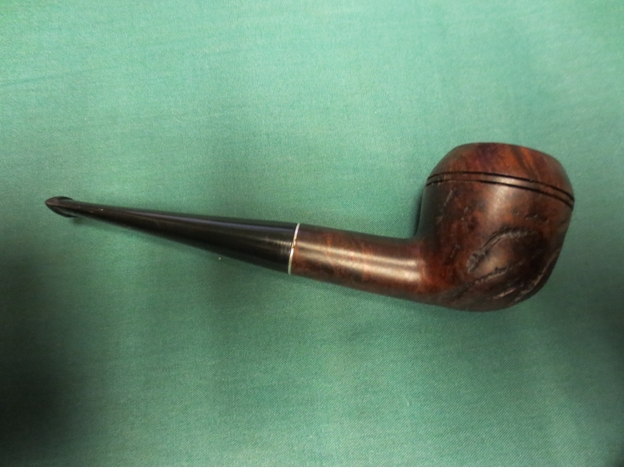
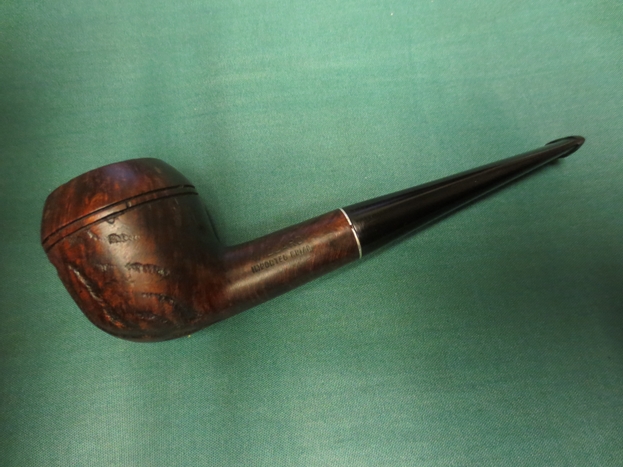
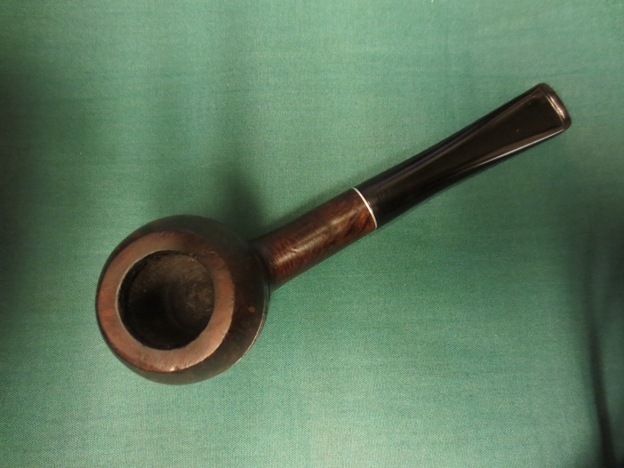
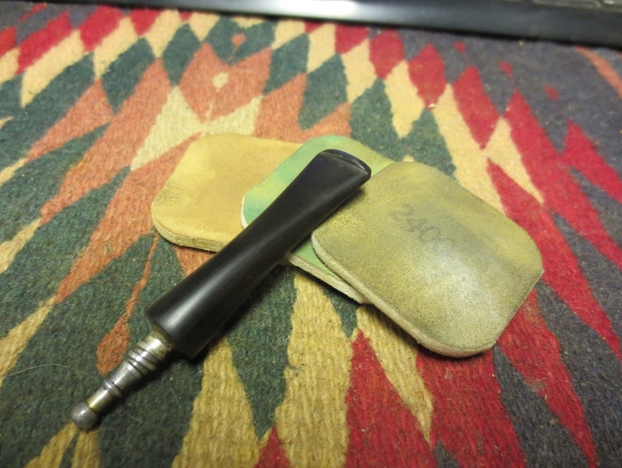
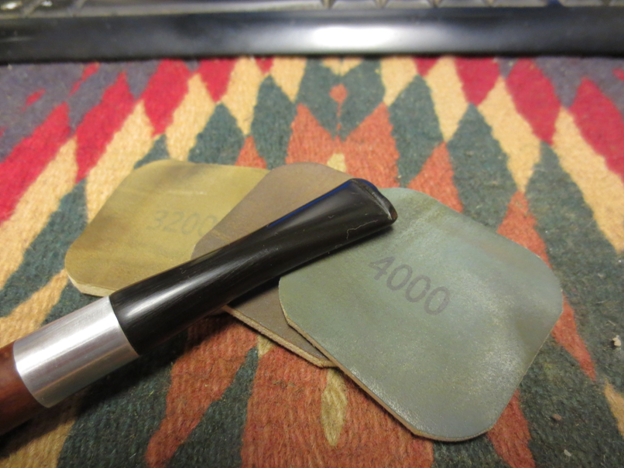
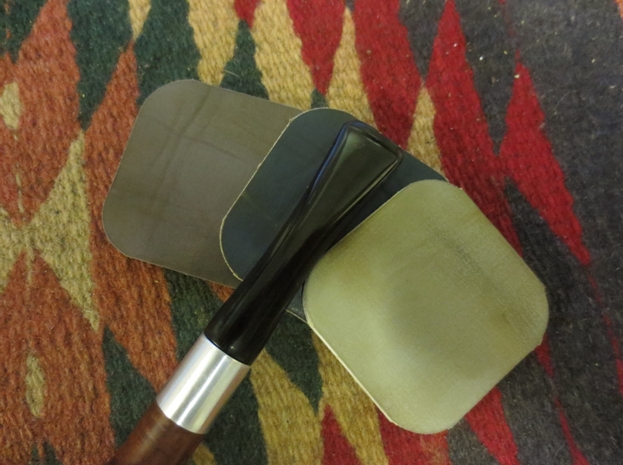
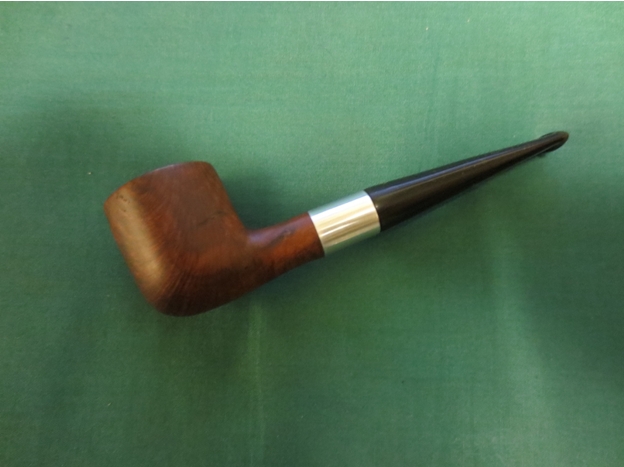
Of all my finds on my recent pipe hunt this little Group 4 Dunhill Shell is one of the favourites. It has a great sandblast that really had some nice craggy grain. The finish was in good shape. The rim was dirty and had a slight build up of oils and tars. The bowl was caked with a thick cake. The stem was oxidized and also had a calcium buildup for the first inch of the stem. The stem had an inner tube inside that was slightly bent that kept the stem from seating correctly in the shank. There were several shallow bite marks on the top and bottom sides of the stem near the button. Internally the stem and shank were surprisingly clean.IMG_2201 IMG_2202 IMG_2203It is stamped on the underside of the shank with 42121 Dunhill Shell over Made In England and next to the D of England was an underlined and superscript 20 next to that was an underlined 23. Using John Loring’s Dunhill Briar Pipe book the dating is 1980 as seen by the underlined 20 slightly elevated and following the D. The underlined 23 indicate that it was sold in 1983, due to the one year guarantee.IMG_2204The next photo shows the buildup on the rim that needed to be dealt with in a cleanup and restoration of the pipe.IMG_2205I cleaned out the shank and the stem with pipe cleaners, cotton swabs and 99% isopropyl alcohol until the cotton swabs and pipe cleaners came out clean.IMG_2206 IMG_2207I scrubbed down the bowl with undiluted Murphy’s Oil Soap on cotton pads and then rinsed it off with running water. I dried it with a cotton towel.IMG_2208IMG_2209IMG_2210IMG_2211IMG_2212I scrubbed the rim with a soft bristle brass tire brush to clean off the tars and oils and open up the sandblast on the rim. I scrubbed it with a soft cotton pad and alcohol to remove the pieces left behind by the wire brush.IMG_2213I touched up the finish around the edges of the bowl rim and the end of the shank. I also touched up spots on the sides of the bowl and the bottom of the shank. I used the Guardsman Stain pens that Greg sent me to do the touch up work. I chose to use the lightest stain pen as it matched the colour of the bowl precisely. When I use these pens I always start with the lightest stain and work toward the darkest until I get a match.IMG_2214 IMG_2215 IMG_2216 IMG_2217I sanded the stem with 220 grit sandpaper and then with medium and fine grit sanding sponges to remove the oxidation and the calcium deposits. I “painted” the tooth marks with the flame of a Bic lighter to lift them closer to the surface and then sanded what remained with 220 grit sandpaper and the sanding sponges.IMG_2218Taking a cue from Al Jones I made a plastic washer to put between the shank and the stem to make the sanding of the saddle simpler. I could sand right up to the edge without damaging the end of the stem and rounding the edges.IMG_2219 IMG_2220 IMG_2221I sanded the stem with my usual array of micromesh sanding pads – wet sanding with 1500-2400 grit pads and dry sanding with 3200-12,000 grit pads. Between each set of three pads I rubbed down the stem with Obsidian Oil before moving on to the next set of three. When I had finished with the 12,000 grit pad I took the pipe to the buffer and buffed the stem with White Diamond.IMG_2222 IMG_2223 IMG_2224I lightly buffed the bowl and the stem once again with the White Diamond and then used Halcyon II wax on the bowl and carnauba on the stem. I hand buffed the pipe with a shoe brush and raised the shine. The finished pipe is shown below. I am looking forward to loading an aged bowl of McClellands 5100 and having the inaugural smoke in this beauty.IMG_2225IMG_2226IMG_2227IMG_2228

Restoring a Yello-Bole Imperial Bulldog for John


Blog by Steve Laug

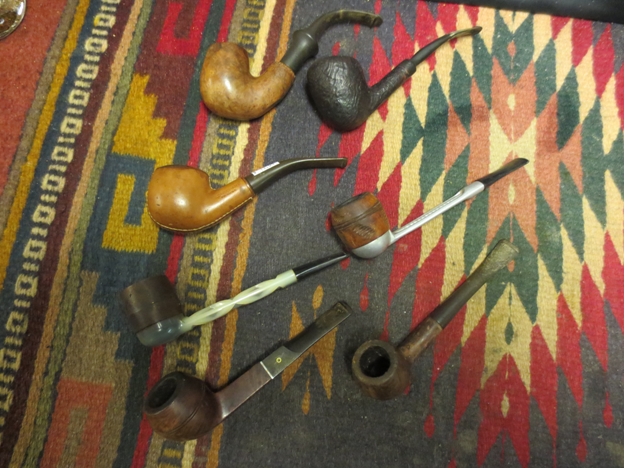
The last of John’s pipes that I worked on while he was working on the Danish Sovereign Peewit was a beautiful old Yello-Bole Bulldog. It was stamped KBB in a cloverleaf on the left side of the shank next to four lines of stamping. The first read Yello-Bole and underneath that was stamped Cured with Real Honey and an R in a circle. The third line read Imperial in script and the fourth read Imported Briar. The stem had a push tenon and had the yellow circle inset in the vulcanite. It is shown in the photo below – it is the last pipe in the column on the left side of the photo.IMG_2050 This pipe actually was one of the free ones that came with the pipe rack that John purchased. It was sitting on the rack without a stem. The stem was inside the humidor jar. I had seen it before and had assumed that the tenon was broken but it was not. It was just very loose and would not stay in the shank. The metal spacer that separates the shank and stem was attached to the stem and not to the bowl. The bowl itself was very dirty and caked. The finish was not too bad and there were no deep dents of scratches in the briar just some ground in grime. The rim was caked with a thick buildup of tars and oils that had almost fossilized. The stem was in good shape other than being oxidized. There was tooth chatter on the top and underside of the stem.

I used cotton swabs, pipe cleaners and isopropyl alcohol to clean out the bowl, shank and the inside of the stem. I worked them until them came out white. I scrubbed the aluminum space with alcohol and then with a metal polishing cloth to bring back the original shine.IMG_2088 IMG_2089 IMG_2090 IMG_2091 I wiped down the briar with acetone on cotton pads to remove the grime from the finish of the bowl and the grain underneath really popped.IMG_2092 IMG_2093 The rim buildup was so hard that I used the topping board and sandpaper to remove it and lightly sand the rim surface itself to remove the pitting. I sanded the outer edge with a folded piece of sandpaper to minimize the rough spots on the edge.IMG_2094 IMG_2095 I sanded the rim with a medium and a fine grit sanding sponge and then wet sanded it with 1500-2400 grit micromesh sanding pads. I touched up the rim with the stain pens until it matched the stain colour on the bowl. I then wiped down the pipe with some olive oil on a paper towel and let it soak into the finish.IMG_2098 IMG_2096 IMG_2097 I sanded the stem with 220 sandpaper to remove the tooth chatter and oxidation and then with a medium and fine grit sanding sponge. I wet sanded the stem with 1500-2400 grit micromesh sanding pads and dry sanded it with 3200-12,000 grit sanding pads. I rubbed it down with Obsidian Oil after each set of three pads. When I had finished with the sanding I buffed the stem with White Diamond. To make the stem snug in the shank I used a cotton swab and water to wet the mortise in the shank to swell the briar. This helped a lot and the stem was much tighter. It was still too loose to my liking so I ran clear superglue around the tenon and lightly sanded it to obtain a snug fit on the stem.IMG_2099 IMG_2100 IMG_2101I put the pipe together and buffed it with White Diamond. I gave it multiple coats of carnauba wax to seal and protect the stem and bowl. I buffed it with a soft flannel buff to get the shine. The finished pipe is shown below and is yet another clean and ready pipe for John to load and smoke. I look forward to hearing what he thinks of the smoking characteristics of this old timer. It turned out to be a beautiful pipe with nice looking mixed grain. The old vulcanite was interesting to me in that it had pieces of metal that were part of the casting of the stem. I remember reading somewhere that these occurred in stems that were made during the war years when rubber was at a premium. To my thinking that helps to date this bulldog to the late 1940s or early 1950s. Enjoy your “new” pipe John and be sure to let us know how it smokes for you.IMG_2102 IMG_2103 IMG_2104 IMG_2105

Giving It the Old College Try, As a Favorite Substitute Teacher Used To Say – Robert M. Boughton


Guest Blog by Robert M. Boughton
Member, North American Society of Pipe Collectors
http://www.roadrunnerpipes.com
http://about.me/boughtonrobert
Photos © the Author

“What is the real purpose behind the Tooth Fairy, the Easter Bunny and Santa Claus? They seem like greater steps toward faith and imagination, each with a payoff. Like cognitive training exercises.”
— Author Chuck Palahniuk, in a Seattle Times interview, November 18, 2005

INTRODUCTION
Attention, working memory, processing speed, long-term memory, visual processing, auditory processing, logic and reasoning are the primary aspects of cognitive thinking, or the ability to learn. That’s why I kicked myself, in the figurative sense of course, the other day when I finished this restoration project and discovered I had deviated from my normal habit of photographing each part of the project – in this case, the pipe before it was restored. I mean, that’s not really an important step, after all, only the key to understanding the significance of the end product.

My excuse is that I bought a lot of eight pipes on eBay, knowing they were in foul condition but rather desperately needing more ware for my online store, and in the repetitious task of documenting all of their original conditions from every angle, the one slipped past me. However, being more attentive by nature, I have managed to forgive myself, if not without some wicked self-chastising.

Anyway, I bought that particular set for several reasons: nobody seemed to see what I did, that hidden in the apparent wreckage (at least to someone with an eye to get past all of that) were an unusual Savinelli huge billiard, a Ropp cherry wood, a smooth and well-colored old meerschaum bulldog and a Longchamp pigskin billiard, all of which appeared to be vintage; the bidding was low, I thought – I won for $32.50 with free shipping, more than the price for any one of them with careful work – and I was determined to have them, without sniping, at a sane cost I was confident of achieving by scaring off the competition with a max bid that had to seem outrageous to the others who were watching. I wonder if any of the unfortunate amateurs even took another look to see who won. And, oh, the thrill of victory in the best example of the open market that is eBay, even at its downright dirtiest.

Only one of the eight, a very old corncob, was burned out. In fact, that is putting it over nicely, for there was a glaring hole in the bottom that I confirmed with a poke from my pocket three-in-one pipe utility tool, but even it offered an excellent age-browned stem and gold-colored shank plate that fit an old restore with a crack I’ve been working on. The beautiful Savinelli Punto Oro marked “Herman Marcus” – which the eBay seller misidentified in the ad as a “Neiman Marcus” – on the right shank is very badly caked like the others and has an original short stem that for whatever hair-brained reason was bent up and back and not surprisingly has a chunk out of the lip. Call it foolhardiness or even plain arrogance, but I think I can fix the chunk. The other six pipes are finished, but this account concerns only one.

THE PIPE RESTORATION
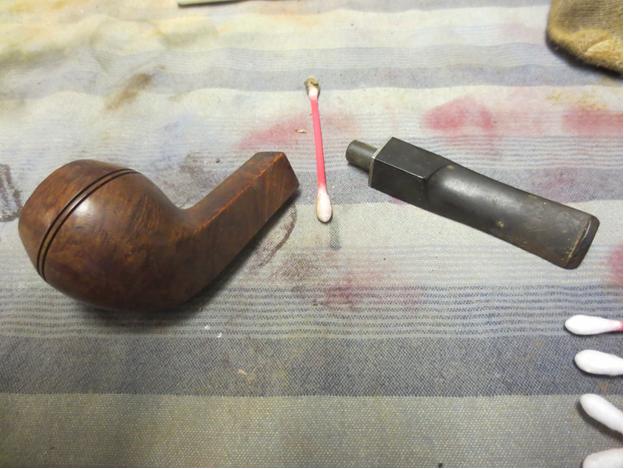
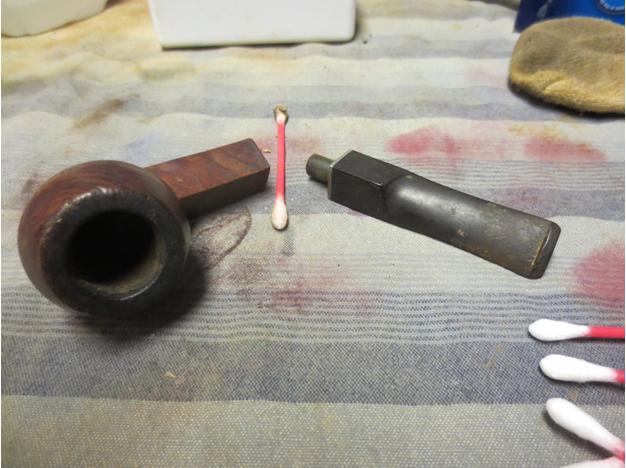
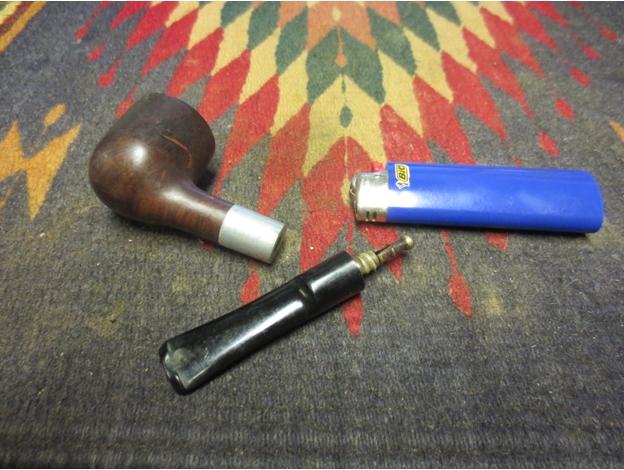
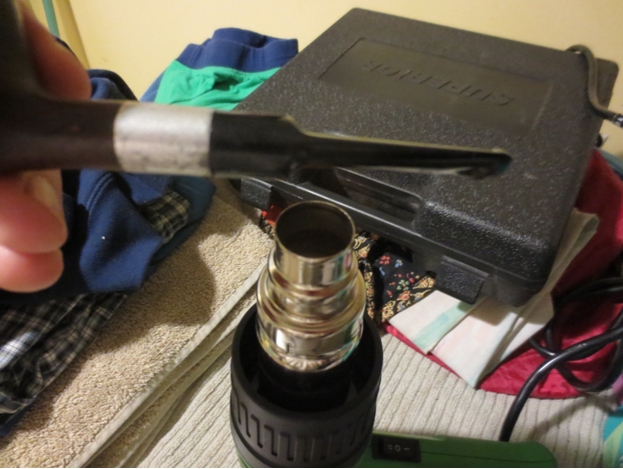
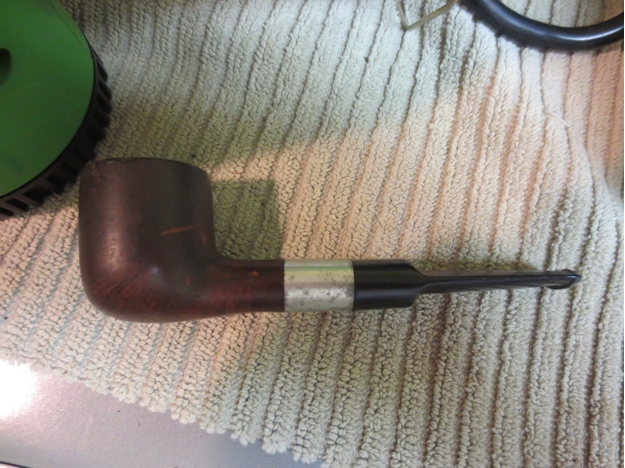
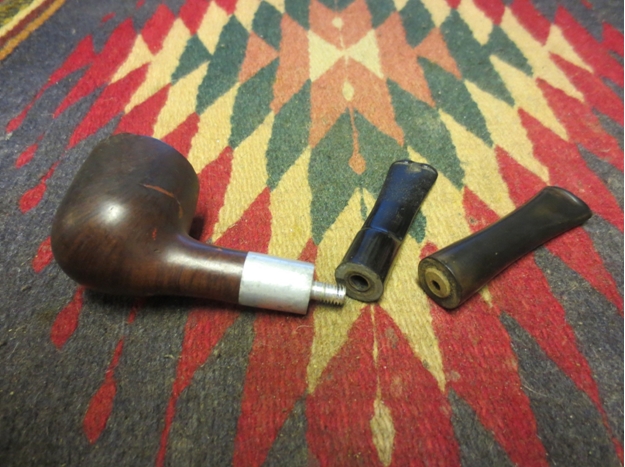
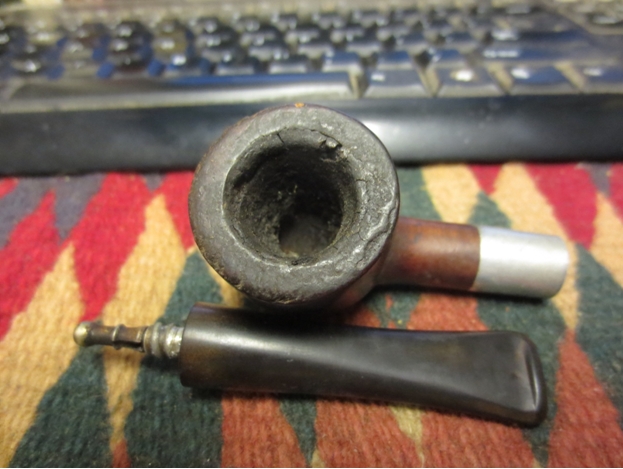
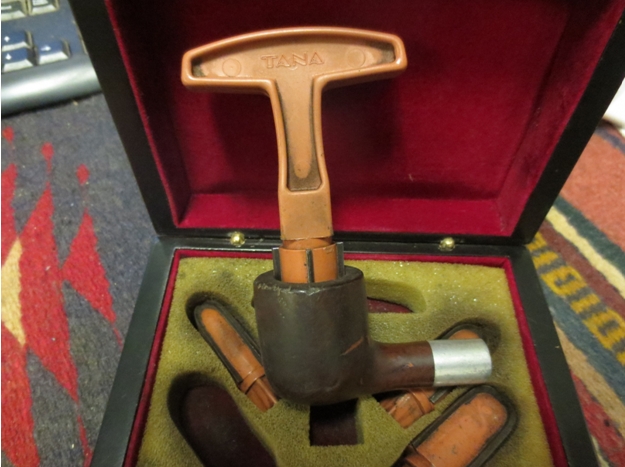
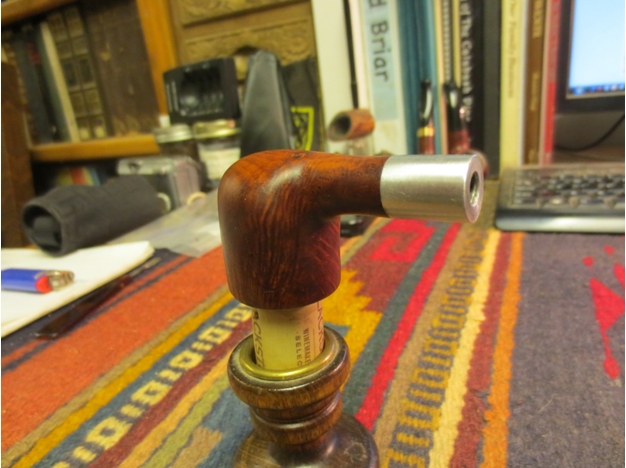
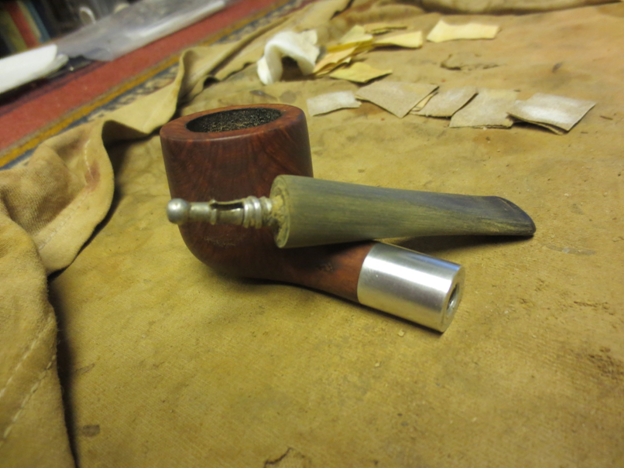
My blog today is about a lesser-known pipe brand called Monarch, which was established in Hartford, Connecticut in the 1930s and also distributes the Carey Magic Inch and Aerosphere pipes. Specifically, this concerns an apple shaped sitter with a bizarre patented tenon that screws into the shank. Once inserted with great difficulty, the tenon leaves a jet engine-like protrusion with a tiny piece of the rod that snaps onto the stem. Robert1At the time I believed my greatest problem would be disassembling the pipe, as something within the complex tenon system went awry and left the stem and cap spinning out of control with no purchase whatsoever. Naturally, I consulted my friend and mentor, Chuck Richards, first. He examined the pipe, sighed, made a doubtful face and suggested I give the whole thing a hot alcohol flush to see if that might loosen things up. But he was making no promises. And so, just for backup, I emailed our host, Steve, and posed my question. He said he had encountered the same problem once or twice in the past, and the only way he was able to get the pieces apart was to wiggle the stem carefully back and forth for as long as it took to do the job. Steve suggested the process could take some time and be quite tiring.
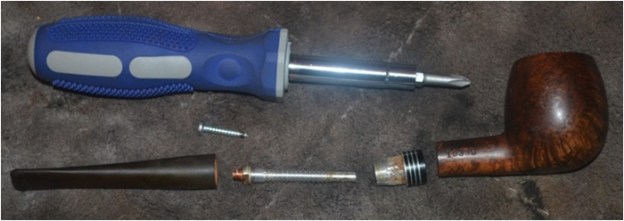
And so I decided upon a course of compromise. I gave the pipe a normal cold alcohol flush just to remove some gunk, which it did, and as I was quick to wipe up the overflow, it cleaned the bowl and shank well also. Then I commenced the wiggling. Steve was correct. The darned thing wanted to put up a fight. But maybe I lucked out, or the pipe just felt the negative vibes beginning to emanate from my psyche, because after about a half-hour of this nonsense the stem popped off. I was sure I had broken it!

Uncovering something out of a sci-fi comic book from back in the day, before anyone from Earth at least had ever traveled into space, or perhaps more like a diagram one might see in an old tech manual on airplane engines, I grasped the bowl and shank firmly in one hand and seized the curious bulb with two fingers of my free one and tried my hardest to twist. This approach got me nowhere but hot and sweaty.
Acutely aware of how easily I might demolish the entire pipe with one fell move but needing in the worst way to get that thing out of the shank, I wrapped the extending end of the tenon in a few small pieces of cotton and found some pliers. I started with the least necessary force and worked my way up a few notches before thinking better.

Sitting down and applying all of that processing (in particular visual), logic and reasoning I mentioned in the beginning, I noted the small opening in the exposed end of some sort of rod as yet unknown to me but most certainly to become so. And I remembered something (learning) I had done before to extract similar parts jammed in admittedly more sturdy objects. Rummaging through my toolbox, I found a small screw and screwdriver and with all due respect for the frail pipe, not to mention the unknown integrity of the odd tenon, forced the screw a short distance into the hole, where it jammed as I had intended.
Reversing the turn of the screw, no pun intended, I was rewarded almost at once with movement of the rod. Soon it became loose enough to finish by hand, and then the whole, approximately two-inch, grimy rod, along with the bulbous end and the stem cap, were in my hands. I know pride is supposed to be a sin, but not in all cases, and at any rate, there it is.

The patented supertenon, which appeared not to be intended for removal in order to accomplish such trivial tasks as cleaning the pipe now and then, suddenly told me, as clearly as if it spoke the words, why I found it and the inner shank coated with vile muck accreted over the decades. Intense alcohol scrubbing with stem cleaners corrected that problem.

But then there were the bowl and rim to make right again, and I emphasize that term. The iniquitous conditions of the two, un-photographed as they may be, can be approximated by a shot I took of those areas of another pipe from the same lot:Robert2Although clearly not even the same material as the Monarch apple, the rim scorching and cake buildup in the bowl are for all intents and purposes identical.
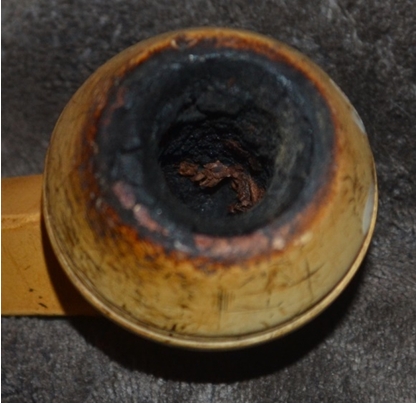
I reamed that bowl with vigor and then sanded it, first with 150-grit paper and then 400, for about 40 minutes, until it was completely clear of carbon and down to the briar at the top. I used 220 on the rim, then micro-meshed it with 2400.

In this way time flew, and the hour arrived to reassemble the pipe. I really had no idea how that would go, but after a few tries I managed, with the rod inserted through the holes on either end of the bulb and decorative cap that was attached to it, to turn the crazy tenon as far as it would go back into the shank. Relieved that the cap was snug in place, I made several tries to line up the tiny exposed end of the rod with a space station-like dock deep inside the hollow stem.Robert3 For some odd reason I felt like Major Tom floating in a tin can. At last I heard a happy click of connection, and the pipe was as whole as it could be.
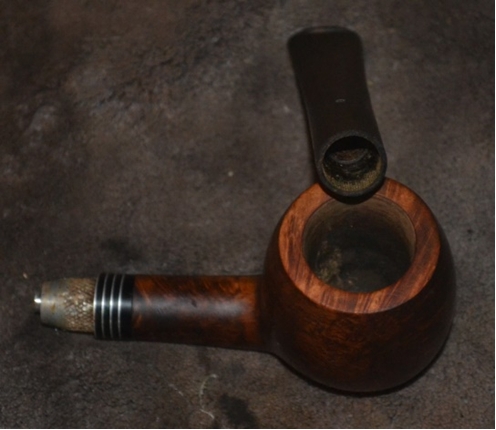
You see, that was the problem right there. Even after I buffed up the stem with red Tripoli and White Diamond, and the briar with the works, I just was not satisfied with the wicked little Apollo 13 shimmy thing going on between the stem and the tenon. My attention, working memory, processing speed, long-term memory, visual processing, logic and reasoning were all whirring at full capacity as I tried to rationalize putting this piece of horse pucky up for sale on my new Web store, but something in my subconscious still refused to learn this new trick.

Therefore, I went to the Google chalkboard to see if I could work it out by looking up “Monarch tobacco pipe tenons,” which was actually a suggested search, and found images of them. And what do you know, but right there, number one, was my hideous creature.Robert4 Take special note of two items of intelligence we can gather from this photo: the significantly greater length of the rod sticking out of the bulb, and the still far too big of a gap between the exposed rod and the connector in the stem of my Monarch. The first thought I had was to disassemble the doggone thing again and see if I had somehow made a mistake – which does happen sometimes – and perhaps the tenon was screwed in too tightly. I’m sorry to say it wasn’t.
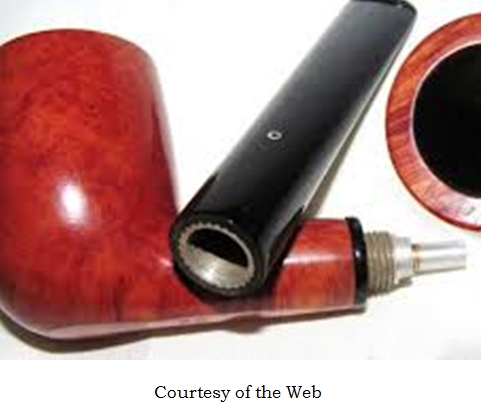
Still, the exercise in self-doubt was a success in that without it I might not have observed the length of the tenon loose in my hand again and imagined it re-inserted into the shank without the bulb and cap in the way. I mean, I never really liked it from the beginning, let’s face it, and so the notion of tossing it into my growing assortment of pipe odds and ends was rather appealing.

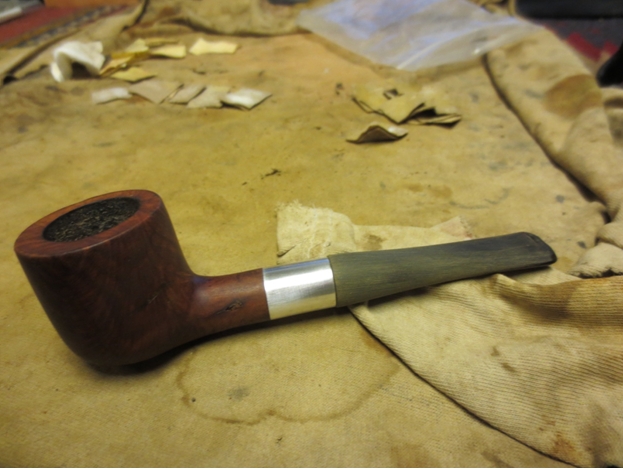
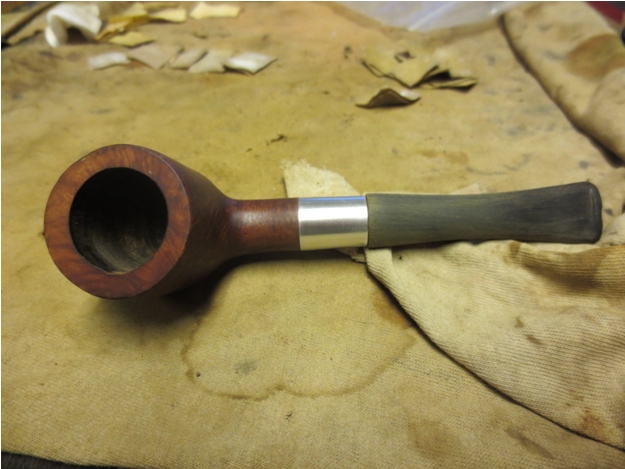
I made a battlefield decision and thought, what the heck. I’ve already spent too much time on this fanciful, vintage and even patented experiment in pipe making, so what are a few more minutes? After re-screwing in the rod without the bulb and cap, I snapped on the stem – and it indeed was a much better fit.Robert5 Robert6 Robert7 Robert8 Robert9 Robert10 Robert11
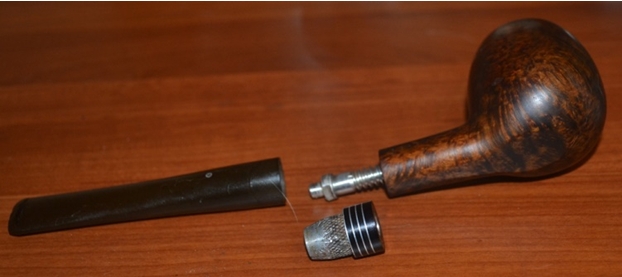
CONCLUSION
Now that all is said and done, I am happy that I did the work of making this sad example of pipe craft look beautiful again and ready to smoke in some fashion. But the bottom line is, I don’t even want to keep it around to use for my own enjoyment, so I certainly won’t sell it to anyone. First thing after finishing this blog and dispatching it, I intend to remove the pipe from my online store, where I have already posted it for $35. To me that would be the same as robbery, and even offering it free with the purchase of another pipe would be a cruel joke to play on some unsuspecting customer. Besides, it would only come back to me by the power of three times three. Maybe I’ll give it to a friend who is particularly fond of apples, with a copy of this blog. At least I have made it reasonably easy to remove the so-called tenon now.

To me, this is the real purpose behind the Tooth Fairy, the Easter Bunny and Santa Claus. Learning.

John’s First Restoration – A Danish Sovereign Peewit #30


When John and I got home from our pipe hunt we spent the evening and the next morning working on the pipes he had found. We figured that the best way for him to learn how to refurbish pipes was to work on this lot together. That way he would learn as he worked with me on the pipes and we could discuss any issues that might arise during the process of the cleanups. He was intrigued with the idea and liked working with his hands so it seemed like this might be a part of the pipe smoking hobby that he could use to unwind and clear his thoughts from the heavy work of his day to day work as a Presbyterian minister. For his first pipe to refurbish he chose to restore a Danish Sovereign Peewit Shape #30. It is shown in the picture below and is the second pipe in the first row at the top. Walking through the entire process with him on this pipe and one of the others that he did taught him everything from removing the cake, cleaning the finish on a bowl and restaining it to cleaning and polishing a stem to the point that it shone. IMG_2050 Once again I forgot to take photos of the pipe before we started but remembered after I had reamed it with a PipNet reamer. The bowl was badly caked and the rim had a thick buildup of tars and oils. The briar had a nice blast on it and the stain was worn in quite a few spots. The stem was odd on this particular pipe. The tenon had a sleeve on it that added diameter. It appeared that somewhere along the way the shank had been redrilled larger than the original tenon so the sleeve was a necessity. The bowl was drilled way off centre to the right so the airway entered the bowl on the right side of the bottom of the bowl. The bowl itself was round but the pipe itself was way out of round with far more briar on the right side than the left. Danish1 Danish2 Danish3John scrubbed the bowl with a tooth-brush and Murphy’s Oil Soap to remove the grime and the old finish. He used a dental pick to remove the remainder of the buildup on the top of the rim. He rinsed it under running water to remove the soap and grime and dried it with a soft cloth. He used a dark brown stain pen (thanks Greg) to match the stain on the bowl in those areas on the shank and rim where the stain had worn off. He buffed the bowl with White Diamond and then gave it several coats of carnauba wax and hand buffed it with a shoe brush. Danish4 Danish5 Danish6The stem needed a lot of attention. There were some tooth dents in the surface of the stem on the top and bottom side. We set up the heat gun and heated the vulcanite to lift the dents. We also adjusted the bend in the stem while we were at it with the heat gun.Danish7 Danish8 The next photo of the end of the tenon shows the sleeve that had been added to the tenon to increase the diameter. Danish9John sanded the stem with 220 grit sandpaper to remove the calcification and the oxidation. He also used that to sand out the remnants of the tooth marks after we heated the stem. He then sanded the stem with a medium and fine grit sanding sponge to remove the scratch marks left behind by the sandpaper. Once finished he moved on to sand with micromesh sanding pads – wet sanding with 1500-2400 grit pads and dry sanding with 3200-12,000 grit pads. I had him rub the stem down with Obsidian Oil between each set of three pads. He buffed the stem with White Diamond and then we waxed it with some Renaissance Wax (he will not have access to a buffer at home so I was trying work as much as possible without one).Danish10 Danish11 Danish12 Danish13I had John give the pipe another coat of Renaissance Wax and buff it with a shoe brush to raise the shine. The finished pipe is shown below in all of its new sheen. I think John will enjoy smoking this one. I know when I refurbished my first pipe it seemed to smoke exceptionally well. I think it is the time spent bringing it back to life that makes this happen. Great job on this one John, it is a refurbished pipe to be proud of. Be sure to let us know how it smokes when you fire it up.Danish14 Danish15 Danish16 Danish17

Restoring a Peterson Dunmore #72


Blog by Steve Laug

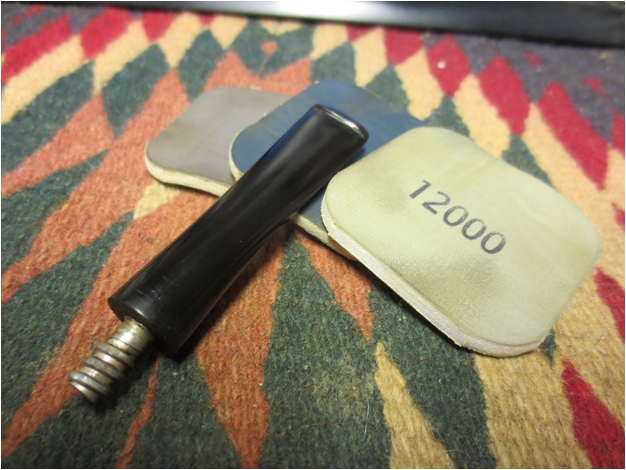
The Dunmore line from Peterson really is a stripped down pipe. The one that I worked on this weekend was in essence a system pipe. The lack of a ferrule is made up for by a stylized carving around the shank end. The stem sits snugly against the end of the shank but is not flush with the diameter of the shank. The saddle on the stem has a different flair than a regular Peterson pipe. The one we found had a Plip stem. This particular Dunmore was found by my friend John when we went pipe hunting this weekend. We had a blast as can be seen from the haul of pipes that he picked up below. The Dunmore is picture at the top left of the first column in the photo below. below. IMG_2050 While John worked on restoring the oak pipe rack that he had found I worked on his Peterson Dunmore. This old pipe had some beautiful grain – birdseye on both sides and cross grain front and back. The bowl almost perfectly aligned with the grain on this one. I forgot to take pictures of the pipe before I began cleaning it up so the only one that is left of the pre-clean is shown in the group photo above. I reamed the bowl with a PipNet reamer and then cleaned out the sump and the internals of the bowl and stem with pipe cleaners, cotton swabs and isopropyl alcohol until all came out clean. Dunmore1 The finish on the bowl was virtually non-existent as it had worn away. I wiped it down with acetone to clean the briar and remove the oils and marks that had settled on top of the wood. The acetone pads came away dirty with the grime more than with any previous colour or stain. Cleaning the surface revealed even more clearly the marvelous grain that was on this pipe. Dunmore2 The top of the bowl and rim had some damage from tapping out the pipe. The outer edge of the rim particularly had taken a beating. The bowl was still in round so the inner edge was fine. To minimize the damage to the top and the outer edge I set up a topping board with 220 grit sandpaper and worked on the bowl top. (The whole time I was working on this pipe I gave a running commentary to John as he wanted to know the process so that he could clean up some of the other pipes once he had finished the rack). Dunmore3 Dunmore4 After topping the bowl I sanded the outer edge with a folded piece of 220 grit sandpaper to remove some of the darkening around the bowl top. I resanded it with medium and fine grit sandpaper to remove scratches and did the same to the rim top. I sanded the entirety of the rim and edges with 2400 grit micromesh to smooth it out. After wiping down the briar with alcohol to remove the dust from the surface of the bowl John and I decided not to stain the pipe but to keep it natural. I rubbed it down with a bit of olive oil to give some life to the wood and then buffed it with White Diamond. I was careful to not buff the areas around the stamping so as not to damage them. I chose rather to buff these areas by hand with a shoe brush. I gave the bowl several coats of carnauba wax and buffed it with a soft flannel buff to shine it. Dunmore5 Dunmore6 Dunmore7 There were two small crevices that showed up on the inside of the bowl on the right side about ¼ inch below the rim. I mixed a batch of pipe mud and filled the small crevices and smoothed the mud over the surrounding area of the bowl. I set it aside to dry while I worked on the stem.

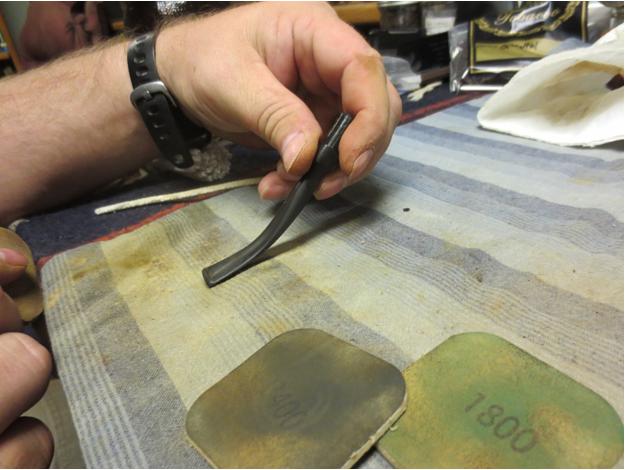
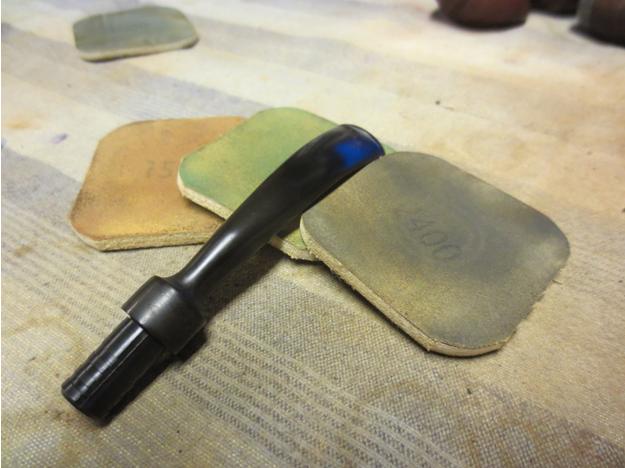
The stem had a lot of tooth chatter and a few shallow tooth marks on the top and the bottom next to the button. It also had a deep oxidation that required a lot of elbow grease to remove. I sanded the stem with 220 grit sandpaper to remove the surface oxidation and the calcification near the button. I “painted” the stem with my Bic lighter to raise more of the oxidation to the surface and also to raise the small tooth marks on the stem. I sanded it some more with the 220 grit sandpaper followed by a medium and a fine grit sanding sponge. That work brought it to the condition shown in the next two photos below. Dunmore8 Dunmore9 I sanded it with micromesh sanding pads – wet sanding with 1500-2400 grit pads and dry sanding with 3200-12,000 grit pads. I rubbed the stem down between each set of three pads with Obsidian Oil. After finishing with the 12,000 grit pad I buffed it lightly with White Diamond on the wheel and then rubbed it down one more time with the oil. When it had dried I gave the stem multiple coats of carnauba wax and buffed it to a shine. Dunmore10 Dunmore11 Dunmore12 I hand buffed the completed pipe with a bit more wax and a shoe brush to finish the polish. The finished pipe is shown below in all of its beauty. I am really glad we decided to leave the wood natural and only give it a light oil finish before waxing. The grain stands out well and the feel of the pipe in hand is very nice. John loved the finished pipe. I am looking forward to hearing from him once he has smoked it a few times. Dunmore13 Dunmore14 Dunmore15 Dunmore16
Got Today’s Apple! Restoring an Imported Briar Apple


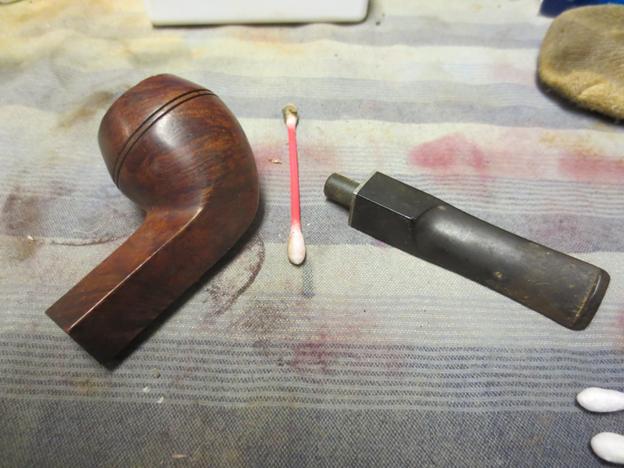
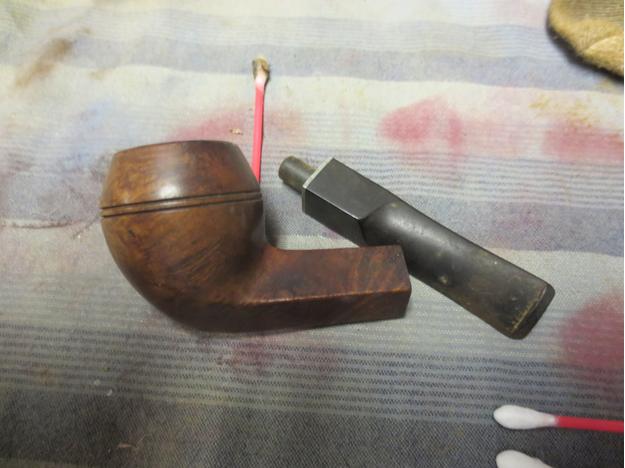
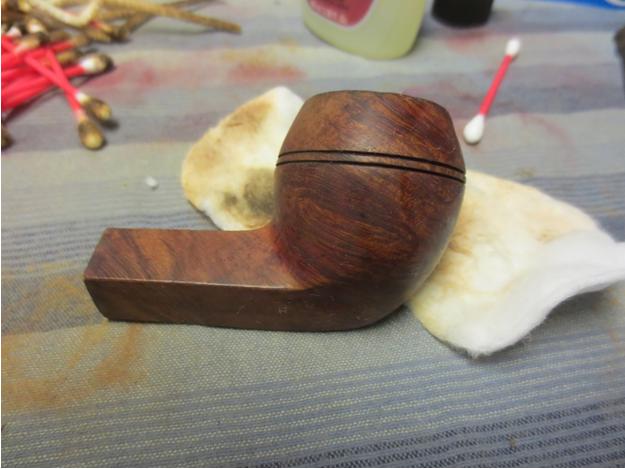
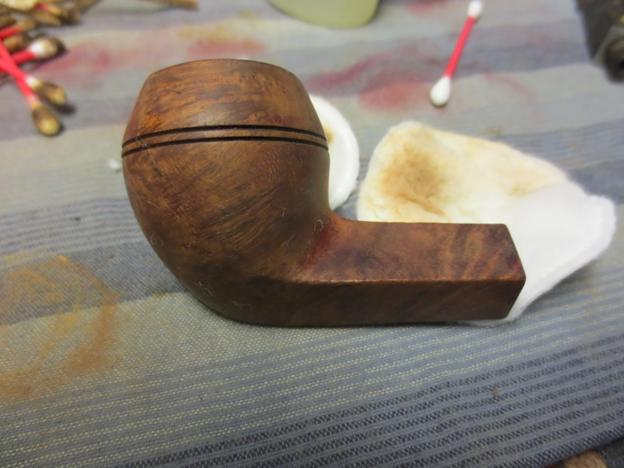
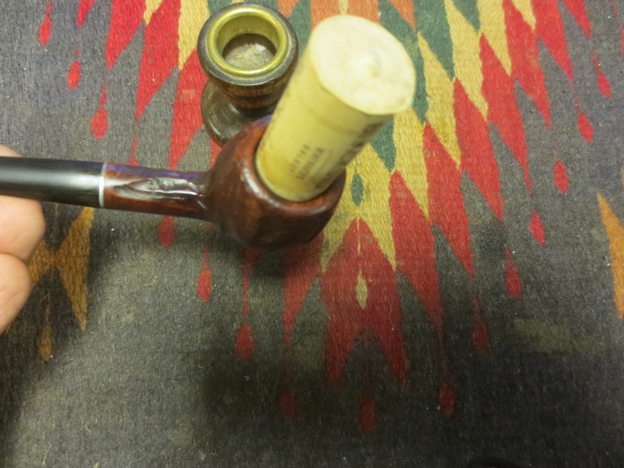
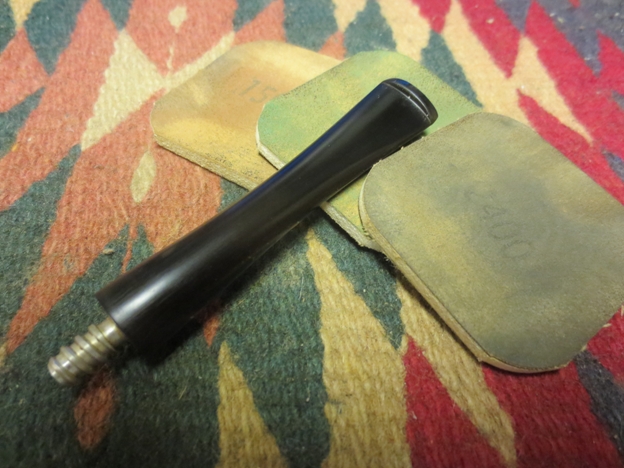
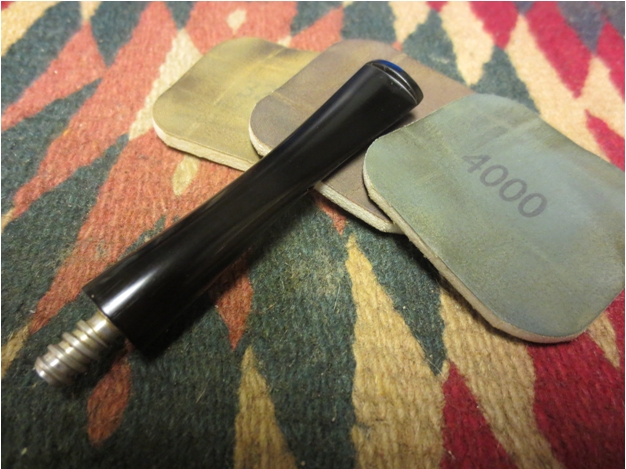
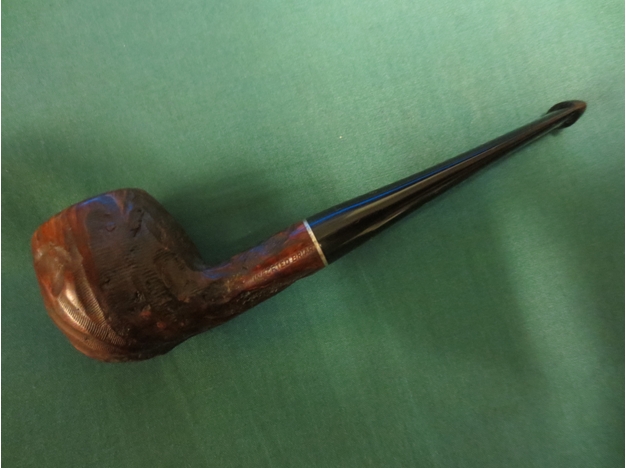
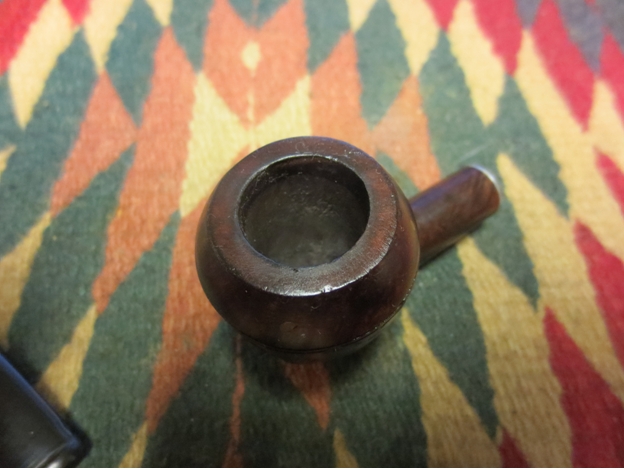
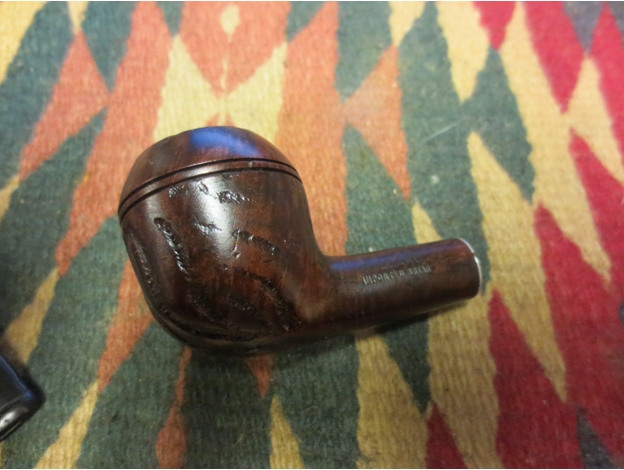
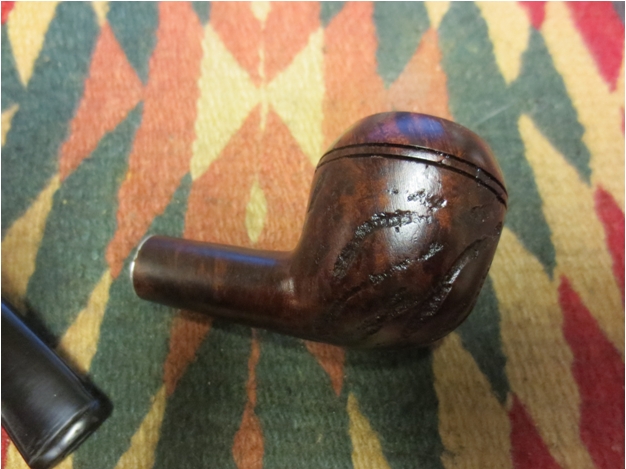
Yet another gift pipe bowl that I had in my box was a no name Imported Briar Apple. It had a threaded tenon and I just “happened” to have a stem that fit it perfectly in my can of stems. (One day I need to get the stems sorted and organized more. Currently I have a can of round stems and a can of everything else stems. This necessitates emptying the entire can on the work table each time I need them and sorting through to find what I need.) The stem was a used Grabow stem that was missing the stinger but the tenon was intact. It was oxidized and dirty but very functional. There were no tooth marks or bite marks on the surface. When twisted onto the pipe it was slightly overturned. IMG_2015 IMG_2016 The bowl had an interesting finish in that the briar was smooth around the rounded rim and down the bowl. Then there were grooves or what I call worm trails cut vertically down the sides of the bowl and horizontally on the shank. The all culminated in rusticated pattern on the bottom of the bowl. The finish was shot and the worm trails had all nature of detritus packed into them. The grooves were full in some places. The stain was present but worn. If there had ever been a varnish coat it too was gone. The aluminum mortise insert was well oxidized. The bowl had a thick buildup of cake and loose pieces of tobacco handing on the sides. The rim was dirty but did not have any damage. IMG_2017 IMG_2018 I heated the tenon with a Bic lighter and straightened the overclocked stem. I reamed the bowl with a PipNet pipe reamer and then scrubbed the bowl down with Murphy’s Oil Soap and a tooth brush. I rinsed it with lukewarm water and dried it off. I scrubbed the buildup on the rim with a cotton pad and saliva and then used isopropyl alcohol on a cotton pad until I had broken through the tough outer coat. I used a medium grit sanding sponge to sand off the rest of the buildup and then wiped it down again with alcohol. IMG_2019 IMG_2020 I wiped down the exterior of the bowl and shank with acetone on cotton pads to remove the remaining finish. IMG_2022 I sanded the stem with 220 grit sandpaper to remove the oxidation and the calcification buildup at the button. I worked in the creases with a sanding stick. Once I had cut through the oxidation I sanded the stem with a medium and a fine grit sanding sponge.IMG_2026 IMG_2027 IMG_2028 IMG_2029 Once I had removed the finish and did the initial sanding on the stem I cleaned out the shank and stem with cotton swabs, pipe cleaners and alcohol until they were clean. IMG_2024 IMG_2025 I sanded the aluminum mortise insert with medium and fine grit sanding pads. I stained the bowl with a Danish Oil Walnut stain. IMG_2030 IMG_2031 IMG_2032 After I had stained the pipe I put a cork in the bowl and set it aside in an old candle stick holder to dry while I worked on the stem. IMG_2033 IMG_2034 IMG_2035 IMG_2036 I sanded the stem with my usual array of micromesh sanding pads – wet sanding with 1500-2400 grit pads and dry sanding with 3200-12,000 grit pads. I rubbed it down with Obsidian Oil between each set of three sanding pads and gave it a final coat of the oil after sanding with the 12,000 grit pad. I took it to the buffer and buffed it with White Diamond. IMG_2037 IMG_2038 IMG_2040 When the stain on the bowl had dried I put the stem on the pipe and then gave the entire pipe another buff with the White Diamond and then gave it multiple coats of carnauba wax. I finished by buffing it with a soft flannel buff to raise the shine on the bowl and stem. The finished pipe is shown below. The stem actually looks like it is the original stem and the pipe looks as good as new. It is ready for a long life in the hands of the next pipeman who takes it home to join his/her rack. IMG_2041 IMG_2042 IMG_2046 IMG_2048

Rebuilding a Dr. Grabow Regal Adjustomatic Patent Billiard


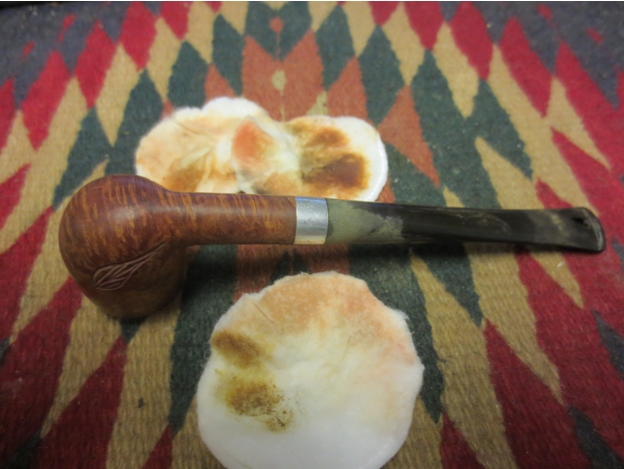
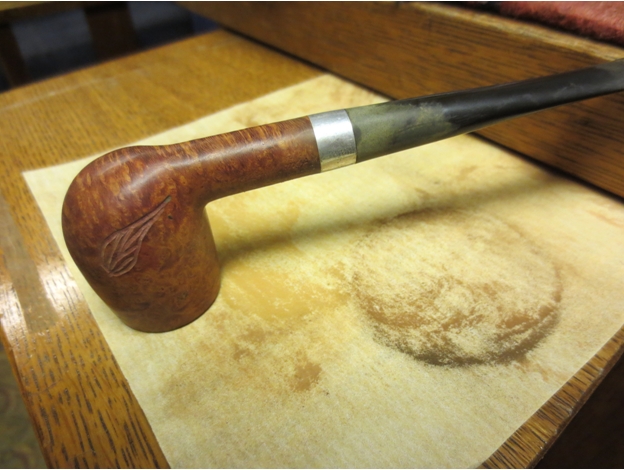
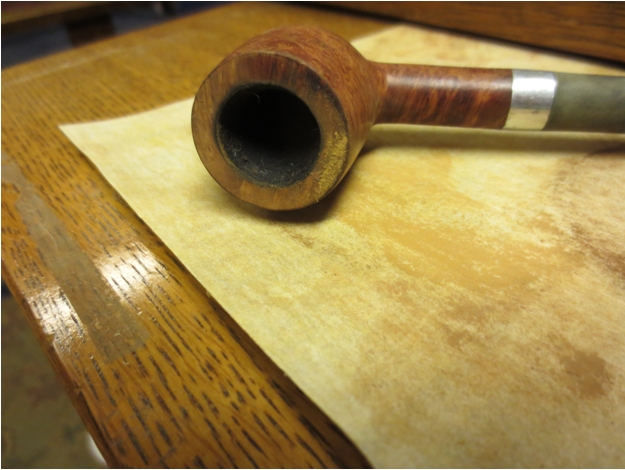
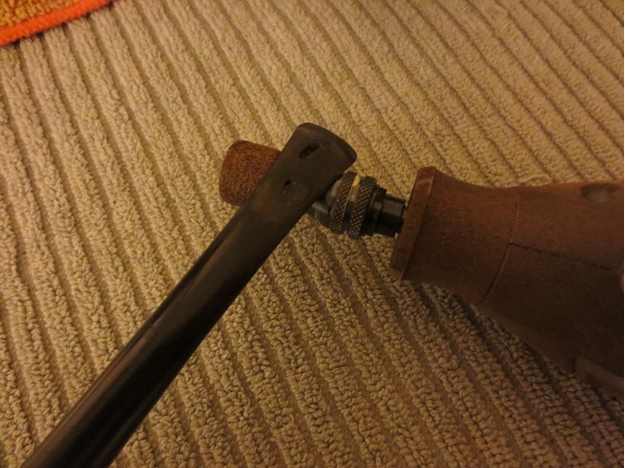
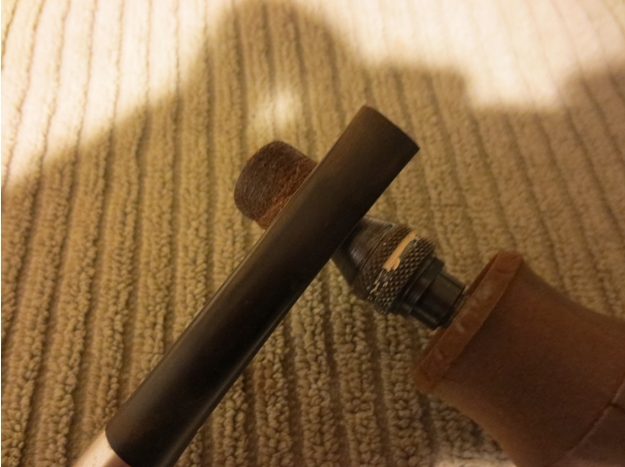
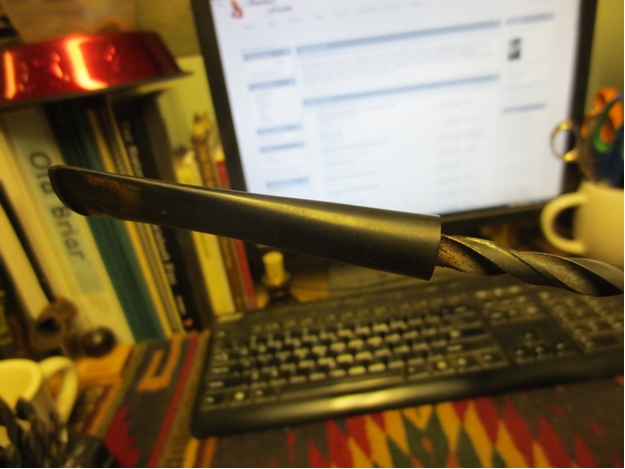
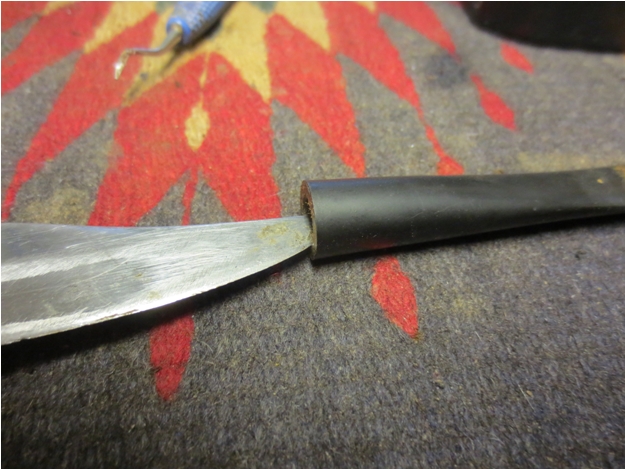
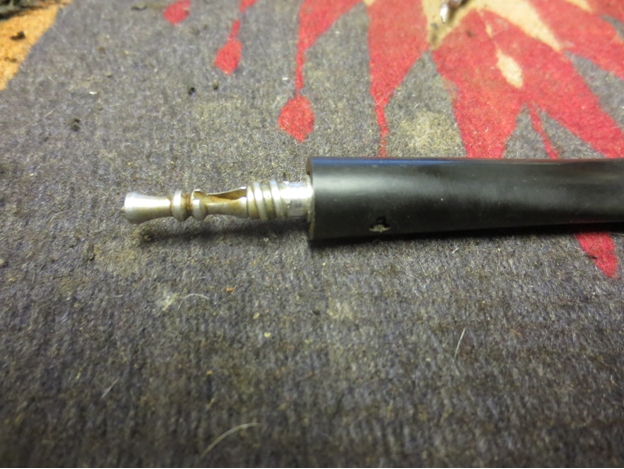
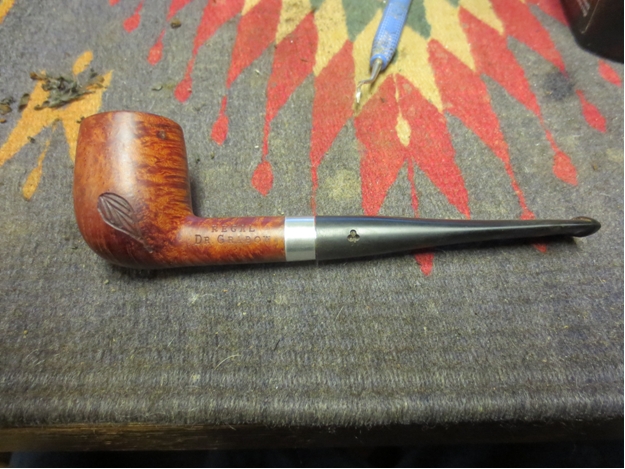
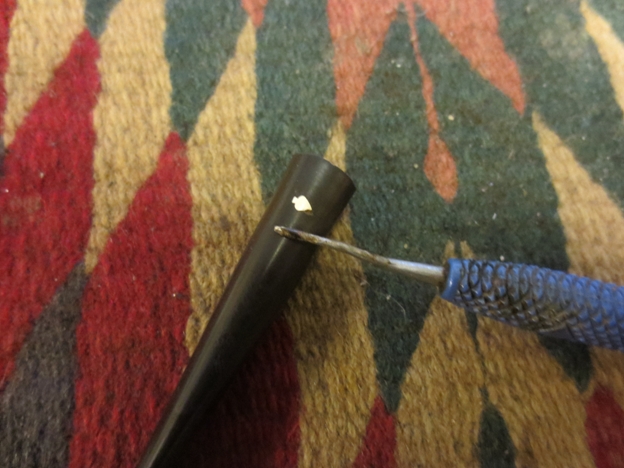
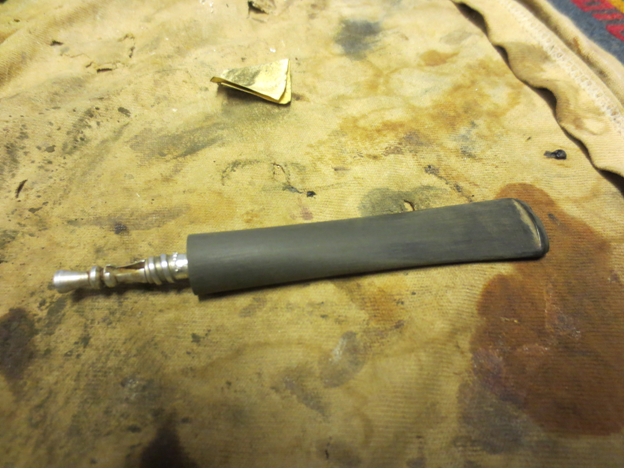
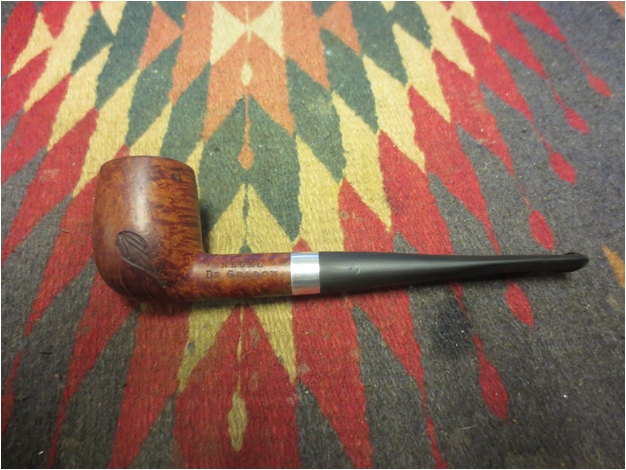
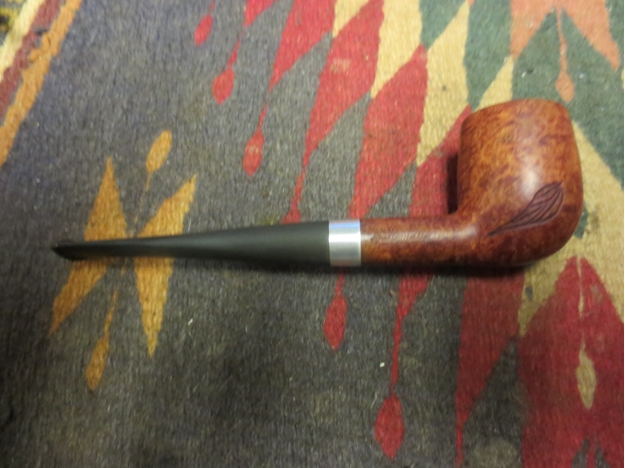
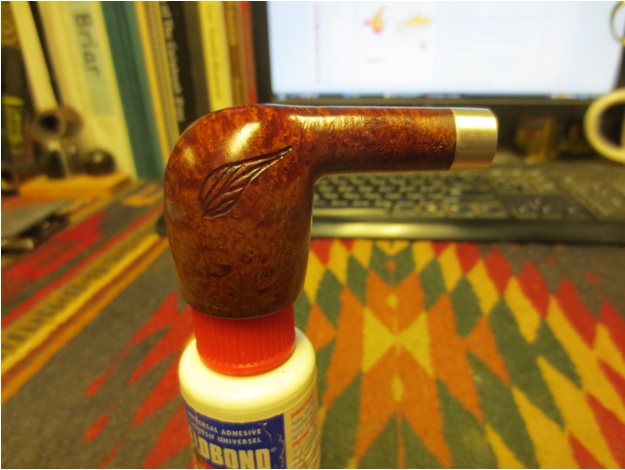
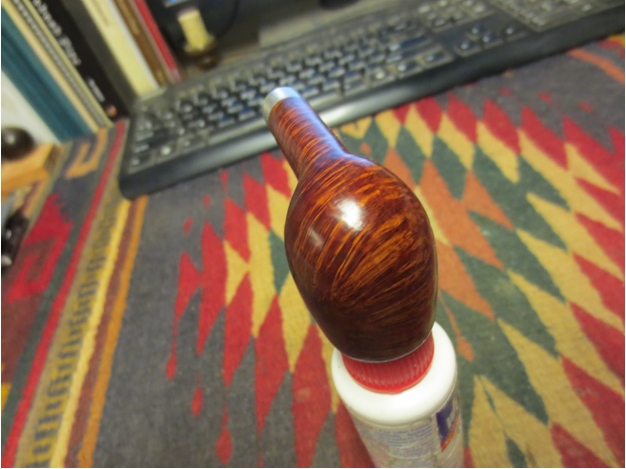
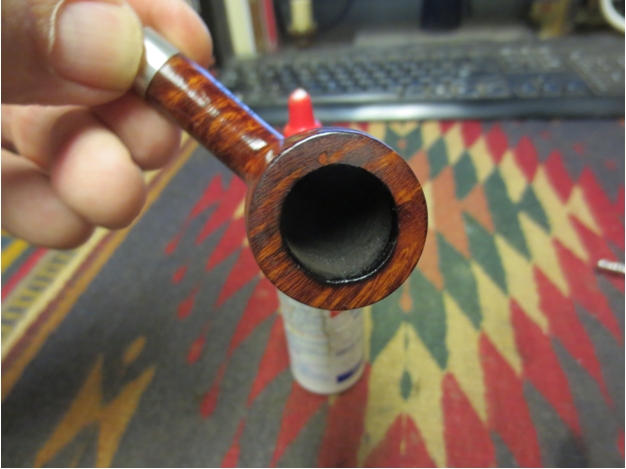
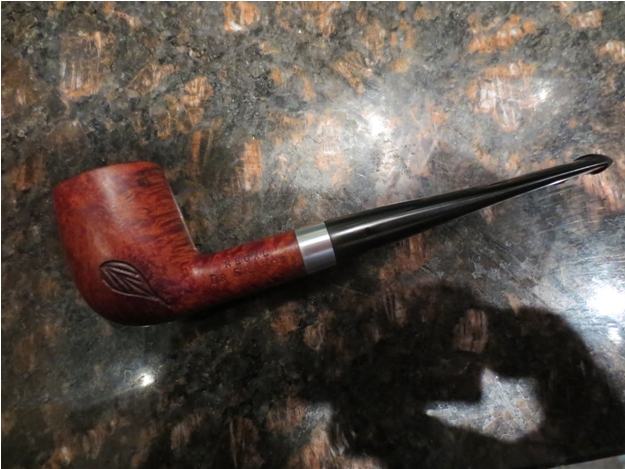
One of the few pipes with a stem included in my gift box of bowls was a nice little Dr. Grabow Billiard. It had a long stem that clearly fit the shank of the pipe and gave it an elegant look and feel. At first glance I figured this one would clean up quite easily. The varnish finish on the bowl was worn and spotty with pieces of the varnish coat peeling off the surface of the briar. The rim was coated with a thick layer of tars and oils but looked sound. The bowl had a thick cake particularly from mid bowl to the bottom of the bowl. It was very hard and was not crumbling at all. It had however, closed the bowl to a large degree. The mortise was part of the aluminum band on the shank. It was a threaded cast piece that was fitted against the briar and was oxidized. The internals were quite clean. The bowl was stamped on the left side: REGAL over Dr. Grabow. On the right side it was stamped Imported Briar over Adjustomatic over PAT. 2461905. I have written about the patent on the Adjustomatic tenon/stem in an earlier post on rebornpipes: https://rebornpipes.com/tag/dr-grabow-adjustomatic/ I included patent information and diagrams on that page so I will not repeat that material in this post. The stem had thick calcification on the top and bottom sides of the stem and looked like it had one time sported a softie bit. When I turned the stem over there was a large hole in the underside from the button forward. IMG_1924 IMG_1925 IMG_1926 IMG_1927 I wiped down the bowl with acetone on a cotton pad to remove the damaged varnish and prepare the bowl for possible restaining once the rim had been cleaned off. It took some scrubbing but I was able to get rid of the varnish from the surface and out of the grooves in the carved leaves on both sides of the bowl. It turned out that underneath the peeling varnish there was some very nice grain on the pipe. The top and bottom of the shank and the front and back of the bowl were really nice cross grain. There was a small nick in the back of the bowl near the top of the rim that had a small fill otherwise the briar was flawless. The sides were very nice birdseye grain. This was going to be a stunning pipe once it was finished. IMG_1928 IMG_1929 IMG_1930 I wiped down the buildup on the rim and was unable to even dent the hard tar. I lightly topped the bowl on a topping board to take of the buildup and not affect the rim itself. I carefully removed the tars, checking every move across the sandpaper to make sure that I was not damaging the surface of the rim. IMG_1931 IMG_1932 Once I had cut through the buildup the briar was in very good shape. I used a PipNet reamer with the smallest cutting head to remove the carbon cake in the bowl. Even the smallest head was hard to turn against the rock hard cake of this bowl. I carefully worked it back and forth, being careful not to tip the cutting head to either side and lose the roundness of the bowl. Once I had gotten the head in as far as possible I used a pen knife to work on the bottom portion of the bowl and then reworked the reamer in that area. IMG_1933 I decided to try to patch the hole in the stem. I cleaned hole and put Vaseline on a pipe cleaner. I inserted it in the airway then sprayed accelerator on the stem, put black superglue on the hole and let it sit. The hole was quite large and I was not sure that the repair would hold. I applied the glue in several layers building up the patch until it was quite thick. I sprayed it with the accelerator each time to speed the drying time. IMG_1934 IMG_1935 IMG_1936 I sanded the patched area with 150 and 220 grit sandpaper to smooth out the patch and then reapplied more black super glue and accelerator. IMG_1937 I set the stem aside and let it cure. In the morning I sanded the stem patch until it was smooth in the process my fingernail went through the stem above the patch. I explored the thickness of the stem up the stem and found that I could push through the airway quite a distance up the stem (Photo 1 below). After that fiasco I noticed that the patch was also quite unstable. I was able to push out the patch with my fingernail. The stem after patching and pushing through the repair is shown in Photo 2. IMG_1943 IMG_1944 At this point it was clear that a stem patch would not work on this stem. With the thinness of the vulcanite extending up the stem about an inch it was not clear how far that would go. I was going to need to do something different. I cut off the stem with a Dremel and sanding drum. IMG_1945 IMG_1946 After cutting it off I could see the problem – airway was drilled very high in the stem. There was no room for cutting a new button on the stem and opening up the slot. The top of the stem was thin for another inch toward the tenon. I had to come up with something very different to address this issue. IMG_1947 I had an old Kaywoodie stem in my can of stems that was about the same diameter as the damaged one. It was missing the club logo in the side of the stem but had a club shaped hole. I heated the stinger on the KW stem with a lighter and then was able to remove it with a pair of needle nose pliers. IMG_1948 I also heated the Grabow stem with the lighter and worked on it with the pliers. It came out slowly. I finally screwed it into the bowl and turned it until the stem came off. I then unscrewed the tenon from the bowl. I tried it in the KW stem and it was just a little bit bigger than the hole in the stem. I would need to drill it one size larger to get a fit. IMG_1949 I used my cordless drill to drill it out. It had to be slightly larger and slightly deeper than the KW stinger apparatus. To make room for the lip on the aluminum piece I used a sharp knife to bevel the inner edge of the hole to accommodate the lip. IMG_1950 IMG_1951 The Grabow tenon/adjustomatic apparatus fit in the shank and I pressed it into place to see if the fit was correct. I then removed it and used a white all purpose glue to hold it in place. There was a removable stinger end for the tenon so I reinserted that in place and the new insert was ready. IMG_1952 IMG_1953 The fit of the stem against the shank was perfect. The diameter of the stem was slightly larger than the diameter of the shank so I would need to sand it to make them match. I tried to remove the Grabow insert from the old stem so that I could use it on the new stem. I tried to pick it out with a dental pick but was not able to remove it. IMG_1954 IMG_1955 I filled the club hole with black superglue and then sanded it smooth. I used 220 grit sandpaper to work on the diameter of the stem. I also sanded the end of the stem around the button to remove the tooth marks and chatter. IMG_1956 The next series of four photos show the stem after all of the sanding and shaping. The new stem looked quite good with the bowl. The fit was perfect and the lines and flow of the angles was exactly what I was looking for when I started. IMG_1957 IMG_1958 IMG_1959 IMG_1960 I sanded the stem with a medium and fine grit sanding sponge and then refilled the small holes around the patched club logo with more superglue. I sanded the patch down with 220 grit sandpaper and resanded it with the sanding sponges until it was smooth. The photo below shows the two stem side by side. IMG_1965 I sanded the stems with micromesh sanding pads – wet sanding with 1500-2400 grit pads and dry sanding with 3200-12,000 grit pads. I rubbed it down with Obsidian Oil between each set of three grits of micromesh. I buffed the stem with White Diamond and then gave it a final coat of Obsidian Oil and set it aside to work on the bowl. IMG_1966 IMG_1967 IMG_1968 I buffed the bowl with White Diamond and carefully buffed around the stamping on the sides. I polished the aluminum shank band with the higher grades of micromesh pads and then a polishing cloth to remove the scratches and bring up the shine. The next series of four photos show the polished bowl before I worked on it with some 8000-12,000 grit micromesh pads. IMG_1938 IMG_1939 IMG_1940 IMG_1941 IMG_1942 I gave the bowl a wiped down coat of Danish Oil and walnut stain. I wanted to give the briar a shine coat but not add much colour to the finish. It really made the grain pop on this one. IMG_1961 IMG_1962 IMG_1963 IMG_1964 Once the oil had dried I buffed the bowl with White Diamond and then gave it several coats of carnauba wax. I buffed it with a soft flannel buff. I put the stem back in place and gave the bowl and stem several more coats of wax and buffed to a shine. The finished pipe is shown below. The look and feel of the pipe is like new. It is cleaned, restemmed, refinished and ready to fire up with its inaugural bowl of tobacco. It should last a long time and serve its owner well – whether I keep it or pass it on to another pipeman. (I decided to take these final photos on a piece of marble counter top to see if I could get a good contrast on the photos.) IMG_1970 IMG_1971 IMG_1972 IMG_1973

What is a Mountain Root Pipe with a Glasschaum Bowl?


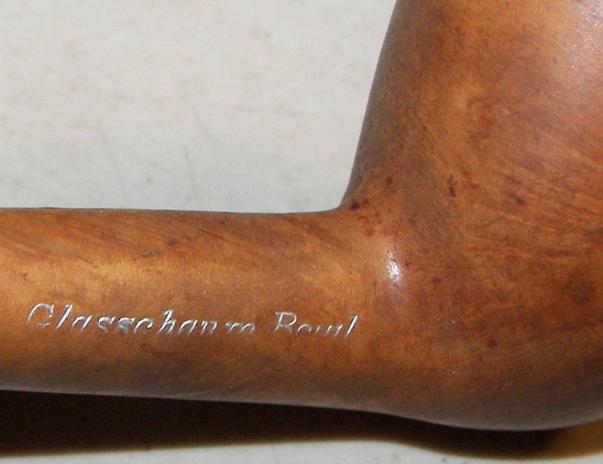
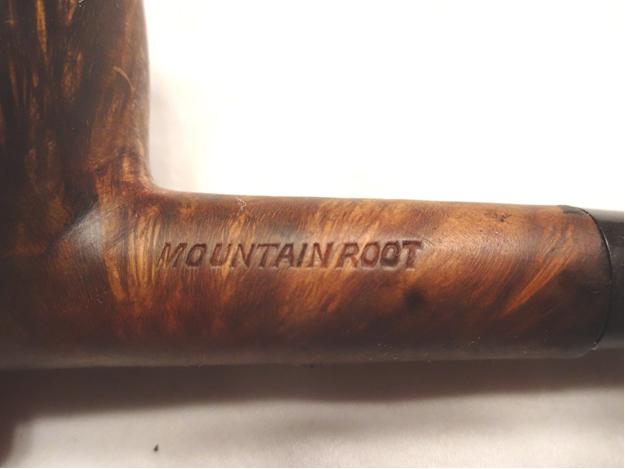
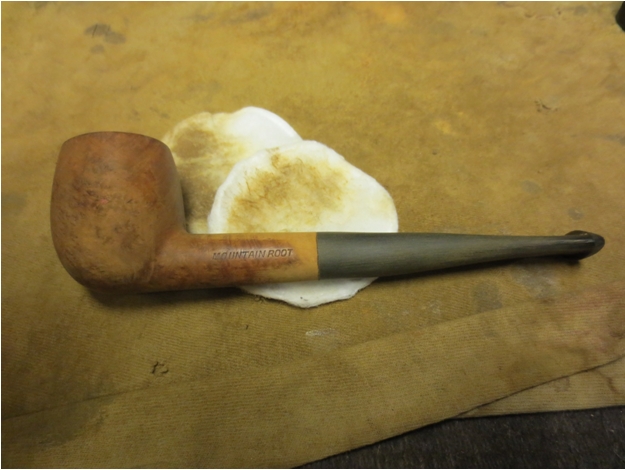
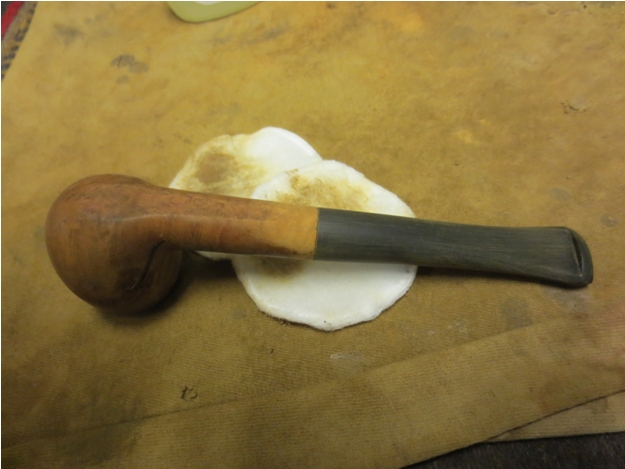
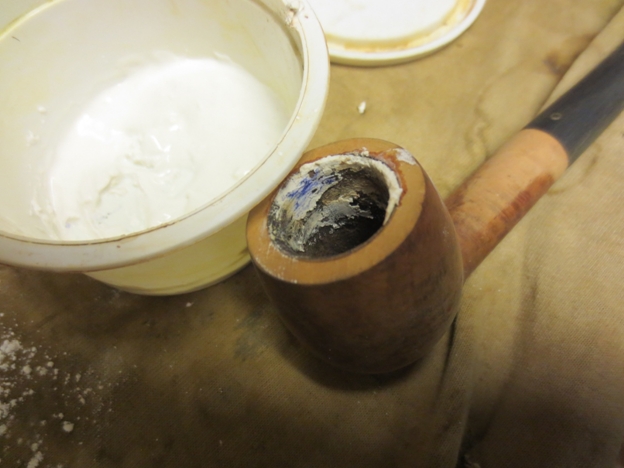
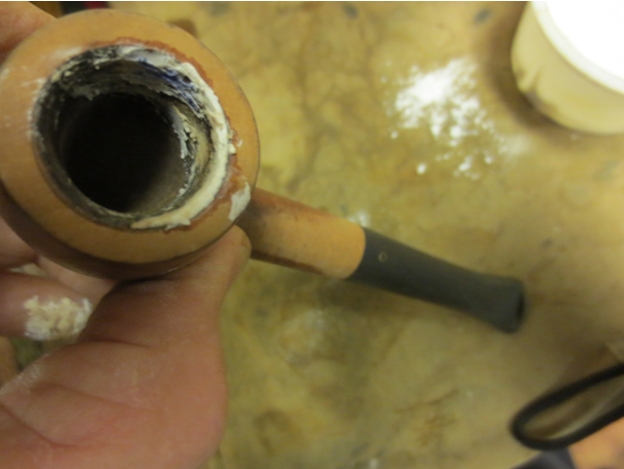
Another of the gift bowls that I received was an apple-shaped bowl stamped Mountain Root on the left side of the shank and on the right side Glasschuam Bowl. The Glasschaum Bowl stamping had remnants of silver paint in the indentations. The finish was rough with many scratches in the briar. The shank internally was very black and tarry. The bowl inside was dirty with a thin build up of cake. The internal edge of the meerschaum lining was chipped in several places but there were no cracks in the bowl. IMG_1879 The Mountain Root stamping and the Glasschaum Bowl stamp were both new to me. I looked in “Who Made That Pipe” for the Mountain Root brand and found nothing with that stamping. PipePhil did not have it on his site either, so I looked further on the web and found several posts on the brand on the Grabow forum. The link is: http://drgrabows.myfreeforum.org/about4008.html&highlight=

At that site a pipeman had posted about a pipe he purchased on Ebay: “I purchased this “Mountain Root” pipe on Ebay. Right shank is stamped “Glasschaum Bowl” and the inside of the bowl is lined with something similar to how Yello-Boles are lined with a yellow colored coating. The stinger is wooden and the stem inlay is a white or faintly yellow ring on top of the stem similar to Yello-Bole stem rings of the ’40’s except for the color.”

My pipe bowl looked just as he described though I would have said it had a meerschaum like bowl insert rather than the yellow coating on the Yello-Bole pipes. It was significantly thicker than the yellow painted coating. Mine also came without a stem so there was no wooden stinger apparatus or yellow ring on the stem.

He went on to inquire if anyone could help him with information on the brand. He received quite a few helpful replies to his query. One that summarized the lot is included below.

“Mountain Root probably refers to Mountain Laurel. That was one alternative wood used in WWII for pipes, when briar was not available or in very short supply. The wood stinger also suggests that era.”

This coincided with what I was thinking in terms of the link to Mountain Laurel and the WWII era pipes. I was not alone in thinking that I was dealing with a pipe from that era made from Laurel. The confirmation of that was not 100% certain and the next details make me wonder about that. I looked up Glasschaum Bowl pipes online and found that Ben Leibowitz, an American pipe maker marketed the Glasschaum pipe in 1941 and quickly disappeared off the scene. This reference was also confirmed in Who Made That Pipe. If it was indeed a Liebowitz pipe it would have been stamped Glasschaum Pipe with no other stamping. This one however had the Mountain Root stamping as well and it led me to believe I was dealing with something other than an American made Leibowitz pipe. Further digging was necessary.

I often turn to EBay to see if I can find a particular brand of pipe for information when it does not show up other places. In looking through the various pipes on EBay that bore the Glasschaum Bowl stamping I found several that had the identical stamping on the right side of the shank. glasschaum 1 Some of them had Mountain Root (1st photo below) on the left side the same as the bowl I have, while others were stamped Gordon Deluxe in a Diamond on the left (2nd photo below). glasschaum 2 glasschaum 3 I looked in “Who Made That Pipe?”and found that Gordon pipes were made by Villard & Strauss as well as Dan Jacobs/Comoy’s/R. Jack & Sons and Samuel Gordon (1918), all in made in England. There was also confirmation that The Samuel Gordon pipes had Gordon in a diamond logo. The fact that these were English made pipes made me question the Mountain Laurel wood comment above. The bowl also did not look like the wood on other Mountain Laurel pipes that I have in my collection so I am not at all certain of the assessment.

The information I had found made me lean toward the maker of this pipe being Samuel Gordon a London pipemaker. That meant that the pipe was English made. I don’t have a clear idea of the date of the pipe but looking at others on EBay that had the same stamping of the Gordon Deluxe stamping my thinking is that the pipes came from the 40s or 50s.

I went through my can of stems and found one that fit well in the shank with minimal sanding. When I chose the stem I had not done the research on the brand and found that the stem had a light yellow O on the top of the stem and the one I chose had a brass O on the top. Such is the one of the happy coincidences of the repair. IMG_1877 IMG_1878 IMG_1880 IMG_1881 I lightly sanded the tenon of the stem until it fit snugly in the shank. I cleaned out the stem with alcohol and pipe cleaners before beginning the shaping. The diameter of the stem was larger than the diameter of the shank. I used a Dremel with a sanding drum to remove the majority of the excess vulcanite on the stem. I carefully do this with the stem in place and try to get as close as possible to the same diameter as the shank. I try not to nick the shank while I am working on it. IMG_1885 IMG_1886 IMG_1887 IMG_1888 I used a sharp pen knife/letter opener to scrape the inside of the bowl. I wanted to remove the carbon build up around the middle of the bowl particularly and also on the upper sides of the bowl. The bottom half and the bottom of the bowl were quite clean. IMG_1884 IMG_1883 After scraping the bowl clean the chips around the edges of the rim were visible. They were deeper on the back side of the bowl at about 5 and 7 o’clock. I needed to top the bowl to remove the damaged areas on the rim and bring the top closer to the edge of the meerschaum insert. I set up a topping board and 220 grit sandpaper and sanded down the rim. IMG_1882 IMG_1889 With topping of the rim done the chipped areas were very clear. I sanded the inside edge of the rim with a folded piece of sandpaper to smooth out the areas that were not chipped and to bank the inner edge slightly. With this done the repairs to the insert edge would be quite simple to do. IMG_1890 IMG_1891 Once I had the stem diameter close I took it back to the table and hand sanded it with 150 grit sandpaper until the angles and flow of the stem was also correct. I worked so that there was not a bulge or hip at the junction. I also sanded the button on the stem as it was very thick. I sloped it toward the end of the stem. When the fit and flow were close to what I wanted I removed the stem from the shank and sanded in long strokes from the tenon end to the button to smooth out potential scratches.

I put the stem back on and sanded with 220 grit sandpaper to remove the remaining excess and some of the heavier scratches. At this point I also sanded the shank of the pipe at the same time to make sure that the transition between the briar and the vulcanite was smooth and seamless. This took quite a bit of sanding. I did not want to remove too much briar as I did not want to change the look of the shank or the diameter of the shank. I was more concerned with getting the flow and lines smooth. I sanded it with a medium and a fine grit sanding sponge once I had the fit perfected. IMG_1892 IMG_1893 IMG_1894 I wiped the bowl down with acetone on cotton pads to remove the finish from the bowl and shank. I have found that this makes staining the rim and shank much easier to achieve and matching the stain is not a problem as it is all quite light. IMG_1895 IMG_1896 IMG_1897 IMG_1898 I wiped down the inside of the bowl edges with a wet cotton pad to remove loose particles of the liner and also any dust that was present from the sanding. I mixed a small batch of Plaster of Paris to work on the chipped edges of the insert. I mixed it into a thick mud consistency that was still wet but did not clump. I pressed into the chipped areas with the cuticle tool that I cleaned up. The curves on the spoon end are perfect for pressing the mud into the chipped areas of the bowl. The next two photos show the repaired area of the bowl insert. I purposely put the plaster on heavier than necessary and then shaped it with the spoon end of the tool. I set it aside to dry. IMG_1899 IMG_1900 When the plaster was dry to the touch I cleaned out the shank with cotton swabs, pipe cleaners and isopropyl alcohol. There was some paper stuck to the inside of the shank from what appeared to be a washer that some previous owner had used to hold the stem tightly in place. IMG_1901 I sanded the bowl and shank, carefully avoiding the stamping with micromesh sanding pads – 1500-3200 grit to smooth out some of the scratches that were on the surface of the briar. I wiped it down with alcohol on a cotton pad to remove the dust from the finish. Looking at the bowl in this unfinished state it is clear that this is a piece of briar and not a piece of Mountain Laurel. The birdseye and cross grain are quite nice. I cleaned up the top of the bowl and left the inside edge untouched at this point. I wanted the plaster to cure over night before I sanded it and cleaned it up on the inside. IMG_1902 IMG_1903 IMG_1904 The next series of three photos show the work I did on the repair to the edge of the insert. The first shows the repair after it dried over night. It was hard and quite thick. The second photo shows the area after I sanded it with a folded piece of 220 grit sandpaper to smooth it out, bevel it slightly to match the rest of the rim edge and feather it into the surface of the bowl. The third photo shows it after the bowl has been wiped down with a damp cloth to clean up the dust from the sanding. The bright white areas are the repaired portions. After a few smokes this will blend in very well with the rest of the insert and will be unnoticeable. IMG_1905 IMG_1909 IMG_1911 I wiped the bowl and stem down with olive oil on a paper towel. I wipe it on and wipe it off again to give me a clear picture of areas of the bowl that still need work. It shows the scratches very clearly and also gives some colour and life to the bowl highlighting the natural grain. I am still undecided as to whether or not I will give it a coat of a light brown stain. IMG_1906 IMG_1907 IMG_1908 IMG_1910 I sanded the stem with micromesh sanding pads – wet sanding with 1500-2400 grit pads and dry sanding with 3200-12,000 grit pads. In between each set of three grits I wiped the stem down with Obsidian Oil and when dry continued sanding the stem. I buffed it with White Diamond and gave it a final wipe down with Obsidian Oil before setting it aside to work on the bowl. IMG_1912 IMG_1913 IMG_1914 I wiped down the bowl with alcohol on a cotton pad and then gave the bowl a light coat of Danish Oil and walnut stain. I wiped it on the bowl and then wiped it off and set it aside to dry over night. IMG_1915 IMG_1916 IMG_1917 IMG_1918 In the morning when it was dry I lightly buffed it with White Diamond on the wheel and then put the stem in place and repeated the buffing. I gave it several coats of carnauba wax and buffed it with a soft flannel buff. The finished pipe is shown in the photos below. It is restored and ready to be smoked. It should last for many more years ahead and provide a typical meerschaum lined smoke for the pipeman who smokes it next. IMG_1919 IMG_1920 IMG_1921 IMG_1922 IMG_1923

Rejuvenating a Willard Straight Rhodesian


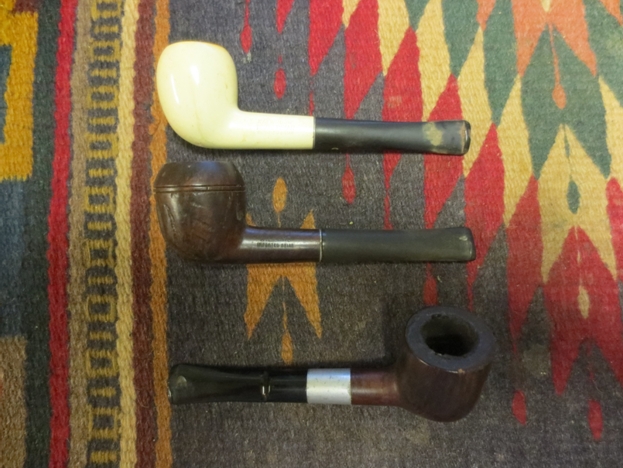
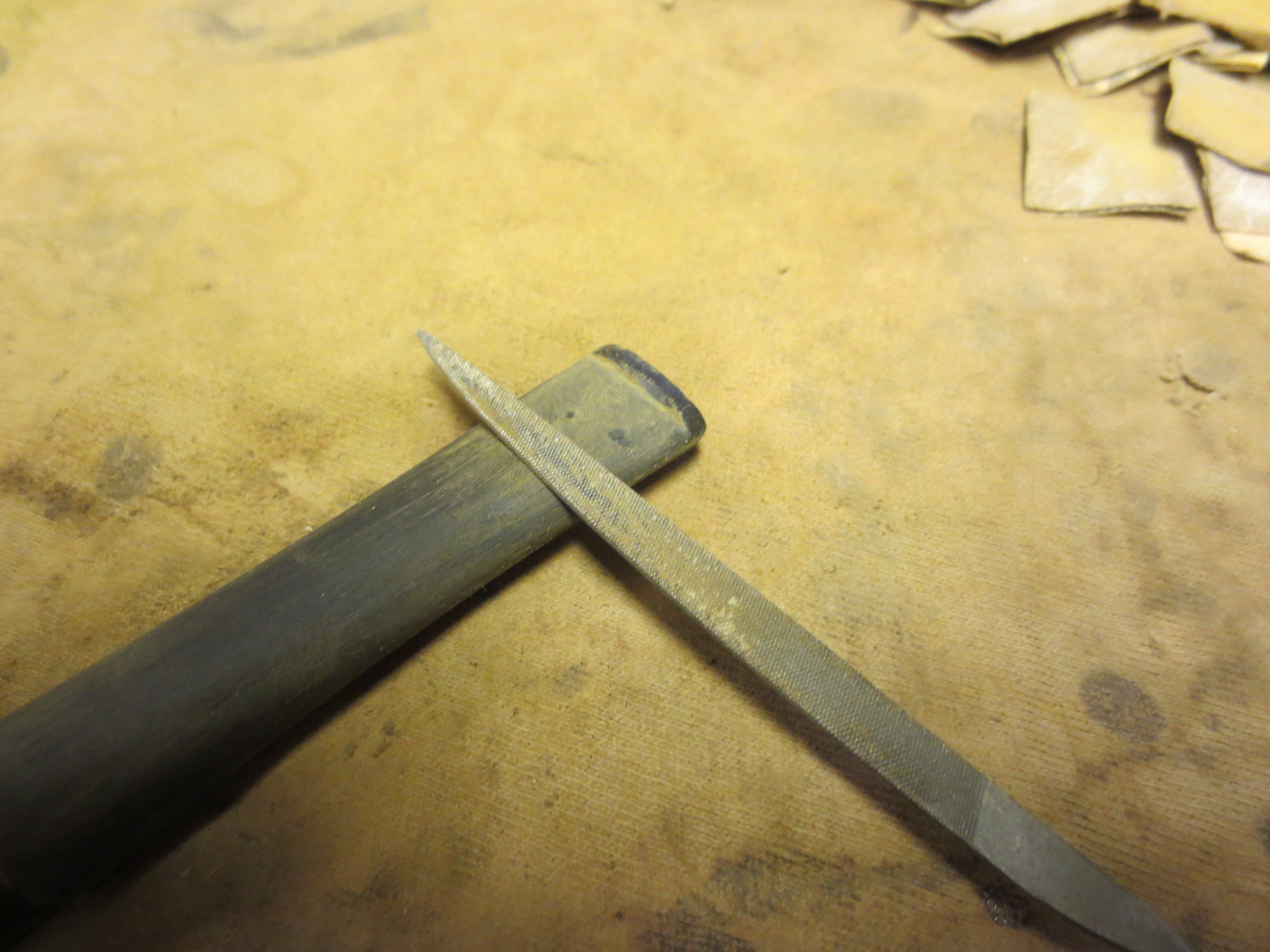
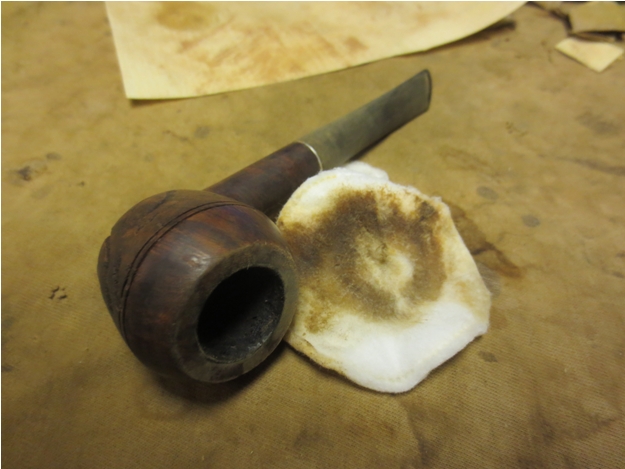
Another of the bowls from the gift box was this Willard Rhodesian. It was in pretty good shape other than being dirty and stemless. The bowl had a broken cake at the top of the bowl and remnants of tobacco left in the bowl. The rim was dirty and lightly caked with some damage caused from tapping the rim on something. The outer and inner edges of the bowl were undamaged. The interior of the shank was dirty. The shank was fitted with a threaded mortise that would take a threaded stem. I had a stem in m can of stems that fit well in the shank, was overturned but workable. The diameter of the stem was larger than the shank. The photo below shows the stem on the pipe in the middle of the threesome. IMG_1750 I set up a heat gun and held the stem about three inches above the heat. The first photo below shows the stem in place. To heat it I removed it from the bowl and heated the metal tenon. When it was warm I screwed it back in place and twisted it. I had to reheat it several times to get the alignment correct. The second photo shows the aligned stem. IMG_1752 IMG_1755 I sanded the stem with 150 grit sandpaper to reduce the diameter of the stem. I also sanded the slope to the button to highlight the tooth marks on the stem. IMG_1809 IMG_1810 IMG_1811 I used a needle file to sharpen the inner edge of the button and make the angles more distinct. IMG_1812 I wiped down the bowl with acetone to remove the grime and clean up the finish. I did not want to lighten the finish as much as to clean off the light coat of varnish on the briar. IMG_1814 IMG_1813 I lightly topped the bowl to clean up the rim damage. I used a sanding board and 220 grit sandpaper to remove the damaged briar and then followed that by sanding with a medium and a fine grit sanding block. IMG_1815 IMG_1816 I continued to sand the stem to match it to the diameter of the shank. I used 220 grit sandpaper to finish the sanding and shaping of the stem. I worked on the tooth marks on the top side and underside of the stem with 220 grit sandpaper until they were no longer visible. IMG_1817 IMG_1818 IMG_1819 IMG_1820 I reamed the bowl with a PipNet pipe reamer beginning with the smallest cutting head and working up to the one that was the same diameter as the bowl. I reamed the bowl back to bare wood. IMG_1821 IMG_1822 I sanded the stem with a medium and fine grit sanding sponge to reduce the scratches left behind by the 220 grit sandpaper. IMG_1823 There was one stubborn tooth mark that I could not get out on the underside of the stem next to the button. I cleaned the area with alcohol and then used clear super glue to repair it. I sprayed the path with an accelerator so that I could sand the patch sooner. IMG_1824 IMG_1825 IMG_1826 IMG_1827 I sanded the stem with micromesh sanding pads – wet sanding with 1500-3200 grit pads and dry sanding with 3600-12,000 grit pads. I rubbed down the stem with Obsidian Oil between each group of three micromesh sanding pads and then when I finished sanding with the 12,000 grit pad I buffed it with White Diamond. IMG_1828 IMG_1829 IMG_1830 I buffed the bowl and shank with White Diamond and then gave it a coat of Danish Oil and walnut stain to protect and preserve the finish. When it was dry I buffed the pipe with White Diamond and then gave it several coats of carnauba wax. IMG_1835 IMG_1836 IMG_1837 IMG_1838 The finished pipe is shown in the photos below. The new stem fits well. In fact it looks like it came with the pipe. The repairs to the stem are not visible. The bowl itself dried well and buffing the finish gave it a softer look. The finished pipe was given several more layer of carnauba wax and then buffed with a soft flannel buffing pad. It is now ready for many more years of service to another pipeman. IMG_1844 IMG_1845 IMG_1846 IMG_1847
Worn and Tired No Name Pot Given a New Look


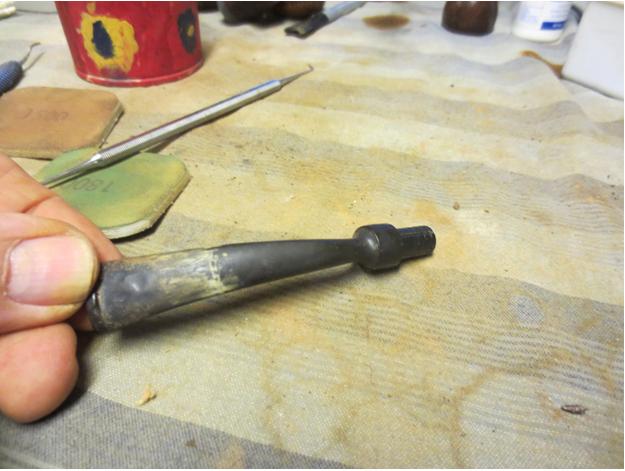
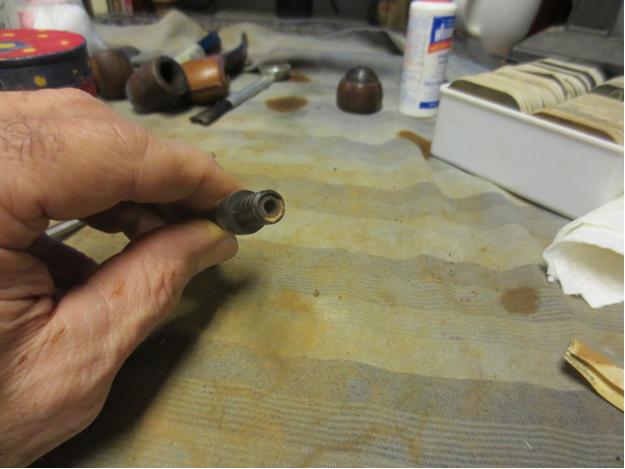
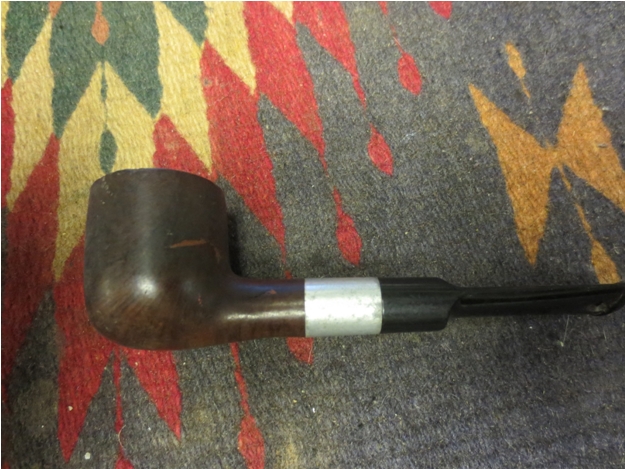
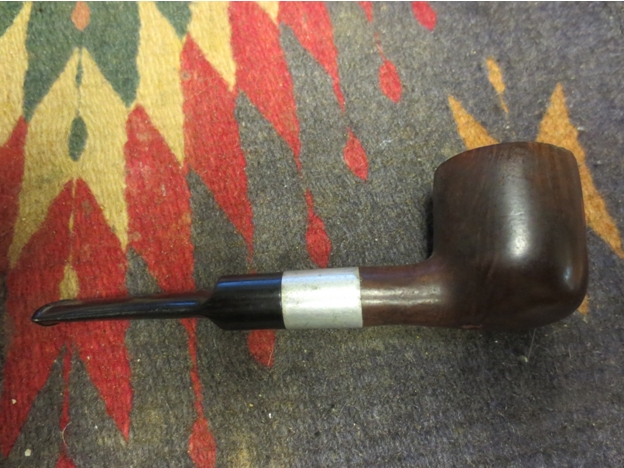
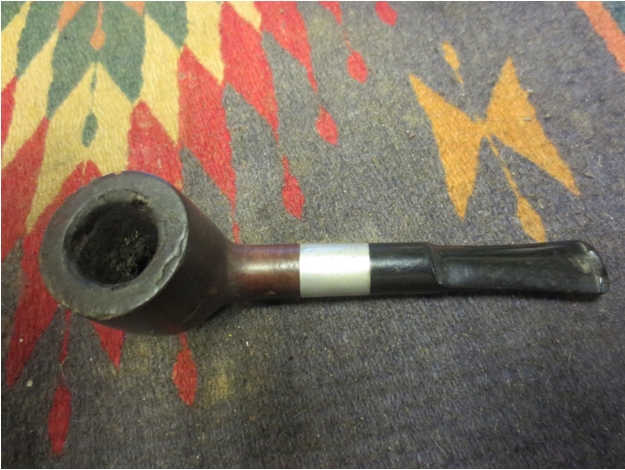
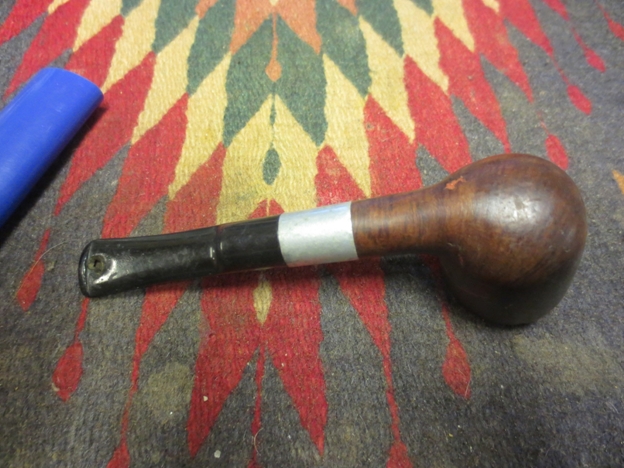
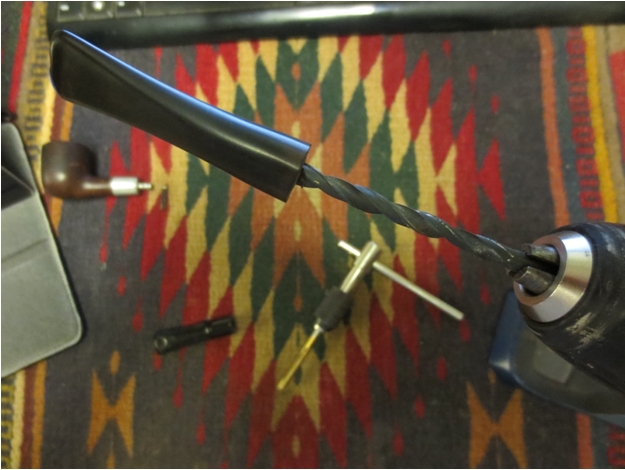
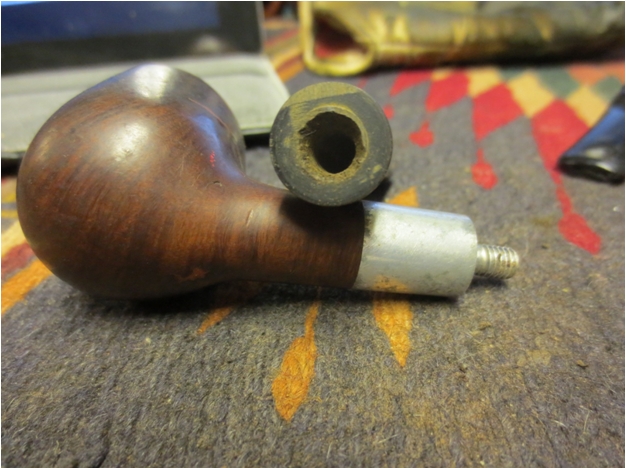
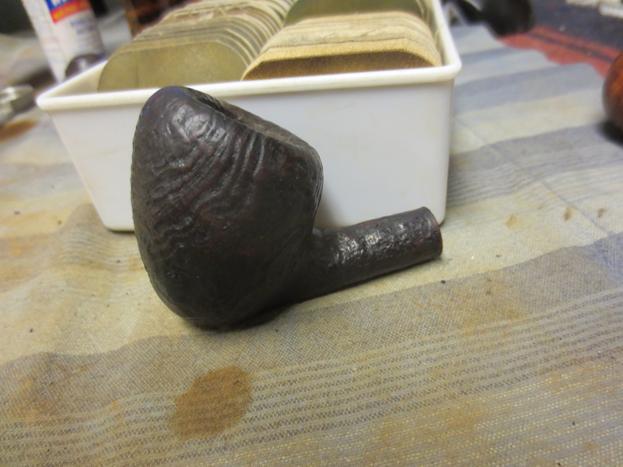
The next pipe I decided to work on from the gift box was a no name pot shaped bowl without a stem. There was a stem in the box that fit well in the threaded metal shank. The problem with the stem was that it was worn out. There was a large dent on the top of the stem and a large hole in the underside of the stem that also had much damage around the hole. The stem was also over turned. The shape was unique in that the bowl had a slight cant to it. The finish was ruined and the grit and grime on the bowl was heavy. There were four fills using pink putty that stood out on the bowl left side, front and bottom. The rim was thickly tarred and oiled. The outer edge was damaged all the way around the bowl. The cake was quite thick and was crumbling at the bottom of the bowl. The shank was thick with tars as well. The aluminum was oxidized. IMG_1745 IMG_1746 IMG_1747 IMG_1748 I used a lighter and a heat gun to heat the metal tenon and was able to adjust the stem to a proper fit on the shank. It softened the glue and lined up nicely but when I heated the top side of the stem to try to raise the dent it bubbled even at a distance of three inches plus above the heat source. Yet another reason I don’t like nylon stems. IMG_1749 IMG_1750 IMG_1751 IMG_1757 Looking at it carefully after I had straightened it out I could see that the stem was really worn out and would be better used on a different pipe after it had been cut down. I heated the tenon once again and was able to remove the stem from the tenon. The tenon itself was threaded and screwed into the stem. I had a taper stem in my can of stems that had a broken tenon. I sanded the remainder of the broken tenon until it was smooth. Noname The new stem was the slightly longer than the original stem and it was vulcanite. I drilled out the airway until the metal tenon end fit the in the stem. I held the drill firmly and turned the stem onto the drill bit by hand. I used a tap to cut threads in the freshly drilled hole. IMG_1759 IMG_1761 I beveled the drilled hole to accommodate the lip on the threaded tenon so that it would sit flush with the face of the stem. I mixed a batch of two part quick dry epoxy and coated the threaded end of the tenon before threading it into the hole in the stem. IMG_1762 IMG_1763 I set the stem aside to let the epoxy cure and turned to work on the bowl. The bowl needed to be reamed so I used a PipNet reamer to do the work. I started with the smallest cutting head and continued until I used one the same size as the bowl of the pipe. I scrubbed out the shank and bowl with alcohol and pipe cleaners and cotton swabs until the shank and bowl were clean. IMG_1764 IMG_1765 I set up my topping board and a piece of 220 grit sandpaper and topped the bowl to remove the out rim damage and sharpen the edges of the bowl. I folded a piece of sandpaper and sanded the outer edge once it had been topped. I smoothed out the rough edges until the damage was minimized. IMG_1766 IMG_1767 I used a dental pick to remove the pink putty fills. I cleaned the surface with acetone to remove the dust and the remaining putty in the holes after I had picked them out. IMG_1768 IMG_1769 IMG_1770 IMG_1771 I packed briar dust into the holes in the briar and then dripped super glue into the briar dust to mix with the dust and make a hard fill. I over filled the holes in the briar with the dust and glue so that when it shrunk as it dried it would not leave dips in the surface of the briar. IMG_1772 IMG_1773 IMG_1774 I sanded the filled areas with 220 grit sandpaper to remove the excess and smooth out the fill until it was even with the surface of the briar. I sanded it with a medium and a fine grit sanding sponge and a fine grit sanding block. The new fills were black instead of the bright pink that was previously used in the repairs. Once stained they would be less obvious in the surface of the bowl than the previous ones. IMG_1775 IMG_1776 IMG_1777 I stained the bowl with Danish Oil and walnut stain and set the bowl aside to dry. IMG_1778 IMG_1779 IMG_1780 IMG_1781 The next morning I checked the fit of the stem as the epoxy had plenty of time to set and cure. I sanded the stem to reduce the diameter at the shank. I used 150 grit sandpaper to remove the excess while repeatedly screwing it into the shank to check that I had removed enough but not too much. IMG_1782 IMG_1783 IMG_1784 IMG_1785 I sanded the stem further with 220 grit sandpaper to remove more of the excess and to also reduce the scratches left behind by the 150 grit paper. I polished the aluminum with a fine grit sanding sponge and removed the oxidation and the scratches. When I had finished sanding the fit of the stem was exactly what I wanted and it only needed to be polished with micromesh sanding pads. IMG_1786 IMG_1787 IMG_1789 IMG_1790 I wet sanded with 1500-2400 grit micromesh sanding pads and dry sanded with 3200-12,000 grit sanding pads. I rubbed the stem down with Obsidian Oil between each set of three grits. I buffed the stem with White Diamond to give it a final polish and then rubbed it down a final time with the Obsidian Oil. Once it was dry I hand buffed it and fit it on the pipe. IMG_1797 IMG_1798 IMG_1799 I buffed whole pipe with White Diamond and gave it several coats of carnauba wax to raise a shine. I wanted to protect and shine the bowl and stem. The finished pipe is shown in the photos below. The new stem with the retrofitted metal tenon fit extremely well. I like the overall look of the pipe far better than the original look with the saddle stem. The pipe is ready to give many more years of service to the next pipeman whose rack it graces. The end of the stinger is removable so that the pipe can be smoked with or without the stinger. IMG_1800 IMG_1801 IMG_1803 IMG_1804