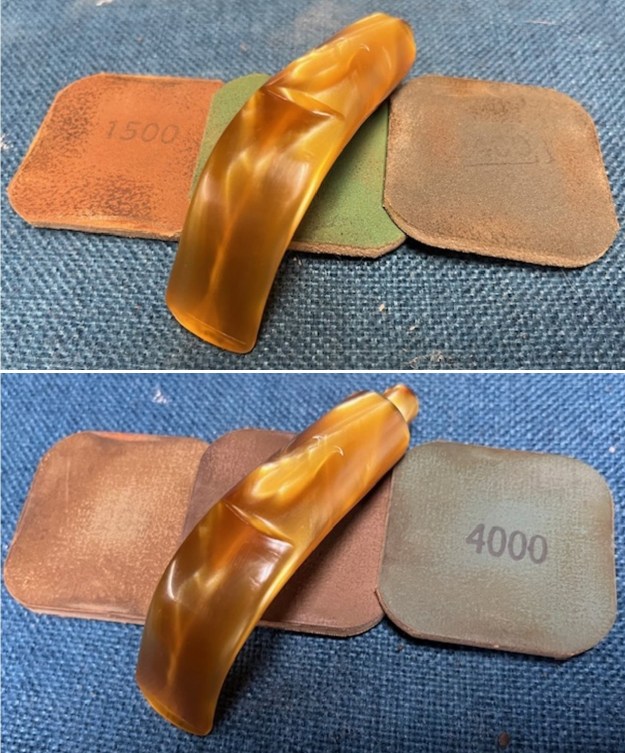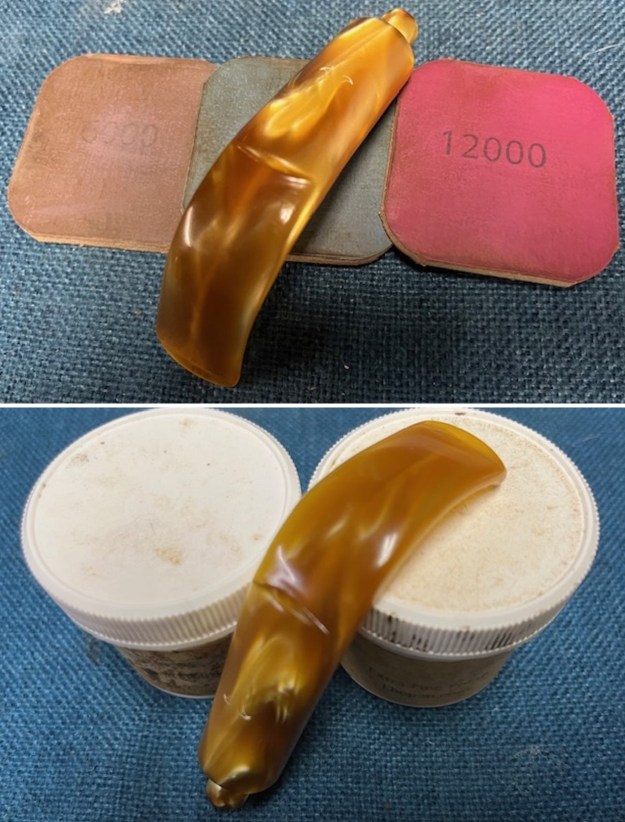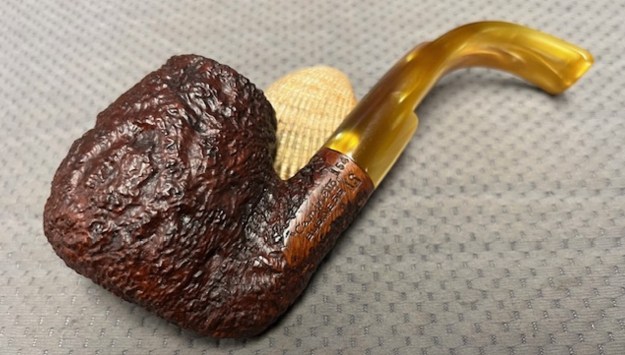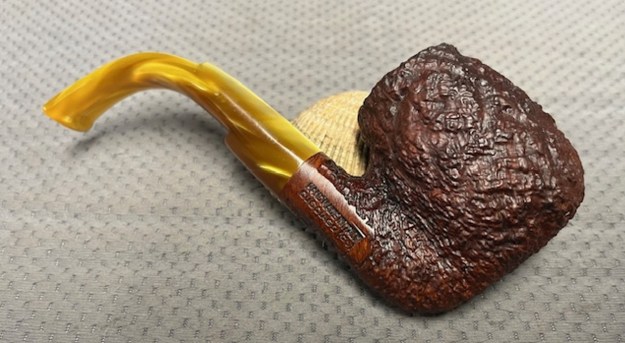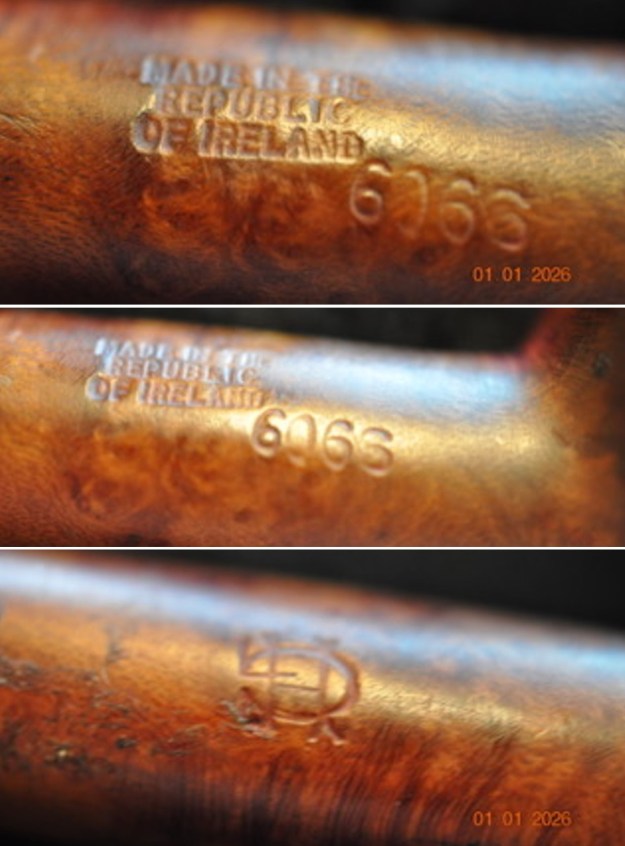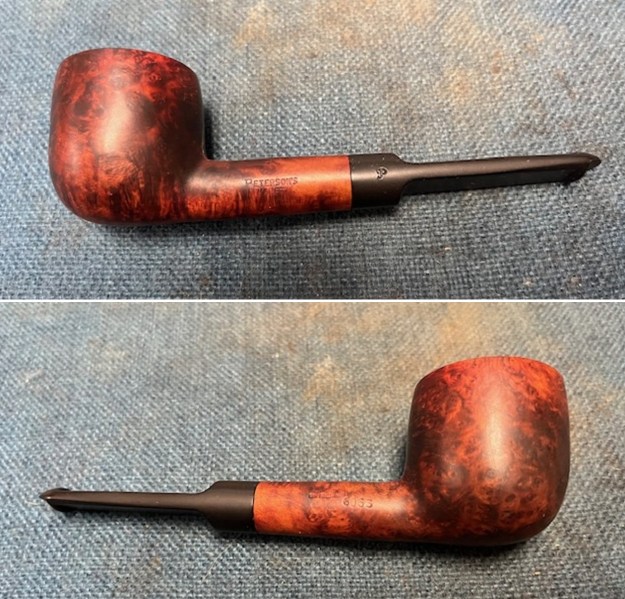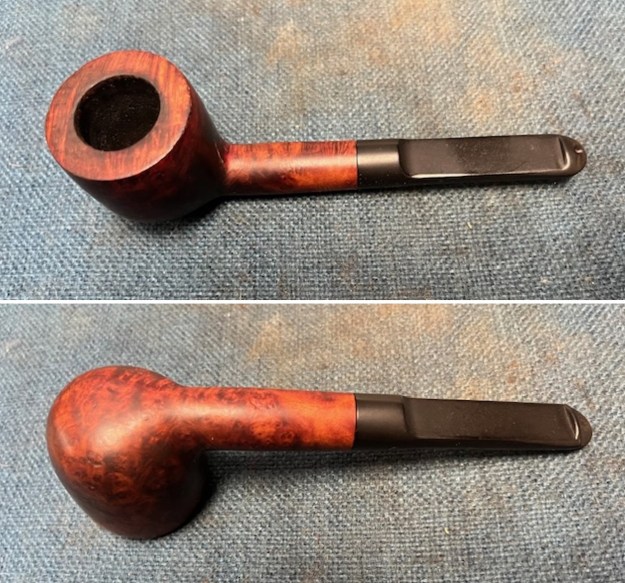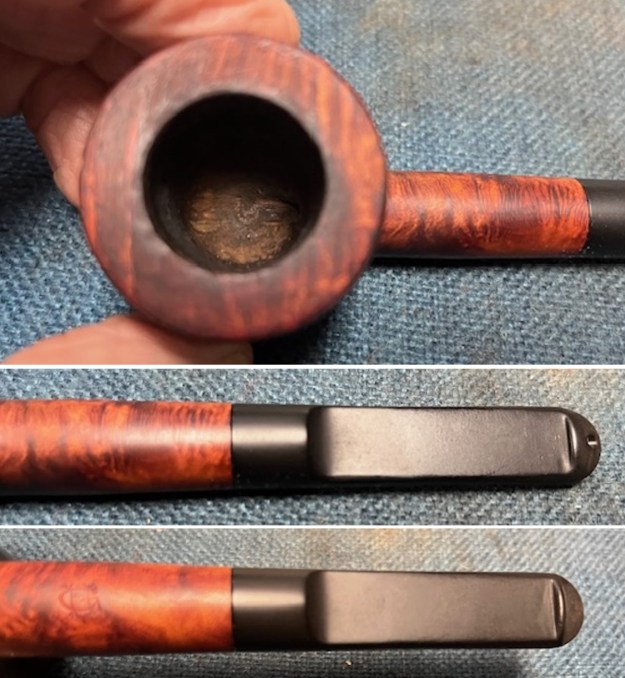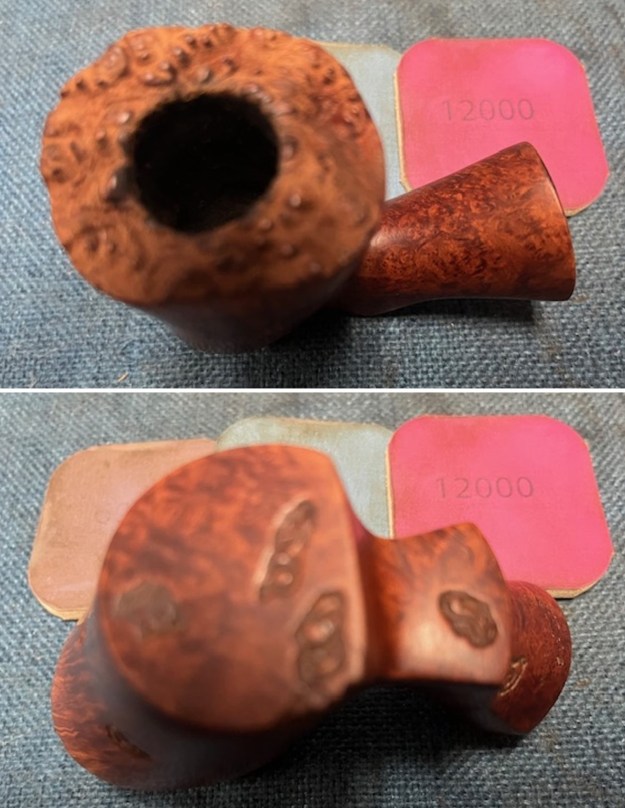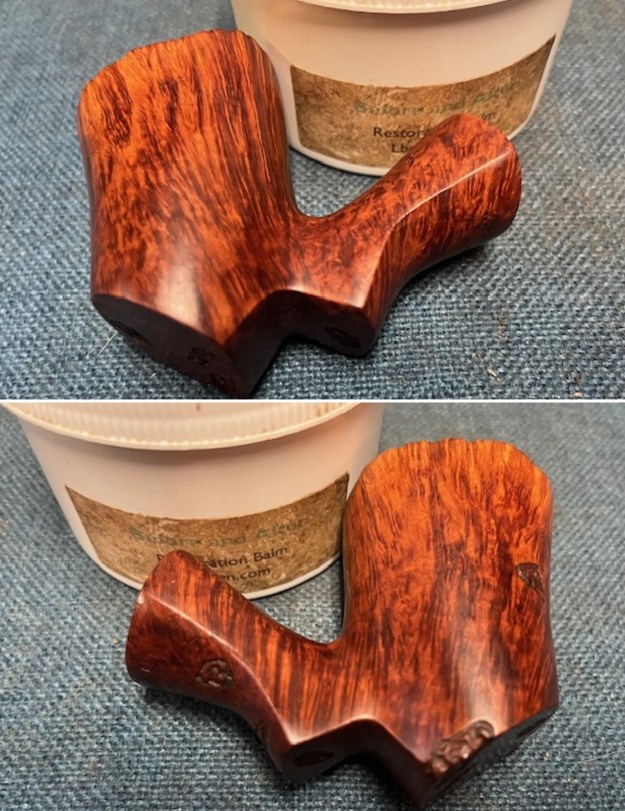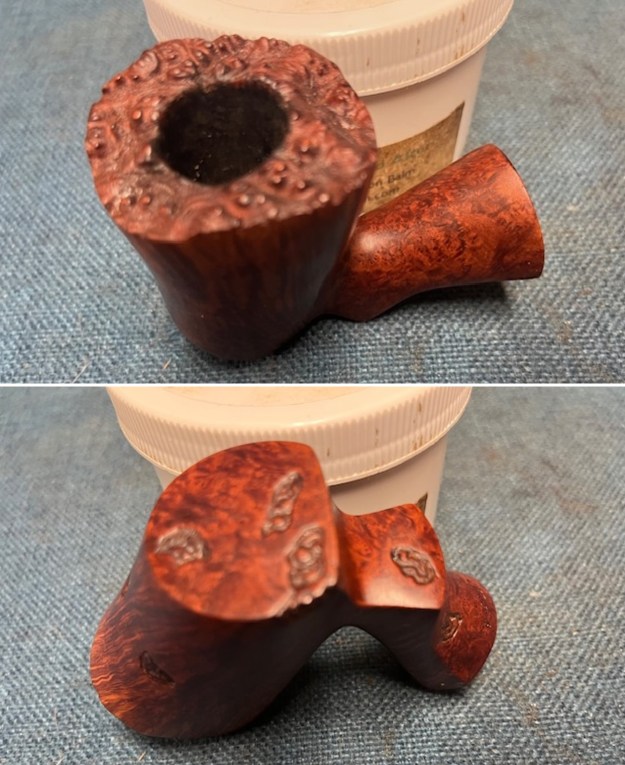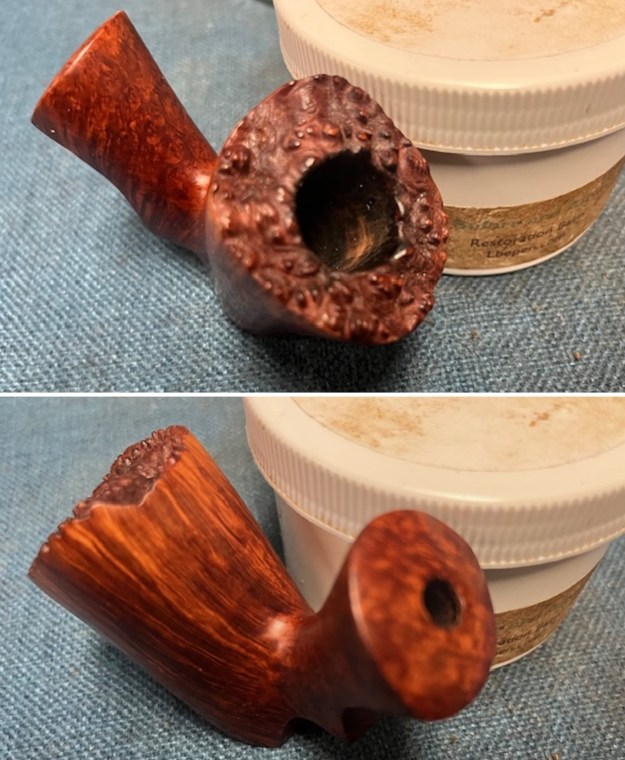
Tag Archives: bite marks

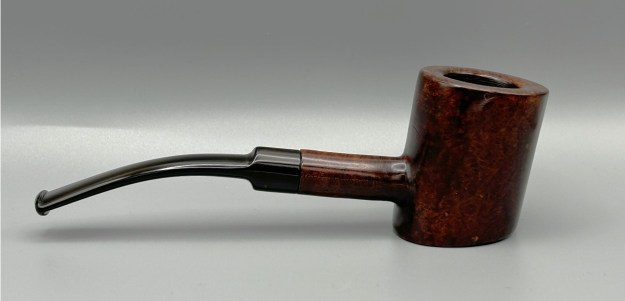
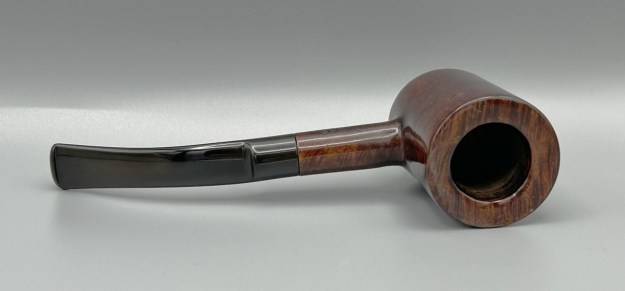
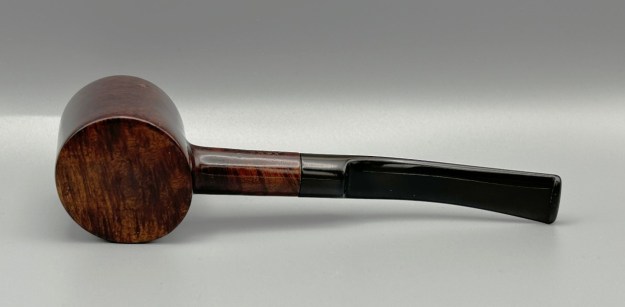
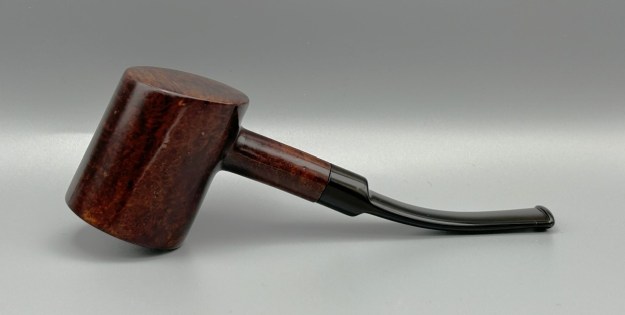
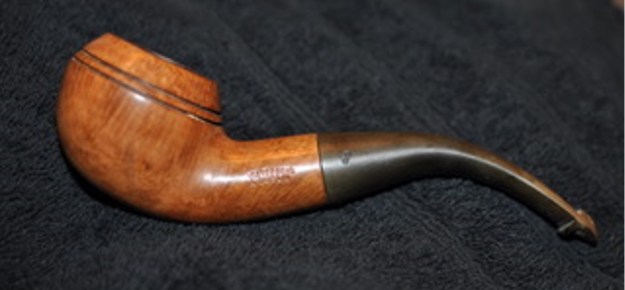
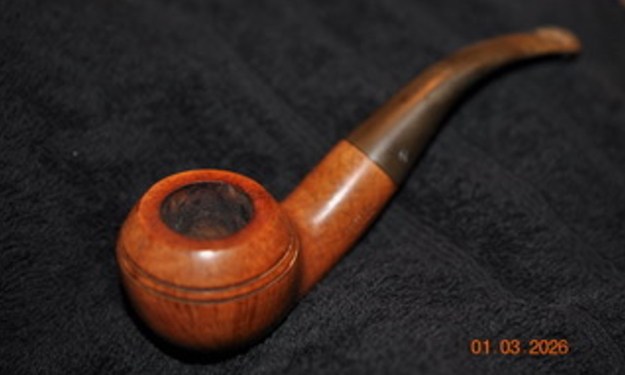
New Life for a 1982 GBD Virgin L Made in London Bent Apple


by Steve Laug

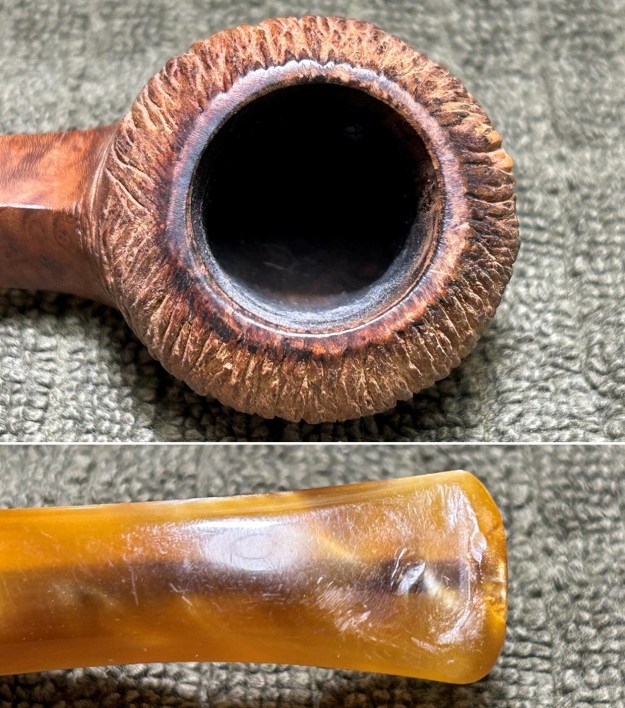
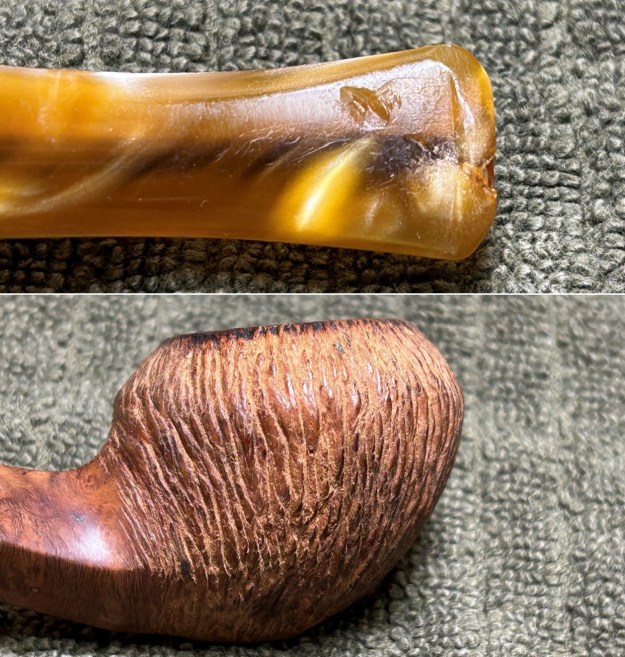
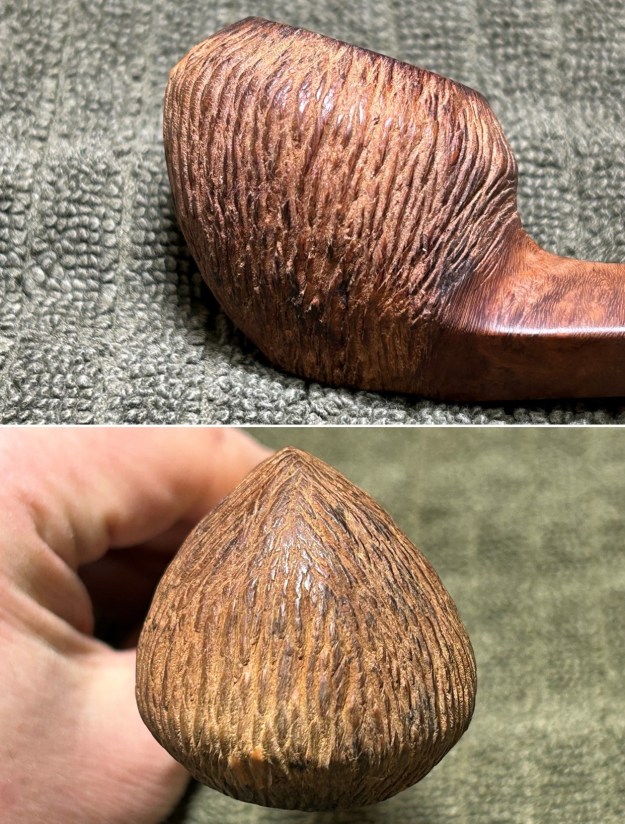
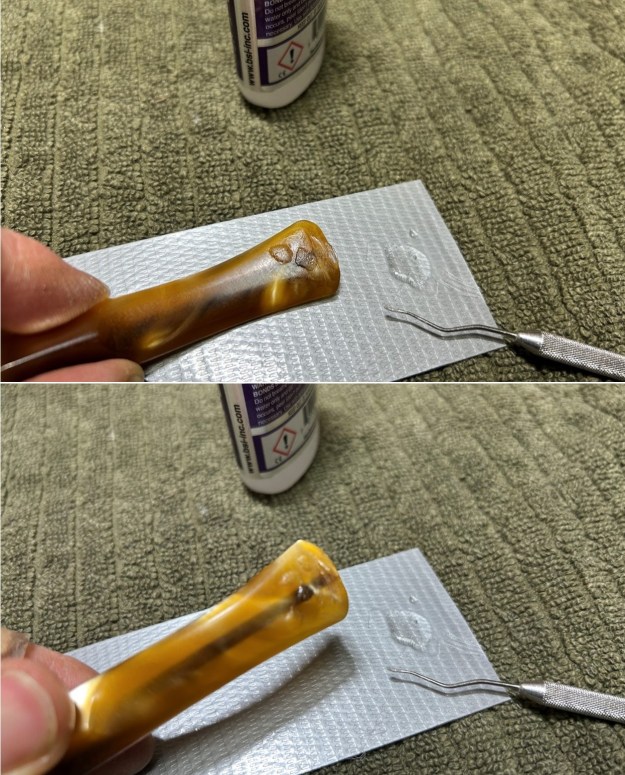
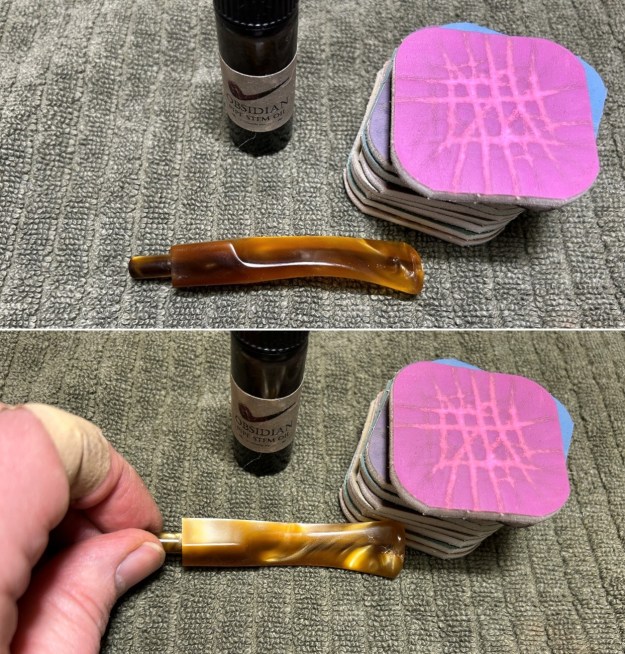
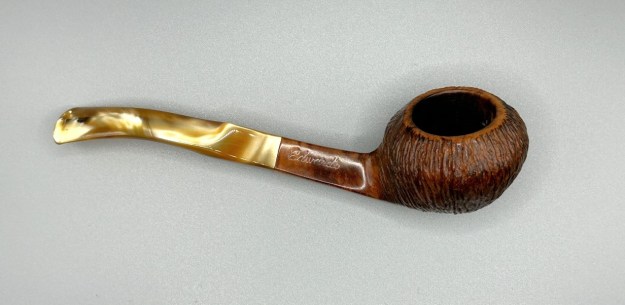
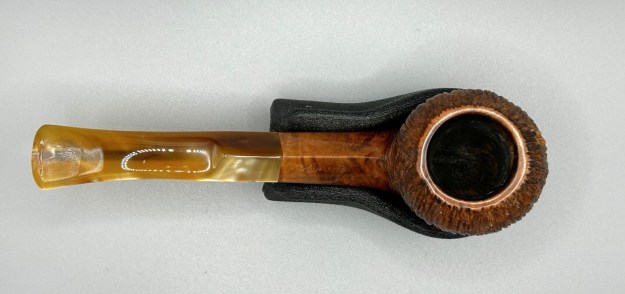
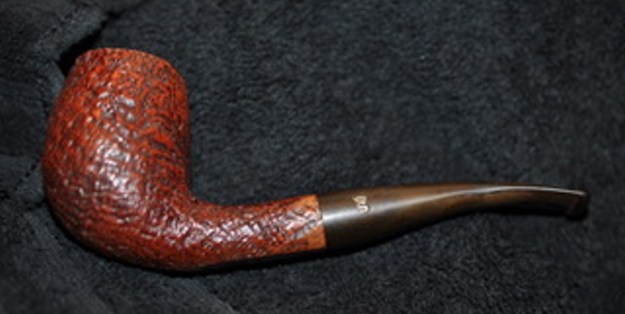
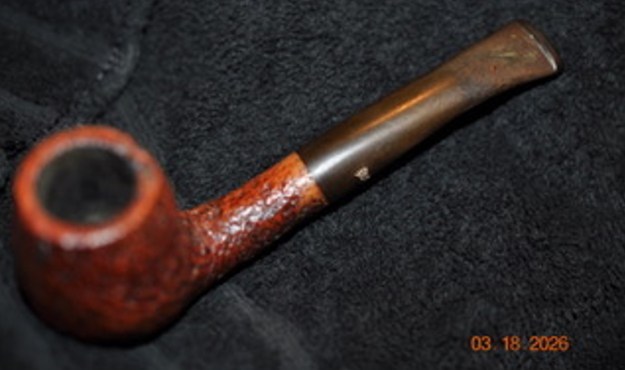
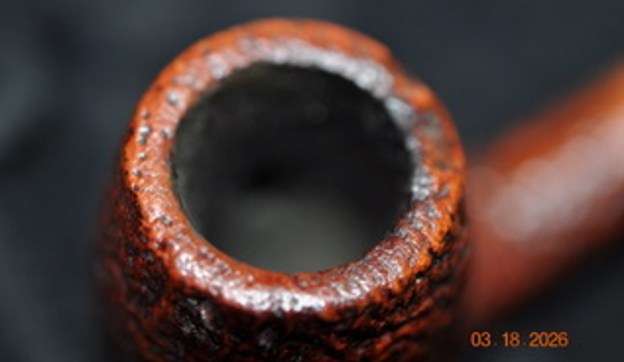
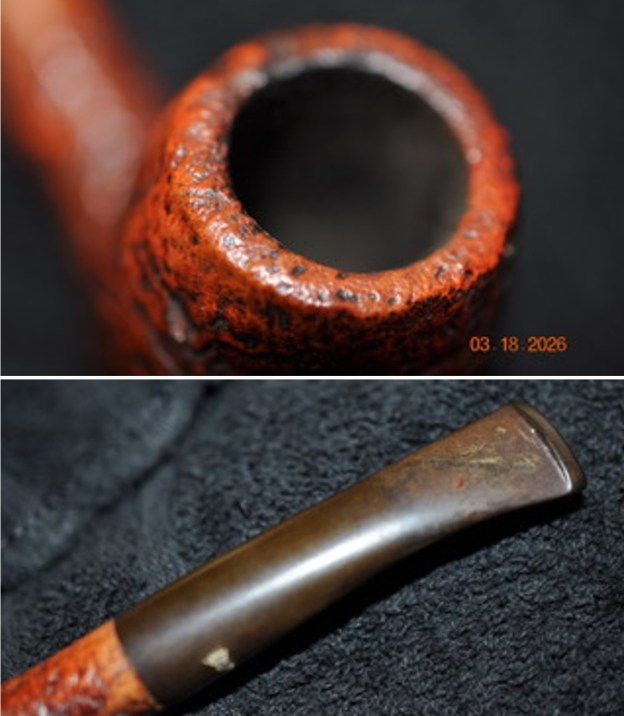
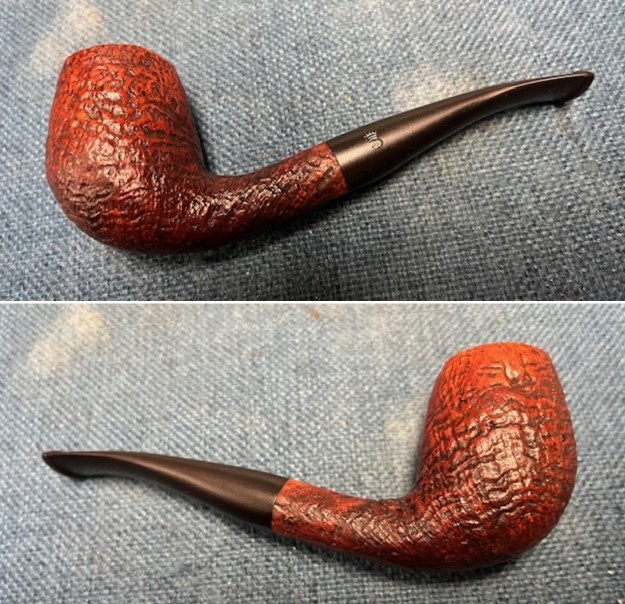
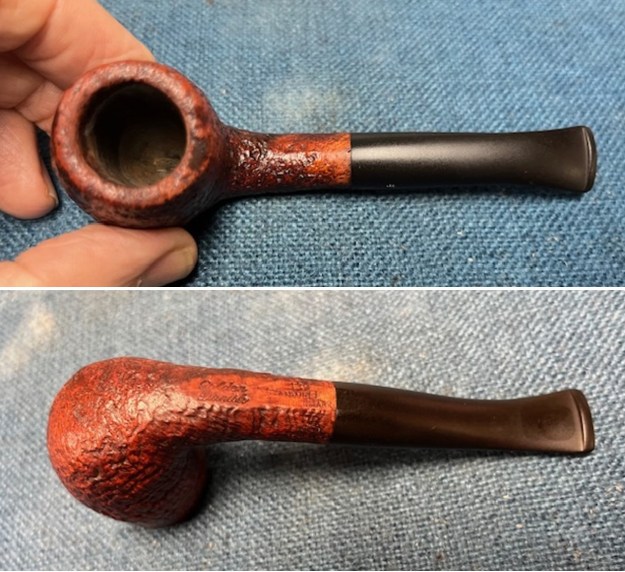
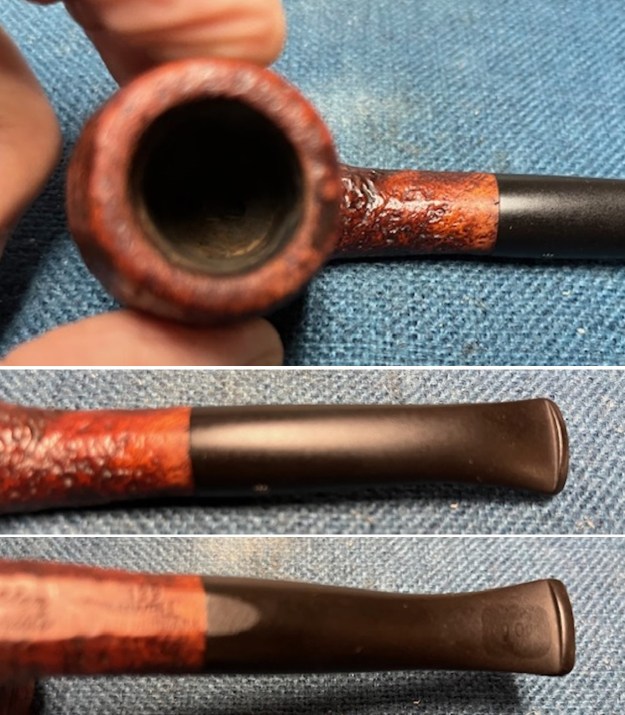
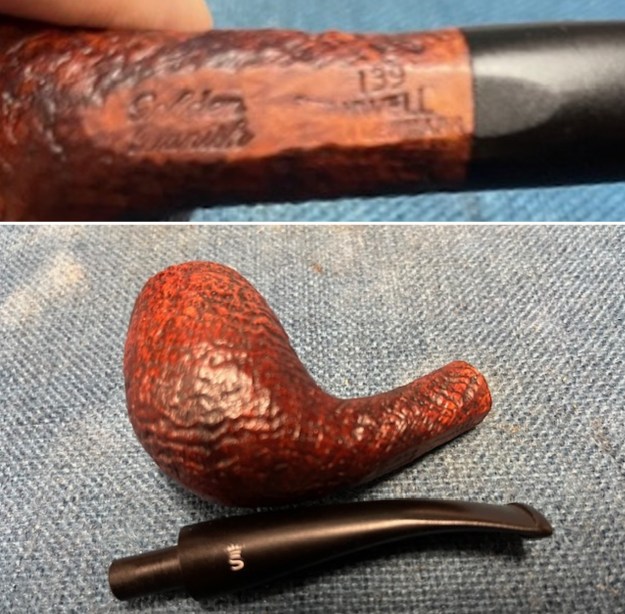
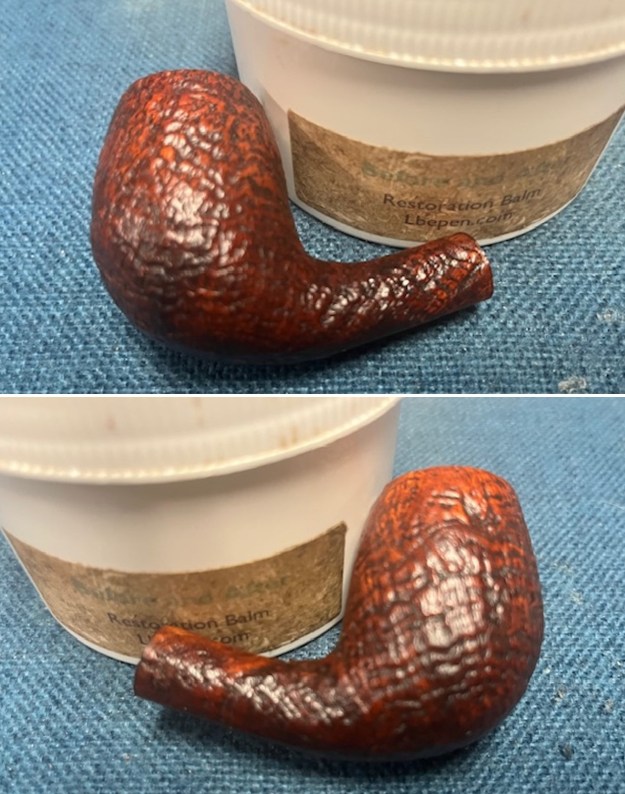
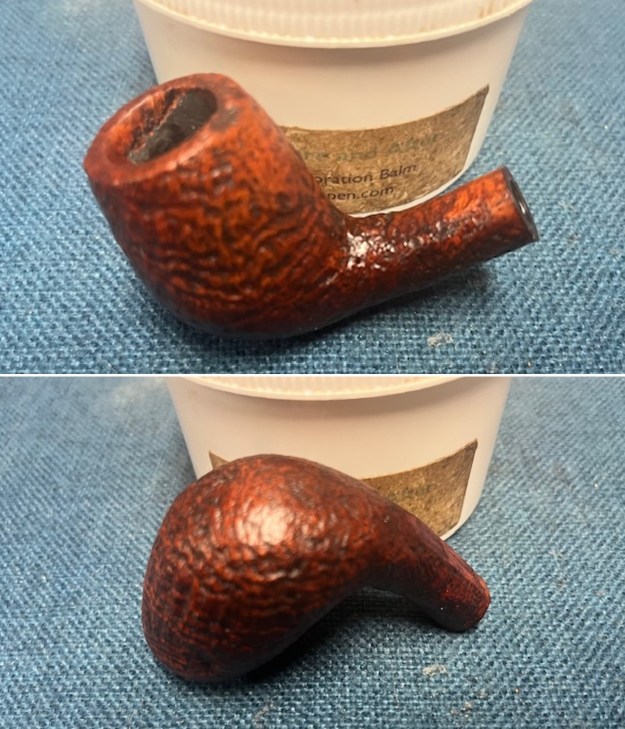
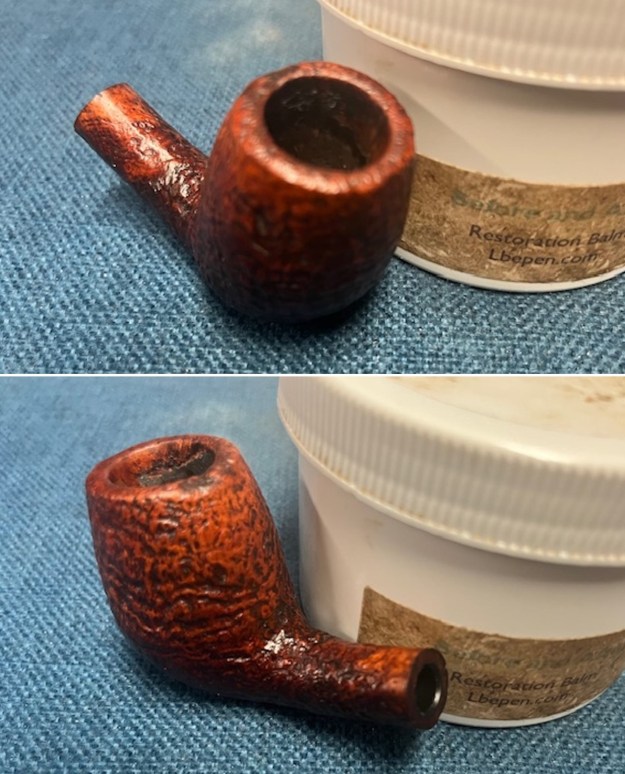
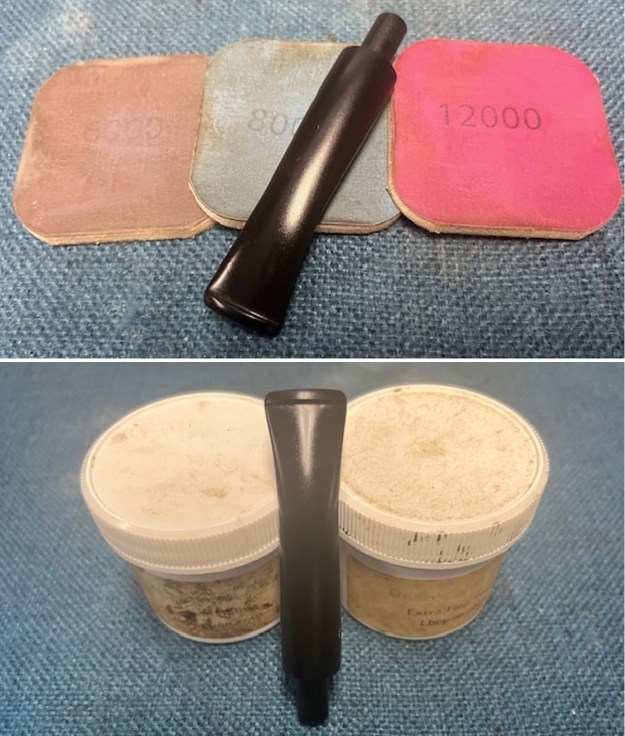
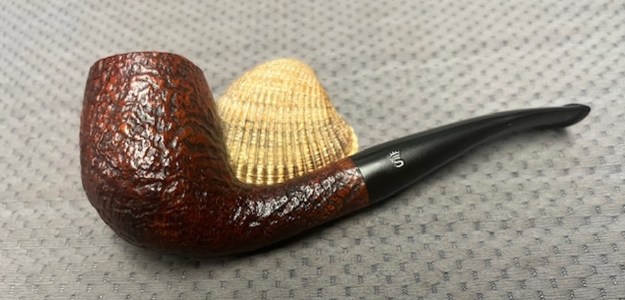
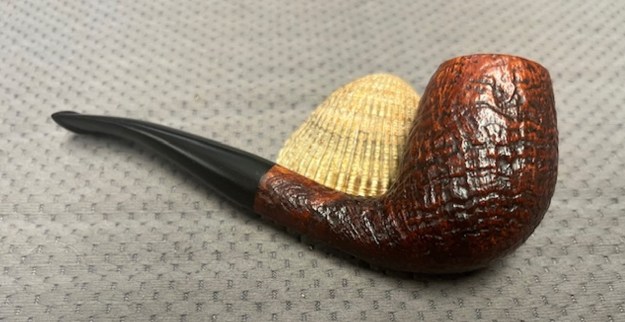
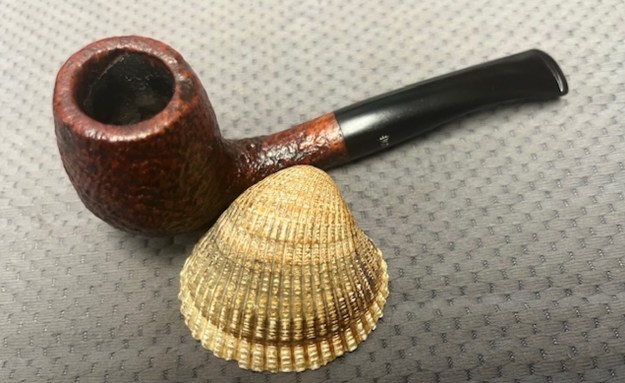
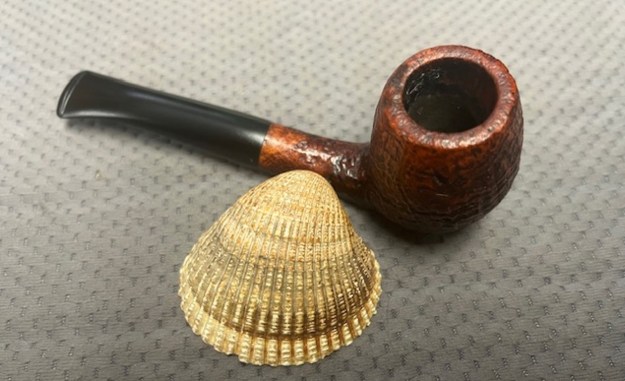
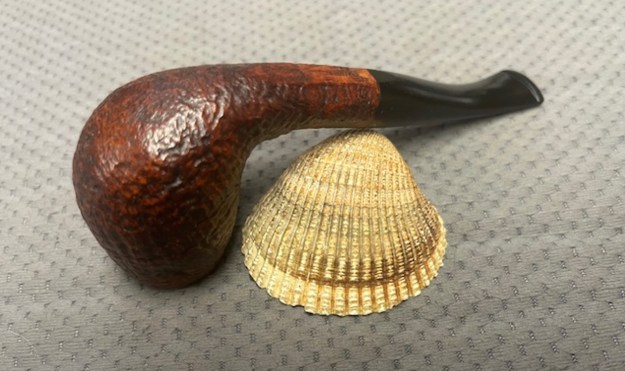
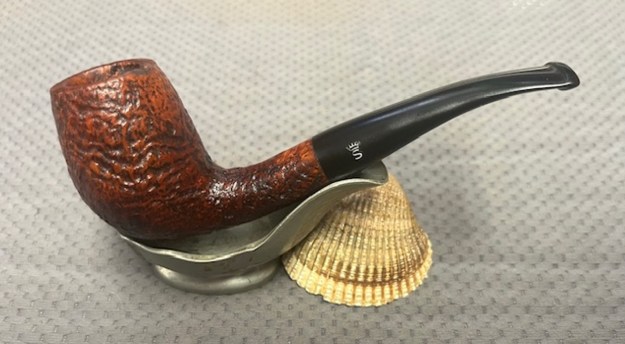
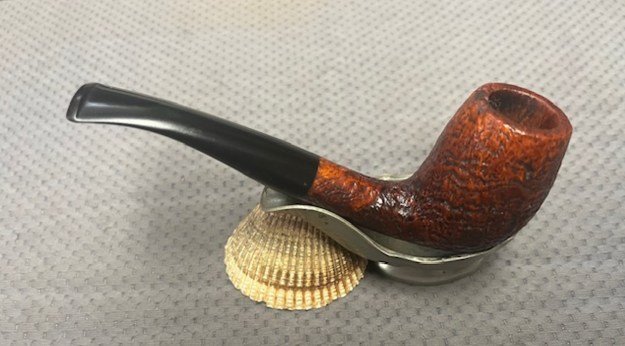
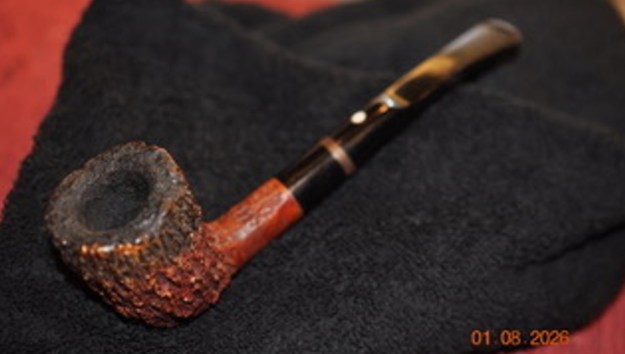
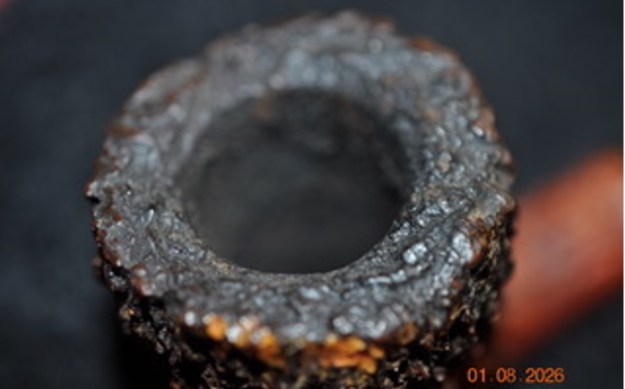
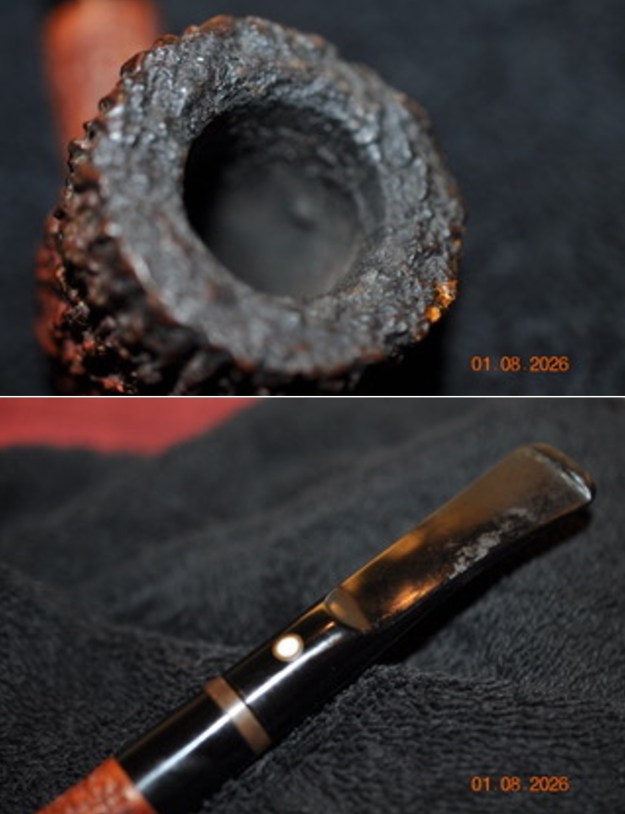
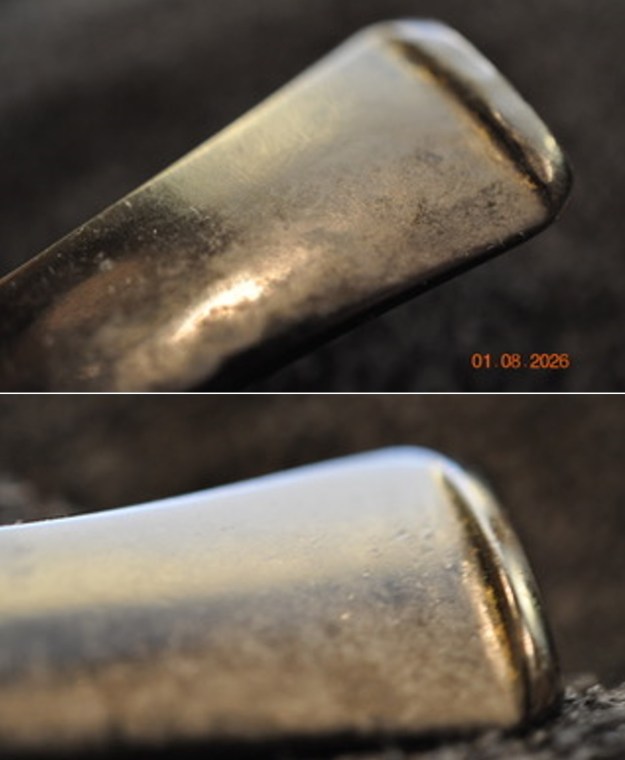
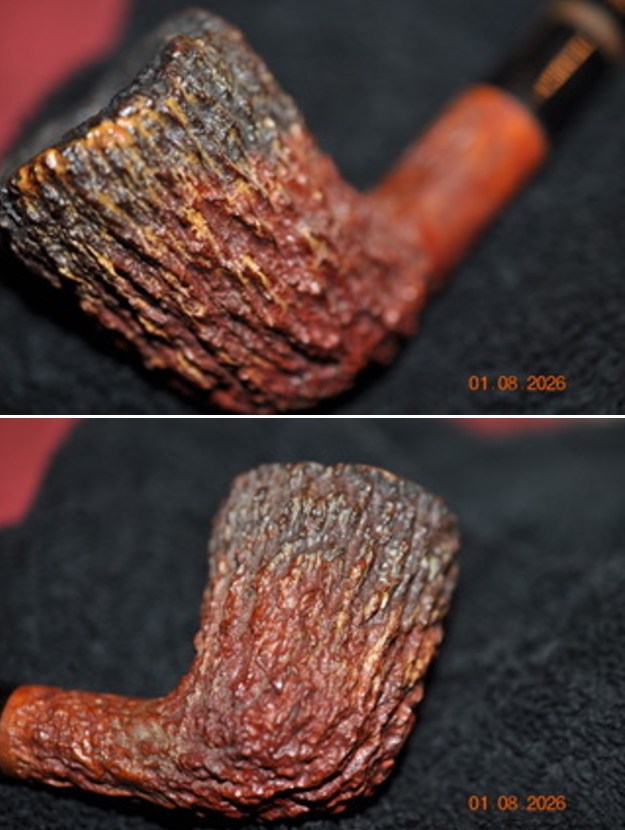
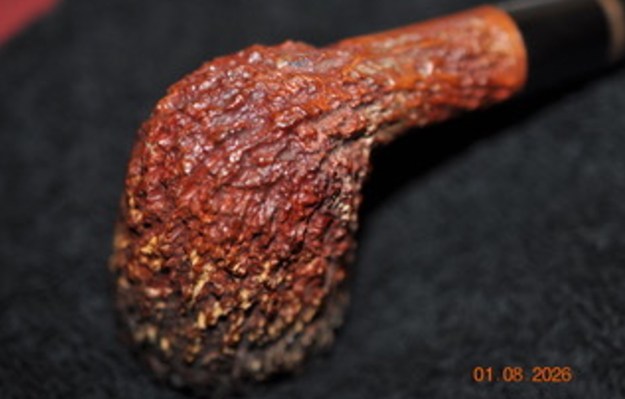
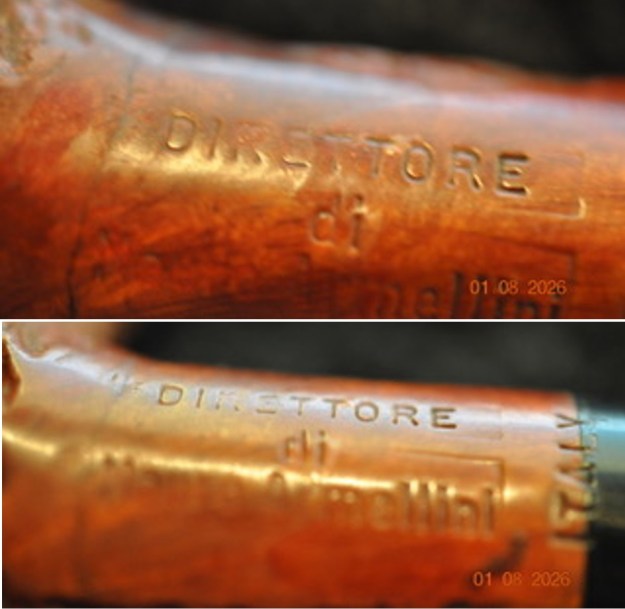
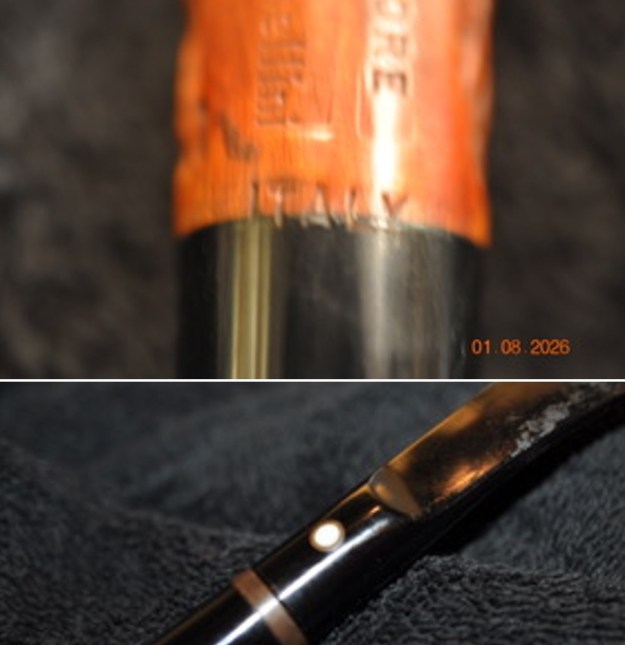
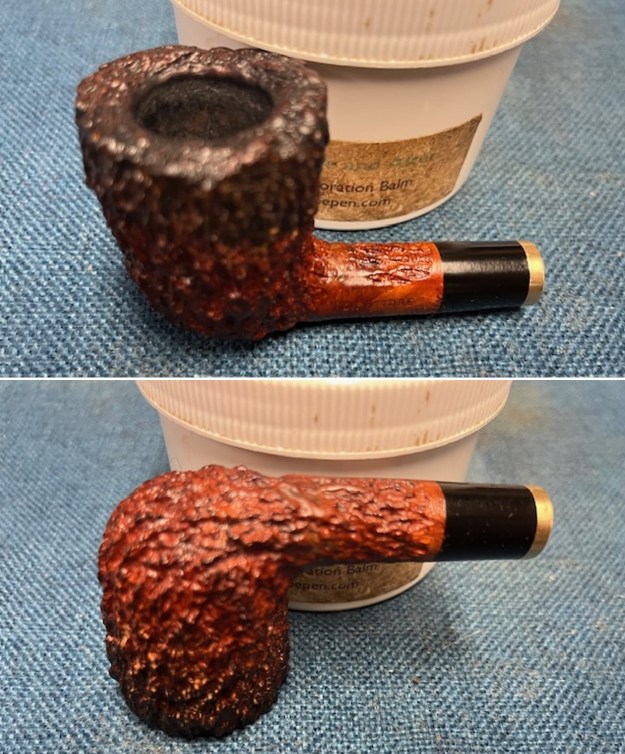
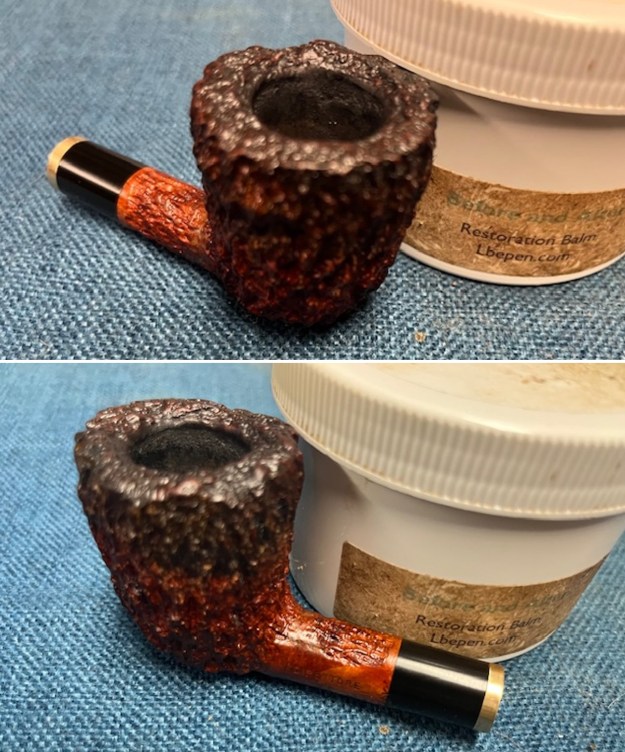
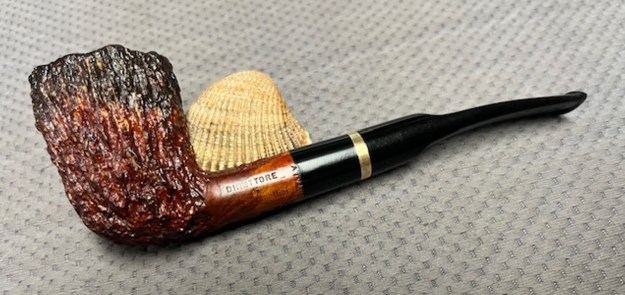
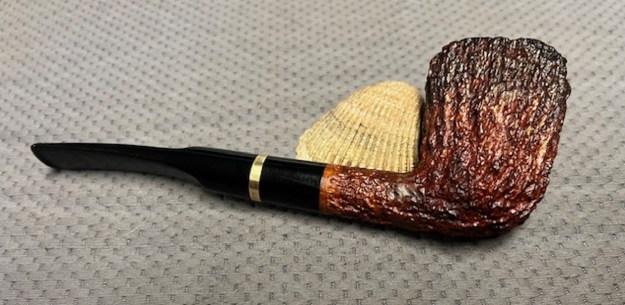
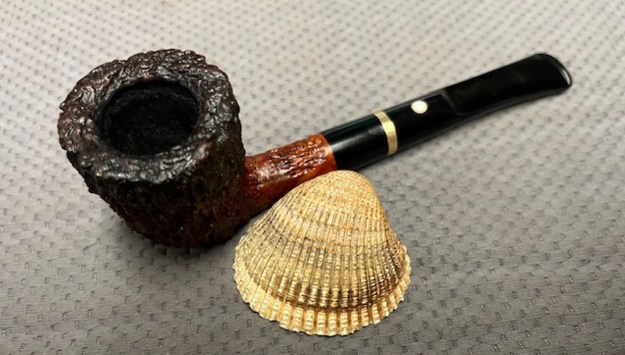
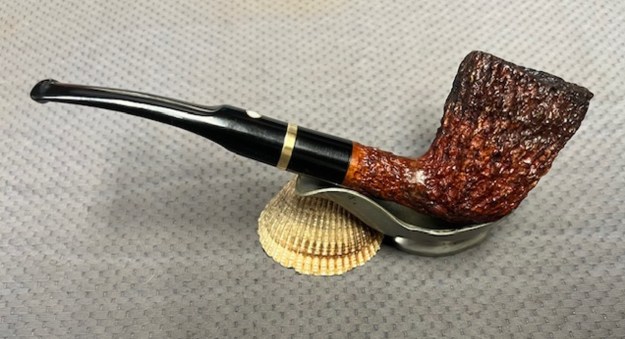
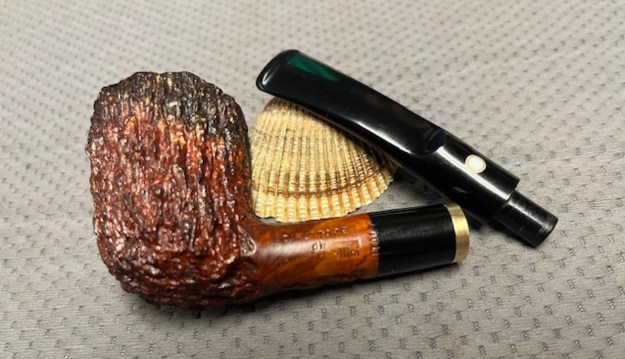
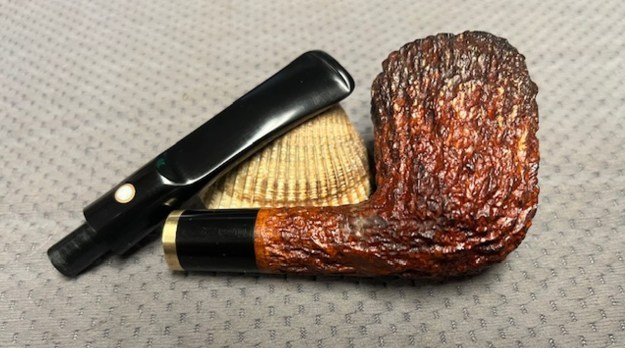
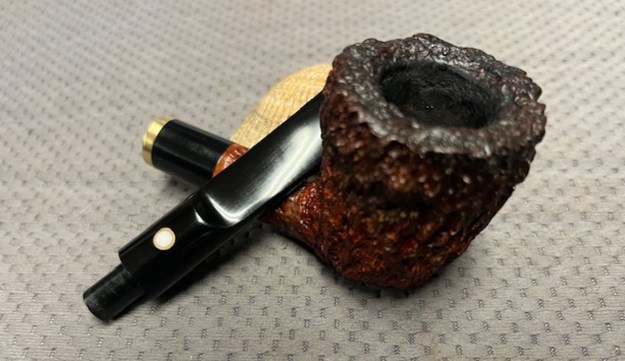
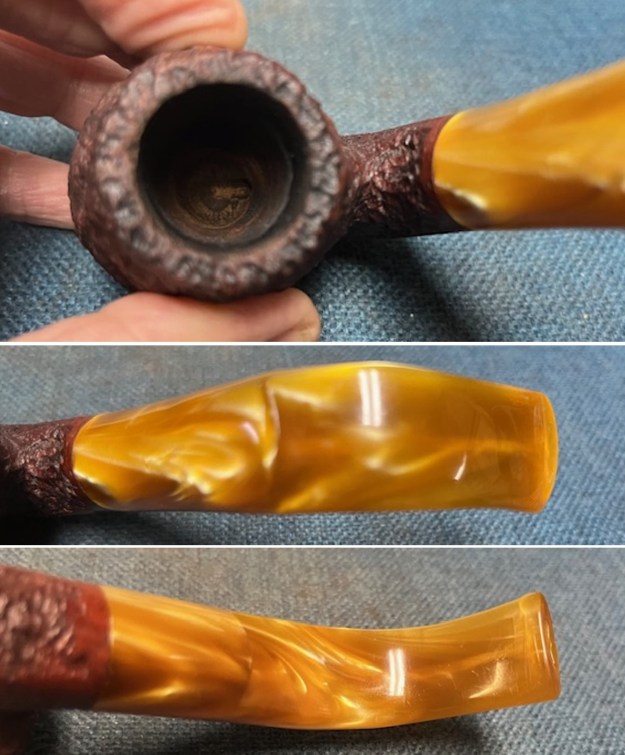
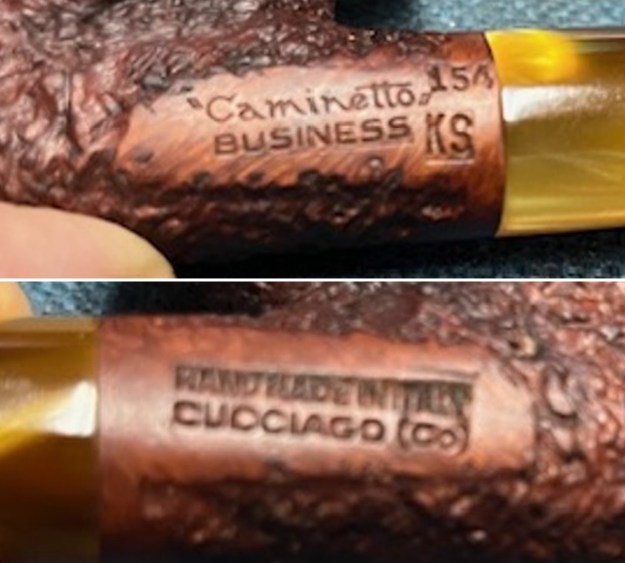
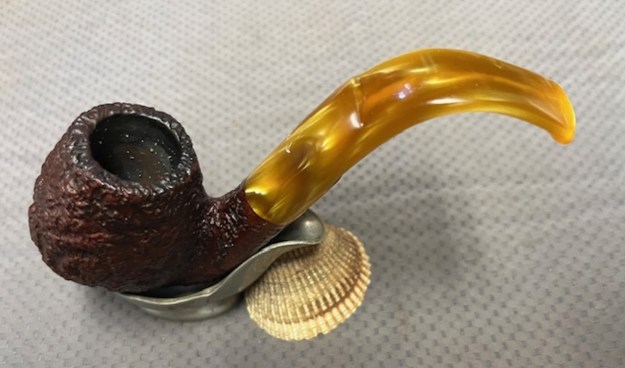
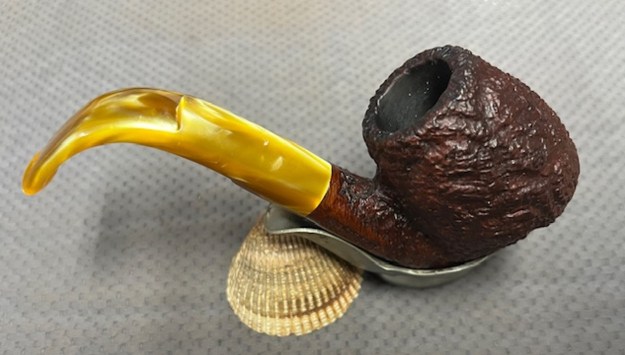
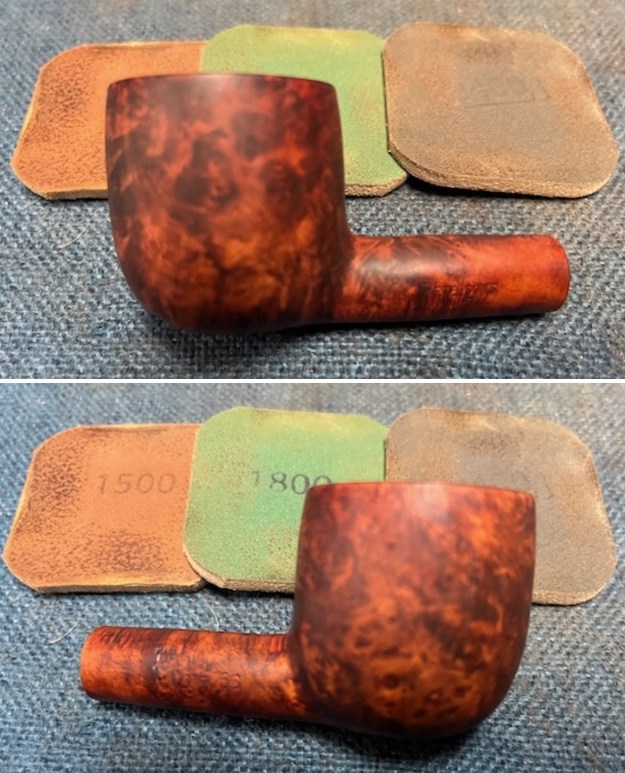
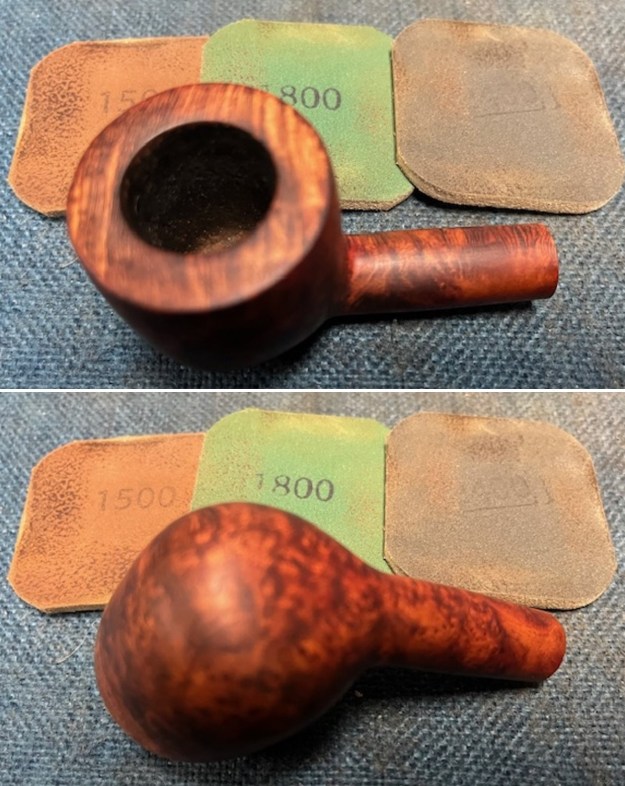
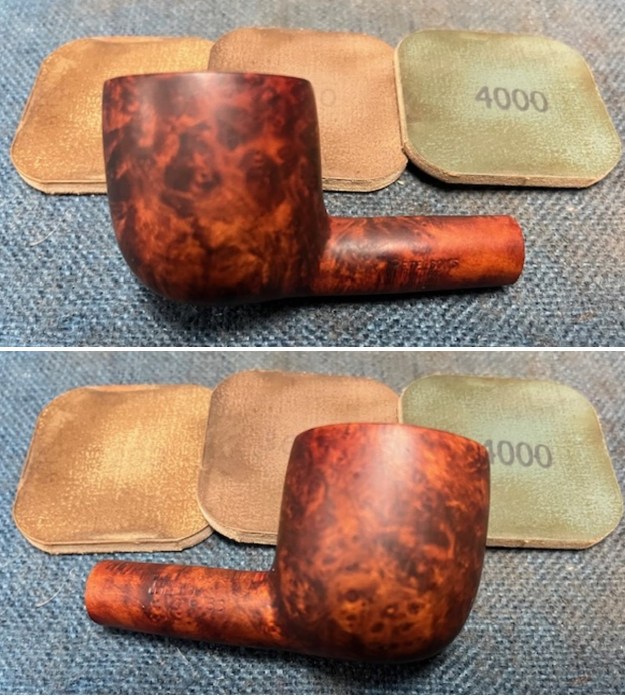
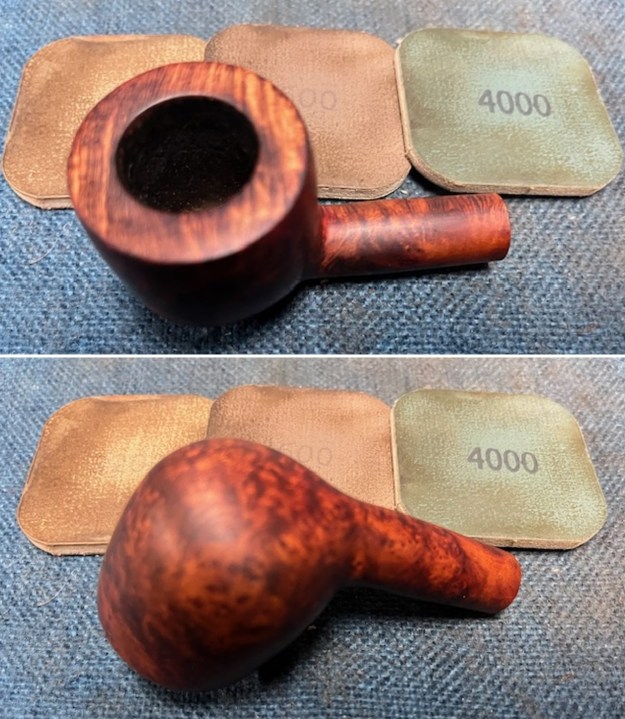
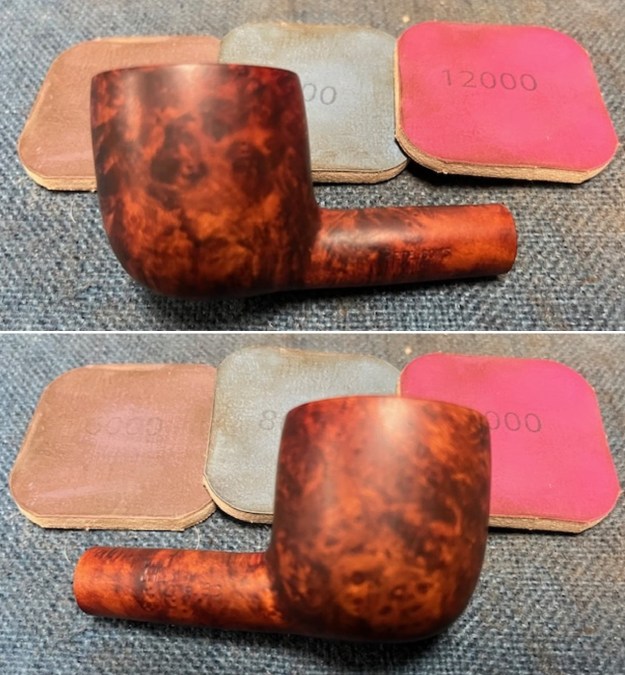
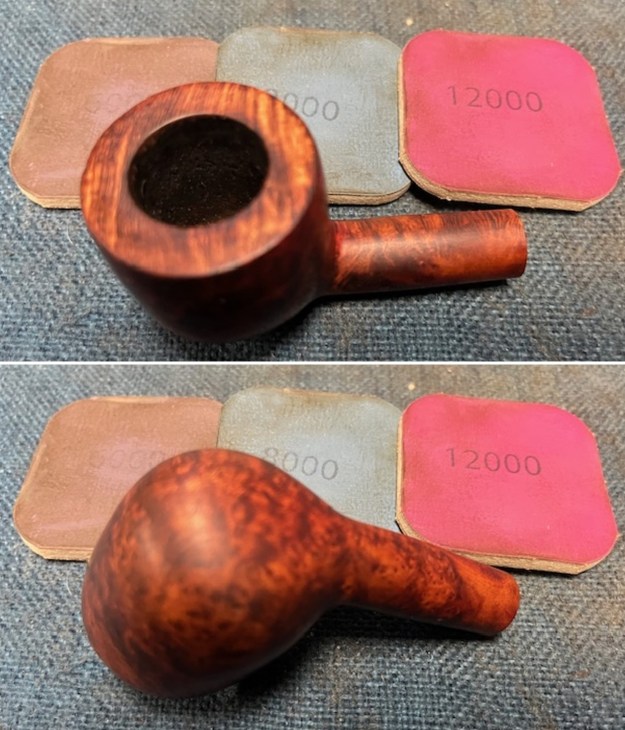
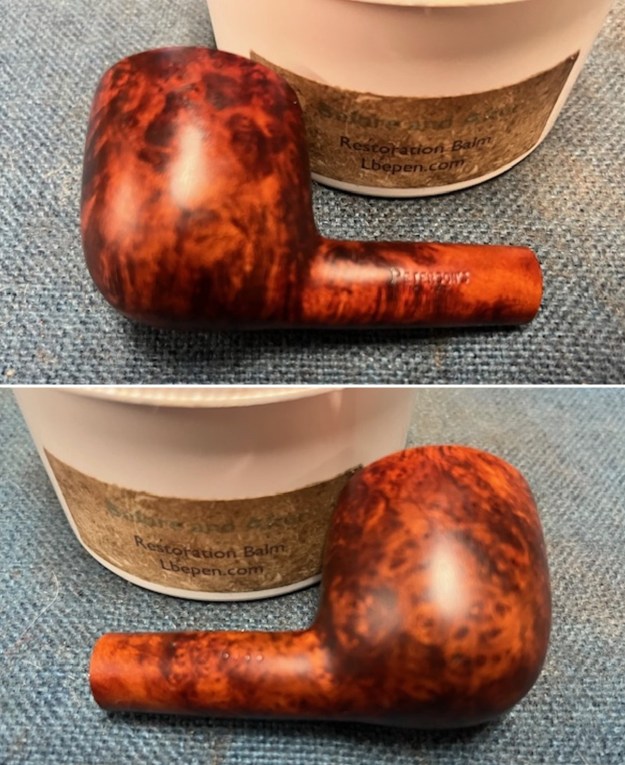
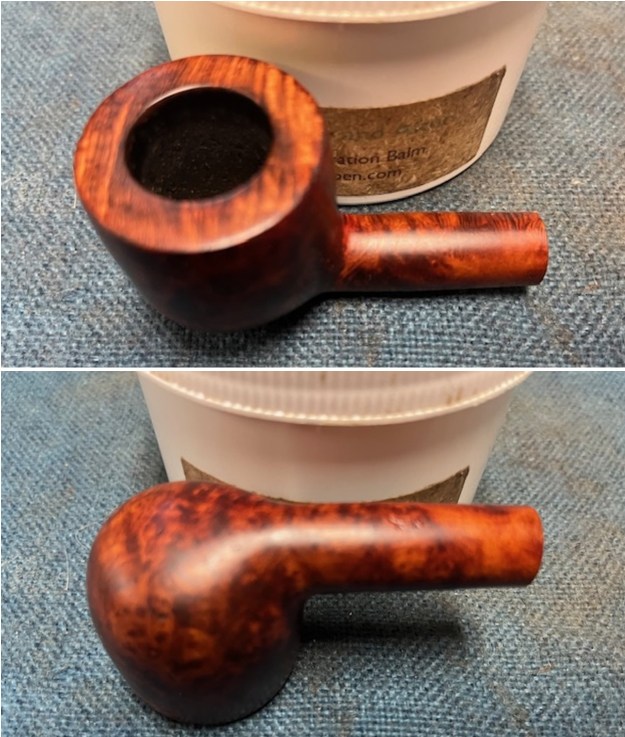
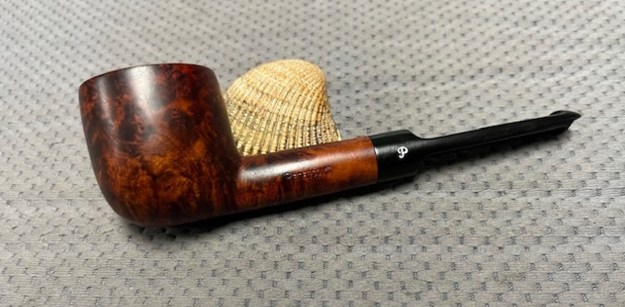
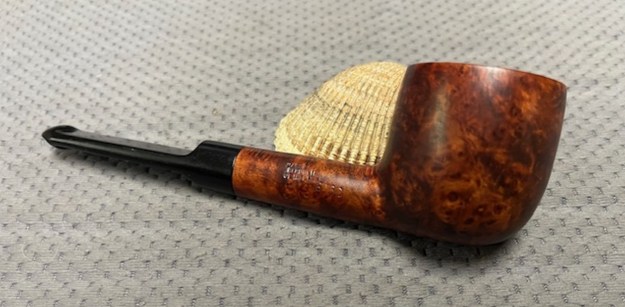
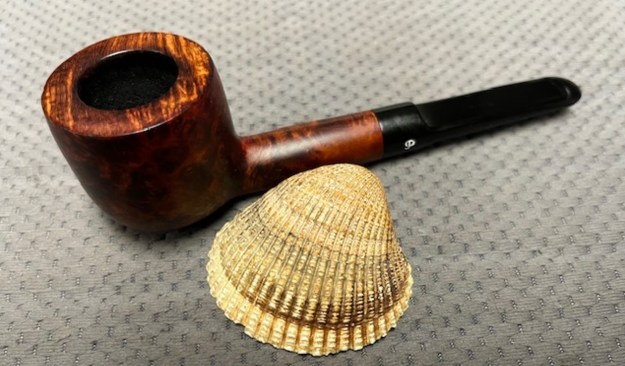
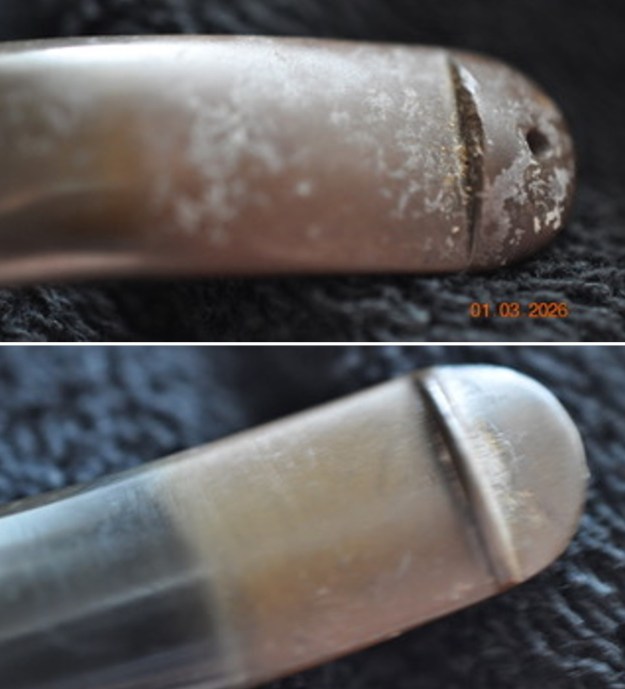
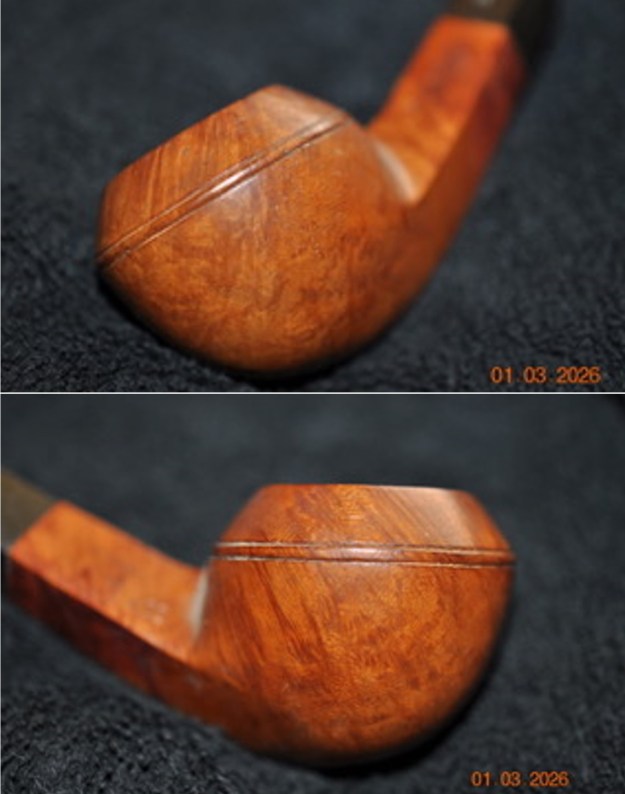
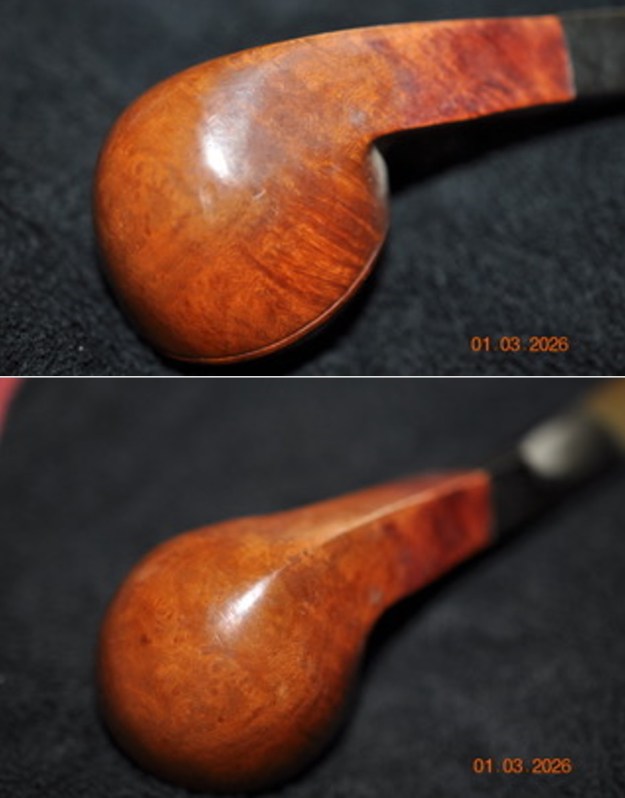
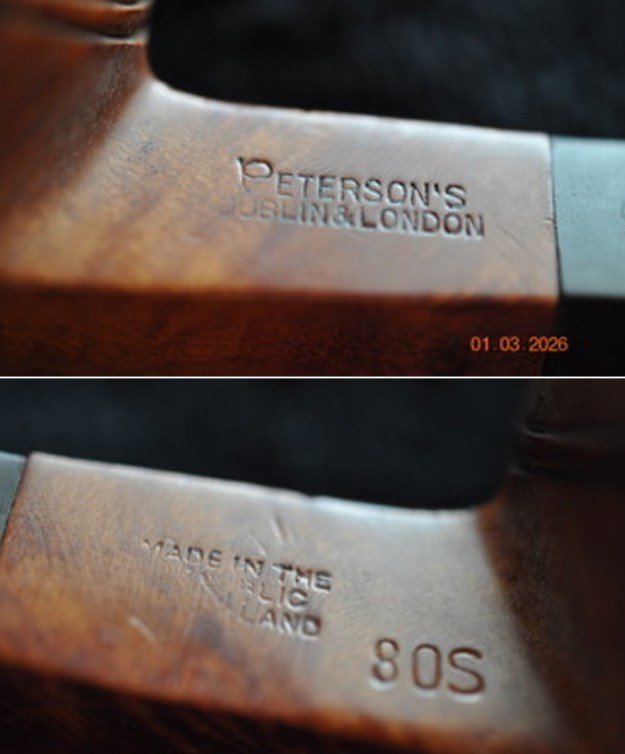
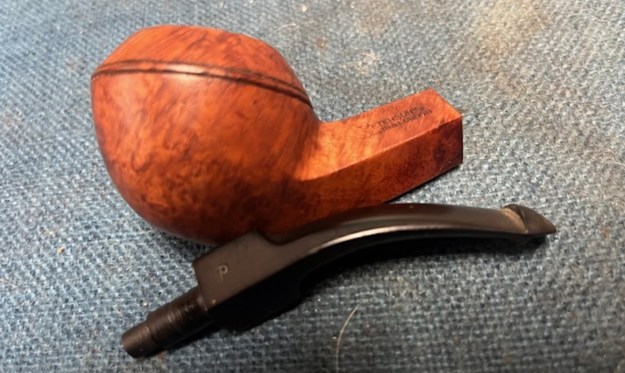
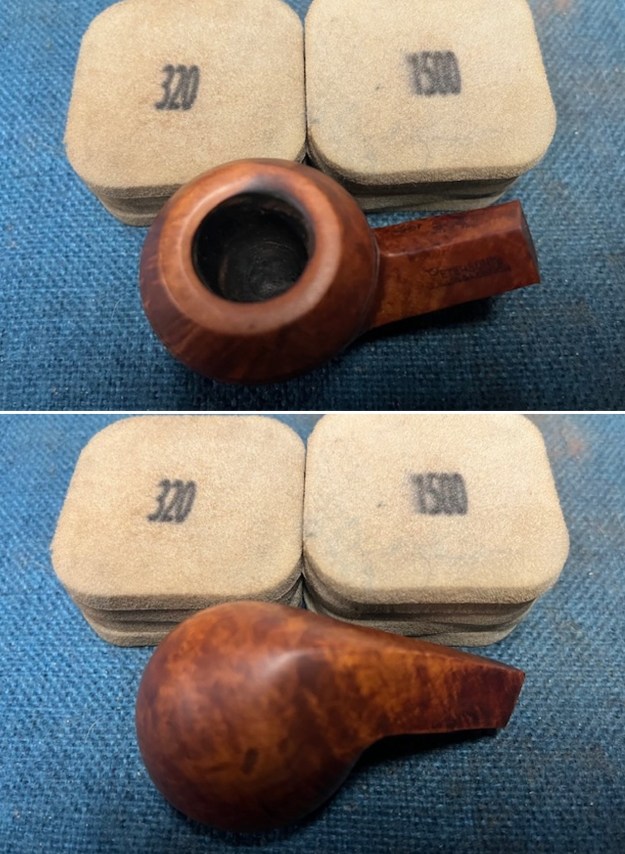
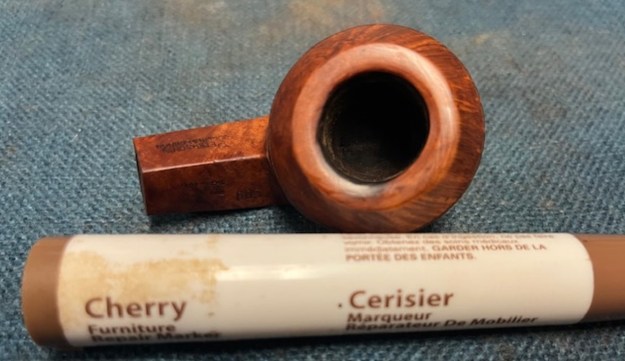
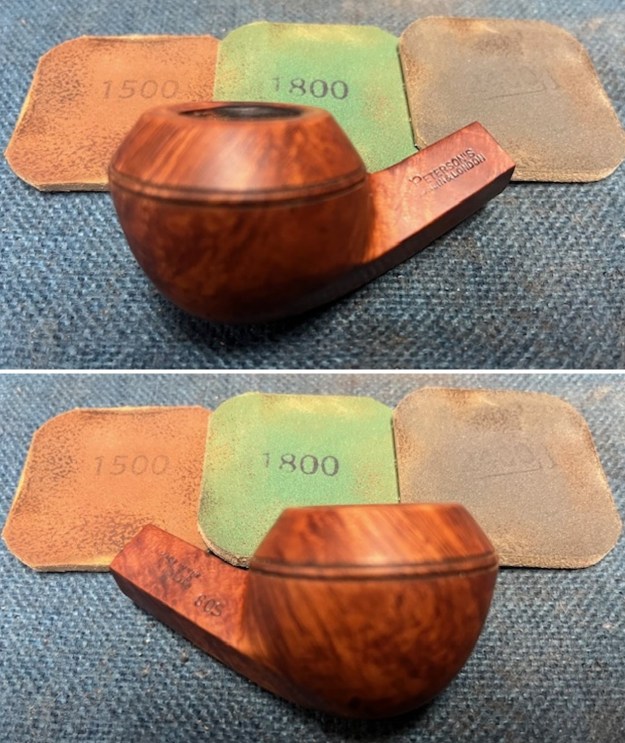
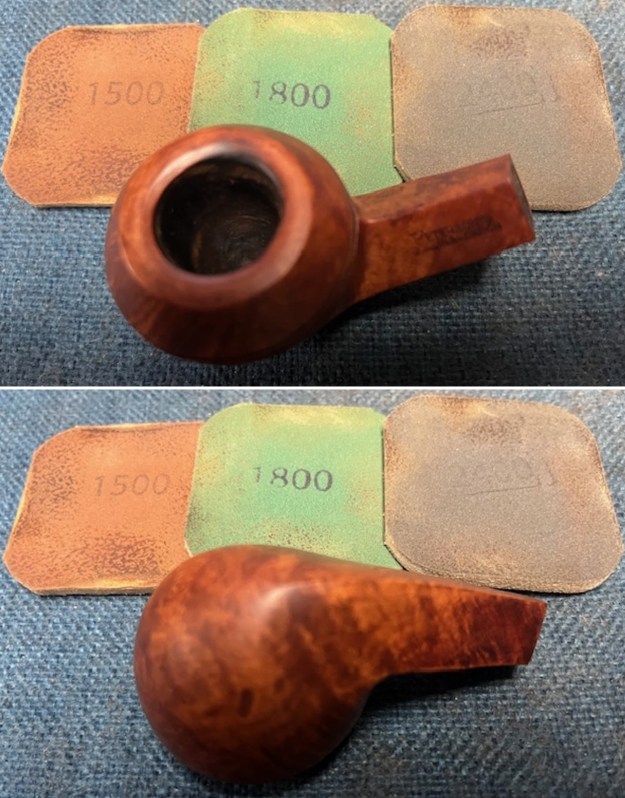
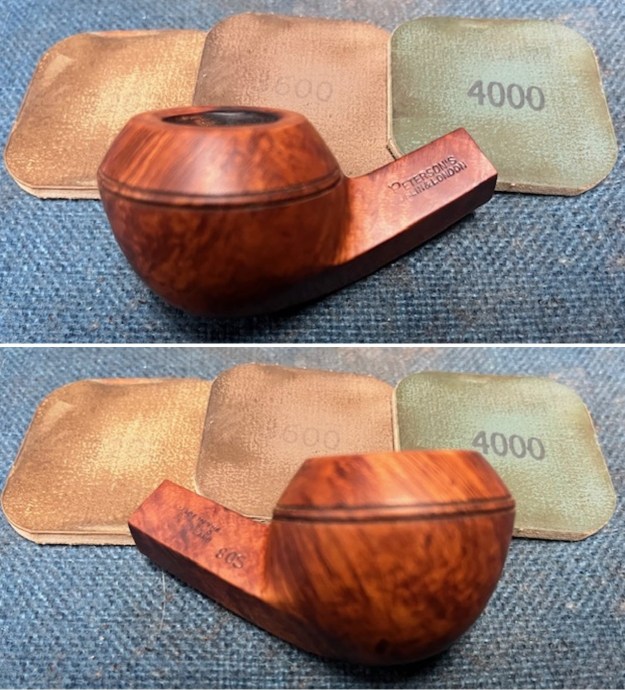
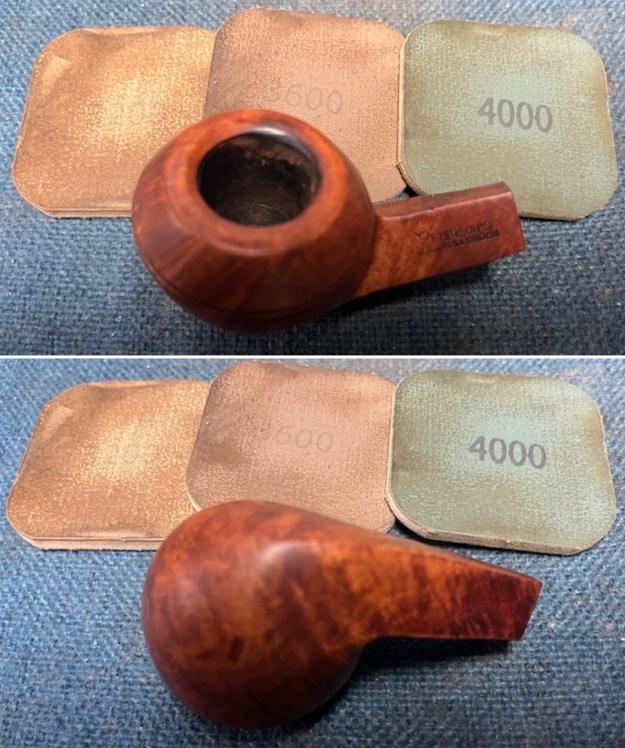
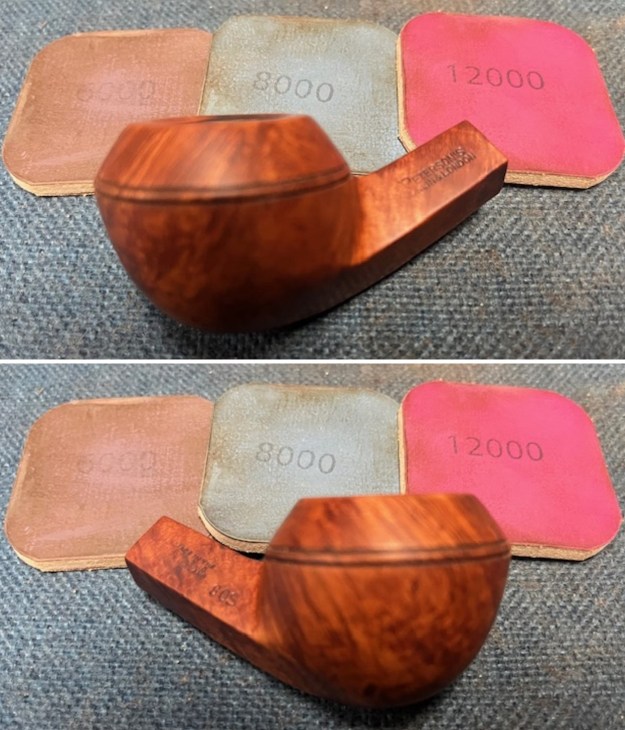
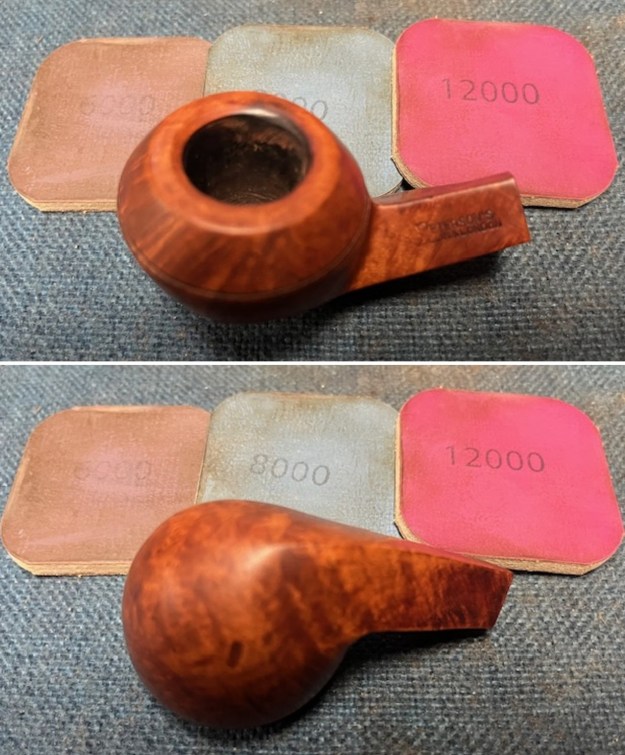
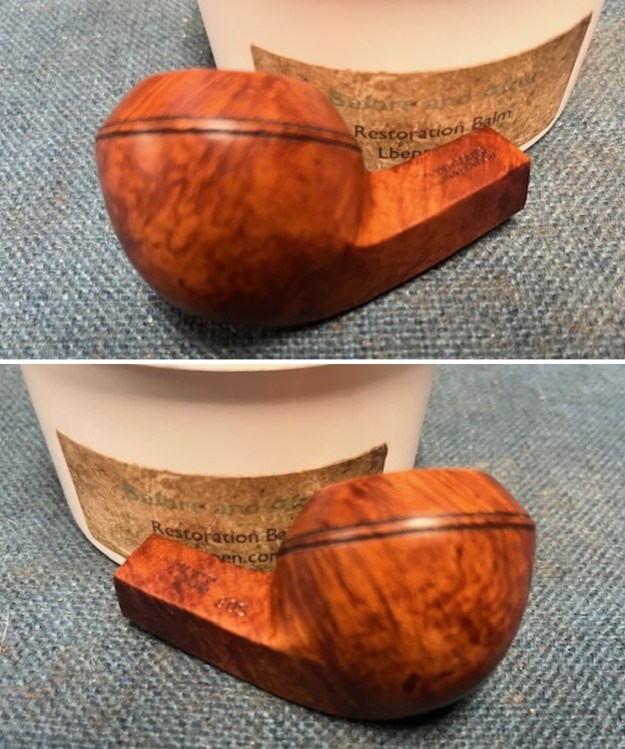
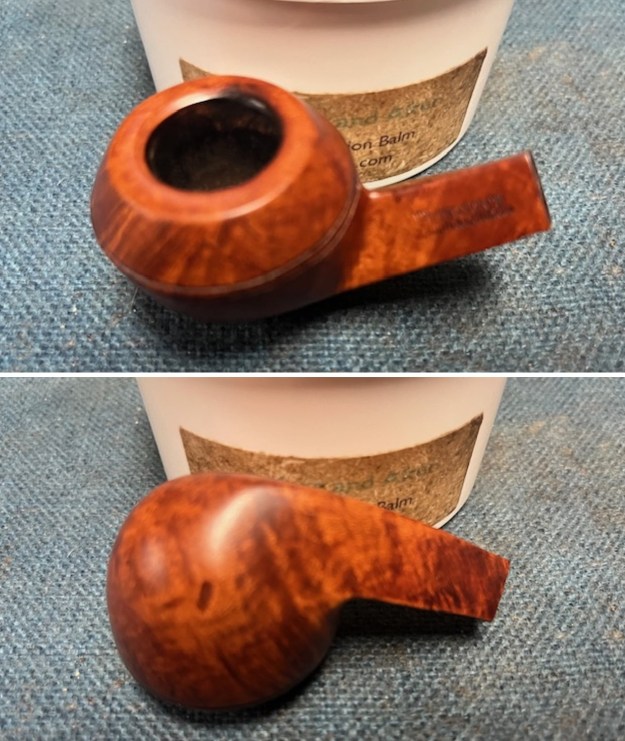
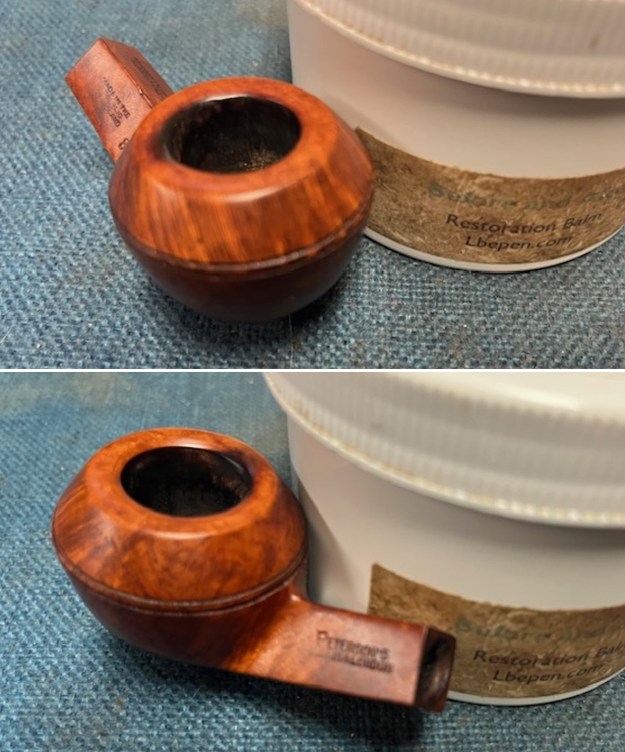
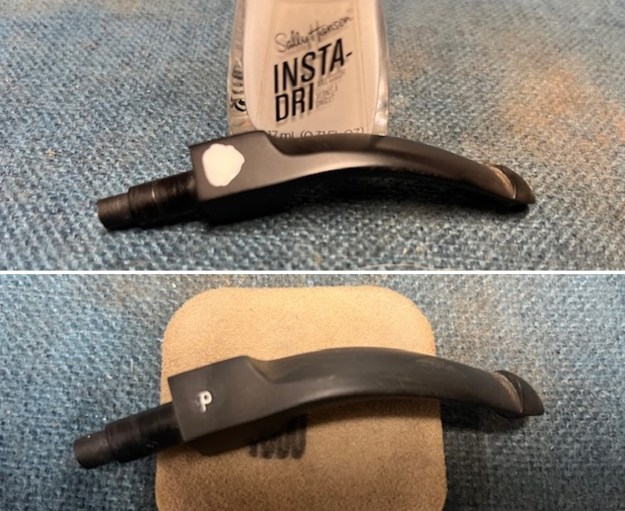
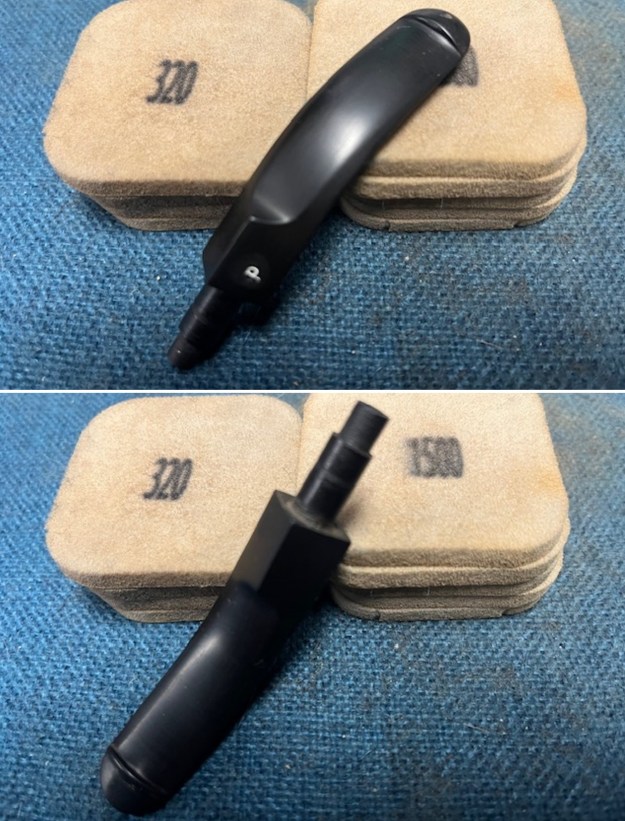
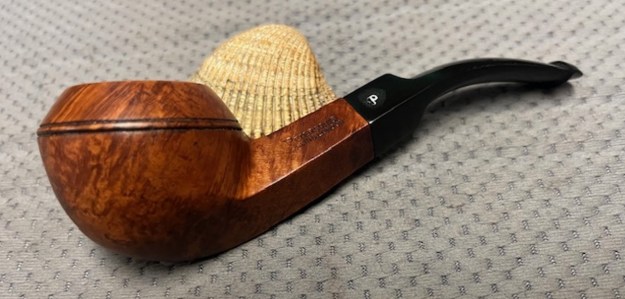
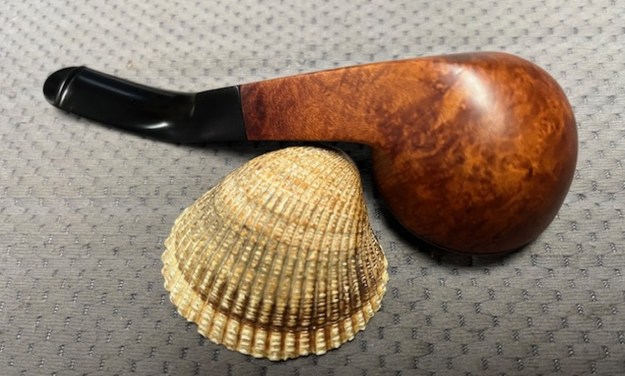
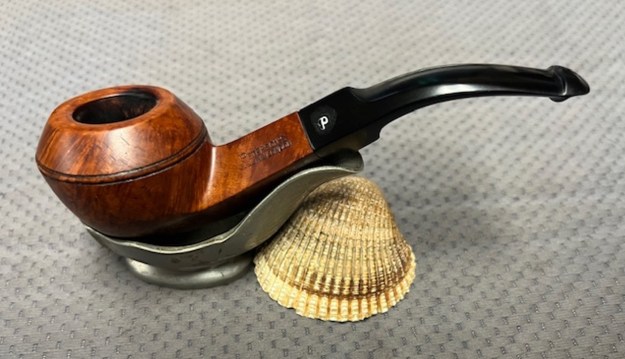
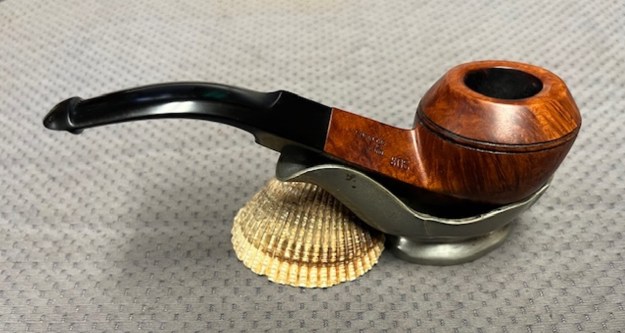
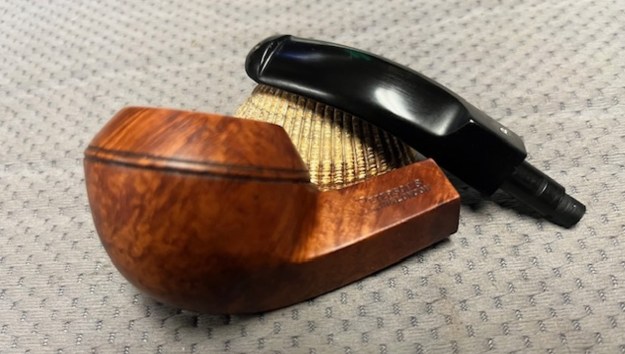
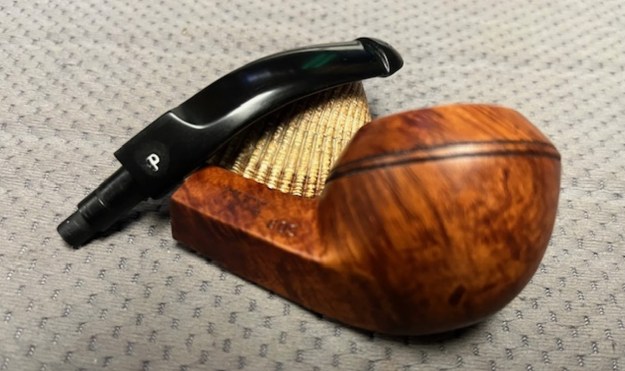
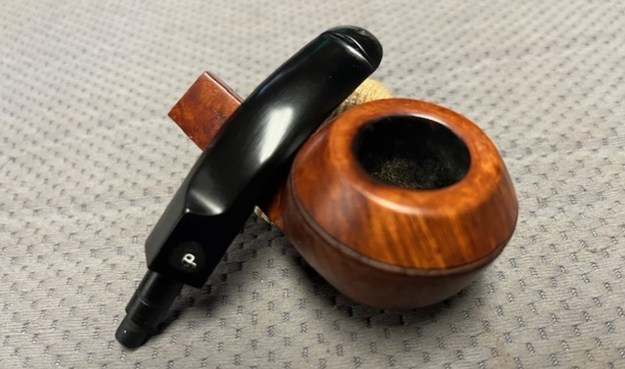
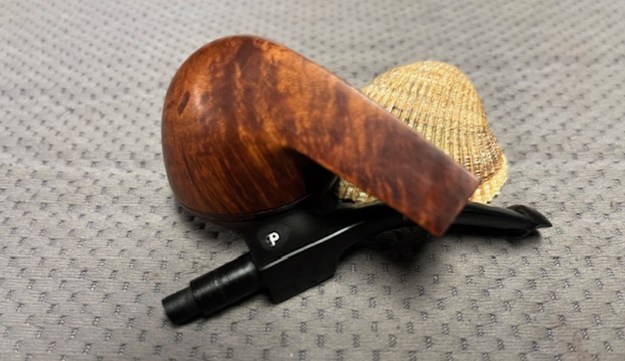
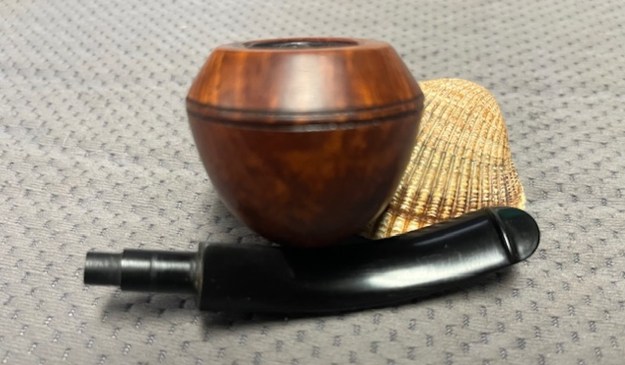
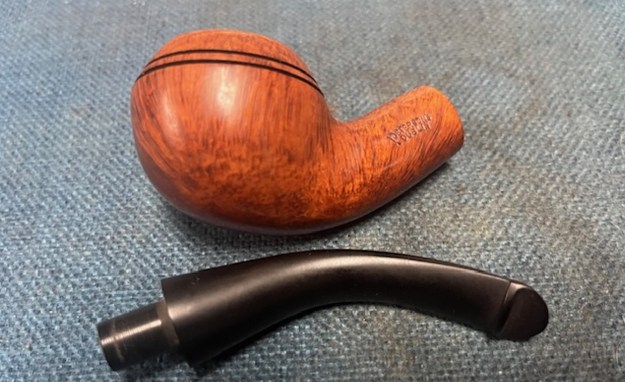
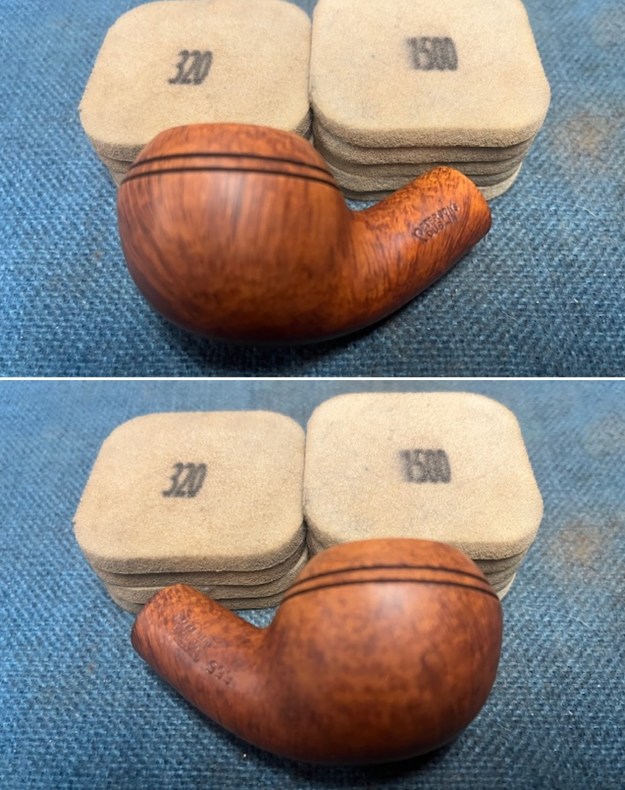
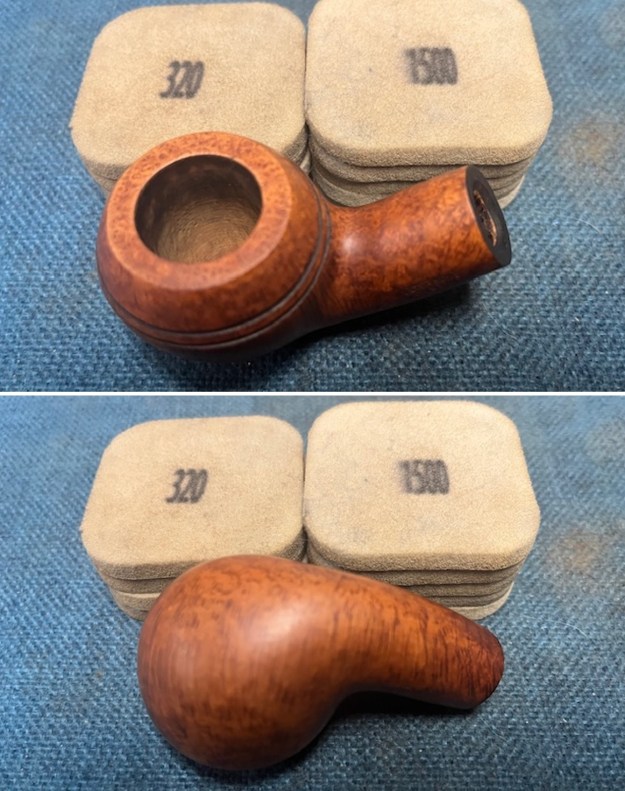
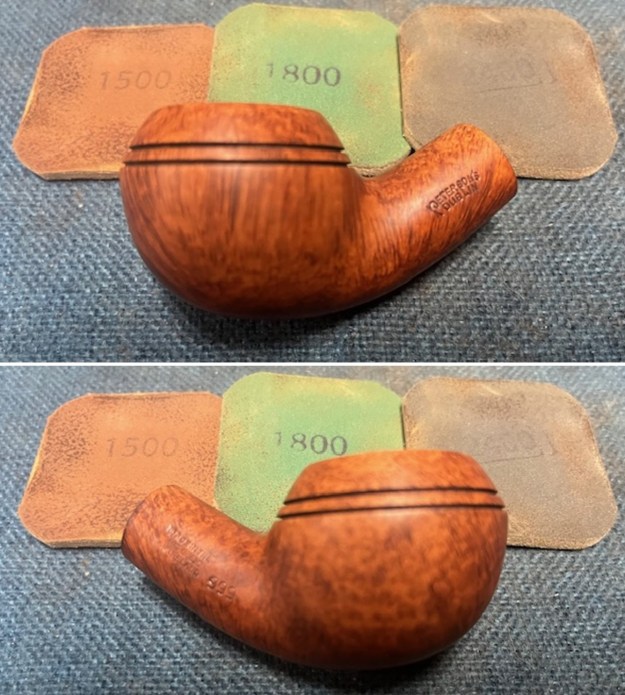
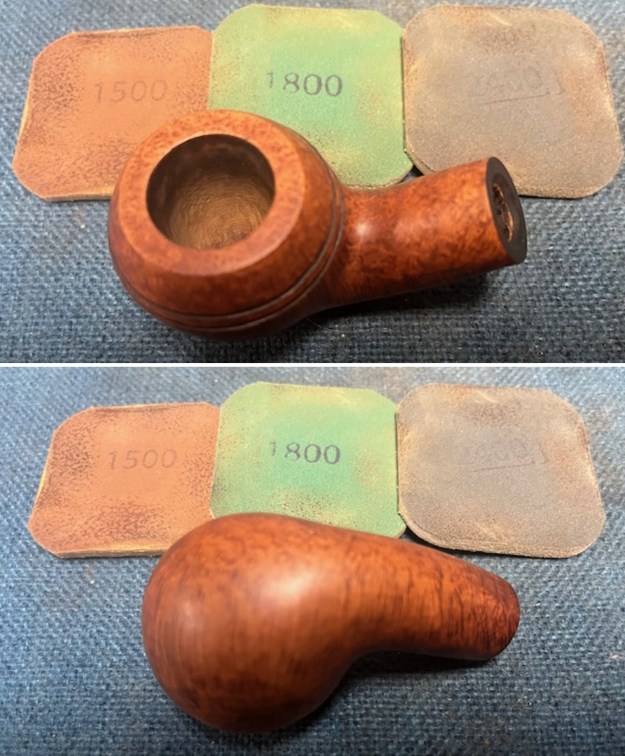
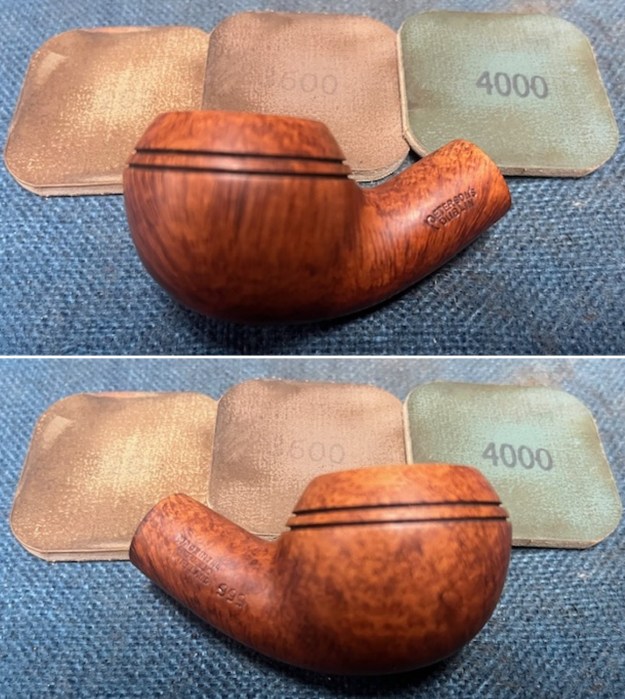
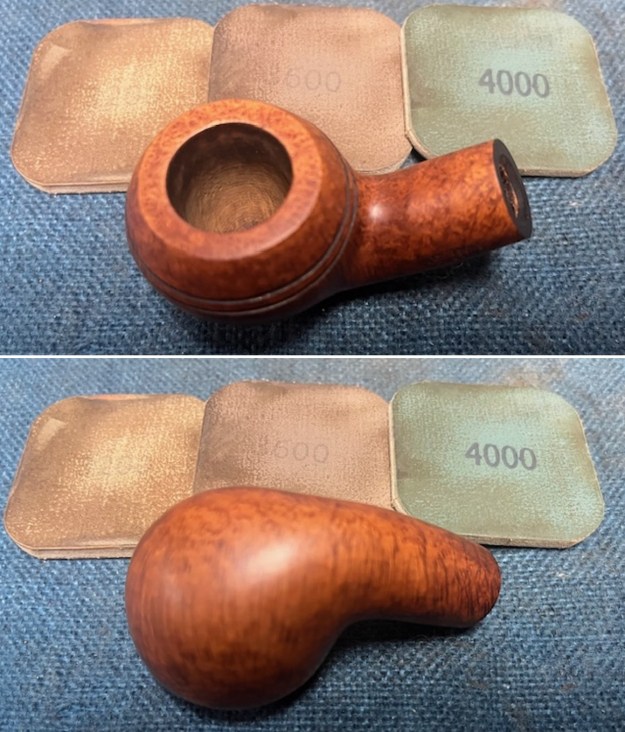
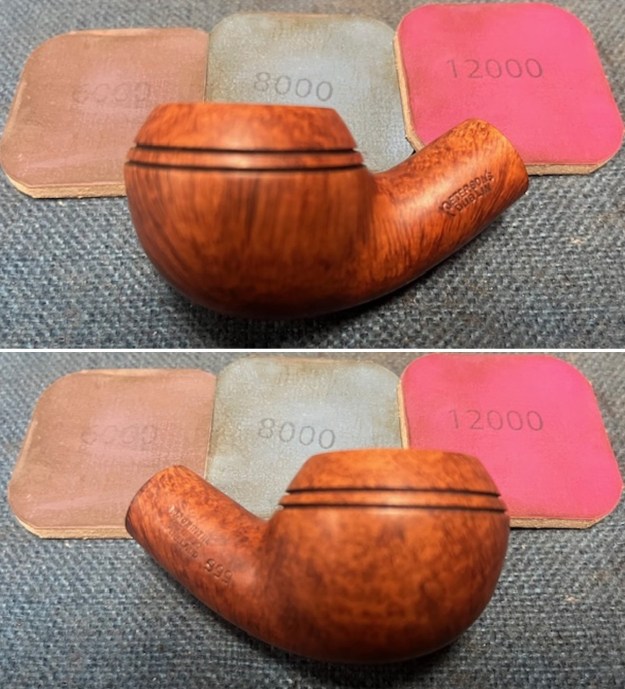
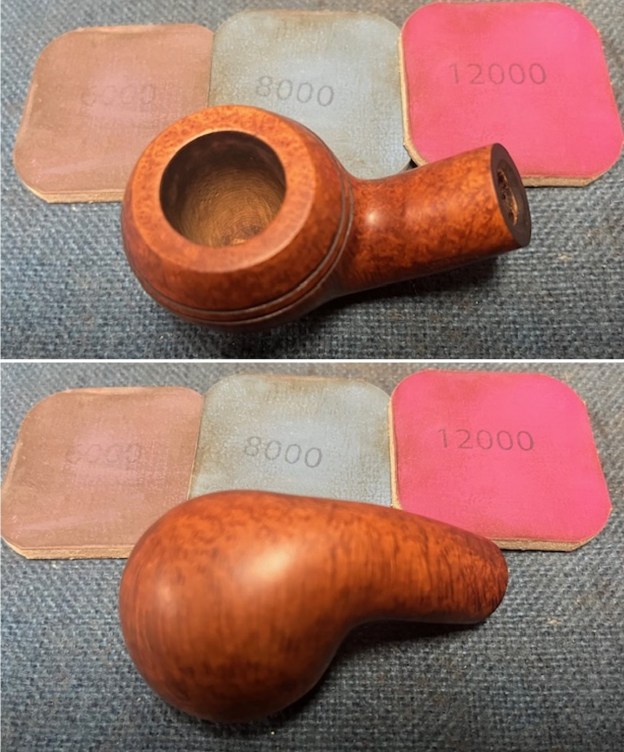
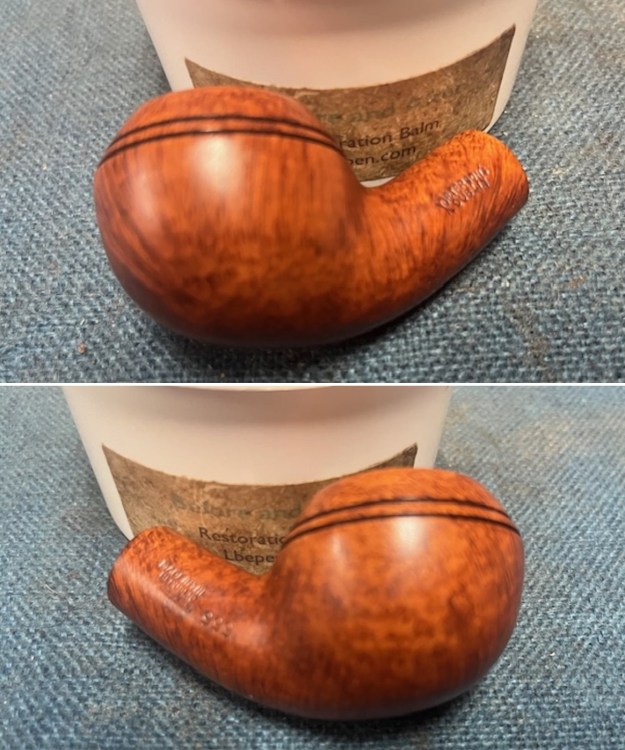
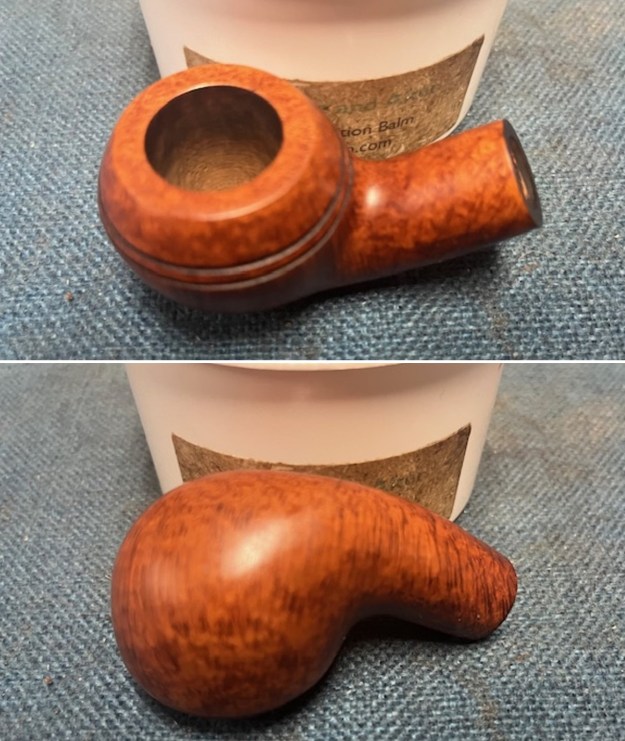
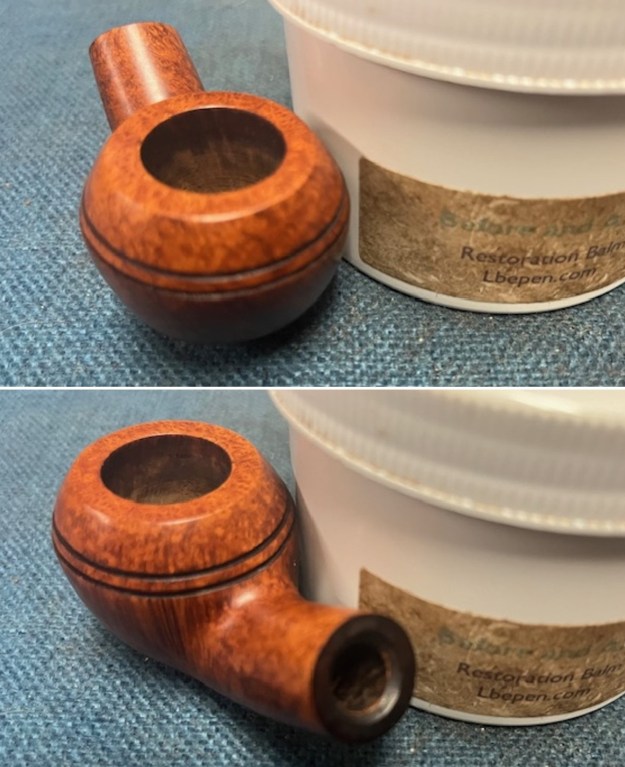
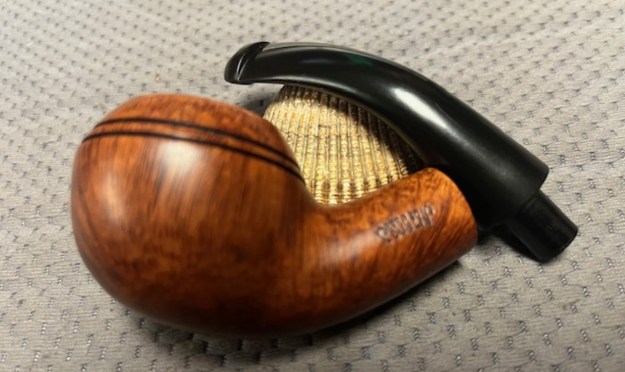
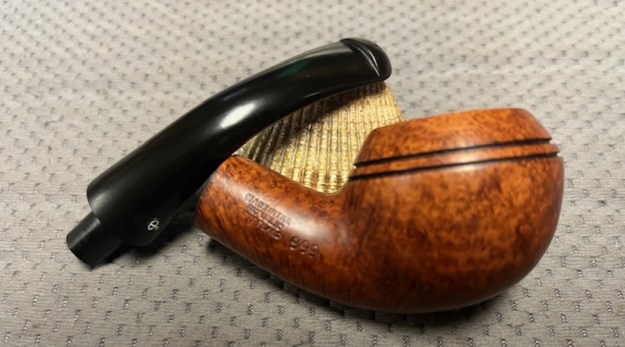
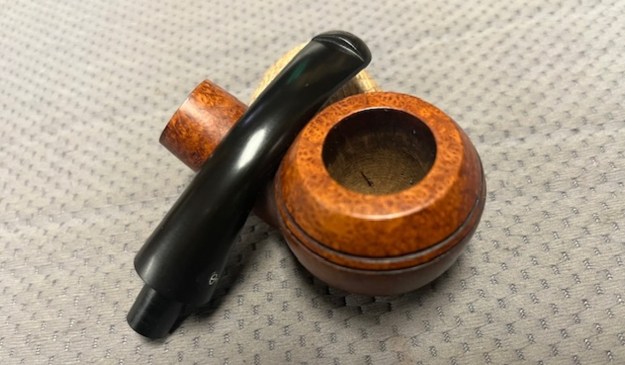
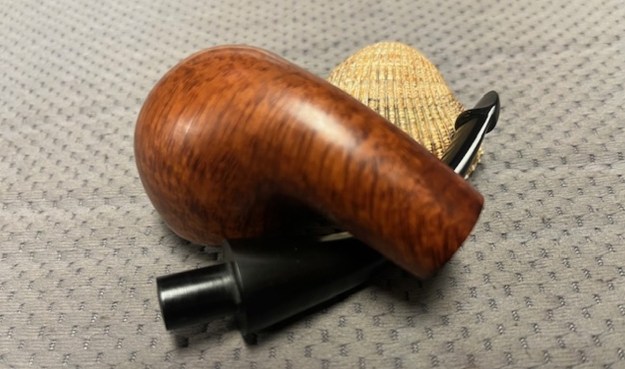
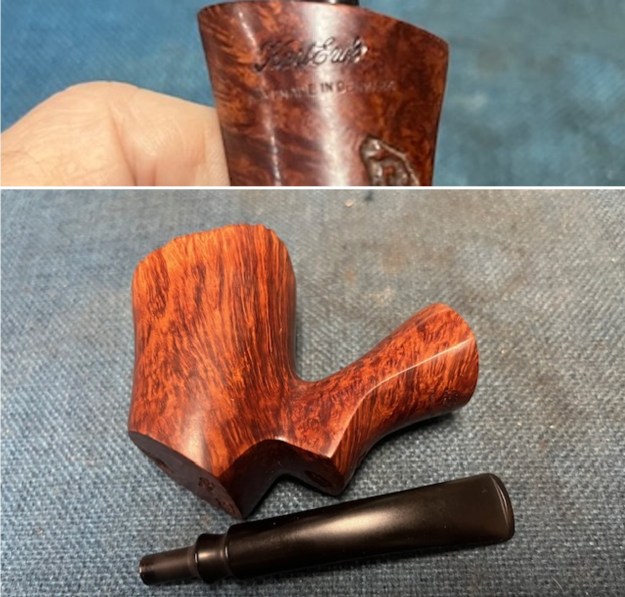
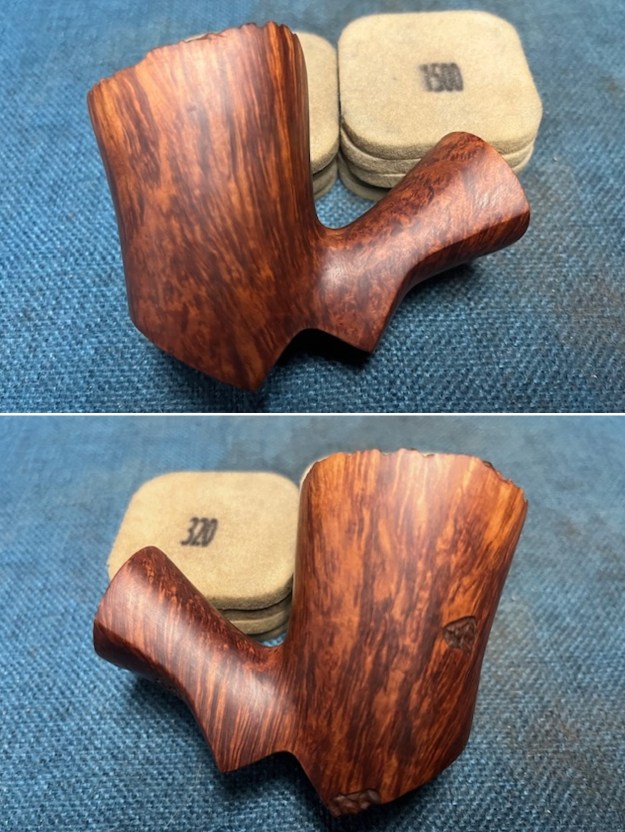
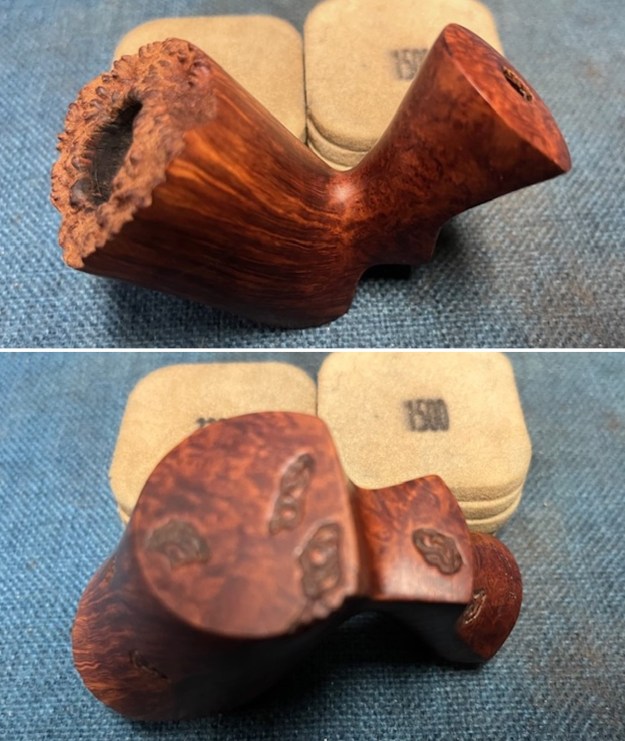
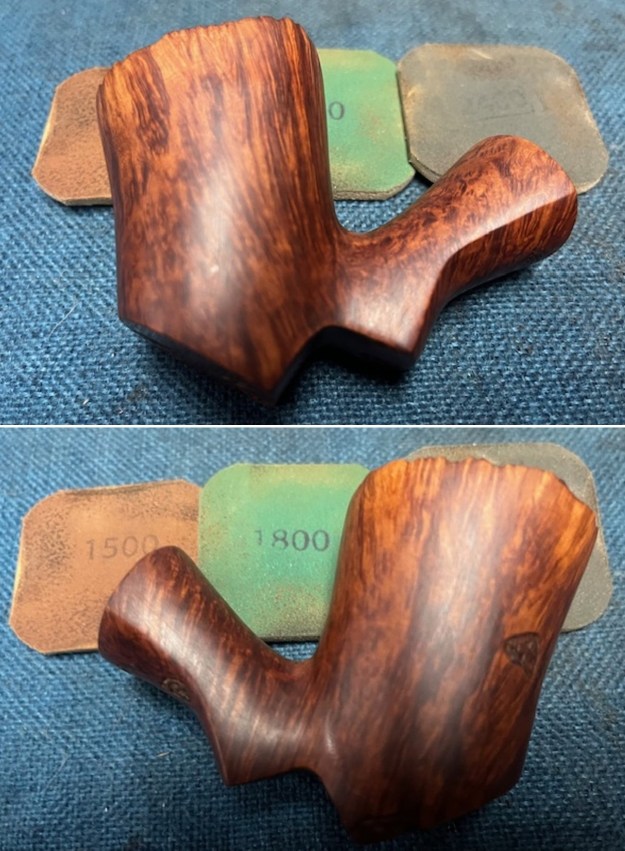
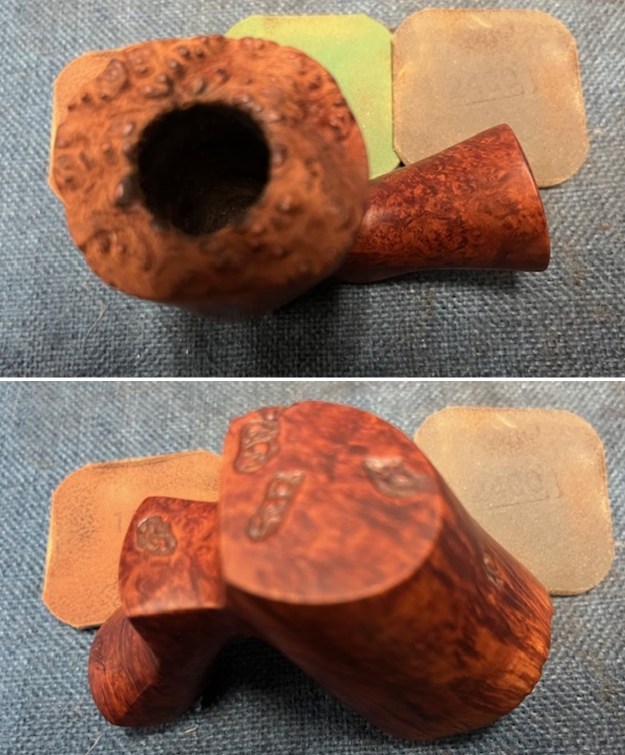
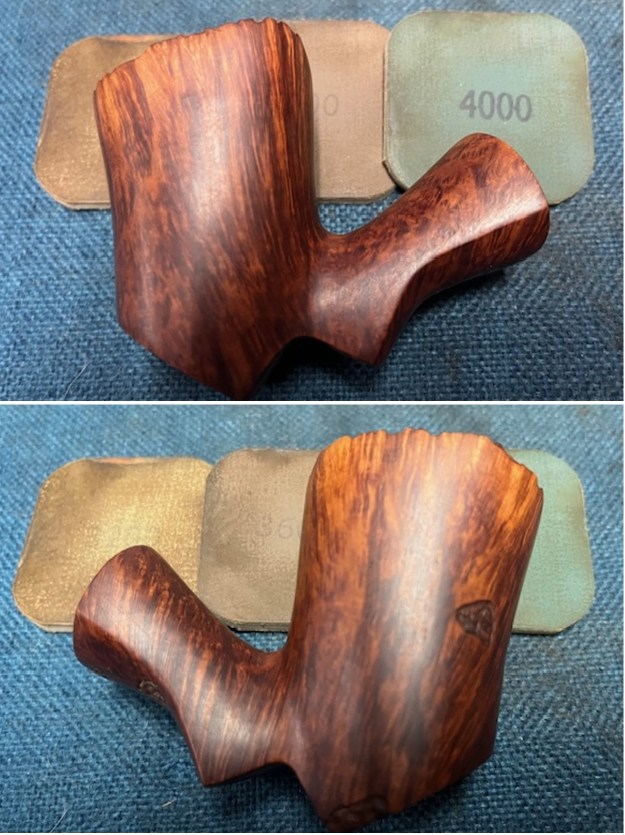
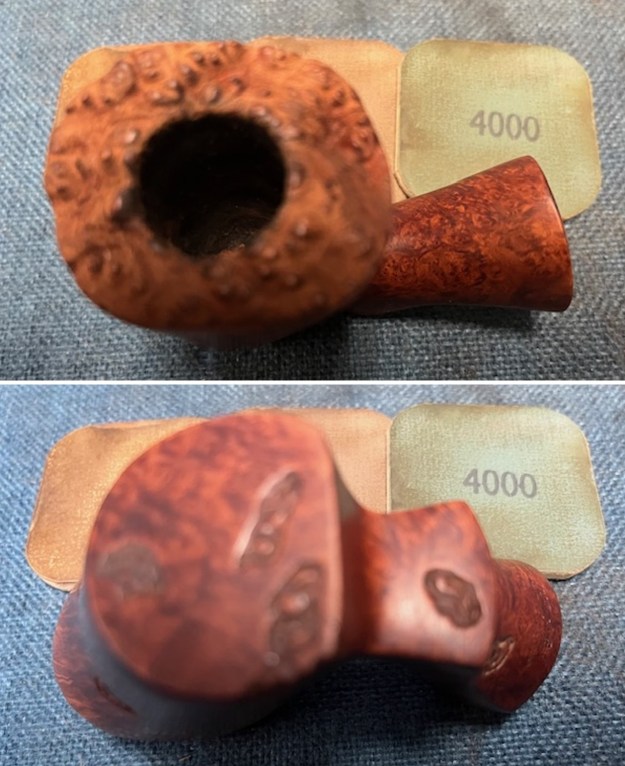
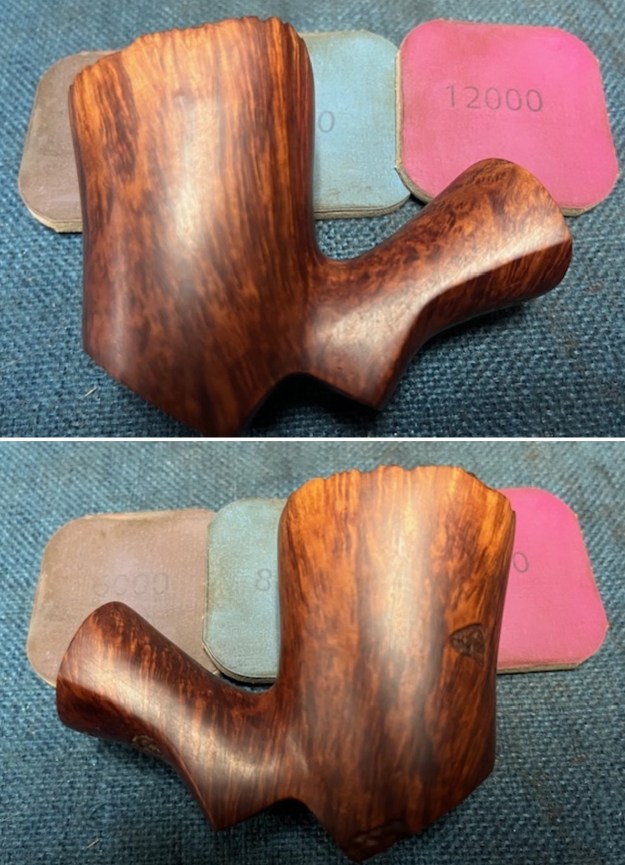
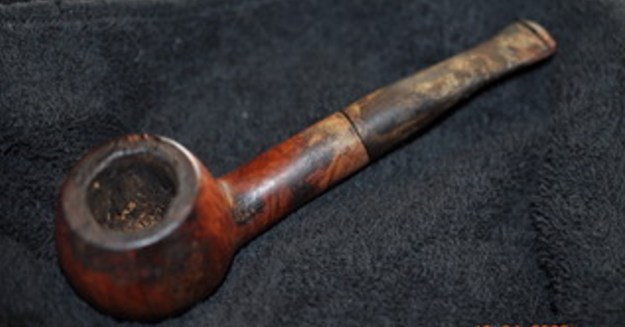
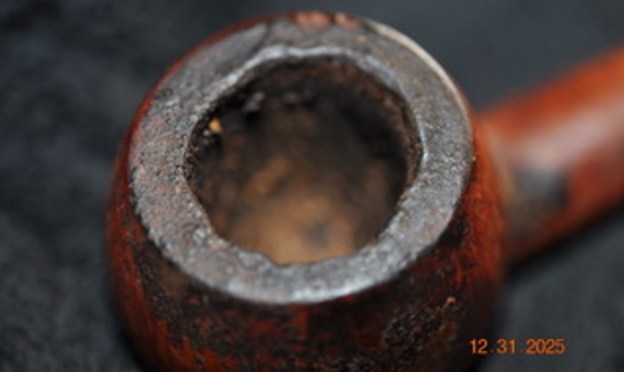
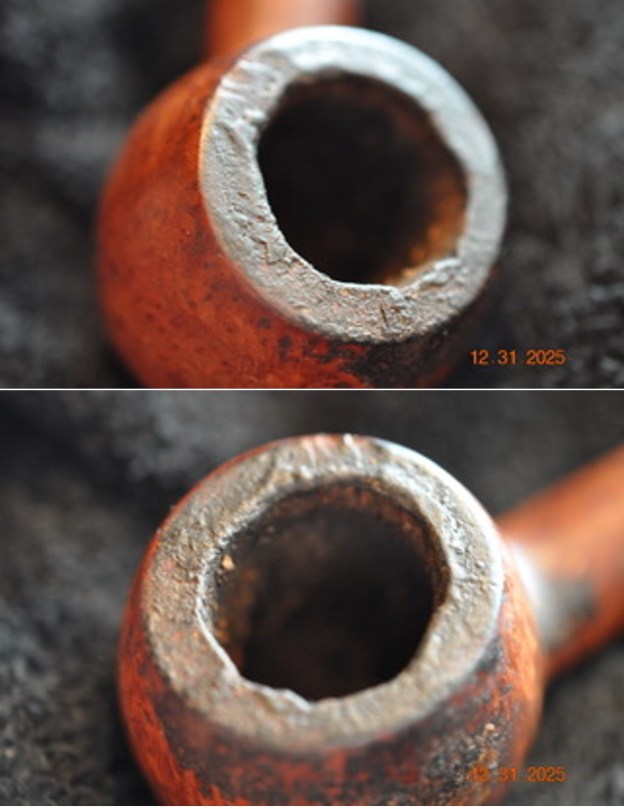
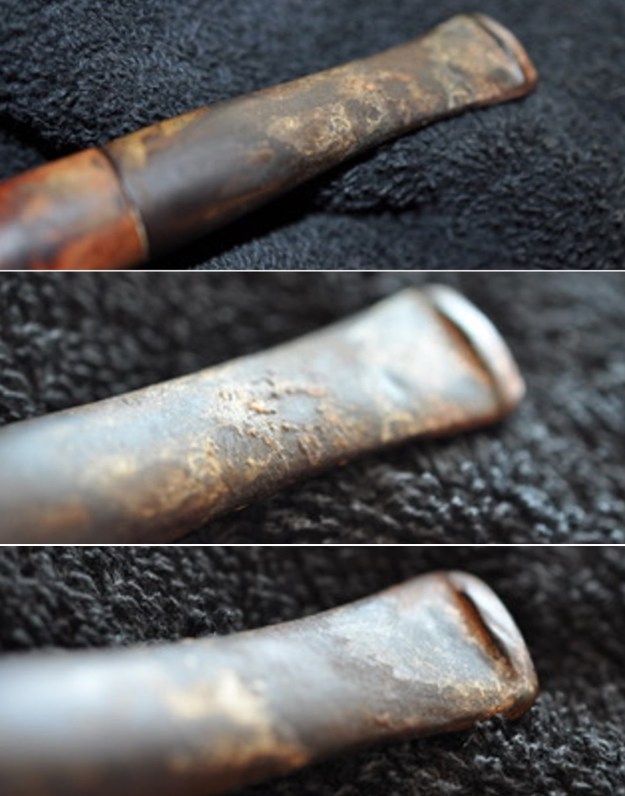
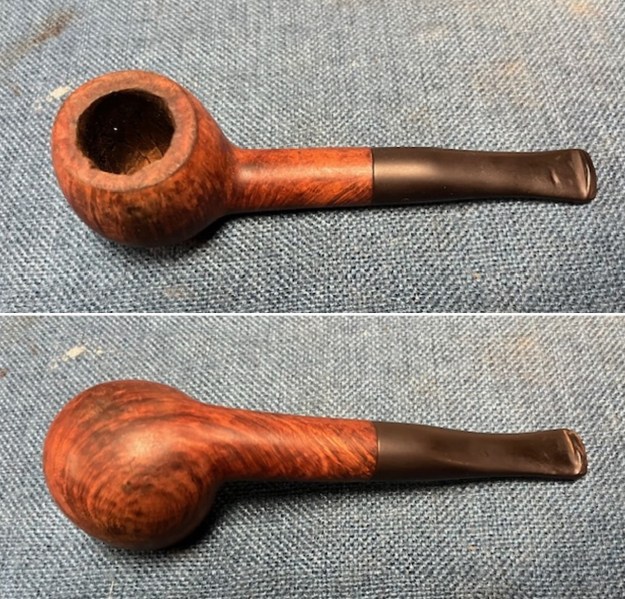
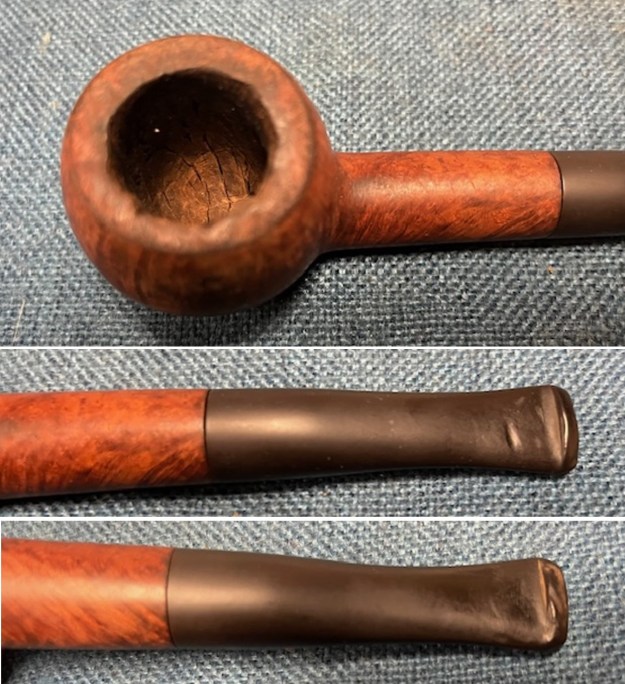
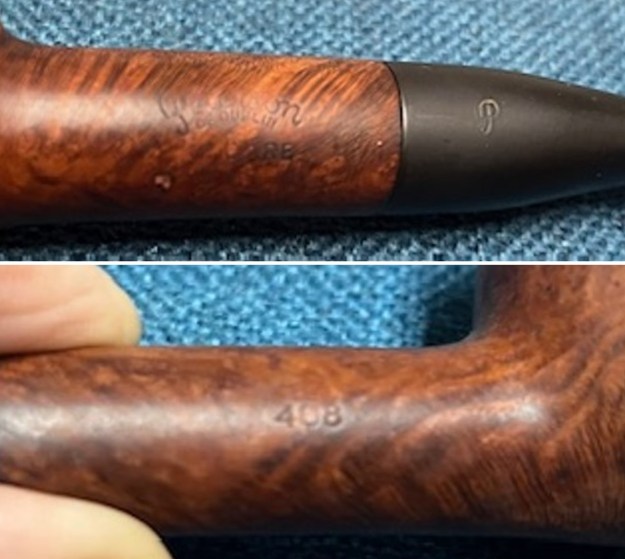
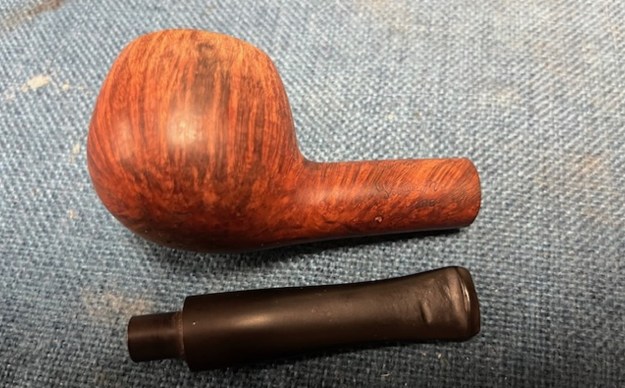
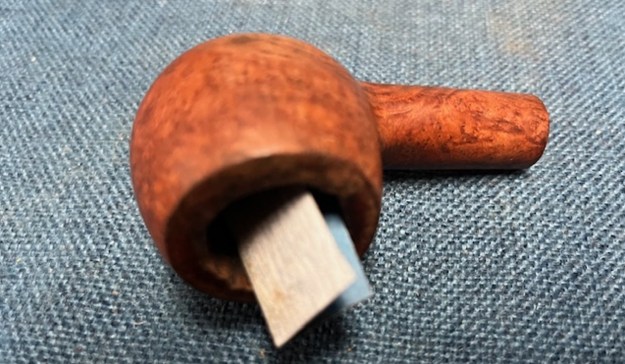
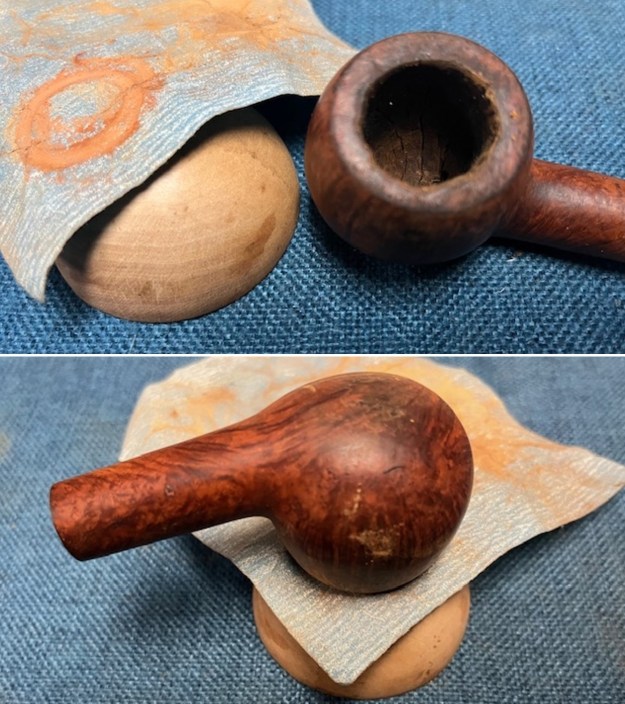
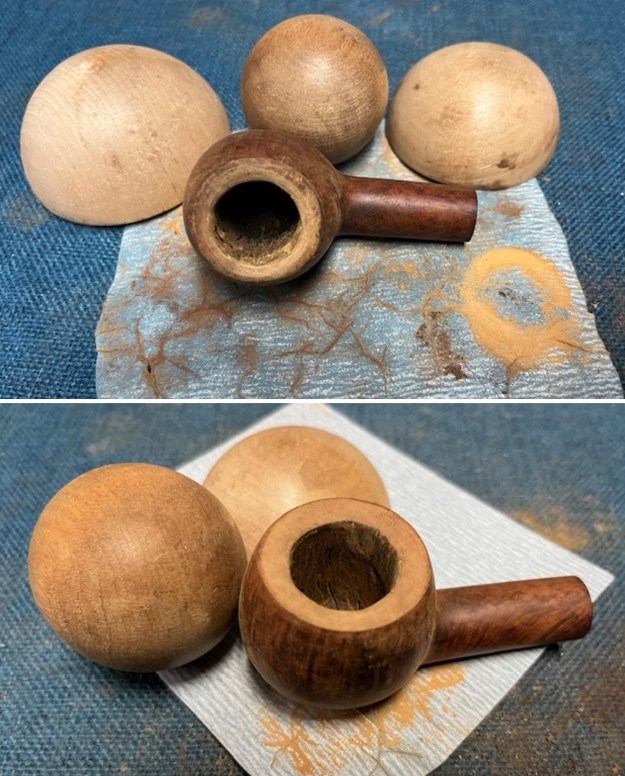
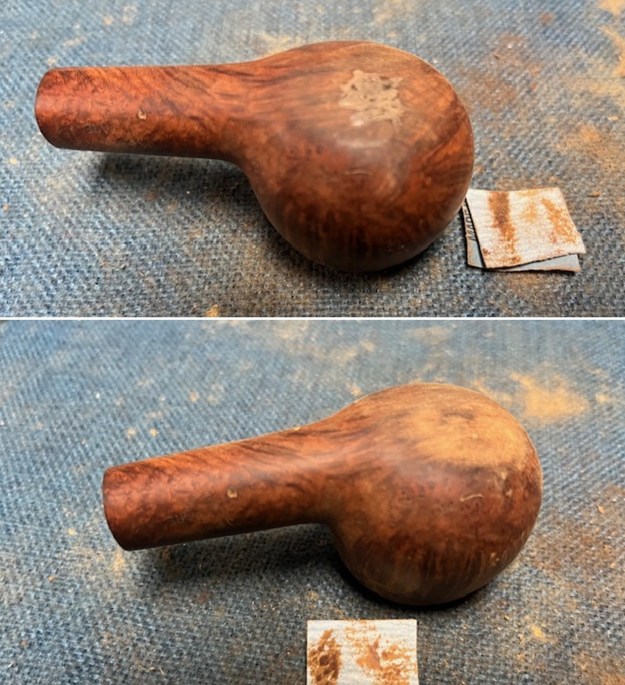
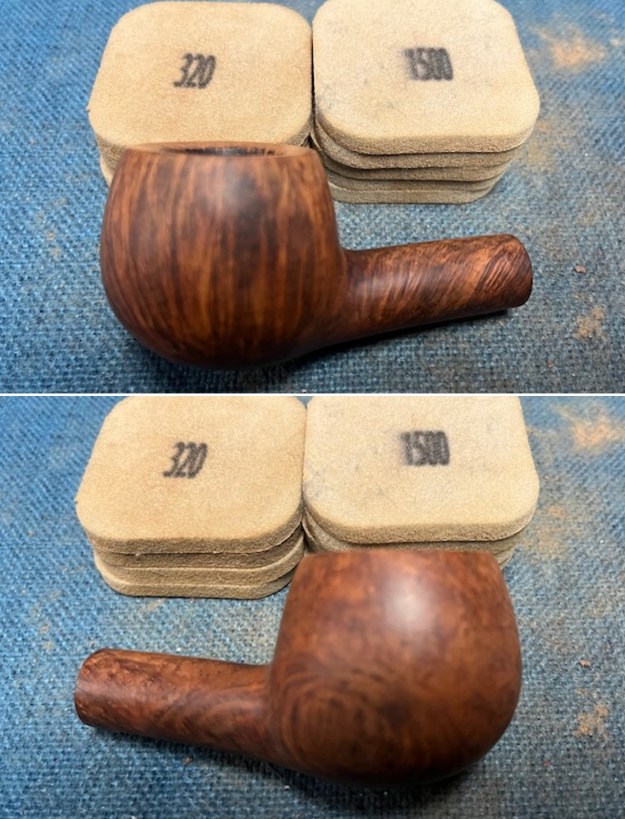
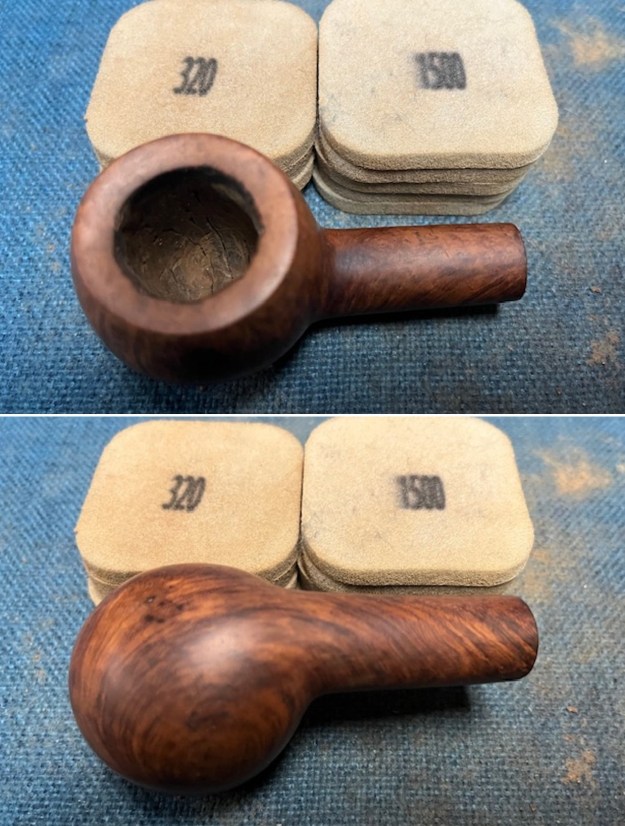
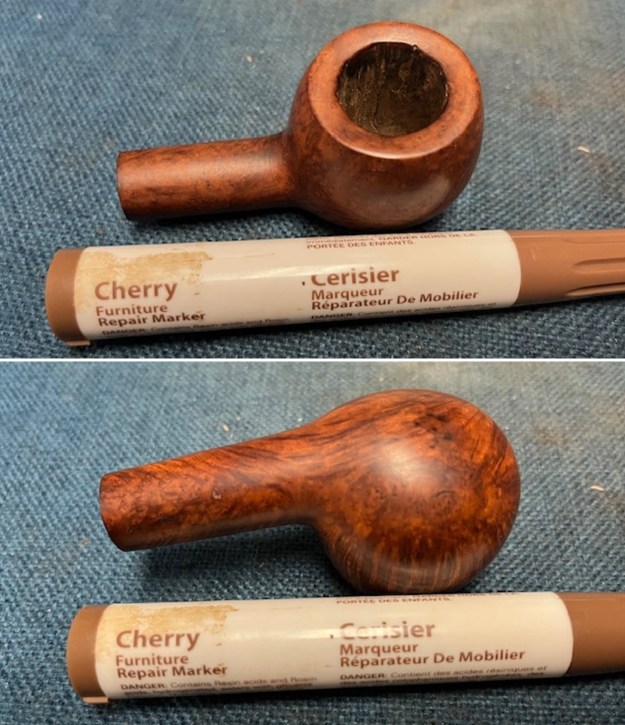
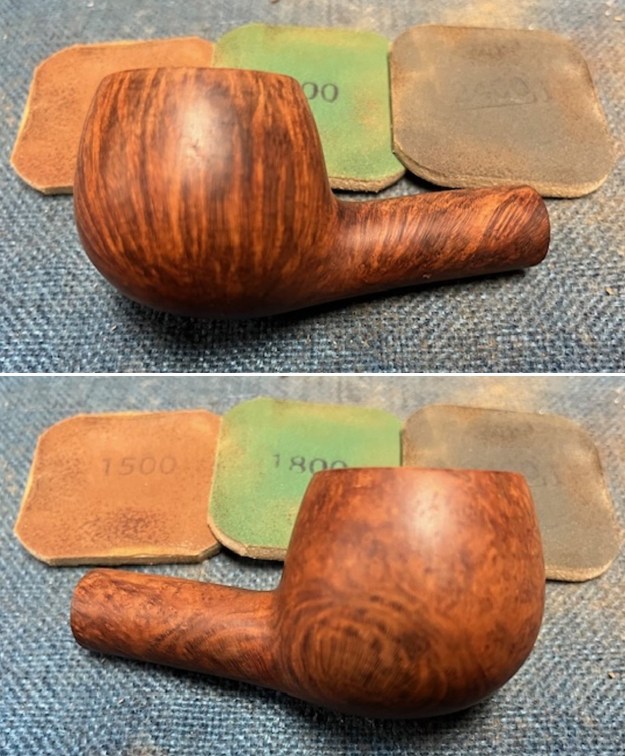
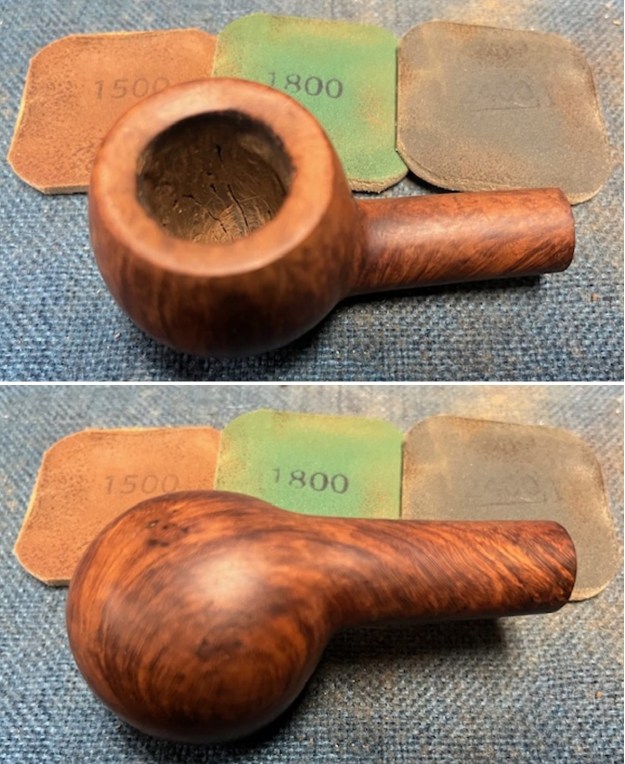
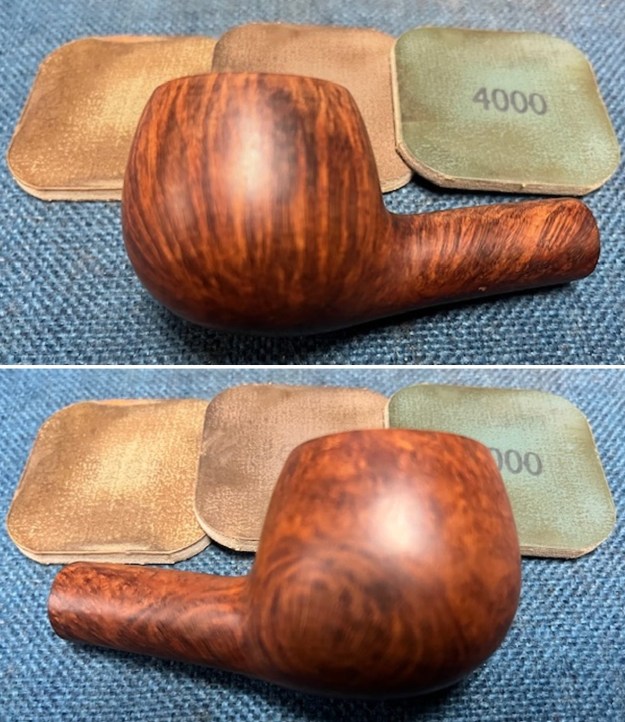
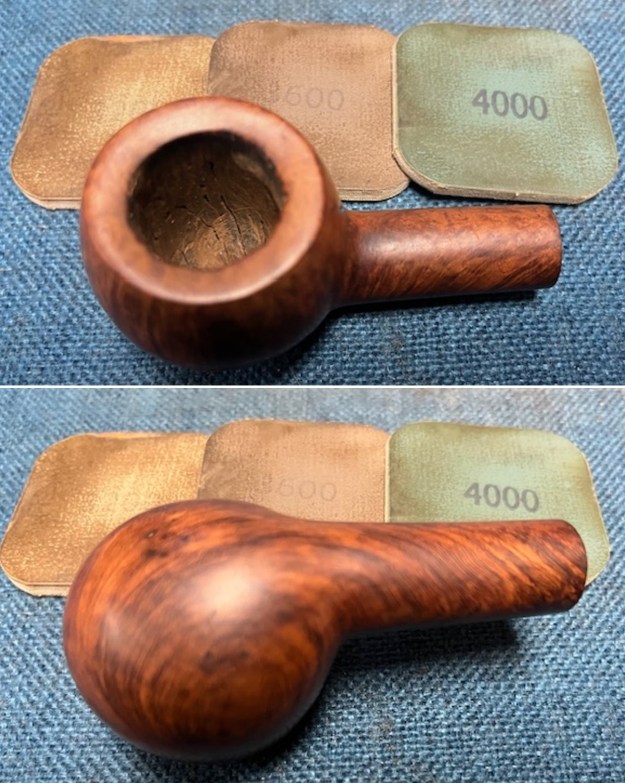
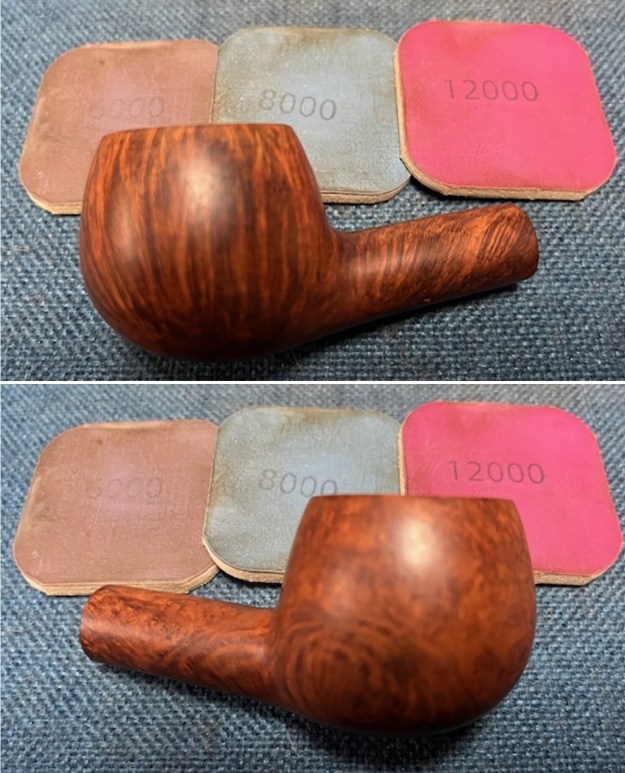
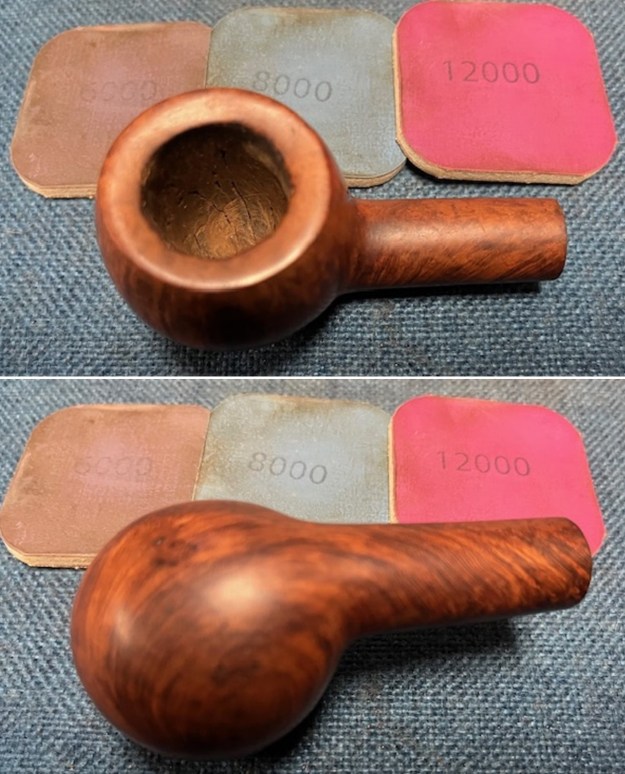
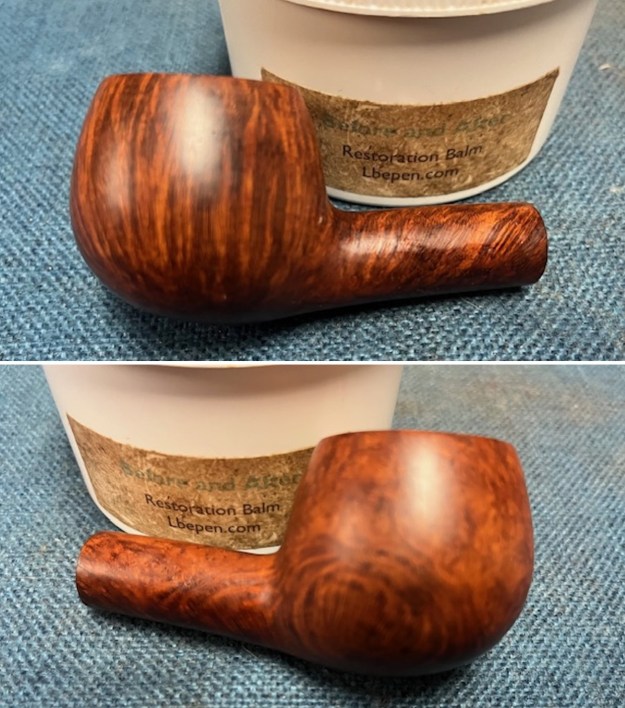
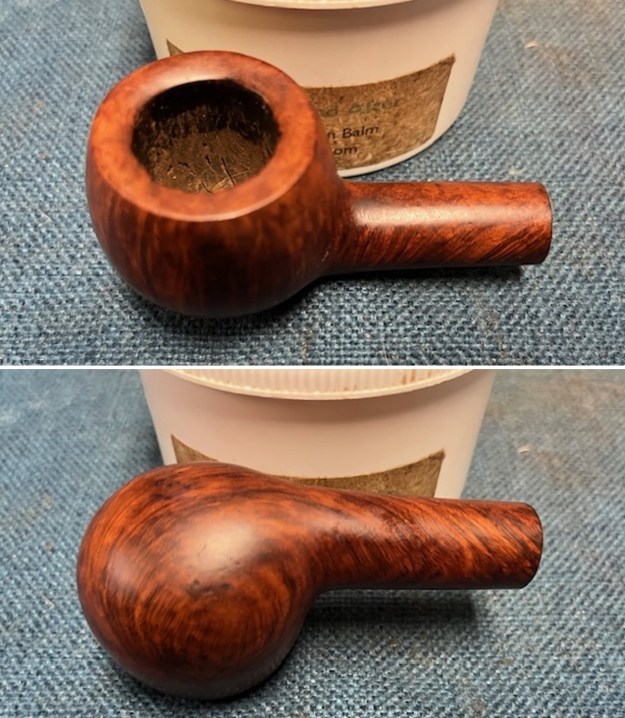
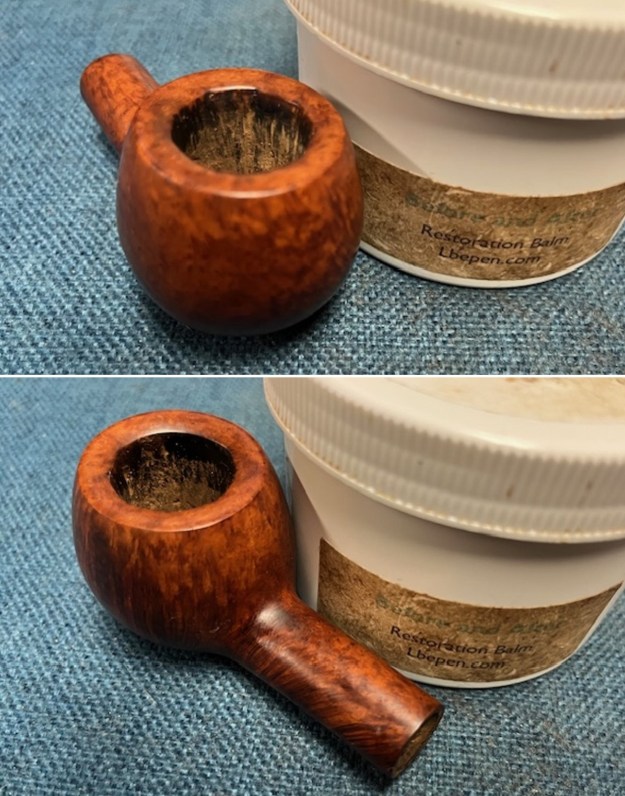
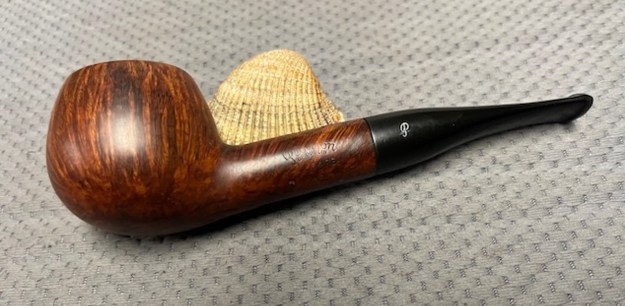
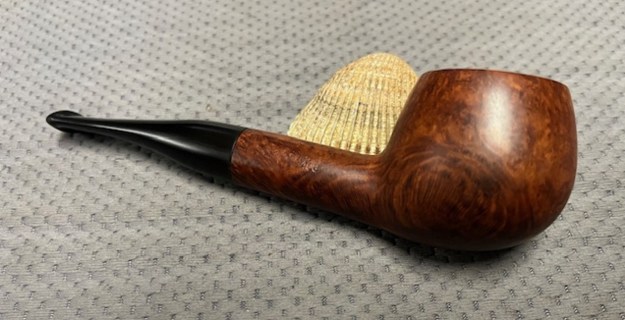
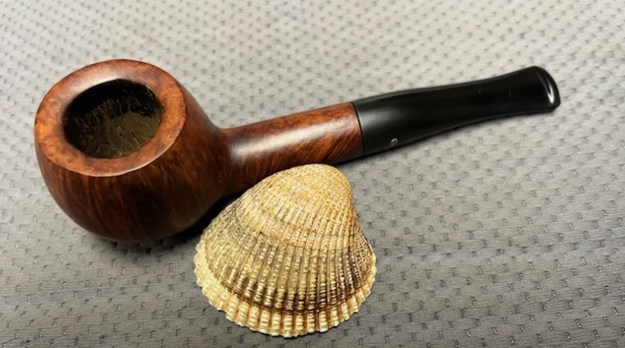
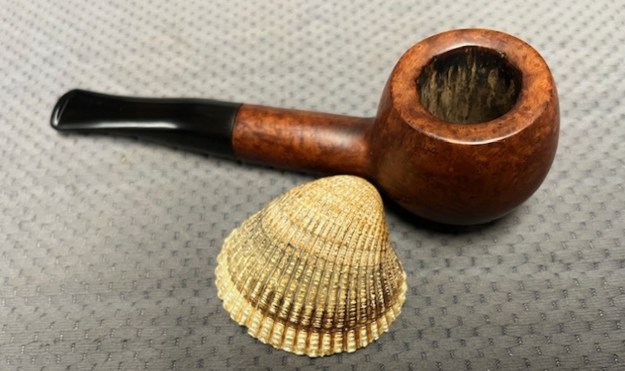
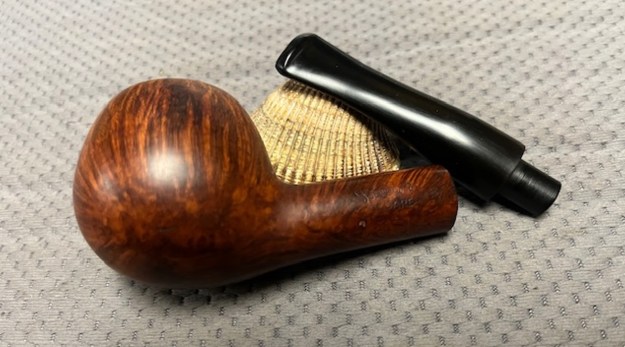
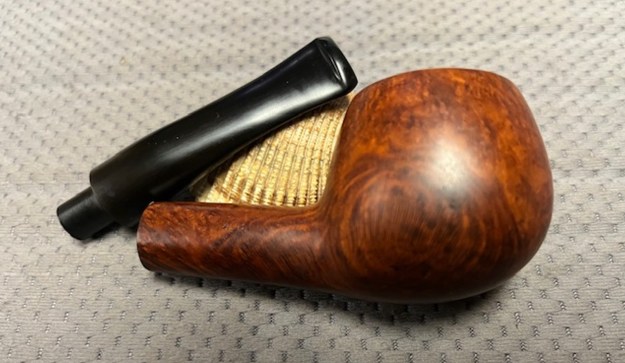
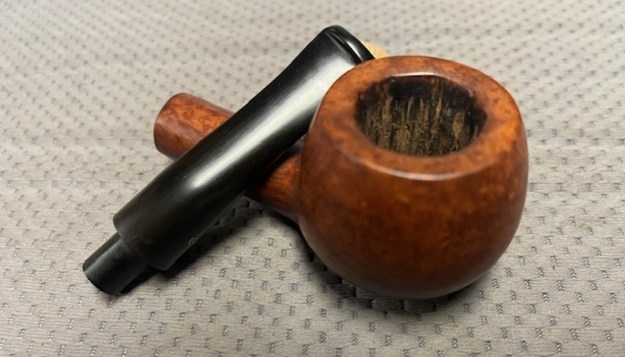
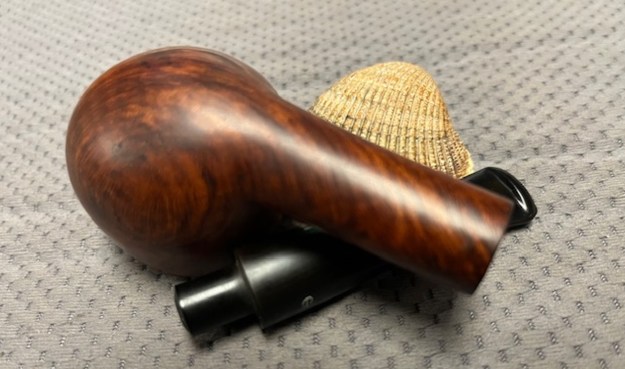
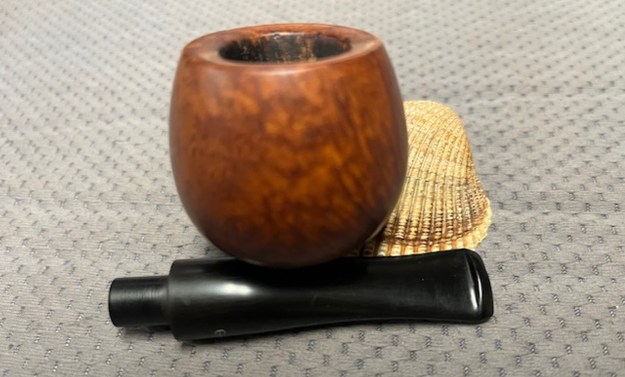
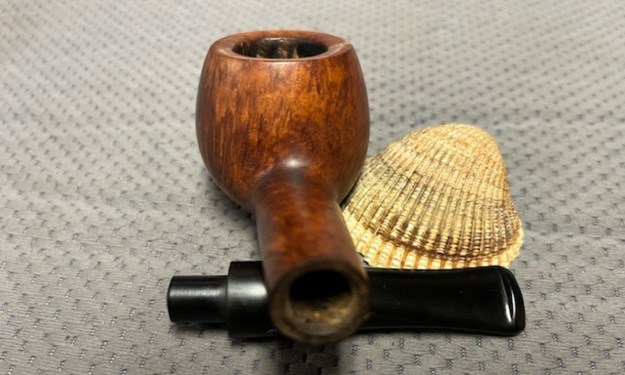
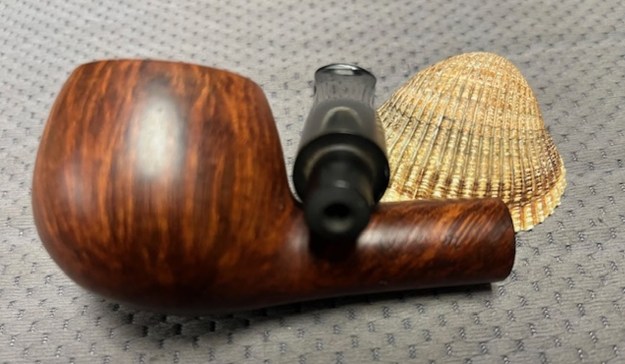
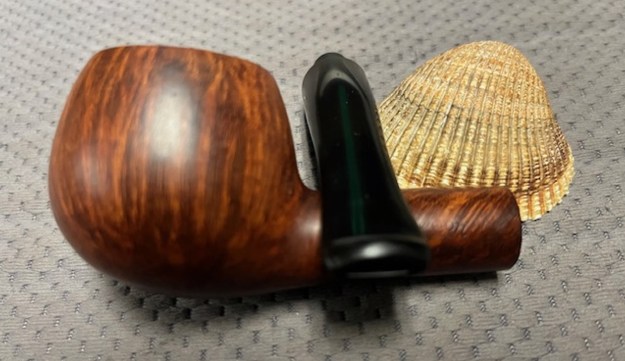
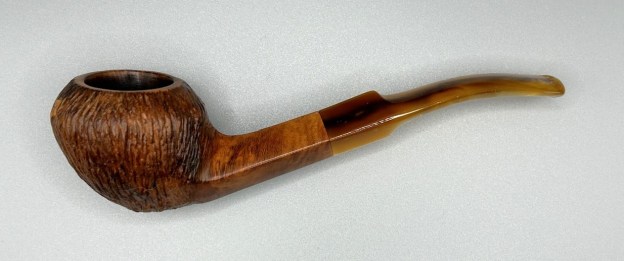
The next pipe on the worktable is an English made oval shank bent Apple with a classic brown finish. It is a combination reddish brown stains. The pipe came to us from a seller in Downey, California, USA on 08/12/2025. The pipe is very dirty with a thick cake in the bowl and lava on the rim top. The rim edge looks good but it was hard to know what was under the lava coat on the top and edges. It is stamped on the underside of the shank. It is stamped GBD in an oval, [over] Virgin L [over] Made in London in a circle [over] England [followed by] 1982. The shape is a classic GBD shape number 788 though the this pipe is unnumbered. The finish was dusty and there were oils and grime ground into the finish around the sides of the bowl. The stem had a GBD brass oval logo on the top of the saddle. It is a variegated brown acrylic saddle stem with grime on the surface and light tooth chatter and marks on both sides. Jeff took some photos of the pipe before he started his cleanup work. Jeff took a photo of the bowl and rim top to show the condition of the pipe. There was a thick cake in the bowl and a build up of lava on the smooth rim top. It is also built up on the inner edge of the bowl. The stem photos show the grime and the tooth marks on both sides ahead of the button. He took photos of the sides and the heel of the bowl to show the finish on the pipe. It is a unique stain on it that really shows the grain around the bowl sides. He took two photos to capture the stamping on the sides of the shank and one of the medallion on the top of the saddle stem. It is clear and readable as noted above. I turned to PipePhil’s site (http://www.pipephil.eu/logos/en/logo-gbd.html) to see what I could find. The site had nothing particular on the GBD Virgin line of pipes.

I then turned to Pipedia (https://pipedia.org/wiki/GBD) to see if there was info the brand. It is a great read in terms of history.

The claims after the 1st World War demanded further distinctions. First of all was the London Made, which became the Standard London Made, followed by the New Era– in 1931 the top model asking 12½ Shilling. The Pedigree, although sketched around 1926, was not produced until the later 1930s. The New Standard was introduced in order to give the popular Standard of the 20s a higher rank in value. The Prehistoric, a deeply sandblasted black pipe, that still carried the small GBD Xtra stamp, was entirely new and unusual.

There was a photo of the GBD Virgin but no other information on the line. I am including the photo that was present as well as a photo of the stamping on the pipe.There was also some information on the line in a section entitled, Circa 1973 chart of lines. I am including the information in that section. The first item in the list is the line I am working on. It gives a good description of the Virgin line.

Virgin: “Only the finest of closely grained briar is utilized for this exceptional pipe. Natural finish”

Century: “A golden finish created to celebrate over a century of manufacturing the finest briar pipes.”

New Era: “The beauty of this pipe’s perfect briar is accentuated by the richness of the ‘take-off’ dual finish.”

Prestige: “This pipe features a black handcut perspex mouthpiece which precludes discoloration and ‘bad taste’ after continual smoking. Only the finest of the fine-grained bowls are selected for this handsome matt virgin finished briar.”

Prehistoric Perspex: “The deep sandblasting sillhouettes the grain in bold relief. The crystal clear mouthpiece creates an attractive contrast to the deep dark finish.”

Now it was time to work on the pipe.

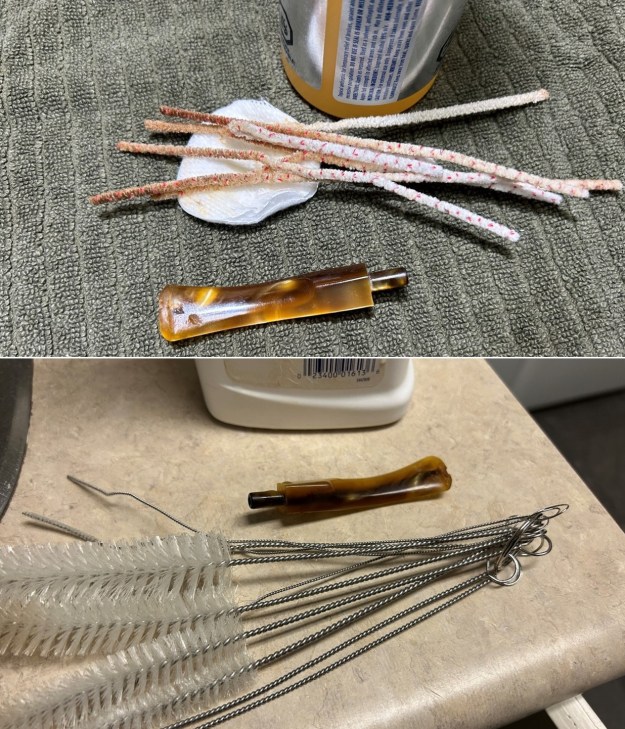
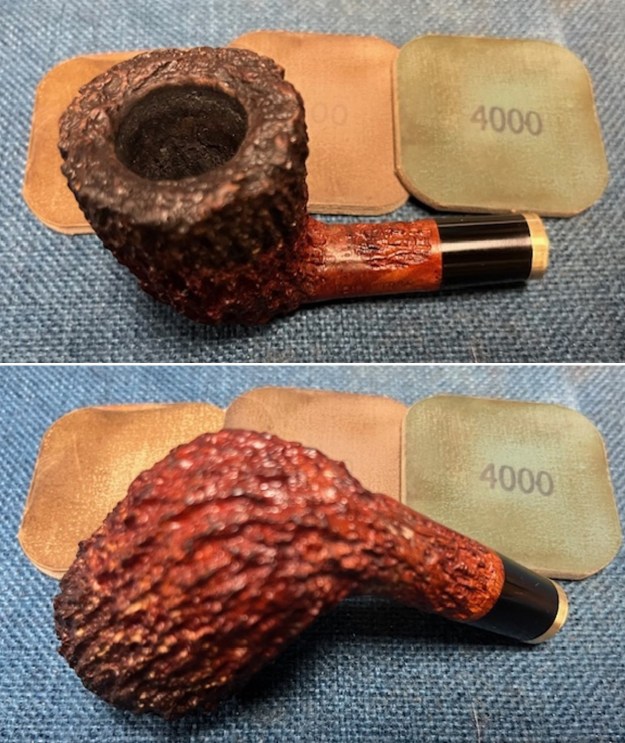
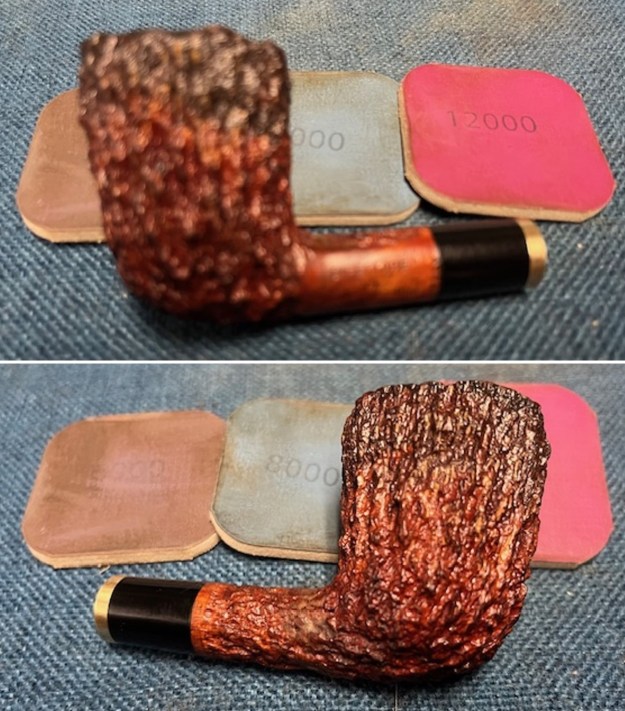
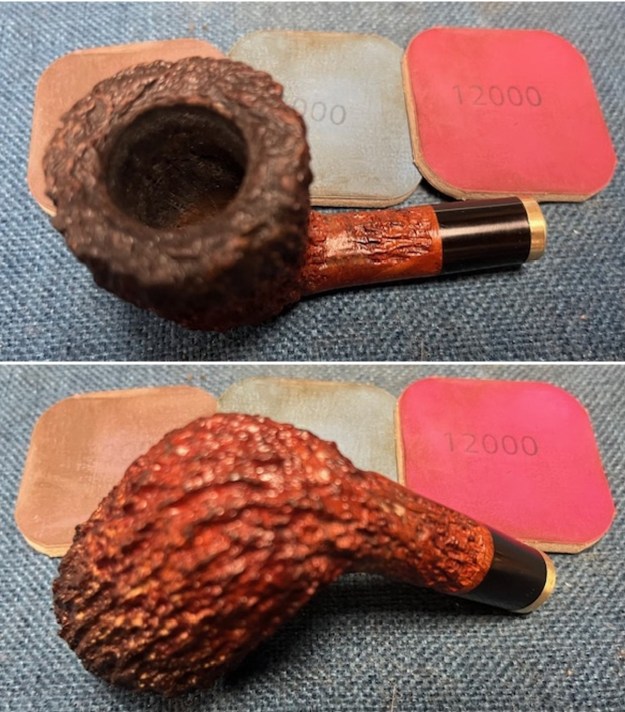
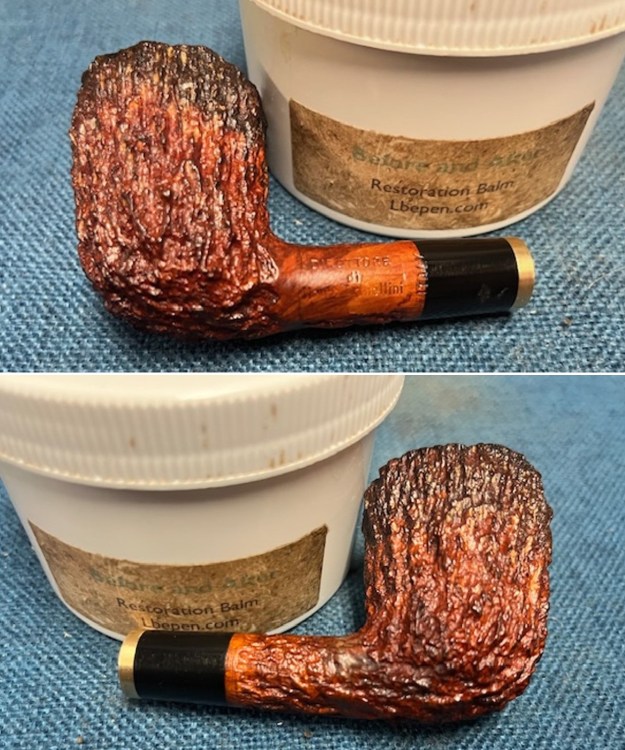
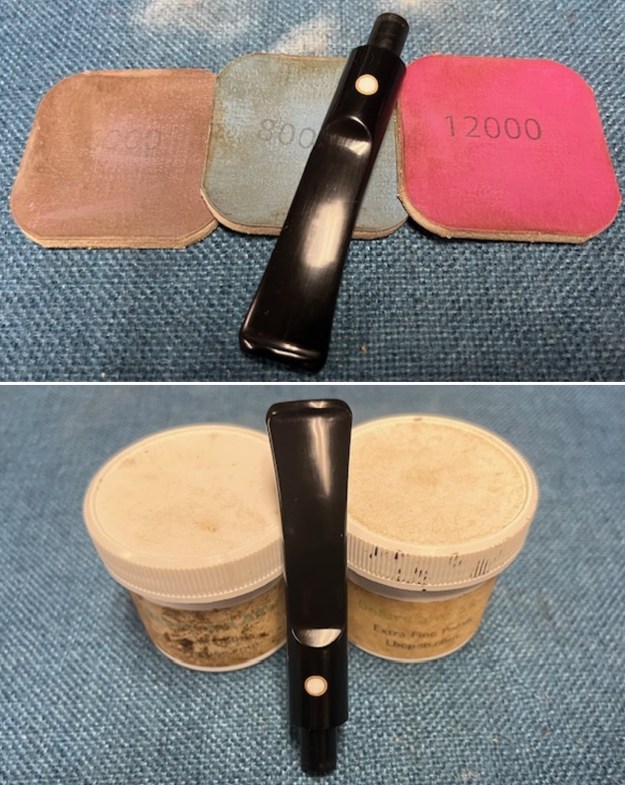
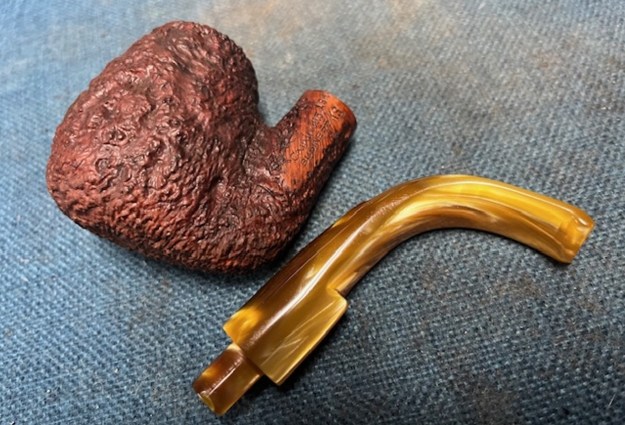
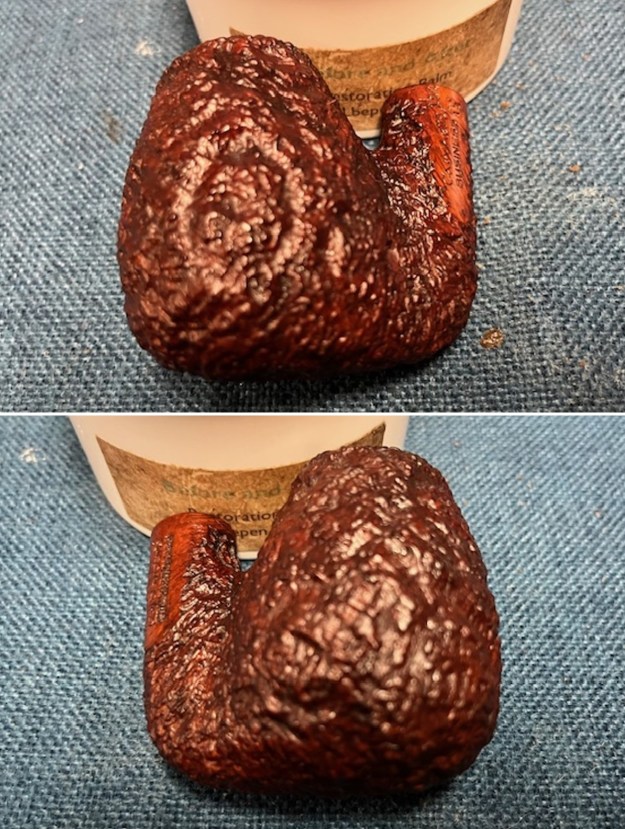
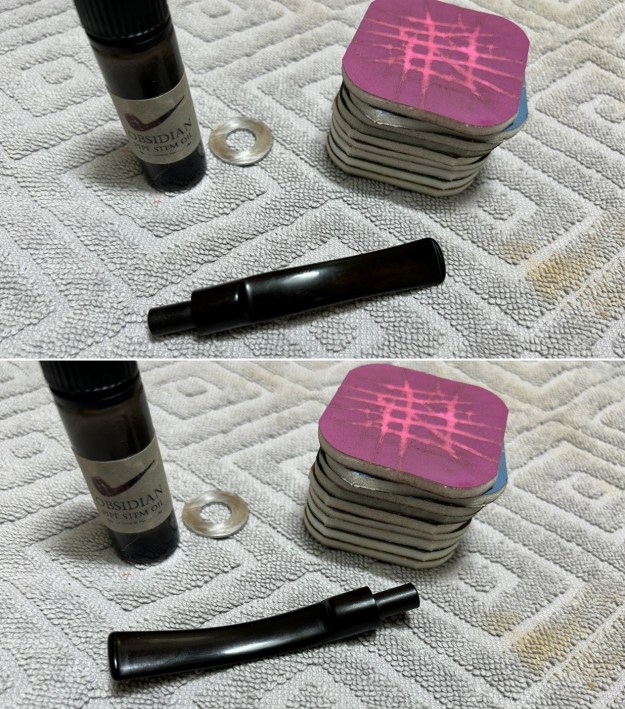
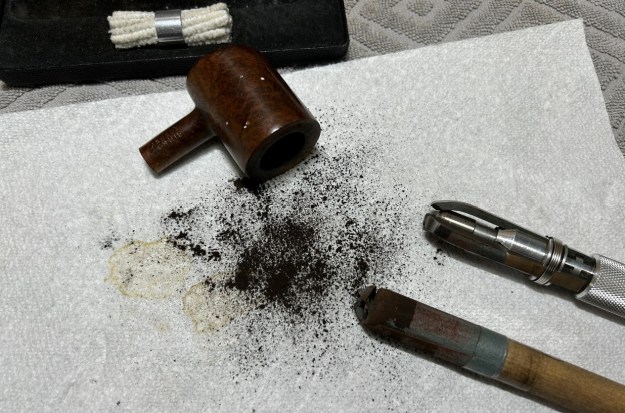
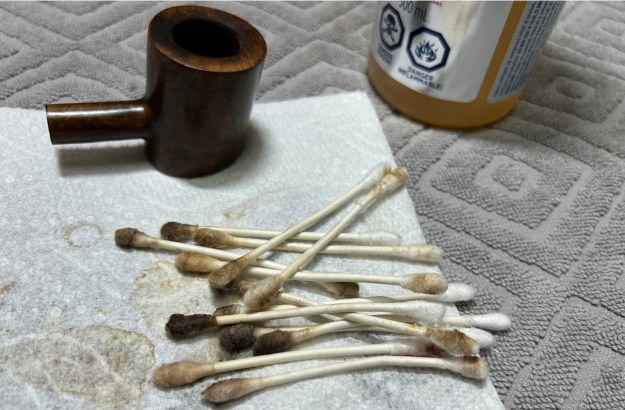
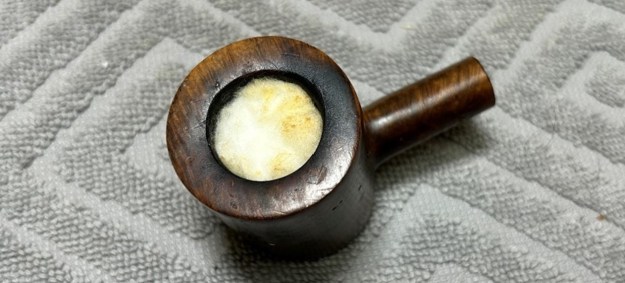
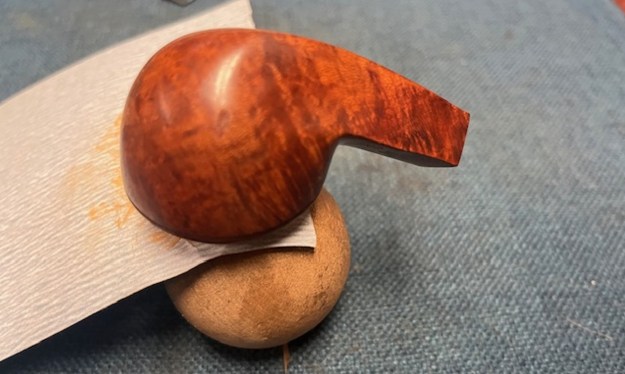
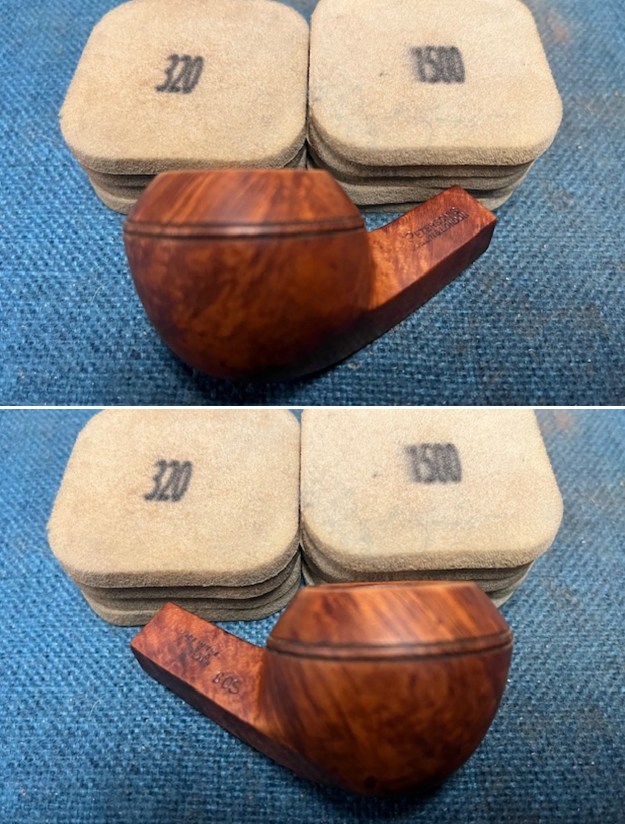
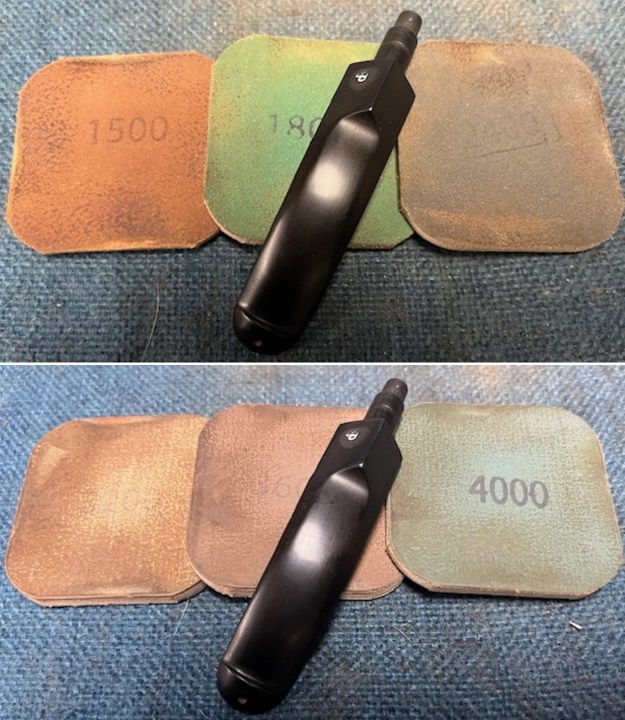
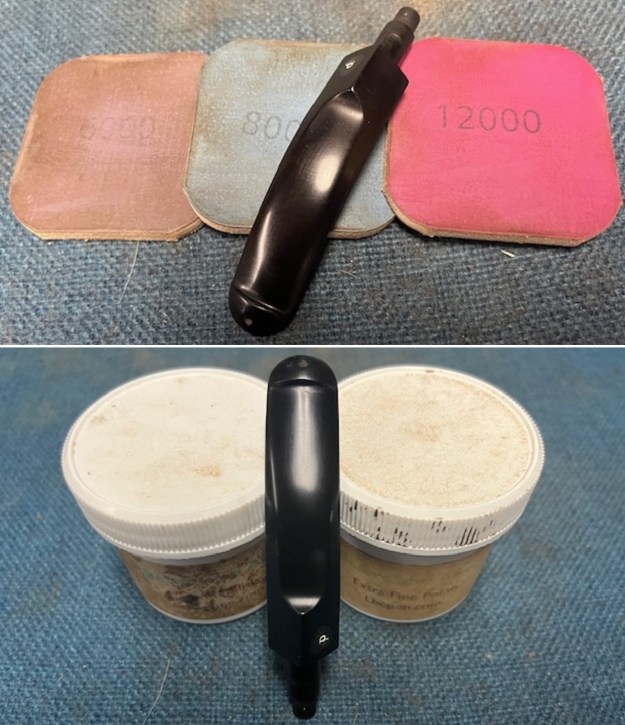
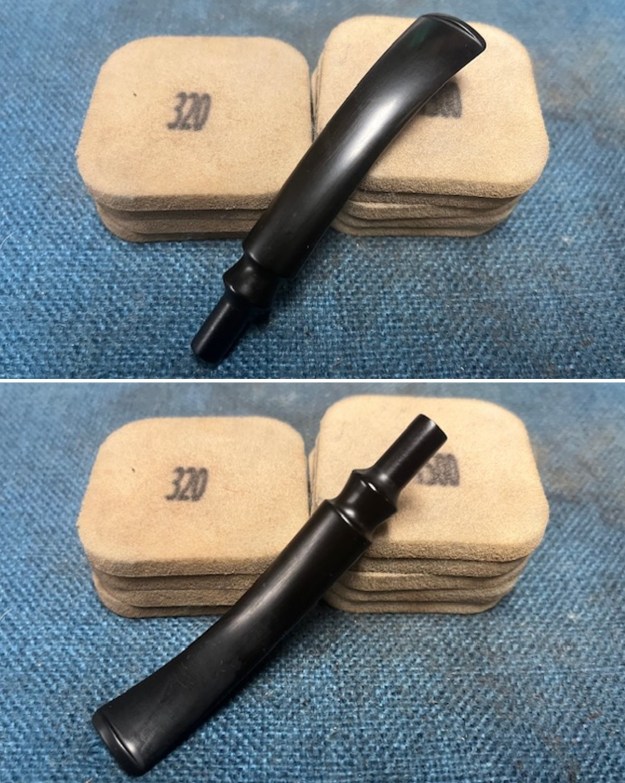
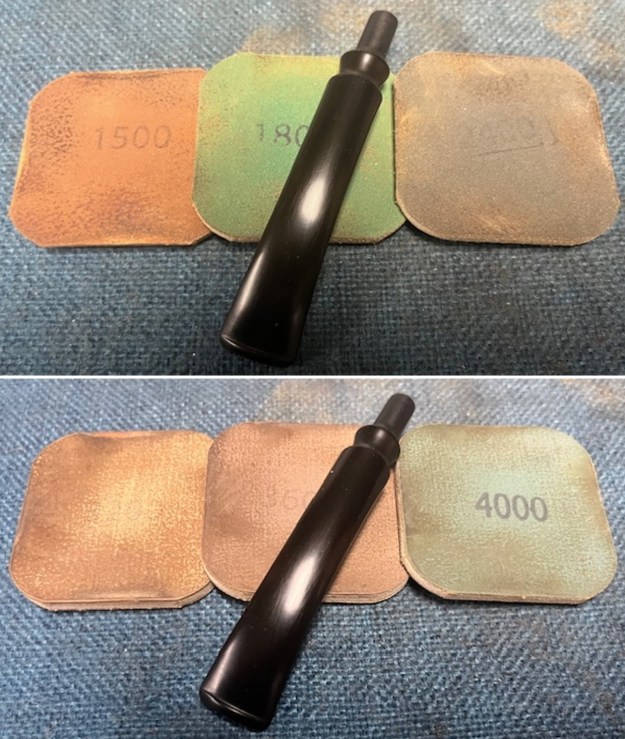
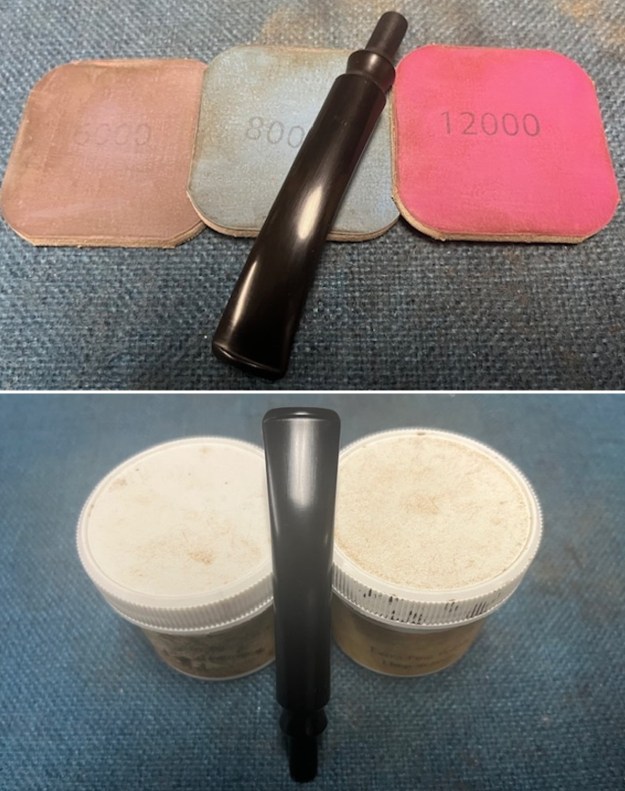
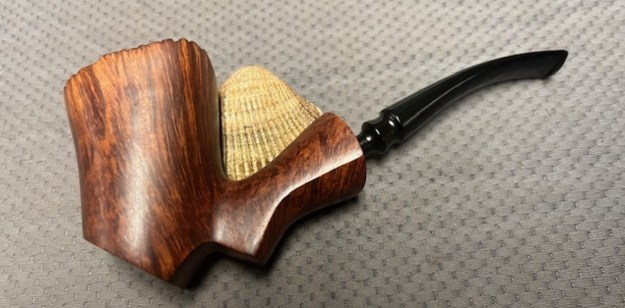
Jeff reamed it with a PipNet pipe reamer and cleaned up the reaming with a Savinelli Fitsall Pipe Knife. He scrubbed out the internals of the shank and stem with alcohol, pipe cleaners and cotton swabs until the pipe was clean. He scrubbed the exterior of the bowl with Murphy’s Oil Soap and a tooth brush to remove the grime and grit on the briar and the lava on the rim top. The finish on the bowl looked really good when I got it. The rim top and edges looked very good. He soaked the twin bore stem in Briarville’s Pipe Stem Deoxidizer bath to remove the oxidation. The stem looked better and the deep tooth marks and chatter on the surface were also visible. When the pipe arrived here in Vancouver for the second stop of its restoration tour it looked much better than when he found it. I took photos of the pipe before I started my work on it. I took photos of the condition of the rim top and stem before I started working. The rim top looks good and the bowl is clean. The stem is much better but still shows some light tooth chatter and marks on both sides near the button.I took photos of the stamping on the sides of the shank. The stamping was clear and readable as noted above. I took the bowl and stem apart and took a photo of the pipe to show the look of the pipe.Now it was my turn to work on the pipe. I sanded the bowl and rim top with 320-3500 grit 2 inch sanding pads. I wiped the bowl down with a damp cloth to remove the sanding debris. I polished the briar with micromesh sanding pads – dry sanding with 1500-12000 grit pads. I wiped the bowl down after each pad with a damp cloth to remove the debris. I worked some Before & After Restoration Balm into the finish of the bowl, rim top and shank with my fingertips to clean, enliven and protect it. I find that the balm really makes the briar come alive again. The contrasts in the layers of stain really made the grain stand out. I let the balm sit for 15 minutes and then buffed with a cotton cloth to raise the shine. The bowl really looks good at this point. I sanded the stem with 320-3500 grit sanding pads to blend in the tooth chatter and marks. I wiped the stem down after each pad with an Obsidian Oil saturated cloth to remove the grime and protect the stem.I polished the stem with micromesh sanding pads – wet sanding it with 1500-12000 grit pads. I polished it further with Before & After Pipe Stem Polish – both fine and extra fine. I wiped it down again with some Obsidian Oil and let it sit and dry. I always look forward to the moment when all the pieces are put back together. The GBD Virgin Bent Apple makes a final trip to the buffing wheel and is met first with Blue Diamond polish on the buffing wheel. That is followed by multiple coats of carnauba wax over the whole pipe. Then I do a step that not everyone does but I learned from one of the old pipe men who no longer with us, I buff the pipe with a clean buffing pad to raise the shine. Finish my buffing by hand with a microfiber cloth to deepen the shine. It is fun to see what the polished bowl looks like with black vulcanite stem. This richly stained 1982 GBD Virgin L Bent Apple is light weight and ready for you to load up a tobacco of preference and enjoy. Have a look at it in the photos below. The dimensions are Length: 5 ½ inches, Height: 1 ½ inches, Outside diameter of the bowl: 1 ¼ inches, Chamber diameter: ¾ of an inch. The weight of the pipe is 48 grams/1.69 ounces. This is one that will go on the British Pipemakers Section of the rebornpipes online store shortly. Let me know if you are interested in adding it to your rack. Thanks to each of you who are reading this blog. Remember we are not pipe owners; we are pipemen and women who hold our pipes in trust until they pass on into the trust of the next generation.

The Loewe & Co. Derby Billiard: an Archangel a Little Damaged


by Kenneth Lieblich

Charles Lamb famously described his friend, Samuel Taylor Coleridge, as ‘an archangel a little damaged’ – and that is how I feel about this extraordinary, sterling-silver banded Loewe & Co. billiard. Just by looking at the pipe, you can tell that it comes from a bygone era. There is an elegance and subtlety to this pipe which makes it somewhat angelic – but it is more than a century old and bears the damage of a life well-lived. This is something of a grail pipe for me and, despite the wounds, I am delighted to have found it. Before we refresh our memories about the quasi-mythical Loewe & Co., let’s have a look at the marks on the pipe itself. On the left side of the shank is engraved the encircled logo of the company: L&Co. On the right side of the shank is engraved the words Loewe [over] London.W. On the underside of the shank is engraved the word Derby – the model name of this pipe, indicating it to be a billiard. We move on to the sterling-silver band. It also shows the encircled logo of the company: L&Co. In addition, it shows the letters A·D inside a rectangle. Finally, it also has a set of hallmarks which were nigh-on impossible to decipher at the start – but I did decipher some of them later in the restoration. But no need to jump ahead – I will tell you now that the hallmarks are a gothic letter ‘D’, then a somewhat-obscured lion passant, and the third is too faint to make out – but it is likely to be a leopard’s head. Naturally, L&Co. is an abbreviation of Loewe & Co. of London. The letters A·D on the silver refer to Auguste Dreyfus, whose company, Dreyfus & Co., had assay offices in London and Chester in England. The gothic letter ‘D’ corresponds to the year 1919 (as you can see in the chart below). The lion passant indicates that this is sterling silver (id est, 92.5% silver). And, assuming that the final mark is, actually, a leopard’s head, it would indicate that the object is from London. Let us examine some of the details of Loewe’s history. Pipedia provides a surprisingly long entry on Loewe’s and I heartily encourage you to read it here. However, it is worth quoting a few lines (emphasis mine):

Loewe is one of the haunting old names of British pipe-making, characteristic of an almost vanished “upper middle class” of the trade, which also incorporated makes such as BBB, Orlik, Comoy’s and GBD. Along with these brands, Loewe has long dwindled into pseudo-existence, becoming little more than a logo occasionally used by the Cadogan factory in Southend-on-Sea. But owners of older Loewes treasure them as superb, featherweight smokers, excellently crafted and with grain characteristics superior to those of many contemporary Dunhills. The Frenchman Emil Loewe founded the company, both shop and workshop, in 1856 at the Haymarket 62, London. He is said to have been the first to make briar pipes in England. Richard Hacker maintains that theatre people from the West End were among the shop’s heyday aficionados. Loewe’s spigots are especially well regarded by lovers of elegance today – they were originally introduced for practical reasons, to facilitate the production of replacement stems for customers abroad.                  Furthermore, there is an excellent article on Loewe pipes (and especially their dating) by Martin Farrent, which Steve reposted on this blog. You can read it here. It would appear that much of his article was used to make the Pipedia post. In any case, it is well worth reading.Let’s examine this marvellous pipe. The condition of the pipe is not ideal, but only in the same sense that a hero wounded in battle is not ideal. The stem is beautifully shaped, but heavily oxidized. There are some scratches on the stem, around the bit, suggesting that someone may have tried to sand down some ancient tooth marks. This is an orific stem – not surprising, given its age – and it’s worth reading Steve’s old blog about such stems here. Meanwhile, the stummel has some issues. There is plenty of cake in the bowl, a mound of lava on the rim, a few small nicks here-and-there, and – most notably – a crack in the bowl and a crack in the shank. Finally, the sterling silver band is heavily worn and thoroughly tarnished.Before I go on, I want to make something clear: because of the age of the pipe, I will not be making some of the repairs that I might on a younger pipe. There is something special about this Loewe – and its wounds are part of its history, part of its story.

I used isopropyl alcohol on a few cotton rounds and wiped down the stem to provide an initial cleaning of filth before moving on to the next steps. The primary cleaning came next. I disinfected the inside of the stem with both pipe cleaners and cotton swabs dipped in lemon-infused 99% isopropyl alcohol. I scrubbed thoroughly to make sure the interior was very clean. It was pretty darn dirty and I used quite a few pipe cleaners and cotton swabs.The goal of the next step is the removal (or minimization) of oxidation. Going to my sink, I used cream cleanser, cotton rounds, and a toothbrush, and scoured the stem to remove as much surface oxidation as possible. As the photos show, the result was a hideous, ochre-coloured mess – but better off the stem than on it.Once the stem was reasonably clean, I soaked it overnight in some Briarville Stem Oxidation Remover. This solution works to draw oxidation in the stem to the surface of the vulcanite. This is a major aid and an important step in ensuring a clean stem. The following day, I drew out the stem from its bath and scrubbed the lingering fluid with a toothbrush.The penultimate step for the stem is sanding. I used all nine of the micromesh sanding pads (1,500 through 12,000 grit) to sand out flaws, even out the vulcanite, and provide gentle polishing of the finished surface. I also applied pipe-stem oil while using the last five micromesh pads. There was a wonderful, deep black shine to the stem when I was done.As the stem was (nearly) complete, I moved on to the stummel. The first step was to ream out the bowl – that is to say, remove all the cake inside the bowl. This accomplished a couple of things. First (and most obviously), it cleaned the bowl and provided a refurbished chamber. Second, when the old cake was removed, I could inspect the interior walls of the bowl and determine if there was damage or not. I used a reamer, a pipe knife, and a piece of sandpaper taped to a wooden dowel. Collectively, these ensured that all the debris was removed. I was pleased to see that, aside from the aforementioned crack, the walls of the chamber were intact and solid (albeit heavily used).My next step was to remove the lava on the rim. For this, I took a piece of machine steel and gently scraped the lava away. The metal’s edge is sharp enough to remove what I need, but not so sharp that it damages the rim. This work revealed some notable wear, but nothing overly serious.Similar to the stem, I then cleaned the stummel with both pipe cleaners and cotton swabs dipped in lemon-infused 99% isopropyl alcohol. With a pipe this dirty, it took quite a while and much cotton to clean.I then decided to ‘de-ghost’ the pipe – that is to say, exorcize the remaining filth from the briar. I filled the bowl and the shank with cotton balls, then saturated them with 99% isopropyl alcohol. I let the stummel sit overnight. This caused the remaining oils, tars and smells to leach out into the cotton.To tidy up the briar, I wiped down the outside, using a solution of a pH-neutral detergent and some distilled water, with cotton rounds. I also used a toothbrush in the crevices. This did a good job of cleaning any latent dirt on the surface of the briar. The last step of the cleaning process was to scour the inside of the stummel with the same mild detergent and tube brushes. This was the culmination of a lot of hard work in getting the pipe clean. This also laid bare the crack inside the shank. Unfortunate, but it is what it is. I took the time to carefully clean and polish the silver band. I wanted to obviously remove the tarnish and grime, but without adding any wear to the already-heavily-worn band. I used some of the same pH-neutral detergent mentioned above and followed that by buffing it with my jewellers’ cloth. This worked very well and allowed me to finally decode the hallmarks, as discussed above. I have included a few detailed photos below. The marks are still hard to see, but they are there. I used a few micromesh pads (not all) to sand the outside of the stummel and finish it off. This sanding provides a beautiful smoothness to the wood. I rubbed some LBE Before & After Restoration Balm into the briar and let it sit for 30 minutes or so. The balm moisturizes the wood and gives a beautiful depth to the briar. I then buffed the stummel with a microfibre cloth. For the final step, I took the pipe to my bench polisher and carefully buffed it – just with three coats of carnauba wax. This procedure makes the pipe look its best – the stummel sings and the stem glows.All done! This Loewe & Co. Derby billiard looks fantastic again and I am delighted with the results. This is one pipe that I am going to be adding to my collection. Feel free to email me directly at  kenneth@knightsofthepipe.com. The approximate dimensions of the pipe are as follows: length 4⅓ in. (109 mm); height 1⅜ in. (35 mm); bowl diameter 1⅛ in. (30 mm); chamber diameter ⅔ in. (18 mm). The weight of the pipe is ⅝ oz. (22 g). I hope you enjoyed reading the story of this pipe’s restoration as much as I enjoyed restoring it. If you are interested in more of my work, please follow me here on Steve’s website or send me an email. Thank you very much for reading and, as always, I welcome and encourage your comments.
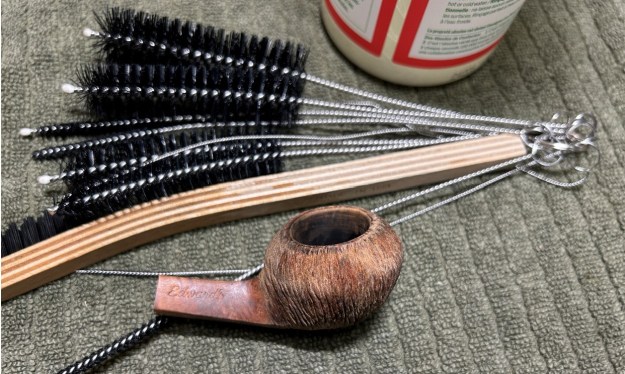
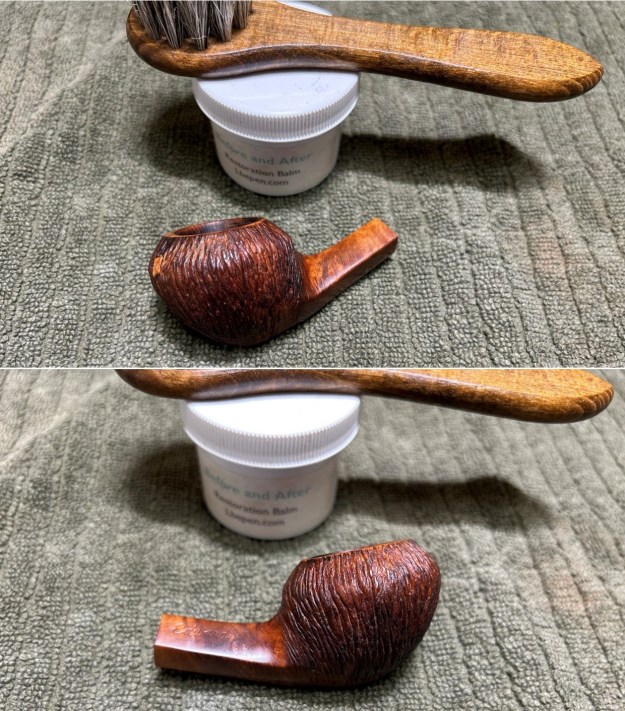
Turns out to be an older Peterson’s Donegal Rocky Made in Ireland Billiard


by Steve Laug

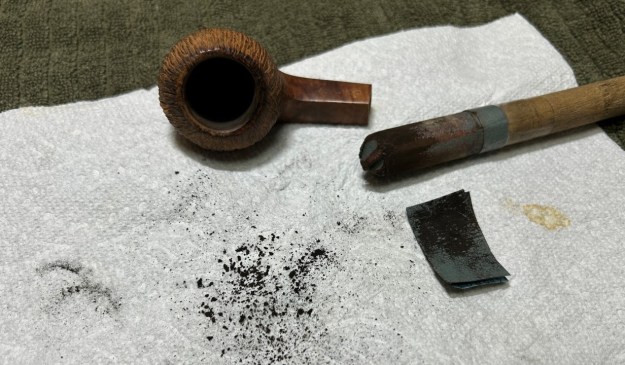
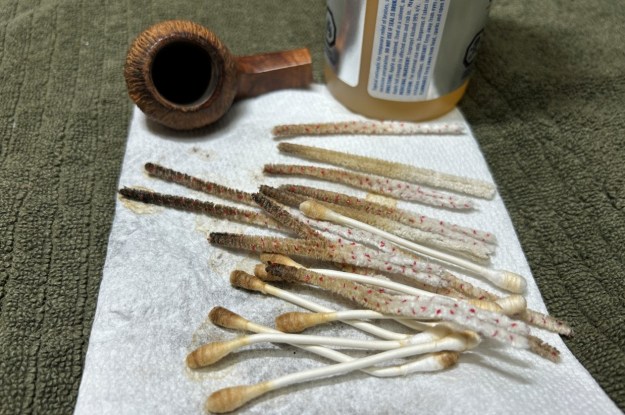
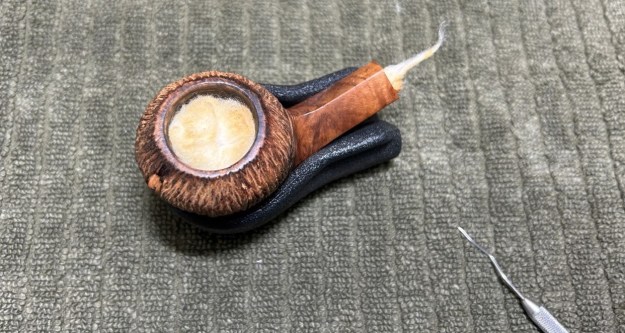
The next pipe on the work table is a sandblast Peterson’s Rusitcated Billiard shaped pipe that we received from a friend in Naples, Florida, USA on 07/17/2024. It was stamped on the underside of the bowl and shank and on the heel, it was stamped “Donegal” [over] Rocky. There was no shape number though it appears to be a shape 15.  Following that it read, Made in Ireland (in circle). There is a band on the shank that is stamped on the left side and reads K&P [over] three faux hallmarks, or Makers Marks. These were used before 1963. These included a Refined Shamrock, Wolf Hound and a Tower without a door. Under that it read DUBLIN. It has a deeply rusticated finish around the bowl and shank that has a lot of oils, debris and grime in the finish. The pipe had been recently reamed and there was a light cake in the bowl and a lava overflow in the rustication on the rim top. The inner edge of the bowl looks to be in good condition. There was a very beautiful pipe underneath all of the buildup of years of use. The stem was a Peterson’s Fishtail Taper Stem. It had light chatter on both sides ahead of the button. Jeff took photos of the pipe before he started his cleanup work on it. Jeff took photos of the bowl and rim top to show the thin cake in the bowl and the light lava build up on the rusticated rim top and the edges of the bowl. The rim top and edges looked good. Jeff took photos of the top and underside of the stem showing the tooth chatter on an otherwise good looking stem. More would be visible once Jeff cleaned it up. Jeff took photos of the sides and heel of the bowl to show the condition of the finish. You can see the dust and grime around the sides of the bowl and shank in the heavily rusticated finish. Jeff took photos of the stamping on the underside of the bowl and shank. The stamping was faint but readable as you can see from the photos. It read as noted above. The Silver ferrule is actually clearly stamped and readable. I am including the information from Pipedia’s article on Peterson pipes. It is a great read in terms of the history of the brand (https://pipedia.org/wiki/Peterson). I have included a bit of the pertinent history here.

1915 – 1949 The Pre Republic Period

This was a turbulent period for the company with the outbreak of World war 1 and the start of the Easter uprising in 1916. The K&P shop was extensively damaged during the military action at this time (see attached newspaper report).

Following quote by Kapp & Peterson.

“Kelly’s, the well known Dublin landmark at the corner of Sackville Street and Bachelor’s Walk, one of the most shot at and fully punctured premises in Dublin, was in our possession practically before the smoke ceased over the ashes of our fine shop under the Metropole Hotel. This was one of the most sensational business captures arising out of the Rebellion.”

Around 1916, Peterson began stamping their pipes “Made in Ireland” in what is referred to as a block format.

Charles Peterson died shortly after retiring and moving to Hamburg in Germany in 1919 where he is buried. The original 1890 ‘system’ pipe patent expired at around this time.

The Irish free state came into being in December 1922. The Free State Era was from 1922 through to 1937.

Peterson followed with a stamp of “Irish Free State” in either one or two lines, either parallel or perpendicular to the shanks axis and extremely close to the stem. Ireland was a republic in all but name. Eventually the Irish people voted for a new constitution in 1937 and Ireland then formally became Eire (Ireland in Irish). The Made in Eire era stamps were from 1938 through till 1941. Peterson now stamped their pipes with “Made in Eire” in a circle format with “Made” and “Eire” in a circle with the “in” located in the centre of the circle. This was used during the years of 1938 – 41. Later they stamped their pipes with “Made in Ireland” in a circle format 1945-1947 and still later with “Made in Ireland” in a block format 1947-1949. The “Made in Ireland” block format came in either one line or two lines. The Republic of Ireland was formed on 17 April 1949.

The above information helped me date the pipe. I knew from the Maker’s Marks on the Silver that it was made prior to 1963. The Made in Ireland circular COM stamp helps to take the date back a bit further as it was used from 1945-1947. This was another older pipe. That was a bit of a surprise for me.

Jeff had done a great job cleaning up the pipe as usual. He cleaned up the reaming with a PipNet reamer and a Savinelli Fitsall Pipe Knife. He scrubbed the interior of the bowl and shank with pipe cleaners, cotton swabs and alcohol to remove the tars and oils. He scrubbed the exterior of the pipe with undiluted Murphy’s Oil Soap and a tooth brush to remove the grime from the finish. He worked on the rim top lava and darkening with the soap and tooth brush. He scrubbed the inside of the stem with alcohol and pipe cleaners. He scrubbed the exterior of the stem with Soft Scrub and then soaked it in Briarville’s Pipe Stem Deoxidizer. He rinsed it off with warm water to remove the Deoxidizer. The pipe looked far better when it arrived. The silver tarnished once again and would need to be polished because it had been sitting here for awhile. I took some close up photos of the rim top and also of the stem surface. I wanted to show how well it had cleaned up. The rim top and edges look quite good. I also took close up photos of the stem to show the light tooth marks on the surface near the button.I took a photo of the stamping on the underside of the shank and the band. You can see that it is stamped as noted above. It is faint but still readable. I took the pipe apart and took a photo of the pipe. It is a good-looking pipe and has a rugged rustication around the bowl.I worked over the dull area on the rusticated rim top with a brass bristle wire brush to knock off the remnants of crud in the deep grooves. It looked better.I worked some Before & After Restoration Balm into the surface of the briar with my fingertips and a horsehair shoe brush to clean, enliven and protect the briar. I let the balm sit for 10 minutes and then buffed with a cotton cloth to raise the shine. The photos show the bowl at this point in the restoration process. I polished the Sterling Silver band on the shank with a jeweller’s cloth to remove the tarnish and protect it from further tarnishing. I sanded the stem with the 2 inch square 320-3500 grit sanding pads to remove the light tooth chatter and marks in the acrylic. I wiped down the stem after each sanding pad with Obsidian Oil. I was able to remove the marks and the stem looked very good.I polished the stem with micromesh sanding pads – wet sanding with 1500-12000 grit sanding pads. I wiped it down after each sanding pad with Obsidian Oil. I polished it with Before & After Pipe Stem Polish – both Fine and Extra Fine. I gave it a coat of Obsidian Pipe Stem Oil. It works to protect the stem from oxidizing. I set it aside to dry. I am excited to finish this Republic Era Peterson’s “Donegal” Rocky 15 Billiard. I put the pipe back together and buffed it with Blue Diamond on the buffing wheel. I gave the bowl multiple coats of Conservator’s Wax and the stem multiple coats of carnauba wax. I hand buffed the pipe with a clean buffing pad to raise the shine. It is fun to see what the polished bowl looks like with the rugged rustication all around it. Added to that the polished Sterling Silver band and the black vulcanite stem was beautiful. This rusticated Classic Peterson’s “Donegal” Rocky Billiard is nice looking and the pipe feels great in my hand. It is light and well balanced. Have a look at it with the photos below. The dimensions are Length: 5 ½ inches, Height: 1 ½ inches, Outside diameter of the bowl: 1 ¼ inches, Chamber diameter: ¾ of an inch. The weight of the pipe is 34 grams/1.20 ounces. It is a beautiful pipe and one that will be on the Irish Pipe Makers Section of the rebornpipes store soon. If you are interested in adding it to your collection let me know. Thanks for walking through the restoration with me as I worked over this pipe. Thanks to each of you who are reading this blog.

As always, I encourage your questions and comments as you read the blog. Thanks to each of you who are reading this blog. Remember we are not pipe owners; we are pipe men and women who hold our pipes in trust until they pass on into the trust of those who follow us.

Restoring a Well Smoked & Scarred Aldo Velani Ultima Dublin


by Steve Laug

My brother Jeff picked up an Aldo Velani Ultima pipe from a seller in Puyallup, Washington, USA on 03/17/2025. The Ultima has a composite stem with briar inserts on the saddle and along the sides of the stem with Lucite forming the base of the stem. There is band of Lucite on the shank end and on the top and underside of the bite area around the button. It really is a beautiful looking pipe with a lot of class and distinction. Most Aldo Velani pipes are made in Livorno, Italy, for the USA market by Cesare Barontini. They were previously imported by Lane Limited. The name “Aldo Velani” is actually fictional one and the brand was made for export (https://pipedia.org/wiki/Aldo_Velani  http://www.pipephil.eu/logos/en/logo-a3.html). The pipe was probably made in the 1990s. The pipe was dirty with grit and grime on the exterior of the bowl and shank. There was a thick cake in the bowl and there was a lava overflow on the rim top. There was also some burn damage on the inner edge. The stem was dirty and had light tooth marks on the Lucite around the button. Jeff took photos of the pipe before he started his clean up. He took some photos of the rim top and the stem to show the condition of the pipe. You can see the damage on the inner edge, the lava and damage on the rim and outer edge. There was a thick cake in the bowl. The photos of the stem show the tooth marks, chatter and debris on the stem surface. Jeff took photos of the sides and heel of the bowl to show the condition of the finish. Even under the dirt and debris of the years the grain on the smooth briar looked very good. You can see the damage on the outer edge of the bowl in the photos. The stamping is faint in spots but still is readable as noted above. I turned to Pipephil’s site to learn about the Velani brand (http://www.pipephil.eu/logos/en/logo-a3.html). I did a screen capture of the section on the site regarding the Aldo Velani pipes. There is a connection to Barontini pipes. The eighth photo down in the screen capture is the Ultima. I also included the information from the side bar. Aldo Velani is the fictional name for a sub-brand mainly intended for export.

Now I knew what I was working with. I learned that most of the Aldo Velani pipes are made in Livorno, Italy, for the USA market by Cesare Barontini.

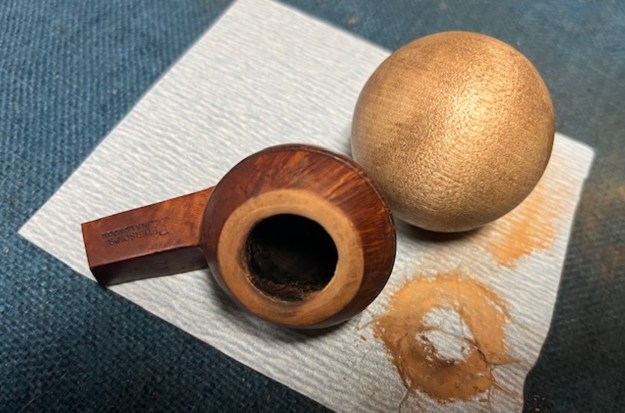
Jeff cleaned the pipe with his usual thoroughness – reaming the bowl with a PipNet pipe reamer, cleaning up the reaming with a Savinelli Fitsall Pipe Knife. He scrubbed the internals of the shank and the stem with alcohol, cotton swabs and pipe cleaners. He scrubbed the exterior with Murphy’s Oil Soap to clean off the dust and grime on the finish. The rim top looked better but the burn damage was very evident on the inner edge and the top. The inside of the bowl itself looked great. The stem was in great shape other than a bit of tooth chatter. He did not put this one in the Briarville’s Pipe Stem Deoxidizer Bath having seen the effects on the other part briar stems. I took photos of the pipe when I started working on it. I took photos of the bowl and rim top as well as both sides of the stem to show its condition. The rim top and edges show darkening on the rim top and burn damage on the inner edge is clearly visible. I took close up photos of the stem to show the tooth marks and chatter on the top and underside of the stem and on the button itself. I took a photo of the stamping on the left side of the shank. It is stamped as noted above and is clear and readable even though faint in spots. I took the pipe apart and took a photo of the pipe. It is an interesting pipe that you can see the rustic finish on in the photo below. I decided to start my restoration work on this one by dealing with the darkening on the inner edge and the burn damage on the front inner edge. I also wanted to deal with the damage on the outer edge of the bowl on the front and sides of the bowl. I started with a folded piece of 220 grit sandpaper. It took care of some of the damage. It also revealed that there was damage on the rim top. I decided to use a wooden sphere and some 220 grit sandpaper to clean up the inner edge bevel and the rim top. When I had finished it looked much better. I sanded the scratches and marks on bowl sides and shank with 320-3500 grit 2×2 inch sanding pads. I wiped it down after each pad with a damp cloth. It really began to shine. I polished the bowl and shank with 1500-12000 grit micromesh sanding pads. I wet sanded it with 1500-2400 and dry sanded it with 3200-12000 grit pads. I wiped it down after each pad with a damp cloth to remove the sanding dust. The photos below show the progress in the polishing. The pipe was beginning to look really good and the grain was beginning to really pop. It was time to work some Before & After Restoration Balm into the briar on the bowl and the rim top. I worked it into the surface with my fingertips to clean, enliven and protect the wood. I let the balm sit for about 20 minutes and buffed it off with a soft cotton cloth. I took photos of the pipe at this point in the process to show what the bowl looked like at this point. I set the bowl aside at this point and turned my attention to the stem. I was really glad to see that this composite briar and Lucite stem was in decent condition. There was tooth chatter and marks on the stem surface. I filled in the deeper marks in the stem with black rubberized CA glue. The stem was also loose so I used a tooth pick to put glue in the gap between the briar and the acrylic stem. Once the repairs cured I sanded them with 220 grit sandpaper to blend them into the surface of the acrylic.I sanded the shank and stem piece with 320-3500 grit 2×2 inch sanding pads. I wiped the stem and briar shank down after each sanding pad with a damp cloth. It began to look very good.I dry sanded the stem and briar extension with 1500-12000 grit pads. I wiped the stem down with an Obsidian Oil soaked cloth after each pad. When I was finished the stem looked great. The photos tell the story. I rubbed the briar part of the stem down with Before and After Resoration Balm. I worked it into the briar with my finger tips. I let it sit for 10 minutes then buffed it off with soft cloth.I put the bowl and stem back together. I polished the bowl and stem with Blue Diamond to polish out the scratches in the briar and acrylic. I gave the bowl and the stem multiple coats of carnauba wax. I buffed the pipe with a clean buffing pad to raise the shine. I hand buffed it with a microfiber cloth to deepen the shine. The pipe polished up pretty nicely. The contrast of colours between the briar bowl and the briar inserts on the stem really looked good with the polished black Lucite. The Aldo Velani Ultima Dublin looked really good even with some of the scars of its journey. The pipe has a unique look that catches the eye. The finished pipe is shown in the photos below. The dimensions of the pipe are Length: 6 inches, Height: 2 ¼ inches, Outside diameter of the bowl: 1 ½ inches, Chamber diameter: 7/8 of an inch. The weight is 1.83 ounces/52 grams. This one will soon be on the rebornpipes store in the Italian Pipe Makers Section if you are interested in adding it to your collection. Thanks for reading this while I worked on it. It was interesting and unusual piece to restore and I really enjoyed the work.

New Life for a “Malaga” Rhodesian Oval Shank Rhodesian with a Taper Stem


by Steve Laug

For the next little while I am working on some Malaga Pipes. I have several in queue to work on so I tend to pick them by what catches my eye. The next pipe on the table is an interesting “Malaga” Imported Briar ¼ Bent Rhodesian. Jeff saw it on eBay and purchased it on 09/14/2025 from a seller in Carleton, Michigan, USA. The grain on this pipe is very stunning beneath the oil cured finish. The pipe is stamped on the topside of the shank and reads “Malaga”. It is a nice one in terms of the well-done ¼ Bent Rhodesian. The bowl and shank were in excellent condition. The finish was in good condition though dirty. The bowl had a thick cake that over flowed over the top of the crowned rim in a lava coat. The rim top and inner edge of the bowl appeared to be in good condition under the grime. The taper stem appeared to be either vulcanite or hard rubber and was lightly oxidized and calcified. There were deep tooth marks on the top and the underside ahead of the button. Jeff took photos of the pipe before he started his clean up work. Jeff took photos of the rim and bowl to show the cake and a heavy lava coat on the crowned rim top and edges. The inner edge of the rim showed some darkening and had some cake on it. It was a dirty pipe but still a beauty. The hard rubber stem was lightly oxidized, calcified and had some deep tooth marks and some chatter on the top and underside of the stem. The photos of the sides and heel of the bowl show some stunning and unique grain on the smooth bowl and shank. The oil curing/finish makes the grain really stand out. Jeff took photos of the stamping on the left and right side of the shank and it is clear and readable as noted above. For those of you who are unfamiliar with the brand, I am also including the link to a blog that I wrote that gives some of the history of the Malaga brand and the Malaga Pipe Shop in Royal Oak, Michigan in the USA. Here is the link – https://rebornpipes.com/2013/02/09/george-khoubesser-and-malaga-pipes/. That blog also includes links to a catalogue and the history of the pipemaker George Khoubesser. If you are interested to learn more then I invite you to follow the link to get a feel for the brand and the pipemaker.

I am also am including a link to some printed material on the Malaga brand that came to me from the daughter of George Koch (we purchased George’s pipes from his daughter) to help identify the particular stamping on the pipe. The link takes you to the entire collection of materials that were sent to me. (https://rebornpipes.com/2019/02/27/malaga-pipes-catalogue-of-pipes-and-tobaccos/).

Jeff had cleaned up the pipe using his usual process. He reamed the pipe with a PipNet pipe reamer and removed the rest of it with a Savinelli Fitsall Pipe Knife. He scrubbed the bowl with undiluted Murphy’s Oil Soap with a tooth brush. He rinsed it under running warm water to remove the soap and grime. He cleaned out the inside of the shank and the airway with alcohol, cotton swabs and pipe cleaners. The shank had an inset to take in the tenon and the end of the stem so I would need to fit a stem to sit in the shank. I took photos of the pipe once I received it. I took a photo of the rim top and the stem to show their condition. Jeff was able to clean up the cake and the lava overflow that was shown in the rim and bowl photos above. The rim top was clean as were the inner and outer edges of the bowl. The stem looked better and the tooth marks are very light on both sides.I took a photo of the stamping on the top side of the shank to show that it was clean and faint in spots but still readable as noted above. I removed the stem from the shank and took a photo of the parts to give a sense of what the pipe looks like. It was time to start my work on the pipe. I sanded the scratches and marks on the rim and bowl sides with 320-3500 grit 2×2 inch sanding pads. I wiped it down after each pad with a damp cloth. It really began to shine. I polished the bowl sides and shank with micromesh sanding pads. I dry sanded it with 1500-12000 grit micromesh pads. I wiped it down with a damp cloth after each pad. It really began to look beautiful. I rubbed the bowl and shank down with Before & After Restoration Balm to deep clean the finish on the bowl and shank. The product works to clean, enliven and protect the briar. I worked it in with my fingers to get it into the briar. I worked it into the twin rings around the rim cap with a shoe brush. I let it sit for 10 minutes then I wiped it off and buffed it with a soft cloth. The briar really began to have a rich shine. I took some photos of the bowl at this point to mark the progress in the restoration. It is a beautiful bowl. I set the finished bowl aside and turned my attention to the stem. I filled in the deep tooth marks on the top and the underside of the stem with a black rubberized CA glue. Once it cured I shaped it with small files and then sanded the repairs with 220 grit sandpaper to blend it into the vulcanite. I sanded the stem with 2 x 2 inch sanding pads – dry sanding with 320-3500 grit pads and wiping it down after each pad with an Obsidian Oil cloth.I polished the stem with micromesh sanding pads – dry sanding with 1500-12000 grit pads. I wiped the stem down after each sanding pad with Obsidian Oil. I did a final hand polish of the stem with Before & After Pipe Stem Polish – both Fine and Extra Fine. I gave it a coat of Obsidian Pipe Stem Oil. It works to protect the stem from oxidizing. I set it aside to dry. I put the stem back on the “Malaga” ¼ Bent Rhodesian and took it to the buffer. I buffed the bowl and stem with Blue Diamond to polish the briar and the vulcanite. Blue Diamond does a great job on the smaller scratches that remain in both. I gave the bowl and the stem several coats of carnauba wax and buffed the pipe with a clean buffing pad to raise the shine. I hand buffed it with a microfiber cloth to deepen the shine. I am amazed at how well it turned out. The finished pipe is shown in the photos below. This is a beautiful “Malaga” ¼ Bent Rhodesian and the hard rubber taper stem and smooth finish combine to give the pipe a great look. I honestly have no idea why it is labeled a second as there are no fills or flaws in the briar. The dimensions of the pipe are Length: 5 ¾ inches, Height: 1 ½ inches, Outside diameter of the bowl: 1 ¾ inches, Chamber diameter: ¾ of an inch. The weight of the pipe is 1.34 ounces/38 grams. This is another pipe that I will be putting on the rebornpipes online store in the American Pipe Makers and Pipemaking Companies Section shortly, if you are interested in adding it to your collection. Thanks for walking through the restoration with me on this beauty!

As always, I encourage your questions and comments as you read the blog. Thanks to each of you who are reading this blog. Remember we are not pipe owners; we are pipe men and women who hold our pipes in trust until they pass on into the trust of those who follow us.

Breathing Life into a Tired 1988 Peterson’s Deluxe 20S


by Steve Laug

In the last box of pipes Jeff sent me there was a Peterson’s De Luxe that came to us from our contact in Copenhagen, Denmark on 04/11/2023. This one is a Peterson’s De Luxe Bent Billiard. It is stamped on the left side of the shank Peterson’s [over] Deluxe and on the right side it reads Made in the Republic of Ireland (three lines) [over] 20S. It was a dirty pipe when we received it. The walls of the bowl and shank had tars and oils ground into finish and it was quite grimy. There was a thick coat of lava on the rim top and the inner edge of the rim. The back edge of the outer edge of the rim had been knocked about hard. There was a thick cake in the bowl that had remnants of tobacco stuck in it. The ferrule on the end of the shank was Sterling Silver. It was stamped Peterson’s [over] Dublin followed by Sterling [over] Silver. Next that there are three silver hallmarks. The first was Hibernia seated, arm on a harp for the country of manufacture. The second was a Crowned Harp designating sterling quality. The third mark was a date stamp and, in this case, a upper-case cursive “C” which dated the pipe as a 1988. The stem was oxidized and there were tooth marks and chatter on the top and underside ahead of the button and on the button edge itself. Jeff took some photos of the pipe before he started his cleanup work. He took photos of the bowl and rim top to show their general condition. You can see the thick tars and lava on the inner edge and the rim top. The cake in the bowl is quite thick and there is tobacco debris on the walls of the bowl. There is damage on the front inner and outer edge and the rear outer edge. The finish on the bowl is very dirty with grime and oils ground into the bowl, but still very stunning. This pipe has a classic Peterson’s P-lip stem that has some oxidation, calcification on the surface of the vulcanite. There is chatter and tooth marks on the top and underside. There is damage on the underside edge of the P-lip. Jeff took some photos of the sides and heel of the bowl to give an idea of the grain on this particular piece of briar. It is buried under a heavy coat of tars and oils. It was thick around the outer edge of the rim and the shank side. Even so, the grain is amazing and I cannot wait to see what it looks like once it is polished and waxed. He took photos of the stamping on both sides of the shank to capture it for me. The first photo shows the left side of the shank and the stamping as noted above. The second shows the right side of the shank with the Made in the Republic of Ireland stamp and shape number 20S. I did a bit of work on Google to gather background on the DeLuxe line of pipes when I worked on the other DeLuxe pipes recently. I decided to quote that here as well.

The first information I found was on the Peterson’s website (https://www.peterson.ie/pipes/system/deluxe-system-smooth/). I quote from the description of the line below. I have highlighted several key portions in bold black for emphasis.

While the Deluxe stamp first appeared on our System pipes in 1940, the design itself dates to our 1896 and 1906 catalogues and, with the exception of the Supreme, has always marked our highest tier of System pipe. Like the System Standard and System Spigot lines, the Deluxe System pipe incorporates Charles Peterson’s patented System design, including a deep reservoir to collect excess moisture from the smoke; a graduated-bore mouthpiece that funnels the smoke and allows moisture to collect within the reservoir; a sturdy sterling silver military mount, which allows the pipe to be broken down and cleaned without damage or warping; and our patented P-Lip bit, which draws the smoke upward, thus reducing tongue bite. The Deluxe differs from those aforementioned lines, comprised of bowls with only the finest grain patterns and featuring a sterling silver mount and a push-gap stem, which was never designed to be flush-fitting, the space between the mount and stem base gradually decreasing with prolonged use. The Deluxe also elevates the System pipe by fixing each stem with a traditional chimney, an aluminum fitment that extends the tenon past the chamber’s airway for optimal System performance. Created for Peterson enthusiasts interested in acquiring the finest System pipe on the market, the Deluxe System will serve as the crown of any collection. Seen here in the Smooth finish.

From that information I knew how the De Luxe fit in the hierarchy of Peterson’s pipes. It was always the highest tier of the System pipes. It also was made with the gap in the fit of the stem to the shank on purpose with the idea that the distance would decrease over time with prolonged use. The attachment of a chimney at the end of the tenon was to maximize System performance. Sadly this one was missing the chimney.

From there I also turned to Pipedia. I quote from an article by Jim Lilley and have included much of it below. (https://pipedia.org/wiki/A_Closer_Look_at_The_Peterson_Deluxe_System_Pipe). Once again I have highlighted pertinent sections in bold below.

by Jim Lilley – The version of the system pipe for our closer inspection is one of Peterson’s more recognisable series, the handsome and very distinctive Deluxe system pipes, which include the Darwin and Mark Twain. These pipes are at the top of the ‘system’ series in terms of quality and finish.

Each Peterson Deluxe is made from carefully selected, age mellowed root briar. In matte finish with hallmarked sterling silver mounts and a unique space fitting mouthpiece to allow for years of wear. They are available in a wide range of shapes numbered, as follows 1s,2s,3s,4s,5s,8s,9s,11s,12.5s,20s,XL5s, 20FB and 11FB.

The pipes are well carved, construction, engineering and workmanship, is outstanding. The stems are well drilled and aligned. Silver work is excellent, finish very good, and the often maligned briar is of outstanding quality.

The design is a very typically Peterson classic shape. Apart from the Darwin, the balance can be stem heavy, the bit is thick and chunky, especially in the larger versions. I also enjoy the sense of presence they give to the pipe, particularly if smoking in company with friends or strangers. They have a sophistication about them.

The smoking qualities are excellent, dry and cool. The draw is good, and the flavour is particularly great in new pipes. The Mark Twain’s are outstanding in this department.

As for the aesthetics and ergonomics, I find some shapes much more attractive than others. Favourites for me are the 1s,2s,3s,the Mark Twain’s and the Darwin deluxe. As a clencher most are very good to hang, except the beautiful Darwin which is more of a ‘hand holder.’

The one weakness I find is the modern orange/golden colour, (the so called natural) it is, in my opinion, less attractive than that found in the older Walnut finish of the eighties.

As far as value and cost is concerned, for the excellent quality finish, these are competitively priced at around $135 to $250 depending on size and briar grade.

For what it is worth, I reckon the Deluxe s are probably the best value range of pipes that Peterson produce, both in terms of functionality and value. There is not a thing wrong with these pipes. Those who malign the brand because they’re made by the hundreds using machines, are very wrong, IMHO. I like them a lot and the bang for the buck is the best I’ve ever seen for new pipes of this quality…

With that information at hand I turned to work on the pipe itself. Jeff had thoroughly cleaned up the pipe. He reamed the pipe with a PipNet Pipe Reamer and cleaned up the remnants with a Savinelli Fitsall Pipe Knife. He scrubbed the bowl with undiluted Murphy’s Oil Soap with a tooth brush. He rinsed it under running warm water to remove the soap and grime. He cleaned out the inside of the shank and the airway in the stem with alcohol, cotton swabs and pipe cleaners. He scrubbed the exterior of the stem with Soft Scrub to remove as much of the oxidation and calcification as possible. He soaked the stem in Briarville’s Pipe Stem Deoxidizer and rinsed it off with warm water. I took photos of the pipe once I started to work on it.  I took some photos of the rim top and stem. The rim top and bowl were clean and the bowl was out of round. There was damage to the outer edge on the bowl front and back where it had been knocked about. Jeff had been able to get rid of all of the lava and tars of the bowl sides. The closeup photos of the stem shows that it is a much cleaner and better looking stem. The tooth marks and chatter were still present with deeper ones on the underside of the button. There was also a trough on the topside of the stem ahead of the button.I took some photos of the stamping on the shank sides and the silver on the ferrule to show the condition after the cleanup. Often the stamping takes a hit with the cleaning and is lessened in its clarity. Jeff does a great job in leaving the stamping looking very good. I removed the stem from the shank and took a photo of the pipe at this point. I started my restoration work on this pipe by addressing the darkening around the inner edge of the bowl. I used a folded piece of 220 grit sandpaper to start the cleanup. I built up the damaged areas on the front and the backside of the rim top with briar dust and clear CA glue.Once the repairs cured I used a piece of 220 grit sandpaper and a wooden sphere to reshape the rim top. I turned it on the paper and gave the inner edge of the bowl a slight bevel. Once finished it was looking much better. I would need to sand the exterior of the bowl sides to smooth out the repairs.I sanded the rim top to shape the repairs and also remove the scratches and darkening around the rim edge and sides. I used 320-3500 grit 2×2 inch sanding pads. I wiped the bowl down with a damp cloth after each sanding pad to remove the sanding debris. I started my polishing regimen on the bowl. I used nine micromesh sanding pads and dry sanded the bowl with 1500-12000 grit pads. I wiped the bowl down with a damp cloth after each pad. The bowl really shines by the final three pads. I worked some Before & After Restoration Balm into the surface of the briar with my fingertips to clean, enliven and protect it. I let the balm sit for a little while and then buffed with a cotton cloth to raise the shine. The photos show the bowl at this point in the restoration process. I polished the Sterling Silver ferrule with a jewellers polishing cloth to remove the tarnish and protect it from further tarnishing. I set the bowl aside and worked on the stem. I filled in the damage on the underside of the stem with a black rubberized CA glue. I rebuilt the damage and set it aside to cure. Once it cured I shaped it with small files and then sanded the repairs to blend it into the vulcanite. I sanded the stem with 320-3500 grit sanding pads. I wiped the stem down after each sanding pad with Obsidian Oil on a cloth. It began to look very good.I polished it with micromesh sanding pads and dry sanded the bowl with 1500-12000 grit pads. I wiped the stem down with a damp cloth after each pad. I rubbed it down with Before & After Fine and Extra Fine polishing compound. The stem looked very good. I don’t know how many times I have said this but I love it when I come to the end of a restoration and all of the parts come together and the pipe looks better than when we started the cleanup process. I put the stem back on the Peterson’s DeLuxe 20S System and buffed the pipe with Blue Diamond on the buffing wheel. I carefully avoided the stamping on the shank sides during the process. I gave the bowl and stem multiple coats of carnauba wax on the buffing wheel and followed that by buffing it with a clean buffing pad on the buffer. I hand buffed the pipe with a microfiber cloth to deepen the shine. The finished pipe is a great example of a Republic Era Peterson’s DeLuxe 20S Bent Billiard. Once again, the grain and the way the shape follows the grain is amazing. Give the finished pipe a look in the photos below. I can only tell you that it is much prettier in person than the photos capture. The dimensions of the pipe are Length: 5 ½ inches, Height: 1 ½ inches, Outside diameter of the bowl: 1 1/8 inches, Chamber diameter: ¾ of an inch. The weight of the pipe is 1.66 ounces/48 grams. This Peterson’s De Luxe 20S is a great piece of pipe history that is in good condition. Thanks for walking through the restoration with me as I worked over another beautiful pipe. I will be putting this one on the rebornpipes store in the Irish Pipemakers Section. Let me know if you are interested in adding it to your collection. Thanks for your time.

As always, I encourage your questions and comments as you read the blog. Thanks to each of you who are reading this blog. Remember we are not pipe owners; we are pipe men and women who hold our pipes in trust until they pass on into the trust of those who follow us.

Restoring a Beautiful Bentley Sandblast Prince by Hans Jonny Nielsen (aka Former)


by Kenneth Lieblich

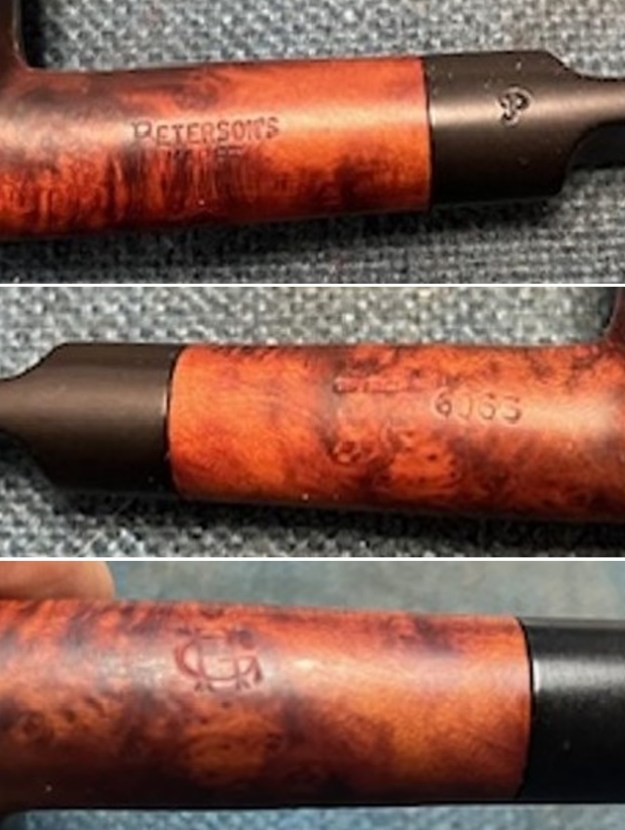
Now here’s a pipe you don’t see everyday: a very attractive prince by the Danish pipe maker known as ‘Former’ – though his real name is Hans Jonny Nielsen – working for the Danish/German/Swiss outfit, Bentley. This pipe came to me in an exchange with a gentleman in Toronto. It is an elegant pipe, with a beautiful blast, and a luxurious tapered stem. I was quite taken with this pipe when I first saw it, and I’m sure you will be too. What do the marks on the pipe say? The underside of the shank tells us. First, we see the word Bentley [over] Former Design [over] 5 – 0 – 0. 94. Next to that is a circle inside of which is either the Roman numeral II or the number 11. Further to the right, and a right angle, are the words, Swiss+Made. Finally, there is a stylized B on the stem, signifying the Bentley name. I didn’t know much about Bentley or Nielsen, so I sought out the usual sources for information. At Pipedia, the Bentley article included this information:

This is the production Brand of Hans Jonny “Former” Nielsen. When the U. S. pipe demand for quality handmade “freehand” pipes diminished, W.Ø. Larsen in Copenhagen sent their several workshop pipemakers home to work out of their house. Former who was the Larsen foreman at the time, eventually went to Germany and started the Bentley line of production pipes made on frasing machines, several at a time. Some years ago he returned to Denmark with this type of equipment and continues to make these production pipes in his current workshop in between making his famous handmade pipes. Former went to Kleinlutzel, Switzerland (just over the border from Germany) and took over a pipe fabrication in the employ of Herman Lane, making the Bentley pipes (circa 1986).

This last line made sense as far as this pipe was concerned. Pipedia also has a good-length article on Nielsen himself and I encourage you to read it here. However, one paragraph of that article concerns us here:

In 1986 Former met an interesting opportunity when he was asked to go to Switzerland and modernize the old Bru-Bu factory and to develop a new, high-grade pipe given the English name “Bentley”. He successfully took the opportunity, and spent the next 10 years in Switzerland. Former met his wife, Daniela, while working in Switzerland. In 1997, they decided to purchase the factory machinery and moved to Lauenburg / Elbe, where the Bentley production was continued at Dan Pipe. But Daniela got homesick and so they returned to Denmark. Dan Tobacco (a subsidiary of DanPipe) still manufactures Former’s tobacco blends and the building still has the Bentley logo prominently featured on its front.

A quick perusal of the material at Pipephil confirmed all of this. Look at this screenshot:I think we can surmise that this pipe was probably made in the 1980s, presumably in Switzerland – although I still think of it as a Danish pipe.

The stummel is in lovely condition. Not too much cake or lava, and the blast is in wonderful shape. The stem is a bit different. For the most part, it looks good, but there are some serious tooth marks. Clearly, the vulcanite is excellent quality, but the tooth chatter is quite heavy. Let’s see what we can do about it. I used isopropyl alcohol on a few cotton rounds and wiped down the stem to provide an initial cleaning of filth before moving on to the next steps. The primary cleaning came next. I disinfected the inside of the stem with both pipe cleaners and cotton swabs dipped in lemon-infused 99% isopropyl alcohol. I scrubbed thoroughly to make sure the interior was very clean.The goal of the next step is the removal (or minimization) of oxidation. Going to my sink, I used cream cleanser, cotton rounds, and a toothbrush, and scoured the stem to remove as much surface oxidation as possible. As the photos show, the result was a hideous, ochre-coloured mess – but better off the stem than on it.Once the stem was reasonably clean, I soaked it overnight in some Briarville Stem Oxidation Remover. This solution works to draw oxidation in the stem to the surface of the vulcanite. This is a major aid and an important step in ensuring a clean stem. The following day, I drew out the stem from its bath and scrubbed the lingering fluid with a toothbrush.As the stem was now clean and dry, I set about fixing the dents in the vulcanite. This was done by filling those marks with black cyanoacrylate adhesive, impregnated with carbon and rubber. I left this to cure and moved on.The penultimate step for the stem is sanding. First, with my set of needle files, I reduced the bulk of the cyanoacrylate repairs. I removed the excess adhesive as near to the surface as possible, without cutting into the vulcanite. Following that, I used all nine of the micromesh sanding pads (1,500 through 12,000 grit) to sand out flaws, even out the vulcanite, and provide gentle polishing of the finished surface. I also applied pipe-stem oil while using the last five micromesh pads. Not all of the marks could be removed – but it is so much better than before! There was a wonderful, deep black shine to the stem when I was done.As the stem was (nearly) complete, I moved on to the stummel. The first step was to ream out the bowl – that is to say, remove all the cake inside the bowl. This accomplished a couple of things. First (and most obviously), it cleaned the bowl and provided a refurbished chamber for future smoking. Second, when the old cake was removed, I could inspect the interior walls of the bowl and determine if there was damage or not. I used a reamer, a pipe knife, and a piece of sandpaper taped to a wooden dowel. Collectively, these ensured that all the debris was removed. Fortunately, the bowl was pretty clean.Similar to the stem, I then cleaned the stummel with both pipe cleaners and cotton swabs dipped in lemon-infused 99% isopropyl alcohol. With a pipe this dirty, it took quite a while and much cotton to clean.I then decided to ‘de-ghost’ the pipe – that is to say, exorcize the remaining filth from the briar. I filled the bowl and the shank with cotton balls, then saturated them with 99% isopropyl alcohol. I let the stummel sit overnight. This caused the remaining oils, tars and smells to leach out into the cotton.To tidy up the briar, I wiped down the outside, using a solution of a pH-neutral detergent and some distilled water, with cotton rounds. I also used a toothbrush in the crevices. This did a good job of cleaning any latent dirt on the surface of the briar. The last step of the cleaning process was to scour the inside of the stummel with the same mild detergent and tube brushes. This was the culmination of a lot of work in getting the pipe clean.I rubbed some LBE Before & After Restoration Balm into the briar and let it sit for 30 minutes or so. The balm moisturizes the wood and gives a beautiful depth to the briar. I then buffed the stummel with a microfibre cloth. For the final step, I took the pipe to my bench polisher and carefully buffed it – first the stem with a blue diamond compound, then the stummel with three coats of conservator’s wax. This procedure makes the pipe look its best – the stummel sings and the stem glows.All done! This Bentley prince by ‘Former’ looks fantastic again and is ready to be enjoyed by its next owner. I am pleased to announce that this pipe is for sale! If you are interested in acquiring it for your collection, please have a look in the ‘Danish’ section of the store here on Steve’s website. You can also email me directly at kenneth@knightsofthepipe.com. The approximate dimensions of the pipe are as follows: length 6⅓ in. (162 mm); height 1⅝ in. (40 mm); bowl diameter 1⅔ in. (43 mm); chamber diameter ⅞ in. (21 mm). The weight of the pipe is 1½ oz. (44 g). I hope you enjoyed reading the story of this pipe’s restoration as much as I enjoyed restoring it. If you are interested in more of my work, please follow me here on Steve’s website or send me an email. Thank you very much for reading and, as always, I welcome and encourage your comments.
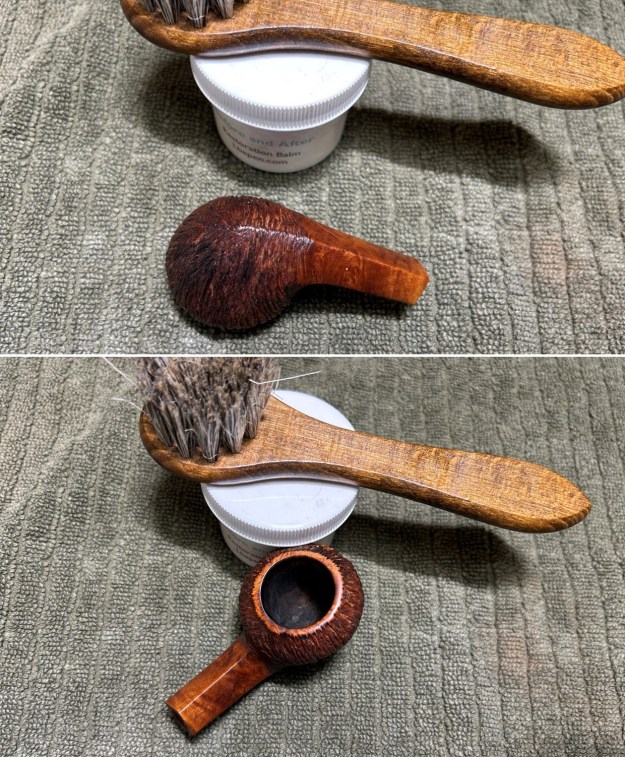
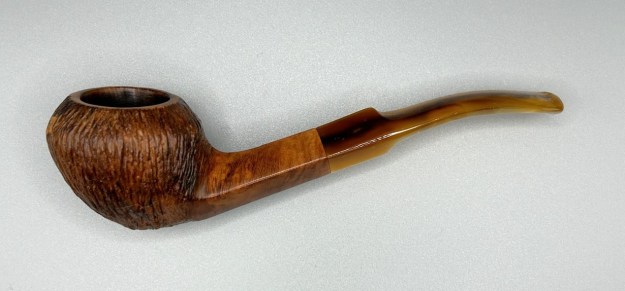
Restoring a Rare and Beautiful Rusticated Dark Malaga Raskassa Apple


by Steve Laug

For the next little while I am working on some Malaga Pipes. I have several in queue to work on so I tend to pick them by what catches my eye. The next pipe on the table is an interesting Rusticated Malaga Raskassa Apple. Jeff saw it on eBay and purchased it on 11/04/2025 from a seller in Orlando, Florida, USA. The pipe came in a box and included a pipe sock. The grain on this pipe is very stunning beneath a dark stain and some rustication around the bowl and shank. The pipe is stamped on the left side of the shank and reads RASKASSA. It is a unique one in terms of a RASKASSA as all the rest of them I have worked on have been smooth and with beautiful grain. The bowl and shank were in excellent condition. The finish was in good condition though dirty. The bowl had a very thick cake that flowed over the top of the crowned rim in a spotty lava coat. The cake in the bowl was moderate up to the top of the rim. It was hard to fully assess the condition of the inner edge. The rim top and inner edge of the bowl looked very good. The taper stem appeared to be either vulcanite or hard rubber and was lightly oxidized. There were no tooth marks on the top and the underside ahead of the button. Jeff took photos of the pipe and the box that it came in before he started his clean up work.I took it out of the box and took photos. You can see the dust in the rusticated patterns around the bowl sides and the smooth surface on the crowned rim top and part of the shank. It was a unique and beautiful apple shaped pipe.Jeff took photos of the rim and bowl to show the cake and lava spots on the crowned rim top and edges. The inner edge of the rim showed some darkening and had some cake on it. The grain on the rim top is quite stunning. It was a dirty pipe but still a beauty. The hard rubber stem was slightly oxidized and there were no tooth marks and chatter on the top and underside of the stem. The photos of the sides and heel of the bowl show some stunning and unique grain on the smooth portions of the bowl among the rustication around the pipe. The oil curing/finish makes the grain really stand out on the bowl and shank. Jeff took a photo of the stamping on the left side it read Raskassa as noted above. It was clear and readable.For those of you who are unfamiliar with the brand, I am also including the link to a blog that I wrote that gives some of the history of the Malaga brand and the Malaga Pipe Shop in Royal Oak, Michigan in the USA. Here is the link – https://rebornpipes.com/2013/02/09/george-khoubesser-and-malaga-pipes/. That blog also includes links to a catalogue and the history of the pipemaker George Khoubesser. If you are interested to learn more then I invite you to follow the link to get a feel for the brand and the pipemaker.

I am also am including a link to some printed material on the Malaga brand that came to me from the daughter of George Koch (we purchased George’s pipes from his daughter) to help identify the particular stamping on the pipe. The link takes you to the entire collection of materials that were sent to me. I have included a screen capture of one particular page that helps identify the RAS KASSA stamping on the pipe (https://rebornpipes.com/2019/02/27/malaga-pipes-catalogue-of-pipes-and-tobaccos/).I have enclosed the section on the brand in a red box in the picture above. To summarize, it basically says that the stamping is applied to pipes with special rare grain patterns in the briar. These appear to be straight grain, birdseye, swirled grains etc. that are tight patterns. They are rare – 1 or 2 in every hundred pipes. This pipe is one of those. You can read the description in the detailed explanation below.

Jeff had cleaned up the pipe using his usual procedure. He reamed the pipe with a PipNet pipe reamer and removed the rest of it with a Savinelli Fitsall Pipe Knife. He scrubbed the bowl with undiluted Murphy’s Oil Soap with a tooth brush. He rinsed it under running warm water to remove the soap and grime. He cleaned out the inside of the shank and the airway with alcohol, cotton swabs and pipe cleaners. The shank had an inset to take in the tenon and the end of the stem so I would need to fit a stem to sit in the shank. I took photos of the pipe once I received it. I took a photo of the rim top and the stem to show their condition. Jeff was able to clean up the cake and the lava overflow that was shown in the rim and bowl photos above. The rim top was clean as was the inner and outer edges of the bowl. The stem looked better, though there was still some oxidation.I took a photo of the stamping on the left side of the shank to show that it was readable and undamaged by the cleanup work. I removed the stem from the shank and took a photo of the parts to give a sense of what the pipe looks like. It was time to start my work on the pipe. I started with the rim top and edges of the bowl. I polished the smooth rim top and the patches on the bowl sides with micromesh sanding pads. I dry sanded it with 1500-12000 grit micromesh pads. I wiped it down with a damp cloth after each pad. It really began to be beautiful. I rubbed the bowl and shank down with Before & After Restoration Balm to deep clean the finish on the bowl and shank. The product works to clean, enliven and protect the briar. I worked it in with my fingers to get it into the briar. I let it sit for 10 minutes then I wiped it off and buffed it with a soft cloth. The briar really began to have a rich shine. I took some photos of the bowl at this point to mark the progress in the restoration. It is a beautiful bowl. I set the finished bowl aside and we back to the stem. I started the polishing of the stem with 2 x 2 inch sanding pads – dry sanding with 320-3500 grit pads and wiping it down after each pad.I polished the stem with micromesh sanding pads – dry sanding with 1500-12000 grit pads. I wiped the stem down after each sanding pad with Obsidian Oil. I did a final hand polish of the stem with Before & After Pipe Stem Polish – both Fine and Extra Fine. I gave it a coat of Obsidian Pipe Stem Oil. It works to protect the stem from oxidizing. I set it aside to dry. I put the stem back on the Malaga Beautifully Mixed Finish Raskassa Apple and took it to the buffer. I buffed the bowl and stem with Blue Diamond to polish the briar and the vulcanite. Blue Diamond does a great job on the smaller scratches that remain in both. I gave the bowl and the stem several coats of carnauba wax and buffed the pipe with a clean buffing pad to raise the shine. I hand buffed it with a microfiber cloth to deepen the shine. I am amazed at how well it turned out. The finished pipe is shown in the photos below. This is a beautiful Malaga Rusticated Raskassa Apple and the hard rubber taper stem and smooth finish combine to give the pipe a great look. I honestly have no idea why it is labeled a second as there are no fills or flaws in the briar. The dimensions of the pipe are Length: 6 ½ inches, Height: 1 ¾ inches, Outside diameter of the bowl: 1 1/8 inches, Chamber diameter: ¾ of an inch. The weight of the pipe is 1.27 ounces/37 grams. This is another pipe that I will be putting on the rebornpipes online store in the American Pipe Makers and Pipemaking Companies Section shortly, if you are interested in adding it to your collection. Thanks for walking through the restoration with me on this beauty!

As always, I encourage your questions and comments as you read the blog. Thanks to each of you who are reading this blog. Remember we are not pipe owners; we are pipe men and women who hold our pipes in trust until they pass on into the trust of those who follow us.

Breathing Fresh Life into a Phillip Trypis Made in Canada Mixed Finish 15 Billiard


by Steve Laug

The next pipe I have chosen to work on is one I picked up on eBay a couple of weeks ago. It is an interesting mixed finish saddle stem Billiard. It has rusticated panels on the sides of the bowl and the shank. The finish is in good condition with the bowl stained in brown and the rusticated portions are stained black. The contrast is quite beautiful. The rim top is smooth and has some darkening and damage on the inner edge of the bowl. It looks like the damage was caused by the reaming. The bowl is clean and from mid bowl down it was raw briar. All that tells me that the pipe is lightly smoked. I saved the photos that the seller in Eastern Canada included in the sales listing. The photos I have included below are the photos included by the seller. The pipe arrived in Vancouver on the weekend and I unpacked it. I took photos of the pipe after I opened it. It is in good condition. The finish is lightly dirty and the rim top has some burn damage on the inner edge. There was grime on the rim top and bowl sides. The stem was lightly oxidized with light tooth marks on both sides ahead of the button. I took photos of the bowl and rim top and stem surfaces. The rim top and inner edge of the bowl is very clear. The inner edge shows damage and burn damage and reaming damage. The stem surfaces show oxidation and some tooth marks on both sides ahead of the button.I took a photo of stamping on the left side of the shank. It read Made [over] in Canada [over] shape number 15. That is followed by Trypis in cursive. It is clear and readable. I took a photo of the bowl with the stem removed. The first photo I took below show the aluminum inner tube in the tenon. The second photo shows the inner tube removed. I turned to Pipephil to confirm what I remembered about Trypis. I wanted to read a bit of the history (http://pipephil.eu/logos/en/logo-t8.html). I have included a screen capture of information on the site below. I have also included information from the sidebar below the screen capture.Artisan: Phillip Trypis first worked for Brigham as production manager. He continued to supply the Canadian brand when he was established on his own with his own Trypis label. Phillip Trypis had a pipe shop in Toronto.

I turned to the section on Pipedia about Trypis Pipes (https://pipedia.org/wiki/Trypis_Pipes). I quote below.

Quoting Stefan Seles: “Phillip Trypis has been a pipe maker in Canada for well over 40 years. Originally from Greece, his experience ranges from cutting burls in a briar mill to making literally thousands of pipes out of his home in the hamlet of Oakwood, Ontario. Brigham pipes benefited from Phillip’s skills where he worked for a number of years. There he directed the pipe production of the company when it was producing over 50,000 a year. Even though he left to start his own pipe shop, he still imported briar and turned tens of thousands of bowls for Brigham not to mention produce a large number of his own branded pipes.

Just over a year ago, Phillip had a serious fall and although he is back making pipes, he is unable to travel around to sell them as he once did. He has asked me to help him in that effort.

The pipes listed below are some of his best work made from decades old MF and R ebuchauns as well as some recently purchased Italian plateau. The prices are excellent, especially given the age and quality of the briar used. In fact, I would venture to say that these pipes have no peers, especially below the $100.00 price. You must be the judge.

Many of the styles are traditional in form although Phillip has a number of freehand styles that are both familiar and off the beaten path. The vast majority of the higher priced pipes are very large pieces to be sure.”

I have worked on quite a few of Phillip’s pipes through the years and it is always a pleasure as they are well engineered and crafted.

I decided to start my work on the pipe by cleaning up the rim top and inner edge of the bowl with a folded piece of 220 grit sandpaper. I removed the damage on the inner edge and top. The rim looked significantly better.I scrubbed the surface of the briar with Murphy’s Oil Soap and a tooth brush. I worked the soap into the rustication and on the rim top and edges with the brush. I rinsed it off with warm water and dried it off with a soft cloth. I cleaned out the mortise and airway in the shank and stem with cotton swabs, regular and bristle pipe cleaners and isopropyl alcohol. It came out looking and smelling very clean.I sanded the bowl and shank with 320-3500 grit 2 x2 inch sanding pad. I wiped the bowl down after each sanding pad with a damp cloth. The grain can be seen through the finish. I polished the briar with micromesh sanding pads – dry sanding it with 1500-12000 grit sanding pads. I wiped it down with a damp cloth after each sanding pad to remove the dust. The briar was really shining by the final pad. I rubbed the bowl and rim down with Before & After Restoration Balm. I worked it into the surface of the briar with my fingertips and a shoe brush to clean, enliven and protect it. I let the balm sit for 10 minutes and then buffed with a cotton cloth to raise the shine. I really like watching the Balm do its magic and bring the briar alive. I sanded the tobacco juice lacquer to remove it from the aluminum tube. I used 320-3500 grit sanding pads and wiped it down after each sanding pad. It looked very good at this point. I set the bowl and the inner tube aside and turned my attention to the stem. I sanded the stem with 320-3500 grit 2×2 inch sanding pads. I wiped the stem down after each sanding pad with Obsidian Oil. I blended in the tooth marks and chatter in the surface and after the final pad a deep shine began to develop.I polished the stem with 1500-12000 grit micromesh sanding pads. I wiped the stem down after each sanding pad with Obsidian Oil. I polished it with Before & After Pipe Stem Polish – both Fine and Extra Fine. I gave it a coat of Obsidian Pipe Stem Oil. It works to protect the stem from oxidizing. I set it aside to dry. I put the inner tube back in the tenon on the stem and took a photo of the pipe and stem.It was great to finish the tenon replacement and the restoration of this Mixed Finish Trypis 15 Billiard. I put the pipe back together and buffed it with Blue Diamond on the buffing wheel. I gave the rusticated patches on the bowl multiple coats of Conservator’s Wax and the smooth portions and the stem multiple coats of carnauba wax. I buffed the pipe with a clean buffing pad to raise the shine. I hand buffed the pipe with a microfiber cloth to deepen the shine. It is fun to see what the polished bowl looks like with deep sandblast all around it. Added to that the polished black, vulcanite, saddle stem was beautiful. This Trypis 15 Billiard is great looking and the pipe feels great in my hand. It is light and well balanced. Have a look at it with the photos below. The dimensions are Length: 5 ¾ inches, Height: 2 inches, Outside diameter of the bowl: 1 ½ inches, Chamber diameter: ¾ of an inch. The weight of the pipe is 47 grams/ 1.66 ounces. It is a beautiful pipe and one that I will soon be adding to the rebornpipes store in the Pipes Made by Canadian Pipemakers Section if you are interested in adding it to your colleciton. Thanks for walking through the restoration with me as I worked over this pipe. Thanks to each of you who are reading this blog.

As always, I encourage your questions and comments as you read the blog. Thanks to each of you who are reading this blog. Remember we are not pipe owners; we are pipe men and women who hold our pipes in trust until they pass on into the trust of those who follow us.

Restoring a Handsome Peterson System Standard 1309


by Kenneth Lieblich

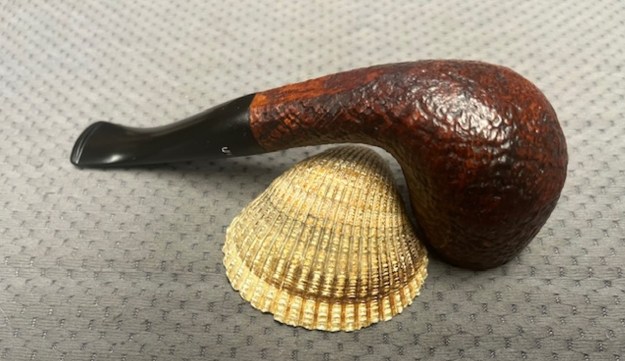
Next up is a pipe that came in a recent lot I acquired – and it is the classic Pete. This is a republic-era Peterson System Standard 1309 bent billiard. The smooth finish on it is really attractive and satisfying. Naturally, the stem has the time-honoured Peterson P-lip. The 1309 is exactly the same pipe as the 309 – the initial ‘1’ simply indicates that it was made for the Canadian market. Looking on the left side of the stummel, we can see the marks. First, we have Peterson’s [over] System [over] Standard. On the right of the stummel we see Made in the [over] Republic [over] of Ireland. Then the shape number 1309. On the nickel ferrule, there are more marks. K&P [over] the symbols (not hallmarks) of a shamrock, a lion and a standing figure. Next to that is the name Peterson’s. The Peterson website provides some great information, specifically about the 309 shape, and I quote it here:

Introduced in 1896, this large straight-sided Billiard (also known as the large Dutch Billiard) was among our first System pipes and remains among our most recognizable shapes. It’s the pipe smoked by Basil Rathbone in 12 of his Sherlock Holmes films and beautifully represents Peterson history from the first days of the patents. It is iconically, quintessentially Peterson.
They also included a good paragraph on the Peterson system itself:

In 1890, after 15 years of handling and repairing pipes while working for the Kapps, Charles Peterson secured a patent in his own name, titled “A certain new and useful improvement in Tobacco-Pipes,” which introduced a unique system comprised of a higher draft hole and a moisture reservoir bored into the shank and transition of a briar pipe. Over the next eight years, Charles continued to refine his System, applying for and securing patents for a graduated bore mouthpiece (1891), and a unique button design known today as the P-Lip (1894-1898). Designed to wick moisture away from the smoke, reduce tongue bite, and increase the longevity of the pipe, Peterson’s complete System patent sparked a tradition of innovation, one we continue to uphold to this day. The System Pipe is the invisible source behind our unique House Style: our pipes’ muscular shanks and transitions, tubular profile, and generous bends. Our overall shaping style has a distinctly antique form because it has remained largely unchanged for over 120 years.
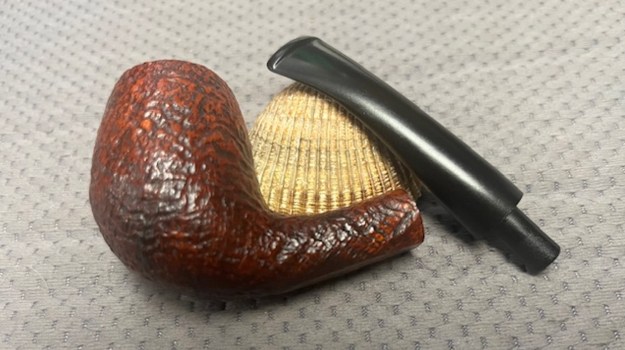
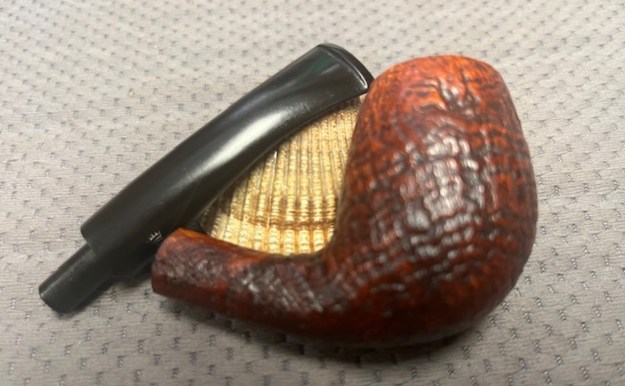
Steve and I have written about the Peterson System many times in many blogs. The Peterson System pipes are well-storied among Peterson collectors/admirers. I took the opportunity to read the article on Pipedia, specifically about the System pipes, by Jim Lilley. There is a lot of good information there and I encourage you to read it here.As usual, I owe a debt of gratitude to Mark Irwin of Peterson Pipe Notes. He has a very interesting article on the various System shapes and I highly recommend having a look here. In fact, regarding the 309, he says this: ‘As I’ve said many times, for me this is the Peterson shape.’ Here is a photo from his page:On to the pipe itself. It appears to be in very good shape, albeit a bit drab from use. There’s cake inside the bowl, and some charring to the rim, but the outside looks perfectly sound. The stem has a bit of tooth chatter, and quite a bit of oxidation and calcification. The stem’s calcification was quite substantial. I used an old butter knife and gently scraped some of the thicker accretion off. Doing this now helps later in removing the oxidation.I used isopropyl alcohol on a few cotton rounds and wiped down the stem to provide an initial cleaning of filth before moving on to the next step. The primary cleaning came next. I disinfected the inside of the stem with both pipe cleaners and cotton swabs dipped in lemon-infused 99% isopropyl alcohol. I scrubbed thoroughly to make sure the interior was very clean.The goal of the next step is the removal (or minimization) of oxidation. Going to my sink, I used cream cleanser, cotton rounds, and a toothbrush, and scoured the stem to remove as much surface oxidation as possible. As the photos show, the result was a hideous, ochre-coloured mess – but better off the stem than on it.Once the stem was reasonably clean, I soaked it overnight in some Briarville Stem Oxidation Remover. This solution works to draw oxidation in the stem to the surface of the vulcanite. This is a major aid and an important step in ensuring a clean stem. The following day, I drew out the stem from its bath and scrubbed the lingering fluid with a toothbrush. Due to the severity of the oxidation, I then repeated the scrubbing with the cream cleanser for maximum effect.As the stem was now clean and dry, I set about fixing a couple of very small dents in the vulcanite. This was done by filling those divots with black cyanoacrylate adhesive, impregnated with carbon and rubber. I left this to cure and moved on.The penultimate step for the stem is sanding. First, with my set of needle files, I reduced the bulk of the cyanoacrylate repairs. I removed the excess adhesive as near to the surface as possible, without cutting into the vulcanite. Following that, I used all nine of the micromesh sanding pads (1,500 through 12,000 grit) to sand out flaws, even out the vulcanite, and provide gentle polishing of the finished surface. I also applied pipe-stem oil while using the last five micromesh pads. There was a wonderful, deep black shine to the stem when I was done. As the stem was (nearly) complete, I moved on to the stummel. The first step was to ream out the bowl – that is to say, remove all the cake inside the bowl. This accomplished a couple of things. First (and most obviously), it cleaned the bowl and provided a refurbished chamber for future smoking. Second, when the old cake was removed, I could inspect the interior walls of the bowl and determine if there was damage or not. I used a reamer, a pipe knife, and a piece of sandpaper taped to a wooden dowel. Collectively, these ensured that all the debris was removed.My next step was to remove the lava on the rim. For this, I took a piece of machine steel and gently scraped the lava away. The metal’s edge is sharp enough to remove what I need, but not so sharp that it damages the rim. This cleaned up quite well.Similar to the stem, I then cleaned the stummel with both pipe cleaners and cotton swabs dipped in lemon-infused 99% isopropyl alcohol. With a pipe this dirty, it took quite a while and much cotton to clean.I then decided to ‘de-ghost’ the pipe – that is to say, exorcize the remaining filth from the briar. I filled the bowl and the shank with cotton balls, then saturated them with 99% isopropyl alcohol. I let the stummel sit overnight. This caused the remaining oils, tars and smells to leach out into the cotton.To tidy up the briar, I wiped down the outside, using a solution of a pH-neutral detergent and some distilled water, with cotton rounds. This did a good job of cleaning any latent dirt on the surface of the briar. The last step of the cleaning process was to scour the inside of the stummel with the same mild detergent and tube brushes. This was the culmination of a lot of hard work in getting the pipe clean.I then buffed the nickel ferrule with a couple of very gentle Micromesh pads, then then buffed it with a jewellery cloth.
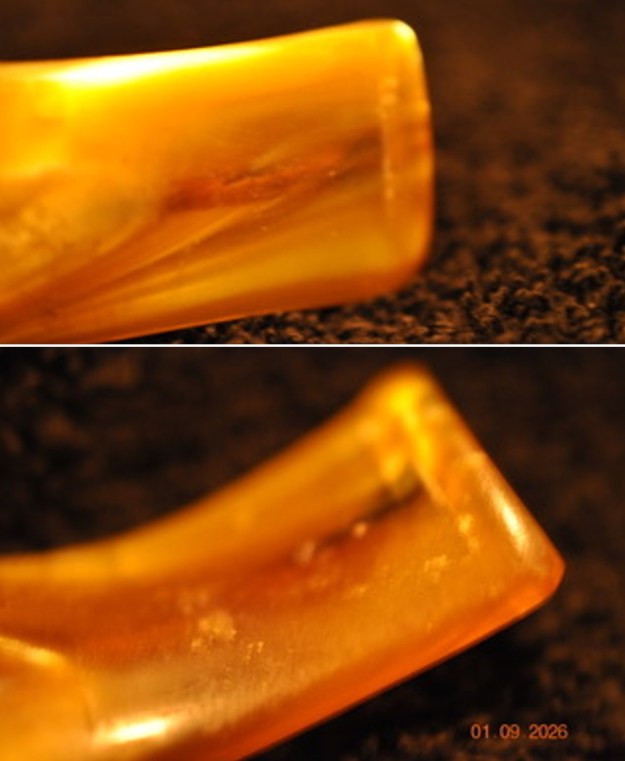
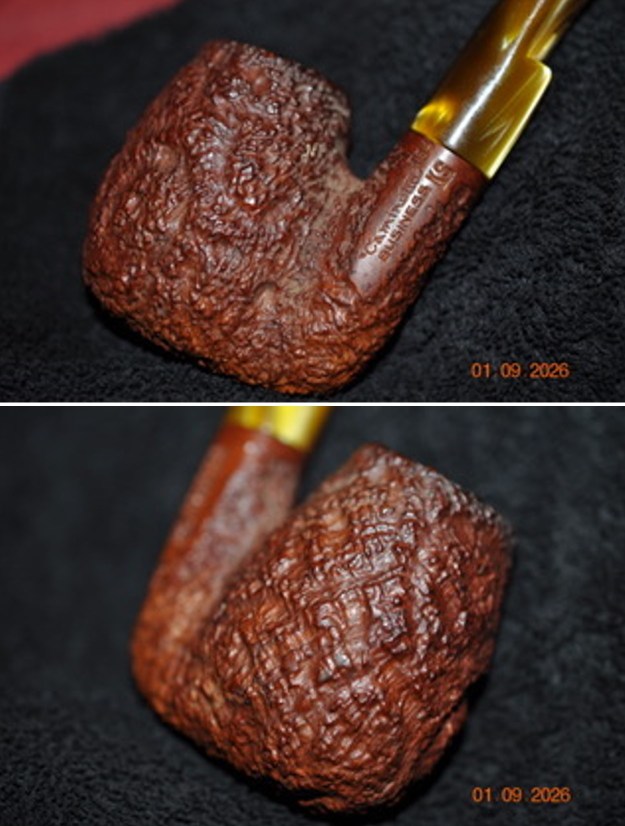
I rubbed some LBE Before & After Restoration Balm into the briar and let it sit for 30 minutes or so. The balm moisturizes the wood and gives a beautiful depth to the briar. I then buffed the stummel with a microfibre cloth. For the final step, I took the pipe to my bench polisher and carefully buffed it – first with a blue diamond compound, then with three coats of carnauba wax. This procedure makes the pipe look its best – the stummel sings and the stem glows.All done! This Peterson System Standard 1309 bent billiard looks fantastic again and is ready to be enjoyed by its next owner. I am pleased to announce that this pipe is for sale! If you are interested in acquiring it for your collection, please have a look in the ‘Irish’ section of the store here on Steve’s website. You can also email me directly at kenneth@knightsofthepipe.com. The approximate dimensions of the pipe are as follows: length 5⅞ in. (148 mm); height 3⅔ in. (93 mm); bowl diameter 1⅓ in. (33 mm); chamber diameter ¾ in. (19 mm). The weight of the pipe is 1⅝ oz. (48 g). I hope you enjoyed reading the story of this pipe’s restoration as much as I enjoyed restoring it. If you are interested in more of my work, please follow me here on Steve’s website or send me an email. Thank you very much for reading and, as always, I welcome and encourage your comments.