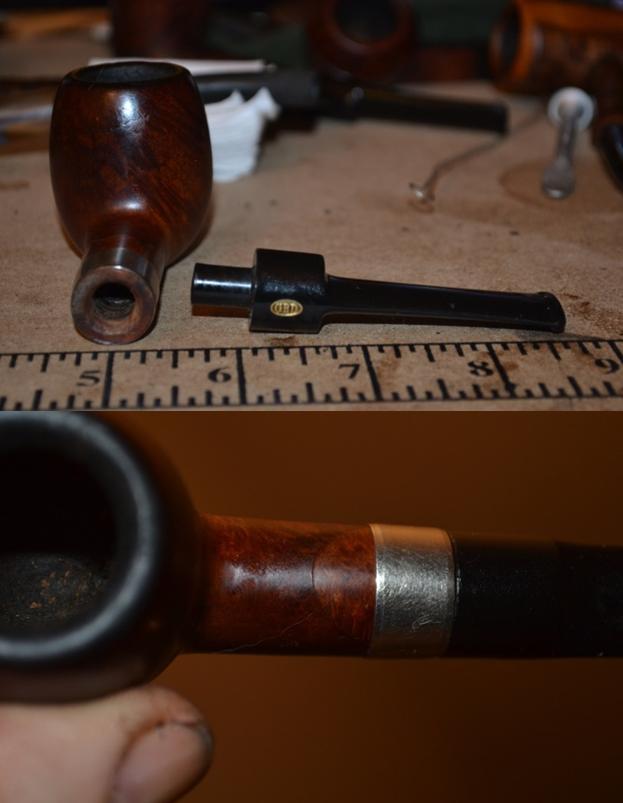
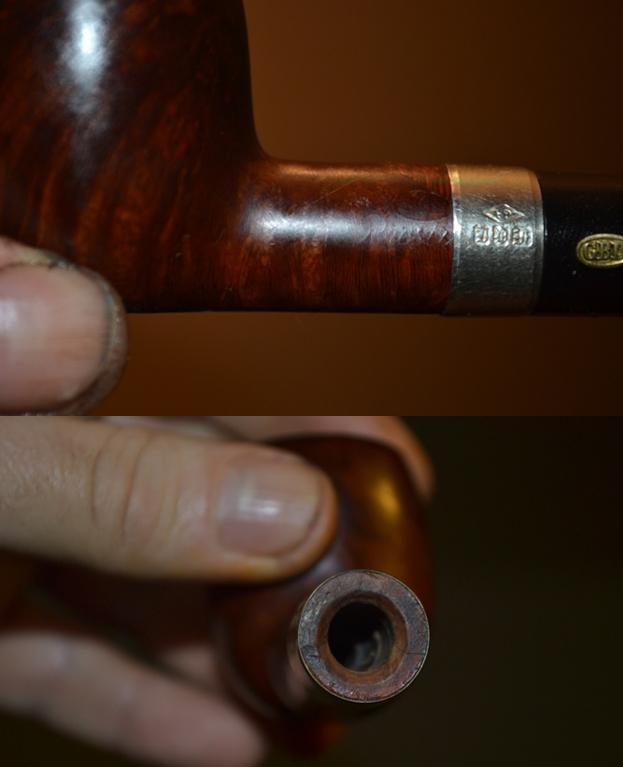
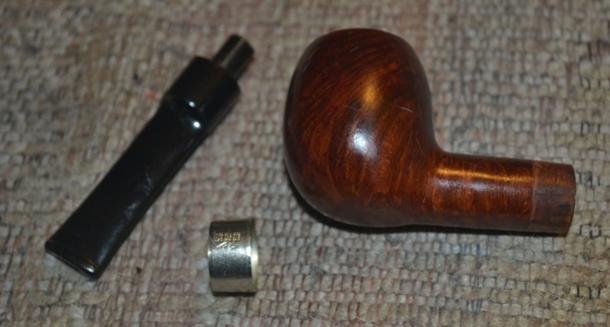
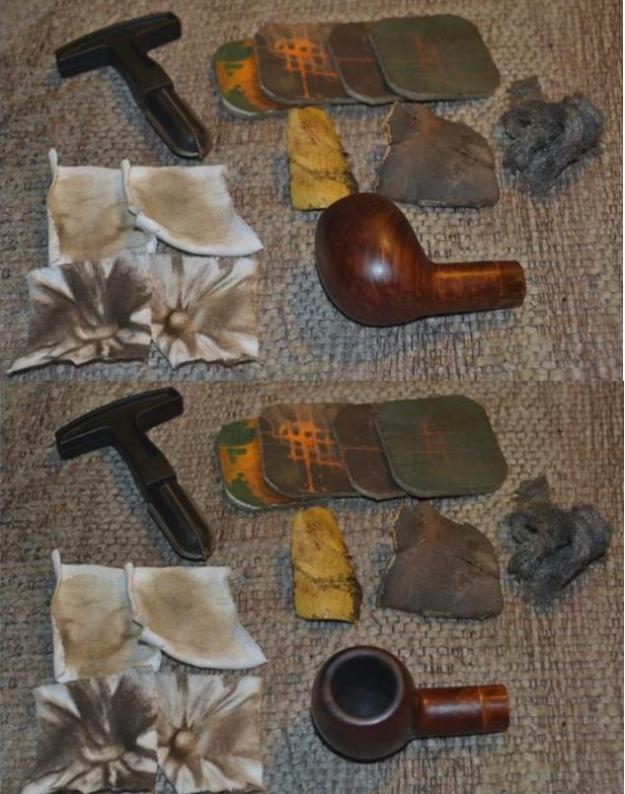
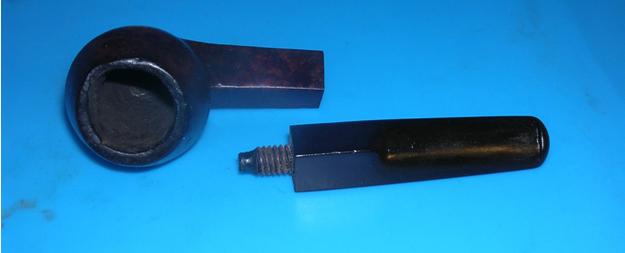
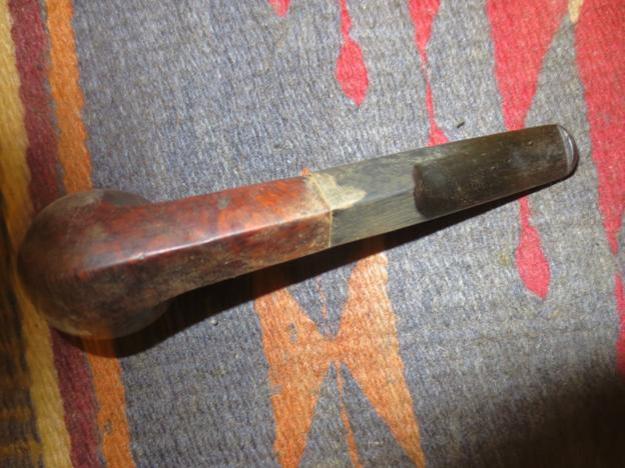
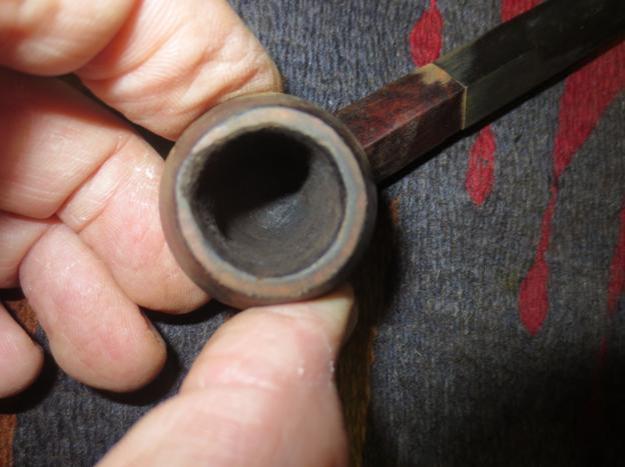
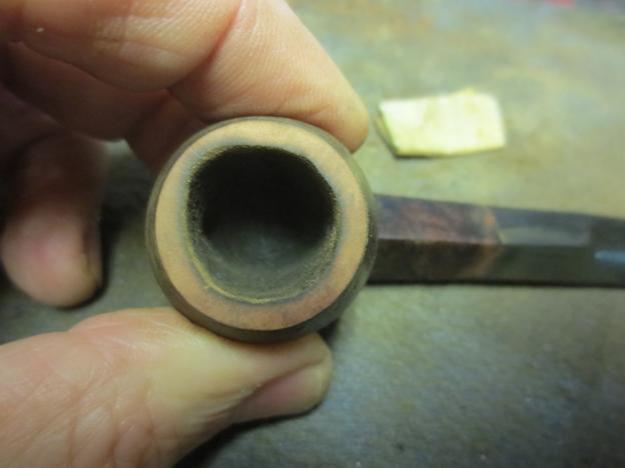
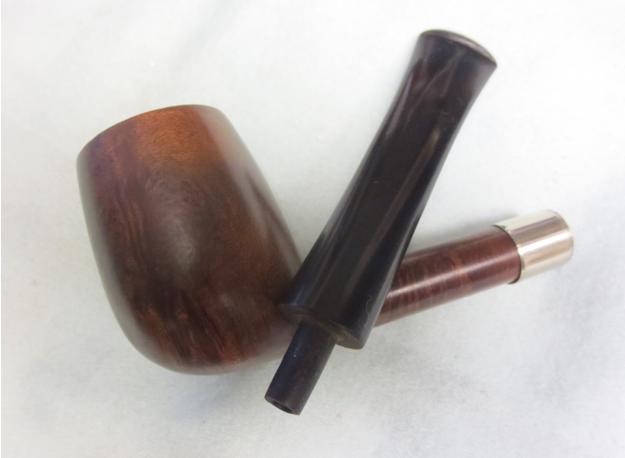
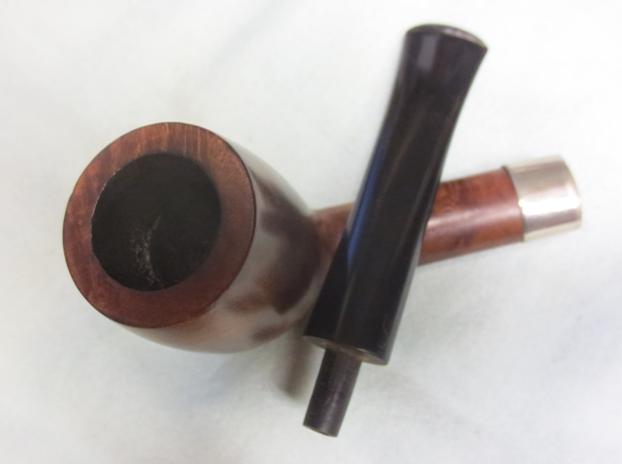
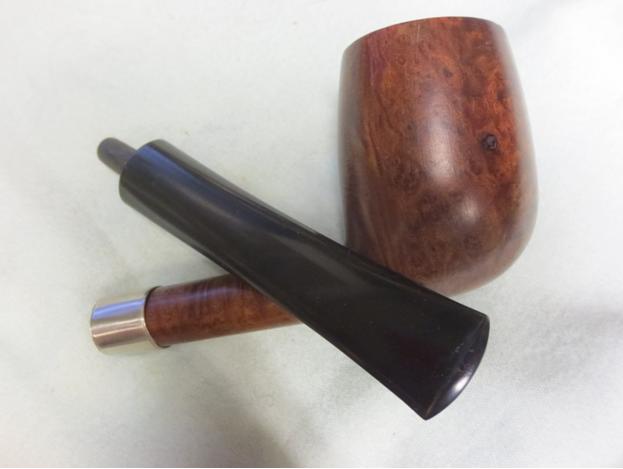
Tag Archives: bite marks

Extending the Life of a Hard Used Kaywoodie Bulldog


Blog by Steve Laug

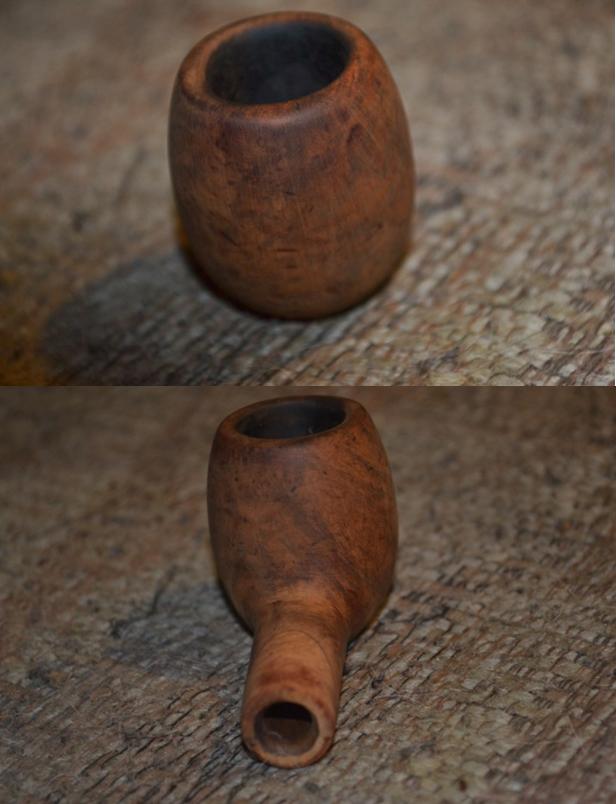
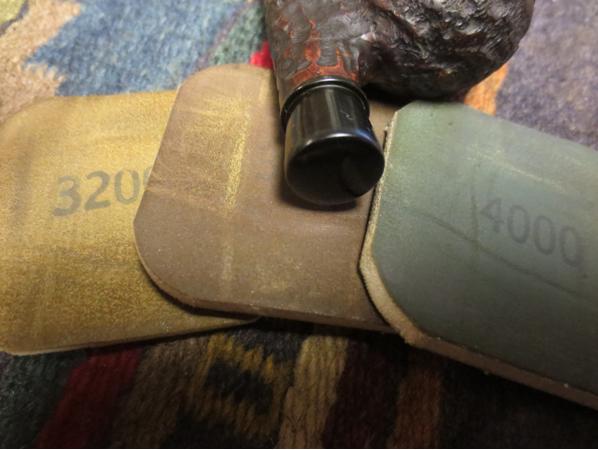
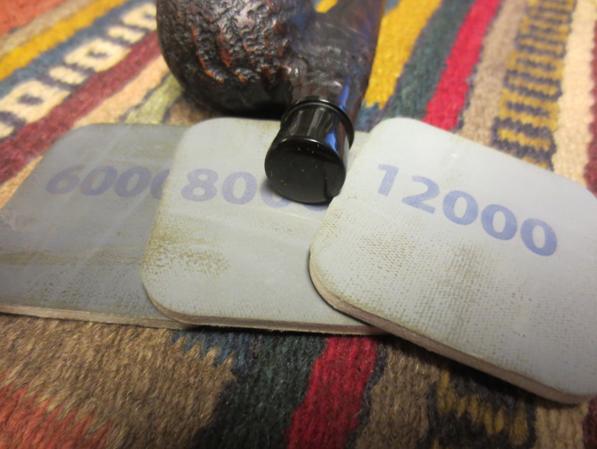
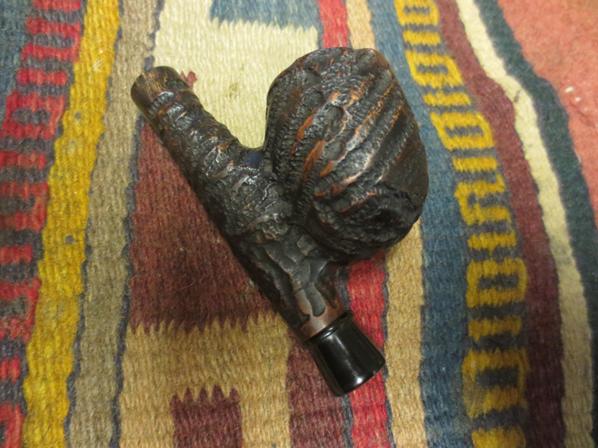
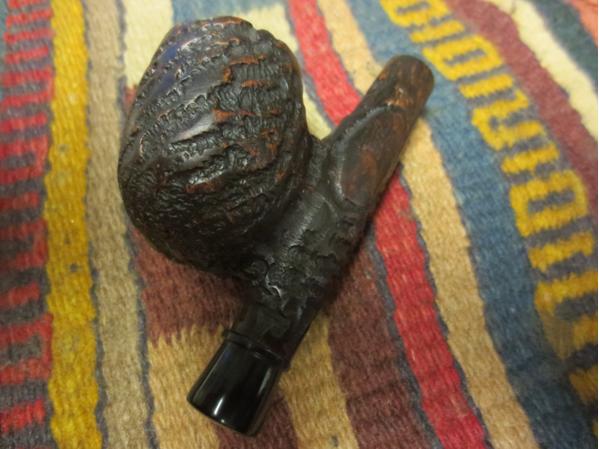
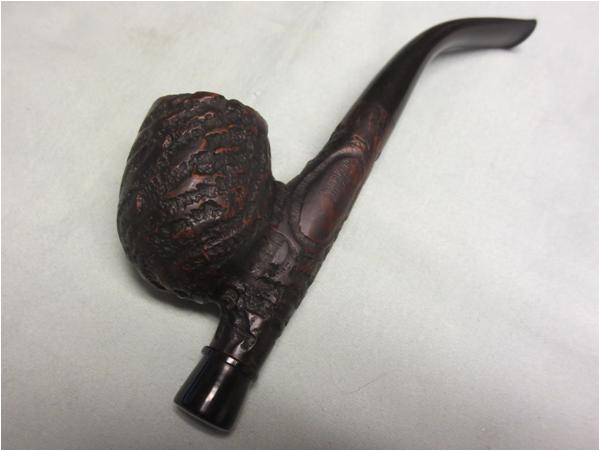
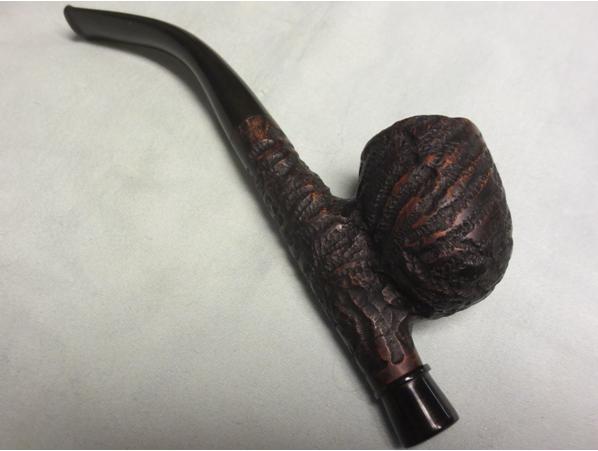
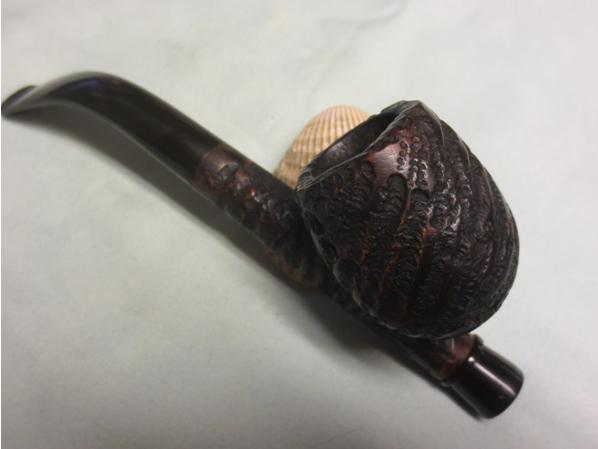
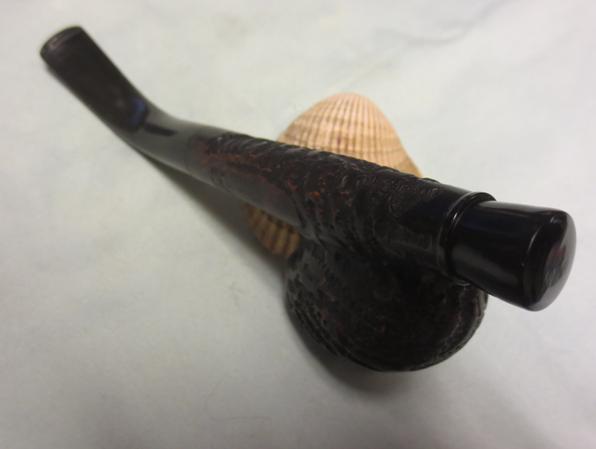
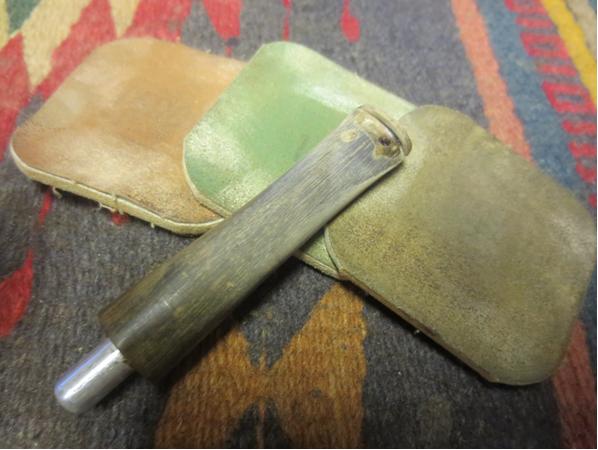
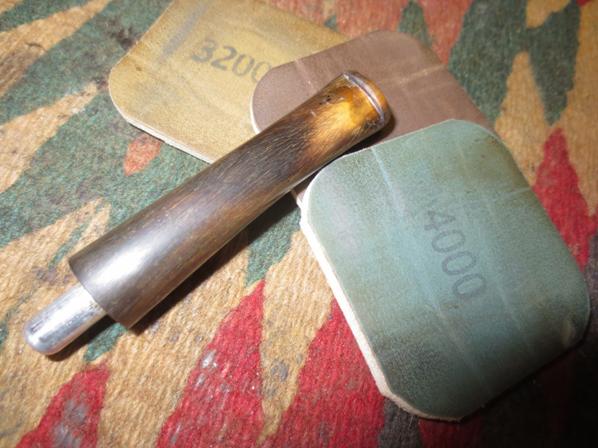
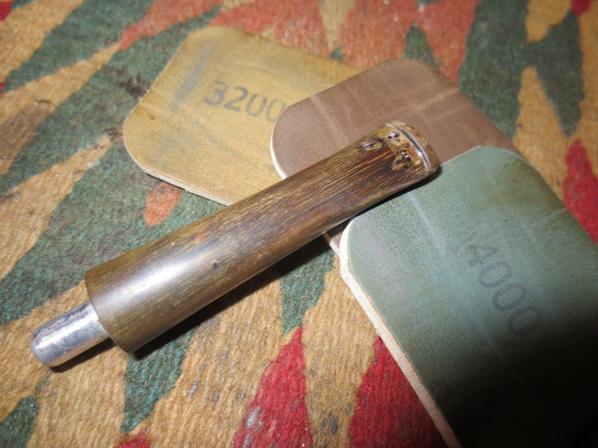
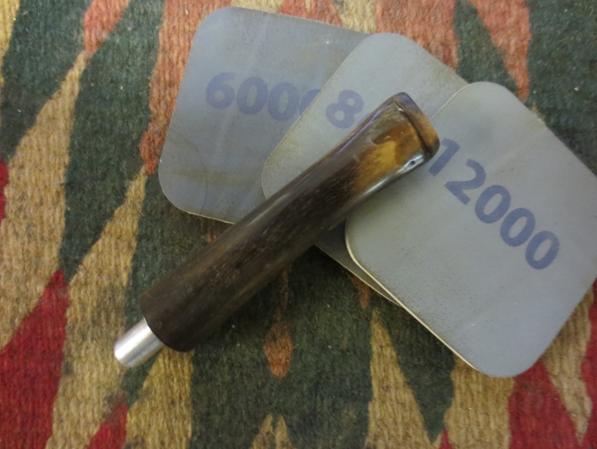
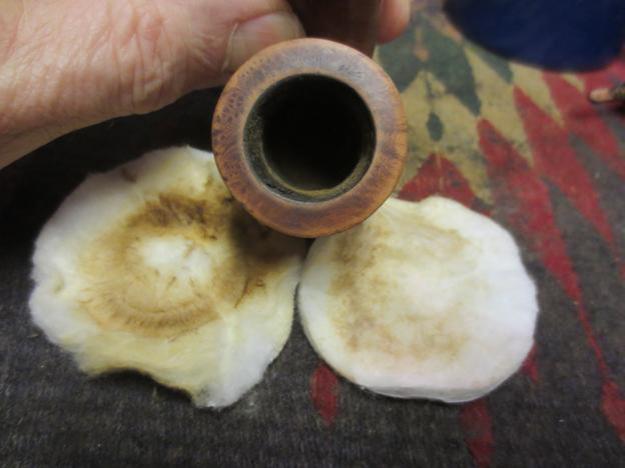
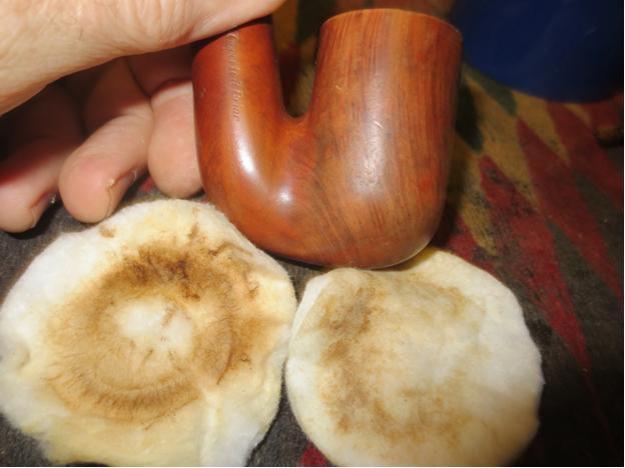
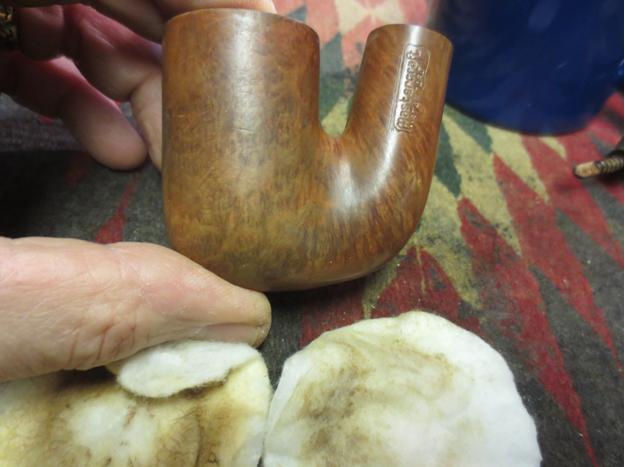
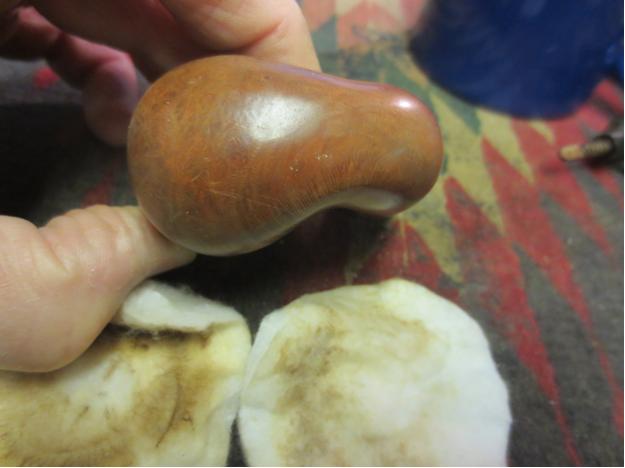
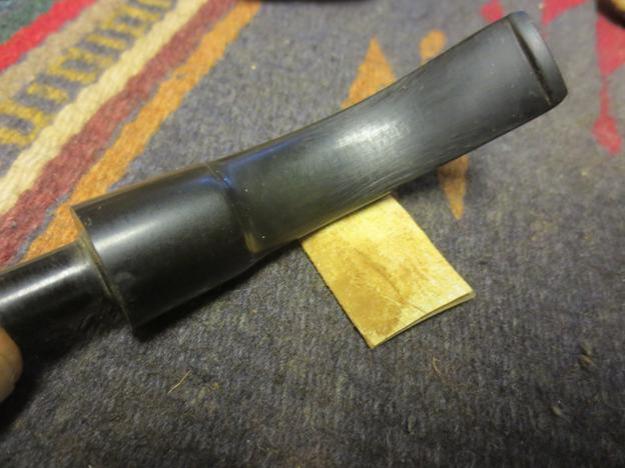
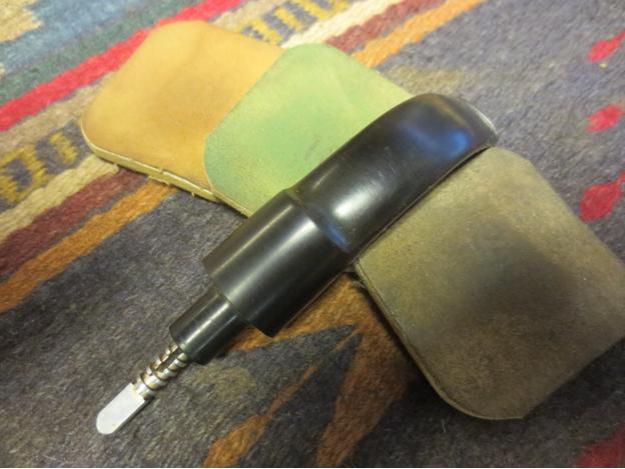
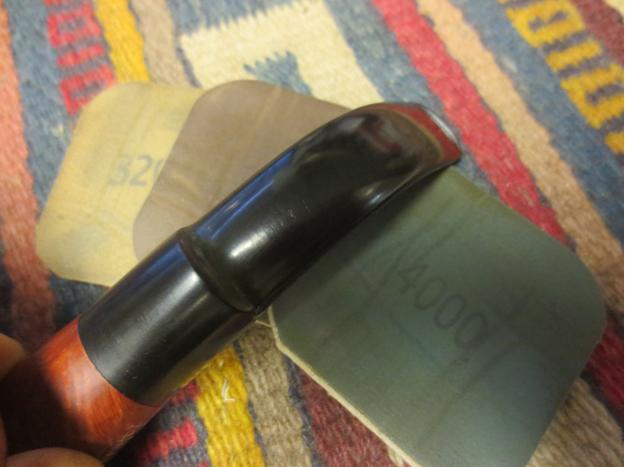
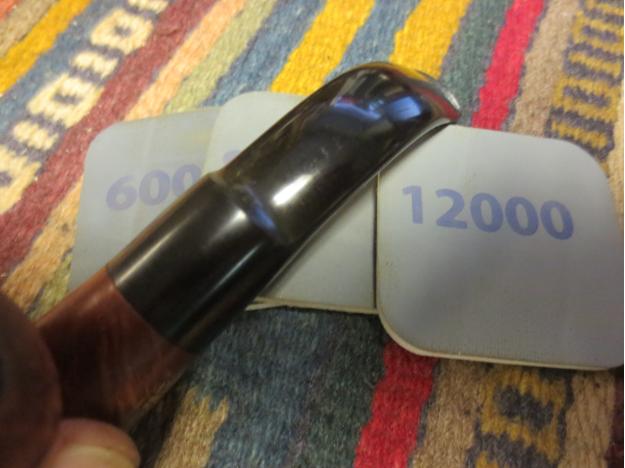
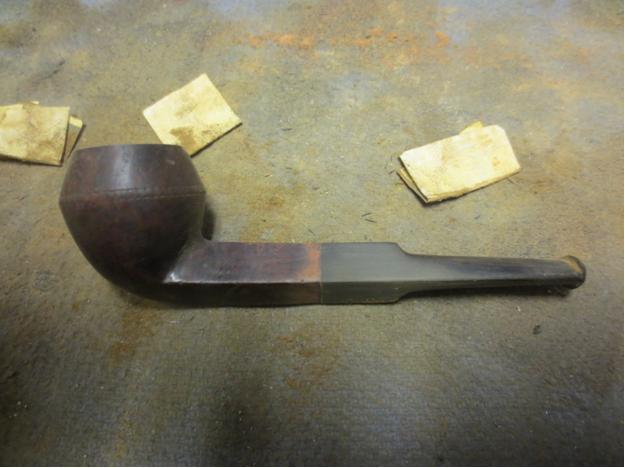
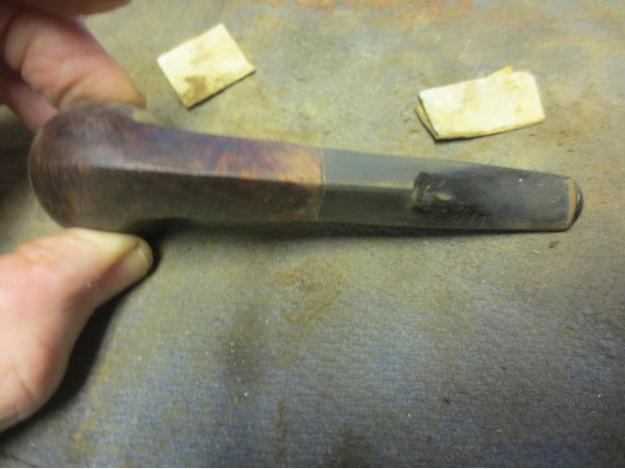
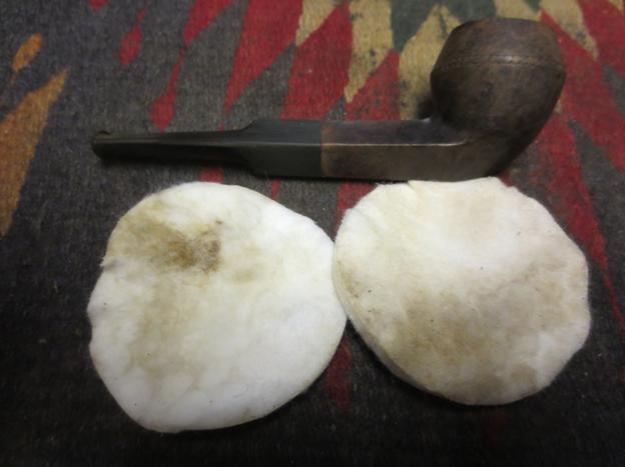
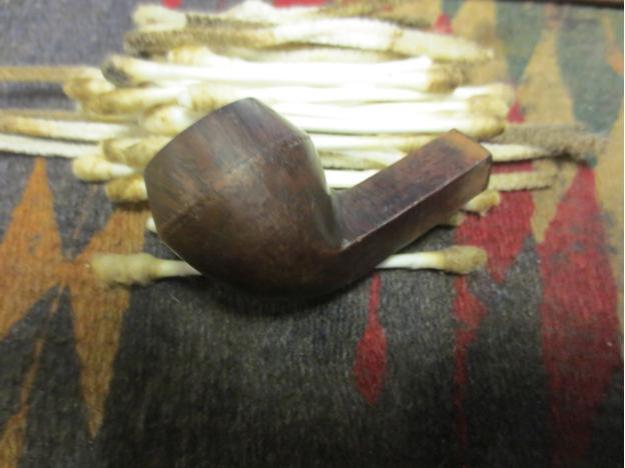
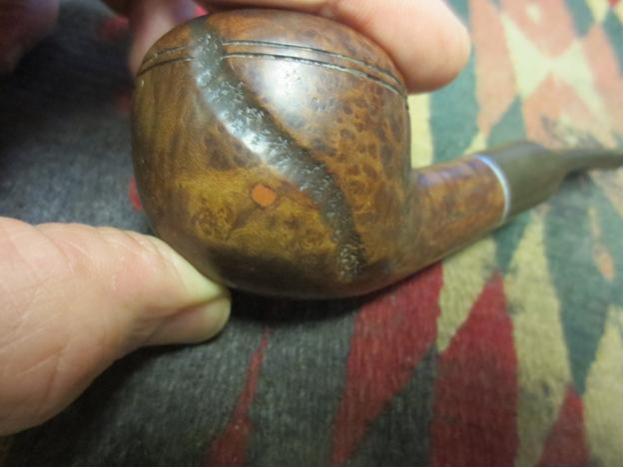
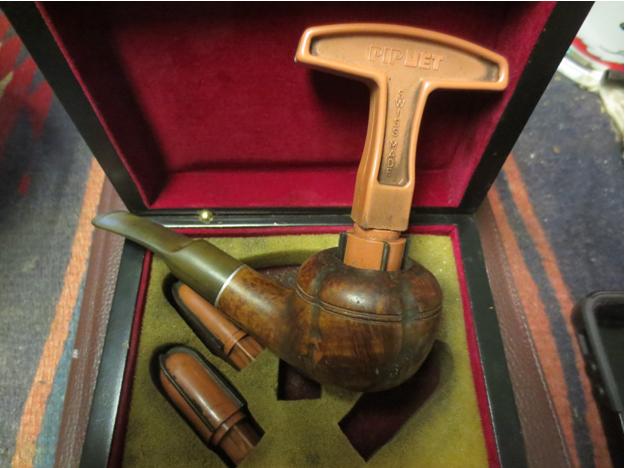
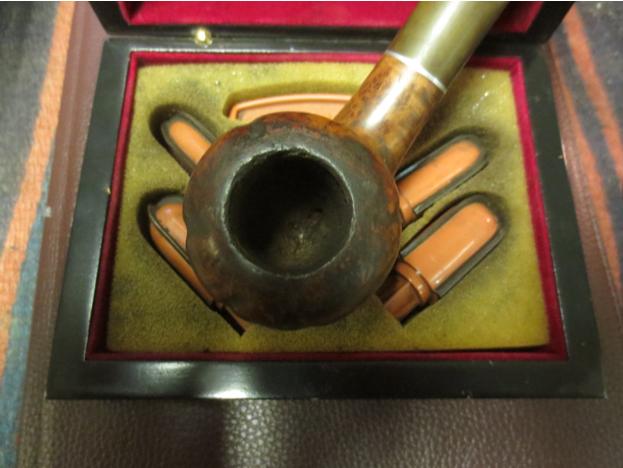
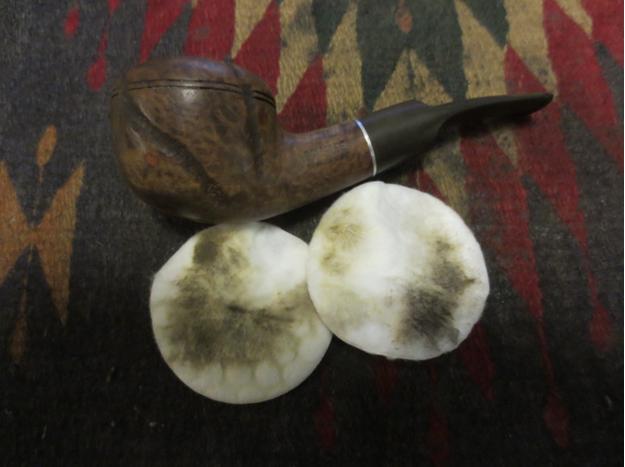
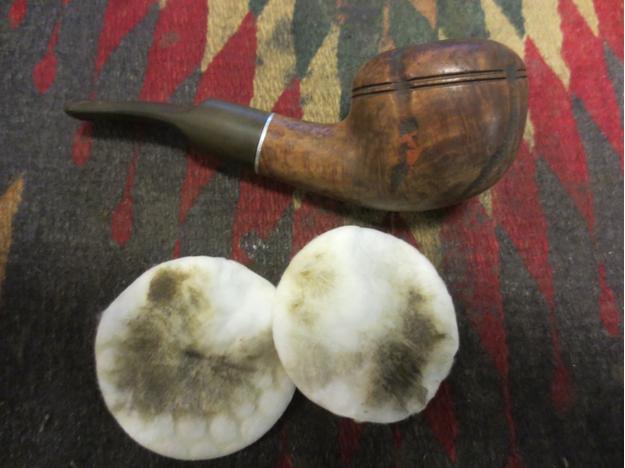
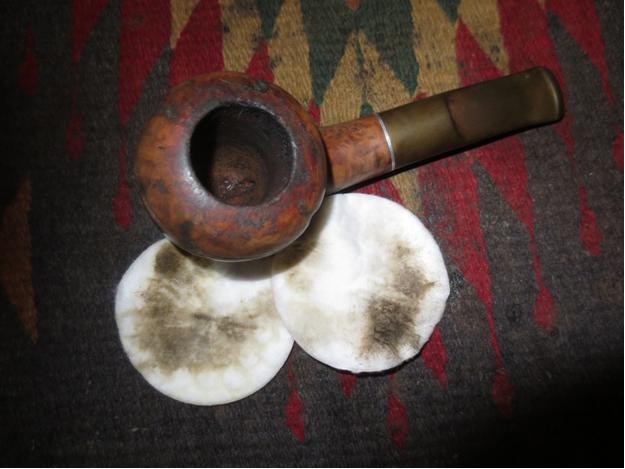
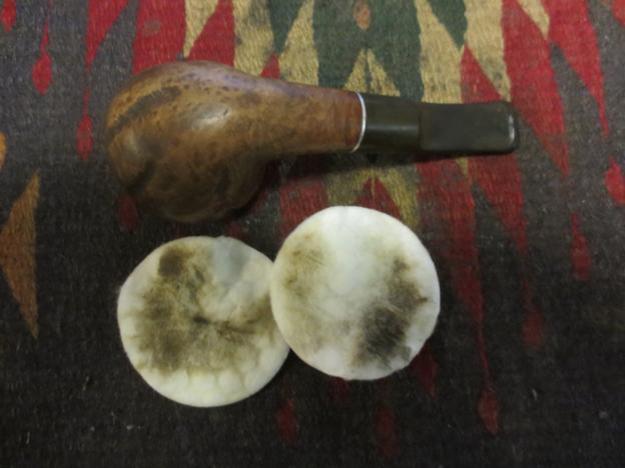
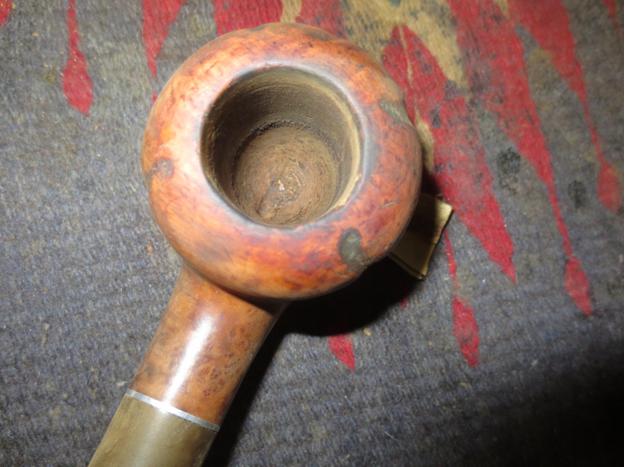
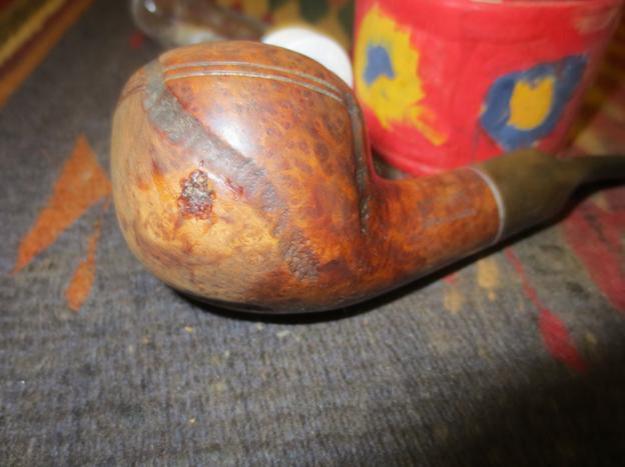
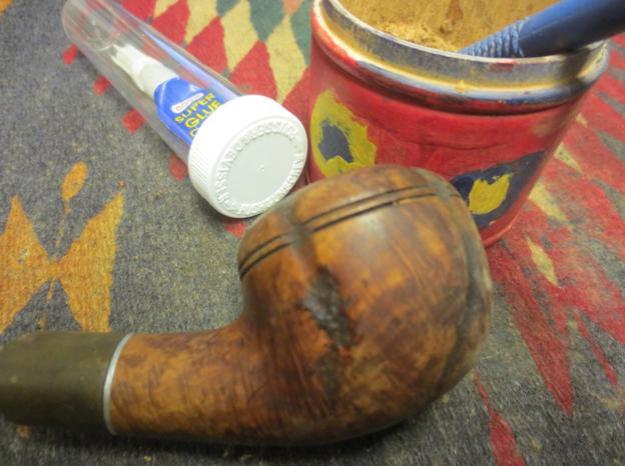
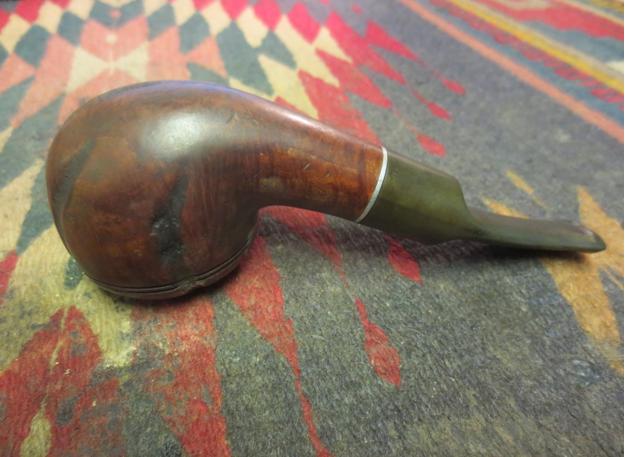
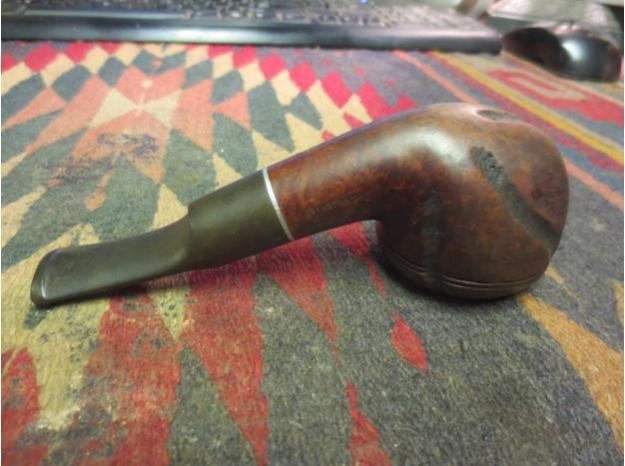
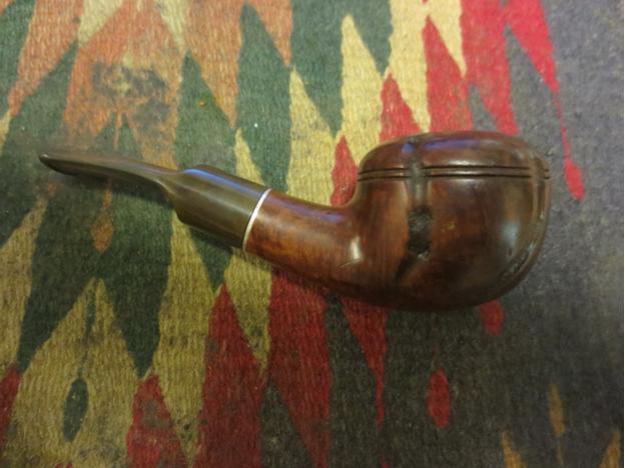
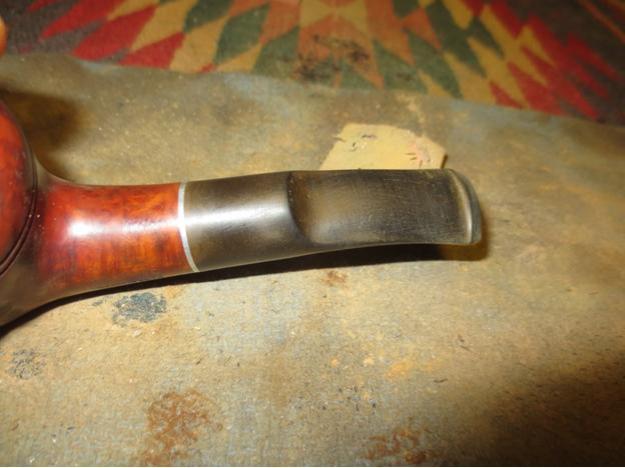
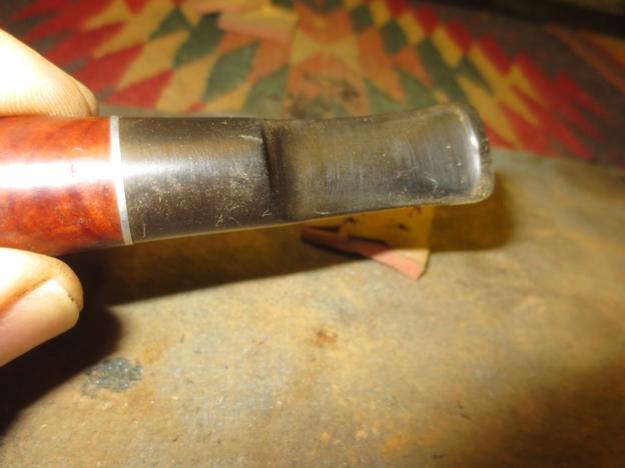
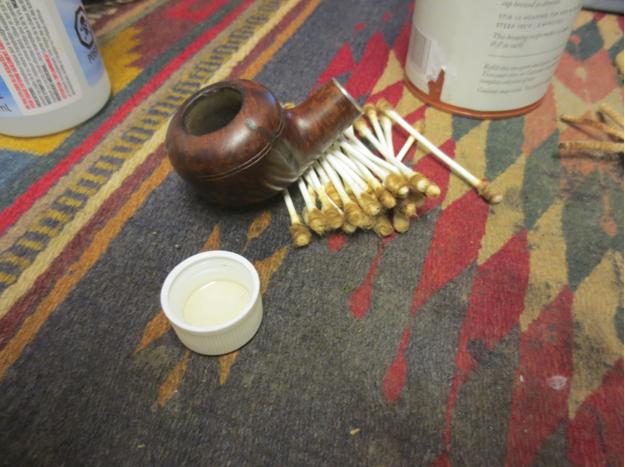
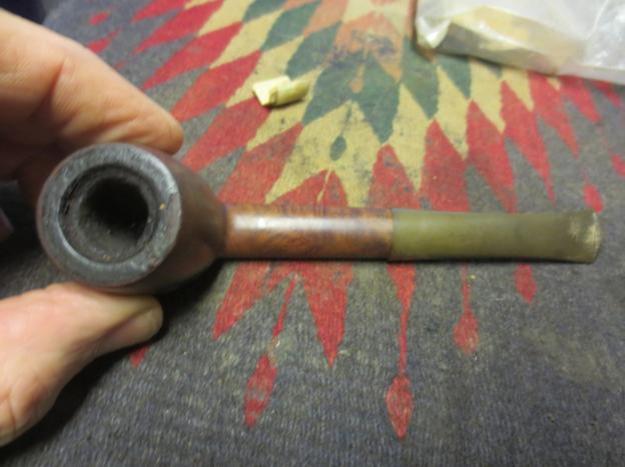
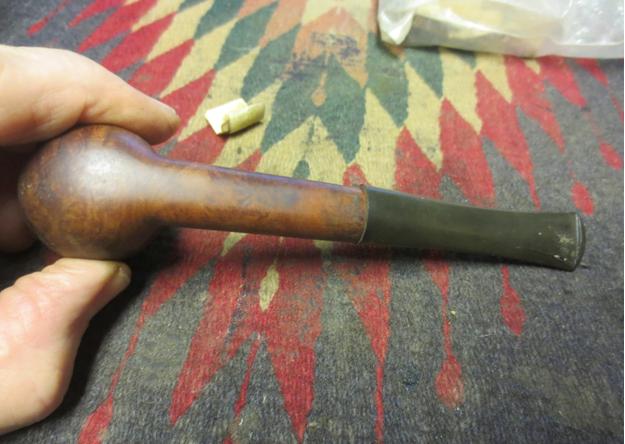
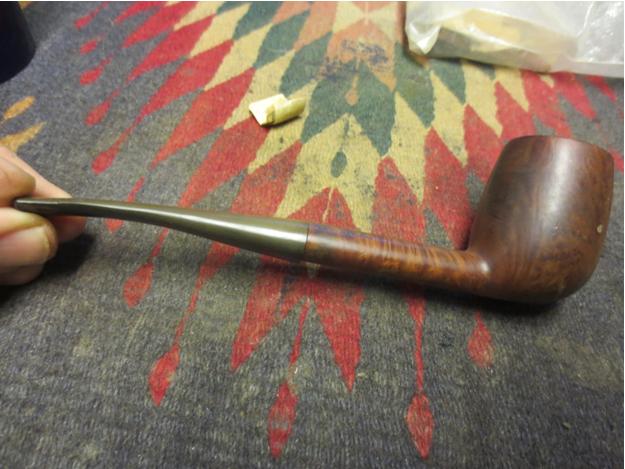
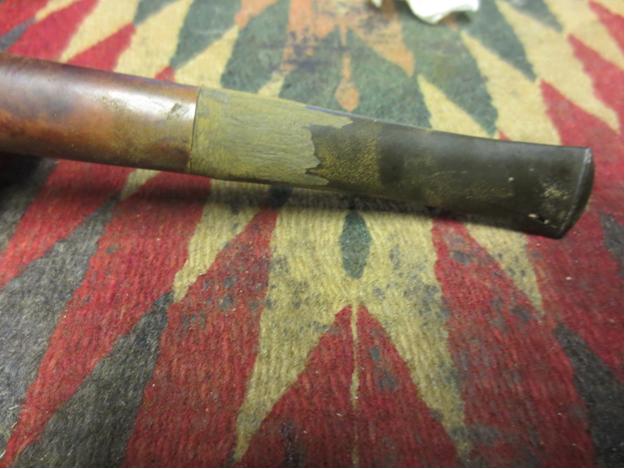
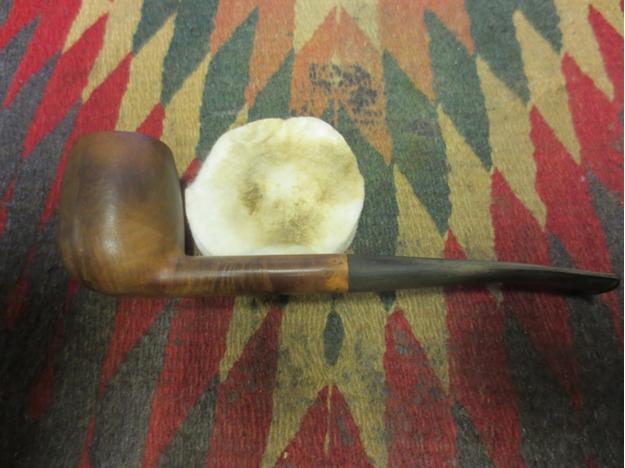
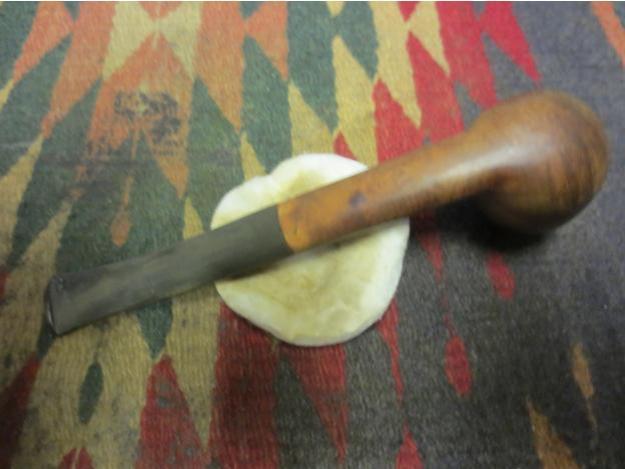
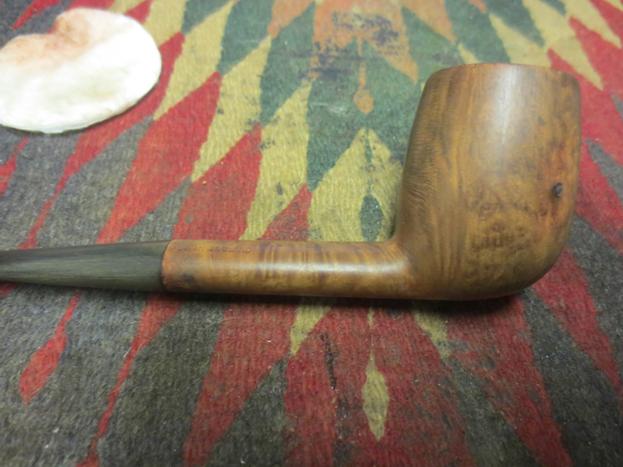
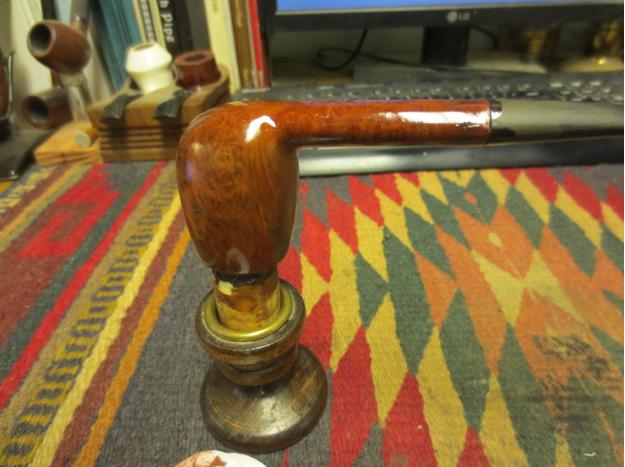
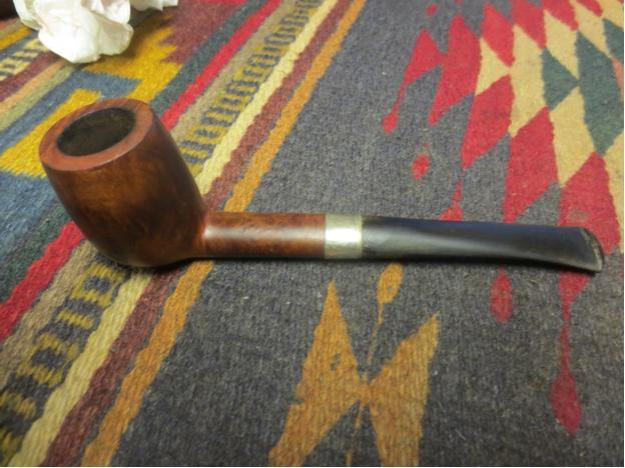
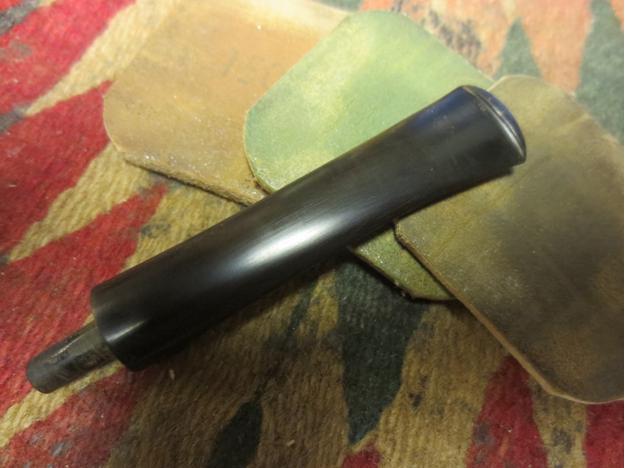
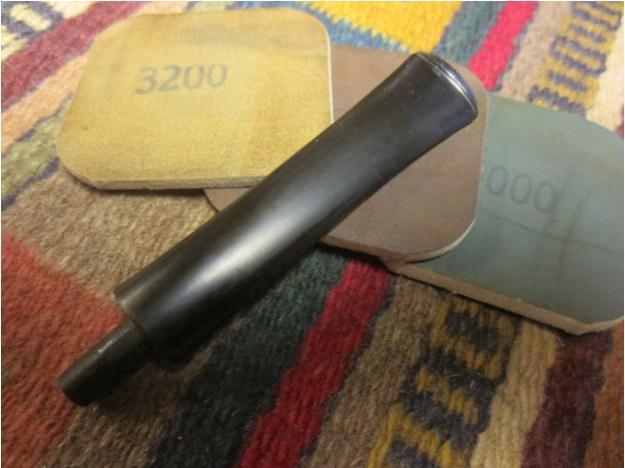
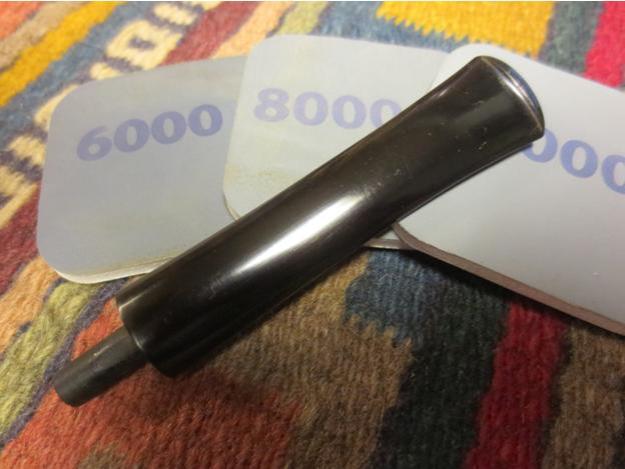
In the box of pipes that a friend sent for me to fiddle with, was a tired old Kaywoodie Bulldog. The stamping was worn off and with a loupe I could read that it was stamped Kaywoodie on the left side of the shank with something illegible below that followed by an R in a circle. On the right side of the shank was the remnant of a shape stamp the looked like it had four digits ending with the bottom curve and tale of an S. The pipe was in rough shape. The bowl was reamed out of round with the rim having taken a beating. The right side of the inner edge was very thin and had been scored down toward the bottom of the bowl. The rings around the bowl were rough and damaged. There was a cut mark on the top of the shank where it joined the bowl and a small crack above the shank insert on both the top and the bottom of the shank. The junction of the stem and shank showed damage as well from what appeared to be pliers. The stem was overclocked. It had some tooth damage on the top and bottom surfaces and was oxidized. KW1 KW4 KW3 KW2 I looked at the pipe as it sat in the box and removed it and turned it over in my hand many times during the past three months since it arrived. I just was not sure that I could salvage it. I figured it might make a good delegate to cannibalize for parts or for another Frankenpipe but I was not sure it was redeemable. I took the next close up photos of the rim and the gouge in the shank to give you an idea of what I needed to deal with if I tackled this pipe as a project.KW5 KW6I spent quite a bit of time looking at the pipe and decided it would be worth a try to see if I could improve it and make it functional. It would never be a pipe of beauty but the old warrior deserved another lease on life. I could certainly make it look better. So with that resolve I heated the metal stinger and tenon with a lighter to loosen the glue so that I could re-clock the stem. It did not take too much heat or time to loosen and then adjust the fit of the stem to the shank. I set it aside to cool and set the glue once again.KW7I decided to top the bowl to even out the height of the bowl around the rings. Currently it was taller in the front than the back and taller on the right than the left side. I worked to take off that excess and minimize some of the damage to the rim as well.KW8 KW9 KW10I used a knife blade needle file to redefine the twin rings around the bowl and to sharpen up the definition on the top and the bottom of each line.KW11With all of the adjustments done I wiped down the bowl with acetone on cotton pads to remove the remaining finish and the ground in grime that was on the bowl.KW12 KW13 KW14I reamed the cake back to bare wood so that I could see the extent of the damage to the walls of the pipe. I used a PipNet reamer to take back the cake.KW15 KW16I cleaned up the remaining cake with a sharp pen knife to clean off all of the debris. I then sanded the rim with 220 grit sandpaper to smooth out the damage and prepare it for the plan I had for it. I wiped it down with alcohol and then packed briar dust into the rim damage. I place drops of super glue on the briar dust to form that patch. While I did that repair I also repaired the gouge in the shank bowl junction.KW17 KW18 KW19I sanded the cured patch with 220 grit sandpaper to remove the excess and to level out the surface with surface of the bowl and shank. The first two photos below show the repaired shank damage and the third photo shows the repaired rim.KW20 KW21 KW22I set the bowl aside at this point and worked on the stem. I sanded it with 220 grit sandpaper and then with a medium and a fine grit sanding sponge. Then I sanded it with micromesh sanding pads – wet sanding with 1500-2400 grit pads and dry sanding with 3200-4000 grit pads. I rubbed down the stem with Obsidian Oil between each successive grit to give the micromesh pads more traction as I used them.KW23 KW24I buffed the stem with White Diamond and Blue Diamond on the buffing wheel to raise the shine. Then it was time to stain the bowl. I decided to use an opaque oxblood aniline stain. It is a stain that is thicker in consistency to the Feibings and gives good coverage on damaged briar repairs. I applied the stain and flamed it. It gave the old warrior some life while not hiding the repairs that it would wear proudly over the years ahead to witness to its hard life.KW25 KW26 KW27 KW28I buffed off the excess stain once it was set with a quick buff of Blue Diamond polish on the buffer. I then worked some more on the stem working back through the previous grits of micromesh to reduce the stubborn oxidation on the stem. I used a lighter flame to paint the surface of the stem to burn off the oxidation as well. I finished by sanding it with 6000-12000 grit micromesh pads and then buffed the entirety with Blue Diamond on the buffer.KW29I gave the bowl and stem multiple coats of carnauba wax and buffed it to a shine with a clean flannel buff. I hand buffed it with a microfibre cloth to give it some depth. The finished pipe is shown in the pictures below. While the pipe certainly is not a thing of beauty there is some restored dignity that will serve it well in the years ahead. It should serve the pipeman whose rack it graces with a good solid smoke for a good long time.KW30 KW31 KW32 KW33

Breathing New Life into an LHS Sulgrave


Blog by Steve Laug

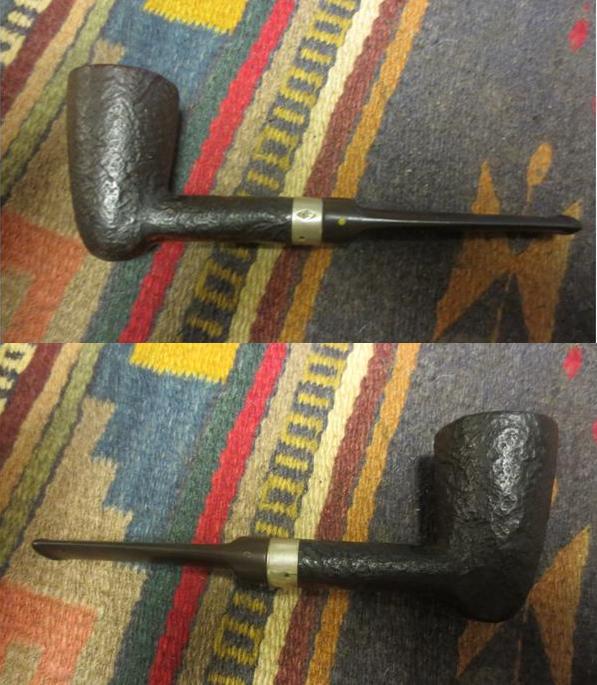
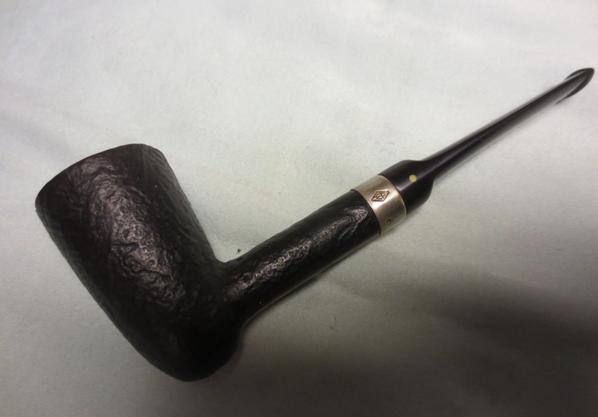
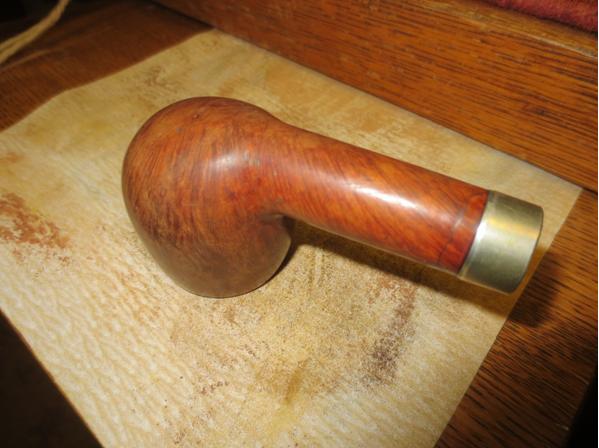
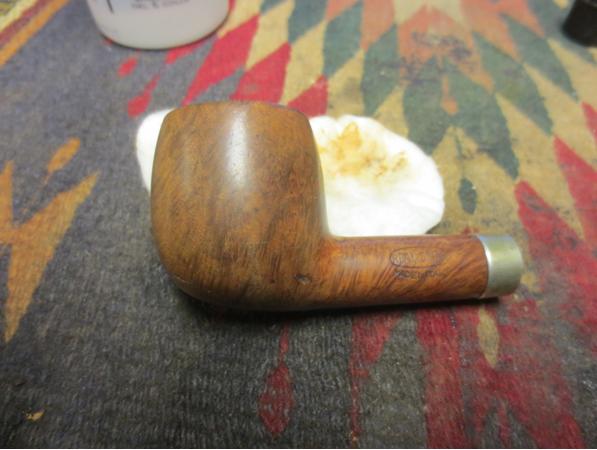
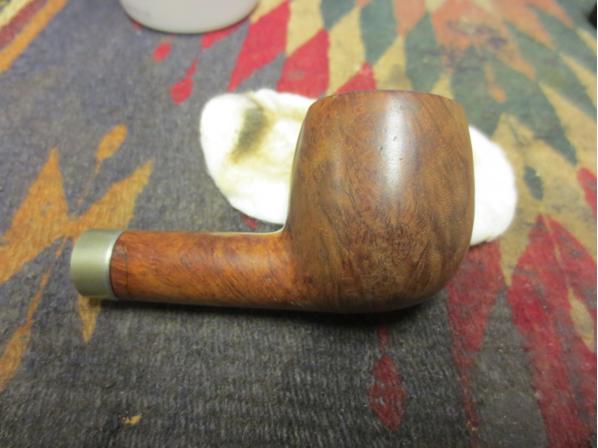
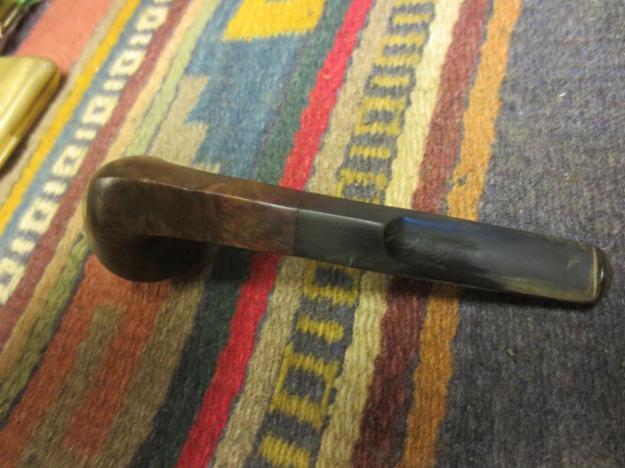
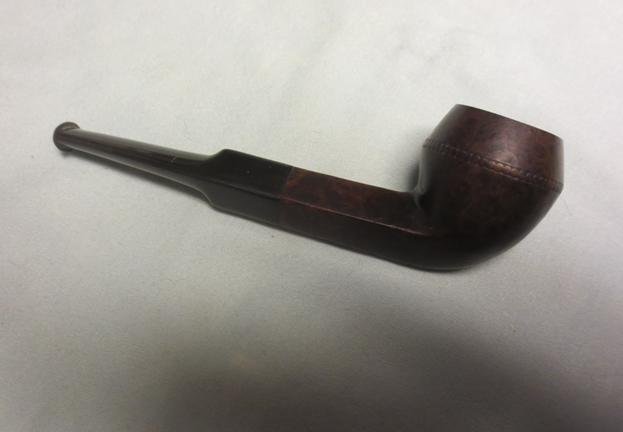
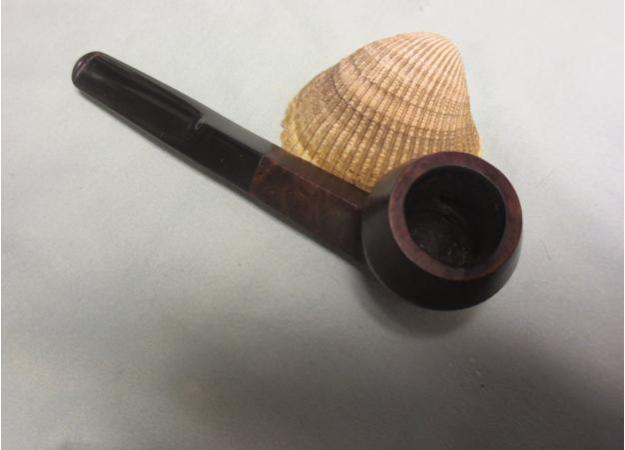
I have become a fan of older LHS pipes and restored quite a few of them lately. I am always on the lookout for different LHS lines that I have not seen. Recently I picked up this LHS Sulgrave from a fellow on the Dr. Grabow Collectors Forum for $15. It is a line that I had not heard of before. He described it as a lightly smoked briar pipe. When I saw it I wanted it as it was my kind of shape. Never sure what to call this shape – bent banker, squat apple – not sure but I like it. He gave the following description in the sale listing. The shank is stamped Purex Sulgrave arched over LHS in a Diamond on the left side. The stem has two light coloured dots on the left side. The pipe is 5 1/8 inches long from the bottom of bowl to end of bit. The bowl chamber diameter is 7/8 inch and bowl depth is 1 1/4 inch. There is light caking in bowl. There is light tooth wear on end of the stem near the button. It has normal wear and tear (dings, oxidation and scratches) for an estate pipe. Nice overall shape and condition. Here are the photos that he included when I emailed him for details.LHS1

LHS2

LHS3

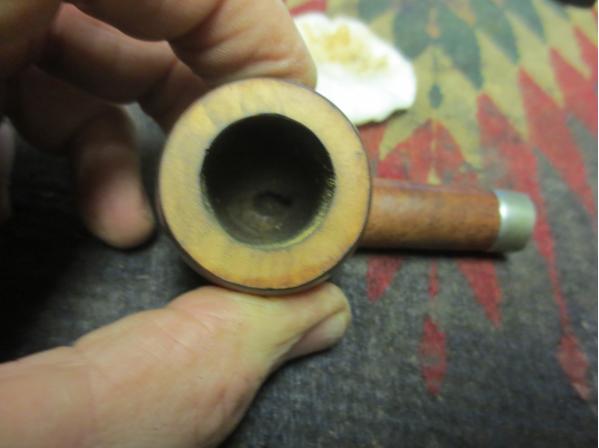
LHS4 When the pipe arrived I was not disappointed. The shape was perfect. The description was accurate and the only variation that I could see was that the stamping did not include PUREX on the shank. Not a big deal in my book. The bowl was unevenly caked and appeared to have been reamed. The back side of the bowl had a thicker portion of cake that gave the inside wall on the back side an uneven and out of round look. I was pretty certain that with a good reaming and a light sanding the rim would look better. The stem was over bent and there was a slight crease on the underside of the bend. There was a coat of wax or some kind of coating on the stem and bowl. The stem was oxidized. In the first photo below you can see slight imperfection in the vulcanite stem. I have circled it to highlight it in the photo below. It is not a hole or worn spot, it is actually a thread of cord in the rubber. Its presence gives some idea of the date of manufacture as recycled rubber was used in WWII pipes.LHS5

LHS6

LHS7

LHS8 The stem also had a lot of tooth dents and chatter along both top and bottom with some very deep marks on both. I tried to capture them in the next two close-up photos but they are still not very clear. The odd thing was that the dents went up the stem over an inch. The slot in the button was not centred and appeared to have left the factory that way. The dents were deep enough that I was concerned regarding the thinness of the stem surface over the airway. The mortise and airway in the shank were dirty and the end of the mortise was chipped away. It looked as if there had originally been a stinger in the tenon but it was no longer with the pipe.LHS9

LHS10 I also have included the next close-up photo of the rim and the bowl interior to show the cake that gave the bowl an out of round appearance.LHS11 I reamed the bowl with a PipNet pipe reamer using the largest cutting head. I took the cake back to bare wood to even out the inner edge of the bowl. I wanted to get rid of the cake so that I could smooth out the edge.LHS12

LHS13 I folded a piece of 220 grit sandpaper to smooth out inner edge. It took a little effort remove the inner edge damage and clean up the roundness of the bowl.LHS14

LHS15 I wiped down the bowl with acetone on cotton pads to remove the tars and the wax coat on the briar. With them removed the outer edge of the bowl showed damage as well. The bowl had been knocked about on the front edge particularly. The grain on this pipe was lovely.LHS16

LHS17

LHS18

LHS19 To minimize the outer edge damage I topped the bowl with 220 grit sandpaper on a topping board. I sanded it to remove the damage to the top of the bowl and clean up the outer edge of the bowl.LHS20

LHS21 I cleaned out the shank and the bowl with pipe cleaners, cotton swabs and alcohol to remove the grime inside. It took quite a few of both to clean out the shank but finally they came out clean.LHS22 I heated the stem with a heat gun to try and lift some of the dents to the surface and to also take out some of the bend. I also wanted to smooth out the sharpness of the bend on the bottom side.LHS23

LHS24

LHS25 I cleaned out the airway in the stem with pipe cleaners, cotton swabs and alcohol.LHS26 The heat had raised most of the dents significantly. The ones that were left in the stem needed to be sanded out and then filled to take care of them. I used 220 grit sandpaper to smooth out the surface. I also worked on the curve on the underside of the stem to make it less sharp looking.LHS27

LHS28

LHS29

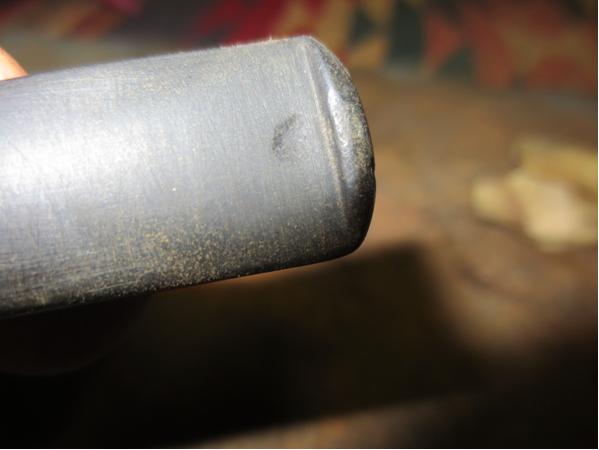
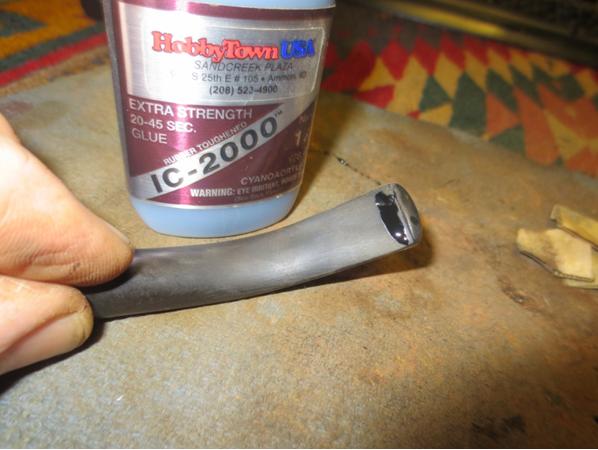
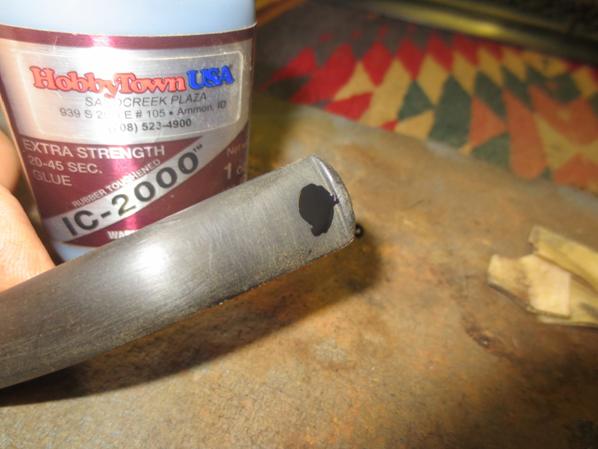
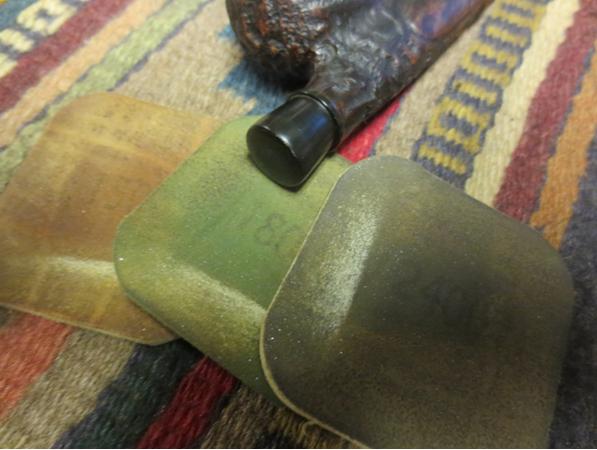
LHS30 The dents in the stem needed to be filled to bring the surface back to smooth flowing condition. I used a black super glue to fill the surface and set the stem aside to dry for several hours. Once dry, I sanded the fills with 220 grit sandpaper and then used a medium and a fine grit sanding sponge to feather them into the surface of the stem.LHS31

LHS32

LHS33

LHS34

LHS35

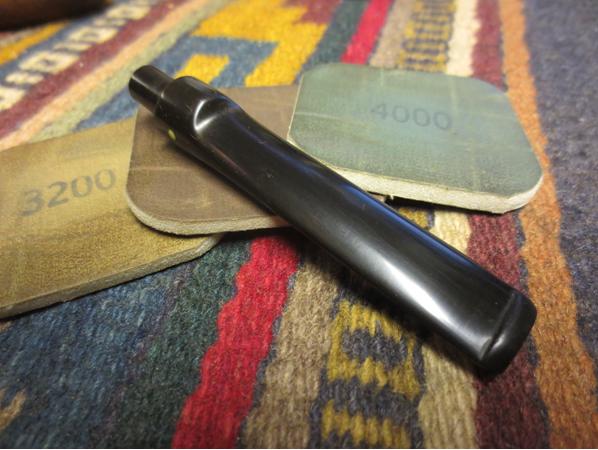
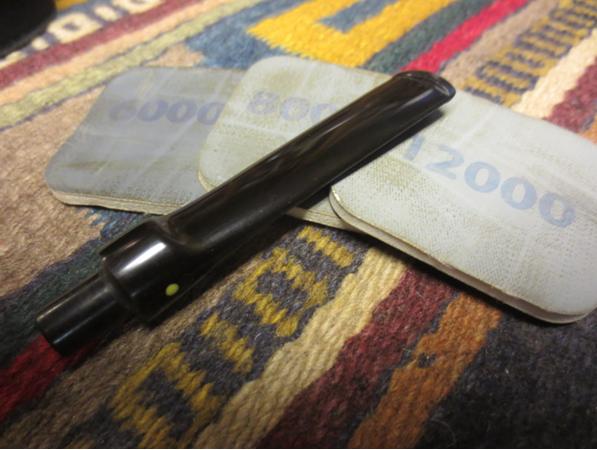
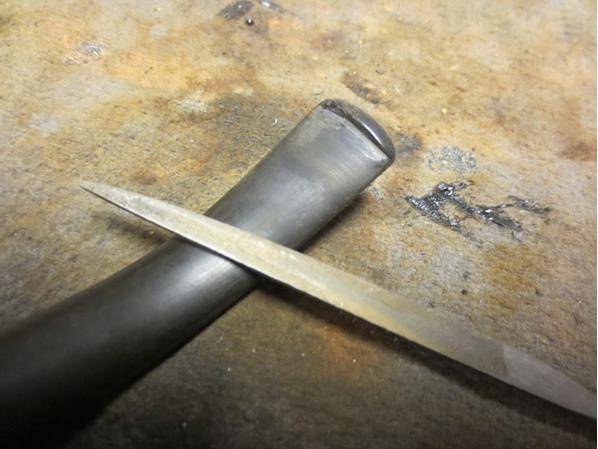
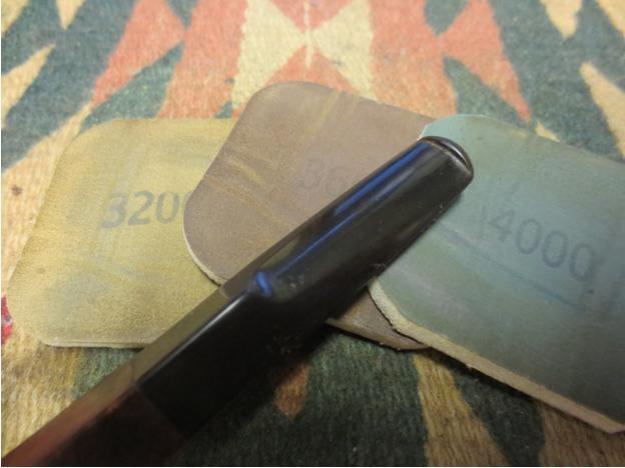
LHS36 I used a needle file to clean up and sharpen the edge of the button and give it more definition. I sanded the sharp edge with sandpaper and then sanded it with micromesh sanding pads. I wet sanded the stem with 1500-2400 grit micromesh pads and dry sanded with 3200-12,000 grit pads. I rubbed the stem down with Obsidian Oil between each set of three pads and then let it dry after sanding with a 12,000 grit pad.LHS37

LHS38

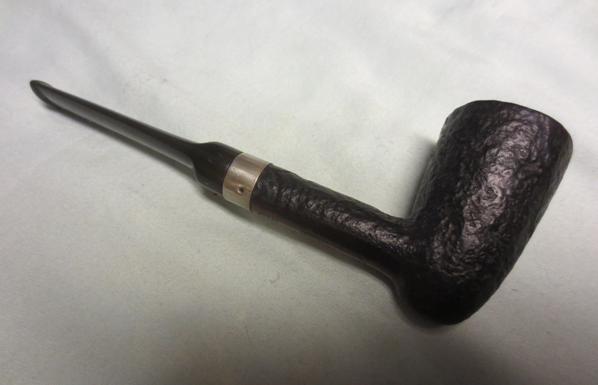
LHS39 I buffed the pipe with White Diamond and Blue Diamond on the buffing wheel to polish and remove the slight remnants of oxidation that had come to the surface. I gave it multiple coats of carnauba wax and buffed it with a clean flannel buffing pad. I brought it back to the table and hand buffed it with a microfibre cloth. The finished pipe is shown in the photos below.LHS40

LHS41

LHS42

LHS43

LHS44

LHS45

LHS46

Refurbishing a Dr. Grabow Westbrook 84L Smooth Canadian


Blog by Troy Wilburn

I got this pipe in a trade. I was pleasantly surprised when it showed up it was an 84L and not a regular 84. The stampings are crisp. The rim did have some dings so I had to lightly top it and restain it. There are still some very light dings on pipe but I let them go as the factory finish and color was excellent. So I just cleaned and buffed it other than rim. The stem still has some teeth marks I could not get out fully. The old bowl cake came out easy and the shank was not that dirty and I’m glad because these Canadian shanks are a pain to clean lol. It has zero fills too, which on that much briar was a nice surprise. All and all I’m very happy with it.

Here is the pipe when it arrived.West1

West2

West3

West4

West5 I took pics of it after I had finished restoring it with a couple of my favorite 45 EPs .

After: West6

West7

West8

West9

West10

West11

West12

West13

West14

West15

West16

West17

West18

NEPAL PROJECT PIPE SALE 14 – Reworking Someone’s Repair on an Ehrlich Billiard


Blog by Steve Laug

This is the fourteenth pipe from the box of pipes that I was gifted by a good friend of mine with the instructed purpose of cleaning them up and selling them with all of the proceeds going to the aid of earthquake victims in Nepal. Once again all funds raised will all go to the SA Foundation, and organization that has worked in Nepal for over 15 years helping provide recovery, housing and job training for women who are victims of sexual exploitation and trafficking. The ongoing earthquakes (over 300) that continue to shake Nepal have left much in ruins. The SA Foundation Project there was able to find new housing for the women and help with staff as well. Every dollar raised from the sale of these pipes will go to the work in Nepal.

This one is an Ehrlich billiard stamped Enrlich over Imported Briar on the left side of the shank. The stem still bears the E in a circle stamping and on the underside reads ITALY. There is no shape number on the sides or underside of the shank. It may well have had one prior to the previous repair that had been done but I could see no sign of it.

Over the years I have had to rework many of the first pipes that I repaired and restored. Some of them were simple fixes that came with time and experience. Some of them were unfixable without some major reshaping. This time around the pipe that I am working on came with lots of issues that were not my own making. They were the issues that someone else made in fixing this pipe. It had a cracked shank and a restoration band. The previous repairer had glued the shank and then proceeded to sand down the shank to fit the band rather than using a band to fit the shank. The band was slightly small in diameter and did not match the shank above it. It had the characteristic “bulge over the belt” look that came to me in middle age. The sanding down of the shank also went too far in that with the band in place there was a large gap between the shank and the band all the way around the pipe. The edge against the part of the shank that remained was crooked and rough. It showed above the band when it was in place and also held the band at an angle. The band would not stay in place and was being held there by the stem.

The rim had been topped but not enough and there were still gouges on the outer edges of the bowl. The bowl was reamed but not all the way to the bottom of the bowl and the airway was very constricted where it entered the bowl. The finish was spotty at best and had a coat of varnish over the stain. There were some obvious fills in the bowl that really showed up through the spotty stain. Overall the bowl looked worn and uninviting. It certainly would not be a pipe that called to me from my rack. The stem was oxidized and dirty as well as been covered with deep scratches over the length from the band to the button. The tenon had also been taken down slightly so its fit in the shank was loose.Ehrlich1

Ehrlich2

Ehrlich3

Ehrlich4 When I removed the stem the band fell free and I was able to examine the repair to the cracked shank that had made banding necessary to the previous repairer. You can see the angles of the cut against the shank that had been done by sanding that kept the band from seating on the shank straight.Ehrlich6

Ehrlich7 I cleaned up the edge of the cut on the shank to make the band sit straight and then heated the band with a lighter to expand it to sit straight on the shank. When it was heated I pressed it against a hard surface and felt it slip into place. There was no need to glue it at this point as the gap between the shank and band was too big to connect the too.Ehrlich8

Ehrlich9

Ehrlich10 I removed the stem and filled the gap between the band and the shank with briar dust. I packed the dust in with a dental pick and then put super glue on top of the dust to form a bond and fill the gap. I used a knife to bevel the inside edge of the mortise to accommodate the fit of the stem. I sanded the inner edge and the repair to the shank. The photo below shows the fill and the repair. It still needed to be sanded but the stem fit very well.Ehrlich11 The next photo shows the topping job that had been done on the rim top. You can see the scratches and the rough spots on the outer edge of the rim.Ehrlich12 I re-topped the bowl on the topping board using 220 grit sandpaper to clean it up.Ehrlich13 The next photo shows the re-topped bowl. The edges are all clean and smooth. The spot that looks rough on the back side is a fill that was along the edge.Ehrlich14 I sanded the bottom of the shank to take out some of the bulge against the band. I started with 220 grit sandpaper and then used medium and fine grit sanding sponges to smooth out the scratches.Ehrlich15 With the cleanup on the shank and rim finished I moved on to clean up the interior. I scraped out the bowl with a sharp knife to remove the remaining cake and clean up the bottom of the bowl. I used the drill bit from the KleenReem reamer to open the airway and remove all of the tars that had clogged the airway into the bowl.Ehrlich16 I scrubbed the mortise, airway and inside of the stem with pipe cleaners, cotton swabs and alcohol until it was clean.Ehrlich17 In the photo of the stem shown below you can see the scratches that were left in the stem from the previous cleanup.Ehrlich18 I sanded the stem with 220 grit sandpaper and then medium and fine grit sanding sponges to remove the scratches and some of the surface oxidation.Ehrlich19 With the scratches minimized I put the stem in a jar of Oxyclean solution to soak. I let it soak for about an hour and a half and then rinsed it off and dried it with a cloth. I rubbed the stem down with a Mr. Clean Magic Eraser and was able to remove the majority of the oxidation.Ehrlich20 I gave the stem a light sanding with the fine grit sanding sponge and then moved on to the micromesh sanding pads. I wet sanded it with 1500-2400 grit pads and then rubbed it down with Obsidian Oil.Ehrlich21 I put the stem back in place and restained the bowl with a medium brown aniline stain. I flamed the stain and set the bowl aside to dry on the cork and candle stand and called it a night. The pipe was beginning to look better.Ehrlich22 I worked some more on polishing the stem. I dry sanded with 3200-4000 grit micromesh sanding pads and then rubbed the stem down with Obsidian Oil. I continued to dry sand with 6000-12000 grit micromesh pads and then buffed the stem with Blue Diamond on the wheel.Ehrlich23

Ehrlich24 I used Dave Gossett’s additional step in buffing the final pipe. I gave it multiple coats of carnauba wax and then a clean buff on a soft flannel wheel. I gave it a final hand buff with a microfibre cloth before I took the photos below. The pipe is finished and ready for the pipeman who will make it his/her own.Ehrlich25

Ehrlich26

Ehrlich27

Ehrlich28

Ehrlich29 This Ehrlich billiard is a medium sized pipe, basically a Group 4 in Dunhill terms. The grain is quite nice and with the stain the fills blend into the finish quite well. The stain is a medium brown that allows the grain to show through to its advantage. It should make someone a great addition. If you are interested in this pipe email me with an offer at slaug@uniserve.com and we can discuss it. The entirety of the sale price will go to the Nepal project. I will pay the postage so that does not get taken off the proceeds. If you are interested in reading about the SA Foundation you can look at their website at http://www.safoundation.com.

Thanks for looking.

Restoring a No-Name Bent Rhodesian


Blog by Aaron Henson

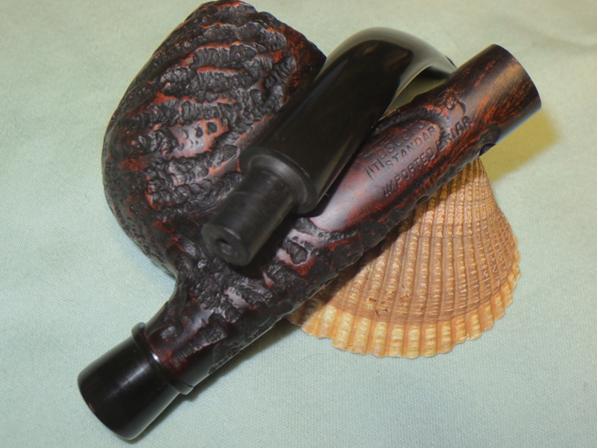
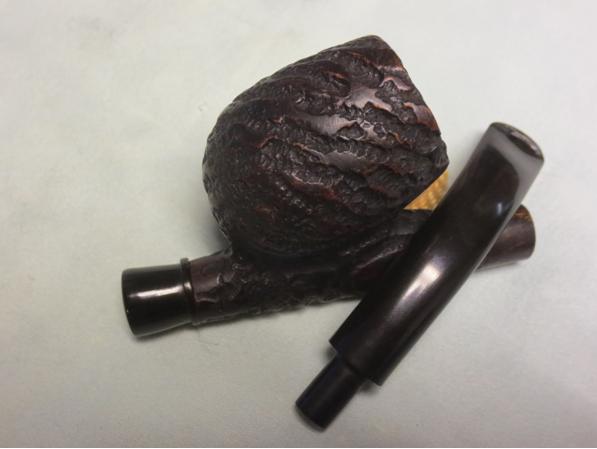
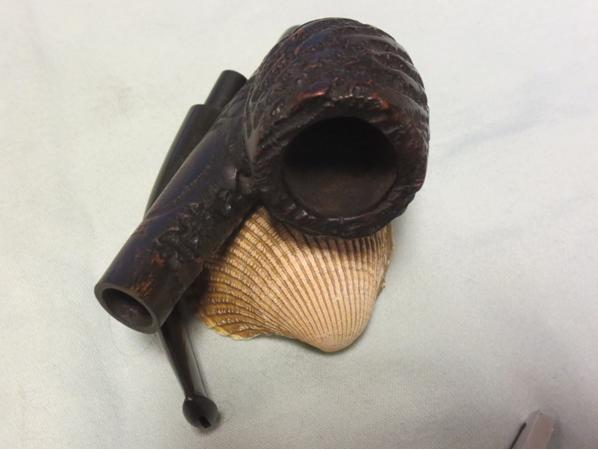
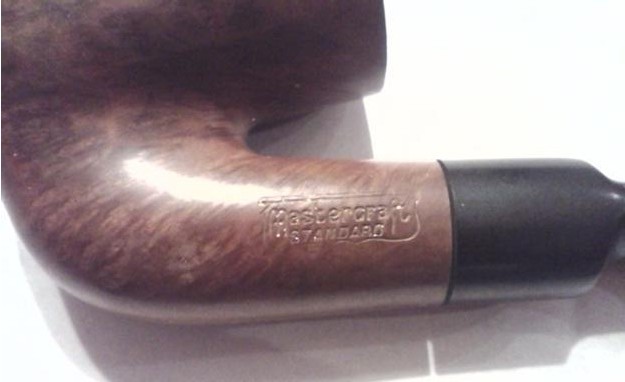
Still being relatively new to the pipe collecting/restoration hobby I have been a bit selective when it comes to the pipe I purchase. I typically look for shapes that have visual or tactile appeal and pay little attention to the name on the stem. And in that line of thought, ever since seeing the GBD 4292 for the first time I have wanted a pipe of this shape. So when I came across this no-name bent Rhodesian on eBay, I quickly placed a bid.Aaron1 It’s not that there were no markings on this pipe. The left side was stamped with STANDARD on the shank and a white 5-point star on the stem. The right side of the shank was stamped with Bruyère in script over Garantie.

A week later the package arrived in the mail and happily, the pipe was just as described and there were no surprise chips or cracks that the seller forgot to mention in the advertisement.Aaron2

Aaron3

Aaron4

Aaron5 Stummel Inspection
The grain was very nice with some birds eye on the right side and a kind of flame grain on the left. There was some minor denting on the heel but the only real wood flaw was a large fill on the left side The color of the fill did not blend well with the grain and it detracted from look of the pipe. Around the rim there was some chipping and charring; damage not uncommon in a used pipe. The only other major issue that I found was the that the twin groves around the bowl were not very deep and had been worn completely away on the right side.

Stem Inspection
The stem was in very good shape. There were some tooth marks on the bottom side of the stem with moderate oxidation overall. The singer was removable and had a modest build up of tar. The biggest issue with the stem was the loose fit to the stummel – which didn’t become apparent until after the shank was cleaned.

During the inspection I decided to change the stain and finish of the pipe in order to highlight the grain and camouflage the large patch. So I began by setting the stummel to soak in 95% isopropyl alcohol to remove finish and loosen the tars and cake. I set the stem to soak in the same solution in a different container for the same reasons.Aaron6 After an overnight soak, I began cleaning the stem with pipe cleaners, running them through until they came out clean. To address the oxidation, I placed a small dab of petroleum jelly over the star and set the stem to soak in a solution of 50/50 chlorine bleach and water. After 20 minutes – when the bubbles had subsided – I rolled the stem over in the solution and let it go another 20 minutes. Then I removed from the bath, rinsed with fresh water and set the stem aside to dry.Aaron7 I didn’t get back to the work bench right away, so after a 36 hour soak, I removed the stummel from its alcohol bath and wiped it dry. I then reamed the bowl with 40 grit sand paper wrapped around a ½” diameter dowel (although this method works well, I did finally order a Castelford pipe reamer from Amazon). Once the cake was removed and the chamber cleaned, I went to work on the shank. Pipe cleaners and cotton swabs removed the remaining gunk inside the shank.
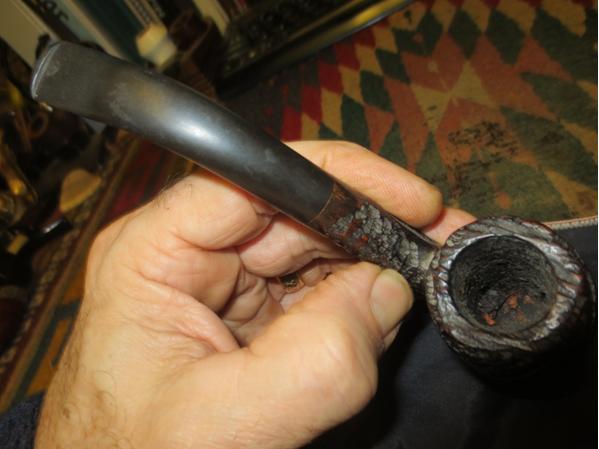
The chips and charring around the rim could only be cleaned up by topping the bowl. I use a sheet of 220 grit sandpaper laid on a flat surface and worked the stummel around in the circular motion. Even pressure and constant checking ensured that the rim was flat and level. I didn’t get the deepest chips because I was concerned that anymore material off the top would change the look of the pipe. Looking back now, I could have filled these chips with a briar dust patch. Maybe I will go back and do that this fall.
I sanded the remainder of the bowl with 320 – particularly around the large filled area and decided that the fill was in good shape and not worth removing. The fill proved to be of a darker color and that went along with my finishing plans.

The parallel grooves around the bowl were next on the list. On the right side they had worn away until they were barely visible. I went to my local hardware store and searched through the saw blades until I found what I was after: a thin fine toothed mini-hacksaw blade that just fit the width of the existing grooves. I trimmed the end of the blade with shears so I would have more clearance around the shank. Using the existing groves as a guide, I carefully worked my way around the bowl deepening and redefining the grooves. As usual, I found that not rushing yielded the bet results.Aaron8
Aaron9 Returning to the stem, I tried applying heat to raise the tooth mark but that did not answer. So I roughened the tooth marks with 320 grit paper and fill of the divot with black superglue in multiple thin layers, letting the glue dry completely (12 hours) between layers. Once the final layer of superglue was dry, I feathered out the patch with 320 grit paper. Then I began the sanding/polishing process by wet sanding with 400 – 4000 grit paper stopping every few grits to dry the stem and apply a light coat of mineral oil. I didn’t touch the star on the stem until I got to the 2000 grit paper not wanting to damage the logo. Once I finished polishing the stem with 6000 – 12000 grit paper I oiled the stem and set it aside.

I wanted to provide some contract to the grain of the pipe and to make the grooves really stand out. The original grooves did not have a contrasting color. I began with a coat of Black Fiebing’s leather dye. In retrospect, I should have thinned it down some.Aaron10 After the stain dried, I had a difficult time removing it. Acetone wipes and eventually light sanding removed most of the dye but left enough to highlighting the grain.Aaron11 I wanted a little more color so I applied a 3:1 diluted coat of Fiebing’s Ox Blood dye. This had the result of giving the pipe a pink hue that had me more than a little concerned. Happily, it all came together with multiple thin coats of olive oil. I left the oil on the stummel until it soaked in and then applied the second and third coats. The third coat did not soak in, so I wiped in clean and set it aside to rest for a couple of days.Aaron12 Before taking the pipe to the buffing wheel and thought I would address the loose stem. I tried bee’s wax, which has worked in the past, but the stem remained too loose. After a little research I heated the tenon over the heat gun and then inserted a nail set into the air hole and let the tenon cool. This technique only enlarges the end of the tenon rather than the full length of the tenon, which is a better repair. I went through the heating/cooling process several times until I got a snug but not tight fit. Another thing to be aware of when heating the tenon is that the softened tenon may ‘sag’ a little. If this happens, then you may be left with a little gap between the stem and shank.

From here, I assembled the pipe and took it to the buffing wheel. I use an inexpensive Sears buffing system that fits into the chuck of my drill press. I found on previous projects that gearing down the drill speed to 1200 rpms was important to maintain control and not overheat the pipe. I finished with three coats of carnauba wax and buffed to a shine.Aaron13

Aaron14

Aaron15

Bringing New Life to a Weber Blackthorne 370 Poker


Blog by Troy Wilburn

I acquired this Weber Poker off Ebay with a “Best Offer” bid. Although I got other pokers made by Weber (Webco, Jobey, Wally Frank) I did not have one stamped Weber, so I added this to my American Poker Collection.Frank1

Frank2

Frank3 It had a crack on the bottom which in my “Best Offer” bid I noted my concern over it and got the pipe for much less than the amount they wanted.Frank4

Frank5 The pipe was pretty dirty and the cake was set like concrete.Frank6 After getting cake out and shank cleaned I stripped off the old wax and grime.Frank7 I dug out all the trash from the crack with a sewing needle. I was thinking this damage was from abuse from a smoker. I dug out old filler so I think it may have come from factory with it.Frank8 After cleaning out crack I taped it up with some packing tape.Frank9 I then filled it with glue and briar dust and hit it with a file when dried.Frank10

Frank11 I mixed up a thin color match to the factory color and applied a couple of coats.Frank12 After a soak in Oxy Clean I worked on stem. The owner had teeth like a house cat. All were small round and deep. What a pain they were. I haven’t done a Cherrywood Poker in a while and I had forgotten what a chore it was doing these thin little saddle bits.Frank13 I colored in the Weber emblem with black sharpie to be taken off when I buffed it.Frank14 After the dye dried I scuffed it with a Scotch Brite pad and mineral oil to highlight the blast.Frank15 Here is the finished pipe, buffed and waxed.Frank16

Frank17

Frank18

Frank19

Frank20

Frank21

Frank22

Frank23 I had a hard time getting a picture of stamping and repair on bottom of bowl with the glare. This was best out of several attempts.Frank24 Now it’s time to try this ol gal out with some Dark Strong Kentucky:). Frank25

Midterm Exam #4: Re-Refurbishing an Unknown Bulldog


Blog by Anthony Cook

It’s time for the fourth and final midterm exam! This one is an “unknown” bent bulldog that I picked up from eBay. I snagged it because I liked the shape and it was cheap. What I didn’t know at the time, but became immediately apparent when the pipe arrived, was that the end of the shank had been shattered into at least three pieces and glued back together. There was no stamping on the pipe, but I don’t think that was always the case. It was likely sacrificed during the shank repair. The repair is fairly obvious in my photos below, but I assure you that it was not nearly so in the seller’s. The right combination of lighting and angles can cover up a multitude of sins, folks. Caveat emptor.

The exposed cracks weren’t the worst part of the story though. The repair did as much damage to the pipe as the crack did. An alarming amount of material had been taken off while sanding out the excess glue. It’s difficult to see in the photos, because from any one angle everything looked correct. However, if you held the pipe in hand and rolled it around you would notice that no two faces on the shank were equal. The shank was no longer a diamond shape; it was a trapezium. The repairman hadn’t paid much attention to keeping the surfaces level either. So, there was a subtle undulation to the line of the shank as it went from thick to thin and back again several times along its length. There was also very little effort made to blend the repaired area into the rest of the pipe, and several shallow “steps” were visible where the two surfaces met. There was at least an attempt to match up the stem to the shank, but that only gave the stem the same odd angles and even they didn’t quite match up to the ones on the shank. All in all, it was a bit of a travesty. Here are a few photos taken just after it arrived.Anthony1

Anthony2

Anthony3 That was all far more than my tender, noobie hands could handle at the time. So, I cleaned the internals of the pipe and put it away for later, but not before adding a bit of bend to the stem that it seemed to have lost over time.
I’ve finished up work on all the rest of the pipes in that first batch. So, this week it was time to put a collar on that dog and turn in my final midterm.

I started (or restarted I should say) by dropping the stummel into an alcohol bath for a couple of hours to soften any coating that might be on the pipe. I had quite a surprise when I removed it later on. It looked fine when it was fresh from the bath, but a hazy, white glaze began to form on the surface as it dried. I hadn’t seen anything like this before and I’ll admit to a brief moment of panic. I assumed that this was probably the result of some type of coating reacting to the alcohol. So, I wiped the stummel down with acetone taking extra care around the shank repair, since acetone will break down superglue. That did the trick and the stummel cleaned up nicely.Anthony4 I set up the retort to see if I could remove any more tar buildup from the pipe. I flushed the shank about 10 times with boiling alcohol before allowing the pipe to cool. I noticed that the vial appeared to be losing a lot of liquid during the retort. The cotton wasn’t discolored. So, it wasn’t gassing out through the bowl. It really had me scratching my head until I saw a spot of moisture on the shank when I was removing the retort. For some reason, it wasn’t sealing well at the mortise and I’d need to look into that before I went much further.Anthony5 I gave the pipe a post-retort scrub of the stem and shank, and then inspected the crack repair for gaps. The surface of the glue joints looked airtight, but I noticed that the glue hadn’t penetrated very deep. The joints left shallow fissures inside the mortise and along the shank face. I used a small pushpin to place a little super-thin CA glue directly into the fissures, and then used a toothpick to apply a thin layer of the CA around the end of the mortise to create a seal inside as well as out.

When the glue was dry, I sanded out the interior patches with sanding needles and a piece of 400-grit sandpaper wrapped around a small dowel. I refaced the shank on my topping surface in a manner similar to how I would top a bowl (pressing lightly into the paper and using a circular motion). The following pictures show the patches when fresh and after they had been sanded out. You can also get some idea of the irregularities in the shank by comparing the differences in the face angles and wall thickness around the mortise.Anthony6 After that, I reattached the stem and ran a retort through it again to test for leaks. The outside of the stem and shank stayed dry as a bone through the whole process. So, I began addressing the pipe’s cosmetic issues.

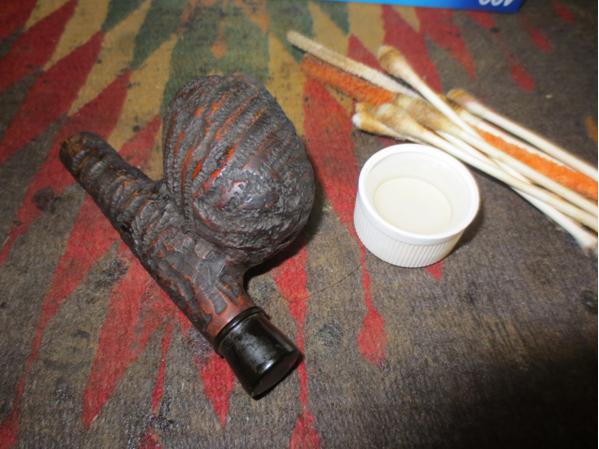
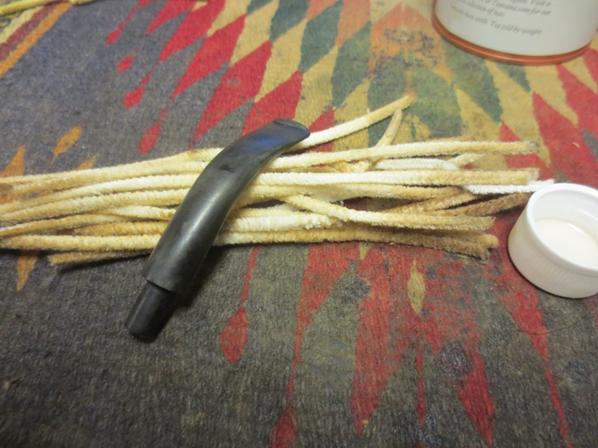
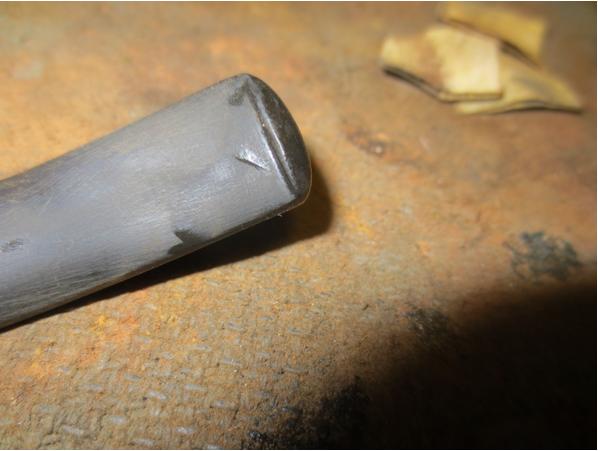
I lightly topped the bowl and chamfered the inner rim to remove the scratches and dings. Then, I steamed a few dents out of the finish by pressing a screwdriver that had been heated over a tea candle into a wet cloth placed over the dents. Finally, I used CA glue and briar dust to patch a few, small gouges and missing fills and sanded them out with 220-grit and 320-grit sandpaper.Anthony7 While I worked on the stummel, the stem had been soaking in an Oxyclean bath. I removed it and scrubbed it down with a Magic Eraser to remove any oxidation. I used black CA glue to fill the tooth dents on the top and bottom of the stem. Once that had dried I sanded it down with 220-grit paper.Anthony8 The stem button needed to be rebuilt since it was worn and dented. I wrapped several layers of clear tape around the stem just below the button to create a form to make a crisp edge and also inserted a Vaseline smeared wedge of cardboard into the slot to seal it. Then, I applied thick, black CA glue in several layers to the end of the stem to begin building the new button. It wasn’t a pretty thing to look at when I removed the tape, but the edge was sharp and there was enough material to work with. I trimmed away the glue artifacts created by the tape molding with an X-Acto blade and rough-shaped the new button with 220-grit paper.Anthony9 Once the button started taking shape, it was time to do something about the other end of the stem and also the deformity of the shank. This was the part of the exam that I had not been looking forward to. Up to this point, everything had been the equivalent to multiple-choice or fill-in-the-blank questions. There were a couple of challenges, but nothing too rough. The next part was more like the essay section.

After a lot of thought, I finally decided that there just wasn’t enough material left around the stem to square everything back up. So, I thought I’d try some trickery of my own. If I couldn’t make everything right, maybe I could use a little more finesse and subtlety than the original repairman did to make it at least look “righter”. If ya can’t beat ‘em, join ‘em.

I used 220-grit sandpaper to start carefully nudging the edges of the shank and stem saddle this way and that to give them an appearance of alignment. All the while I paid special attention to keep the faces as level and even as I could. There was very little technical skill involved. I was basically just freehanding. Once I had corrected the lines as much as I could, I began blending the reworked areas into the rest of the pipe with 320-grit. The photo below shows the progress somewhere early in the reshaping phase. Honestly, I was at this for a while and kind of lost myself in the middle of it. So, I didn’t get many photos.Anthony10 When I was as satisfied as I was likely to be with the shape of the shank and saddle, I went back to work on the rest of the stem to finish it up. I continued shaping the button with 320-grit and 400-grit paper. Then, I smoothed the entire surface by lightly sanding with 600-grit and 1200-grit paper. Finally, I polished the stem with micro-mesh pads 1500-12000.Anthony11 The stem work was wrapped up. So, it was time to do the same for the stummel. The off-kilter shape of the shank made it difficult to find a band that would fit well. It took three attempts before I found one that would work. I used a method for shaping a round band for the diamond shank similar to what Steve has previously written about here, but it took quite a bit of reworking to get it to conform to the now strange dimensions of the shank. I’m still not quite happy with how it fits, but I’m not sure what I could have done differently.Anthony12 There was nothing left to do at that point but to address the finish of the stummel. I wanted the final color to be close to the original but a little darker to help hide the bit of crack repair that was still visible. I heated the stummel over the heat gun to open the grain and then applied Fiebing’s black dye to the stummel. I then sanded down the surface with 400-grit paper to remove the remaining scratches and most of the black stain, except for what had set in the grain and recesses of the rings. Next, I applied a mahogany stain before sanding with 600-grit and 1200-grit paper. I took the stummel to the buffer and gave it a quick Tripoli buff, and then applied a final stain of British Tan.

The stummel was polished with micro-mesh pads starting with 3600-grit and working through to 12000-grit. I then buffed the entire pipe with white diamond compound and gave it several coats of carnauba wax to finish it up.

I leaned back in my chair and checked the clock on the wall. There were only minutes to go and most of the other seats were already empty. I had to admit that this was really as good as it was going to get. So, with a sigh, I stood up from my chair, gathered my exam materials, and delivered them to the desk at the front of the room…Anthony13

Anthony14

Anthony15

Anthony16

NEPAL PROJECT PIPE SALE 7 –Restoring a Kirsten K – Companion Generation 2


Blog by Steve Laug

This is the seventh pipe from the box of pipes that I was gifted by a good friend of mine with the instructed purpose of cleaning them up and selling them with all of the proceeds going to the aid of earthquake victims in Nepal. Once again all funds raised will all go to the SA Foundation, and organization that has worked in Nepal for over 15 years helping provide recovery, housing and job training for women who are victims of sexual exploitation and trafficking. The ongoing earthquakes (over 300) that continue to shake Nepal have left much in ruins. The SA Foundation Project there was able to find new housing for the women and help with staff as well. Every dollar raised from the sale of these pipes will go to the work in Nepal.

It is a Kirsten metal pipe with a briar Dublin bowl. It is stamped on the left side of the shank, Kirsten in a cursive script. On the underside it is stamped Made in U.S.A. – K. These pipes were made for a long period of time in the Seattle, Washington area of the US. They came in four generations or iterations – Generation 1, 1.5, 2 and 3. The stamping on this one, the absence of a metal cap to hold the bowl, and the presence of the rubber O rings on the metal valve and on the stem insert, point to it being a Generation 1.5 pipe or a transitional one.

Documentation that I quote on an earlier blog from Dave Whitney shows the following information on the Generation 1.5 – transitional period – mid to late 50’s. This was an experimental stage. Kirsten realized that the bit and insert were prone to seizure as the condensate dried. This model always has O-rings on the metal insert, and later models can have O-rings on both. Same markings, as I remember it. There is no metal cup spacer under the bowl. This generation has O rings either on the valve or mouthpiece but no O rings on the other end. This transitional period is stamped “Pat. Pending” and “Pats. & Pats. Pending” some with “Made in U.S.A. It seems like the company was using surplus parts to combine into this series of pipes. This particular pipe is stamped K after the U.S.A. thus making it a Companion.

When I brought this one to the work table the stem was frozen in the shank and the valve on the end was also frozen. The bowl could not be turned off by hand as my other Kirsten’s can. The bowl had a layer of cake and the screw in the bottom of the bowl was also caked and dirty. The rim was dirty and the metal was barrel was dull and soiled. The stem was not only stuck but it also had tooth marks on the top and underside of the stem near the button. There was also some discoloration and sticky buildup on the stem.K1

K2

K3

K4 I cleaned out the slot on the screw in the bottom of the bowl and was able to remove it with a flat blade screwdriver. The valve at the end of the barrel also came out when I used a pair of pliers that I had taped the end on so that it would not damage the aluminum of the valve. It was very tight and the tobacco oils acted like dried varnish on the rubber gasket and the aluminum almost welding it to the barrel. By carefully working it back and forth I was finally able to remove it.K5 The stem would not budge so I dropped the barrel stem down in my alcohol bath and let it soak overnight. I dropped the bowl into the bath at the same time to soften the cake in it and also make the cleanup of the rim and bowl easier.K6 I filled a small cap with alcohol and put the valve and the screw into the small bath overnight as well. I figured a good soak would make the clean up process much simpler.K7 In the morning I was able to remove the stem and rod apparatus from the barrel with ease. It was caked with the same kind of varnish from the tars and oils of the tobacco.K8 I took a photograph down the barrel to show what the inside looked like once the stem was removed.k9 I took the bowl out of the bath as well and laid out the parts of the pipe side by side for the photos before I cleaned them up.k10 Using a piece of 0000 steel wool I scrubbed the rod and the bowl down to clean up the grime and buildup. I also scrubbed the screw and the valve as well with the steel wool. It did not take much effort to remove that from the metal or the briar. The photo below shows the cleaned up parts.k11 I scrubbed out the barrel with cotton swabs and alcohol as far as I could reach. I pushed it through the threaded connector for the bowl as well to remove all of the oils and tar.k12 I took the next photo of the barrel to show the inside and how much cleaner it was. I still needed to clean it more so I twisted some tissue into a cord and turned it into the barrel until it came out the other end. I move it back and forth to scrub out the inside of the barrel. Once it was out the inside of the barrel shone.k13

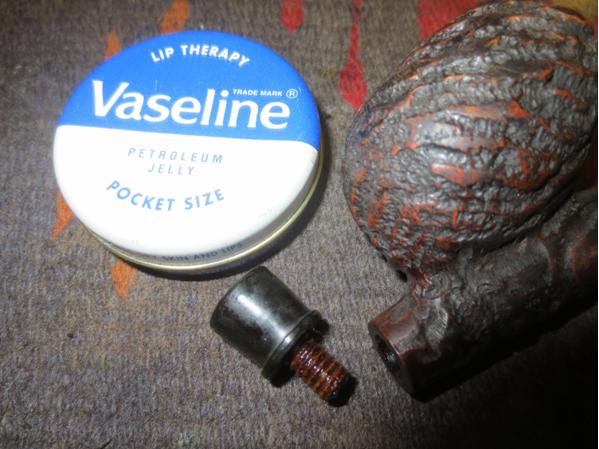
k14 I reamed the bowl using a sharp pen knife paying particular attention to the seat at the bottom of the bowl which held the screw flat against the bowl bottom. I cut the cake back to a very thin coat along the walls. I then used some Vaseline on the threads of the screw and put it through the bottom of the bowl and used the screw driver to turn it into the barrel. I still needed to polish the grooves on the barrel and the valve but the pipe was beginning to look very good.k15

k16 I sanded the tooth marks on the stem with 220 grit sandpaper to remove as much of them as I could without thinning the surface of the stem or leaving behind a groove. I was able to remove both marks on the top and bottom of the stem.k17

k18 I used micromesh sanding pads to polish the stem and bring back the shine. I wet sanded with 1500-2400 grit pads and then rubbed the stem down with Obsidian Oil and then dry sanded with 3200-4000 grit pads and gave it another coat of oil. Finally I sanded with the 6000-12,000 grit pads and then gave it a final coat of oil and let it dry.k19

k20

k21 I buffed the stem with Blue Diamond Plastic Polish on the wheel and brought out a deep shine. I then gave the stem multiple coats of carnauba wax and buffed it with a clean, soft flannel buffing pad to raise the shine.k22

k23 I buffed the barrel lightly with the Blue Diamond and also buffed the bowl. I gave the bowl and barrel several coats of carnauba wax and then lightly buffed it with a clean flannel buffing pad to raise the shine. The finished pipe is shown in the photos below. It is ready for someone who has been looking for one of these to pick it up and add it to their rack and help out the women of Nepal at the same time.k24

k25

k26

k27

k28 This older Kirsten Companion K is a great looking pipe and the Dublin bowl gives it a distinctive look. As I said above, it should make someone a great addition. If you are interested in this pipe email me with an offer at slaug@uniserve.com and we can discuss it. The entirety of the sale price will go to the Nepal project. I will pay the postage so that does not get taken off the proceeds. If you are interested in reading about the SA Foundation you can look at their website at http://www.safoundation.com.

Thanks for looking.

NEPAL PROJECT PIPE SALE 3 – Cleaning up and Restoring a GBD Bronze Velvet 548 Bulldog


Blog by Steve Laug

This is the third pipe from the box of pipes that I was gifted by a good friend of mine with the instructed purpose of cleaning them up and selling them with all of the proceeds going to the aid of earthquake victims in Nepal. The funds raised will all go to the SA Foundation, and organization that has worked in Nepal for over 15 years helping provide recovery, housing and job training for women who are victims of sexual exploitation and trafficking. The ongoing earthquakes (over 300) that continue to shake Nepal have left much in ruins. The SA Foundation Project there was able to find new housing for the women and help with staff as well. Every dollar raised from the sale of these pipes will go to the work in Nepal.

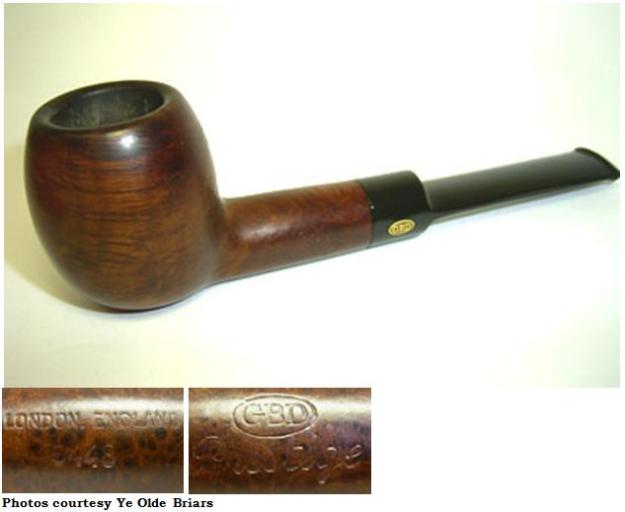
The third pipe I decided to clean up from the box of donated pipes is an interesting GBD Shape 548 – a shape I call an elongated bulldog. It is a unique shape that GBD made for quite a number of years. It is stamped GBD in an oval over Bronze Velvet on the left side of the shank. On the right side it is stamped with the shape number 548 and London over England. When it was introduced it had a natural finish and a swirled bronze acrylic bit. In a 1976 Catalogue it was billed by GBD as, “Our ultimate GBD! Only the choicest natural bowls are selected for this premium newcomer. The crowning touch is the handcut mottled Bronze Velvet mouthpiece blending in complementary contrast to the bowl.”

This one will also be sold and all the proceeds will go to the project in Kathmandu. It is a great looking piece of briar with no visible fills in the briar.GBD1

GBD2 I examined the pipe before I went to work on cleaning it up and restoring it. The briar was very dirty and had sticky spots on the bowl and diamond shank sides. The double ring around the bowl was in excellent shape but had debris in the grooves. The rim was in rough shape. Not only was it caked with a lot of tars and oils but it had been knocked out on the front edge of the rim and there was roughening and damage to the front and the top of the rim. There were also notches in the top outer edge of the rim all the way around the rim. The inner bevel on the rim was also caked and hardly visible but appeared to be in pretty decent shape under the grime.GBD3

GBD4 The stem was a marbled bronze as suggested in the catalogue. The sharp edge of the button had been worn down so that the button merely sloped into the end of the stem. The top side was clean and the underside had a well done repair to a bite through. It appeared to be made out of epoxy and was rock hard. There were slight dents in the surface of the repair but it was still solid.GBD5

GBD6

GBD7 I decided to work on the stem first. I used a flat edge needle file to sharpen the edge of the button and give it more definition from the rest of the stem surface. I worked on both sides of the stem to give it shape. I also used the file to scrape away some of the stem material in front of the edge to give depth to the button.GBD8

GBD9 Once the button was cleaned up and defined I worked on the inside of the stem. I scrubbed the interior of the stem with alcohol, pipe cleaners and cotton swabs. I was surprised to find that the tenon had a metal tube that ran from the end into the stem to give the Lucite tenon more strength in an area where I have seen many of them snap off.GBD10

GBD11 I also wiped down the surface of the stem and used a dental pick to clean up the epoxy repair on the underside. When I had the area cleaned up I used some clear super glue to fill the marks and dents in the epoxy repair and then sanded the stem in that area with 220 grit sandpaper and a medium and a fine grit sanding sponge to blend it into the surface of the stem and smooth it out. Once that was done I set the stem aside and worked on the bowl.
I used the PipNet reamer to clean up the bowl and remove the bits of carbon that were left behind. I also cleaned the airway and the mortise with pipe cleaners, cotton swabs and alcohol until they came out clean.GBD12

GBD13 The damage to the rim needed to be addressed so I topped the bowl with the topping board and 220 grit sandpaper until the damaged portion was gone. I did the topping in several steps. I took the top down until the major damage was gone and then did a little more to minimize the damage on the front of the bowl.GBD14

GBD15 I reworked the beveled inner edge with a folded piece of 220 grit sandpaper until it was the same angles it was before I topped it. When that was sanding was complete I worked on the damage to the outer rim with the same sandpaper and then sanded the entire rim with a medium and a fine grit sanding sponge.GBD16 I wiped the bowl and the rim down with alcohol on a cotton pad. When I had finished the bowl looked as it is shown in the next photo.GBD17

GBD18

GBD19

GBD20 The next two photos show the bowl after I had scrubbed the surface of the briar with alcohol on a cotton pad. The natural briar looks clean and bears a slight patina of age. But is looking pretty decent at this point in the process – and I had not even buffed it yet.GBD21

GBD22 I polished the stem with micromesh sanding pads – wet sanding with 1500-2400 grit pads and dry sanding with 3200-12,000 grit pads. I rubbed the stem down with Obsidian Oil between each set of three pads. When I finished I gave it a light buff with White Diamond.GBD23

GBD24

GBD25

GBD26

GBD27 I buffed the entire pipe with Blue Diamond Plastic polish on the wheel and then gave it multiple coats of carnauba wax. I finished by buffing the pipe with a clean, soft flannel buff to raise the shine. The finished pipe is shown in the photos below. It is ready for its next pipeman to bring it home and bring it back into rotation.GBD28

GBD29

GBD30

GBD31

GBD32 This GBD Bronze Velvet should make someone a great addition. If you are interested in this pipe email me at slaug@uniserve.com and we can discuss it. The entirety of the sale price will go to the Nepal project. I will pay the postage so that does not get taken off the proceeds. If you are interested in reading about the SA Foundation you can look at their website at http://www.safoundation.com.

Thanks for looking.

Restoring a 1967 Dunhill Oom Paul 591


Blog by Steve Laug

The next one to my work table was a Dunhill Oom Paul 591. It was a Dunhill shape that I had not seen before. The stamping on the left side showed the shape number 591 next to DUNHILL over BRUYERE. On the right side of the shank it was stamped Made in England7 and next to that Circle 4A designating the size of the pipe. From several sources I was able to ascertain that the pipe was made in 1967. The finish on this one was in good shape. There was a light build up on the top of the rim and there was an uneven cake in the bowl. There were some small dents in the sides of the bowl but not enough for me to steam them out and risk harming the original finish. The stem would not fit down into the shank. In the pictures below you can see how far it would go into the mortise. I removed the stem and the mortise was dirty and black. The stem was oxidized and had some minimal tooth chatter on the underside near the button. There was also a shallow tooth mark on the underside amidst the chatter.Dun1

Dun2

Dun3

Dun4 I cleaned out the shank with pipe cleaners, cotton swabs and isopropyl alcohol until the swabs came out clean. I cleaned the airway to the bowl and gave the bowl a light reaming to remove the uneven build up. I scrubbed down the rim and removed the light build up that was there and polished the bowl with carnauba on the buffer.Dun5 I lightly sanded the stem with a medium grit sanding sponge to loosen the oxidation and with 220 grit sandpaper to remove the tooth chatter and small dent.Dun6

Dun7

Dun8

Dun9 I mixed up a batch of oxyclean and put the stem in the bath to soak overnight.Dun10 In the morning I took the lid off the container and removed the stem. The water had turned amber coloured. The oxidation had risen to the surface of the stem and I rubbed most of it off with a coarse cloth. I cleaned out the stem with alcohol and pipe cleaners and used the dental pick to clean out the slot on the stem.Dun11 I sanded it with a medium and a fine grit sanding sponge to remove the softened oxidation.Dun12 Then it was time to polish it with the micromesh sanding pads. I wet sanded with 1500-2400 grit pads and dry sanded with 3200-12,000 grit pads. I rubbed the stem down with Obsidian Oil between each set of three pads. I buffed the stem with red Tripoli after I finished with the 2400 grit pad and with White Diamond after the 12,000 grit pad.Dun13

Dun14

Dun15 There were still some scratches that showed up in the bright light of the flash so I worked it over again with the last set of pads and then buffed it with Blue Diamond Plastic Polish on the wheel. I finished by giving the bowl and stem multiple coats of carnauba wax and then buffing it with a clean, soft flannel buffing pad to raise the shine. The finished pipe is shown below. Somehow in the photos the fluorescent lights lend the photo a yellow tint that I normally do not get. The stem is absolutely shiny and black and the bowl is a rich oxblood red. It is ready to be smoked and enjoyed.Dun16

Dun17

Dun18

Dun19

Dun20

Dun21

Dun22 Thanks for looking.