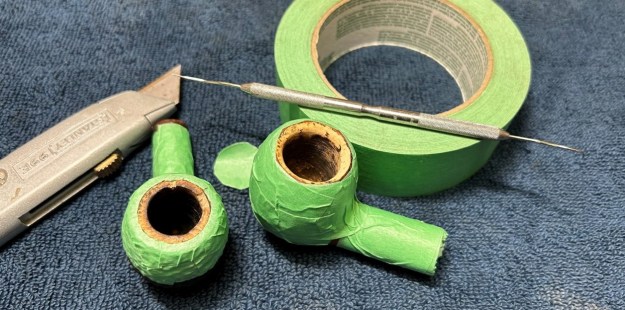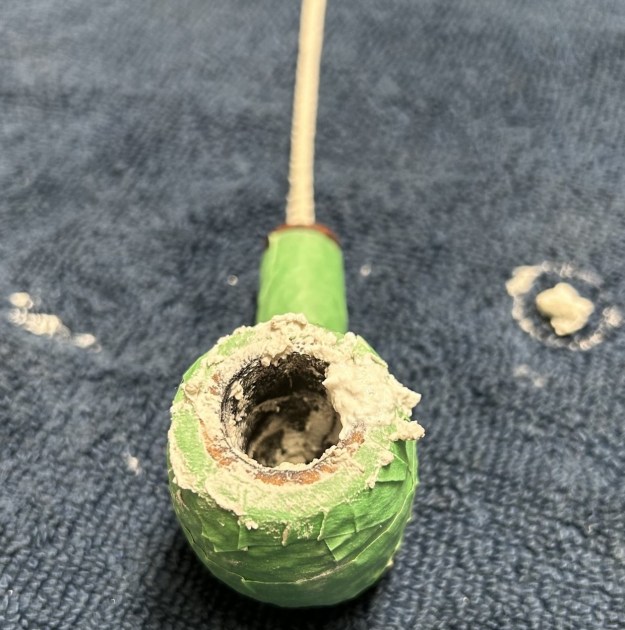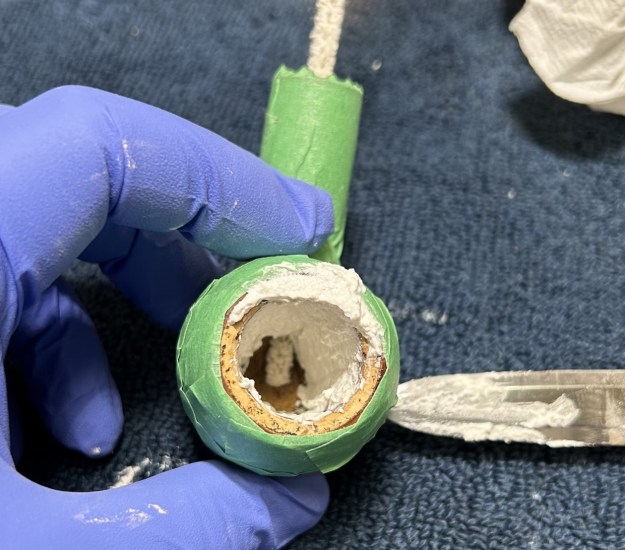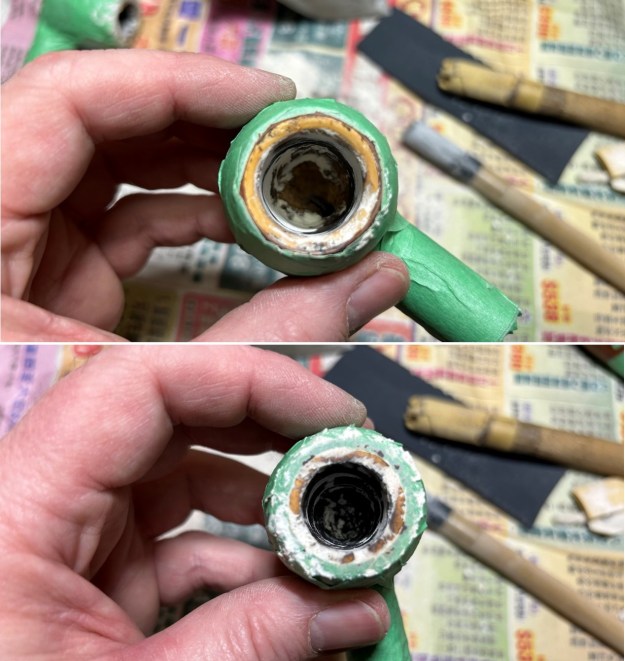
Tag Archives: article by Kenneth Lieblich

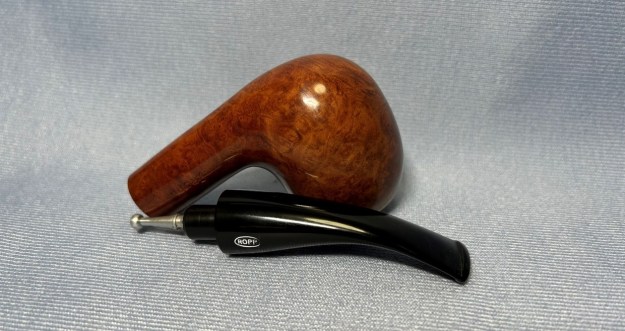
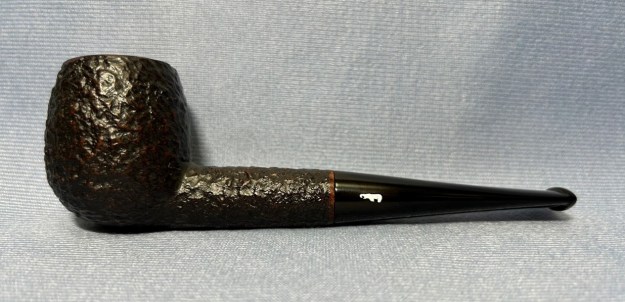
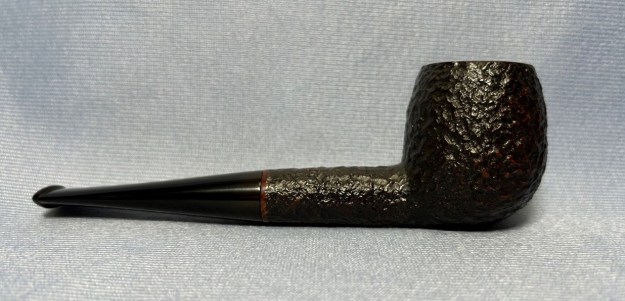
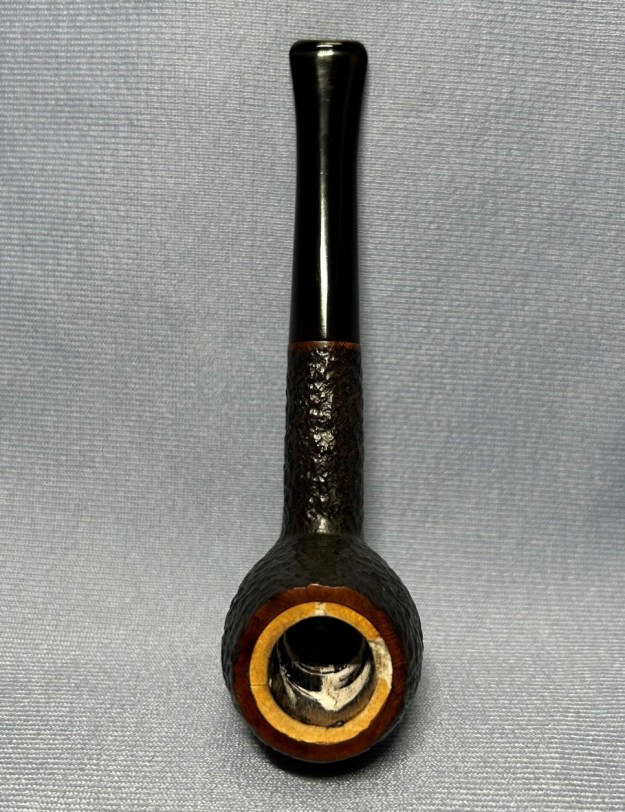
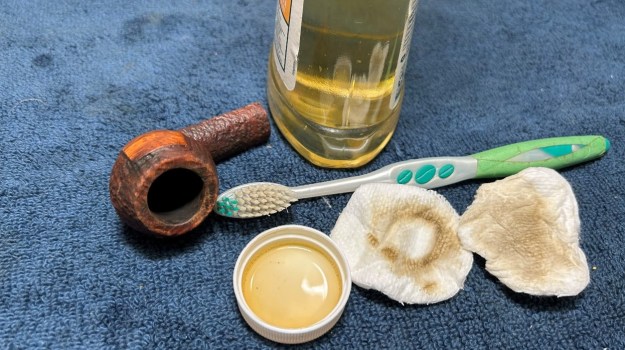
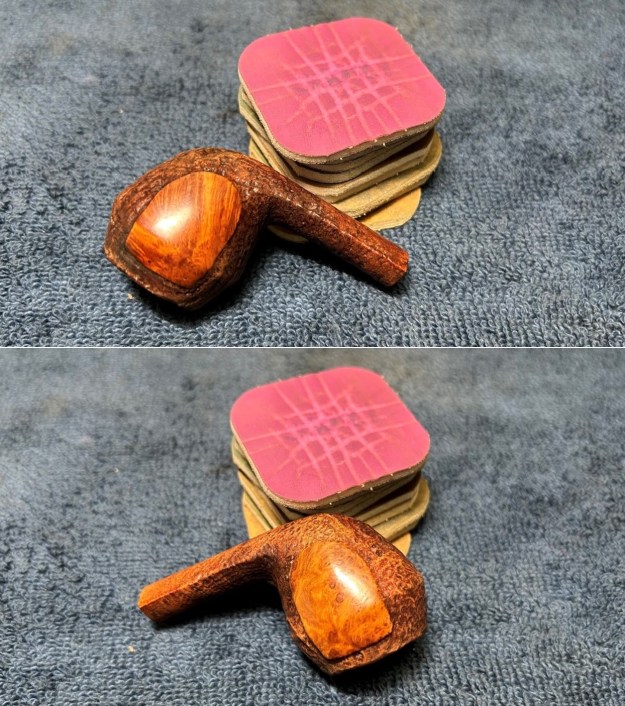
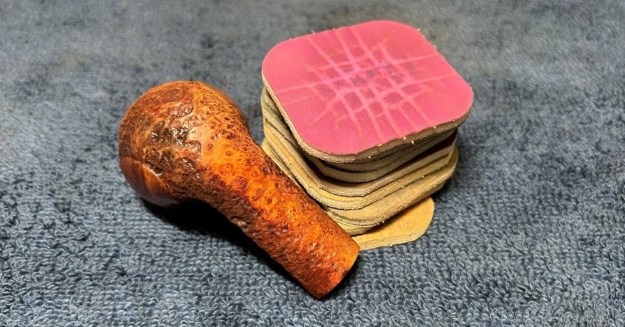
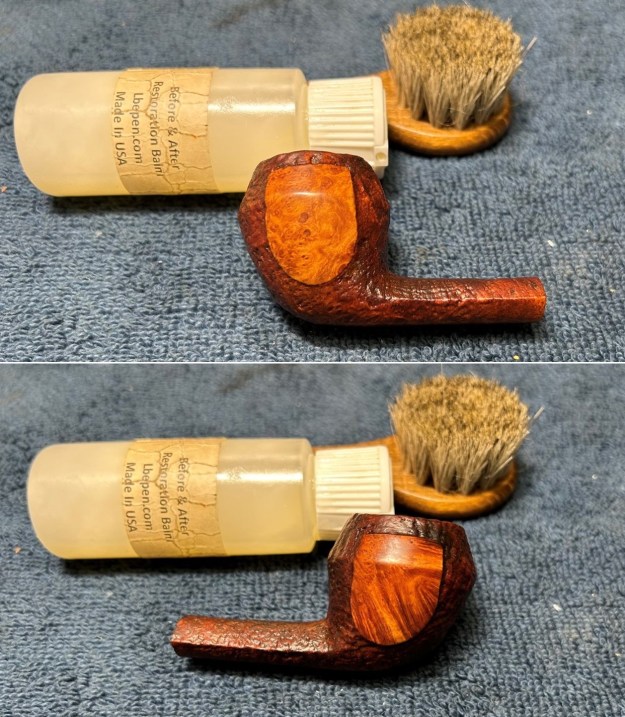
Cleaning Up a Charming Rossi Featherweight Acorn


by Kenneth Lieblich

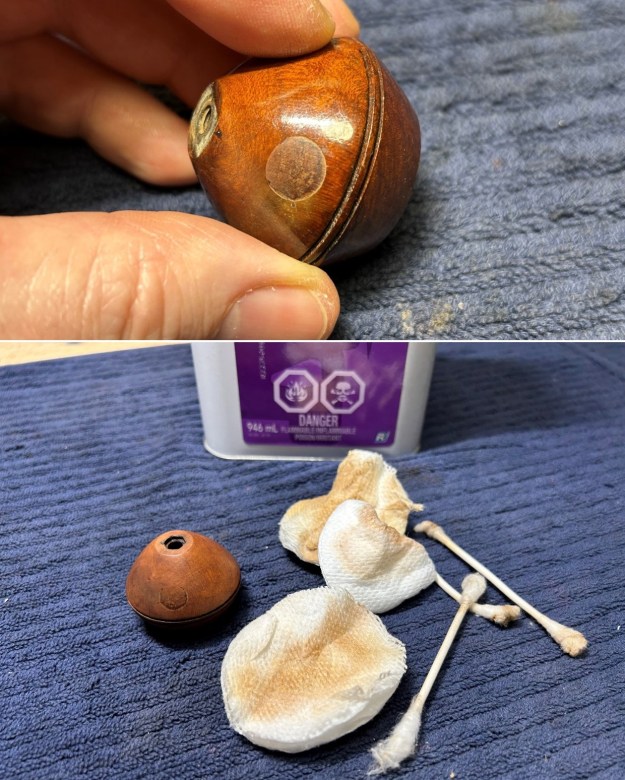
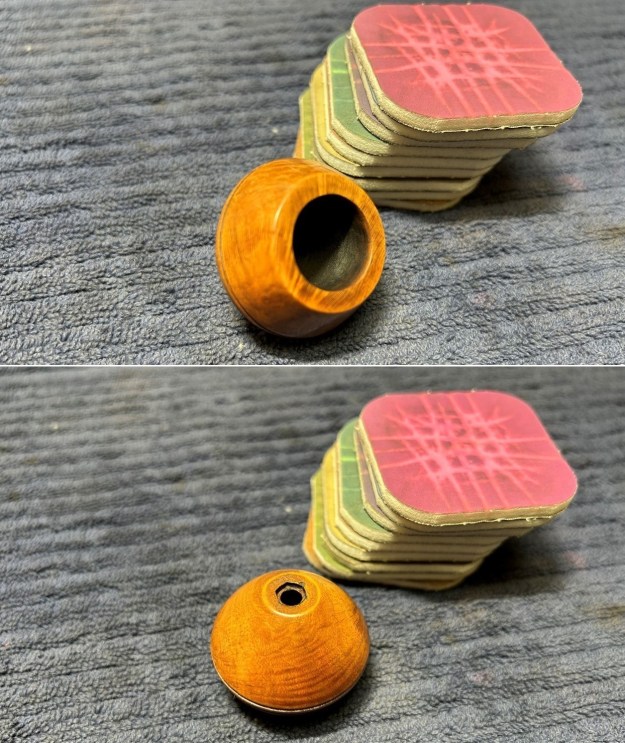
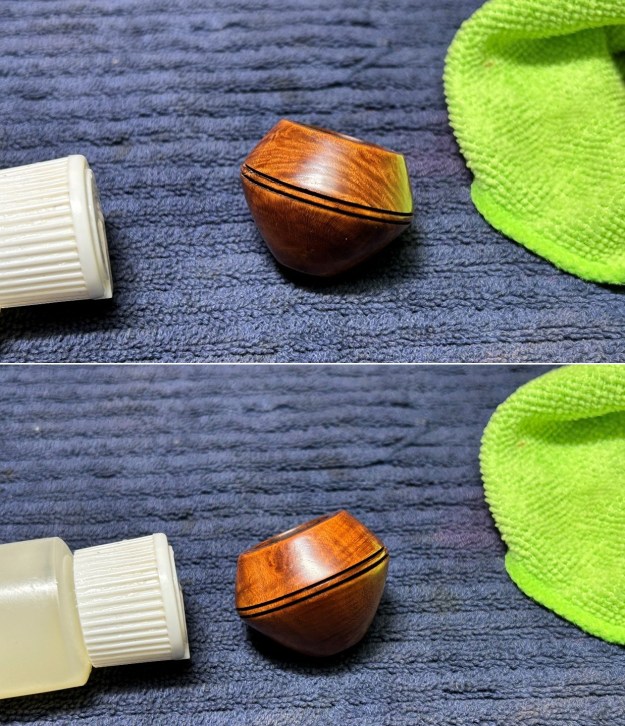
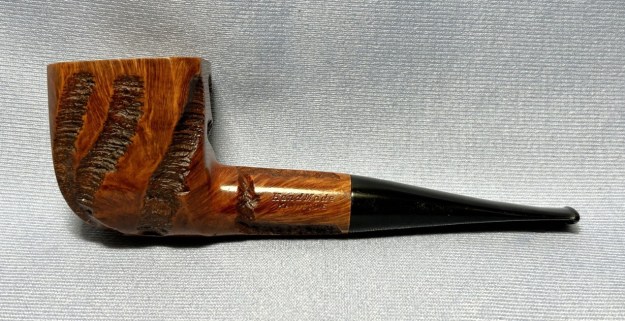
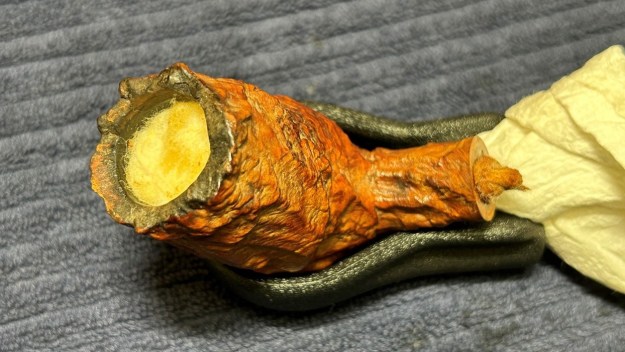
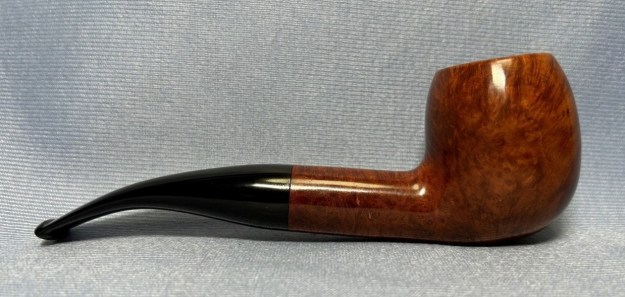
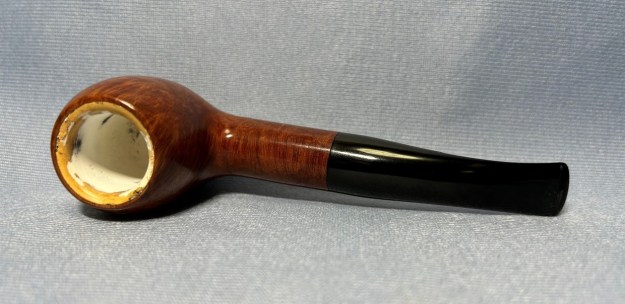
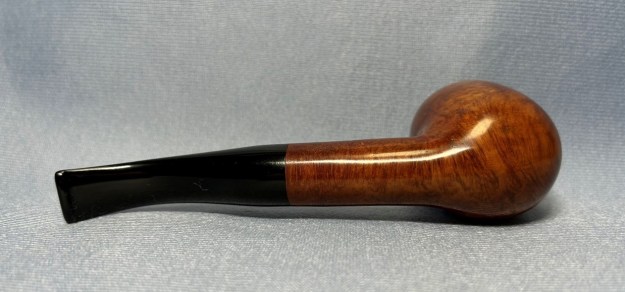
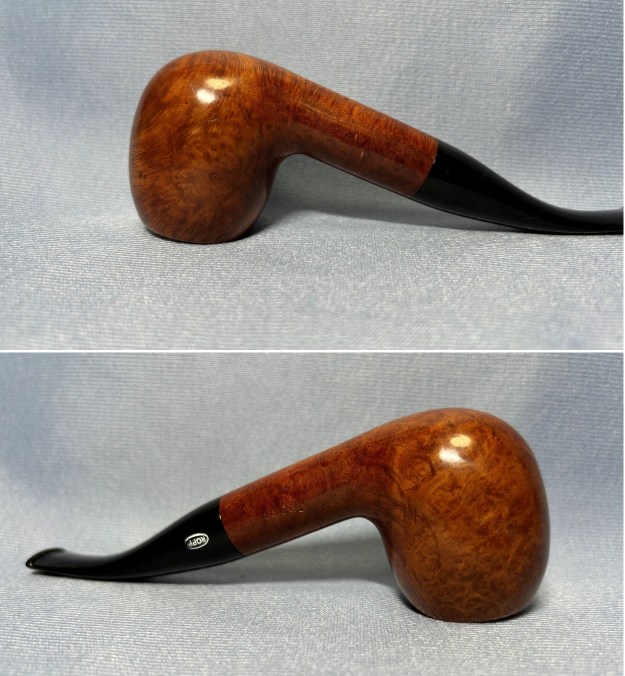
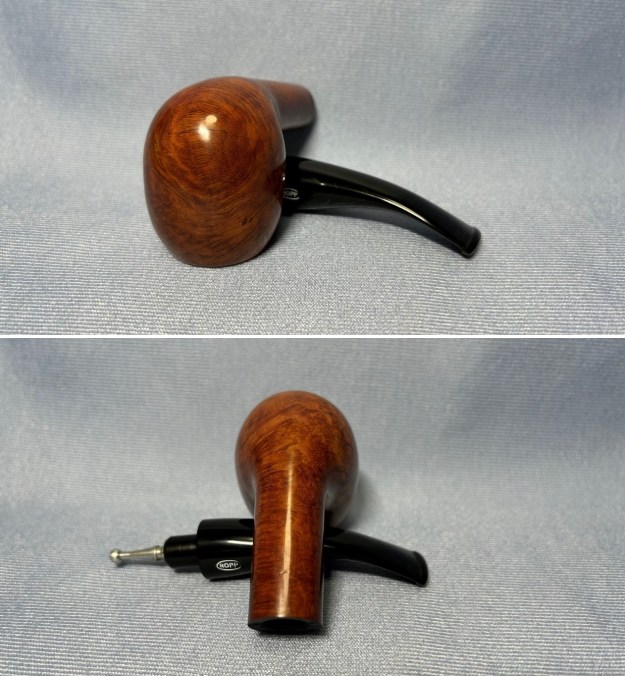
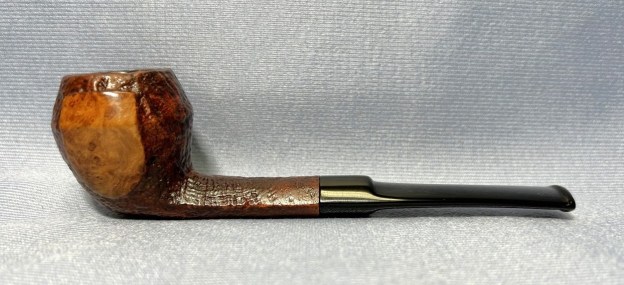
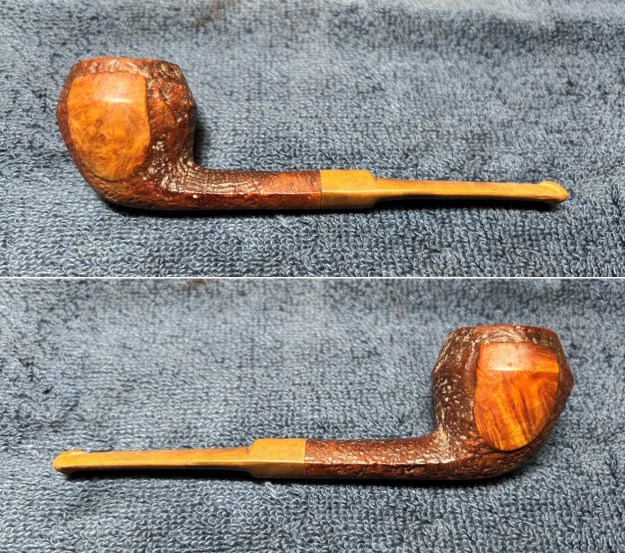
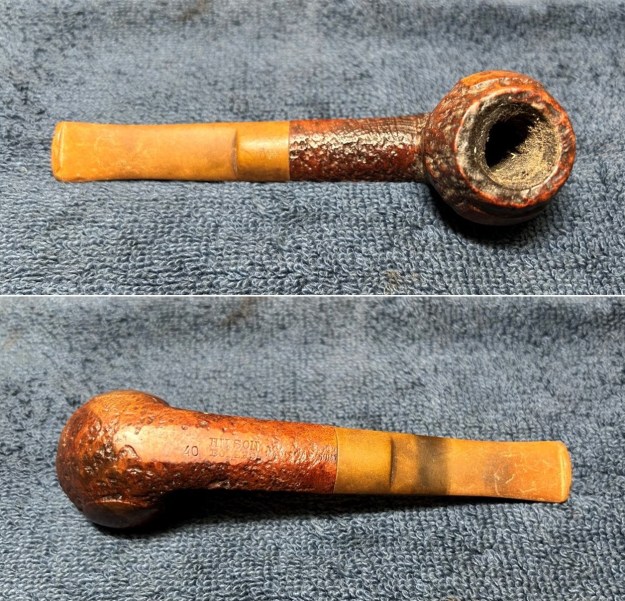
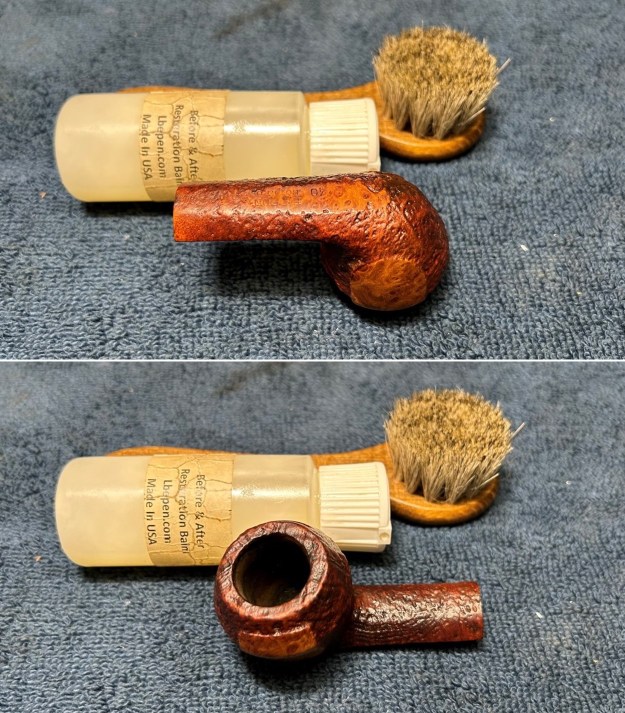
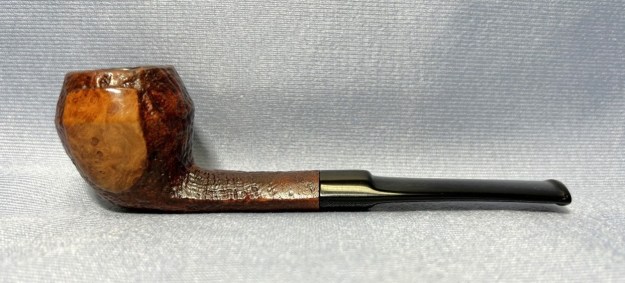
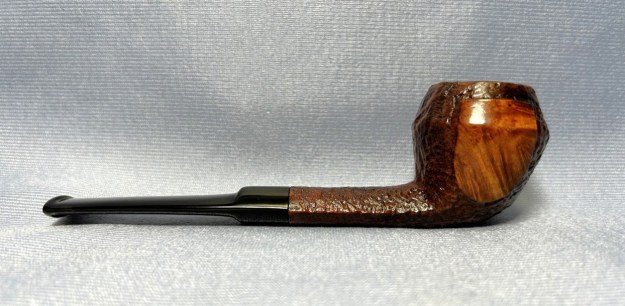
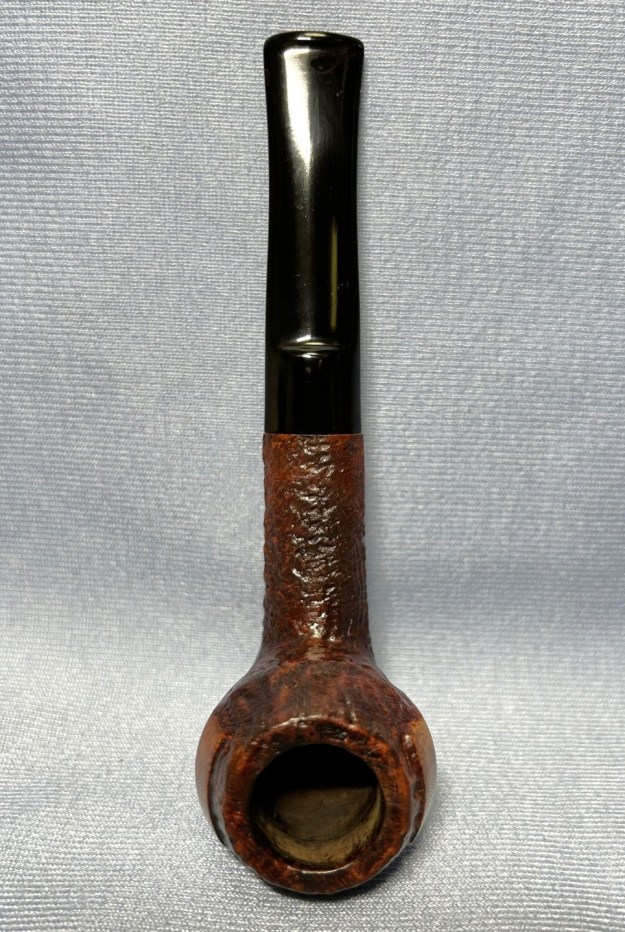
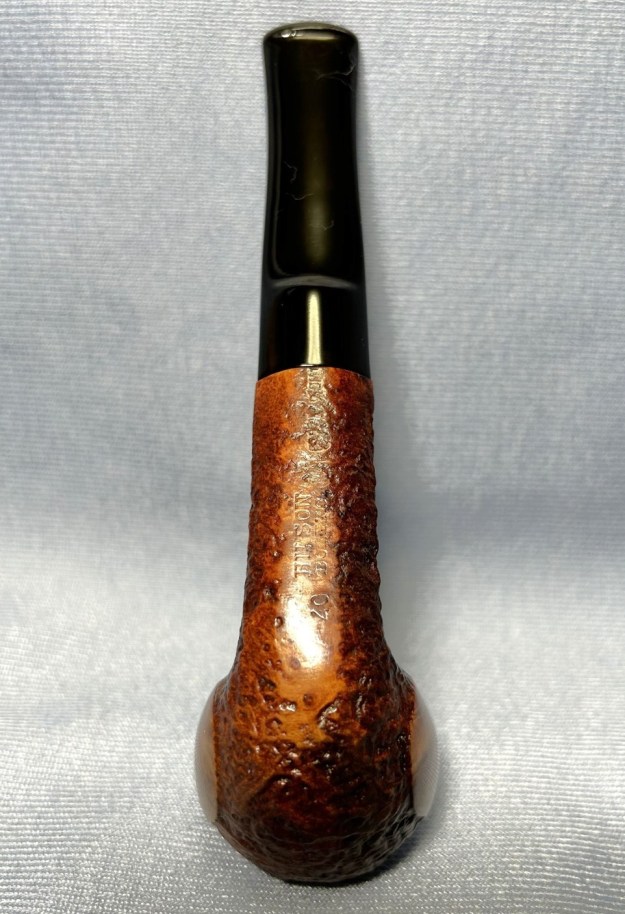
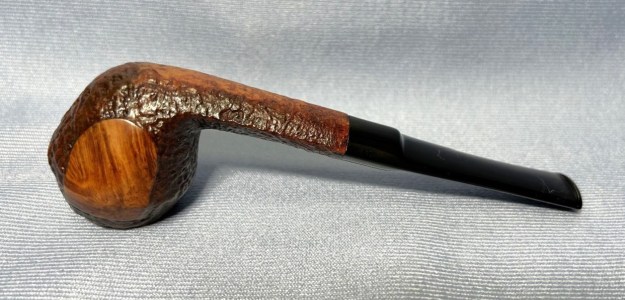
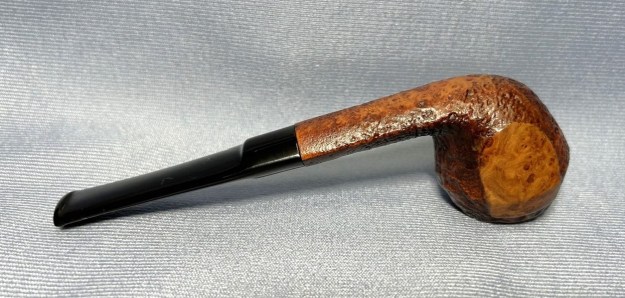
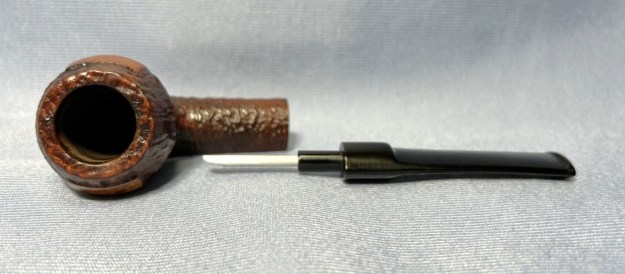
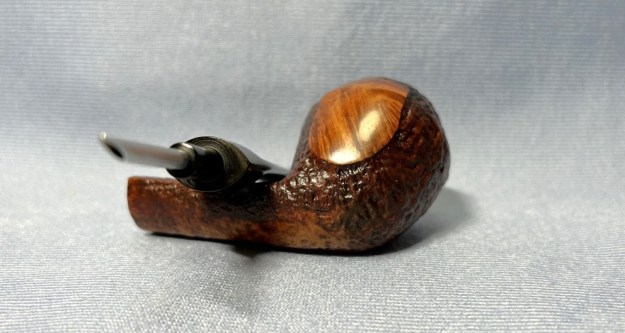
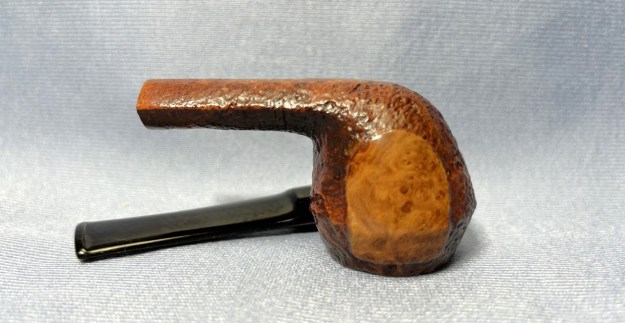
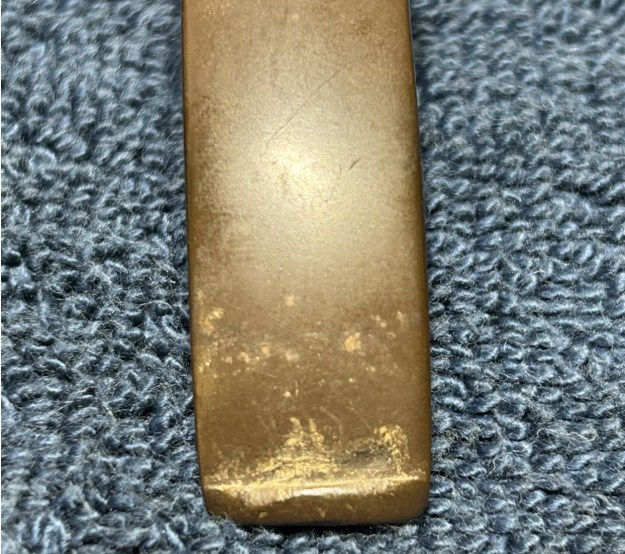
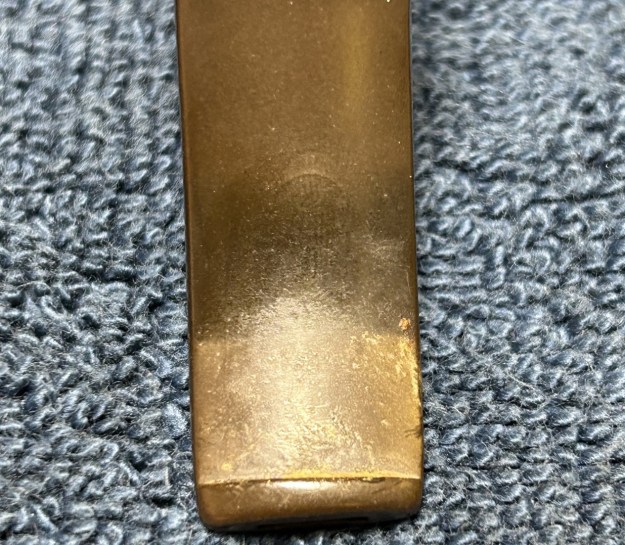
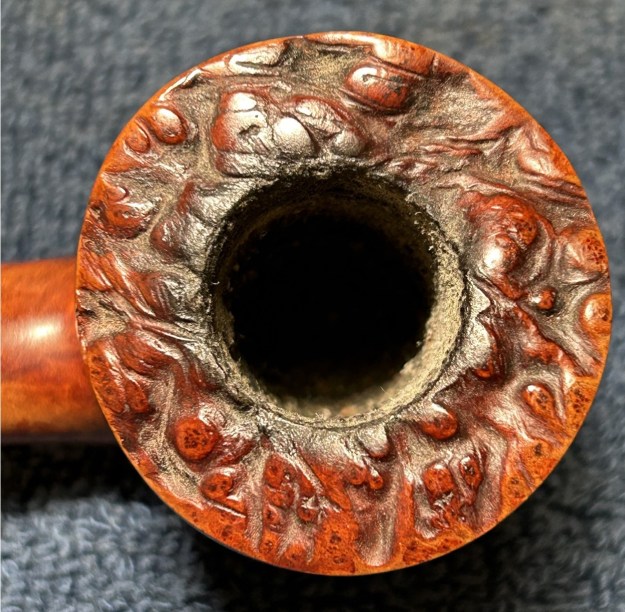
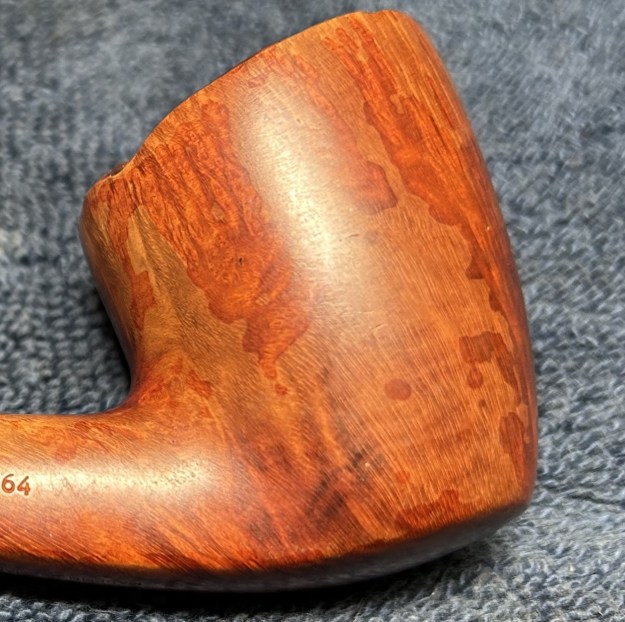
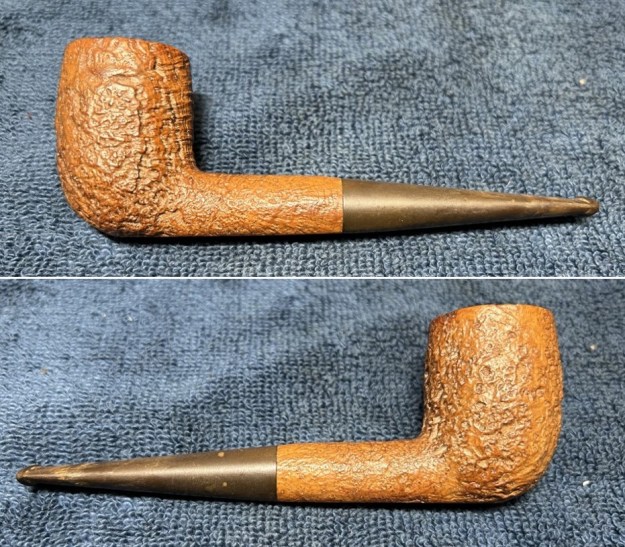
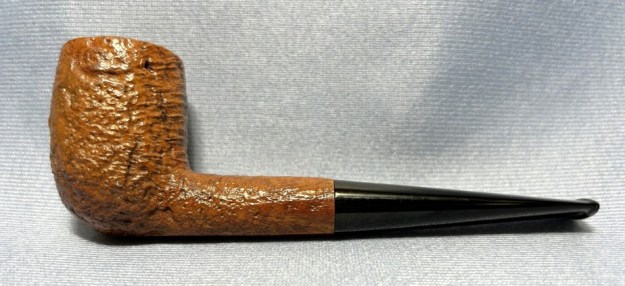
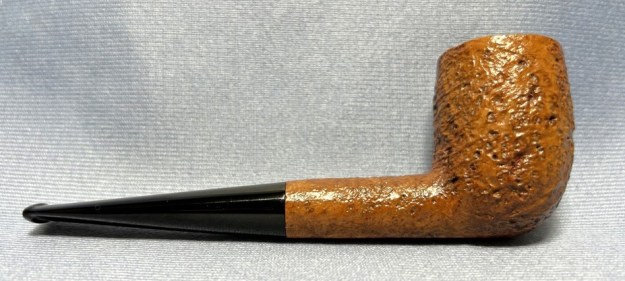
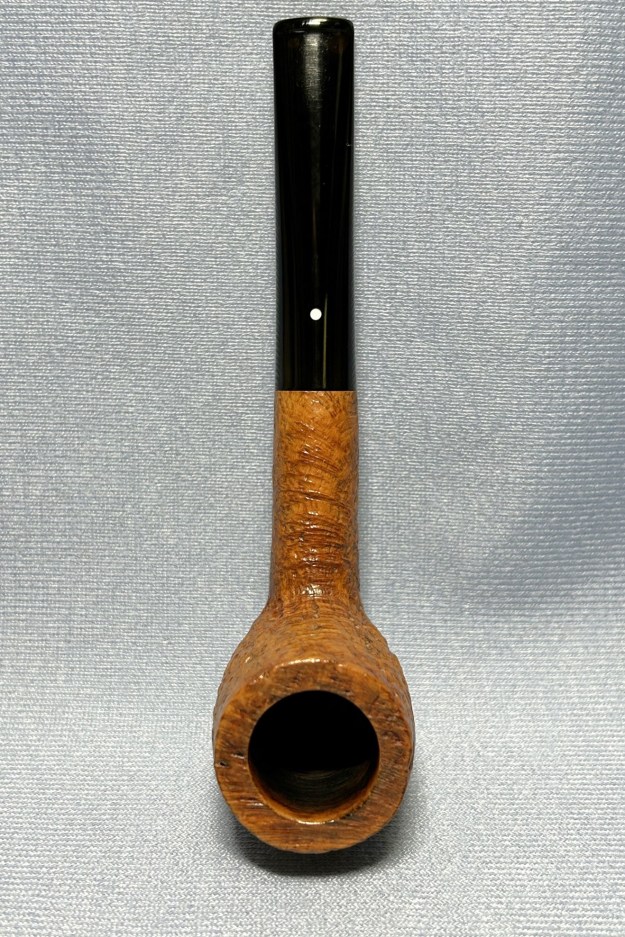
A fine gentleman from Washington contacted me recently and asked if I would restore some pipes for him. Of course, I was only too happy to oblige. This is the first of the four, and it’s the only one that doesn’t have major issues. This is a Rossi Featherweight 44P acorn pipe. It’s a pretty little pipe and I’m sure will serve its owner well. The markings on the pipe were clear and sharp. On the left-hand side of the shank, read Nino Rossi [over] 1886 – and to the right of that, a star. On the right side of the shank was the word Featherweight. On the underside of the shank, was 44P and, to the right of that, at 90 degrees, was the word Italy. On the stem was a stylized letter N. Rossi was founded by Ferdinando Rossi, in Italy, as Fabbrica di Pipe di Radica Rossi. The company dates from the mid-to-late 19th century. I would encourage you to read the Pipedia article on the company – there’s quite a bit of information: https://pipedia.org/wiki/Rossi. The article includes an important detail regarding this particular pipe:

From, approximatively, seventies, until 1985, Rossi pipes were marked with “ROSSI”, into an oval (sometimes there was also “ITALY” on the shank); on the stem, there was “ROSSI”. In these years, appeared the signature “Nino Rossi” (in cursive font): he was the last heir of the factory.

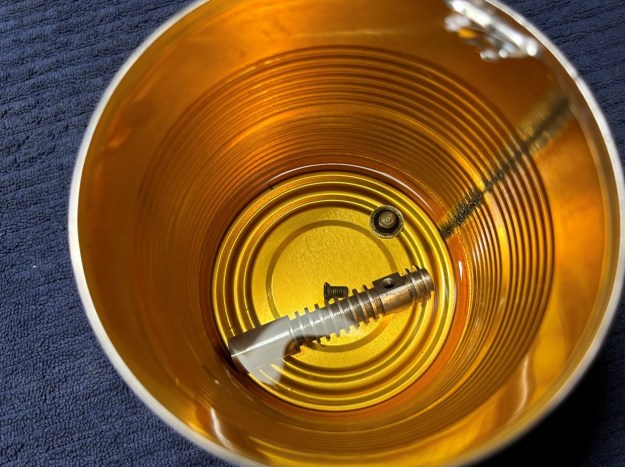
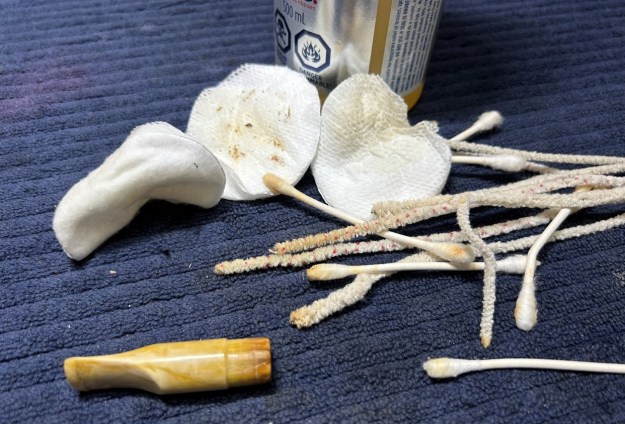
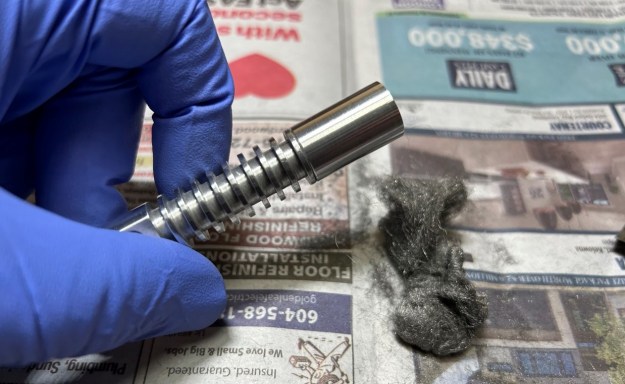
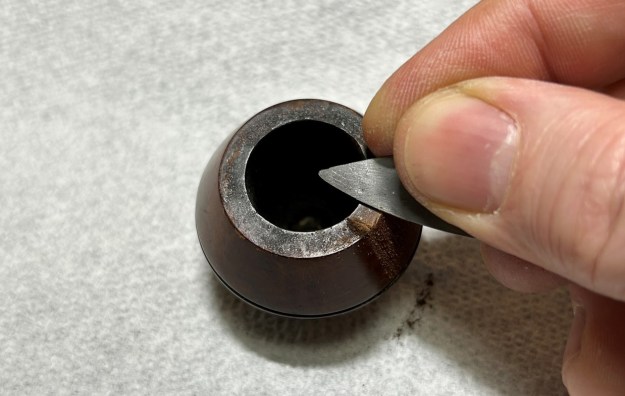
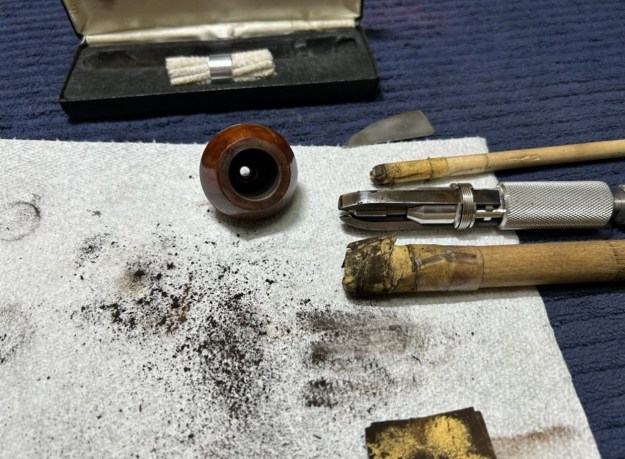
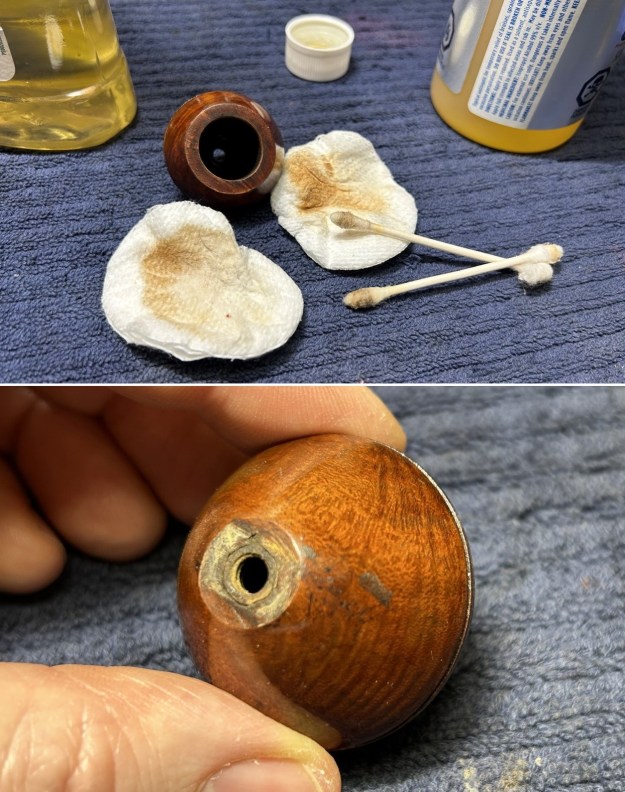
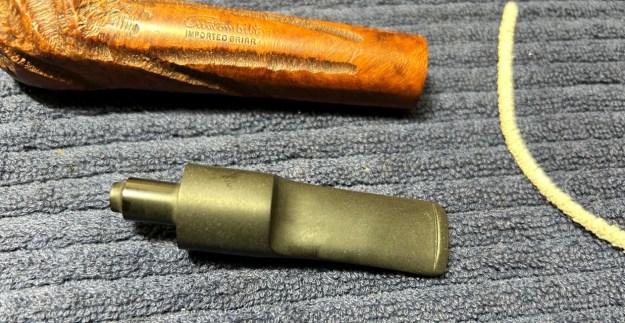
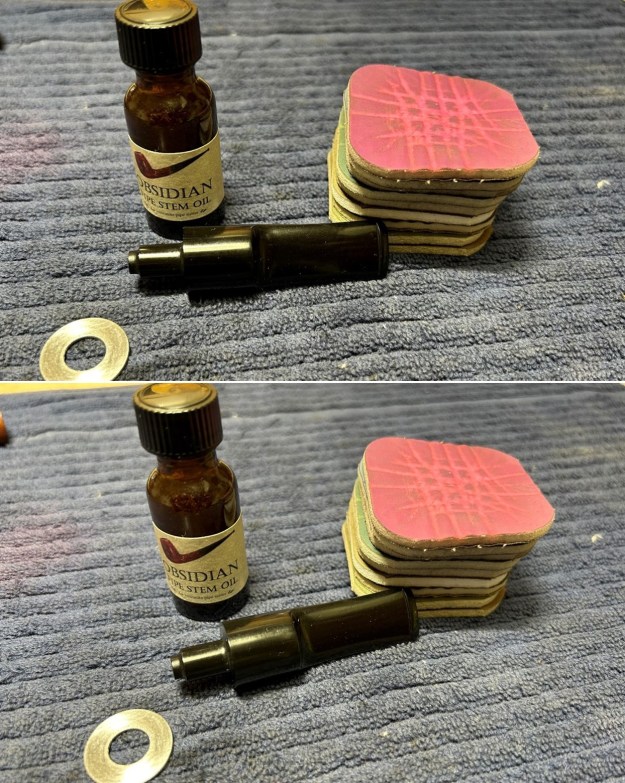
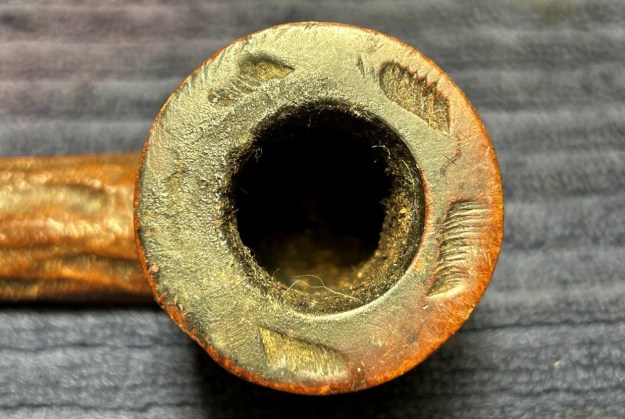
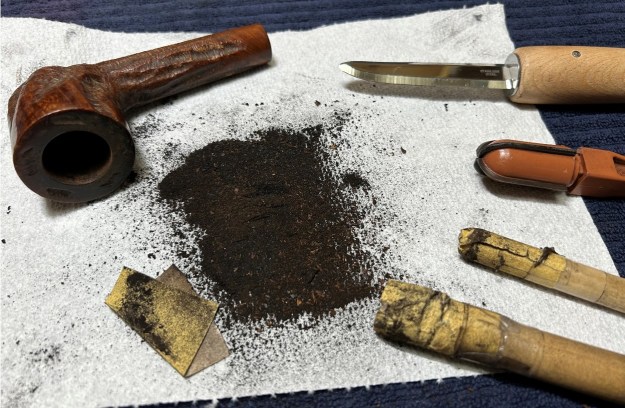
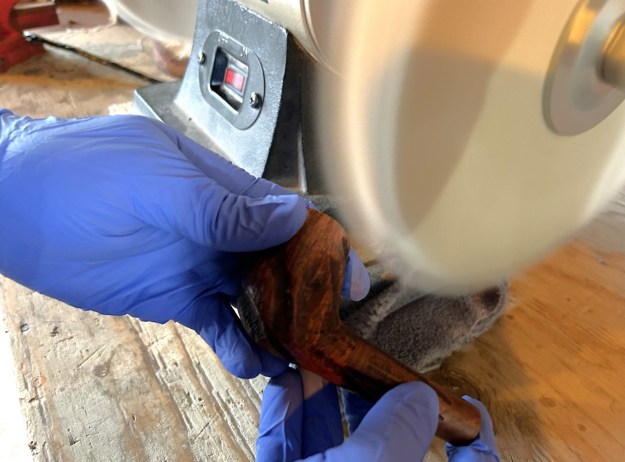
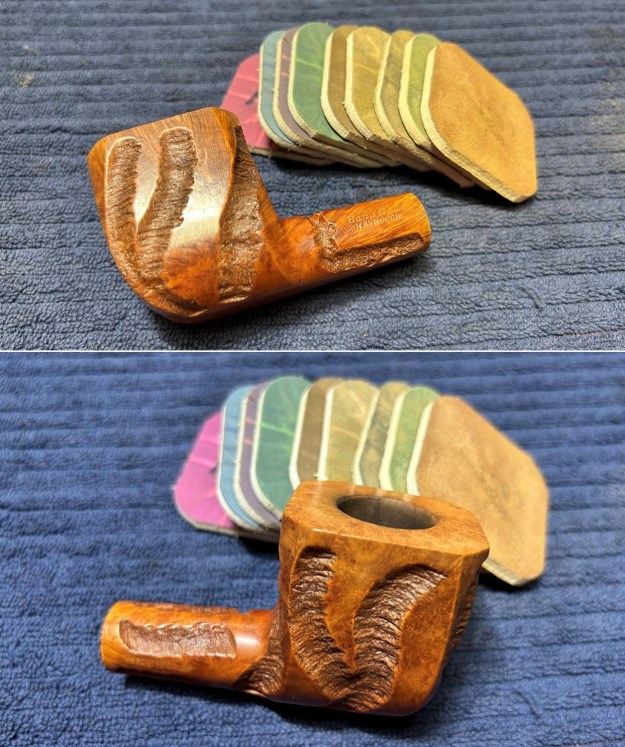
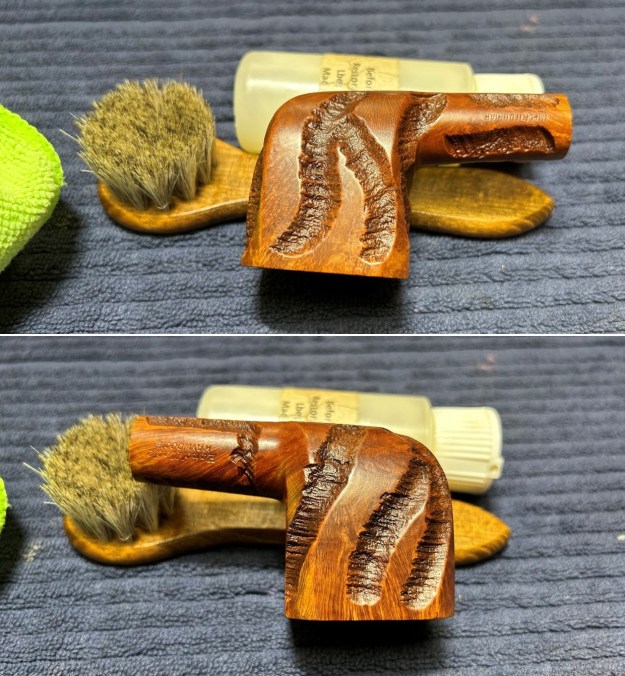
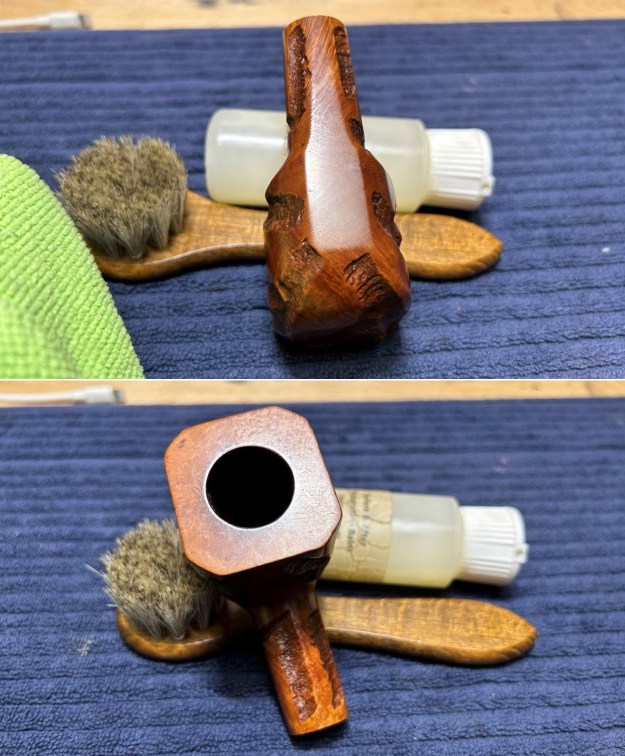
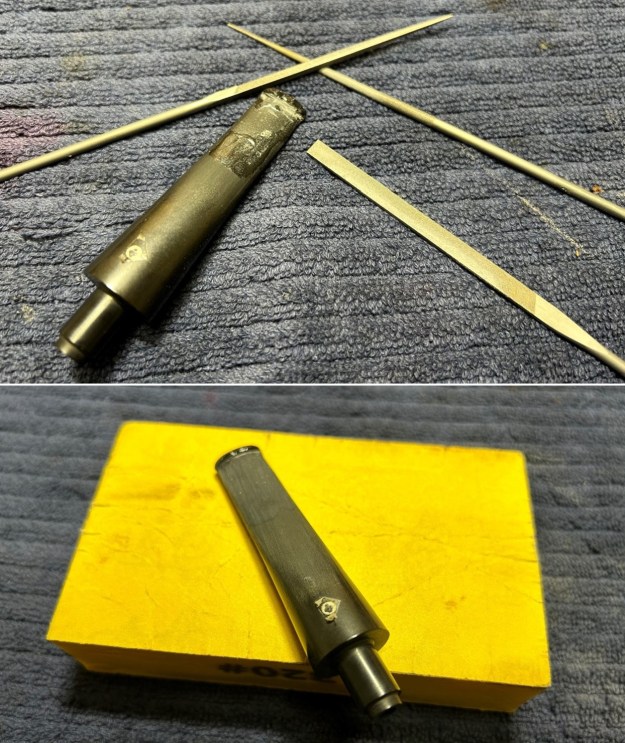
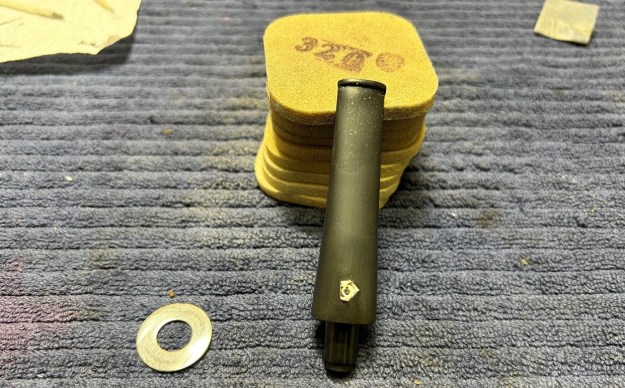
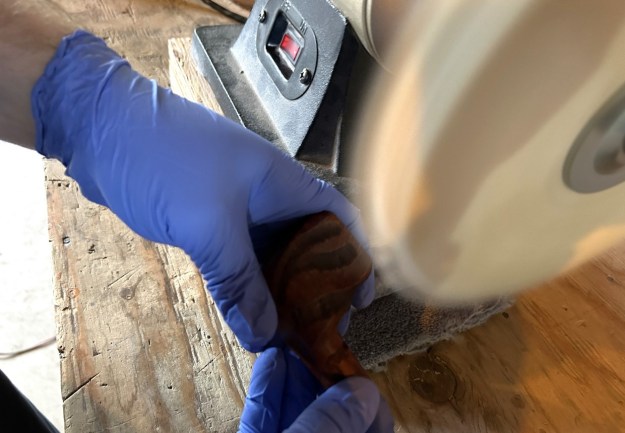
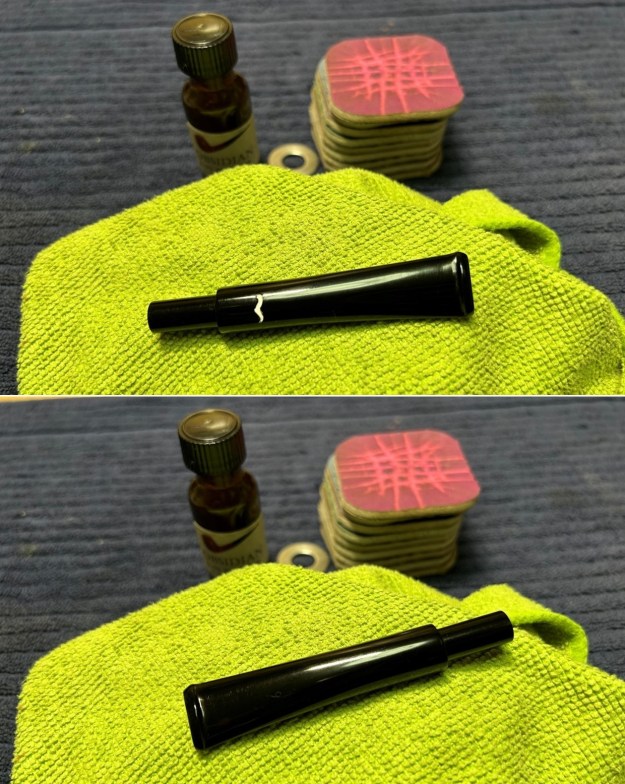
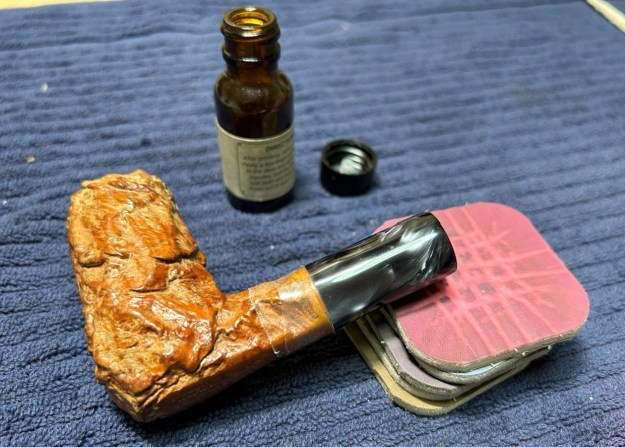
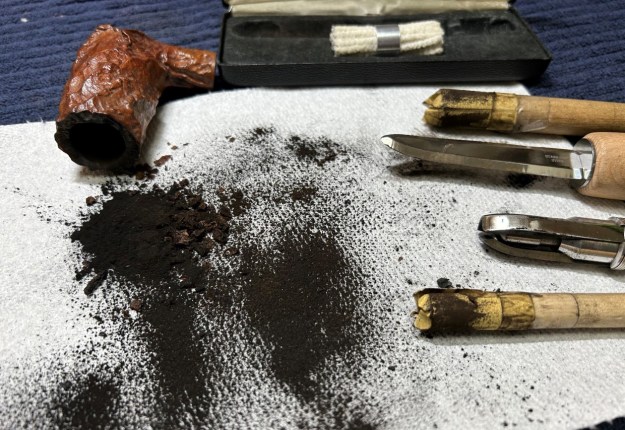
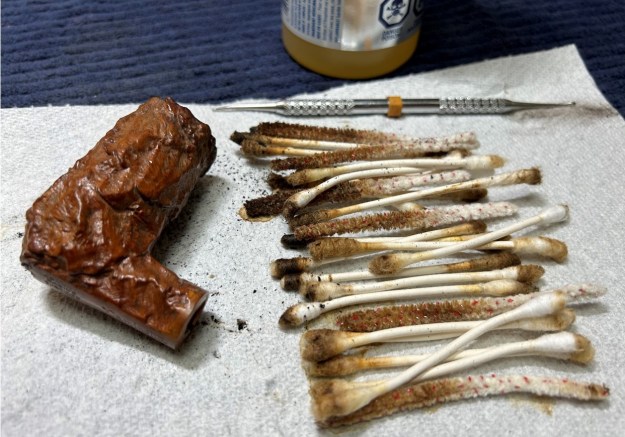
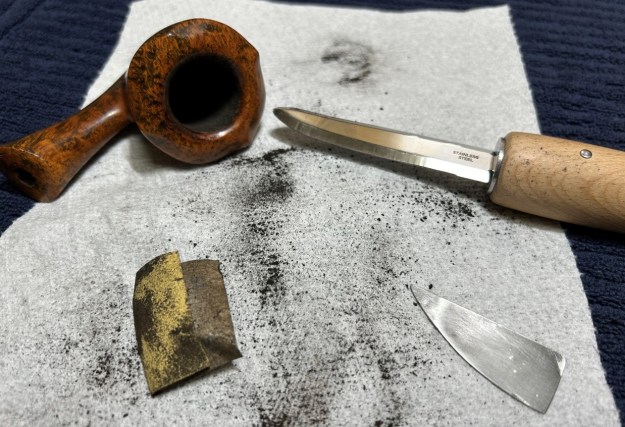
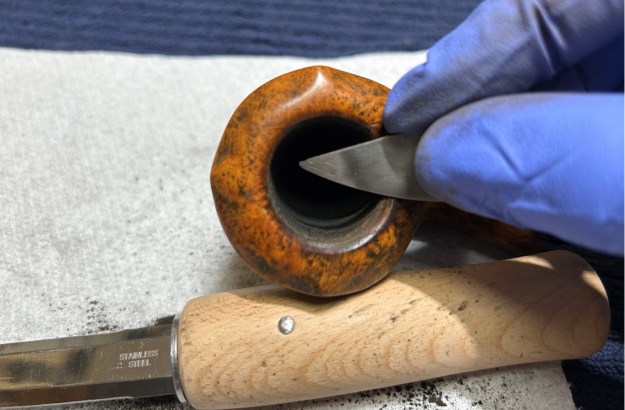
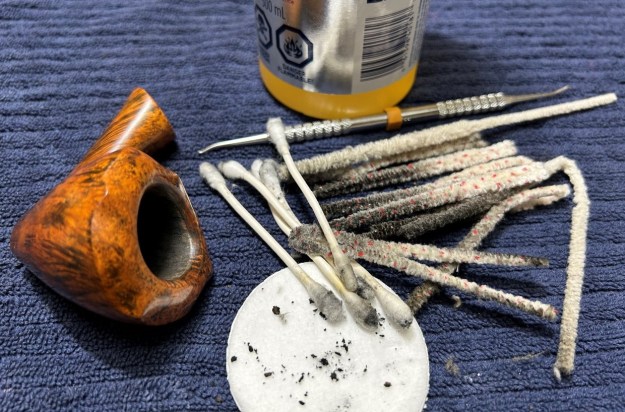
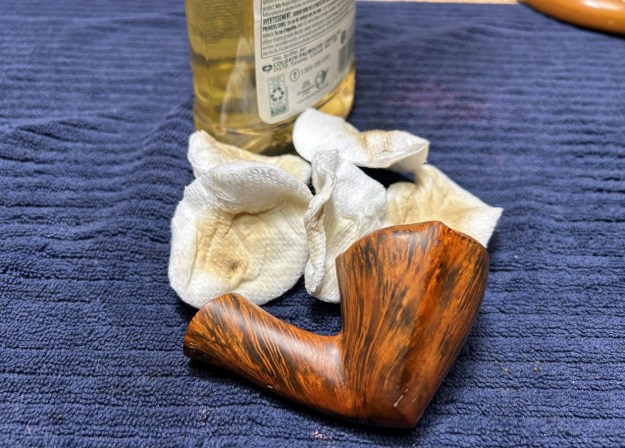
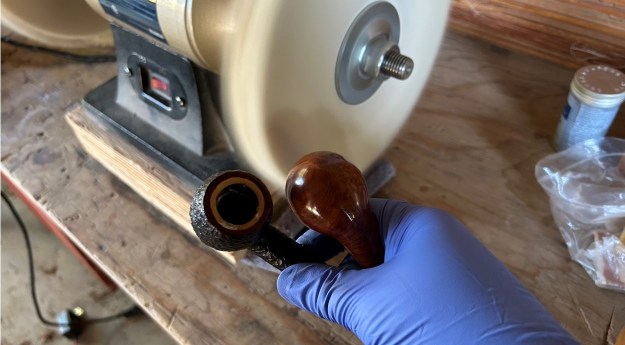
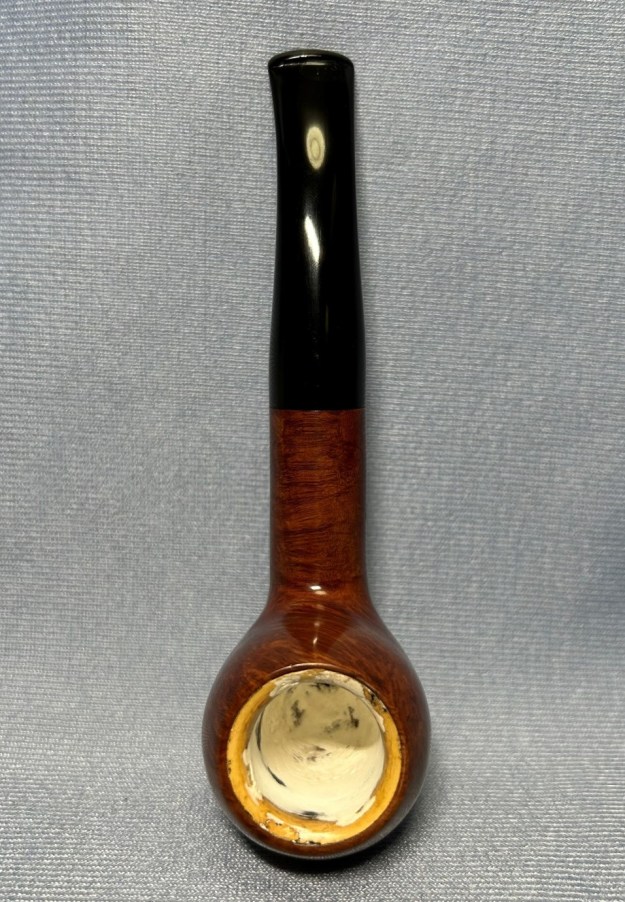
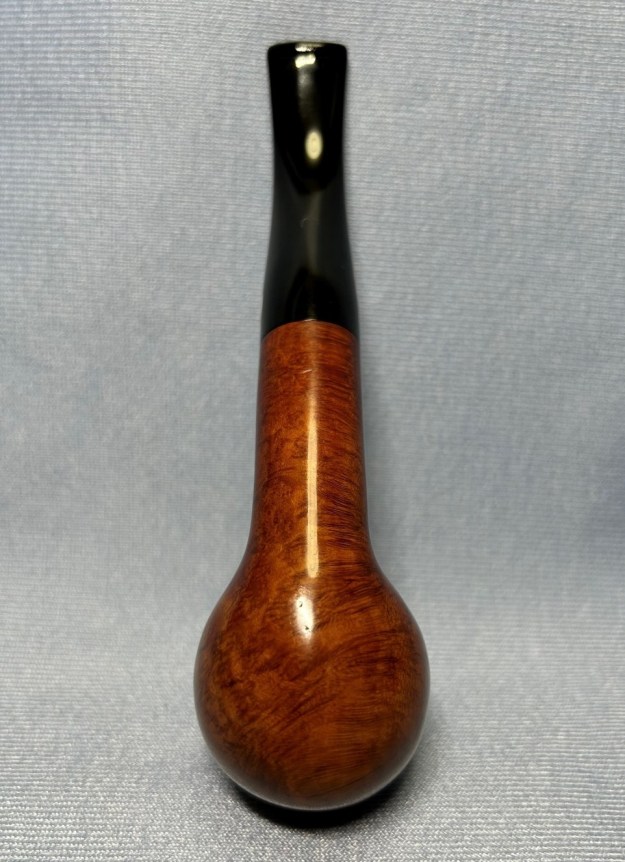
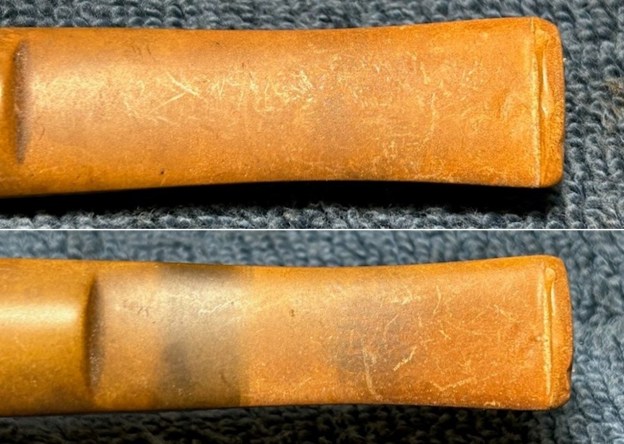
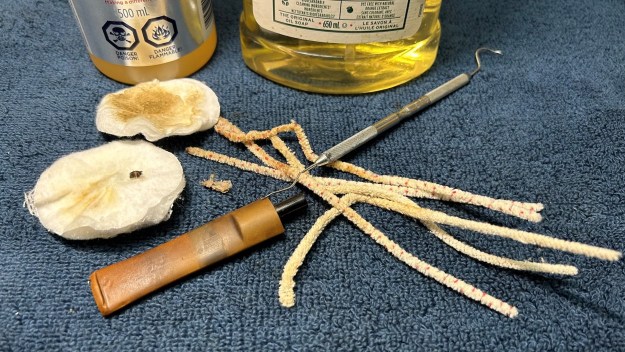
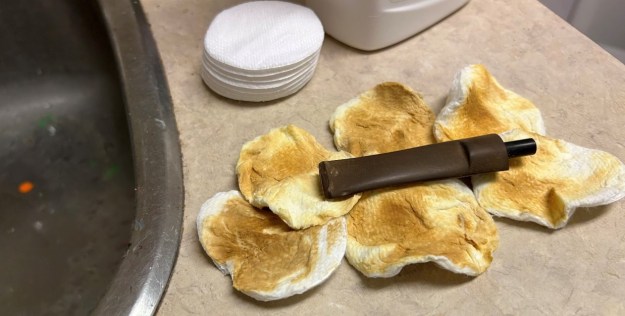
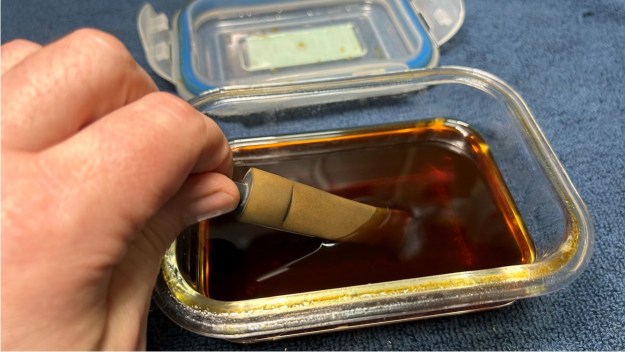
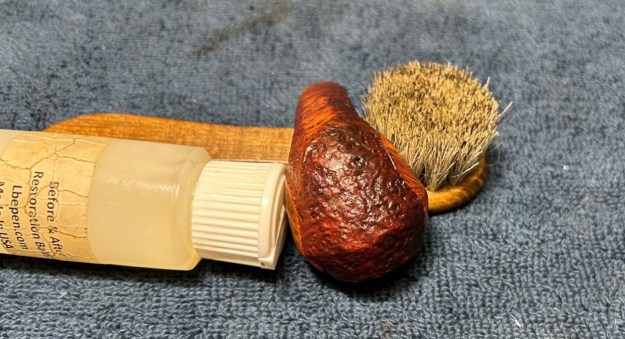
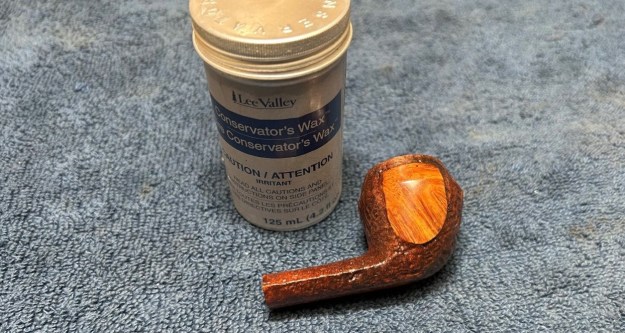
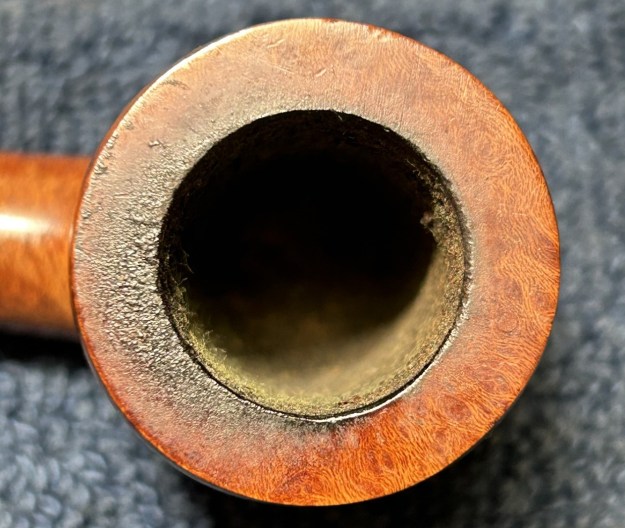
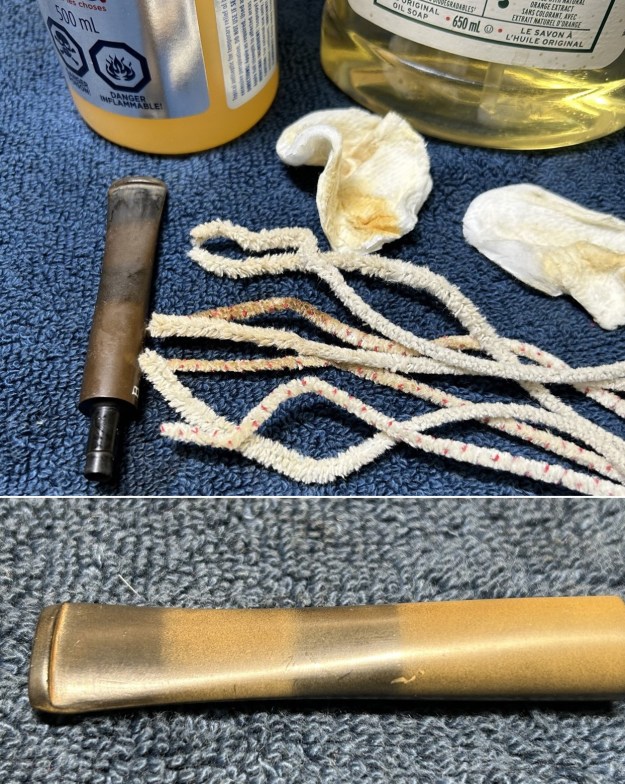
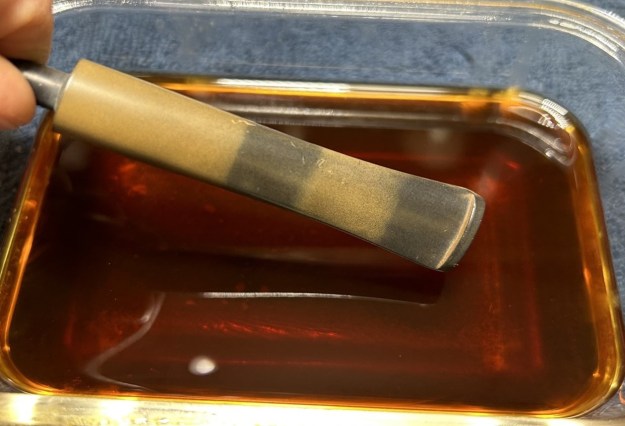
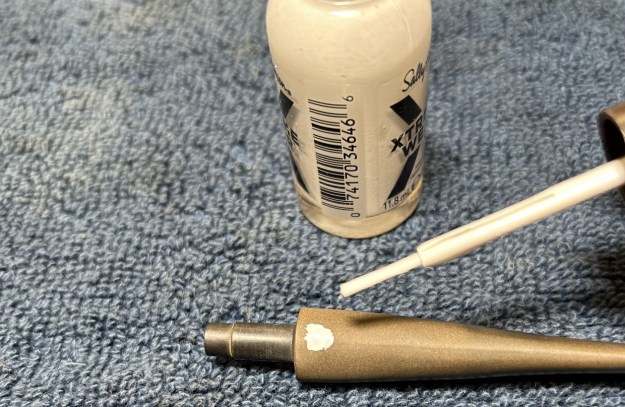
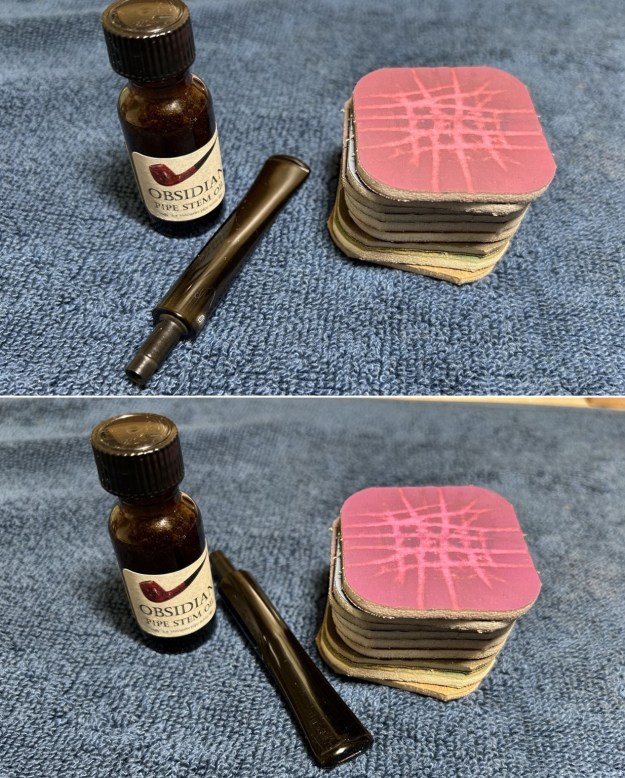
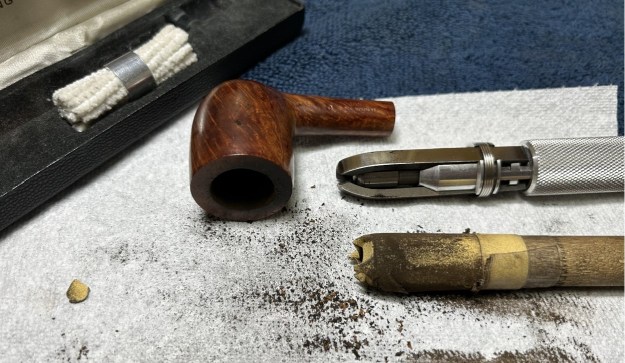
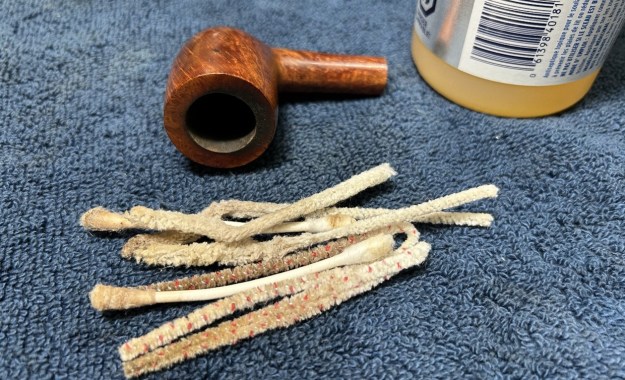
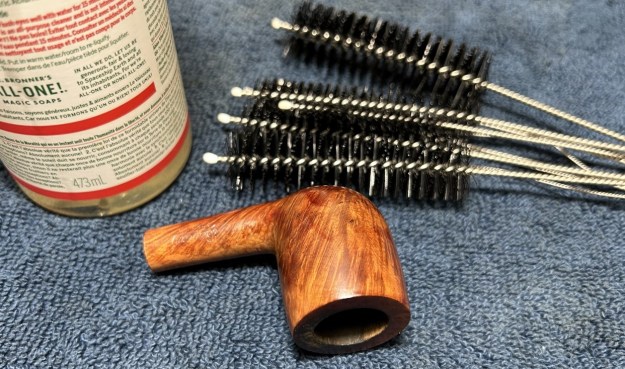
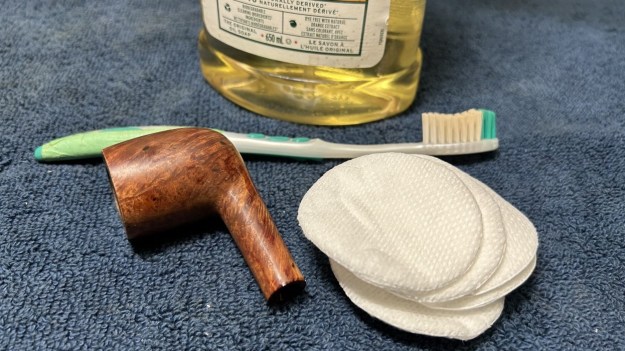
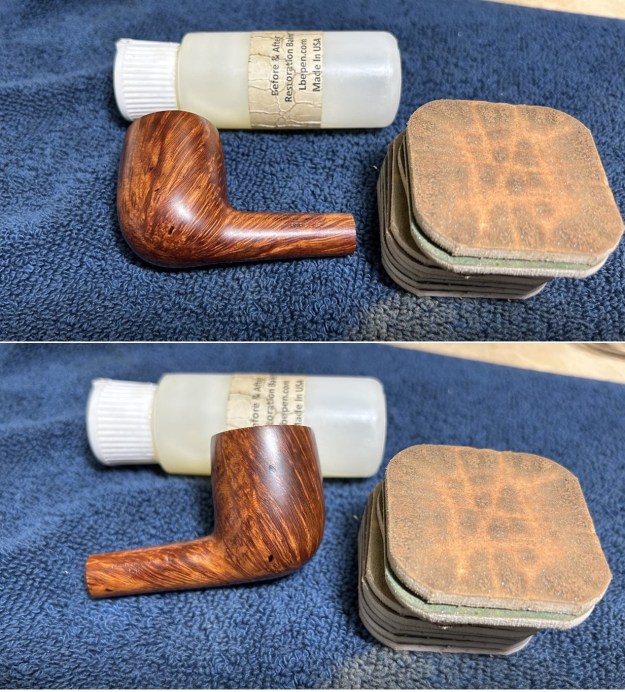
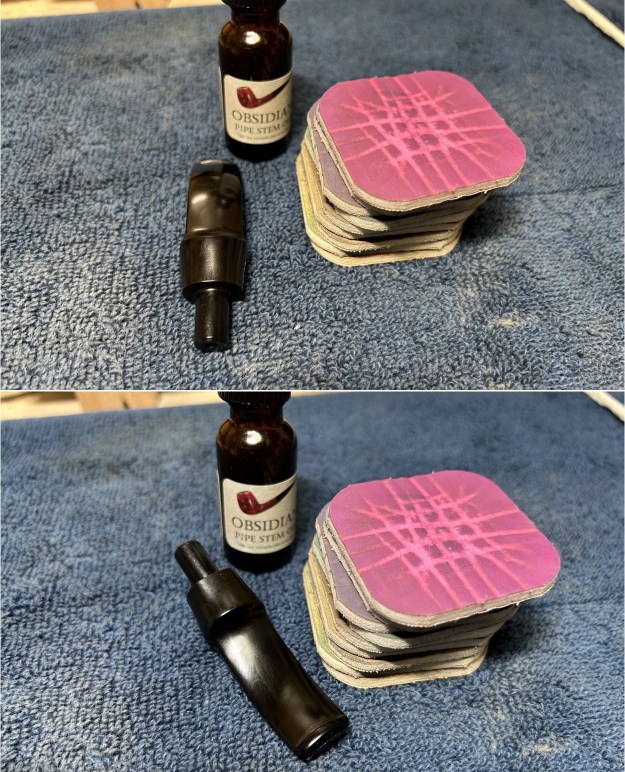
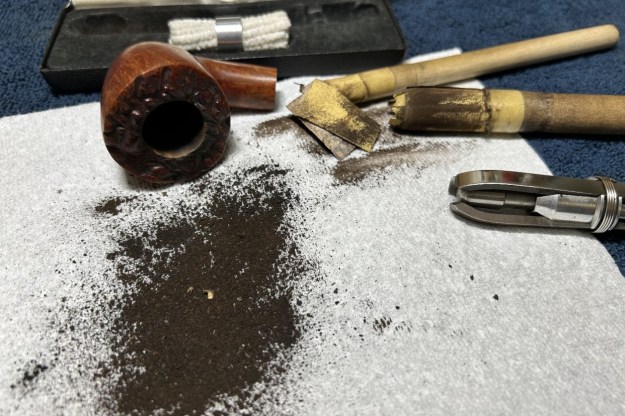
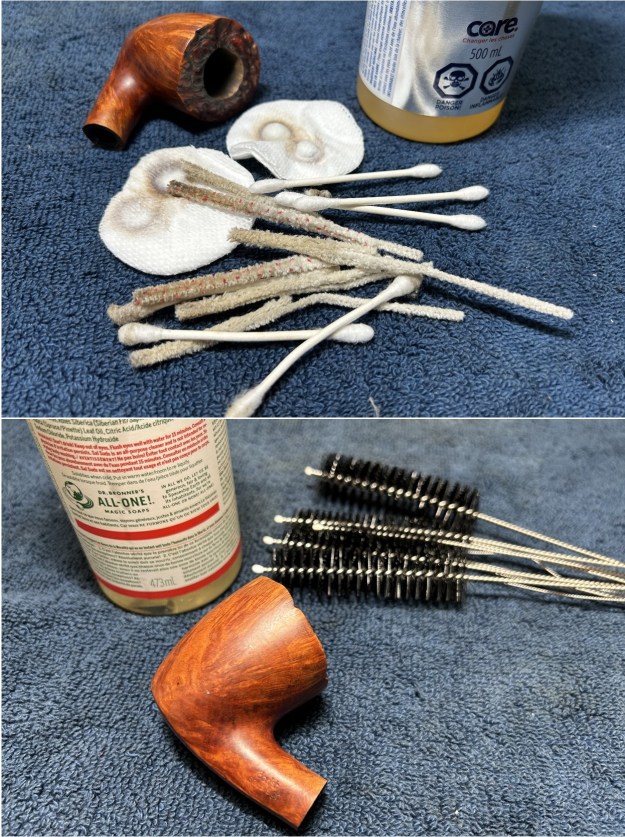
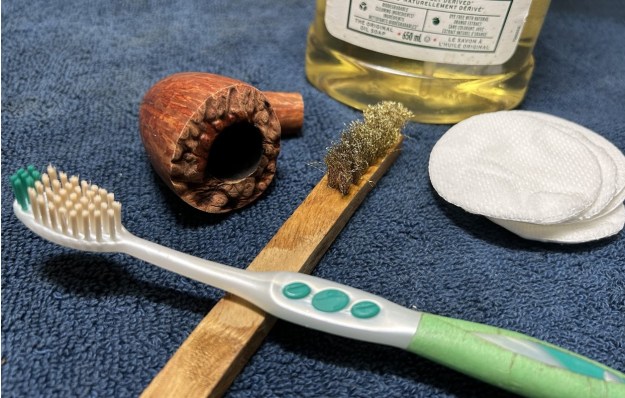
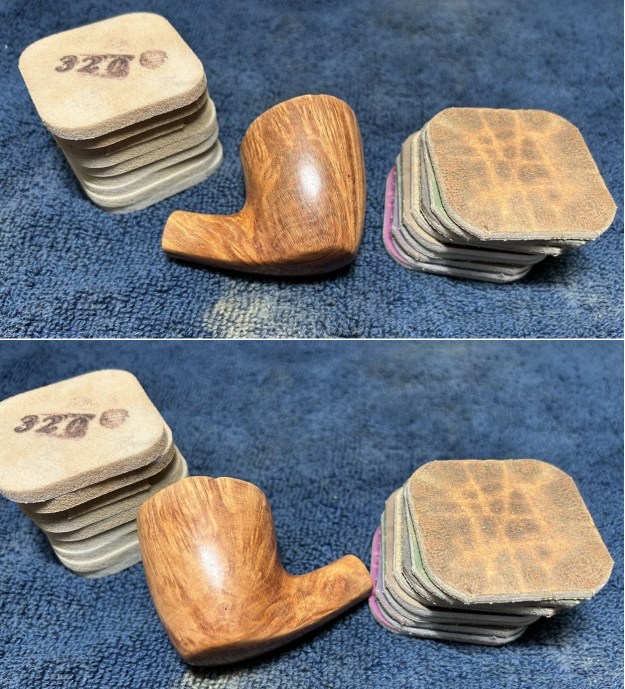
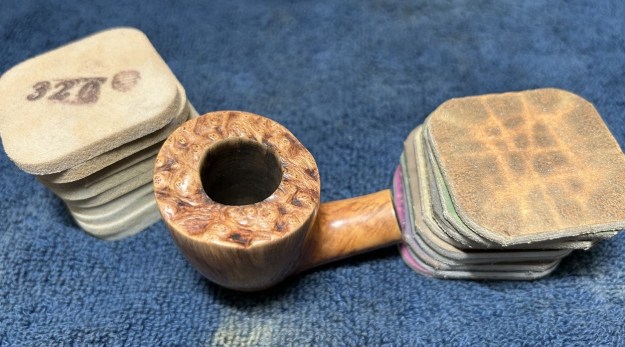
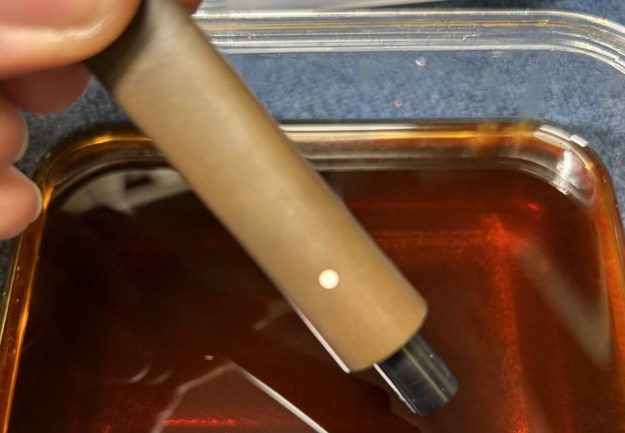
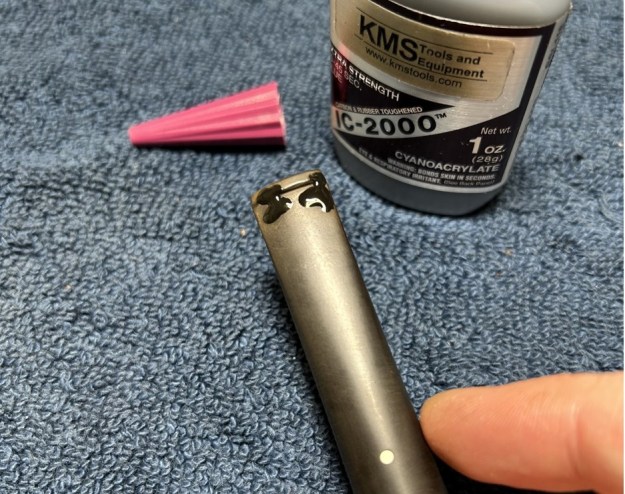
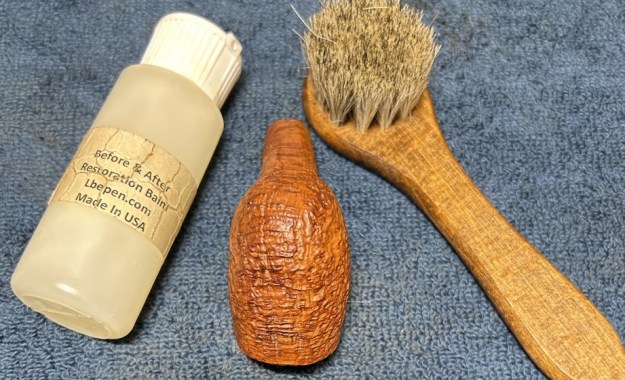
From this point, we can deduce that this pipe is from the 1970s or ‘80s. Here is in an image capture from Pipephil:The pipe was in good condition and just needed some TLC to bring it back to working order. The stem was a bit dirty and thoroughly oxidized. The stummel was in decent shape, but it had a strange residue on the rim. I’d need to look into that more closely. First, I cleaned out the inside of the stem with pipe, cleaners and some lemon infused 99% isopropyl alcohol. It was pretty dirty, but not too terrible. I was more concerned about the oxidation, which was pretty heavy. I scrubbed it down with some SoftScrub cleanser and then tossed it in my deoxidizing fluid to sit overnight. The next day, I managed to scrub off even more oxidation with more SoftScrub. Before sanding the stem, I took out some nail polish and made sure to add it to the stylized N on the left side of the stem. I let that dry before moving on.I also repaired a few small nicks in the stem with some black cyanoacrylate adhesive and let it cure. That done, I proceeded to sand down the stem with my nine micromesh sanding pads. I also used some pipe stem oil during the sanding to bring out some extra lustre and beautify the stem. Just like the stem, I cleaned out the insides of the stummel with pipe, cleaners, cotton swabs, and alcohol. Took a bit of work, but I got it clean. In order to sort out the stuff stuck to the rim, I took a piece of machine metal and gently scraped it away, not wanting to do any more invasive work than I needed to. It came away reasonably easily and I carried on. I then set it up for a de-ghosting session. I put some cotton balls in the bowl and in the shank and saturated them with 99% isopropyl alcohol. I let that sit overnight to allow all of the lingering smells and stains leach out into the cotton. After that it was much improved. I wiped it down with some Murphy’s and finished up by scrubbing the insides with soap, and some tube brushes. I sanded down the stummel with my micromesh pads to make it smooth and lovely. Of course, I added some of my restoration balm to the wood and let it sit for 20 minutes or so. BUT, there was a bit of a problem. The sanding and application of balm revealed some mottling on the surface of the briar. Clearly, there was some remnants of an old lacquer or shellac. It looked awful and I couldn’t let it be. I couldn’t get rid of it with any solvents, so, unfortunately, I had to re-sand the whole thing. That worked and it looked much improved.Finally, I applied some another batch of Before & After Restoration Balm and buffed it with a microfiber cloth. This balm does beautiful things to the wood and really generates a beautiful shine. I then took the pipe to my bench polisher and buffed it with White Diamond and a few coats of carnauba wax. Wow – the pipe really looks lovely.This Nino Rossi Featherweight 44P acorn will suit my friend in Washington very well and I’m sure that he will appreciate smoking it for many years to come. I hope you enjoyed reading the story of this pipe as much I as I did restoring it. If you are interested in more of my work, please follow me here on Steve’s website or email me directly at kenneth@knightsofthepipe.com. Thank you very much for reading and, as always, I welcome and encourage your comments.
Beautifying a Bountiful Bullmoose


Blog by Kenneth Lieblich

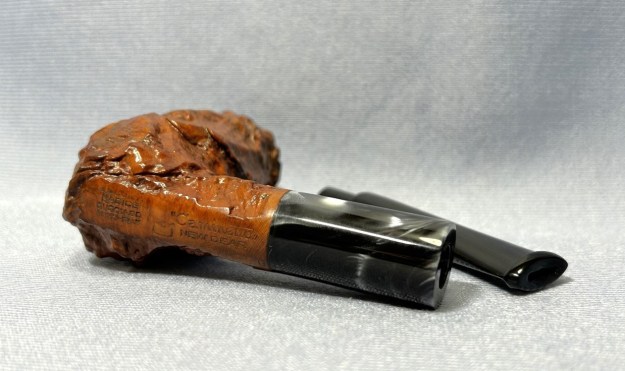
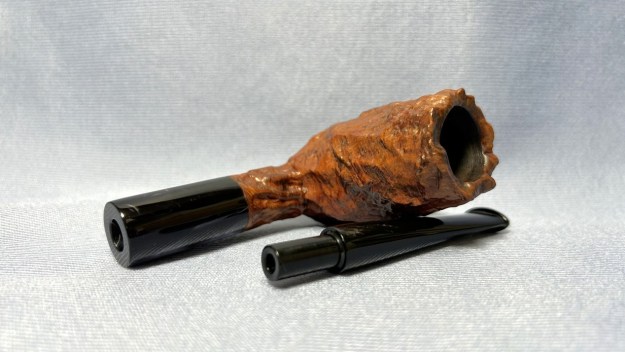
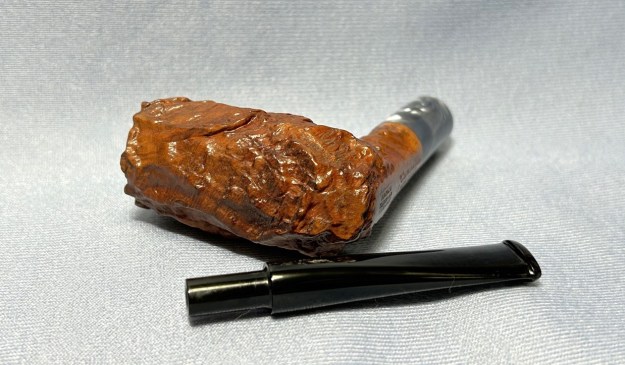
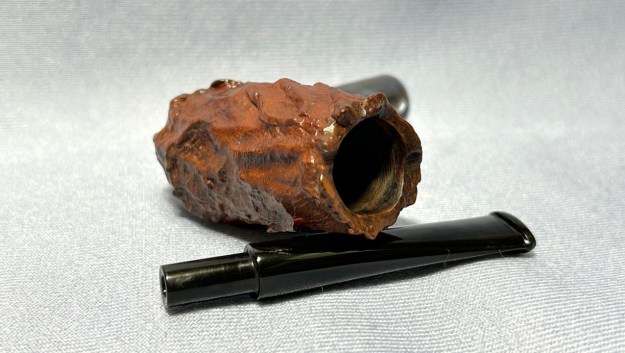
This is the third pipe I’m restoring for my cousin – and in many ways, this is the most interesting. Allow me to introduce the Federal Bullmoose. It is a big, chunky pipe with a thousand fills in it, but looks like I could be a great smoker. It has a charming acrylic stem and feels terrific. The markings on the pipe come from the underside of the shank. There, it reads Federal [over] Ogunquit, ME. Further to the right is the word Italy, indicating where the briar is from. These markings lead me to believe that the pipe comes from the Federal Cigar company, formerly of Ogunquit, Maine. The company has been around for more than 100 years, and their three current locations are in New Hampshire: Epping, Dover, and Portsmouth – which is just a stone’s throw from Ogunquit. It seems reasonable to assume that this pipe is from that establishment.The stem was first on my list. Acrylic stems are always a bugbear of mine. No matter how much one scrubs, they never lose the tobacco colour inside. Ah well, it is what it is. I cleaned out the inside with pipe cleaners and isopropyl alcohol. It was pretty dirty, and I went through a good number of pipe cleaners. I also tried using some cleanser on the inside and that did help. I gave it a thorough rinse and moved on. There were a few tooth marks in the stem, so I filled them in with some clear cyanoacrylate adhesive. After allowing that to cure, I sanded the glue down with some sandpaper, then the whole stem with my Micromesh pads. For the last few pads, I also added some pipe stem oil. On to the stummel, and there was some work to be done here! Look at all those fills! But before that, I needed to get the darn thing clean. I used a dental tool to mine some chunks of gunk out of the mortise – yuck! Just like the stem, I also used pipe cleaners, cotton swabs and alcohol to scrub the insides. It was quite dirty – much cotton was expended.

I decided to de-ghost the pipe in order to remove any lingering smells of the past. I thrust cotton balls into the bowl and the shank and saturated them with 99% isopropyl alcohol. I let the stummel sit for a while. This caused any remaining oils, tars and smells to leach out into the cotton. The bowl was nice and clean after this.I used cotton rounds and some Murphy’s Oil Soap to scrub the outside of the stummel. You’ll notice in the photos that my cousin added some superglue to many of the fills before I got my hands on it. I actually removed some of the glue and redid some of the repairs. As usual, I used a mix of super glue and briar dust. I filled in everything that needed it and then it looked like a pipe with measles. The bowl had already been reamed, but I gave it a quick sanding anyway, as I needed to inspect the integrity of the briar walls. There were quite a few heat fissures and I would need to address them. At this point, I decided to mix up some pipe mortar, as I did with the last pipe. I wanted a good, solid coating on the inside of the bowl to prevent any further damage. I sanded down the fill repairs with some sandpaper and then the whole stummel with all nine Micromesh pads. It really looks improved. We’re on the home stretch! It’s time for the most obvious step to make this pipe look good: staining. My cousin and I agreed from the start that this pipe was going to need some make-up to make it pretty. I opted for Fiebing’s Cordovan. I thoroughly coated the stummel with a dauber, then flamed it with a candle to set the color. I repeated this process to ensure a good colour. This was never going to be a cure-all, but I am very pleased with the results. The contrast between the dark stummel and the light stem is terrific. I then coated the pipe with restoration balm and let it sit for 20 minutes or so, before polishing with a microfibre cloth. The balm does wonderful things to the wood and makes the whole thing sing. Then it was off for a trip to the buffer. A dose of White Diamond and a few coats of carnauba wax were just what this pipe needed. The lovely shine made the wood very attractive. This is a very handsome pipe and will provide many years of smoking pleasure.This Federal Bullmoose looks beautiful once again. I’m sure my cousin will love it. I hope you enjoyed reading the story of this pipe as much I as I did restoring it. If you are interested in more of my work, please follow me here on Steve’s website or email me directly at kenneth@knightsofthepipe.com. Thank you very much for reading and, as always, I welcome and encourage your comments.
Restoring a Modified K&P Irish Made


Blog by Kenneth Lieblich

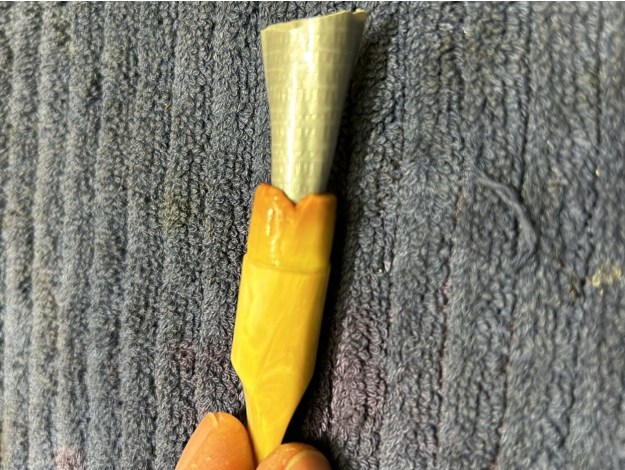
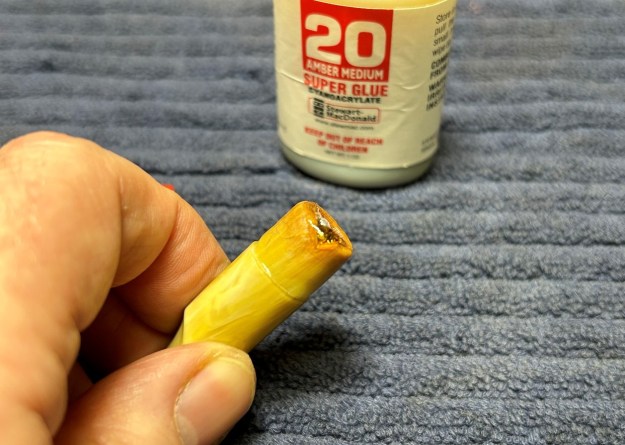
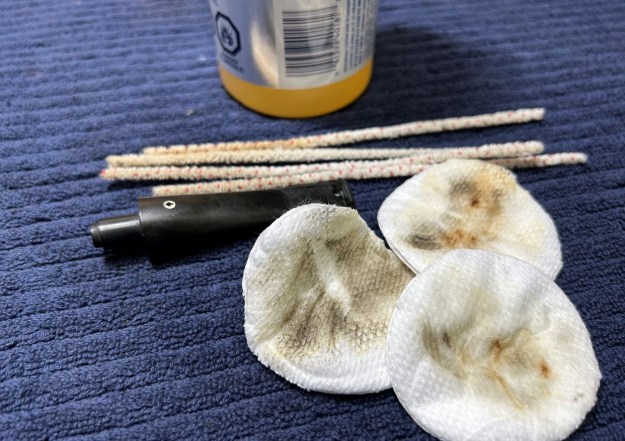
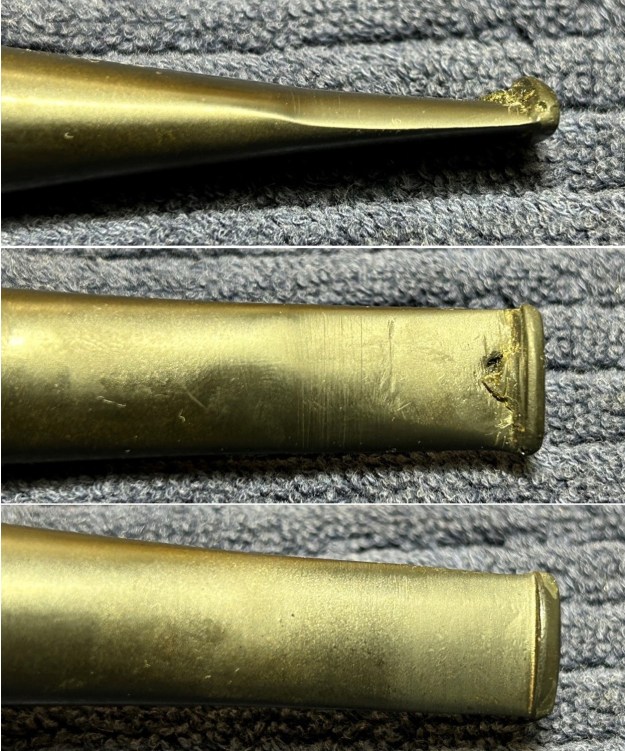
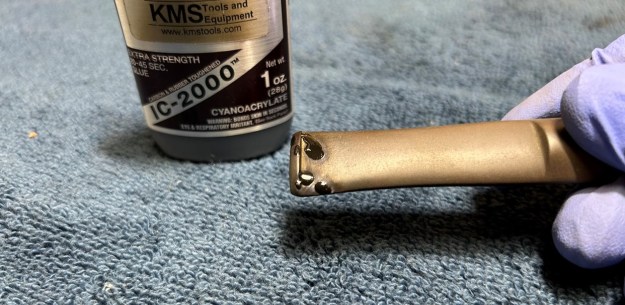
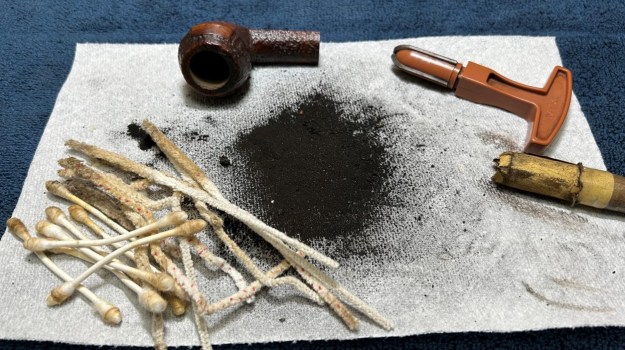
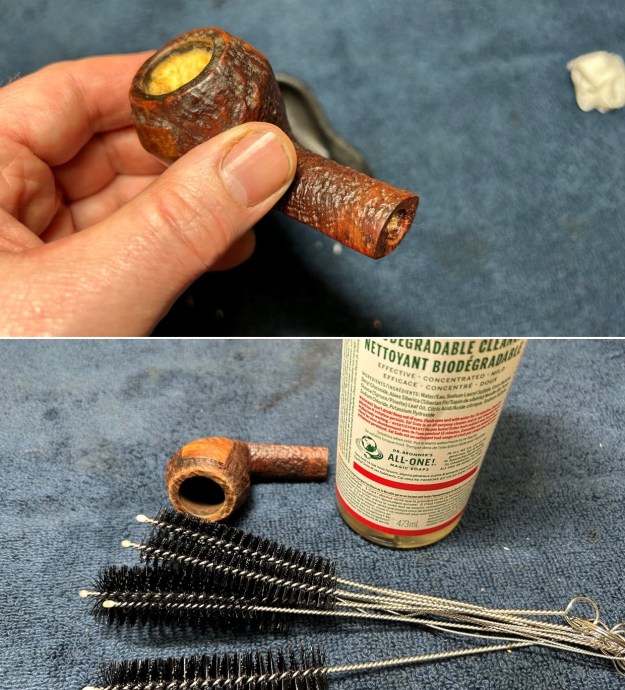
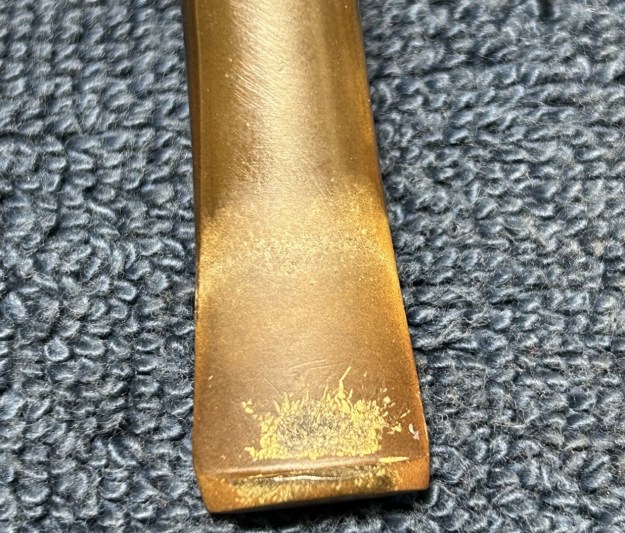
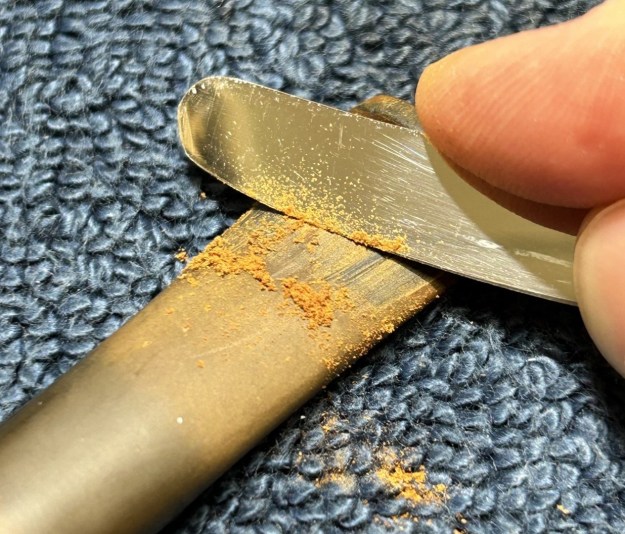
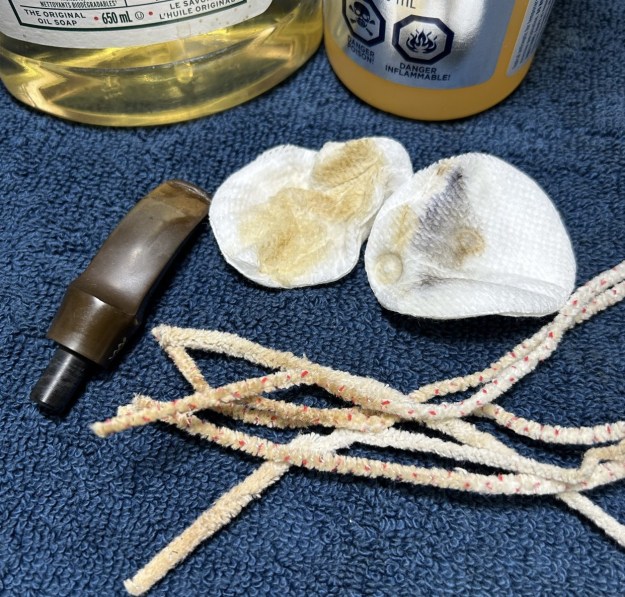
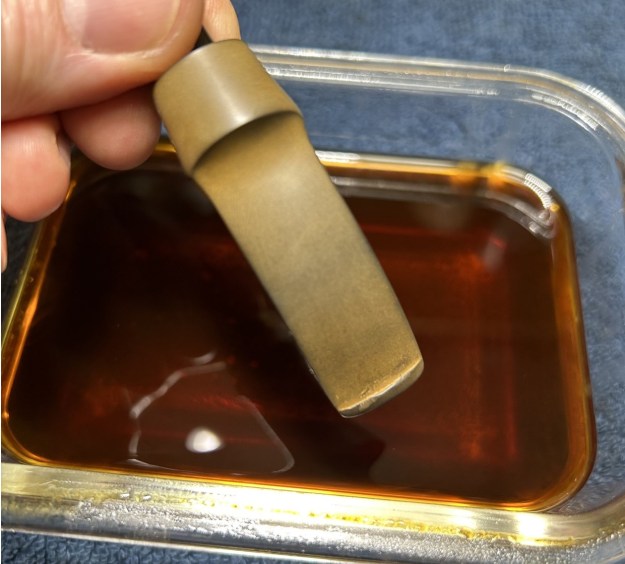
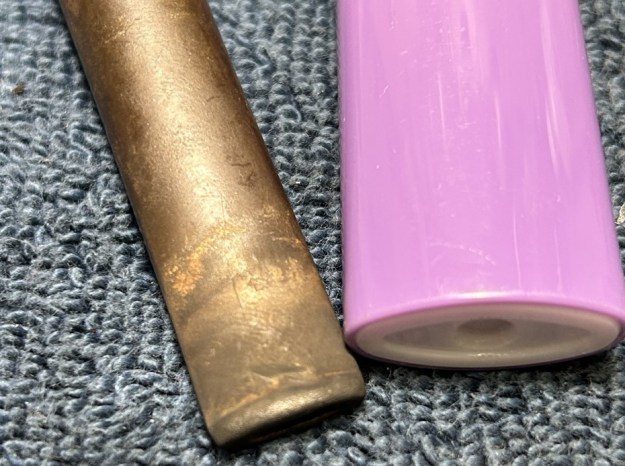
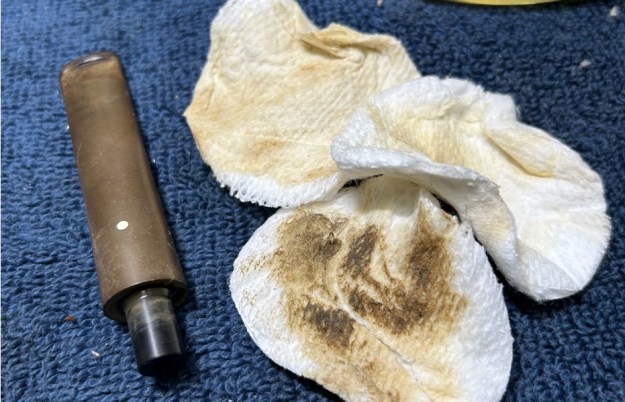
This is the second pipe in a series of three that I was given by my cousin to clean up and bring back to life. This is a republic era K&P Irish Made X105 straight billiard from Peterson. It’s a handsome pipe, for sure, but there are lots of fills all over the bowl and it was in rough shape. It is important to note that this stem is not the original, but, after some back-and-forth with my cousin, we decided to leave the stem as it is. The markings are clear enough. On the left side of the shank, it reads K & P [over] Irish Made. On the right side of the shank, it reads Made in the [over] Republic [over] of Ireland. Near to that is the shape number, X105. There are also some maker’s marks on the ferrule. Quoting from a previous blog of Steve’s, regarding an Irish Made, “There is a nickel ferrule on the shank that is stamped with three symbols – a shamrock. a wolf hound and a tower. These makers marks put the pipe as pre-circa 1963.” That helps! On to the pipe work… It turns out that this stem is the dirtiest stem I’ve dealt with for quite a while. I don’t think it’s ever seen a pipe cleaner in its life until I got a hold of it. The thing was absolutely filthy inside, and it took ages and ages to clean out with pipe cleaners and lemon infused 99% isopropyl alcohol. In fact, it was dirty enough that I actually used some tube brushes as well (along with some detergent) to scrub out the insides and finally got it vaguely clean. Another thing you’ll notice is how badly chomped the button and bit are. It looked pretty bad, but I took my BIC lighter and tried to raise those dents with its flame. This didn’t work very well, if at all.The oxidization on the stem was pretty brutal, so I used some SoftScrub on some cotton rounds and scrubbed the dickens out of it for quite a while. The photo shows how much came off the initial scrubbing. I then threw it into the deoxidizing solution to sit overnight. The next day, with the stem nice and clean, I needed to address those dents on the stem. I applied a type of black cyanoacrylate adhesive (impregnated with carbon and rubber) to the damaged area. I sprayed these areas with an accelerant to cure the adhesive immediately.I then had to shape these repairs so that they would look great! I began by taking a needle file and shaping the hardened adhesive. Continuing, I used 200- and 400-grit sandpapers on the repairs to smooth them out. I finished up by using all nine of my MicroMesh pads to sand the entire stem. I also used some pipe stem oil to assist with the sanding and protect the vulcanite. The stummel was also pretty nasty. I begin by reaming it out. First, I took a drill bit and hand cranked (never with a drill) it into the shank to break up the incredibly hardened debris in there. Of course, I followed that up with cotton swabs and pipe cleaners and isopropyl alcohol. It took a lot of scrubbing to get it clean. I also used some soap and tube brushes to make it extra clean. I cleaned the outside wood with some Murphy’s and then I set the stummel up for a de-ghosting session. I took a couple of cotton balls, gently stuffed them into the bowl and into the shank, and saturated them with 99% isopropyl alcohol. I let that sit overnight, and the alcohol did its thing, leaching out more of the filth from the stummel. As the photos have shown, this pipe had a lot of fills, so I dealt with them, with a mixture of cyanoacrylate adhesive and briar dust. There was also a chunk missing from the rim, and I filled that up with the same. There was a lot of burning and damage to the rim which I addressed with my topping board and some sandpaper. This is always a balancing act: you want to make it look better, but you don’t want to take off too much. There was a crack in the shank, and a crack at the rim. Both of those required drilling before I could repair them. I took my micro drill bit and delicately drilled a hole through the briar right at the very end of the crack. This tiny hole – almost too difficult to see – serves as an endpoint for the crack, ensuring that it will not grow any further. I then carefully laid a thin bead of CA, glue along both cracks and let it cure. This pipe had obviously had a hard life, and one thing I noticed was that the bowl had quite a few craze lines on the inside. I wanted to fix them to make sure they weren’t a problem in future. Recently, I learned about a new mixture for a pipe mortar that I wanted to try inside this bowl. I found the mix on an old YouTube video, but I honestly can’t remember who the fellow was, otherwise I would credit him here. If anybody remembers who that was, please let me know. Anyway, I mixed up a combination of plaster of Paris, table salt, and activated charcoal. Once blended, I added a few drops of water to make a very thick paste. I then put a thin layer on the inside of the bowl and let it set overnight. It worked like a charm.The next step was to sand everything down. I started with some 220-grit sandpaper and sanded the repairs down so that they were level with the briar. I then took my nine micromesh pads and sanded the whole thing. Despite its fills, the pipe will be much improved once I’m done with it. Of course, I used my restoration balm and rubbed that into the wood to have its nourishing properties work on the wood. I left it set for 20 minutes or so and, while I was waiting, I decided to fix up the nickel ferrule that goes at the end of the shank. I used most of my micromesh pads to polish it up and it came out beautifully. I glued it back on and set the stummel aside. Off to my bench polisher! As usual, I used white diamond as my first compound and followed that with a few coats of carnauba wax. It provides just the sort of glam this pipe needs to pop!This K&P Irish Made X105 straight billiard so much improved that I’m delighted and I’m sure my cousin will be too. I hope you enjoyed reading the story of this pipe as much I as I did restoring it. If you are interested in more of my work, please follow me here on Steve’s website or email me directly at kenneth@knightsofthepipe.com. Thank you very much for reading and, as always, I welcome and encourage your comments.
Clearing Up Some Birks Confusion


Blog by Kenneth Lieblich

This happy little fellow is a sandblasted, stylized bent Zulu by Birks. My cousin gave me three pipes to repair – this is the first one I grabbed. I was interested in it for two reasons. First there was a cracked shank, and I always like giving life back to a pipe with a cracked shank. Second, the pipe comes with the name of the famous Canadian jewellery house, Birks. I’m interested in this because I have several Birks pipes in my workshop and they’re all a little different. More on that in a moment. The markings on the pipe don’t tell us much – but they tell us enough. The only markings are on the underside of the stummel and they read Birks [over] Regency. To the left of that are the words Made in England. Allow me to explain some of this.Birks refers to Henry Birks & Sons, a venerable and well-known luxury store based in Canada (now known as Maison Birks). It has focused primarily on jewellery throughout its history, but also other luxury items like watches, silverware, etc. There has been some discussion in pipe circles about whether Birks sold pipes or not – and whether Birks actually refers to an English company (as Wilczak and Colwell suggested in Who Made That Pipe?). I can say definitively that Henry Birks & Sons sold pipes. They did not manufacture their own, but had others make them for sale at Birks’ stores. Steve has already restored some Birks-branded pipes made by Savinelli. I have Birks-branded pipes made in England and in Denmark.Two further points about this. First, I wonder if Wilczak and Colwell were thinking of an English razor company (also called Birks) that frequently used a maker’s mark that was in the shape of a pipe (rather unhelpfully). For more on that, click here. Second (as I mentioned earlier), this particular pipe has the word Regency on it. Regency specifically refers to a Henry Birks line of silverware, china, etc. – so that makes sense.

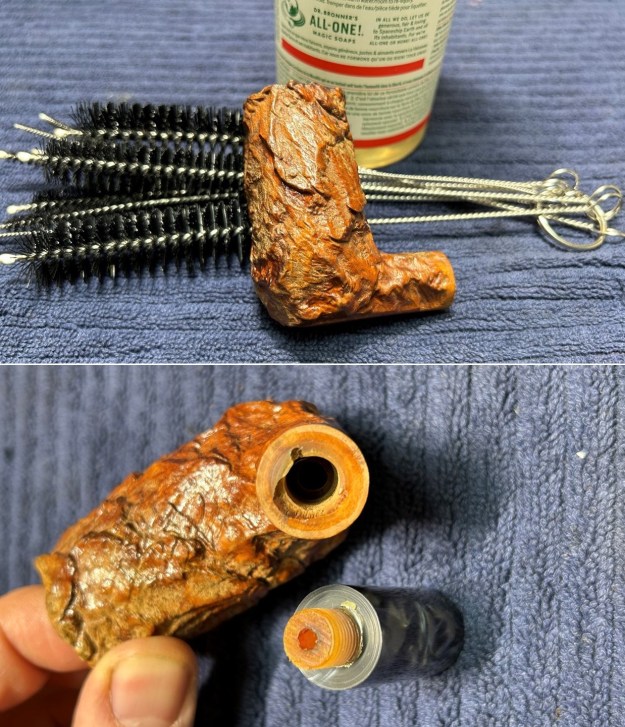
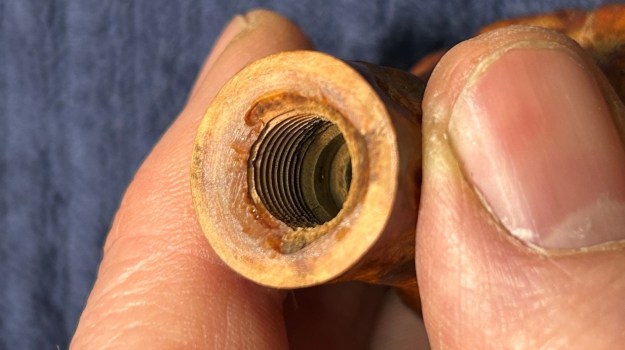
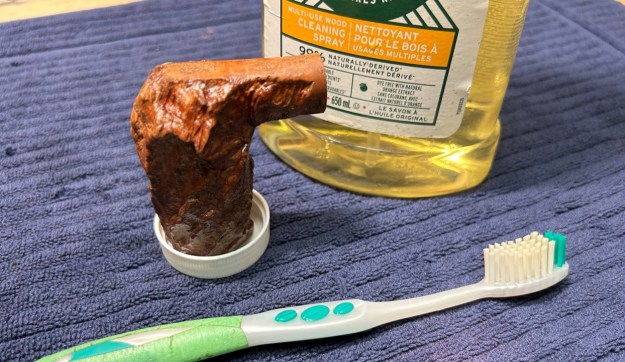
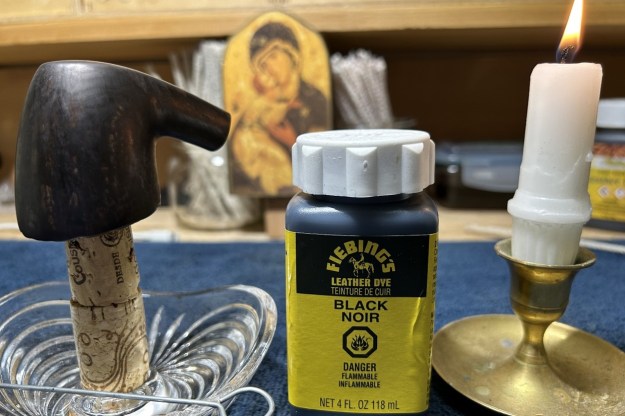
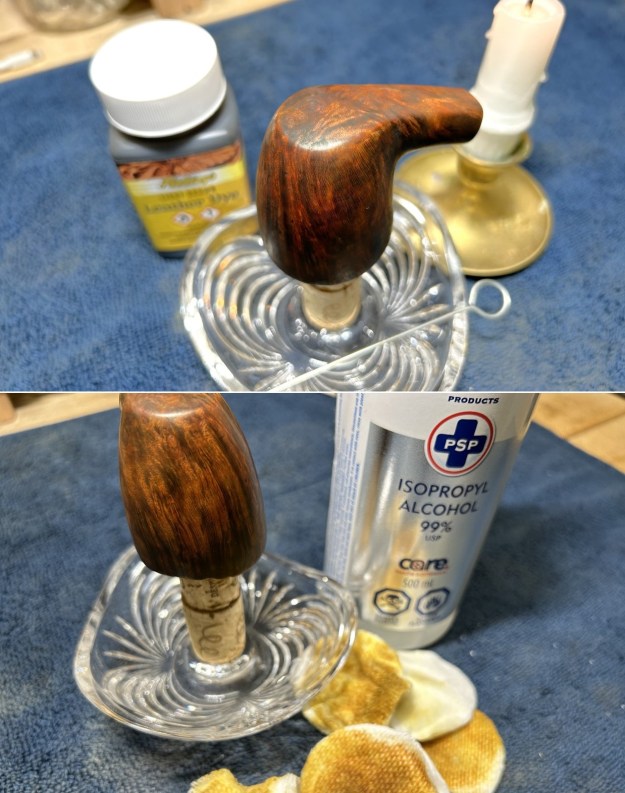
The stummel was surprisingly clean when I took hold of it. I did use a few cotton swabs and pipe, cleaners, along with isopropyl alcohol, but it didn’t take much to finish it. I followed that up with some Castile soap, and tube brushes to really scrub the insides. Came out beautifully. I’ve then took some Murphy’s, and a toothbrush and gently scrubbed the years of filth and oil, etc. off of the sandblast. It certainly looked much cleaner after that, albeit much more faded. A new coat of stain will be required, I think. As a result, I took the opportunity to wipe down the stummel, with alcohol to remove some excess old stain, and make sure everything was clean for the repair to the crack in the shank. Let’s move onto the primary repair to this pipe: that crack in the shank. First of all, I took the most micro of micro drill bits and drilled a hole with my Dremel right through the shank wall into the airway. This is an important step as it stops the crack from extending later on in life. The drill bit is so thin that it’s always a bit nerve-racking, because I fear snapping the bit through such hardwood. Fortunately, it worked like a charm this time. I also stuffed the mortice with pipe cleaners coated in Vaseline, so that if – God forbid – any cyanoacrylate adhesive drip into the mortise, it can be easily removed by the petroleum jelly. I ran a thin bead of cyanoacrylate adhesive along the length of the crack, and then held the two sides of the crack together with some vice grips. I let it sit for a few hours to cure. Moving along to the stem. Like the stummel, it was also quite clean, but needed a few more pipe cleaners to finish the job. Of course, I used isopropyl alcohol with them. I then wiped down the stem with Murphy’s on a cotton round. Once done, I put the stem in the deoxidizing fluid, even though there wasn’t much oxidation to speak of. It can’t hurt, and it’ll remove what little there is. After the adhesive cured on the shank, I set about sanding the underside of the stummel because there were a lot of scratches there. I also needed to sand down the bead of adhesive that I put there. It was tricky, because there wasn’t much room to move, with the markings so nearby. I started out by masking those markings with hockey tape, which is a perfect masking material as it is extremely scratch resistant. However, it ended up being more trouble than it was worth given the tight spaces to work in. Instead, I just sanded the area down, freehand, so to speak. It was time to stain the pipe, so I took out my Fiebling’s black leather dye. I thoroughly coated the stummel with a dauber, then flamed it with my BIC lighter to set the color. I repeated this process three more times to ensure a really deep, rich, black colour. it worked a treat.In order to ensure the crack in the shank doesn’t open up again, I decided to add a band to the shank to secure everything in place. The bands always look a little dull when they come out of my drawer, so I polished it up with my micromesh sanding pads. Naturally, I did the same to the stem. Came out beautifully. The next step, of course, was adding the restoration balm to the wood. This not only enriches and enlivens the briar, but helps add a protective layer to the dye in the wood. Off to my bench polisher! As usual, I used white diamond as my first compound, but instead of the regular conservator’s wax that I would use on sandblasted or rusticated pipes, I opted to use Halcyon II this time. It also gives a nice polish to the pipe, but slightly less shiny than normal – which is what I was aiming for.This Birks Bent Zulu looks beautiful once again. I’m sure my cousin will love it. I hope you enjoyed reading the story of this pipe as much I as I did restoring it. If you are interested in more of my work, please follow me here on Steve’s website or email me directly at kenneth@knightsofthepipe.com. Thank you very much for reading and, as always, I welcome and encourage your comments.
Just a Beautiful Comoy’s


Blog by Kenneth Lieblich

Sometimes one comes across a pipe that oozes comfort and class – this is that pipe. It’s a Comoy’s 122 Sandblast pot and it could hardly be more handsome. This pipe is so attractive that it practically demands to be caressed and smoked. I got it sometime ago from a lot of fine pipes that belonged to an old fellow who had gone to meet his maker. And speaking of makers, let’s talk about Comoy’s. There is plenty of history to be had on this company and I would encourage you to read Pipedia’s article here and Pipephil’s article here. The markings on the pipe are straightforward. On the underside of the shank, we see Comoy’s [over] Sandblast. Immediately to the right of that is the shape number: 122. Again, immediately to the right of that is Made in London [over] England. In addition, the left side of the stem has the so-called three-piece “C”.

Comoy’s shape number chart lists the number 122 as being a medium-sized, straight-stemmed pot and that just about sums it up. I consulted with the dating guide on Pipedia to narrow down the date of this pipe. If you want to read along, please have a look at https://pipedia.org/wiki/Comoy%27s_Dating_Guide in order to see what I’m taking about. This pipe dates from the 1950s onwards and corresponds to the first variant of Comoy’s stamp during this period, which is

A simple block-letter style without serifs but with the C larger than the other letters and the apostrophe before the “S”.

You can see that this matches my markings. One thing that is interesting (and has not been noted anywhere in this guide) is that the letters in “Comoy’s” are indeed without serifs EXCEPT for the “S”. If you look closely, you’ll see that the S after the apostrophe does indeed have serifs. I don’t know what this indicates, but if YOU do, please tell us in the comments below. In addition, the “Made in” stamp also corresponds to the same time period as above.The three-piece “C” on the stem also dates from the 1950s onwards and was discontinued in the early 1980s, when Cadogan took over. So we know this pipe is before the Cadogan era. We are left with the rather vague date of somewhere between 1950 and 1980. I am making an assumption that because this pipe corresponds to the first stamping variant listed in the guide, it is of an earlier part of that range. However, I have reason to make that assumption. I looked at Greg Pease’s writeup on Comoy’s and his dating information is basically the same as the Pipedia stuff above. Pease, however, adds this important tidbit:

Sometime in the 60’s, it the serifs were returned to the “COMOY’S” lettering, though, as mentioned above, the typeface is not as fancy as the earlier one. It appears that some grades carried different stamps or at least that the stamping changed in different years for some grades. At this point, this is highly speculative, as my sample size is too small to verify it.

Based on this, I am going to suggest that this pipe probably (but not definitely) dates from the 1950s. Once again, if you can shed some light on this, please do. Moving on to the pipe itself…Let’s have a closer look at the stem. It’s certainly dirty and has obviously been well loved. There are a few scratches from teeth and a few dents. The button will need a bit of work. There’s definitely some calcification on the stem and a little bit of oxidation nothing too bad. The stummel was also in nice condition. It had a few small blemishes, but very minor. I was sure I could make it beautiful again.I started out by cleaning the inside of the stem with lemon-infused 99% isopropyl alcohol and some pipe cleaners. It was dirty, but not too bad. I also cleaned the stem with some Murphy’s on some cotton rounds. As you can see, the stem was pretty dirty, and will need a good soaking. I took my BIC lighter to the stem, in order to try and raise the tooth dents. I knew full well this wasn’t going to be fully successful, but it was worth a shot. The top side of the stem came out pretty well, but the underside was not so good.After all that, the stem went for a dip in the stem oxidation remover. I let it sit overnight, to allow all the oxidation to rise to the surface of the stem. The next day, I cleaned up the stem with some cleanser on some cotton pads. This worked very nicely. I then repaired the tooth dents with some carbon-and-rubber-imbued black cyanoacrylate adhesive. Forgot to take a photo though. Onto the stummel. In order to clean out the cake in the bowl, I used the Pipnet reamer and followed that up with a piece of sandpaper taped to a wooden dowel. I sanded down the cake until I hit the briar walls, so that I could inspect them for potential damage. Everything looked good on the inside, which is great.I proceeded to clean out the inside of the shank with 99% isopropyl alcohol and pipe cleaners and cotton swabs. It was surprisingly dirty in there! But I got it clean in the end.When that was done, I set up to de-ghost the pipe. I put some cotton balls into the bowl and the shank and soaked them with 99% isopropyl alcohol. I let that sit overnight so that any remaining smells and/or filth would leach out into the cotton.Meanwhile, back to the stem. The cyanoacrylate glue worked well, and I sanded down those spots to bring them close to level with the surrounding vulcanite. I then took my nine Micromesh pads and sanded the whole stem until it was shining like new. I also used my pipe stem oil in between the pads to bring out some extra lustre. And back to the stummel! It was in very nice shape, although the rim did have some lava on it. I used a piece of machine metal to gently scrape off as much of this as I could so as to avoid damaging the rim. A good amount of debris came off, which was nice to see.I then set the rim to soak in some lightly diluted Murphy’s to soften up some of that stuff. After soaking for 10 minutes or so, I brushed the rim with a toothbrush to loosen up that gunk. I also brushed some Murphy’s all over the stummel in order to clean it.Some spots had lightened over the course of this pipe’s life, so I used one of my furniture pens to simply dot the areas that were missing colour. It blended in perfectly. I then took my Before and After Balm, rubbed it in the wood and let it sit for about 20 minutes. This balm is fantastic stuff and does wonderful things to nourish the wood. After letting it sit, I used a microfibre cloth and buffed it. Off to the bench polisher to put the final touches on this pipe. I first gave it a thorough (but light-handed) going-over with White Diamond compound. One doesn’t want to use too much for fear of gumming up the sandblast. Following that, several coats of conservator’s wax created a beautiful, glossy seal on the pipe.All done! This Comoy’s 122 Sandblast pot looks fantastic and is ready to be enjoyed again by the next owner. I am pleased to announce that this pipe is for sale! If you are interested in acquiring it for your collection, please have a look in the “British” section of the store here on Steve’s website. You can also email me directly at kenneth@knightsofthepipe.com. The approximate dimensions of the pipe are as follows: length 5⅜ in. (137 mm); height 1⅝ in. (41 mm); bowl diameter 1⅓ in. (34 mm); chamber diameter ¾ in. (20 mm). The weight of the pipe is 1⅛ oz. (33 g). I hope you enjoyed reading the story of this pipe’s restoration as much as I did restoring it. If you are interested in more of my work, please follow me here on Steve’s website or send me an email. Thank you very much for reading and, as always, I welcome and encourage your comments.
Cleaning Up an Interesting Paradis Star Freehand Pot


Blog by Kenneth Lieblich

A fine gentleman from out east contacted me asking for this pipe to be restored. Naturally, I obliged and managed a relatively quick job on it. This is just a quick-and-dirty report because it was really more of a cleaning job than a repair job – and I missed out on a few photos. This pipe is a Paradis Star 72 Freehand Pot. The markings on the pipe are as follows: the left side of the shank read Paradis [over] Star; on the right side of the shank read the number 72 – the shape number; and on the left side of the stem was the word Filter. This pipe did indeed have a 6 mm filter and so that makes sense. I knew Paradis Pipes to be a Canadian pipe company, based in Montréal, but I went over to Pipedia and Pipephil to seek out more information. Here’s some of what I found (after correcting the many spelling errors):

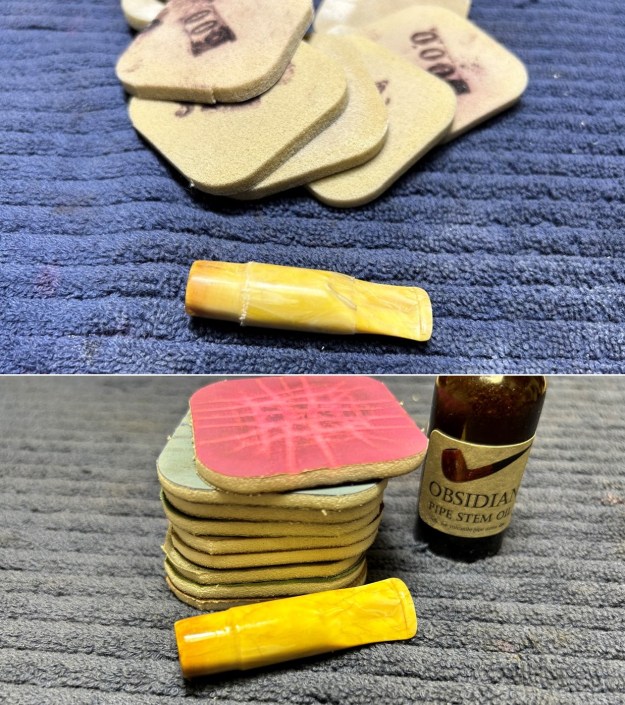
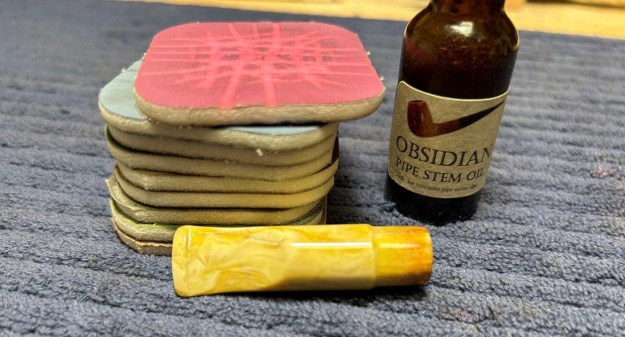
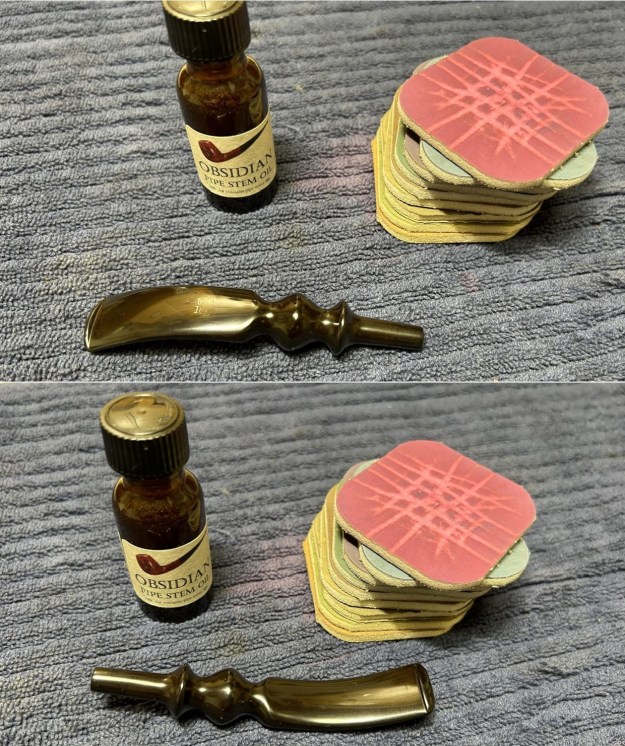
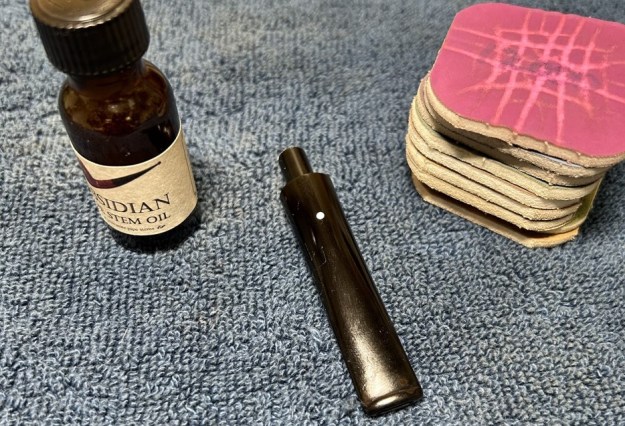
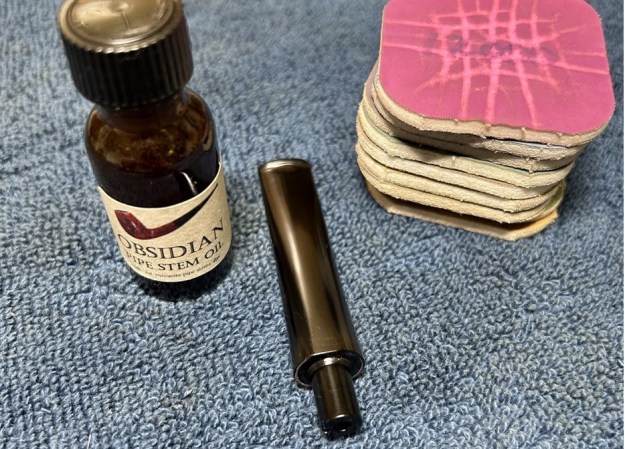
Paradis Pipes is the Canadian brand of the brothers Gilles and Fernand Paradis. In 1922 the Paradis family moved to the USA, when Lucien Paradis (1906-1979) was 16 years old. It was at this age that he started as an apprentice at his uncle’s pipe factory: Joseph B. Desjardins, maker of (JD) pipes, in Fall River, MA. Joseph Desjardins was issued two patents during this period, one for a new machine for making pipe stems and another for a new design of pipe reamer. The company employed 60 workers at one stage. In 1930, due to the Great Depressions, Lucien lost his job and returned to Quebec to work in the agricultural machine industry. In his spare time, be made pipes, selling them door to door. Three years later the rest of the family joined him, and Lucien founded a pipe factory with two of his brothers. The company eventually employed 18 workers and in the 1960s produced over 50,000 pipes a year, under brads like JBL, Dr. Thomas, Fernand Gignac, S.C. Pipes, New London Golfer, and Jo Thomassin. Paradis was founded in 1978, at the Salon of Quebec Artisans, and is available in tobacconists all over the country today. The brand produces 8,000 pipes a year (400 “handmade”), with Greek briar.The pipe was in decent condition. It had been well-smoked, and the bowl and shank were fairly dirty. The bowl had some cake on the inside and a bit of lava on the rim. But there was clearly some burning there too. The brass ring around the bowl was in good condition, just a bit scratched up. Meanwhile, the stem was relatively dirty. It was made of acrylic, so no oxidation to speak of, but there were what I would describe as “typical” tooth scratches on the bit. Fortunately, no dents – but someone did leave a heavily used filter behind. Delicious. The stem was first on my list. I wiped the outside down with Murphy’s Oil Soap on some cotton pads. I cleaned out the insides with lemon-infused isopropyl alcohol and some pipe cleaners and cotton swabs.I then used all nine Micromesh pads (1,500 through 12,000 grit) to make the swirling colours of the stem’s acrylic shine again. I also used Obsidian Pipe Stem Oil in between each pad scrubbing (from 3,600 onward).

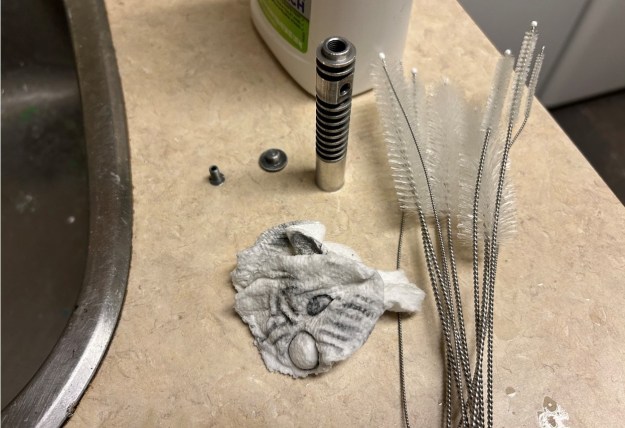
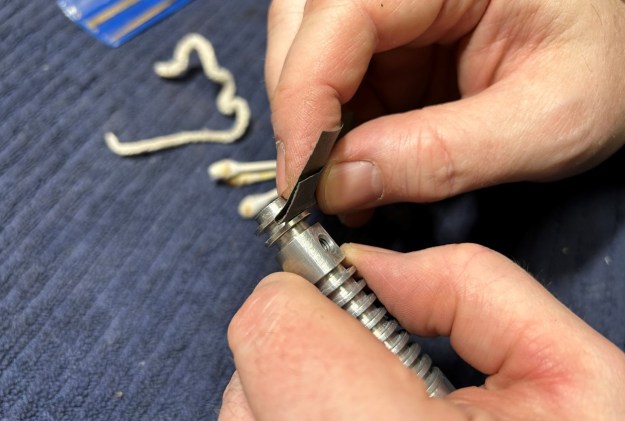
Now for the stummel. I reamed out the bowl to remove the built-up cake and followed that with 220-grit sandpaper taped to a dowel to eliminate as much as I could. I took the chamber down to bare briar, as I wanted to ensure there were no hidden flaws in the wall. Fortunately, there were none.I then proceeded to clean out the insides of the shank with Q-tips, pipe cleaners, and lemon-infused isopropyl alcohol. There was quite a bit of filth inside this stummel and it took a fair amount of cotton to get it clean. I used cotton rounds and some Murphy’s Oil Soap to wipe the outside of the stummel. I also used my toothbrush on the rim to see if I could lift some the burn marks there. Only so much was cleaned up. I followed that up by cleaning the insides of the stummel with some Castile soap and tube brushes. Next, I decided to de-ghost the pipe in order to remove any lingering smells of the past. I thrust cotton balls into the bowl and the shank and saturated them with 99% isopropyl alcohol. I let the stummel sit overnight. This caused any remaining oils, tars and smells to leach out into the cotton. The bowl was nice and clean after this.In order to safely remove the damage on the rim, I used a piece of 220-grit sandpaper wrapped round a wooden sphere. This effectively removed the damage, without altering the look of the pipe. This worked very well and I was pleased with the results. I tidied up some of the lost colour with one of my furniture pens. Then I sanded the rim down with all nine Micromesh pads (1,500 through 12,000 grit). I also made sure to use the Micromesh pads on the brass ring, in order to remove some scratches and bring back its shine. Finally, I applied some Before & After Restoration Balm and buffed it with a microfiber cloth. I then took the pipe to my bench polisher and buffed it with White Diamond and a few coats of carnauba wax. Wow – the pipe looks much improved.This unusual Paradis Star 72 Freehand Pot will suit the buyer very well and I’m sure that he will enjoy smoking it for many years to come. I hope you enjoyed reading the story of this pipe as much I as I did restoring it. If you are interested in more of my work, please follow me here on Steve’s website or email me directly at kenneth@knightsofthepipe.com. Thank you very much for reading and, as always, I welcome and encourage your comments.
Restoring a Handsome Tanganyika Meerschaum


Blog by Kenneth Lieblich

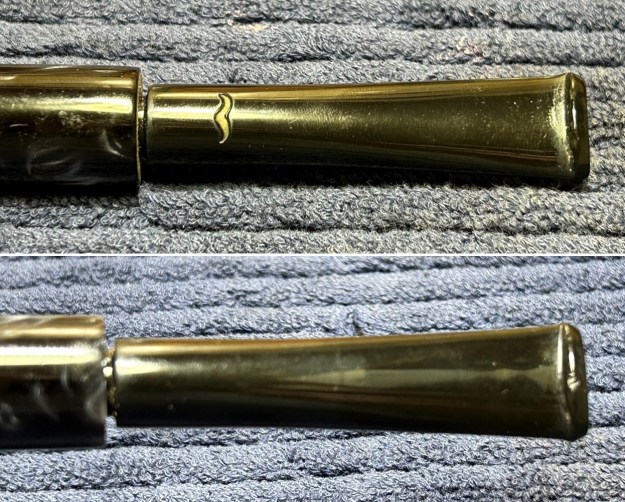
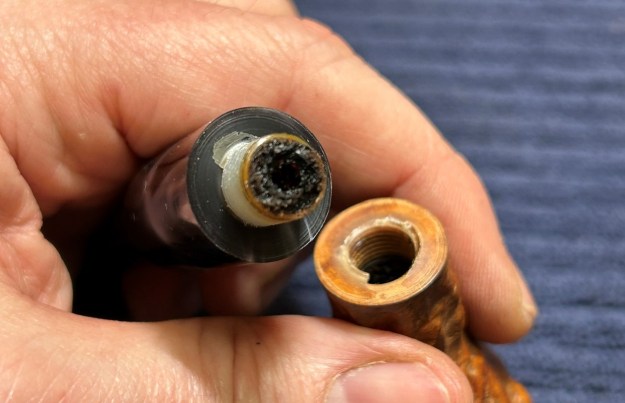
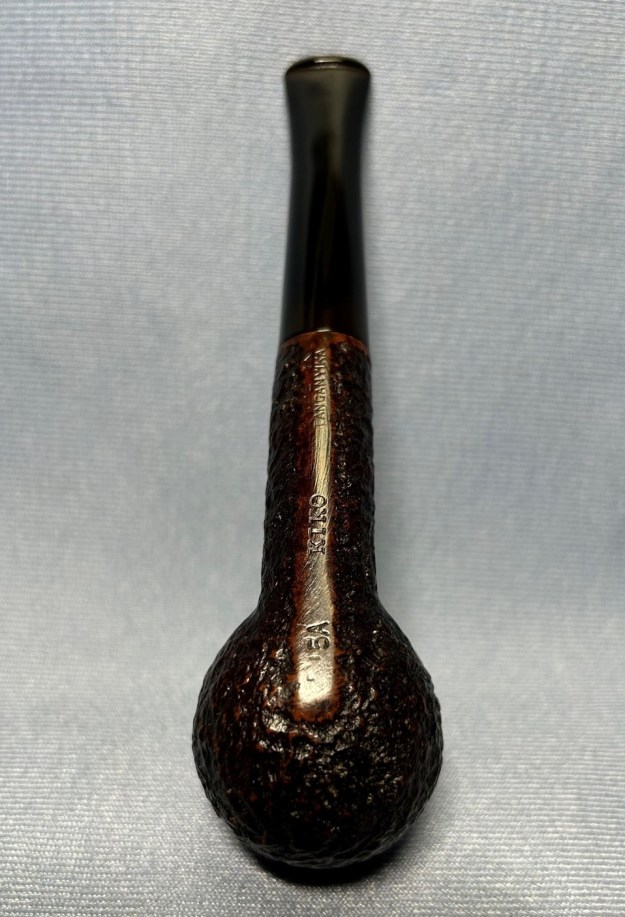
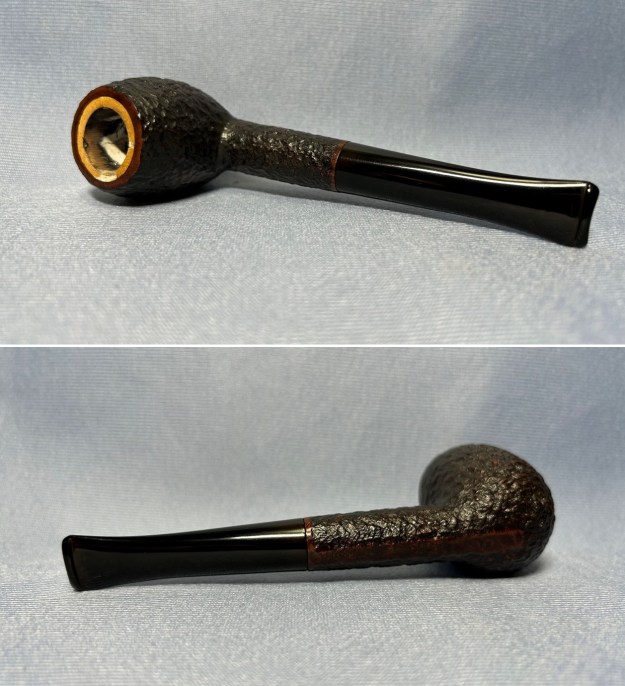
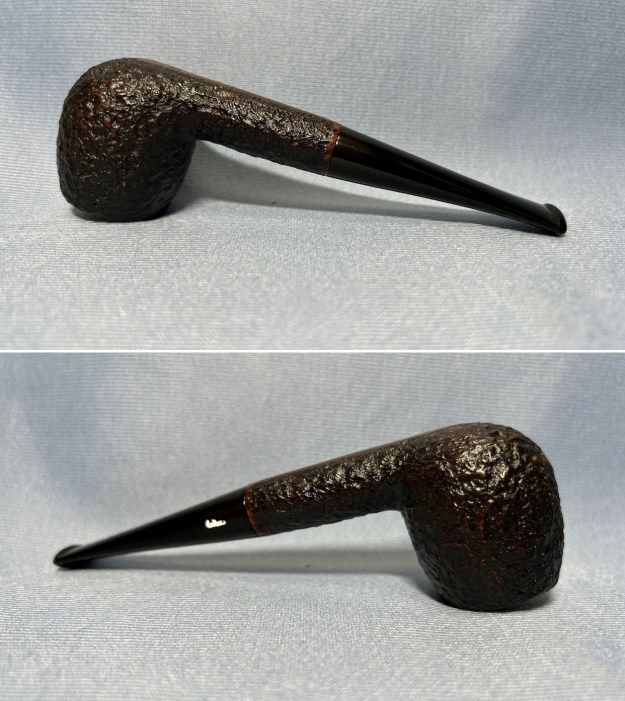
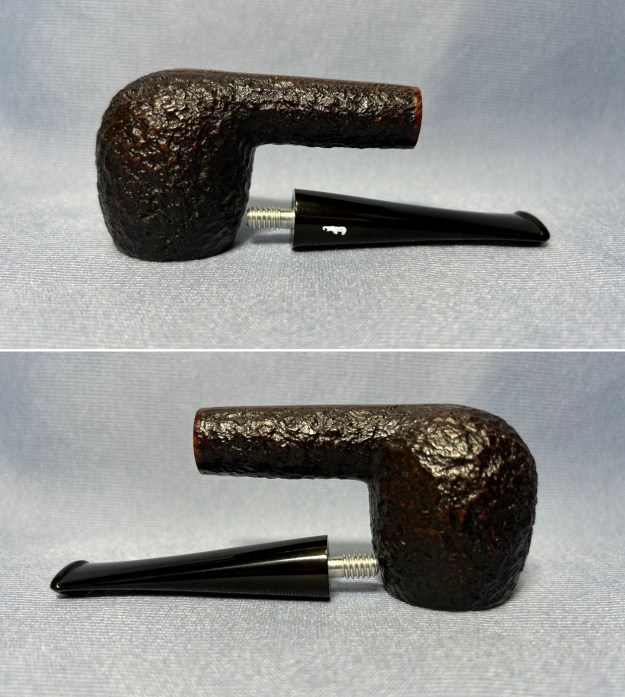
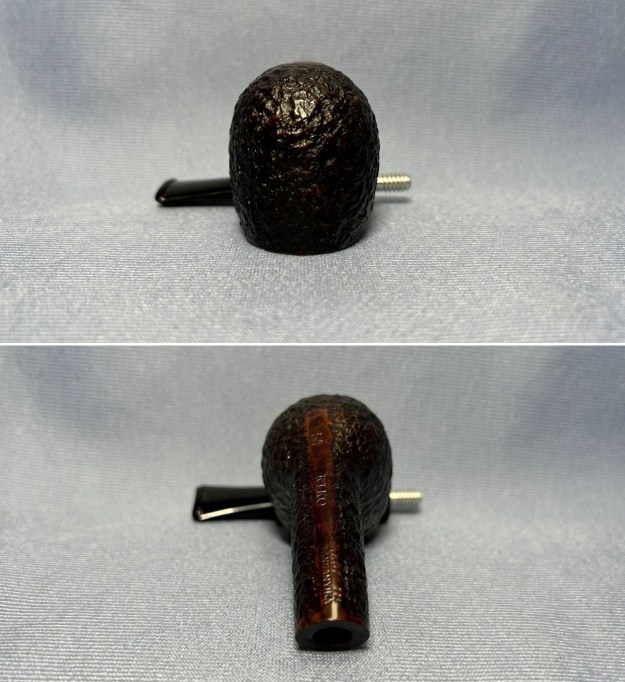
My cousin sent me a very good-looking pipe that he found in his meanderings and send it to me for some repairs. Naturally, I was happy to help, but this one provided some tough work. I like the tough ones though – makes me feel like an old timer has truly been saved. This is a Tanganyika Genuine Block Meerschaum 290 Bent Dublin. As soon as I saw it, I liked it. It looked like a really good smoker. The stummel was very handsomely cut – thick and robust. The stem had a metal tenon that screwed into the mortise. There were a few markings on the pipe. On the underside of the shank was engraved Genuine Block [over] Meerschaum. To the left of this (and perpendicular), was the number 290, the shape number. On the left side of the stem was the logo: a charming little elephant. Underneath the stem was the word Tanganyika – this stamping was very faint and I was worried about it. Finally, I wonder if there was something else. On the very end of the shank, was engraved what looked like a capital T. If that’s what it is, then presumably it stands for Tanganyika. If anyone has further information, please post it in the comments below. I looked in the book, Pipes: Artisans and Trademarks by José Manuel Lopes, to learn more about Tanganyika pipes. It had the following entry for the Tanganyika Meerschaum Corporation:

Company formed in 1955 by Kenyan businessmen from Nairobi after the discovery of a meerschaum mine relatively close to the surface on Kilimanjaro. The meerschaum is tougher, less porous, and cheaper than the Turkish variety. Another mine was soon discovered in Sinya, in the famous Amboseli Game Park. The company, previously based in Arusha (Tanzania), became an associate of a Belgium firm, but closed some years after. It produced the Caveman, Countryman, Kiko, Killimanjaro, Sportsman, Townsman, and Wiga brands. It maintained a link with GBD for the making of the GBD Block Meerschaum series, and after its closure, the English firms, London Meerschaum and Manx Pipes (Manx Meerschaum) continued producing with African meerschaum.Pipedia also included the above information, but also referred me to the page on Amboseli Pipes.

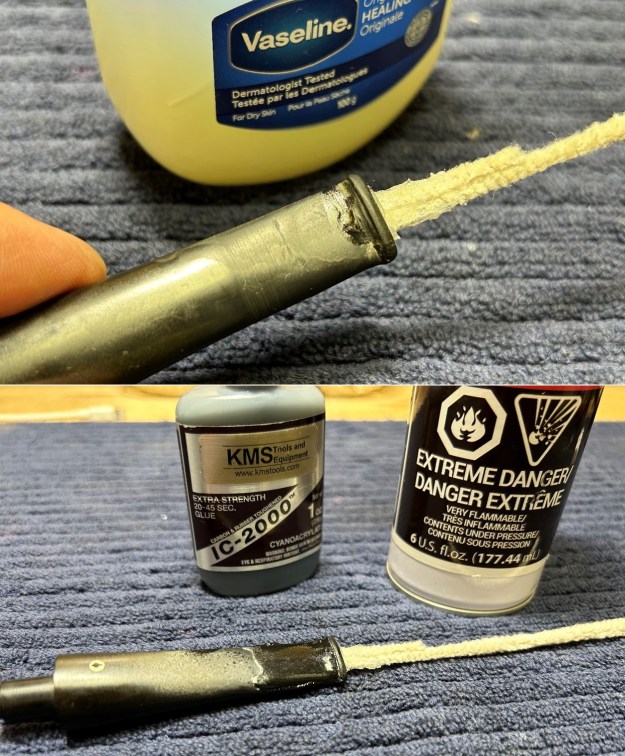
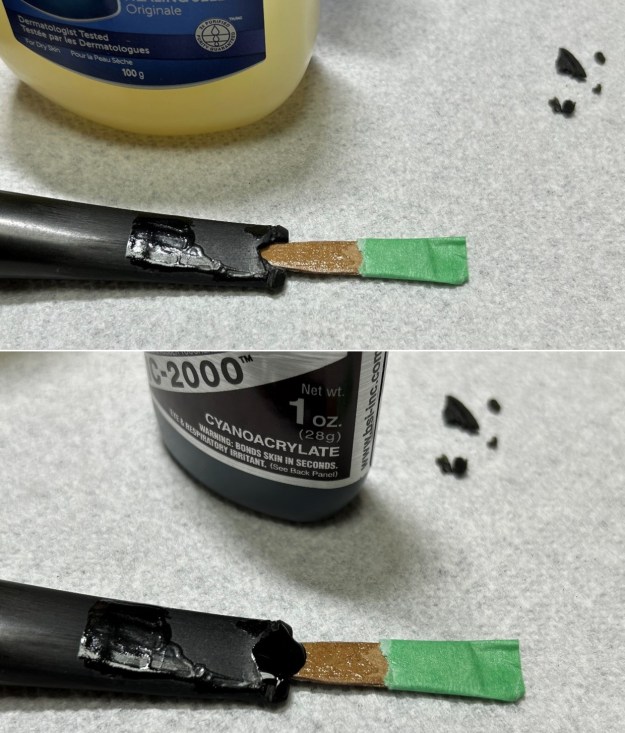
Amboseli Pipes made calabash and meerschaum pipes in Tanganyika. They moved to Arusha, Tanzania, and later closed. Countryman is one of the brands Amboseli produced. Its symbol is an elephant. Other brands include Hillbilly, Kiko, Kilimanjaro, London Meerschaum, Merlin, Sportsman, Tanganyika Meerschaum Corporation, and Tembo.Pipedia also seemed to direct all related pages to Kiko Pipes. This page did have the most information, but I wasn’t much closer to figuring out which brand of pipe this was. By comparing the descriptions from the Amboseli brochure below and various animal logos, I was able to eliminate some of the brands. I also looked at some previous articles here on rebornpipes. Therefore, this pipe is probably either a Caveman, Sportsman, or Townsman – without having that specific nomenclature on the pipe itself. But, truth be told, that is no more than an educated guess.Moving on. The stummel was in nice shape. The outside definitely had seem some wear and tear, but there were no major issues. Sure, it was dirty inside, but nothing more than what would be expected. I was pleased to see that the threaded mortise was in excellent condition. I had been concerned that the threads might have been damaged over the years, but no such damage was there. Meanwhile, the big problems lay with the stem. It was heavily oxidized, and thoroughly chewed. In fact, as the photos attest, the button was completely broken. A major rebuild would be required. Even though I would need to rebuild the stem, I wanted to save as much of the original as possible. So, I “painted” the stem with my BIC lighter in order to try and lift some of the bite marks all over the end of it. This worked reasonably well, but there was still a lot of damage.Next, I took some pipe cleaners and lemon-infused 99% isopropyl alcohol, and cleaned the revolting insides of the stem. The photo only shows a few of the pipe cleaners needed. It was pretty darn dirty. I also wiped down the outside with some Murphy’s on some cotton rounds. This removed some of the surface filth. As usual, I sent the stem for a swim in the deoxidizing fluid over night. I could tell even before this that the oxidation was deeply set into the vulcanite, but I needed to clean what I could. The following day, I wiped down the stem with SoftScrub cleanser and made sure to scrub hard. A lot of oxidation came off, but a lot of oxidation remained. I actually sent it for a second bath, and that helped, but not enough. Once it was a clean as I could get it, it was time to build up the damage. I brought out my black cyanoacrylate adhesive and I applied it to the bitemarks and such. The missing chunks would need far more work. I created a new button out of black cyanoacrylate, impregnated with carbon and rubber. I first plugged up the stem’s draught hole with a folded pipe cleaner, coated in petroleum jelly. This ensured that any of the glue would not accidentally plug up the air passage in the stem. This is always a tricky business and it took some patience to make it work. After I applied the cyanoacrylate, it looked pretty darn ugly, but I was expecting that. After the curing, I ended up sanding down the end of the stem to reduce some of the excess material. To carry this process on, I used some miniature files to further shape the button and make it suitable for sanding. I used another file on the inside to ensure there were no rough edges in the bore. I then sanded the stem down with sandpaper to keep the shape. I then used all nine Micromesh pads (1,500 through 12,000 grit) to smooth everything out. I also used Obsidian Pipe Stem Oil in between each pad scrubbing. It is worth noting that a repair this big on a stem will never be completely invisible – especially on this pipe. Finally, I used some 0000-grit steel wool on the aluminum tenon to make it shiny.

On to the stummel. Normally, at this point, I would use a reamer to remove the built-up cake inside the bowl, but meerschaum has the potential to crack in those circumstances. Instead, I simply used some sandpaper taped to a wooden dowel to scrape the bowl down. Fortunately, everything looked sound on the inside of the bowl. I then proceeded to clean out the shank with Q-tips, pipe cleaners, and isopropyl alcohol. There was a lot of nastiness inside this stummel and – boy-oh-boy – it took a lot of cotton to get this thing clean! I then moved on to cleaning the outside of the stummel with Murphy’s Oil Soap and some cotton pads. I also cleaned the insides with some Castile soap and tube brushes. Now in this case, I did it especially carefully because too much soaking can cause meerschaum to soften. In this case, I moved quickly, nothing softened, and everything turned out well. After this, I used my Micromesh pads to sand down and minimize the scratches in the meerschaum and make everything smooth. I then applied some Clapham’s Beeswax Finish to the meerschaum and let it sit for about 30 minutes. I then buffed it with a microfibre cloth. I repeated this process and left it – it sure was pretty! I took the stem (but not the stummel) to my buffing wheel and finished it with some White Diamond polish. Worked like a charm. This Tanganyika Genuine Block Meerschaum 290 Bent Dublin looks beautiful once again. I’m sure my cousin will love it. I hope you enjoyed reading the story of this pipe as much I as I did restoring it. The approximate dimensions of the pipe are as follows: length 5⅛ in. (131 mm); height 2¼ in. (58 mm); bowl diameter 1½ in. (39 mm); chamber diameter ⅞ in. (22 mm). The weight of the pipe is 1⅝ oz. (49 g). If you are interested in more of my work, please follow me here on Steve’s website or email me directly at kenneth@knightsofthepipe.com. Thank you very much for reading and, as always, I welcome and encourage your comments.
The Ghost of Tobaccos Past


by Kenneth Lieblich

About fifteen months ago, I wrote a blog post here on my first attempt at blending tobacco. From some online forum, I had learned of a “recipe” to recreate McClelland’s Frog Morton tobacco, and this mix was (appropriately) called the Ghost of Frog Morton. This consisted of a 50-50 mixture of Peter Stokkebye English Luxury PS 17 and Lane Limited HGL. I was mildly concerned about the volume of Lane Limited HGL, as I’m not a strong aromatic fan, but figured it was worth a shot. At the time, I committed to jarring the stuff for a year (to let flavours blend) before trying it out. More than a year on, I’ve had some requests for an update on how it turned out and this is that update.

Let’s have a closer look at the two tobaccos that make us Ghost of Frog Morton. First, Peter Stokkebye English Luxury PS 17 is made with Georgian Virginias, black cavendish, Mexican burleys and Cyprian Latakia. This is a milder English blend than I tend to smoke (which is ok) and it has a certain sweetness to it. I’m not sure if this is a topping or not, but it is noticeable. Second, Lane Limited HGL is an American blend (not usually my style) made with toasted black cavendish, Latakia, white burley and golden Virginia. It is quite sweet. Despite the four components of each tobacco being the same, they are quite different as mixtures.I want to acknowledge that many sympathetic correspondents were correct in saying that this mixture bears little resemblance to the original Frog Morton. This has no bearing on whether the tobacco is enjoyable or not, but it’s worth noting that someone must have very odd tastebuds to think that Frog Morton and Ghost of Frog Morton were alike!

Upon opening a jar of the stuff a year on, I decided to try the tobacco in a corn cob for two reasons. First, I felt this would provide a neutral medium through which to try GoFM. Second, the blend smelled too “aromatic” for me and I didn’t want to ghost (pun intended) a briar with it, in case it wasn’t to my taste.Ghost of Frog Morton is a decent blend for those wanting a hybrid between English and aromatic tobaccos. I don’t claim any great expertise in either tasting or blending, but this is a bit too aromatic for me. I’m glad I tried it, but it is not really my thing. I like the idea of having a slightly hybrid tobacco on occasion, but I would lean towards something even less aromatic than this. If I tried this again, I would alter the Stokkebye/Lane ratio from 1:1 to 3:1 or even 4:1. For those who enjoy hybrids, I would recommend trying this blend. The base tobaccos are quite inexpensive and it is easy to produce.

In the comments to my original post, Jack Gillespie suggested Sutliff’s Eastfarthing as a similar hybrid that suits him. I tried that too, and it was better than GoFM but still a bit too vanilla/aromatic for me. I guess I’m an inveterate English and Virginia man! I hope you enjoyed reading this brief review of Ghost of Frog Morton. If you are interested in my work, please follow me here on Steve’s website or email me directly at kenneth@knightsofthepipe.com. Thank you very much for reading and, as always, I welcome and encourage your comments.
A Savinelli Like No Other


by Kenneth Lieblich

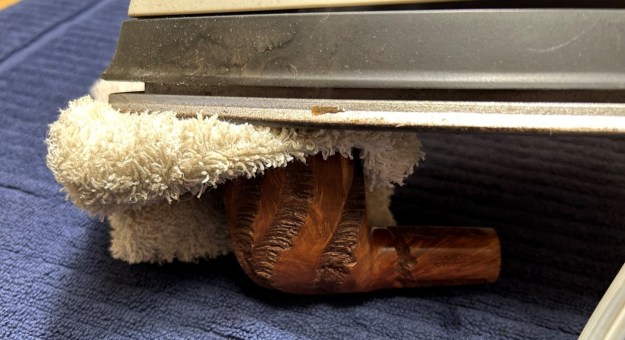
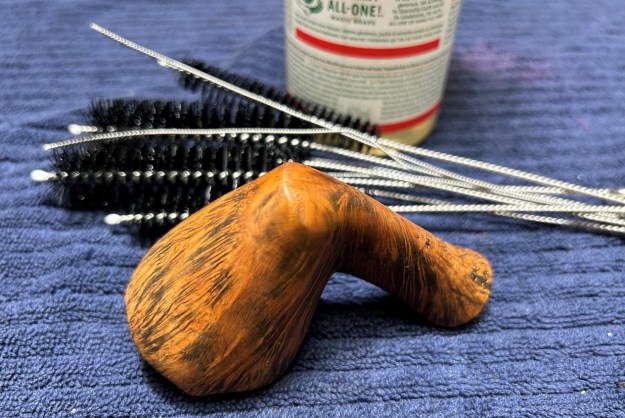
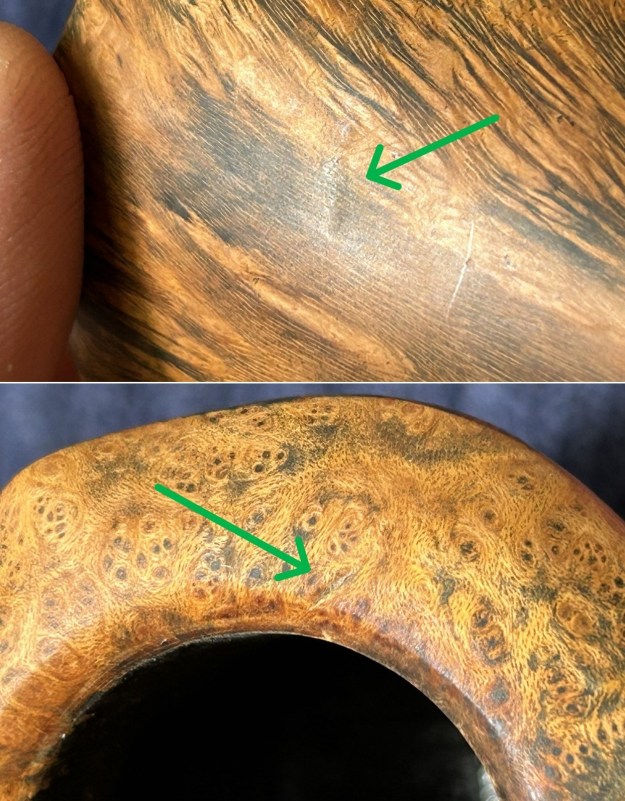
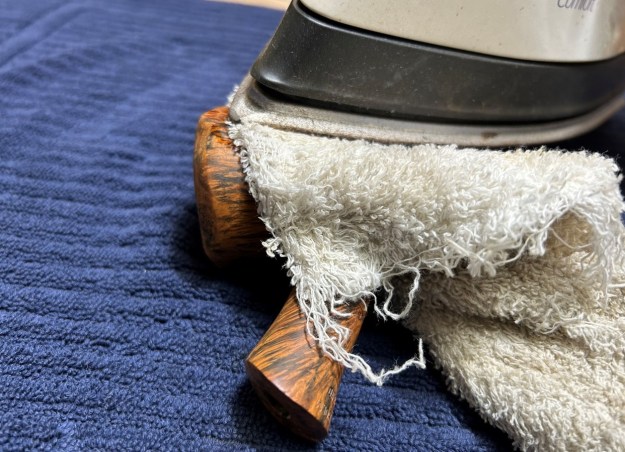
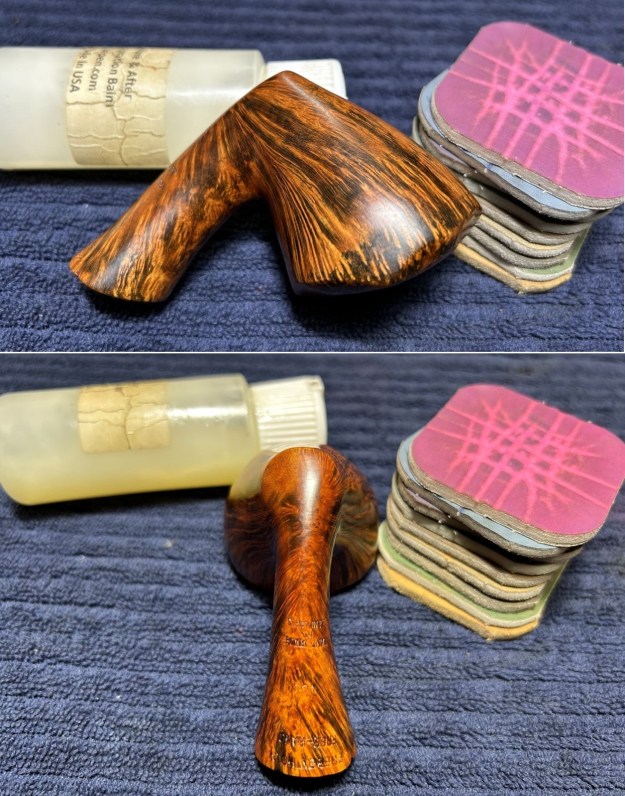
Say hello to this beautiful Savinelli Nonpareil 9614 bent billiard! It came to me in a lot of pipes I bought some time ago and it seemed right to bring this one back to life. At first, it seemed like a relatively straightforward restoration, but – wow – this pipe ended up taking an awful lot of work. You can now buy this pipe for your collection and enjoy the fruits of my labours. This pipe promises to be a great smoker, I figure. Let’s look at the markings. The left side of the shank reads Savinelli [over] Nonpareil. Despite Savinelli being an Italian company, the word nonpareil is French and means “without equal” – literally, “not the same”. On the left side of the shank is the lovely Savinelli crown, next to which are the marks 9614 [over] Italy. Naturally, the number refers to the shape. Finally, there are two brass dots on the left side of the stem – very nice touch. Savinelli is one of the most recognized names in pipe smoking and they have a long and storied history. You can read about them from their own website or from Pipedia’s article about them. However, I was particularly interested in learning more about the Nonpareil line. Sadly, Pipedia had nothing on this subject. I checked with Pipephil and they did have a bit of information, which I display below. I learned from Pipephil that old Savinellis used to have four-digit shape numbers, newer ones three. The exceptions to this rule, however, are the Nonpareil and Dry System lines.The stem on this pipe definitely shows signs of use. There were some tooth marks – dents and scratches – and plenty of calcification. Of course, there was also some oxidation, but I didn’t realize just how much until much later. The stummel was tired and drab. There were indications of lava on the rim and plenty of cake in the bowl. Also, the briar had a few little scratches from the years of love of its previous owner. Nothing to worry about – or so I thought. More on that later. Well, the usual cleaning procedures were in order for this pipe. I started on the stem by wiping it down with some Murphy’s on a cotton round. Then, I cleaned out the insides of the stem with pipe cleaners and lemon-oil isopropyl alcohol. At this point, I took a BIC lighter and ‘painted’ the stem with its flame in order to lift the tooth marks. This was moderately successful in raising the dents. Once that was done, the stem went for an overnight soak in the Before & After Hard Rubber Deoxidizer. After soaking, I cleaned off the de-oxidizing fluid with alcohol, pipe cleaners, et cetera. The oxidation had migrated to the surface and I used SoftScrub to work it off. I was surprised at how poorly this worked (as compared with other restorations), so I actually sent it for another soak in the deox fluid and repeated the same cleaning procedures afterwards. Once I got the stem looking vaguely deoxidized (and before I moved on to the Micromesh pads), I built up the tooth damage on the stem with black cyanoacrylate adhesive and let it fully cure. I used my miniature files to take down the majority of the dried glue. I then sanded it down with 400-grit sandpaper to meld seamlessly into the stem. I then used all nine Micromesh pads (1,500 through 12,000 grit) to bring out the lovely black lustre on the stem. But WAIT! I never made it through all nine pads because I could see that the oxidation was so stubborn, I would need to put in some extra work first. Recently, Steve kindly introduced me to a new type of sanding pad – more aggressive grit for more aggressive jobs. I’m going to refer to them as the ‘grey pads’ since that’s their colour. I used the grey pads to really attack the oxidation on the stem and they worked very well. I don’t have photos of this, but I’m pleased with the results. There are some small wounds remaining on the stem, but they are not an issue at all. Once done with the greys, I went back again to the Micromesh pads. I also used Obsidian Pipe Stem Oil in between each pad scrubbing. This also really made the brass dots pop! Putting the stem aside, I moved on to the stummel. I used the PipNet Reamer (and some sandpaper taped to a wooden dowel) to take the bowl down to bare briar, as I wanted to ensure there were no hidden flaws in the walls of the bowl. Fortunately, there were none. I then proceeded to clean out the insides of the shank with Q-tips, pipe cleaners, and isopropyl alcohol. There was a lot of nastiness inside this stummel and – boy-oh-boy – it took a lot of cotton to get this thing clean! I took a close look at the rim. In order to save as much of the rim as possible, I used a piece of machine metal to very delicately scrape away as much lava as I could. I do this before automatically jumping to my topping board. This worked well and the topping board was not needed.A de-ghosting session seemed like a good idea. This de-ghosting consisted of thrusting cotton balls in the bowl and the shank, and saturating them with 99% isopropyl alcohol. I let the stummel sit overnight. This caused the oils, tars and smells to leech out into the cotton. Finally, a relatively clean and fresh-smelling bowl emerged. I then moved on to cleaning the outside of the stummel with Murphy’s Oil Soap and some cotton pads. What a difference that made! I also cleaned the insides with some Castile soap and tube brushes.I examined the scratches and bumps in the briar. I dug out my iron and a damp cloth to try to raise them. The hot and moist steam can often cause the wood to swell slightly and return to shape. This worked quite well, but alas, I forgot to take pictures. After this, I used all nine Micromesh pads (1,500 through 12,000 grit) to remove the scratches in the wood and make everything smooth. Prior to that, however, I applied some clear hockey tape to the shank extension – it was already lovely and smooth, and I didn’t want to scratch it. This tape is fantastic because it is incredibly resistant to sanding yet comes off with no residue whatsoever. I applied some Before & After Restoration Balm and began to admire my work when my eyes saw something that was uncovered in my restoration: a thin craze line in the valley between the stummel and the shank. It was certainly not visible before, so the cleaning and sanding had revealed it. Even though the line was incredibly thin and seemingly shallow, I needed to address it. My first step was to ensure that the line would not continue to creep after I had repaired it. To that end, I took a micro-drill bit, inserted it in my Dremel, and very carefully drilled a hole in both ends of the line. That done, I carefully applied a tiny bead of cyanoacrylate adhesive to the tiny hole and the tiny line. Finally, I let it cure. This was a great success – I was really pleased with how the repair looked. I had to sand this area again, of course, so I applied my hockey tape all over the place (see photo) and went to work with some sandpaper and Micromesh pads. I then rubbed in some more Before & After Restoration Balm and finally saw the beauty of my work.Off to the bench polisher I went. I applied some White Diamond and a few coats of carnauba wax and they added the finishing touch. This Savinelli Nonpareil 9614 bent billiard was in need of a reminder of its beauty and Italian heritage. I am pleased to announce that this pipe is for sale! If you are interested in acquiring it for your collection, please have a look in the “Italy” pipe section of the store here on Steve’s website. You can also email me directly at kenneth@knightsofthepipe.com. The approximate dimensions of the Savinelli Nonpareil 9614 bent billiard are as follows: length 4¾ in. (121 mm); height 5⅛ in. (130 mm); bowl diameter 1⅝ in. (40 mm); chamber diameter ¾ in. (19 mm). The weight of the pipe is 1⅞ oz. (55 g). I hope you enjoyed reading the story of this restoration as much as I enjoyed restoring it. If you are interested in more of my work, please follow me here on Steve’s website or send me an email. Thank you very much for reading and, as always, I welcome and encourage your comments.
Restoring a Fascinating Peterson Deluxe 595


Blog by Kenneth Lieblich

This is a pipe belonging to the father of a good friend. He told me there was nothing especially wrong with it, but it did need some spiffing up. The gentleman in question is a fine pipe smoker and has been in the “briar brigade” (I just made that up) for many years. I was happy to help him out. He said that the pipe had been given to him by his then-girlfriend (now wife) when they were courting in the 1960s. It was the first pipe he ever owned. The pipe is a Peterson Deluxe 595 bulldog. It’s a really handsome pipe — very classic-looking, well-smoked, and well-cared for. The markings on the pipe read Peterson’s [over] DeLuxe on the left of the shank. On the right side is Made in the [over] Republic [over] of Ireland, and next to that, the shape number 595. On the left side of the stem is the beautiful, stylized P of the Peterson company. That P must have had some colouring in it at some point, but it was long gone. It was hard to find any information about the 595. I was trying to research it and ended up circling around to a blog post that Steve did in 2020 about a 595 he worked on. That pipe and this pipe are very similar, but there are two crucial differences which I’ll mention in a moment. In Steve’s article of May 2020, he quotes from some email correspondence he had with Peterson expert, Mark Irwin, from Peterson Pipe Notes. I quote Irwin here regarding the 595:

Hey Steve, this is from the 500 shape group, although I’ve not documented the 595 before. It’s an upsized-version of the 80s. Peterson would call this shape a Rhodesian, incidentally, saving bulldog for their round shanks. You can see more 500s at https://petersonpipenotes.org/the-peterson-500-shapes-and-new-old-stock/. The POY 2019 for Peterson was taken from this group as well. I make the argument in that blog post that these shapes were made in the late 1970s and early 1980s when they owned their own US distributor, Allied, and were going after the US market. c. 1980-85, so Late Republic Era, 1969-1990.

If you read Steve blog post (found here), you’ll notice the two differences. First, the pipe I’ve got has the three-line version of “Made in the Republic of Ireland,” whereas Steve’s says “Made in Ireland”. Second, the pipe I’ve got has the P on the stem, whereas Steve’s does not.

However, there’s another wrinkle in this story. As I indicated earlier, the gentleman received this pipe in the 1960s in Hong Kong! I have no doubt that he is telling the truth, but I wasn’t able to square it with the information above. Due to my own ignorance, I also emailed Mark Irwin to clarify what was confusing me. He very kindly responded with the clarifying information. Among other things, he wrote

The 595 goes back to at least 1947’s catalog, and perhaps even before. I’ve attached that catalog for you, where you’ll find your pipe on p. 5.

I have included that page below. Thanks to Mark (and the original owner), I can confirm that this pipe dates from the early to mid-1960s.Let’s have a look at the pipe. The stem had several tooth marks, plus some oxidation and calcification. Also, an extra bit of the end of the tenon was broken – I’d have to take a closer look at that. The stummel was in nice condition, no real scratches or damage — except on the rim. That had lots of lava, and what looked like considerable burning, but I’d have to check more closely later. Inside the bowl was a good amount of cake that would need to be cleaned out. On to work – I started with a BIC lighter and ‘painted’ the stem with its flame in order to lift the few bite marks and dents. This was not particularly successful in raising the damage, but did help a little.Next, I took a closer look at the broken tenon end. I’m not sure what happened there, but it was badly damaged and the only reasonable option was to remove it, as it could cause further problems. I then sanded down the end of the tenon to make it smooth and flat. Then I wiped the outside down with Murphy’s Oil Soap on some cotton pads and the inside with pipe cleaners and lemon-infused isopropyl alcohol. Once this process was done, the stem went for an overnight soak in the Pipe Stem Oxidation Remover. The next day, I wiped down the stem with SoftScrub cleaner and some cotton rounds to remove surface oxidation. After that, I used some gold Rub’n’Buff to fill in the P on the stem. This P would have been gold coloured originally.I also built up the tooth dents (pun intended) on the stem with cyanoacrylate adhesive and let them fully cure.  I then sanded the adhesive down – first with a small file, then with 400-grit sandpaper to meld seamlessly into the stem. I then used all nine Micromesh pads (1,500 through 12,000 grit) to bring out the lovely black lustre on the stem. I also used Obsidian Pipe Stem Oil in between each pad scrubbing. Moving on to the stummel, I used the PipNet Reamer to remove the built-up cake and followed that with 220-grit sandpaper taped to a dowel to eliminate as much as I could. I took the chamber down to bare briar, as I wanted to ensure there were no hidden flaws in the wall. Fortunately, there were none. Next, I took a dental tool and gently ran it along the grooves of the outside of the bowl to clear out any filth in there. In order to save as much of the rim as possible, I used a piece of machine metal to very delicately scrape away as much burnt material as I could. I do this before automatically jumping to my topping board; this gentle scraping revealed far more burn damage than I had anticipated, so it would need more work later.For now, I proceeded to clean out the insides of the shank with Q-tips, pipe cleaners, and lemon-infused isopropyl alcohol. There was quite a bit of filth inside this stummel and it took a fair amount of cotton to get it clean. That done, I decided to de-ghost the pipe in order to remove any lingering smells of the past. I thrust cotton balls into the bowl and the shank and saturated them with 99% isopropyl alcohol. I let the stummel sit overnight. This caused any remaining oils, tars and smells to leach out into the cotton. The bowl was nice and clean after this.I followed that up by cleaning the outside with Murphy’s and the insides with some Castile soap and tube brushes. After all this cleaning, I took a closer look at the damage to the rim. As the photo shows, the damage was considerable. At this point, I asked the owner if he wanted me to remove all the burn marks, which would entail significant removal of briar, or simply deal with the surface damage and leave the wood intact. He opted for the latter (correctly, in my view). The burns would remain on this pipe, but they are part of its story – and that is just fine.In order to remove some remaining burns on the rim, I did ultimately “top” the pipe – that is to say, I gently and evenly sanded down the rim on a piece of 220-grit sandpaper. This effectively removed the surface damage, without altering the look of the pipe.I also took a wooden sphere, wrapped a piece of 220-grit sandpaper around it, and sanded the inner side of the chamber. This achieved two things: first, it removed some of the burn marks on the inner edge of the rim; and second (and more importantly), the circular shape and motion of the sphere gradually returned the edge to a perfect circle.With all that done, I polished it up with all nine of my Micromesh pads. After that, a light application of Before & After Restoration Balm brought out the best in the stummel’s grain. Of course, the final step is buffing with some White Diamond and a few coats of carnauba wax.This is a beautiful pipe with an interesting history. I was delighted and honoured to be a part of it! I hope you enjoyed reading the story of this pipe as much I as I did restoring it. If you are interested in more of my work, please follow me here on Steve’s website or email me directly at kenneth@knightsofthepipe.com. The approximate dimensions of the pipe are as follows: length 5¼ in. (134 mm); height 1½ in. (37 mm); bowl diameter 1½ in. (39 mm); chamber diameter ¾ in. (18 mm). The weight of the pipe is 1⅛ oz. (34 g). Thank you very much for reading and, as always, I welcome and encourage your comments.