Tag Archives: acrylic stems

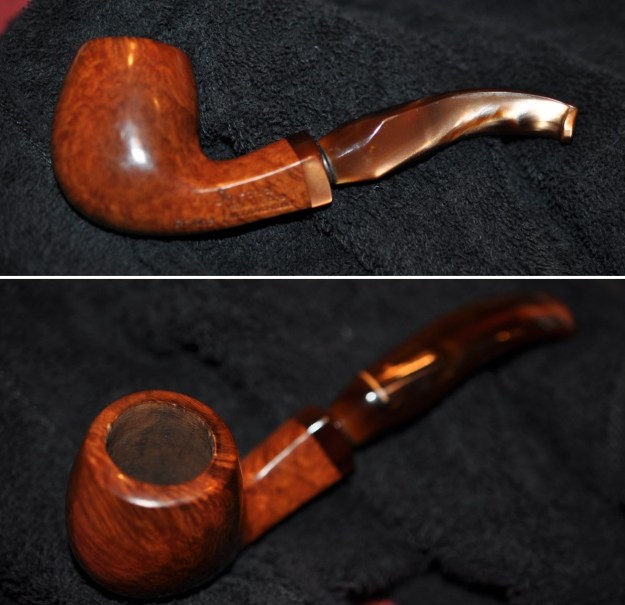
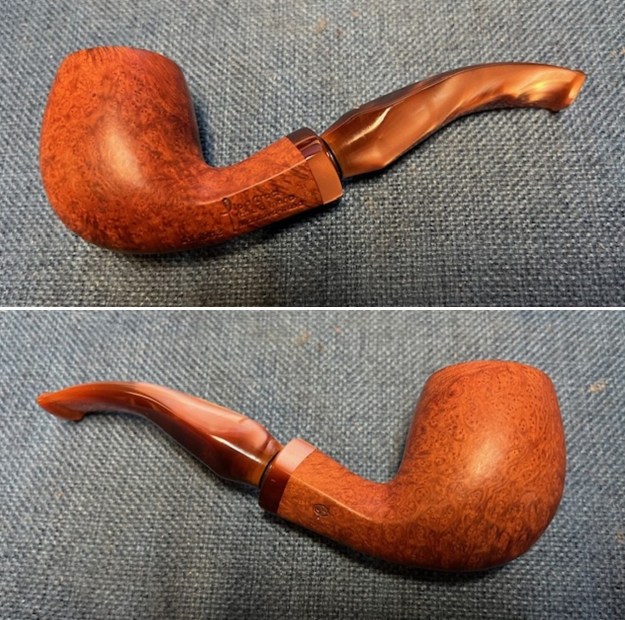
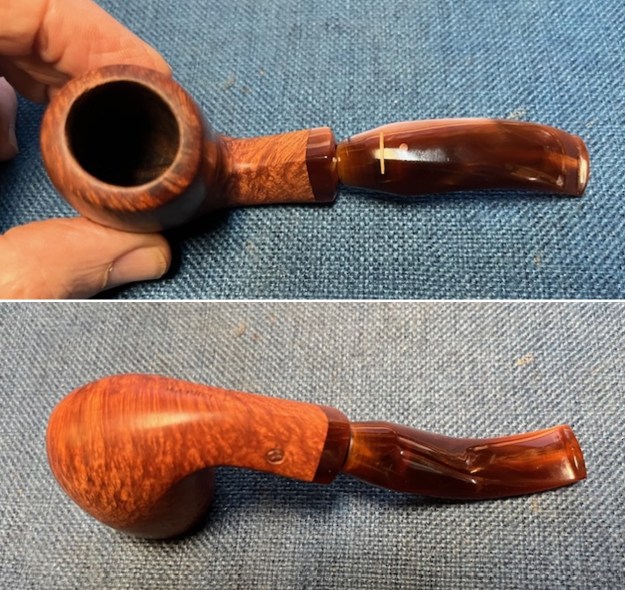
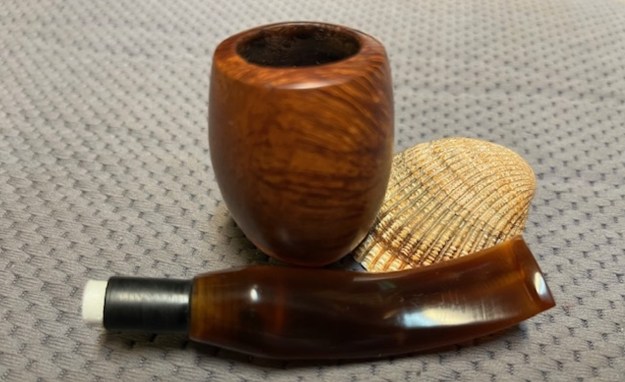
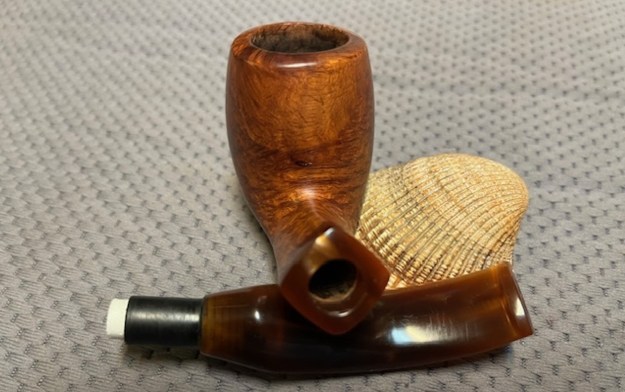
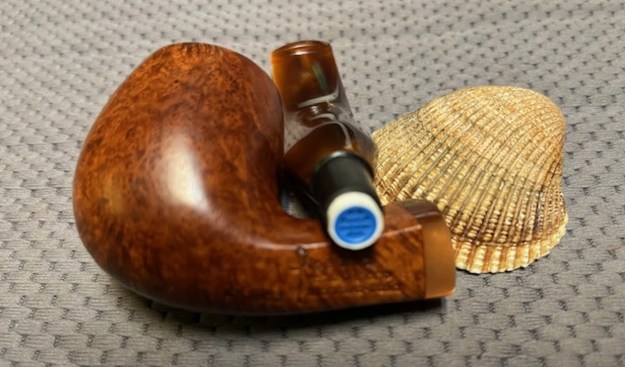
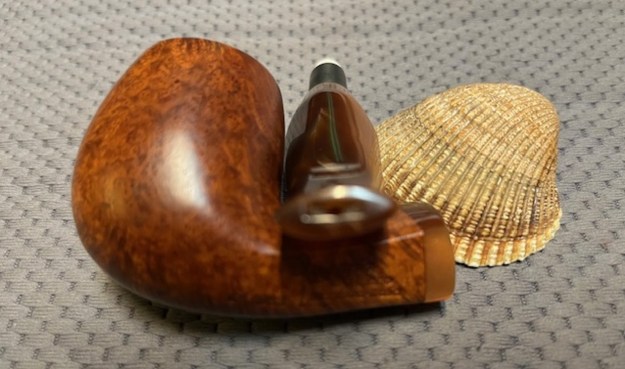
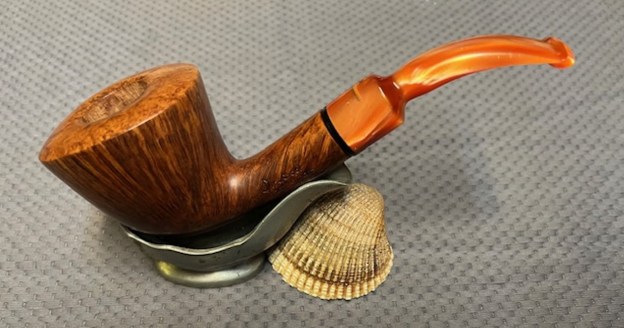
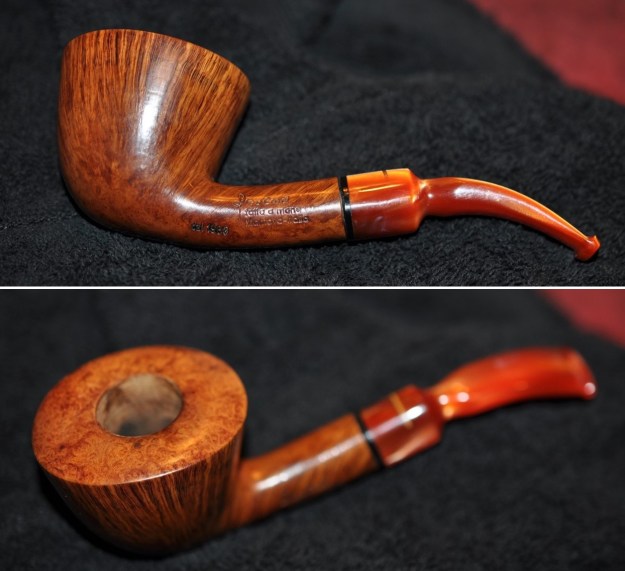
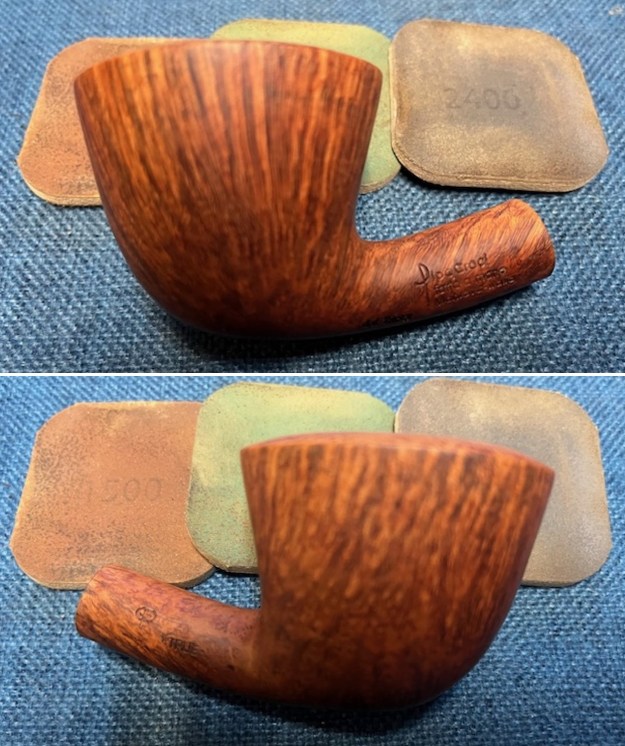
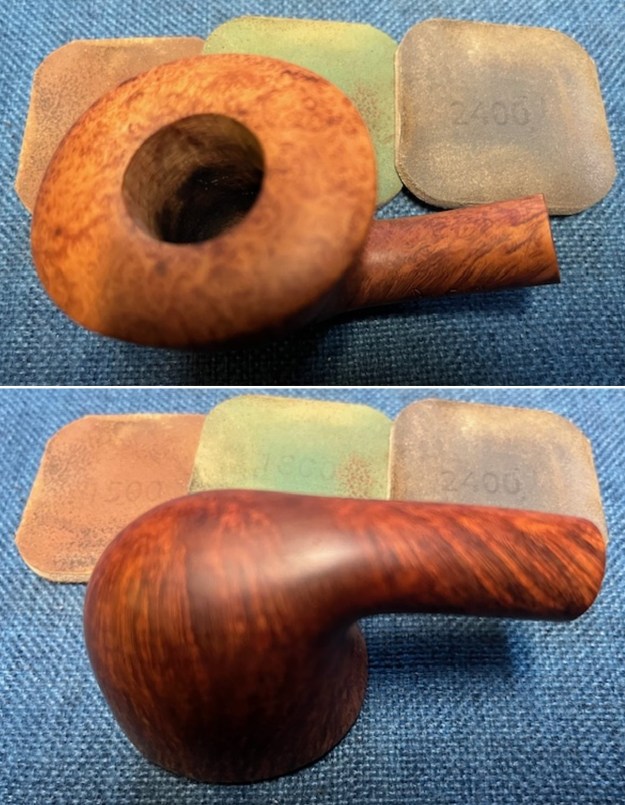
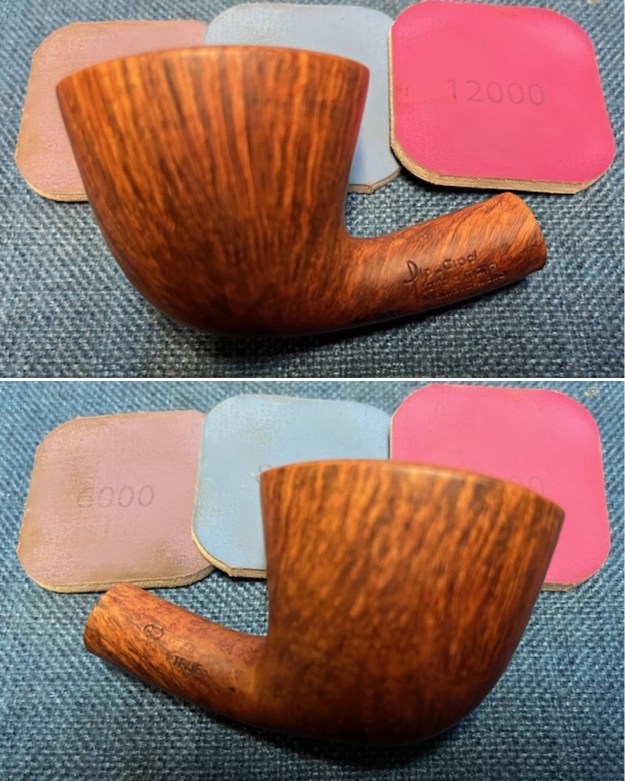
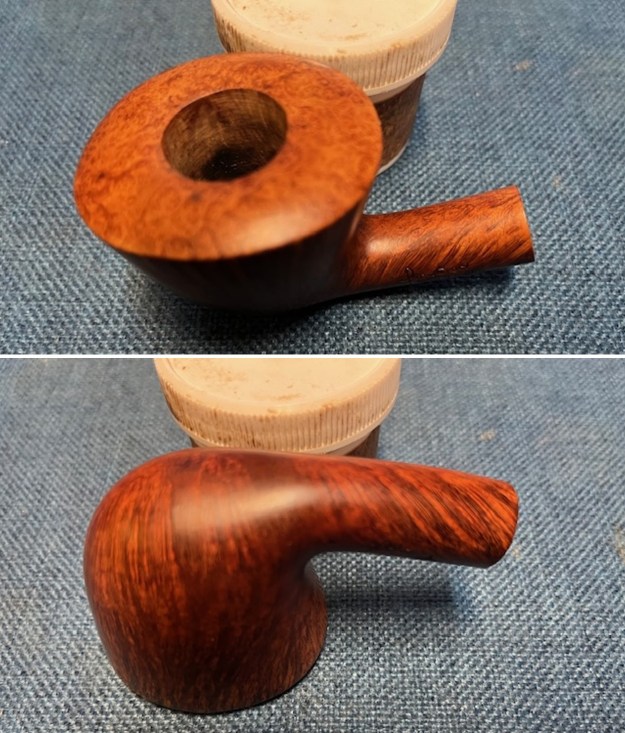
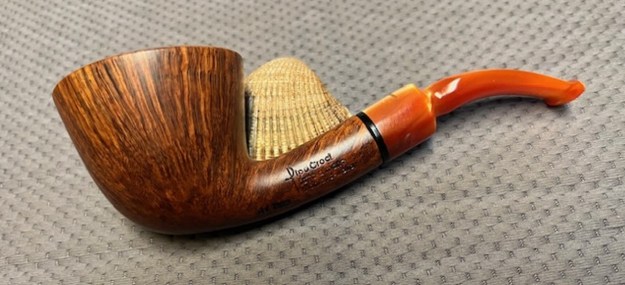
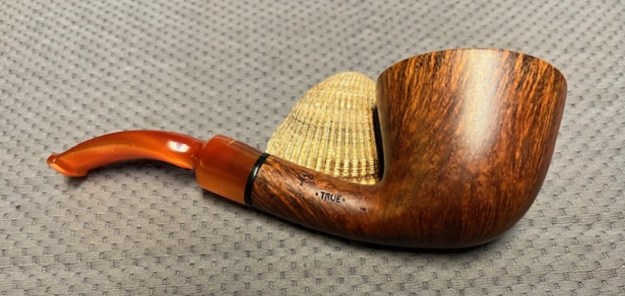
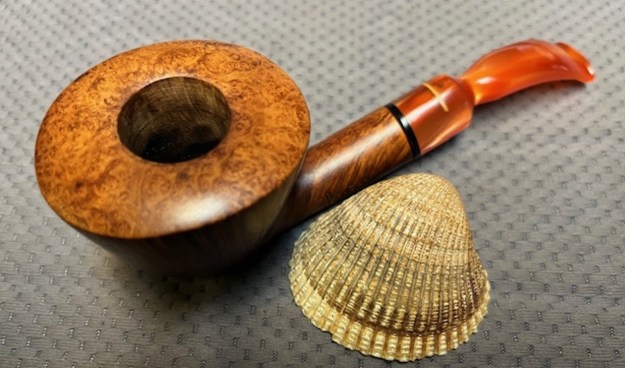
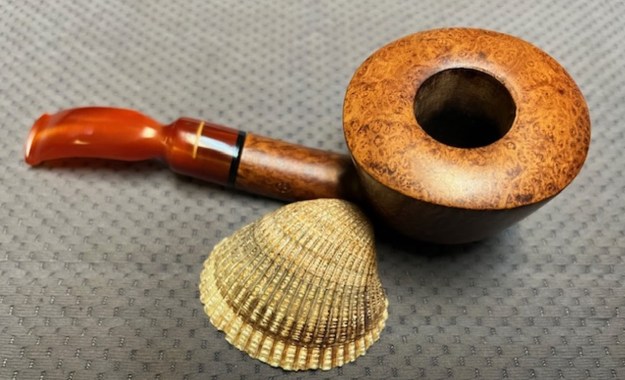
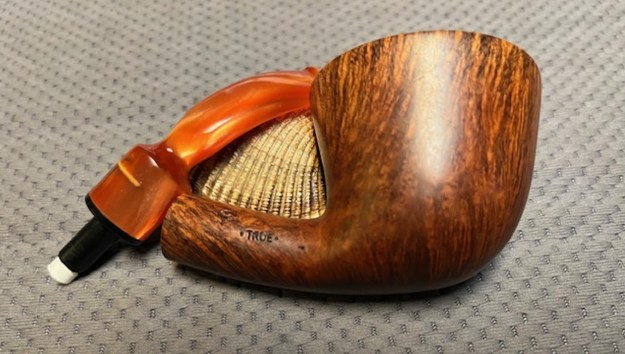
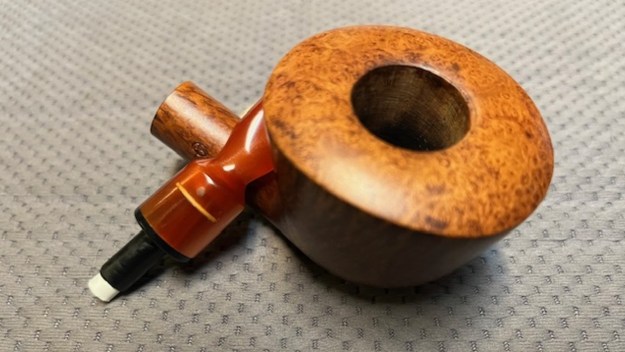
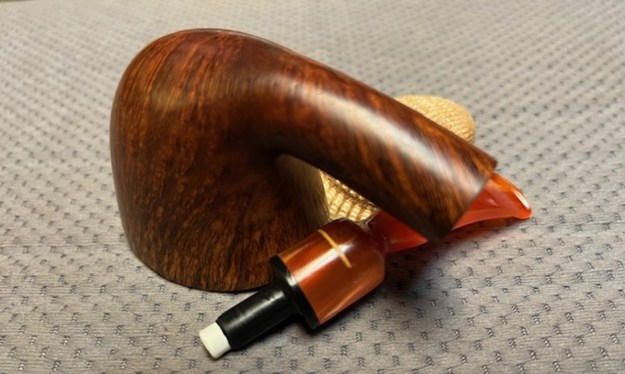
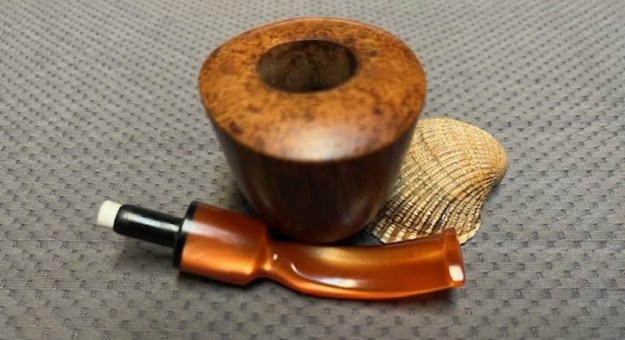
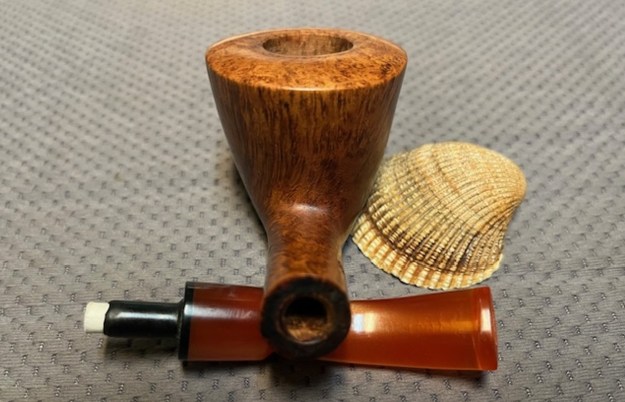
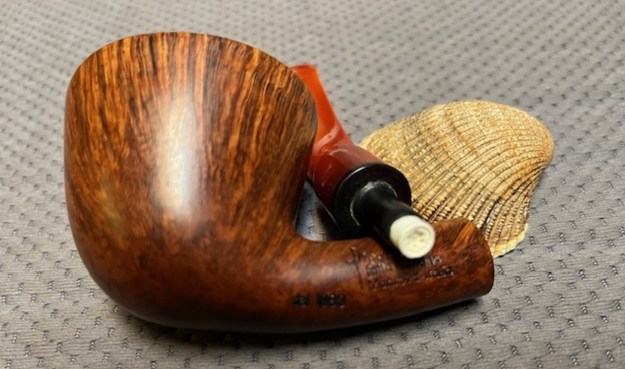
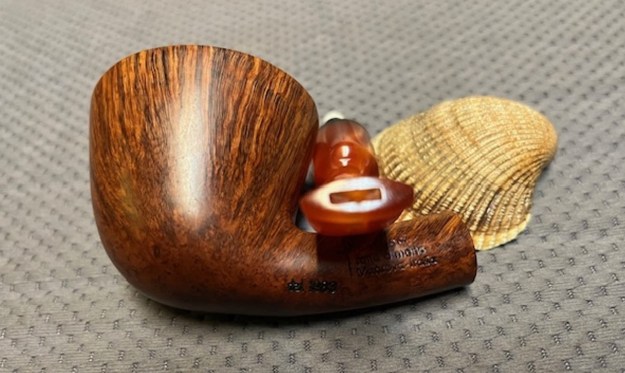
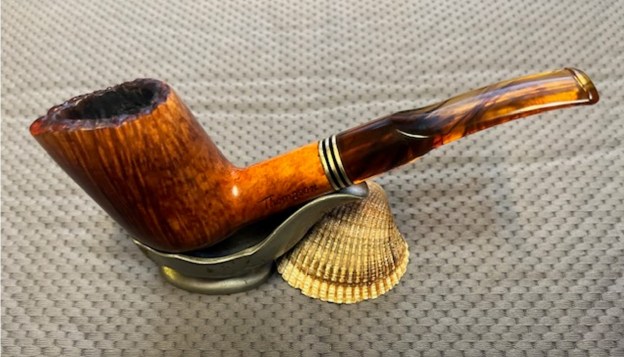
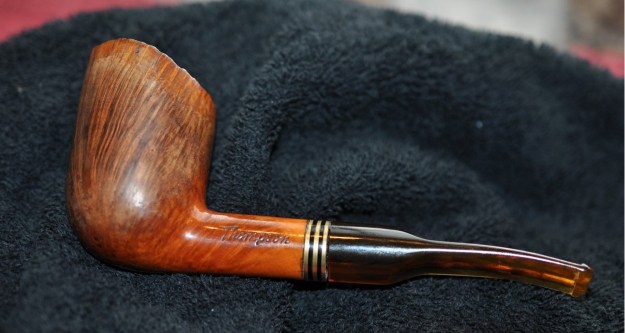
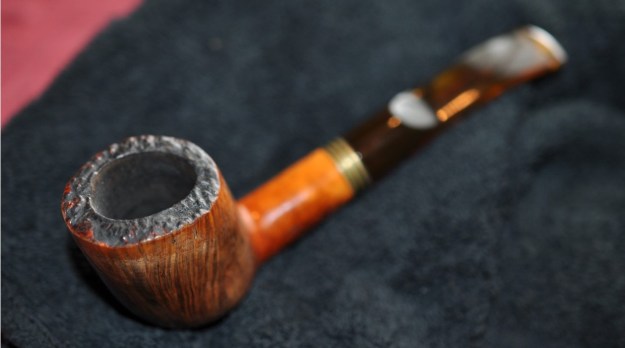
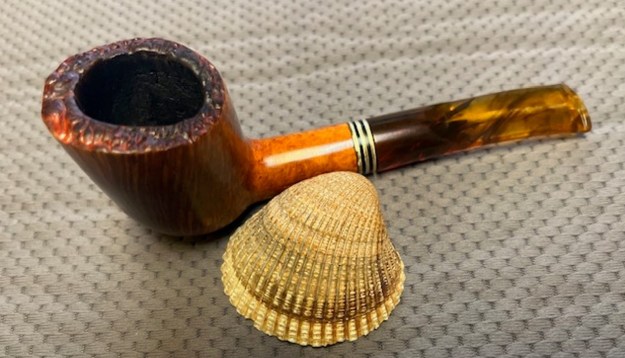
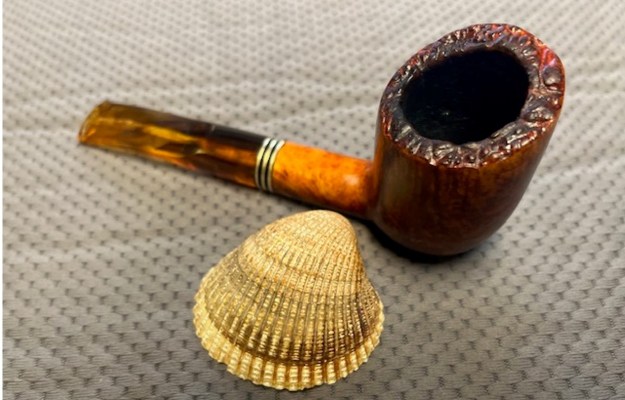
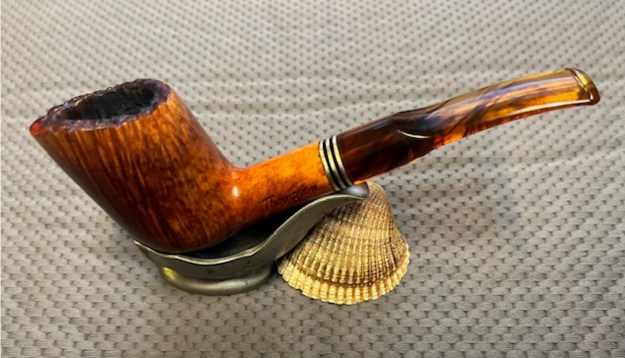
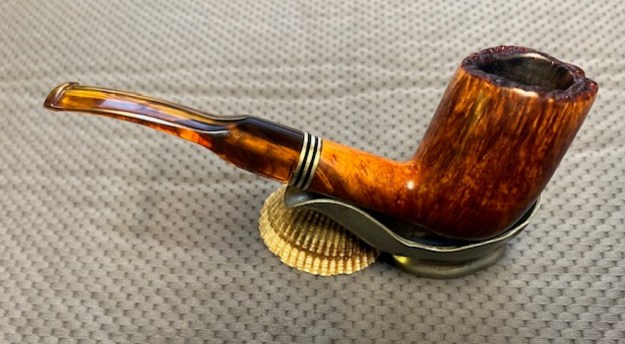
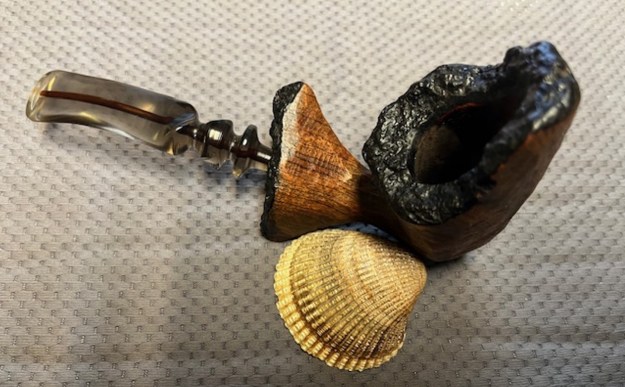
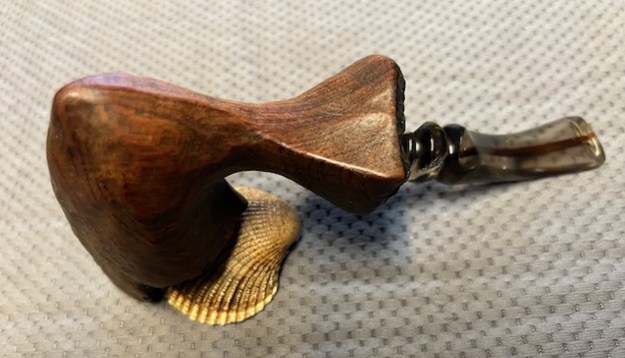
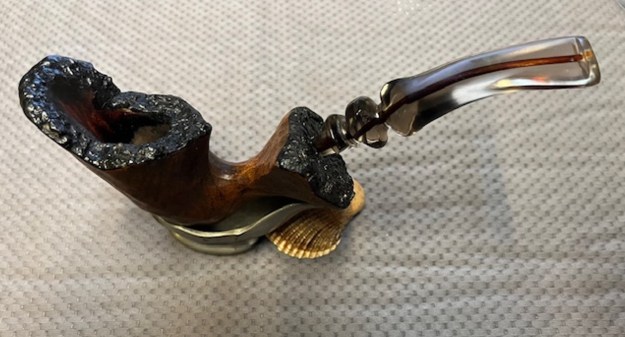
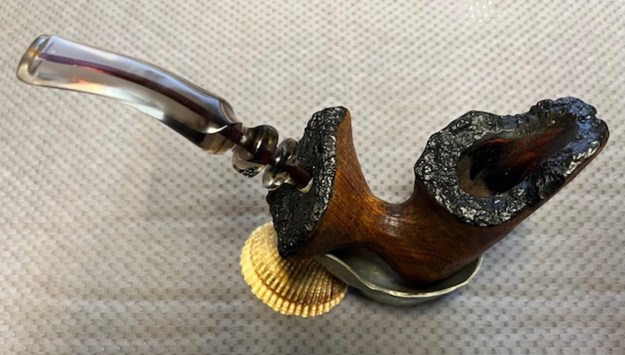
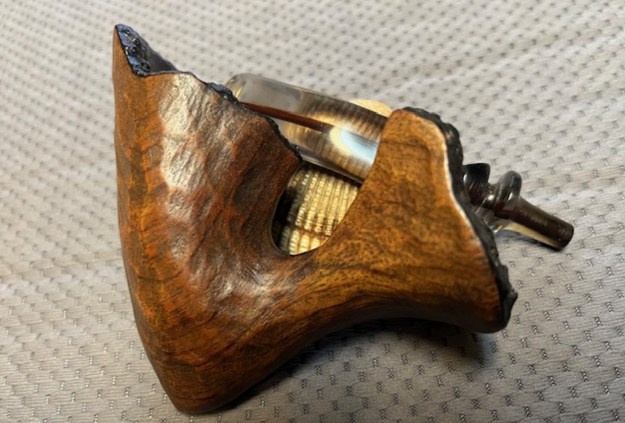
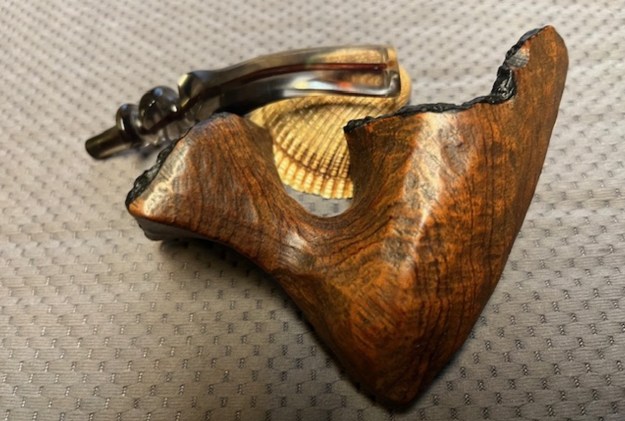
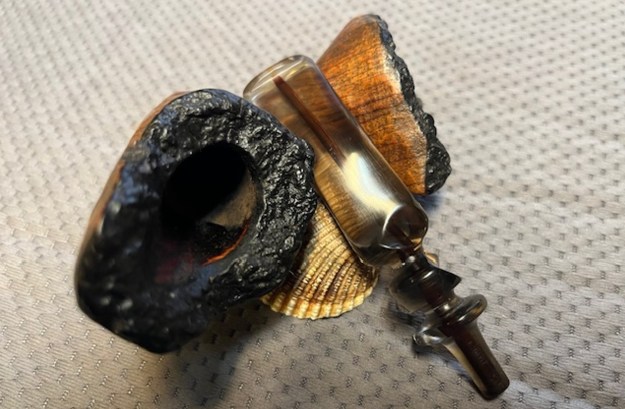
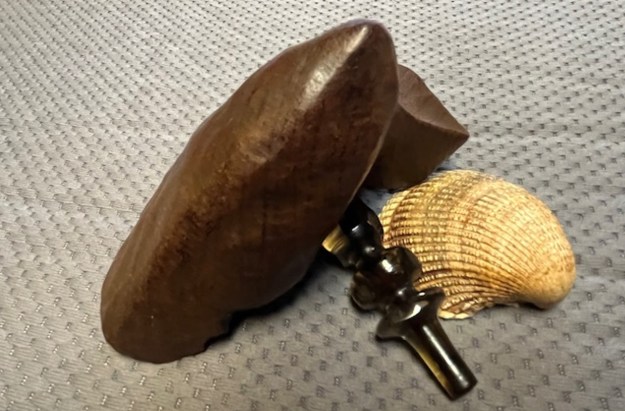
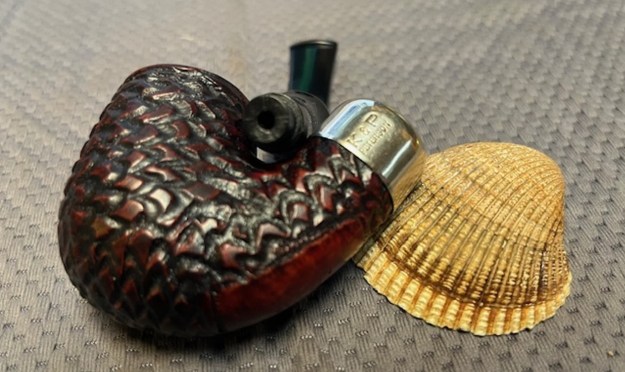
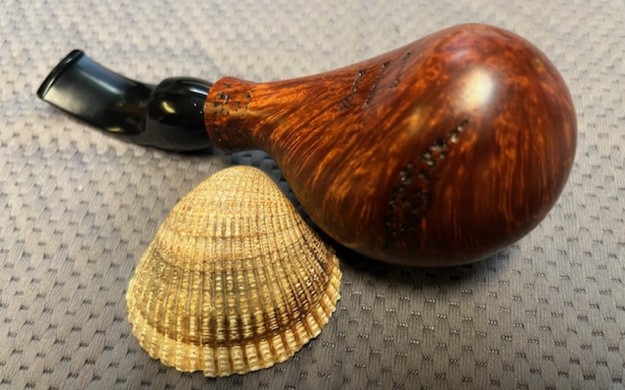
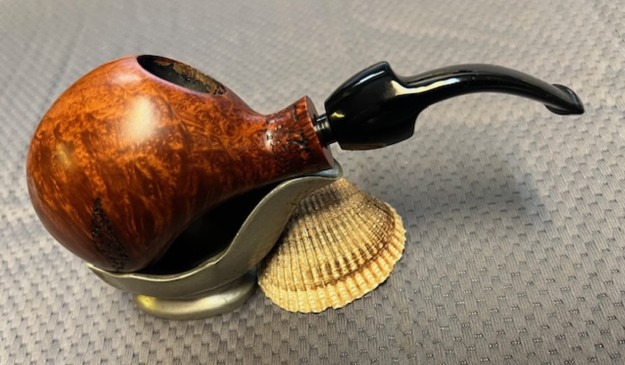
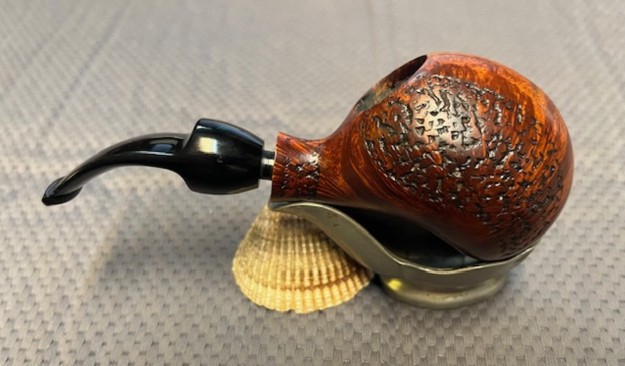
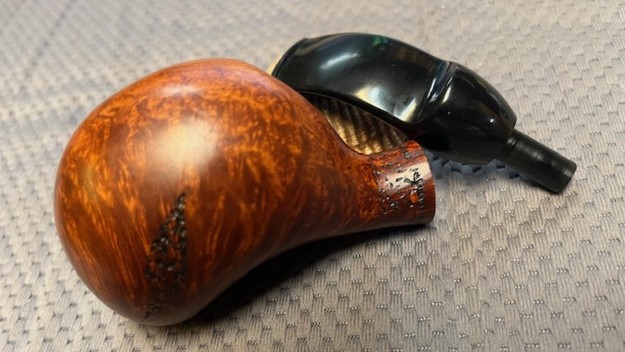
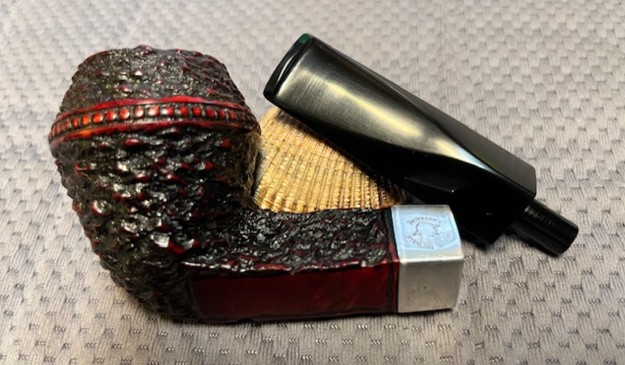
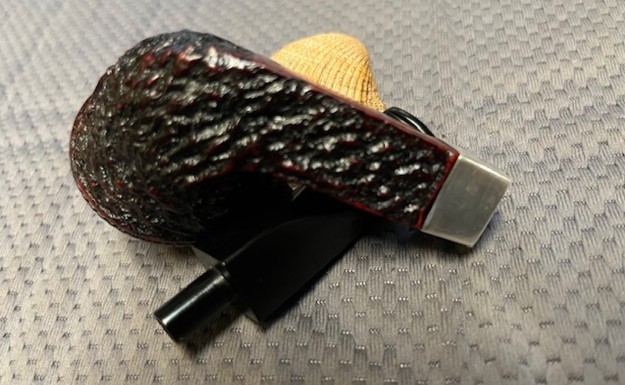
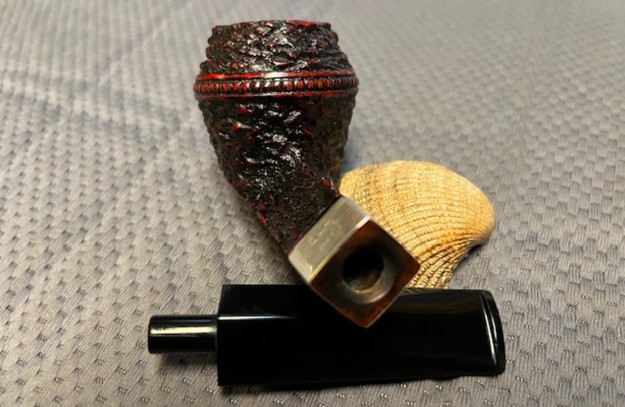
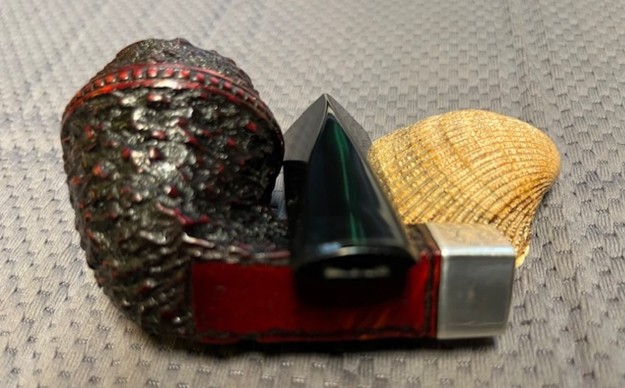
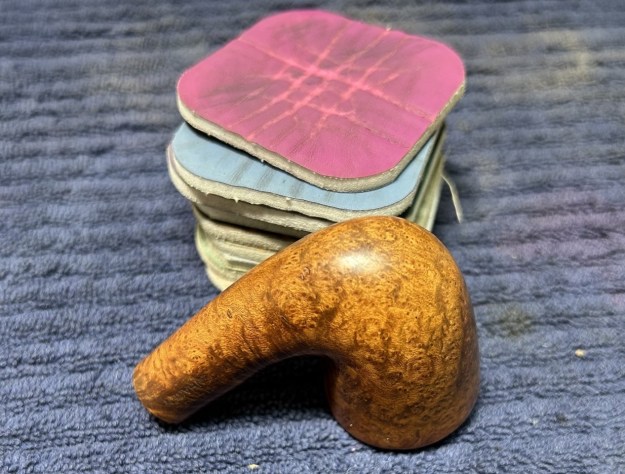
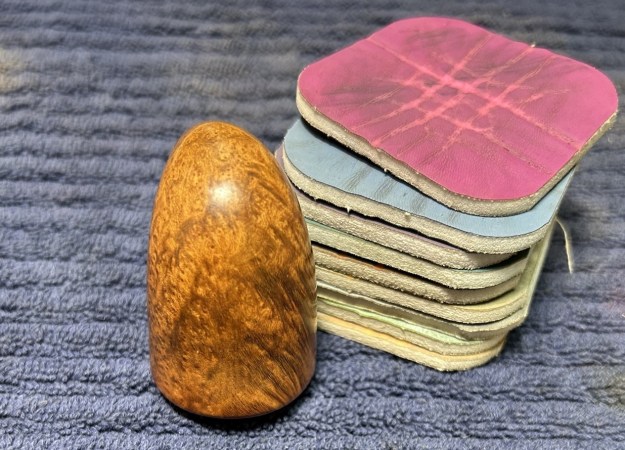
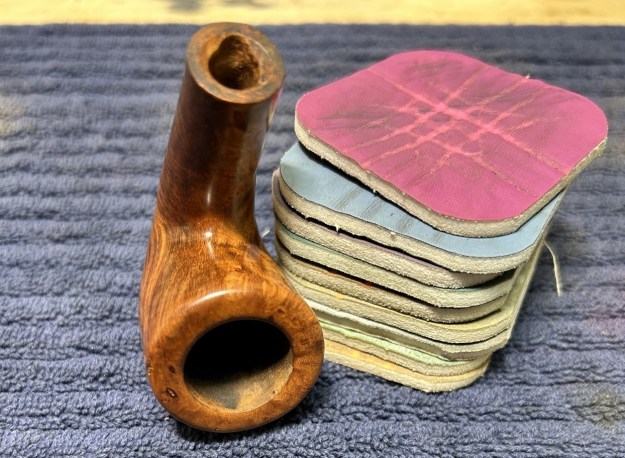
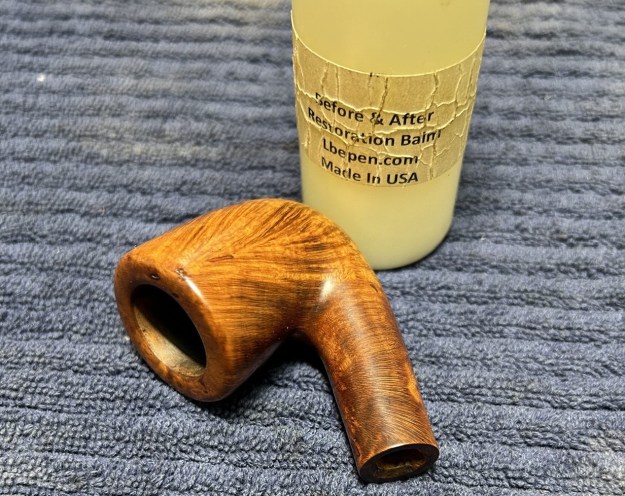
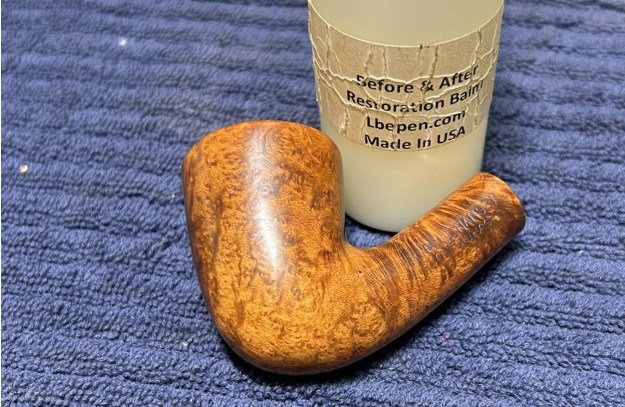
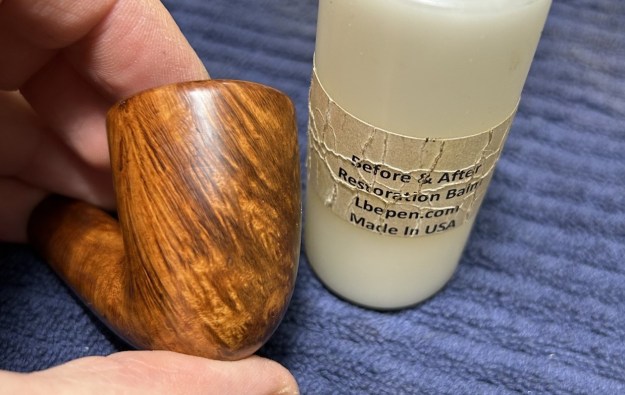
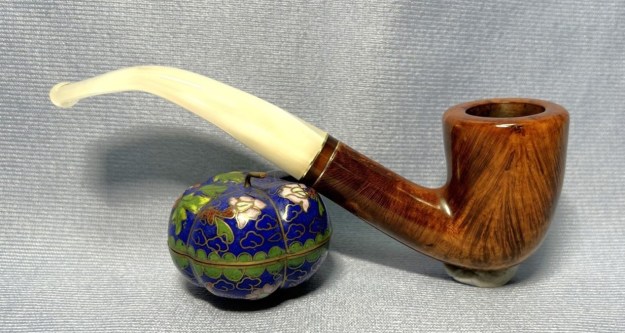
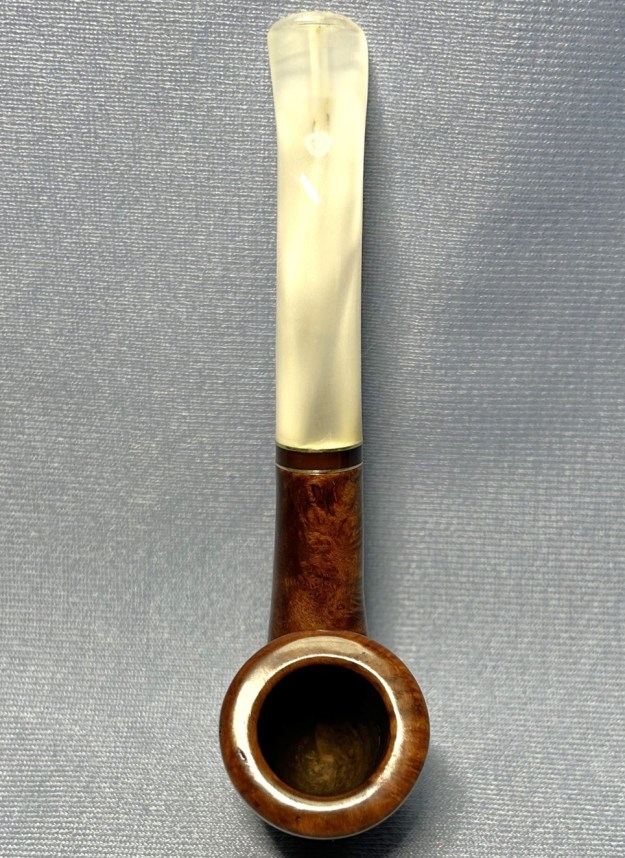
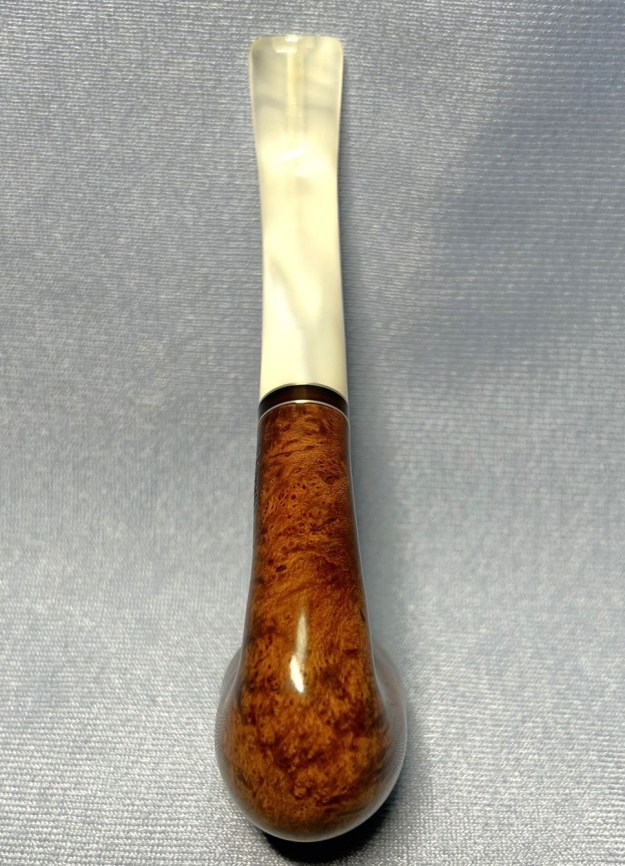
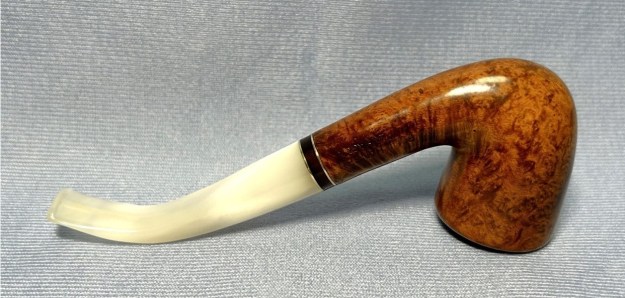
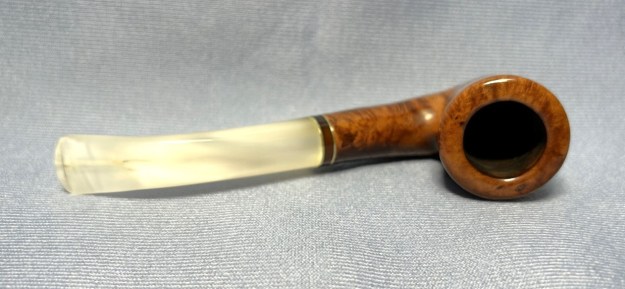
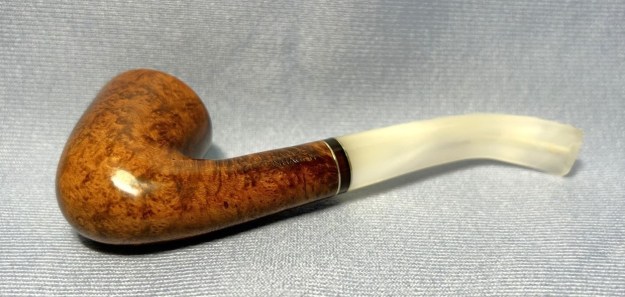
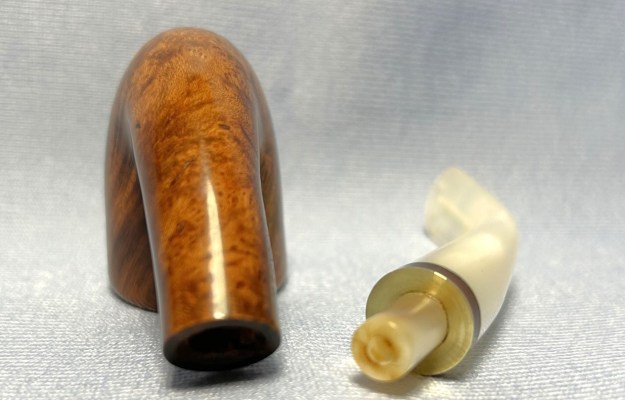
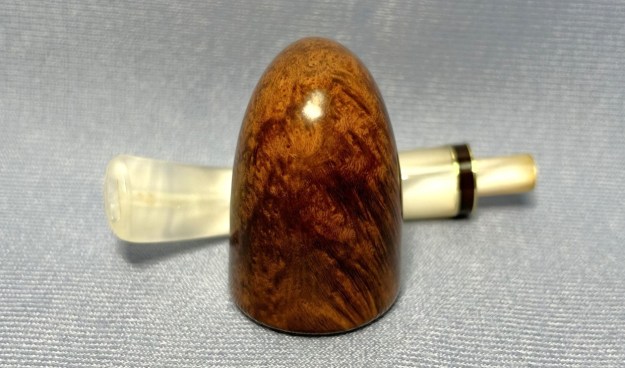
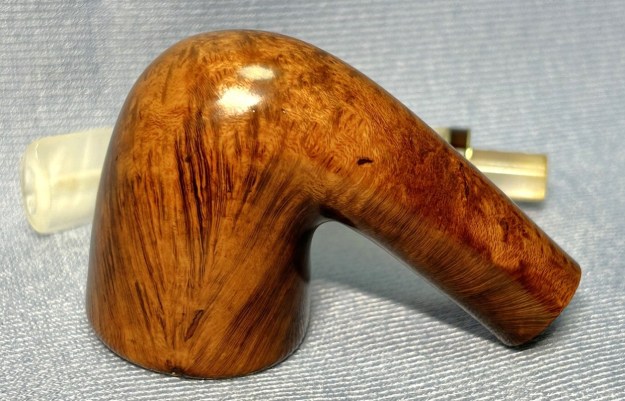
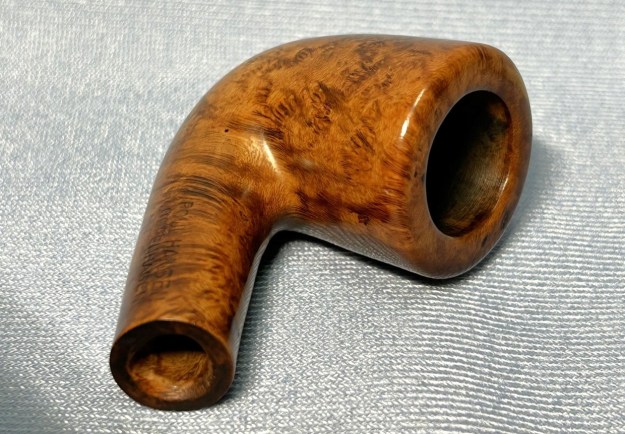
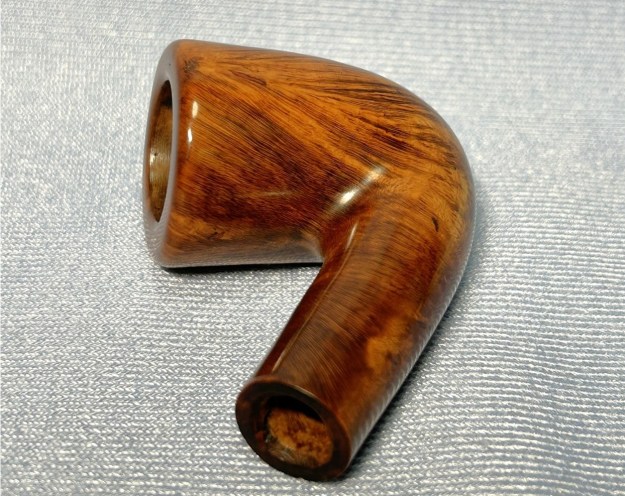
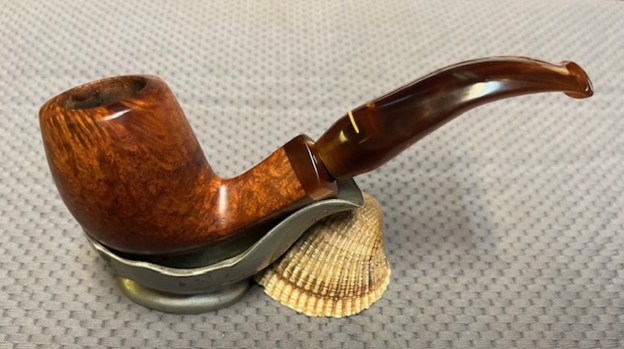
Restemming and Reclaiming a Hand Carved Odd Freehand


by Steve Laug

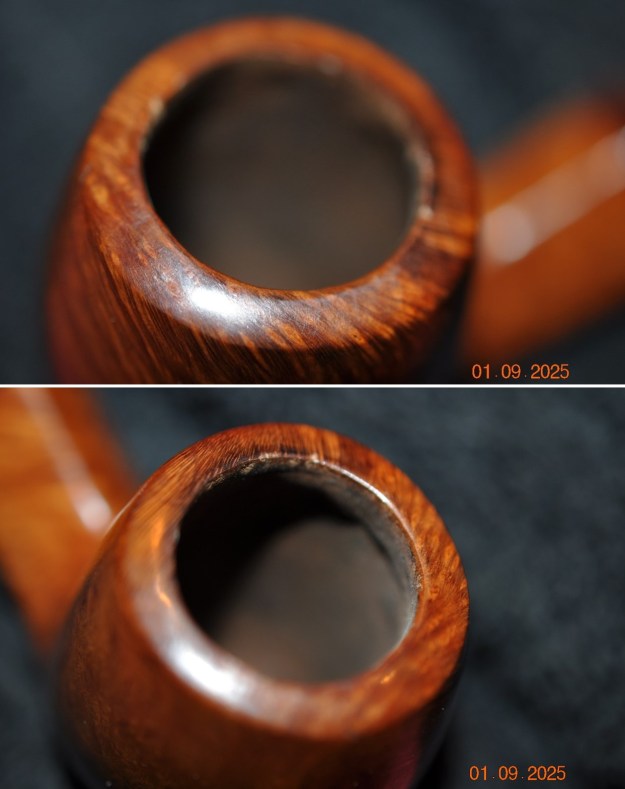
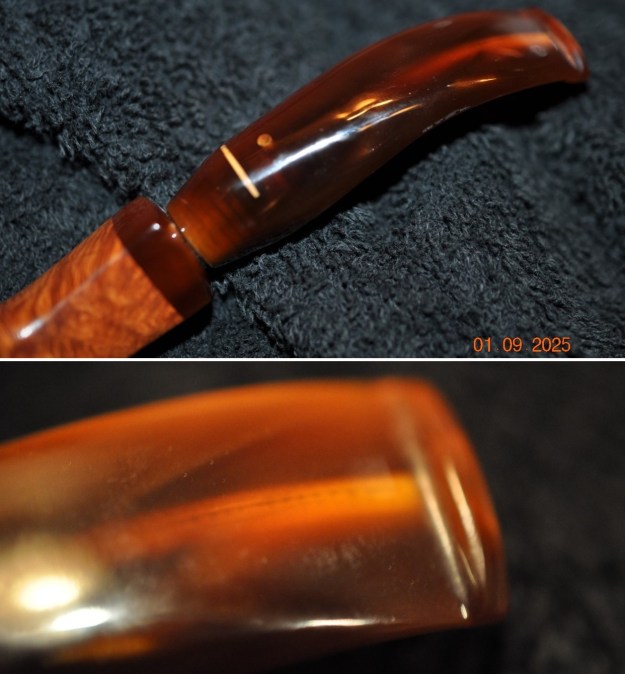
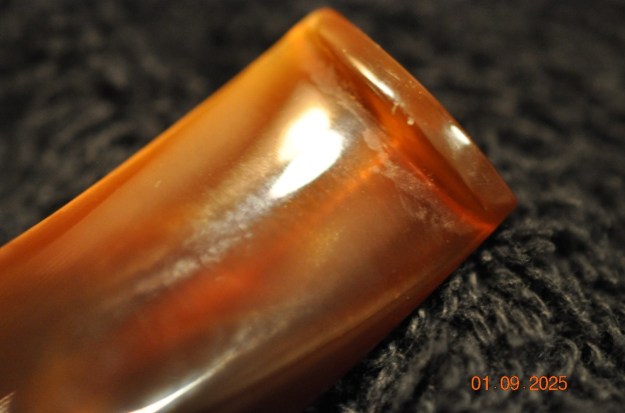
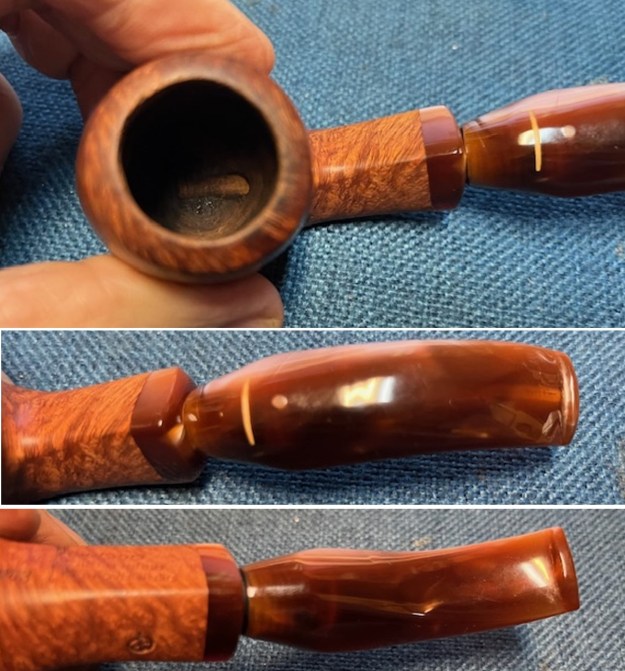
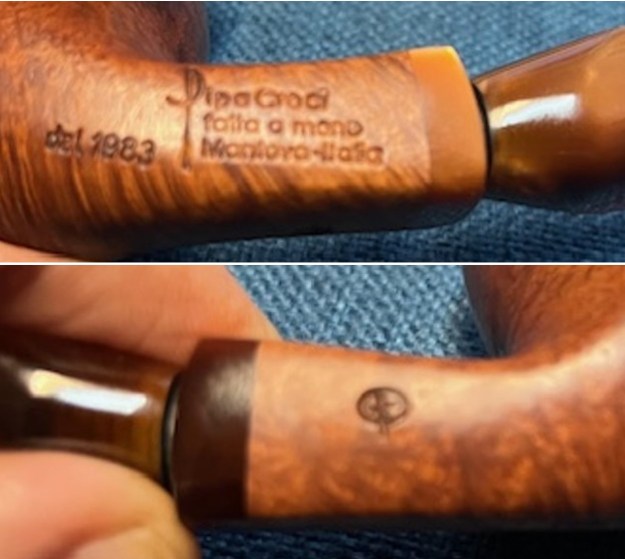
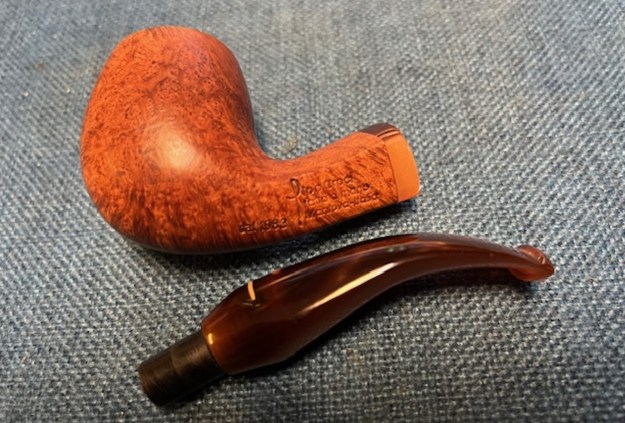
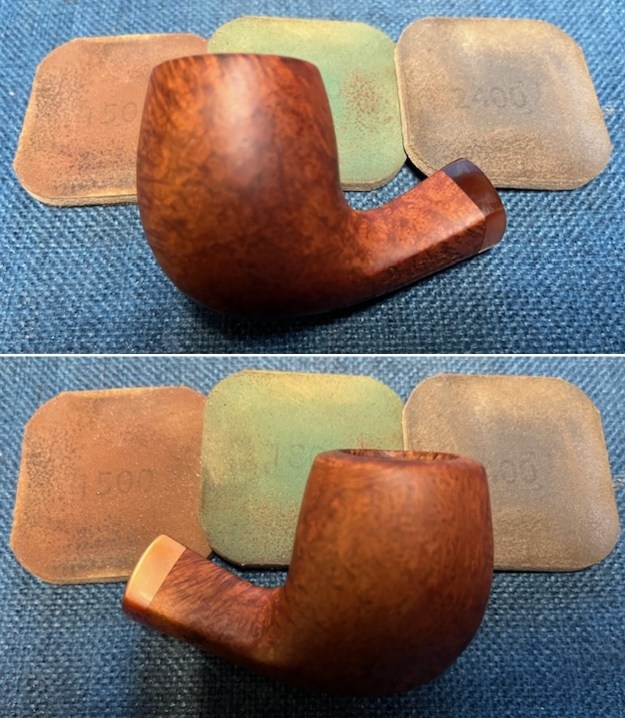
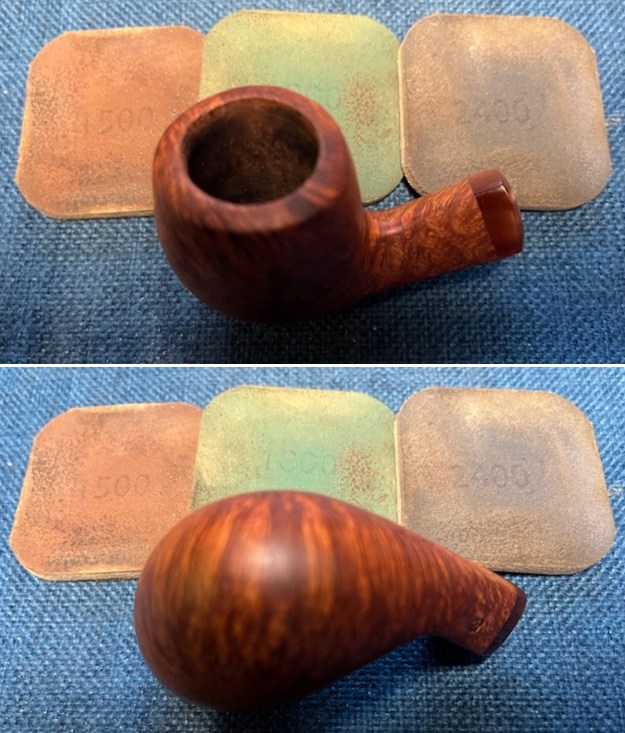
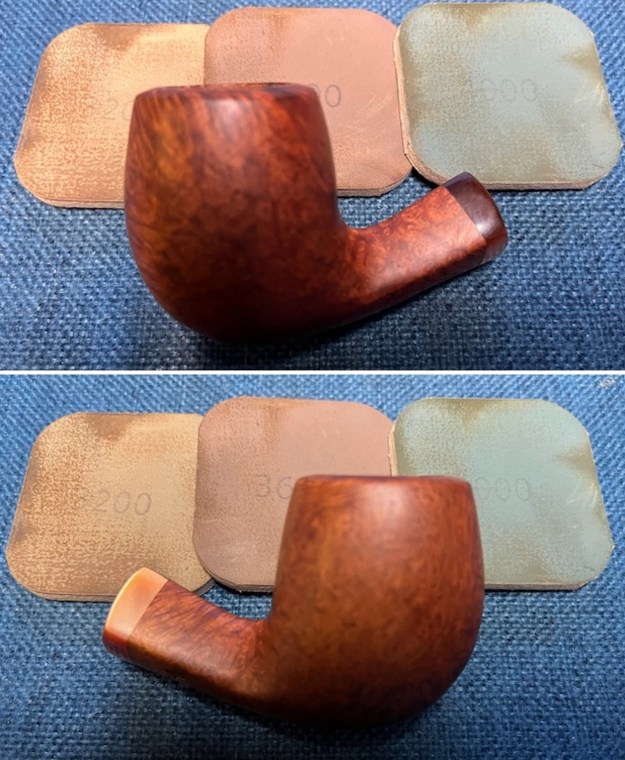
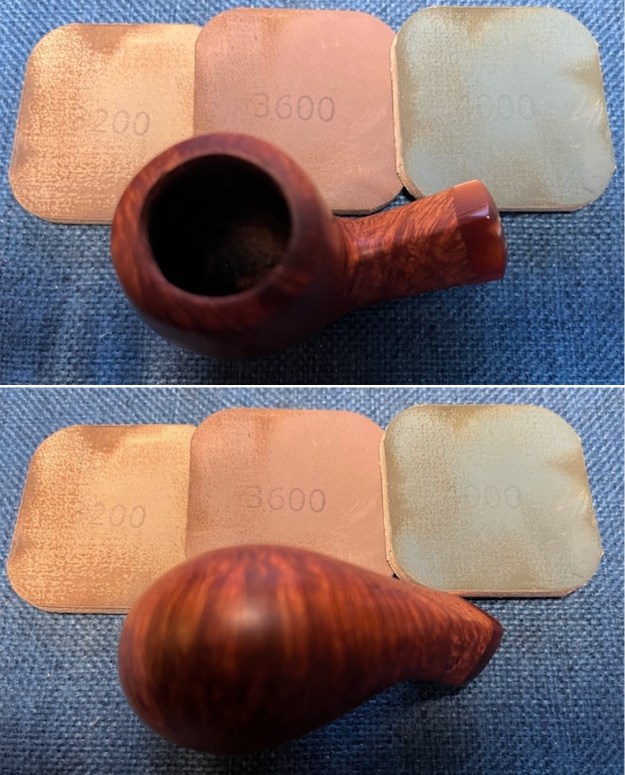
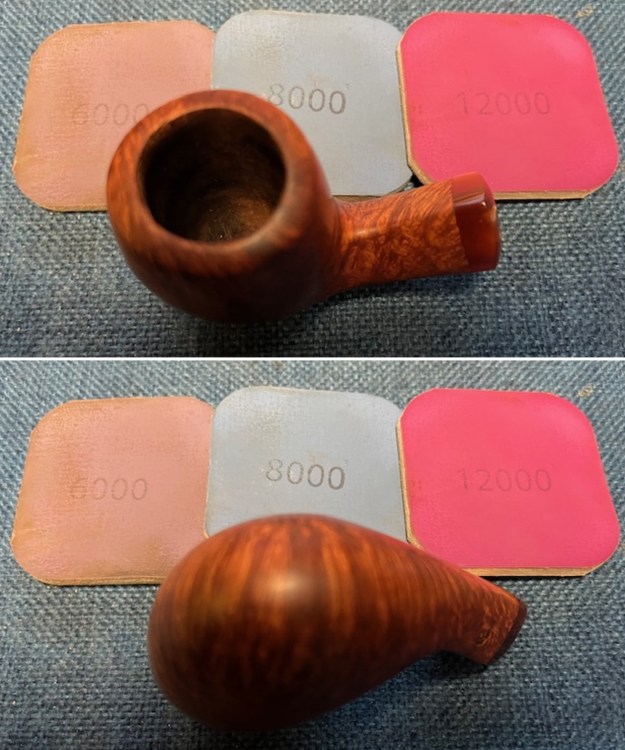
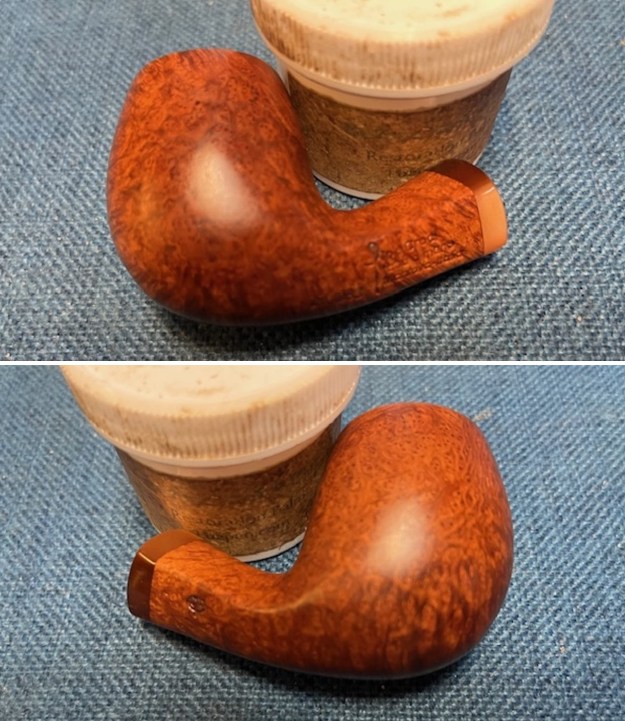
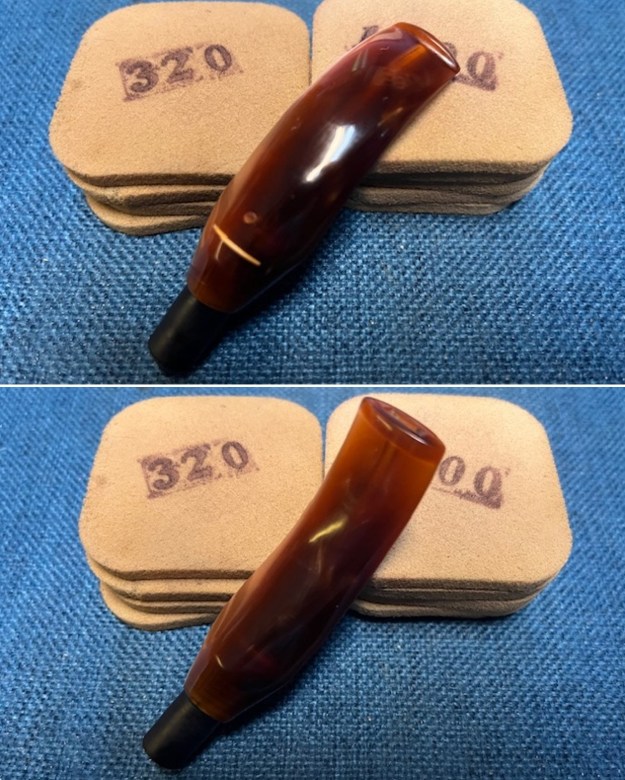
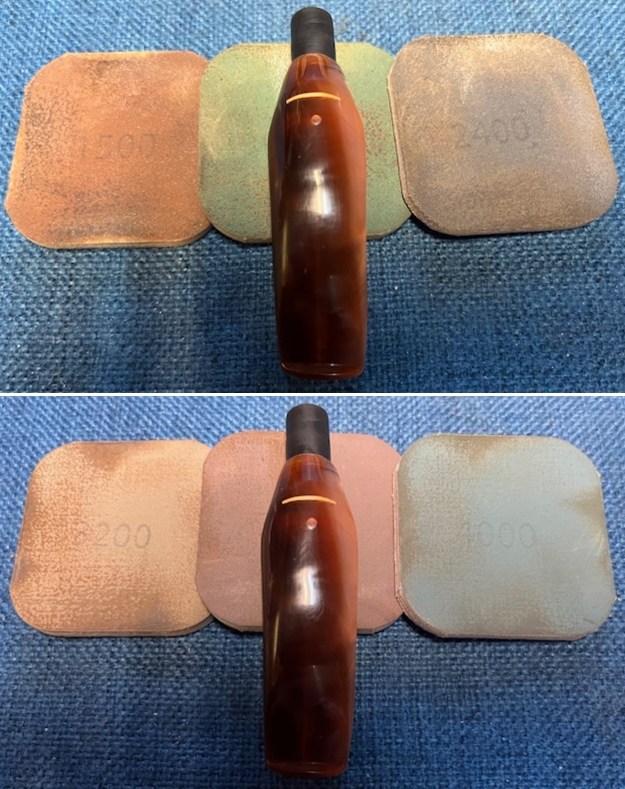
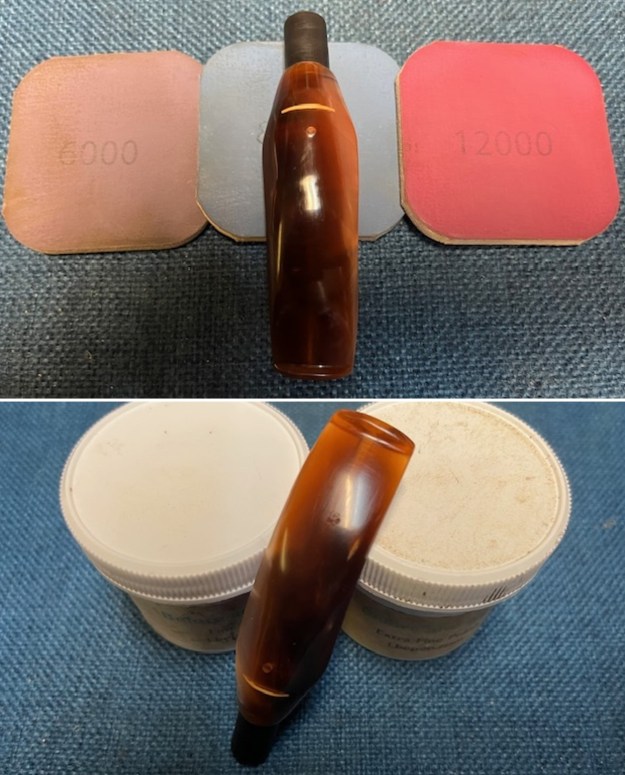
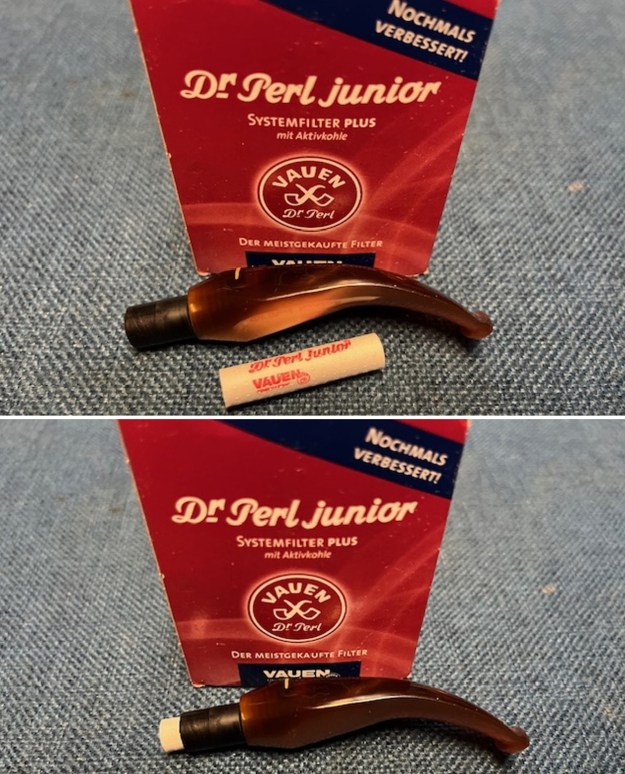
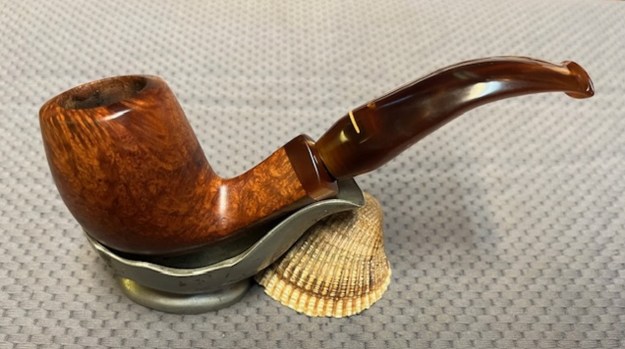
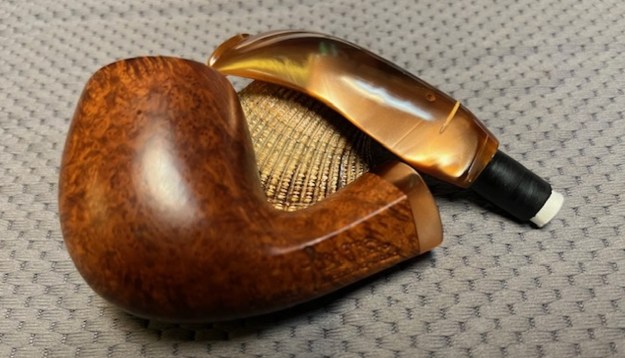
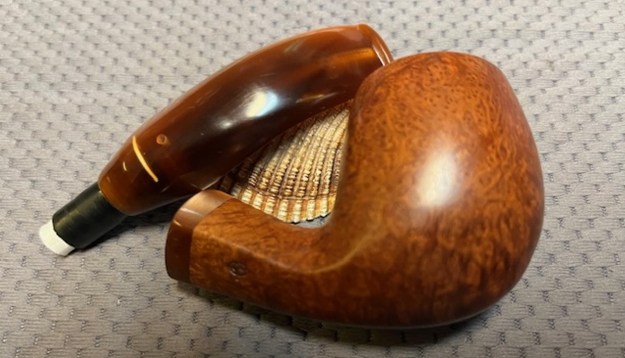
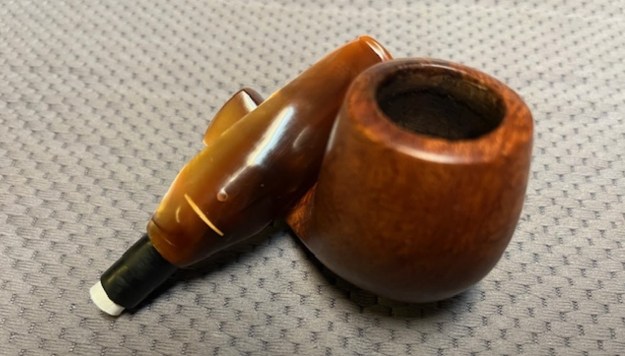
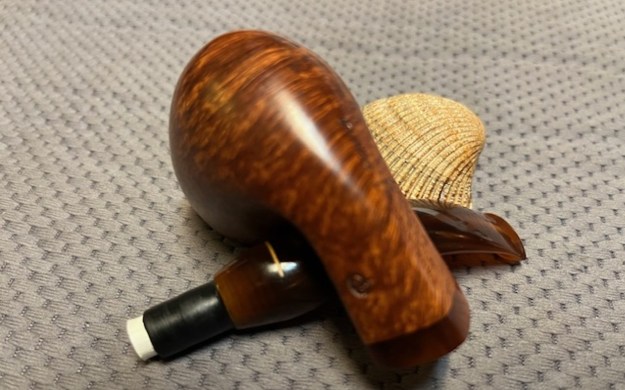
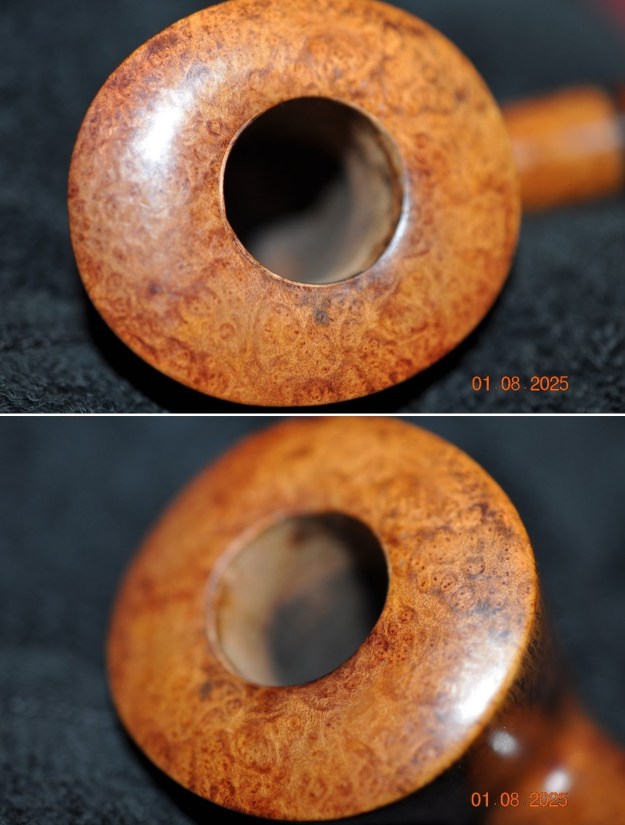
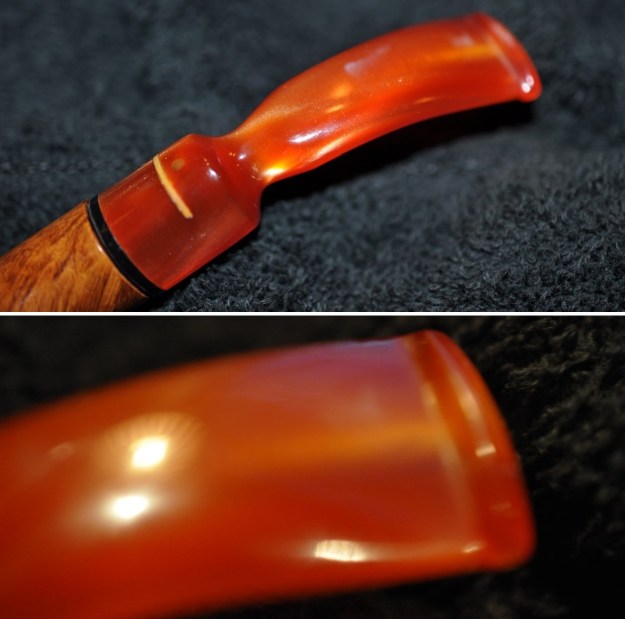
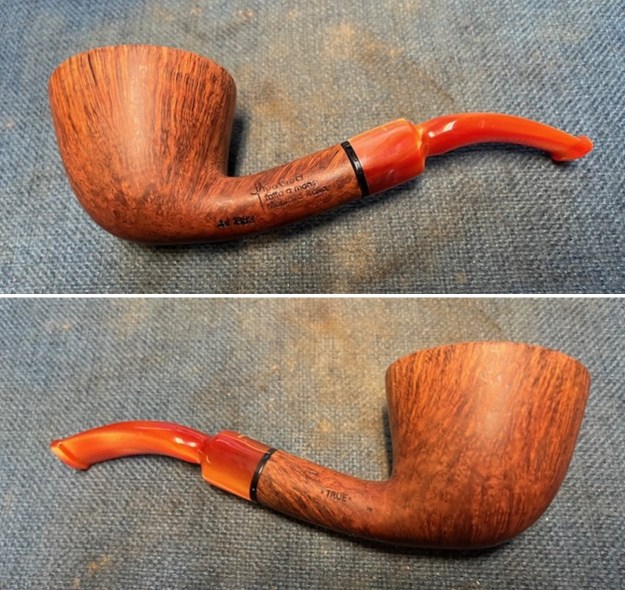
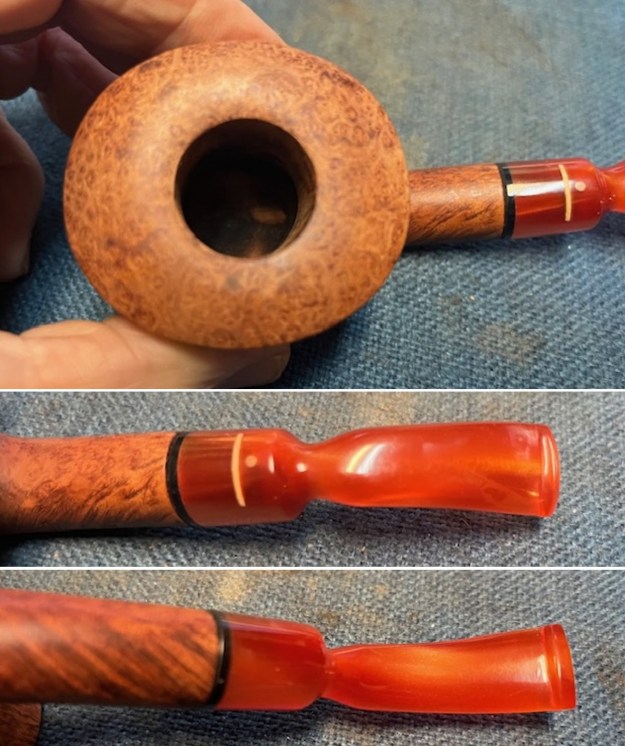
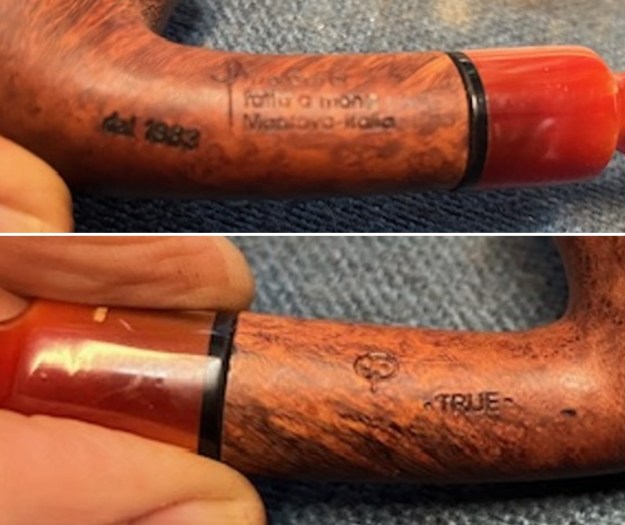
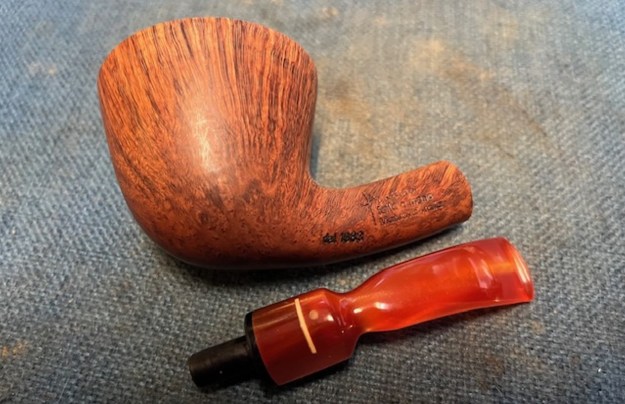
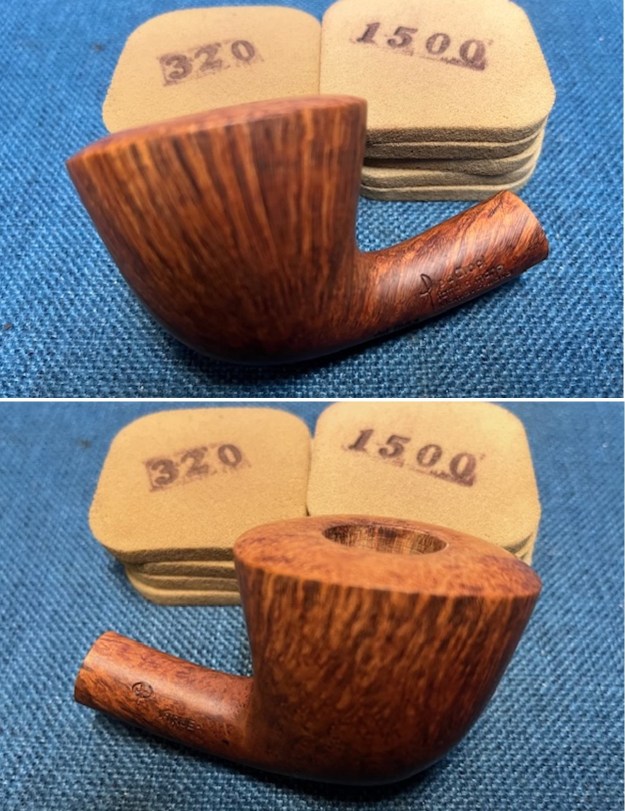
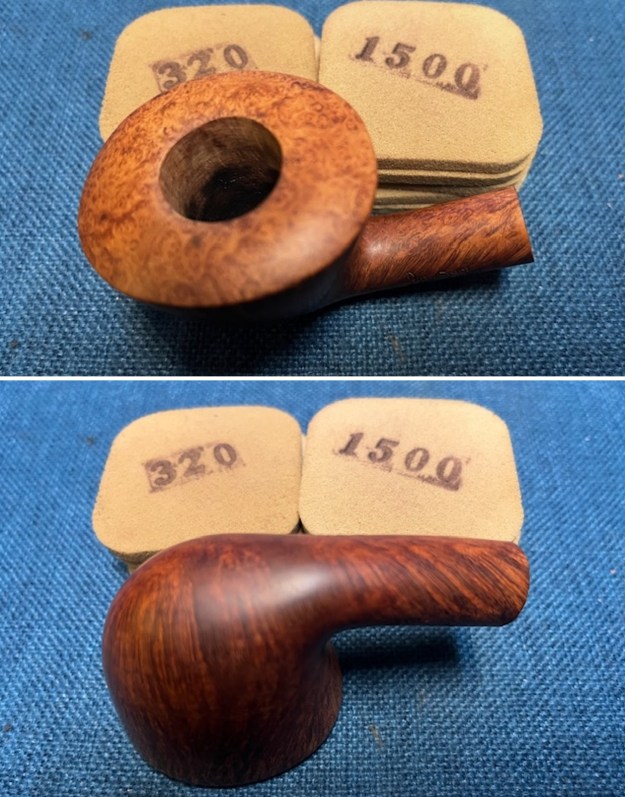
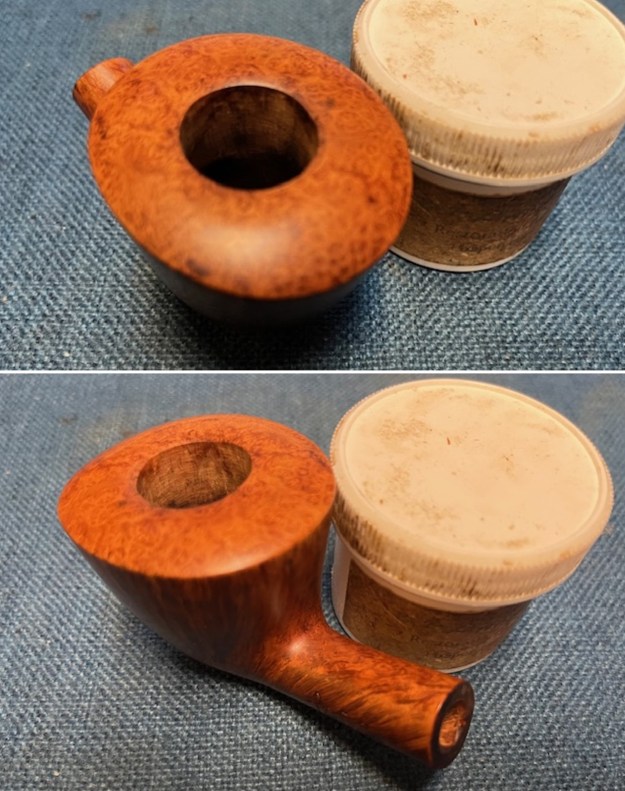
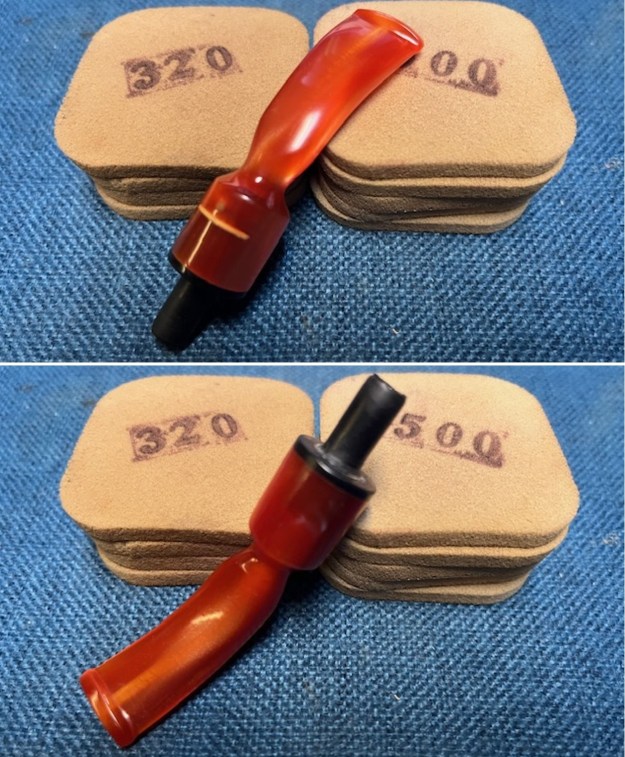
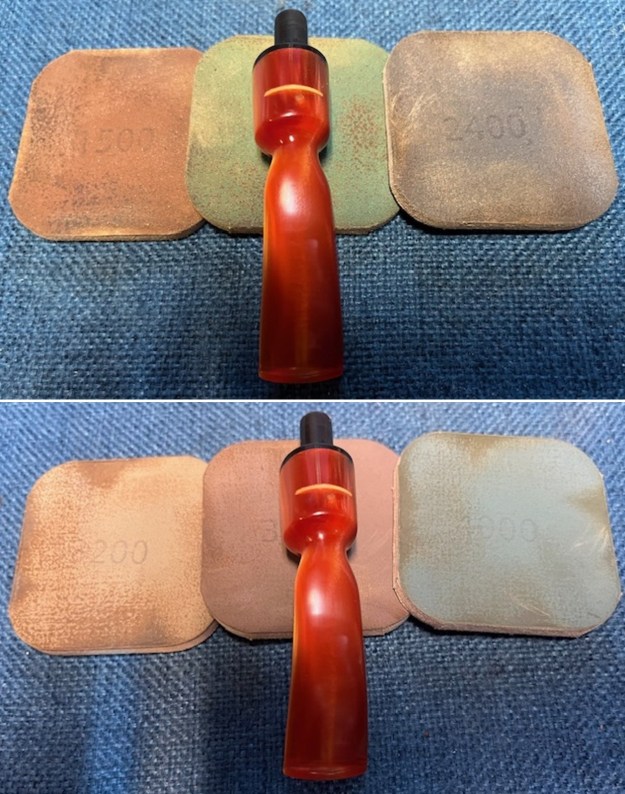
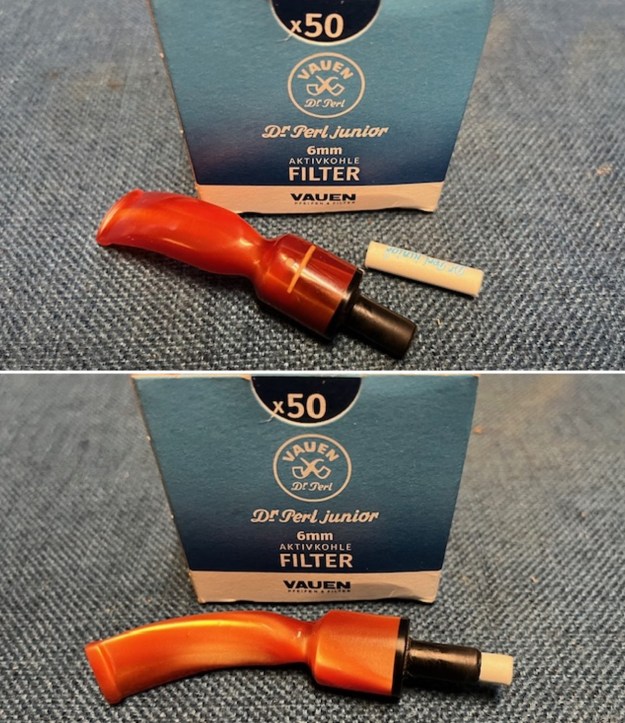
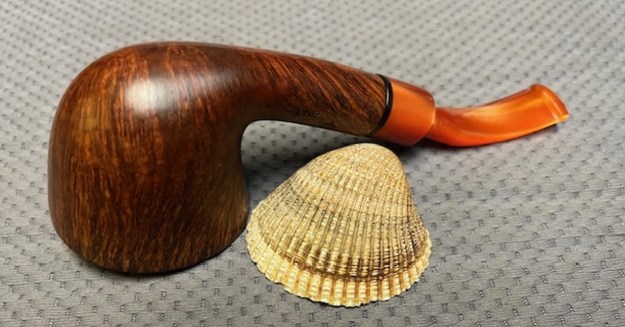
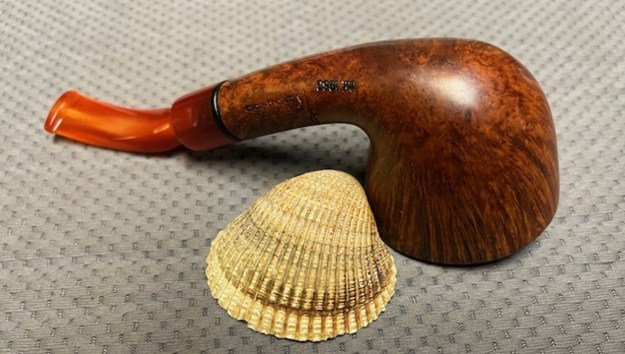
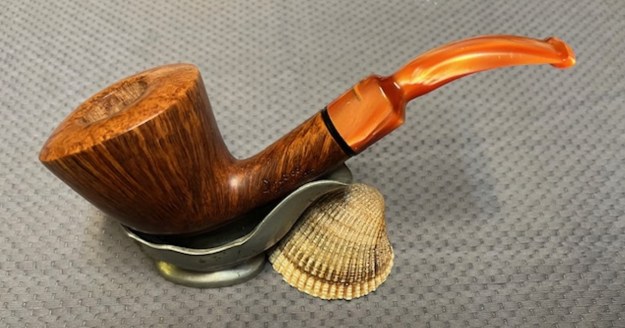
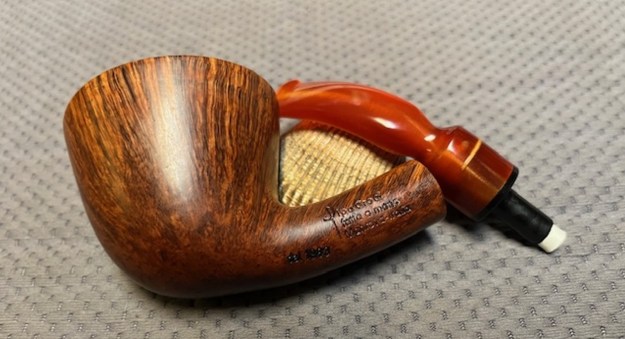
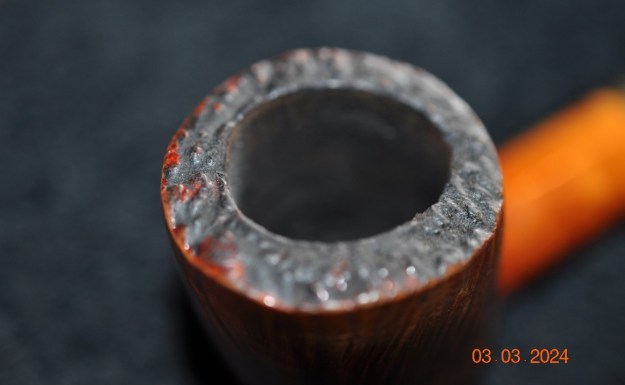
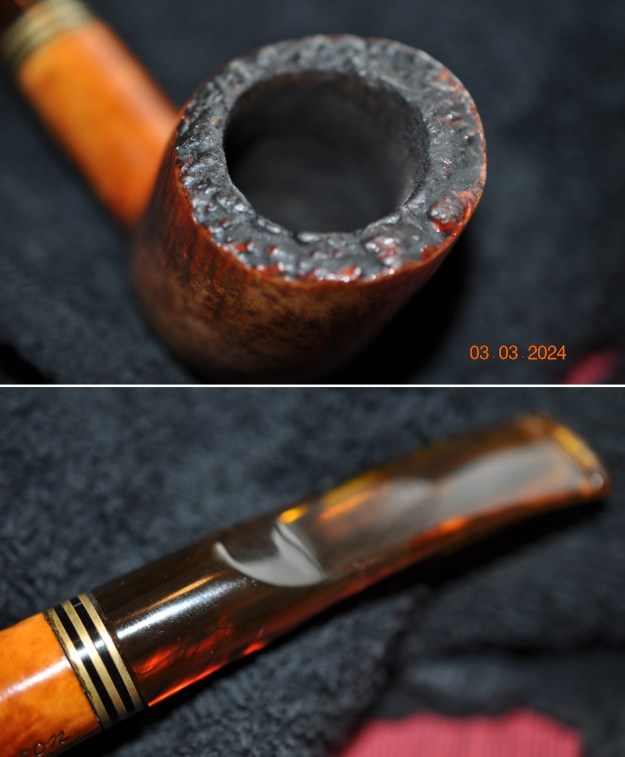
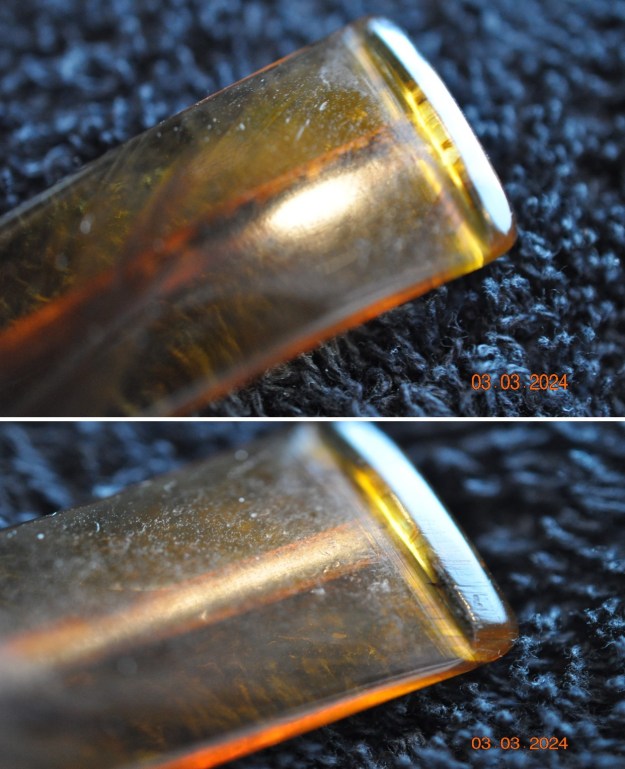
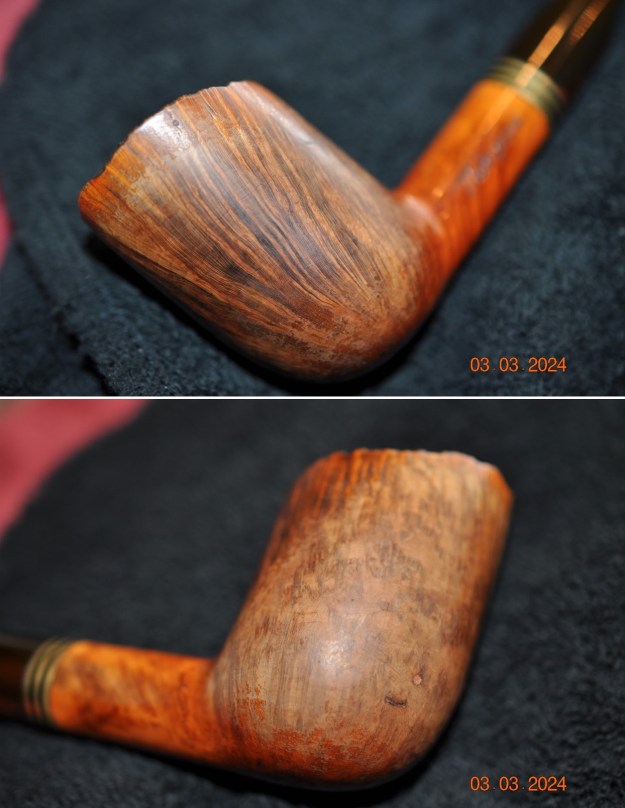
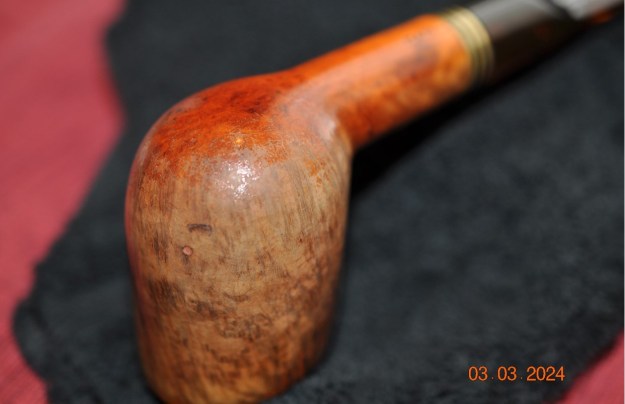
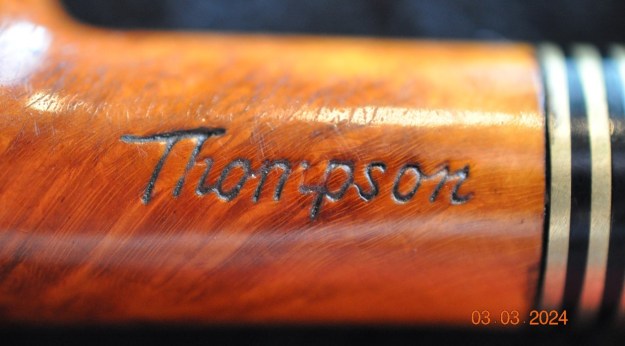
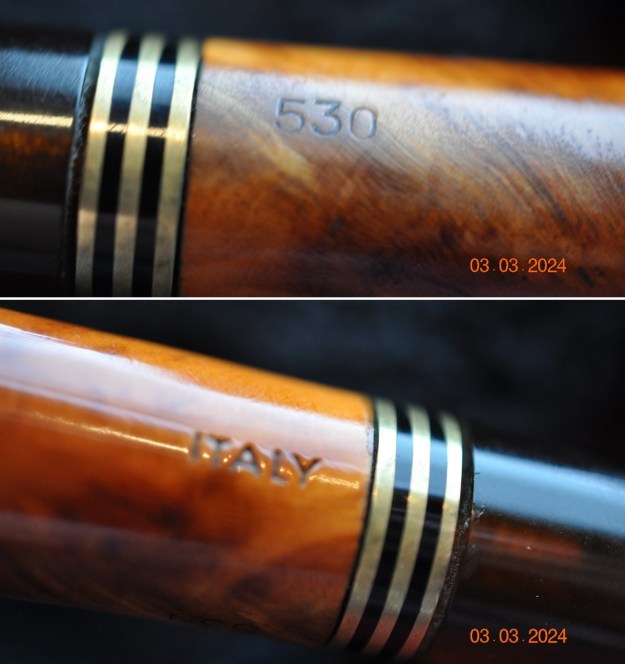
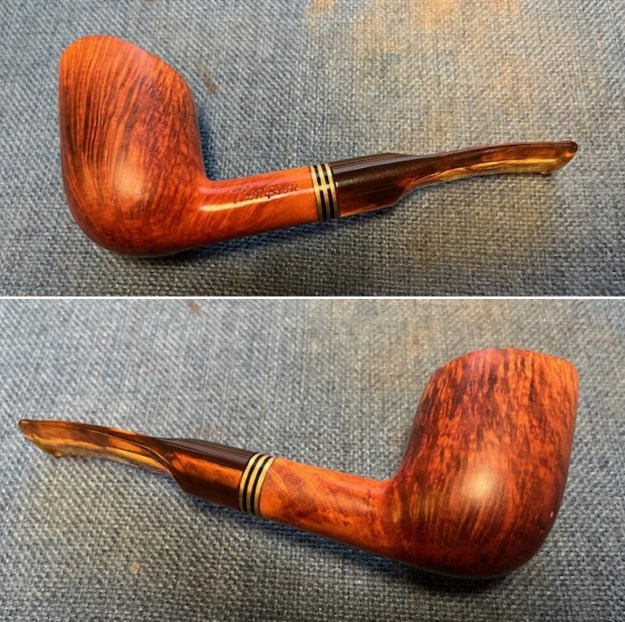
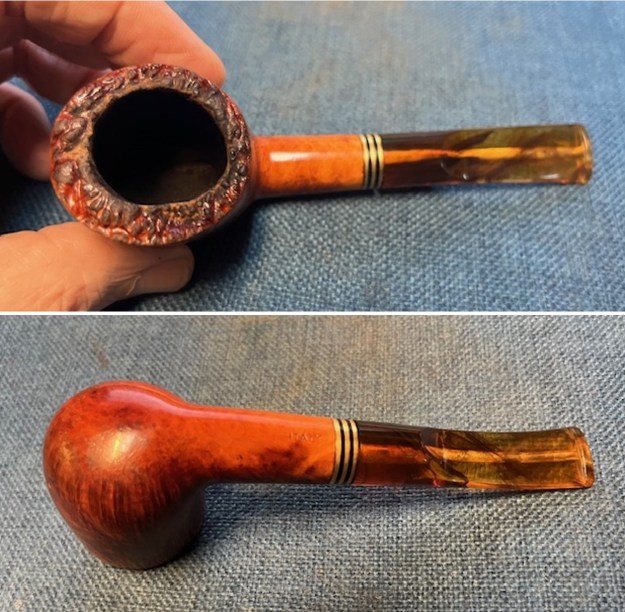
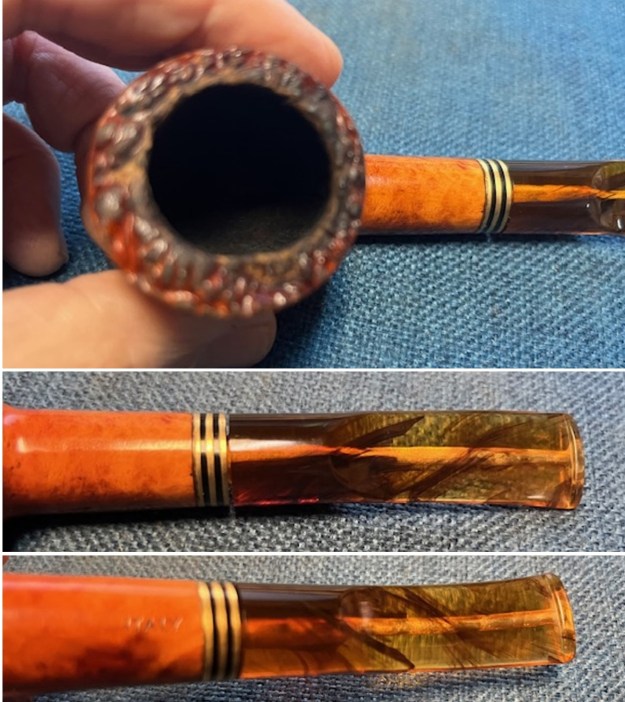
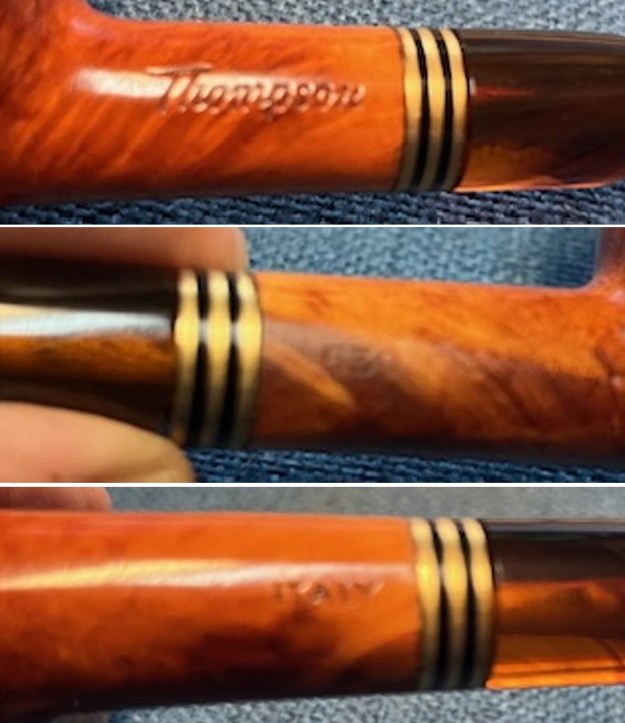
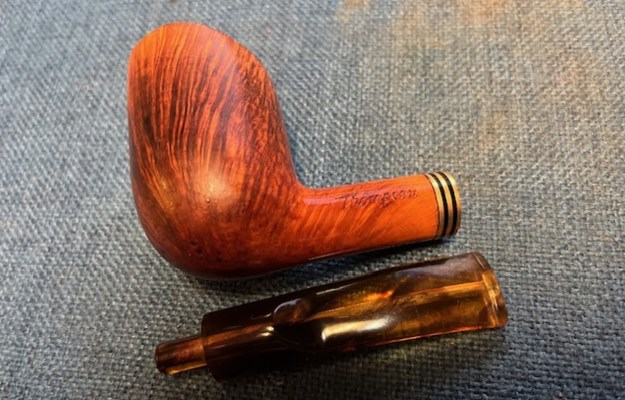
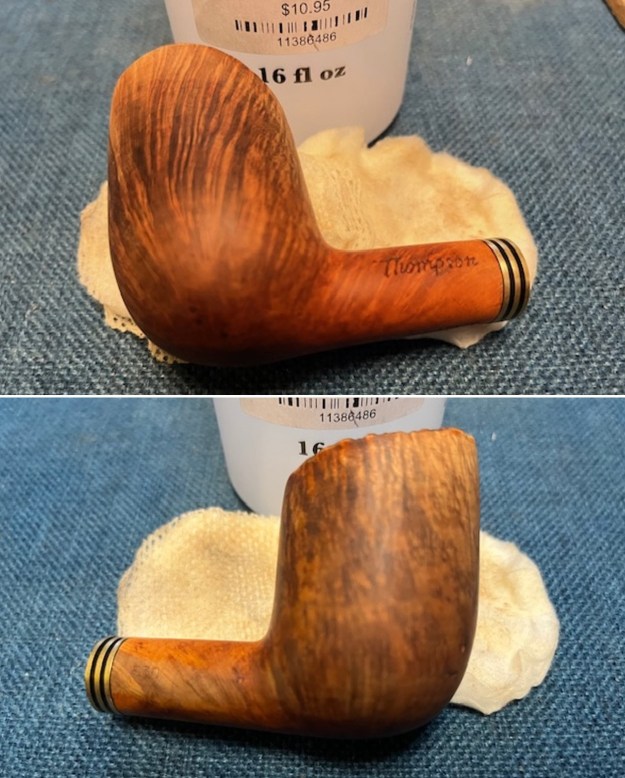
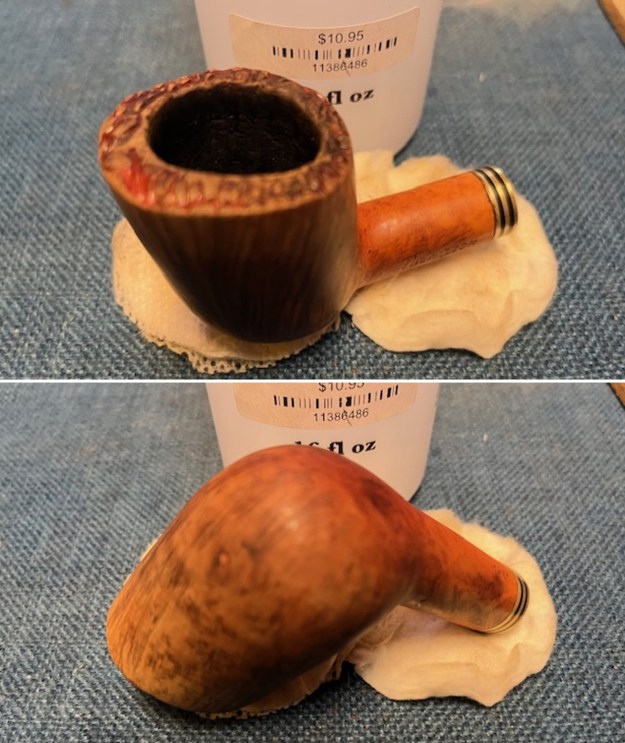
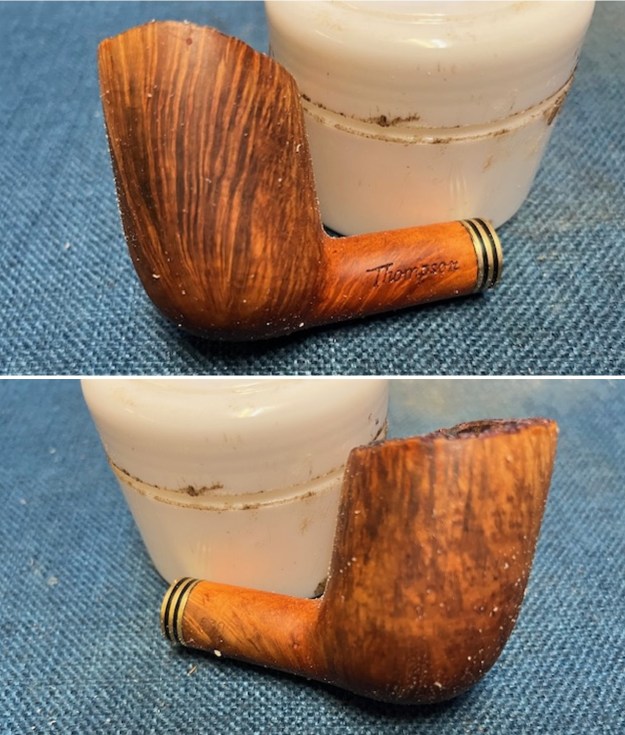
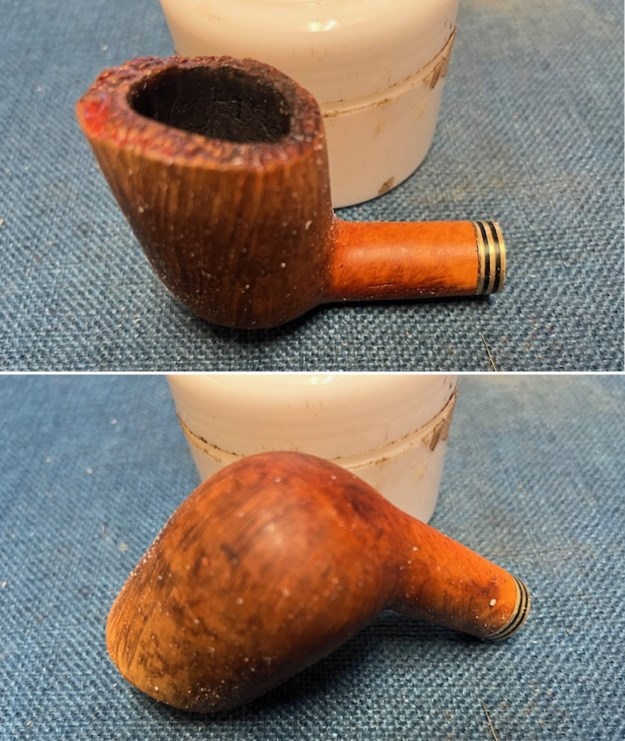
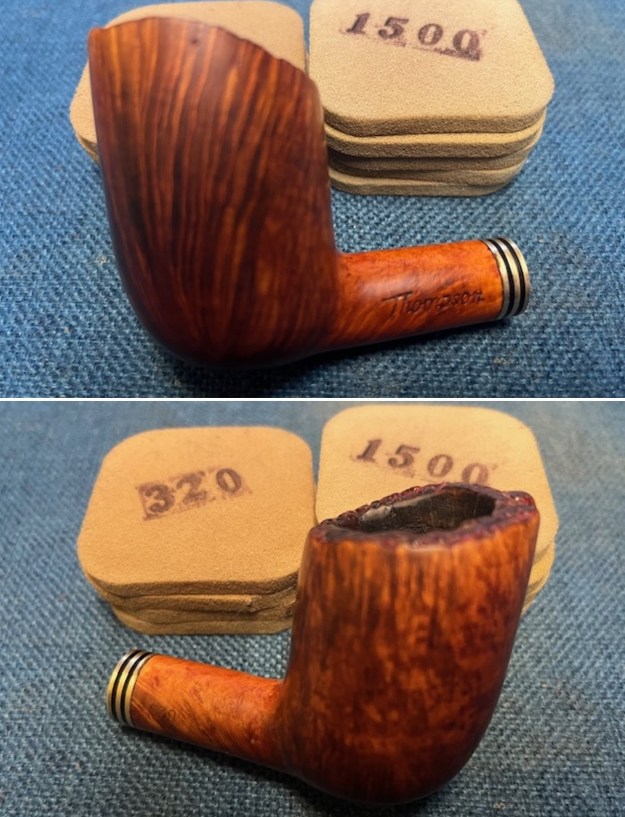
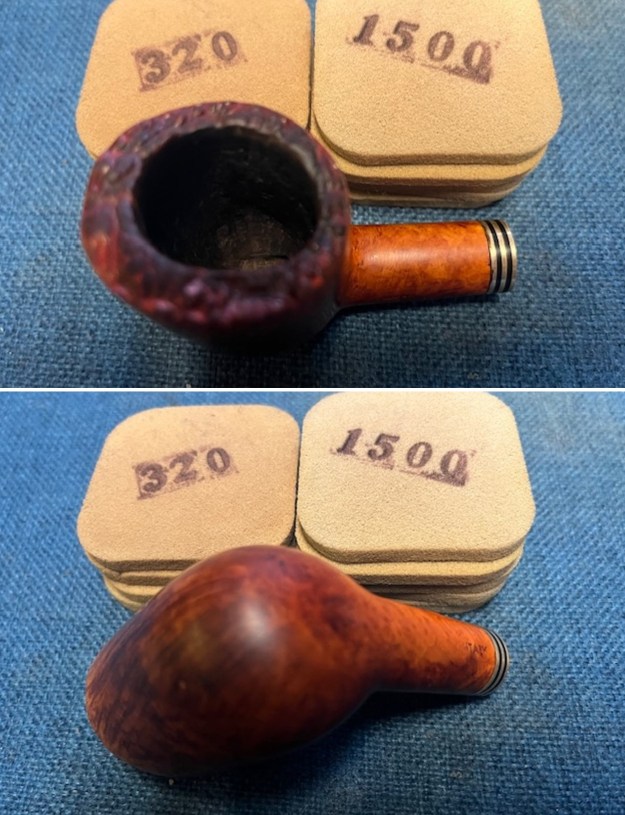
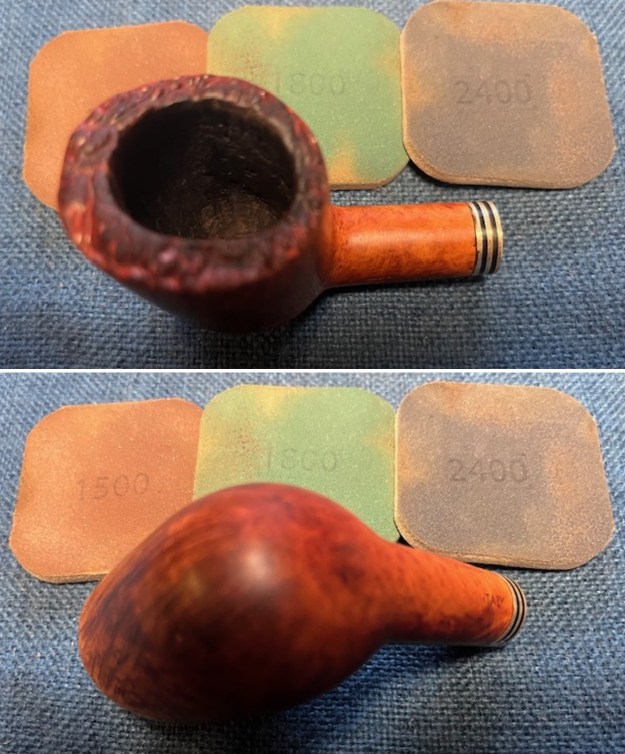
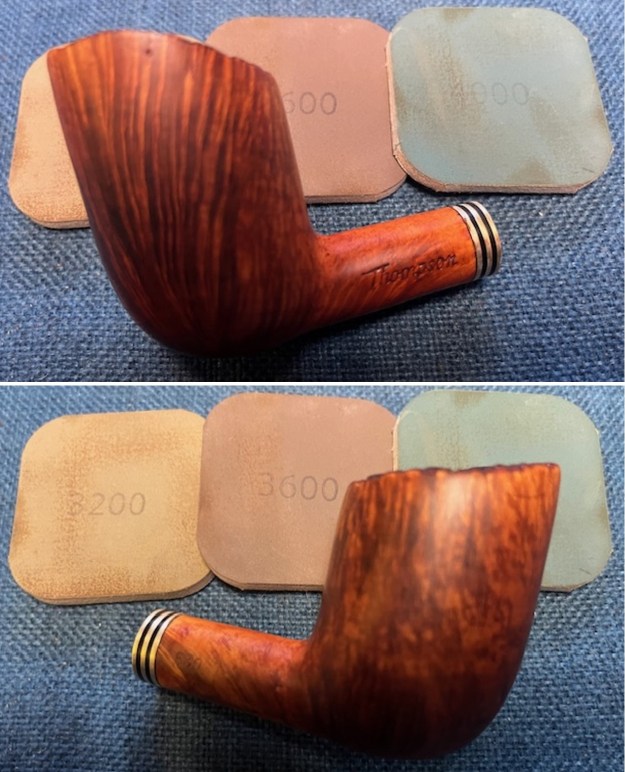
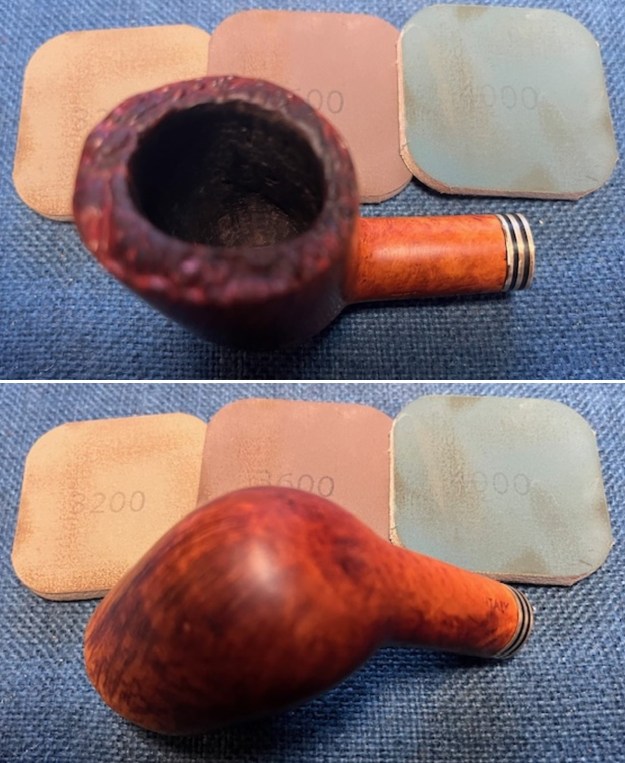
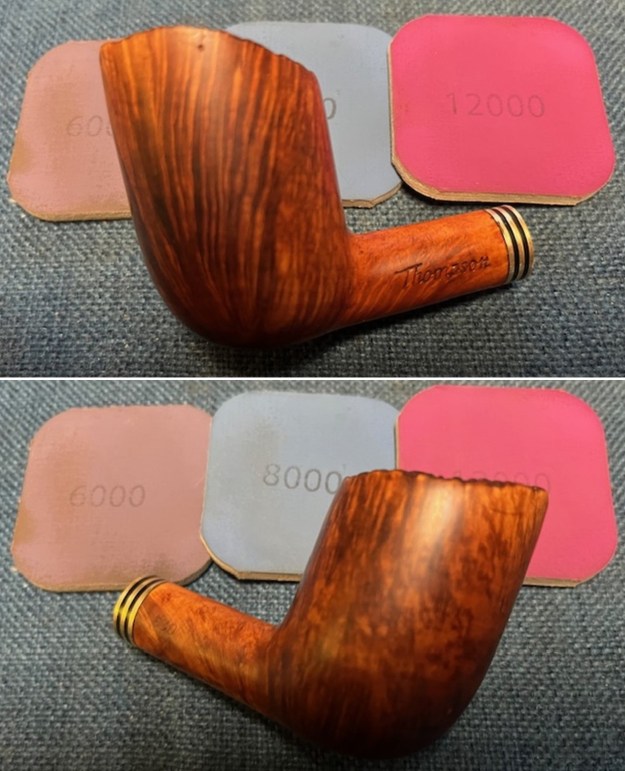
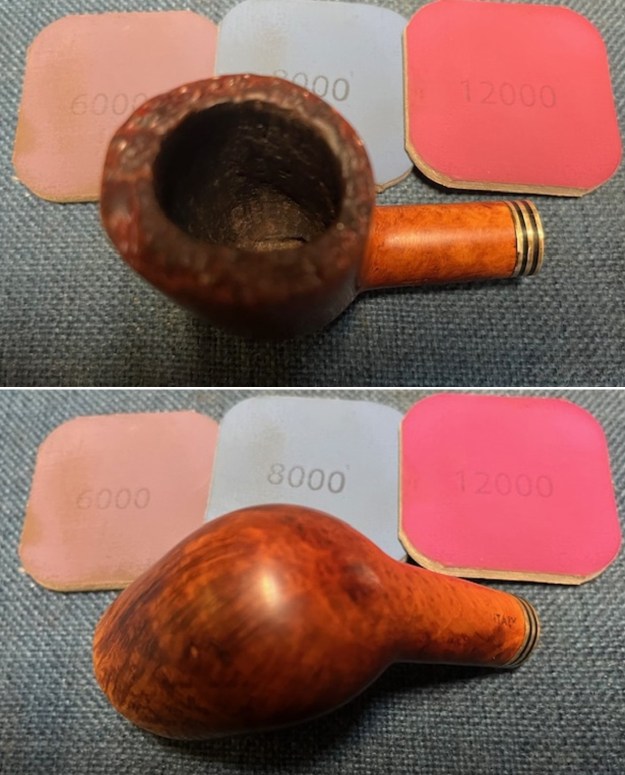
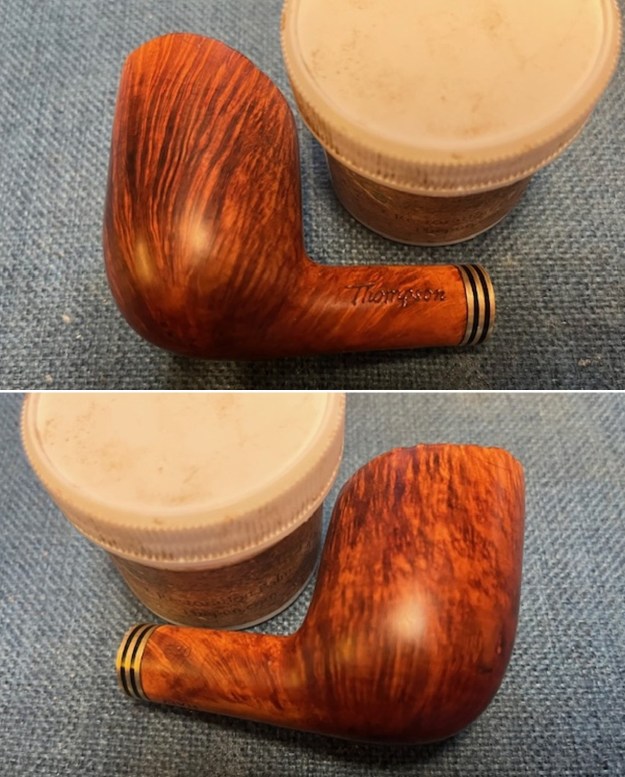
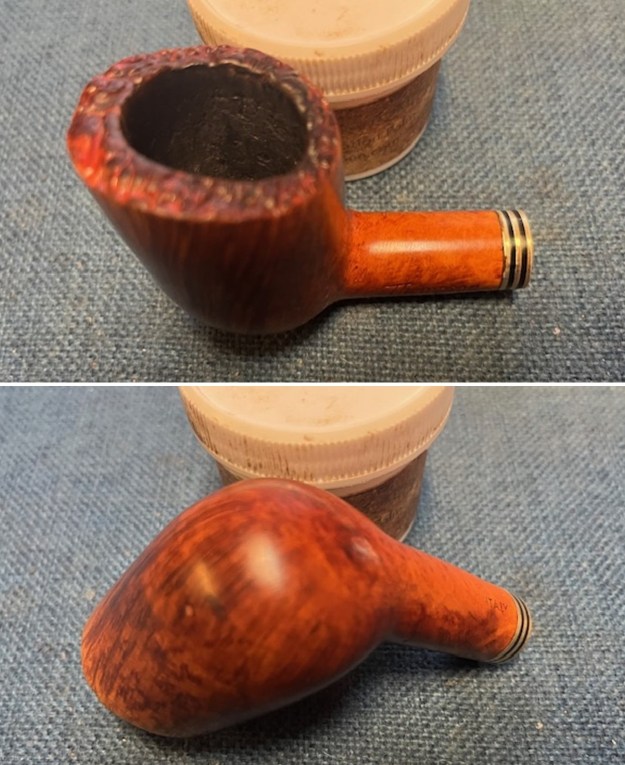
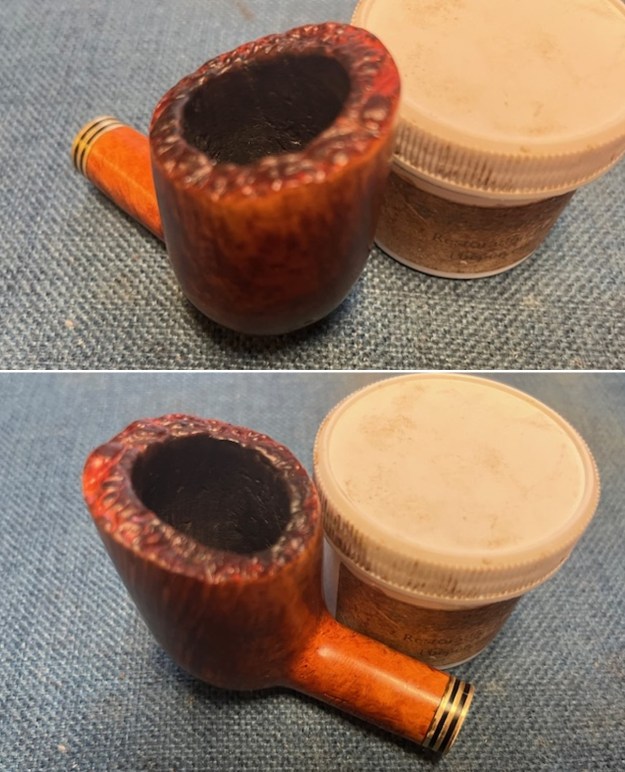
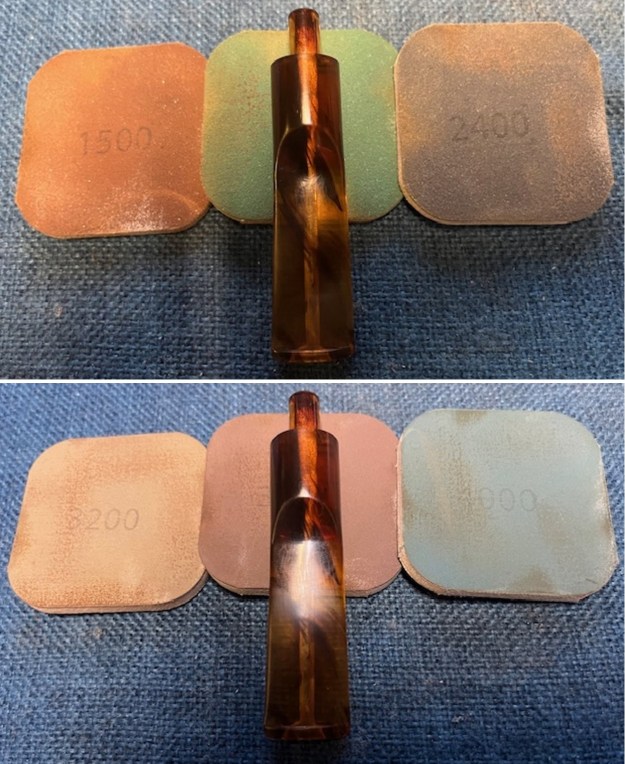
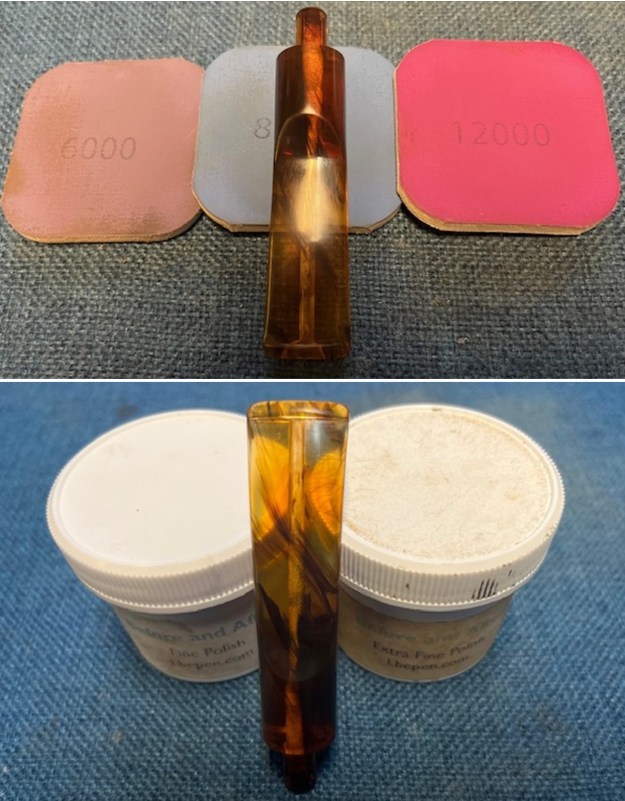
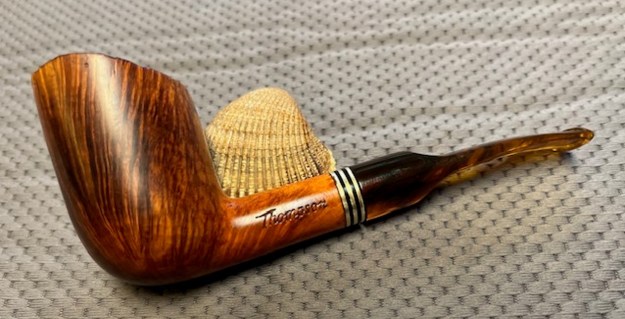
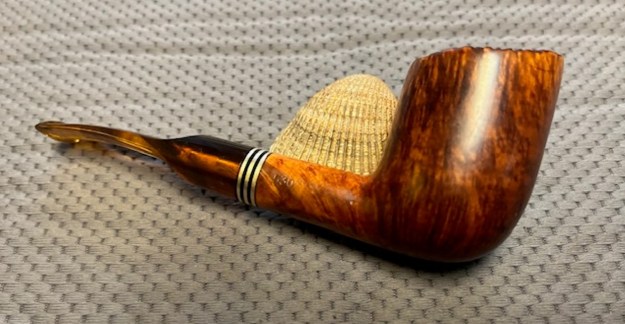
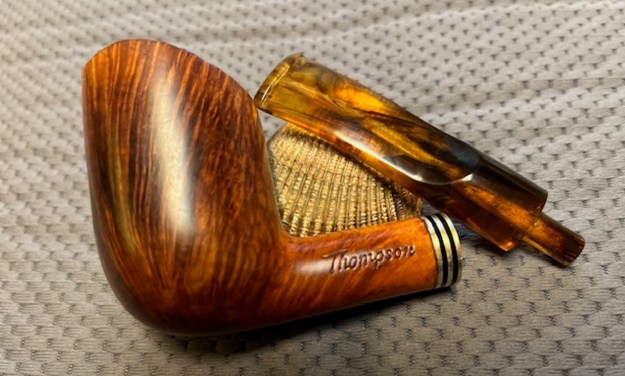
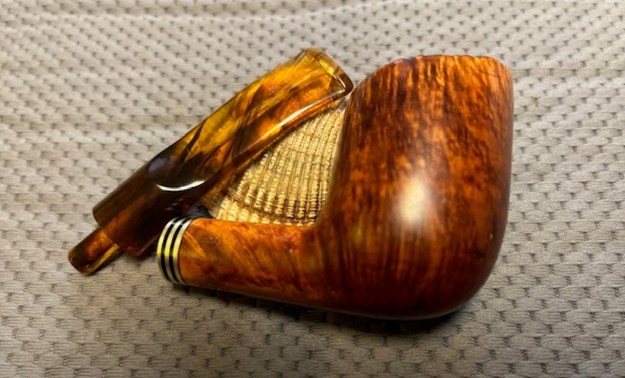
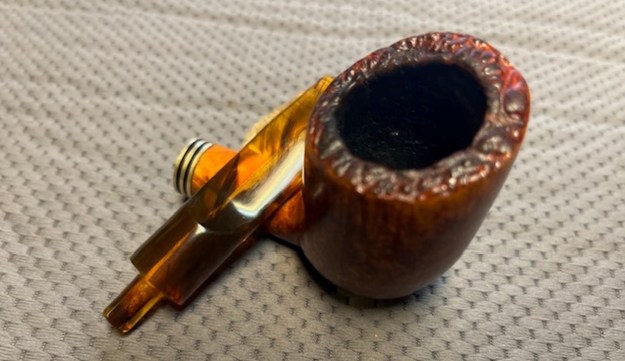
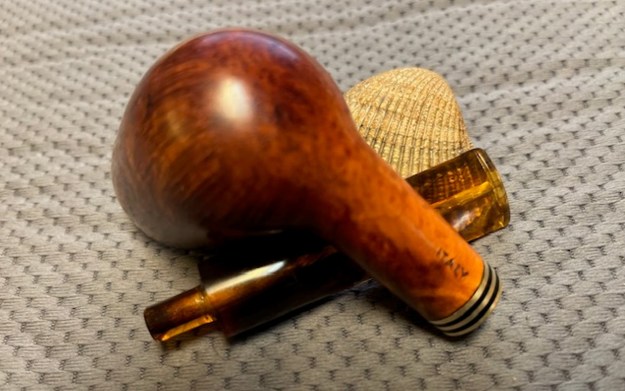
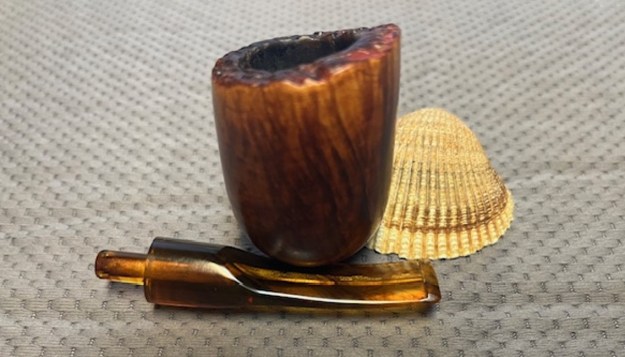
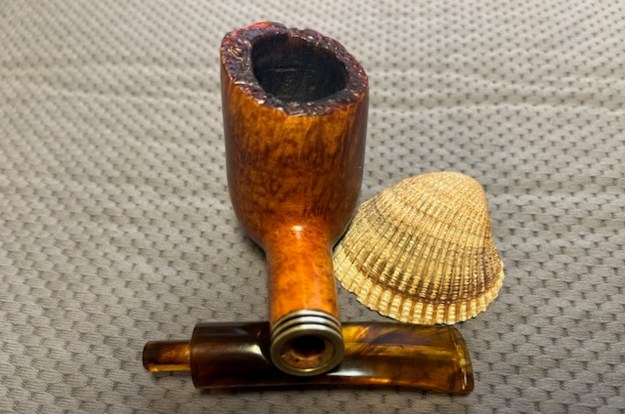
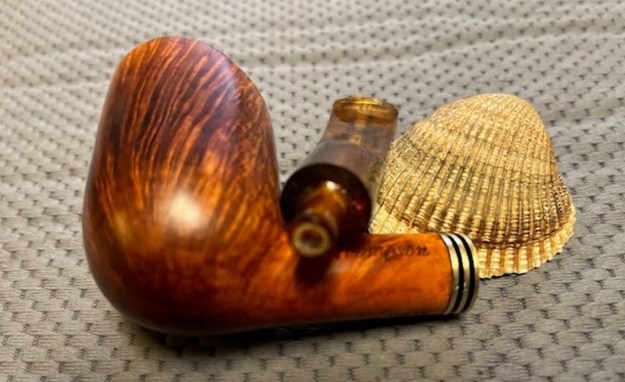
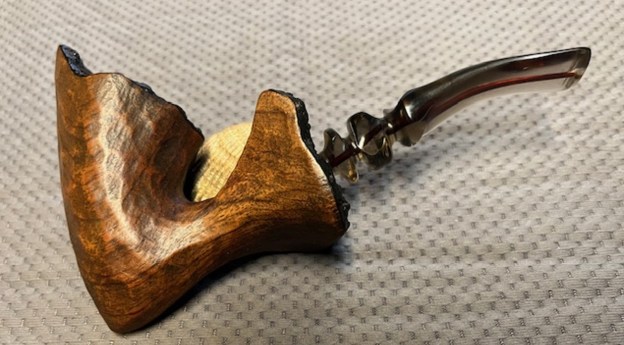
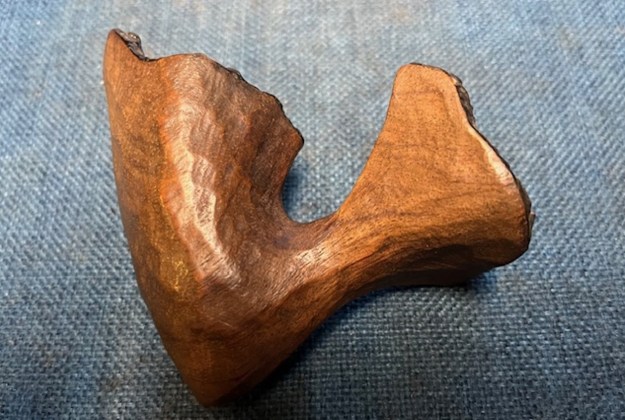
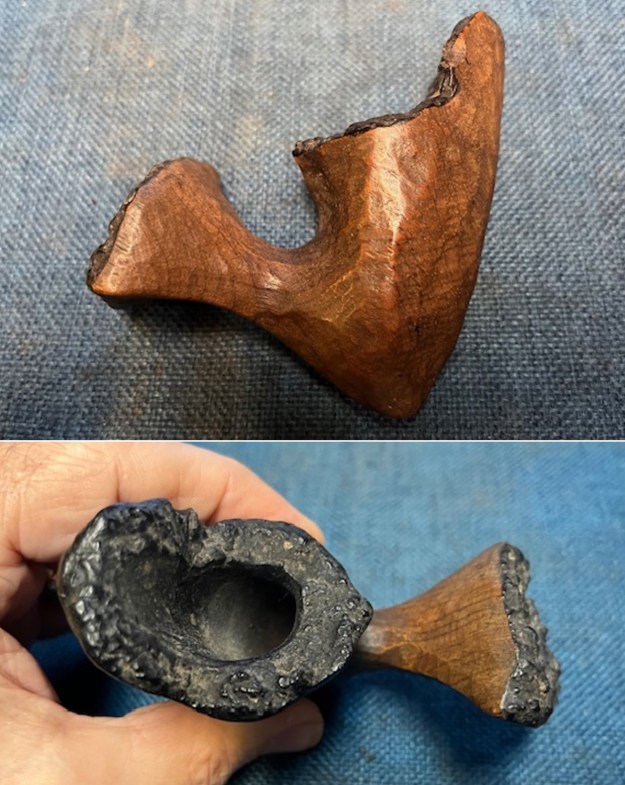
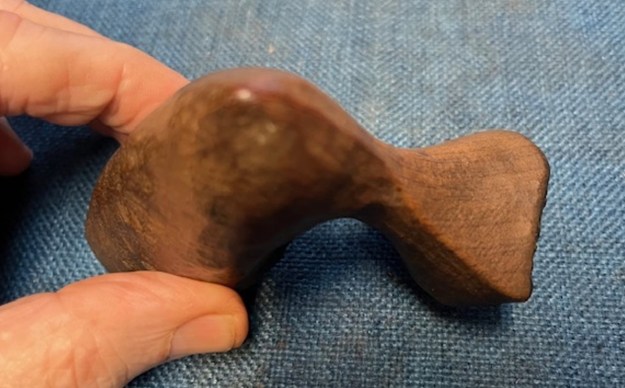
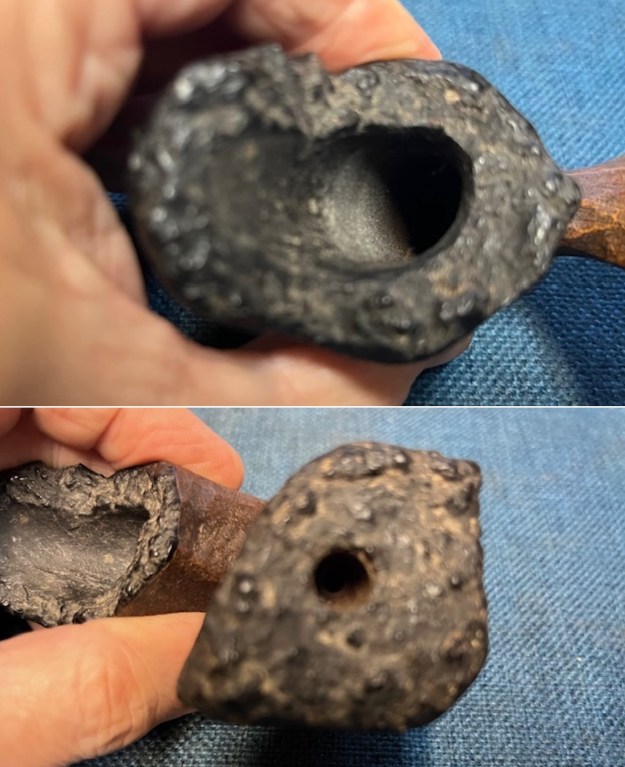
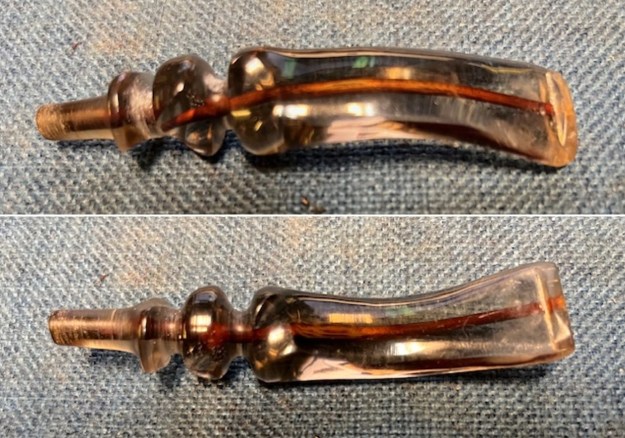
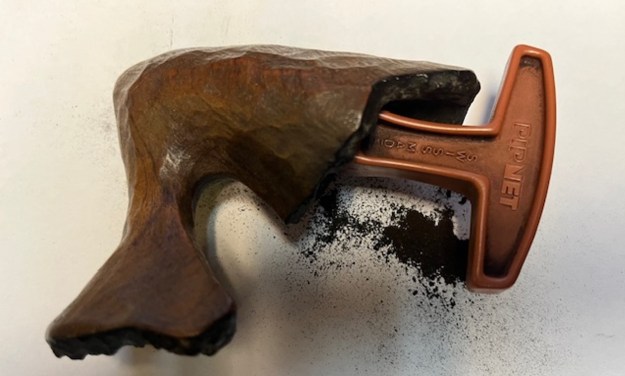
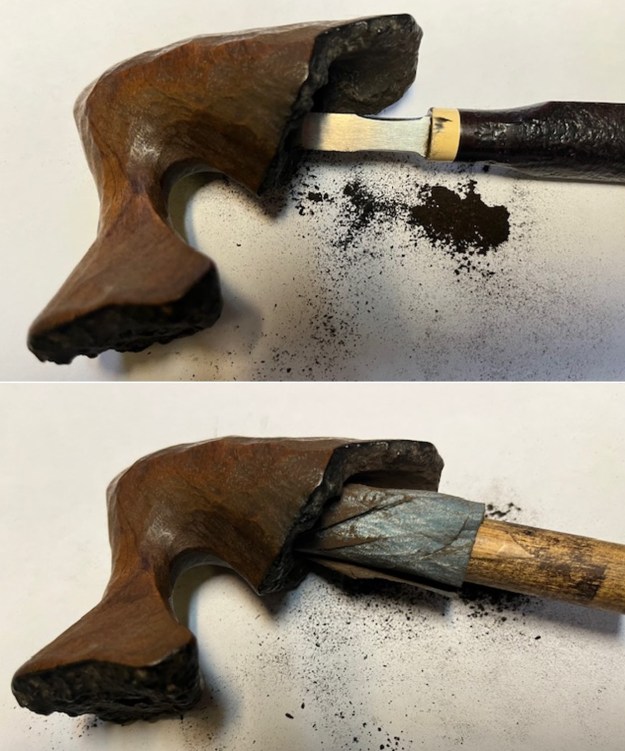
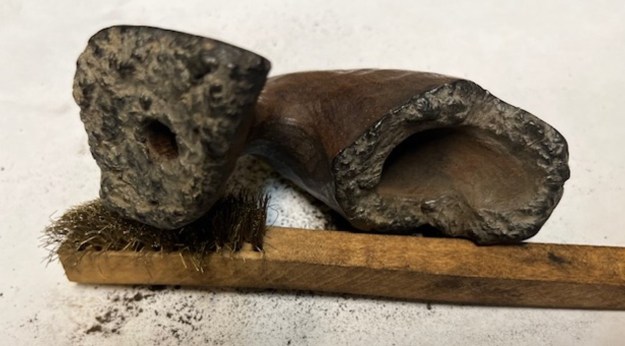
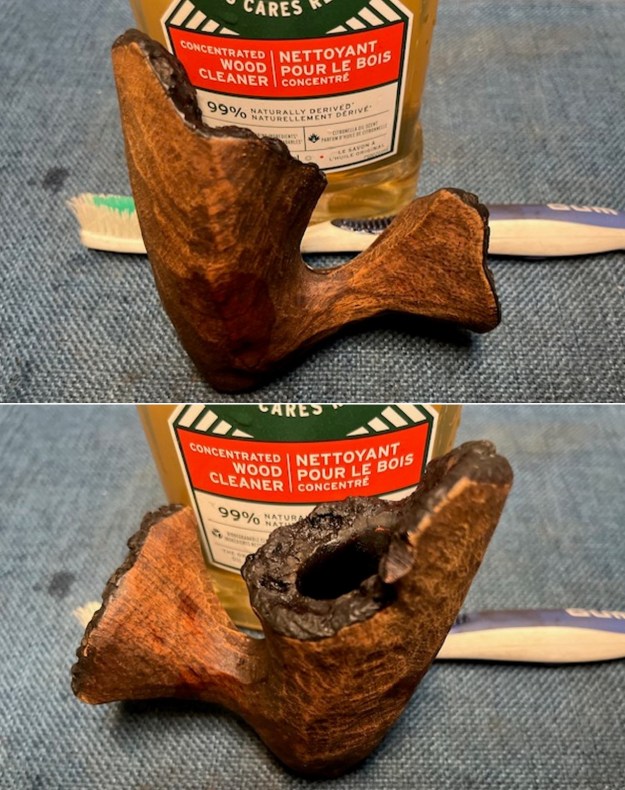
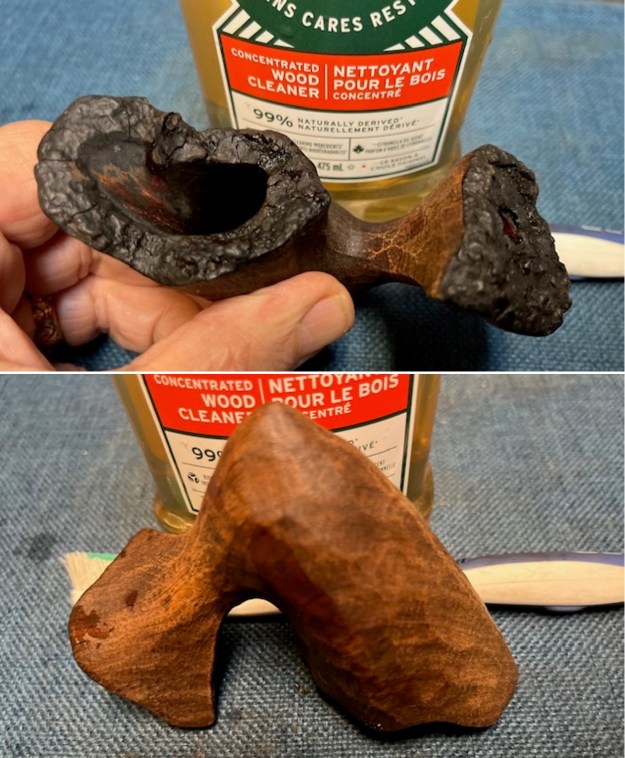
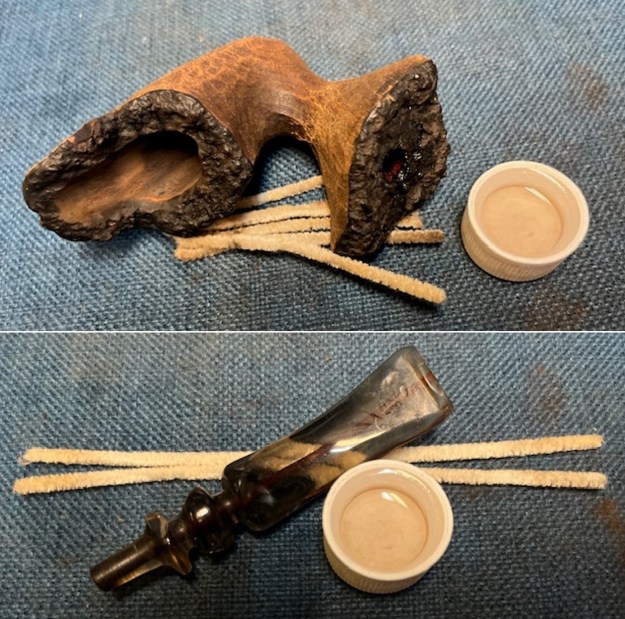
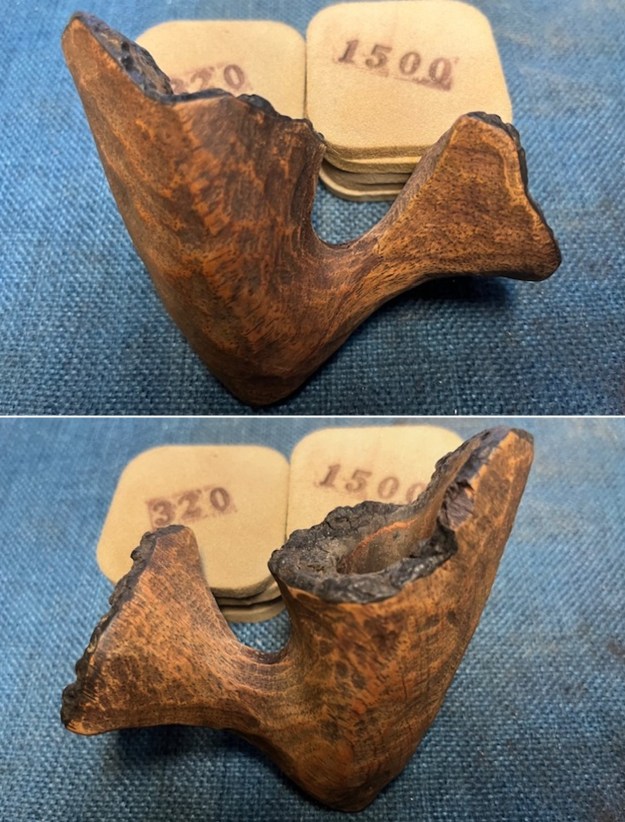
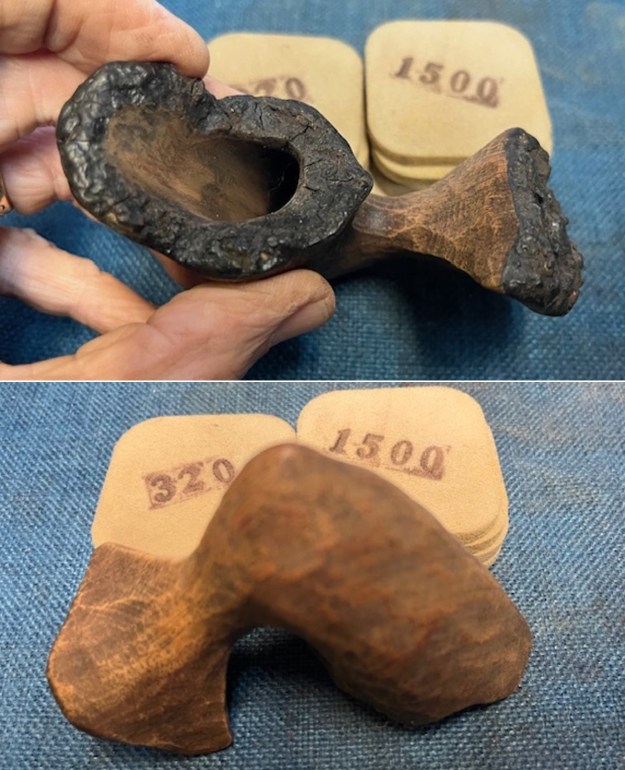
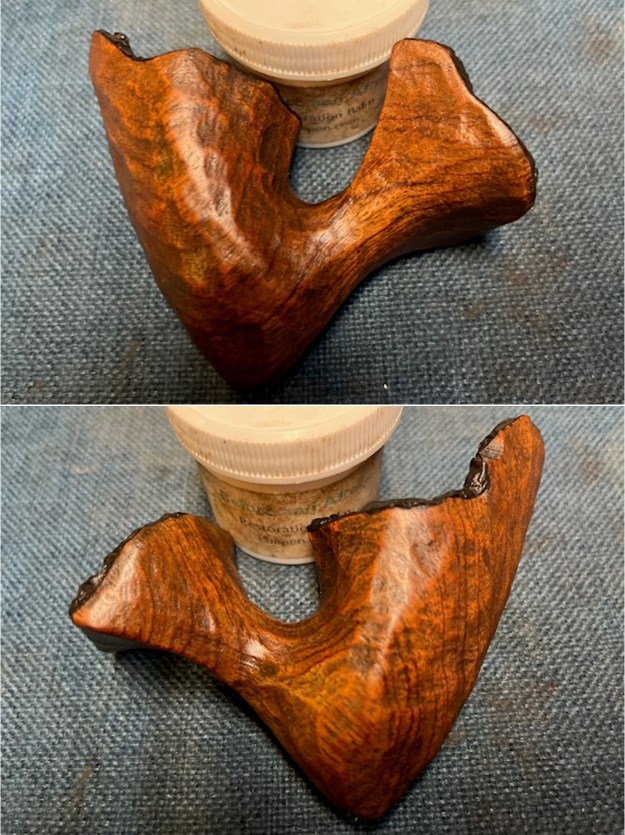
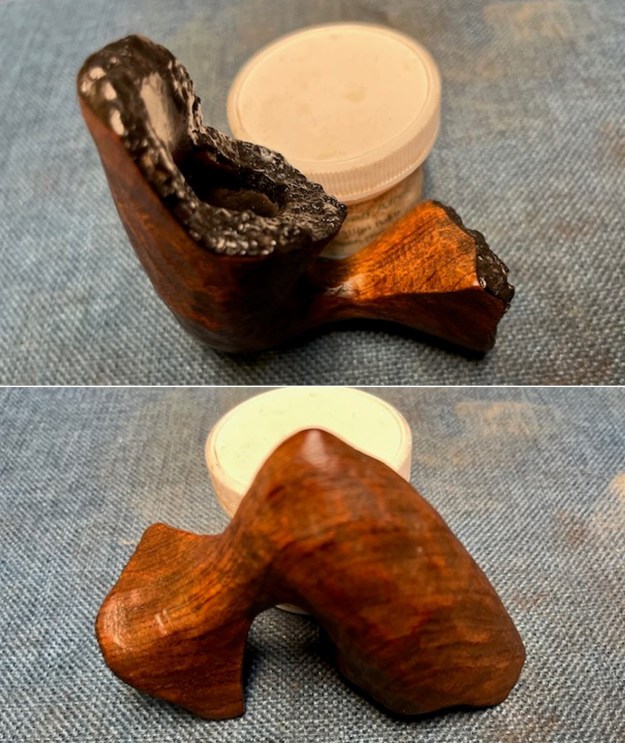
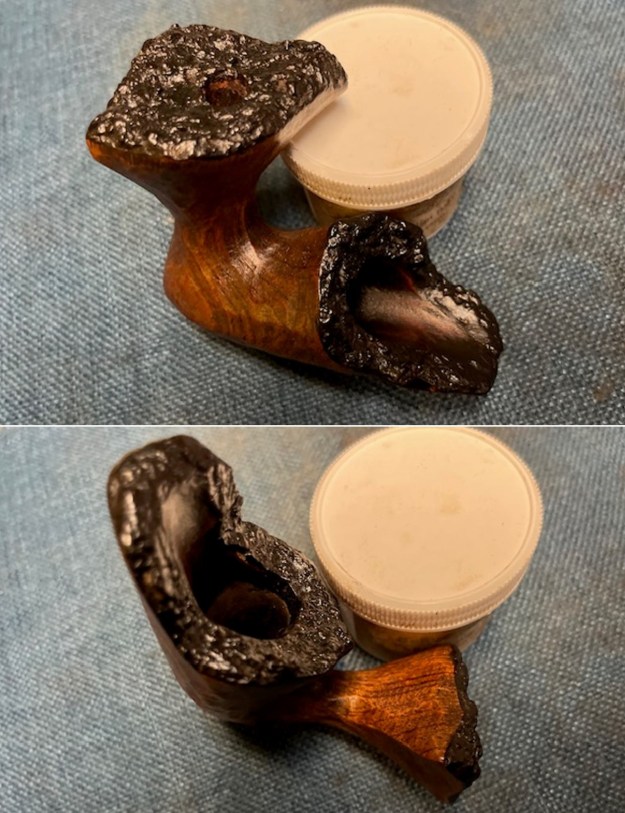
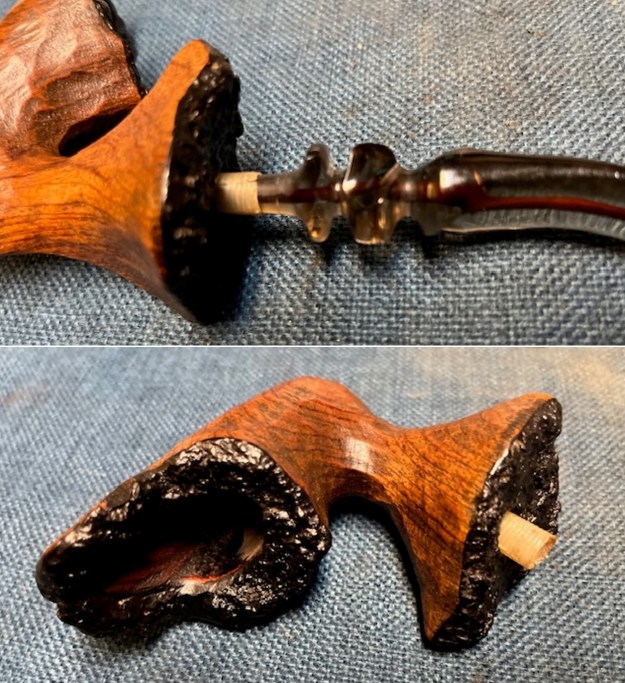
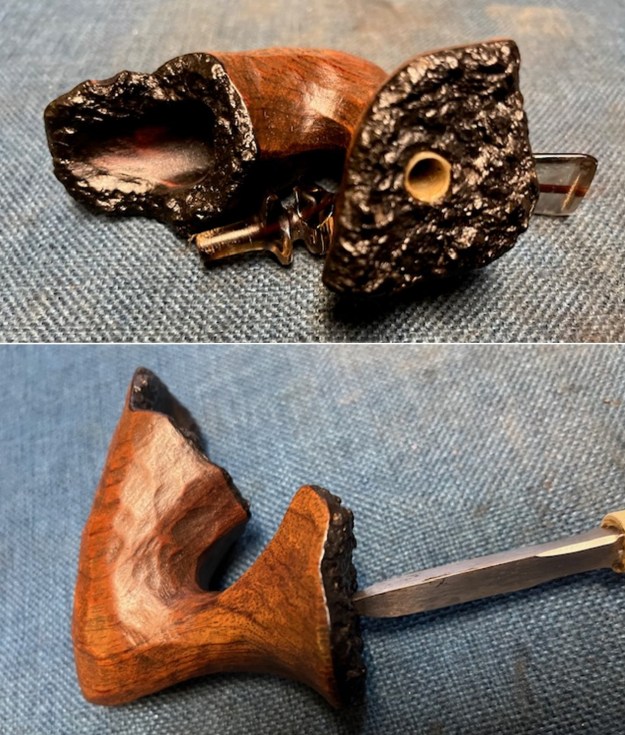
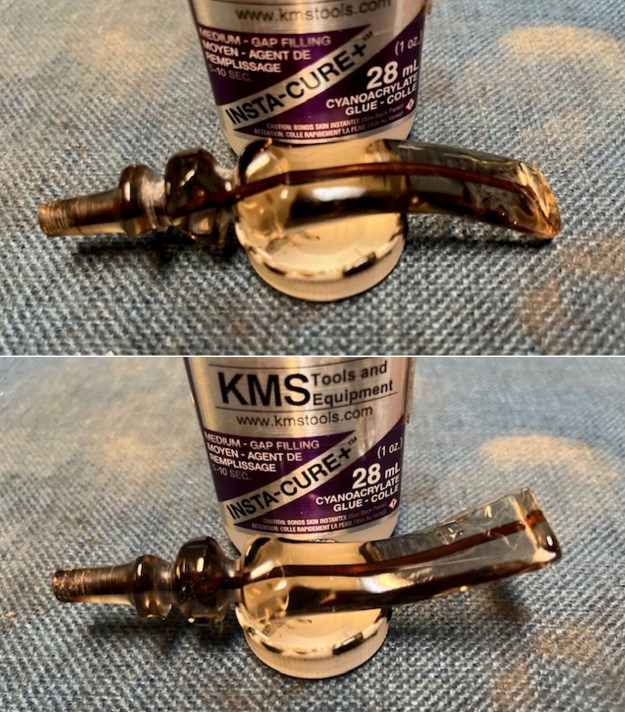
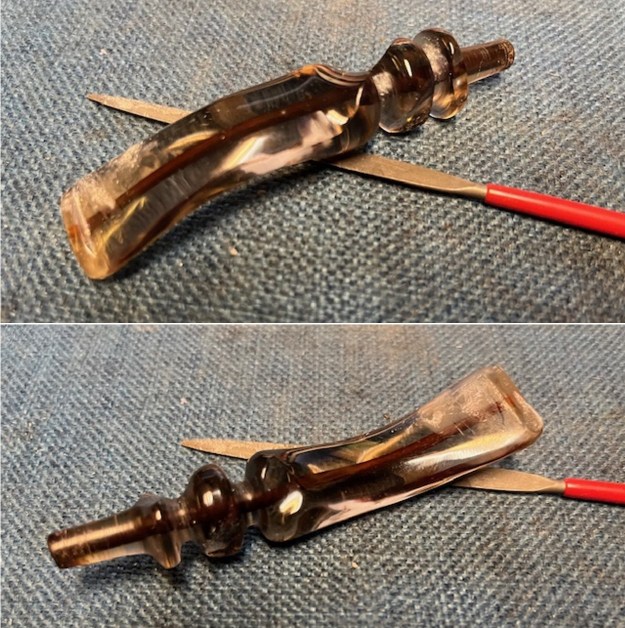
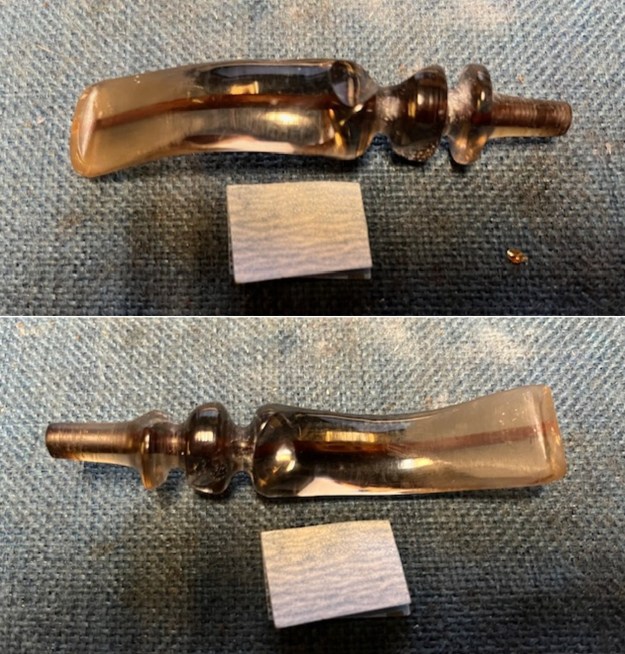
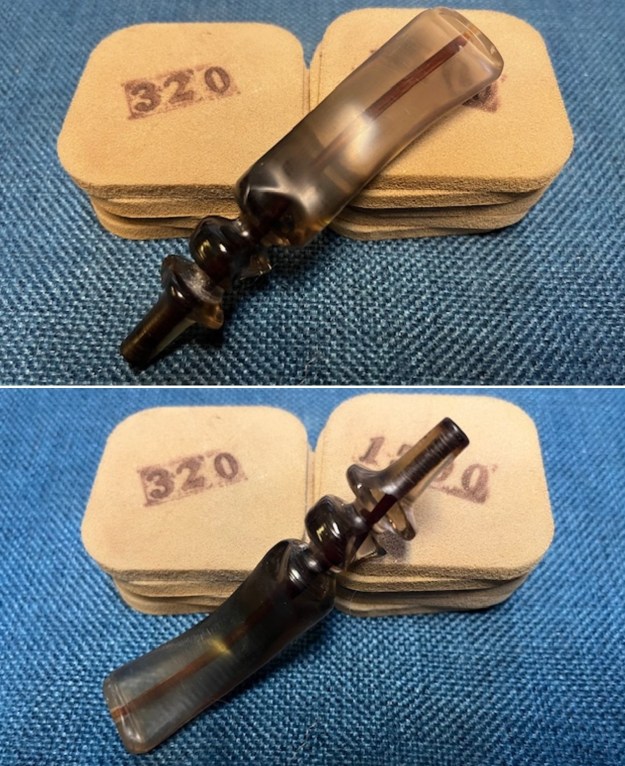
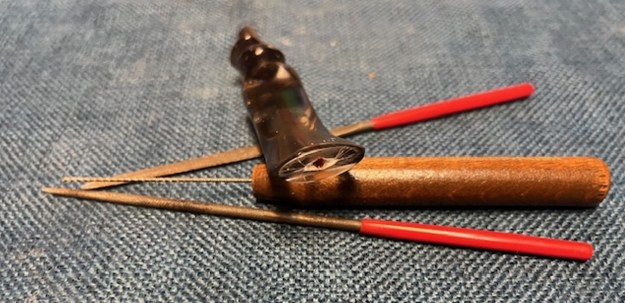
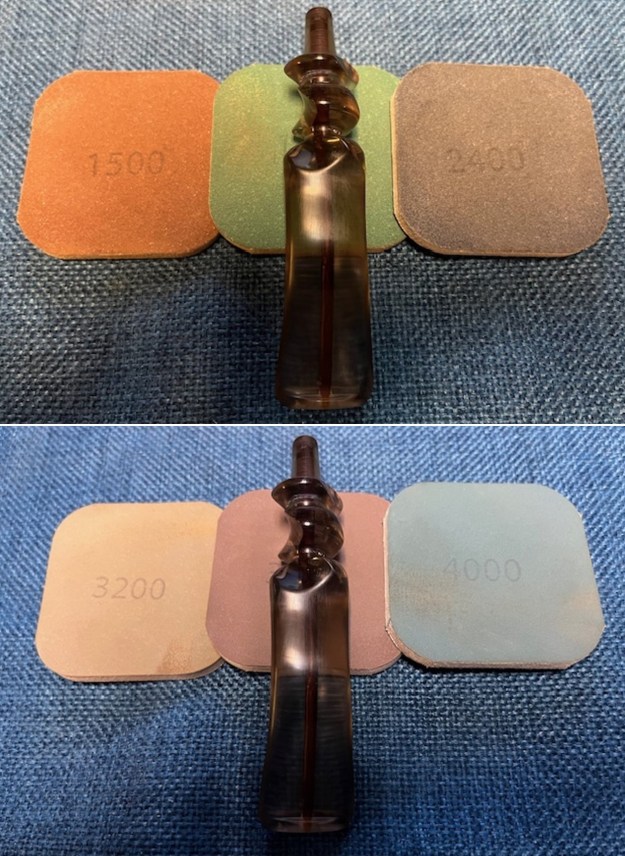
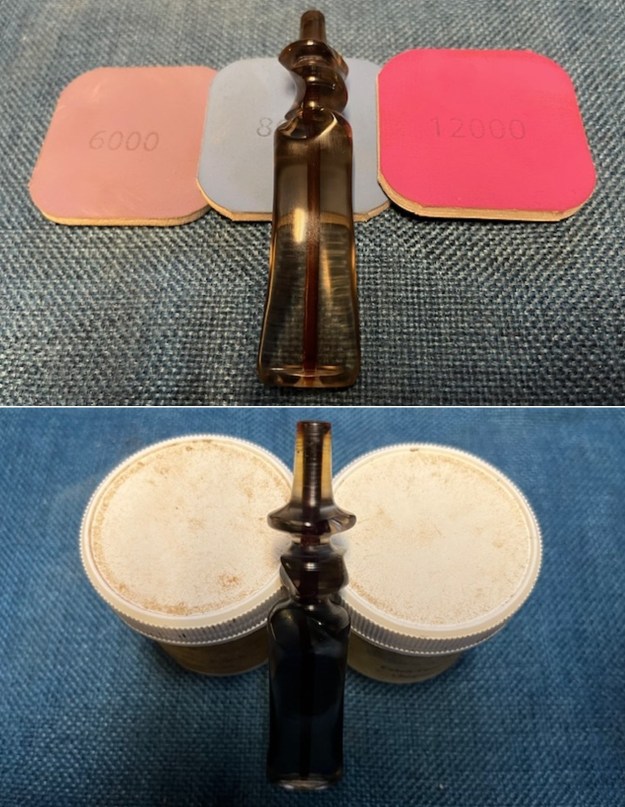
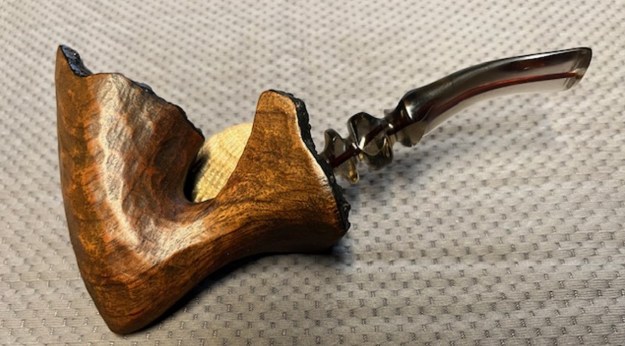
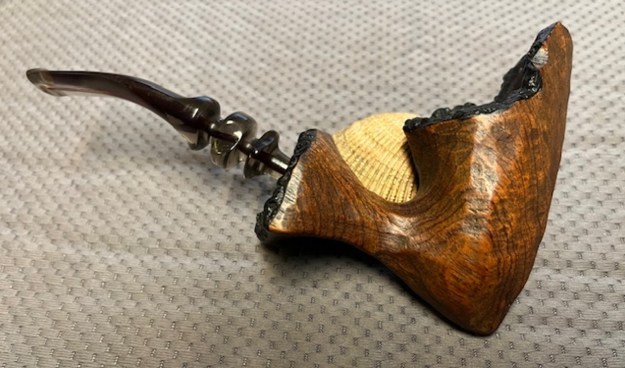
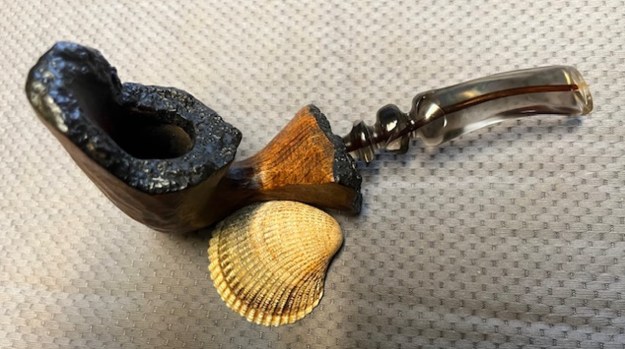
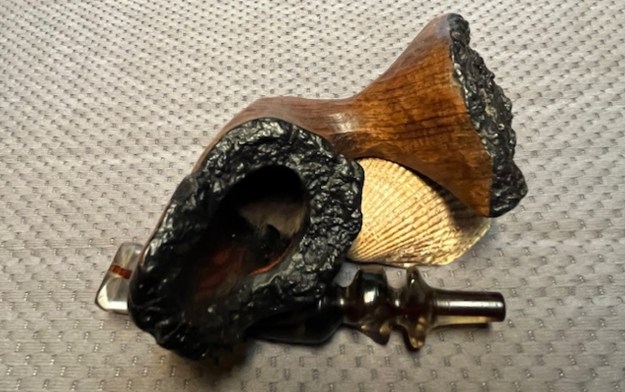
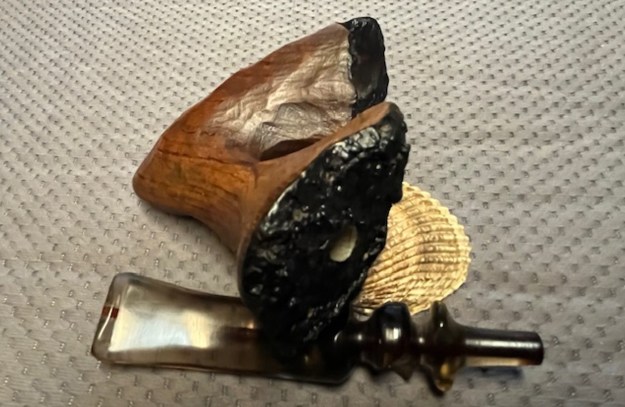
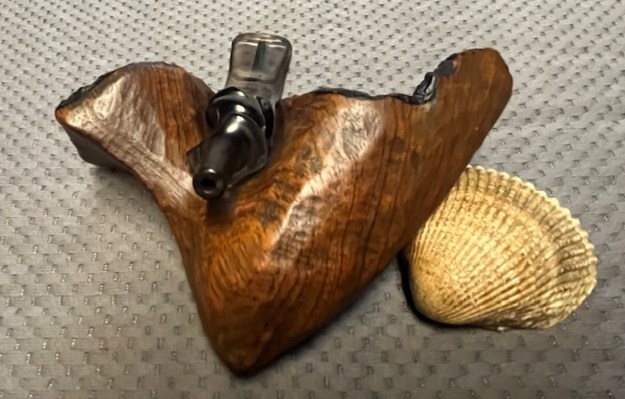
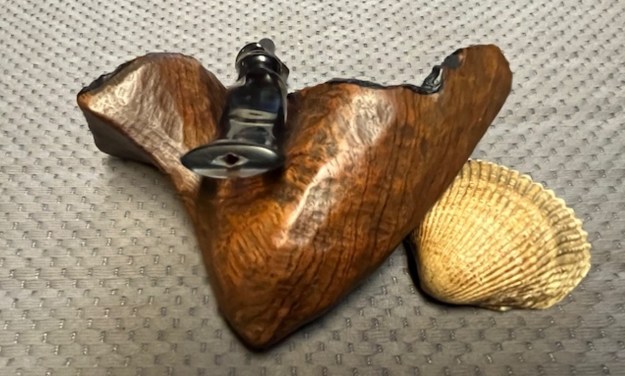
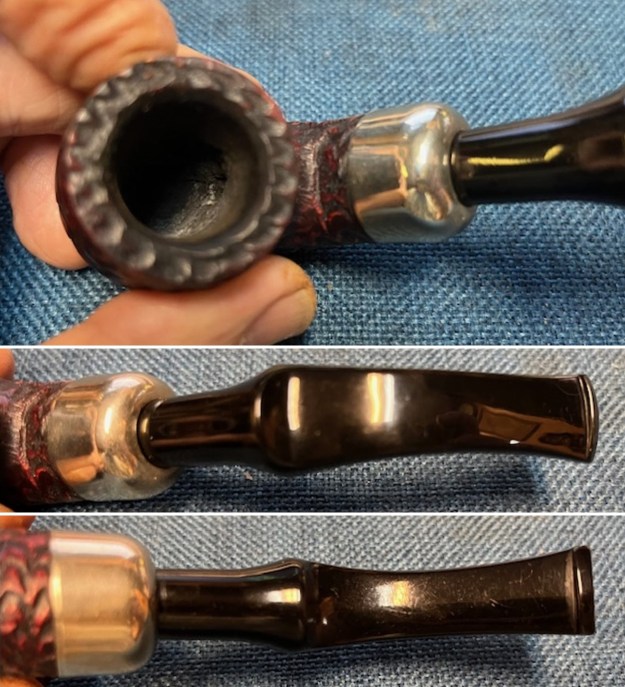
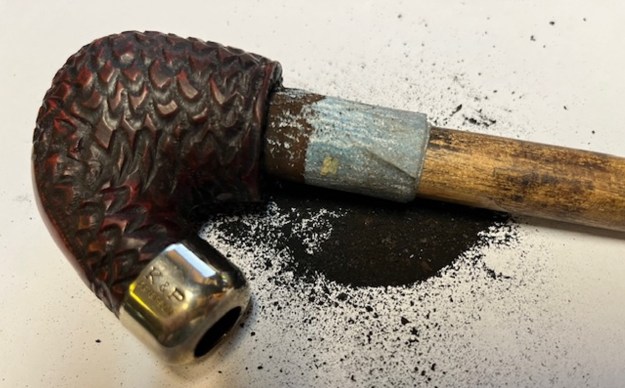
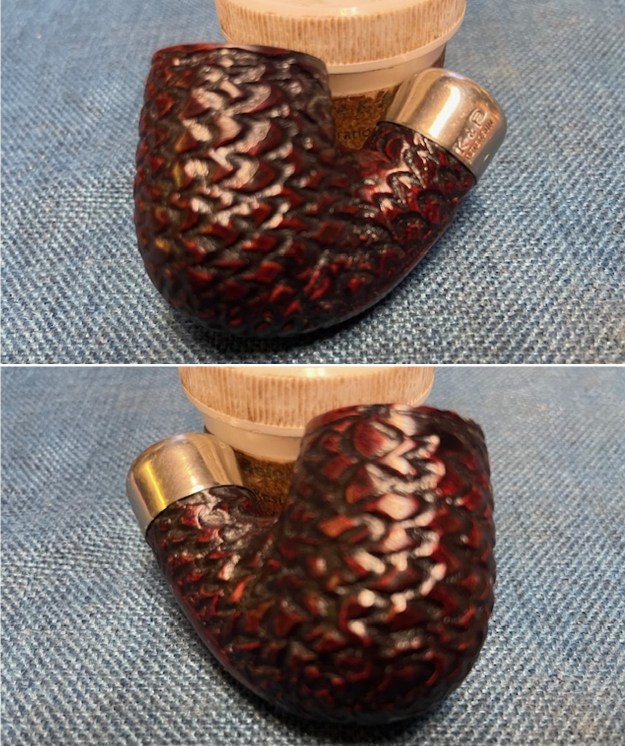
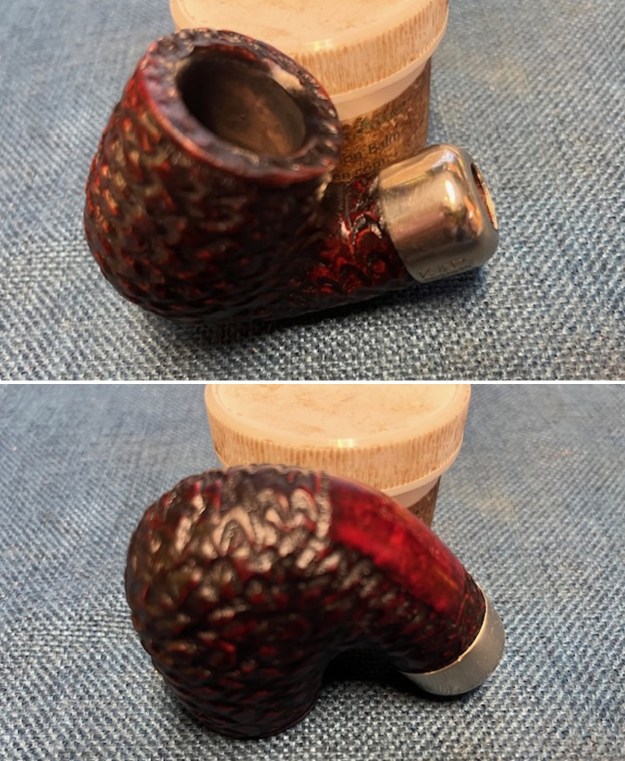
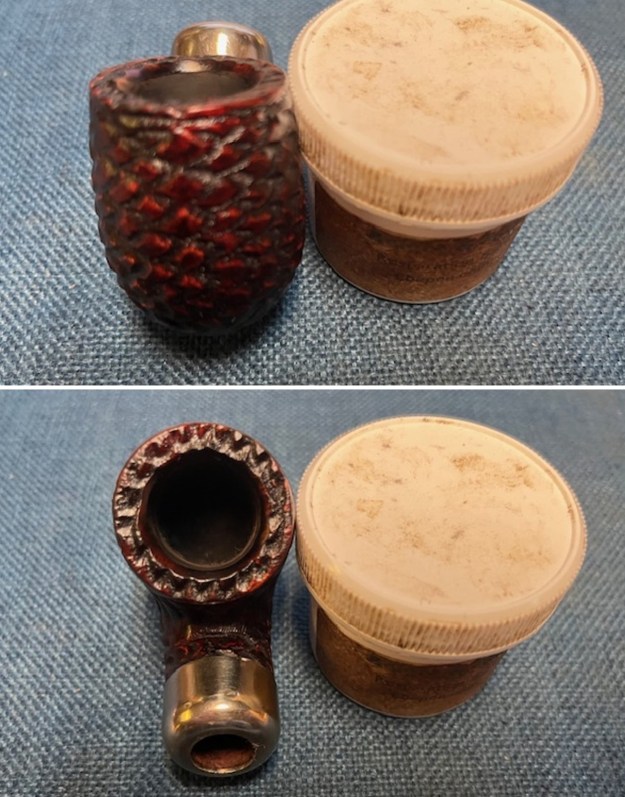
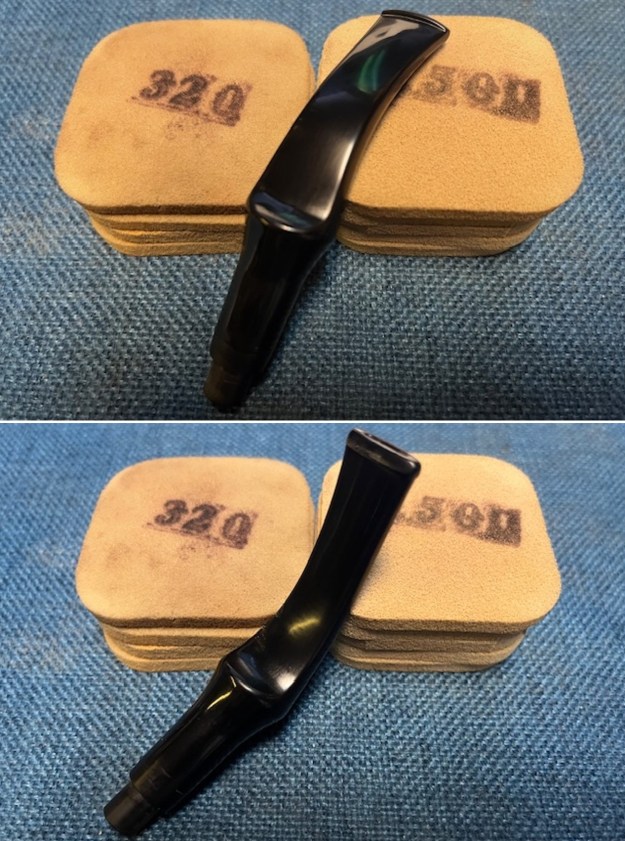
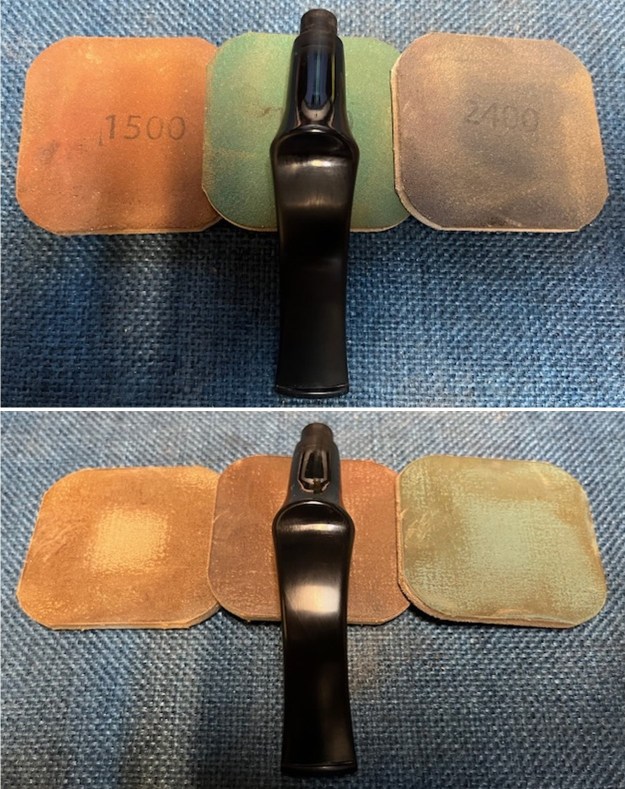
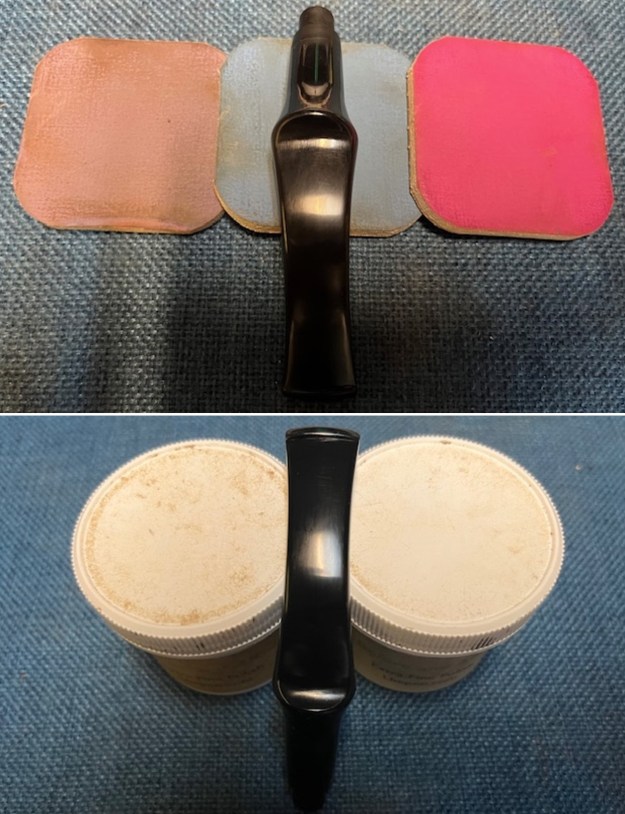
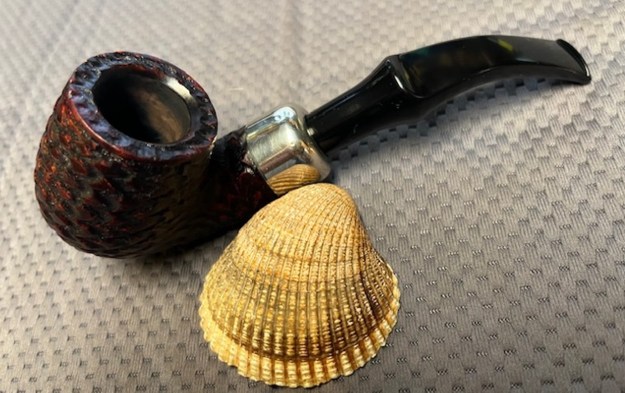
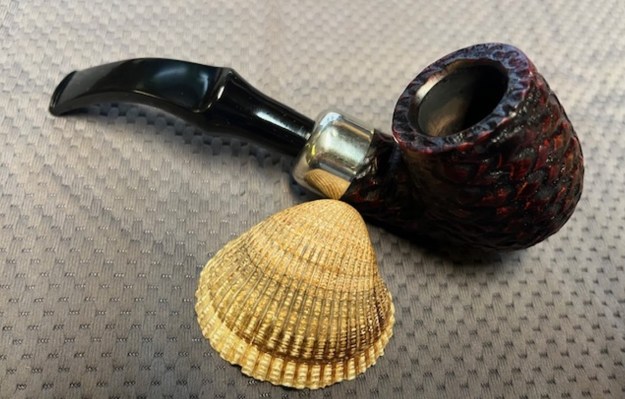
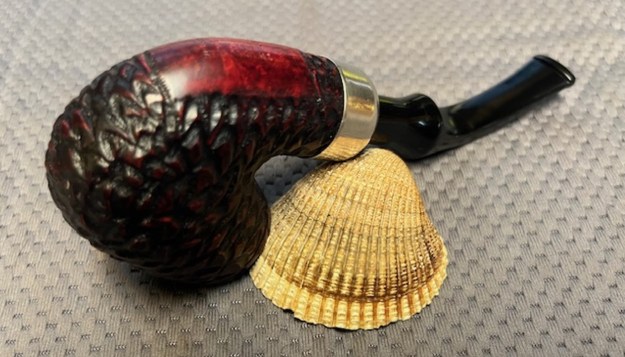
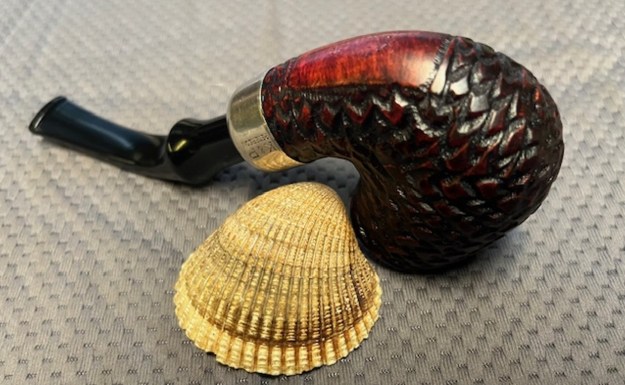
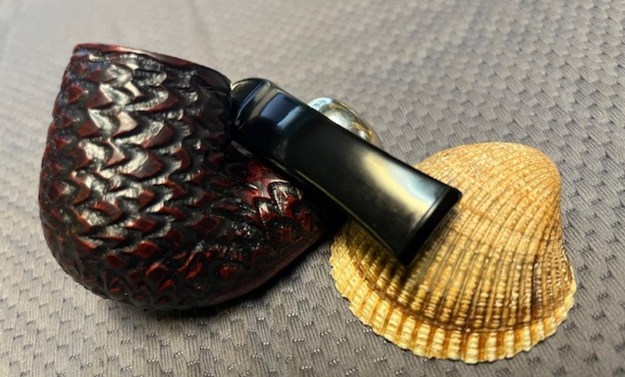
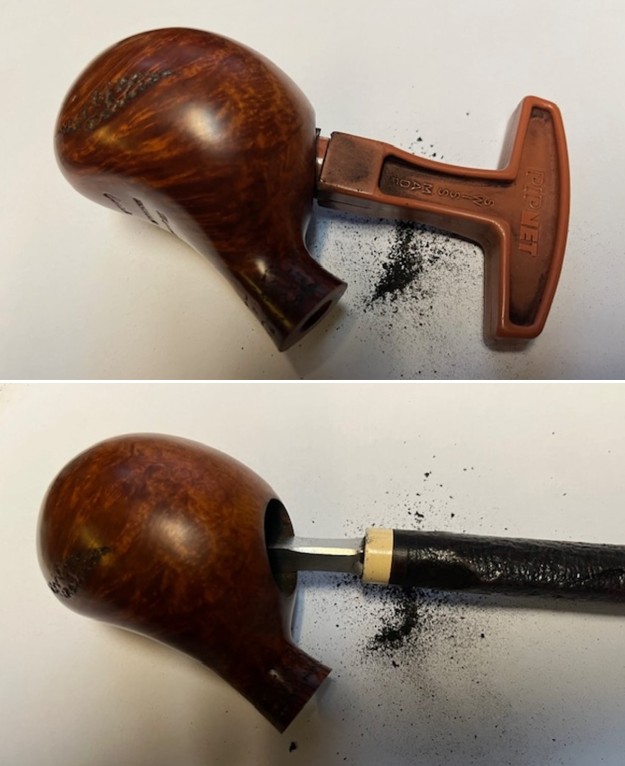
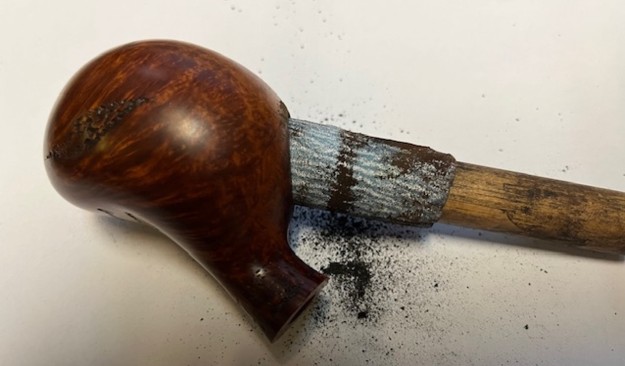
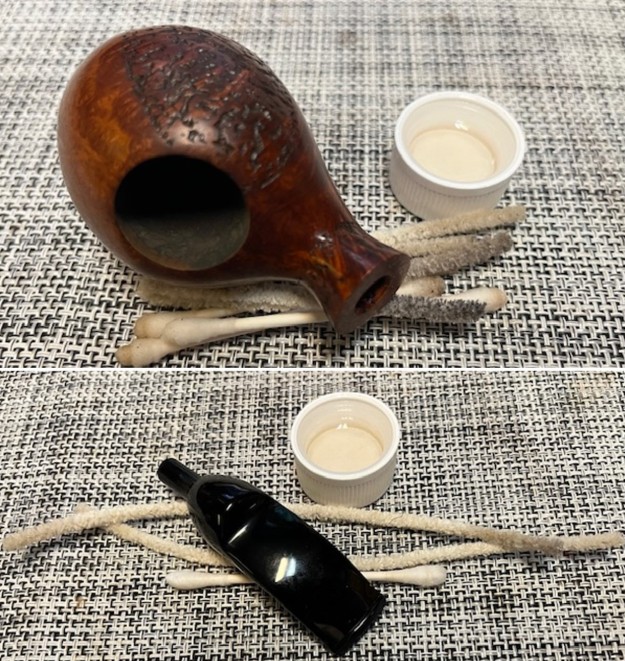
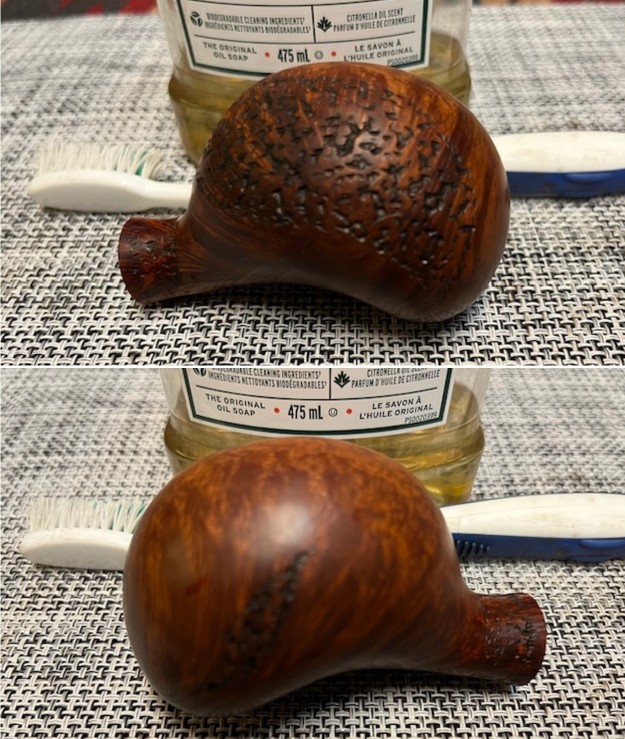
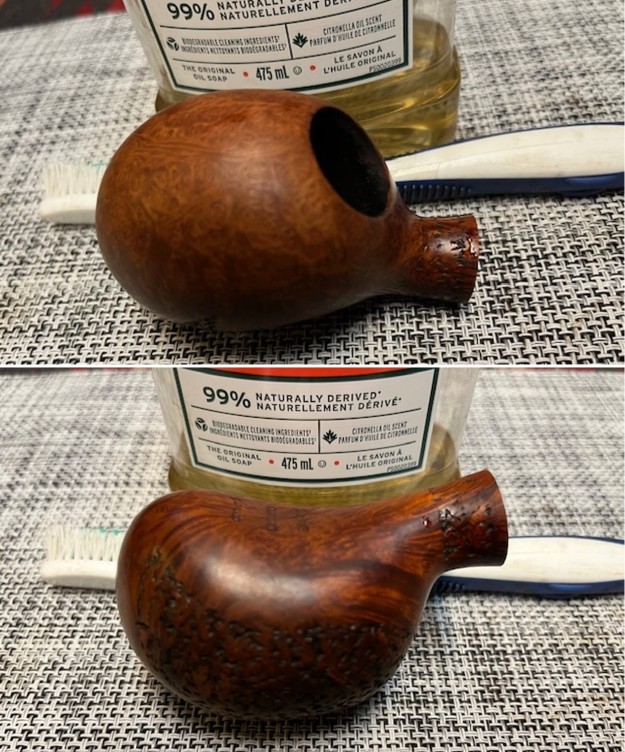
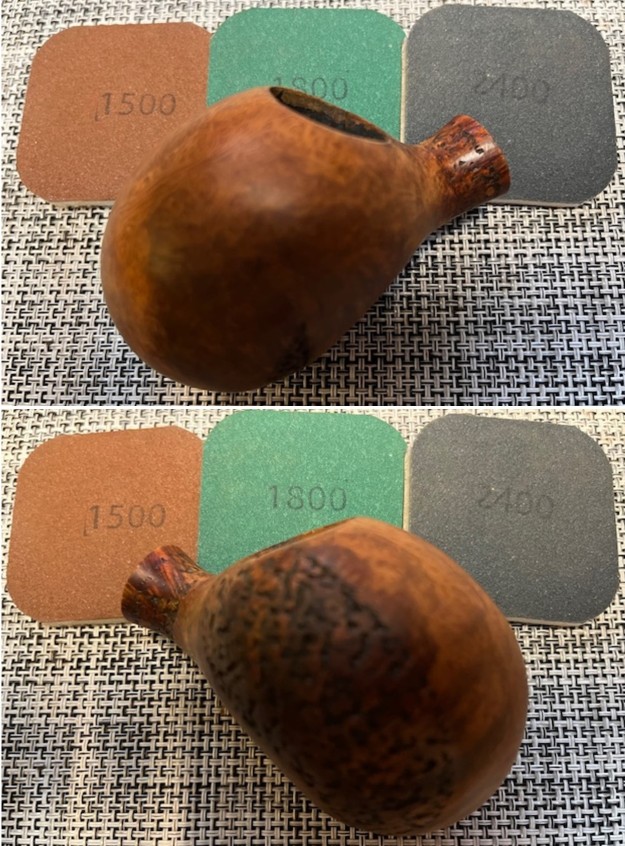
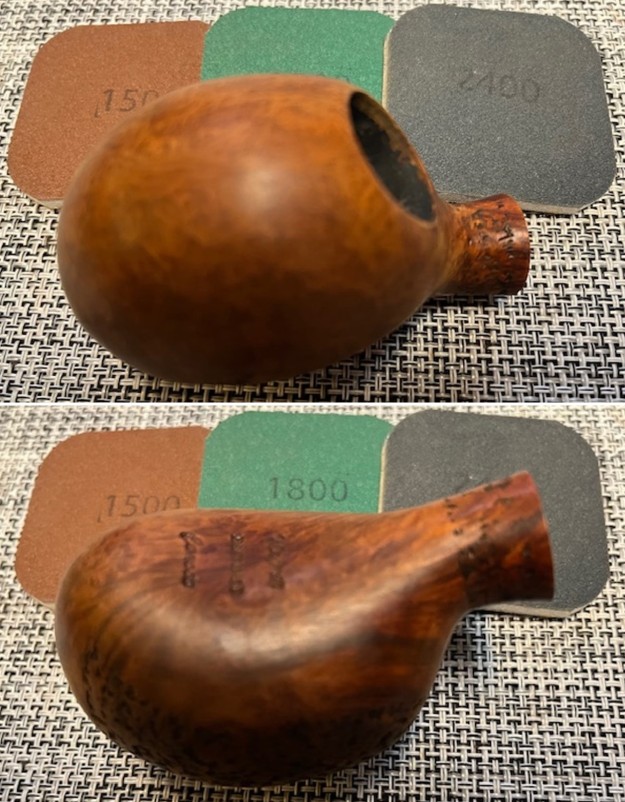
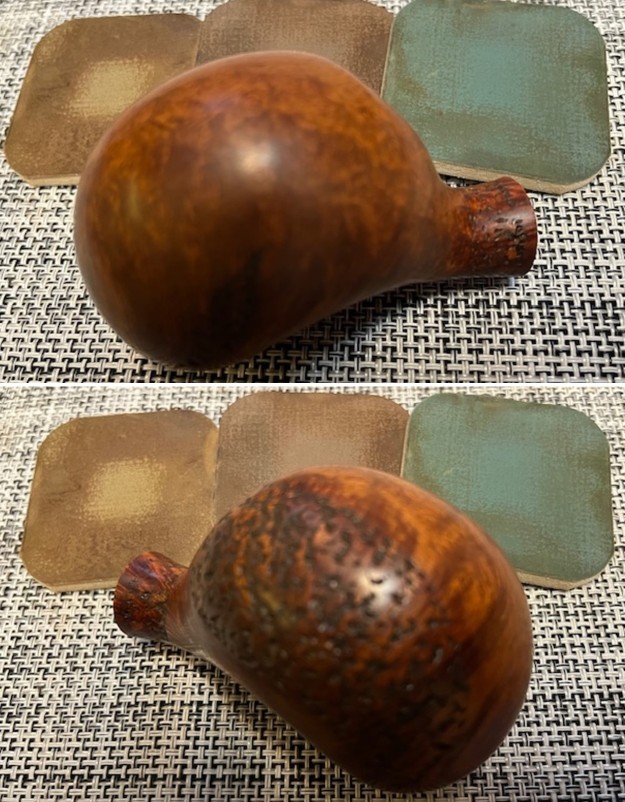
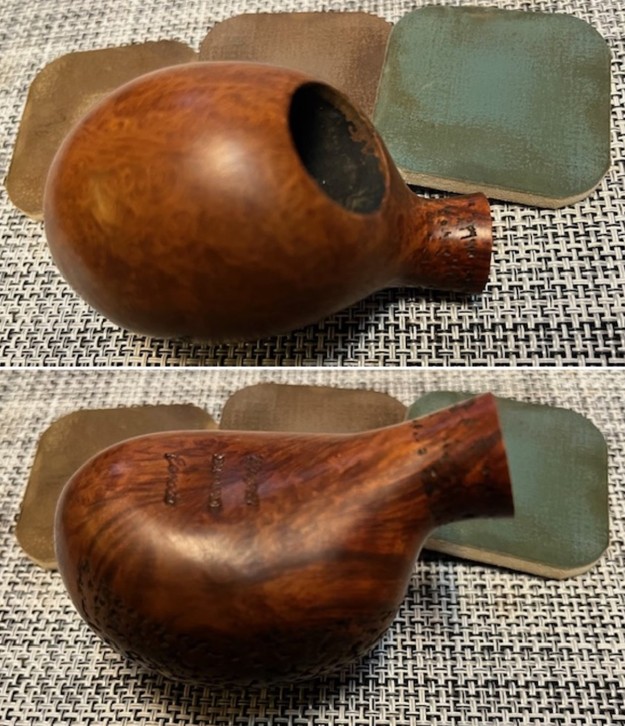
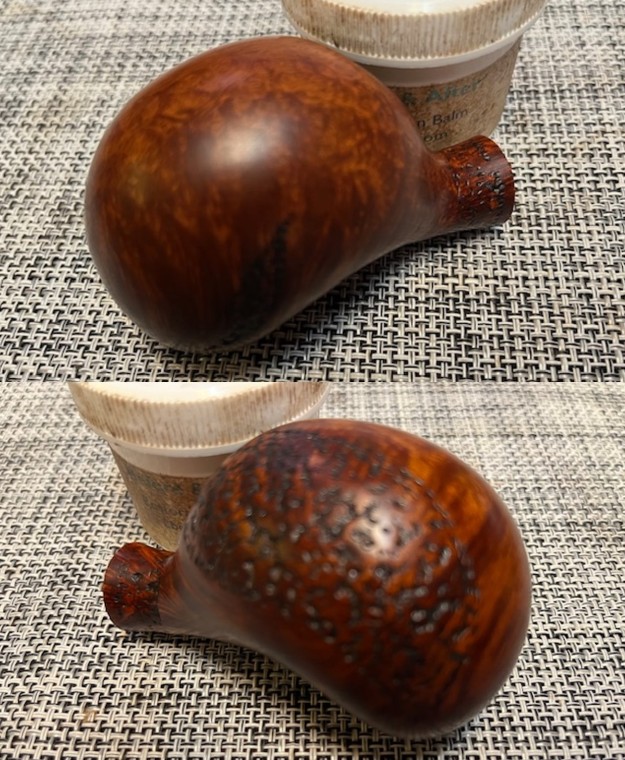
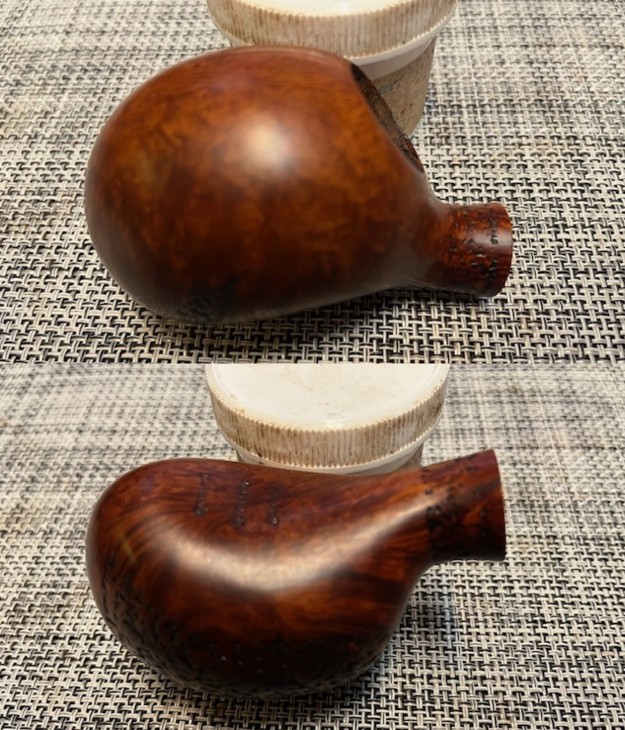
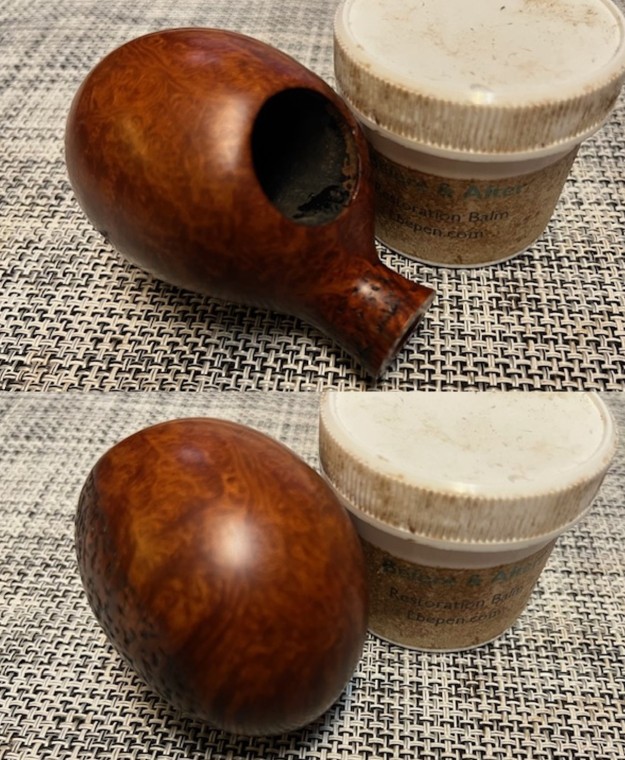
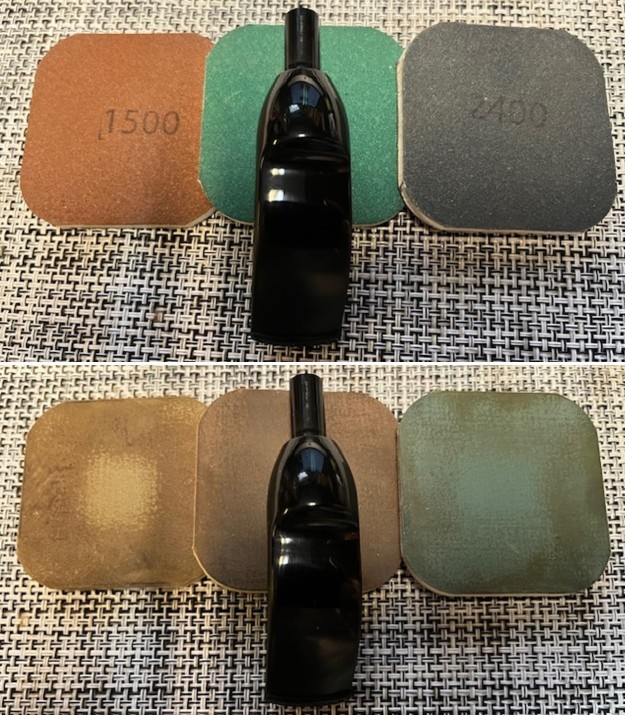
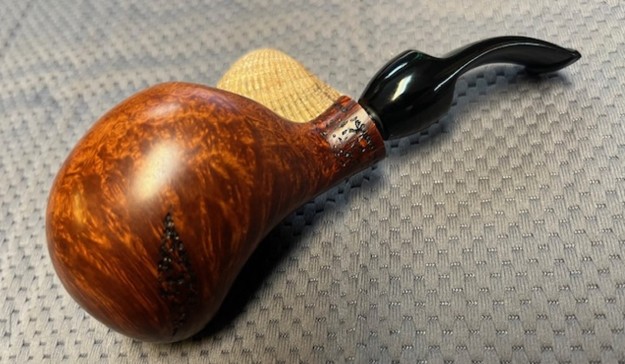
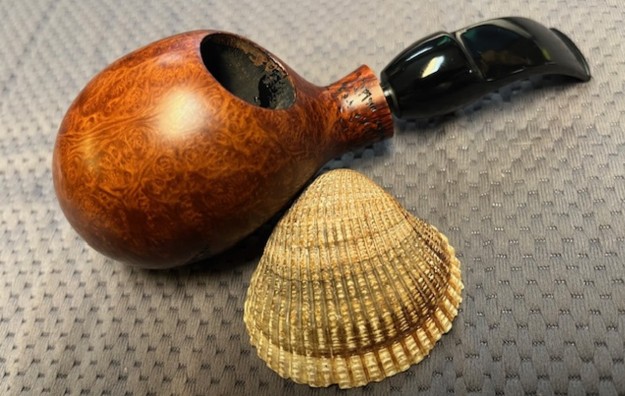
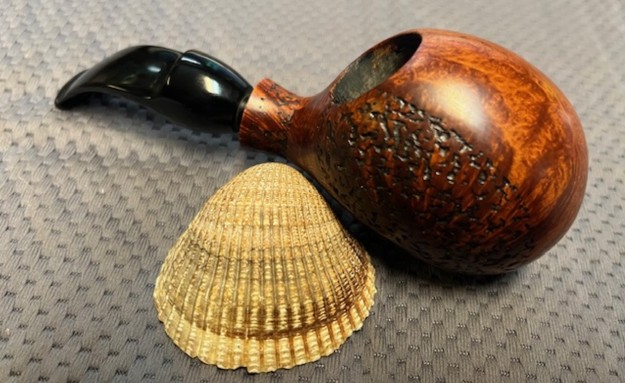
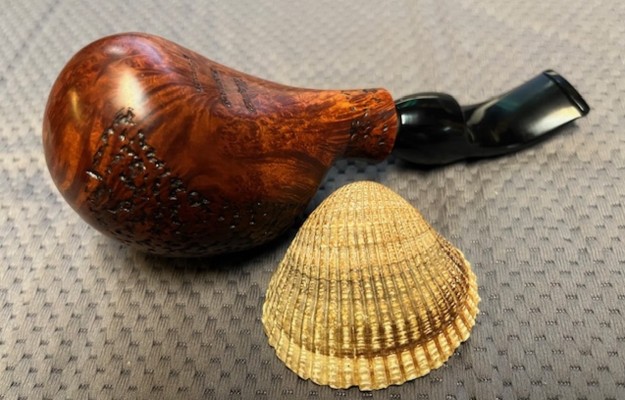
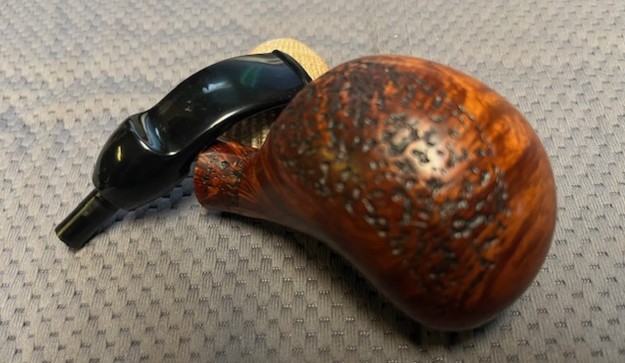
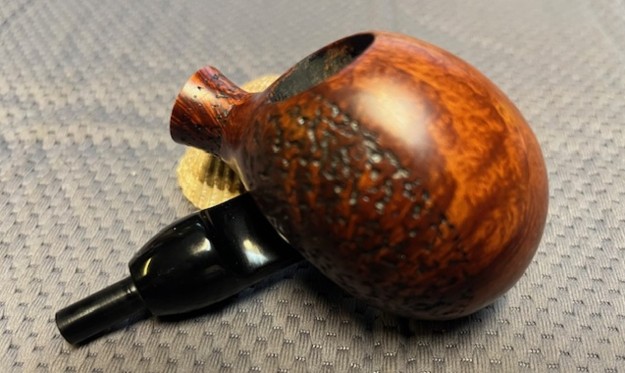
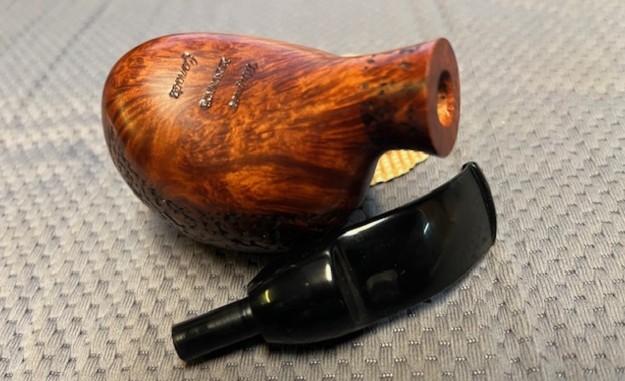
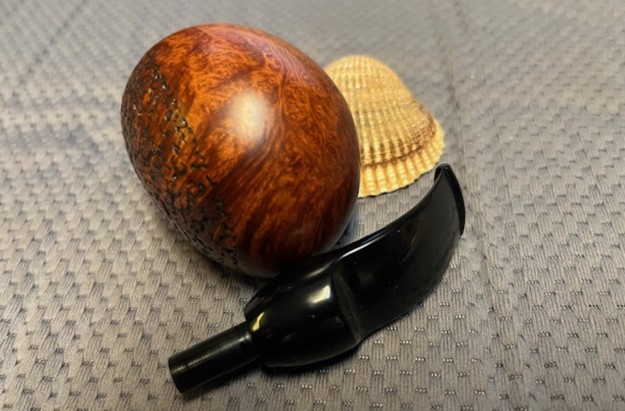
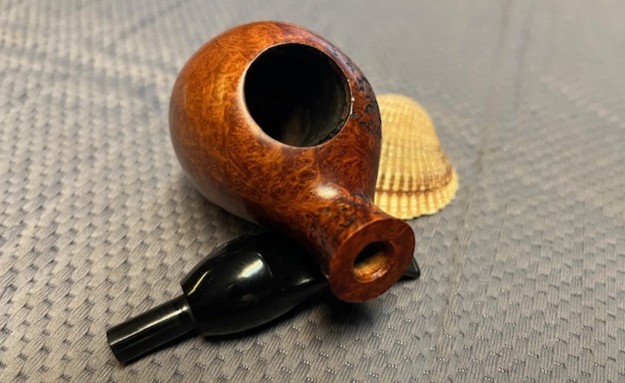
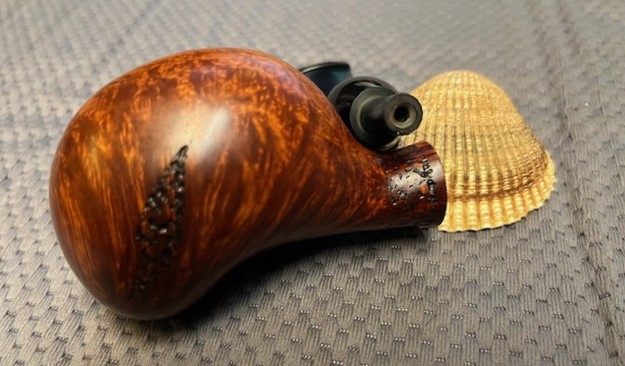
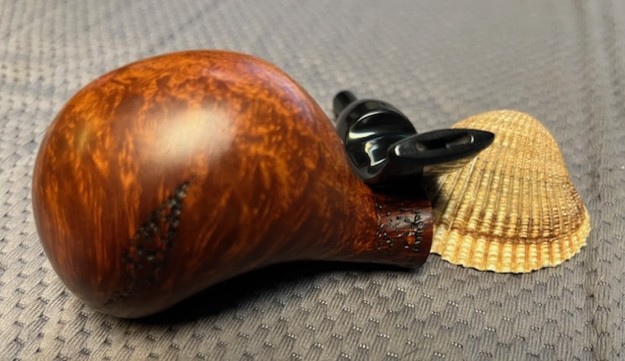
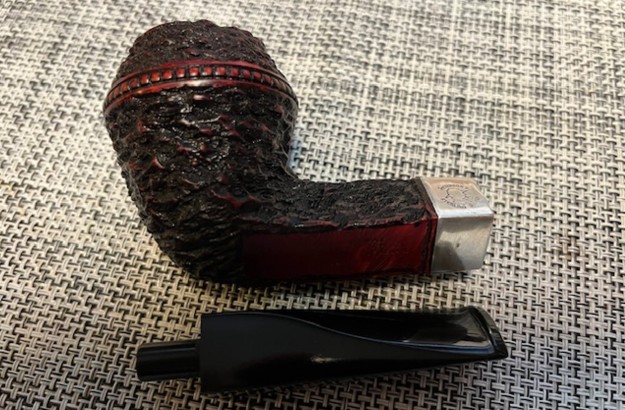
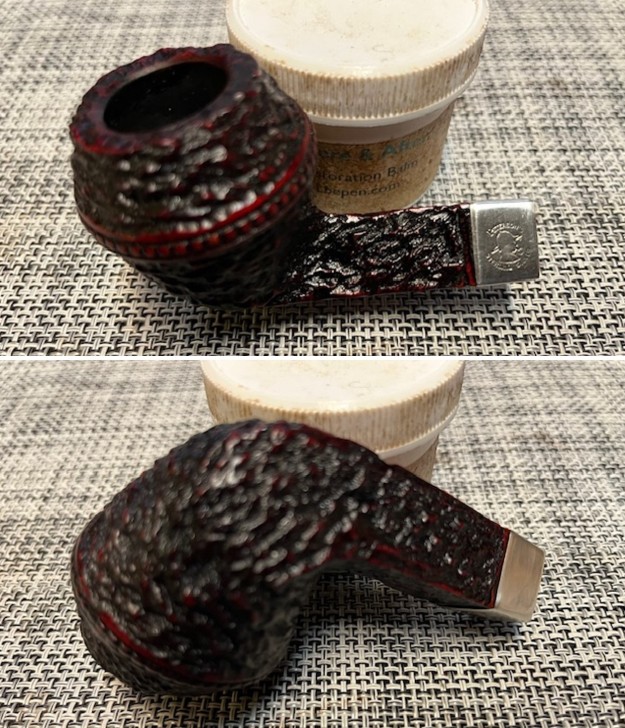
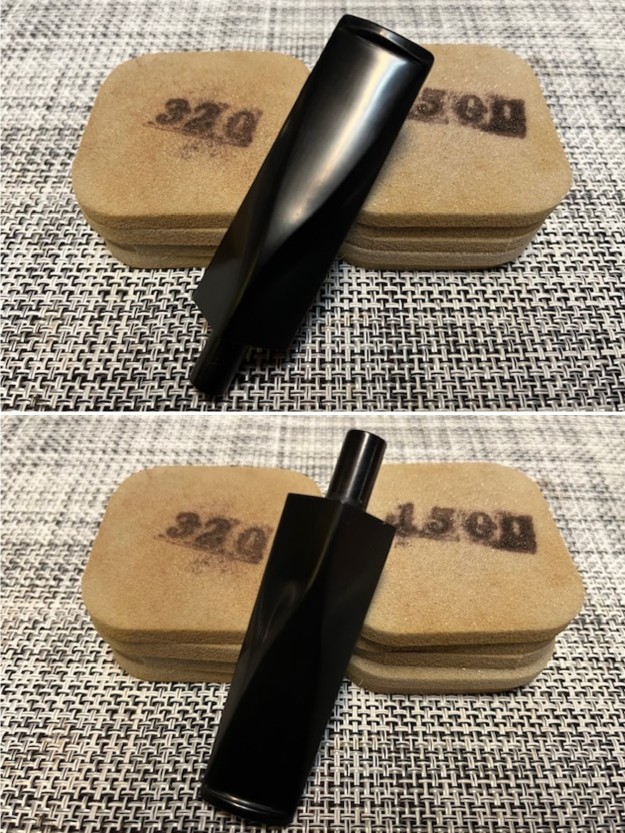
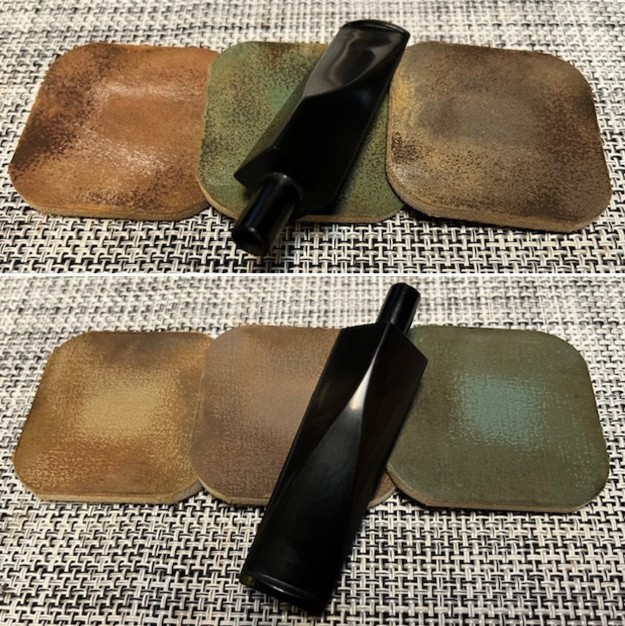
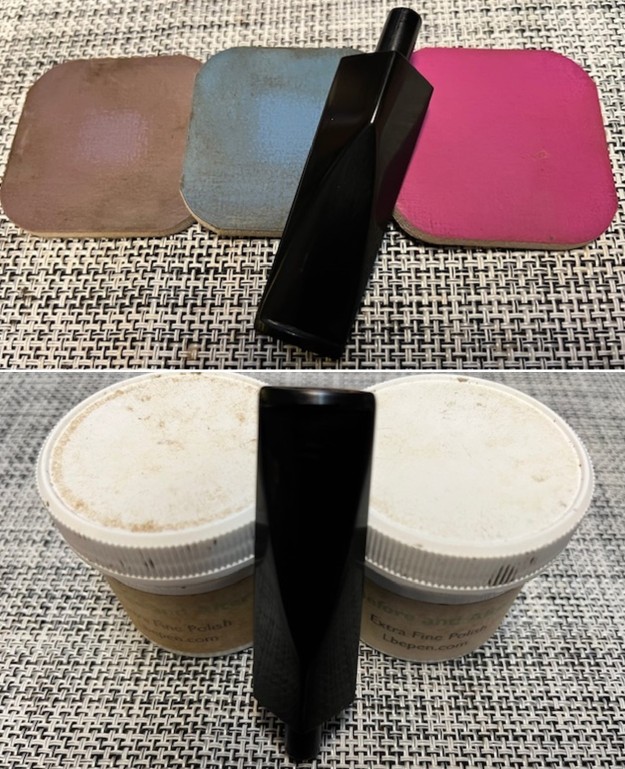
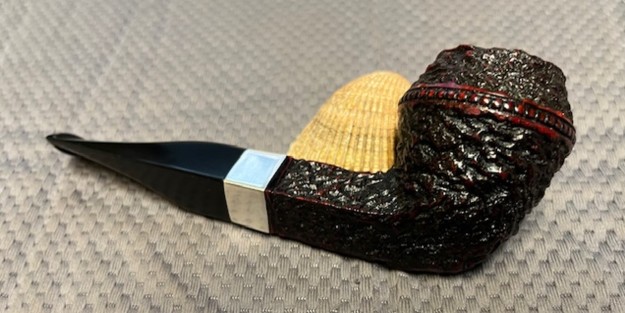
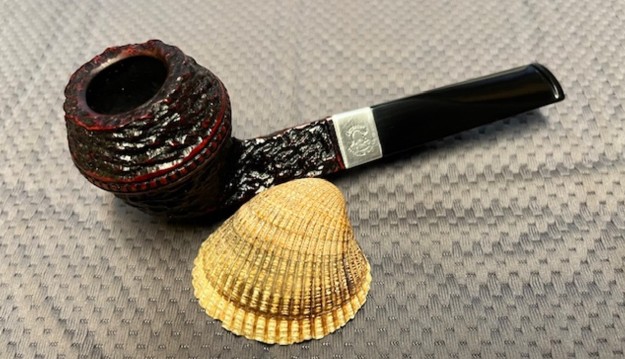
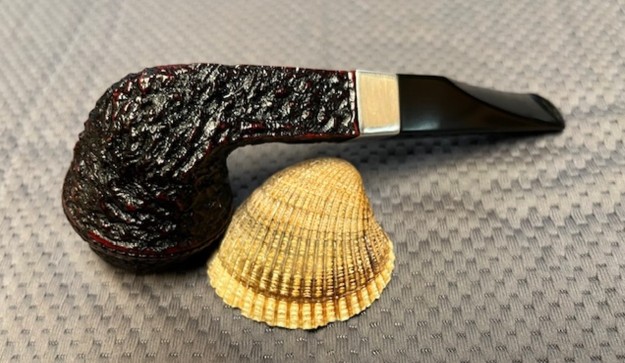
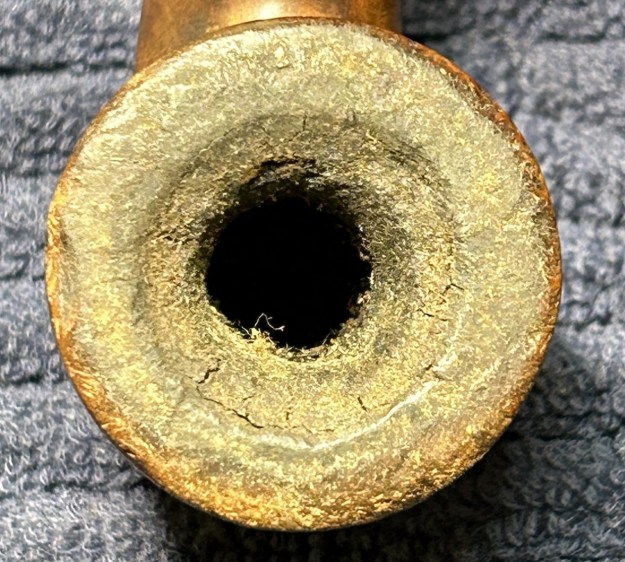
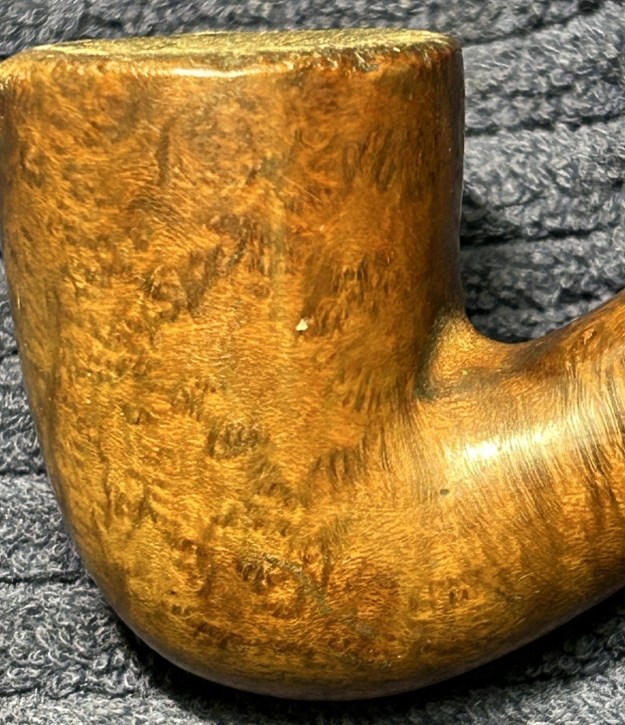
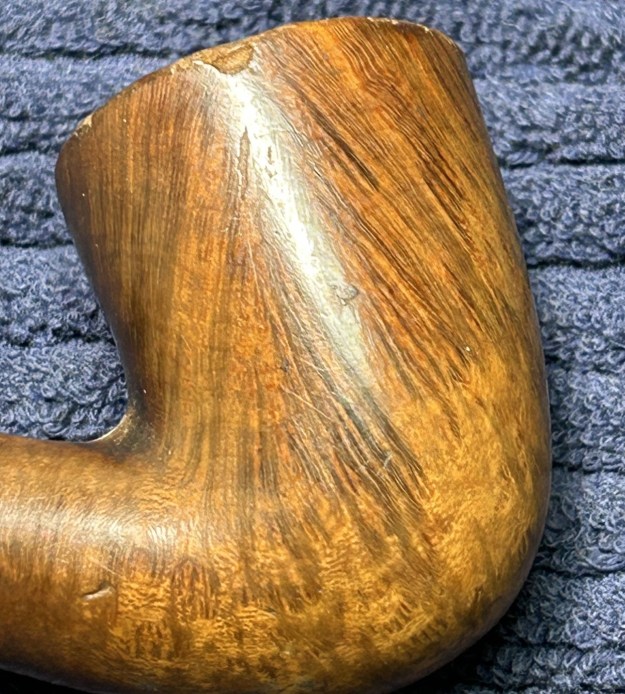
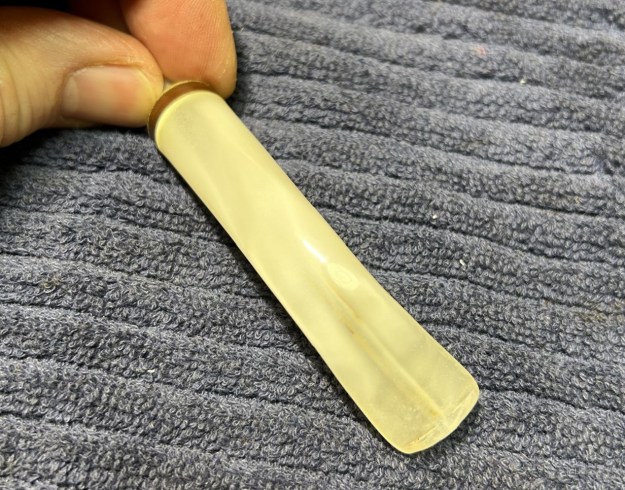
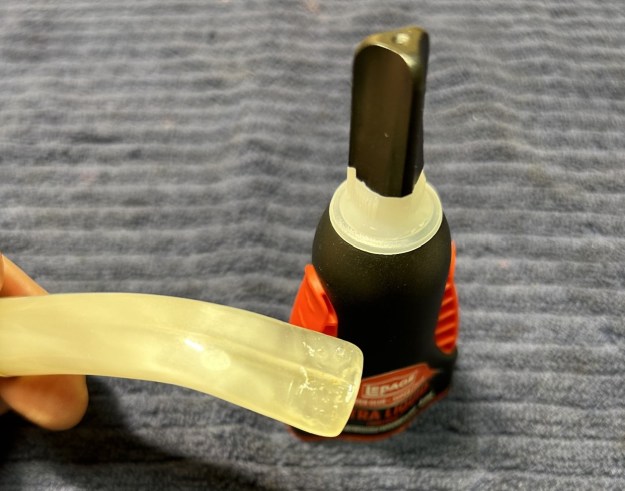
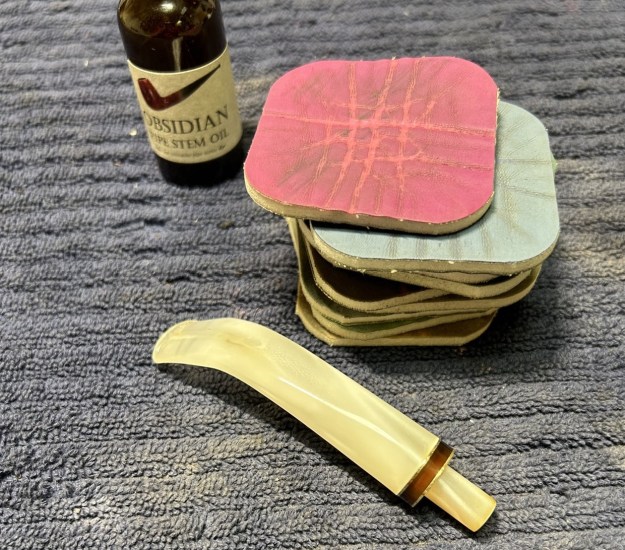
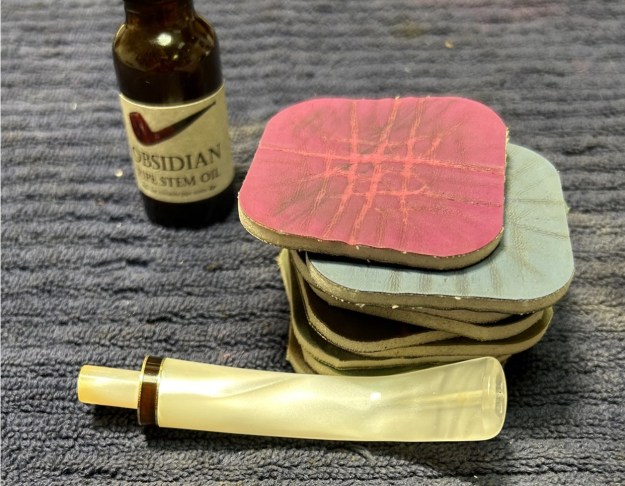
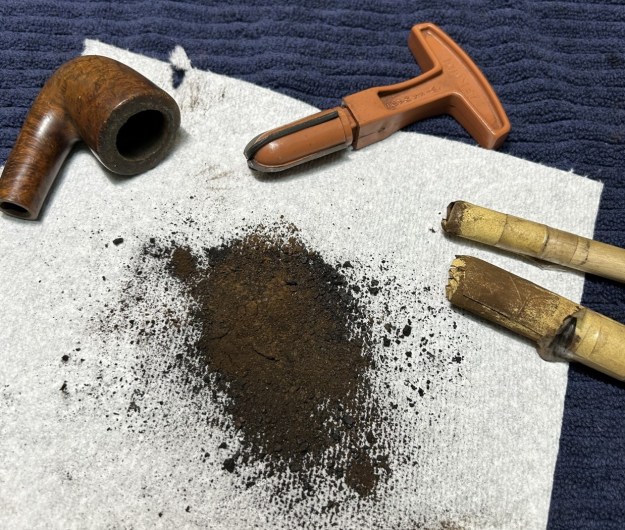
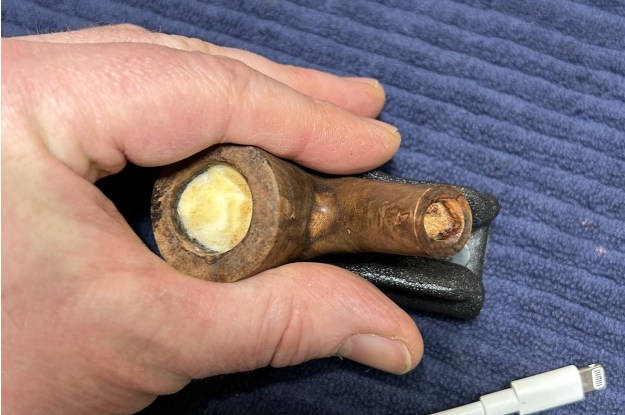
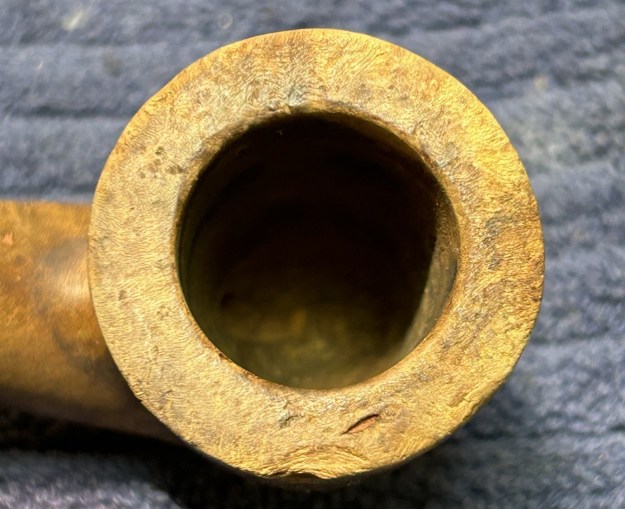
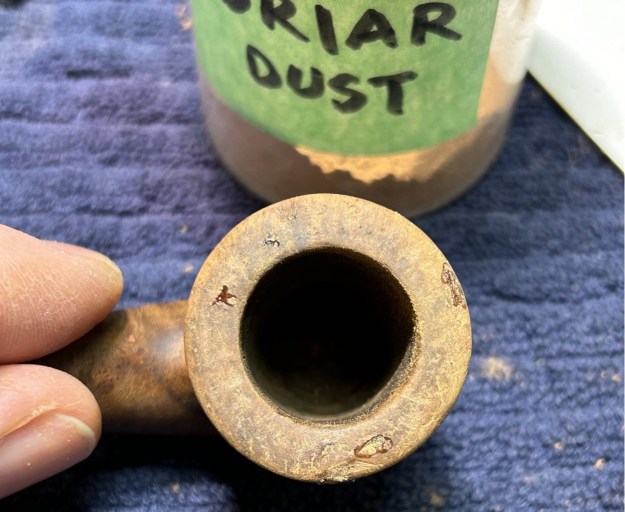
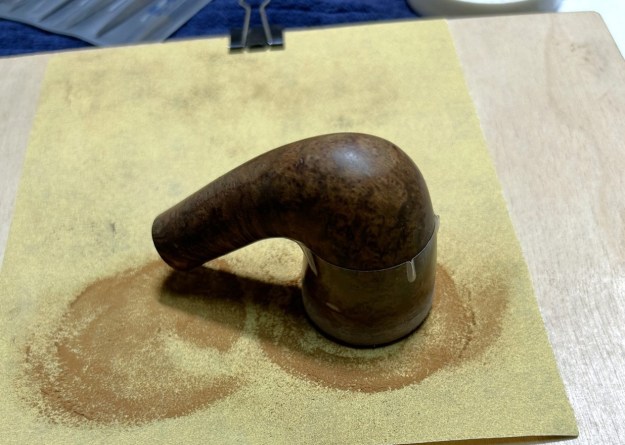
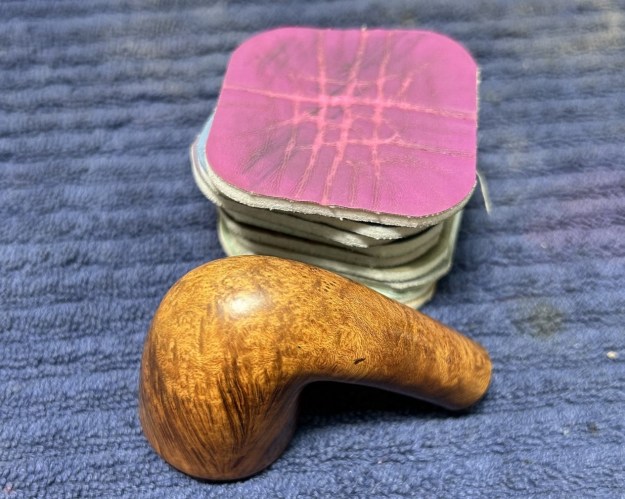
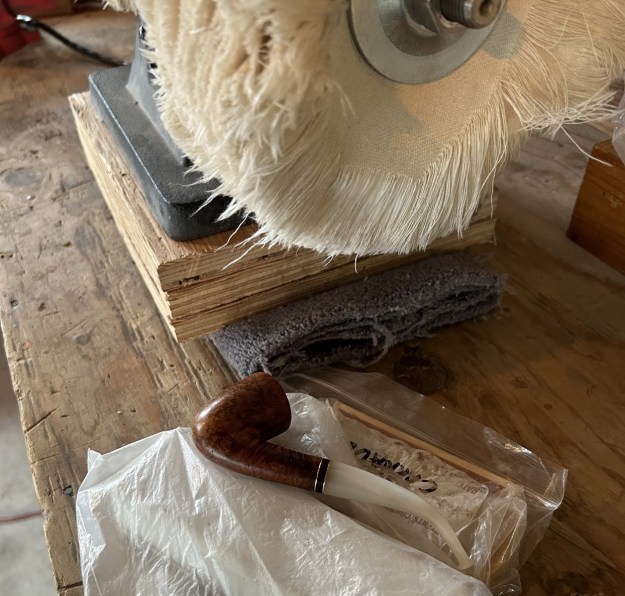
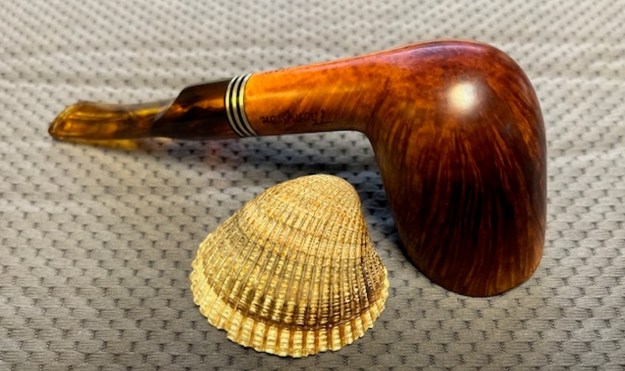
I am taking another break after the last three pipes I worked on the last few days. I decided to restem another one I had here. I cleaned up the bowl and matched a stem with a unique rustic freehand bowl that I have here in my box. It is a cleanup and restore and gives me a break from the routine of my other work on pipes. This bowl has an odd rustic/rough finish with a plateau rim top and shank end. The finish was a bit dull and lifeless. It showed promise under the grit and grime of the years. It has no stamping anywhere on the side or underside of the shank. The bowl had a moderate cake and some lava overflow on the smooth front space and plateau areas of the rim top. I don’t believe the bowl is briar but I am unsure of the wood. The bowl also had some dust and debris in rusticated finish of the bowl as well as in the crevices of the plateau on the shank end. I took some photos of the bowl before I started my work on it. I took a close up photo of the bowl to give an idea of what I had to work with. The bowl was very dirty and had a moderately thick cake. The plateau rim top has a lava coat that almost filled in crevices. I also took a photo of the plateau on the shank end to show its condition – dirty but in good shape.I went through my cans of stems here and found a nice clear smoky acrylic saddle stem that would fit quite well once I used a clear acrylic tube to line the shank. I have a nice piece of the tube from another stemless freehand that is perfect. Once I cleaned the shank and the stem I would press it in place in the shank like a Delrin or rubber sleeve and the it would be perfect and it will look good. While the glue cured I turned my attention to the bowl. I reamed it with a PipNet Pipe Reamer using the 2nd and 3rd cutting heads to remove the cake. I cleaned up the remnants with a Savinelli Fitsall Pipe Knife. I finished the bowl by sanding the walls with a piece of 220 grit sandpaper wrapped around a piece of dowel. The bowl walls looked very good. I cleaned up the plateau areas on the rim top and shank end with a brass bristle wire brush. I worked on it until the groves were clean. I wiped it down with a damp cloth to remove all the debris. It was looking better each step!I scrubbed the exterior of the bowl and shank with a tooth brush and undiluted Murphy’s Oil Soap. I worked it into the grain on the sides, the plateau on the rim top and shank end and the rusticated patch on the right side of the bowl with the tooth brush. I rinsed the soap and grime off with warm water and dried it off with a soft towel. I looked much better at this point. The grain really stands out. I scrubbed out the internals with pipe cleaners (normal & bristle), cotton swabs and alcohol to remove the tars and oils in the shank between the mortise and the entrance of the airway into the bowl. It was quite dirty.I sanded the sides the bowl and shank with 320-3500 grit sanding pads to start the polishing process. I wiped down the bowl with a damp cloth after each sanding pad. With the bowl polished I rubbed the bowl and shank down with Before & After Restoration Balm. I worked it into the surface of the bowl sides and shank with my fingertips and into the plateau rim top, shank end and rustication with a horsehair shoe brush. The product works to clean, enliven and protect the wood. I let the Balm sit for 15 minutes and then buffed with a cotton cloth to raise the shine. With the bowl cleaned and ready for use I fit the mortise with the clear rubber tube insert. I started the fit with the tenon. I pressed it in as far as possible with the tenon. There was still a small edge that needed to be pressed in. I used a Savinelli Fitsall Pipe Knife to press it the rest of the way into the shank. It looked very good. I set the bowl aside and turned my attention to the stem. I filled in the deep tooth marks with clear CA glue and set it aside to cure.Once the glue cured I used a small file to flatten the repairs and reshape the stem surface. I sanded the repairs on the stem surface with a folded piece of 220 grit sandpaper. It was starting to look better. I sanded the stem surface with 320-3500 grit sanding pads to further polish the stem. I wiped it down between sanding pads with a damp cloth.I used several needle files – round and oval as well as a button slot saw to shape the opening in the end of the button. It is much better than just the original drilled hole.I polished the acrylic stem with micromesh sanding pads – 1500-12000 grit pads. I wiped it down with a damp cloth after each sanding pad. I used Before & After Pipe Polish – both Fine and Extra Fine to further polish the stem. This oddly beautiful Hand Carved Danish Style Freehand with a fancy, turned smoky acrylic saddle replacement stem is a great looking pipe now that it has been restored. I put the stem back on the bowl and carefully buffed the pipe with Blue Diamond on the buffing wheel using a light touch on the bowl and shank. I gave the bowl and the stem multiple coats of carnauba wax on the buffing wheel and followed that by buffing the entire pipe with a clean buffing pad. I hand buffed the pipe with a microfiber cloth to deepen the shine. The finished Hand Carved Freehand fits nicely in the hand and feels great. Give the finished pipe a look in the photos below. The dimensions of the pipe are Length: 6 ½ inches, Height: 3 ½ inches, Outside diameter of the bowl: 1 ½ wide x 2 inches long, Chamber diameter: ¾ of an inch. The weight of the pipe is 79 grams/2.75 ounces. If you are interested in adding this pipe to your collection send me a message or an email to slaug@uniserve.com. Thanks for walking through the restoration with me as I worked over another very interesting pipe. I will be putting it on the rebornpipes store in the American Pipe Makers Section shortly if you would like to add it to your collection. Thanks for your time. UPDATE: I received a message on Facebook Tobacco Pipe Restorers Group about a possible maker for this pipe. Thanks Mason Evans! I am including that and a link to the article on Pipedia below:
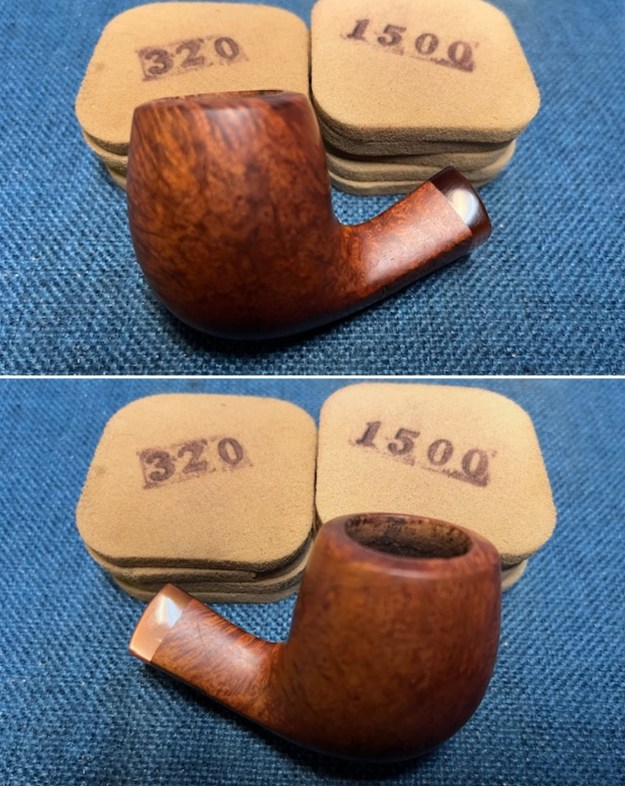
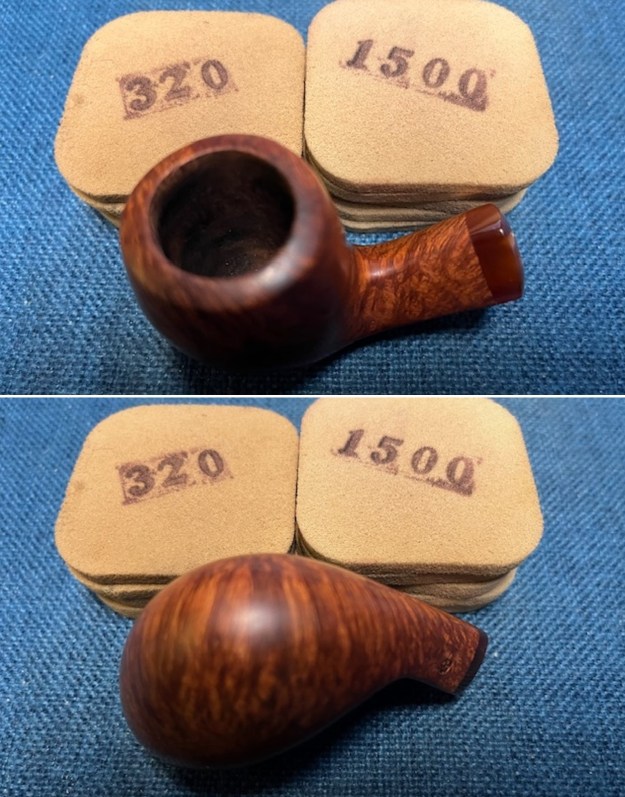
Mason: That looks like a Bubinga pipe by Tom “Pipecarver” Arcoleo.

https://pipedia.org/wiki/Tom_Pipecarver_%26_Son

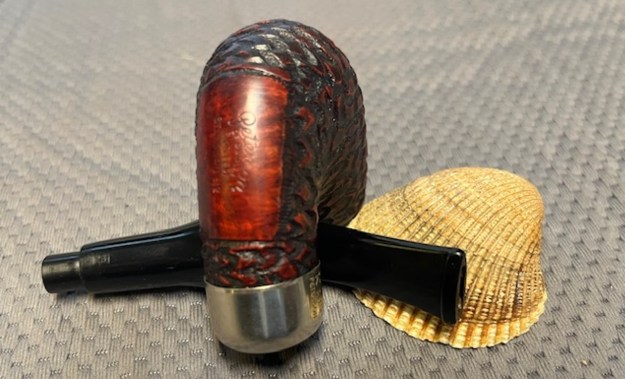
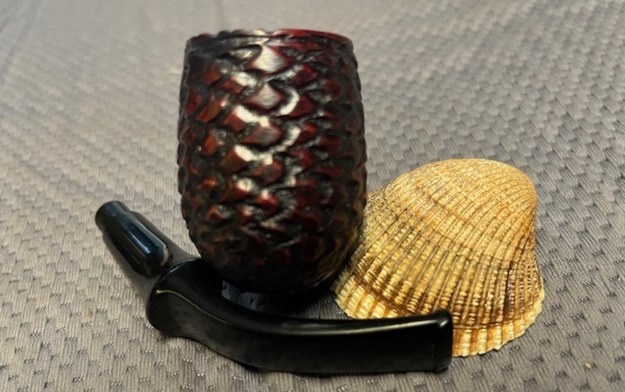
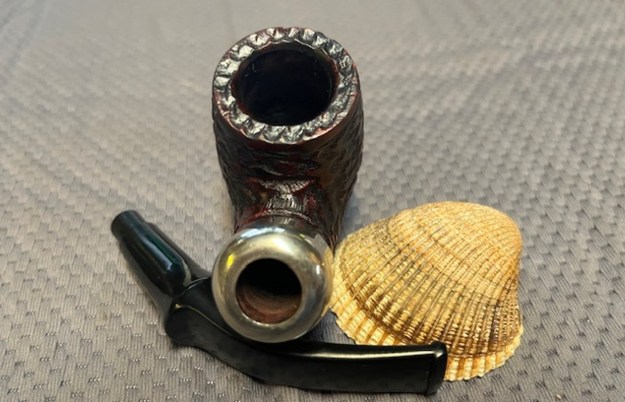
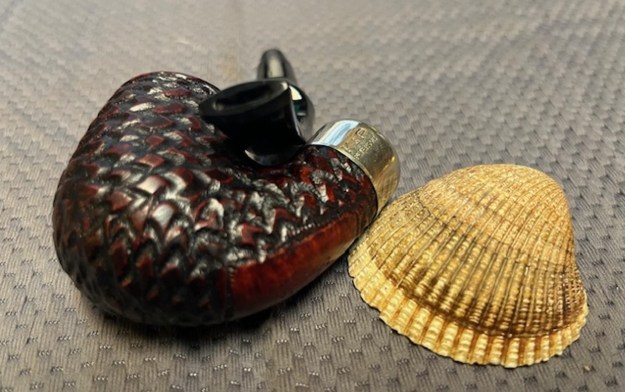
Cleaning up a Pineapple Style Rusticated Peterson’s of Dublin System Standard 312


by Steve Laug

I finally finished the heavy group of pipes that I was working on for the wife of an old pipe man in Ontario. There were some amazing pipes there and with the restoration they came out looking very good. I will be mailing them out to him early in the week ahead. Now it was time to work on other pipes awaiting restoration. The first of those on the table is a Peterson’s of Dublin System Standard 312 with a pineapple style rustication and an acrylic fishtail stem. I received an email before my trip to Idaho to visit my father. In it a friend Matthew wrote about a pipe he had picked up that needed my attention. I have included the email below.

Steve, The Peterson is heading your way.  I probably would not have even purchased the Pete, except it is an example of the “pineapple” rustication that Peterson used to employ.  They’re getting hard to find and I do not know if it from rarity (not many made) or that Peterson did not sell many because the rustication did not appeal to pipe smokers. Please examine the Pete and give me your diagnosis. Thank you. Matthew

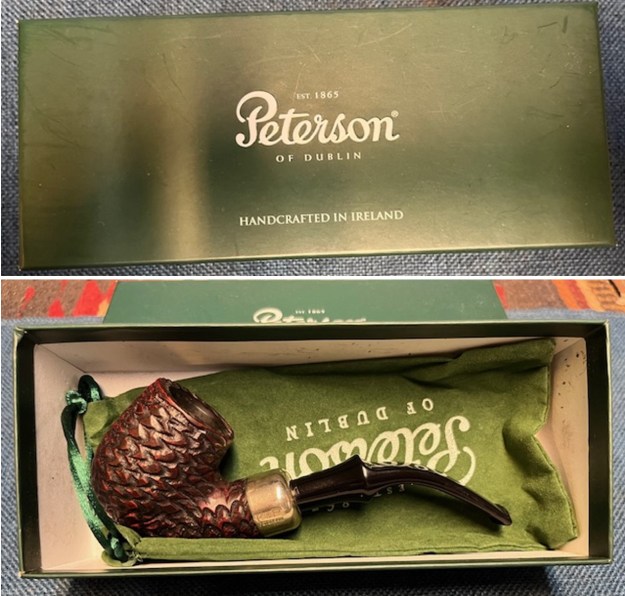
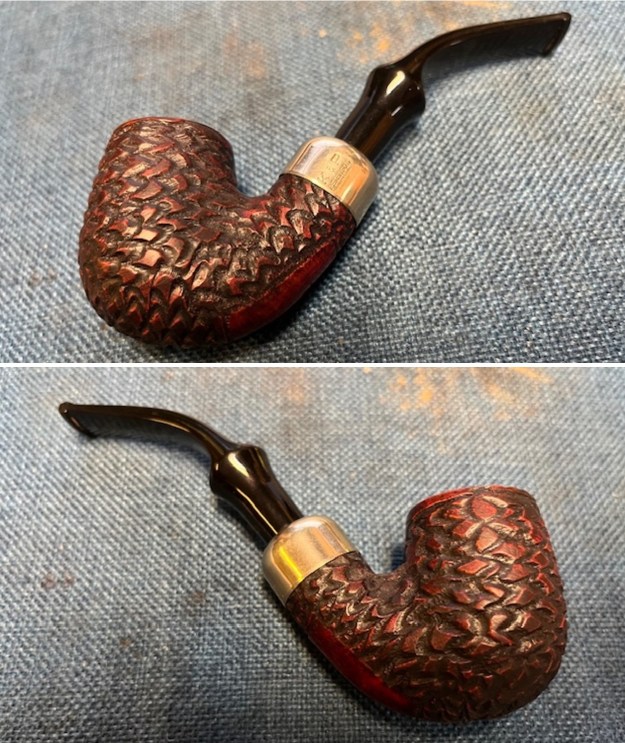
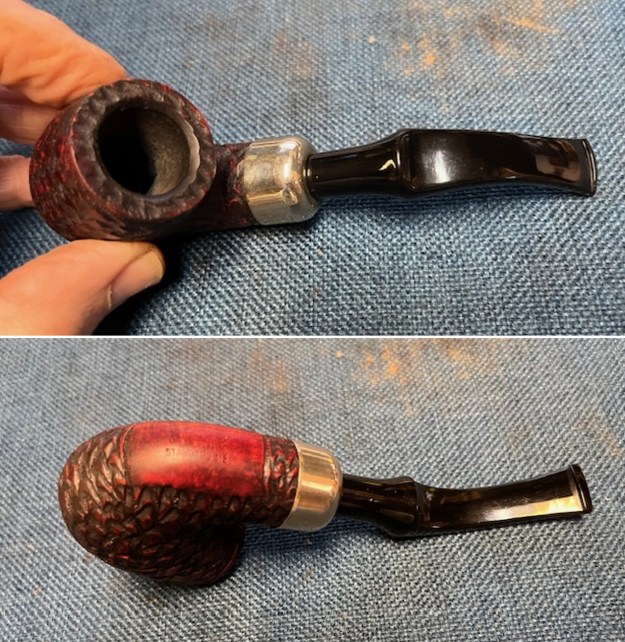
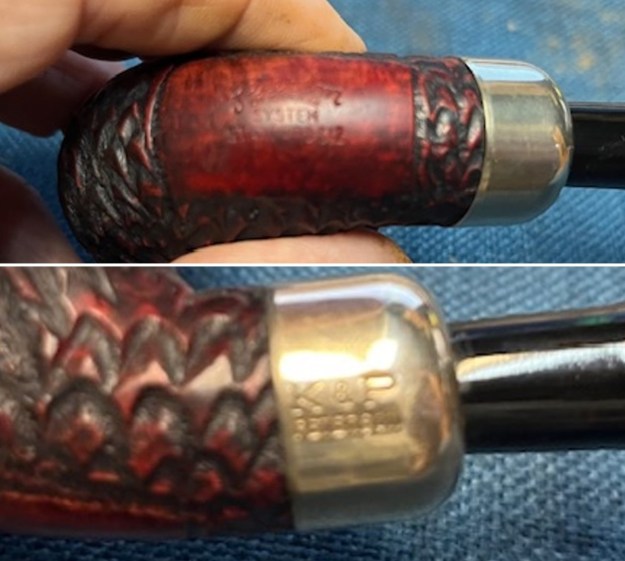
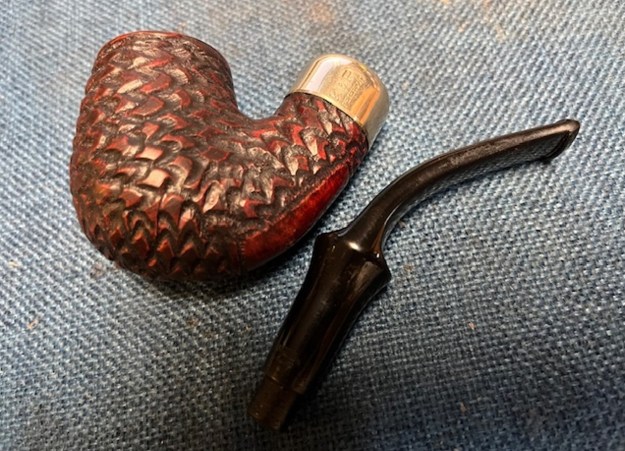
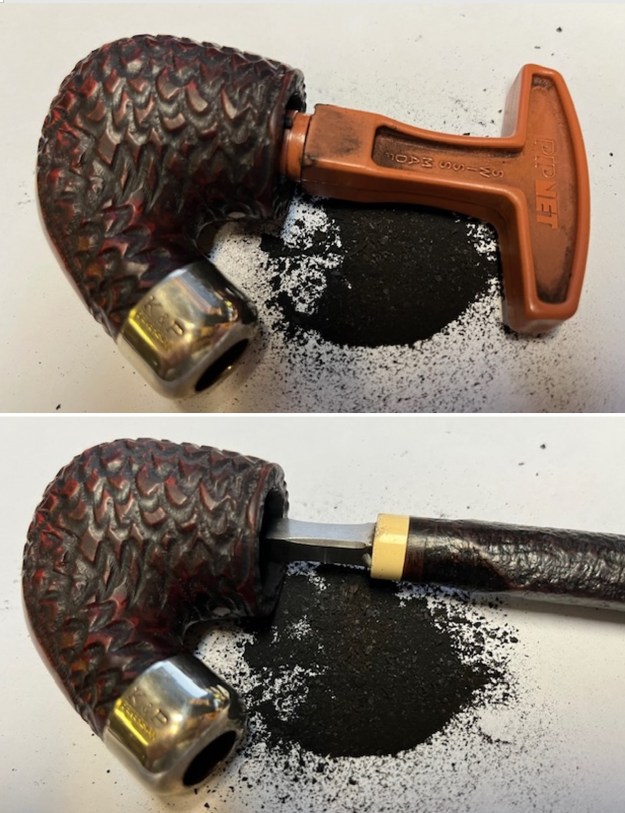
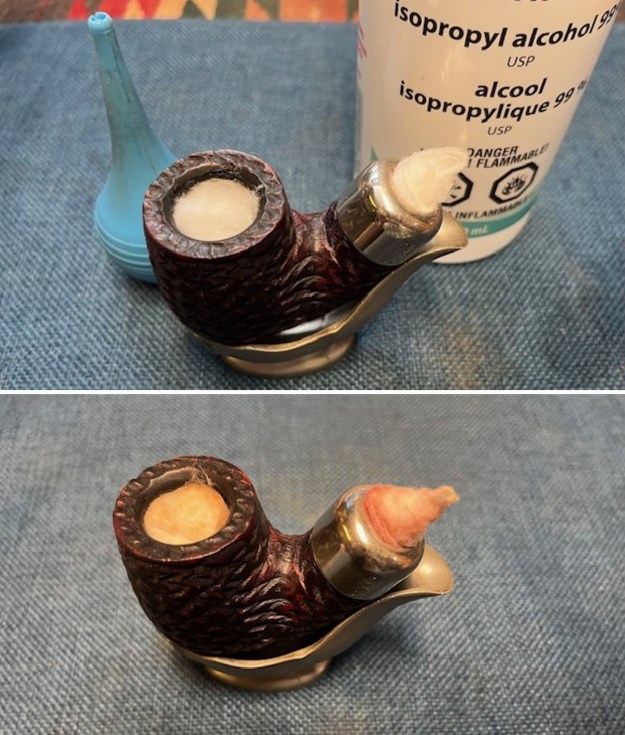
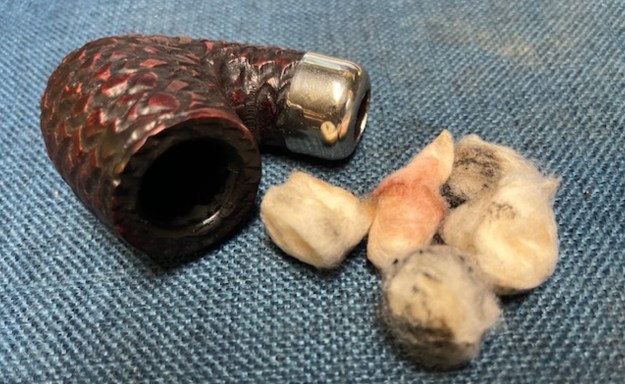
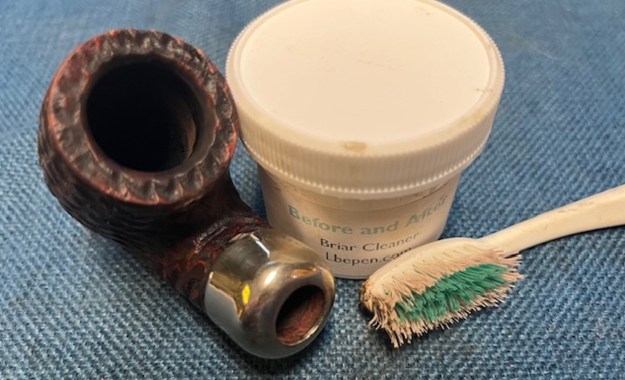
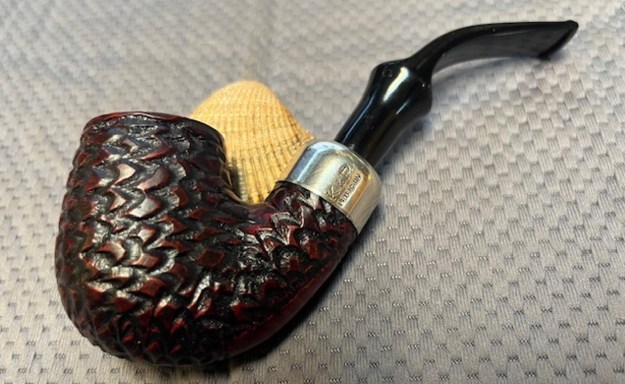
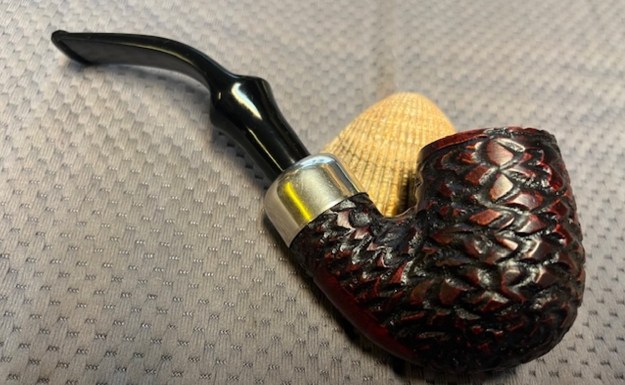
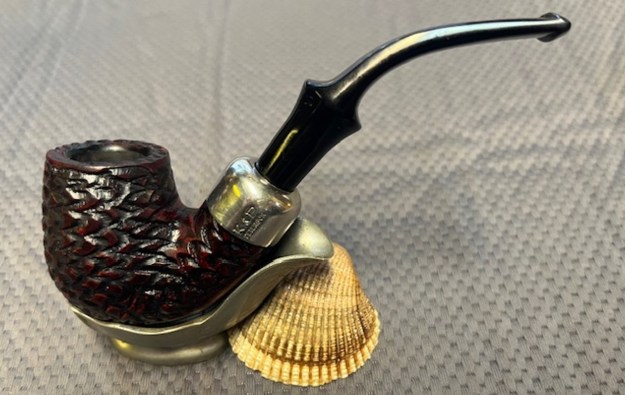
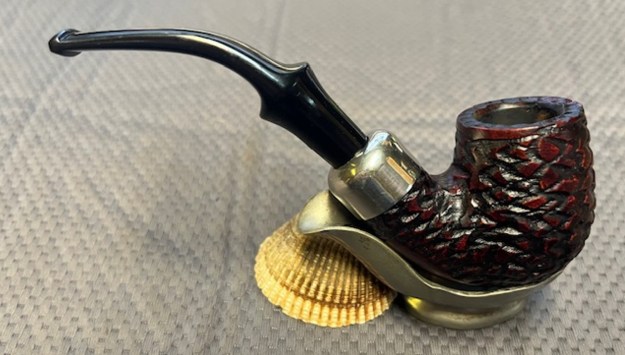
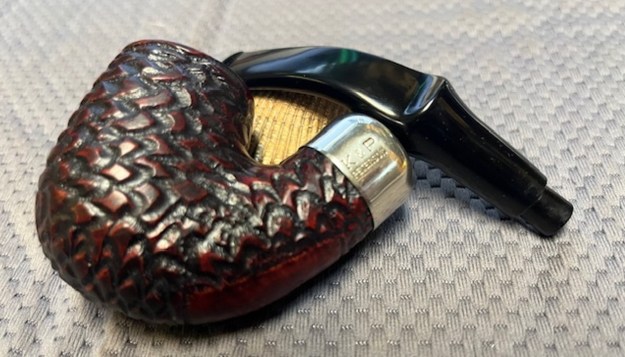
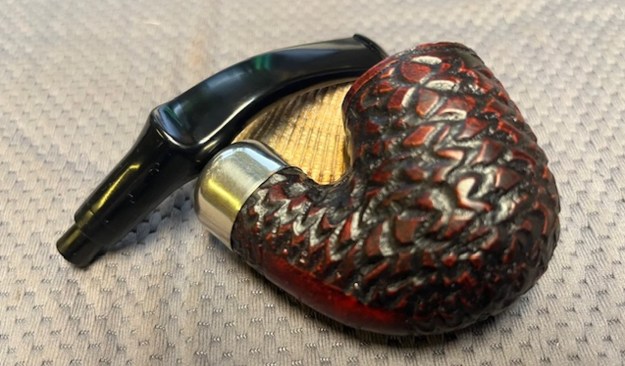
This afternoon I opened the box Matthew shipped the pipe in and found a nice looking green Peterson’s box inside. I opened the box and found a Peterson’s 312 inside and the original green pipe sock it came in. It was a great looking pipe. The smell in the box was a heavy English/Latakia smell that filled the room when I opened the box. The finish on the pipe was quite clean with just some dust in the rustication grooves. The polished nickel ferrule was in excellent condition with no dents or tarnish. The bowl had a thick cake on the walls of the bowl and the shank had a lot of tar and oil sludge filling the sump, the mortise and the airway in the shank and the stem. The stem was acrylic and was a fishtail style stem. I believe it is a Peterson’s made fishtail stem that came with the pipe but I am not sure. The fir in the shank is perfect which seems to point this direction. There is no P stamp on the saddle portion of the stem but that is not abnormal as many of their stems did not have the stamp. Overall it is a beautiful pipe with a unique finish. I am looking forward to working on it. I took photos of the pipe before I started. I took a close-up photo of the bowl and rim top to show its condition. The inside of the bowl was heavily caked with debris in the bottom of the bowl. The rim top looked very good with just some grime in the rustication. There was a polished nickel ferrule on the shank end that was in decent condition with no nicks. The acrylic stem was dirty and had some light tooth marks and chatter on the top and underside ahead of the button.I took photos of the stamping on the smooth panel on the underside of the shank. It is faint but readable as noted above. I also took a photo of the stamping on the left side of the nickel ferrule and it is also very clear. I also removed the stem from the shank and took a photo of the pipe. I reamed the bowl with a PipNet reamer to remove the cake. I cleaned up what remained with a Savinelli Fitsall Pipe Knife. I sanded the walls of the bowl to remove any remnants of cake with 220 grit sandpaper wrapped around a piece of dowel. Once finished the inside of the bowl was smooth. Once the pipe was reamed and clean I took the opportunity to work on the internals – the sump, mortise and airway in the shank and stem. I cleaned out the airway to the bowl, the mortise and the airway in the stem with pipe cleaners, cotton swabs and alcohol. The stink in the pipe was still strong so I decided to exorcise the stink. I stuffed the bowl with cotton bolls and twisted a cotton boll and stuffed it in the sump and mortise. I used an ear syringe to fill the bowl with 99% isopropyl alcohol and set the bowl aside to let the oils wick out of the briar. I let the pipe sit overnight. In the morning the second and third photos show what I found. The shank plug cotton had wicked out tars, oils and some stain! It smells far better than when I started the process. I will let it dry out and check it again to see if I need to repeat the process. I cleaned up the rim top a bit with some Before & After Briar Cleaner. I worked it into the rim top surface with a tooth brush and then buffed it off with a cotton pad. It looked much better at this point in the process. I rubbed the bowl down with Before & After Restoration Balm. I worked it into the surface of the briar with my fingertips and a shoe brush to clean, enliven and protect it. I let the balm sit for ten minutes then buffed with a cotton cloth to raise the shine. Mark Hoover’s Balm is a product that I have come to appreciate and one I use on every pipe I have been working on. I sanded the stem with 320-3500 grit sanding pads to break up the remaining oxidation. I wiped it down after each sanding pad with a soft cloth. It began to look good. I polished the stem with micromesh sanding pads – dry sanding with 1500-12000 grit pads. I wiped the stem down after each sanding pad with Obsidian Oil. I polished it with Before & After Pipe Stem Polish – both Fine and Extra Fine. Once I had finished the polishing I gave it final coat of Obsidian Oil and set it aside to dry. Matthew’s beautifully shaped K&P Peterson’s of Dublin System Standard 312 was a fun one to work on. It has unique Pineapple Rustication beauty that the Peterson’s System Pipes have ceased to use. I put the bowl and stem back together. I polished the bowl and stem with Blue Diamond to blend in the stain and to polish out the scratches in the briar and the vulcanite. I gave the bowl multiple coats of Conservator’s Wax and the stem multiple coats of carnauba wax. I buffed the pipe with a clean buffing pad to raise the shine. I hand buffed it with a microfiber cloth to deepen the shine. The pipe polished up pretty nicely. The rusticated finish is well done and the polished smooth finish on the shank end and rim top look really good with the black vulcanite stem. This Peterson’s of Dublin System Standard 312 was a fun pipe to clean up. It is a comfortable pipe to hold in the hand. The finished pipe is shown in the photos below. The dimensions of the pipe are Length: 5 ½ inches, Height: 2 inches, Outside diameter of the bowl: 1 ¼ inches, Chamber diameter: ¾ of an inch. The weight of the pipe is 51 grams/1.80 ounces. Thanks for reading this blog and my reflections on the pipe while I worked on it. This interesting Peterson will be going back to Matthew to fire up and enjoy! Thanks for reading this blog and walking through the restoration with me.

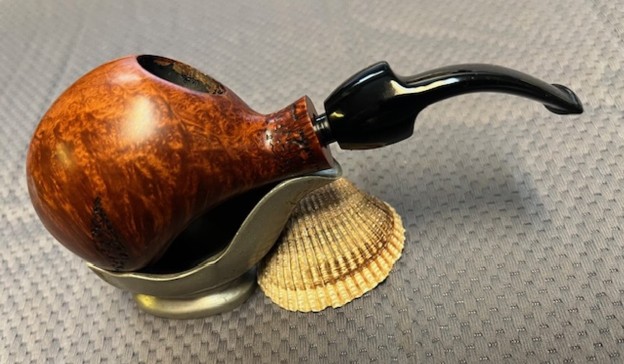
Restoring a Colm Magner Boxing Glove for my Own Collection


Blog by Steve Laug

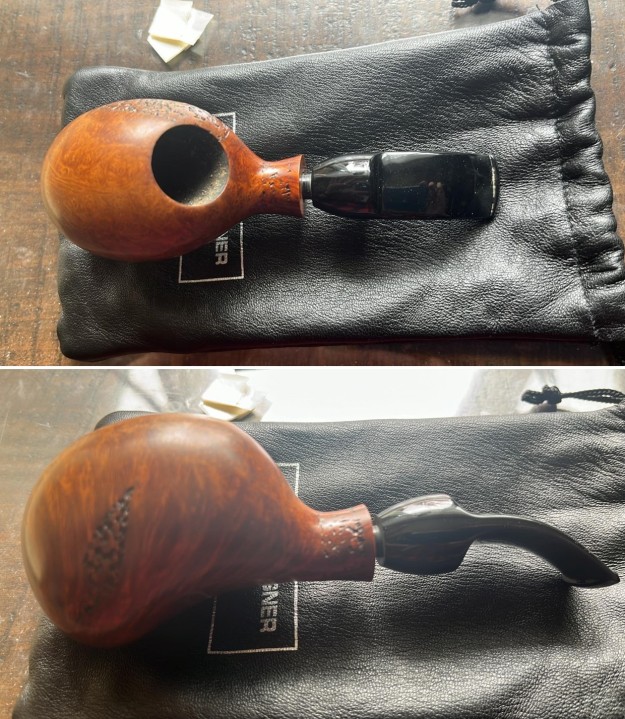
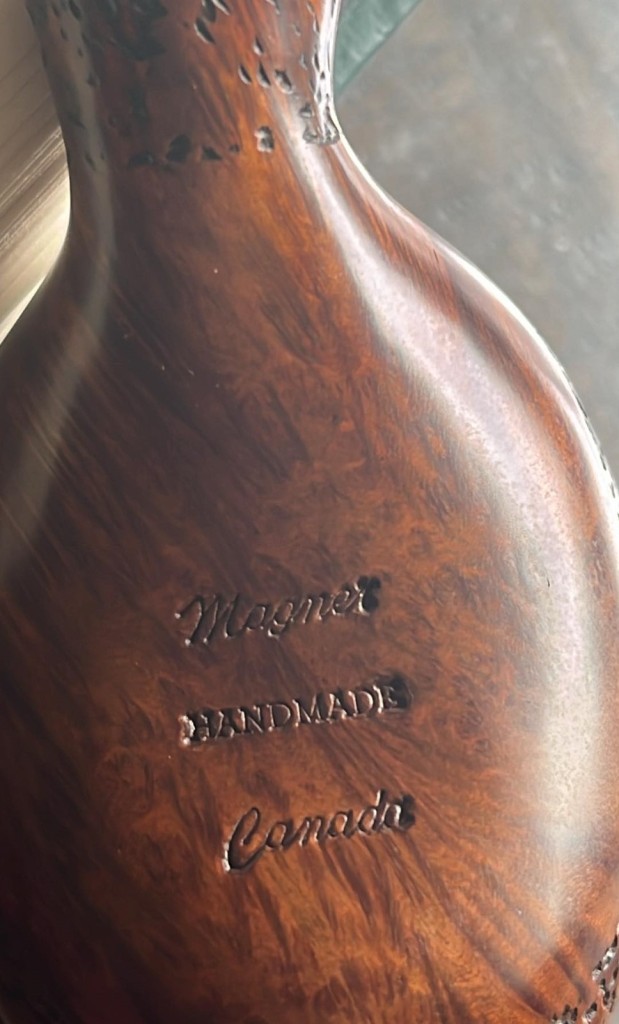
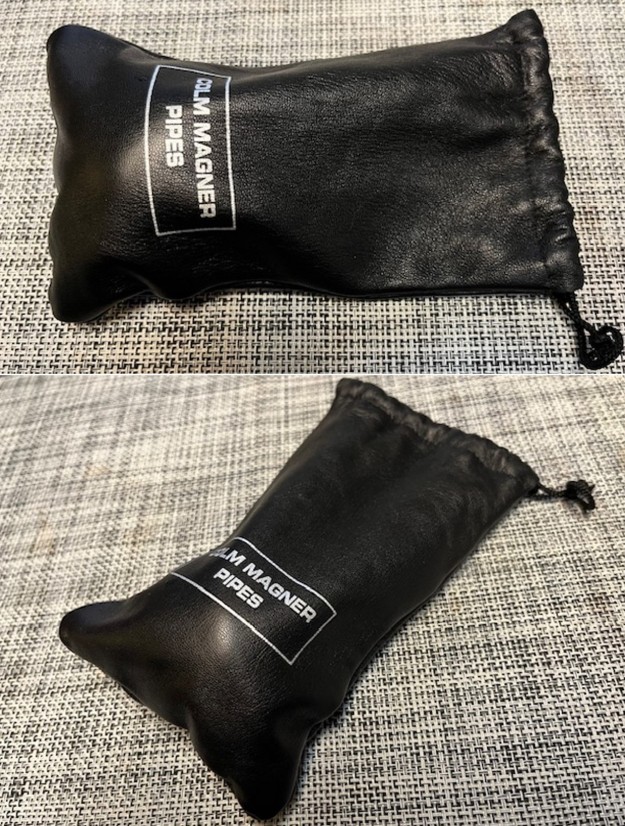
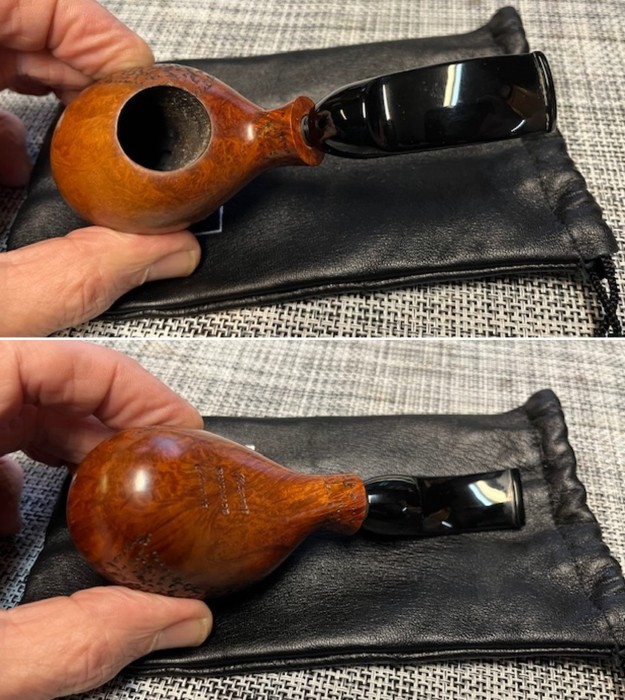
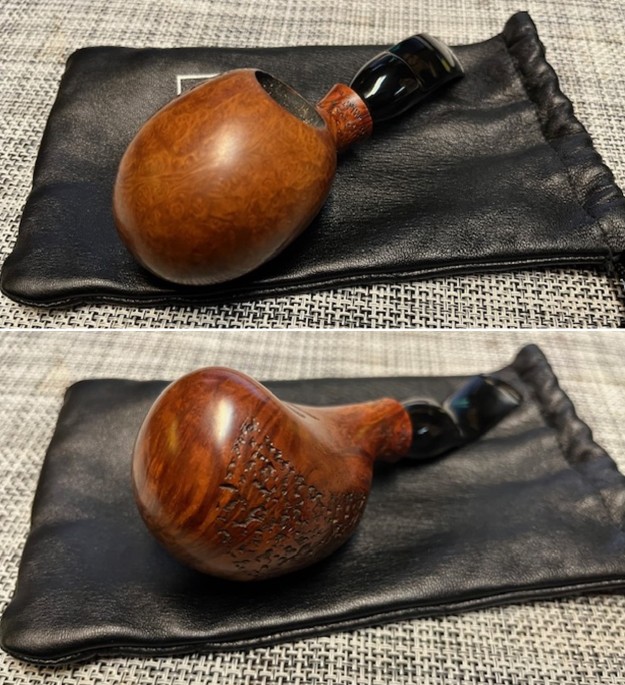
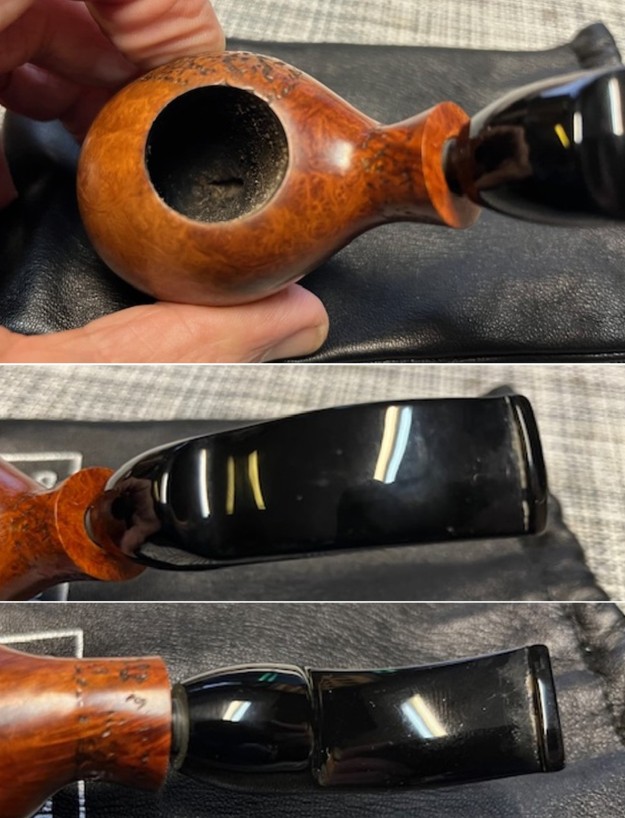
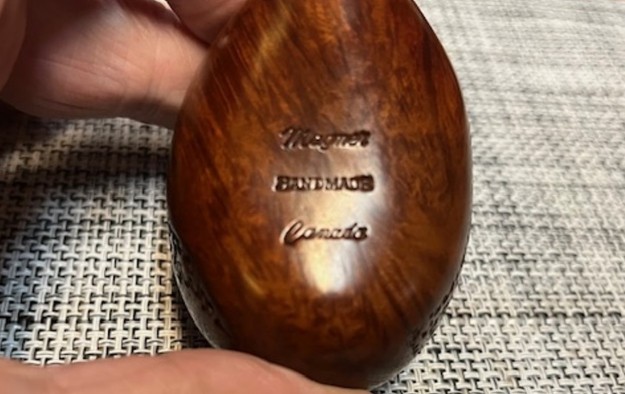
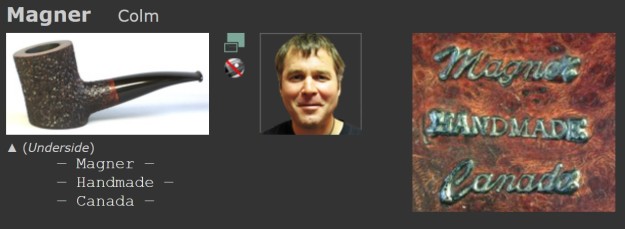
I have been looking for a Colm Magner pipe for a long time. I have watched them come and go on eBay and never quite found the one that really captured me. Not too long ago there was fellow on Facebook selling some pipes for his father. One of the pipes was a Colm Magner that ticked all my boxes and it came in a black calfskin pipe sock. It was a shape that Magner called a boxing glove. It reminds me a lot of the signature Vesz Raindrop shape. It was a smooth finish with two patches of rustication – one on each side. It is a small random pattern with some small patches of rustication on the shank sides. The stem was custom fitted acrylic. I have included the photos that the seller included in his advertisement below. It was a great looking pipe and I looked forward to receiving it. The pipe is stamped on the underside of the bowl and reads Magner [over] Handmade [over] Canada. The stamping is clear and readable. I had the pipe shipped to Jeff in Oregon. Yesterday when I met him in Washington I picked up the pipe. The finish was slightly dull and there was a light cake in the bowl. The inner edge and the rim top looked very good with no lava overflowing and no damage. The stem is acrylic and had some light tooth chatter on the top and underside next to the button edge. There was also some calcification against the sharp edge of the button on both sides. I took photos of the pipe when I brought it to the work table this morning. It was a real beauty that I could not wait to load up and enjoy. I took photos of the bowl, rim top and the top and underside of the stem to show the condition of the pipe before I started my work on it.I took a photo of the stamping on the bowl. It is clear and very readable as noted above. Before I started working on the pipe I decided to look up information on the brand. I knew so little about Colm Magner that a bit of reading would be a great help to building my knowledge of the maker. I turned first to Pipephil’s site (http://www.pipephil.eu/logos/en/logo-m1.html). I did a screen capture of the section and have included the side bar information below. Artisan: Colm Magner (born 1961) started carving pipes in 1998. He is an actor who has had roles in movies and television shows shot in Toronto.

For more detailed information I turned to Pipedia and read the section on Magner found in the Canadian Pipe Makers section (https://pipedia.org/wiki/Colm_Magner). I have quoted to article in part below.

Colm Magner, born in 1961, is a Canadian pipemaker who presently lives and works in New York City.He previously taught Drama and Playwriting at UPEI, and continues to carve pipes and make hand-made original jewelery. Colm, who has worked as an actor/writer/director in TV/Film and theatre for over 25 years, began carving pipes while working at the Shaw Festival Theatre as an actor in 1998.

The Canadian Business Magazine introduced him as “Canada’s Up and Coming Young Pipe Maker” saying enthusiastically that Magner, concerning his artistic expression and the precision of his crafting, has already left behind many who have been carving for decades.

Fellow pipe maker Stefan Seles: “I have had the good fortune to know Colm for the past couple years and he has grown exponentially as a pipe maker in that short period of time. His signature shape that you may have seen in Columbus is called the ‘Boxer’, a sort of kidney shaped chin sitter. He sells his pipes directly to the shops in Toronto.” He used to make his way around town by public transit usually with his dear dog Liam, who recently passed away.

A word of advice about his pipes…Colm is a consummate Virginia, Virginia Perique smoker. I have found that his pipes seem to smoke best with those type of blends in them, especially the ‘Boxer’.”

Armed with that information it was time to work on the pipe. I reamed the bowl with a PipNet pipe reamer to take out the cake on the bowl walls. I took it back to bare briar. I cleaned up the reaming with a Savinelli Fitsall Pipe Knife to remove all the remnants of the cake. I sanded the bowl walls with 220 grit sandpaper wrapped around a piece of dowel. Once finished, the bowl looked clean and cake free. I cleaned out the shank and the airway in the shank and the stem with pipe cleaners, cotton swabs and alcohol to remove the tars and oils. It smelled significantly cleaner once the pipe was cleaned.I scrubbed the exterior of the bowl with a tooth brush and undiluted Murphy’s Oil Soap. I scrubbed the pipe vigorously to get the dust and debris out of the rustication. Once finished, I rinsed it off with warm water. I also scrubbed out the inside of the bowl at the same time. The pipe had cleaned very well so I polished the briar with micromesh sanding pads. I dry sanded it with 1500-12000 grit sanding pads and wiped the bowl down after each pad with a damp cloth. By the final pads the briar really had a shine. I worked some Before & After Restoration Balm into the briar with my fingertips. I used a horse hair shoe brush to get into the rustication around the shank end and patches on the bowl sides. The product works to clean, enliven and preserve the briar. I let it sit for 10 minutes then I buffed it with a cotton cloth to deepen the shine. The briar really comes alive with the balm. I set the bowl aside and turned my attention to the stem. I polished the acrylic with micromesh sanding pads – 1500-12000 grit pads. I wiped it down with Obsidian Oil after each sanding pad. I used Before & After Pipe Polish – both Fine and Extra Fine to further polish the stem. It really took on a shine and I knew that once it was buffed it would look amazing. I set the bowl aside and turned my attention to the stem. I polished the acrylic with micromesh sanding pads – 1500-12000 grit pads. I wiped it down with Obsidian Oil after each sanding pad. I used Before & After Pipe Polish – both Fine and Extra Fine to further polish the stem. It really took on a shine and I knew that once it was buffed it would look amazing. I put the acrylic stem back on the Colm Magner Handmade Canada Boxing Glove and took it to the buffer. I worked it over with Blue Diamond to polish out the remaining small scratches. I gave the bowl and the stem several coats of carnauba wax and buffed the pipe with a clean buffing pad to raise the shine. I hand buffed it with a microfiber cloth to deepen the shine. The pipe polished up really well and the rim top looked good. I was happy with the look of the finished pipe. The photos below show what the pipe looks like after the restoration. The Magner Handmade Canada Boxing Glove is a beautiful and unique Magner signature shape. The polished, reshaped vulcanite taper stem looks really good with the browns of the briar. The dimensions of the pipe are Length: 5 ½ inches, Height: 2 ½ inches, Outside diameter of the bowl: 1 ½ inches wide x 1 ½ inches long, Chamber diameter: ¾ of an inch. The weight of the pipe is 2.75 ounces/78 grams. This is a pipe that I plan on enjoying for a long time to come. From what I have read Magner’s are phenomenal Virginia and Virginia and Perique smokers so I am looking forward to enjoying those in this pipe. The tall bowl and shape are incredibly comfortable in the hand. Thanks for walking through the restoration of this beauty with me.

Restoring a Peterson’s Sherlock Holmes Baker Street Rusticated Bulldog with a fishtail stem


Blog by Steve Laug

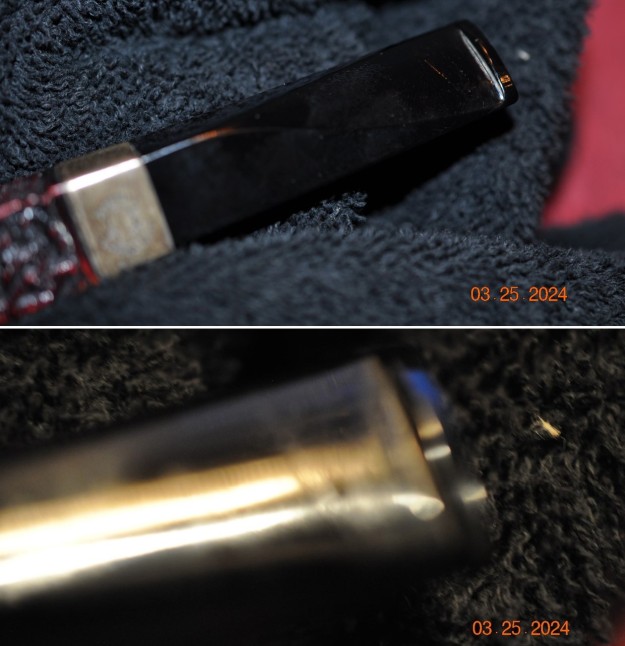
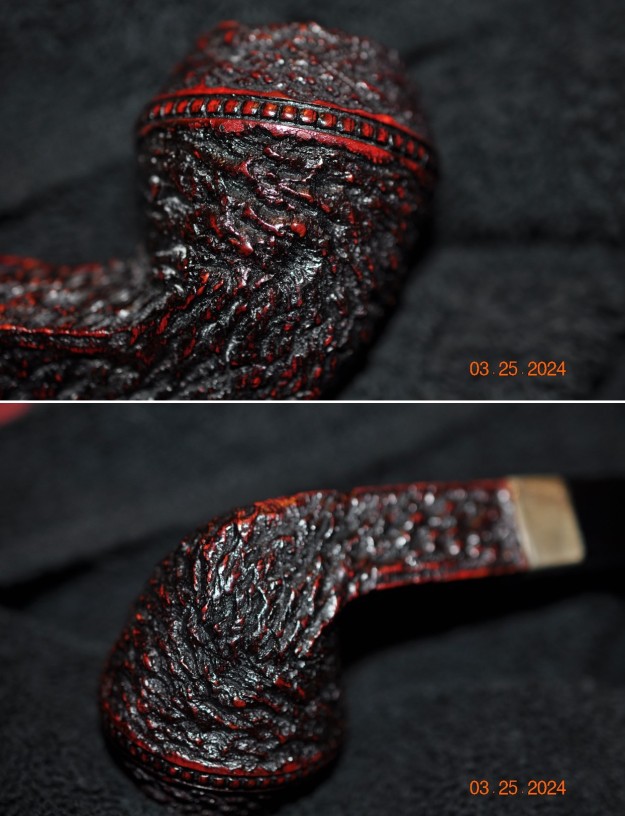
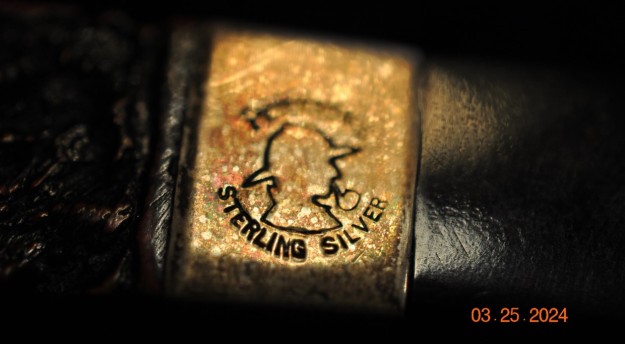
The next pipe that I am working on came from an estate sale in Oregon City, Oregon, USA we purchased on 03/21/24. It was very dirty and was a reddish, brown coloured pipe when it started. The finish around the bowl was dirty and had hand oils ground into the rustication and the beads and twin rings around the bowl cap. The bowl had a moderate cake and a thick coat of lava onto the rustication on the rim top and edges of the bowl. The fishtail stem was acrylic and was very dirty and had tooth marks on both sides ahead of the button. There was not a silver inset P logo on the stem sides. The fit of the stem to the shank is very well done so I am assuming that it is either an original fishtail from Peterson or a well-made replacement stem. Either way it is a real beauty. The pipe is stamped on the left underside of the diamond shank and read Peterson’s [over] Sherlock Holmes. That is followed by Made in the Republic of Ireland (in three lines). There is a Sterling Silver band on the shank end that is stamped with the Sherlock Holmes Series Logo – the outline bust of Sherlock with Peterson ‘s arched above and Sterling Silver arched below. It is clean but oxidized. Jeff took photos of the pipe so I could have a sense of what it looked like before he started his work on it. Jeff took photos of the bowl and rim top to show the thick, hard cake in the bowl with remnants of tobacco stuck on the walls of the bowl. There was a lava build up on the rusticated top of the rim and the edges of the bowl. The rim top looked pretty good but it was hard to know for sure if there was damage under the thick lava. Only clean up would tell the full story. Jeff took photos of the top and underside of the fishtail stem showing the tooth chatter, scratching and oxidation on the stem surface and wear on the edges of the button. Jeff took photos of the sides and heel of the bowl to show the condition of the finish. You can see the grime in the rustication around the sides of the bowl and shank. The twin cap rings with the bead work in the middle is quite stunning. Even under the dirt and debris of the years it looked very good. Jeff took photos of the stamping on the left underside of the diamond shank. The stamping was faint in spots but readable as you can see from the photos. It read as noted above. The Sterling Silver Band is stamped as noted above and is very readable under the oxidation.  I wanted to know more about the Peterson’s Sherlock Holmes Line so I turned to the Pipedia article on the line and read it carefully to see where this pipe fit in the line of pipes making up the line. (https://pipedia.org/wiki/Peterson#1950_-_1989_The_Republic_Era). I quote what I found out below.

1987 saw the introduction and Issue of the first Sherlock Holmes ‘Original’ Series of pipes. The Sherlock Holmes series is probably the most successful series of pipes ever introduced by Peterson in terms of numbers. It was first issued to honour Sir Arthur Conan Doyle’s famous fictitious detective character, Sherlock Holmes. Holmes is perhaps the most famous pipe smoking character in fiction…

The Sherlock Holmes Series: Probably the most popular and successful series of pipes ever produced by Peterson. Including the Meerschaum version of the seven day sets. Both briar and Meers can be purchased either as individual pipes or complete seven day sets and stands. Expect to pay around $250 for briars and $300 for individual Meerschaums. The Adventures of Sherlock Holmes runs around $1000 for a 4 pipe boxed set. Complete 7 day sets and stands can be up to $1500 – $2000.

At this point I knew that the original line was introduced in 1987. I did not know the sequence of pipes after the Original first pipe. More work was necessary. So, I followed the links included to another article call the Pete Sherlockiana Group. There was photo there of the full collection of various Sherlock Holmes lines that were issue. I have included the link and the information include with the group photo that shown of the collection below.

Here is the link (https://pipedia.org/wiki/File:Pete_SherlockianaGroup.JPG). The description under the photo read as found below:

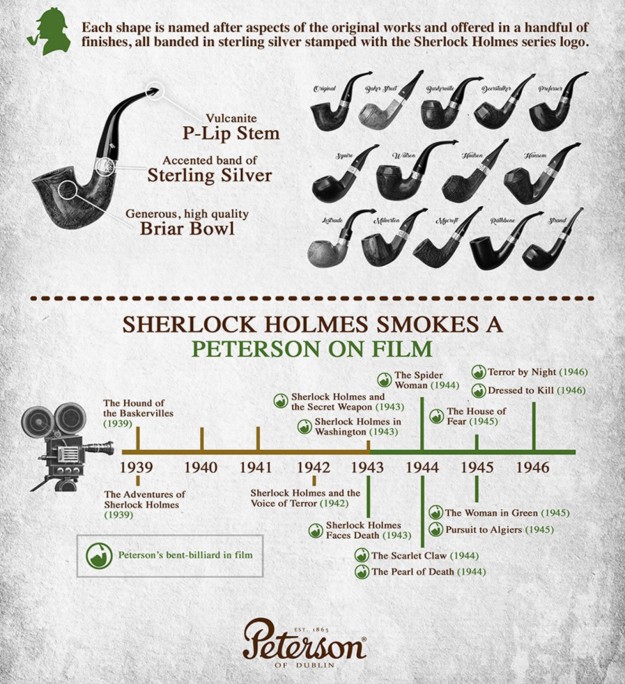
Sherlockiana Group, which includes: The ‘Original’ 7 day set w/stand, The ‘Return’ 7day set w/stand, The Meerschaum 7 day set w/stand, The ‘Adventures of’ 4 pipe collection, and Various ‘Silver Specials’. I still wanted to know where it fit in the order of release so I did a bit more digging into the pipe. I wanted to know the name of the pipe and what line of the Sherlock Holmes series it was in when it was released. I Googled and came across a link to an advertising brochure on Smokingpipes.com. (https://www.smokingpipes.com/smokingpipesblog/single.cfm/post/closer-look-petersons-sherlock-holmes-pipes-infographic). I have included it below. From that I knew that I was dealing with a Pipe from the Original release of the line from 1987, 1989-1991. It was called a Baker Street after the home address of Sherlock Holmes 221B Baker Street. It was basically a tall, straight Bulldog.

I also found a link to a chart on Tobaccopipes.com that was an exploration the Sherlock Series. Here is the link (https://www.tobaccopipes.com/blog/exploring-the-peterson-sherlock-holmes-series/). Each name on the original list on the site can be clicked on for a description of the pipe that is named.I clicked on the Baker Street name in the chart above and it took me to the following link and information (https://www.tobaccopipes.com/blog/exploring-the-peterson-sherlock-holmes-series/#baker_street). It states that the pipe was in the Original Collection and came out between 1989-1991.The text below the photos reads as follows:

Between 1989 and 1991, six more Peterson Sherlock Holmes Pipes would be added to the range, each named for a significant aspect of the Holmes legacy. Baker Street of cours reference the London address of the detective, 221B Baker Street. In the Baker Street shape we have a stout, flinty Bulldog. The ridges are sharp and muscular. The bold underside brings to mind the vee-bottom hull of a ship, sound and sturdy. The bowl sits up straight from  strong heel, widening up toward the two fine bead lines , where it then tapers in toward the rim. The stem briefly adopts the broadness of the shank before a quick narrowing to the bit. An interesting aspect of this shape is the softer appearance from above with less say from it chiseled lines and more input from the round P-lip.

With that information in hand I knew what I was dealing with in terms of the stamping and the age of this pipe. I knew from the information that the pipe was made during the Republic Era between 1950 and 1989. The Baker Street pipe came out as part of the Original Sherlock Holmes Series and was specifically made between 1989 and 1991. Now it was time to work on the pipe.

Jeff cleaned this filthy pipe with his usual clean up process. This one was a real mess and I did not know what to expect when I unwrapped it from his box. He reamed it with a PipNet pipe reamer and cleaned up the reaming with a Savinelli Fitsall Pipe Knife. He scrubbed out the internals with alcohol, pipe cleaners, shank brushes and cotton swabs until the pipe was clean. He scrubbed the exterior of the bowl with Murphy’s Oil Soap and a tooth brush to remove the grime and grit on the briar and the lava on the rim top. The finish looks very good with great looking grain showing through the deep rustication around the bowl and shank. Jeff soaked the stem in Briarville’s Pipe Stem Deoxidizer to remove the debris on the acrylic surface. When the pipe arrived here in Vancouver for the second stop of its restoration tour I was amazed it looked so good. I took some close up photos of the rim top and also of the stem surface. I wanted to show what an amazing job Jeff did in the cleanup of the rim top. The rim top was and inner edge were in excellent condition. I also took close up photos of the stem to show the condition of the acrylic. It was quite clean other than the light tooth marks and chatter on both sides of the stem ahead of the button.One of the things I appreciate about Jeff’s cleanup is that he works to protect and preserve the nomenclature on the shank of the pipes that he works on. The stamping on this one was faint in spots to start with so I was worried that it would disappear altogether with the cleanup. He was able to preserve and maintain its condition in the process. I took some photos to show the clarity of the stamping. I have noticed that many restorers are not careful to protect the stamping in their cleaning process and often by the end of the restoration the nomenclature is almost destroyed. I would like to encourage all of us to be careful in our work to preserve this as it is a critical piece of pipe restoration! I took the stem off the shank and took a photo of the pipe. I decided to start my work on the pipe by restaining the rustication on the rim top. I touched it up with a Walnut Stain Pen to blend it into the rest of the rustication around the bowl and shank. The photo shows the look at this point.I rubbed the bowl and rim down with Before & After Restoration Balm. I worked it into the rusticated surface of the briar with my fingertips and a horse hair shoe brush to clean, enliven and protect it. I let the balm sit for 10 minutes and then buffed with a cotton cloth to raise the shine. I really like watching the Balm do its magic and bring the briar alive. I wiped down the Sterling Silver shank band with a jeweller’s cloth to remove the tarnish and also to preserve and protect the silver. It looks much better with the shine. I set the bowl aside and turned my attention to the stem. I sanded the surface of the acrylic stem with 320-3500 grit sanding pads to remove the light tooth marks on the top and underside near the button. It looked much better once I finished it.I polished the stem with micromesh sanding pads – wet sanding with 1500-12000 grit pads. I wiped the stem down after each sanding pad with Obsidian Oil. I polished it with Before & After Pipe Stem Polish – both Fine and Extra Fine. I gave it a coat of Obsidian Pipe Stem Oil. It works to protect the stem from oxidizing. I set it aside to dry. I am excited to be on the homestretch and look forward to seeing the Republic Era Sherlock Holmes Baker Street Straight Bulldog put back together, polished and waxed. I put the bowl and stem back together and lightly polished the bowl and stem with Blue Diamond to polish them. I gave the bowl multiple coats of Conservator’s Wax and the stem multiple coats of carnauba wax. I buffed the pipe on the wheel with a clean buffing pad to raise the shine. I hand buffed it with a microfiber cloth to deepen the shine. The depths of the rustication really pop with the wax and polish. The shiny black acrylic stem is a beautiful contrast to the red and browns of the bowl, thick shank and Sterling Silver Band. This Peterson’s Sherlock Holmes Baker Street Bulldog was a fun pipe to work on. The pipe is tactile in the hand and should feel great as it is warmed up when smoking. The finished pipe is shown in the photos below. The dimensions of the pipe are Length: 6 inches, Height: 2 inches, Outside diameter of the bowl: 1 ¼ inches, Chamber diameter: ¾ of an inch. The weight of the pipe is 1.94 ounces/ 55 grams. I am hanging onto the pipe to enjoy looking at it and possibly firing up a bowl. Not sure if I will hang on to so one day it may end up on the store in the Irish Pipemakers Section if I choose to pass it on. I am a Sherlock Holmes reader and this kind of gives me pause.

As always, I encourage your questions and comments as you read the blog. Thanks to each of you who are reading this blog. Remember we are not pipe owners; we are pipe men and women who hold our pipes in trust until they pass on into the trust of those who follow us.

Bringing Back a Lovely Poul Hansen Bent Dublin


Blog by Kenneth Lieblich

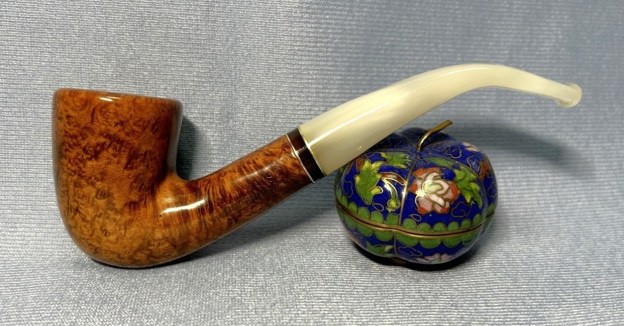
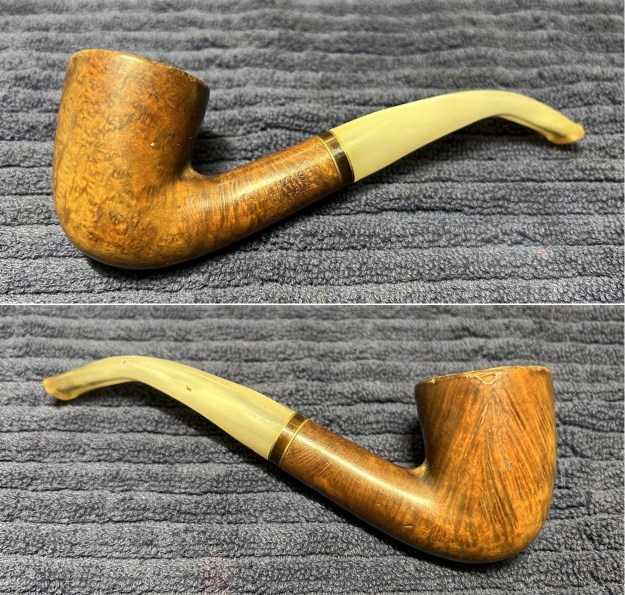
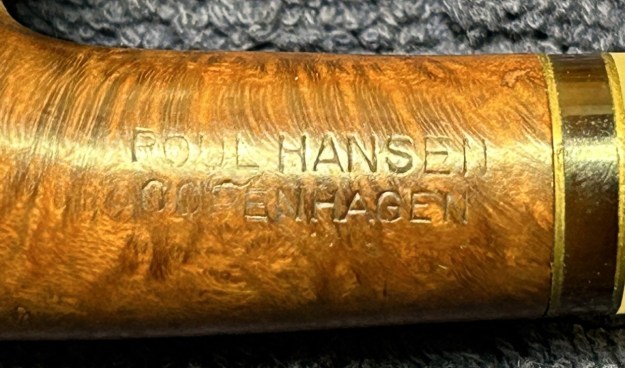
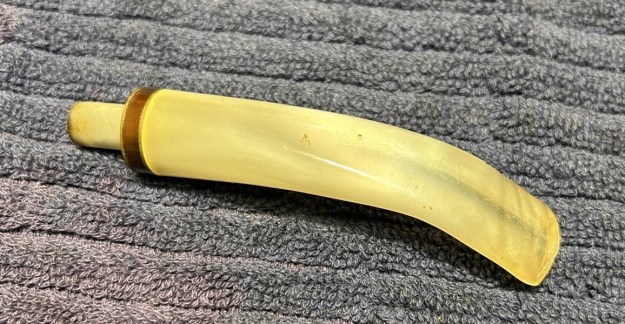
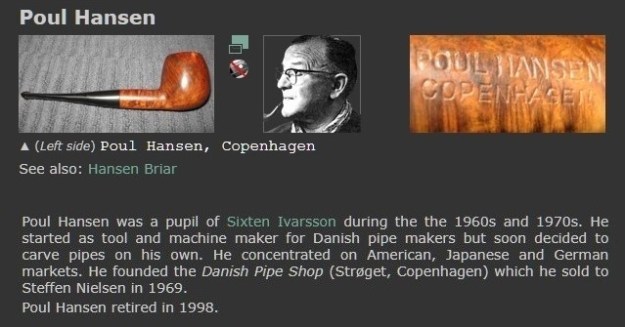
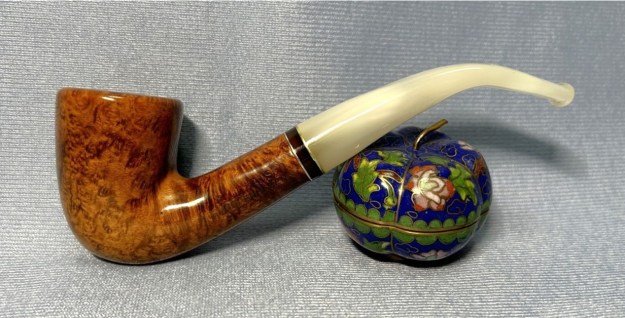
This charming pipe came across my workbench recently and, despite its rough appearance, I could tell there was a beautiful and well-made pipe in there. It was a very attractive shape and felt very good in my hand. Given the amount of abuse heaped on this pipe, it was clearly someone’s favourite. Let’s have a closer look. This pipe is a bent Dublin, made by Poul Hansen. It’s a lovely briar bowl and a white acrylic stem with a brass and wood band. That band is really attractive. The markings on the left side of the shank are Poul Hansen [over] Copenhagen. No other markings were found. I checked the usual sources for information about Poul Hansen. I knew that his pipes were mostly from the 1960s and 70s and commanded the same prices as Preben Holm, Rasmussen and other high-end Danish carvers. Pipephil offered this lovely little tidbit about the man:Over to Pipedia – they had a bit more information, and I include some, but not all, of it below:

Poul Hansen was a very skilled toolmaker and builder of machine tools. Around 1960 he got in contact with the workshops of Pibe-Dan, W.Ø. Larsen and others. So he began to make a lot of special tools and machines for a large number of the Danish pipemakers in the early 60’s. He was inspired by the many beautiful pipes he saw when he visited the pipemakers and soon he decided to try out the art himself. Poul Hansen was basically “self taught” and his early attempts suffered from kind of awkward shapes and finishing. Things turned for the better significantly when Sixten Ivarsson, appreciating the talent, began to tutor Hansen for a while and taught him the vital “tricks” of pipemaking. Soon after Hansen was in business fine. Right from the start he avoided the competition at home and concentrated on the American, Japanese and German markets. Hansen carved the bulk of his pipes during the 1960’s and 1970’s. Around the midst of the 1970’s he took over a small Copenhagen tobacconist’s shop from it’s retiring owner. Now, operating the shop took a lot of his time but vice versa secured a steady income, and Hansen reduced his output considerably. BTW In Denmark he only sold a very limited amount of pipes – but some of his very best. Poul Hansen is little known in today’s circles, those collectors (especially in the States) who have his pipes, tend not to sell them.

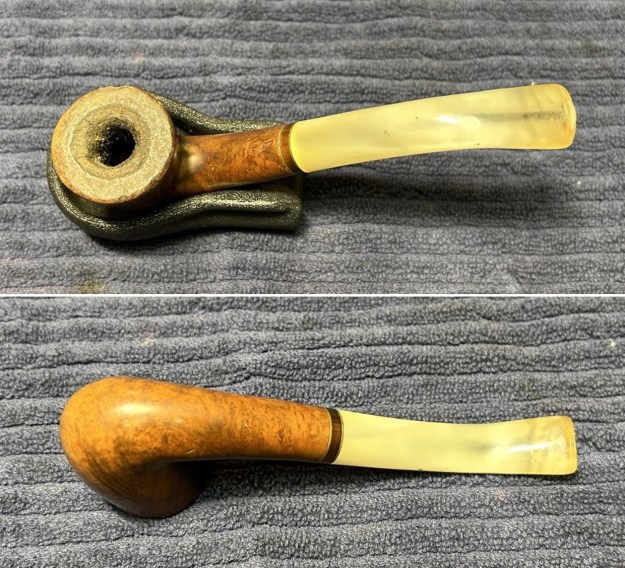
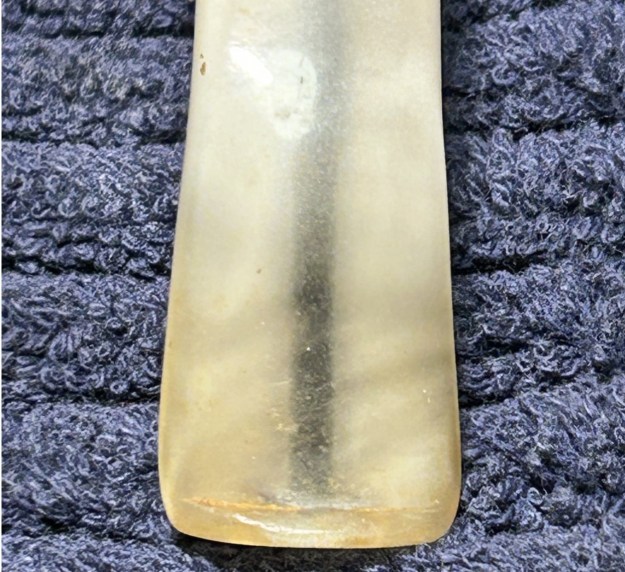
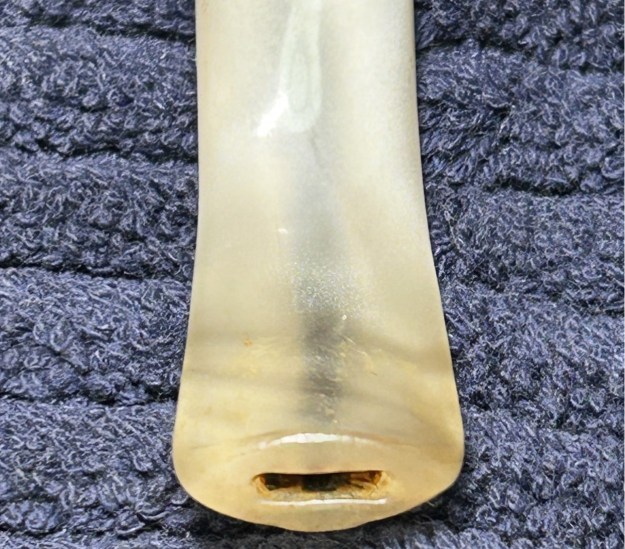
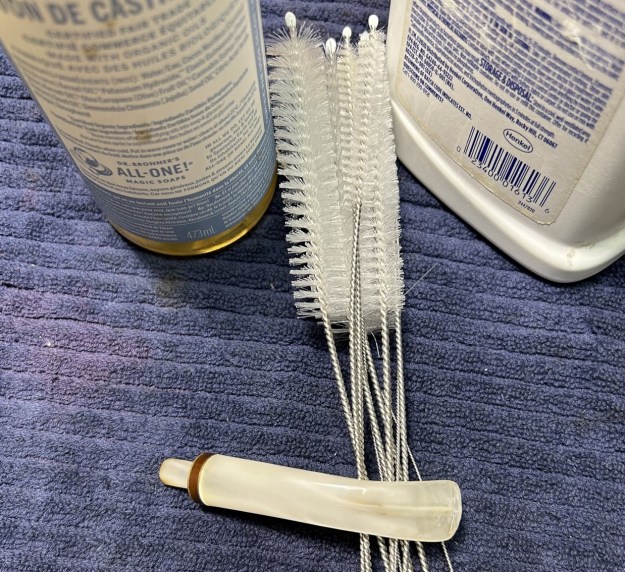
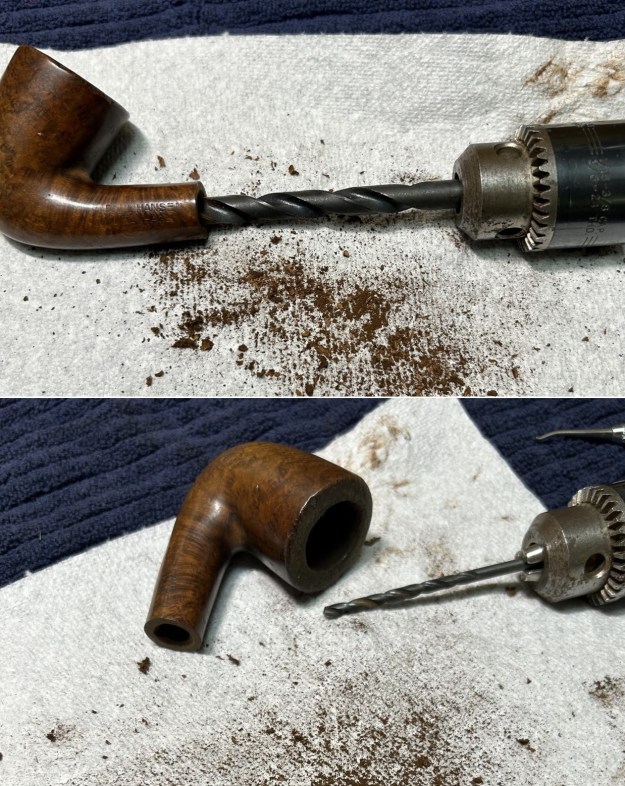
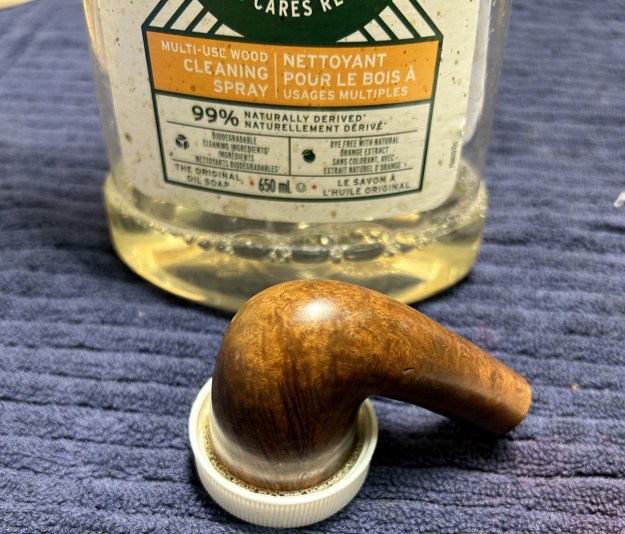
On to the pipe itself: it was very dirty and harshly treated. The bowl was filthy and had quite a bit of lava and plenty of cake – just look at the photos! The rim had been heavily bashed in – presumably from banging out dottle etc. The outside of the bowl had some small fills and some minor scratches. The stem was in better shape, but still needed help. It had some tooth dents and it was dirty on the inside – through the draught hole. To work! The stem was first on my list. I wiped the outside down with Murphy’s Oil Soap on some cotton pads. Then I cleaned out the inside with pipe cleaners and isopropyl alcohol. These acrylic stems are so frustrating to clean and it took a lot of elbow grease. In fact, I also used my tube brushes and Castile soap to get out as much filth as I could. Fortunately, these acrylic stems don’t require deoxidizing, so I moved on. I built up the dents on the stem with clear cyanoacrylate adhesive and let them cure. I then sanded the adhesive down with 220- and 400-grit sandpapers to meld seamlessly into the stem. I then used all nine Micromesh pads (1,500 through 12,000 grit) to polish it and highlight the pearl-like colouring on the stem. I also used Obsidian Pipe Stem Oil in between each pad scrubbing. Moving on to the stummel, I first decided to ream out the bowl. It was unbelievably occluded with cake. I used the PipNet Reamer to remove the built-up cake and followed that with 220-grit sandpaper taped to a couple of dowels to eliminate as much as possible. I took the chamber down to bare briar to ensure there were no hidden flaws in the wall. Fortunately, there were none.The stummel’s insides were absolutely clogged with filth. The previous owner must not have been a fan of cleaning his pipe! I actually used two drill bits (by hand – not in a drill) to break into the encrusted gunk in the stem.Then, I started cleaning the inside with lemon-infused isopropyl alcohol, Q-tips, and pipe cleaners. This took a long while. The inside was terribly dirty and it took an awful lot of cotton. As usual, I followed that up by cleaning the insides with some Castile soap and tube brushes.I soaked the rim of the pipe in some Murphy’s Oil Soap to loosen up the hardened stuff and, after about ten minutes, used a toothbrush to help that process along. I then used cotton rounds and some Murphy’s to scrub the outside of the stummel. I decided to de-ghost the pipe in order to remove any lingering smells of the past. I thrust cotton balls into the bowl and the shank and saturated them with 99% isopropyl alcohol. I let the stummel sit overnight. This caused any remaining oils, tars and smells to leach out into the cotton. The bowl was nice and clean after this.Then I was able to address the small nicks on the rim and the bowl. I dug out my iron and a damp cloth to try to raise the nicks. The hot and moist steam can often cause the wood to swell slightly and return to shape. This worked very well and many of the scratches were corrected with this method. Now it was time to address the remaining fills on the bowl. I repaired them with a mixture of briar dust and cyanoacrylate adhesive. This ensures a strong repair and one that looks similar to the surrounding wood. I sanded the repairs down with 200- and 400-grit sandpaper until they were level with the surrounding briar. Now I could address the roughness on the rim. I “topped” the pipe – that is, I gently and evenly sanded the rim on a piece of 220-grit sandpaper. But I didn’t go as far as I usually do – this rim originally had fillet edges on both the inside and outside of the rim. I wanted to keep this shape and so I did most of the shaping by hand.Then, I used all nine Micromesh pads (1,500 through 12,000 grit) on the stummel to finish it off and make it lovely and smooth. At this point, I rubbed some Before & After Restoration Balm into the briar and left it to sit for 20 minutes or so. I polished it with a microfibre cloth. The B&ARB does wonderful things to the wood, and I really like the natural colour of the briar. I also polished up the bit of brass on the stem’s band. Off to the bench polisher to put the final touches on this pipe. I first gave it a thorough going-over with White Diamond compound. Following that, several coats of carnauba wax created a beautiful, glossy seal on the pipe.And that’s that! This Poul Hansen Bent Dublin looks fantastic and is ready to be enjoyed again by the next owner. I am pleased to announce that this pipe is for sale! If you are interested in acquiring it for your collection, please have a look in the “Danish” section of the store here on Steve’s website. You can also email me directly at kenneth@knightsofthepipe.com. The approximate dimensions of the pipe are as follows: length 5⅓ in. (135 mm); height 2⅛ in. (55 mm); bowl diameter 1¼ in. (32 mm); chamber diameter ¾ in. (20 mm). The weight of the pipe is 1¼ oz. (37 g). I hope you enjoyed reading the story of this pipe’s restoration as much as I did restoring it. If you are interested in more of my work, please follow me here on Steve’s website or send me an email. Thank you very much for reading and, as always, I welcome and encourage your comments.

This Amazing Magnum “Malaga” Rusticated Billiard cleaned up extremely well


Blog by Steve Laug

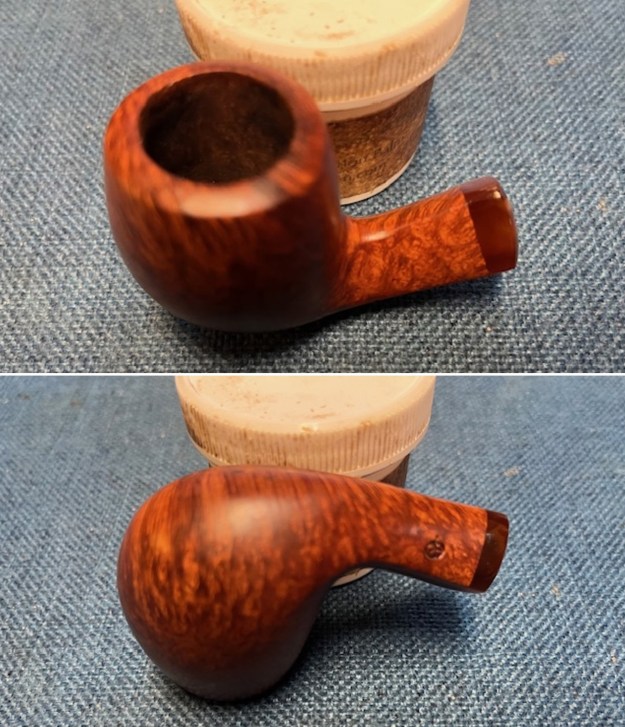
The next pipe on the table is an interesting Rusticated Malaga Magnum Billiard. Jeff saw it on eBay and purchased it on 12/22/2023 from a seller in Greensboro, North Carolina, USA. It was a large and dirty pipe with grit and grime in the grooves of the rustication. It was obviously someone’s favourite smoker. The pipe is stamped on a smooth panel on the left side of the shank and reads “Malaga”. The rusticated bowl surface had a smooth rim edge and rim top and down about 1/8 inch down the outside of the bowl. There were smooth panels on all sides of the bowl and on the left and right side of the shank. There were tars and oils ground into the surface of the briar. The bowl had a very thick cake that flowed over the top of the smooth rim in a spotty lava coat. The cake in the bowl was thick right up to the top of the rim. It was hard to fully assess the condition of the inner edge. There was a fill on the front of the rim top from the inner edge half way into the rim top. There were also burn marks on the left side of the top edge band on the rim and onto the edge of the smooth panel on the left side. There was a crack in the shank on the right side toward the bottom of the shank. The taper stem appeared to be either vulcanite or hard rubber. There were tooth marks on the top and the underside ahead of the button. Jeff took photos of the pipes before he started his clean up work. Jeff took photos of the rim and bowl to show the heavy cake and lava spots on the rim top. The inner edge of the rim had some cake on it. There was also a flaw in the briar on the rim top at the front of the bowl extending from the inner edge to the middle of the rim top. It was a dirty pipe but still a beauty. The hard rubber stem had tooth marks and chatter on the top and underside of the stem ahead of the button. The photos of the sides and heel of the bowl show a unique rusticated finish with smooth panels on the pipe and makes the grain really stand out on the bowl and shank. This bowl shows real promise. Jeff took a photo of the stamping on the left side of the shank centred on the smooth panel. It read “Malaga” as noted above. It was clear and readable.He took a photo of the crack on right side lower on the shank. It is about an inch long and extended from the shank end inward to the rustication.I am including the link to a blog that I wrote that gives some of the history of the Malaga brand and the Malaga Pipe Shop in Royal Oak, Michigan in the USA. I have written an earlier blog to give a little history of the Malaga Brand and the pipemaker, George Khoubesser. Here is the link (https://rebornpipes.com/2013/02/09/george-khoubesser-and-malaga-pipes/). That blog also includes links to a catalogue and the history of the pipemaker George Khoubesser. Follow the link to get a feel for the brand and the pipemaker.

Jeff had cleaned up the pipe using his usual procedure. He reamed the pipe with a PipNet pipe reamer and removed the rest of it with a Savinelli Fitsall Pipe Knife. He scrubbed the bowl with undiluted Murphy’s Oil Soap with a tooth brush. He rinsed it under running warm water to remove the soap and grime. He cleaned out the inside of the shank and the airway with alcohol, cotton swabs and pipe cleaners. The shank had an inset to take in the tenon and the end of the stem so I would need to fit a stem to sit in the shank. I took photos of the pipe once I received it. I took a photo of the rim top and the stem to show their condition. Jeff was able to clean up the cake and the lava overflow that was shown in the rim and bowl photos above. The rim top looked very good but there was fill visible on the front of the bowl from the inner edge toward the middle of the rim top. It is visible in the first photo below. The stem looked better, though there were tooth marks and chatter on both sides near the button. I took a photo of the stamping on the left side of the shank to show that it was readable and undamaged by the cleanup work. I removed the stem from the shank and took a photo of the parts to give a sense of what the pipe looks like.I decided to start working on the pipe by dealing with the crack in the shank. I ran a thin bead of CA glue on the crack and pressed it together. I went through my bands and found a silver band that fit well on the shank. I heated the band with the flame of a lighter and pressed it onto the shank against the padded surface of my desk top. I took photos of the newly banded shank from a variety of angles to give a sense of what the pipe looked like with the bling. The crack in the shank was no longer visible. The band brought the crack back together and it was tight. The only issue once I repair a crack with a band is that the original tenon no longer fits in the shank. I sanded the tenon with a folded piece of 220 grit sandpaper until it fit snug in the shank. I put the stem in place and took photos of the stem in place. The pipe is looking good.I set the stem aside and worked on the bowl top. I repaired the fill and flaw with clear CA glue and briar dust. I worked it into flaw with a dental spatula. Once it had cured I sanded the inner edge to clean up the repair with 220 grit sandpaper. I used a topping board and 220 grit sandpaper to flatten the repair and blend it into the surrounding briar. Once it was flat I used a 600 grit sanding pad to smooth out the surface. I stained the rim top with a Maple stain pen to match the surrounding bowl and shank. I polished the smooth panels on the bowl sides and the smooth rim top with micromesh sanding pads. I dry sanded it with 1500-12000 grit sanding pads and wiped the bowl down with a damp cloth after each sanding pad. I rubbed the bowl and shank down with Before & After Restoration Balm to deep clean the finish on the bowl and shank. The product works to clean, enliven and protect the briar. I worked it in with my fingers to get it into the briar. I used a horsehair shoe brush to work it into the rustication. I let it sit for 10 minutes then I wiped it off and buffed it with a soft cloth. The briar really began to have a rich shine. I took some photos of the bowl at this point to mark the progress in the restoration. It is a beautiful bowl. I set the bowl aside and turned my attention to the stem. I filled in the tooth marks on both sides with black CA glue. I set it aside to cure. Once the repairs hardened I smoothed out the repairs with 220 grit sandpaper to blend them into the rest of the surrounding vulcanite. I set the finished bowl aside and we back to the stem. I started the polishing of the stem with 2 x 2 inch sanding pads – dry sanding with 320-3500 grit pads and wiping it down after each pad.I polished the stem with micromesh sanding pads – dry sanding with 1500-12000 grit pads. I wiped the stem down after each sanding pad with Obsidian Oil. I did a final hand polish of the stem with Before & After Pipe Stem Polish – both Fine and Extra Fine. I gave it a coat of Obsidian Pipe Stem Oil. It works to protect the stem from oxidizing. I set it aside to dry. I put the stem back on the “Malaga” Magnum Rusticated Billiard and took it to the buffer. I buffed the bowl and stem with Blue Diamond to polish the briar and the vulcanite. Blue Diamond does a great job on the smaller scratches that remain in both. I gave the bowl multiple coats of Conservator’s Wax and the stem several coats of carnauba wax and buffed the pipe with a clean buffing pad to raise the shine. I hand buffed it with a microfiber cloth to deepen the shine. I am amazed at how well it turned out. The finished pipe is shown in the photos below. This is a beautiful “Malaga” Magnum Billiard and the hard rubber taper stem and smooth finish combine to give the pipe a great look. I honestly have no idea why it is labeled a second as there are no fills or flaws in the briar. The dimensions of the pipe are Length: 8 inches, Height: 2 ¼ inches, Outside diameter of the bowl: 1 ½ inches, Chamber diameter: 1 inch. The weight of the pipe is 2.93 ounces/83 grams. This is another pipe that I will be putting on the rebornpipes online store in the American Pipe Makers and Pipemaking Companies Section shortly, if you are interested in adding it to your collection. Thanks for walking through the restoration with me on this beauty!
As always, I encourage your questions and comments as you read the blog. Thanks to each of you who are reading this blog. Remember we are not pipe owners; we are pipe men and women who hold our pipes in trust until they pass on into the trust of those who follow us.

Jeff saw this Malaga Second Bowl sans stem, liked it and went for it


Blog by Steve Laug

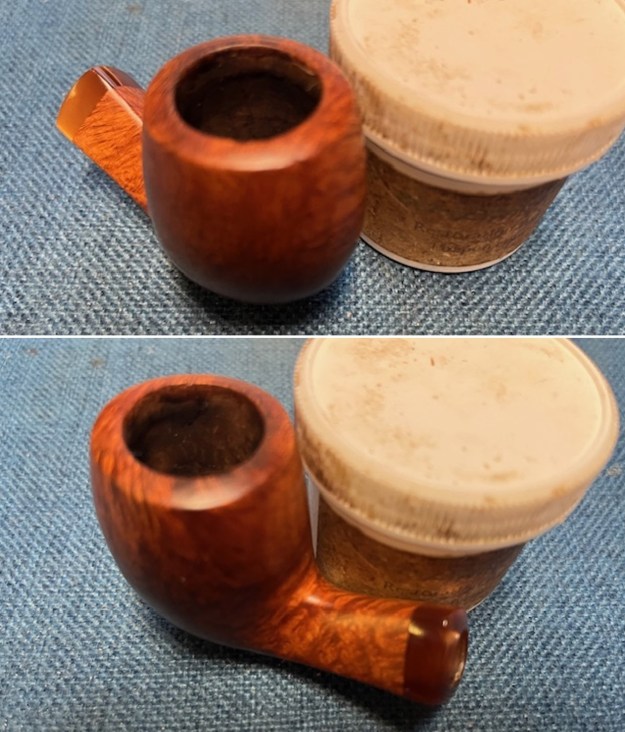
The next pipe on the table is an interesting Malaga Freehand/Skater bowl. Jeff saw it on eBay and purchased it on 12/01/2023 from a seller in Swartz Creek, Michigan, USA. It was dirty pipe with a lot of wear and tear and obviously it had been someone’s favourite smoker. The pipe is stamped on the underside of the shank and reads Malaga [over] Second. The dirty smooth finish was not able to hide the beauty of the grain around the bowl and shank. There were tars and oils ground into the surface of the briar. The bowl had a very thick cake that flowed over the top of the smooth rim in a heavy lava coat. The cake in the bowl was thick right up to the top of the rim. It was hard to fully assess the condition of the inner edge. The outer edge of the bowl showed some nicks and dents. There was also a tar/lava build up on the shank end as well. The pipe was a mess. The stem was missing so it would need to be fitted with a new stem. Jeff took photos of the pipes before he started his clean up work. Jeff took photos of the rim and bowl to show the heavy cake and heavy lava coat covering the rim top. The inner edge of the rim was so thickly caked that it was not possible to know with certainty the condition. It really was a dirty pipe but still a beauty. The photos of the sides and heel of the bowls show some beautiful grain around the bowl and shank sides. Malaga pipes are oil cured and you can see that it adds depth to finish on the pipe and makes the grain really stand out on the bowl and shank. This bowl shows real promise. Jeff captured the inset on the shank end and the grime and tars built up on the surface of the briar.Jeff captured the stamping on the underside of the shank with the next photo. It was clear and readable and read as noted above. The grain below the stamp is also quite nice. I am including the link to a blog that I wrote that gives some of the history of the Malaga brand and the Malaga Pipe Shop in Royal Oak, Michigan in the USA. I have written an earlier blog to give a little history of the Malaga Brand and the pipemaker, George Khoubesser. Here is the link (https://rebornpipes.com/2013/02/09/george-khoubesser-and-malaga-pipes/). That blog also includes links to a catalogue and the history of the pipemaker George Khoubesser. Follow the link to get a feel for the brand and the pipemaker.

Jeff had cleaned up the pipe using his usual procedure. He reamed the pipe with a PipNet pipe reamer and removed the rest of it with a Savinelli Fitsall Pipe Knife. He scrubbed the bowl with undiluted Murphy’s Oil Soap with a tooth brush. He rinsed it under running warm water to remove the soap and grime. He cleaned out the inside of the shank and the airway with alcohol, cotton swabs and pipe cleaners. The shank had an inset to take in the tenon and the end of the stem so I would need to fit a stem to sit in the shank. I took photos of the pipe once I received it. I took a photo of the stamping on the underside of the shank. It is quite clear and easy to read.I went through my can of stems and found this acrylic taper stem. The diameter of the stem portion was a little too large in diameter to fit in the inset of the shank. I would need to sand the stem diameter to get a good fit to the inset.  I started my cleanup of the bowl and rim top by using a folded piece of 220 grit sandpaper to smooth out the inner rim edge and remove the darkening on the rim top around the edge. It worked very well and the cleaned-up rim and top looked much better.With all my sanding and trying various stems I was concerned about the dust and debris in the shank. I wanted to clean it up and also the inside of the airway in the stem. I used isopropyl alcohol, pipe cleaners and cotton swabs.I polished the bowl and the rim top with micromesh sanding pads. I dry sanded it with 1500-12000 grit pads. I wiped the bowl down after each pad with a damp cloth. The pipe began to take on a rich shine and grain was beginning to stand out. I worked on the diameter of the stem with 220 grit sandpaper so that it would fit in the inset on the shank end. It would take a regular tenon in the mortise and the portion of the stem above the tenon would fit in the inset. I sanded the diameter of the stem to match the diameter of the inset. Once it fit snug in the shank it was ready to be polished. Once I had adjusted the diameter of the stem I fit it in the inset shank end and took photos of the look of the pipe with the new stem in place. I like the grey brown acrylic stem and its flow with the shape of the pipe. I still need to polish the stem but it is looking good. I put the stem aside to finish later and returned to the bowl. To finish it at this point I rubbed the bowl and shank down with Before & After Restoration Balm to deep clean the finish on the bowl and shank. The product works to clean, enliven and protect the briar. I worked it in with my fingers to get it into the briar. I let it sit for 10 minutes then I wiped it off and buffed it with a soft cloth. The briar really began to have a rich shine. I took some photos of the bowl at this point to mark the progress in the restoration. It is a beautiful bowl.I set the finished bowl aside and we back to the stem. I started the polishing of the stem with 2 inch sanding pads – dry sanding with 320-3500 grit pads and wiping it down after each pad.I set the bowl aside and worked on the stem at this point in the process. I polished the stem with micromesh sanding pads – dry sanding with 1500-12000 grit pads. I wiped the stem down after each sanding pad with Obsidian Oil. I polished the stem with Before & After Pipe Stem Polish – both Fine and Extra Fine. I gave it a coat of Obsidian Pipe Stem Oil. It works to protect the stem from oxidizing. I set it aside to dry. I put the new stem back on the Malaga Second Freehand and took it to the buffer. I buffed the bowl and stem with Blue Diamond to polish the briar and the acrylic. Blue Diamond does a great job on the smaller scratches that remain in both. I gave the bowl and the stem several coats of carnauba wax and buffed the pipe with a clean buffing pad to raise the shine. I hand buffed it with a microfiber cloth to deepen the shine. I am amazed at how well it turned out. The finished pipe is shown in the photos below. This is a beautiful Malaga Second Freehand – the acrylic taper stem and smooth finish combine to give the pipe a great look. I honestly have no idea why it is labeled a second as there are no fills or flaws in the briar. The dimensions of the pipe are Length: 6 ½ inches, Height: 2 inches, Outside diameter of the bowl: 1 ½ inches wide x 2 inches long, Chamber diameter: 7/8 of an inch. The weight of the pipe is 1.48 ounces/43 grams. This is another pipe that I will be putting on the rebornpipes online store in the American Pipe Makers and Pipemaking Companies Section shortly, if you are interested in adding it to your collection. Thanks for walking through the restoration with me on this beauty!
As always, I encourage your questions and comments as you read the blog. Thanks to each of you who are reading this blog. Remember we are not pipe owners; we are pipe men and women who hold our pipes in trust until they pass on into the trust of those who follow us.
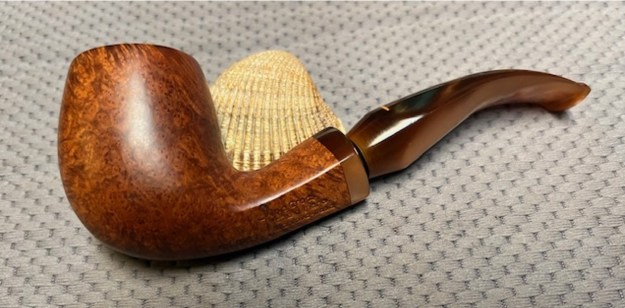
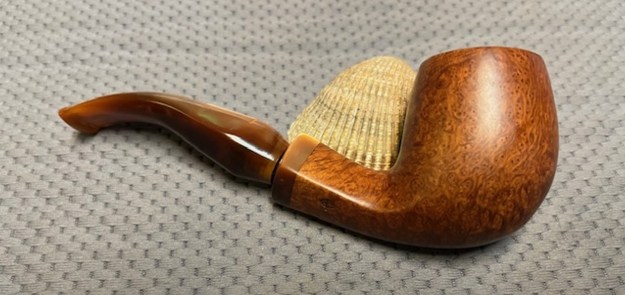
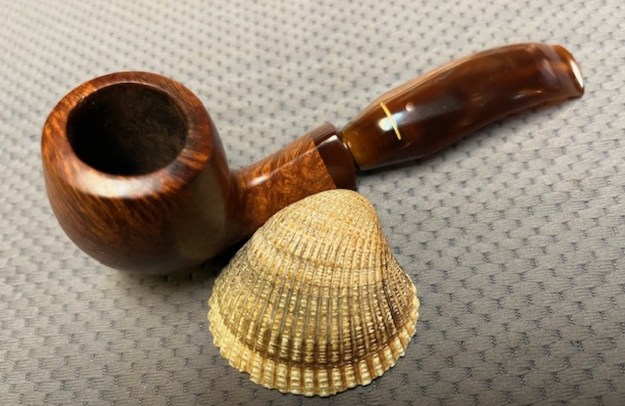
A Restored Stanwell Made in Denmark Black n’ Silver Lovat 98.


Blog by Steve Laug

I moved on to work on another pipe. The next one I chose was another Stanwell in a Pipe Sock that came to us from our connection in Copenhagen, Denmark 01/26/2023. The stamping on the pipe was very clear and readable. On the underside of the shank it is stamped ahead of the black and silver band and reads Stanwell [over] Made in Denmark [over] Black ‘n [over] Silver. the right side of the shank it is stamped with a shape number 98 mid-shank. The end of the shank had a combination silver and black fancy band on it. The stem had a brass Crowned “S” Stanwell logo inlaid on left side of the saddle stem. The bowl had a moderate cake and there was some lava, dust and debris on the rim top and inner edges. The finish was in okay condition with oils and grime ground into the briar around the bowl sides. The acrylic stem has light tooth marks on the top and a bite through on the underside next to the button. It showed a lot of promise through the grime. Jeff took photos of the pipe as he saw it at this stage of his clean up. Jeff took photos of the bowl and the rim top to show their condition. You can see the moderate cake in the bowl and the heavy overflow of lava on the top and the inner edge of the bowl. It is hard to know the condition of the inner edge because of the lava coat. The stem is also shown in the photos and you can see the bite through in the underside of the stem in the third stem photo below. He took photos of the sides and the heel of the bowl to show the amazing grain that stands out through the grime on the finish. It is a beauty!      He took photos of the stamping on the underside of the shank. It is clear and readable as noted above. He also took a photo of the band and Crown “S” logo on the stem side. There was not much information available on the Black’n Silver Line but I did find a listing on Google when I searched. Smokingpipes.com had on listed that was an Ivarsson design billiard (https://www.smokingpipes.com/pipes/estate/denmark/moreinfo.cfm?product_id=284389). I have included the description below:

We see it here in the ‘Black N Silver’ series, with a smooth, walnut finish, along with a neat, metal-accented jet-black stem. There are some dings and scratches around the bowl, but otherwise condition is good.

The best I can determine is that the Black ‘n Silver stamp refers to the colour of the band on the shank end. It has a combination of a black and silver pattern on the surface. Now it was time to work on the pipe.

Jeff had done a great job cleaning up the pipe as usual. He reamed the pipe with a PipNet reamer and cut back the cake back to the bare briar. He cleaned up the walls with a Savinelli Fitsall Pipe Knife. He scrubbed the interior of the bowl and shank with pipe cleaners, cotton swabs and alcohol to remove the tars and oils. He scrubbed the exterior of the pipe with Murphy’s Oil Soap and a tooth brush to remove the grime from the finish. He worked on the rim top lava and darkening with the soap and tooth brush. He scrubbed the inside of the stem with alcohol and pipe cleaners. He scrubbed the exterior with Soft Scrub and then soaked it in Briarville’s Pipe Stem Deoxidizer. He washed it off with warm water to remove the Deoxidizer. The pipe looked far better when it arrived. I took photos of the bowl and rim top as well as the stem to show how clean they were. You can see that rim top and edges look very good. There are some darker spots on the rim top that should come off with polishing. The stem is clean and there are tooth and chatter on both sides ahead of the button. On the underside of the stem there is a small bite through and wear that is visible in the photo.I took photos of the stamping on the sides of the shank and on the brass plaquette. The stamping is clear and readable. I removed the stem from the shank and took a photo to give a sense of what the pipe looked like and also what the band was like on the shank end. I decided to switch things up a bit on this pipe. I started with the repair to the bite through on the underside of the stem first. I greased a pipe cleaner with Vaseline and inserted it into the slot under the bite through. This prevents the repair from seeping into the airway. I filled in the hole and wear around it with black CA rubberized glue. I filled in the tooth marks next to the button on the top side at the same time. I set the stem aside to let the glue cure. I sprayed it with an accelerator and removed the pipe cleaner from the airway. The airway was clear and the airflow was perfect.Several hours later I came back to the stem. The repair had cured and I used a small file to flatten out the repaired areas on both sides. I further smoothed out the repairs with a folded piece of 220 grit sandpaper to blend them into the surrounding surface area. It was looking much better at this point. I polished the vulcanite stem surface and repairs near the button with a new product I am using. I ordered a set of 2 inch sanding pads for 320-3500 grit sanding pads from Amazon. They work amazingly well and are easy to manage and sand close to the sharp edge of the button.I polished the stem with micromesh sanding pads – dry sanding with 1500-12000 grit pads. I wiped the stem down after each sanding pad with Obsidian Oil.I polished it with Before & After Pipe Stem Polish – both Fine and Extra Fine. I gave it a coat of Obsidian Pipe Stem Oil. I set the stem aside and turned my attention to the bowl. I started my work on the pipe by polishing the briar with 1500-12000 grit micromesh sanding pads. I wiped the bowl down after each sanding pad with a damp cloth. I polished the black and Sterling Silver band with a jewellers cloth to restore the shine and remove the tarnish. It really glows now. I rubbed the briar down with Before & After Restoration Balm. I worked it into the briar with my fingertips. The product works to clean, enliven and preserve the briar. I let it sit for 10 minutes while I worked on the stem. After the time passed I buffed it with a cotton cloth to deepen the shine. The briar really comes alive with the balm. I am excited to put the finishing touches on this unique Stanwell Made in Denmark Black’n Silver 98 Lovat. I put the pipe back together and buffed it with Blue Diamond on the buffing wheel. I gave the bowl and the stem multiple coats of carnauba wax. I buffed the pipe with a clean buffing pad to raise the shine and hand buffed it with microfiber cloth to deepen the shine. It is fun to see what the polished bowl looks like with the brass plaquette and the polished vulcanite stem. This Stanwell Black’n Silver 98 Lovat is nice looking and the pipe feels great in my hand. It is light and well balanced. Have a look at it with the photos below. The dimensions are Length: 5 inches, Height: 1 ½ inches, Outside diameter of the bowl: 1 1/8 inches, Chamber diameter: ¾ of an inch. The weight of the pipe is 1.20 ounces/34 grams. It is a beautiful pipe and one that I will be putting in the Danish Pipemaker Section on the rebornpipes store. Thanks for walking through the cleanup with me as I worked over this pipe.

As always, I encourage your questions and comments as you read the blog. Thanks to each of you who are reading this blog. Remember we are not pipe owners; we are pipe men and women who hold our pipes in trust until they pass on into the trust of those who follow us. 
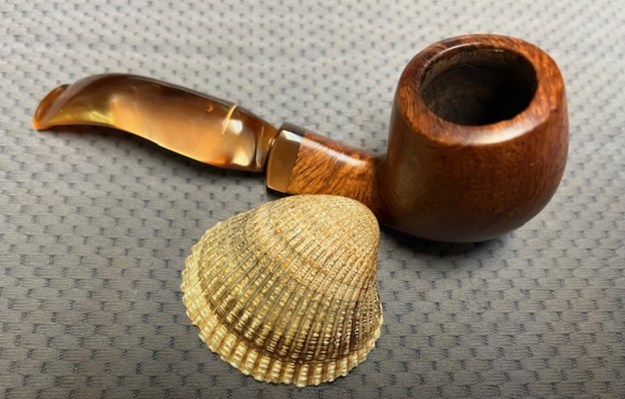
Restoring a Filthy Lorenzetti 3200 – 20 Bent Egg Filter Pipe


Blog by Steve Laug

The next pipe I chose to work on came is another one from the lot of 11 pipes I purchased from a lady in Regina, Saskatchewan. She had found them in a house she bought and wanted to know if I wanted them. We struck a deal, I paid for the pipes and shipping and the box arrived while I was traveling in Europe. In the box were 4 Stanwells, 1 Danmore Bowl, 1 Soren Freehand, 1 Calabash with a Briar Bowl, 1 Nording Freehand, 1 Italian Made Bertenetti, 1 Rhodesian with a banded cracked shank, and 1 Brigham. I have restored the Nording, the snapped Stanwell, the Brigham, the Gourd Calabash with the briar bowl, restemmed and restored the Danmore bowl, a Stanwell Ivarsson design 11 Pot and Soren Hand Carved Freehand. There are blogs on each restoration available. The next pipe on the table is an extremely dirty pipes in a box full of very dirty pipes. It is stamped on the left side of the shank and reads Lorenzetti [over] Italy. On the right side it reads 3200 [over] 20 which could be the shape number of the pipe. There was a thick cake in the bowl, debris in the bottom and on the bowl walls and some remnants of tobacco. The airway was plugged and there was no draught on the pipe. There was a heavy lava overflow on the rim top flowing down the sides of the bowl and covering much of the shank. There appears to be some varnish or topcoat that is damaged and the grime is both on top of and underneath. It was hard to know the condition of the inner or the outer edge of the bowl for sure because of the cake. There was an acrylic shank extension sandwiching a briar ring. The shank end is also covered in a thick tar and oil residue flowing out of the mortise on to the stem and shank end. The acrylic stem had a briar ring next to the tenon and looked to be in decent condition underneath the thick oils and tars. There were minimal tooth marks and chatter on the shank. I took photos of the pipe before I started my cleanup work on it. I took a close-up photo of the bowl and the inwardly bevelled rim top to show the cake in the bowl. The rim top shows the thick lava on the inner edge of the bowl. The outer edges of the bowl also showed the lava flowing down the bowl sides. The shank end had an acrylic extension sandwiching a briar ring. I took photos of the stem surface and button to show its general condition. There was a briar ring around the stem surface near the tenon. The stem was a 9mm filter stem. The inside was filthy. It looked very good under the tars and oils that coated the surface.The stamping on the sides of the shank are covered with tars and oils but are readable as noted above. I took the stem off the shank and took a photo to give a sense of the proportion of the pipe. I have worked on a few Lorenzetti pipes over the years but have little memory of the background of the brand. I turned to Pipephil to get a quick overview (http://pipephil.eu/logos/en/logo-l6.html). I have included a screen capture of the information on that site for quick reference. I learned that the brand was created in 1934 by Otello Lorenzetti. As of (2009) the company was managed by Alessandro Lorenzetti.I then turned to Pipedia and found a great historical survey of the founder Otello Lorenzetti. It is a great read regarding the history of the brand and its development from small beginnings with Otello selling pipes from his bicycle around his community to a brand that is available around the world today (https://pipedia.org/wiki/Lorenzetti).

The site also had a photo of a pipe that has the same finish as the one that I am working on. You can see from the photo what the one I am working on must have looked like when it sold. Here is the photo courtesy SmokersHaven.com.From that I knew that the pipe in my hands looked like when it came out. It was a real beauty that gave me the impetus to work on it. Armed with that information I turned my attention to restoring the pipe.

I decided to start my work on the pipe by reaming the bowl with a PipNet pipe reamer using the first and second cutting head to take the cake back to bare briar. I cleaned up the reaming with a Savinelli Fitsall Pipe Knife. I sanded the walls with a piece of 180 grit sandpaper wrapped around a dowel to smooth them out. I wiped the bowl down with acetone to remove the tarry build up and the varnish on the briar. There was a lot of grime that came off with the varnish. It still needed a lot of work but it was looking better. I scrubbed the exterior of the briar with a tooth brush and undiluted Murphy’s Oil Soap. I rinsed it off with warm water to remove the grime and soap. It looked much better and the dust and debris was gone. I dried it with a cotton towel. Next, I worked on the rim top of the bowl to clean up the bevel and the inner edge. I also worked on the marks around the bowl that needed work. It took some work but it cleaned up well. I used a folded piece of sandpaper to clean up the inner edge of the rim and to sand the darkening off around the bowl sides. I scrubbed out the internals of the pipe with 99% isopropyl alcohol, pipe cleaners and cotton swabs. I cleaned out the airway in the stem as well. The airway into the bowl was a little different. It was in the bottom of the bowl toward the back. It has some wear on the top edge of the airway entrance. I worked on these areas repeatedly until the shank and the airway in all the parts was clean.I stained the bowl and shank with a light brown stain wash. I applied it to the surface of the briar with a wool dauber. I flamed it with a lighter flame to set it in the grain. I repeated the process until I was satisfied with the coverage. I polished the  shank extension and the briar with micromesh sanding pads – dry sanding it with 1500-12000 git sanding pads. I wanted to make the new stain coat a bit more transparent. I wiped it down with a cloth and some Obsidian Oil. The bowl had a very fowl tobacco ghost that hung over the pipe and the desk top where I was working on it. I stuffed the bowl with three cotton bolls and twisted one into the shank end. I used an ear syringe to fill the bowl with alcohol. I let the bowl sit for several hours to work on the stem. Once I came back to it the cotton boll was filthy. Once it was removed I ran pipe cleaners through and the pipe smelled much better. I worked some Before & After Restoration Balm into the surface of the briar with my fingertips to clean, enliven and protect the briar. I let the balm sit for 15 minutes and then buffed with a cotton cloth to raise the shine. The photos show the bowl at this point in the restoration process. With that done, the bowl was finished other than the final buffing. I set it aside and turned my attention to the stem. I polished the oxidation and tooth chatter on the stem with micromesh sanding pads – wet sanding with 1500-12000 grit sanding pads. I wiped it down after each sanding pad with Obsidian Oil. I finished polishing the stem with Before & After Pipe Stem polish (both Fine and Extra Fine) then wiped the stem down with another coat of Obsidian Oil.I polished finished Lorenzetti Italy 3200-20 Bent Egg Sitter with Blue Diamond to polish out the remaining small scratches. I gave the bowl and the stem multiple coats of carnauba wax and buffed the pipe with a clean buffing pad to raise the shine. I hand buffed it with a microfiber cloth to deepen the shine. The pipe polished up pretty nicely. The smooth briar shows the effect of the brown stain wash and works very well with the black acrylic stem. The finished pipe is shown in the photos below. I have worked on several Lorenzetti’s over the years and I have always been impressed by his ability to a craft a comfortable and functional smoking pipe. The Length: 5 ½ inches, Height: 2 inches, Outside diameter of the bowl: 1 ¼ inches, Chamber diameter: 7/8 inches. The weight of the pipe is 64 grams/ 2.26 ounces. I will be putting it on the rebornpipes store in the Italian Pipemakers Section if you would like to add it to your rack and carry on the previous pipeman’s legacy. This is an interesting estate to bring back to life.

As always, I encourage your questions and comments as you read the blog. Thanks to each of you who are reading this blog. Remember we are not pipe owners; we are pipe men and women who hold our pipes in trust until they pass on into the trust of those who follow us.
Restoring a Charatan’s Make 318 Pickaxe Shaped Pipe with a Replacement Acrylic Stem


Blog by Steve Laug

The next pipe on the work table is a nice-looking sandblast Pickaxe shaped pipe that we purchased from an estate sale from Plano, Texas, USA on 03/30/2022. It was stamped on the underside of the shank and read Charatan’s Made [over] London England [over] shape number 318. To the left and below the stamping is a circled cursive L. It has a sandblast finish around the bowl and rustication on the shank that is covered with a shiny coat of shellac it appears over a lot of oils, debris and grime. There was a thick cake in the bowl and tobacco debris stuck to the walls. There is a thick lava overflow in the sandblast on the inwardly bevelled rim top. The top and edges of the rim looked good under the tars and lava, but that would be very clear once the pipe is cleaned. There was a very beautiful pipe underneath all of the buildup of years of use. The taper stem was an acrylic replacement. It was filthy and there were some deep tooth marks and chatter on both sides ahead of the button. The button had not been shaped at all and still needed to be slotted and shaped. Jeff took photos of the pipe before he started his cleanup work on it. Jeff took photos of the bowl and rim top to show the thick cake and tobacco debris in the bowl and the heavy lava build up on the sandblast rim top and the edges of the bowl. The rim top and edges looked pretty good but a proper clean up would tell the full story. Jeff took photos of the top and underside of the stem showing the tooth marks and chatter on the stem surface. Jeff took photos of the sides and heel of the bowl to show the condition of the finish. You can see the grime around the sides of the bowl and shank under the shiny coat on the finish. It seems to fill in the grooves in the blast. Jeff took a photo of the stamping on the underside of the bowl and shank. The stamping was readable as you can see from the photos. It read as noted above. An added part of pipe restoration for me is to try to gather as much background on a brand and maker as I can find. With Charatan that is an enjoyable web to try to untangle. There is a lot of information and it can lead to understanding what era a pipe was made in. To try to figure out the era of the Charatan’s pipe I was working on I turned to the Pipephil website, Logos and Stampings (http://www.pipephil.eu/logos/en/logo-charatan.html). There is some really helpful information on each of the lines of Charatan’s Make pipes that entered the market. There was not a sandblast stamped like the one in hand. The site did give a short history of the brand. I quote the portion that is most pertinent.
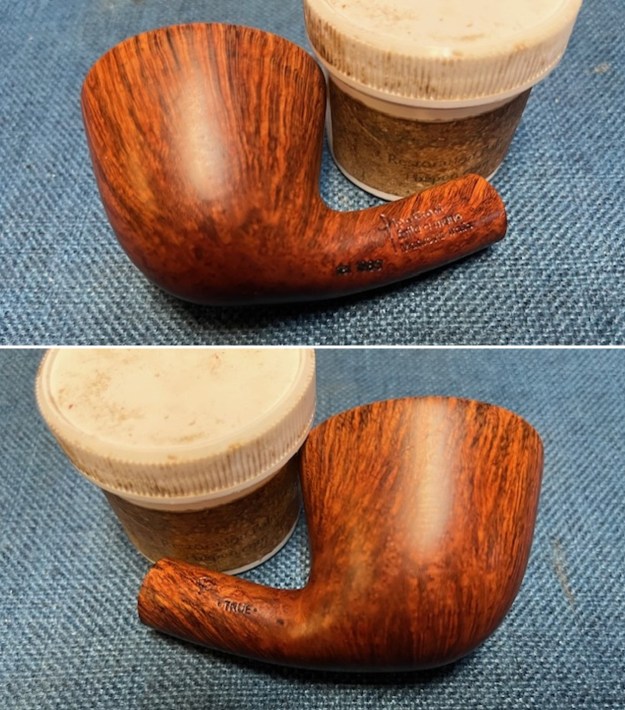
The brand was founded in 1863 by Frederik Charatan. When his father retired in 1910, Reuben Charatan took over the family business. All the pipes were handmade until 1973. The brand name has been overtaken by Dunhill in 1978 and sold in 1988 to James B. Russell Inc.(NJ, USA). During the period 1988-2002 Charatans were crafted by Butz Choquin in St Claude (France). Dunhill re-purchased Charatan brand name in 2002 and Colin Fromm (Invicta Briars, Castleford) followed up on freehand production.Next, I turned to Pipedia to see if I could find more information on the brand and possibly a link to a sandblast finished Dublin (https://pipedia.org/wiki/Charatan) but once again in the general article it was not listed. It did give a little more historical information. I quote the pertinent parts that give information on this particular pipe.

In 1950 Herman G. Lane, striving to expand his business in Great Britain, made contacts with the Charatan family. Apparently, Lane got a certain influence soon, but it was not until 1955 that Lane Ltd. became the sole distributor for Charatan’s in the United States superseding Wally Frank. This can be documented in a “biography” written for Herman G. Lane titled “Leaves from a Tobaccoman’s Log”.

Thanks to Herman G. Lane’s dedicated labor Charatan became hugely popular in the States. As reported by Ken Barnes in an interview with Rick Newcombe, Reuben Charatan passed away in 1962, and his widow sold the firm to Herman Lane 1 or 2 years after his death.[1] In the early 1960s Charatan pipes were the first to overstep the $100 Dollar line in US pipe sales. In 1978 Lane’s heirs sold the Charatan company to Dunhill. The Prescot Street factory was closed in March 1982. Thereafter the fame and quality of the make declined.

The pre-Lane period (prior to 1955) and the Lane era pipes (1955 to until sometime between 1979 – 1984) are of primary interest the collector. The Lane era is often quoted as beginning about 1950.

Charatan records are almost non-existent before Lane due to a factory fire, making it difficult to date pre-Lane pipes. Charatan used 4 basic grades prior to 1950: Supreme, Selected, Executive, and Belvedere. After 1950 Herman Lane’s influence began, and the grades started to expand. In 1955 Lane took over sole distributorship of Charatan in the US. In 1957 he introduced the Supreme S. Most of his other introductions were from the 1960s and early 1970s.

From this I am fairly certain I am dealing with a Lane pipe made after 1955. There is also a circle L script mark that is a Lane stampings on the pipe which also supports this.

I continued digging further into the dating of the pipe, but what I had found above was a good start for me. If some of you would like to try your hand at dating it more accurately as to the time period it came out you might want to check out the article on Pipedia on Dating Charatans (https://pipedia.org/wiki/Dating_of_Charatans).

I also reread the article on Pipedia by the Italian fellow who contributed some really helpful information on the brand (https://pipedia.org/wiki/Charatan_-_Milan_2014). I quote the section on the Second period: Reuben Charatan 1910 – c. 1962. I have highlighted a portion of the section on the shank in red to point out some more helpful dating information.

– In 1962 Herman Lane took over the business from the Charatan family, although he had already influenced production from the 1950s.

– The pipes were mostly larger than the previous ones and corresponded in size to Dunhill group 5. These are slightly less rare, but still difficult to find.

– Stem: Usually in ebonite, saddle shaped or tapered, bearing a fine “CP” stamp, underbore system (see below) used when necessary.

– Shank: The shape code is stamped on it together with the nomenclature “CHARATAN’S MAKE LONDON ENGLAND” arranged in two lines. From 1955 onward on the models marketed for the USA there is also a serif and circled capital “L” (but not all models bear this) which resembles the pound sterling symbol. The “L” is for Lane, the importer.

From 1958, Lane changed the nomenclature for models marketed for the US to clarify the message: “MADE BY HAND”.  In this period the underbore was introduced. Its manufacturing period ranged between 1920 and c.1930. This model was equipped with a duralumin plunger trap fitted in the stem, which served to clean the residue more easily. This particular model bore a special stamp on the stem, and also had its own catalogue…

QUALITY GRADES…The stem did not only display the stamps mentioned above. Another stamp that can help dating is the one referring to the quality of the pipe. Until Herman Lane arrived on the scene there were four quality grades. Starting with the lowest: Belvedere, Executive, Selected, and Supreme. Lane went on to add higher grades from time to time: Supreme S, Supreme S100, S150, S200, S250, S300, Coronation, Royal Achievement, Crown Achievement, and Summa Cum Laude; these last three are extremely rare and almost impossible to find. He also invented other, different grades, even changing the previous pipe classification standards. We will not go into detail here, but it means that if we find an S100 or Coronation the pipe was manufactured following Herman Lane’s acquisition. In particular, the FH mark, or Freehand pipe was commissioned to the famous Danish craftsman, Preben Holm.

Nomenclature

The Lane Trademark serif and circled L indicates the pipe is from the “Lane Era” (approx. 1955 to 1979 -1984?), however it appears that both the English factory or Lane themselves sometimes, or perhaps even often forget to stamp the L on a pipe. The Charatan factory was known for inconsistencies, especially in stampings. Therefore, although an L on the pipe definitely defines it as a Lane Era pipe, the lack of it could simply mean the pipe missed receiving the stamp from the factory. The lack of the trademark could also mean the pipe was destined for the European market.

Charatan pipes were not well distributed prior to the Lane Era, so very few pre-Lane pipes exist today. Herman Lane greatly grew the brand in the U.S., which caused corresponding growth in Europe.

Generally, when the pipe is stamped with the BLOCK letters “MADE BY HAND” it means the pipe was probably made between 1958 and 1965”

Generally, block letters “MADE BY HAND” and some of the other nomenclature in script (i.e. City of London or Extra Large next to the MADE BY HAND) means the pipe was made sometime between 1965 and the mid 1970s. The total script nomenclature “Made by Hand in City of London” evolved over this period of time, so many pipes had variants, such as Made By Hand in block letters and City of London in script, or some other variation of the terms or stampings.

It is believed the FH was used on Charatan pipes between 1957 and 1967-68. Three different sizes were used. The Charatan Logo (CP) on the pipe bit was changed over the year

Now I knew I was working on Lane Era pipe which actually means it was between 1955 and 1988 as shown by the stamping. Now it was time to work on the pipe.

Jeff had cleaned it thoroughly. He had reamed it with a PipNet reamer and cleaned that up with a Savinelli Fitsall Pipe Knife. He had scrubbed the exterior of the briar with undiluted Murphy’s Oil Soap. He removed the shiny coat on the briar with acetone on cotton pads. He cleaned out the interior of the shank, sump and airway in the shank and stem with alcohol, pipe cleaners and cotton swabs. He scrubbed the stem with Soft Scrub to remove the oxidation and calcification on the surface. He soaked it in Before & After Deoxidizer to remove the oxidation. He removed it from the Deoxidizer and rinsed it off with warm water. I took some photos of the pipe before I started my part of the work. I took some close up photos of the rim top and also of the stem surface. I wanted to show what an amazing job Jeff did in the cleanup of the rim top. The rim top was and inner edge were in excellent condition. There were spots on the surface where the stain had lightened – both inner and outer edges. I also took close up photos of the stem to show the condition of the acrylic. It was clean but there were tooth marks and chatter on the stem ahead of the button on both sides. One of the things I appreciate about Jeff’s cleanup is that he works to protect and preserve the nomenclature on the shank of the pipes that he works on. The stamping on this one had faint spots on the edges so I was worried that it would worsen with the cleanup. I took some photos to show the clarity of the stamping. The photo is a little blurry but the stamping remains the same. I have noticed that many restorers are not careful to protect the stamping in their cleaning process and often by the end of the restoration the nomenclature is almost destroyed. I would like to encourage all of us to be careful in our work to preserve this as it is a critical piece of pipe restoration! I took the stem off the shank and took a photo of the pipe to capture the look of the pipe as a whole.I started my work on the pipe by touching up the light areas around the rim top and edges with a Walnut Stain pen. It blended well into the surrounding briar. With that finished the bowl was very clean and the sandblast looked great. I rubbed the bowl and rim down with Before & After Restoration Balm. I worked it into the sandblast surface of the briar with my fingertips and a horse hair shoe brush to clean, enliven and protect it. I let the balm sit for 10 minutes and then buffed with a cotton cloth to raise the shine. I really like watching the Balm do its magic and bring the briar alive. I set the bowl aside and turned my attention to the stem. I “painted” the tooth marks on both sides of the stem with the flame of a Bic lighter and as expected I was not able to lift them at all. I filled in the tooth marks with clear CA glue and let the cure. I flattened out the repairs with a small file to start blending them in. I sanded the areas smooth with 220 grit sandpaper and started polishing with 600 grit wet dry sandpaper, though I forgot to take photos of this part of the process. I polished the stem with micromesh sanding pads – wet sanding with 1500-12000 grit pads. I wiped the stem down after each sanding pad with Obsidian Oil to give the sanding pads some bite. I polished it with Before & After Pipe Stem Polish – both Fine and Extra Fine. I gave it a coat of Obsidian Pipe Stem Oil. I know that most think it does nothing for acrylic stems but I use it anyway as I find it works very well to deepen the shine. I set it aside to dry. Once again at this point in the restoration process I am excited to be on the homestretch. I look forward to the final look when the Charatan’s Make London England 318 Sandblast Pickaxe is put back together, polished and waxed. I put the bowl and stem back together. I lightly polished the bowl and the replacement stem with Blue Diamond. I gave the bowl and the newly fit stem multiple coats of carnauba wax. I buffed the pipe with a clean buffing pad to raise the shine. I hand buffed it with a microfiber cloth to deepen the shine. The pipe polished up pretty nicely. The depths of the sandblast really pop with the wax and polish. The shiny black acrylic stem is a beautiful contrast to the browns of the bowl. This Charatan’s Make London England 318 Sandblast Pickaxe with an acrylic replacement stem was another fun pipe to work on. It really is a quite stunning piece of briar whose shape follows the flow of the briar. The pipe feels great in the hand will be better when warmed up while smoking. The finished pipe is shown in the photos below. The dimensions of the pipe are Length: 5 ¾ inches, Height: 2 ¼ inches, Outside diameter of the bowl: 1 ¼ inches, Chamber diameter: 7/8 of an inch. The weight of the pipe is 1.66 ounces/47 grams. I will be putting it on the rebornpipes store in the British Pipemakers Section if you would like to add it to your rack and carry on the previous pipeman’s legacy. This is an interesting estate to bring back to life.

As always, I encourage your questions and comments as you read the blog. Thanks to each of you who are reading this blog. Remember we are not pipe owners; we are pipe men and women who hold our pipes in trust until they pass on into the trust of those who follow us.