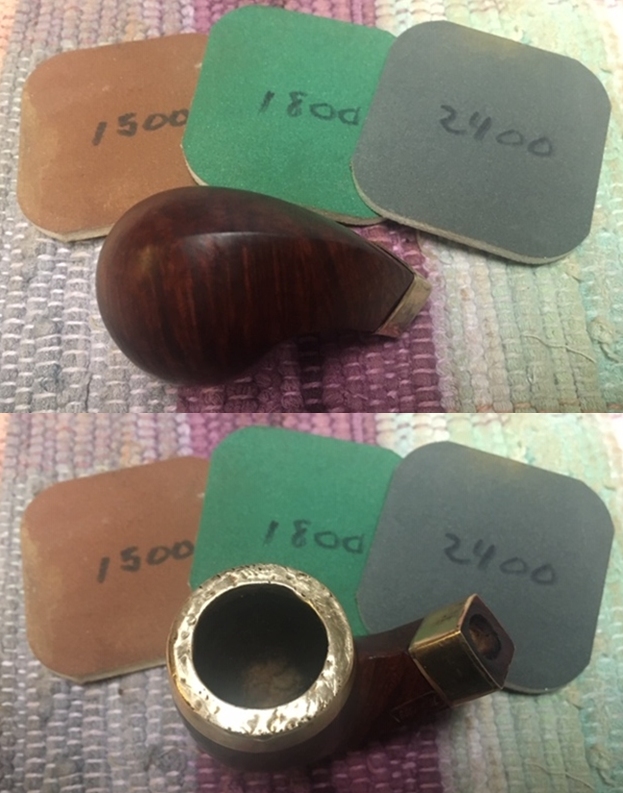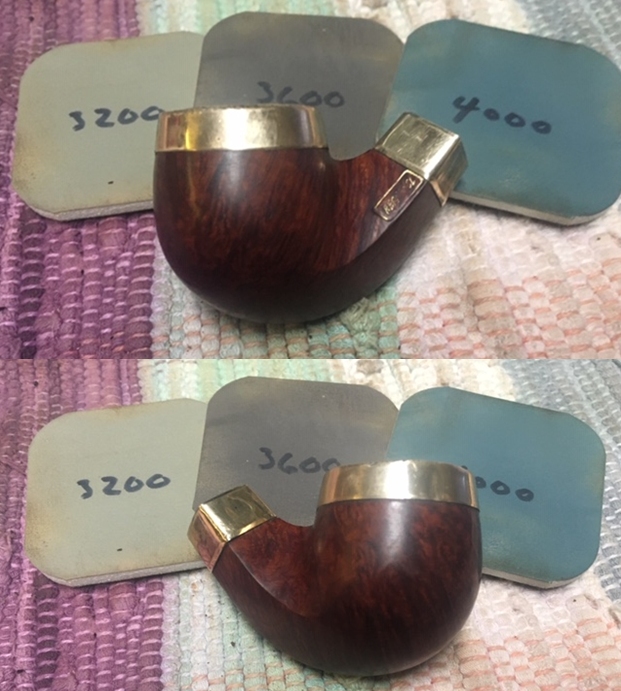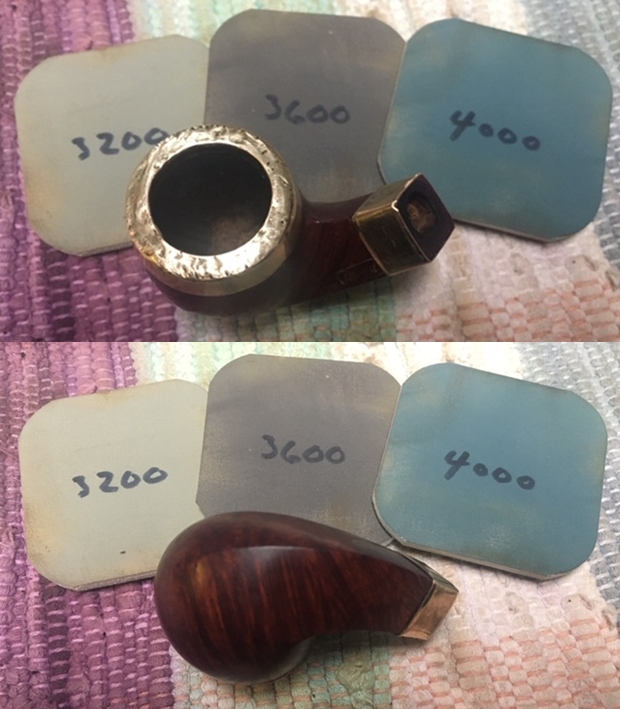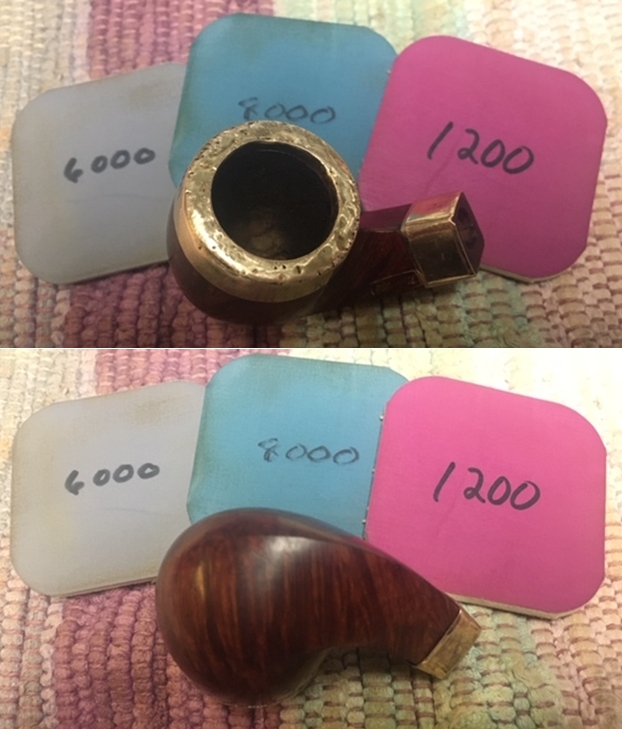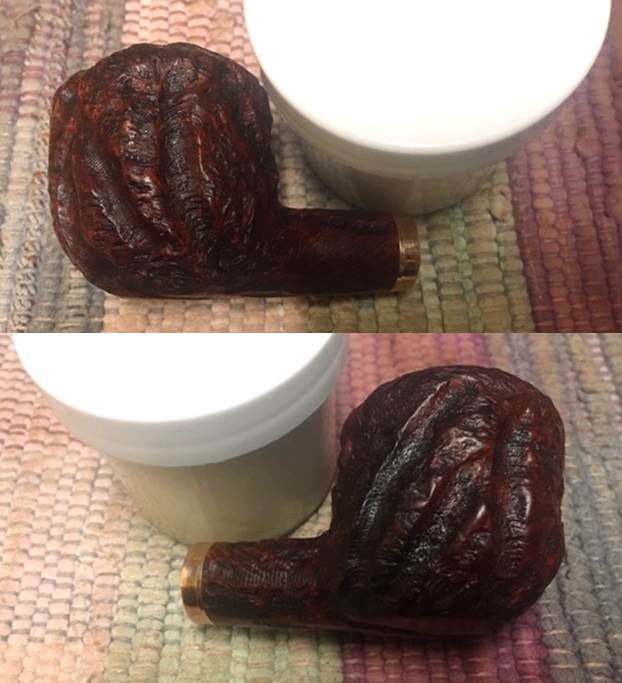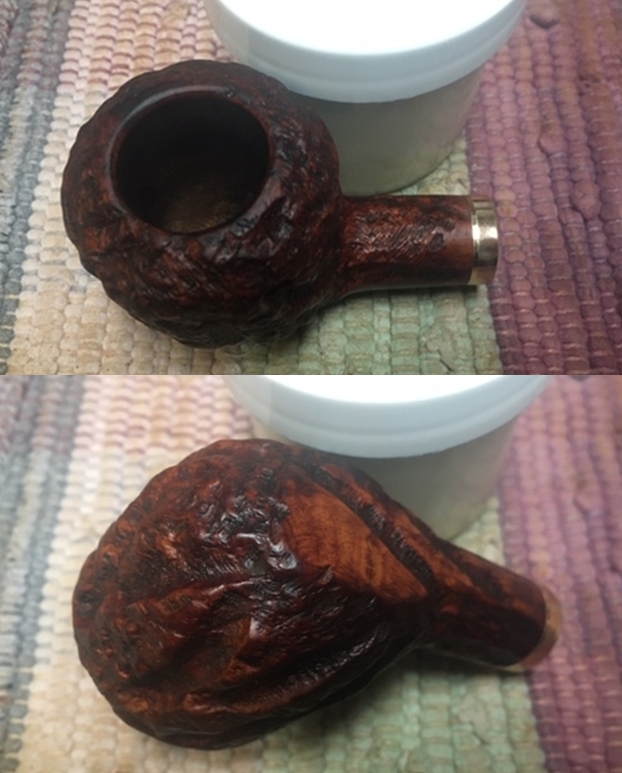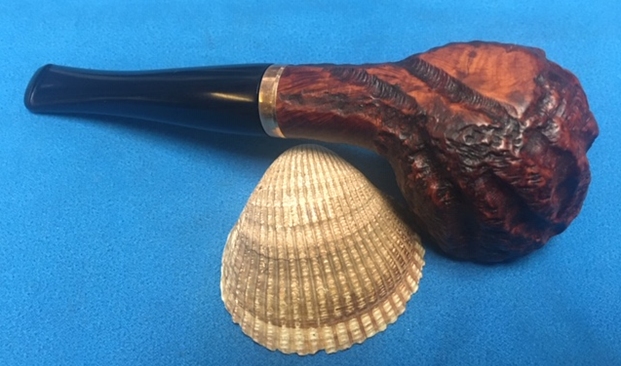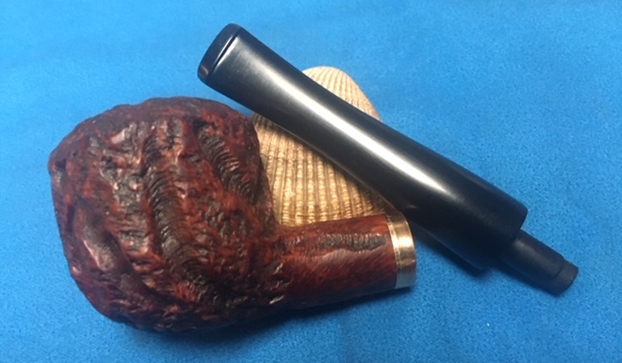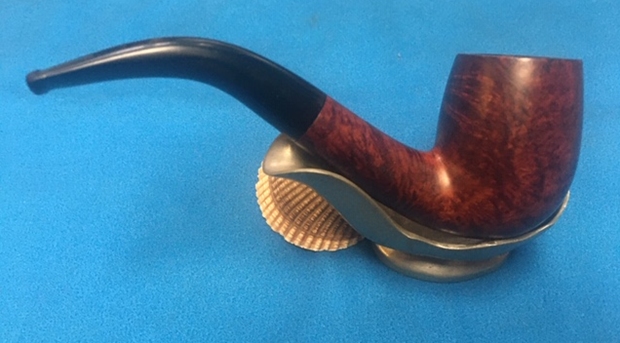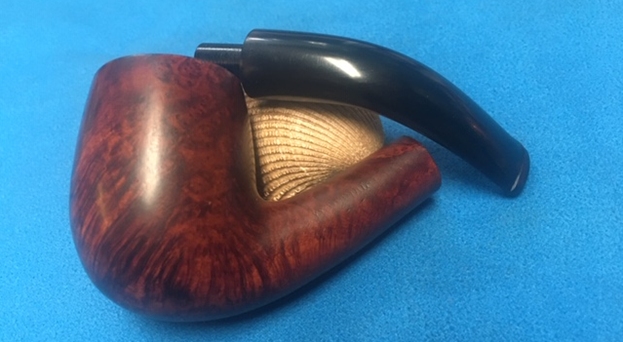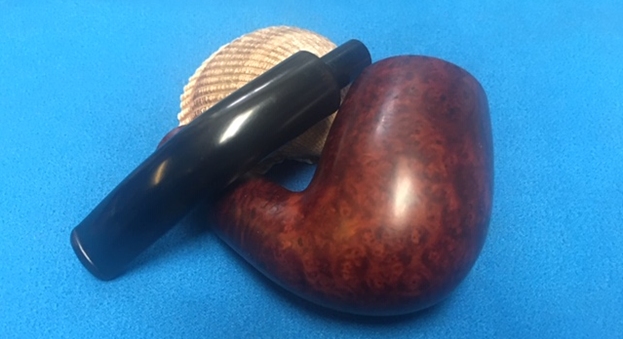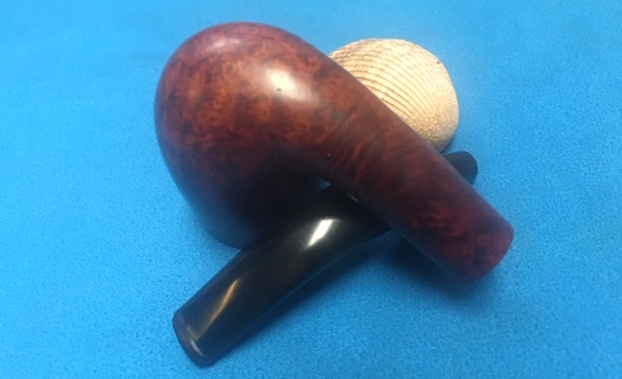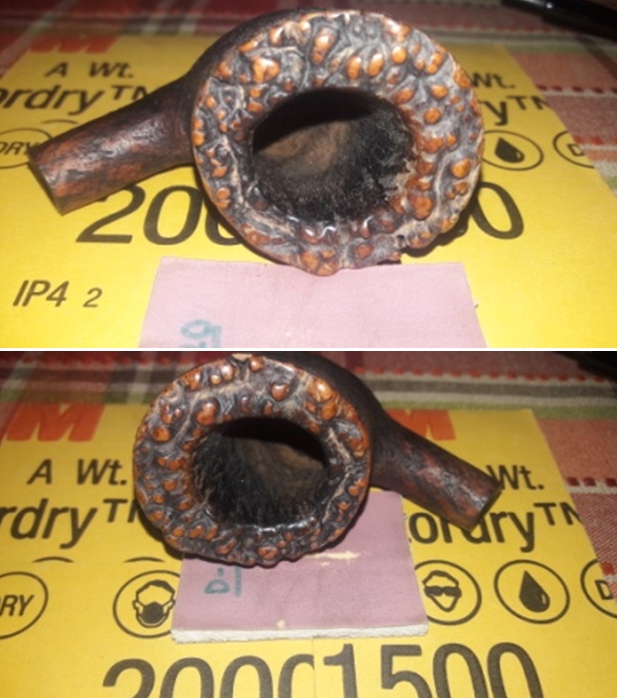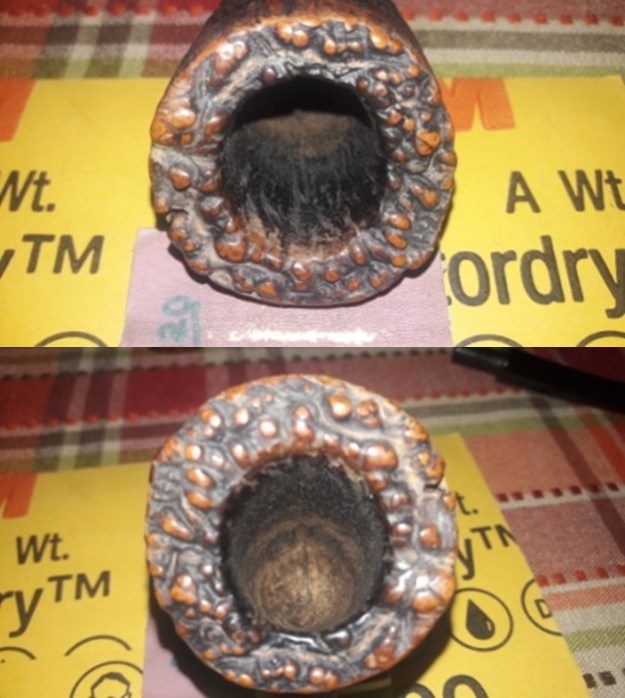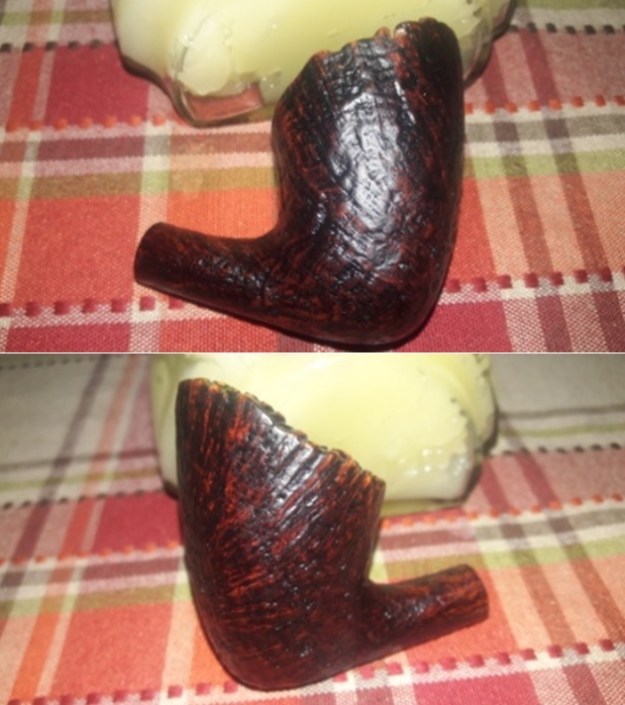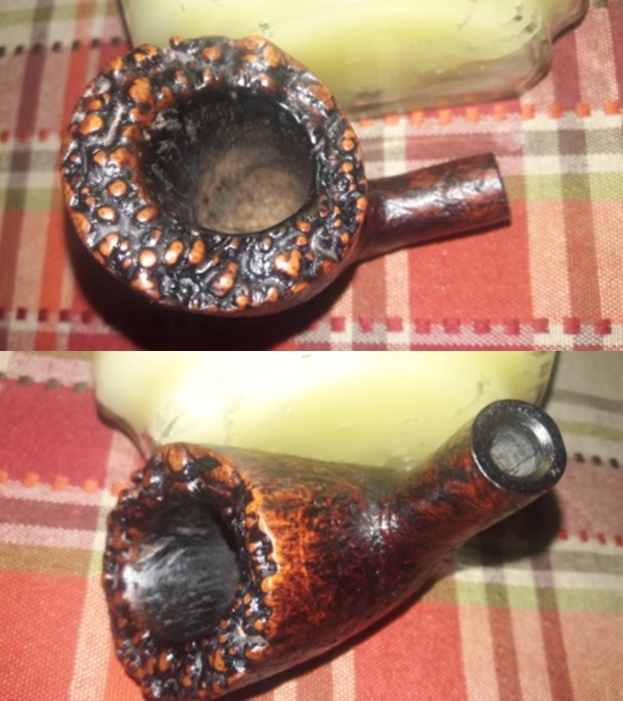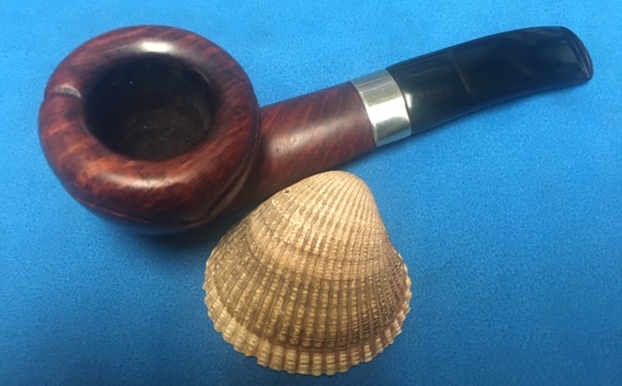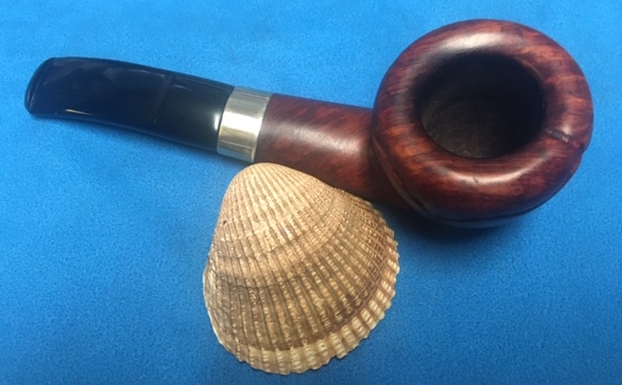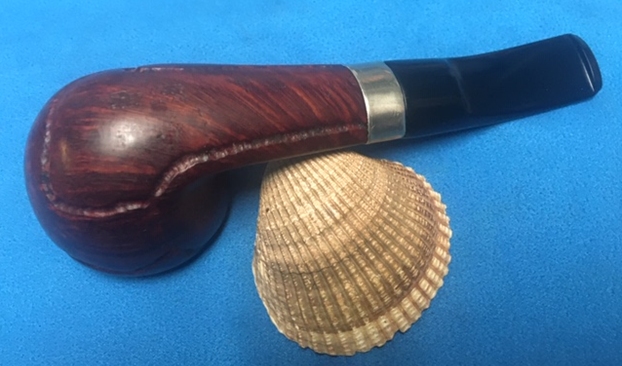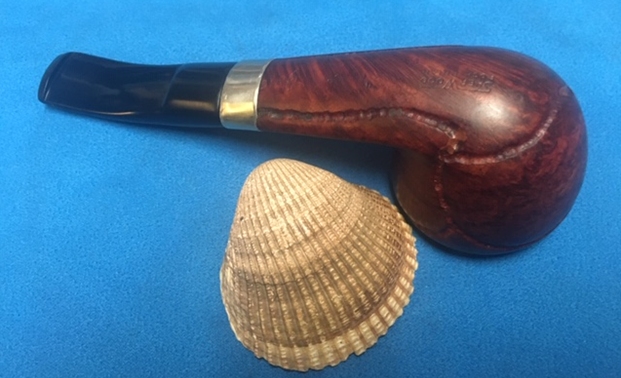
Author Archives: rebornpipes

Restoring a “Made In England” Peterson’s System 3 # 367 From Mumbai Bonanza Lot


Blog by Paresh

I have quite a few inherited Peterson’s System pipes ranging from the period 1915 to 1947 to present!! I also have these pipes in System Standard, System 0 and System 3. So when Abha, my wife, sent me pictures of pipes that I had purchased from a Mumbai trash collector, I saw two distinct Peterson’s System pipes, one large and the other very small!! When Abha confirmed the COM stamping on both these pipes, I knew that I had Peterson’s System pipes from the 1930s-40s. Another two vintage Peterson’s System pipes added to my collection, I say. And I am not complaining, mind you readers!!

I was fortunate enough to have heeded the advice of my dear friend and mentor, Steve, and struck a deal with a junk collector from Mumbai. He did not know what he was selling and I did not know what I was buying as we reside in different cities!! The argument that Mr. Steve presented was that if not anything, I shall at least have some spares and this was logical. I struck a deal and here are pictures of the pipes that I received in this lot. This lot contains some very nice collectible pipes, a few well known brands and some mediocre brands. Overall, with seven Dunhill pipes, a Preben Holm #1 FH, a couple of “Made in England” Pete System pipes, a couple of  Charatan’s Belvedere, Custom-Bilt, Stanwell and other assorted pipes, I would say that I had struck a decent haul!! This is indeed my “Mumbai Bonanza”.

I had recently completed the refurbishing of a Savinelli seconds, a “ROYAL OAK” with a twin bore or a bite proof stem from my Mumbai Bonanza. Here is the link to this 18th pipe from this lot (https://rebornpipes.com/2020/08/17/refurbishing-an-interesting-royal-oak-207-apple/).

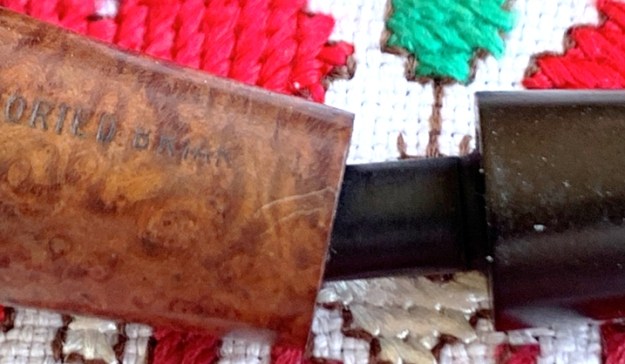
The 19th pipe that I decided to work on from this find is a petite Peterson’s System 3 pipe with a nickel ferrule and is indicated by a red cross.This pipe is stamped on the left of the shank towards the shank end as “PETERSON’S” in an arched block capital letters over arched “SYSTEM” in block capital over grade “# 3” over the shape number “357”. The tail of the P in Peterson’s is forked. The right side of the shank is stamped with football shaped COM stamp “MADE IN ENGLAND” with centered “in”. The ferrule has the usual three cartouche with first having Shamrock, the second a Prone Fox and lastly a Stone Tower. Stamped above the cartouche are the letters “K & P” followed by “PETERSON’S” all in a straight line. The stem is devoid of any logo. All the stampings are crisp and easily readable. In my earlier restoration of my inherited Peterson’s System pipes, I had extensively researched the dating of these old Peterson’s and I can say with certainty that this pipe is from the period 1938 to 1940/ 41. Also the forked tail of “P” in Peterson’s with the inward coiling upper part corroborates the vintage of this pipe.

I reconfirmed and refreshed my learning by visiting my favored site (link given below) and my memory has served me right. Here is the link to dating Peterson’s pipes (http://thepetersonpipeproject.blogspot.com/2007/07/dating-peterons-pipes.html).

I quote the relevant portions extracted from the site that would help in understanding the dating of this pipe

Peterson now stamped their pipes with “Made in Eire” in a circle format with “Made” and “Eire” in a circle with the “in” located in the center of the circle. This COM was used during the years of 1938 – 1940? /41?

English made Peterson pipes actually spans between the pre-Republic and Republic eras. In 1895, Peterson opened a shop in London England that lasted until the late 1950s or early 1960s. So the English Era, for a simplified date, will be from 1895 through 1959. The stamps Peterson used in London and that we have seen are:

Made inEngland – block format

Made in England – circle format

Made in London

Made in London England

Simply, London England

Great Britain

Though there are a couple of more, the above will give one the general idea. We believe the earliest stamp of this era was the “Made in England” in a block format since Peterson was using the “Made in Ireland” block format at about the same time on their Irish production pipes. The “Made in England” circle format was used during the same time frame as the “Made in Eire” and “Made in Ireland” circle formats.

From the start of the Patent Era until somewhere in the early 1930s, Peterson used the “Old Style” lettering that used a forked tail “P” in Peterson.

Thus I can conclusively say that the Peterson’s System pipe on my work table is from the English Era and dates from the period 1930s to 1940/41 when the “Made in Eire” football stamp had been in use.

Initial Visual Inspection
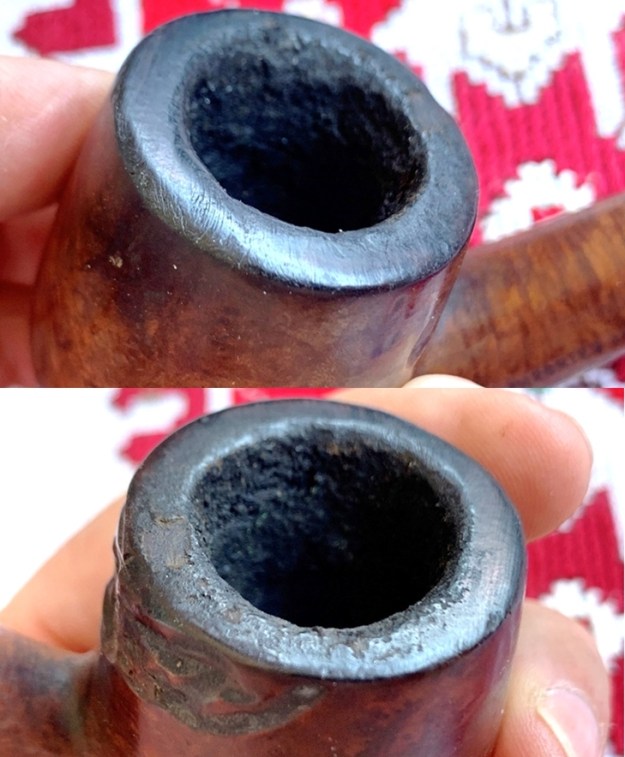
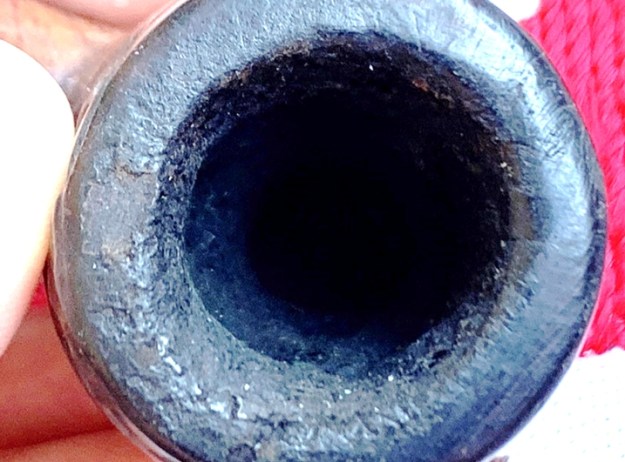
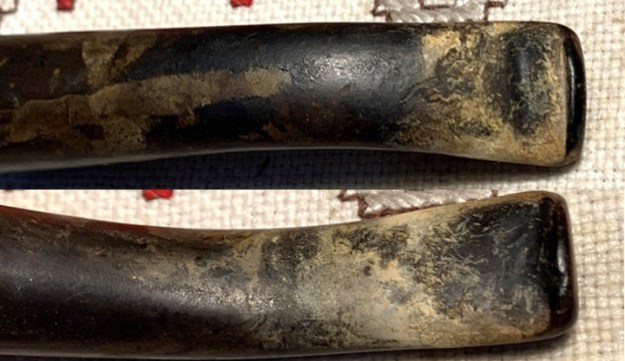
The Peterson’s system pipe that is currently on my work table has a small bowl with a chamber depth of about 1.1 inch, bowl height of about 1.2 inches, chamber inner diameter of 0.7 inches and overall pipe length of 4.5 inches. The stummel is covered in dirt and grime through which beautiful flame grains can be seen around the sides, front, back and over the shank surface while Bird’s eye adorns the foot of the stummel. There are a couple of small fills in the stummel. There is a thick layer of cake in the chamber with lava overflow over the rim top surface. The inner rim edge has many dents and dings and appears charred in 8 ‘O’ clock direction. The chamber is out of round due to the inner rim edge damage. The nickel ferrule is oxidized and without any dents or dings. The vulcanite P-lip stem is heavily oxidized with the bite zone on either surface peppered with deep tooth chatter. The buttons on both surfaces are deformed due to the bite marks. The following pictures will give the Readers an idea of the overall condition of the pipe as it sits on my work table. Detailed Visual Inspection
A thick and uneven layer of cake is seen in the chamber. The rim top surface has suffered the maximum damage and is uneven. It is covered in thick overflow of lava, dirt, dust and grime. The condition of the inner walls of the chamber and rim top surface will be known once the cake has been taken down to bare briar and the rim top crud has been scraped off completely. The inner rim is uneven with suspected burn/ charred surfaces in 8 ‘O’ clock and 12 ‘O’ clock direction (marked in yellow circle). Only once the stummel has been thoroughly cleaned that I can be sure of my initial appreciation. The outer rim edge too has dents, chips and dings (encircled in green), but not very severe, likely caused due to knocking against the hard surface. In spite of the thick cake, the chamber odor is, surprisingly, not strong and should be addressed once the cake has been taken down to the bare briar and the shank internals have been thoroughly cleaned. The bowl is out of round with the lower left half being thinner than the rest of the rim top. The stummel feels solid to the touch and I do not foresee any major issues with the condition of the chamber walls. The bowl is, to start with, is small in size and to top it will further reduce the size. I need to be very careful while I top the rim and keep it to bare minimum. A few blemishes to the rim are very much acceptable if I am able to preserve the size and profile of the stummel. To be honest with you, being a grade 3 System pipe, there is nothing much to boast about the grains on the stummel. It has a smattering of beautiful flame grains that can be seen around the sides, front, back and over the shank surface while Bird’s eye adorns the foot of the stummel. The stummel surface is covered in lava overflow and grime giving the stummel a dirty appearance. The stummel surface is peppered with a number of dents and ding. A couple of fills are noticeable on the right side near the shank- stummel junction, rim outer edge and the foot of the stummel (shown with yellow arrows). These will be clear when the stummel is cleaned of all the grime. In spite of all these flaws, the pipe has a nice look and feel to it. It does have a quality which is seen on vintage pipes, but difficult to explain in words. And not to forget, this is nearly an 80 year old pipe!! The fills will need to be refreshed and the dents and dings will be addressed to a great extent once the stummel is sanded with sandpaper. A nice polish with micromesh grit pads will bring a nice shine to the stummel and highlight the grains.  The shank end is adorned with a nickel ferrule that is covered in old oils and grime. The ferrule has oxidized a fair bit but should polish up nicely. The sump shows a heavy deposition of accumulated dried gunk. The sump will need to be cleaned to get the pipe fresh and ready for its new innings. I intend to polish the nickel ferrule with micromesh pads. This will be the first time that I would be doing so and keen to see if it is any better than the usual methods of polishing. I need to be careful with the faux hallmarking and stampings on the ferrule when I polish it. The P-lip vulcanite stem is heavily oxidized and has calcification deposits towards the button end. There are deep tooth marks on the lower and upper stem surface in the bite zone and appears that the previous owner has literally chomped on the bite zone of the stem. The button edges also have bite marks, in fact, they are badly worn out. The bite marks are deep enough to cause significant thinning of the surface and complete disfigurement of the button edges. The tenon end shows heavy accumulation of oils and tars. The part of the stem that seats in to the mortise is heavily scratched. I shall try to raise the tooth chatter and bite marks to the surface by heating and the deeper ones will be filled with activated charcoal and superglue.    The Process
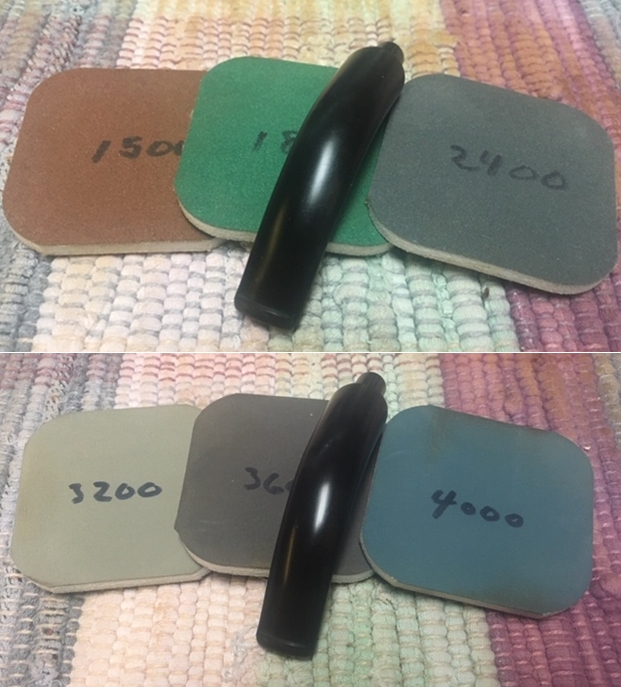
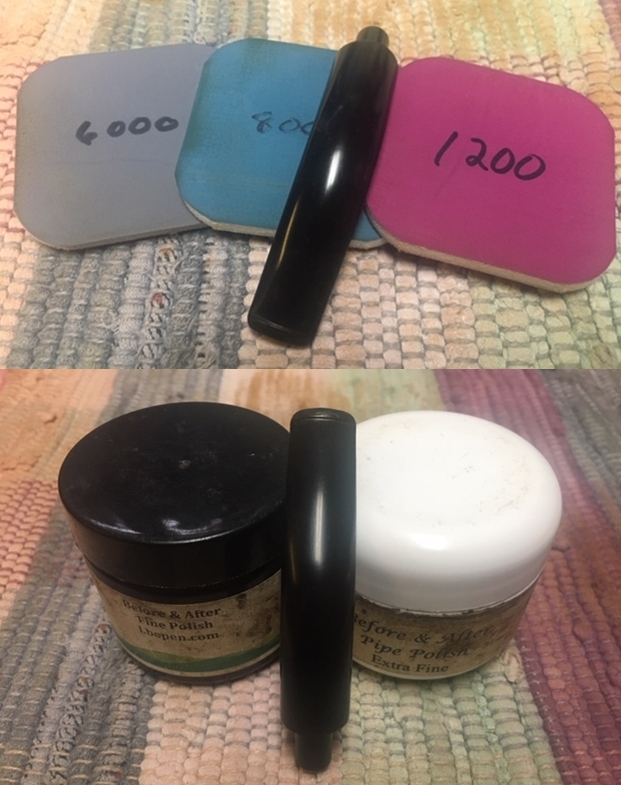
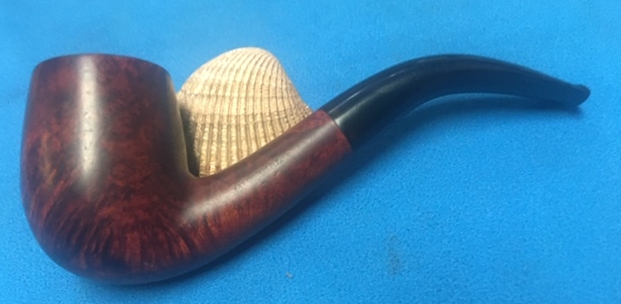
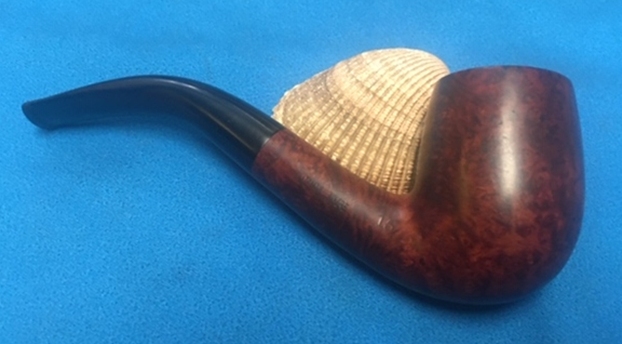
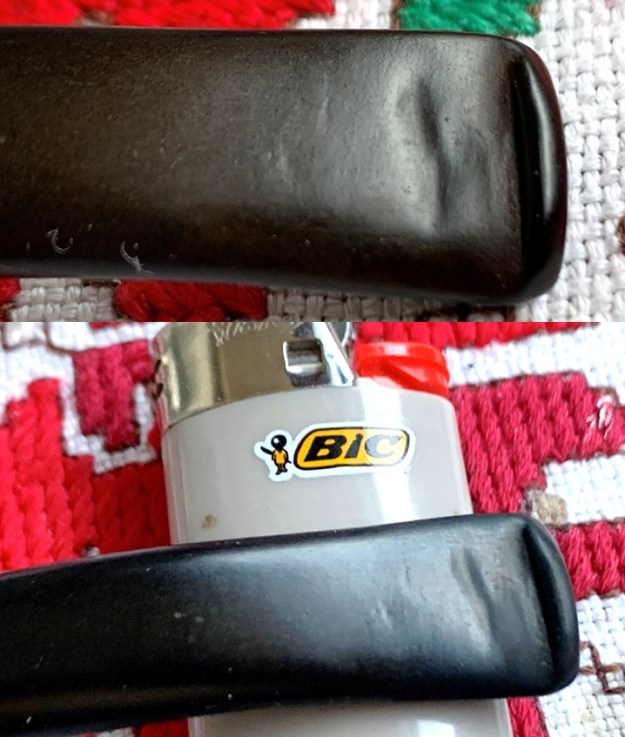
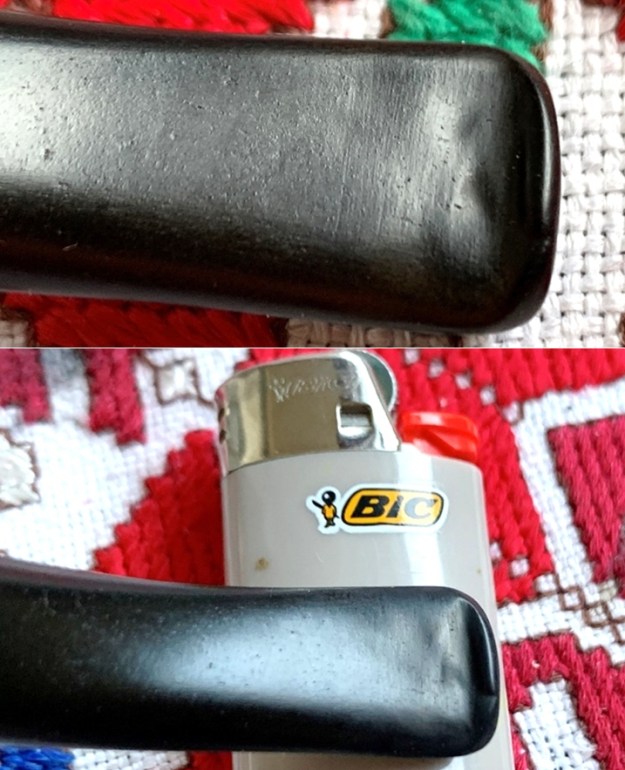
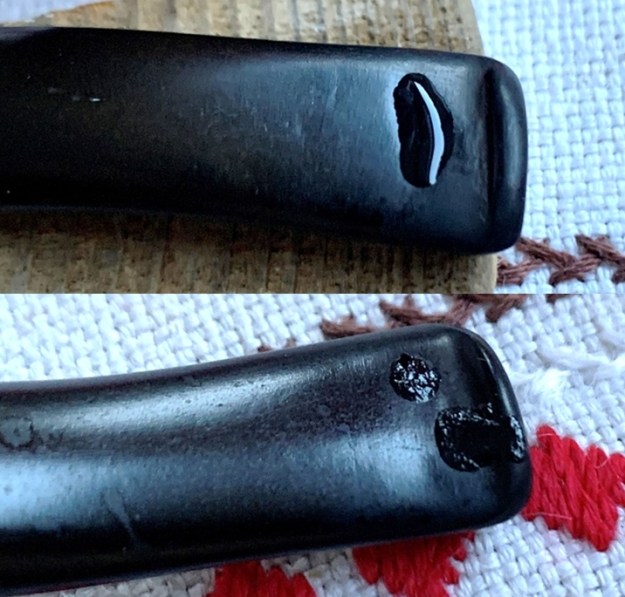
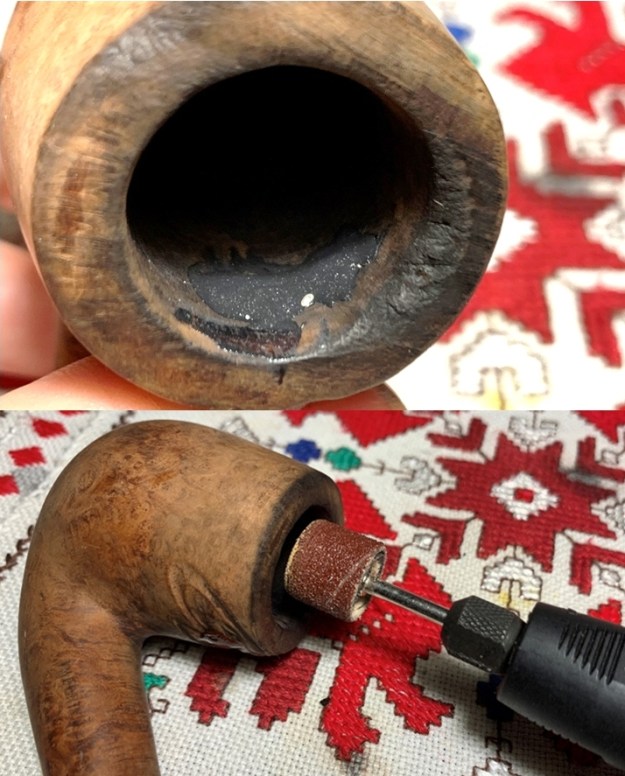
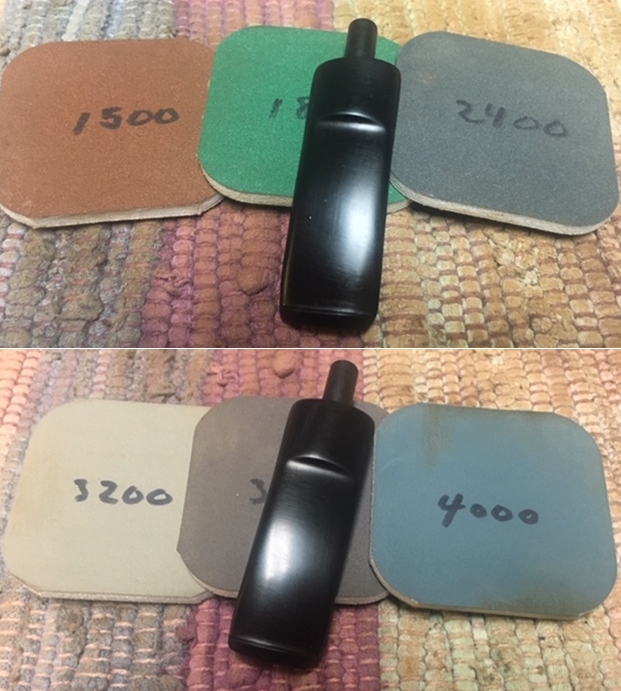
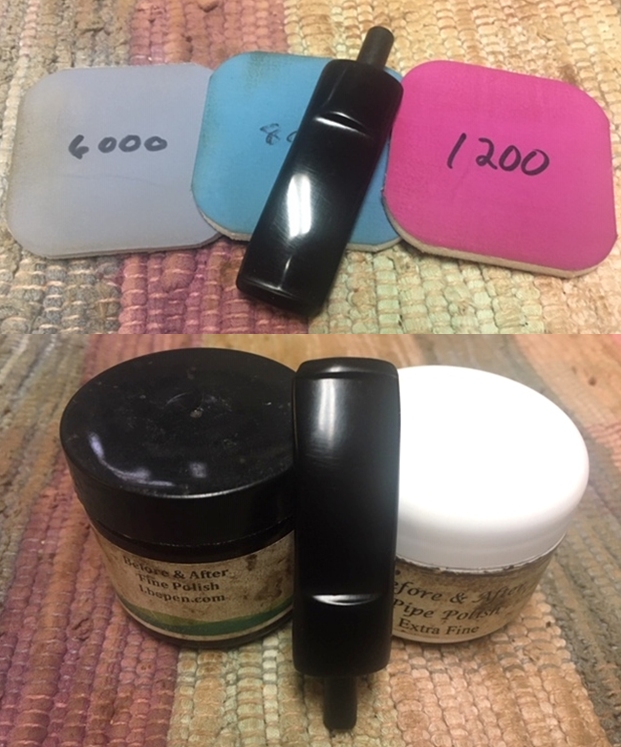
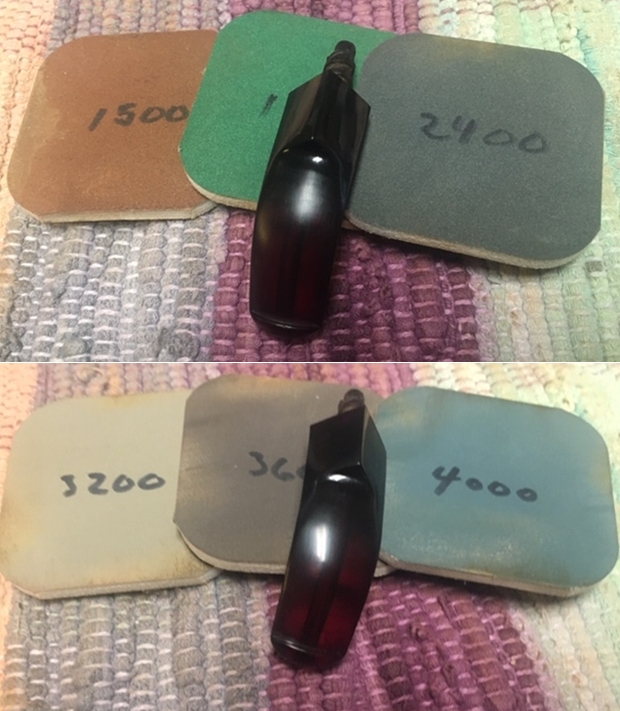
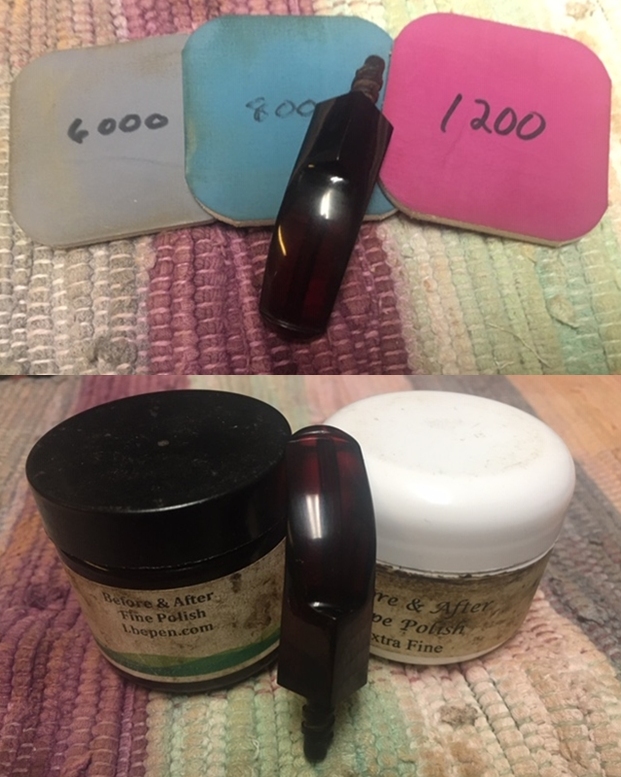
I started the restoration with the stem repairs as this would take the maximum of my time to clean, repair and spruce up. I flamed the damaged button edge and the nicks and dents with the flame of a lighter. This helps the vulcanite to rise to the surface as it has an inherent property to regain its original shape when heated. At this stage, I could clearly make out the extent of damage on either surface in the bite zone. I further sand bite zone to even out the raised bite marks and further eliminate the minor ones. I addressed the deeper oxidation by sanding the entire stem with a folded piece of 150 and followed by 220 grit sand paper. This also helps to prevent the fills turning brown once polished. Once the oxidation was completely removed, I wiped the surface clean with Murphy’s oil soap on a cotton swab and rubbed a little Extra Virgin Olive oil to hydrate the stem. I cleaned the internals of the stem using hard and normal bristled pipe cleaners and isopropyl alcohol. The gunk that came out with the pipe cleaners tells the sordid tale of the stem condition. To save on to the requirement of number of pipe cleaners, I have resorted to cleaning the stem internals using thin shank brushes with anti-oil dish washing soap and finally rinsing the stem with warm water to clean and freshen up the stem internals. With a pointed dental tool, I scraped out the entire dried gunk from the tenon end.   Continuing with the stem repair, I tightly wrapped a scotch tape around the thin tapered end of a pipe cleaner so that I had achieved a snug fit of the pipe cleaner in the small rounded slot of the P-lip stem. The scotch tape prevents the mix of charcoal and superglue from sticking over the pipe cleaners and keeps the slot end open. Thereafter, I mixed superglue and activated charcoal powder and generously applied it over the bite zone on either side, including over the button and set it aside to cure.  Using a flat head needle file, I reshaped the button and roughly matched the fills in the bite zone with the rest of the stem surface. I sand the entire stem surface with a piece of folded 220 grit sandpaper to even out the fills as well as remove the oxidation from the stem surface. I followed it up by further dry sanding the stem with 320, 600, 800 and wet sanding with 1000 grit sand papers to achieve a perfect blending of the fills with the stem surface and build a crisp button edge on either side of the P-lip. The repairs look good and the stem should polish up nicely. With the stem repairs and refurbishing nearly complete, save for the final micromesh polishing, I started with cleaning of the stummel as I was keen to know the condition of the walls of the chamber. With size 1 head of a PipNet pipe reamer, I took the cake down to bare briar. With my sharp fabricated knife, I removed the cake from the chamber where the reamer head could not reach and thereafter, using a folded piece of 180 grit sand paper, I sand out the last traces of cake and expose the walls of the chamber. I wiped the chamber with a cotton pad dipped in isopropyl alcohol to remove the carbon dust left behind by all the reaming and sanding process. Once the chamber walls were cleaned out, I was pleased to note a pristine chamber with no signs of heat fissures/ lines/ pits. With the same sharp knife, I gently scraped off the lava overflow from the rim top surface. The charred and uneven rim surface (encircled in red) and damaged outer rim edges (major damage is encircled in blue) are now clearly seen and should be easily addressed with simple topping of the bowl. Next, I cleaned out the internals of the shank and mortise. Using my dental tool, I scraped out all the dried oils, tars and gunk that had accumulated in the draught hole, airway and sump. The amount of crud that was scrapped out and the condition of the pipe cleaners that were used leaves no surprise why air flow through it was restricted. I finished the cleaning by running a few pipe cleaners dipped in isopropyl alcohol. I also wiped the sump with cotton buds and alcohol. I shall continue further cleaning of the mortise and the sump with shank brushes and dish washing soap while cleaning the external stummel surface.Next, I cleaned the external surface using a hard bristled toothbrush and Murphy’s Oil Soap. With a soft bristled brass wired brush, I removed the overflowing lava from the rim top surface and cleaned the internals of the shank with a shank brush and dish washing soap to remove what little crud remained in the shank. I rinsed it under running tap water and wiped the stummel dry with an absorbent soft cotton cloth. The external cleaning of the stummel has brought to the fore a few more scratches over the surface. The cleaning of the chamber and shank internals with the dish washing soap has completely eliminated all the ghost smells and the internals now smell and look clean and fresh. Now that the rim top surface is clean and free of the entire lava overflow, the extent of the charring and dents and dings to the inner rim edge is fairly apparent. The charring at 8 o’clock and 12 o’clock direction (marked in red) is far deeper than I had expected and also the dents and dings to the inner and outer rim edges are far more severe than what it had appeared to me during the detailed inspection. However, topping and creating bevels will address these issues. Now that I had a fair idea of the requirement of the extent of topping the rim surface, I top the rim on a piece of 220 grit sand paper to even out the rim surface dents and dings and also to reduce the charred rim surface. I addressed the out of round inner edge by creating a bevel to inner edge with a folded piece of 220 grit sand paper pinched between my thumb and index finger. I agree with the Readers who are of the opinion that the issue of charred rim has not been addressed completely. However, I am ready to accept minor blemishes as against losing too much of briar estate. I am very happy at the way the chamber and rim top surface appears at this in restoration.   The old fills observed earlier during initial inspection were addressed next. Very carefully and painstakingly, I completely removed the old fill with a pointed dental pick. I cleaned the fill of all the debris of old fill material, wiped it with alcohol and refreshed the pits by spot filling with CA superglue in each fill and set it aside to cure overnight.   By next day, the fill was nice, hard and well set. Using a flat head needle file, I sand these fills to achieve a rough match with the stummel surface. With a folded piece of 220 grit sand paper, I worked the fill till I had achieved a nice blend with the rest of the stummel surface. It turned out much better than I had anticipated. I further sand the entire stummel surface with the same grit sand paper to further smooth the stummel surface in preparation for a polish by micromesh pads. I subjected the stummel to a complete cycle of micromesh polishing, wet sanding with 1500 to 12000 grit pads. I paid greater attention to polish the rim top surface and the bevels created on the inner and outer rim edges. I wiped the stummel with a moist cloth after every grit pad to remove the sanding dust left behind by the pads. This also helps in monitoring the progress being made and provides an opportunity to take early corrective action, if required. I am happy with the progress being made till now. As decided earlier, I polished the ferrule with each of the micromesh pads and I am very pleased with the appearance of the ferrule.   Next, I rub a small quantity of “Before and After Restoration Balm” in to the briar with my finger tips and worked it deep in to the surface and let it rest for a few minutes. The balm almost immediately works its magic and the briar now has a nice vibrant appearance with the beautiful flame and Bird’s eye grain patterns on full display. The contrast of the dark browns of the grain with the light hues of the rest of the stummel adds an interesting dimension to the appearance of the stummel. I further buffed it with a horse hair brush to further deepen the shine.   With the stummel repairs and polishing completed, I turned to polishing the stem before I move on to final polishing the entire pipe with Blue Diamond and Carnauba wax. Using the micromesh pads, I completed the polishing cycle by wet sanding the surface with 1500 to 12000 girt pads. The stem looks great with the fills nicely matched with the rest of the surface. I gave a final rub with “Before and After Extra Fine” stem polish compound from Mark to remove fine scratches from the stem surface. I rub a little quantity of Extra Virgin Olive oil in to the stem surface and set it aside to be absorbed by the vulcanite. The stem polished up nicely and appears as good as when new.     To put the finishing touches, I mount a cotton cloth buffing wheel on to my hand held rotary tool and polished the stummel and stem with Blue Diamond compound. This compound helps to remove the minor scratch marks that remain from the sanding.    Next, I mount another cotton buffing wheel that I have earmarked for carnauba wax and applied several coats of the wax. I mount a clean cotton cloth buffing wheel and give the entire pipe a once over buff. I finished the restoration by giving the entire pipe a rigorous hand buffing using a microfiber cloth to raise the shine further. I gave a final polish to the ferrule with a jeweler’s cloth and worked up a nice deep shine to the ferrule. The finished pipe with a natural finish to the briar looks amazingly beautiful and is now ready for its long second innings with me. P.S. I had a thought of staining the stummel with a Dark Brown stain and vacillated a long time on trying to reach a decision. Though the fills are discernible in the pictures, in person, these have blended in quite well and the natural finish of the briar against the dark grain makes for a visual treat, in my opinion. However, I am open to the valuable suggestions from the esteemed readers of rebornpipes on the issue of staining the stummel or leave it be.

Praying for the health and safety of all the readers and their loved ones in these troubled times…

New Life for a Velani Classica Brut 202 Rusticated Pot


Blog by Steve Laug

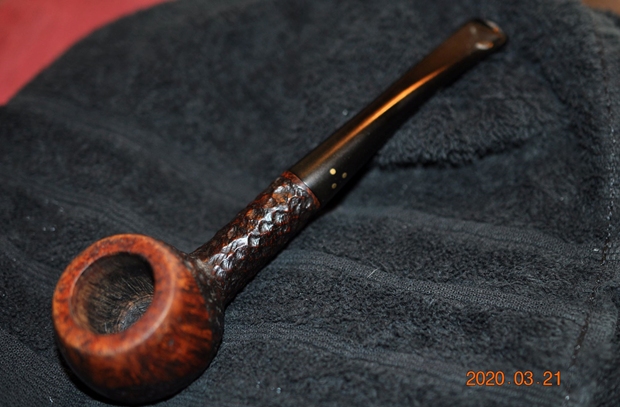
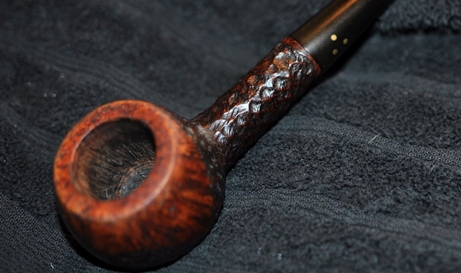
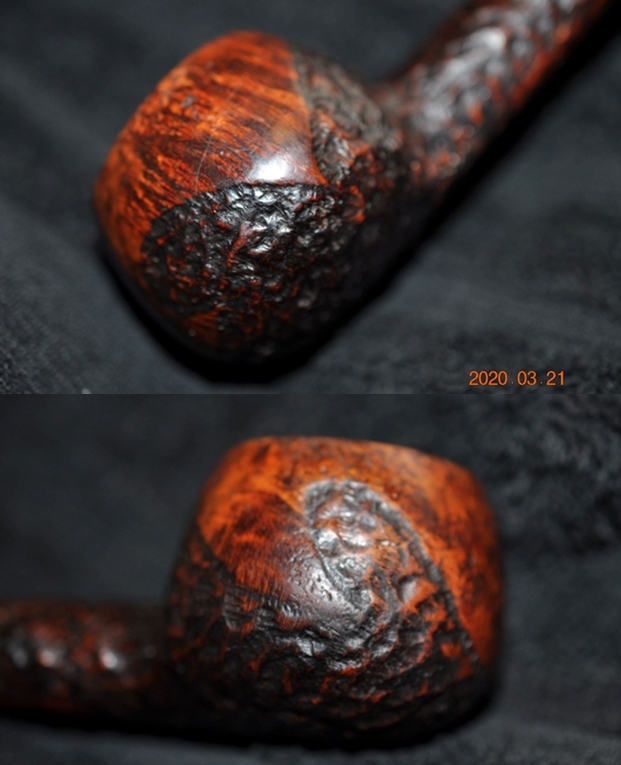
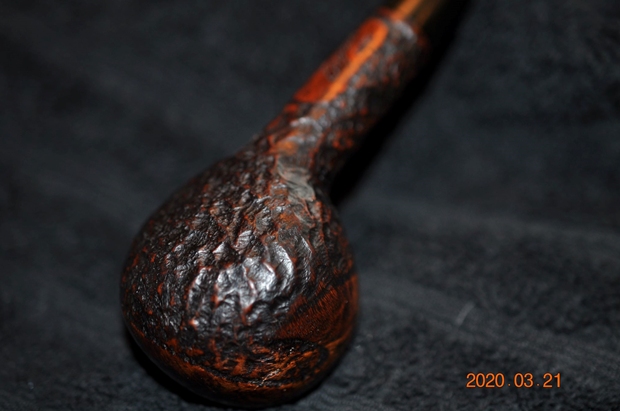
The next pipe on the work table came to us from an online auction out of Romney, West Virginia, USA. It is an interestingly rusticated Pot shaped pipe with a taper vulcanite stem with a briar and brass ring on the stem. The bowl has a rich reddish brown colour combination that highlights deep rustication. This pipe is stamped on a smooth panel on the left side of the shank and reads Velani [over] Classica [over] Brut. Next to that is the shape number 202. There is a thick cake in the bowl and a thick overflow of lava on the rim top. The rim top and the inner and the outer edges of the bowl are pretty beat up. There were some light tooth marks and chatter on both sides of the vulcanite stem near the button. The pipe looks to be in good condition under the grime. I have worked on quite a few Aldo Velani pipes over the years but this is the first small classic shape that has come across my work table. It is an interesting piece. Jeff took photos of the pipe before he started his cleanup.He took photos of the rim top to show the thick cake and the heavy lava coat. The outer edges of rim are in rough condition but it hard to know what the inner edge looks like at this point. It is an incredibly dirty pipe but obviously one that was a great smoker. He also captured the shape of the stem and the tooth marks and chatter on the top and underside of the stem near the button.  Jeff took a photo of the pair of rings around the stem – a briar and brass ring. Once they are polished they should look very good. He took photos of the sides and heel of the bowl to show the rustication around the bowl and the condition of the pipe. You can see the grime in the rustication and ground into the surface of the briar. You can also see the wear on the top edge of the bowl. He took a photo of the stamping on the left side of the shank and stem. It is clear and readable as noted above.  The stem has the typical AV stamp.    I turned to Pipephil to refresh my memory of the brand. I knew that it was a Barontini made pipe but was not sure of the details (http://www.pipephil.eu/logos/en/logo-a3.html#aldovelani). I am including a screen capture below.From the side bar on Pipephil I was reminded that Aldo Velani is the fictional name for a sub-brand of Barontini that was mainly intended for export.

I turned to Pipedia to see if I could learn a bit more about the brand and the link took me to Cesare Barontini’s page (https://pipedia.org/wiki/Aldo_Velani). It also confirmed the information from the side bar above. Now it was time to work on the pipe.

As usual Jeff had done a thorough cleanup on the pipe. He reamed the bowl with a PipNet pipe reamer and followed up with a Savinelli Fitsall pipe knife to remove the cake. He scrubbed out the mortise and the airway in the shank and the stem with alcohol, cotton swabs and pipe cleaners. He scrubbed the exterior of the bowl, rim, shank and stem with a tooth brush and Murphy’s Oil Soap to remove the oils and tars on the rim and the grime on the finish of the bowl. He rinsed it under running water. He dried it off with a soft cloth. He cleaned the internals and externals of the stem with alcohol, pipe cleaners and cotton swabs. He soaked the stem in Before & After Deoxidizer and rinsed it off with warm water and cleaned out the airway in the stem with alcohol. Other than the damaged rim top the pipe looked good.   I took a photo of the rim top and stem to show the condition. It is clean but it is very damaged. It looked like the pipe had been hammered against a hard surface. The inner edge of the bowl showed chipping and burn damage all around. The vulcanite taper stem had light tooth chatter and marks on both sides ahead of the button and on the button edges.    The stamping on the left side of the shank reads as noted above. It is clear and readable. The stamp on the left side of the stem is readable but shows some damage.I removed the stem and the extension from the shank and took a photo of the pipe to give a sense of the whole. It is a Pot shaped that should be interesting once it is all cleaned up.   Now it was time to do my work on the pipe. I started by topping the bowl on a topping board to remove the damage on the rim top and minimize the damage on the inner and outer edges. I worked over the inner rim edge with a folded piece of 220 grit sandpaper to remove the damage and smooth it out.    I polished the briar and acrylic shank extension with micromesh sanding pads – wet sanding with 1500-12000 grit pads and wiped down the bowl after each sanding pad.  I rubbed the bowl and shank down with Before & After Restoration Balm. I worked it into the surface of the bowl sides and shank with my fingertips to clean, enliven and protect the briar. I let the balm sit for a little while and then buffed with a cotton cloth to raise the shine. The Balm did its magic and the grain stood out.  I set the bowl aside and turned my attention to the stem. I recut the button and flattened the repairs with a needle file. I followed that by sanding out the tooth marks on the stem with 220 grit sandpaper and started the polishing process with 400 grit wet dry sandpaper.   I polished the vulcanite stem with micromesh sanding pads – 1500-12000 grit pads. I wiped it down with Obsidian Oil after each sanding pad. I used Before & After Pipe Polish – both Fine and Extra Fine to further polish the stem. The photo below shows the polished stem. This rusticated Velani Classica Brut 202 Pot with a fancy taper stem is a great looking pipe now that it has been restored. The briar around the bowl is clean and the rustication really came alive. The rich brown stains of the rustication took on a sense of depth with the polishing and waxing. The grain really popped. I put the vulcanite stem back on the bowl and carefully buffed the pipe with Blue Diamond on the buffing wheel using a light touch on the briar. I gave the bowl and the stem multiple coats of carnauba wax on the buffing wheel. I buffed the pipe with a clean buffing pad to raise the shine. I hand buffed the pipe with a microfiber cloth to deepen the shine. The finished Velani Rusticated Pot is a beauty and feels in the hand and looks very good. Give the finished pipe a look in the photos below. The dimensions of the pipe are Length: 5 ¾ inches, Height: 1 ¾ inches, Outside diameter of the bowl: 1 ½ inches, Chamber diameter: 7/8 of an inch. Thanks for reading this blog and my reflections on the pipe while I worked on it. There are many more to come!
Breathing Life into a Made In Denmark Bent Brandy


Blog by Steve Laug

The next pipe on the work table came to us from an online auction out of Ottawa, Illinois, USA.  It is a variation on a Brandy shaped pipe with a shank extension and a freehand stem. The bowl had some rusticated spots on each side of the bowl – one on the left front and one on the right shank bowl junction. It has a rich reddish brown colour combination that highlights the grain and a darker stain in the rusticated spots. The acrylic shank extension was loose from the shank end and fell off during the cleanup. This pipe is stamped on the underside of the shank and reads Made in Denmark. There is a thick cake in the bowl and a light overflow of lava on the rim top. The inner and the outer edge of the bowl look very good. The acrylic shank extension and the acrylic stem were clean but dirty. There were some light tooth marks and chatter on both sides of the stem near the button. The pipe looks to be in decent condition under the grime. Jeff took photos of the pipe before he started his cleanup.   He took photos of the rim top to show the cake and the light lava coat. It is another dirty pipe. He also captured the shape of the stem and the tooth marks and chatter on the top and underside of the stem near the button.    He took photos of the sides and heel of the bowl to show the grain and the rusticated spot on the bowl. You can see the grime in the rustication and ground into the surface of the briar. The bowl had a lot of scratches in the surface of the briar. The photo below captures some of the scratching on the back of the bowl.He took photos of the stamping on the underside of the shank. It is clear and readable as noted above. Jeff took two photos of the shank to capture the stamping.I turned to Pipephil and Pipedia to see if I could find a line on the Made in Denmark stamp. There was nothing that helped me to pin down the maker. Now it was time to work on the pipe.

As usual Jeff had done a thorough cleanup on the pipe. He reamed the bowl with a PipNet pipe reamer and followed up with a Savinelli Fitsall pipe knife to remove the cake. He scrubbed out the mortise and the airway in the shank and the stem with alcohol, cotton swabs and pipe cleaners. He scrubbed the exterior of the bowl, rim, shank and stem with a tooth brush and Murphy’s Oil Soap to remove the oils and tars on the rim and the grime on the finish of the bowl. He rinsed it under running water. He dried it off with a soft cloth. He cleaned the internals and externals of the stem with alcohol, pipe cleaners and cotton swabs. He soaked the stem in Before & After Deoxidizer and rinsed it off with warm water and cleaned out the airway in the stem with alcohol. The pipe looked very good.   I took a photo of the rim top and stem to show the condition. They cleaned up really well and the top of the rim looked very good. The inner edge of the bowl showed chipping and burn damage all around. The vulcanite taper stem had light tooth chatter and marks on both sides ahead of the button and on the button edges.  I removed the stem and the extension from the shank and took a photo of the pipe to give a sense of the whole. It is a Brandy shape or maybe and egg that should be interesting once it is put back together.   Now it was time to do my work on the pipe. I started by reattaching the shank extension the shank. The glue had dried out and it was no longer attached. I cleaned out the glue in the shank with a cotton swab and alcohol. Once it was clean I used some black super glue to put it in place. I swabbed the tenon end with glue and then put it on the shank. Adjusting it was a trick as the shank is not a perfect oval and neither is the extension. When it was aligned I set it aside to let the glue cure.  Once the glue had set I used a pipe cleaner to clean out the shank of any debris. I then sanded the shank/extension joint with 220 grit sandpaper to smooth out the transition. Once that was smooth I started the polishing with 400 grit wet dry sandpaper. I polished the briar and acrylic shank extension with micromesh sanding pads – wet sanding with 1500-12000 grit pads and wiped down the bowl after each sanding pad.  Interestingly when Jeff did the clean up with Murphy’s Oil Soap and water most of the scratching in the briar raised. I polished out the remaining scratches with micromesh. I rubbed the bowl and shank down with Before & After Restoration Balm. I worked it into the surface of the bowl sides and shank with my fingertips to clean, enliven and protect the briar. I let the balm sit for a little while and then buffed with a cotton cloth to raise the shine. The Balm did its magic and the grain stood out.    I set the bowl aside and turned my attention to the stem. I sanded out the tooth marks on the stem with 220 grit sandpaper and started the polishing process with 400 grit wet dry sandpaper.I polished the acrylic stem with micromesh sanding pads – 1500-12000 grit pads. I wiped it down with a damp cloth after each sanding pad. I used Before & After Pipe Polish – both Fine and Extra Fine to further polish the stem. The photo below shows the polished stem. This carved Made in Denmark Brandy/Egg with an acrylic shank extension and fancy saddle stem is a great looking pipe now that it has been restored. The briar around the bowl is clean and quite nicely grained. The rich brown stains of the smooth finish came alive with the polishing and waxing. The grain really popped. The acrylic shank extension looks very good with the briar. I put the acrylic stem back on the bowl and carefully buffed the pipe with Blue Diamond on the buffing wheel using a light touch on the briar. I gave the bowl and the stem multiple coats of carnauba wax on the buffing wheel. I buffed the pipe with a clean buffing pad to raise the shine. I hand buffed the pipe with a microfiber cloth to deepen the shine. The finished Made in Denmark Brandy is a beauty and feels in the hand and looks very good. Give the finished pipe a look in the photos below. The dimensions of the pipe are Length: 5 ½ inches, Height: 1 ¾ inches, Outside diameter of the bowl: 1 ¼ inches, Chamber diameter: ¾ of an inch. Thanks for reading this blog and my reflections on the pipe while I worked on it. There are many more to come!
New Life for a Canberra London Made Bamboo Carved Billiard


Blog by Steve Laug

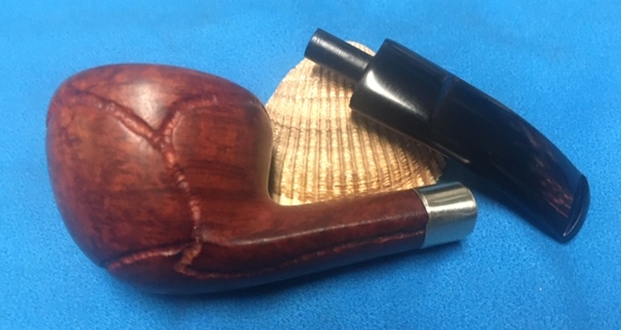
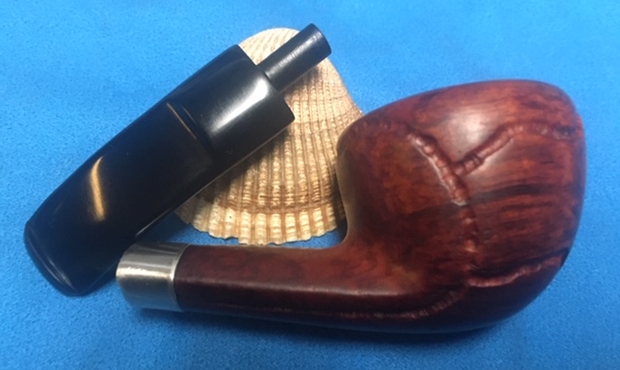
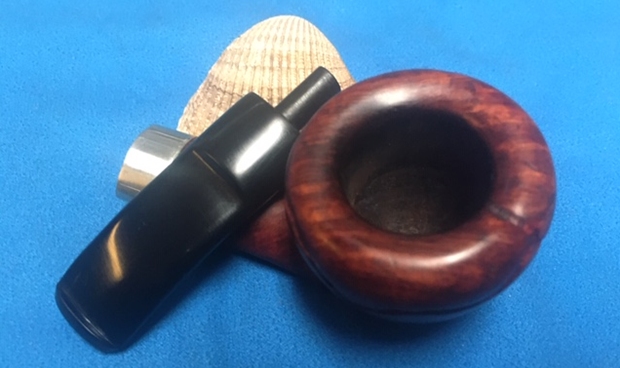
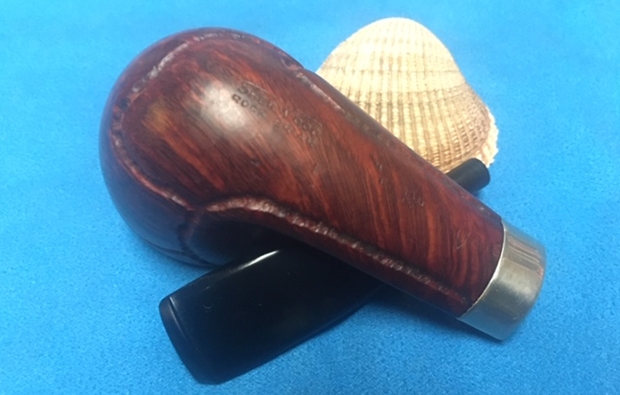
The next pipe on the work table came to us from an online auction out of Columbus, MI, USA.    It is a variation on a billiard with a square shank and square taper stem. The bowl and shank have been carved to look like Bamboo with the notches and growth nodules. It has a rich reddish brown colour combination that highlights the grain. There are a few small fills in the bowl that have been worked into the carving around the bowl so they are less visible. I have worked on a few Bamboo carved pipes throughout the years that have come from Spain but this one comes from London England. This pipe is stamped on the heel of the bowl and reads Canberra [over] London Made [over] Made in England. There is also a “C” in a circle logo stamped on the left side of the stem. There is a thick cake in the bowl and an overflow of lava on the back rim top. It appears that there is some damage to the inner edge of the rim in that area as well. The outer edge of the bowl looks very good. The square vulcanite taper stem was oxidized, calcified and had light tooth marks and chatter on both sides of the stem near the button. The pipe looks to be in decent condition under the grime. Jeff took photos of the pipe before he started his cleanup. He took photos of the rim top to show the cake and the light lava coat. It is another dirty pipe. He also captured the shape of the stem and the deep tooth marks and chatter on the top and underside of the stem near the button.      He took photos of the sides and heel of the bowl to show the bamboo like carving and grooves in the briar around the bowl and the amount of grime ground into the surface of the briar.    He took a photo of the stamping on the heel of the bowl and it is clear and readable as noted above. The lines carved in the briar through the stamping are like the others carved around the bowl sides and add to the bamboo look. The “C” in a circle logo on the left side of the stem is also readable.   I turned to Pipephil to get a quick overview of the brand (http://www.pipephil.eu/logos/en/logo-c2.html). I was surprised to see the connection to the John Redman brand.I followed the link on the page to John Redman and did a screen capture of the section (http://www.pipephil.eu/logos/en/logo-j3.html#johnredman). Listed on the last column was the Canberra line.I then turned to Pipedia for a bit more history on the John Redman Company (https://pipedia.org/wiki/John_Redman_Ltd./British_Empire_Pipe_Co.). The Canberra line is noted in the list on the page and there is a photo that also includes the same stamping as the pipe I am working on. I quote the list below below:

John Redman Ltd. and British Empire Pipe Co. Other lines include Aristocrat, Buckingham, Buckingham Palace, Canberra, Captain Fortune, Dr John, Golden Square, Redonian, Richmond (not Sasieni), Twin Bore. Former factory located at 3-11 Westland Place, Hackney, London N1 7LP

Now it was time to work on the pipe. As usual Jeff had done a thorough cleanup on the pipe. He reamed the bowl with a PipNet pipe reamer and followed up with a Savinelli Fitsall pipe knife to remove the cake. He scrubbed out the mortise and the airway in the shank and the stem with alcohol, cotton swabs and pipe cleaners. He scrubbed the exterior of the bowl, rim, shank and stem with a tooth brush and Murphy’s Oil Soap to remove the oils and tars on the rim and the grime on the finish of the bowl. He rinsed it under running water. He dried it off with a soft cloth. He cleaned the internals and externals of the stem with alcohol, pipe cleaners and cotton swabs. He soaked the stem in Before & After Deoxidizer and rinsed it off with warm water and cleaned out the airway in the stem with alcohol. The pipe looked very good. I took a photo of the rim top and stem to show the condition. They cleaned up really well and the top of the rim looked very good. The inner edge of the bowl showed chipping and burn damage all around. The vulcanite taper stem had light tooth chatter and marks on both sides ahead of the button and on the button edges.     I took photos of the stamping on the heel of the bowl and the logo on the stem. It read as noted above.   I removed the stem and took a photo of the pipe to give a sense of the whole. It is a carved Bamboo style square shank Billiard that looks great.Now it was time to do my work on the pipe. I started by working over the damage on the inside rim. I used a folded piece of 220 grit sandpaper to give the inner edge a bevel to clean up the edges of bowl.  I polished the briar with micromesh sanding pads – wet sanding with 1500-12000 grit pads and wiped down the bowl after each sanding pad.    I rubbed the bowl and shank down with Before & After Restoration Balm. I worked it into the surface of the bowl sides and shank with my fingertips to clean, enliven and protect the briar. I let the balm sit for a little while and then buffed with a cotton cloth to raise the shine. The Balm did its magic and the grain stood out.  I set the bowl aside and turned my attention to the stem. I started by “painting” the surface of the stem with the flame of a Bic lighter to lift  the tooth marks. It removed the majority of the marks. What was left behind after the flame, I sanded out the tooth marks on the stem with 220 grit sandpaper and started the polishing process with 400 grit wet dry sandpaper.  I polished the vulcanite stem with micromesh sanding pads – 1500-12000 grit pads. I wiped it down with Obsidian Oil after each sanding pad. I used Before & After Pipe Polish – both Fine and Extra Fine to further polish the stem. The photo below shows the polished stem.  I touched up the “C” stamp with Paper Mate Liquid Paper. I pressed it into the stamped letter with a tooth pick. Once it cured I scraped off the excess with the tooth pick.  This carved Bamboo like briar Canberra London Made Billiard with a vulcanite taper stem is a great looking pipe now that it has been restored. There are fills around the bowl that blend in nicely with the finish on the bowl. The rich brown stains of the Bamboo finish came alive with the polishing and waxing. The grain really popped. I put the stem back on the bowl and carefully buffed the pipe with Blue Diamond on the buffing wheel using a light touch on the briar. I gave the bowl and the stem multiple coats of carnauba wax on the buffing wheel. I buffed the pipe with a clean buffing pad to raise the shine. I hand buffed the pipe with a microfiber cloth to deepen the shine. The finished Canberra Square Shank Bamboo Carved Billiard is a beauty and fits nicely in the hand and looks very good. Give the finished pipe a look in the photos below. The dimensions of the pipe are Length: 5 ½ inches, Height: 1 ¾ inches, Outside diameter of the bowl: 1 ½ inches, Chamber diameter: ¾ of an inch. Thanks for reading this blog and my reflections on the pipe while I worked on it. There are many more to come!

New Life for a Barontini d’Oro 104 Oval Shank Bent Dublin


Blog by Steve Laug

The next pipe on the work table came to us from an online auction out of Ottawa, Illinois, USA. It is a nicely shaped ½ bent Dublin with an oval shank. It has a saddle vulcanite stem and beautiful grain showing through the grime around the bowl. It has a rich brown colour combination that highlights the grain. I have worked on a few Barontini pipes throughout the years but this one looks more English than Italian made. This pipe is stamped on the topside of the shank and reads Barontini [over] D’ Oro. On the underside it is stamped 104 and Italy next to the stem/shank junction. There is also a “B” logo stamped on the top of the stem. There is a thick cake in the bowl and a light overflow of lava on the back rim top. It appears that there is some damage to the inner edge of the rim in that area as well. The outer edge of the bowl looks very good. The saddle vulcanite stem was oxidized, calcified and had light tooth marks and chatter on both sides of the stem near the button. The pipe looks to be in decent condition under the grime. Jeff took photos of the pipe before he started his cleanup. He took photos of the rim top to show the cake and the light lava coat. It is another dirty pipe. He also captured the shape of the stem and the deep tooth marks and chatter on the top and underside of the stem near the button. He took photos of the sides and heel of the bowl to show the beautiful grain around the bowl and the amount of grime ground into the surface of the briar.  He took a photo of the stamping on the top and underside of the shank and it is clear and readable as noted above.  The B on the stem top is also readable. I turned to Pipephil to get a quick overview of the brand (http://www.pipephil.eu/logos/en/logo-b2.html). I remembered the connection to the Cesare brand pipe that I had worked on recently. The Barontini’s are carved by Cesare.I then turned to Pipedia for a bit more history (https://pipedia.org/wiki/Barontini,_Cesare. I quote below:

In 1890 Turildo Barontini opened a factory for the production of briar. In 1925 his son Bruno began to produce the first pipes. Cesare Barontini, son of Bruno, started direction of the factory in 1955, and still runs it together with his daughters Barbara and Silvia.

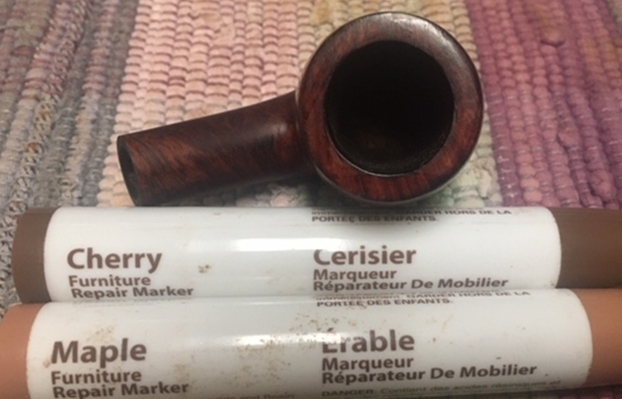
Now it was time to work on the pipe. As usual Jeff had done a thorough cleanup on the pipe. He reamed the bowl with a PipNet pipe reamer and followed up with a Savinelli Fitsall pipe knife to remove the cake. He scrubbed out the mortise and the airway in the shank and the stem with alcohol, cotton swabs and pipe cleaners. He scrubbed the exterior of the bowl, rim, shank and stem with a tooth brush and Murphy’s Oil Soap to remove the oils and tars on the rim and the grime on the finish of the bowl. He rinsed it under running water. He dried it off with a soft cloth. He cleaned the internals and externals of the stem with alcohol, pipe cleaners and cotton swabs. He soaked the stem in Before & After Deoxidizer and rinsed it off with warm water and cleaned out the airway in the stem with alcohol. The pipe looked very good.   I took a photo of the rim top and stem to show the condition. They cleaned up really well and the top of the rim looked very good. The inner edge of the bowl showed chipping and burn damage all around. The vulcanite saddle stem had light tooth chatter and marks on both sides ahead of the button and on the button edges.      I took a photo of the stamping on the top and underside of the shank. It read as noted above. I removed the stem and took a photo of the pipe to give a sense of the whole. It is a well shaped Author that looks great. Now it was time to do my work on the pipe. I started by working over the damage on the inside rim. I topped the bowl on a topping board with 220 grit sandpaper to smooth out the damage to the rim surface. I used a folded piece of 220 grit sandpaper to give the inner edge a bevel to take care of the burn and clean up the edges of bowl.  I polished the briar with micromesh sanding pads – wet sanding with 1500-12000 grit pads and wiped down the bowl after each sanding pad.    I stained the rim with a combination of Cherry and Walnut stain pens to get a match with the colour of the stain on the bowl. Once it was buffed it would blend in very well.  I rubbed the bowl and shank down with Before & After Restoration Balm. I worked it into the surface of the bowl sides and shank with my fingertips to clean, enliven and protect the briar. I let the balm sit for a little while and then buffed with a cotton cloth to raise the shine. The Balm did its magic and the grain stood out.    I set the bowl aside and turned my attention to the stem. I sanded out the tooth marks on the stem with 220 grit sandpaper and started the polishing process with 400 grit wet dry sandpaper.   I polished the vulcanite stem with micromesh sanding pads – 1500-12000 grit pads. I wiped it down with Obsidian Oil after each sanding pad. I used Before & After Pipe Polish – both Fine and Extra Fine to further polish the stem. The photo below shows the polished stem.  I touched up the “B” stamp with Paper Mate Liquid Paper. I pressed it into the stamped letter with a tooth pick. Once it cured I scraped off the excess with the tooth pick.  This nicely grained Barontini D’ Oro 104 Dubin with a vulcanite saddle stem is a great looking pipe now that it has been restored. There are fills around the bowl that blend in nicely with the finish on the bowl. The rich brown stains of the finish came alive with the polishing and waxing. The grain really popped. I put the stem back on the bowl and carefully buffed the pipe with Blue Diamond on the buffing wheel using a light touch on the briar. I gave the bowl and the stem multiple coats of carnauba wax on the buffing wheel. I buffed the pipe with a clean buffing pad to raise the shine. I hand buffed the pipe with a microfiber cloth to deepen the shine. The finished Barontini Bent Dublin is a beauty and fits nicely in the hand and looks very good. Give the finished pipe a look in the photos below. The dimensions of the pipe are Length: 5 ½ inches, Height: 2 inches, Outside diameter of the bowl: 1 ½ inches, Chamber diameter: ¾ of an inch. Thanks for reading this blog and my reflections on the pipe while I worked on it. There are many more to come!


New Life for a Malaga Second M-2 Author


Blog by Steve Laug

The next pipe on the work table came to us from a fellow in Michigan, USA. It is a nicely shaped author. It has a taper vulcanite stem and beautiful grain showing through the grime around the bowl. It has the usual Malaga Oil Curing. I have worked on quite a few Malaga pipes throughout the years and have always found the fit and finish very well done. This pipe is stamped on the left side of the shank and reads M-2 which is the stamp or a Malaga Second. There is a thick cake in the bowl and a thick overflow of lava on the back rim top. It appears that there is some damage to the inner edge of the rim in that area as well. The outer edge of the bowl looks very good. The taper vulcanite stem was oxidized, calcified and had light tooth marks and chatter on both sides of the stem near the button. The pipe looks to be in decent condition under the grime. Jeff took photos of the pipe before he started his cleanup. He took photos of the rim top to show the cake and the lava coat. It is another dirty pipe. He also captured the shape of the stem and the deep tooth marks and chatter on the top and underside of the stem near the button.   He took photos of the sides and heel of the bowl to show the beautiful grain around the bowl and the amount of grime ground into the surface of the briar.  He took a photo of the stamping on the left side of the shank and it is clear and readable as noted above.I am also including the link to a blog that I wrote that gives some of the history of the Malaga brand and the Malaga Pipe Shop in Royal Oak, Michigan in the USA. I have written an earlier blog to give a little history of the Malaga Brand and the pipemaker, George Khoubesser. Here is the link – https://rebornpipes.com/tag/malaga-pipes/. That blog also includes links to a catalogue and the history of the pipemaker George Khoubesser. Follow the link to get a feel for the brand and the pipemaker.

Jeff had done his usual thorough cleanup on the pipe. He reamed the bowl with a PipNet pipe reamer and followed up with a Savinelli Fitsall pipe knife to remove the cake. He scrubbed out the mortise and the airway in the shank and the stem with alcohol, cotton swabs and pipe cleaners. He scrubbed the exterior of the bowl, rim, shank and stem with a tooth brush and Murphy’s Oil Soap to remove the oils and tars on the rim and the grime on the finish of the bowl. He rinsed it under running water. He dried it off with a soft cloth. He cleaned the internals and externals of the stem with alcohol, pipe cleaners and cotton swabs. He soaked the stem in Before & After Deoxidizer and rinsed it off with warm water and cleaned out the airway in the stem with alcohol. The pipe looked very good. I took a photo of the rim top and stem to show the condition. They cleaned up really well and the top of the rim looked very good. The inner edge of the bowl showed chipping and burn damage on the back inner edge. The vulcanite stem had light tooth chatter and marks on both sides ahead of the button and on the button edges.      I took a photo of the stamping on the left side of the shank. It read as noted above.  I removed the stem and took a photo of the pipe to give a sense of the whole. It is a well shaped Author that looks great. Now it was time to do my work on the pipe. I started by working over the damage from the burn on the inside rim. I used a folded piece of 220 grit sandpaper to give the inner edge a bevel to take care of the burn and clean up the edges of bowl. I topped the bowl on a topping board with 220 grit sandpaper to smooth out the damage to the rim surface. (I took a photo of the cleaned up rim top but it was too blurry to include. The bevel will be very visible in the polishing photos.)   I polished the briar with micromesh sanding pads – wet sanding with 1500-12000 grit pads and wiped down the bowl after each sanding pad.  I rubbed the bowl and shank down with Before & After Restoration Balm. I worked it into the surface of the bowl and shank with my fingertips to clean, enliven and protect the briar. I let the balm sit for a little while and then buffed with a cotton cloth to raise the shine. The Balm did its magic and the grain stood out.  I set the bowl aside and turned my attention to the stem. I polished the vulcanite stem with micromesh sanding pads – 1500-12000 grit pads. I wiped it down with Obsidian Oil after each sanding pad. I used Before & After Pipe Polish – both Fine and Extra Fine to further polish the stem. The photo below shows the polished stem.  This nicely grained Malaga Second M-2 Author with a vulcanite taper stem is a great looking pipe now that it has been restored. The rich oil cured finish came alive with the polishing and waxing. The grain really popped. I put the stem back on the bowl and carefully buffed the pipe with Blue Diamond on the buffing wheel using a light touch on the briar. I gave the bowl and the stem multiple coats of carnauba wax on the buffing wheel. I buffed the pipe with a clean buffing pad to raise the shine. I hand buffed the pipe with a microfiber cloth to deepen the shine. The finished M-2 Author is a beauty and fits nicely in the hand and looks very good. Give the finished pipe a look in the photos below. The dimensions of the pipe are Length: 6 inches, Height: 1 ½ inches, Outside diameter of the bowl: 1 ½ inches, Chamber diameter: 7/8 of an inch. Thanks for reading this blog and my reflections on the pipe while I worked on it. There are many more to come!

A Dr Grabow Grand Duke Prince


I received an email from Kevin in Australia asking if he could share some of his work with us on rebornpipes. This Dr. Grabow restoration and photos not only tell the story of the pipe but also give some information on Kevin. Thanks Kevin and welcome to rebornpipes!

Story and photos by Kevin Pallett — Australia.

I have a few favourite pipe shapes, one of them being the Prince. There are a few variations on that theme but for me the standard shape will always take the prize. A friend of mine who is also a pipe maker was selling a bunch of estate pipes that he purchased from Ebay (The American Ebay. We live in Australia) and was looking to sell some of them. He sent me a few pics of what he had and one of them was a Dr Grabow Prince. A Grand Duke in particular. It was in bad shape with the ubiquitous bite marks and chocked up bowl. The end of the stem was horrible and how anyone would put it in their mouth was beyond me. After deciding how I was going to start on this Grand Duke, I put Vaseline on the little blue spade on the stem and put the stem into a diluted bleach bath and let it do its thing. While that was going on, I turned my attention to the stummel. It was in a bad way. Not the worst I have seen but pretty funky and in need of some de caking. Believe it or not I soaked the whole stummel in alcohol for almost 6 hours. The cake was like glass when I tried to ream it and the harder I tried the harder it got. After being soaked the cake practically fell out as I used a small picking tool to remove it. I then sanded the inside of the bowl back with a few different grades of sandpaper and then sanded the outside of the stummel to the bare briar. I was happy with the way it looked and there were no major divots to replace and it looked even better when I sanded the top of the bowl flat. A lot of the grime on top of the rim came off in the alcohol and made it easier to sand it back to the way it should look. Whoever owned it would, by the look of it bang the rim on something hard to remove old tobacco but never cleaned it out thoroughly. No cracks either, always a good sign.This was followed with a salt and alcohol treatment. Then onto the stem again. It had what look like saliva stains on the end of it. Like it had sat in someone’s mouth for hours, hence the chew marks I would guess.  After it came out of the bleach Bath, I started to clean and reshape the air hole. Although it was more of a small rectangle, and once I started to file it out, I found that it was still full of all the original swarf (or filings). It took a bit of mucking around but eventually a small bundle of vulcanite filing came out. I now knew why I couldn’t get a pipe cleaner through it, so I don’t know how the owner ever smoked it properly, or if they cleaned it out at all. It’s always nice to work with vulcanite. I know that acrylic is durable and harder to mark with teeth, but vulcanite is so easy to file, sand, buff and generally work with.

The inside of the stem was quite gross and took a lot of pipe cleaners to eventually come out clean. Perhaps these were the first pipe cleaners to go through it. As a youngster and teenager, back in the 1960’s and early to mid-1970’s, I can clearly remember the older men (Grandfather, uncles and my Dad’s friends) smoking pipes that looked like they’d been used to build a house. And if they weren’t constantly dropping out of their shirt pocket when not being used, they were hooked into the belt loop of their trousers. Thinking back now pipes didn’t have quite the collectable want or care factor back then. They were just a replaceable method of enjoying tobacco. So why would you bother going to the extreme of cleaning them on a regular basis. I first began enjoying pipe smoking as a late teen and I have to say I had the one pipe for years (a Dr Plumb full bent billiard) although I was pretty meticulous when it came to keeping it functional.

Anyway, I continued making the air hole more to my liking. You can see in the accompanying photo what I mean.  I find this shape opening makes it easier to keep clean, get a pipe cleaner through and I think it just looks and feels better. After that I put some drops of CA glue into the chew marks and filed them down. Wet and dry paper got the surface back to smooth and I buffed the surface with micro mesh pads. I love using these little pads. The tenon on these Grabow stems is a metal arrangement to house the Grabow filters which I’ve not used as they are not readily available if at all in Australia and not worth the effort of ordering. Just a little information on tobacco in Australia. For pipe smokers down here, it is not an easy hobby to pursue. 50 grams of any tobacco is $100 and higher and there is no such thing as tobacconists anymore. We have tobacco shops, but they are more like a bank of lockable cupboards. It’s illegal to display anything that might imply that the contents contain a tobacco product and the packaging itself is covered in pictures of photo shopped diseased body parts. All very charming. It’s illegal to order any tobacco product from overseas. If it’s intercepted by boarder control, it is confiscated and apparently destroyed. It’s illegal to grow your own tobacco. So, I guess you’d have to think that the authorities are trying to tell us something.

So, back to the point. I didn’t have anything left to do to the stem until I used the buffing wheels. Back to the stummel.

As I mentioned above, the stummel was in good order on the outside so I started on it with the micro mesh pads. By the time I got through all the grits it had a nice lustre to it. I did discover a few small fills, but I wasn’t going to worry about them. And by the time I’d buffed it you couldn’t really see them. I was really pleased with the way it came together and it is now one of my favourite pipes to smoke. It’s light to use and the bowl isn’t so big that you can’t fill it to the top. Which I do. It’s not a fussy pipe, it’s happy with any tobacco. I find it’s great for Burley flakes in particular. I hope you enjoyed my small account of this particular pipe. Thanks for reading if you did. Ciao, Kevin.

New Life for a Preben Holm Traditional Celebration Danish Hand Made


Blog by Steve Laug

The next pipe on the work table came to us from a fellow in St. Leonard, Maryland, USA. It is a uniquely shaped Dublin with a fancy vulcanite saddle stem and beautiful grain showing through the grime around the bowl. It has a finish of contrasting brown stains that highlights the grain. I have worked on quite a few Preben Holm pipes throughout the years and have always found the fit and finish very well done. This pipe is stamped on the underside of the shank and reads Preben Holm [over] Traditional [over] Celebration [over] Hand Made in Denmark. There is a thick cake in the bowl and an overflow of lava on the back rim top. It appears that there is some damage to the inner edge of the rim in that area as well. The rim top as a whole has scratching and nicks in the flat surface. The beveled outer edge looks to be in good condition. The fancy saddle vulcanite stem was oxidized, calcified and had deep tooth marks and chatter on both sides of the stem near the button. There is also a logo stamp on the top of the stem – a PH in a banner. The pipe looks to be in decent condition under the grime. Jeff took photos of the pipe before he started his cleanup. He took photos of the rim top to show the cake and the lava coat. It is another dirty pipe. He also captured the shape of the stem and the deep tooth marks and chatter on the top and underside of the stem near the button.    He took photos of the sides and heel of the bowl to show the beautiful grain around the bowl and the amount of grime ground into the surface of the briar.    He took photos of the stamping on the underside of the shank and the shooting star logo on the left side of the stem. It is faint but still present. I turned Pipephil’s section on Preben Holm pipes and found the brand listed there with and an example of the stamping on the underside of the shank and the stem. The stamping matches the one that I am working on (http://www.pipephil.eu/logos/en/logo-p5.html). It is like the stamping and logo that is shown in the second pipe below.I turned to Pipedia and reread the history of the brand (https://pipedia.org/wiki/Holm,_Preben). It is fascinating in that it is a first person account. It is a great read. I could not find any specific information on the Traditional Celebration. It was now time to work on this pipe.

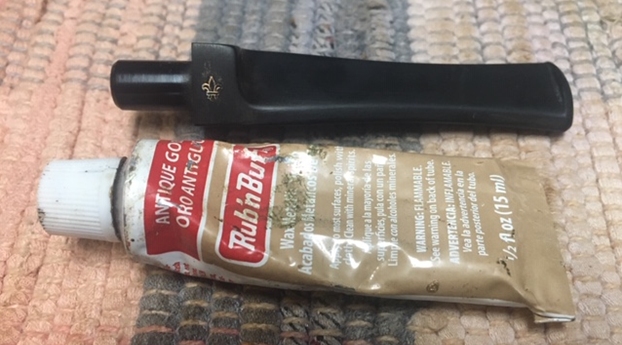
Jeff had done his usual thorough cleanup on the pipe. He reamed the bowl with a PipNet pipe reamer and followed up with a Savinelli Fitsall pipe knife to remove the cake. He scrubbed out the mortise and the airway in the shank and the stem with alcohol, cotton swabs and pipe cleaners. He scrubbed the exterior of the bowl, rim, shank and stem with a tooth brush and Murphy’s Oil Soap to remove the oils and tars on the rim and the grime on the finish of the bowl. He rinsed it under running water. He dried it off with a soft cloth. He cleaned the internals and externals of the stem with alcohol, pipe cleaners and cotton swabs. He soaked the stem in Before & After Deoxidizer and rinsed it off with warm water and cleaned out the airway in the stem with alcohol. The pipe looked very good.   I took a photo of the rim top and stem to show the condition. They cleaned up really well and the top of the rim looked very good. The inner edge of the bowl showed chipping and burn damage on the back inner edge. The vulcanite saddle stem had tooth chatter and deep marks on both sides ahead of the button and on the button edges.  I took a photo of the stamping on the underside of the shank. It read as noted above.  I removed the stem and took a photo of the pipe to give a sense of the whole. It is a well shaped Wide Dublin that looks great. Now it was time to do my work on the pipe. I started by working over the damage from the burn on the inside rim. I used a folded piece of 220 grit sandpaper to give the inner edge a bevel to take care of the burn and clean up the edges of bowl. I polished it with 400 grit wet dry sandpaper. I wiped the bowl down with a damp cloth to remove the sanding dust. (I forgot to take a photo of the cleaned up rim top. The bevel will be very visible in the polishing photos.)I polished the briar with micromesh sanding pads – wet sanding with 1500-12000 grit pads and wiped down the bowl after each sanding pad. I rubbed the bowl and shank down with Before & After Restoration Balm. I worked it into the surface of the sandblast bowl sides and shank with my fingertips to clean, enliven and protect the briar. I let the balm sit for a little while and then buffed with a cotton cloth to raise the shine. The Balm did its magic and the grain stood out. I set the bowl aside and turned my attention to the stem. I painted the stem with the flame of a Bic lighter to raise the tooth dents in the vulcanite. I filled in the dents with black super glue to repair them. Once the repairs had cured I recut the button and smoothed out the repairs with a needle file.    I used 220 grit sandpaper to smooth out the tooth chatter and marks and blend them into the stem surface. I started the polishing with 400 grit wet dry sandpaper.  I scrubbed off the remaining oxidation with Soft Scrub All Purpose Cleaner. I polished the vulcanite stem with micromesh sanding pads – 1500-12000 grit pads. I wiped it down with Obsidian Oil after each sanding pad. I touched up the stamping on the top of saddle with Rub’n Buff Antique Gold. I pushed it into the stamping and buffed it off with a cotton pad.I used Before & After Pipe Polish – both Fine and Extra Fine to further polish the stem. The photo below shows the polished stem.This beautifully grained Preben Holm Traditional Celebration Wide Dublin with a fancy vulcanite saddle stem is a great looking pipe now that it has been restored. The rich Antique Shell coloured finish came alive with the polishing and waxing. The dimensions of the rustication really popped. I put the stem back on the bowl and carefully buffed the pipe with Blue Diamond on the buffing wheel using a light touch on the briar. I gave the bowl multiple coats of Conservator’s Wax and the stem multiple coats of carnauba wax on the buffing wheel. I buffed the pipe with a clean buffing pad to raise the shine. I hand buffed the pipe with a microfiber cloth to deepen the shine. The finished PH Traditional Celebration is a beauty and fits nicely in the hand and looks very good. Give the finished pipe a look in the photos below. The dimensions of the pipe are Length: 6 ½ inches, Height: 2 inches, Outside diameter of the bowl: 2 inches, Chamber diameter: 7/8 of an inch. Thanks for reading this blog and my reflections on the pipe while I worked on it. There are many more to come!

Cleaning up a Savinelli Made Antique Shell 515 Panel Billiard


Blog by Steve Laug

The next pipe on the work table came to us from and online auction from Ohio, USA. It is a rusticated Panel Billiard with a vulcanite saddle stem and a tight, unique rustication around the bowl. It has a brown and black finish that highlights the details of the rustication. I have worked on several Antique Shell pipes from Savinelli over the years and have always found the fit and finish very well done. This pipe is stamped on the flat underside of the heel and shank and reads Antique [over] Shell followed by the shape number 515 [over] Italy. The square, saddle vulcanite stem was oxidized, calcified and had tooth marks and chatter on both sides of the stem near the button. The pipe looks to be in decent condition under the grime. Jeff took photos of the pipe before he started his cleanup. He took photos of the rim top to show the cake and the dust in the rustication on the top. It is another dirty pipe. He also captured the tooth marks on the top and underside of the stem near the button.    He took photos of the sides and heel of the bowl to show the rustication around the bowl and the amount of grime ground into the surface of the briar.     He took photos of the stamping on the underside of the shank and the shooting star logo on the left side of the stem. It is faint but still present. I turned Pipephil’s section on Savinelli pipes and found the Antique Shell listed there with and an example of the stamping on both the shank and the stem. The stamping matches the one that I am working on (http://www.pipephil.eu/logos/en/logo-savinelli1.html). I turned to Pipedia and looked up the specifics of the Antique Shell line from Savinelli and read through the article. There were several pictures of the stamping but nothing on the details (https://pipedia.org/wiki/Savinelli).

I knew that I was working on a Savinelli Made Panel that had the unique Antique Shell rustication. Now it was time to work on the pipe.

Jeff had done his usual thorough cleanup on the pipe. He reamed the bowl with a PipNet pipe reamer and followed up with a Savinelli Fitsall pipe knife to remove the cake. He scrubbed out the mortise and the airway in the shank and the stem with alcohol, cotton swabs and pipe cleaners. He scrubbed the exterior of the bowl, rim, shank and stem with a tooth brush and Murphy’s Oil Soap to remove the oils and tars on the rim and the grime on the finish of the bowl. He rinsed it under running water. He dried it off with a soft cloth. He cleaned the internals and externals of the stem with alcohol, pipe cleaners and cotton swabs. He soaked the stem in Before & After Deoxidizer and rinsed it off with warm water and cleaned out the airway in the stem with alcohol. The pipe looked very good.   I took a photo of the rim top and stem to show the condition. They cleaned up really well and the top of the rim looked very good. The inner edge of the bowl was in great condition. The vulcanite saddle stem had tooth chatter and marks on both sides ahead of the button and on the button edges.  I took a photo of the stamping on the underside of the shank. It read as noted above.  I removed the stem and took a photo of the pipe to give a sense of the whole. It is a well shaped Panel Billiard that looks great. Now it was time to do my work on the pipe. Since it was clean and looked good I rubbed the bowl and shank down with Before & After Restoration Balm. I worked it into the surface of the sandblast bowl sides and shank with my fingertips and a horsehair shoe brush to clean, enliven and protect the briar. I let the balm sit for a little while and then buffed with a cotton cloth to raise the shine. It helped to give depth to the tight rustication around the bowl.  The final buffing would bring the pipe alive. I set the bowl aside and turned my attention to the stem. I painted the stem with the flame of a Bic lighter to raise the tooth dents in the vulcanite.     I filled in the dents with black super glue to repair them. Once the repairs had cured I recut the button and smoothed out the repairs with a needle file.  I used 220 grit sandpaper to smooth out the tooth chatter and marks and blend them into the stem surface. I started the polishing with 400 grit wet dry sandpaper.  I scrubbed off the remaining oxidation with Soft Scrub All Purpose Cleaner. I polished the vulcanite stem with micromesh sanding pads – 1500-12000 grit pads. I wiped it down with a damp cloth after each sanding pad. I used Before & After Pipe Polish – both Fine and Extra Fine to further polish the stem.      This beautiful tightly rusticated Savinelli Made Antique Shell 515 Panel Billiard with a vulcanite saddle stem is a great looking pipe now that it has been restored. The rich Antique Shell coloured finish came alive with the polishing and waxing. The dimensions of the rustication really popped. I put the stem back on the bowl and carefully buffed the pipe with Blue Diamond on the buffing wheel using a light touch on the briar. I gave the bowl multiple coats of Conservator’s Wax and the stem multiple coats of carnauba wax on the buffing wheel. I buffed the pipe with a clean buffing pad to raise the shine. I hand buffed the pipe with a microfiber cloth to deepen the shine. The finished Antique Shell Panel Billiard is a beauty and fits nicely in the hand and looks very good. Give the finished pipe a look in the photos below. The dimensions of the pipe are Length: 5 ½ inches, Height: 2 inches, Outside diameter of the bowl: 1 ½ inches, Chamber diameter: 7/8 of an inch. If you are interested in adding this pipe to your collection send me a message or an email. Thanks for reading this blog and my reflections on the pipe while I worked on it. There are many more to come!

Restoring a Tired and Cobbled Dunhill Shell Patent Era Bulldog


Blog by Steve Laug

The next pipe on the work table came to us from one of Jeff’s hunts. It is a Bent Bulldog with a copper/brown variegated acrylic stem and a rugged sandblast around the bowl. It has an oxblood/brown/black finish that highlights the grain in the sandblast. When I first took the pipe out of the box to work on it this morning I thought that the blast reminded me of early Dunhill pipes but the band and the acrylic stem made me not connect it to Dunhill. Later when I turned the pipe over to try to decipher the stamping with a light and lens I was surprised that it was indeed a Dunhill. It is stamped on the flat underside of the shank and reads P12 followed by Dunhill Shell [over] Pat. No. with the numbers and the rest of the stamping blurred out with what looks like the previous owner’s initials DAV or DAN carved by hand.  So it is a Patent Shell with no way of dating it and having an aftermarket band and acrylic stem. The acrylic stem and silver band were well fitted to the shank and matched the angles. From my experience it is unusual to see this kind of workmanship in an aftermarket stem and band. It is always a shame to me when a very old and well-made pipe is changed this much! Jeff took photos of the pipe before he started his cleanup.He took photos of the rim top to show the thick cake and the heavy lava overflow on the top. It is an incredibly dirty pipe. He also captured the tooth marks on the top and underside of the stem near the button.    He took photos of the sides and heel of the bowl to show the deep blast around the bowl and the amount of grime ground into the surface of the briar. He took photos of the stamping on the underside of the shank and the carved initials near the stem/shank junction. He also took a photo of the stamping on the silver band on the shank. I turned Pipephil’s helpful Dunhill section to see if I could at least establish parameters for the age of the pipe (http://www.pipephil.eu/logos/en/dunhill/index.html).

From there I knew that the Dunhill Shell was introduced in 1917 and the Patent stamped lasted from 1920 until 1954.

From the shape lettering chart I learned that the P stamp was correct for a ½ Bent Bulldog (http://www.pipephil.eu/logos/en/dunhill/shapes-l.html_).

I turned to Pipedia and looked up the specifics of the Shell line. (https://pipedia.org/wiki/Dunhill#Shell)

Shell – A deep craggy sandblast with a black stain finish (usually made using Algerian briar) – the color of the stain used has varied over the years. Although there is some doubt as to them being the first to sandblast pipes, Dunhill’s Shell pipes, and the sandblasting techniques developed to create them are considered one of Dunhill’s greatest and most lasting contributions to the art of pipe making.

The documented history of Dunhill’s inception of the Shell is largely limited to patent applications — there are no catalog pages or advertisements promoting blasted pipes at the time. The preliminary work on the English patent (No. 1484/17) was submitted on October 13, 1917. The patent submission was completed half a year later, on April 12, 1918, followed by the granting of the English patent on October 14, 1918. This was less than a month before the end of The Great War on November 11th.
In 1986 Dunhill released a line of premium Shell finish pipes – “RING GRAIN”. These are high-quality straight grain pipes which are sandblasted. Initially only Ring Grain, but now in two different finishes. In 1995 the “Shilling” was introduced with Cumberland finish – it is an extremely rare series. These pipes exhibit a deeper blast characteristic of that of the 1930’s – mid-1960’s (and the limited ‘deep blast’ pipes of the early 1980s) and show a fine graining pattern. These are considered the best new Dunhills by many enthusiasts today and are very rare. The finish is sometimes described as tasting like vanilla at first, with the taste becoming more normal or good as the pipe breaks in.
I knew that the Dunhill Shell pipe I was working was made between 1920-1954. I probably would not get much closer than that for a date on the pipe. I also knew that the previous owner had not only personalized the pipe with his initials but had also added a Sterling Silver band for decoration (no cracks or damage to the shank visible) and a variegated acrylic stem that looked very 1970s. Now it was time to work on the pipe.

Jeff had done his usual thorough cleanup on the pipe. He reamed the bowl with a PipNet pipe reamer and followed up with a Savinelli Fitsall pipe knife to remove the cake. He scrubbed out the mortise and the airway in the shank and the stem with alcohol, cotton swabs and pipe cleaners. He scrubbed the exterior of the bowl, rim, shank and stem with a tooth brush and Murphy’s Oil Soap to remove the oils and tars on the rim and the grime on the finish of the bowl. He rinsed it under running water. He dried it off with a soft cloth. He cleaned the internals and externals of the stem with alcohol, pipe cleaners and cotton swabs. I took a photo of the rim top and stem to show the condition. They cleaned up really well and the burn damage on the top of the rim at the front and left side are visible. The rest of the rim top is worn with the sandblast smoothed out. The inner edge of the bowl had some low spots and damage that would need to be addressed. The acrylic replacement stem was well crafted and fit very well with the shank and angles of the shank. The stem surface looked very good with light tooth chatter and marks on both sides ahead of the button.  I took a photo of the stamping on the left and underside of the shank. It read as noted above.  You can see the wear on the stamping and the DAV initials just ahead of the tarnish silver band.I removed the stem and took a photo of the pipe to give a sense of the whole. It is a well shaped bent Bulldog shape that looks craggy and inviting.Now it was time to do my work on the pipe. I cleaned up the inner edge of the bowl and gave it a slight bevel to minimize the damage. It also brought the bowl back into round.   Since it was clean and looked good I rubbed the bowl and shank down with Before & After Restoration Balm. I worked it into the surface of the sandblast bowl sides and shank with my fingertips and a horsehair shoe brush to clean, enliven and protect the briar. I let the balm sit for a little while and then buffed with a cotton cloth to raise the shine. It helped to give depth to the stain around the bowl.  The final buffing would bring the pipe alive. I polished the Sterling Silver band with a jeweler’s cloth to remove the remaining oxidation that was on the silver.  I set the bowl aside and turned my attention to the stem. I used 220 grit sandpaper to smooth out the tooth chatter and marks and blend them into the stem surface. I started the polishing with 400 grit wet dry sandpaper.   I polished the acrylic stem with micromesh sanding pads – 1500-12000 grit pads. I wiped it down with a damp cloth after each sanding pad. I used Before & After Pipe Polish – both Fine and Extra Fine to further polish the stem. This beautifully sandblasted Dunhill Shell Bent Bulldog with a variegated copper and brown acrylic replacement saddle stem is a great looking pipe now that it has been restored. I was able to minimize damages on the edge of the bowl and rim. I gave a bevel to the inside edge of the bowl to remove the burn damage and out of round bowl. The rich Shell coloured finish came alive with the polishing and waxing. The dimensions of the sandblast really popped. I put the stem back on the bowl and carefully buffed the pipe with Blue Diamond on the buffing wheel using a light touch on the briar. I gave the bowl multiple coats of Conservator’s Wax and the stem multiple coats of carnauba wax on the buffing wheel. I buffed the pipe with a clean buffing pad to raise the shine. I hand buffed the pipe with a microfiber cloth to deepen the shine. The finished Dunhill Shell Bulldog is a beauty and fits nicely in the hand and looks very good. Even though the stem and band are aftermarket it still looks good. Give the finished pipe a look in the photos below. The dimensions of the pipe are Length: 6 inches, Height: 1 ½ inches, Outside diameter of the bowl: 1 ½ inches, Chamber diameter: ¾ of an inch. If you are interested in adding this pipe to your collection send me a message or an email. Thanks for reading this blog and my reflections on the pipe while I worked on it. There are many more to come!