Author Archives: rebornpipes

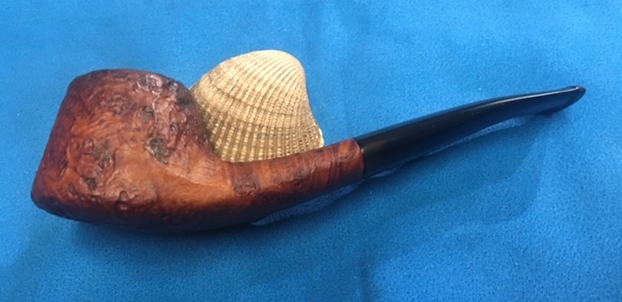
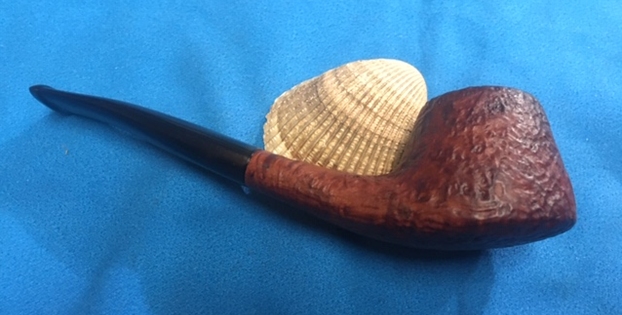
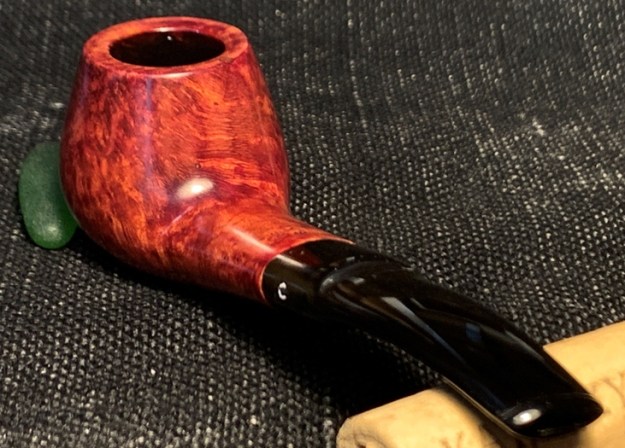
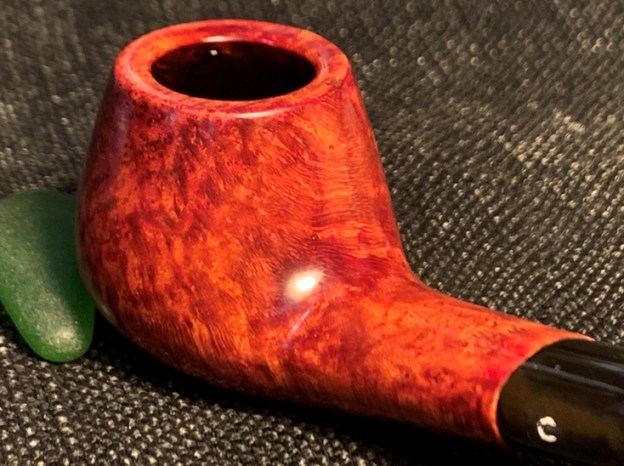
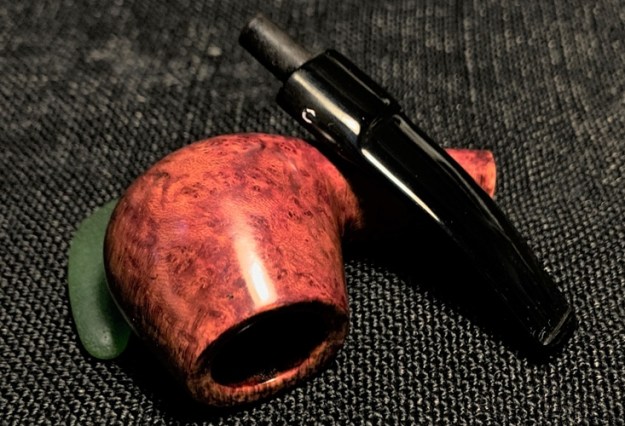
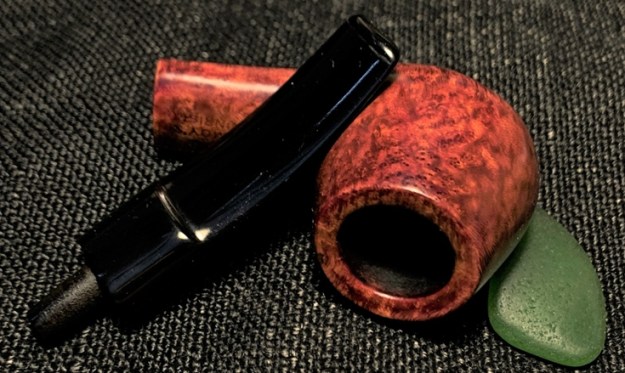
Breathing Life into a Caminetto Business 143KS Bent Egg


Blog by Steve Laug

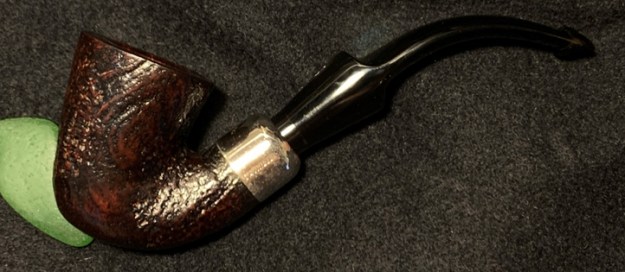
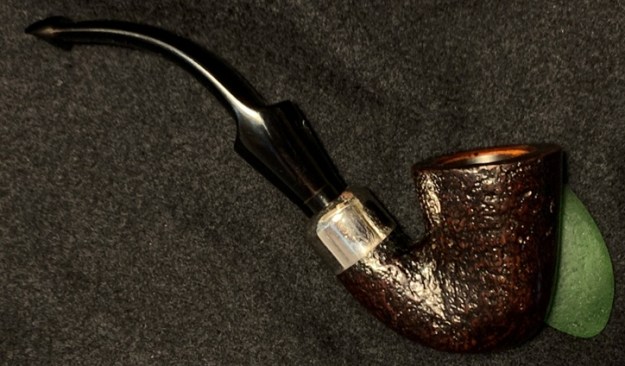
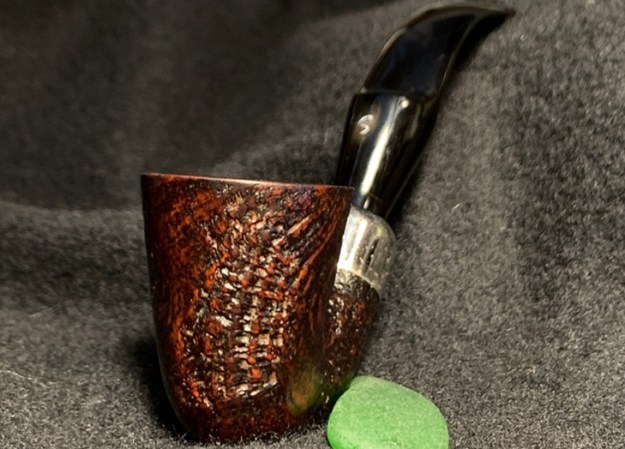
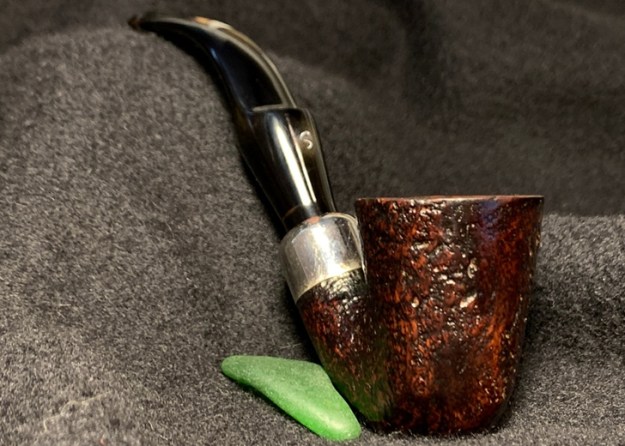
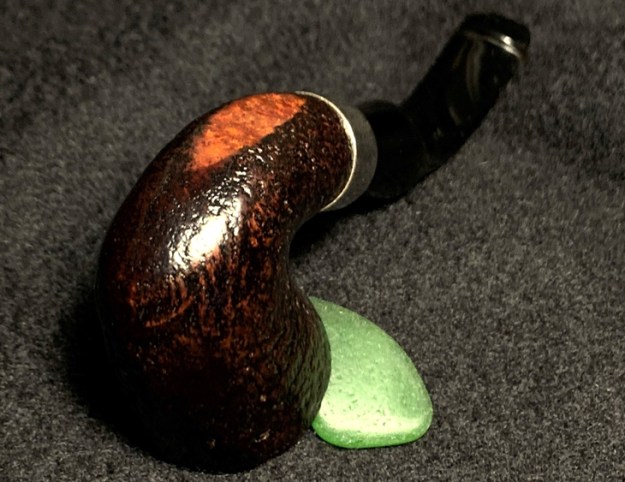
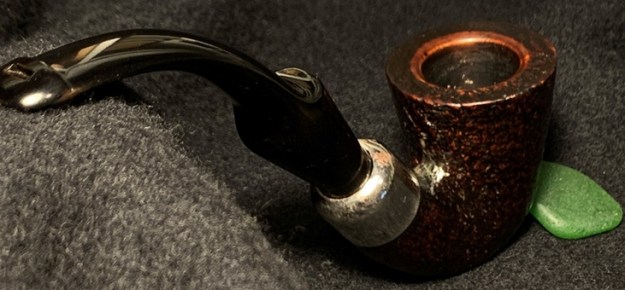
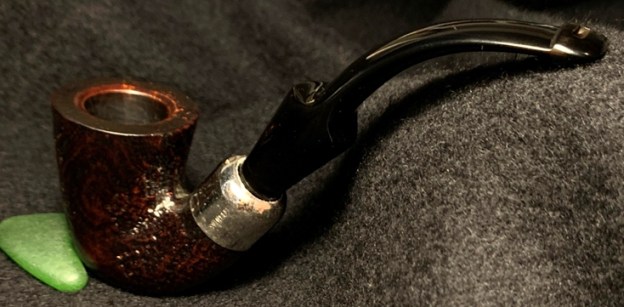
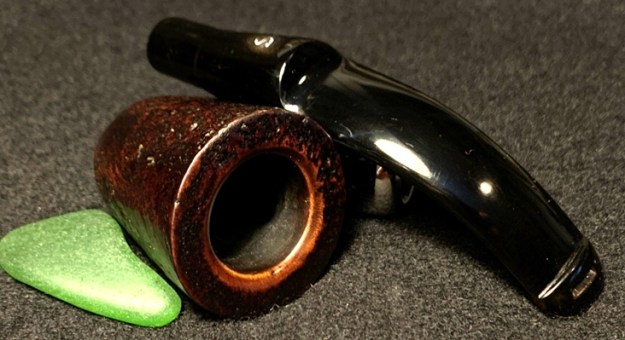
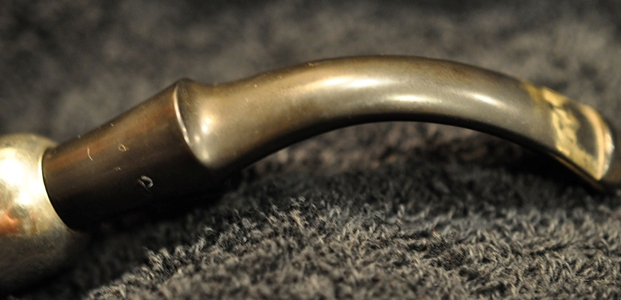
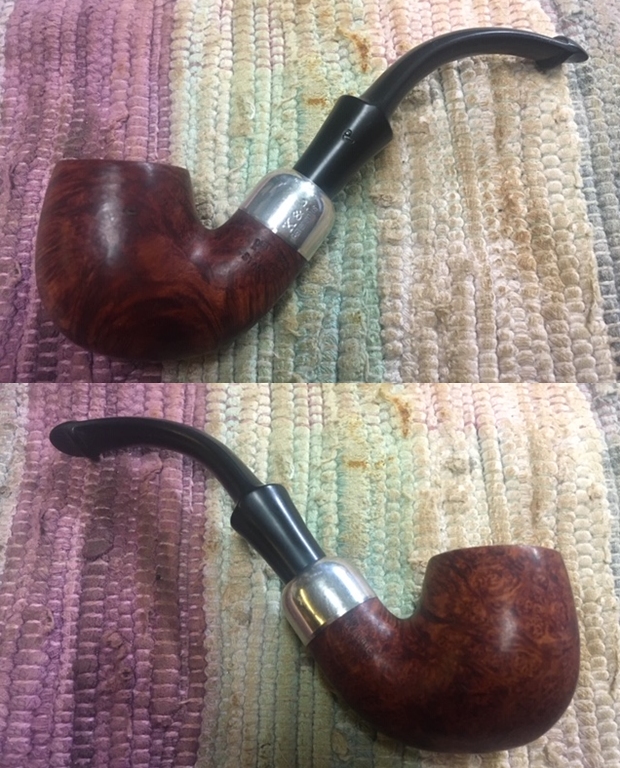
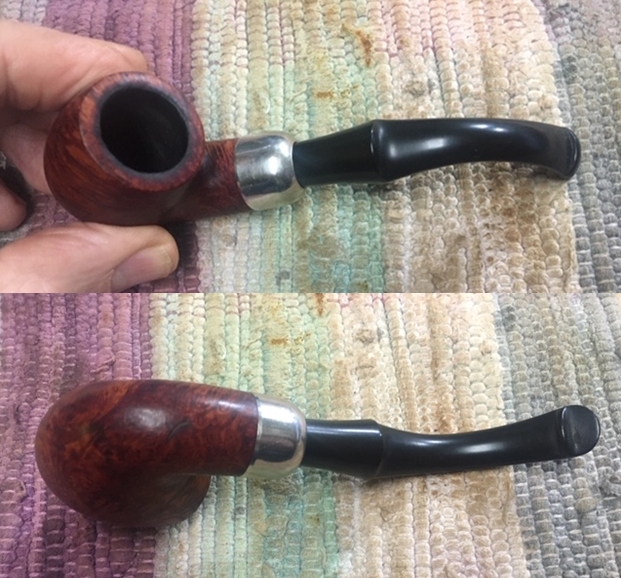
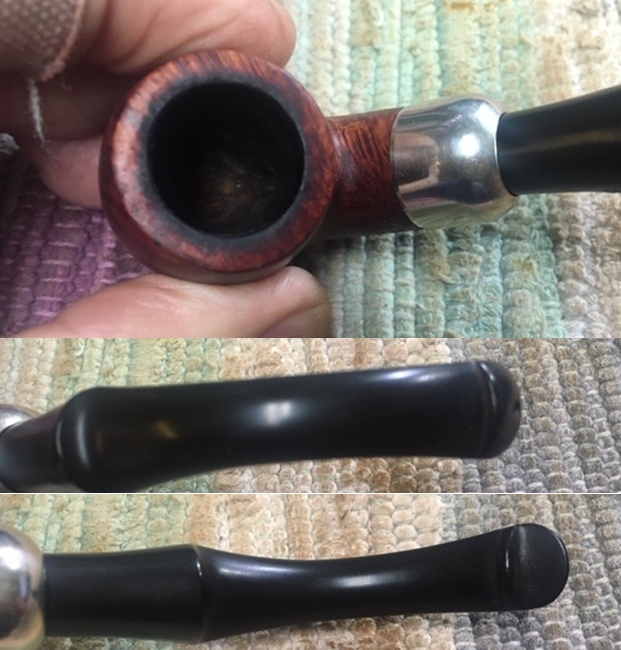
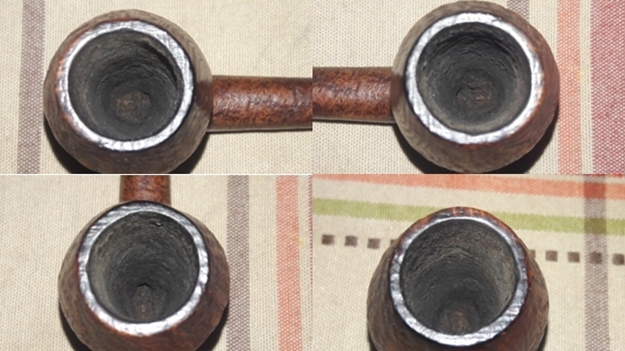
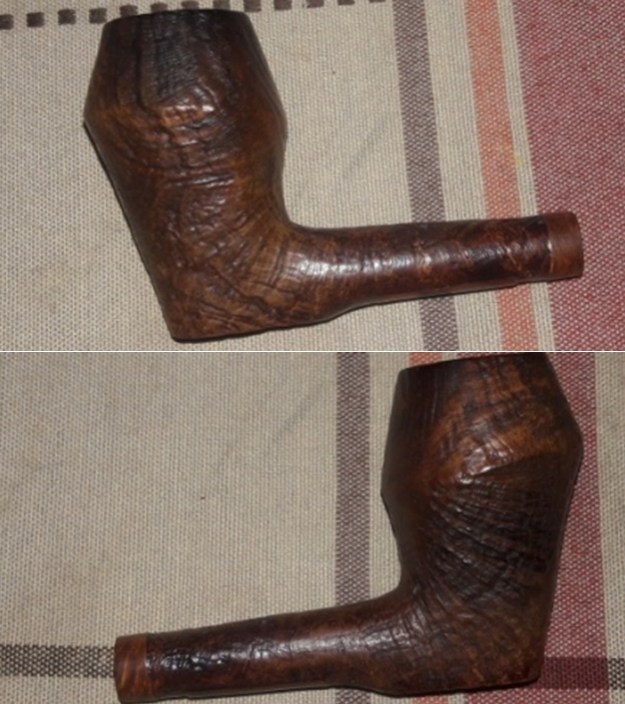
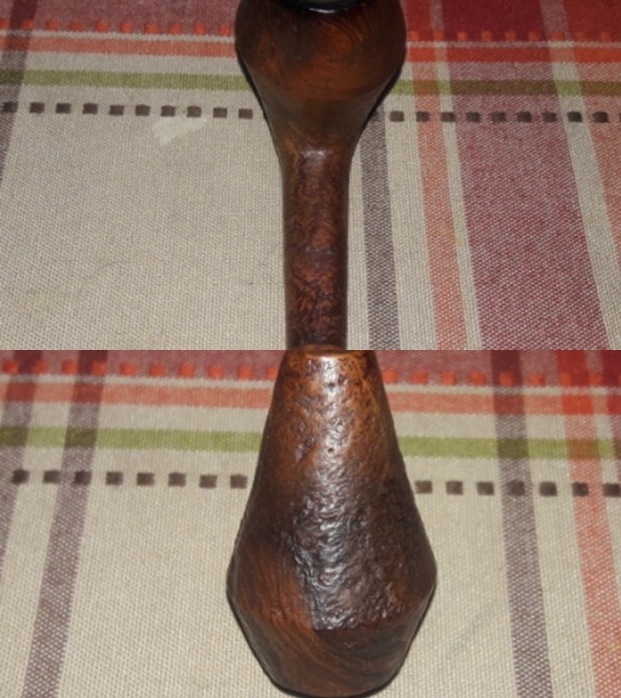
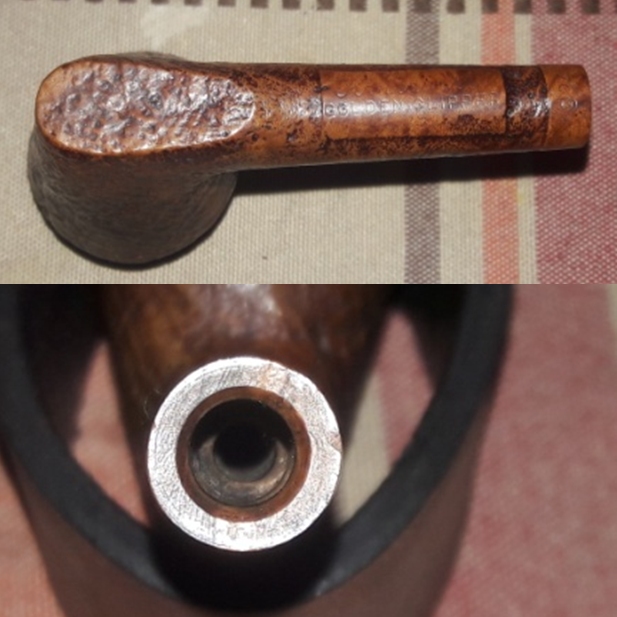
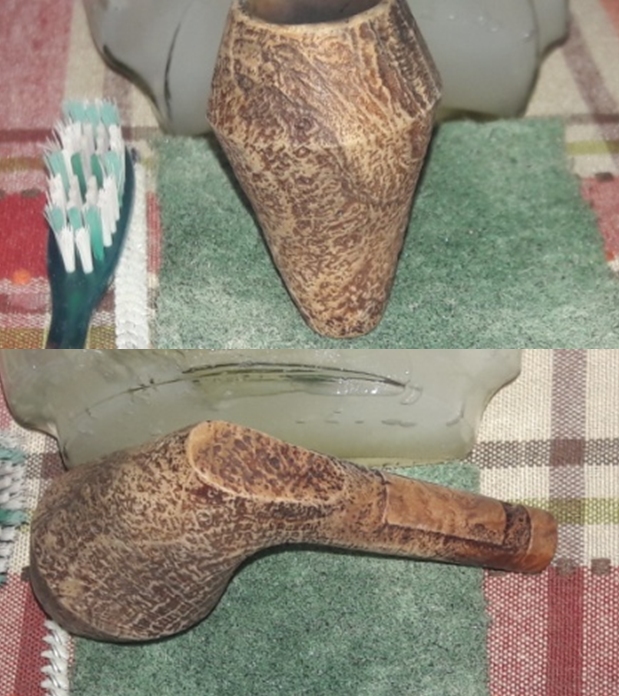
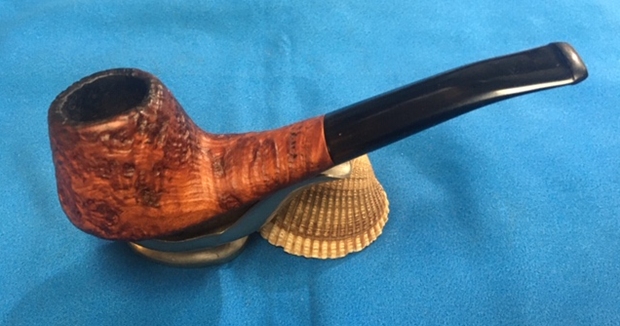
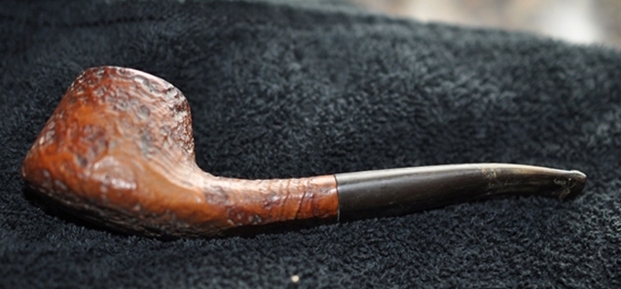
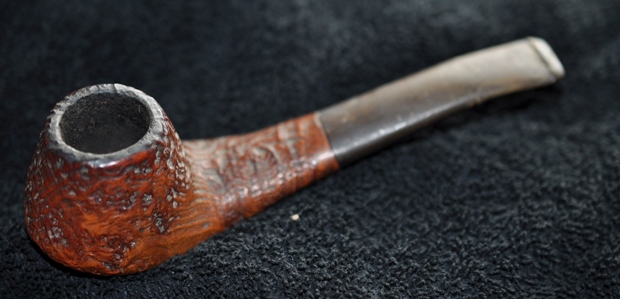
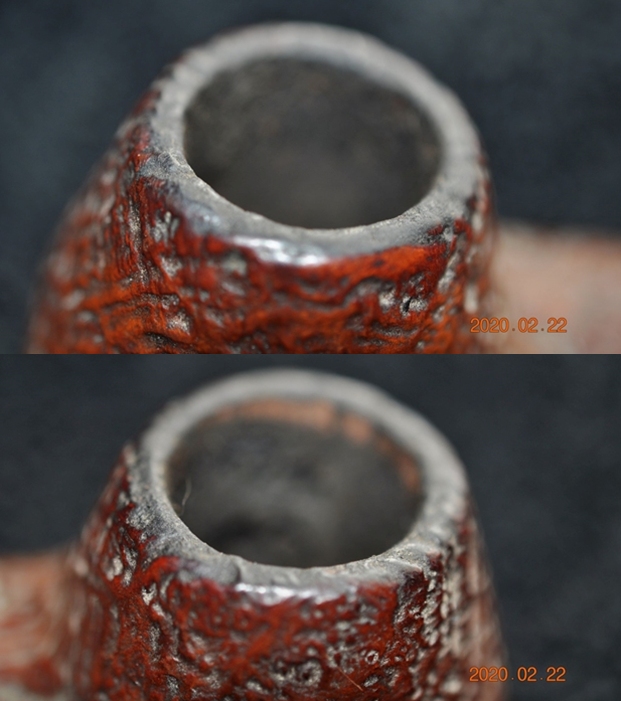
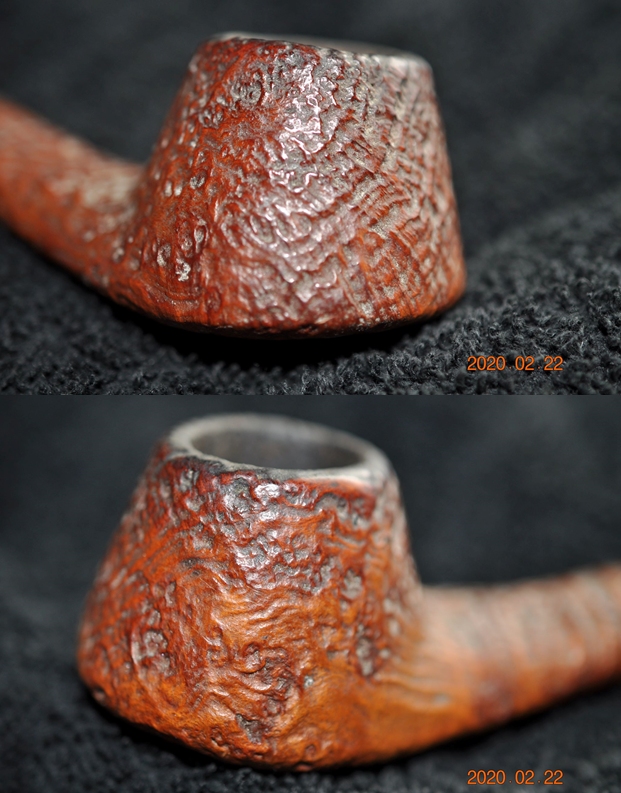
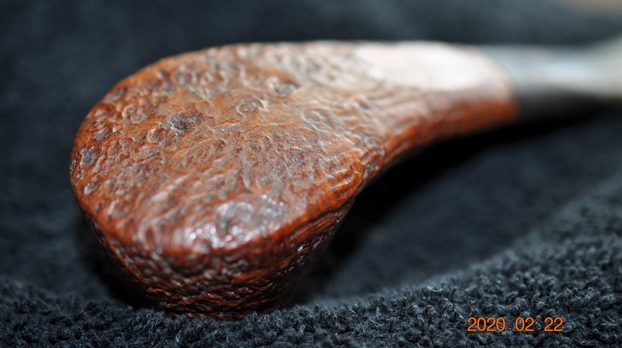
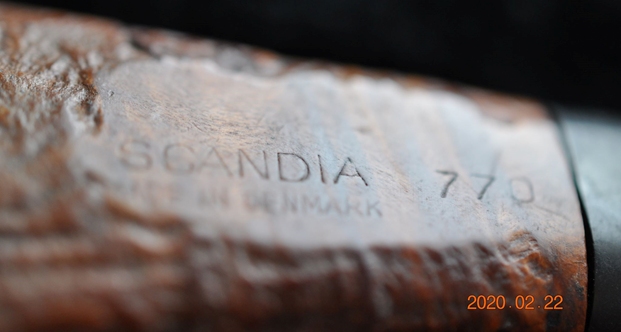
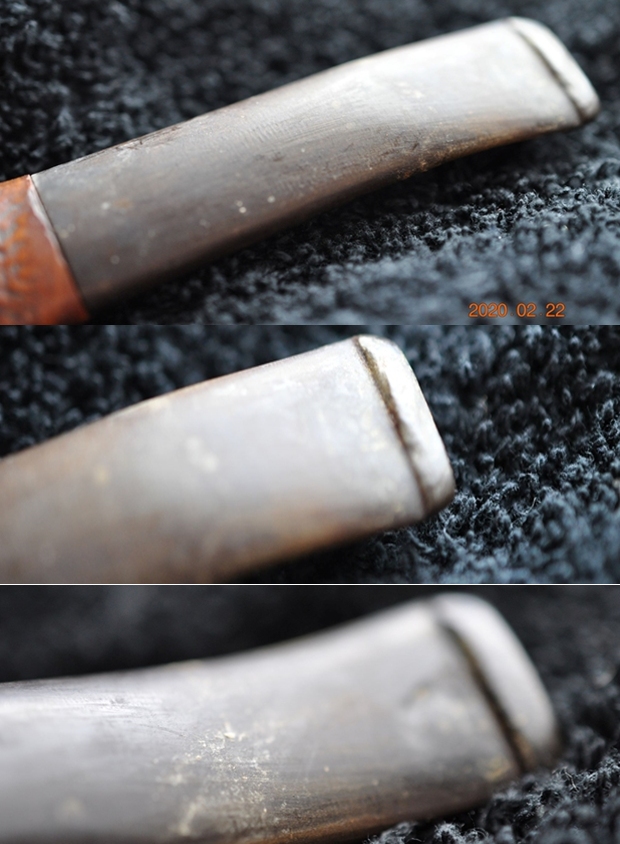
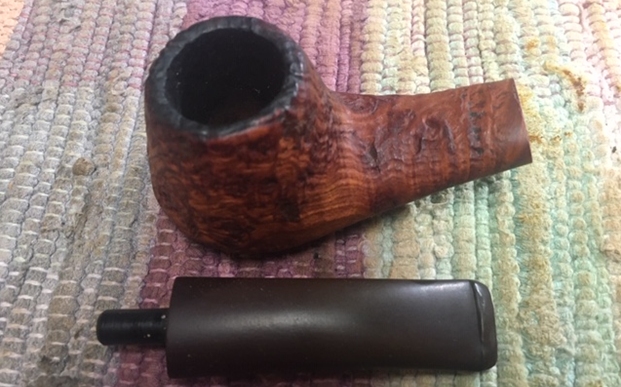
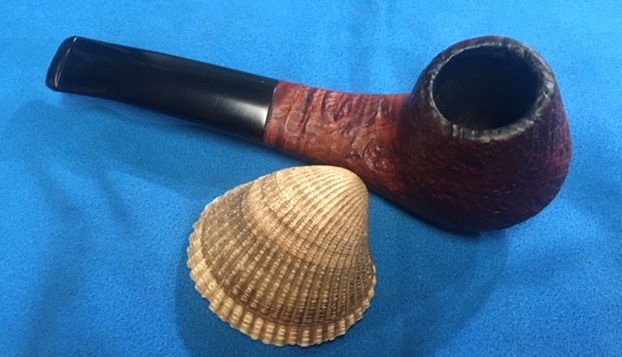
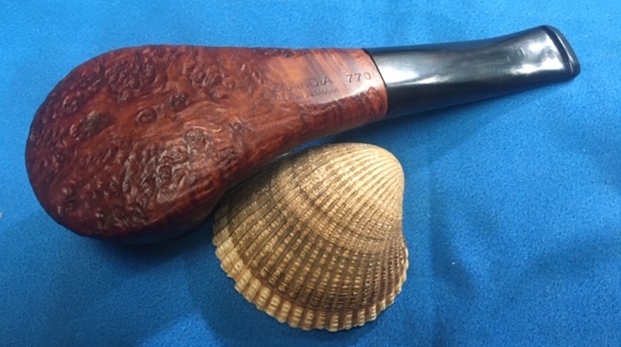
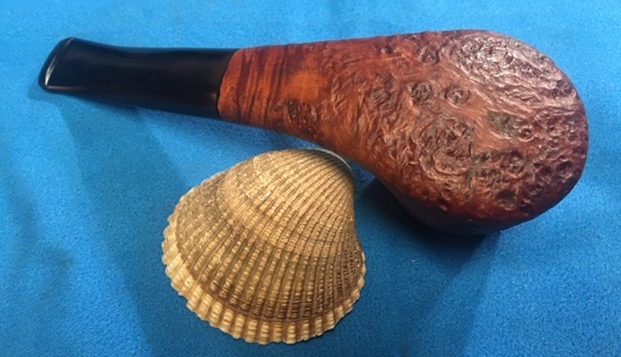
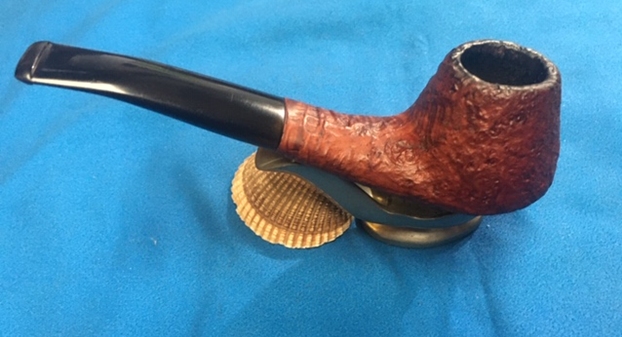
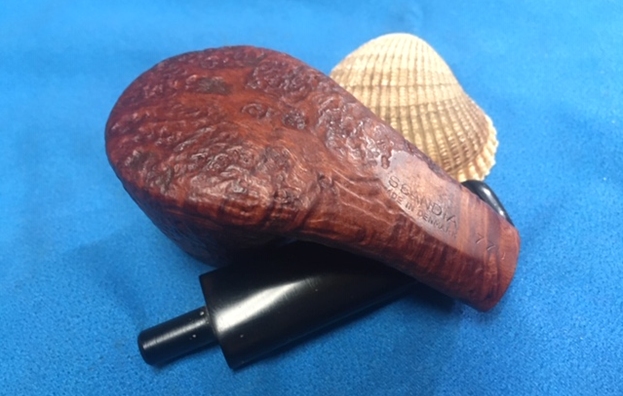
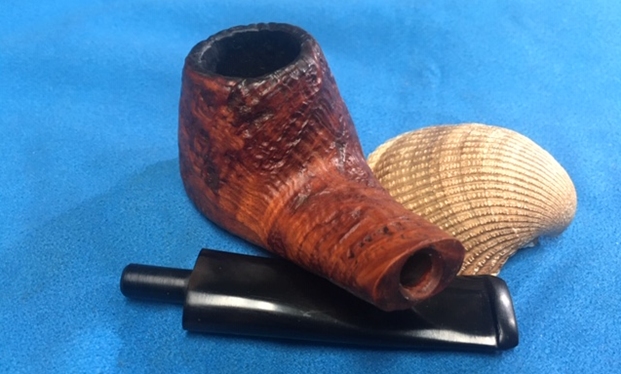
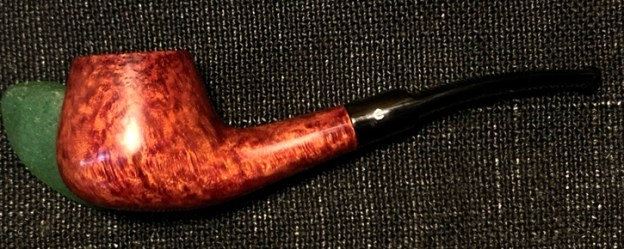
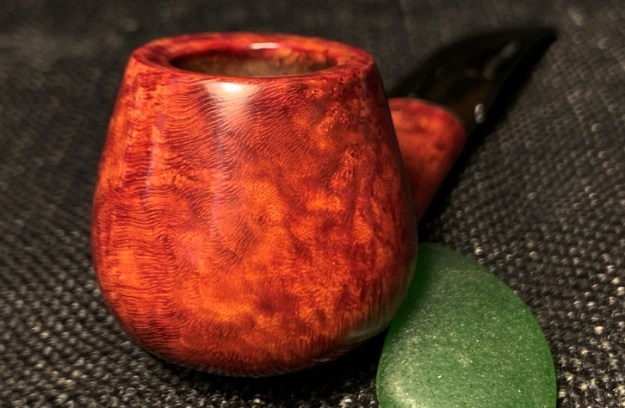
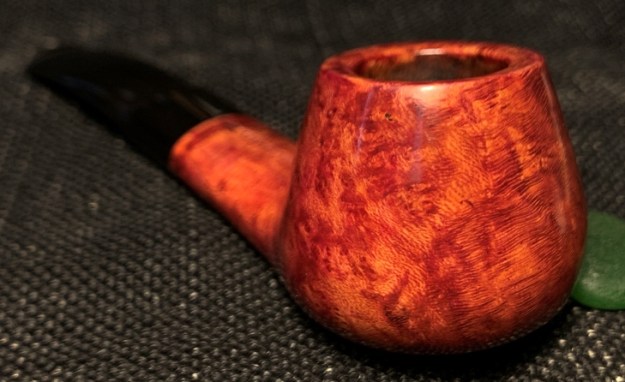
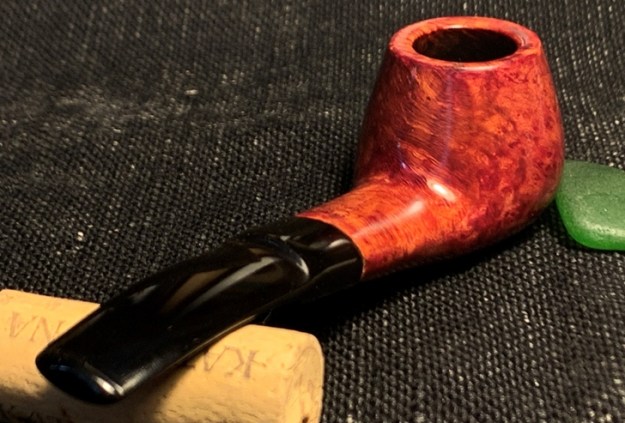
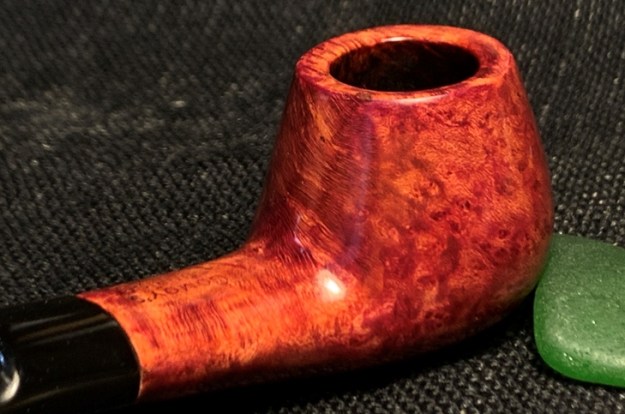
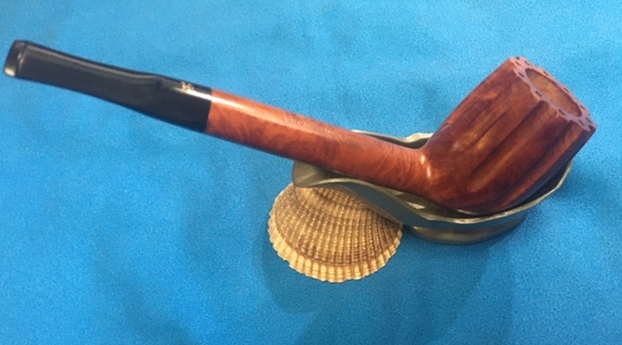
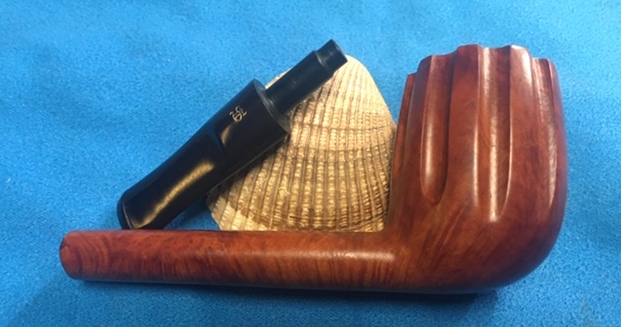
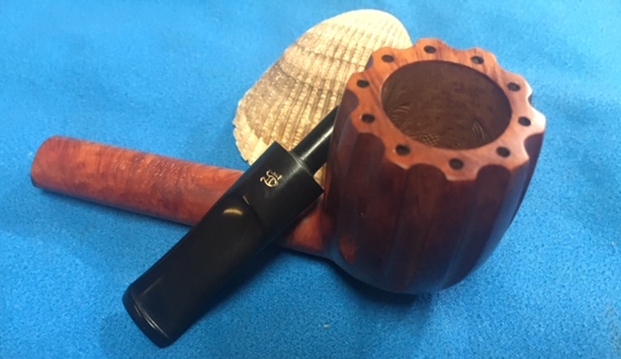
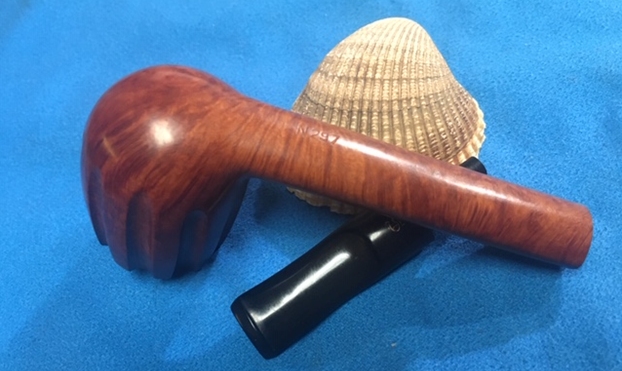
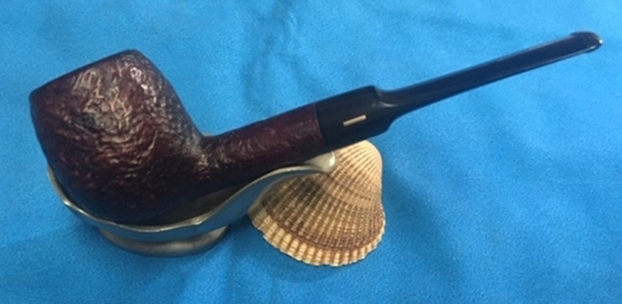
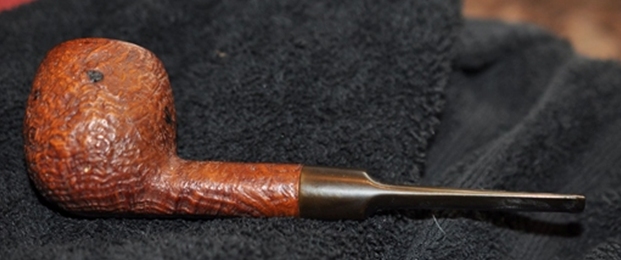
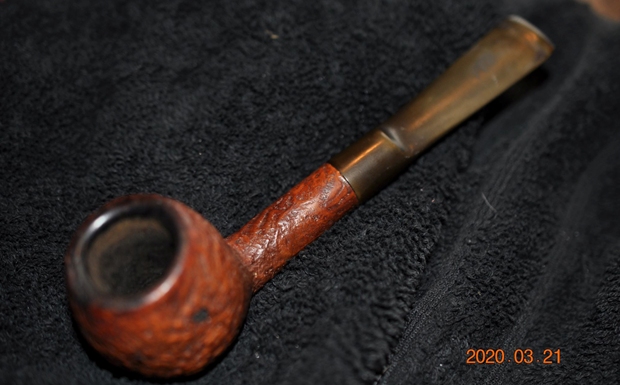
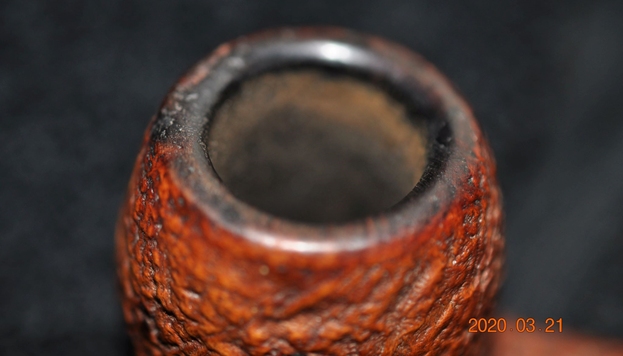
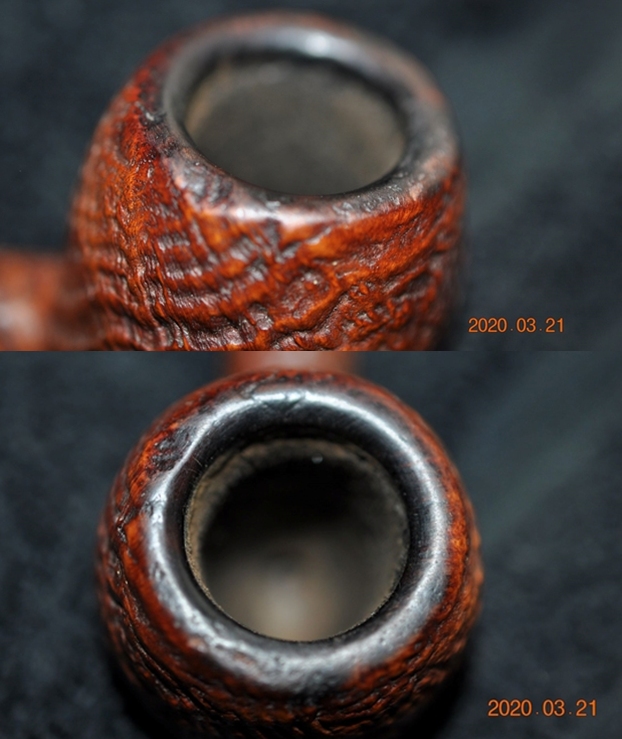
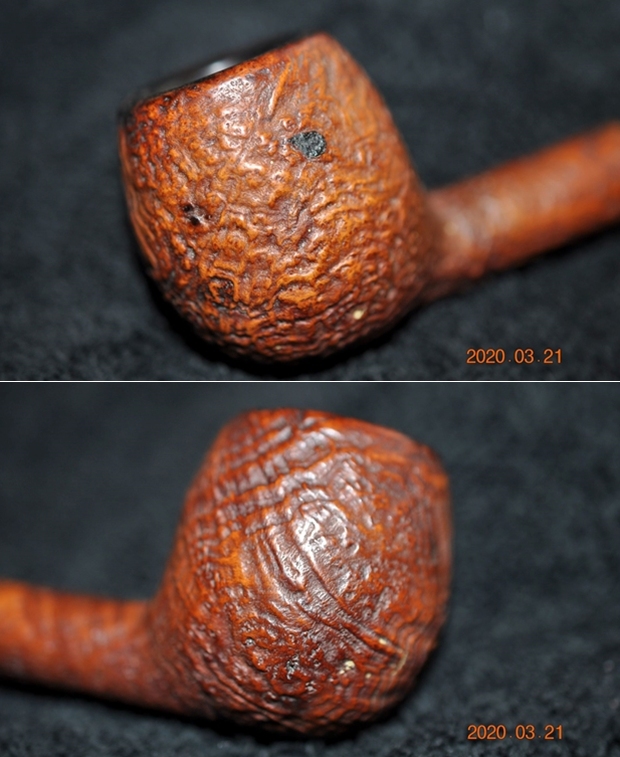
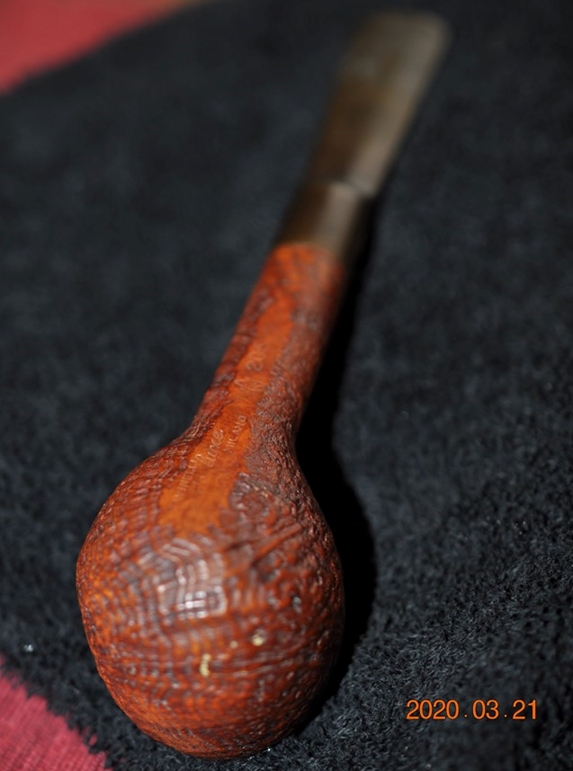
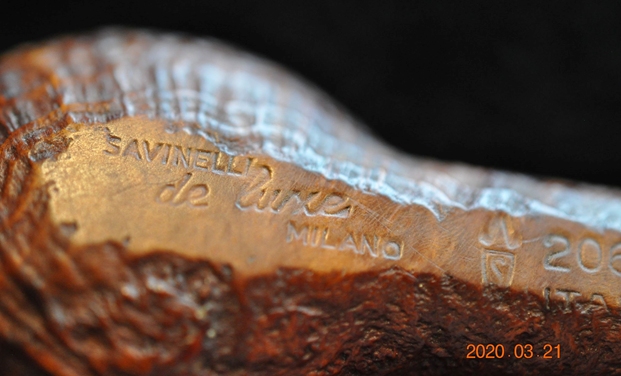
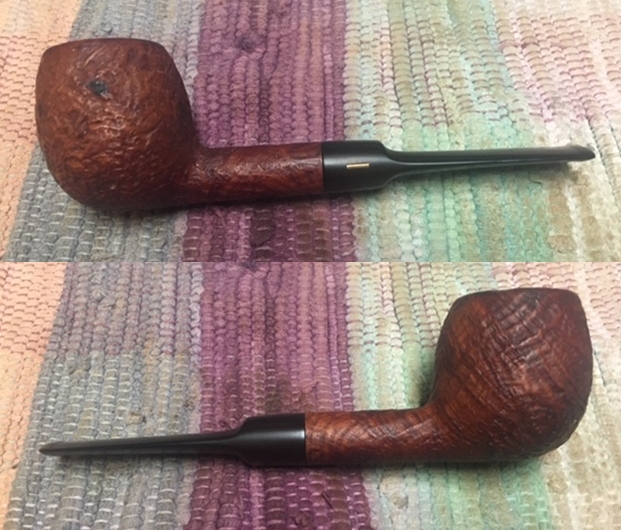
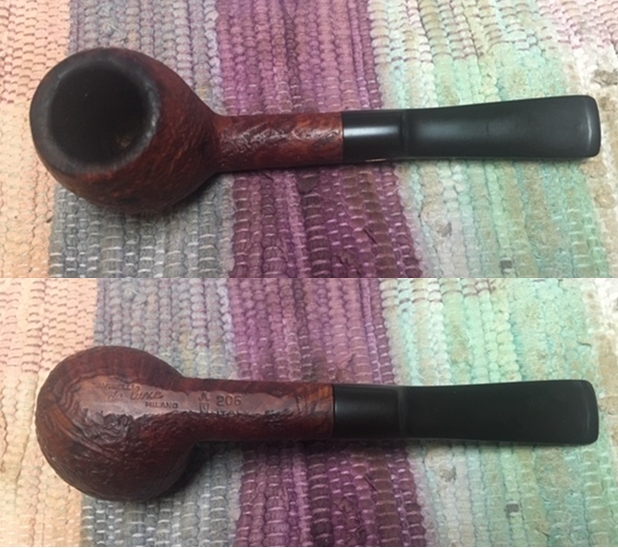
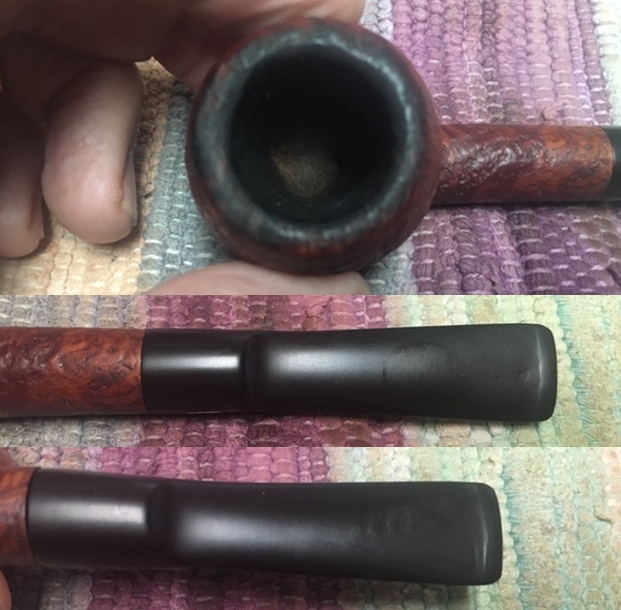
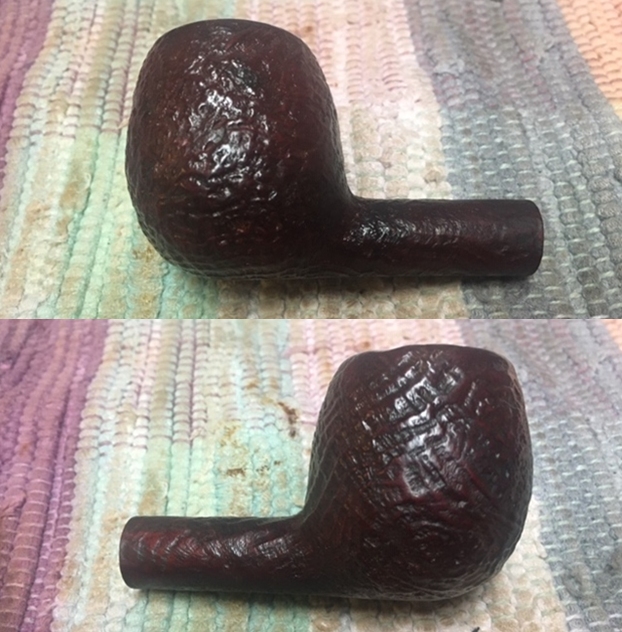
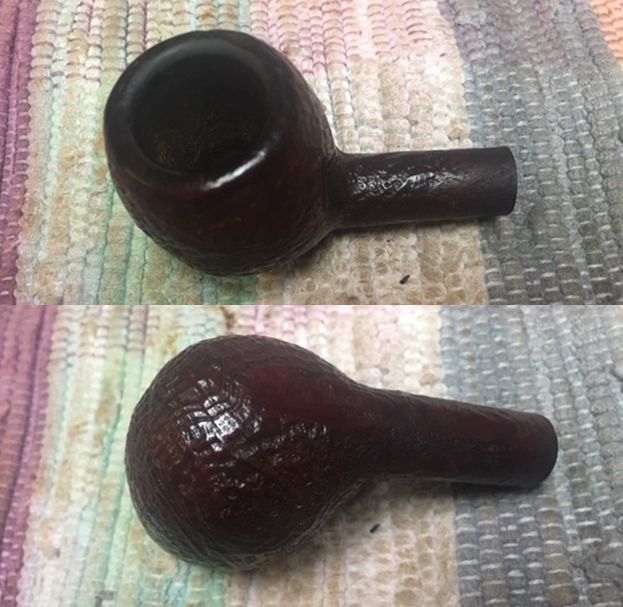
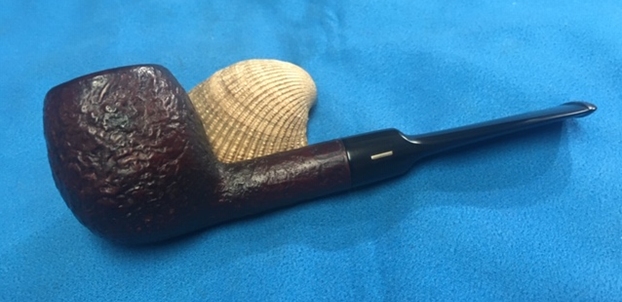
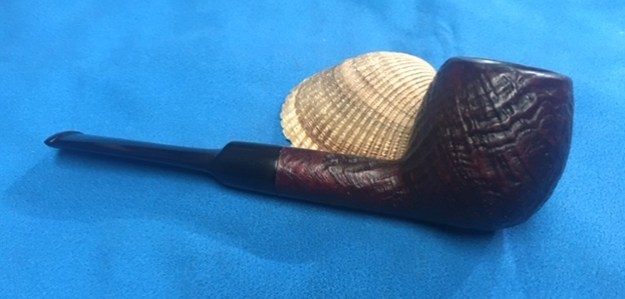
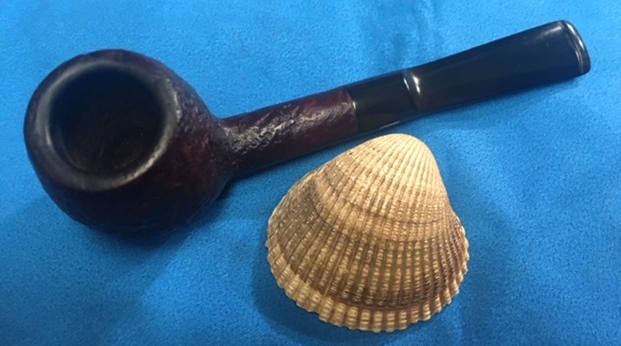
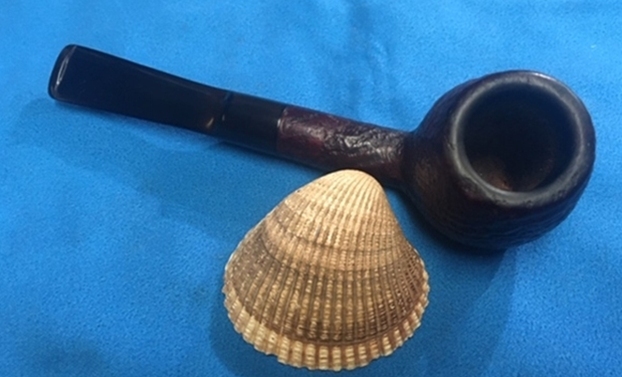
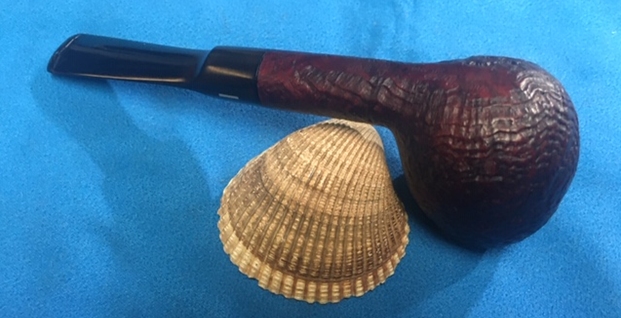
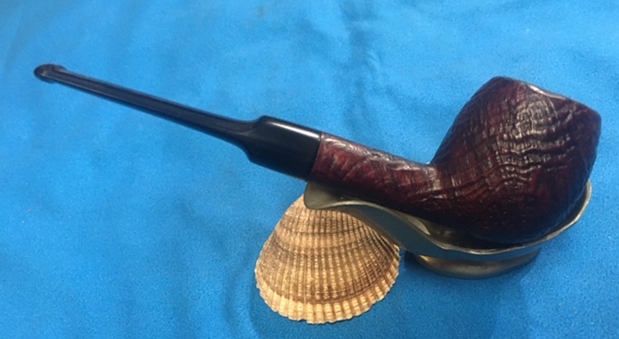
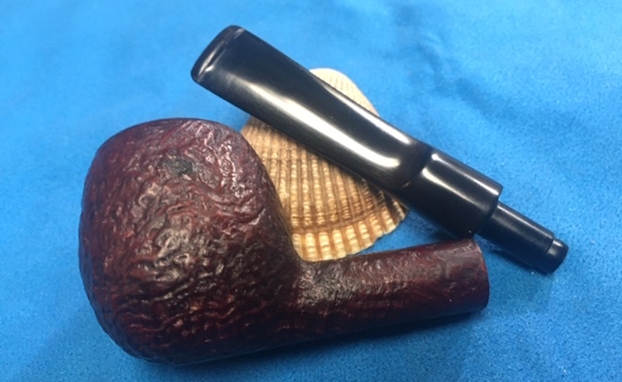
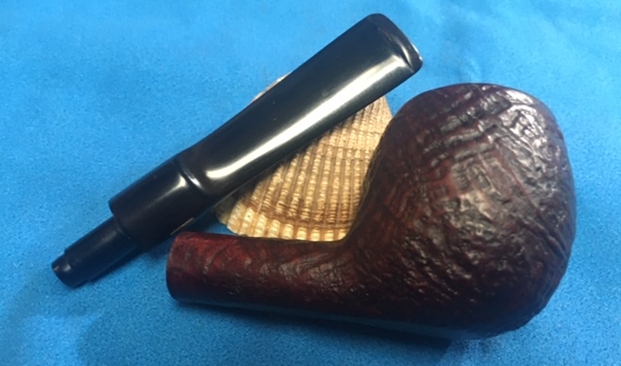
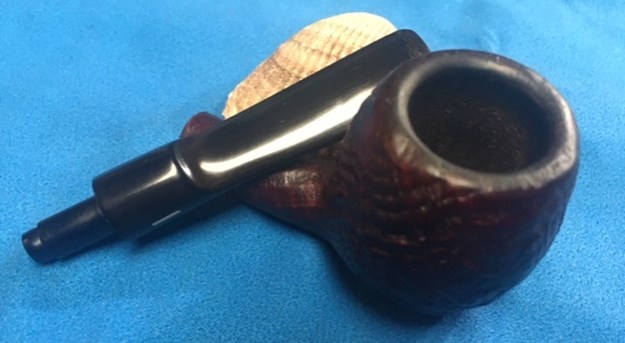
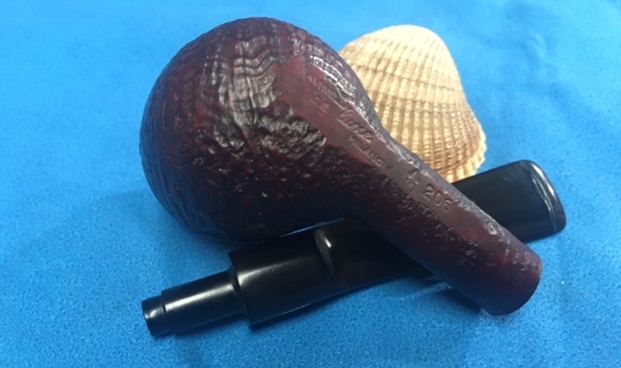
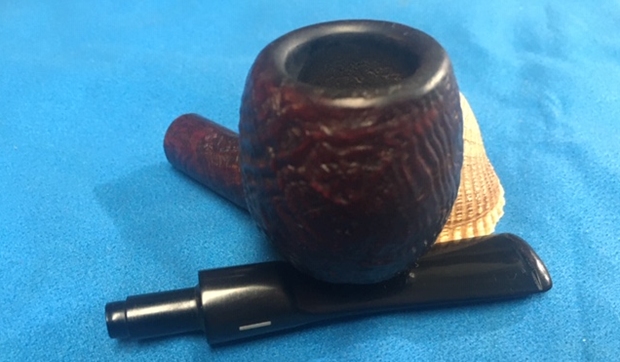
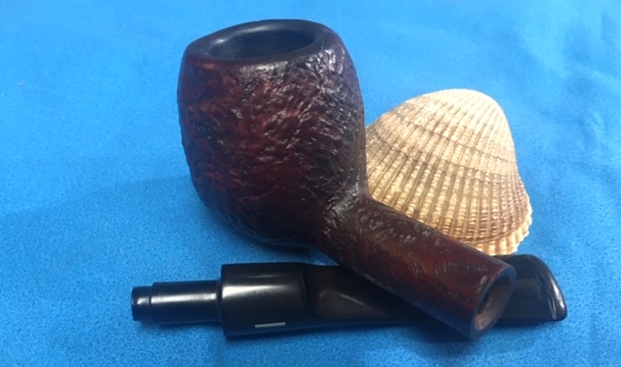
The next pipe on my worktable is a Caminetto Business pipe. Lately I have worked on a few of these and have been impressed by the craftsmanship. The pipe has a rugged rusticated finish and a stepped variegated brown acrylic saddle stem. It had come to us through an auction from Pekin, Illinois, USA. It was a filthy pipe with grime and oils ground into the rusticated finish on the bowl. The pipe had some rustic beauty shining through the dust and debris in the valleys of the rough finish. The rustication covered the rim top, bowl and shank with a smooth panel on each side of the shank. The finish was dull and lifeless and dirty from sitting around. There was a very thick cake in the bowl with lava flowing out of the bowl and over the rim top. The lava had filled in the deeper grooves of the finish on the rim top. The inner edge of the rim appeared to be in good condition under the lava coat other than a nick on the front right edge. The stamping on the left side of the shank read Caminetto in script over BUSINESS. To the left of that toward the bowl was the shape number 143 in a cartouche and to the right of the stamp it read KS. On the right side of the shank it was stamped MADE IN ITALY [over] CUCCIAGO (CANTU). The stepped saddle stem was variegated brown and had the classic Caminetto Mustache on the top of the saddle. The surface was dirty and there was light tooth chatter and marks on both sides near the button. Jeff took the following photos before he started his cleanup work on the pipe.He took close-up photos of the bowl and rim top from various angles to capture the condition of the bowl and rim top edges. You can see the lava overflow and debris in the rustication of the rim top. You can see the cake in the bowl. This was a dirty pipe but it was the finish was in great condition. The stem is also very dirty with tooth marks and chatter on both sides near the button. He took photos of the sides and heel of the bowl to show the beautiful incredibly deep rustication around the bowl. It is the same kind of rough finish that I really like on Castello Sea Rock pipes. You can see the oil, dust and debris in the finish on both sides of the bowl. Jeff took a photo of the stamping on the shank. It reads as noted above. The stamping is clear and readable. I have worked on several Caminetto in the past so I turned to one of the restorations on the rebornpipes blog and reread the background information on the brand. I am including that info here with this restoration (https://rebornpipes.com/2020/04/19/pretty-tired-and-dirty-messy-restoration-of-a-caminetto-business-tomahawk-182/).

When the pipe arrived I turned to Pipephil (http://www.pipephil.eu/logos/en/logo-c1.html) to see if he included not only information on this Caminetto Business 182. He gave some interesting information about the brand. It was created in 1986 by Guiseppe Ascorti, Luigi Radice and Gianni Davoli as the distributor. It states that in 1979 the first Caminetto period ended with Luigi Radice leaving the company. Guiseppe Ascorti continued making the pipe with his son Roberto. In 1986 the New Caminetto period began by Roberto Ascorti.I turned to Pipedia for more information on the Caminetto and how to date the pipe I had in hand (https://pipedia.org/wiki/The_History_of_Caminetto_(shapes,_stamping,_articles,_etc.). I quote a pertinent paragraph:

Stampings and dating: First off, dating earlier Caminetto’s is nearly impossible. Nevertheless, there were three phases, some in which were much earlier, of development that occurred in the stamping process of Caminetto. Before that though, every pipe had the stamp of Caminetto in one of two ways: Caminetto in script or Caminetto within quotation marks in block letters (I do not know how it was decided which pipe got which stamp, as I have had EARLY Caminetto’s with both)…

The stampings are shown in the photo to the left. The stamping on this pipe is like #3.

…Now, the question is which stamps are earlier and more likely to have been made by Ascorti and/or Radice. The answer is #1. The differences in #2 and #3 seem to be minute, as Cucciago is simply a suburb of Cantu. Pipes stamped like #1 are the most valuable Caminetto’s as they are the earliest production of the brand, as well as what some would claim the most perfect of Ascorti and Radice’s work. The last tidbit is, of course, debatable…

… There is also another factor in stamping, that is, which series the pipe falls in. The majority of Caminetto’s one sees are those of the “Business” series, which are stamped such with their collective shape (see photo of shapes below). Another stamp that sometimes follows the “Business” one is “KS,” which from what I know means “King-size” (this could be wrong, as there are pipes stamped with KS1, KS2, and KS3).

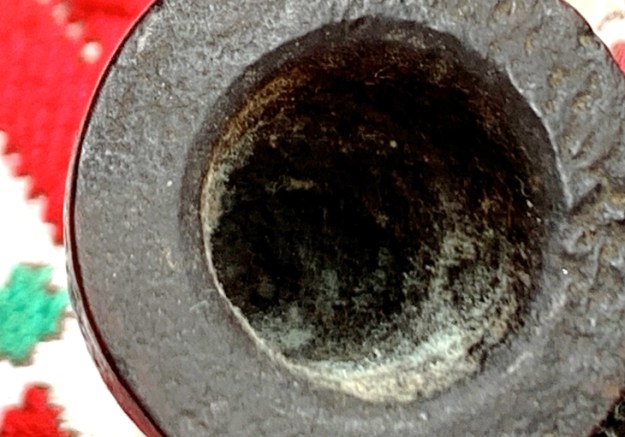
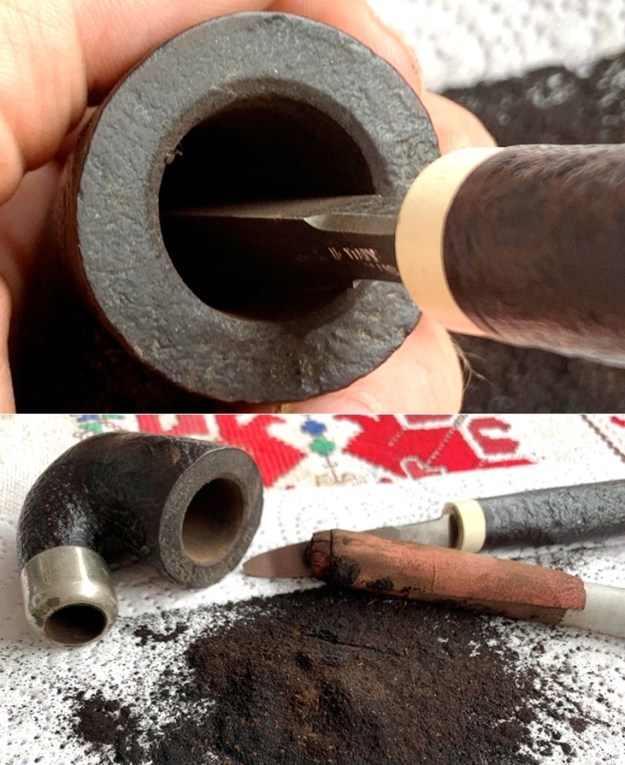
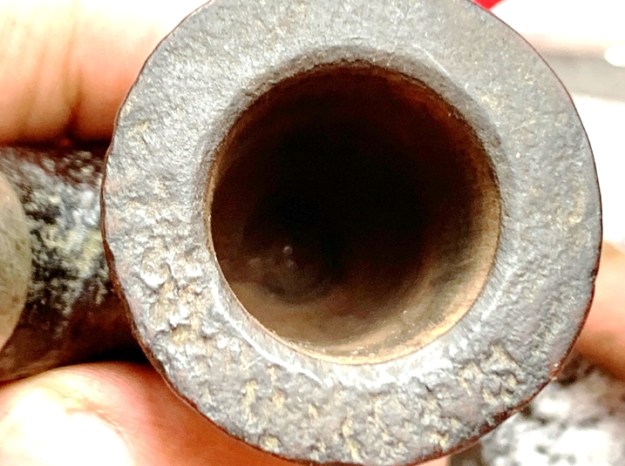
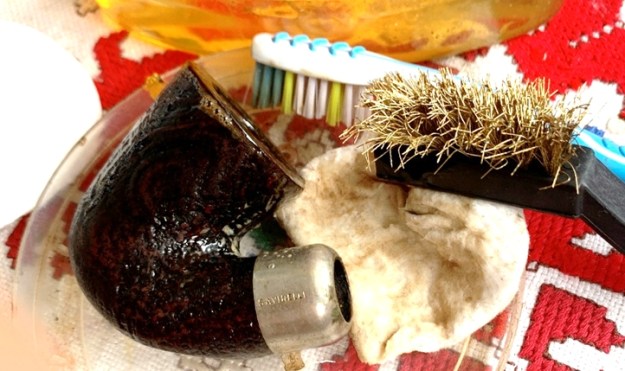
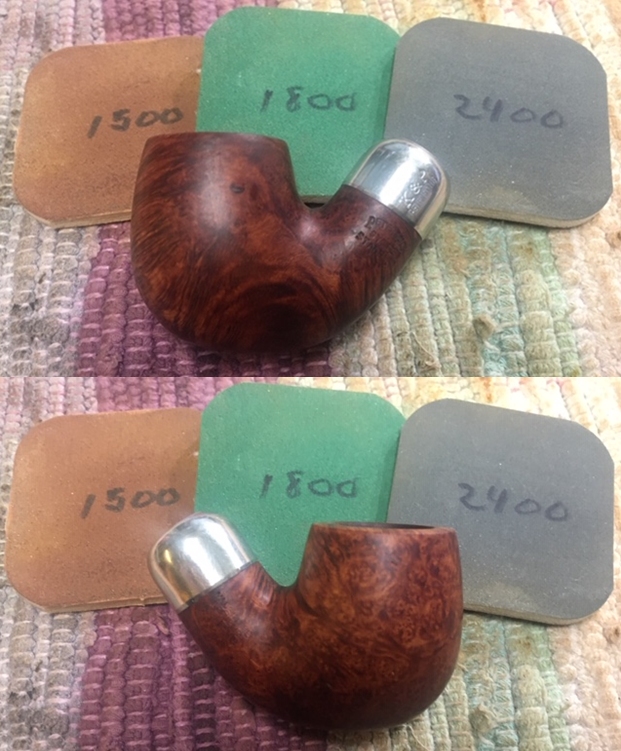
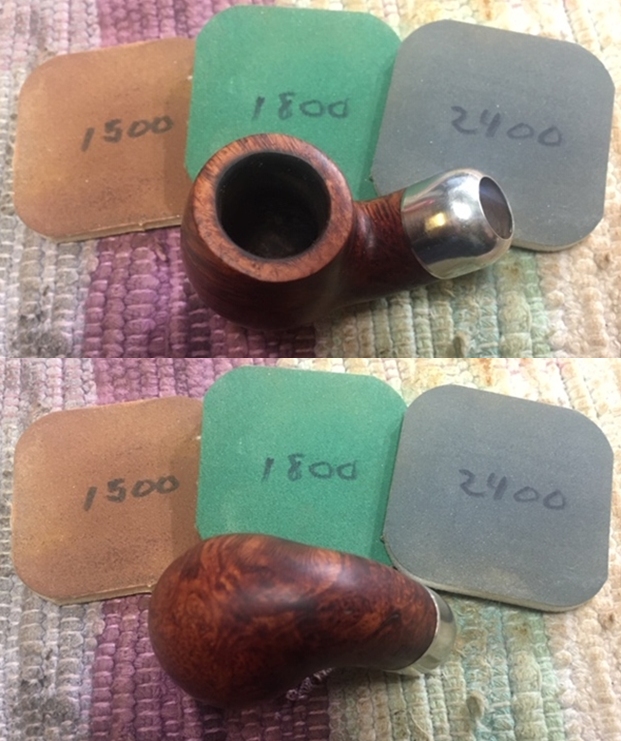
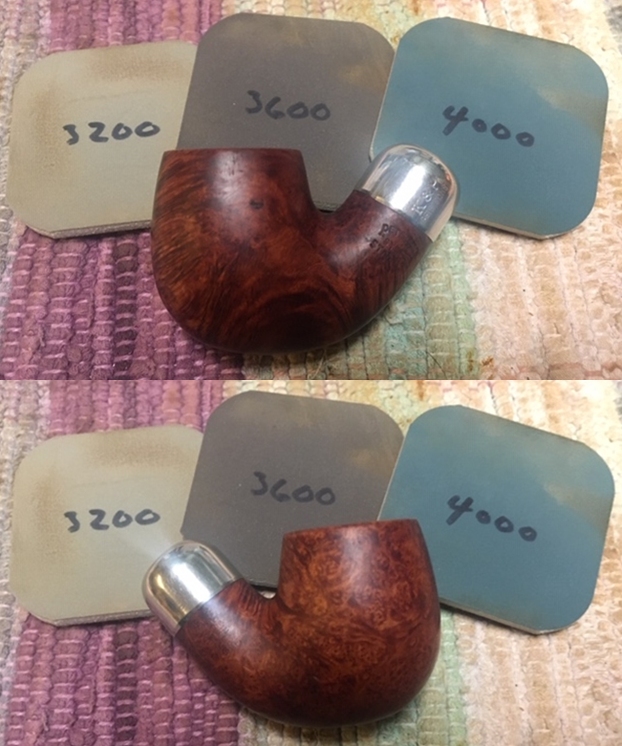
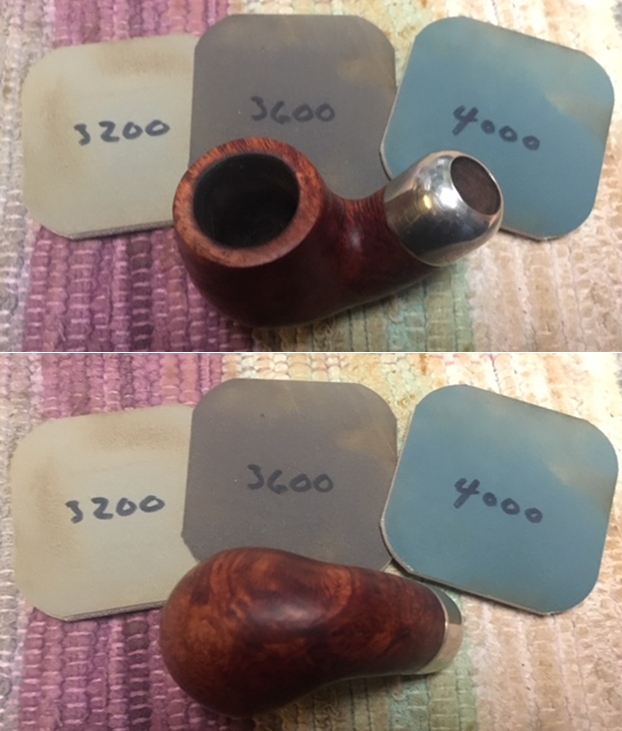
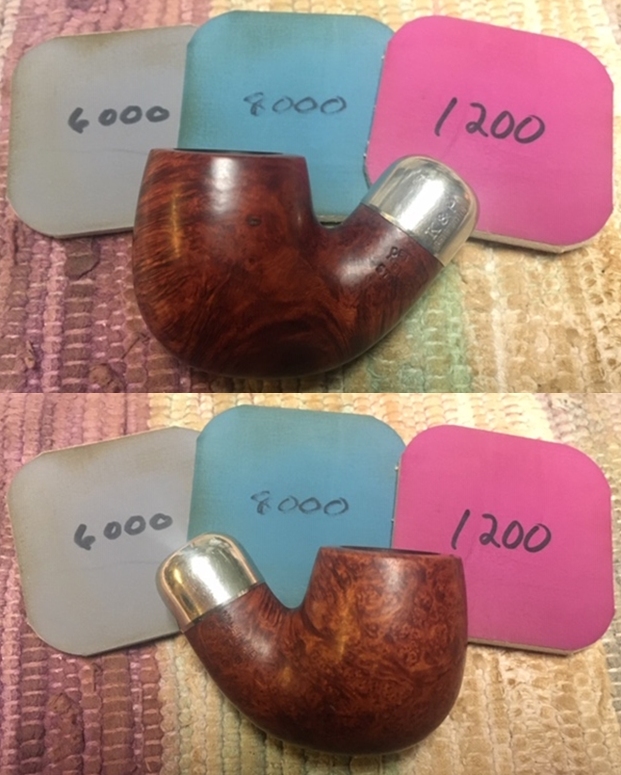
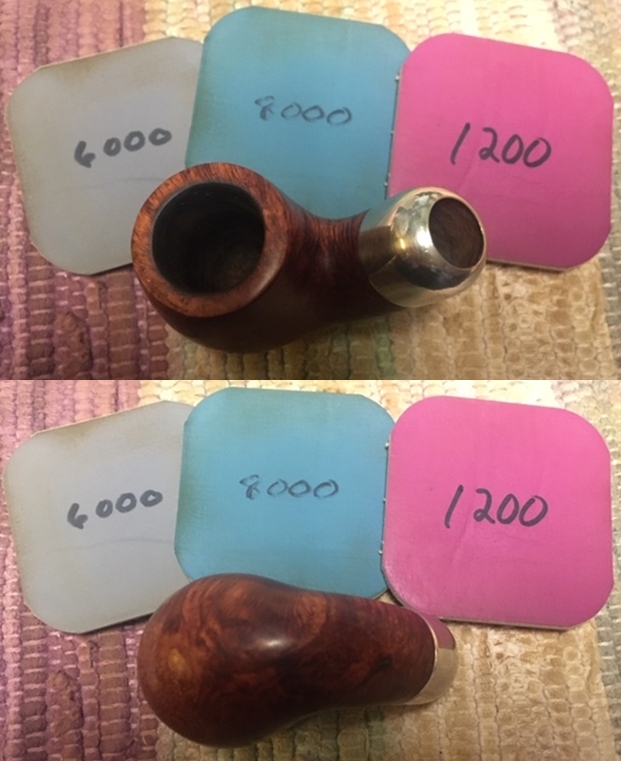
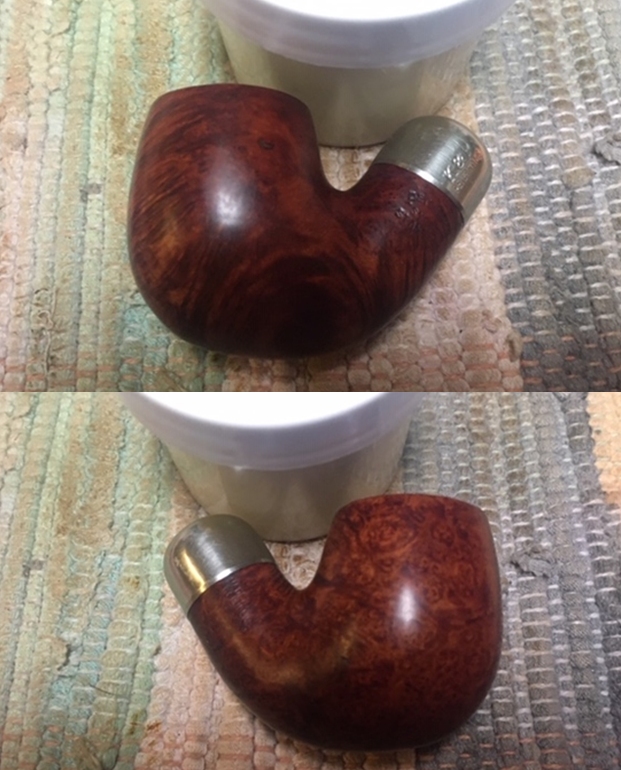
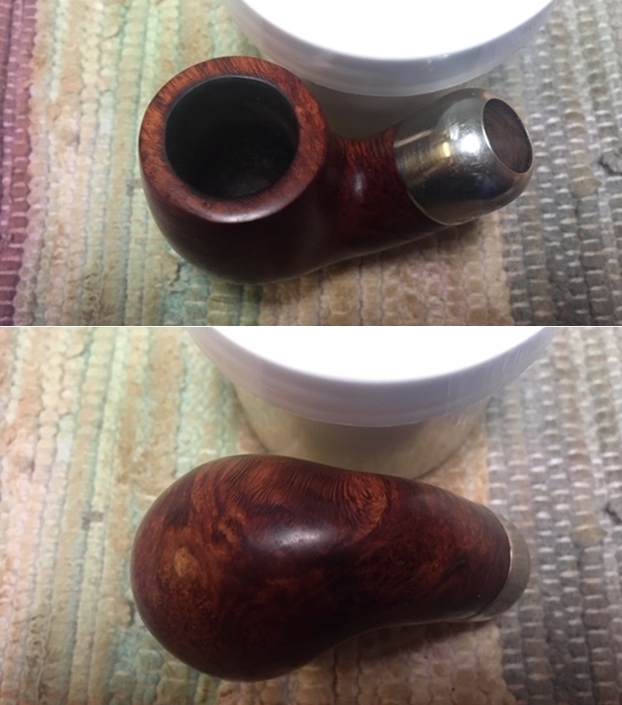
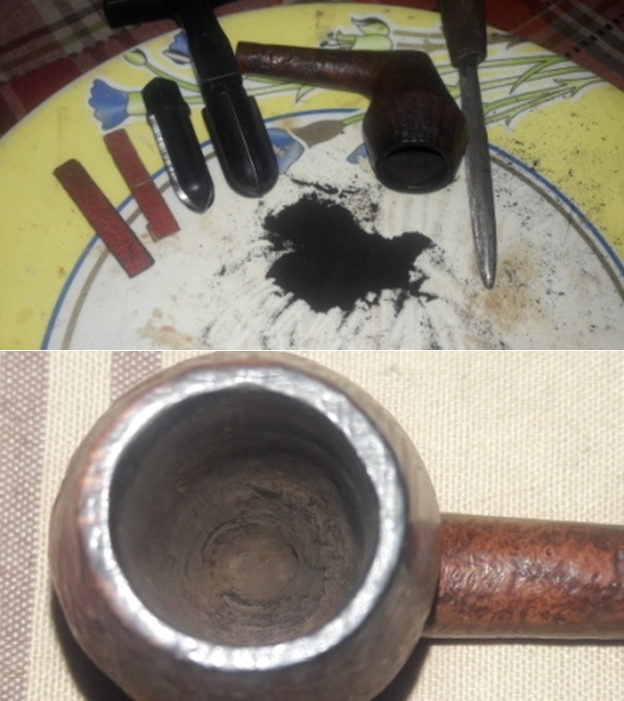
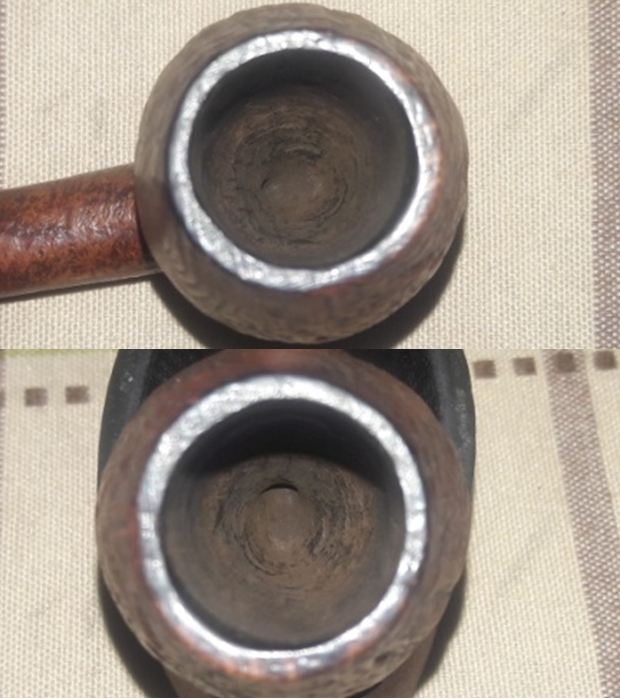
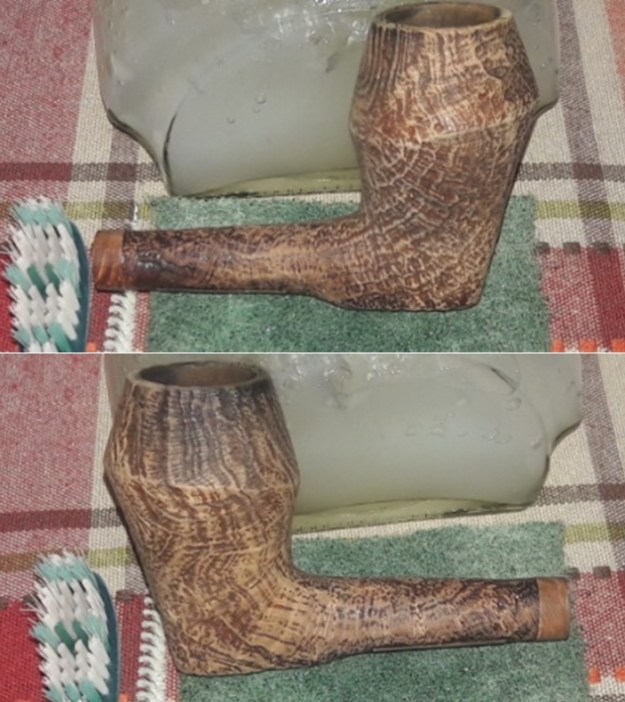
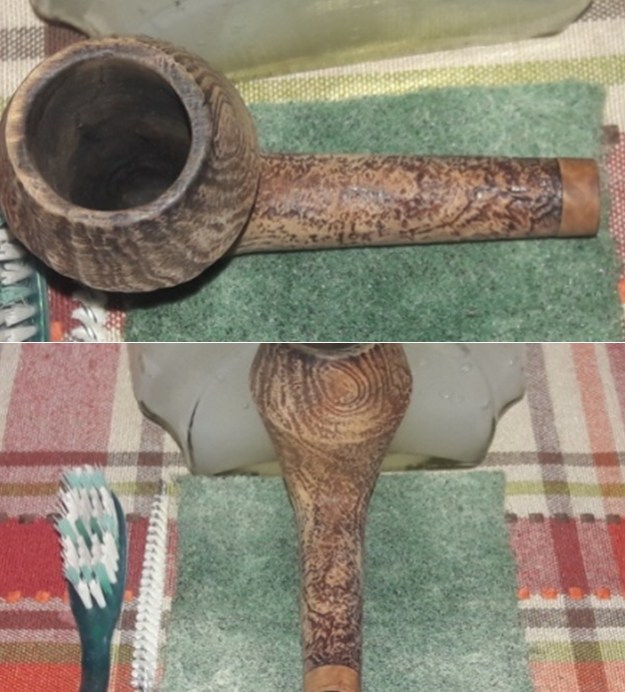
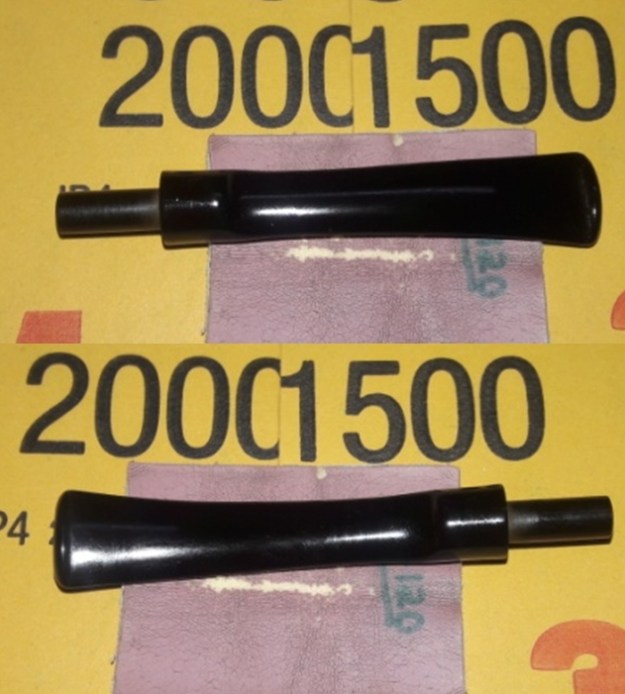
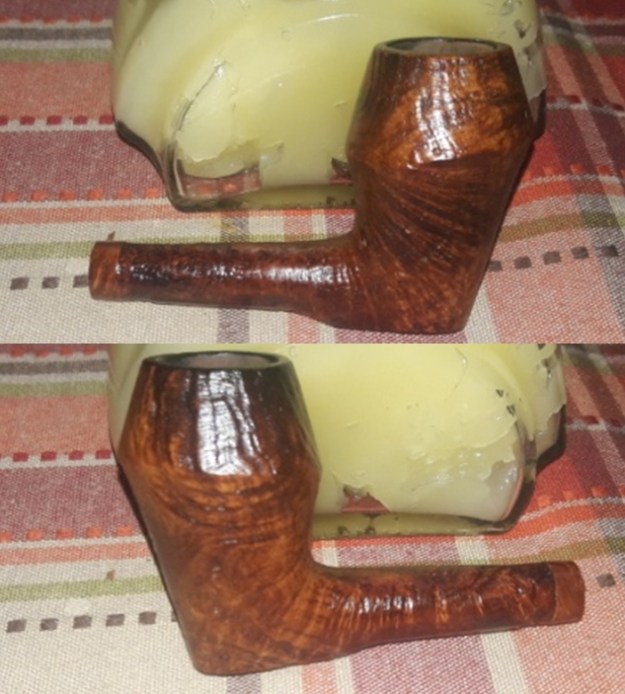
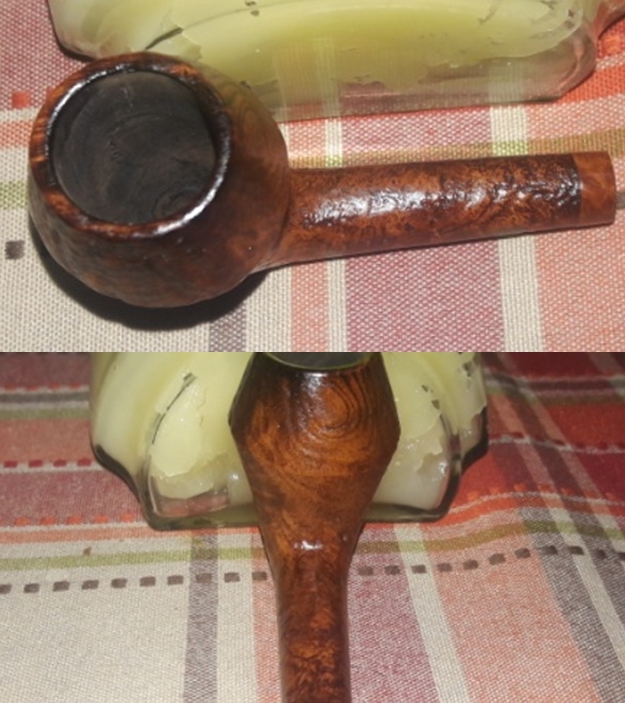
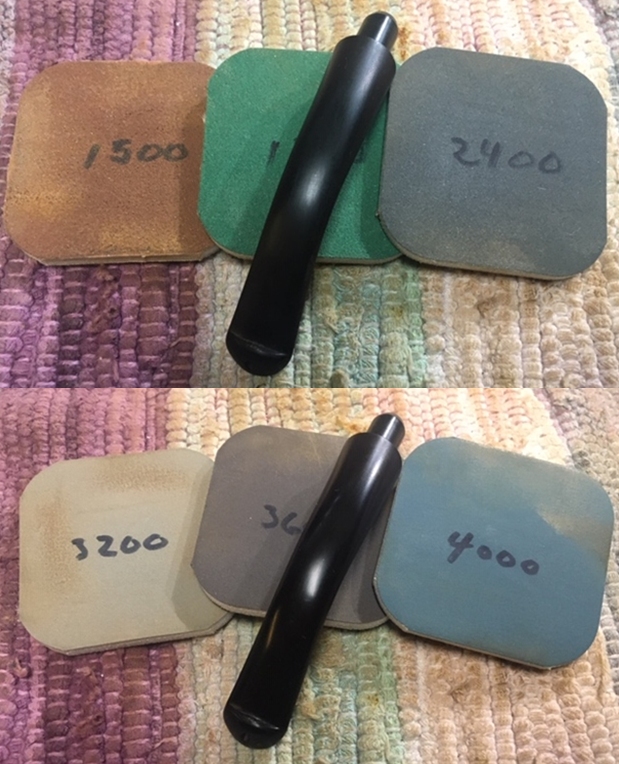
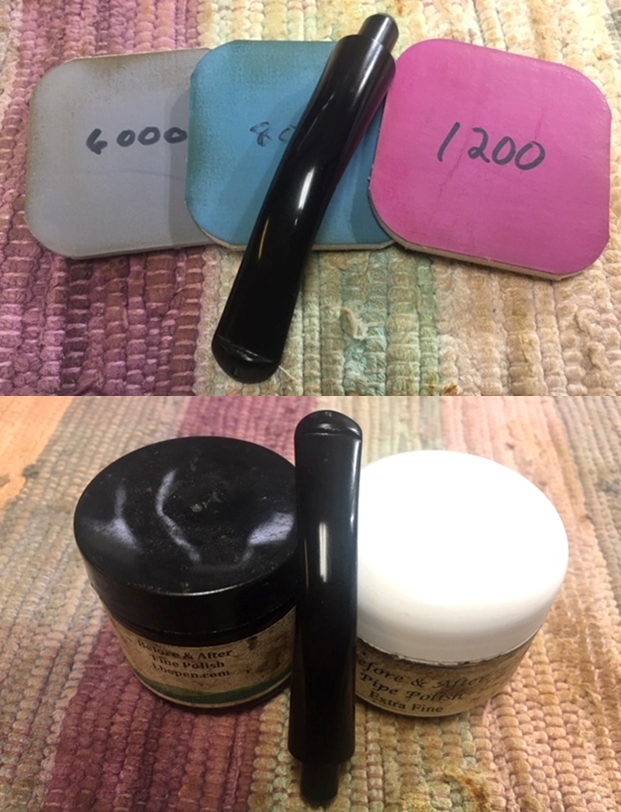
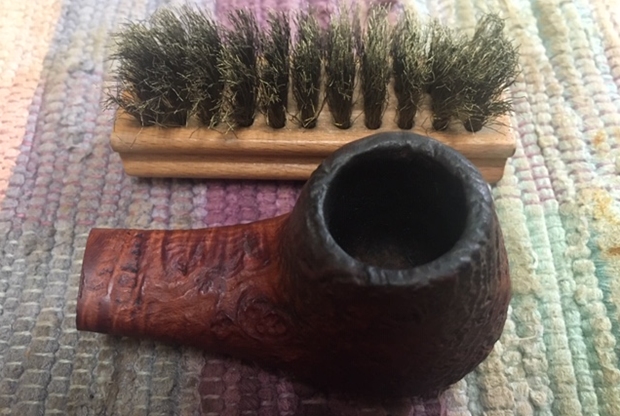
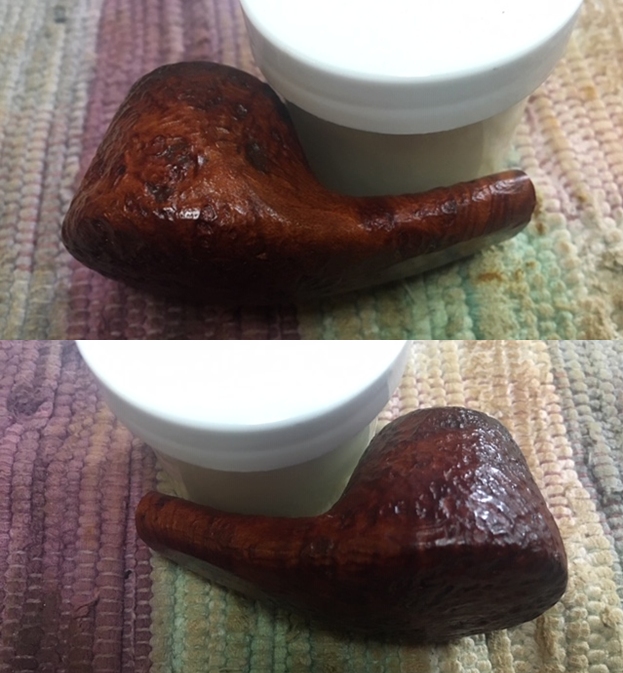
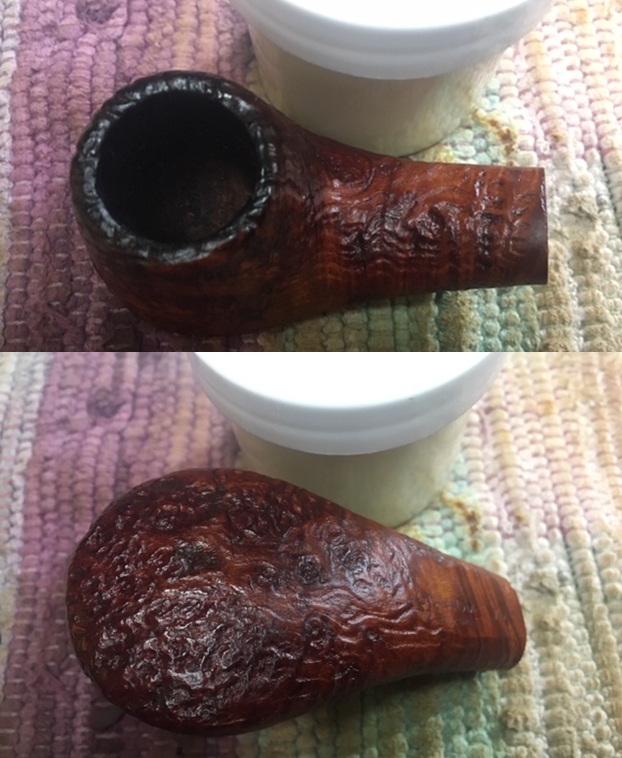
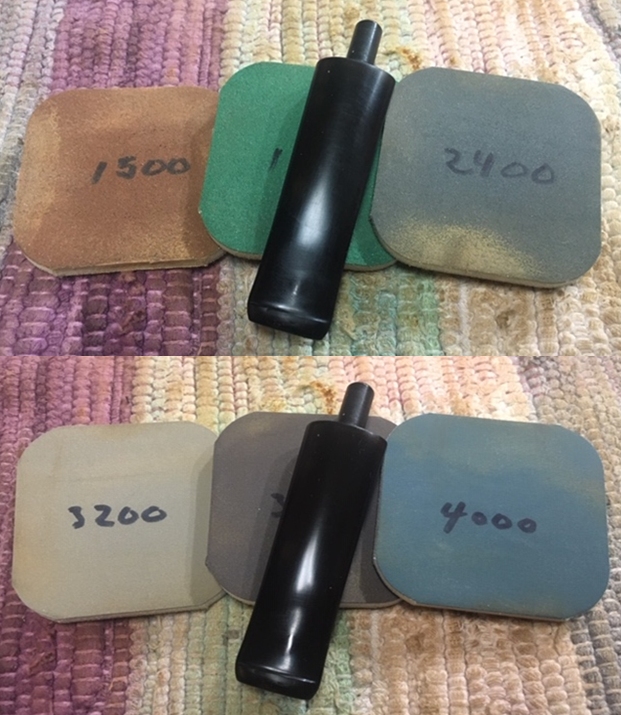
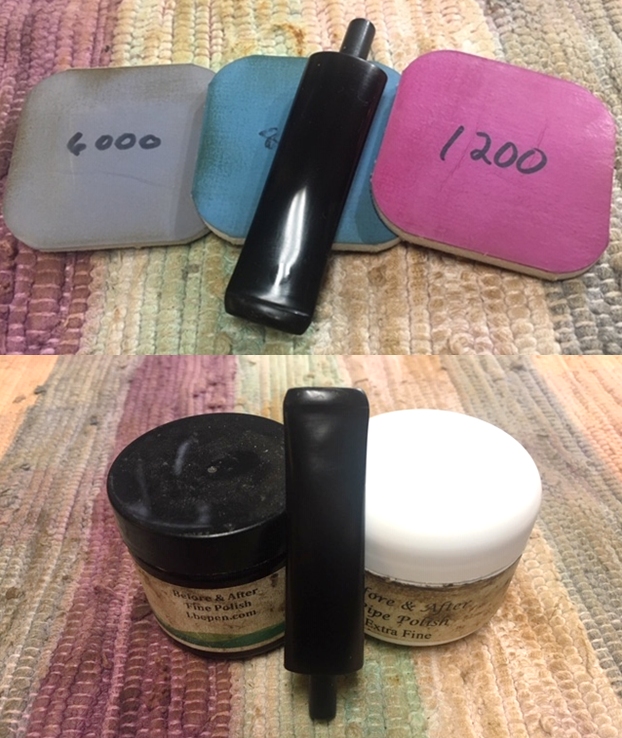
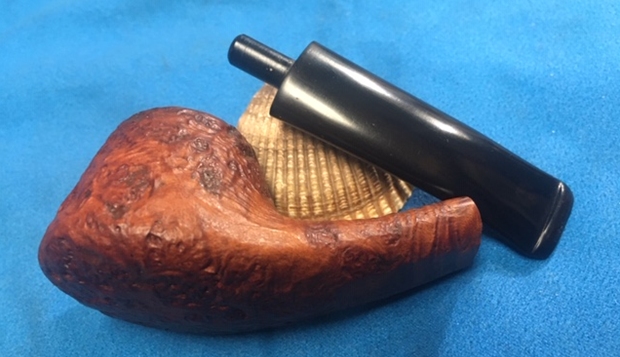
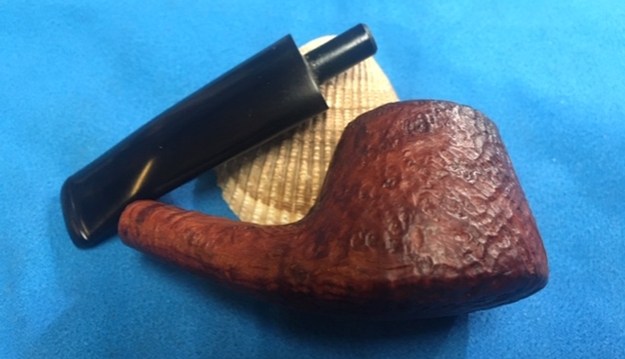
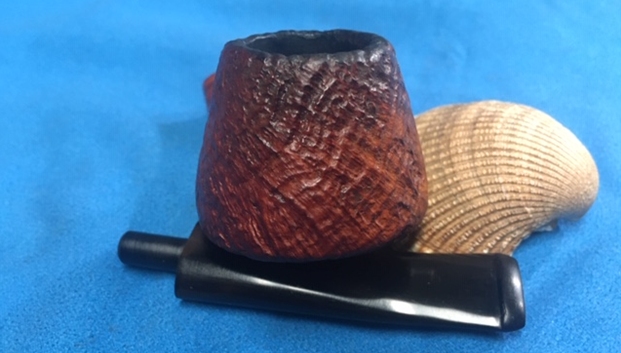
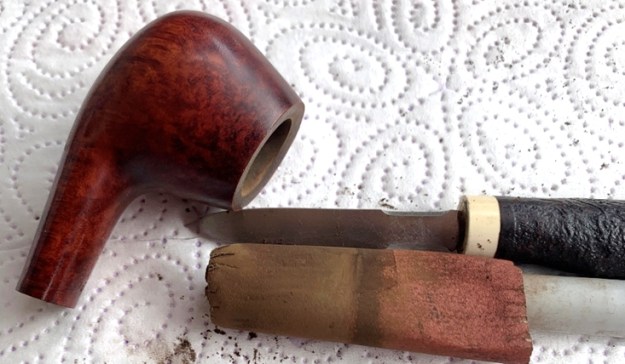
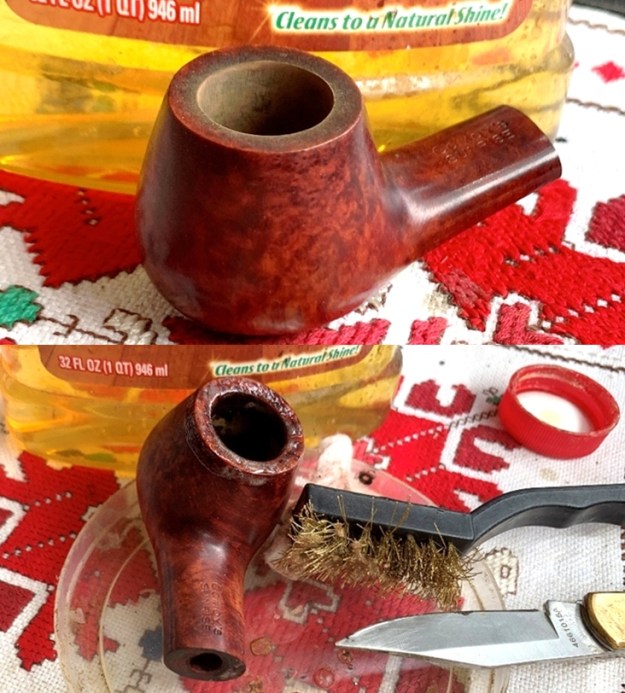
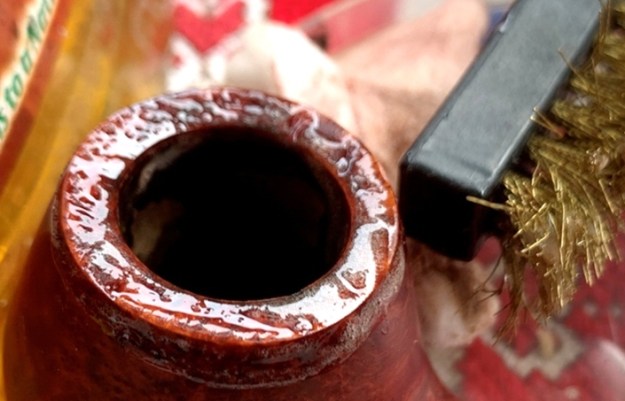
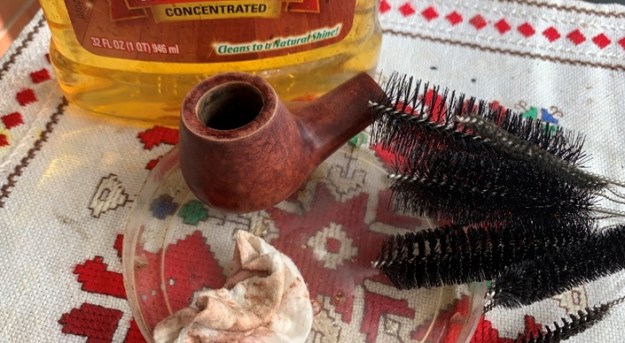
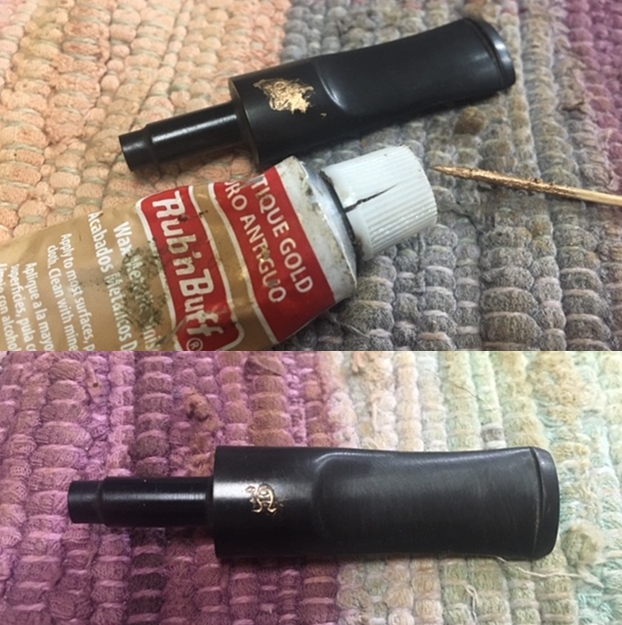
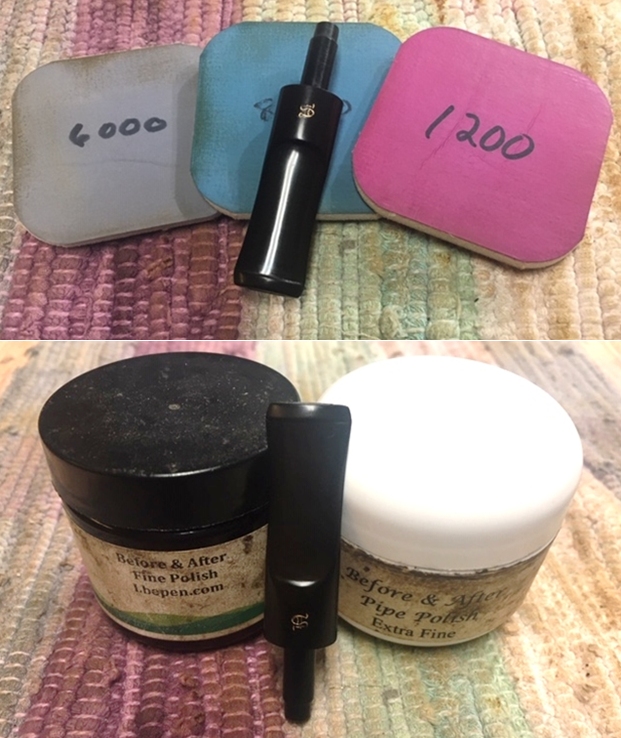
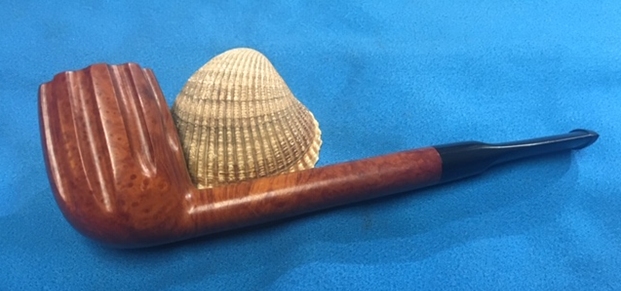
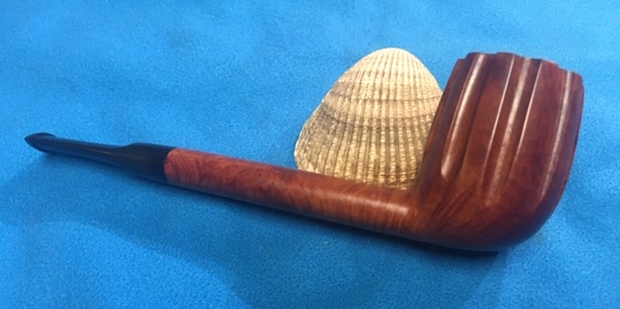
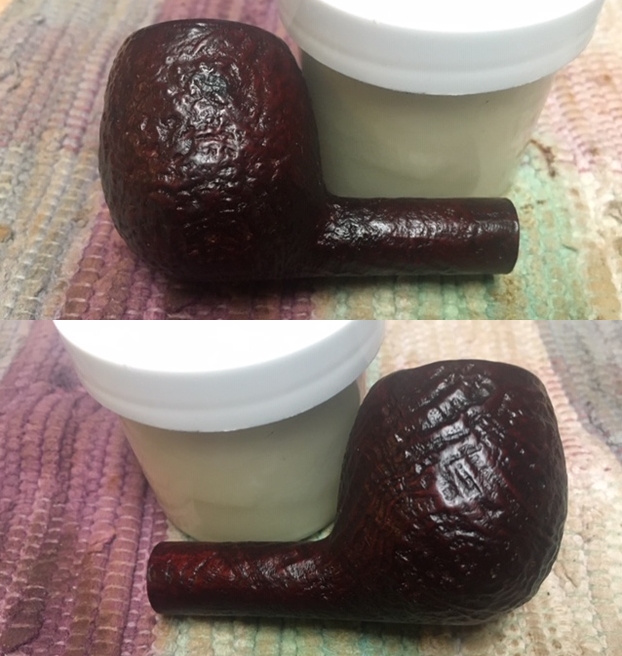
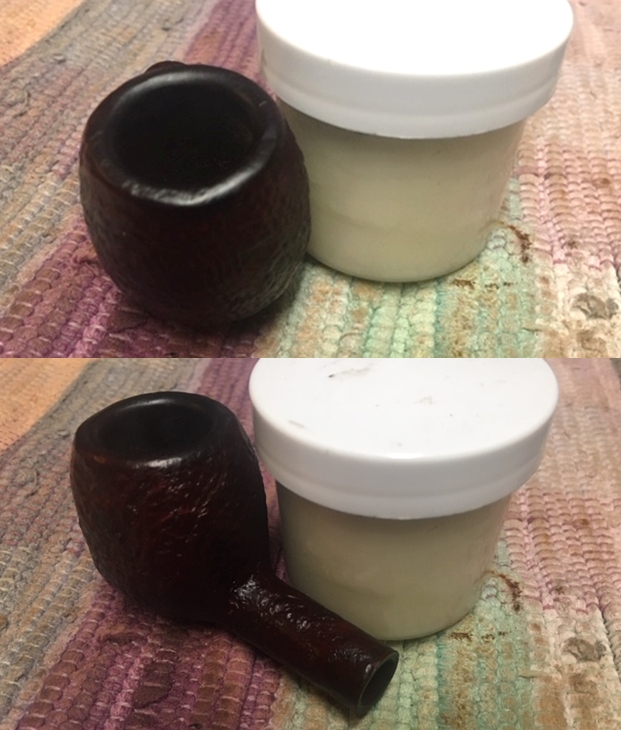
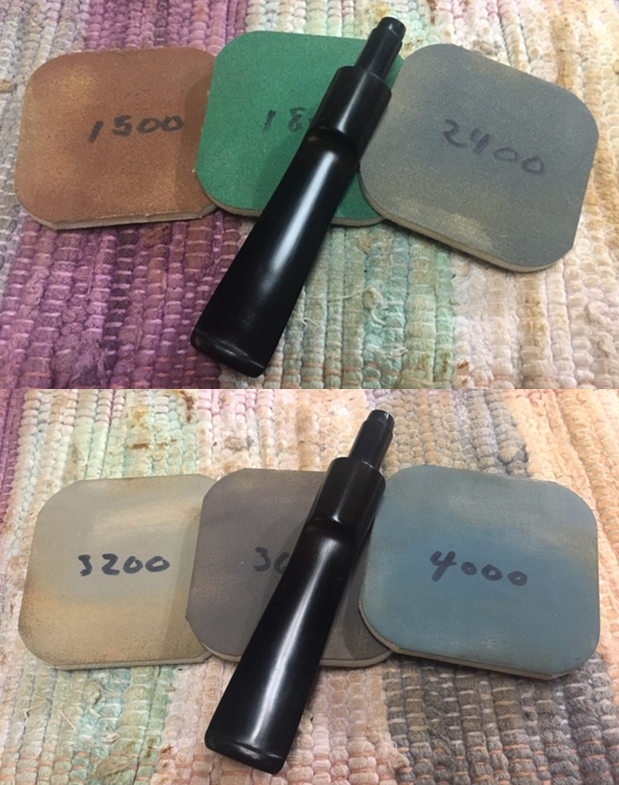
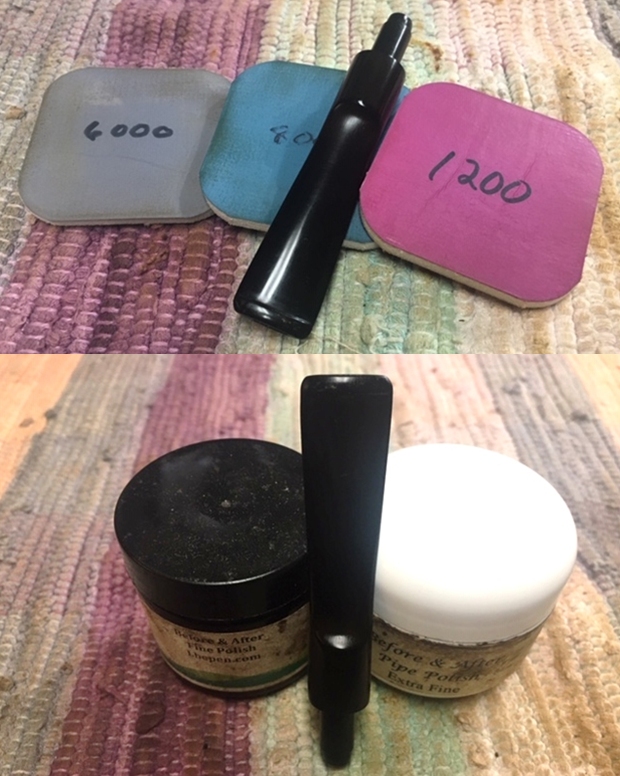
Now it was time to look at it up close and personal. Jeff had done an amazing job in removing all of the cake and the lava on the rim top. He had reamed the bowl with a PipNet Pipe Reamer and cleaned up the remnants with a Savinelli Fitsall Pipe Knife. He took the cake back to bare briar so we could check the walls for damage. He scrubbed the exterior of the bowl with Murphy’s Oil Soap and a tooth brush to remove the grime on the bowl and rim and was able to remove the lava and dirt. He cleaned out the interior of the bowl and shank with pipe cleaners, cotton swabs and alcohol until they came out clean. He cleaned the stem with Soft Scrub to remove the grime on the exterior and cleaned out the airway with alcohol, cotton swabs and pipe cleaners. I took photos of the pipe before I started my part of the restoration.  To show how clean the rim top and stem really was I took a close-up photo of the rim and stem. The bowl was clean and cake free. The rim top is very clean with no residual lava in the sandblast finish. The inner edges of the bowl look good and the nicked area on the right front is clean. The variegated brown acrylic saddle stem looks cleaned up nicely. The surface had some light tooth marks but the button edge looked really good.I took the stem off the bowl and took a picture of the pipe to give an idea of the look of the rustication and the stem. It is going to be a pretty pipe.I used a drop of super glue to fill in the chipped edge on the right front inner edge of the bowl. Once the glue repair cured I smoothed out the inner edge of the bowl with 220 grit sandpaper.I roughed up the repaired area on the rim top with a wire brush to knock of the debris from the repair. Once it was clean it matched the edges of the rest of the bowl. I knew that the original Caminetto Business 143KS  pipe had a flumed rim top and runoff down the top ½ inch of the bowl sides. I found a photo of the same pipe online and flumed the bowl on the one I had accordingly. I used a Walnut stain pen to touch up the rim top and give the bowl a slight flume around the top edge. Once I treated the pipe with Before & After Restoration Balm the flumed part would flow better with the surrounding briar.The bowl looked very good so I did not need to do any further work on it. I rubbed the bowl and shank down with Before & After Restoration Balm to deep clean the finish on the bowl and shank. The product works to clean, enliven and protect the briar. I worked it in with my fingers and with a horse hair shoe brush to get it into the nooks and crannies of the deep rustication of the finish on the bowl and shank. I let it sit for about 20 minutes to let it do its magic. I buffed it with a soft cloth. The briar really began to have a rich shine. I took some photos of the bowl at this point to mark the progress in the restoration.   The bowl was finished so I set it aside and turned my attention to the stem. I sanded out the light tooth marks and chatter with 200 grit sandpaper and started to polish it with 400 grit wet dry sandpaper. I touched up the mustache stamp on the topside of the saddle stem with Rub’n Buff Antique Gold. I rubbed it into the stamp and pressed into it with a toothpick. I buffed it off with a soft cloth and left the gold in the mustache to bring it back into place.   I polished the stem with micromesh sanding pads – dry sanding with 1500-12000 grit sanding pads. I wiped the stem down after each sanding pad with a damp cloth I finished polishing it with Before & After Pipe Stem Polish – both Fine and Extra Fine and buffed it off with a cotton cloth. This Caminetto Business 143KS Bent Egg is a real beauty and has a lot of life left. I put the bowl and stem back together again and buffed the bowl and the stem with Blue Diamond on the buffing wheel. I used a soft touch on the rusticated bowl so as not to fill it in with the polishing product. I gave the bowl several coats of Conservator’s Wax and the stem several coats of carnauba wax. I carefully buffed the entire pipe with a clean buffing pad to raise the shine. I finished buffing with a microfiber cloth to deepen the shine. The finished pipe looks very good. The rustication is very tactile and feels great in the hand. It is comfortable and light weight. The finished Caminetto Business Bent Egg is shown in the photos below. The dimensions of the pipe are Length: 6 inches, Height: 2 ¼ inches, Outside diameter of the bowl: 1 ¼ inches, Chamber diameter: ¾ of an inch. This great looking rusticated Caminetto turned out very well. It should be a great pipe. It will be going on the rebornpipes store shortly if you are interested in adding it to your collection. Thanks for reading this blog and my reflections on the pipe while I worked on it.

New Life for an Yves St. Claude French Connection 83 White Stemmed Bent Billiard


Blog by Steve Laug

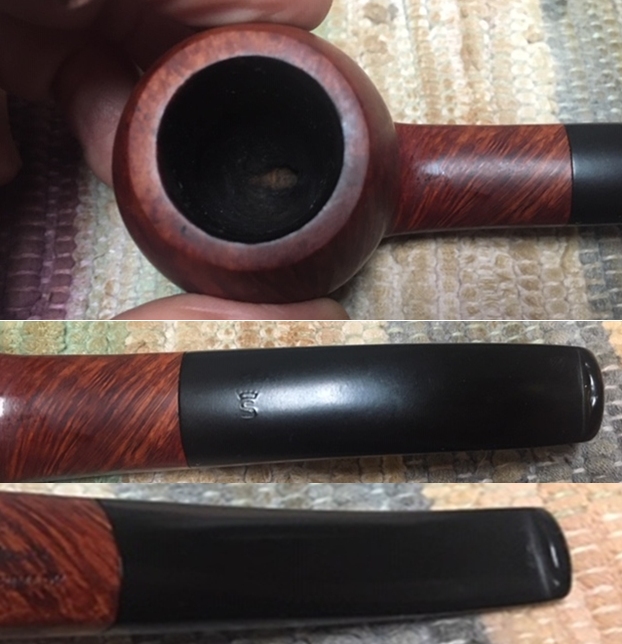
The next pipe on the work table came to us from an online auction in Ottawa, Illinois, USA. It is a nice looking smooth bent billiard with a white pearlized bent stem. It had a mix of nice grain around the bowl and shank. It has a taper variegated silver acrylic military bit stem. The shank and the stem have and inset black bar that makes aligning the stem and shank a simple proposition. The finish on the bowl is in great condition with a coat of shiny varnish over the light tan coloured stain that makes the pipe shine. The pipe has some grime on the surface of the briar. This pipe is stamped on the left side of the shank and reads Yves St. Claude [over] French Connection. On the right side of shank it has the shape number 83 followed by the Made in France circular COM stamp. There was a stylized YSC stamped on the left side of the shank. The pipe is lightly smoked with no cake in the bowl and minimal tars and oils in the stem airway. There were some very light tooth marks and chatter on both sides of the stem near the button. The pipe is in excellent condition. Jeff took photos of the pipe before he started his cleanup. He took photos of the rim top to show the condition of the top and edges of the bowl. It is a beautiful lightly smoked pipe with a carbonized bowl coating. The stem had light tooth marks and chatter on both sides ahead of the button. He took photos of the sides and heel of the bowl to show the grain around the bowl and the condition of the pipe. It is a great looking pipe.   He took photos of the stamping on the sides of the shank. It is clear and readable as noted above. He also took photos of the YSC stamp on the left side and Hand Cut on the right side of the taper stem. I turned first to a blog I had written on the restoration of previous YSC pipe that I received (https://rebornpipes.com/2020/04/23/next-on-the-table-an-yves-st-claude-marbre-75-bulldog/).

In the previous blog that I cited above I had found several references to Yves Grenard, trained in Comoy’s England factory, purchasing the Chacom plant in St. Claude. He managed the factory and it passed on to his son afterward. I am pretty certain that this Yves St. Claude pipes was made by Chacom in France with the stamping bearing Yves name.

I turned back to Pipephil’s site to have a look at what was listed there and did a screen capture of the section (http://www.pipephil.eu/logos/en/logo-y.html).I turned to Pipedia and in the listing of French Brands and Maker I found a connection of the brand to Chapuis-Comoy and that the YSC brand was made primarily for Tinder Box (https://pipedia.org/wiki/French_Pipe_Brands_%26_Makers_U_-_Z). I followed that up by turning to the Chapuis-Comoy article from Pipedia (https://pipedia.org/wiki/Chapuis-Comoy).

French factory, in St. Claude. It began with Francois Comoy who, in 1825, was making pipes in boxwood and other types, as well as in clay, for the armies of Napoleon. In 1856, the Comoy factory was the first to produce briar bowls at St. Claude. In 1870, Francois’s grandson, Henri Comoy (1850-1924) was taken prisoner in Switzerland whilst serving in the French army during the Franco-Prussian war, where he found his cousins, the Chapuis. This meeting produced the idea of an association, which only became a reality in 1922, with the creation of Chapuis-Comoy. After Henri’s death, his sons Paul and Adrien, took over the company with the support of their cousins, Emile and Louis Chapuis Sr., and in 1928 they created the Chacom brand.

In 1932, due to the economic crisis at Saint-Claude, the factory merged with La Bruyère, adopting that name, and becoming one of the biggest pipe companies in the world, with 450 workers. Louis Chapuis Jr., joined the company in 1938 and Pierre Comoy in 1947. The name Chapuis-Comoy returned in 1957 (125 workers), due to the success of the Chacom brand in France. In 1971, the London factory (see Comoy’s) became independent, and Yves Grenard, second cousin to Pierre, took over Saint-Claude, and is still running it. Between 1987 and 2001, the factory, which employed over 40 people, joined the Cuty-Fort Enterprises SA holding and, in 1994, included the Ropp brand it its catalog.

Reminded about the Chacom connection for the YSC brand it was now time to turn to the pipe itself and do my part of the work. As usual Jeff had done a thorough cleanup on the pipe. He reamed the bowl with a PipNet pipe reamer and followed up with a Savinelli Fitsall pipe knife to remove the cake. He scrubbed out the mortise and the airway in the shank and the stem with alcohol, cotton swabs and pipe cleaners. He scrubbed the exterior of the bowl, rim, shank and stem with a tooth brush and Murphy’s Oil Soap to remove the oils and tars on the rim and the grime on the finish of the bowl. He rinsed it under running water. One of the benefits of this scrub is that it also tends to lift some of the scratches and nicks in the surface of the briar. He dried it off with a soft cloth. He cleaned the internals and externals of the stem with alcohol, pipe cleaners and cotton swabs. He soaked the stem in Before & After Deoxidizer and rinsed it off with warm water and cleaned out the airway in the stem with alcohol. Other than the damaged rim top the pipe looked good.   I took a photo of the rim top and stem to show the condition. The rim top and the inner edge of the bowl were in excellent condition. The acrylic taper stem had light tooth chatter and marks on both sides ahead of the button and on the button edges. The stamping on the sides of the shank is clear and readable as noted above.I removed the stem from the shank and took a photo of the pipe to give a sense of the whole. It is a nice looking bent billiard in great condition.I started working on the pipe by removing the varnish coat as it had some bubbling on the rim top. I had to remove it from the entire pipe not just the rim top to get an even coverage when I waxed it. I sanded it with micromesh sanding pads, wet sanding with 1500-12000 grit sanding pads and wiping it down with an alcohol dampened pad after each sanding pad. I rubbed the bowl and shank down with Before & After Restoration Balm. I worked it into the surface of the bowl sides and shank with my fingertips to clean, enliven and protect the briar. I let the balm sit for a little while and then buffed with a cotton cloth to raise the shine. The Balm did its magic and the grain stood out.    I set the bowl aside and worked on the stem. I sanded out the tooth marks with 220 grit sandpaper and started polishing the stem with 400 grit wet dry sandpaper.  I polished the acrylic stem with micromesh sanding pads – 1500-12000 grit pads. I wiped it down with Obsidian Oil after each sanding pad. I used Before & After Pipe Polish – both Fine and Extra Fine to further polish the stem. The photo below shows the polished stem. This nice smooth finished Yves St. Claude French Connection 83 with a white acrylic taper stem is a great looking pipe. The rich medium brown finish and the white stem work really well together. The briar is clean and really came alive. The rich medium brown stain gave the grain a sense of depth with the polishing and waxing. The grain really popped. I put the acrylic stem back on the bowl and carefully buffed the pipe with Blue Diamond on the buffing wheel using a light touch on the briar. I gave the bowl and the stem multiple coats of carnauba wax on the buffing wheel. I buffed the pipe with a clean buffing pad to raise the shine. I hand buffed the pipe with a microfiber cloth to deepen the shine. The finished YSC French Connection Bent Billiard is a beauty and feels great in the hand and looks very good. Give the finished pipe a look in the photos below. The dimensions of the pipe are Length: 5 ½ inches, Height: 2 inches, Outside diameter of the bowl: 1 ¼ inches, Chamber diameter: ¾ of an inch. Thanks for reading this blog and my reflections on the pipe while I worked on it. There are many more to come!
New Life for a Claude Romain Silverado 2642 Sandblast Pot


Blog by Steve Laug

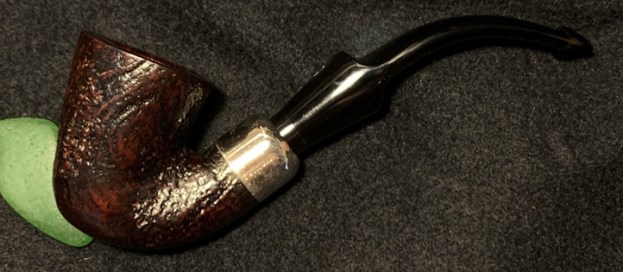
The next pipe on the work table came to us from a friend in St. Leonard, Maryland, USA. It is a nice looking Sandblast Pot with some nice grain showing through the blast. It has a taper variegated silver acrylic military bit stem. Both the end of the stem and the shank end have a silver cap that is going to be stunning once polished. The finish on the bowl is worn but it has a combination of red, brown and black stains that give depth to the sandblast. The pipe has some grime ground into the surface of the briar. This pipe is stamped on the underside of the shank and reads Claude Romain [over] Silverado. To the right of that it reads France [over] the shape number 2642. There is a thin cake in the bowl and some burn damage on the back rim top and inner edge of the bowl. The silver cap on the shank and stem are oxidized and dull. There were some tooth marks and chatter on both sides of the stem near the button. The pipe looks to be in good condition even though the finish is worn. Jeff took photos of the pipe before he started his cleanup. He took photos of the rim top to show the condition of the top and edges of the bowl. It is a worn and tired looking pipe but has some remaining beauty. The stem had light tooth marks and chatter on both sides ahead of the button.   He took photos of the sides and heel of the bowl to show the sandblast grain around the bowl and the condition of the pipe. You can see the wear and the grime ground into the surface of the briar.   He took photos of the stamping on the underside of the shank. It is clear and readable as noted above. He also took photos of the CR stamp on the left side of the taper stem. I turned first to Pipephil’s site to look at the  write up there and see if I could learn anything about the Claude Romain Company (http://www.pipephil.eu/logos/en/logo-c5.html). There was a listing for the Silverado and I did a screen capture of the pertinent section.It appears that the pipe was made by the Berrod-Regad group to be sold in the German market.

I looked up the Claude Romain brand on Pipedia to see if I could gather further information on the company (https://pipedia.org/wiki/Romain). It confirms the connection to the Berrod-Regad Group and the focus of the German Market. I quote the brief article in full below.   

Claude Romain is a second brand from Butz-Choquin. To elaborate…

(From Pipes, Artisans and Trademarks, by Jose Manuel Lopés’) Claude Romain is a French brand created in 1979 by the Berrod-Regad group for the German market. The name was from Romain (founder of the Condat region in the 5th century, which corresponds to Saint-Claude today) and Claude (a 7th century bishop who gave his name to the town Jura). Stamp Claude Romain, and Made in France. Symbol: CR

The additional information I gained was where the name came from and the connection to Butz-Choquin. I had no idea this was a Butz-Choquin second.

It was time to work on the pipe. As usual Jeff had done a thorough cleanup on the pipe. He reamed the bowl with a PipNet pipe reamer and followed up with a Savinelli Fitsall pipe knife to remove the cake. He scrubbed out the mortise and the airway in the shank and the stem with alcohol, cotton swabs and pipe cleaners. He scrubbed the exterior of the bowl, rim, shank and stem with a tooth brush and Murphy’s Oil Soap to remove the oils and tars on the rim and the grime on the finish of the bowl. He rinsed it under running water. One of the benefits of this scrub is that it also tends to lift some of the scratches and nicks in the surface of the briar. He dried it off with a soft cloth. He cleaned the internals and externals of the stem with alcohol, pipe cleaners and cotton swabs. He soaked the stem in Before & After Deoxidizer and rinsed it off with warm water and cleaned out the airway in the stem with alcohol. Other than the damaged rim top the pipe looked good.   I took a photo of the rim top and stem to show the condition. The rim top looked very good. The rim top and the inner edge of the bowl had darkening and some burn damage on the rear inner edge. The acrylic taper stem had light tooth chatter and marks on both sides ahead of the button and on the button edges. The silver cap on the end of the military bit stem would need polishing.  The stamping on the underside of the shank is clear and readable as noted above.   I removed the stem from the shank and took a photo of the pipe to give a sense of the whole. It is a nice looking sandblast military bit Pot that should clean up very well. I started working on the pipe by working over the inner edge of the rim with a folded piece of 220 grit sandpaper. I smoothed out the damage and gave the  rim top and edge a clean look that would polish out nicely. I wiped the rim top down with a damp cloth to remove the dust and debris.   I rubbed the bowl and shank down with Before & After Restoration Balm. I worked it into the surface of the bowl sides and shank with my fingertips and a horsehair shoe brush to clean, enliven and protect the briar. I let the balm sit for a little while and then buffed with a cotton cloth to raise the shine. The Balm did its magic and the grain stood out.    I polished the “silver” (which I am pretty certain is nickel) with micromesh sanding pads and a jeweler’s cloth to raise a shine and protect it against tarnish.   I set the bowl aside and worked on the stem. I sanded out the tooth marks with 220 grit sandpaper and started polishing the stem with 400 grit wet dry sandpaper.   I polished the acrylic stem and the “silver” end cap on the stem with micromesh sanding pads – 1500-12000 grit pads. I wiped it down with Obsidian Oil after each sanding pad. I used Before & After Pipe Polish – both Fine and Extra Fine to further polish the stem. The photo below shows the polished stem. I polished the stem cap with a jeweler’s cloth to protect and deepen the shine on the silver.This nice sandblasted Claude Romain Silverado 2642 MilitaryBit Pot with a variegated silver acrylic taper military bit is a great looking pipe now that it has been restored. The polish “silver” ferrule on the shank and the cap on the stem give a dignity to the pipe. The briar is clean and really came alive. The rich reddish, brown, black stains (almost like a Dunhill Shell finish) gave the grain a sense of depth with the polishing and waxing. The grain really popped. I put the acrylic stem back on the bowl and carefully buffed the pipe with Blue Diamond on the buffing wheel using a light touch on the briar. I gave the bowl multiple coats of Conservator’s Wax and the stem multiple coats of carnauba wax on the buffing wheel. I buffed the pipe with a clean buffing pad to raise the shine. I hand buffed the pipe with a microfiber cloth to deepen the shine. The finished Claude Romain Pot is a beauty and feels great in the hand and looks very good. Give the finished pipe a look in the photos below. The dimensions of the pipe are Length: 6 inches, Height: 1 ½ inches, Outside diameter of the bowl: 1 ½ inches, Chamber diameter: ¾ of an inch. Thanks for reading this blog and my reflections on the pipe while I worked on it. There are many more to come!
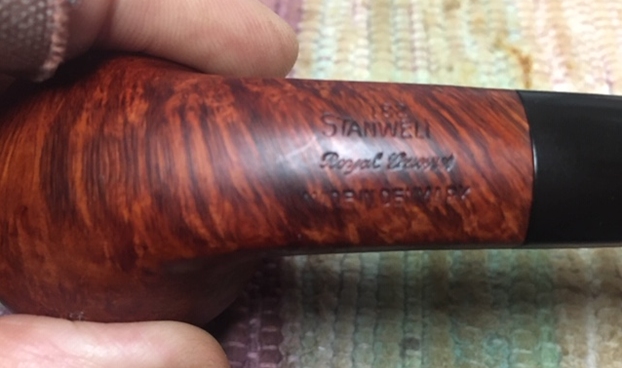
It turned out to be an Epic Pipe Hunt


Blog by Steve Laug

Jeff and his wife Sherry went on an overnight trip to Utah and did a bit of pipe hunting along with other things on their agenda. Throughout the day Jeff would either Facetime or send me a message with photos of what he was running into.  As I watched from a distance it seemed to me that he was having an epic pipe hunting trip. Each place he went whether new places that we have not been to before or places that the two of have hunted in the past yielded some great finds. I progressively wished that the border between Canada and the US was open so that Irene and I could take a trip down and join them on their journey. The first picture below is the one that he sent me when he got home – he gathered everything together and took the photo. He found the six pipe rest to the top left of the photo and the carved fisherman at the top center. Both were very interesting pieces to me. The find included a lot of different brand pipes and two of them freehand bowls without stems. There were quite a number of unsmoked pipes in the lot as well. A list of the pipes he found will be shown below with a closer look at that portion of the main picture. The first picture gives you a good feel for what he found this hunt. The second picture gives a closer look at the carved fisherman and the pipe rest. Pipe hunting over Facetime is not as good as being there but it allows me to experience some of the joys of the hunt. Thanks Jeff.

Jeff made a list of the pipes by column so that I could have a good feel for his finds.

The first column on the left has the following pipes from top to bottom:

  1. The 6 pipe rest
  2. Cowan’s Handmade Custom Unsmoked Pot
  3. Cartigiano Italy – freehand bowl sans stem
  4. Israeli Made Bridge Freehand – bowls sans stem
  5. Cowan’s Handmade Custom Unsmoked Squat Apple
  6. Genuine Meerschaum Imported Lovat (meerschaum lined??)
  7. Meerschaum Apple with acrylic stem and gold plated band


The second column from the left top to bottom has these pipes.

  1. Sasieni Four Dot Ruff Root Bark Billiard – Unsmoked with box and sock
  2. Scandanavian Freehand with plateau and rustication
  3. Preben Holm Regal Freehand
  4. W.O. Larsen Copenhagen Freehand with horn shank extension
  5. Dunhill Shell Briar Billiard 1969
  6. Blatter Montreal Billiard – red dot
  7. Mauro Series 2 Italy – Bent Billiard


The third column from the left top to bottom has these pipes.

  1. Sasieni Four Dot Rustic Billiard – Unsmoked with box and sock
  2. Sasieni Four Dot Ruff Root Bent Volcano
  3. Sasieni Four Dot Walnut Billiard
  4. Savinelli Non Pariel 9412 Bent Dublin
  5. Castello Natural Virgin Saddle Stem Billiard
  6. Castello Sea Rock Briar Apple
  7. Savinelli Capri Root Briar Dublin
  8. Comoy’s Blazon Rusticated Billiard


The fourth column from the left  top to bottom has these pipes

  1. Cowan Handmade Custom Bent Bullmoose
  2. Cowan Handmade Custom Bulldog – unsmoked
  3. Gourd Calabash (small) with an amber stem
  4. Custom Bilt Taper Billiard
  5. Custom Bilt Scoop
  6. BBB Natural Grain Zulu
  7. Caminetto Business Pot
  8. Cowan Handmade Custom Apple – unsmoked


This truly was an epic pipe hunt when you look at the brands of pipes he found and how many of them were unsmoked. The Dunhill, Sasieni, Preben Holm, Castello, Caminetto, Custom Bilt and BBB are well known brands and those alone were great finds. Added to that some of the others such as the odd Comoy’s Blazon, the older Gourd Calabash and the Savinelli Non Pariel give depth to the find. The unsmoked Cowan Handmade Custom pipes are a new brand to me and one that should be fun to search out. I would say that Jeff had a great pipe hunt and from the list of pipes I would say and epic one.  I only wish I could have been present as there is nothing quite like walking into an antique shop and finding a bonanza of pipes that have not been picked through. Thanks Jeff for sharing the trip.

Restoring a Restemmed Oscar Aged Briar 310KS Poker


Blog by Steve Laug

The next pipe on the work table came to us from a pipe hunt in Utah. It is a nice looking Poker with cross grain and birdseye grain and has a taper vulcanite stem. I am pretty certain the stem is a replacement. The bowl has a rich reddish brown colour combination that highlights grain. The pipe has some grime ground into the surface of the briar. The finish had a few small fills around the sides but they blended in fairly well. This pipe is stamped on the sides of the shank. On the left it reads Oscar [over] Aged Briar. On the right it has a Savinelli “S” Shield and next to that was the shape number 310KS [over] Italy. The replacement stem was slightly larger than the shank diameter and had rounded shoulders. There is a thick cake in the bowl and an overflow of lava on the top beveled inner edge of the bowl. The rim top looks good but it is hard to be certain with the lava coat. There were some tooth marks and chatter on both sides of the vulcanite stem near the button. The pipe looks to be in good condition under the grime. Jeff took photos of the pipe before he started his cleanup. He took photos of the rim top to show the thick cake and the thick lava coat. It is hard to know what the condition of the rim top and edges is like under that thick lava. It is an incredibly dirty pipe but obviously one that was a great smoker. The replacement stem was poorly fit to the shank and it had light tooth marks and chatter on both sides ahead of the button.   He took photos of the sides and heel of the bowl to show the beautiful grain around the bowl and the condition of the pipe. You can see the grime ground into the surface of the briar.   He took a photo of the stamping on the left side of the shank. It is clear and readable as noted above. On the right side of the shank it is stamped with the Savinelli “S” Shield and the shape number 310KS [over] Italy. I turned first to Pipephil’s site to look at the Savinelli write up there and see if I could learn anything about the Oscar Aged Briar line (http://www.pipephil.eu/logos/en/logo-savinelli3.html). There was a listing for the Oscar Aged Briar and I did a screen capture of the pertinent section.I looked up the Savinelli brand on Pipedia to see if I could find the Oscar Aged Briar line and the 310KS Shape (https://pipedia.org/wiki/Savinelli). There was nothing that tied directly to the line I am working on. There is a detailed history of the brand there that is a good read. I also captured the shape chart and boxed in the 310KS shape in red. The shape is identical to the one that I am working on. The stem on this one would have originally been a saddle stem with a shooting star logo on the left side of the saddle. The one I have has a replacement taper stem with no logo and with a poor fit to the shank.It was time to work on the pipe. As usual Jeff had done a thorough cleanup on the pipe. He reamed the bowl with a PipNet pipe reamer and followed up with a Savinelli Fitsall pipe knife to remove the cake. He scrubbed out the mortise and the airway in the shank and the stem with alcohol, cotton swabs and pipe cleaners. He scrubbed the exterior of the bowl, rim, shank and stem with a tooth brush and Murphy’s Oil Soap to remove the oils and tars on the rim and the grime on the finish of the bowl. He rinsed it under running water. One of the benefits of this scrub is that it also tends to lift some of the scratches and nicks in the surface of the briar. He dried it off with a soft cloth. He cleaned the internals and externals of the stem with alcohol, pipe cleaners and cotton swabs. He soaked the stem in Before & After Deoxidizer and rinsed it off with warm water and cleaned out the airway in the stem with alcohol. Other than the damaged rim top the pipe looked good. I took a photo of the rim top and stem to show the condition. The rim top looked very good. The rim top and the inner edge of the bowl had darkening and some nicking on the crowned edge. The vulcanite taper stem had light tooth chatter and marks on both sides ahead of the button and on the button edges. The diameter of the stem was larger than that of the shank. It also had rounded edges.   The stamping on the sides of the shank is clear and readable as noted above.     I removed the stem from the shank and took a photo of the pipe to give a sense of the whole. It is a nice looking Poker that should clean up very well. I started working on the pipe by dealing with the rounded shoulders of the stem.  I used a folded piece of 220 grit sandpaper smooth out the transition. One of the issues with the stem was that the stem was not completely round with less material on the left side of the stem. I worked on the left side to make it round. I also needed to address some light damage to the shank end so I decided to use a thin brass band to make the transition smooth and repair the edge of the band. I spread some super glue on the stem and pressed the band in place on the shank. I took photos of the banded shank. I like the look of the pipe with the band.  I worked over the rim top and inner bevel of the rim with 220 grit sandpaper. I smooth out the damage and gave the  rim top and edge a clean look that would polish out nicely. I wiped the rim top down with a damp cloth to remove the dust and debris. I polished the briar with micromesh sanding pads – wet sanding with 1500-12000 grit pads and wiped down the bowl after each sanding pad.    I rubbed the bowl and shank down with Before & After Restoration Balm. I worked it into the surface of the bowl sides and shank with my fingertips to clean, enliven and protect the briar. I let the balm sit for a little while and then buffed with a cotton cloth to raise the shine. The Balm did its magic and the grain stood out.    There was a spot on the right side of the inner bowl wall that look like a crack in some of the photos. I sanded it out with 220 grit sandpaper to smooth it out.  I set the bowl aside and turned my attention to the stem. I sanded out the tooth marks on the stem with 220 grit sandpaper and started the polishing process with 400 grit wet dry sandpaper. I polished the vulcanite stem with micromesh sanding pads – 1500-12000 grit pads. I wiped it down with Obsidian Oil after each sanding pad. I used Before & After Pipe Polish – both Fine and Extra Fine to further polish the stem. The photo below shows the polished stem. This nicely grained Savinelli Made Oscar Aged Briar Poker with a replacement vulcanite taper stem is a great looking pipe now that it has been restored. I put a thin brass band on the shank to clean up the fit of the stem to the shank. The briar is clean and really came alive. The rich reddish, brown stains gave the grain a sense of depth with the polishing and waxing. The grain really popped. I put the vulcanite stem back on the bowl and carefully buffed the pipe with Blue Diamond on the buffing wheel using a light touch on the briar. I gave the bowl and the stem multiple coats of carnauba wax on the buffing wheel. I buffed the pipe with a clean buffing pad to raise the shine. I hand buffed the pipe with a microfiber cloth to deepen the shine. The finished Oscar Aged Briar Poker is a beauty and feels great in the hand and looks very good. Give the finished pipe a look in the photos below. The dimensions of the pipe are Length: 6 inches, Height: 2 inches, Outside diameter of the bowl: 1 ½ inches, Chamber diameter: ¾ of an inch. Thanks for reading this blog and my reflections on the pipe while I worked on it. There are many more to come!
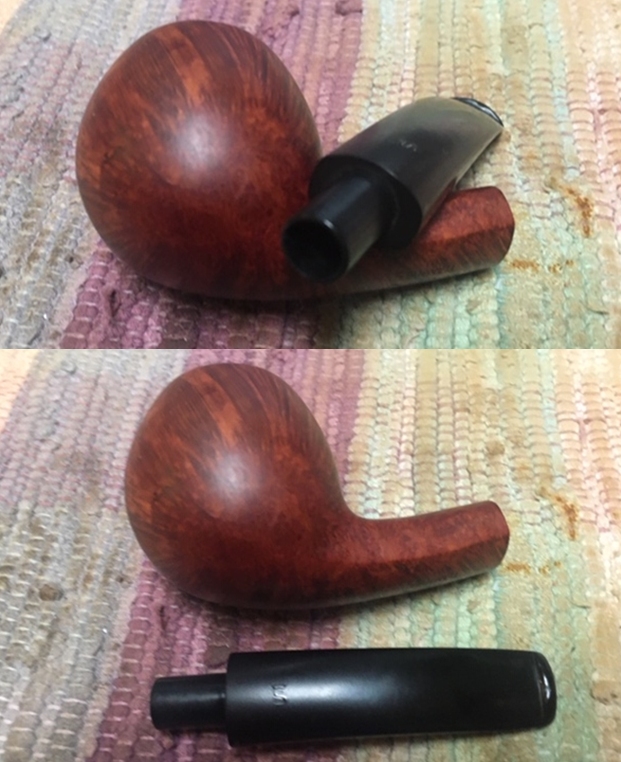
Restoring a Butz Choquin Bistro 1575 Lovat


Blog by Steve Laug

The next pipe on the work table came to us from Milton, Florida, USA early in 2019. It is a nice looking Lovat with cross grain and birdseye grain and has a saddle vulcanite stem. The bowl has a rich reddish brown colour combination that highlights grain. The pipe has some grime ground into the surface of the briar. There was a thick varnish coat over the briar and it had been broken on the rim top and along each side so it would need to be removed. This pipe is stamped on the sides of the shank. On the left it reads Butz Choquin [over] Bistro. On the right it read St. Claude [over] France [over] the shape number 1575. The saddle stem has BC stamped on the left side. There is a thick cake in the bowl and a thick overflow of lava on the rim top and edges. The rim top looks good but it is hard to be certain with the lava coat. There were some tooth marks and chatter on both sides of the vulcanite stem near the button. The pipe looks to be in good condition under the grime. Jeff took photos of the pipe before he started his cleanup. He took photos of the rim top to show the thick cake and the thick lava coat. It is hard to know what the condition of the rim top and edges is like under that thick lava. It is an incredibly dirty pipe but obviously one that was a great smoker. I will show the stem once I start my clean up. It is good condition – light tooth marks and chatter on both sides ahead of the button. He took photos of the sides and heel of the bowl to show the beautiful grain around the bowl and the condition of the pipe. You can see the grime ground into the surface of the briar. He took a photo of the stamping on the sides of the shank. It is clear and readable as noted above. He also captured the BC stamp on the saddle stem. I turned first to Pipephil’s site to look at the Butz Choquin write up there and see if I could learn anything about the line (http://www.pipephil.eu/logos/en/logo-butzchoquin.html). There was a nothing listed for the Bistro pipe but there was a short history of the brand that is worth a read.

I looked up the Butz Choquin brand on Pipedia to see if I could find the Butz Choquin Bistro Line (https://pipedia.org/wiki/Butz-Choquin). There was nothing that tied directly to the line I am working on. There is a detailed history of the brand there that is a good read.

It was time to work on the pipe. As usual Jeff had done a thorough cleanup on the pipe. He reamed the bowl with a PipNet pipe reamer and followed up with a Savinelli Fitsall pipe knife to remove the cake. He scrubbed out the mortise and the airway in the shank and the stem with alcohol, cotton swabs and pipe cleaners. He scrubbed the exterior of the bowl, rim, shank and stem with a tooth brush and Murphy’s Oil Soap to remove the oils and tars on the rim and the grime on the finish of the bowl. He rinsed it under running water. One of the benefits of this scrub is that it also tends to lift some of the scratches and nicks in the surface of the briar. He dried it off with a soft cloth. He cleaned the internals and externals of the stem with alcohol, pipe cleaners and cotton swabs. He soaked the stem in Before & After Deoxidizer and rinsed it off with warm water and cleaned out the airway in the stem with alcohol. Other than the damaged rim top the pipe looked good. I took a photo of the rim top and stem to show the condition. The rim top looked very good. The rim top and the inner edge of the bowl had darkening and the varnish coat had peeled. The vulcanite saddle stem had light tooth chatter and marks on both sides ahead of the button and on the button edges.    The stamping on the sides of the shank is clear and readable as noted above.   I removed the stem and the extension from the shank and took a photo of the pipe to give a sense of the whole. It is a nice Straight Grain Billiard that should clean up very well.   I reshaped the bowl edges with a folded piece of 220 grit sandpaper to give the rim a slight bevel. I was able to remove the damage to the inner edge.I polished the briar with micromesh sanding pads – wet sanding with 1500-12000 grit pads and wiped down the bowl after each sanding pad.    I rubbed the bowl and shank down with Before & After Restoration Balm. I worked it into the surface of the bowl sides and shank with my fingertips to clean, enliven and protect the briar. I let the balm sit for a little while and then buffed with a cotton cloth to raise the shine. The Balm did its magic and the grain stood out.  I set the bowl aside and turned my attention to the stem. I sanded out the tooth marks on the stem with 220 grit sandpaper and started the polishing process with 400 grit wet dry sandpaper.   I used Rub’n Buff Antique Gold to fill in the BC stamp on the left side of the saddle stem. I rubbed it on with a cotton swab and buffed it off with a cotton pad. While the stamp is not perfect it is very readable.   I polished the vulcanite stem with micromesh sanding pads – 1500-12000 grit pads. I wiped it down with Obsidian Oil after each sanding pad. I used Before & After Pipe Polish – both Fine and Extra Fine to further polish the stem. The photo below shows the polished stem. This nicely grained Butz Choquin Bistro Lovat 1575 with a vulcanite saddle stem is a great looking pipe now that it has been restored. The briar is clean and really came alive. The rich reddish, brown stains gave the grain a sense of depth with the polishing and waxing. The grain really popped. I put the vulcanite stem back on the bowl and carefully buffed the pipe with Blue Diamond on the buffing wheel using a light touch on the briar. I gave the bowl and the stem multiple coats of carnauba wax on the buffing wheel. I buffed the pipe with a clean buffing pad to raise the shine. I hand buffed the pipe with a microfiber cloth to deepen the shine. The finished Butz Choquin Lovat is a beauty and feels great in the hand and looks very good. Give the finished pipe a look in the photos below. The dimensions of the pipe are Length: 5 ½ inches, Height: 2 inches, Outside diameter of the bowl: 1 3/8 inches, Chamber diameter: ¾ of an inch. Thanks for reading this blog and my reflections on the pipe while I worked on it. There are many more to come!
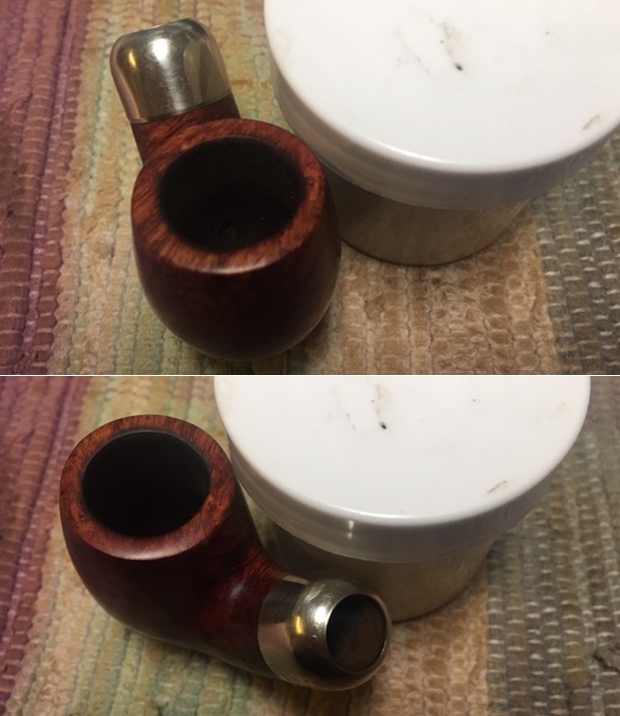
Restoring a Parker of London Straight Grain Billiard


Blog by Steve Laug

The next pipe on the work table came to us from Cornwall, Pennsylvania, USA. It is a nice looking Straight Grain billiard with a taper stem. The bowl has a rich reddish brown colour combination that highlights grain. The pipe has some grime ground into the surface of the briar. This pipe is stamped on the sides of the shank. On the left it reads Parker [over] of London. On the right it read Straight Grain. There is no shape number on the shank at all. The taper stem has a Parker “P” in a Diamond logo on the top side. There is a moderate cake in the bowl and some overflow of lava on the edges of the rim top. The rim top looks good but there is a burn mark on the left front inner edge of the bowl that leaves the bowl out of round. There were some tooth marks and chatter on both sides of the vulcanite stem near the button. The pipe looks to be in good condition under the grime. Jeff took photos of the pipe before he started his cleanup. He took photos of the rim top to show the cake and the lava coat. The inner edge of the bowl looks good other than the burn mark on the left front. The top and outer edge also look okay. It is an incredibly dirty pipe but obviously one that was a great smoker. He also captured the condition of the stem. It is oxidized, calcified and has tooth marks and chatter on the top and underside of the stem near the button.   He took photos of the sides and heel of the bowl to show the beautiful grain around the bowl and the condition of the pipe. You can see the grime ground into the surface of the briar. He took a photo of the stamping on the sides of the shank. It is clear and readable as noted above.  I turned first to Pipephil’s site to look at the Parker write up there and see if I could learn anything about the line (http://www.pipephil.eu/logos/en/logo-parker.html). There was a Parker of London pipe listed and the stamping matched the one that I am working on but there was no information on the Straight Grain.

I looked up the Parker brand on Pipedia to see if I could find the Parker of London Straight Grain (https://pipedia.org/wiki/Parker). There was nothing that tied directly to the line I am working on. There is a decent history of the brand there that is a good read.

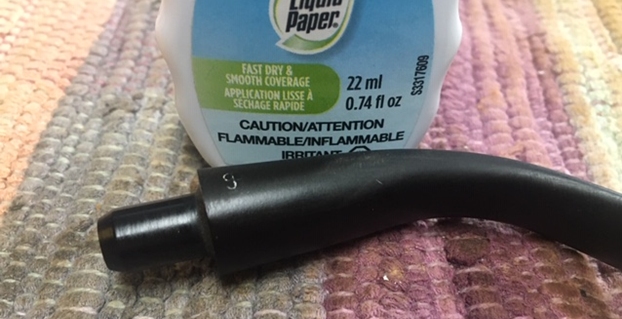
It was time to work on the pipe. As usual Jeff had done a thorough cleanup on the pipe. He reamed the bowl with a PipNet pipe reamer and followed up with a Savinelli Fitsall pipe knife to remove the cake. He scrubbed out the mortise and the airway in the shank and the stem with alcohol, cotton swabs and pipe cleaners. He scrubbed the exterior of the bowl, rim, shank and stem with a tooth brush and Murphy’s Oil Soap to remove the oils and tars on the rim and the grime on the finish of the bowl. He rinsed it under running water. One of the benefits of this scrub is that it also tends to lift some of the scratches and nicks in the surface of the briar. He dried it off with a soft cloth. He cleaned the internals and externals of the stem with alcohol, pipe cleaners and cotton swabs. He soaked the stem in Before & After Deoxidizer and rinsed it off with warm water and cleaned out the airway in the stem with alcohol. Other than the damaged rim top the pipe looked good. I took a photo of the rim top and stem to show the condition. The rim top looked very good. The rim top and the inner edge of the bowl had a burn mark on the left front of the bowl. The vulcanite taper stem had light tooth chatter and marks on both sides ahead of the button and on the button edges.    The stamping on the top and sides of the shank is clear and readable as noted above. I removed the stem and took a photo of the pipe to give a sense of the whole. It is a nice Straight Grain Billiard that should clean up very well.   I filled in the burned area with a drop of clear super glue and briar dust. I reshaped the bowl edges with a folded piece of 220 grit sandpaper to give the rim a slight bevel. The repaired area was dark but it was no longer a large burned area.I polished the briar with micromesh sanding pads – wet sanding with 1500-12000 grit pads and wiped down the bowl after each sanding pad.     I rubbed the bowl and shank down with Before & After Restoration Balm. I worked it into the surface of the bowl sides and shank with my fingertips to clean, enliven and protect the briar. I let the balm sit for a little while and then buffed with a cotton cloth to raise the shine. The Balm did its magic and the grain stood out.     I set the bowl aside and turned my attention to the stem. I “painted” the tooth marks on the stem with the flame of a Bic lighter and was able to lift them all enough that I would be able to sand them out. I sanded out the tooth marks on the stem with 220 grit sandpaper and started the polishing process with 400 grit wet dry sandpaper.   I used PaperMate Liquid Paper to fill in the Diamond P stamp on the top side of the taper stem. I let it dry the scraped off the excess with my fingernail.   I polished the vulcanite stem with micromesh sanding pads – 1500-12000 grit pads. I wiped it down with Obsidian Oil after each sanding pad. I used Before & After Pipe Polish – both Fine and Extra Fine to further polish the stem. The photo below shows the polished stem. This nicely grained Parker of London Straight Grain Billiard with a vulcanite taper stem is a great looking pipe now that it has been restored. The briar around the bowl is clean and really came alive. The rich brown stains gave the grain a sense of depth with the polishing and waxing. The grain really popped. I put the vulcanite stem back on the bowl and carefully buffed the pipe with Blue Diamond on the buffing wheel using a light touch on the briar. I gave the bowl and the stem multiple coats of carnauba wax on the buffing wheel. I buffed the pipe with a clean buffing pad to raise the shine. I hand buffed the pipe with a microfiber cloth to deepen the shine. The finished Parker Straight Grain Billiard is a beauty and feels great in the hand and looks very good. Give the finished pipe a look in the photos below. The dimensions of the pipe are Length: 6 inches, Height: 2 ¼ inches, Outside diameter of the bowl: 1 ½ inches, Chamber diameter: ¾ of an inch. Thanks for reading this blog and my reflections on the pipe while I worked on it. There are many more to come!
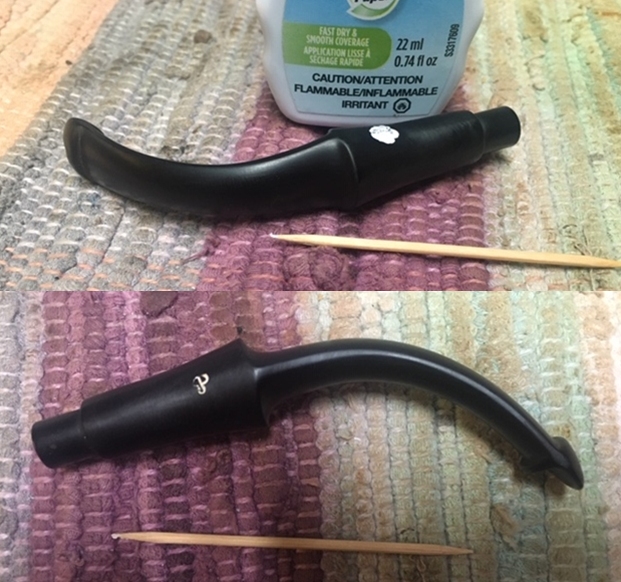
Fresh Breath for a GBD Century 2871 M Zulu


Blog by Steve Laug

The next pipe on the work table came to us from an online auction from Ottawa, Illinois, USA. It is a nice looking Zulu shaped pipe with a taper stem. The bowl has a rich reddish brown colour combination that highlights grain. The pipe has some paint spatters on the surface of the briar. This pipe is stamped on the top and underside of the shank. On the top it reads GBD in an oval [over] Century. On the underside it is stamped Champaign’s Finest [over] London England followed by the shape number 2871. There is a small upper M at the shank stem junction. The taper stem has a GBD Brass roundel on the top side. There is a moderate cake in the bowl and a a thin overflow of lava on the edges of the rim top. The rim top and the inner and the outer edges of the bowl are in good condition. There were some tooth marks and chatter on both sides of the vulcanite stem near the button. The pipe looks to be in good condition under the grime. This is a nice looking pipe and in a well-loved shape. Jeff took photos of the pipe before he started his cleanup. He took photos of the rim top to show the cake and the lava coat. The inner edge of the bowl looks good under the grime. The top and outer edge also look okay. It is an incredibly dirty pipe but obviously one that was a great smoker. He also captured the shape of the stem and the tooth marks and chatter on the top and underside of the stem near the button.    He took photos of the sides and heel of the bowl to show the grain around the bowl and the condition of the pipe. You can see the grime and paint flecks on the surface of the briar. There is also a noticeable fill on the front of the bowl. He took a photo of the stamping on the top and underside of the shank and stem. It is clear and readable as noted above.  The stem has the typical GBD Brass roundel stamp. I looked up the Century Model on Pipedia and found a little information. There was not a lot of info there but I have included it below (https://pipedia.org/wiki/GBD_Model_Information).

Century — England, unknown if also made in France: Introduced 1950.

I was unable to figure out the stamping Champaign’s Finest. I think it is probably a pipe shop and since the pipe came to us from Illinois that would make sense. Potentially, it could have come from Champaign, Illinois.

It was time to work on the pipe. As usual Jeff had done a thorough cleanup on the pipe. He reamed the bowl with a PipNet pipe reamer and followed up with a Savinelli Fitsall pipe knife to remove the cake. He scrubbed out the mortise and the airway in the shank and the stem with alcohol, cotton swabs and pipe cleaners. He scrubbed the exterior of the bowl, rim, shank and stem with a tooth brush and Murphy’s Oil Soap to remove the oils and tars on the rim and the grime on the finish of the bowl. He rinsed it under running water. One of the benefits of this scrub is that it also tends to lift some of the scratches and nicks in the surface of the briar. He dried it off with a soft cloth. He cleaned the internals and externals of the stem with alcohol, pipe cleaners and cotton swabs. He soaked the stem in Before & After Deoxidizer and rinsed it off with warm water and cleaned out the airway in the stem with alcohol. Other than the damaged rim top the pipe looked good.     I took a photo of the rim top and stem to show the condition. The rim top looked very good. There was some darkening on the back top. The inner edge of the bowl showed also looked good. The vulcanite taper stem had light tooth chatter and marks on both sides ahead of the button and on the button edges.    The stamping on the top and underside of the shank is clear and readable as noted above. I removed the stem and the extension from the shank and took a photo of the pipe to give a sense of the whole. It is a Zulu that should be very nice once it is all cleaned up.   I polished the briar with micromesh sanding pads – wet sanding with 1500-12000 grit pads and wiped down the bowl after each sanding pad.  I rubbed the bowl and shank down with Before & After Restoration Balm. I worked it into the surface of the bowl sides and shank with my fingertips to clean, enliven and protect the briar. I let the balm sit for a little while and then buffed with a cotton cloth to raise the shine. The Balm did its magic and the grain stood out.    I set the bowl aside and turned my attention to the stem. I “painted” the tooth marks on the stem with the flame of a Bic lighter and was able to lift them quite a bit. I filled in the remaining tooth marks with black super glue. When the repairs cured I recut the button and flattened the repairs with a needle file. I followed that by sanding out the tooth marks on the stem with 220 grit sandpaper and started the polishing process with 400 grit wet dry sandpaper.   I polished the vulcanite stem with micromesh sanding pads – 1500-12000 grit pads. I wiped it down with Obsidian Oil after each sanding pad. I used Before & After Pipe Polish – both Fine and Extra Fine to further polish the stem. The photo below shows the polished stem. This nicely grained GBD Century Champaign’s Finest 2871 Zulu with a vulcanite taper stem is a great looking pipe now that it has been restored. The briar around the bowl is clean and really came alive. The rich brown stains took on a sense of depth with the polishing and waxing. The grain really popped. I put the vulcanite stem back on the bowl and carefully buffed the pipe with Blue Diamond on the buffing wheel using a light touch on the briar. I gave the bowl and the stem multiple coats of carnauba wax on the buffing wheel. I buffed the pipe with a clean buffing pad to raise the shine. I hand buffed the pipe with a microfiber cloth to deepen the shine. The finished GBD Century Zulu is a beauty and feels in the hand and looks very good. Give the finished pipe a look in the photos below. The dimensions of the pipe are Length: 5 ½ inches, Height: 1 ¾ inches, Outside diameter of the bowl: 1 ¼ inches, Chamber diameter: ¾ of an inch. Thanks for reading this blog and my reflections on the pipe while I worked on it. There are many more to come!
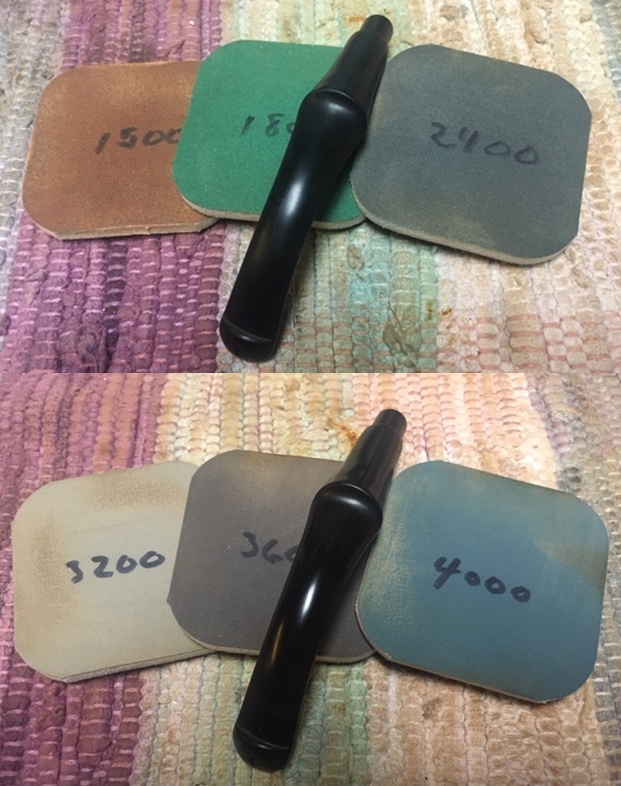
Breathing New Life into a Morel Hand Made Diplomat


Blog by Steve Laug

The next pipe on the work table came to us from a pipe hunt that Jeff and I did in Alberta. We found it in an antique shop in Lethbridge. It is squat Diplomat shaped pipe with a saddle vulcanite stem. The bowl has a rich reddish brown colour combination that highlights grain. The pipe has a lot of scratches and nicks in the surface of the briar. This pipe is double stamped on the underside of the shank and reads Morel [over] Fait Main [over] France. It appears that there is a number stamped on the top of the shank near the stem that reads 4604. The stem is also stamped Morel on the top of the saddle. There is a thick cake in the bowl and a thick overflow of lava on the edges of the rim top. The rim top and the inner and the outer edges of the bowl are pretty beat up. There were some light tooth marks and chatter on both sides of the vulcanite stem near the button. The pipe looks to be in good condition under the grime. I have worked on a few Morel pipes over the years and found them well made and well carved. I have a Morel in my own collection that I have had for over 25 years and it is a great smoker. This is an interesting piece. Jeff took photos of the pipe before he started his cleanup. He took photos of the rim top to show the thick cake and the heavy lava coat. The inner edge of the bowl looks good under the grime. The top and outer edge are nicked. You can see the scratches in the briar all around the bowl sides. It is an incredibly dirty pipe but obviously one that was a great smoker. He also captured the shape of the stem and the tooth marks and chatter on the top and underside of the stem near the button.    He took photos of the sides and heel of the bowl to show the scratches around the bowl and the condition of the pipe. You can see the grime ground into the surface of the briar. You can also see the wear on the top edge of the bowl. He took a photo of the stamping on the left side of the shank and stem. It is clear and readable as noted above. The stem has a faint Morel signature.I turned to a previous blog I had written on a Morel pipe to refresh my memory about the brand and the carver (https://rebornpipes.com/2018/06/13/simple-rebirth-of-a-morel-hand-made-freehand/).

I knew from memory that he had made pipes for Chacom at one point in time but could not remember the details. I went to pipephil’s site and looked up the brand to see what I could find. The pipe that was included in the entry on the site was similar to the one I am working on. The one I have has a flattened bottom on the shank and bowl and a twist in the shank. It also has an acrylic stem. Here is the link http://www.pipephil.eu/logos/en/logo-m7.html. I did a screen capture of the pertinent entry and the photo of Morel. They are included below.The stamping on the shank “Morel” is exactly as it is spelled out above. The “e” in Morel is the cursive letter. The Benzon – Italy stamp is the same so this helps to date the pipe to pre-1980 when Benzon ceased to be Morel’s Italian reseller.

I went on to read further on Pipedia to see if I could find more information. Here is the link. https://pipedia.org/wiki/Morel. I have included the pertinent information below as well as a photo of the carver.

In 1978, Pierre Morel, an independent free-hand pipe maker, was enlisted by Chacom to create a line of completely hand made pipes, called the Chacom Grand Cru. For this line he created the free-hand shapes Naja and “Fleur de Bruyère”. In 1987, Pierre Morel joined the team at Chapuis-Comoy full-time. (The above is an excerpt from the Chacom website)

Still employed at Chacom, Pierre Morel will be 60 in 2009 and must retire from the house that employs him.

When asked by “Pipe Gazette” in February of 2009, “If there should be a pipe of Pierre Morel, it would be what form?”, Mr. Morel responded, “Flower Morel, I’ve probably made hundreds.”

Pierre works now in his own shop. The new line is the result of over 40 years’ experience in free-hand high-grade pipe carving. His new High-grade line will be available online. Here is a link to his website, http://www.pierremorelpipes.fr/pipes-disponibles-pierre-morel-1.htm

Now I had a pretty good idea of the brand and the maker of this pipe as well a bit of clarity on the date is was carved

As usual Jeff had done a thorough cleanup on the pipe. He reamed the bowl with a PipNet pipe reamer and followed up with a Savinelli Fitsall pipe knife to remove the cake. He scrubbed out the mortise and the airway in the shank and the stem with alcohol, cotton swabs and pipe cleaners. He scrubbed the exterior of the bowl, rim, shank and stem with a tooth brush and Murphy’s Oil Soap to remove the oils and tars on the rim and the grime on the finish of the bowl. He rinsed it under running water. One of the benefits of this scrub is that it also tends to lift some of the scratches and nicks in the surface of the briar. He dried it off with a soft cloth. He cleaned the internals and externals of the stem with alcohol, pipe cleaners and cotton swabs. He soaked the stem in Before & After Deoxidizer and rinsed it off with warm water and cleaned out the airway in the stem with alcohol. Other than the damaged rim top the pipe looked good.   I took a photo of the rim top and stem to show the condition. It is clean but the crowned rim top was damaged. It looked like the pipe had been hammered against a hard surface. The inner edge of the bowl showed some nicks all the way around. The vulcanite saddle stem had light tooth chatter and marks on both sides ahead of the button and on the button edges.    The stamping on the underside of the shank is double stamped and reads as noted above. It is clear and readable. I removed the stem and the extension from the shank and took a photo of the pipe to give a sense of the whole. It is a Diplomat shaped that should be interesting once it is all cleaned up.   Now it was time to do my work on the pipe. I started by working on the crowned rim with a folded piece of 220 grit sandpaper to remove the damage and smooth it out.    I filled in the deep gouges that remained in the bowl with clear super glue and once the glue cured sanded them with a 1500 grit micromesh pad to blend them into the surface of the briar. I polished the briar with micromesh sanding pads – wet sanding with 1500-12000 grit pads and wiped down the bowl after each sanding pad.  I rubbed the bowl and shank down with Before & After Restoration Balm. I worked it into the surface of the bowl sides and shank with my fingertips to clean, enliven and protect the briar. I let the balm sit for a little while and then buffed with a cotton cloth to raise the shine. The Balm did its magic and the grain stood out.  I set the bowl aside and turned my attention to the stem. I filled in the deep cuts and tooth marks with black super glue. When the repairs cured I recut the button and flattened the repairs with a needle file. I followed that by sanding out the tooth marks on the stem with 220 grit sandpaper and started the polishing process with 400 grit wet dry sandpaper.   I touched up the faint stamping on the top of the saddle – it read Morel. I daubed on some Paper Made Liquid Paper. Once it cured I scraped it off with a tooth pick. While it was faint it picked up some of the letters.I polished the vulcanite stem with micromesh sanding pads – 1500-12000 grit pads. I wiped it down with Obsidian Oil after each sanding pad. I used Before & After Pipe Polish – both Fine and Extra Fine to further polish the stem. The photo below shows the polished stem. This smooth finish, nicely grained Morel Hand Made Diplomat with a vulcanite taper stem is a great looking pipe now that it has been restored. The briar around the bowl is clean and really came alive. The rich brown stains took on a sense of depth with the polishing and waxing. The grain really popped. I put the vulcanite stem back on the bowl and carefully buffed the pipe with Blue Diamond on the buffing wheel using a light touch on the briar. I gave the bowl and the stem multiple coats of carnauba wax on the buffing wheel. I buffed the pipe with a clean buffing pad to raise the shine. I hand buffed the pipe with a microfiber cloth to deepen the shine. The finished Morel Diplomat is a beauty and feels in the hand and looks very good. Give the finished pipe a look in the photos below. The dimensions of the pipe are Length: 5 inches, Height: 1 ¼ inches, Outside diameter of the bowl: 1 ½ inches, Chamber diameter: ¾ of an inch. Thanks for reading this blog and my reflections on the pipe while I worked on it. There are many more to come!

Readying a Beautiful Vintage London Made Peterson’s Of Dublin Calabash For It’s Second Inning


Blog by Paresh

While going through the second box of my inherited pipes, I came across a beautiful delicate Calabash shaped pipe which called out to me for restoration. That this would be a Peterson’s pipe came as a surprise since it did not have the patented Peterson’s P-lip and obviously, it was not a System pipe. I remembered that one of the first pipes from my inheritance that I had sent to Steve for restoration had been a Peterson’s rusticated petite Calabash pipe. I revisited the blog and memories of my early association with Steve, the gentleman, a great friend and now my Guru and constant companion on my journey in to the beautiful world of pipe restorations, came flooding back. I cherish his friendship and our association. Here is the link to the write up he had done on that rusticated tiny Calabash pipe (https://rebornpipes.com/2018/04/22/pareshs-grandfathers-pipe-5-a-tiny-peterson-bent-calabash-pipe/).

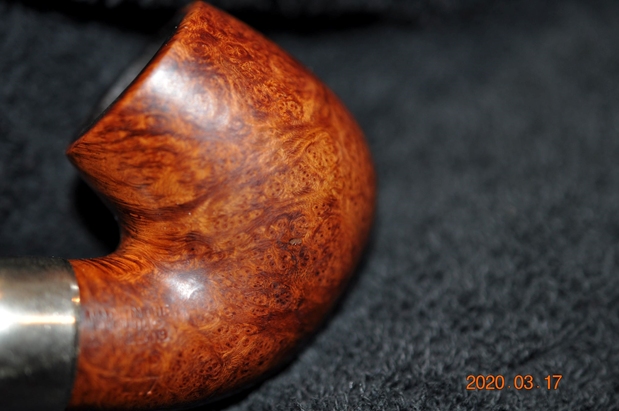
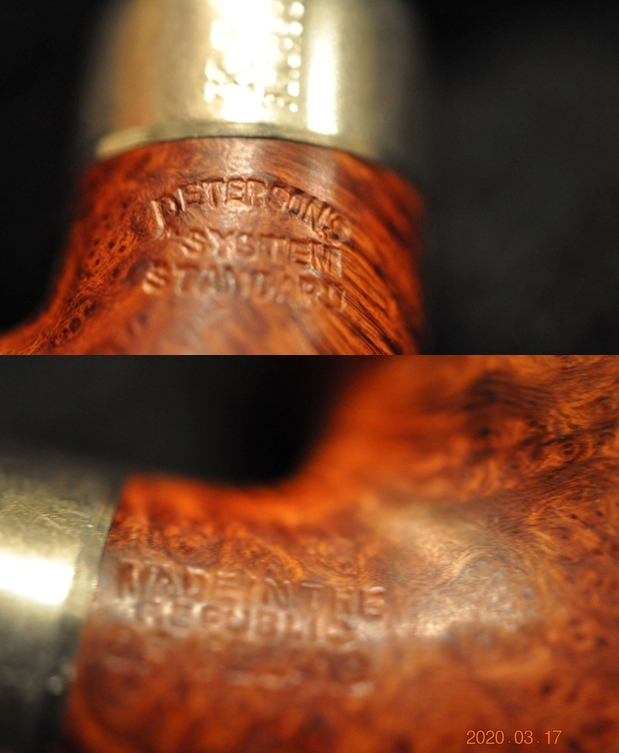
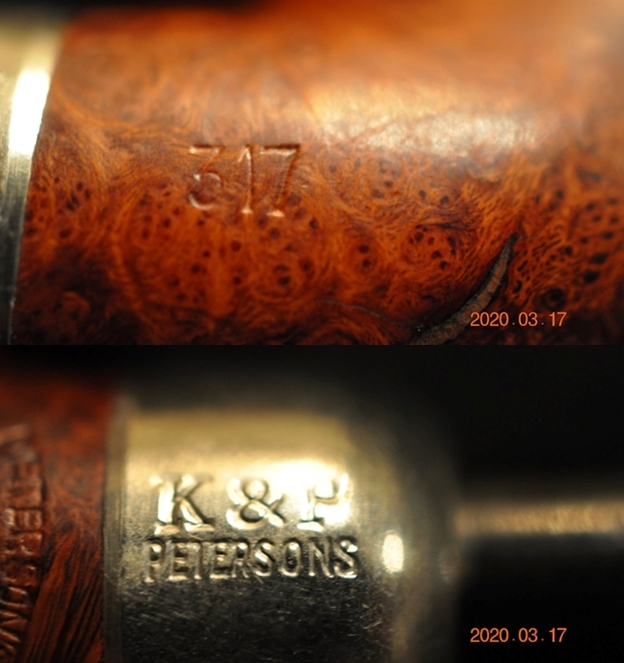
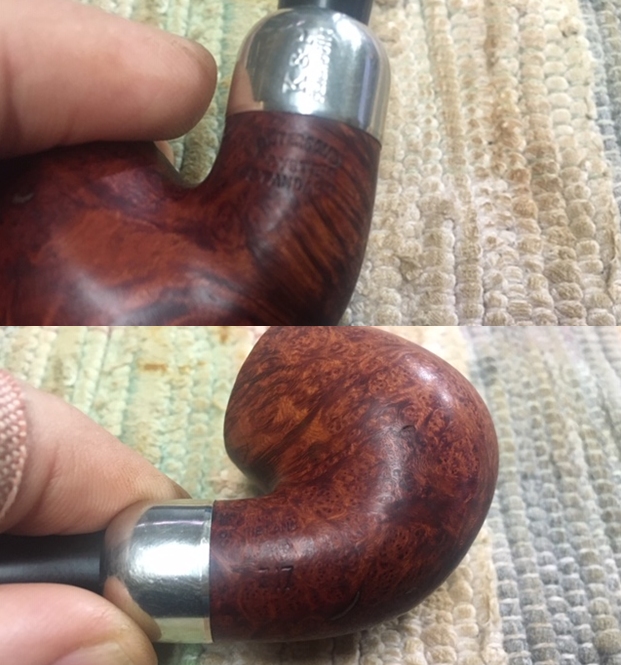
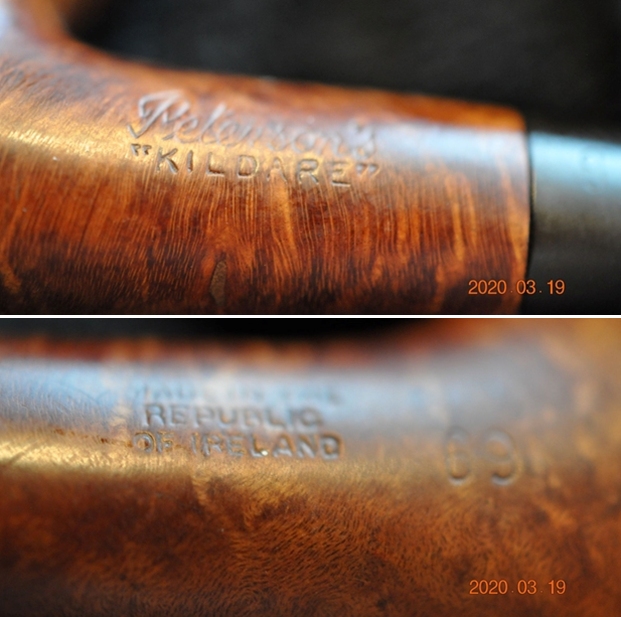
I have researched and worked on a few vintage as well as new Peterson’s and seeing the stampings on this calabash, I knew this had to be an old Peterson’s. The stummel has a nice spread of mixed grains all around and a nice feel in the hand. It is stamped on the left side of the shank as “PETERSON’S” in an arch with a forked ‘P’ over “OF DUBLIN”. The right of the shank bears the COM stamp “LONDON MADE” over “ENGLAND”. The familiar script “P” on the saddle adorns the left side of the saddle stem.  While dating a Peterson’s pipe, I always fall back to my under mentioned favorite site; http://thepetersonpipeproject.blogspot.com/2007/07/dating-peterons-pipes.html

I quote from the above site

“English made Peterson pipes actually span between the pre-Republic and Republic eras. In 1895, Peterson opened a shop in London England that lasted until the late 1950s or early 1960s. So the English Era, for a simplified date, will be from 1895 through 1959. The stamps Peterson used in London and that we have seen are:

Made in England – block format

Made in England – circle format

Made in London

Made in London England

Simply, London England

Great Britain

Though there are a couple of more, the above will give one the general idea. We believe the earliest stamp of this era was the “Made in England” in a block format since Peterson was using the “Made in Ireland” block format at about the same time on their Irish production pipes. The “Made in England” circle format was used during the same time frame as the “Made in Eire” and “Made in Ireland” circle formats.

From the start of the Patent Era until somewhere in the early 1930s, Peterson used the “Old Style” lettering that used a forked tail “P” in Peterson.

Thus from the above, it can be concluded that the pipe on my work table is from the English Era and dates from the period 1895 to1930s.

Initial Input By Abha About The Condition Of The Pipe
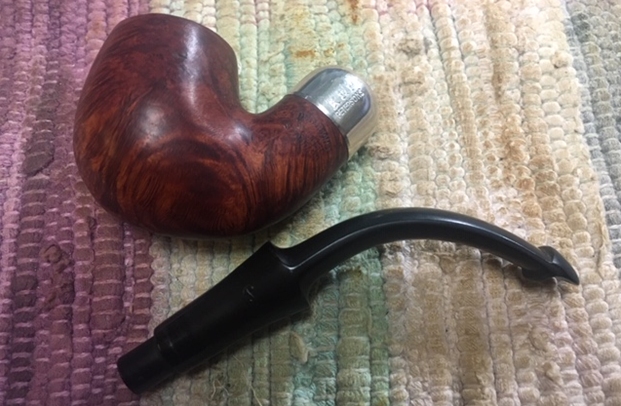
As is her habit, Abha my wife, had not taken any pictures of the pipe before she carried out her initial cleaning of the pipe and the only remembrance about this pipe she had was that there was a very heavy build up of cake in the chamber that had spilled over the rim top and over the stummel surface. The mortise was choked and the stem did not sit flush with the shank end. The stem was deeply oxidized.

Initial Cleaning By Abha…
The initial cleaning on this pipe was done by Abha, my wife (she has cleaned up around 60 pipes for my further restoration and I am gradually inching forward completing these pipes). She reamed out the complete cake and further smoothed out the chamber walls with a folded piece of 220 grit sand paper. She further cleaned out the internals of the shank with pipe cleaners and alcohol and cotton buds. She followed the internal cleaning of the shank with external cleaning of the stummel using Murphy’s Oil soap and hard bristled tooth brush and dried it with paper napkins and cotton cloth.

Next she cleaned out the internals of the stem air way and immersed it in “Before and After Deoxidizer” solution along with the stem of other pipes in line for restoration. Once the stem had soaked overnight, she cleaned the stem under running warm water and scrubbed the raised oxidation from the stem surface using scotch brite pad. She further removed the oxidation by scrubbing the stem with 0000 grade steel wool and applied a little olive oil to rehydrate the stem.

Once The Pipe Is On My Work Table…
The cleaned up pipes presents a very clear picture of what needs to be done to restore this pipe to a pristine and smokable condition. I really cannot thank Abha, my wife, enough for all the help and support that she extends me in my pursuance of this hobby. I proceed to carry out my appreciation of the work that needs to be done on this pipe to restore it.

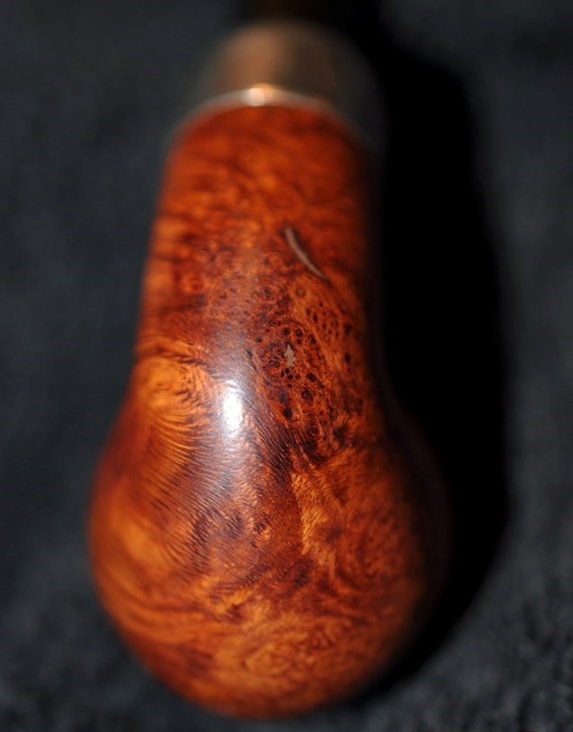
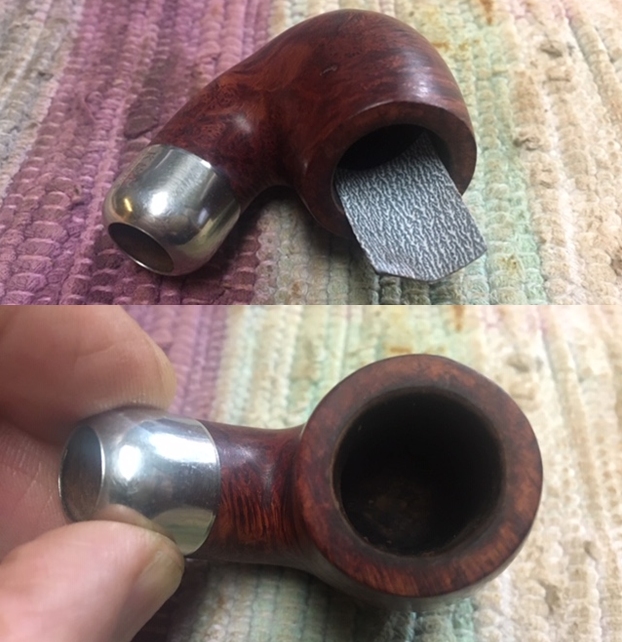
The chamber is of a decent size with a depth of about 1.8 inches. The wide flared out mouth of the chamber tapers down towards the heel, giving the pipe its classic calabash shape. The walls of the chamber are in pristine condition with no signs of heat lines or fissures. The rim top surface is uneven, scratched and darkened. The inner edge has a couple of minor dents and dings and is slightly charred on the left side in 7 o’clock direction. Close observation of the outer edge under magnification shows what appears to be a hairline crack in the 12 o’clock direction (encircled in red). The chamber smells clean and fresh, thanks to the thorough cleaning by Abha. The hairline crack, hopefully, is superficial and may be addressed when the rim is topped on a sandpaper to remove the scratches, dings to the inner edge and the darkening over the rim surface.The nicely cleaned stummel looks solid with nice mixed grains and swirls all around. There is not a single fill in the entire stummel surface, signifying excellent briar selection by Peterson’s carvers. Abha had painstakingly cleaned out the mortise and the sump. The briar looks dark, dull and lifeless. A nice polish and revitalizing the briar with “Before and After” restoration balm will rejuvenate the briar and make things interesting!! The cleaned up stem that came to me shows bite marks to the upper surface and button edge and there is a need to sharpen the button first by filling and then sanding the surface. Similarly, the lower button edge has a few tooth chatter and indentations and will need a fill to repair. The Process
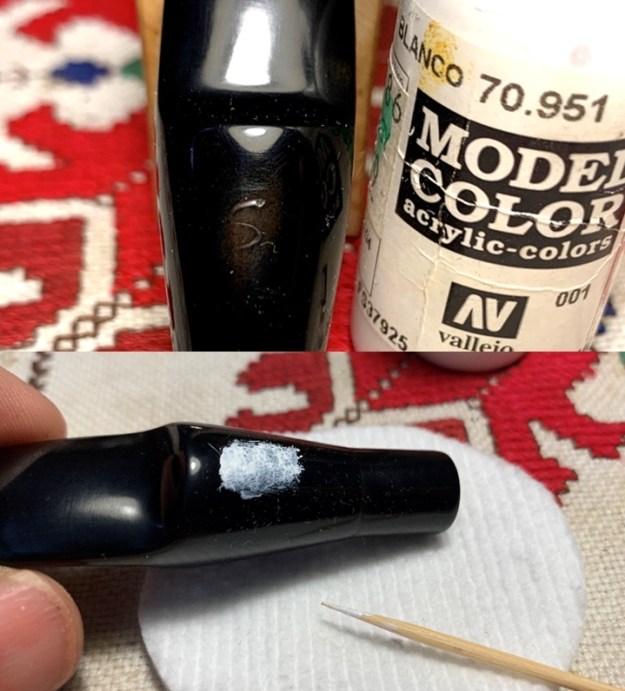
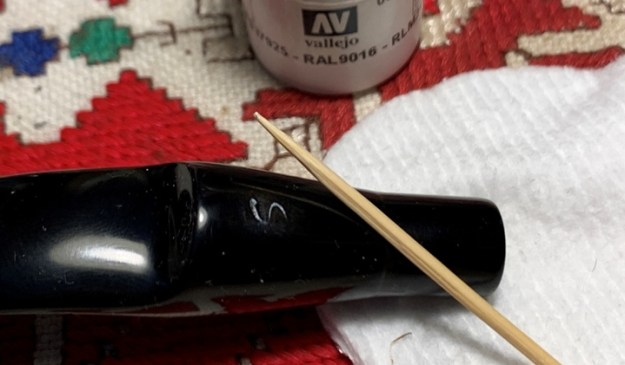
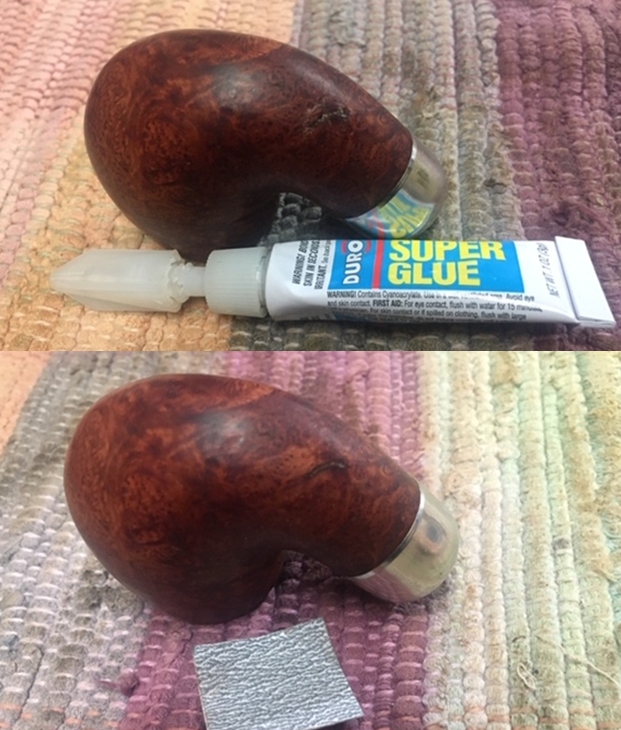
I started this project by sanding the stem surface with a 220 grit sand paper to address the issue of tooth chatter. I wiped the stem with alcohol on a cotton swab to remove all the sanding dust from the stem surface. I followed it up by wiping the surface with Murphy’s Oil soap. This step also helps to remove the oxidation from the stem’s surface. The tooth chatter and the tooth indentations from both the upper and lower surface have been greatly reduced. The remaining tooth indentations and the button edges will need to be filled with charcoal and superglue. I mix clear superglue and activated charcoal and applied it over the both button edges, upper P-lip surface and lower surface of the P-lip. I set the stem aside for the fills to cure.Once the stem fills had hardened considerably, with a flat head needle file, I sand these fills to achieve a rough match. I further fine tuned the match by sanding the filled area with a folded piece of 220 grit sand paper pinched between my thumb and forefinger. I followed it up by sanding the entire stem surface using 320, 600, 800 grit sand papers and finally with a piece of 1000 grit sandpaper. This serves to remove the deep seated oxidation and also reduces the sanding marks of the more abrasive sand papers. I also sharpened the button edges while sanding. I wiped the stem with a cotton swab and alcohol to remove all the oxidation and sanding dust from the surface. I applied a little Extra Virgin Olive oil over the stem and set it aside to be absorbed by the vulcanite. The next issue that I addressed was that of the rim top surface damage. I topped the rim on a piece of 220 grit sand paper, checking frequently till I was satisfied that the charred inner rim edge on the left side in 7 o’clock direction was addressed to a great extent and the rim top surface is nice, smooth and even. The inner edge is still uneven, though much better than before topping, and shall be addressed next. With a folded piece of a 220 grit sand paper pinched between my thumb and forefinger, I created a slight bevel on the inner edge of the rim top surface. This helped to mask the out of round chamber and address the minor dents that had remained on the inner rim edge. It can never be perfect; it’s a repair after all, but the repairs sure looks good.   I was very happy by the way the rim surface appeared at this stage in restoration. The crack that was observed under camera magnification, is neither visible to the naked eye nor in the pictures that I had clicked of the rim surface after topping. However, I wanted to be doubly sure that the hairline crack was only superficial and had been addressed with topping the rim surface. I increased the magnification of my mobile phone camera to 5x and sure enough, I could make out the crack (indicated with blue arrow). Just on a haunch, I traced the path of the crack over the stummel surface and sure enough, it extended below the outer rim edge for about ¼ of an inch, though very thin (indicated with blue arrow). Ahhhhh… What a pain that revelation was!! Though it’s a very fine hairline crack, I would address it to prevent it from enlarging and expanding over the rest of the stummel surface and /or the rim top. Just to be sure that the crack had not penetrated inside the chamber, I double checked and traced the extent of the crack over the inner edge and in to the chamber. Thankfully, the corresponding inner edge and chamber walls are sans any damage (enclosed in green). I now address the crack that is seen to the front of the stummel in 12 o’clock direction. Firstly, I clean off all the dirt from the stummel surface by sanding it to reveal the extent of the crack. I follow up this cleaning of the crack by marking the end points and turning points of the crack with a sharp dental pick. These marks also help to guide the drill bit when drilling the counter hole. I take care that the drill is just sufficiently deep enough to arrest the further spread of the crack and not a through hole. I generally drill two counter holes; first at the exact end point of the crack and second at the suspected/ likely progression end of the crack.  I fill this crack and the counter holes with a mix of CA superglue and briar dust. Once the fill has cured for couple of hours, I sand it down with a flat needle file to achieve a rough match with the rest of the stummel surface. I fine tune the match with a piece of 220 sand paper.   I continued the stummel repairs by sanding the fill and the entire stummel with a folded piece of 220 grit sand paper. I was especially very careful around the stummel stampings, least I obliterate it by sanding.   Turning my attention back to the stem, I decided to polish and shine up the stem surface. I wet sand the stem with 1500 to 12000 grit micromesh pads. Next I rub a small quantity of extra fine stem polish that I had got from Mark and set it aside to let the balm work its magic. After about 10 minutes, I hand buffed the stem with a microfiber cloth to a nice shine. I rub a small quantity of olive oil in to the stem surface to hydrate it and set it aside.   Next, I polished the stummel with micromesh pads, dry sanding with 1500 to 12000 pads. I polished the freshly topped rim surface and the newly created inner rim bevel. I wiped the surface with a soft cloth at the end of the micromesh cycle. The stummel looks amazing with a deep shine and beautiful grains popping over the stummel surface. I am surprised that the rim top surface has the same deep brown coloration as the rest of the stummel surface and use of stain pen was not required.   I massaged a small quantity of “Before and After Restoration Balm” with my fingers into the briar. The immediate and incredible transformation that takes place is a worthy reward for all the efforts!! I let the balm sit on the surface to be absorbed in to the briar for about 20 minutes. The bowl now looks fresh and attractive with the grains popping out any which way you look at the briar; it feels somewhat like DIWALI, the festival of lights celebrated here in India. I polished off the balm with a soft cloth to a lovely shine.    Before I could move on to polishing with Blue Diamond and carnauba wax, there was one issue yet to be addressed; that of refreshing the stem logo. I coated the stem logo with the ink of white correction pen and set it to dry out.I mount a cotton cloth buffing wheel on to my hand held rotary tool and apply a coat of Blue Diamond to the stummel and the stem to polish out the minor scratches. With a cotton buffing wheel that I use for carnauba wax, I apply a coat of carnauba wax and continue to work on it till the complete coat of wax had been polished out. I mount a clean cotton cloth buffing wheel and give the entire pipe a once over buff. I finished the restoration by giving the entire pipe a rigorous hand buffing using a microfiber cloth to raise the shine further. The finished pipe looks beautiful and will be an addition to my collection of Peterson’s pipes!! P.S. The stem logo did not turn out to be as crisp as it usually does!! Maybe, the stamping was not as deep as I thought it would be.

This project presented me with an unexpected repair work. The crack, even though a fine hairline crack it may have been, has the potential for developing in to a much more serious issue of a burnout. The counter holes stand out against the highly polished stummel surface and I have let them be. The only way to mask these was to resort to staining the entire stummel which would be at the cost of the beautiful natural briar color and not to mention the grains.

Sincere gratitude to all the readers who have shared this part of my journey in to the world of pipe restoration…Cheers!!