Monthly Archives: April 2026

Rescuing an Old, Enigmatic Bamboo Meerschaum Sitter


by Kenneth Lieblich

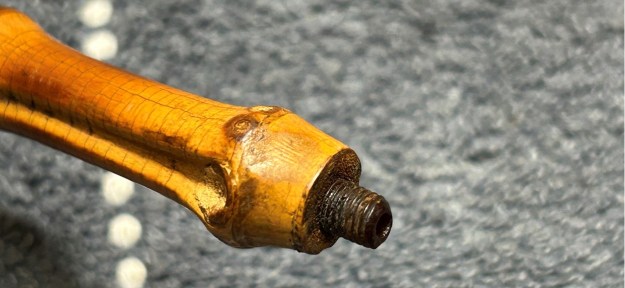
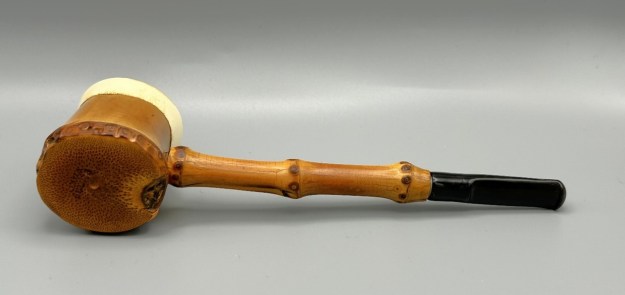
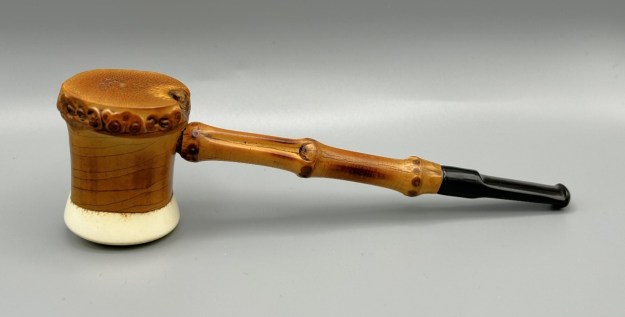
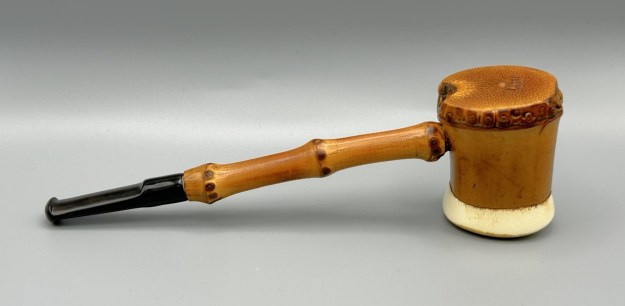
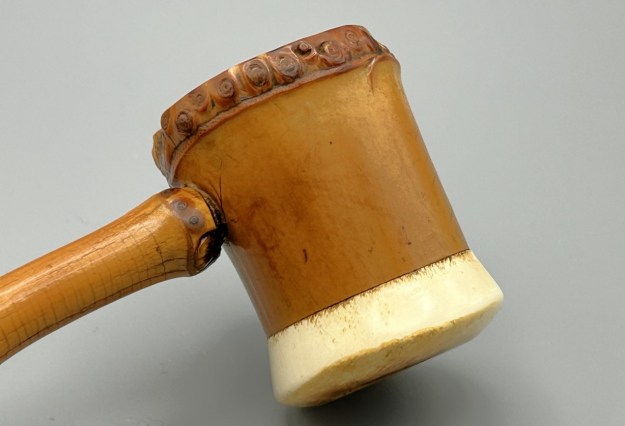
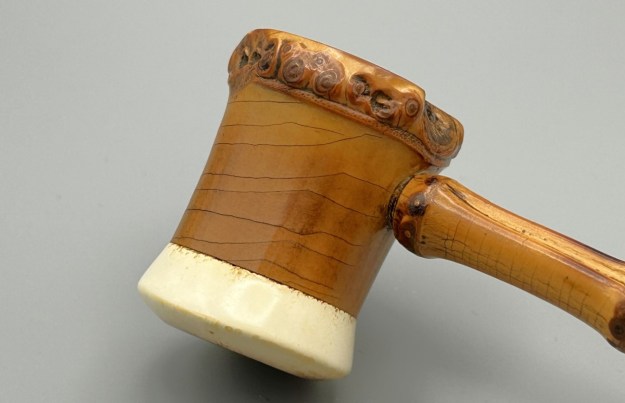
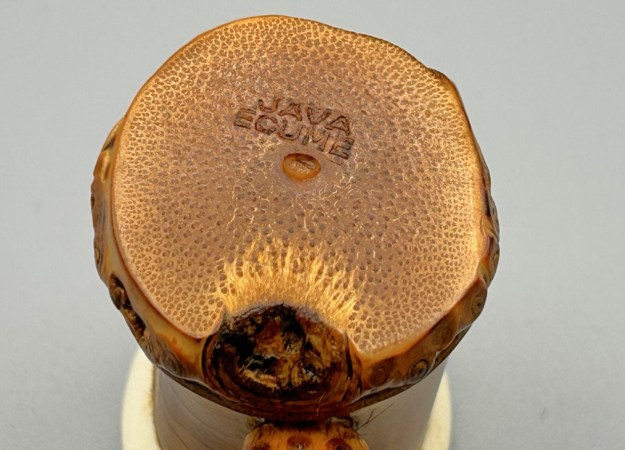
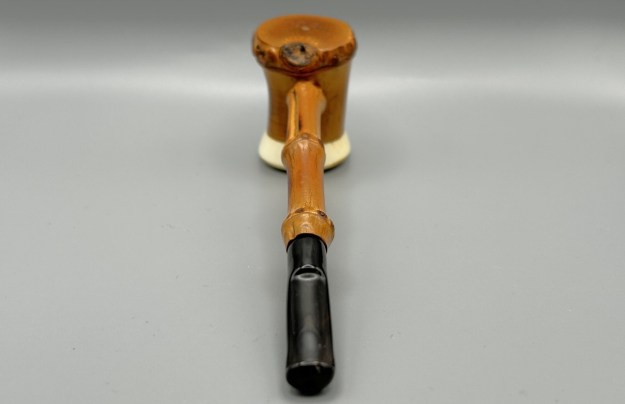
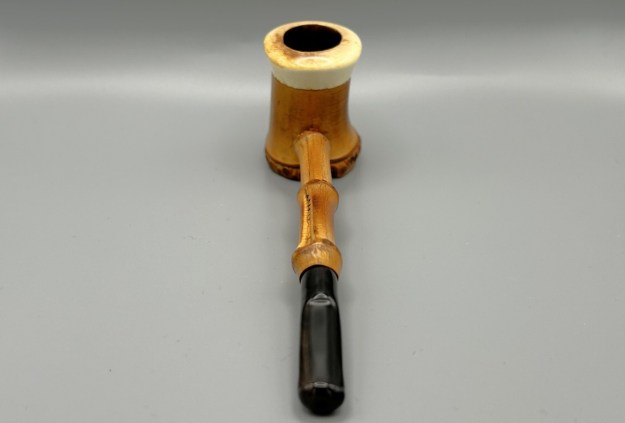
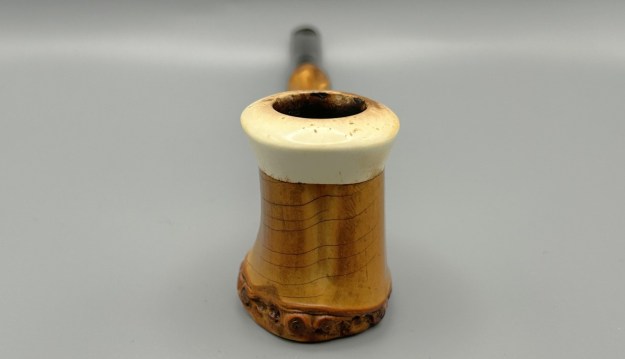
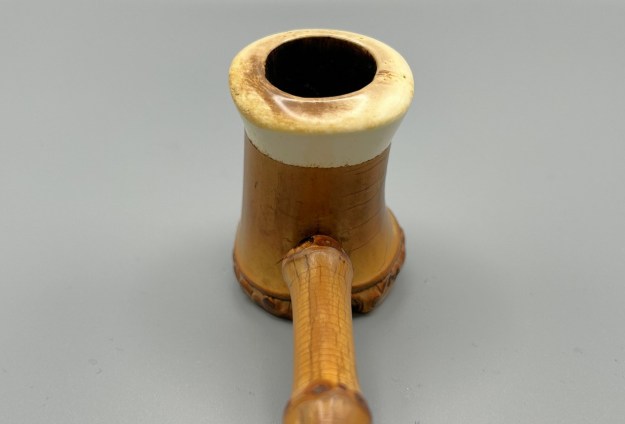
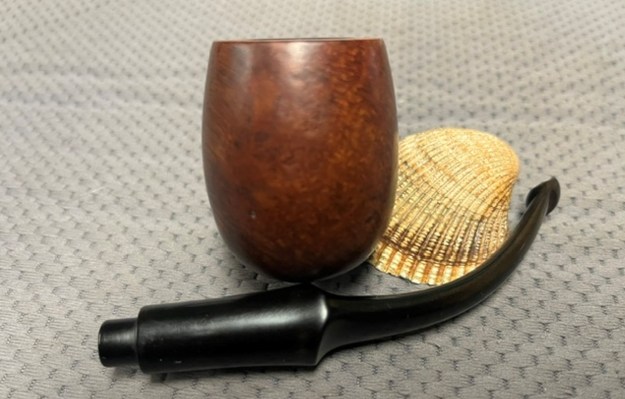
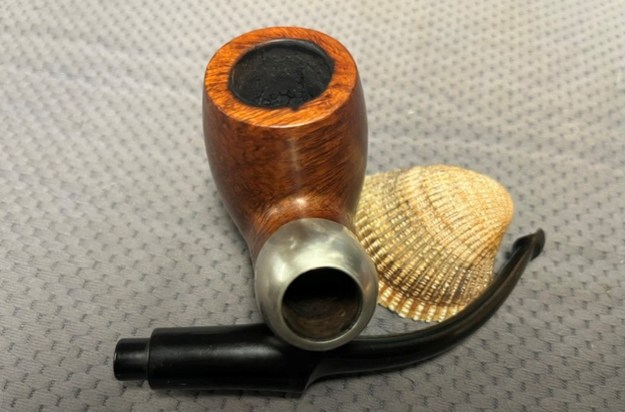
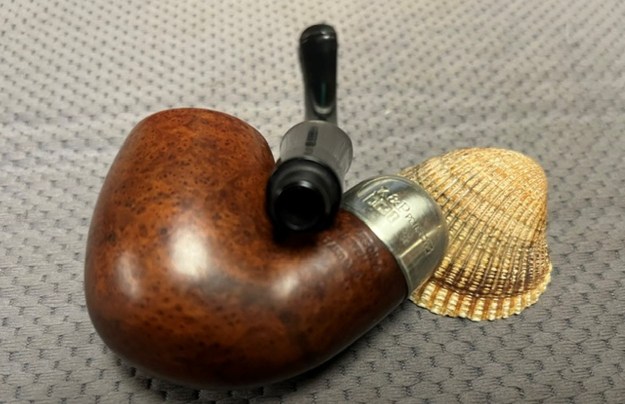
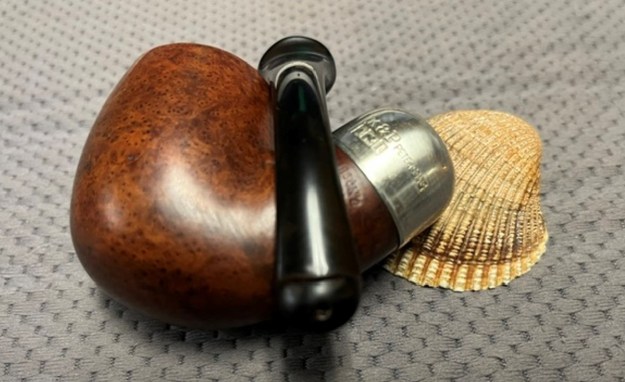
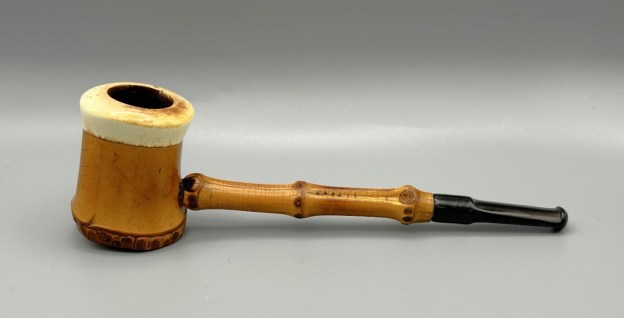
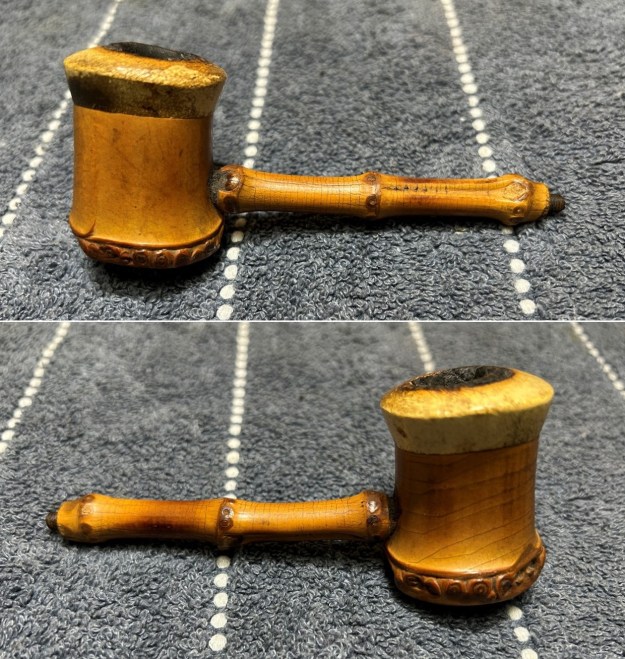
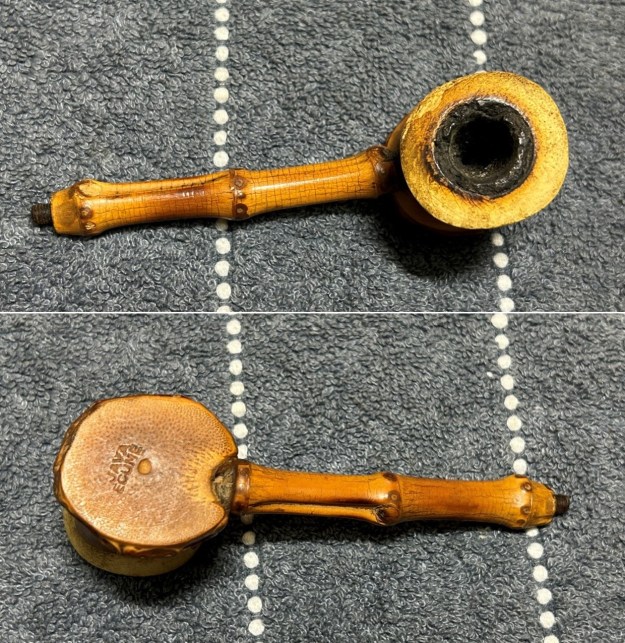
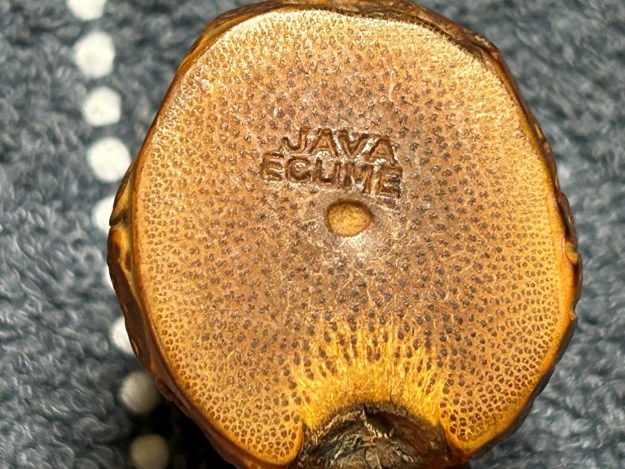
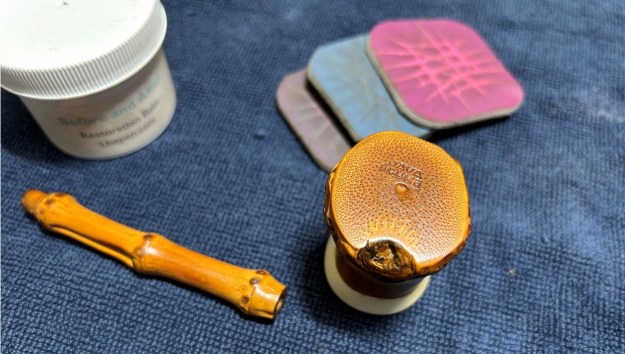
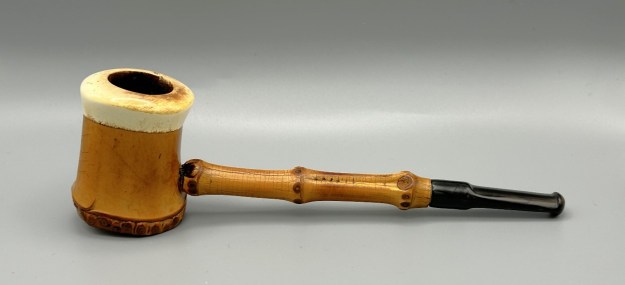
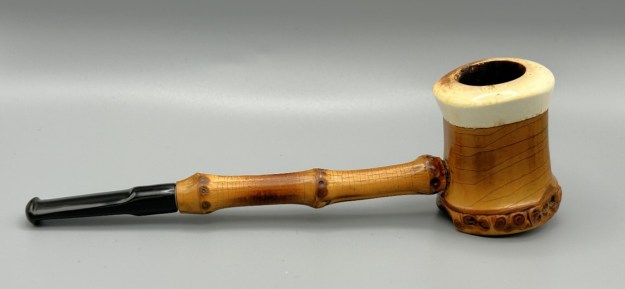
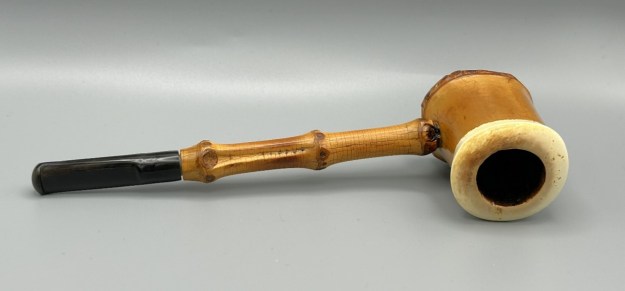
This is an odd pipe, to be sure – but a charming one. A few years ago, I acquired it in a large batch of very old French pipes. There was a mix of lovely and dreadful in that batch – and this pipe was a part of it. It had a meerschaum bowl and rim, with a bamboo stummel (holding the meerschaum) and a bamboo shank. I could see a bone tenon emerging from the shank, but – alas – the stem was missing. I could tell just by sight that the bamboo was old and beautifully worn. I always had this pipe in the back of my mind and it sat in my boxes for a long time. Finally, I came up with a plan to restore it and give it a new lease on life. I think the results are terrific. I hope you will too. The markings on this pipe are intriguing, if somewhat unhelpful. On the underside of the bamboo bowl, we see the words JAVA [over] ECUME. I searched extensively for these words in a pipe context, but found nothing specific. However, I think we can figure it out. Let’s work backwards. The French word, écume, most generically, means ‘foam’. However, in this instance, it is also the French word for meerschaum. That makes sense. As I’m sure you know, meerschaum is a German word which literally means ‘sea foam’ (meer = sea and schaum = foam). Incidentally, schaum is also where we get the English word scum from. But where did the Germans get the meerschaum word from? Obviously, meerschaum is so called because it is white and light, but the Oxford Dictionary of Etymology further explains that the term is itself a translation of the Persian word kef-i-daryā – literally meaning ‘foam of sea’. Now you can impress friends at your next cocktail party.Meanwhile, the word Java made me think immediately of the Indonesian island, but I wasn’t sure if there was ever an Indonesian pipe company with that name. I certainly couldn’t find any evidence of one. There have been pipe makers in Java, but I don’t think this pipe was made there. Having said that, however, I don’t think the reference is too mysterious. The island of Java is replete with bamboo – in fact, there are approximately sixty species of bamboo on the island. I think it stands to reason that the use of the name Java is simply a reference to the origin of the bamboo or an attempt to provide an oriental name to the pipe.
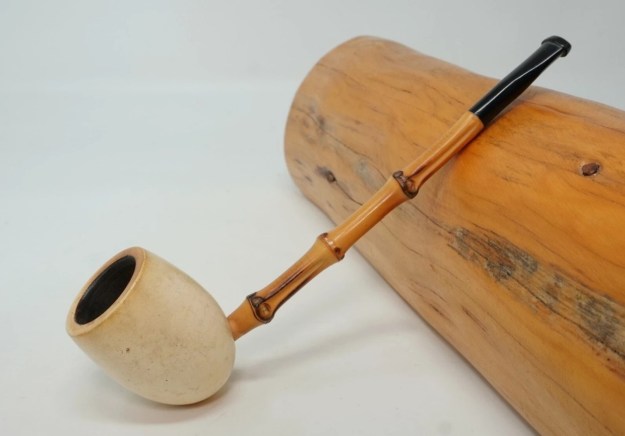
Last year, I restored a meerschaum and bamboo pipe, and I mused about that particular mixture of materials – and I will muse about it again now. Meerschaum and bamboo pipes are certainly not unprecedented, but it isn’t that common either. Here is an example of an unbranded bamboo meer found on eBay. Not only does the pipe have no identifying marks, but the seller had no information about it either.One can find some spectacular examples of meerschaum and bamboo in pipes from Walt Cannoy, Ryan Alden, and the famous Turkish maker, Said Altınay. Here is a beautiful example from him:As a side note, Altınay’s website includes an interesting note on the history of bamboo in pipe-making. I provide a brief quotation:
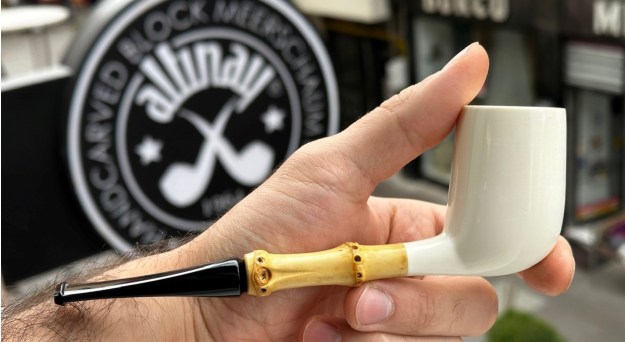
Bamboo began appearing in briar pipe construction in the early 20th century. The earliest known pioneer of this style is believed to be Sixten Ivarsson, the Danish pipe-making legend, who introduced bamboo shanks in the mid-1900s as both an aesthetic and practical innovation. The concept soon spread, embraced by artisans such as Tom Eltang, Tokutomi, and Takahiro Hibi, who elevated the use of bamboo into a form of fine art. Its appeal was twofold: the natural lightweight strength and the distinctive, organic appearance. While traditional briar offered durability and familiarity, bamboo introduced character, contrast, and subtle resilience — giving each pipe a unique signature.

Obviously, the pipe I have is not on the order of a Cannoy, Alden, Altınay, or Ivarsson! But I also feel comfortable in saying that this pipe is a lot older than those fellows’ pipes. I would be interested in hearing from you if you know more about the marriage of meerschaum and bamboo in pipe-making. Thank you kindly.

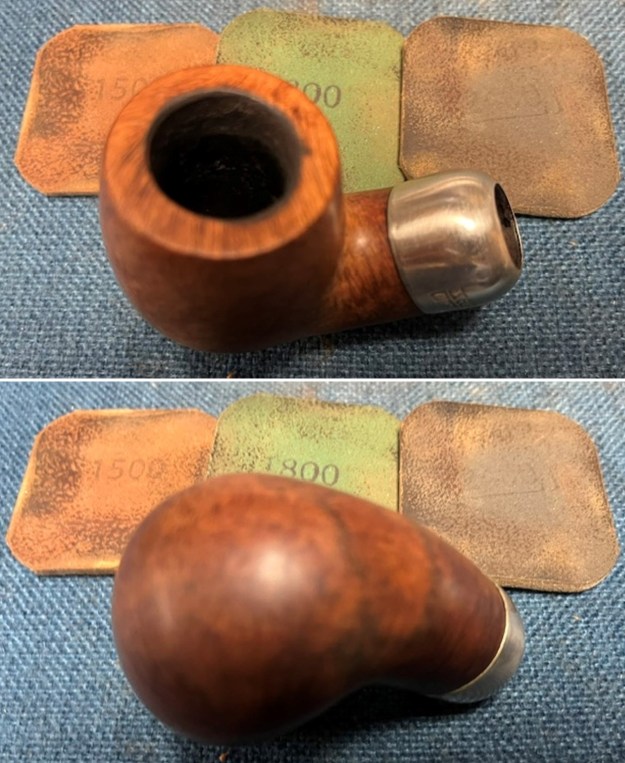
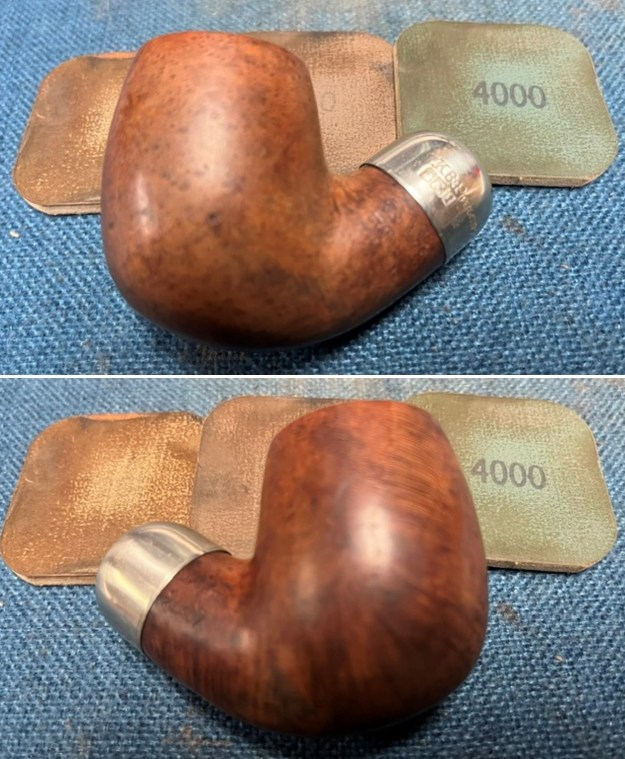
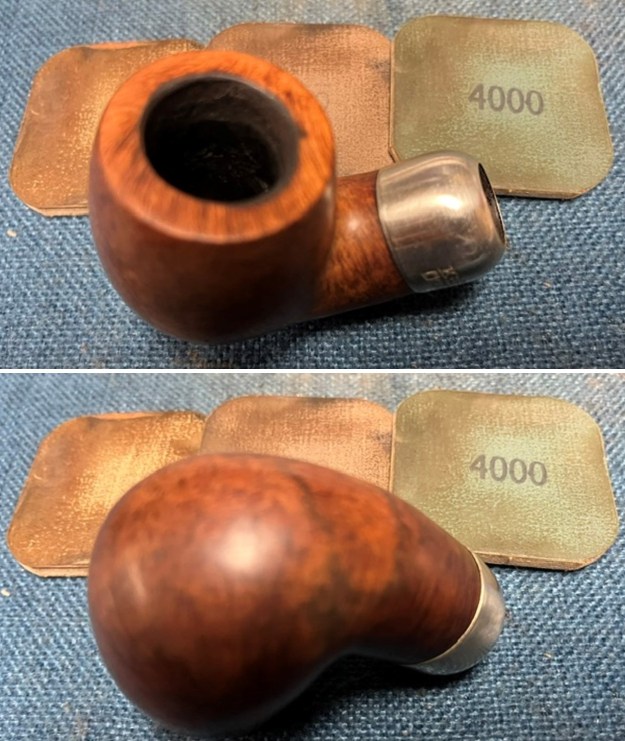
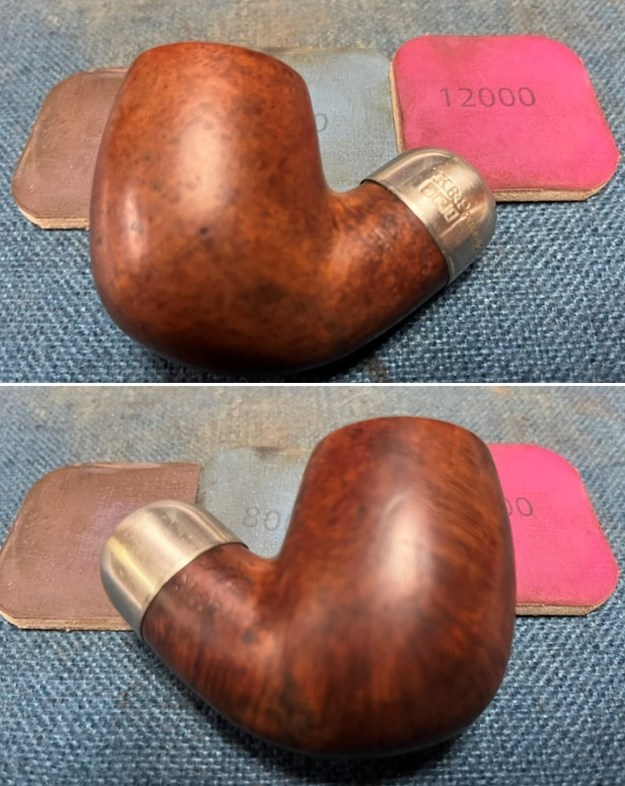
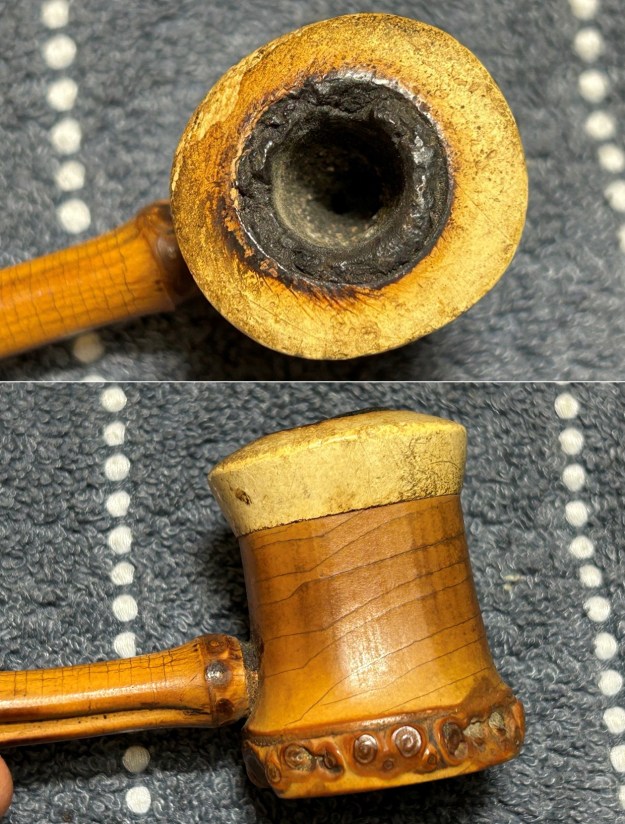
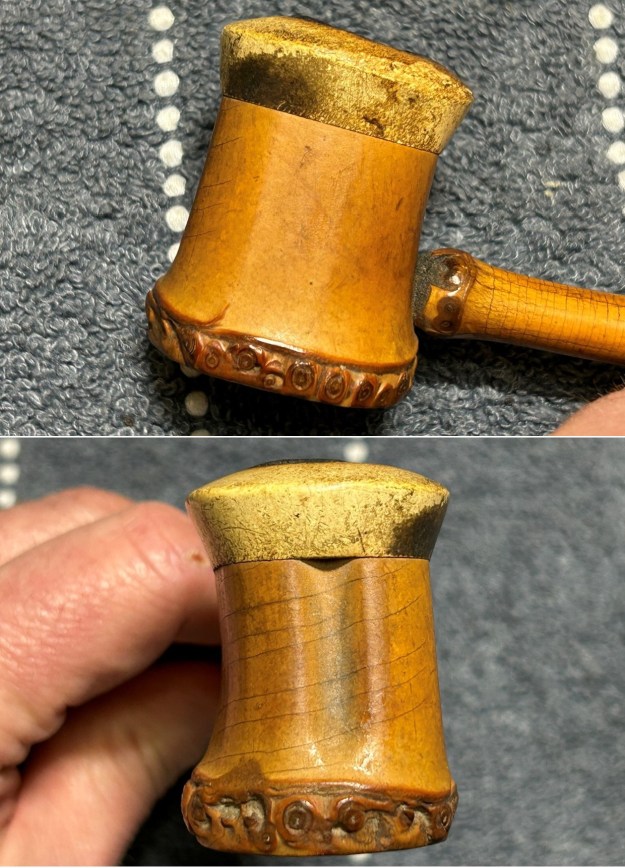
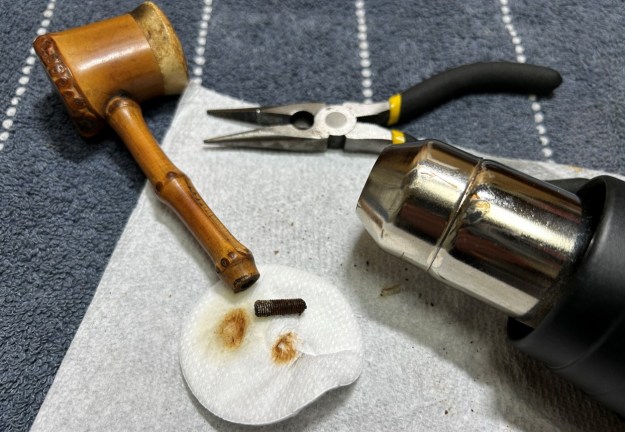
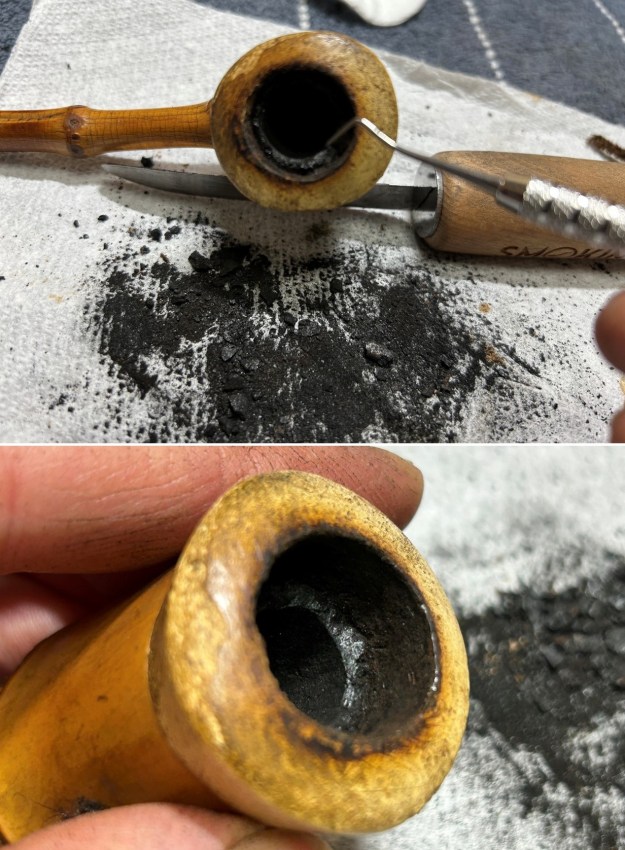
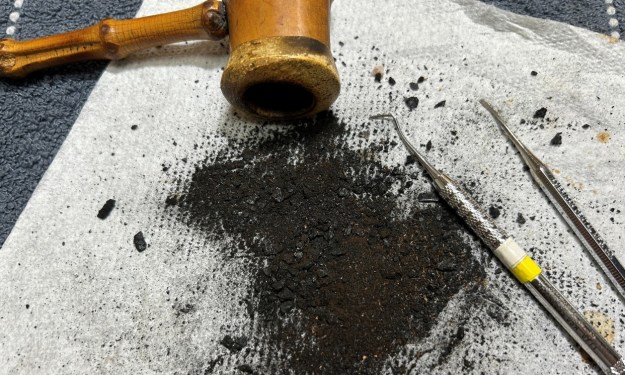
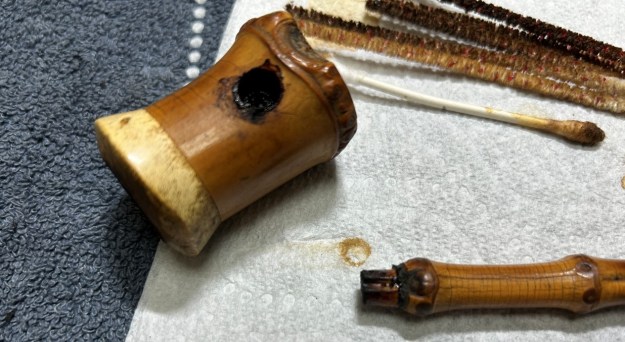
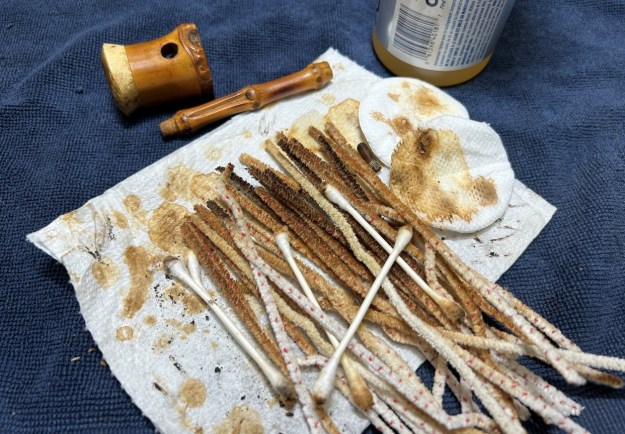
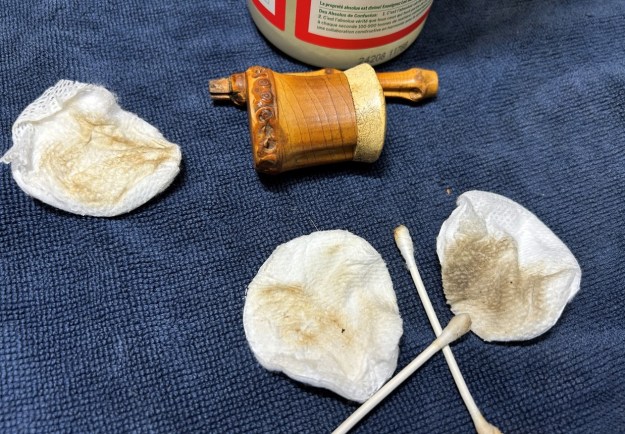
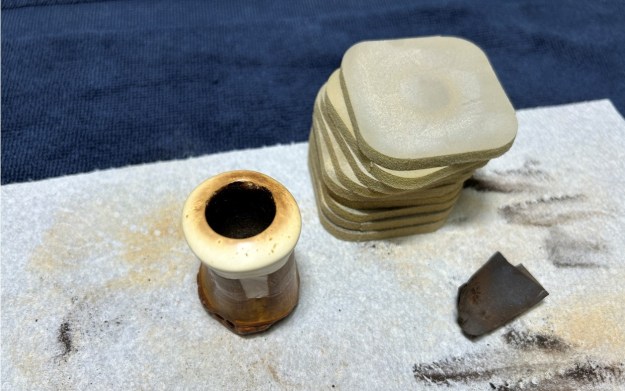
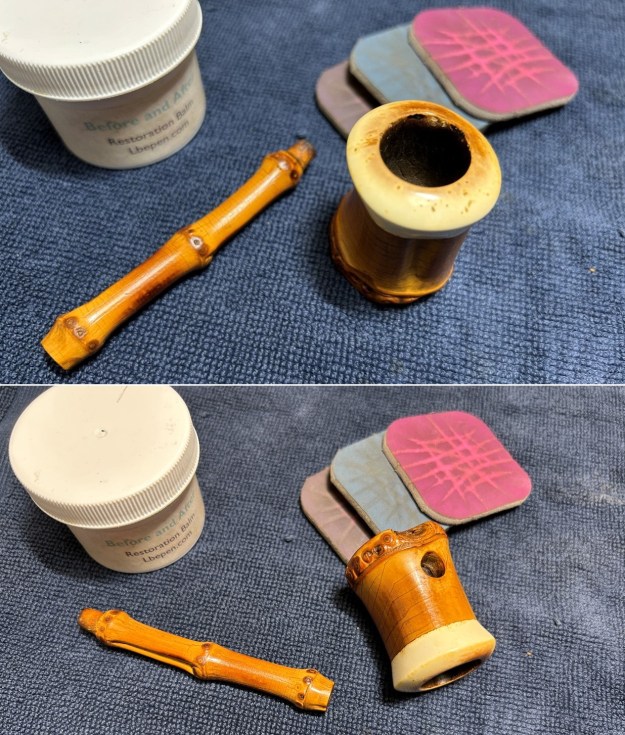
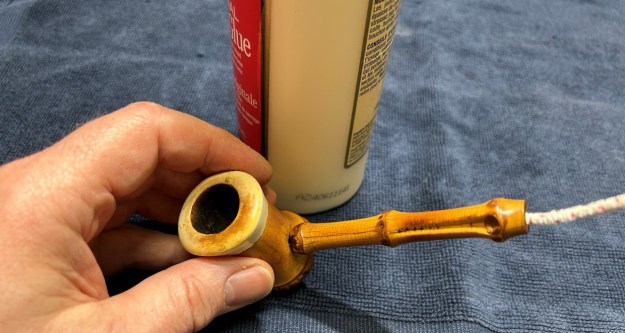
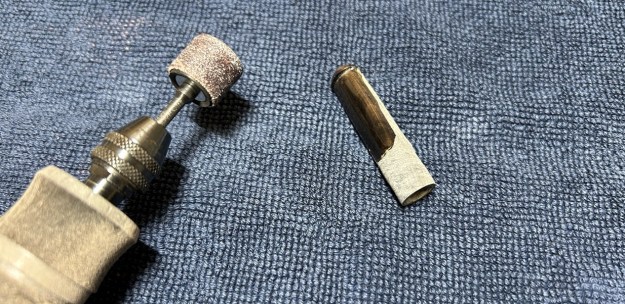
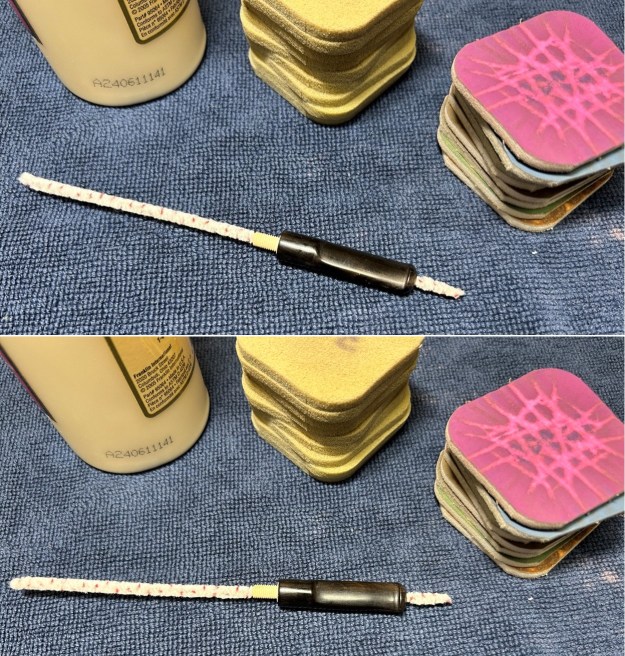
Let’s examine the condition of this pipe. The bone tenon is soiled and cracked, so that will have to be changed. The shank’s bamboo is sound – and very attractive. It’s quite dirty inside, but I am confident that we can resolve that. The bamboo part of the stummel is equally sound and beautiful. The meerschaum is very nice, but – wow – the cake on the inside of the bowl is thick and oppressive. Meanwhile, there is some nice staining to the meerschaum and that adds character. First things first. I couldn’t get the tenon out of the shank, so I took my heat gun and warmed them both. After a while, the goo inside loosened up sufficiently for me to extract it. As I mentioned, it was cracked – so I will find another one in my boxes. Later.Next, I removed the cake from the inside of the bowl. I cannot adequately express how challenging this was. The cake seemed as hard as granite – and I had to be so careful with the extraction because the meerschaum is comparatively fragile. I used a pipe knife and some dental tools, and cautiously, agonizingly scraped and chipped away at the cake. I am not exaggerating when I tell you that it took me 45 minutes to empty the bowl properly. Once complete, I gently separated the shank from the bowl. The photos show how dirty everything was. Obviously, if the bowl was as bad as indicated, you can just imagine what the inside of the shank was like.I disinfected the inside of the shank and the mortise entrance to the bowl with pipe cleaners and cotton swabs dipped in lemon-infused 99% isopropyl alcohol. I scrubbed thoroughly to make sure the interior was very clean. I used a ton of pipe cleaners and cotton swabs. I did this carefully because too much soaking can cause meerschaum to soften. I worked quickly, nothing softened, and everything turned out well.To tidy up the bamboo, I delicately wiped down the outside, using a solution of a pH-neutral detergent and some distilled water, with cotton rounds and cotton swabs (in the crevices). This did a good job of cleaning any latent dirt on the surface of the bamboo.I used all nine micromesh pads (1,500 through 12,000 grit) to sand the meerschaum part of the bowl and finish it off. This sanding minimizes flaws in the meerschaum and provides a beautiful smoothness to it. As the photos show, I masked the bamboo portion of the bowl with tape so as not to damage it while sanding.I only sanded the bamboo with the three finest micromesh pads. Then I rubbed it all with some LBE Before & After Restoration Balm and let it sit for 30 minutes or so. The balm moisturizes the bamboo and gives a beautiful depth to it. I then buffed the whole thing with a microfibre cloth. Next step was to reattach the bowl and shank. I carefully applied some wood glue into the mortise and replaced the shank precisely. As a measure of caution, I also stuck a pipe cleaner in the draught hole to prevent any glue getting in there.On to the stem and bone tenon. I found a stem in my workshop drawers that worked well with this pipe. I should point out that the stem is actually horn. I know that it looks like vulcanite in the photos, but it is dark horn. After settling on that, I dug through my boxes of bone tenons and found one that fit both ends. Then I set about sanding down the stem to ensure that it fit.I took my rotary tool to take off the bulk of the excess material. Then I sanded and sanded and sanded with my various micromesh pads. I neglected to photograph this process, so you’ll just have to take my word for it. As I was nearing completion, I applied pipe-stem oil with the last few micromesh pads. There was a wonderful, deep black shine to the stem when I was done. I also glue the tenon into the stem for safety’s sake. For the final step, I took the stem (only) to my bench polisher and carefully buffed it – first with a blue diamond compound, then with carnauba wax.
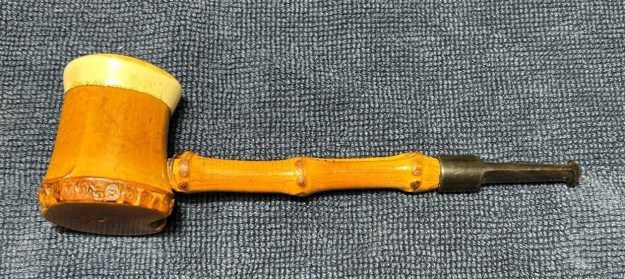
All done! This bamboo meerschaum sitter looks fantastic after a lot of hard work, and is ready to be enjoyed by its next owner. I am pleased to announce that this pipe is for sale! If you are interested in acquiring it for your collection, please have a look in the ‘Meerschaum’ section of the store here on Steve’s website. You can also email me directly at kenneth@knightsofthepipe.com. The approximate dimensions of the pipe are as follows: length 6 in. (153 mm); height 1⅞ in. (47 mm); bowl diameter 1¼ in. (32 mm); chamber diameter ¾ in. (19 mm). The weight of the pipe is ⅞ oz. (26 g). I hope you enjoyed reading the story of this pipe’s restoration as much as I enjoyed restoring it. If you are interested in more of my work, please follow me here on Steve’s website or send me an email. Thank you very much for reading and, as always, I welcome and encourage your comments.
Restoring a House of Lords Ambassador 213 Lovat Made in London England


by Steve Laug

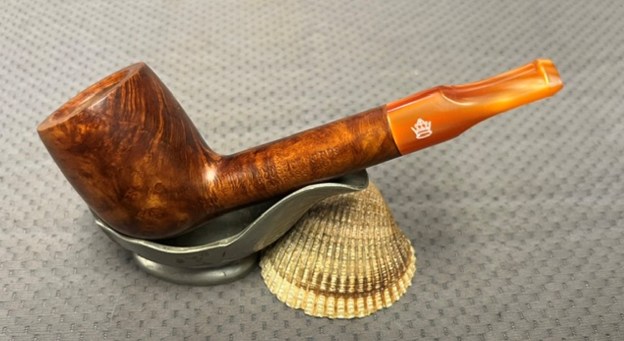
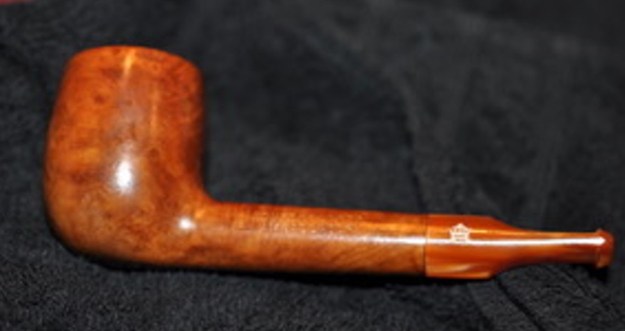
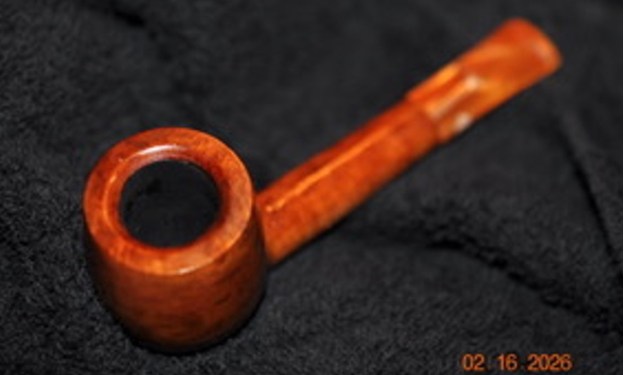
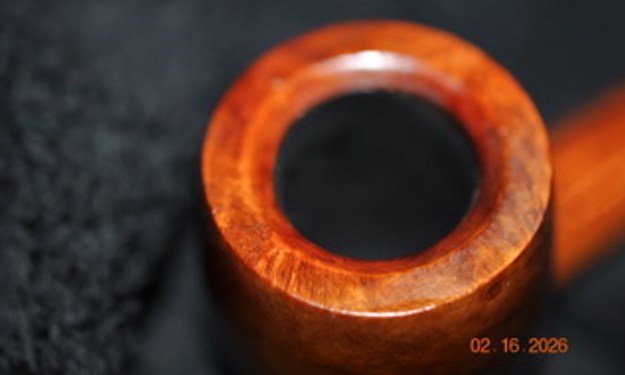
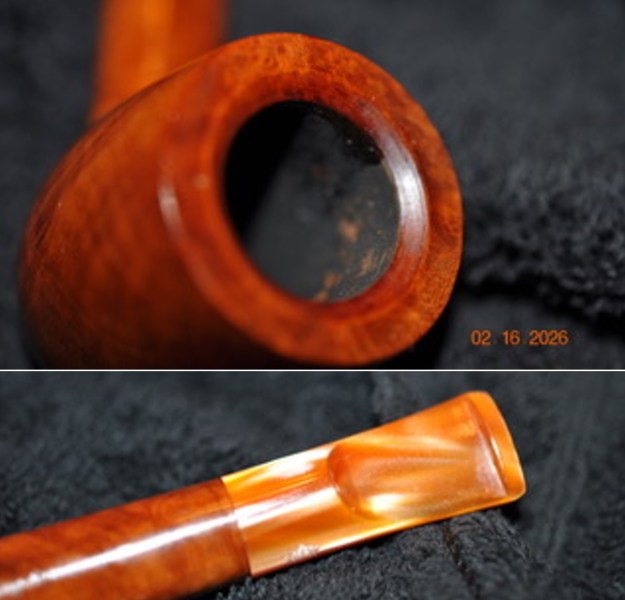
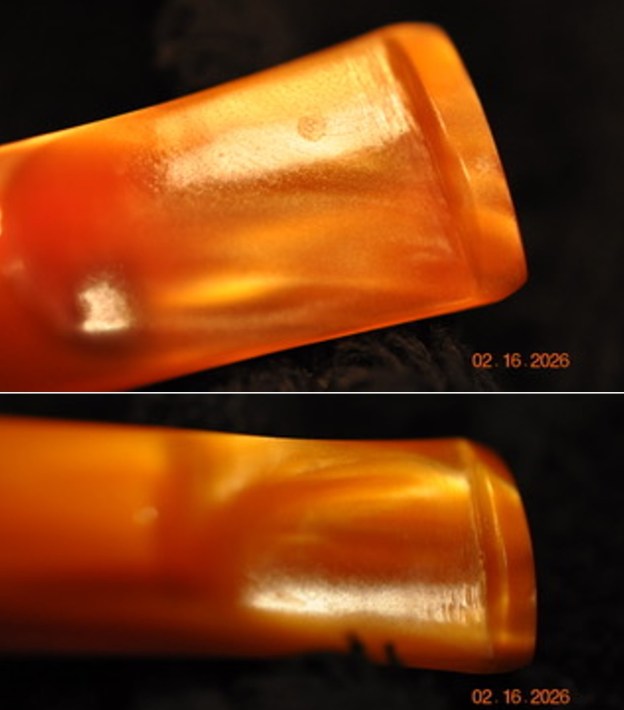
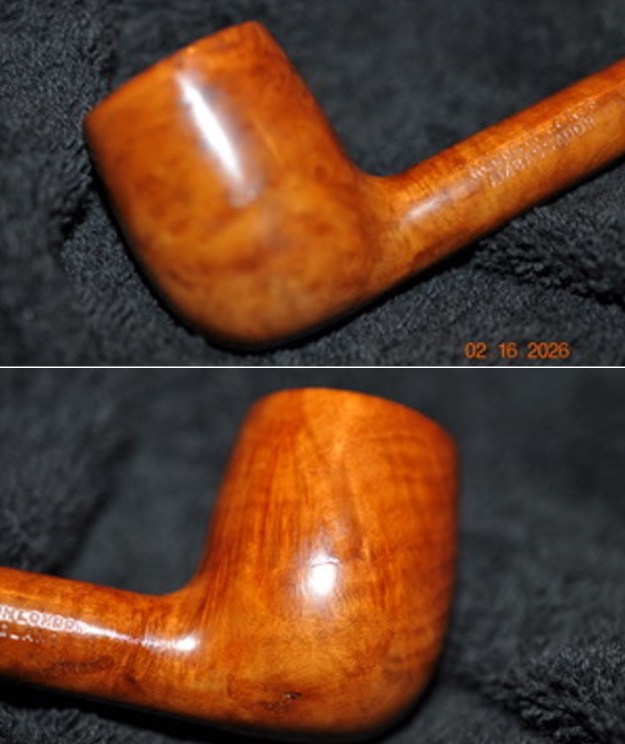
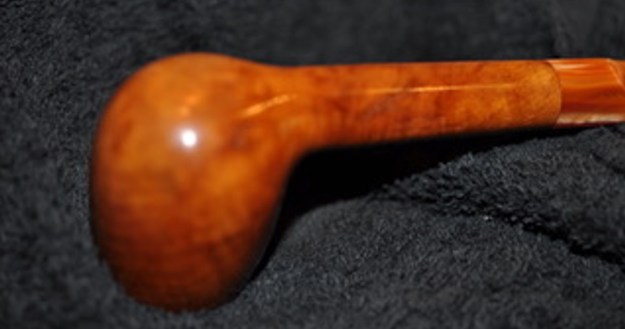
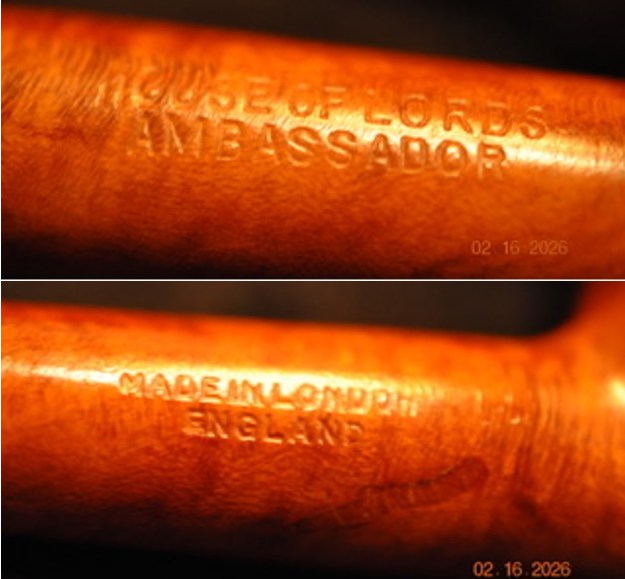
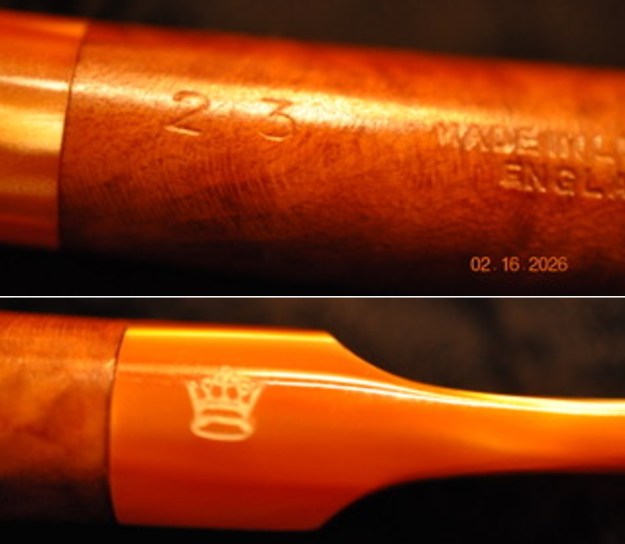
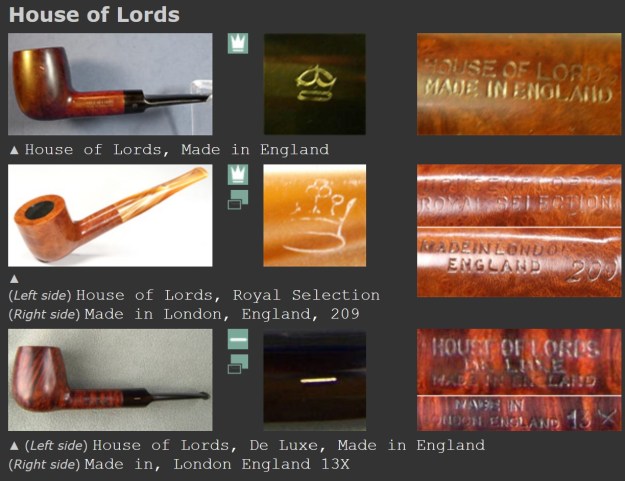
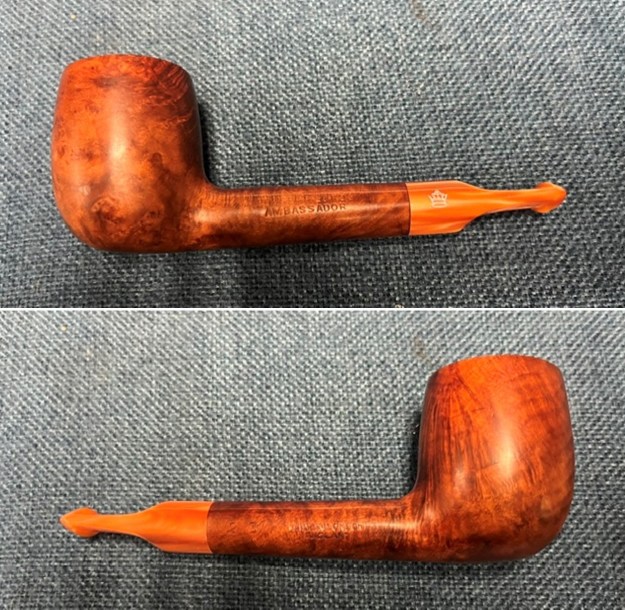
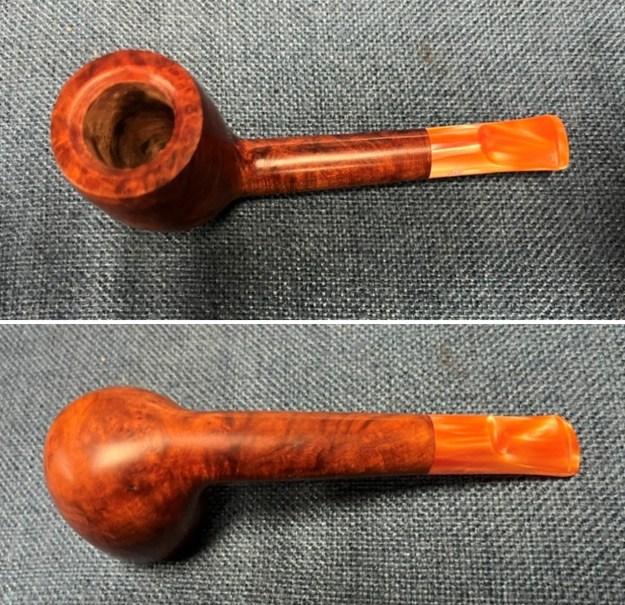
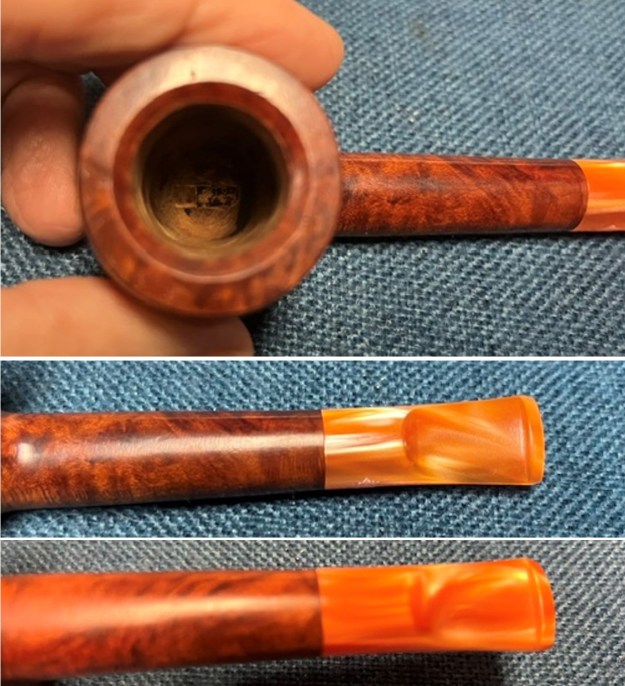
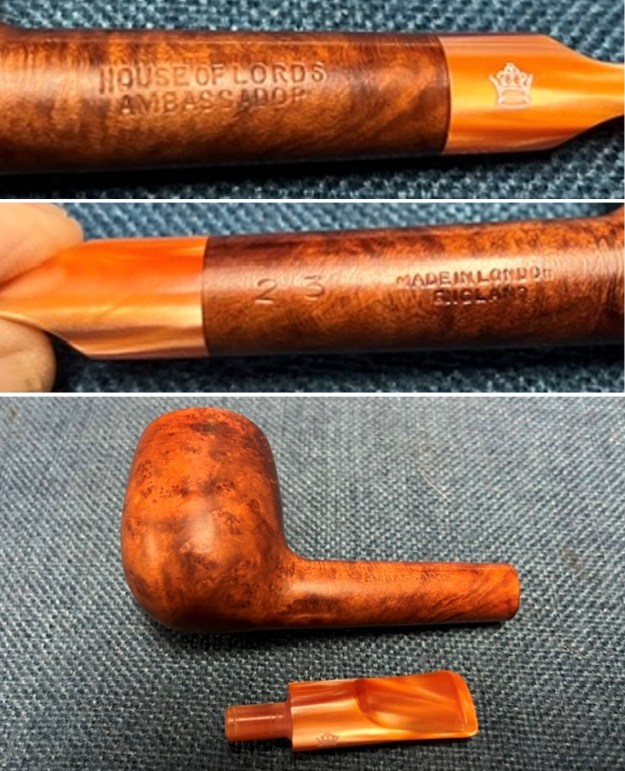
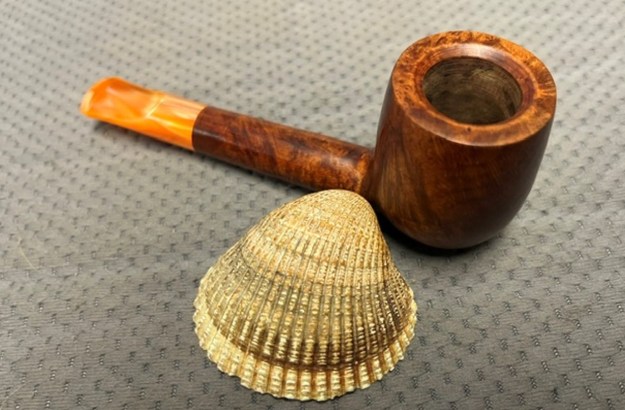
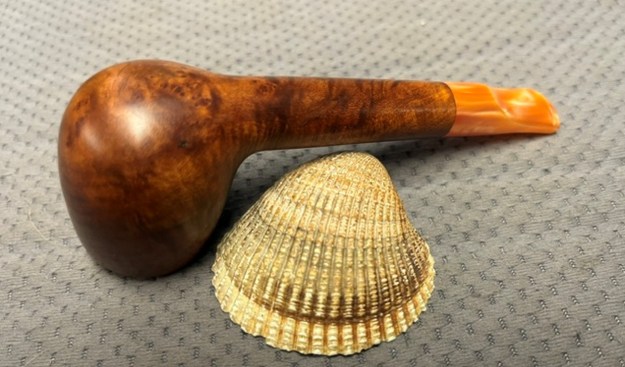
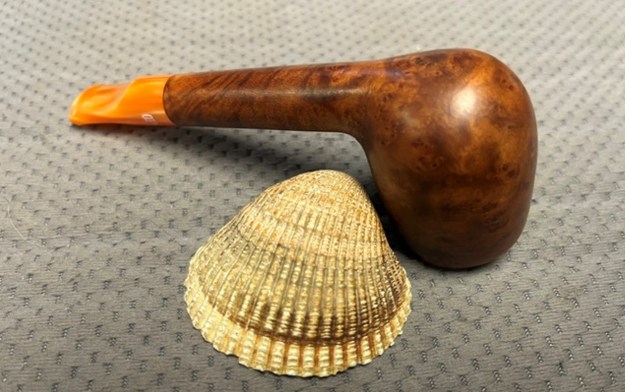
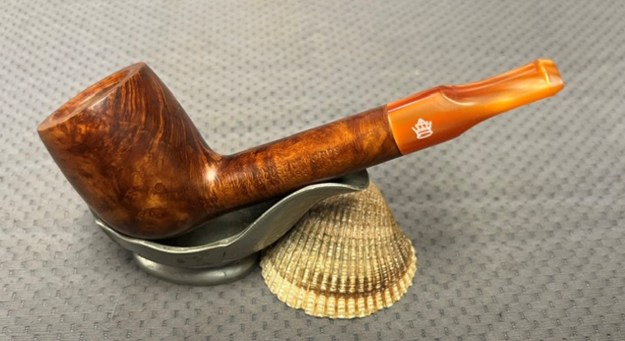
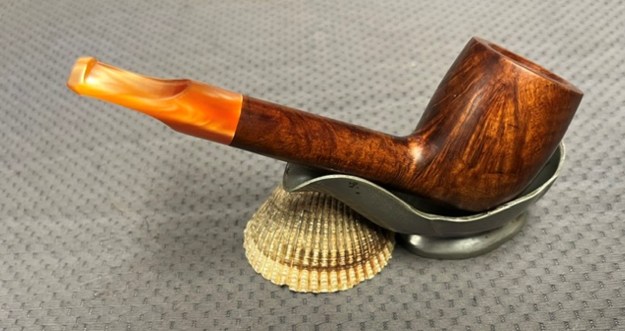
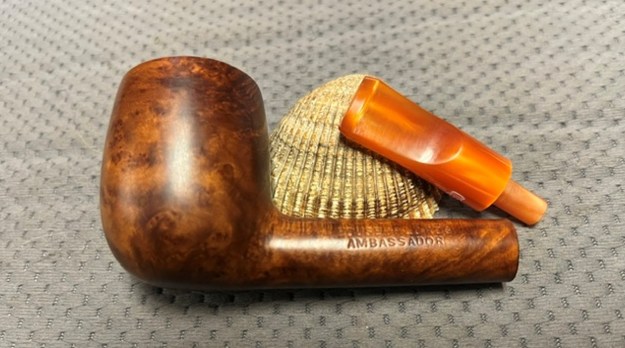
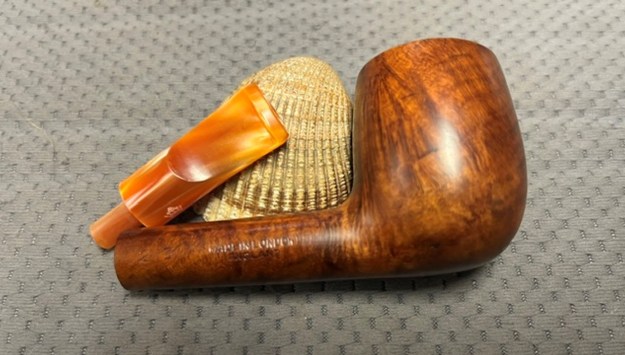
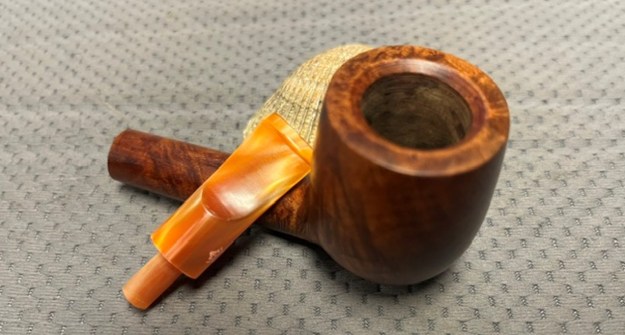
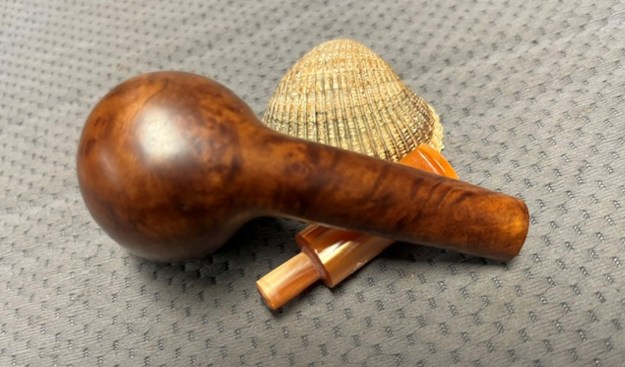
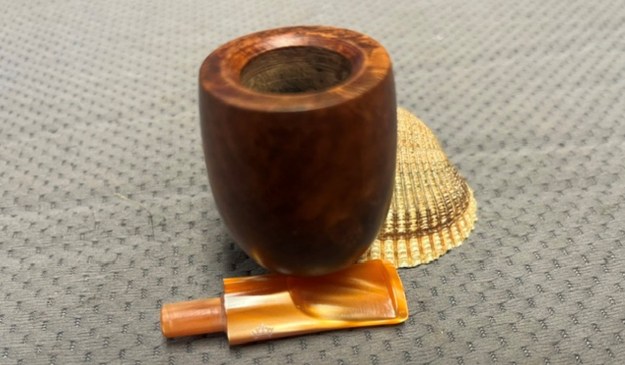
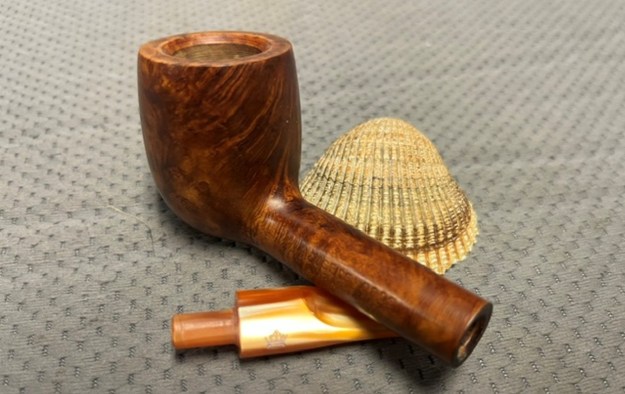
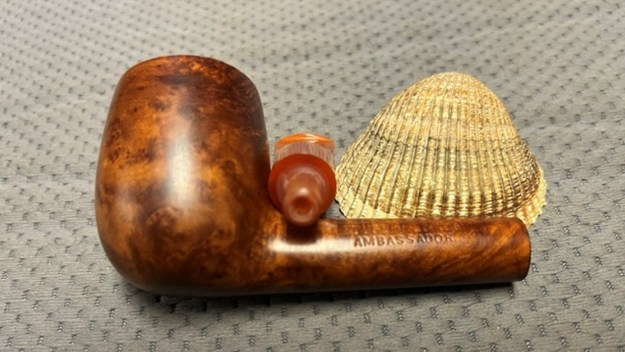
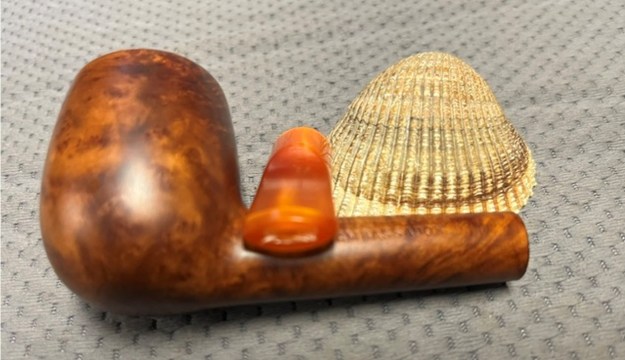
This smooth Lovat with an orange acrylic stem was purchased on 01/20/2026 from a Facebook seller in Quaker Town, Pennsylvania, USA. It really is a beautifully grained Lovat with a rich smooth finish.  The stem is an acrylic saddle stem. The bowl is stained with a contrast of browns that give depth to the grain around the bowl and shank. It is stamped on the sides of the shank and on the left reads House of Lords [over] Ambassador. On the right side it is stamped Made In London [over] England. To the left of the stamp it reads 213 – shape number. The bowl had a thick cake and some tobacco debris on the walls. There was a light overflow of lava on the inner bevelled edge and the rim top. There was grime ground into the finish which left the look quite dull. The acrylic saddle stem has a Crown logo on the left side of the saddle. It had light tooth marks and chatter on both sides of the stem ahead of the button. Jeff took photos of the pipe before he started his work on it. He took photos of the rim top to show the condition of the top and edges of the bowl. It is dull and has the lava on the bevelled edge of the rim. It is uniquely a beautiful pipe. The stem had light tooth marks and chatter on both sides ahead of the button.He took photos of the sides and heel of the bowl to show the finish around the bowl and the condition of the pipe. You can see the grime ground into the surface of the briar. The stain combination really makes the grain stand out. I look forward to seeing it once it is clean and polished. He took photos of the stamping on the sides of the shank. It is clear and readable as noted above. The white Crown stamp on the left side of the stem is also clear and readable. I turned to Pipephil’s site (www.pipephil.eu/logos/en/logo-h3.html#houseoflords). I did a screen capture of the section on the site. It shows the stamping on the left side of the shank that matches the stamping on the topside of the pipe I am working on. The crown stamp shown on the stem I have is a lot like stamping on the stem I have. I am including the information from the side bar that says that House of Lords is a brand from Samuel Gordon and possibly a Sasieni second (J.M. Lopes, op. cit.).Brand from Samuel Gordon. Maybe a Sasieni second (J.M. Lopes, op. cit.)

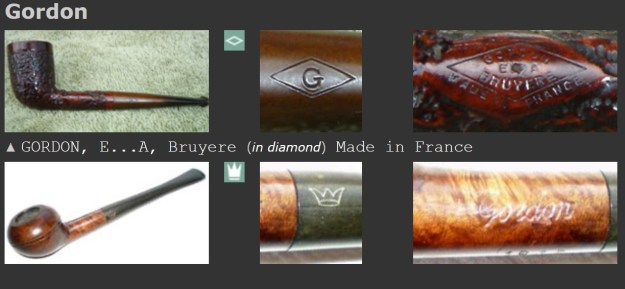
I further followed the link to “Gordon” and learned that Samuel Gordon had founded the brand “GORDON” in 1910-20 eras. This is the link for Gordon brand of pipes; www.pipephil.eu/logos/en/logo-g4.html#gordon

From there I turned to the Sasieni listing on Pipedia and scrolled down to the list of seconds that was given there (https://pipedia.org/wiki/Sasieni#Sasieni_Seconds). From that information I learned that the pipe was definitely linked to Sasieni. The fourth listing in the screen capture.Now I knew I was dealing with a probable Sasieni made pipe which helps explain the stamping on the pipe including the Made in England on the shank. I did a quick search of rebornpipes and found an article on a House of Lords pipe I had restored. I have included the link (https://rebornpipes.com/2015/10/25/cleaning-up-a-london-made-charleston-banker/).

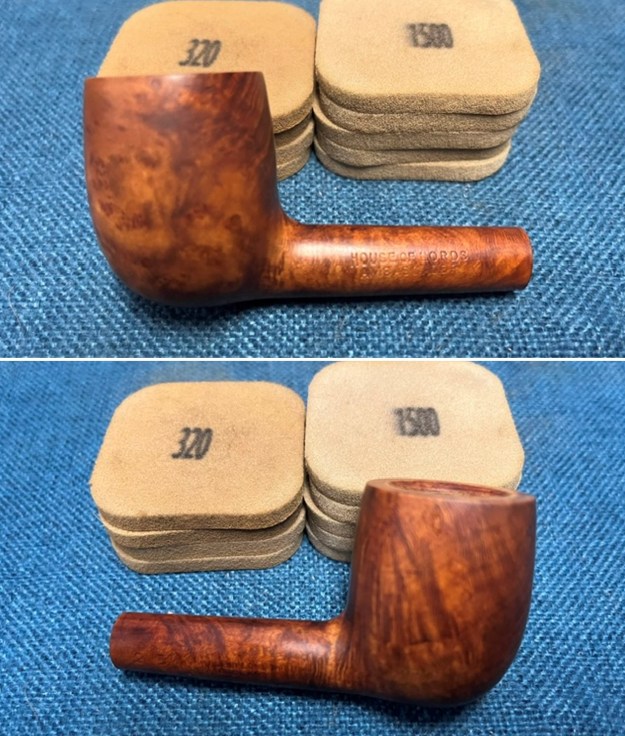
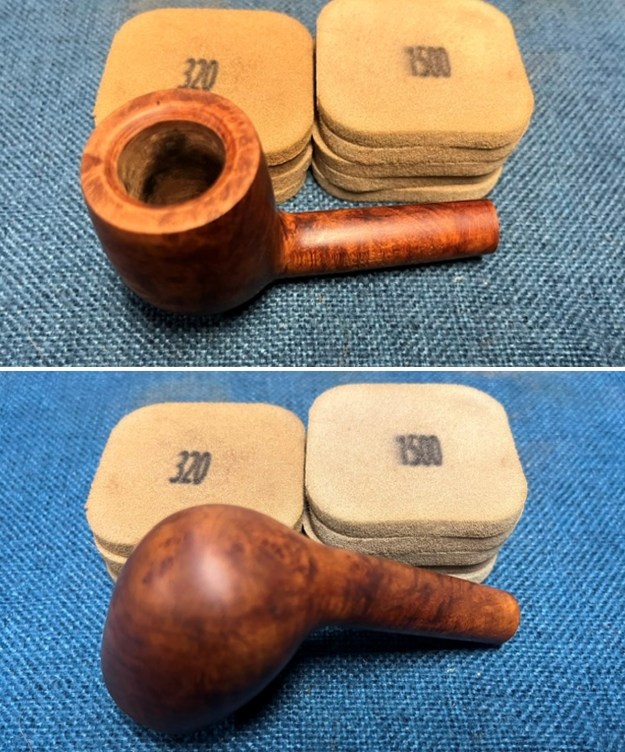
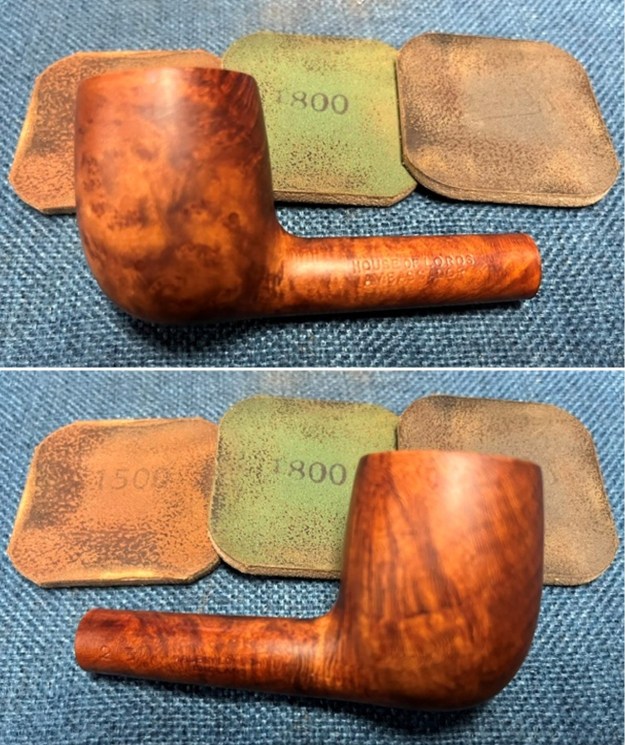
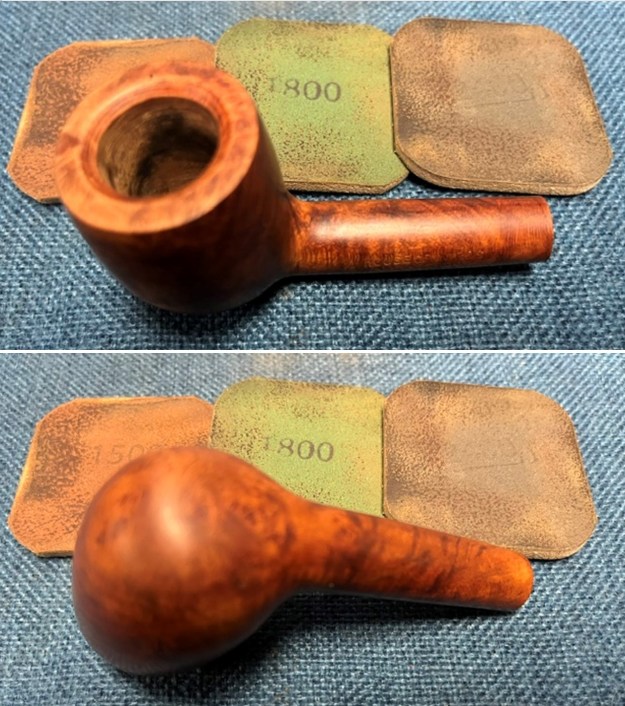
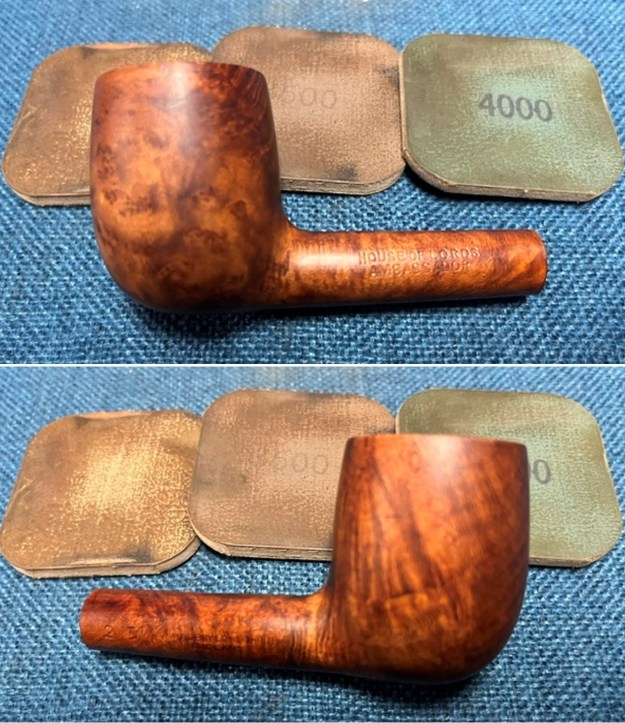
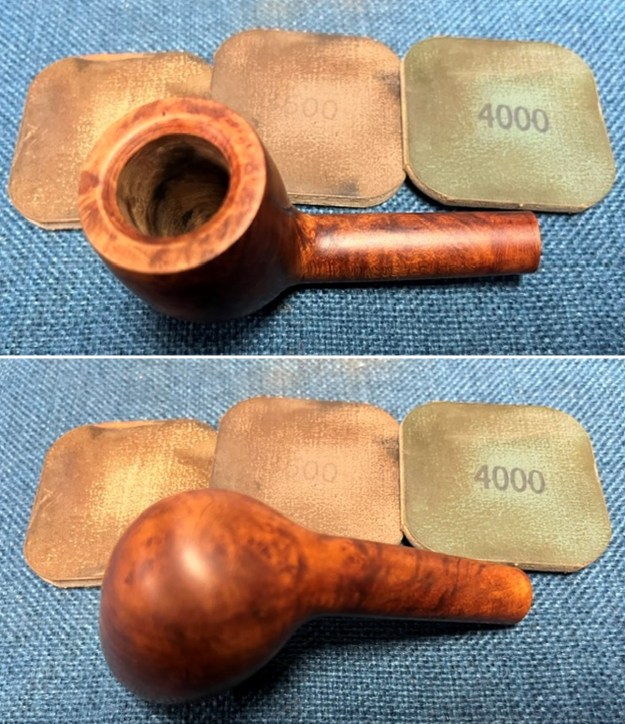
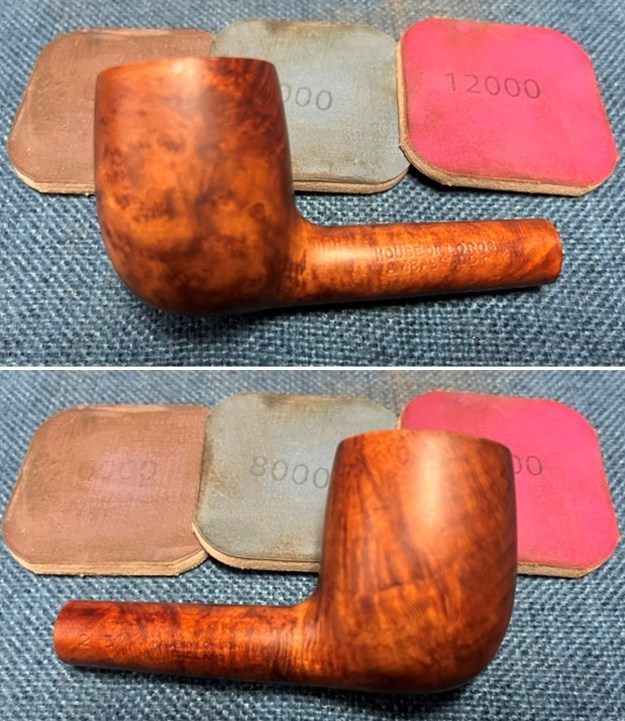
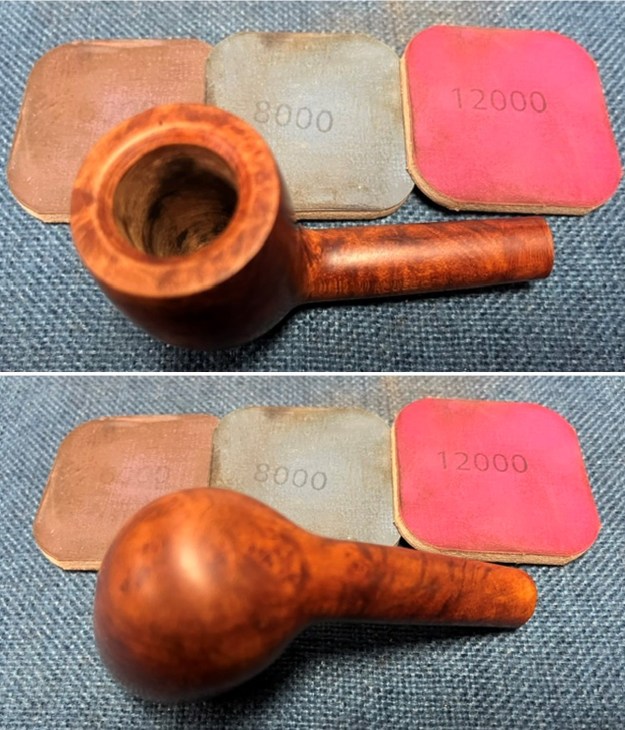
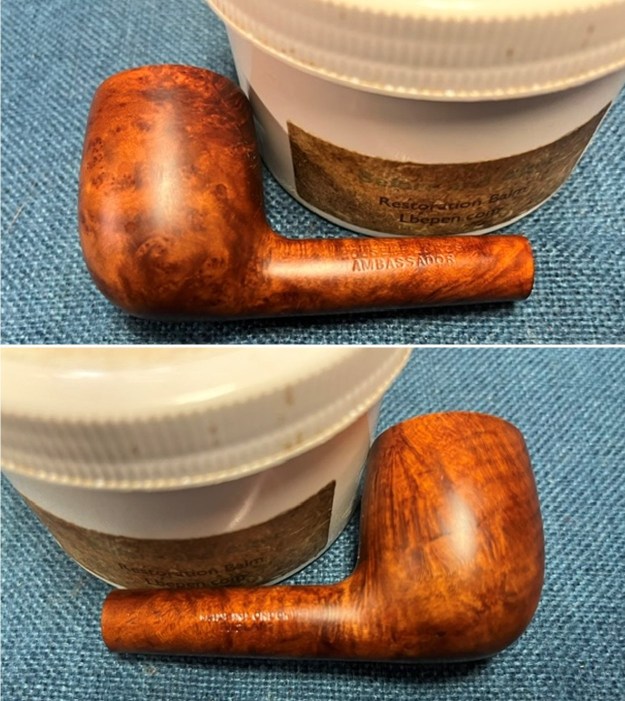
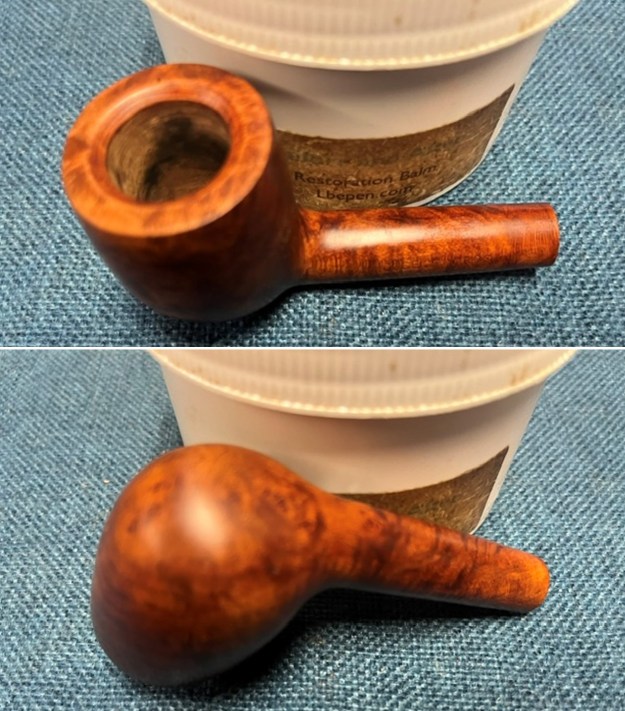
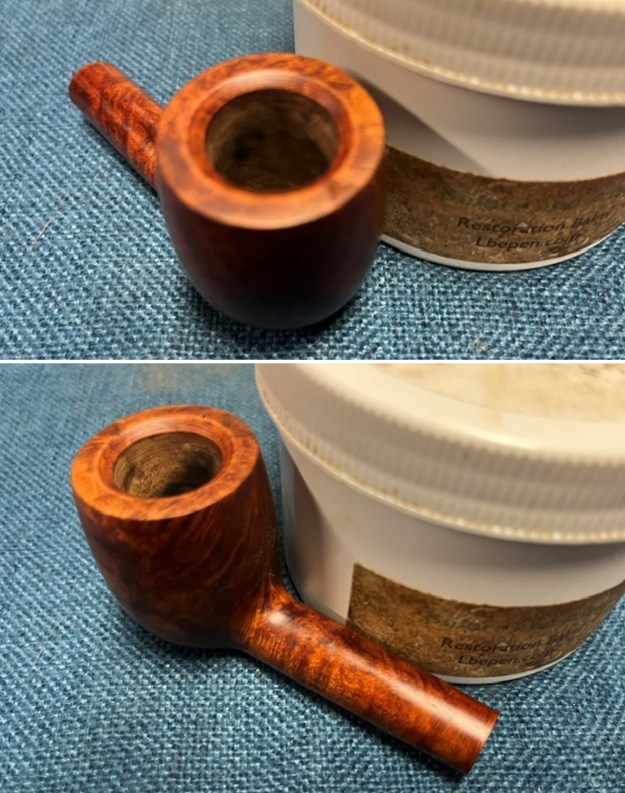
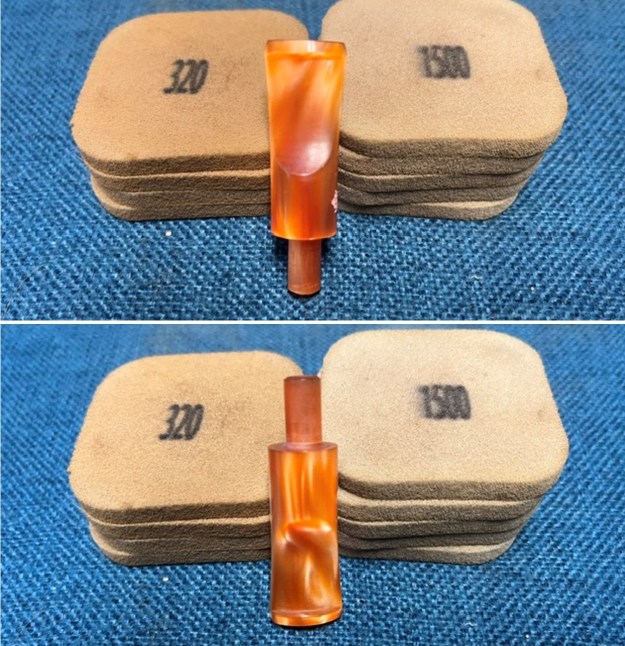
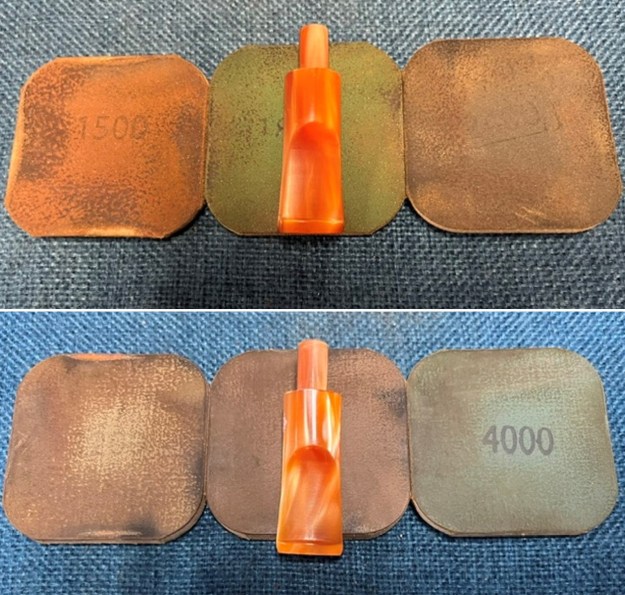
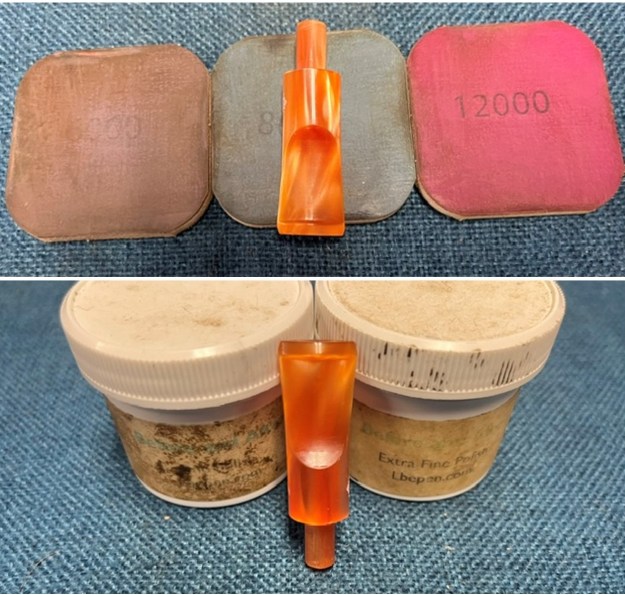
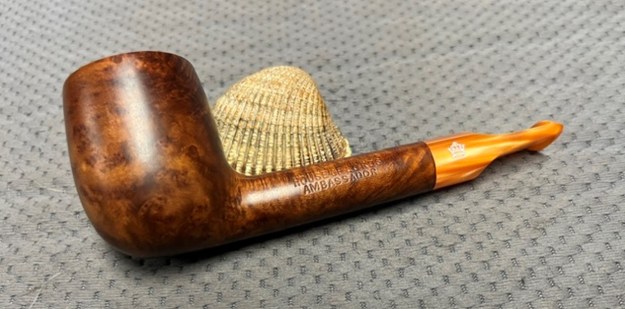
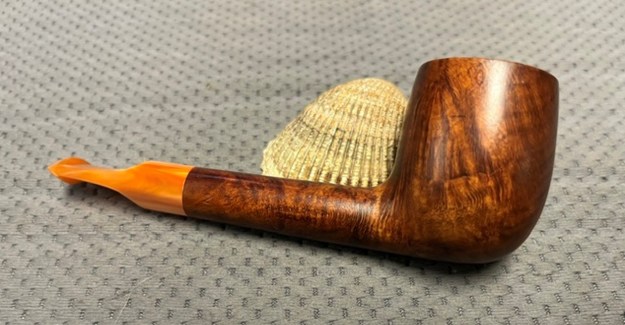
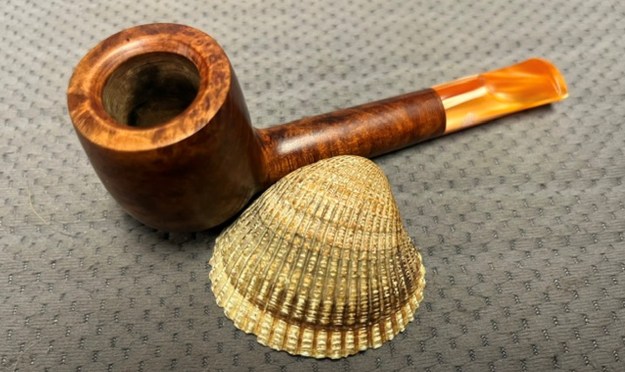
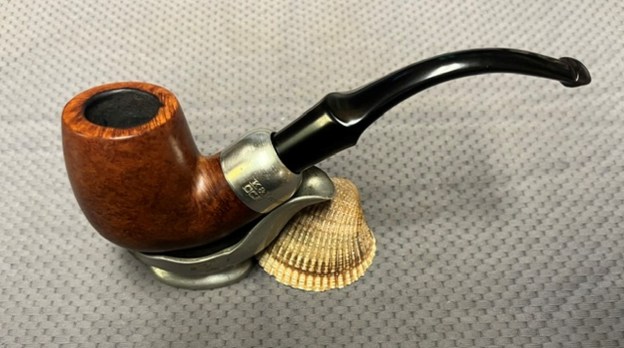
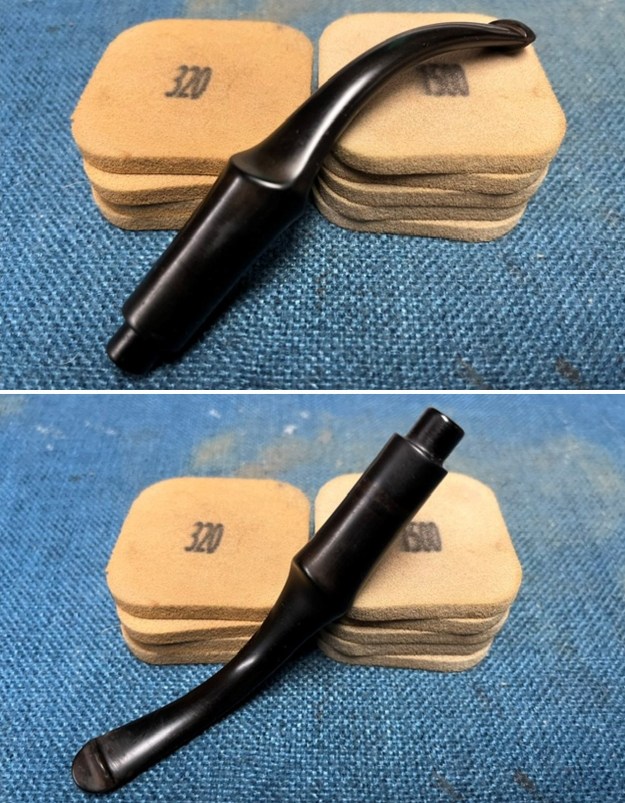
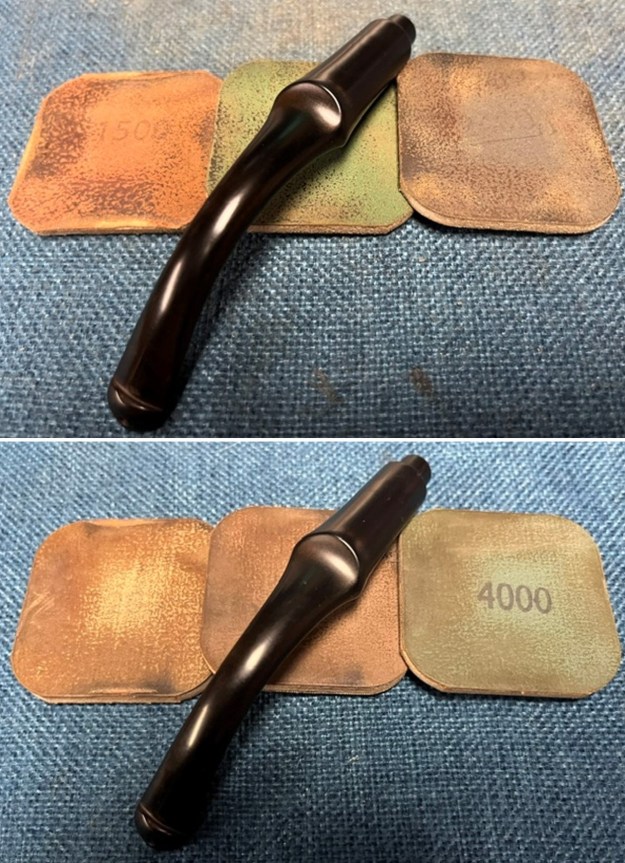
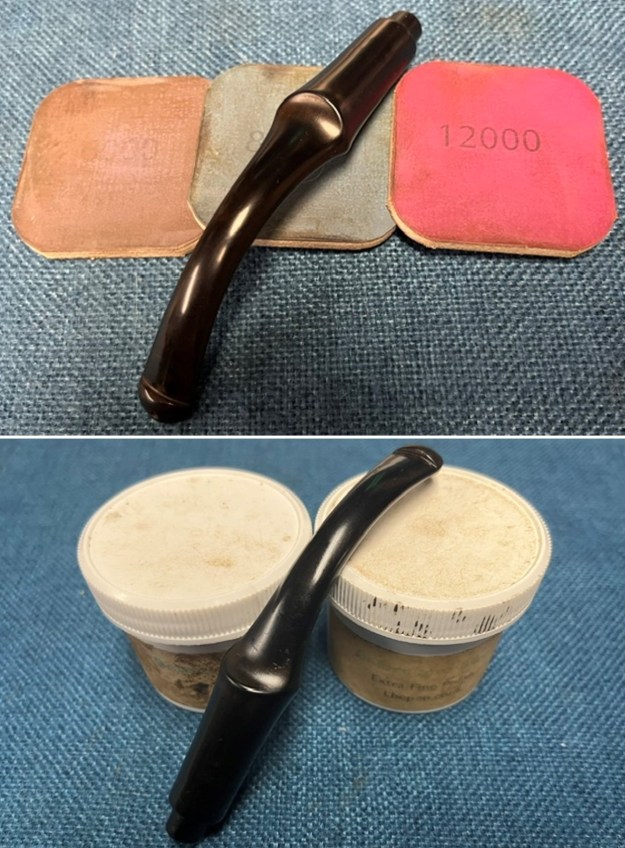
It was time to work on the pipe. As usual Jeff had done a thorough cleanup on the pipe. He reamed the bowl with a PipNet pipe reamer and a Savinelli Fitsall pipe knife to remove the cake. He scrubbed out the mortise and the airway in the shank and the stem with alcohol, cotton swabs, shank brushes and pipe cleaners. He scrubbed the exterior of the bowl, rim, shank and stem with a tooth brush and Murphy’s Oil Soap to remove the oils and tars on the rim and the grime on the finish of the bowl. He rinsed it under running water. He dried it off with a soft cloth. He soaked the stem in Before & After Deoxidizer and rinsed it off with warm water. He dried it with a soft cloth. The pipe looked good. I took a photo of the rim top and stem to show the condition. The finish on the rim top looked much better and had cleaned up well. The orange acrylic stem had some light tooth chatter and marks on both sides ahead of the button edges.The stamping on the sides of the shank is clear and readable as noted above. The logo on the left side of the saddle stem is clear and the white acrylic in the stem is in good condition. I removed the stem from the shank and took a photo of the pipe to give a sense of the whole. It is a nice-looking Lovat and should clean up very well.I sanded the bowl with 320-3500 grit 2×2 inch sanding pads to remove the scratching on the sides of the bowl and shank. I wiped the bowl down with a damp cloth after each sanding pad to remove the sanding debris. I polished the briar with 1500-12000 grit micromesh sanding pads to further remove the marks in the finish and to deepen the shine. I wiped it down with a damp cloth after each sanding pad to remove the debris. It looked much better. I worked some Before & After Restoration Balm into the surface of the briar with my finger tips. The product is incredible and the way it brings the grain to the fore is unique. It works to clean, protect and invigorate the wood. I set the bowl aside and turned my attention to the stem. I sanded the stem with 320-3500 grit 2×2 inch sanding pads to remove the chatter and tooth marks. I wiped the stem down after each sanding pads with an Obsidian Oil cloth. It looked much better. I polished the stem with micromesh sanding pads – dry sanding it 1500-12000 pads. I wiped it down with Obsidian after each pad to remove the dust and polishing debris. I polished it with Before After Pipe Polish – both Fine and Extra Fine. I gave it another coat of Obsidian Oil. This richly finished, large bowled House of Lords Ambassador London Made 213 Lovat with an orange, acrylic saddle stem is in great condition. The briar is clean and really came alive. The rich brown stains gave the grain a sense of depth with the polishing and waxing. I put the stem back on the bowl and carefully buffed the pipe with Blue Diamond on the buffing wheel using a light touch on the briar. I gave the bowl and the stem multiple coats of carnauba wax on the buffing wheel. I buffed the pipe with a clean buffing pad to raise the shine. I hand buffed the pipe with a microfiber cloth to deepen the shine. The finished House of Lords Ambassador London Made 213 Lovat is a beauty and feels great in the hand and looks very good. Give the finished pipe a look in the photos below. The dimensions of the pipe are Length: 5 inches, Height: 1 ¾ inches, Outside diameter of the bowl: 1 ¼ inches, Chamber diameter: ¾ of an inch. The weight is 1.27 ounces/36 grams. Thanks for reading this blog and my reflections on the pipe while I worked on it. I will be putting it on the rebornpipes store in the British Pipe Makers Section. If you are interested in adding it to your collection let me know. Thanks for following the blog on this restoration.

Restoring and Replacing a Broken Stem on a Republic Era Peterson’s System Standard XL307


by Steve Laug

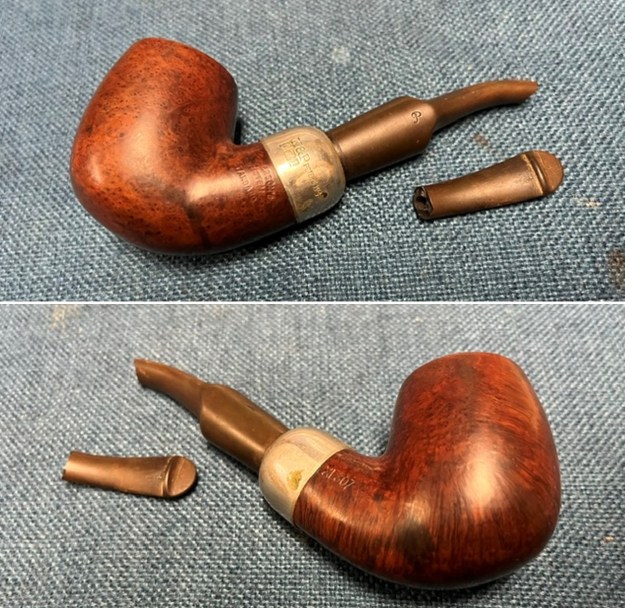
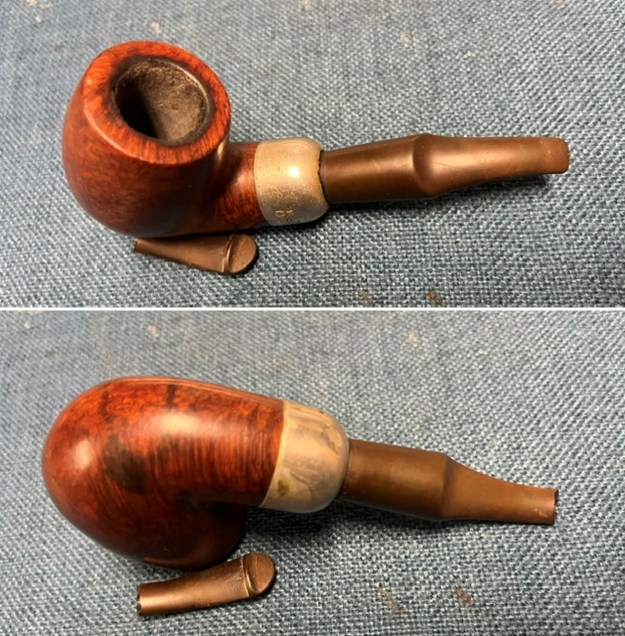
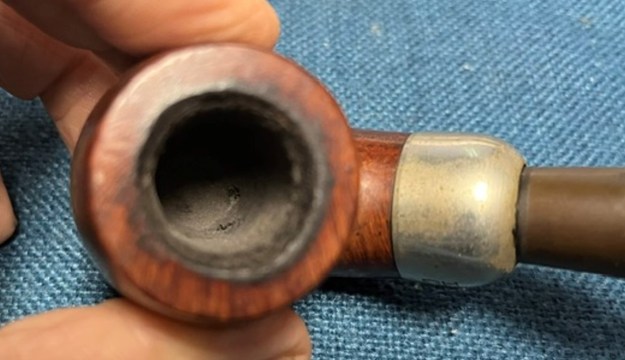
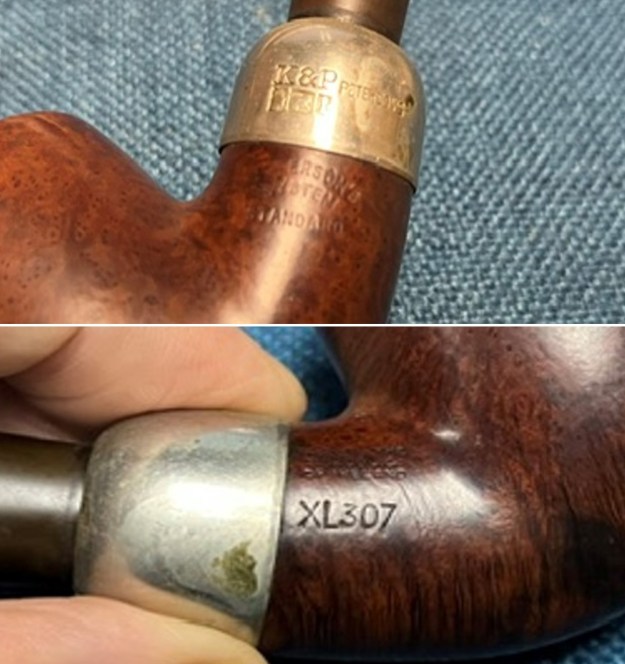
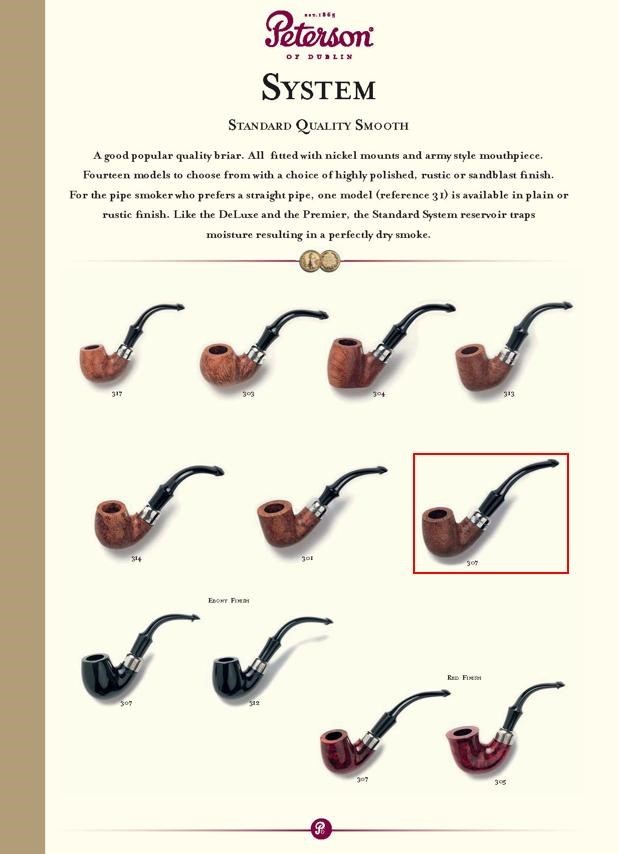
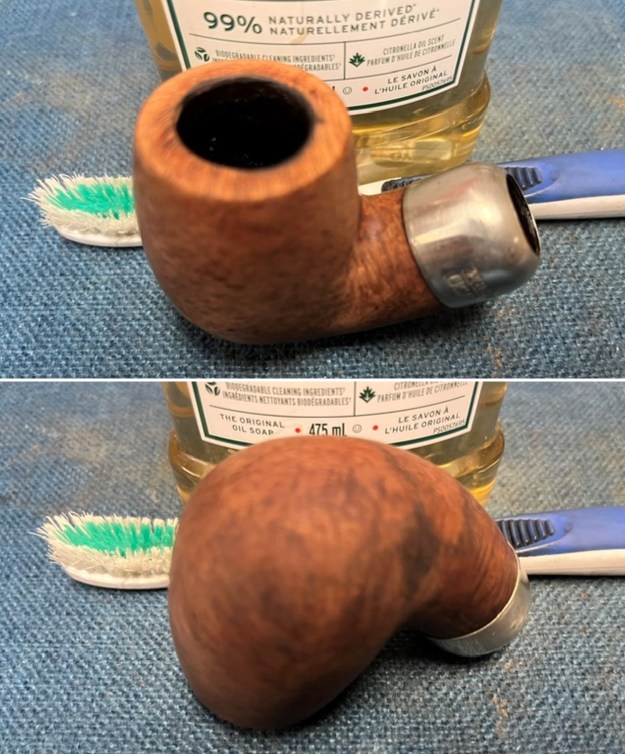
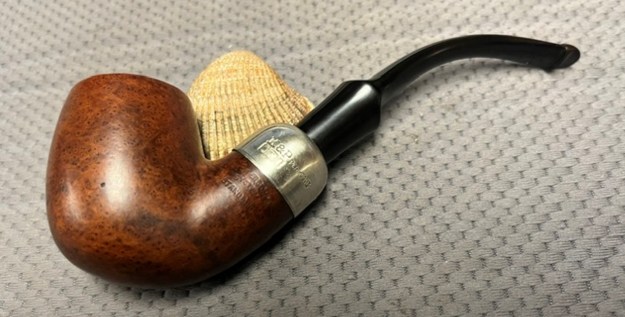
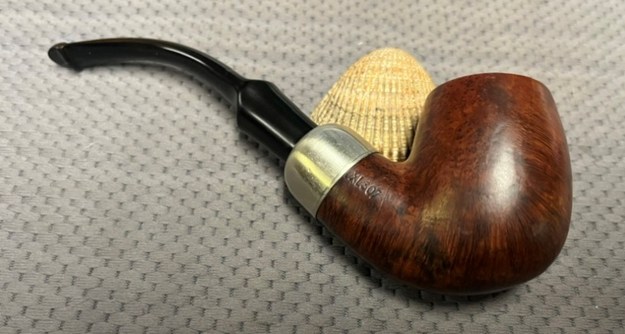
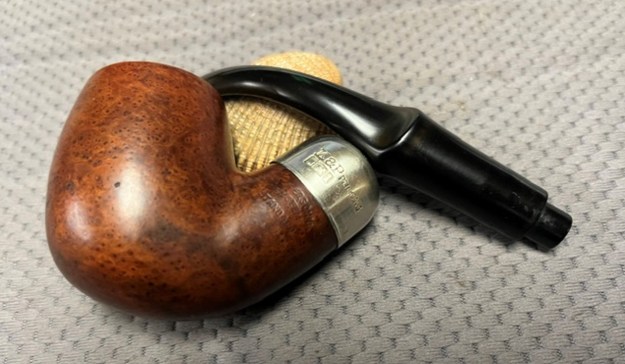
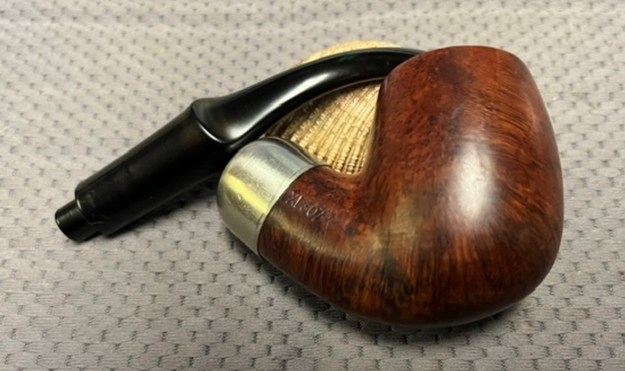
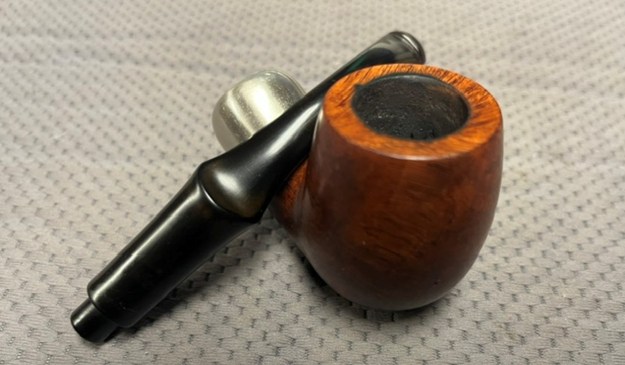
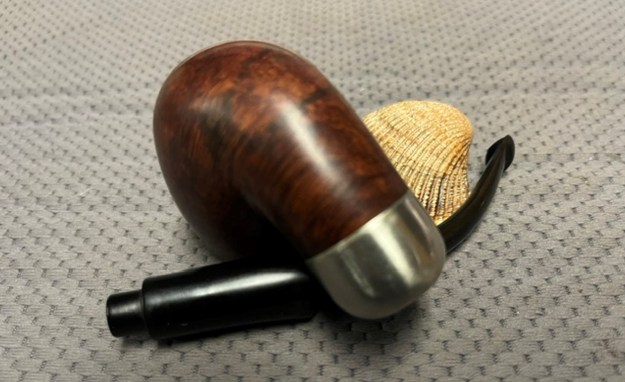
The next pipe on the work table is Peterson’s System pipe that a reader, Don sent to me to work on. It was stamped Peterson’s [arched over] System [arched over] Standard on the underside side of the shank in a smooth panel. It was stamped Peterson’s [over] System [over] Standard. On the right side it is stamped Made in the Republic of Ireland (in three lines) [over] the shape number XL307. It has a a great looking smooth bowl with some nice grain around the bowl and shank that is dirty with ground in oils, debris and grime. There was a moderate cake in the bowl and a light lava overflow and darkening on the rim top. There was a very beautiful pipe underneath all of the buildup of years of use. The nickel ferrule on the shank end was oxidized and is stamped on the left side K&P [over] three faux hallmarks. That is followed by Petersons. It is not dented or damaged. The stem was broken midway between the button and the saddle. I would need to restem it with a proper stem in the process of my work. I took photos of the bowl and rim top to show the cake in the bowl and the light lava build up on the top of the rim and the edges of the bowl. The rim top and edges look very good. Only clean up would tell the full story.I took photos of the stamping on the sides of the bowl and shank. The stamping was faint in spots but readable as you can see from the photos. It read as noted above. The nickel ferrule on the shank end is stamped on the top and left side K&P Peterson’s over three Peterson marks used on nickel ferrules.I have included the information on the shape number on this pipe that I picked up on researching the previous pipes. This is the second of two Peterson’s System Standard pipes in Bob’s collection marked with the 307 shape number. I have included a page from a Petersons Catalogue that I have on rebornpipes (https://rebornpipes.com/tag/peterson-hallmark-chart/). I have put a red box around the 307 shown in the catalogue page shown below. That should give a clear picture of the size and shape of the pipe. I am also including the information from Pipedia’s article on Peterson pipes. It is a great read in terms of the history of the brand (https://pipedia.org/wiki/Peterson). I have included a bit of the pertinent history here.

1950 – 1989 The Republic Era – From 1950 to the present time, the stamp for this era is “Made in the Republic of Ireland” in a block format generally in three lines but two lines have been used with or without Republic being abbreviated.

During the 1950’s and 60’s the Kapp & Peterson company was still in the ownership of the Kapp family. However 1964 saw the retiral of the company Managing Director Frederick Henry(Harry) Kapp.

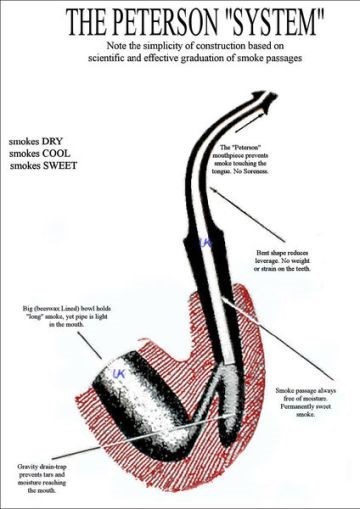
Pipedia also included a section of information on the System pipes including a diagram of the systems look (https://pipedia.org/wiki/Peterson#Republic_Era_Pipes). I quote a section of the article in part and include a link to another article on Pipedia on the System pipe.

The Peterson System pipes are the standard bearers of the Peterson pipe family, famous for the excellent smoking pleasure they provide. Often imitated but never equaled, the Peterson System smokes dry, cool and sweet, thanks to the scientific effectiveness of the original design. The heart of the System is the unique graduated bore in the mouthpiece. This makes the suction applied by the smoker 15 times weaker by the time it reaches the tobacco chamber. The result is that all the moisture flows into the reservoir and, thus cannot reach the smoker’s mouth. The Peterson Lip further enhances the effectiveness of the graduated bore by directing the flow of smoke upwards and away from the tongue. This achieves a uniquely even distribution of smoke and virtually eliminates any chance of tonguebite or bitterness. Furthermore, the shape is contoured so that the tongue rests comfortably in the depression under the opening. Each “PLip” mouthpiece is made from Vulcanite. For the Peterson System pipes to work properly, the stem/tenon has to have an extension, the tip of which will pass by the draft hole from the bowl and into the sump. Upon the smoker drawing in smoke, this extension then directs the smoke down and around the sump to dispense a lot of the moisture before the smoke enters the extension and stem. On the System Standards and other less expensive systems, this extension with be made of Vulcanite turned integrally with the stem. On the more expensive System pipes this extension will be made of metal which screws into the Vulcanite stem. This extension on the earlier pipes will be of brass and the newer pipes will be of aluminium. Most smokers not knowing this function of the metal extension, assumes that it is a condenser/stinger and will remove it as they do with the metal condensers of Kaywoodie, etc. Should you have a System pipe with this metal extension, do not remove it for it will make the System function properly and give you a dryer smoke (https://pipedia.org/wiki/A_closer_look_at_the_famous_Peterson_Standard_System_Pipe).

With that information in hand I knew what I was dealing with in terms of the stamping and the age of this pipe. I knew from the information that the pipe was made during the Republic Era between 1950 and 1989. My guess is that the pipes is a 1960s era System pipe. Now it was time to work on the pipe.

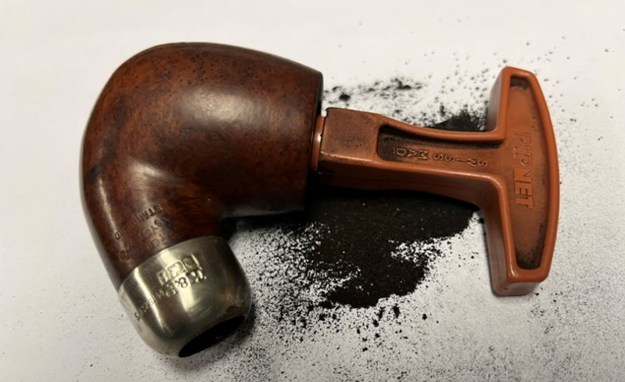
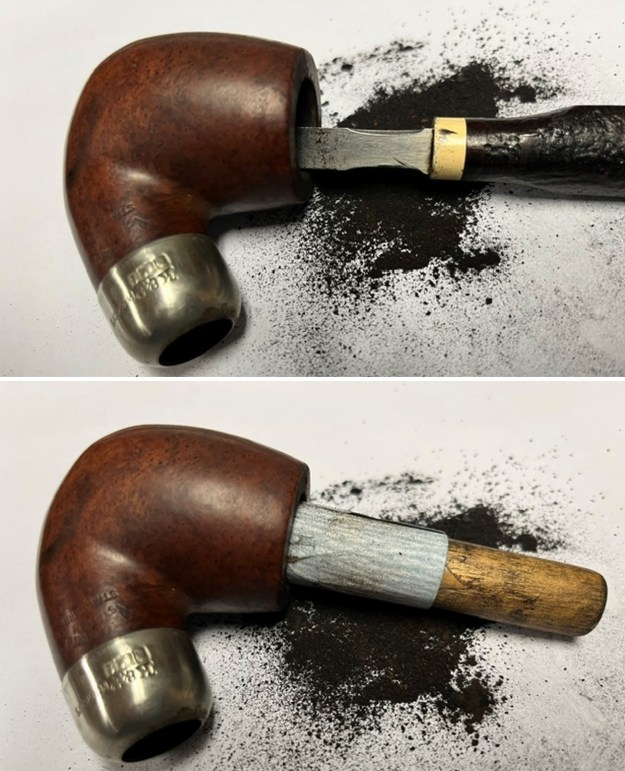
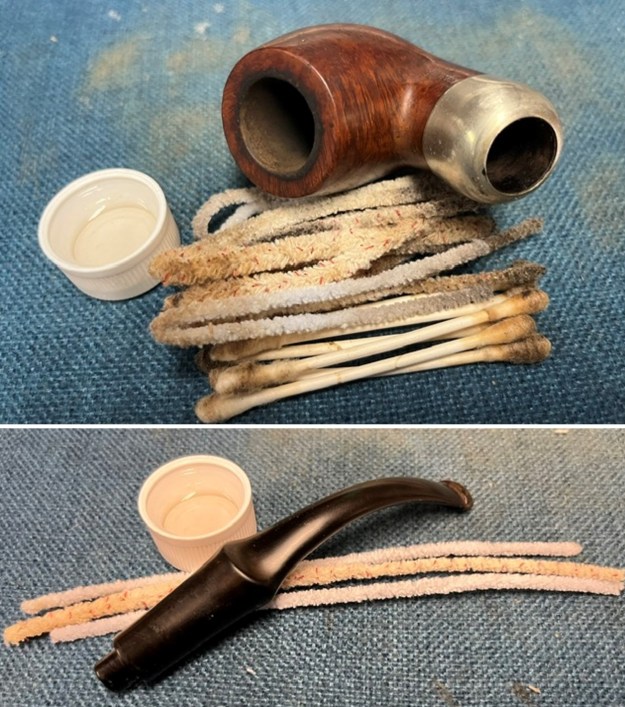
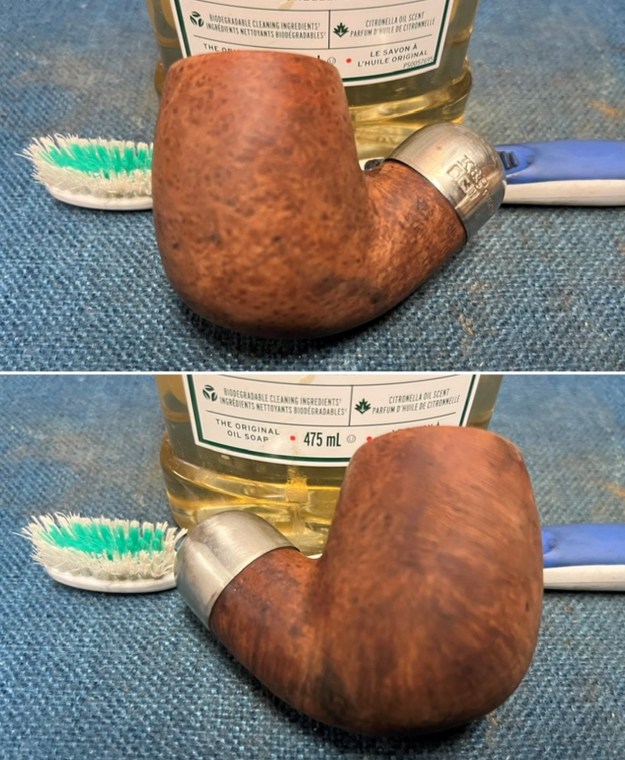
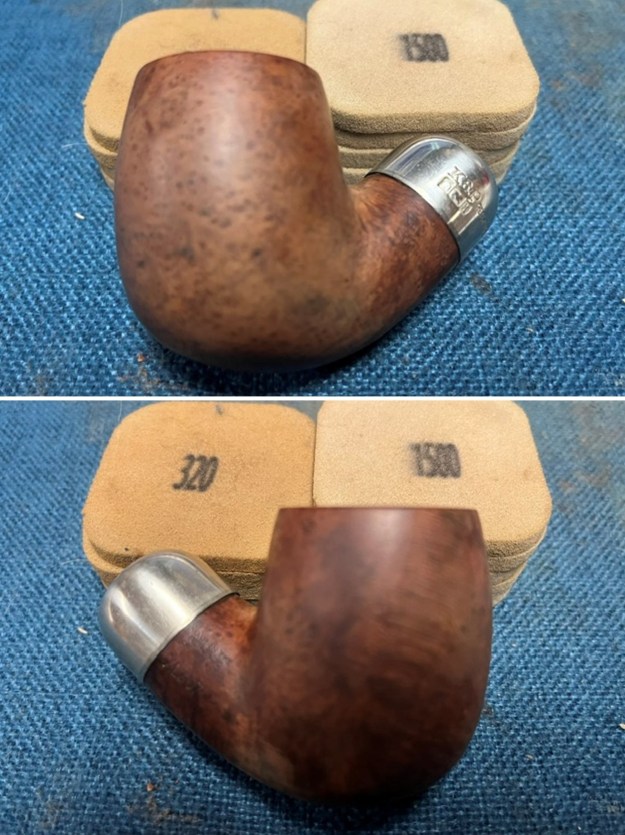
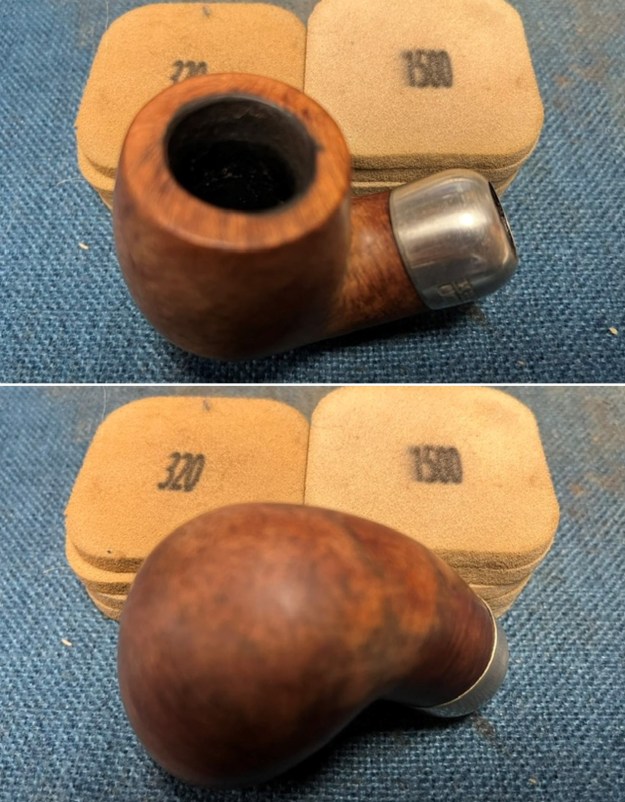
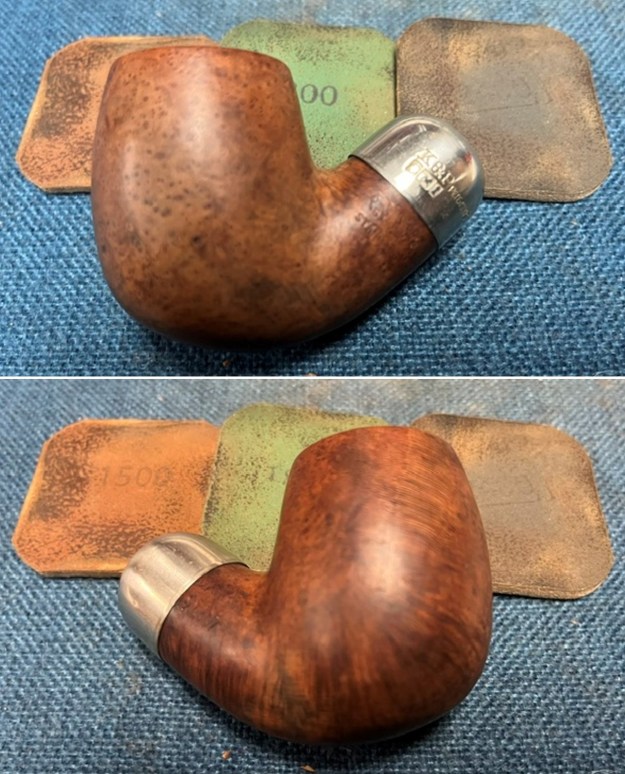
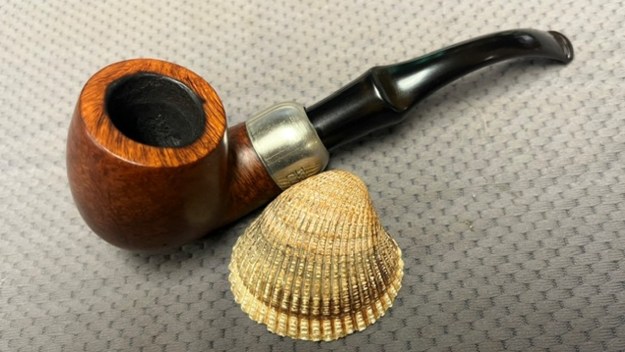
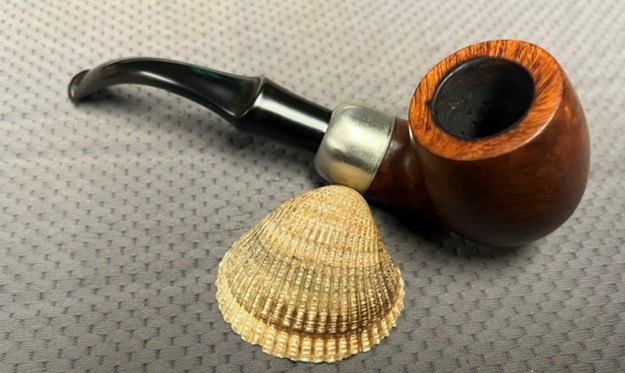
I started with the bowl and reamed it with a PipNet pipe reamer and cleaned up the reaming with a Savinelli Fitsall Pipe Knife. I took the cake back to bare briar. I sanded the walls with 220 grit sandpaper wrapped around a piece of dowel. I scrubbed out the internals of the bowl, sump and shank with alcohol, pipe cleaners and cotton swabs until the pipe was clean. I also cleaned up the inside of the stem at the same time. It was ready for the rest of the restemming process.I scrubbed the exterior of the bowl with Murphy’s Oil Soap and a tooth brush to remove the grime and grit on the briar and the lava on the rim top. The finish looks very good with great looking grain around the bowl and shank. I sanded the bowl with 320-3500 grit 2×2 inch sanding pads to remove the scratches and dark marks in the briar. I worked over the bowl and shank with each pad and wiped it down after each pad with a damp cloth to remove the sanding dust. I polished the briar with 1500-12000 grit micromesh sanding pads – dry sanding with each pad and wiping it down after each one with a damp cloth. The briar began to take on a rich shine. I worked some Before & After Restoration Balm into the surface of the briar with my finger tips  to work it into the finish. The product is incredible and the way it brings the grain to the fore is unique. It works to clean, protect and invigorate the wood. I went through my stems and found one that was the right length diameter of the shank and the tenon. It was on older Peterson’s P-lip that I had here that fits these 307 pipes. It was oxidized and had light tooth marks but otherwise was a duplicate of the original. It did not have the P logo on the stem side.I sanded the stem with 320-1500 grit 2×2 inch sanding pads. I wiped the stem down after each sanding pad with an Obsidian Oil Cloth to remove the sanding dust. It began to look very good.I polished the stem with micromesh sanding pads – dry sanding with 1500-12000 grit pads. I wiped the stem down after each sanding pad with an Obsidian Oil Cloth. The stem began to take on a rich shine. Once again at this point in the restoration process I am excited to be on the homestretch. I look forward to the final look when the Republic Era Peterson System XL307 is put back together, polished and waxed. I put the bowl and the new stem back together. I polished the bowl and stem with Blue Diamond to polish out the scratches in the briar and the vulcanite. I gave the bowl and the stem multiple coats of carnauba wax. I buffed the pipe with a clean buffing pad to raise the shine. I hand buffed it with a microfiber cloth to deepen the shine. The pipe polished up pretty nicely. The shiny black vulcanite stem is a beautiful contrast to the browns of the bowl and nickel ferrule. This Peterson’s System Standard XL307 Bent Billiard was fun pipe to work on. It is a stunning piece of briar whose shape follows the flow of the briar. The finished pipe is shown in the photos below. The dimensions of the pipe are Length: 6 inches, Height: 2 inches, Outside diameter of the bowl: 1 ¼ inches, Chamber diameter: ¾ of an inch. The weight of the pipe is 2.12 ounces/59 grams. I will be putting it on the rebornpipes store in the Irish Pipemakers Section if you would like to add it to your rack and carry on the previous pipeman’s legacy. This is an interesting estate to bring back to life.

As always, I encourage your questions and comments as you read the blog. Thanks to each of you who are reading this blog. Remember we are not pipe owners; we are pipe men and women who hold our pipes in trust until they pass on into the trust of those who follow us.

Restoring and Restemming a Stanwell Regd. No. 969-48 Old Briar 858 Billiard


by Steve Laug

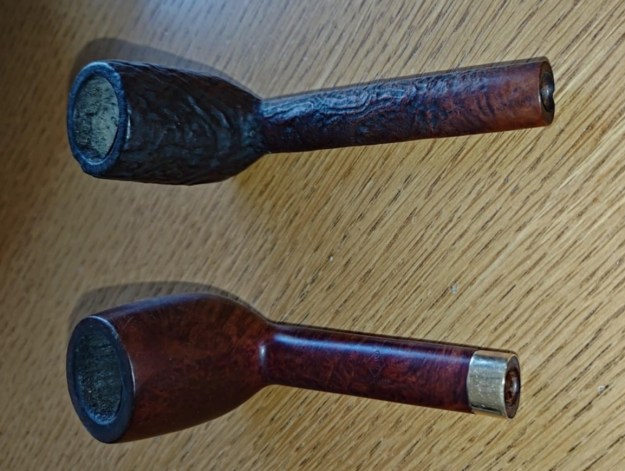
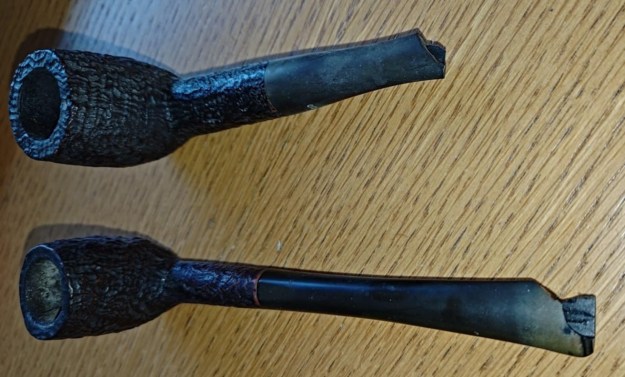
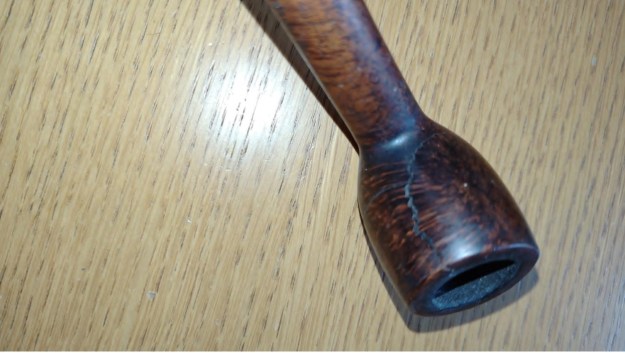
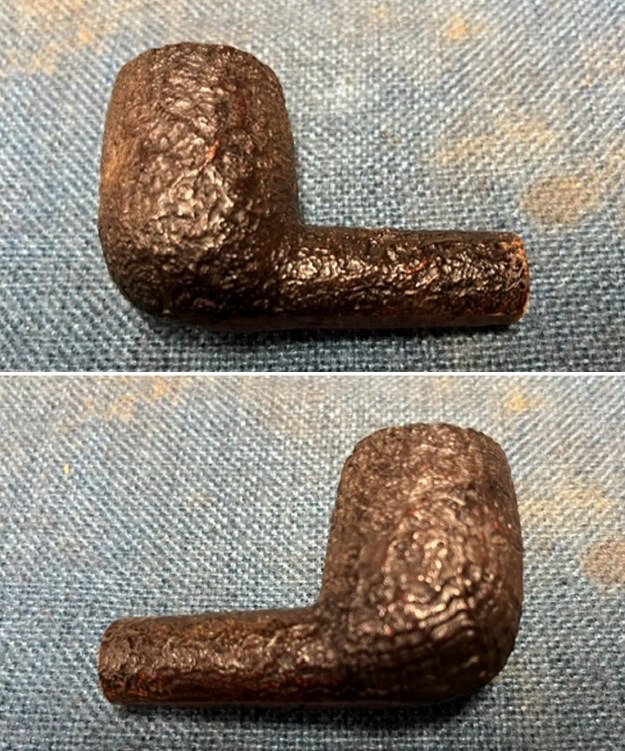
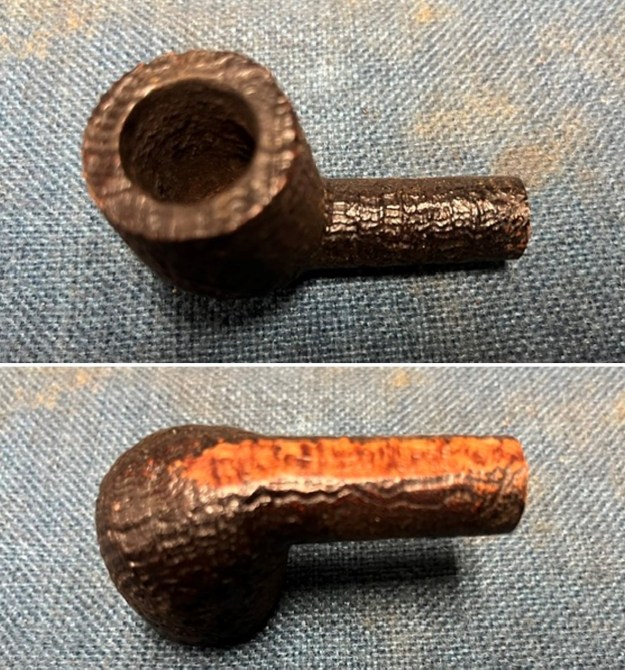
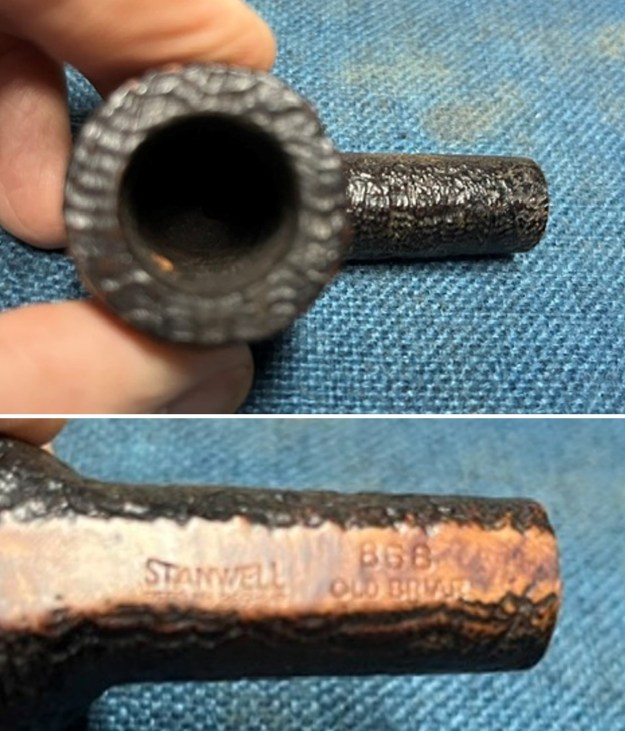
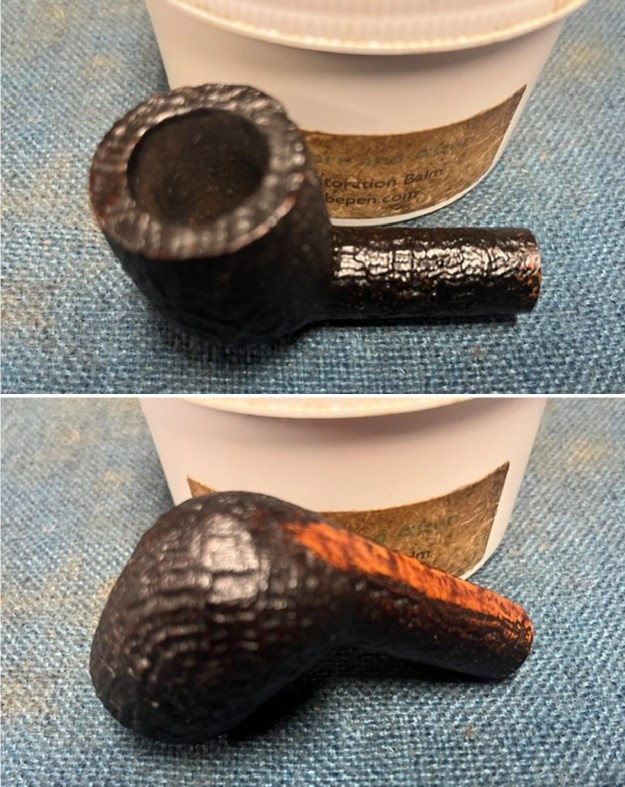
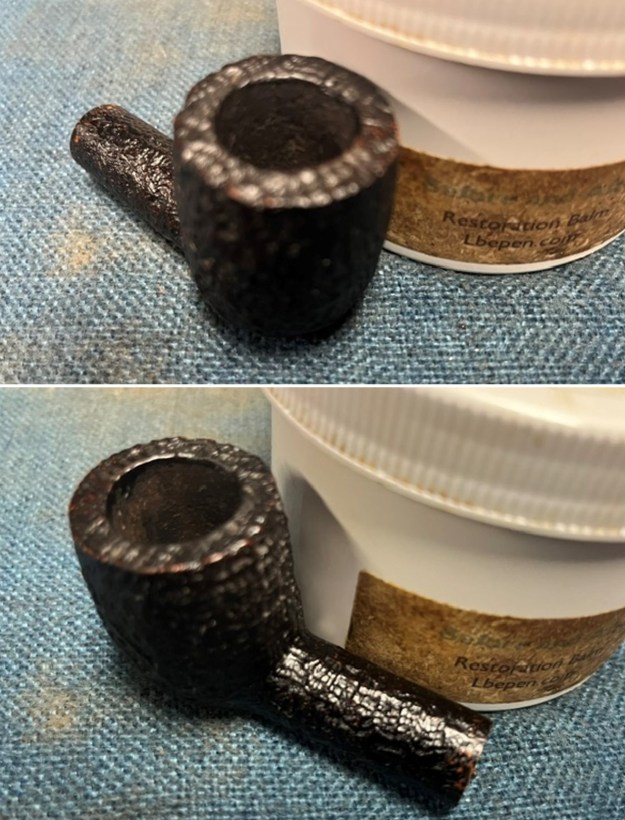
Not too long ago I received an email from a Andrew in Greece asking if I could work on some pipes for him. He had some that needed a stem and a couple of pipes with broken stems and a Canadian that had a crack down the back of the bowl and across the right side. We emailed back and forth and he sent me the following photos. I figured they would be some interesting pipes to work on so he sent them to me to work on. I received the box yesterday. When I opened it this morning I was amazed to see what he had sent. The Sandblast Canadian that needed restemming was stamped 264 Peterson’s Kapruf. The rest of the stamping was quite faint. The pipe needed to be restemmed and it had a small divot in the shank end and what looked like a crack. The second, a smooth Canadian was a BBB Ultonia 504 with a gold band. The two Sandblast with broken stems turned out to be Stanwells. The larger on is stamped Stanwell [over] Regd. No. 969-48. It is followed by the shape number 858 [over] Old Briar. The smaller one is stamped Stanwell [over] Regd. No. 969-48 followed by de Luxe followed by the shape number 87. The last of the five with the cracked bowl is an 8 Dot Sasieni [over] London Made [over] Pat. No. 1513428. It was also stamped “Amesbury”. They were going to be an interesting lot to work on.

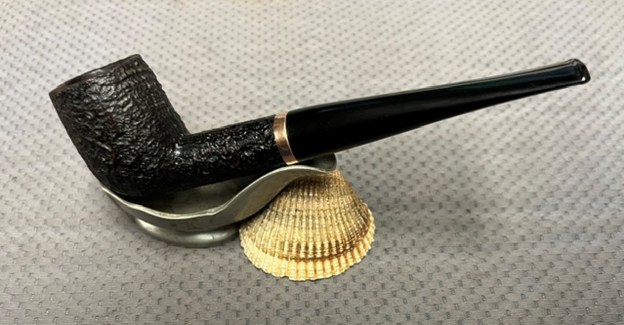
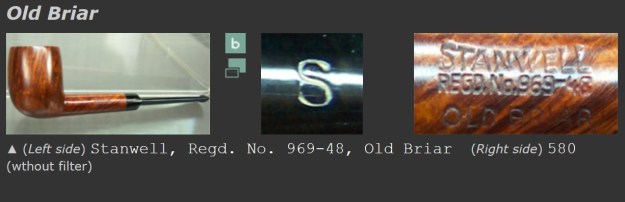
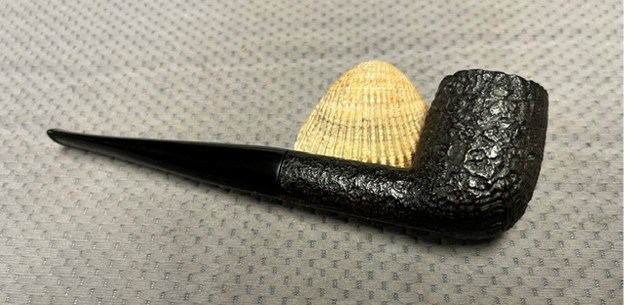
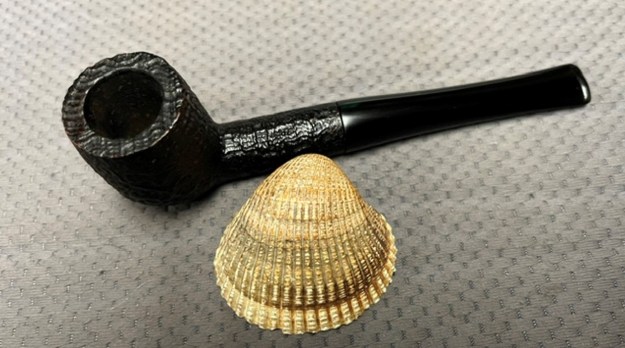
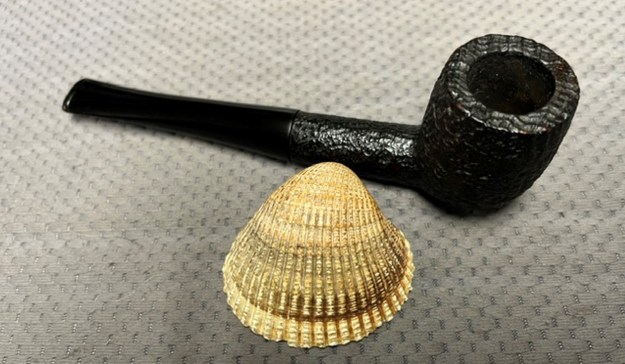
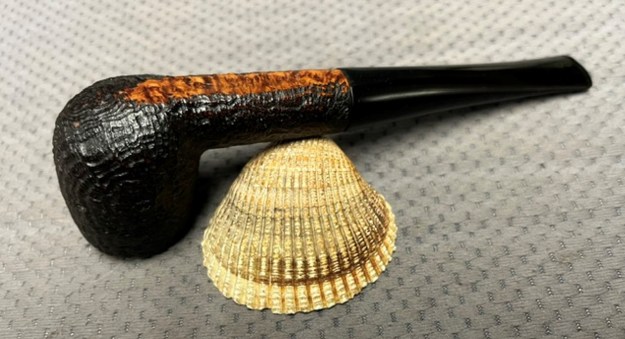
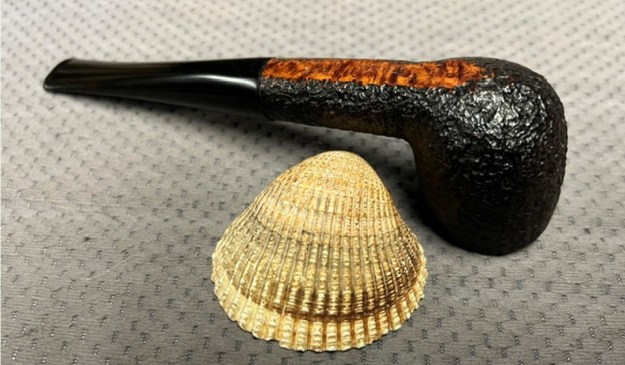
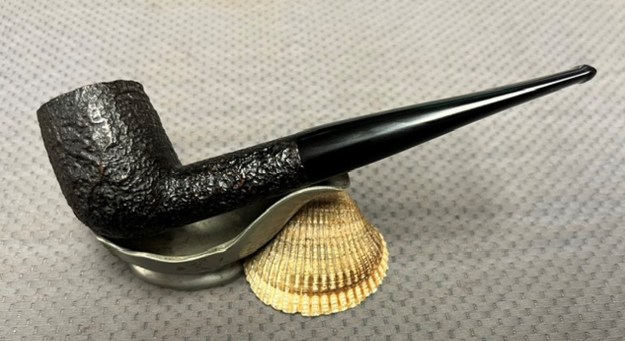
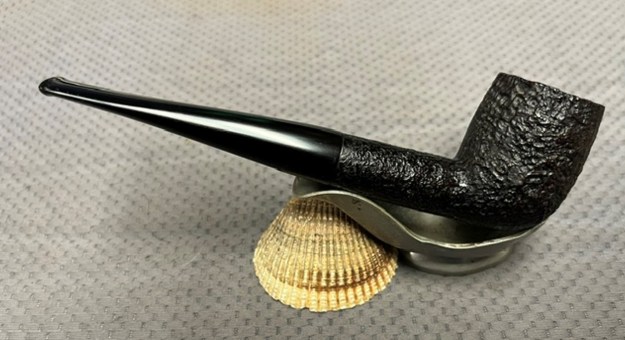
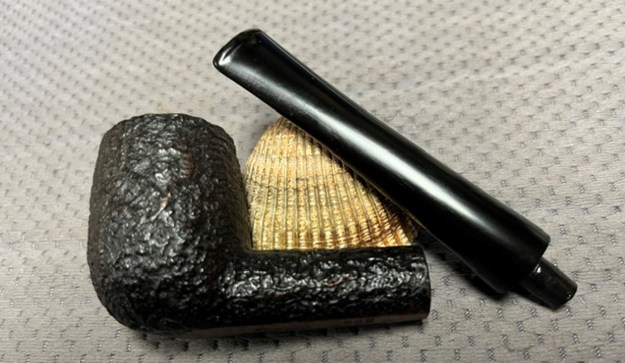
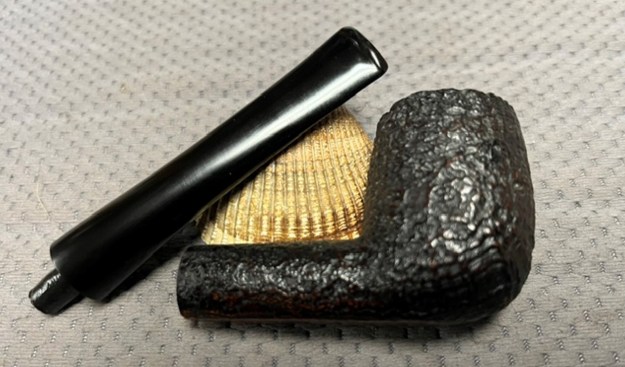
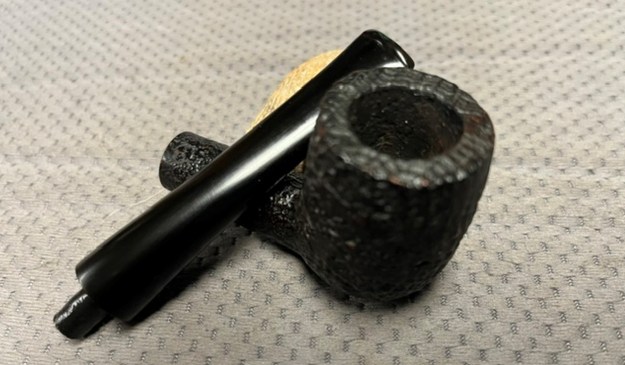
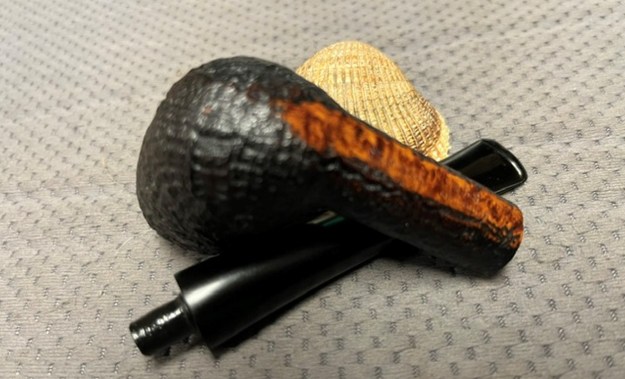
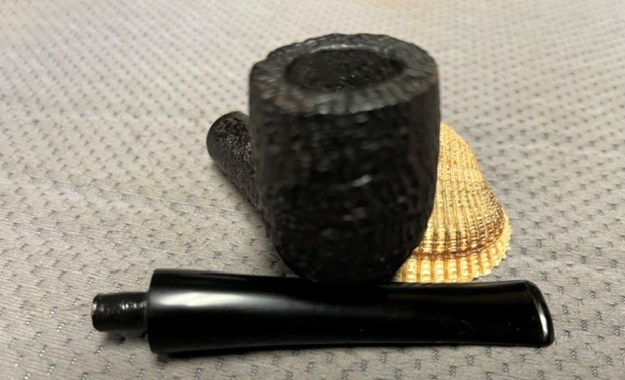
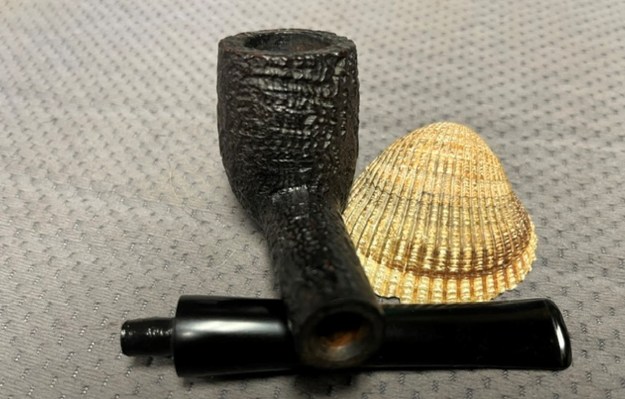
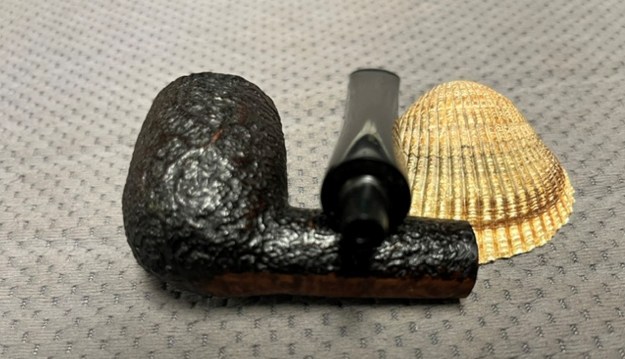
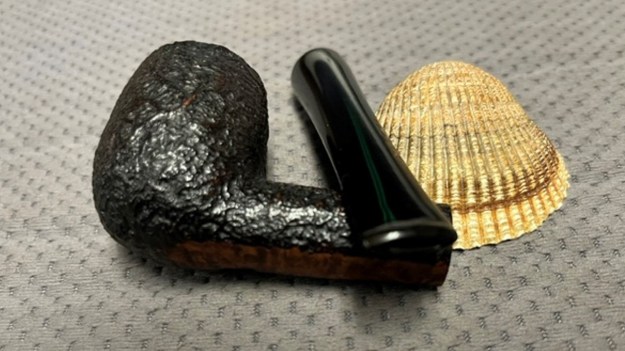
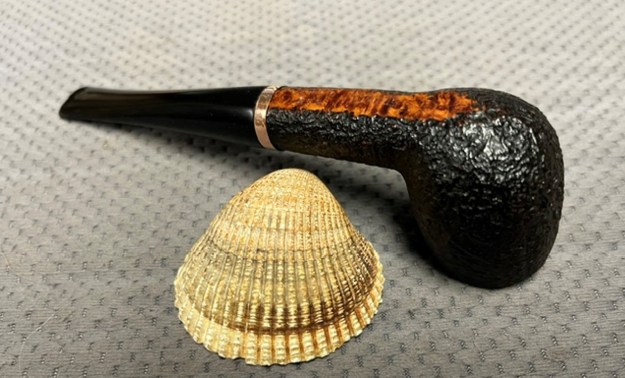
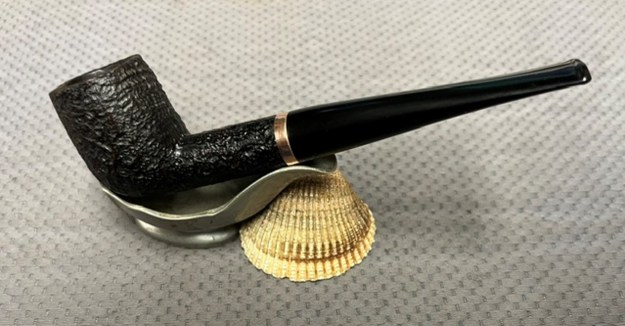
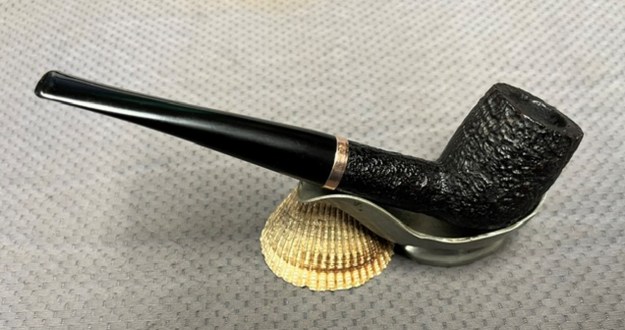
The final pipe I had left to deal with was the larger Stanwell Old Briar 858 billiard next. It was in decent condition, probably the best of the lot. The stamping on the shank read Stanwell [over] Regd. No. 969-48 followed by Old Briar [over] the shape number 858. It was clear and readable. The sandblast finish was nice but dirty. The bowl had a light cake in it and there were spots of lava on the rim top and inner edge. The inner edge was in excellent condition with no damage. The interior of the shank was quite dirty. I took a photo of the bowl and rim top to show the condition of them bowl. The lava on the rim top was in the sandblast. The inner edge looked very good. I also took a photo of the underside of the shank to show the faint stamping that was present. It is faint in spots but is still readable.I turned to do a bit of research on the Stanwell Old Briar line first to Pipephil’s site and found a listing there with a photo of the stamping (http://www.pipephil.eu/logos/en/logo-stanwell.html). I included the sidebar information below the scan.Logo without crown. The “Regd. No.” stamping discontinued in late 1960s to very early 1970s.

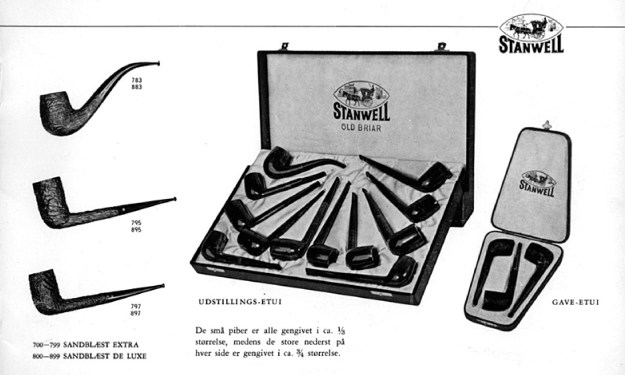
I know that Pipedia has some great history (https://pipedia.org/wiki/Stanwell) on the brand so I turned there hoping to see the Old Briar. There were several examples of the Old Briar line shown on the site and references to it appearing in both a 1960s and 70s catalogue. I turned to an offsite catalogue from the 1970s and scrolled through until the page I am including below that show the Old Briar Line(https://files.homepagemodules.de/b169807/f122t2475p9130n1.pdf). It also states that the 800-899 shape numbers included the Sandblast De Luxe which includes the shape 858 Billiard that I am working on.I knew that the pipe I had in hand was pipe a robust Sandblast De Luxe 858 Billiard. With the Regd. No. on the shank, the pipe was made in the period between 1948 and 1960.

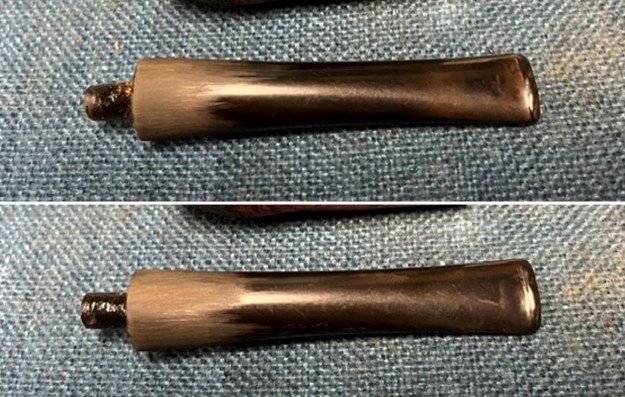
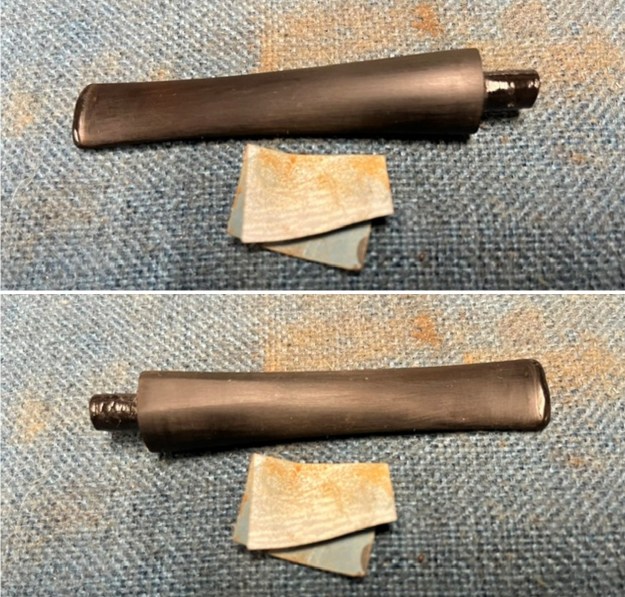
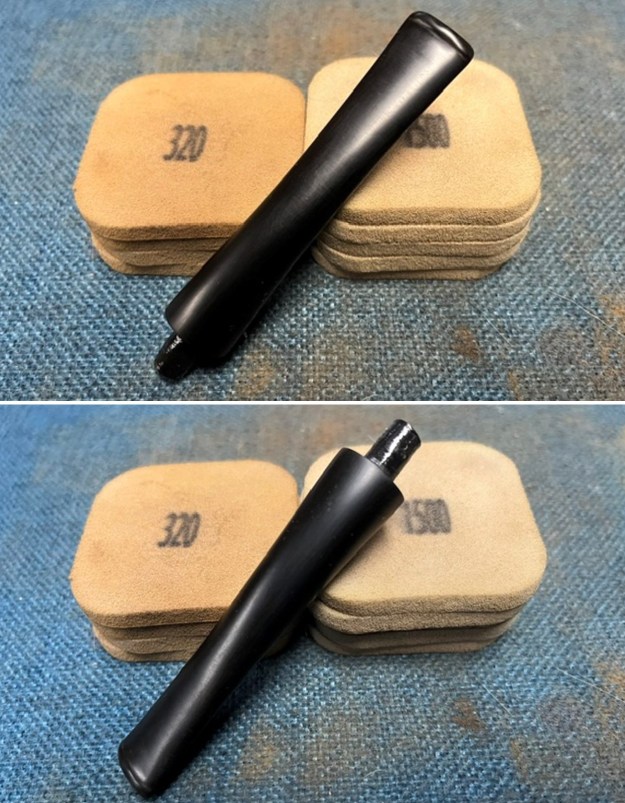
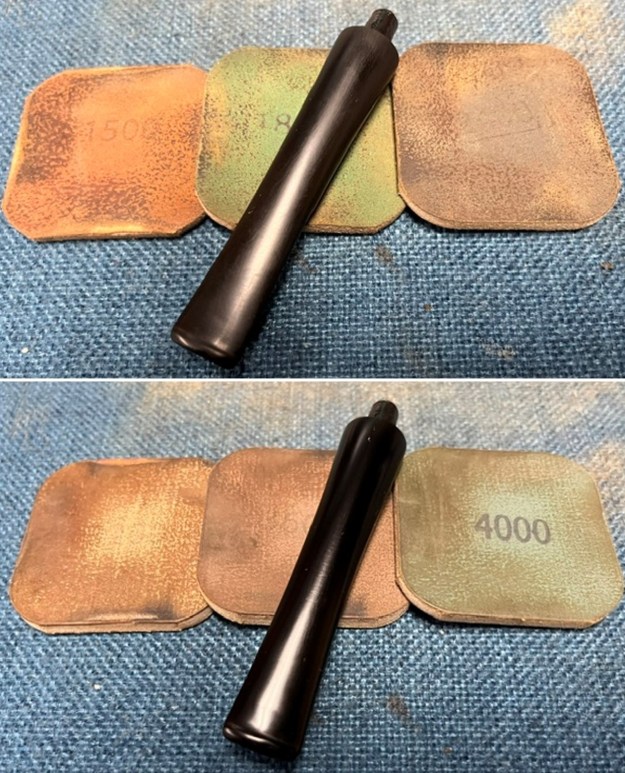
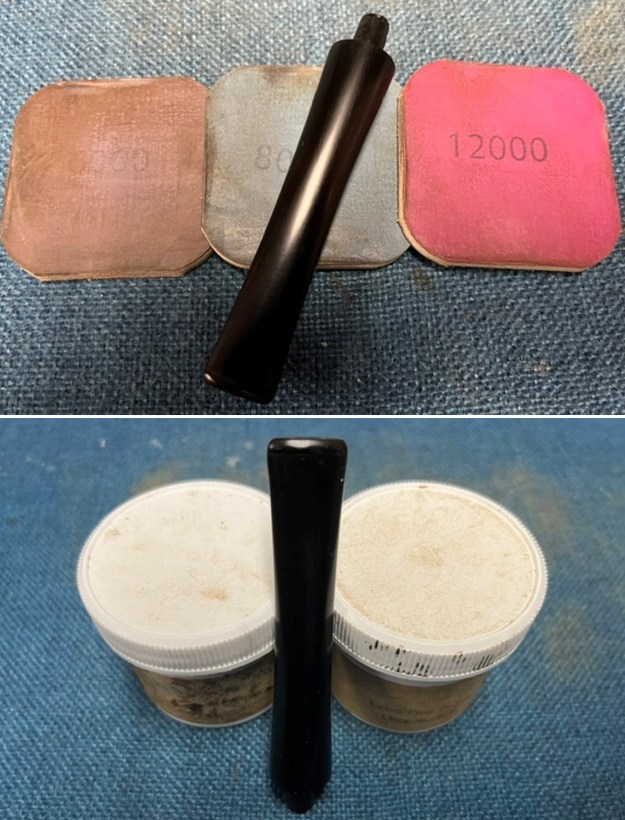
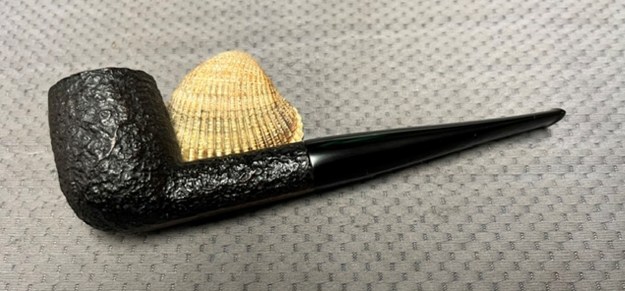
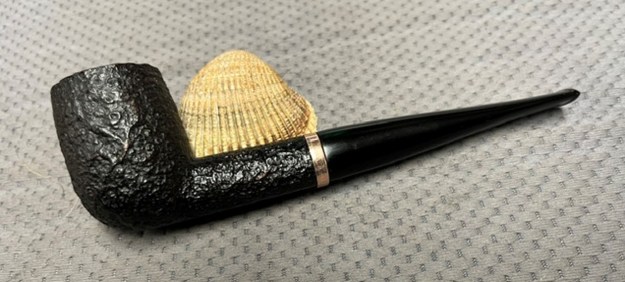
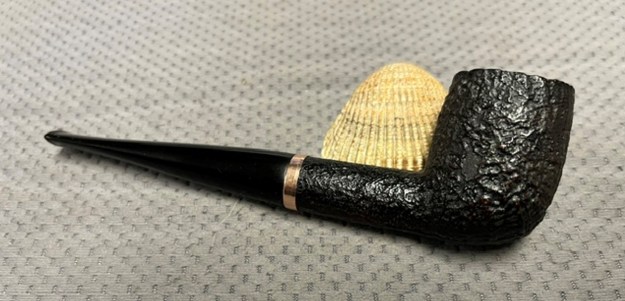
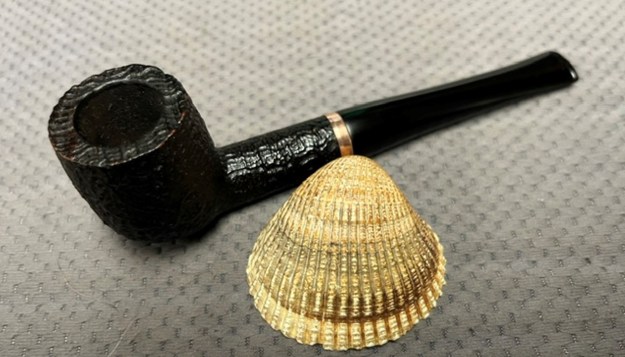
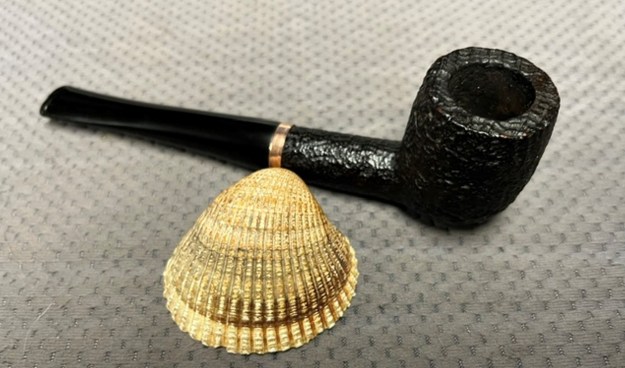
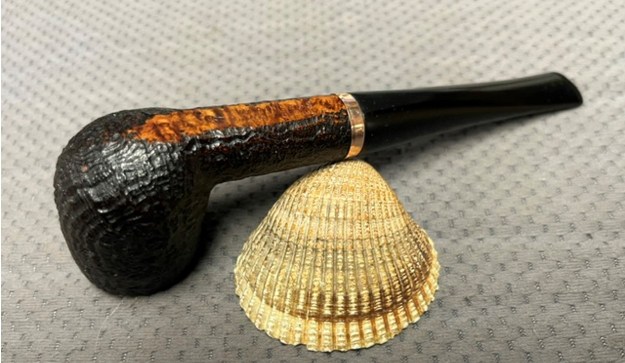
Now it was time to work on the pipe.  I started my work on the pipe by reaming it with a Savinelli Fitsall Pipe Knife. I cleaned the lava built up on the rim top with a brass bristle wire brush. I sanded the bowl walls with 220 grit sandpaper wrapped around a dowel to clean up the remaining bits. It looked much better after the clean up. I cleaned out the internals of the shank and bowl with pipe cleaners – regular and bristle and isopropyl alcohol. The pipe is very clean. I like it clean to make a better fit for new stem. I cleaned out the airway in the stem I had chosen with pipe cleaners and alcohol. I worked some Before & After Restoration Balm into the surface of the briar with my finger tips and a shoe brush to work it into the sandblast. The product is incredible and the way it brings the grain to the fore is unique. It works to clean, protect and invigorate the wood. I went through my stems and found one that was the right length and would need some slight adjusting to fit the diameter of the shank and the tenon.I used a Dremel and sanding drum along with a folded piece of 220 grit sandpaper to shape and rework the stem and tenon to fit the shank end. Once I was finished with the reshaping of the stem I put it in the shank and took photos of the look of the stem.I sanded the stem with 320-1500 grit 2×2 inch sanding pads. I wiped the stem down after each sanding pad with an Obsidian Oil Cloth to remove the sanding dust. It began to look very good. I polished the stem with micromesh sanding pads – dry sanding with 1500-12000 grit pads. I wiped the stem down after each sanding pad with an Obsidian Oil Cloth. The stem began to take on a rich shine. This Stanwell Regd. No. 969-48 Old Briar Sandblast 858 Billiard with a new vulcanite taper stem is a great looking pipe now that it has been restemmed and restored. The beautiful sandblast on the briar shines through the polished finish is stunning. I put the stem back on the bowl and carefully buffed the pipe with Blue Diamond on the buffing wheel. I gave the bowl and the stem multiple coats of carnauba wax on the buffing wheel and followed that by buffing the entire pipe with a clean buffing pad. I hand buffed the pipe with a microfiber cloth to deepen the shine. The finished Stanwell Regd. No 969-48 Old Briar 858 Billiard fits nicely in the hand and feels great. Give the finished pipe a look in the photos below. The dimensions of the pipe are Length: 6 inches, Height: 1 ½ inches, Outside diameter of the bowl: 1 ¼ inches, Chamber diameter: ¾ of an inch. The weight of the pipe is 35 grams/1.23 ounces. It is a beautiful pipe and the last of the five pipes that Andrew sent me. Once I am finished with it, the lot they will be heading back to Greece. Thanks for walking through the restoration with me as I worked over this pipe. Thanks to each of you who are reading this blog. On a lark, I slipped a thin brass band on the shank just to see what it would look like. I figured it would give it a great, distinguished look. It was not needed so it was solely for decorative purposes. I sent picture of the pipe with and without the band to Andrew and he liked it as much as I did. With that in mind, I glued the band in place on the shank and let cure. I took photos of it once it was finished.