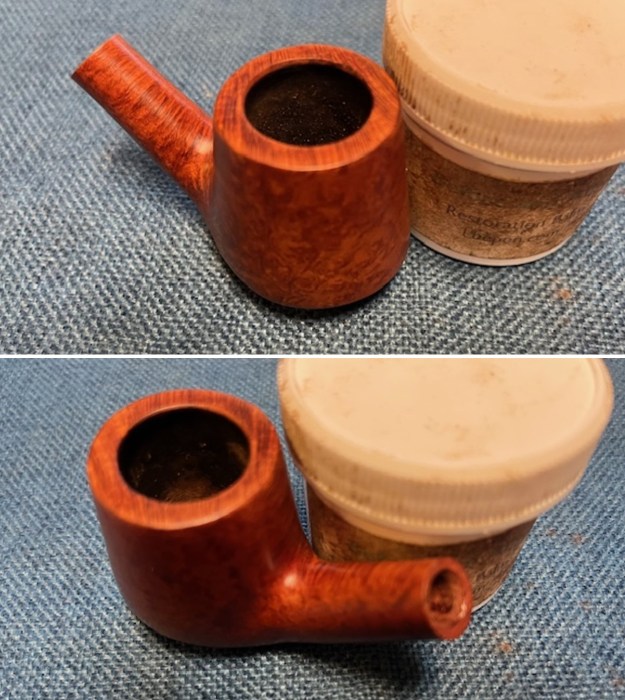
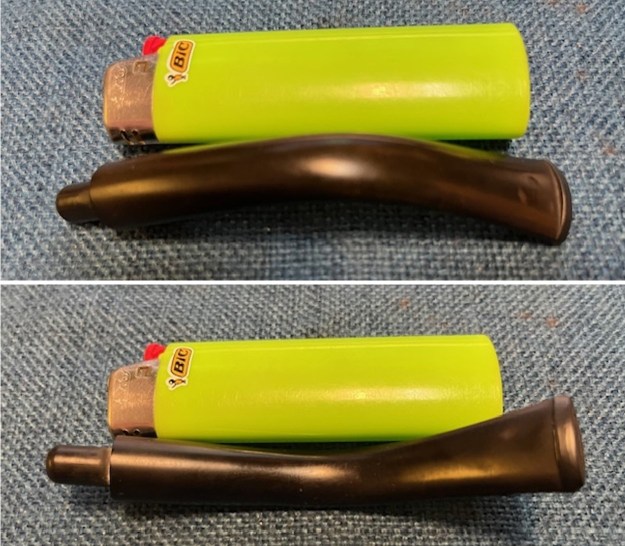
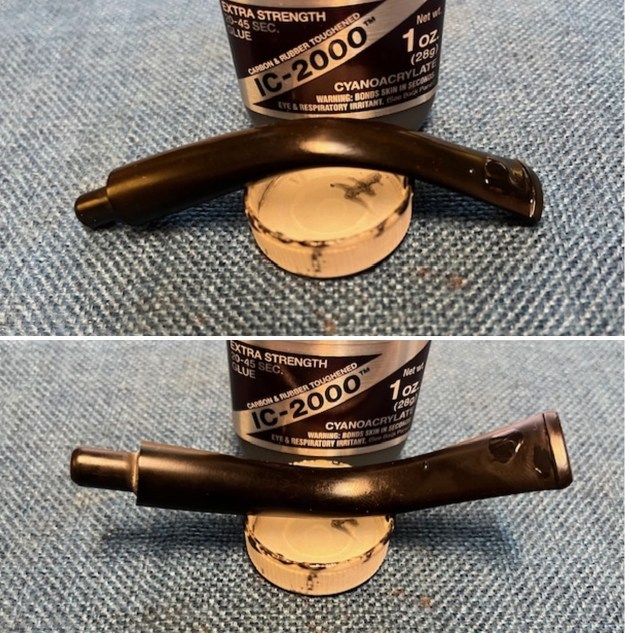
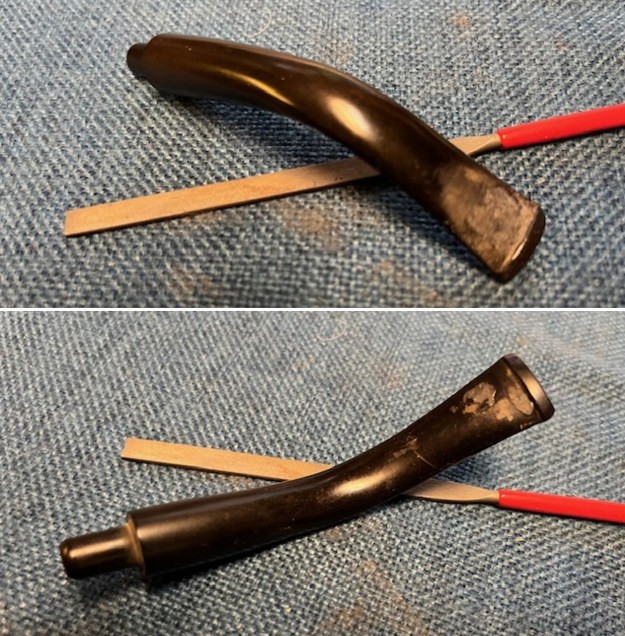
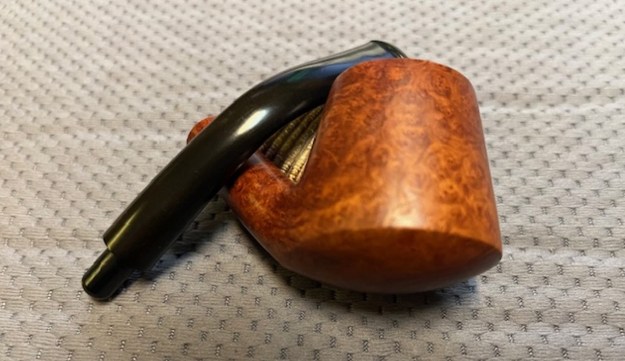
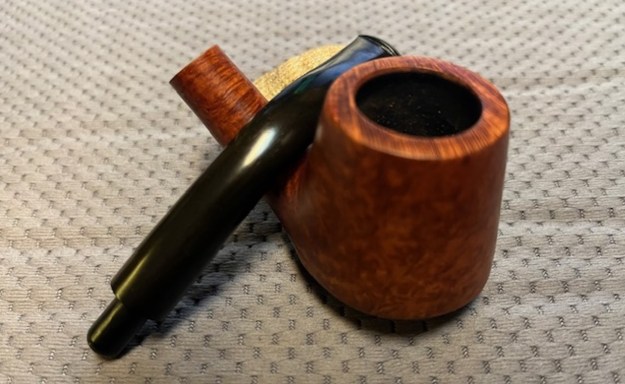
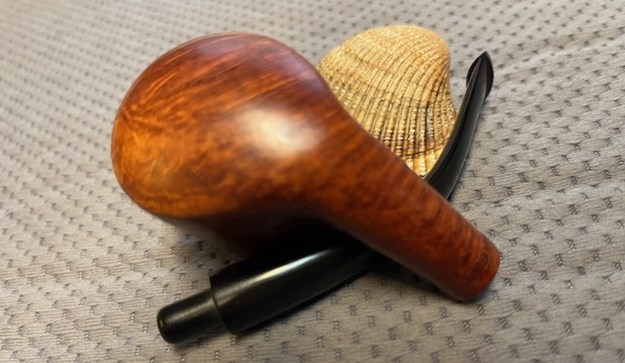
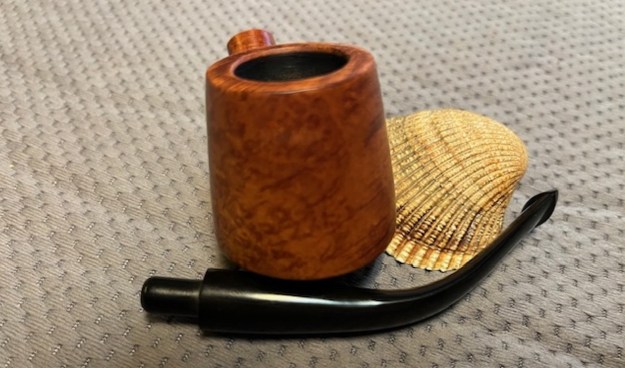
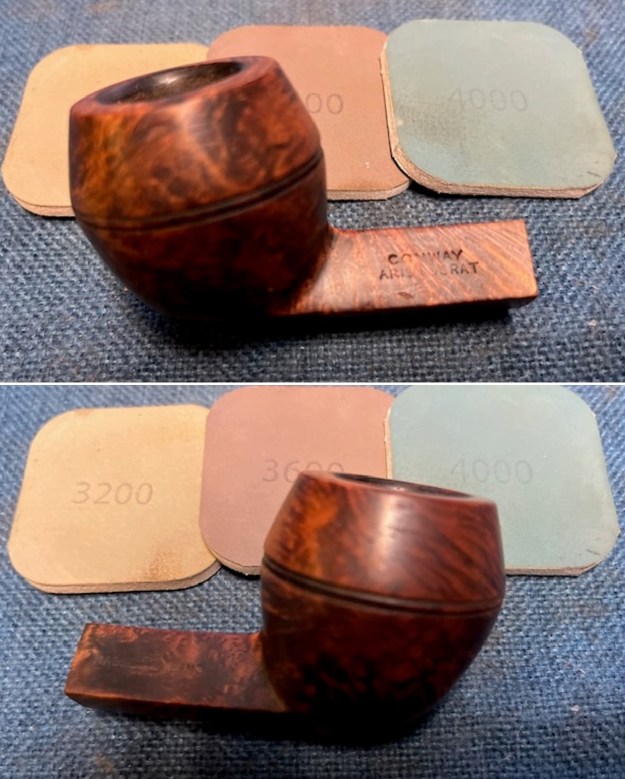
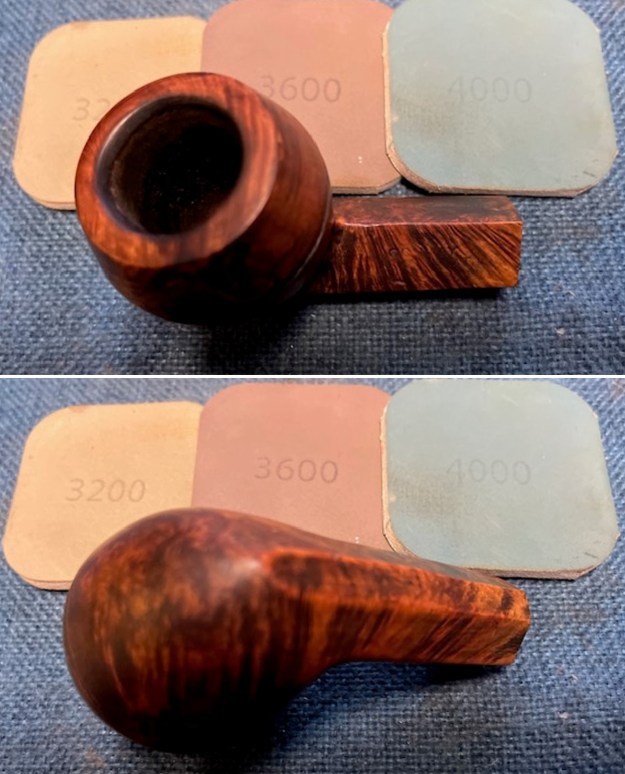
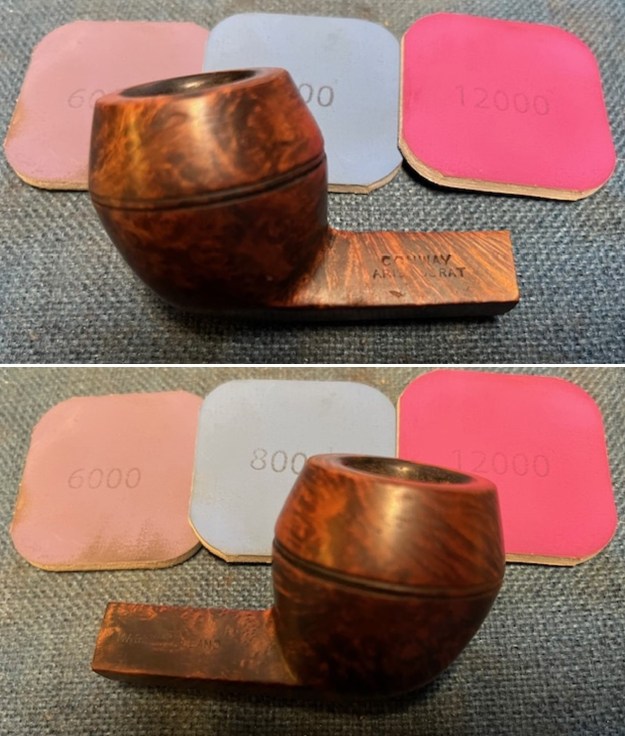
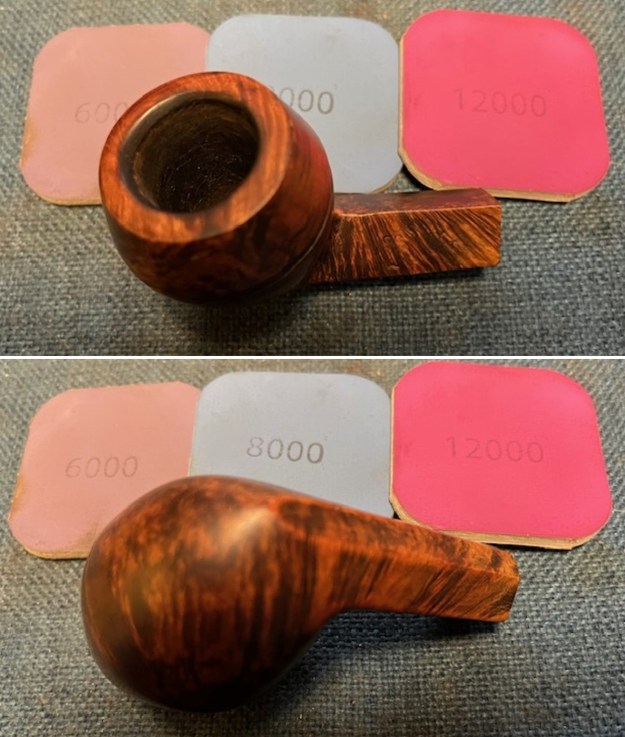
Monthly Archives: December 2024

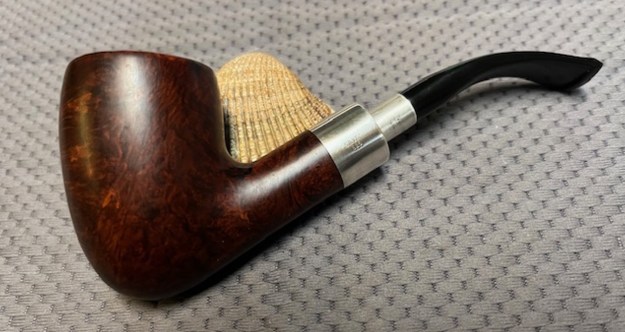
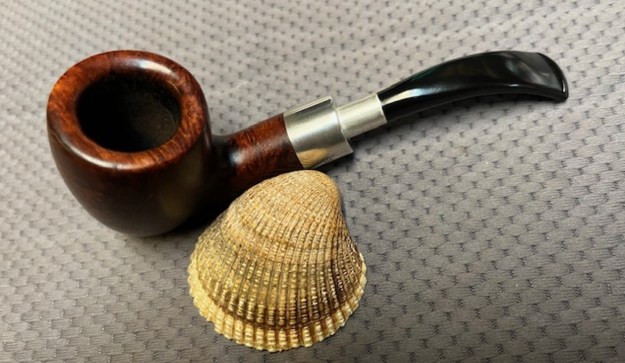
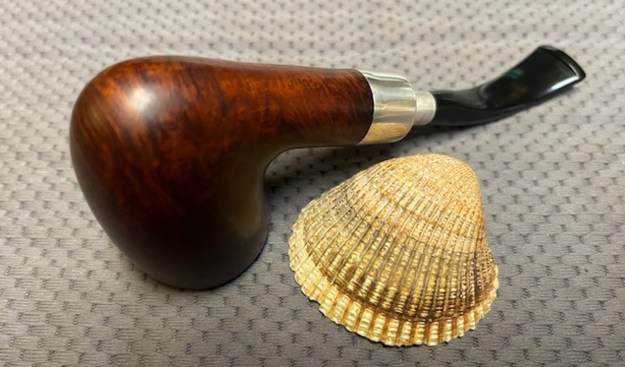
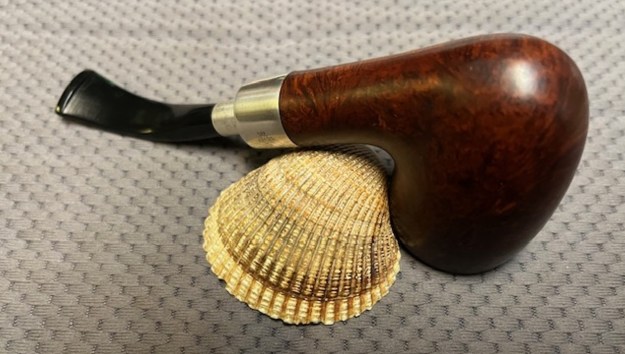
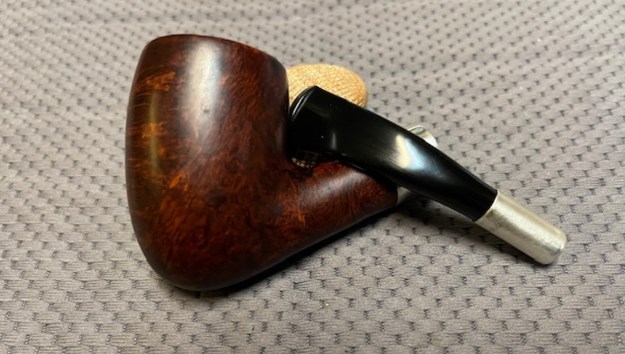
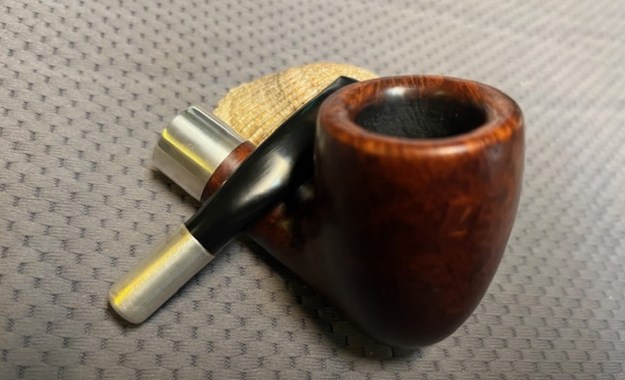
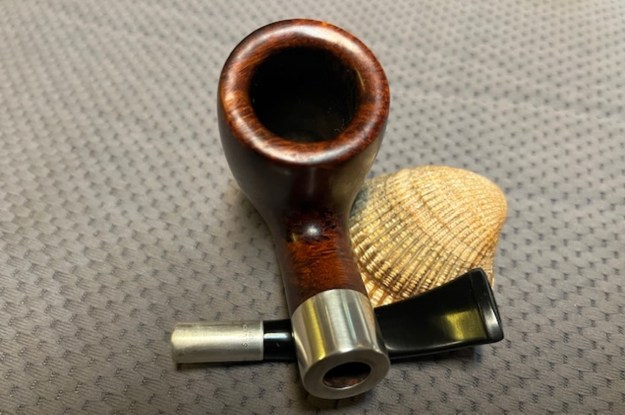
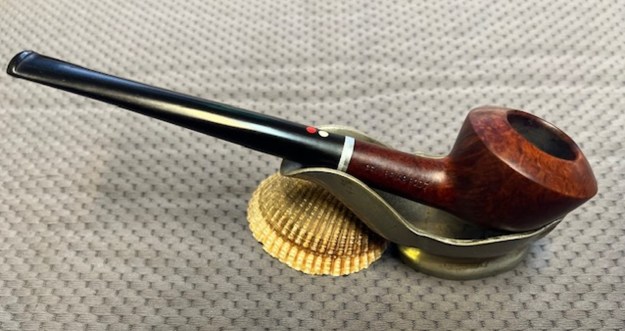
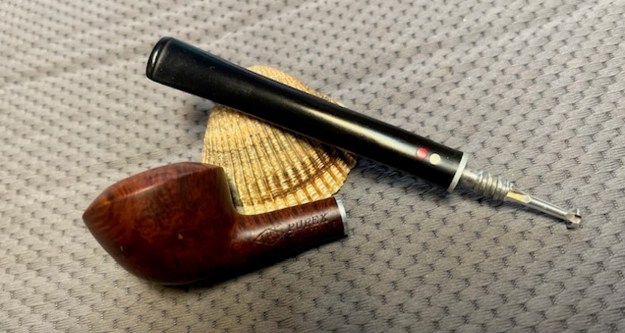
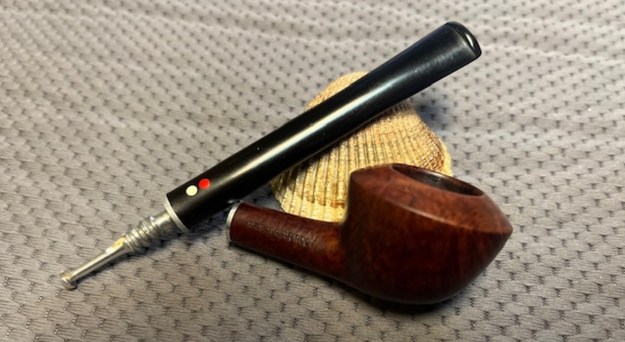
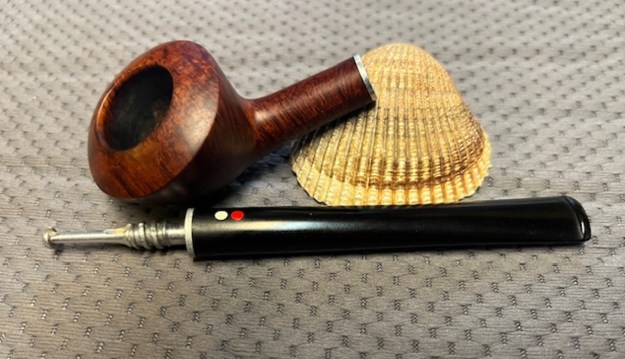
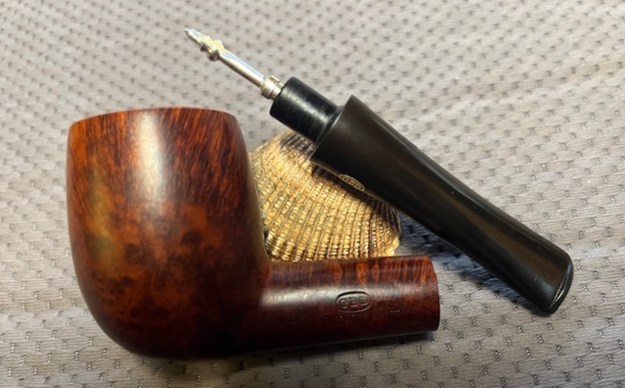
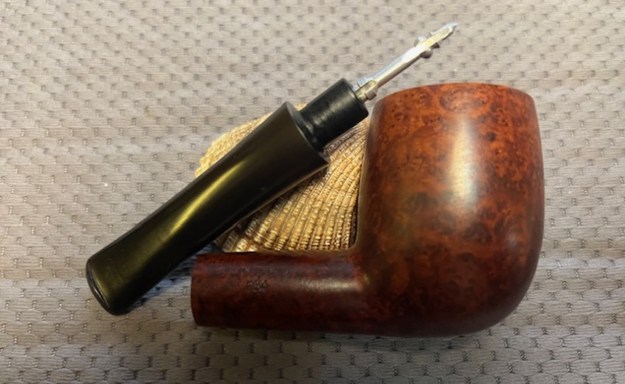
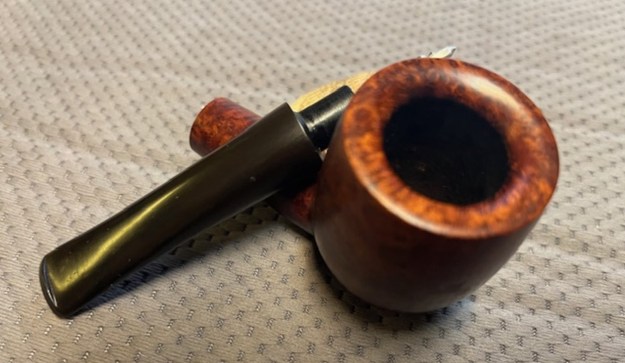
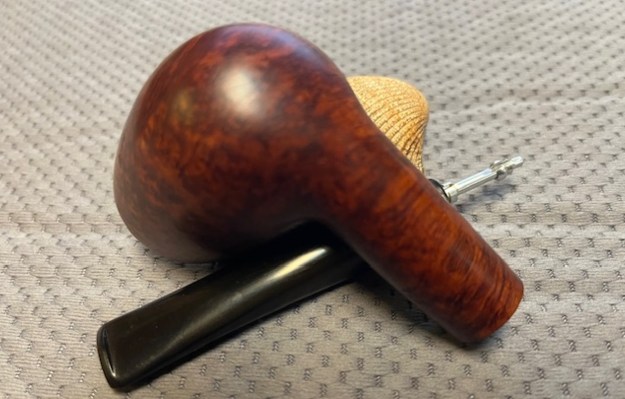
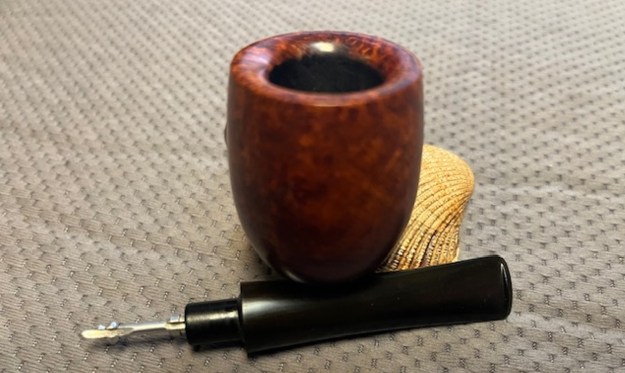
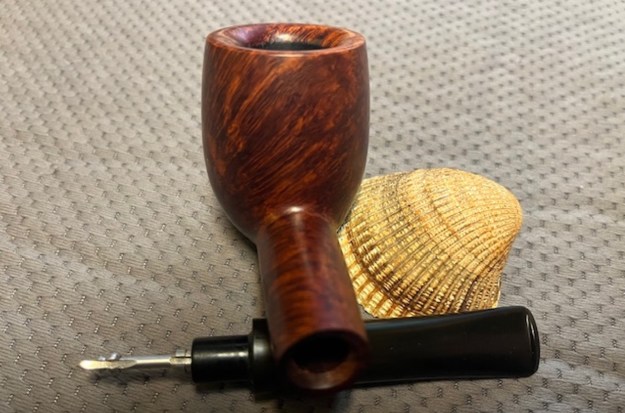
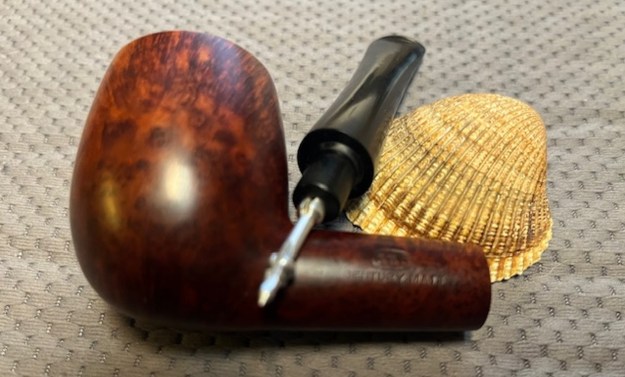
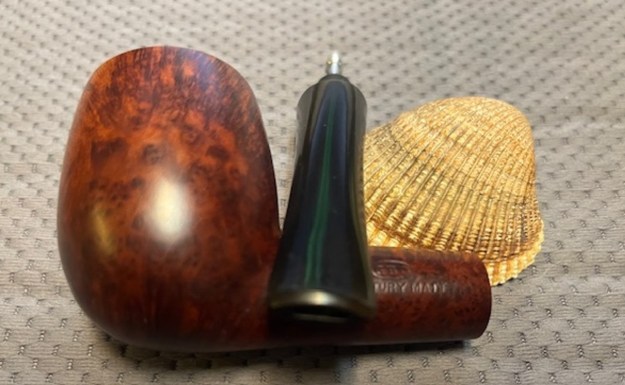
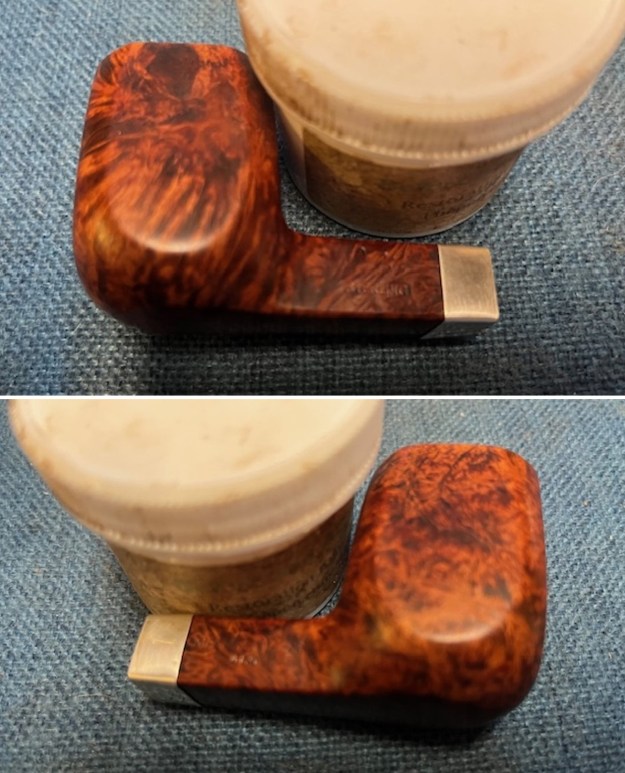
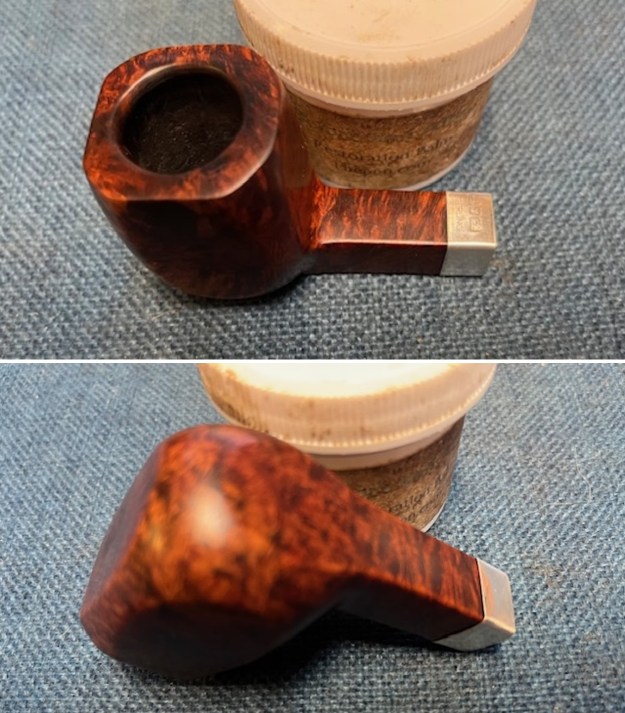
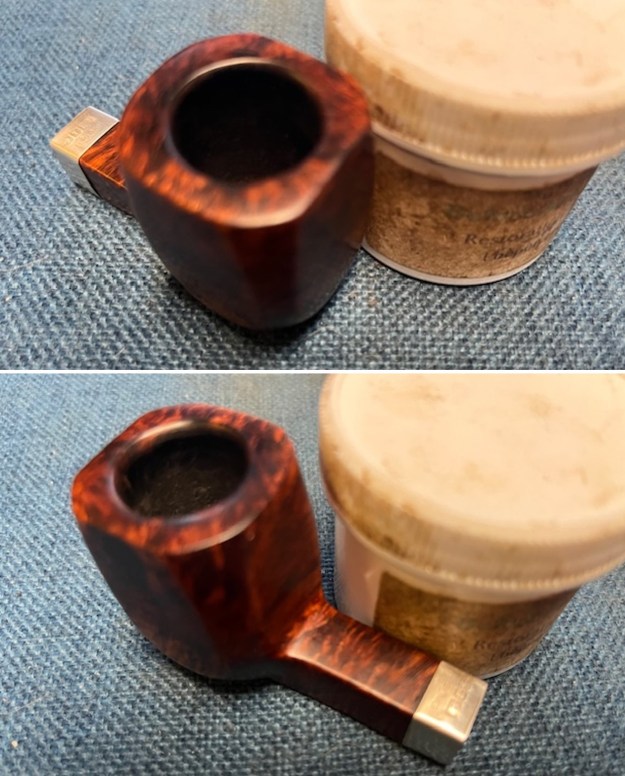
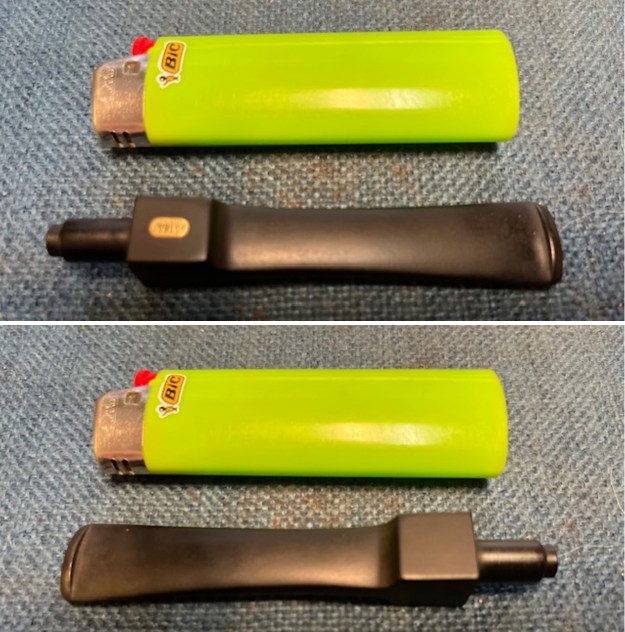
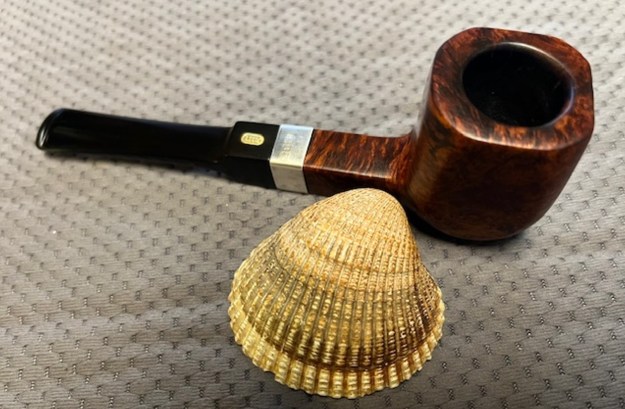
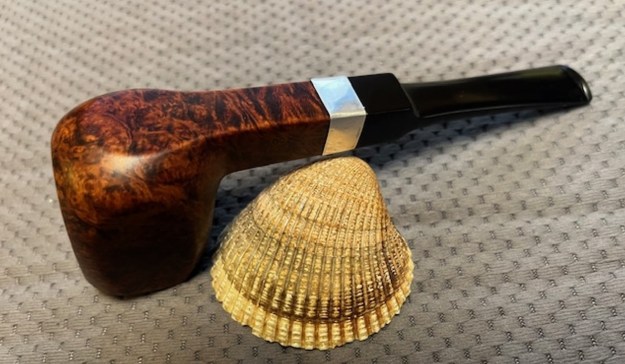
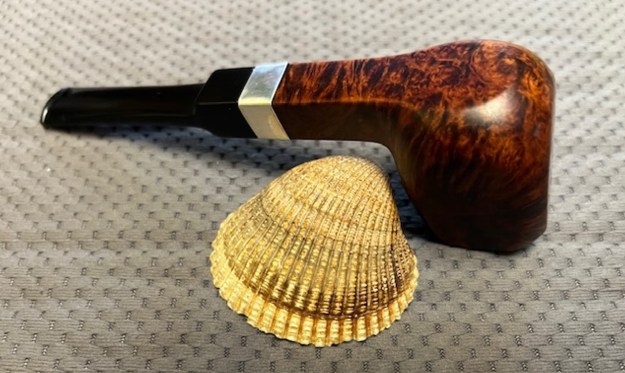
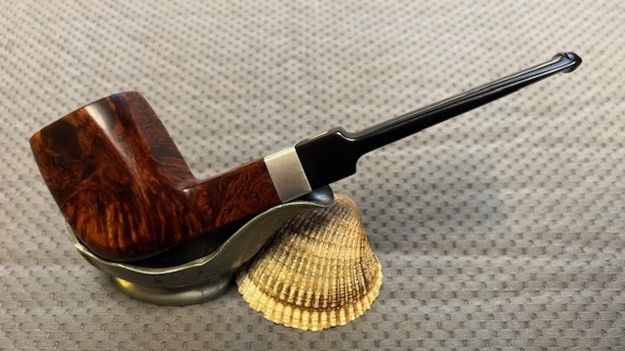
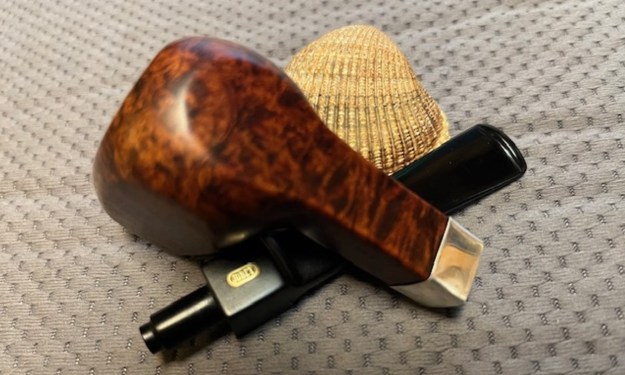
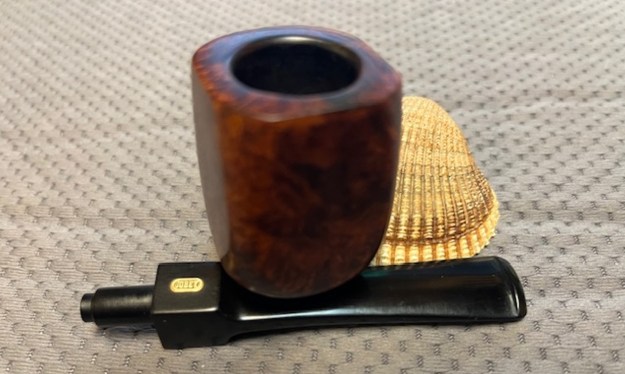
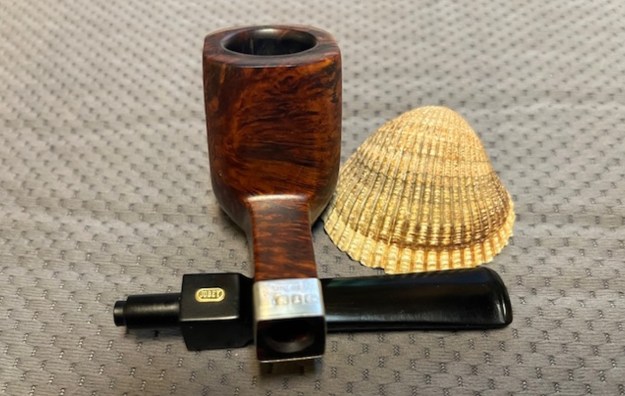
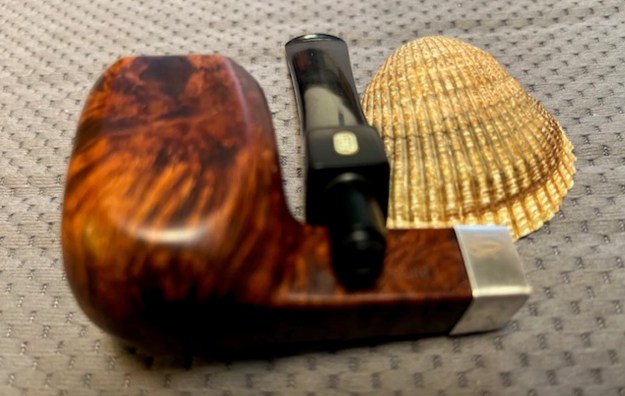
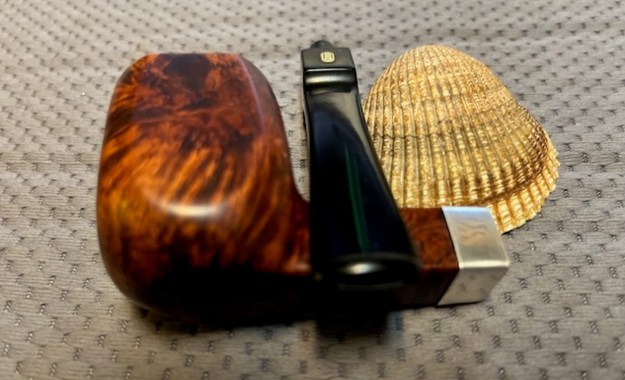
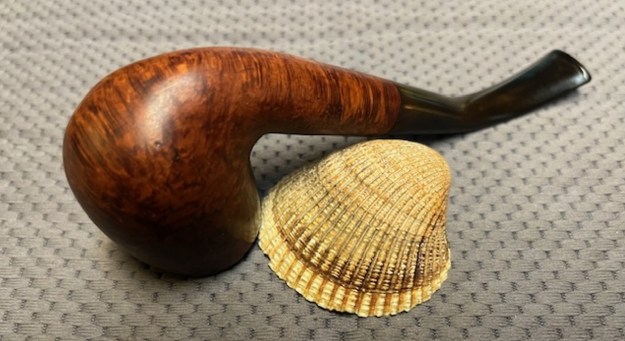
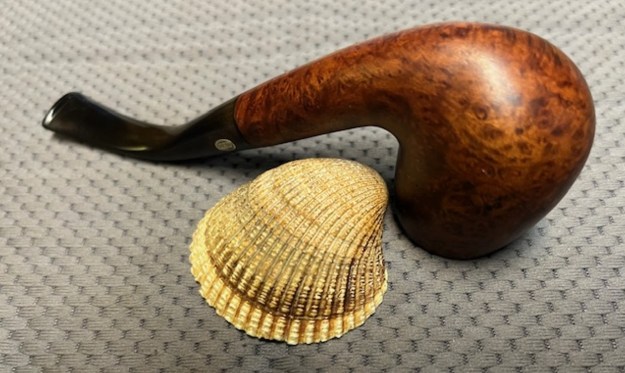
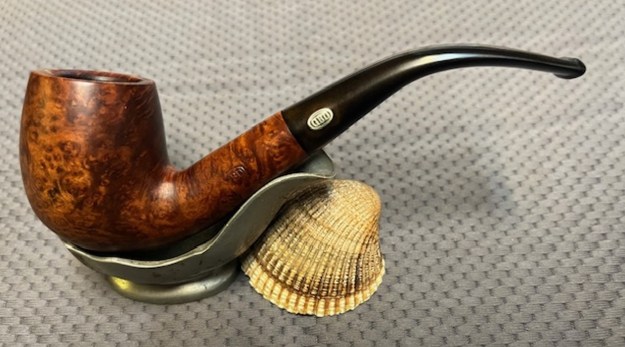
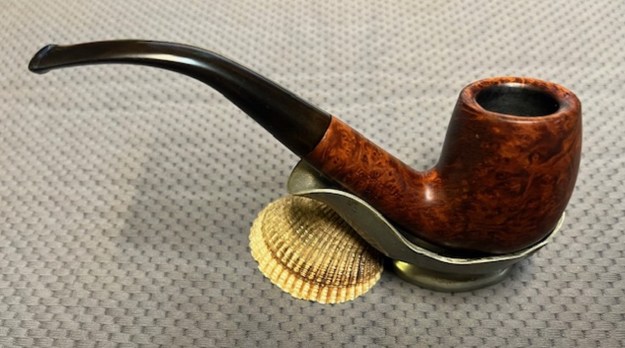
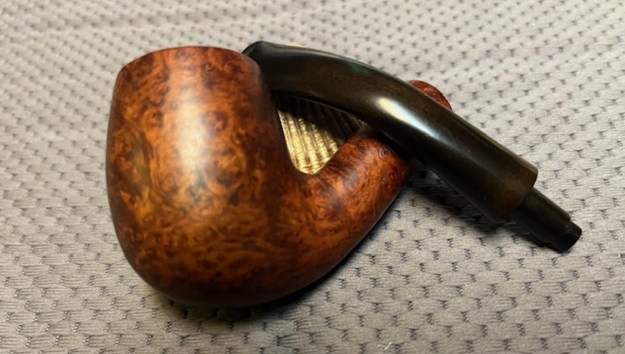
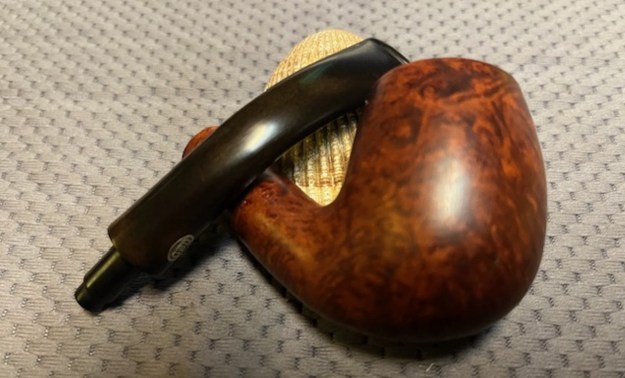
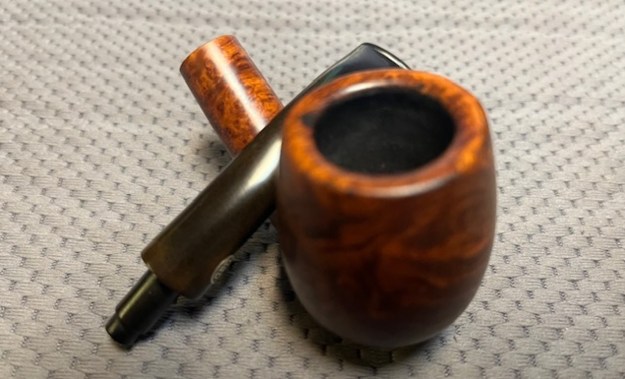
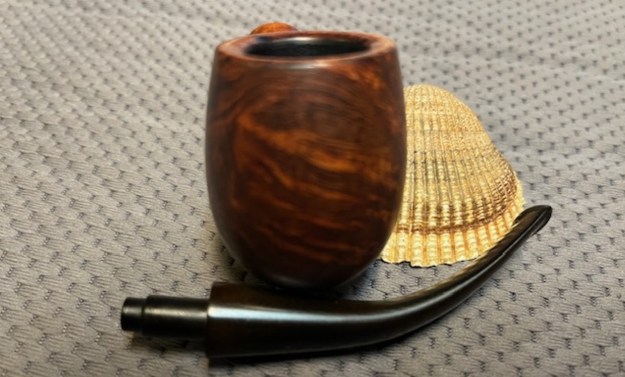
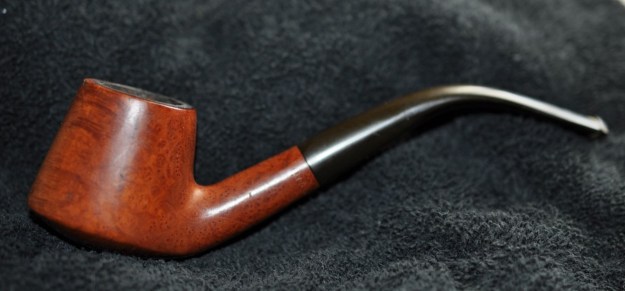
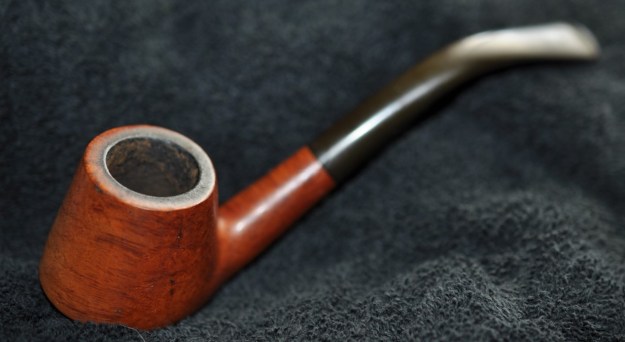
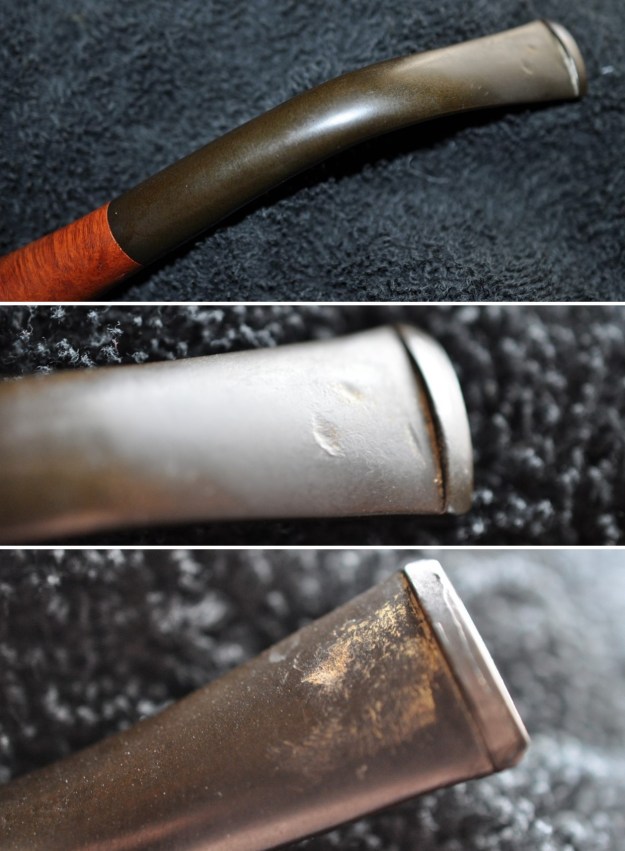
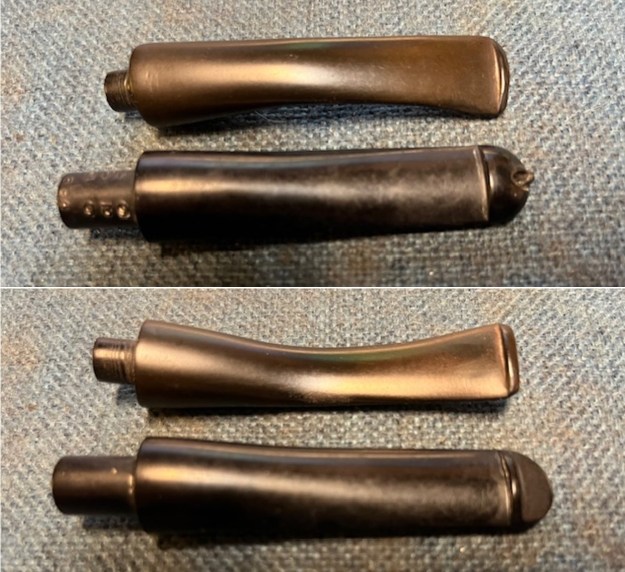
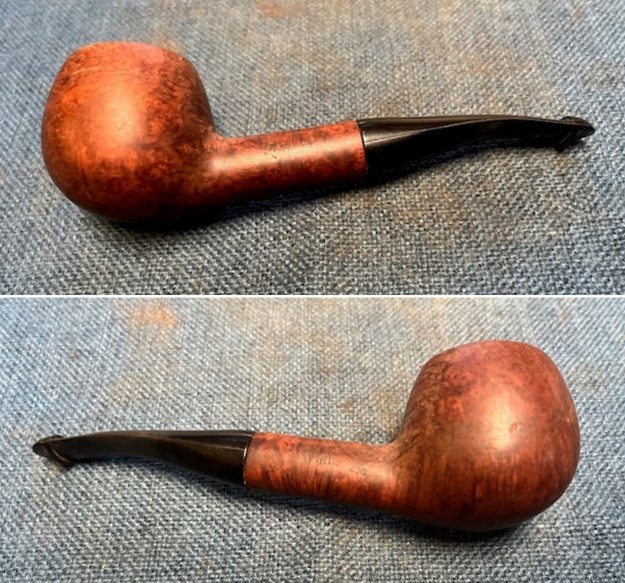
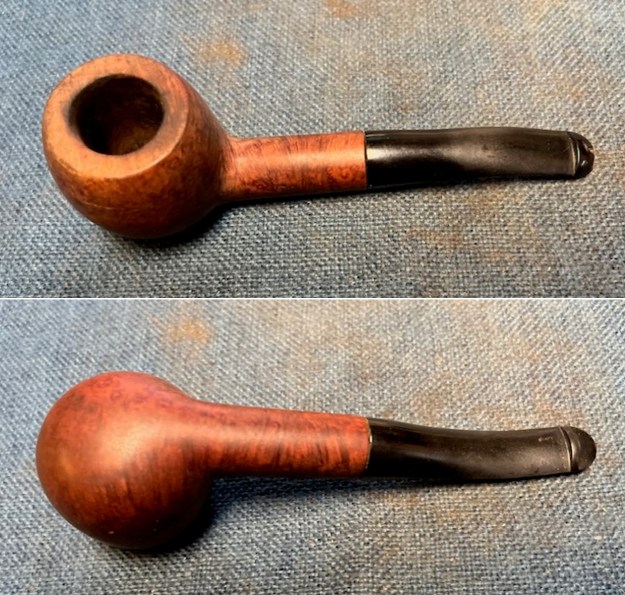
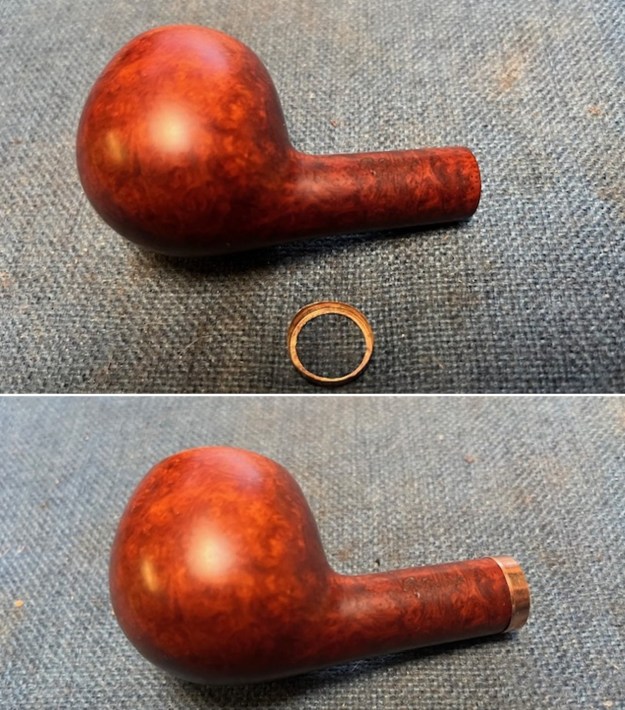
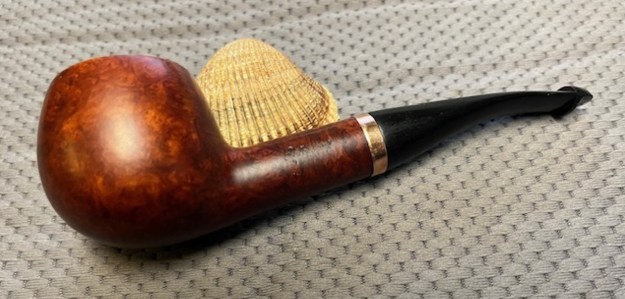
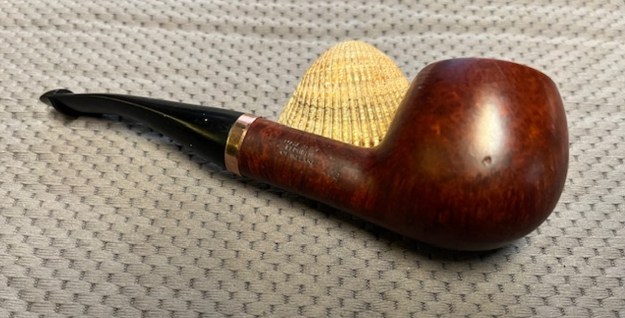
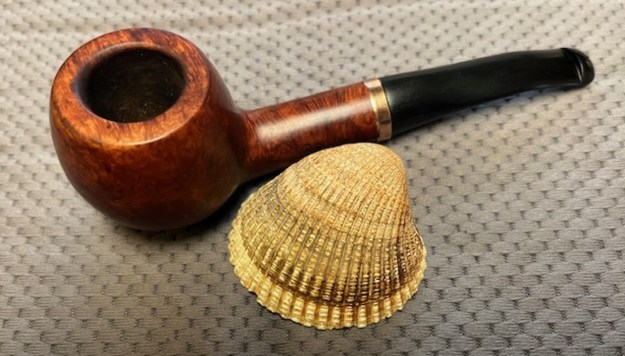
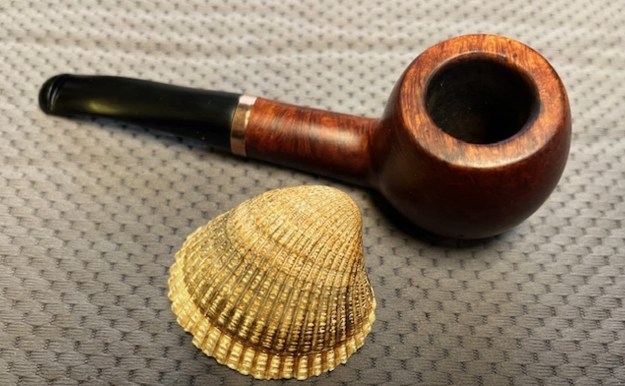
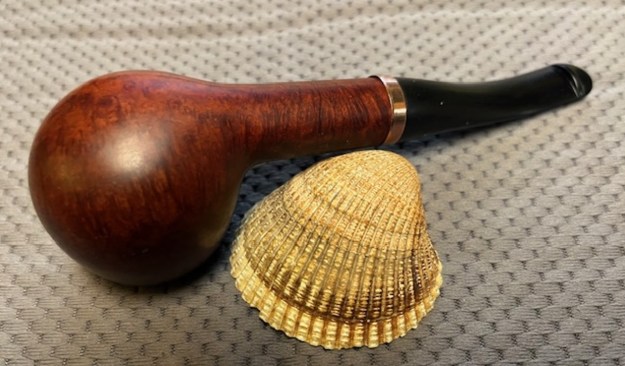
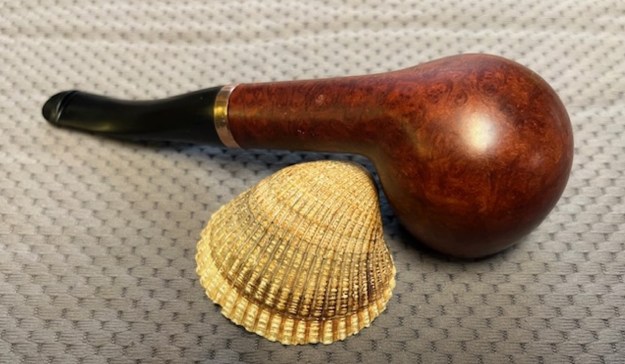
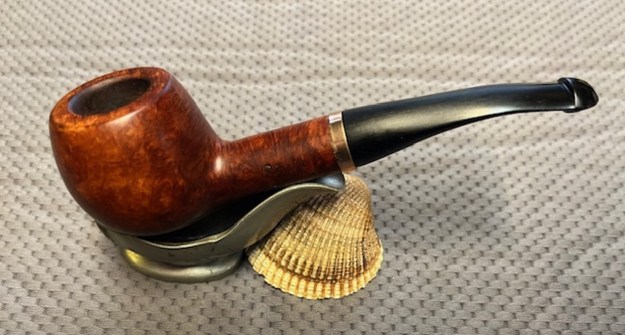
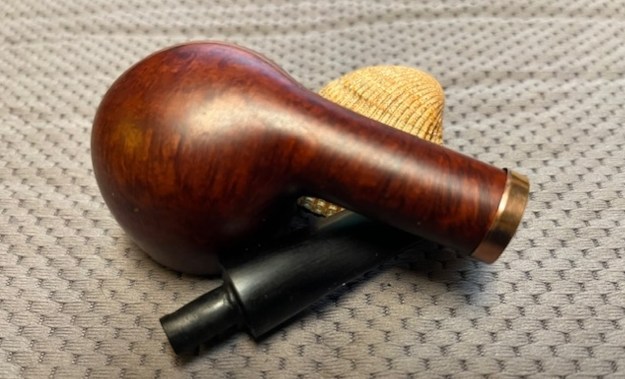
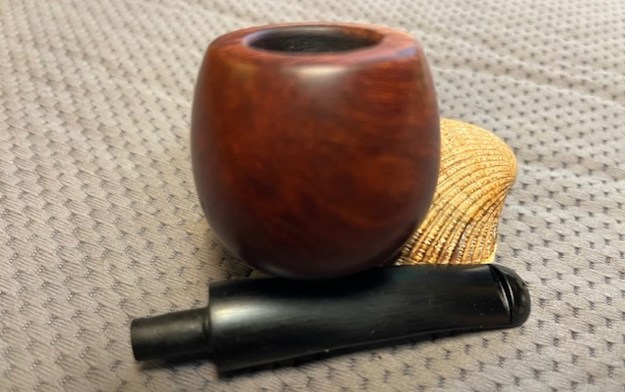
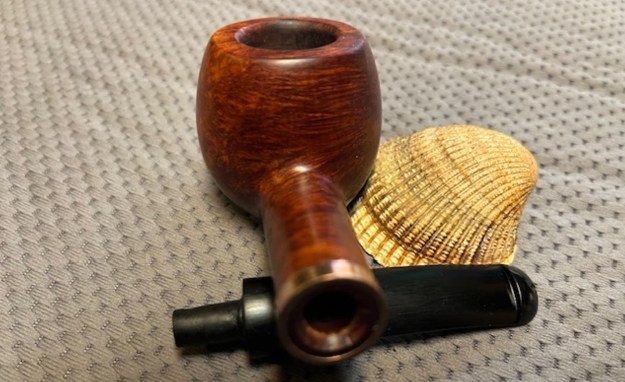
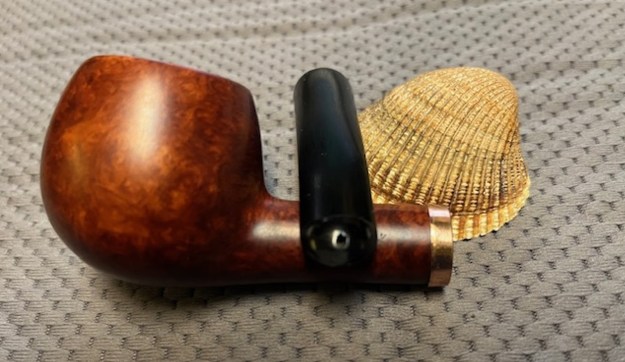
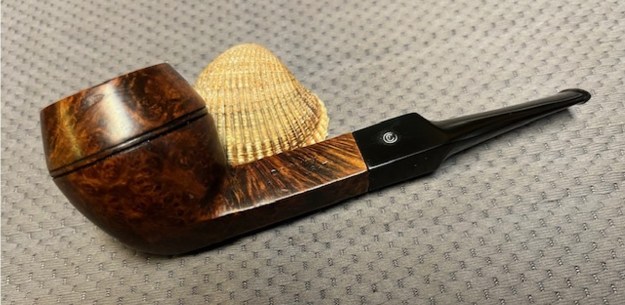
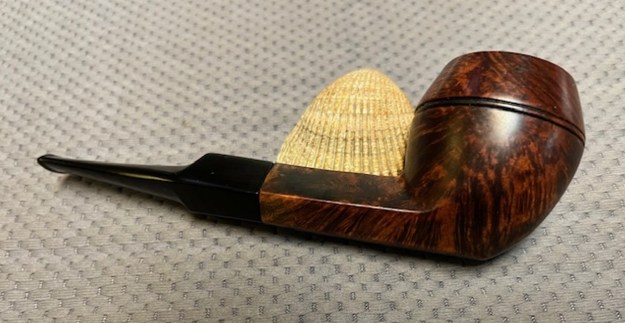
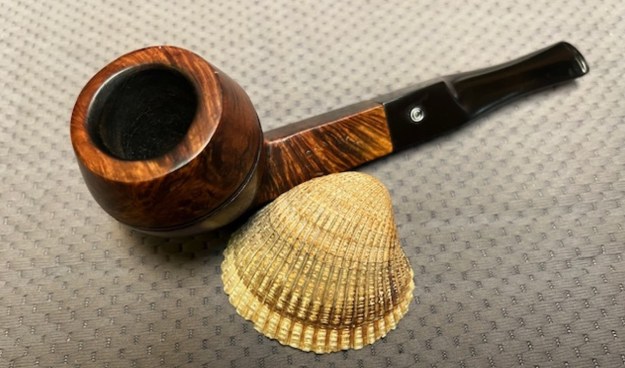
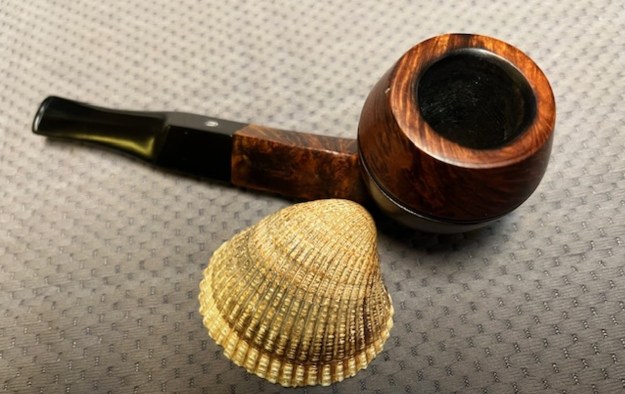
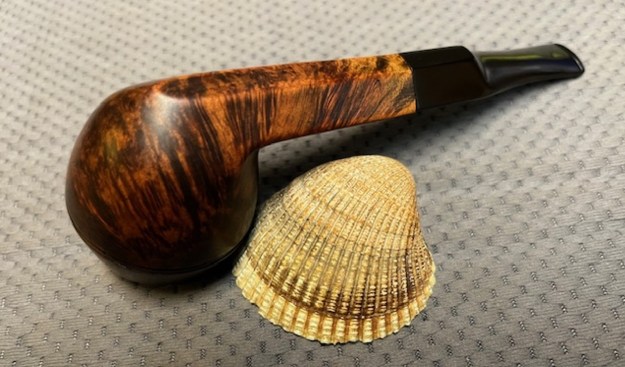
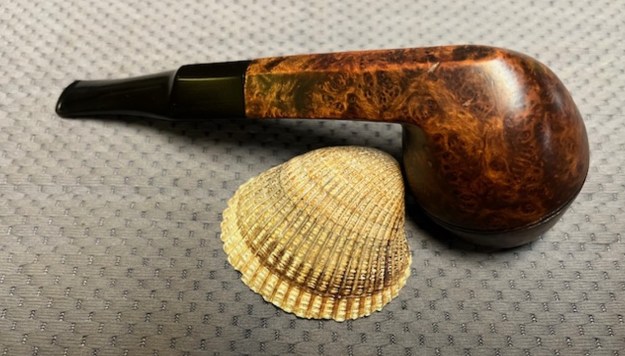
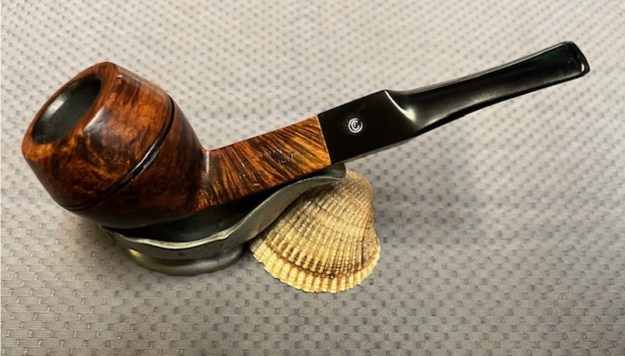
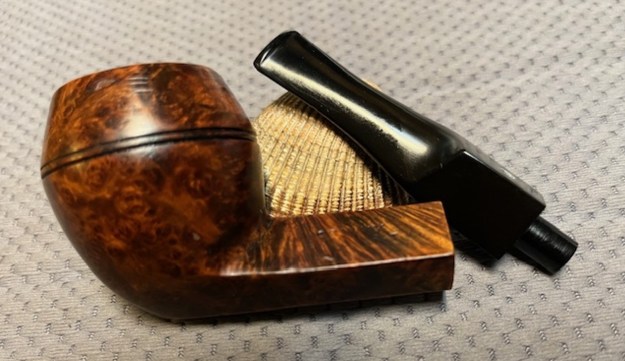
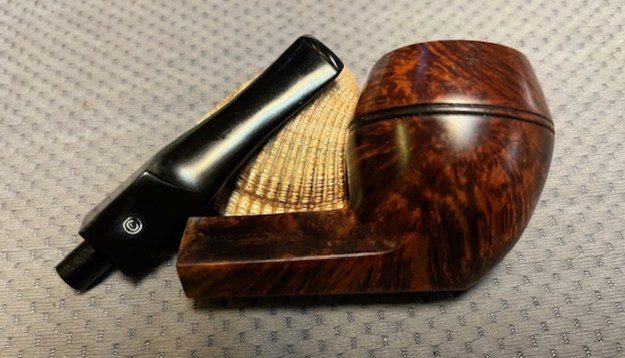
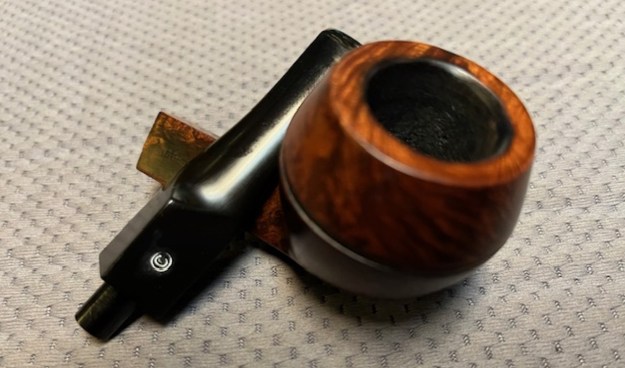
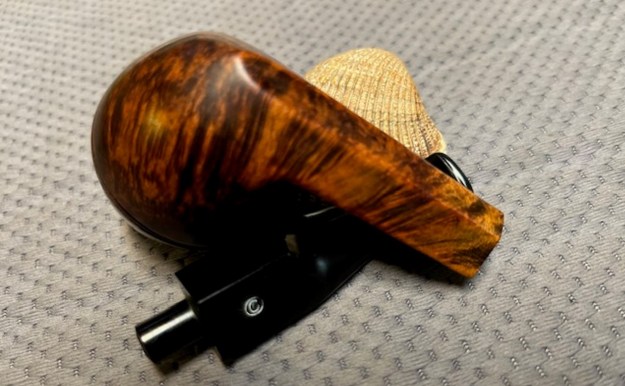
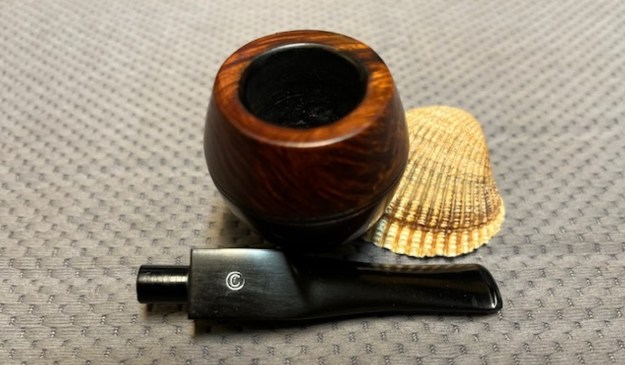
Restoring an interesting Nameless Silver Spigot Bent Acorn


by Steve Laug

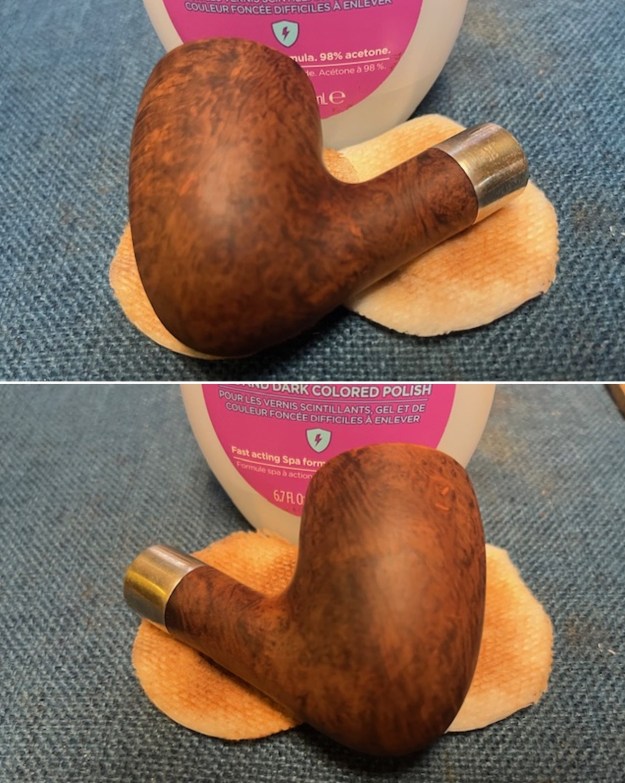
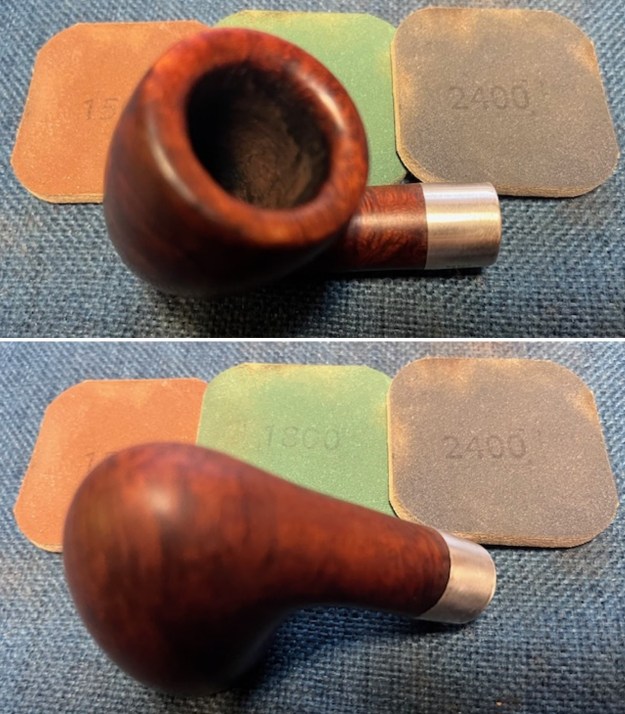
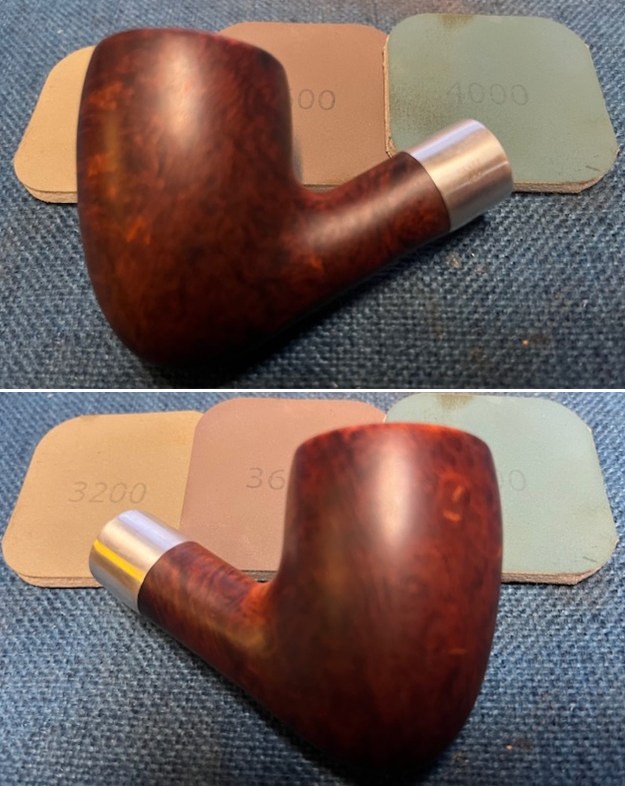
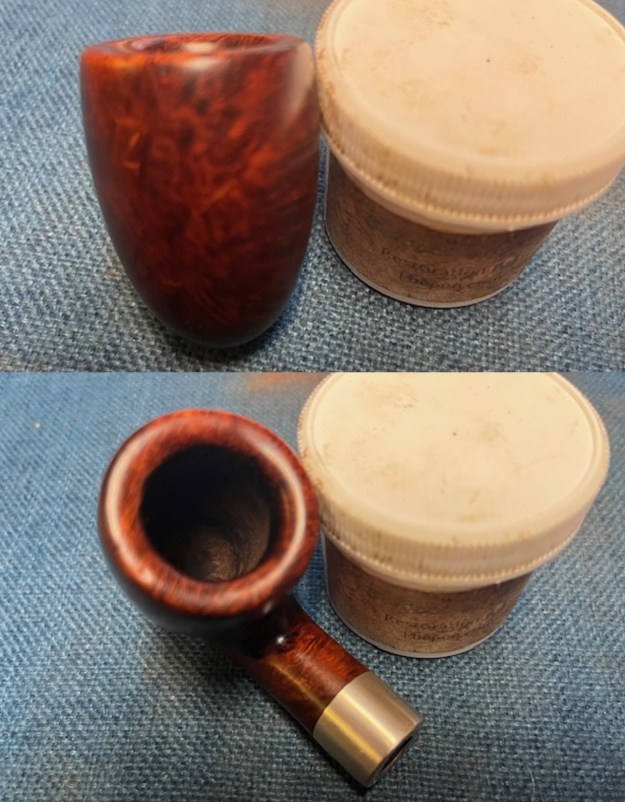
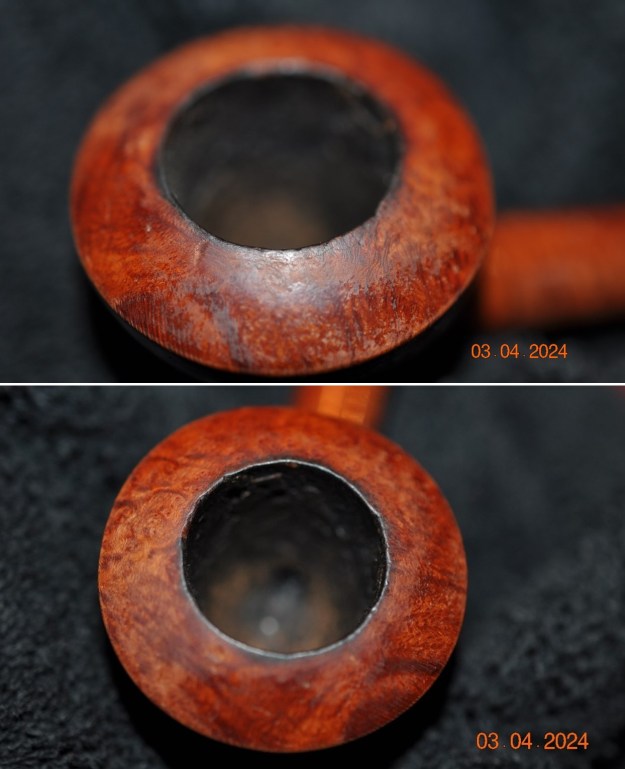
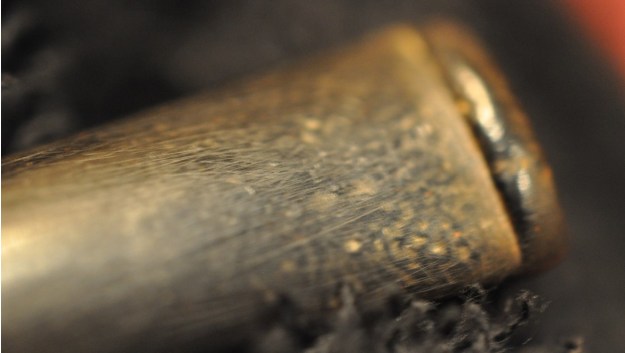
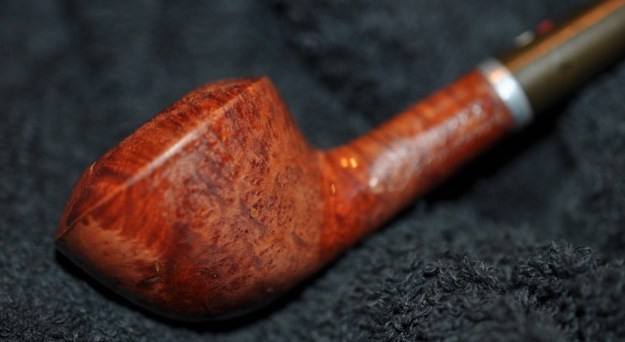
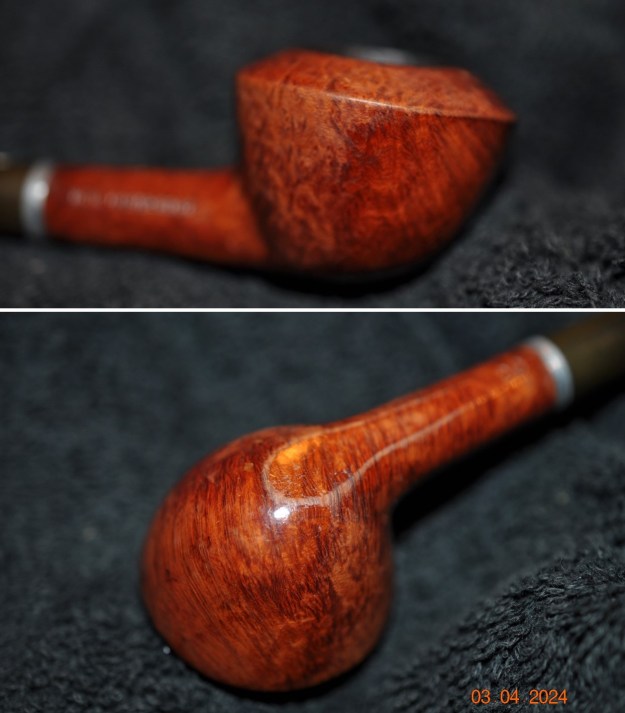
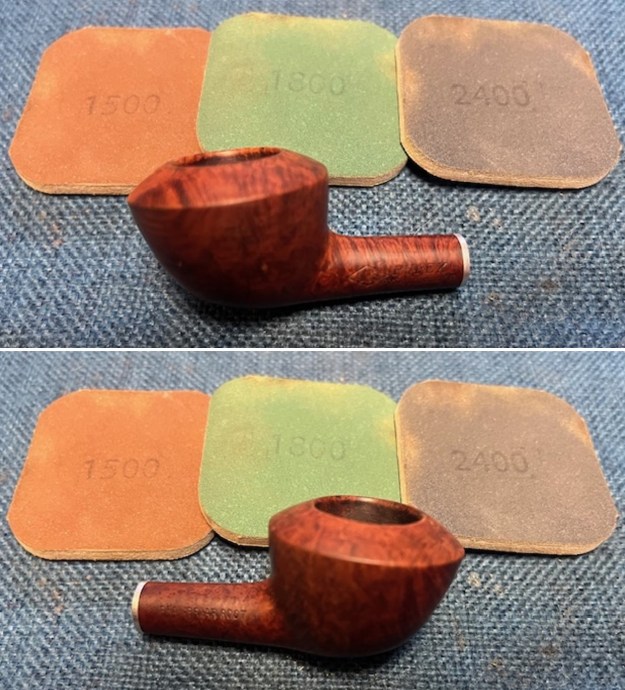
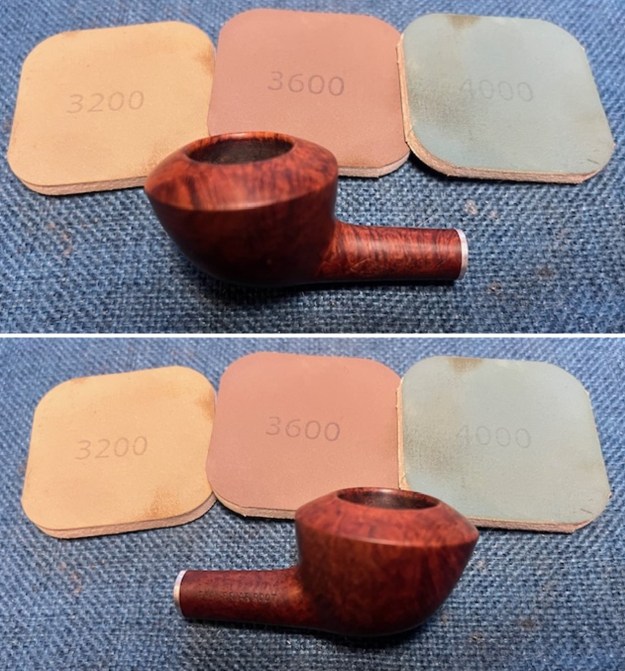
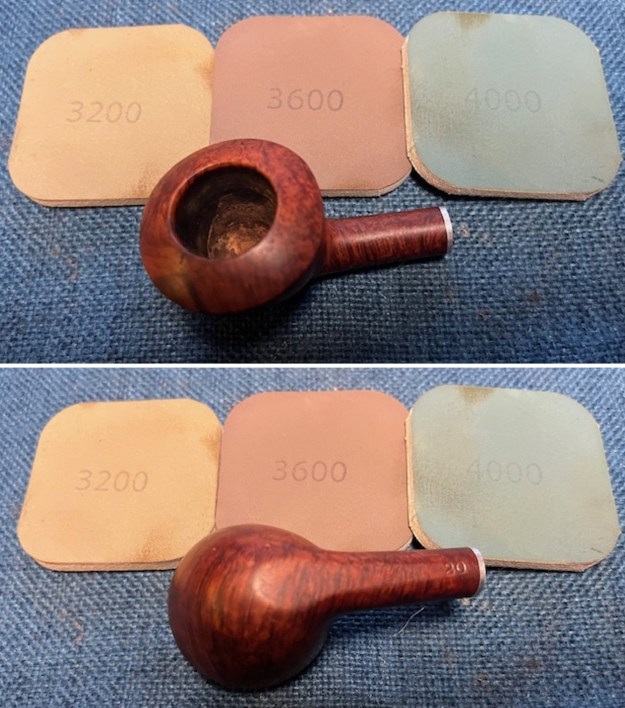
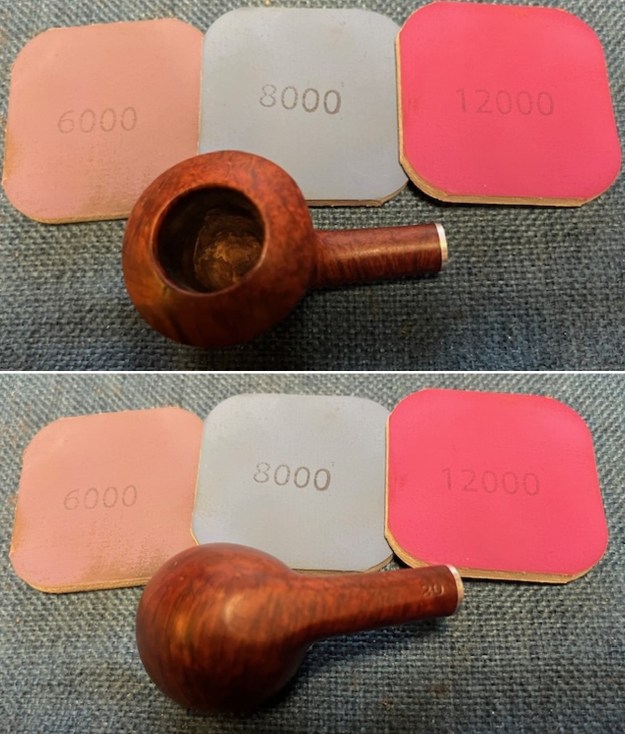
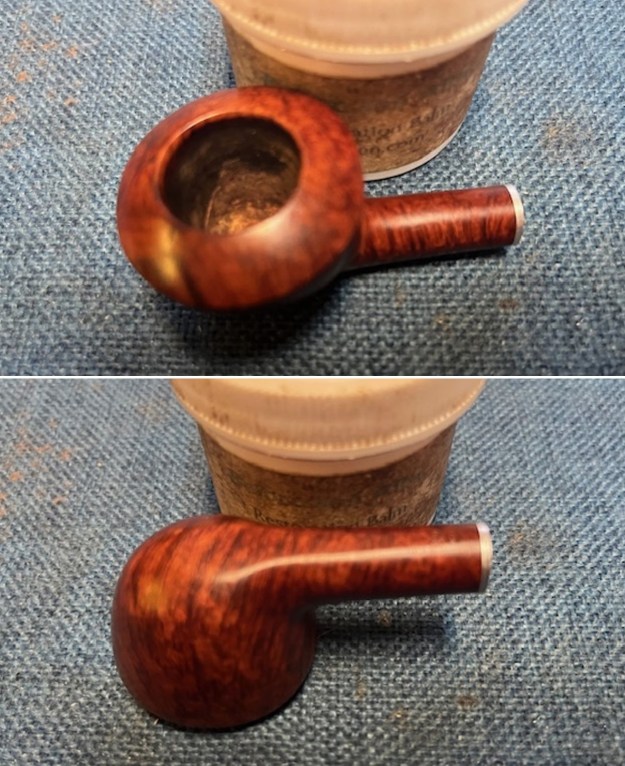
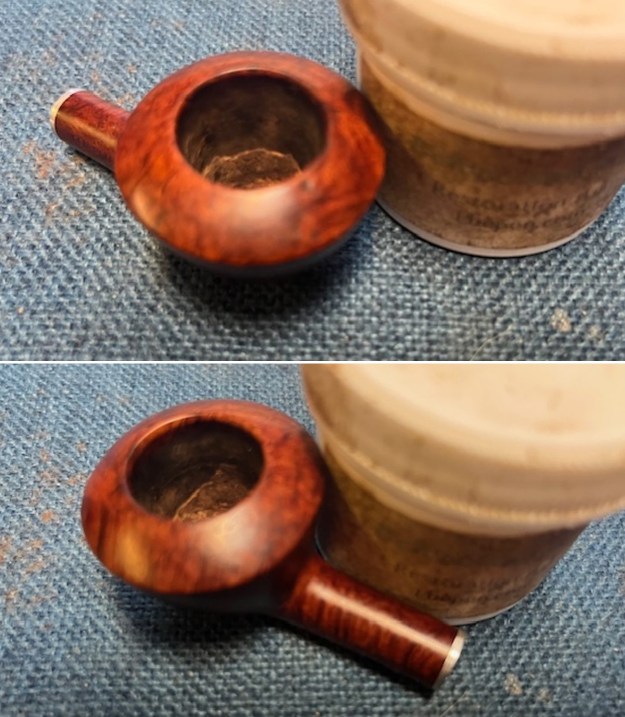
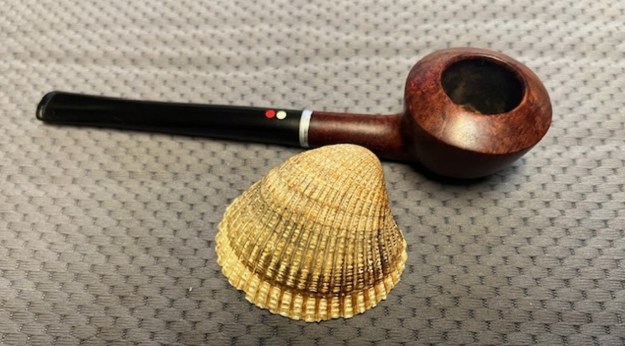
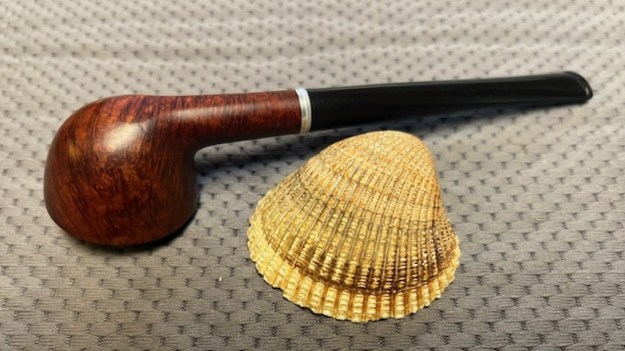
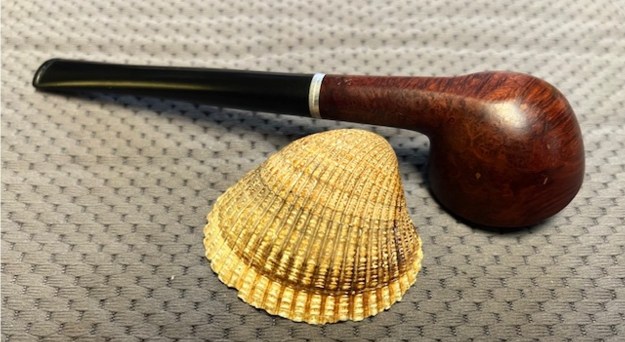
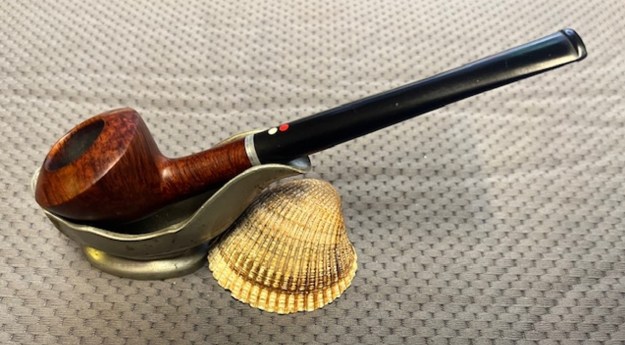
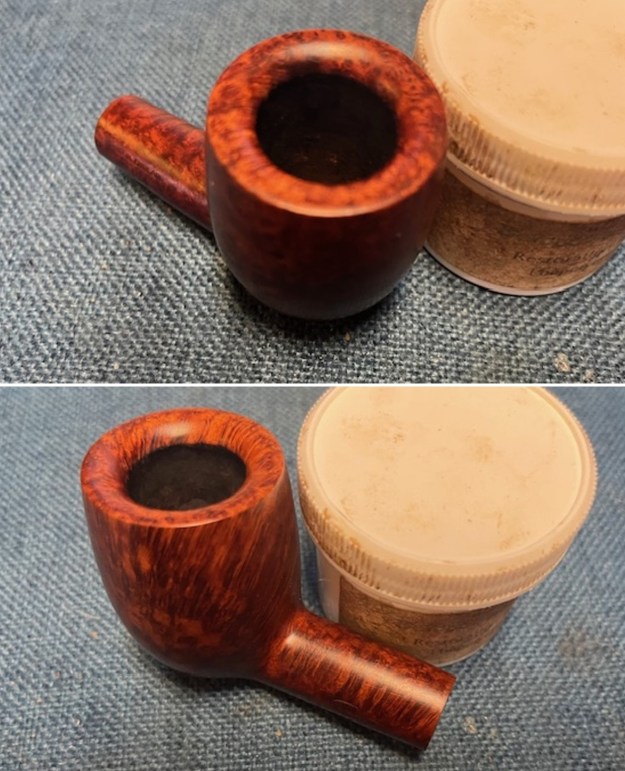
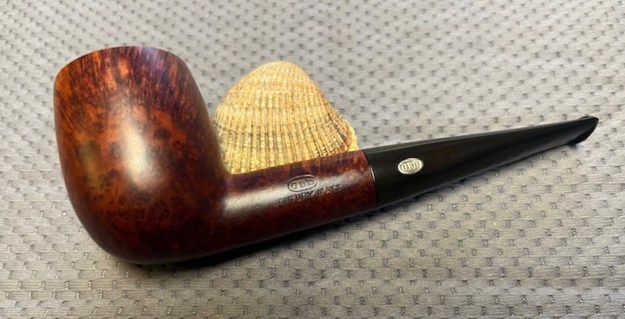
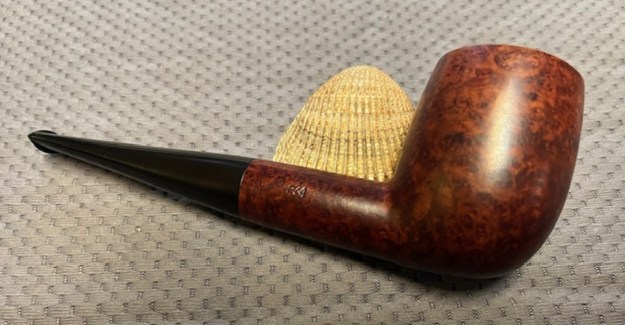
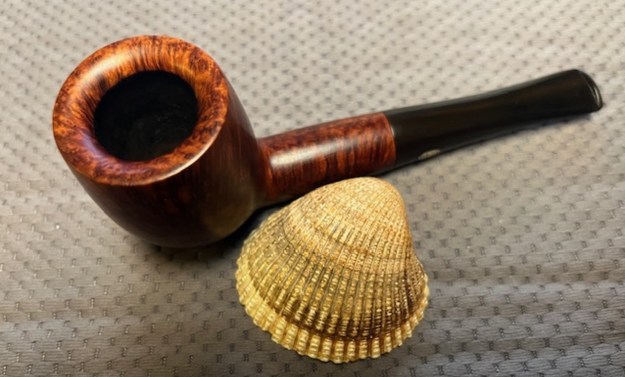
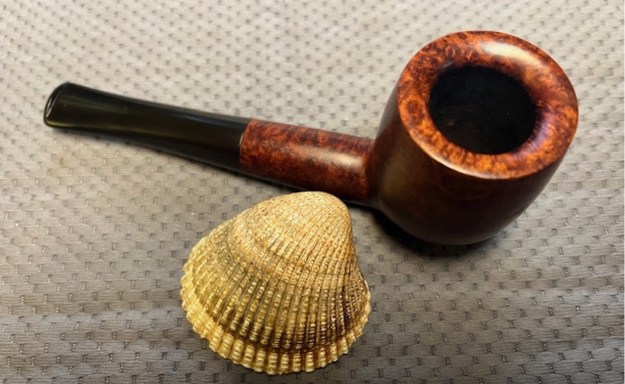
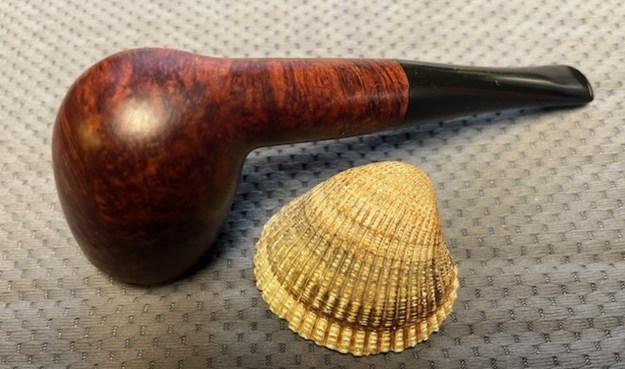
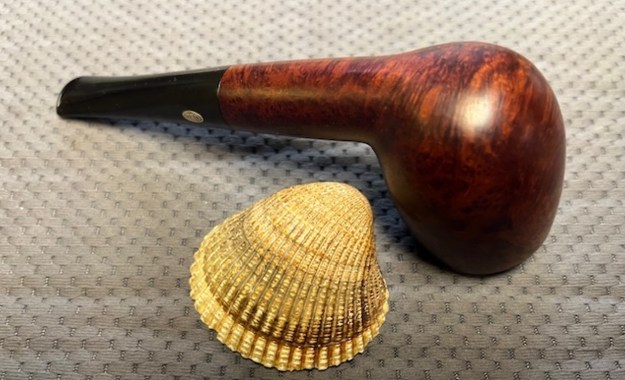
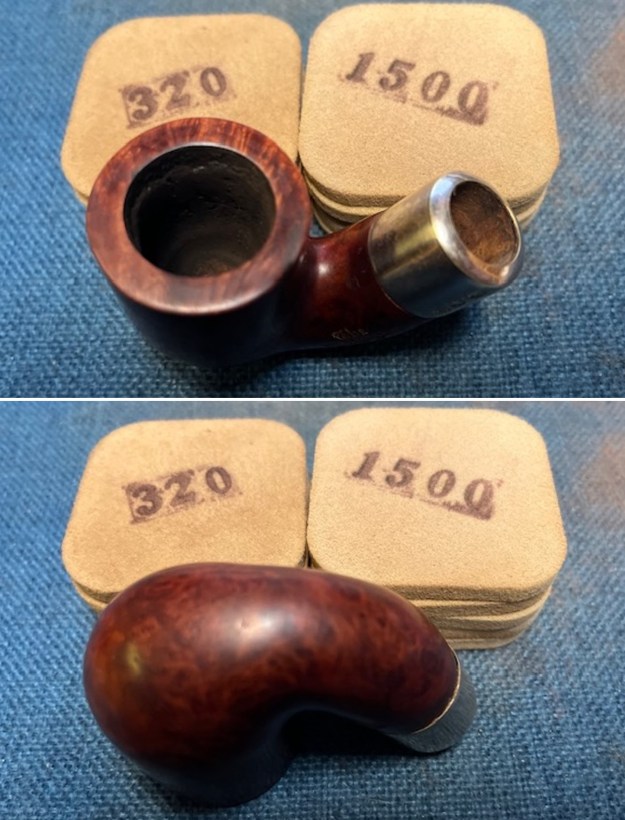
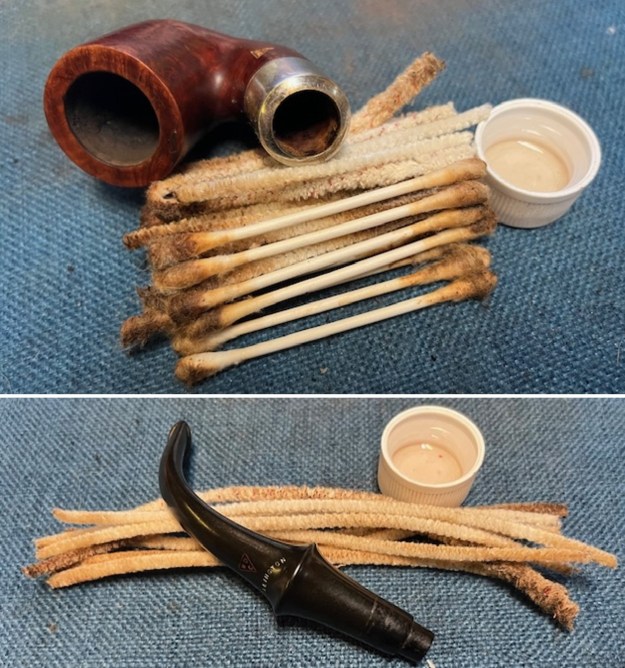
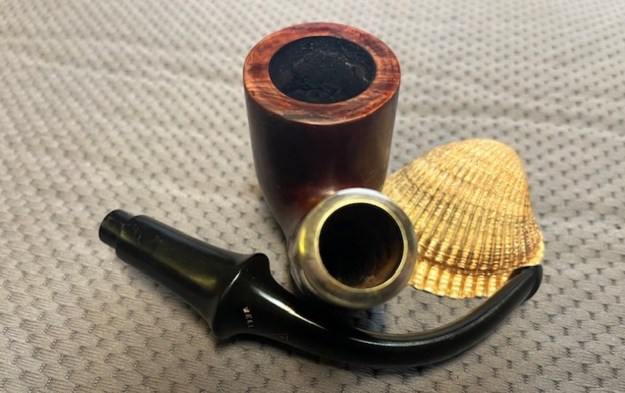
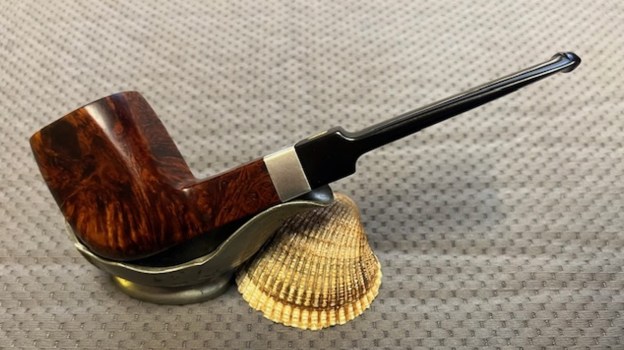
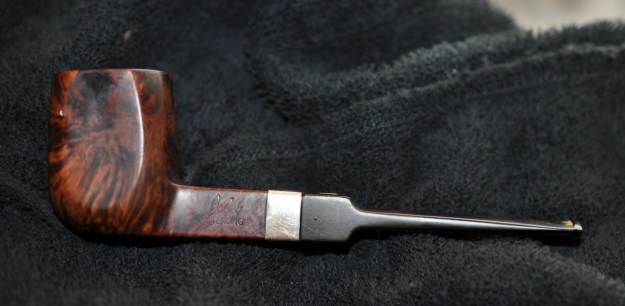
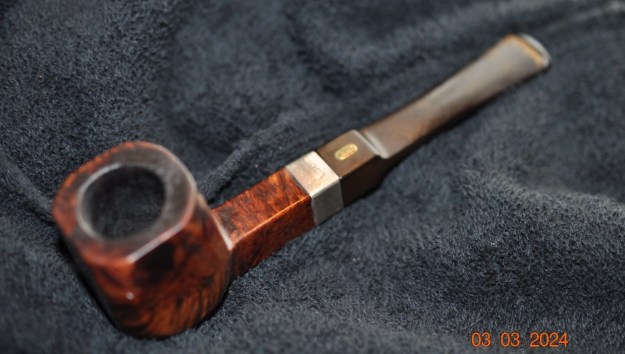
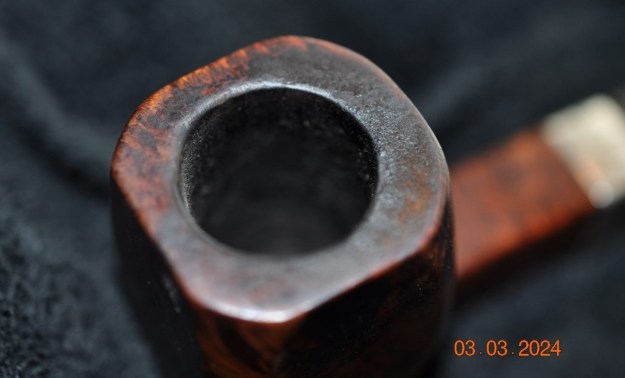
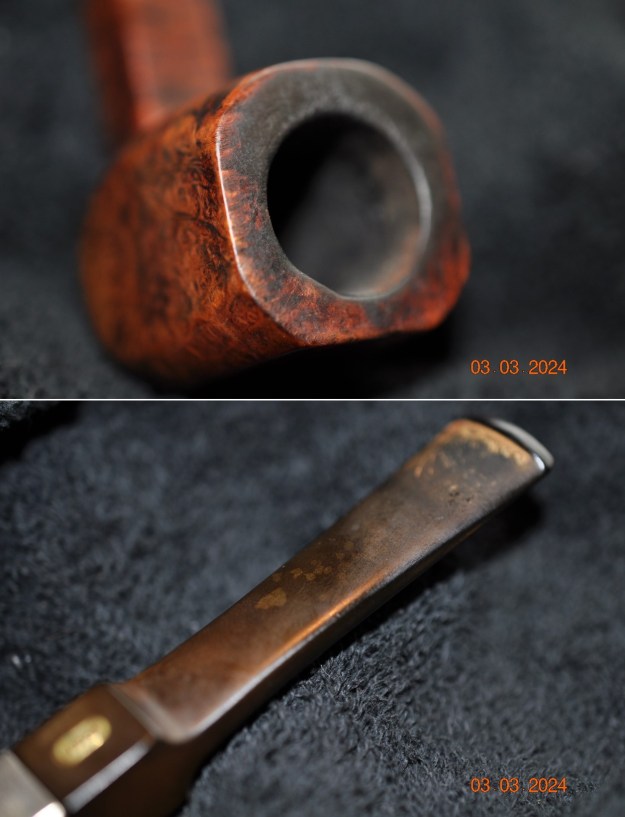
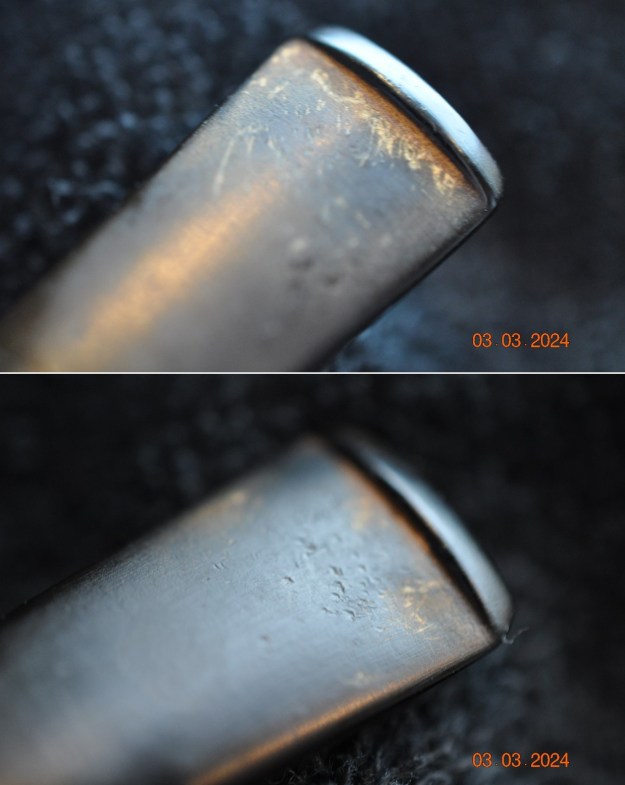
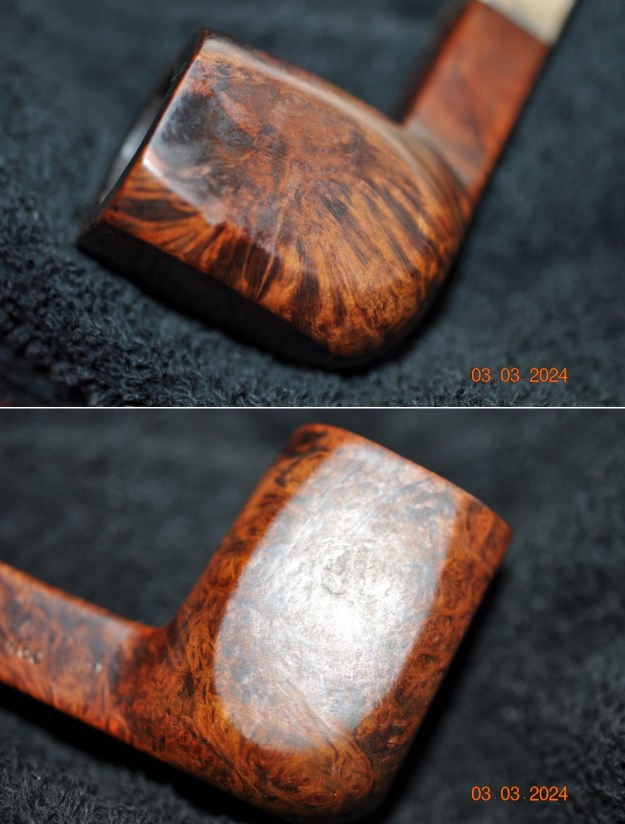
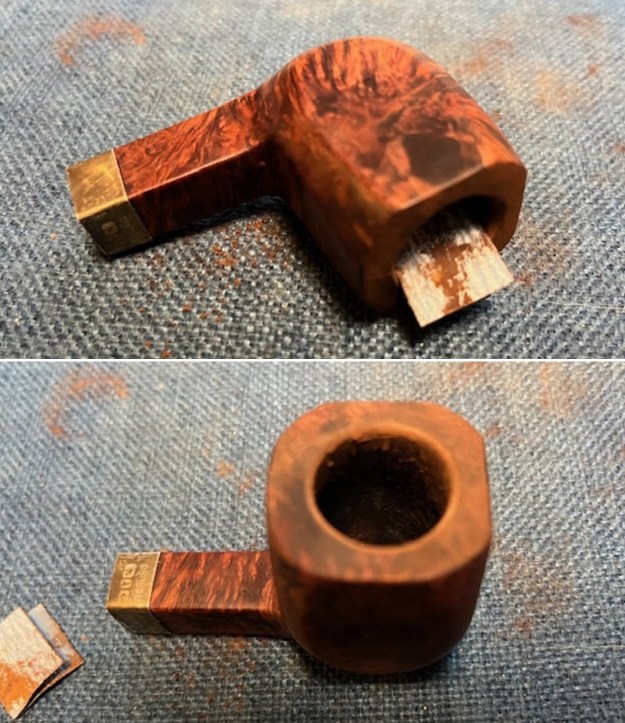
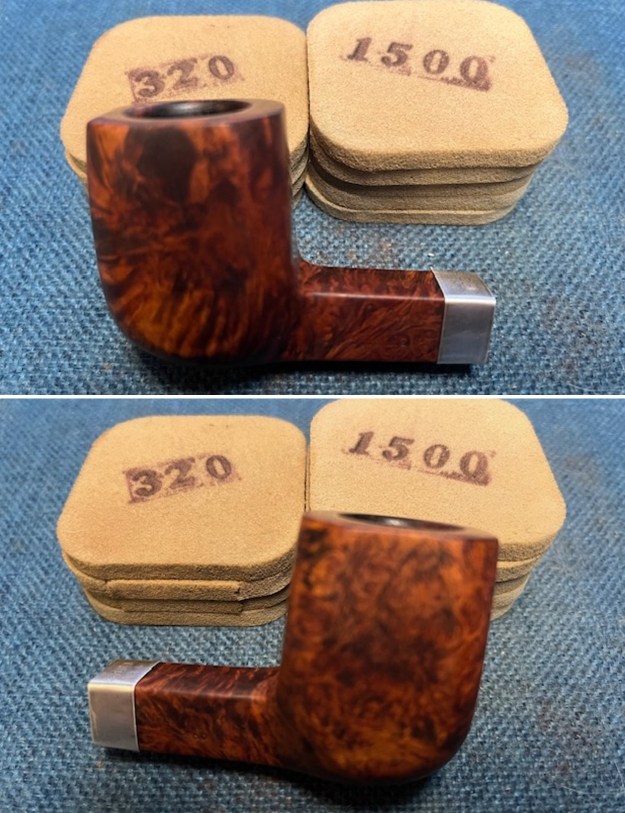
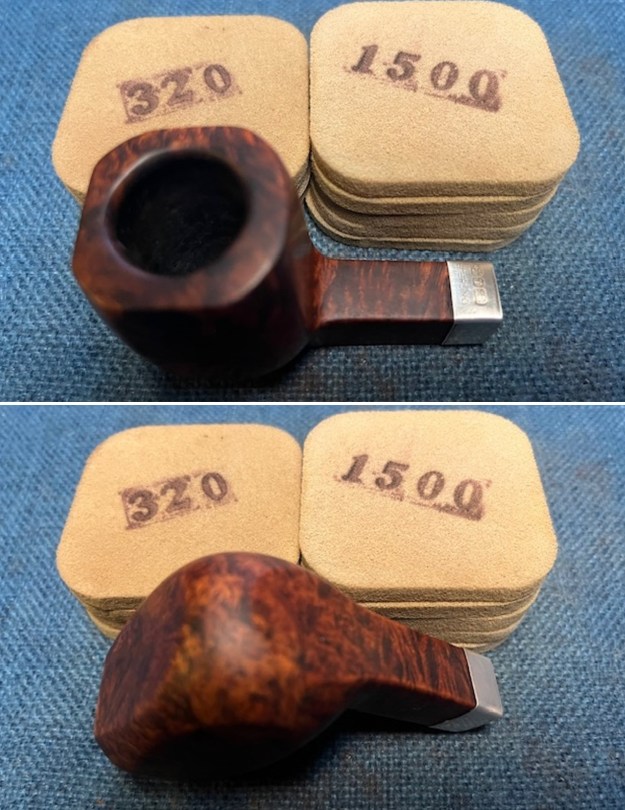
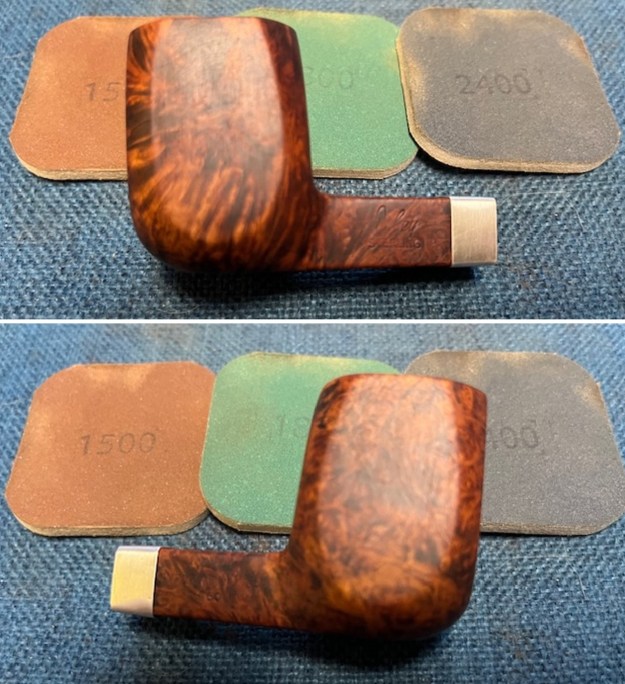
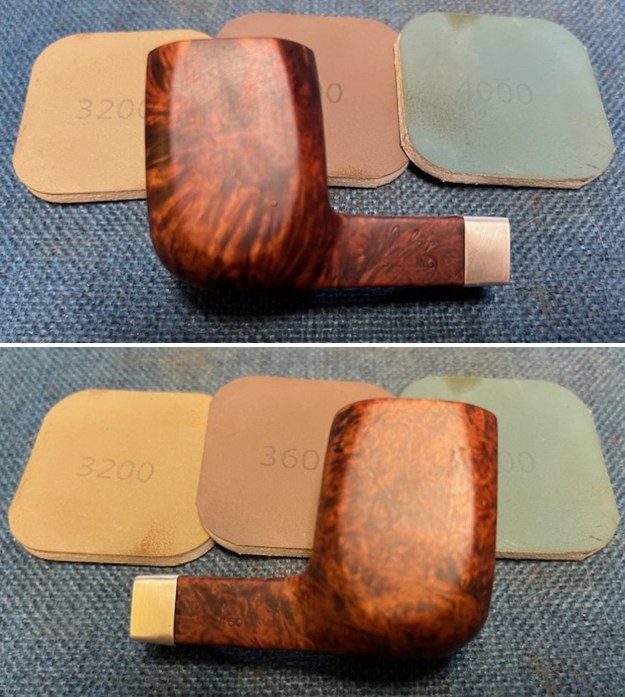
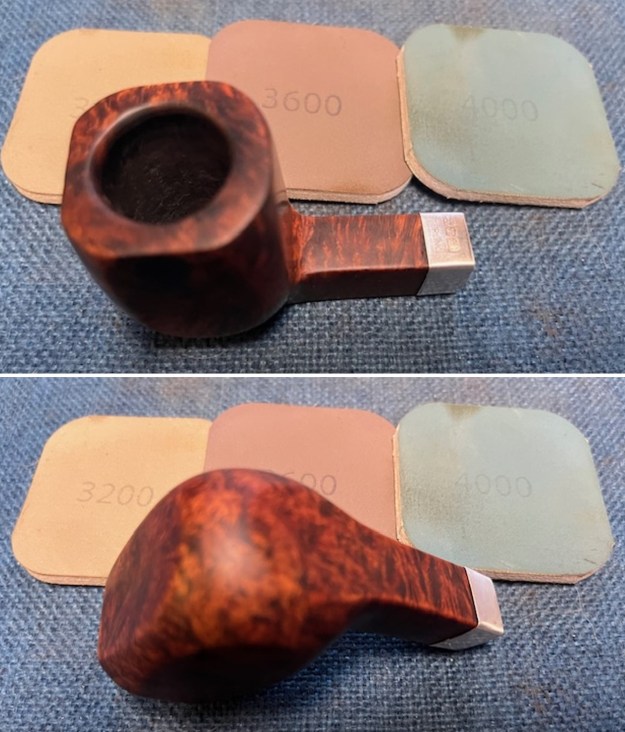
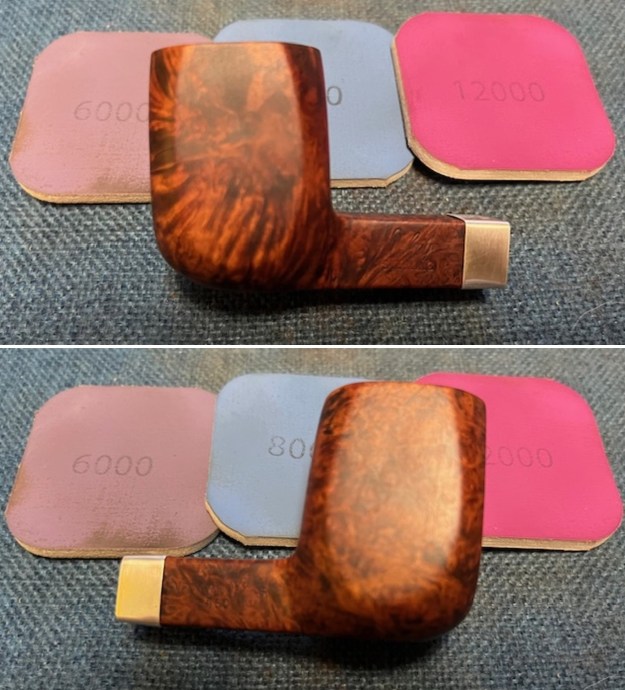
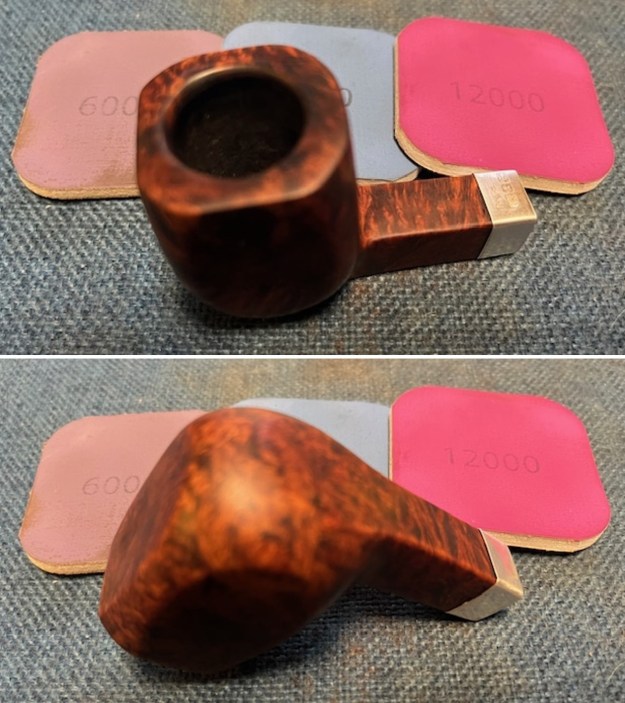
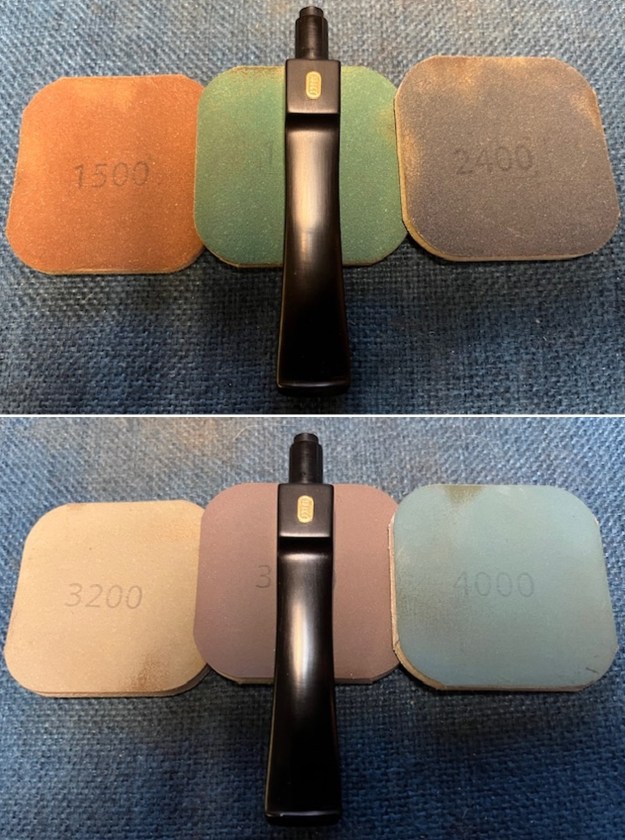
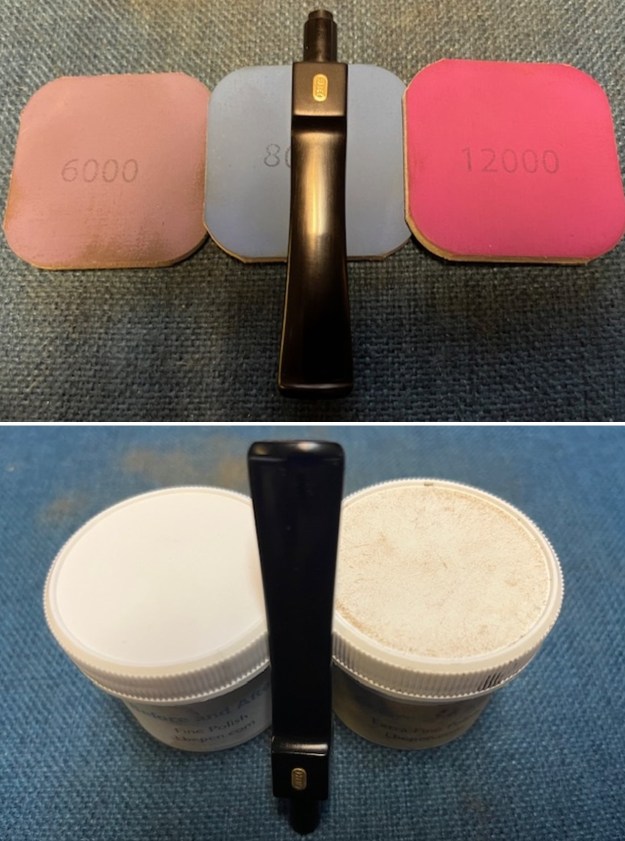
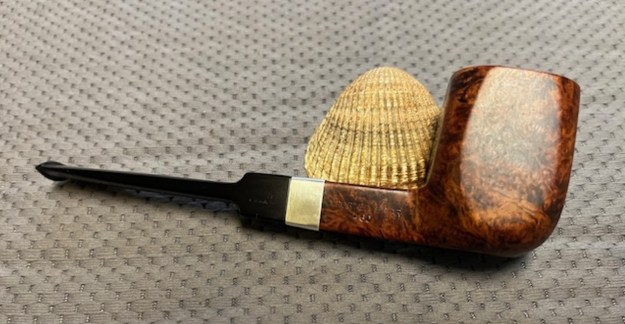
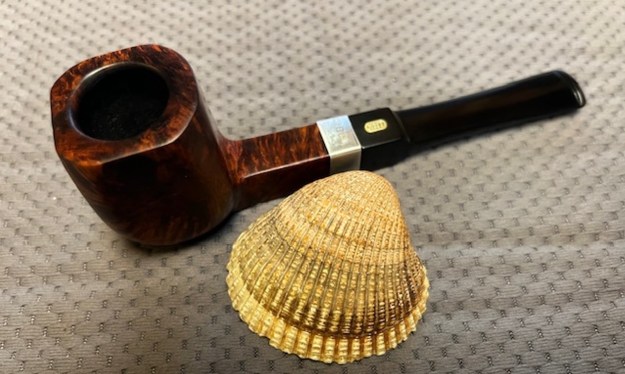
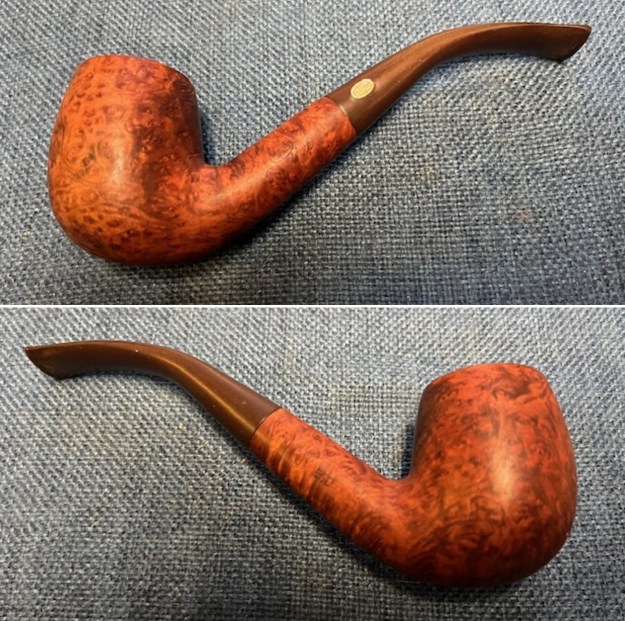
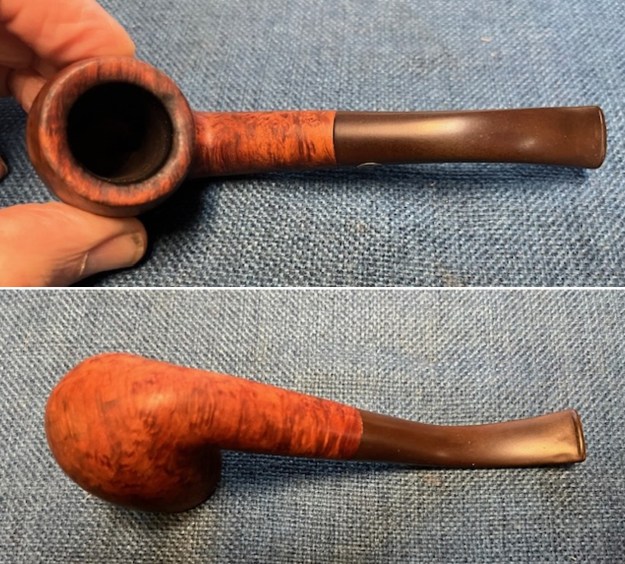
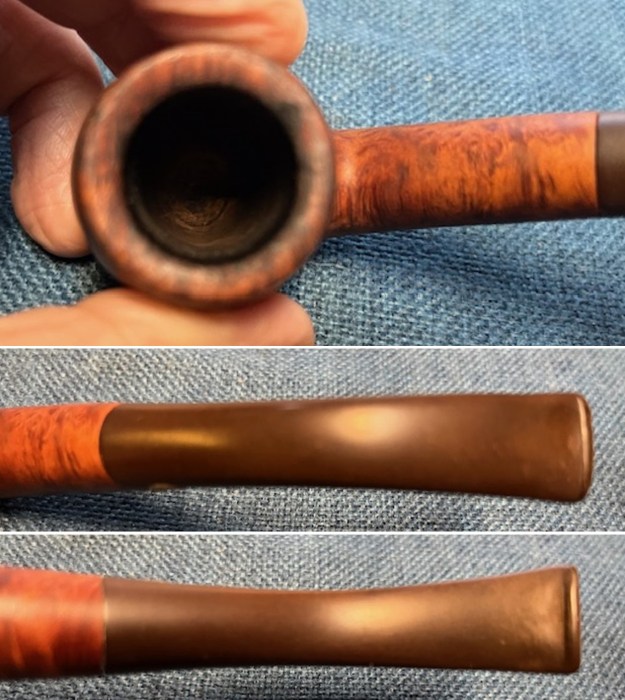
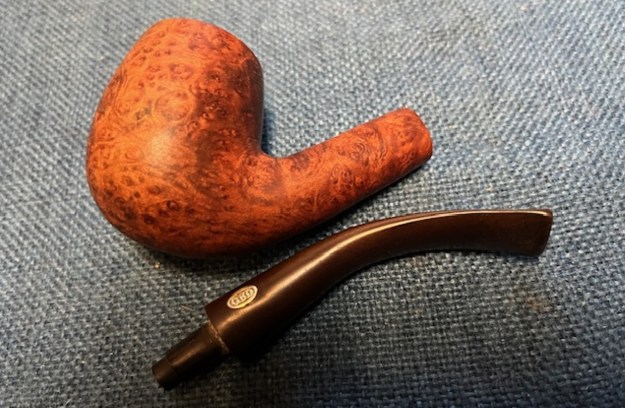
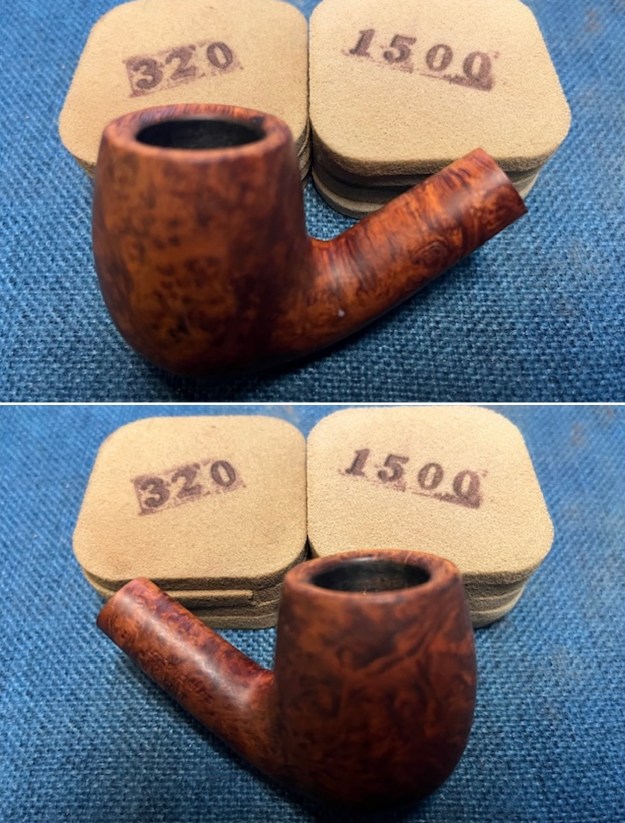
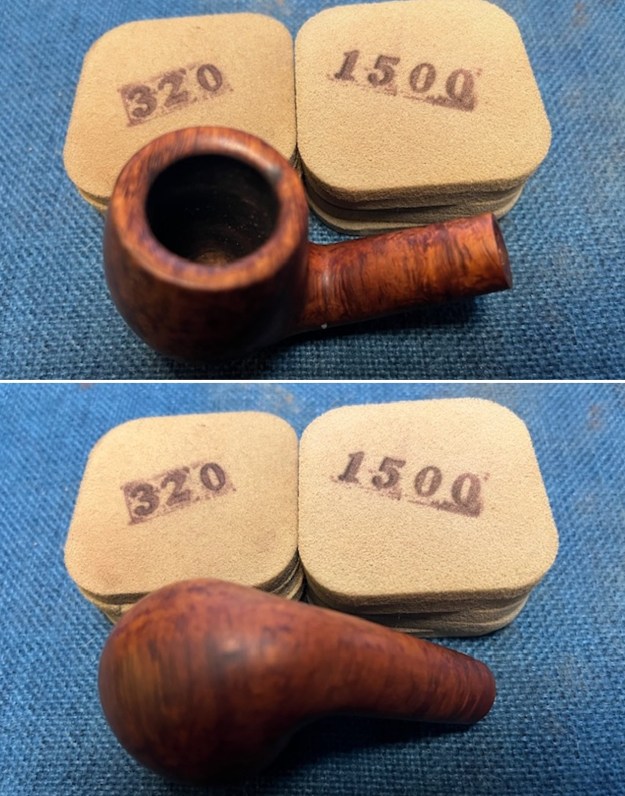
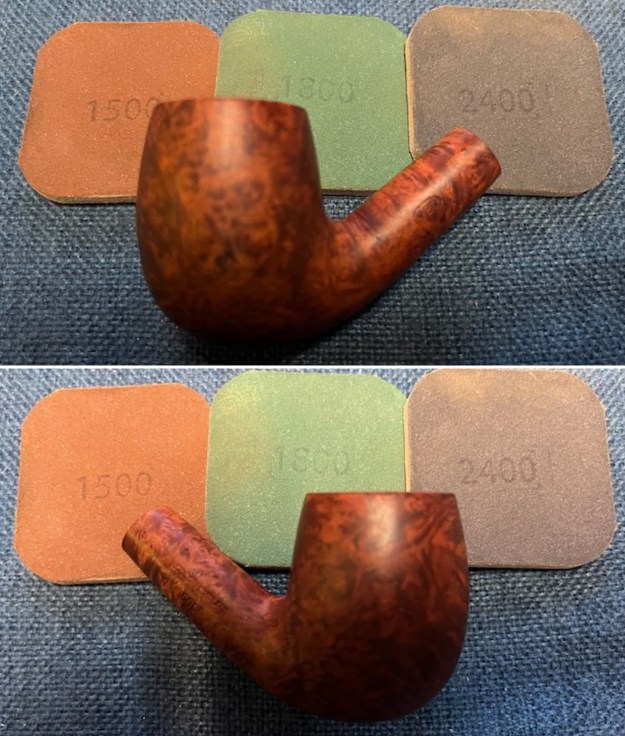
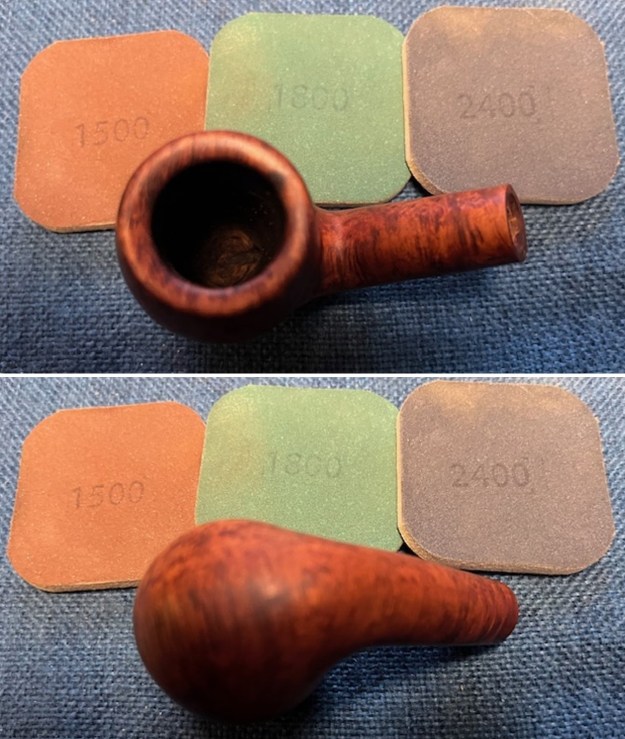
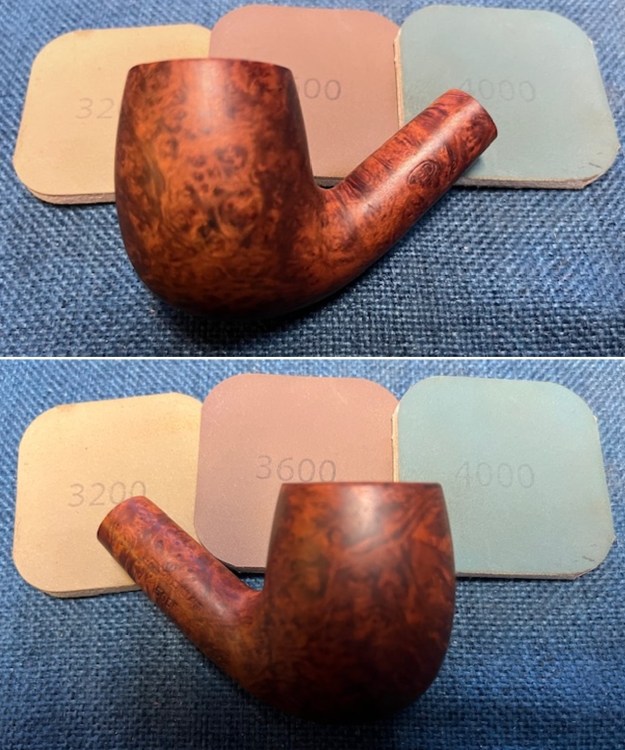
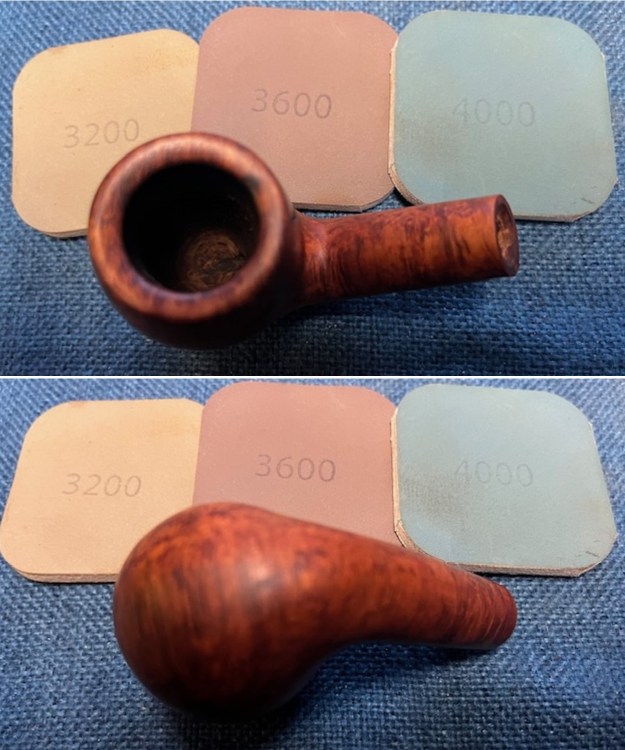
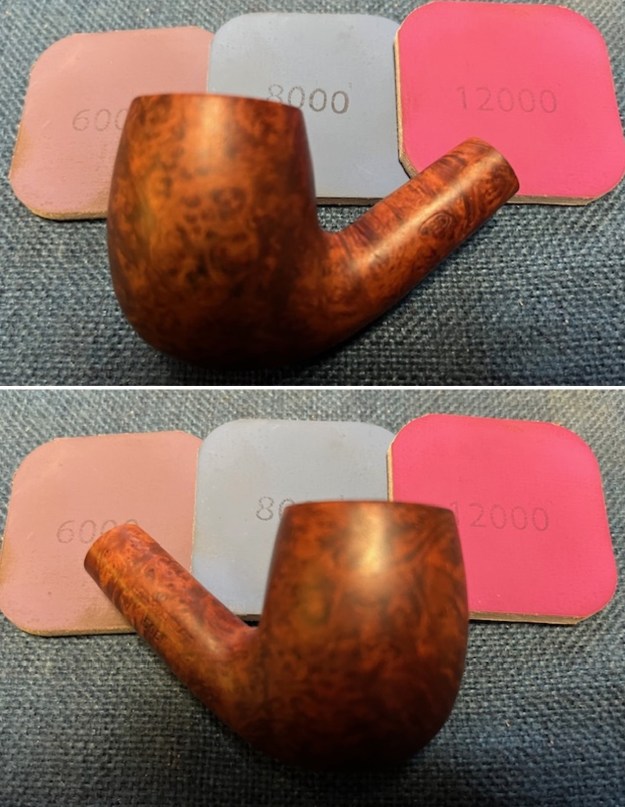
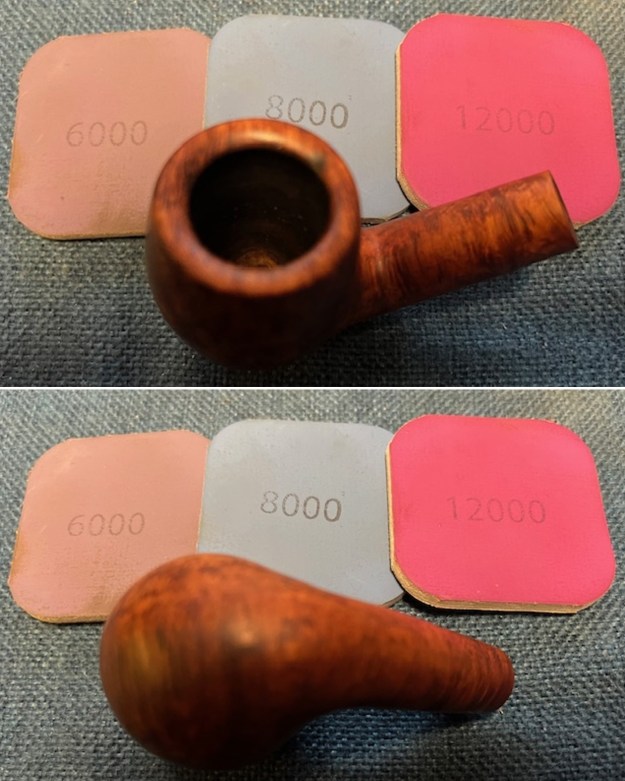
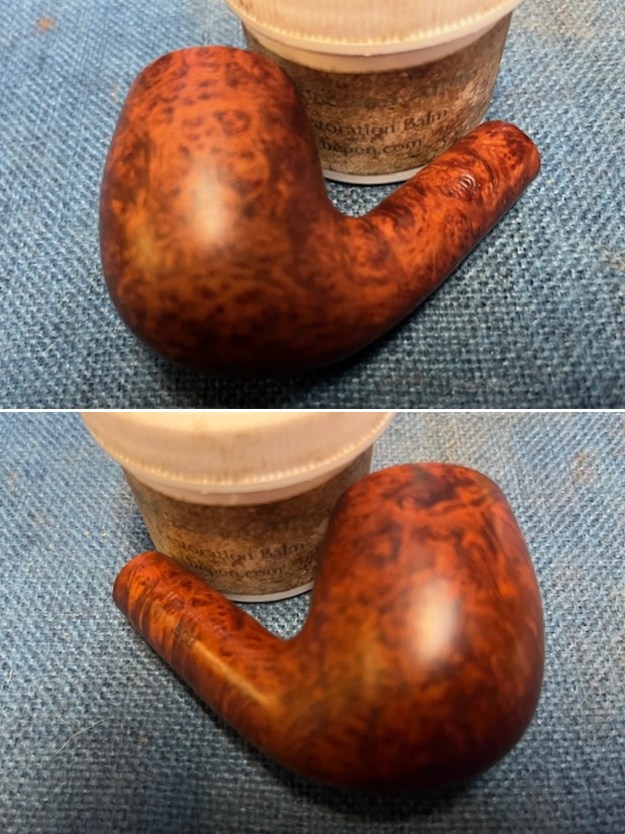
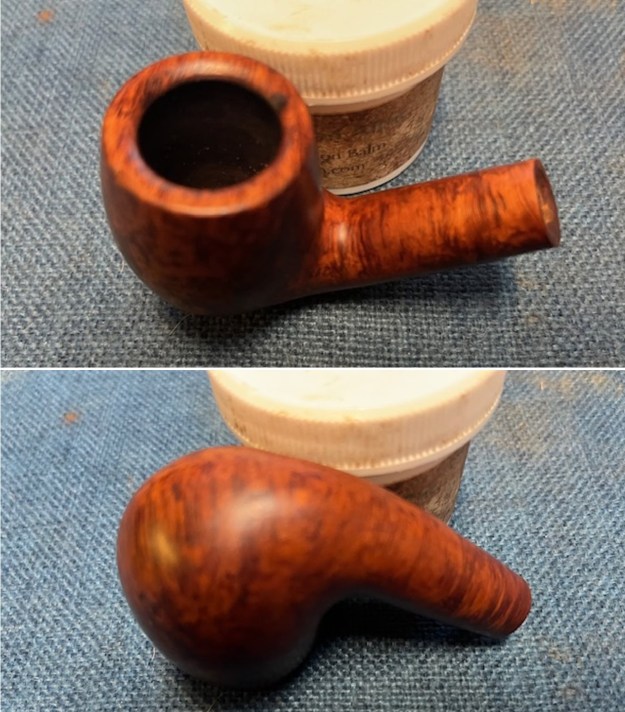
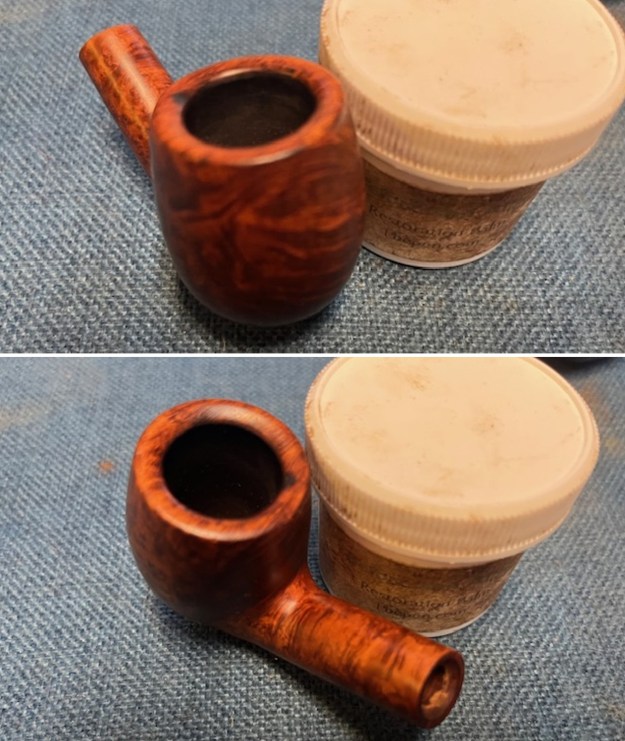
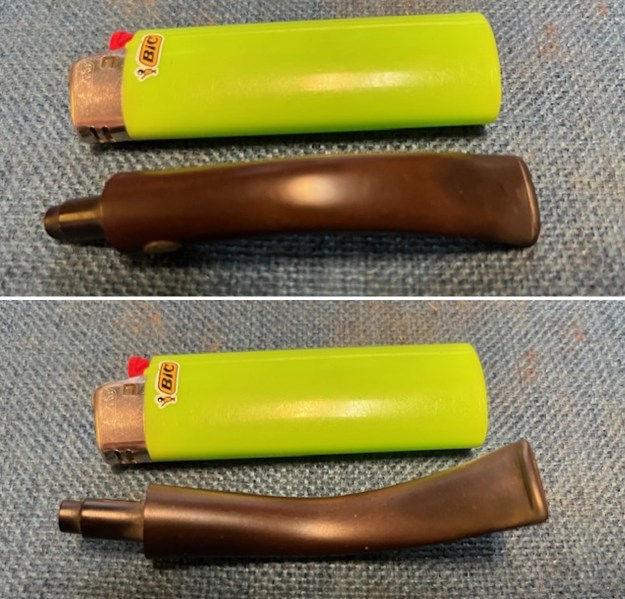
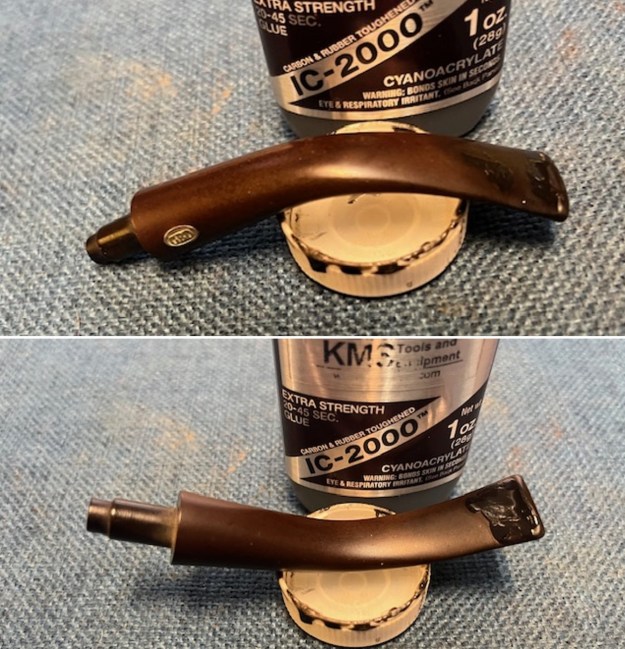
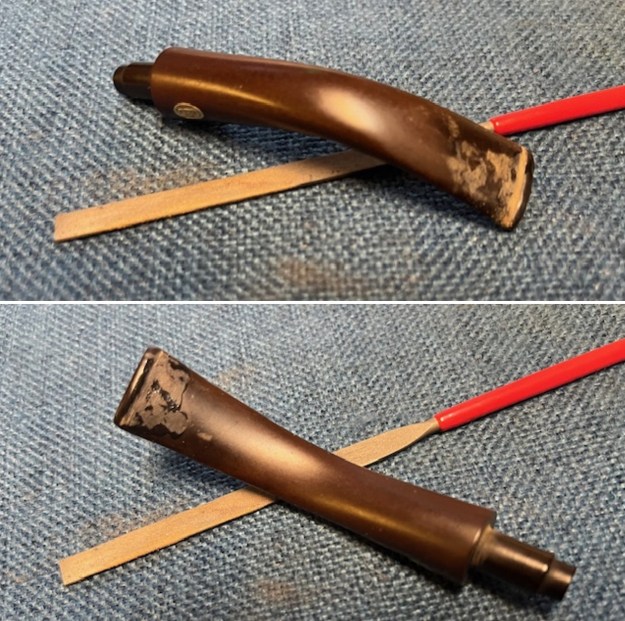
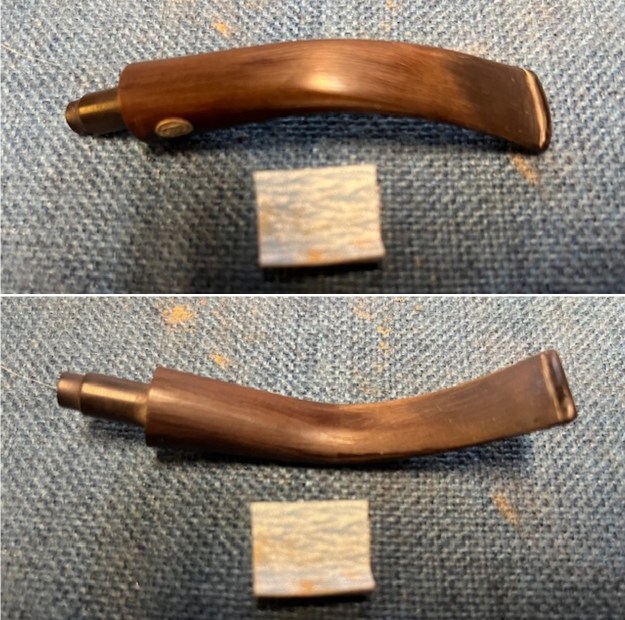
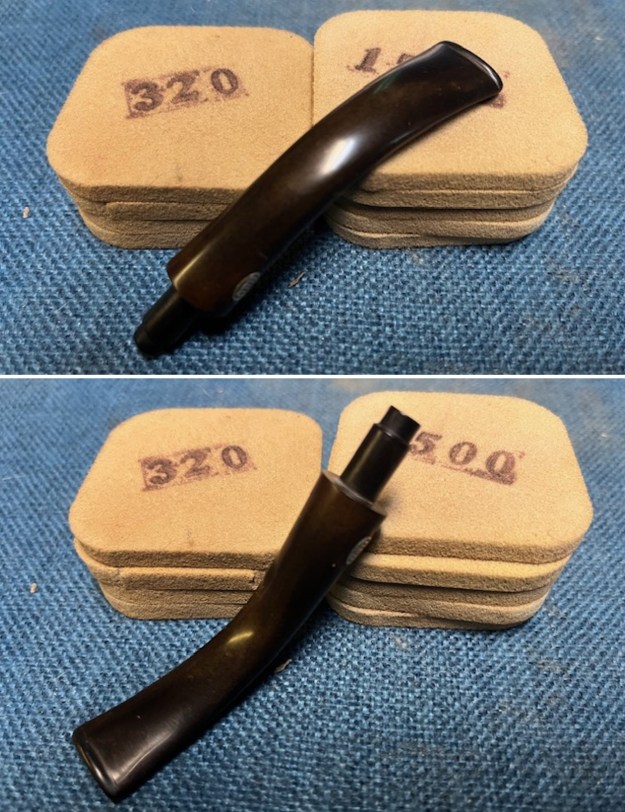
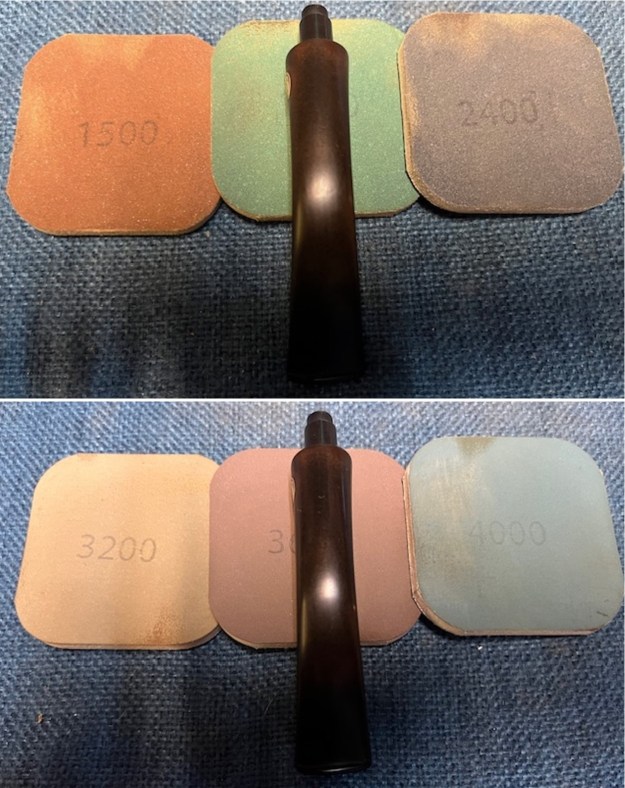
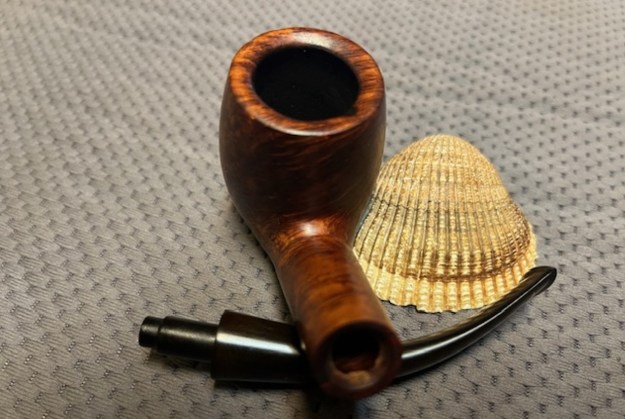
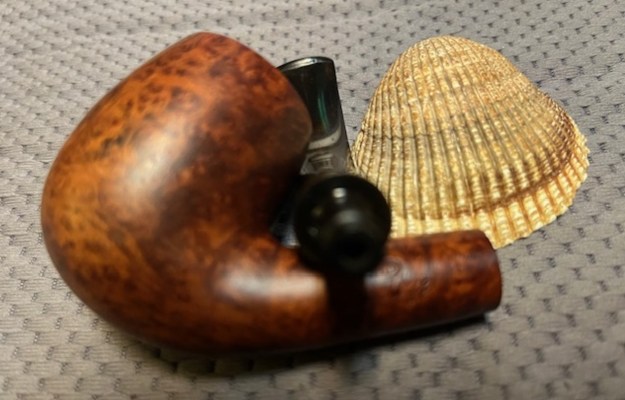
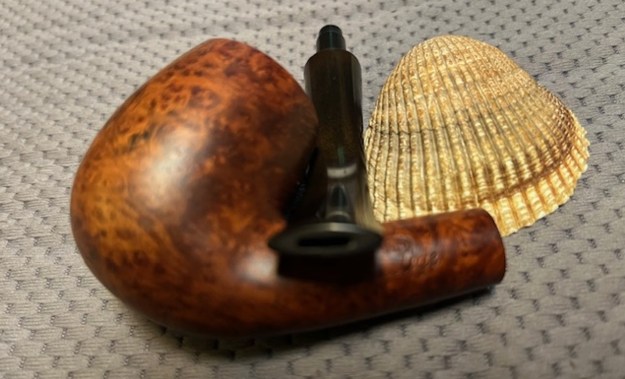
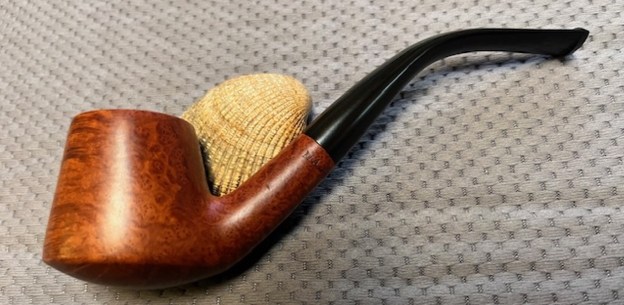
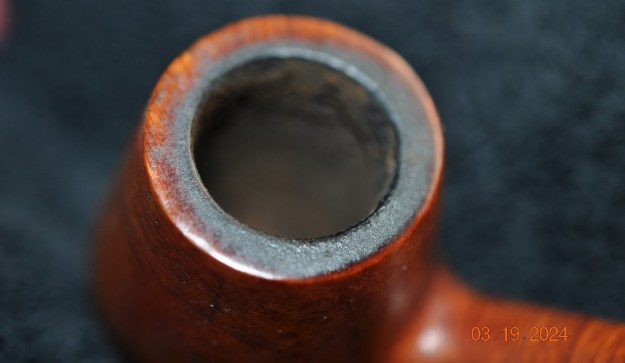
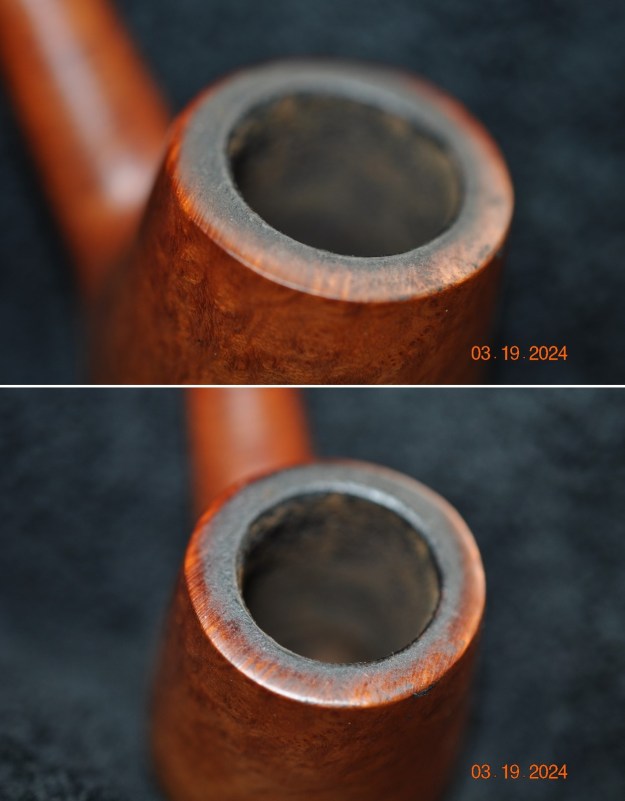
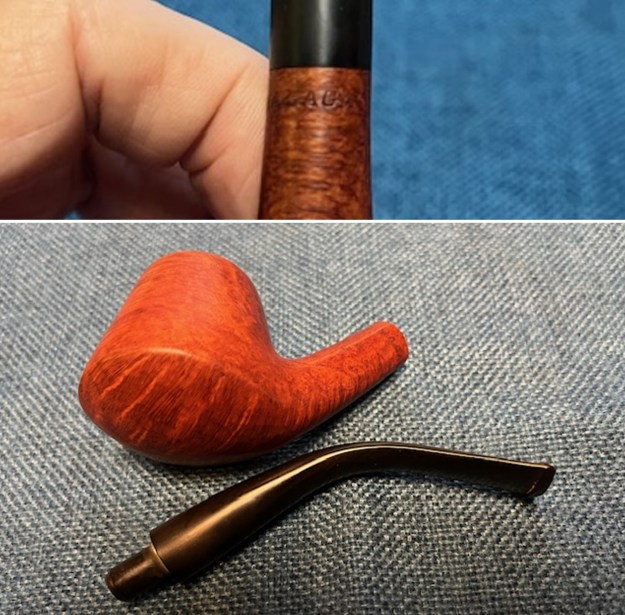
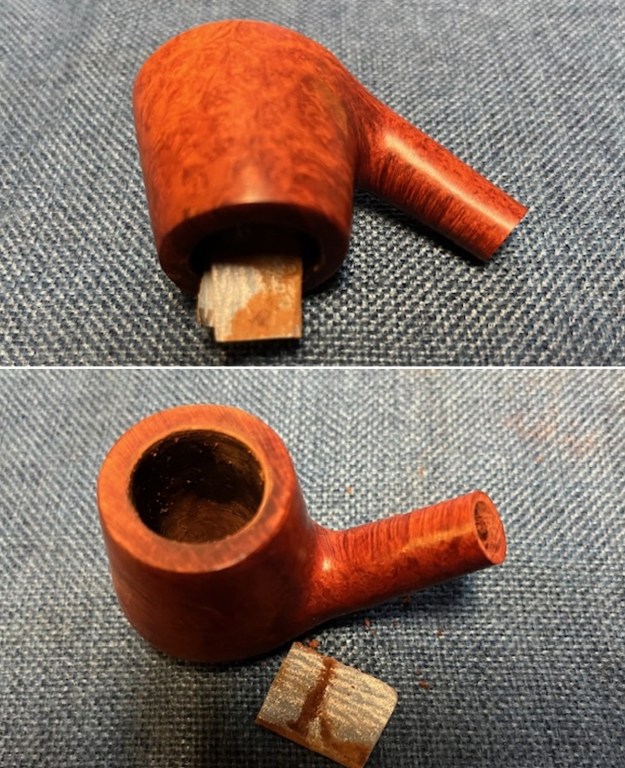
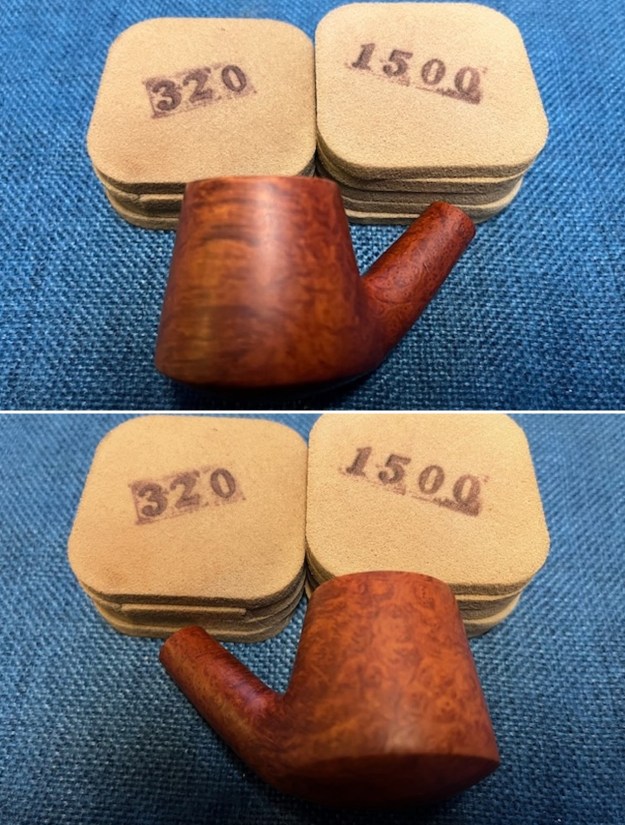
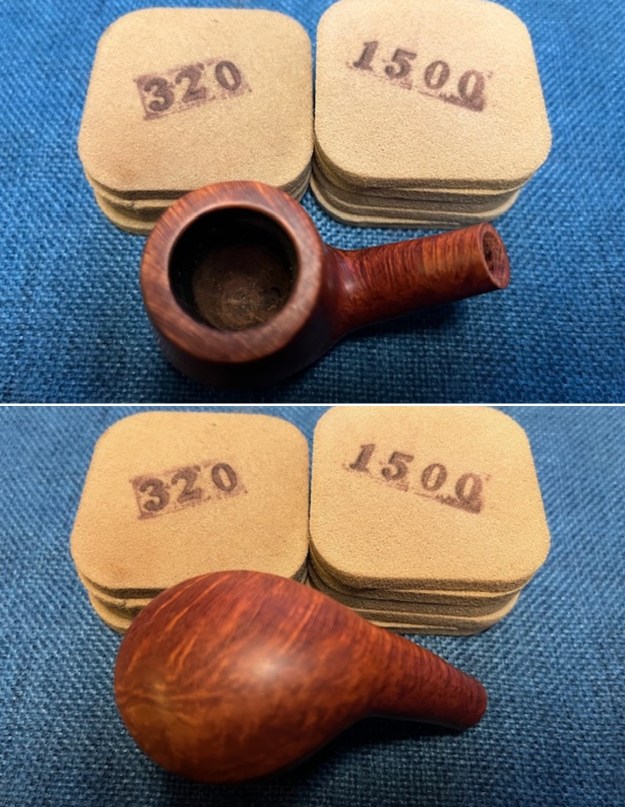
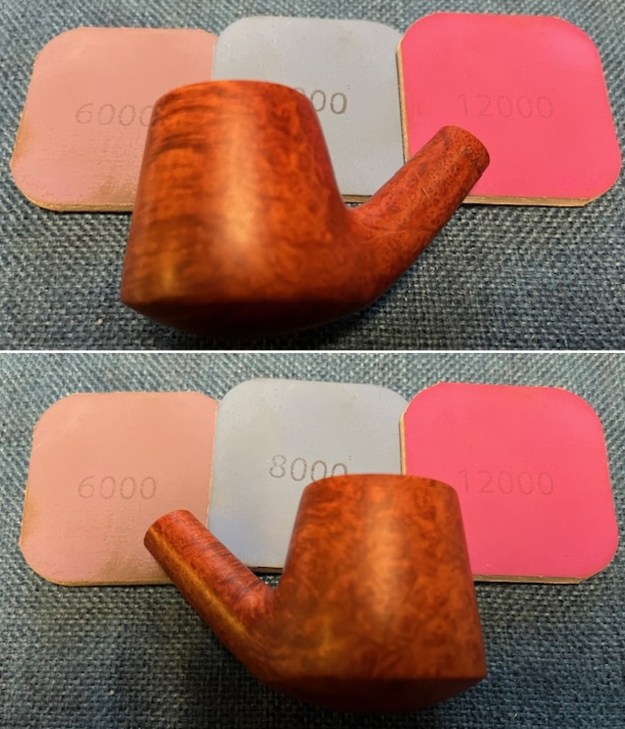
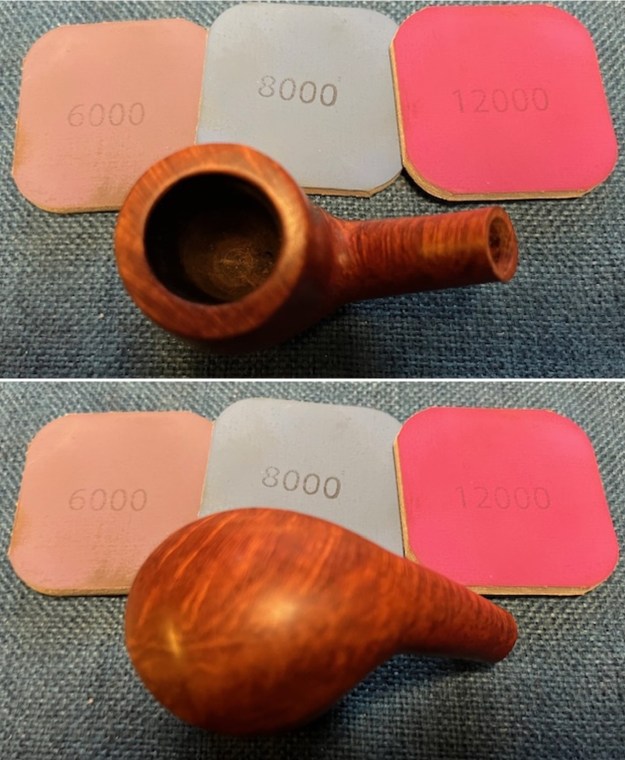
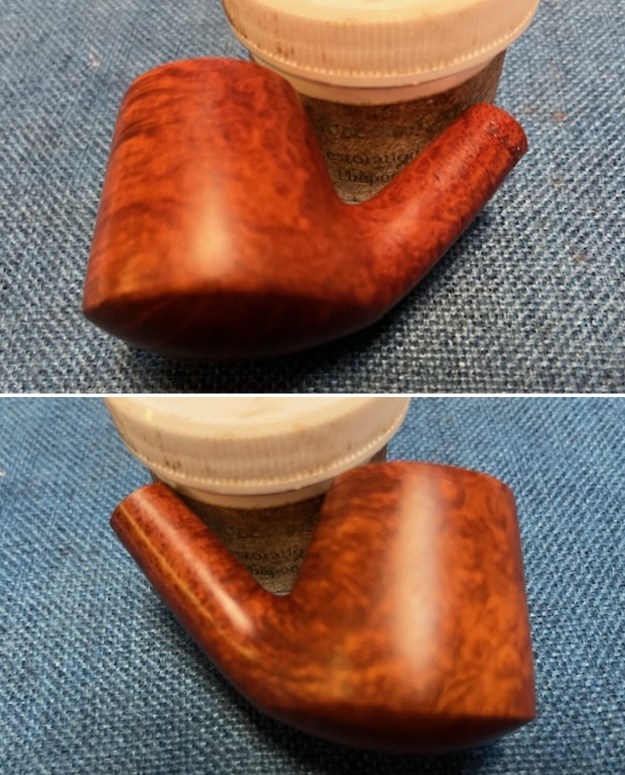
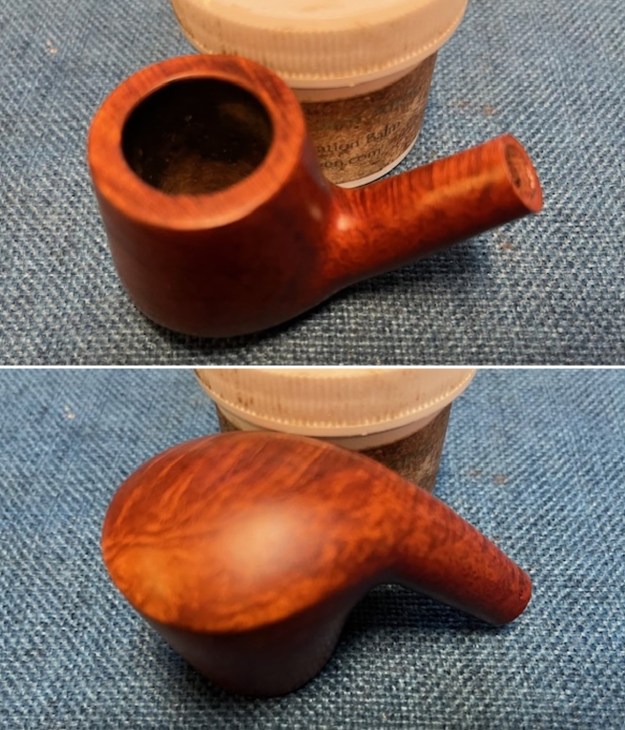
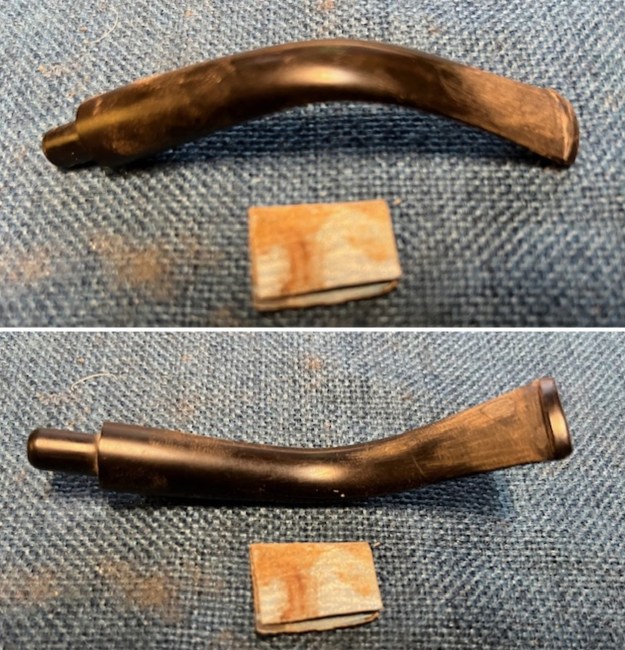
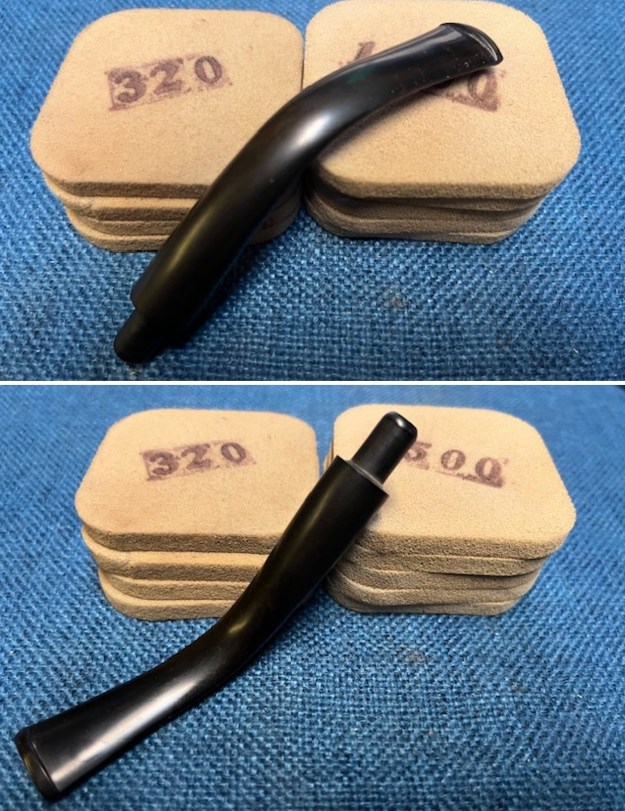
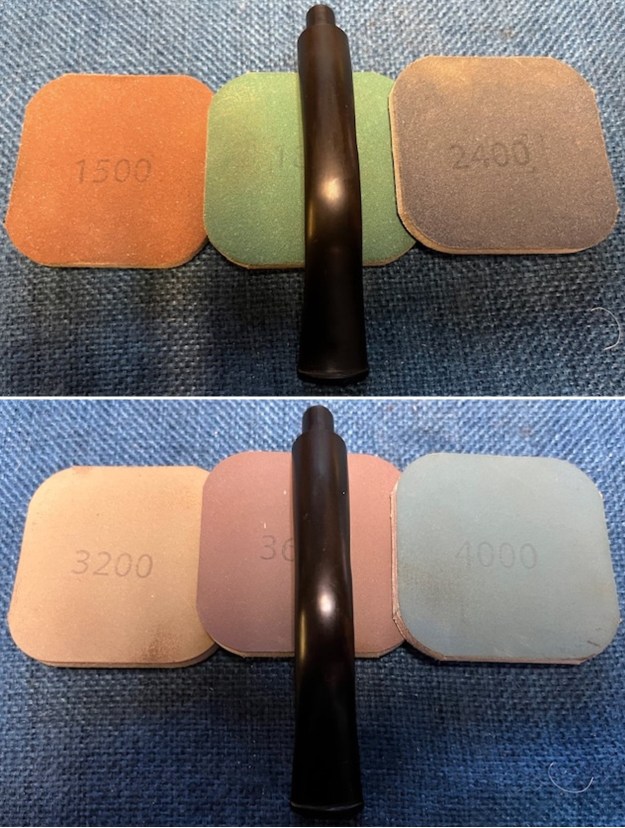
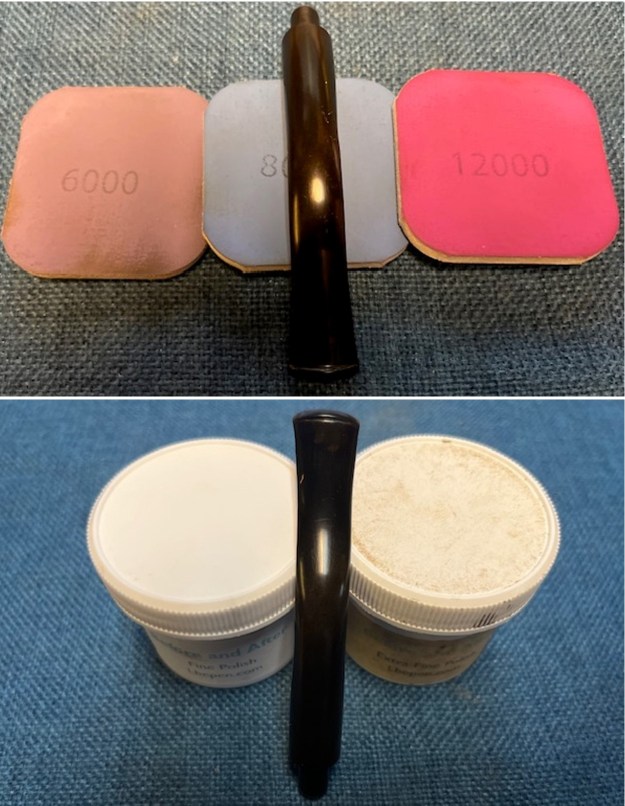
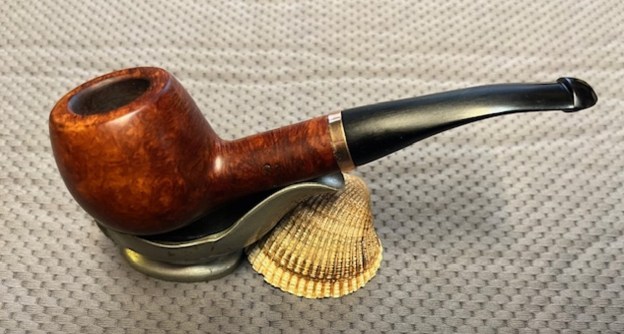
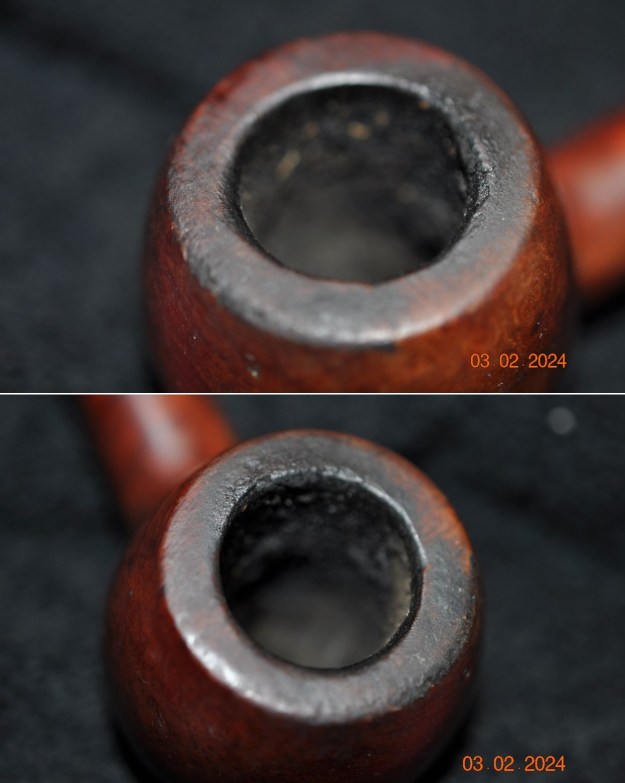
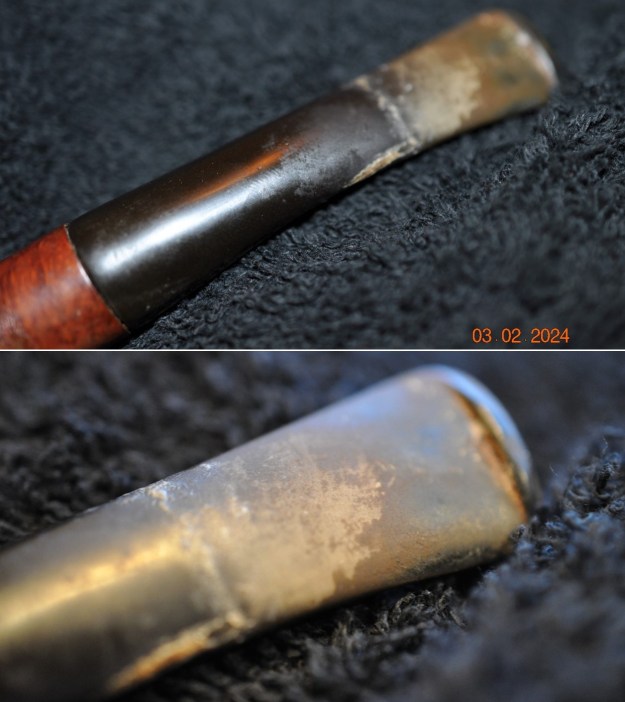
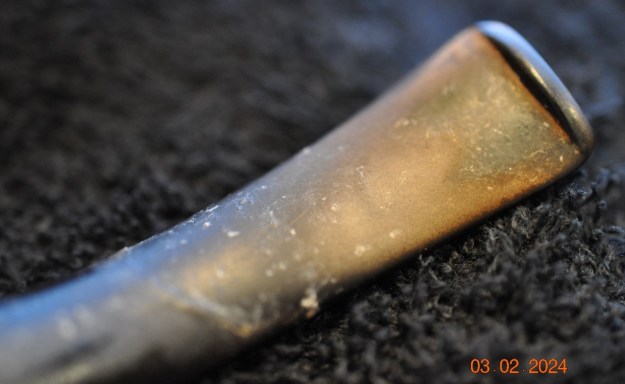
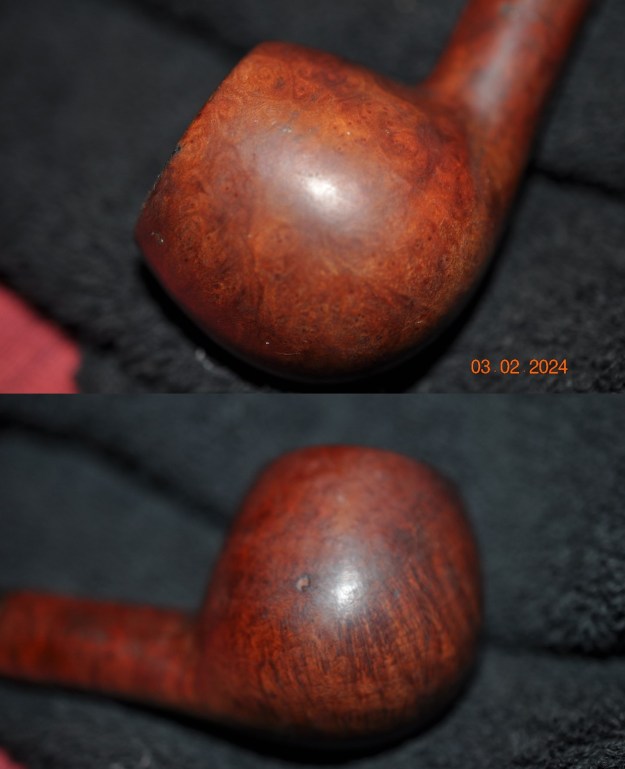
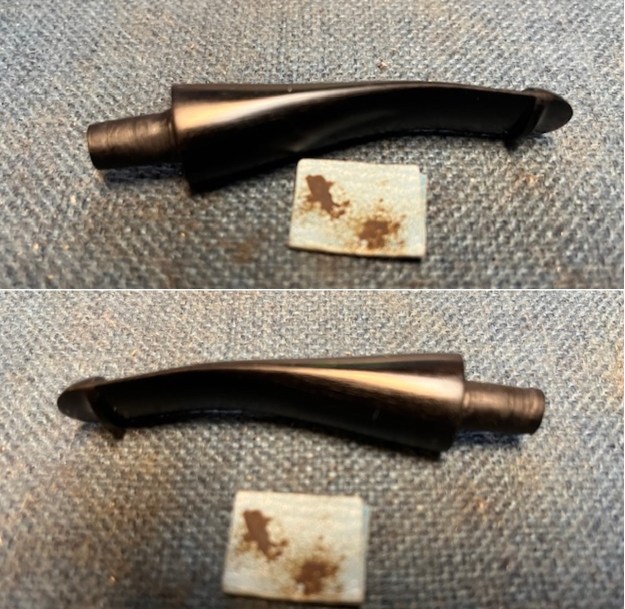
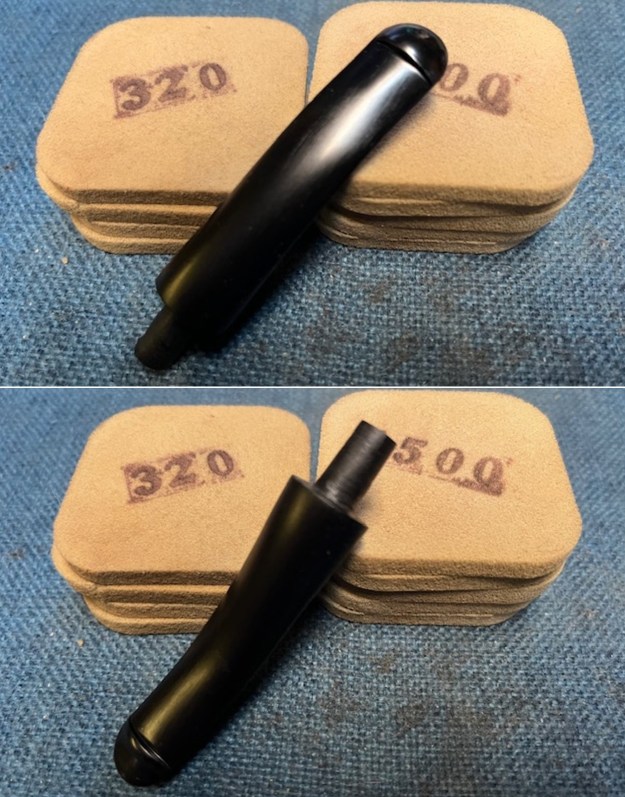
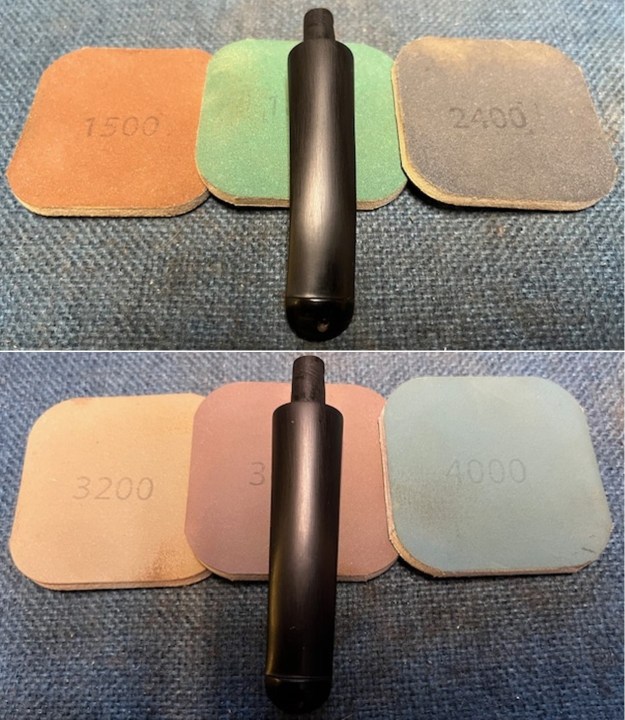
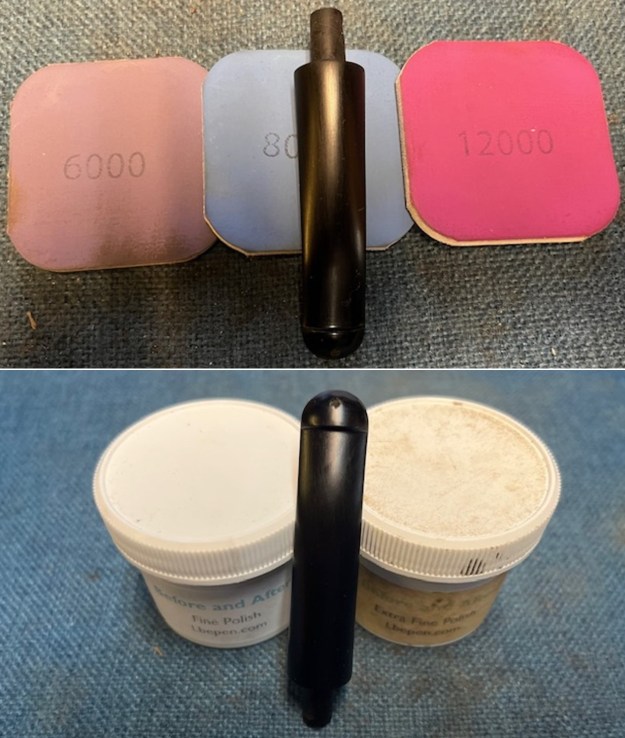
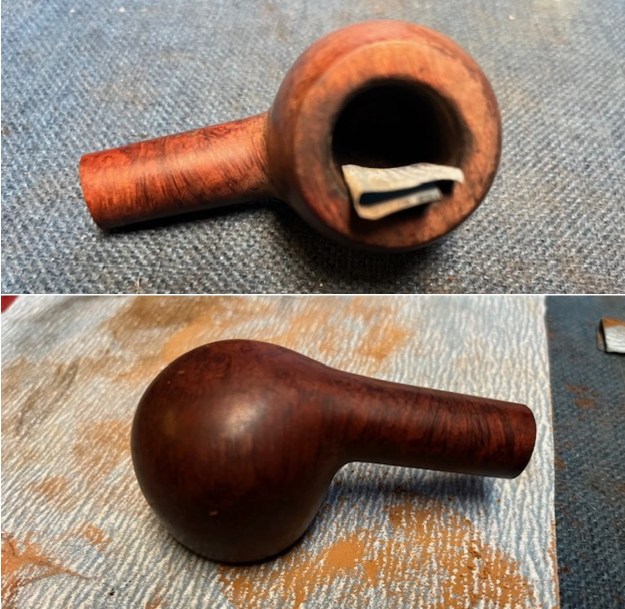
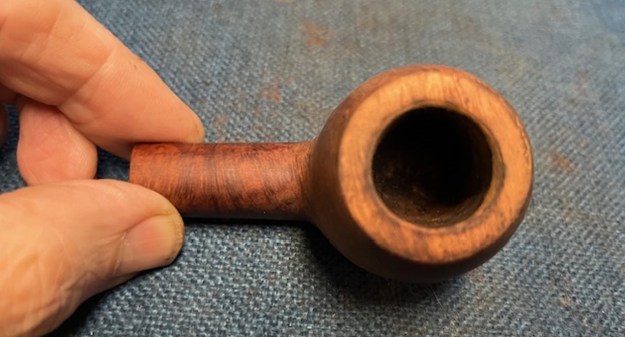
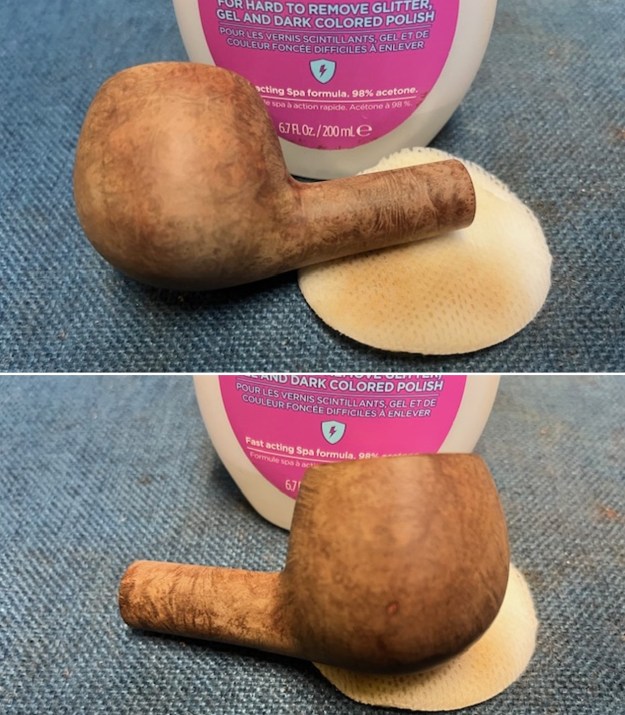
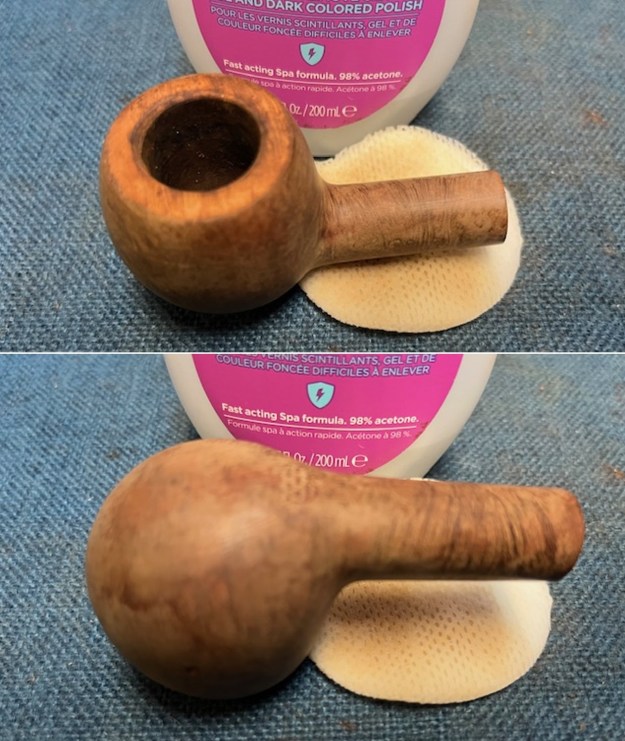
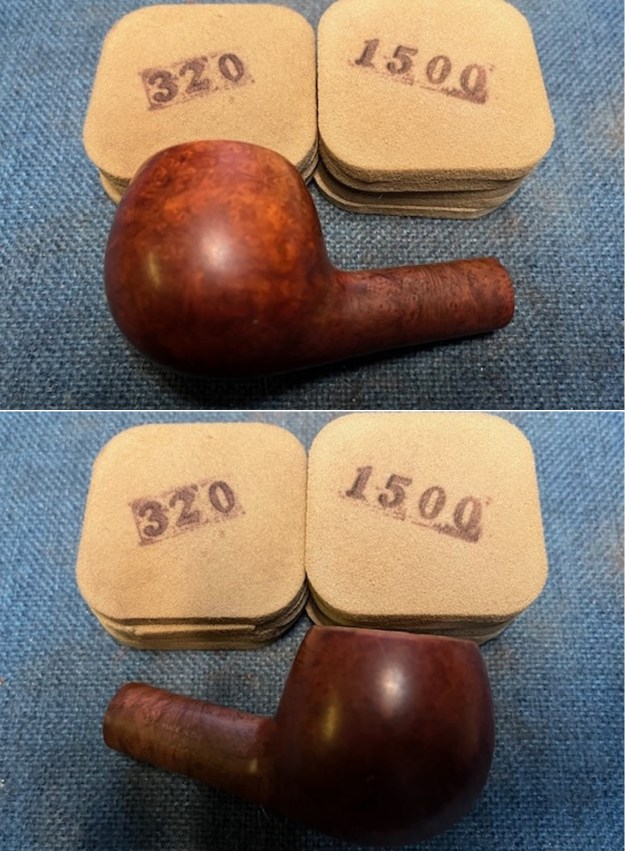
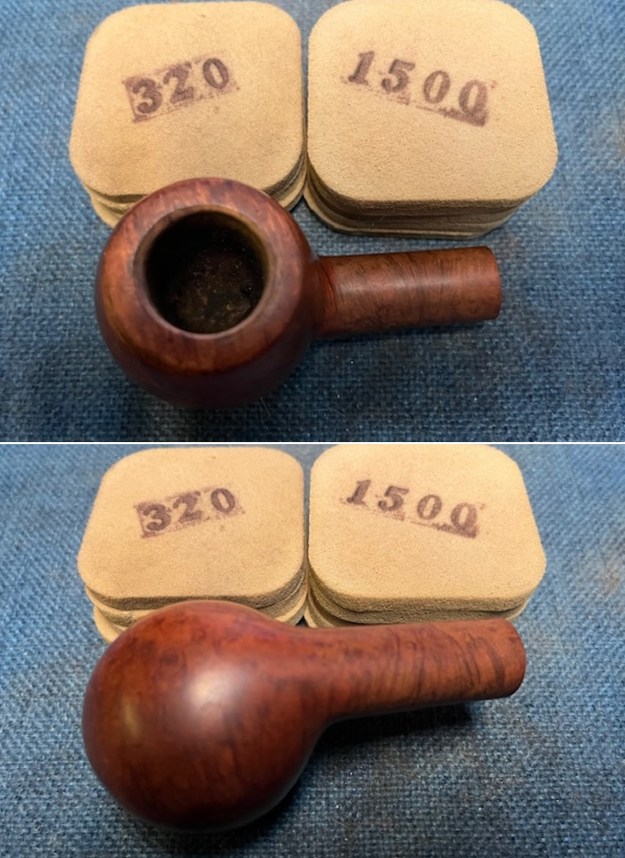
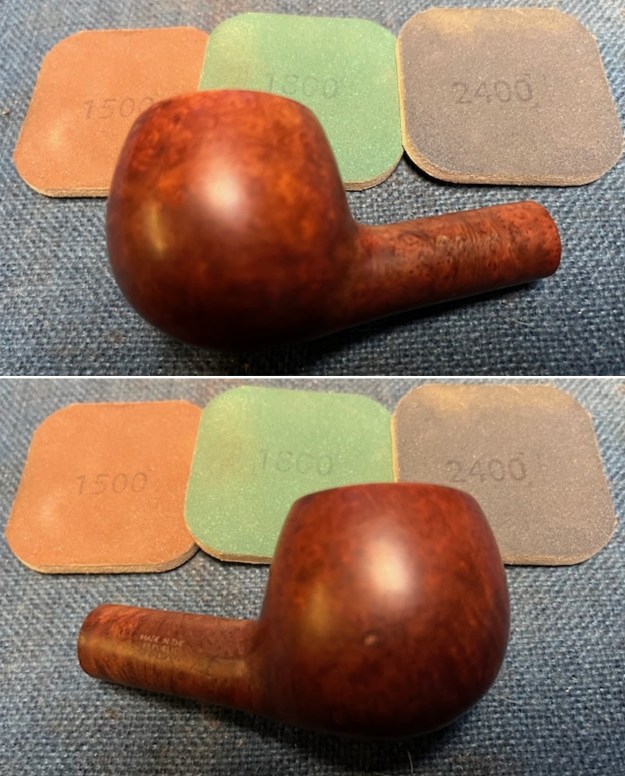
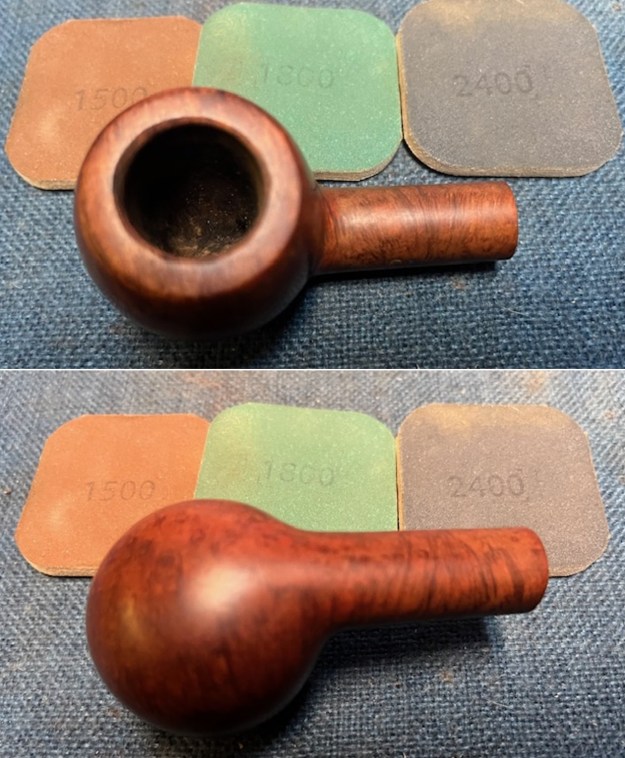
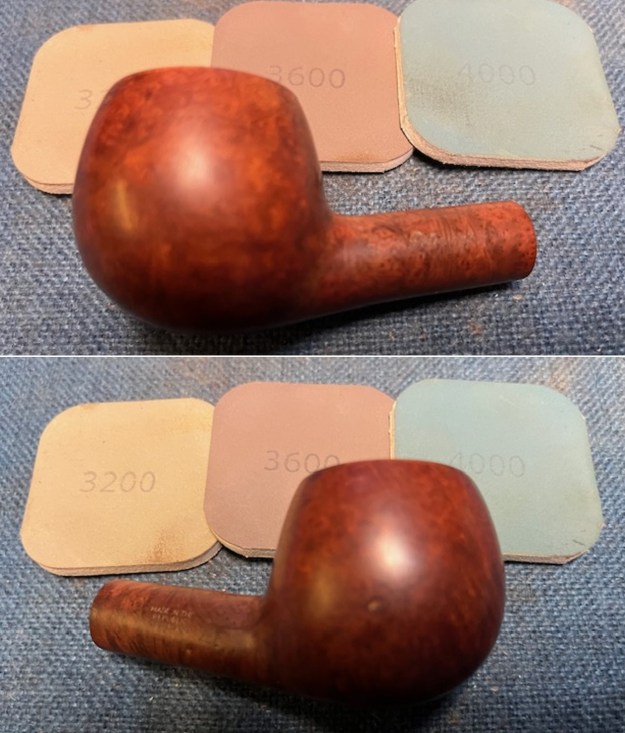
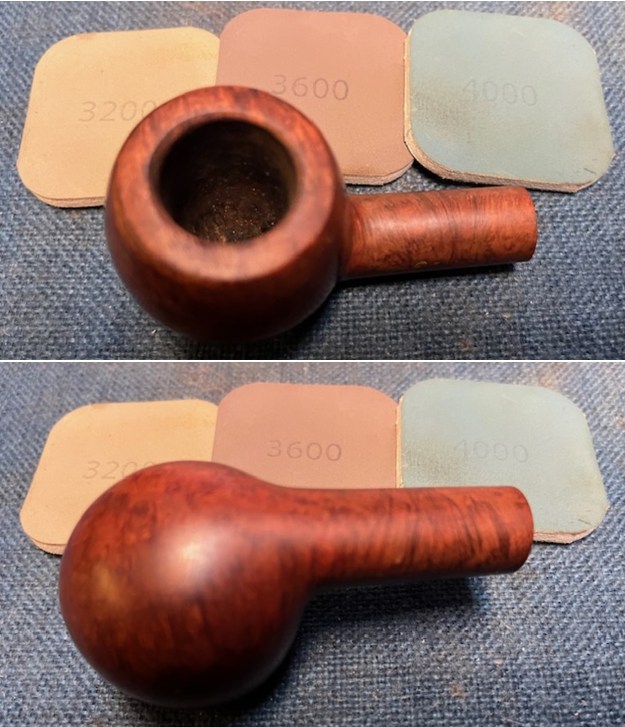
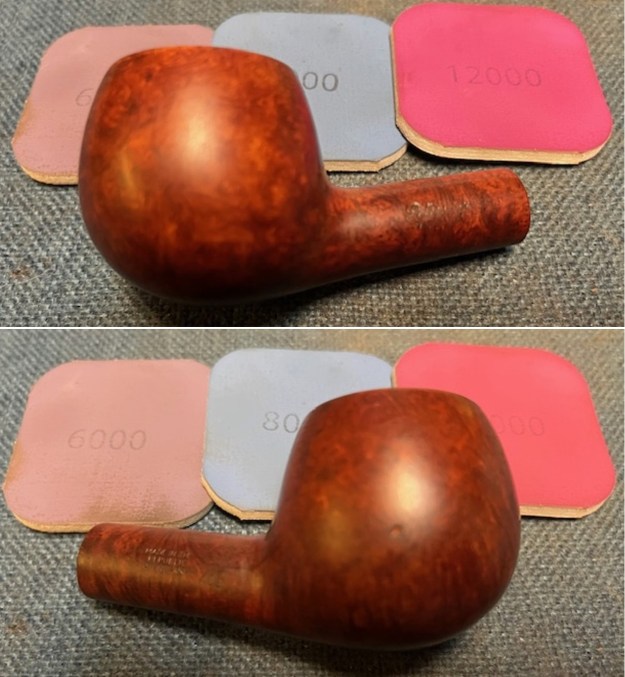
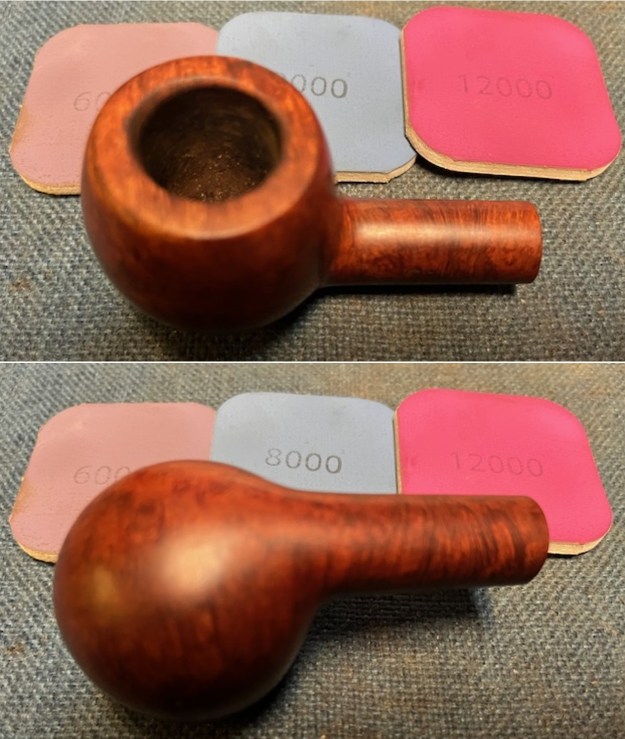
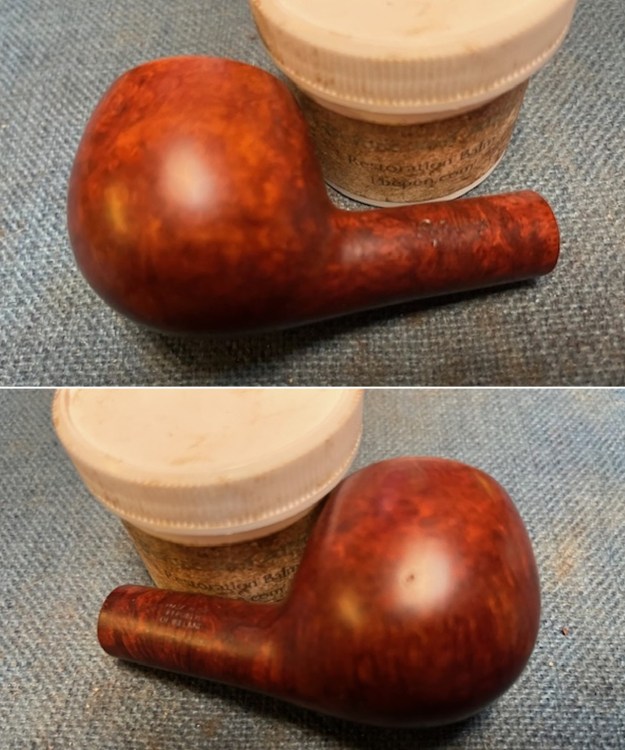
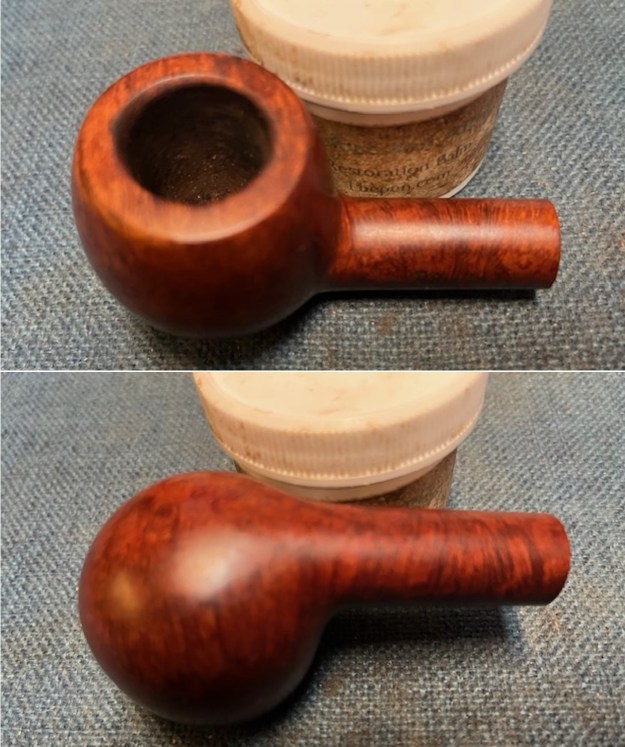
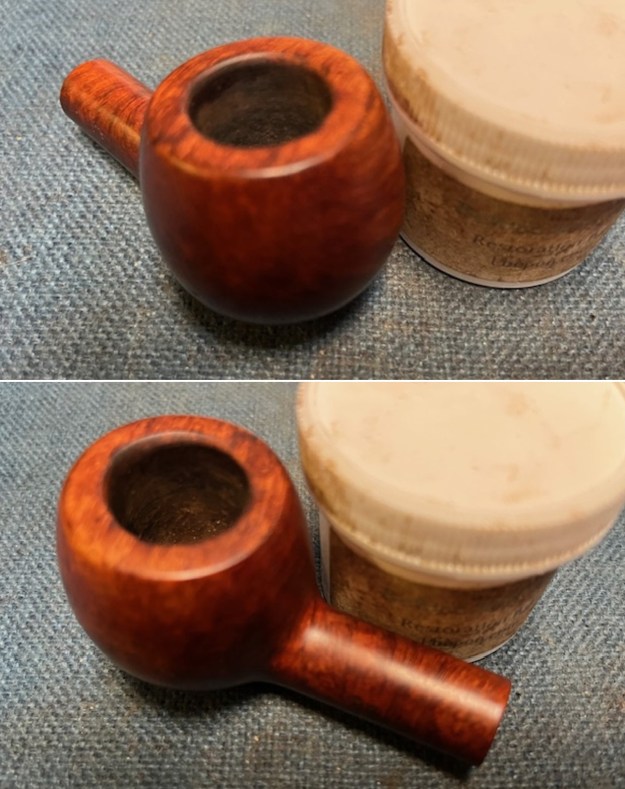
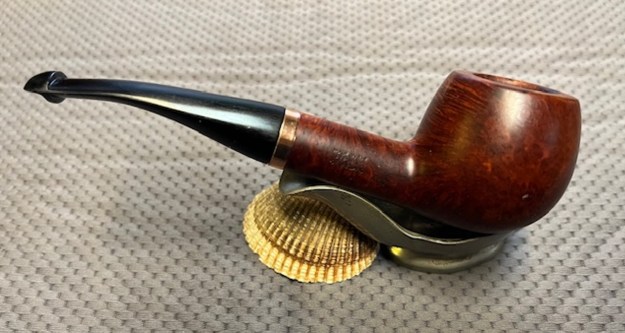
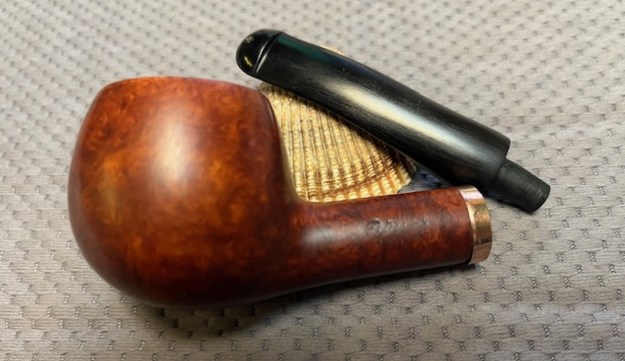
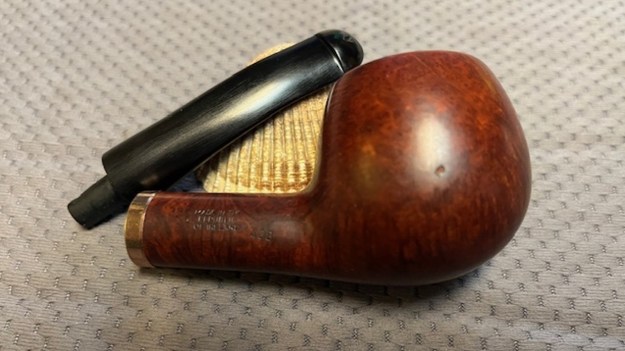
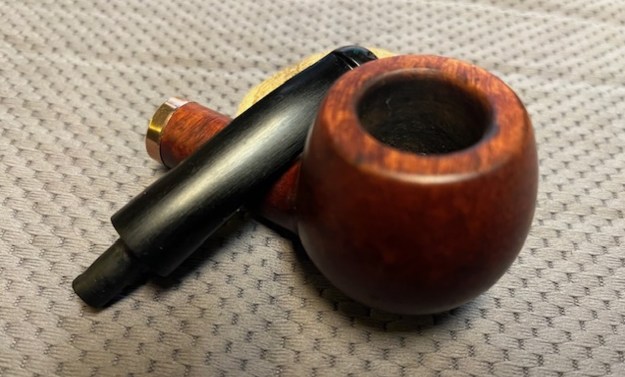
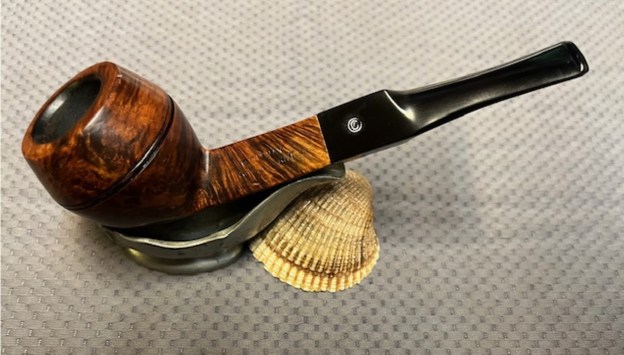
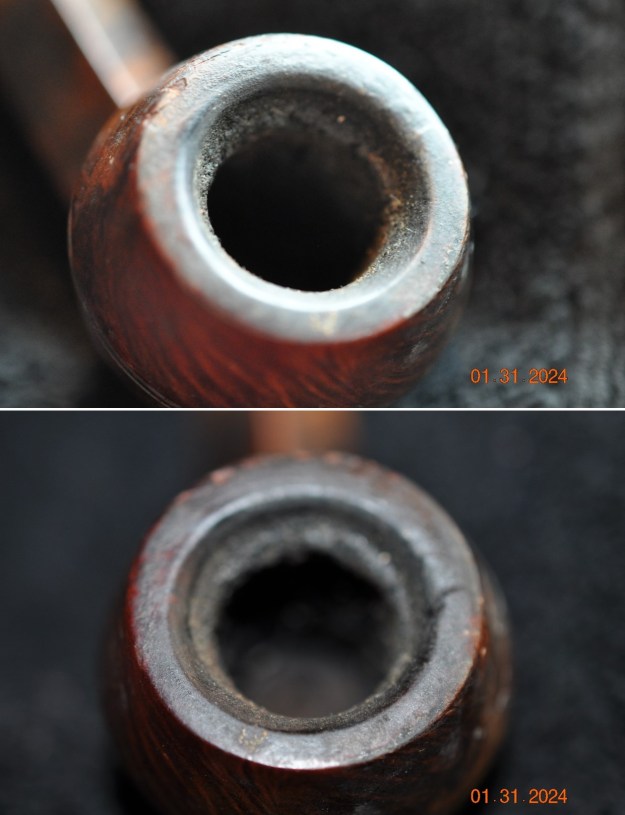
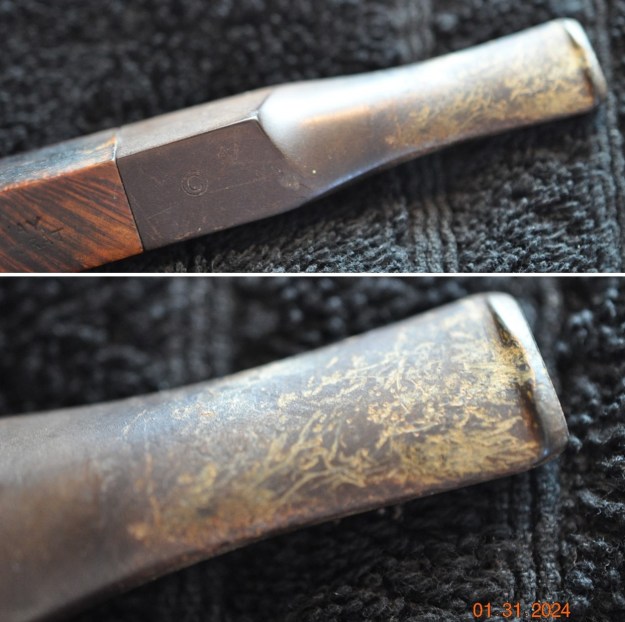
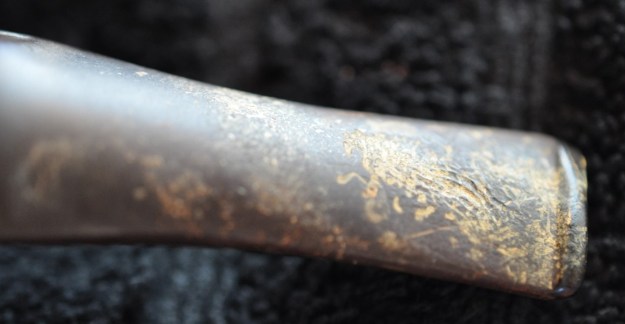
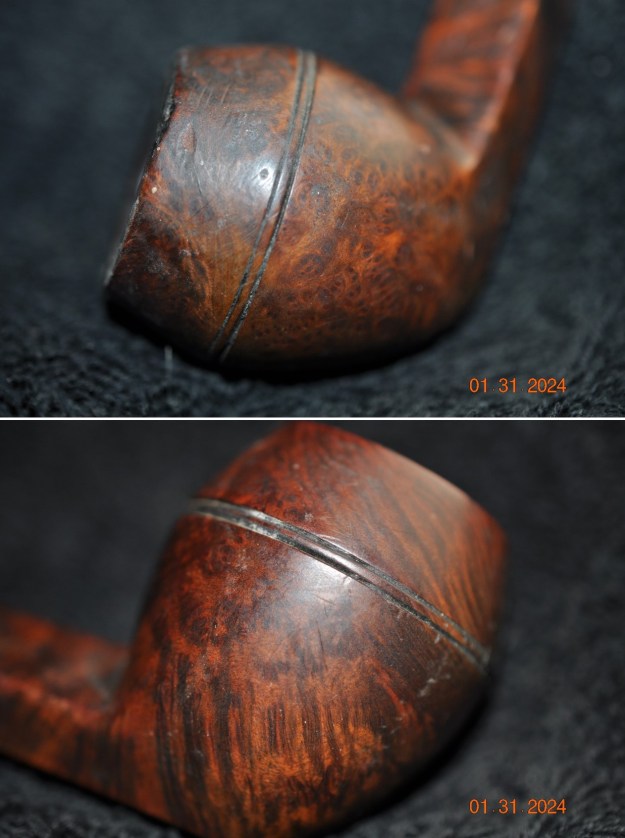
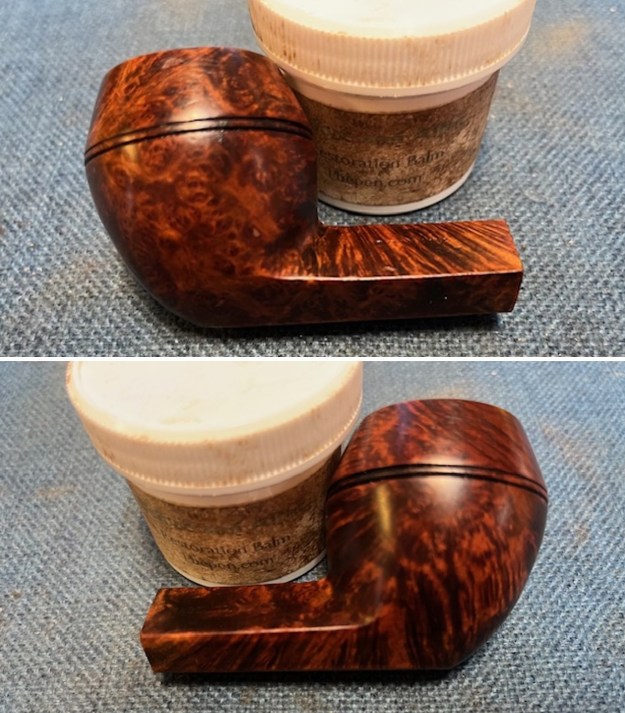
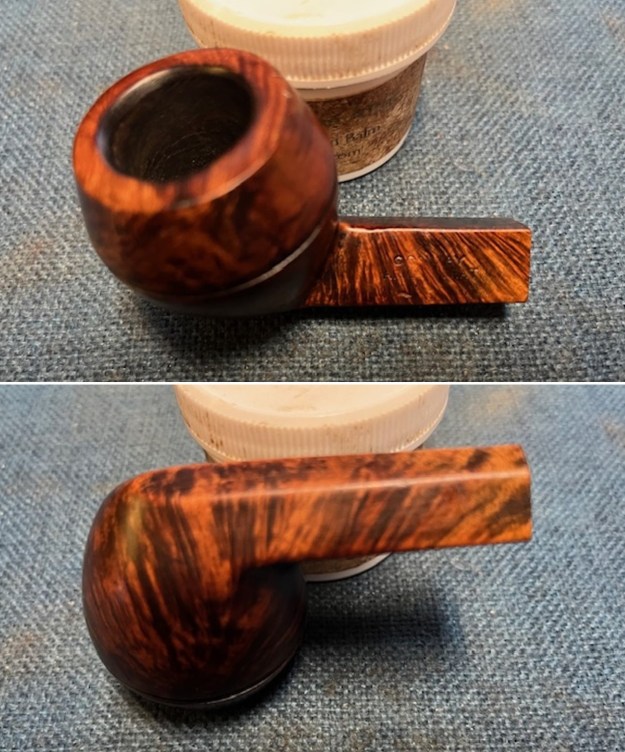
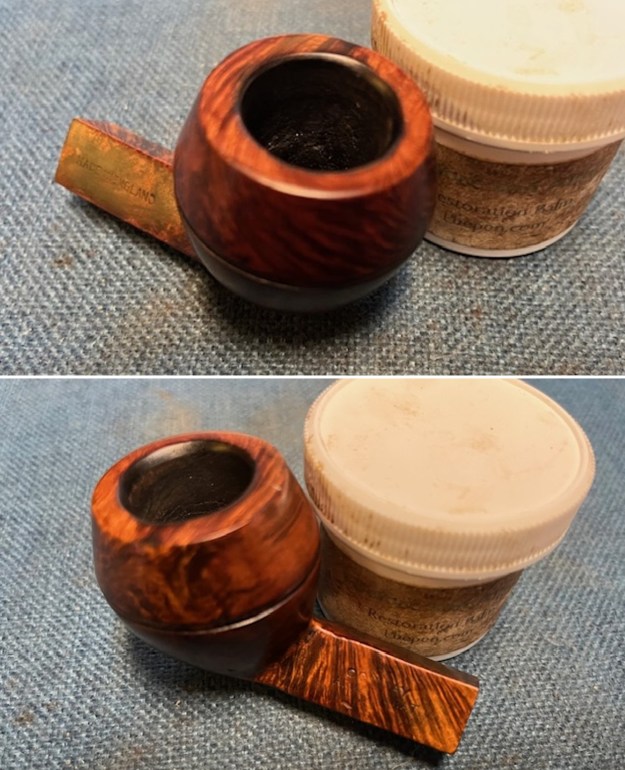
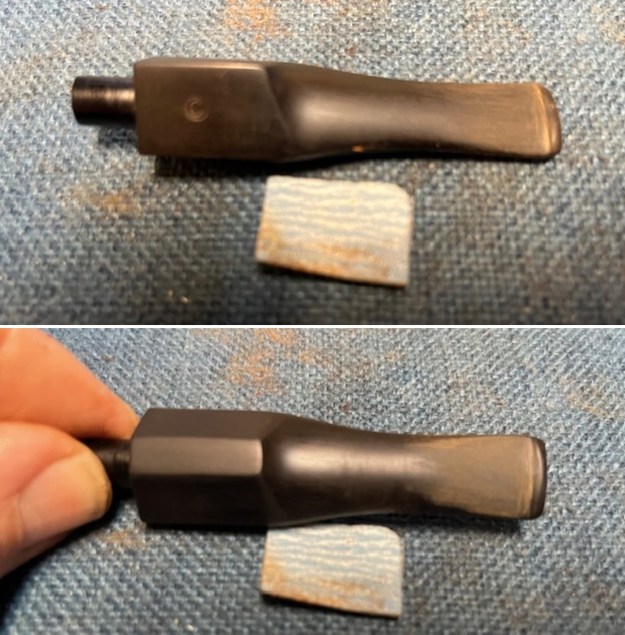
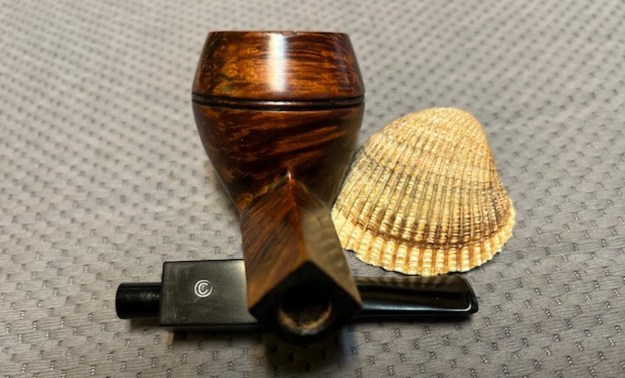
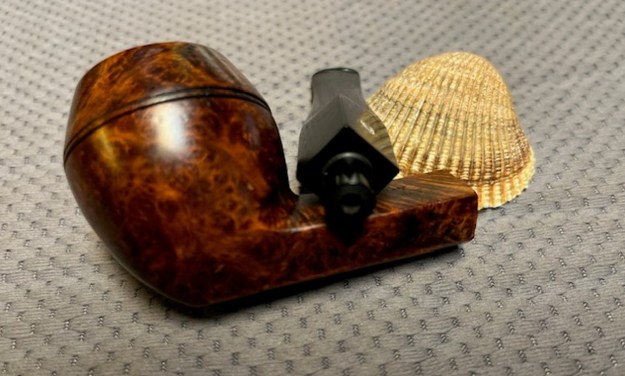
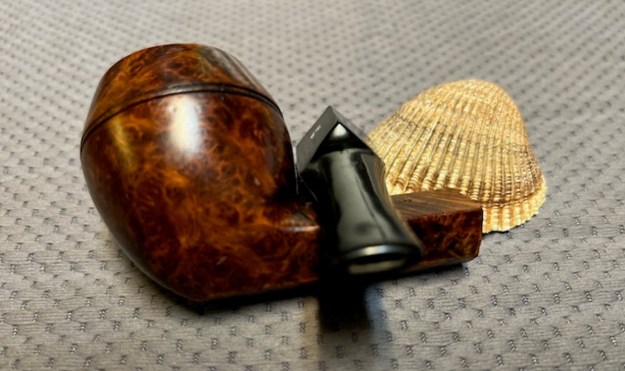
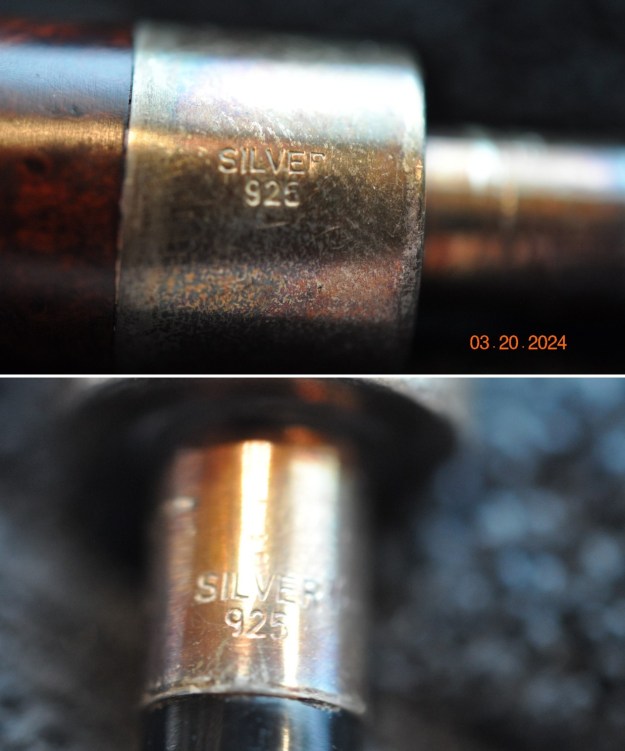
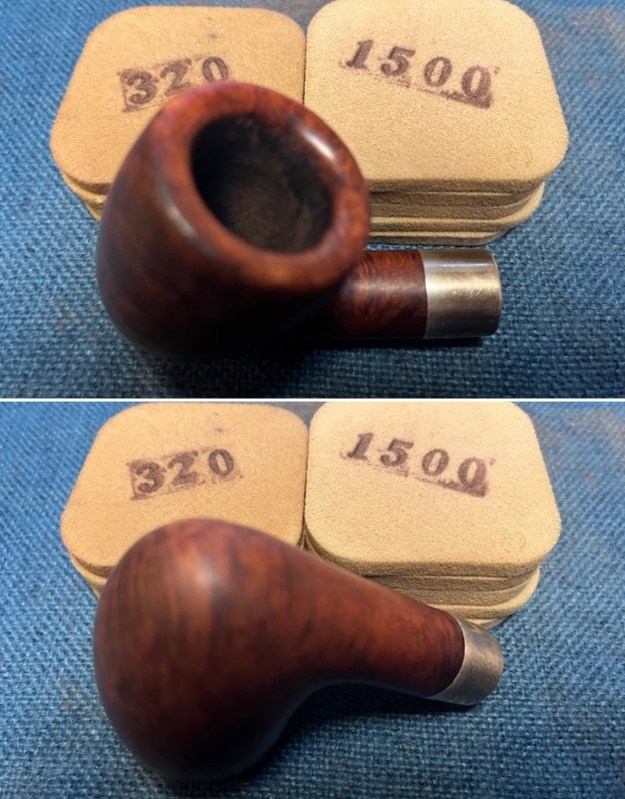
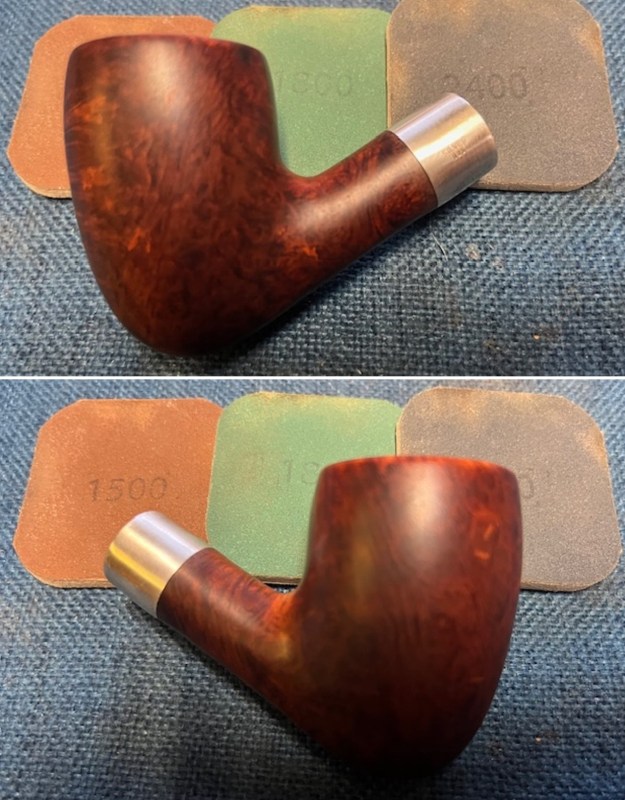
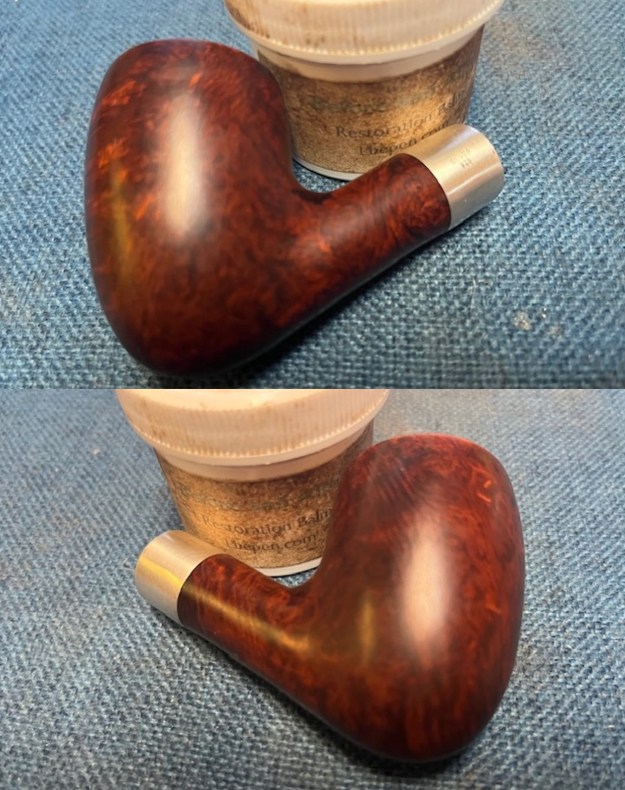
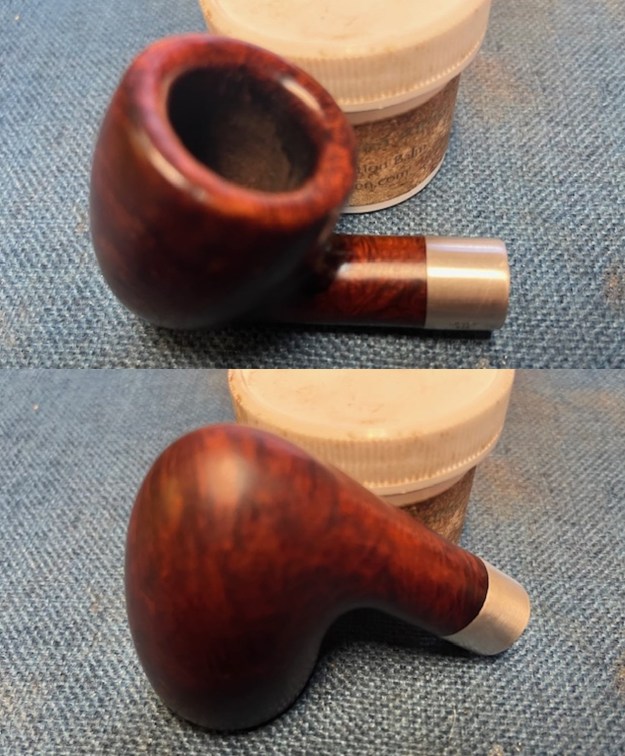
The next pipe on the work table came to us from a group of pipes we purchased on 02/29/2024 from a seller from Spring Branch, Texas, USA. It is a nice looking richly stained acorn shaped pipe with a stick bit silver tipped stem. The bowl has a dark reddish brown colour stain that highlights grain. There are also a lot of lighter coloured fills around the bowl and shank. I am hoping to mask these a bit in the clean up. This pipe has no stamping on the shank or the stem. There is a stamped Silver [over] 925 on both the band/ferrule and the silver tip on the stem. There is no other stamping. The bowl had been reamed and but then smoked so there was a light cake in the bowl and some lava on the top and edges of the rim top. The Sterling Silver ferrule and stem tip is oxidized and dark. The stem is black acrylic and there were some light tooth marks and chatter on both sides near the button. The pipe looks to be in good condition under the grime. This is a nice looking pipe and in a well-loved shape. Jeff took photos of the pipe before he started his cleanup. He took a photo of the bowl and rim top to show their general condition. You can see the lava, scratches and nick marks on the rim top and the light cake in the bowl. The bevelled inner edge of the bowl looks to be okay. The stem is acrylic and dirty and there are tooth marks and chatter on both sides near the button. The silver ferrule and stem tip is also oxidized and almost black. Jeff took some photos of the sides and heel of the bowl to give an idea of the grain around the bowl as well as the number of putty fills. I cannot wait to see what it looks like once it is cleaned and polished. Should be interesting to minimize the visual prevalence of the fills. He captured the stamping on the silver ferrule and stem tip in the next photos. Even through the oxidation they are clear and readable. It really amazes me that a pipe with silver shank and stem adornments has no name stamped on it and that a pipe with these many fills would even bother with the silver. Ah well….Jeff carefully cleaned the pipe. He reamed it with a PipNet pipe reamer and then cleaned up the reaming with a Savinelli Fitsall Pipe Knife. He scrubbed out the internals of the shank, stem and shank extension with alcohol, pipe cleaners and cotton swabs until the pipe was clean. He scrubbed the exterior of the bowl with Murphy’s Oil Soap and a tooth brush to remove the grime and grit on the briar and lava on the rim top. The finish looks much better and has a deep richness in the colour that highlights grain of the briar. The rim top had some damage to the around the entire top of the bowl. The silver ferrule and stem tip were oxidized but clean. Jeff worked the acrylic stem over with Soft Scrub All Purpose Cleaner to remove any grime or debris in the bite marks and on the surface. When the pipe arrived here in Vancouver and I finally started my work on it I was amazed it looked so good. Here are some photos of what I saw. I took some photos of the rim top and stem. The rim top and inner edge of the bowl shows damage and nicked spots. The close up photos of the stem shows that the surface of the stem is pitted. There are tooth marks and chatter on the top and underside of the stem near the button. I removed the stem from the shank and took a photo of the pipe at this point. You can clearly see the condition, size and shape of the pipe.To start my work on the pipe I decided to wipe it down with acetone to remove some of the darker portions of the stain and try to blend in the fills to the lighter colour once it was finished. I wiped the bowl down with acetone on cotton pads. I really like the way it came out. Have a look. I sanded out the scratches in the briar around the bowl sides and rim top with 320-3500 grit sanding pads. I wiped it down after each pad with a damp cloth to remove the sanding debris. The sanding really brought the grain to the front and blended in the marks of the fills. This is a great piece of briar. And once it is waxed and polished it should really be a beauty. I polished the briar with micromesh sanding pads – dry sanding with 1500-12000 grit pads and wiping down the bowl after each sanding pad.  I touch up some of the lighter spots on the shank/bowl junction and rim top with a Mahogany stain pen to match the rest of the bowl. Once it dried I hand buffed it and the restained areas looked very good. I rubbed the bowl and shank down with Before & After Restoration Balm. I worked it into the surface of the bowl sides and shank with my fingertips to clean, enliven and protect the briar. I let the balm sit for a little while and then buffed with a cotton cloth to raise the shine. The Balm did its magic and the grain stood out. I sanded out the tooth marks on the stem surface with a folded piece of 220 grit sandpaper to remove and smooth out the marks.I sanded out the scratch marks on the stem surface with 320-3500 grit sanding pads. I wiped the stem down after each pad with an Obsidian Oil cloth. The stem began to shine.I polished the vulcanite stem with micromesh sanding pads – 1500-12000 grit pads. I wiped it down with Obsidian Oil after each sanding pad. I used Before & After Pipe Polish – both Fine and Extra Fine to further polish the stem. The photo below shows the polished stem. This No Name Bent Acorn with the Silver Spigot with an acrylic stem is a nice looking pipe. The finish looks very good and the grain stands out. I put the stem back on the bowl and buffed the pipe with Blue Diamond on the buffing wheel. I carefully avoided the stamping on the shank sides during the process. I gave the bowl and the stem multiple coats of carnauba wax on the buffing wheel and followed that by buffing it with a clean buffing pad on the buffer. I hand buffed the pipe with a microfiber cloth to deepen the shine. The flow of the grain and the way the shape follows it is very well done. Give the finished pipe a look in the photos below. I can only tell you that it is much prettier in person than the photos capture. The dimensions of the pipe are Length: 5 ½ inches, Height: 2 inches, Outside diameter of the bowl: 1 ¼, Chamber diameter: 7/8 of an inch. The weight of the pipe is 1.52 ounces/42 grams. This interesting No Name Bent Acorn Silver Spigot is a great looking pipe in excellent condition. Thanks for walking through the restoration with me as I worked over another beautiful pipe. I will be adding it to the rebornpipes store in the American Pipe Makers Section soon. If you want to add it to your collection send me an email or a message! Thanks for your time.
Restoring a thin shank small LHS Purex Pat. No. 1587048 Real Briar Root Dubiln


by Steve Laug

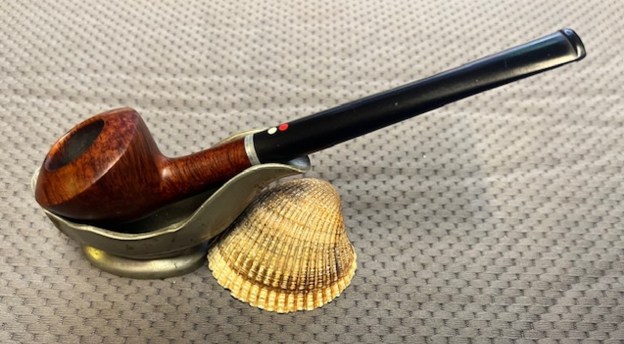
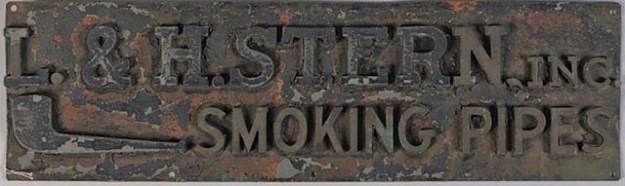
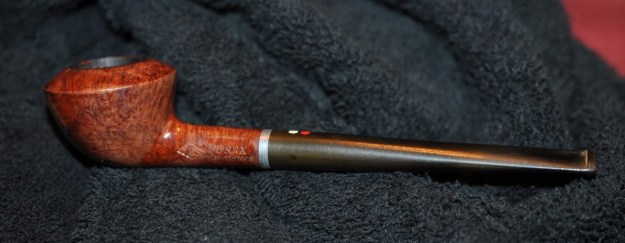
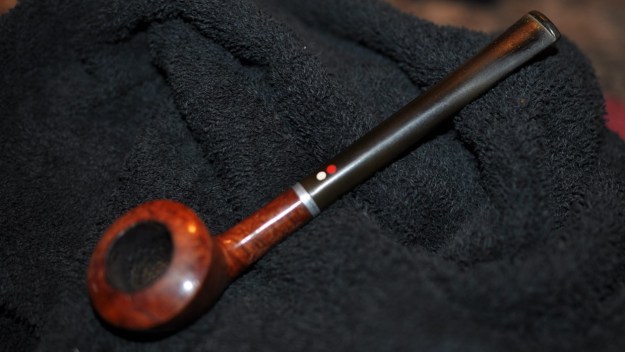
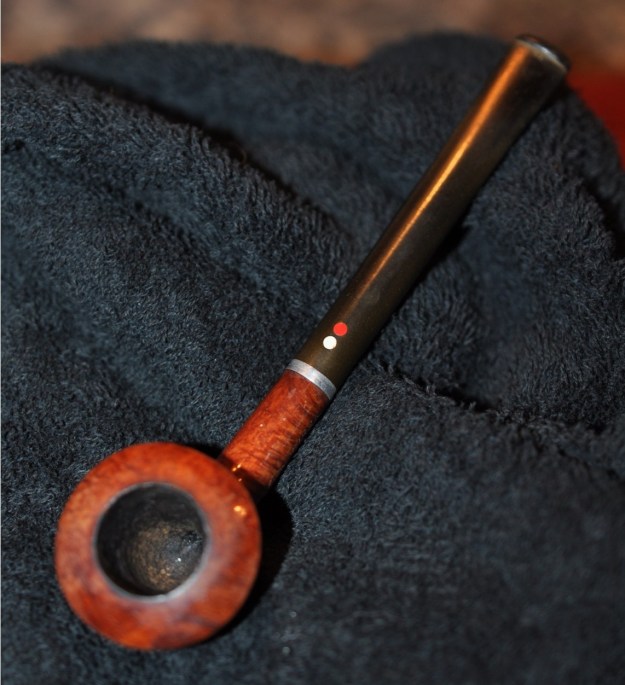
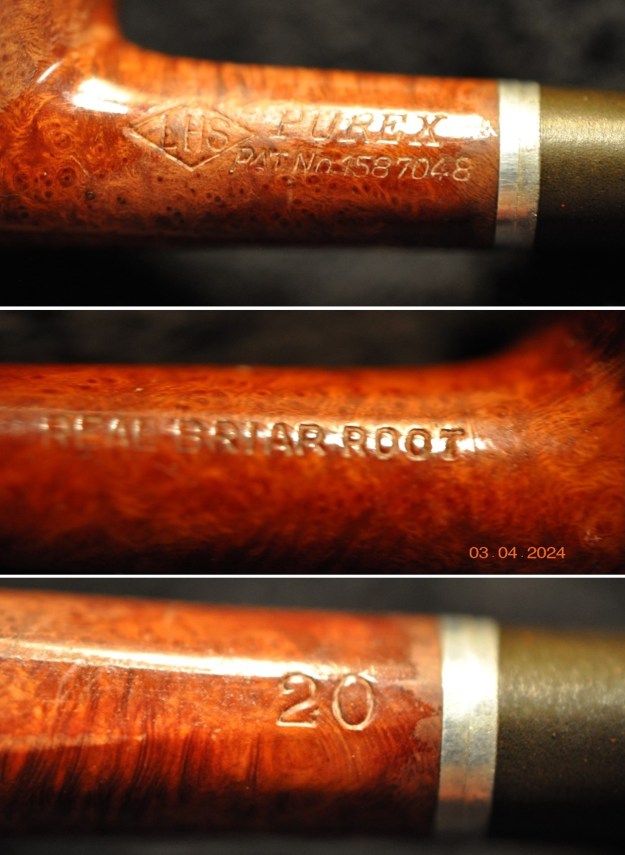
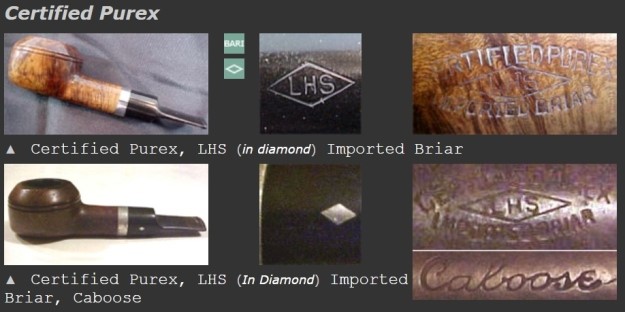
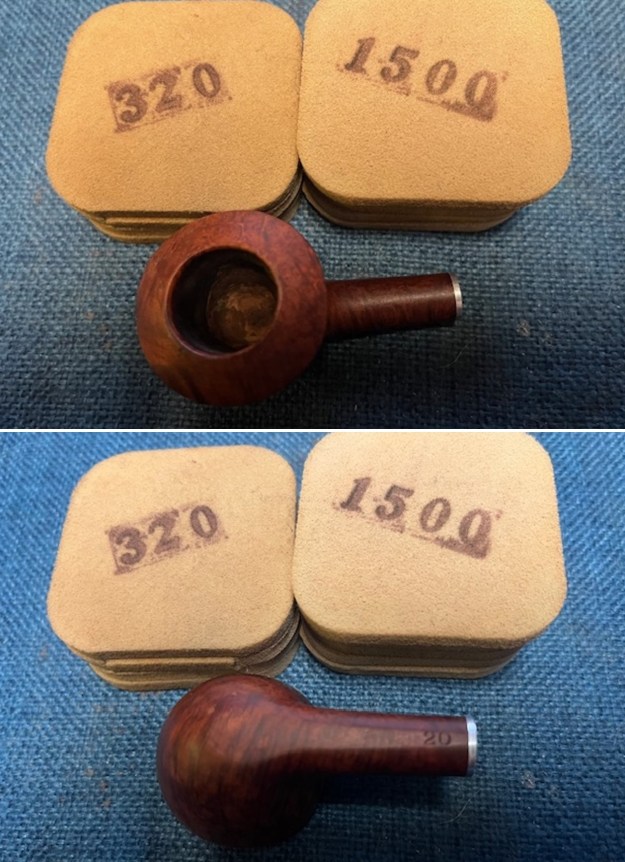
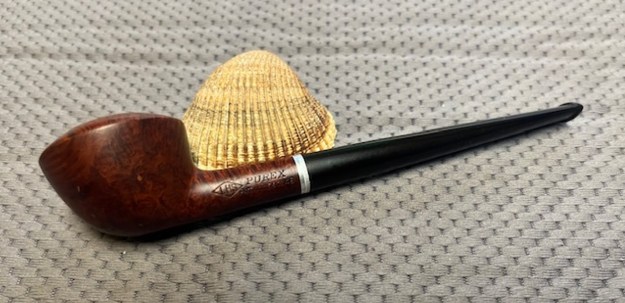
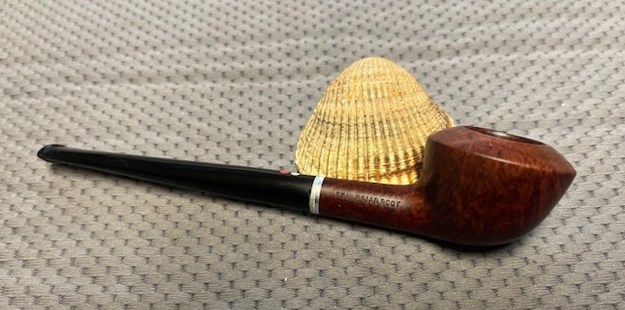
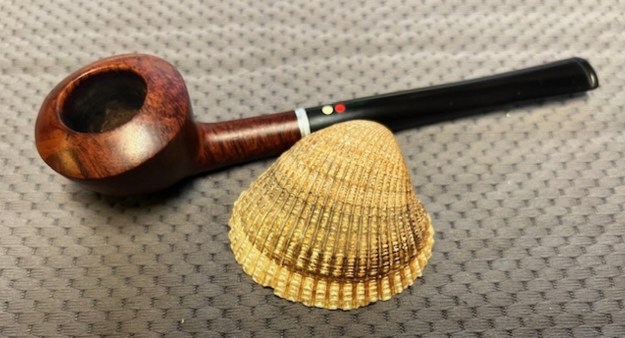
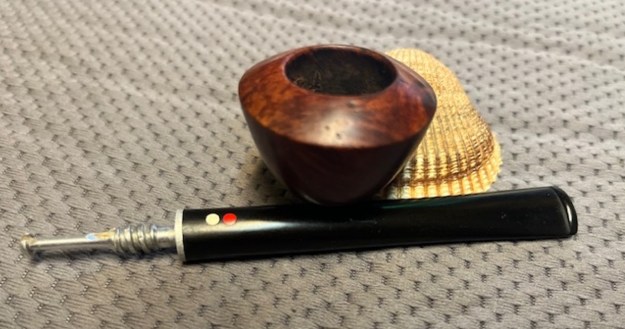
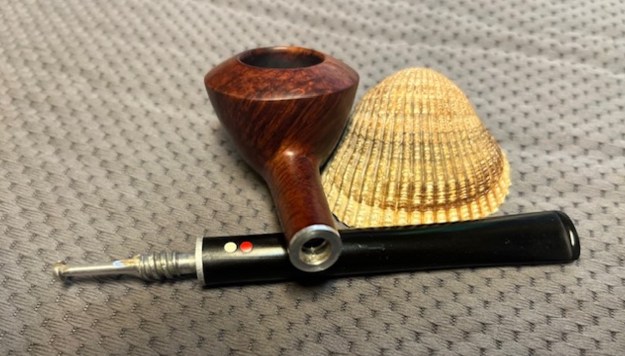
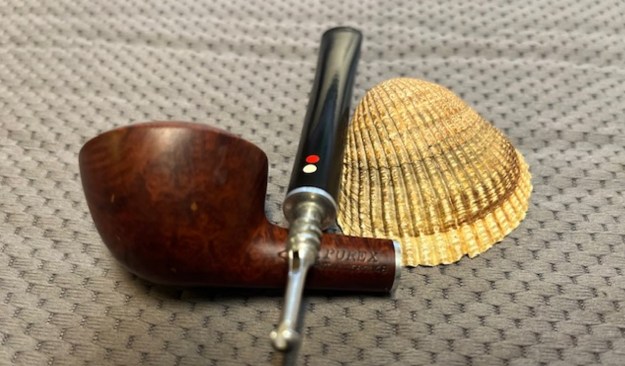
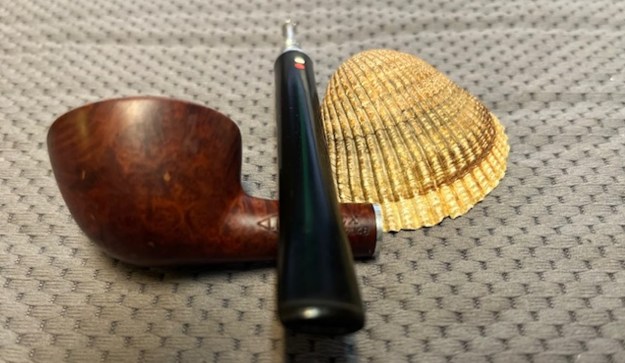
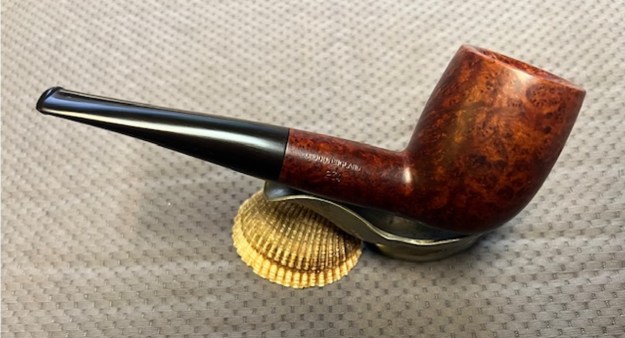
The next pipe on the work table came to us from a group of pipes we purchased on 01/22/2024 from a seller on eBay from Jordan, Minnesota, USA. It is a nice looking tiny pencil shank Dublin shaped pipe with a taper stem. The bowl has a rich reddish brown colour combination that highlights grain. This pipe is stamped on the left and right sides of the shank. On the left it reads LHS in a Diamond followed by Purex [over] Pat.No.1587048. On the right side it is stamped Real Briar Root. On the underside of the shank it bears the shape number 20. The threaded aluminum tenon/stinger taper stem has two dots – a red and a white on the topside. There is a moderate cake in the bowl and an overflow of lava on the inner edge of the rim top. The varnish coat was flaking and peeling. The stem was lightly oxidized, calcified and there were some light tooth marks and chatter on both sides of the vulcanite stem near the button. The pipe looks to be in good condition under the grime. This is a nice looking pipe and in a well-loved shape. Jeff took photos of the pipe before he started his cleanup. He took a photo of the bowl and rim top to show their general condition. You can see the lava on the rim top and the thick cake in the bowl. There is damage on the inner edge of the bowl. The stem is oxidized, calcified and has tooth marks and chatter on both sides near the button.   Jeff took some photos of the sides and heel of the bowl to give an idea of the grain around the bowl as well as the peeling varnish coat. I cannot wait to see what it looks like once it is cleaned and polished. He took a photo of the stamping on the sides of the shank to capture it for me. It is clear and readable.Before I started working on the pipe I turned to Pipephil to get a feel for the history of the brand and have included a screen capture of the pertinent section on the site below (http://www.pipephil.eu/logos/en/logo-lhs.html). I quote:

The L&H Stern Inc. was established by Ludwig Stern (1877-1942) in 1911. His brother Hugo (1872-?) acted as vice-president & secretary. The firm moved to 56 Pearl St. Brooklyn in 1920. It closed down in the 1960s. LHS was one of the main pipe suppliers for US soldiers during WWII.I turned to Pipedia for any additional information (https://pipedia.org/wiki/LHS). The article gave and expanded history of the brand and a list of the grades of pipes in 1944. The Purex stamp like the one I have was not shown in the list so I have left the link but not included the list.

Additional notes: Some models were made before, during, and after WWII. LHS was one of the main pipe supplier for US soldiers during WWII.

Pre-war pipes were stamped Real Briar Root, or Briar Root. Some war time pipes were made from domestic briar, or “American” briar and were void of any briar stampings. Many American pipe makers lost their over seas supply of Mediterranean briar shortly before and during the war. Post war pipes were stamped Imported Briar to assure customers that they were buying premium briar once again.

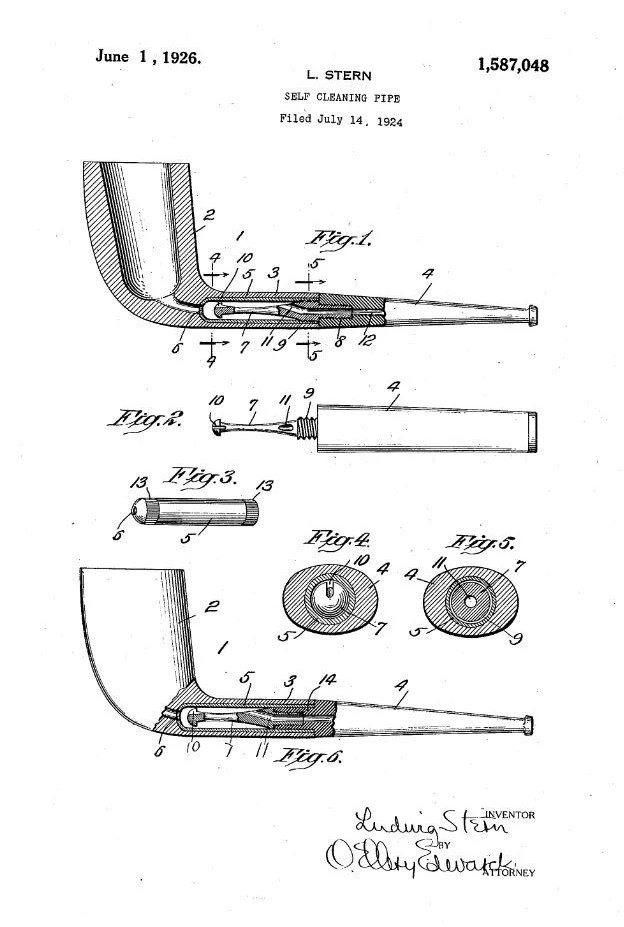
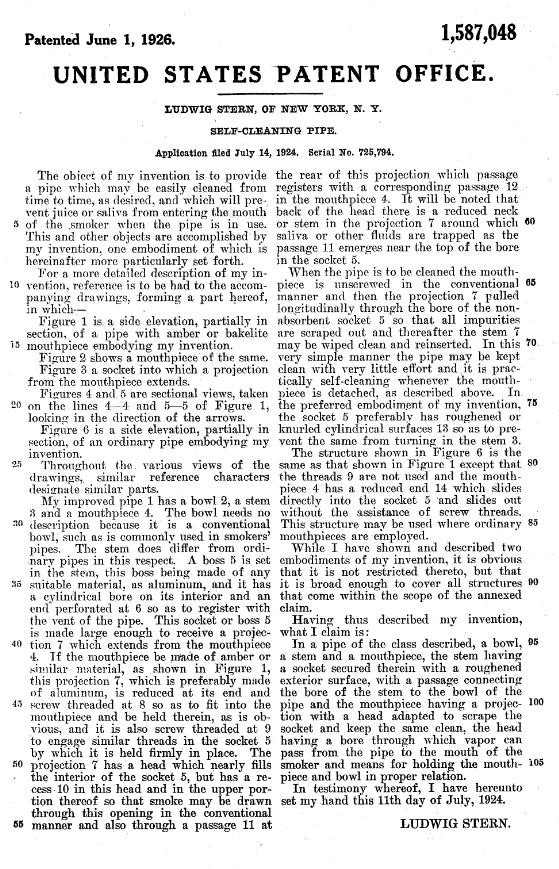
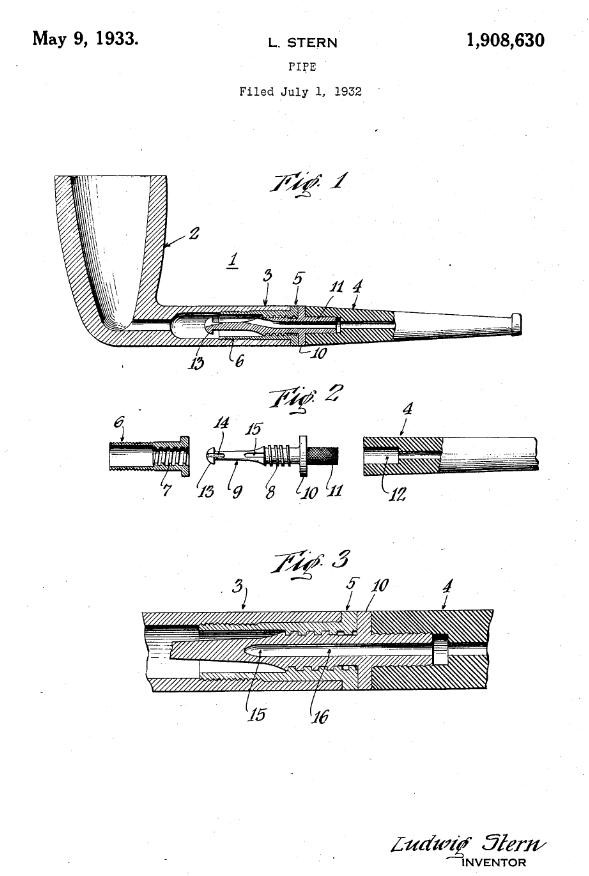
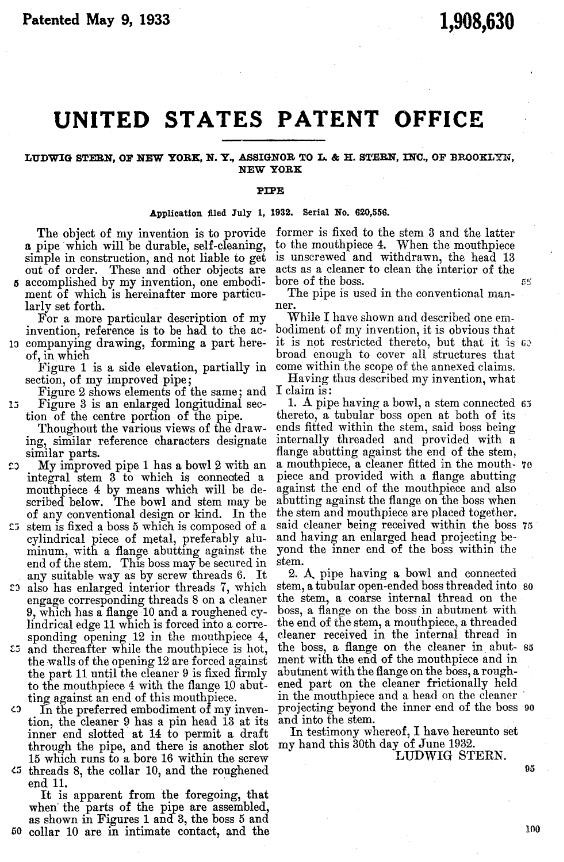
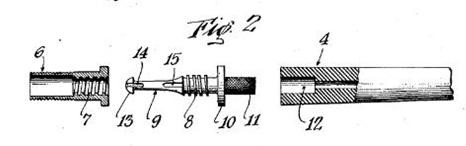
I also researched the patent number on the left side of the shank and it led me to the following diagram and patent information. It was filed in 1924 and awarded on June 1, 1926. The interesting thing is that it combines some of the concepts from a later patent filing on July 1, 1932 and granted on May 9, 1933. The stamping places it as a 1926 pipe. The shape of the stinger and the threaded mortise make me think of the 1926 pipe in many ways. I cannot see deep enough into the pencil shank to see if there is a metal cup insert in the shank behind the mortise. Maybe that will become clear in the cleanup. The smooth portion of the tenon after the threads and the metal disk that is threaded into the stem make me think of the 1933 patent pipe. The threaded mortis is the same in both but if it ends in the shank without the cup then it has a lot of similarity to the 1933. The 1926 patent gives me a start date for this pipe and the 1933 patent gives me an end date. The fact that the metal works combine both makes me wonder if the pipe did not come out of the factory with the new patent release in 1933. I am including the two different patents for you to see the interesting combination in this pipe. I have screen captured the insert in the shank and the stinger apparatus from the 1926 patent drawings. Figure 2 shows the stinger. It is identical in both the 1926 and the 1933 patent drawings. Figure 3 shows a metal cup that is inserted in the shank. The mortise end is threaded to receive the threads on the tenon. Figure 4 shows the end of the stem looking at the head on the stinger. The slot is at the top. Figure 5 shows the inside of the shank looking at it from the end. The mortise end is threaded and the cup has an airway hole in the centre of the rounded end. That end sits against the airway from the bottom of the bowl as seen in Figure 6. When I started cleaning out the shank I was unsure of the interior. Once I was cleaning it I was certain it was the later stinger.I have also included a screen capture below of Figure 2 from the 1933 patent drawings. The insert in the shank is shorter than the 1926 version and does not include the cup. The tenon is the same though it has a longer smooth portion. It also has a plate that rest against the face of the stem when inserted. This tenon system is identical to the one that I am working on. That dates the pipe after 1933. Jeff carefully cleaned the pipe. He reamed it with a PipNet pipe reamer and then cleaned up the reaming with a Savinelli Fitsall Pipe Knife. He scrubbed out the internals of the shank, stem and shank extension with alcohol, pipe cleaners and cotton swabs until the pipe was clean. He scrubbed the exterior of the bowl with Murphy’s Oil Soap and a tooth brush to remove the grime and grit on the briar and lava on the rim top. The finish looks much better and has a deep richness in the colour that highlights grain of the briar. The peeling varnish is gone. The rim top had some darkening and there was some damage to the inner edge of the bowl. The aluminum on the shank end and on the stem were slightly oxidized but clean. Jeff soaked the stem in bath of Briarville’s Pipe Stem Deoxidizer to remove the oxidation on the rubber. He worked it over with Soft Scrub All Purpose Cleaner to remove any remnants of oxidation. When the pipe arrived here in Vancouver and I finally started my work on it I was amazed it looked so good. Here are some photos of what I saw. I took some photos of the rim top and stem. The rim top and inner edge of the bowl shows damage and burned areas. It is out of round and will need some work. The close up photos of the stem shows that the surface of the stem is pitted. There are tooth marks and chatter on the top and underside of the stem near the button. I took a photo of the stamping on the sides and the underside of the shank to show the condition after the cleanup. This stamping is readable and looks good. I removed the stem from the shank and took a photo of the pipe at this point. You can clearly see the condition, size and shape of the pipe.I started my part of the restoration work on this pipe by addressing the damage and darkening on the edge of the rim, particularly on the front and rear of the inner edge. I used a folded piece of 220 grit sandpaper to remove the damage to the bowl. I sanded out the scratches in the briar around the bowl sides and rim top with 320-3500 grit sanding pads. I wiped it down after each pad with a damp cloth to remove the sanding debris. The sanding really brought the grain to the front. This is   a great piece of briar. And once it is waxed and polished it should really be a beauty. I polished the briar with micromesh sanding pads – dry sanding with 1500-12000 grit pads and wiping down the bowl after each sanding pad. I rubbed the bowl and shank down with Before & After Restoration Balm. I worked it into the surface of the bowl sides and shank with my fingertips to clean, enliven and protect the briar. I let the balm sit for a little while and then buffed with a cotton cloth to raise the shine. The Balm did its magic and the grain stood out. I sanded out the light tooth chatter and roughness on the stem surface with 320-3500 grit sanding pads. I wiped the stem down after each pad with an Obsidian Oil cloth. The stem began to shine.I polished the vulcanite stem with micromesh sanding pads – 1500-12000 grit pads. I wiped it down with Obsidian Oil after each sanding pad. I used Before & After Pipe Polish – both Fine and Extra Fine to further polish the stem. The photo below shows the polished stem. This LHS Purex Pat.No.1587048 Real Briar Root Dublin with a pencil shank and stem is a nice looking pipe. The finish looks very good and the grain stands out. I put the stem back on the bowl and buffed the pipe with Blue Diamond on the buffing wheel. I carefully avoided the stamping on the shank sides during the process. I gave the bowl and the stem multiple coats of carnauba wax on the buffing wheel and followed that by buffing it with a clean buffing pad on the buffer. I hand buffed the pipe with a microfiber cloth to deepen the shine. The finished pipe is an excellent example of the Purex line of pipes that were made by LHS Stern. The flow of the grain and the way the shape follows it is very well done. Give the finished pipe a look in the photos below. I can only tell you that it is much prettier in person than the photos capture. The dimensions of the pipe are Length: 6 inches, Height: 1 ¼ inches, Outside diameter of the bowl: 1 ½ Chamber diameter: ¾ of an inch. The dimensions of the pipe are Length: 6 inches, Height: 1 ¼ inches, Outside diameter of the bowl: 1 ½ Chamber diameter: ¾ of an inch. The weight of the pipe is 0.81 ounces/24 grams. This interesting LHS Purex Pat.No.1587048 Dublin is a great looking pipe in excellent condition. Thanks for walking through the restoration with me as I worked over another beautiful pipe. I will be adding it to the rebornpipes store in the American Pipe Makers Section soon. If you want to add it to your collection send me an email or a message! Thanks for your time.

Fresh Life for a GBD Century Matt 234 Billiard London, England


by Steve Laug

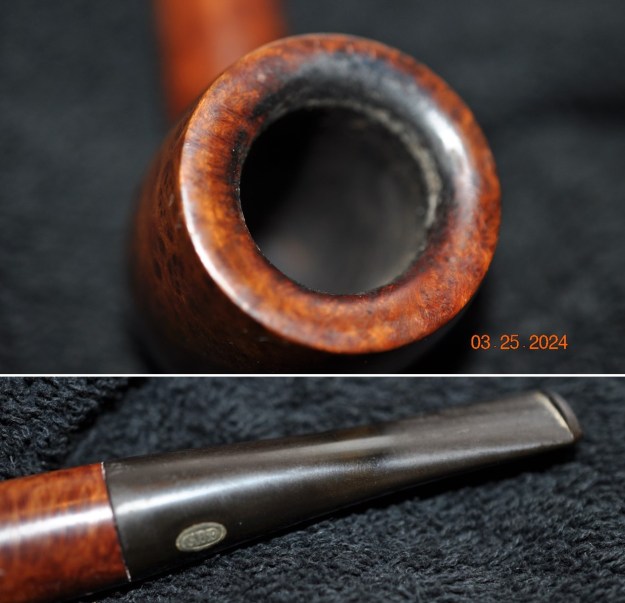
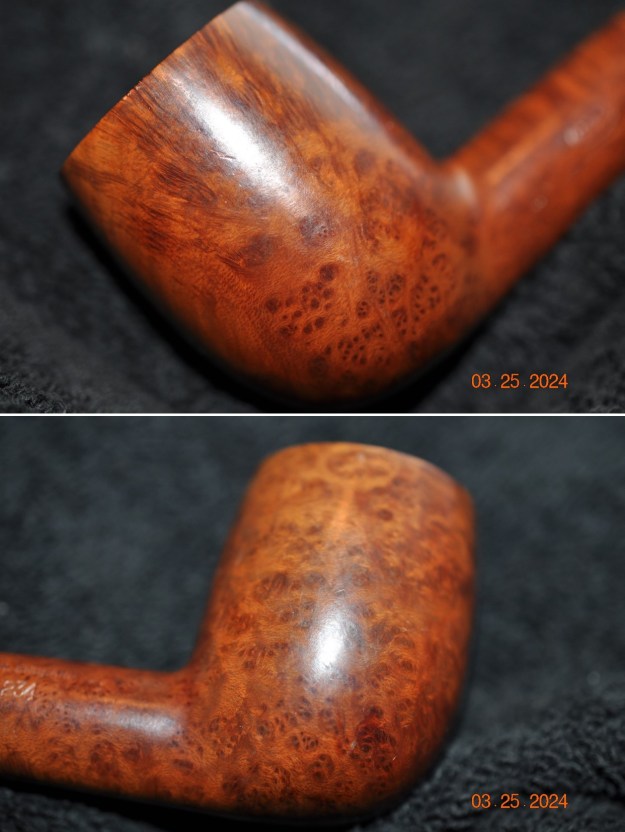
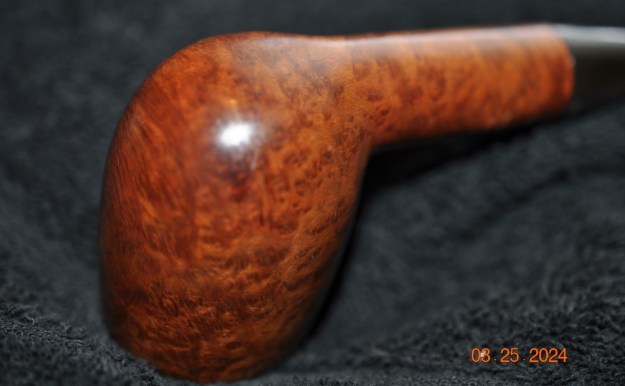
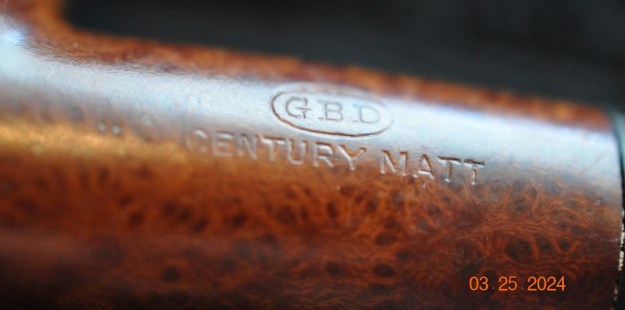
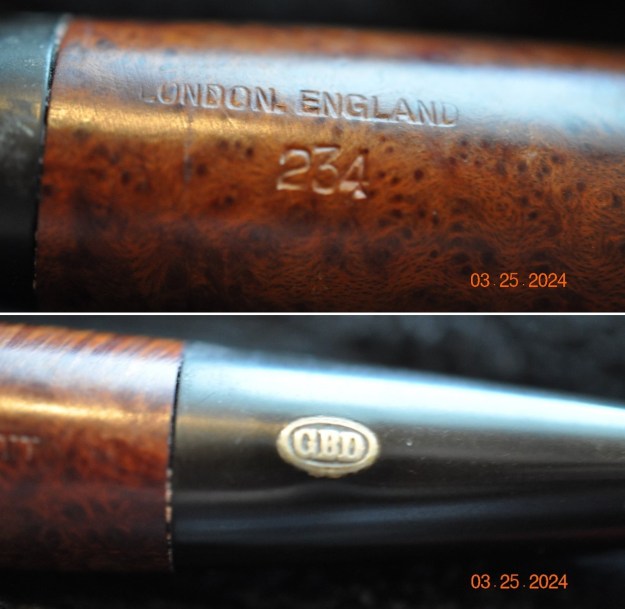
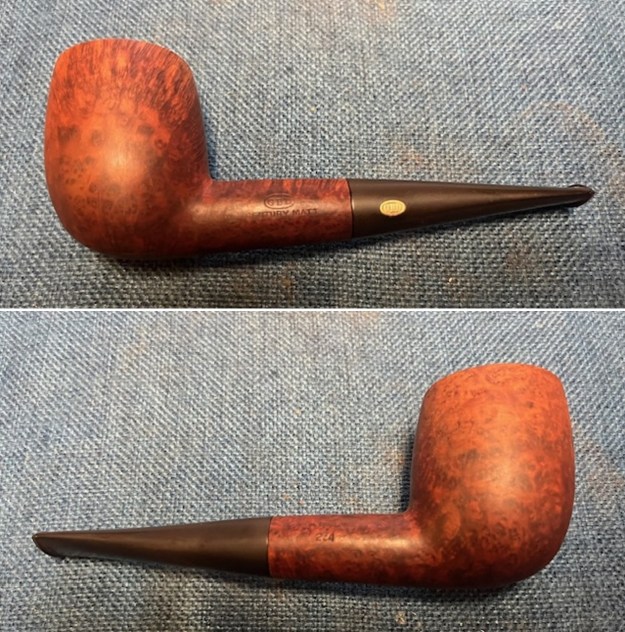
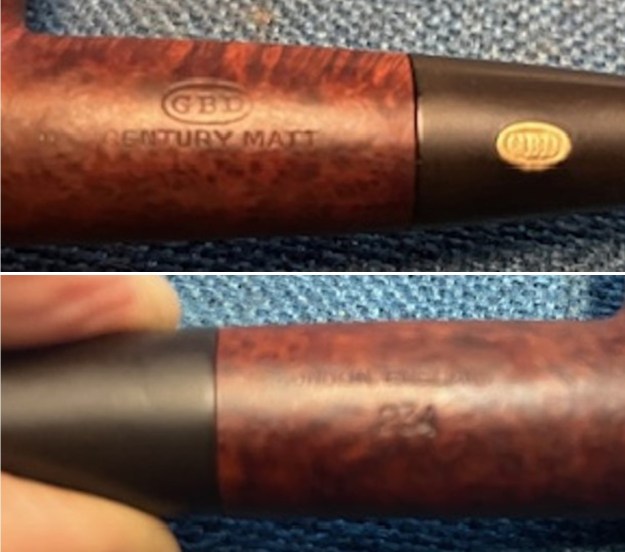
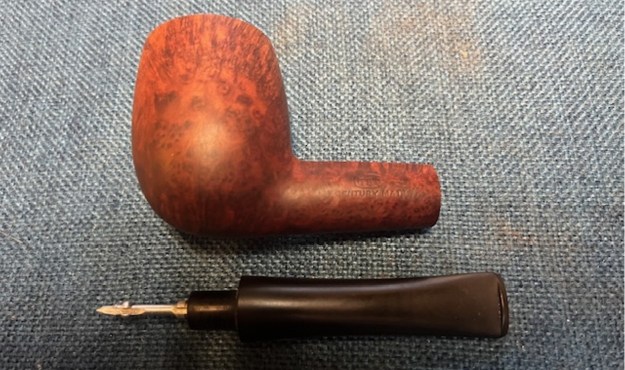
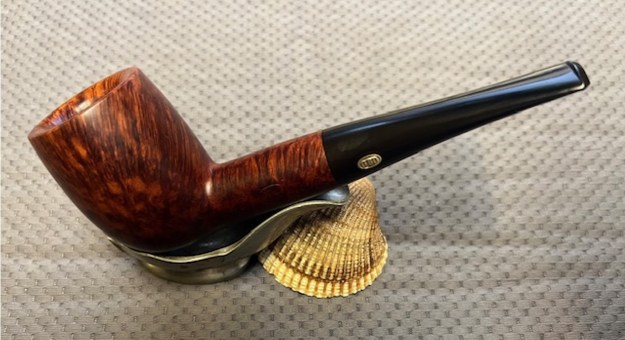
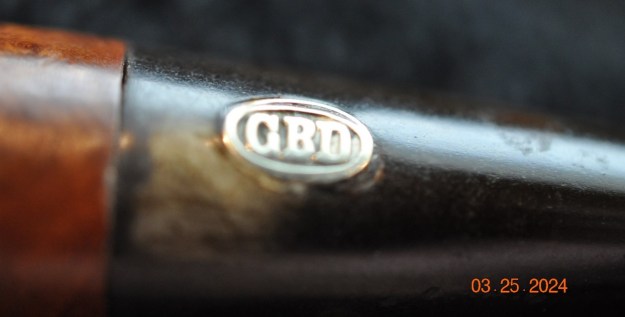
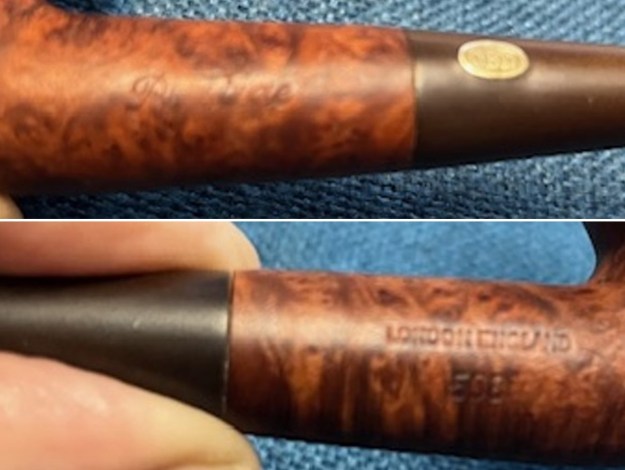
The next pipe on the work table came to us from a group of pipes we purchased from Oregon on 03/21/2024 from a seller in Oregon City, Oregon, USA. Jeff regularly visits shops along the coast hunting for pipes and though there are less of them there are still a lot available. It is a nice looking large straight Billiard shaped pipe with a taper stem. The bowl has a rich reddish brown colour combination that highlights grain. This pipe is stamped on the left and right sides of the shank. On the left it reads GBD in an oval [over] Century Matt. On the right side it is stamped London, England followed by the shape number 234. The taper stem has a GBD Brass roundel on the left side. There is a moderate cake in the bowl and an overflow of lava on the inner edge of the inwardly bevelled rim top. There were some light tooth marks and chatter on both sides of the vulcanite stem near the button. The pipe looks to be in good condition under the grime. This is a nice looking pipe and in a well-loved shape. Jeff took photos of the pipe before he started his cleanup. He took photos of the rim top to show the cake and the lava coat. The inner edge of the bowl looks good under the grime. The top and outer edge also look okay. It is an incredibly dirty pipe but obviously one that was a great smoker. He also captured the condition of the stem and the oxidation, calcification, tooth marks and chatter on the top and underside of the stem near the button. He took photos of the sides and heel of the bowl to show the grain around the bowl and the condition of the pipe. You can see the grime and scratches on the surface of the briar. He took a photo of the stamping on the top and underside of the shank and stem. It is clear and readable as noted above.  The stem has the typical GBD Brass roundel stamp. I looked up the Century Model on Pipedia and found a little information. There was not a lot of info there but I have included it below (https://pipedia.org/wiki/GBD_Model_Information).

Century — England, unknown if also made in France: Introduced 1950.

I also turned to a blog written by Upshallfan on his restoration of Century Matt pipe (https://rebornpipes.com/2015/05/18/gbd-century-matt-9606-restoration/). It is helpful to a point in pinning down potential dates. However, there is no specific information on the Matt though I am figuring it has to do with this particular finish. I quote:

I’ve had a few “Century” finish GBD’s cross my work bench, but this is the first time I’ve seen a “Century Matt”. The Century line was introduced in 1950 and is described as:

Century – “A golden finish created to celebrate over a century of manufacturing the
finest briar pipes.” – (quote courtesy of Jerry Hannah’s GBD webpage)

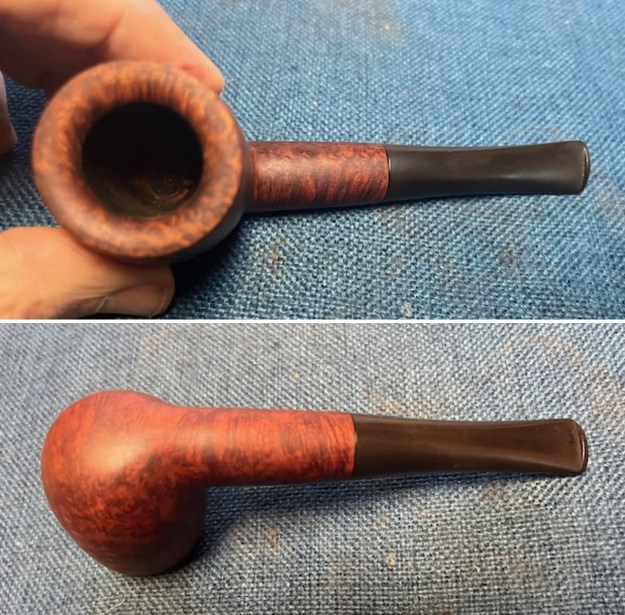
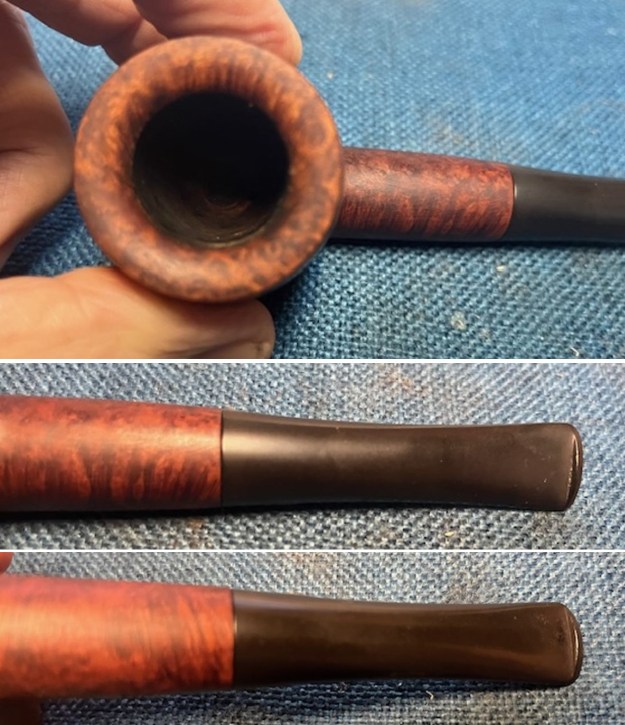
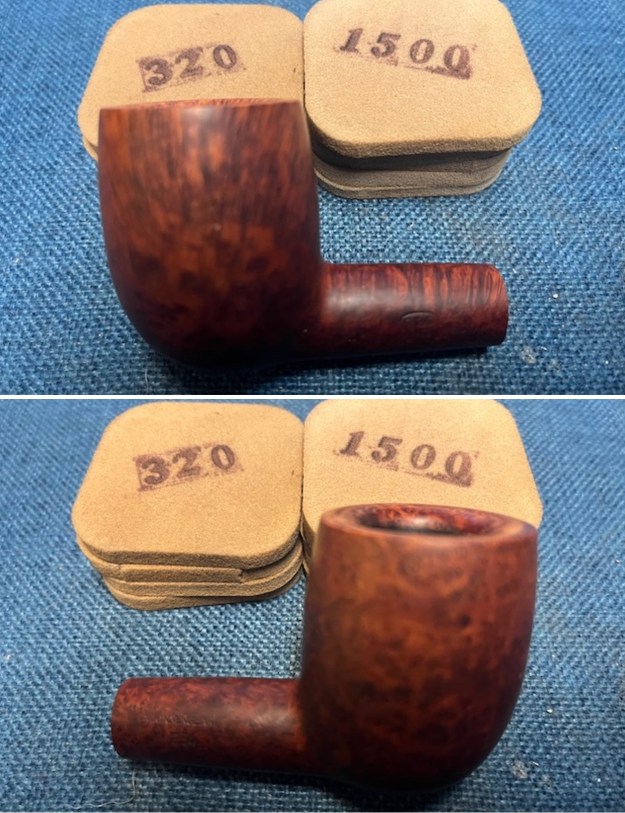
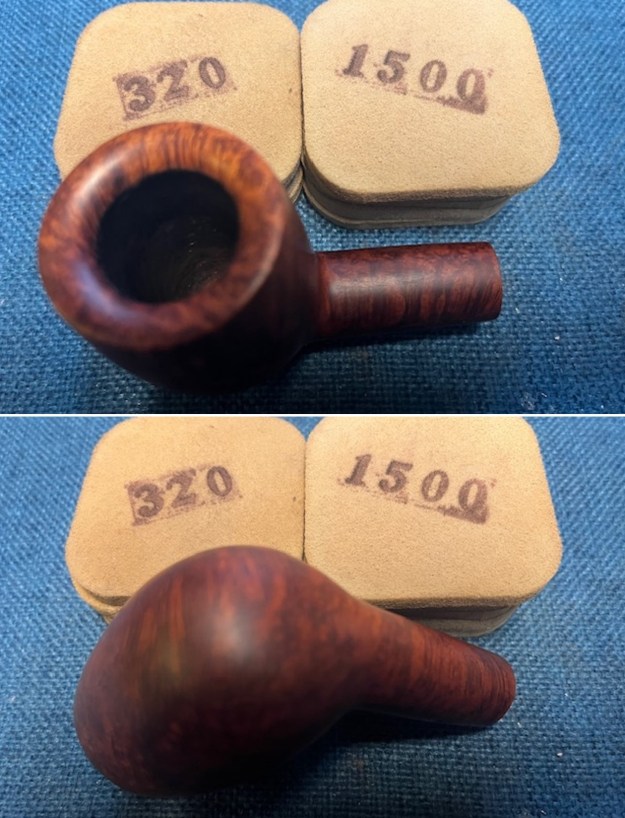
It was time to work on the pipe. As usual Jeff had done a thorough cleanup on the pipe. He reamed the bowl with a PipNet pipe reamer and followed up with a Savinelli Fitsall pipe knife to remove the cake. He scrubbed out the mortise and the airway in the shank and the stem with alcohol, cotton swabs and pipe cleaners. He scrubbed the exterior of the bowl, rim, shank and stem with a tooth brush and Murphy’s Oil Soap to remove the oils and tars on the rim and the grime on the finish of the bowl. He rinsed it under running water. One of the benefits of this scrub is that it also tends to lift some of the scratches and nicks in the surface of the briar. He dried it off with a soft cloth. He cleaned the internals and externals of the stem with alcohol, pipe cleaners, shank brushes and cotton swabs. He soaked the stem in Before & After Deoxidizer and rinsed it off with warm water and cleaned out the airway in the stem with alcohol. Other than the damaged rim top the pipe looked good. I took a photo of the rim top and stem to show the condition. The rim top looked very good. The inner edge of the bowl showed also looked good. The vulcanite taper stem had light tooth chatter and marks on both sides ahead of the button and on the button edges.The stamping on the left and right sides of the shank is clear and readable as noted above. I removed the stem from the shank and took a photo of the pipe to give a sense of the whole. The removable stinger in the tenon is a bit of a surprise but it can be “lost”. The pipe is a large Billiard that should be very nice once it is all cleaned up.  I sanded out the scratches in the briar around the bowl sides and rim top with 320-3500 grit sanding pads. I wiped it down after each pad with a damp cloth to remove the sanding debris. The sanding really brought the grain to the front. This is a great piece of briar. And once it is waxed and polished it should really be a beauty. I polished the briar with micromesh sanding pads – dry sanding with 1500-12000 grit pads and wiping down the bowl after each sanding pad. I rubbed the bowl and shank down with Before & After Restoration Balm. I worked it into the surface of the bowl sides and shank with my fingertips to clean, enliven and protect the briar. I let the balm sit for a little while and then buffed with a cotton cloth to raise the shine. The Balm did its magic and the grain stood out. I sanded out the light tooth chatter and remnants of oxidation with 320-3500 grit sanding pads. I wiped the stem down after each pad with an Obsidian Oil cloth. The stem began to shine.I polished the vulcanite stem with micromesh sanding pads – 1500-12000 grit pads. I wiped it down with Obsidian Oil after each sanding pad. I used Before & After Pipe Polish – both Fine and Extra Fine to further polish the stem. The photo below shows the polished stem. This nicely grained GBD Century Matt 234 Billiard, London England with a vulcanite taper stem is a great looking pipe now that it has been restored. The briar around the bowl is clean and really came alive. The rich brown stains of the matt finish gave the briar a sense of depth with the polishing and waxing. I put the vulcanite stem back on the bowl and carefully buffed the pipe with Blue Diamond on the buffing wheel using a light touch on the briar. I gave the bowl and the stem multiple coats of carnauba wax on the buffing wheel. I buffed the pipe with a clean buffing pad to raise the shine. I hand buffed the pipe with a microfiber cloth to deepen the shine. The finished GBD Century Matt 234 Billiard is a beauty and feels in the hand and looks very good. Give the finished pipe a look in the photos below. The dimensions of the pipe are Length: 5 ½ inches, Height: 2 inches, Outside diameter of the bowl: 1 ½ inches, Chamber diameter: ¾ of an inch. The weight of the pipe is 1.98 ounces/56 grams. I will be adding it to the British Pipe Maker Section of the rebornpipes store soon. Let me know if you wish to add it to your collection. Thanks for reading this blog and my reflections on the pipe while I worked on it. There are many more to come!
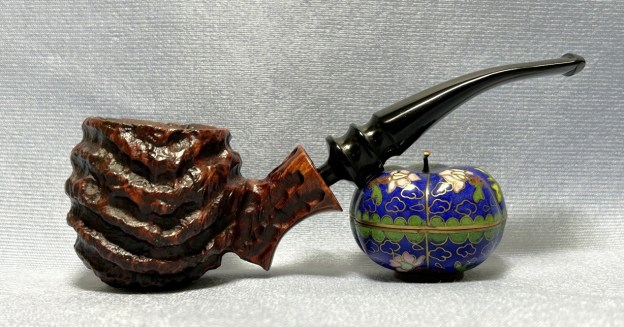
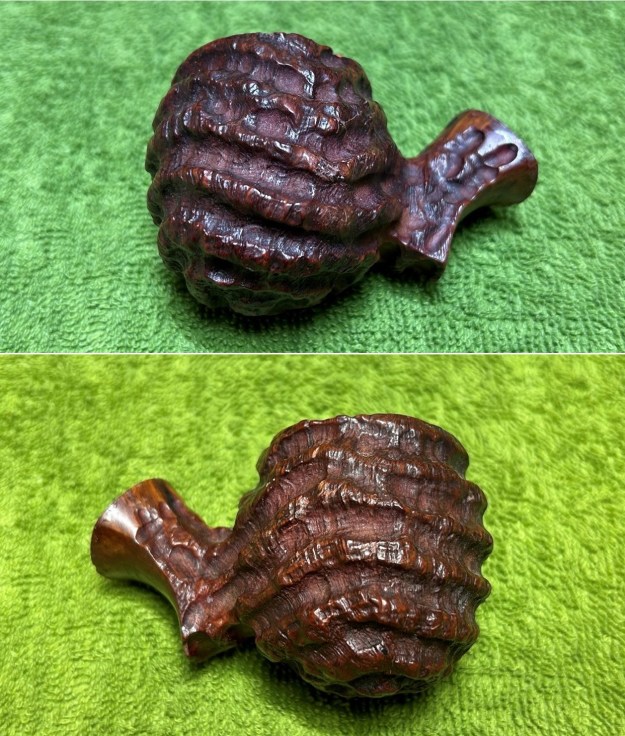
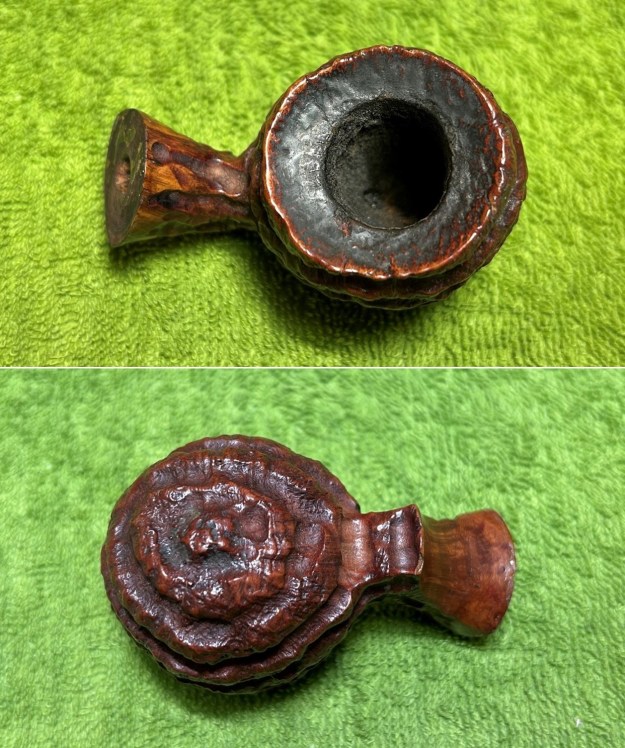
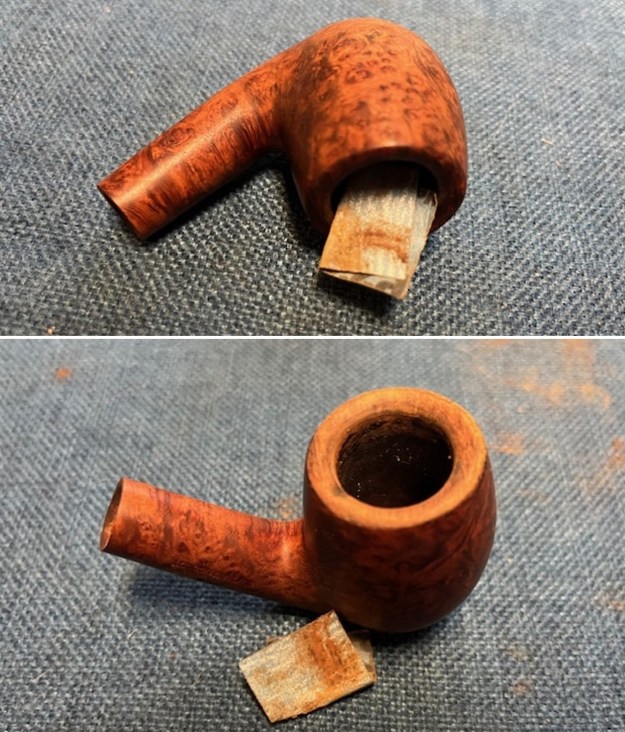
Finding a Stem for a Bjørn Thurmann Hand Made


by Kenneth Lieblich

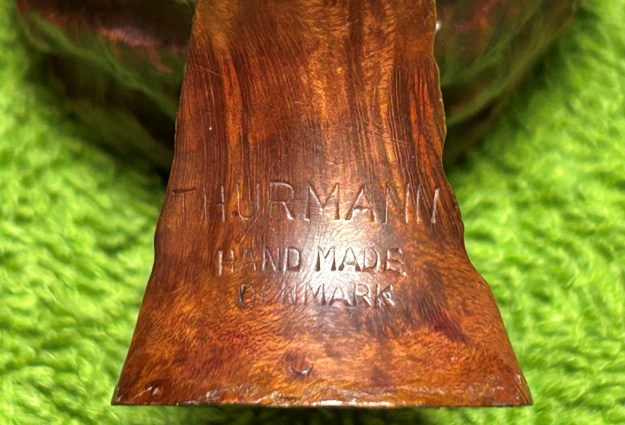
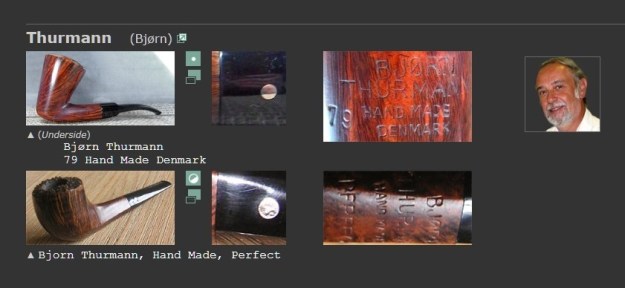
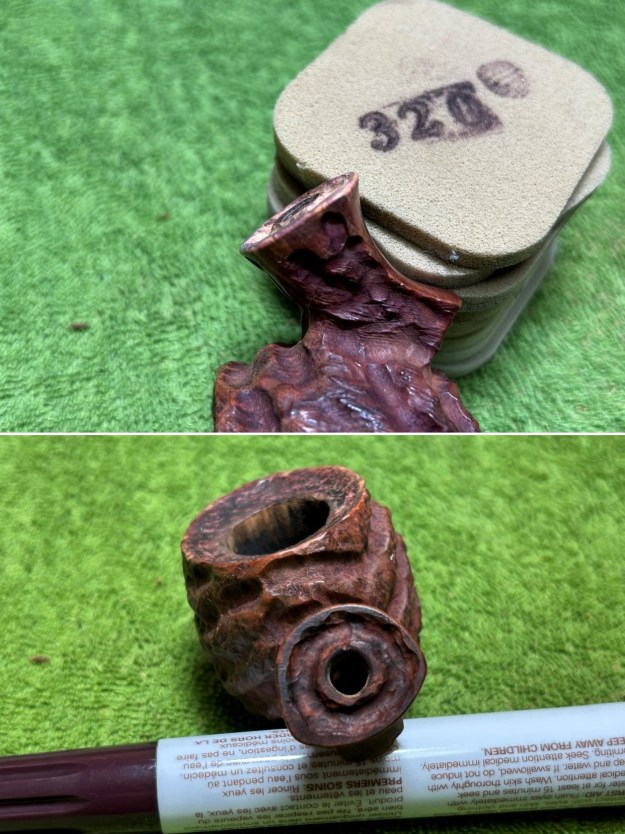
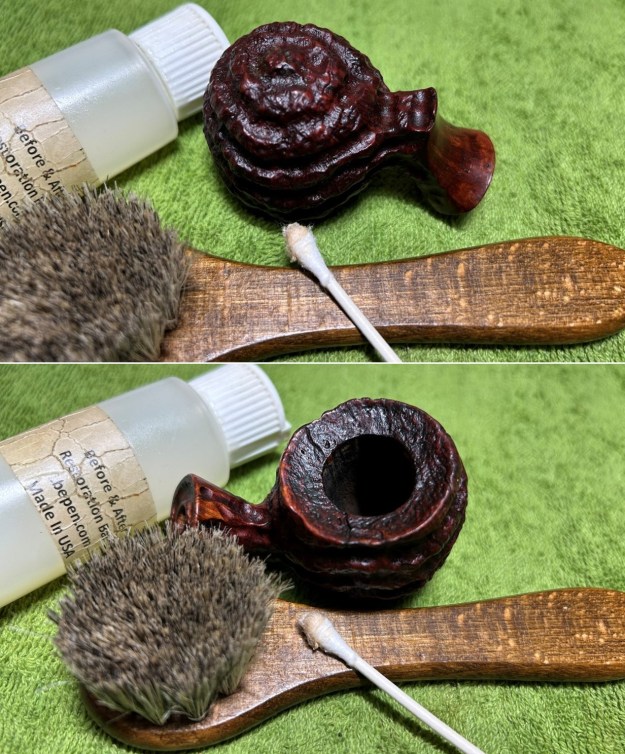
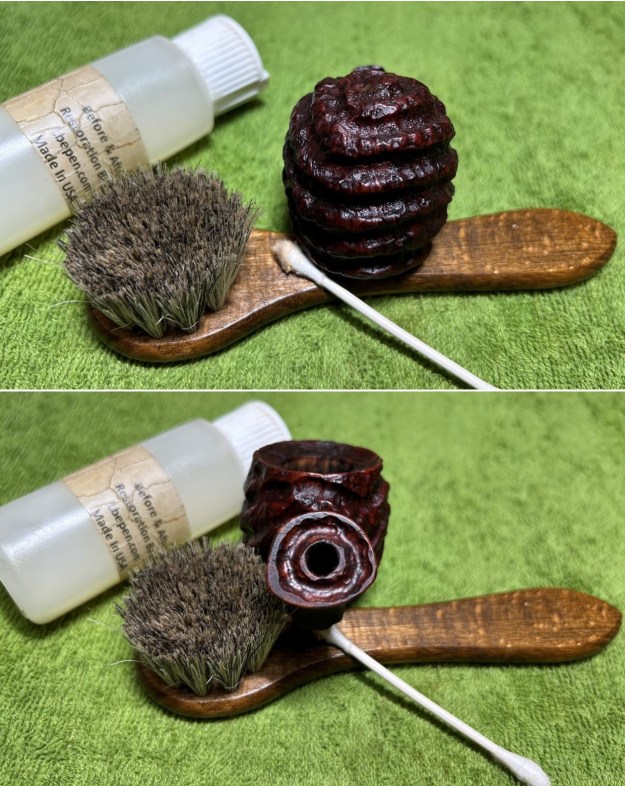
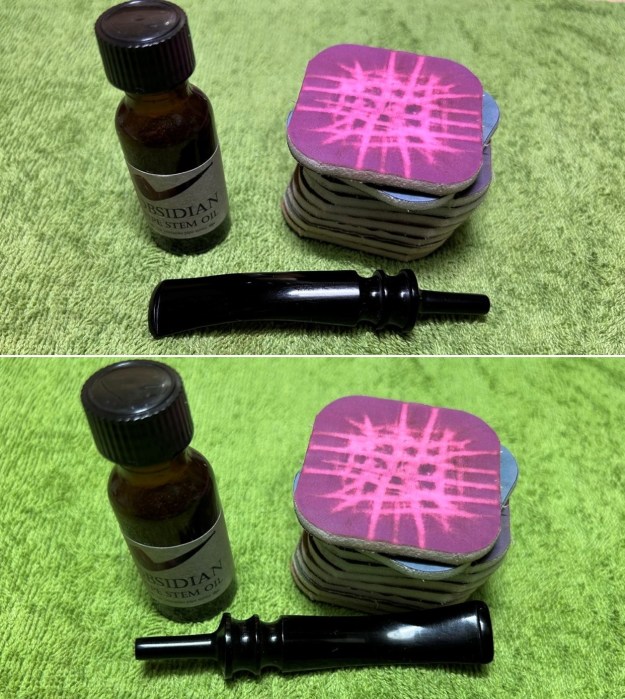
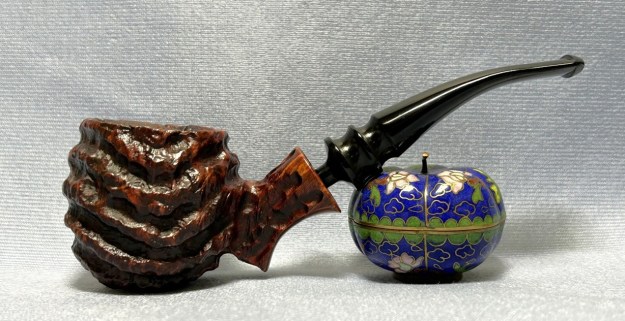
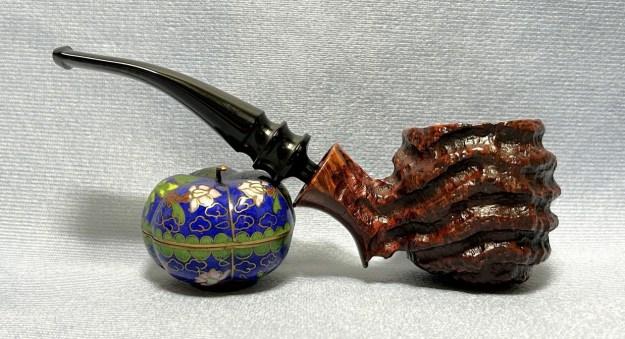
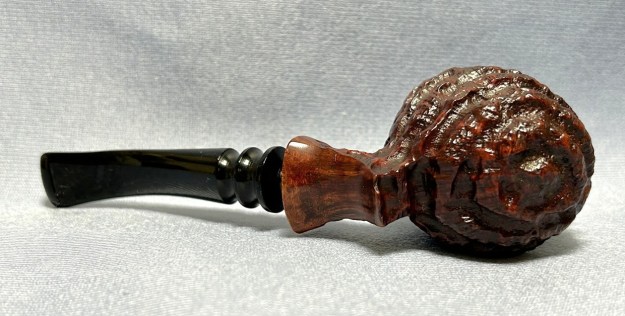
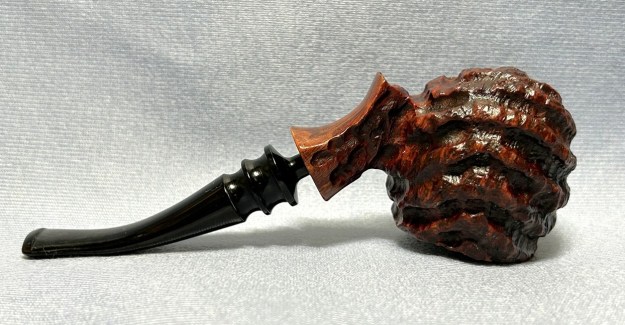
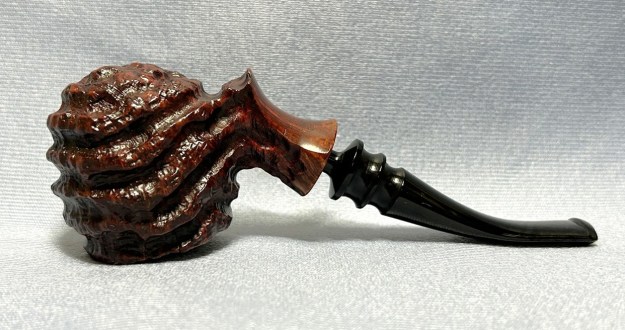
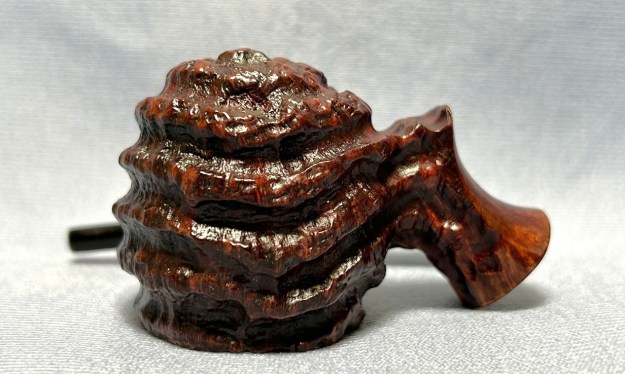
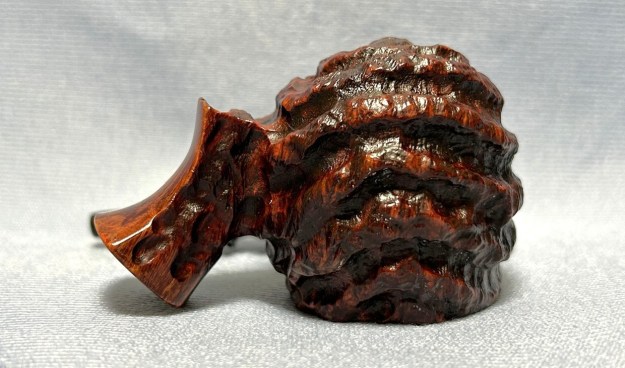
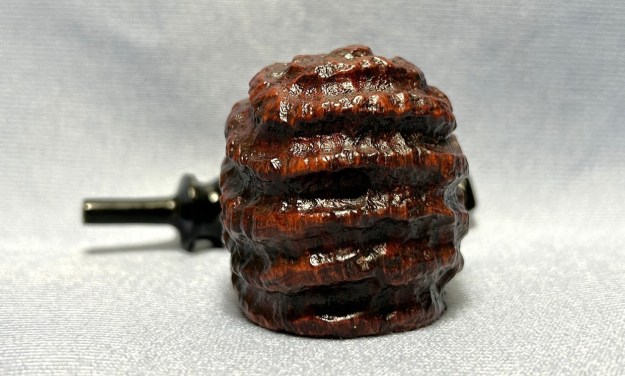
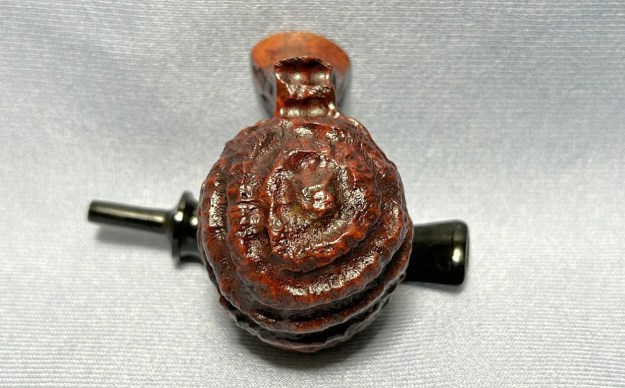
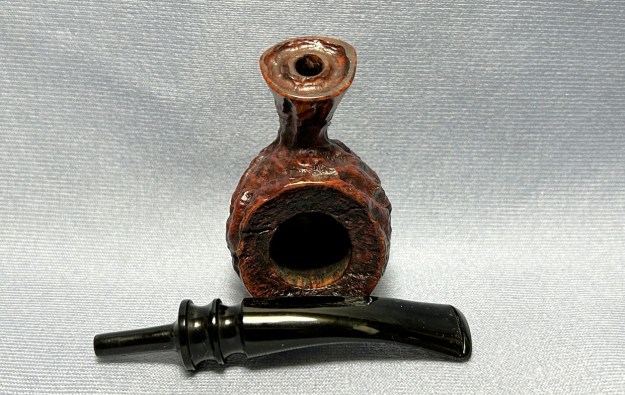
Steve’s recent foray into re-stemming pipes inspired me to try the same. In my box of various-and-sundry pipes, I was drawn to a nifty Danish freehand – but it was missing its stem. The beautifully rugged and chunky stummel has a real charm to it. The grooves and trenches are quite remarkable. This is a pipe that deserves a new stem. Let’s take a deeper dive into Thurmann’s pipes. The pipe was made by the esteemed pipemaker, Bjørn Thurmann. Unfortunately, I am not able to date the pipe, as the photo below shows all of the markings to be seen. On the underside of the stummel were some identifying markings. They read Thumann [over] Hand Made [over] Denmark [over] 3.Thurmann passed away a few years ago, but his company, Thurmann Piber, is still well known in Copenhagen for the fine quality of his work. The reference book, Scandinavian Pipemakers by Jan Andersson, provides us with a nice overview of his background and work. I will quote a bit of it here:

Bjørn Thurmann was born in 1946 – some would say, born into the tobacco trade. In 1953, his parents opened a pipe shop in central Copenhagen and Bjørn helped them there from the beginning, mainly by sorting pipes. Initially, the pipes were bought from a firm called Larsen & Stigart, but eventually they decided to start their own production.

Bjørn’s parents thought that their son ought to widen his views and get some international experience, so, in 1968, he was sent to London to work in different tobacconists shops, a period of learning that ended at Dunhill’s famous shop on Duke Street. After returning home, he almost immediately received an offer to work for Iwan Ries & Co. in Chicago, an offer that was hard to resist, so off he went.

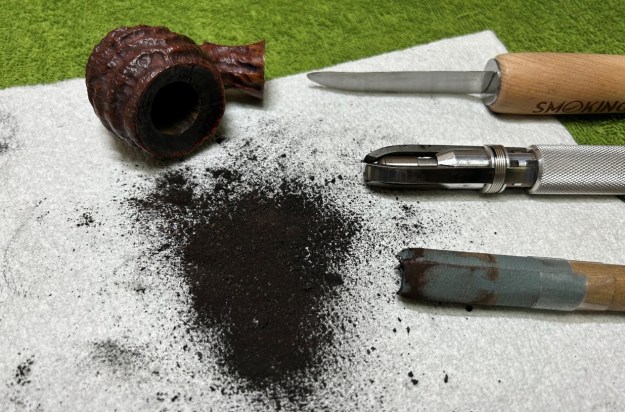
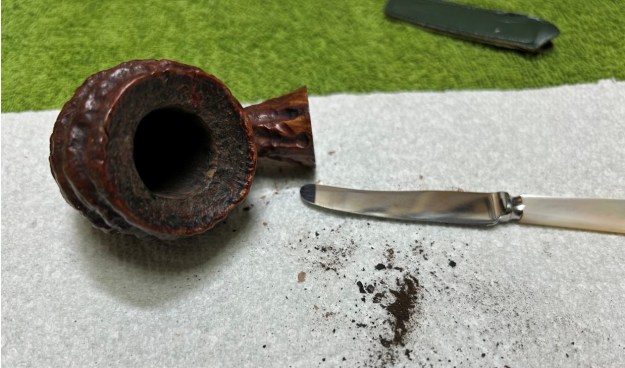
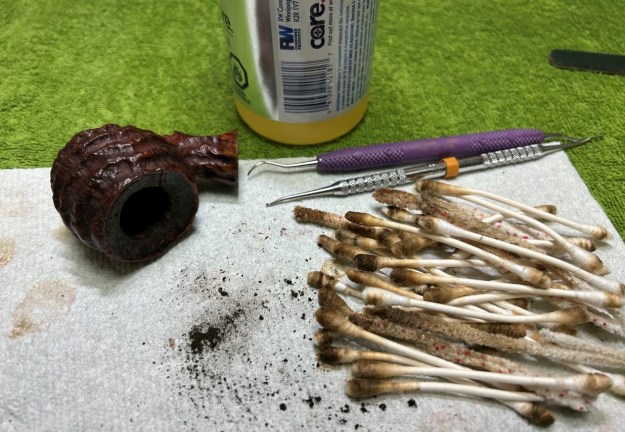
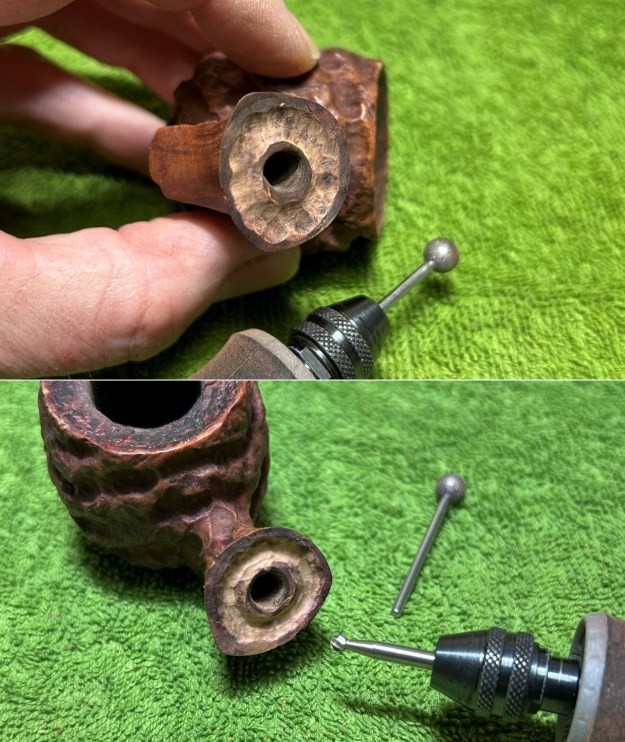
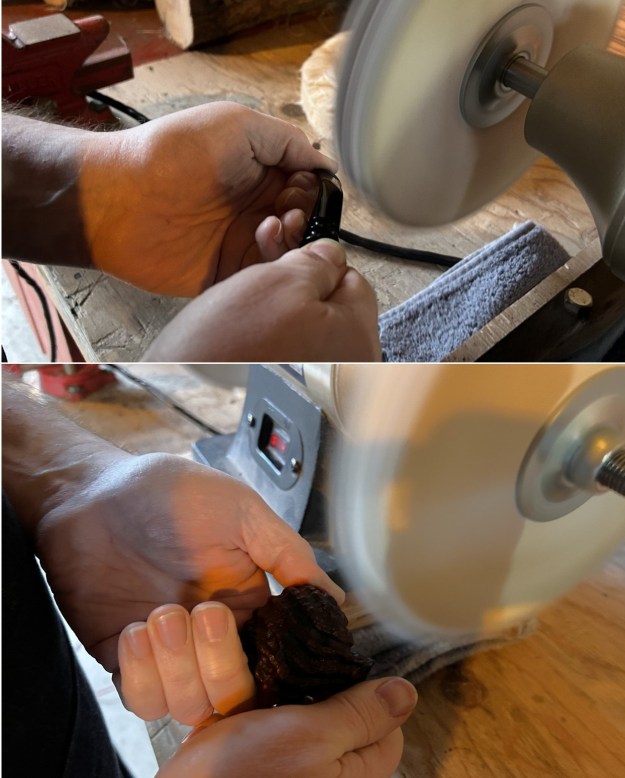
 In 1976, Bjørn established himself as an independent pipemaker, and since then he has had shops in several places in Copenhagen. Bjørn has also written a book called Pibemagerens Handbog (The Pipemakers Handbook), which tells how to make pipes using simple tools most people have at home.Clearly, Thurmann was a vastly experienced and talented pipe man. One can not only see, but also feel, the quality of the briar. Here is a screenshot from Pipephil:Let’s get working! The first step for me is to ream out the bowl – that is to say, remove all the cake inside the bowl. This accomplishes a couple of things. First (and most obviously), it cleans the bowl and provides a refurbished chamber for future smoking. Second, when the old cake is removed, it allows me to inspect the interior walls of the bowl and determine if there is damage or not. I used a reamer, a pipe knife, and a piece of sandpaper taped to a wooden dowel. Collectively, these ensure that all the debris is removed. I’m pleased to report that the inside of the bowl looks good.My next step was to remove the lava on the rim. For this, I took an old butter knife and gently scraped the lava away. This provides an edge that is sharp enough to remove what I need, but not so sharp that it damages the rim.The inside of the stummel needs to be cleaned thoroughly. So I then cleaned it with both pipe cleaners and cotton swabs dipped in 99% lemon-infused isopropyl alcohol. It took some work to get clean!I then decided to ‘de-ghost’ the pipe – that is to say, exorcize the remaining filth from the briar. I filled the bowl and the shank with cotton balls, then saturated them with 99% isopropyl alcohol. I let the stummel sit overnight. This caused any remaining oils, tars and smells to leach out into the cotton.To tidy up the briar, I also wiped down the outside with some oil soap on cotton rounds (and a toothbrush). This does a good job of cleaning any latent dirt on the surface of the briar. The last step of the cleaning process is to scour the inside of the stummel with some all-purpose cleanser and tube brushes. This is the culmination to a lot of hard work in getting the pipe clean.Before picking a stem and slapping it on, there is quite a bit of prep work required. First, the flat face of the shank obviously once had a shank extension. A few years ago, I worked on another Thurmann pipe that also had a shank extension, so this didn’t surprise me. However, there was no shank extension anymore, so I had to improvise.After pondering the situation, I decided to carve the shank face in a style similar to the rest of the pipe. I took my Dremel and a couple of different burrs, and carved a trench that matched those on the bowl. I think it came out really well.The edge of the shank face was quite sharp. This makes sense when one considers that the extension would have butt up against it. However, it didn’t look right anymore. Instead, I very carefully sanded this sharp edge to match the rim’s edge. After that, I used some of my furniture pens (which is just dye in pen form) and matched the colours. Looks great.I rubbed some Before & After Restoration Balm into the briar and left it to sit for 20 minutes or so. I also had to use my horsehair brush and a cotton swap to get into the nooks and crannies. The balm moisturizes the wood and gives a beautiful depth to the briar. I then buffed it with a microfibre cloth. Now, I had to find a suitable stem and make it work with the stummel. I quickly found a stem in my stores that worked perfectly. It matched the style and shape of the pipe, and I felt that it was a great choice. First, I reduced the thickness of the tenon until it fit snuggly in the stummel’s mortise. I used all nine of the micromesh sanding pads (1,500 through 12,000 grit) to sand out flaws, even everything out, and provide gentle polishing of the finished surface. I also applied pipe-stem oil while using the last five micromesh pads. There was a wonderful, deep black shine to the stem when I was done. The final step is buffing. I took the pipe to my bench buffer and carefully polished it – first with a white diamond compound for the stem, then with three coats of conservator’s wax for the stummel. Naturally, this procedure makes the pipe look its best – the stummel sings and the stem glows.All done! This Bjørn Thurmann Hand Made was a pleasure to work on. It looks fantastic and is ready to be enjoyed again by its next owner. I am pleased to announce that this pipe is for sale! If you are interested in acquiring it for your collection, please have a look in the ‘Danish’ section of the store here on Steve’s website. You can also email me directly at kenneth@knightsofthepipe.com. The approximate dimensions of the pipe are as follows: length 5⅝ in. (12 mm); height 1¾ in. (44 mm); bowl diameter 1⅔ in. (43 mm); chamber diameter ¾ in. (19 mm). The weight of the pipe is 1⅞ oz. (54 g). I hope you enjoyed reading the story of this pipe’s restoration as much as I did restoring it. If you are interested in more of my work, please follow me here on Steve’s website or send me an email. Thank you very much for reading and, as always, I welcome and encourage your comments.

A Fine Tale of a Union for this older WDC Wellington Bent Billiard


by Steve Laug

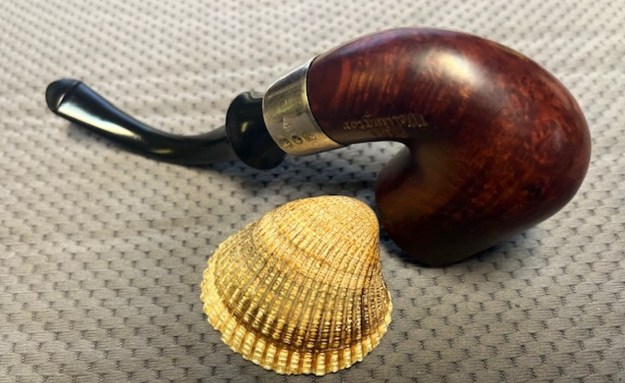
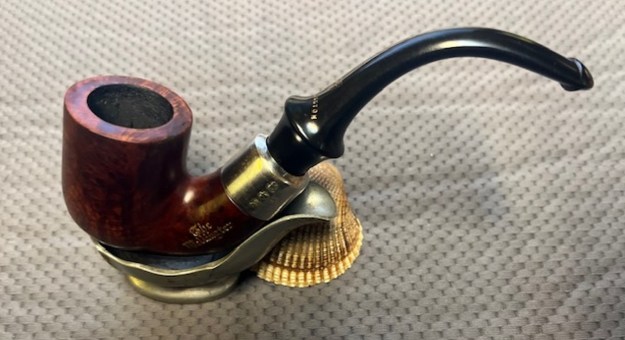
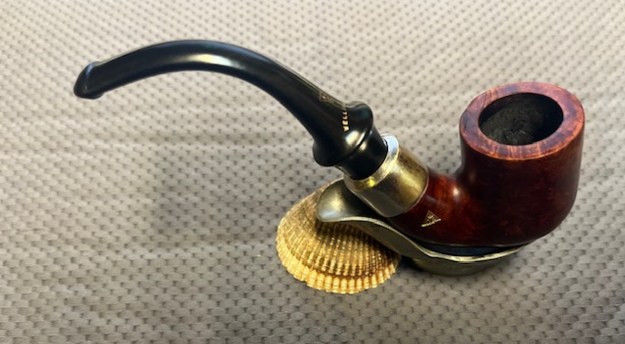
The next pipe on the table is a bit of a change of pace. I have had this old WDC Wellington bowl in the box here for a very long time and never had a stem for it. Somewhere in its long journey the stem had been displaced and when we received it the pipe was a sad bowl with no stem. I held onto it in hopes that one day I would find a stem that would be the right one. Every so often I would come across a large Wellington stem and dig out the bowl to see if it would fit only to be disappointed and drop it back in the box of bowl. Well, that lonely bowl was about to meet its correct stem! I was looking through a new batch of stems I picked up and I could not believe what I saw there. It was the exact stem I had been waiting for – a smaller Wellington stem with their version of the P-lip. In fact, my guess is that it is an older stem as the airway entrance on the stem is on top of the P exactly like Peterson’s. I know that later it was moved to the end of the stem with a lot of legal wrangling. Leaving all of that aside a union was about to happen. The lonely bowl would be meeting its mate.

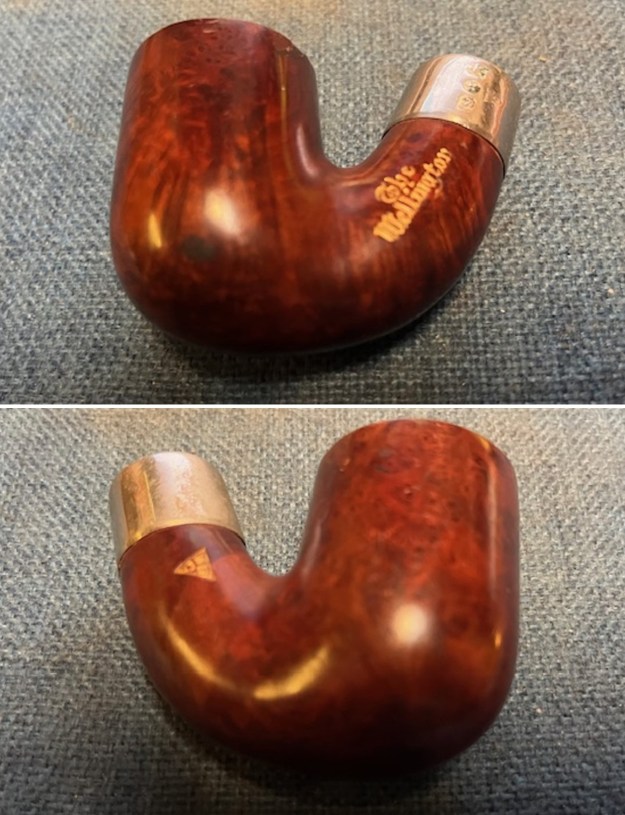
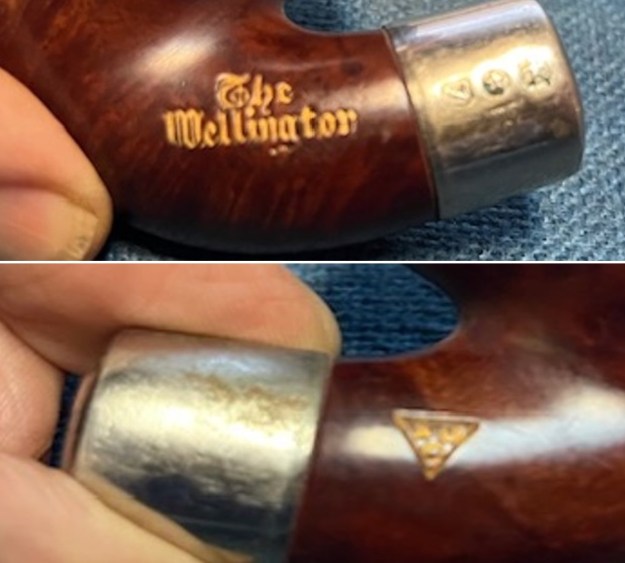
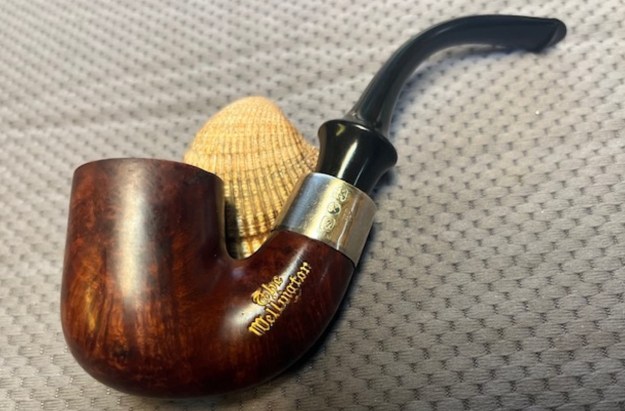
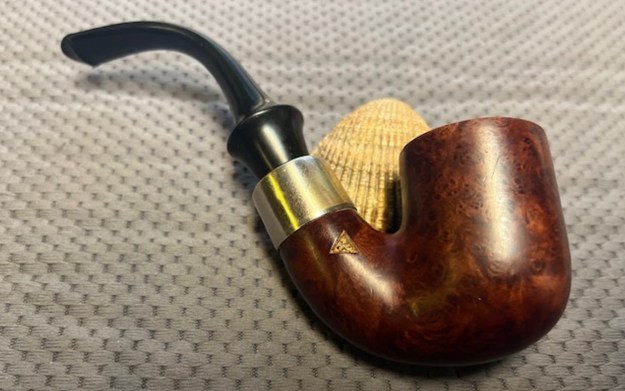
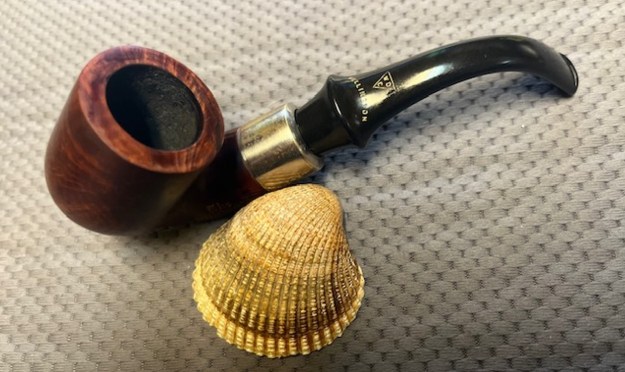
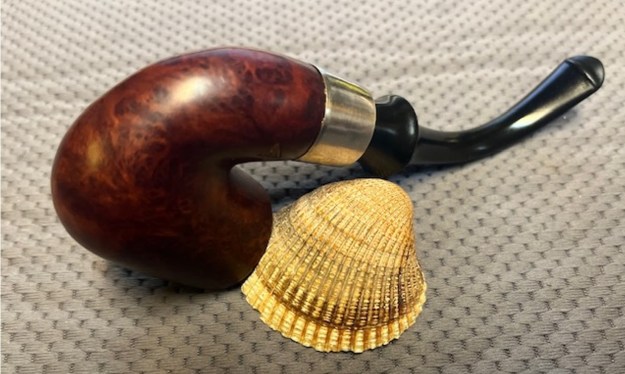
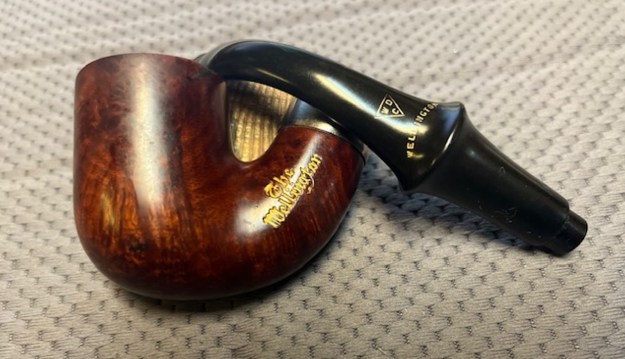
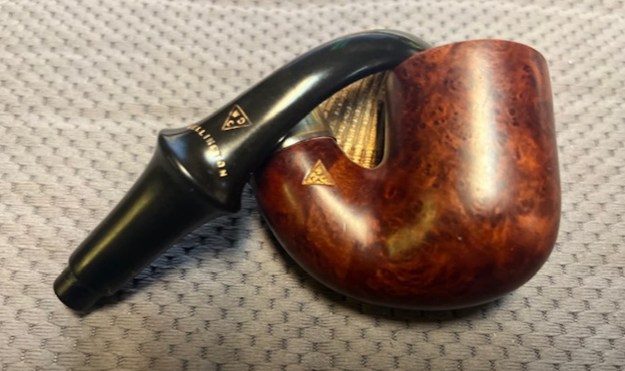
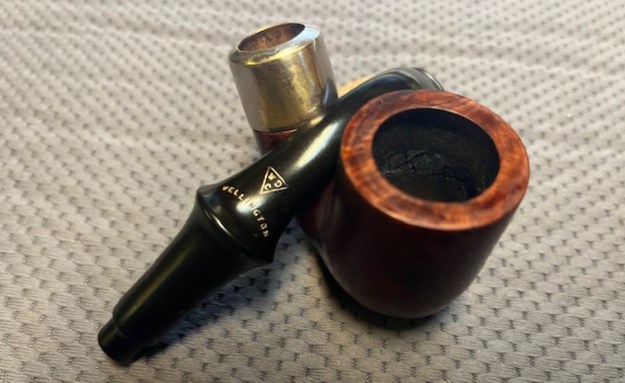
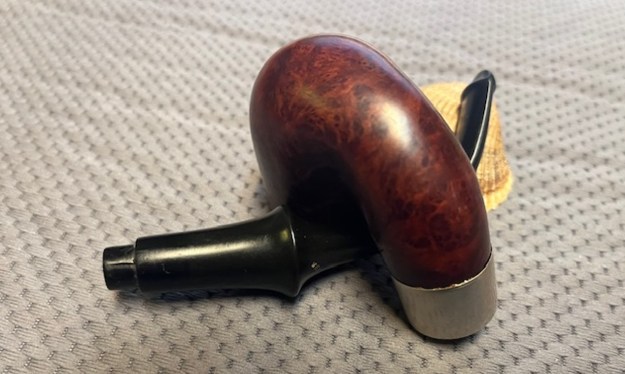
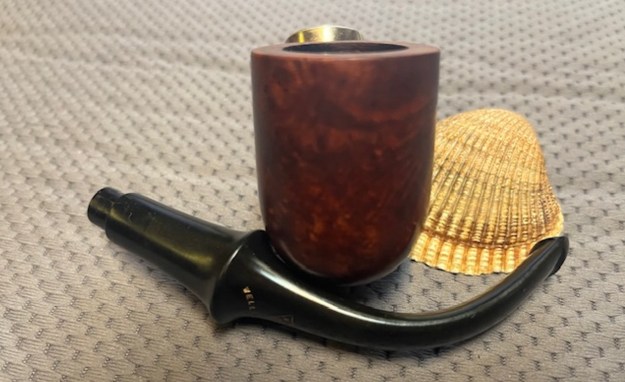
Let’s not get ahead of ourselves. First let’s meet the main characters of the union. The first player in this budding romance is the old and lonely bowl that is quite a beauty. The finish is shiny with a varnish coat. The stamping on the left and right side of the shank are stamped with gold leaf. On the left it reads The [over] Wellington and on the right side is the WDC triangle logo. On the tarnished nickel ferrule were the expected faux hallmarks identifying it as an American Pipe and underneath those is the WDC triangle logo. The bowl had been reamed somewhere along the way and other than having a very light cake and dust was in decent condition. The rim top had a light coat of lava that would need to go. The internals would need a refresh. Nevertheless, the pipe really was quite a beauty and I hope you can see why I held onto it so long. Here are some photos of the bowl before I started my work on it. I also took some photos of golden finery and identifying marks. She really is quite a beauty and for her age in excellent condition. There is no wear on her jewellery. She is ready to dance.
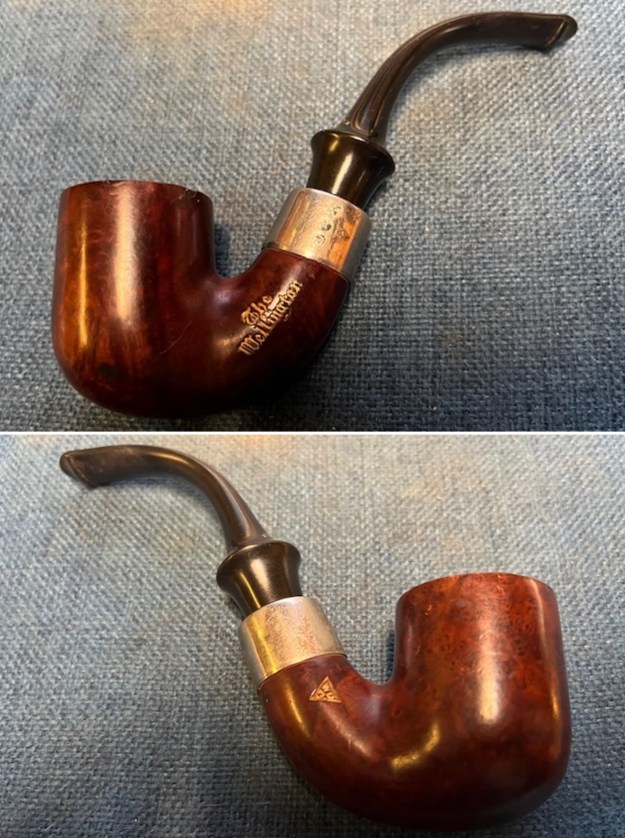
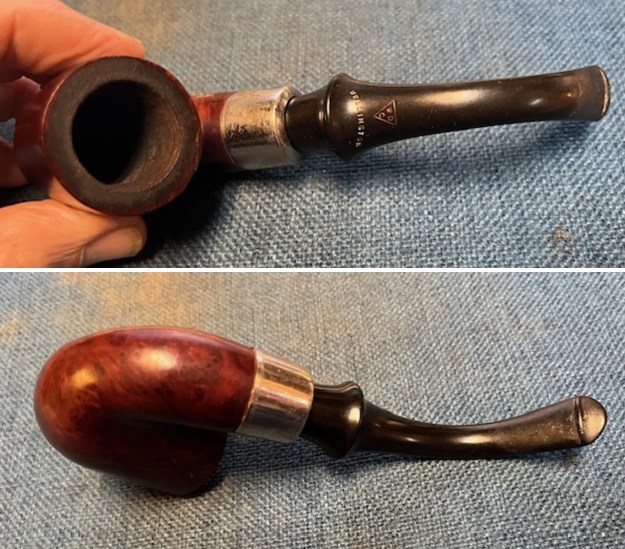
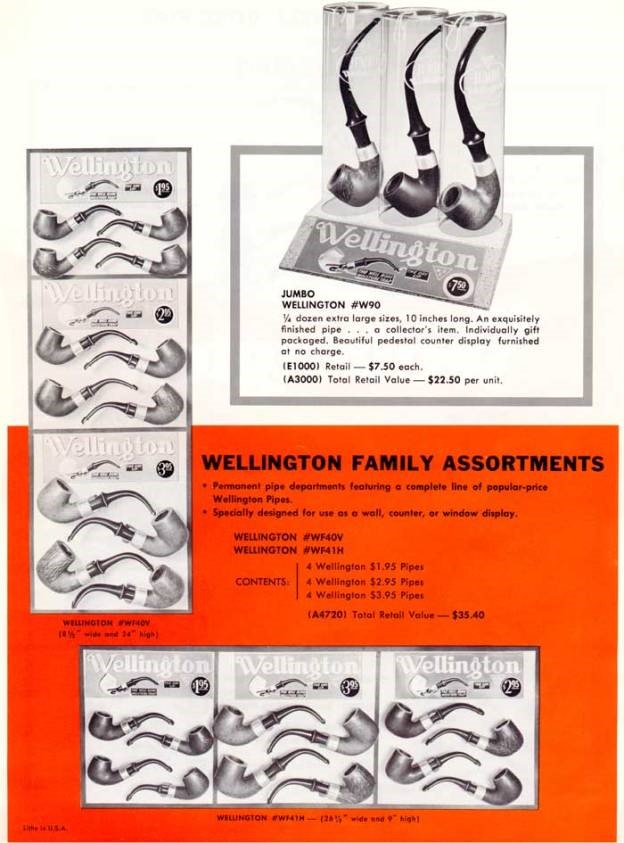
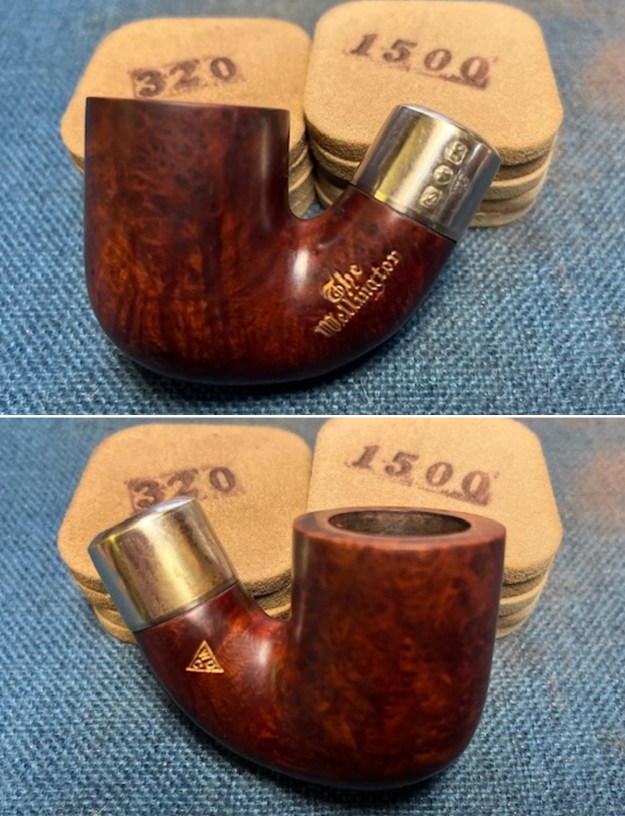
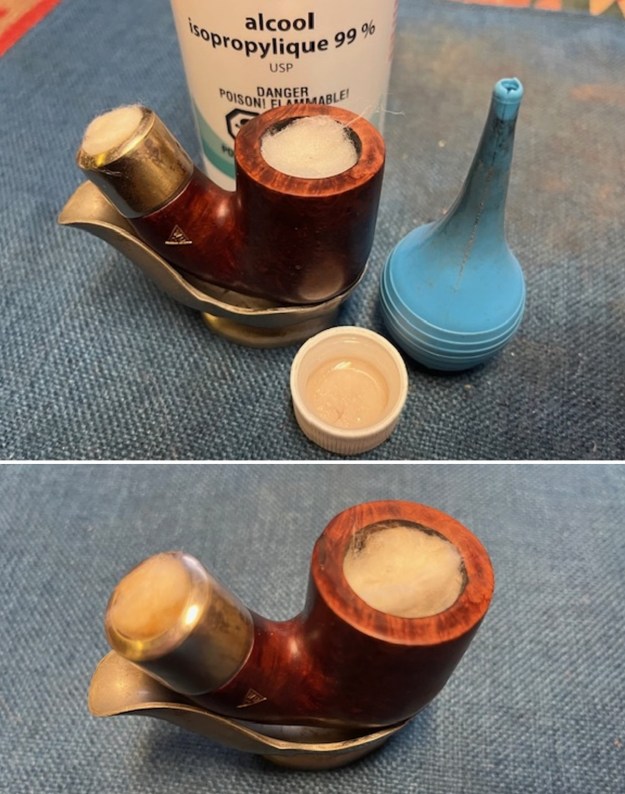
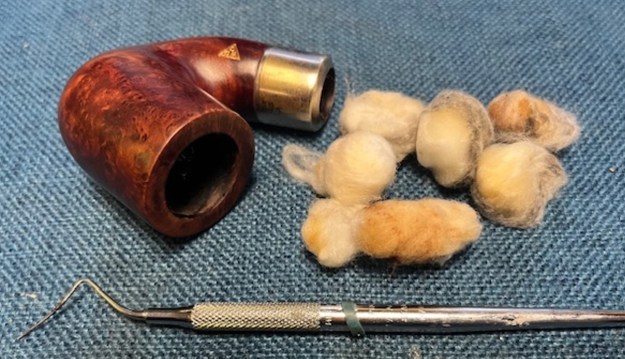
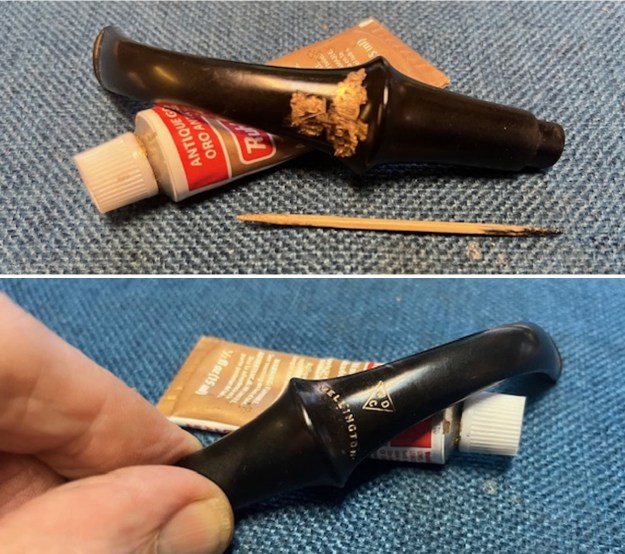
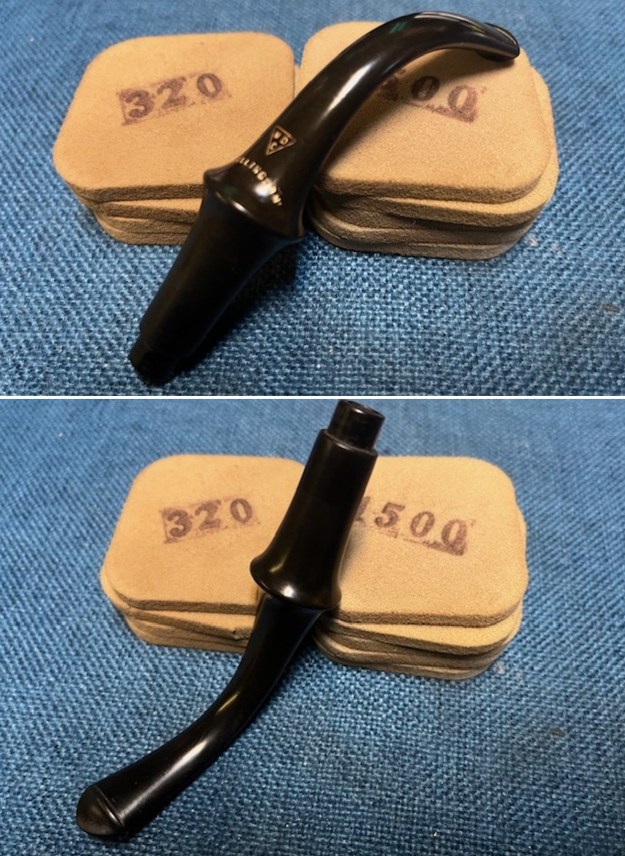
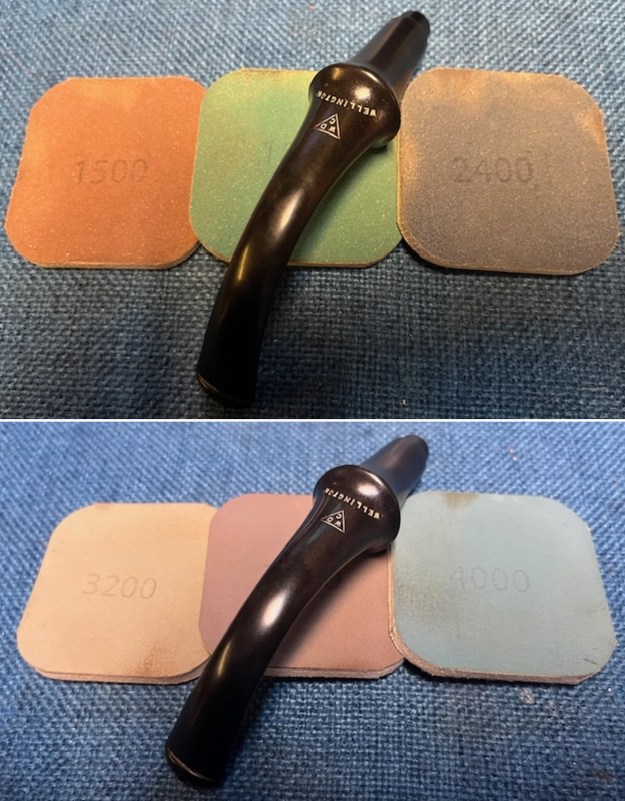
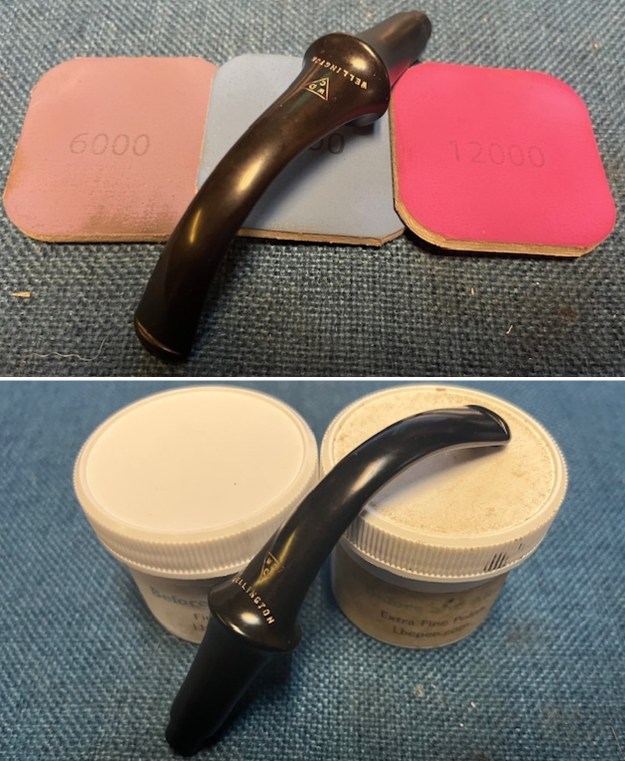
The second character in the romance is the late to the scene stem. It is clear that he had been around a long time. It is older solid rubber so there was no oxidation on the surface. There were scratches and some tooth chatter near the button. But thankfully no one had left their tooth marks for posterity on its surface. It actually looked pretty good for an old timer. The gold stamped jewellery on the stem top was faded over time but it was still visible. It was still a handsome stem. The gold jewellery read Wellington arched over the WDC triangle logo and matched the bowl. It was going to be fun to prepare them to meet each other. Come with me for the preparations.For those of us who can’t wait for the final reveal (and that does include me by the way!) I introduced the stem and the bowl for the first time and took a series of photos. I think it is going to look quite amazing once they both clean up a bit and meet each other in their a renewal of their former glory. Like any older romance you want to as much about the lovely pair as you can. You want to know their history and what they were like years ago! To get that kind of background information on the pair I turned to Pipedia’s article on WDC (William Demuth) pipes and to reintroduce myself to the Wellington Family of pipes. It is a great read in terms of the history of the brand (https://pipedia.org/wiki/William_Demuth_Company). I have included one of the advertising flyers on the Wellington Family below. Look at the price of this pipe when it was sold.Look at the lovely “youngins” in the photos of the advert. They were quite stunning. Now it was time to work on the pair individually in preparation for their union. I decided to work on the bride first – preparing the bowl. It was not too bad but it needed some attention. I cleaned up the light cake in the bowl with a Savinelli Fitsall Pipe Knife and took it back to bare briar all the way down the bowl. I ran my finger over the bowl walls and there were no issues that I could see or feel. I sanded the walls of the bowl with a piece of 220 grit sandpaper wrapped around a piece of dowel. It felt and looked much better.I cleaned up the rim top, scraping off the thick lava coat with the edge of the Savinelli Knife. I sanded it with a 320 grit sanding pad to finish the cleanup. There was some nice grain underneath the debris. I also found a small fill on the back-left side of the rim top that went down the side of the bowl for a little way. No issues as the fill was solid.I cleaned up the finish on the bowl and removed the nicks and marks on the finish by carefully sanding it with the 320-3500 grit sanding pads. I took off the shiny finish very well and revealed some nice grain below the surface. I sanded the nickel ferrule with the higher grit pads – 2000-3500 to remove the oxidation and some of the pitting on the topside of the ferrule. I cleaned out the internals of the bowl and stem with pipe cleaners, cotton swabs and alcohol. It was surprisingly dirty. The airway in the bowl was clogged with tars so it took a bit to open it back up but the airflow is restored and the pipe is clean again after many years. I decided to “deghost” the bowl with cotton bolls and 99% isopropyl alcohol. I pressed cotton bolls into the sump on the shank and into the bowl completely filling in the openings with the cotton. I then used an ear syringe to transfer the alcohol into the bowl and shank opening. I find that this gives me more control than pouring and also saves the finish on the bowl from any damage by the alcohol. I set the bowl aside for a few hours to let the cotton and alcohol do its work wicking the oils and tars out of the bowl. I let it sit for 4-5 hours them took photos of the bowl and cotton. I pulled the cotton out of the shank and the bowl with a dental pick. It had drawn out a lot oils and tars from the bowl and shank. While the bowl air dried after removing all the cotton bolls I turned my attention to the other partner in the union – the stem. I touched up the stamping on the top side of the saddle stem. I used some Rub’n Buff Antique gold to touch up the stamping. I worked it into the letters with a tooth pick. I buffed it off with a soft cotton cloth. The stamping is looking much better.I sanded the scratching on the tenon end of the stem and the tooth chatter on the bit end with 320-3500 grit sanding pads. I quickly made short order of these blemishes on the old stem. I was one step closer to being ready to meet the bowl. I polished the old hard rubber stem with micromesh sanding pads – 1500-12000 grit pads. I wiped it down with Obsidian Oil after each sanding pad. I used Before & After Pipe Polish – both Fine and Extra Fine to further polish the stem. I rubbed it down with a final coat of Obsidian Oil and let it dry. Now it was time to reintroduce the lovely pair. The music was playing… you can almost here the sound of “First Time Every I saw your Face” flowing in the background. The restored bowl and stem step out to meet one another. Once united the briar bowl and the stem back together this WDC Wellington Bent Billiard revealed its stunning beauty. The union brought the old pair together – the polished briar, the nickel ferrule and the hard rubber were a winning combination. The grain that shone through the polished finish is stunning. I put the stem back on the bowl and carefully buffed the pipe with Blue Diamond on the buffing wheel. I gave the bowl and the stem multiple coats of carnauba wax on the buffing wheel. I buffed the entire pipe with a clean buffing pad which really brings the shine out with the wax. I hand buffed the pipe with a microfiber cloth to deepen the shine. The lovely newly joined Wellington Bent Billiard fits nicely in the hand and feels great and will truly be a pipe to be smoked any time really – while sitting and reading or listening to music. Give the finished pipe a look in the photos below. The dimensions of the pipe are Length: 5 ½ inches, Height: 1 ¾ inches, Outside diameter of the bowl: 1 ¼ inches, Chamber diameter: 7/8 of an inch. The weight of the pipe is 54 grams/1.87 ounces. I will be adding it to the American Pipe Makers Section of the rebornpipes store soon. If you are interested in adding this pipe to your collection send me a message or an email. Thanks for reading this blog and my reflections on the pipe while I worked on it. I appreciate your time to spend reading this one. Thank you.
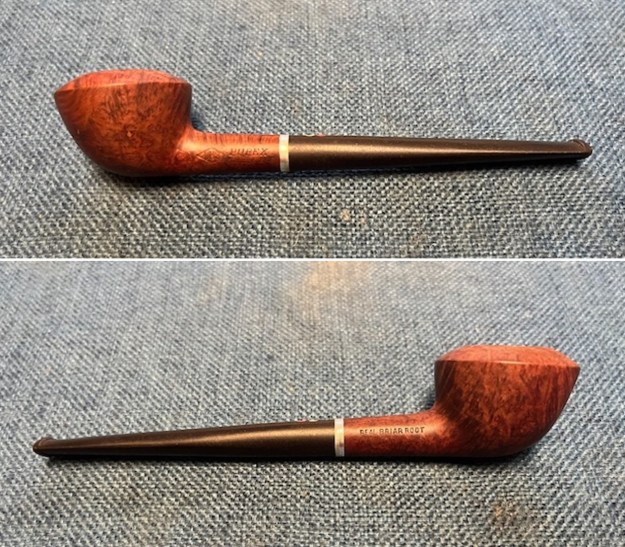
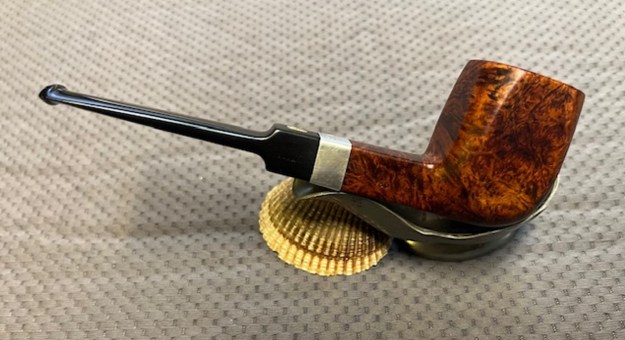
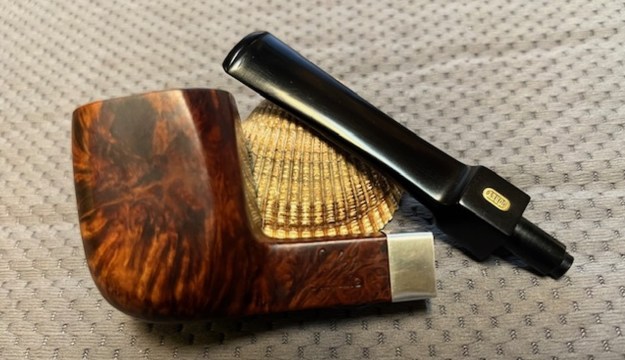
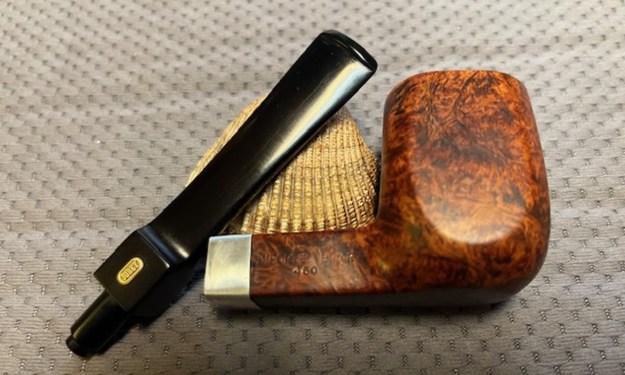
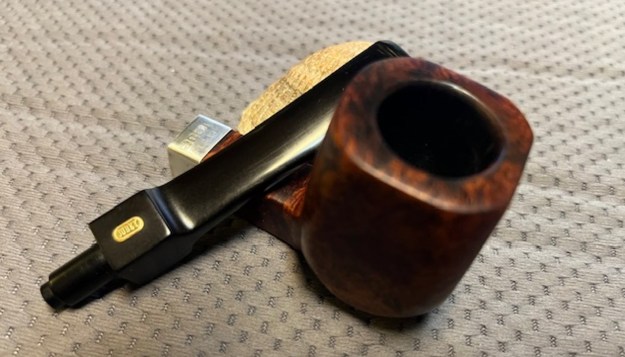
Breathing Life into a Jobey Sterling Square Shank Panel 460 Billiard 


by Steve Laug

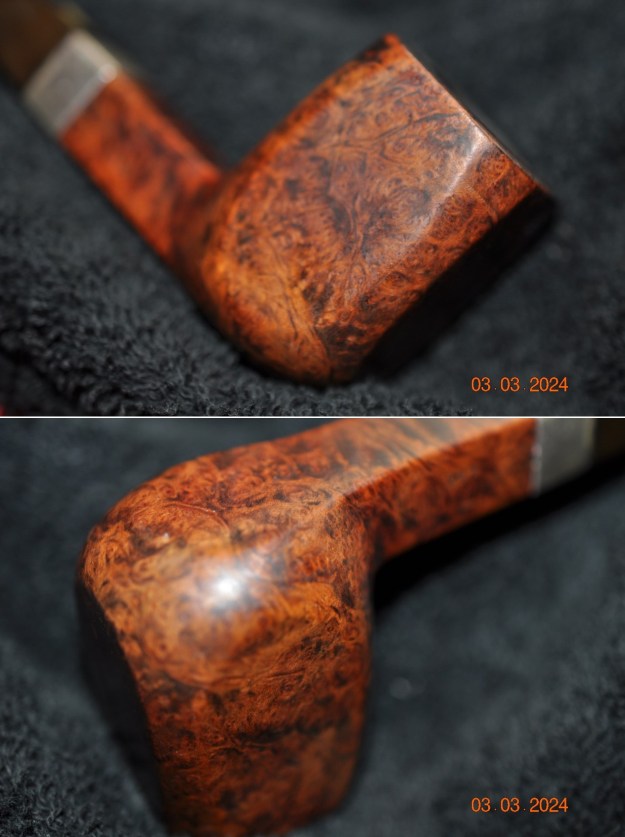
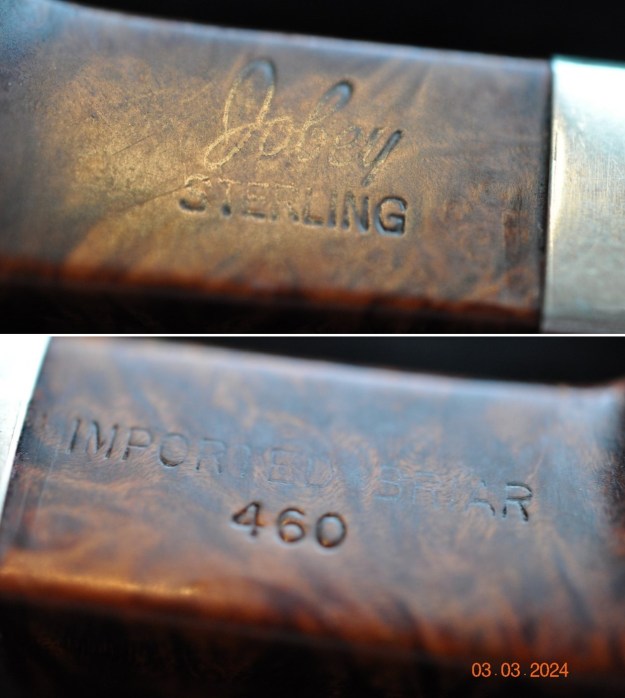
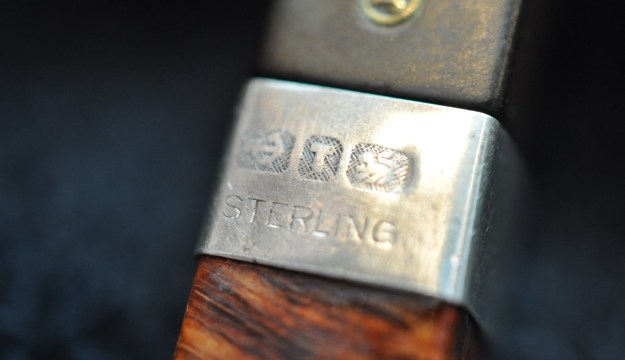
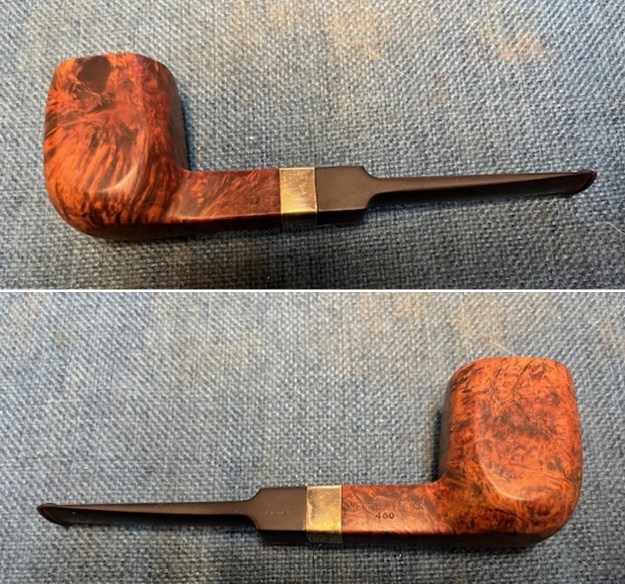
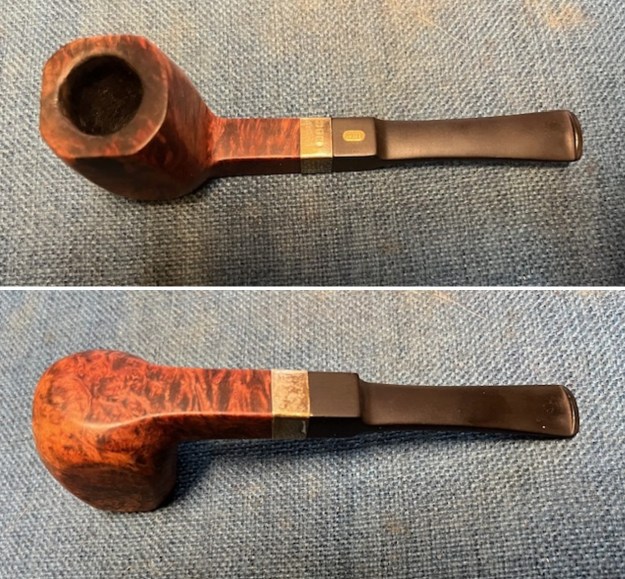
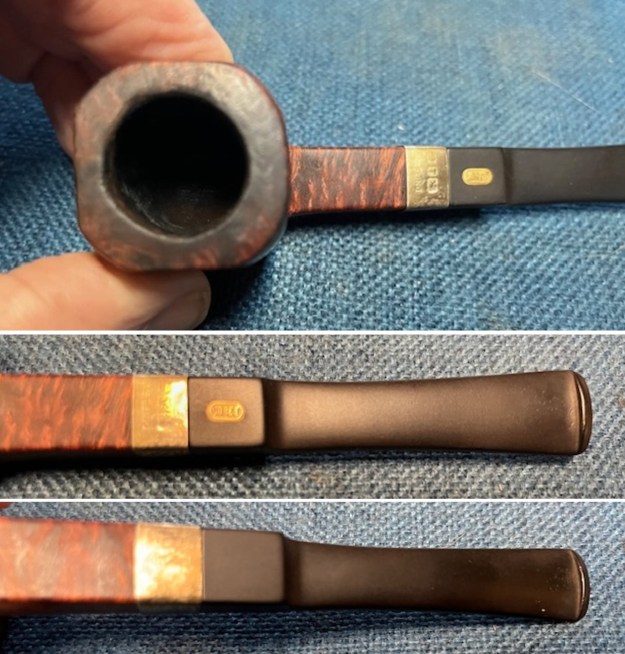
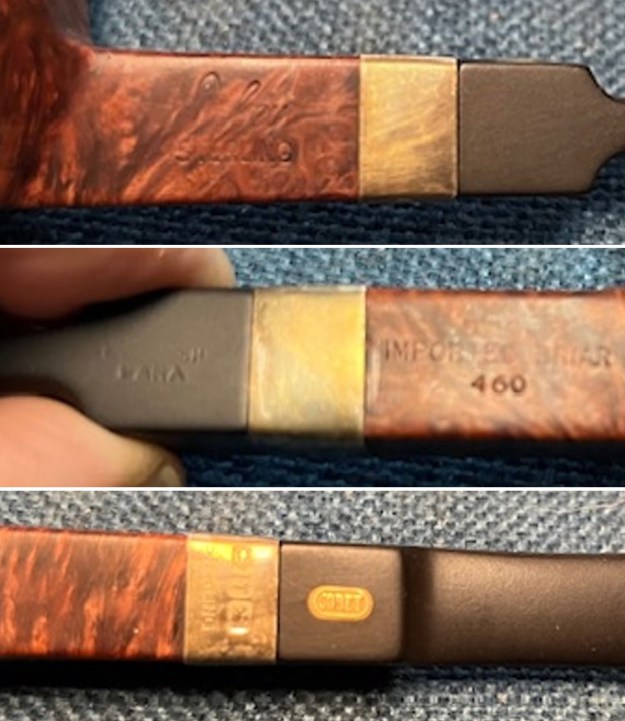
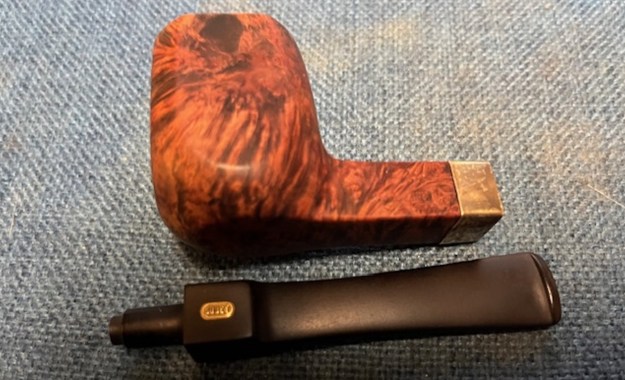
I picked some older pipes to work on next. The next of these is a Jobey Panel Billiard. We purchased this one on 01/22/2024 from an online seller in Jordan, Minnesota, USA. This square shank Panel Bent Billiard is stamped on the left side of the shank and reads Jobey in script [over] Sterling and on the right side it is stamped Imported Briar [over} the shape number 460. The Sterling Silver Band is also stamped and reads STERLING with three hallmarks – an anchor (Birmingham, England) a letter T (date) and a rampant lion (signifying the .925 Sterling quality). The pipe was well used. The finish was dirty with dust and debris ground into the finish. There were some dark marks on the sides of the bowl that looked to be on the surface. The bowl had a thick cake in it and some lava on the rim top and the inner edge. There was some roughening to the inner edge and darkening on the top of the bowl. The Sterling Silver band was oxidized. The vulcanite stem was oxidized, calcified and had some tooth marks on the surface ahead of the button. Jeff took photos of the pipe before he started his cleanup work. He took some closer photos of the rim top and bowl to show the condition. You can see the thick cake in the bowl and the lava on the rim top and inner edge. It is hard to know for certain but it looks like there is some roughening and damage to the right side of the inner edge. He also took photos of the stem to show its condition. You can see the oxidation, calcification and tooth marks and chatter on the stem at the button. Jeff took some photos of the sides and heel of the bowl to show the smooth finish and the grain around the bowl and shank. He captured the stamping on the left and right sides of the shank. It is clear and faint in spots and reads a noted above. The brass inset Jobey oval logo on the top side of the saddle stem is clear and undamaged. On the right side of the stem it appears to be stamped English Para. He took a photo of the stamping on the sterling silver band. As noted above it is stamped and reads STERLING with three hallmarks – an anchor (Birmingham, England) a letter T (date) and a rampant lion (signifying the .925 Sterling quality). The anchor is easily identifiable as the assay mark and giving the location of the silver maker. In this case the location signifies Birmingham, England. The rampant lion at the end of the three hallmarks is knows the indicator of the quality of the silver. In this case it is .925 which is the normal amount for Sterling Silver. That leaves us with the T hallmark in the centre of the threesome.To figure out the date of the stamp I turned to several silver Hallmarks lists for Birmingham. I have included the link below to the chart that I regularly use to help identify the date on pipes with this(https://www.silvermakersmarks.co.uk/Dates/Birmingham/Date%20Letters%20T.html). The helpful thing about this chart is that it is organized by letter and you can click on a letter and get all of the hallmarks with that letter – in this case T. This where it gets a bit tricky to me. If you look at the hallmark in the photo above the “T” stamp clean and straight with no tail on the base or the cross bar of the “T”. It is similar to a non-italic T in 1968. None of the other ones (1943 or 1993) with the capital T work so that is the mystery to me. So the date is not clearly identifiable from the charts.I reread several of the blogs I have written on the brand in the past restorations of Jobey pipes and decided to include the material on the brand before I write about the cleanup of the pipe. I wanted to spell out the link from the hallmarks above to British made Jobeys. Here is the link to the blog (https://rebornpipes.com/2020/04/03/restoring-jennifers-dads-jobey-asti-245-pot/). I quote:

I turned to Pipephil’s site for a quick review of the brand (http://www.pipephil.eu/logos/en/logo-j3.html). I quote a section of the post on the Jobey brand: These pipes are made in St Claude (France) by Butz-Choquin (Berrod-Regad group) since 1987. Before this date some were manufactured in England and Denmark (Jobey Dansk).

I turned then to Pipedia to gather further information regarding the brand and quote the first part of the article (https://pipedia.org/wiki/Jobey).

English – American – Danish – French… Sadly, solid information about Jobey is scant…

Probably established in England around 1920(?) the brand hiked into the USA later. In the course of time owner, distributor and manufacturer changed repeatedly. As far as is known the following companies have been involved with the brand:

George Yale Pipes & Tobacco, New York (1942), Norwalk Pipe Co., New York (1949), Arlington Briar Pipes Corp., Brooklyn (when?), Hollco International, New York (1969), Weber Pipe Co., Jersey City, NJ (1970’s), The Tinder Box, (1970’s – 80’s).

Throughout decades Jobey pipes were mainly sold in the USA, Canada and England but remained almost unknown in continental Europe. The bulk of Jobeys was predominantly made according to classical patterns and mainly in the lower to middle price range. The predominant judgment of the pipe smokers reads: “A well-made pipe for the price.” So, there is hardly anything very special or exciting about Jobey pipes although a flyer from ca. 1970 assures: “The briar root Jobey insists upon for its peer of pipes is left untouched to grow, harden and sweeten for 100 years. […] Jobey uses only the heart of this century old briar and only one out of 500 bowls turned measures up to the rigid Jobey specifications.” 99.80% of cull… that makes the layman marveling!

Now to work on the pipe itself. Jeff had cleaned up the pipe and it looked very good. He reamed the pipe with a PipNet pipe reamer and removed the rest of it with a Savinelli Fitsall Pipe Knife. He scrubbed the bowl with undiluted Murphy’s Oil Soap with a tooth brush. He rinsed it under running warm water to remove the soap and grime. He cleaned out the inside of the shank and the airway in the stem with alcohol, cotton swabs, shank brushes and pipe cleaners. He soaked the stem in Briarville’s Stem Deoxidizer and rinsed it off with warm water. It removes the oxidation, grime on the stem. I took photos of the pipe before I started my part of the restoration work. The rim top and outer edge of the bowl look good. The inner edge and spots on the top have some darkening and light damage. The stem surface was still lightly oxidized and there were tooth marks and chatter on both sides near the button.The stamping on sides of the shank is faint in spots but readable. It is stamped as noted above. The stamping on the stem side is pretty clear and reads English Para. I removed the stem and took a photo of the pipe to give a sense of the whole. The panel saddle stem is nice and the photo shows the step down tenon. I cleaned up the top and the inner edge of the bowl with a folded piece of 220 grit sandpaper to smooth out the damage to the edge and the darkening on the rim top. I sanded the bowl with 320-3500 grit sanding pads to smooth out the nicks and marks in the briar around the sides of the bowl. I wiped it down with a damp cloth after each sanding pad. It was looking pretty good once I finished. I polished the bowl and the rim top with micromesh sanding pads. I dry sanded it with 1500-12000 grit pads and wiped the bowl down with a damp cloth to remove the sanding dust. By the final pad it was starting to real take on a great shine. I rubbed the bowl and shank down with Before & After Restoration Balm. I worked it into the surface of the bowl sides and shank with my fingertips. It works to clean, enliven and protect the briar. I let the balm sit for 15 minutes and buffed with a cotton cloth to raise the shine. The grain came alive. I set the bowl aside and turned my attention to the stem. I set the bowl aside and turned my attention to the stem. I “painted” the tooth marks with the flame of a lighter to lift them. The heat did a great job lifting most of them. The marks and chatter that remained I filled in with black CA glue strengthened with carbon and rubber. Once cured I flattened them and redefined the button edge with a file and blended them into the surface by sanding with 220 grit sandpaper. I polished the sanding and scratch marks and smoothed the stem with 320-3500 grit sanding pads. I wiped the stem down after each sanding pad with an Obsidian Oil impregnated cloth. It removes the dust and also gives the sanding pads some bite. By the final pad it was looking quite good.I polished the vulcanite stem with micromesh sanding pads – 1500-12000 grit pads. I wiped it down with Obsidian Oil after each sanding pad. I used Before & After Pipe Polish – both Fine and Extra Fine to further polish the stem. I rubbed it down with a final coat of Obsidian Oil and let it dry. This English Made Jobey Sterling 460 Panel Billiard is a real beauty. I buffed the bowl and the vulcanite saddle stem with Blue Diamond on the wheel and was amazed at how the grain popped and the stem began to shine. I gave the bowl and stem multiple coats of carnauba wax and buffed them with a clean buffing pad. I finished by hand buffing the pipe with a microfibre cloth. The finished pipe is shown in the photos below. I think you will agree that it is a great example of a Jobey Sterling. The grain and the stem work really well together. The finished Jobey Sterling 460 Panel Billiard fits nicely in the hand and feels great. Give the finished pipe a look in the photos below. The dimensions of the pipe are Length: 5 ½ inches, Height: 1 ¾ inches, Outside diameter of the bowl: 1 ¼ inches, Chamber diameter: ¾ of an inch. The weight of the pipe is 38 grams/1.34 ounces. I will be putting it on the rebornpipes store in the British Pipemakers Section shortly. If you are interested in adding this pipe to your collection send me a message or an email. Thanks for reading this blog and my reflections on the pipe while I worked on it. I appreciate your support and time!
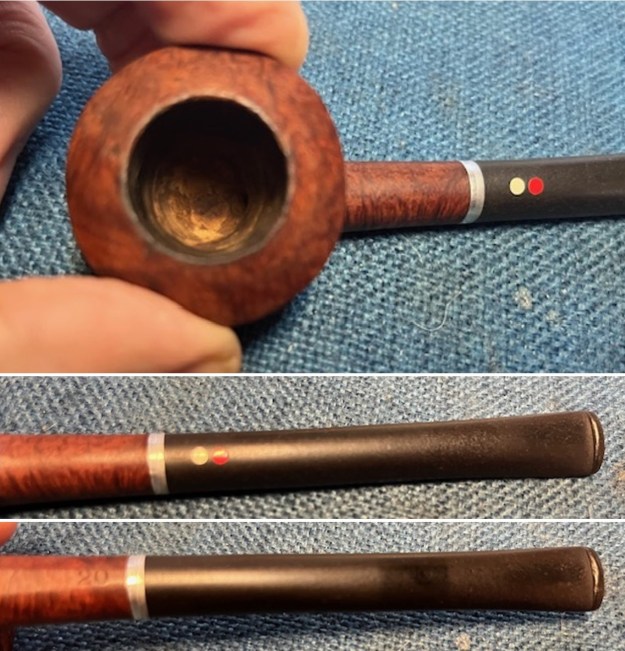
Restoring a Well Loved GBD Prestige London England 508 Bent Billiard


by Steve Laug

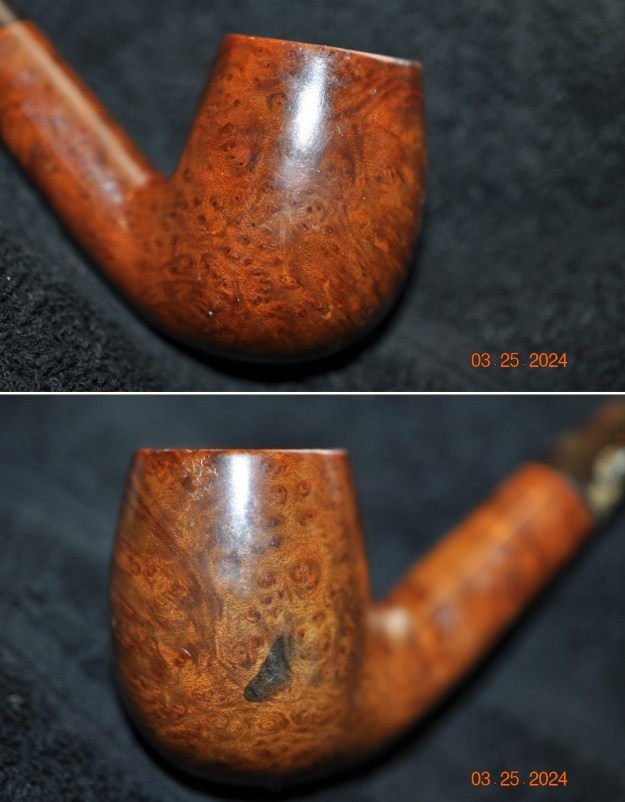
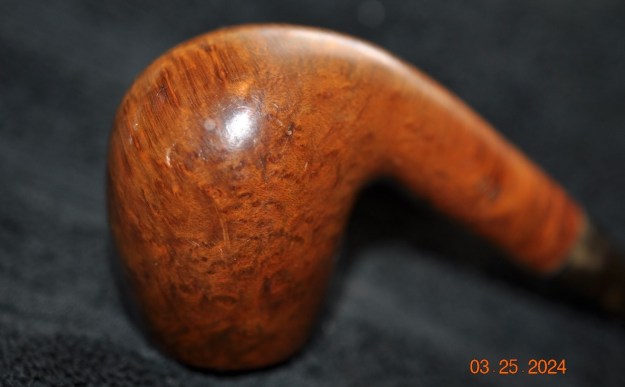
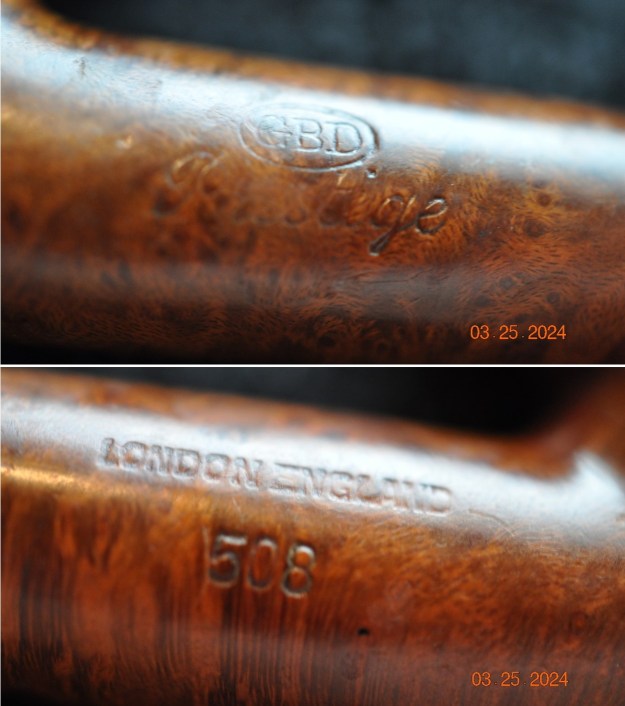
I picked some older pipes to work on next. The next of these is a GBD Bent Billiard. We purchased this one on 03/21/2024 from a seller in Oregon City, Oregon, USA. Jeff regularly visits shops along the coast hunting for pipes and though there are less of them there are still a lot available. The is a Bent Billiard that is stamped on the left side of the shank and reads GBD in an oval [over] Prestige and on the right side it is stamped London, England over the shape number 508. The pipe was well used. The finish was dirty with dust and debris ground into the finish. There were some dark marks on the sides of the bowl that looked to be on the surface. The bowl had a thick cake in it and some lava on the inwardly bevelled rim top and the inner edge. There was also some roughening to the inner edge and darkening on the top of the bowl. The vulcanite stem was oxidized, calcified and had some tooth marks on the surface ahead of the button. Jeff took photos of the pipe before he started his cleanup work. He took some closer photos of the rim top and bowl to show the condition. You can see the thick cake in the bowl and the lava on the rim top and inner edge. It is hard to know for certain but it looks like there is some roughening on the back inner edge. He also took photos of the stem to show its condition. You can see the oxidation, calcification and tooth marks and chatter on the stem at the button. Jeff took some photos of the sides and heel of the bowl to show the smooth finish and the grain around the bowl and shank. He captured the stamping on the left and right sides of the shank. It is clear and faint in spots and reads a noted above. The brass inset GBD oval logo on the left side of the saddle stem is clear and undamaged. I looked on the Pipephil logos site for information on the Prestige line and found nothing there. I turned to Pipedia’s general article on the GBD brand looking for any information on the Prestige line and once again found nothing. The history article is a great read. Be sure to have a look at it.

The article included link to other articles on Pipedia and one of those was to an article on the GBD Model Information (https://pipedia.org/wiki/GBD_Model_Information). I turned there and found what I was looking for. There was a short description of the line and I have included it below:

Prestige — England, unknown if also made in France: Matt natural finish, Perspex mouthpiece.

That was helpful in terms of the finish which matches the pipe in my hand other than it has a vulcanite mouthpiece. I read further and in a short note from GL Pease I found the information below. I quote:

…In a circa 1973 chart which I have, here are the descriptions of the higher grades:

  • Virgin — “Only the finest of closely grained briar is utilized for this exceptional pipe. Natural finish”
  • Century — “A golden finish created to celebrate over a century of manufacturing the finest briar pipes.”
  • New Era — “The beauty of this pipe’s perfect briar is accentuated by the richness of the ‘take-off’ dual finish.”
  • Prestige — “This pipe features a black handcut perspex mouthpiece which precludes discoloration and ‘bad taste’ after continual smoking. Only the finest of the fine-grained bowls are selected for this handsome matt virgin finished briar.”
  • Prehistoric Perspex — “The deep sandblasting silhouettes the grain in bold relief. The crystal clear mouthpiece creates an attractive contrast to the deep dark finish.”

From that I now knew that the pipe was a higher grade GBD that is described as having a black handcut Perspex mouthpiece and a matte finished, fine grained virgin briar. The pipe I have on the table has a bent vulcanite stem rather than the Perspex otherwise the description is perfect.

I turned to another link on the site to look at shape numbers and see if I could identify further information regarding the shape (https://pipedia.org/wiki/GBD_Shapes/Numbers). I quote what I found below:Now it was time to work on the pipe.

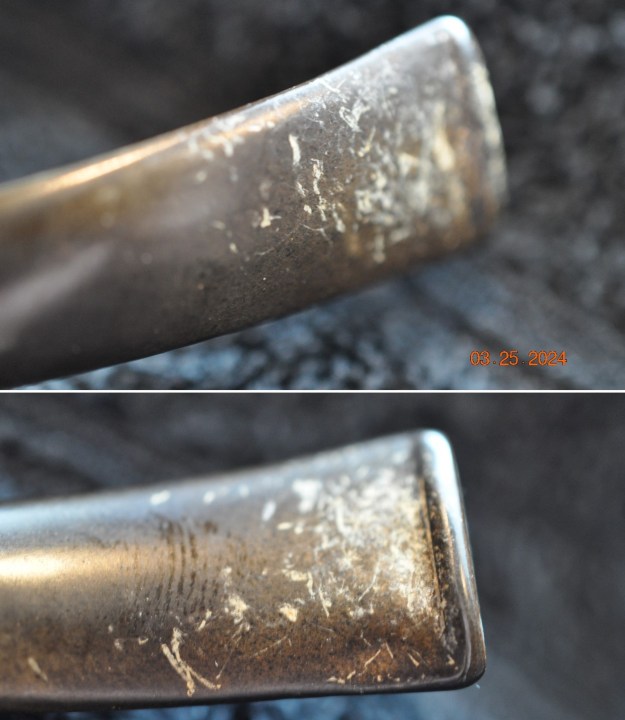
Jeff had cleaned up the pipe and it looked very good. He reamed the pipe with a PipNet pipe reamer and removed the rest of it with a Savinelli Fitsall Pipe Knife. He scrubbed the bowl with undiluted Murphy’s Oil Soap with a tooth brush. He rinsed it under running warm water to remove the soap and grime. He cleaned out the inside of the shank and the airway in the stem with alcohol, cotton swabs, shank brushes and pipe cleaners. He soaked the stem in Briarville’s Stem Deoxidizer and rinsed it off with warm water. While it does nothing for the finish on the stem as it is Perspex it is worth the effort in that it removes the grime on the stem. I took photos of the pipe before I started my part of the restoration work. The inwardly bevelled rim top cleaned up really well. The rim top and outer edge of the bowl look very good. The inner edge and spots on the top have some darkening and light damage. The stem surface was still lightly oxidized and there were tooth marks and chatter on both sides near the button.The stamping on sides of the shank is faint but readable. It is stamped as noted above. I removed the stem and took a photo of the pipe to give a sense of the whole. The thin taper stem is nice and the photo shows the step down tenon. I cleaned up the top and the inner edge of the bowl with a folded piece of 220 grit sandpaper to smooth out the damage to the edge and the darkening on the rim top. I sanded the bowl with 320-3500 grit sanding pads to smooth out the nicks and marks in the briar around the sides of the bowl. I wiped it down with a damp cloth after each sanding pad. It was looking pretty good once I finished. I polished the bowl and the rim top with micromesh sanding pads. I dry sanded it with 1500-12000 grit pads and wiped the bowl down with a damp cloth to remove the sanding dust. By the final pad it was starting to real take on a great shine. I rubbed the bowl and shank down with Before & After Restoration Balm. I worked it into the surface of the bowl sides and shank with my fingertips. It works to clean, enliven and protect the briar. I let the balm sit for 15 minutes and buffed with a cotton cloth to raise the shine. The grain came alive. I set the bowl aside and turned my attention to the stem. I set the bowl aside and turned my attention to the stem. I “painted” the tooth marks with the flame of a lighter to lift them. The heat did a great job lifting most of them. The marks and chatter that remained I filled in with black CA glue strengthened with carbon and rubber. Once cured I flattened them and redefined the button edge with a file and blended them into the surface by sanding with 220 grit sandpaper. I polished the sanding and scratch marks and smoothed the stem with 320-3500 grit sanding pads. I wiped the stem down after each sanding pad with an Obsidian Oil impregnated cloth. It removes the dust and also gives the sanding pads some bite. By the final pad it was looking quite good.I polished the vulcanite stem with micromesh sanding pads – 1500-12000 grit pads. I wiped it down with Obsidian Oil after each sanding pad. I used Before & After Pipe Polish – both Fine and Extra Fine to further polish the stem. I rubbed it down with a final coat of Obsidian Oil and let it dry. This GBD Prestige 508 Bent Billiard is a real beauty. I buffed the bowl and the Perspex saddle stem with Blue Diamond on the wheel and was amazed at how the grain popped and the stem began to shine. I gave the bowl and stem multiple coats of carnauba wax and buffed them with a clean buffing pad. I finished by hand buffing the pipe with a microfibre cloth. The finished pipe is shown in the photos below. While there are some small brown stains in the button area it is clean. I think you will agree that it is a stunning example of a GBD Prestige. The grain and the stem work really well together. The finished GBD Prestige 508 Bent Billiard fits nicely in the hand and feels great. Give the finished pipe a look in the photos below. The dimensions of the pipe are Length: 5 ½ inches, Height: 1 3/4 inches, Outside diameter of the bowl: 1 ¼ inches, Chamber diameter: 3/4 of an inch. The weight of the pipe is 39 grams/1.38 ounces. I will be putting it on the rebornpipes store in the British Pipemakers Section shortly. If you are interested in adding this pipe to your collection send me a message or an email. Thanks for reading this blog and my reflections on the pipe while I worked on it. I appreciate your support and time!
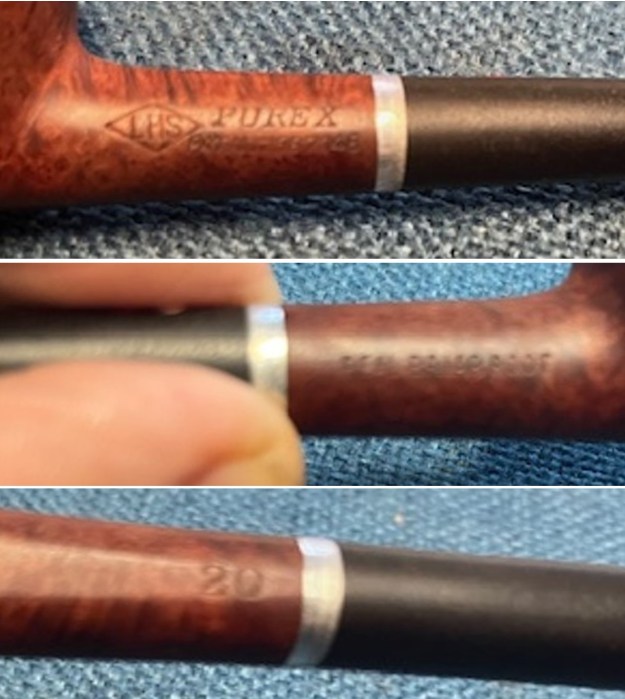
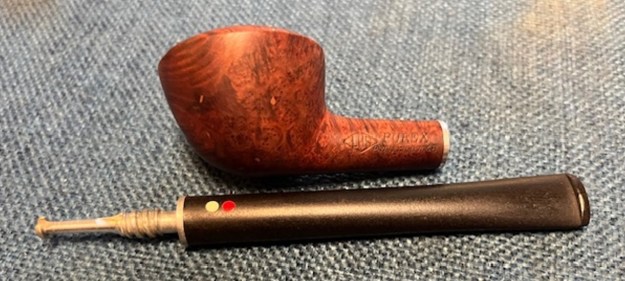
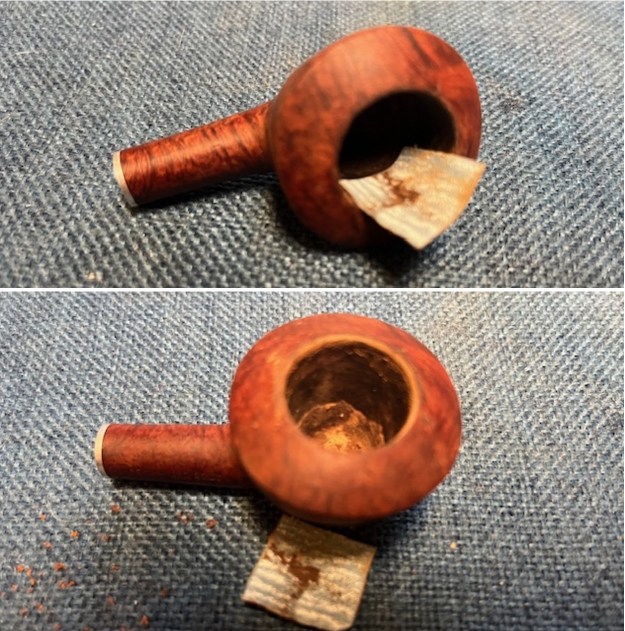
You Gotta Love a nice “Malaga” Bent Volcano


by Steve Laug

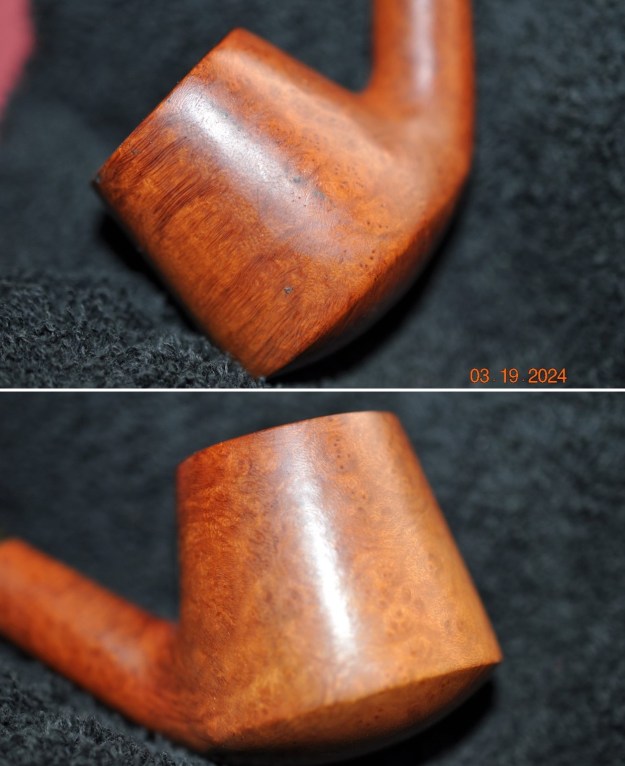
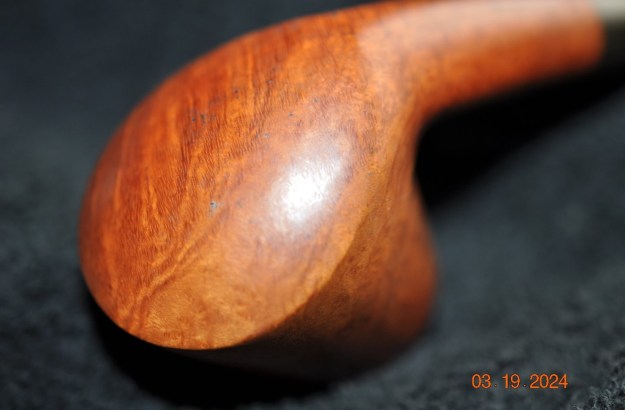
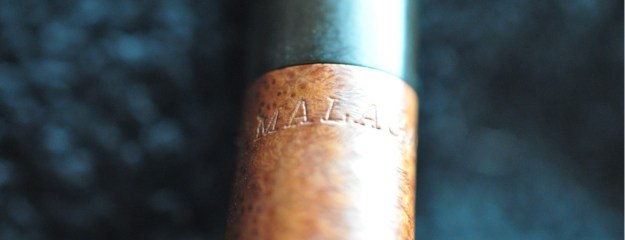
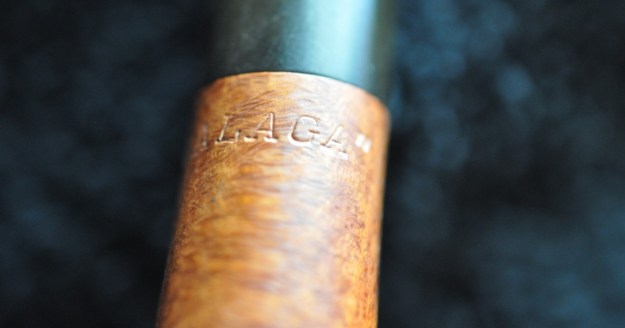
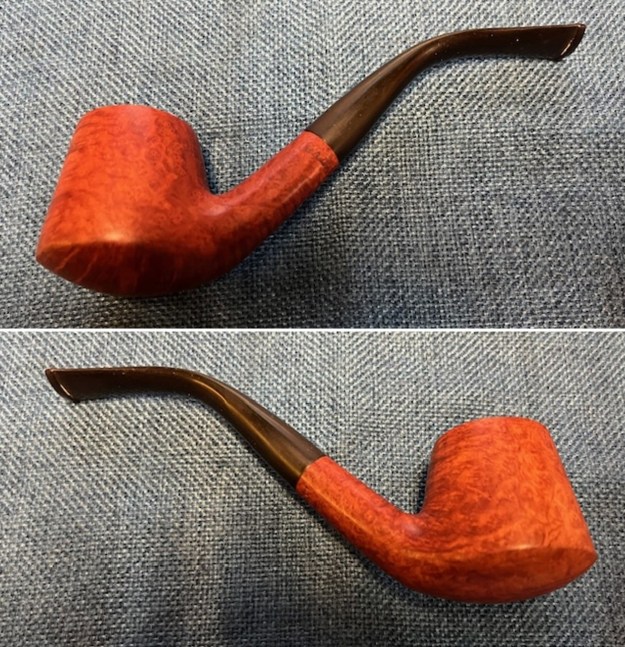
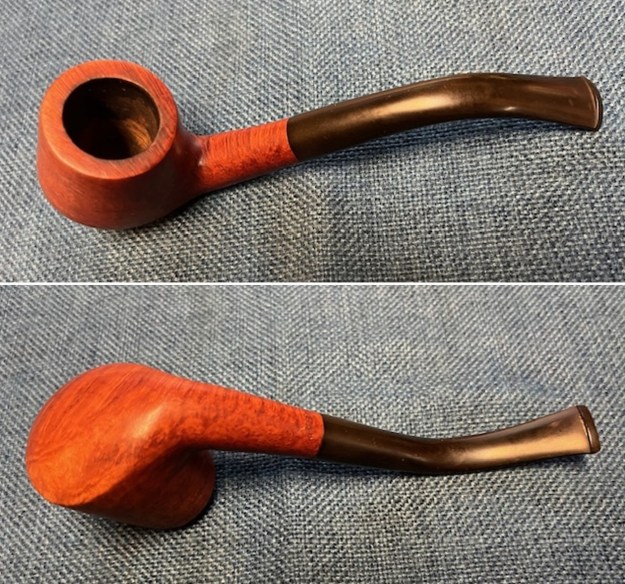
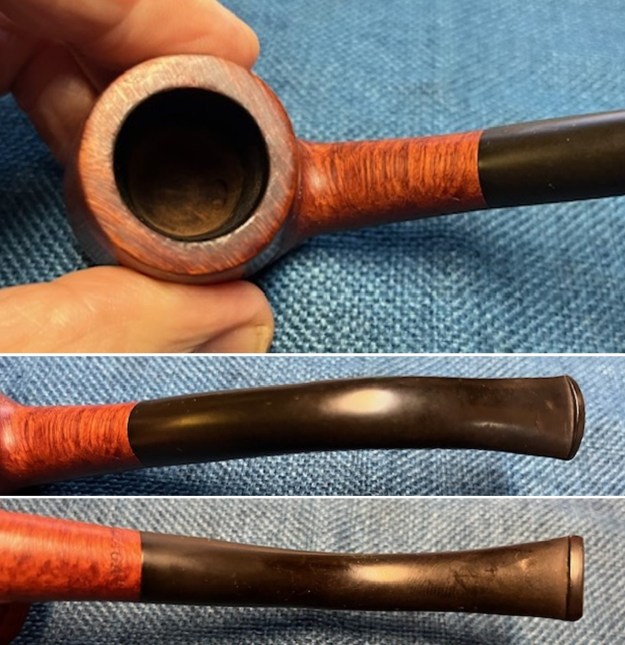
For a long time now, Jeff and I have been purchasing Malaga pipes. The shapes, the quality of craftsmanship, the oil finishing and their smokability all make them stand out. I can’t even remember how many we have cleaned and restored but there have been many. A quick search on Google will likely take you to our blog and at least one of the pipes that we have worked on. So when this pipe came up on eBay on 02/25/24 we bought it from the seller in Kentville, Nova Scotia, Canada and added it to the work queue. The grain on this pipe is quite nice. Once again it was obviously someone’s favourite smoker. The pipe is stamped on the underside of the shank next to the stem/shank junction and reads “MALAGA”. The smooth finish on the bowl and shank were dirty and worn. There were tars and oils ground into the surface of the briar. The bowl had a very thick cake that flowed over the top of the smooth rim in a lava coat. The cake in the bowl was thick right up to the top of the rim. It was hard to fully assess the condition of the inner edge. The condition of the rim edge and top would become clear in the cleaning process. The outer edge looked very good. The bent taper stem was vulcanite. The stem was lightly oxidized and had some calcification ahead of the button. There were light tooth marks on the top and the underside of the stem ahead of the button. Jeff took photos of the pipes before he started his clean up work. Jeff took photos of the rim and bowl to show the heavy cake and lava on the rim top and edges. The inner edge of the rim showed thick cake coming up to the top and flowing over the edge. It was a dirty pipe but still a beauty. The vulcanite thin taper stem had tooth marks and chatter on the top and underside of the stem ahead of the button. The photos of the sides and heel of the bowl show some stunning and unique grain all around the pipe. The oil curing/finish makes the grain really stand out under the grime on the bowl and shank. Jeff took photos of the stamping on the underside of the shank. It read “Malaga” on the underside as noted above. The stamping was clear and readable. For those of you who are unfamiliar with the brand, I am also including the link to a blog that I wrote that gives some of the history of the Malaga brand and the Malaga Pipe Shop in Royal Oak, Michigan in the USA. Here is the link – https://rebornpipes.com/2013/02/09/george-khoubesser-and-malaga-pipes/. That blog also includes links to a catalogue and the history of the pipemaker George Khoubesser. If you are interested to learn more then I invite you to follow the link to get a feel for the brand and the pipemaker.

I am also am including a link to some printed material on the Malaga brand that came to me from the daughter of George Koch (we purchased George’s pipes from his daughter) to help identify the particular stamping on the pipe. The link takes you to the entire collection of materials that was sent to me (https://rebornpipes.com/2019/02/27/malaga-pipes-catalogue-of-pipes-and-tobaccos/).

Jeff had cleaned up the pipe with his usual procedure. He reamed the pipe with a PipNet pipe reamer and removed the rest of it with a Savinelli Fitsall Pipe Knife. He scrubbed the bowl with undiluted Murphy’s Oil Soap with a tooth brush. He rinsed it under running warm water to remove the soap and grime from around the bowl sides. It looked much better. He cleaned out the inside of the shank and the airway with alcohol, cotton swabs and pipe cleaners and shank brushes. He soaked the stem in Briarville’s Pipe Stem Deoxidizer and rinsed it with warm water. The stem looked much better and the light tooth marks on both sides were still visible and would need a little work. I took photos of the pipe once I received it. I took a photo of the rim top and the stem to show their condition. Jeff was able to clean up the cake and the lava overflow that was shown in the rim and bowl photos above. The rim top was clean but there were chips and nicks around the rim top and the inner edge of the bowl. The stem looked better, though there were tooth marks and chatter on both sides ahead of the button.I took a photo of the stamping on the underside of the shank to show that it was readable and undamaged by the cleanup work. I removed the stem from the shank and took a photo of the parts to give a sense of what the pipe looks like.I worked on the rim top and edges of the bowl to remove the damage and nicks on the surface and edges of the bowl. I lightly topped the bowl to smooth out the nicks and cuts in the top. I worked over the edge and top with a folded piece of 220 grit sandpaper and carefully brought the bowl back to round and removed the nicks in the top. It looked better.I sanded the bowl and shank it with 320-3500 grit sanding pads to clean up the marks and scratches in the bowl surface. I wiped it down with a damp cloth between each sanding pad to remove the debris left behind by sanding. Once finished it looked better. I polished the bowl sides with micromesh sanding pads. I dry sanded it with 1500-12000 grit micromesh pads. I wiped it down after each pad. It really began to take on a rich shine and the grain was quite beautiful. I rubbed the bowl and shank down with Before & After Restoration Balm to deep clean the finish on the bowl and shank. The product works to clean, enliven and protect the briar. I worked it in with my fingers to get it into the briar. I let it sit for 10 minutes then I wiped it off and buffed it with a soft cloth. The briar really began to have a rich shine. I took some photos of the bowl at this point to mark the progress in the restoration. It is a beautiful bowl. I set the bowl aside and turned my attention to the stem. I “painted” the stem with the flame of a lighter to lift the tooth marks. While I was able lift some of them there were deep ones that did not lift very much. I filled these in with black rubberized CA glue. Once the repairs cured I flattened them with a small file and then sanded them smooth with a folded piece of 220 grit sandpaper. I started the polishing of the stem with 2 x 2 inch sanding pads – dry sanding with 320-3500 grit pads and wiping it down after each pad. I was able to remove the light tooth marks and chatter on the stem surface on both sides.I polished the stem with micromesh sanding pads – dry sanding with 1500-12000 grit pads. I wiped the stem down after each sanding pad with Obsidian Oil. I did a final hand polish of the stem with Before & After Pipe Stem Polish – both Fine and Extra Fine. I gave it a coat of Obsidian Pipe Stem Oil. It works to protect the stem from oxidizing. I set it aside to dry. I put the stem back on the “Malaga” Bent Volcano and took it to the buffer. I buffed the bowl and stem with Blue Diamond to polish the briar and the vulcanite. Blue Diamond does a great job on the smaller scratches that remain in both. I gave the bowl and the stem several coats of carnauba wax and buffed the pipe with a clean buffing pad to raise the shine. I hand buffed it with a microfiber cloth to deepen the shine. I am amazed at how well it turned out. The finished pipe is shown in the photos below. This is a beautiful “Malaga” Bent Volcano and the vulcanite taper stem and smooth finish combine to give the pipe a great look. The dimensions of the pipe are Length: 5 ½ inches, Height: 1 ½ inches, Outside diameter of the bowl: 1 ¼ inches, Chamber diameter: ¾ of an inch. The weight of the pipe is 1.34 ounces/40 grams. This is another pipe that I will be putting on the rebornpipes online store in the American Pipe Makers and Pipemaking Companies Section shortly, if you are interested in adding it to your collection. Thanks for walking through the restoration with me on this beauty!

As always, I encourage your questions and comments as you read the blog. Thanks to each of you who are reading this blog. Remember we are not pipe owners; we are pipe men and women who hold our pipes in trust until they pass on into the trust of those who follow us.

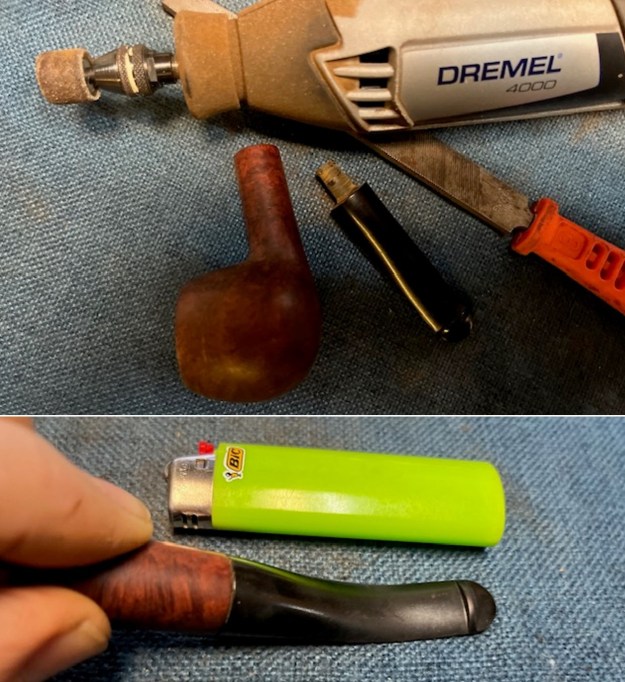
Restemming and Restoring a Well Used Republic Era Peterson’s Kildare 408 Apple


by Steve Laug

In January Jeff found out about an estate sale in Pocatello, Idaho, USA. It turned out that the sale was for a fellow Jeff and I had purchased pipes from in the past, Gene. He had been the owner of Outwest Tobacco in Pocatello (long closed now) and I bought tobacco and other smoking items from him in the past. As I think about it now, it seems that I had known Gene for over 30 years Jeff and I had been to his home and enjoyed coffee and a few pipes together. I have no idea how many pipes we bought on those visits as well as to the antique shop of his daughter. I know that there were many pipes. When we heard that it was Gene’s personal collection that was for sale and that he had passed away we decided for Jeff to go to the house and have a look. He went on January 25, 2024 to scope it out as we had seen his personal collection of pipes and there were definitely some among those well smoked old warriors that would be great to pick up. Perhaps there would even be one that could join my own collection in memory of Gene.

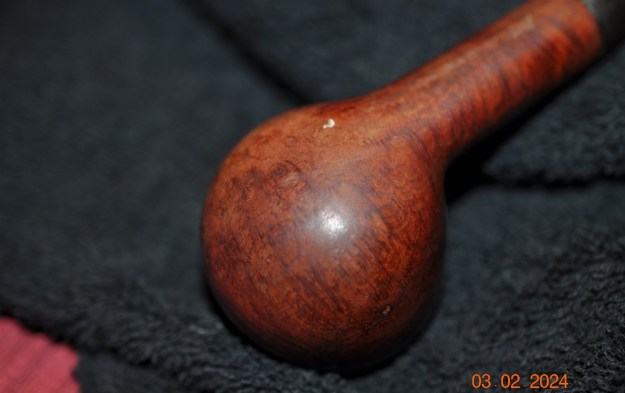
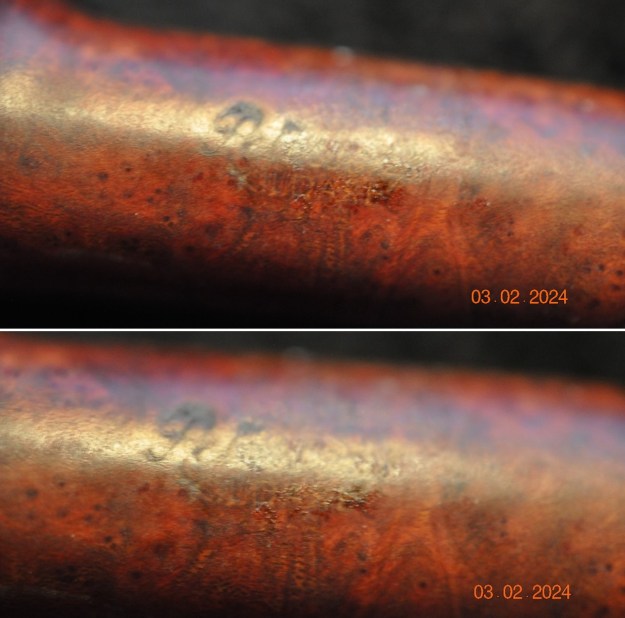
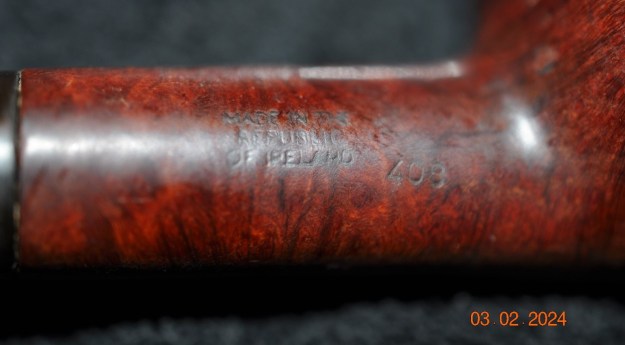
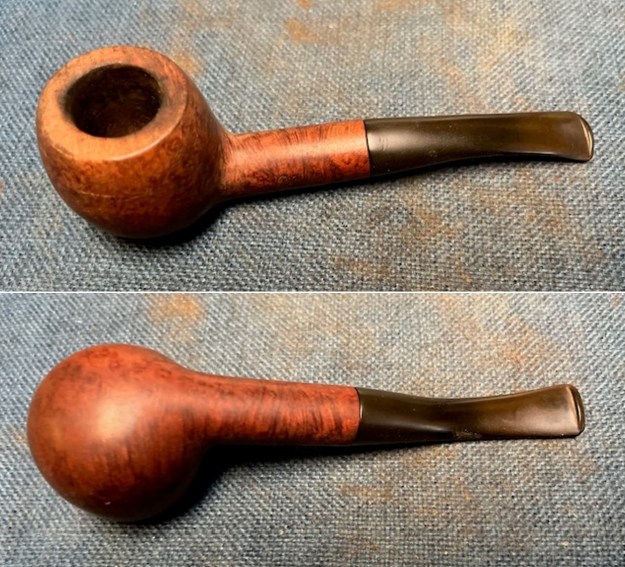
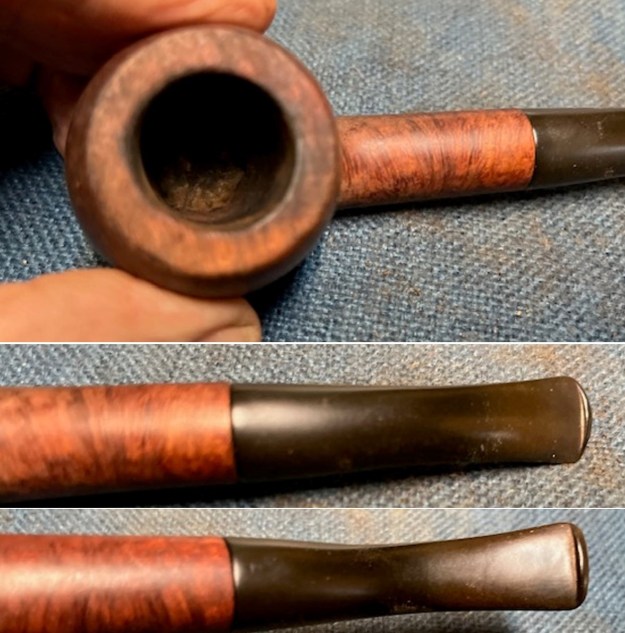
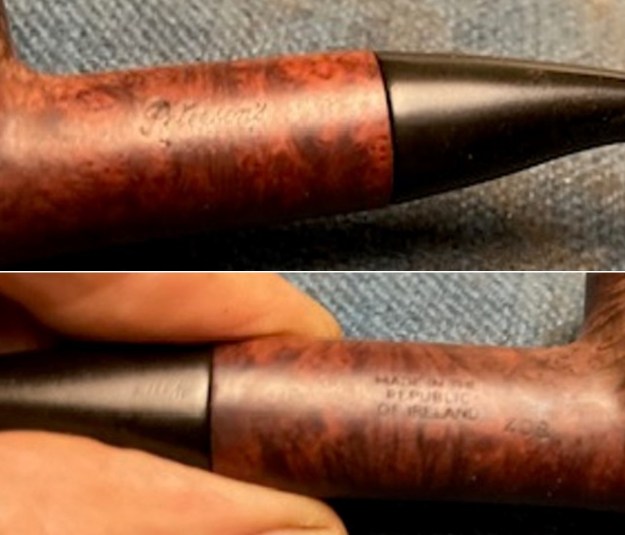
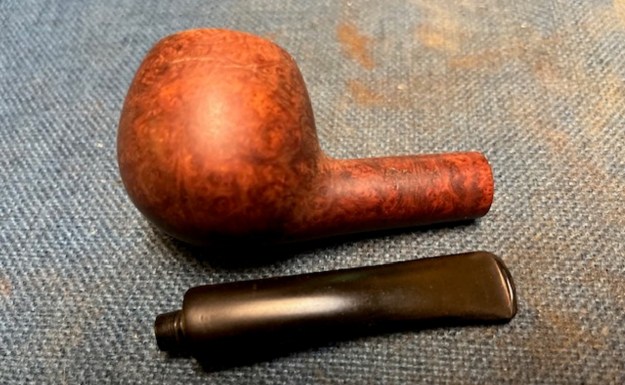
Jeff went to the house and looked through the racks, pipe bags, tobacco both bulk and tinned as well as a variety of pipes. All the pipes were well smoked and needed serious cleaning. One the pipes he picked up was this Peterson’s Kildare 408 Apple with a black vulcanite replacement fishtail stem. It was very dirty and was a natural coloured pipe when it started. The smooth finish around the bowl was dirty and had hand oils ground into the grooves. The bowl had a thick cake that overflowed in lava onto the rim edge and top of the bowl. The stem was a replacement vulcanite one that was very dirty and had the marks of a rubber Softee Bit on the end. It had become discoloured and there was a line where the debris from smoking had accumulated along the edge and under the bit protector. The good news was that there were no tooth marks or chatter. The rest of the stem was dirty and had lost the characteristic shine. I really did not matter as I would be replacing it with a P-lip stem. The pipe was stamped on the left side of the shank and read Peterson’s [over] Kildare and on the right side it read Made in the [over] Republic [over] of Ireland (in three lines) and next to that was the shape number 408 next to the shank/bowl joint. Jeff took photos of the pipe so I could have a sense of what it looked like before he started his work on it.Jeff took photos of the stem surfaces and the bowl and rim to give a sense of condition of the pipe. You can see the thick cake in bowl and the lava overflow on the edges and rim top of the bowl. It is had to know if there is any damage as the cake and lava is quite thick. The stem surface is very dirty and you can see the area on the end of the stem where the Softee Bit had protected it from chewing but had left it dirty and discoloured. He also took photos of the sides of the bowl and the heel to show the interesting grain that went around the bowl. The grain is beautiful. You can see the oils and debris ground into the finish of the bowl. He took photos of the stamping on the sides of the shank. It is faint but still is readable as noted above. I reread Pipedia’s article on Peterson pipes. It is a great read in terms of the history of the brand (https://pipedia.org/wiki/Peterson). I am quoting nothing specifically from that article but recommend you take time to read it.

I turned to “The Peterson Pipe” by Mark Irwin and Gary Malmberg to get some background on the Peterson’s Kildare Line. It has become my go to any time I want information on the brand. On page 314 it had the following information on the Kildare Line.

Kildare (1965-) First issue of line with matte-finish in Classic Range shapes, P-Lip and fishtail mouthpiece. Second issue C.1979 as Kildare Patch, with rusticated patches on pipe surface. Third issue 2010, matte-brown, P-Lip or fishtail mouthpiece, no band. Fourth issue 2011-, burgundy sandblast finish, nickel army mount, fishtail mouthpiece, exclusive to smokingpipes.com.

The information given above identifies the pipe as a First Issue of the line with a matte-finish. It would have been issued between 1965 and 1979. This line was issued is a brown finish with either a P-lip or a fishtail mouthpiece. This means that the pipe is an older issue Kildare. The 408 shape number is attached to a ¼ bent Apple.

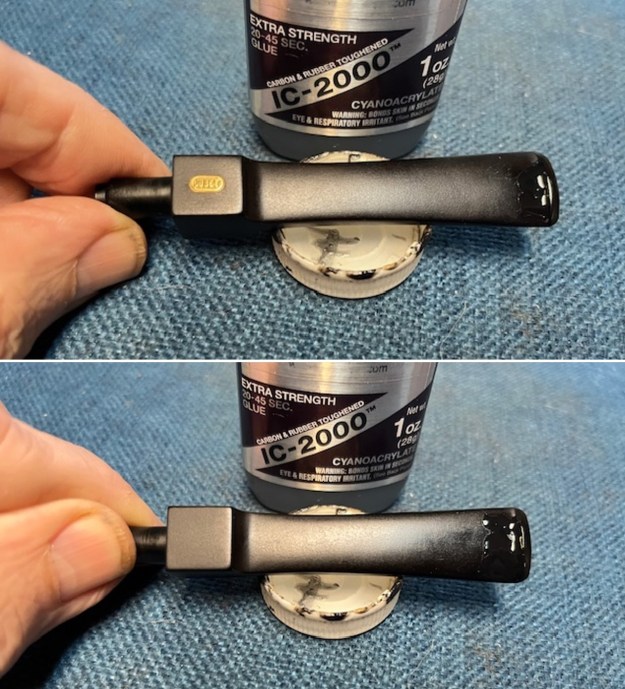
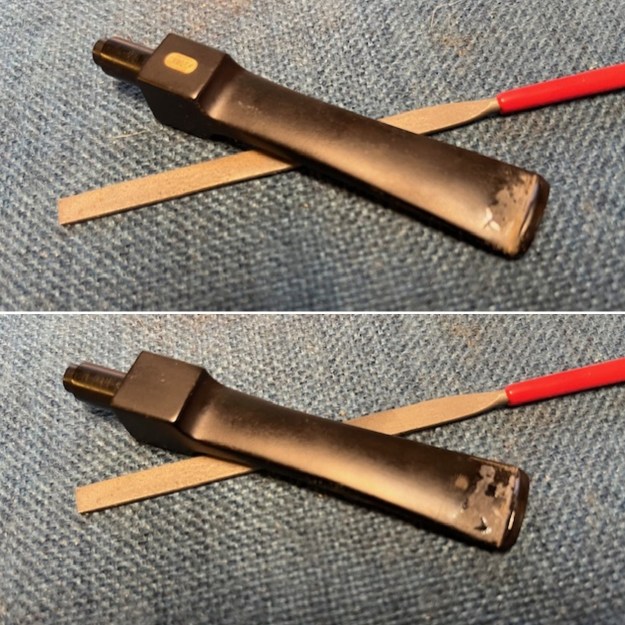
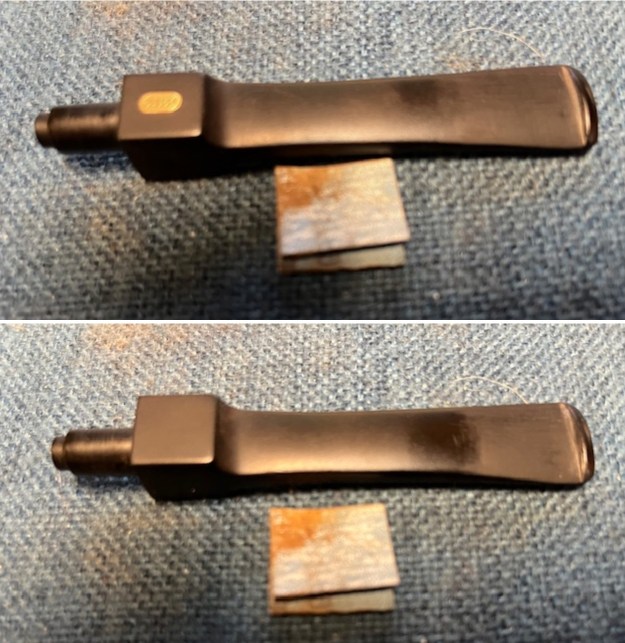
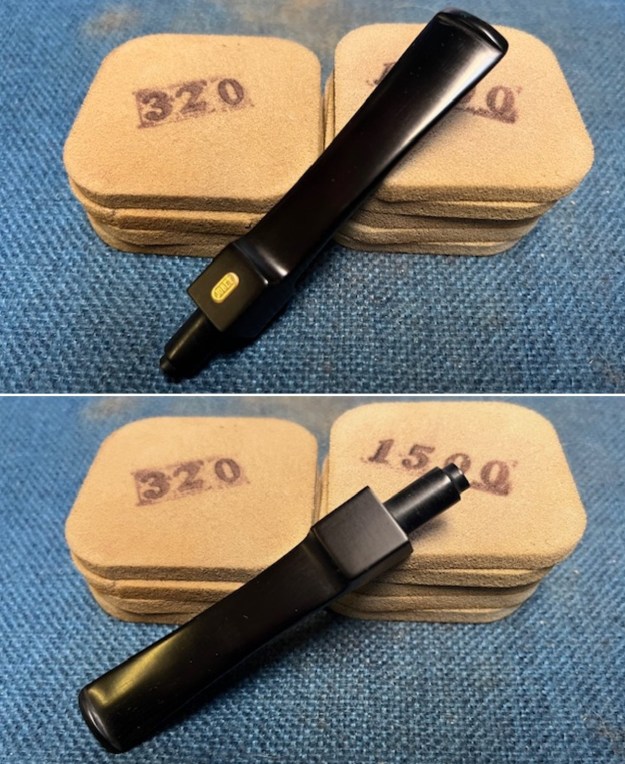
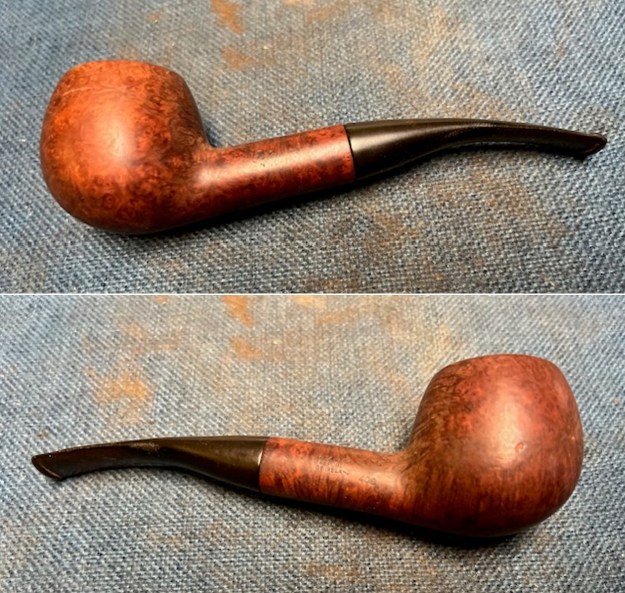
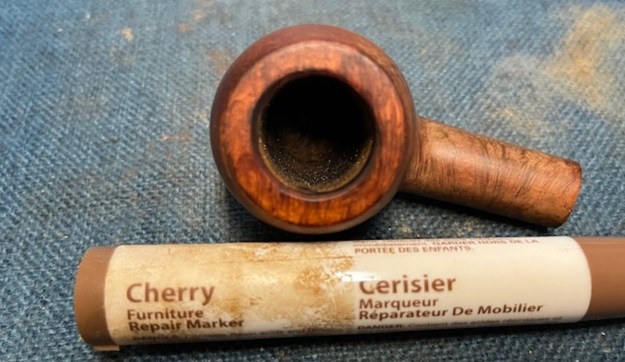
Now it was my turn to work on the pipe. Jeff had done an amazing cleanup of the pipe. It was a real mess and I wondered what it would look like after his work. He reamed the heavy cake with a PipNet reamer and cleaned up that with a Savinelli Fitsall Pipe Knife. He scrubbed the internals of the bowl and stem with alcohol, cotton swabs, shank brushes and pipe cleaners. He scrubbed the externals with undiluted Murphy’s Oil Soap and rinsed the bowl off with running water. He soaked the stem in Briarville’s Pipe stem Deoxidizer and once it had soaked rinsed it off with warm water to remove the residual solution. He dried it off and rubbed it down to remove any oxidation that was still on the stem. The scratches in the briar stood out once clean. There were some on the left side toward the top of the bowl that appear in the first photo below. Overall the pipe looked good when I received it. I took a photo of the rim top to show the condition. You can see the clean bowl. The bowl is in excellent condition and the rim top shows some darkening and some damage on the inner edge of the bowl and the outer edge as well. The misfit stem came out looking quite good, but since I would replace it in the restoration process I will add it to my cans of stems once I fit a new one to this pipe. I took photos of the sides of the shank to show the stamping. The photo clearly shows the faint stamping though it is actually more readable in person. I removed the stem from the shank and took a photo of the pipe parts to show what I was working with. The very short tenon is visible in the photo and was only one of the issues with this replacement stem. I set aside the bowl and turned my attention to the stem. I had decided to replace the stem so I went through my stems for fine one. I wanted a straight P-lip style stem for the Peterson’s Apple. I went through my many stems and did not find one that would work with the diameter of the shank. I contacted Kenneth with the dimensions of the shank and he found several that were close. He graciously dropped them by on Sunday afternoon. In the bag he brought were several new Peterson replacement P-lip stems. I chose the taper stem below as my first choice. It had the right diameter and after the tenon was turned should work well. You can see the casting marks on the button area and tenon showing it as new stock.I have a tenon turning tool here that I often use to do this job. But for this one I decided to use the Dremel and a sanding drum to reduce the diameter of the tenon. It actually worked very well and I cleaned up the tenon with a file to remove the ridges of the sanding drum. The diameter was correct and the fit to the shank was perfect. Once the fit in the shank was right I used a lighter to heat the stem to give it the proper bend for the angle of the shank on this apple.I fit the stem on the shank and took photos of the new stem to give a sense of the new look. Personally, I like doing this as it gives me a chance to see it apart from a lens or on my desk top and assess the bend and the fit. I was happy with what I say. Now I needed to sand and shape the stem. I worked on the stem to remove the casting marks from the sides and the P-lip end with 220 grit sandpaper. I also removed some of the excess diameter on the top and underside of the stem to make the transition smooth. It definitely looked better at this point. Still lots to do.I started the polishing process on the pipe by sanding the stem and tenon with 320-3500 grit sanding pads. Each successive pad brought smoother shape and definition to the stem and tenon surface. It was starting to look very good.I polished the stem with micromesh sanding pads – 1500-12000 grit pads. I wiped them down with Obsidian Oil after each sanding pad. I used Before & After Pipe Polish – both Fine and Extra Fine to further polish the stem. I gave it another coat of Obsidian Oil and set aside for the product to absorb into the vulcanite. I set the stem aside finished with all but the buffing and turned my attention to the bowl. I cleaned up the inner edge bevel with a folded piece of 220 grit sandpaper. I lightly topped the bowl on a topping board with 220 grit sandpaper to minimize the damage on the top and outer edge of the bowl. Once finished it definitely looked better. I wiped the bowl down with cotton pads and acetone to remove the darkening on the bowl sides and begin the process of cleaning the surface in my check for damage and cracks to the bowl. It actually looked very good. I used a Cherry stain pen to restain the inner edge and rim top to match the rest of the briar before I started sanding it. Once it had been sanded the match should be perfect.I sanded the bowl with 320-3500 grit sanding pads to remove the scratching and marks on the bowl surface and top and underside of the shank. I wiped it down after each pad with a damp cloth and by the end the bowl really began to show some promise. I carefully avoided the stamping on the shank sides. I polished the briar with micromesh sanding pads. I dry sanded it with 1500-12000 grit sanding pads and wiped the bowl down after each pad with a damp cloth. By the final pads the briar really had a shine. I rubbed the briar down with Before & After Restoration Balm. I worked it into the briar with my fingertips to work it into the finish. The product works to clean, enliven and preserve the briar. I let it sit for 10 minutes then I buffed it with a cotton cloth to deepen the shine. The briar really comes alive with the balm. I decided at the last minute to add a cosmetic thin brass band to the shank end. There was no need to do this in terms of damage to the stem or shank end. I just thought it would add a touch of bling to the pipe and give it a good interruption between the briar and the vulcanite. I heated the band and pressed it in place on the shank.It was great to finish this older (1965-79) Republic Era Peterson’s 408 Apple. I put the bowl and the newly fit stem together and buffed it with Blue Diamond on the buffing wheel. I gave the bowl and the stem multiple coats of carnauba wax. I buffed the pipe with a clean buffing pad to raise the shine. I hand buffed the pipe with a microfiber cloth to deepen the shine. It is fun to see what the polished bowl looks like with deep sandblast all around it. Added to that the polished black vulcanite stem was beautiful. This Peterson’s Kildare 408 Apple is great looking and the pipe feels great in my hand. It is light and well balanced. Have a look at it with the photos below. The dimensions are Length: 5 ¾ inches, Height: 1 ¾ inches, Outside diameter of the bowl: 1 ¼ inches, Chamber diameter: 7/8 of an inch. The weight of the pipe is 56 grams/1.98 ounces. It is a beautiful pipe and one that will soon be on the rebornpipes store in the Irish Pipe Makers Section of the store. If you want to add it to your collection let me know. Thanks for walking through the restoration with me as I worked over this pipe. Thanks to each of you who are reading this blog.

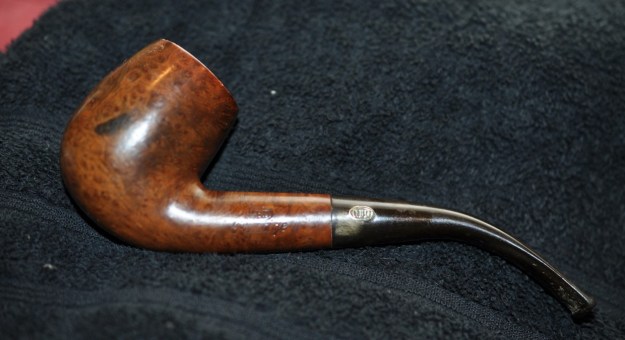
Restoring a Conway Aristocrat Made in England Bulldog


by Steve Laug

I picked some older pipes to work on next. The next of these is a Classic, Smooth Straight Bulldog with a Saddle Stem. We purchased this one on 09/20/2023 from a seller in Portland, Oregon, USA. The is a large straight Bulldog that is stamped on the top left side of the shank and reads Conway [over] Aristocrat. On the left side it is stamped Made in England. On the top left side of the saddle stem the Circle C logo of Conway was stamped. The pipe was well used. The finish was dirty with dust and debris in the smooth briar and in the twin rings around the rim cap. The bowl had a thick cake in it and heavy lava on the rim top and the inner edge. There was some damage on the left back of the rim top and om the bevelled inner edge of the bowl. The vulcanite stem was oxidized, calcified and had some tooth marks on the surface ahead of the button. Jeff took photos of the pipe before he started his cleanup work. He took some closer photos of the rim top and bowl to show the condition. You can see the thick cake in the bowl and the lava on the rim top and inner edge. You can see the chip on the outer edge at the back of the rim top. It is hard to know for certain but it looks like there is some roughening on the back inner edge. He also took photos of the stem to show its condition. You can see the oxidation, calcification and tooth marks and chatter. Jeff took some photos of the sides and heel of the bowl to show the condition of the finish on the bowl. The twin rings and bowl cap are quite well done and you can see the nicks and damage in the briar. He captured the stamping on the left top and right top side of the diamond shank. It is faint in spots but reads as noted above. It is interesting to note the nicks on the shank. The circle C logo stamped on the left side of the saddle stem is faded but the stamp is quite deep. I turned to Pipephil’s site (http://www.pipephil.eu/logos/en/logo-c6.html) to see what I could find out on the brand. I did a screen capture of the section on the site on the Conway label. It is a pipe that bears the same stamping as the one in hand here other than the shape number. I also copied the sidebar information below the screen capture.Conway pipes were most probably made by Singleton & Cole. If the pipe is stamped with a shape number this probability almost becomes a certitude. According to Wilczak & Colwell (op. cit.) Loewe had a line named Conway.

I turned to a link on Pipedia hoping for more information (https://pipedia.org/wiki/Conway). Sadly the only information was a mention of the information on Pipephil’s site. There were some amazing photos of the brand on the site. There was one that included an unsmoked Apple with a box and pipe sock as well as a brochure. The interesting point is that it was also an Aristocrat.Armed with that information that pipe was probably made by Singleton & Cole in London, England. I turned to work on the pipe itself. Jeff had cleaned up the pipe and it looked very good. He reamed the pipe with a PipNet pipe reamer and removed the rest of it with a Savinelli Fitsall Pipe Knife. He scrubbed the bowl with undiluted Murphy’s Oil Soap with a tooth brush. He rinsed it under running warm water to remove the soap and grime. He cleaned out the inside of the shank and the airway in the stem with alcohol, cotton swabs, shank brushes and pipe cleaners. He soaked the stem in Briarville’s Stem Deoxidizer and rinsed it off with warm water. I took photos of the pipe before I started my part of the restoration work. The rim top cleaned up really well. The rim top had some damage on the back left side of the top. The outer edge of the bowl look very good. The inner bevelled edge was clean but had some darkening all around the bowl. The stem surface was clean but the oxidation was still visible and calcification was gone. Overall it looked very good with a few tooth marks and chatter on both sides near the button.The stamping on top left side of the shank and the top right side is clear and readable. It is stamped as noted above. It is faint in spots but still clear. The logo on the left topside of the saddle is also clear. I removed the stem and took a photo of the pipe to give a sense of the whole. The wide taper stem is nice and the photo shows the proportions of the pipe. I used a wooden half sphere and a piece of 220 grit sandpaper to clean up the rim top and the bevel on the bowl. Once finished the inner edge looked better. I then topped the bowl with 220 grit sandpaper to remove the damage to the left side of the rim top. I took a photo of the top after this part of the work as well.I washed the bowl with cotton pads and acetone to remove some of the opaqueness of the stain. Once I washed it down it looked much better. The grain really stood out and I was able to add a bit of colour to the sanded rim top. I touched up the stain on the rim top with a Walnut stain pen to match the rest of the bowl colour. It matched well and once it was polished and buffed it would be perfect.I sanded the bowl and shank with 320-3500 grit sanding pads. I wiped the bowl down after each sanding pad to remove the debris. The pipe was beginning to look much better. I polished the smooth briar around outside of the bowl and the rim top with micromesh sanding pads. I sanded it with 1500-12000 grit pads and wiped the bowl down with a damp cloth to remove the sanding dust. I rubbed the bowl and shank down with Before & After Restoration Balm. I worked it into the surface of the bowl sides and shank with my fingertips and a horsehair shoe brush to get it into the rings and rustication. It works to clean, enliven and protect the briar. I let the balm sit for 15 minutes and buffed with a cotton cloth to raise the shine. The grain and the rustication came alive. I set the bowl aside and turned my attention to the stem. I “painted” the tooth marks with the flame of a lighter to lift them (forgot to take photos). The heat did a great job lifting all of them. The marks and chatter that remained I filled in with black CA glue strengthened with carbon and rubber. Once cured I flattened them with a file and blended them into the surface by sanding with 220 grit sandpaper. I touched up the Circle C logo on the left side of the stem with white acrylic nail polish. Once it cured I scraped off the excess and polished the stem.I polished the roughness, scratch marks and smoothed the stem with 320-3500 grit sanding pads. I wiped the stem down after each sanding pad with an Obsidian Oil impregnated cloth. It removes the dust and also gives the sanding pads some bite. By the final pad it was looking quite good.I polished the vulcanite stem with micromesh sanding pads – 1500-12000 grit pads. I wiped it down with Obsidian Oil after each sanding pad. I used Before & After Pipe Polish – both Fine and Extra Fine to further polish the stem. I rubbed it down with a final coat of Obsidian Oil and let it dry. This Conway Aristocrat Straight Bulldog is a great looking pipe now that it has been restored. The style of rustication that is used around the bowl is quite beautiful and works well with both the shape and the polished vulcanite taper stem. I put the stem back on the bowl and carefully buffed the pipe with Blue Diamond on the buffing wheel using a light touch on the briar. I gave the bowl and the stem multiple coats of carnauba wax on the wheel and followed by buffing the pipe with a clean buffing pad. I hand buffed the pipe with a microfiber cloth to deepen the shine. The finished Conway Aristocrat Bulldog fits nicely in the hand and feels great. Give the finished pipe a look in the photos below. The dimensions of the pipe are Length: 5 ¾ inches, Height: 1 ¾ inches, Outside diameter of the bowl: 1 ¼ inches, Chamber diameter: 7/8 of an inch. The weight of the pipe is 47 grams/1.66 ounces. I will be putting it on the rebornpipes store in the British Pipemakers Section shortly. If you are interested in adding this pipe to your collection send me a message or an email. Thanks for reading this blog and my reflections on the pipe while I worked on it. I appreciate your support and time!