Monthly Archives: January 2019

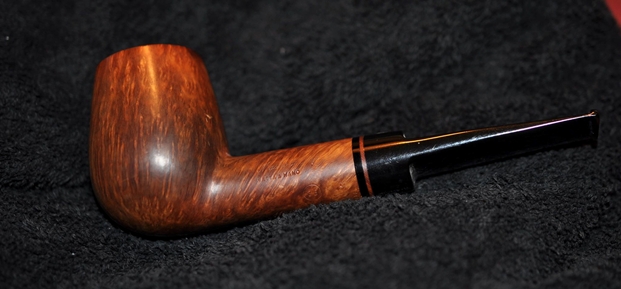
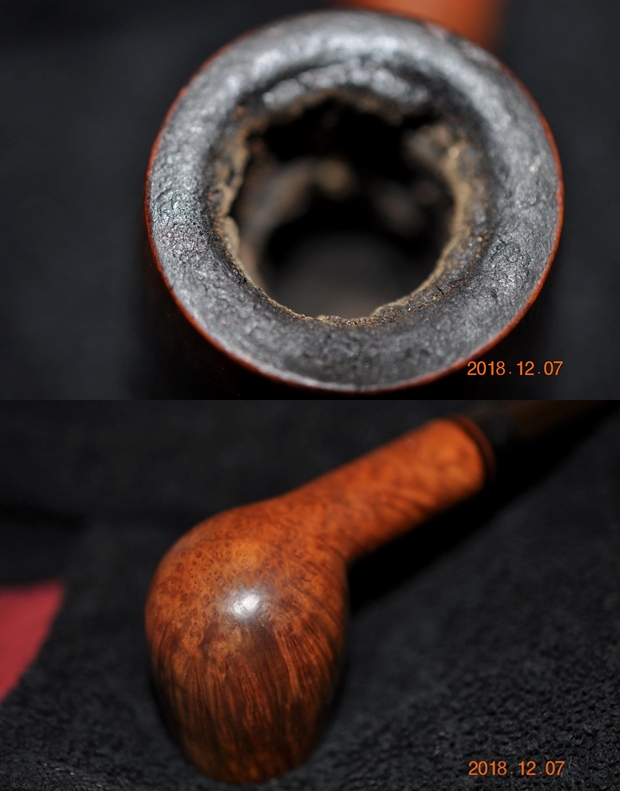
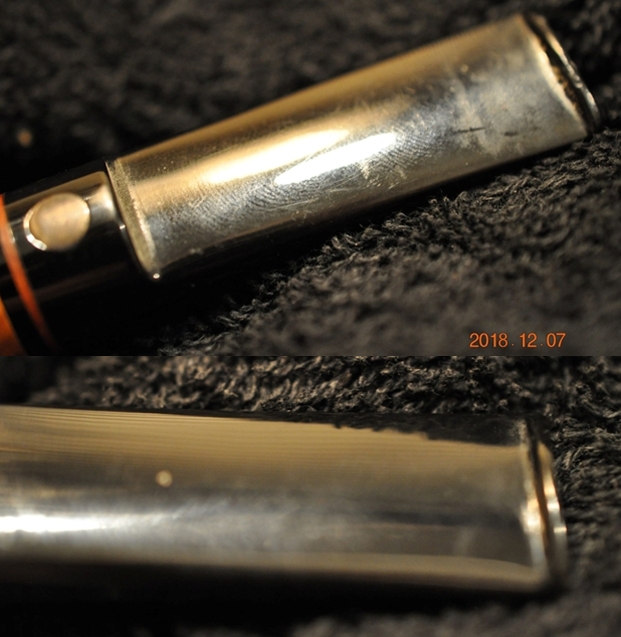
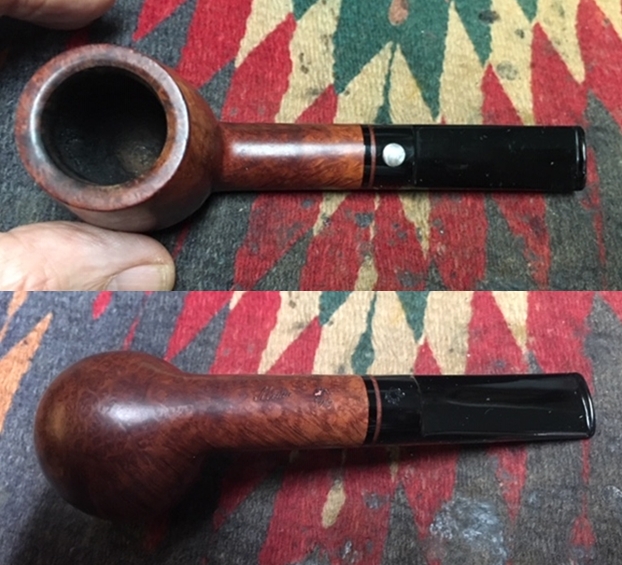
Restoring the 12th Pipe from Bob Kerr’s Estate – A Dunhill Shell Briar 197 F/T Billiard


Blog by Steve Laug

In my ongoing work on Bob Kerr’s Estate I seem to be making a dent. I am working my way through the Dunhills in his collection – the Shell and Tanshell pipes. I am cleaning them for the family and moving them out into the hands of pipemen and women who will carry on the trust that began with Bob and in some pipes was carried on by Bob. In the collection along with the Dunhills are a good bevy of Petersons, some Comoy’s and Barlings as well as a lot of other pipes – a total of 125 pipes along with a box of parts. This is the largest estate that I have had the opportunity to work on. I put together a spread sheet of the pipes and stampings to create an invoice. I was taking on what would take me a fair amount of time to clean up. I could not pass up the opportunity to work on these pipes though. They were just too tempting.

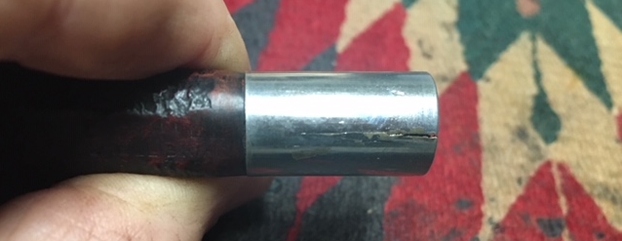
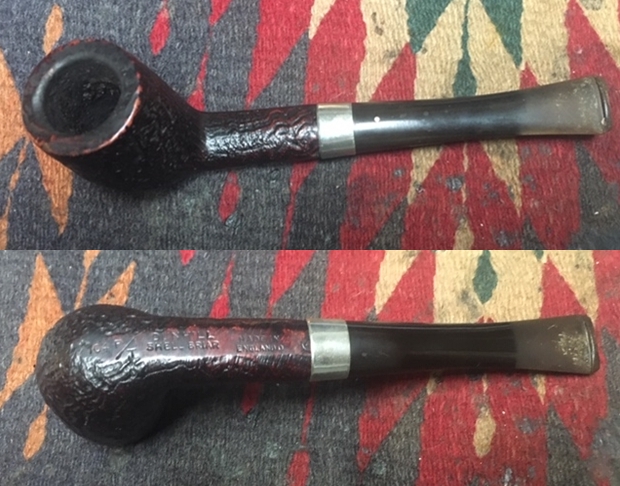
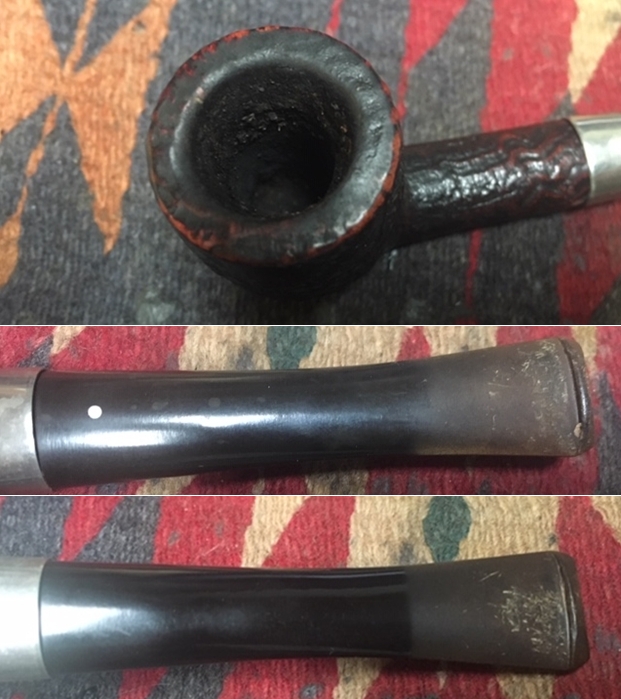
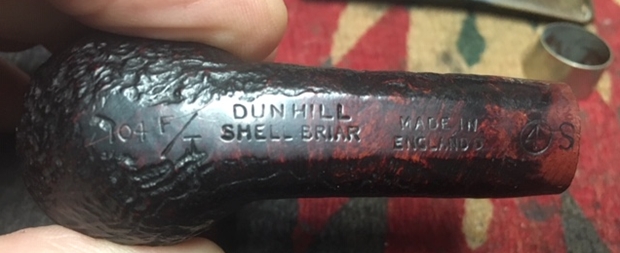
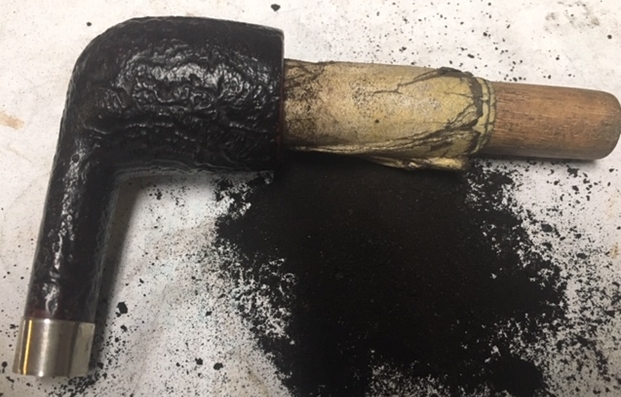
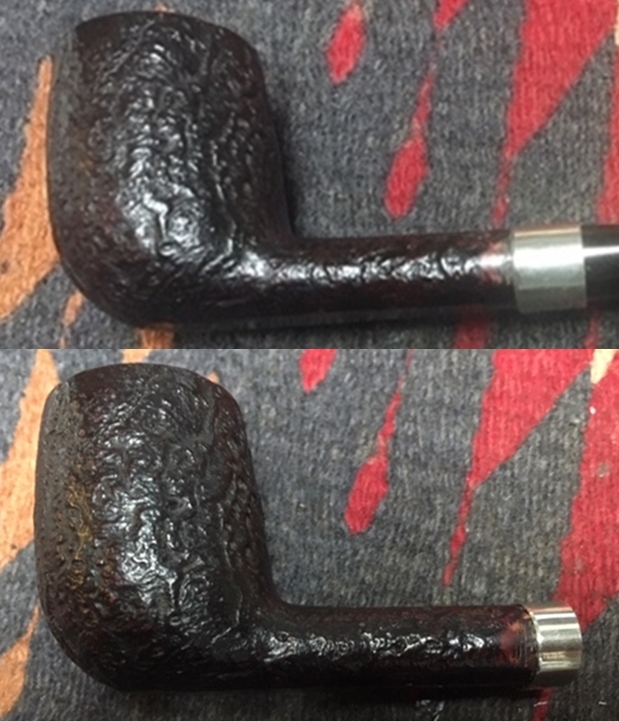
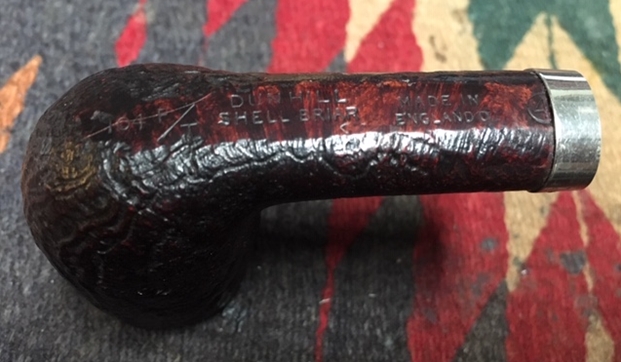
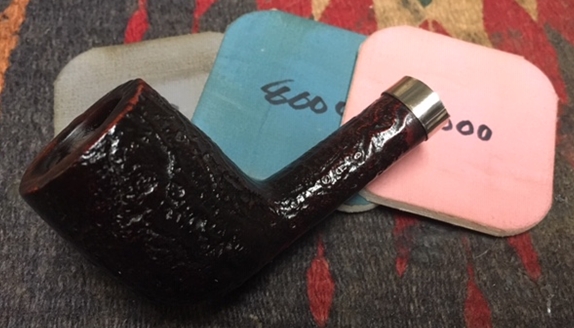
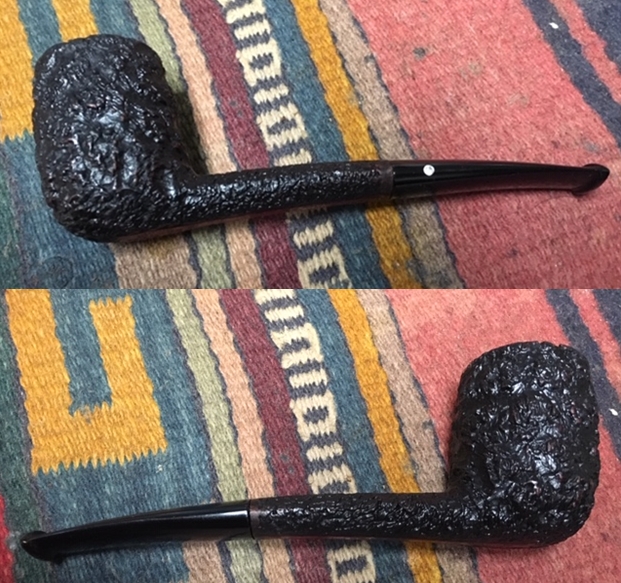
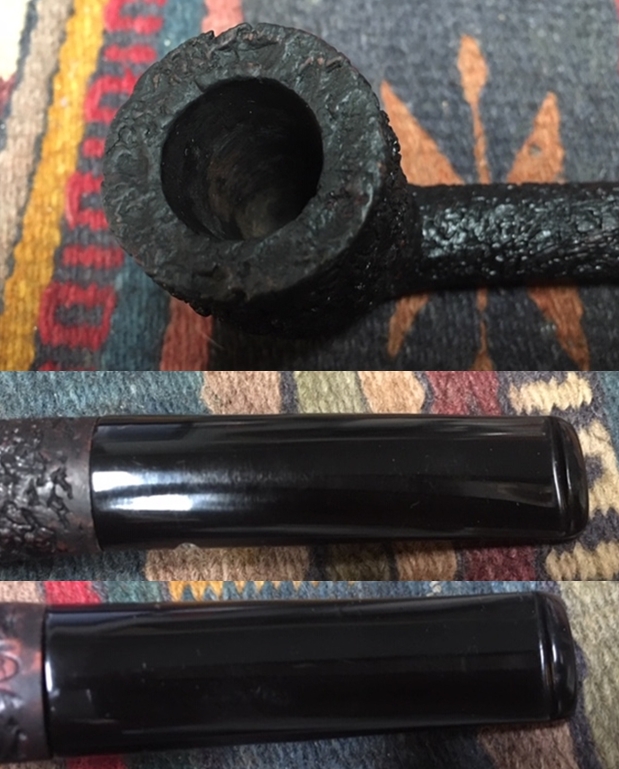
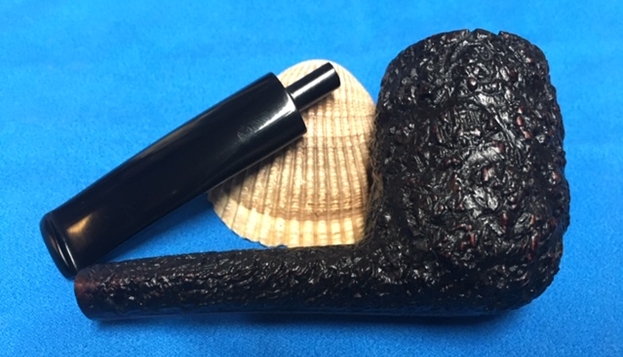
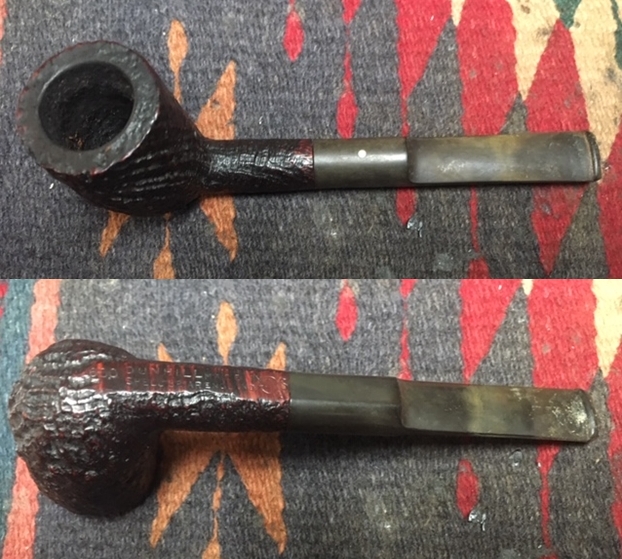
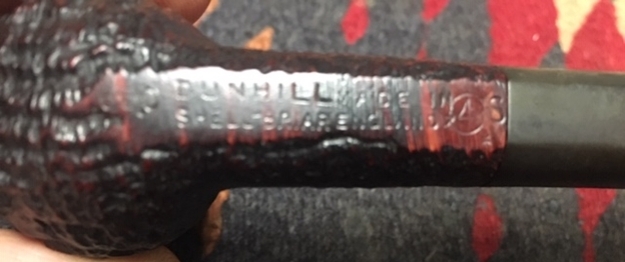
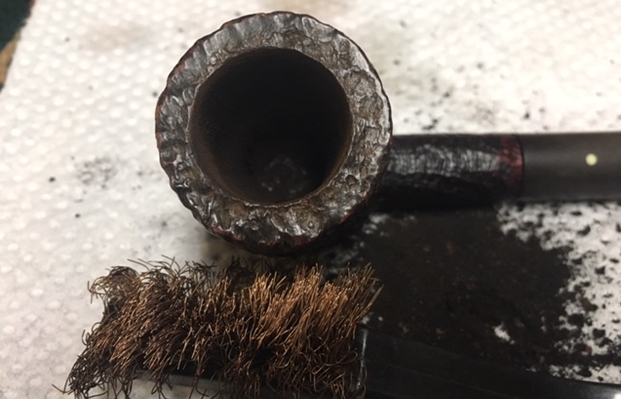
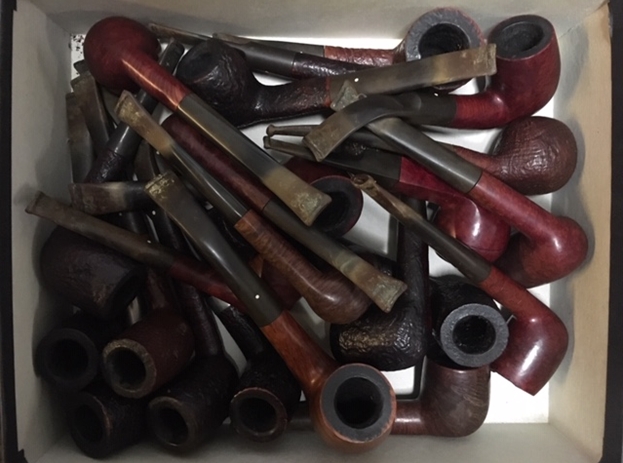
I sorted the pipes into groups of the various brands and had a box of 25 different Dunhill pipes in different shapes, styles and sizes. I decided to work on the Dunhills first. It was a great chance to see the shape variety up close and personal. The photo below shows the box of Dunhill pipes.I am making progress on the 25 Dunhills with only 13 more to go. I went through the box of Dunhills shown above and chose the 12th sandblast pipe to work on – another Group 4 Shell Billiard with a long repair band. It is stamped on the underside of the bowl heel and the shank with the following information. The shape number 197 F/T is on the heel followed by Dunhill over Shell Briar. The Made in England stamp and any size or date stamp has been obscured by the long repair band on a cracked shank covers the rest of the stamping so I cannot date it. The nickel band is split but since it is glued in place it is not movable and will be left as is. The nickel band is a bit overwhelming in terms of it being the first thing that catches the eye. There is not much to be done with that. The round shank and band however flow into a tapered fishtail stem that is oxidized and has tooth marks and chatter near the button. There is some calcification on the first inch of the stem ahead of the button and there is some light damage to the top of the button. The Shell Briar finish is dirty but nonetheless there is something quite beautiful about the repaired pipe. There is grime and tars filling in much of the craggy finish. The bowl had a light cake and some lava overflowed on the rim top. Bob had gone to a lot of work to repair this one and keep it in his rotation. I think there is still a lot of life left in this little billiard. With a little work this pipe would look good once again. I took pictures of the pipe before I started working on it. I took some close up photos of the rim top, stem and the banded shank to show what I was dealing with. Judging from the condition this little billiard was in and the amount of work that went into banding and repairing the shank, I think I can safely say that it was another one of Bob’s favourite pipes. The cake in the bowl not quite as thick and the lava on the rim top was less so it makes me wonder how long after he repaired it that he actually used this pipe. You can see the cake and tobacco in the bowl. The stem was dirty, oxidized, calcified and had a lot of tooth chatter on the top and underside for about an inch ahead of the button. You can see the length of the nickel band on the shank but what you cannot see is what is visible with a light down the shank. The band holds together several cracks in the shank. They have been well repaired and the band has been glued in place and fitted nicely to the shank.I took a photo of the underside of the band to show the split in the nickel. It is smooth and has been glued to the shank so it is not easily removable and also not necessary to remove. I will need to fill in the crack and sand and polish it smooth.I took a photo of the stamping on the underside of the bowl and shank. It was weak but still readable.
I am sure if you have read the restoration work on the previous pipes you have already read what I included about Bob Kerr, the pipeman who held these pipes in trust before I came to work on them. Also, if you have followed the blog for long you will already know that I like to include background information on the pipeman whose pipes I am restoring. For me, when I am working on an estate I really like to have a sense of the person who held the pipes in trust before I worked on them. It gives me another dimension of the restoration work. I asked Brian if he or his wife would like to write a brief biographical tribute to her father, Bob. His daughter worked on it and I received the following short write up on him and some pictures to go along with the words. Thank you Brian and tell your wife thank you as well.

I am delighted to pass on these beloved pipes of my father’s. I hope each user gets many hours of contemplative pleasure as he did. I remember the aroma of tobacco in the rec room, as he put up his feet on his lazy boy. He’d be first at the paper then, no one could touch it before him. Maybe there would be a movie on with an actor smoking a pipe. He would have very definite opinions on whether the performer was a ‘real’ smoker or not, a distinction which I could never see but it would be very clear to him. He worked by day as a sales manager of a paper products company, a job he hated. What he longed for was the life of an artist, so on the weekends and sometimes mid-week evenings he would journey to his workshop and come out with wood sculptures, all of which he declared as crap but every one of them treasured by my sister and myself. Enjoy the pipes, and maybe a little of his creative spirit will enter you!

I have included one of Bob’s wood carvings to give you an idea of what he daughter wrote about above. You can see his artistry in the carving that is patterned after British Columbia’s Coastal First Nations people. To me this is a sea otter but perhaps a reader may enlighten us.

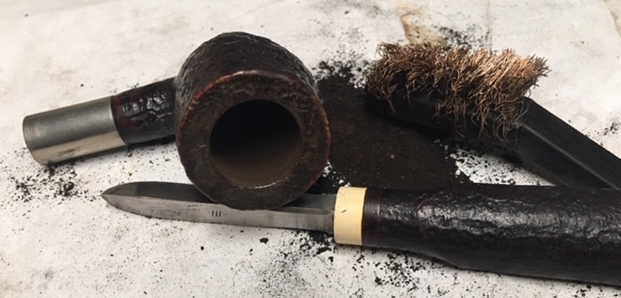
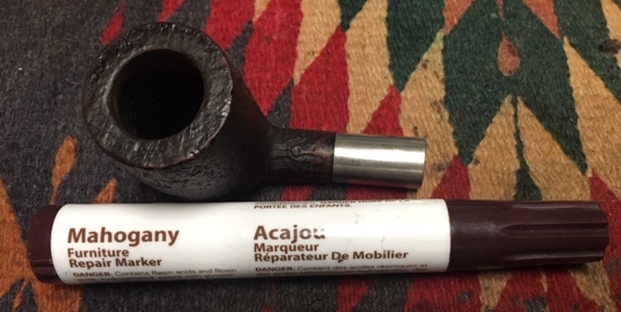
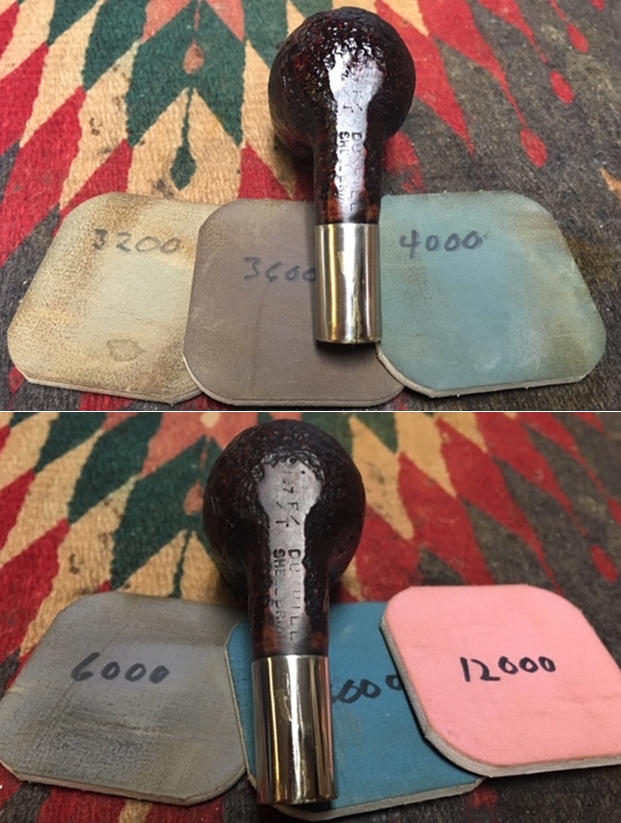
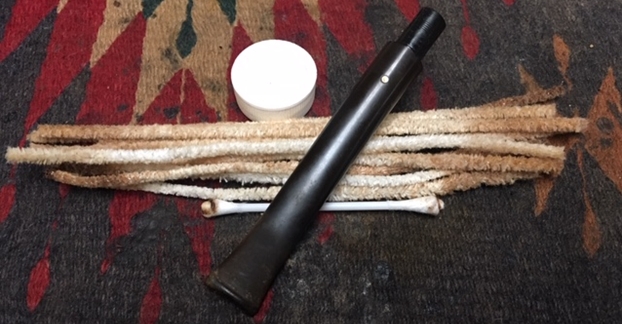
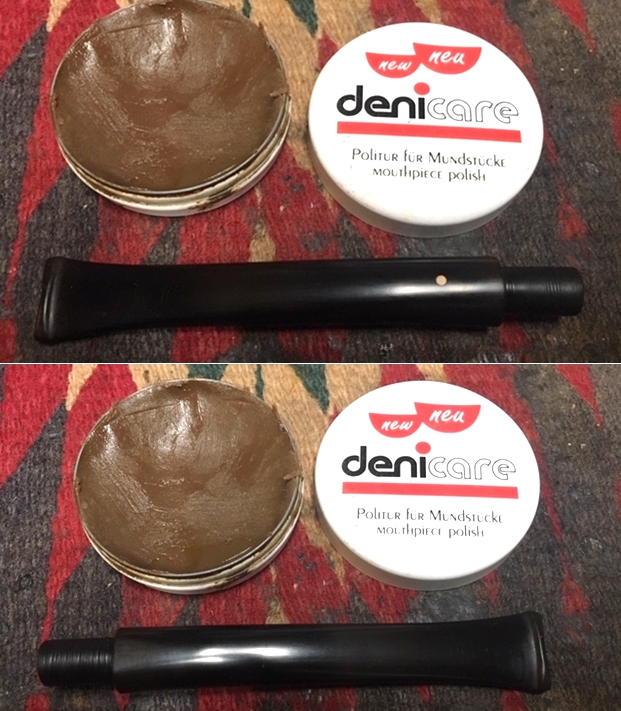
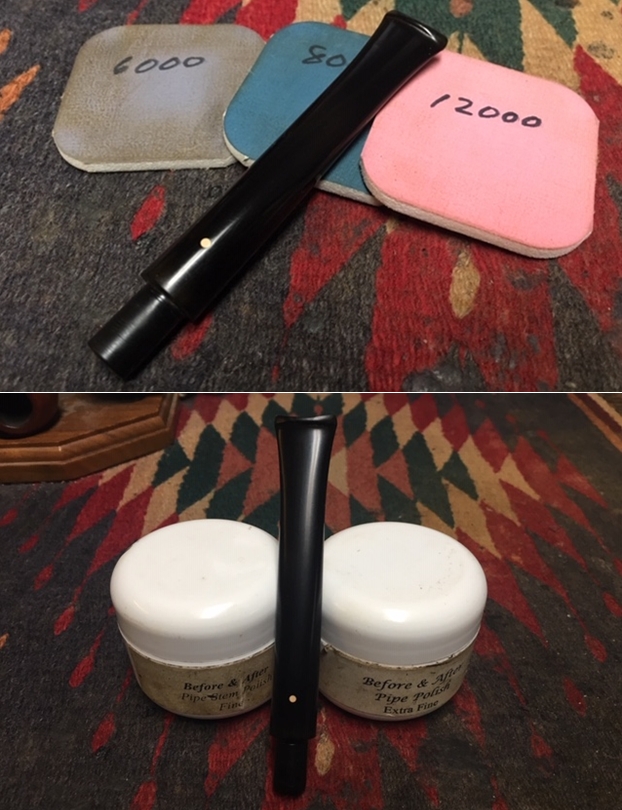
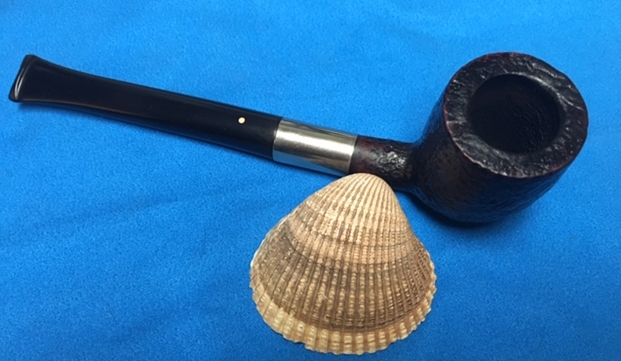
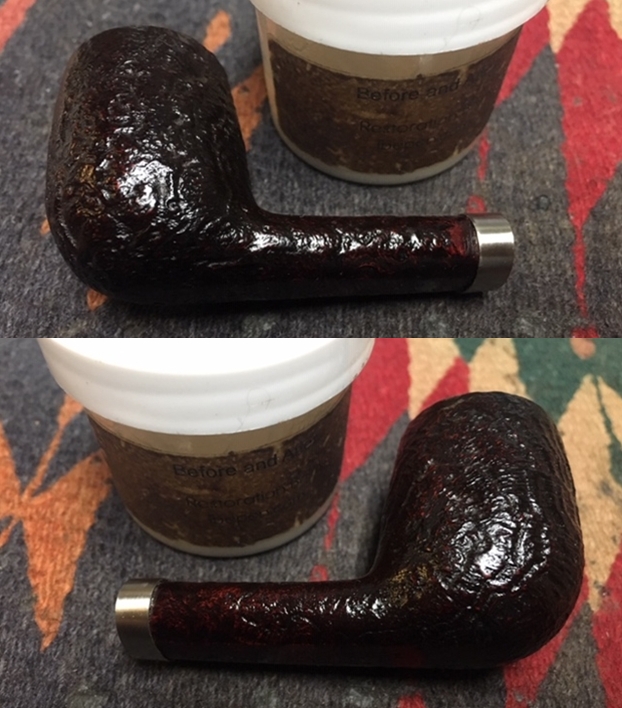
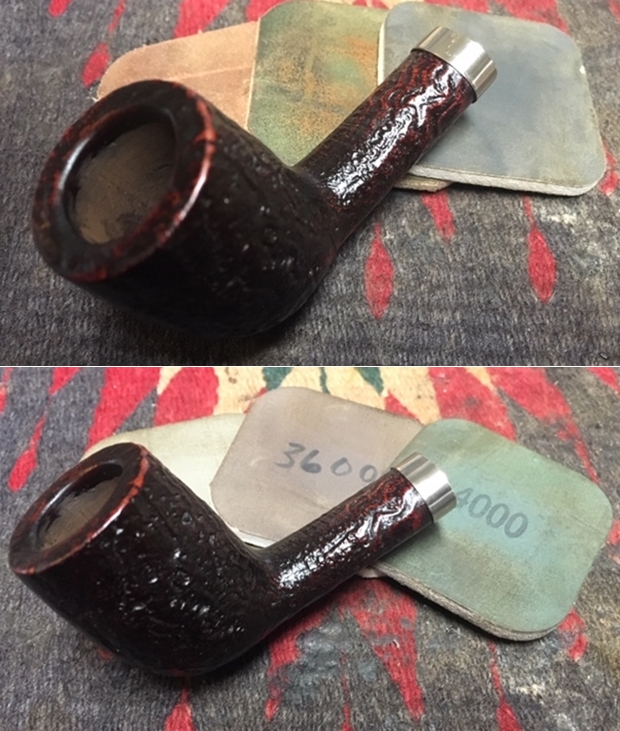
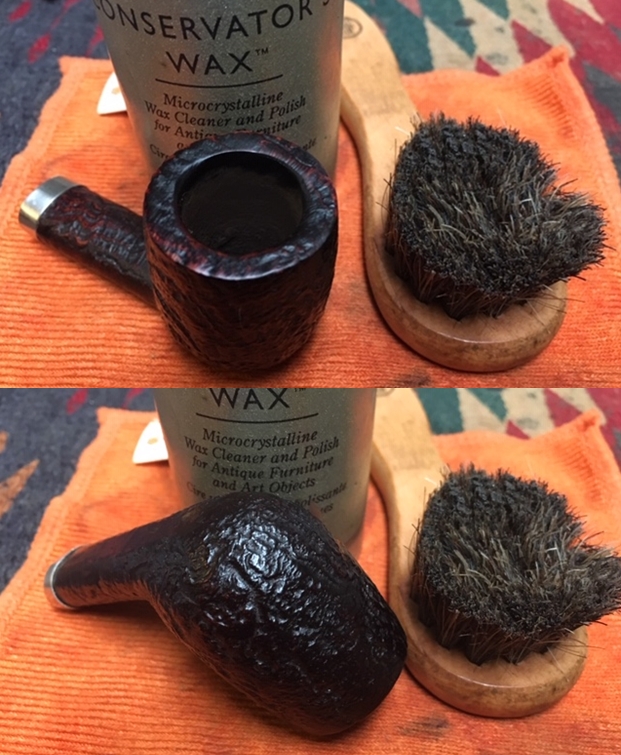
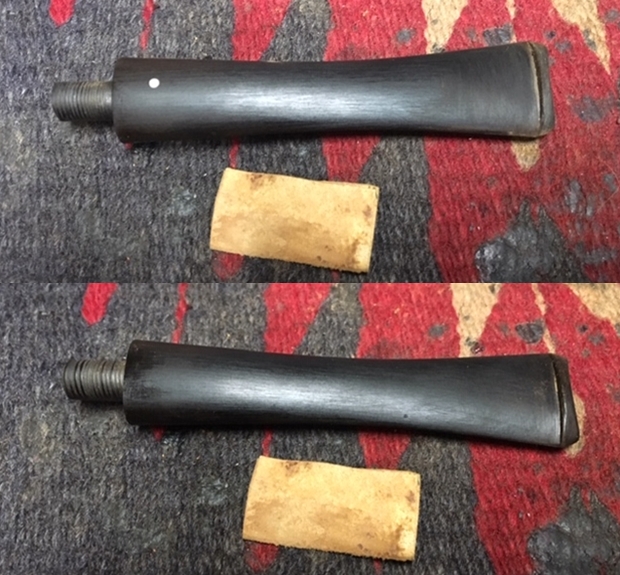
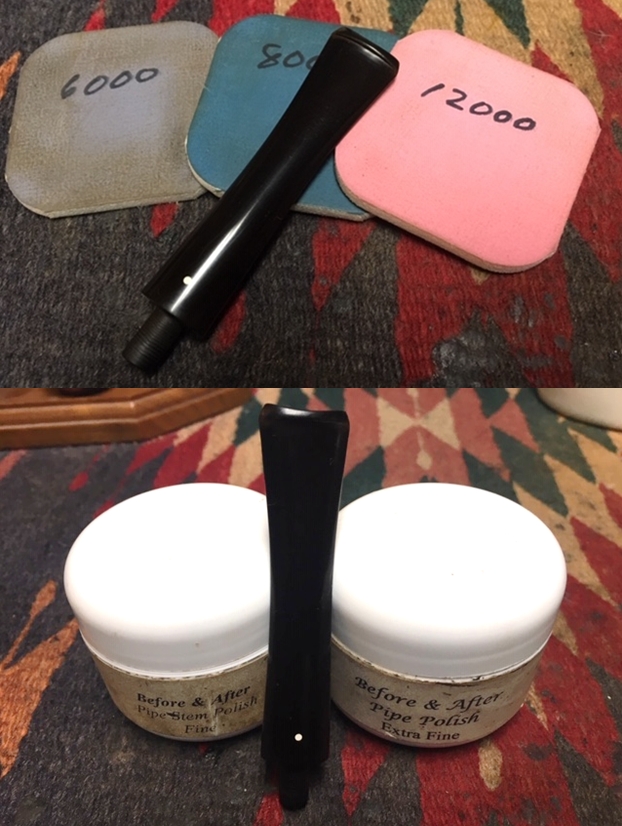
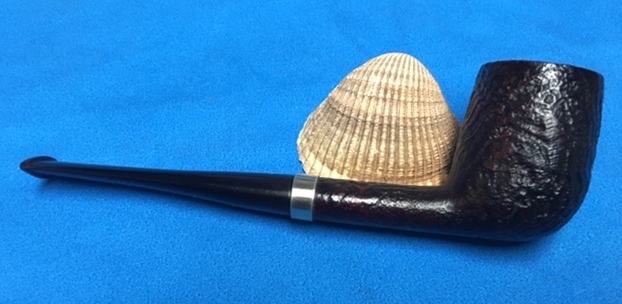
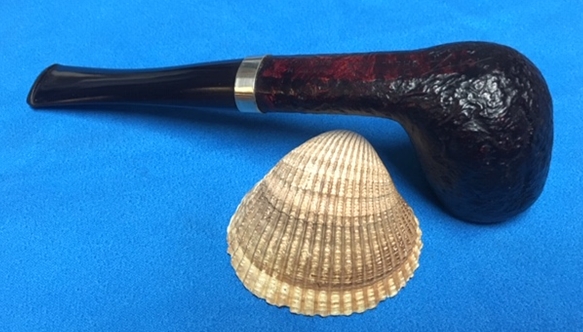
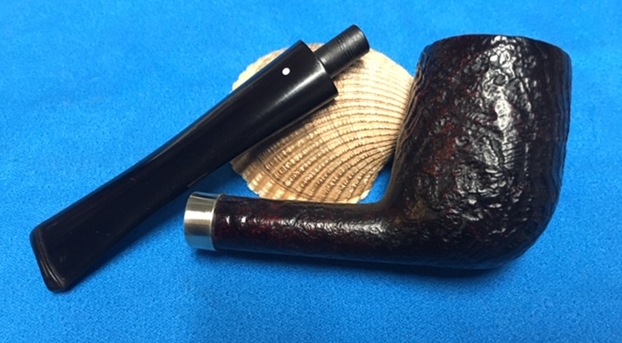
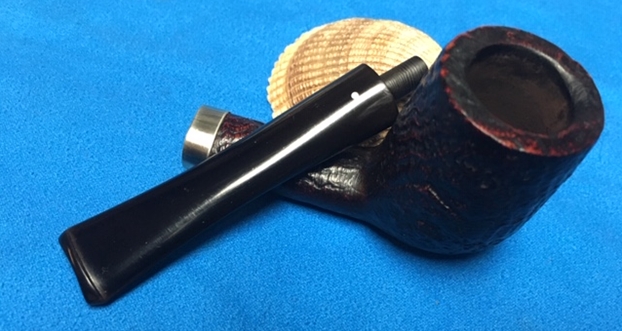
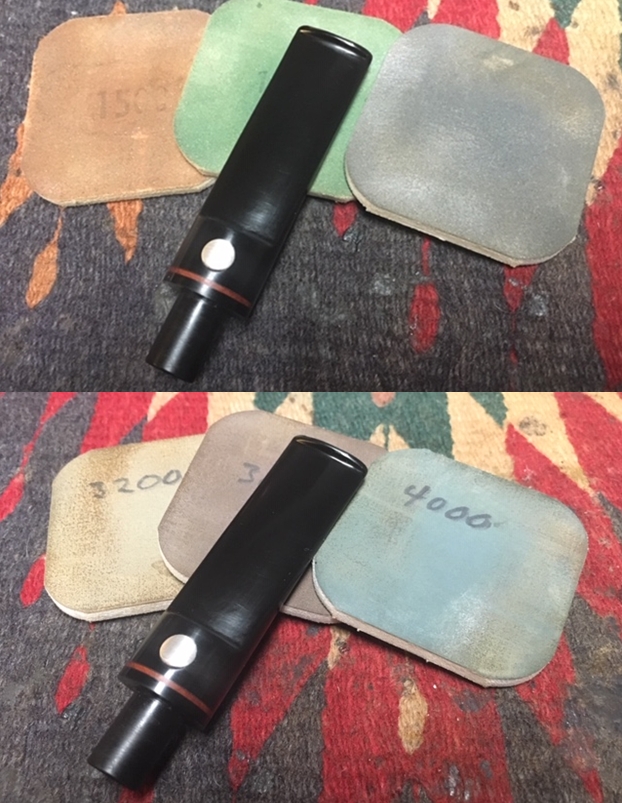
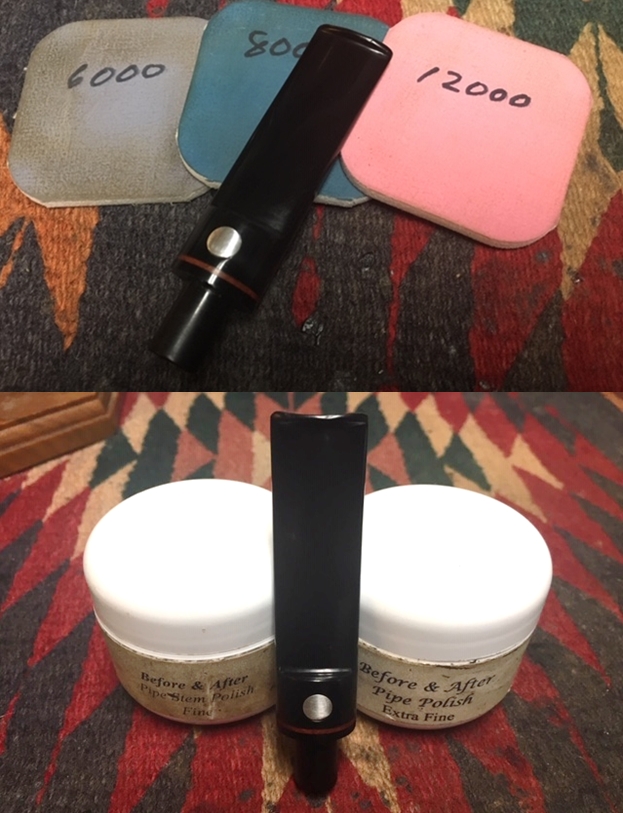
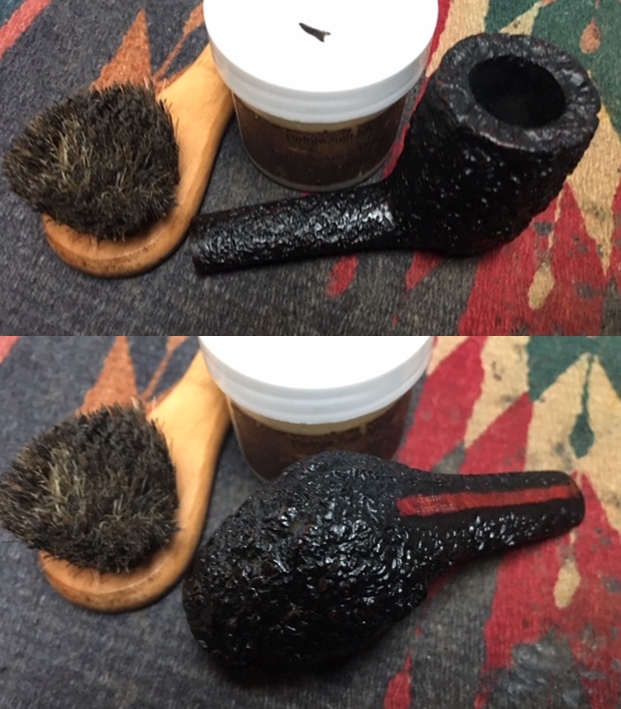
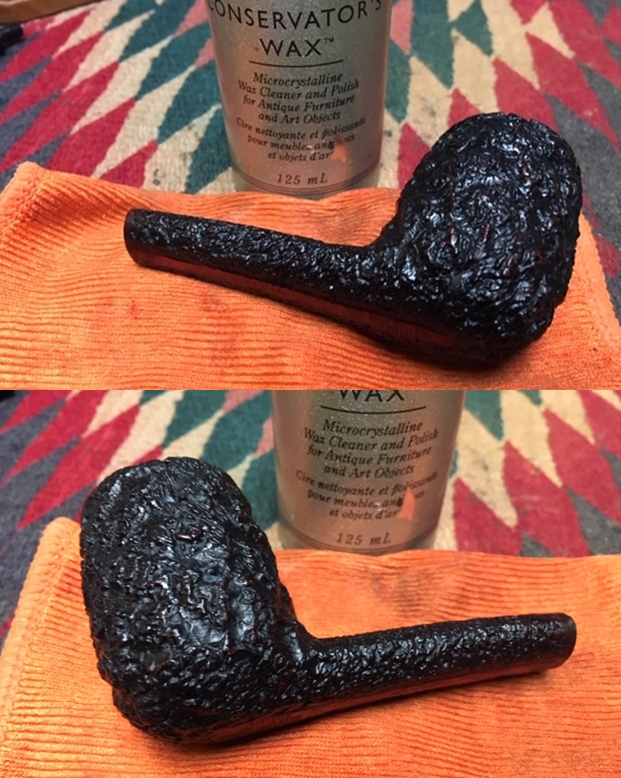
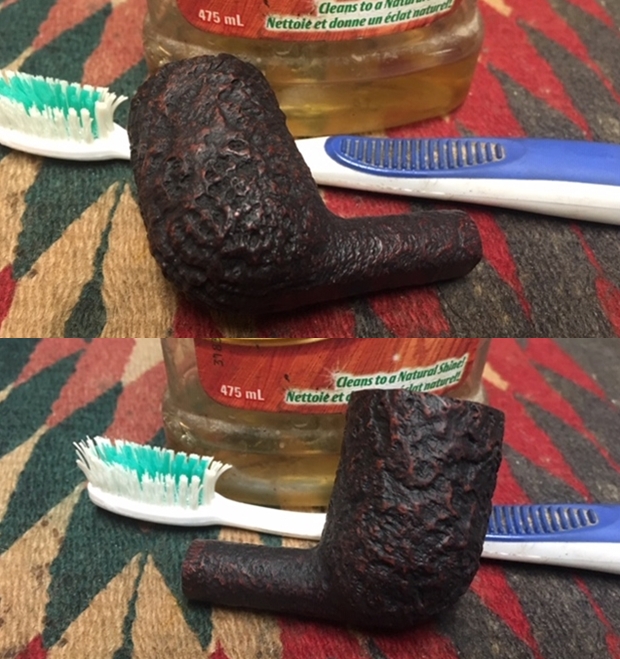
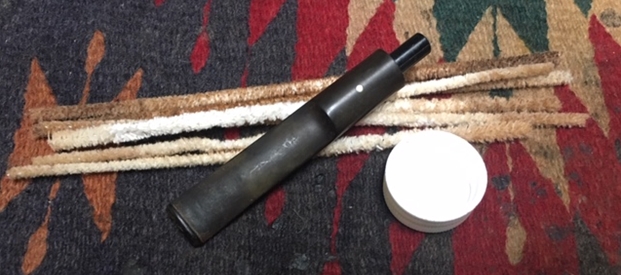
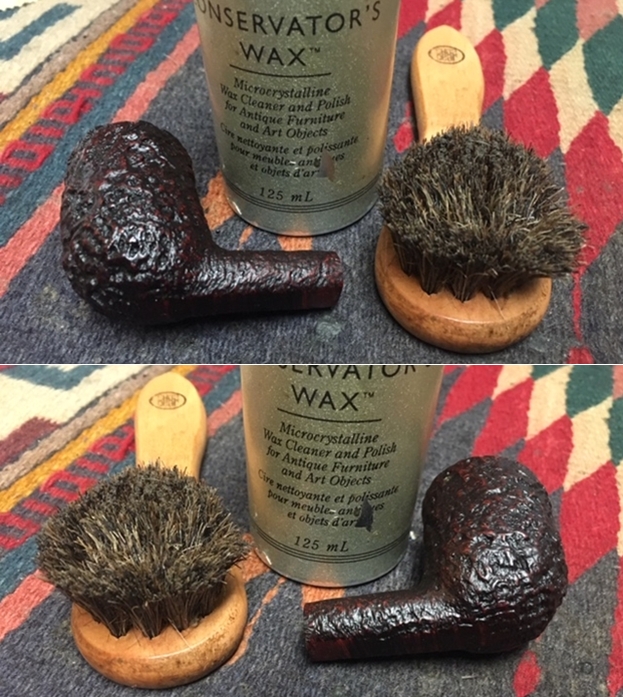
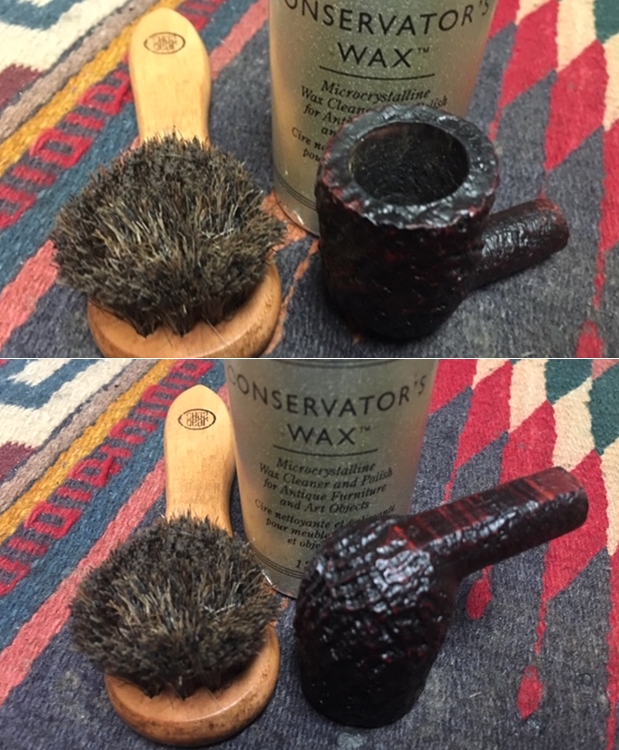
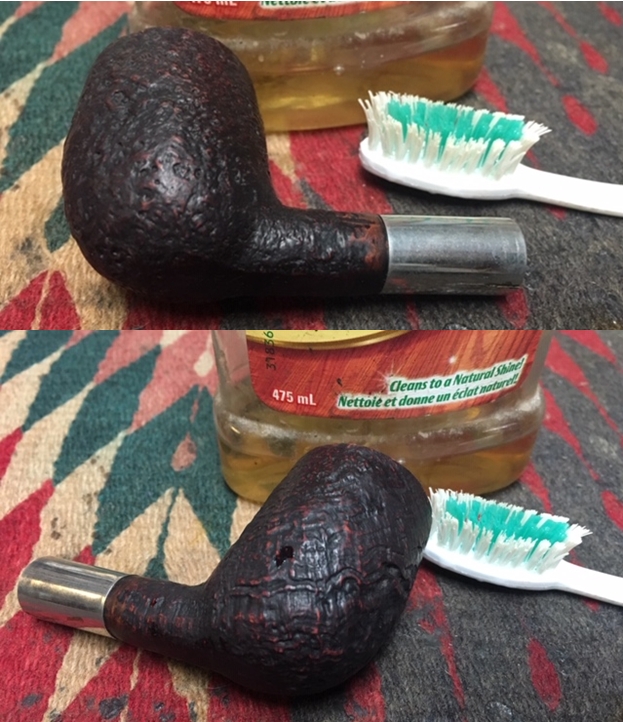
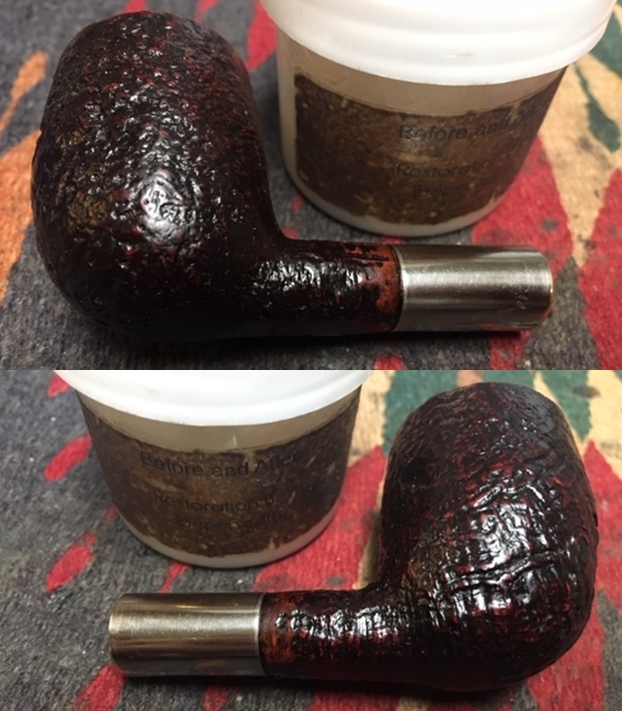
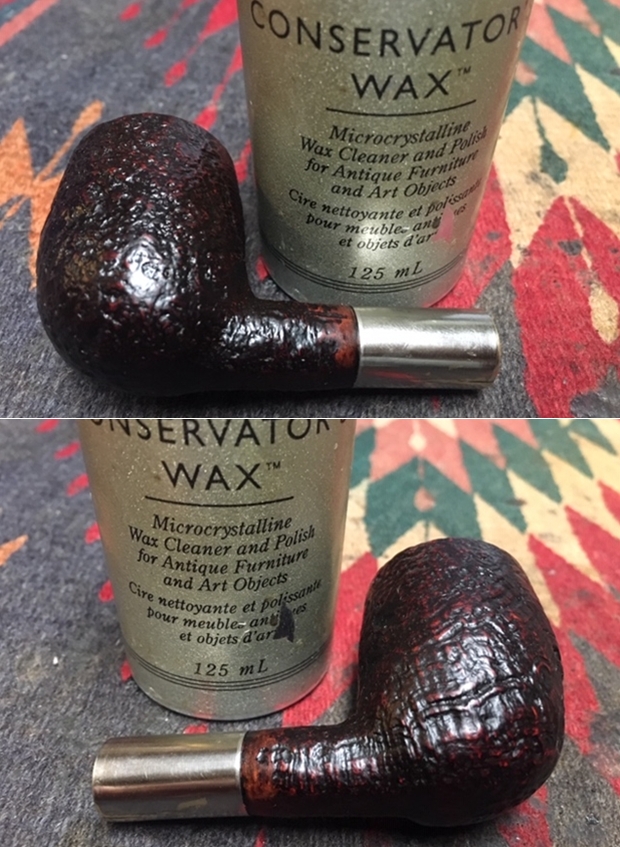
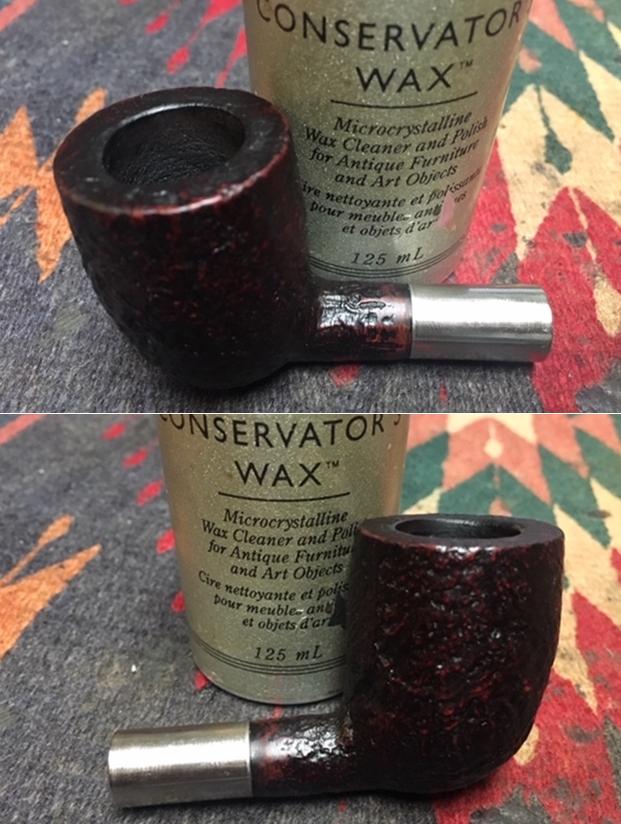
Having already worked on 11 other pipes from Bob’s estate I had a pretty good feel for how he used and viewed his pipes. I am coming to the end of the Shell and Tanshell pipes (2 more to go). I learned to tell which pipes were his favoured ones and which were his work horses. I could get a sense of the ones that accompanied him into his carving shop. In many ways it was as if he was standing over my shoulder while I cleaned up his pipes. With that in mind I turned to work on the 12th of his pipes. I reamed the bowl to remove the cake on the walls and the debris of tobacco shards that still remained. I used a PipNet pipe reamer to start the process. I followed that with a Savinelli Fitsall Pipe Knife to clean up the remaining cake in the conical bottom of the bowl. I sanded the bowl with 220 grit sandpaper wrapped around a piece of dowel. It smooths out the walls and also helps bring the inner edges back to round. With the bowl reamed it was time to work on the rim top and remove the thick lava coat in the blast of the rim. I used the Savinelli Fitsall knife to scrape away the high spots of lava and a brass bristle tire brush to work on the rim top and remove the buildup there. It also worked to minimize the rim damage a bit.With the bowl reamed and rim top cleaned I scrubbed the sandblast finish. This is pretty much my process in cleaning either sandblast or rusticated finishes. I scrubbed it with undiluted Murphy’s Oil Soap and a tooth brush to remove the grime from the grooves and canyons of the blast. I worked over the tarry lava overflow on the rim with the tooth brush and a brass brush. I rinsed the pipe under running water to remove the grime. I dried it off with a soft towel. The pictures below show the finish after scrubbing and rinsing. The outer edges of the rim were in good condition but the finish was worn off so I used a Mahogany stain pen to touch up the rim top and edges. I have found that particular stain pen matches the colours on the Shell Briar quite well. It is transparent enough to let the other under colours show through and blends in well with the existing stain.I decided to work on the crack in the nickel band first. I fill in the small open areas with clear super glue. It has the advantage of not only being clear but will also flow underneath the band bonding it to the briar. Once the glue cured I sanded the repaired area with micromesh sanding pads to smooth it out. I polished the band with the micromesh pads – wet sanding with 1500-2400 grit pads and dry sanding with 3200-12000 grit pads. I wiped the band down with a cotton pad after each sanding. I worked some Before & After Restoration Balm into the sandblast finish of the bowl and the rim top. I worked it into the nooks and crannies of the sandblast surface with my fingertips to clean, enliven and protect the wood. I let the balm sit for about 20 minutes and buffed it off with a soft cotton cloth and then polished it with a horsehair shoe brush. I took photos of the pipe at this point in the process to show what the bowl looked like at this point. I scraped out the inside of the mortise with a dental spatula to break away the tarry buildup on the walls of the shank. I cleaned out the internals of the bowl, shank and the airway in the shank and the stem with alcohol, pipe cleaners and cotton swabs until they came out clean. It was very dirty in the shank and stem but now it not only looks clean but smells clean. I gave the bowl several coats of Conservator’s Wax and buffed it with a shoe brush after each coat of wax to raise the shine. The bowl looks really good at this point. The sandblast grain just shines and is showing all of the different layers of colour that make up a Dunhill Shell finish. I set the bowl aside and turned my attention to the stem. I sanded out the majority of the marks and tooth chatter on the surface of the vulcanite with a folded piece of 220 grit sandpaper. I followed the 220 grit sandpaper with 400 grit wet dry sandpaper to minimize the scratching. The two papers combined did a pretty decent job of getting rid of the tooth marks and chatter as well as the oxidation and calcification. As I work on this stem, I am pretty sure that the tenon is Delrin. That makes sense – a broken shank and a snapped tenon. It is not too often that I get to sing the praises of another repair person. But I have to because this repair guy was amazing. He did a great job on rebuilding this old guy and giving it life.I polished the stem with Denicare Mouthpiece Polish to take out the oxidation at the button edge and on the end of the mouthpiece. I also worked hard to scrub it from the surface of the stem at the tenon end.  I polished out the scratches with micromesh sanding pads – wet sanding with 1500-2400 grit pads and dry sanding with 3200-12000 grit pads. I wiped the stem down after each sanding pad with Obsidian Oil. I polished it with Before & After Pipe Stem Polish – both Fine and Extra Fine. Once I had finished the polishing I gave it a final coat of oil and set it aside to dry. I put the bowl and stem back together. I polished the bowl and stem with Blue Diamond to polish out the scratches in the briar, the nickel band and the vulcanite. I gave the bowl multiple coats of Conservator’s Wax and the stem multiple coats of carnauba wax. I buffed the pipe with a clean buffing pad to raise the shine. I hand buffed it with a microfiber cloth to deepen the shine. The pipe polished up pretty nicely. The contrast of colours that show up in the sandblast of the Shell briar bowl looked good with the polished black vulcanite. The long nickel band actually does not look too bad and this well repaired Shell Briar 197 F/T Billiard has a long life ahead of it for the next pipeman who takes on the trust of Bob’s pipes. It really has that classic Dunhill look that catches the eye. The finished pipe is shown in the photos below. The dimensions of the pipe are Length: 6 1/2 inches, Height: 1 7/8 inches, Outside diameter of the bowl: 1 3/8 inches, Chamber diameter: 3/4 of an inch. This is the 12th Dunhill and the 11th Shell from the many pipes that will be coming onto the work table from the estate. Thanks for reading this blog and my reflections on the pipe while I worked on it. I am having fun working on this estate.

New Year, New Challenge! Fitting a New Army Mount Stem to a Peterson K&P Irish Made X105


Charles did a great job. His methodology on this one is textbook. Well done.

Charles Lemon's avatar

Welcome to 2019, everyone! I hope it is a peaceful and prosperous year for all.

I’ve been putting off and putting off this particular job, but finally pulled myself together and sat down to get it done! On the worktable today is a Peterson K&P Irish Made X105 Army mount Billiard. It came from a pipe friend sans stem, with the request that I see what I could do with it to make it useable again. The stummel was in quite good condition – a little lava on the rim and a bit of old tobacco and cake in the chamber, but overall, the briar was in quite good shape.

These pics show what I had to work with:

20190101_13223420190101_13223820190101_132248

The stummel is stamped “K&P” over “Irish Made” on the left shank, and “Made in the” over “Republic” over “of Ireland” followed by the shape number, “X105” on the right shank…

View original post 822 more words

Restoring the 11th Pipe from Bob Kerr’s Estate – A Dunhill Shell Briar 104 F/T Oval Shank Billiard


Blog by Steve Laug

In my ongoing work on Bob Kerr’s Estate I seem to be making a dent. I am working my way through the Dunhills in his collection – the Shell and Tanshell pipes. I am cleaning them for the family and moving them out into the hands of pipemen and women who will carry on the trust that began with Bob and in some pipes was carried on by Bob. In the collection along with the Dunhills are a good bevy of Petersons, some Comoy’s and Barlings as well as a lot of other pipes – a total of 125 pipes along with a box of parts. This is the largest estate that I have had the opportunity to work on. I put together a spread sheet of the pipes and stampings to create an invoice. I was taking on what would take me a fair amount of time to clean up. I could not pass up the opportunity to work on these pipes though. They were just too tempting.

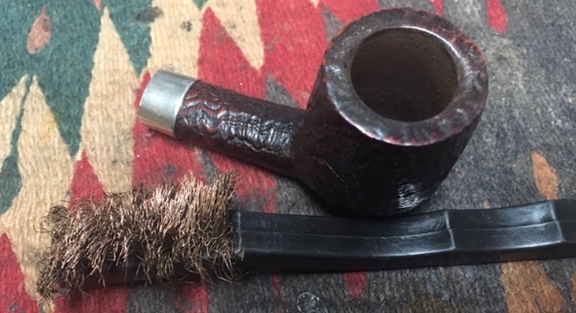
I sorted the pipes into groups of the various brands and had a box of 25 different Dunhill pipes in different shapes, styles and sizes. I decided to work on the Dunhills first. It was a great chance to see the shape variety up close and personal. The photo below shows the box of Dunhill pipes.I am making progress on the 25 Dunhills with only 14 more to go. I went through the box of Dunhills shown above and chose the 11th sandblast pipe to work on – another Group 4 Shell Billiard with an oval shank and tapered stem. It is stamped on the underside of the bowl heel and the shank with the following information. On the heel it reads 104F/T which is the shape number followed by Dunhill over Shell Briar. That is followed by Made in England 0 which would identify it as made in 1960. Next to the stem/shank junction (under the band) is a 4S which gives the size of this Shell pipe. Stem is oxidized, tooth marks and chatter near the button, some calcification. The oval shank of this billiard flows into a tapered stem that is oxidized and has tooth marks and chatter near the button. There is some calcification on the first inch of the stem ahead of the button and there is some light damage to the top of the button. The Shell Briar finish is dirty but nonetheless is beautiful. There is grime and tars filling in much of the craggy finish. The bowl had a thick cake and lava overflowed on the rim top. The inner edge of the bowl shows some damage but the extent will not be clear until the bowl is reamed and the rim top cleaned. The shank has a nickel repair band that really cheapens the look. It is loose so I plan on examining the shank carefully to see if it is really necessary or was just added as bling. With a little work this pipe would look good once again. I took pictures of the pipe before I started working on it. I took some close up photos of the rim top and stem to show what I was dealing with. Judging from the condition this little billiard was in I think I can safely say that it was another one of Bob’s favourite pipes. The cake in the bowl is another thick one and the lava on the rim top is also very thick. You can see the cake and tobacco in the bowl. The stem was dirty, oxidized, calcified and had a lot of tooth chatter on the top and underside for about an inch ahead of the button. The button surface was also marked with tooth chatter. I removed the loose band from the shank so I could read the stamping on the shank. I took a photo of the stamping on the underside of the bowl and shank. It was clear and readable.I am sure if you have read the restoration work on the previous 8 pipes you have already read what I included about Bob Kerr, the pipeman who held these pipes in trust before I came to work on them. Also, if you have followed the blog for long you will already know that I like to include background information on the pipeman whose pipes I am restoring. For me, when I am working on an estate I really like to have a sense of the person who held the pipes in trust before I worked on them. It gives me another dimension of the restoration work. I asked Brian if he or his wife would like to write a brief biographical tribute to her father, Bob. His daughter worked on it and I received the following short write up on him and some pictures to go along with the words. Thank you Brian and tell your wife thank you as well.
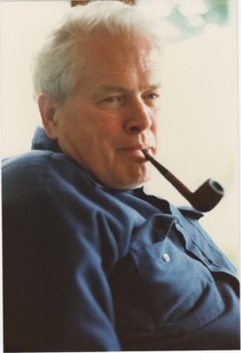
I am delighted to pass on these beloved pipes of my father’s. I hope each user gets many hours of contemplative pleasure as he did. I remember the aroma of tobacco in the rec room, as he put up his feet on his lazy boy. He’d be first at the paper then, no one could touch it before him. Maybe there would be a movie on with an actor smoking a pipe. He would have very definite opinions on whether the performer was a ‘real’ smoker or not, a distinction which I could never see but it would be very clear to him. He worked by day as a sales manager of a paper products company, a job he hated. What he longed for was the life of an artist, so on the weekends and sometimes mid-week evenings he would journey to his workshop and come out with wood sculptures, all of which he declared as crap but every one of them treasured by my sister and myself. Enjoy the pipes, and maybe a little of his creative spirit will enter you!

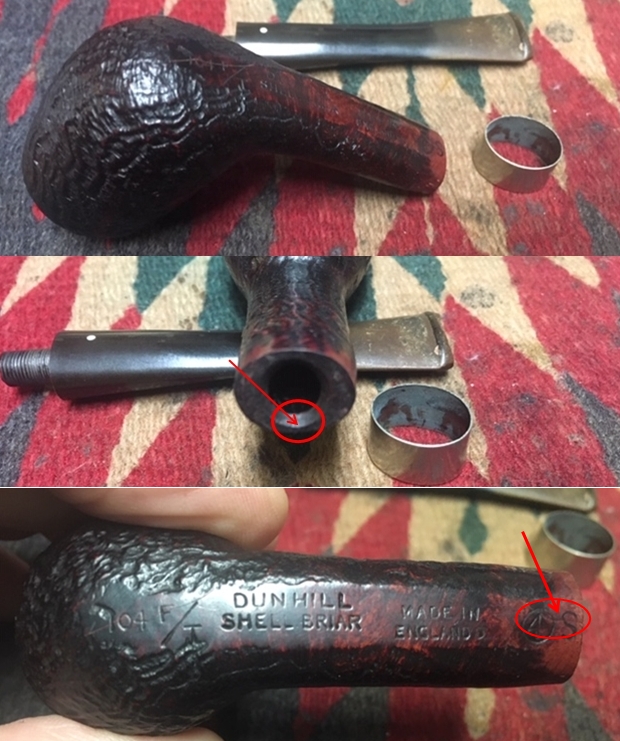
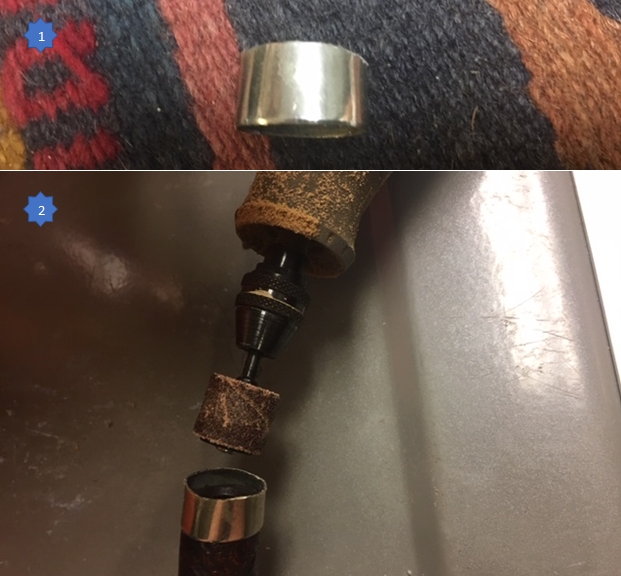
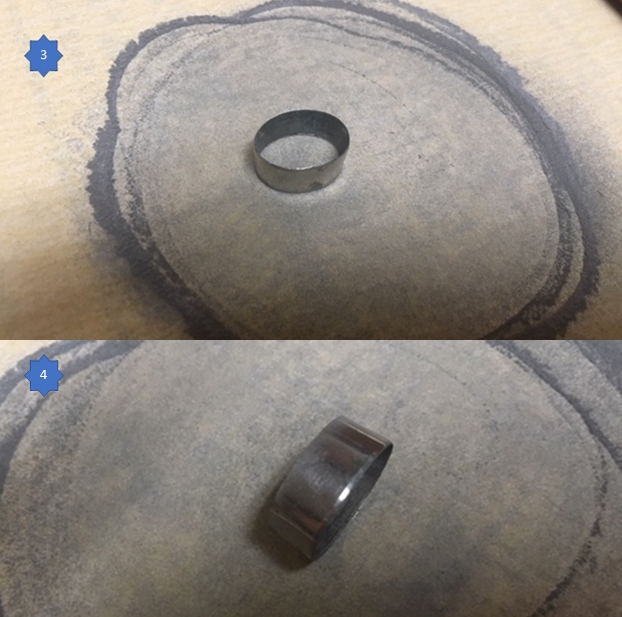
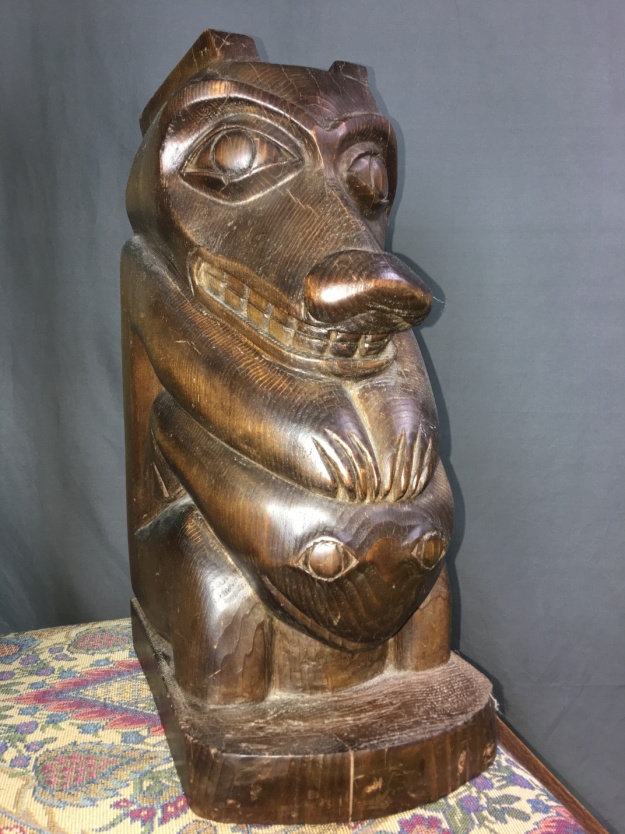
I have included one of Bob’s wood carvings to give you an idea of what he daughter wrote about above. You can see his artistry in the carving that is patterned after British Columbia’s Coastal First Nations people. To me this is a sea otter but perhaps a reader may enlighten us.Having already worked on 10 other pipes from Bob’s estate I had a pretty good feel for how he used and viewed his pipes. Even with the pipes so far I could tell which ones were his favoured ones and which were his work horses. I could get a sense of the ones that accompanied him into his carving shop. In many ways it was as if he was standing over my shoulder while I cleaned up his pipes. With that in mind I turned to work on the 11th of his pipes. I reamed the bowl to remove the cake on the walls and the debris of tobacco shards that still remained. I used a PipNet pipe reamer to start the process. I followed that with a Savinelli Fitsall Pipe Knife to clean up the remaining cake in the conical bottom of the bowl. I sanded the bowl with 220 grit sandpaper wrapped around a piece of dowel. It smooths out the walls and also helps bring the inner edges back to round. With the bowl reamed it was time to work on the rim top and remove the thick lava coat in the blast of the rim. I used the Savinelli Fitsall knife to scrape away the high spots of lava and a brass bristle tire brush to work on the rim top and remove the buildup there. It also worked to minimize the rim damage a bit.I decided to check out the shank and see if I could find a crack once the band was removed. I examined it with a lens under a bright light and sure enough there was a crack on the underside of the shank that went through the circle 4S. It was a fine hairline crack but the band served to keep it that way. I have circled the crack to show its location.I will need to reband the shank but I think I will use a much narrower band that maintains the integrity of the look and does not compromise the repair. I decided to start with that part of the restoration and see what I could do. I used the Dremel and sanding drum to take the band down as much as I could and still hold onto it. Then I used 220 grit sandpaper and “topped” the band to a point where it worked to do the job it was created for but was far less intrusive. I was able to only cover the S and part of the 4 so it was a lot better than when I started. Here are some photos of the process. Photo 1 shows the original width of the band. Photo 2 shows the Dremel and sanding drum. I used the sanding drum held sideways (horizontal to the shank end) and reduced the width of the band as much as I could without damaging the end of the shank.Photo 3 shows the process of “topping” the band on the topping board with a new piece of 220 grit sandpaper. Using this method after the Dremel allowed me to remove the sharpness of the edge and also even out the edge. Photo 4 shows the width of the band from the side. I was able to reduce by just over half.I cleaned up the shank end with a little alcohol and a q-tip and then glued the band in place with white all-purpose glue. Once the glue dried and the band was solidly in place I took the photos below to give an idea of the new look of the band. I have included the first photo below to show the contrast of what the band originally looked like and what the band looks like now. I cleaned up the excess glue around the newly fit band and then worked some Before & After Restoration Balm into the sandblast finish of the bowl and the rim top. I worked it into the nooks and crannies of the sandblast surface with my fingertips to clean, enliven and protect the wood. I let the balm sit for about 20 minutes and buffed it off with a soft cotton cloth and then polished it with a horsehair shoe brush. I took photos of the pipe at this point in the process to show what the bowl looked like at this point. I polished the nickel band and edges to dress it up and give it a cleaner appearance using worn micromesh sanding pads. The photos below tell the story. I scraped out the inside of the mortise with a small pen knife to break away the tarry buildup on the walls of the shank. I cleaned out the internals of the bowl, shank and the airway in the shank and the stem with alcohol, pipe cleaners and cotton swabs until they came out clean. It was very dirty in the shank and stem but now it not only looks clean but smells clean.  I gave the bowl several coats of Conservator’s Wax and buffed it with a shoe brush after each coat of wax to raise the shine. The bowl looks really good at this point. The sandblast grain just shines and is showing all of the different layers of colour that make up a Dunhill Shell finish. I set the bowl aside and turned my attention to the stem. I sanded out the majority of the marks and tooth chatter on the surface of the vulcanite with a folded piece of 220 grit sandpaper. I followed the 220 grit sandpaper with 400 grit wet dry sandpaper to minimize the scratching. The two papers combined did a pretty decent job of getting rid of the tooth marks and chatter as well as the oxidation and calcification. There were still a few small tooth marks that needed work. I polished the stem with Denicare Mouthpiece Polish to take out the oxidation at the button edge and on the end of the mouthpiece. I also worked hard to scrub it from the surface of the stem at the tenon end. I polished out the scratches with micromesh sanding pads – wet sanding with 1500-2400 grit pads and dry sanding with 3200-12000 grit pads. I wiped the stem down after each sanding pad with Obsidian Oil. I polished it with Before & After Pipe Stem Polish – both Fine and Extra Fine. Once I had finished the polishing I gave it a final coat of oil and set it aside to dry. I put the bowl and stem back together. I polished the bowl and stem with Blue Diamond to polish out the scratches in the briar and the vulcanite. I gave the bowl multiple coats of Conservator’s Wax and the stem multiple coats of carnauba wax. I buffed the pipe with a clean buffing pad to raise the shine. I hand buffed it with a microfiber cloth to deepen the shine. The pipe polished up pretty nicely. The contrast of colours that show up in the sandblast of the Shell briar bowl looked good with the polished black vulcanite. This 1960 Dunhill Shell 104 F/T oval shank tapered stem Billiard turned out really well and I was able to reduce the size and overall presence of the band and make it standout less at first look. Once again it really has that classic Dunhill look that catches the eye. The finished pipe is shown in the photos below. The dimensions of the pipe are Length: 5 3/4 inches, Height: 1 3/4 inches, Outside diameter of the bowl: 1 1/4 inches, Chamber diameter: 3/4 of an inch. This is the 11th Dunhill and the 10th Shell from the many pipes that will be coming onto the work table from the estate. Thanks for reading this blog and my reflections on the pipe while I worked on it. I am having fun working on this estate.
 

Restoring a Handmade Estate Mastro de Paja Media 3B Billiard


Blog by Steve Laug

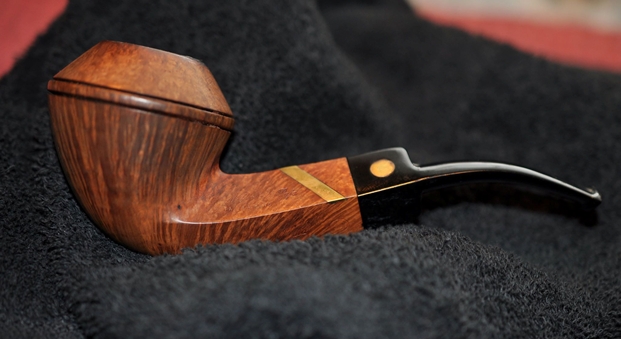
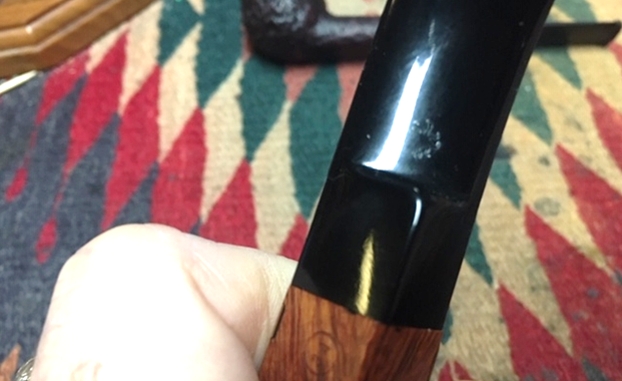
It is the second day of the New Year 2019 and I am continuing to work on pipes. My wife and kids are convinced it is an illness but at least it keeps me out of their way! I am continuing my break from the Bob Kerr estates that I have piled in boxes around my basement shop to work on another different pipe. I am still working under the watchful eye of my buddy and Shop Foreman, Spencer. His life is pretty much laying on a blanket by my feet while I am fiddling with pipes. At 14+ years old my fiddling does not faze him much him, he just wants to make sure I stay put with him in the basement. He snoozes, comes over to me now and then to smack my leg and beg for a treat and then retreats to nap again. He really is company in the shop and keeps me mindful to get up and move around now and then.As you might have read in the title I am switching things up to work on an Italian pipe. It is a Mastro de Paja Fatta A Mano Chubby Shank Billiard (the third pipe down in the photo below). It reads that on the left side of the diamond shank. On the underside of the shank it is stamped Media with 3B in a circle that I am assuming is the grade stamp, there is also a P near the shank/stem union. Under that is a Sun stamp that is common the MP pipes. In the Sun stamp there is a tiny fill – the only one on the pipe. On the right side of the shank it is stamped Pesario (the city in Italy where it was made). On the underside of the saddle portion of the stem it is stamped with a Sun. There is an inset briar ring on the Lucite stem. The Mastro de Paja gold inset is on the top of the saddle stem. The pipe came to me in a lot of five pipes that I bought from a pipeman in Florida. The other pipes in the lot were the first Mastro de Paja I worked on already, two Savinelli Autographs and a Bacchus Carved and Cased Meerschaum. I decided to work on the Mastro Billiard/Brandy next.I had the fellow in Florida send the pipes to my brother Jeff in Idaho for the cleanup work. He does a great job and expedites my restoration process a lot. He took the following photos of the pipe before he worked his magic on them. This second Mastro de Paja pipe must also have been a terrific smoker because the bowl was pretty clogged up with cake and lava flowing over the rim top. It really was a mess and the cake was hard from sitting. The Florida pipeman had laid aside his pipe some 15-20 years earlier and it had been in storage. It was going to take some work to clean out that bowl and be able to see what the rim looked like underneath the layer of lava. The rest of the bowl looked dirty but the amazing grain shone through. Jeff included some photos of the sides and bottom of the bowl to give a good idea of what it looked like.The next photos try to capture the stamping around the sides of the shank. They read as I have noted above. The acrylic/Lucite stem was in excellent condition. It was dirty and had light tooth chatter but no deep tooth marks in the stem surface. The button also looks pretty good but I would know more once it arrived in Vancouver.Jeff cleaned the pipe with his usual thoroughness – reaming the bowl with a PipNet pipe reamer and cleaning up the remnants with a Savinelli Fitsall Pipe Knife. He scrubbed the internals of the bowl, shank and stem with alcohol, cotton swabs and pipe cleaners. He scrubbed the exterior with Murphy’s Oil Soap to clean off the dust and grime on the finish. The rim top looked very good under the thick lava coat. There were just a few nicks and scratches to deal with. The inside of the bowl itself looked great. The stem was in great shape other than a bit of tooth chatter. I took photos of the pipe when it arrived here. I took some close up photos of the rim top, bowl and stem to show what they looked like after Jeff’s cleanup. It is a startling difference. The rim top will take some work to take care of the damage. The stem will take very little to polish out the tooth chatter on both sides and give it a deep shine. I was a bit surprised when I took of the stem and had a closer look at it. Turns out that the stem is a filter stem and made for a 9mm filter.I am including the information that I included in the previous Mastro de Paja blog.

I turned first to Pipedia to get a feel for the pipe (https://pipedia.org/wiki/Mastro_de_Paja). I quote in part from the article on that site.

In 1972 Giancarlo Guidi, after having spent some time as a hobbyist in producing pipes, decided to officially found a production workshop called “Mastro de Paja”. Mastro: obviously as a master craftsman, De Paja: it derives from the name with which he was affectionately called by friends “Pajetta” because of his curly hair and translated into a dialectal expression “de Paja”.

Spadoni Giannino joins him shortly after that, at the time he was a salesman and among the products he sold there were also pipes. A professional wedding that turned out to be perfect immediately, in no time the new company “MASTRO DE PAJA di Guidi e Spadoni” immediately became one of the most respected manufacturers of pipes in Italy for the quality of production and lines that for those times were innovative, fascinating and even if coarse they immediately met the consent of enthusiasts and collectors.

Unfortunately, the professional marriage between Guidi and Spadoni, due to disagreements and different views on strategies, stopped in 1981. Guidi left the company to found a personal one. In Mastro de Paja which in the meantime became a real company with a production staff remained with Spadoni. Unfortunately, after a very short time, due to economic and financial problems that put the possibility of continuing the business at risk, Spadoni is forced to ask for help and finds it with the intervention of the Pesaro-based entrepreneur Terenzio Cecchini who, despite being burdened by his multiple industrial activities, sees in Mastro de Paja a valid expression of high craftsmanship and takes over as majority shareholder and acquires the position of director.

Soon after even Spadoni decides to leave (and create his own new company), Cecchini then puts his eyes on a very smart young man which he considered capable of giving new glaze to the Mastro de Paja which, meanwhile, inevitably presented some productive and commercial problems. That young man is called Alberto Montini and he started in his thirties his beautiful adventure in the pipes world… He was contacted by the surveyor Terenzio Cecchini at the time the only owner of the Mastro, to take care of it in every aspect, first as an employee, then as an administrator and later as a partner of Mastro de Paja and afterwards with the passing of Mr. Cecchini he became the sole owner.

Currently the Mastro produces about 2 thousand pipes a year with strictly artisan procedure, at the Mastro currently reigns a warm harmony, is a group of friends who strives to get the best. This also stems from the fact that pipes for Mastro de Paja are not to be considered as any other object to be produced and sold following cold strategies common to everyone in the business world, it’s completely different, it is necessary to love it, it is a style of being, a philosophy of life that can only be appreciated by a noble soul and not noble by title but by principles.

I read further in the article and found the following information on the stamping and the circle 3A stamp. I quote:

Mastro de Paja “ELITE COLLECTION” It is the production of pipes made entirely by hand, even they are unique but of regular production On all “Mastro de Paja” pipes you can see fire stamped all the informations for tracing the value of each creation.

 0B: Rusticated

1B: Sandblasted

CA: Castanea

2D: Half rusticated

3A: Brown and orange stain

3B: Natural

3C: Perfect grain

It looks like the 3B is pretty high in the hierarchy of the Mastro pipes, with just the 3C Perfect Grain ahead of it. It is described as having a Natural Finish. That pretty well describes the pipe I have in my hands today – it has darkened with use but the train is quite nice.

I turned to the Pipephil website (http://www.pipephil.eu/logos/en/logo-m3.html) and added the following summary of information on the brand.

Brand founded in 1972 by Giancarlo Guidi. He left it for Ser Jacopo in 1982. Alberto Montini became the owner of the brand in 1995. Production (2010): ~ 5000 pipes / year. Seconds: Calibano, Montini

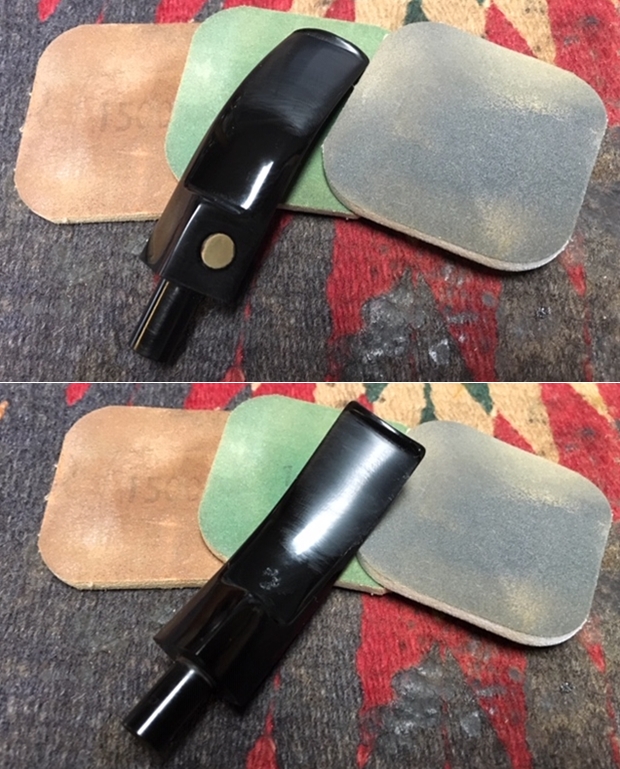
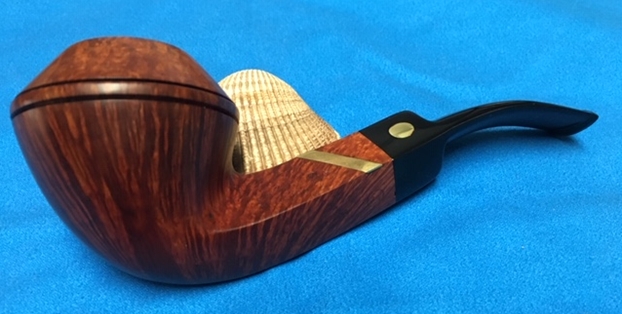
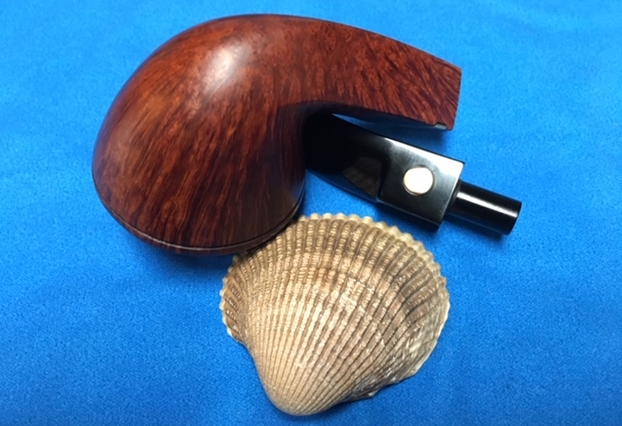
Armed with that information on the brand it was time to work on the pipe. I decided to begin by addressing the fill on the bottom of the shank. It was solid and in the middle of the stamping so it would take a few tricks to make it disappear. I used a black Sharpie pen to touch up the fill area and viola it was much less visible! I polished the briar with micromesh sanding pads to remove the scratches and to try to lighten the finish a bit – wet sanding with 1500-2400 grit pads and dry sanding with 3200-12000 grit pads. I wiped the briar down after each pad to remove the sanding dust and get a sense of the how the finish was developing. The photos show the progress. I worked some Before & After Restoration Balm into the briar on the bowl and the rim top. I worked it into the surface of the briar with my fingertips to clean, enliven and protect the wood. I kept it clear of building up in the twin groove around the bowl below the bowl cap. Once the bowl was covered with the balm I let it sit for about 20 minutes and buffed it off with a soft cotton cloth and then polished it with a microfiber cloth. I took photos of the pipe at this point in the process to show what the bowl looked like at this point. I set the bowl aside and worked on the stem. I wet sanded the tooth chatter on both sides of the stem with 1500-2400 grit micromesh sanding pads. I was able to remove it. I dry sanded it with 3200-12000 grit pads to polish it further. I wiped it down with a damp cloth after each sanding pad. I finished polishing the stem with Before & After Pipe Polish – both Fine and Extra Fine polishes. I wiped the stem down with a damp cotton pad afterwards and buffed it with a soft microfiber cloth. I put the bowl and stem back together. I polished the bowl and stem with Blue Diamond to polish out the scratches in the briar and the Lucite. I gave the bowl and stem multiple coats of carnauba wax. I buffed the pipe with a clean buffing pad to raise the shine. I hand buffed it with a microfiber cloth to deepen the shine. The pipe polished up pretty nicely. The contrast of the beautiful browns and orange of the briar with the polished black Lucite 9mm filter stem is quite stunning. The Mix of straight grain, flame and birdseye around the bowl and shank is quite remarkable. This is truly a beautiful pipe that is for sure. The finished pipe is shown in the photos below. The dimensions of the pipe are Length: 5 1/2 inches, Height: 2 inches, Outside diameter of the bowl: 1 3/8 inches, Chamber diameter: 7/8 of an inch. This is the second Mastro de Paja estate that I have worked on recently and it will be going on the rebornpipes store shortly. Thanks for walking through the restoration with me. It was a great break away from the estates that await me. Cheers.  

Breathing Life into a Carlo Scotti Castello Sea Rock Briar SC31 ¼ Bent Canadian


Blog by Steve Laug

It is the second day of the New Year 2019 and I am continuing to work on pipes. My wife and kids are convinced it is an illness but at least it keeps me out of their way! I am continuing my break from the Bob Kerr estates that I have piled in boxes around my basement shop to work on another different pipe. I am still working under the watchful eye of my buddy and Shop Foreman, Spencer. His life is pretty much laying on a blanket by my feet while I am fiddling with pipes. At 14+ years old my fiddling does not faze him much him, he just wants to make sure I stay put with him in the basement. He snoozes, comes over to me now and then to smack my leg and beg for a treat and then retreats to nap again. He really is company in the shop and keeps me mindful to get up and move around now and then.As you might have figured out from the title I am continuing to work on Italian pipes. This is another one that I may have a hard time letting go of when I am finished. It is a Castello Sea Rock Briar. It is stamped on the smooth heel of the bowl and the shank bottom and reads Castello Sea Rock Briar. Next to that is stamped SC31 which I assume is the shape number. It is followed by Reg. No. 66171 No. That is followed by Made in Cantu over Italy with an oval containing the name Carlo Scotti next to the stem shank union. The Castello “diamond” inset is on the left side of the tapered stem. My brother Jeff picked this pipe up at an auction in Nampa, Idaho. It was in pretty filthy looking condition when he got it but still showed promise. He took the following photos of the pipe before he worked his magic on them. The pipe must have been another terrific smoker because the bowl was pretty clogged up with cake and lava flowing over the rim top. It really was a mess and the cake was hard from sitting. It was from an estate that was liquidating the belonging of a fellow in the area. In its condition it was going to take some work to clean out that bowl and be able to see what the rim looked like underneath the layer of lava. The rest of the bowl looked dirty but the photos give an idea of what Jeff saw before his cleanup revealed the condition of the pipe. The next photos show the side and bottom of the bowl to give a good idea of what it looked like.The next photos try to capture the stamping around the sides of the shank. They read as I have noted above. The acrylic/Lucite stem was in excellent condition. It was dirty and had light tooth chatter but no deep tooth marks in the stem surface. The Castello “Diamond” on the left side of the shank is quite nice and undamaged. The button also looks pretty good but I would know more once it arrived in Vancouver.Jeff cleaned the pipe with his usual thoroughness – reaming the bowl with a PipNet pipe reamer and cleaning up the remnants with a Savinelli Fitsall Pipe Knife. He scrubbed the internals of the bowl, shank and stem with alcohol, cotton swabs and pipe cleaners. He scrubbed the exterior with Murphy’s Oil Soap to clean off the dust and grime on the rusticated Sea Rock finish. The rusticated rim top looked very good under the thick lava coat. It was a bit dull and some lava still in the deep crevices that I would need to deal with but nothing in comparison to what it looked like when Jeff got it. The inside of the bowl itself looked great. The stem was in great shape other than a bit of tooth chatter. I took photos of the pipe when it arrived here. I took some close up photos of the rim top, bowl and stem to show what they looked like after Jeff’s cleanup. It is a startling difference. The rim top will take some work to take care of the damage. The stem will take very little to polish out the tooth chatter on both sides and give it a deep shine.It has been awhile since I had cleaned up a Castello and the Reg. No. and the Carlo Scotti stamp left me with some questions that I need to answer before I began to work on the pipe. I turned first to the Pipephil site (http://www.pipephil.eu/logos/en/logo-castello.html) because of the general quick summary of information I get there. I quote:

Castello PIPA CASTELLO di Carlo Scotti & C. was founded in 1947 by Carlo Scotti († 1988). Franco Coppo (AKA “Kino”) who married Carlo Scotti’s daughter Savina, manages (2012) the corporate since 1985.

The site also gave a good summary of the grading and sizes of the pipes. I quote that in full.

Sizes (ascending):

1K to 4K, G (Giant) and GG (Extra large)

Rusticated grading: SEA ROCK, OLD SEA ROCK, NATURAL VIRGIN,

Sandblasted grading: ANTIQUARI, OLD ANTIQUARI

Smooth grading (ascending): TRADEMARK, CASTELLO, COLLECTION

Other stampings: Great Line (Non-standard or freestyle) Fiammata (Straight grain)

Production (2012): ~4000 pipes / year

I also found a note on the page that the Rhinestone logo was originally on pipes for the US market. It is occasionally used now.

I turned then to Pipedia for more information on the brand (https://pipedia.org/wiki/Castello). The majority of the information was what was already quoted above in abbreviated form. However there was a link to an article by Bob Hamlin that gave some interesting bits of information that I found helpful (http://www.pipes.org/BURST/FORMATTED/196.016.html). I quote in part from that article.

SEA ROCK [Carved Black or dark brown]:  This is the lowest grade of the Castello line and is the most common in the USA.  Sea Rocks are produced by taking a smooth bowl that has not been “final finished” and surface carving the finish with tools. This “carved” finish is then evened out using a steel wire brush, stained and then waxed. The Natural Vergin carved finish is left unstained and unwaxed as a rule, although we have seen waxed and partially waxed “Vergins”. 

All carved Castello pipes  are graded by the number of K’s that are stamped on each piece and are K-graded by SIZE.  1K is the smallest and fairly rare, 2K is small to medium, with  3K or 4K being the most common and ranges from medium to medium large. Large pieces are stamped “G” for giant and extra large pieces are stamped “GG” for double giant.  In addition to the number of K’s on a carved Sea Rock piece the shape number is almost always added.  As a rule a Sea Rock Castello is stained Black, although recently there have been quite a few coming in stained deep brown and still stamped “Sea Rock”.  American Logo’d Sea Rocks are all priced the same to the consumer, although most are 2 or 3 K’ed models.  G/GG models are charged at a higher price on American pieces and are basically the same as their European counterparts.

The Castello Sea Rock briar I was working on did not have the K stamping. It definitely was made for the American Market with the Rhinestone in the stem. It had the black finish. The shape number still needed to be determined.

Pipedia also gave a link to Mike’s Briar Blues site for help in dating and determining shapes (http://www.briarblues.com/castello.htm). I quote a piece on the Reg. No. that I found helpful.

1947 – Carlo Scotti begins the company.  In the beginning ( 1947 – 1949, maybe 1950 ) the pipes were stamped Mi Reserva ( my reserve ).  Later the Reg No was added.  This Reg No has nothing to do with shape numbers, but is merely the Castello company trademark…

Shape numbers. Shape numbers are all 2 digits. A 2 in front indicates a “fancy” interpretation, a 3 in front means that the carving is somehow unique. I don’t know when the change was made, but currently, a π symbol is used instead of the 3xx. I’ve only seen this on Sea Rocks, but that doesn’t mean anything…

Pre K grading.  Late 1950’s to mid 1960’s the pipe carried stamps which indicated sizes. These were as follows; SA, SB, SC, and SS.  SA being the smallest and SS the largest.

Now I had more information to work with. The Castello in my hands was pre K graded. That told me that it came out in the late 1950s to mid 1960s. The SC stamp makes it a mid-sized pipe from that time period. The number 31 makes it a Canadian with an oval shank and a ¼ bent stem.

Armed with that information and renewing my knowledge of the brand it was time to work on the pipe. I decided to begin by addressing the deep lava and grime that made the rim top dull looking. I used a brass bristle wire brush to work over the nooks and crannies of the finish and a lot of dust and debris came out of the grooves. I used a tooth brush and some Murphy’s Oil Soap to clean up the remaining dust and rinsed of the rim with some tap water. I dried it off and gave it a light polish with the cloth. It did not take too long for the rim to look clean and debris free.I worked some Before & After Restoration Balm into the rusticated Sea Rock finish on the bowl and the rim top. I worked it into the surface of the briar with my fingertips to clean, enliven and protect the wood. I used a horse hair shoe brush to work it into the crevices and keep from building up in the valleys and crevices of the finish. Once the bowl was covered with the balm I let it sit for about 20 minutes and buffed it off with a soft cotton cloth and the shoe brush. I polished it with a microfiber cloth. I took photos of the pipe at this point in the process to show what the bowl looked like at this point. I gave the bowl and shank multiple coats of Conservator’s Wax and buffed it with a shoe brush to raise the shine. The wax is great protection and I love using it on rusticated and sandblast finishes because it does not build up in the grooves and valleys like carnauba wax does. I buffed it by hand with a microfiber cloth to finish the shine. I set the bowl aside and worked on the stem. I wet sanded the tooth chatter on both sides of the stem with 1500-2400 grit micromesh sanding pads. I was able to remove it. I dry sanded it with 3200-12000 grit pads to polish it further. I wiped it down with a damp cloth after each sanding pad. I finished polishing the stem with Before & After Pipe Polish – both Fine and Extra Fine polishes. I wiped the stem down with a damp cotton pad afterwards and buffed it with a soft microfiber cloth. I put the bowl and stem back together. I polished the stem with Blue Diamond to polish out the scratches in the Lucite. I gave the bowl multiple coats of Conservator’s Wax and the stem multiple coats of carnauba wax. I buffed the pipe with a clean buffing pad to raise the shine. I hand buffed it with a microfiber cloth to deepen the shine. The pipe polished up pretty nicely. The contrast of the blacks and dark browns of the briar with the polished black acrylic/Lucite is quite stunning. The dark and coral like rustication around the bowl and shank is quite remarkable and gives the pipe an incredible tactile presence. This is truly a beautiful pipe that is for sure and one that I think I will keep around for a while. The finished pipe is shown in the photos below. The dimensions of the pipe are Length: 6 inches, Height: 2 inches, Outside diameter of the bowl: 1 1/8 inches, Chamber diameter: 3/4 of an inch. I have a few Castellos in the collection that have come to me in a variety of ways. They have all been beautiful pipes and the look of this Canadian Sea Rock in the hand makes me pause. Thanks for walking through the restoration with me. It was a great break away from the estates that await me. Cheers.  

Restoring a Handmade Estate Mastro de Paja Bent Media 3A Bulldog


Blog by Steve Laug

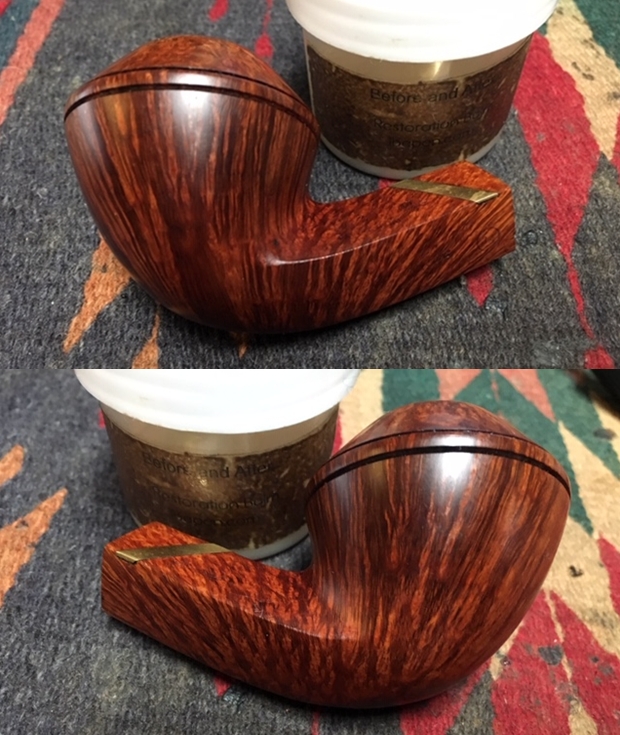
Here it is New Year’s Day 2019 and I am still working on pipes. I am taking a short break from the Bob Kerr estates that I have piled in boxes around my basement shop to work on a different pipe. My Shop Foreman Spencer is taking it easy today while I am fiddling with pipes. At 14+ years old my fiddling does not change much for him and he really just wants to make sure I stay put with him in the basement. He snoozes, comes over to me now and then to smack my leg and beg for a treat and then retreats to nap again.As you might have read in the title I am switching things up to work on an Italian pipe. This is one that I may have a hard time letting go of when I am finished. It is a Mastro de Paja Fatta A Mano Bent Bulldog. It reads that on the left side of the diamond shank. On the underside of the shank it is stamped Media with 3A in a circle that I am assuming is the grade stamp. On the right side of the shank it is stamped Pesario (the city in Italy where it was made). On the underside of the stem it is stamped with a Sun. There is a gold band angled across the top of the shank forming an arrowhead. The Mastro de Paja gold inset is on the left side of the saddle stem. The pipe came to me in a lot of five pipes that I bought from a pipeman in Florida. The other pipes in the lot were a second Mastro de Paja, two Savinelli Autographs and a Bacchus Carved and Cased Meerschaum. I decided to work on the Mastro Bulldog first.I had the fellow in Florida send the pipes to my brother Jeff in Idaho for the cleanup work. He does a great job and expedites my restoration process a lot. He took the following photos of the pipe before he worked his magic on them. The pipe must have been a terrific smoker because the bowl was pretty clogged up with cake and lava flowing over the rim top. It really was a mess and the cake was hard from sitting. The Florida pipeman had laid aside his pipe some 15-20 years earlier and it had been in storage. It was going to take some work to clean out that bowl and be able to see what the rim looked like underneath the layer of lava. The rest of the bowl looked dirty but the amazing grain shone through. Jeff included some photos of the sides and bottom of the bowl to give a good idea of what it looked like. The next photos try to capture the stamping around the sides of the shank. They read as I have noted above. The acrylic/Lucite stem was in excellent condition. It was dirty and had light tooth chatter but no deep tooth marks in the stem surface. The button also looks pretty good but I would know more once it arrived in Vancouver.Jeff cleaned the pipe with his usual thoroughness – reaming the bowl with a PipNet pipe reamer and cleaning up the remnants with a Savinelli Fitsall Pipe Knife. He scrubbed the internals of the bowl, shank and stem with alcohol, cotton swabs and pipe cleaners. He scrubbed the exterior with Murphy’s Oil Soap to clean off the dust and grime on the finish. The rim top looked very good under the thick lava coat. There were just a few nicks and scratches to deal with. The inside of the bowl itself looked great. The stem was in great shape other than a bit of tooth chatter. I took photos of the pipe when it arrived here. I took some close up photos of the rim top, bowl and stem to show what they looked like after Jeff’s cleanup. It is a startling difference. The rim top will take some work to take care of the damage. The stem will take very little to polish out the tooth chatter on both sides and give it a deep shine.I took a photo to capture the stamped sun on the underside of the stem at the saddle.Before I began to work on the pipe I wanted a refresher on the maker and the stamping. I have not worked on too many Mastro de Paja pipes before so I figured to do a bit of education before I started my restoration.

I turned first to Pipedia to get a feel for the pipe (https://pipedia.org/wiki/Mastro_de_Paja). I quote in part from the article on that site.

In 1972 Giancarlo Guidi, after having spent some time as a hobbyist in producing pipes, decided to officially found a production workshop called “Mastro de Paja”. Mastro: obviously as a master craftsman, De Paja: it derives from the name with which he was affectionately called by friends “Pajetta” because of his curly hair and translated into a dialectal expression “de Paja”.

Spadoni Giannino joins him shortly after that, at the time he was a salesman and among the products he sold there were also pipes. A professional wedding that turned out to be perfect immediately, in no time the new company “MASTRO DE PAJA di Guidi e Spadoni” immediately became one of the most respected manufacturers of pipes in Italy for the quality of production and lines that for those times were innovative, fascinating and even if coarse they immediately met the consent of enthusiasts and collectors.

Unfortunately, the professional marriage between Guidi and Spadoni, due to disagreements and different views on strategies, stopped in 1981. Guidi left the company to found a personal one. In Mastro de Paja which in the meantime became a real company with a production staff remained with Spadoni. Unfortunately, after a very short time, due to economic and financial problems that put the possibility of continuing the business at risk, Spadoni is forced to ask for help and finds it with the intervention of the Pesaro-based entrepreneur Terenzio Cecchini who, despite being burdened by his multiple industrial activities, sees in Mastro de Paja a valid expression of high craftsmanship and takes over as majority shareholder and acquires the position of director.

Soon after even Spadoni decides to leave (and create his own new company), Cecchini then puts his eyes on a very smart young man which he considered capable of giving new glaze to the Mastro de Paja which, meanwhile, inevitably presented some productive and commercial problems. That young man is called Alberto Montini and he started in his thirties his beautiful adventure in the pipes world… He was contacted by the surveyor Terenzio Cecchini at the time the only owner of the Mastro, to take care of it in every aspect, first as an employee, then as an administrator and later as a partner of Mastro de Paja and afterwards with the passing of Mr. Cecchini he became the sole owner.

Currently the Mastro produces about 2 thousand pipes a year with strictly artisan procedure, at the Mastro currently reigns a warm harmony, is a group of friends who strives to get the best. This also stems from the fact that pipes for Mastro de Paja are not to be considered as any other object to be produced and sold following cold strategies common to everyone in the business world, it’s completely different, it is necessary to love it, it is a style of being, a philosophy of life that can only be appreciated by a noble soul and not noble by title but by principles.

I read further in the article and found the following information on the stamping and the circle 3A stamp. I quote:

Mastro de Paja “ELITE COLLECTION” It is the production of pipes made entirely by hand, even they are unique but of regular production On all “Mastro de Paja” pipes you can see fire stamped all the informations for tracing the value of each creation.

 0B: Rusticated

1B: Sandblasted

CA: Castanea

2D: Half rusticated

3A: Brown and orange stain

3B: Natural

3C: Perfect grain

It looks like the 3A is pretty high in the hierarchy of the Mastro pipes, with just the 3B Natural and the 3C Perfect Grain ahead of it. It is described as Brown and Orange Stain. That would describe what I hold in my hands today.

I turned to the Pipephil website (http://www.pipephil.eu/logos/en/logo-m3.html) and added the following summary of information on the brand.

Brand founded in 1972 by Giancarlo Guidi. He left it for Ser Jacopo in 1982. Alberto Montini became the owner of the brand in 1995. Production (2010): ~ 5000 pipes / year. Seconds: Calibano, Montini

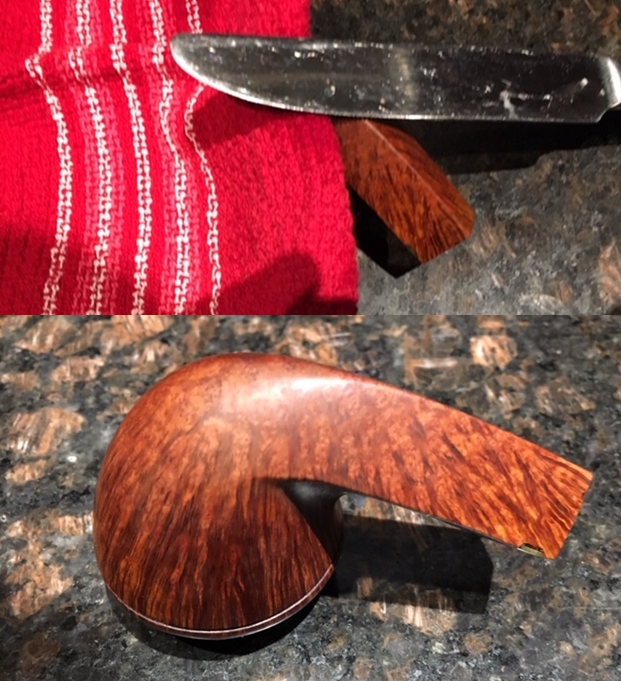
Armed with that information and renewing my knowledge of the brand it was time to work on the pipe. I decided to begin by addressing the nicks and marks on the rim top and cap. I carefully sanded the rim top with a folded piece of worn 220 grit sandpaper to smooth out the damaged areas. I worked on the darkening around the outer edge of the cap at the same time to try to blend it into the rest of the cap.I polished the rim top and the cap with micromesh sanding pads – wet sanding with 1500-2400 grit pads and dry sanding with 3200-12000 grit pads. I wiped the briar down after each pad to remove the sanding dust and get a sense of the how the finish was developing. The photos show the process. I worked some Before & After Restoration Balm into the briar on the bowl and the rim top. I worked it into the surface of the briar with my fingertips to clean, enliven and protect the wood. I kept it clear of building up in the twin groove around the bowl below the bowl cap. Once the bowl was covered with the balm I let it sit for about 20 minutes and buffed it off with a soft cotton cloth and then polished it with a microfiber cloth. I took photos of the pipe at this point in the process to show what the bowl looked like at this point. When I was processing these photos a dent on the lower right side of the bowl became very visible. It is funny how I did not feel it when I was putting the balm on the finish. It is obvious in the photo below. I have circled it in red to make sure you don’t miss it. I heated a butter knife over the gas burner and put a wet cloth on the dent. I applied the blade of the knife to the wet cloth creating steam. The steam raised the dent. I repeated the process until it was no longer visible. Once the steaming of the dent was finished I rubbed the area down with the Restoration Balm once again to protect and enliven the briar where the stem had flattened the shine. I hand buffed it with a soft cloth and the repair was complete. I set the bowl aside and worked on the stem. I wet sanded the tooth chatter on both sides of the stem with 1500-2400 grit micromesh sanding pads. I was able to remove it. I dry sanded it with 3200-12000 grit pads to polish it further. I wiped it down with a damp cloth after each sanding pad. I finished polishing the stem with Before & After Pipe Polish – both Fine and Extra Fine polishes. I wiped the stem down with a damp cotton pad afterwards and buffed it with a soft microfiber cloth. I put the bowl and stem back together. I polished the bowl and stem with Blue Diamond to polish out the scratches in the briar and the Lucite. I gave the bowl and stem multiple coats of carnauba wax. I buffed the pipe with a clean buffing pad to raise the shine. I hand buffed it with a microfiber cloth to deepen the shine. The pipe polished up pretty nicely. The contrast of the beautiful browns and orange of the briar with the polished black Lucite is quite stunning. The Straight grain around the bowl and shank is quite remarkable. This is truly a beautiful pipe that is for sure and one that I think I will keep around for a while. The finished pipe is shown in the photos below. The dimensions of the pipe are Length: 5 3/4 inches, Height: 2 1/8 inches, Outside diameter of the bowl: 2 inches, Chamber diameter: 7/8 of an inch. This is the first Mastro de Paja estate that I have actually been tempted to hang onto. They have all been beautiful pipes but something about the look and feel of this one makes me pause. Thanks for walking through the restoration with me. It was a great break away from the estates that await me. Cheers.

ADDENDUM

I received a note on Facebook, Gentlemen’s Pipe Smoking Group after posting this pipe on the group. What made it fascinating for me is that it was from the man who made the pipe – Alberto Montini. I quote in full what he posted there…

I thank You for the passion as You present this my pipe. It is one of the best shapes that I made. Thanks again Steve Laug

It is great to hear from the maker of a particular pipe that I worked on and receive his acclamation for the work of restoration that I have done on it. Thank you Alberto. Your words mean a lot.

Restoring the 10th Pipe from Bob Kerr’s Estate – A Dunhill Shell 660 Saddle Stem Billiard


Blog by Steve Laug

In my ongoing work on Bob Kerr’s Estate I seem to be making a dent. I am working my way through the Dunhills in his collection – the Shell and Tanshell pipes. I am cleaning them for the family and moving them out into the hands of pipemen and women who will carry on the trust that began with Bob and in some pipes was carried on by Bob. In the collection along with the Dunhills are a good bevy of Petersons, some Comoys and Barlings as well as a lot of other pipes – a total of 125 pipes along with a box of parts. This is the largest estate that I have had the opportunity to work on. I put together a spread sheet of the pipes and stampings to create an invoice. I was taking on what would take me a fair amount of time to clean up. I could not pass up the opportunity to work on these pipes though. They were just too tempting.

I sorted the pipes into groups of the various brands and had a box of 25 different Dunhill pipes in different shapes, styles and sizes. I decided to work on the Dunhills first. It was a great chance to see the shape variety up close and personal. The photo below shows the box of Dunhill pipes.I went through the box of Dunhills shown above and chose the 10th sandblast pipe to work on – a Group 4 Shell Billiard with a saddle stem. It is stamped on the heel and the underside of the 660 followed by Dunhill over Shell. Then it reads Made in England 7, Circle 4S – Group 4 size Shell made in 1968. The round shank of the billiard flows into a short saddle stem that is oxidized and has tooth marks and chatter near the button. There is some calcification on the first inch of the stem ahead of the button and there is some light damage to the top of the button. The Shell finish is very craggy and has a deep blast. It is dirty with grime and tars filling in much of the craggy finish. The bowl had a thick cake and lava overflowed on the rim top. The bowl had tobacco stuck in the lava on the cake on the walls of the bowl like the other pipes from this estate. With a little work this pipe would look good once again. I took pictures of the pipe before I started working on it. I took some close up photos of the rim top and stem to show what I was dealing with. Judging from the condition this little billiard was in I think I can safely say that it was another one of Bob’s favourite pipes. The cake in the bowl is another thick one and the lava on the rim top is also very thick. You can see the cake and tobacco in the bowl. The saddle stem was dirty, oxidized, calcified and had a lot of tooth chatter on the top and underside for about an inch ahead of the button. The button surface was also marked with tooth chatter. The sharp edge defining the button was worn down and almost smoothed out. It will be an interesting challenge to bring back to life.I took a photo of the stamping on the underside of the bowl and shank. It was clear and readable.I am sure if you have read the restoration work on the previous 8 pipes you have already read what I included about Bob Kerr, the pipeman who held these pipes in trust before I came to work on them. Also, if you have followed the blog for long you will already know that I like to include background information on the pipeman whose pipes I am restoring. For me, when I am working on an estate I really like to have a sense of the person who held the pipes in trust before I worked on them. It gives me another dimension of the restoration work. I asked Brian if he or his wife would like to write a brief biographical tribute to her father, Bob. His daughter worked on it and I received the following short write up on him and some pictures to go along with the words. Thank you Brian and tell your wife thank you as well.

I am delighted to pass on these beloved pipes of my father’s. I hope each user gets many hours of contemplative pleasure as he did. I remember the aroma of tobacco in the rec room, as he put up his feet on his lazy boy. He’d be first at the paper then, no one could touch it before him. Maybe there would be a movie on with an actor smoking a pipe. He would have very definite opinions on whether the performer was a ‘real’ smoker or not, a distinction which I could never see but it would be very clear to him. He worked by day as a sales manager of a paper products company, a job he hated. What he longed for was the life of an artist, so on the weekends and sometimes mid-week evenings he would journey to his workshop and come out with wood sculptures, all of which he declared as crap but every one of them treasured by my sister and myself. Enjoy the pipes, and maybe a little of his creative spirit will enter you!

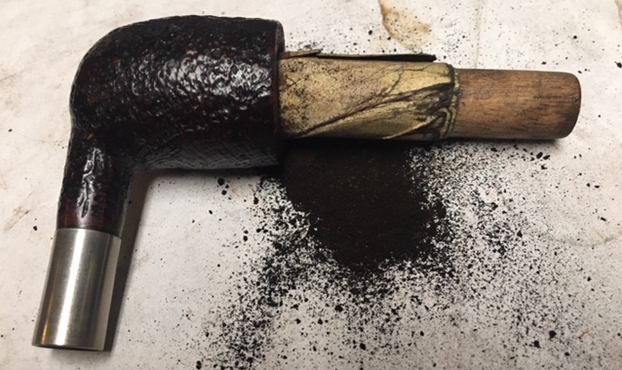
I have included one of Bob’s wood carvings to give you an idea of what he daughter wrote about above. You can see his artistry in the carving that is patterned after British Columbia’s Coastal First Nations people. To me this is a sea otter but perhaps a reader may enlighten us.Having already worked on 9 other pipes from Bob’s estate I was beginning to get a feel for how he used and viewed his pipes. Even with the pipes so far I could tell which ones were his favoured ones and which were his work horses. I could get a sense of the ones that accompanied him into his carving shop. In many ways it was as if he was standing over my shoulder while I cleaned up his pipes. With that in mind I turned to work on the 10th of his pipes. I reamed the bowl to remove the cake on the walls and the debris of tobacco shards that still remained. I used a PipNet pipe reamer to start the process. I followed that with a Savinelli Fitsall Pipe Knife to clean up the remaining cake in the conical bottom of the bowl. I sanded the bowl with 220 grit sandpaper wrapped around a piece of dowel. It smooths out the walls and also helps bring the inner edges back to round. With the bowl reamed it was time to work on the rim top and remove the thick lava coat in the blast of the rim. I used the Savinelli Fitsall knife to scrape away the high spots of lava and a brass bristle tire brush to work on the rim top and remove the buildup there.With the bowl reamed and rim top cleaned I scrubbed the sandblast finish. This is pretty much my process in cleaning either sandblast or rusticated finishes. I scrubbed it with undiluted Murphy’s Oil Soap and a tooth brush to remove the grime from the grooves and canyons of the blast. I worked over the tarry lava overflow on the rim with the tooth brush and a brass brush. I rinsed the pipe under running water to remove the grime. I dried it off with a soft towel. The pictures below show the finish after scrubbing and rinsing. I scraped out the inside of the mortise with a small pen knife to break away the tarry buildup on the walls of the shank. I cleaned out the internals of the bowl, shank and the airway in the shank and the stem with alcohol, pipe cleaners and cotton swabs until they came out clean. It was very dirty in the shank and stem but now it not only looks clean but smells clean.  I worked some Before & After Restoration Balm into the briar on the bowl and the rim top. I worked it into the nooks and crannies of the sandblast surface with my fingertips to clean, enliven and protect the wood. I let the balm sit for about 20 minutes and buffed it off with a soft cotton cloth and then polished it with a horsehair shoe brush. I took photos of the pipe at this point in the process to show what the bowl looked like at this point. I gave the bowl several coats of Conservator’s Wax and buffed it with a shoe brush after each coat of wax to raise the shine. The bowl looks really good at this point. The sandblast grain just shines and is showing all of the different layers of colour that make up a Dunhill Shell finish. I set the bowl aside and turned my attention to the stem. I sanded out the majority of the marks and tooth chatter on the surface of the vulcanite with a folded piece of 220 grit sandpaper. I followed the 220 grit sandpaper with 400 grit wet dry sandpaper to minimize the scratching. The two papers combined did a pretty decent job of getting rid of the tooth marks and chatter as well as the oxidation and calcification. There were still a few small tooth marks that needed work.I polished the stem with Denicare Mouthpiece Polish to take out the oxidation at the button edge and on the end of the mouthpiece. I also worked hard to scrub it from the surface of the stem at the tenon end.There were two small tooth marks on the underside of the stem that needed a bit of attention. I filled them in with some clear super glue. I set it aside to dry. Once the glue dried I sanded the repairs smooth with 220 grit sandpaper to blend them into the surface of the stem. I polished out the scratches with micromesh sanding pads – wet sanding with 1500-2400 grit pads and dry sanding with 3200-12000 grit pads. I wiped the stem down after each sanding pad with Obsidian Oil. I polished it with Before & After Pipe Stem Polish – both Fine and Extra Fine. Once I had finished the polishing I gave it a final coat of oil and set it aside to dry. I put the bowl and stem back together. I polished the bowl and stem with Blue Diamond to polish out the scratches in the briar and the vulcanite. I gave the bowl multiple coats of Conservator’s Wax and the stem multiple coats of carnauba wax. I buffed the pipe with a clean buffing pad to raise the shine. I hand buffed it with a microfiber cloth to deepen the shine. The pipe polished up pretty nicely. The contrast of colours that show up in the sandblast of the Shell briar bowl looked good with the polished black vulcanite. The swirled grain “target” on the right side of the bowl is quite stunning. This 1968 Dunhill Shell 660 Saddle stem Billiard turned out really well and I was able to repair the tooth marks on the underside of the stem. It really has that classic Dunhill look that catches the eye. The finished pipe is shown in the photos below. The dimensions of the pipe are Length: 5 ¼ inches, Height: 1 3/4 inches, Outside diameter of the bowl: 1 1/4 inches, Chamber diameter: 3/4 of an inch. This is the 10th Dunhill and the 9th Shell from the many pipes that will be coming onto the work table from the estate. This pipe is already sold to a fellow who wrote me an email after the first restoration. I quote part of that now as it gives testimony to our small pipesmoking community.
“Hello, I must say this is an incredibly small world. I’ve been following rebornpipes for a while now and when i saw your first write up about Bob Kerr I was incredibly surprised,  he was a prominent member of the community here on Pender Island and has been greatly missed.  I would be honored to buy one of his Dunhills…  Thanks for your time. — Jon”

The pipe will be heading over to Pender Island with the Tanshell Pot early this week. I think Jon will enjoy it! Thanks for reading this blog and my reflections on the pipe while I worked on it. I am having fun working on this estate.
Sasieni “Regent” Four Dot Restoration


By Al Jones

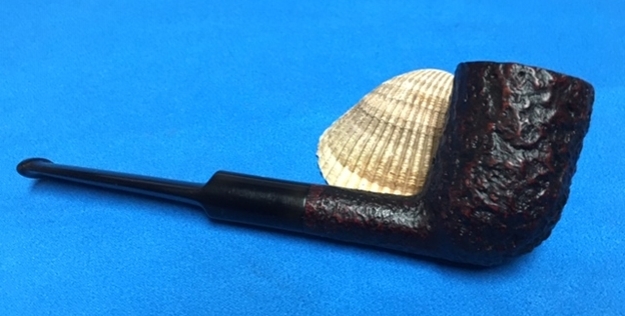
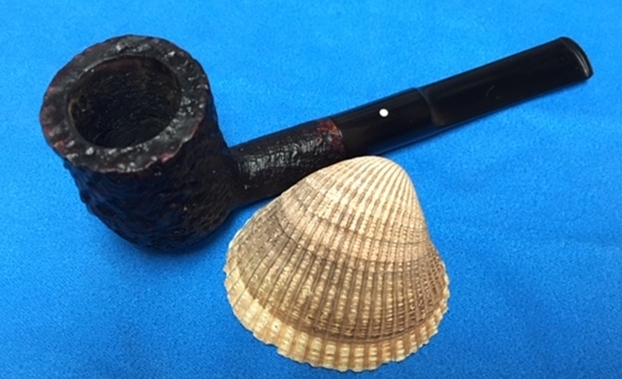
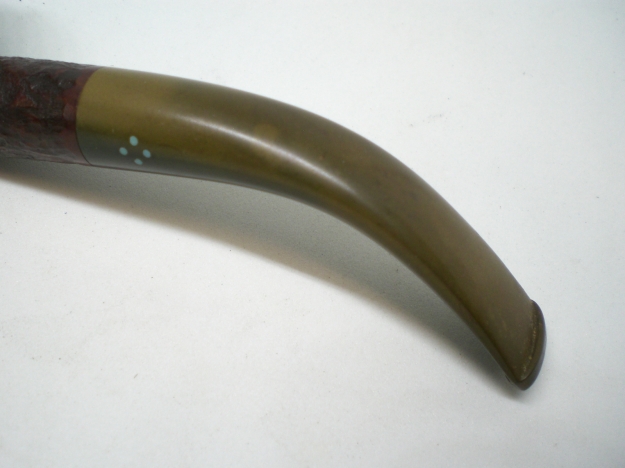
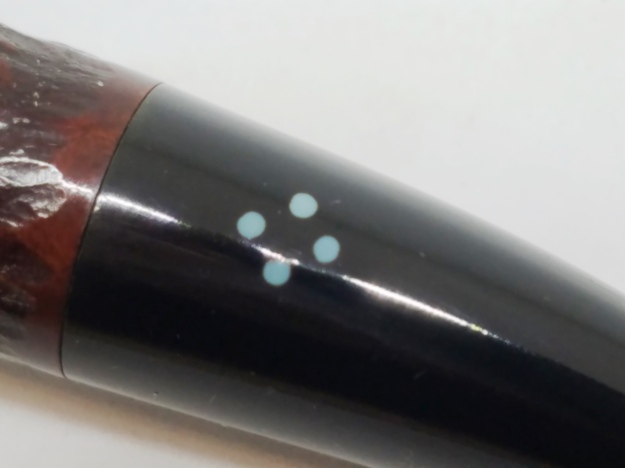
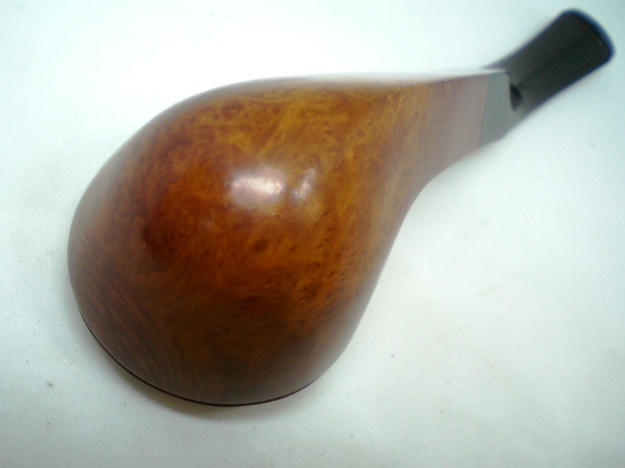
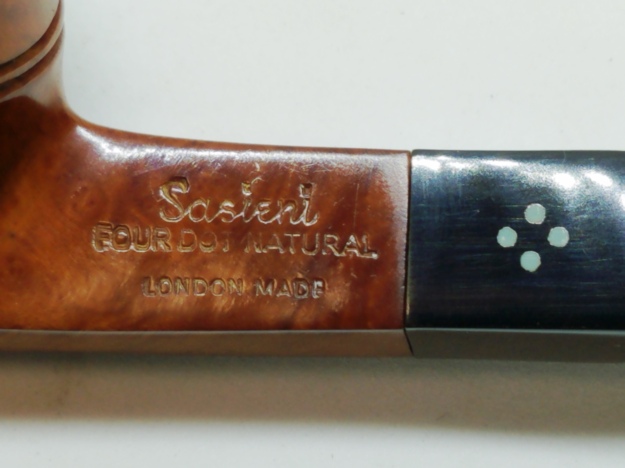
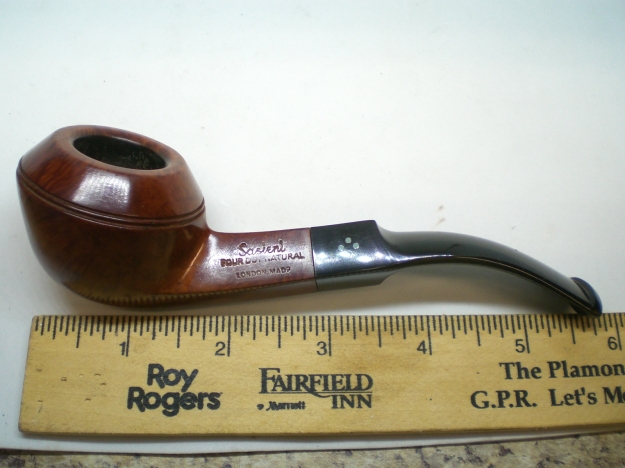
It appears that I’m on a Sasieni roll to start out the new year! My second Sasieni restoration for the day, this one a Regent shape in the Ruff-Root finish. I was delighted to unpack this one, as I had never seen a Regent shape first hand. The seller didn’t include any size references and I assumed it would be of the larger variety, like the the Stratford, Viscount Lascelles, etc. As someone who enjoys a smaller sized bent billiard, this one is perfect at 35 grams. The pipe was inaccurately listed as a “4 Dot” but thankfully a good nomenclature picture was included. Others may have noticed as there was a flurry of bids at the end of the auction. I was fortunate to prevail by a few dollars under my maximum bid.

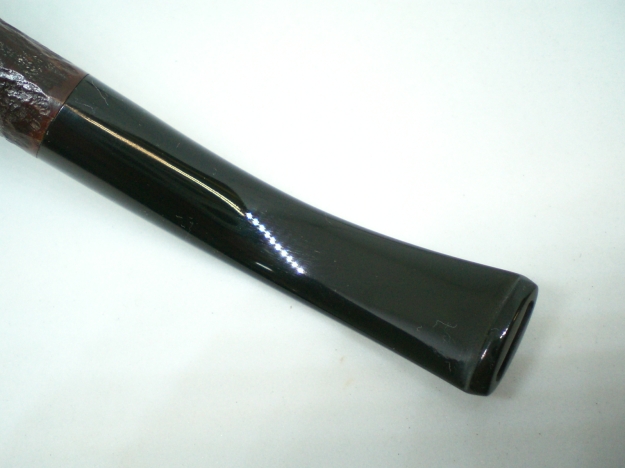
The pipe was as pictured below, in excellent condition. A good snug stem, no bite marks or any other issues. There was some build-up on the bowl top, a heavy cake and an oxidized stem. Even on the oxidized stem, the blue dots were brilliant and it was one of the nicest Sasieni stems that I’ve seen in quite a while. This pipe was made between 1946 and 1979 (the Family era).

I reamed the cake and soaked the bowl in sea salt and alcohol. Following the soak, I removed the build-up on the bowl top with a piece of Scotch-Brite. I hand buffed the briar with Halycon wax. The stem was mounted and oxidation removed with 800, 1000, 1500 and 2000 grit wet sandpaper. I then used 8,000 and 12,000 micromesh sheets. The stem was polished with White Diamond and Meguiars Plastic Polish.
Below is the finished pipe.

?

Kaywoodie Drinkless Yacht Restoration


By Al Jones

Al_Pipes_@SMALL

This wonderful Kaywoodie Drinkless belongs to a friend who lives in Louisiana.  While visiting my daughter for Christmas, he showed me the pipe, found in a local flea market.  I volunteered to restore it for him.
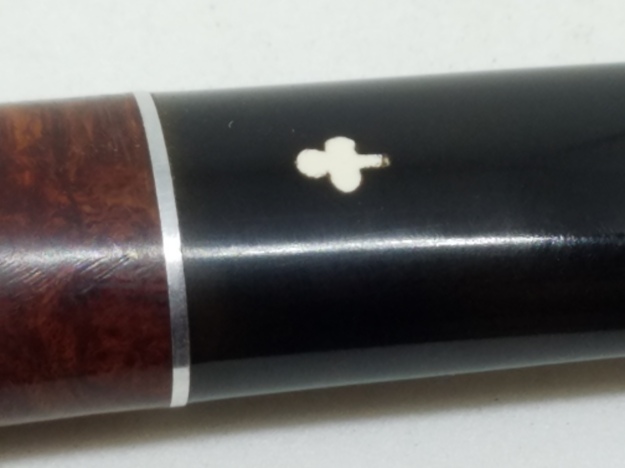
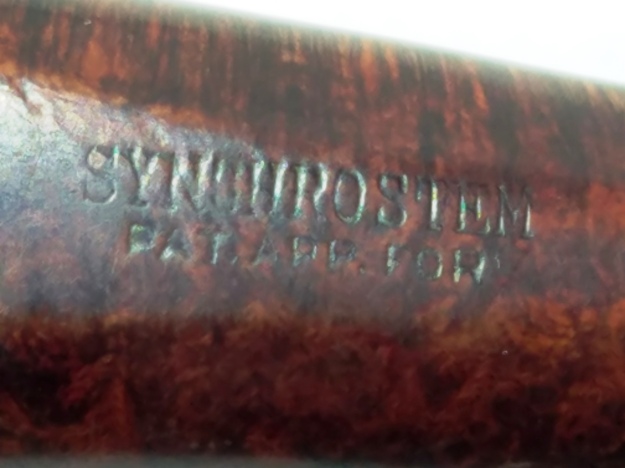
I had not restored a Kaywoodie in several years and struggled a bit to date the pipe.  The old Kaywoodie forum is no longer available, which was a great resource.  I did find that there is a Kaywoodie Pipe Smokers Facebook page and I requested to join it.  Looking back thru some old PipesMagazine.com forum posts, I was finally able to date the pipe as to have been made between 1929 and 1932.    These details led me to that conclusion:

Clover Stem logo – on top of the stem (most I found on line are on the side)
Four Hole Stinger – with Reg. No 213698 and Drinkless
Syncrostem “”PAT. APP. FOR” (Patent was granted in 1933)
KBB logo – in the cloverleaf

The pipe was in great shape, with some rim damage and a lightly oxidized stem.  the Four Hole stinger was intact and the stem was in great shape.  The nomenclature was very good, but unfortunately the shape number was not visible.  Below is the pipe as it was received.

Kaywoodie_Yacht_Before (1)Kaywoodie_Yacht_Before (2)Kaywoodie_Yacht_Before (3)Kaywoodie_Yacht_Before (4)

I used a worn piece of Scotch-Brite to remove the build-up on the bowl top. There were several indentions on the bowl top, I presume heat damage from a lighter or match.  I decided to top the bowl slightly and did so with 320 grain paper on my flat bench, followed by 800 grit wet paper.  This was a bit of a compromise, as I wanted to remove the damage, but not alter the bowl height significantly.  The bowl top was then re-stained with Fieblings Medium Brown stain.  The bowl was reamed and then soaked with alcohol and sea salt.   The bowl was in excellent condition.

I cleaned the stinger with fine steel wool and Mothers Mag & Aluminum polish.  The stem was polished with 800, 1,000, 1,500 and 2,000 grade wet paper, followed by 8,000 and 12,000 grade Micromesh sheets.  It was then polished with White Diamond and Meguiars Plastic polish.

The bowl was buffed with White Diamond and several coats of Carnuba wax.

Below is the finished pipe, ready to head back home to Louisiana.

Kaywoodie_Yacht_Finish_01Kaywoodie_Yacht_Finish_02Kaywoodie_Yacht_Finish_03Kaywoodie_Yacht_Finish_04Kaywoodie_Yacht_Finish_05Kaywoodie_Yacht_Finish_06Kaywoodie_Yacht_Finish_07Kaywoodie_Yacht_Finish_08Kaywoodie_Yacht_Finish_09Kaywoodie_Yacht_Finish_10Kaywoodie_Yacht_Finish_11Kaywoodie_Yacht_Finish_12

Sasieni Danzey Natural Restoration


By Al Jones

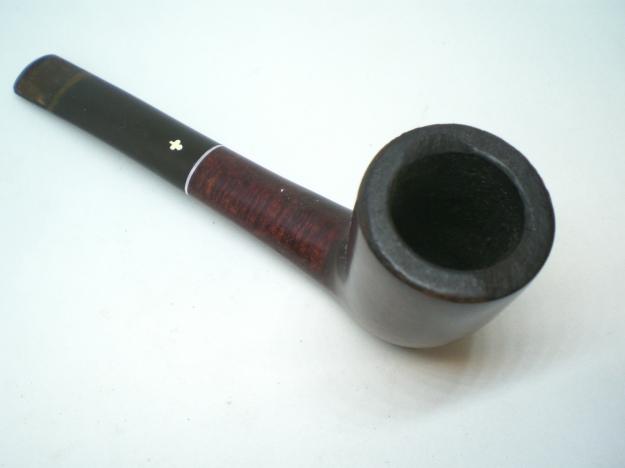
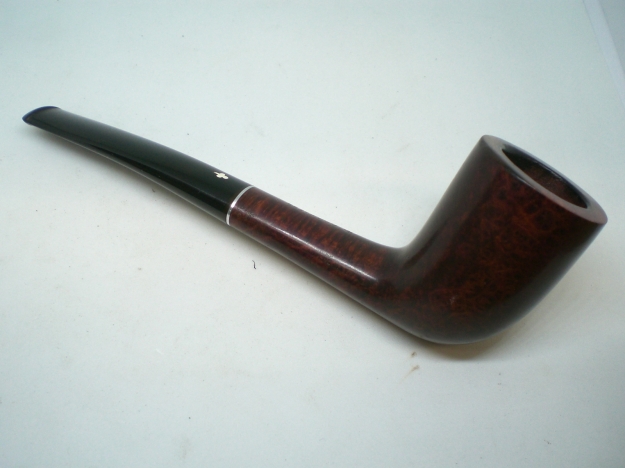
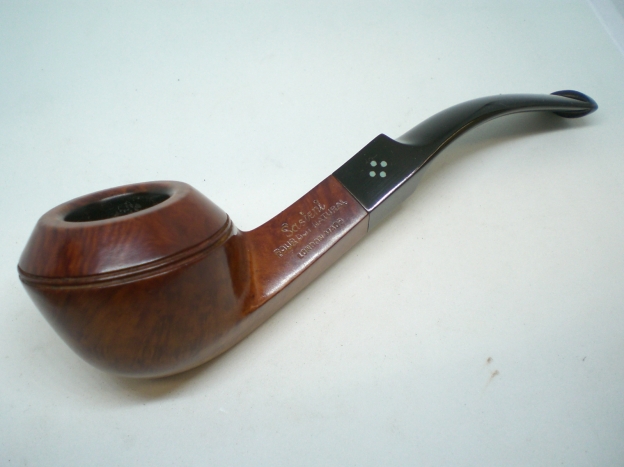
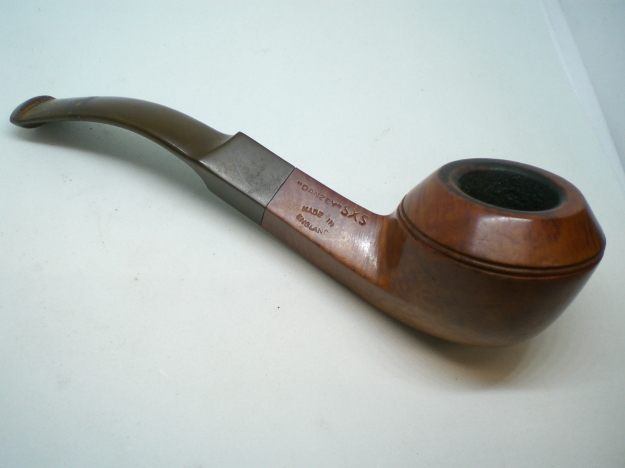
As a collector of Sasieni Bulldog and Rhodesian shapes, the Danzey was a shape that has so far eluded me. My buddy Dave has a Danzey,also with the SXS stamp and in Rustic finish. I restored that pipe for him in 2017.

This one is a Natural finish grade and it is a wonderful piece of briar. The nomenclature was also in excellent condition. The SXS stands for:
S – saddle stem
XS – Sasieni used this stamp for premium priced pipe (according to Pipepedia)

I would date this pipe to have been made between 1946 and 1979.

The pipe was in fine condition, with some build-up on the rim top and an oxidized stem. It appeared to be an easy restoration, see the before pictures below.

I reamed the slight cake from the bowl and indeed, it was in great shape. The bowl was soaked with Sea Salt and alcohol. After the bowl soak, I removed the build-up on the bowl top with a worn piece of Scotch-Brite. The stem was then mounted and oxidation removed with 800, 1000, 1500 and 2000 grit wet sandpaper. I then used 8,000 and 12,000 micromesh sheets. The stem was polished with White Diamond and Meguiars Plastic Polish. The briar was polished with White Diamond and several coats of carnuba wax.
Below is the finished pipe.

?