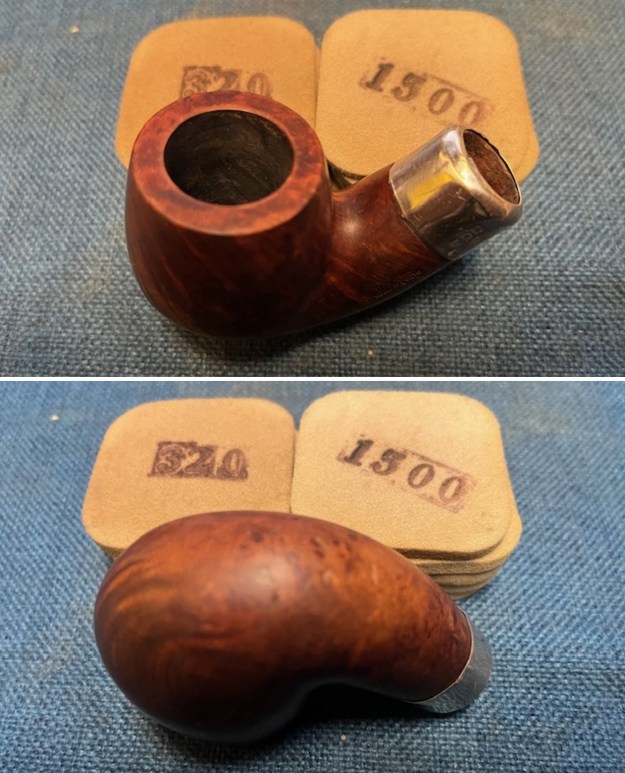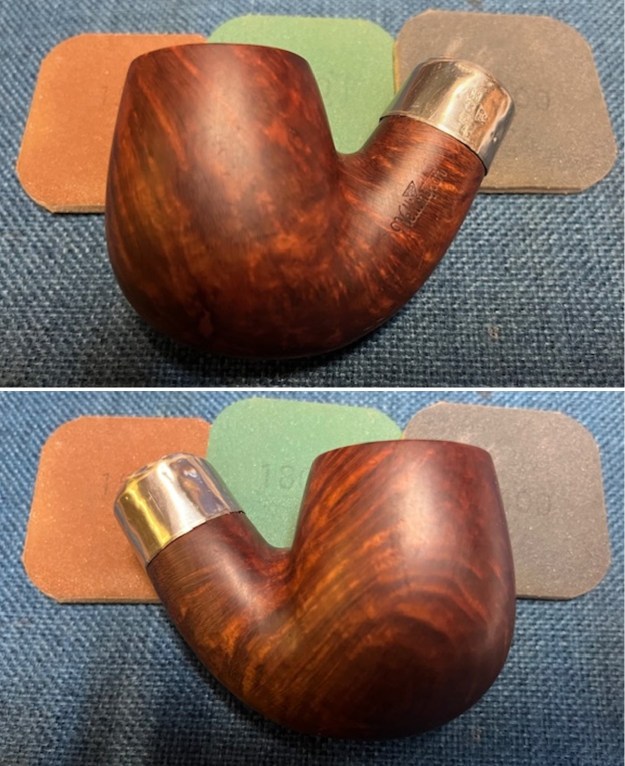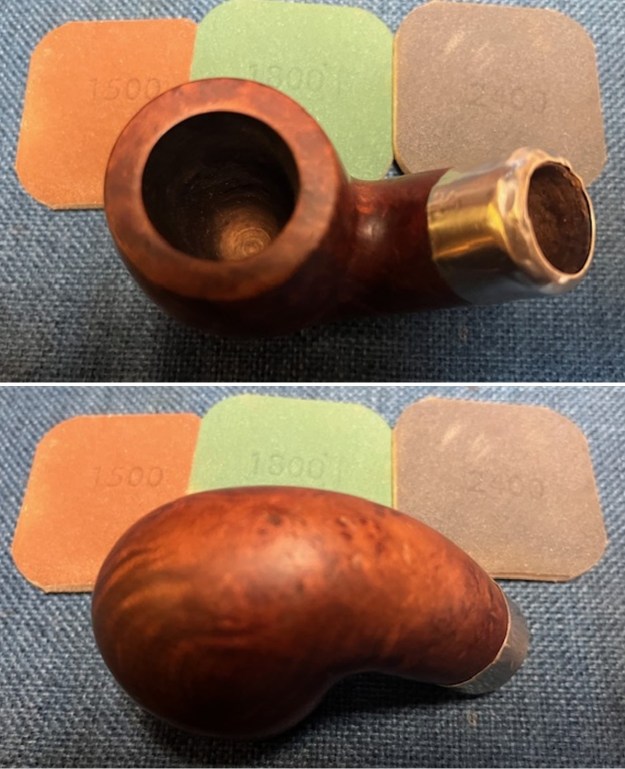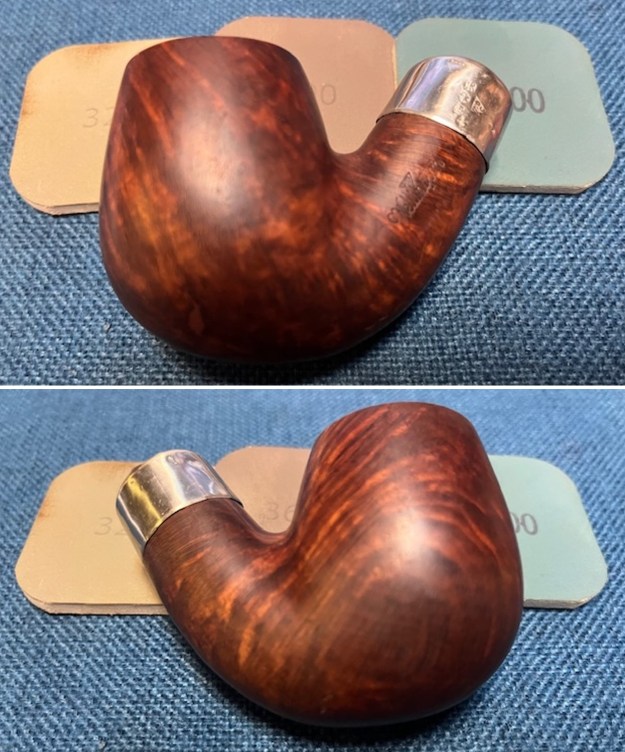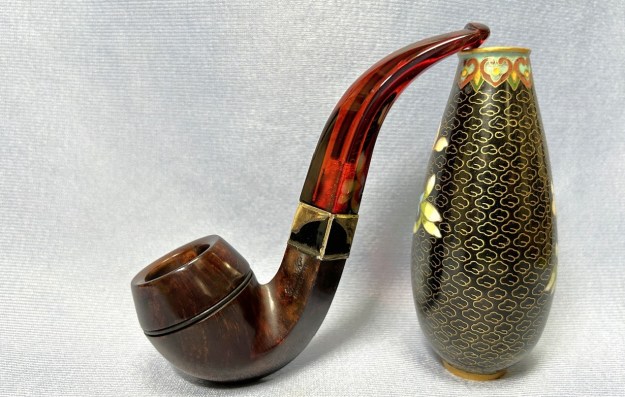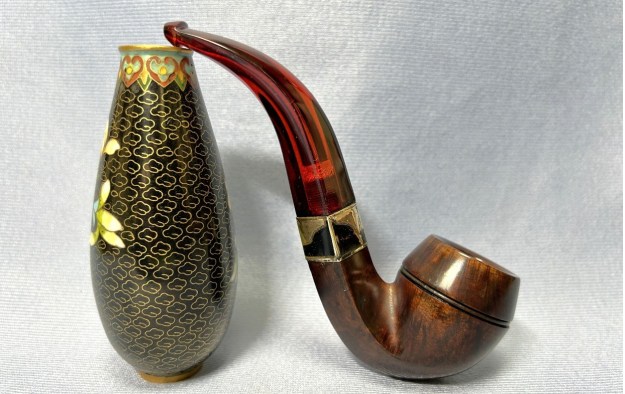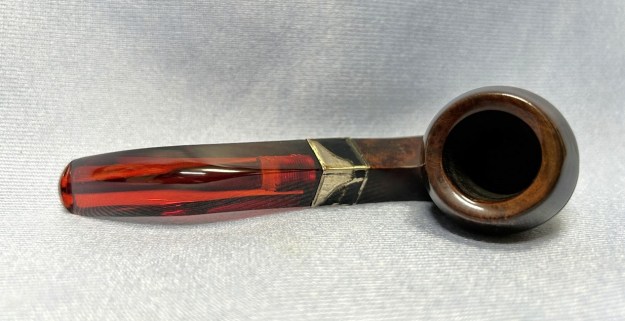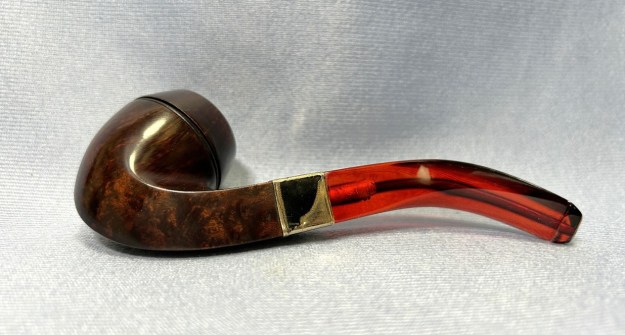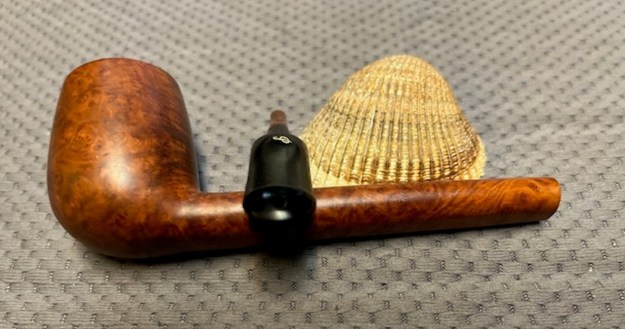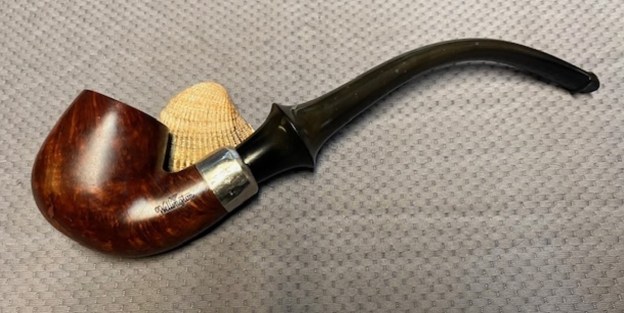
Tag Archives: waxing a stem

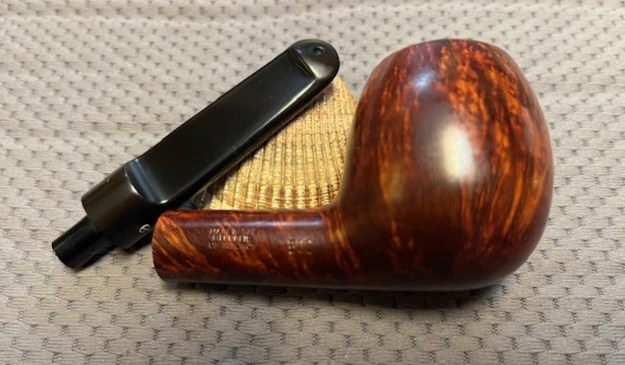
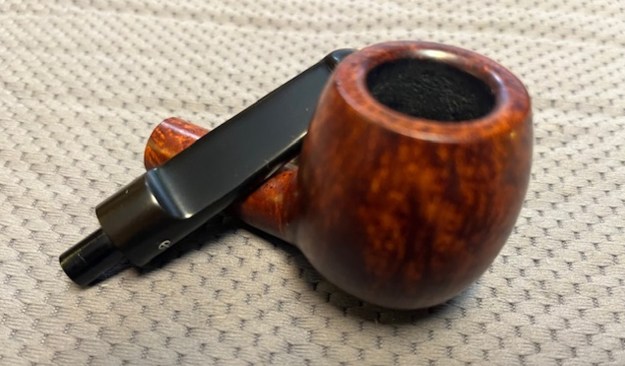
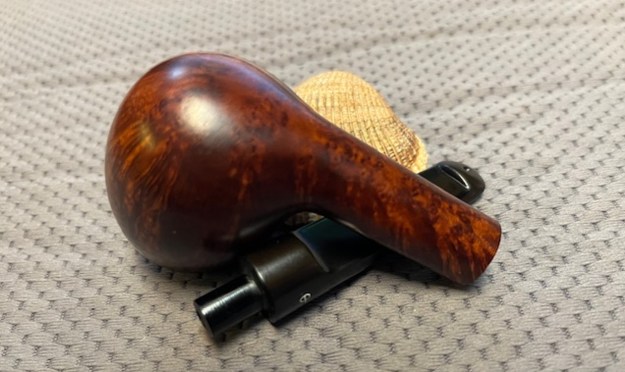
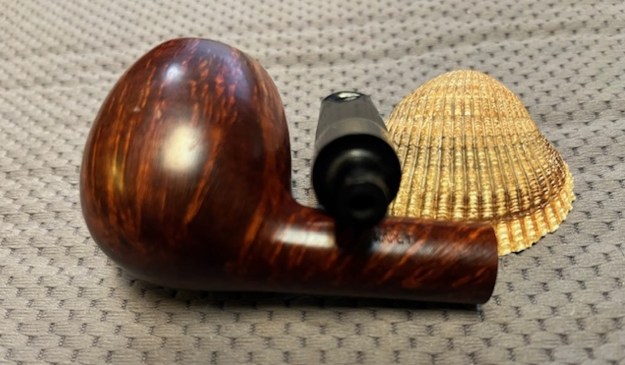
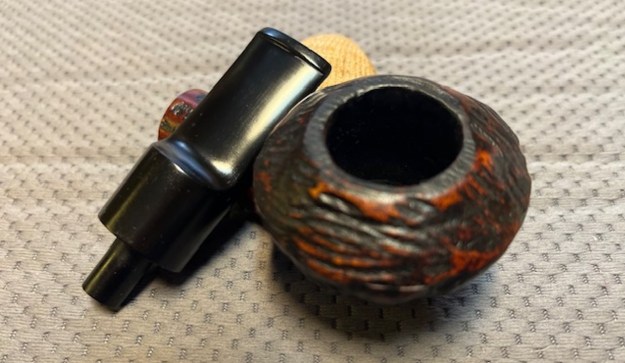
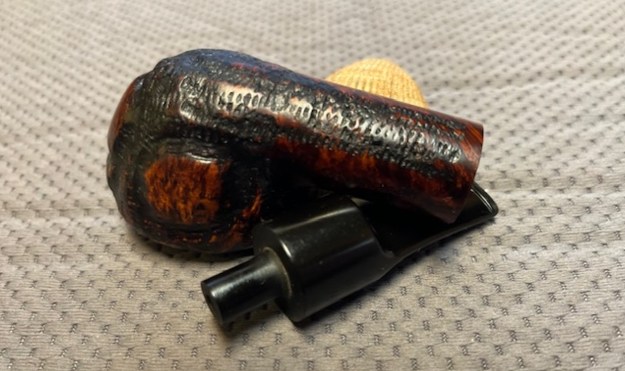
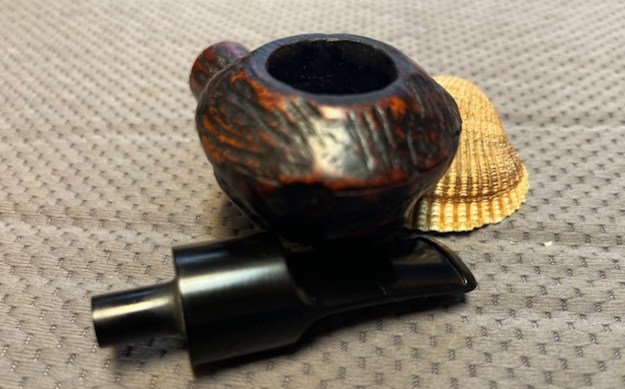
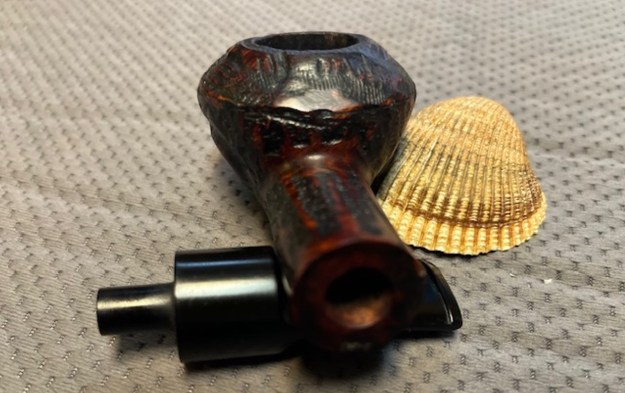
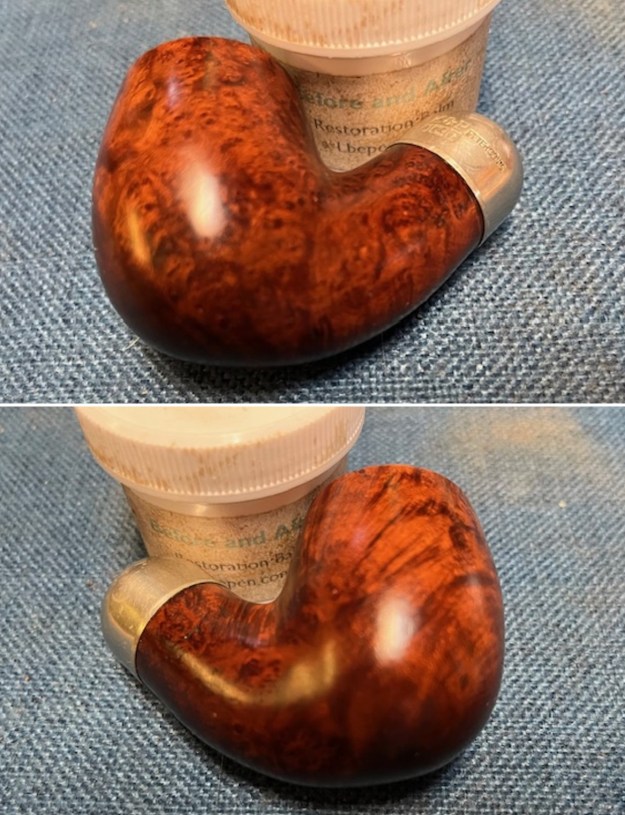
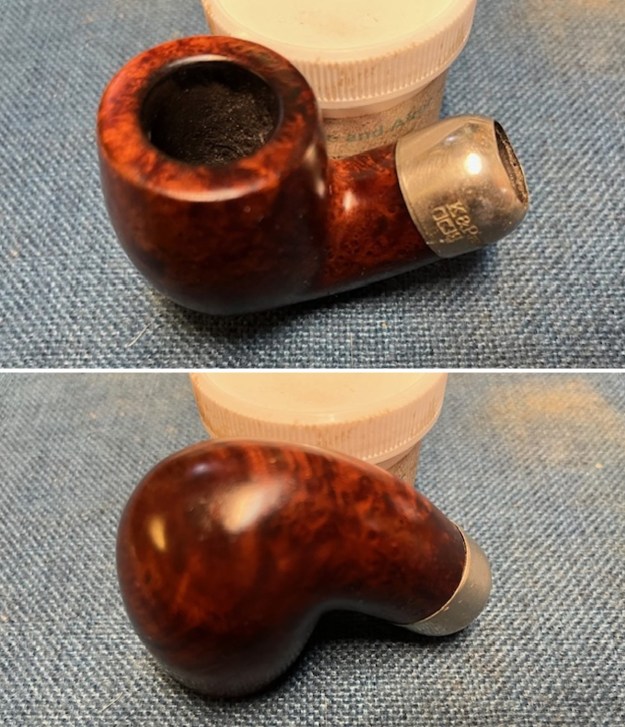
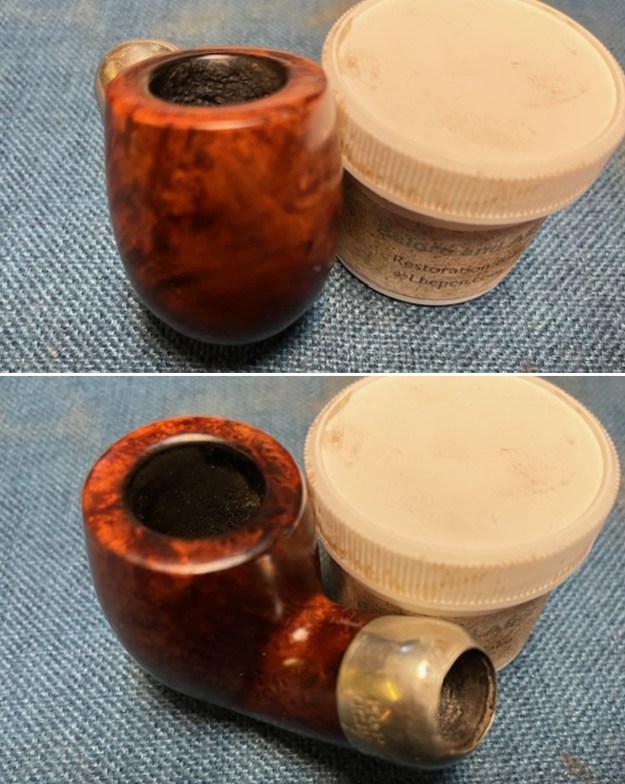
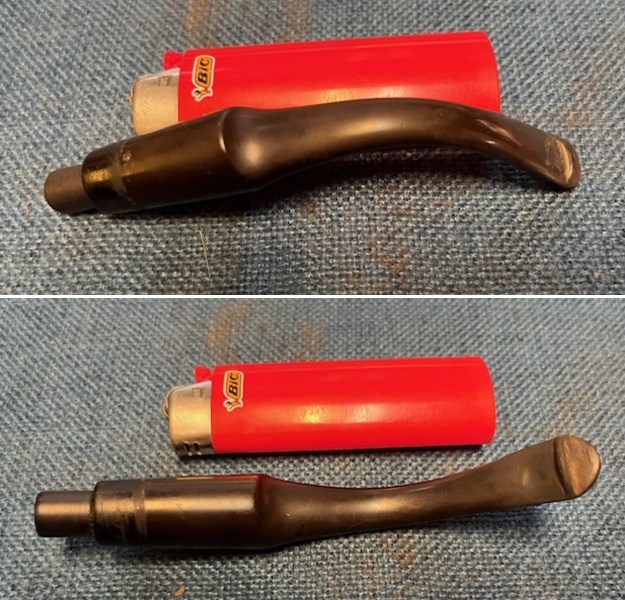
Restoring a Magnum Sized “Malaga” Custom Carved Freehand


by Steve Laug

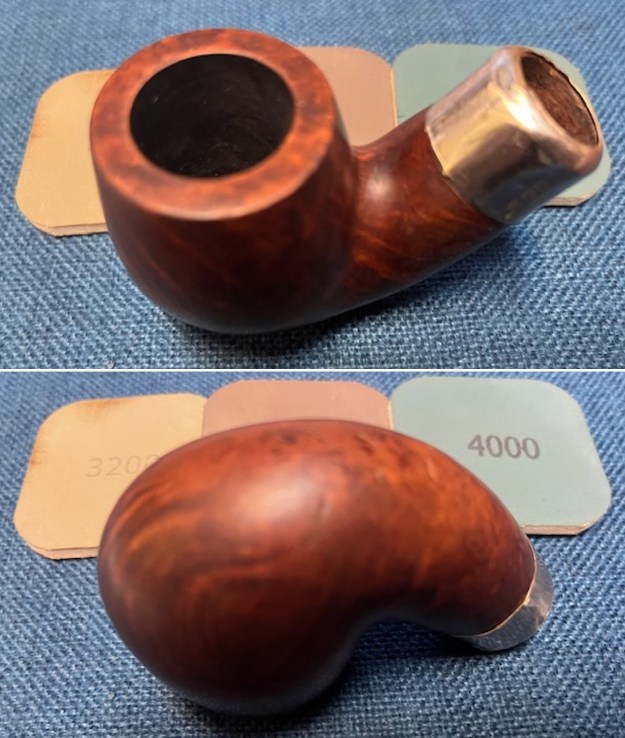
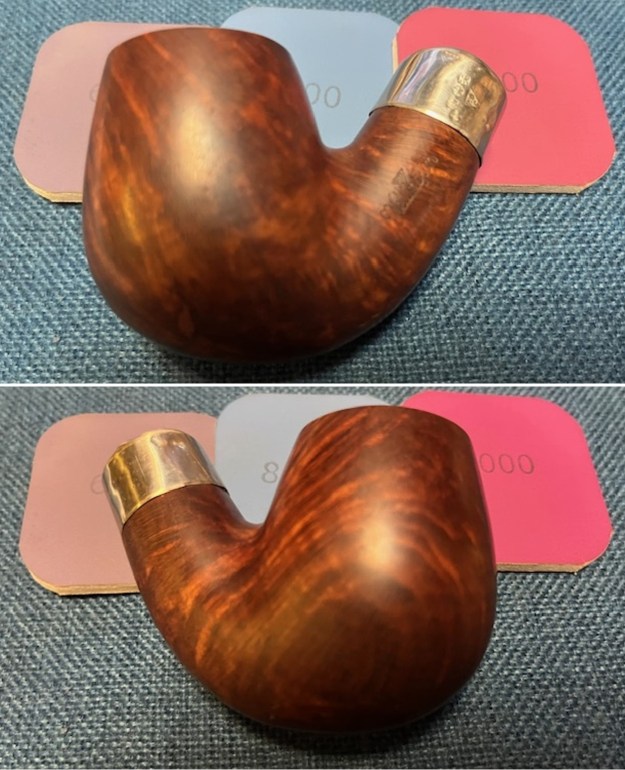
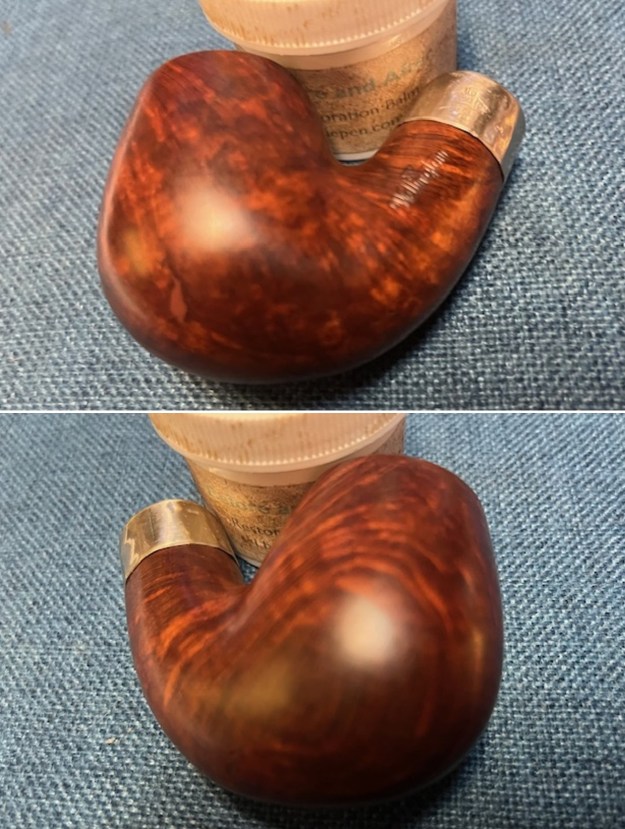
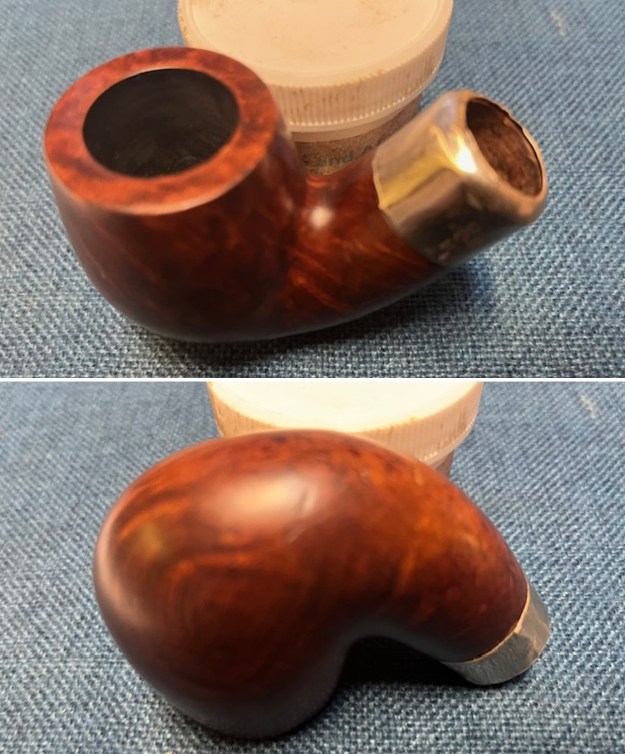
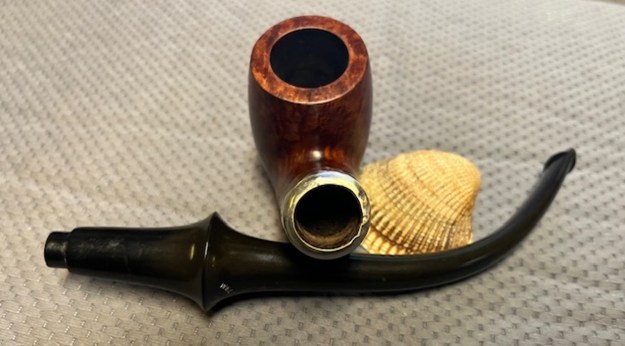
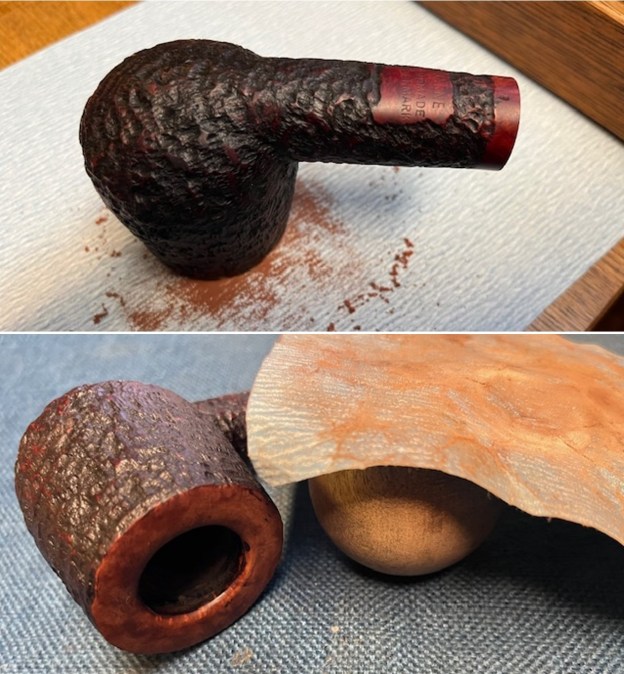
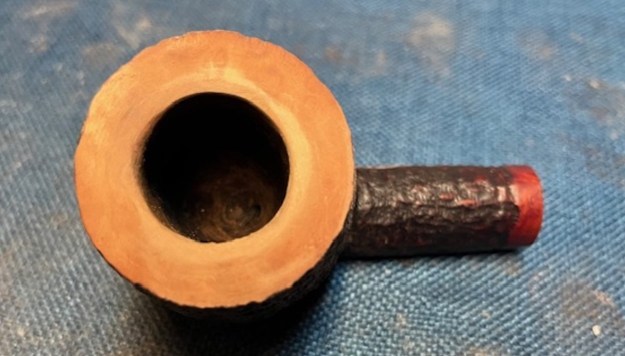
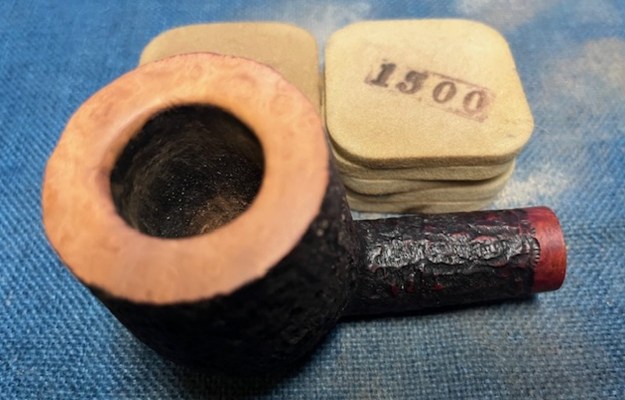
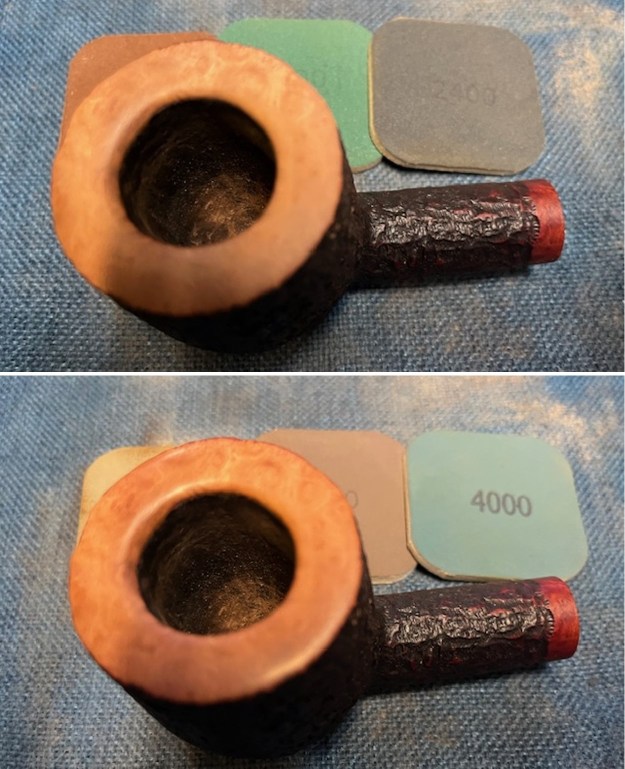
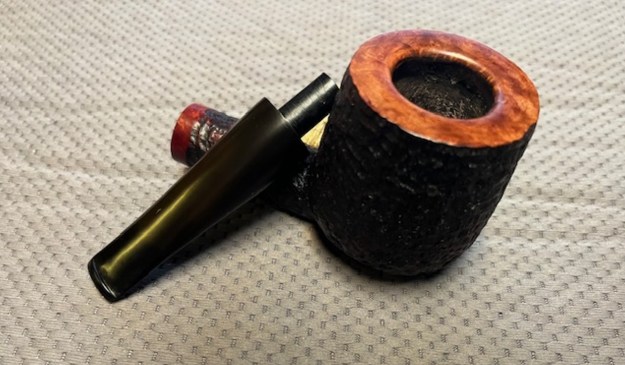
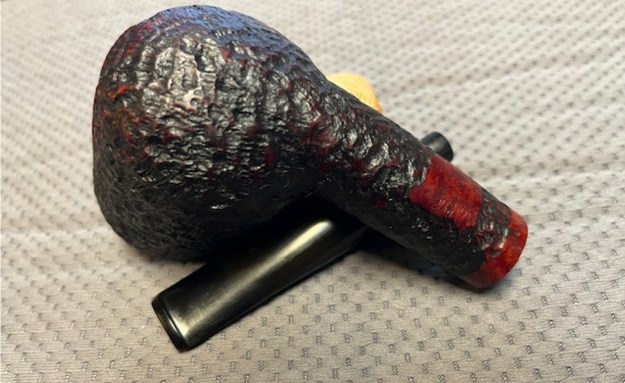
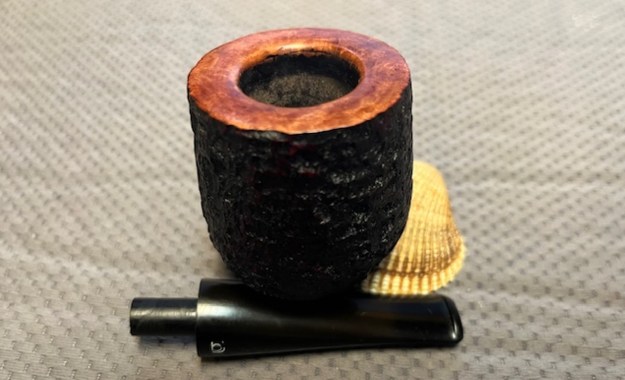
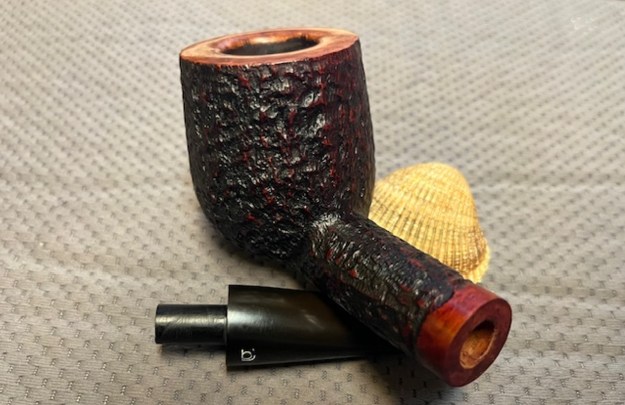
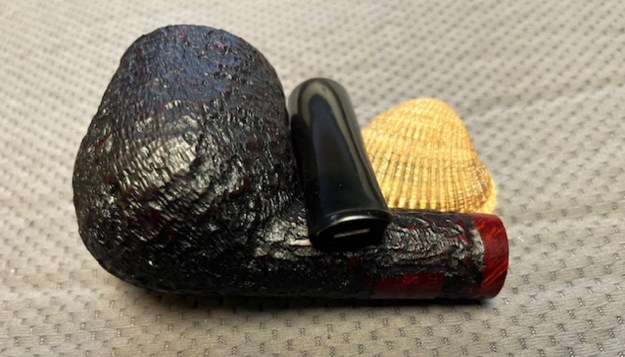
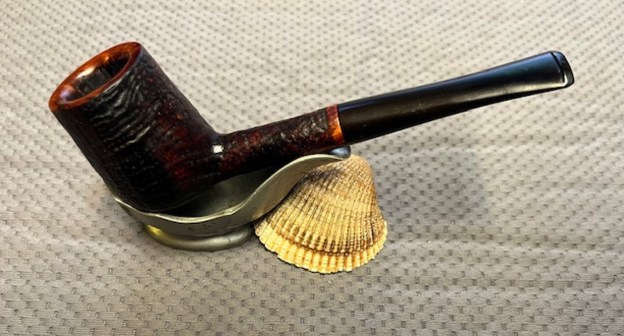
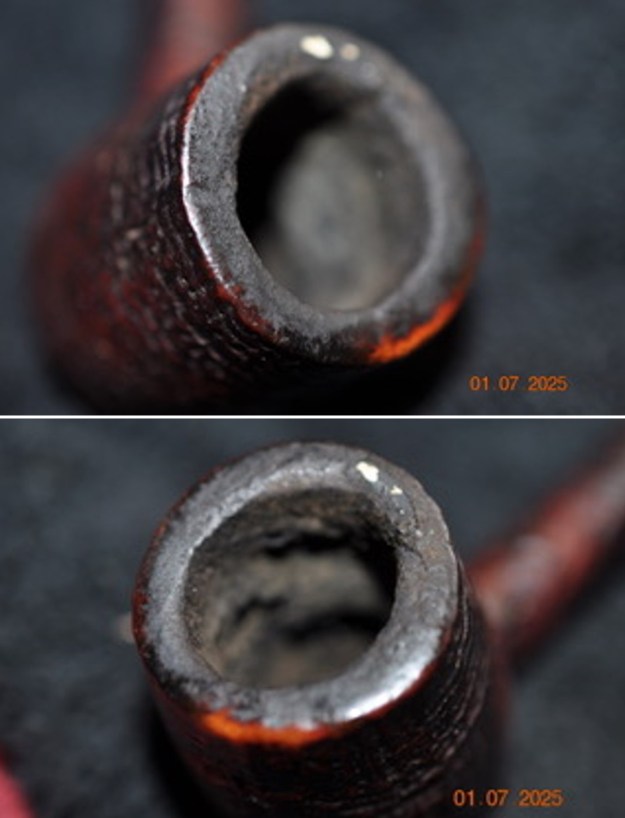
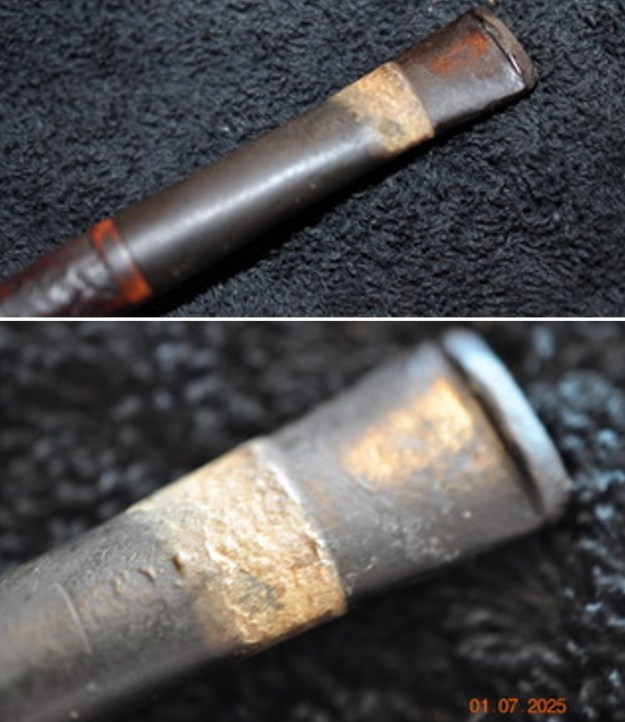
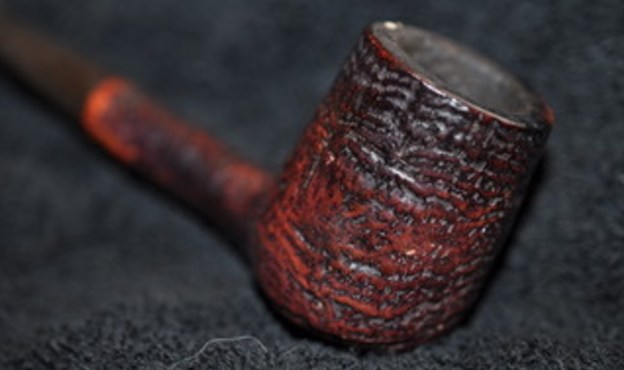
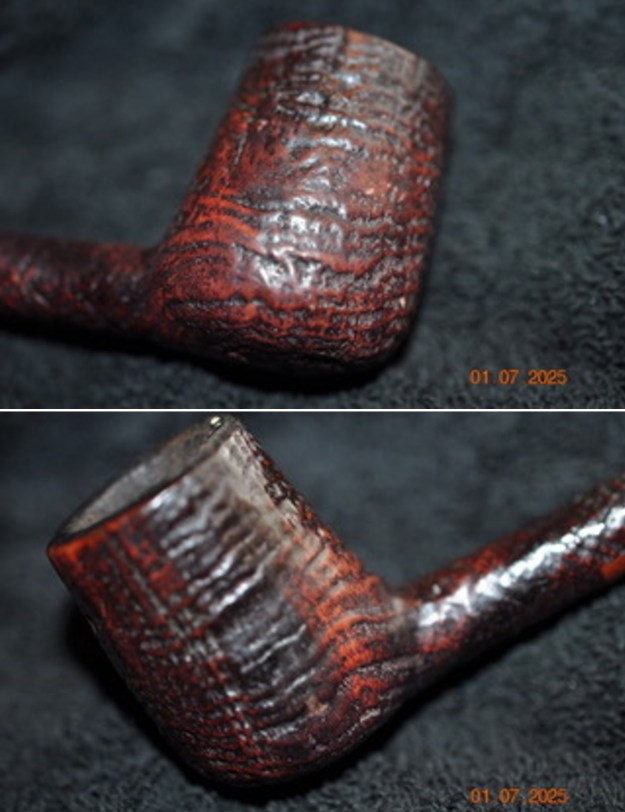
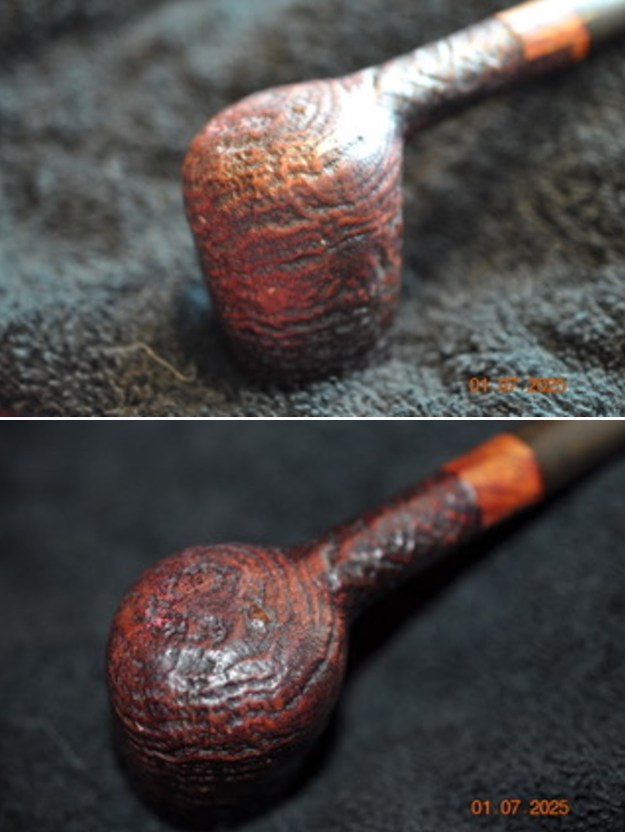
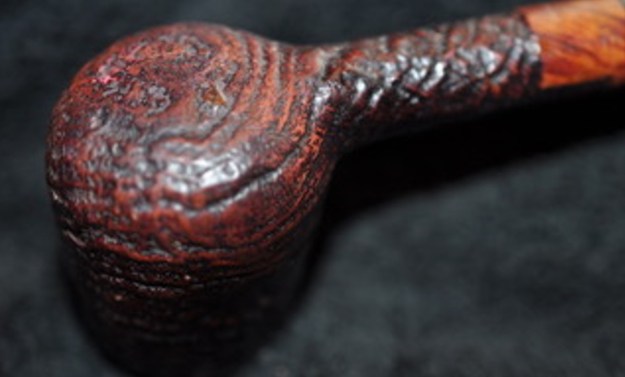
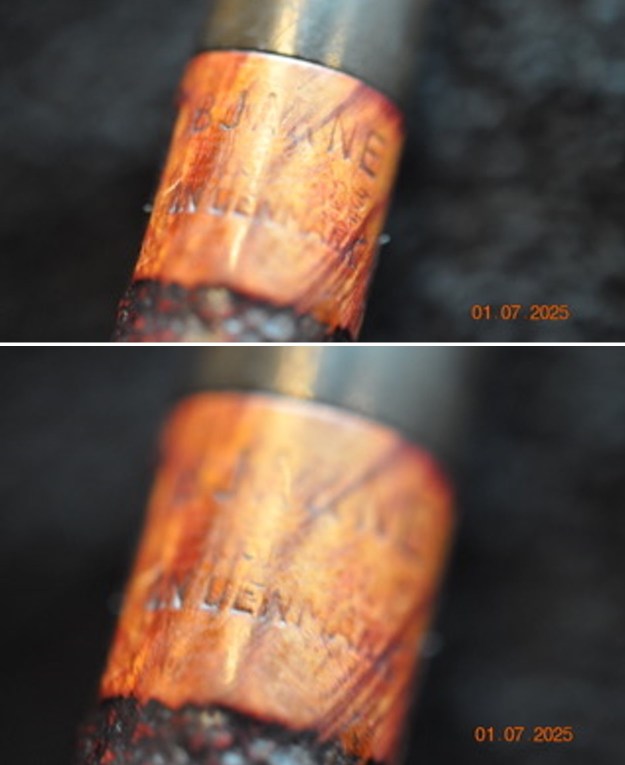
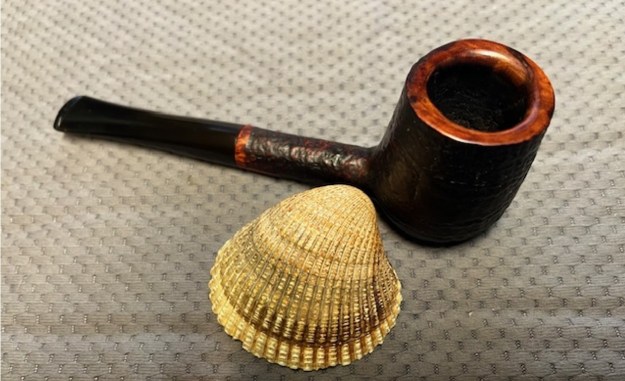
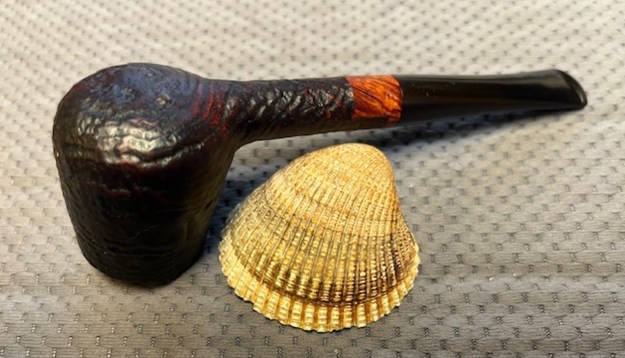
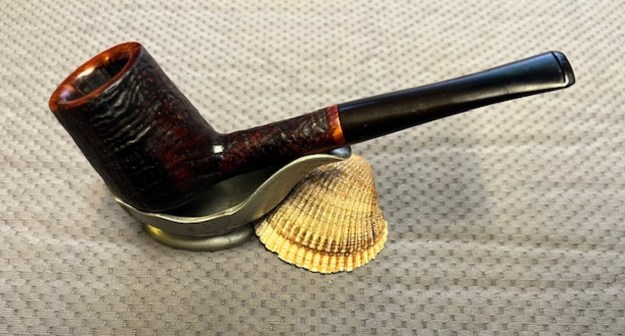
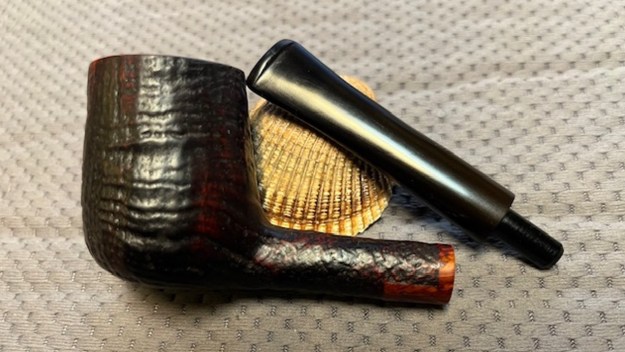
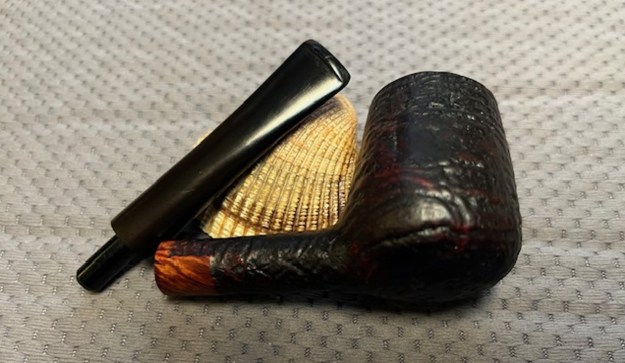
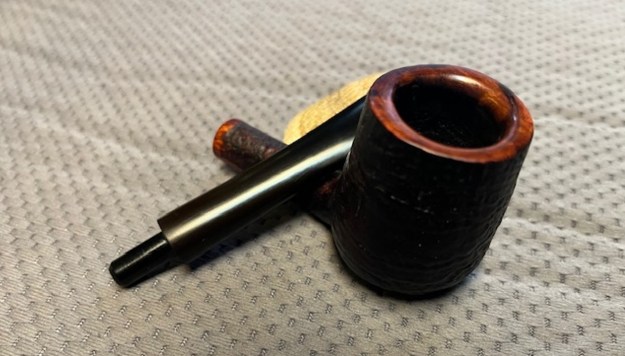
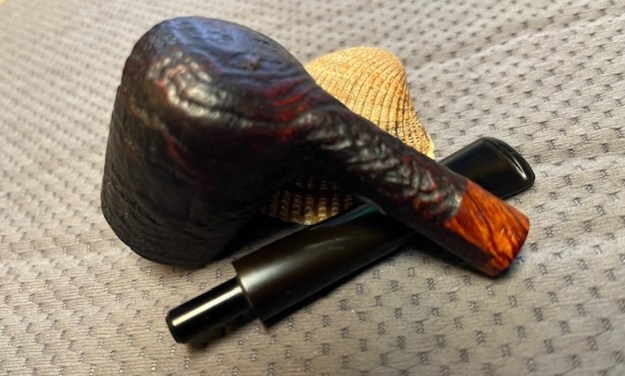
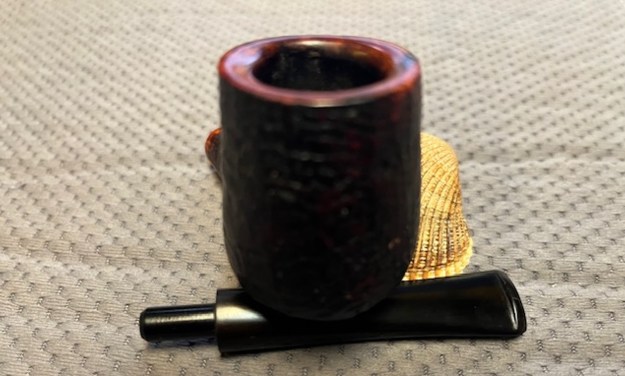
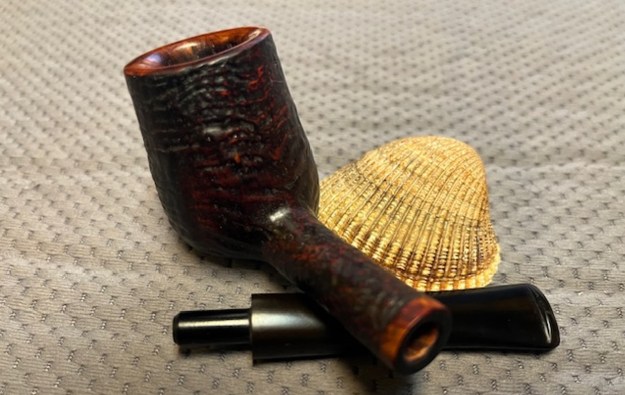
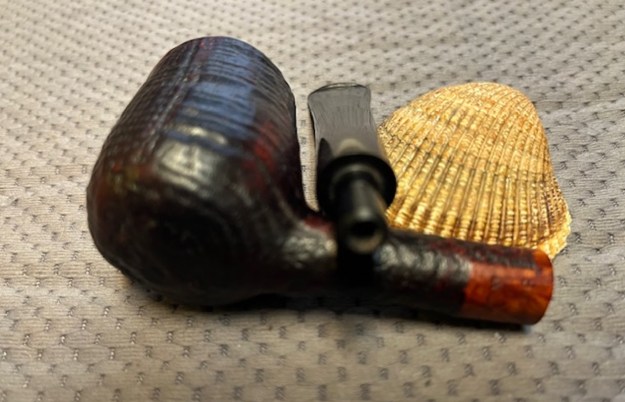
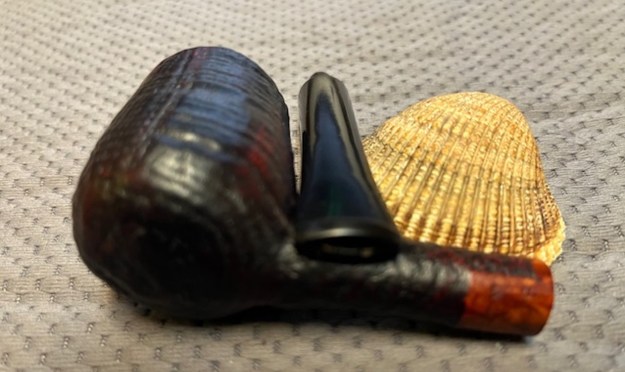
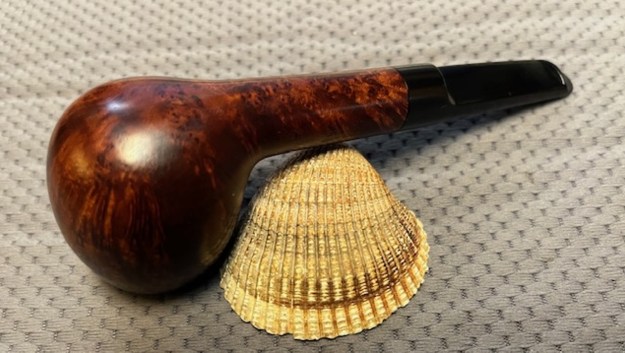
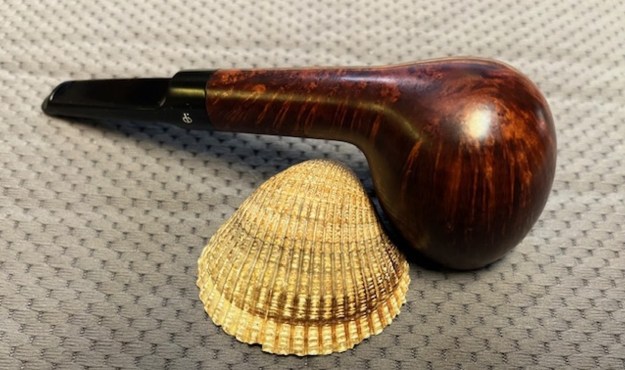
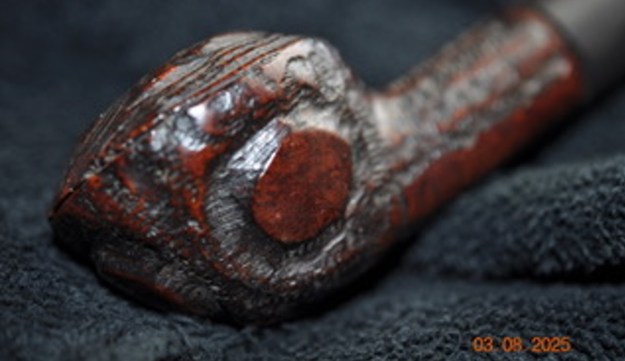
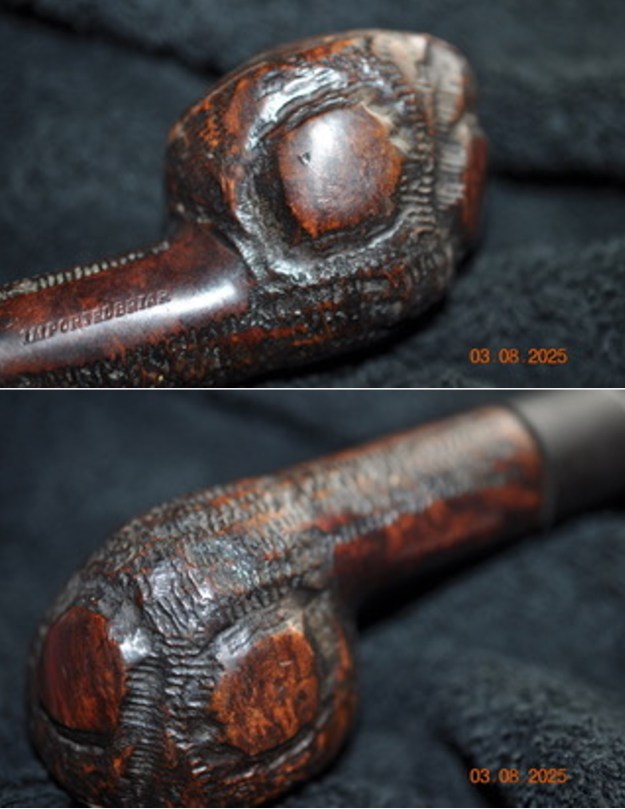
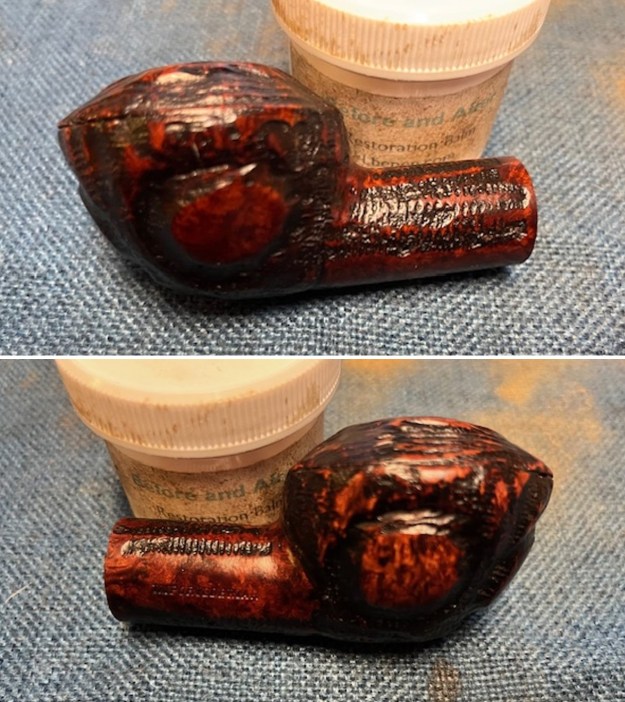
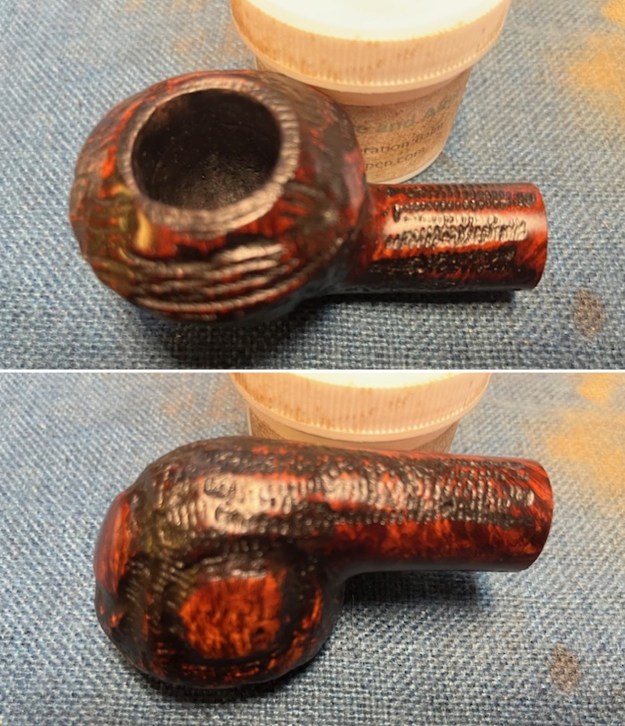
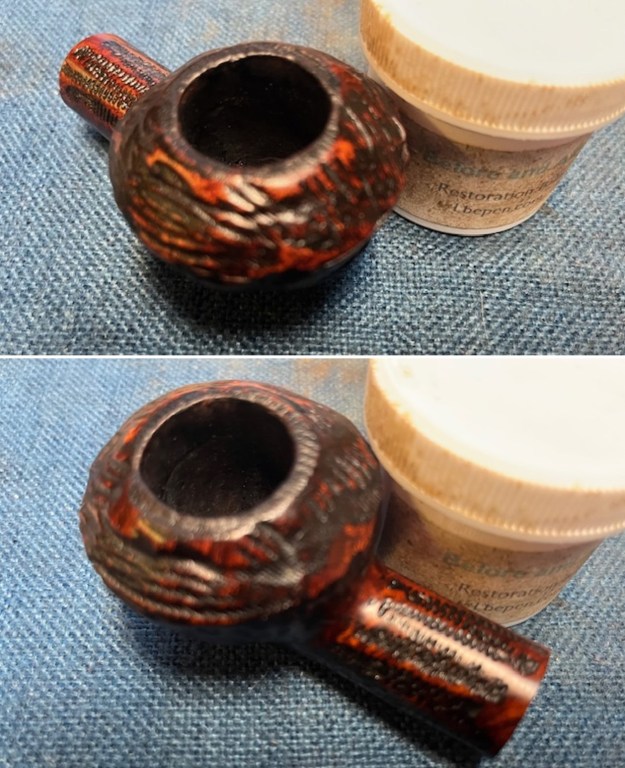
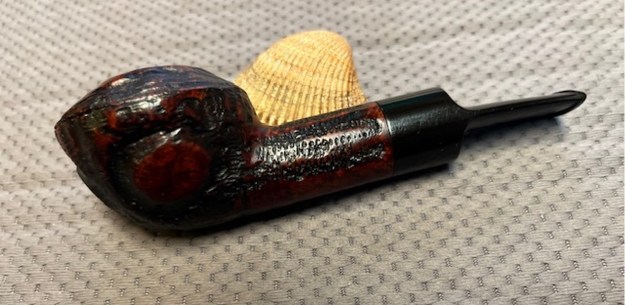
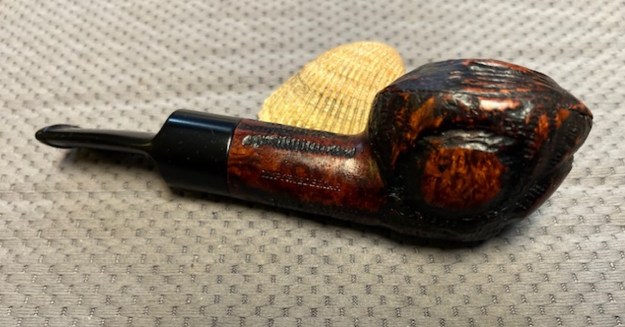
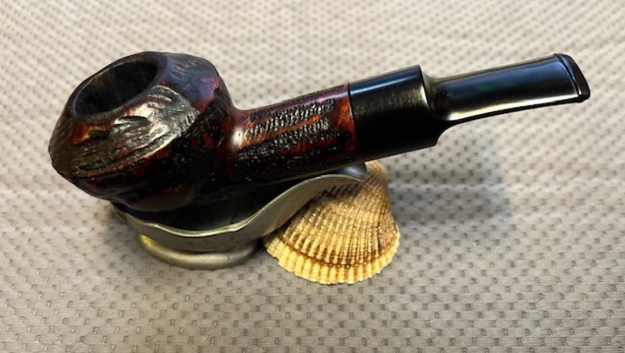
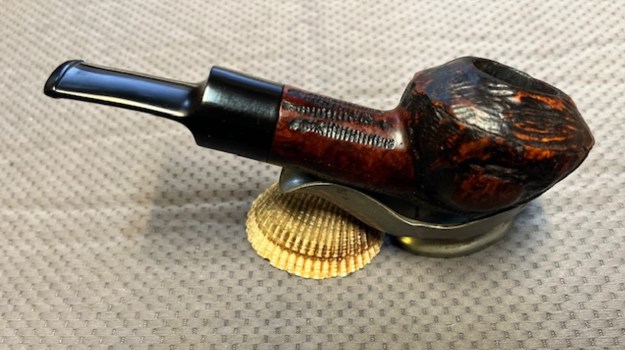
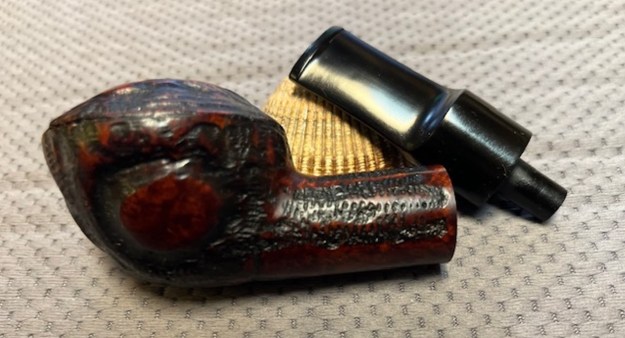
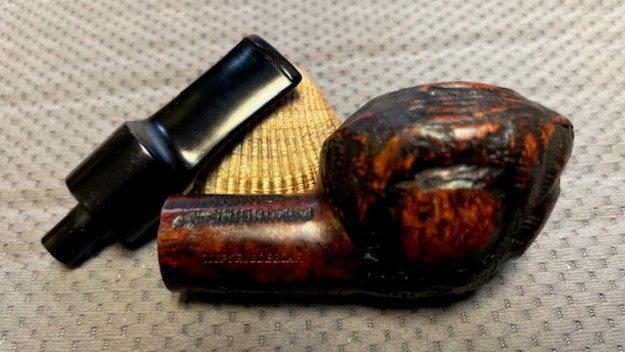
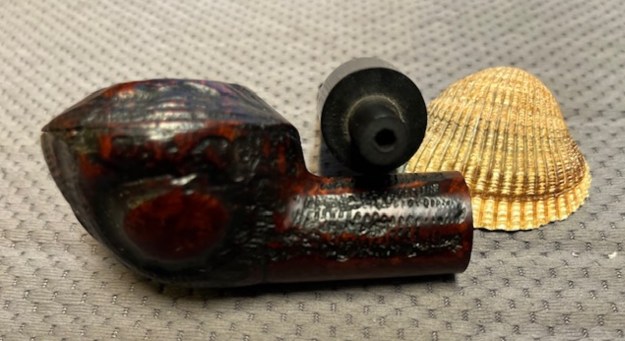
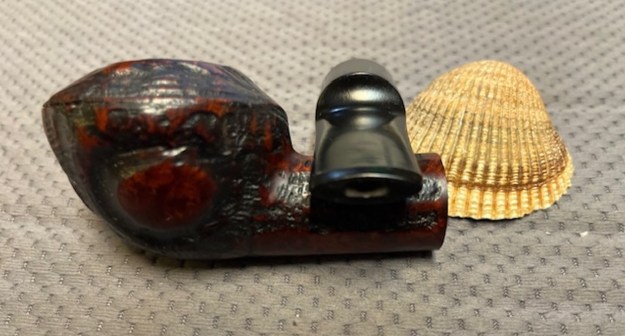
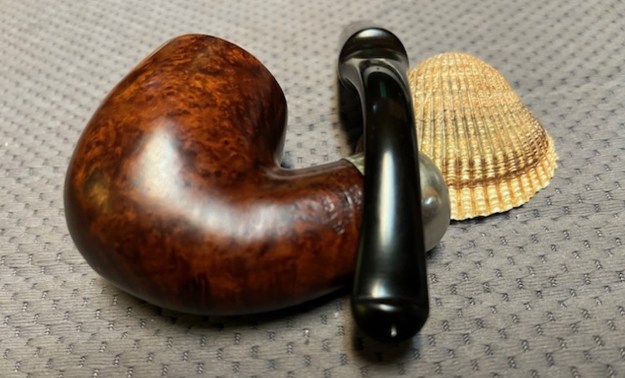
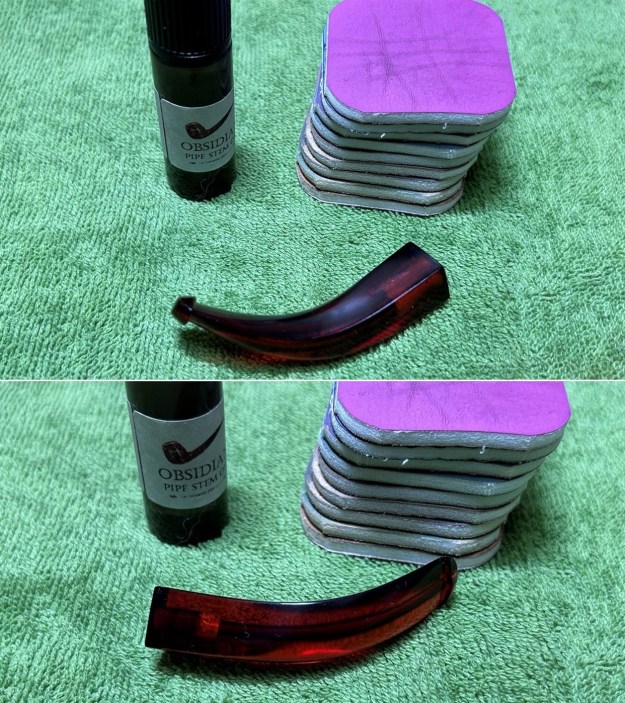
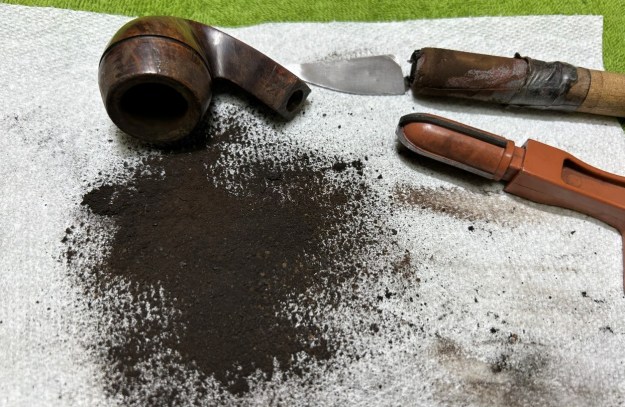
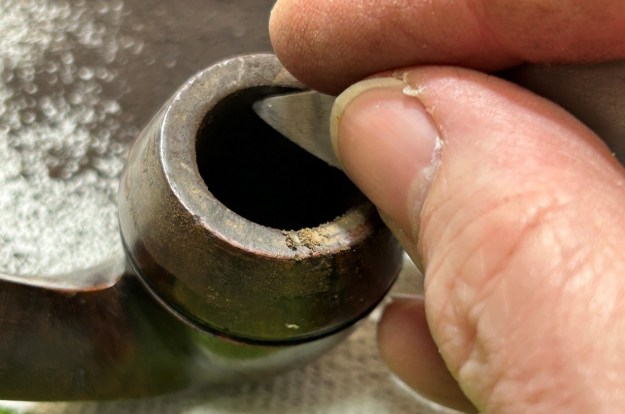
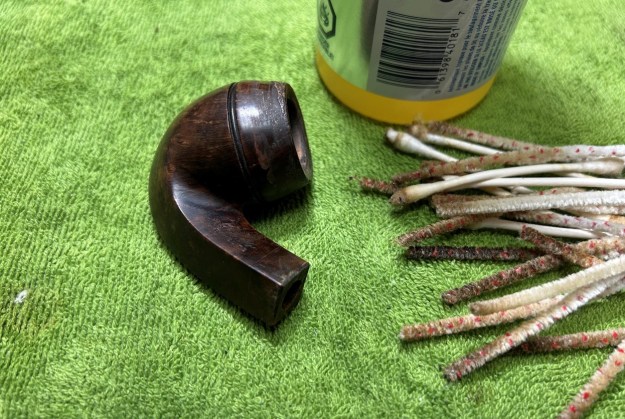
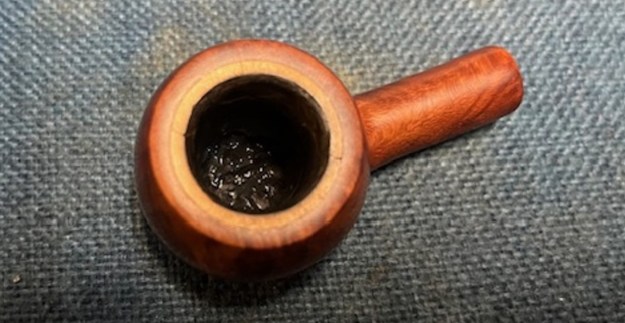
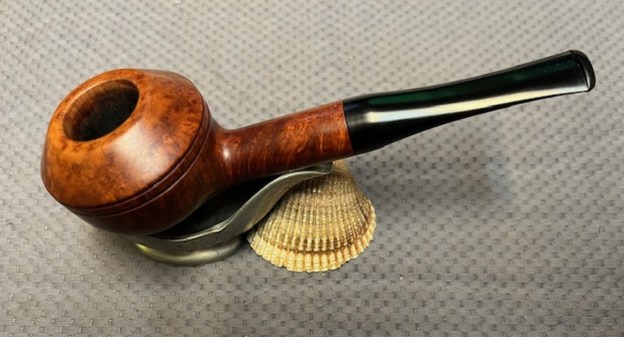
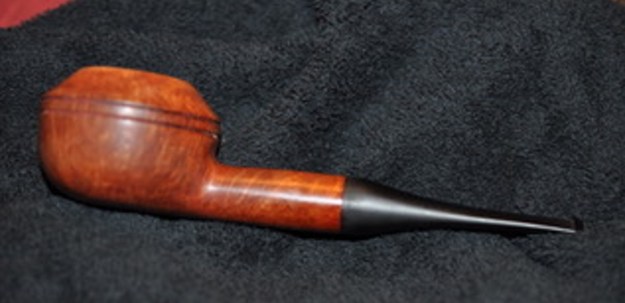
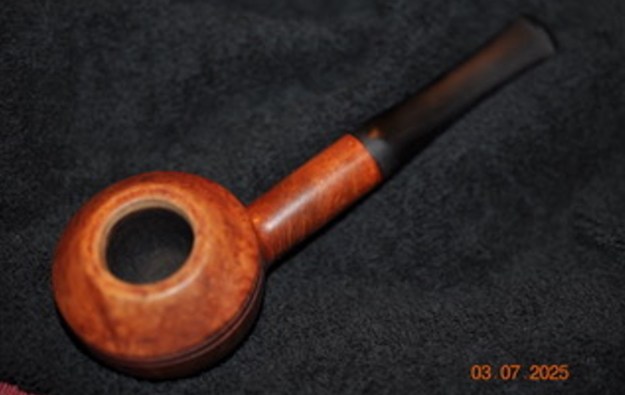
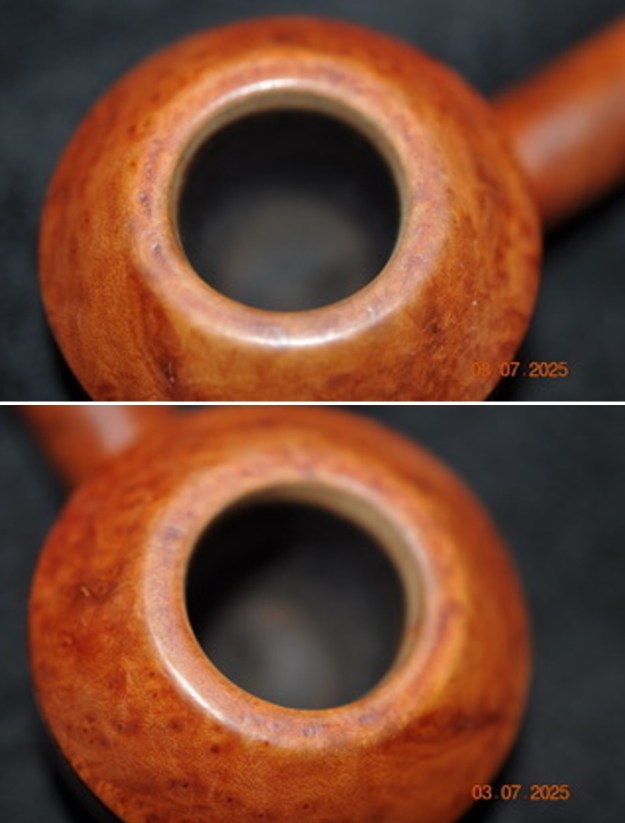
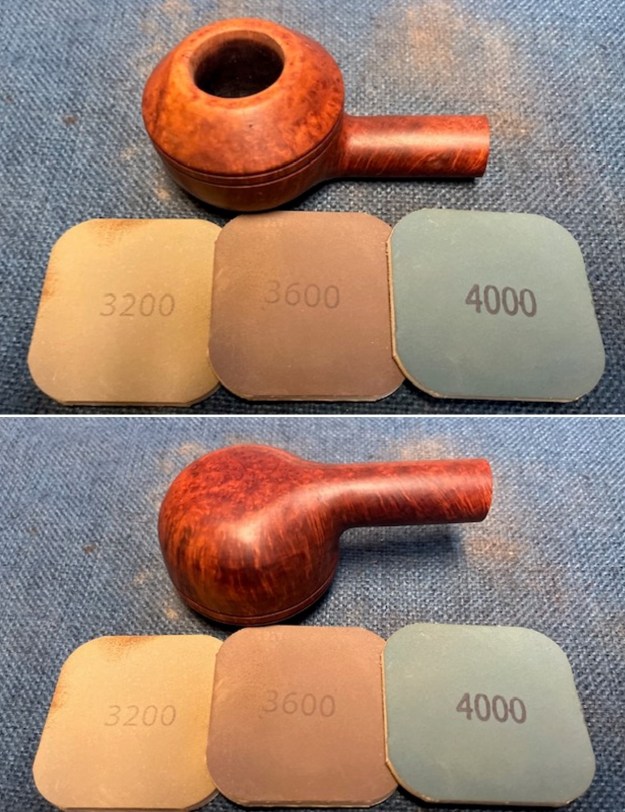
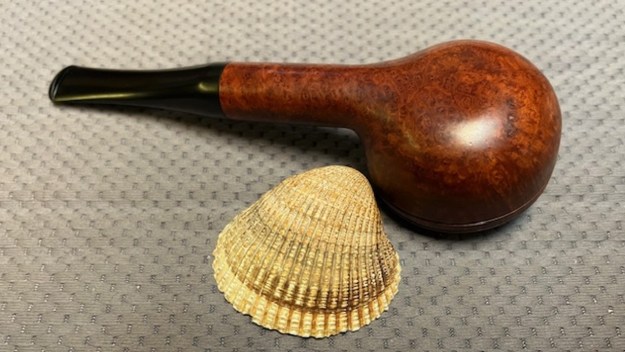
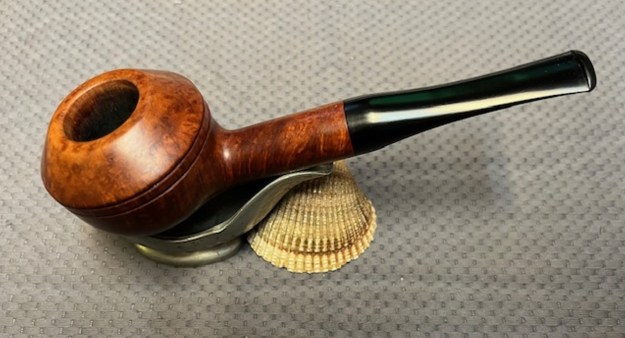
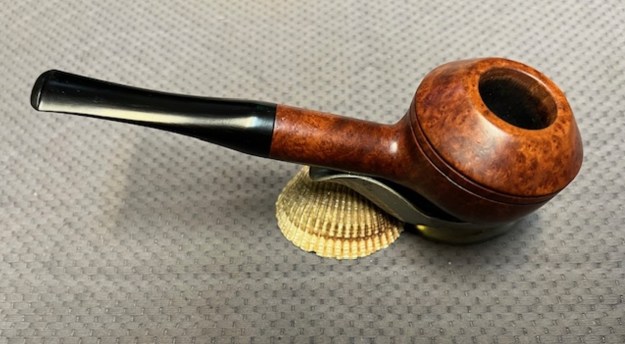
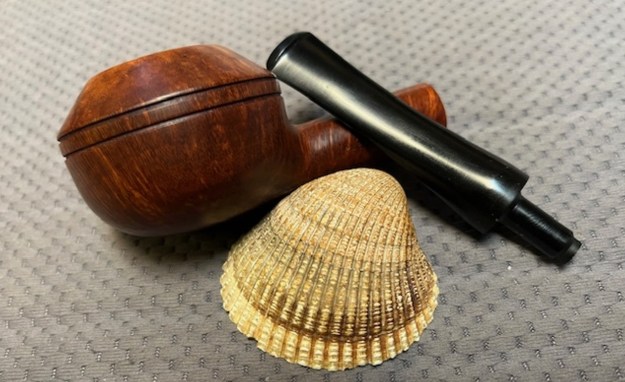
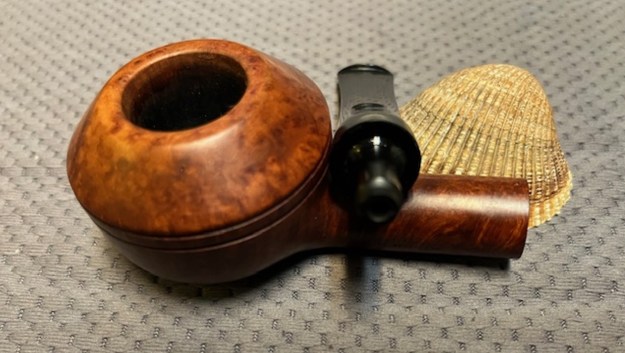
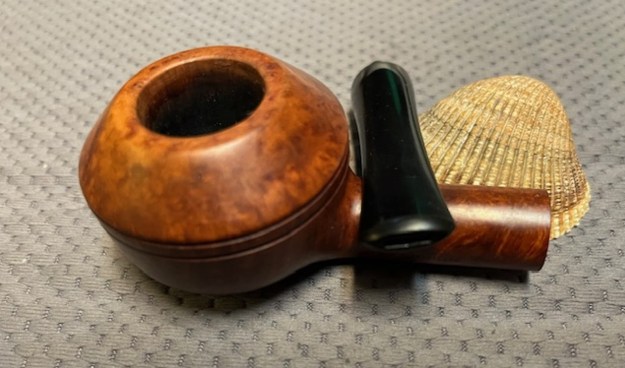
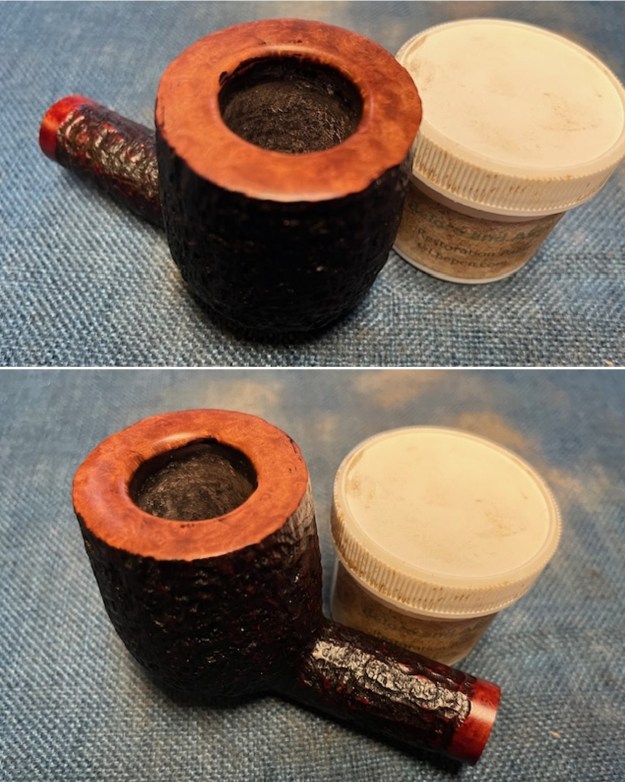
In the latest box of pipes I received from Jeff was a large Malaga Freehand Pipe to work on. The pipe on the table is an interesting Malaga I would call a large Freehand with a plateau finish on the shank end and rim top. We purchased it on 10/23/2024 off eBay from a seller in Madison, Indiana, USA. The grain on the smooth portions of this pipe is beautiful and there are some small rustications on the heel of the bowl and the underside of the shank. It is a pattern of rustication that I have seen before on the Malaga pipes that I have worked on. It was obviously another favourite of the previous pipeman. It is stamped on the underside of the shank and read “MALAGA” [over] Custom Carved. The finish was dirty and worn. There were tars and oils ground into the surface of the briar. The bowl had a moderate cake that flowed over the top of the plateau rim top. There was lava flowing over the edges down the first 1/4 inch of the bowl. It was hard to clearly assess the damage to the inner edge. The condition of the rim edge and top would become clear in the cleaning process. The vulcanite fancy saddle stem was oxidized, calcified and there was chatter and tooth marks on the top and the underside of the stem ahead of the button. I have included photos that the seller provided on the pipe that caught our attention. You can see the condition and the amazing grain around the bowl. When the pipe arrived, it was in pretty much the condition that we expected and as I noted above. Jeff took photos of the pipes before he started his clean up work. It is even bigger in person than in the photos.Jeff took photos of the rim and bowl to show the cake and lava on the rim top and edges. The inner edge of the rim showed thick cake coming up to the top and flowing over the edge. The pipe was a dirty one but still a beauty. The vulcanite fancy saddle stem had tooth marks and chatter on the top and underside of the stem ahead of the button. The photos of the sides and heel of the bowl hint at the damage around the bowl sides from the rim top downward. The briar is quite nice all around the pipe. The oil curing/finish makes the grain really stand out on the bowl and shank. Jeff took a photo of the stamping on the underside of the shank. It read as noted above “MALAGA” [over]Custom Carved. The stamping was faint but still readable. For those of you who are unfamiliar with the brand, I am also including the link to a blog that I wrote that gives some of the history of the Malaga brand and the Malaga Pipe Shop in Royal Oak, Michigan in the USA. Here is the link – https://rebornpipes.com/2013/02/09/george-khoubesser-and-malaga-pipes/. That blog also includes links to a catalogue and the history of the pipemaker George Khoubesser. If you are interested to learn more then I invite you to follow the link to get a feel for the brand and the pipemaker.

I am also am including a link to some printed material on the Malaga brand that came to me from the daughter of George Koch (we purchased George’s pipes from his daughter) to help identify the particular stamping on the pipe. The link takes you to the entire collection of materials that were sent to me (https://rebornpipes.com/2019/02/27/malaga-pipes-catalogue-of-pipes-and-tobaccos/).

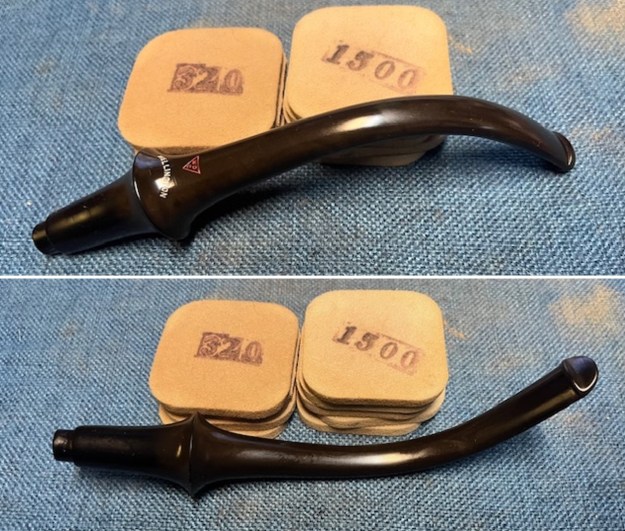
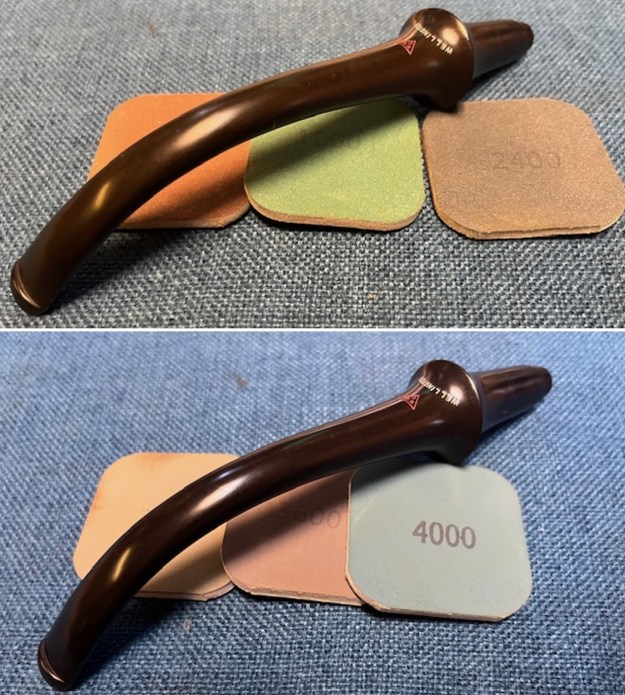
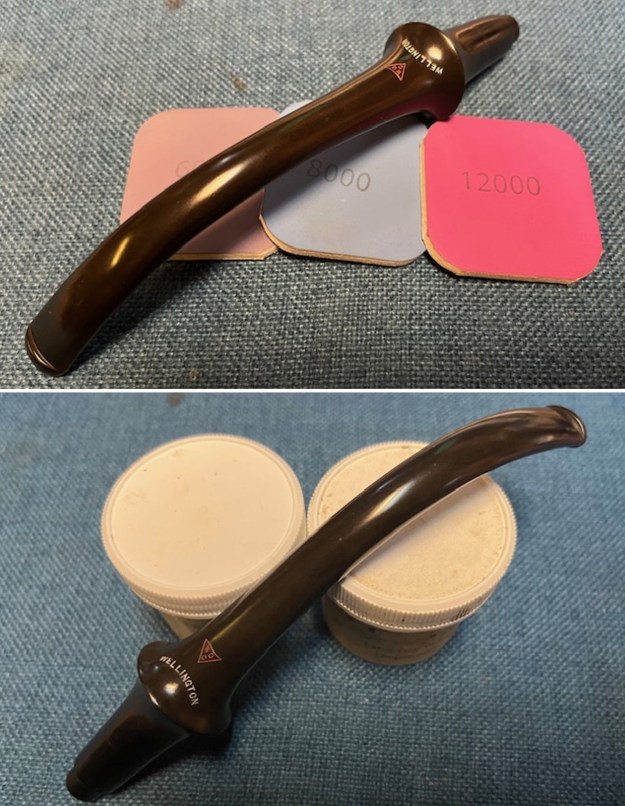
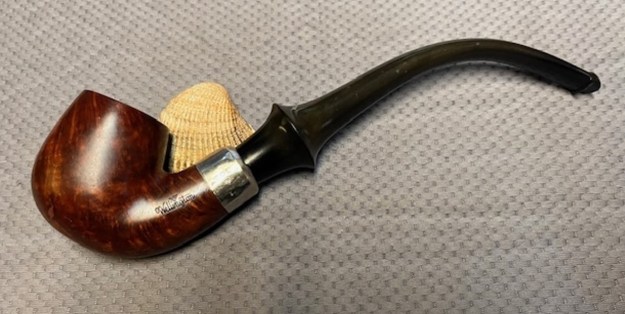
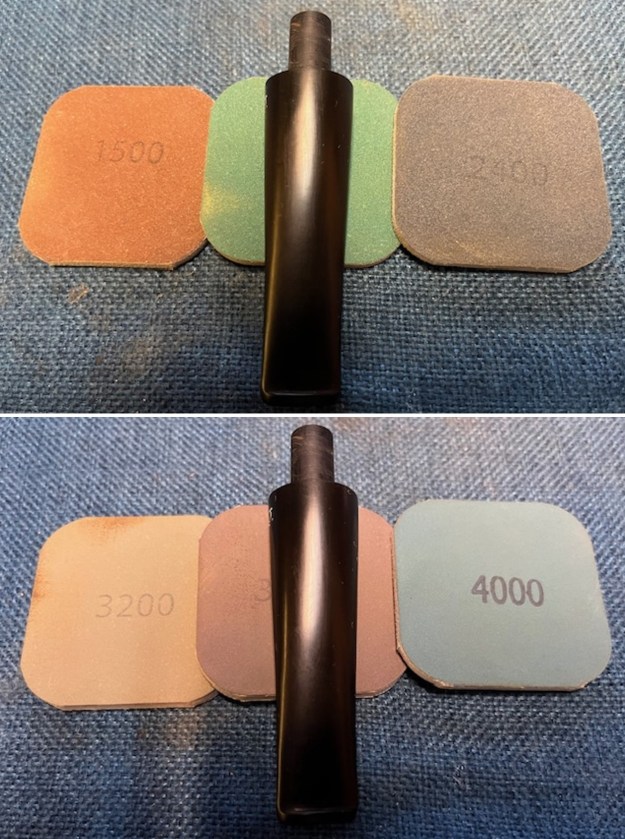
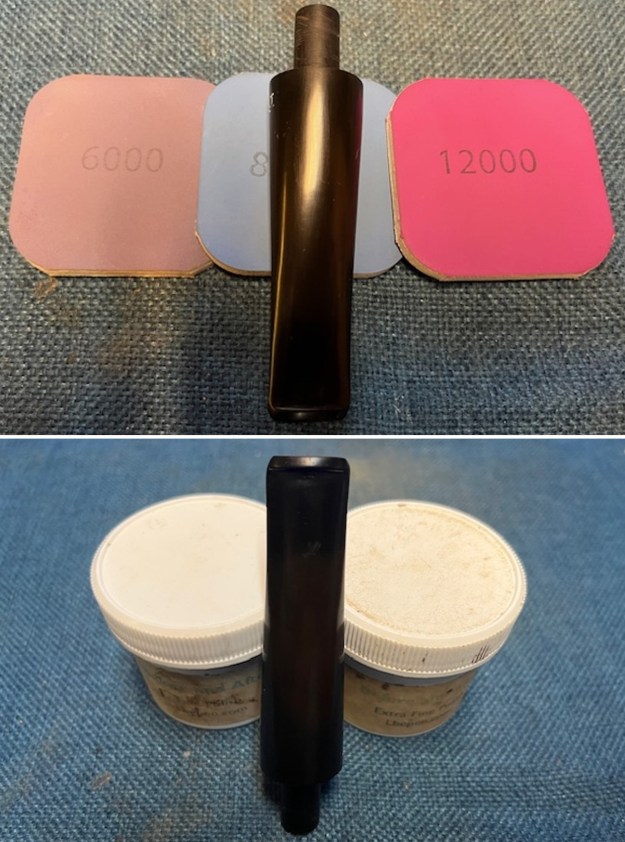
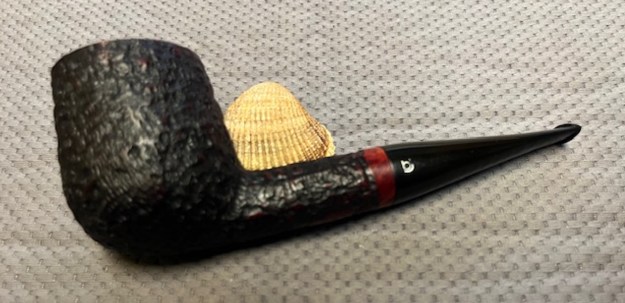
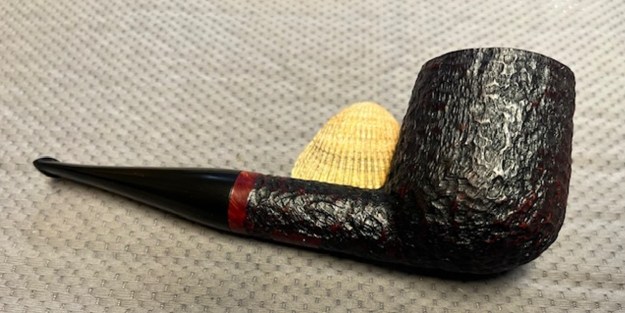
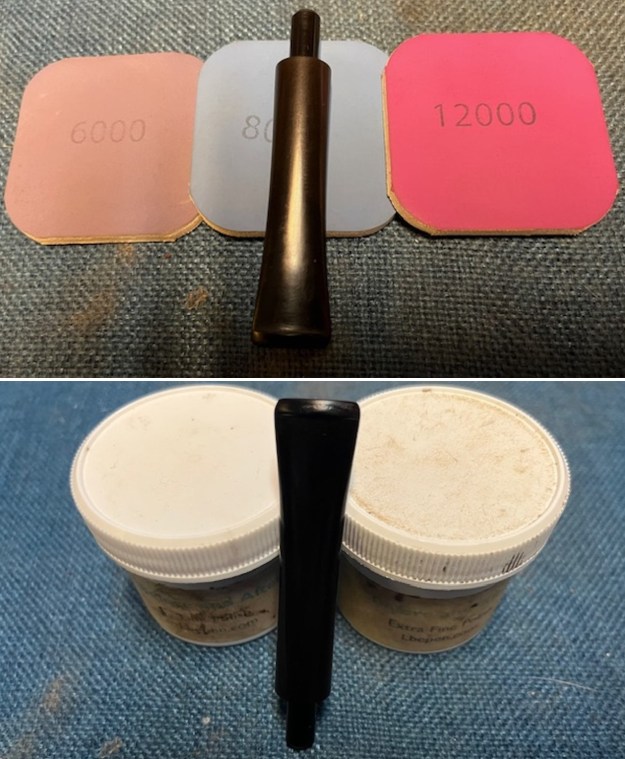
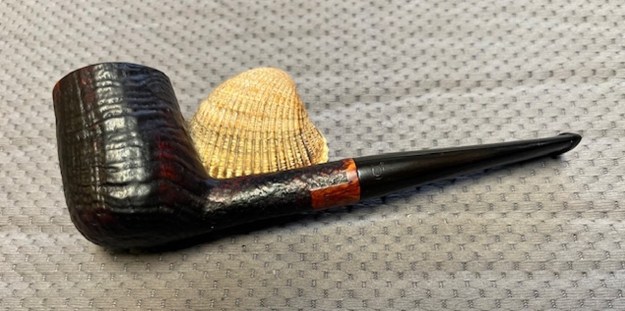
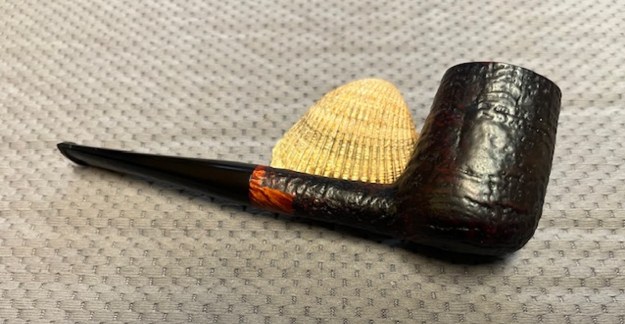
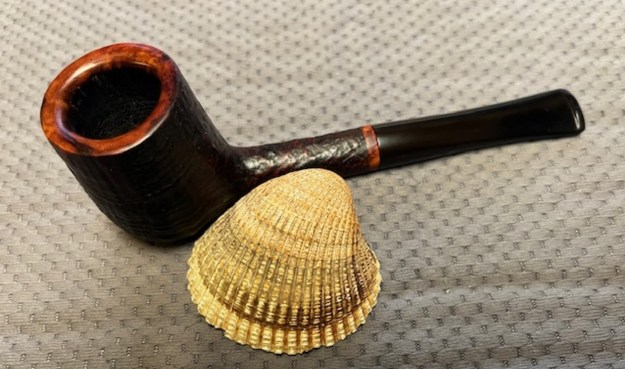
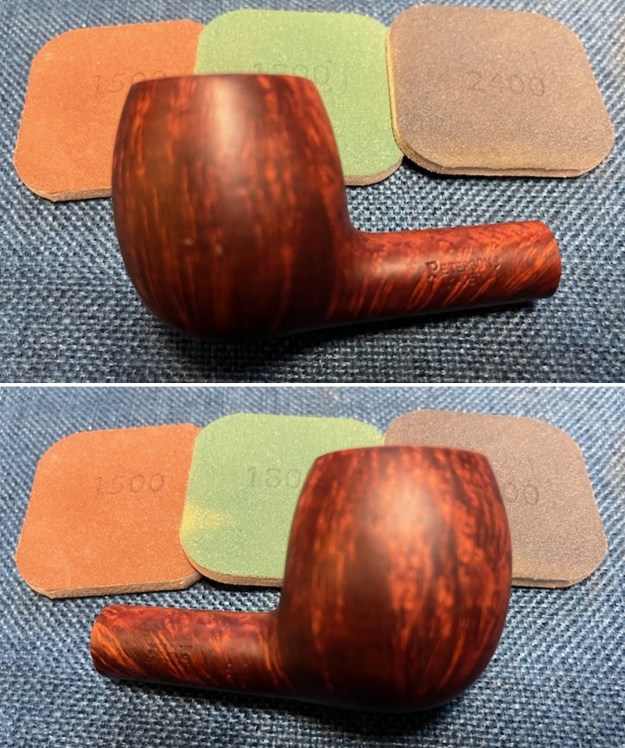
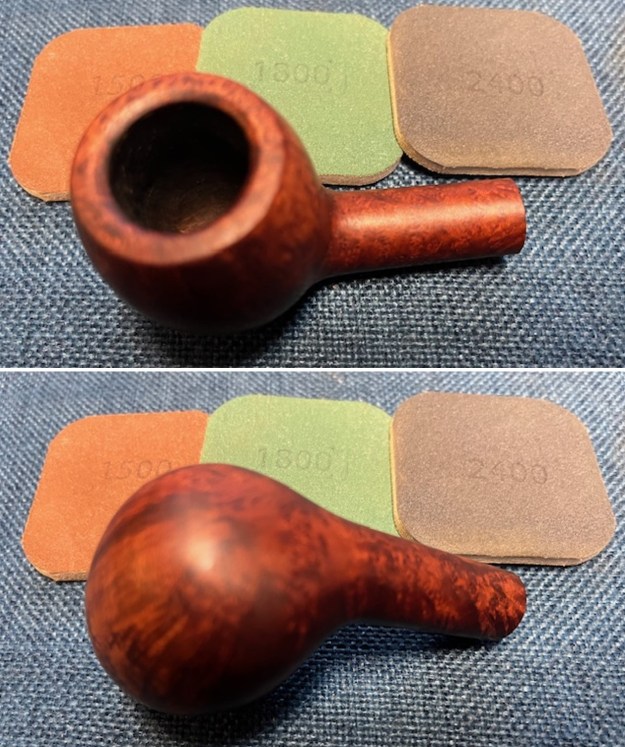
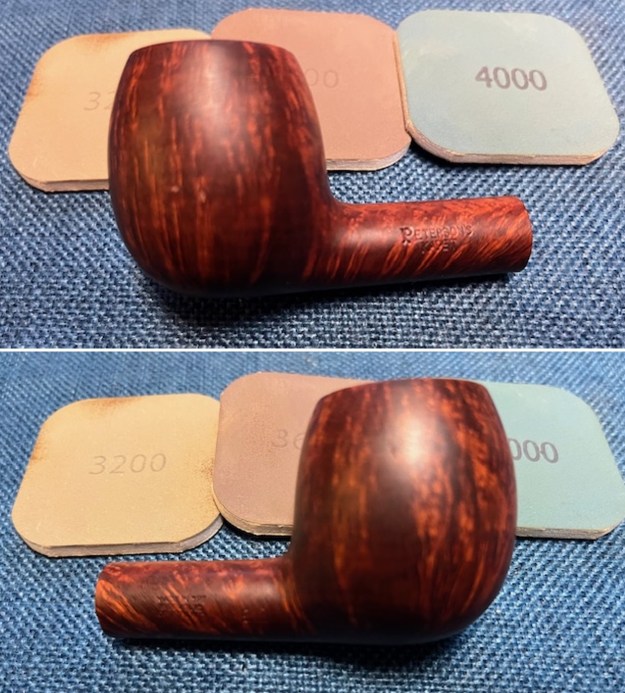
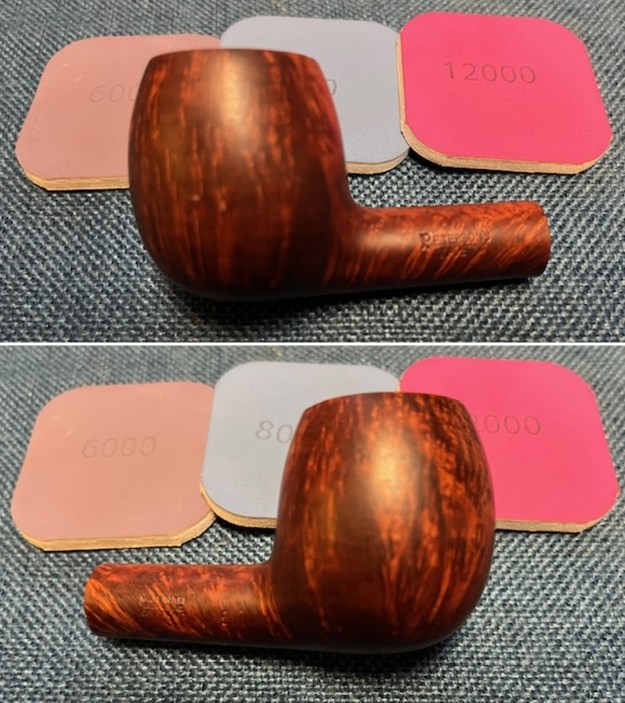
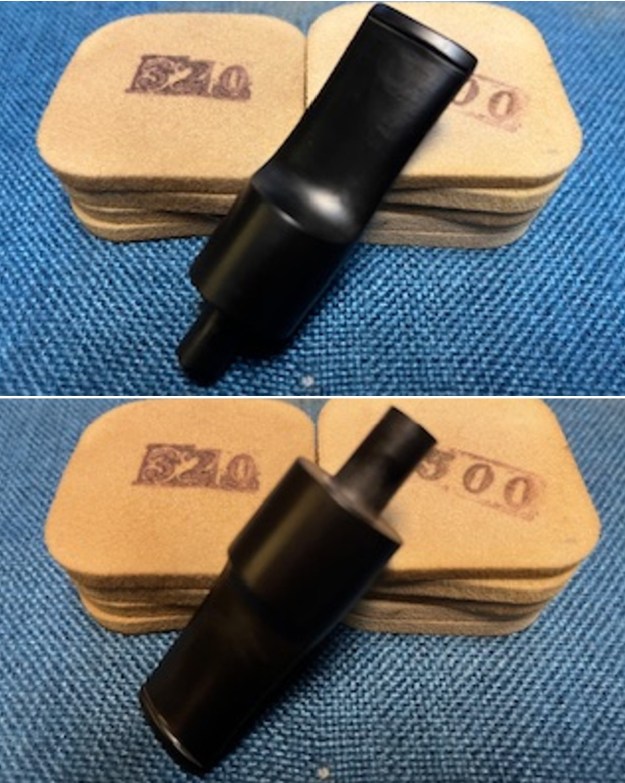
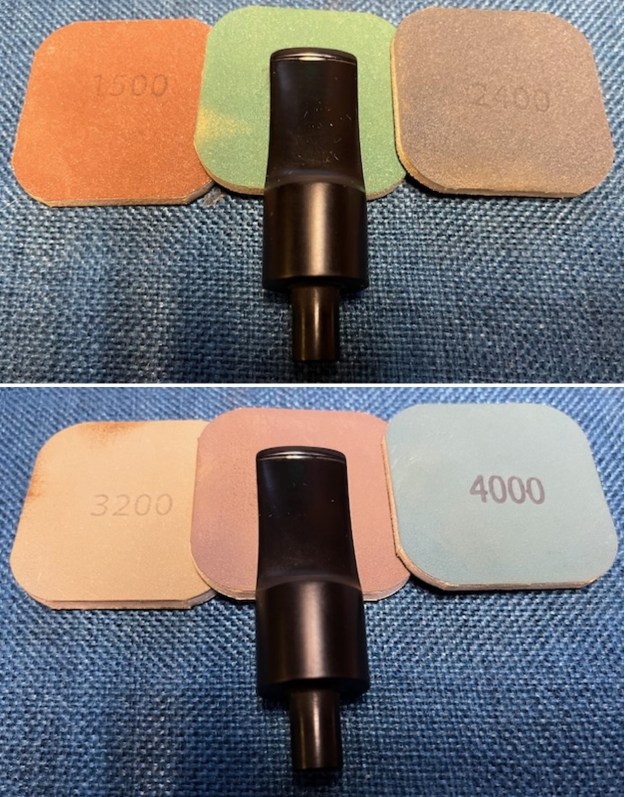
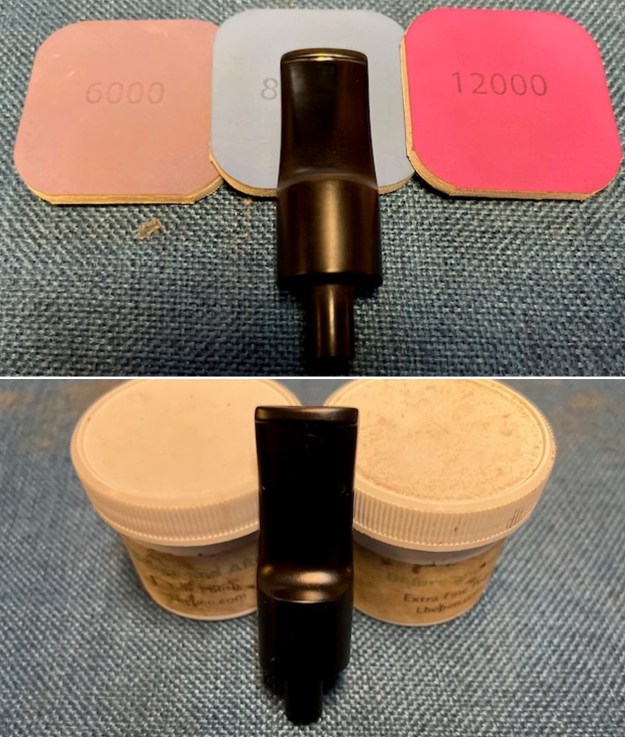
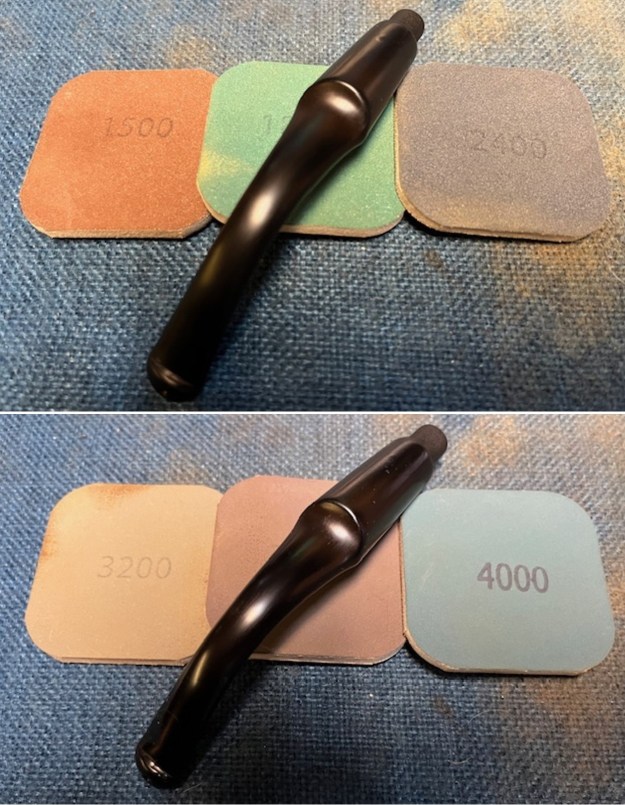
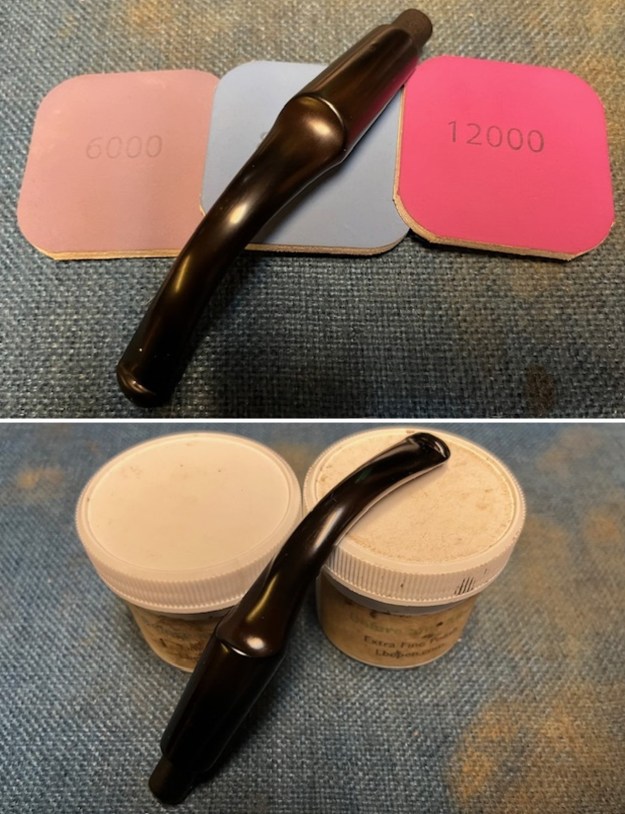
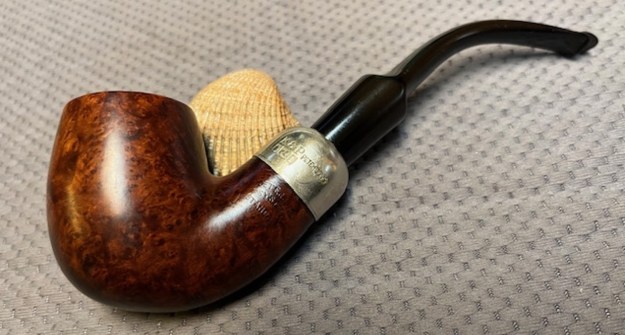
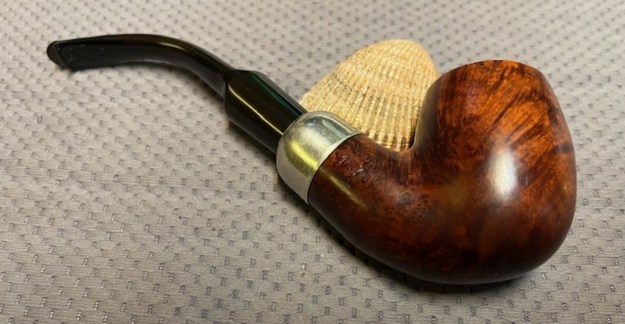
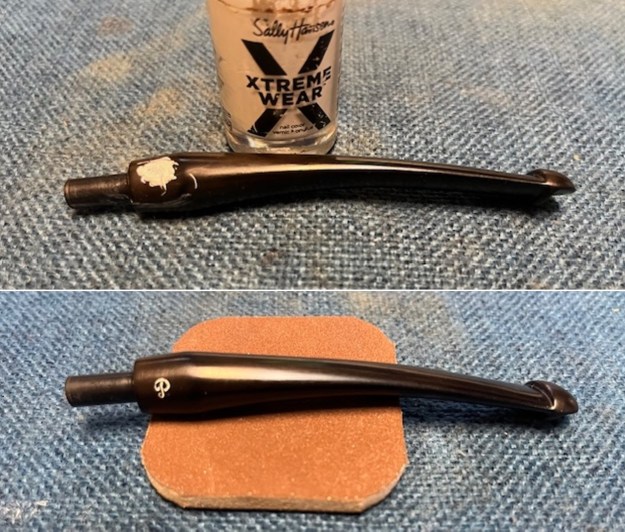
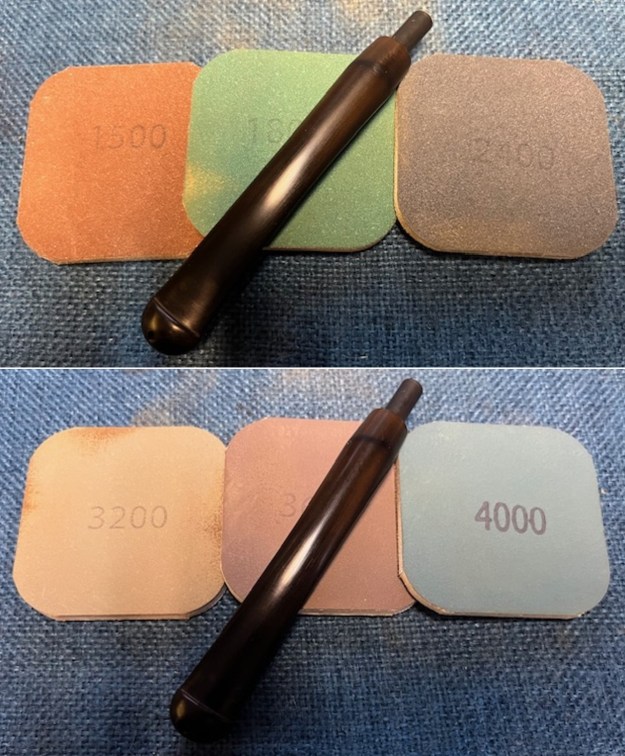
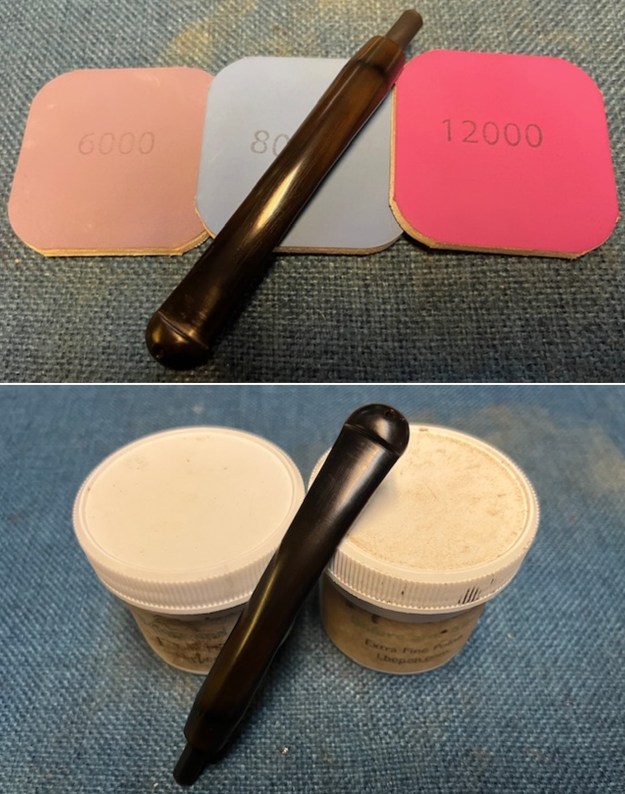
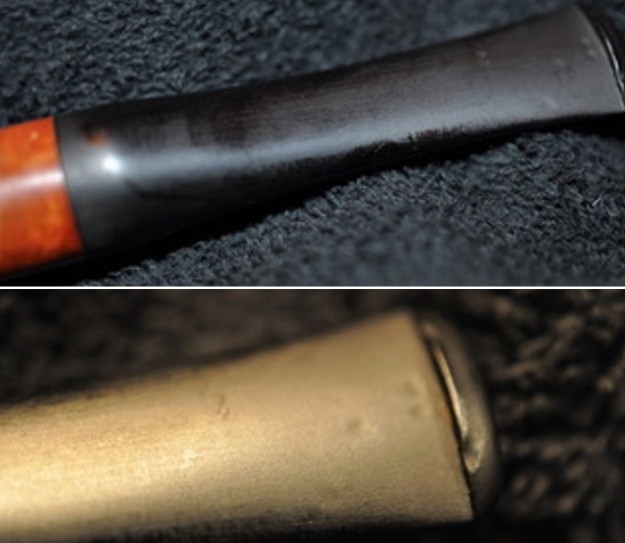
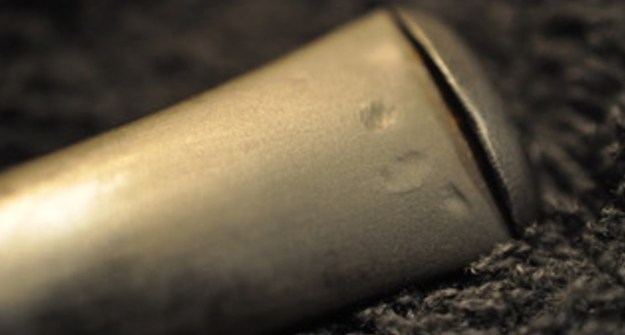
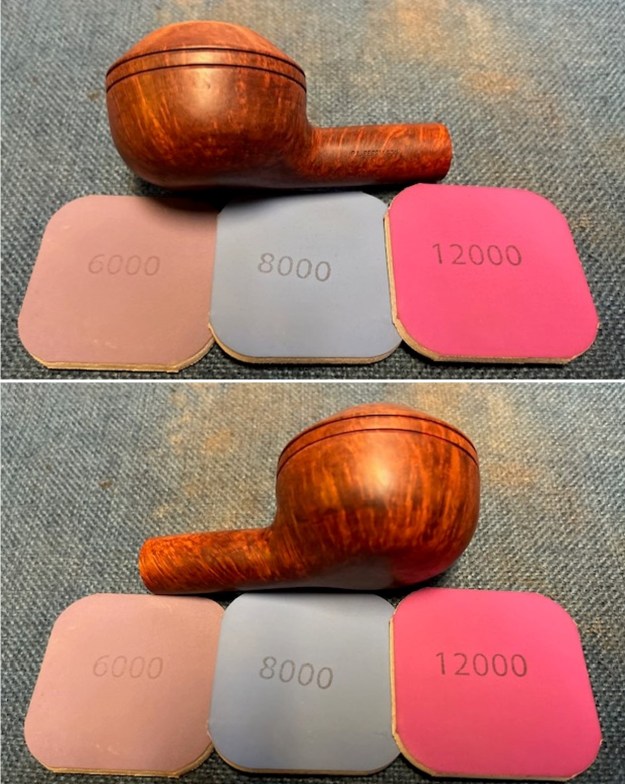
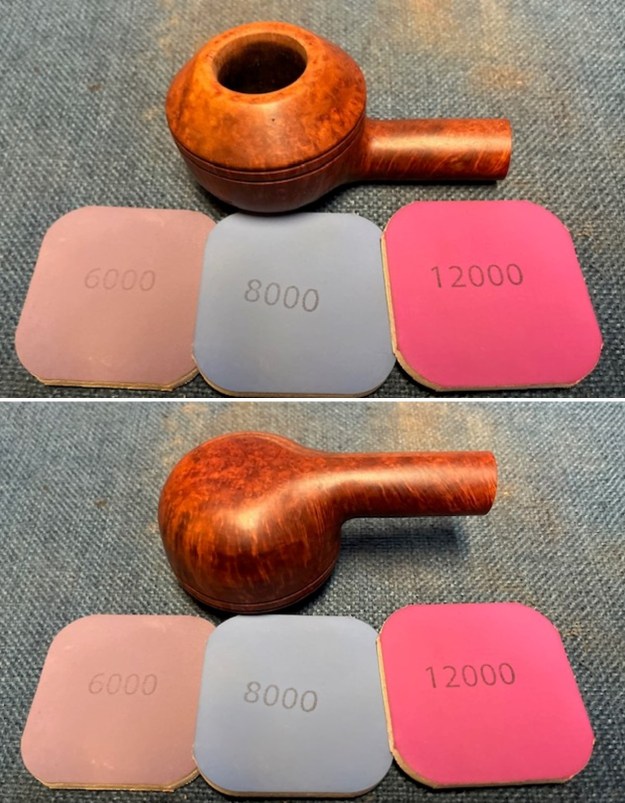
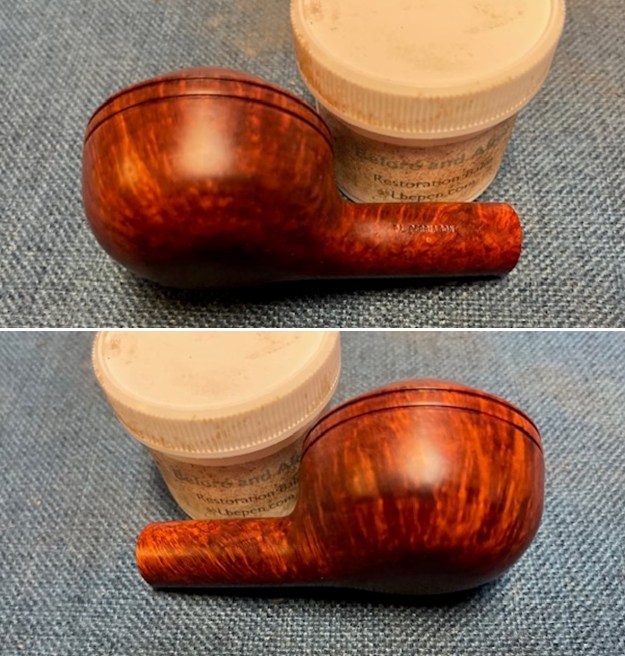
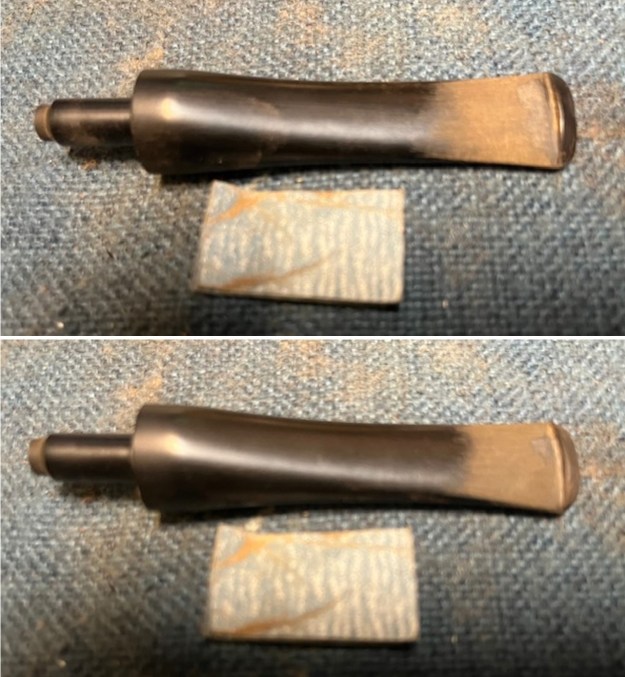
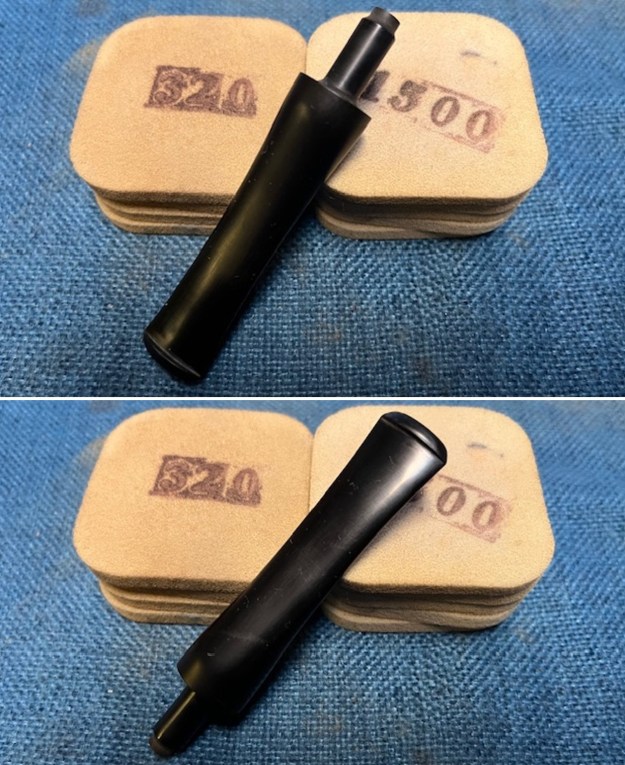
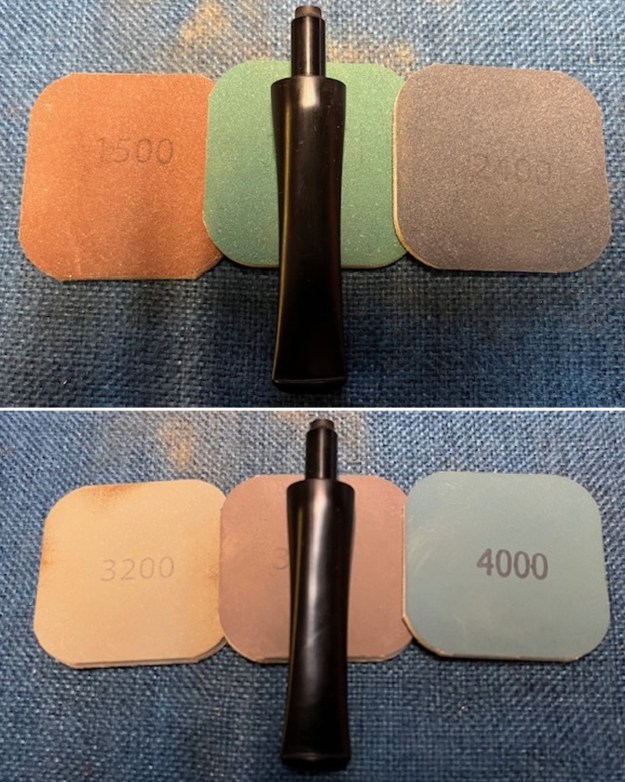
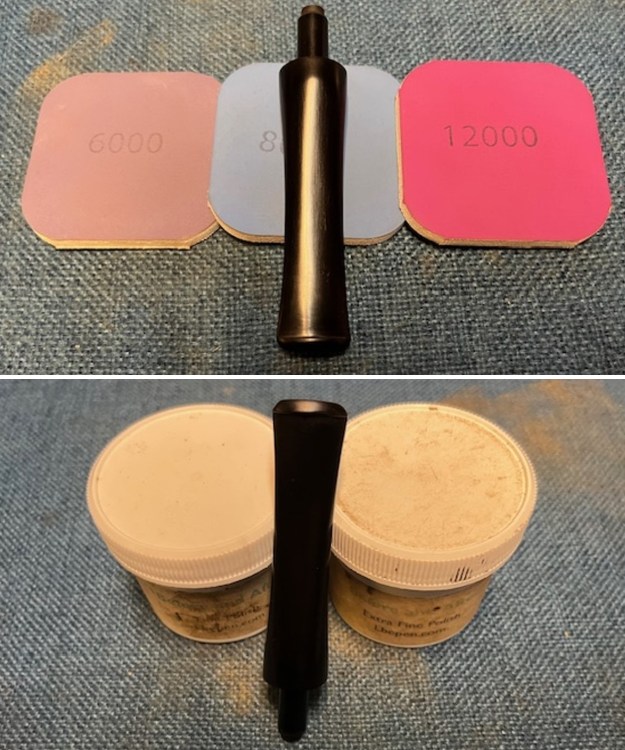
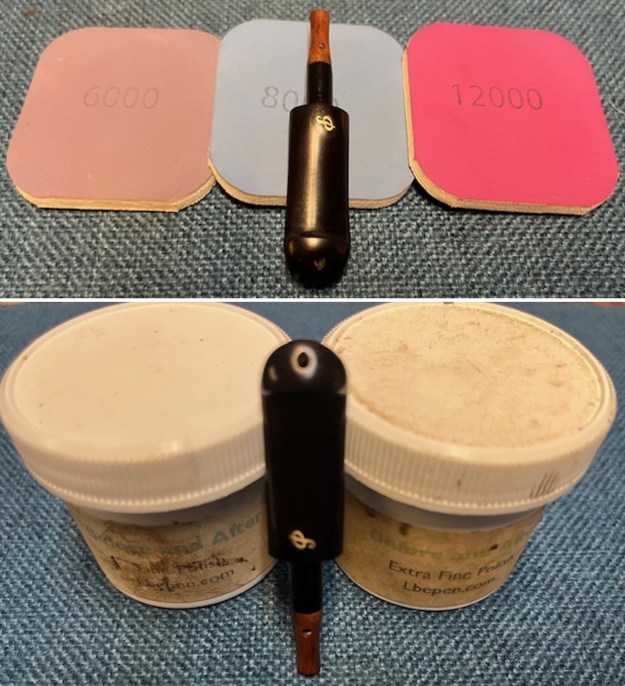
Jeff had cleaned up the pipe using his usual procedure. He reamed the pipe with a PipNet pipe reamer and removed the rest of it with a Savinelli Fitsall Pipe Knife. He scrubbed the bowl with undiluted Murphy’s Oil Soap with a tooth brush. He rinsed it under running warm water to remove the soap and grime from around the bowl sides. It looked better but the rim top and inner edge was darkened. He cleaned out the inside of the shank and the airway with alcohol, cotton swabs and pipe cleaners. The stem looked much better and the light tooth marks on both sides were still visible and would need a little work. I took photos of the pipe once I received it. I took a photo of the rim top and the stem to show their condition. Jeff was able to clean up the cake and the lava overflow that was shown in the rim and bowl photos above. The rim top and edges looked very good and the plateau was very clean. The stem looked better, though there were tooth marks and chatter on both sides ahead of the button.I took a photo of the stamping on the shank to show that the clean up had not damaged it at all. It looked was faint but still readable. I removed the stem from the shank and took a photo of the parts to give a sense of what the pipe looks like. To try and capture a sense of how large this pipe is I put a Rhodesian next to it. The Rhodesian is an average Group 4 sized pipe. It is dwarfed by this large Malaga. I wiped the bowl down with a damp cloth and sanded it with 320-3500 grit sanding pads to remove the surface scratches in the finish. I carefully avoided the stamping so as not to damage it. The briar began to have a rich shine and the bowl looked very good. I polished the bowl sides and the smooth rim top with micromesh sanding pads. I dry sanded it with 1500-12000 grit micromesh pads. I wiped it down after each pad. It really began to be beautiful. I rubbed the bowl and shank down with Before & After Restoration Balm to deep clean the finish on the bowl and shank. The product works to clean, enliven and protect the briar. I worked it in with my fingers to get it into the briar. I worked it into the plateau on the rim top and shank end with a shoe brush to get deep in the valleys. I let it sit for 10 minutes then I wiped it off and buffed it with a soft cloth. The briar really began to have a rich shine. I took some photos of the bowl at this point to mark the progress in the restoration. It is a beautiful bowl. I set the bowl aside and turned my attention to the stem. I “painted” the tooth marks with the flame of a lighter to lift them. I was able to lift them significantly. Even the ones on the button surface and edges lifted. I reshaped the button and sanded the stem surface with 220 grit sandpaper to blend them further into the stem. I sanded the stem with the 2 inch square 320-3500 grit sanding pads to remove the remnants of oxidation on the vulcanite. I wiped down the stem after each sanding pad with Obsidian Oil. I was able to remove the majority of the oxidation on both sides with the pads. The stem looked very good.I polished the stem with micromesh sanding pads – dry sanding with 1500-12000 grit pads. I wiped the stem down after each sanding pad with Obsidian Oil. I did a final hand polish of the stem with Before & After Pipe Stem Polish – both Fine and Extra Fine. I gave it a coat of Obsidian Pipe Stem Oil. It works to protect the stem from further oxidizing. I set it aside to dry. I put the stem back on the Magnum Sized “MALAGA” Custom Carved Freehand and took it to the buffer. I buffed the bowl and stem with Blue Diamond to polish the briar and the vulcanite. Blue Diamond does a great job on the smaller scratches that remain in both. I gave the bowl and the stem several coats of carnauba wax and buffed the pipe with a clean buffing pad to raise the shine. I hand buffed it with a microfiber cloth to deepen the shine. I am amazed at how well it turned out. The finished pipe is shown in the photos below. This is beautiful smooth finished “MALAGA” Custom Carved Freehand and the fancy vulcanite saddle stem combine to give the pipe a great look. The dimensions of the pipe are Length: 8 ½ inches, Height: 3 inches, Outside diameter of the bowl: 2 inches, Chamber diameter: ¾ of an inch. The weight of the pipe is 4.30 ounces/122 grams. This is another pipe that I will be putting on the rebornpipes online store in the American Pipe Makers and Pipemaking Companies Section shortly, if you are interested in adding it to your collection. Thanks for walking through the restoration with me on this beauty!
As always, I encourage your questions and comments as you read the blog. Thanks to each of you who are reading this blog. Remember we are not pipe owners; we are pipe men and women who hold our pipes in trust until they pass on into the trust of those who follow us.

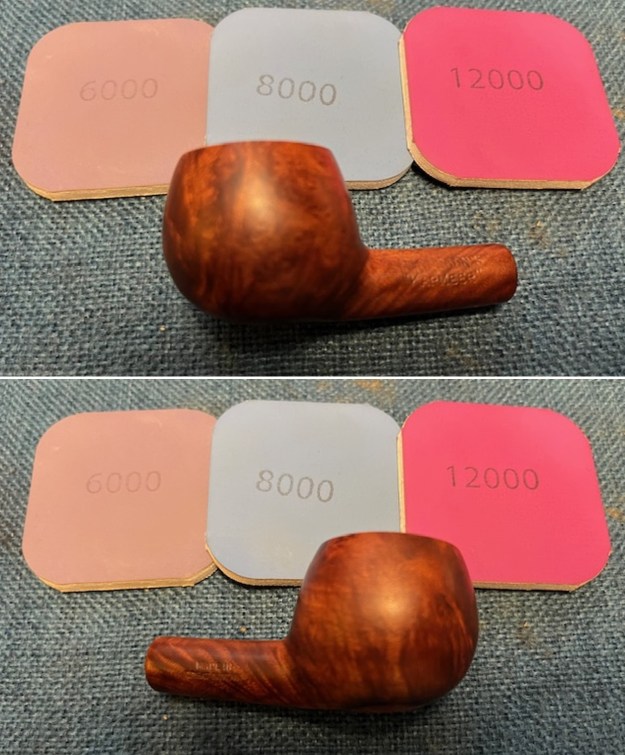
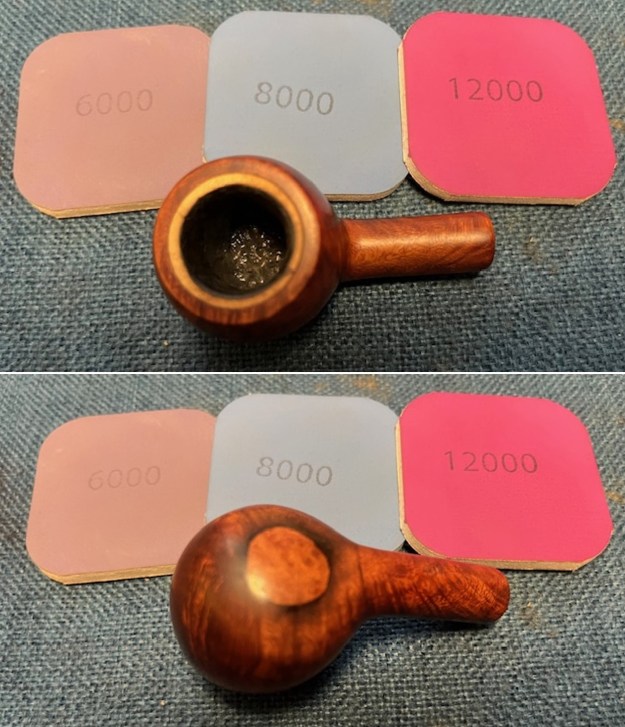
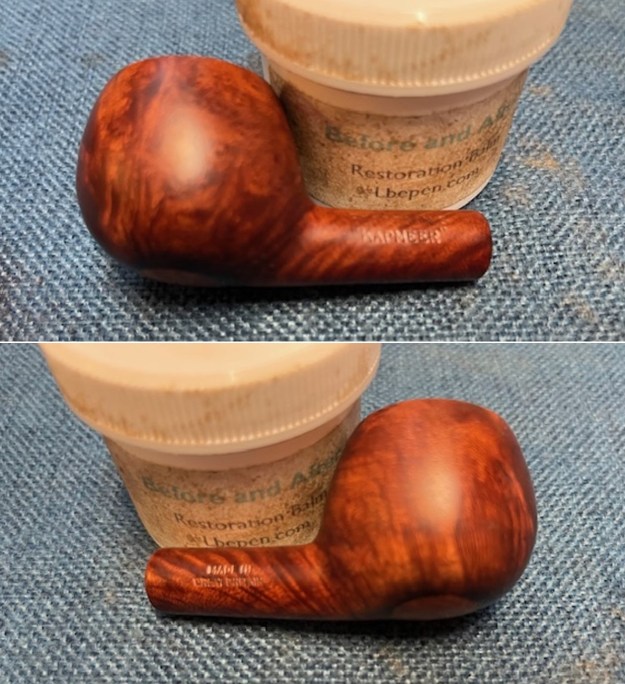
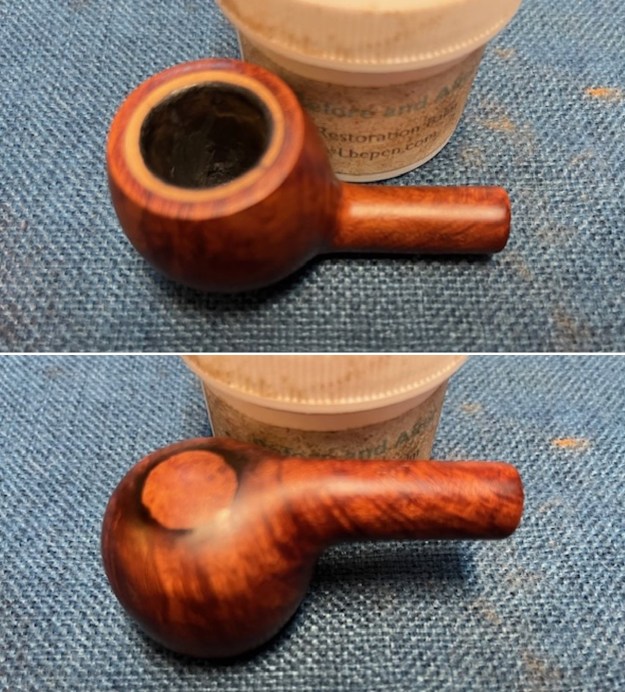
Restemming a Petite Apple with a vulcanite ferrule


by Steve Laug

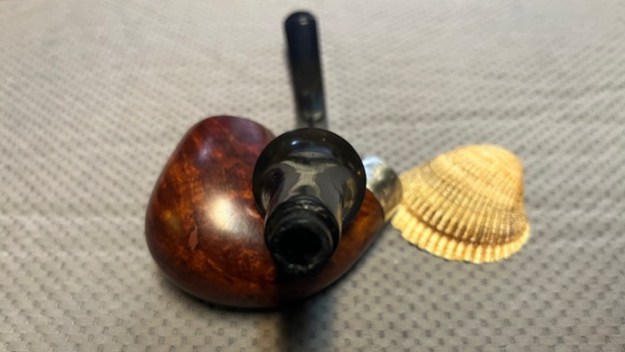
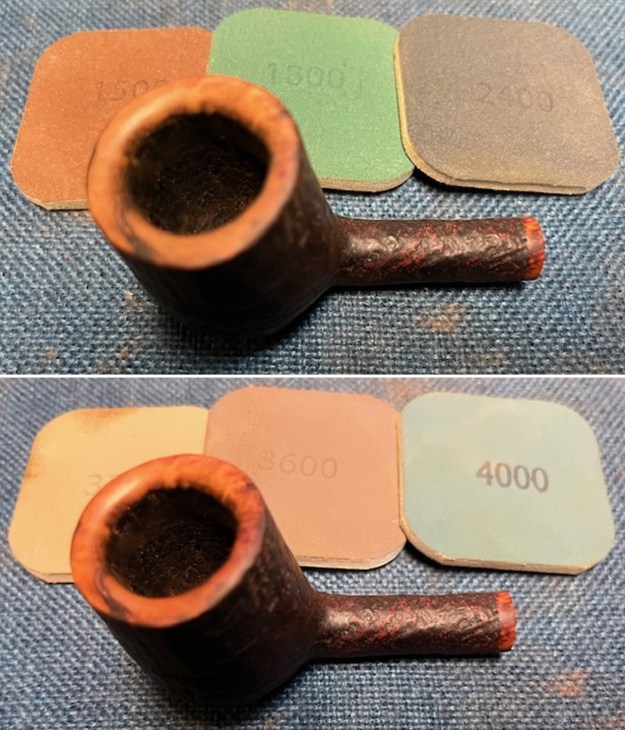
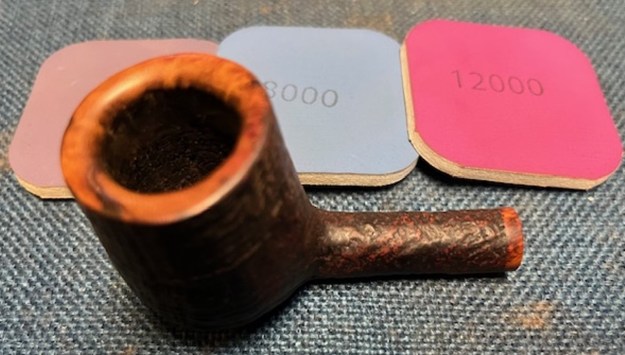
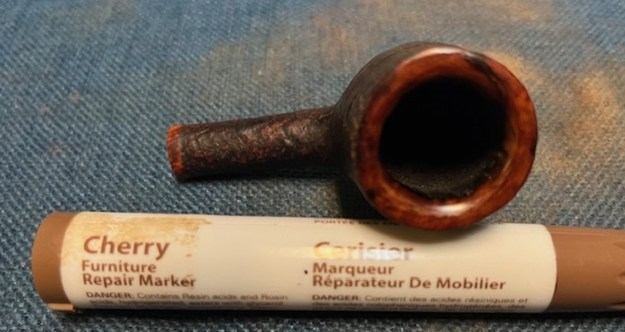
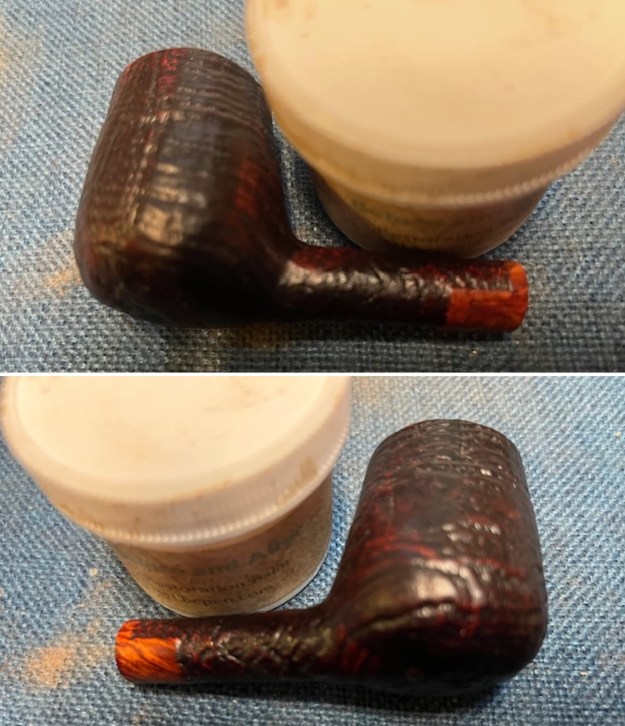
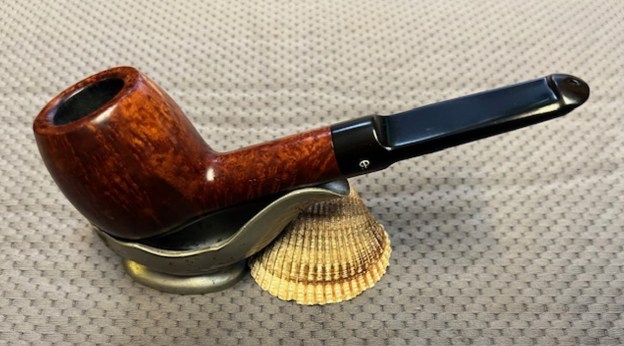
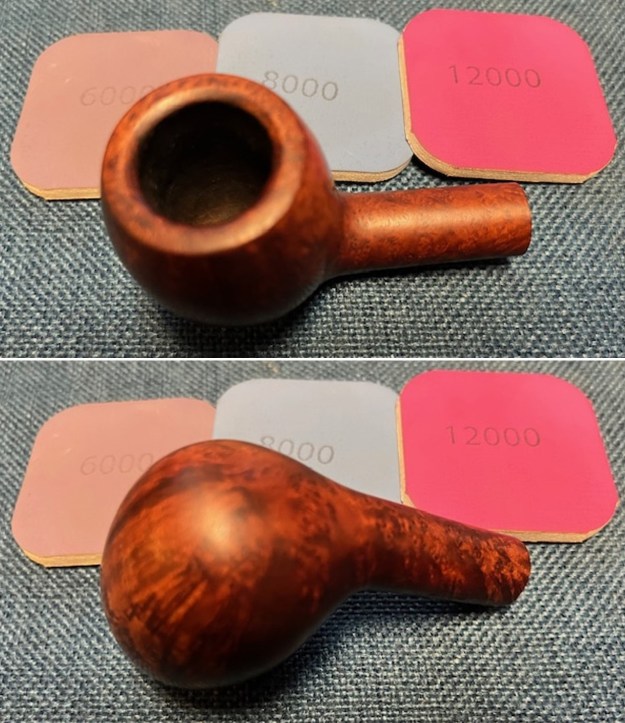
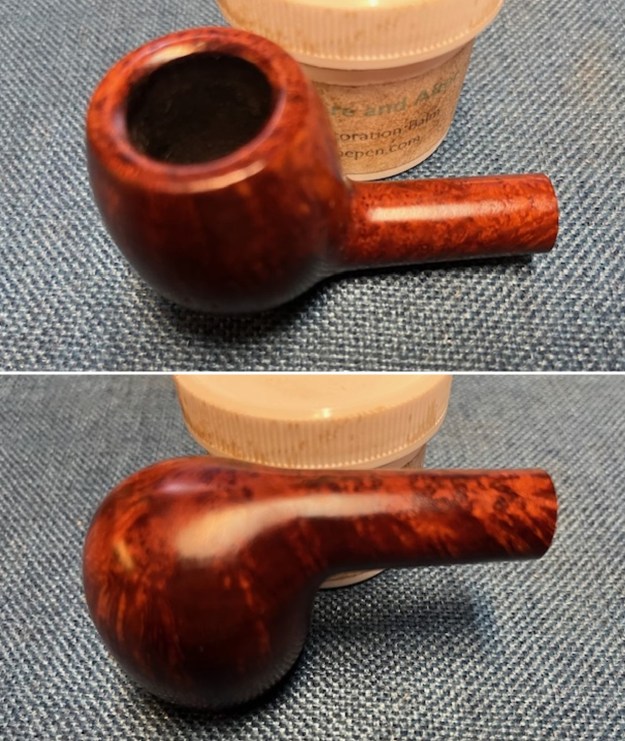
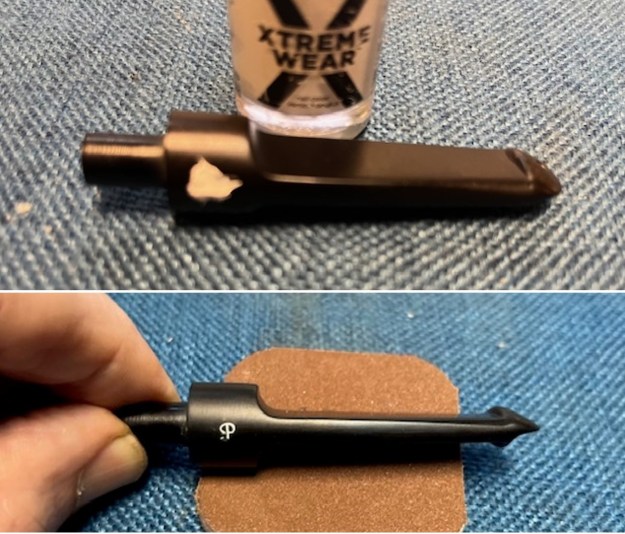
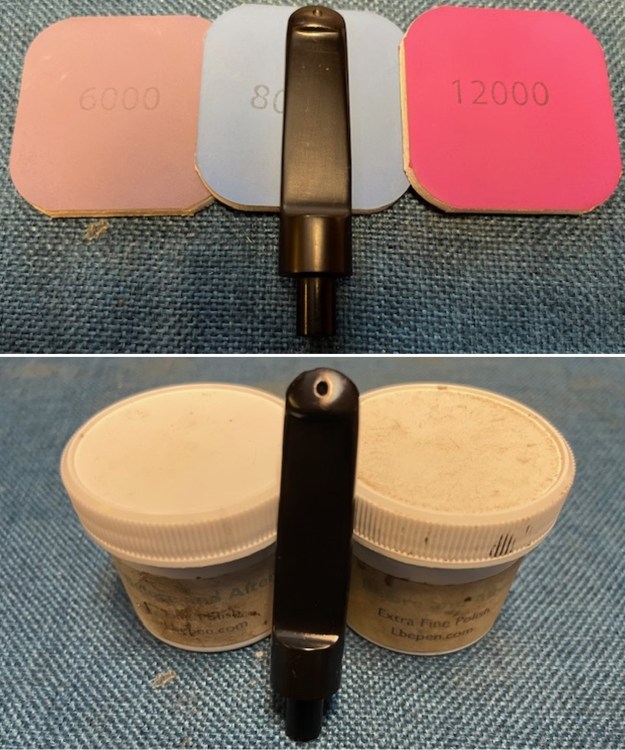
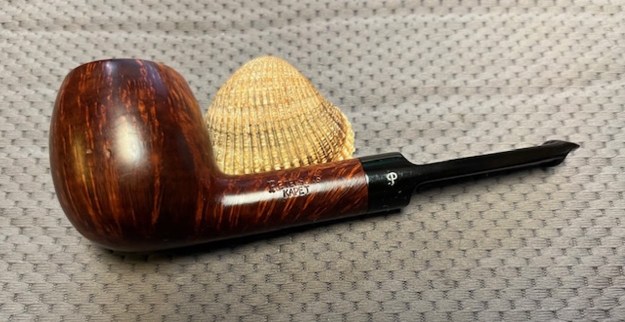
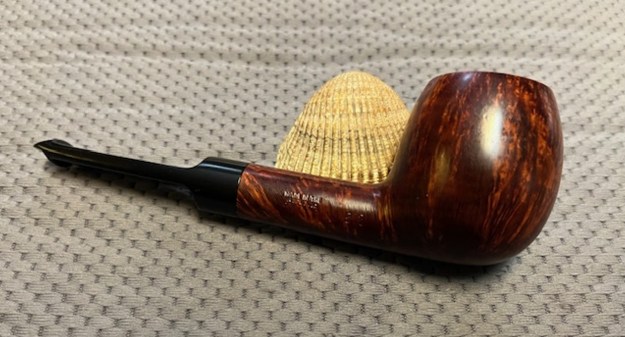
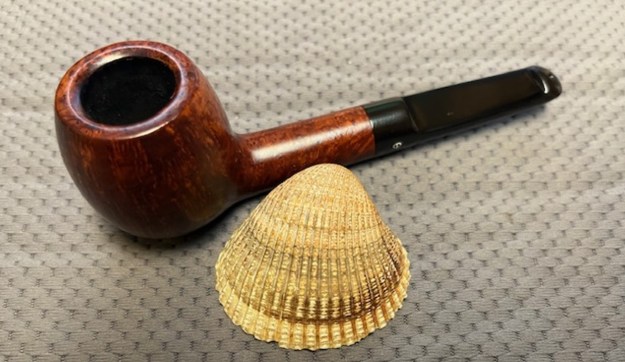
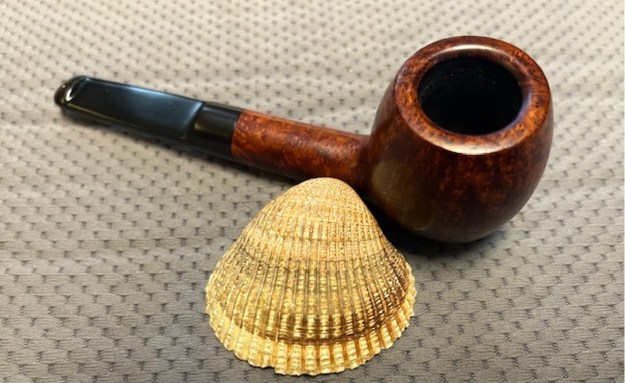
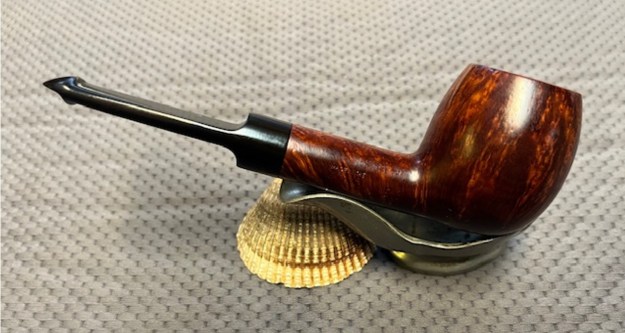
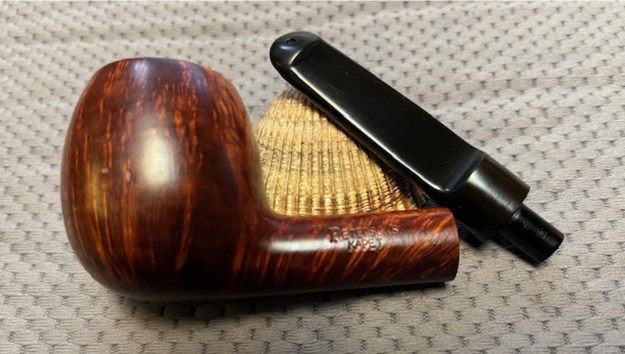
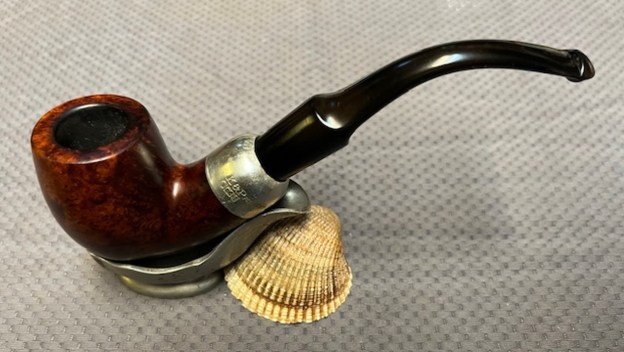
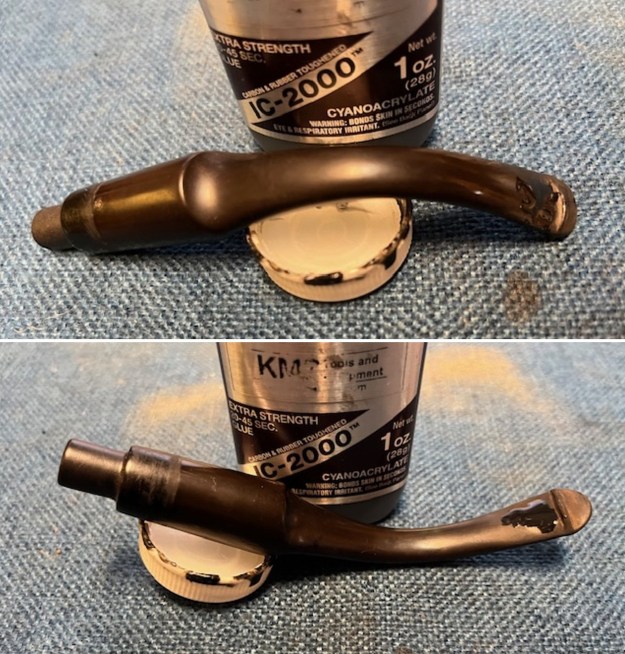
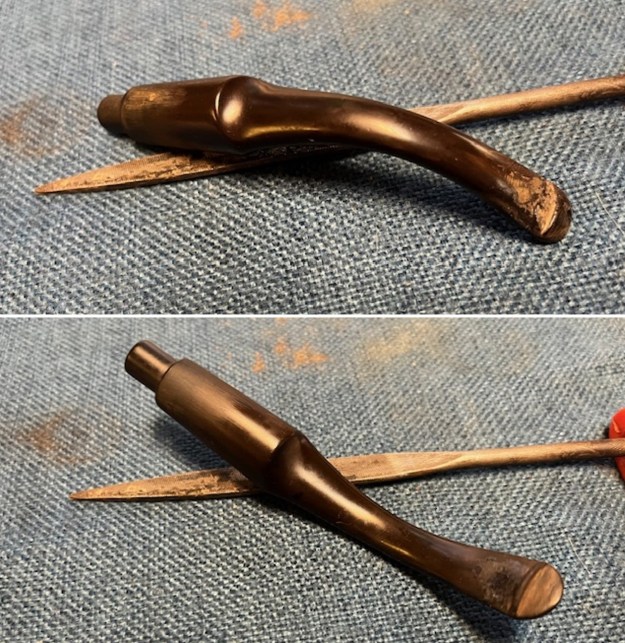
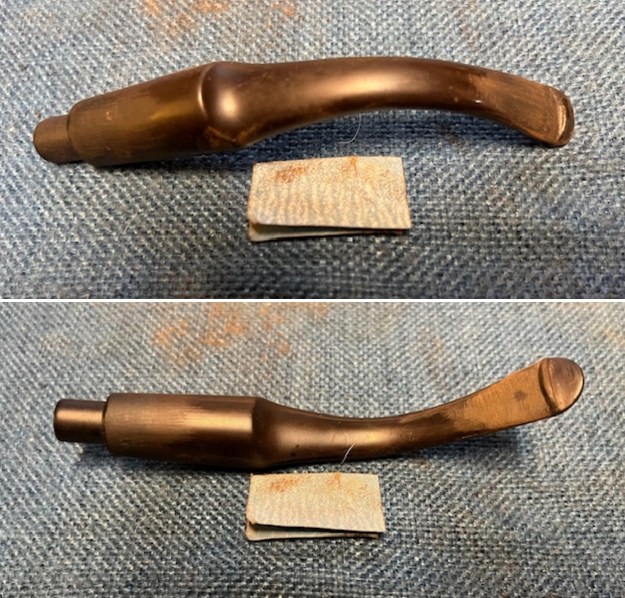
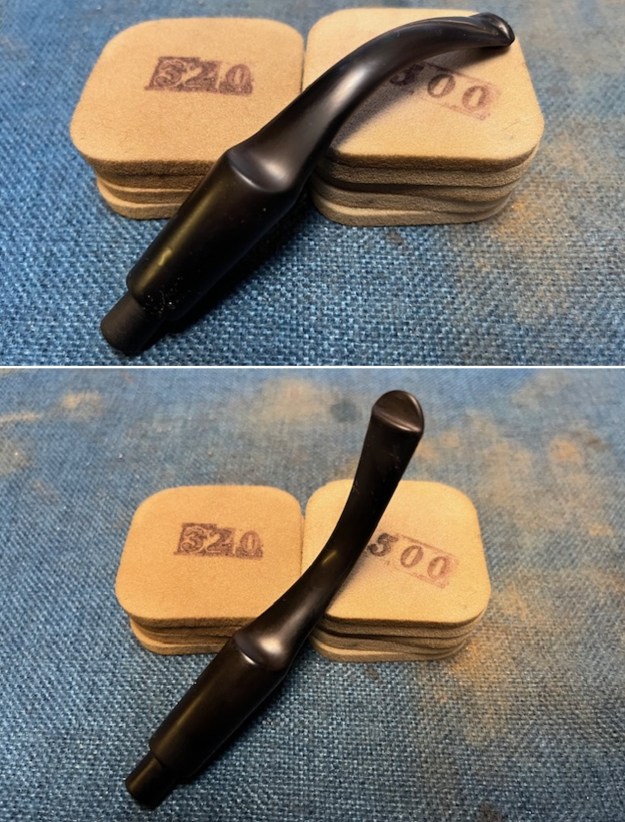
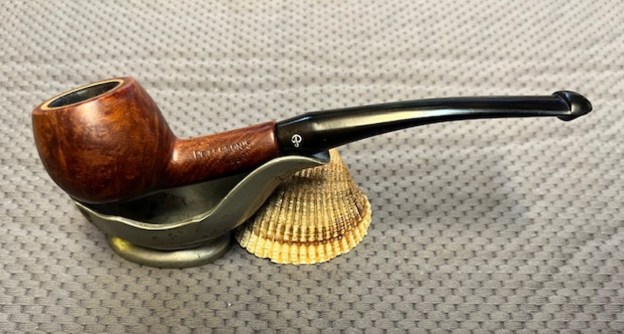
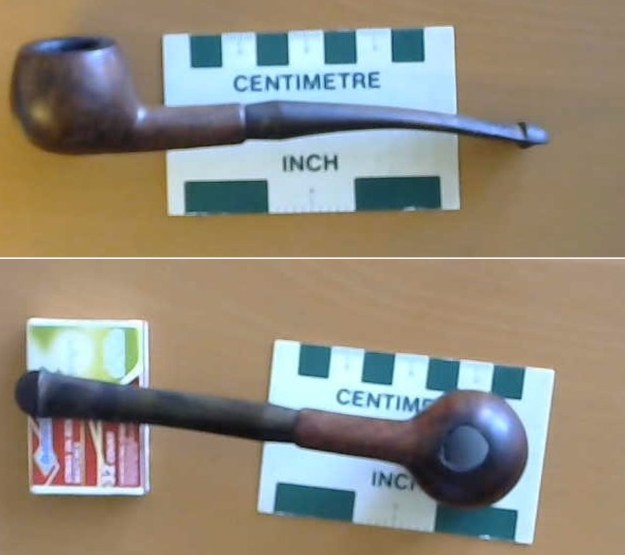
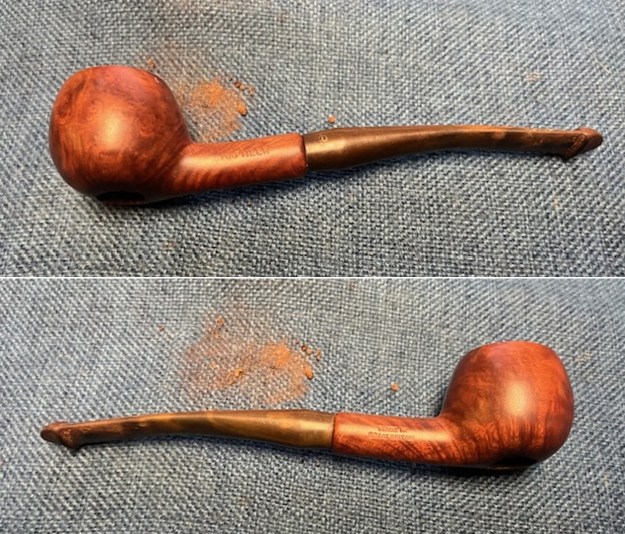
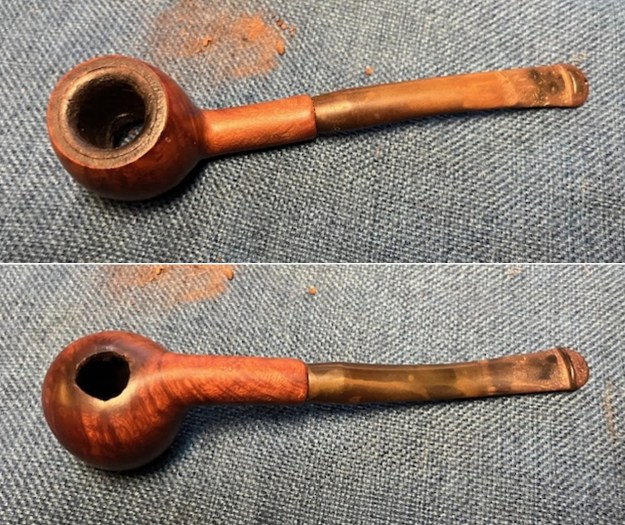
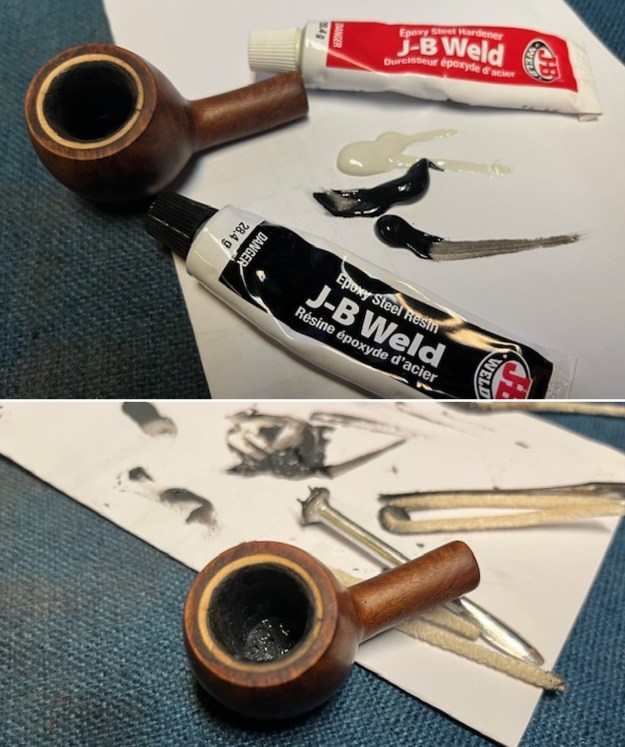
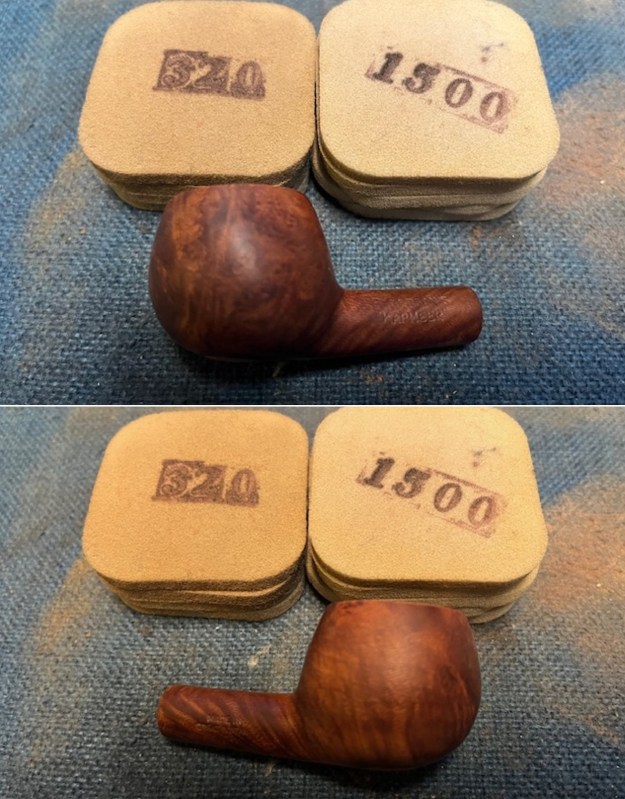
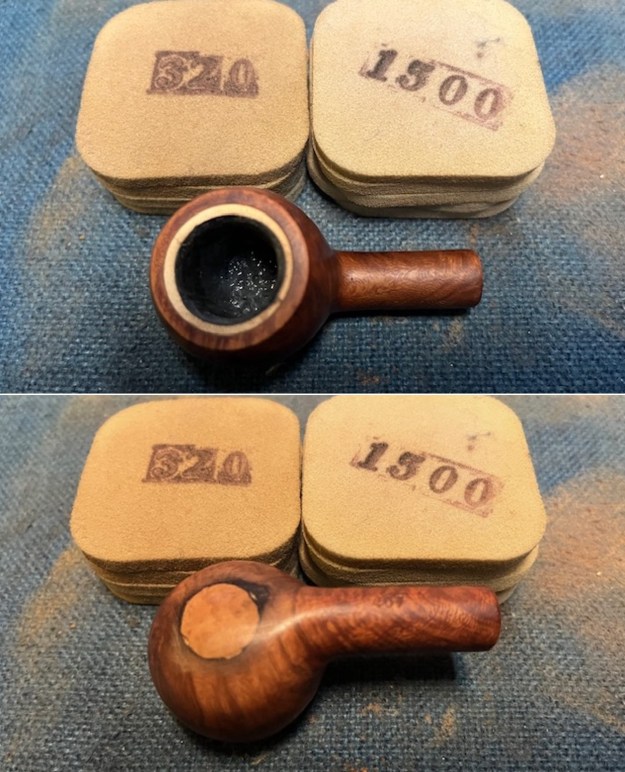
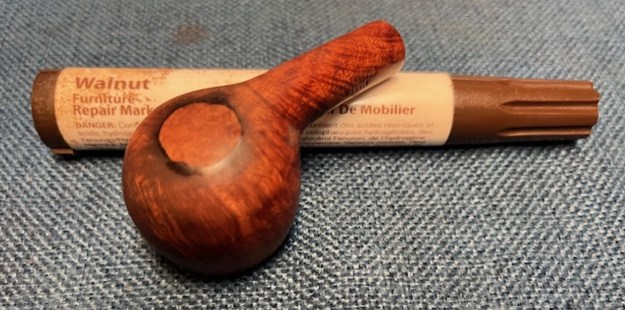
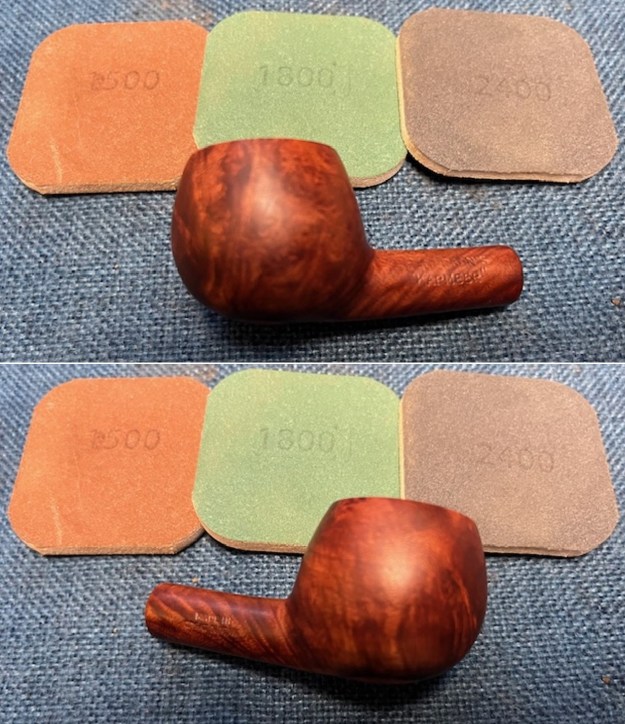
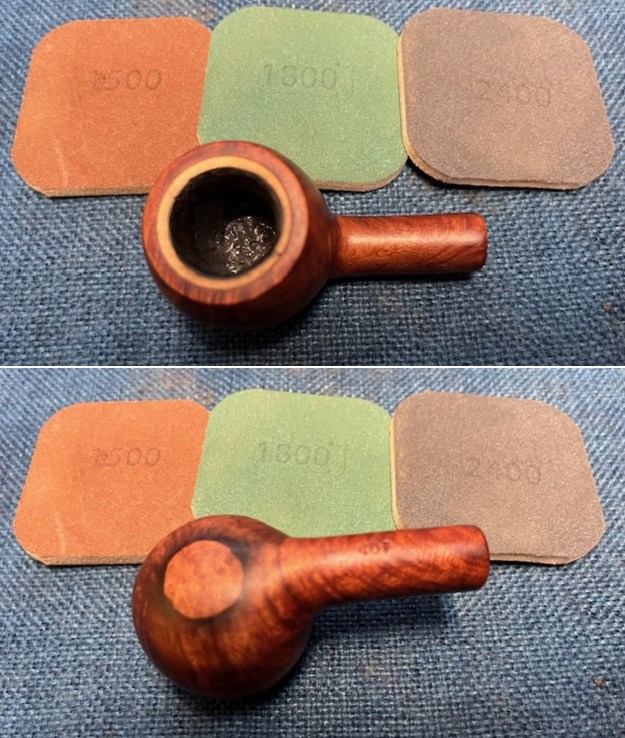
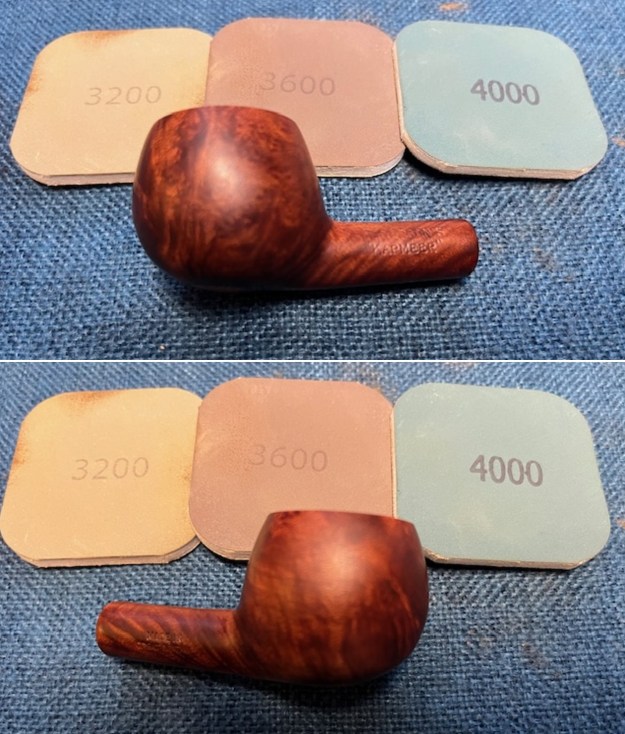
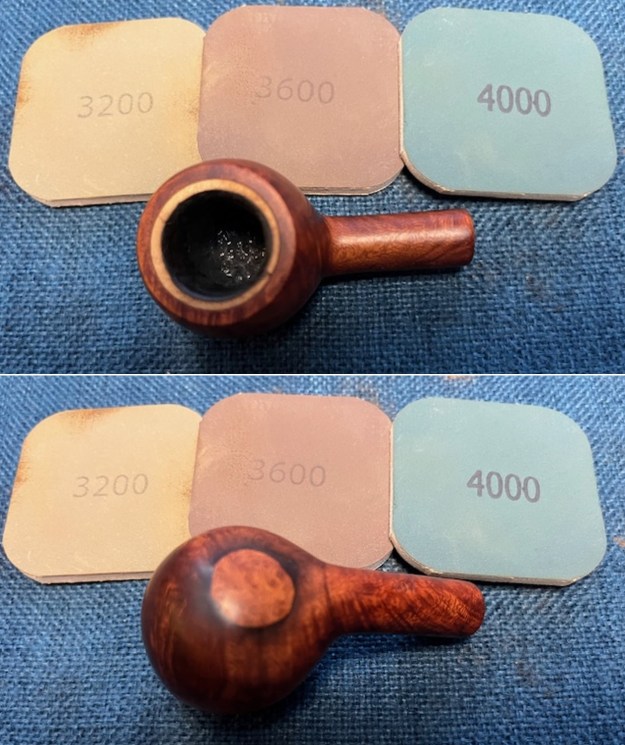
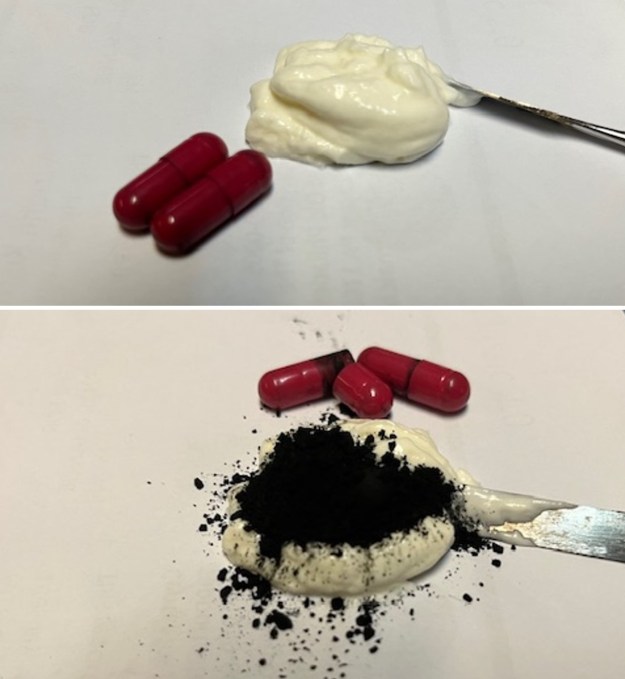
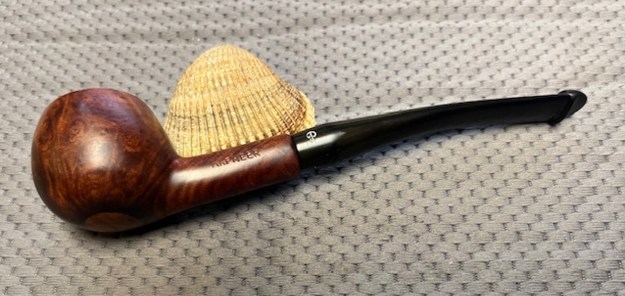
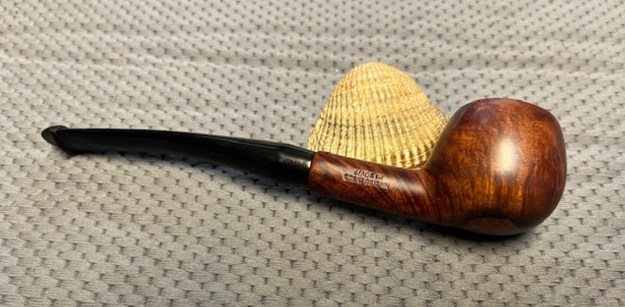
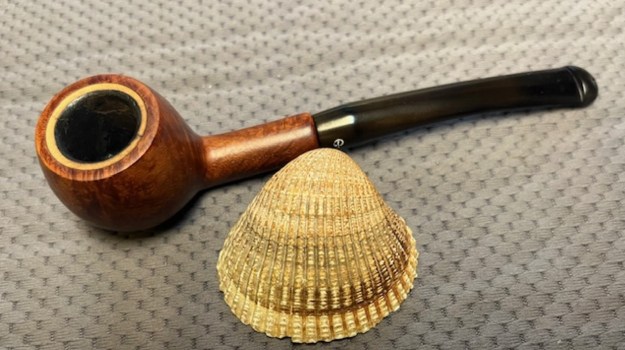
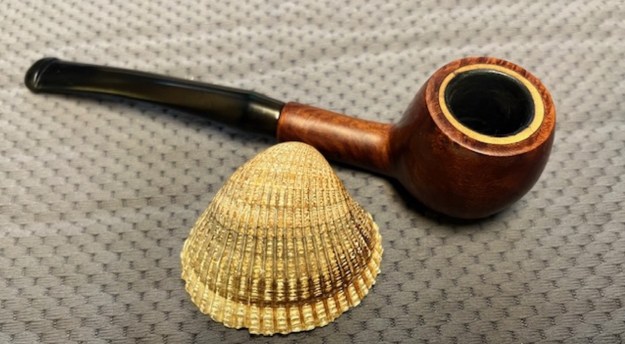
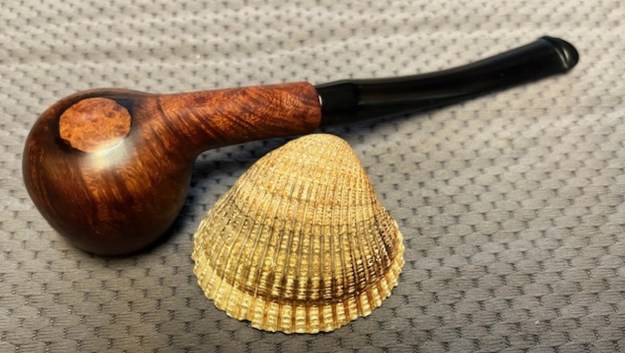
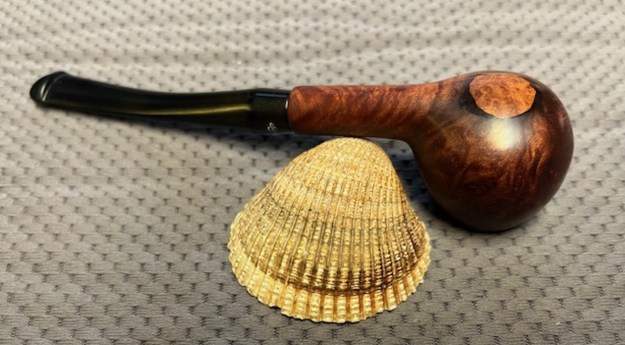
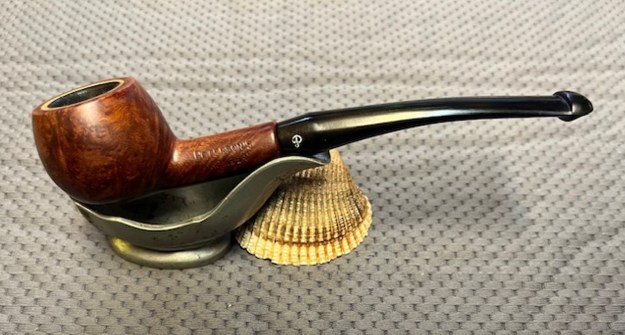
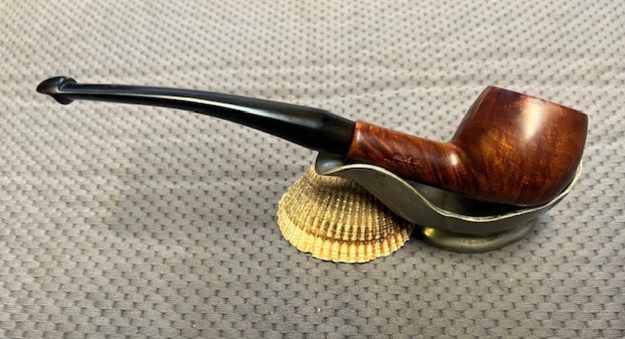
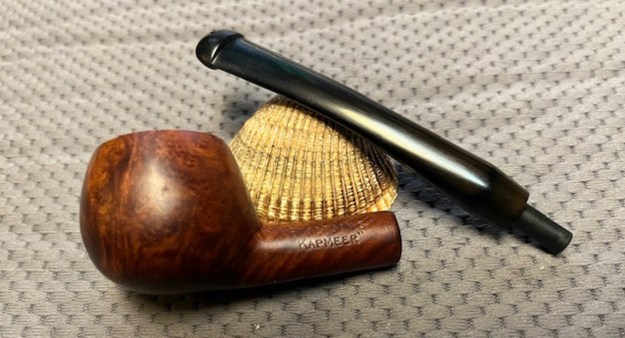
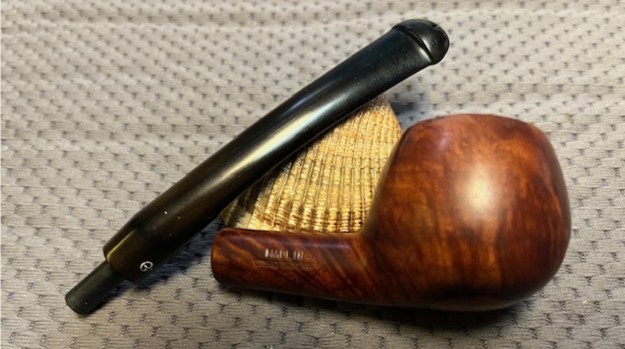
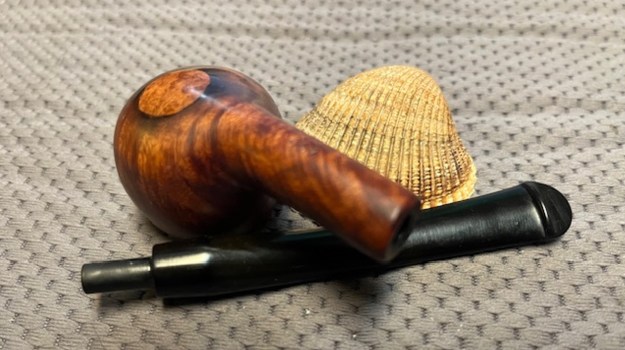
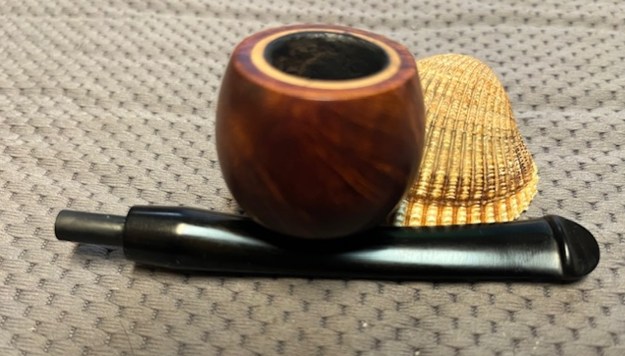
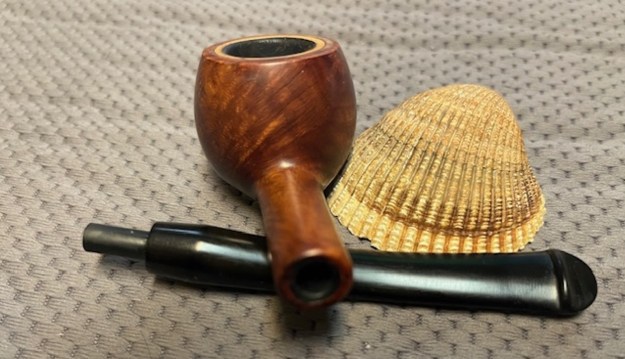
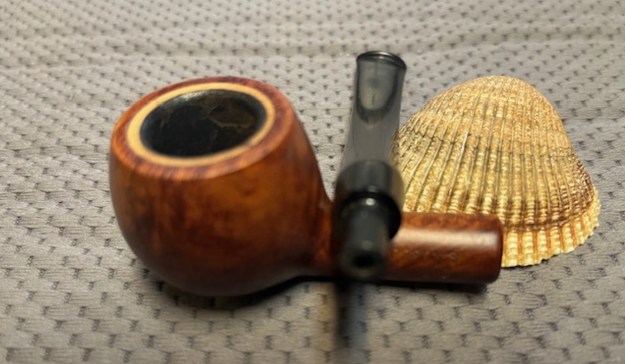
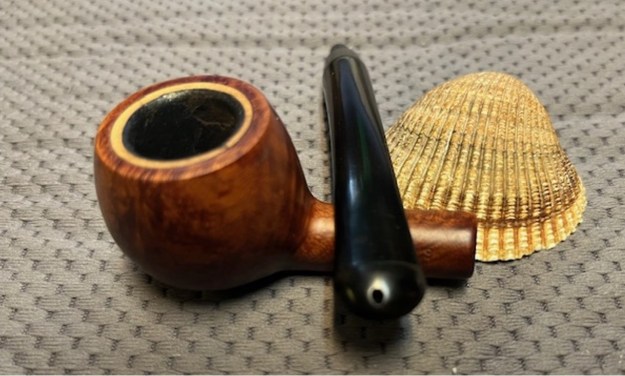
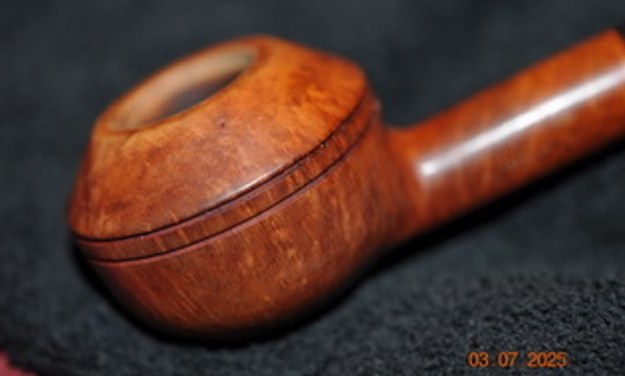
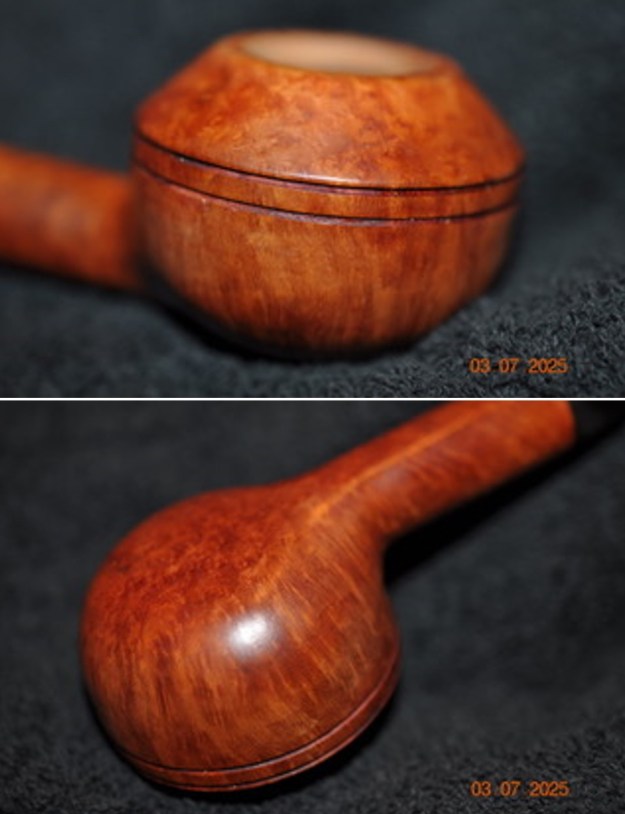
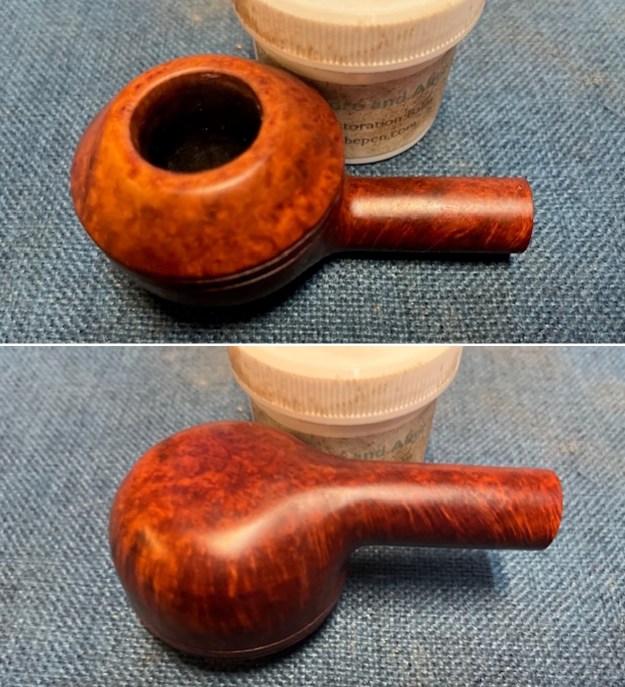
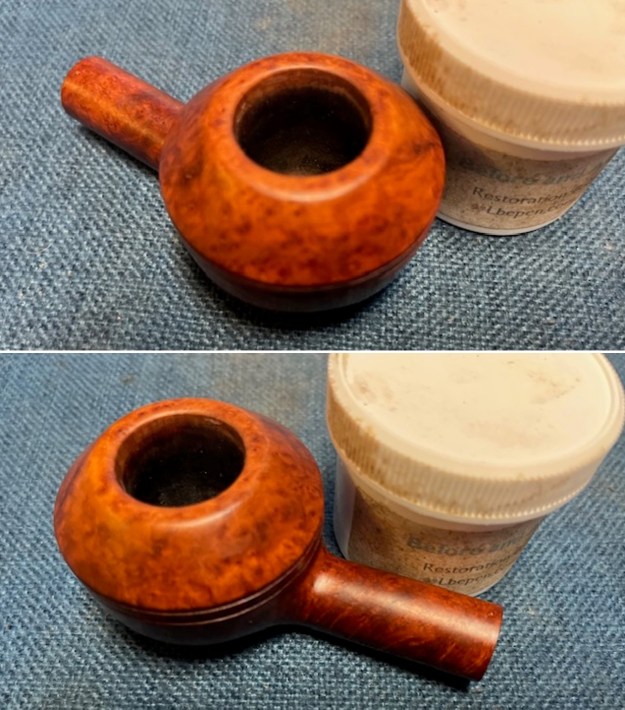
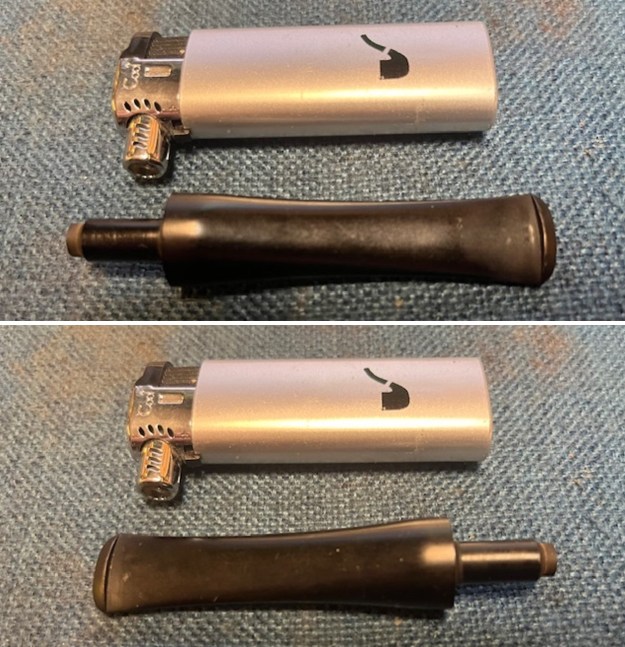
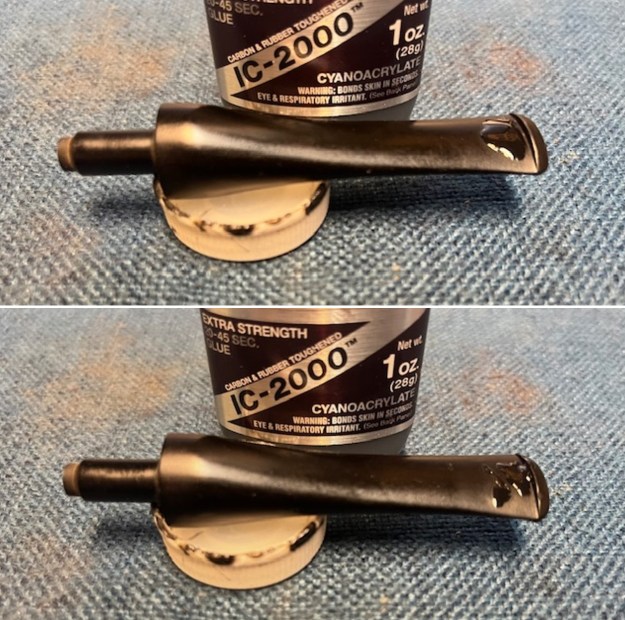
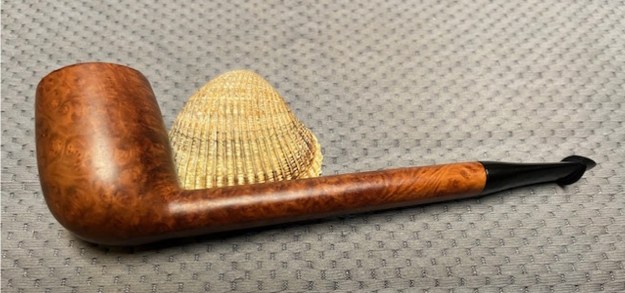
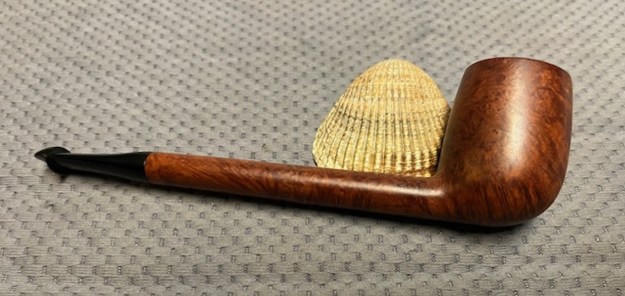
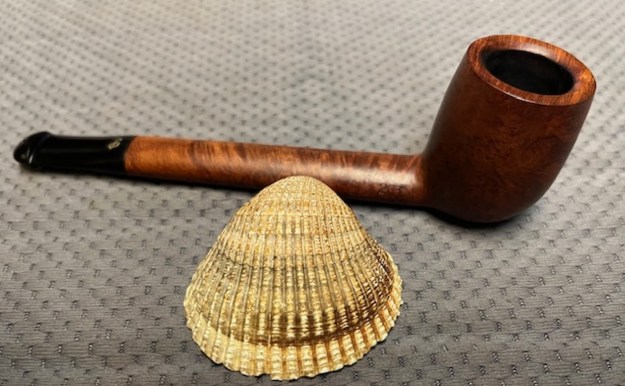
Before I move on to another of the pipes I have to work on from Jeff I decided to do a quick restem on a nice petite apple bowl with a vulcanite ferrule. It did not have a name on the bowl but the shank and the ferrule made for a beautiful little pipe. The bowl had been reamed and cleaned by Jeff somewhere along the journey. It had been sitting here in a box of bowls for a few years now. There was a fill on the front of the bowl that had fallen out and left a divot in the briar. Other than that the bowl was in excellent condition. I repaired the divot on the front of the bowl with some black CA glue and a little bit of briar dust. I flattened out the repair with 220 grit sandpaper to blend it into the surface of the briar.I wiped the bowl down with some isopropyl alcohol and cotton pads to remove the opacity of the stain and make it a bit more transparent. The grain began to stand through with a lot of clarity. I like the look of the grain around the bowl. The repair on the bowl was a bit lighter than the rest of the bowl and would need to be stained. I stained the repair on the front of the bowl with a Walnut stain pen. It blended into the surface of the bowl with the stain pen. The match was very good.I sanded the briar with 320-3500 grit sanding pads. I wiped the bowl down with a damp cloth after each sanding pad. I polished the bowl with micromesh sanding pads – dry sanding with 1500-12000 grits sanding pads. Once again, I wiped it down with a damp cloth following each pad. I rubbed the bowl down with Before & After Restoration Balm. It is a paste/balm that works to deep clean the finish, enliven and protect the briar. I worked it into the briar with my finger tips to make sure that it covered every square inch of the pipe. I set it aside for 10 minutes to let it do its work. I buffed it with a cotton cloth. The briar really began to have a deep shine. The photos I took of the bowl at this point mark the progress in the restoration. I went through my stems here and found a nice looking military bit stem that would look great with the pipe.It was clean and unused so I only need to polish it. I did that with micromesh sanding pads – dry sanding with 1500-12000 grit pads. I wiped the stem down after each pad with Obsidian Oil. I polished it with Before & After Pipe Stem Polish – both Fine and Extra Fine. I gave a final wipe down with Obsidian Oil. I put the No Name Apple pipe together and took it to the buffer. I buffed both the bowl and the stem with Blue Diamond on the wheel and then gave both multiple coats of Carnuaba Wax. I buffed it with a clean buffing pad to raise the shine. I further polished it with a microfiber cloth to deepen the shine. It is a beautiful petite pipe that should be a great smoker. The dimensions of the pipe are Length: 5 ½ inches, Height: 1 3/8 inches, Bowl diameter: 1 inch, Chamber diameter: ¾ of an inch. The weight of the pipe is .67 ounces/19 grams. If you wish to add it to your collection let me know. I will be putting it in the rebornpipes store shortly in the American Pipe Makers Section. Thanks for taking time to read this restoration and restem. As always I appreciate questions and comments.

PipaCroci fatta a mano Manitova-Italia Amica Dublin


by Steve Laug

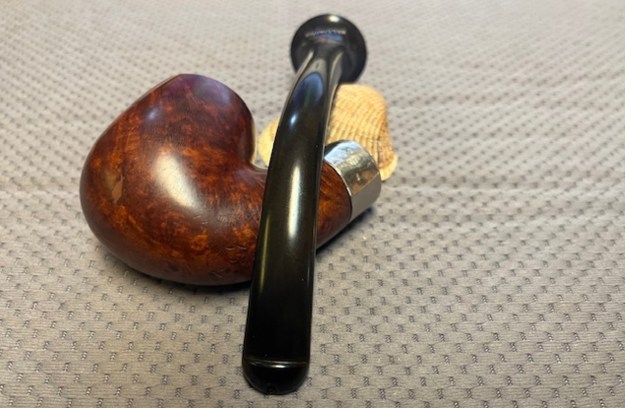
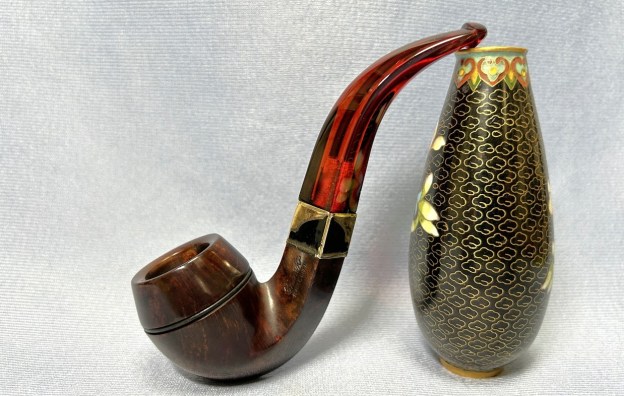
The pipe was a nice little Pipa Croci smooth, nicely grained Dublin. The bowl and rim were smooth. We purchased it 12/09/2024 via Facebook’s Pipe Exchange from a seller in Wellsville, Kansas, USA along with the other two previous Pipa Croci pipes I have written about. It is stamped on the left underside of the shank and reads Pipa Croci [over] Fatta A Mano [over] Mantova – Italia. Underneath and toward the bowl it is stamped Dal 1983 – the year that the company started. On the right underside it is stamped with the PC logo [over] Amica. It is a light weight well-made pipe with an amber/tan – coloured acrylic half saddle stem that fits against the shank end. The stem has the insert bar and dot logo on the top side. There were light tooth marks on both sides at the button but otherwise the stem was in good condition. The black Delrin tenon was in excellent condition. The tenon was made for a 9mm filter. Jeff took photos of the pipe before he started his cleanup work on the pipe. I have included those below. Jeff took photos of the rim top to show the condition. There is some darkening around the inner edge of the bowl and spots of lava on the rim top. He also captured the condition of the stem when it arrived. He took photos of the sides of the bowl and the heel to show the beautiful grain around the bowl. It really is a beautiful piece of briar that has a shape that follows the grain. The finish is nice but it also very dirty with grime and oils ground into it.Jeff took photos of the stamping on the shank sides. It is clear and readable and reads as noted above. Before I started working on my part of the restoration I decided to do a bit of research on the Pipa Croci brand. I wanted to clearly understand the stamping and possibly get date for the pipe and some background on the brand. I turned to Pipephil first to see what I could learn from there (http://www.pipephil.eu/logos/en/logo-c8.html). I have included a screen capture from the section on the brand and a few of the sidebar notes below that.Artisans: Paolo & Gianni. Grading (ascending): Pipa Croci, Amica, True, True I, Quality Street, Starlight, Golden Flame. Production (2007): ~ 3000 pipes/year. Pipa Croci is part of the Molina Group (2012)

I knew from that information that I was working on a grade two Amica pipe. I also learned that the pipe was made by Paolo and Gianni Croci. It is a great looking pipe and I was looking forward to seeing what Pipedia added to the information.

I turned to the link on Pipedia (https://pipedia.org/wiki/Pipa_Croci). I have included the article in part below.

Pipa Croci pipes are created by Paolo & Gianni Croci from Mantova, Lombardia. The company was founded in 1983 and on each pipe you will find the nomenclature reads “dal 1983”. Each and every pipe is hand crafted from aged Italian Plateau Briar. This is a company that makes no two pipes alike and they truly create some masterpieces. In their own words:

“The Pipa Croci is an artisan enterprise. The pipes which are born from our hands are all differnt from each other. This means that the owner of a Croci pipe possesses something totally unique. Keeping up with the avant-garde in styling and marketing, in addition to our Free Hand we have created the Classical Models. Furthermore, we produce several hand-carved objects related to the pipe smoker and made of briar.”

The quality classification of the pipes is as follows (ascending): Pipa Croci; Amica; True; True 1; Quality Street; Starlight; Golden Flame.

So the “Pipa Croci” is the least expensive and the “Gold Flame” the most costly, but the most exceptional. The classification takes place in a careful and accurate manner and the criteria for these choices are form, character of the briar and beauty of its grain.

The pipes are divided into groups according to their design; these groups or series have been given the following names: Normale; Artistica; Gran Camino; Gran Camino Artistica; Calumet; Calumet Artistica; Calumet Gran Camino; Calumet Gran Camino Artistica; Calumet 2000; Calumet 2000 Artistica; Calumet 2000 Gran Camino; Calumet 2000 Gran Camino Artistica.

The Classical models are hand-made reproductions of the traditional shapes. These well-known shapes have the following letter-number references: Billiard = A1; Apple = F1; Dublin = H1, etc…

Armed with that information I turned to work on the pipe itself. Jeff had done a great job cleaning up the pipe as usual. He cleaned up the inside of the bowl with a PipNet reamer and a Savinelli Fitsall Pipe Knife. The bowl walls looked very good. He scrubbed the interior of the bowl and shank with pipe cleaners, cotton swabs and alcohol to remove the tars and oils. He scrubbed the exterior of the pipe with Murphy’s Oil Soap and a tooth brush to remove the grime from the finish. He worked on the rim top lava and darkening with the soap and tooth brush. He scrubbed the inside of the stem with alcohol and pipe cleaners. He scrubbed the exterior with Soft Scrub and then soaked it in Briarville’s Pipe Stem Deoxidizer. He washed it off with warm water to remove the deoxidizer. The pipe looked far better. I took photos of the pipe when I received it before I started working on it. I took photos of the bowl and rim top to show how clean it was. The top and the inner edge of the rim look very good. The stem looks clean of debris and grime. There are light tooth marks and chatter on both sides.I took photos of the stamping on the sides of shank. The stamping is clear and readable. I took a photo of the pipe with the stem removed to show the overall look of stem, tenon and profile of the pipe. Now it was time to work on the pipe. I sanded the briar with 320-3500 grit sanding pads. I wiped the bowl down with a damp cloth after each sanding pad. I polished the bowl with micromesh sanding pads – dry sanding with 1500-12000 grits sanding pads. Once again, I wiped it down with a damp cloth following each pad. I rubbed the bowl down with Before & After Restoration Balm. It is a paste/balm that works to deep clean the finish, enliven and protect the briar. I worked it into the briar with my finger tips to make sure that it covered every square inch of the pipe. I set it aside for 10 minutes to let it do its work. I buffed it with a cotton cloth. The briar really began to have a deep shine. The photos I took of the bowl at this point mark the progress in the restoration. I set the bowl aside and turned my attention to the stem. I sanded the stem with 320-3500 grit sanding pads to break up the remaining oxidation. I wiped it down after each sanding pad with an Obsidian Oil impregnated cloth. It began to look good.I polished the stem with micromesh sanding pads – dry sanding with 1500-12000 grit pads. I wiped the stem down after each sanding pad with Obsidian Oil. I polished it with Before & After Pipe Stem Polish – both Fine and Extra Fine. Once I had finished the polishing I gave it final coat of Obsidian Oil and set it aside to dry. I fit the stem with a 6mm filter and put it back on the shank. It fit well but if the next pipeman wishes, the pipe could be smoked filterless though it would have a wide-open draught.I put the Pipa Croci Hand Made, Manitova, Italia, Amica Dublin Freehand bowl and 9mm filter stem back together. I polished the bowl and stem with Blue Diamond to polish the briar and the acrylic. I gave the bowl and the stem multiple coats of carnauba wax. I buffed the pipe with a clean buffing pad to raise the shine. I hand buffed it with a microfiber cloth to deepen the shine. The pipe polished up pretty nicely. The rich brown stains worked amazingly well with the polished acrylic saddle stem. The grain around the bowl and shank and looks quite remarkable. This is truly a beautiful Pipa Croci Amica Dublin. The finished pipe is shown in the photos below. The dimensions of the pipe are Length: 6 inches, Height: 1 ¾ inches, Outside diameter of the bowl: 1 ¾ inches wide x 2 inches long, Chamber diameter: ¾ of an inch. The weight of the pipe is 1.87 ounces/54 grams. This beautiful, Italian Hand Made Pipa Croci will be added to the rebornpipes store in the Italian Pipe Makers Section. Let me know if you are interested in adding it to your collection. Thanks for walking through the restoration with me. Cheers.

As always, I encourage your questions and comments as you read the blog. Thanks to each of you who are reading this blog. Remember we are not pipe owners; we are pipe men and women who hold our pipes in trust until they pass on into the trust of those who follow us.

Pipa Croci fatta a mano Manitova-Italia dal 1983 Diamond Shank Billiard


by Steve Laug

The pipe was a nice little Pipa Croci smooth Diamond Shank Billiard. The bowl and rim were smooth. We purchased it 12/09/2024 via Facebook’s Pipe Exchange from a seller in Wellsville, Kansas, USA. It is stamped on the left underside of the shank and reads Pipa Croci [over] Fatta A Mano [over] Mantova – Italia. Underneath and toward the bowl it is stamped Dal 1983 – the year that the company started. On the right underside it is stamped with the PC logo. It is a light weight well-made pipe with a rose/amber – coloured acrylic stem that fits like a military bit into a matching shank extension. The stem has the insert bar and dot logo on the top side. There were light tooth marks on both sides at the button but otherwise the stem was in good condition. The black Delrin tenon was in excellent condition. The tenon was made for a 9mm filter. Jeff took photos of the pipe before he started his cleanup work on the pipe. I have included those below.Jeff took photos of the rim top to show the condition. There is some darkening around the inner edge of the bowl and spots of lava on the rim top. He also captured the condition of the stem when it arrived. He took photos of the sides of the bowl and the heel to show the beautiful grain around the bowl. It really is a beautiful piece of briar that has a shape that follows the grain. The finish is nice but it also very dirty with grime and oils ground into it. Jeff took photos of the stamping on the shank sides. It is clear and readable and reads as noted above. Before I started working on my part of the restoration I decided to do a bit of research on the Pipa Croci brand. I wanted to clearly understand the stamping and possibly get date for the pipe and some background on the brand. I turned to Pipephil first to see what I could learn from there (http://www.pipephil.eu/logos/en/logo-c8.html). I have included a screen capture from the section on the brand and a few of the sidebar notes below that.Artisans: Paolo & Gianni. Grading (ascending): Pipa Croci, Amica, True, True I, Quality Street, Starlight, Golden Flame. Production (2007): ~ 3000 pipes/year. Pipa Croci is part of the Molina Group (2012)

I knew from that information that I was working on a grade one Pipa Croci pipe. I also learned that the pipe was made by Paolo and Gianni Croci. It is a great looking pipe and I was looking forward to seeing what Pipedia added to the information.

I turned to the link on Pipedia (https://pipedia.org/wiki/Pipa_Croci). I have included the article in part below.

Pipa Croci pipes are created by Paolo & Gianni Croci from Mantova, Lombardia. The company was founded in 1983 and on each pipe you will find the nomenclature reads “dal 1983”. Each and every pipe is hand crafted from aged Italian Plateau Briar. This is a company that makes no two pipes alike and they truly create some masterpieces. In their own words:

“The Pipa Croci is an artisan enterprise. The pipes which are born from our hands are all differnt from each other. This means that the owner of a Croci pipe possesses something totally unique. Keeping up with the avant-garde in styling and marketing, in addition to our Free Hand we have created the Classical Models. Furthermore, we produce several hand-carved objects related to the pipe smoker and made of briar.”

The quality classification of the pipes is as follows (ascending): Pipa Croci; Amica; True; True 1; Quality Street; Starlight; Golden Flame.

So the “Pipa Croci” is the least expensive and the “Gold Flame” the most costly, but the most exceptional. The classification takes place in a careful and accurate manner and the criteria for these choices are form, character of the briar and beauty of its grain.

The pipes are divided into groups according to their design; these groups or series have been given the following names: Normale; Artistica; Gran Camino; Gran Camino Artistica; Calumet; Calumet Artistica; Calumet Gran Camino; Calumet Gran Camino Artistica; Calumet 2000; Calumet 2000 Artistica; Calumet 2000 Gran Camino; Calumet 2000 Gran Camino Artistica.

The Classical models are hand-made reproductions of the traditional shapes. These well-known shapes have the following letter-number references: Billiard = A1; Apple = F1; Dublin = H1, etc…

Armed with that information I turned to work on the pipe itself. Jeff had done a great job cleaning up the pipe as usual. He cleaned up the inside of the bowl with a PipNet reamer and a Savinelli Fitsall Pipe Knife. The bowl walls looked very good. He scrubbed the interior of the bowl and shank with pipe cleaners, cotton swabs and alcohol to remove the tars and oils. He scrubbed the exterior of the pipe with Murphy’s Oil Soap and a tooth brush to remove the grime from the finish. He worked on the rim top lava and darkening with the soap and tooth brush. He scrubbed the inside of the stem with alcohol and pipe cleaners. He scrubbed the exterior with Soft Scrub and then soaked it in Briarville’s Pipe Stem Deoxidizer. He washed it off with warm water to remove the deoxidizer. The pipe looked far better. I took photos of the pipe when I received it before I started working on it. I took photos of the bowl and rim top to show how clean it was. The top and the inner edge of the rim look very good. The stem looks clean of debris and grime. There are light tooth marks and chatter on both sides.I took photos of the stamping on the sides of shank. The stamping is clear and readable. I took a photo of the pipe with the stem removed to show the overall look of stem, tenon and profile of the pipe. Now it was time to work on the pipe. I sanded the briar with 320-3500 grit sanding pads. I wiped the bowl down with a damp cloth after each sanding pad. I polished the bowl with micromesh sanding pads – dry sanding with 1500-12000 grits sanding pads. Once again, I wiped it down with a damp cloth following each pad. I rubbed the bowl down with Before & After Restoration Balm. It is a paste/balm that works to deep clean the finish, enliven and protect the briar. I worked it into the briar with my finger tips to make sure that it covered every square inch of the pipe. I set it aside for 10 minutes to let it do its work. I buffed it with a cotton cloth. The briar really began to have a deep shine. The photos I took of the bowl at this point mark the progress in the restoration. I set the bowl aside and turned my attention to the stem. I sanded the stem with 320-3500 grit sanding pads to break up the remaining oxidation. I wiped it down after each sanding pad with an Obsidian Oil impregnated cloth. It began to look good.I polished the stem with micromesh sanding pads – dry sanding with 1500-12000 grit pads. I wiped the stem down after each sanding pad with Obsidian Oil. I polished it with Before & After Pipe Stem Polish – both Fine and Extra Fine. Once I had finished the polishing I gave it final coat of Obsidian Oil and set it aside to dry. I fit the stem with a 9mm filter and put it back on the shank. It fit well but if the next pipeman or woman wishes, the pipe could be smoked filterless though it would have a wide-open draught. I put the Pipa Croci Hand Made, Manitova, Italia, Diamond Shank Bent Billiard bowl and stem back together. I polished the bowl and stem with Blue Diamond to polish the briar and the acrylic. I gave the bowl and the stem multiple coats of carnauba wax. I buffed the pipe with a clean buffing pad to raise the shine. I hand buffed it with a microfiber cloth to deepen the shine. The pipe polished up pretty nicely. The rich brown stains worked amazingly well with the polished acrylic saddle stem. The grain around the bowl and shank and looks quite remarkable. This is truly a beautiful Pipa Croci Hand Made Bent Billiard. The finished pipe is shown in the photos below. The dimensions of the pipe are Length: 5 ½ inches, Height: 2 inches, Outside diameter of the bowl: 1 ¼ inches, Chamber diameter: ¾ of an inch. The weight of the pipe is 1.27 ounces/36 grams. This beautiful, Italian Hand Made Pipa Croci will be added to the rebornpipes store in the Italian Pipe Makers Section. Let me know if you are interested in adding it to your collection. Thanks for walking through the restoration with me. Cheers.

As always, I encourage your questions and comments as you read the blog. Thanks to each of you who are reading this blog. Remember we are not pipe owners; we are pipe men and women who hold our pipes in trust until they pass on into the trust of those who follow us.

Restoring a Pipa Croci fatta a mano Manitova-Italia – True – Dublin


by Steve Laug

The pipe was a nice little Pipa Croci smooth Dublin. The bowl and rim were smooth. We purchased it 12/09/2024 via Facebook’s Pipe Exchange from a seller in Wellsville, Kansas, USA. It is stamped on the left side of the shank and reads Pipa Croci [over] Fatta A Mano [over] Mantova – Italia. Underneath and toward the bowl it is stamped Dal 1983 – the year that the company started. On the right side it is stamped with the PC logo [over] TRUE. It is a light weight well-made pipe with a rose-coloured acrylic stem with a black thin line around the end next to the shank. The stem has the insert bar and dot logo on the top side. There were light tooth marks on both sides at the button but otherwise the stem was in good condition. The black Delrin tenon was in excellent condition. The tenon was made for a 6mm filter. Jeff took photos of the pipe before he started his cleanup work on the pipe. I have included those below.Jeff took photos of the rim top to show the condition. There is some darkening around the inner edge of the bowl and spots of lava on the rim top. He also capture the condition of the stem when it arrived. He took photos of the sides of the bowl and the heel to show the beautiful grain around the bowl. It really is a beautiful piece of briar that has a shape that follows the grain. The finish is nice but it also very dirty with grime and oils ground into it. Jeff took photos of the stamping on the shank sides. It is clear and readable and reads as noted above. Before I started working on my part of the restoration I decided to do a bit of research on the Pipa Croci brand. I wanted to clearly understand the stamping and possibly get date for the pipe and some background on the brand. I turned to Pipephil first to see what I could learn from there (http://www.pipephil.eu/logos/en/logo-c8.html). I have included a screen capture from the section on the brand and a few of the sidebar notes below that.Artisans: Paolo & Gianni. Grading (ascending): Pipa Croci, Amica, True, True I, Quality Street, Starlight, Golden Flame. Production (2007): ~ 3000 pipes/year. Pipa Croci is part of the Molina Group (2012)

I knew from that information that I was working on a grade three TRUE pipe. I also learned that the pipe was made by Paolo and Gianni Croci. It is a great looking pipe and I was looking forward to seeing what Pipedia added to the information.

I turned to the link on Pipedia (https://pipedia.org/wiki/Pipa_Croci). I have included the article in part below.

Pipa Croci pipes are created by Paolo & Gianni Croci from Mantova, Lombardia. The company was founded in 1983 and on each pipe you will find the nomenclature reads “dal 1983”. Each and every pipe is hand crafted from aged Italian Plateau Briar. This is a company that makes no two pipes alike and they truly create some masterpieces. In their own words:

“The Pipa Croci is an artisan enterprise. The pipes which are born from our hands are all differnt from each other. This means that the owner of a Croci pipe possesses something totally unique. Keeping up with the avant-garde in styling and marketing, in addition to our Free Hand we have created the Classical Models. Furthermore, we produce several hand-carved objects related to the pipe smoker and made of briar.”

The quality classification of the pipes is as follows (ascending): Pipa Croci; Amica; True; True 1; Quality Street; Starlight; Golden Flame.

So the “Pipa Croci” is the least expensive and the “Gold Flame” the most costly, but the most exceptional. The classification takes place in a careful and accurate manner and the criteria for these choices are form, character of the briar and beauty of its grain.

The pipes are divided into groups according to their design; these groups or series have been given the following names: Normale; Artistica; Gran Camino; Gran Camino Artistica; Calumet; Calumet Artistica; Calumet Gran Camino; Calumet Gran Camino Artistica; Calumet 2000; Calumet 2000 Artistica; Calumet 2000 Gran Camino; Calumet 2000 Gran Camino Artistica.

The Classical models are hand-made reproductions of the traditional shapes. These well-known shapes have the following letter-number references: Billiard = A1; Apple = F1; Dublin = H1, etc…

Armed with that information I turned to work on the pipe itself. Jeff had done a great job cleaning up the pipe as usual. He cleaned up the inside of the bowl with a PipNet reamer and a Savinelli Fitsall Pipe Knife. The bowl walls looked very good. He scrubbed the interior of the bowl and shank with pipe cleaners, cotton swabs and alcohol to remove the tars and oils. He scrubbed the exterior of the pipe with Murphy’s Oil Soap and a tooth brush to remove the grime from the finish. He worked on the rim top lava and darkening with the soap and tooth brush. He scrubbed the inside of the stem with alcohol and pipe cleaners. He scrubbed the exterior with Soft Scrub and then soaked it in Briarville’s Pipe Stem Deoxidizer. He washed it off with warm water to remove the deoxidizer. The pipe looked far better. I took photos of the pipe when I received it before I started working on it. I took photos of the bowl and rim top to show how clean it was. The top and the inner edge of the rim look very good. The stem looks clean of debris and grime. There are light tooth marks and chatter on both sides.I took photos of the stamping on the sides of shank. The stamping is clear and readable. I took a photo of the pipe with the stem removed to show the overall look of stem, tenon and profile of the pipe. Now it was time to work on the pipe. I sanded the briar with 320-3500 grit sanding pads. I wiped the bowl down with a damp cloth after each sanding pad. I polished the bowl with micromesh sanding pads – dry sanding with 1500-12000 grits sanding pads. Once again, I wiped it down with a damp cloth following each pad. I rubbed the bowl down with Before & After Restoration Balm. It is a paste/balm that works to deep clean the finish, enliven and protect the briar. I worked it into the briar with my finger tips to make sure that it covered every square inch of the pipe. I set it aside for 10 minutes to let it do its work. I buffed it with a cotton cloth. The briar really began to have a deep shine. The photos I took of the bowl at this point mark the progress in the restoration. I set the bowl aside and turned my attention to the stem. I sanded the stem with 320-3500 grit sanding pads to break up the remaining oxidation. I wiped it down after each sanding pad with an Obsidian Oil impregnated cloth. It began to look good.I polished the stem with micromesh sanding pads – dry sanding with 1500-12000 grit pads. I wiped the stem down after each sanding pad with Obsidian Oil. I polished it with Before & After Pipe Stem Polish – both Fine and Extra Fine. Once I had finished the polishing I gave it final coat of Obsidian Oil and set it aside to dry. I fit the stem with a 6mm filter and put it back on the shank. It fit well but if the next pipeman wishes, the pipe could be smoked filterless though it would have a wide-open draught.I put the Pipa Croci Hand Made, Manitova, Italia, True Dublin Freehand bowl and stem back together. I polished the bowl and stem with Blue Diamond to polish the briar and the acrylic. I gave the bowl and the stem multiple coats of carnauba wax. I buffed the pipe with a clean buffing pad to raise the shine. I hand buffed it with a microfiber cloth to deepen the shine. The pipe polished up pretty nicely. The rich brown stains worked amazingly well with the polished acrylic saddle stem. The grain around the bowl and shank and looks quite remarkable. This is truly a beautiful Pipa Croci True Dublin. The finished pipe is shown in the photos below. The dimensions of the pipe are Length: 6 inches, Height: 2 inches, Outside diameter of the bowl: 1 ¾ inches wide x 2 inches long, Chamber diameter: ¾ of an inch. The weight of the pipe is 2.12 ounces/61 grams. This beautiful, Italian Hand Made Pipa Croci will be added to the rebornpipes store in the Italian Pipe Makers Section. Let me know if you are interested in adding it to your collection. Thanks for walking through the restoration with me. Cheers.

As always, I encourage your questions and comments as you read the blog. Thanks to each of you who are reading this blog. Remember we are not pipe owners; we are pipe men and women who hold our pipes in trust until they pass on into the trust of those who follow us.

Cleaning up the final pipe of the Rob’s 12 – A Royal Danish 981R Saddle Stem Billiard


by Steve Laug

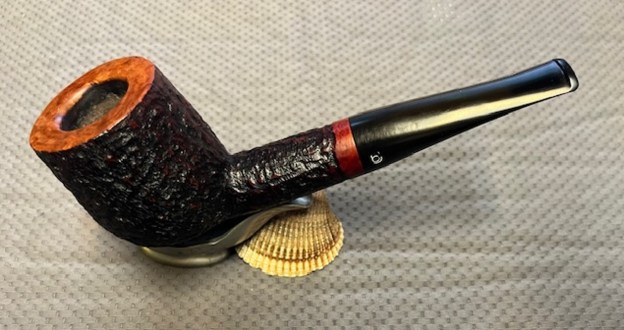
This is the last of the pipes I received from Robert with a group 12 pipes that needed to be restored in various ways from cleanup to restemming. So it is the only one to choose to work on this Royal Danish 981R Large Billiard with a vulcanite saddle stem. The bowl and shank were very dirty with oils and tars on the surface of the sandblast finish and the two smooth panels on each side. There were also some worn spots. The bowl had a thick cake and an overflow of lava in the sandblast of the rim top. The pipe was stamped on the underside of the shank and read Royal Danish [followed by] Made in Denmark [followed by] 981R.  There was a Crown logo on the left side of the saddle stem. This one came with the original stem in place on the shank. The stem was a push stem. It was oxidized and had notches on each side ahead of the button. There were light tooth marks on the top and underside of the stem near the button. The button edges were also worn quite thin. I took some photos of the pipe to show its condition before I started my work on it. I took some closer photos of the bowl and rim top to show its condition before I started my work on the pipe. You can see the cake in the bowl and the thick lava coat filling in the sandblast on the rim top. The stem photos also show the general condition of the stem as noted above. I tried to capture the stamping on the underside of the shank. It is clear, though faint, still readable and reads as noted above. I removed the stem to give a sense of what the pipe looked like with two parts shown side by side. It is a large Billiard shape with a saddle stem.Before I started working on it I did a bit of research on the brand to get a feel for where it fit in the Stanwell line. I was sure that it was a second but wanted confirmation. I turned to Pipephil’s site to see if I could get a feel for it (http://www.pipephil.eu/logos/en/logo-r6.html). I did a screen capture of the information on the site. I found that the brand was indeed made by Stanwell and was one of many second lines that they made. I did a screen capture of the pertinent information and have included it below.I then turned to Pipedia and found that it was also listed as a second or a sub-brand made by Stanwell (https://pipedia.org/wiki/Stanwell#Sub-brands_.2F_Seconds). I have included the list of seconds from the site below. I have highlighted the Royal Danish in blue in the text.

Sub-brands / Seconds – Bijou (discontinued), Danish Quaint, Danish Sovereign, Danske Club, Henley (discontinued), Kong Christian (discontinued), Majestic, Reddish (discontinued), Royal Danish, Royal Guard, Royal Sovereign, Sailor (discontinued), Scandia, Sorn (discontinued), Svendson.

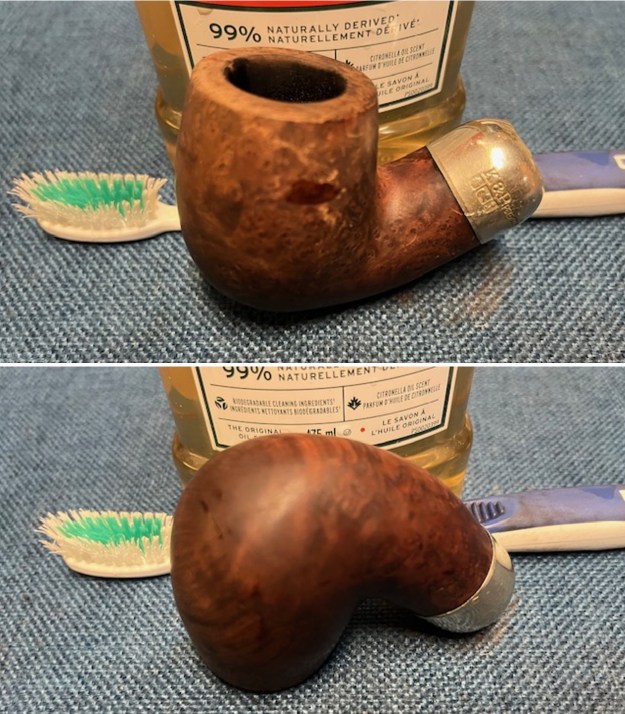
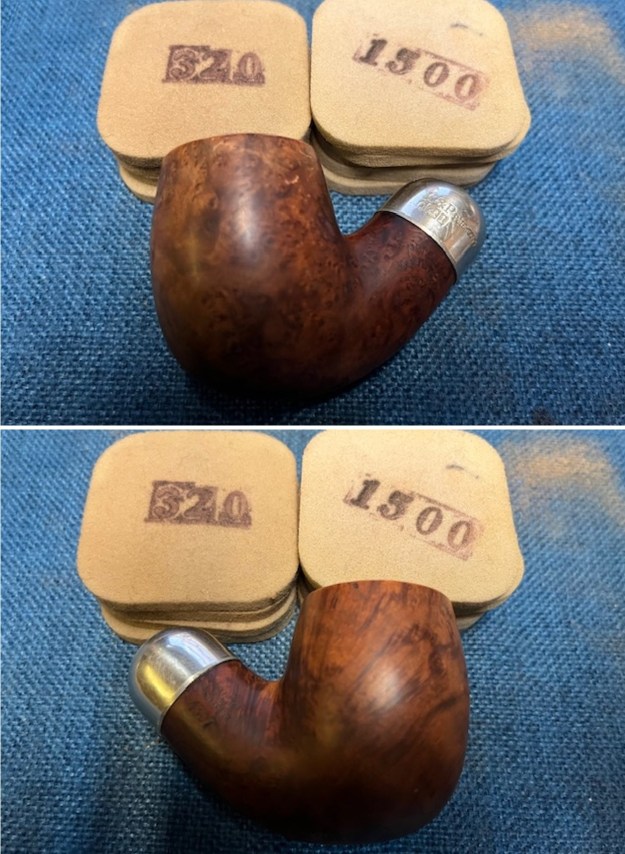
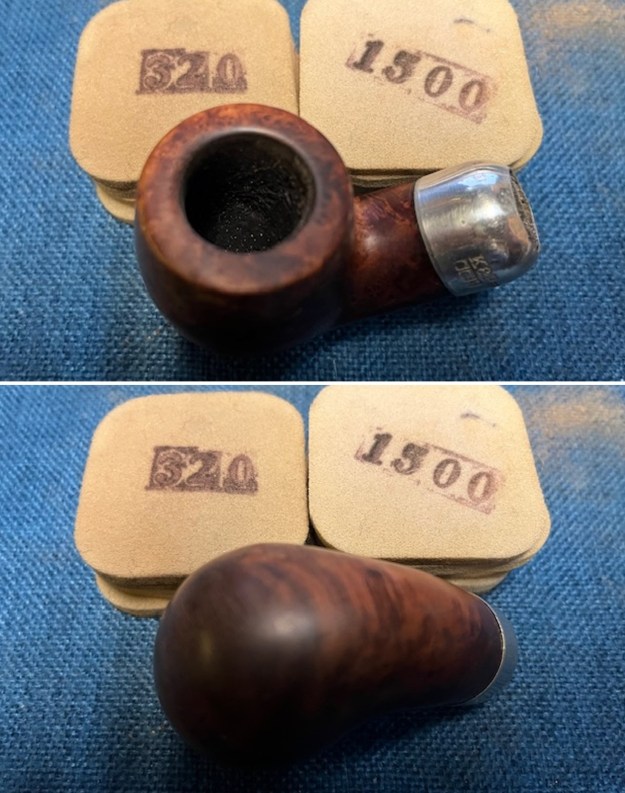
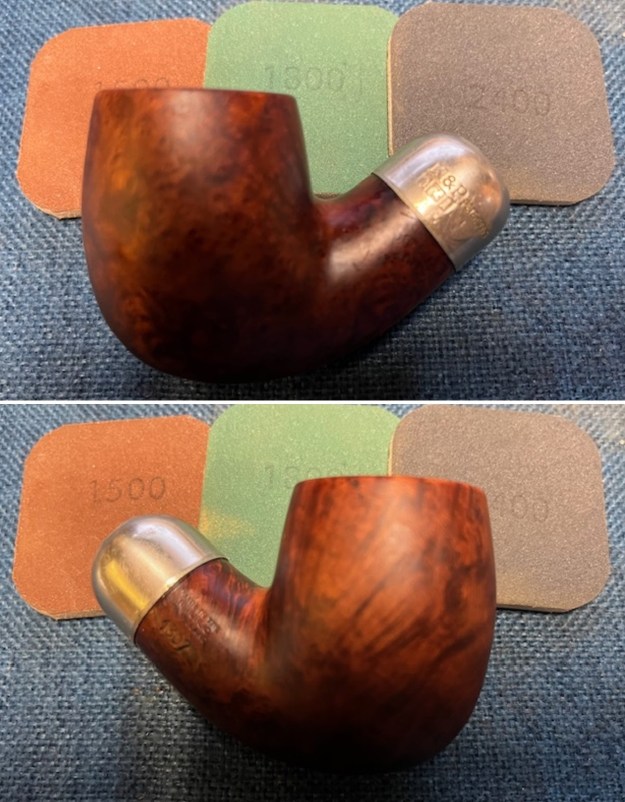
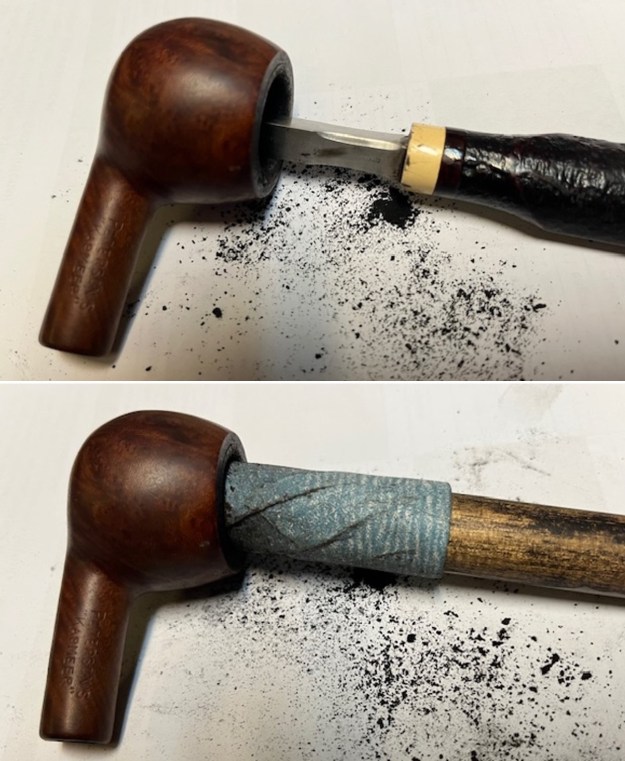
Now it was time to clean up this pipe and get it restored. I reamed the bowl with a PipNet Pipe Reamer using the 2nd and 3rd cutting heads to trim back the cake to bare walls. A lot of carbon powder came out of the bowl. I cleaned up the reaming with a Savinelli Fitsall Pipe Knife and sanded the walls of the bowl with a dowel wrapped with 220 grit sandpaper. Once finished the bowl look quite good. I worked over the sandblast on the rim top with a brass bristle wire brush to remove the lava coat that was in the blast. The rim began to look much better and you can see the texture of the blast. I scrubbed the internals and externals of the bowl with undiluted Murphy’s Oil Soap and a tooth brush. I rinsed off the soap and grime with warm water. I repeated the process several times until the water came off clear. It is a great looking pipe. There is definitely some wear on the outer edge of the rim top but it still should look fine. I touched up the raw briar and faded areas on the rim edges using a Walnut stain pen. It took a short amount of time but the dividend it great. The rim top looks better with the new stain and it matches the rest of the bowl very well.I cleaned out the internals of the shank, mortise and the airway in the stem with alcohol, cotton swabs and pipe cleaners – both regular and bristle. It was a dirty pipe but it cleaned up very well.I polished the smooth patches on the left and right side of the bowl with micromesh sanding pads – dry sanding with 1500-12000 grit pads. I wiped the areas down with a damp cloth after each pad to remove the sanding debris. The panels took on a rich shine.I rubbed the bowl down with Before & After Restoration Balm. It is a paste/balm that works to deep clean the finish, enliven and protect the briar. I worked it into the briar with my finger tips to make sure that it covered every square inch of the pipe. I set it aside for 10 minutes to let it do its work. I buffed it with a cotton cloth. The briar really began to have a deep shine. The photos I took of the bowl at this point mark the progress in the restoration. I set aside the bowl and turned my attention to the stem. This stem was in rough shape. There were tooth marks on the button top on both sides and also on the stem surface. There were notches carved on each side of the stem ahead of the button. I am not sure of the purpose but they were oddly present. I wiped down the stem end and filled in the damaged areas with black rubberized CA glue. Once it cured I recut the button with a small file. I smoothed out the repairs on the stem surface with a folded piece of 220 grit sandpaper. I scrubbed the stem surface down with Soft Scrub to address the oxidation that remained. I finished and wiped it down with an Obsidian Oil cloth. I continued to sand the stem with 320-3500 grit sanding pads. I wiped the stem down after each pad with an Obsidian Oil impregnated cloth to remove the sanding debris. It began to take on a shine.I polished the stem with micromesh sanding pads – dry sanding with 1500-12000 grit pads. I wiped it down with some Obsidian Oil after each sanding pad. I polished it further with Before & After Stem polish – both Fine and Extra Fine and then wiped it down another time with the oil. I put the Royal Danish 981R Saddle Stem Billiard back together. I polished the bowl and stem with Blue Diamond to polish the briar and the vulcanite. I gave the bowl and the stem multiple coats of carnauba wax. I buffed the pipe with a clean buffing pad to raise the shine. I hand buffed it with a microfiber cloth to deepen the shine. The pipe polished up pretty nicely. There were some spots of oxidation around the logo on the stem that I left so as not to damage the stamping. The original brown stains gave depth to the beautiful grain around the smooth bowl patches, the sandblast finish and worked amazingly well with the polished vulcanite saddle stem. The grain around the bowl and shank and looks quite remarkable. There are still some nicks for the pipe’s journey that I left as it is part of the story of the pipe. This is truly a beautiful Royal Danish 981R Large Billiard. The finished pipe is shown in the photos below. The dimensions of the pipe are Length: 6 ½ inches, Height: 2 inches, Outside diameter of the bowl: 1 ½ inches, Chamber diameter: 7/8 of an inch. The weight of the pipe is 1.69 ounces/48 grams. This final pipe will be put in the box and will be mailed back to him early next week. Thanks for walking through the restoration with me. Cheers.

As always, I encourage your questions and comments as you read the blog. Thanks to each of you who are reading this blog. Remember we are not pipe owners; we are pipe men and women who hold our pipes in trust until they pass on into the trust of those who follow us.

Cleaning up another of the 12 – A Wire Rusticated Dr. Grabow Belvedere Slim Dublin


by Steve Laug

This is another of the pipes I received from Robert with a group 12 pipes that needed to be restored in various ways from cleanup to restemming. I have just two left now so I chose to work on this Dr. Grabow Belvedere Yachtsman with a vulcanite taper stem. The bowl and shank were very dirty with oils and tars on the surface of the smooth finish. There were also some worn spots. The wire rusticated bowl had been reamed recently so the bowl was almost free of cake other than a light ridge of carbon mid bowl. There was a light overflow of lava on the rim top. The pipe was stamped on the underside of the shank and read Belvedere [over] Dr. Grabow.  There was a Grabow logo on the left side of the stem. This one came with the original stem in place on the shank. The shank end had an aluminum fitting that provided a mortise of the threaded metal stinger/tenon on the pipe. The stem overclocked to the right leaving I crooked in the shank. It was oxidized and had what looked like pliers’ marks on the stem side. There were light tooth marks on the top and underside of the stem near the button. I took some photos of the pipe to show its condition before I started my work on it. I took some closer photos of the bowl and rim top to show its condition before I started my work on the pipe. You can see the relatively clean bowl with no cake and the thick lava coat on the rim top. The stem photos also show the general condition of the stem as noted above. I tried to capture the stamping on the underside of the shank. It is clear, though faint, still readable and reads as noted above. I also unscrewed the stem to give a sense of what the pipe looked like with two parts shown side by side. It is a Dublin shape with a taper stem.I turned to Pipephil (http://www.pipephil.eu/logos/en/logo-drgrabow.html) to see if I could find any information on the line and background on the brand. I have included that in the paragraph below. There was nothing listed on the Belvedere line.

Dr. Grabow pipes began with Louis B. Linkman († 1957), of the M. Linkman and Co. of Chicago in 1932 (Pat # 1 896 800). Linkman and Co. ceased producing the Dr. Grabow pipes around 1953. After this date the brand was owned by Henry Leonard and Thomas (HLT), Inc. of Queens, New York and produced by Sparta Pipes Inc. In 1969, US Tobacco acquired Sparta Pipes and rights to Dr. Grabow. Lane Ltd. acquired the Dr. Grabow property from US Tobacco. Lane Ltd. came under ownership of RJ Reynolds and British American Tobacco in about 2000. Dr. Paul E. Grabow died in 1965 at age 97. Production (2006): ~250,000 pipes/year.

I then turned to Pipedia to an article on the Grabow Models. I have included the link below. (https://pipedia.org/wiki/Dr._Grabow_Models_(Series,Line)_Names_Through_the_Years). I quote from the information listed on the Belvedere below:

BELVEDERE (c1955?) – One of the early RJR pipes. Some, perhaps the earlier ones, have #76 cleaner (“Rook” shape). Others use the #72b cleaner (“spoon” shape on end). Eventually, this pipe was dropped from the offers.

From that information I knew That I was dealing with an early RJR (RJ Reynolds) pipes as it had the “Rook” shaped stinger/tenon apparatus. That is known as a #76 cleaner. I also learned that it had been a coupon pipe and was dropped from the offers. It appears to have come out in or around 1955. Now it was time to work on the pipe.

I decided to begin by addressing the fit of the stem to the shank. The stem fit against the shank perfectly but was over clocked by about ¼ turn. I would need to deal with that. I used an old trick I learned from one of the old timers on ASP. I heated the metal stinger tenon with the flame of a lighter to soften the glue in the stem. I screwed it into the stem and tried to turn it. I repeated the process until the glue softened. I then was able to align the stem properly on the shank. I set it aside to let the glue reharden before I took the stem off. It looked very good at this point in terms of alignment. I used a brass bristle wire brush to clean up the lava on the rim top and the tars on the aluminum Rook style stinger.I scrubbed the exterior of the with undiluted Murphy’s Oil Soap and a tooth brush. I worked on edges of the rim top along with the rest of the bowl and the shank. I rinsed it off with warm running water and dried it off with a cotton towel. It is definitely looking better. I used a walnut stain pen to touch up the finish on the rim top, bowl edges and the shank end. I worked it into the wire brush rusticated finish on the bowl.I cleaned out the airway in the stem and shank, the mortise and the entry of the airway into the bowl. I used alcohol, cotton swabs and pipe cleaners. It was dirty but cleaned up well.I rubbed the bowl down with Before & After Restoration Balm. It is a paste/balm that works to deep clean the finish, enliven and protect the briar. I worked it into the briar with my finger tips to make sure that it covered every square inch of the pipe. I set it aside for 10 minutes to let it do its work. I buffed it with a cotton cloth. The briar really began to have a deep shine. The photos I took of the bowl at this point mark the progress in the restoration. I set aside the bowl and turned my attention to the stem. I sanded out the oxidation on the stem surface with a folded piece of 220 grit sandpaper. I wiped it down with an Obsidian Oil cloth.I continued to sand the stem with 320-3500 grit sanding pads. I wiped the stem down after each pad with an Obsidian Oil impregnated cloth to remove the sanding debris. It began to take on a shine.I polished the stem with micromesh sanding pads – dry sanding with 1500-12000 grit pads. I wiped it down with some Obsidian Oil after each sanding pad. I polished it further with Before & After Stem polish – both Fine and Extra Fine and then wiped it down another time with the oil. I put the Dr. Grabow Belvedere Slim Dublin and the stem back together. I polished the bowl and stem with Blue Diamond to polish the briar and the vulcanite. I gave the bowl and the stem multiple coats of carnauba wax. I buffed the pipe with a clean buffing pad to raise the shine. I hand buffed it with a microfiber cloth to deepen the shine. The pipe polished up pretty nicely. The original brown stains gave depth to the beautiful grain around the bowl and worked amazingly well with the polished vulcanite saddle stem. The grain around the bowl and shank and looks quite remarkable. There are still some nicks for the pipe’s journey that I left as it is part of the story of the pipe. This is truly a beautiful Dr. Grabow Belvedere Dublin. The finished pipe is shown in the photos below. The dimensions of the pipe are Length: 5 ½ inches, Height: 1 ½ inches, Outside diameter of the bowl: 1 ¼ inches, Chamber diameter: ¾ of an inch. The weight of the pipe is 1.16 ounces/35 grams. This pipe will be put in the box while I work on Rob’s remaining pipe in the 12 pipe lot. Once I finish them I will be mailing the lot back to him. Thanks for walking through the restoration with me. Cheers.

As always, I encourage your questions and comments as you read the blog. Thanks to each of you who are reading this blog. Remember we are not pipe owners; we are pipe men and women who hold our pipes in trust until they pass on into the trust of those who follow us.

Cleaning a stubbornly Frozen Quiet Companion Metal pipe from the lot of 12 pipes


by Steve Laug

Back in January I received an email from Robert with a group 12 pipes that needed to be restored in various ways from cleanup to restemming. I chose to work on second metal pipe next. It is a nice looking straight pipe with an apple style bowl and a metal base. It was a smooth bowl with no rustication. The rim top and the base of the bowl were both very dirty. The bowl had been reamed at some time so there was no cake in it. The rim top had an overflow of lava on it and some darkening around the inner edge. The underside of the bowl was dirty and it was coated with a varnish coat. The stem and bowl were stuck on the base and could not be removed at this point. The underside of the metal base was stamped Quiet Companion. The stem was dirty and had a lot of tooth marks and chatter on the top and underside ahead of the button. I took some photos of the pipe to show its condition before I started my work on it. To capture the condition of the bowl and rim top along with the stem I took the following photos. You can see the tar in the bottom of the bowl and the entrance to the shank is quite large. The bowl is not removable at the moment so once I am able to remove it I can do a better assessment of the condition. The rim top has a thick lava coat that is heavier on the back side. The stem is well chewed but none of the marks are too deep. The stem is also not removable at this point. I will need to see what I can find out about the internals so that I can take it apart.I tried to capture the stamping on the heel of the base. It read The [over] Quiet [over] Companion. It was clear and readable.This is a brand I had not seen before, let alone worked on. I had no idea how it came apart and it was solidly stuck. I could not remove the stem from the shank or the bowl from the base. Before I started to work on it I decided to see if I could find out how the parts were held together. Here is the link (http://www.smokingmetal.co.uk/pipe.php?page=83). I quote the information that was included along with the photos.

QUIET COMRADE

Department : METAL STEM & Plug in bowls

QUIET COMRADE stamped under cup and on the base of the bowl. The filter holder is designed such that smoke has to travel three time the length of the shank, the last run is enabled to take an absorbtion filter.

The bowl is retained by the filter holder locking into the bowl, this has to be pulled out before the bowl is released. Attempting to unscrew the bowl can have disastrous effects

Variety of bowls , smooth and carved.

Overall length is 5 3/8 inches (137 m/m)

19 Feb 1974 – US patent # 3,792,705 Inventor Robert J Frederick , Ashtabula, Ohio and manufactured by Mech.Tech.Inc., PO box 487 – 3128 State Road – Ashtabula, Ohio 44004 – USA I also found a link on another site selling the pipe that showed the way the pipe fit together (https://eliesfreehandpipes.com/Elie%27s_Comrade.html).Now I knew how to take it apart… I thought. Now the hard work began. I tried all the tricks up my sleeve from years of working on pipes. I tried the freezer trick – letting it sit in the freezer for repeated periods of time and having absolutely no success. I tried heating the shank with boiling water to try to loosen the internals from the metal base – I repeated the process of heating it several times to loosen it. Again – I had no success. I heated it with a heat gun repeatedly to remove the internals – no success. The only thing that worked at this point was that I was able to remove the stem. I soaked the shank in a bath of alcohol for several days hoping to break things loose. It did not work. I heated it again to combine the alcohol and heat. It did not work. I tried plugging the shank end and soaking the internals with acetone. It still did not work. I am stumped at this point. I decided to clean up the pipe as best as I could without taking it apart. So that is what I did today after work.

I wiped off the debris from the soaking that bowl had received and reamed it with a Savinelli Fitsall Pipe Knife. I took the cake back to bare briar and it looked much better. I cleaned out the airway in the shank and the inside of the bowl and the entrance of the airway at the bottom of the bowl with alcohol, pipe cleaners and cotton swabs. I also cleaned the airway in the stem at the same time. It was beginning to look very good.With the internals clean I turned my attention to the briar bowl. It had started the heating/cooling process I described above with a thick varnish coat. One of the benefits of the long process was that the varnish had bubble and peeled off. I sanded it with a folded piece of 220 grit sandpaper to remove the remnants of shiny varnish on the sides and top of the bowl. It actually had some nice grain underneath the coat. I continued to sand the bowl with 320-3500 grit sanding pads. I wiped the bowl down after each pad with a damp cloth to remove the debris from sanding. By the last pad the bowl had begun to shine. I polished the briar bowl with micromesh sanding pads – dry sanding with 1500-12000 grit pads. I wiped the bowl down after each pad to remove the debris. By the end the grain just popped. It is a pretty bowl. I rubbed the bowl down with Before & After Restoration Balm. It is a paste/balm that works to deep clean the finish, enliven and protect the briar. I worked it into the briar with my finger tips to make sure that it covered every square inch of the pipe. I set it aside for 10 minutes to let it do its work. I buffed it with a cotton cloth. The briar really began to have a deep shine. The photos I took of the bowl at this point mark the progress in the restoration. I turned my attention to the other end of the pipe. I sanded out the oxidation and scratches in the surface with 320-3500 sanding pads. I wiped the stem down after each sanding pad with an Obsidian Oil saturated cloth. Once finished it revealed deep marks and gouges in the surface.I filled in the marks and nicks on the surface of the stem with black, rubberized CA glue. I pressed it into the marks on the surface with a tooth pick. Once the repairs cured I sanded them smooth with a folded piece of 220 grit sandpaper. I polished the stem with micromesh sanding pads – dry sanding with 1500-12000 grit pads. I wiped it down with some Obsidian Oil after each sanding pad. I polished it further with Before & After Stem polish – both Fine and Extra Fine and then wiped it down another time with the oil. The frustratingly frozen pipe looked better. Even though I could not break down the internals I worked over the internals with alcohol and pipe cleaners. I put the Quiet Comrade Metal Pipe and stem back together. I polished the bowl and stem with Blue Diamond to polish the briar and the vulcanite. I gave the bowl and the stem multiple coats of carnauba wax. I buffed the pipe with a clean buffing pad to raise the shine. I hand buffed it with a microfiber cloth to deepen the shine. The pipe polished up pretty nicely. The original brown stains gave depth to the beautiful grain around the bowl and worked amazingly well with the polished vulcanite saddle stem. The grain around the bowl and shank and looks quite remarkable. There are still some nicks for the pipe’s journey that I left as it is part of the story of the pipe. This is truly a beautiful Quiet Comrade Apple on a metal base. The finished pipe is shown in the photos below. The dimensions of the pipe are Length: 5 ½ inches, Height: 1 ¾ inches, Outside diameter of the bowl: 1 3/8 inches, Chamber diameter: ¾ of an inch. The weight of the pipe is 1.45 ounces/41 grams. This pipe will be put in the box while I work on Rob’s remaining pipes in the 12 pipe lot. Once I finish them I will be mailing the lot back to him. Thanks for walking through the restoration with me. Cheers.

As always, I encourage your questions and comments as you read the blog. Thanks to each of you who are reading this blog. Remember we are not pipe owners; we are pipe men and women who hold our pipes in trust until they pass on into the trust of those who follow us.

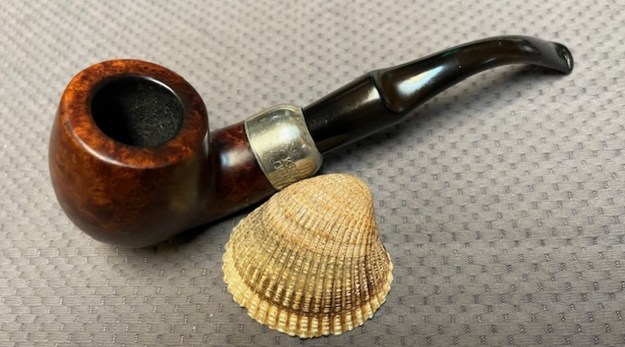
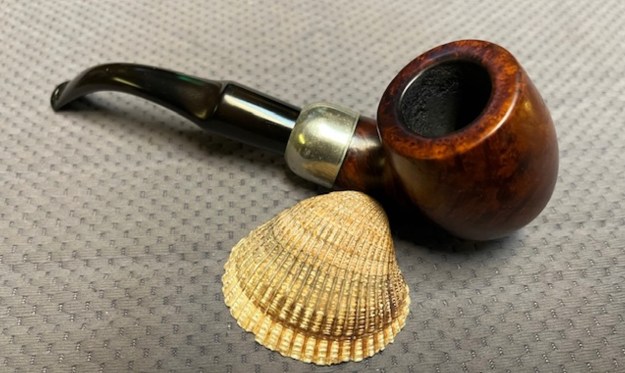
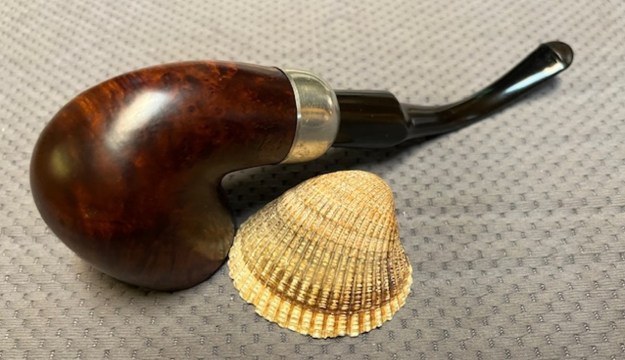
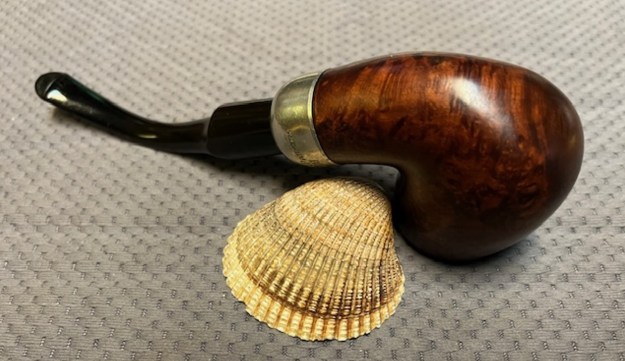
Restemming a Beautiful, Sandblast WDC Milano Ripple Briar Hesson Apple


by Steve Laug

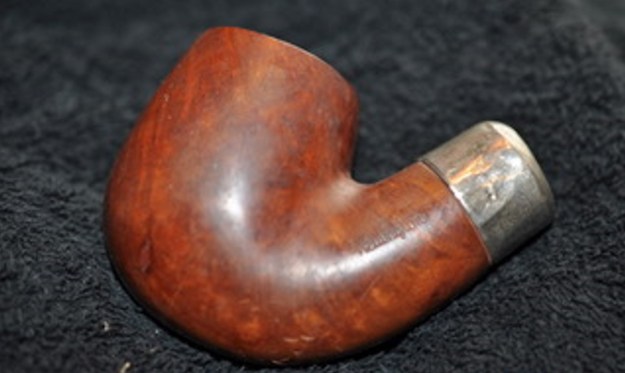
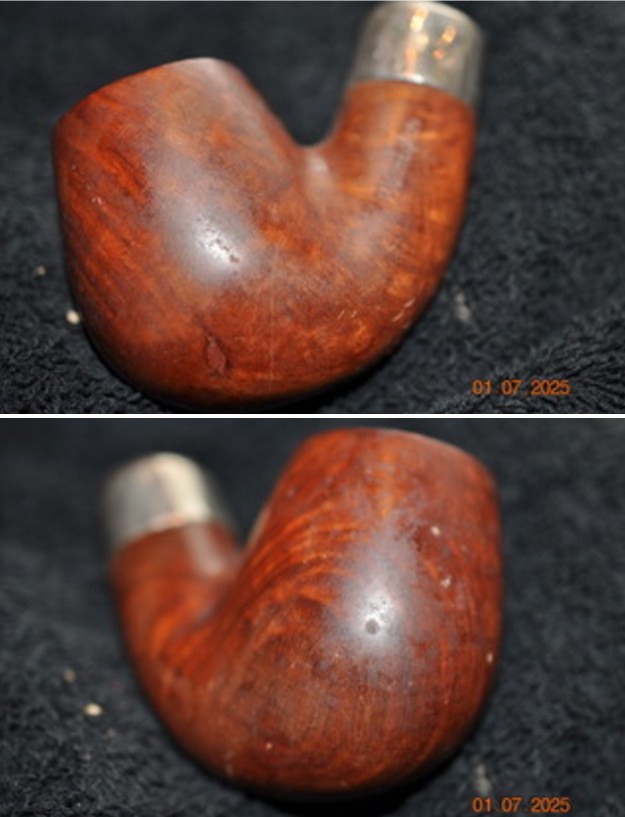
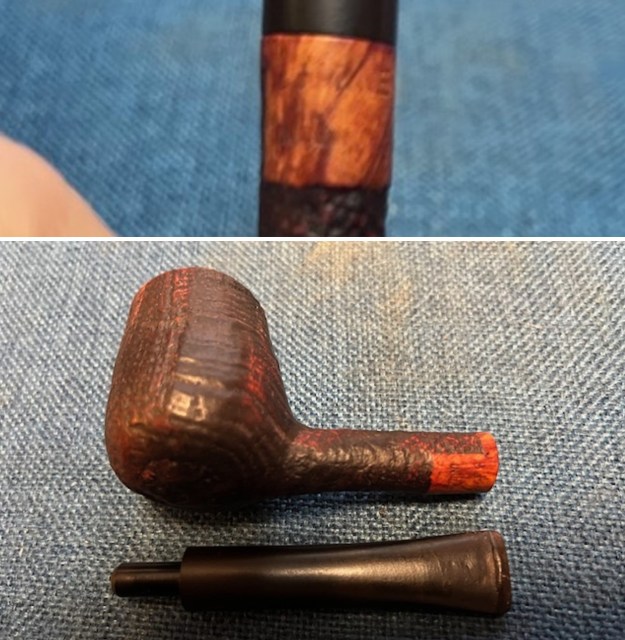
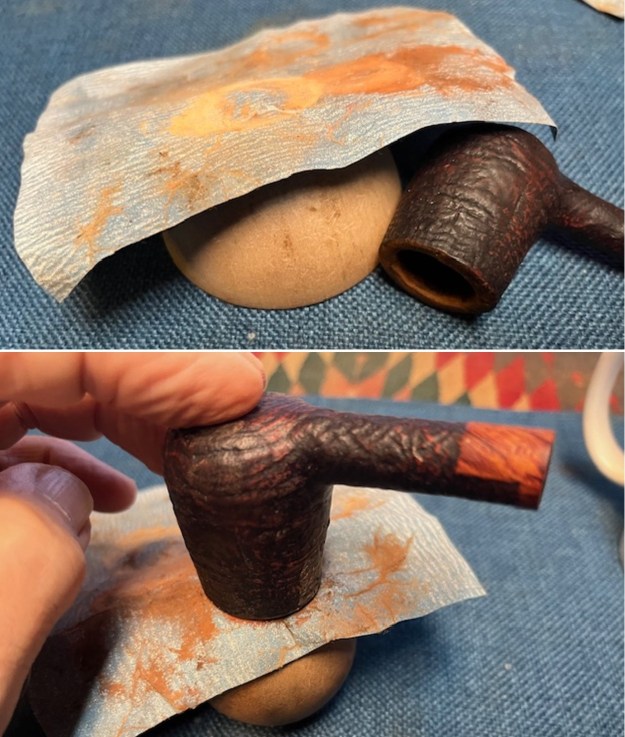
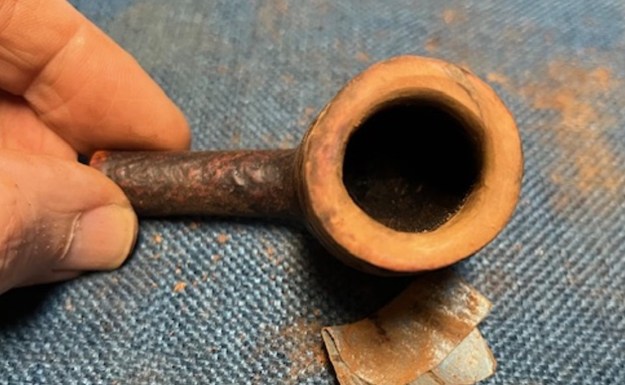
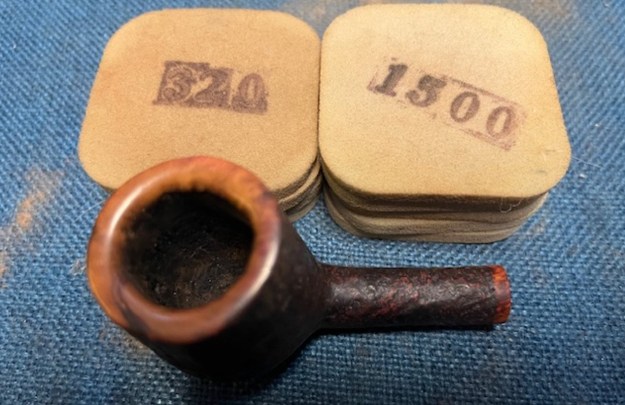
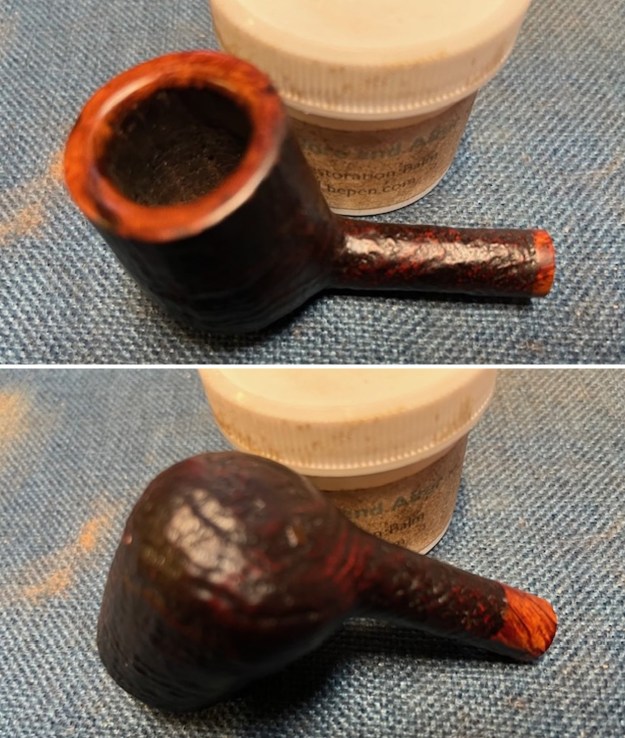
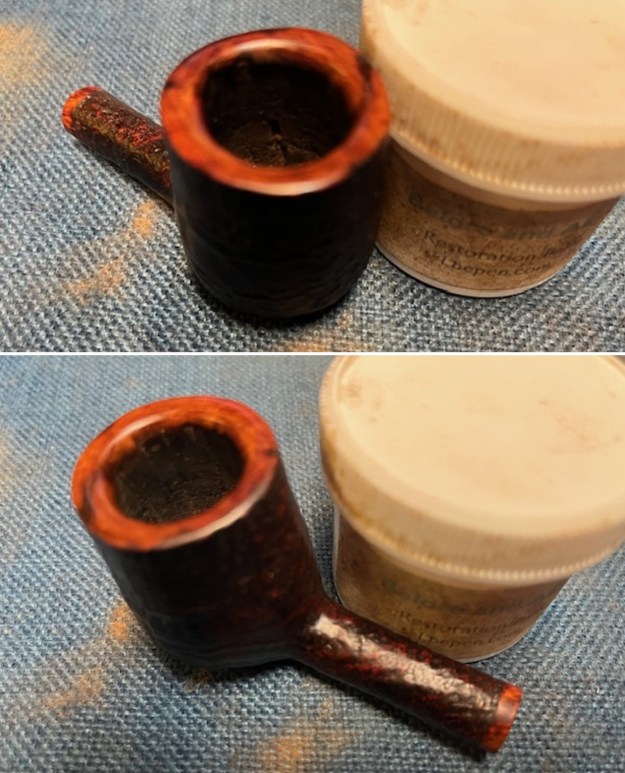
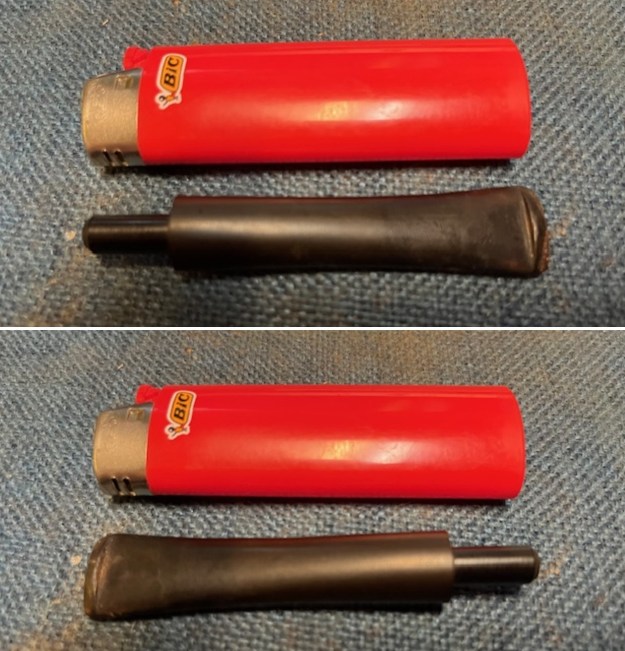
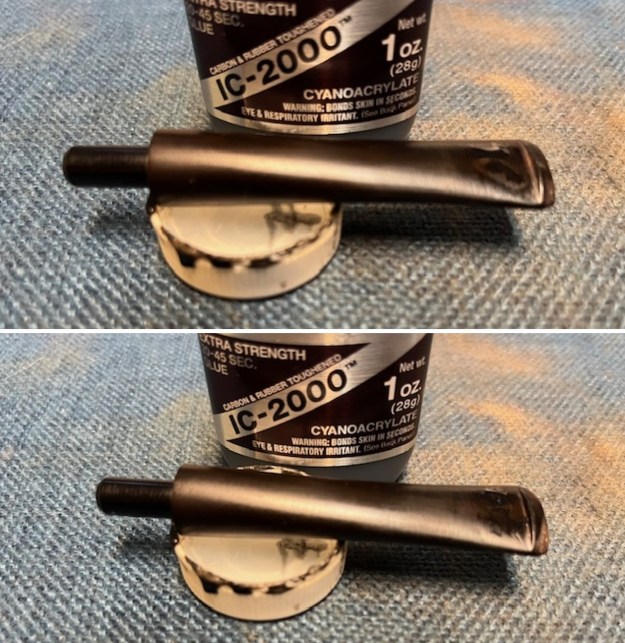
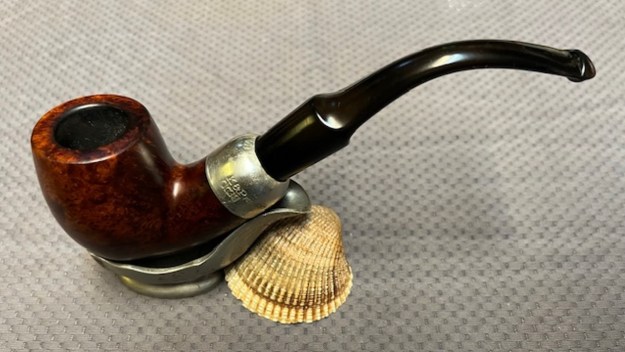
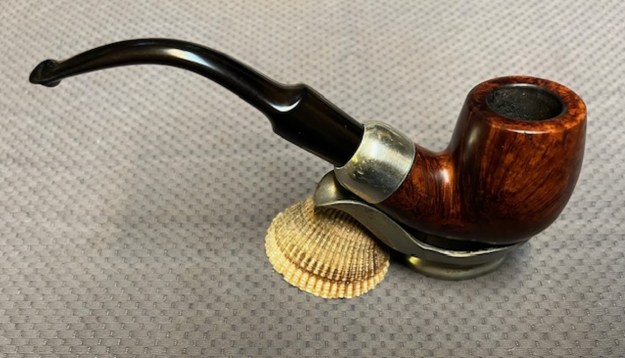
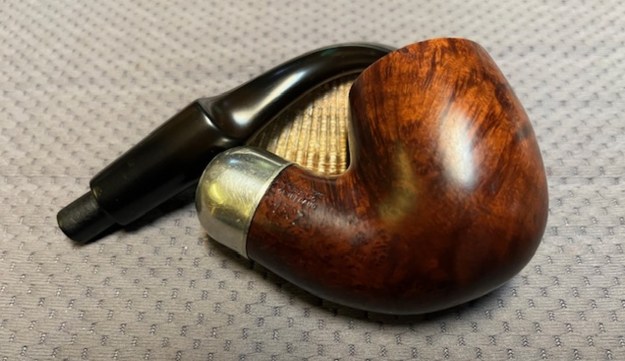
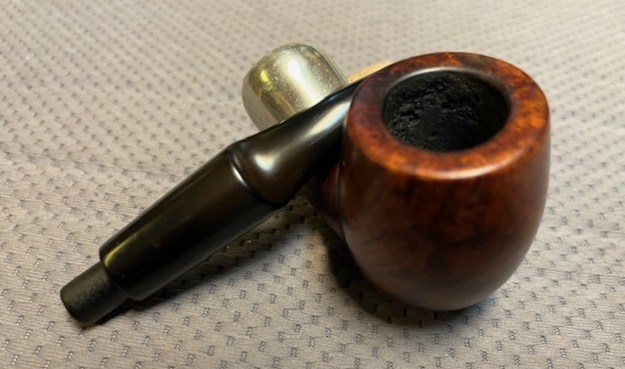
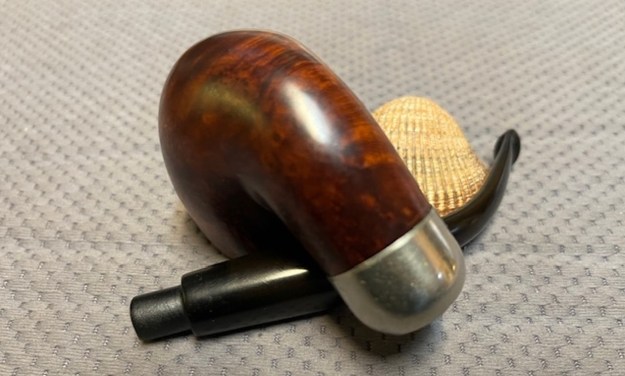
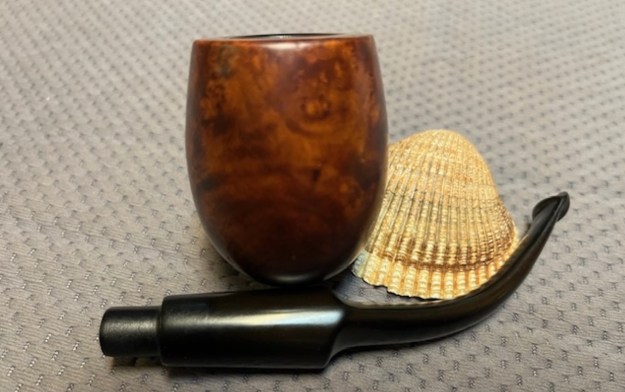
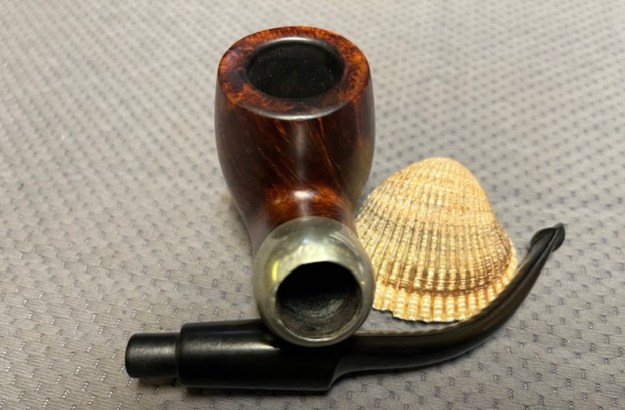
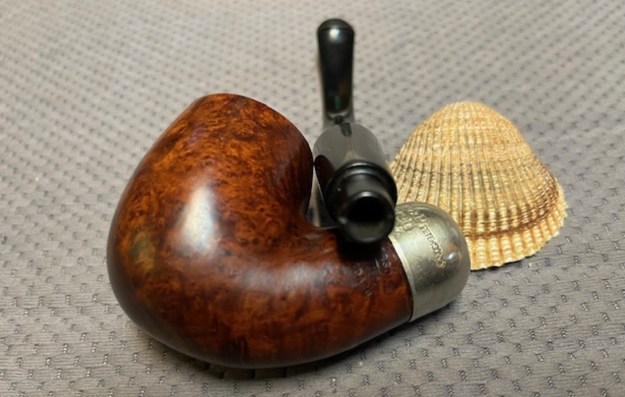
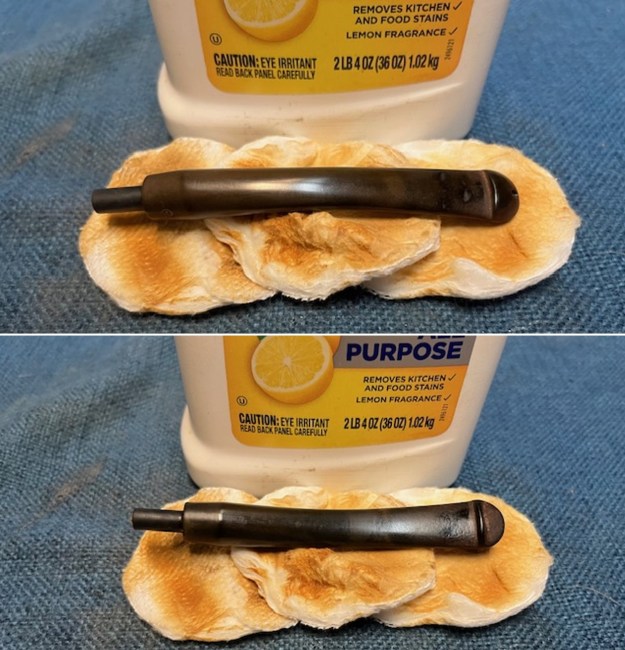
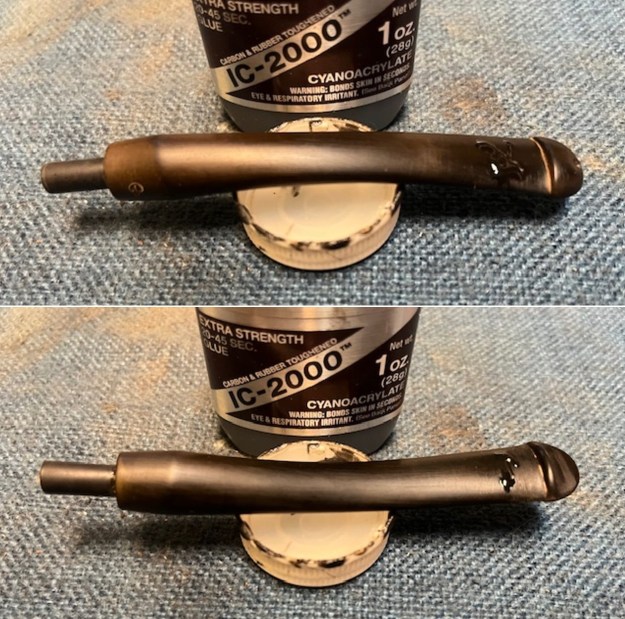
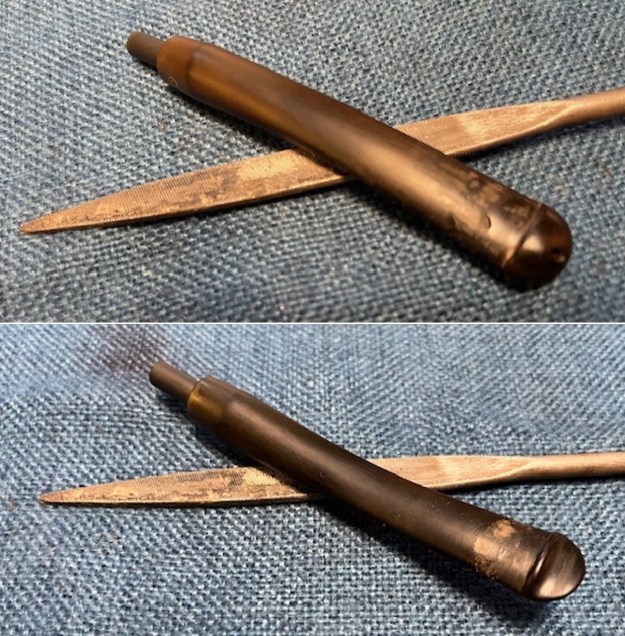
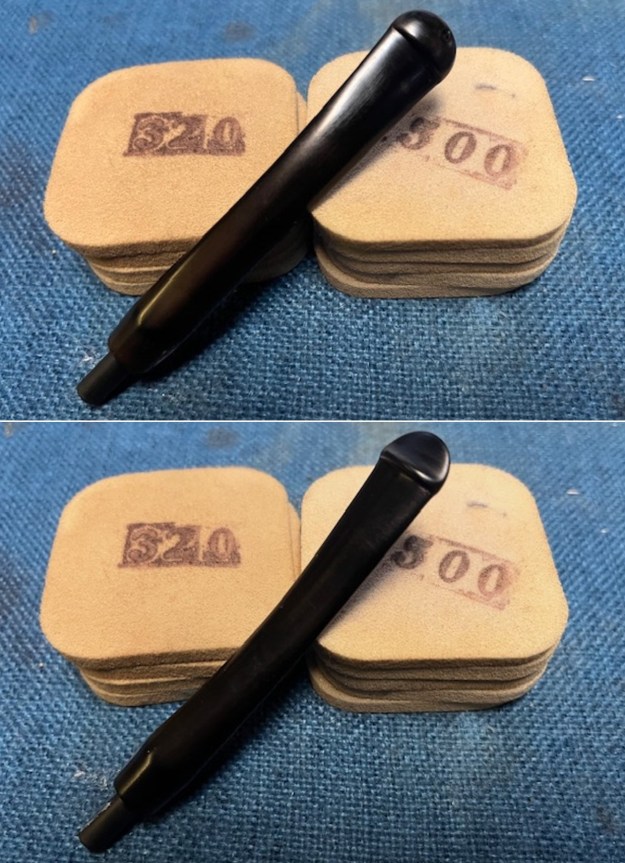
Time for another break from the repairs that I am working on for Rob. I had a couple of bowls in my box that needed to be restemmed. I chose to work on the first of them which is a beautifully sandblasted Apple bowl. The blast is very deep the rim top is thin and flows directly down the sides. The pipe was stamped on the underside of the shank and read WDC in a triangle followed by Milano [over] Ripple Briar [over] Hesson [over] Patd. Dec. 22, 192(6?). The last digit of the date is covered with a Sterling Silver band on the well repaired shank that is cracked on the left side. The bowl had been reamed and cleaned and was in great shape. There were a few worn spots on the top of the rim on the front and the right side. The shank on the left side had a long crack that had been repaired and banded with a sterling silver band. The band was clean with just a few scratches and the words Sterling curved on the topside. The shank was threaded but the threads were worn and it was missing a stem so I needed to find another one. I took photos of the bowl and have included them below. It shows the pipe before I started my work on it. I took a photo of the underside of the shank to show the stamping. It is quite clear and readable as noted above. I also tried to capture the Sterling Silver stamp o the band.I went through my stems and found one that was close to the right diameter to the shank and had a small diameter tenon. It would need some adjusting but it would fit very well. I took photos of it showing the look with the bowl.I started work on this pipe by polishing the bowl. The bowl was very clean and had little wear on it. The cracked shank had been banded and repaired somewhere in its journey. The silver band was very clean with some small scratches in the surface. It was in great condition so I started by staining the rim top faded and marks spots with a Walnut stain pen to blend them in and clean up the damage. It looked very good.After the touch up stain cured, I rubbed the bowl down with Before & After Restoration Balm. It is a paste/balm that works to deep clean the finish, enliven and protect the briar. I worked it into the briar with my finger tips to make sure that it covered every square inch of the pipe. I set it aside for 10 minutes to let it do its work. I buffed it with a cotton cloth. The briar really began to have a deep shine. The photos I took of the bowl at this point mark the progress in the restoration. I set the bowl aside and turned my attention to the stem I had chosen for the pipe. I cleaned up the tenon and shortened it slightly to fit the shank of the pipe. I sanded the diameter with a folded piece of 220 grit sandpaper to fully match the shank diameter. I sanded out the tooth marks and chatter on both sides of the stem.I put the stem on the shank and took photos of the fit of the stem to the bowl and the new look of this deeply sandblast pipe. I am liking the looks of the new stem. I removed the stem from the shank and sanded it further with 320-3500 grit sanding pads. I wiped the stem down after each pad with an Obsidian Oil impregnated cloth. By the time I finished with the 3500 grit pad the stem really looked good. I also sanded out the rough spot on the underside of the silver band to smooth it out.I polished the stem with 1500-12000 grit micromesh sanding pads – dry sanding with each pad. I wiped the stem down after each pad with an Obsidian Oil cloth. I polished it further with Before & After Pipe Stem Polish and wiped it down a final time with the oil cloth. The finished WDC Milano Ripple Briar Hession Apple looks great with its new stem. The taper stem brings out the contrast of the silver band and dark nooks and crannies of the sandblast. I buffed the pipe with a light coat of White Diamond on the buffing wheel and then gave the bowl multiple coats of Conservator’s Wax and the stem multiple coats of Carnauba Wax. I buffed the pipe with a clean buffing wheel and it is a real beauty. The dimensions of this WCD Milano Ripple Briar Apple are length: 5 ½ inches, height: 1 ½ inches, outside bowl diameter: 1 inch, chamber diameter: ¾ of an inch. The weight of the pipe is .67 ounces/19 grams. This is a beauty that will be going on the American Pipemakers Section of the rebornpipes store shortly. If you are interested in adding it to your collection let me know. Thanks for giving the blog a read.

As always, I encourage your questions and comments as you read the blog. Thanks to each of you who are reading this blog. Remember we are not pipe owners; we are pipe men and women who hold our pipes in trust until they pass on into the trust of those who follow us.

Cleaning up another of the 12 – An Imported Briar Lovat Style Pot


by Steve Laug

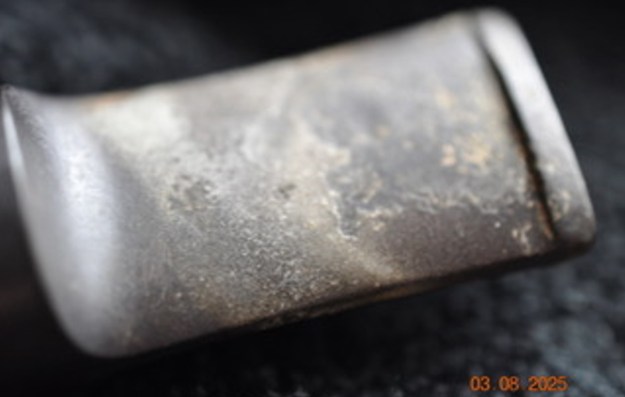
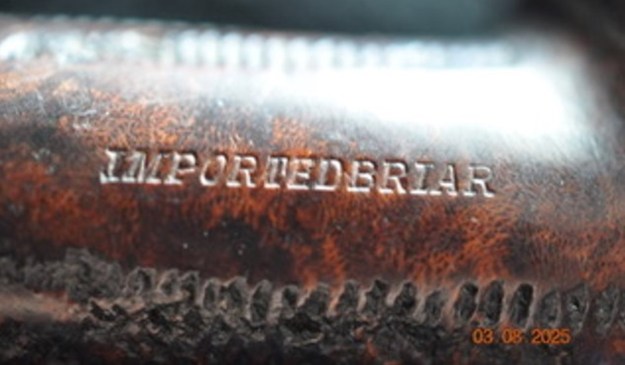
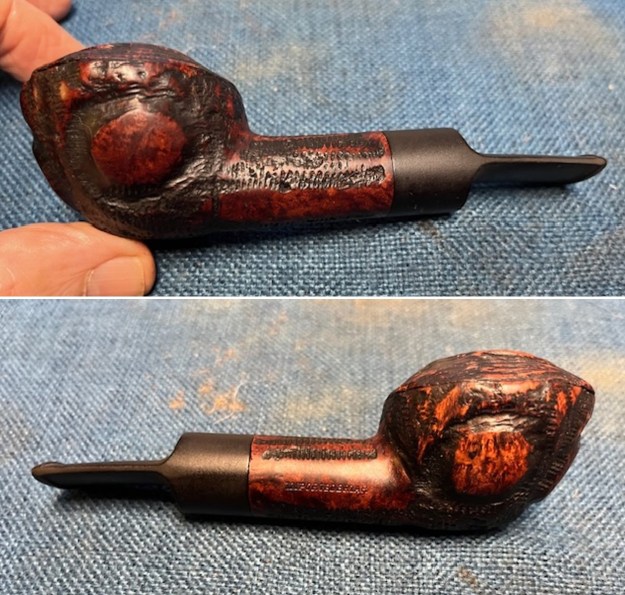
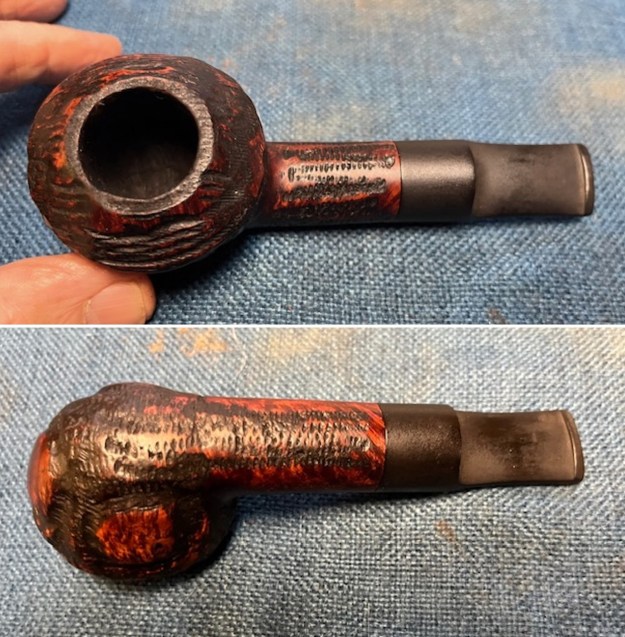
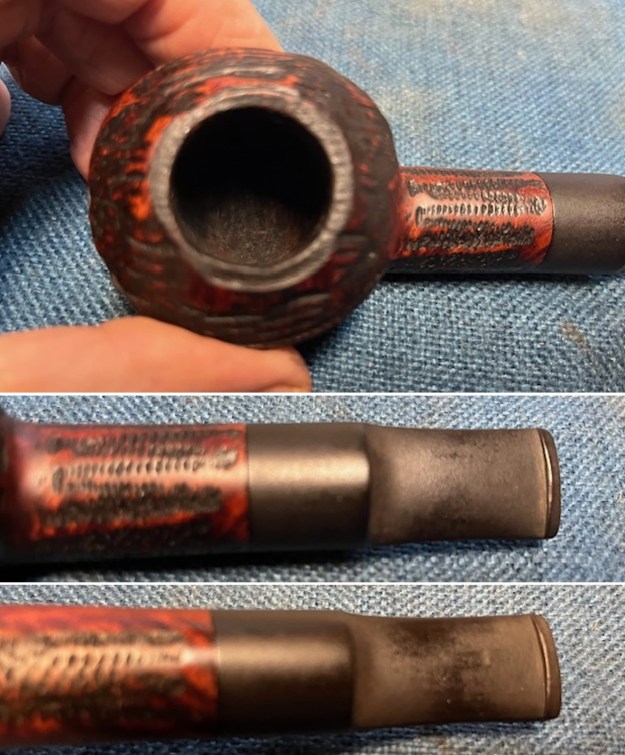
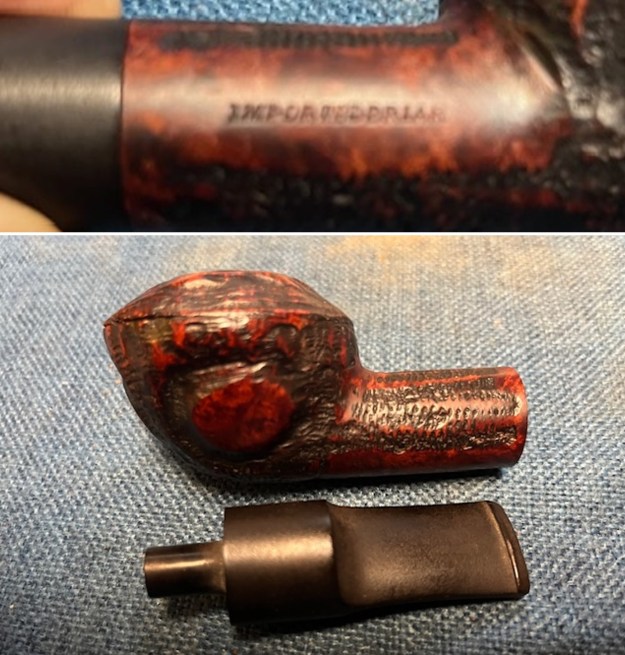
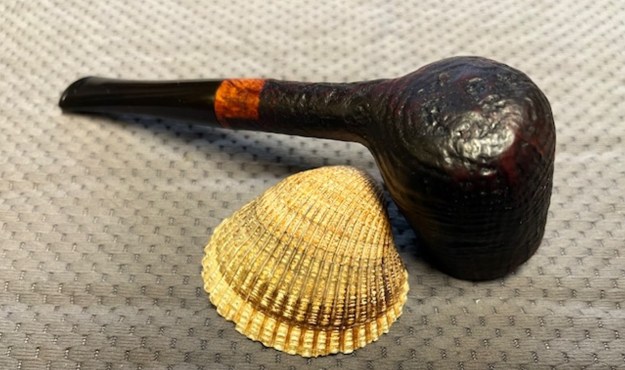
This is another of the pipes I received from Robert with a group 12 pipes that needed to be restored in various ways from cleanup to restemming. I have just a few left now so I chose to work on this Kaywoodie like Lovat Style Pot with a short saddle stem. The bowl and shank were very dirty with oils and tars on the surface of the smooth finish. The bowl had been reamed recently so the bowl was free of cake. There was an overflow of thick lava on the rim top. The lava was thick and there as darkening on the inner edge. The pipe was faintly stamped on the left side of the shank and read Imported Briar.  There was no other stamping on the shank sides though there may well have been some originally. This one came with the original stem in place on the shank. The shank end had an aluminum fitting that provided a mortise of the threaded metal stinger/tenon on the pipe. The stem did not fit tightly against the shank for some reason that clean up would reveal. It was oxidized and calcified on the button end. There were light tooth marks on the top and underside of the stem near the button. The surface of the button is also tooth marked. There were no logos on the stem sides. I took some photos of the pipe to show its condition before I started my work on it. I took some closer photos of the bowl and rim top to show its condition before I started my work on the pipe. You can see the relatively clean bowl with no cake and the thick lava coat on the rim top. The stem photos also show the general condition of the stem as noted above. I tried to capture the faint stamping on the left side of the shank but it is not clear. I also took a photo of the right side to look for stamping. There was nothing visible in the photos. The left side had a faint stamp that read as noted above. I also unscrewed the stem to give a sense of what the pipe looked like with two parts shown side by side. It definitely is a pot but the long shank and the saddle stem give it the look of a Lovat. Since there was no stamping on the pipe there was really nothing to be learned about its history. It is kind of a mystery pipe. It could be a Kaywoodie I suppose but again there is no proof of that. I decided to begin my work by addressing the fit of the stem to the shank. There was a thick rubberized glue around the stem end of the threaded tenon. It filled in the last thread and also on the top of the stem face. This accounted for the fit to the shank at this point. I used a small pen knife to cut away the rubberized glue and cleaned up the tenon a bit. I turned it into the stem and found the answer to my question of why the rubber! The stem fit against the shank perfectly but was over clocked by about ¼ turn. I would need to deal with that.I used an old trick I learned from one of the old timers on ASP. I heated the metal stinger tenon with the flame of a lighter to soften the glue in the stem. I screwed it into the stem and tried to turn it. I repeated the process until the glue softened. I then was able to align the stem properly on the shank. I set it aside to let the glue reharden before I took the stem off. It looked very good at this point in terms of alignment.Once the stem cooled and the alignment was set I removed it from the shank and cleaned out the airway in the stem and shank, the mortise and the entry of the airway into the bowl. I used alcohol, cotton swabs and pipe cleaners. It was dirty but cleaned up well.I scraped the lava off the rim top with the edge of the Savinelli Fitsall Pipe Knife. It is better but there is still a lot of work to do on the inner edge and top. I sanded the inner edge of the bowl and rim top with a folded piece of 220 grit sandpaper to clean it up. I wiped the briar down with some acetone on cotton pads to remove the shiny varnish coat and allow me to work on the rest of the bowl. It is finally beginning to look better. I scrubbed the exterior of the with undiluted Murphy’s Oil Soap and a tooth brush. I worked on edges of the rim top along with the rest of the bowl and the shank. I rinsed it off with warm running water and dried it off with a cotton towel. It is definitely looking better. I worked on the bowl, rim top, edges and shank with 320-3500 grit sanding pads to further remove the darkening on the briar. I also worked over the aluminum shank/mortis piece at the same time. It is improving with each pad. I wiped the top down with a damp cloth to remove the sanding debris. I polished it with 1500-12000 grit sanding pads and wiped it down with a damp cloth after each pad. The pipe looked very good. I rubbed the bowl down with Before & After Restoration Balm. It is a paste/balm that works to deep clean the finish, enliven and protect the briar. I worked it into the briar with my finger tips to make sure that it covered every square inch of the pipe. I set it aside for 10 minutes to let it do its work. I buffed it with a cotton cloth. The briar really began to have a deep shine. The photos I took of the bowl at this point mark the progress in the restoration. I “painted’ the surface of the stem with the flame of a lighter to try and lift the bite marks. It worked very well. There were two small marks left on the surface – one on each side. I filled them in with some black rubberized CA glue. Once it cured I sanded out the repairs with 220 grit sandpaper to blend them into the stem surface. I sanded the stem with 320-3500 grit sanding pads. I wiped the stem down after each pad with an Obsidian Oil impregnated cloth to remove the sanding debris. It began to take on a shine.I polished the stem with micromesh sanding pads – dry sanding with 1500-12000 grit pads. I wiped it down with some Obsidian Oil after each sanding pad. I polished it further with Before & After Stem polish – both Fine and Extra Fine and then wiped it down another time with the oil. I put the Imported Briar Lovat Style Pot and the stem back together. I polished the bowl and stem with Blue Diamond to polish the briar and the vulcanite. I gave the bowl and the stem multiple coats of carnauba wax. I buffed the pipe with a clean buffing pad to raise the shine. I hand buffed it with a microfiber cloth to deepen the shine. The pipe polished up pretty nicely. The original brown stains gave depth to the beautiful grain around the bowl and worked amazingly well with the polished vulcanite saddle stem. The grain around the bowl and shank and looks quite remarkable. There are still some nicks for the pipe’s journey that I left as it is part of the story of the pipe. This is truly a beautiful Imported Briar Pot. The finished pipe is shown in the photos below. The dimensions of the pipe are Length: 5 ½ inches, Height: 1 ½ inches, Outside diameter of the bowl: 1 3/8 inches, Chamber diameter: ¾ of an inch. The weight of the pipe is 1.55 ounces/44 grams. This pipe will be put in the box while I work on Rob’s remaining pipes in the 12 pipe lot. Once I finish them I will be mailing the lot back to him. Thanks for walking through the restoration with me. Cheers.
As always, I encourage your questions and comments as you read the blog. Thanks to each of you who are reading this blog. Remember we are not pipe owners; we are pipe men and women who hold our pipes in trust until they pass on into the trust of those who follow us.