Tag Archives: turning a tenon

Rebirthing a French made DM over UNIC Algerian Briar Panel Sitter


by Steve Laug

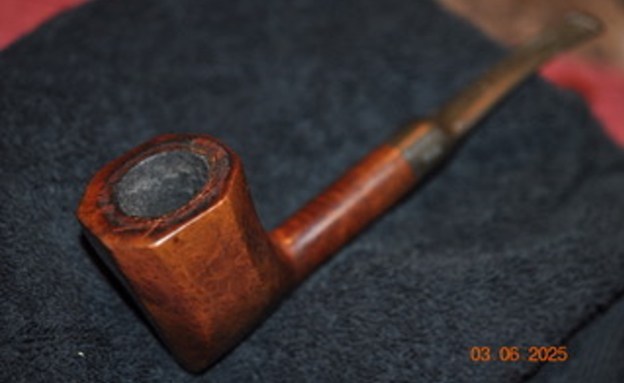
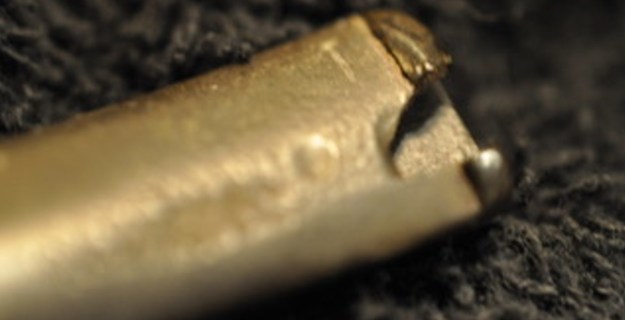
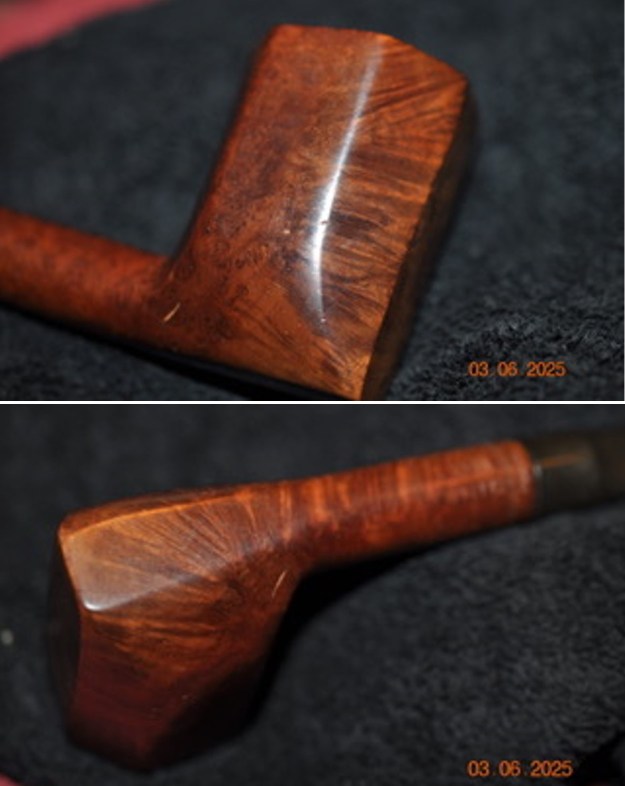
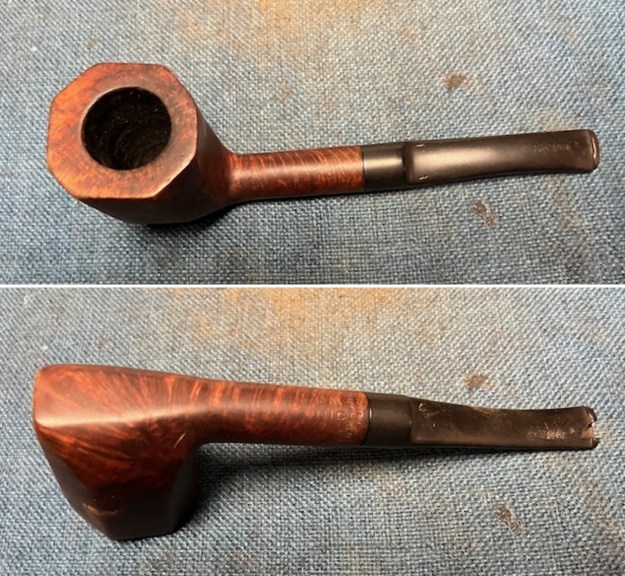
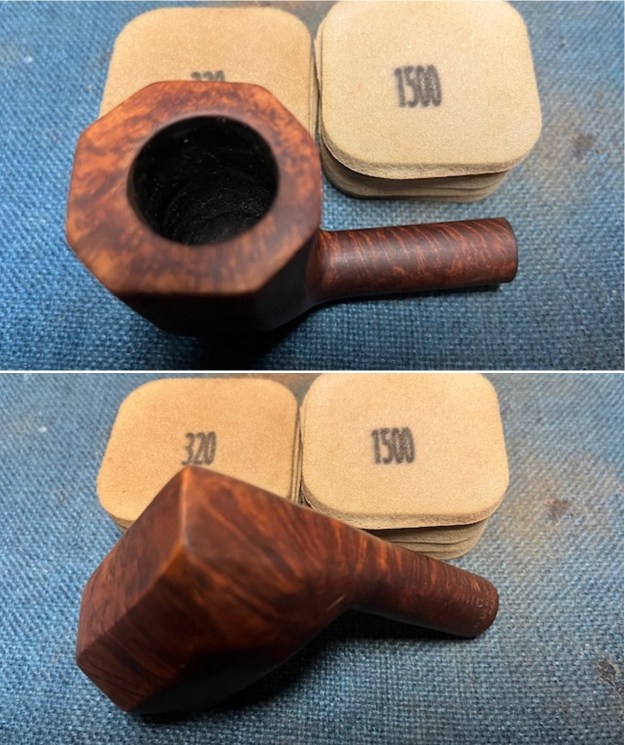
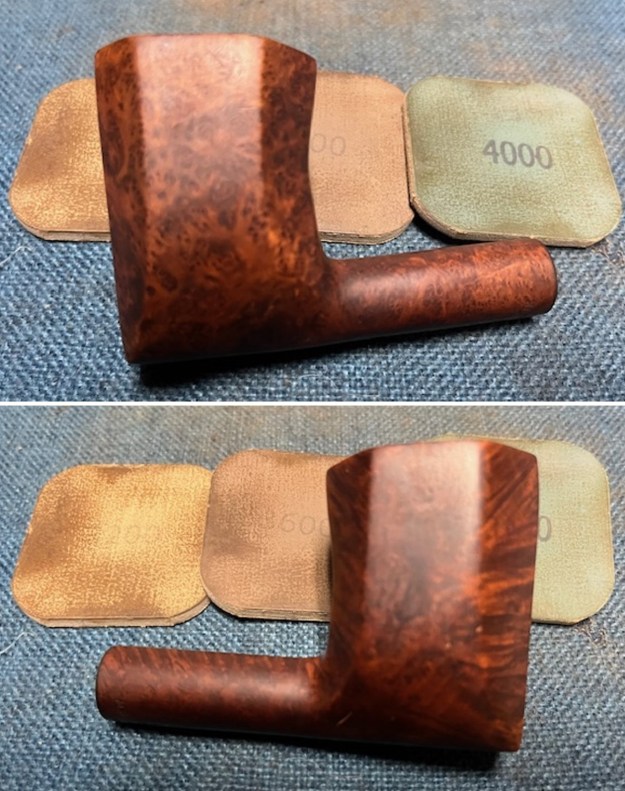
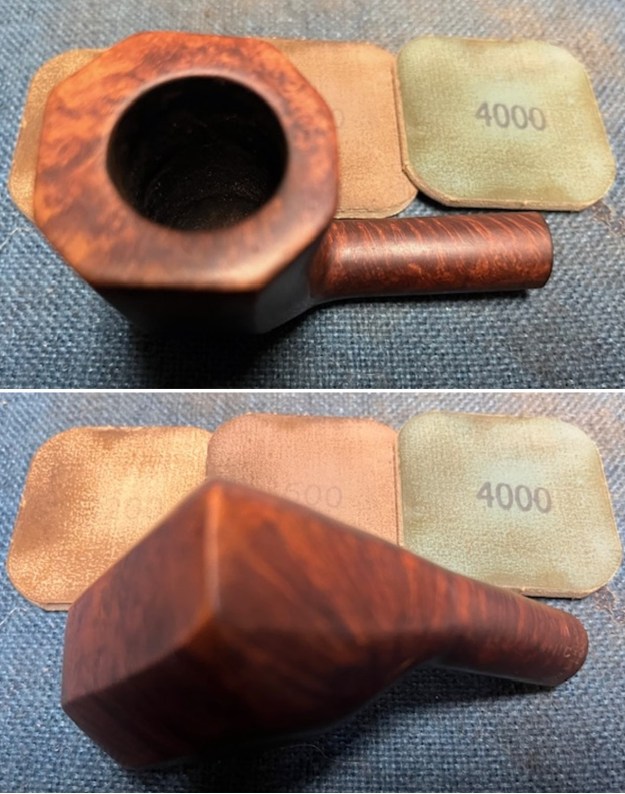
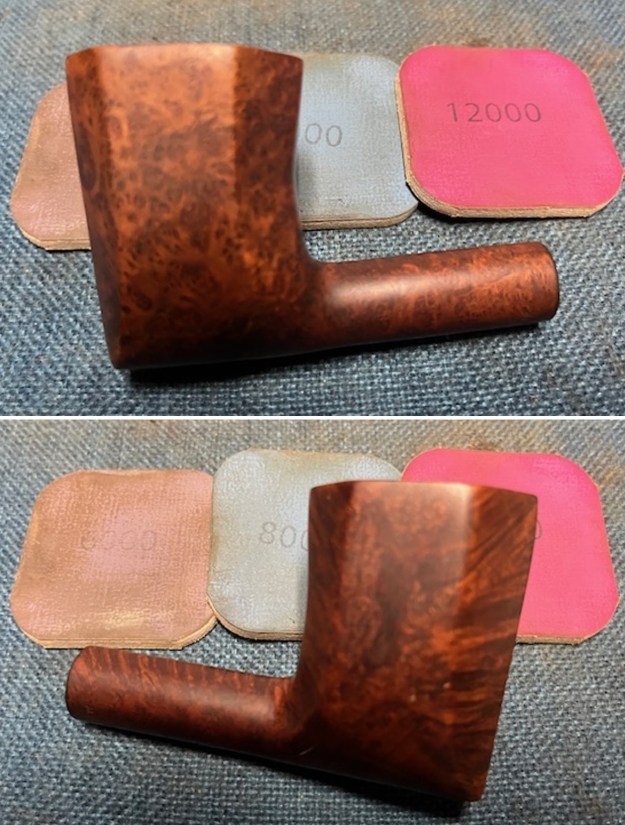
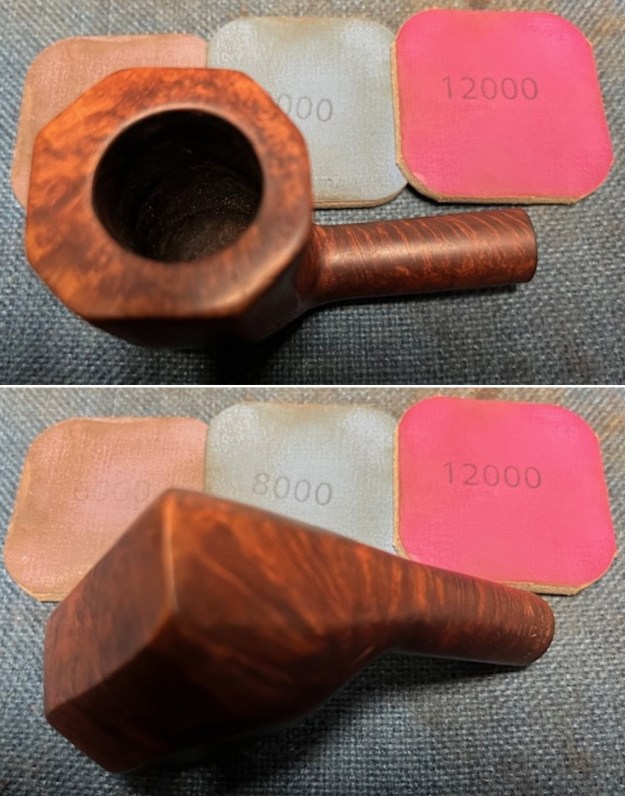
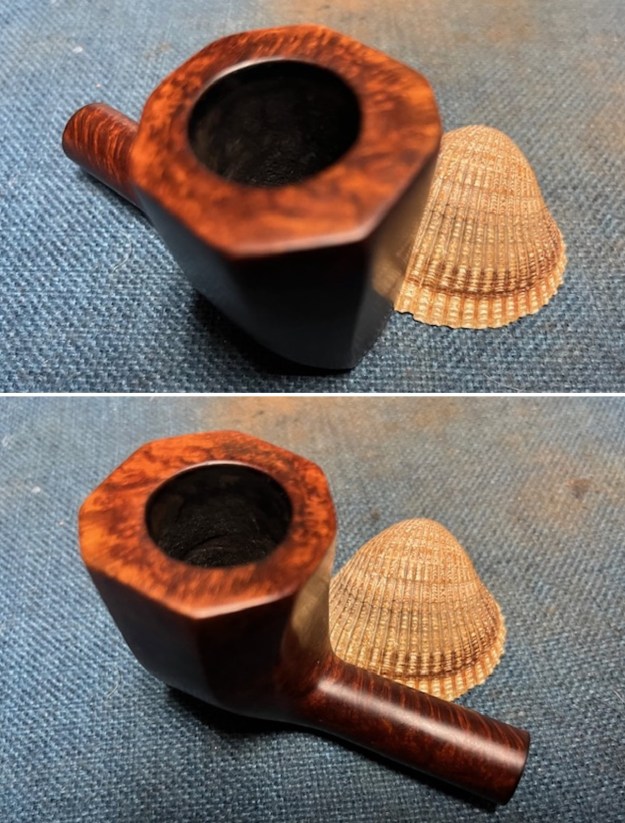
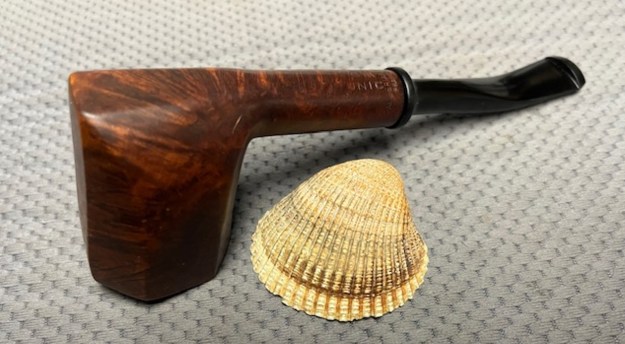
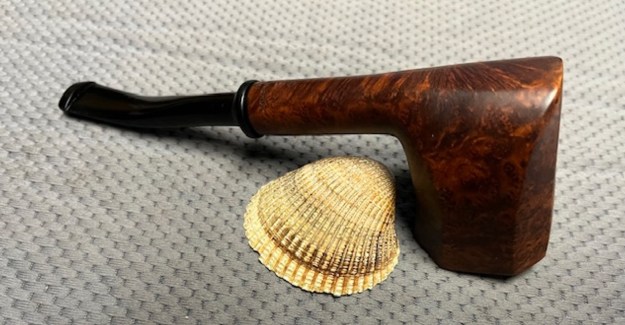
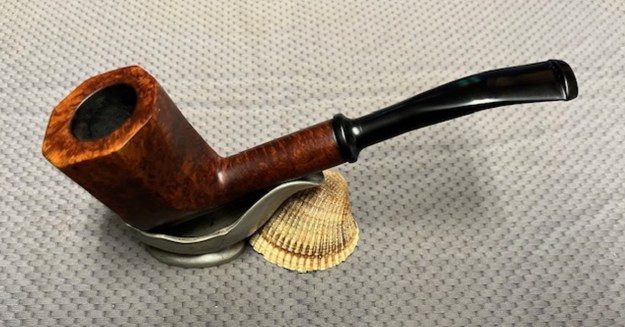
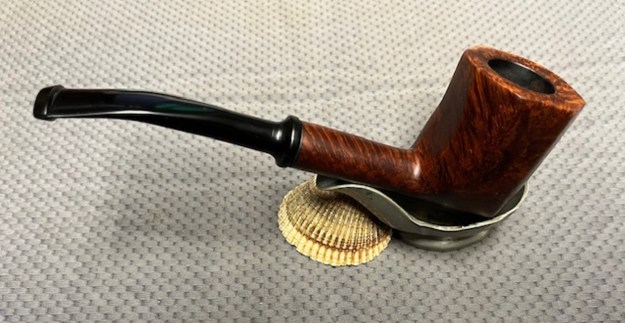
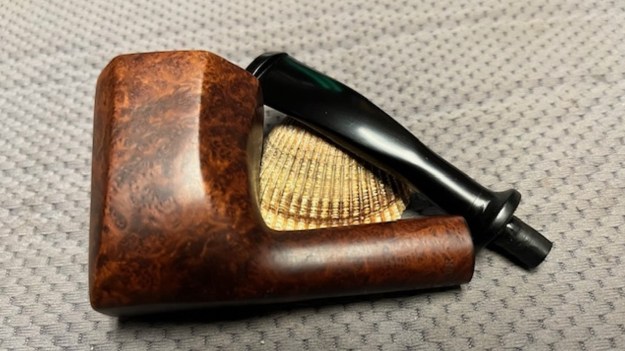
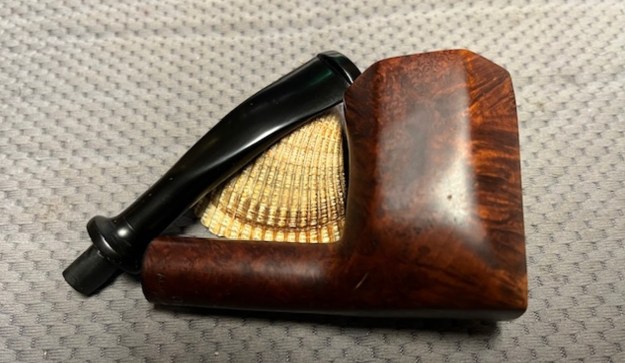
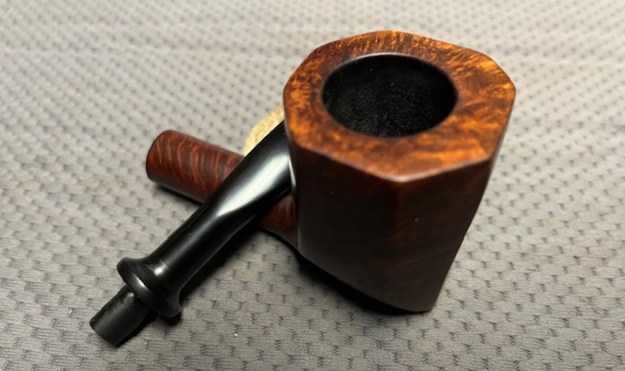
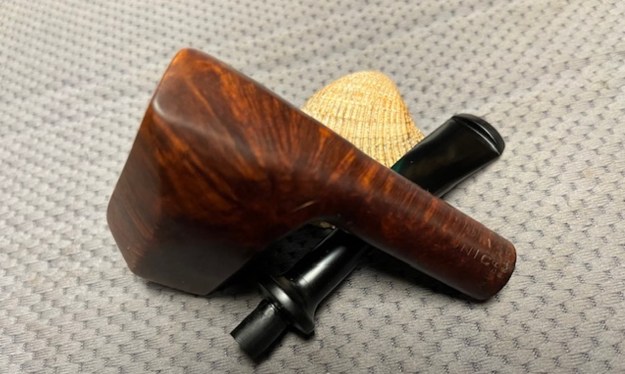
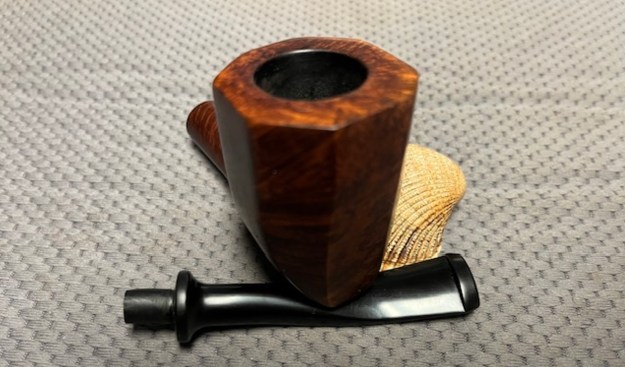
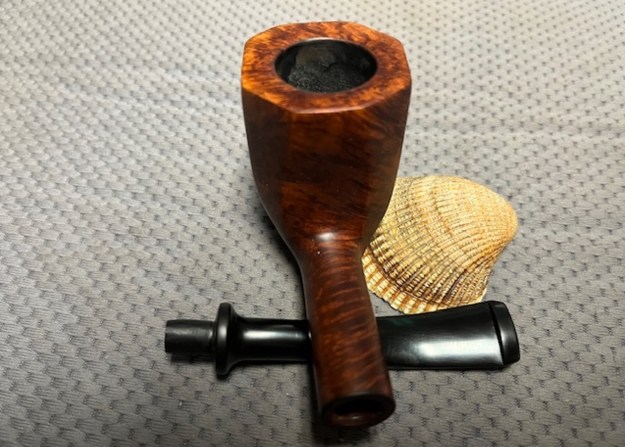
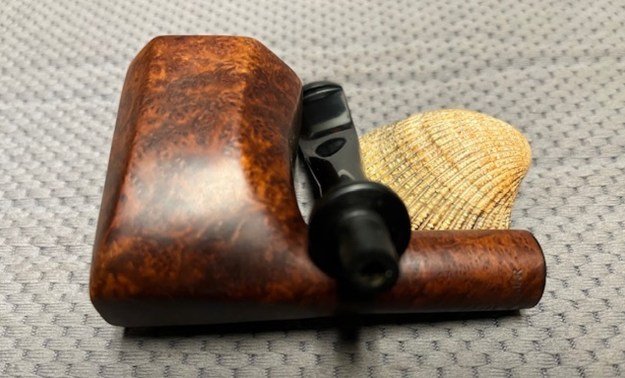
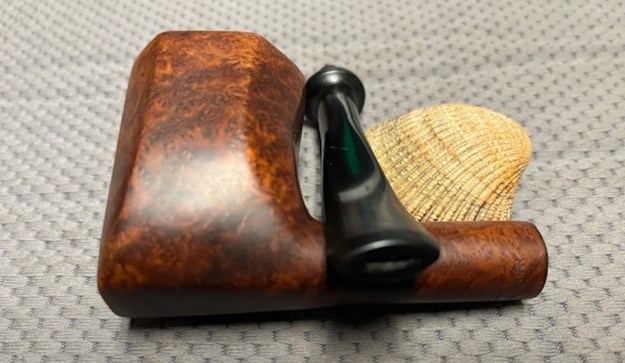
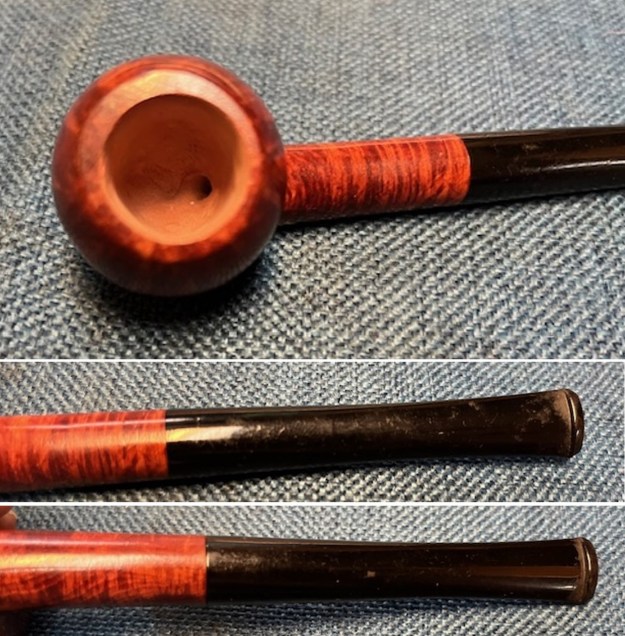
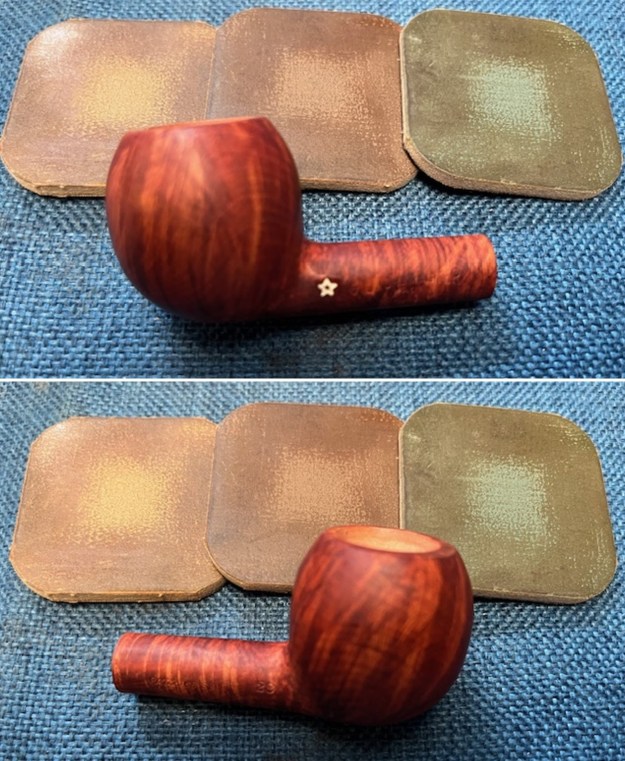
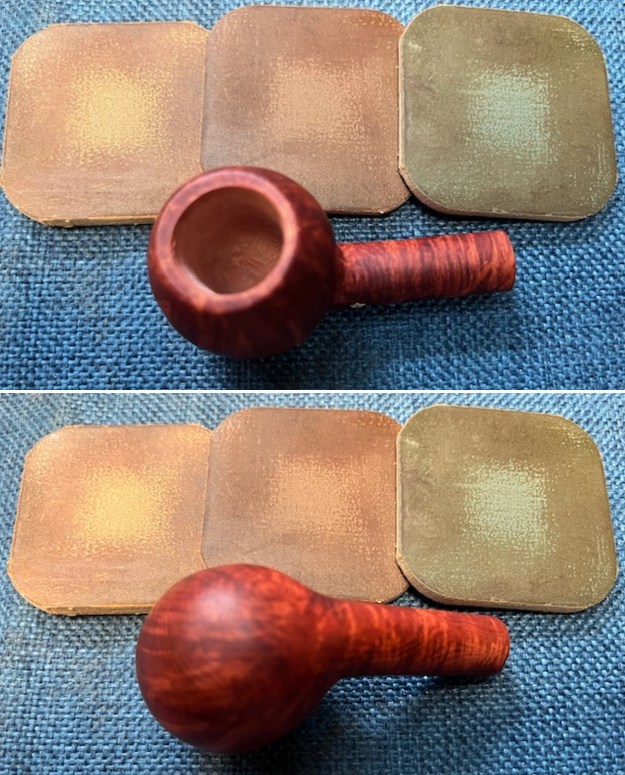
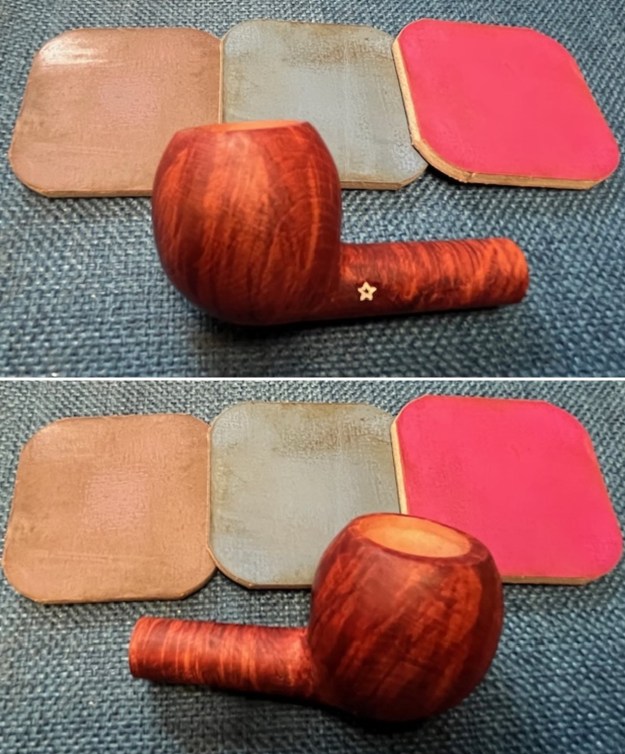
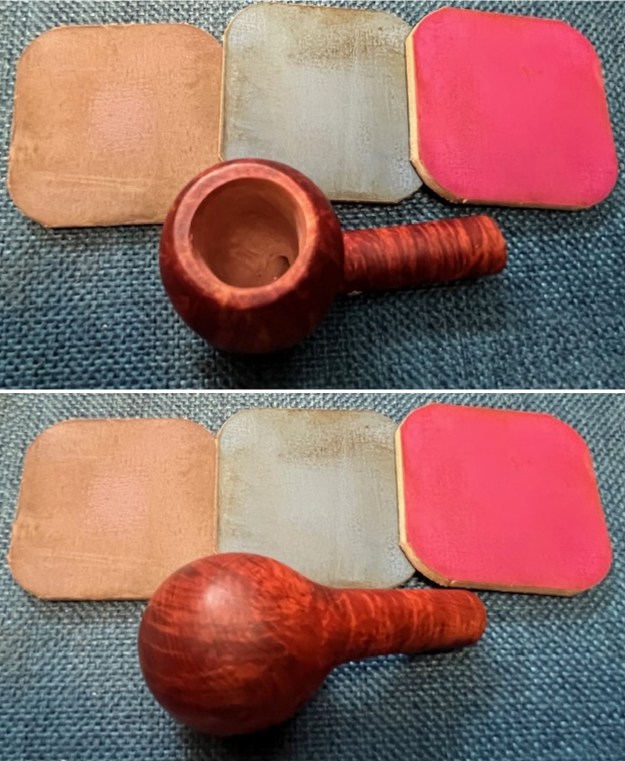
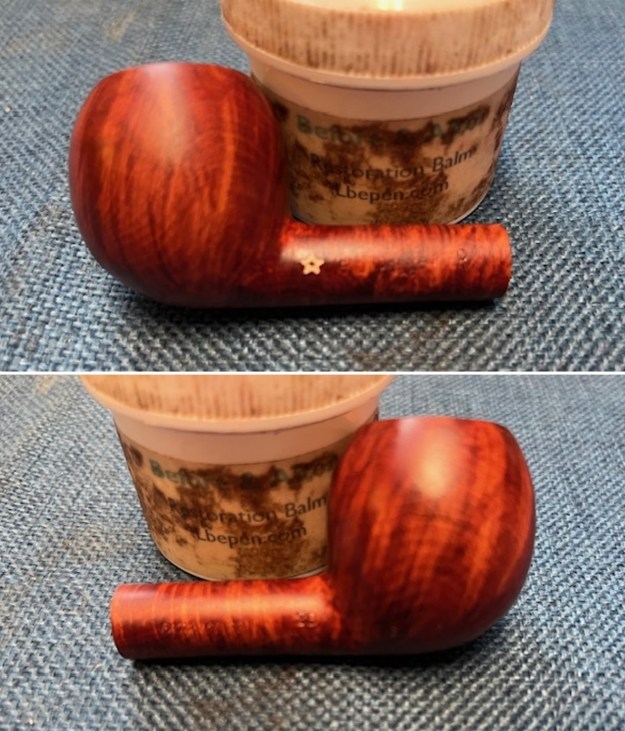
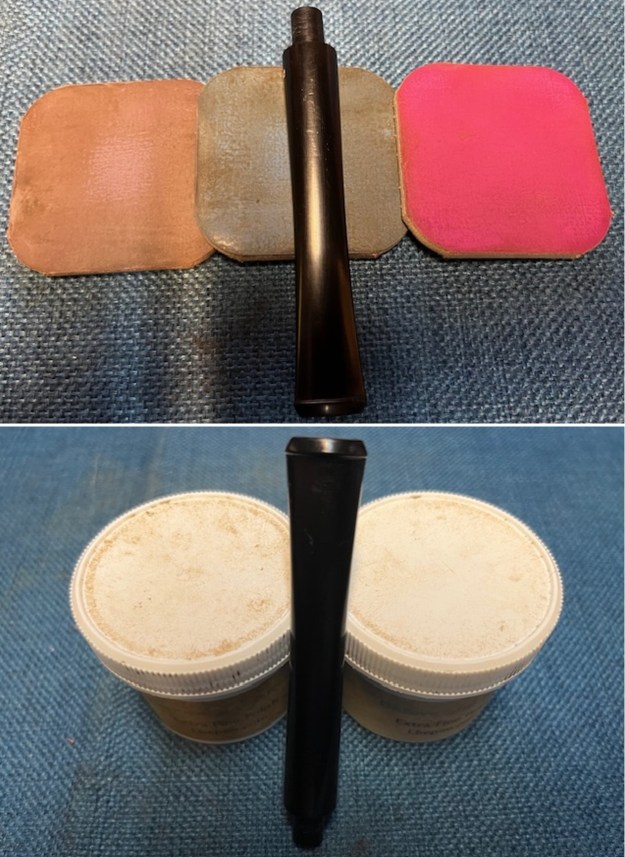
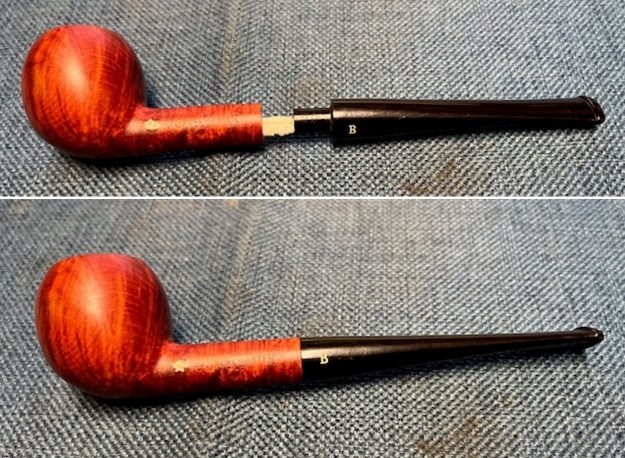
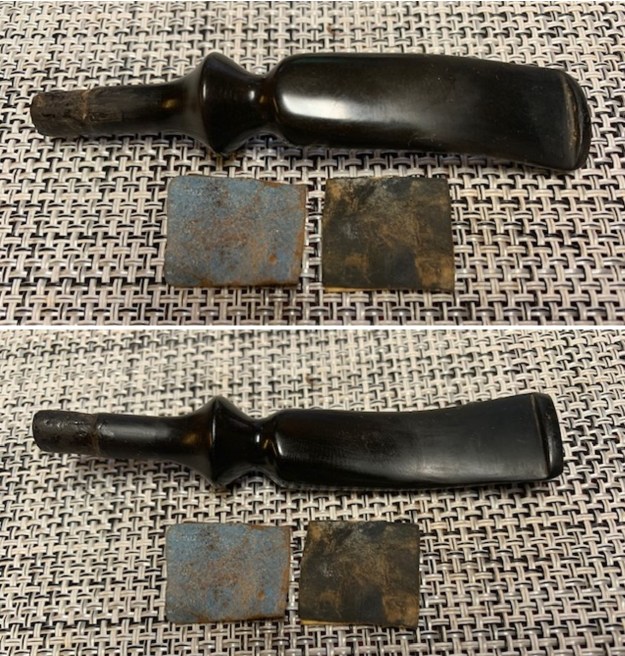
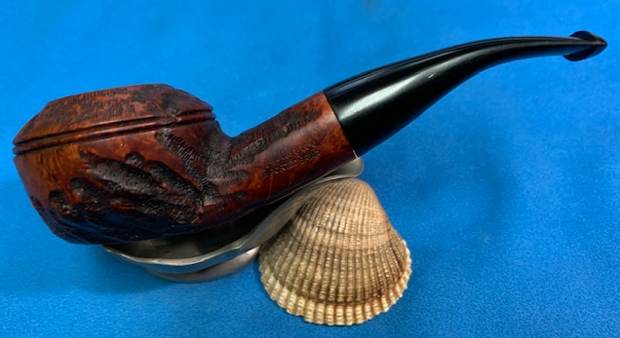
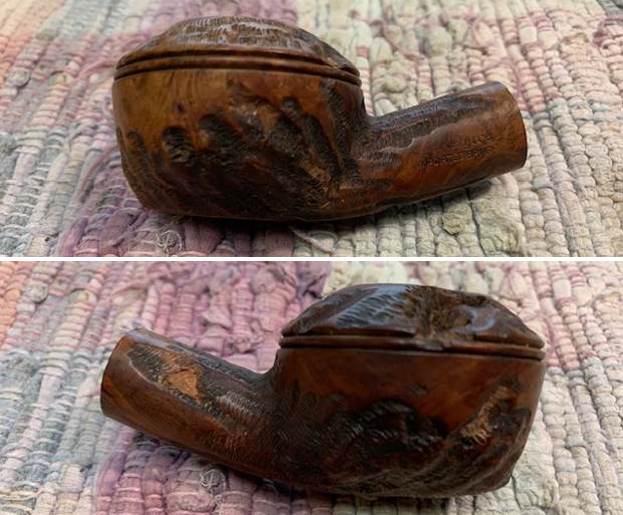
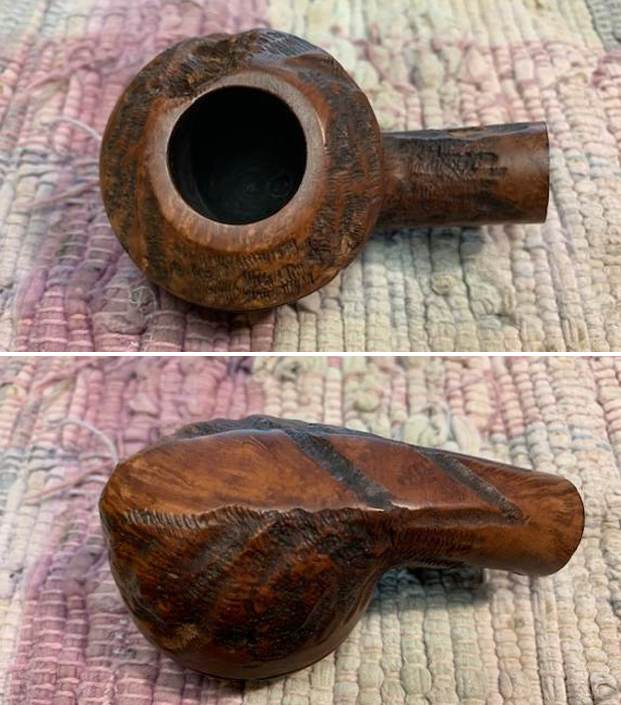
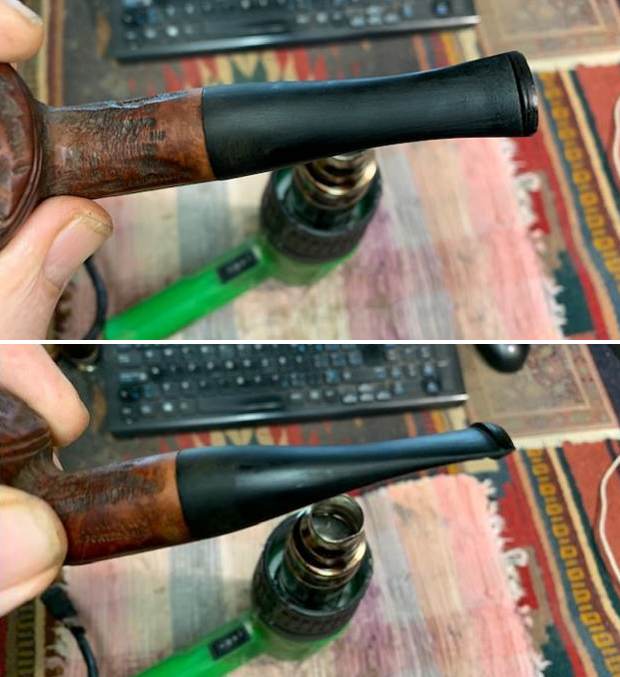
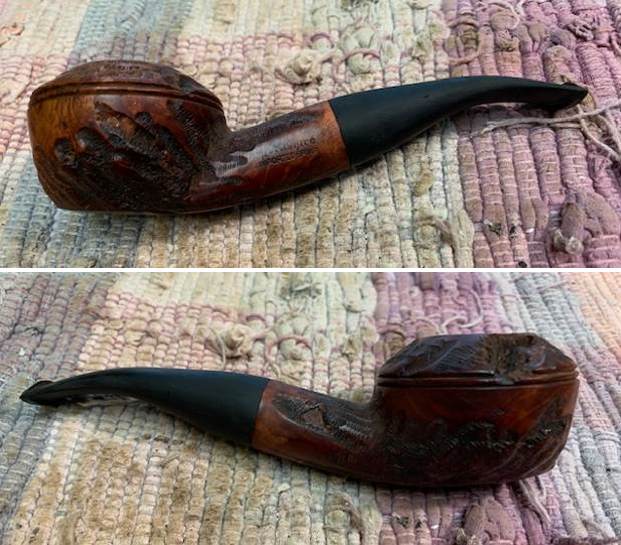
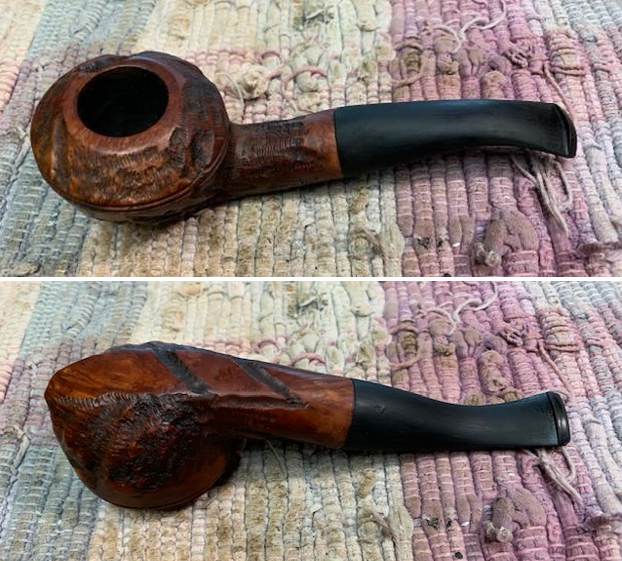
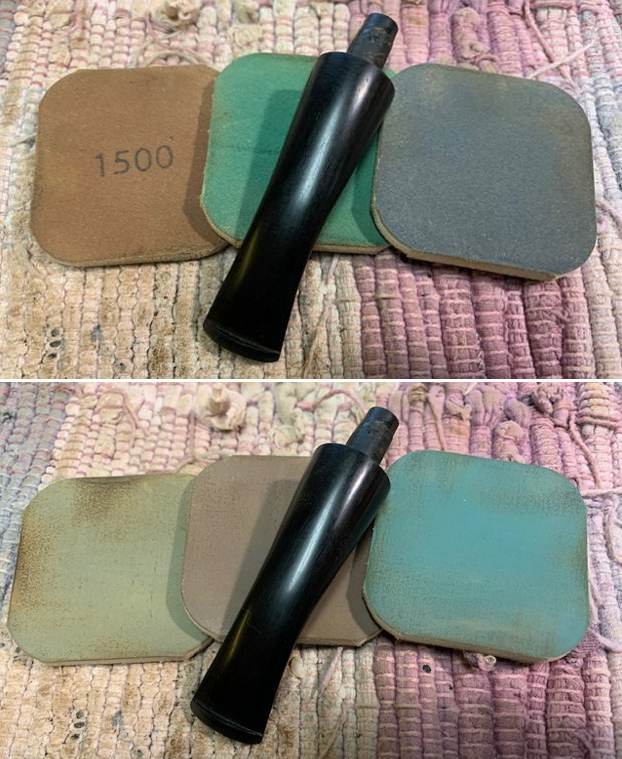
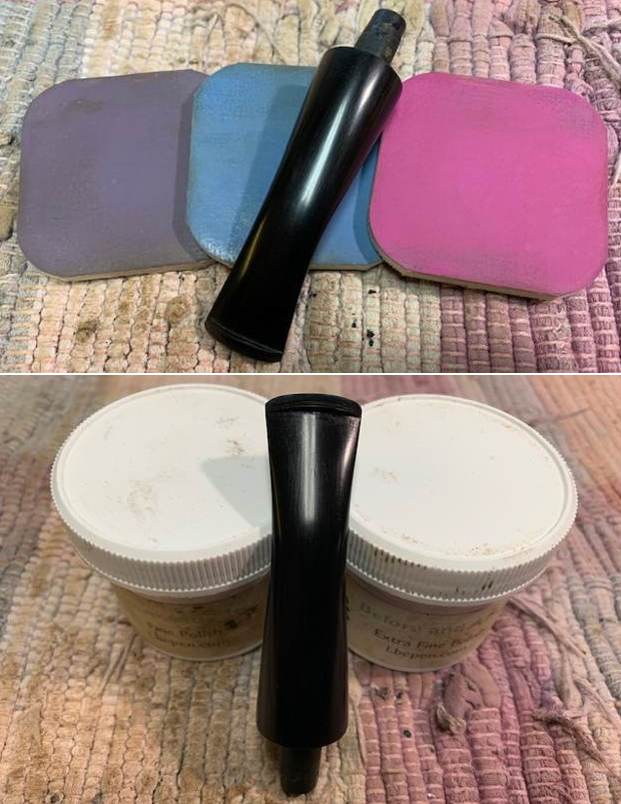
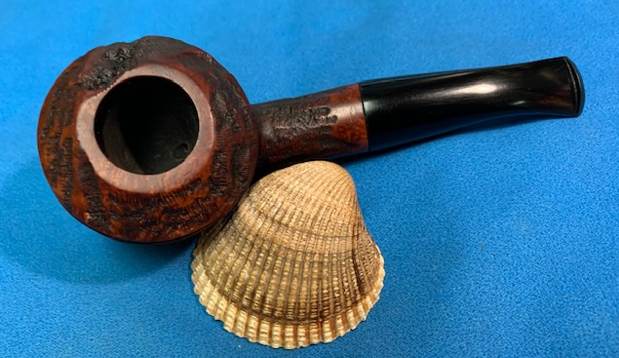
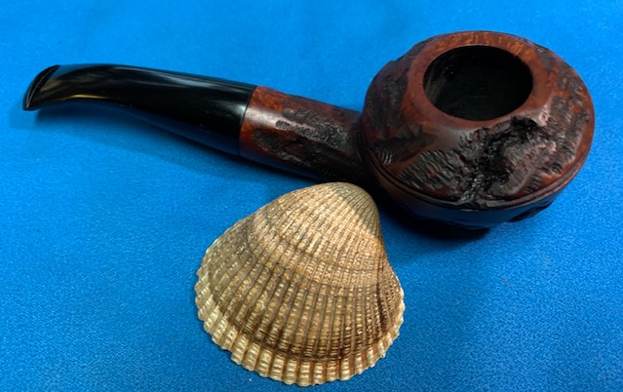
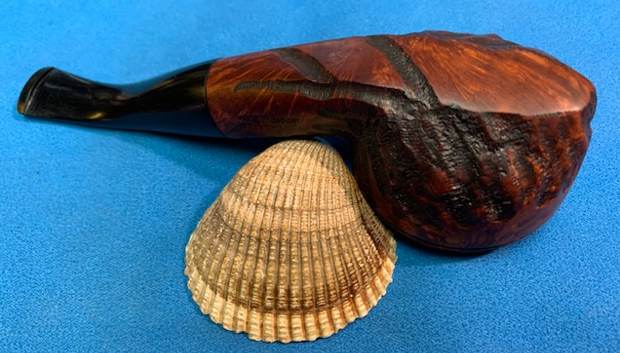
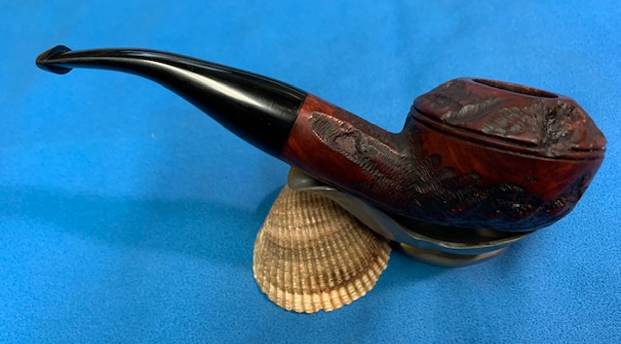
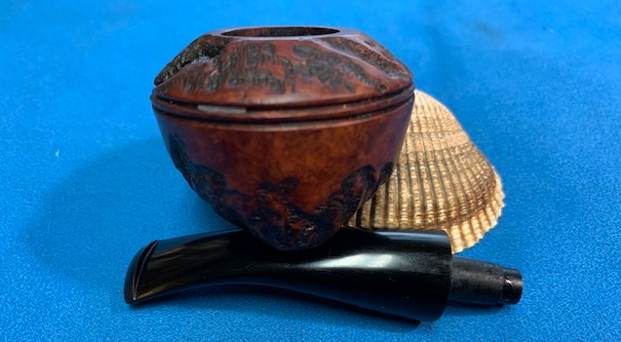
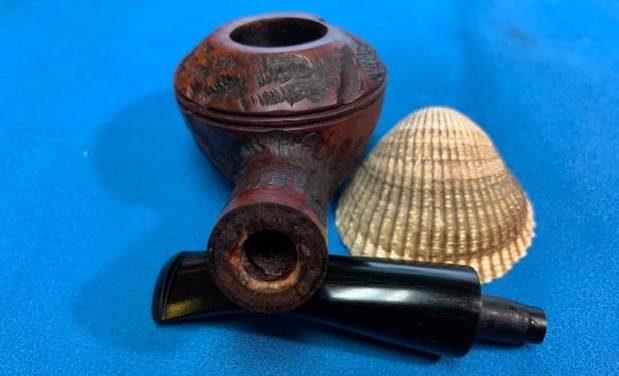
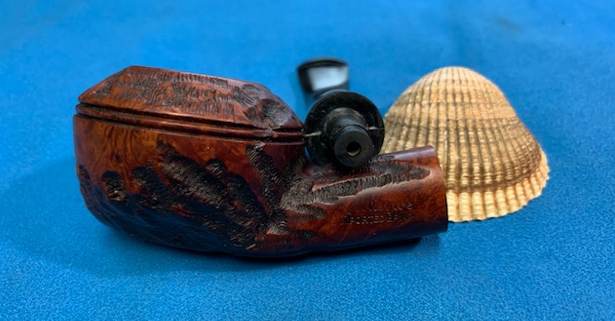
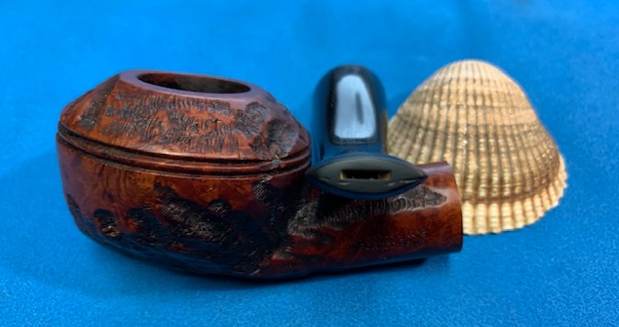
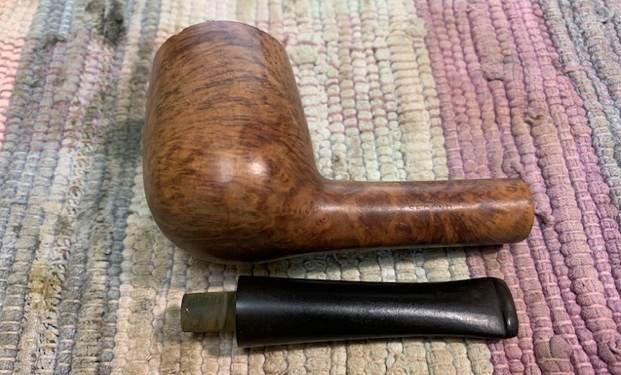
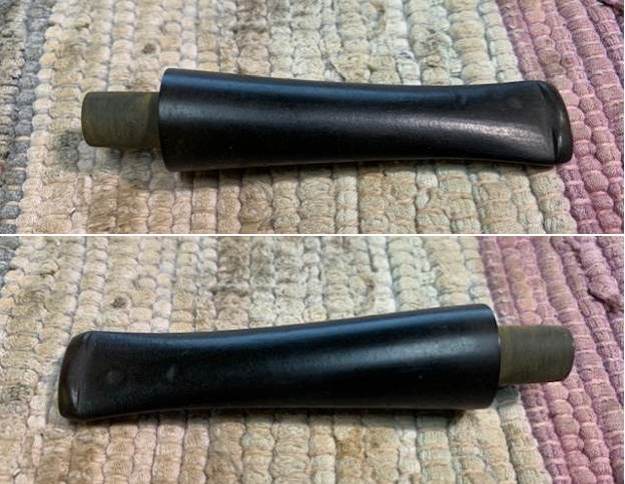
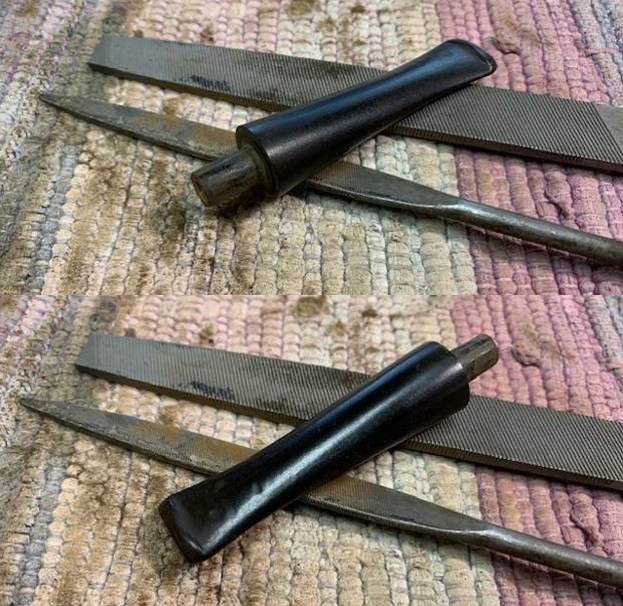
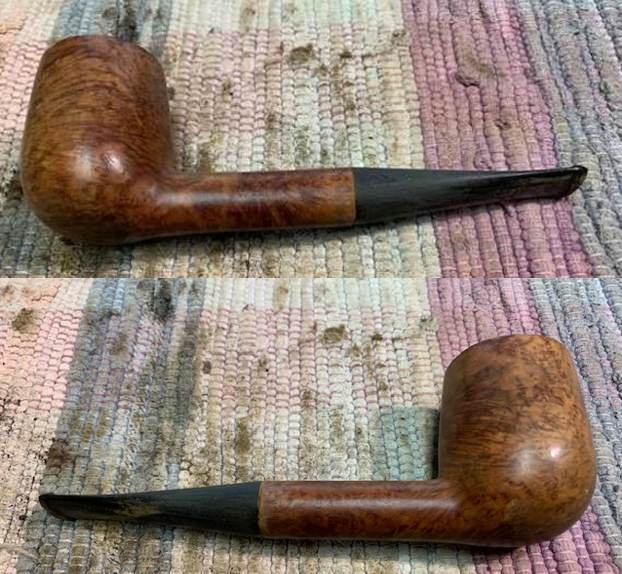
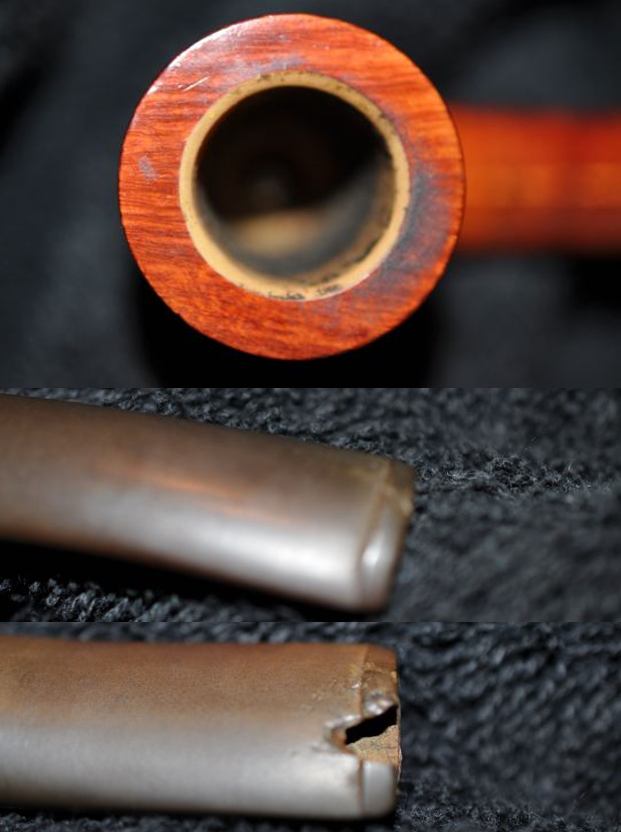
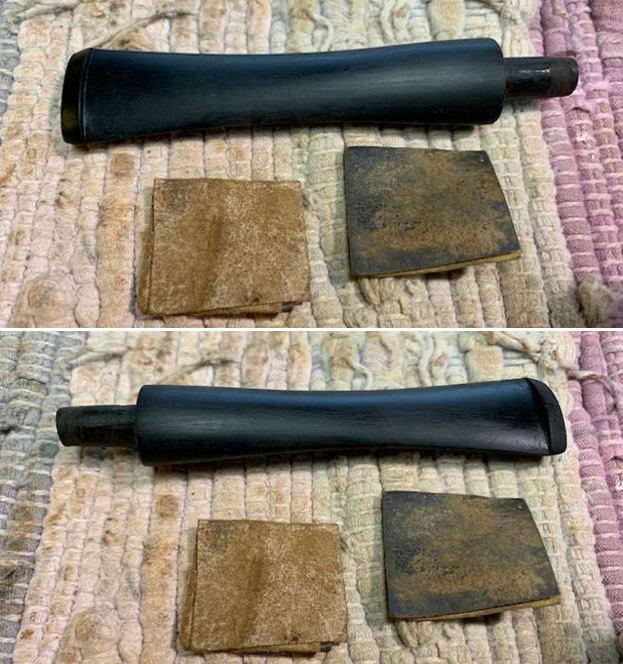
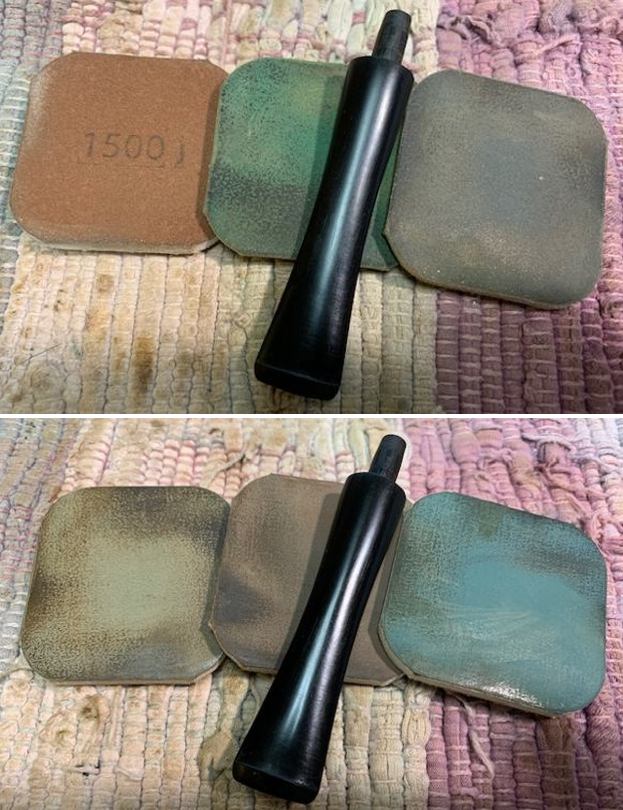
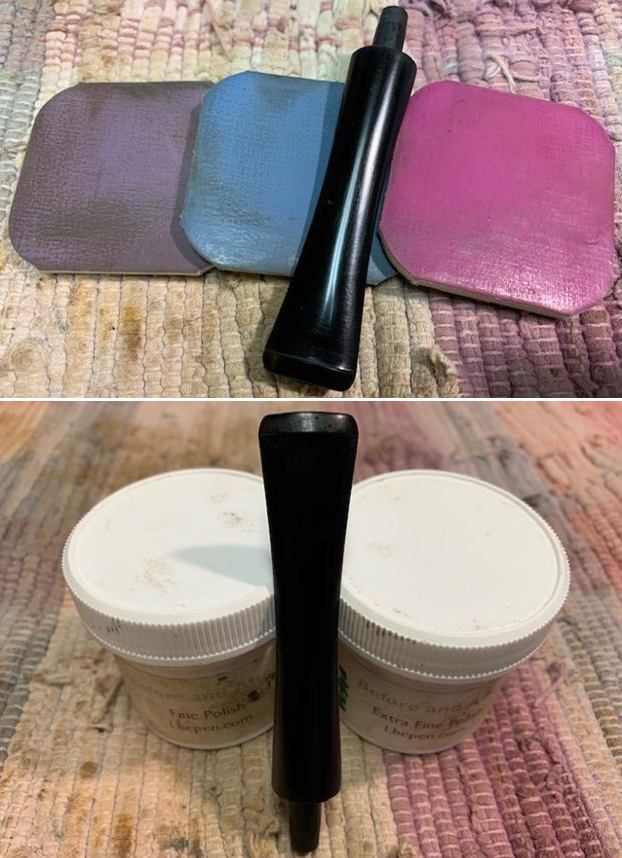
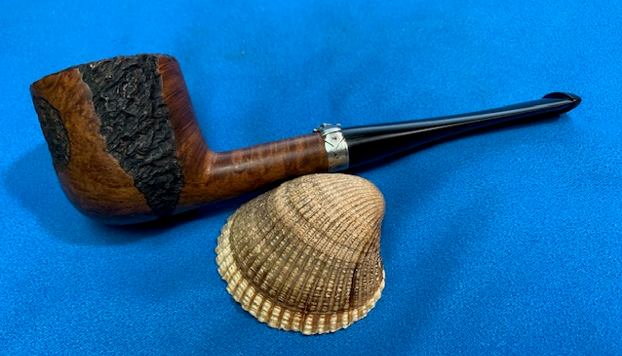
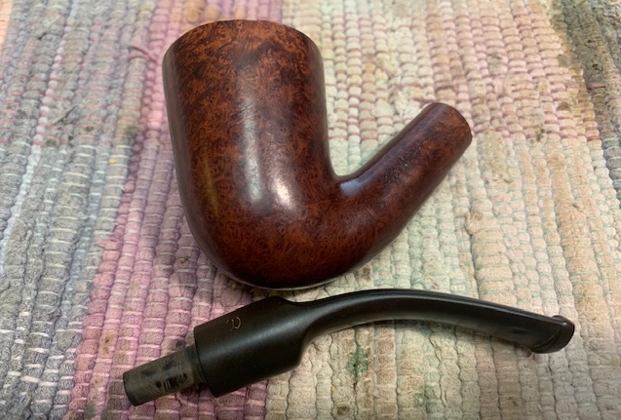
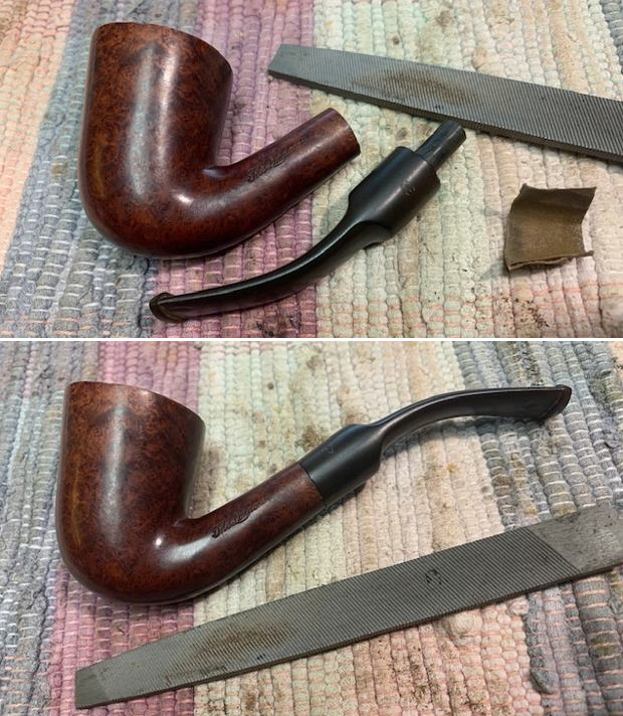
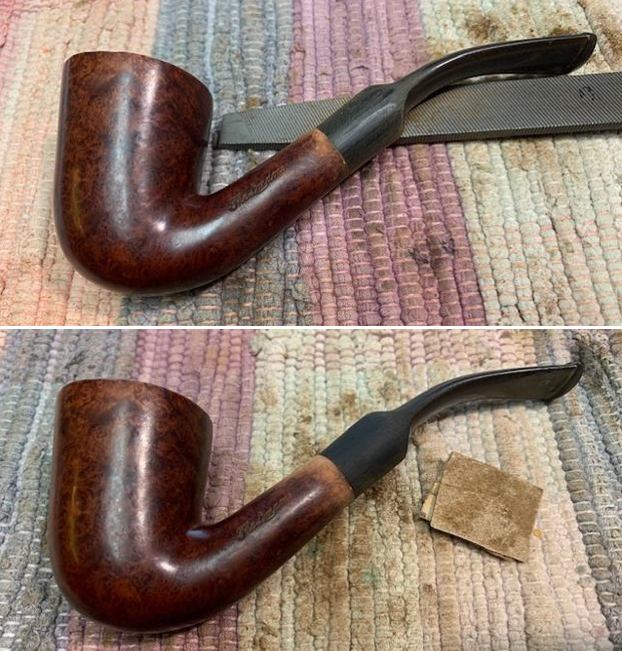
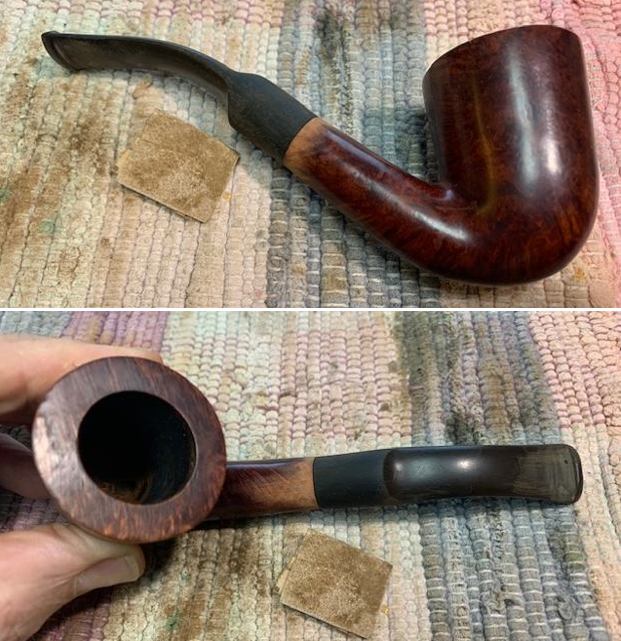
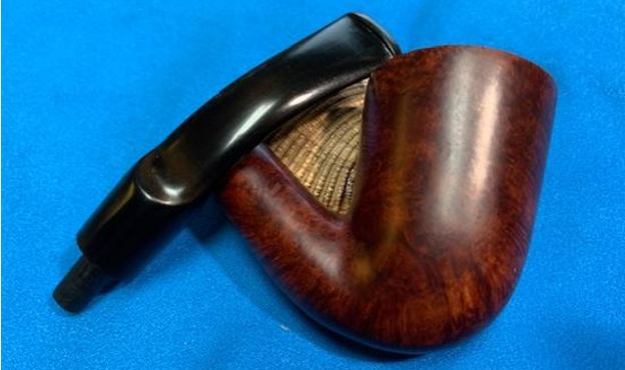
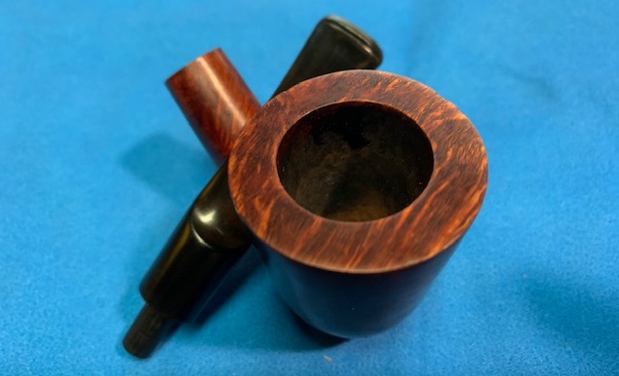
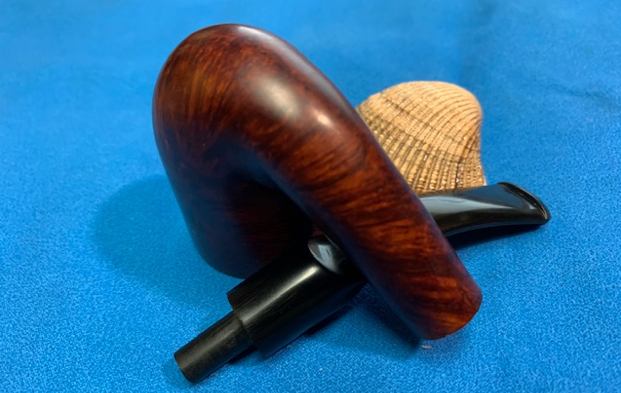
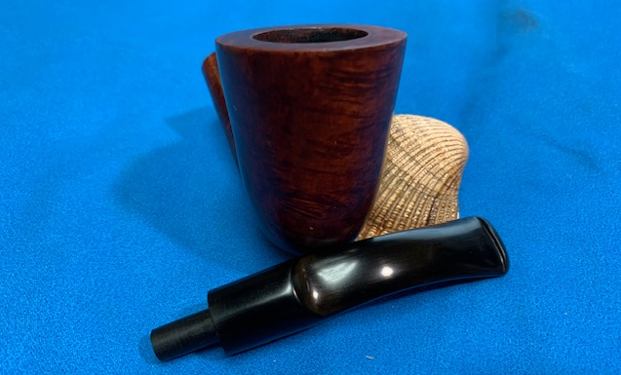
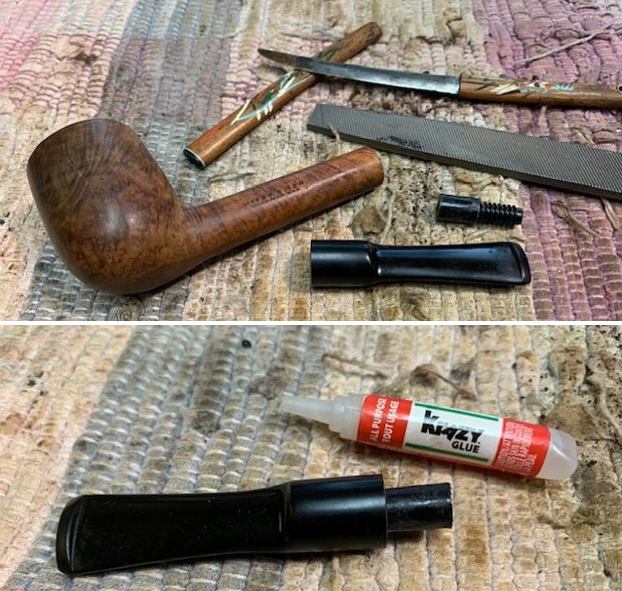
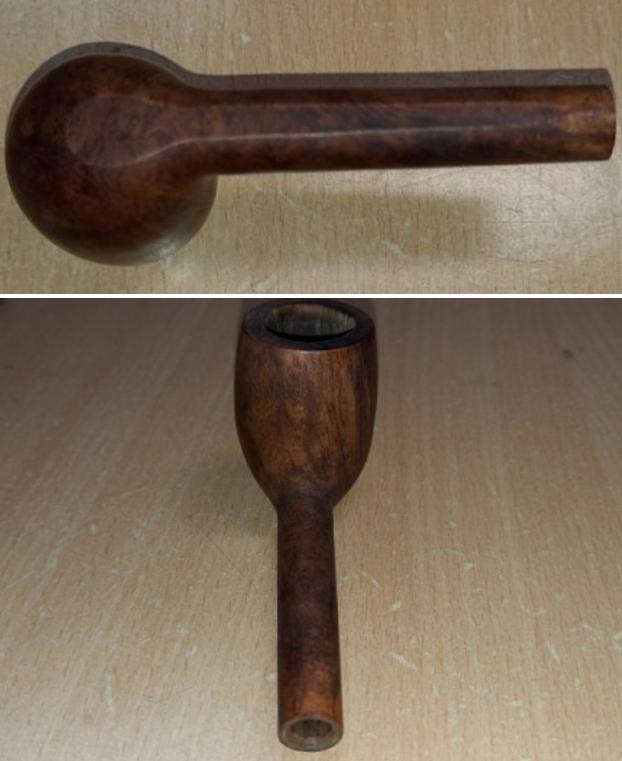
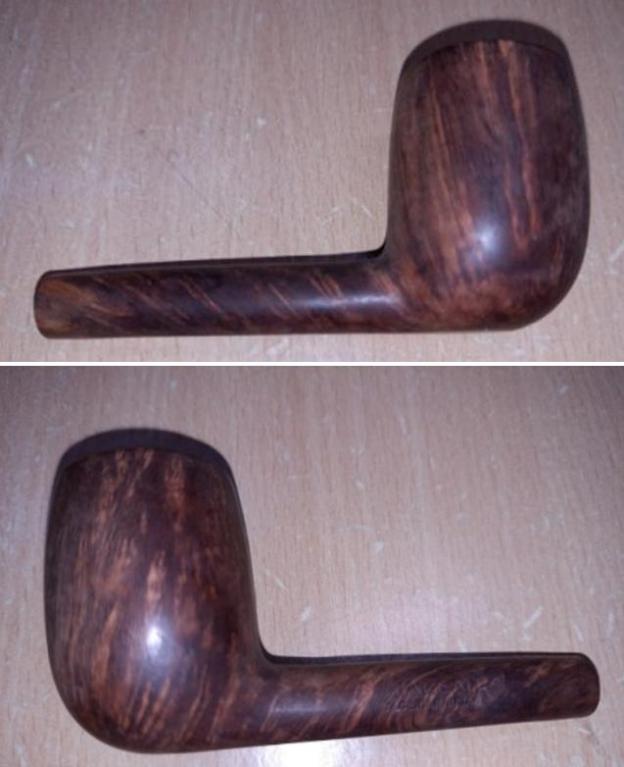
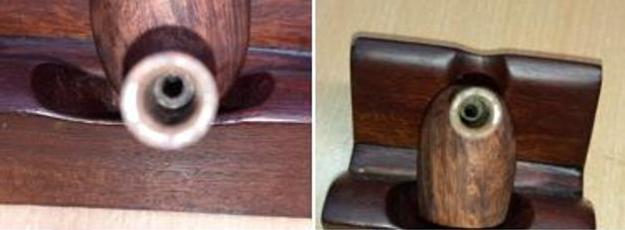
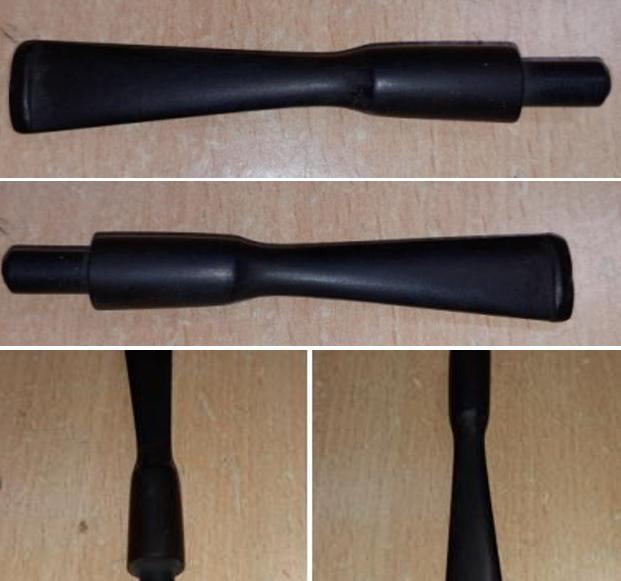
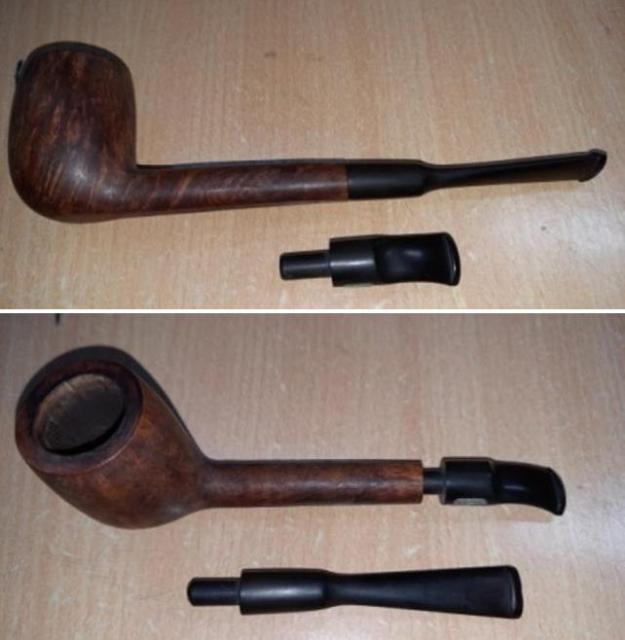
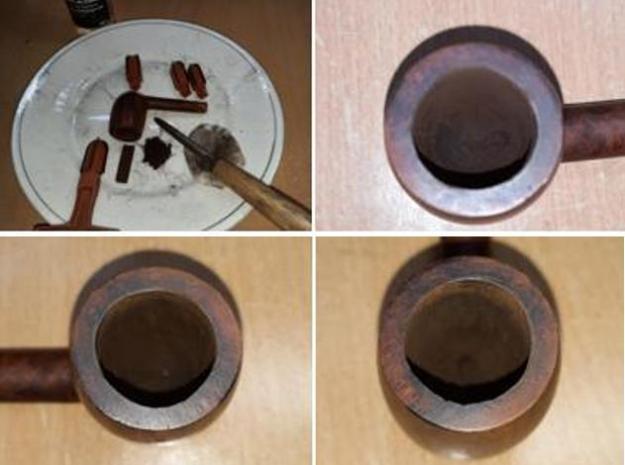
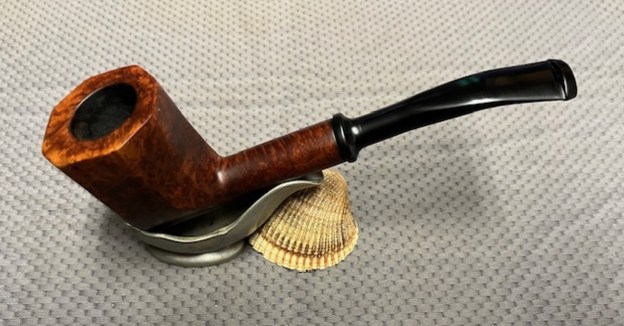
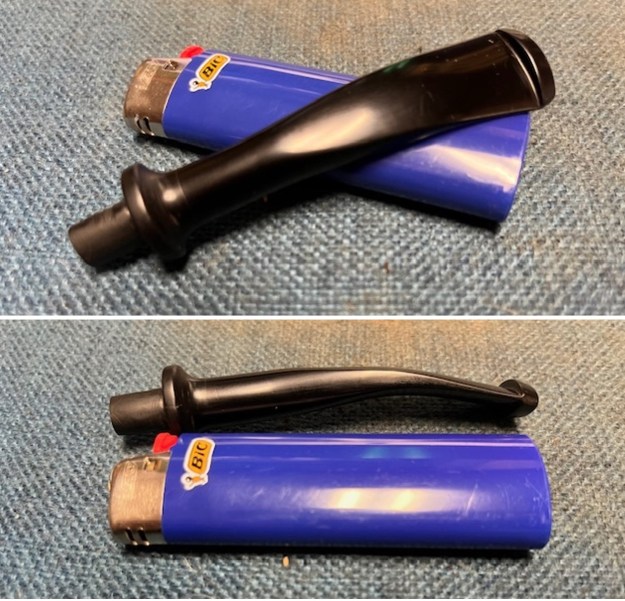
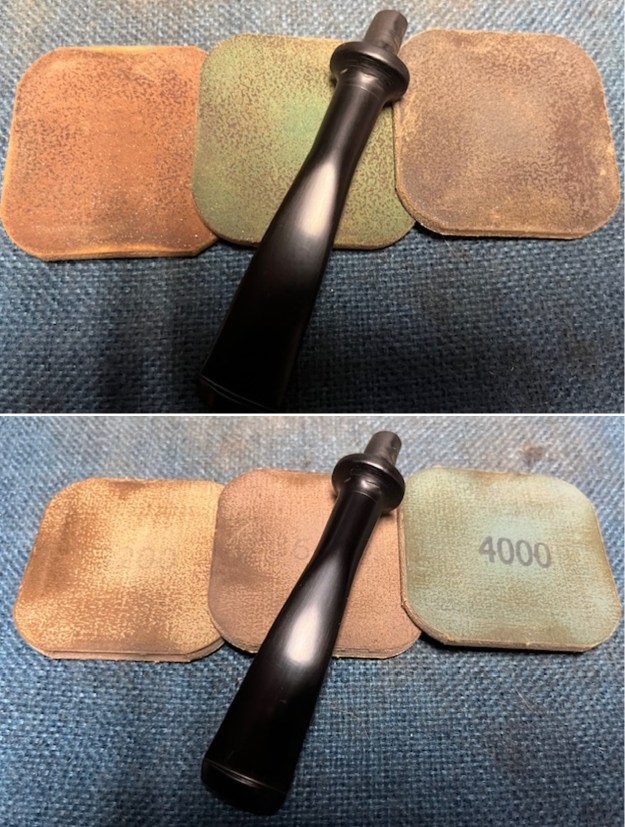
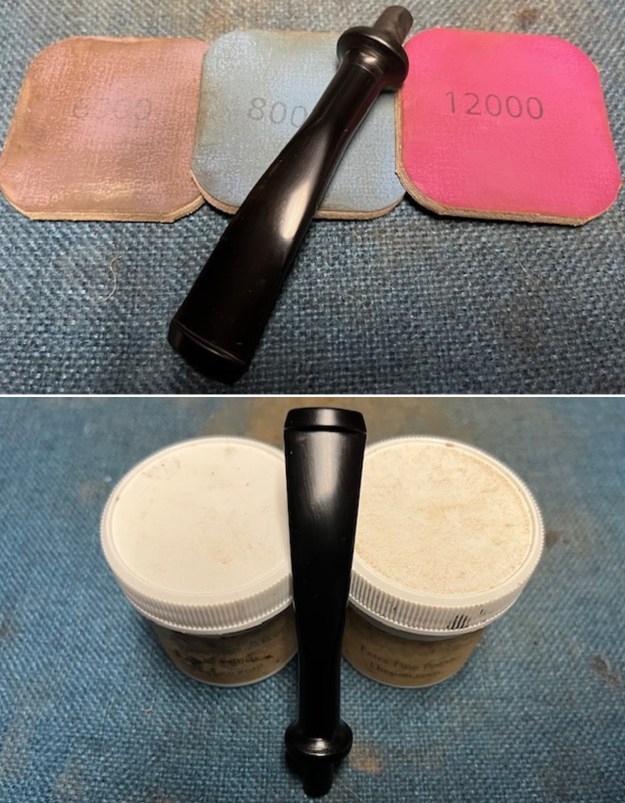
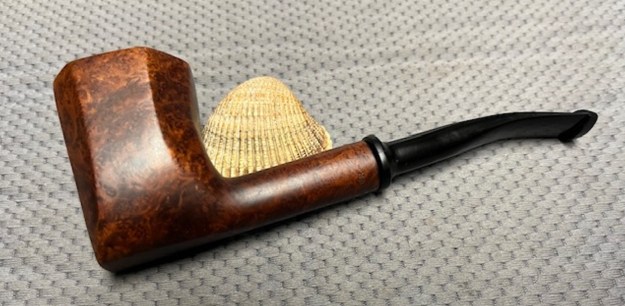
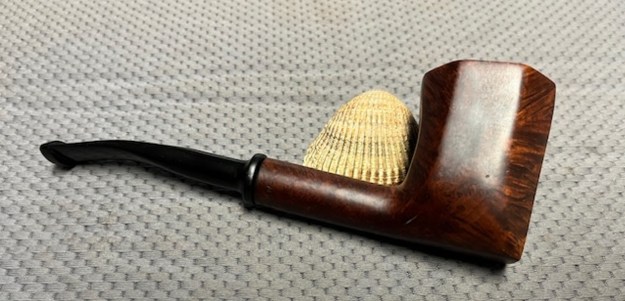
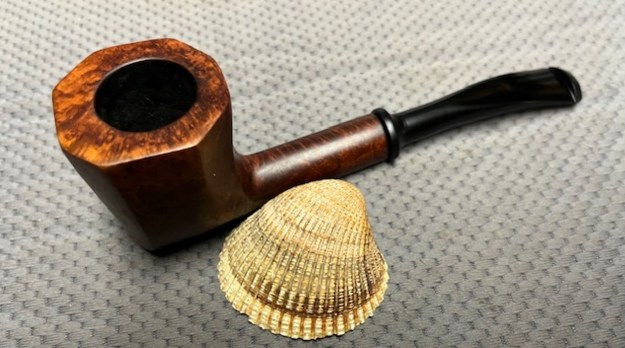
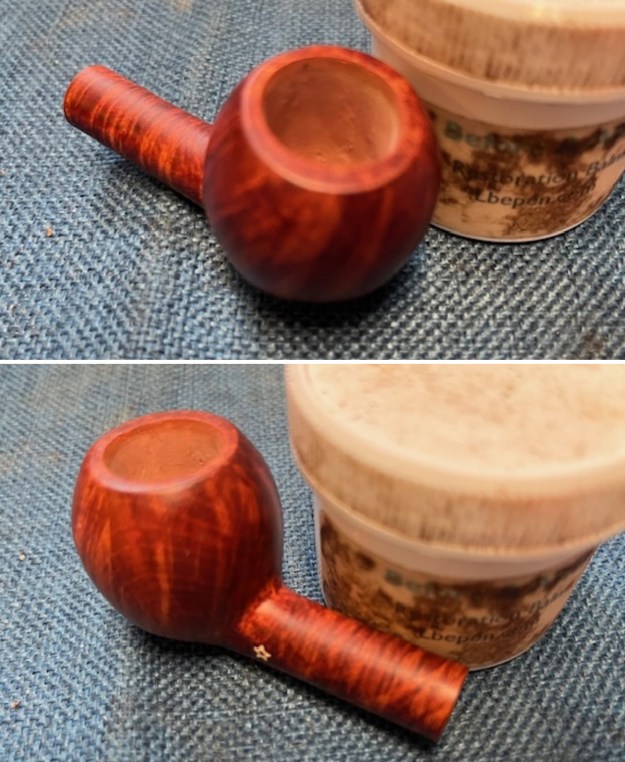
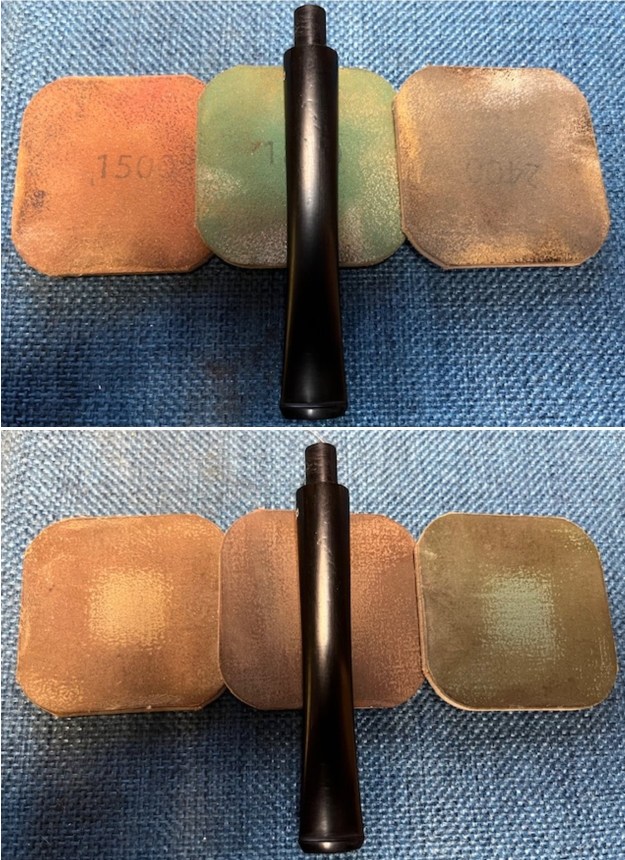
The next pipe I chose to work on was an interesting octagonal Panel. We picked the pipe up from a seller in Saint Cloud, Florida, USA on o4/12/2024. The finish was very dirty but some great mixed grain stood out around the bowl and the shank. The pipe is stamped on the underside of the shank and reads either DN or PM horizontally and vertically it is stamped UNIC. I have never heard of the brand at this point. Below these stamps it is stamped Algerian Briar [over] France. There was also a faint DN or PM in an oval stamped on the side of the saddle stem. The bowl had a moderate cake with some light lava overflow and scratching on the rim top.  The shape is almost a Skater but the Octagonal panels take away the shape point of the nose on the heel of the bowl. It had a vulcanite push saddle stem. The stem was oxidized and it was rough to touch. There were also some gouges in the top near the saddle that looked like marks from pliers and tooth marks and chatter. The worst part was that there was large chip from the button forward on the underside of the stem that gave me pause and made me think it would need to be restemmed. Jeff took some photos of the pipe before he started his clean up work. He took some photos of the rim top and bowl from various angles to give me a clear picture of the condition of the rim top and bowl. You can see the cake in the bowl and the darkening, scratches and light lava coat on the inner edge and rim top. He also took photos of the stem. It is dirty and has a large chunk out of the underside of the stem from the button forward. Jeff took some photos of the sides of the bowl to show the condition of the finish on the pipe. The photos show the smooth finish on sides and heel of the bowl and shank, highlighting grain. Under the dust it was some great looking briar on the panel sides of the octagonal bowl. Jeff took photos of the stamping on the underside of the shank. It is clear and readable as noted above. The DM or PM stamp over UNIC does not ring any bells with me in terms of the maker. Any help would be greatly appreciated…Jeff did a thorough clean up on the pipe before he sent the box to me. He reamed the bowl with a PipNet pipe reamer and got rid of the cake. He cleaned up the reaming with a Savinelli Fitsall Pipe Knife so that we could see the walls of the bowl and assess for damage. It was smooth and in great condition. He cleaned the internals of the shank and stem with alcohol, pipe cleaners, shank brushes and alcohol. He scrubbed the exterior with undiluted Murphy’s Oil Soap and a tooth brush. He rinsed the pipe under warm water. He dried it off with a cloth and then let it air dry. The stem was scrubbed with undiluted Murphy’s Oil Soap and a tooth brush at the same time as the bowl. He soaked it in Briarville’s Pipe Stem Deoxidizer. Once it was rinsed off, it came out looking very good. The finish on the bowl and the rim top cleaned up nicely. The damage on the stem underside was clearly visible. I took pictures of the pipe to show how it looked when I unpacked it. I took close-up photos of the bowl and rim top to show the condition after cleaning. It looked great. I also took photos of the stem surface to show the condition of the stem and the large chip on the underside. I took photos of the stamping on the underside of the shank. It was clear and readable as noted above. I also took a photo of the pipe with the stem removed to give a sense of size and perspective.I sanded the rim top and sides of the bowl and shank with 320-3500 grit 2×2 inch sanding pads. I wiped the stem down after each sanding pad with a damp cloth to remove the debris. I polished the smooth side of the bowl and shank with micromesh sanding pads – dry sanding with 1500-12000 grit pads and wiping it down after each sanding pad with a damp cloth. It really began to take on a real shine. I worked some Before & After Restoration Balm into the surface of the smooth briar with my finger. I let it sit on the bowl for 10 minutes and then buffed it off with a paper towel and soft cloth. The product is a great addition to the restoration work. It enlivens, enriches and protects the wood while giving it a deep glow. It is a product I use on every pipe I restore. Now I had a decision to make regarding the stem. I could try a repair on the huge chip but I was uncertain how well it would hold up. I could try though. I could also fit a new stem on the pipe. I could not find any stem that was similar but I found one that would give the pipe a jaunty look. Here is a photo of the two stems. I decided to fit the new stem to the shank just to have a look at its appearance. I really wanted to know if the stem would work and what the pipe would look like with the stem. The pipe almost has the appearance of an interesting cross between a French and a Danish pipe.I sanded the casting marks and marks on the new stem with 220 grit sandpaper and files to clean it up and make it look fitting. The change of appearance was quite different. I am excited to see how the finished stem looks on the bowl.I sanded the stem with 320-3500 grit 2×2 inch sanding pads. I wiped the briar down after each pad with a damp cloth to remove the sanding dust and debris. I wiped it down with an Obsidian Oil cloth. It began to look very good.I heated the stem with the flame of a lighter and then bent it over the curve of the lighter. The bend was perfect and once polished I looked forward to see what it would look like on the finished pipe.I polished it with micromesh sanding pads – dry sanding with 1500-12000 grit sanding pads. I wiped it down after each sanding pad with Obsidian Oil. I polished it with Before & After Pipe Stem Polish – both Fine and Extra Fine. I buffed the stem with a soft cloth to raise the shine. I gave it a final wipe down with Obsidian Oil to protect it. I don’t know what it is about finishing a restoration but I have to tell you that it is my favourite part of the process. It is the moment when everything that I have worked on comes together. I can compare it to where I started and there is always satisfaction that it looks better than when we picked it up. As always, I put the new stem on the DM UNIC Algerian Briar France and buffed it with Blue Diamond on the buffing wheel. I gave the bowl and the stem multiple coats of carnauba wax. I buffed the pipe with a clean buffing pad and hand buffed it to raise the shine. It is fun to see what the polished bowl looks like along with the polished All Briar stem. This DM Algerian Briar French Octagonal Panel is a great looking pipe and I am sure that it will be comfortable in hand when smoking as it is light and well balanced for a pipe of this size. Have a look at it with the photos below. The dimensions are Length: 6 ½ inches, Height: 2 ¼ inches, Outside diameter of the bowl: 1 ½ inches, Chamber diameter: 7/8 of an inch. The weight of the pipe is 2.29 ounces/65 grams. It is another beautiful pipe and one that will be on the rebornpipes store soon. You can find it in the section of Pipes by French Pipe Makers. If you are interested in adding it to your collection let me know. Thanks for walking through the restoration with me as I worked over this pipe. Thanks to each of you who are reading this blog.
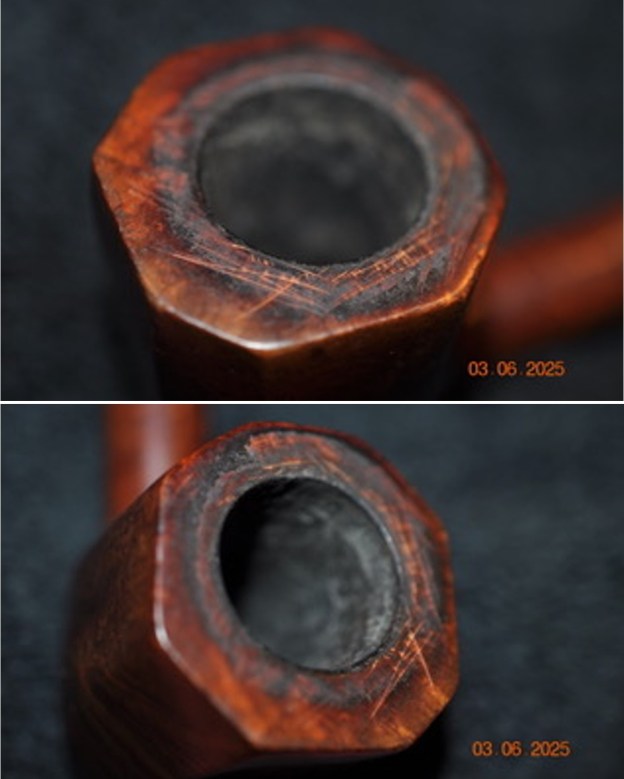
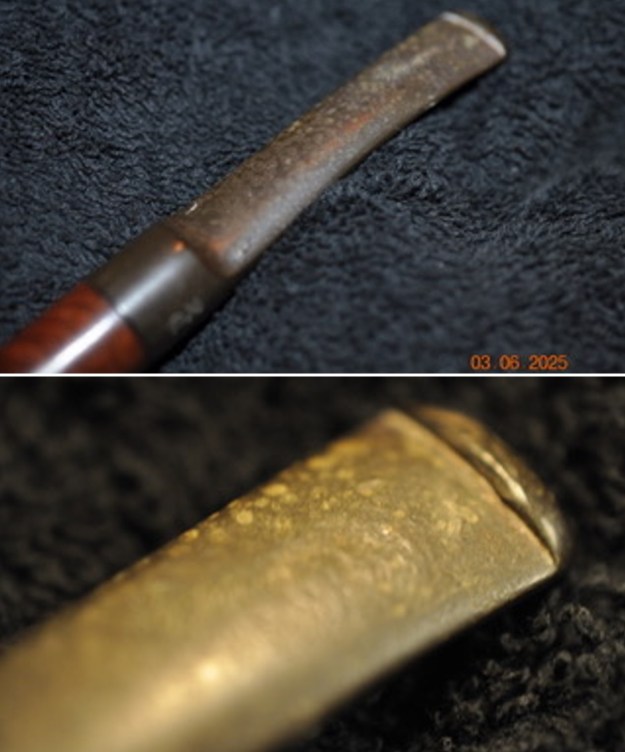
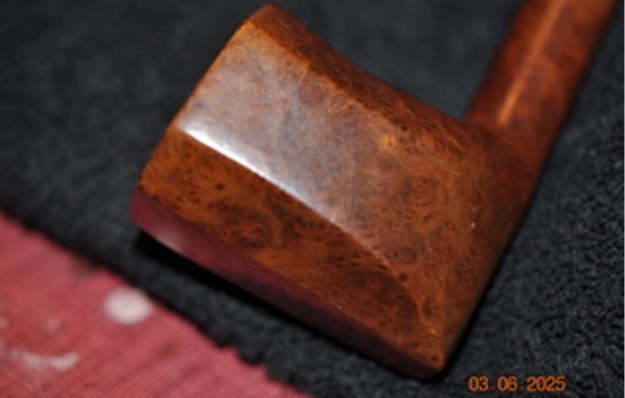
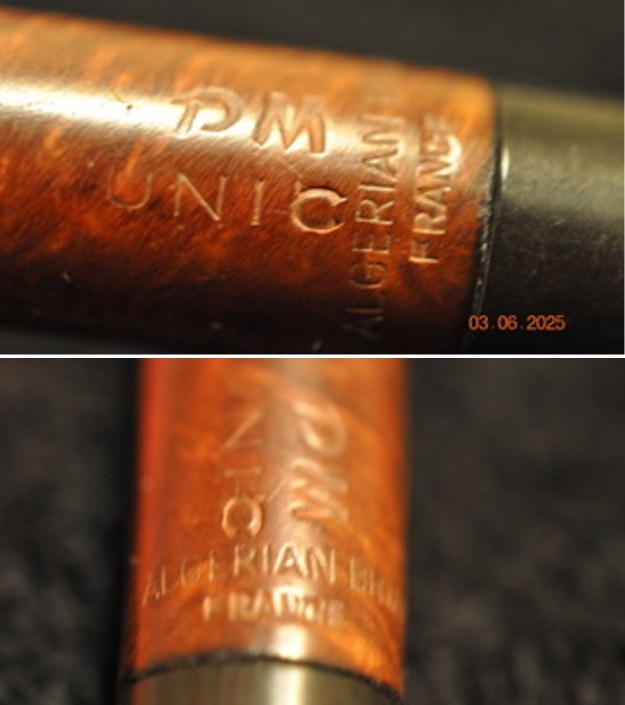
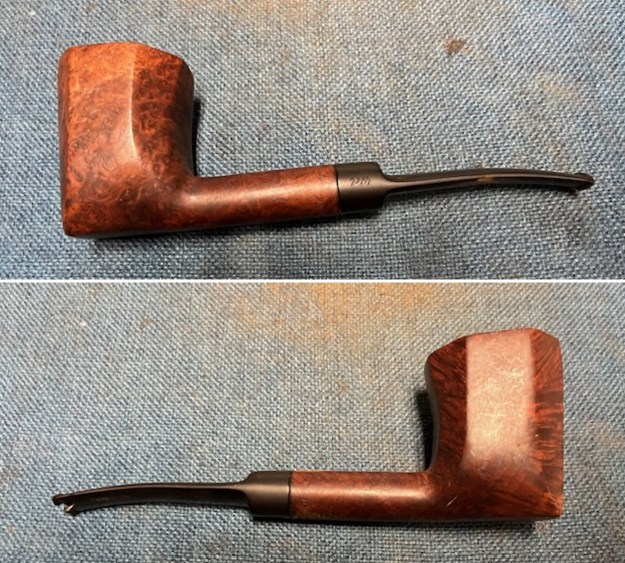
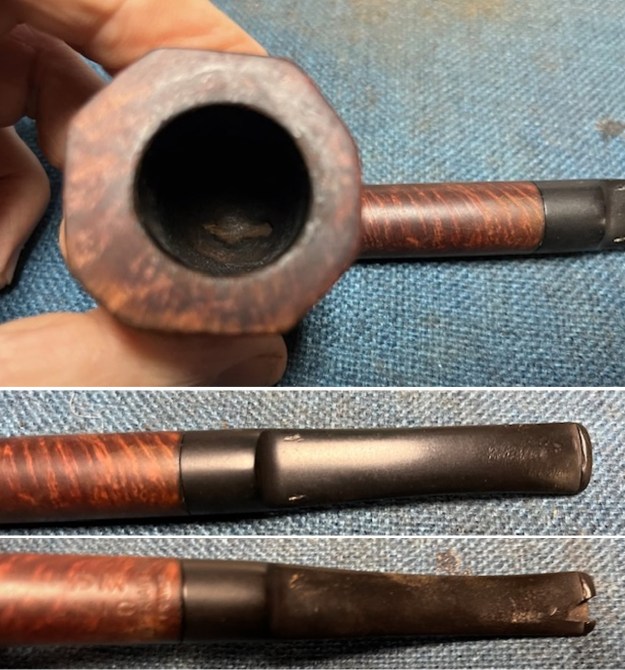
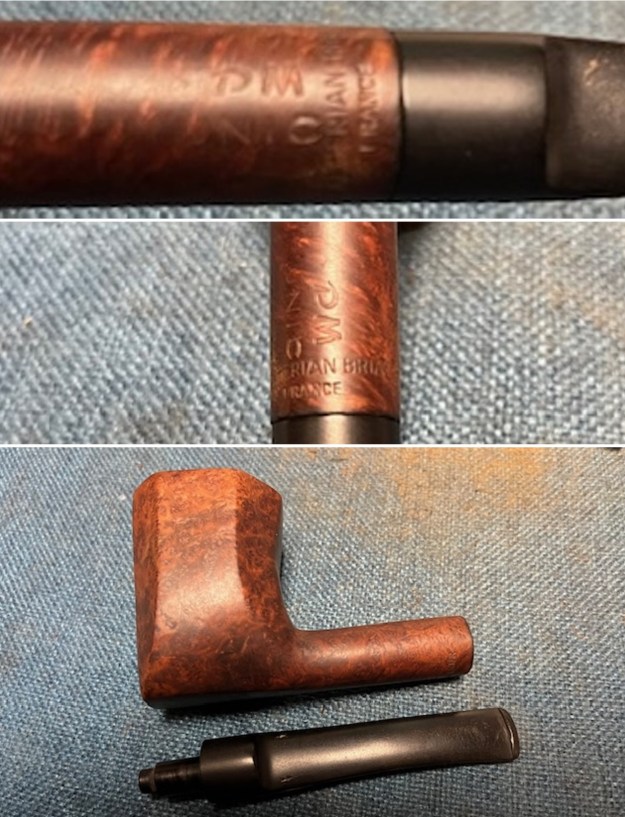
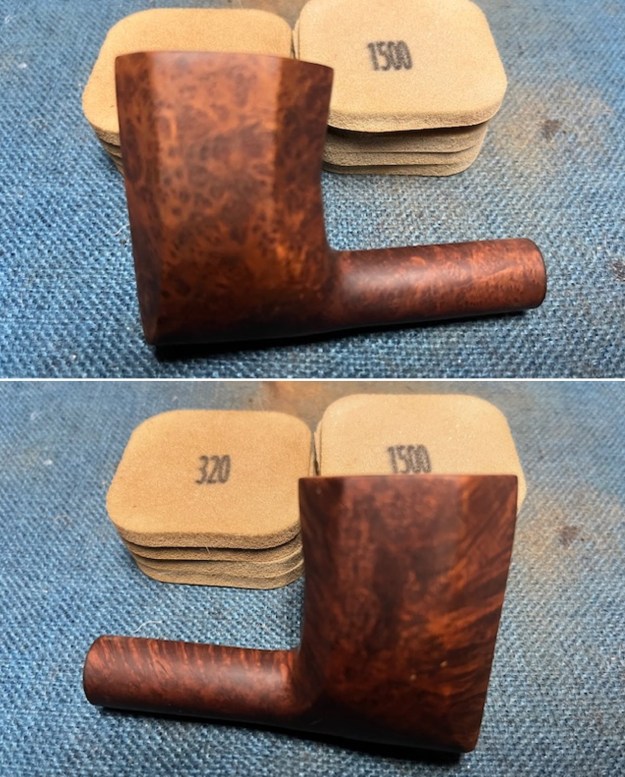
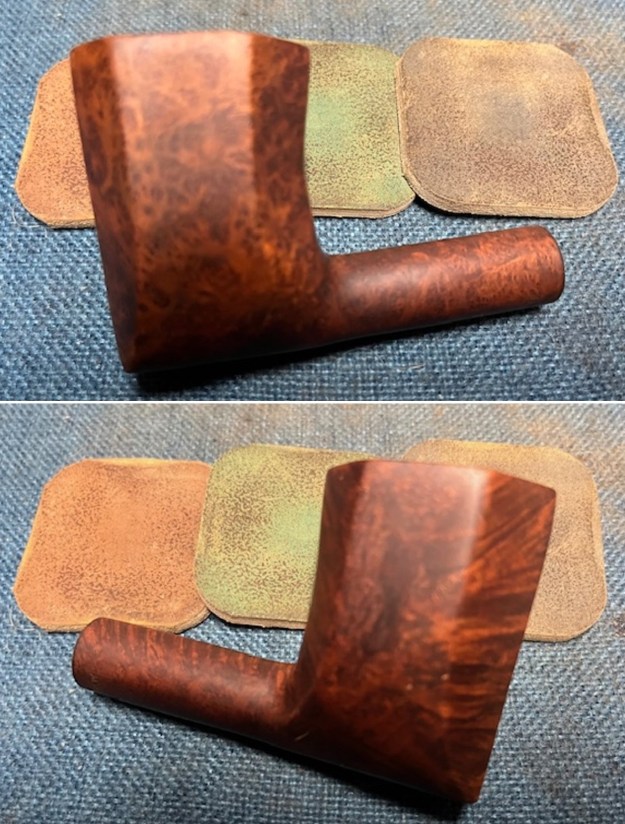
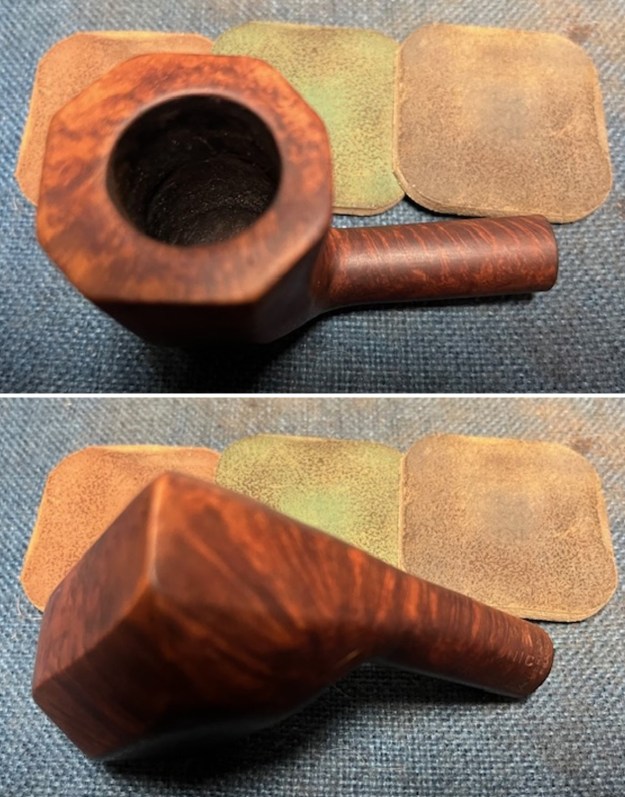
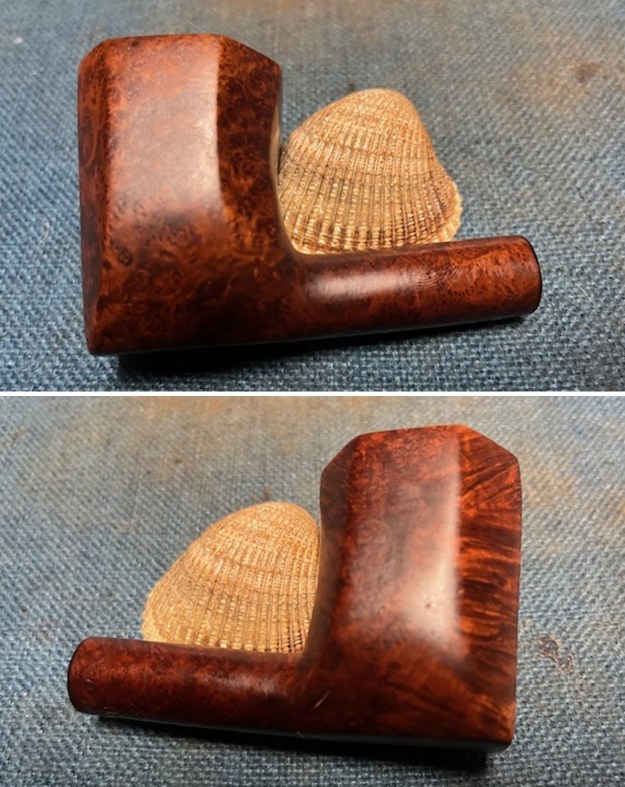
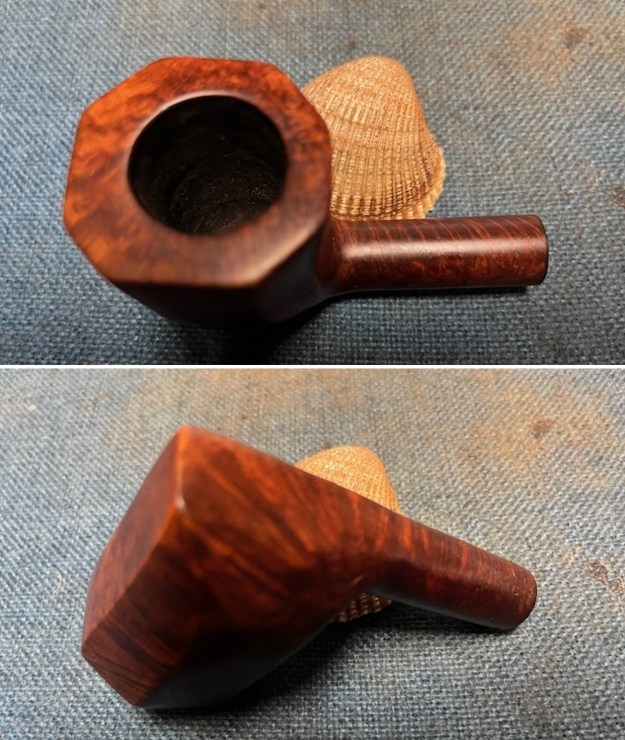
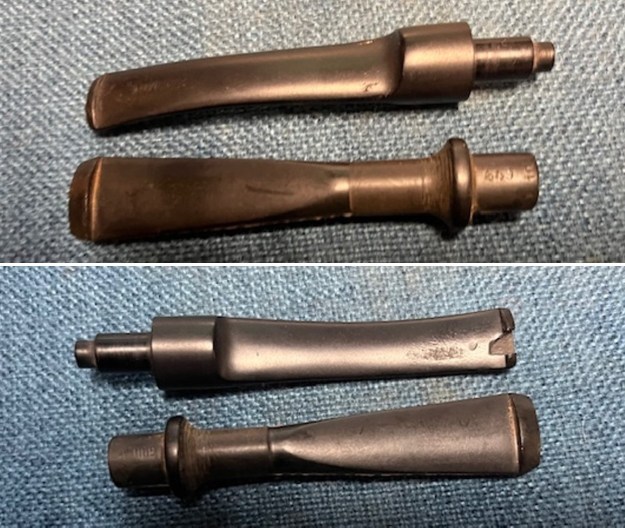
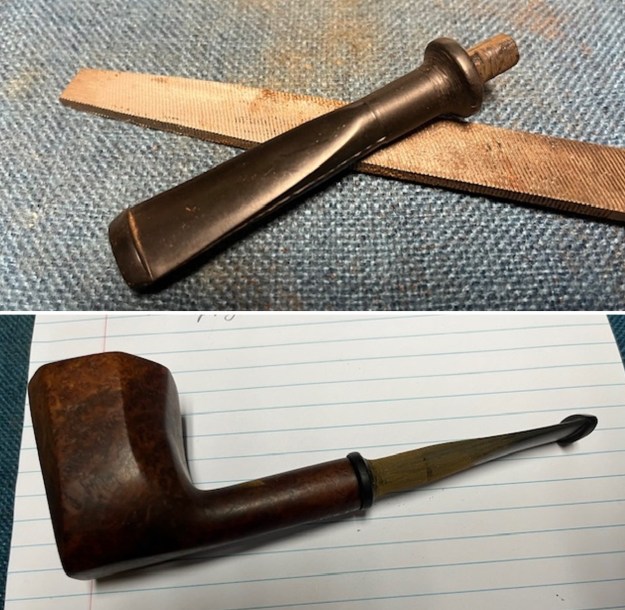
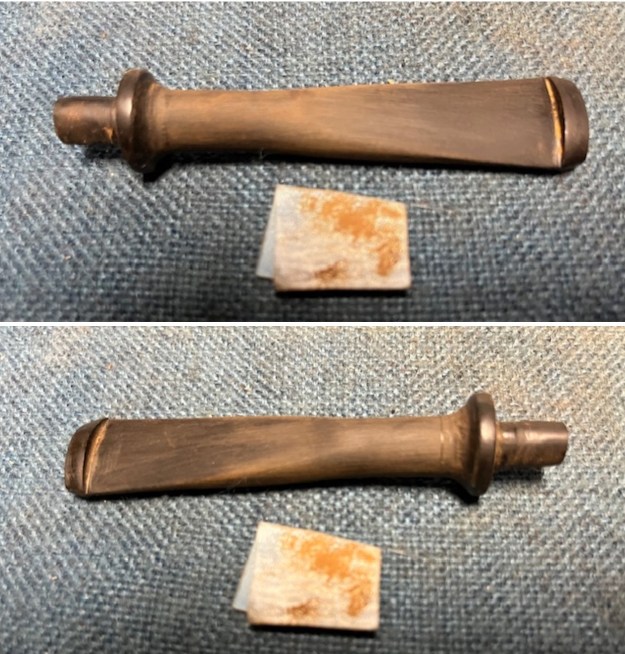
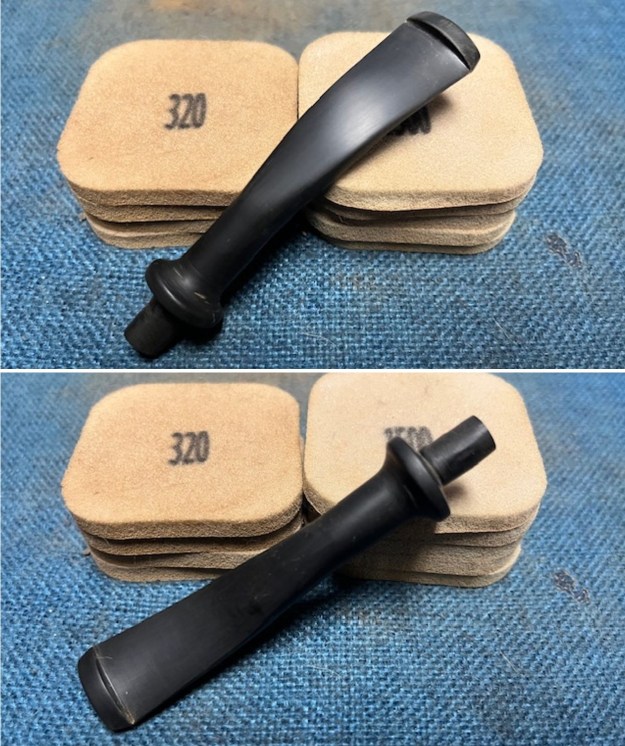
As always, I encourage your questions and comments as you read the blog. Thanks to each of you who are reading this blog. Remember we are not pipe owners; we are pipe men and women who hold our pipes in trust until they pass on into the trust of those who follow us.
Renewing an UNSMOKED Briarcraft Smokemaster Custom Made Patent Apple


By Steve Laug

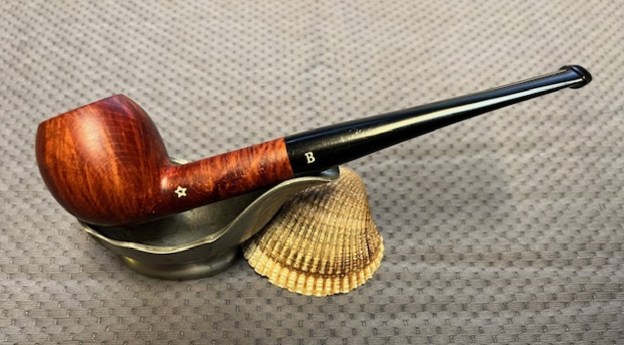
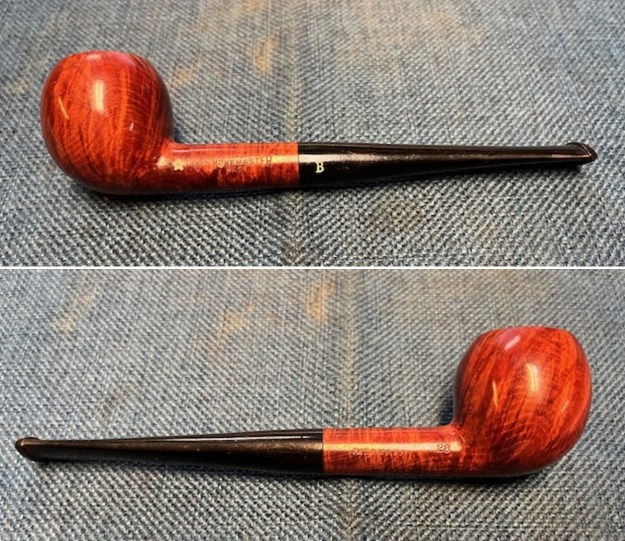
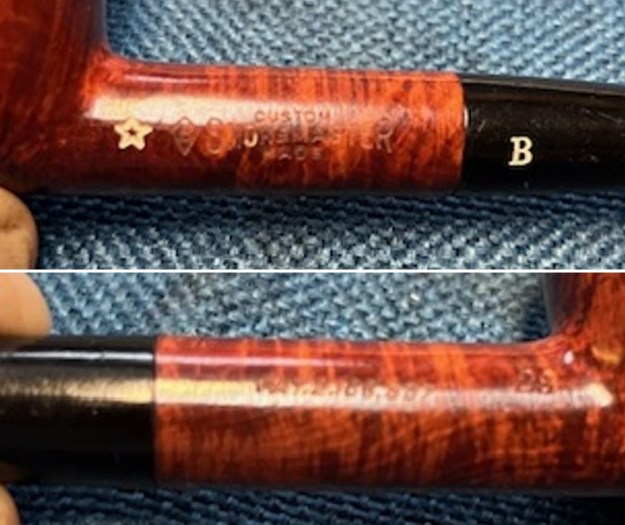
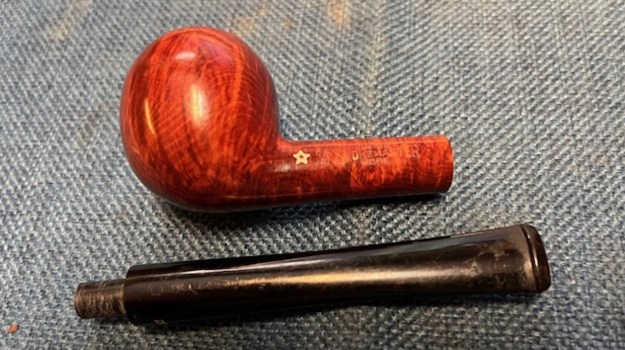
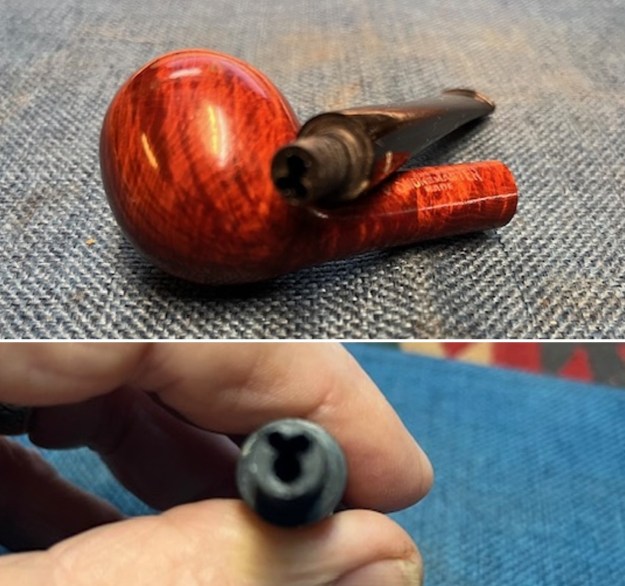
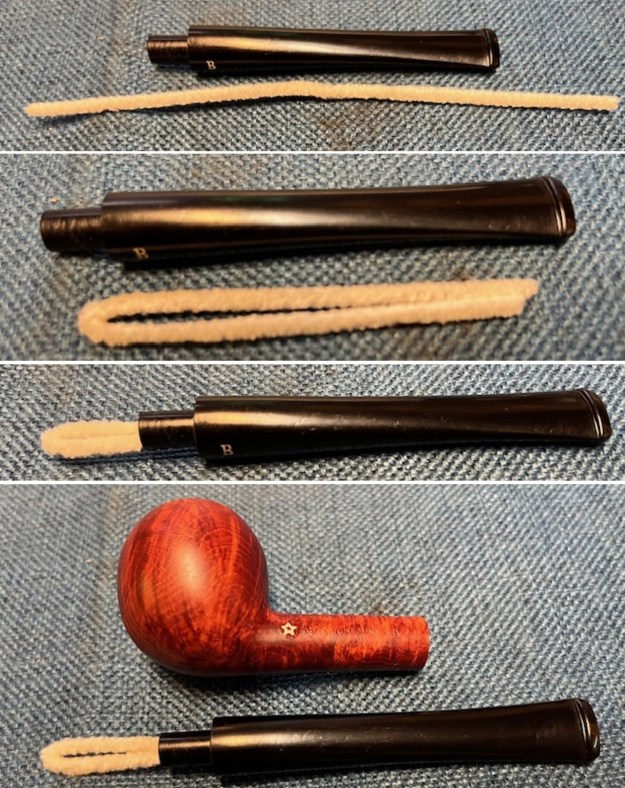
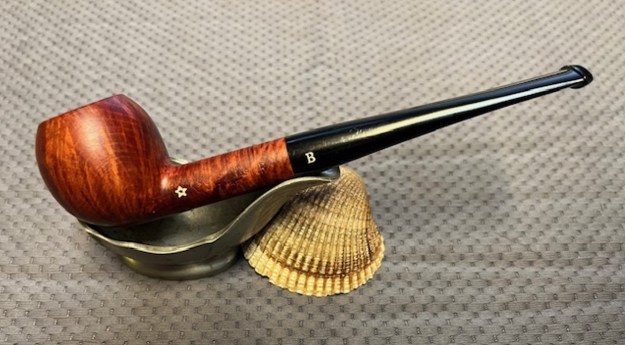
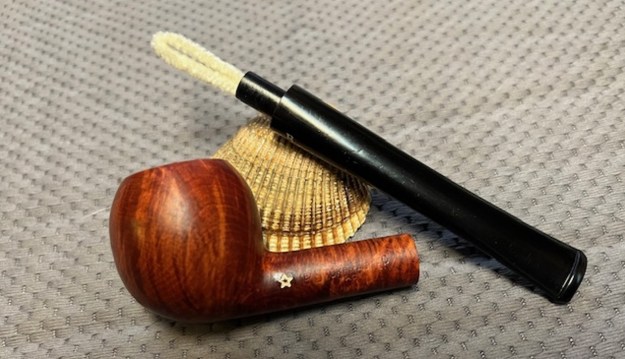
The next pipe is one that has been sitting here for quite awhile in a box of unsmoked/new old stock pipes that I have here. I went through them yesterday and sorted the out. I put all of them on the rebornpipes store but this one. There was just something about it that grabbed my eye. It is a classic apple shaped pipe that is stamped on the left side of the shank and has a white hollow star next to the shank followed by the Briarcraft logo – a B in a diamond. Next to that it is stamped Custom [over] SMOKEMASTER [over] Made. On the right side of the shank it was stamped Pat. 2.166.537. The was a white letter B on the left side of the shank – the Briarcraft logo. We picked up the pipe on 11/09/2023 from a seller in Nampa, Idaho, USA. The pipe is unsmoked and the bowl is fresh. The finish on the bowl and shank is very shiny with varnish or possibly shellac but it is peeling and cracking in places. The grain on the pipe was quite stunning and would really shine through once the finish was gone. It was an incredibly lightweight pipe to hold. The stem is dirty with some sticky stuff from possibly a price tag and some nicks and scratches from laying around a long time somewhere. I took photos of the pipe to show its condition before I started working on it. It was going to be a pretty simple cleanup. I took closeup photos of the unsmoked, new briar bowl and rim top to clearly show the condition of both. The condition matches what I described above. I also took photos of the stem to show the sticky spots and scratches on the stem surface ahead of the button on each side. I took photos of the stamping on the sides of the shank. It is clear and readable as noted above. The varnish around the stamping and the white star is peeling and crackled. The B logo on the left side of the stem is clear and in good condition. I removed the stem and took a photo of the pipe to give a sense of the proportions of the pipe. I tried to capture the three holes in the end of the tenon. I laid the stem on the shank to try to capture it and I held it and took a photo of the tenon end. It is an interesting drilling that almost looks like a mouse head with the two ears.I had cleaned up a Smokemaster Bard Billiard in the past but it did no have the original stem like this one. I went back and reread the blog to remind myself of what I had learned in the process of working on that pipe (https://rebornpipes.com/2013/12/23/giving-a-smokemaster-bard-billiard-a-facelift/). I have included a bit of the information that I had included on that blog below:

I knew nothing about Smokemaster pipes and had no idea who made them. The finish and shape reminded me a lot of Dr. Grabow pipes that I have reworked but that was not enough for me. As has become my habit with pipes I don’t know about, I did a bit of research on the web and found out that the pipe was made by the Briarcraft Pipe Company. The Company was very prosperous between 1920 and 1940. They produced both Briarcraft pipes and a line of seconds under the following names: Airo, Arcadian, Briarmeer, Smokemaster, Cavalcade, Hallmark, Sterling Hall, Filter Kleen and Wimbledon. They closed their doors in 1950.

The pipe that I was working on currently was definitely made pre-1950 and the stamping was clearly made by Briarcraft. The beauty of that is that the pipe was clearly made between between 1920-1950 when they closed their doors. Perhaps when I check the patent information I will learn more and be able to pin down the date a bit more.

I turned to the article on Pipedia (https://pipedia.org/wiki/Smokemaster) to see what I could learn there. I was expecting a bit of info on both Briarcraft and Dr.Grabow. So it would take a bit of filtering.

Smokemaster pipes are unusual in that they had two different makers in different time periods, and in the style of their tenon.

The tenon had a single aluminum inner tube and two holes which were meant to hold a pipe cleaner folded in half, one end in each hole. The pipes were first made by Briarcraft, in lines including the Custom-made, Standard, and Bard. That company went out of business in the 1950s. In 1967 Dr. Grabow bought the rights to the name and the system, and began producing Smokemasters in three lines, stamped 100, 200 and 300. These pipes had a red diamond logo on the stem.

In addition, both Briarcraft and Dr. Grabow made Smokecraft pipes which were not stamped with that name, but with L. L. Bean. The pipes continued to be produced into the 1990s in Sparta, North Carolina, and were offered as a mail order pipe on packets of Dill Pipe Cleaners at one point. They are no longer produced.

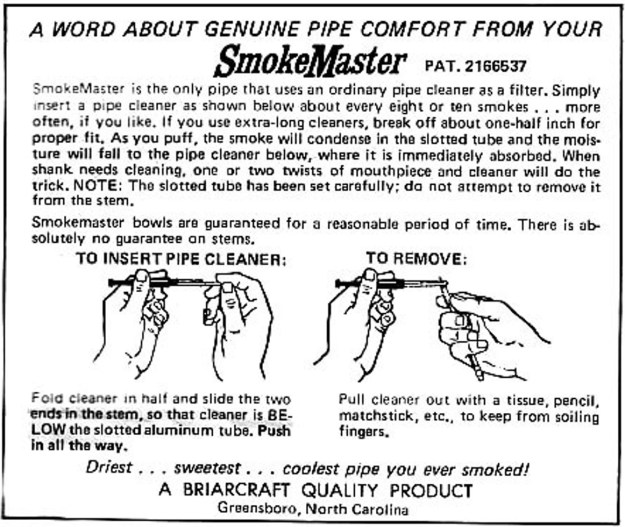
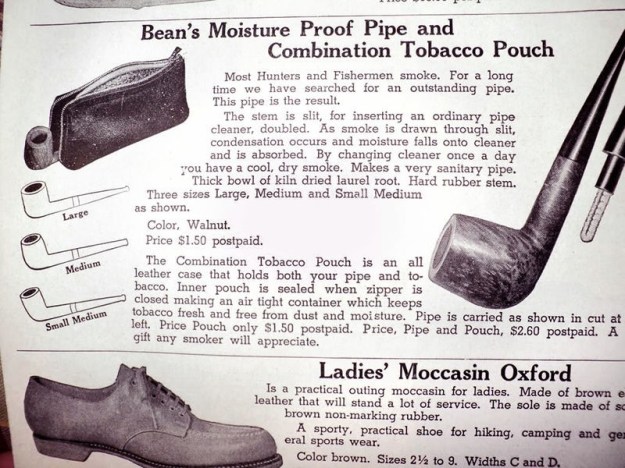
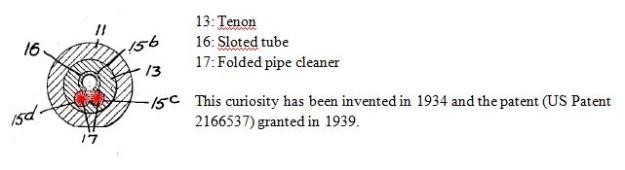
I have included two advertisements from the site that had helpful information on the special filter system using pipe cleaners. Read over the first advertisement below. It has the same patent number as the pipe I am working on. It also has a clear explanation of the unique pipe cleaner filter system in the stem. The second advertisement show the same pipe with the specifics of an L.L. Bean pipe that has the same pipe cleaner filtration system. I then turned to Pipephil’s site (http://pipephil.eu/logos/en/logo-s9.html) to have a look at the information included there. I have included a screen shot of the information there. The logo on the stem of the shank of the pipe I am working on is identical to the one shown in the first photos below. I have included only the section on the Briarcraft version of the pipe made prior to the buyout by Dr. Grabow.I found out that the Smokemaster had a very unique filter system and was distinct from other filter systems in that it did not include a stinger apparatus. Rather it used a slotted tenon/tube that had two special holes in it (shown in red in the drawing below of the tenon end). A folded pipe cleaner was inserted into the two holes and extended the length of the shank. It collected the tars and moisture of the smoke and could be easily changed and replaced by the pipe smoker. The diagram below shows the design from the end of the tenon.I did a patent search and it gave me the following information. This includes both the original description by the inventor and also a diagram submitted at the time of the patent application. I found it at this site:

https://www.google.com/patents/US2166537?dq=2166537&hl=en&sa=X&ei=r2u4UtPOHI_ZoAT9moHYCg&ved=0CEAQ6AEwAQ

I have included that information below on the same patent number:

Description
1939 – B. M. SHOEMAKER 2,166,537
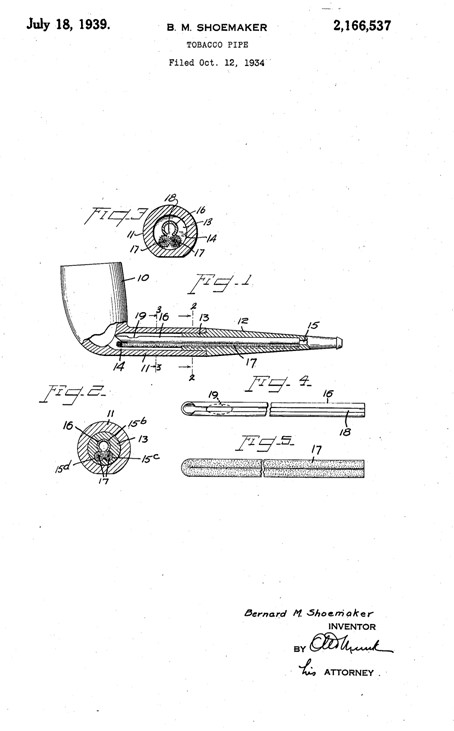
TOBACCO PIPE Filed Oct. 12, 1934 crnar B.M. Shoemaker INVENTOR v ATTORNEY Patented July 18, 1939 UNITED STATES PATENT OFFICE

1 Claim.

My invention relates to tobacco pipes and more particularly to the type in which the bit and bowl portions are separately united to each other.

The principal object of my invention is to maintain the smoke passage in the pipe substantially free of solid deposits, making for general cleanliness in the interior of the pipe and sweet, cool smoking qualities.

I accomplish this object by arranging within the pipe a readily replaceable absorptive member which is designed to receive condensate and solid matter from the smoke as it passes through the pipe. The preferred form of such absorptive member is an ordinary pipe cleaner which, as is well known in the art, comprises a highly flexible metallic core portion carrying a large number of bristles extending there from.

One embodiment of the invention is illustratively exemplified in the accompanying drawing in which Fig. 1 is a longitudinal sectional view of a pipe; Fig. 2 is a transverse sectional view on the line 22 of Fig. 1; Fig. 3 is a transverse sectional view on the line 3-3 of Fig. 1; Fig. 4 is a broken elevation view of a metallic tube or liner constituting one of the pipe elements; Fig. 5 is an elevation view broken intermediate its ends, of the form of absorptive member used in the present construction.

Referring to the drawing, and more specifically to Figs. 1 to 3, denotes the pipe bowl, 1 the bowl stem, 2 the bit and 3 the tenon by which the bit and bowl stem are separately united. The bowl stem has the usual well l4 and the bit the usual smoke or draft passage 15. The bit 12 is further provided with three bores, 15b, c, d, and forming a continuation of the smoke passage 16. A metal tube 16 is provided which is longitudinally slotted at its lower portion and through the slot l8 the products of well be omitted. The tube l6 lies in the bore 15b. The pipe cleaner is doubled upon itself and the two legs or branches of the pipe cleaner enter the bores 15c and l5d and rest there during use of the pipe. The bores 15c and l5d parallel the bore 15b at opposite sides of its longitudinal centre. The embodiment of the invention described is a very desirable construction inasmuch as it receives a standard length pipe cleaner, which in its folded position in the passage 14 is offset from the axis thereof, and which when rotated or twisted with the tenon to seat the same the folded strands of the cleaner engage and brush or clean the wall of the bore.
The operation of the device is very simple. The pipe is sold complete with the pipe cleaner in position. After the pipe has been used for a length of time it will be found that the pipe cleaner is practically saturated with deposited matter. Thereupon the pipe cleaner is simply removed from the pipe and a new one inserted in its place. If desired, the cleaner may also be used in the ordinary manner, naturally before it has become fouled, by moving it back and forth once or twice through the draft passage l5 and/or tube.

What I claim is: In a tobacco pipe, a bowl portion having a stem provided with a central bore, and a bit portion for said stem, the bit having a centrally disposed smoke passage and grooves arranged in the bottom of said passage, a tubular liner mounted in the smoke passage and adapted to project into the bore of the stem, said liner having its underside provided with a longitudinal slot opening into the grooves and bottom of the central bore of the stem beyond the bit, and an absorptive member mounted in said grooves and arranged under the liner throughout its length to receive condensate from the liner and to wipe the wall of said bore when the bit is turned.

BERNARD M. SHOEMAKER.
Classifications

U.S. Classification 131/184.1, 131/203

International Classification A24F1/00

Cooperative Classification A24F1/00, A24F2700/03

European Classification A24F1/00
I find that kind of information fascinating and am always intrigued by the ongoing urge of pipe designers to provide a cooler and cleaner smoke for the pipeman who uses their inventions. The patent information helped me to also pin down the date of manufacture. In this case I now knew that the pipe I had in hand was made between 1939 and 1950, a nice 11 year window. It was a real beauty and with the clean up it would only look better. Now it was time to work on the pipe itself.

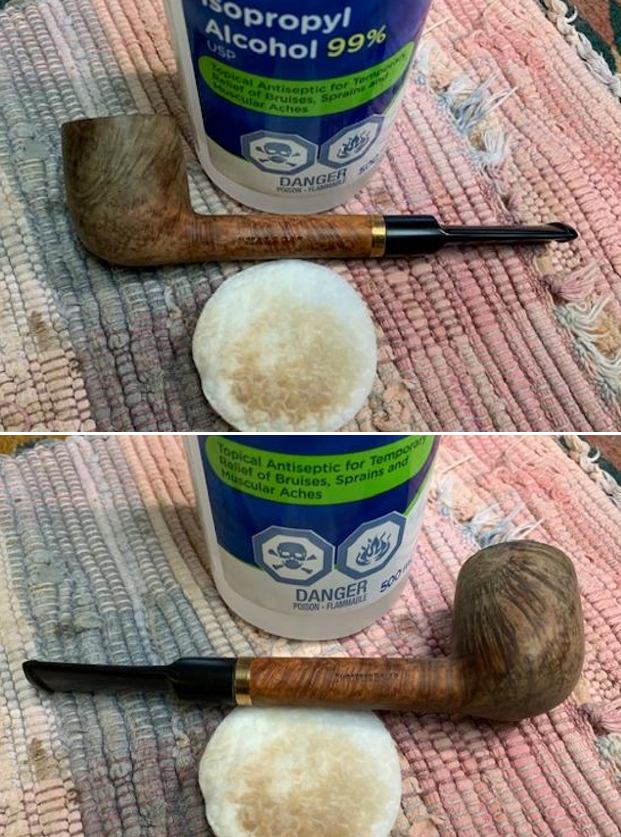
I began by removing the peeling and spotty varnish coat with acetone on a cotton pad. What made this a bit tricky was the white stamped star outline on the left side of the briar next to the bowl. It had been painted and I did not want to damage that colour. Once the varnish coat was removed I polished the briar with micromesh sanding pads – dry sanding with 1500-12000 grit sanding pads. I wiped the bowl down with a damp cloth after each pad. By the end of the process it looked quite good. I rubbed the bowl and shank down with Before & After Restoration Balm. I worked it into the surface of the bowl sides and shank with my fingertips. It works to clean, enliven and protect the briar. I let the balm sit for 15 minutes and buffed with a cotton cloth to raise the shine. The grain came alive. I polished the vulcanite stem with micromesh sanding pads – 1500-12000 grit pads. I wiped it down with Obsidian Oil after each sanding pad. I used Before & After Pipe Polish – both Fine and Extra Fine to further polish the stem. I rubbed it down with a final coat of Obsidian Oil and let it dry. With the stem cleaned up it was time to fit the tenon with the folded pipe cleaner filter as shown in the photos of the advertisements and also patent information. I took photos of the process. This Unsmoked Briarcraft Smokemaster Custom Made Pat. 2.166.537 is quite a stunning pipe now that it has been stripped and restored. The beautiful grain around the bowl works well with both the shape and the polished vulcanite taper stem. I put the stem back on the bowl and carefully buffed the pipe with Blue Diamond on the buffing wheel using a light touch on the briar. I gave the bowl and the stem multiple coats of carnauba wax on the wheel and followed by buffing the pipe with a clean buffing pad. I hand buffed the pipe with a microfiber cloth to deepen the shine. The finished Briarcraft Smokemaster Custom Made Apple fits nicely in the hand and feels great. Give the finished pipe a look in the photos below. The dimensions of the pipe are Length: 6 inches, Height: 1 ½ inches, Outside diameter of the bowl: 1 inch, Chamber diameter: ¾ of an inch. The weight of the pipe is 22 grams/.78 ounces. I will be putting this interesting old timer in my own collection of unique pipes. Thanks for reading this blog and my reflections on the pipe while I worked on it. I appreciate your support and time!

Repurposing a Brigham Voyageur 109 into a Frankenpipe


Blog by Steve Laug

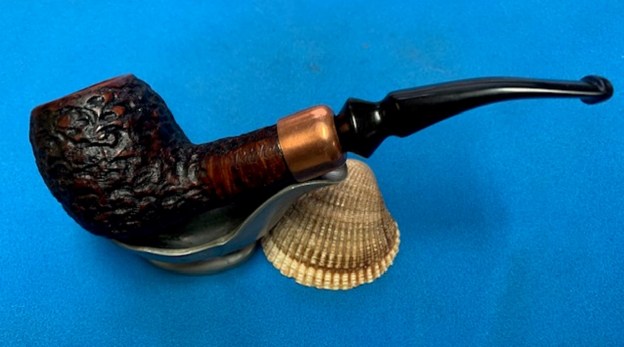
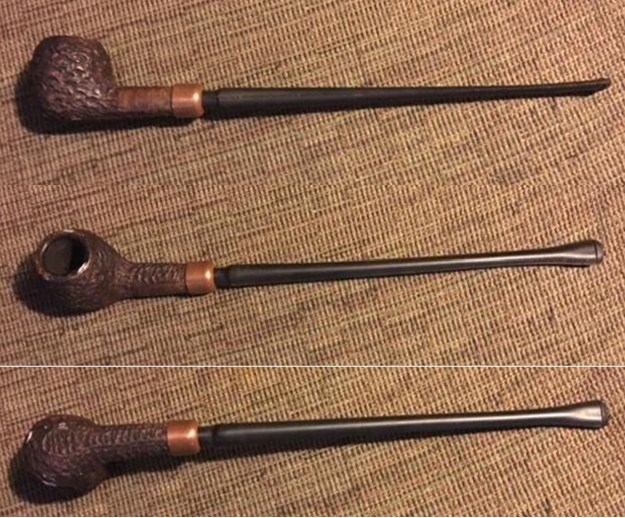
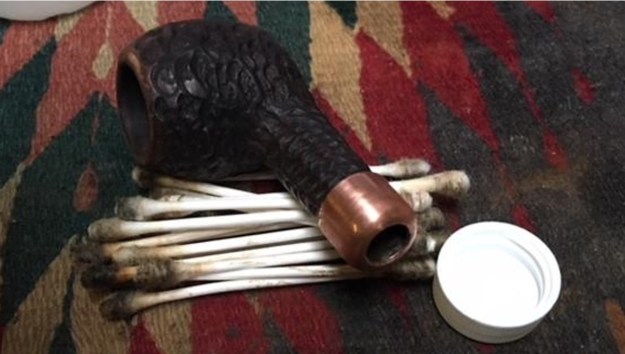
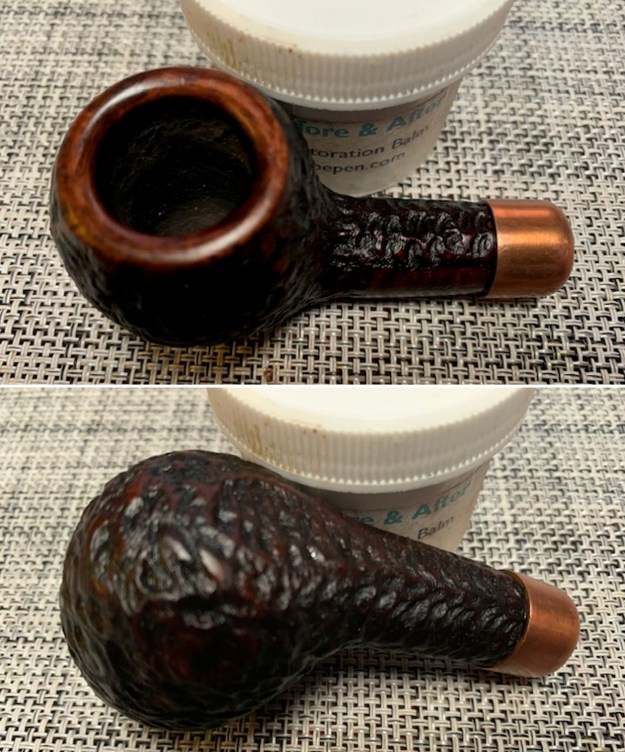
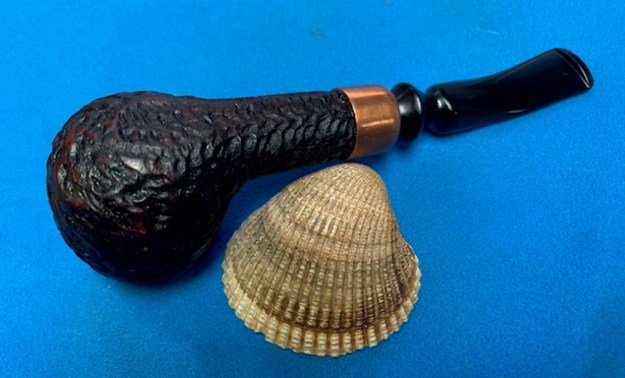
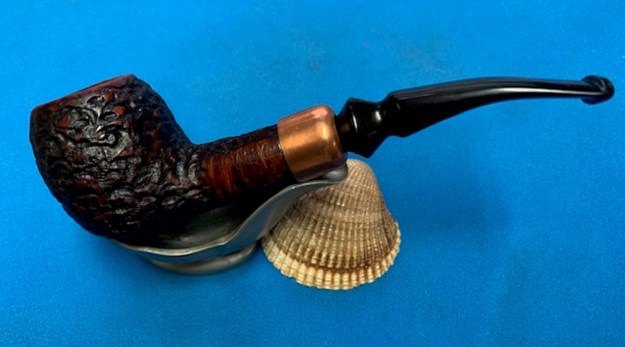
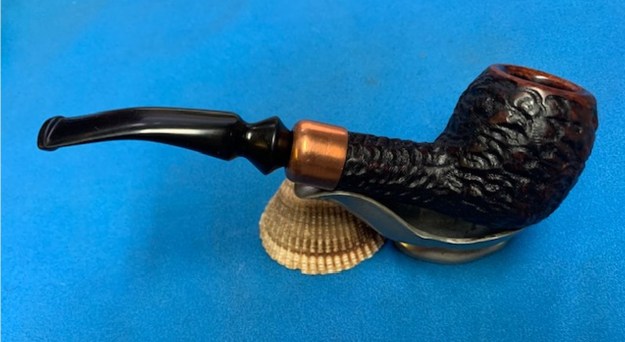
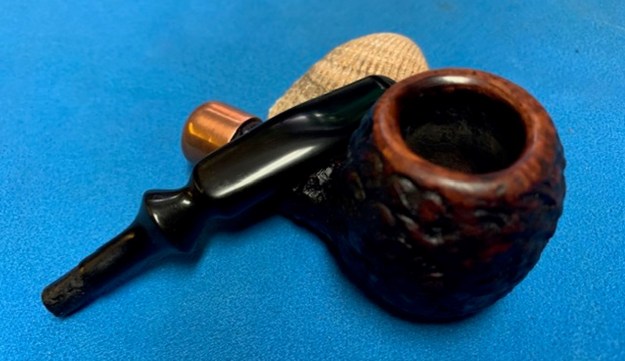
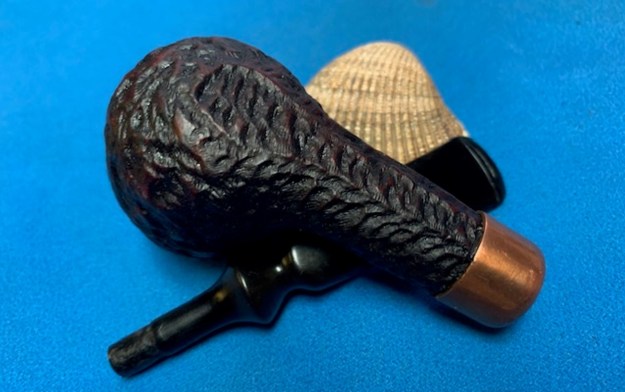
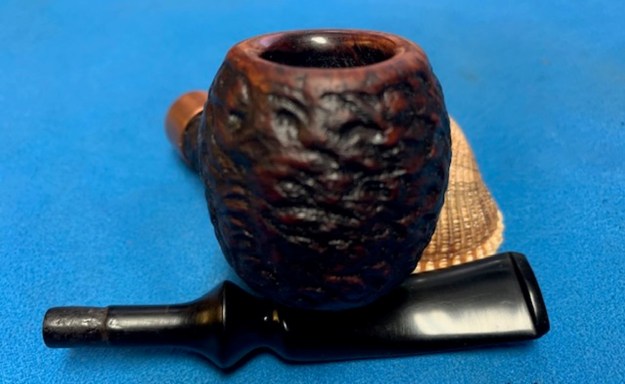
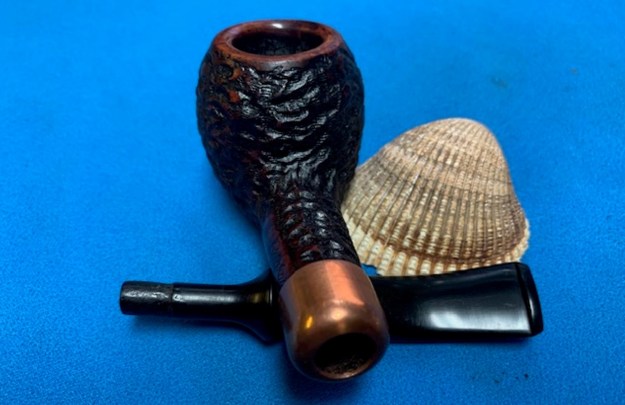
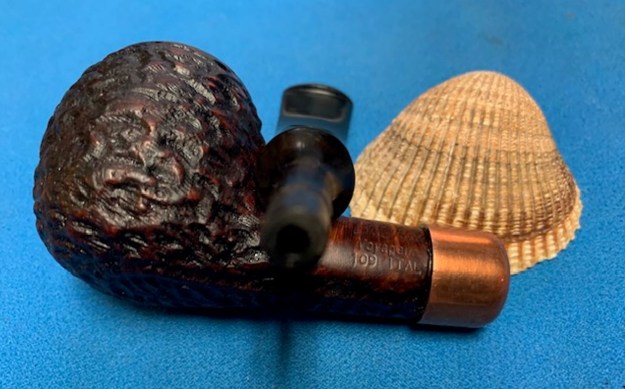
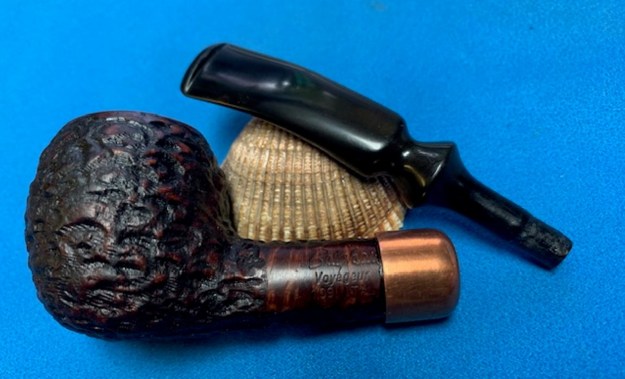
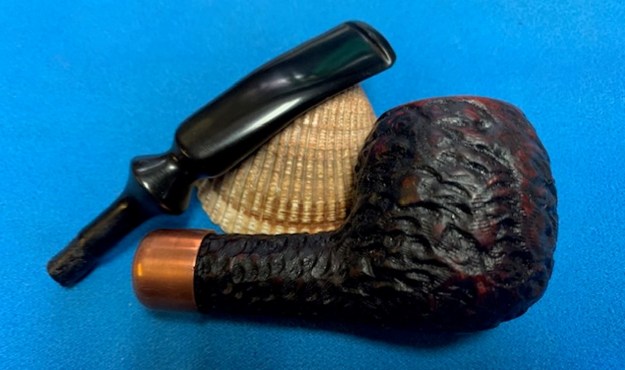
The next pipe I have chosen to work on is a bit of a Frankenpipe – one I have cobbed together from a variety of pipes. A Frankenpipe is simply a pipe composed of parts from a variety of sources. In this case it included a Brigham bowl, a Copper Plumbing fitting as a ferrule and a vulcanite freehand stem. Put together these parts create a totally unique pipe that is more than a total of its parts.

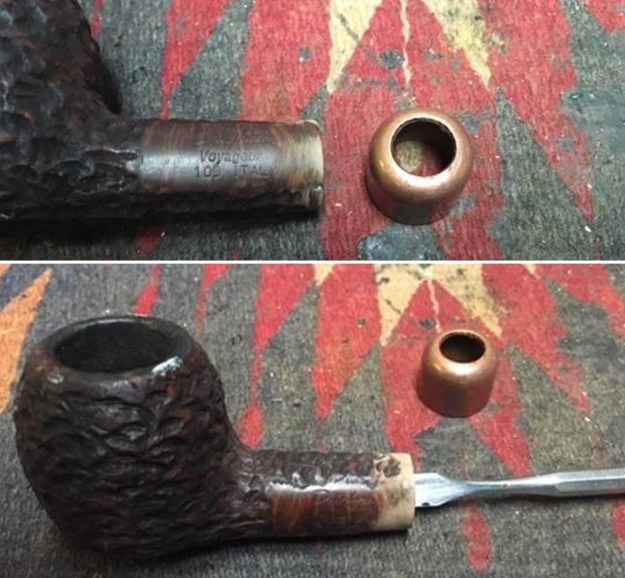
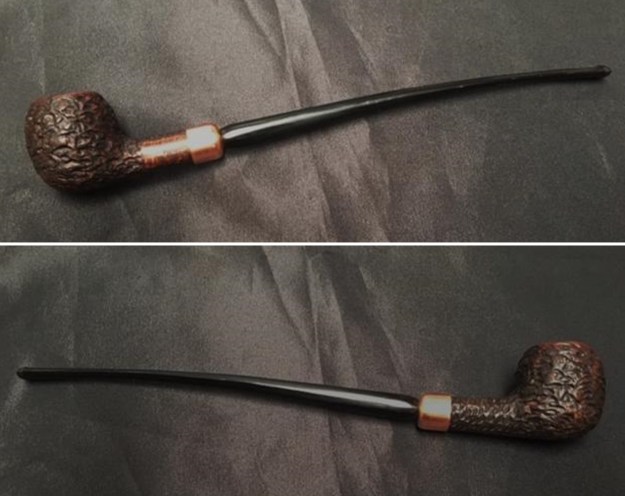
I originally received it in a lot of pipes that I worked on for a fellow here in Vancouver. It was a bowl sans stem that was in a bit of rough shape. I described it as follows when I first received it (https://rebornpipes.com/2018/08/03/converting-a-brigham-voyageur-109-into-a-churchwarden/). The pipe is an apple shaped bowl that is stamped on the left side of the shank and reads Brigham [over] Voyageur [over] 109 Italy in a smooth panel on the rusticated bowl and shank. The shank end had nicks and chips but was in fair condition. There was no stem with the bowl. The stem would have had the lighter weight nylon system tenon since the pipe is one of the Italian made Brighams. It was another one of the fellow’s pipe finds on a recent pipe hunt in Vancouver. The rusticated finish had almost a scale like rustication pattern with flecks of paint in the finish. The rim top was damaged and was darkened toward the back of the bowl. The finish was very dirty and there was a thick cake in the bowl. When I first received the bowl from the fellow we talked about replacing the missing stem with an original Brigham stem. I talked with Charles Lemon and he sent me a stem blank and an aluminum system shank for the Brigham. When it arrived, I talked with the Vancouver fellow about that and together we concluded that a churchwarden stem might look good on it. I ordered some from JH Lowe and found that they only have one diameter size stem. I ordered it and when it arrived it was significantly smaller in diameter than the shank. I had an interesting copper ferrule that I thought might work to provide a different look to the pipe and provide a way of using the smaller diameter churchwarden stem. I slipped the ferrule on the shank and put the stem partially in place in the mortise and took the following photos to send to the fellow to see what he thought. He liked it so I moved forward with the restoration of the bowl and the fitting of the stem. I am including the cleanup description of the work on the bowl as it adds to the story of the next stage of the creation of the new Frankenpipe.I slipped the ferrule off the shank and took a photo of the stamping on the left side of the shank. It is very clear and readable. I sanded the shank to smooth it out for fitting the ferrule. I cleaned out the inside of the shank with a dental spatula to remove the heavy tar buildup on the shank walls. The shank was ready for the new ferrule.I used a heat gun to heat the copper ferrule and pressed it onto the shank end. I repeated the process until it was set on the shank as far as I wanted it to be. To remove the paint flecks on the rusticated finish on the bowl I scrubbed it with a brass bristle wire brush and used a dental pick to remove the flecks. I wiped down the bowl with alcohol on a cotton pad to remove the dust and debris from the finish. I reamed the bowl with a PipNet Piper Reamer using the first two cutting heads to remove the majority of the cake. I cleaned up the remnants on the walls of the bowl with a Savinelli Fitsall Pipe Knife. I used a dowel wrapped with sandpaper to sand down the walls on the bowl. I cleaned out the airway in both the bowl and stem with alcohol (99% isopropyl), pipe cleaners and cotton swabs until they were clean on the inside.When I restored the pipe originally I polished the rim top with micromesh sanding pads – wet sanding with 1500-2400 grit pads and dry sanding with 3200-12000 grit pads. I also polished the smooth portions of the rustication with the micromesh pads at the same time. I rubbed down the briar with Before & After Restoration Balm. I worked it into the finish with my fingertips and finished working it in with a shoe brush. The balm worked to clean, preserve and enliven the surface of the finish on the small bowl. The briar was coming alive so I took some photos of the pipe at this point. I gave the bowl multiple coats of Conservator’s Wax and buffed the bowl with a shoe brush.

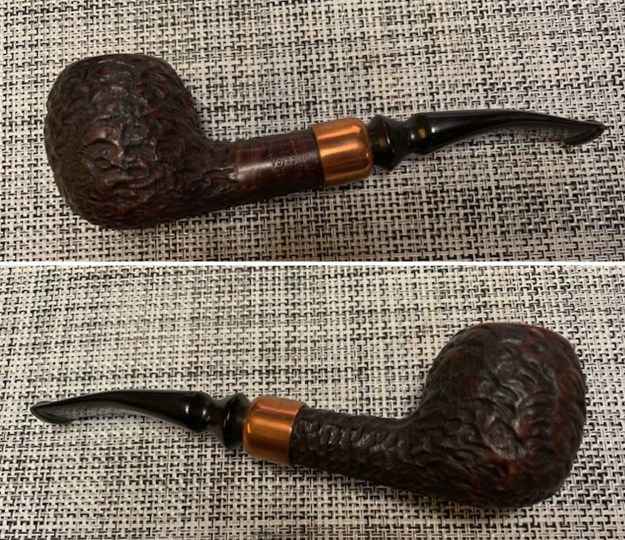
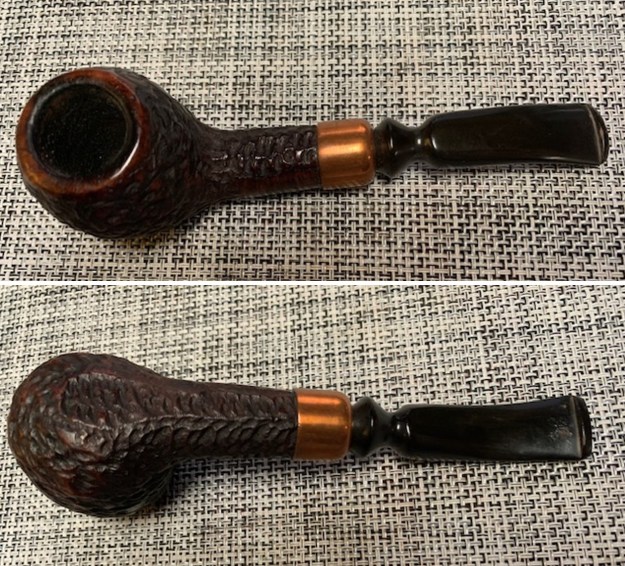
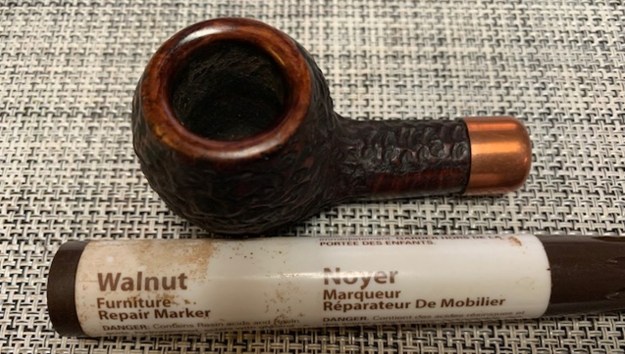
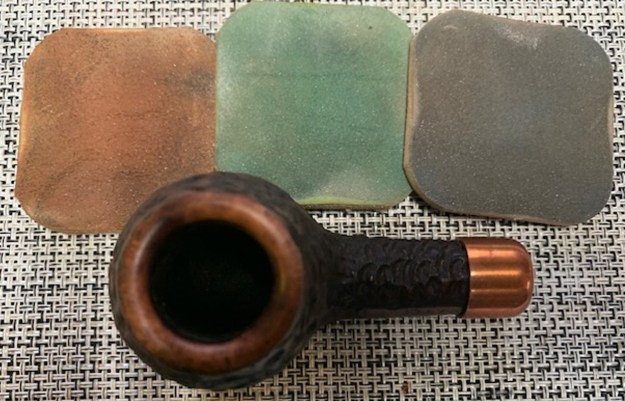
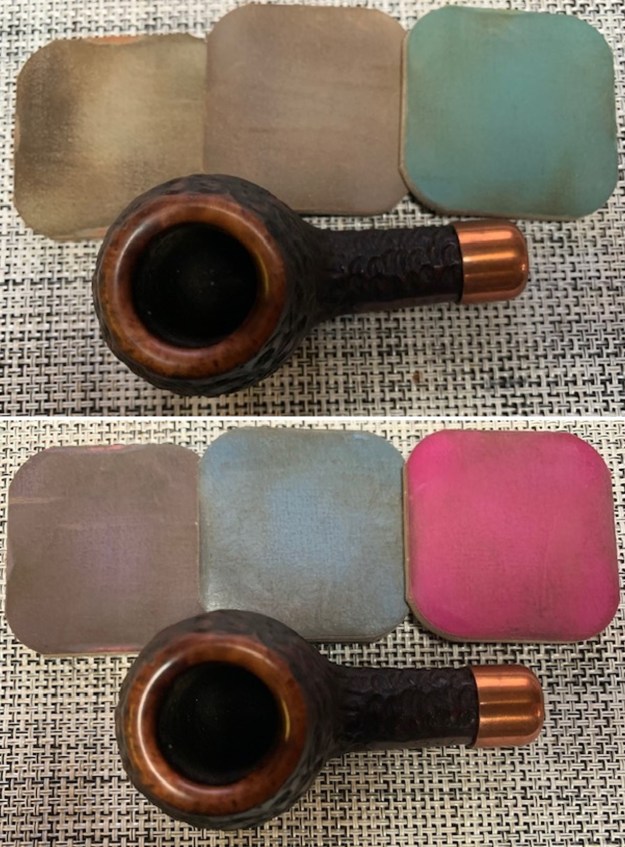
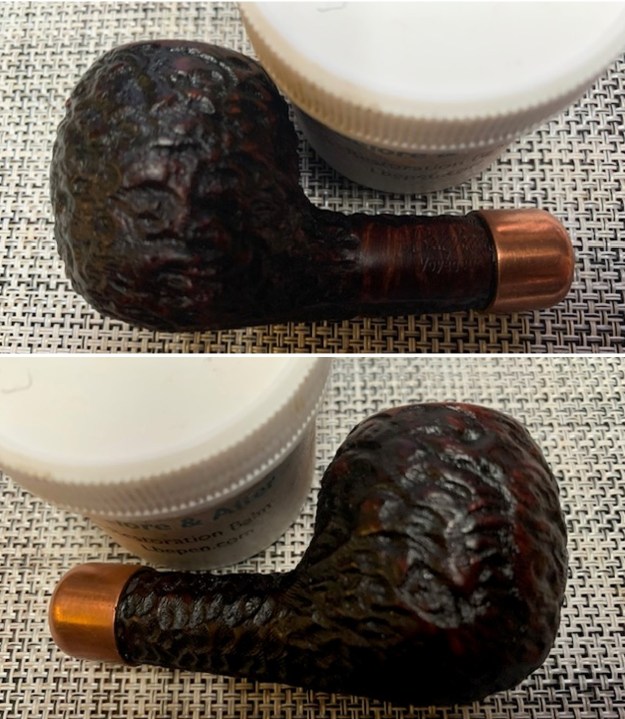
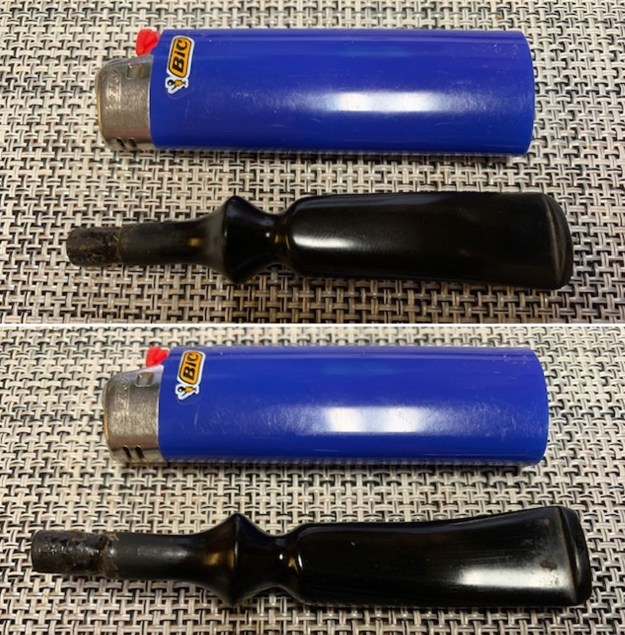
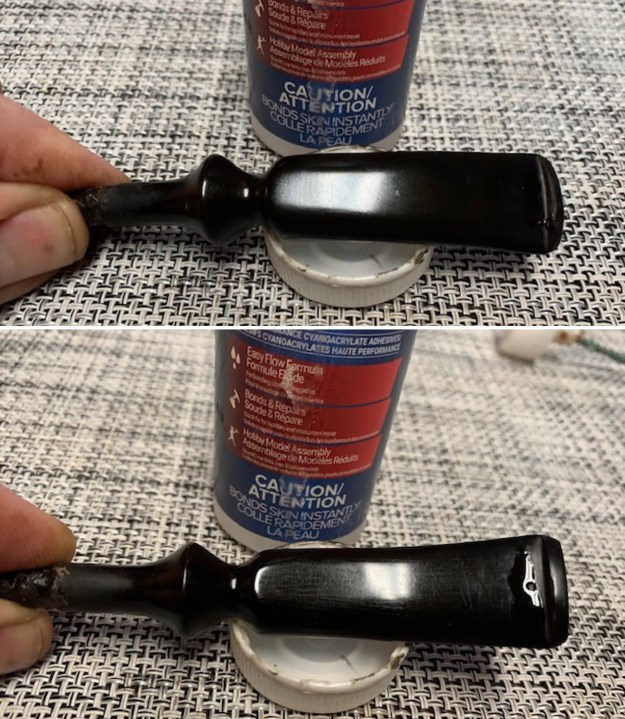
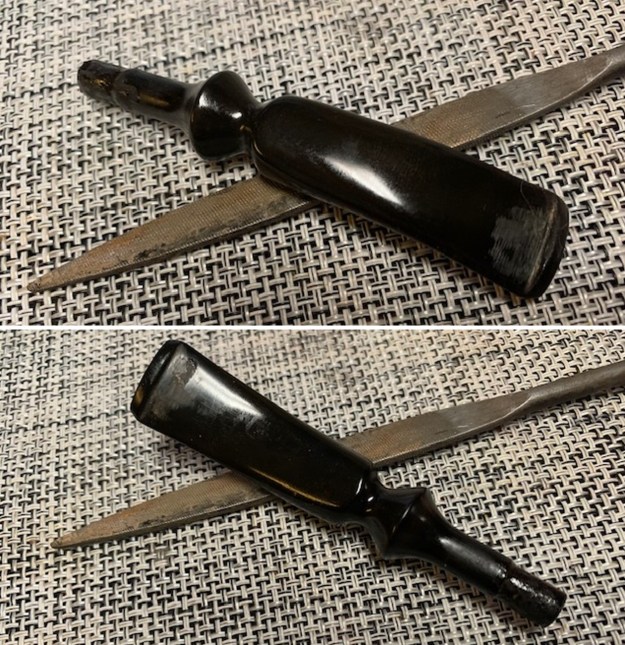
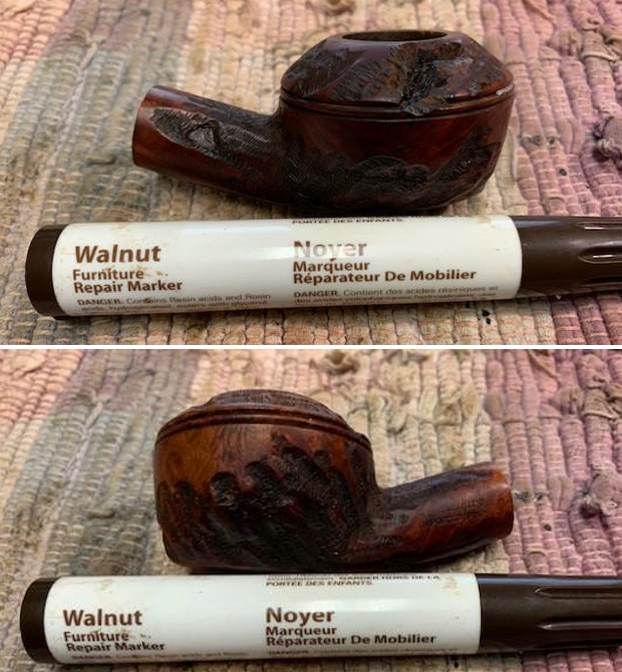
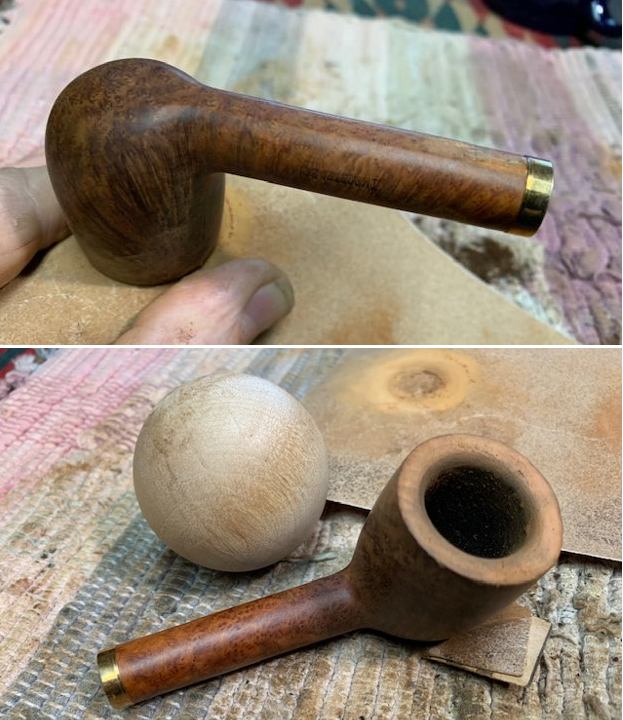
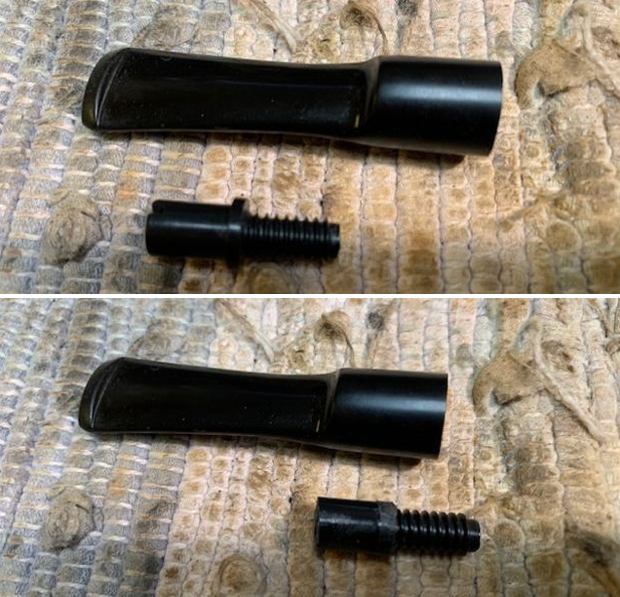
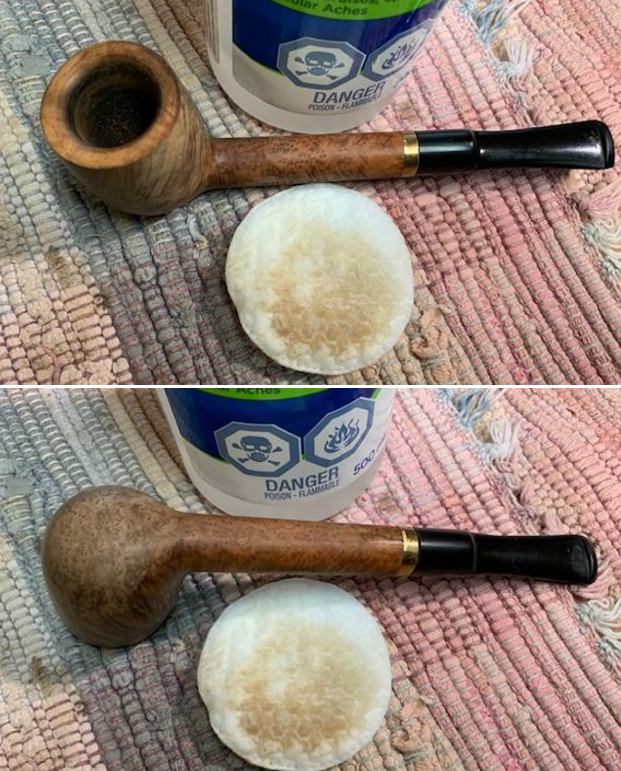
I finished the stem as well and put it in the shank of the pipe. I took photos of it to show the look of the Church Warden that we had designed.The fellow smoked the pipe and enjoyed for a while but decided the Church Warden was not for him. We tried different stems and looks but, in the end, it came back to me. It has been here in a small box on the shelf behind my desktop. I had several stems in the box along with the last stem I had fashioned for it a few years ago. Today I decided it was time to work on it again and finish crafting a new Frankenpipe. I took some photos of the pipe before I started my part of the work. I took some close up photos of the rim top and also of the stem surface. The rim top was and inner edge showed darkening and damage. The bowl was nicked and out of round. I also took close up photos of the stem to show the condition of the stem surface. There were marks and chatter on the stem ahead of the button on both sides.I took a photo of the stamping on the shank side. It read as noted above. When I had placed the copper ferrule earlier I was careful to not cover the stamping on the shank… surprising as I usually don’t worry about that when I am crafting a new pipe from a damaged bowl.I took photos of the elongated tenon on the stem that I crafted for the pipe. I wanted to not use a Brigham system filter so I worked to make a long tenon that left a small gap between the entrance of the airway into the bowl and shank end. It functioned quite well.Now it was time to rework the bowl and rim. I started by cleaning up the inner edge of the bowl with a folded piece of 220 grit sandpaper. I gently topped the bowl with 220 grit sandpaper on a topping board to remove some of the rim damage.I used a wooden ball and a piece of 220 grit sandpaper wrapped around it to give the inner edge of the bowl a bevel to help minimize the burn damage on the briar.I touched the stain on the rim top with a Walnut stain pen to blend it into the surface of the briar. I let it dry before I polished it with micromesh sanding pads.I polished the rim top with micromesh sanding pads. I dry sadded it with 1500-12000 grit pads and wiped it down between the pads with a damp cloth. With that finished the bowl was very clean and the sandblast looked great. I rubbed the bowl and rim down with Before & After Restoration Balm. I worked it into the sandblast surface of the briar with my fingertips and a horse hair shoe brush to clean, enliven and protect it. I let the balm sit for 10 minutes and then buffed with a cotton cloth to raise the shine. I really like watching the Balm do its magic and bring the briar alive. I set the bowl aside and turned my attention to the stem. I “painted” the tooth marks on both sides of the stem with the flame of a Bic lighter and as expected I was not able to lift them at all. I filled in the tooth marks with clear CA glue and let the cure. I flattened out the repairs with a small file to start blending them in. I sanded the areas smooth with 220 grit sandpaper and started polishing with 600 grit wet dry sandpaper, though I forgot to take photos of this part of the process. I polished the stem with micromesh sanding pads – wet sanding with 1500-12000 grit pads. I wiped the stem down after each sanding pad with Obsidian Oil to give the sanding pads some bite. I polished it with Before & After Pipe Stem Polish – both Fine and Extra Fine. I gave it a coat of Obsidian Pipe Stem Oil. It works to keep the stem from oxidizing as quickly. I set it aside to dry. Once again at this point in making Frankenpipes I am excited to be on the homestretch. I look forward to the final look when newly fashioned Brigham Voyageur 109 Apple is put back together, polished and waxed. I put the bowl and stem back together. I lightly polished the bowl and the replacement stem with Blue Diamond. I gave the bowl and the newly fit stem multiple coats of carnauba wax. I buffed the pipe with a clean buffing pad to raise the shine. I hand buffed it with a microfiber cloth to deepen the shine. The pipe polished up pretty nicely. The depths of the rustication come alive with the wax and polish. The shiny black vulcanite stem is a beautiful contrast to the browns of the bowl. This Frankenpipe Brigham Voyageur Frankenpipe with a copper ferrule and modified Freehand stem was fun to create. It really is a quite stunning looking creation. The pipe feels great in the hand will be better when warmed up while smoking. The finished pipe is shown in the photos below. The dimensions of the pipe are Length: 5 ¾ inches, Height: 1 ¾ inches, Outside diameter of the bowl: 1 ¼ inches, Chamber diameter: ¾ of an inch. The weight of the pipe is 1.73 ounces/49 grams. I will be putting it on the rebornpipes store in the Canadian Pipemakers Section if you would like to add it to your rack and carry on the previous pipeman’s legacy. This is an interesting estate to bring back to life.

As always, I encourage your questions and comments as you read the blog. Thanks to each of you who are reading this blog. Remember we are not pipe owners; we are pipe men and women who hold our pipes in trust until they pass on into the trust of those who follow us.
Restemming & Restoring a Yorkshire Imported Briar Bullmoose


Blog by Steve Laug

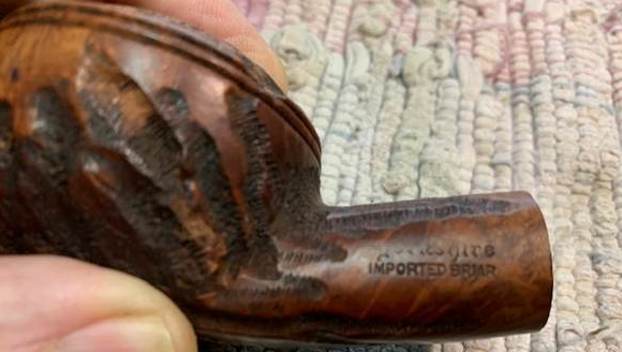
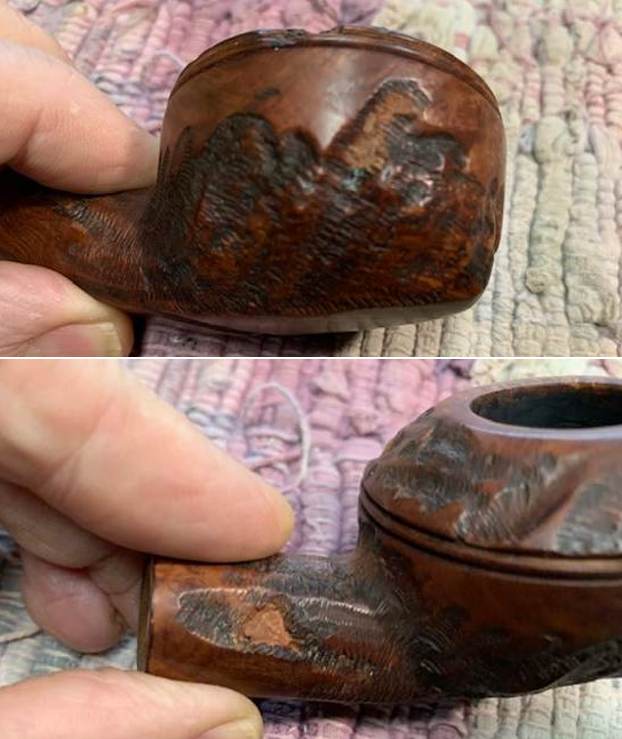
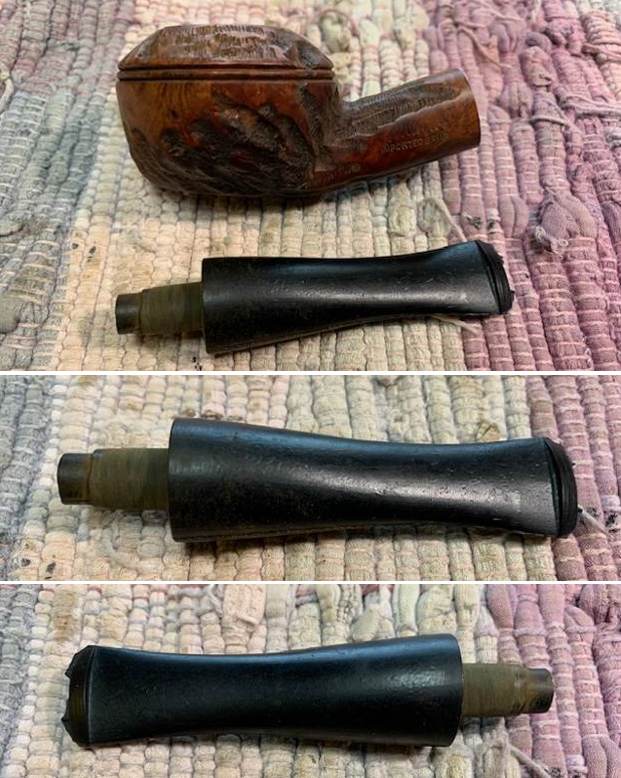
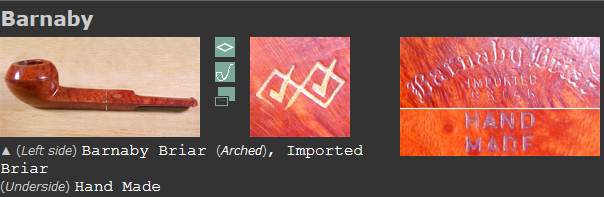
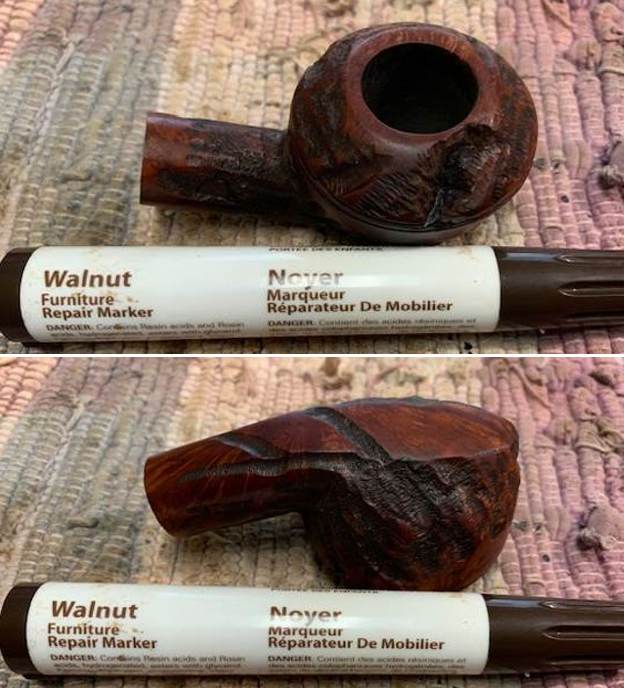
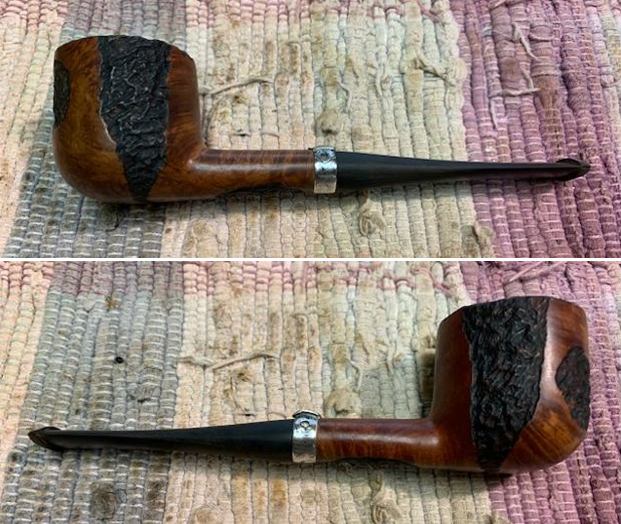
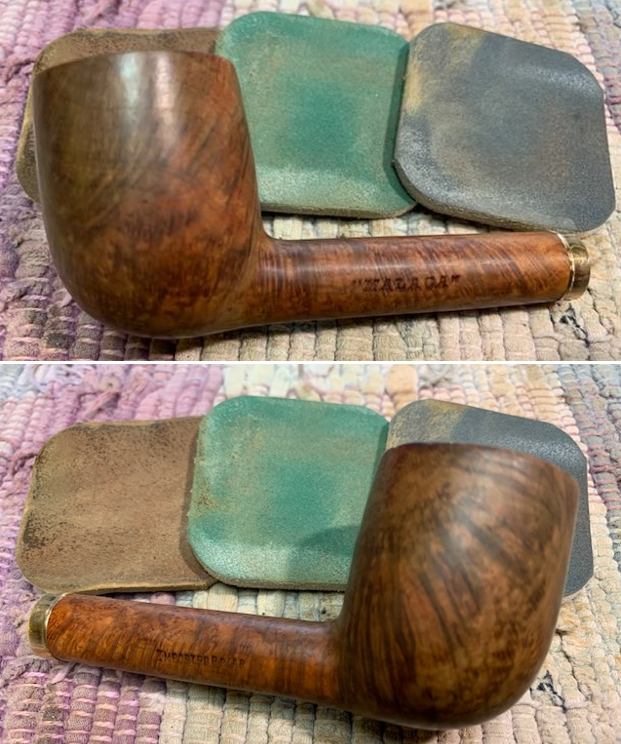
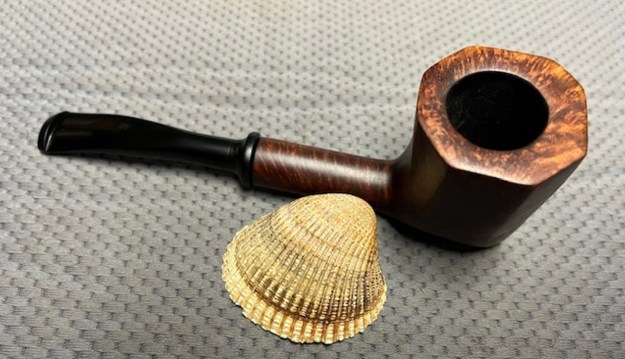
I continue on a restemming binge. I have a box of stummels (bowls) here that I periodically go through and see if I have a potential stem that would fit them. This is the second of the three stummels that took out to restem. The first one was the Malaga Second (https://rebornpipes.com/2022/01/20/restemming-restoring-a-malaga-second-long-shank-billiard/). This particular bowl was a bit of a mystery to me. I honestly don’t remember where or when we picked it up but we had reamed and cleaned it before boxing it. It has a mix of smooth and Custom-Bilt style rustication on the bowl and shank. There were some deep groves and valleys around the bowl and rim. The grain on the smooth portions was quite nice worked well with the deep worm trail style rustication and craters. The rim top and edges were in good condition. The interior of the bowl was clean and there were not any chips, cracks or checking on the walls. The mortise was clean and well drilled with no issues. The finish was clean and the fills in the rustication stood out clearly in contrast to the dark stain. The stamping was clear and readable. On the left side it read Yorkshire (in old English Script) [over] Imported Briar. I took photos of the bowl before I started to work on it. I took a photo of the stamping on the side of the shank. It reads as noted above and is clear and though the Yorkshire stamp is faint it is still readable. I took some photos of the putty fills around various parts of the bowl and shank. Interestingly they were in the rusticated portions of the bowl – probably by design. They would need to be stained to blend them into the surrounding briar.I went through some of stems and found this nice looking taper stem blank that would work with the bowl. It had already been turned with a tenon tool so that portion of the work was finished. I would need to strip back the casting materials on the button and sides of the stem and reduce the tenon diameter slightly but the diameter of the stem itself was very close to that of the shank.I decided to see what Pipephil’s site had on the brand (http://pipephil.eu/logos/en/logo-y.html) and interestingly found two different Yorkshire Brands. The first had a plain stamp on the side of the shank that did not match the one I was working on. The second on had the same Old English Style stamp over Imported Briar. The difference of course was the one in the photo below was an all briar pipe. The one I had was a Custom-Bilt style that would have had a vulcanite stem.I followed the clue on the above screen capture and turned to the section on Barnaby Briars (http://pipephil.eu/logos/en/logo-b1.html#barnaby). There I found out that the company was a Smoking Pipe Retailer located at 28 Powell Str., Brooklyn (NY). They must have had the pipes made by someone else but they carried both the Barnaby Briar and the Yorkshire Imported Briar.Now it was time to work on the stem and fit it to the shank of the pipe. The diameter of the tenon was close. I used a flat file that I have here that works well for me to do the fine tuning of the fit. I used it to straighten out the sides of the tenon next to the surface that face the shank. It worked well and looked much better.I cleaned up the file marks with 220 grit sandpaper and the tenon fit well in the mortise. The fit against the shank was clean but there were spots where the stem diameter was slightly larger than the shank diameter. I worked these over with the file to clean up the transition. The photos below show the fit at this point. Looking better but still a long ways to go. The fit against the shank was better. There were spots where the stem diameter and the shank diameter did not match were greatly reduced. I used a folded piece of 220 grit sandpaper to smooth out the transition even more between the two. I started polishing it with 400 grit wet dry sandpaper. With the fit against the shank and diameter corrected and the stem sanded with 220 and 400 grit sandpaper it was now time to bent the stem to fit the flow of the pipe. I heated the stem with a heat gun on the low setting until the vulcanite was pliable. I bent it to proper angle and then set it with cool water. I polished the stem with micromesh sanding pads – dry sanding with 1500-12000 grit pads. I wiped the stem down after each pad with a cloth and Obsidian Oil. I finished the polishing with Before & After Pipe Stem Polish – both Fine and Extra Fine. I gave it a final coat of Obsidian Oil. I set the stem aside and turned my attention to the bowl. I started by touching up the visible fills. I used a Walnut Stain Pen to fill them in to match the other worm trail rustication around the shank and bowl sides. Once it dried the match was perfect. I worked some Before & After Restoration Balm into the surface of the smooth briar with my finger tips and a horsehair shoe brush. The product is amazing and works to clean, enliven and protect the briar. I let it sit on the briar for 10 or more minutes and then buff it off with a soft cloth. It really makes the grain sing. I put the pipe back together – the bowl with its new stem. This restored Partially Rusticated Yorkshire Bullmoose is a real beauty and the chosen stem works well with it. I don’t have a lot of information on the maker other than it is American made. The grain on the smooth portions of the bowl is quite beautiful and the deep worm trails and rugged crevices came alive with the buffing. I used Blue Diamond on the buffing wheel on both the bowl and stem. I gave both multiple coats of carnauba wax on the wheel then buffed it with a clean buffing pad to raise the shine. I hand buffed it with a microfibre cloth to deepen the shine. The Yorkshire Bullmoose feels great in the hand. It is lightweight and the contrast in the browns of the briar and the polished vulcanite stem is quite amazing. The dimensions of the pipe are Length: 6 inches, Height: 2 inches, Outer diameter of the bowl: 1 ½ inches, Chamber diameter: 7/8 of an inch. The weight of the pipe is 2.19 ounces/63 grams. It really is a beauty. I will be putting it on the rebornpipes store in the American (US) Pipe Makers section shortly if you are interested in adding it to your collection. Thanks for walking through the restemming and the restoration with me. Cheers.

Restemming & Restoring a Malaga Second Long Shank Billiard


Blog by Steve Laug

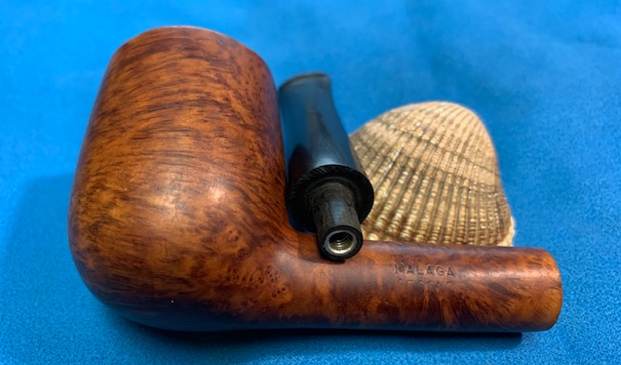
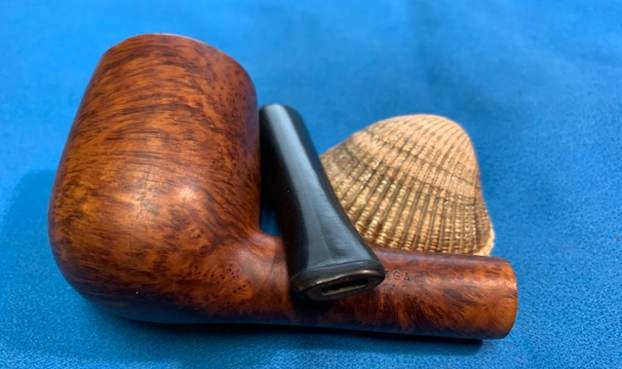
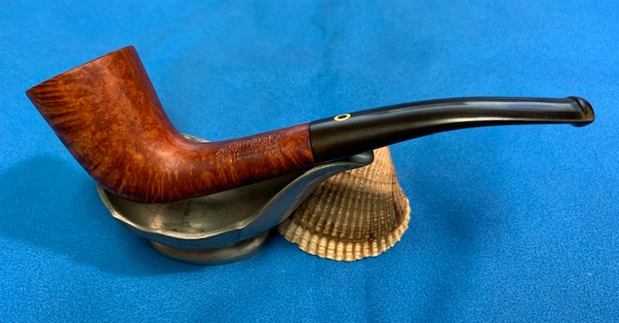
I have been on a restemming binge for the last week or so. I have a box of stummels (bowls) here that I periodically go through and see if I have a potential stem that would fit them. Yesterday when I finished the restoration and restem on the Viking Brandy, I went through the box and picked out three bowls and found workable stems for them. All were in different states of need but all had been thoroughly cleaned before I boxed them up. The first of those that I chose to restem and restore is a lovely Malaga Second Long Shank Billiard stummel. If you have followed me for long you will know that I have worked on a lot of Malaga pipes in the past so I am not a stranger to the brand. This particular bowl is actually quite beautiful and for the life of me I have no idea why is stamped a Second.

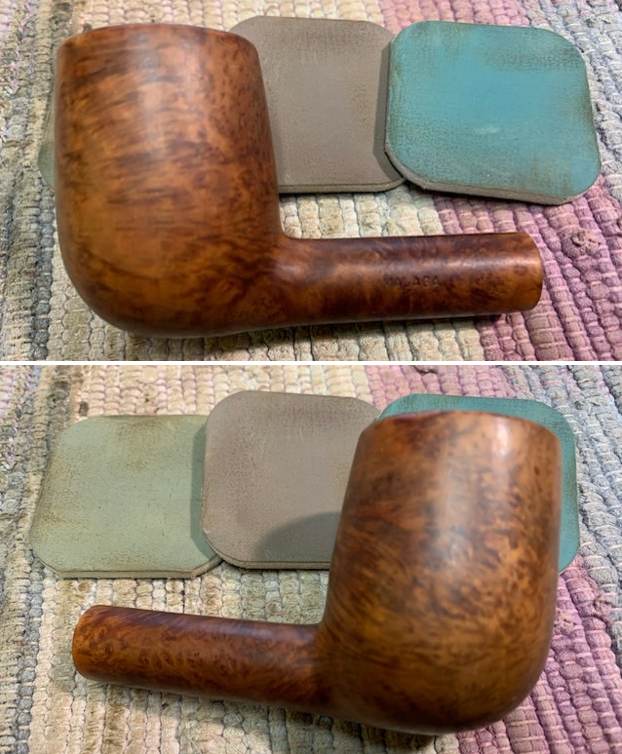
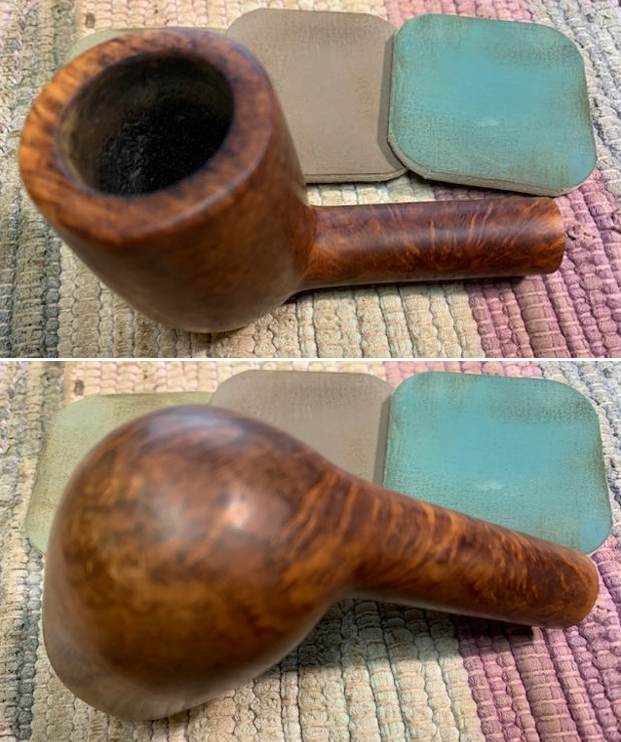
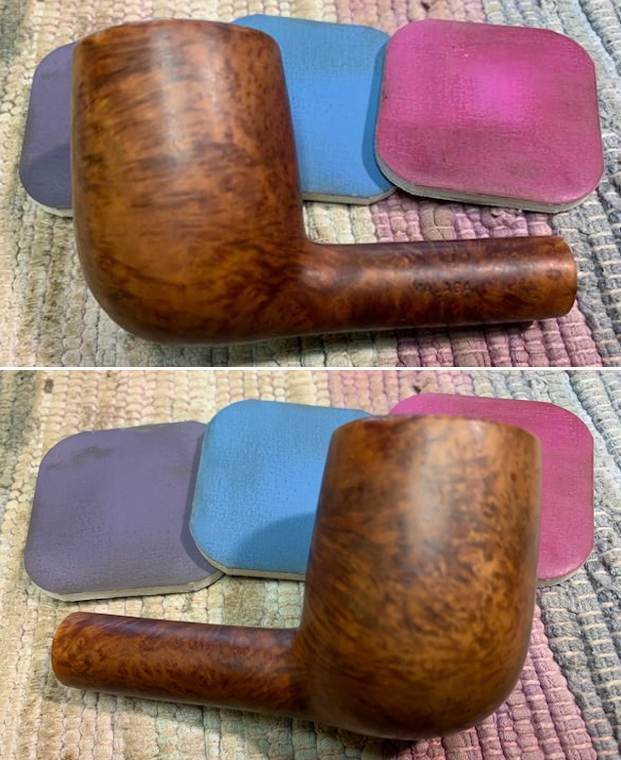
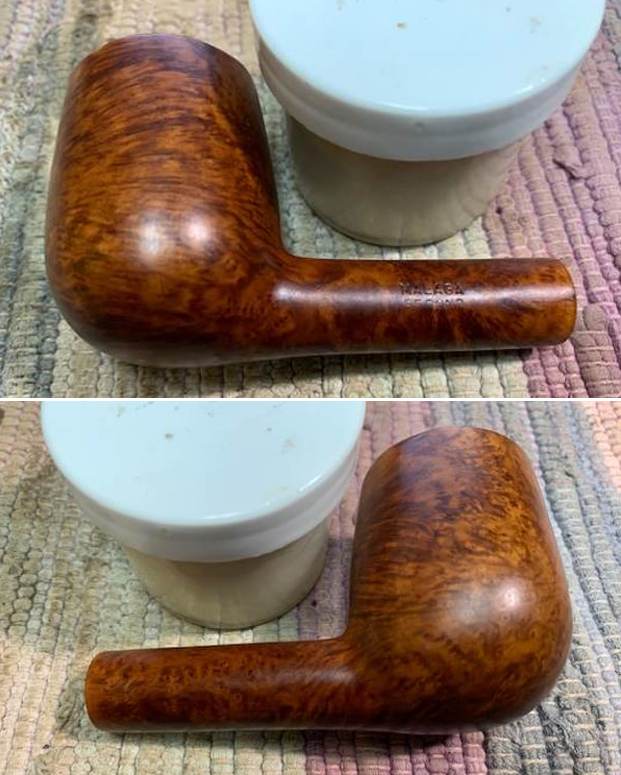
The bowl looked very good. The grain around the sides was quite nice and a mix of cross grain and birdseye grain. The rim top had light damage to the inner edge and some nicks of flaws in the outer edge. The rim top had been beat about a bit and showed the wear and damage and there was darkening around the top and edges. The interior of the bowl was clean and there was some light checking on the walls. Examining the mortise it was clean and well drilled with no issues. The finish was washed out and bit and tired but still quite redeemable. The stamping on the pipe was clear and readable. On the left side it read MALAGA [over] Second. I took some photos of the bowl before I started to work on it. I took a photo of the stamping on the side of the shank. It reads as noted above and is clear and readable.I went through some of stems and found this shorter taper stem that needed some work on the tenon and diameter at the shank but it was exactly what I wanted. It has a few tooth marks and chatter on both sides near the button but it would clean up well. I have worked on quite a few Malaga pipes and blogged their restorations, so rather than repeat previous blogs, I am including the link to one that gives some of the history of the Malaga brand and the Malaga Pipe Shop in Royal Oak, Michigan in the USA from a catalogue. It gives a sense of the brand and the history in their own words. Follow the link to get a feel for the brand and the pipemaker – https://rebornpipes.com/2013/02/09/george-khoubesser-and-malaga-pipes/.

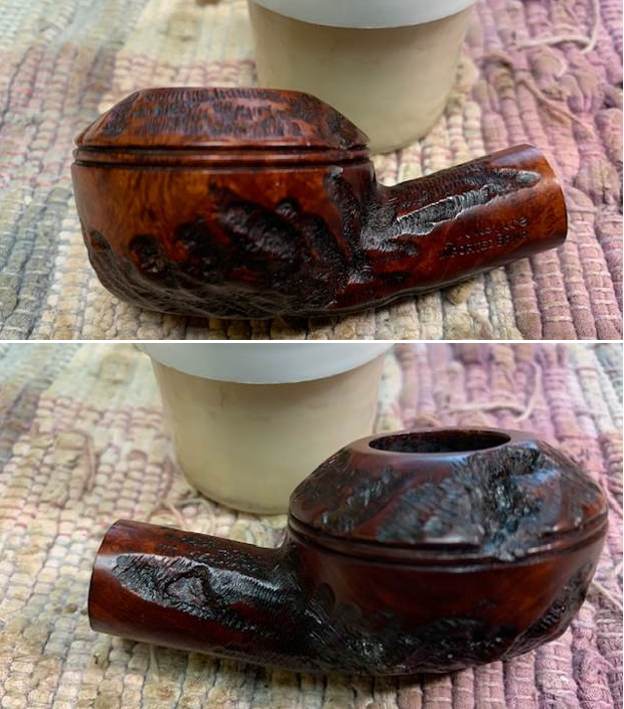
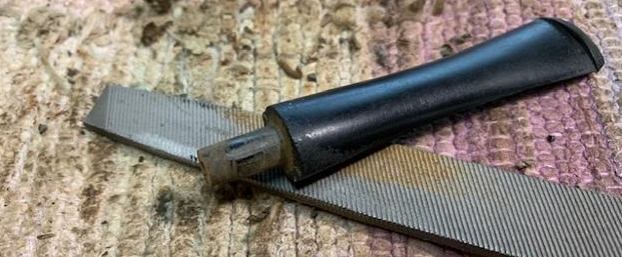
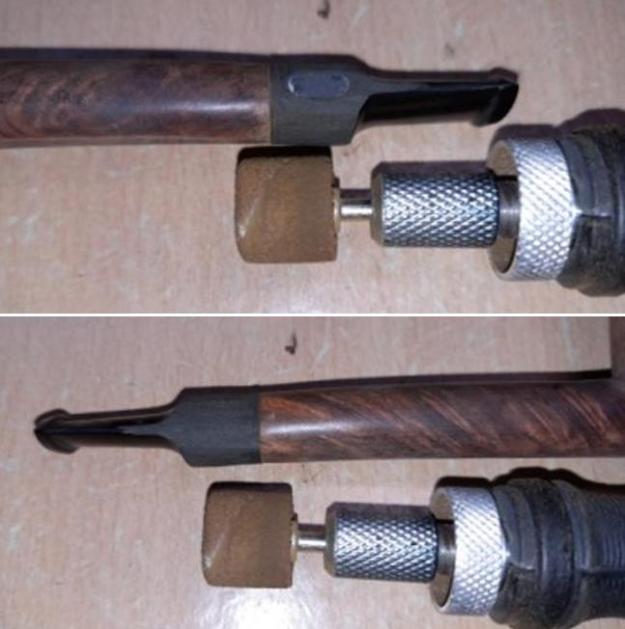
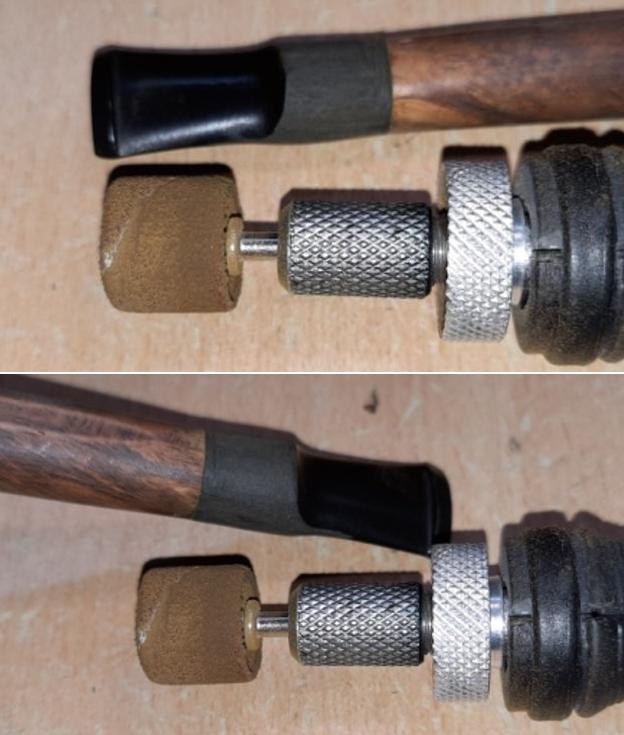
Now it was time to work on the stem and fit it to the shank of the pipe. The diameter of the tenon was close. I used the Dremel and sanding drum to bring it close to a fit and then used two files that I have here that work well for me to do the fine tuning of the fit.I used a piece of 220 grit sandpaper to smooth out the file marks on the tenon and make sure it was round. It is an interesting stem in that it has a tube in the tenon for making it “unbreakable”. I fit it on the pipe and took photos of the fit at this point. The fit against the shank was perfect. There were spots where the stem diameter and the shank diameter did not match. I used a folded piece of 220 grit sandpaper to smooth out the transition between the two so it was smooth.I set the bowl aside and turned my attention to the remainder of the stem. I “painted” the stem surface with a Bic lighter flame to raise the tooth marks. I was able to lift some of them to the surface. I filled in what remained with clear CA glue. Once it cured I flattened the repairs and reshaped the button with a small flat file. I then repaired areas 220 grit sandpaper to blend them into the rest of the surrounding vulcanite. I finished this part of the process by starting the polishing of the stem with 400 grit wet dry sandpaper. I polished the stem with micromesh sanding pads – dry sanding with 1500-12000 grit pads. I wiped the stem down after each pad with a cloth and Obsidian Oil. I finished the polishing with Before & After Pipe Stem Polish – both Fine and Extra Fine. I gave it a final coat of Obsidian Oil. I set the stem aside and turned my attention to the bowl. I started with the rim top issues. I used a folded piece of 220 grit sandpaper to smooth out the inner and the outer edge of the rim. I topped the bowl on a topping board with 220 grit sandpaper to smooth out and minimize the damage on the rim top. The top and edges looked much better at this point in the process. I polished the briar with micromesh sanding pads – dry sanding with 1500-12000 grit pads and wiping it down with a damp cloth after each pad. It really began to shine. I worked some Before & After Restoration Balm into the surface of the smooth briar with my finger tips. The product is amazing and works to clean, enliven and protect the briar. I let it sit on the briar for 10 or more minutes and then buff it off with a soft cloth. It really makes the grain sing. Before I finished the buffing on the pipe I wanted to address the checking on the inside of the bowl. I noticed it while I was taking the photos. Sometimes it is part of the cake and sometimes not. This time I was able to clean out the majority of it with a Savinelli Fitsall Pipe Knife and then sandpaper wrapped around a piece of dowel. There is still some shallow checking on the front of the bowl toward the top and a little on the backside but it is far better and should be good for many years. I cleaned out the bowl, shank and stem with alcohol and pipe cleaners to remove the sanding and scraping debris.I put the pipe back together – the bowl with its new stem. This restored Malaga Second Long Shank Billiard is a real beauty and the chosen stem works well with it. I have no idea why it would be marked a second other than the pits on the rim top. The grain on the bowl is quite beautiful came alive with the buffing. I used Blue Diamond on the buffing wheel on both the bowl and stem. I gave both multiple coats of carnauba wax on the wheel then buffed it with a clean buffing pad to raise the shine. I hand buffed it with a microfibre cloth to deepen the shine. The Malaga Second Billiard feels great in the hand. It is lightweight and the contrast in the browns of the briar and the polished vulcanite stem is quite amazing. The dimensions of the pipe are Length: 6 inches, Height: 2 inches, Outer diameter of the bowl: 1 ½ inches, Chamber diameter: 7/8 of an inch. The weight of the pipe is 1.98 ounces/56 grams. It really is a beauty. I will be putting it on the rebornpipes store in the American (US) Pipe Makers section shortly if you are interested in adding it to your collection. Thanks for walking through the restemming and the restoration with me. Cheers.

Reuniting a Yello-Bole stem with its original Pipe and Restoring the Pipe


Blog by Steve Laug

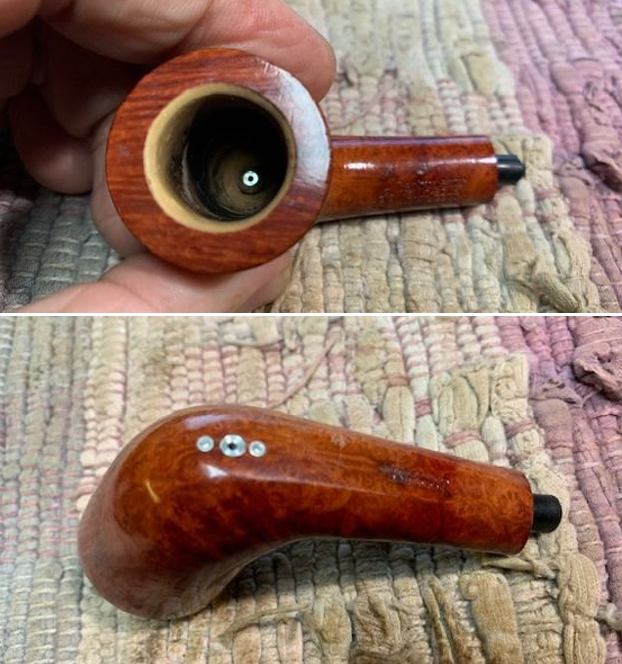
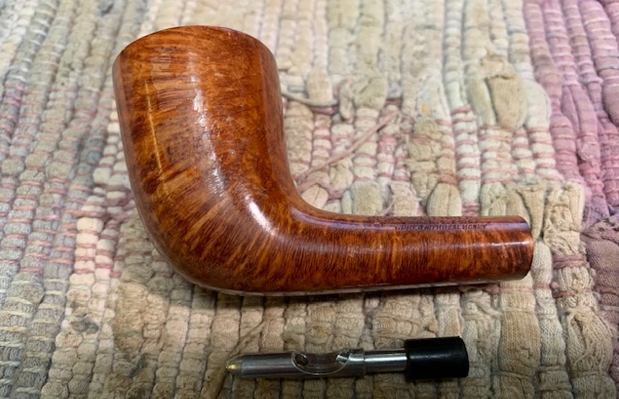
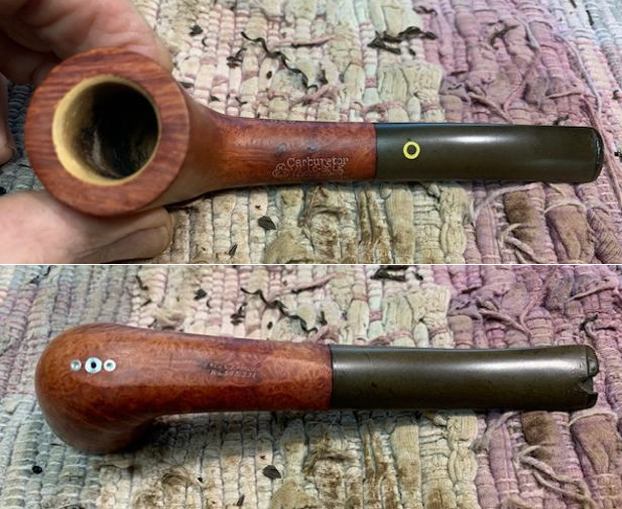
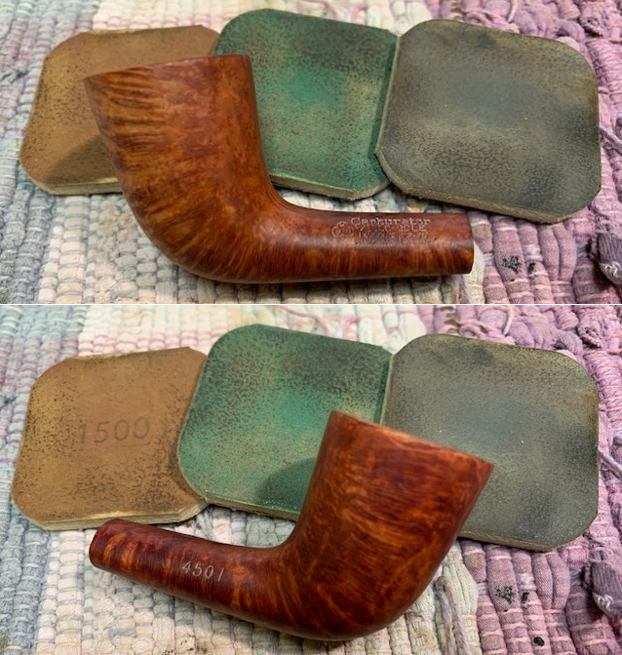
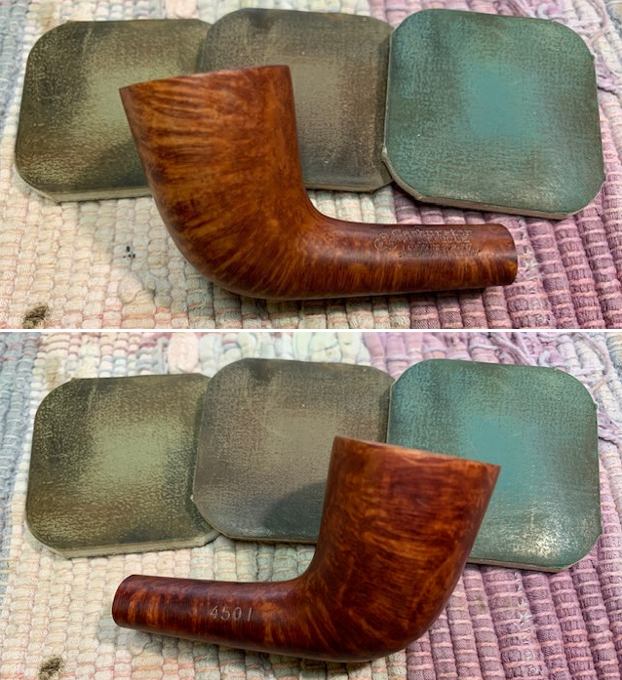
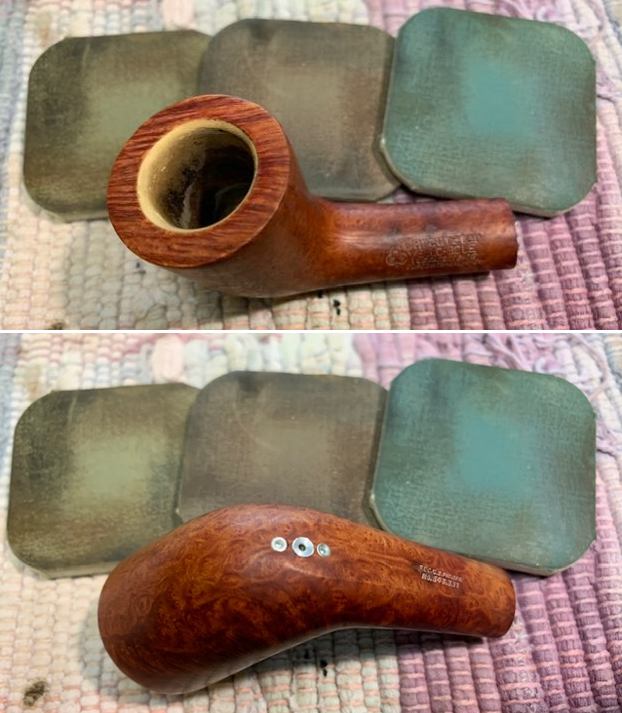
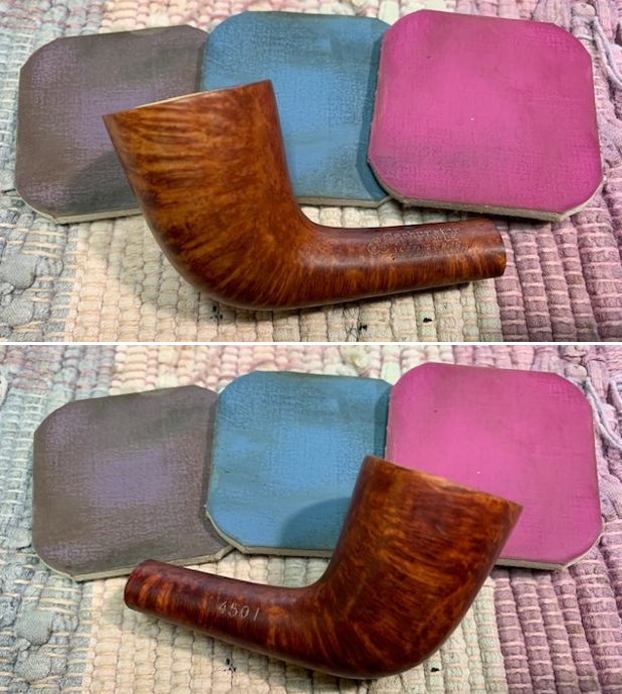
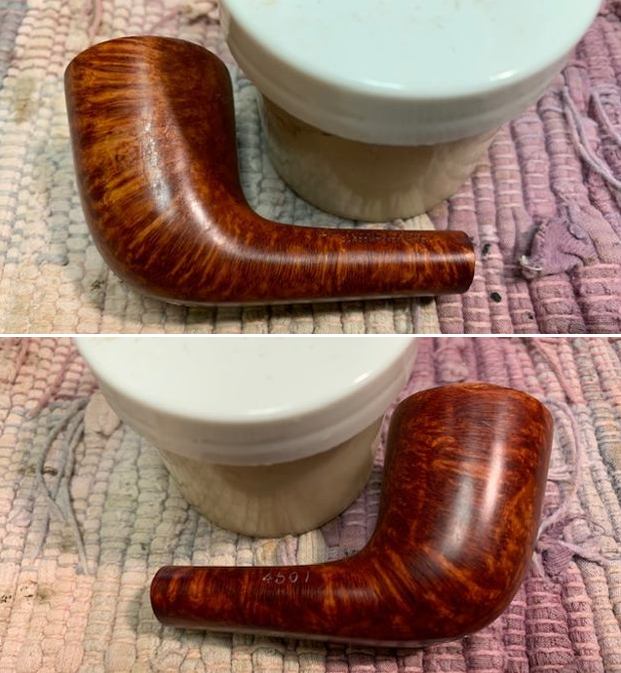
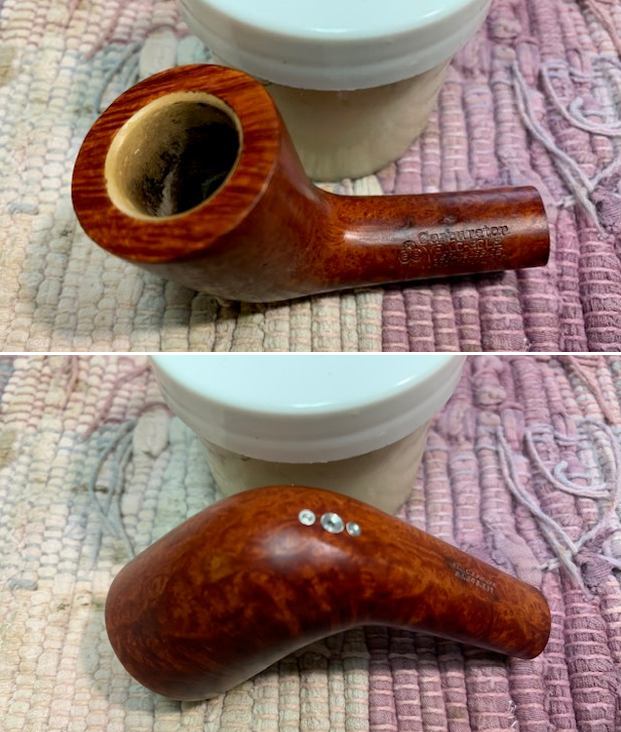
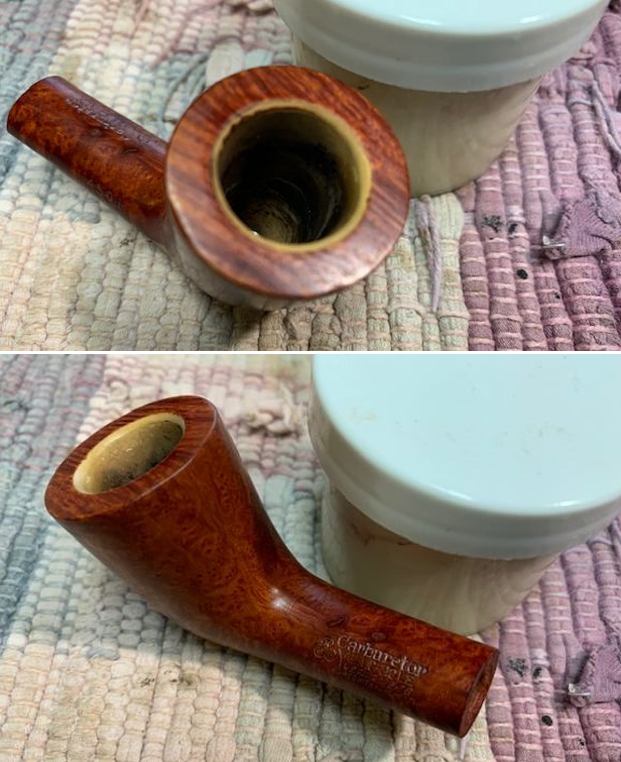
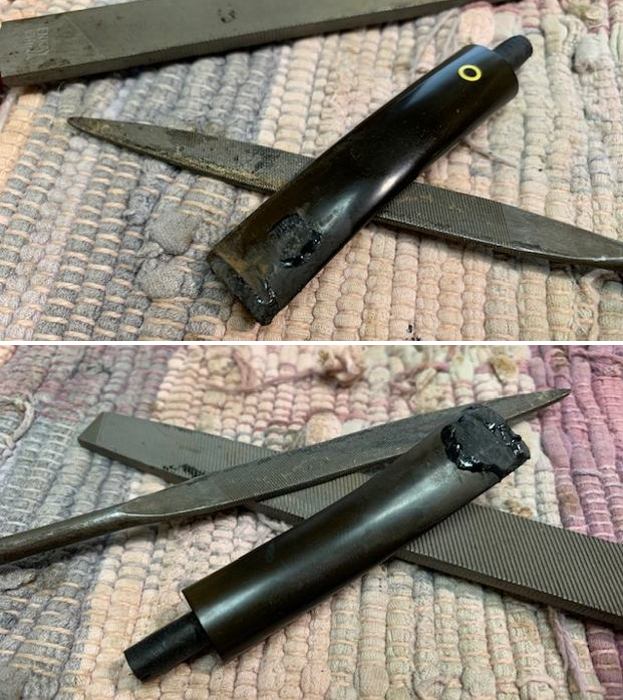
The next pipe on the table is a Carburetor KBB Yello-Bole Zulu. Jeff picked it up on an online auction from New Braunfels, Texas, USA in April of 2016. It has been sitting here since then. You may wonder why once you see the photos below as it is a nice looking pipe. It is stamped on the left side of the shank with KBB in a cloverleaf followed by Carburetor [over]Yello-Bole [over] US. Pat. 2,082,106 [over] Cured with Real Honey. The stamping starts in the middle of the top of the shank and rolls down the side. On the right side it is stamped with the shape number 4501. On the underside it is stamped Reg. U.S. Pat. Off. [over] 343,331. I will have to look up both of the patents and see what I am working with. The finish on the pipe was peeling and flaking off in spots. There was a metal contraption that forms the carburetor on these pipe in the bottom of the bowl and on the heel. The bowl still had the yellow bowl coating. It appeared to have been smoked just a few time so the coating was pretty in tact. There was a light lava coat on the rim top, heavier at the back of the bowl. The inner bevel and outer edge looked very good. The stem was lightly oxidized and had tooth marks on both sides. There was a large chunk out of the underside of the stem at the button. Jeff took these photos of the pipe before he did his work.He took photos of the rim top and the stem surfaces to give a clear idea of what needed to be done with this pipe. The description above is clearly shown in the photos. He took photos of the heel of the bowl to give a clear idea of the carburetor system but also of the beautiful grain on this pipe. It really is a nice piece of briar. Jeff was able to capture the stamping on the shank very well. They are clear and readable. The only photo missing is that of the shape number on the right side of the shank. You can also see the Yellow O on the stem top.Now comes the moment of truth! Somehow (neither Jeff nor I have any memory of this) the tenon had snapped off in the shank and the stem and bowl were separated. Generally when this happens on Jeff’s end he bags the bowl and stem in a sandwich bag to keep them together. But in this case that was not done. It could have broken in transit between Idaho and Canada or I could easily have snapped it when I tried to remove the stem. I too would have bagged the parts together but somehow the two were separated. The bowl went into my box of bowls for restemming and the broken stem went into the can of stems. Seemingly never to meet again.

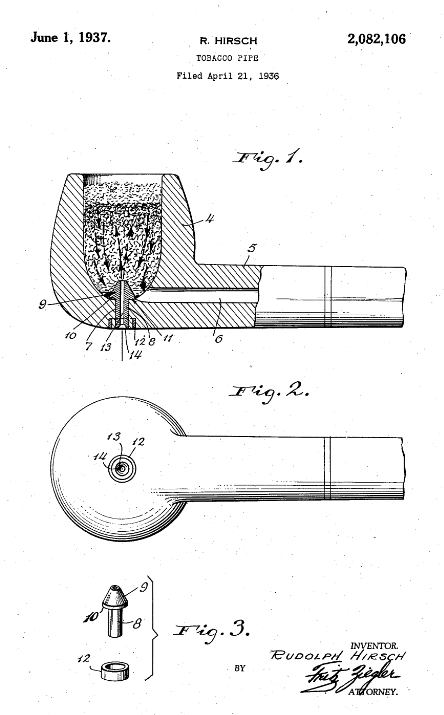
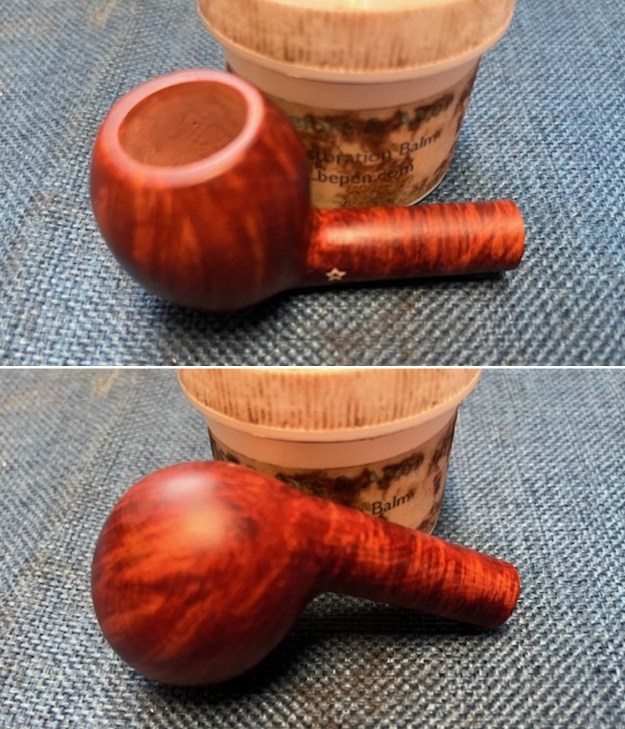
I took the bowl out of the box about a month ago to restem. It had a broken tenon in the shank. So I popped it in the freezer for a little while then pulled the tenon out with a screw. I was surprised to see that it had the stinger apparatus that was in these Yello-Bole pipes still in the broken tenon and it was undamaged. Jeff had done a thorough cleanup on this one so it was in great shape. I took some photos of the bowl before I started looking for a stem for the pipe. I went through my can of stems and found oval shaped stem with a snapped tenon. It was even a Yello-Bole stem so that was a bonus. Or so I thought. I still did not put it together that this was the original stem. I took the broken tenon and stinger and lined it up with the stem. It was a perfect match! Now I knew that it was the original stem and I would be able to unite the parts again. Remember at this point I had not seen Jeff’s before photos that are above showing what the pipe looked like when he bought it. All of this was a bit of a fluke! Once I saw those photos all doubt was removed but I still had no idea how they got separated. I decided to look up the patents on the US Patent site and see what I could find about about them and the date they were filed (https://patft.uspto.gov/netahtml/PTO/srchnum.htm). I searched first for the US. Pat. 2,082,106 that was stamped on the top and left side of the shank. I assumed it referred to the Patent for the Carburetor but I was not certain. I found a drawing and description of the carburetor system of a patent filed by R. Hirsch on April 21, 1936 and granted on June 1, 1937. I have included those pages below. Now I had an idea of a starting date for the age of this old pipe. On the underside of the shank it was stamped with a different Patent No. It read as follows: Reg. U.S. Pat. Off. 343,331 and I had no idea what this patent referred to so I ran it through the same site’s search and found a Paten filed by A. Muller-Jacobs of New York for a coloured varnish finish. The pipe I was working on had a peeling varnish finish so that also fit well with the pipe. The patent itself was granted on June 8, 1886. I have included that document below for your purview.From there I wanted to see if I could set the date with more accuracy. I looked up a blog I had written on a Yello-Bole with a Double Carburetor to see what I had found when I had researched for that pipe (https://rebornpipes.com/2019/08/09/restoring-a-kbb-yello-bole-double-carburetor-bulldog/). I quote that blog in part below.
I Googled the brand and line to see what I could find out. Here is what I found.

The first link to me to the Kaywoodie Group and a thread on dating this particular pipe. There was a helpful exchange between lifeon2 and Bosun about a pipe that is stamped in a similar manner to the one that I have. Here is a link to the full conversation: https://www.tapatalk.com/groups/kaywoodie/dating-yello-bole-pipes-t86.html

lifeon2 writes: OK so there isn’t a lot of dating information for Yello-Bole pipes but here is what I have learned so far.

  1. If it has the KBB stamped in the clover leaf it was made 1955 or earlier as they stopped the stamping after being acquired by S.M. Frank.
  2. From 1933-1936 they were stamped Honey Cured Briar.
  3. Post 1936 pipes were stamped “Cured with Real Honey”
  4. Pipes stems stamped with the propeller logo they were made in the 30s or 40s no propellers were used after the 40s.
  5. Yello Bole also used a 4 digit code stamped on the pipe in the 30s.
  6. If the pipe had the Yello Bole circle stamped on the shank it was made in the 30s this stopped after 1939.
  7. If the pipe was stamped BRUYERE rather than briar it was made in the 30s.

(Information gathered from Pipedia – https://pipedia.org/wiki/Yello-Bole)

Bosun replies: the one I have is stamped on the left side of shank:

  1. Double Carburetor
  2. yello-bole
  3. u.s.pat.off
  4. with KBB to the left of the above

underside of shank has Cured with Real Honey

right side of shank has 4907

on top of stem is the white circle

lifeon2 replies: According to the list  I have it looks like you have a late 30s model, sweet

I also turned to a blog by Andrew Selkirk on rebornpipes that also added a degree of certainty to the date of manufacture of this pipe (https://rebornpipes.com/2015/05/03/1934-35-yello-bole-carburetor/).

I can say with a fair degree of certainty that this pipe is from 1934 or 35. The carburetor patent was granted in 1935, this pipe is stamped “Pat Applied For.” Interestingly enough, it also has a patent number on the bottom of the shank. Additionally, the four digit number was used by Kaywoodie until 1936. The first two numbers indicate the finish and the second two numbers indicate the shape.

With that information in hand I knew what I was dealing with in terms of age of this pipe. I knew from the information from Pipedia that the KBB in a clover leaf stamp meant that the pipe was made before 1955. The Cured with Real Honey stamp placed the pipe as 1936 or after. The four digit shape code was used until 1936. The shape code on this one was 4982 thus it is another argument for 1936. The patent was given to KBB in 1935 so the stamped “Reg. US Pat. Off also places the pipe after 1935.

The information that I have gathered helps me to know with a high degree of certainty that this Carburetor pipe was made in 1936. The four digit shape number and the patent information that I have included helped identify that with certainty. I also learned that the first two numbers indicate the finish and the second two numbers indicate the shape.

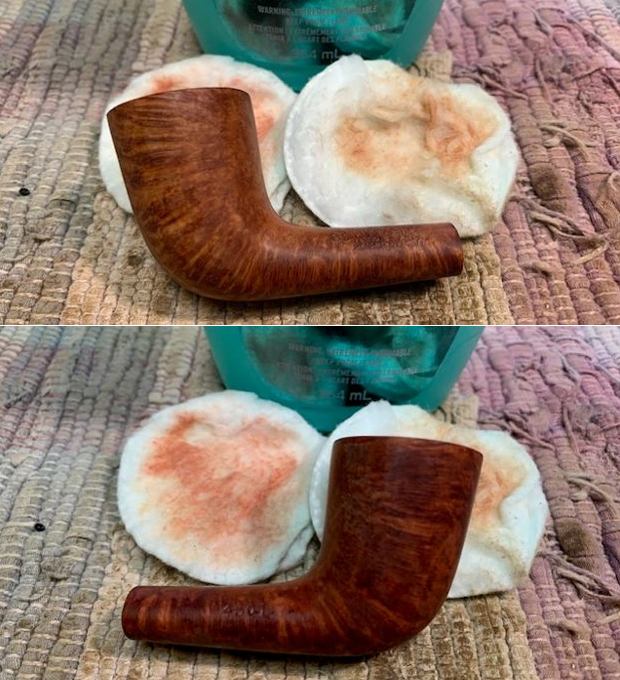
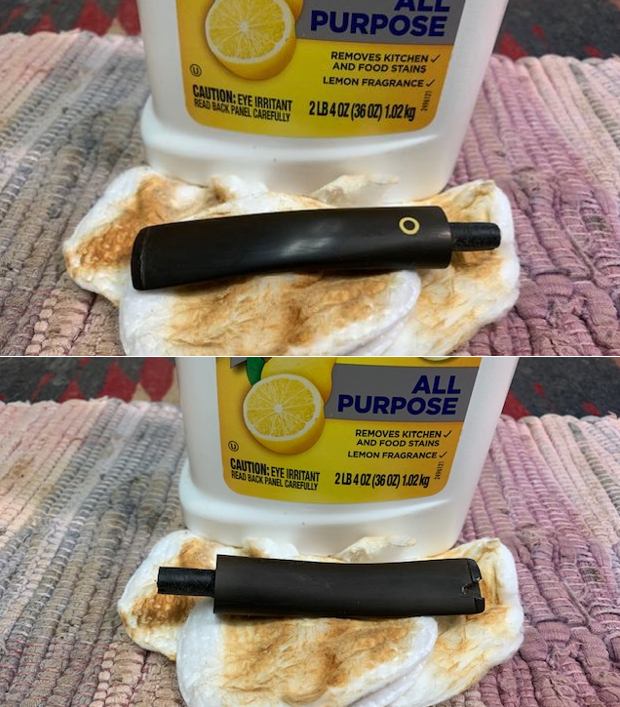
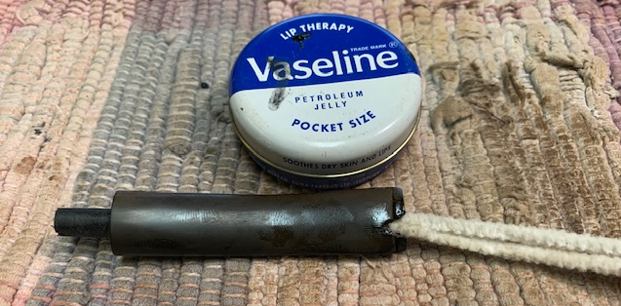
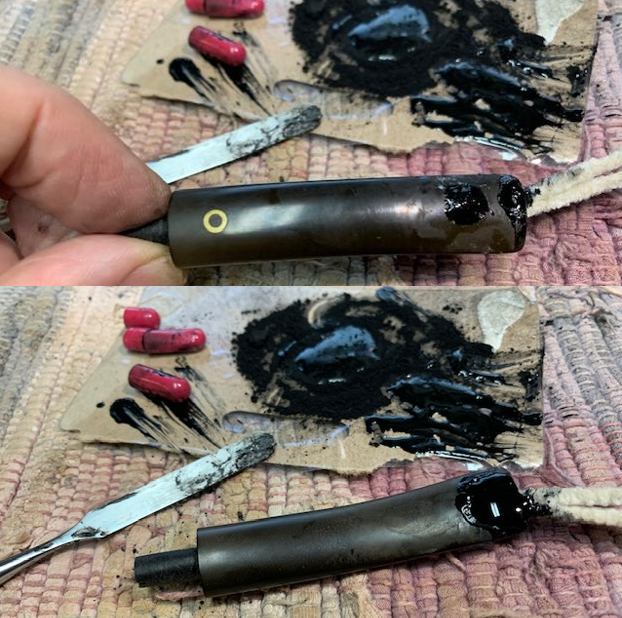
Now it was time to work on the pipe. I removed the peeling varnish with some fingernail polish remover (acetone). It came of nicely and left behind a nice looking piece of briar. With that finished I set the bowl aside and turned to deal with the hardest part of this work. I needed to replace the broken tenon in the stem and I needed to repair the chip out of the underside at the button. Both would require time for the repair to cure. I decided to do the tenon replacement first. I unscrewed the stinger from the broken tenon and chose a new tenon for the replacement. I used a threaded tenon. I used a Dremel and sanding drum to remove the shoulder on the new tenon and reduce the diameter to match the broken tenon. I screwed the tenon in the new tenon and the fit was perfect. Now it was time to drill out the stem.I smoothed out the broken edge with a Dremel and sanding drum. I drilled out the airway using increasingly larger drill bits to open up the airway the depth of the threaded portion of the tenon.I reduced the diameter of the threaded portion of the tenon with the Dremel and sanding drum until the fit in the drilled out stem was snug. I coated the tenon with black super glue and put the parts together to check on the fit and look of the new tenon. I set it aside to cure while I took a break and enjoy a coffee.After coffee it was cured and I put the stem on the shank to have a look at the fit! The fit was really good and the parts looked like they belonged together. Now it was time to work on the next part of the stem repair. I took the stem off the bowl and unscrewed the tenon. I scrubbed the oxidation on the stem with Soft Scrub to get a clean surface to do the repair.I greased a folded pipe cleaner with Vaseline Petroleum Jelly so that it the repair would not stick to it. I inserted it in the slot and spread it out under the chipped area.I mixed a batch of Black super glue and activated charcoal powder to make a paste. I filled in the deep tooth mark on the top side of the stem and the button edge. I turned the stem over and layered in the fill on the chipped area. I sprayed the repairs with an accelerator to harden the super glue and give it a hard shell so that I could remove the pipe cleaner. I purposely overfill this kind of repair so that I have room to work on the shaping of the button and the stem surface. Once it was hardened to touch I pulled the folded pipe cleaner free and set the stem aside for the repair to cure. Tomorrow I will work on shaping the repaired area into a proper button.I set the stem aside to cure further and turned my attention to polishing the bowl – I dry sanded it with 1500-12000 grit micromesh sanding pads. I wiped the bowl down after each pad with a damp cloth to check the progress and remove the sanding debris. It was looking very good. I rubbed the bowl and shank down with Before & After Restoration Balm. I worked it into the surface of the bowl sides and shank with my fingertips to clean, enliven and protect the briar. I let the balm sit for about 10-15 minutes and buffed with a cotton cloth to raise the shine. The grain came alive. I set the bowl aside and turned my attention to reshaping the stem. I used files to do the initial shaping and remove the excess repair material. I sanded out the file marks and shaped the button with 220 grit sandpaper to blend them into the surface of the vulcanite. I started polishing it with 400 grit wet dry sandpaper. I polished the vulcanite stem with micromesh sanding pads – 1500-12000 grit pads. I wiped it down with Obsidian Oil after each sanding pad. I used Before & After Pipe Polish – both Fine and Extra Fine to further polish the stem. This nicely grained Yello-Bole 4501 Zulu turned out to be a great looking pipe now that it has been restored. (The yellow in the bowl is a bowl coating not a Meerschaum lining).The grain around the bowl and shank is quite beautiful and works well with both the shape and the polished and repaired vulcanite taper stem. With the tenon replaced and the stem rebuilt on the button end it looked very good. I put the stem back on the bowl and carefully buffed the pipe with Blue Diamond on the buffing wheel. I gave the bowl and the stem multiple coats of carnauba wax on the buffing wheel and followed that by buffing the entire pipe with a clean buffing pad. I hand buffed the pipe with a microfiber cloth to deepen the shine. The finished Yello-Bole Zulu is another pipe that fits nicely in the hand and feels great. Give the finished pipe a look in the photos below. The dimensions of the pipe are Length: 5 ½ inches, Height: 1 ¾ inches, Outside diameter of the bowl: 1 ¼ inches, Chamber diameter: ¾ of an inch. The weight of the pipe is 25g/.88oz.  I will be putting it on the rebornpipes store shortly. You can find it in the American (US) Pipe Makers Section. If you are interested in adding this pipe to your collection send me a message or an email. Thanks for reading this blog and my reflections on the pipe while I worked on it. There are many more to come!

Restemming & Restoring a Malaga Mixed Finish Pot  


Blog by Steve Laug

This morning I went through my box of stummels (bowls) here and picked out a Pot shaped bowl that had some promise to me. I went through my can of stems and found an oval shaped stem with the casting marks on the sides and button end. The pipe I chose to work on is an interesting Malaga Pot with a mixture of rusticated portions and smooth portions on the bowl and shank sides. I have worked on a lot of Malaga pipes in the past so I am not a stranger to the brand. I have included the link below to a bit of history on the brand that I compiled.

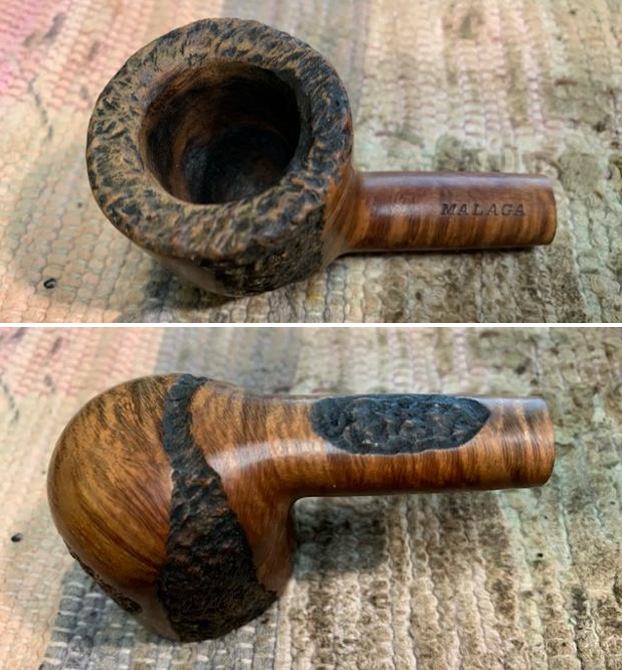
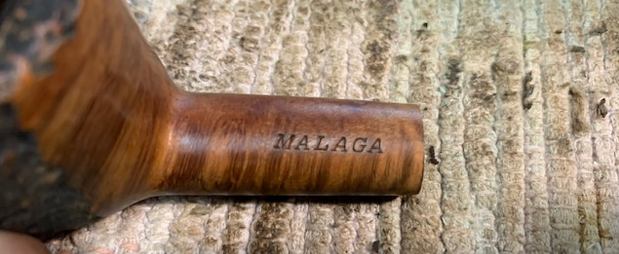
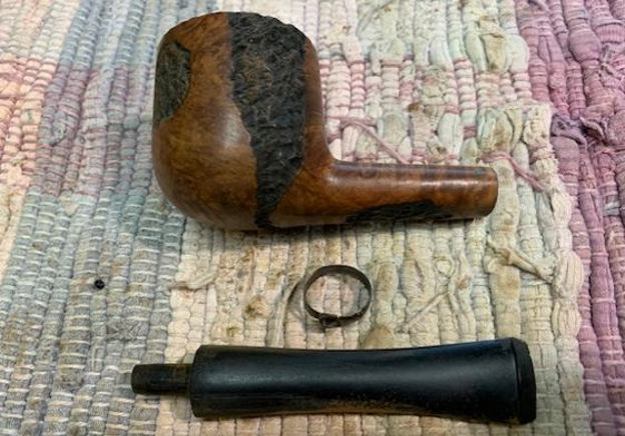
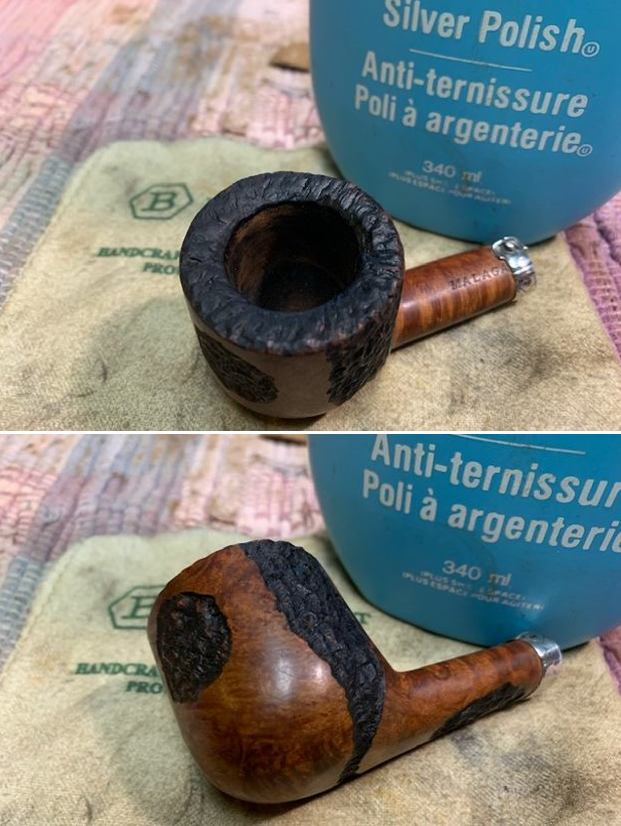
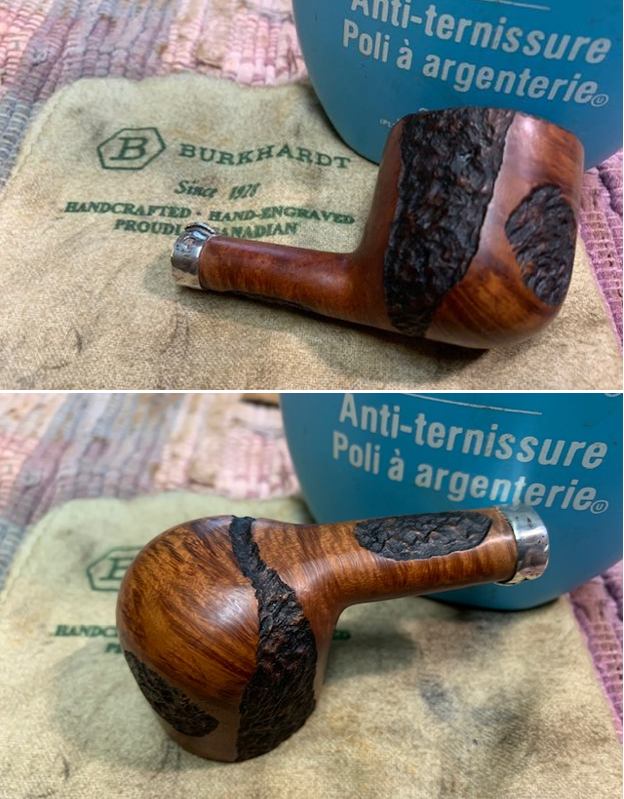
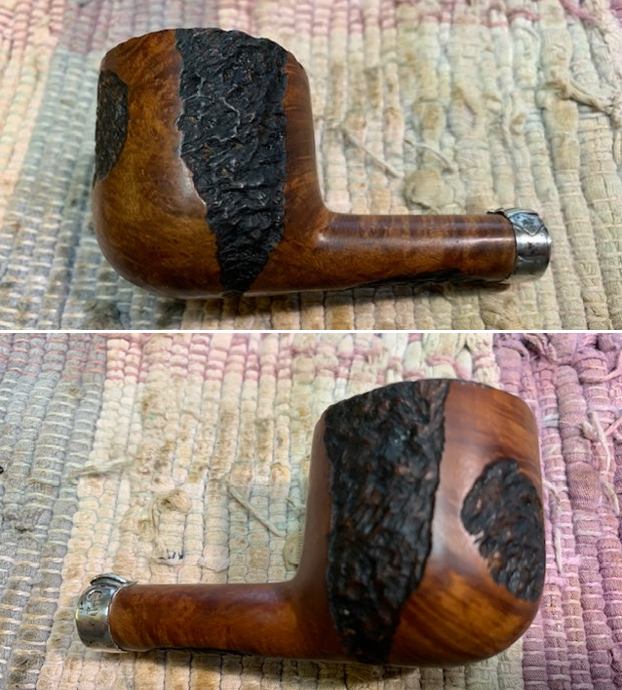
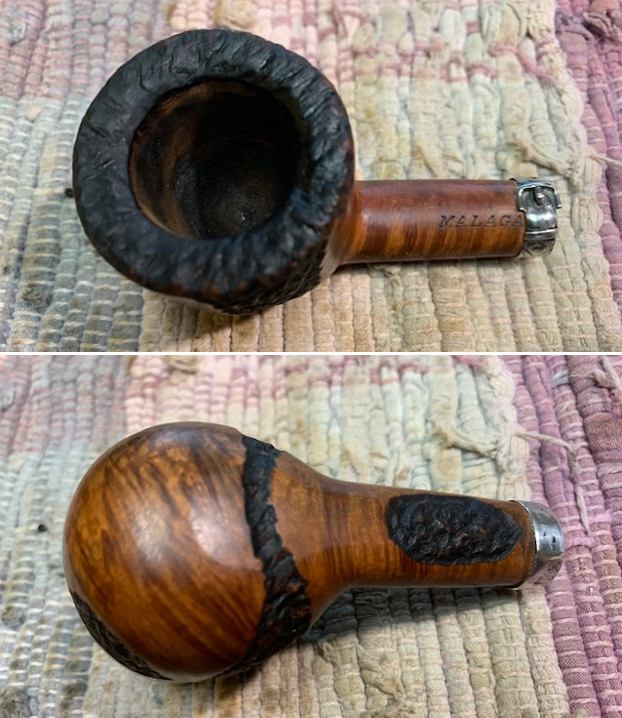
The bowl looked very good. The grain around the sides was quite nice and a mix of flame and birdseye grain. The rim top was rusticated as were some patches on the front, the sides and the bottom of the shank. The inner edge of the bowl showed some wear. There was a hairline crack on the underside of the shank that extended about ¼ inch up the shank. The interior of the bowl was clean and there were not any chips, cracks or checking on the walls. Examining the mortise there was a snapped off tenon in the shank. It was crumbling and would need to be pulled. The finish was washed out and bit and tired but still quite redeemable. The stamping on the pipe was clear and readable. On the topside it read MALAGA and no other stamping was on the shank. I took some photos of the bowl before I started to work on it. I took a photo of the stamping on the topside of the shank. It reads as noted above and is clear and readable. I went through some of stems and found an oval vulcanite stem blank. It was the right diameter and once I turned the tenon it would fit the shank. It has casting marks on the sides and on the button end. I also found a unique sterling silver band that fit the shank. It was shaped like a belt and buckle and would look very good.I have worked on quite a few Malaga pipes and blogged their restorations, so rather than repeat previous blogs, I am including the link to one that gives some of the history of the Malaga brand and the Malaga Pipe Shop in Royal Oak, Michigan in the USA from a catalogue. It gives a sense of the brand and the history in their own words. Follow the link to get a feel for the brand and the pipemaker – https://rebornpipes.com/2013/02/09/george-khoubesser-and-malaga-pipes/.

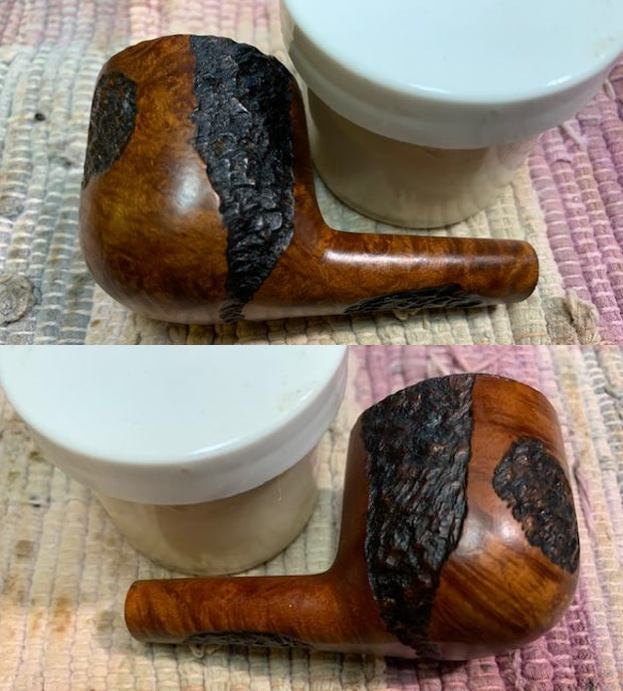
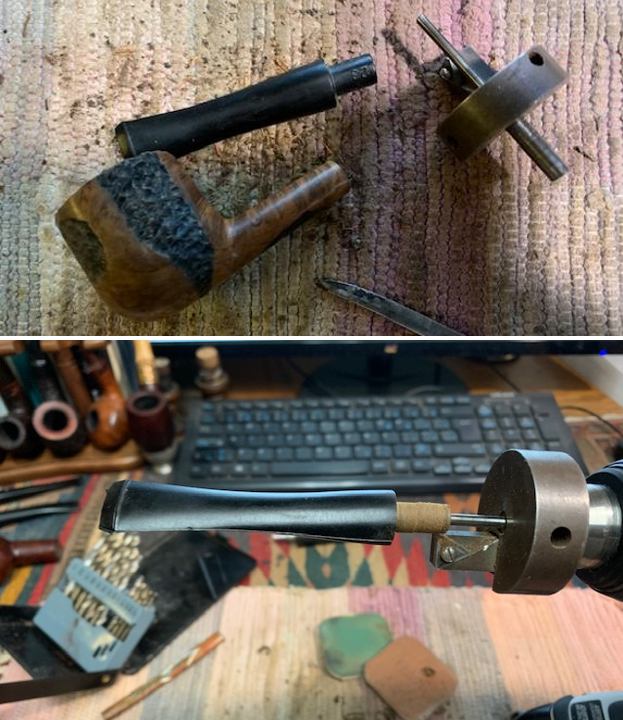
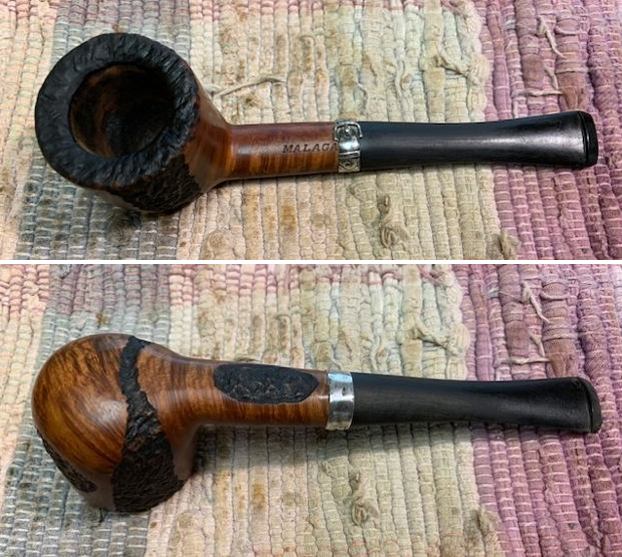
With that information in hand I turned to work on the bowl. There was a broken off tenon in the shank. I tried to pull it with a screw and then moved on to drill it out. I started with a bit a little larger than the tenon in the airway and worked my way up to the size of the shank. When I removed the bit the pieces of tenon fell out on the table top. With the mortise clean I was ready to move on to the next part of the clean up.I cleaned up the rustication on the rim top with a brass bristle wire brush to remove the debris in the rustication. It cleaned up well. I used a Black Sharpie Pen to restain the rustication on the rim top and the sides of the bowl. I rubbed the bowl and shank down with Before & After Restoration Balm. I worked it into the surface of the bowl sides and shank with my fingertips and a horsehair shoe brush to clean, enliven and protect the briar. I let the balm sit for 10 minutes then buffed with a cotton cloth to raise the shine. The grain really came alive. It looks better than when I began. The crack on the underside of the shank was a mere hairline what was not long or wide so it would be an easy repair with a bit of glue and a band. I painted the shank end with some all-purpose white glue. I spread it with a dental spatula and pressed the band in place on the shank.I polished the Sterling Silver belt band with some silver polish and a jeweler’s cloth. I was able to remove the tarnish and the band looked very good. I took pictures of the banded shank to show the look of it. Notice that the belt buckle is on the top and the A of the Malaga is perfectly framed on the right side by the buckle. With the bowl finished it was time to focus on the stem. I took out the stem and the Pimo tenon turning tool and set up the tool in my cordless drill. I put the guiding pin in the airway on the stem and adjusted the cutting head. I held the stem in place and carefully turned the tool on the tenon. I used a flat file to smooth out the tenon to fit in the shank. I put the stem in shank for a sense of the look of the pipe. The stem fit well and it looked like it belonged. I sanded the castings off the edges of the stem and the button with 220 grit sandpaper before I took the photo.I removed the stem and worked on it next. I smoothed out remnants of the castings and the scratches in the surface of the vulcanite with 220 grit sandpaper. I started polishing the stem with 400 grit wet dry sandpaper.I polished the stem with micromesh sanding pads – dry sanding with 1500-12000 grit pads. I wiped the stem down after each pad with a cloth and Obsidian Oil. I finished the polishing with Before & After Pipe Stem Polish – both Fine and Extra Fine. I gave it a final coat of Obsidian Oil. I put the pipe back together – the bowl with its new stem. This restored Malaga Oil Cured Pot with rusticated panels is a real beauty and I think the Sterling Silver Belt band and the chosen stem works well with it. The grain on the bowl came alive with the buffing. I used Blue Diamond on the buffing wheel on both the bowl and stem. I gave both multiple coats of carnauba wax on the wheel then buffed it with a clean buffing pad to raise the shine. I hand buffed it with a microfibre cloth to deepen the shine. The Malaga Pot feels great in the hand. It is lightweight and the contrast in the browns of the briar, the Silver band and the polished vulcanite stem with the popping grain on the mixed brown stained bowl is quite amazing. The dimensions of the pipe are Length: 6 inches, Height: 1 ¾ inches, Outer diameter of the bowl: 1 ½ inches, Chamber diameter: 1 inch. The weight of the pipe is 1.59 ounces/45 grams. It really is a beauty. I will be putting it on the rebornpipes store in the American (US) Pipe Makers section shortly if you are interested in adding it to your collection. Thanks for walking through the restemming and the restoration with me. Cheers.

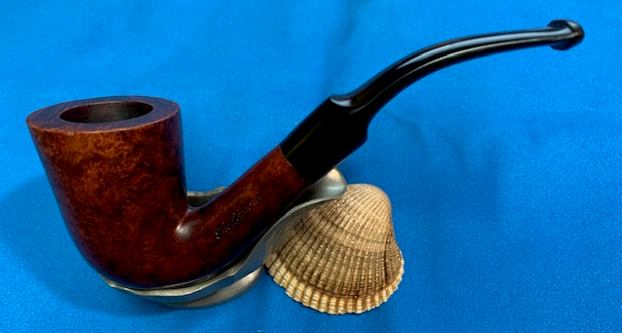
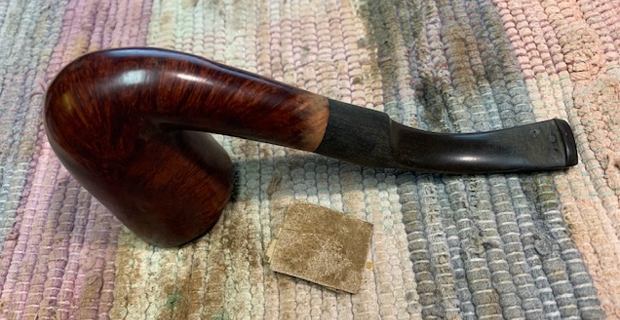
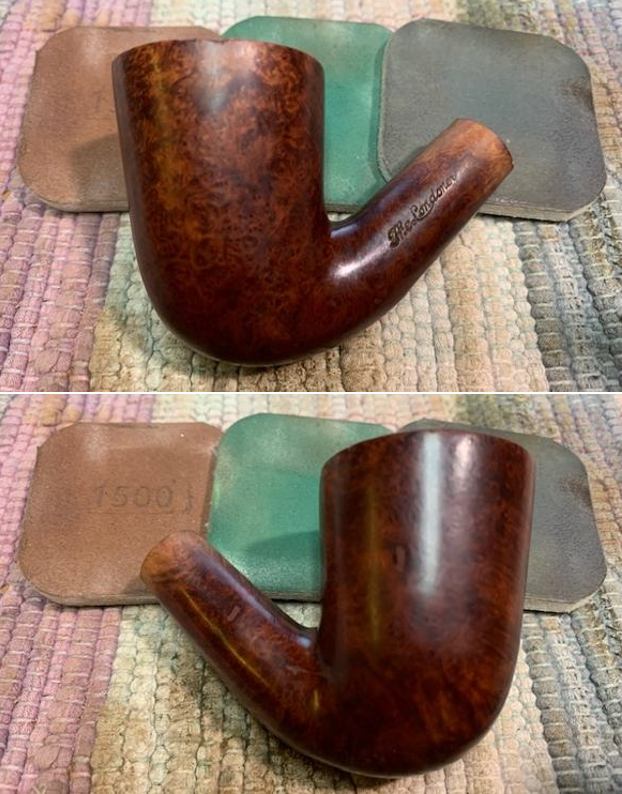
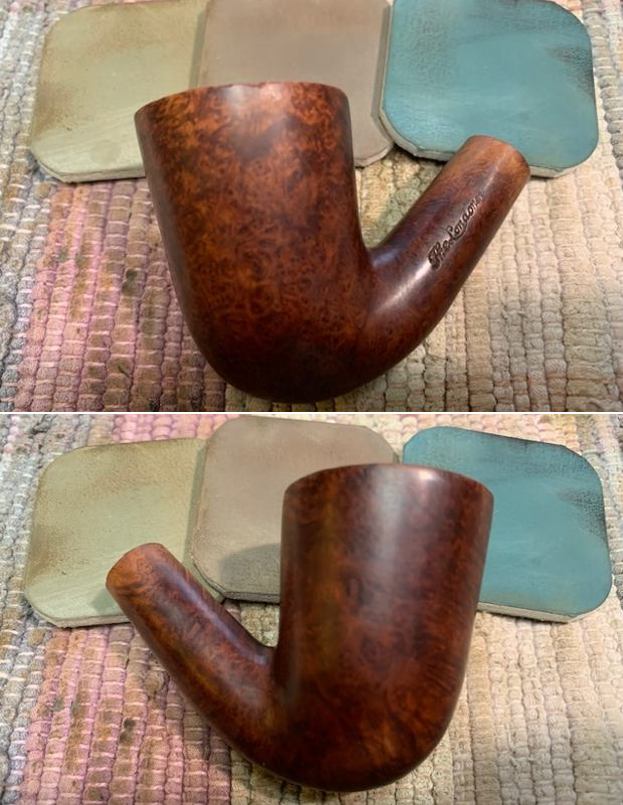
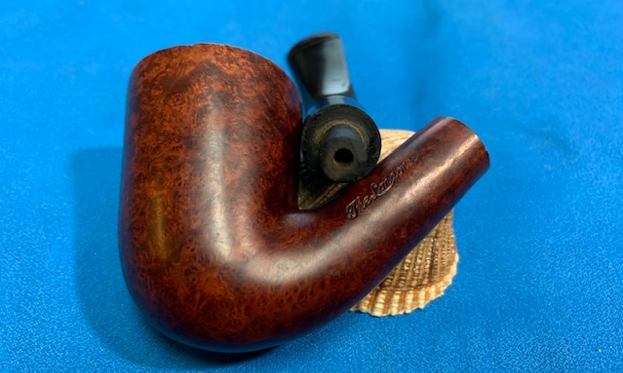
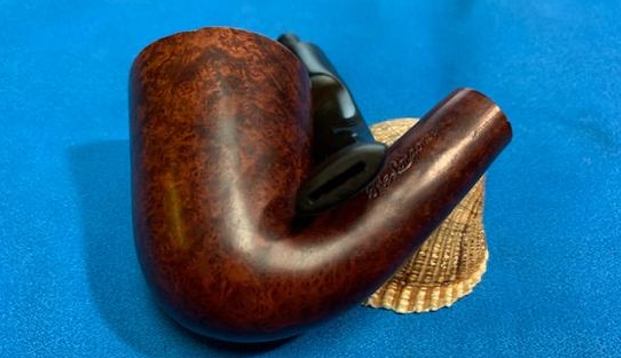
Restemming & Restoring a “The Londoner” Bent Dublin


Blog by Steve Laug

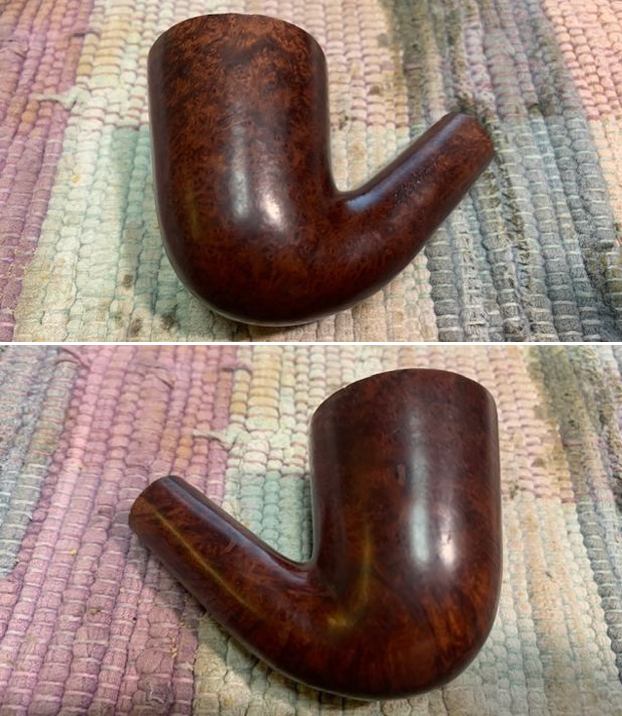
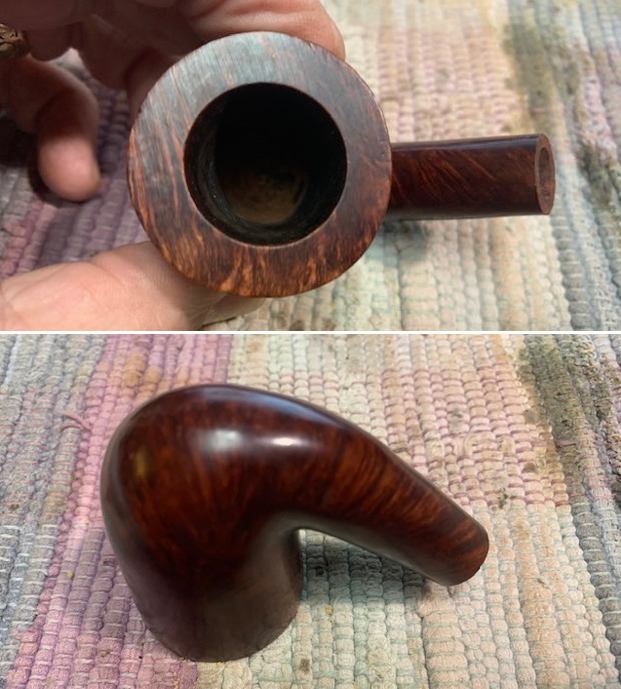
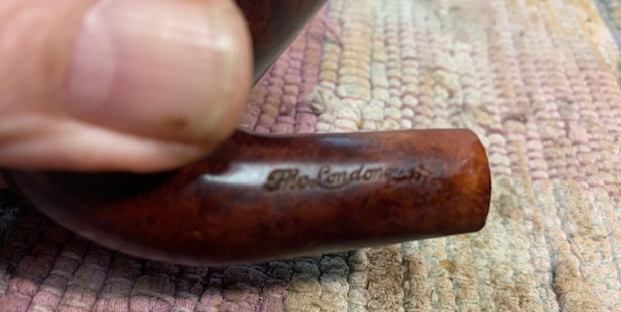
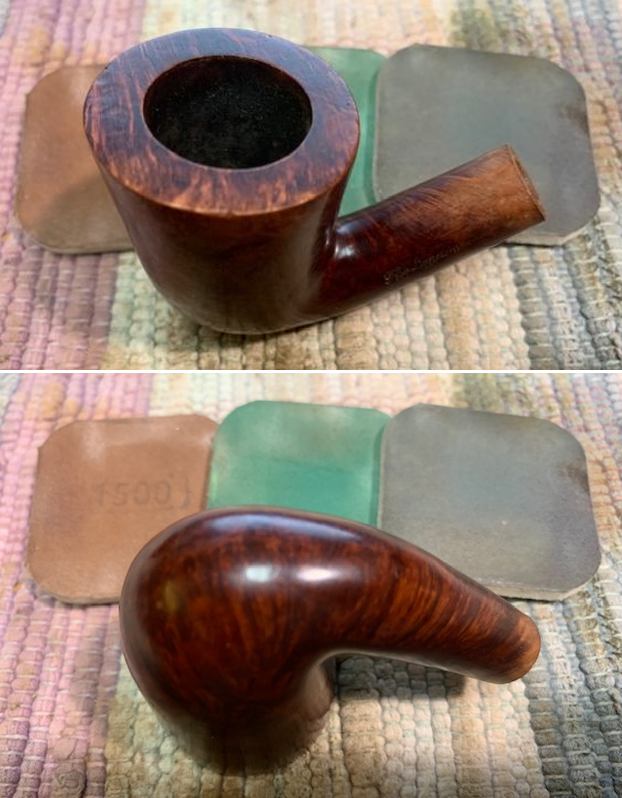
Sometimes the repetitive work on similar pipes and stems gets tiring to me and to alleviate the inevitable boredom I change things up a bit to refresh me. I have a box of stummels (bowls) here that I periodically go through and see if I have a potential stem that would fit them. Sunday afternoon I went through the box and picked out two bowls and found workable stems for them both. They were in different states of need but all had been thoroughly cleaned before I boxed them up. The pipe I chose to work on first is a lovely Bent Dublin stummel. The bowl looked very good. The grain around the sides was quite nice and a mix of flame and birdseye grain. There were a few fills on the right side of the bowl and shank but there were in good condition. The rim top was in excellent condition. The interior of the bowl was clean and there were not any chips, cracks or checking on the walls. The finish was dull and bit and tired but still quite redeemable. The stamping on the pipe was clear and readable. On the left side it read The Londoner in script and there are no other stamping on the pipe. I took some photos of the bowl before I started to work on it.   I took a photo of the stamping on the left side of the shank. It reads as noted above and is clear and readable.I went through some of stems and found this saddle style stem that was close to the right diameter and had a tenon that would work as well. It has a few tooth marks and chatter near the button but it would clean up well.The pipe is stamped “The Londoner” which is not listed with that style of stamp on either Pipephil or Pipedia. There was a Londoner made by Barlings but it is stamped differently than this one and does not have the article in front of the name. So the maker of the pipe remains a mystery for now. Now it is time to work on the pipe.

I started my work on the pipe by fitting the new stem to the shank. I trimmed down the tenon diameter slightly with a file so that the fit in the shank was snug. The stem diameter needed more work so I worked it with a file to match it to the shank. I sanded it with 220 grit sandpaper to smooth it out. I removed the stem and polished the briar (bowl and sanded shank end) with micromesh sanding pads – dry sanding with 1500-12000 grit pads and wiping it down with a damp cloth after each pad. It really began to shine. I restained the shank end where I had sanded it to make the transition to the new stem smooth with a Cherry stain pen. The colour was a perfect match. Once the bowl was buffed the newly stained section would blend in well. I worked some Before & After Restoration Balm into the surface of the smooth briar with my finger tips. The product is amazing and works to clean, enliven and protect the briar. I let it sit on the briar for 10 or more minutes and then buff it off with a soft cloth. It really makes the grain sing. I set the bowl aside and turned my attention to the stem. I “painted” the stem surface with a Bic lighter flame to raise the tooth marks (no pictures). I was able to lift some of them to the surface. I filled in the remaining spots with clear CA glue and once it was hard smoothed out the repairs with 220 grit sandpaper and started polishing the stem with 400 grit wet dry sandpaper. I polished the stem with micromesh sanding pads – dry sanding with 1500-12000 grit pads. I wiped the stem down after each pad with a cloth and Obsidian Oil. I finished the polishing with Before & After Pipe Stem Polish – both Fine and Extra Fine. I gave it a final coat of Obsidian Oil. I put the pipe together – the bowl with its new stem. This restored and restemmed “The Londoner” Bent Dublin is a real beauty and I think the chosen stem works well with it. The grain on the bowl came alive with the buffing. I used Blue Diamond on the buffing wheel on both the bowl and stem. I gave both multiple coats of carnauba wax on the wheel then buffed it with a clean buffing pad to raise the shine. I hand buffed it with a microfibre cloth to deepen the shine. “The Londoner Dublin” feels great in the hand. It is lightweight and the contrast in the browns of the briar and the polished vulcanite stem with the popping grain on the mixed brown stained bowl is quite amazing. The dimensions of the pipe are Length:5 ½ inches, Height: 2 inches, Outer diameter of the bowl: 1 ½ inches, Chamber diameter: 7/8 of an inch. The weight of the pipe is 1.62 ounces/46 grams. It really is a beauty. I will be putting it on the rebornpipes store in the British Pipe Makers section shortly if you are interested in adding it to your collection. Thanks for walking through the restemming and the restoration with me. Cheers.

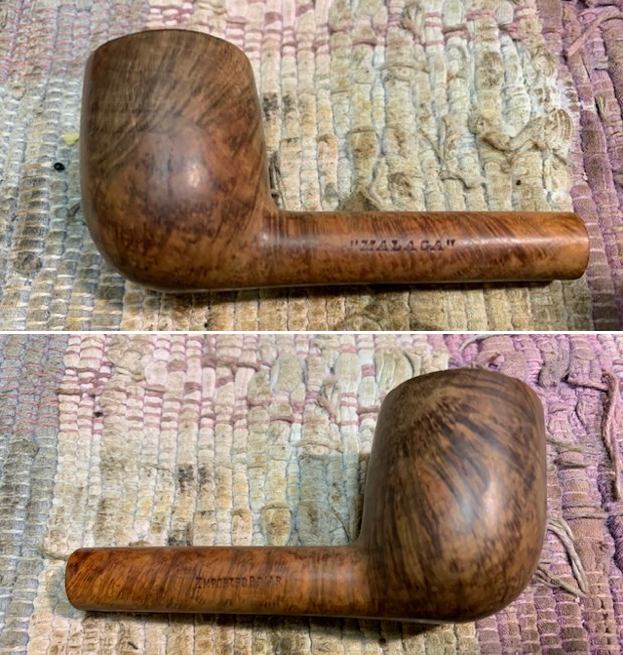
Restemming & Restoring a “Malaga” Lovat


Blog by Steve Laug

Sometimes the repetitive work on similar pipes and stems gets tiring to me and to alleviate the inevitable boredom I change things up a bit to refresh me. I have a box of stummels (bowls) here that I periodically go through and see if I have a potential stem that would fit them. Yesterday when I finished the old timer on my work I went through the box and picked out three bowls and found workable stems for them. All were in different states of need but all had been thoroughly cleaned before I boxed them up. The first restemmed and restored was a ZETTERVIG Copenhagen Handmade 900 Egg (https://rebornpipes.com/2021/09/04/restemming-restoring-a-zettervig-copenhagen-hand-made-900-egg/). The next one I chose to work on is a lovely Malaga Lovat stummel.  I have worked on a lot of Malaga pipes in the past so I am not a stranger to the brand. I have included the link below to a bit of history on the brand that I compiled.

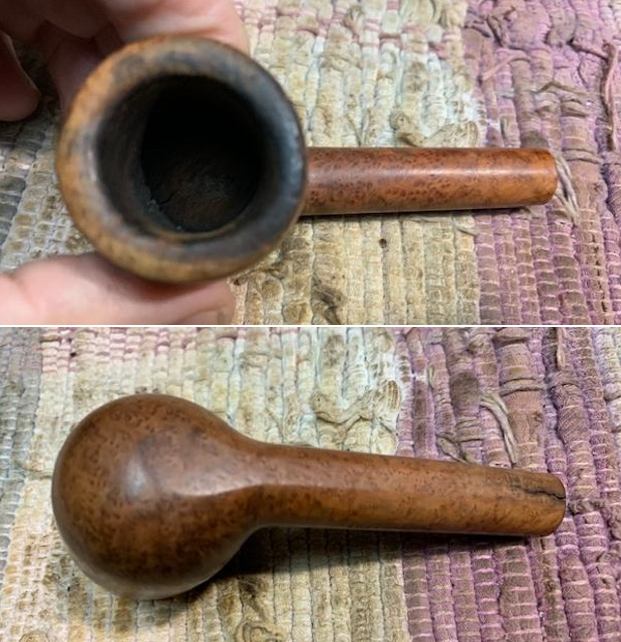
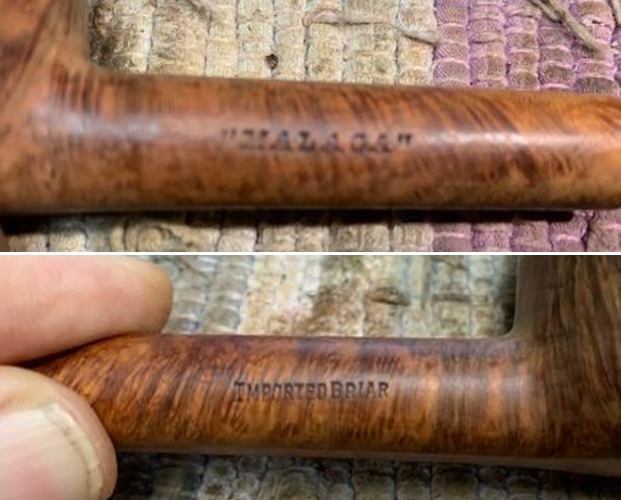
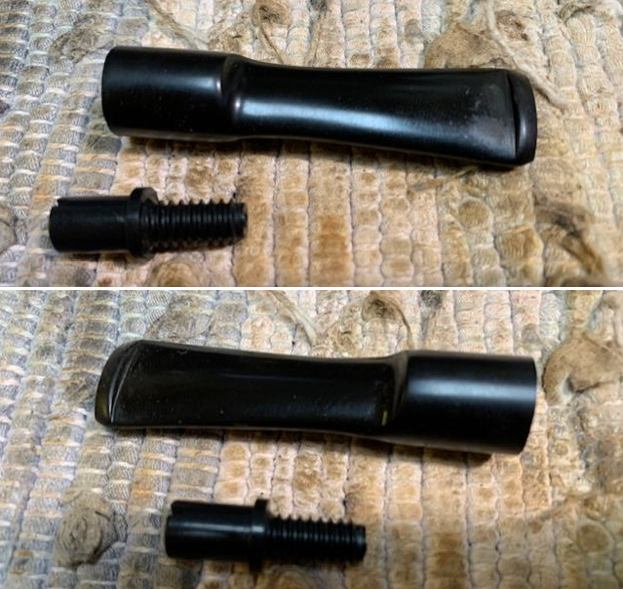
The bowl looked very good. The grain around the sides was quite nice and a mix of flame and birdseye grain. The rim top had some burn damage on the rear top and inner edge and some darkening all the way around. The bowl was slightly out of round. There was a crack in the underside of the shank that extended about ½ inch up the shank. The interior of the bowl was clean and there were not any chips, cracks or checking on the walls. Examining the mortise it was clean and well drilled with no issues other than the previously noted crack. The finish was washed out and bit and tired but still quite redeemable. The stamping on the pipe was clear and readable. On the left side it read “MALAGA” and on the right side it read IMPORTED BRIAR. I took some photos of the bowl before I started to work on it. I took a photo of the stamping on the sides of the shank. It reads as noted above and is clear and readable.I went through some of stems and found this saddle style stem without a tenon. It had been drilled for a tenon but it had never been finished. It was the right diameter and it fit the shank and the look of the pipe very well. It has a few tooth marks and chatter near the button but it would clean up well.I have worked on quite a few Malaga pipes and blogged their restorations, so rather than repeat previous blogs, I am including the link to one that gives some of the history of the Malaga brand and the Malaga Pipe Shop in Royal Oak, Michigan in the USA from a catalogue. It gives a sense of the brand and the history in their own words. Follow the link to get a feel for the brand and the pipemaker – https://rebornpipes.com/2013/02/09/george-khoubesser-and-malaga-pipes/.

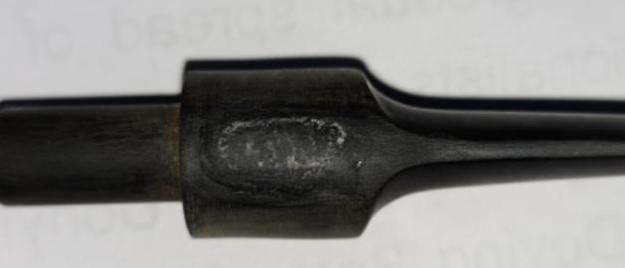
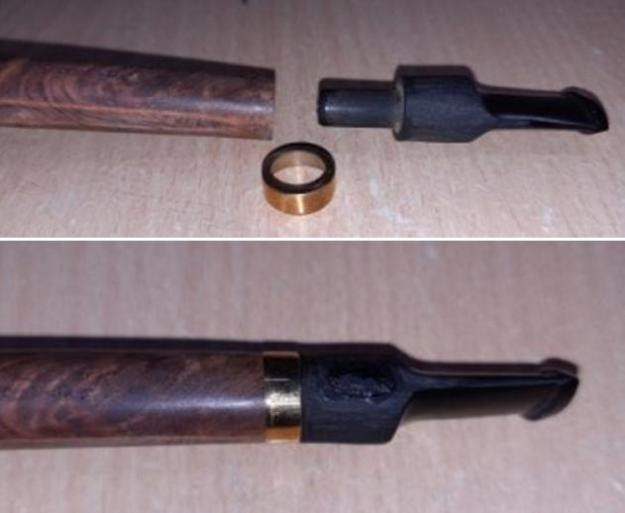
With that information in hand I turned to work on the bowl. I addressed the crack in the shank first. I cleaned it and smoothed it out. I used an awl and pressed a small hole in the shank at the end of the crack. I filled in the crack with clear CA glue and pressed it together until it cured. I pressed a brass band onto the end of the shank to further address the crack. It serves that function and also gives it a bit of bling. With that repaired I turned to deal with the rim top issues. I topped the bowl on a topping board with 220 grit sandpaper to smooth out and minimize the damage on the rim top. I used a small wooden ball that Kenneth gave me recently to give the inner edge a bevel to minimize the burn on the inner edge and bring the bowl back to round.I shortened the tenon to fit the shank of the pipe. I used the Dremel and sanding drum to remove the shoulder at the top of the tenon above the threads. I shaped the tenon fit with a small file and sanded it smooth. I glued the threaded end of the tenon with clear CA glue and pressed it into the stem. It cures quickly so it is key to move quickly and set it well as  you only get one chance! I put the stem in shank for a sense of the look of the pipe and then wiped the bowl down with alcohol on a cotton pad to remove the debris from the sanding and that was still in the surface of the briar. I liked what I saw. The grain was really quite nice and the band and new stem worked well with the pipe. I removed the stem and polished the briar with micromesh sanding pads – dry sanding with 1500-12000 grit pads and wiping it down with a damp cloth after each pad. It really began to shine. I stained the rim top and edges with a Maple stain pen to match the rest of the stain around the bowl sides. The rim top and inner edge look very good.I worked some Before & After Restoration Balm into the surface of the smooth briar with my finger tips. The product is amazing and works to clean, enliven and protect the briar. I let it sit on the briar for 10 or more minutes and then buff it off with a soft cloth. It really makes the grain sing. I set the bowl aside and turned my attention to the stem. I “painted” the stem surface with a Bic lighter flame to raise the tooth marks. I was able to lift all of them to the surface. I smoothed out what remained with 220 grit sandpaper and started polishing the stem with 400 grit wet dry sandpaper.I polished the stem with micromesh sanding pads – dry sanding with 1500-12000 grit pads. I wiped the stem down after each pad with a cloth and Obsidian Oil. I finished the polishing with Before & After Pipe Stem Polish – both Fine and Extra Fine. I gave it a final coat of Obsidian Oil. I put the pipe back together – the bowl with its new stem. This restored “Malaga” Imported Briar Oil Cured Lovat is a real beauty and I think the brass band and the chosen stem works well with it. The grain on the bowl came alive with the buffing. I used Blue Diamond on the buffing wheel on both the bowl and stem. I gave both multiple coats of carnauba wax on the wheel then buffed it with a clean buffing pad to raise the shine. I hand buffed it with a microfibre cloth to deepen the shine. The “Malaga” Lovat feels great in the hand. It is lightweight and the contrast in the browns of the briar, the brass of the band and the polished vulcanite stem with the popping grain on the mixed brown stained bowl is quite amazing. The dimensions of the pipe are Length: 6 inches, Height: 1 ¾ inches, Outer diameter of the bowl: 1 ¼ inches, Chamber diameter: 7/8 of an inch. The weight of the pipe is 1.34 ounces/38 grams. It really is a beauty. I will be putting it on the rebornpipes store in the American (US) Pipe Makers section shortly if you are interested in adding it to your collection. Thanks for walking through the restemming and the restoration with me. Cheers.

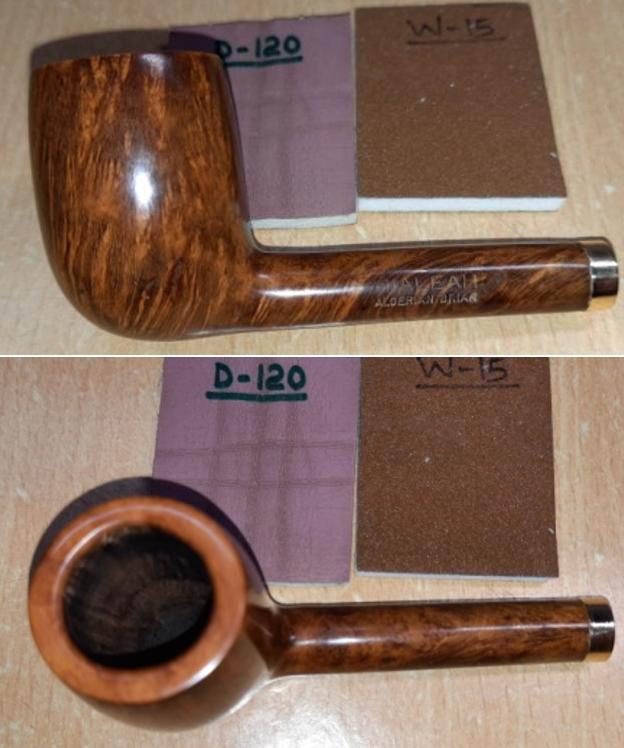
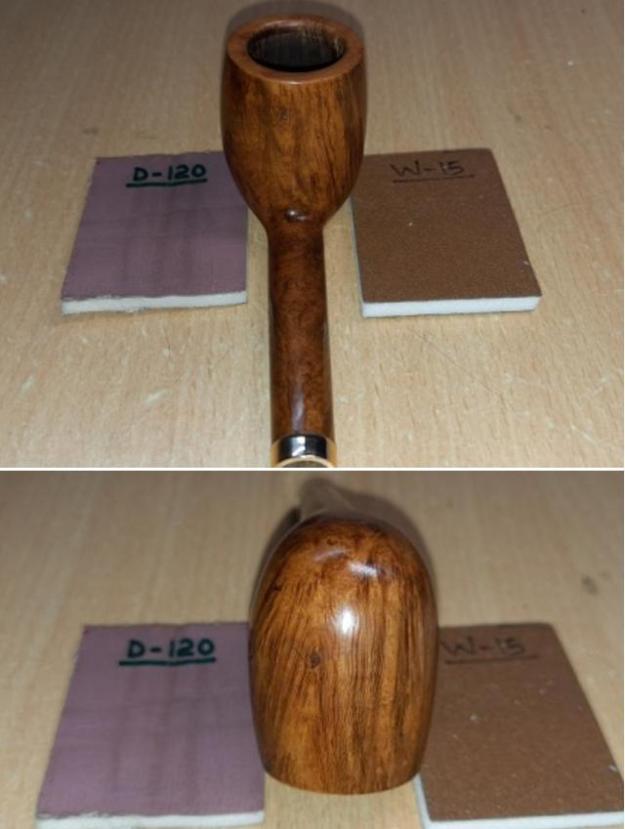
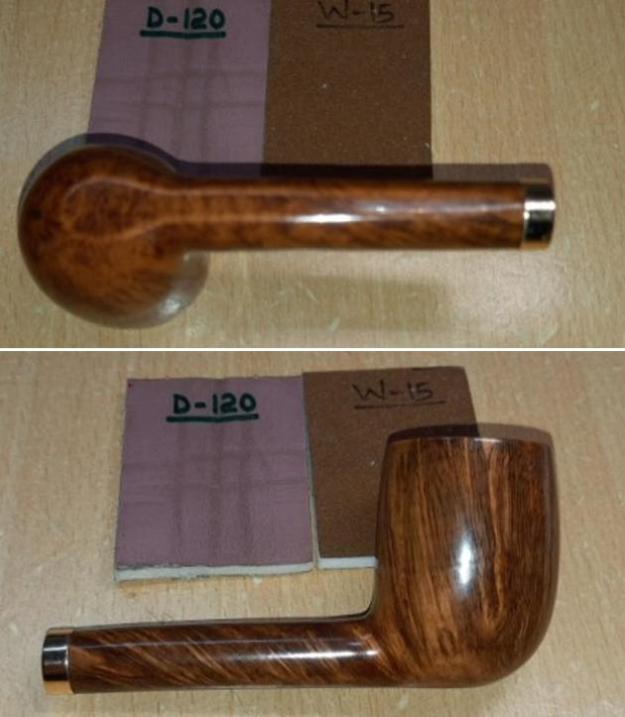
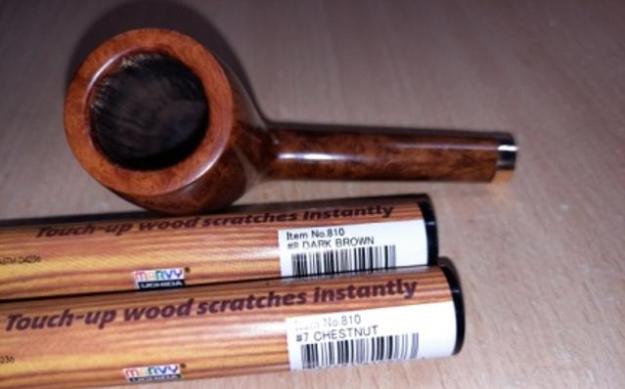
Restemming and Transforming a “Hialeah” Pipe From My Inherited Lot


Blog by Paresh Deshpande

After I had completed the Butz- Choquin A Metz No. 2 pipe (Restoring An Early Butz Choquin “A Metz” No. 2 | rebornpipes), I rummaged through the fast dwindling pile of 40 odd pipes that Abha, my wife, had cleaned up for me to complete my part of further repairs and restoration work.

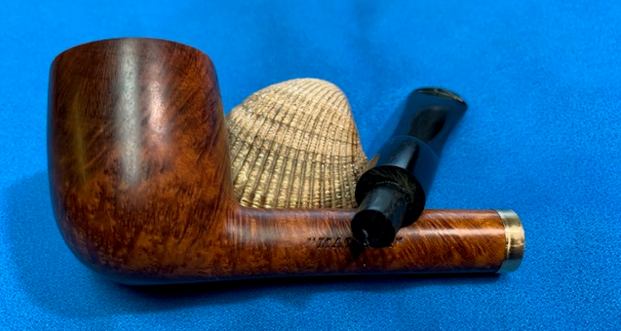
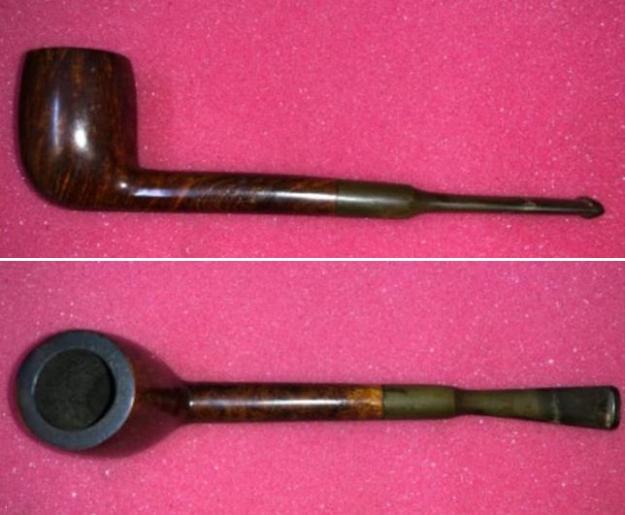
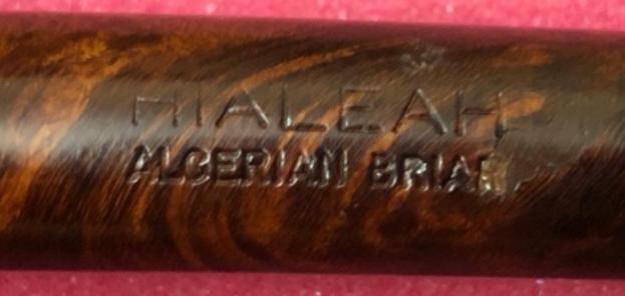
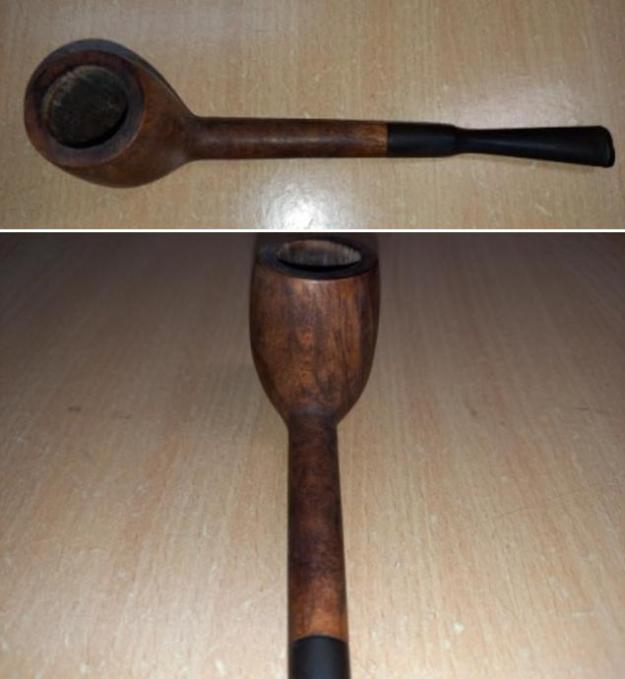
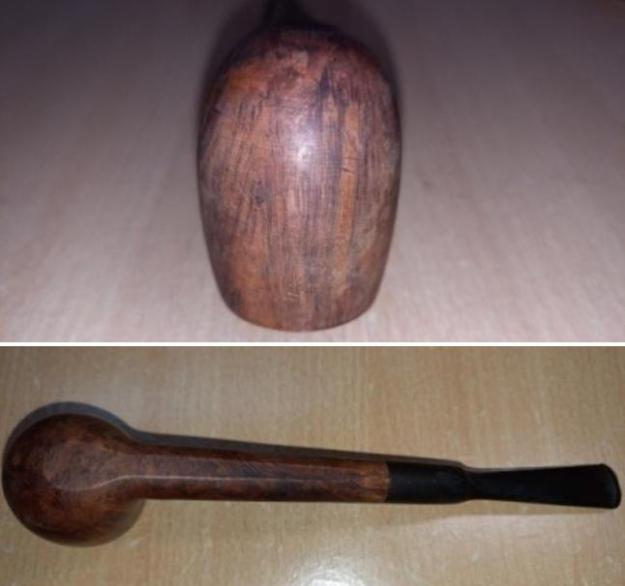
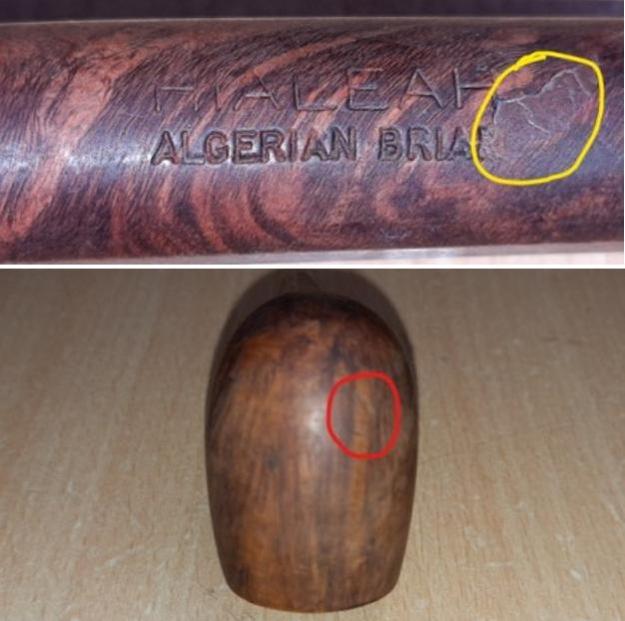
The pipe that I have selected is one from the huge lot of my grandfather’s pipes that I had inherited. This pipe had always caught my fancy on account of the wonderfully thin, tightly packed straight grains that are seen all around the stummel and shank and also due to its peculiar shape, a rather tall bowl (but not a stack!) with a longish shank and an equally long saddle stem. Overall, it definitely looked quirky to say the least, it’s a LOVAT shape on account of the round shank and a saddle bit but not a classic LOVAT since the stem is as long as the shank!! It’s the carver’s take on a classic shape, I guess. However, there was something about the stem that seemed wrong at the first glance. It was for this reason that the pipe always fell out of favor in the lineup of pipes for restoration. Here are a couple of pictures of the pipe that shows the pipe before Abha, my wife, had done the initial cleaning. From the pictures below, it is amply evident that the stem is not aligned straight in reference to the shank, but is skewed more towards the left (evidenced in the second picture).This pipe has some beautiful densely packed thin straight, also referred to as “Angel hair” grains all around the tall bowl and over the long shank surface. The only stampings seen on this pipe are over the left shank surface and is stamped as “HIALEAH” over “ALGERIAN BRIAR”. These stampings are crisp and clear. The long saddle vulcanite stem is devoid of any stampings.I looked for information on this brand on rebornpipes.com. Unfortunately the search yielded no results (a surprise for sure!!). Next I turned to pipedia.org to understand and establish the provenance of the pipe brand. There is not much information that was noted in the article, but was sufficient to give me an idea of the brand and period of operations. Here is the link to the webpage:-

Hialeah – Pipedia  I quote from the article; “From what I’ve found on the web HIALEAH pipes were sold by Whitehall Products Co. (a division of Helme Products) prior to 1975. Whitehall was in Wheeling, West Virginia, and Helme somewhere in New Jersey. All I’ve seen have been made of Algerian Briar and are reported to be great smokers”.

Thus, this pipe definitely dates to pre-1975

Initial Visual Inspection
Abha, in a deviation from her thumb rule of not taking any “BEFORE” pictures, had taken a few pictures of the pipe to highlight the condition of the pipe before she commenced her initial clean up for me.

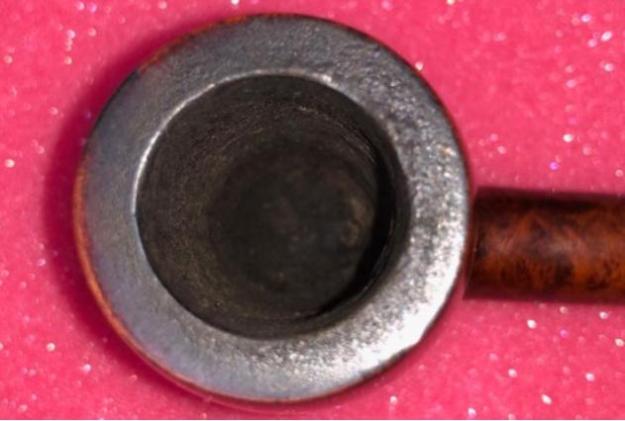
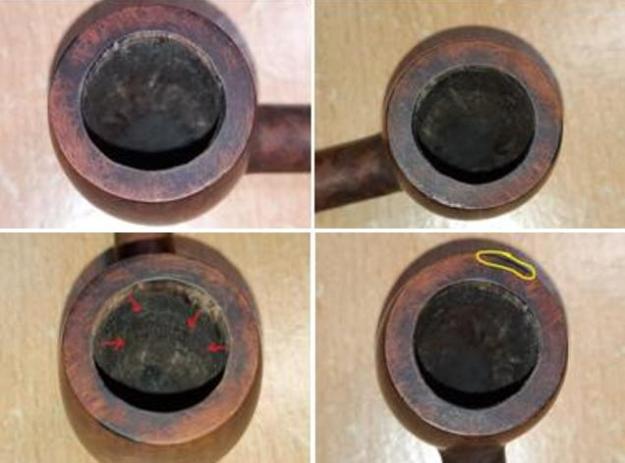
The chamber had a thick layer of cake with heavy overflow of lava over the rim top surface. The inner rim edge appears to be uneven while the outer rim edge appears sans any damage. The exact condition of the edges will be ascertained once the lava overflow from the rim top surface is removed and the surface is cleaned up. The draught hole is in the dead center and at the bottom of the chamber and this construction should make it a great smoke.The stummel surface was covered in dust and grime of years of usage and subsequent storage. The stummel has developed dark hues of browns and has scratches and dings over the surface, most notably to the heel and front of the stummel. However under all the dust and grime, beautiful tight Angel hair grains are awaiting to be brought to the fore. There are a couple of fills, one to the front of the stummel and another to the shank very close to the stampings. The mortise has traces of old oils and tars, restricting the air flow through the mortise. Whether to refresh the fills or let them be will be decided once the stummel is cleaned and the fills are checked for softness thereafter.  The long vulcanite saddle stem is heavily oxidized with minor tooth chatter in the bite zone. The stem is skewed to the left immediately after the saddle portion of the stem. This flaw makes me believe it to be a shaping issue more than anything and further points to the likelihood of the stem to be handmade. Steve also concurred with my assumptions when we discussed the restoration during one of our video calls. He also pointed out that there was no way to right this wrong other than replacing the stem.Initial Cleaning By Abha…
The initial cleaning on this pipe was done by Abha, my wife (she has cleaned up around 40-50 pipes and these have now reached me for further restoration). She reamed out the complete cake and further smoothed out the chamber walls with a folded piece of 220 grit sand paper. She further cleaned out the internals of the shank with pipe cleaners and alcohol and cotton buds. She followed the internal cleaning of the shank with external cleaning of the stummel using Murphy’s Oil soap and hard bristled tooth brush and dried it with paper napkins and cotton cloth.

Next she cleaned out the internals of the stem air way and immersed it in “Before and After Deoxidizer” solution along with the stem of other pipes in line for restoration. Once the stem had soaked overnight, she cleaned the stem under running warm water and scrubbed the raised oxidation from the stem surface using Scotch Brite pad. She further removed the oxidation by scrubbing the stem with 0000 grade steel wool and applied a little olive oil to rehydrate the stem.

Once The Pipe Is On My Work Table…
The cleaned up pipes presents a very clear picture of what needs to be done to restore this pipe to a decent and smokable condition. I really cannot thank Abha enough for all the help and support that she extends me in my pursuance of this hobby. I proceed to carry out my appreciation of the work that needs to be done on this pipe to restore it.

As with all the cleaned pipes that Abha packs, there was a note in the zip lock pouch with issues that she had observed in the pipe. The first point was that the chamber has developed heat fissures. The second point was that she was not happy with the shape of the stem and it appeared odd. Also the seating of the stem in to the mortise was very loose. Here are the pictures of the pipe as I had received. The chamber does appear to have developed heat fissures (indicated with red arrows). The rim top surface is darkened all around, more so at the back of the rim surface. The inner rim edge is uneven while the outer edge is slightly charred in 1 o’clock direction and is encircled in yellow. Close scrutiny of the chamber walls made me realize that there is still a very thin layer of cake in the chamber and it is my experience that this gives an appearance of heat fissures! Only after the cake has been completely removed will I be able to confirm presence of heat fissures or otherwise.The stummel is nice and clean but would benefit from polishing to rejuvenate and bring a nice shine over the briar surface. There is a large fill over the left shank surface and very close to the stampings (encircled in yellow). The fill is solid and I wouldn’t take the risk of refreshing it due to its proximity to the stampings. There are a few dings to the front of the bowl (encircled in red) that would need to be addressed. The mortise has no chips or cracks to the shank face/ shank. There are a few minor pockets of old oils and tars that are seen on the walls of the mortise and would require some invasive measures to eliminate completely.Since the stem would be replaced, I shall not dwell in detail about the stem condition, but am including a few pictures of the stem to show its condition as well as give the readers a perspective about the incorrect shape imparted to the stem at the time it was crafted.The Process
The first issue to be addressed in this project was to replace the original poorly crafted stem. Steve and I went through my small stash of spare stems and selected a small bent saddle stem that was stamped on the left as “ROPP” on a steel roundel. This stem would impart a classic Lovat shape to the pipe and vastly improve the aesthetics of the pipe, or so we thought. Here is how the pipe looks with this bent saddle stem. The tenon would need to be sanded down for it to seat in to the mortise and this would be the trickiest part of this stem replacement. I would have to be very careful to sand the tenon evenly and equally from all around, frequently checking for a snug fit in to the mortise. The replacement vulcanite saddle stem is in perfect condition with no damage to the button or in the bite zone, save for some minor oxidation and very light tooth chatter. I would need to first straighten out the stem followed by sanding the tenon for a snug fit in to the mortise. Only once these issues are addressed would I be progressing to removing the “ROPP” stamped steel plate and filling the area left behind by the removal of the steel plate.

I began the restoration of this pipe by first addressing the suspected heat fissures in the chamber walls. I worked on the stummel by reaming the chamber with a PipNet pipe reamer using the size 3 head. With my fabricated knife, I removed the remaining carbon deposit. Once the cake was reamed back to the bare briar, I used a 150 grit sand paper followed by 220 grit sand paper to remove all the traces of remaining cake and also to smooth out the inner walls of the chamber surface. Finally, to remove the residual carbon dust, I wiped the chamber with a cotton pad wetted with 99.9% pure isopropyl alcohol. I was very pleased to note that the chamber walls are sans any damage.With the bowl internals clean, I move to clean the exterior of the stummel, specially the rim top surface. I used a hard bristled tooth brush and Murphy’s Oil soap to scrub the stummel and rim top. After the scrub with oil soap, I washed the stummel under running warm water with anti oil dish washing detergent till the stummel surface was clean and dried it using paper towels and soft cotton cloth. I simultaneously cleaned the shank internals with the detergent and hard bristled shank brush and set the stummel aside to dry out naturally. The smooth stummel surface has cleaned up nicely with the beautiful Angel hair grain patterns on full display. There are two major fills that are now plainly visible (encircled in green), but they are solid and I shall avoid refreshing them. The darkening and unevenness of the inner rim edge is evident and over reamed in the 1 o’clock direction (encircled in yellow). The ghost smells are completely eliminated and the pipe now smells fresh, odorless and clean. The shank air way is nice and open. I am sure that the pipe will turn out to be a fantastic smoker with a full wide and open draw. Now that I had a fair idea of the extent of topping required to the rim surface, I top the rim on a piece of 220 grit sand paper to address the rim surface darkening, dents and dings. I addressed the uneven inner edge by creating a light bevel to inner edge with a folded piece of 220 grit sand paper pinched between my thumb and index finger. To further smooth out the scratches left behind by the abrasive 220 girt sand paper, I top the rim surface on a piece of 400 grit sand paper. I am very happy at the way the chamber and rim top surface appears at this point in restoration. Next, I decided to address the dents and dings on the stummel surface, notably to the front of the bowl (encircled in pastel blue). Using a whitener pen, I marked all the major areas with dents and dings as I had decided to leave the minor ones as they were. I heated my fabricated knife over the flame of a candle, placed a wet Turkish hand towel over the marked areas and steamed out the dents by placing the heated knife over the towel. The steam generated by placing a hot knife on the wet towel helps the briar to expand within these dents and dings, making for a smooth and even surface. To further even out the remaining dings, I lightly sand the entire stummel with a folded piece of worn out 180 grit sand paper. The stummel appears much better and smooth at this juncture. With the stummel repairs completed, I turned my attention to the replacement stem. The first thing that needed to be done was to straighten the stem. I cleaned the stem internals first and inserted a regular pipe cleaner through the stem airway. This prevents the airway from collapsing when the stem is heated to straighten it. With a heat gun, I heated the stem at the point where the stem was bent, rotating the stem frequently to ensure even heating. Once the stem was pliable, I straightened the stem with my hands by placing it on the flat table. After the stem had cooled down sufficiently, I held it under cold running water to set the straightened shape. Now that the stem was straightened, the next step was to ensure a snug fit of the tenon in to the mortise. Since the tenon was not too large as compared to the mortise, I got down to the arduous and time consuming task of manually sanding down the tenon with a folded piece of 180 grit sandpaper till I had achieved a perfect seating of the tenon in to the mortise. My previous experience had taught me an invaluable lesson; “SAND ONCE AND CHECK TWICE”!! Here I was extra careful and vigilant while sanding the sides of the tenon and frequently checked the alignment of the stem airway, the shank airway and finally, the draught hole. Excess sanding of any one side of the tenon disturbs this alignment even though the seating may appear to be snug and seamless. I gave a final check to the progress being made and the seating was perfectly snug with all the airways perfectly aligned. I am very happy with the progress up to this point!!Close scrutiny of the seating of the tenon in to the mortise under camera magnification revealed a slight gap at the stem and shank face junction. With a folded piece of 180 grit sandpaper, I sand the base of the tenon until I had achieved a seamless and flushed seating of the stem. Discerning Readers must have noticed a dark line starting from the shank end and extending for about an inch and a half towards the bowl (indicated with green arrows). I too thought (with a cringe) that the shank had cracked in the process, but let me assure you that the shank is not cracked and is in fact a dark strand of straight grain…that was really a big relief!!Once I had achieved a snug fit of the tenon in to the mortise, I checked for the flush seating of the stem face with that of the shank and realized that the stem diameter is larger than that of the shank and the extent of sanding that would be required. This would need to be addressed.   But before I could address this issue, it was necessary that the metal plate bearing the ROPP stamping be removed and the cavity created, be filled out. Once this was done, matching the entire saddle portion with the shank face would be accurate and time saving. Using dental pick and a sharp, thin paper cutter, I removed the steel plate and cleaned the gouged out surface with a cotton pad and isopropyl alcohol. I evened out the surrounding area with a worn out piece of 180 grit sand paper and filled the cavity with a mix of CA superglue and black charcoal powder. I set the fill to cure overnight.The next day, I sand the filled cavity with a piece of 180 grit sand paper till I had achieved a rough match with the surrounding saddle surface of the stem. The filled area would be perfectly matched when I sand the entire saddle portion to match the shank face.Now, to match the stem face with the shank face, I unite the stem and the shank. With a sanding drum mounted on to my hand held rotary tool, I sand the saddle portion of the stem till I had achieved a near perfect matching of the stem face with that of the shank face. I further fine tune the match perfectly by sanding it with a 220 followed by 400 grit sand paper. The match is perfect and the pipe as a whole is now looking very nice with the new stem. It still looks very plain and would need a dash of a little bling to complete the transformation!! Also, there is a need to refill the cavity left behind by the steel plate as I noticed a few ugly air pockets. I refilled it with CA superglue and charcoal powder and set it aside for the fill to cure. To add a little bling to the appearance of the pipe, I decided to attach a brass band at the shank end. I selected a band that was a perfect fit and glued it over the shank end with CA superglue and set it aside to cure.I subjected the stummel to a complete cycle of micromesh polish, dry sanding with 1500 to 12000 grit pads. I paid greater attention to polish the rim top surface and the bevel created on the inner rim edge. I wiped the stummel with a moist cloth after every grit pad to remove the sanding dust left behind by the pads. I am happy with the progress being made till now. Just look at the beautiful grain on this piece of briar!! The briar has taken on a nice deep shine with brown of the stummel and the darker brown stains to the grain contrasting beautifully. I really like the patina that is seen over the stummel surface. However, the rim top surface appears lighter than the rest of the stummel due to the topping. I stained the lighter hued rim top surface with a combination of Dark Brown over Chestnut stain pens. I set the stummel aside for the stain to set. The stain combination has helped in perfect blending of the rim top with the rest of the stummel.Next, I turned my attention back to the stem. I began the process of final fine tuning of matching the stem face with the shank face, shaping the saddle for a sharper match with the shank flow, sanding the refill in the saddle and bringing a nice shine to the stem surface by sanding with 320, 400, 600, 800 and 1000 grit sandpapers. I had attached the stem to the shank during the entire sanding job so that I do not end up shouldering the stem face. The closer I came to the perfect match, the higher grit sand paper I used. A lot of patient and diligent work, I reached the point where I felt “no more sanding… this is the perfect seating and perfect Lovat profile!!”. My mantra “LESS IS MORE” was also playing at the back of my mind. I was very pleased with my efforts of transforming the stem as I had achieved a perfect snug seating of the stem in to the mortise and a perfectly matching shank and stem face!!

To bring a deep shine to the vulcanite stem, I went through the complete set of sand papers and micromesh pads, wet sanding with 1500 to 12000 grit micromesh pads. I wiped the stem with moist cloth after each pad. At the end of micromesh cycle, I polished the stem with “Before and After Fine & Extra Fine” paste. The finished stem is shown below.Turning back to the stummel, I rubbed a small quantity of “Before and After Restoration Balm” deep in to the briar with my finger tips and let it rest for a few minutes. The balm almost immediately works its magic and the briar now has a nice vibrant appearance with the Angel hair grain patterns displayed in their complete splendor. I further buffed it with a horse hair brush. The contrast of the natural lighter brown patina of the stummel with the dark browns of the grain adds an interesting dimension to the appearance of the stummel. To check and verify the correctness of the alignment of the stem airway, the tenon opening, shank/mortise airway and finally through the draught hole, I did the PIPE CLEANER TEST.  The pipe cleaner passed through cleanly and without any obstruction from the slot end right through the draught hole. I checked the draw and though it was smooth, it felt a tad bit constricted. I further opened the draw by funneling the tenon end with a thin sanding drum mounted on the hand held rotary tool. The draw is now silky smooth and effortless!! Unfortunately, I missed out on taking pictures of the process, but I am sure the readers have a general idea of what had been done.I have now reached the homestretch in this restoration project. To complete the restoration, I mount a cotton cloth buffing wheel on to my hand held rotary tool and polished the stummel and stem with Blue Diamond compound. This compound helps to remove the minor scratch marks from the stem surface that remain from the sanding. I mounted another cotton buffing wheel that I have earmarked for carnauba wax and applied several coats of the wax. I finished the restoration by giving the entire pipe a rigorous hand buffing using a microfiber cloth to raise the shine further. The finished pipe with a new brass band looks amazingly beautiful and is ready for its new innings with me and be enjoyed for a long time.